The news that Ourea Events has ceased trading lands heavily on the UK mountain and ultra running community. For many of us, this isn’t just the loss of an event company. It feels like the closing of a chapter in the story of British mountain running.
Shane Ohly and his team didn’t just organise races. They shaped a culture.
At a time when the UK ultra scene was still finding its feet, Ourea created events that felt raw, adventurous, and deeply connected to the mountains. These were not simply races measured by split times and finish lines. They were journeys that asked something of you: navigation, resilience, judgement, and a willingness to be uncomfortable for long stretches of time.
The Dragons Back Race set the tone. For many runners it was their first taste of a true multi-day mountain expedition disguised as a race. Self-navigation with map and compass across the spine of Wales made it feel less like a sporting event and more like an adventure in the purest sense.
From there came a string of events that helped define a generation of UK mountain runners. The Great Lakeland 3 Day, Dark Mountains, the ROC Mountain Marathon and more. Each had its own character, but they all carried the same spirit: serious mountains, thoughtful course design, and an expectation that runners would meet the terrain on its terms.
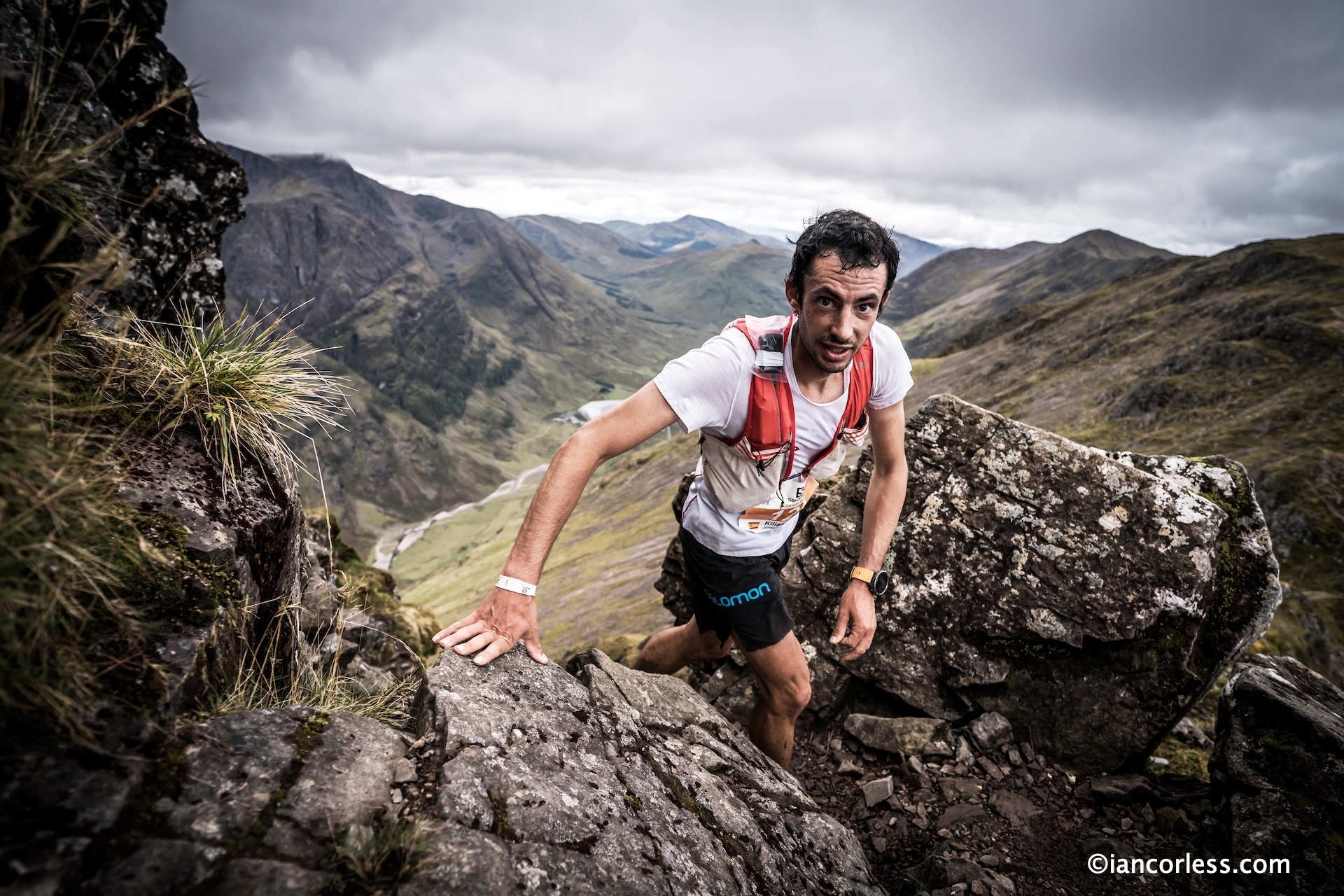
Like many others, I was lucky enough to experience several of these events firsthand. I was there for the first Cape Wrath Ultra. I experienced the return of the Dragons Back. And the moment I’m perhaps most proud of was helping create the Glencoe Skyline as part of Skyrunning UK. That event in particular showed just how far the UK mountain running scene had evolved. Technical, spectacular, and unapologetically demanding, it placed Scottish ridgelines onto the world skyrunning map. We brought the world’s best to Scotland – Kilian Jornet, Emelie Forsberg, Katie Schide, Jasmin Paris, Jon Albon, Marco Degasperi, Henrietta Albon, Tove Alexanderson, Laura Orgue, Hillary Gerardi and the list goes on…. A who’s who of the mountain running world.
So the collapse of Ourea feels deeply personal to many of us.
But it also raises bigger questions.
The last few years have been brutal for independent race organisers. Covid wiped out entire seasons and left financial scars that many companies never fully recovered from. Brexit complicated logistics, staffing, and international participation. Costs across the board have risen sharply.
At the same time, the global trail running landscape has changed. The rise and dominance of UTMB has reshaped the market, pulling attention, sponsorship, and runners toward a global series model. For smaller, independent organisers, competing in that environment is incredibly difficult.
Ourea may have technically survived Covid and Brexit, but survival does not mean recovery. The damage done during those years can take a long time to surface, and sometimes the final collapse comes long after the initial shock.
Right now, the most immediate concern is for runners who have paid entry fees for 2026 events. Hopefully many will be protected through credit or debit card payments and able to recover funds through Section 75 or chargeback claims. But even if that is resolved, the bigger uncertainty remains.
What happens now?
What happens to the UK mountain running scene without one of its most creative organisers?
And what happens to the races themselves?
Events like the Dragons Back, Cape Wrath Ultra, and Glencoe Skyline are more than entries on a calendar. They have become part of the identity of British mountain running. They hold stories, ambitions, and personal milestones for thousands of runners.
In some ways, races are like mountain routes. They can outlive the people who first established them.
So perhaps the real question is whether these events can find new custodians. Whether another organiser can pick up the threads and carry them forward without losing what made them special in the first place. That balance between professionalism and wildness is fragile, and it was something Ourea managed remarkably well.
For now, though, it is simply a moment to pause and recognize what was built.
Many of the most memorable mountain running experiences in the UK over the past decade trace back to the vision and work of Shane Ohly and the Ourea team. They created races that pushed boundaries, respected the mountains, and inspired a generation of runners to go further than they thought possible.
Whatever happens next for these events, that legacy will remain.
And for those of us who stood on start lines in Wales, the Lakes, the Highlands, or deep in the night at Dark Mountains, the memories will always be there.
The Marathon des Sables has a way of becoming far more complicated than it needs to be. Spend five minutes online and you’ll find spreadsheets, gear breakdowns to the gram, and endless debates about socks.
Here’s the truth. It’s a multi-day race in the desert where you carry your own kit, manage your energy, and keep moving forward. That’s it.
Yes, details matter. But simplicity wins.
The 2026 Marathon des Sables – The Legendary is not just another year in the desert. It marks 40 years of the race. That alone tells you something about what’s coming. This edition matters. It will be longer, tougher, and built to celebrate the history of the event properly.
As we move through March, I will release weekly articles to help you sharpen your preparation. This is the second of four. The aim here is simple: give you clarity. No surprises. No guesswork.
Below is a broader, more grounded take on what to focus on, including some of the small, often overlooked realities that make a big difference once you’re out there.
Start With This Mindset
You are not preparing for comfort. You are preparing for control.
Control of your energy.
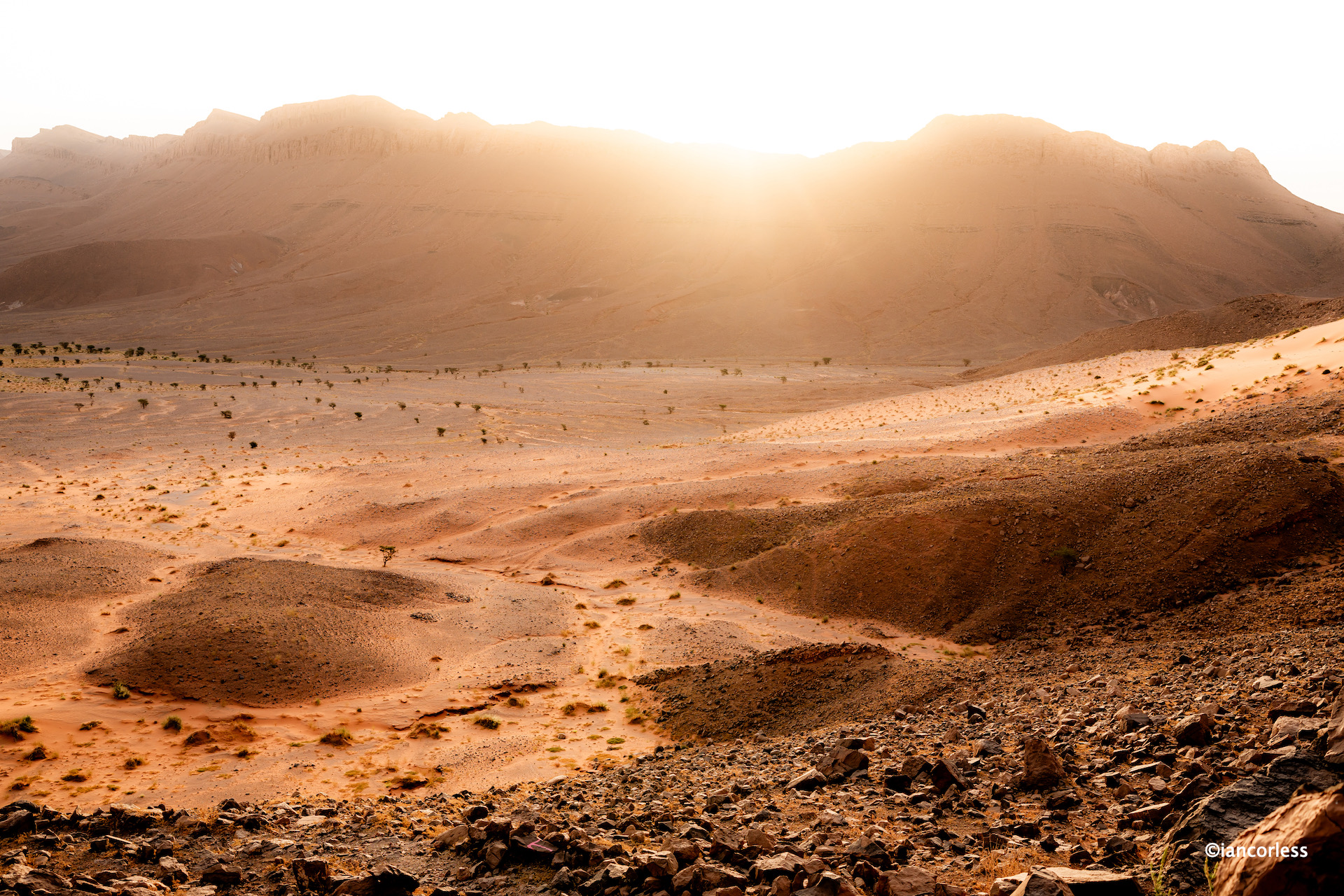
Photo by Ian Corless
Control of your hydration.
Control of your thoughts when things get hard.
The desert strips away noise. What’s left is you, your pack, and the next checkpoint.
1. Your Pack: Fit Over Fashion
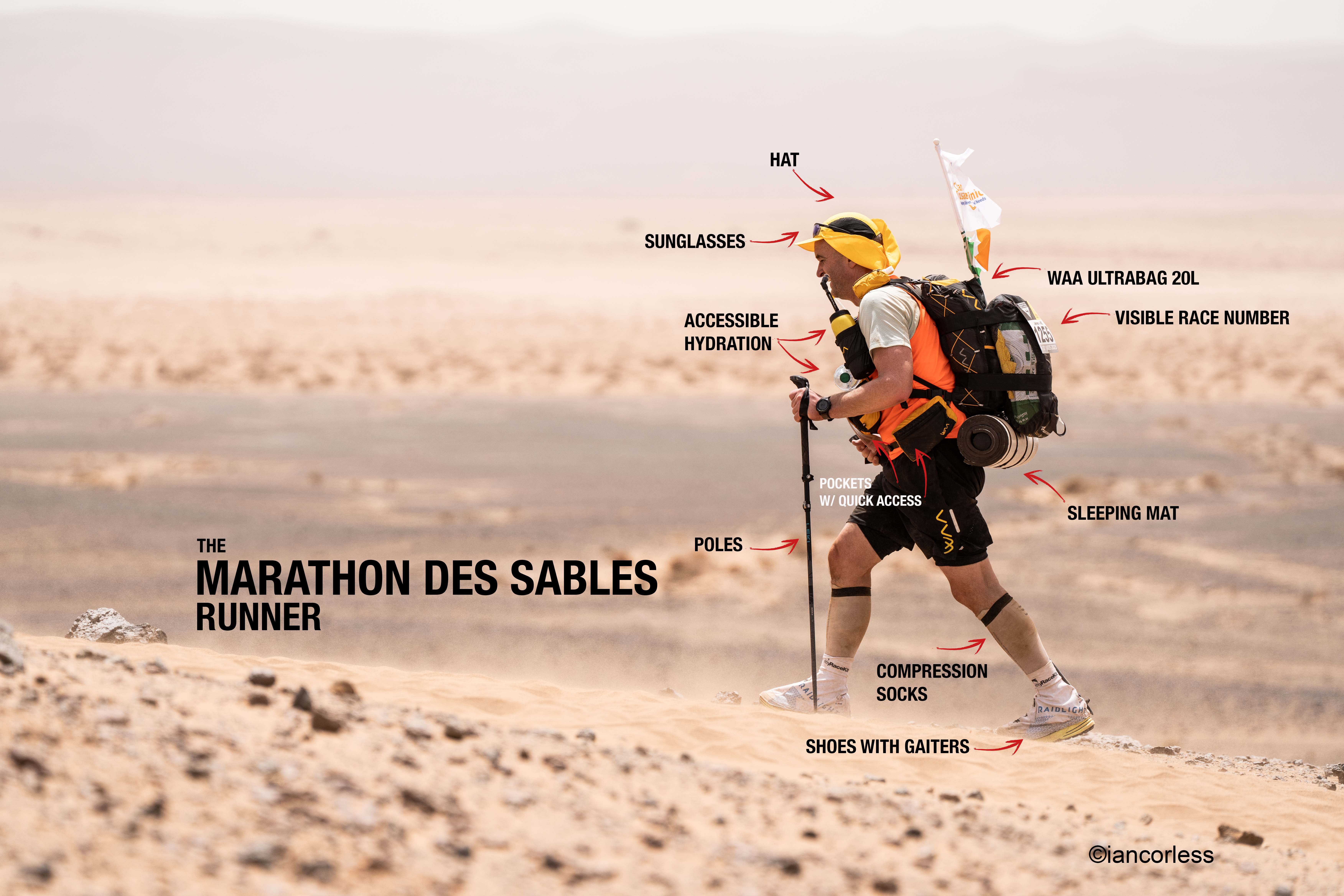
You’ll see a lot of the same packs on the start line. The WAA 20L Ultra Bag is extremely common because it was built specifically for races like this.
But popular doesn’t mean perfect.
A pack should sit close to your body without bouncing. It shouldn’t pull on your shoulders or rub your lower back raw by day three. Try it loaded. Walk in it. Run dunes in it if you can.
Photo by Ian Corless
Smaller is usually better. If you give yourself space, you’ll fill it. And once your food weight drops midweek, too much space means constant shifting and irritation.
Getting close to the 6.5 kg minimum isn’t about ego. It’s about reducing cumulative fatigue. Every unnecessary gram is lifted thousands of times over the week.
2. Sleep Is Recovery, Not Luxury
You don’t need a five-star sleep system. But you do need rest.
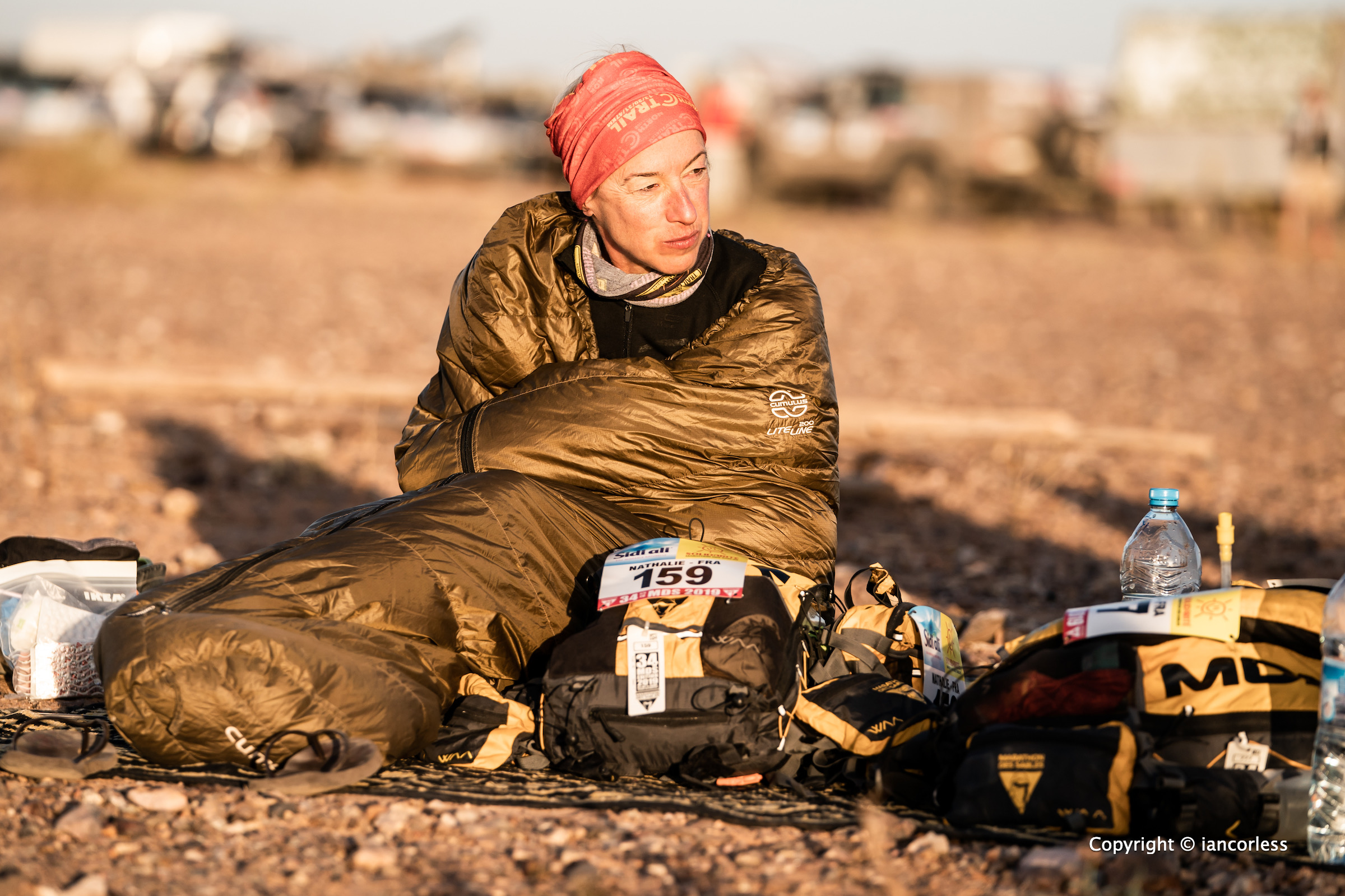
A sleeping bag choice should reflect how you actually sleep at home. If you’re always cold, don’t suddenly become brave in the Sahara. Cold nights drain energy quickly.
A lightweight down jacket is incredibly useful. Brands like Mont Bell, Haglöfs, Yeti, and Nordisk all make reliable options. It doubles as camp insulation and extra warmth inside your bag.
Random but important: cover your head at night. Even a simple buff makes a difference.
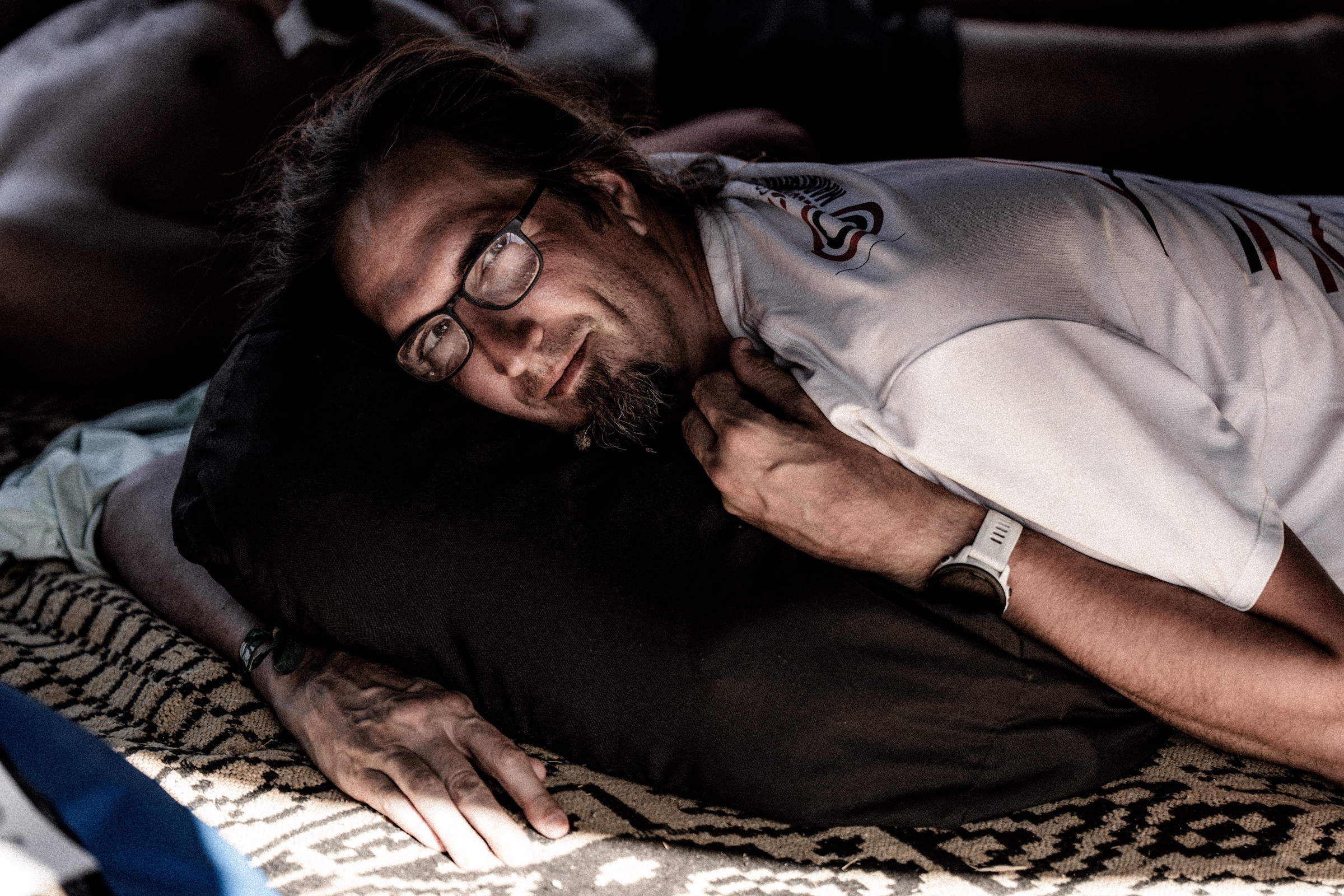
And yes, take a sleeping mat. After several hours in the heat, lying on hard ground feels far less heroic than it sounds.
3. Clothing: Function Only
Nobody cares what you look like by stage four.
Choose clothing you’ve already trained in. Check underarms, inner thighs, lower back, and anywhere straps sit. If something rubs slightly at home, it will tear skin in the desert.
Photo by Ian Corless
A spare pair of socks is wise. Changing into dry socks after a long stage feels surprisingly restorative.
Some runners like having a lightweight long sleeve or leggings just for evenings. It’s less about warmth and more about feeling human again after a tough day.
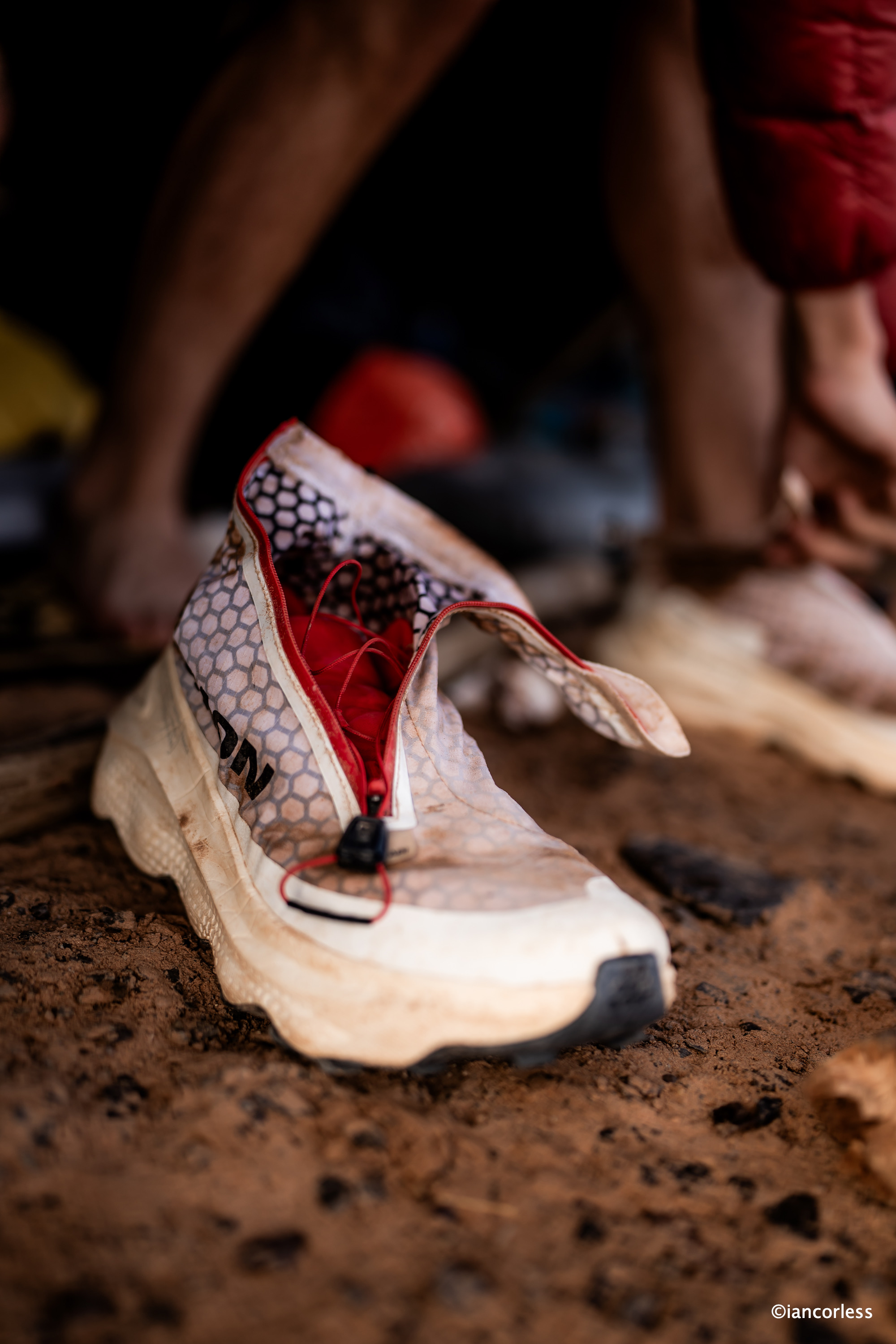
4. Shoes and Gaiters: Non-Negotiable
Shoes must be tested, broken in, and reliable.
Slightly wider can help accommodate swelling. But oversized shoes create movement. Movement creates friction. Friction creates blisters.
Aim for a thumbnail’s space beyond your longest toe.
Gaiters are essential. Sand will find its way in otherwise, and constant grit inside your shoe is demoralising.
Small thought: practise emptying sand quickly and calmly. You’ll do it often.
5. Food: Think Beyond Calories
Yes, you must carry at least 2,000 calories per day.
But calories alone aren’t the whole story. Appetite changes. Sweet fatigue is real. By midweek, many runners crave savoury food.
Recovery nutrition right after each stage can speed up how you feel the next morning. Even a small protein-based drink helps.
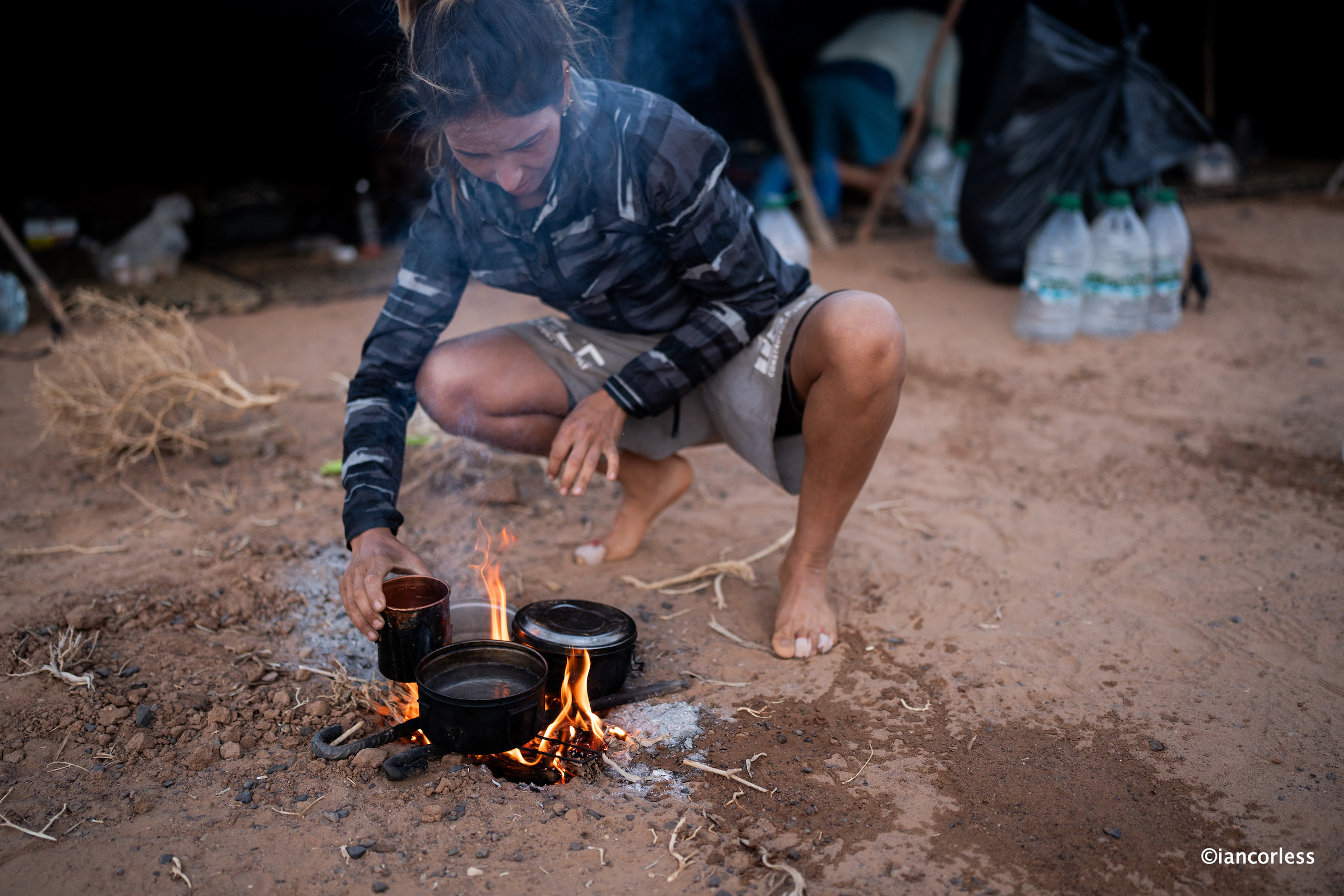
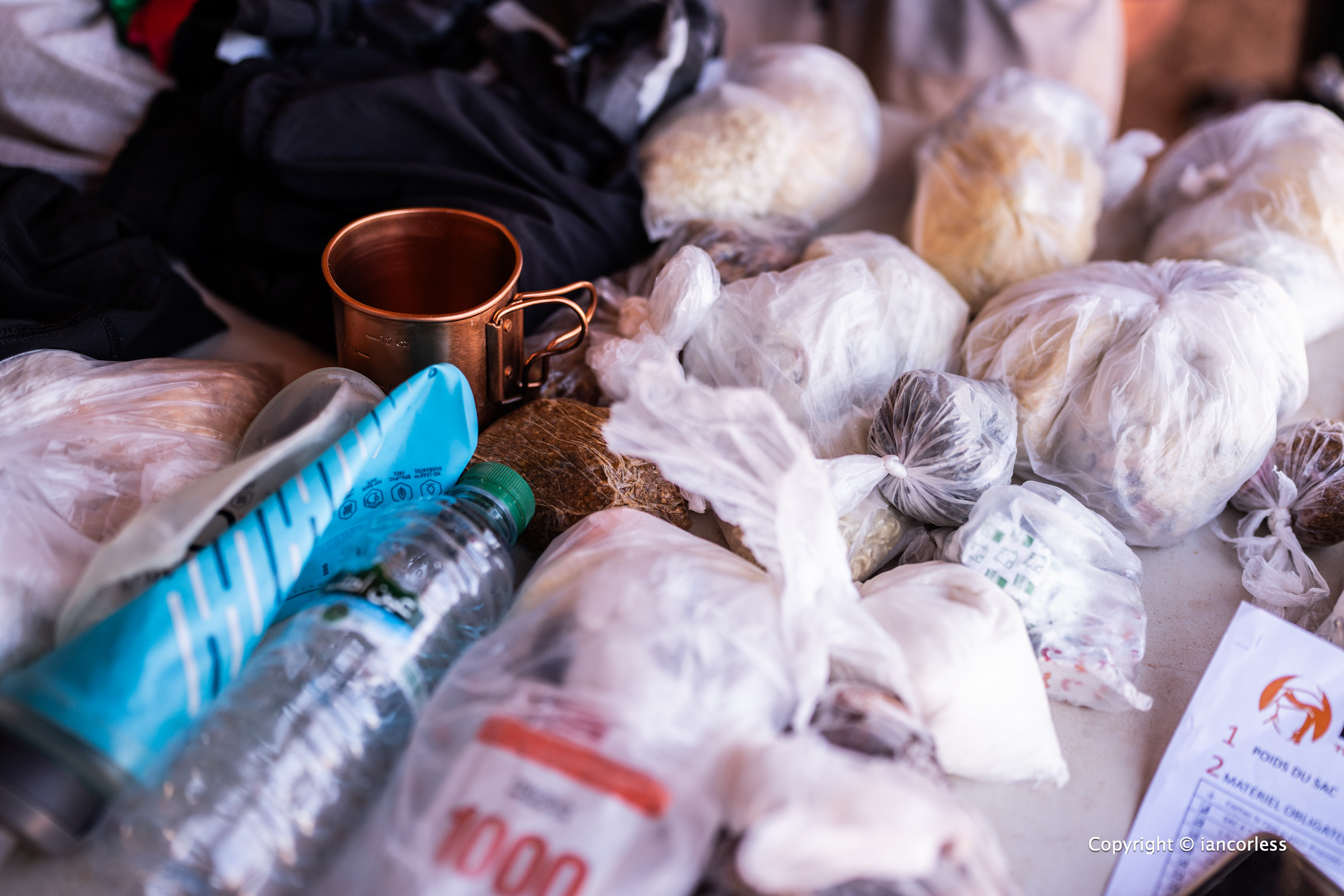
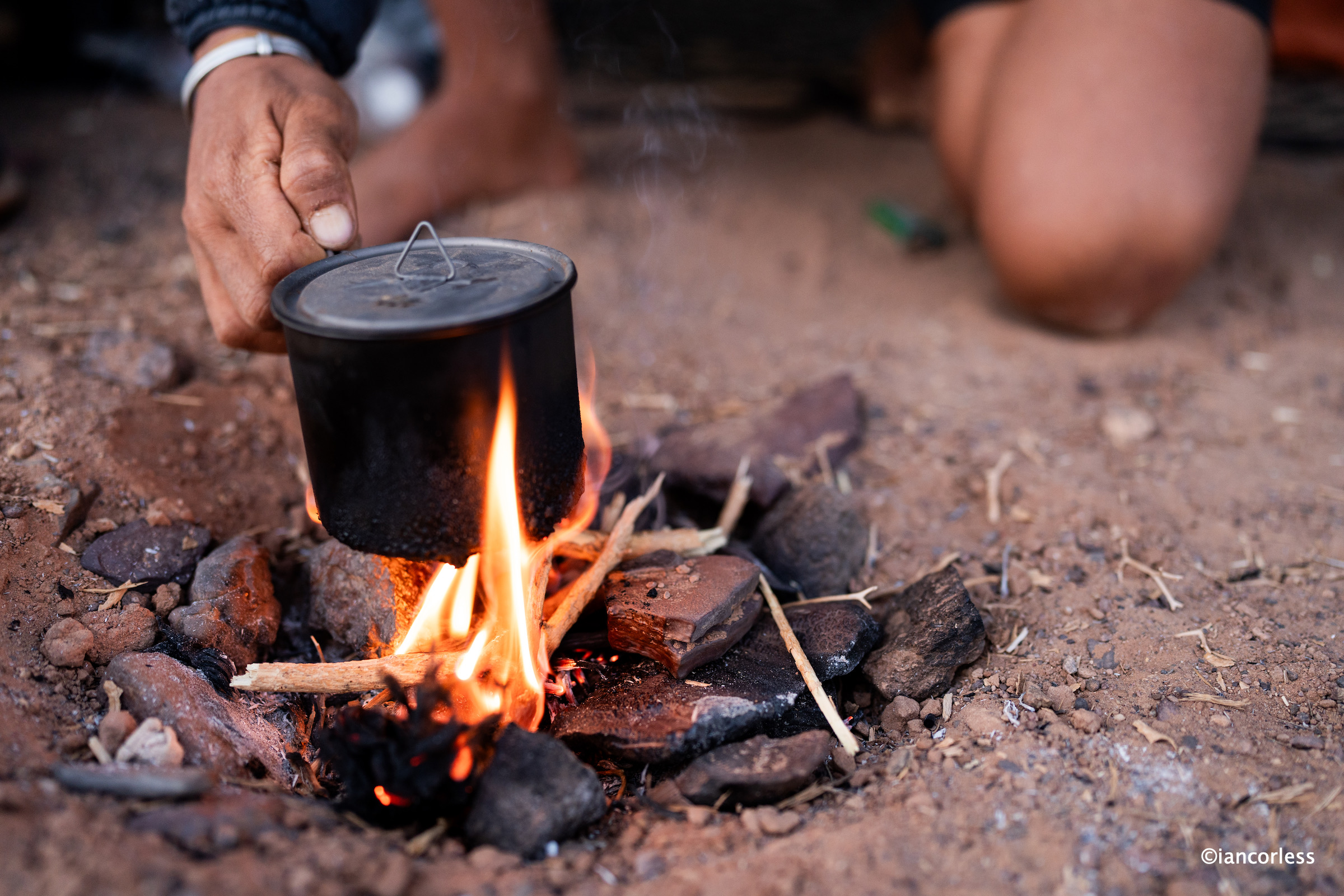
Also consider practicality. If you skip a stove, make sure your meals work with cold water. And if you’re someone who needs coffee to function, plan for it. Tiny comforts can have a big psychological impact.
6. Water Strategy: Be Flexible
You must be able to carry at least 1.5 litres, usually via two 750 ml front bottles.
Soft flasks and bladders are lighter, but they can puncture. Rigid bottles are heavier but durable.
Have the capacity to carry an additional 1.5 litres if required. In extreme heat or on longer stages, the race has sometimes increased water allowances.
Practice drinking steadily rather than chugging. Drink to thirst before the race starts. Overhydrating early doesn’t help.
7. Salt and Electrolytes: Plan It Yourself
Salt tablets are no longer handed out.
You must start with 14 stock cubes as part of the requirements, but that’s just one element. Test your electrolyte strategy in training. Don’t experiment for the first time in Morocco.
Cramps in the middle of a long stage are not where you want surprises.
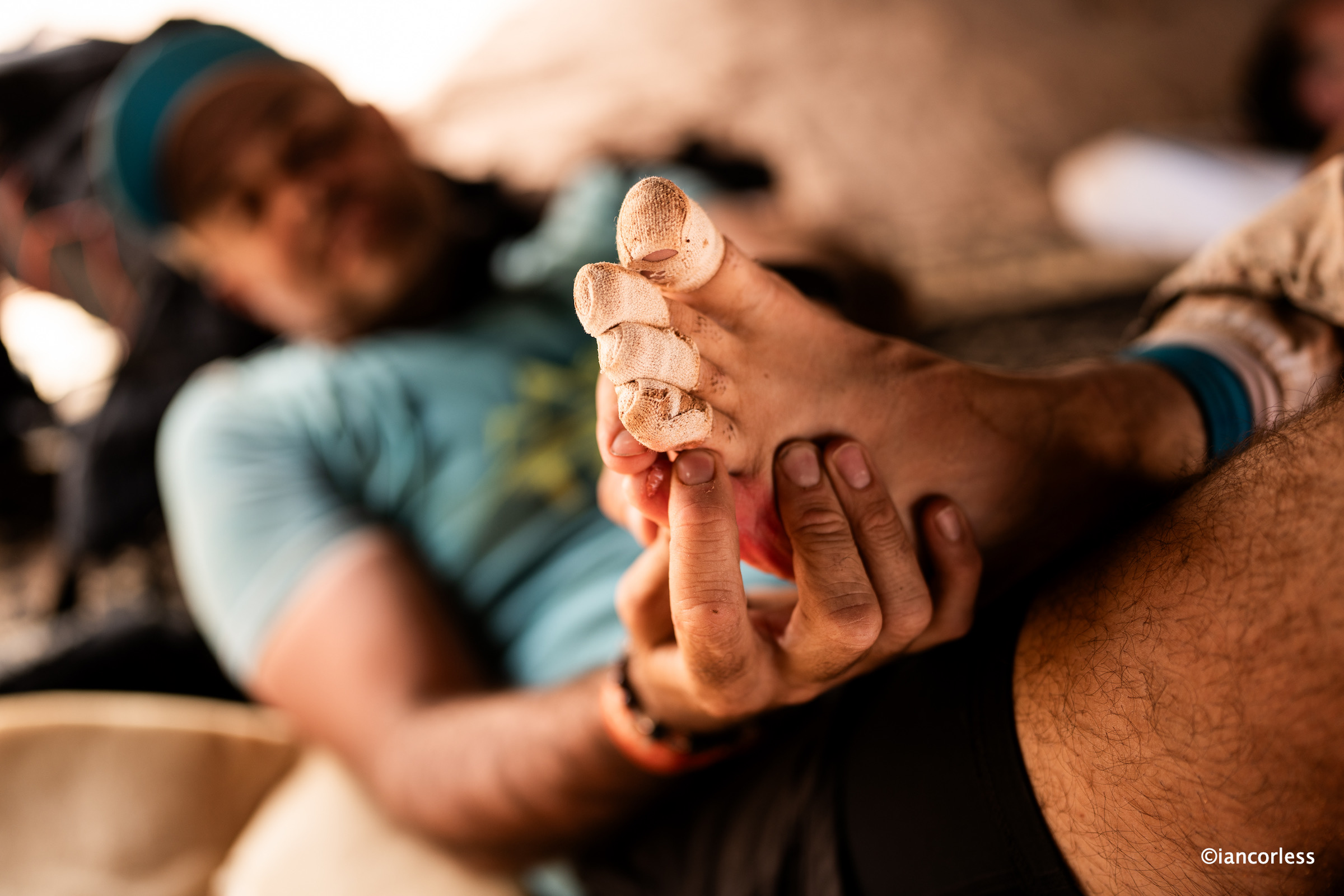
8. Your Feet: Your Entire World
If your feet fail, your race fails.
Trim nails carefully before the event. Know which socks work for you. Consider taping strategies only if you’ve tested them.
After each stage:
Remove shoes immediately.
Clean sand off.
Let skin dry.
Deal with hot spots early.
Blister management is part of the race. The medical team is experienced, but prevention is always easier than repair.
9. Heat Preparation
The final two weeks are ideal for heat acclimation.
Sauna sessions. Hot baths. Controlled heat chamber work. Even Bikram yoga.
The goal isn’t to exhaust yourself. It’s to teach your body to manage elevated core temperature more efficiently.
Arriving heat-adapted reduces stress from day one.
10. Taper Properly
In the final weeks, you don’t gain fitness. You protect it.
You want to feel slightly restless at the start line, not tired.
11. Learn to Walk Well
This surprises many first-timers.
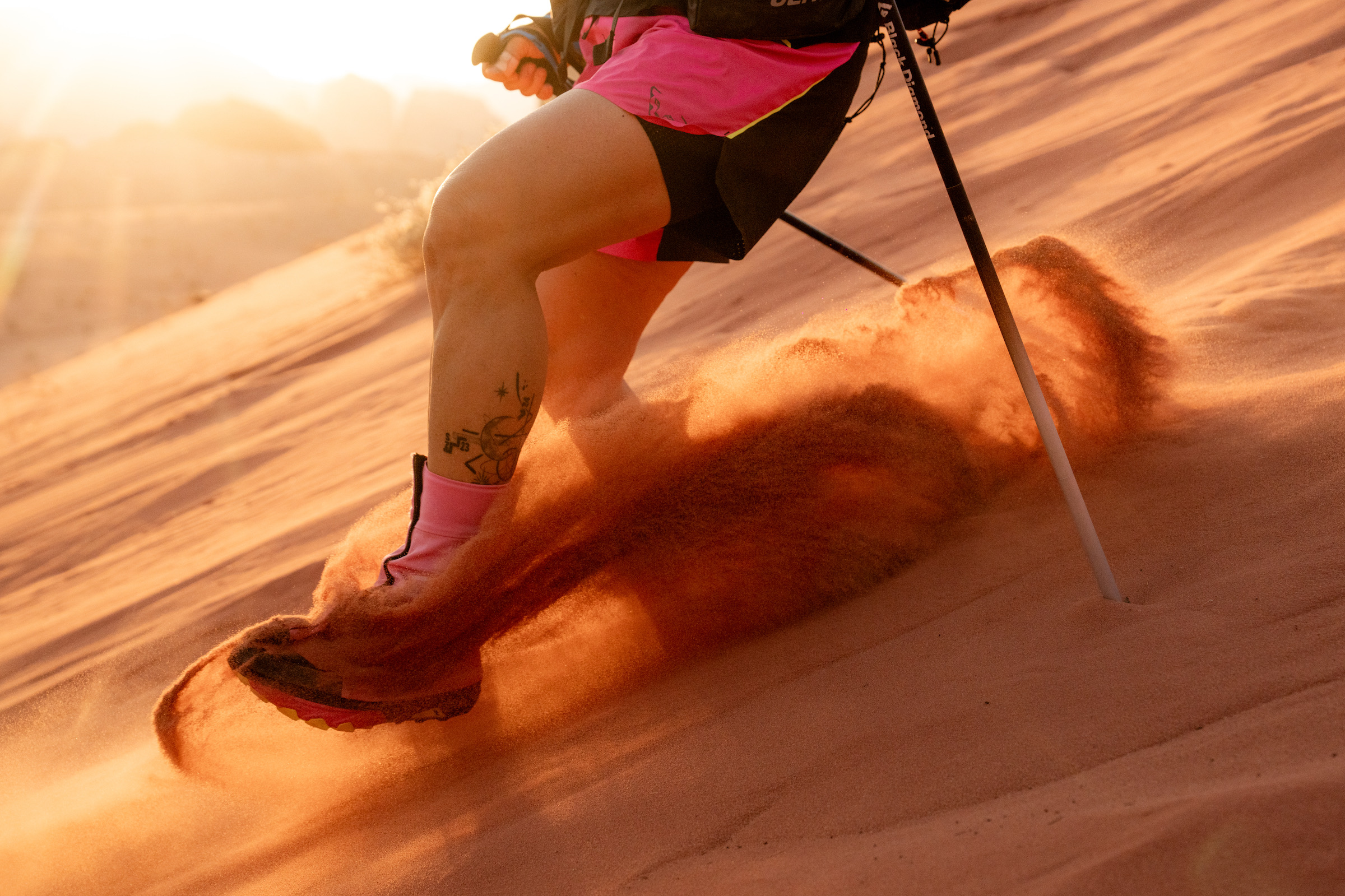
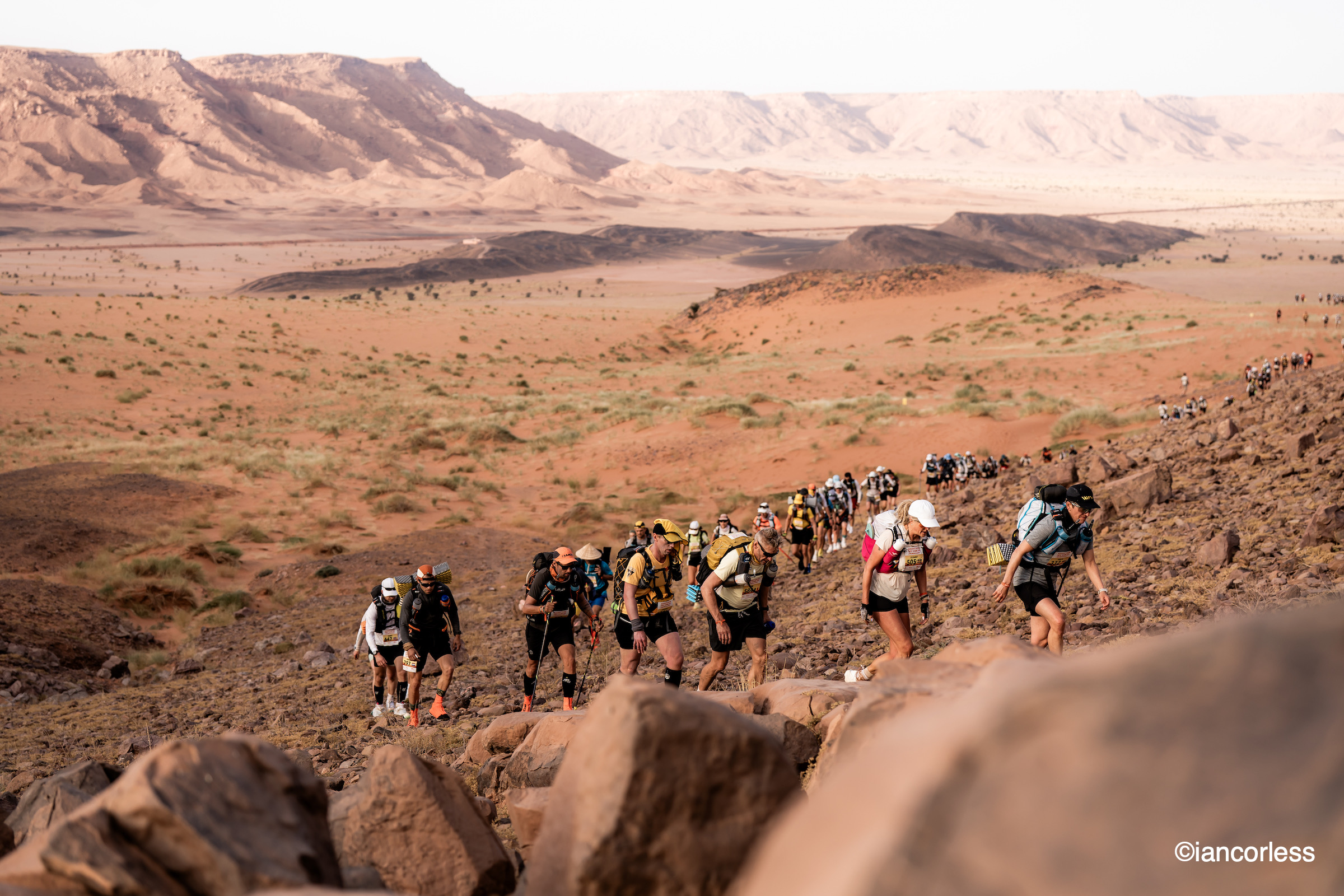
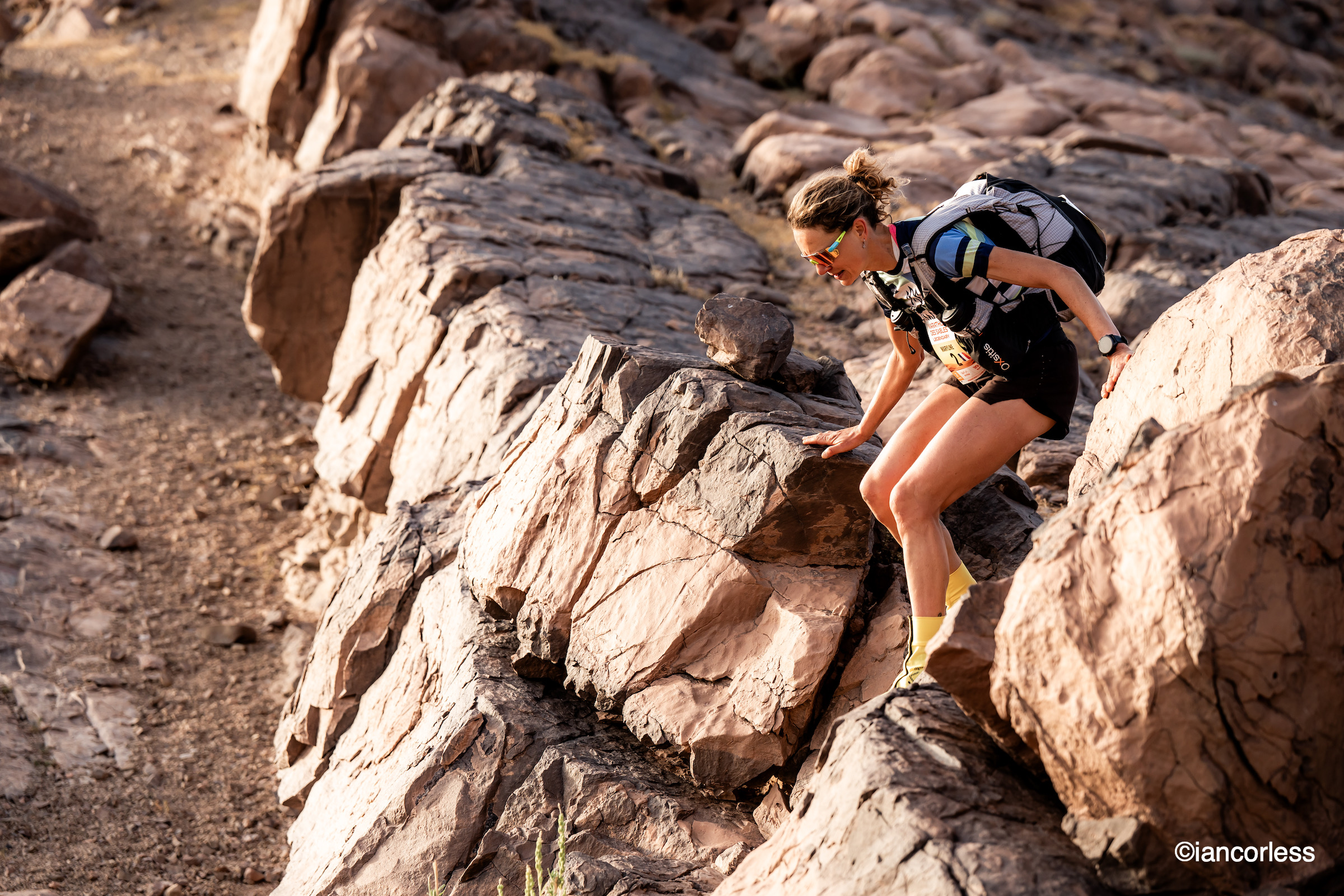
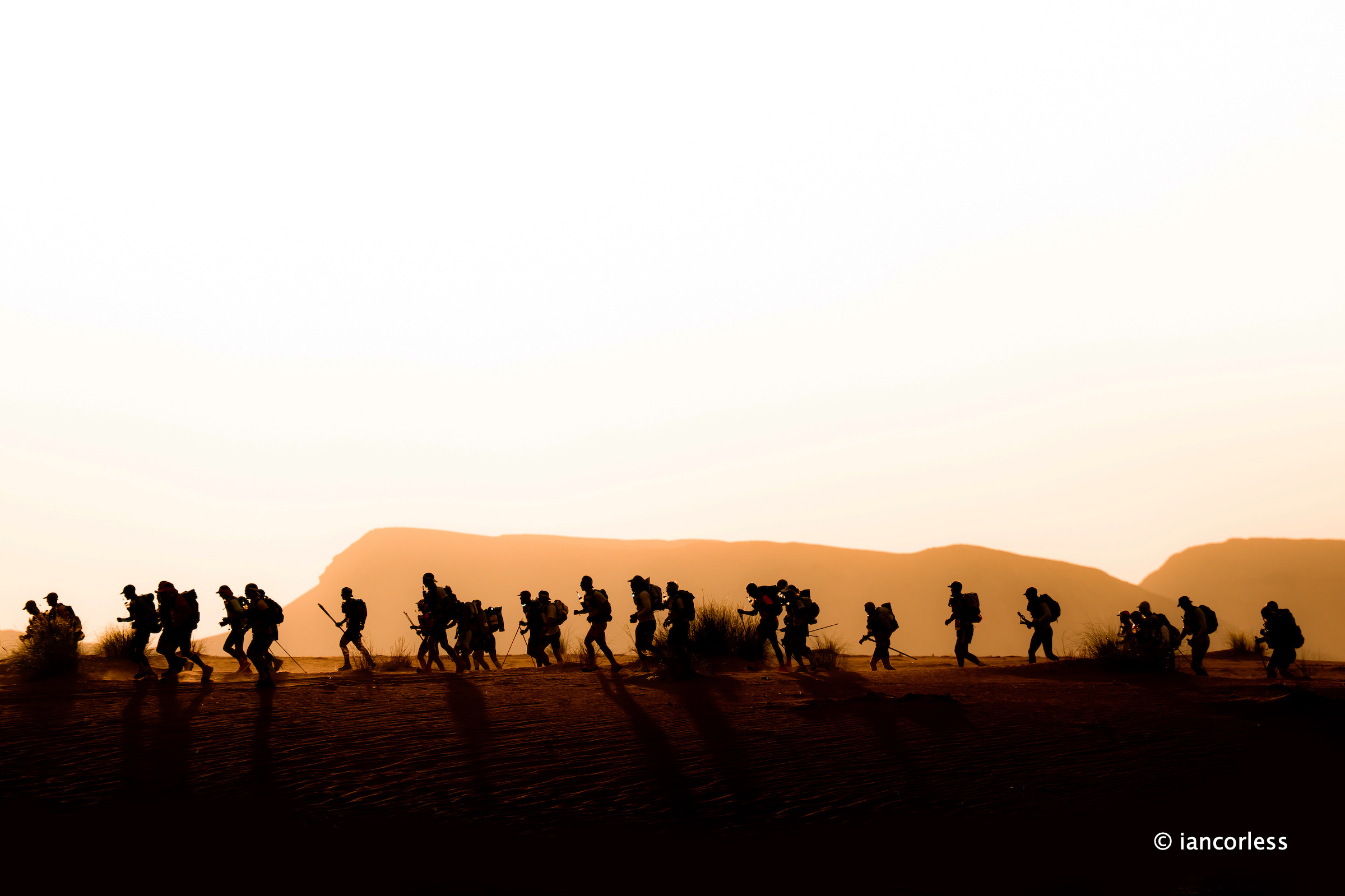
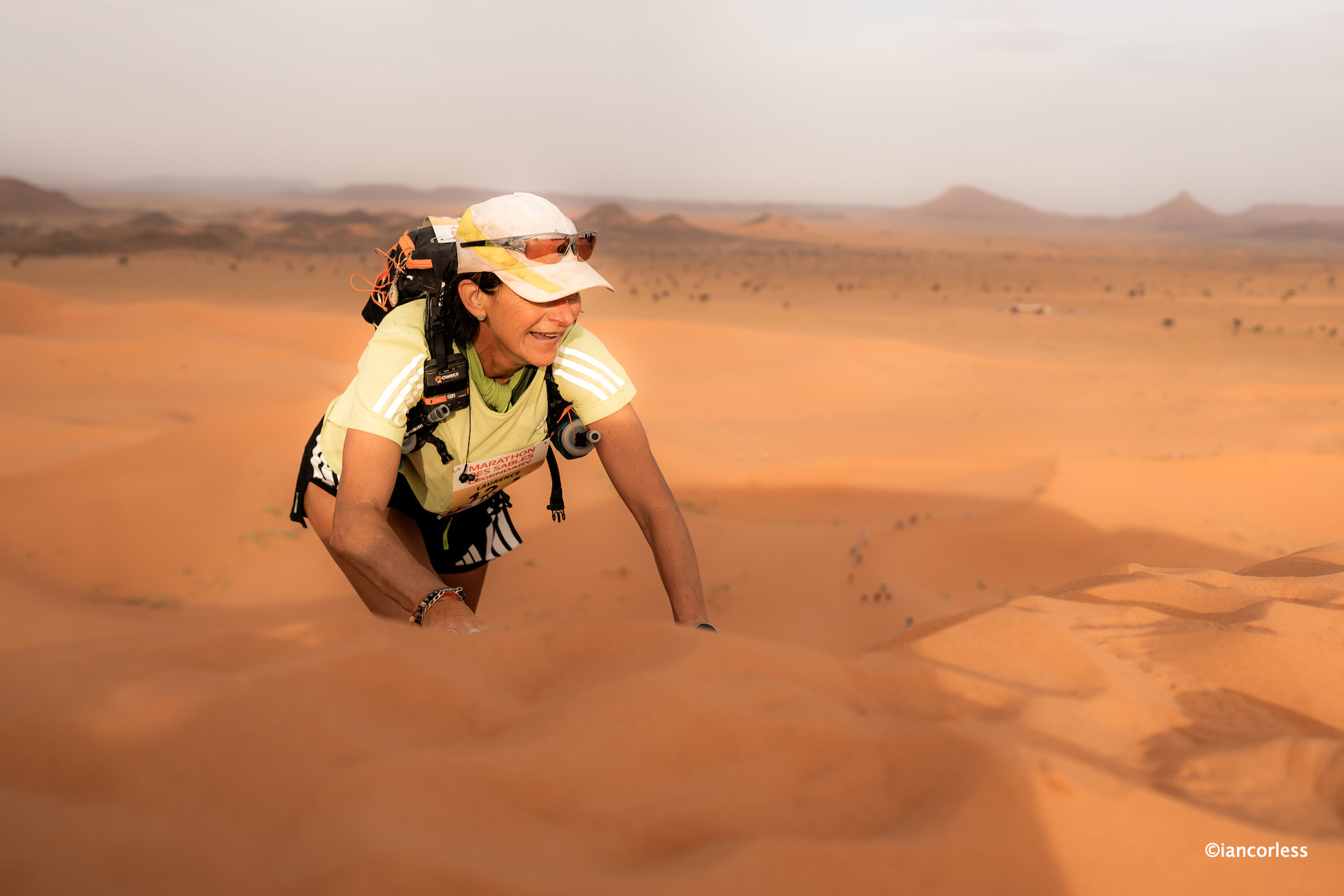
You may not run as much as you think. Dunes, heat, pack weight, and long stages change expectations quickly.
Photo by Ian Corless
Practice strong, efficient walking. Especially uphill. Keep posture tall. Use arms deliberately.
Fast walking wins time and saves energy.
12. Poles: Train With Them or Leave Them
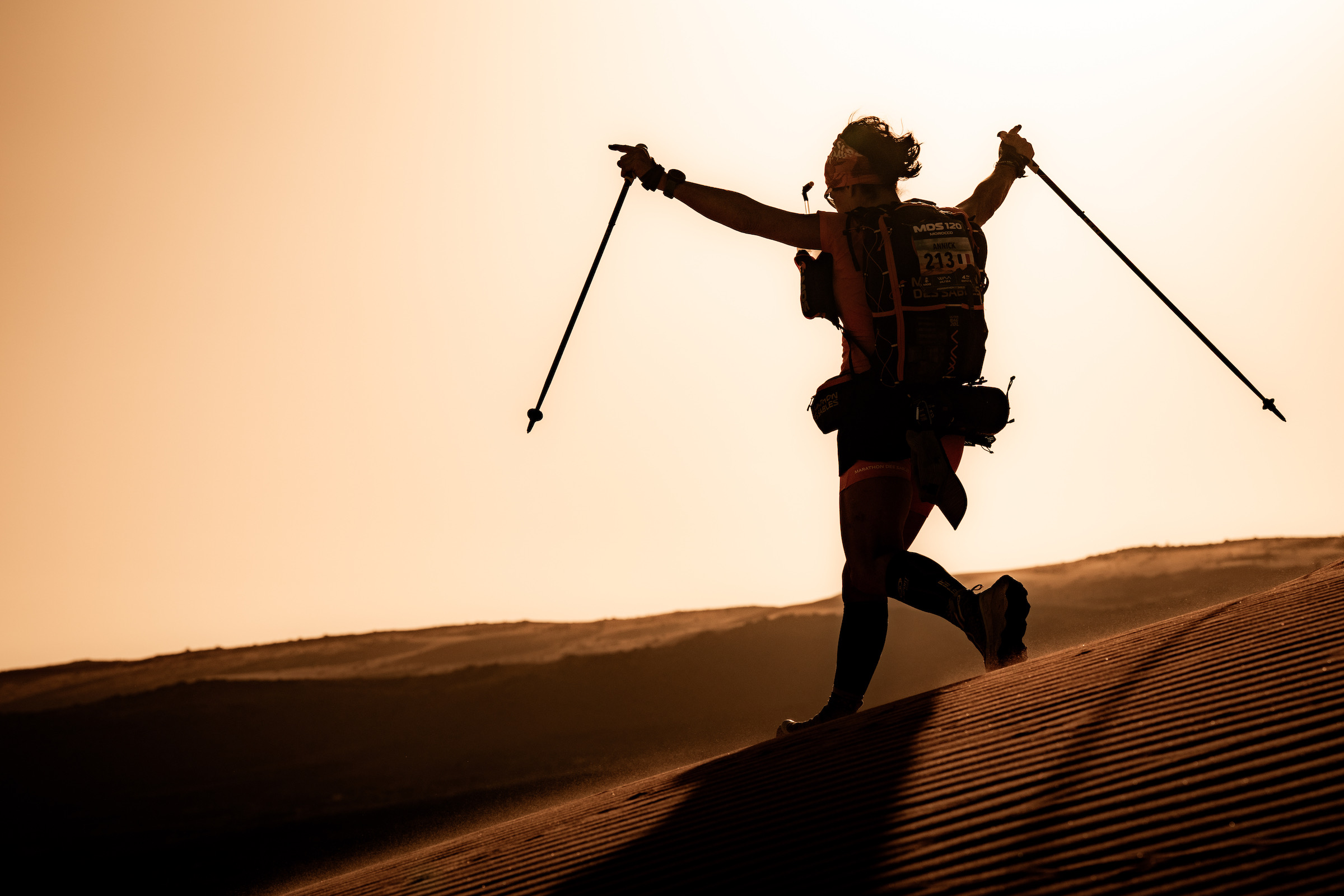
Poles can feel like four-wheel drive in soft sand and on climbs.
Lightweight folding carbon poles from brands like Black Diamond and Leki are common.
But poles only help if you’ve trained with them. Poor technique wastes energy. Good technique saves it.
13. Keep Equipment Minimal
Every “just in case” item adds up.
Ask: will this meaningfully improve my race?
Your pack should sit close to 6.5 kg. The only luxury many runners truly appreciate is a lightweight way to listen to music.
Interestingly, many also discover they don’t miss their phone at all.
14. Tent Life
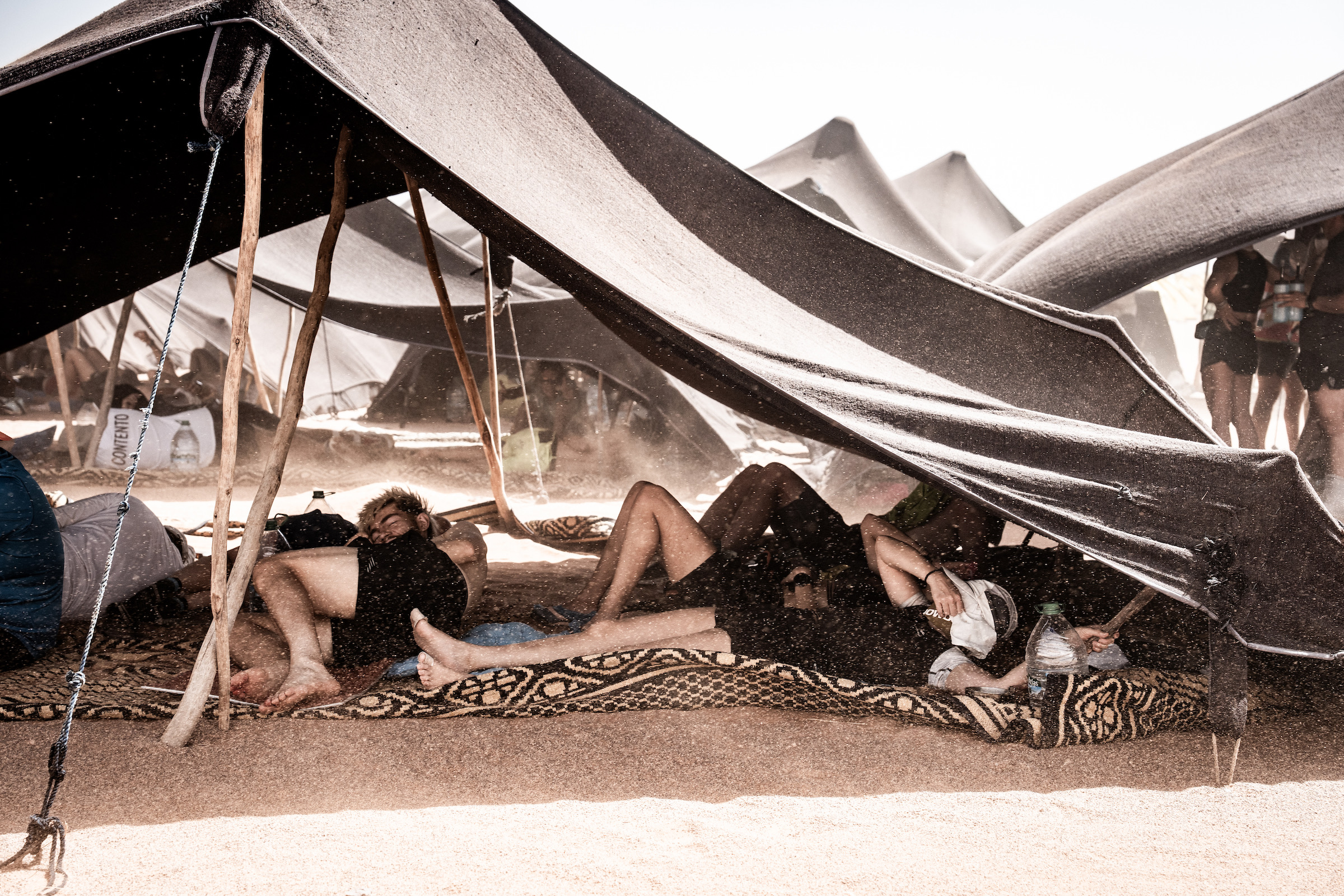
You’ll share a tent with seven others.
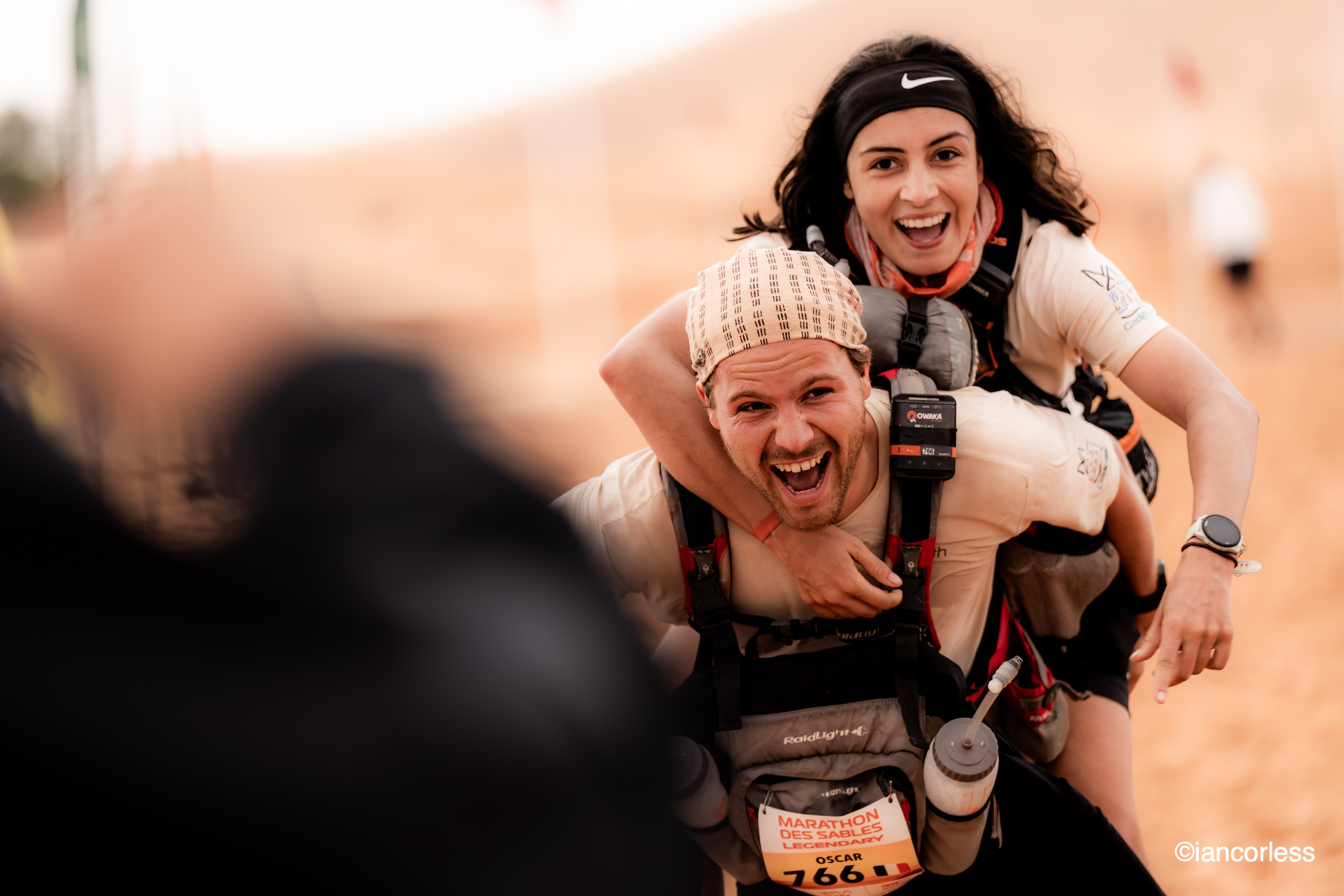
These people become your support system. You’ll hear their breathing at night. You’ll see their low moments and your own reflected back.
Choose tent mates wisely if you can. The camaraderie becomes one of the most powerful parts of the week.
15. Travel and Admin Realities
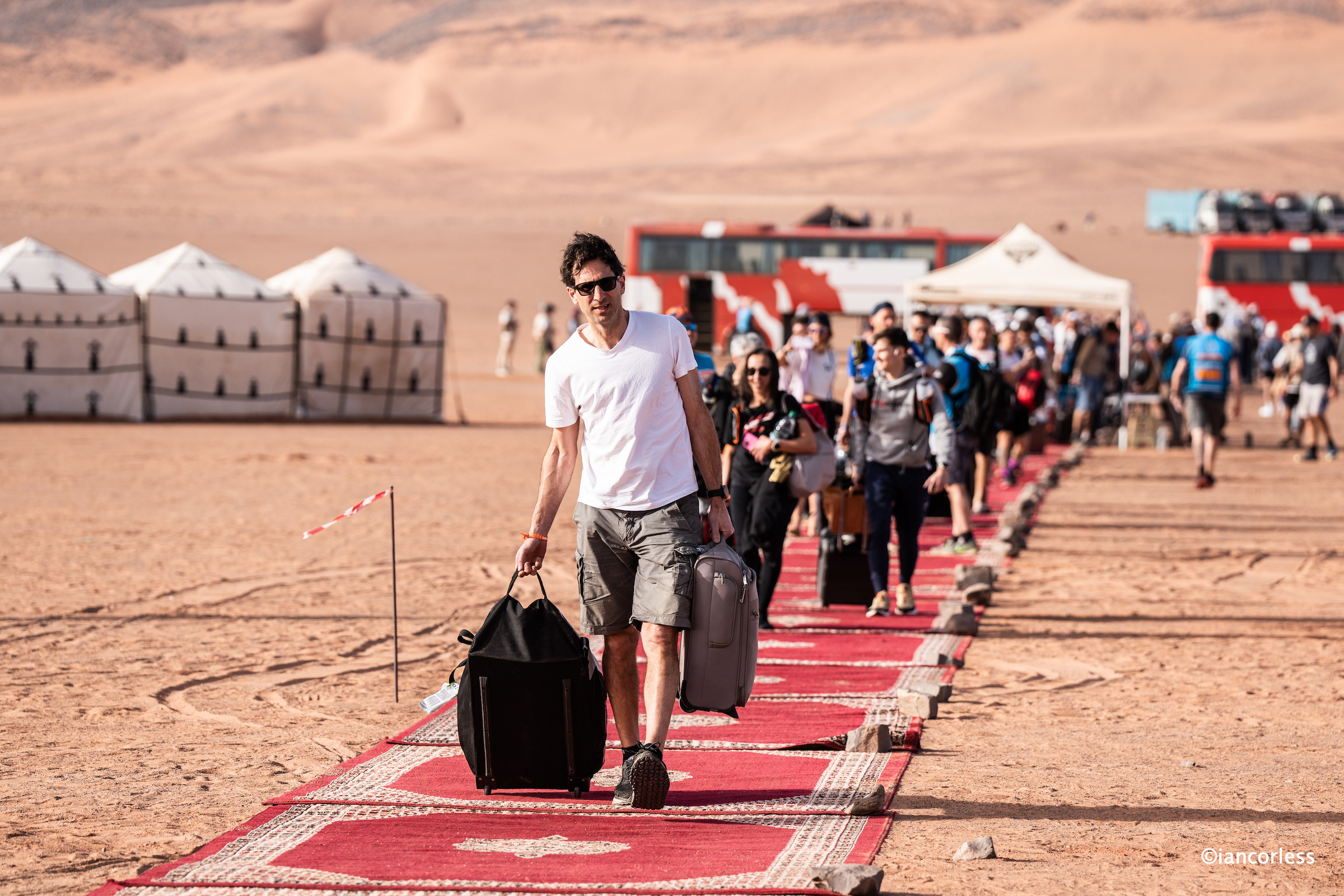
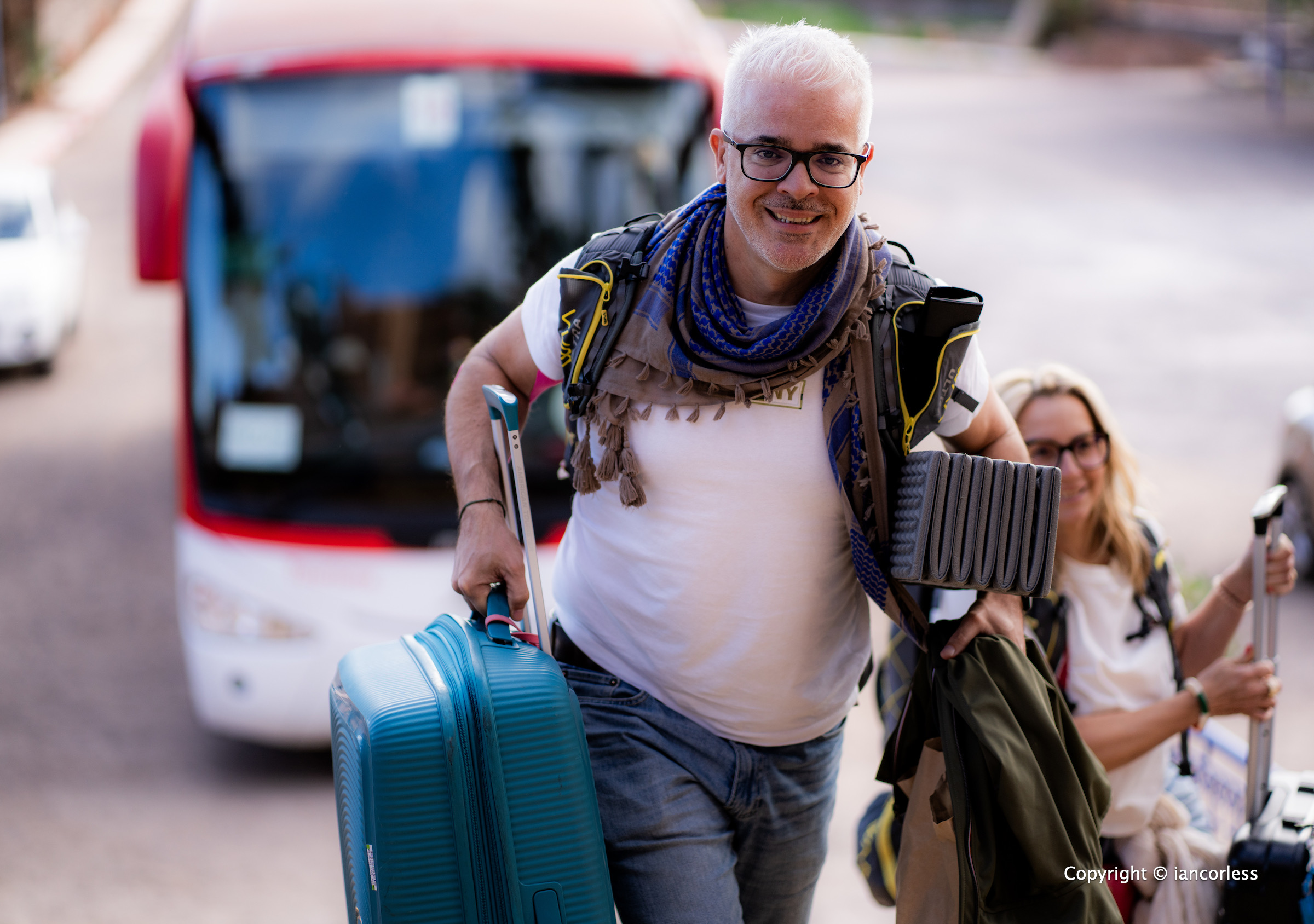
Wear your running shoes and kit on the plane. Carry your pack as ‘carry-on’ with as much of your race kit as possibe. Lost luggage does happen.
Bring your own snacks for travel days. The transfer from Marrakech is quite long, so is the transfer to bivouac one. MDS do provide lunch packs as and when applicable, always good to be self sufficient.
The first two nights in bivouac are self-sufficient, plan accordingly for food. Take comfort items you’re happy to give away before racing begins, for example, you may take a larger/ heavier inflatable bed.
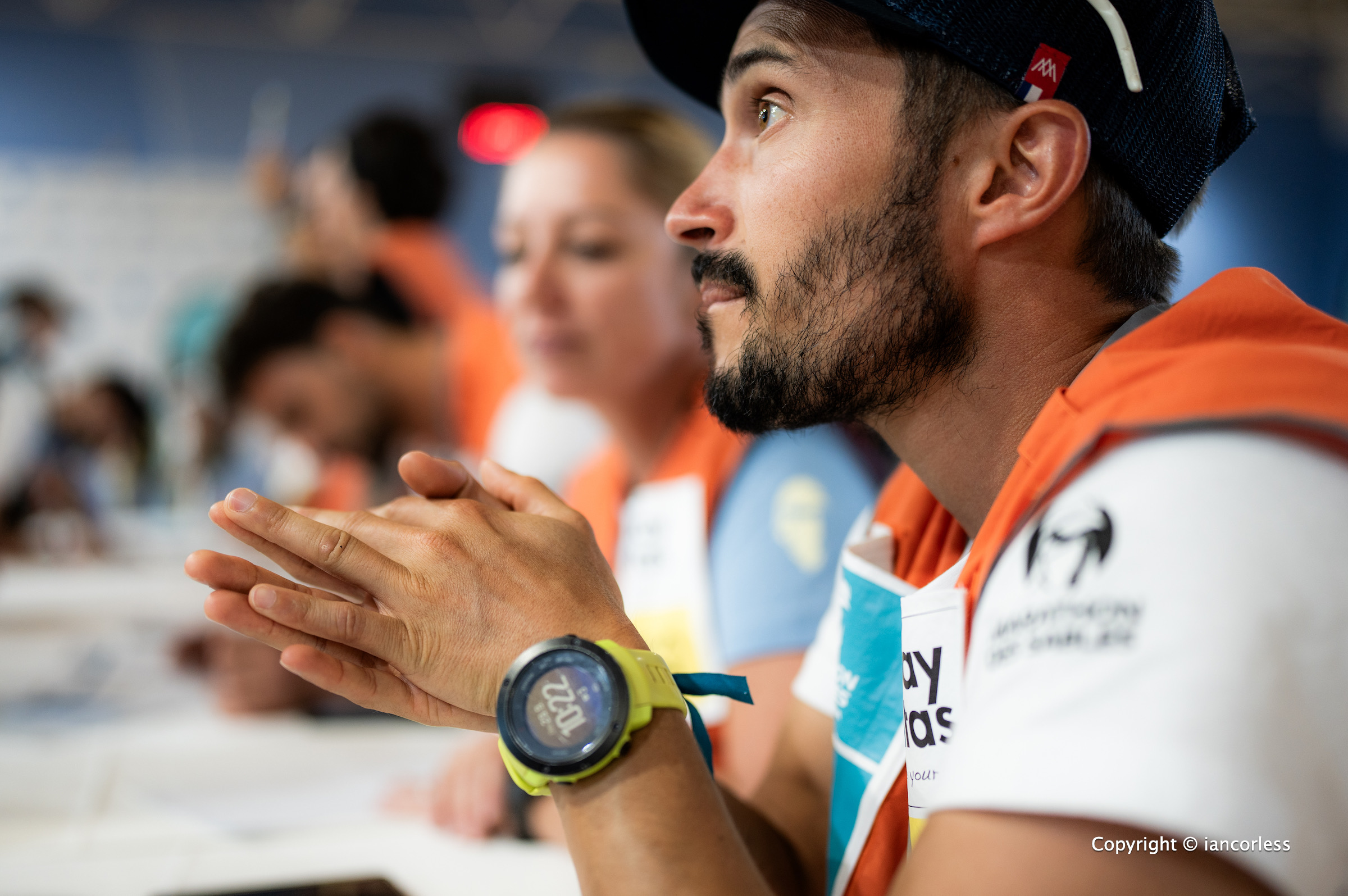
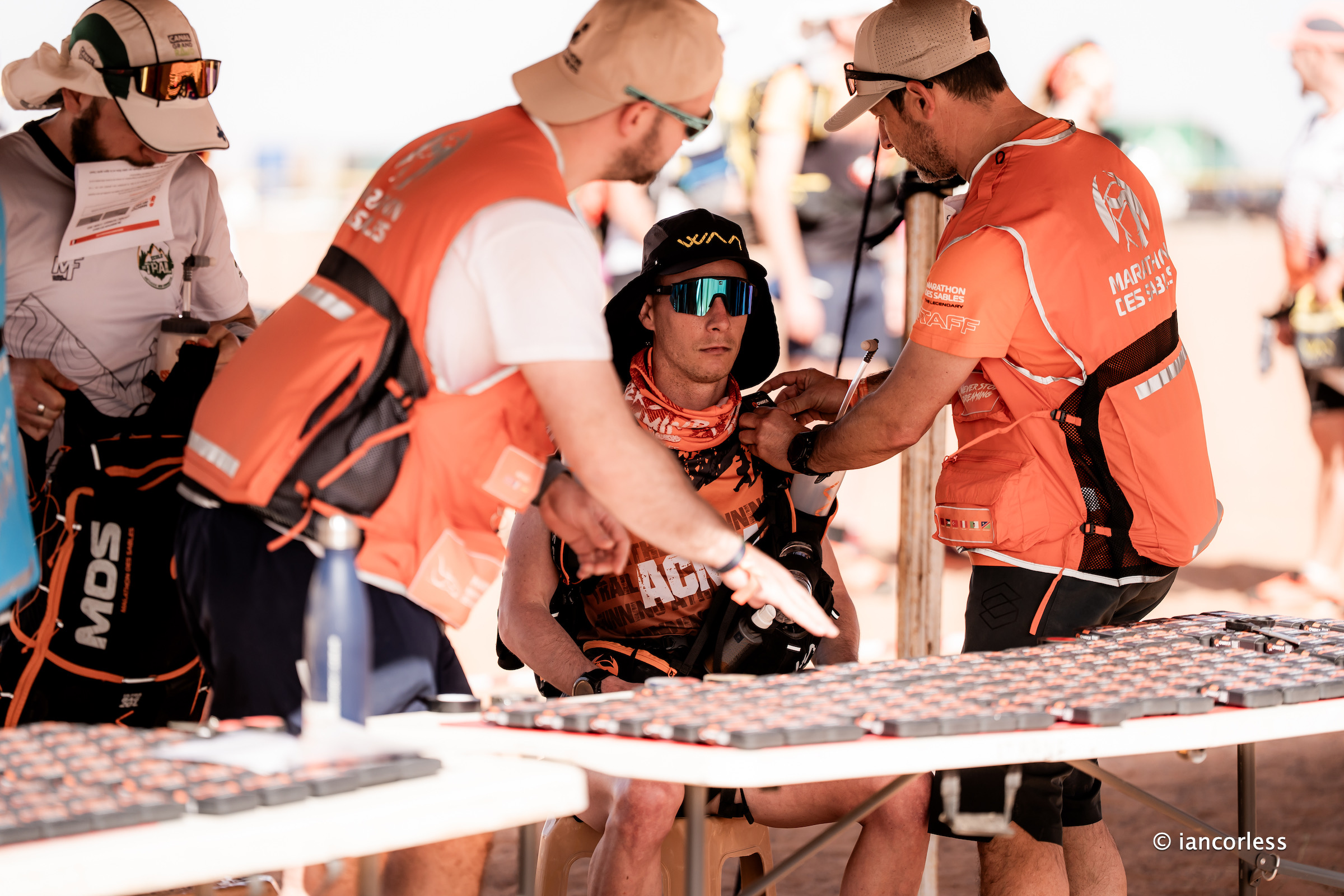
Admin day can take 1-2 hours. Bring water, snacks, sun protection, even an umbrella for shade. Stay patient.
Have additional items such as a base layer, sleeping bag liner and other items that may be on a ‘question’ list for the race. On night 1 and before you go to admin, you can make final decisions of what to and what not to take. Particularly important if you think you may be cold at night.
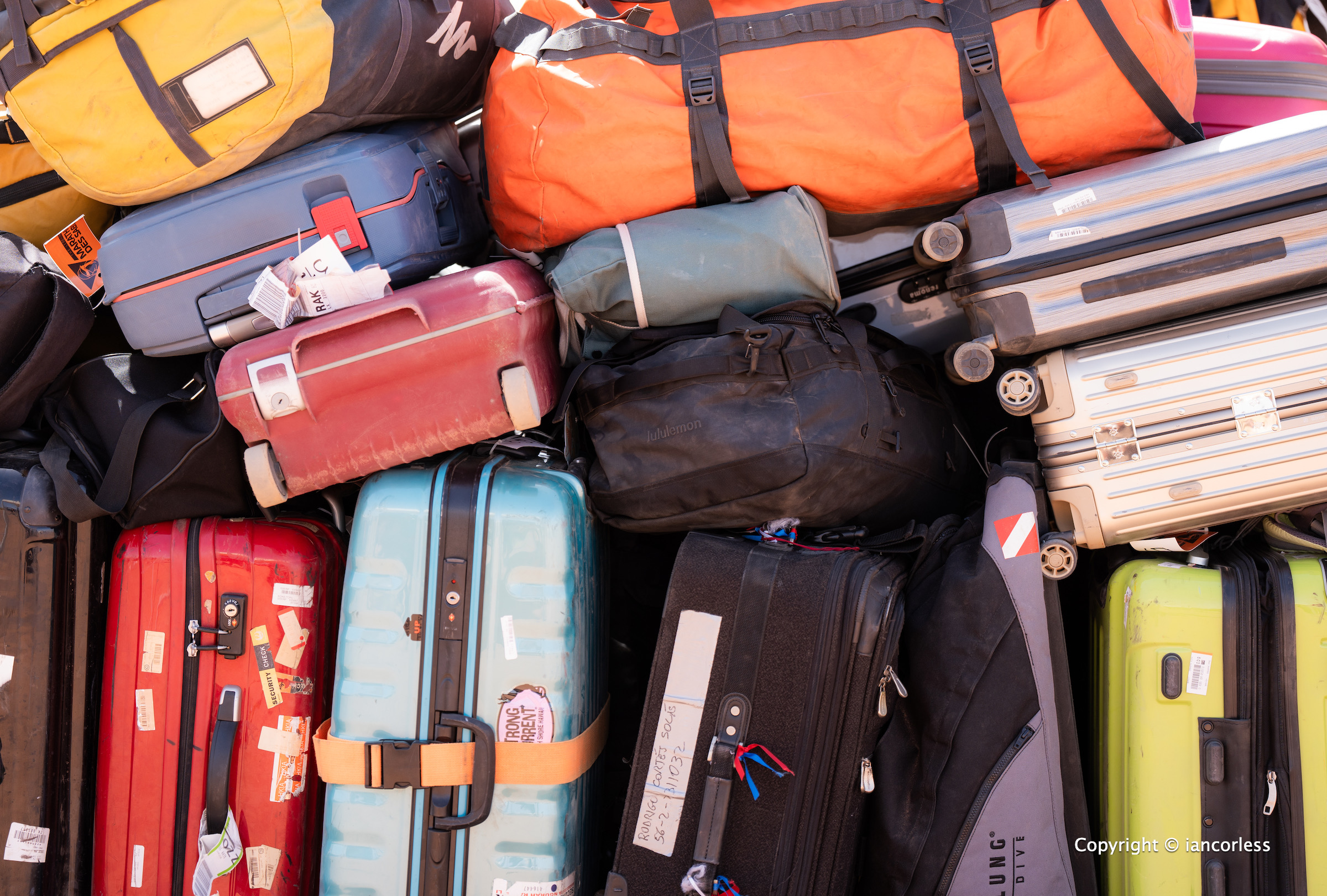
After bag check-in, you drop your luggage and no longer have access to extra gear. Make sure you have everything you need for the race! But full self-sufficiency only begins when the race starts, so you can enjoy small comforts until then.
Bring a simple repair kit. Zips break. Gaiters tear. The desert is unforgiving.
16. The Mental Game
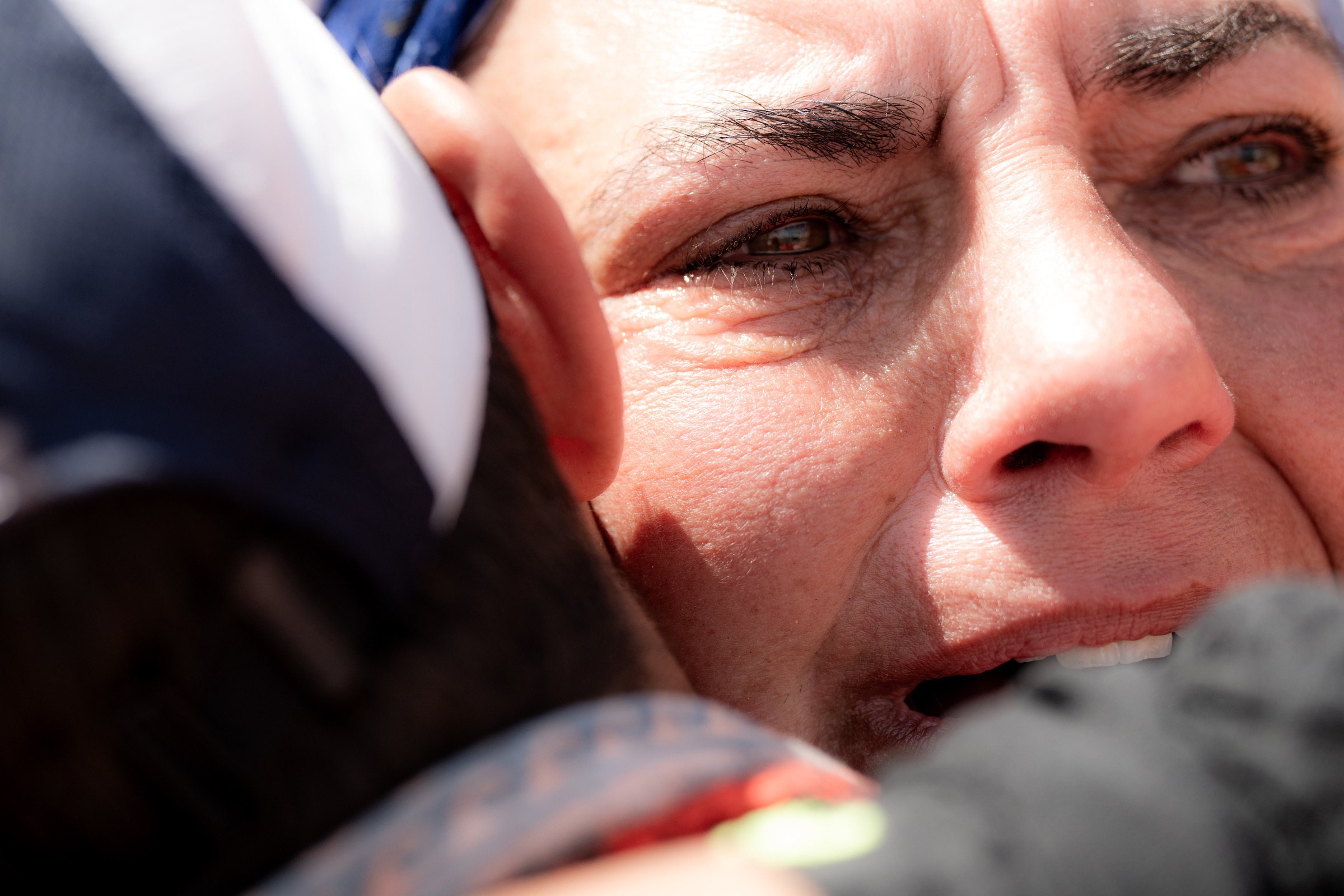
At some point, you will question why you signed up.
That moment passes.
The Marathon des Sables isn’t just about endurance. It’s about staying calm when you’re tired. Staying steady when others surge. Accepting discomfort without drama.
Highs and lows are part of the rhythm. If it were easy, it wouldn’t matter.
Final Thought
The desert simplifies everything.
There’s no clutter. No constant notifications. No daily noise. Just sun, sand, wind, and the quiet focus of moving forward.
Whether you finish near the front or close to the cutoff, the experience is transformative.
It reminds you how little you actually need, and how much you’re capable of carrying.
MDS is a hark back to a more primitive time, a time without clutter and modern technology. Embrace this. Embrace the silence of the surroundings and the simplicity of placing one foot in front of the other.
The 2026 Marathon des Sables – The Legendary is not just another year in the desert. It marks 40 years of the race. That alone tells you something about what’s coming. This edition matters. It will be longer, tougher, and built to celebrate the history of the event properly.
As we move through March, I will release weekly articles to help you sharpen your preparation. This is the first of four. The aim here is simple: give you clarity. No surprises. No guesswork.
Photo by Ian Corless
The Shape of the 2026 Race
If you raced in 2025, you already experienced the longest edition in MDS history. In 2026, the format stays similar but the distance increases again.
Six stages. Seven days. All timed.
Photo by Ian Corless
In previous years, the charity stage was not timed. That changed in 2025 and continues in 2026. Every stage now counts.
The long stage returns to Stage 4, just as it did in 2025. This time it will be 100km. Read that again. One hundred kilometres across two days in the desert.
Photo by Ian Corless
While total distance has fluctuated over the years, 250km has often been the benchmark. For 2026, you should plan for approximately 270km plus or minus. It should not shock you. But it will test you.
One positive? Depending on how quickly you complete the long stage, you may have almost a full day and night to recover before Stages 5 and 6. That recovery window could be valuable.
Daily stage distances are rarely confirmed in advance. It remains unclear whether exact distances will be released before arrival in Morocco. Historically, that information is kept quiet. Still, it’s not hard to estimate how the race could look.
Photo by Ian Corless
A likely outline might be:
Stage 1: 32km (Day 1) – total 32km
Stage 2: 38km (Day 2) – total 70km
Stage 3: 36km (Day 3) – total 106km
Stage 4: 100km (Days 4 and 5) – total 206km
Stage 5: 42km (Day 6) – total 248km
Stage 6: 21km (Day 7) – total 269km
Total: approximately 269km +/-
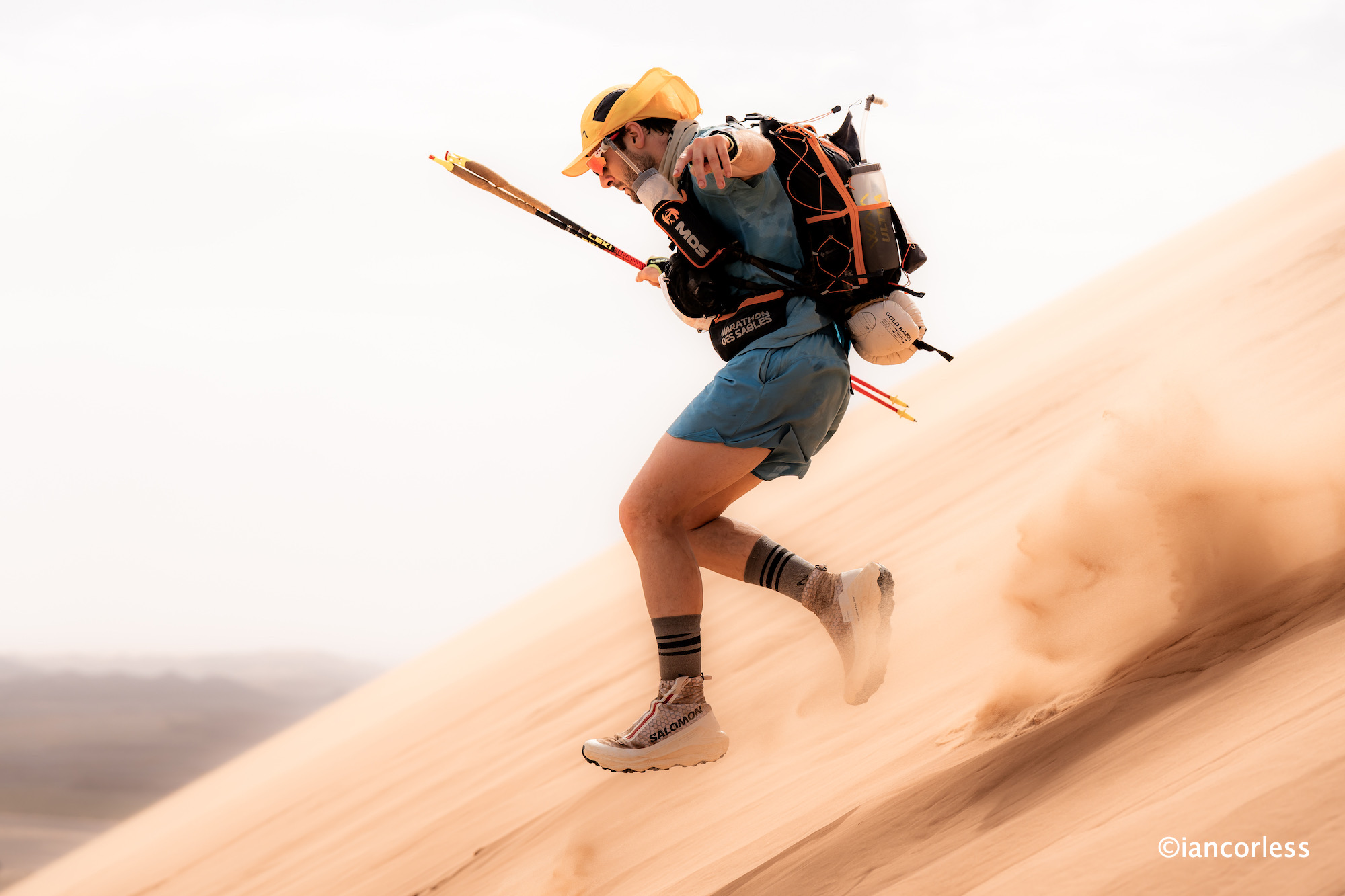
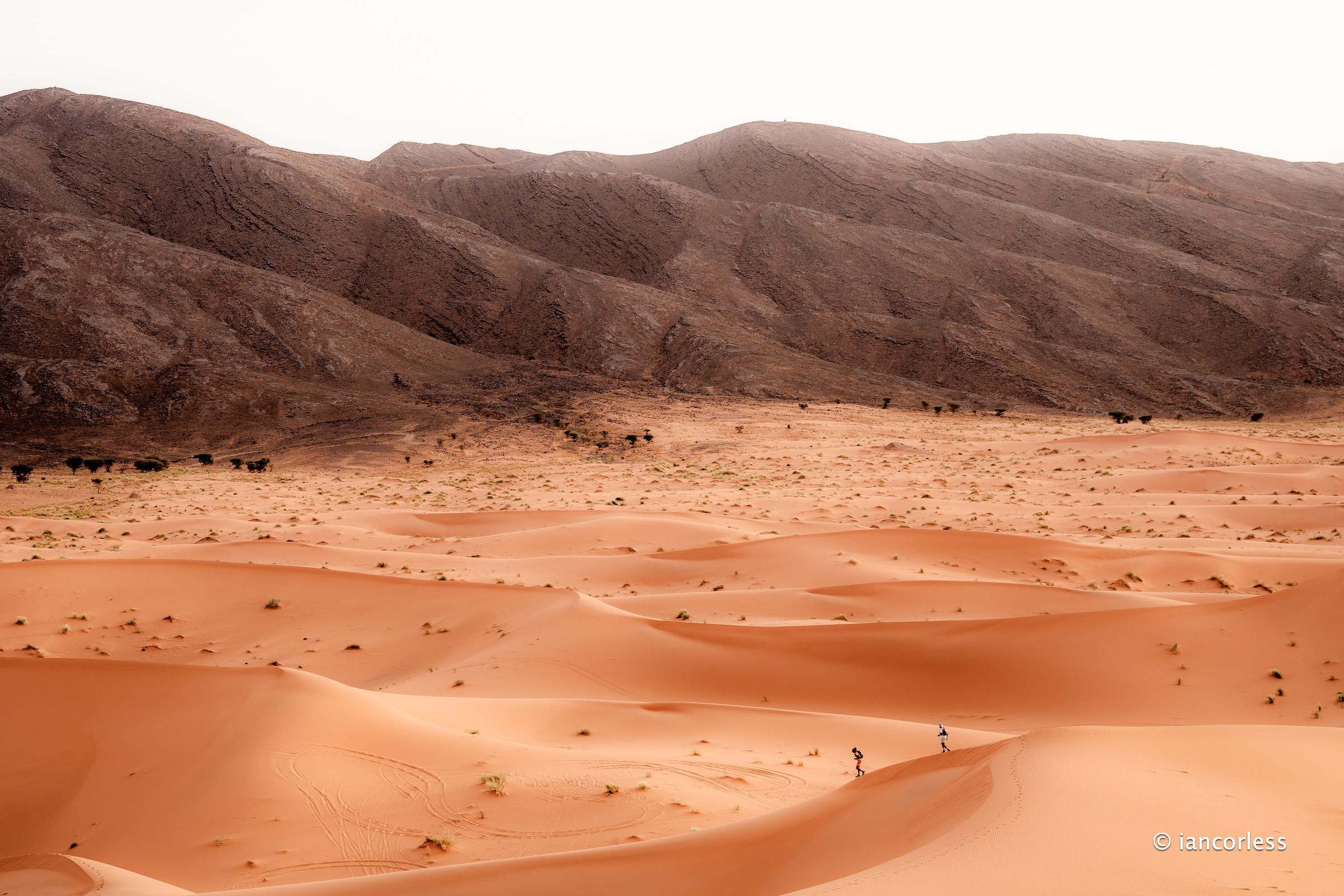
As in 2025, expect sand. A lot of it. Expect the Merzouga Dunes. Do not expect Djebel El Otfal.
You now have a working template to mentally prepare for the challenge ahead.
Before the Race Even Starts
Your race does not begin at the start line. It begins with logistics.
Photo by Ian Corless
In the final 2 to 3 weeks before the race, taper training back so that you are fresh and strong. Also plan for heat adaptation, this could be specific heat chamber sessions or a series of sauna sessions or similar.
Photo by Ian Corless
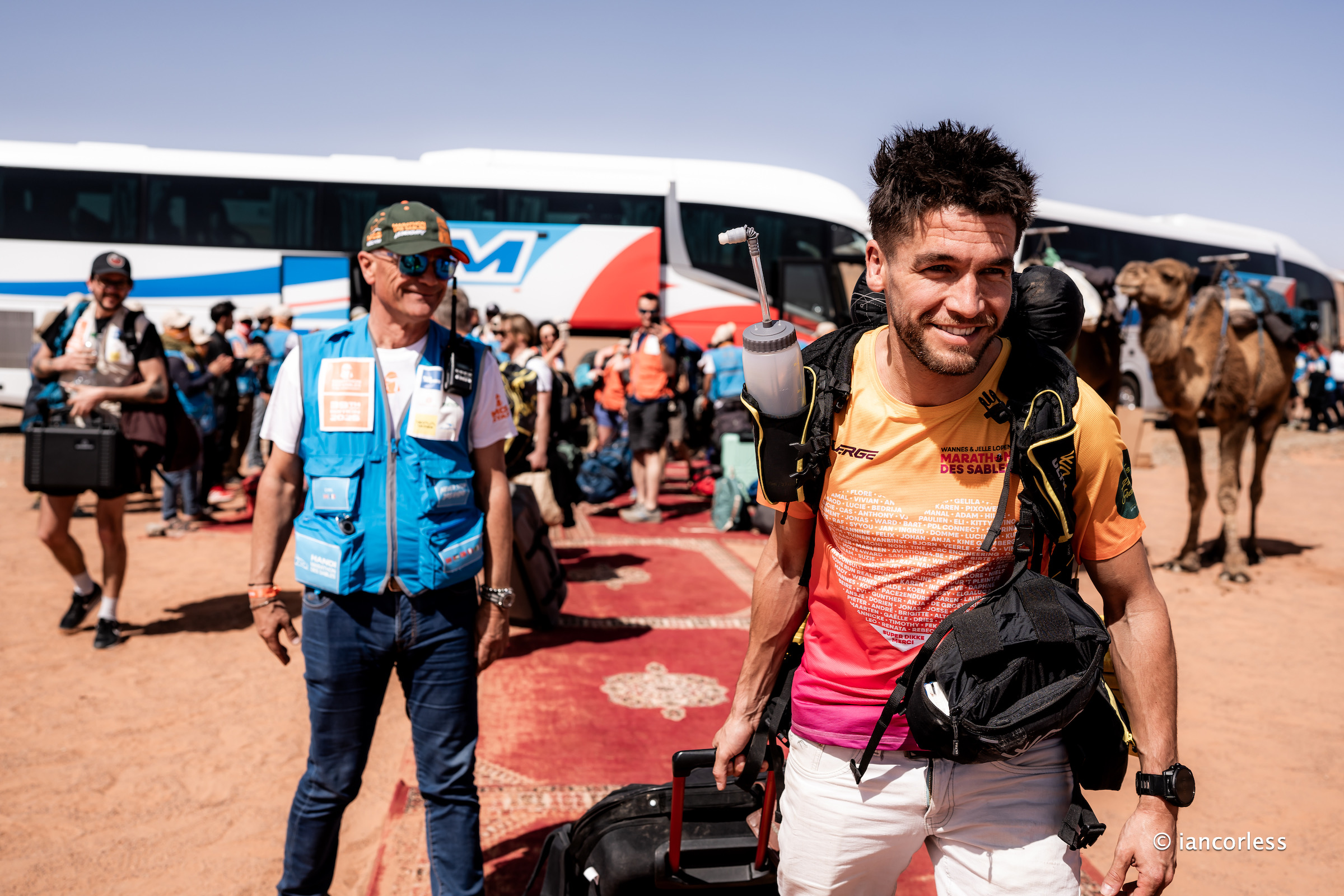
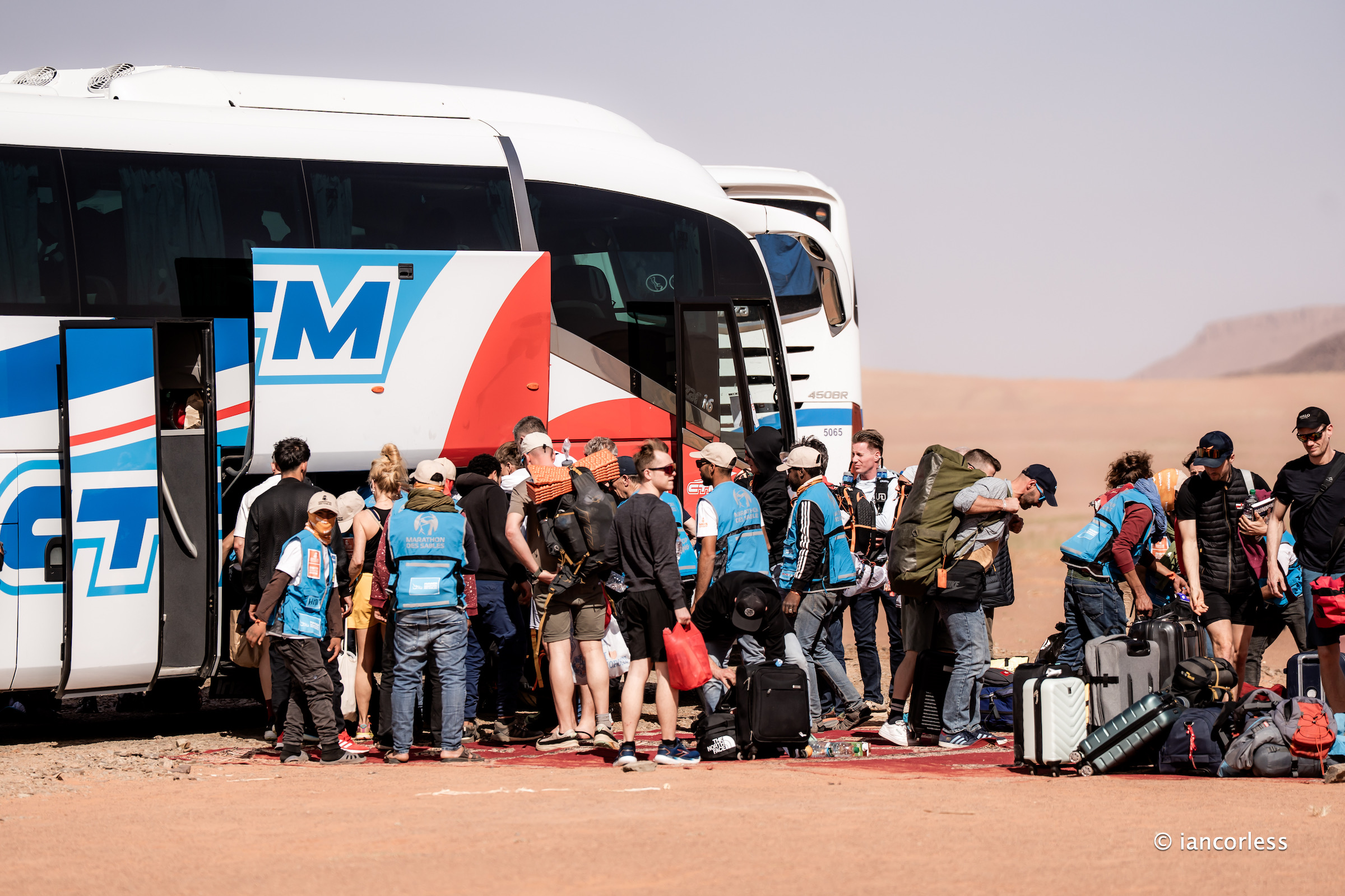
You are responsible for arranging your own accommodation before the official transfer from Ouarzazate to bivouac one. If you fly into Marrakech, you may need a hotel there as well. There are free transfer buses from Marrakech to Ouarzazate. Arrive in Ouarzazate at least one day before required, have a good hotel night and time to relax and prepare before the transfer to the desert. MDS will confirm the dates and times for transfers etc.
From there, the structure usually follows this pattern:
Day 1 – Bus transfer from Ouarzazate to the desert bivouac. You settle in and stay overnight. This is self-sufficient. No meals are provided. Bring enough food for arrival day and admin day. There is no weight restriction at this point, so bring what you want.
Day 2 – Technical, administrative, and medical checks. Overnight in bivouac, still self-sufficient.
Day 3 – Stage 1
Day 4 – Stage 2
Day 5 – Stage 3
Days 6 and 7 – Stage 4, the 100km long stage
Day 8 – Stage 5
Day 9 – Stage 6, medal at the finish, bus transfer back to Ouarzazate. Overnight hotel with half-board.
Day 10 – Free day in Ouarzazate, awards ceremony and gala evening. Hotel half-board.
Day 11 – Airport transfers. End of the adventure.
Bivouac Reality
From the moment you step into the bivouac, you are self-sufficient. Water is provided. Everything else is your responsibility.
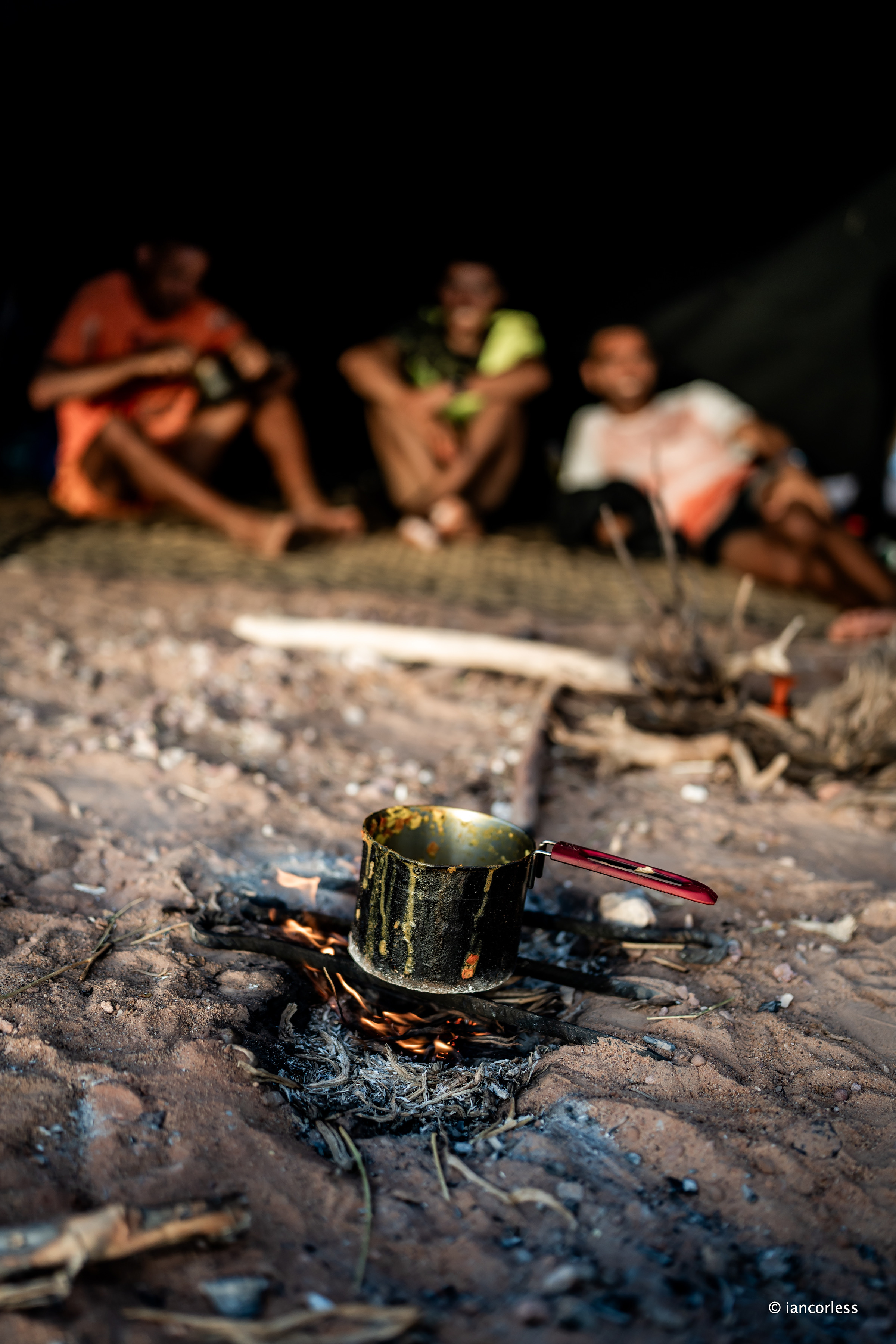
You must bring food and drink to cover arrival day and admin day before racing begins. You do not carry this food during the race, so be smart. Bring proper meals. Rachid, for example, makes a Tagine in camp.
You also have access to your luggage before admin checks. This is valuable. Bring spare kit, extra layers, backup options. You can fine tune your equipment in real desert conditions.
And do not assume MDS = heat. In 2025, we had rain, strong winds and sand storms.
Recent editions have shown how unpredictable conditions can be. The October MDS 120 Morocco race in 2024 saw rain and flooding. The Atlantic Coast edition had extreme wind, cold temperatures and rain. The desert is not always hot and dry. Prepare for variation.
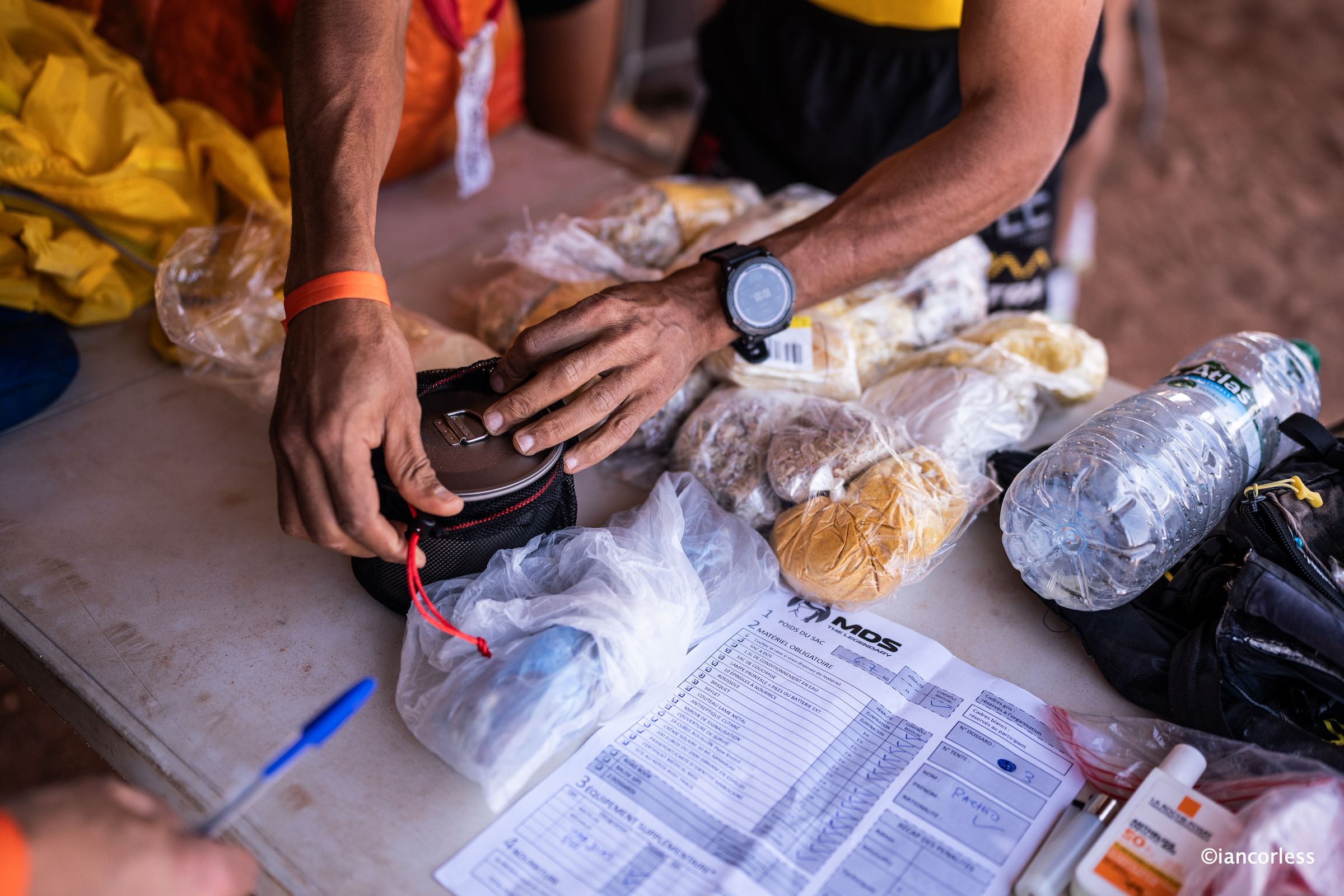
Before admin, you can adjust your race pack. After that, your pack must meet regulations:
Minimum weight: 6.5kg excluding 1.5 lts of water.
Minimum food: 2000 calories per day.
All mandatory kit must be present.
No exceptions.
Water Strategy Has Changed
Since 2024, water provision has evolved.
Photo by Ian Corless
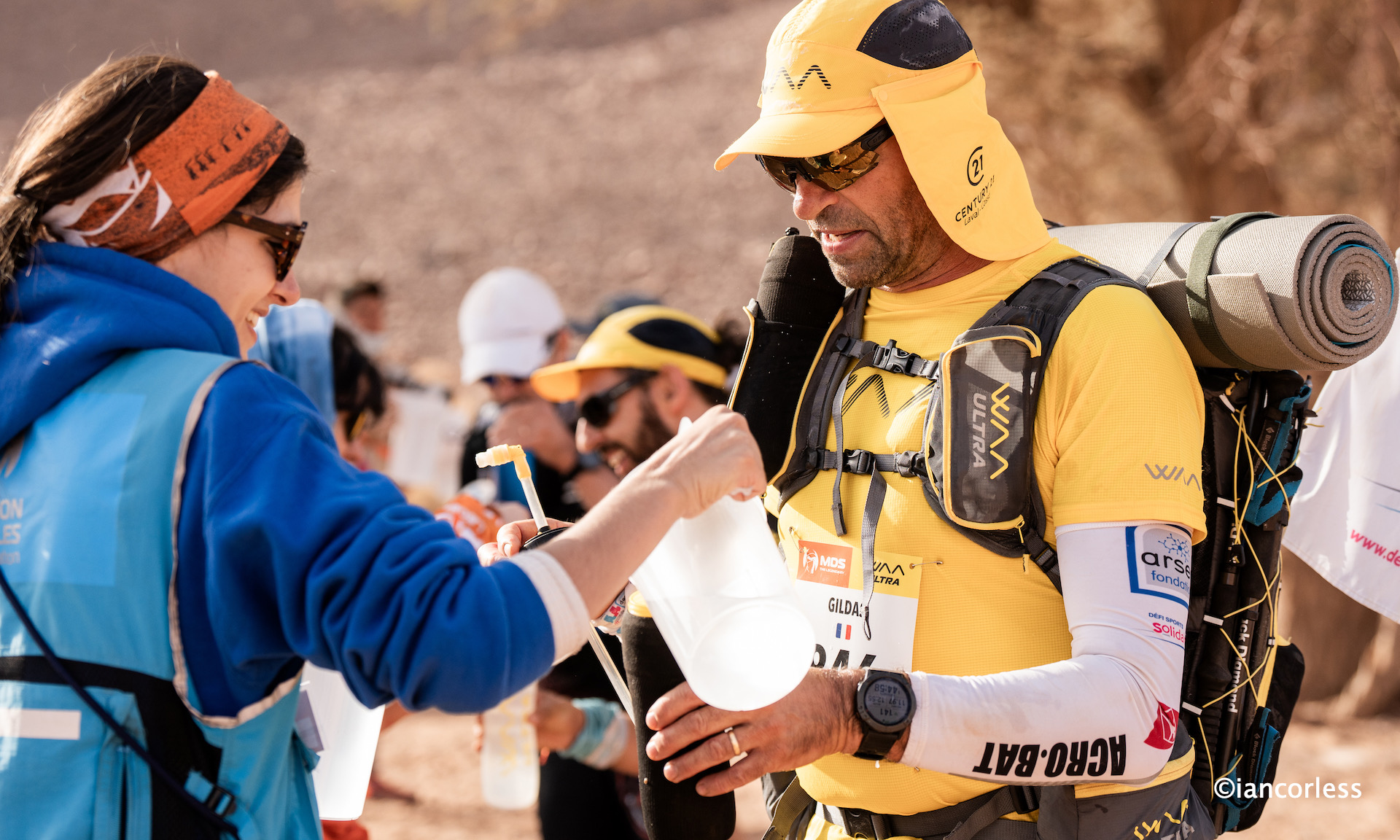
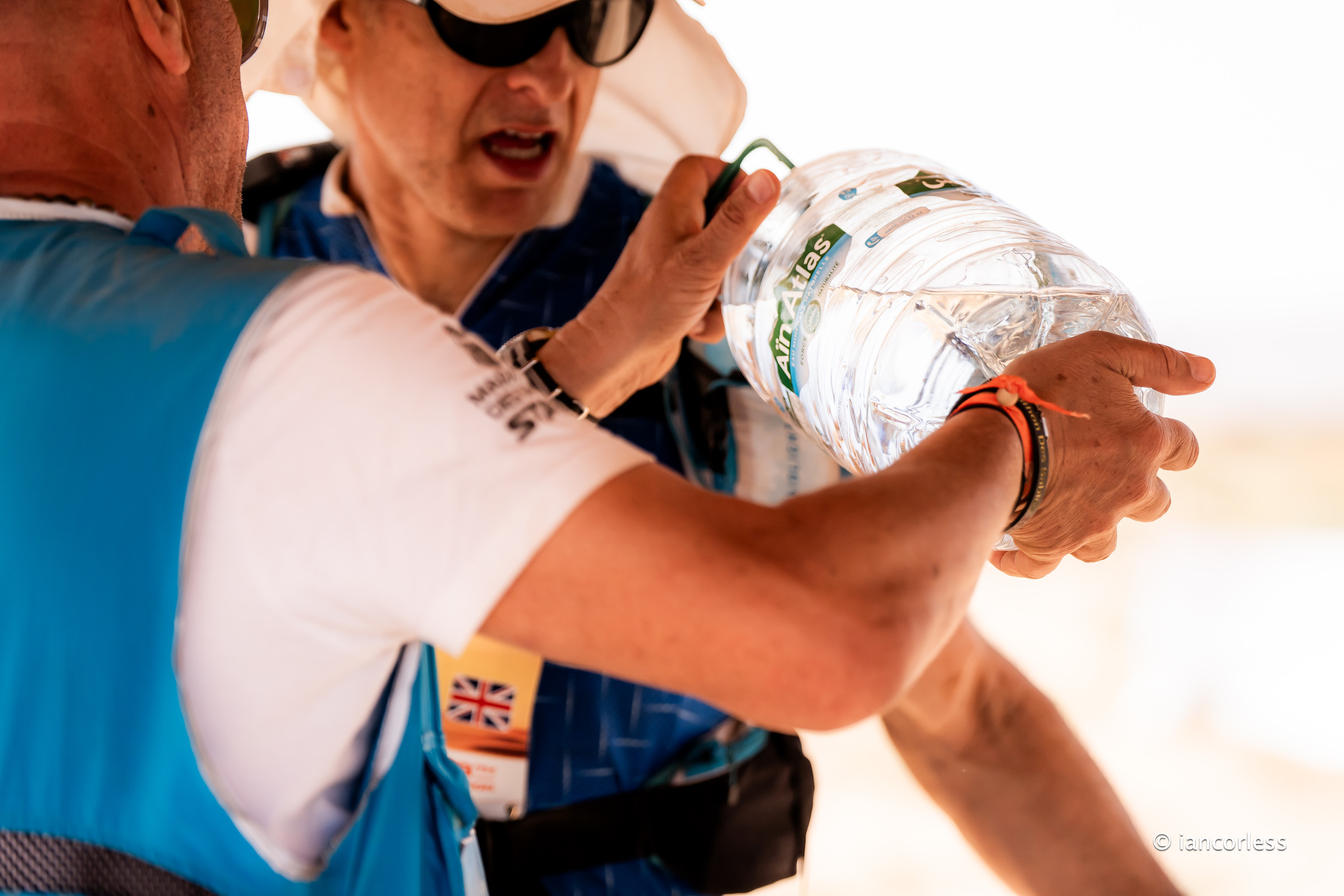
Once Stage 1 begins, water during stages is effectively unlimited. You are no longer handed sealed 1.5L bottles at checkpoints. Instead, volunteers in blue coats pour water from large containers into your bottles.
If you stand at a checkpoint and drink a full bottle, they refill it.
Typically, checkpoints are spaced around 10km apart, terrain permitting. However, if conditions demand it, additional water stations may be placed between checkpoints, for example at 5km. This flexibility is important to combat excessive heat.
Photo by Ian Corless
For the long stage, there may be a requirement to carry additional water capacity. This could be supplied in a 1.5L bottle. Plan ahead. Either have spare capacity to decant, or a system to carry a full bottle.
After each stage, water is rationed. You receive one 5L bottle. That 5L must cover:
Post-stage hydration
Dinner preparation
Breakfast preparation
Water allocation to CP1 the next day
If you want to wash, that also comes from the same 5L. Prioritize drinking and eating. Washing is optional. Hydration is not.
Salt Is Now Non-Negotiable
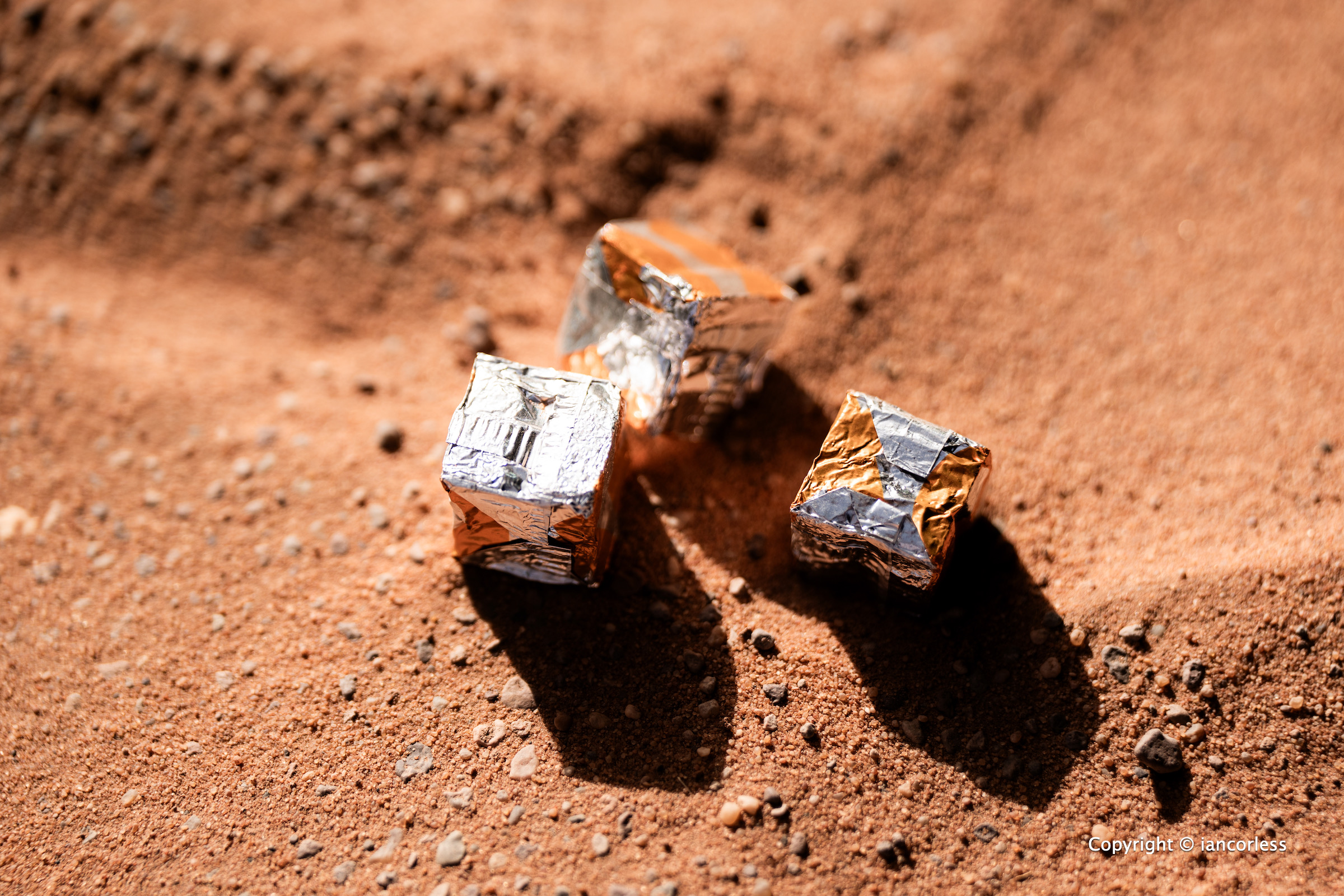
The race rules require 14 broth cubes. They are salty and mandatory.
In 2024, this change was questioned. By the end of the race, feedback was largely positive.
Not all cubes dissolve well. Test them. Many athletes use ‘Knorr’ because it dissolves reliably. Build a salt replacement strategy that works for you. This is a self-sufficient race. You must manage your own electrolyte plan.
Feet: The Deciding Factor
Along with dehydration, damaged feet are one of the main reasons people do not finish.
Your shoes must fit correctly. Your socks must suit you. You must know how to treat hot spots and blisters. Desert sand magnifies small problems quickly.
Ignore your feet at your peril.
Advice – A thumb nail of space above your longest toe is ideal. Note, I say longest toe – this may not be your big toe! A wider shoe is a good idea to allow for toe splay. If a shoe is too big, your foot will move when walking or running. A moving foot causes friction, friction means blisters.
Photo by Ian Corless
Make sure your shoes have gaiters so no sand can get in the shoe.
Safety on Course
The race operates under strict safety protocols.
Photo by Ian Corless
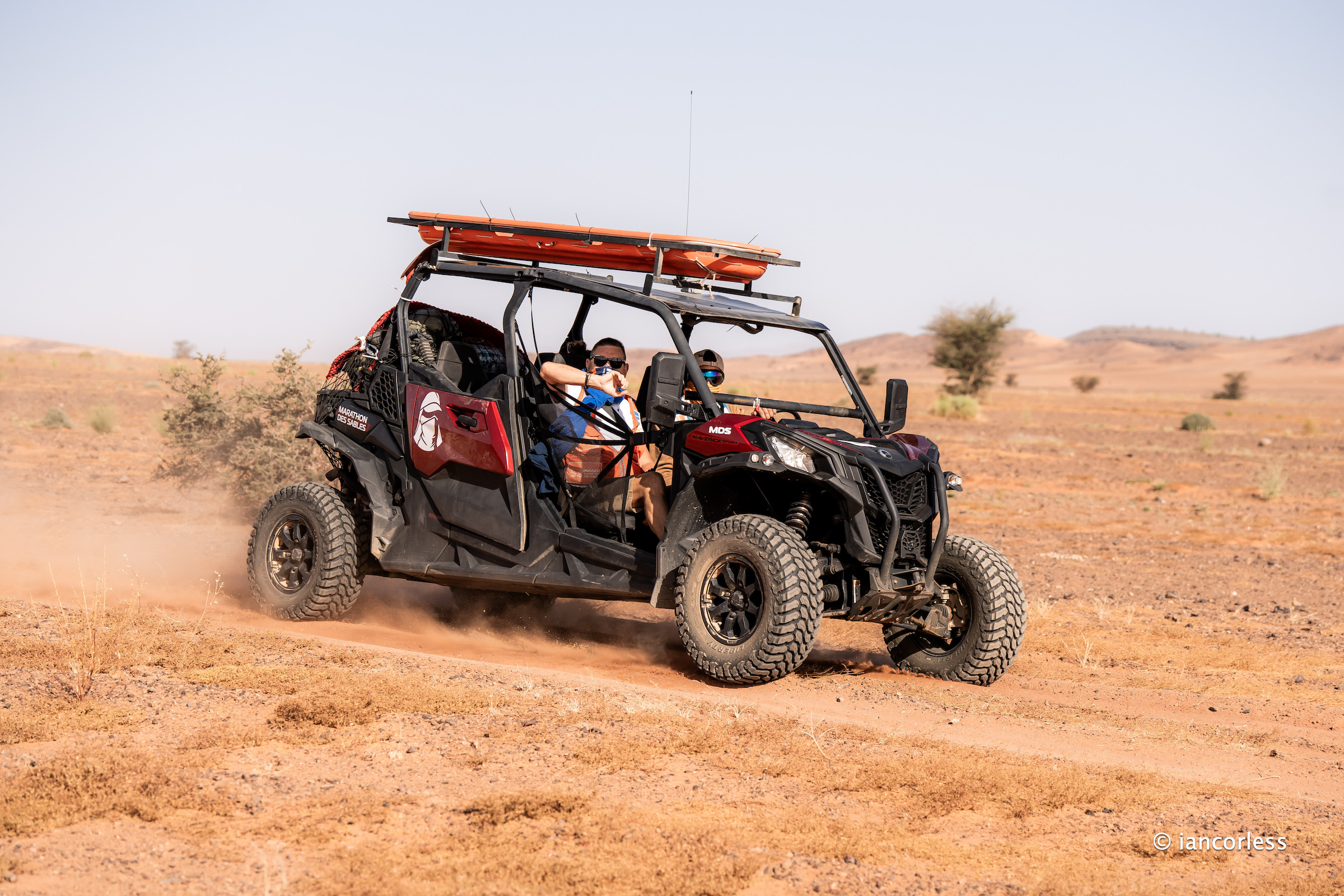
Fast response buggies are positioned to access difficult terrain quickly. 4×4 vehicles are spread across the course.
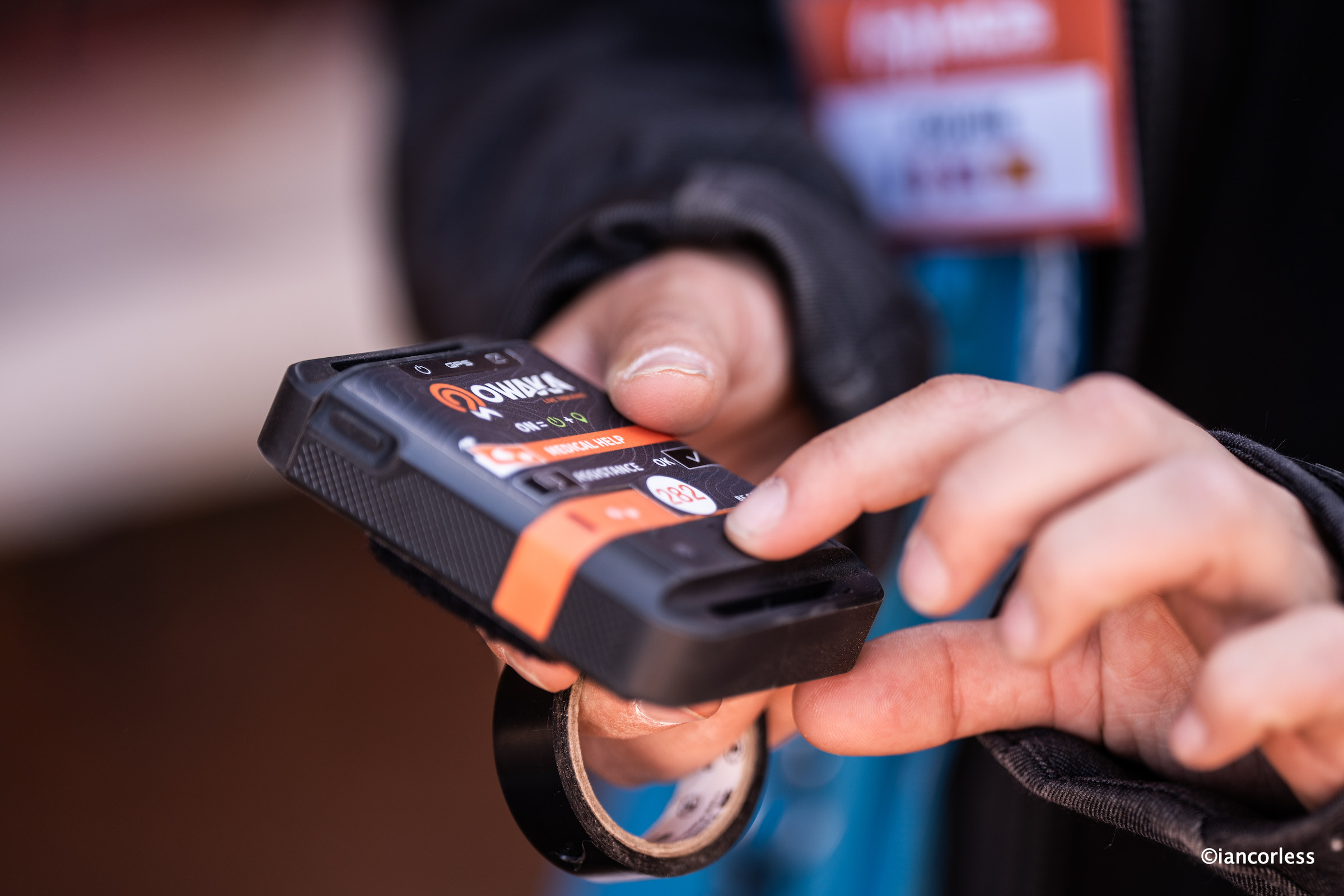
Every runner carries a tracker attached to their pack. This allows the organization to monitor your position in real time. It includes an emergency button for immediate assistance.
There are also medical runners on course. These are trained medical professionals competing in the race. They wear a different colour race number so you can identify them. They can provide immediate care if necessary. In addition, the full medical team is equipped to respond anywhere in the desert.
Photo by Ian Corless
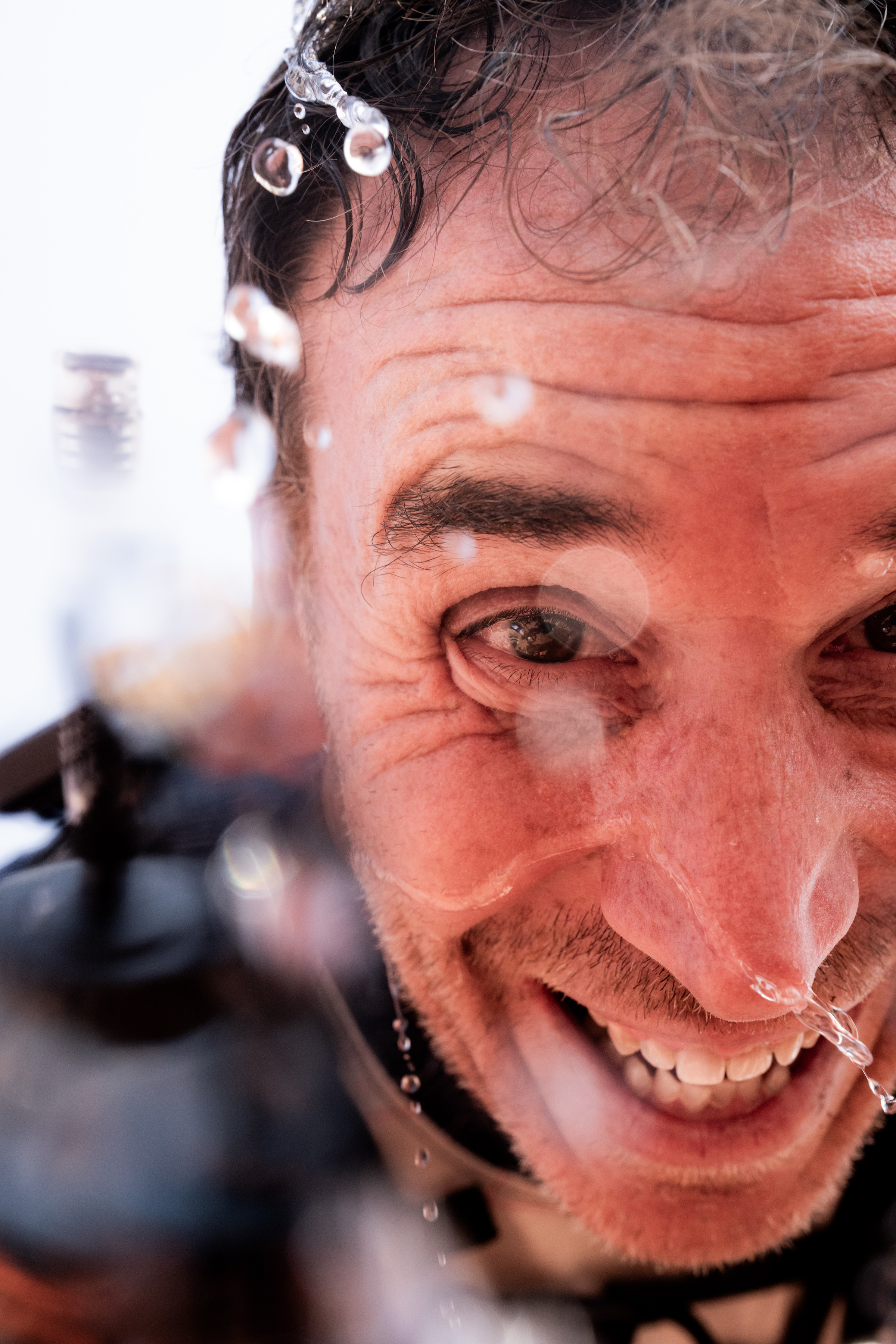
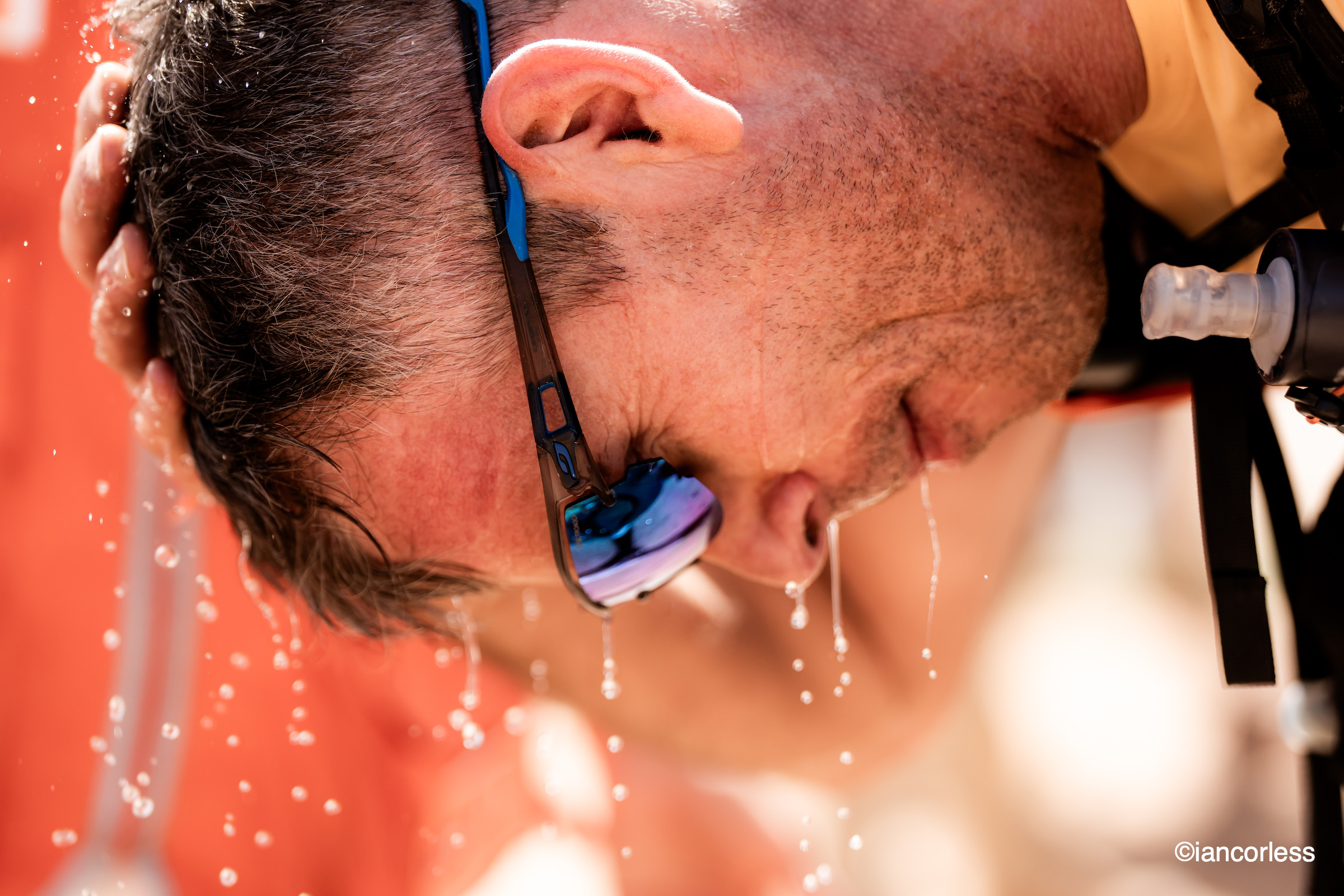
During stages, water is not rationed. If you need more, you can have it. At key checkpoints, iced water is available for cooling and is poured over your head by blue coat volunteers. Orange jackets manage medical incidents.
Mandatory Equipment Means Mandatory
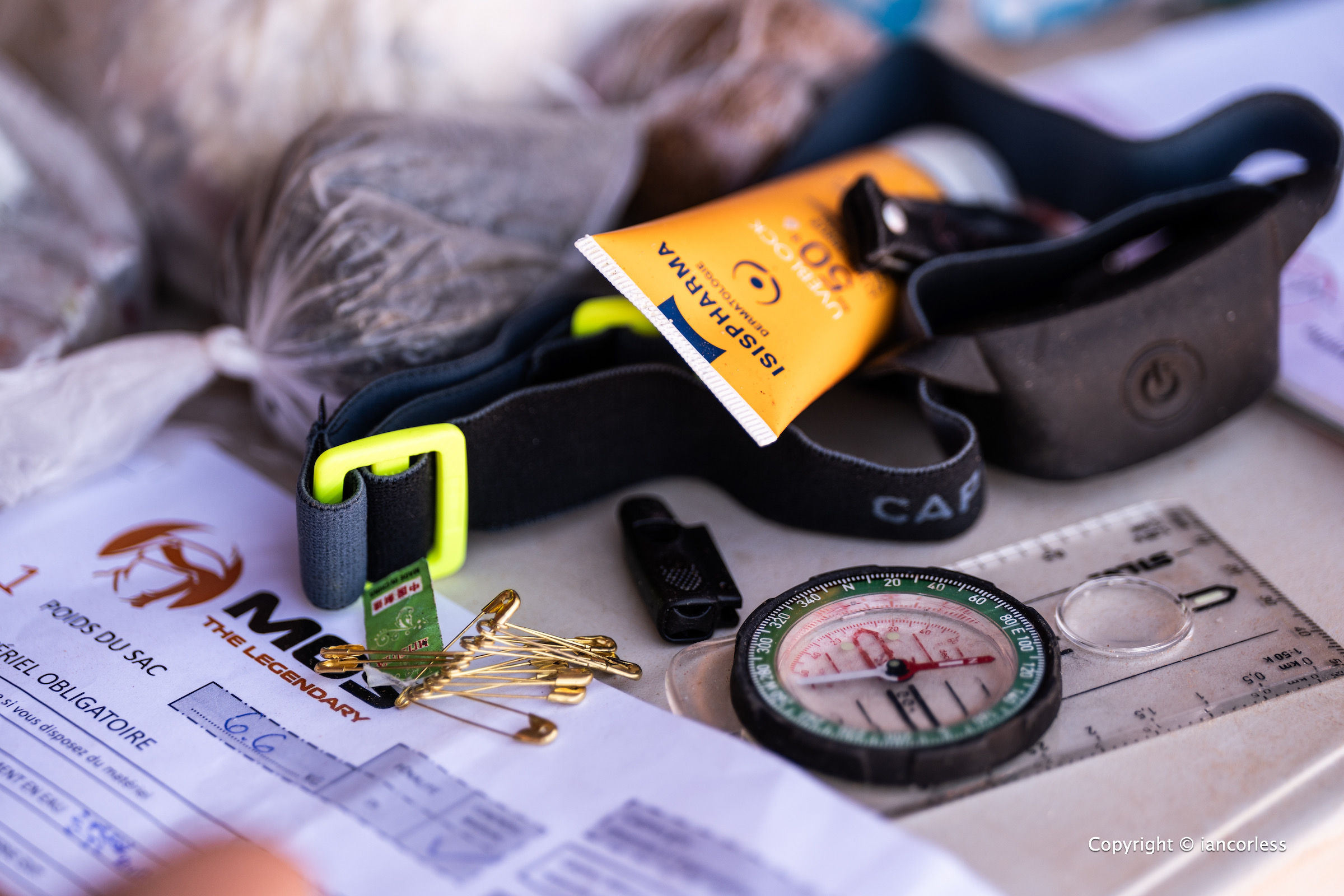
You must carry:
Pack such as WAA Ultra Bag 20L
Minimum 1.5L water capacity
Sleeping bag
Head torch plus spare batteries (charger or solar charger allowed)
10 safety pins
Compass with 1–2 degree precision
Lighter
Whistle
Knife
Topical disinfectant
Signal mirror
Survival blanket
14 broth cubes
Sun cream
200 euros or 2000 dirhams
Passport or ID card
Original ECG document and medical certificate
Roadbook (provided on arrival)
GPS tracker
Pay close attention to deadlines and rules for ECG and medical forms. The regulations are strict.
Calories: The Real Numbers
The rules require 2000 calories per day across six stages. That equals 12,000 calories minimum to comply.
However, with the rest period during the long stage, 14,000 calories is a more realistic minimum. You may carry more. For example, a small and slight women weighing 50kg has very different calorie needs to a tall, muscular 90kg male. Understand your calorie needs.
You must be able to prove calorie totals. If you repackage food into lighter containers, keep the nutritional labels.
To break it down clearly:
Stage 1 – 14,000 calories remaining
Stage 2 – 12,000 calories remaining
Stage 3 – 10,000 calories remaining
Stage 4 – 8,000 calories remaining (long stage)
Day 5 – 6,000 calories remaining (rest day, still requires 2000 calories)
Stage 5 – 4,000 calories remaining
Stage 6 – 2,000 calories remaining
On Day 5, you may still be moving during the long stage or recovering in camp, but you still require 2000 calories. On Stage 6, you technically only need breakfast and race snacks.
Essential Personal Kit
Beyond mandatory equipment and food, you will need:
Shoes with gaiters, Velcro sewn securely in advance
Hat with potential neck cover
Sunglasses with strong protection and good fit for sandstorms or take extra goggles
Watch
Warm layer – windproof and possibly lightweight down jacket
Foot care supplies
Hygiene products
Toilet roll or wipes
Lip balm
Blindfold
Ear plugs
Spoon
Pot or bowl
Stove
Fuel cubes
Sleeping mat
Pillow
Flip flops or similar
Note – If you plan to NOT heat water, you will not need a stove of fuel cubes. However, you will still need a bowl or something similar to eat food from.
Photo by Ian Corless
For repairs, consider:
Zip ties
Gorilla tape
Super glue
Sewing kit
Cord or thin rope
Equipment can fail. Plan for that.
Final Practical Advice
Keep your pack as close to 6.5kg as possible. Extra weight adds unnecessary stress, especially in the longest edition to date with a 100km long stage.
Limit luxuries. If you take one, make it a lightweight MP3 player with reliable battery and earphones.
Accept the conditions. You may not wash. You will get dirty. You will smell. That is normal
Start conservatively. Ease into the race.
Photo by Ian Corless
Poles can make a huge difference, but only if you know how to use them properly. Front runners may not need them. Most people benefit from them.
Learn to walk efficiently. Many arrive expecting to run 80 percent and walk 20 percent. In reality, it is often reversed.
Protect your feet from day one.
Take a sleeping mat. In the desert, your job is simple: run, eat, sleep. Good sleep improves recovery. Recovery keeps you in the race.
The Coastal Challenge – February 13th to February 20th, 2027
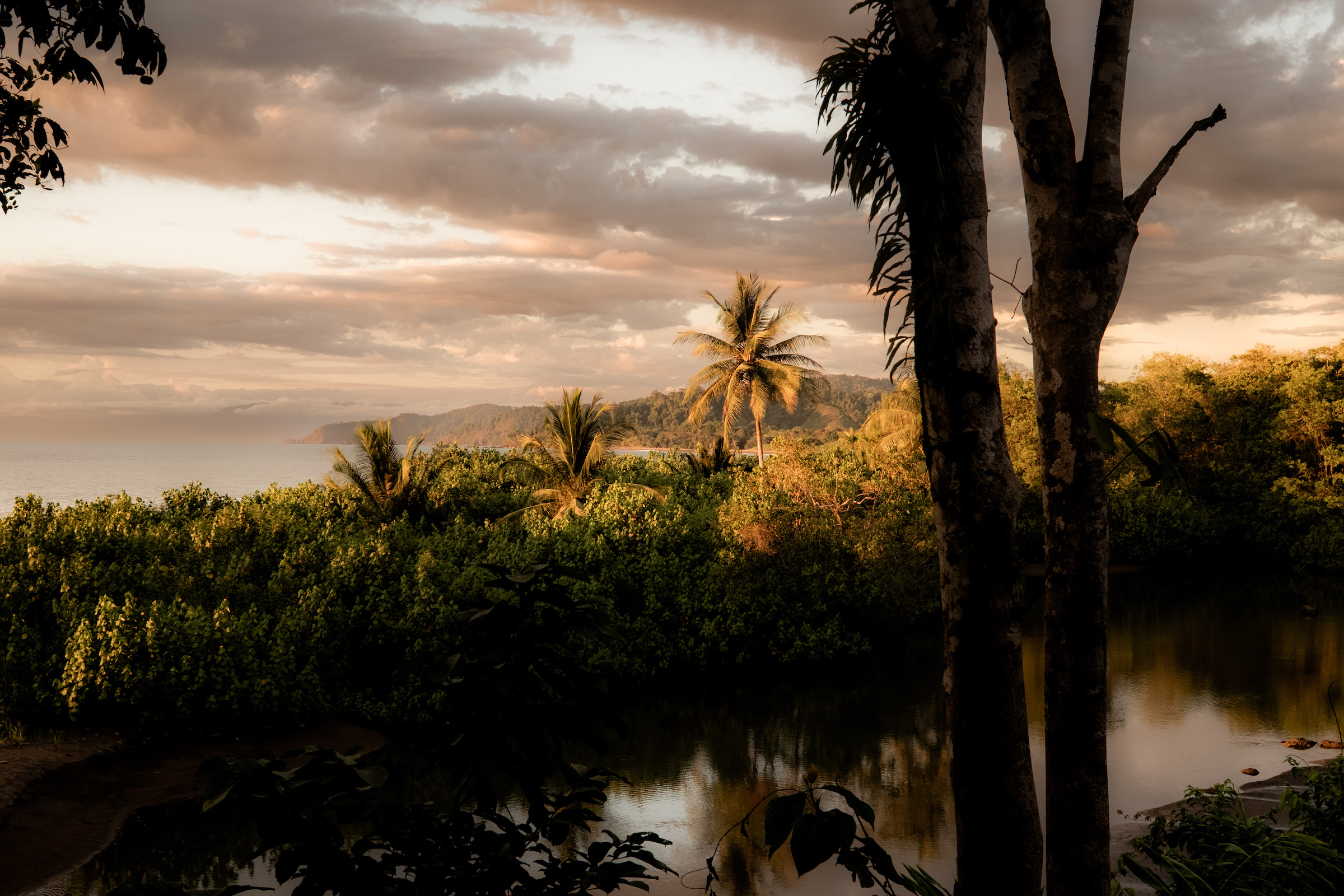
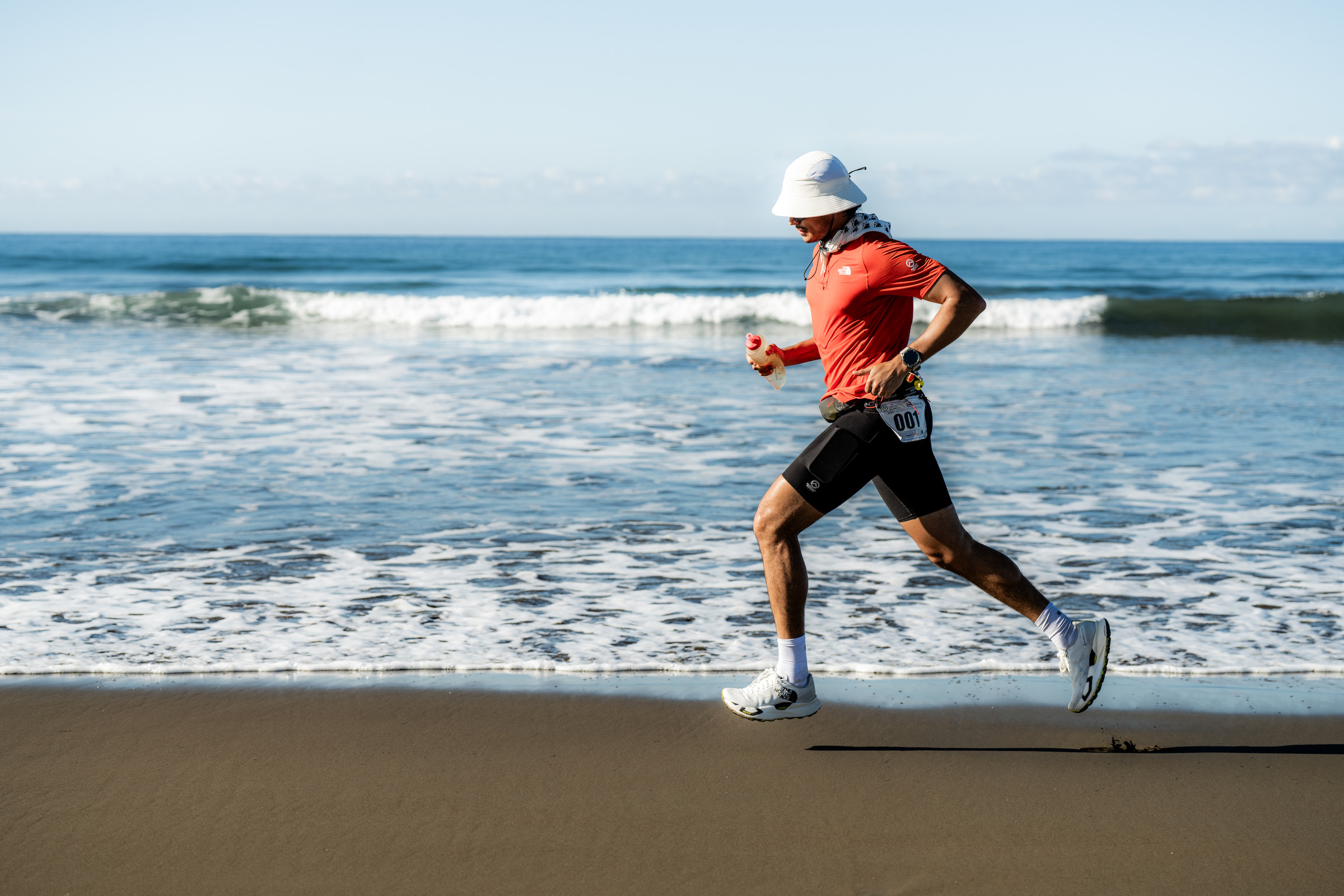
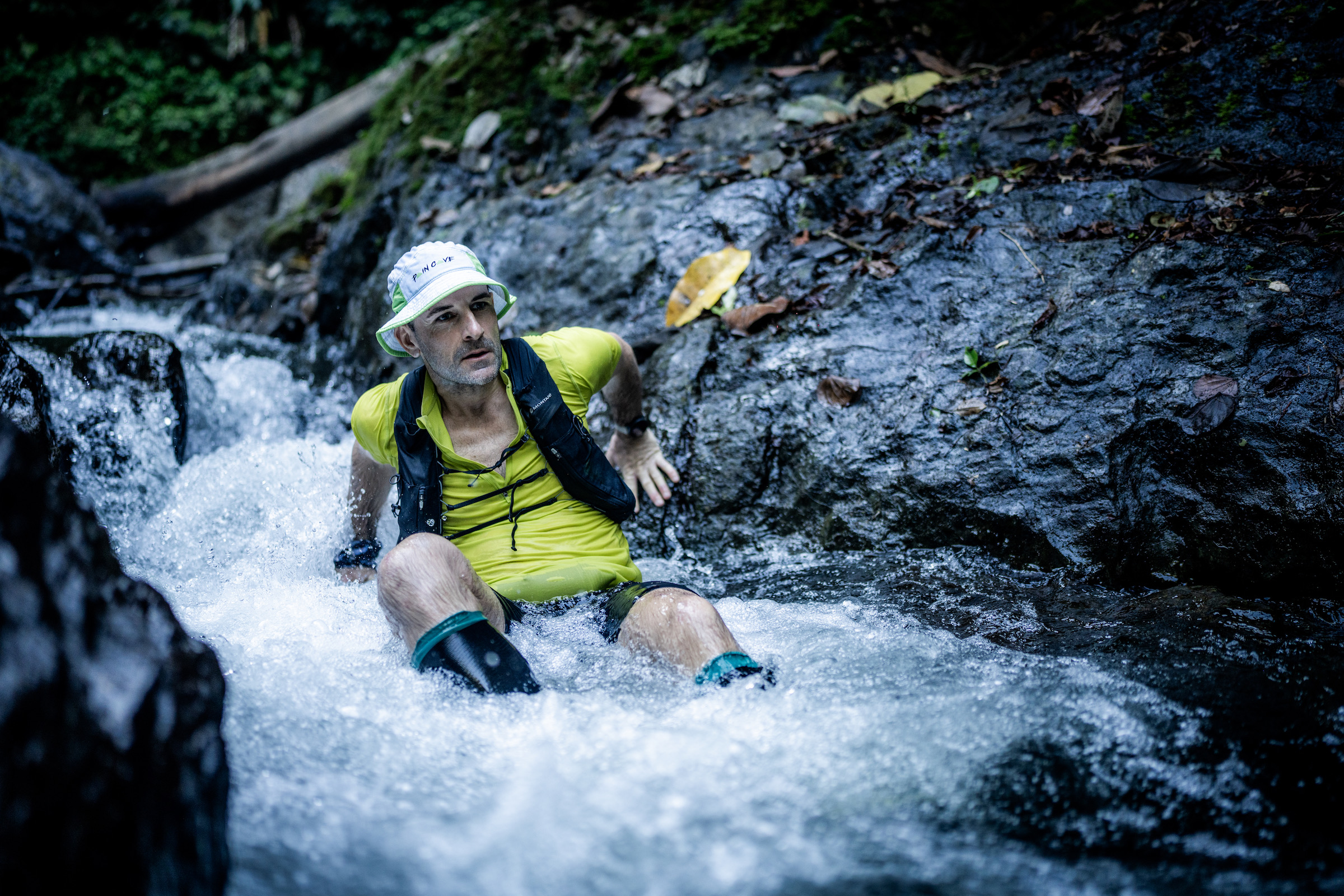
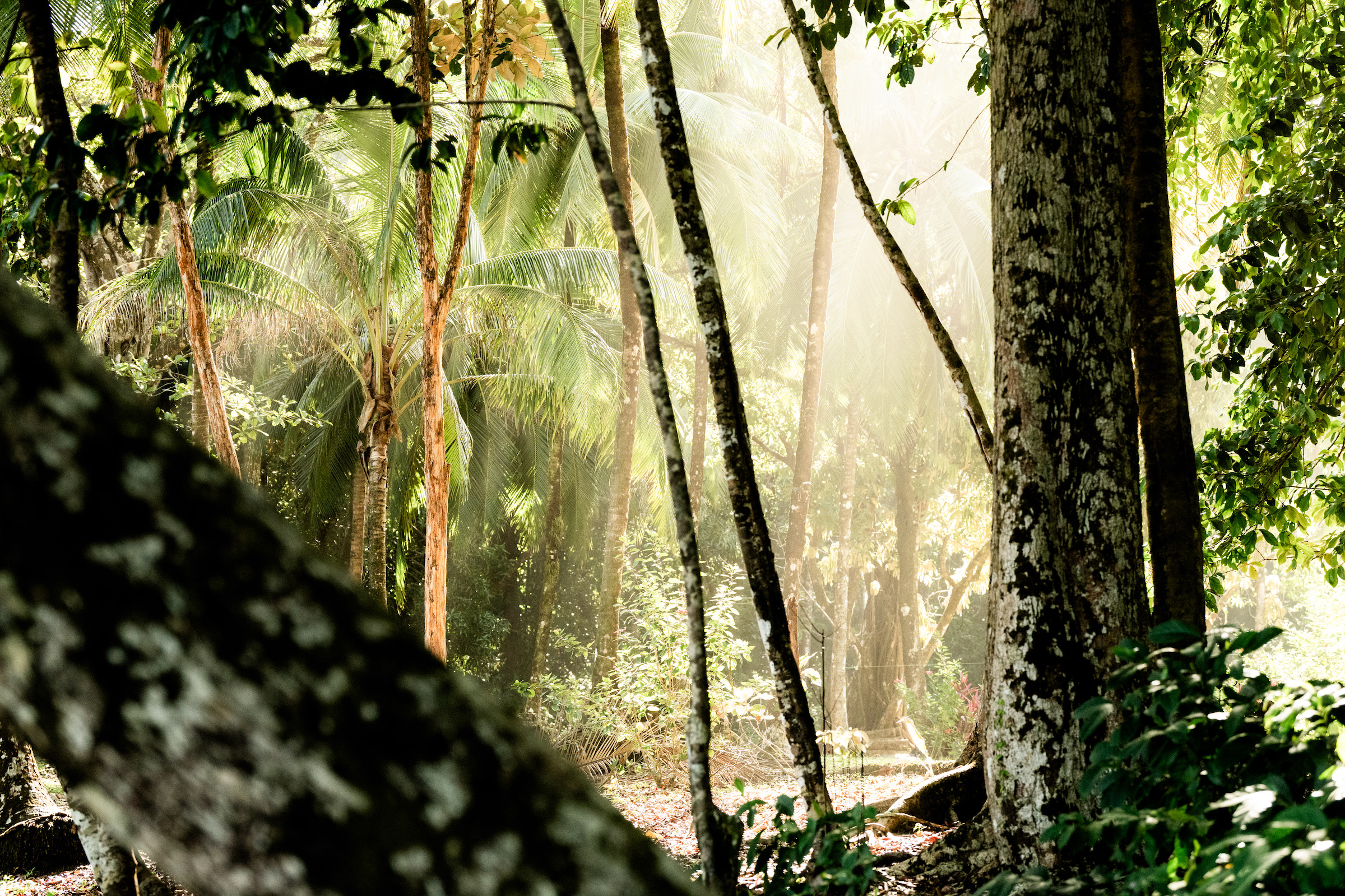
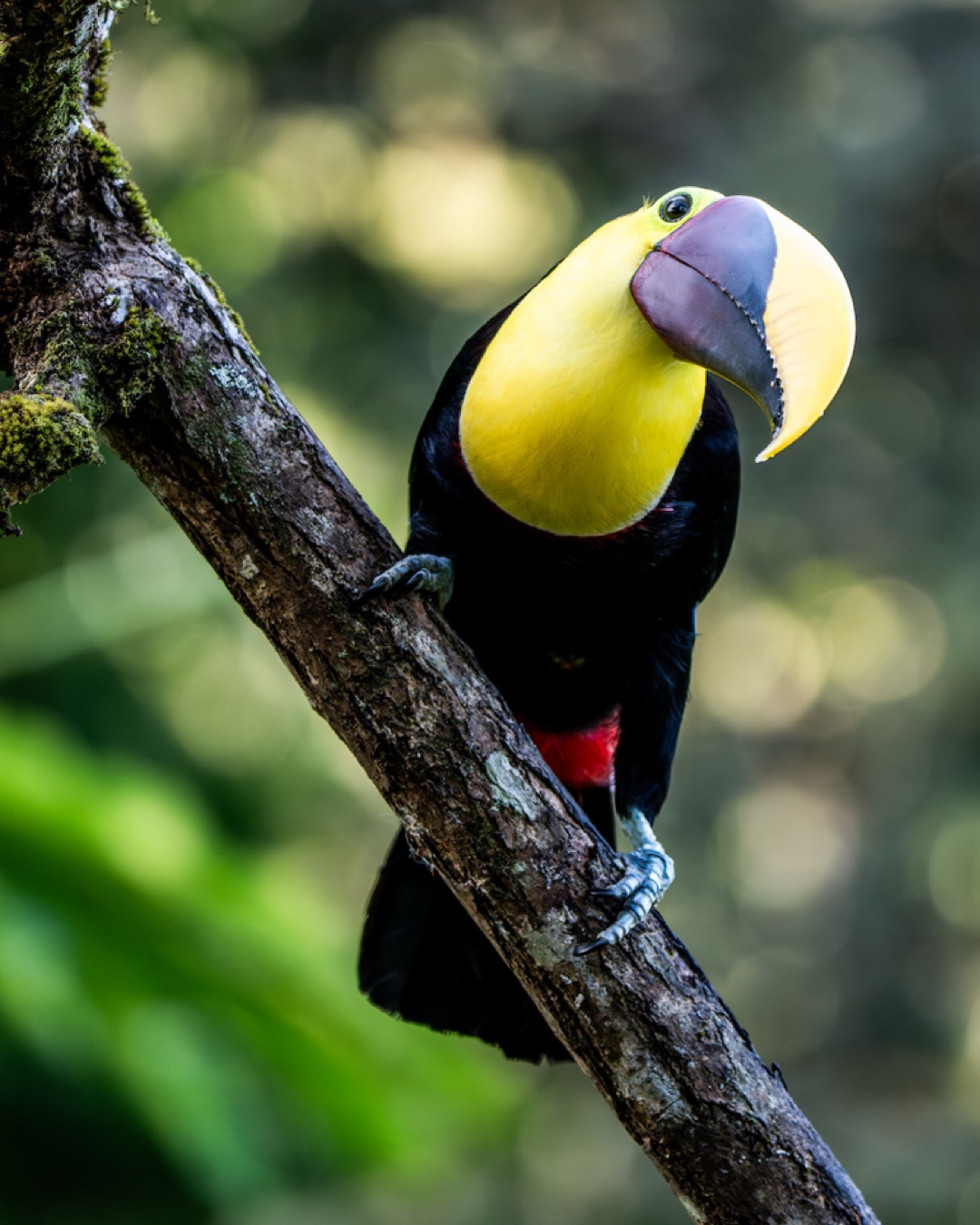
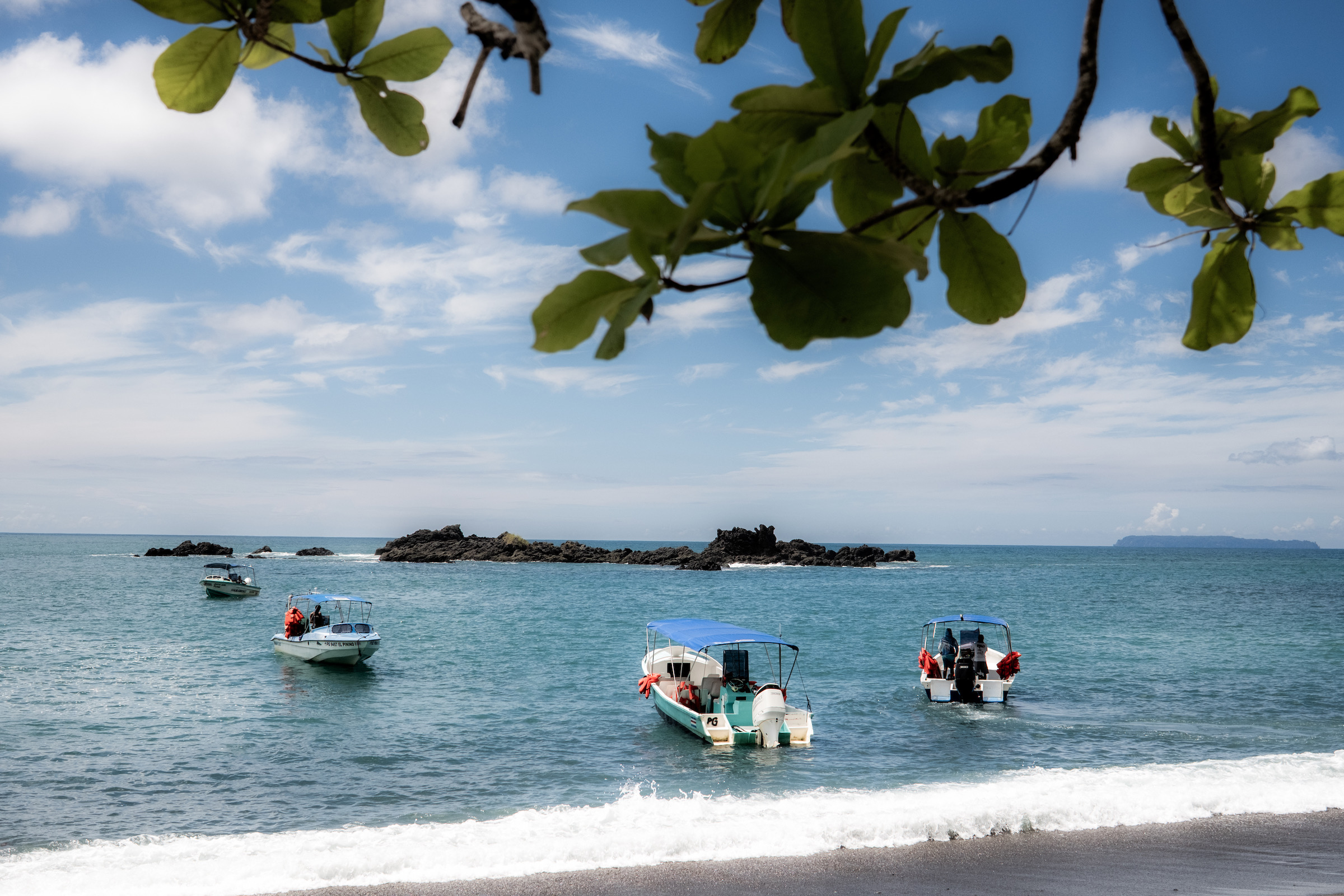
The Coastal Challenge Costa Rica is a six-stage, six-day race along Costa Rica’s Pacific coastline. It’s tough, humid, beautiful, and unpredictable in the best possible way. You’ll run through rainforest trails, cross rivers, climb steep hills, and move along stretches of tropical beach where the ocean feels close enough to touch.
This is not a single-day effort. It’s a week of managing energy, staying consistent, and adapting to changing terrain. Some days feel fast and flowing. Others demand patience and grit. By the time you reach the final stage, you’ll have covered ground that most visitors never see.
Two Race Options: Expedition and Adventure
You can choose between two distances: Expedition and Adventure. Both events run over the same six days and share the same start and finish week. Stages 1 and 6 are almost identical for both races, so everyone begins and ends the journey together.
The difference lies in Stages 2, 3, 4, and 5.
The Expedition race is the full challenge. Longer stages, greater cumulative distance, and a bigger daily physical demand. It’s designed for experienced endurance runners who want the complete test.
The Adventure race offers considerably shorter stages on days 2 through 5. That adjustment makes the event accessible to a much wider range of participants. It’s ideal for runners who prefer a steadier pace, and especially for those who plan to hike or walk sections of the course.
‘Adventure gives the best of both worlds, I got to race in Costa Rica and see the awesome trails, views and terrain, but I also got more time to relax and enjoy camp and the Pura Vida lifestyle.’ – Abelone Lyng
Adventure doesn’t mean easy. The terrain and climate are the same. But the shorter distances allow more time for rest, recovery, and simply taking in the surroundings. You’ll have space to soak up the Pura Vida lifestyle, connect with other runners, and enjoy the unique atmosphere that makes this race special.
Whether you choose Expedition or Adventure, you’ll experience the same wild coastline, the same supportive race community, and the same sense of achievement at the finish.
Ready to Sign Up?
The 2027 race entry is $3,050.
Using the link below, Ian Corless is able to offer a $200 discount, bringing your entry down to $2,850.
If you’ve been thinking about a multi-day race but weren’t sure which one, this is a strong place to start. Six days. A world-class course. Two distance options that make the challenge accessible without losing its edge.
We’ll see you on the start line in February 2027.
More reading
THE COASTAL CHALLENGE COSTA RICA : A 2026 PERSPECTIVE ON ONE OF THE WORLDS TOUGHEST RACES – HERE
You can read daily summaries from the 2026 edition HERE






 IAN CORLESS