The first edition of MDS CAPPADOCIA concluded with stage 3 and 25km’s. What an edition it has been…
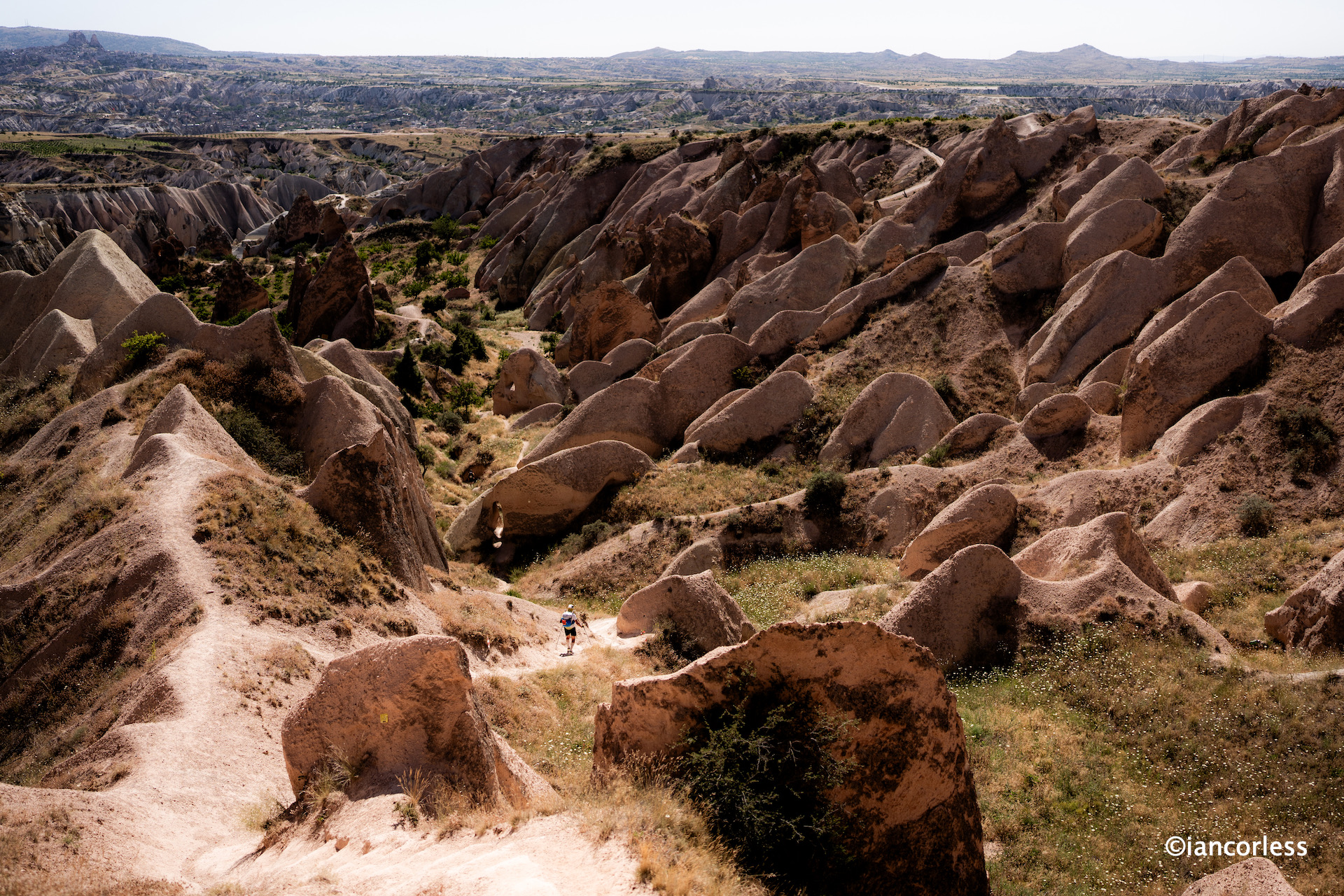
Red Valley
The MDS name is synonymous with sand, and yes, for sure, Cappadocia is not a desert, however, it is a desert like location and this has been one of the unique stories of the race.
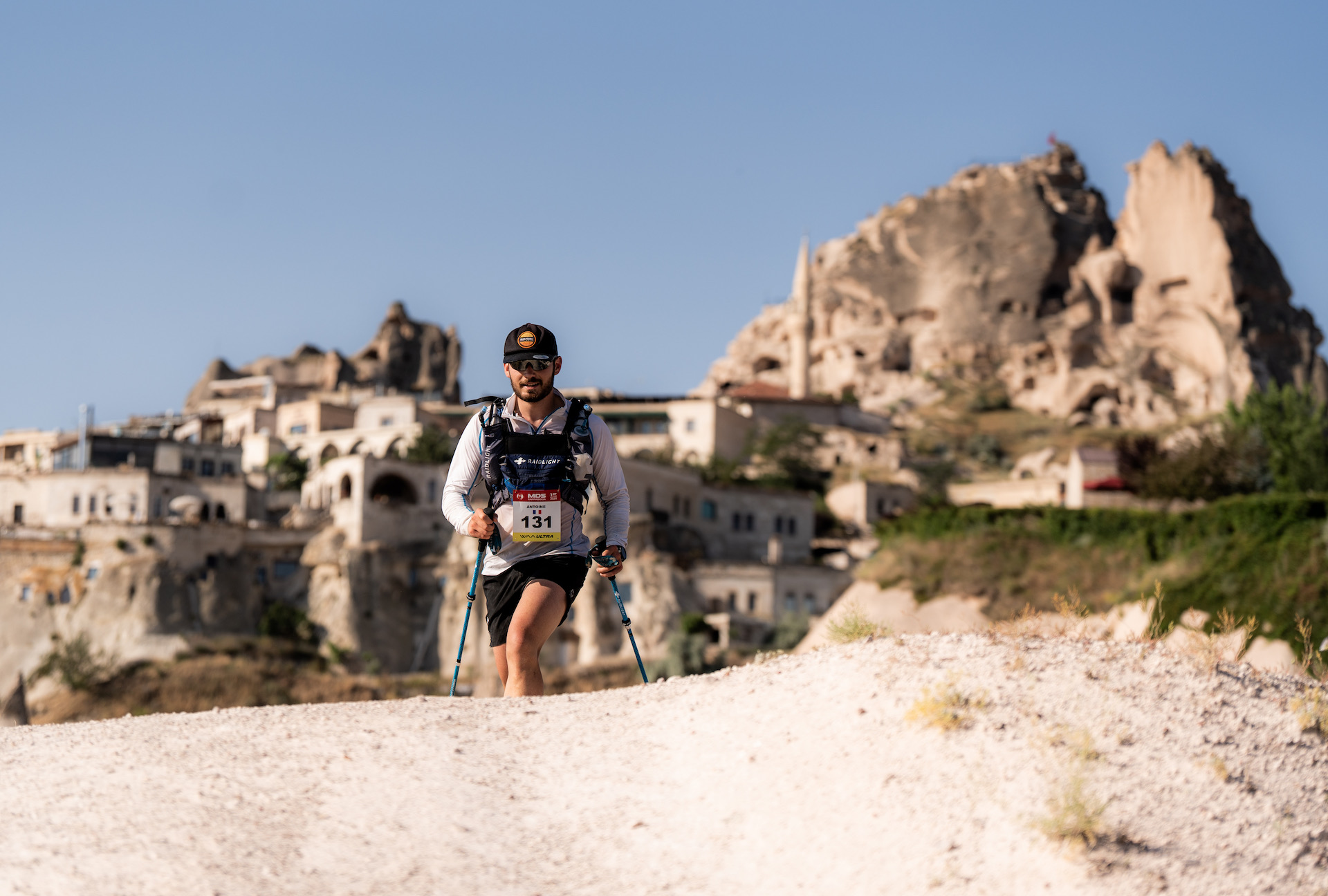
Uçhisar
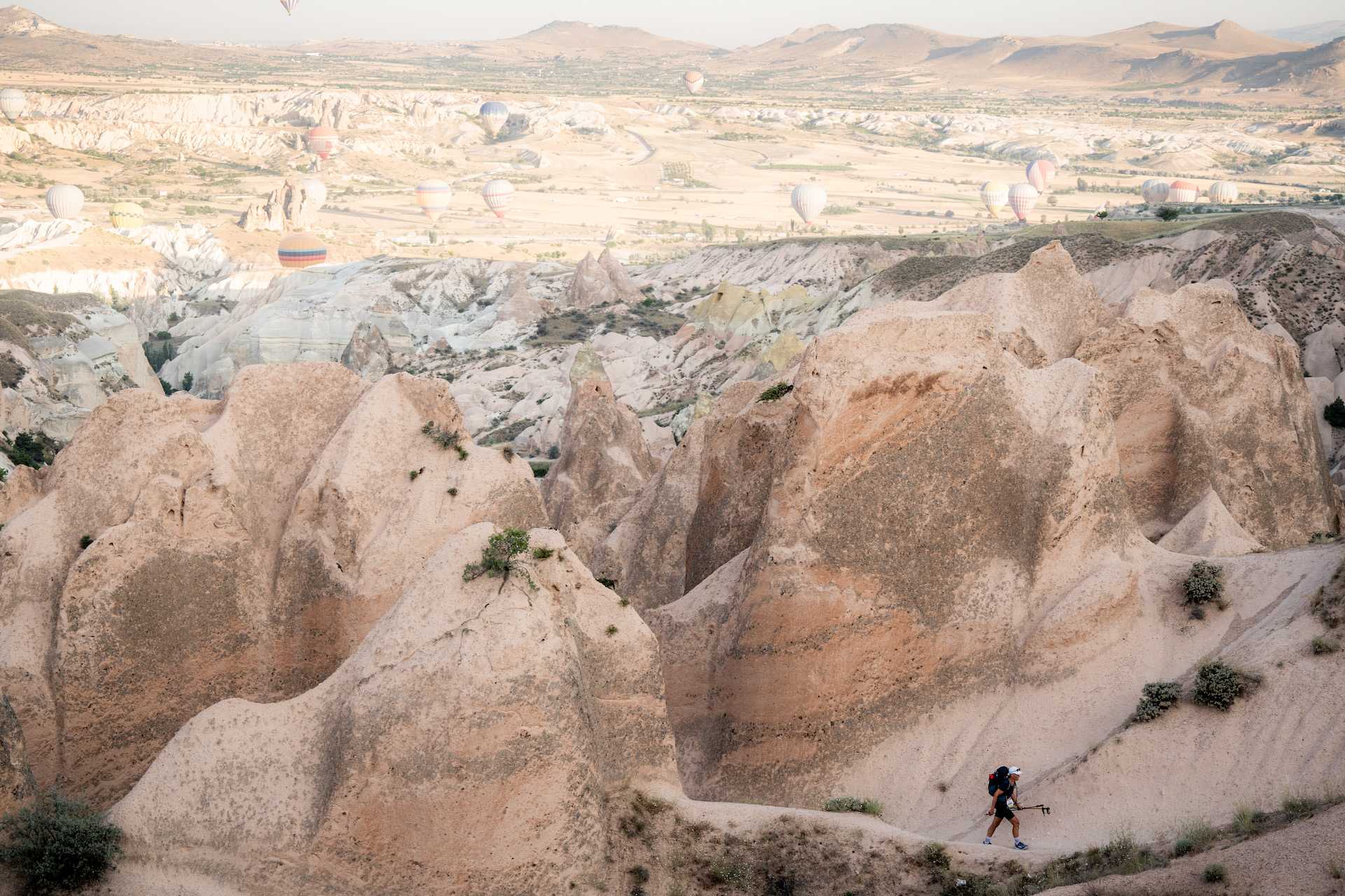
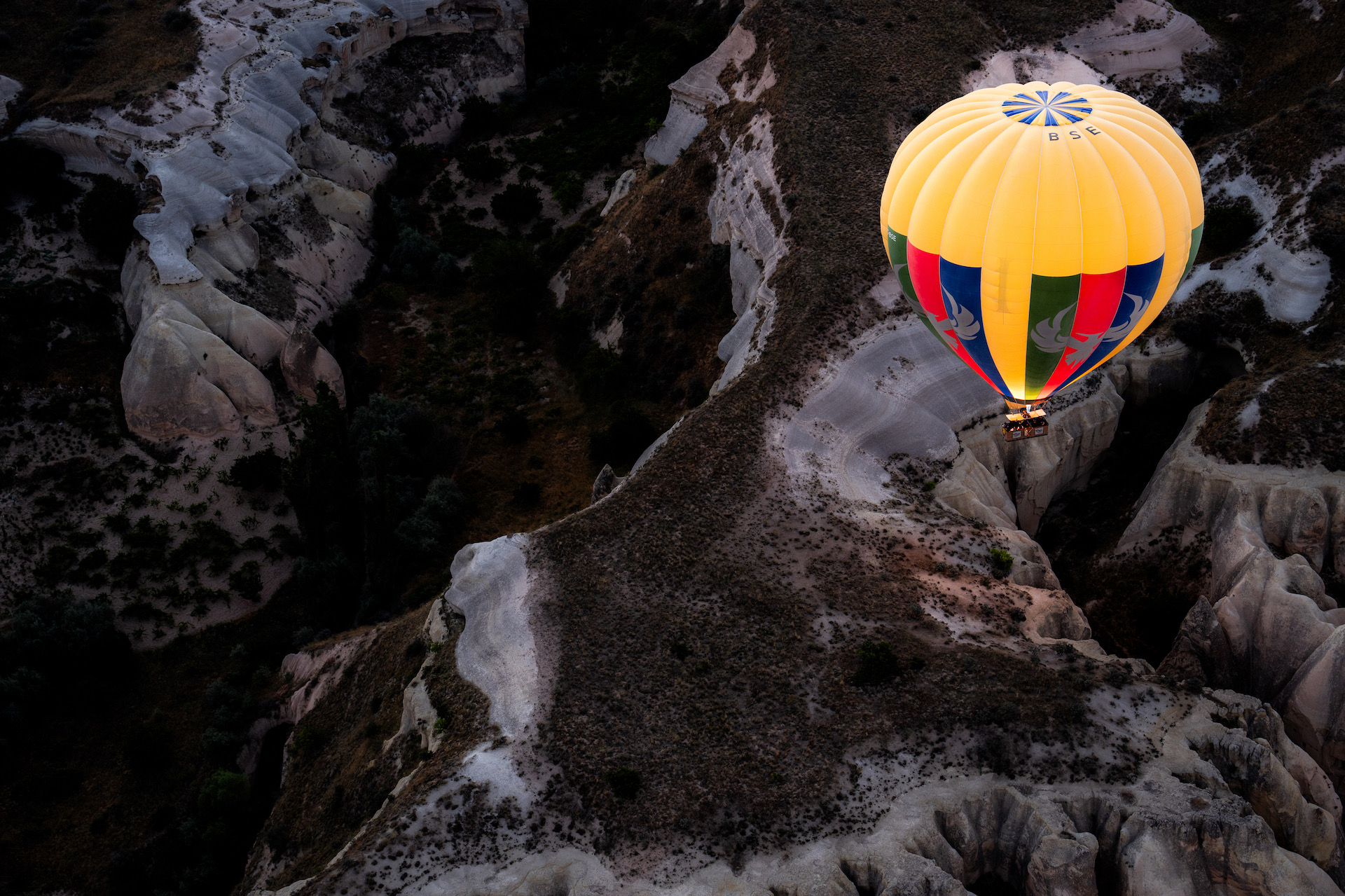
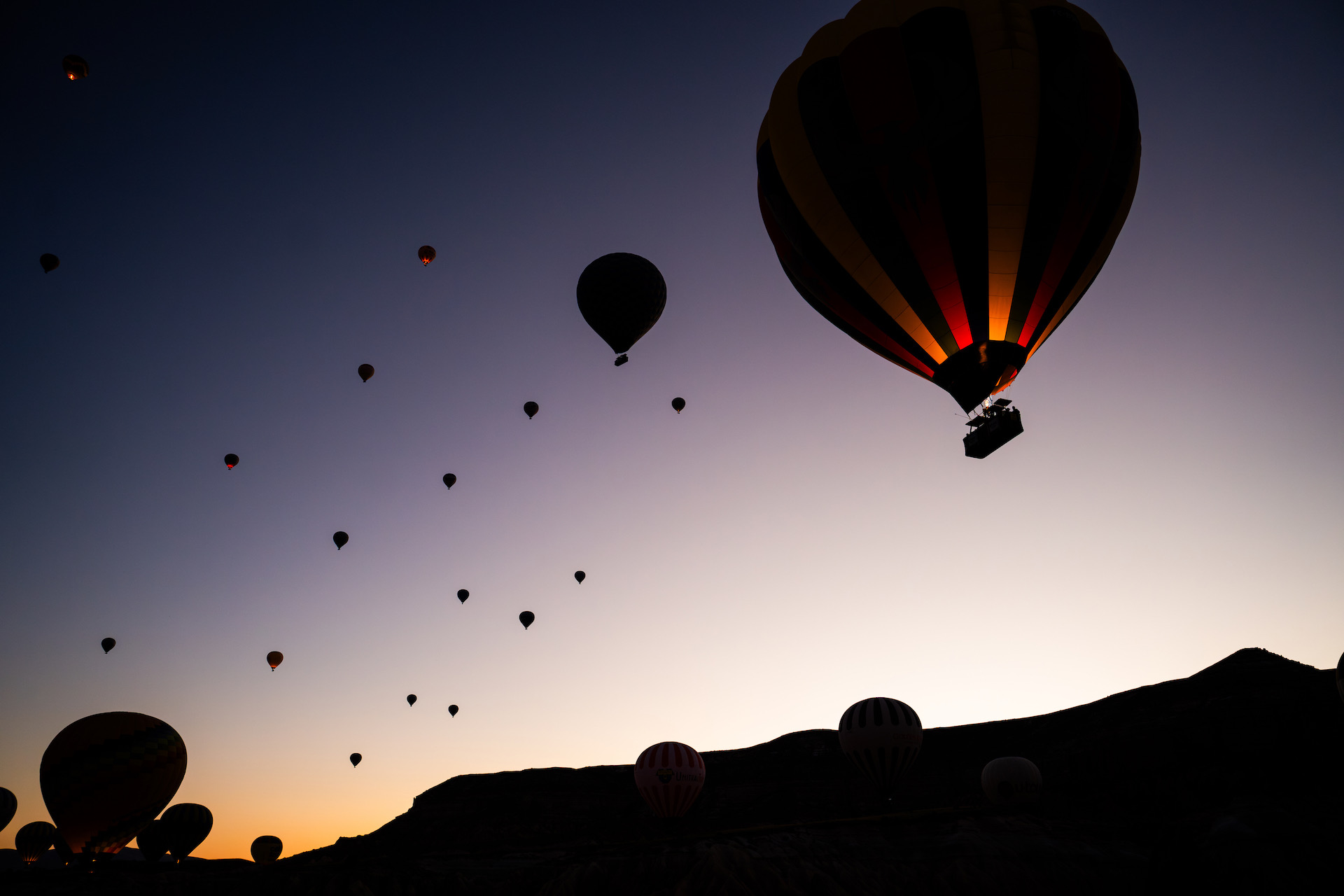
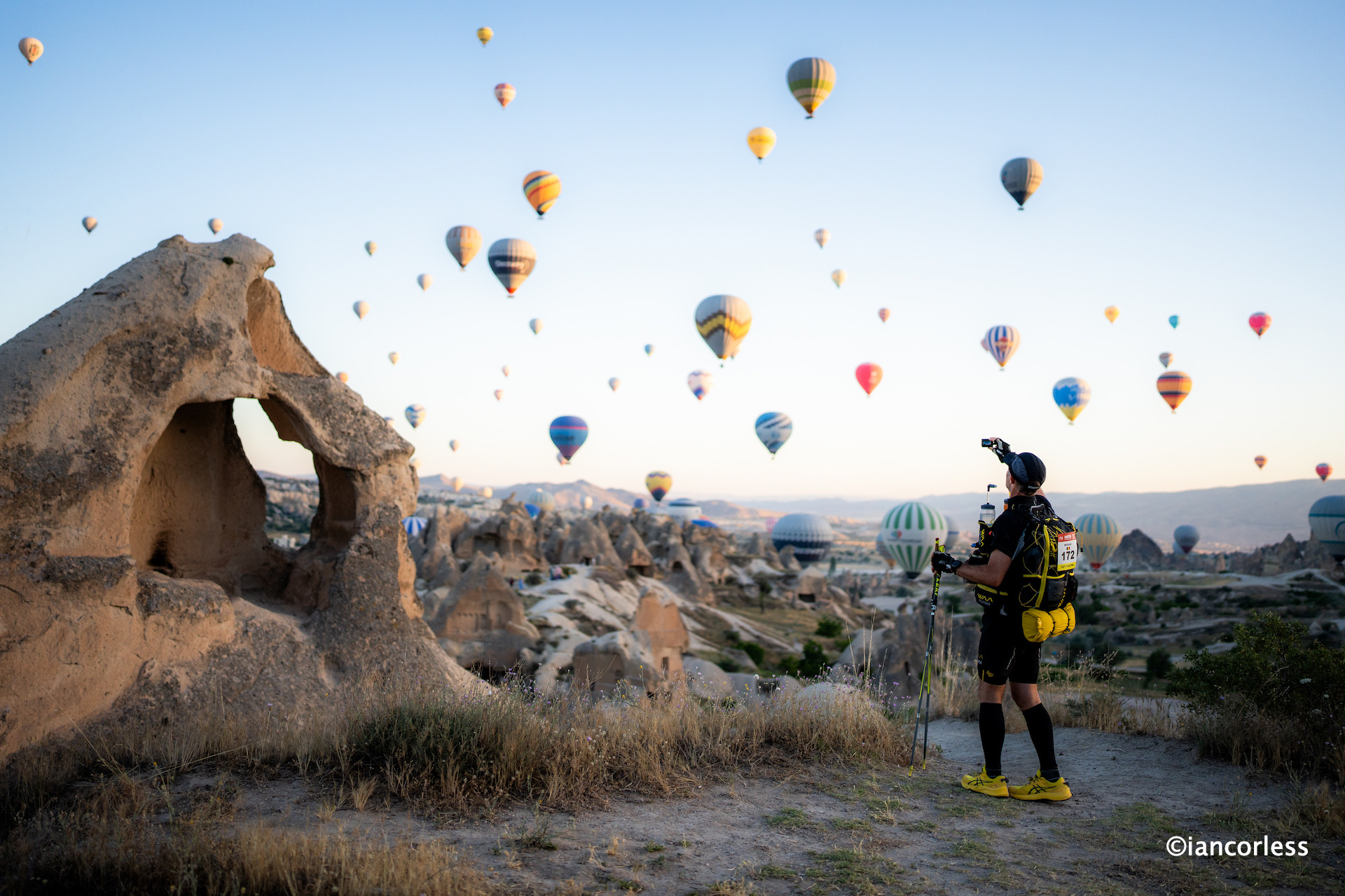
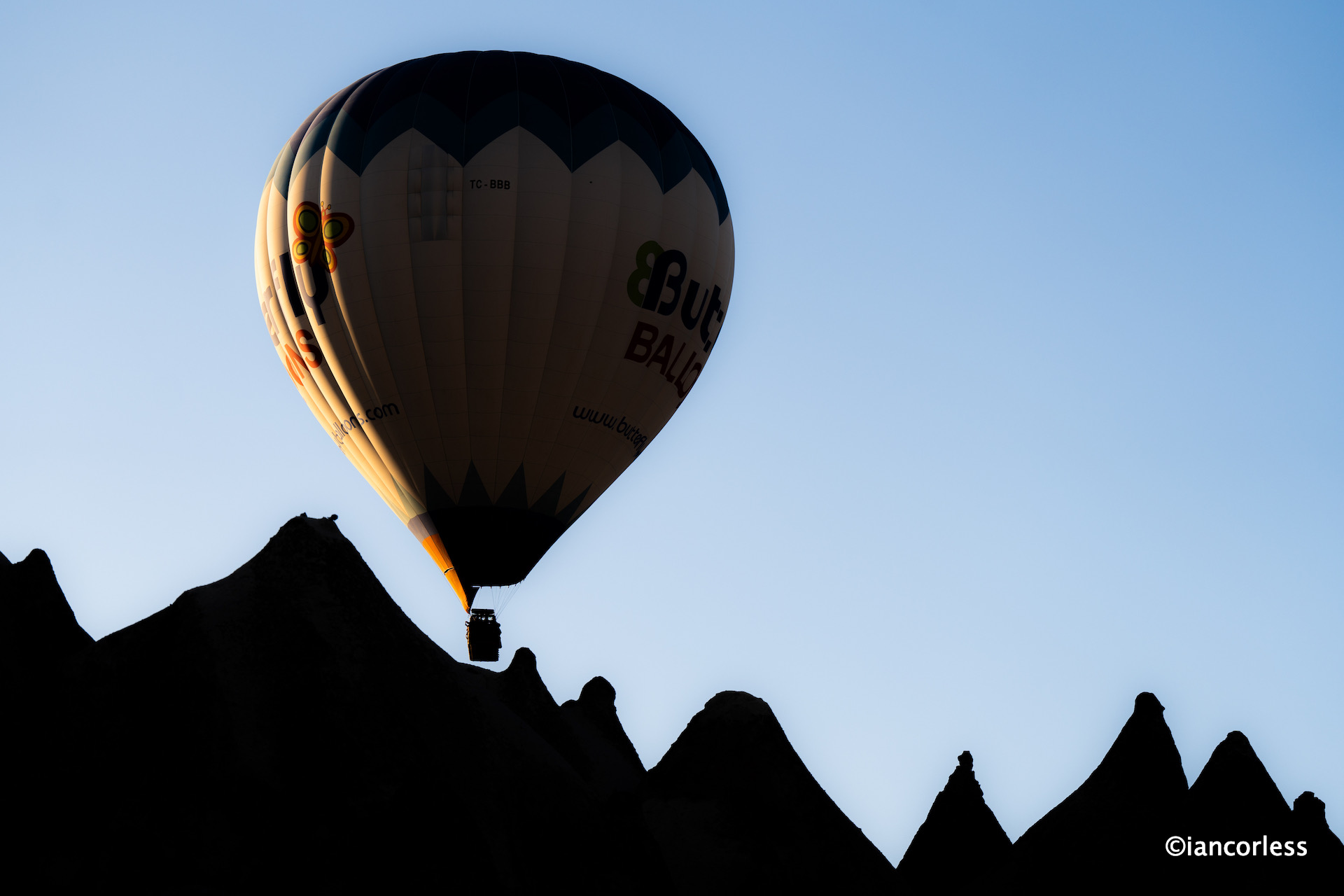
Cappadocia is marvel for the eyes, the landscape, the features, the trails, the awe-inspiring views and yes, the balloons. Cappadocia is not Cappadocia without balloons.
Love Valley
The heat has been intense, temperature was recorded with a high of 36-degrees, this was close to a ‘feel’ of 48-degrees. It has been a tough edition and as ones expects with the MDS organisation, they responded accordingly by bringing the start times forward. Stage 3 was no exception and started at 05:20 instead of the scheduled 07:00.
Love Valley – magical
Today, there were no distance options, 26km and 604m+ of elevation gain.
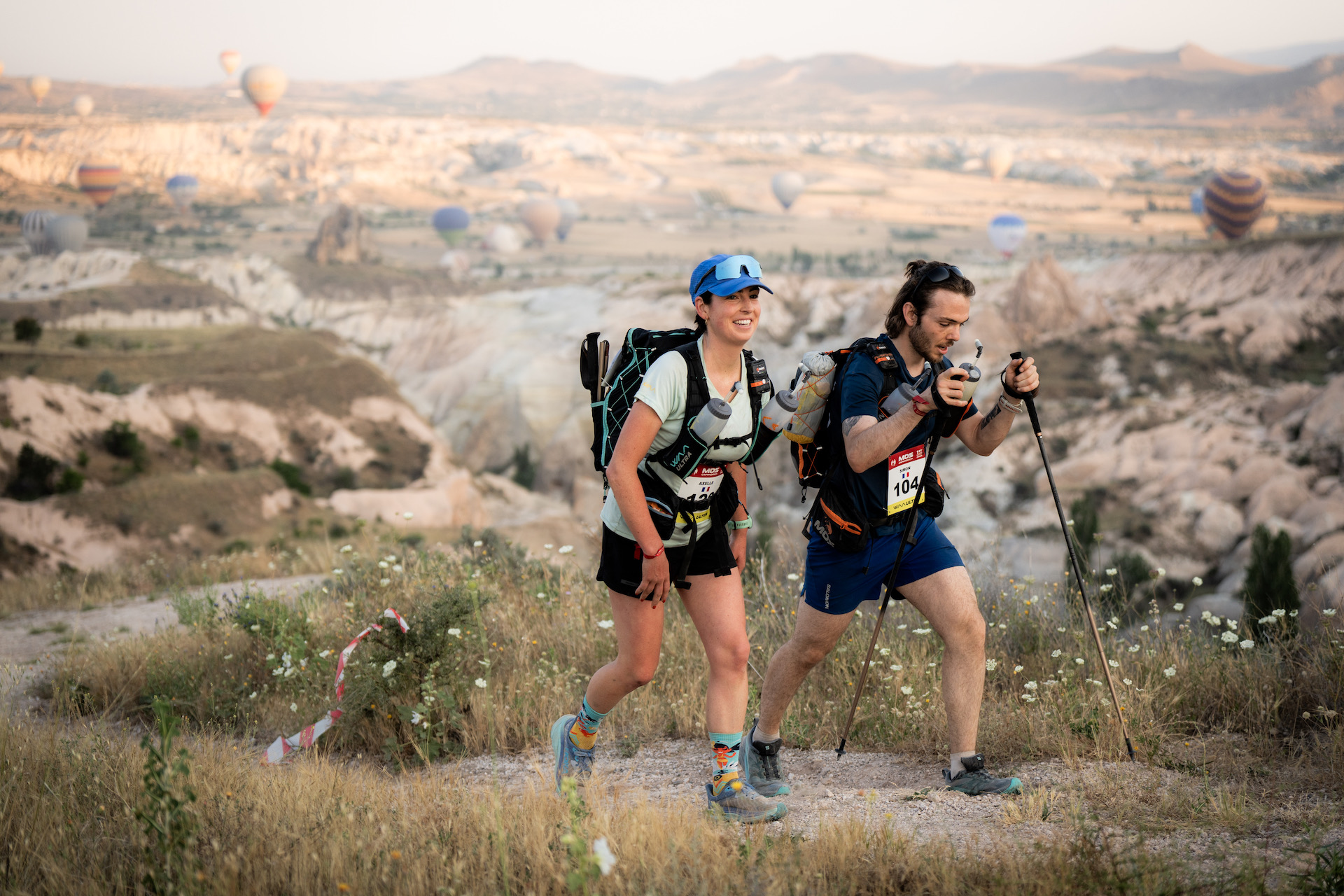
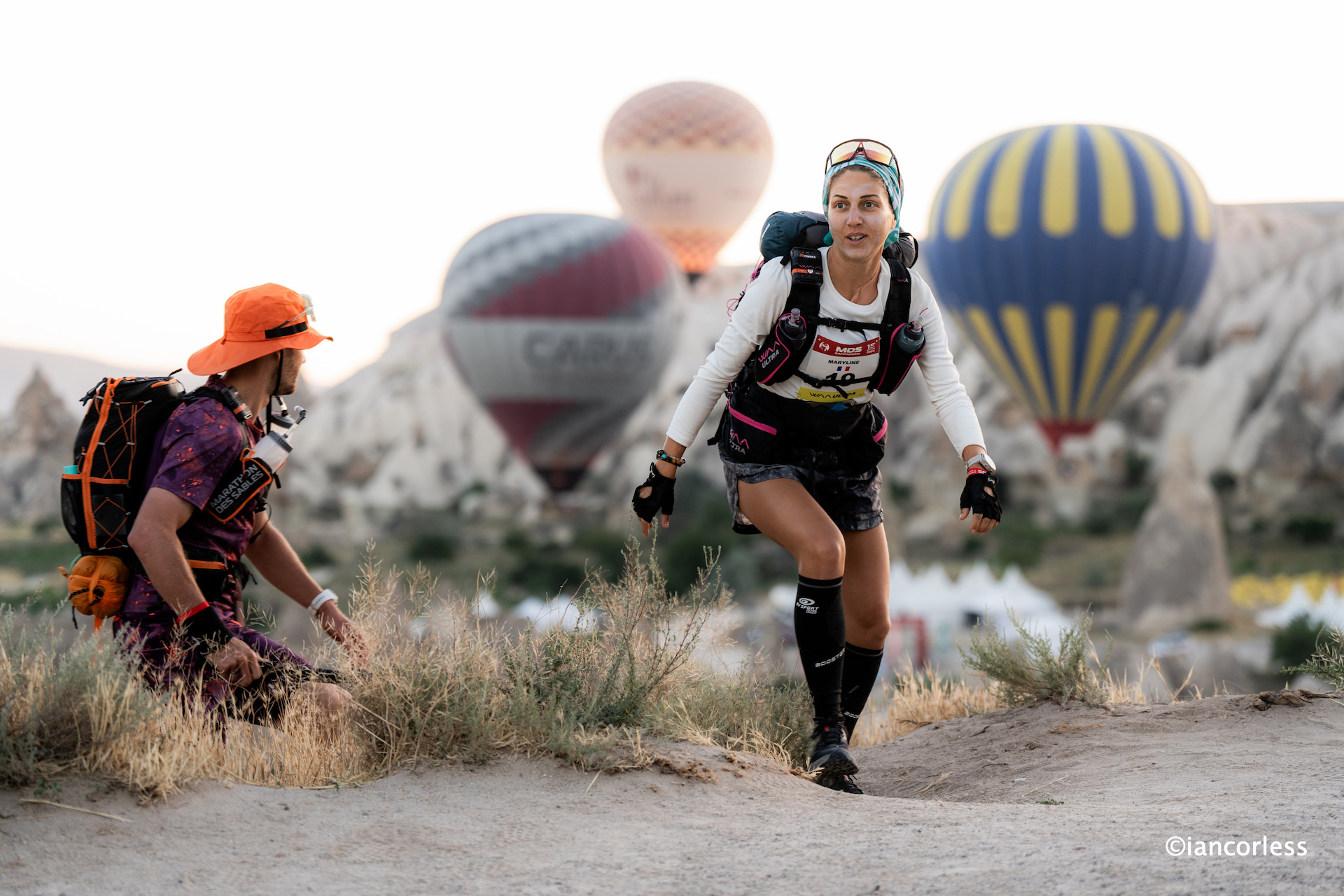
Red Valley and early morning balloons
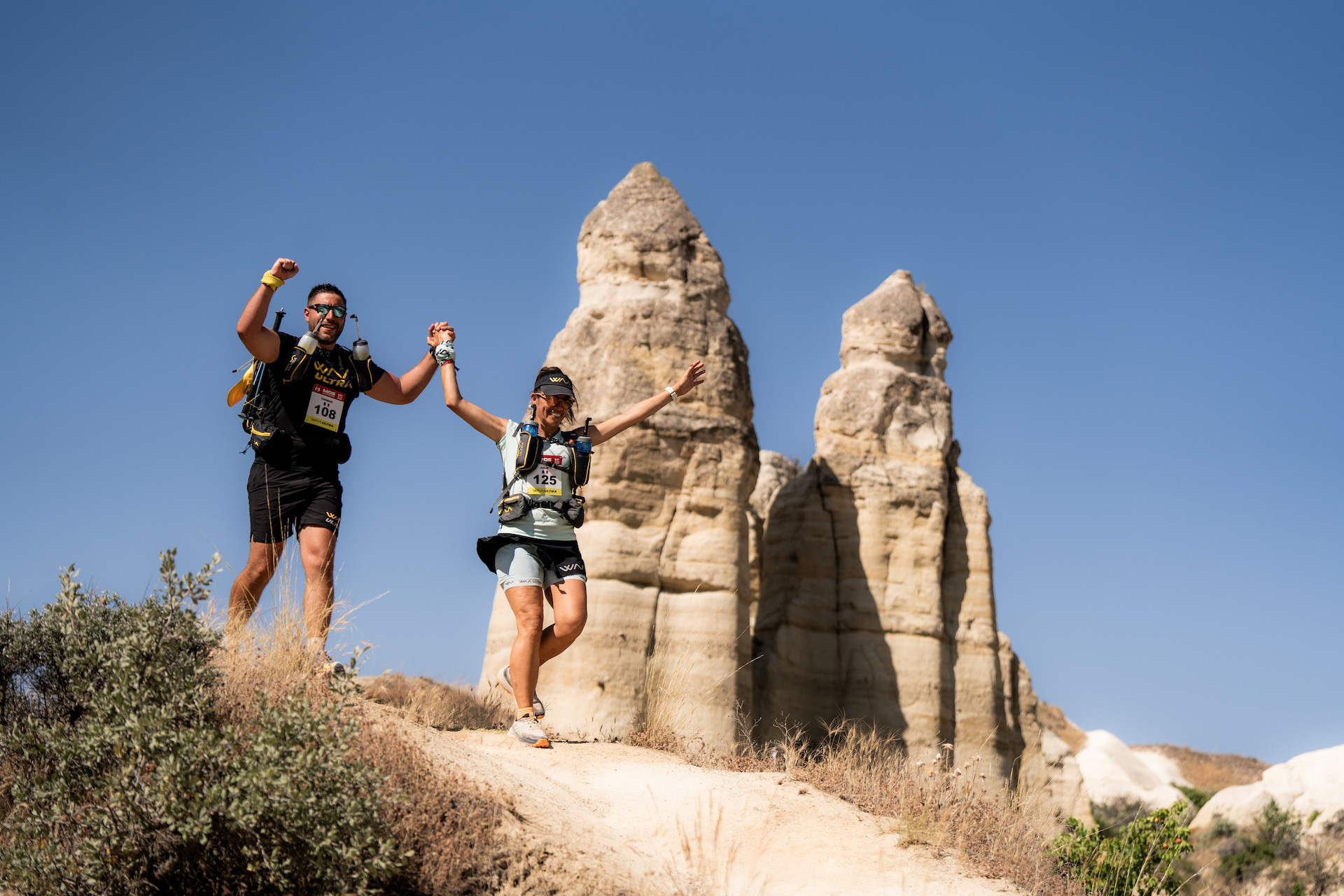
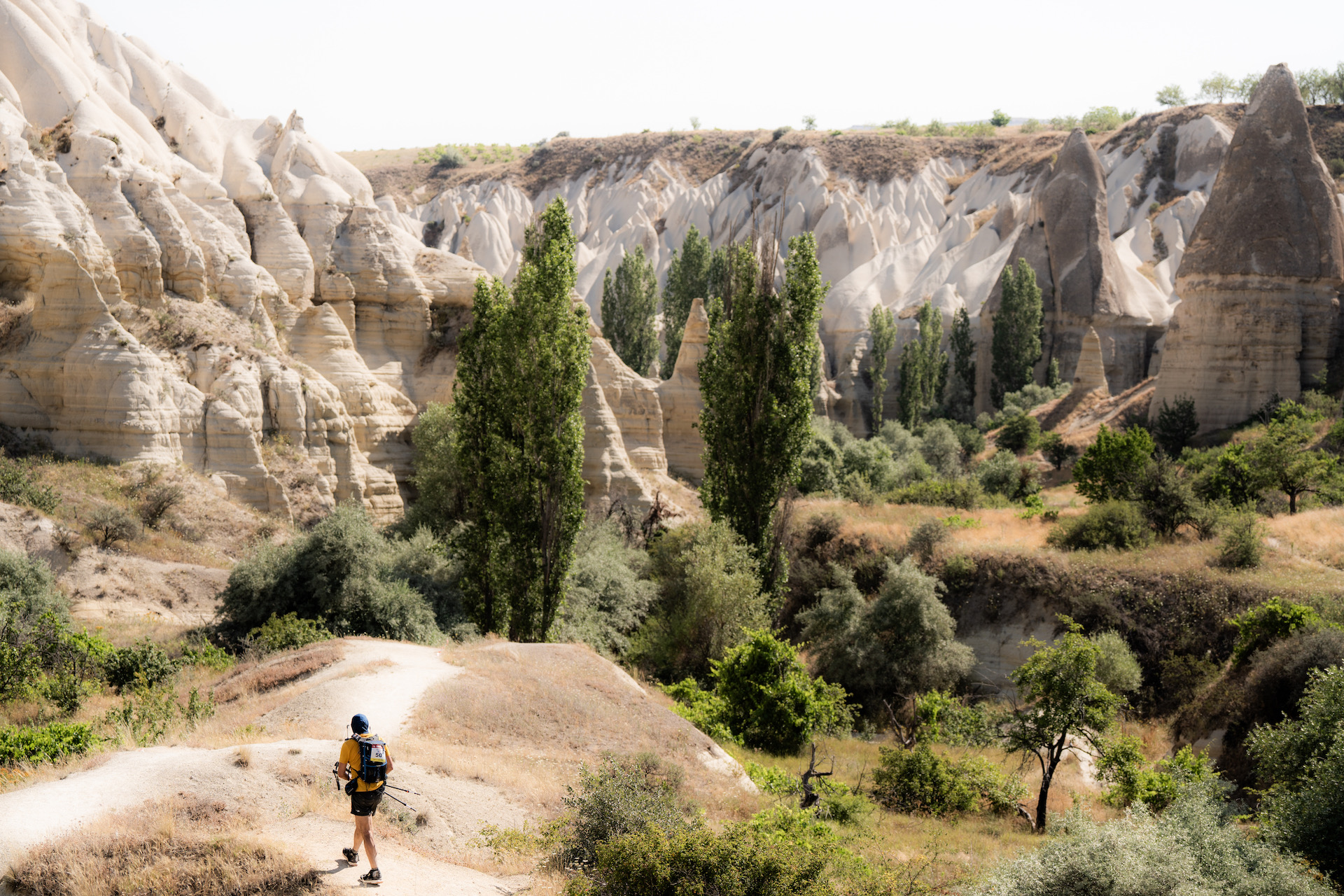
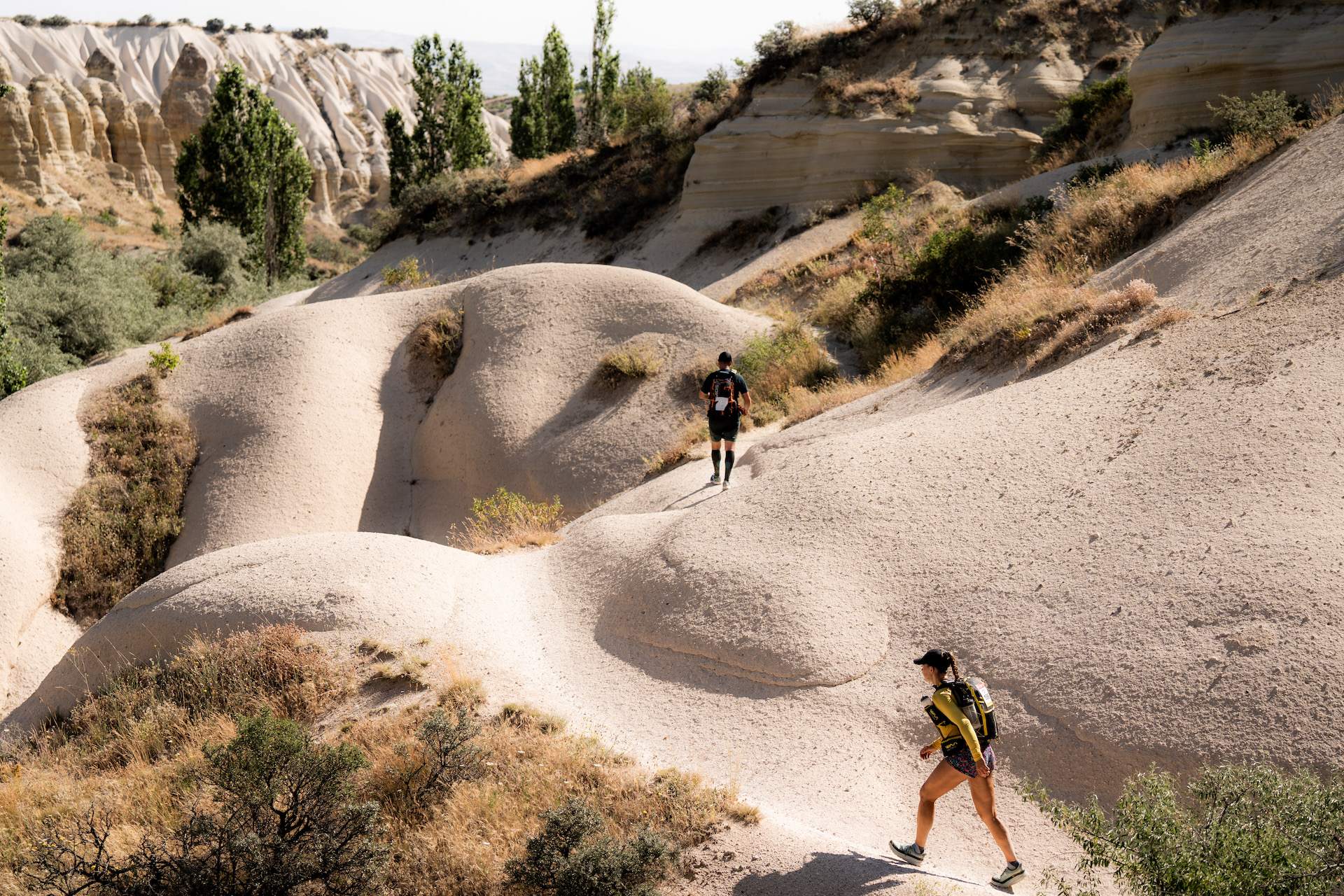
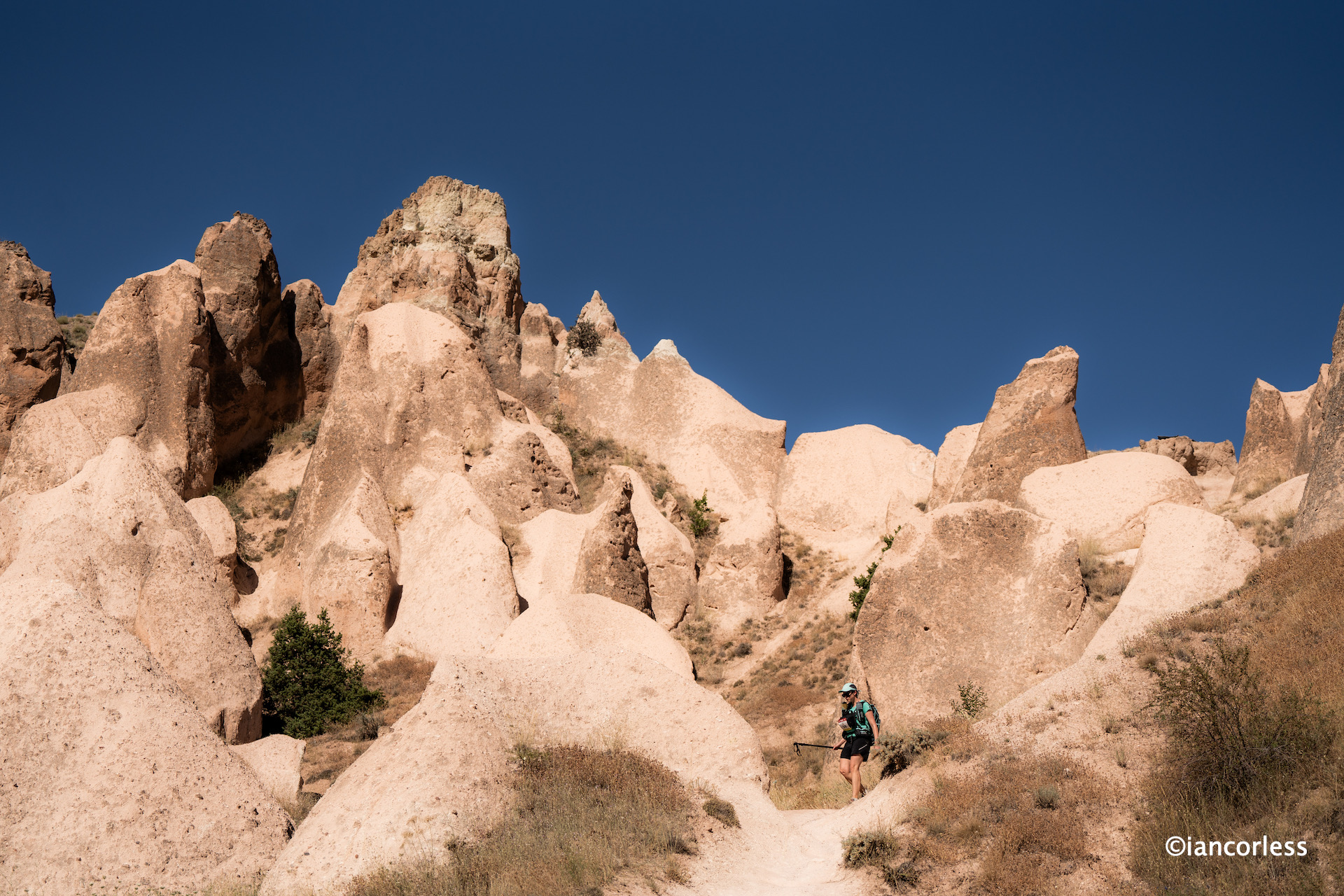
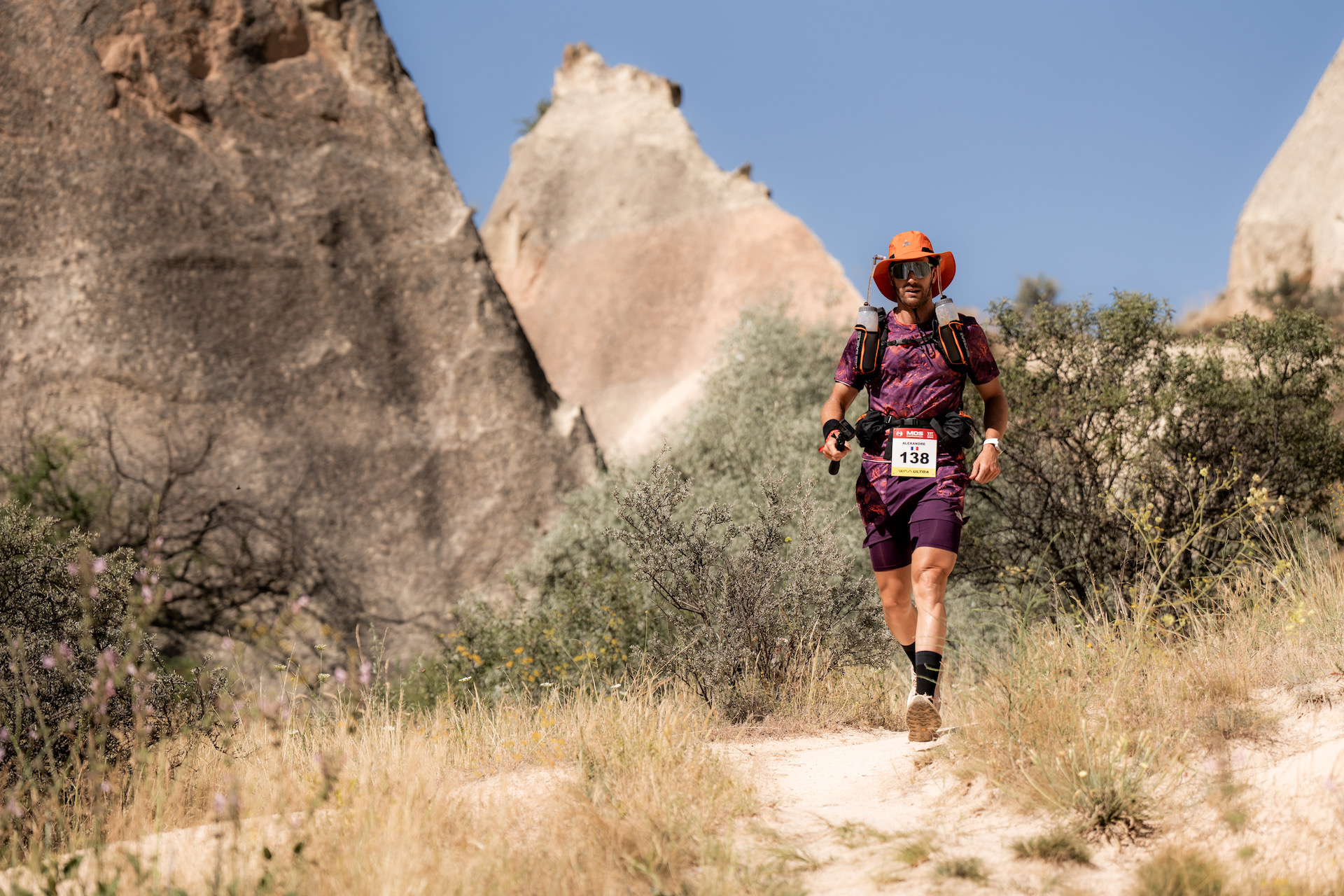
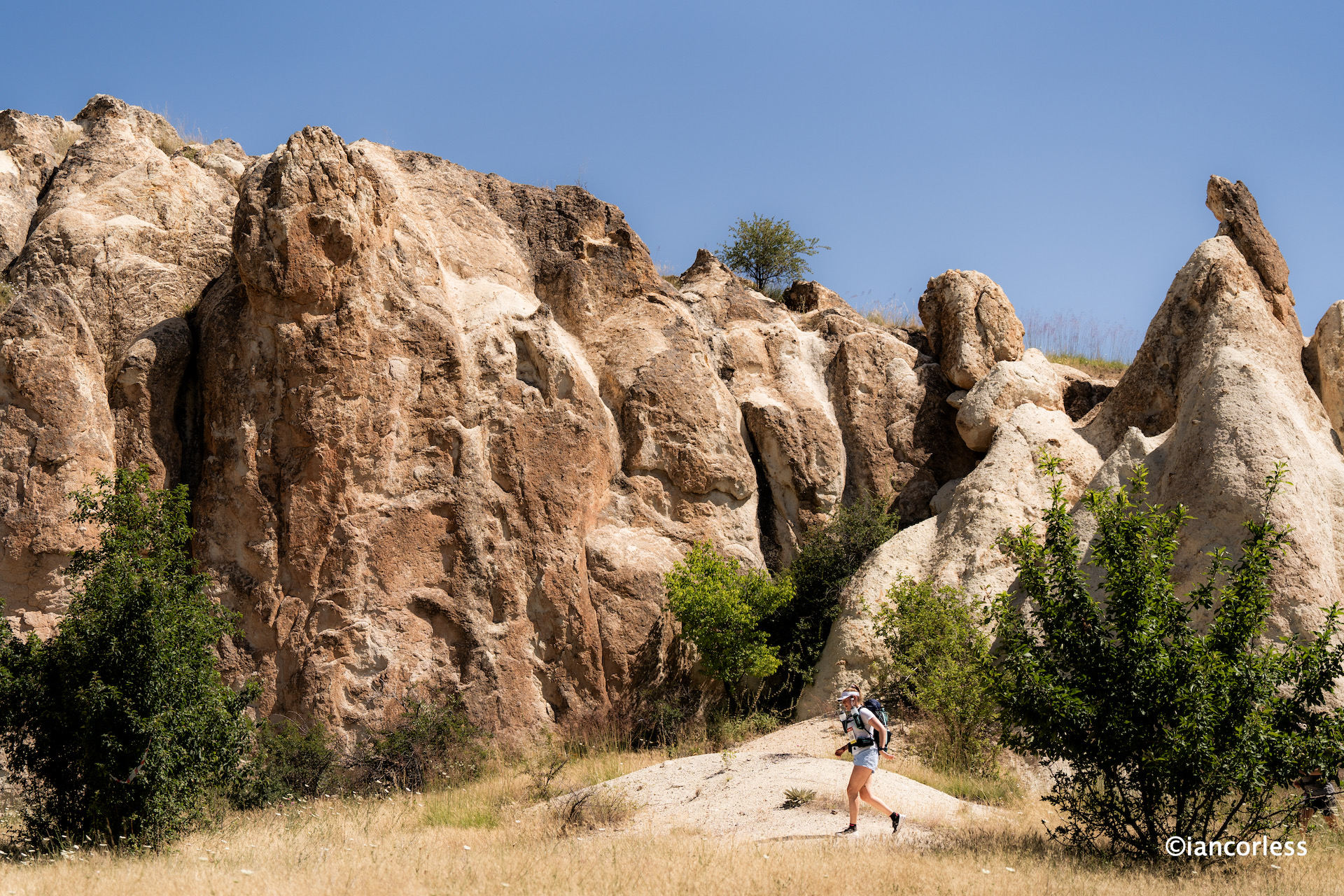
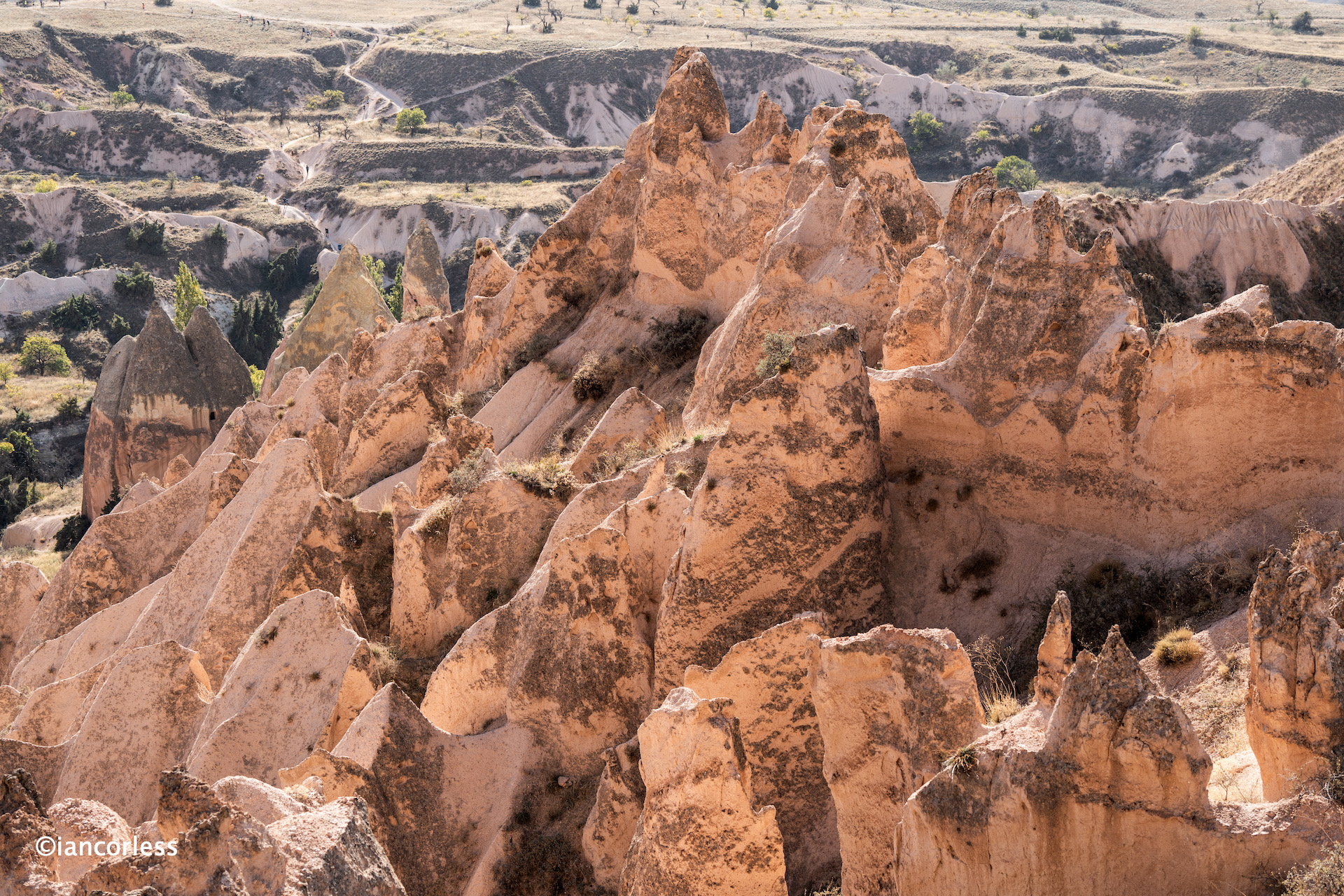
The opening km’s passing through the stunning Red Valley full of fairy towers and Troglodyte caves. Single-track mountain path and valley running and soon the stunning town of Uçhisar was passed before entering the Love Valley and the final km’s that would lead to the finish line.
Love Valley
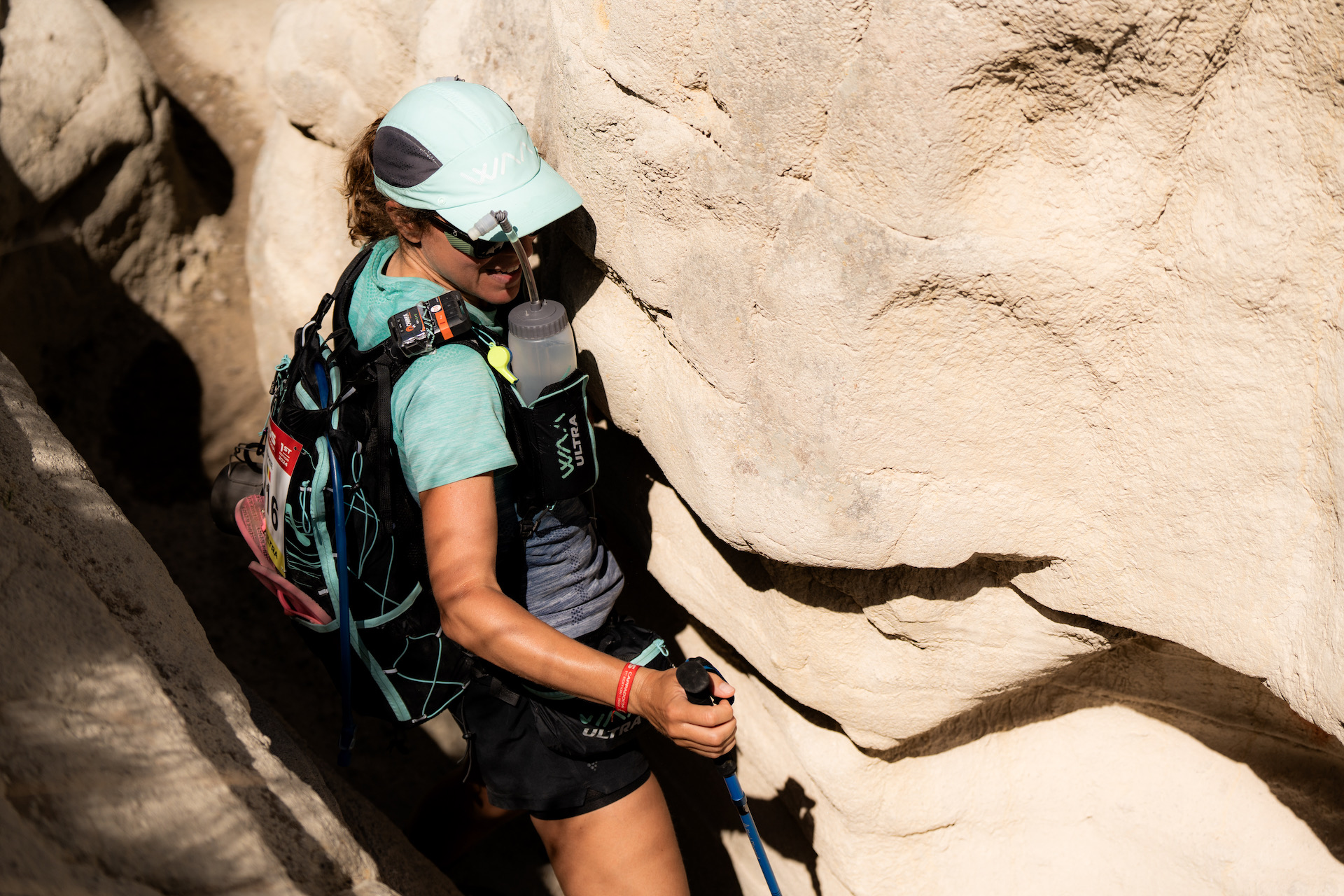
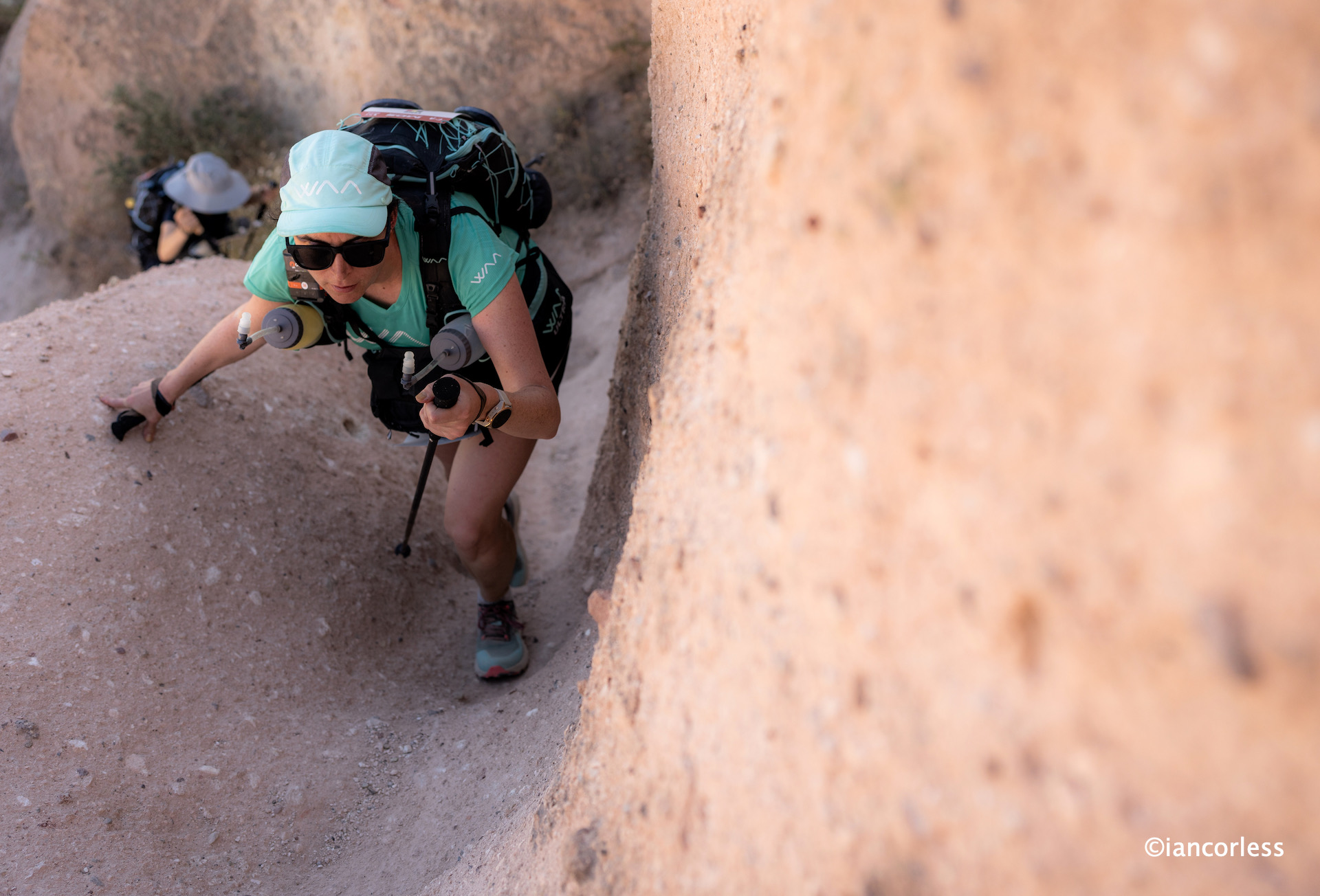
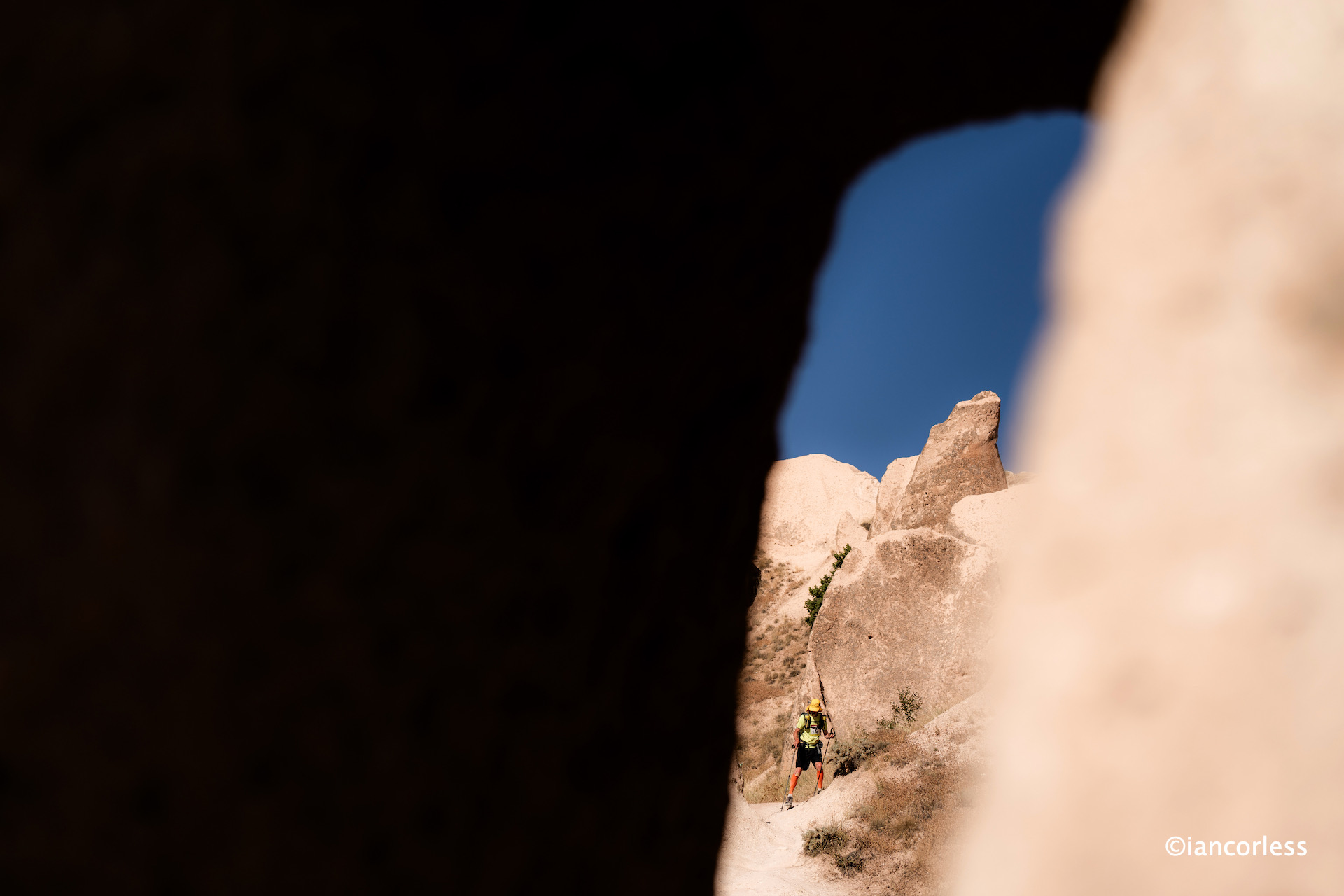
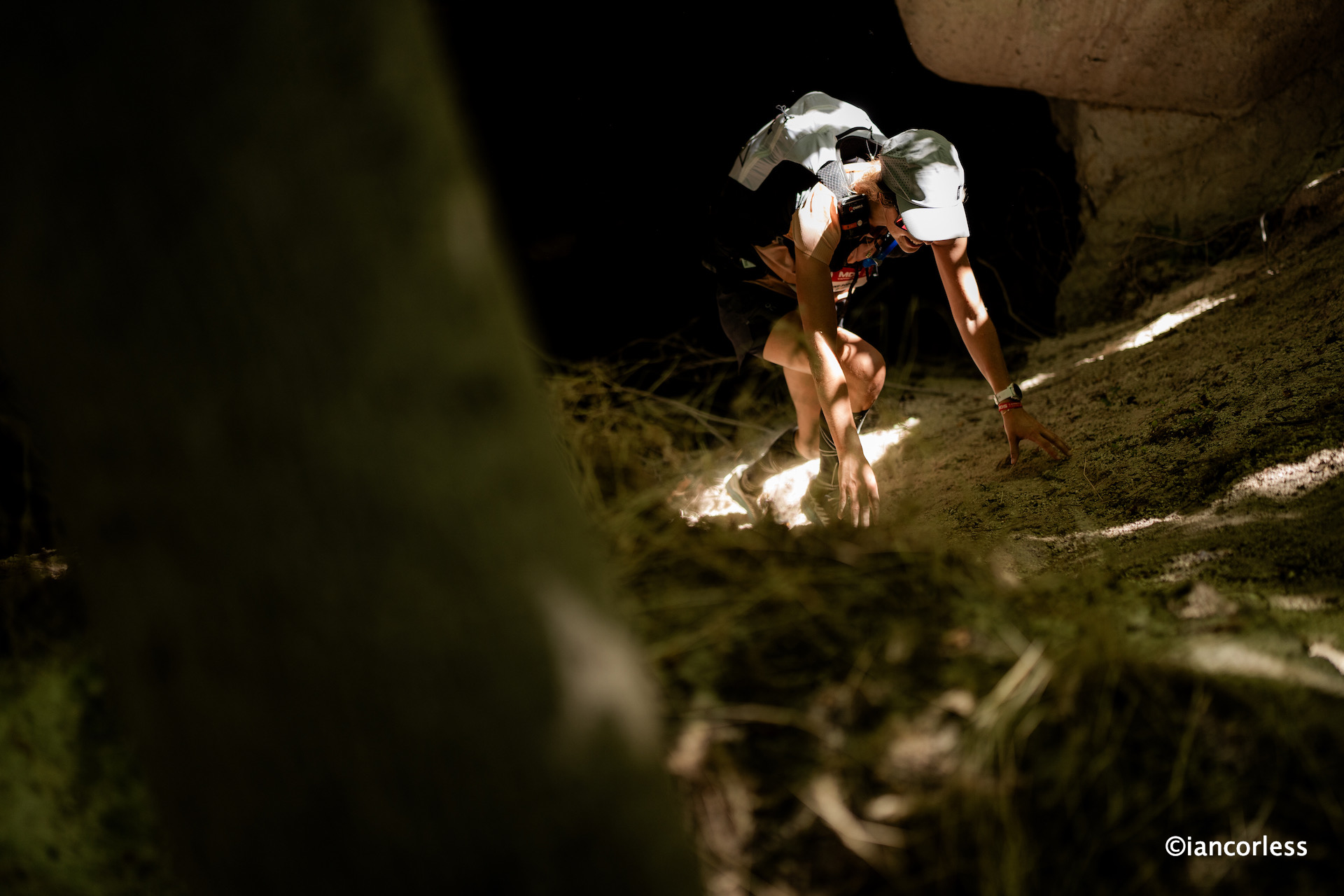
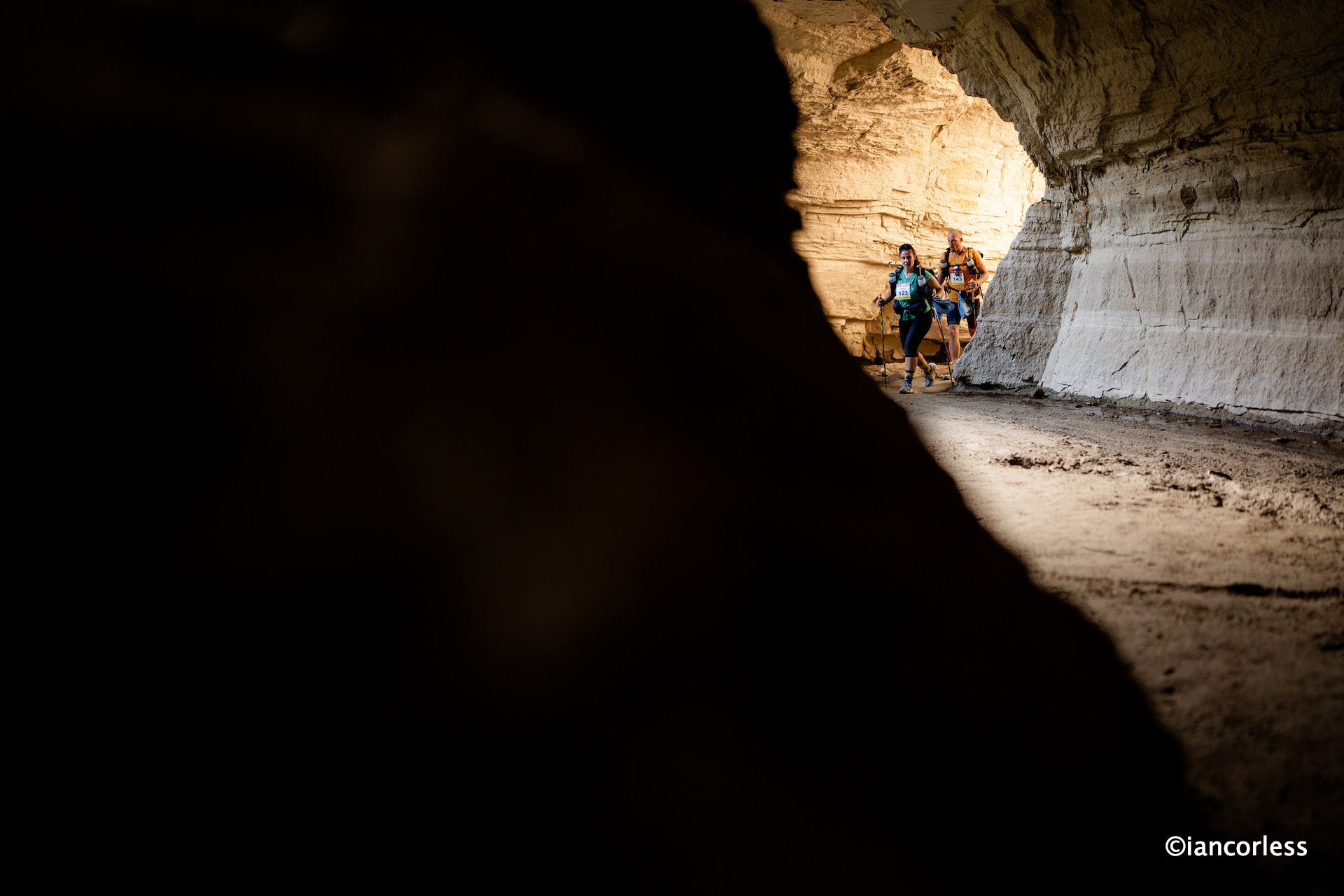
What a way to finish a race, the Love Valley is hidden from view and full of scenic formations that bring a challenge of at times technical single-track, running through narrow passages and at all times, you are surrounded by the stunning landscape that makes Cappadocia unique.
Narrow passages
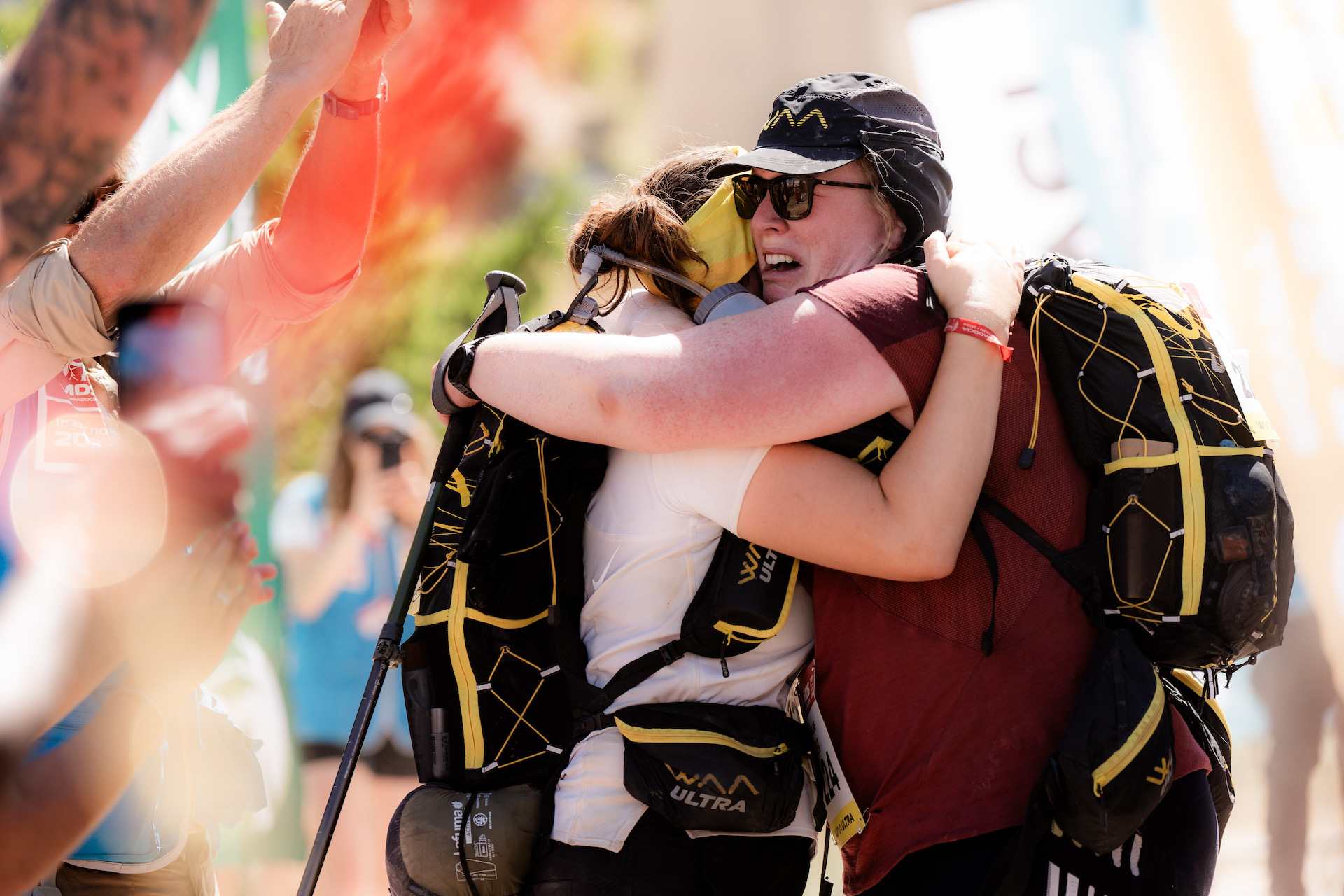
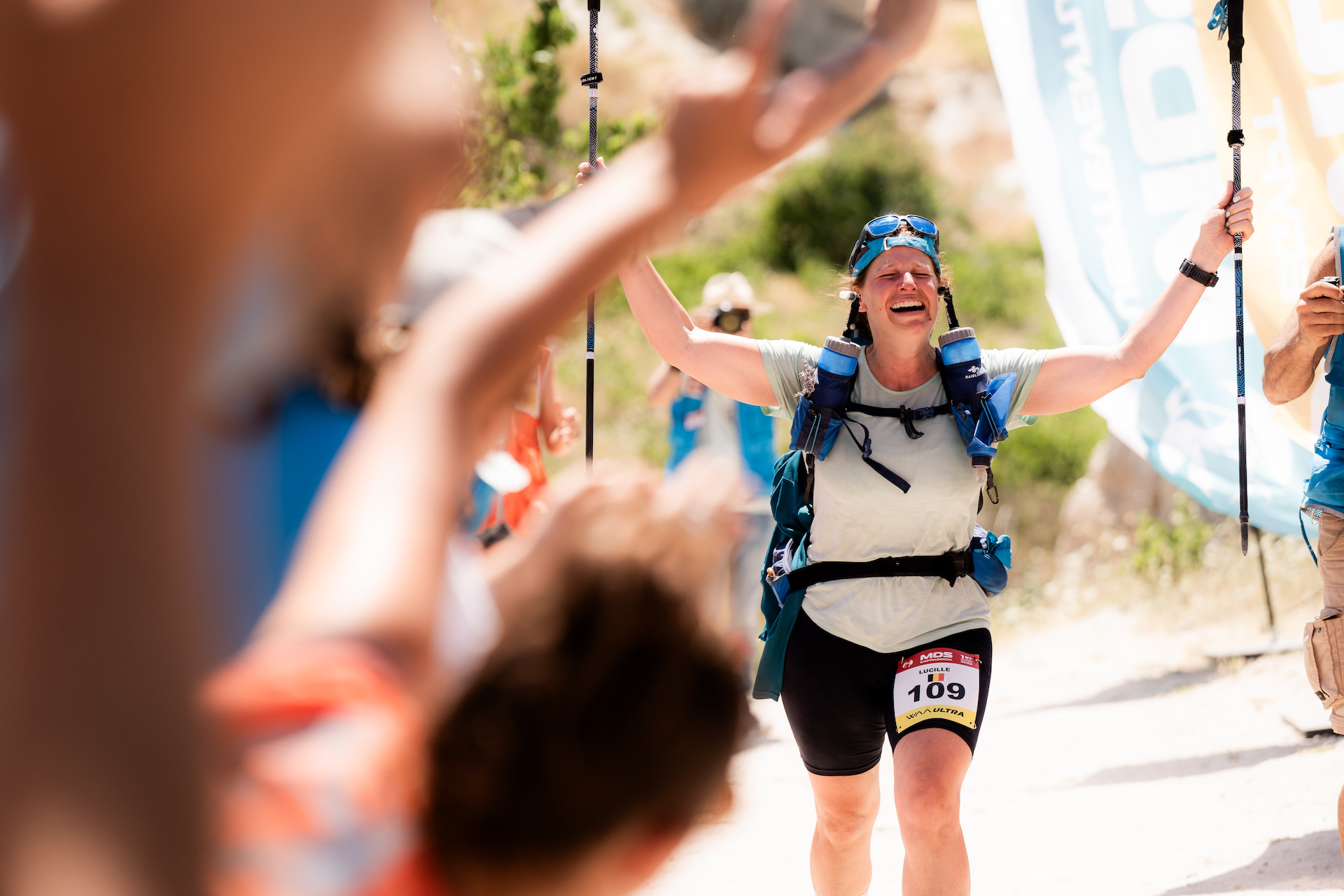
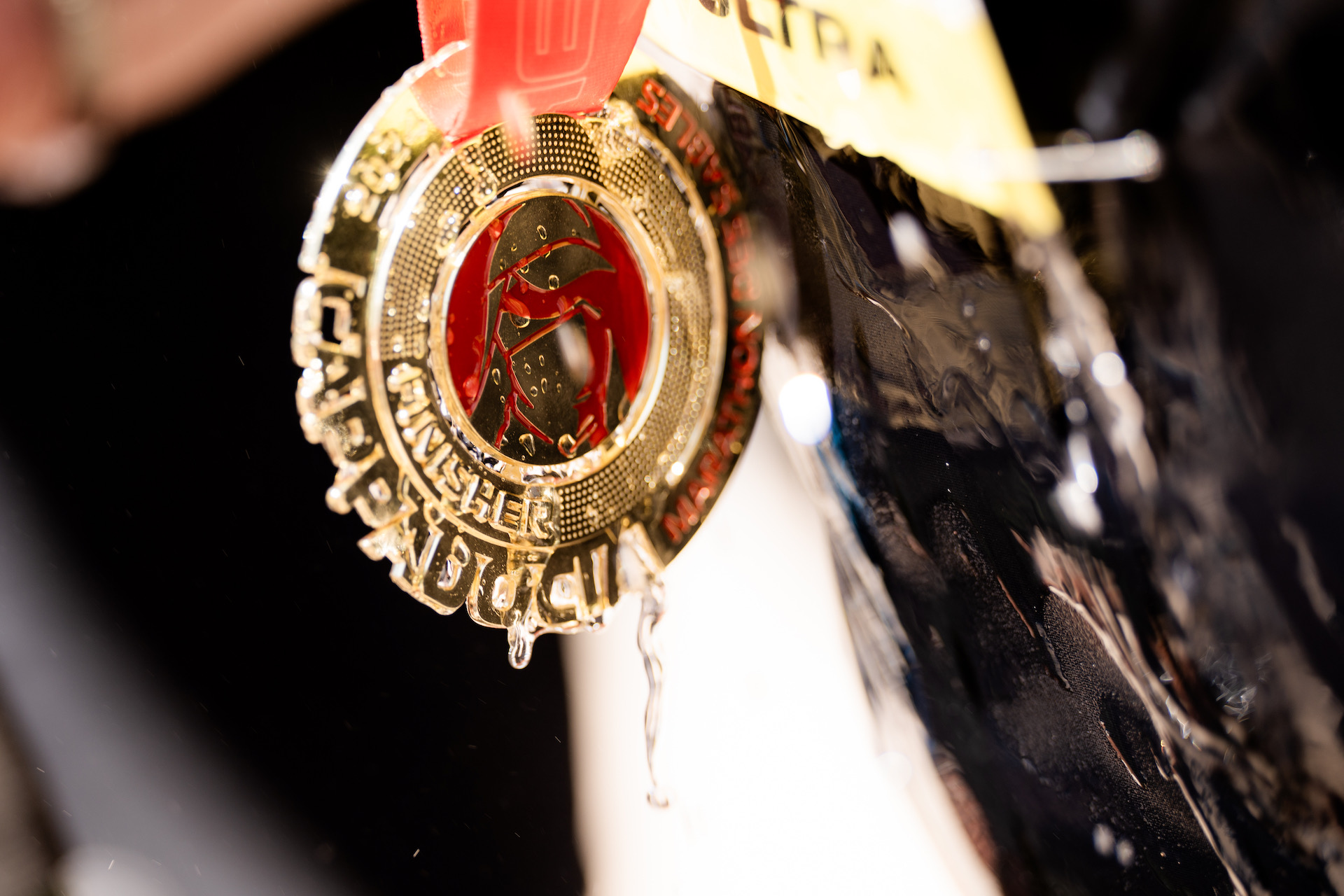
The finish line, as one would expect, was full of emotion, 3-stages and 4-days and finally, a medal around the neck and a very welcome shower, meal and a bed.
EmotionEmotionHard earned medal
But the surprise for participants did not stop here.
The MDS organisation decided to surprise everyone with an iconic balloon flight to conclude what has been a very memorable and successful first edition of MDS Cappadocia.
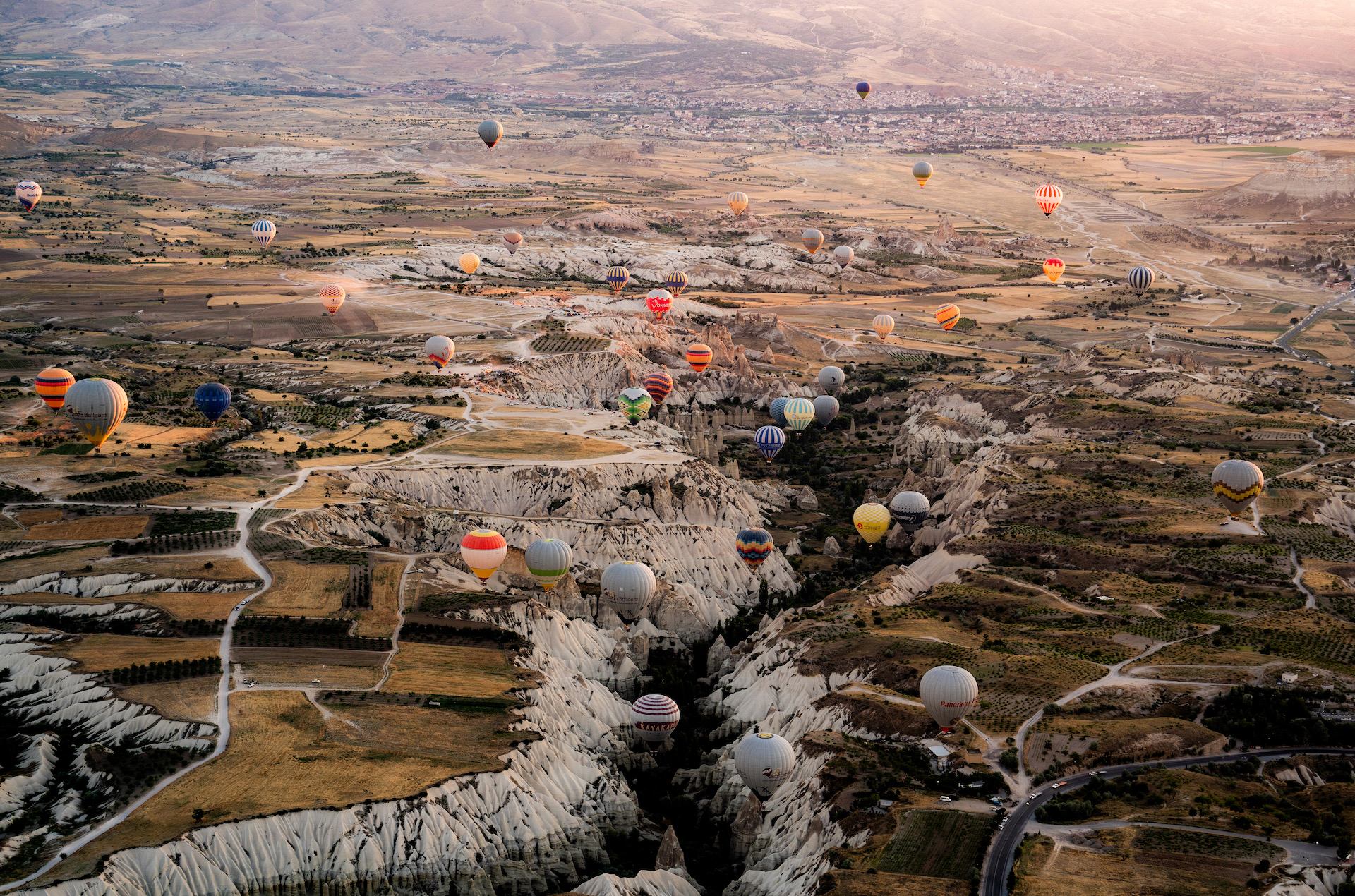
The sky came alive with arguably, one of the most impressive start lines I have ever witnessed. Stage 2 of MDS CAPPADOCIA was amidst the stunning hot air balloon spectacle that only Cappadocia bring. A wow!
The glimmer of a new day, the orange burn from the burners in the baskets of the balloons, at 05:20 stage 2 got underway. Today, the participants can choose a distance, 20km, 40km or 60km.
After a tough stage 1 for many, the 20km and 40km loops were going to be popular for sure. Starting slowly, the spectacle around the runner’s was just too impressive not to stop, look, film and photograph. One runner said as she passed, “This is the most impressive thing I have ever seen, this is truly magnificent.”
And so, MDS Cappadocia is etched in the mind, the unique landscape, the unique bivouac location and the dawn spectacle of hot air balloons, this is MDS Cappadocia.
An early start was welcome, the heat of day 1 was relentless, so, several hours of calm temperatures facilitated a good start to the day before the heat started to rise around 09:00, by early afternoon, temperatures were at 34-degrees.
There were lots of smiling faces, as runner’s tested themselves over a distance that was a challenge for them.
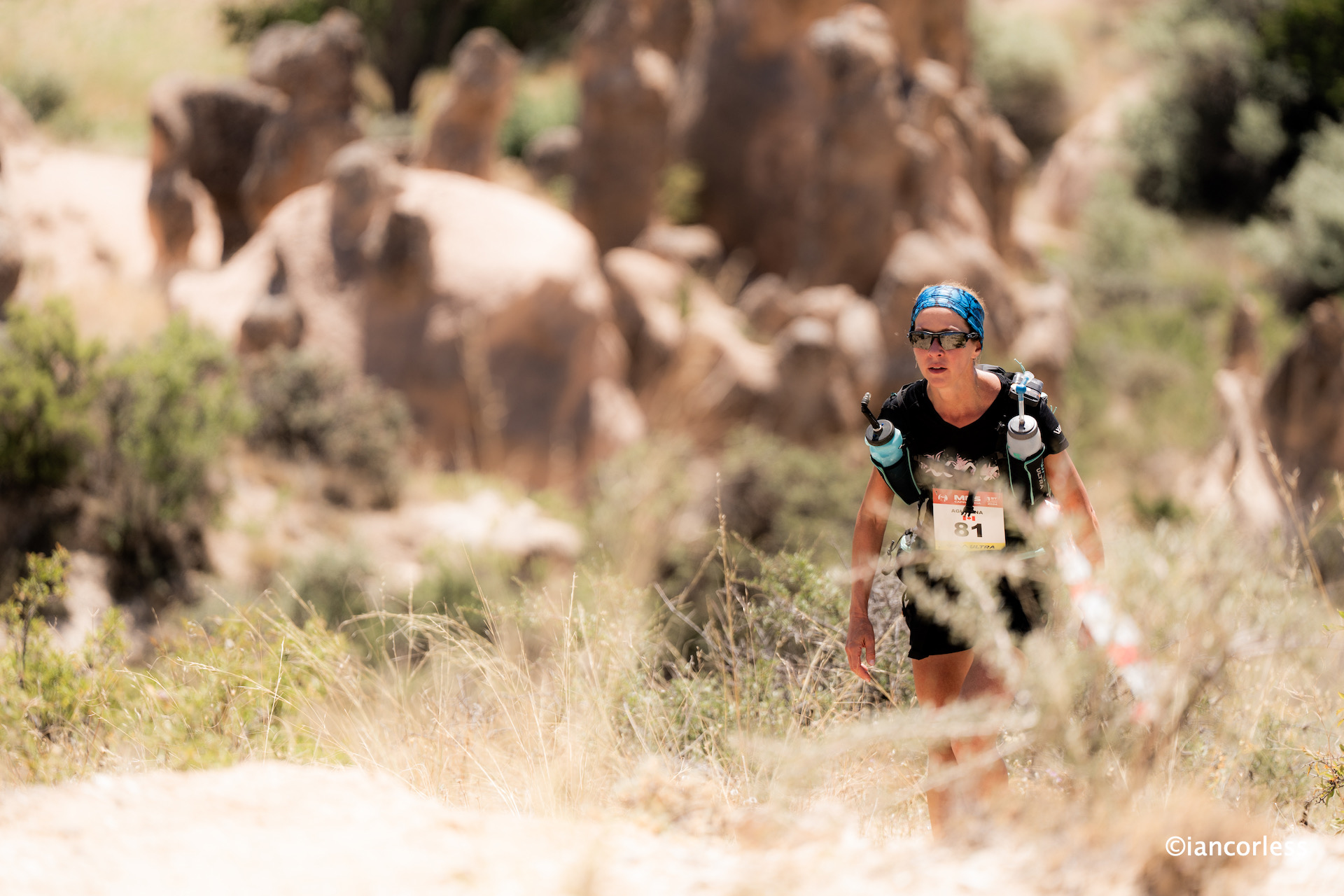
The terrain was constantly changing showing the best of what Cappadocia has to offer. Single-track, fairy towers, Troglodyte caves, lush green landscape, tunnels, gorges, canyons and so much more.
With three distances on offer, finishing times were spread throughout the day, in the 60km distance, Serge Fortini crossed first in 9:37:29, Hugo Brincard 2nd 9:57:54 and Alexandre Mallier 3rd 10:34:41. Maryline Demangel, Axelle Bellec and Augistina Gonzalez Fileur were 1,2, 3 for the women, 12:24:41, 12:47:25 and 15:17:55.
The final finishers arrived after midnight, a full day of challenge lasting over 19-hours of intense heat, beautiful views and challenging trail, a showcase of determination and strength.
For the 40km and 20km, we will need to wait for updated results to place athletes in the appropriate distance category, go to livetrail.com
Day 3 of the race is a rest and then stage 3 follows the following day and the conclusion of the first edition of MDS Cappadocia.
The 2024 first edition of MDS Cappadocia got underway today, three stages with a potential longest distance of 120km’s and options to run 71.9km/ 92.8km and 110.5km based on the desired distance of stage 2.
A unique playground
Stage 1 25km
Stage 2 20.9km/ 41.8km/ 59.5km
Stage 3 26km
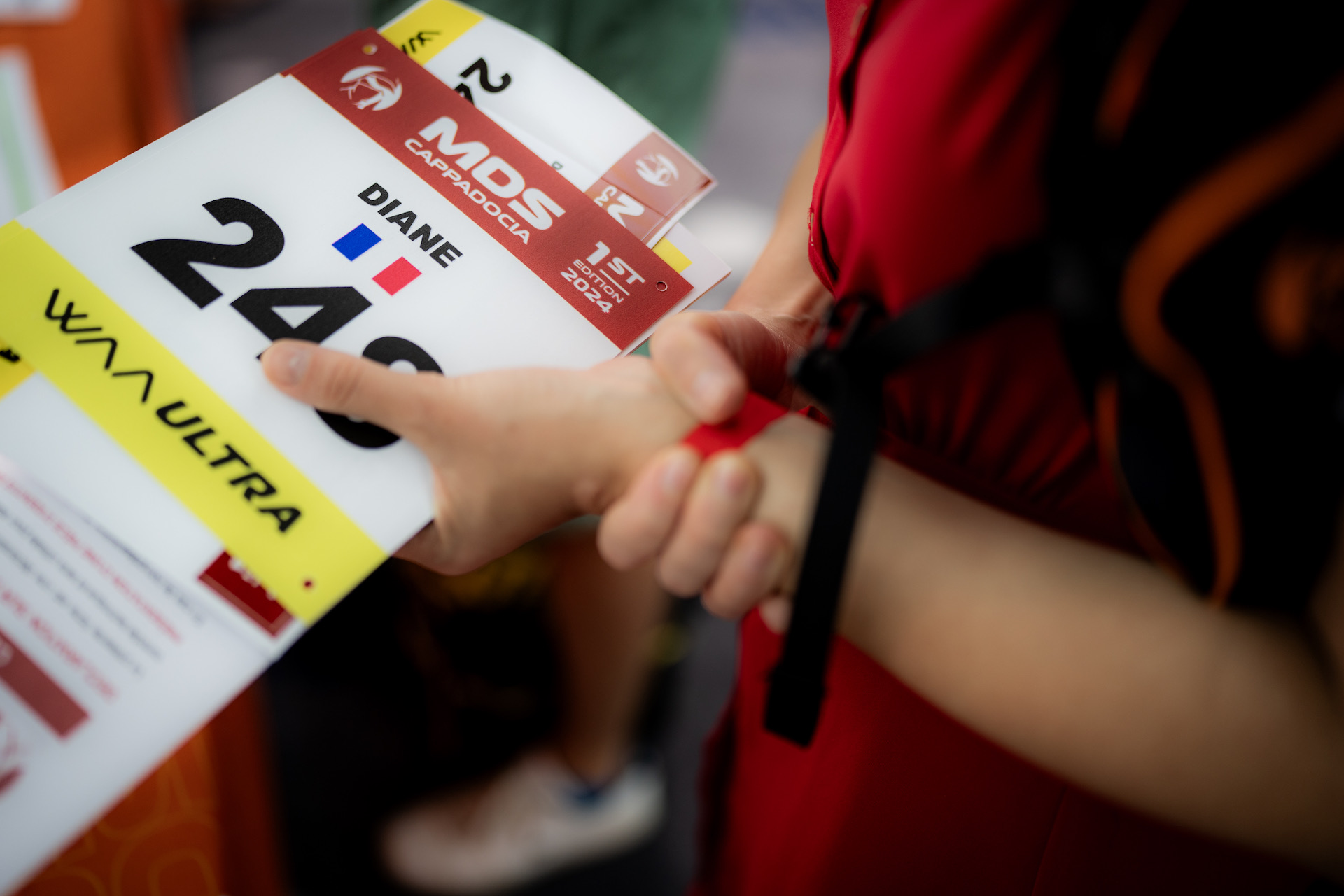
Bib collection and admin checks
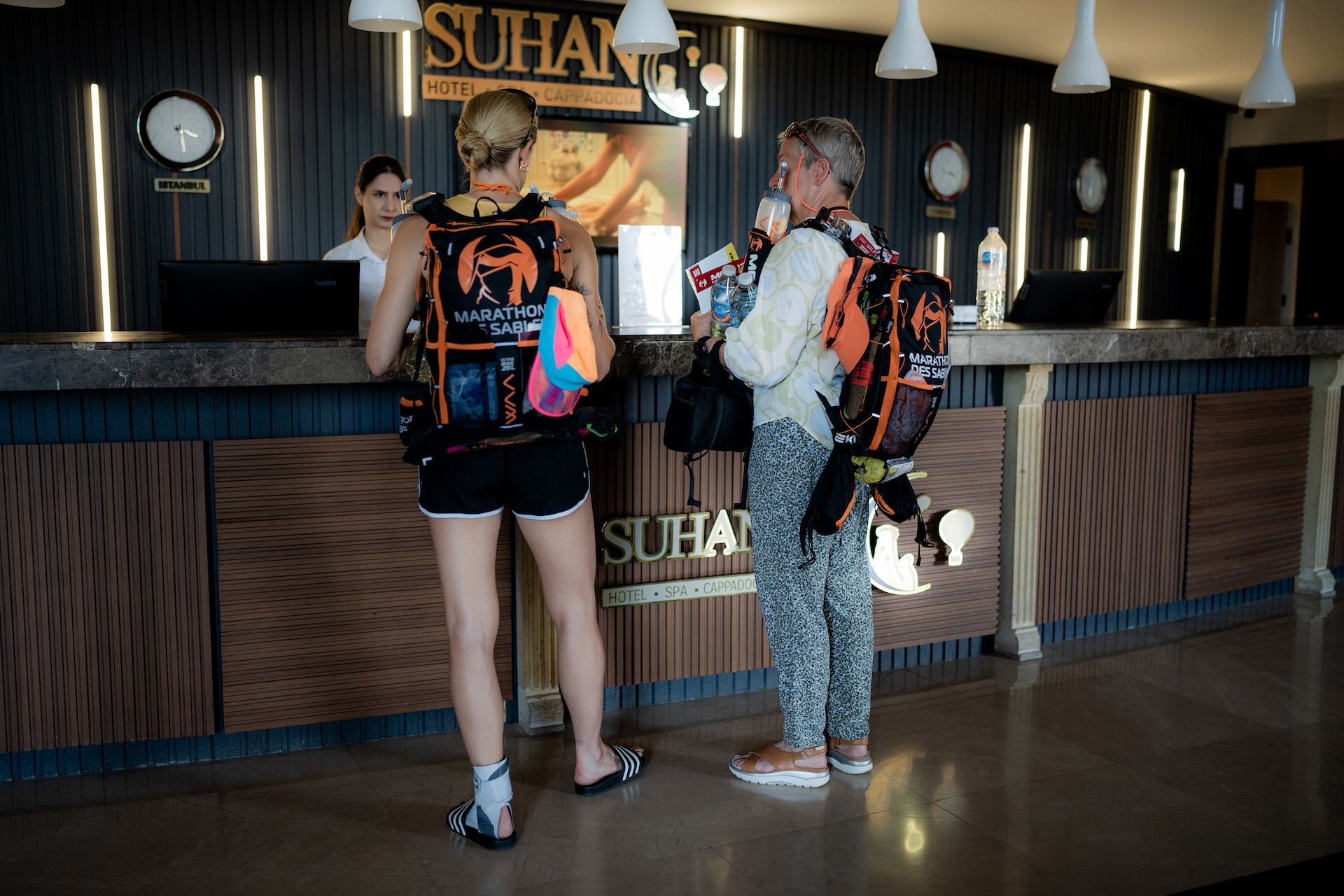
Many participants arrived in Turkey on Friday or Saturday with admin taking place on Saturday afternoon ahead of a relaxed dinner followed by a comfortable night in Suhan Cappadocia Hotel in Avanos.
Suhan Hotel, some luxury before self-sufficiency
Stage 1 began with a relaxed breakfast and 0800 departure to the start of the race and the beginning of self-sufficiency.
The challenge ahead
At 0900 briefing began and at 0930, the runners departed for 25km and 678m of elevation gain.
Cyril Gauthier
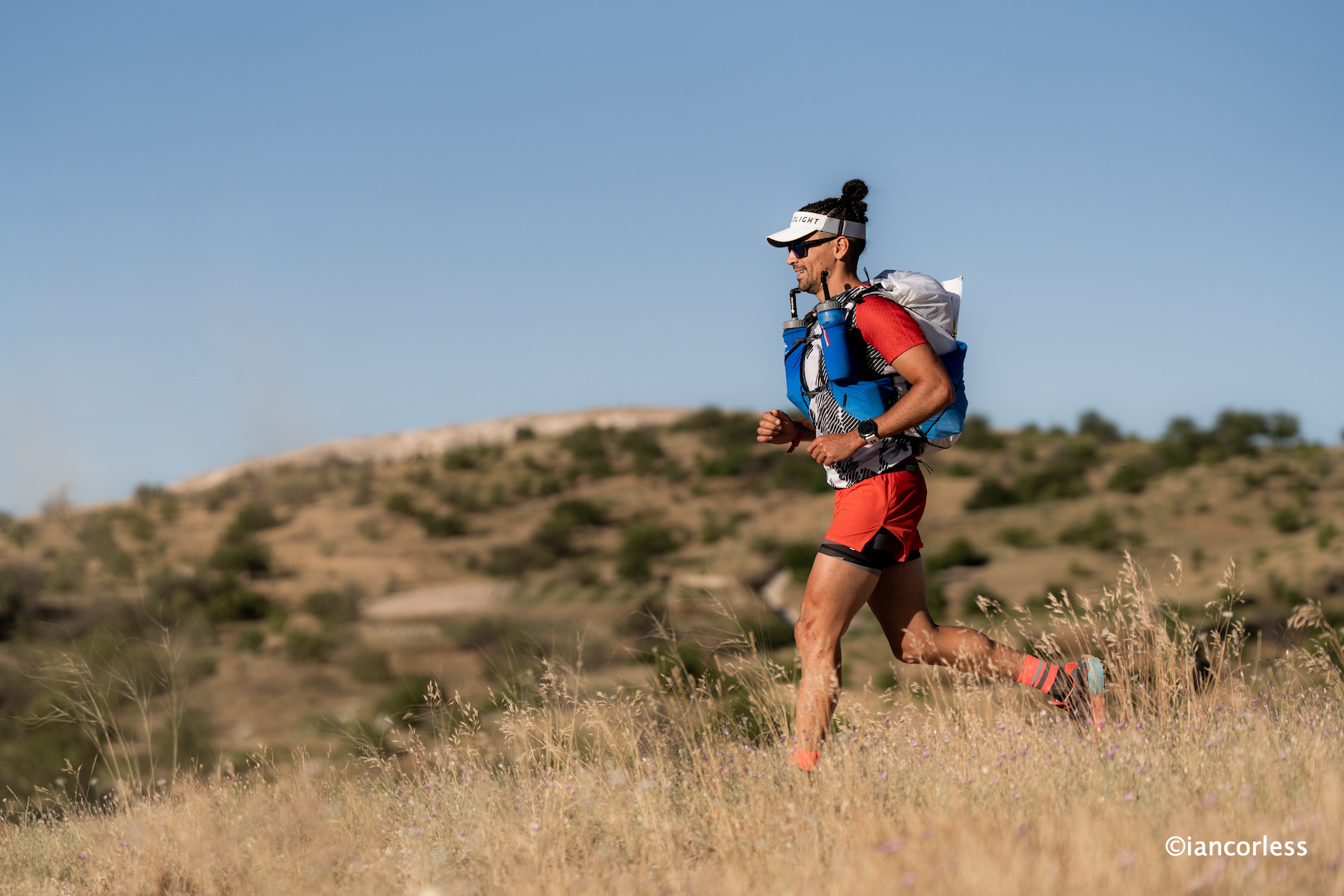
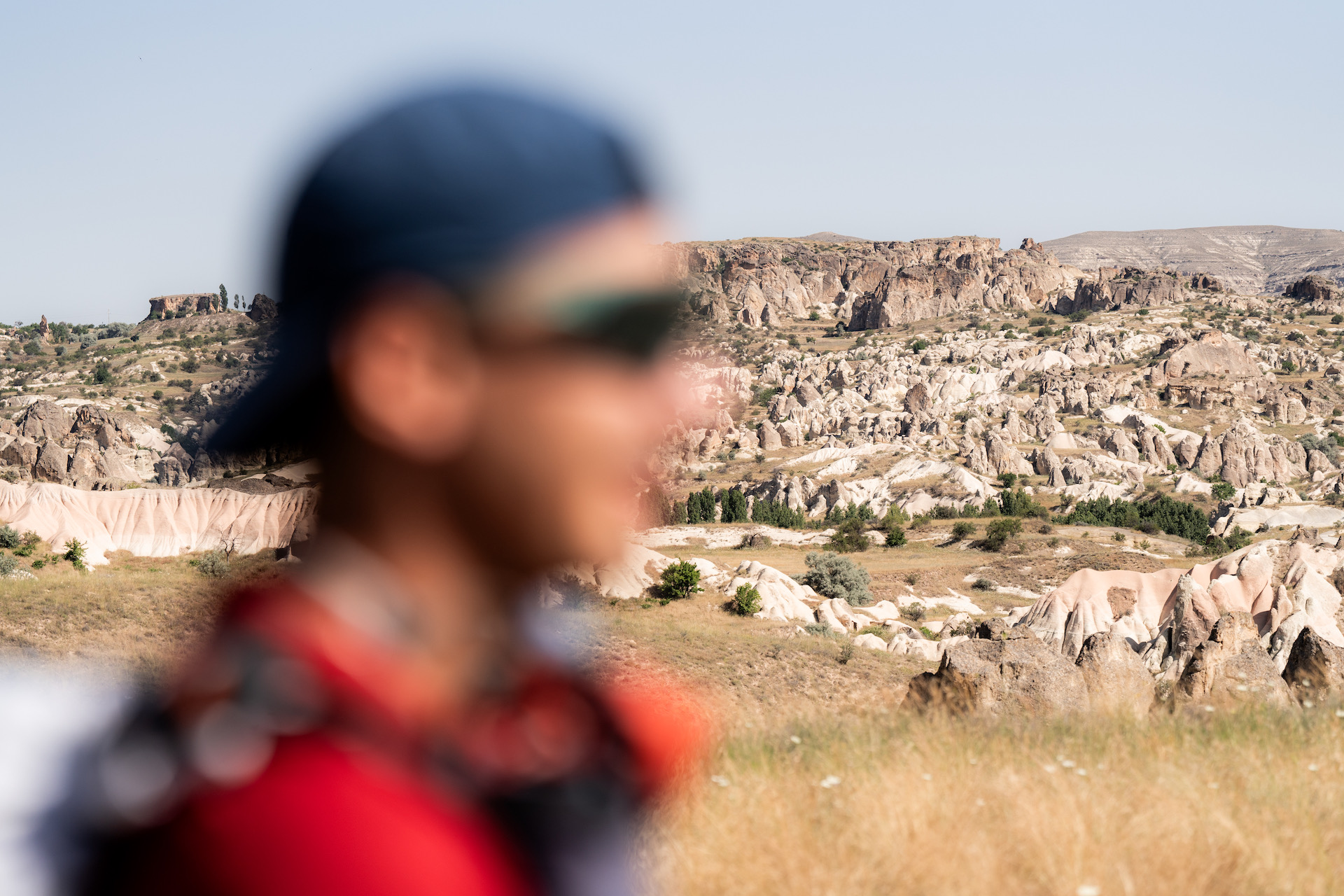
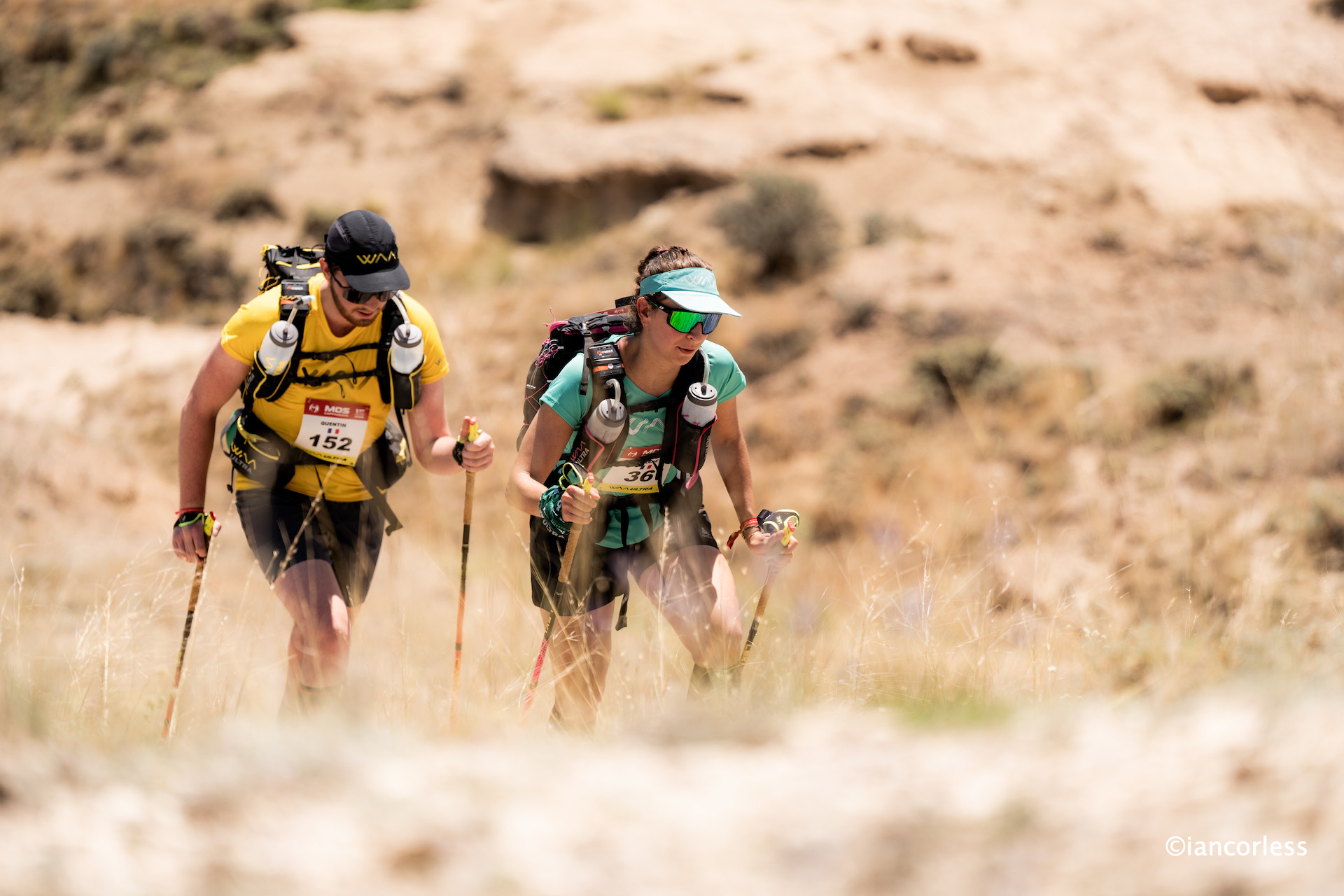
In contrast to MDS The Legendary and other MDS races, Cappadocia is not a desert race. Although the landscape has a desert feel, the route is much more single-track, mountain paths, grassland and of course it is all encompassed within the unique landscape of this area.
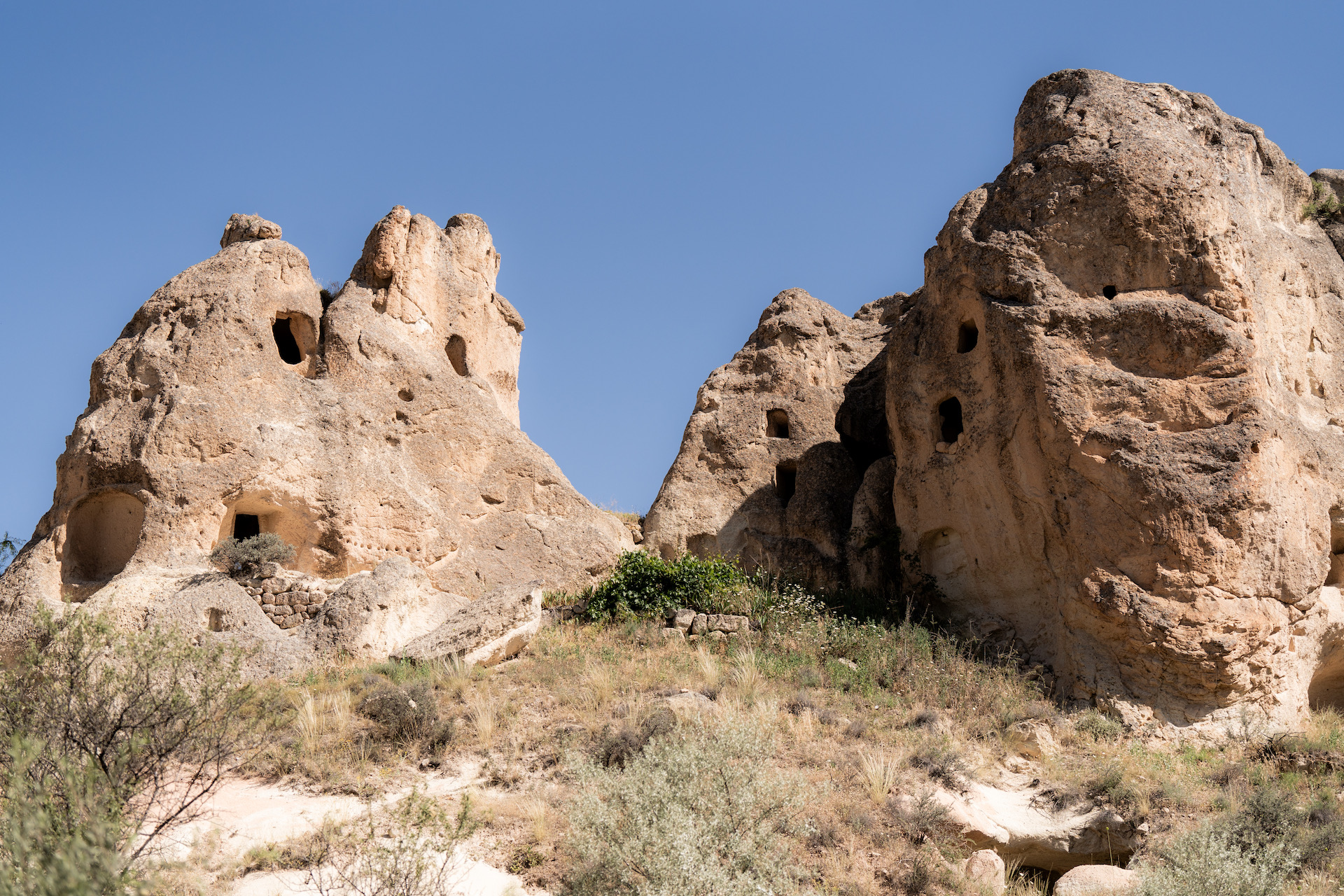
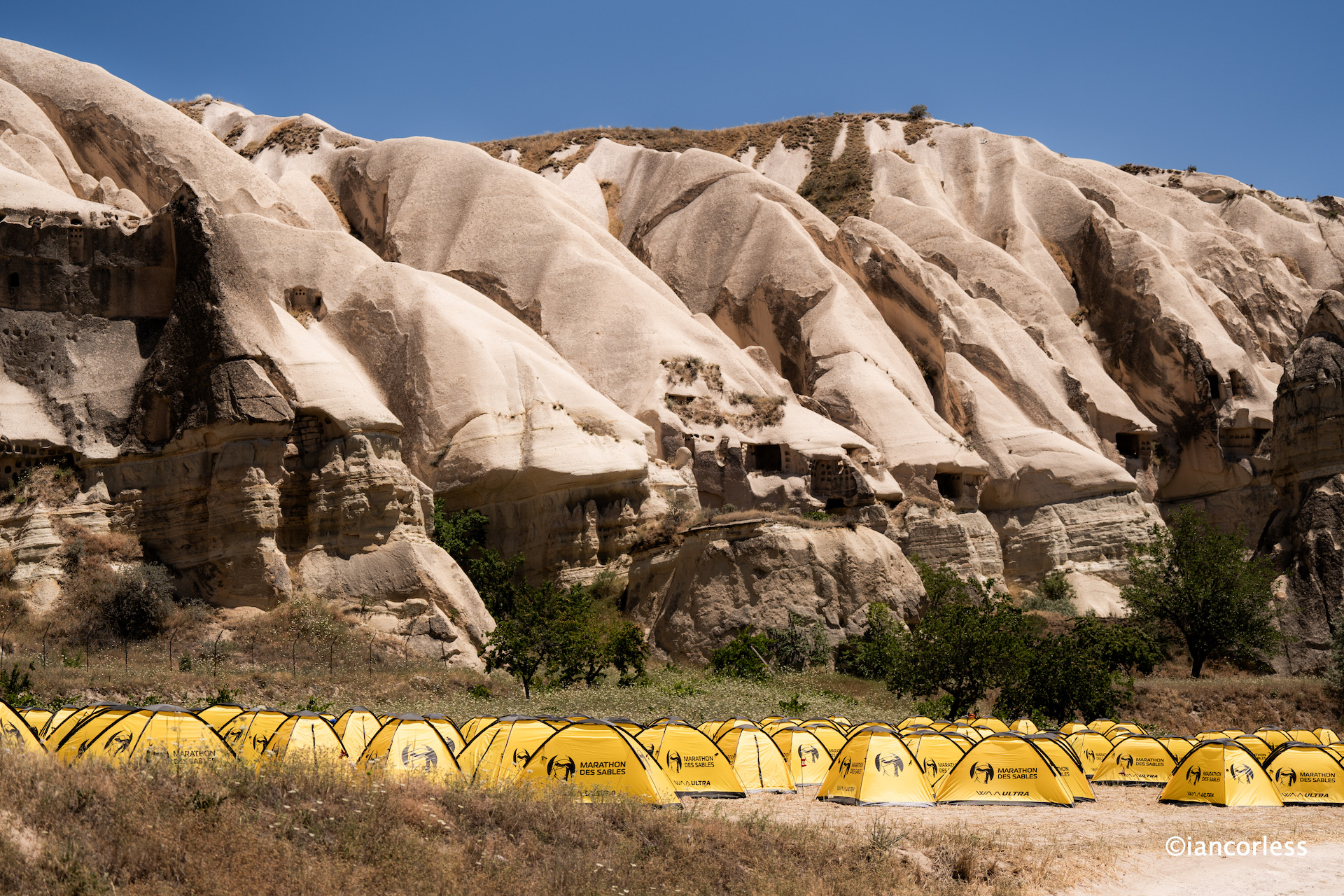
Troglodyte Caves a unique feature of Cappadocia
The Göreme valley is captivating, especially if never seen before.
Single-track trails
For the participants, it was the start of a journey of discovery and at each point throughout stage, the beauty and experience was one that was passed on to MDS staff during and afterwards.
A hot day, cold water at CP’s make all the difference
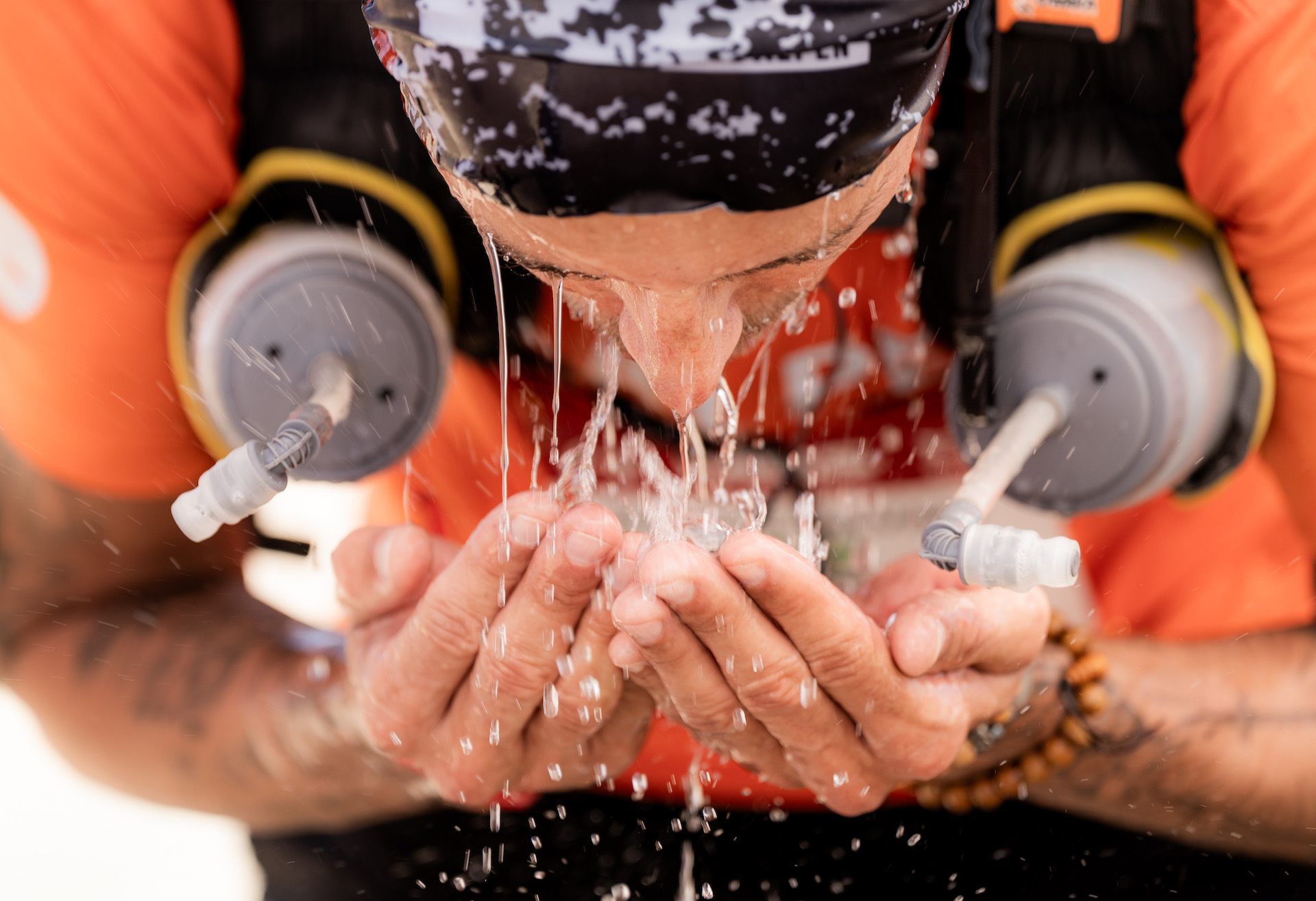
A hot day, with a recorded high of 33-degrees, however, a gentle wind throughout many sections of the race helped to cool. Main CP’s also offered iced water which was poured on the heads and necks to facilitate cooling the core.
It wasn’t all flat and easy.
The stage was won in 02:29:40 by Keven Moncelli. Hugo Brincard and Alexandre Mallier were 2nd and 3rd, 02:32:41 and 02:39:08 respectively.
A unique and magical playground
For the women, Maryline Demangel finished ahead of Axelle Bellec and Gudrun Hespel, 03:10:59, 03:20:23 and 03:39:08.
Stage 1 finish and the bivouac for the coming days is a hidden away gem backed by the unique Troglodyte homes, cut away in the rock that makes Cappadocia so unique and special.
Stage 2 (Monday) has an early wake-op of 03:30, briefing at 04:30 and the start of the stage at 05:00. Runner’s are able to choose the distance to cover.
Countdown begins to the first edition of MDS Cappadocia, June 22nd to June 28th. A week long adventure in one of the most iconic locations in Turkey. A moonscape region carved by the variables of time and nature, famous for its layered history and unique geological features.
Day 1 Arrival in Turkey, technical and medical checks.
Stage 1 (day 2) will begin in Sunday June 23rd with two distances, 25km or 30km and a night in bivouac.
Stage 2 (day 3) Considered ‘the long day’ will have three distance option, 20, 40 or 60km with a night in bivouac.
Day 4 a rest day.
Stage 3 (day 5) like stage 1, will offer two distance, 25 or 30km followed by a night in a hotel.
Day 6 a day of leisure and in the evening, gala dinner and awards and a night in the hotel.
Day 7 travel home.
MDS Cappadocia, like the other MDS locations (excluding MDSThe Legendary) allows participants the option to choose between 3 distance formats: 70, 100 or 120 km, spread over 4-days/ 3 stages. These distances are given as an indication and are likely to be revised downwards according to the type of terrain and the difference in altitude of the routes. The event is accessible to everyone, runner or walker, with generous time barriers to enable completion – 98% finish.
However, just like The Legendary, self-sufficiency is part of the race and therefore participants must carry all they need for the race duration (inc food) the exception, water and a tent.
In principal, the requirement per person is as follows:
WAA Ultrabag 20l with two water bottles (or similar)
Sleeping bag and mat (mat is optional but recommended)
Clothing for running – Hat, shirt, shorts, socks and appropriate run shoes with gaiters (when applicable) for desert running.
Sunglasses
Warm layer – (down jacket, windbreaker, merino top etc)
Personal hygiene products inc sun cream and toilet paper.
Items for food preparation (stove (no gas) if you require hot water, bowl, spork etc)
Food – Find the right balance between freeze-dried meals, salty snacks, compotes, soups… Without forgetting the food for the race (especially during the long stage): cereal bars, gels or other energy sources. It is strongly recommended that each runner has a minimum of 2000 k/calories per race day
Any luxuries?
The race has Mandatory Equipment
WAA Ultra Bag 20L backpack or equivalent
Capacity of 1.5 liters of water
A sleeping bag
Headlamp (which must be turned on after dark) + 1 complete set of spare batteries or battery
10 safety pins
Lighter
Whistle
Metal blade knife
Skin antiseptic
Signal mirror
Survival blanket
8 soup cubes (2 per day) to help the rehydration
Tube of sunscreen
100 euros in cash
Passport or identity card (depending of the destination)
Official MDS medical certificate completed by a doctor (form available 3 months before the race).
Weight is key, participants need to aim for the lightest weight possible without compromising what they need for an efficient and comfortable race. Remember, runner’s need to carry everything for their chosen race distance.
In comparison to other MDS locations (Jordan, Morocco, Fuerteventura etc), Cappadocia will bring a new challenge and environment. Located in the centre of Anatolia, Cappadocia is characterised by its fairy chimneys and Troglodyte dwellings carved in the rock. It is a UNESCO World Heritage Site. This terrain is rolling with considerably less sand and the landscape is filled with fascinating cone-shaped rock formations. On good weather days, the sky is filled with hot air balloons, a key attraction for this area.
If you’d like to follow the first edition of MDS Cappadocia, a daily report and images will be posted on this website.
Interested in another MDS event?
Entries open in June for the 2025 MDS The Legendary HERE and new for 2024, MDS TREK MOROCCO which brings a new concept to the MDS format, read HERE for information and register from June 12th HERE.
A key consideration for any self-sufficient multi-day journey is weight. Additional weight is just a burden, so, fine tuning equipment for your adventure is key.
In races such as Marathon des Sables, there is a requirement to be completely self-sufficient with just water and a shelter provided.
So, in addition to the clothes you are wearing, you must carry all the food required for the week, any luxuries and importantly warm layers: sleeping bag, sleeping mat, jacket and so on.
The debate, ”Do I need a warm jacket?” takes place every year and in all honesty, the most truthful answer is yes and no! It doesn’t help does it! The reason being, in a hot year, the need for a jacket can be very minimal or not at all. However, in a cold or cooler year, a jacket can be a life saver. So, the best answer here is usually have a jacket, take it with you and before the race, whilst in race location, make a decision based on the current weather and forecast.
Sleeping bag in some ways is easier to answer, yes, you need one! However, that is only the start of the process with a sleeping bag, you need to take into account key questions:
Do I sleep warm?
Do I sleep cold?
Am I tall?
Am I short?
Do I have wide shoulders?
Do I get cold feet?
And the above list can go on.
Also, budget is a consideration, there are many sleeping bag options and prices vary greatly.
Ultimately, for a jacket and sleeping bag we want the following:
The lightest possible.
The warmest based on our needs.
The most flexible system.
I personally have always been in favour of having a jacket, mornings can be cold and evenings can be chilly, so, the option of a jacket is great. Also, if you have a jacket, you can look at taking a lighter, less warm sleeping bag and looking to ‘boost’ warmth if required by wearing the jacket inside the sleeping bag.
With all the above in mind, UK brand PHD have come up with a potentially perfect solution.
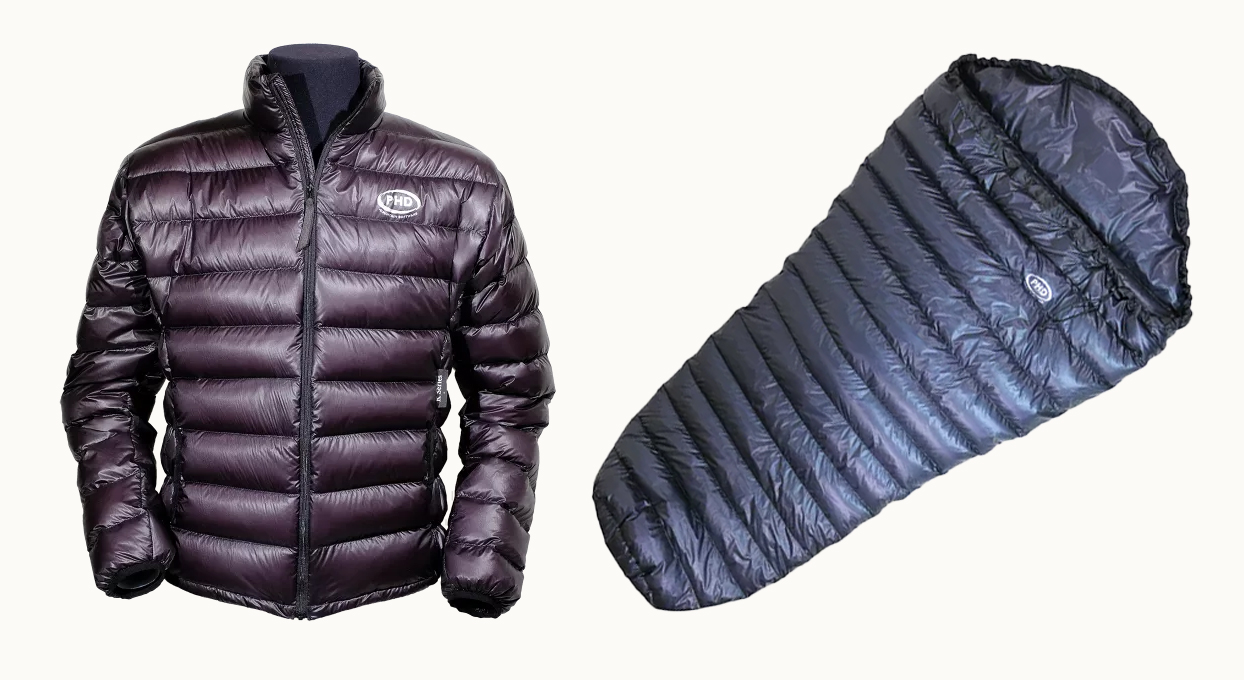
The ULTRA JACKET and the DESERT RACE HALFBAG.
Before discussing in-depth, PHD understand the need for weight v warmth, they also understand layering and the benefits of top-quality ethically sourced down.
The ULTRA JACKET is super light at 200g and is filled with 1000 fillpower down, good for temperatures as low as -5 deg.
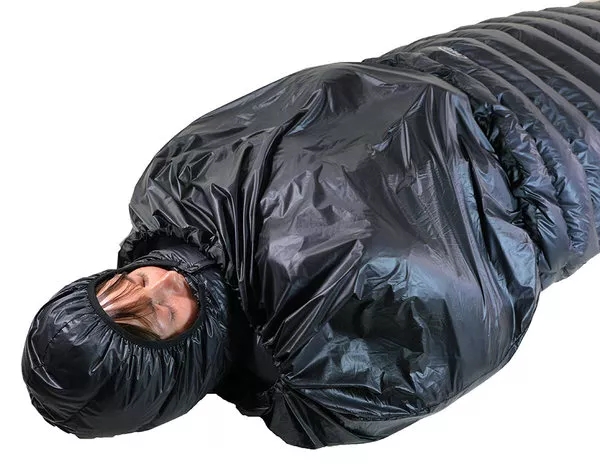
The DESERT RACE HALFBAG is a half size sleeping bag weighing 240g. This bag stops at the waist is filled with high-quality 950 fillpower down and is designed to keep legs and feet warm. However, the technology does not stop there. Understanding that deserts can be windy, they have added a neck-length sand cover or extender to cocoon your body, arms and hands to cut out air movement. This allows the user to regulate warmth and comfort.
If it is cold, you quite simply add the ULTRA JACKET and then pull the neck-length sand cover over.
This combination provides a sleep/ warm system for well under 500g that packs very, very small. Effectively, with this combination of products, not only do you save weight, but you increase flexibility and options.
THE JACKET
The Ultra Jacket weighing 200g for a men’s medium is a high quality product filled with 1000 fillpower down giving warmth to -5 degrees. It is a simple, no frills product designed to be as warm as possible and as light as possible. The outer fabric is windproof which adds to the warmth. It does have hand pockets with no zips, again to save weight. There is a zippered inner chest pocket. Standard colour is black but it is possible to choose red and as with all PHD products you can have a custom make with Hypershell or you can add a hood. You can also have a custom fit, specifying body width, body length and arm length.
Prices start at 498.00 UK pounds / 582 euros.
PHD say, “Our lightest sub-zero down jacket. A ‘K Series’ product. Warmth to weight at the limit of possibilities for extra-keen lightweight backpackers and mountain racers. Now also available in custom sizes.”
THE BAG
The Desert Race Halfbag is a simple, lightweight and effective solution for those looking to save weight, increase flexibility and still keep warm, it comes in a standard length.
The neck-length sand cover is a brilliant addition.
The addition of the neck-length sand cover increases warmth and flexibility on windy and cooler nights. Using top-quality 950 fillpower down, this half bag is incredibly light and packs small. It has stitch through construction ensuring down stays evenly spread with no cold spots. As with all PHD products, it is possible to have a custom make, for example add a zip, have it made short or long, choose a colour (green, red, black or white) or you can add Dri-LX outer fabric.
Prices start at 342.00 UK pounds / 400 euros.
PHD say, “Designed specifically for desert racing. From the legendary Saharan Marathon des Sables to the Kalahari’s KAEM, and the growing number of events in the Gobi, the Atacama, the Australian interior and all around the world, these events have their own particular set of challenges to overcome. Sweltering 40 degree (C) race days can give way to 4 degree (C) nights – that’s cold enough for frost – in which warmth, sleep and recovery play a vital part in preparation for the next day’s challenge.”
950. A newcomer to our range. European goose of rare quality. A high value alternative at the top levels of performance. We have introduced a wide range of options in 950 in response to the soaring cost of 1000.
1000. European goose down of unique quality with exceptionally large lively clusters. 1000 provides the highest warmth-for-weight performance possible from down and has been used in PHD products since 2008. Unfortunately, scarcity (and the fashion industry) continue to push up the price steeply every year. This rarest of all downs we reserve for the K Series, our lightest products right through the range from marathon ultralights to alpine kit and on into high mountain gear.
IN USE
Desert Race Halfbag with neck-length sand cover and ultra jacket with hood
The system is absolutely brilliant and I have fallen in love with the weight of the two items, the flexibility to adjust my sleep comfort temperature and when it has been cold, the down jacket really gives a massive boost and pulling up the neck-length sand cover encapsulates me so that I feel I have a full sleeping bag.
There are some important points to consider, the effectiveness (warmth) of the jacket and half bag is improved by using a sleeping mat which adds comfort and insulation from the ground. Also, I intentionally chose a jacket with no hood as I preferred the lighter jacket weight and the option to add a hat or beanie to increase warmth. It’s really simple, want a jacket or sleeping bag to be warmer, cover your head.
CONCLUSION
The combo of jacket and halfbag is now, without doubt, going to be chosen fast-packing/ multi-day option. It just makes sense. I have a really warm jacket for sitting around. I have a really warm halfbag and when the two are combined, I have a really excellent and adaptable system for sleeping. The light and storable sand cover is really simple, use it or don’t use it, no worries, but the extra security and protection this gives is brilliant. PHD are really on to something here.
With high quality down products and lightweight fabrics, they compress and adapt when packing, so, adding these to a race bag after packing they will take up little or no space. As an example, I used two small dry bags (3L) by Osprey and Sea-to-Summit and packed the jacket and bag away to see how small I could compress them.
Are there any downsides? Yes, the price. The jacket and halfbag in standard configuration will cost you 840.00 UK pounds/ 982 euros. That is a hefty price tag. However, if you look at the cost of a down jacket and full sleeping bag, the prices are comparable, +/-.
This offer by PHD does not come cheap and yes, you can shop around and find options that are considerably cheaper. I guess I look at this a little like buying a car, any car providing it has fuel and it is in working order, will take you for A to B. However, based on desires, budget and the desire for the best, you can do that A to B ride in a small Fiat or a Ferrari. PHD are coming at the Ferrari end offering a luxury bespoke product that is extremely light, packs really small, is perfect for the task that is required and for that, you pay a price!
Only you can decide if it is worth it!
I have been using PHD for over 10-years, I have used their Minim bags in the Sahara and the Hispar bags in the Himalayas. The ability to have custom features has been, at times, a luxury. My original Sahara bag had no zip to save weight, however, my next bag had a full-zip which allowed me the option to use it as a blanket/ duvet. The Ultra Jacket and the Desert Race Halfbag has taken things to a next level and in doing so, they have provided me multiple options for temperature regulation in varying climate conditions and I love this. Should I go to a very cold climate in the future, I could now use this jacket and halfbag in combination with my Hispar bag to give me excellent sleep comfort below -20degs, that is awesome.
PHD have always made a superb product, it is made in the UK with the highest quality products and importantly, ethically sourced down, which comes at a price. They may be expensive, but you get a top-quality product and excellent after service and care.
Reviews:
“It worked exactly as described. I consider the temperature ratings accurate. We had a couple of nights when the wind picked up and the sand blew. When this happened I was grateful for being able to pull the sand sheet on the half bag up over my head and use the drawstring to keep the sand out” – Gareth Scobie (Marathon des Sables competitor).
“The sensation of immediate warmth in the Ultra Jacket is unsurpassed. The 1000-fill is so high-lofting, it puffs up as if a pump has been attached. Rare and wonderful.” – Judy Armstrong in TGO Magazine.
“For me the half bag and pullover was perfect, probably the best bit of kit I bought. To be wearing the top half as a jacket in the evening, then slip into the lower half was simplicity itself. It was plenty warm enough…” – Dain Jensen (Marathon des Sables competitor).
Episode 247 of Talk Ultra and we catch up with competitors from the 2024MDS The Legendary for thoughts and feedback with Cecilie Lehmann Gianneri, Natalya Platanova and Nicki Marsh.
The 2024 MDS The legendary was highly anticipated, after 37-years, the race came under new ownership and while the core structure of the race remained the same or similar, many changes did take place. We catch up with Cecilie, Natalya and Nicki, all three first time competitors to get their thoughts and feedback.
If you’d like a re-cap of the 2024 edition, please see below:
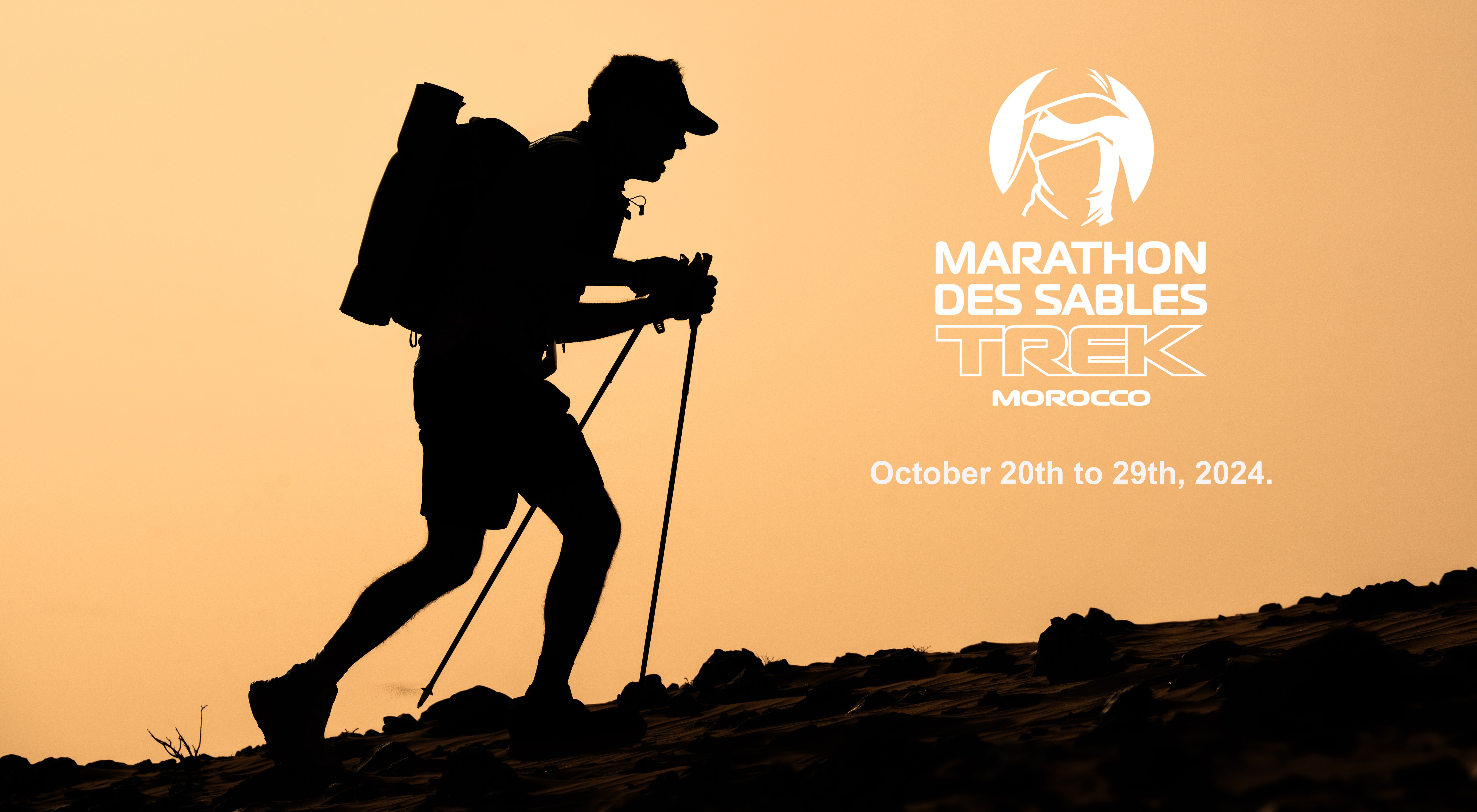
Marathon des Sables, today, announce MDS TREK MOROCCO which will take place from October 20th – 29th 2024.
Registration opens June 12th.
Building on the format of MDS – The Legendary, the MDS Trek brings a new concept to the desert with 10-days of disconnection from the noise, clutter and chaos of the modern world.
A 10-day adventure, spending 7-nights in the desert, the trek course will cover between 70 and 120km’s divided into several stages. The distance will be for you to decide based on your personal desires and ability. Unlike MDS – The Legendary, this is not a self-sufficient experience, therefore, participants will only need to carry a light pack with essential items.
But this experience is more than just a trek, it’s 360 experience of escape that will include workshops in the evening on physical and mental well-being in sport, for example, “Athletic Fasting – Its Strengths and Weaknesses”, “Glucose and Blood Sugar Management” or “The Power of Breathing”.
Staying in double tents with mattresses provided, at the end of each stage you will be able to have a Berber shower and buffet dinner. For a small extra charge, massages will be available and in the evening, the option to purchase cold drinks to relax, share experiences and unwind in social areas.
Following the route of the Marathon des Sables, the MDS Trek Morocco will have 4 timed stages, as previously mentioned, you choose the distance. There are no cut-offs, so, pace can be relaxed and should you have any difficulty, you can be repatriated to camp and still able to start the following day.
Water stations will be available along the route, and you will need capacity to carry 1.5 ltr of water, some food/ snacks and nothing more. The rest of your equipment will stay in bivouac.
There is an exception, the **long day, split over 2-days will require a sleeping bag as you will spend a night under the stars in a Nomad camp with a buffet dinner.
This new format offers an opportunity to be active both in mind and body, without the stresses of a more demanding self-sufficient race. It’s a trekking holiday that can be used as a unique stand alone experience or as a stepping stone to another MDS event.
Day 1 – The experience will last 10-days with the need to meet in Ouarzazate on day-1 for transfer to the desert.
Day 2 – Will have technical checks, workshop and a night in bivouac.
Day 3 – Stage 1
Day 4 – Stage 2 and in the evening, workshop.
Day 5 – Stage 3 part 1 with Nomad star night and buffet.
Day 6 – Stage 3 part 2 with return to bivouac and completion of the ‘long day.’
Day 7 – Rest day with workshop.
Day 8 – Stage 4 followed by night at a hotel.
Day 9 – Relaxation day, gala dinner, night at hotel.
Day 10 – Onward travel.
FEES
It will be possible to sign up for this experience from June 12thand the price will be 1950 euro for the first 100 participants and then increasing to 2050 euro.
Done MDS before? Maybe you’d like to return to the Sahara with a loved one or with friends and enjoy a more relaxed trek holiday? The price will be 1750 euro for the first 100 and then increasing to 1850 euro.
The meeting point will be in Ouarzazate on Sunday morning, October 20th, 2024, to join the organisation and take transfers to the desert.
To get to Morocco and Ouarzazate, you can arrive at different airports:
Ouarzazate airport Take a flight for Ouarzazate before the adventure and spend one or more nights at the hotel (at your own expense) then come to the meeting point on the morning of October 20th. We recommend that you arrive before October 19th so as not to miss the shuttles in case of a delay at the airport on Sunday, October 20th.
Marrakech airport Shuttles will be organised on Saturday April 19th in the morning, between Marrakech and Ouarzazate (5 hours journey). You can either: • Book a flight for Marrakech airport and on arrival, take one of our shuttles directly to Ouarzazate. • Spend one or more nights in Marrakech and take a shuttle on April 19th to Ouarzazate.
The return journey at the end of the MDS Trek follows the same logic.
If you wish, you can take advantage of the bus organized between Ouarzazate and Marrakech. These buses will leave Ouarzazate on the morning of October 29th, therefore you’ll need to book a return flight from Marrakech in the afternoon.
If you take a return flight from Ouarzazate, in this case you are free in the hotel-airport transfer and you can book a flight whenever you prefer.
The inaugural 2024 Lofoten Stage Run has just concluded, two experiences, the 170km Expedition Run and the 130km Adventure Run brought to you by The Arctic Triple team. Six days and four stages inspired by the Lofoten Ultra-Trail 100 Miles solo race, the Lofoten Stage Run brings the same route broken down into manageable chunks.
Epic landscape and views
There is no better way to fully immerse oneself and experience that magic that Lofoten offers. The routes journey to hidden places, often only experienced by the most adventurous tourist. Each day concluding with the Norwegian Hytte experience and local cuisine.
Norwegian Hytte – Reine Rorbuer
Designed to be a running holiday, however, do not be fooled, those cozy and comfortable evenings are worked for. The terrain here in Lofoten is challenging; a mixture of all terrains and elements that can bring for many, the ultimate challenge.
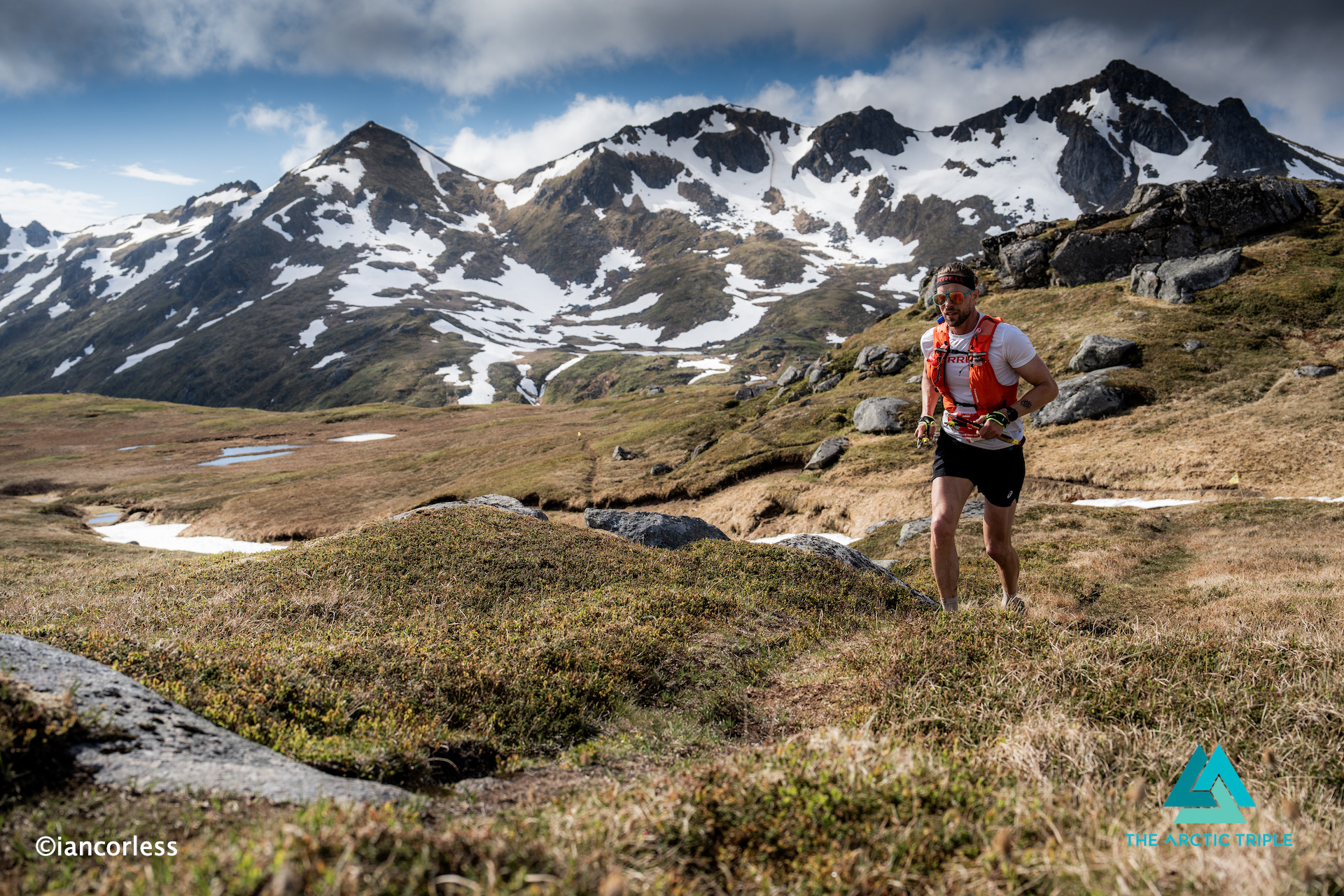
Mountains, snow, single-track and amazaing views with Johan Cajdert.
THE EXPERIENCE
Arriving in Svolvær on Tuesday May 28th, participants were transported to Reine, considered by many to be the most beautiful village in Norway. It is certainly iconic.
Reine Rorbuer
Staying in an authentic fisherman cabin in Reine Rorbuer, the 2024 experience kicked-off with a race briefing and then dinner.
Race briefing
Wednesday, stage 1, started with a boat trip from Reine to Kjerkfjorden.
What a way to start a journey.
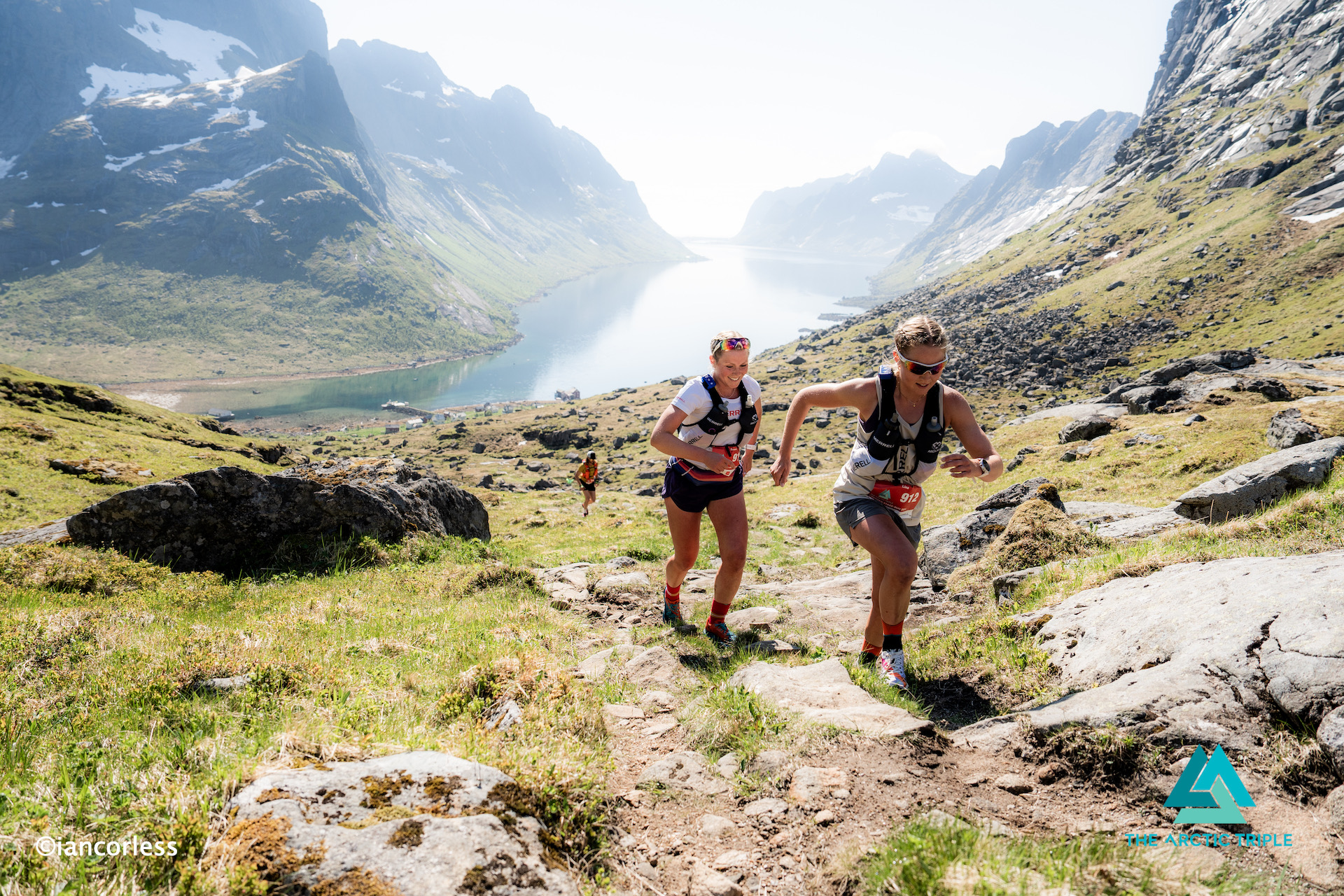
The route ahead, 39km’s. The opening 10km’s a real challenge with tough climbs, technical terrain, snow sections and soft/ boggy ground.
Lina and SannaRock, trail, grass and snow.
Kvalvik beach offers some opportunity for flat terrain before a steep climb and eventually a descent to Fredvang and checkpoint.
It’s more than just running.
A road section leads to Nesland and the final technical trail sections before arriving in the picture postcard, Nusfjord – a tough day!
Tzvetie at the end of stage 1Twin power finishing in Nusjford
Stage 2 at 34km’s concludes at Lofoten Rorbuutleie another amazing location surrounded by sea and mountains.
Early miles of stage 2 and epic viewsClimbing to coastal trails
The early route to Napp bringing many a challenge, technical trails and mild hands-on scrambling sections before sweeping single-track with stunning views.
Hands-on scramblingMagical terrainRoad sections provide some easy running and link the key trails
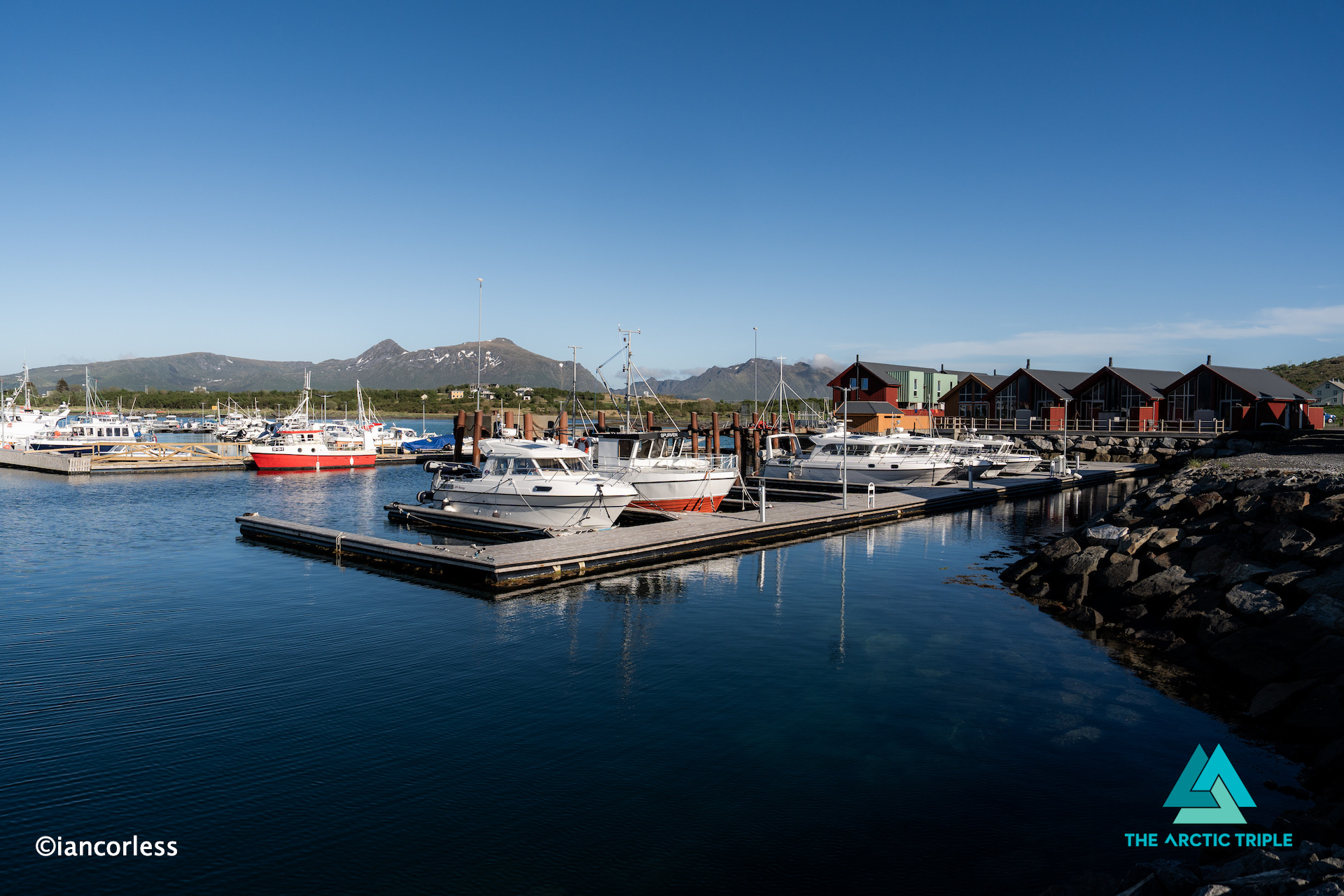
Road gives way to coastal trail and another road section before arriving at Lilleeidetholmen Marina, the buildings are located with water on both sides and direct access to quays and floating docks.
Lilleeidetholmen Marina
Stage 3 for 170km Expedition runner’s is the long day, covering 52km’s with arguably the most ‘runnable’ terrain of the whole week.
Between a rock and a hard placeSnow fields add to the experience
Technical aspects are reduced and much of the route is single-track interspersed with some road.
Johan Cajdert
The finish at Brustranda Fjordcamping once again offering a wonderful Norwegian hytte experience of cabin surrounded by water and mountains.
This is Lofoten
Stage 4, the final day bringing some of the most technical terrain of the whole Lofoten Stage Run experience, especially the climb to Jordtinden and the ridge that follows with some exposure form ‘airy’ single-track, snow fields and at times, challenging terrain.
Graeme Murdoch at Jordtinden.On the way down the ridge.The twins dominated each stage
The final peak of Tjeldbergtinden a final challenge before the run in to Svovær and the conclusion of four magical days. After the race, a meal at the event hotel, Thon Hotel Lofoten, where the focus is some of the best local food from the area. A perfect evening to recap from the race and share new and old stories with your new friends.
Great food a feature of the experience
THE RUN
Run, walk or hike.
170km or 130km, one thing is for sure, running in Lofoten is tough and challenging. Terrain constantly switches from demanding and technical sections to easy flowing single-track. For sure, day 1 was a surprise to many and a warning of the challenge that would be ahead to complete the 4-day experience.
Always some snow throughout each stage
Despite schedules for the 170/130km runs, this journey was all about enjoyment and experience, therefore, participant requests for shorter days, or even rest days were accommodated. The Lofoten Stage Run is as explained, a running holiday and therefore it should provide the right experience for the individual.
Reiner completed the 170km mixing walking and running
What was key was the unified enjoyment through the whole group of participants, key to this was the evening hytte experience and the sharing of a meal together.
Hytte in great locations
Of course, racing did take place, and Lina and Sanna Elkott Helander were the stand out champions of the 170km distance along with Johan Cajdert.
The twins!
Graeme Murdoch and Tzvetie Erohina lead the way for the 130km.
Graeme and Tzvetie
Results though don’t tell the story, the Lofoten Stage Run was a relaxed trail running experience that brought so much more than just running.
Wow
The weather played ball and provided not only pleasurable temperatures but also allowed Lofoten to be visible, this really is a truly magical landscape. Traveling point-to-point, on foot, experiencing the majesty of Norway. Stunning trails, majestic mountains, resplendent views, and all during the endless daytime of the midnight sun. It gets no better!
Shoes are personal. Run shoes are very personal. Quite simply, we are all unique and our needs when running vary greatly depending on the distance we are running, the terrain we are running on and how long we will be out for. It is why so many shoes exist.
Last year I said my shoe of the year was the Merrell Agility Peak 5. It is a shoe that ticked all the boxes, comfort, great foot hold, excellent grip and a fantastic all rounder for trail and mountain running. If I was only allowed one trail shoe, the Agility Peak 5 would be my choice.
It’s fair to say, that Merrell are still fighting an uphill battle to be taken seriously in the run world, especially when compared to the giants like Hoka, adidas, Brooks, Asics, Salomon and so on… Take note, Merrell should definitely be on your consideration list.
With the announcement of the MTL Long Sky 2 Matryx and my love for the Agility Peak 5, I was very keen to give this new incarnation plenty of testing.
In contrast to the Agility Peak 5, the MTL Long Sky 2 Matryx is a completely different beast. Less cushioning, lower weight, lower profile and lower drop. It’s a very specific shoe.
To draw a comparison, the Agility Peak 5 is like an everyday car for the family, plenty of room, comfort and great for a full day out. The MTL Long Sky 2 is much more a 2-seat sports car that is has a very specific use and some comfort is missing in exchange for speed.
So, although the name has ‘Long’ in the title, don’t be fooled in to thinking this is a long distance shoe. It is not. The most relevant part of the shoes name is ‘Sky’ and the reference to skyrunning which takes place in tough, challenging and technical terrain and mostly over shorter distances between 20 and 50km.
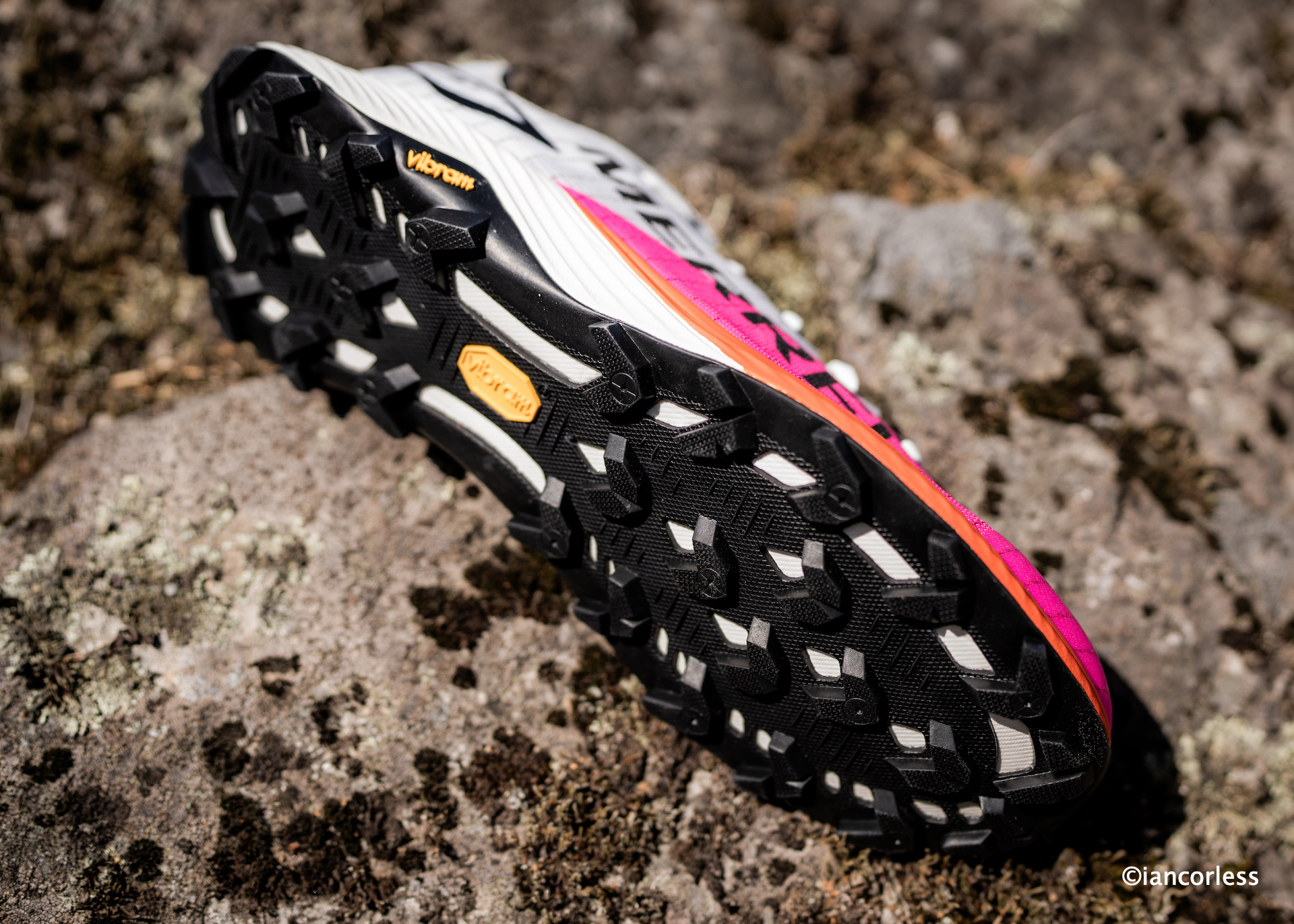
A neutral shoe, in comparison to the previous model (the Long Sky) the drop has been reduced from 8mm to 4mm. This is significant is it gives a much greater contact with the ground and control. Cushioning is 19.5mm at the front and 23.5mm at the rear. The outsole is Vibram MegaGrip with 5mm lugs.
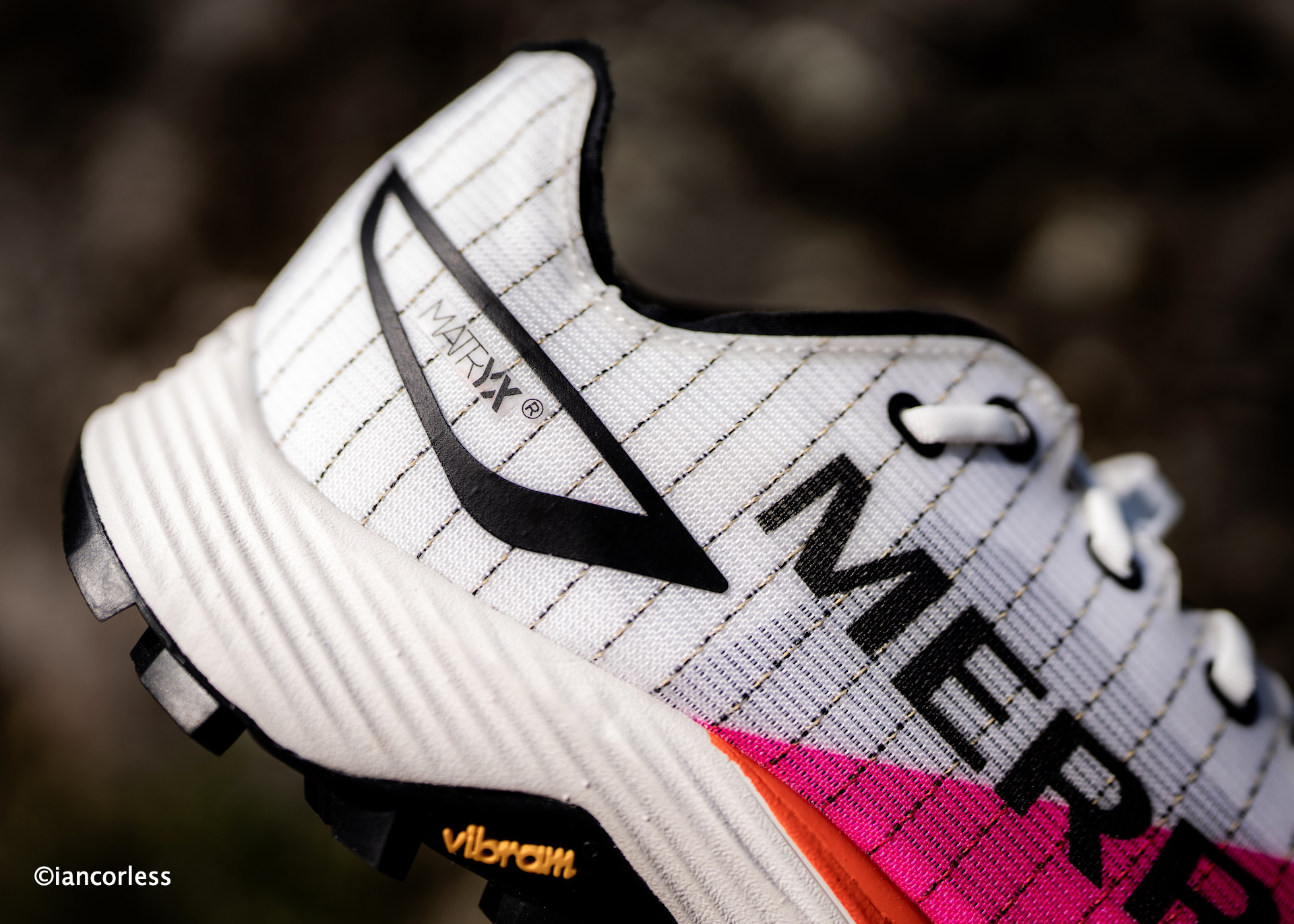
A key feature is the new MATRYX upper which has more durability and is designed to keep the foot cooler with greater wicking.
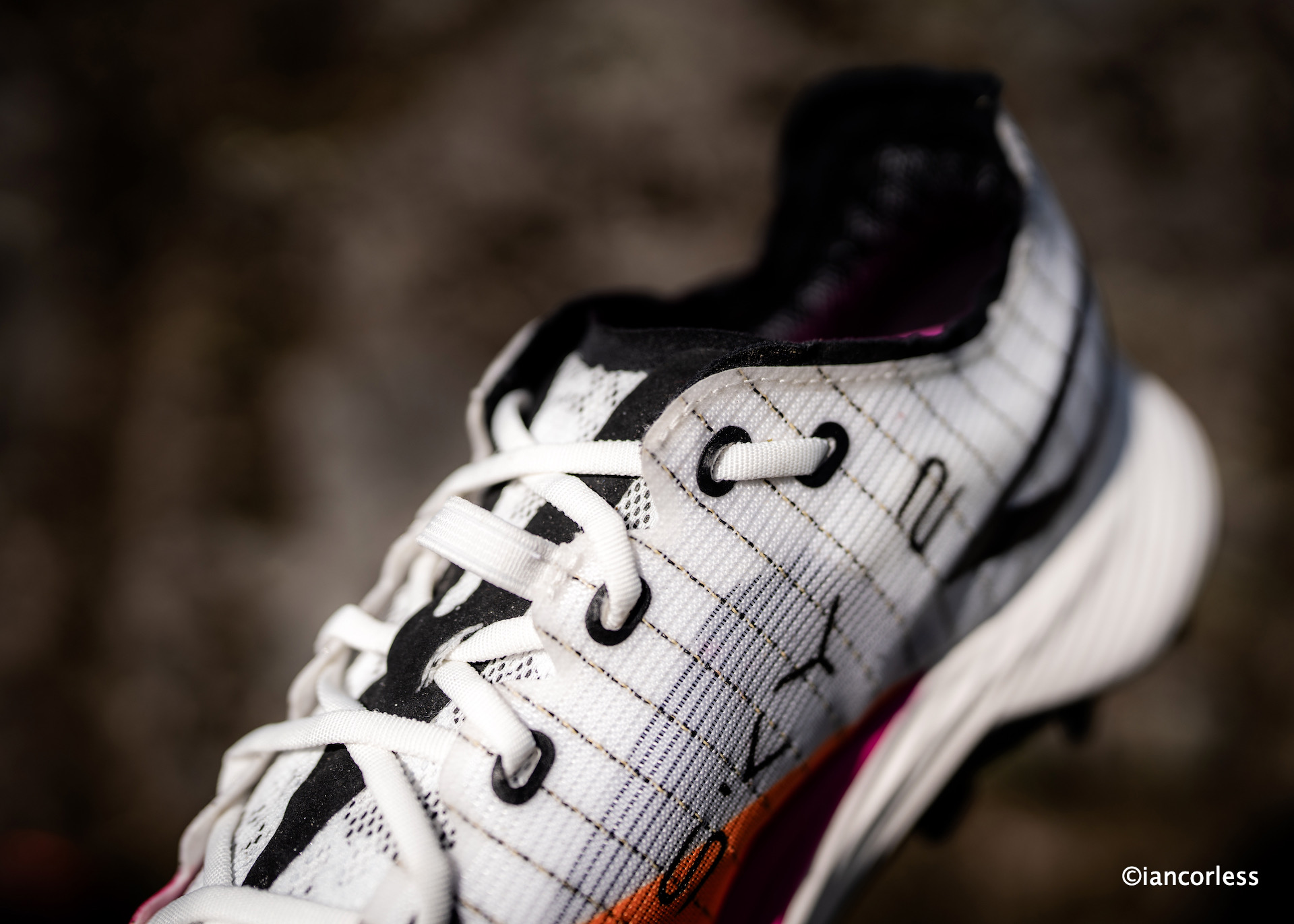
They have a gusseted tongue for excellent foot hold. Cushioning is via EVA foam insole and dual FloatPro Foam.
There is a temperature regulating footbed. A UK9/ EU44 is 259g and sizing is true to size. The shoe is 15% lighter than the previous model
THE SHOE
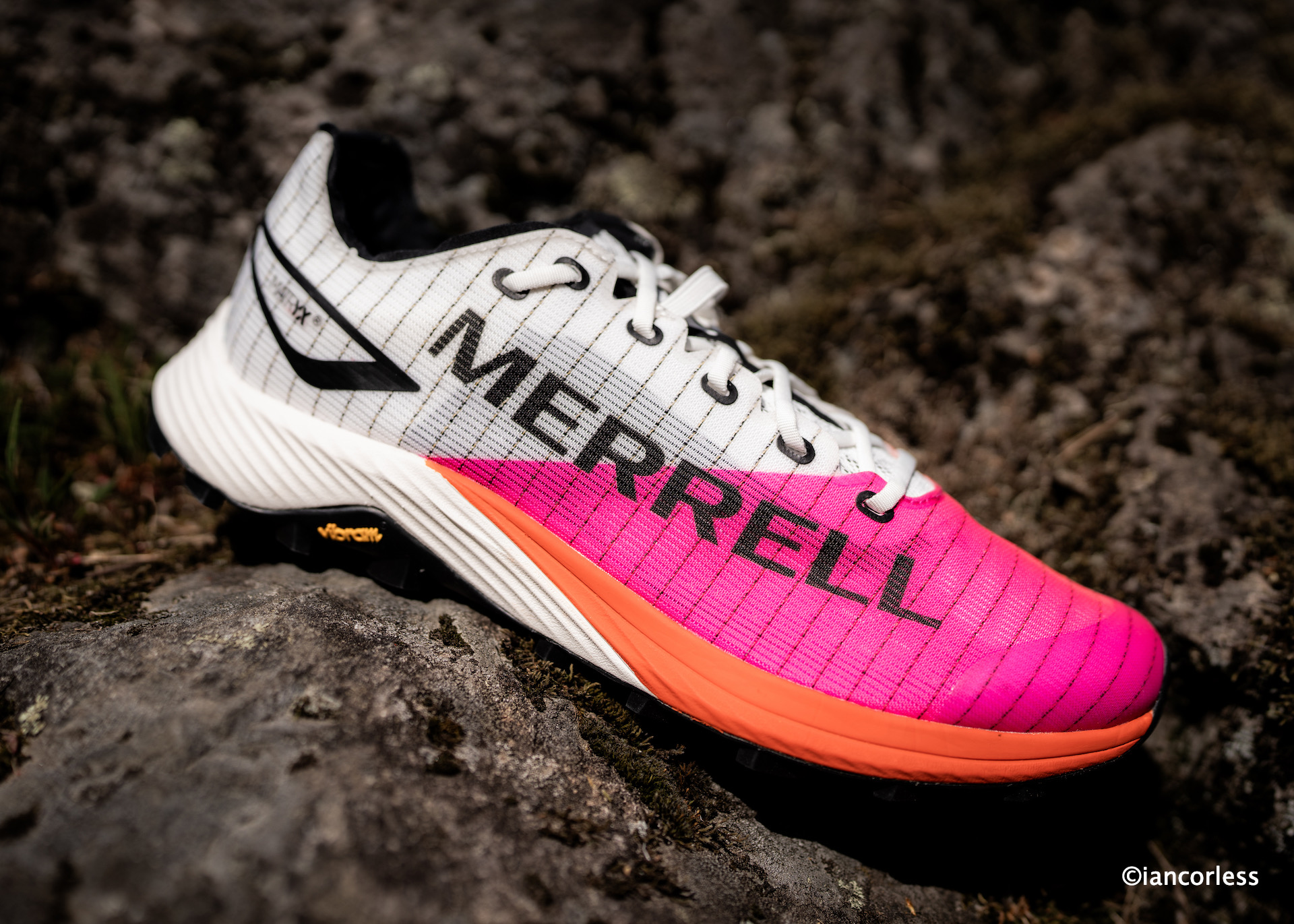
It’s a great looking shoe and one that immediately says speed. The white to multi fade orange and pink is striking.
Slipping the shoe on, the foot hold is immediately noticeable and with the laces adjusted and the sock-like fit, there is no movement at all. Exactly what you want from a shoe that will handle mountainous and technical terrain. The heel area is very minimal and there is a raised padded area inside that is designed to grip and hold – it certainly does, arguably they are the most secure shoe I have experienced in this area. The front of the shoe opens up to provide enough width for toe splay, but not too much room so that you would lose control when precision is required.
With a 19.5/23.5mm cushioning, this shoe is designed to provide a compromise offering cushioning but not losing ground feel and control. As mentioned before, the ‘Long’ in the name is relative and for most people, this is not a long distance shoe.
The upper construction is minimal and notably so at the front, there is token toe protection. Don’t be fooled though, this MATRYX upper is tough and durable.
The shoe immediately feels comfortable when you put them on. I strongly suggest you play around with socks to find out what works best for you, I noticed a huge difference in feel between a lightweight sock and a slightly thicker merino sock.
Merrell say the shoe is good for up to 50km. For sure, yes, 50km is possible, but this depends on the runner and the speed they are going. A top elite mountain runner may tick off 50km in 4 to 5 hours, whereas, someone else may take 10-hours, so, use caution.
The MTL Long Sky 2 Matryx is designed to be agile and nimble, they are! But this comes at a price on comfort and protection. I had expected more protection and ultimately, for me, that just wasn’t there. I could feel stones, rocks and tree roots through the shoe which did surprise me. They feel thin!
They are very flexible and the propulsive phase is very good. On the correct feet, this is a fast shoe.
The biggest problem for me was the heel area. In one area they are brilliant, the hold is fantastic, they are secure and there is no slipping. However, this hold comes from the raised cushioned area with the heel, no matter what I did or tried, this just rubbed and caused blisters on both feet. I must caveat here, I never get blisters. So, this just made the MTL Long Sky 2 Matryx unwearable for me.
The outsole is Vibram MegaGrip with 5mm lugs. Ideal for technical terrain providing grip when required on rock, gravel, light mud and varying terrain. I am still not 100% convinced or confident of Vibram on wet rock, especially when compared to VJ Sport or the Continental grip on adidas shoes.
Conclusion
There is a great deal to like in the Merrell MTL Long Sky 2 Matryx and if you are looking for something light, nimble, fast with ground feel for short mountain days or racing, this is for you. However, this all comes at a price. It’s a specific shoe for a specific task, just like a Formula One car. This is not the only shoe to have or use. It’s too specific for everyday runs, so, the MTL Long Sky 2 Matryx should be added to an already existing shoe collection and they should be reached for and used on special days. Given that Merrell sponsor the Skyrunner World Series, it’s unsurprising that this shoe is designed to specifically perform on this terrain.
The iconic race of sea, to summit and back to the sea has returned to its roots and the people of La Palma. Few races, anywhere in the world, have the magic of Transvulcania.
It’s more than a race, it’s an experience that transcends running. A 360 journey of location, culture, emotion and a journey to the core of what makes the sport of trail and mountain running so special, a unified glory of experience.
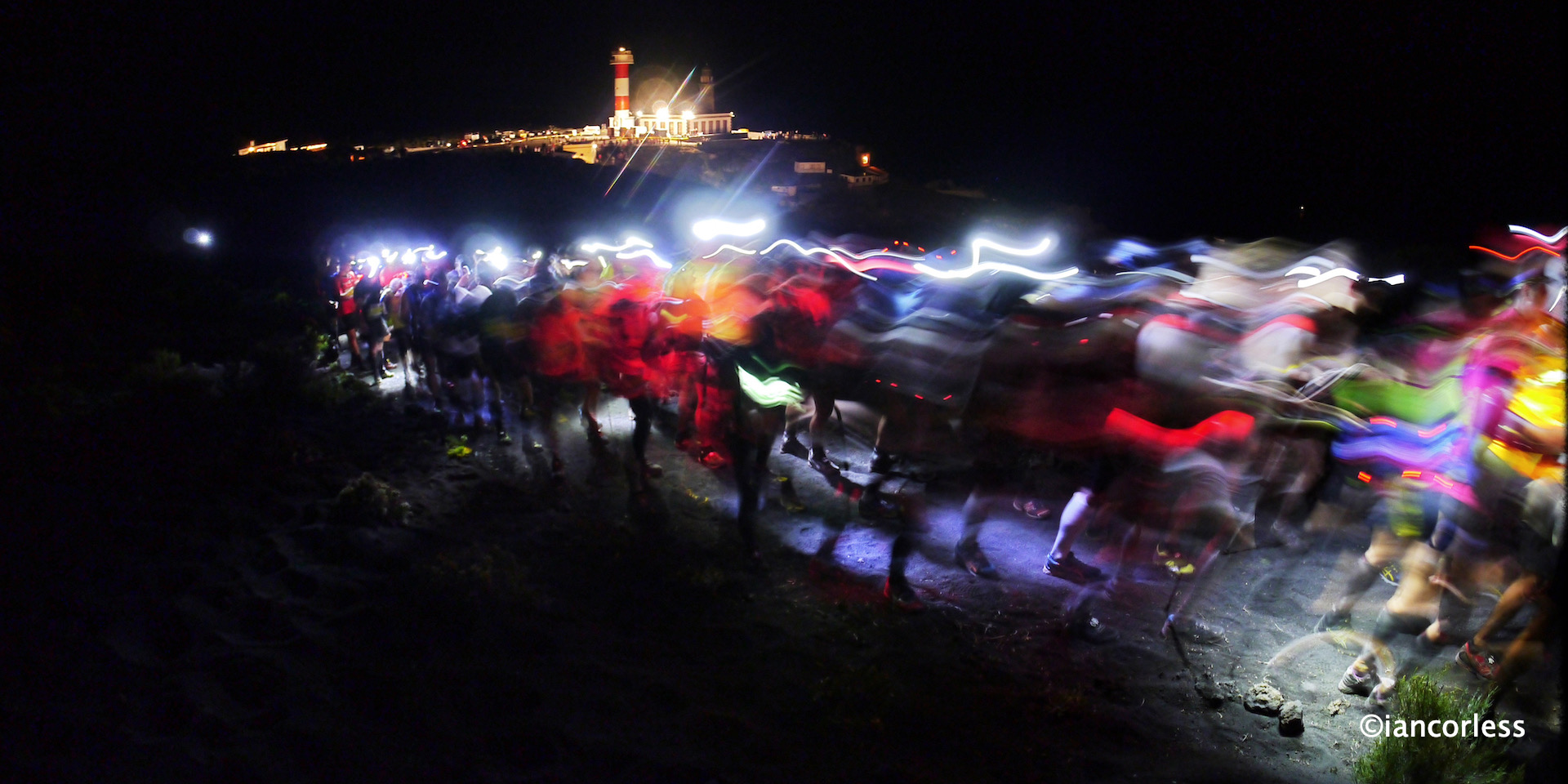
From the early morning start at the Fuencaliente lighthouse, the pounding drums and guitar of AC/DC and the words, THUNDER, THUNDER, THUNDERSTRUCK…!
The blackness illuminated by the glow of 100’s of headlights and then the upward journey begins through a landscape that makes the most well travelled smile with joy at the magic the GR131 route brings.
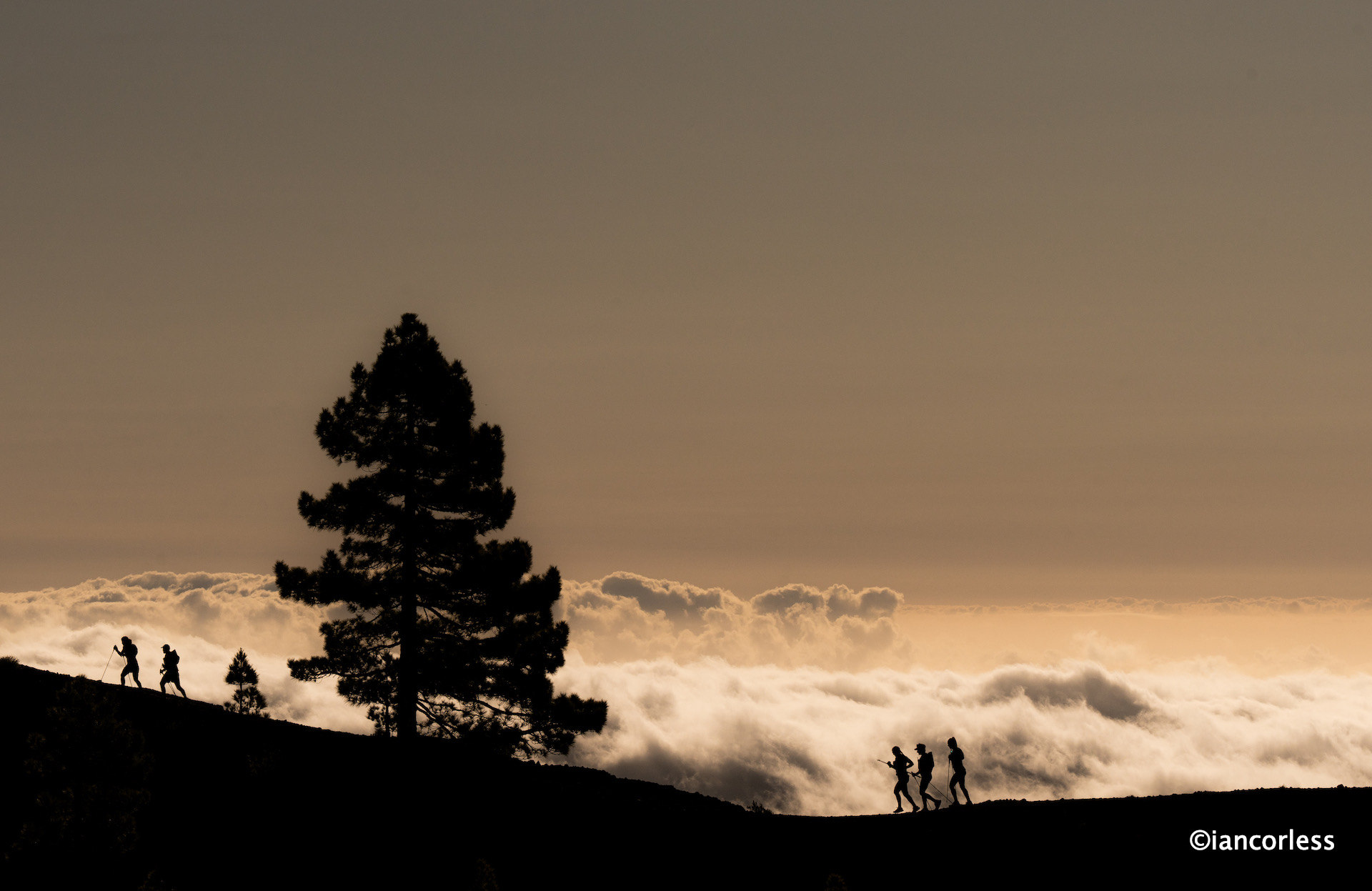
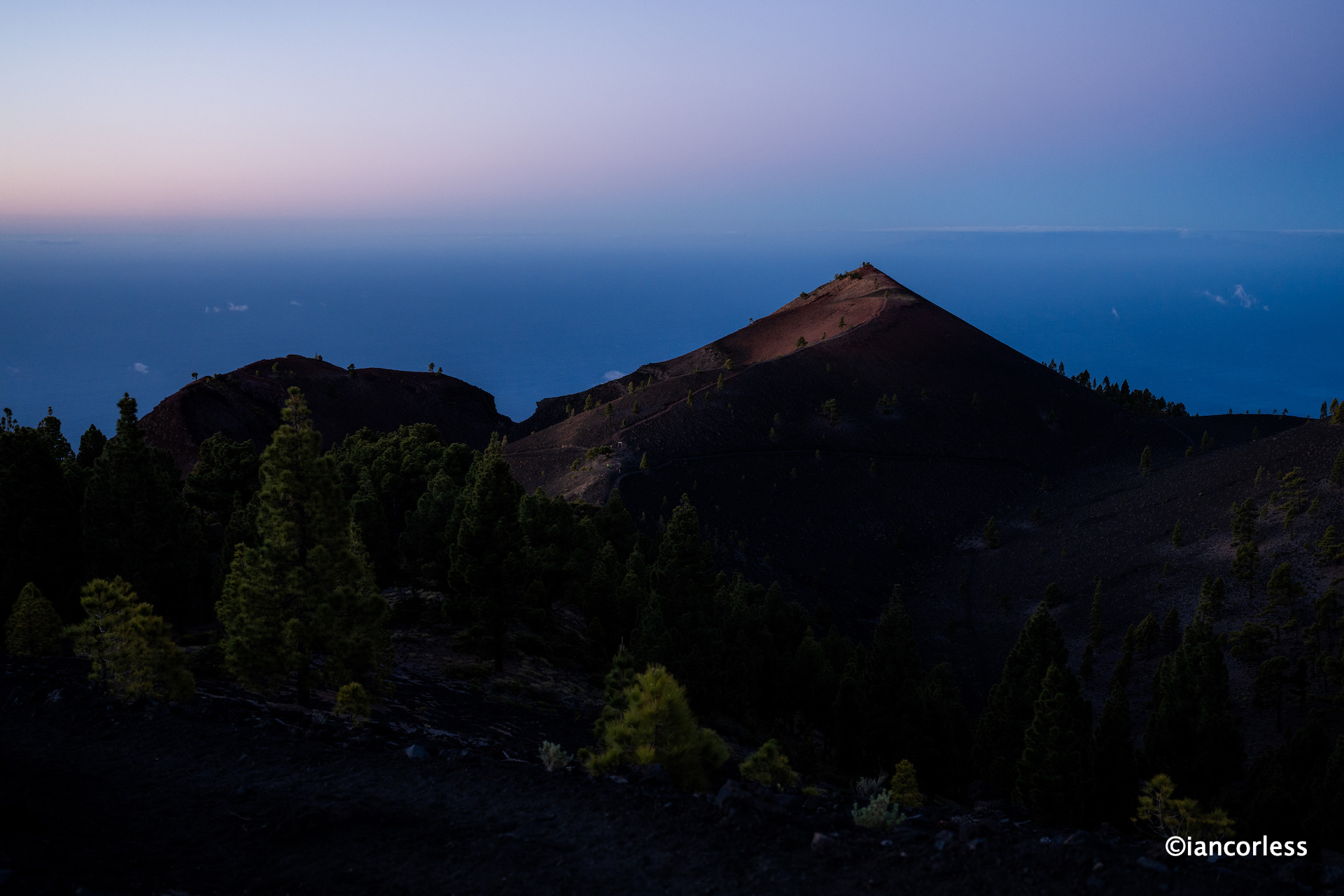
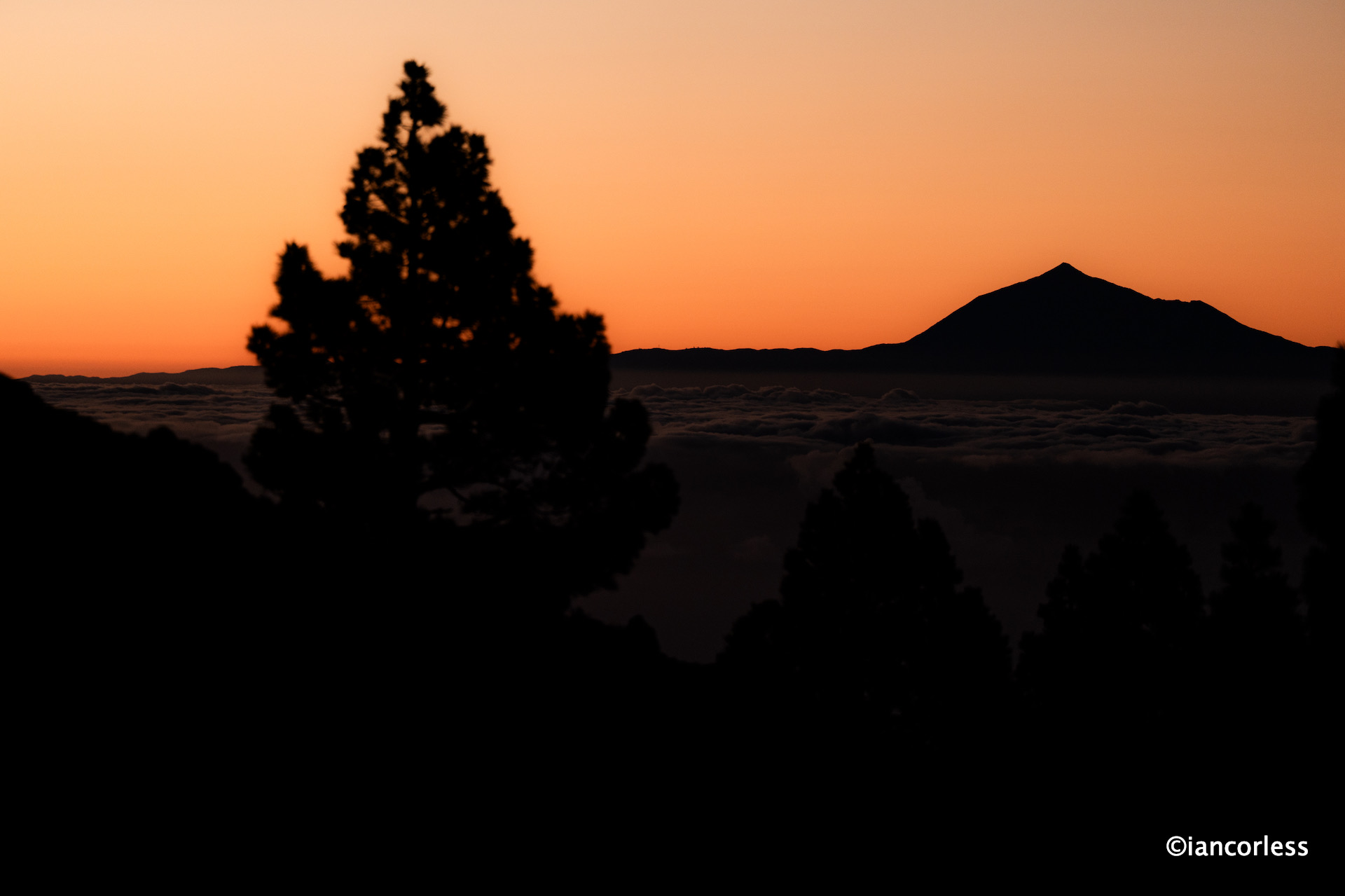
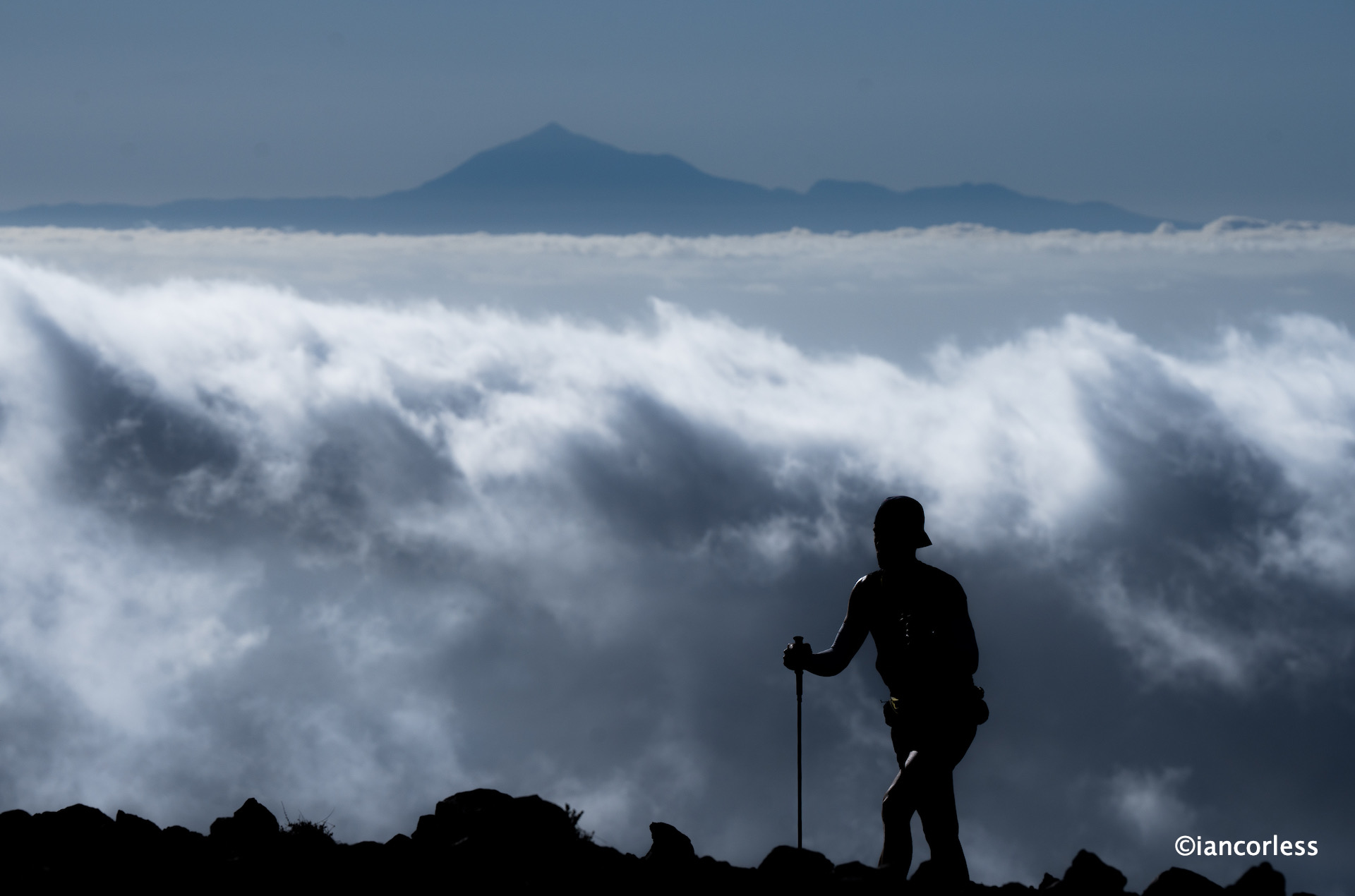
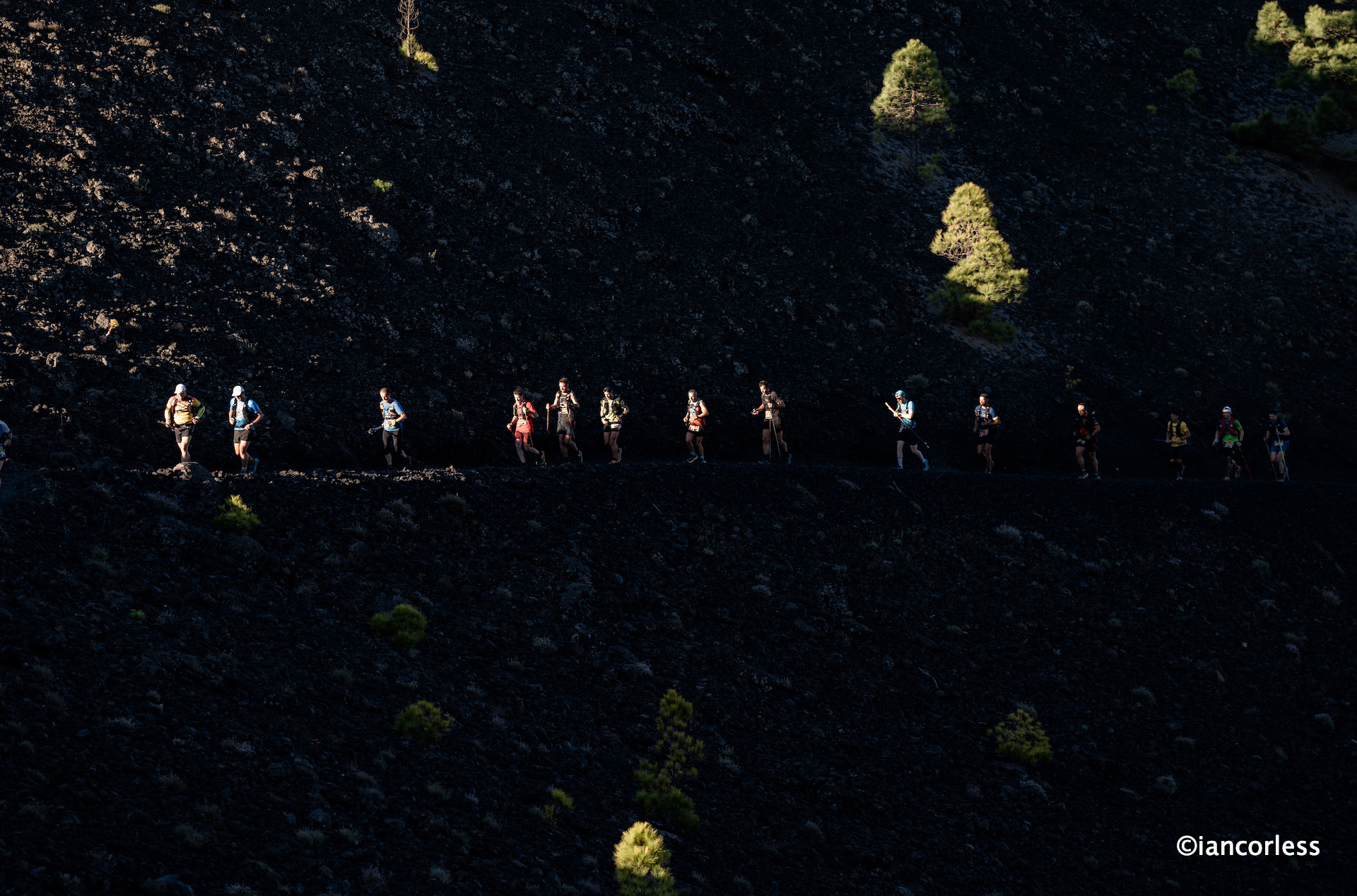
Los Canarious offers an opportunity for refreshment before single-track of black sand and rock weaves through pine trees and the eventual magnificence of the route of the volcanoes coinciding with the first light of a new day. A glimpse to the right, the sky a mixture of orange and blue, Tenerife and Teide visible and suddenly you feel like a plane, floating above the clouds in what many considering a life-changing moment.
The route winds and climbs down the spine of La Isla Bonita. From the highest point in the lower sections of the GR131 (1908m) in the Cumbre Vieja, the route drops to the micro-climate of El Pilar, one-third approximately of the route completed.
From here, cloud encapsulates the runner, some easy trails eventually give way to climbing, a myriad of single-track that weaves left and right and finally you break through the cloud to the most amazing views of Caldera de Taburiente National Park.
Reventon arrives, it’s one of the highlights of the route. With 40km’s covered, the GR131 is now above 2000m and ever so slowly the route creeps over the next 10km’s to the highest point at Roques de los Muchachos at 2403m, a rollercoaster ride of undulating and at times technical trails that offer a 360 panorama of this stunning island.
What goes up, eventually must come down and what follows is a 16km drop back to the ocean; a relentless knee, quad and mind blowing war of attrition that must be overcome. The iconic zig-zag descent provides an entrance to Tazacorte beach and the final aid station.
Beach gives way to canyon, canyon gives way to weaving paths through banana plantations before what seems like never-ending road before the glorious arrival in Los Llanos and the roar of the Palmero people.
This is La Palma.
This is Transvulcania.
This is La Palma
The 2024 Race
Men:
Dakota and Jeshrun
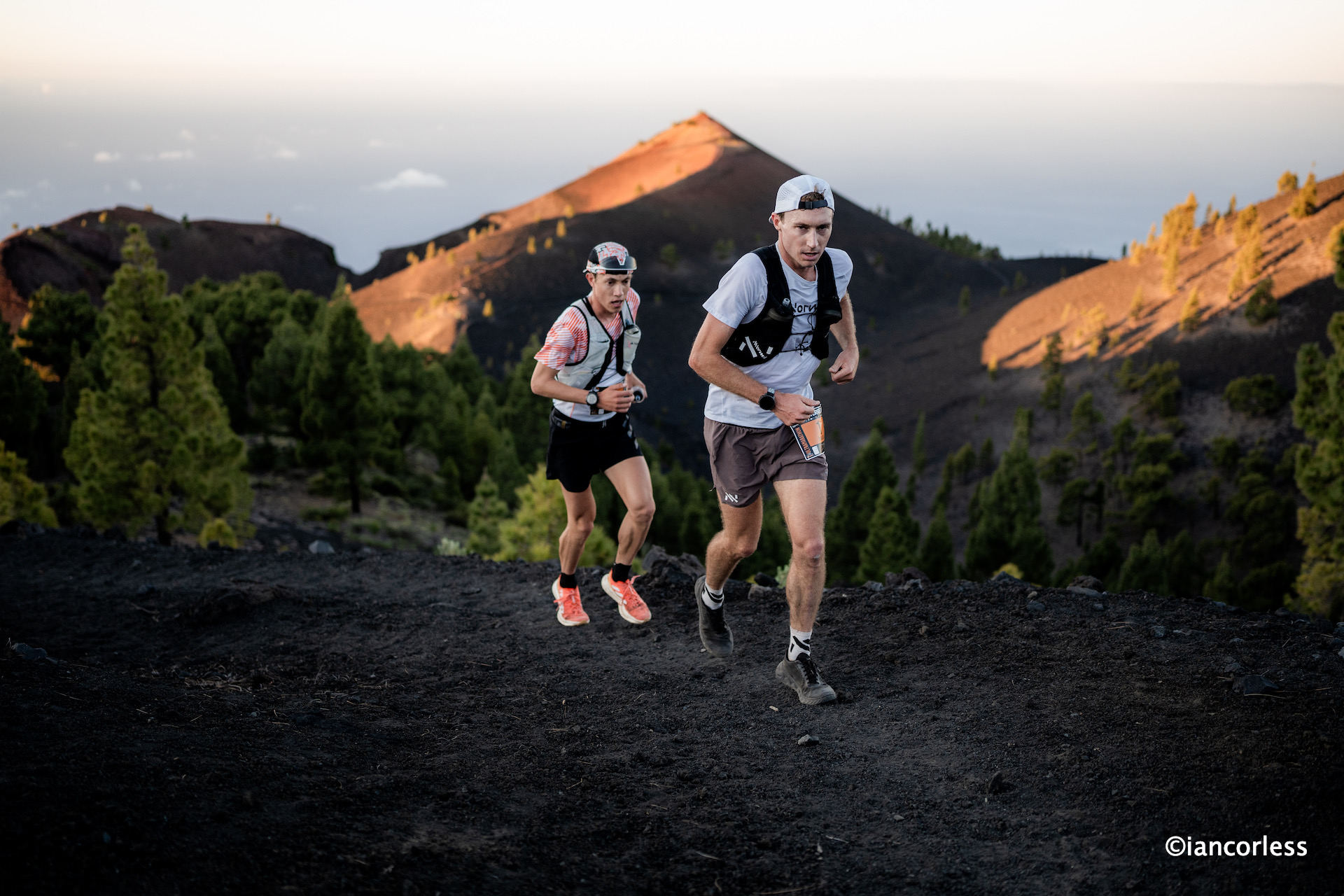
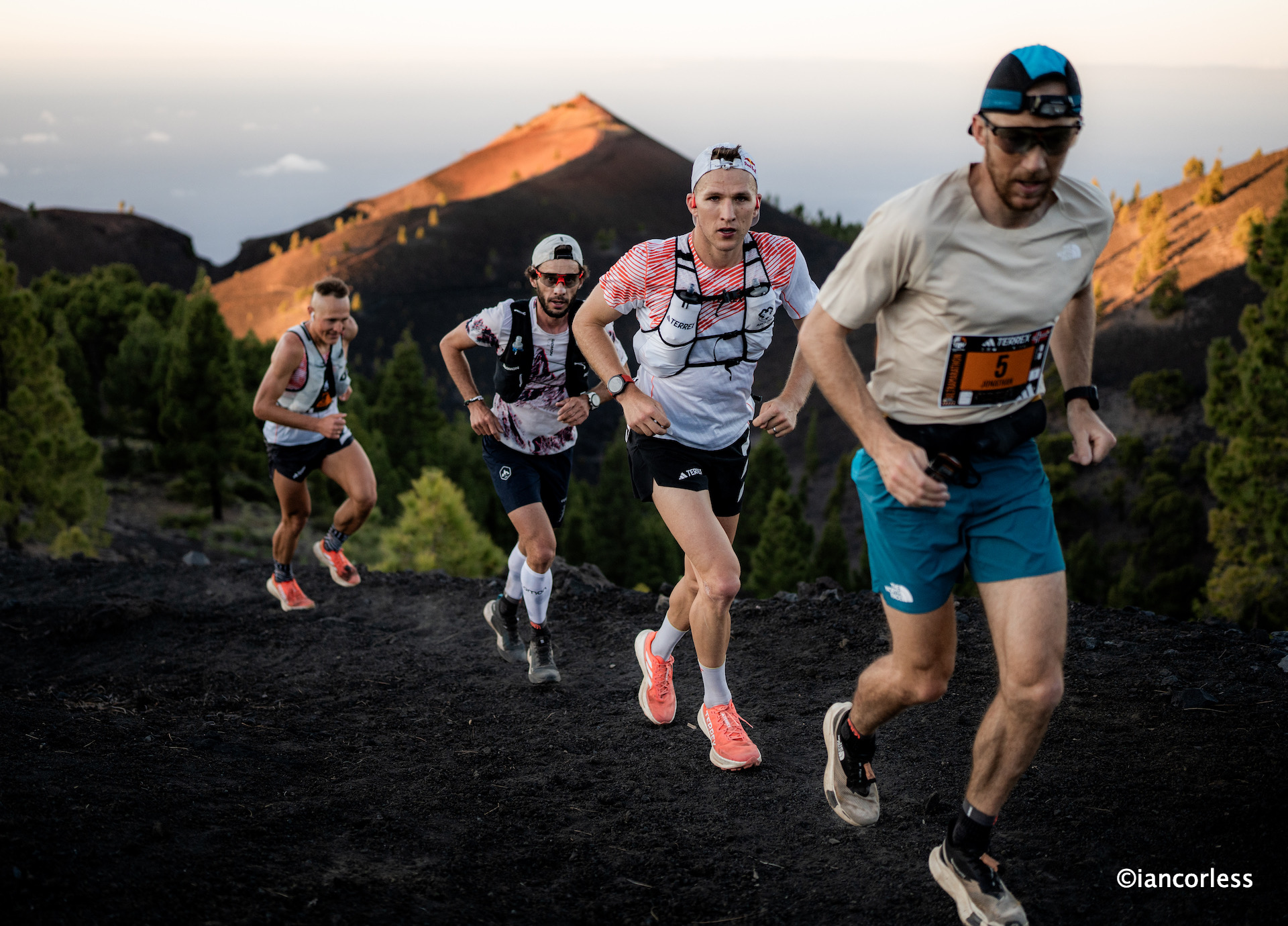
As expected, the early pace was fast and a core group of pre-race favourites dictated the pace with 2023 champion, Dakota Jones at the front. Behind, Jeshrun Small, Jon Albon, Tom Evans, Dmitry Mityaev, and more.
Jon Albon leading the chase group
As the km’s passed and the arrival of El Pilar came, Dakota suffered from the early pace and now, pre-race favourite, Jon Albon took over at the front with an inspired Jeshrun Small. Tom Evans, Thibaut Baronian and Dmitry Mityaev followed.
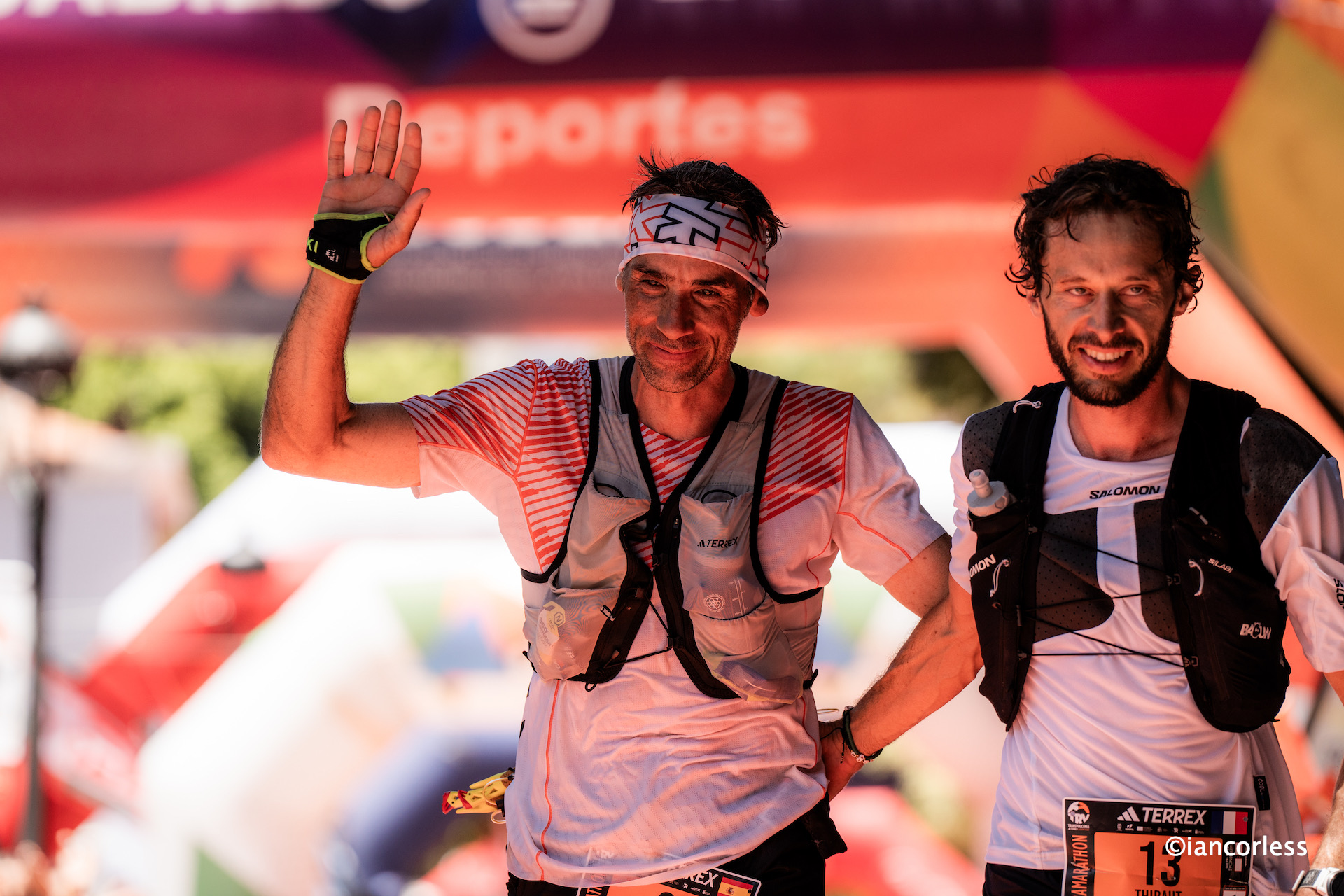
The elastic finally snapped and Jon made his move and opened a gap. It was on the final descent that Jeshrun relinquished second to his adidas Terrex team mates, Tom who had moved up from fifth and Dmitry who were now charging to the ocean in pursuit of The North Face athlete.
Jon arrived at Tazacorte and a course record looked possible. But as the climb to the finish came, the early pace and now heat was taking its toll. Jon was having to dig deep and the behind, the Terrex duo were pushing each other, Dmitry looking stronger than Tom.
But Dmitry did not attack… Maybe he didn’t know the 4-minute gap to Jon at the beach was reducing with each stride?
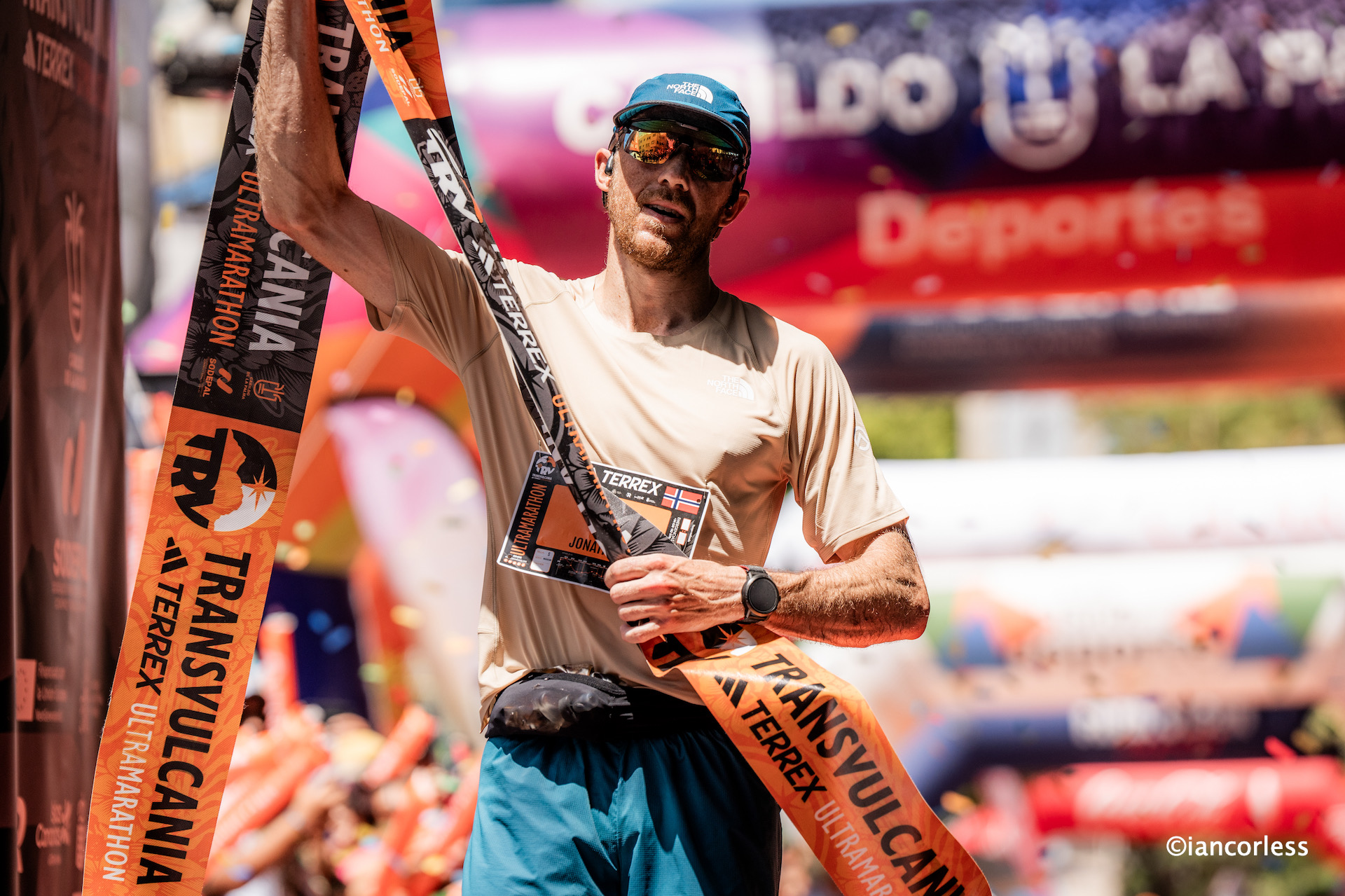
Victory
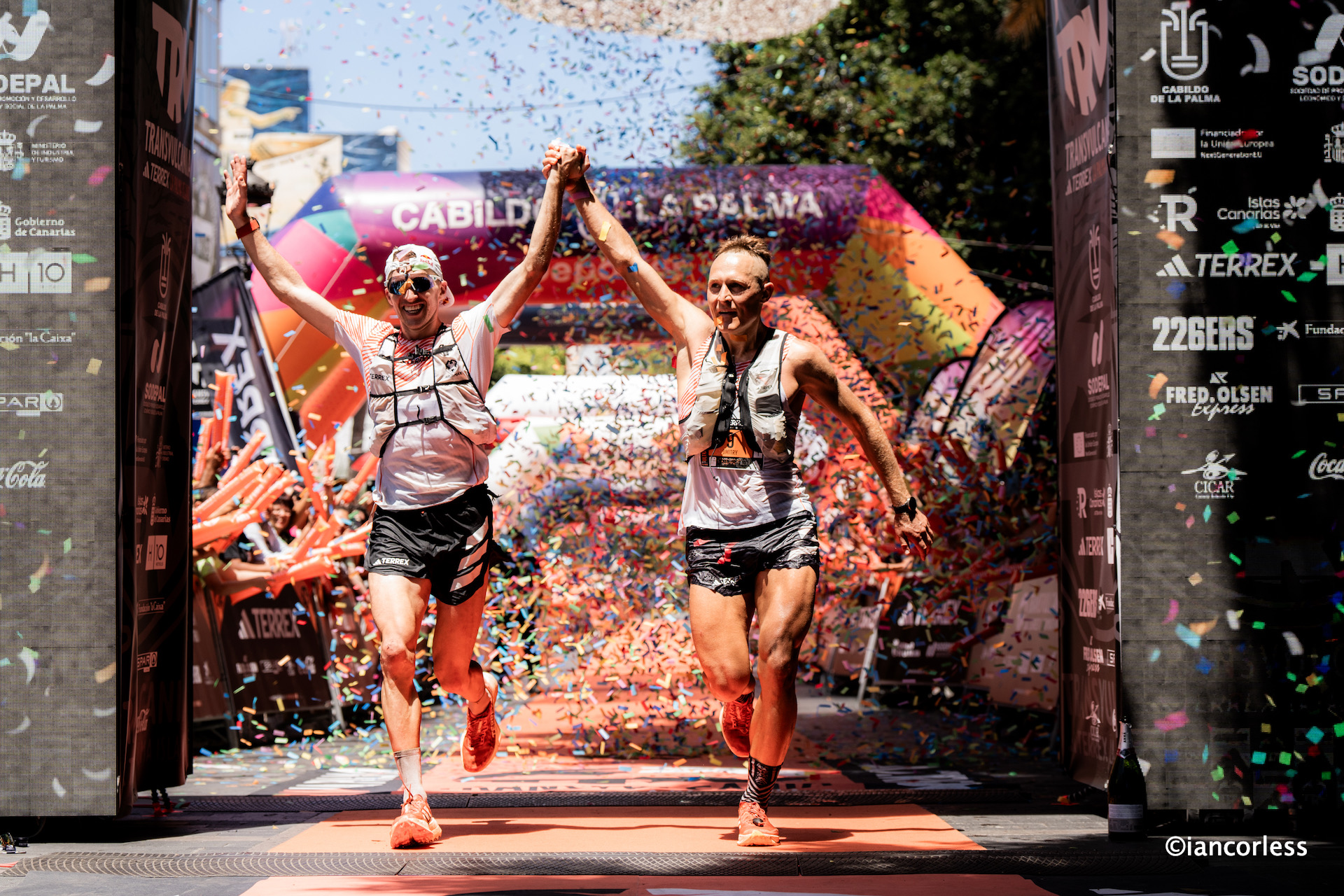
Jon crossed the line, exhausted, the 2024 Transvulcania champion. Behind, less than 2-minutes later, the duo arrived, hand-in-hand.
There was no course record but it was darn close. One hell of a race.
Tom and Dmitry
At the finish line, Albon (7h.03:10) crossed first, followed by Dmitry Mytiaev (7h.05:16) and Tom Evans who entered together at de finish line (7h.05:17)
Women:
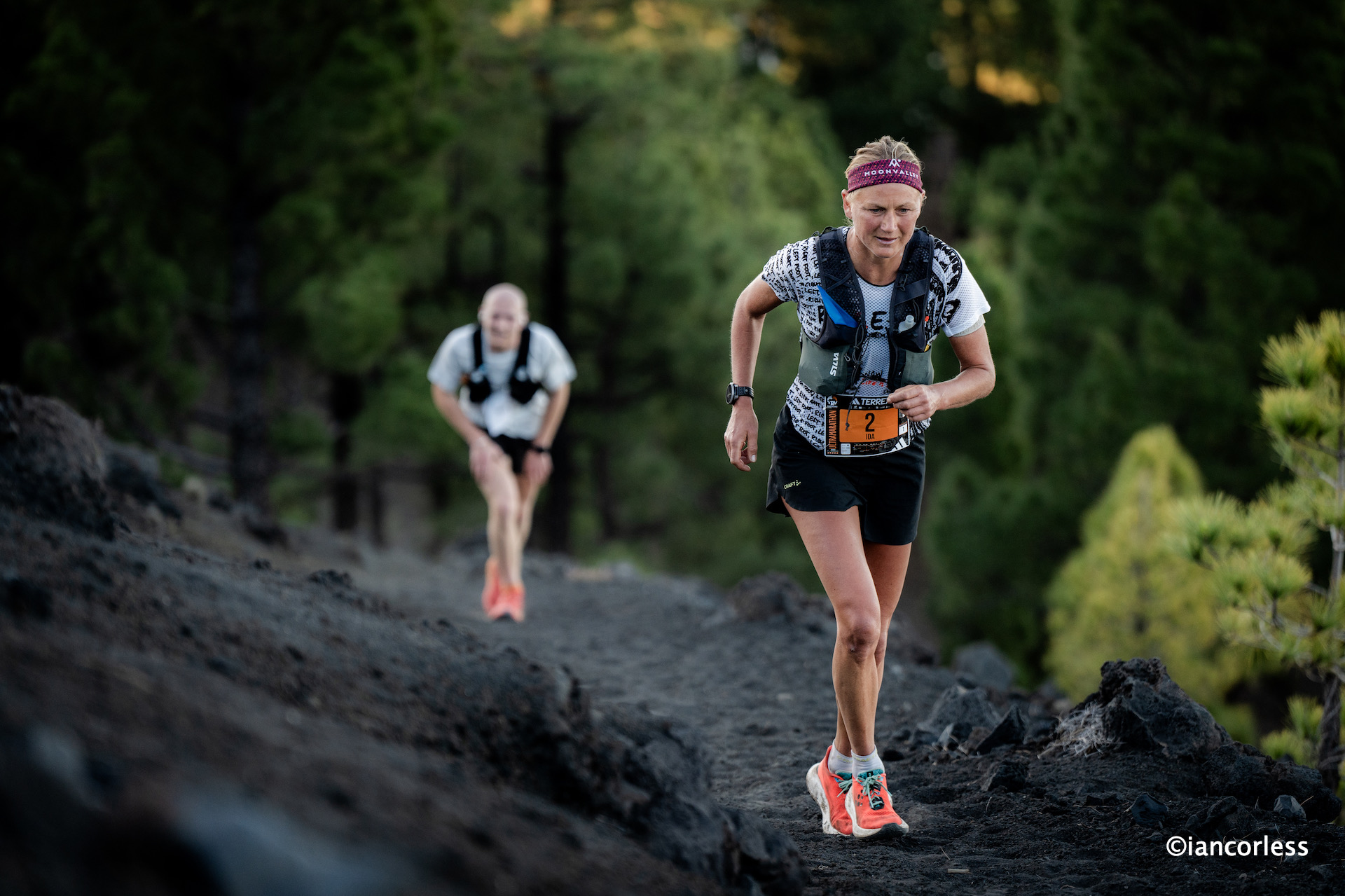
Ida a three times champion
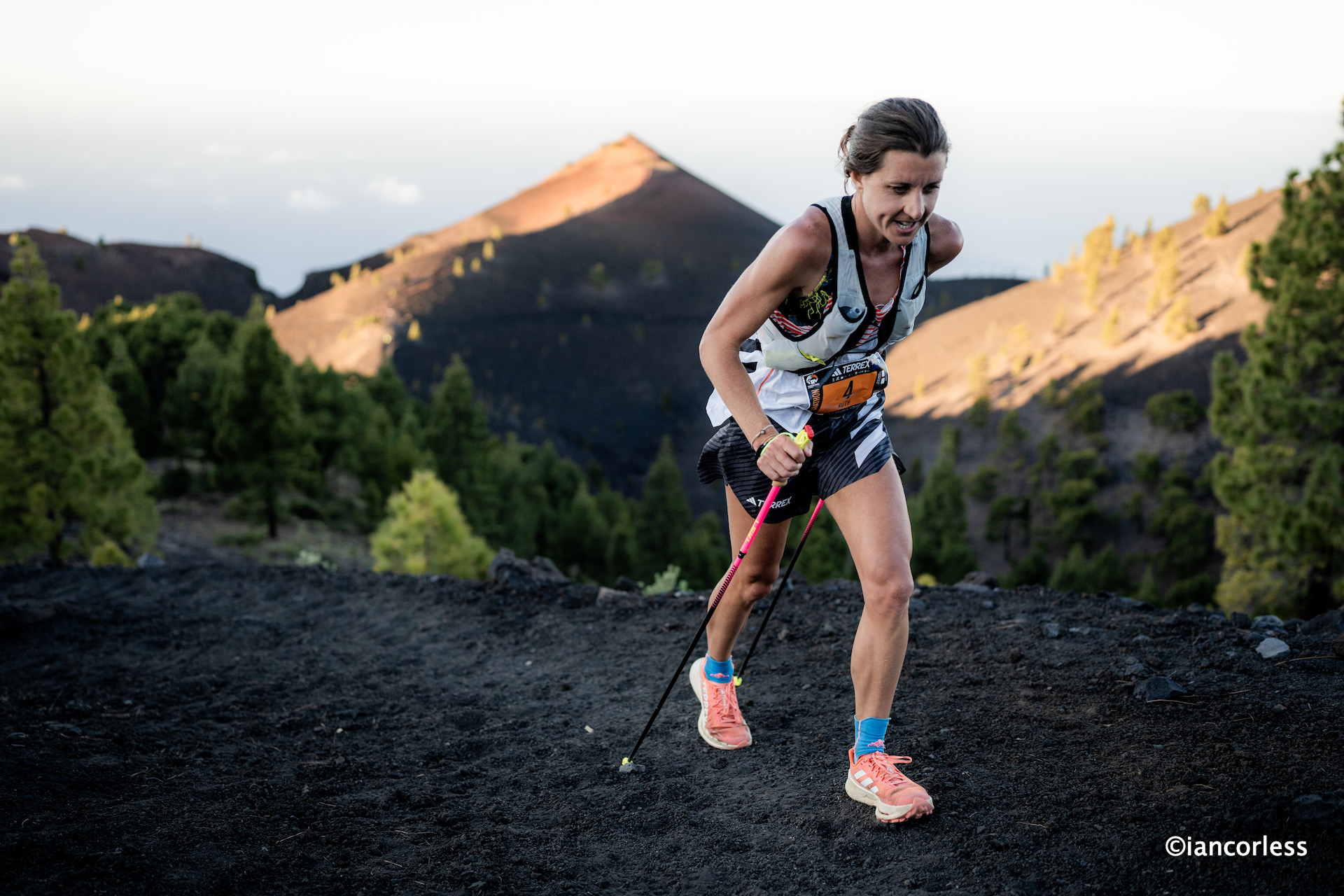
Ruth Croft set the early pace and what a pace! For much of the day, it was a display of style, power and confidence. The performance only faltered at Roques de los Muchachos when a charging Ida Nilsson, three times Transvulcania champion, closed the gap to seconds.
Ruth – incredible
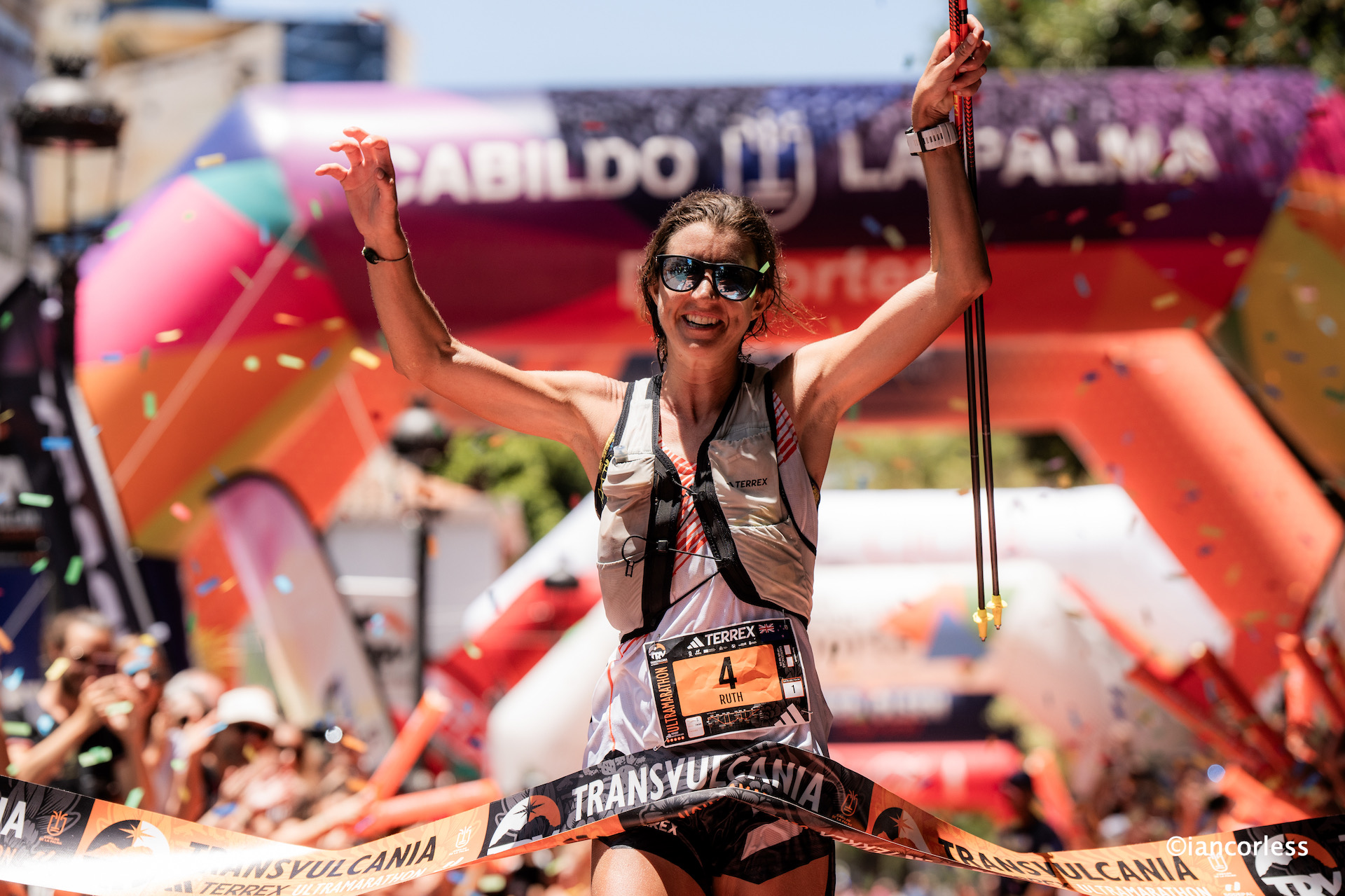
It gave Ruth the wake-up call to push hard to the line, and push she did, not only resulting in victory but a new course record. It was a stunning performance that only confirms that currently, along with Courtney Dauwalter, Ruth Croft is one of the most exciting and dominant trail runners in the world.
Champ and new CR
It was glory day for Ida Nilsson, a La Palma favourite who ran another stunning race to secure second.
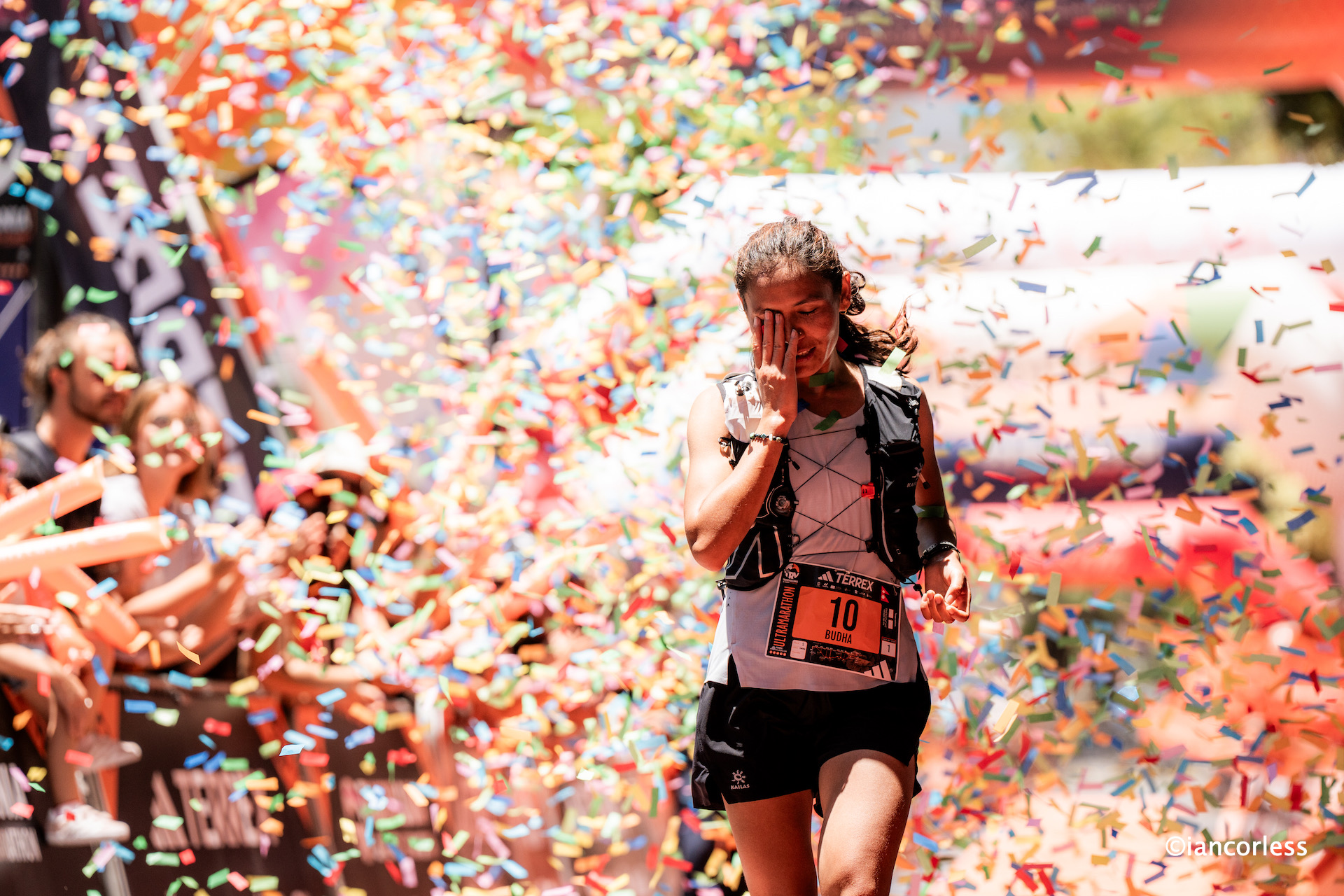
As always happens, there was drama behind and it was Nepali, Sunmaya Budha who finished third looking very fresh… There is more to come from this strong woman!
Sunmaya
Ruth Croft (8h.02:49, record) won, Ida Nilsson (8h.16:32) finished second, and Sunmaya Budha (8h.20:31) closed the podium.
The Story:
As with all races, we have champions and we celebrate them. But the story of the 2024 Transvulcania is a return of the race to the island and people of La Palma.
“I didn’t have the day I wanted today,” said one runner. “But how can I be disappointed? It’s such a privilege to be on this island with these people enjoying what is one of the greatest races and places in the world.”
It was a sentiment that was echoed by many. There is something special here on this Canary Island.
I for one am already waiting for the 2025 countdown. This race should be a fixture for every dreaming trail runner and trust me, once experienced, one edition is not enough.
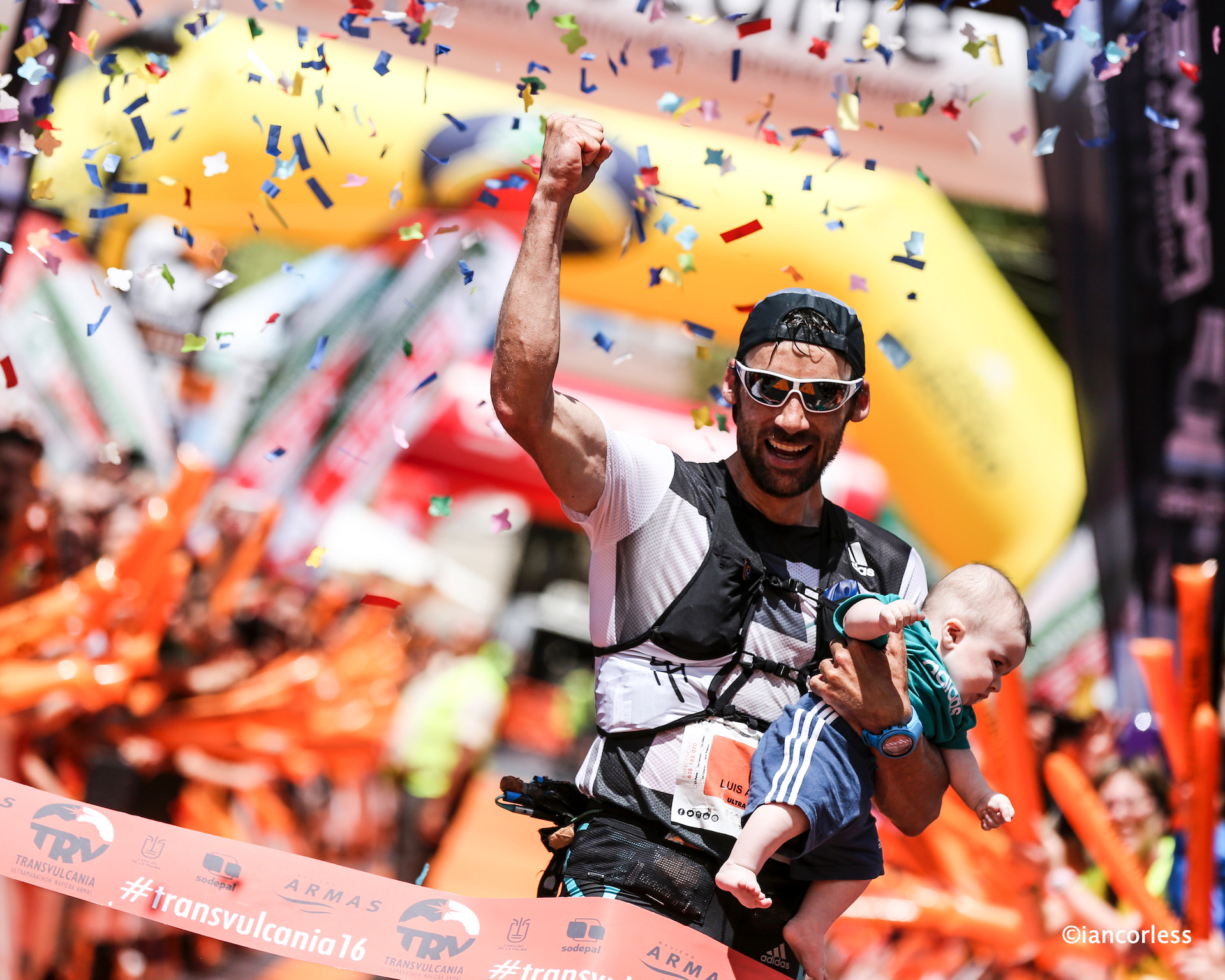
The boss, Luis Alberto Hernando, his last victory.
Finally, I give a special (personal) mention to a true inspiration of Transvulcania, the Maestro ‘Luis Alberto Hernando’, a three time champion of the race. He told me before the start, I am now 1-hour slower and I will be happy with top-20. He placed 12th after Thibaut Baronian acknowledging ‘The Boss’ on the line, bowing, and allowing the master to pass. What a moment.










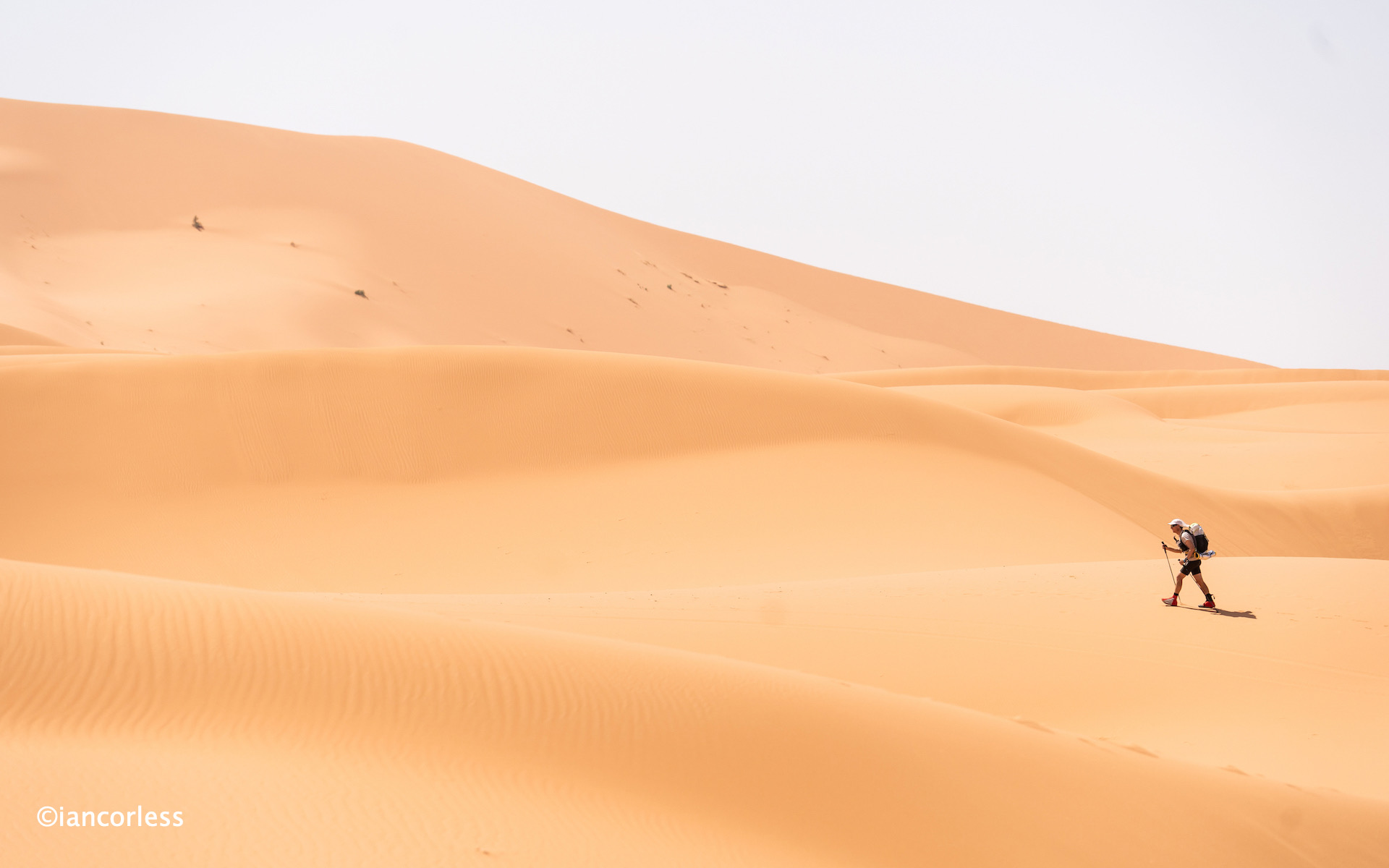
 MDS Legendary 2025
 11-day adventure
 April 4 to 14, 2025
 Sahara Desert, Morocco

















 IAN CORLESS