West Slabs of Olympus

Time for another awesome video.

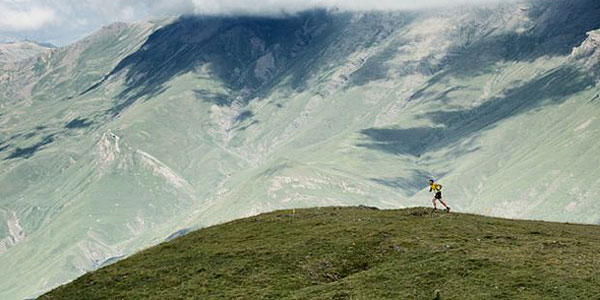
Jared Campbell attacking the ‘West Slabs of Olympus; fast June 2011.

Camera work by Ryan McDermott

Who is Jared? as if you didn’t know… but just in case!

What are some of your lifetime running goals?

– Sub 24 at Hardrock – Complete Nolans 14 – Colorado 14ers record (sub 10 days?) – Grand Traverse record (in Teton National Park) – Live in New Zealand and run all classic “treks”

Do you have a claim to fame?

– Knowing Zion National Park better than just about any human alive. – Blurring the line between runner, climber, canyoneer, biker

Do you have any vices?

None that I’m willing to admit pubically. 🙂

What makes you tick as a runner and in the real world?

As a runner : Seeing new places, coming up with crazy linkups, learning new things In the real world : Learning new things about the world, meeting colorful new people, traveling to new places

What drives you to run?

Having the fitness to do the things I love in the mountains

What is your favorite movie?

La Misma Luna

Do you have any nicknames? Explain:

Deraj. My name backwards

What’s the longest you’ve gone without sleep? Why?

72 hrs. It was a test to see if I could ween myself off of sleep. Didn’t work too well.

If you had to be named after one of the 50 states, which would it be?

Utah

What did you have for lunch yesterday?

Burrito

If you could hook up a thought monitor to your head, would you see pictures, hear words or would music be playing?

Pictures

What really scares you about trail running?

Nothing REALLY scares me. But, the scariest thing on trails are hunters!

If your life was made into a movie, what would it be called?

Simple Pleasures

Where would you live if it could be anywhere in the world?

New Zealand – South Island

What’s your worst encounter on the trail?

shoulder-checked a moose once. Scared the sh#t out of both of us.

Hydration

Wow! it would appear that Dr Tim Noakes and his ‘Waterlogged‘ book has caused some interest… not a surprise. I guess the whole reason for me initially posting was that I new that it would rock the boat and make us all look at what we do personally in regard to our own personal hydration when running or racing.

As part of Talk Ultra we have a regular section of the show called Talk Training – we look at our sport and we discuss all aspects of what will make us all better runners. Often our subjects and our thought processes may very well be controversial and thought provoking. Only recently we actually discussed this exact subject. You can listen HERE

However, Marc Laithwaite from Endurancecoach who is my co-host for Talk Training is far more experienced and a specialist in this field. I will let him tell it in his words:

An alternative view on hydration

Our focus is hydration or in more simple terms how much to drink.

Why drink?

Your body needs fluids for various functions. Body cells and tissues are filled with fluid, the nervous system requires fluid and the fluid component of your blood (known as plasma) is also affected by your drinking habits. Exercise leads to a loss of body fluids via sweating and breathing and this loss of fluid can eventually lead to what is commonly termed dehydration.

What happens when we drink?

When you put fluids into your stomach, they pass through the stomach wall into your blood vessels and effectively become plasma. As your blood stream can pretty much reach any part of your body, any tissue or any cell, this fluid can be transferred from the blood stream into the tissues or cells.

How does fluid actually pass from one place to another?

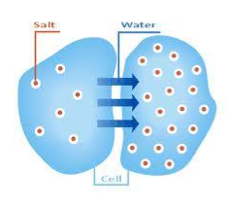
To get the fluid from your stomach into your blood stream or from your blood stream into tissue cells requires a process termed ‘osmosis’. Salt acts like a magnet drawing fluid towards it and the concentration of salt in your blood and tissues determines the shift of fluid around your body.

When you take a drink of water it reaches your stomach and waits excitedly to pass through the wall into your blood stream. Your blood is saltier than the water in your stomach and due to the higher level of salt in the blood, the water is drawn from the stomach, through the wall and into the blood. This water effectively becomes blood plasma and travels around your body. If it finds muscle tissue which has a higher salt concentration, the magnetic pull of the salt within the muscle will draw the fluid from the blood into the muscle.

In simple terms, when something is dehydrated, it becomes more salty. By becoming more salty it’s magnetic pull increases in power and it attracts water towards it. That’s how fluid shift and hydration works within the body, that’s ‘osmosis’.

What happens when you dehydrate?

When you dehydrate your tissues and blood have less fluid thereby making them more salty, in the hope that they can attract fluid towards them. Your blood becomes thicker as you still have the same amount of ‘blood cells’ but the fluid component is reduced, thereby making it more concentrated. Not only does the blood become thicker (making flow more difficult), the absolute amount of blood is also reduced so you have to pump the smaller blood volume more quickly around the body, thereby increasing heart rate.

Most text books will recommend somewhere between 1 – 1.5 litres per hour depending upon individual sweat rates, but it is unlikely that this amount can actually be absorbed when you are exercising. As each litre of fluid weight 1kg in weight, it is possible to calculate (very roughly!) fluid loss by taking weight before and after.

The Endurance Coach research on ultra distance runners

Last year we measured pre and post body weights for competitors taking part in a 100 mile mountain running event http://www.lakeland100.com. Race finish times varied from 24 to 40 hours and if we presume that athletes are losing 1-1.5 litres per hour, just how much weight did the competitors lose???!!

The body weight stats 2010

Our stats from last year showed the followed weight loss at the finish line:

  1. Runners sub 30 hours, average weight loss 860g / 860ml
  2. Runners sub 32 hours, average weight loss 1008g / 1008ml
  3. Runners sub 35 hours, average weight loss 1040g / 1040ml

Compare those figures to the guidance given in the previous paragraph which suggest that athletes will need to replace 1-1.5 litres per hour as this is the rate at which they are losing fluid. Admittedly the competitors may not be exercising at a very high intensity due to the nature of the event, but even then.. something doesn’t add up as the fastest runners haven’t even average 1 litre fluid loss at the finish.

Take the mineral water challenge.. we guarantee if you drink 5 litres per day we’ll feel great about our bank balance and you might end up in hospital..

I know.. I’m cynical.. However, there needs to be some common sense applied to hydration. Your body tells you when you need fluid by making you feel thirsty and then you should drink what you’ve lost. Your body is very much like a water tank with an overflow system, once the tank is full, any further fluid intake will be dispensed with by urinating. It’s correct to say that urinating frequently and especially if the urine is clear, IS NOT a sign of optimal hydration, it’s a sign you’re drinking too much.

The drink might kill you..

For many years marathon runners were encourage to drink at every aid station and “don’t wait until you’re thirsty.. it’s too late then!” Unfortunately a few of those people died as a consequence due to a condition known as ‘hyponatremia / hyponatraemia’ which is excessive dilution of body salts.

What’s going on??

Hyponatremia is quite simple:

  1. Take 1 medium sized bucket, add a tea spoon of salt and then add 1 pint of water and in your bucket you have a salt solution.
  2. Add another pint of pure water to the same bucket and you have now diluted the salt solution (it’s a bit weaker).
  3. Add another pint of pure water to the same bucket and dilute the salt even further.
  4. Keep going until the salt solution is so weak you can hardly even taste the salt.

We said earlier in this article that salt acts like a magnet and attracts water towards it:

‘When you take a drink of water it reaches your stomach and waits excitedly to pass through the wall into your blood stream. Your blood is saltier than the water in your stomach and due to the higher level of salt in the blood, the water is drawn from the stomach, through the wall and into the blood’

What if you’d added so much water to your body that the blood wasn’t salty at all, it was massively diluted and had thereby lost all its pulling power?

Stay calm..

The chances of anyone dying from hyponatremia are so minimal and so infrequent that this should never concern you but weight measurements before and after can be an important part of medical checks. In essence, if you collapse and you’ve lost weight, we’d give you a drink, some food and a lift back home. If a competitor were to collapse and following a weight check they had gained weight, we would take it more seriously.

Some of you may be thinking at this point that you can take salt tablets with your water, if you add salt and water simultaneously, problem solved! The research has shown that it’s not a lack of salt intake which leads to hyponatremia, it’s too much fluid.

In conclusion

Drink sensibly, let thirst guide you and don’t force load yourself with water.

Aside from excess fluid intake, there is one other thing which may lead to weight gain during ultra distance endurance events and that is ‘rhabdomyolysis’ or ‘muscle damage’ leading to inflammation. This is a real issue for longer events and has a huge impact upon performance and health.

Waterlogged – Tim Noakes, MD, DSc

Taken from the book – ‘Waterlogged’ by Tim Noakes

“Drink as much as you can, even before you feel thirsty.”  That’s been the mantra to athletes and coaches for the past three decades, and bottled water and sports drinks have flourished into billion-dollar industries in the same short time. The problem is that an overhydrated athlete is at a performance disadvantage and at risk of exercise-associated hyponatremia (EAH)–a potentially fatal condition.

Dr. Tim Noakes takes you inside the science of athlete hydration for a fascinating look at the human body’s need for water and how it uses the liquids it ingests. He also chronicles the shaky research that reported findings contrary to results in nearly all of Noakes’ extensive and since-confirmed studies.

In Waterlogged, Noakes sets the record straight, exposing the myths surrounding dehydration and presenting up-to-date hydration guidelines for endurance sport and prolonged training activities. Enough with oversold sports drinks and obsessing over water consumption before, during, and after every workout, he says. Time for the facts—and the prevention of any more needless fatalities.

An excellent article written by Joe Uhan is available on iRunFar and I recommend you read it as a follow on from the above ‘teaser’.

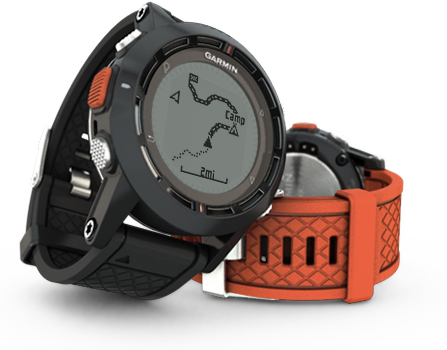
Garmin Fenix GPS

Garmin® fēnix™ Outdoor Watch Lets Adventurers Go Even Further Off-Trail

garmin-presents-fēnix-the-game-changing-outdoor-gps-watch-for-mountaineers.html

Garmin International Inc., a unit of Garmin Ltd. (NASDAQ: GRMN), the global leader in satellite navigation, today announced fēnix, its first GPS wrist watch for outdoorsmen, such as mountaineers, hikers, cyclists, hunters and backpackers. fēnix provides comprehensive navigation and tracking functionalities as well as trip information to guide adventurers during their challenging activities off the beaten track. Its built-in sensors provide information on heading, elevation and weather changes. Utilizing Garmin’s leading GPS technology, fēnix can guide adventurers off the trail and back to the safety of a vehicle, trailhead or campsite. Sporting a classic round watch design in a high-strength housing with a scratch-resisting display, it is built to endure the toughest outdoor conditions and also makes a stylish day-to-day timepiece.

“fēnix packs Garmin’s leading and trusted outdoor technology into a robust, wrist-worn GPS watch that outdoorsmen can rely on,” said Dan Bartel, Garmin’s vice president of worldwide sales. “Being able to go hands free while still having access to Garmin’s precise and accurate information on weather, elevation and position provides adventurers the confidence and peace of mind to take their outdoor activities even further off-trail.”

Plan, Navigate and Track

fēnix includes a comprehensive navigational toolset that allows users to plan trips and create routes, record waypoints, such as campsites or points of interest, and record GPS bread crumb trails on the move (tracklogs). Adventurers can navigate to coordinates, along a track or route, towards waypoints, geocaches or along any other selected bearing. A navigation arrow provides clear directional guidance and the TracBackÂŽ function can guide one back along a previously recorded tracklog. This provides adventurers peace of mind knowing they’re never “lost” and can easily find their way back in case of an emergency or bad weather conditions. Also included is a worldwide basemap displaying cities nearby. Using the BaseCampTM desktop application, fēnix users will be able to easily plan trips and share their adventures with friends and family. fēnix is equipped with both ANT capabilities and BluetoothÂŽ to wirelessly share tracks, waypoints, routes and geocaches with other compatible Garmin devices. A Basecamp mobile app allows users to transfer waypoints and tracklogs to view them on a more detailed map and larger screen of select smartphones.

Altimeter, Barometer and Compass

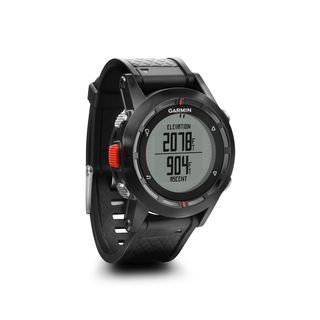
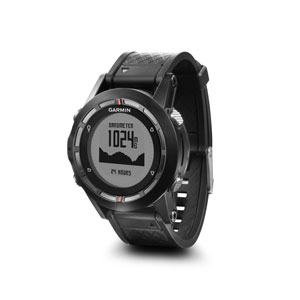
fēnix is equipped with ABC sensors (altimeter, barometer and compass) to provide explorers relevant real-time information. The built-in altimeter provides elevation data to accurately monitor ascent and descent, the barometer can be used to predict weather changes by showing short-term trends in air pressure and a 3-axis electronic compass keeps the user’s bearing whether he’s moving or not. Utilizing its GPS receiver, fēnix can auto-calibrate its ABC sensors and also auto sets the time based on location. For an extremely accurate temperature reading, fēnix can be paired with tempeTM, Garmin’s new external temperature sensor.

Measure Performance

Similar to Garmin’s running watches, fēnix provides real-time performance data, such as distance, pace time and calories, helping outdoorsmen keep track of their progress during and after their adventures. This is especially useful to keep track of fitness activities off the beaten track, such as adventure or trail running. fēnix is also compatible with Garmin’s premium heart rate monitor for heart rate info and with a speed/cadence sensor for distance, speed and cadence while on a bike. The displayed data fields are fully customizable right from the watch.

Built to Endure the Roughest Conditions

fēnix is built to endure the toughest outdoor conditions, combining a high-strength housing to survive shocks with a mineral glass lens to resist scratching. It boasts a large LCD display with LED backlight and a robust polyurethane wristbands. Garmin’s outdoor watch is waterproof to 50 meters and has a battery life of up to 50 hours in GPS mode (depends on settings) and up to 6 weeks in watch mode. Basic watch functions include alarms, tones, vibration alerts, timer, stopwatch and world clock with the ability to display several times zones at once.

Read on Garmin site HERE

Garmin fēnix is expected to be available in fall 2012 and will have a suggested retail price of $399.99. tempe is an optional accessory and has a suggested retail price of $29.99. The polyurethane wristband will be available in olive or orange and an optional leather wristband can be added.

fēnix is the latest solution from Garmin’s growing outdoor segment, which focuses on developing technologies and innovations to enhance users’ outdoor experiences. Whether it’s Golfing, Hiking, Hunting or Geocaching, Garmin outdoor devices are becoming essential tools for outdoor enthusiast of all levels. For more information about Garmin’s other outdoor products and services.

http://www.garmin.com/us/products/onthetrail/

http://www.garmin.blogs.com and http://twitter.com/garmin.

Tony Krupicka – Second Heartbeat

Tony is missing Hardrock 100 this weekend… he says he isn’t ready!

Is it me or am I missing something. He looks ready to me.

Many congrats to Joe Grant (who will be toeing the line at Hardrock) on capturing this sweet movie. You can view more of Joe’s work at Alpine Works and of course you can read Tony’s blog Riding the Wind.

Alpine Works – Joe Grant


Kilian’s Quest S3 E07

This clip is some 10 months old but it is one that I go back to time and time again… it shows Kilian Jornet in flight doing what he does best; running on tough and technical terrain.

Captured at 1000 frames per second by the ‘master’ Seb Montaz this highly stylised movie not only shows Kilian at his best but also Seb at his best, mastering a camera whilst also managing to keep up with Kilian.

SkyGames – 2012 summary

July 8, 2012

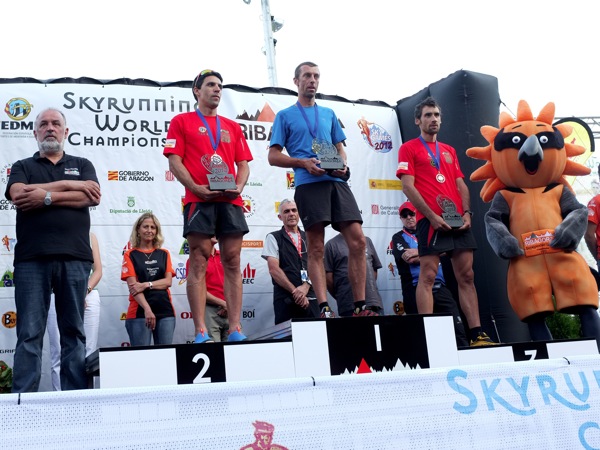
Skyrunners worldwide celebrated their own games today with the final events of the 2012 SkyGamesŽ.  Six skyrunning disciplines stretching over two weekends had 1,300 participants and twenty nations competing for the forty medals and 14 world titles at stake.

Host country Spain dominated throughout with a formidable contingent including no less than three skyrunning world champions in their ranks.  Luis Alberto Hernando and Nuria Picas were crowned 2012 SkyGamesŽ World Champions in the combined category.  The title was based on the highest points scored in the SkySpeedŽ (100m ascent), the Vertical KilometerŽ (1,000m ascent) and the SkyMarathonŽ.

Both champions clinched the title by winning the compulsory SkyMarathon® outright today – a tough, 42 km race with a punishing 3,000m vertical climb.

The final medal count had Spain soaring ahead with 7 gold medals, 6 silver and 4 bronze, followed by France, Italy, Japan, Andorra and Venezuela.

Japan's Dai MatsumotoThe ranking points, based on the best results of three men and one woman per nation, read as follows:  Spain, Italy, France, Holland, Greece, Andorra, USA, Great Britain, Poland and Switzerland.

New entries we’ll no doubt be seeing more of were Alex Nichols (USA) who, in his first SkyMarathon®, placed an excellent 6th, and Japan’s Dai Matsumoto(6th in the 2006 Andorra SkyGames®) placed 2nd in today’s SkyRace®.  Look out for him in the World Series’ races coming up soon.

The six SkyGames® disciplines: SkySpeed, 100 metres vertical climb with a 45% incline; Vertical Kilometer, the universally popular formula, here a mere 3.5 km with a 30% incline;  SkyBike – a duathlon combining mtb and skyrunning to 2,000m altitude;  SkyRaid – a multi-discipline team relay; the 21 km SkyRace with 1,350m vertical climb, reserved for runners aged 16-21.  The events concluded with an epic SkyMarathon reaching 3,100m altitude – valid for the combined points title.

Medal count

  • Spain – 7 gold, 6 silver, 4 bronze
  • France – 1 gold, 1 silver, 1 bronze
  • Italy – 1 gold, 1 bronze
  • Japan – 1 gold
  • Andorra – 1 silver
  • Venezuela – 1 silver

After months of preparation, an invasion of thousands, and the spectacular week-long celebrations, the people of the small towns scattered around Ribagorza RomĂĄnica will return to their quiet ways, welcoming tourists to the Romanic Churches for which they are famed and, possibly, feel just a little nostalgia for the stirring sports events that have touched citizens and participants alike.

The event was sanctioned by FEDME, the Spanish Federation for Mountain Sports.

Follow the events on twitter and Facebook.  Official website: www.ocisport.net for details.

ARC’TERYX Endorphin

I have just returned from a three day media event in the Pyrenees arranged by Arc’teryx and in conjunction with Skyrunning.

Arc’teryx are synonymous for providing superior clothing, backpacks and accessories for mountain sports. In 2013 they are launching a new clothing range called Endorphin. This new range of clothing has been created for male and female runners.

Endorphin will push limits on weight, comfort and protection. Faster and lighter they are designed to maximise athletic performance in varied conditions. Controlling moisture, providing protection from the wind, repelling rain and providing warmth, Endorphin will provide all runners with a selection of products that will not only enhance running experience but will also be a pleasure to wear.

Over the coming months I will testing many products within the range before the release in 2013.

In the Pyrenees I was able to do an initial test on the Skrunning VerticalK course and on a 3.5 hour mountain run in 30 deg temperatures. Attending the camp we had journalists from Sweden, Germany, USA, Spain and Italy and we had the pleasure of being joined by Arc’teryx sponsored athletes Adam Campbell (Canada) Nicola Gollinelli (Italy) Didier Zago (France) Tessa Hill (UK) and Murray Strain (UK).  You can read my initial thoughts HERE

Sky Games 2012

photo by Stephan Gripmaster

It is Olympic year! If you are a trail runner, mountain runner, mountain biker or basically just a lover of the great outdoors then the festivities that are about to unfold in London may not be exactly what lights your fire!
Imagine bringing some 2000 athletes together in one place of which, 100 are the top ranked athletes representing 25 nations. No, I’m not talking about the Olympics, I am talking about the Sky Games.

photo by Stephan Gripmaster

An international competition of high mountain sports that are the Skyrunning World Championships. Held every four years with previous editions in Italy and Andorra, 2012 sees the games held in Romanesque Ribargoza in the Spanish Pyrenees.

The ISF (International Skyrunning Federation) specifies that the games must be held in mountainous settings with a minimum height of 2000m.  In addition to altitude a solid infrastructure for athletes is essential. Transport, hotels and restaurants are all key aspects that make the Games a success, something that Lauri Van Houten (ISF Executive Director & VP) and Marino Giacometti (ISF President) are experts at.

Credit Nancy Hobbs

Typically held over one long weekend, the 2012 games have a unique format as they are to be hold over two weekends, starting on June 29th and finishing on July 8th.

In the words of Marino Giacometti “The Sky Games represent a major sports event celebrated every Olympic year. The aim of this event is to promote ‘skysports’ on an international level”.

What are the Sky Games?

The Games consist of six separate competitions with the World Title available and five open categories.

SkyMarathon is a mountain running endurance event over the classic distance of 42km.

SkyBike is a high mountain Duathlon that consists of an 11km MTB – 10km run – 10km MTB

SkyRace a 21km running mountain race

VerticalKm is an ascent race with an elevation gain of 1000m over one VerticalKm

SkySpeed is a 200m speed race where four athletes run at the same time over a vertical course

SkyRaid is a relay race exclusively reserved for selected athletes from International delegations. This is Not an open category event

Apart from single race classifications athletes can also compete in the ‘Combined‘ where three of the four Sky Games races are scored. The SkyMarathon is compulsory and only two from the other three will count.

The Sky Games have a wonderful history with some fabulous participants, in 2008, competitors in the men’s field included Kilian Jornet and August Roc. In the ladies, Anotella Confortola, Corinne Favre and Gemma Arro participated with Kilian Jornet and Anotella Confortola taking the combined titles.

The Events 2012

SkyMarthon at Romanesque Ribargoza has a elevation gain of 3000m over the 42km distance. The first two km’s are straight but they then have the sudden climb to El Col de Salinas. At 12km the first descent awaits, a drop of 600m to reach the Llauset Dam and then a climb to the El Coll de Llauset which has a height of 2900m. This section from 19 to 23km is the last and hardest climb. At the summit the descent begins to the Coll de Salinas, from here the descent continues to Ginast and then the final stretch of some 2km’s is flat to the finish at Vitaller.

SkyRace starts and finishes in Vitaller. The distance of 21km’s has an elevation gain of 1350m. From the start the runners go to Montanuy and go to the Col de Forca where they then take a path to Castanesea and then an additional path to Cap de Casseretra and Pico Comadelo. Once at the peak they face a very steep descent to Ginast which is just 2km’s away from the finish in Vitaller.

VerticalK the total distance of this event is 3km covering an altitude gain of 1000m. Starting in Barruera it crosses the village then the race increases in incline basically going directly up to the finish point some 3km away.

SkySpeed starts at Taull Church and finishes at Pla de L’Ermita. At 200m in length and a vertical gain of 100m this race is hard and fast. The race is run in heats, four competitors head to head in each heat. This is an exciting race to watch.

SkyBike is a high mountain Duathlon with three disciplines – bike:run:bike. Starting at 1435m in Laspaules the route goes south. Finally reaching an altitude of 1900m they exchange bike for run shoes. The run includes some 30-40% gradients until reaching an elevation gain of 2500m. They then descend through the mountain crest. After the completion of 10km they then exchange run shoes for bike. Returning to the finish, they must cycle on technical trail, climb up gradients of 20% and descend to the finish in Laspaules.

Combined consists of five independently scored races: SkyMarathon, SkyBike, SkySpeed, VerticalK and SkyRaid although SkyRaid does not have an ‘open’ category. SkyMarathon is compulsory but the combined winner is scored from the other three events : SkyBike, SkySpeed, VerticalK with the two best results counting. So, a pure runner would usually compete in SkySpeed and VerticalK in addition to the SkyMarathon.
This Weekend

Some events have already been run with winners announced, such as the VerticalK and SkySpeed both run on June 30th. SkyBike took place on July 1st but all attention focuses on this weekend with main event, the SkyMarathon. The SkyMarathon not only is the most significant race within the Games but also will be crucial in the outcome of the Combined male and female winners. In addition to this, SkyRace and SkyRaid will also make a great weekend of racing.
  • 7th July – 1100 – Vilas del Turbon – SkyRaid
  • 8th July – 0730 for the Women and 0800 for the Men – Vilaller – SkyMarathon
  • 8th July – 0830 – Vilaller – SkyRace
Results so far

photo by Stephan Gripmaster


SkySpeed
  1. Didier Zago
  2. Jesus de la Morena
  3. Luis Albert Hernando
  1. Deboora Cardone
  2. Oihana Kortazar
  3. Silvia Leal
VerticalK
  1. Augusti Roc 35:51
  2. Raul Garcia 36:10
  3. Nicola Golinelli 36:16
  1. Oihana Kortazar 43:59
  2. Laura Orgue 44:29
  3. Mireia Miro 44:49
SkyBike
  1. Francesc Freixer 2:10:49
  2. Jesus de la Morena 2:10:52
  3. Didier Zago 2:11:20
  1. Nuria Picas 2:33:35
  2. Yolanda Magallon 2:57:56
  3. Montserrat Martinez 3:02:31
Currently, Oihana Kortazar is looking in a strong position for the female  ‘Combined’ title (Oihana won at Zegama) and in the mens ‘Combined’ Didier Zago and Jesus de la Morena are both in contention.

For full details go to http://www.ribaorzaskygames2012.com

A full athlete list is available here – http://www.ocisportdocs.com/~docs_prensa/skygames/skygames_list.pdf

SkyGames – Spanish Pyrenees

I am pleased to say that I am just doing my last minute prep and packing before heading out to the Pyrenees at the invite of Skyrunning partner Arc’teryx.

Arc’teryx will be present with a media camp where international journalists will get to know the company, the skyrunning partnership and to learn about and test the Endorphin line together with team athletes:  Adam Campbell (Canada), Murray Strain and Tessa Hill (Great Britain), Didier Zago (France) and Nicola Golinelli (Italy).

For the people of Ribargorza Romånica a dream comes true as runners from across the world converge on the small towns dotted around this remote and relatively unknown area of the Spanish Pyrenees hosting the 2012 SkyGamesŽ.

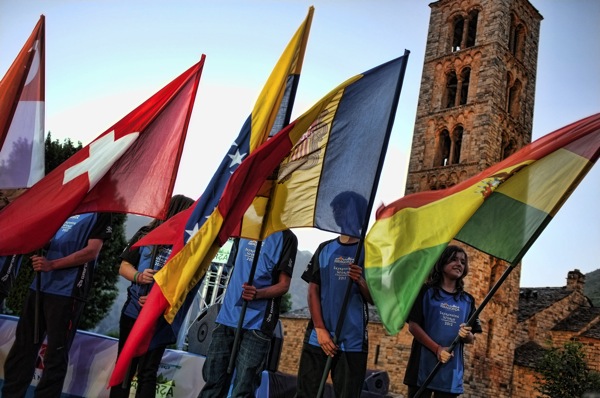
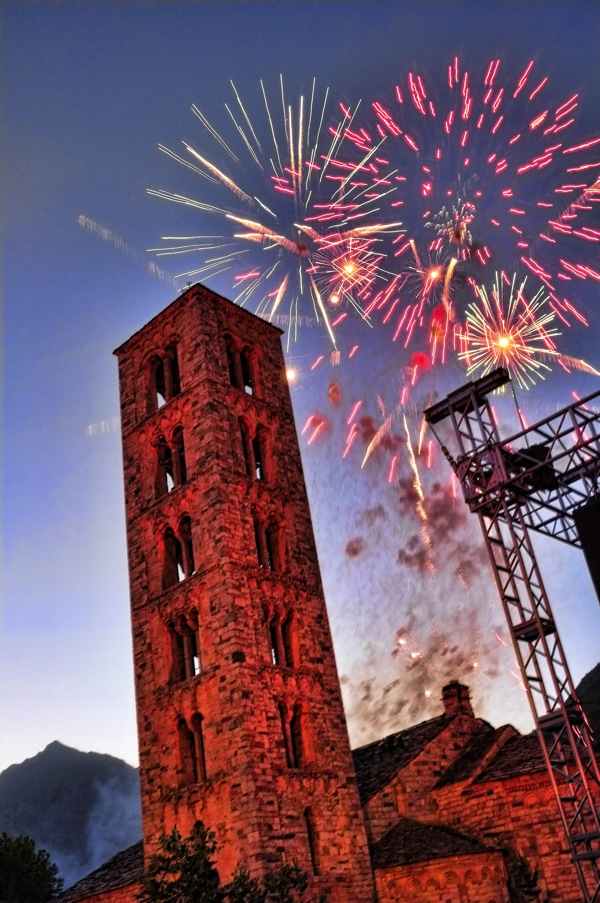
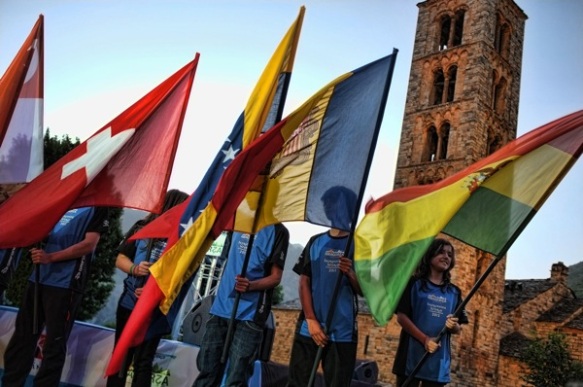
This evening, a turnout of 1,500 spectators is expected at the opening ceremony which will pay homage to the 19 countries participating with a parade of flags representing each nation. The organisers, OCI Sport, intend to get the events off with a bang by concluding the evening with a fireworks display spsotlighting the Romanic Church of Taßll, a World Heritage site and the surrounding mountains.

Forty medals, 14 world titles and 40,000 euros prize money are at stake in the skyrunners’ “high altitude Olympics”.   1,300 athletes will compete in the six disciplines held between June 30 and July 8, climaxing with theSkyMarathon, compulsory for the combined title.  Certainly, the super-strong Spanish team looks set to take the lion’s share of the medals, headed by reigning Skyrunner® World Series champions, Luis Alberto Hernandez and Oihana Kortazar and past world champion, Agustí Roc, as well as Mireia Mirò competing in the Vertical Kilometer.

Adam Campbell testing the Arc'teryx Endorphin lineAmong the other nations participating are France with past skyrunning world champion Corinne Favre and Didier Zago; Nicola Golinelli from Italy;Zhanna Vokueva, Russia, Adam Campbell, Canada; Alex Nichols, USA;Murray Strain and Tessa Hill, Great Britain; Adel Ojeda from Venezuela; together with teams from Andorra, Bolivia, Greece, Holland, Ireland, Japan, Marocco, Mexico, Poland, Singapore and Switzerland.

Joan Peralada, President of the Association for Ribagorza Románica Development, commented;  “For two years, the residents have worked with determination to ensure the success of the event, amassing 300 volunteers and a 50-strong team of professionals to manage the races.  After a bleak winter where the ski facilities were closed and jobs lost, the SkyGames® have filled 7,000 hotel rooms creating a much-needed economic boost for the area and it’s future development.”

The six SkyGames® disciplines making up the mammoth event are:SkySpeed, 100 metres vertical climb with a 45% incline; Vertical Kilometer, the universally popular formula, here a mere 3.5 km with a 30% incline; SkyBike – a duathlon combining mtb and skyrunning to 2,000m altitude; SkyRaid – a multi-discipline team relay; the 21 km SkyRace with 1,350m vertical climb, reserved for runners aged 16-21.  The events conclude with an epic SkyMarathon reaching 3,100m altitude – valid for the combined points title.

The event is sanctioned by FEDME, the Spanish Federation for Mountain Sports.

Follow the events on twitter and Facebook and see www.ocisport.net for details.

RESULTS for Vertical K

Ladies race was won by Oihana Kortaza and the mens race was won by Augusti Roc