
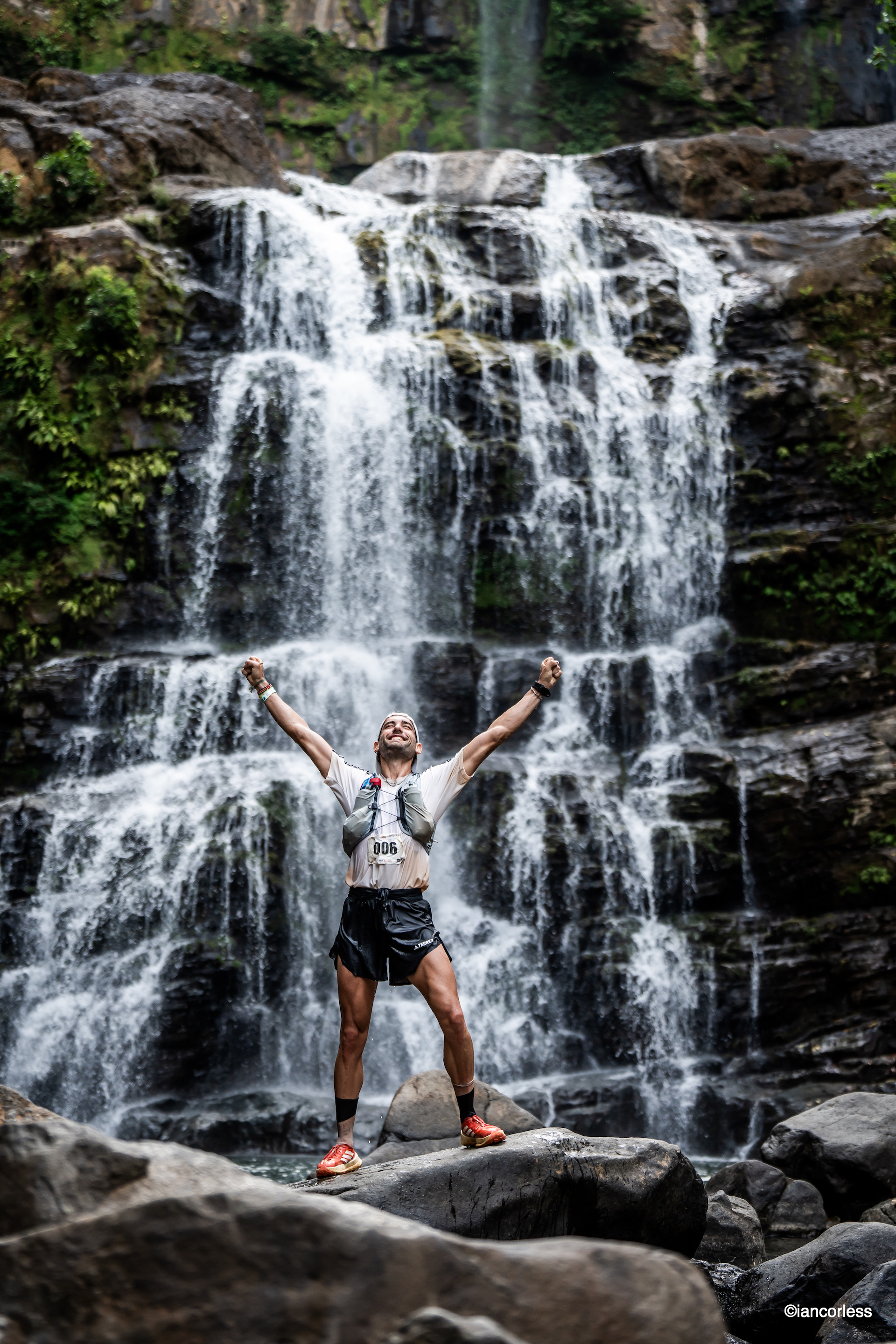
Stage racing has a way of exposing everything. Fitness, patience, preparation, and mindset all get tested, not just by distance, but by what happens between the stages. Terrain is only part of the story. How you recover, rehydrate, eat, sleep, and reset day after day matters just as much.
Back in 2016, comparisons between The Coastal Challenge and Marathon des Sables were unavoidable. A decade on, those comparisons still come up, but the conversation has matured. These races now stand on their own terms.
Marathon des Sables strips runners back to survival basics: self-sufficiency, rationed water, shared bivouacs, and total responsibility for your own race. That’s its identity, and it’s why it remains iconic.
The Coastal Challenge is different. It’s not self-sufficient, but that doesn’t make it easier. In many ways, it’s more demanding. The Costa Rican rainforest, the coastline, the heat, the humidity, and the relentless terrain combine into something that feels far less predictable and far less forgiving.

What The Coastal Challenge Looks Like Today
The race remains a point-to-point journey across Costa Rica’s wild south-west, traditionally running from Quepos to Drake Bay, followed by a final loop stage in and around Corcovado National Park.

The format has remained consistent: six days, six stages, each with its own character. Distances and elevation are substantial, especially when you factor in heat, humidity, and terrain. There are some changes to the route and now, in 2026, I consider the route to be more challenging, especially with a longer stage 6.
Download the 2026 TCC Road Book HERE
Expedition Category
• Stage 1: 33km 1115m+
• Stage 2: 41km 1706m+
• Stage 3: 47.5km 1754m+ Long day
• Stage 4: 37.7km 2613m+ Most vertical
• Stage 5 41km 1685m+
• Stage 6: 35.9km 858m+
Total distance 236.1km’s with 9731m+
Gladly, there is an ADVENTURE category and while stage 1 and stage 2 are almost the same, the distances for stages 2, 3, 4 and 5 are notably shorter:
- Stage 2: 16.8km 280m+
- Stage 3: 15.2km 200m+
- Stage 4: 12.5km 552m+
- Stage 5: 23km 1117m+
Total distance 136.4km’s 3901m+
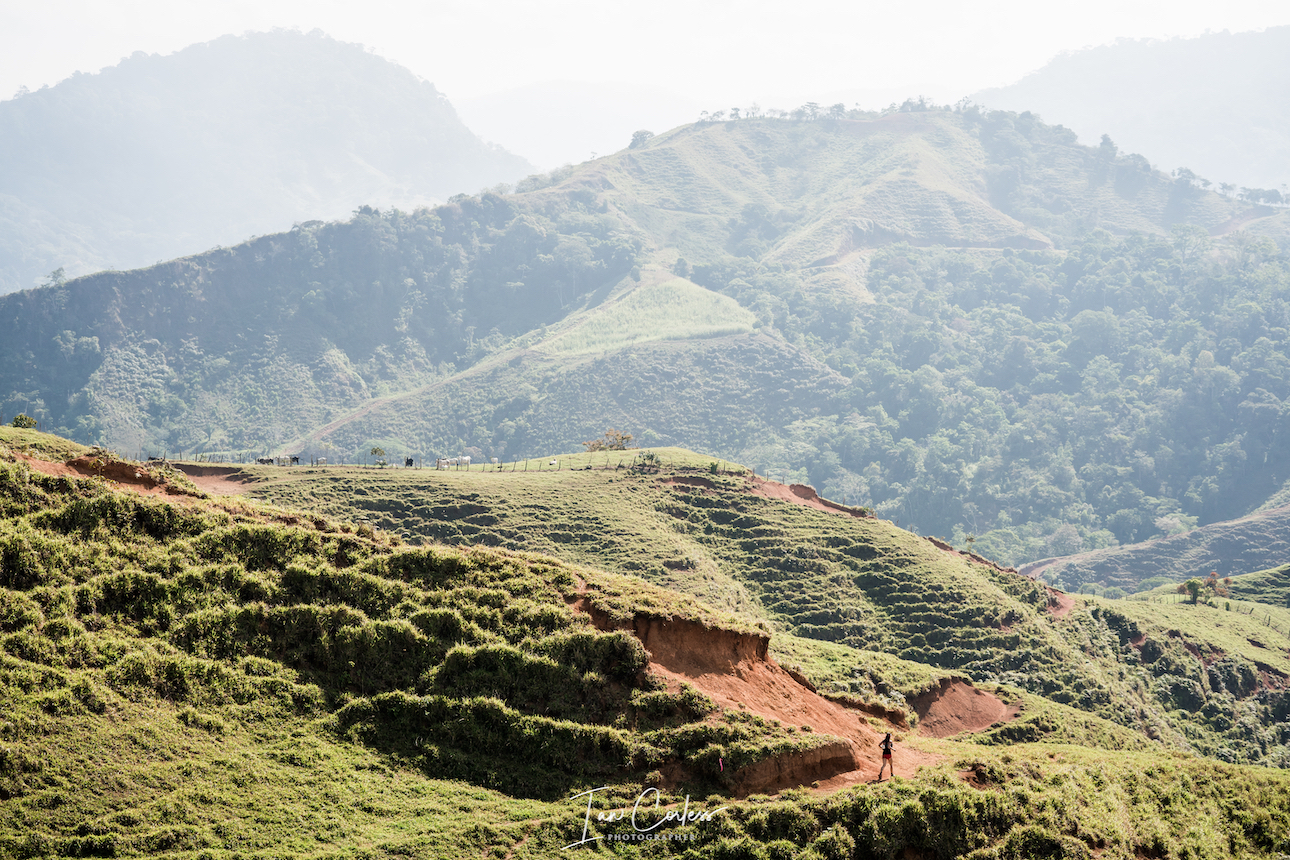
None of these numbers tell the full story. Beach running, river crossings, jungle trails, fire roads, steep climbs, and long descents all feature. Every day feels different. Every day asks something new.
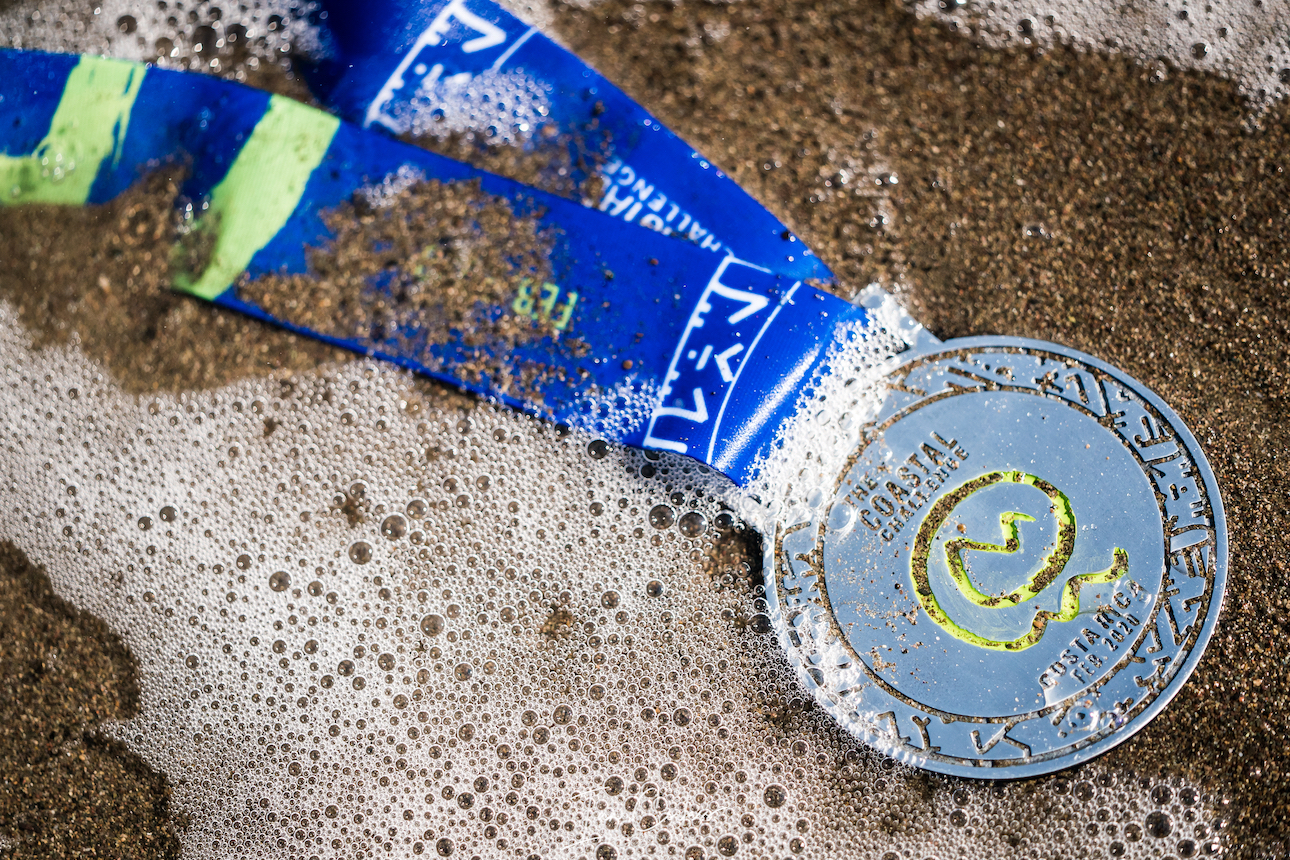
NOTE: It is possible to move from EXPEDITION to ADVENTURE during the race, however, you will not receive a medal.
Is TCC Harder Than Marathon des Sables?
The honest answer is still: yes and no.
Where TCC Is Easier

• You are not self-sufficient. You carry only essentials during the stage.
• Aid stations provide water and basic food.
• Your main kit bag is transported daily.
• You sleep in your own tent.
• Food is provided morning, post-stage, and evening.
• Camps are often in stunning locations, sometimes with cold drinks available.
• You have space to recover properly each night.
• The long day is shorter in distance than MDS.
Where TCC Is Harder
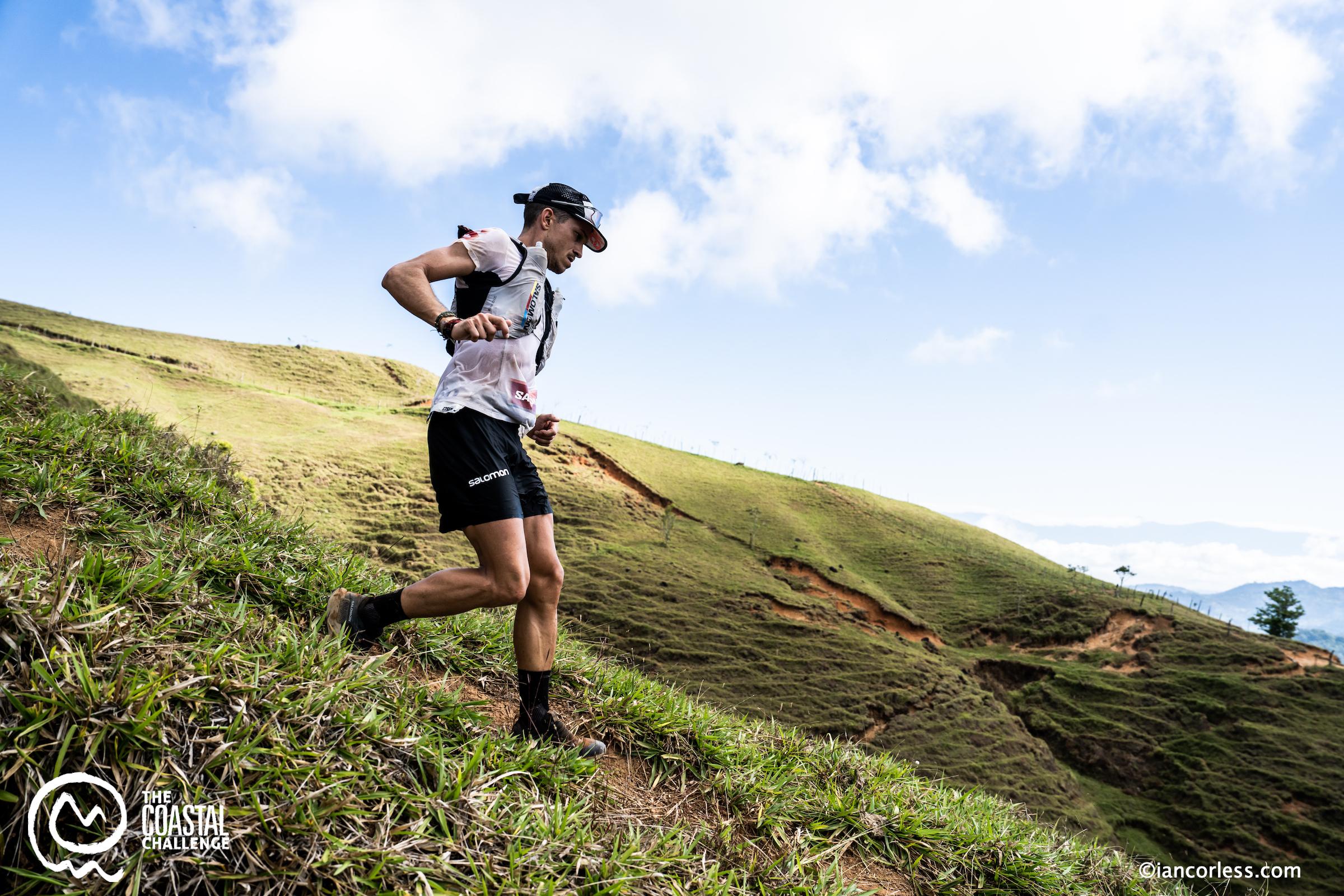
• The terrain is relentlessly varied and often technical.
• Elevation gain and loss are constant and cumulative.
• Fire roads punish tired legs.
• Beach running is deceptively draining, both physically and mentally.
• Heat is relentless.
• Humidity regularly sits above 75%.
• Your feet are wet every single day.
• The long day may be “only” 47 km, but add 1754 m+ of vertical, technical trails, and jungle heat, and it becomes one of the hardest stages you’ll ever run.
This race doesn’t grind you down with deprivation. It wears you down with exposure.
Packing for Success in a Modern TCC

Because your kit is transported daily, you can afford to be comfortable. Waterproof storage remains essential. While the race still recommends Action Packer-style boxes, they’re awkward for international travel. Most experienced runners now opt for a robust waterproof duffel or roll-top bag, with internal dry bags for organisation.
You’re racing in a rainforest. Rain is not hypothetical.
Bring 6–8 full run kits. The system is simple and still works best:
• Run in one kit.
• Finish, shower, change.
• Sleep in the next day’s run kit.
Breathable fabrics are essential. Shoulder coverage matters more than people expect. Sun exposure combined with sweat and salt can destroy skin over six days. Hats are non-negotiable. Neck coverage is smart. Minimal strappy tops often look appealing but lead to brutal sunburn patterns.
Camp life is relaxing and simple, make sure you bring a sleeping mat and ideally a silk liner, a sleeping bag is not needed BUT it can get chilly around 2am to 5am. Additional camp clothing can be a nice break from run kit – for women thi scan be a loose dress, the the men, shorts and T. Flip flops or similar are essential.
Make sure you bring a plate, knife, fork and spoon and also a cup for drinks.
Shoes and Foot Care: The Deciding Factor
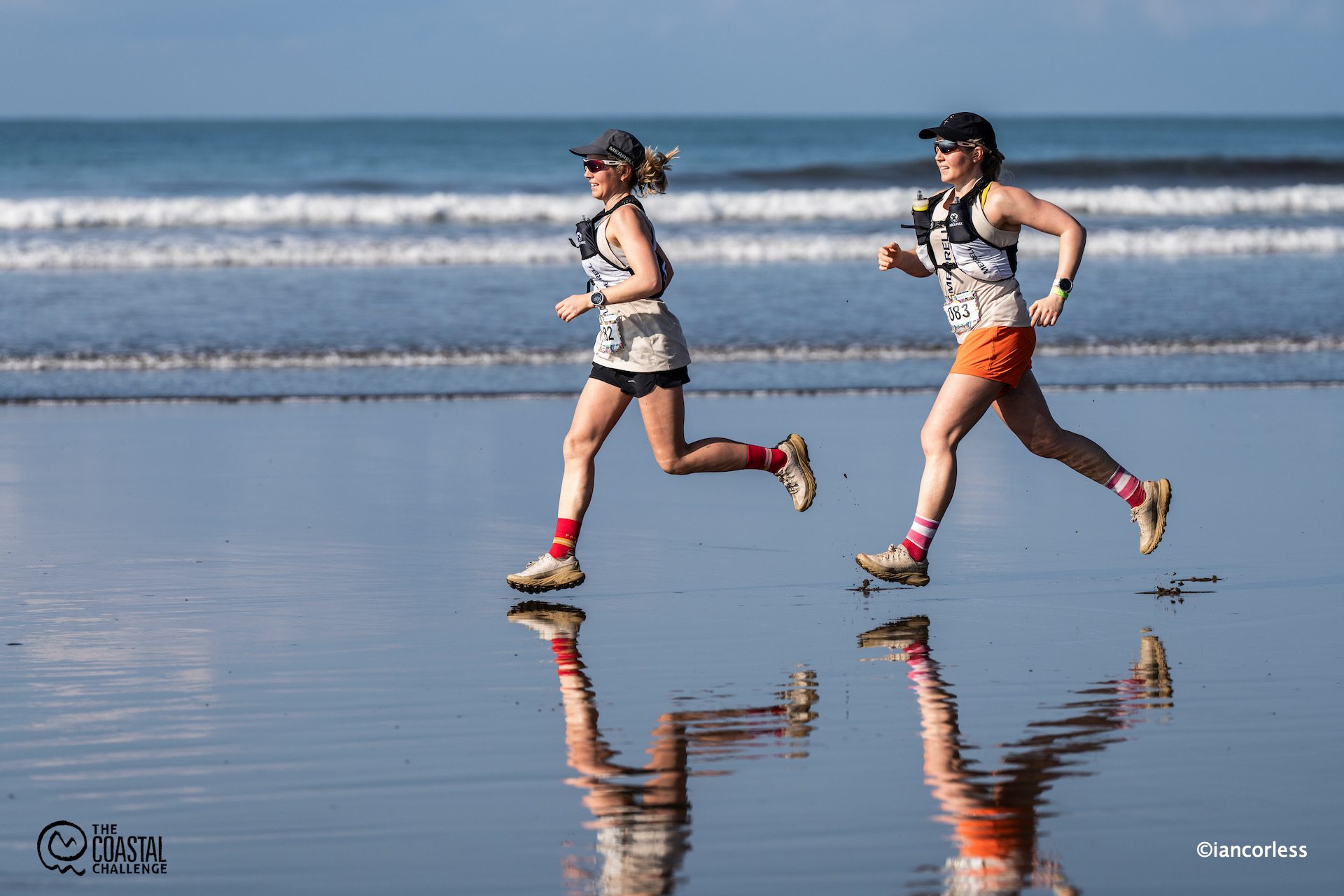
If runners fail at TCC, it’s usually due to feet or hydration.
Your feet will be wet every day. Rivers, streams, mud, ocean crossings. Add technical terrain, rocks, roots, and sand, and your feet take a beating.
Bring at least two pairs of trail shoes, ideally three. Some runners include a half-size-up “emergency pair” for swelling later in the race.
Forget blanket advice about sizing up. Shoes that are too big allow movement. Movement causes friction. Friction causes blisters. You need roughly a thumbnail’s space in front of the big toe, no more. Fit matters more than brand.
Your shoes must:
• Drain water efficiently
• Dry quickly
• Handle rock, mud, sand, and wet roots
• Match your gait, cushioning preference, and drop
Trail shoes are mandatory. Breathability is critical.
Socks matter just as much. A fresh pair every day is essential. Toe socks have proven exceptionally effective for many runners in these conditions.
Shoe recommendation is impossible, we are all unique, however, VJ Sport offer the best grip in the harsh terrain of Costa Rica – take a look at the VJ Ultra 3 HERE
What to Carry During the Stage
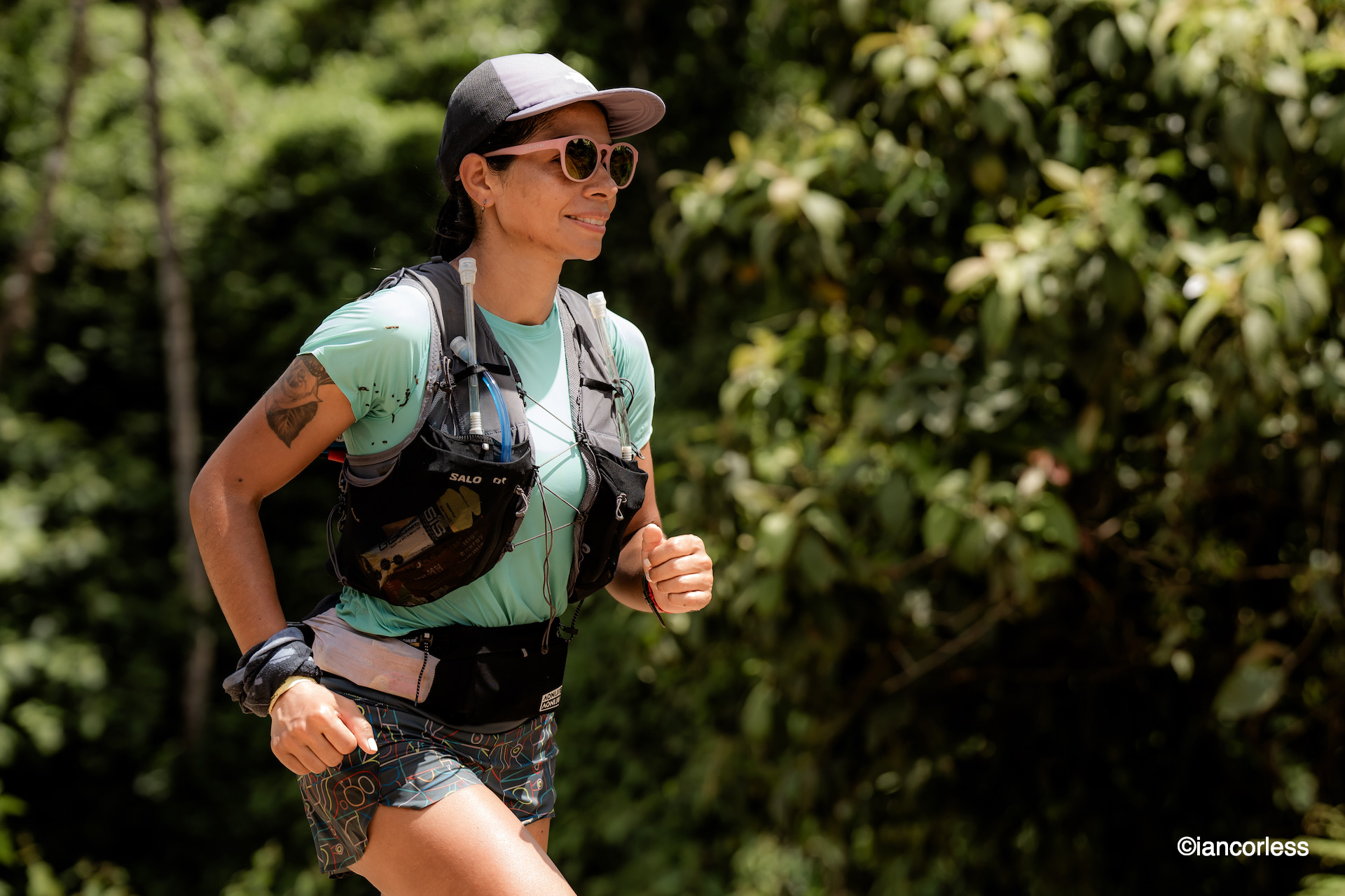
Compared to many stage races, your on-course kit is minimal.
A lightweight vest-style pack works best. Many runners now carry a bladder plus two bottles. Aid stations can be far apart, and dehydration happens fast.
Carry:
• First aid basics
• Whistle
• Phone (waterproofed)
• Cash
• Sunscreen
• Purification tablets (just in case) or a water filter.
• Personal nutrition
• Poles (optional, but useful)
If you use poles, they must fold, stow quickly, and be second nature to deploy. Practice with them before the race.
Heat, Hydration, and Survival
It’s hot. Always.
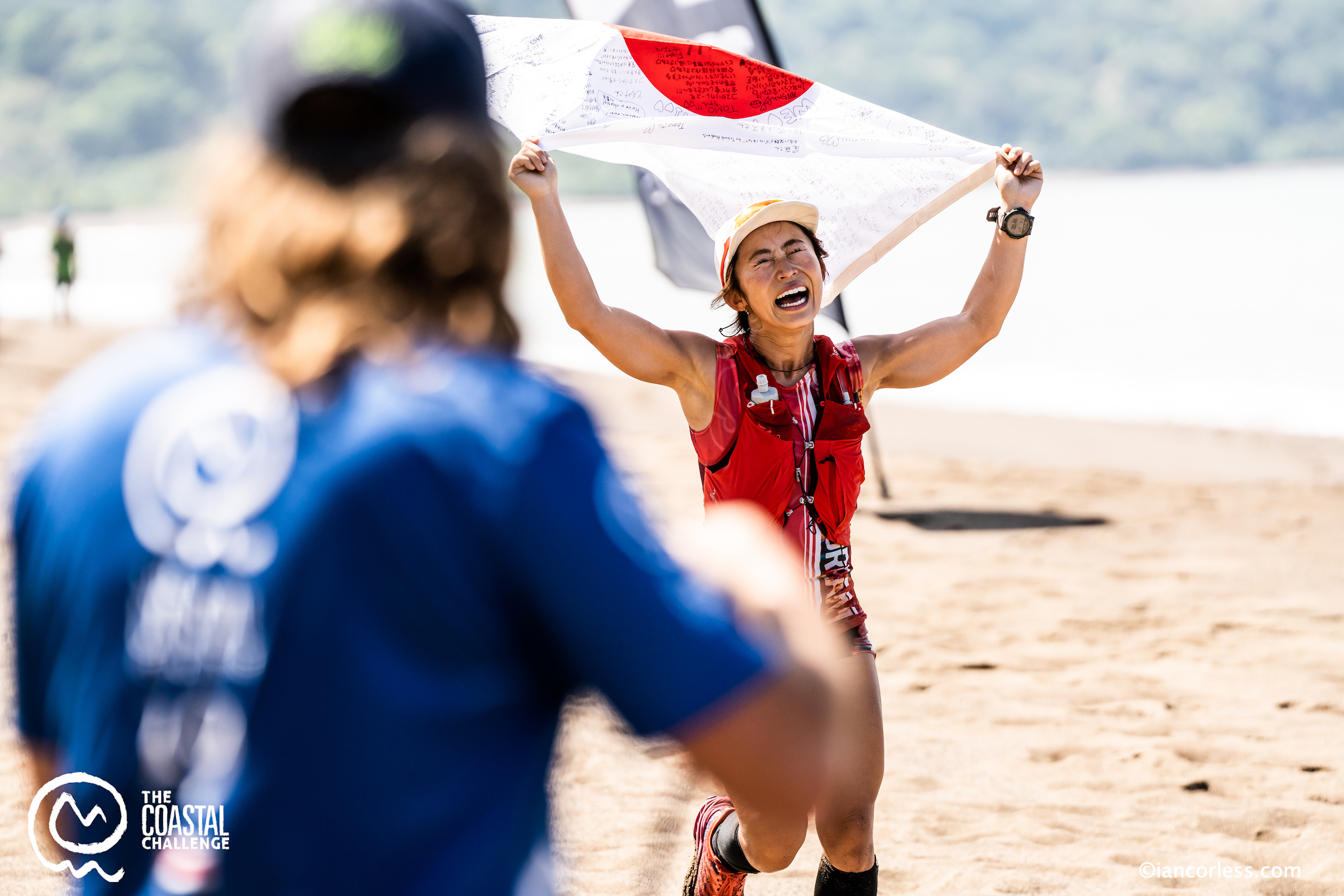
You’ll sweat within minutes of starting and continue all day. Hydration is constant, not reactive. Drink regularly, not just when thirsty. Electrolytes are personal. Know what works for you before arriving.
Never pass water without topping up.
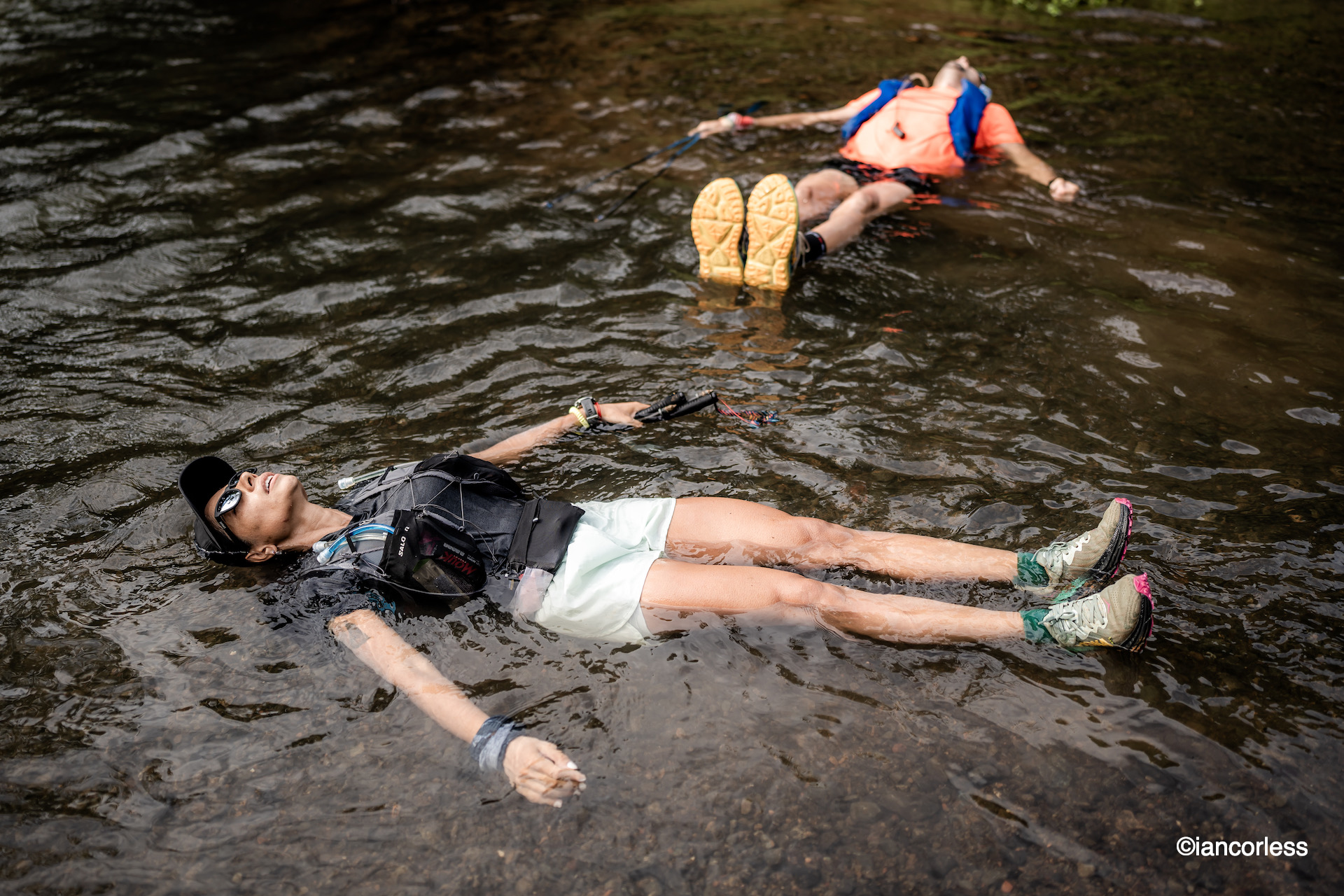
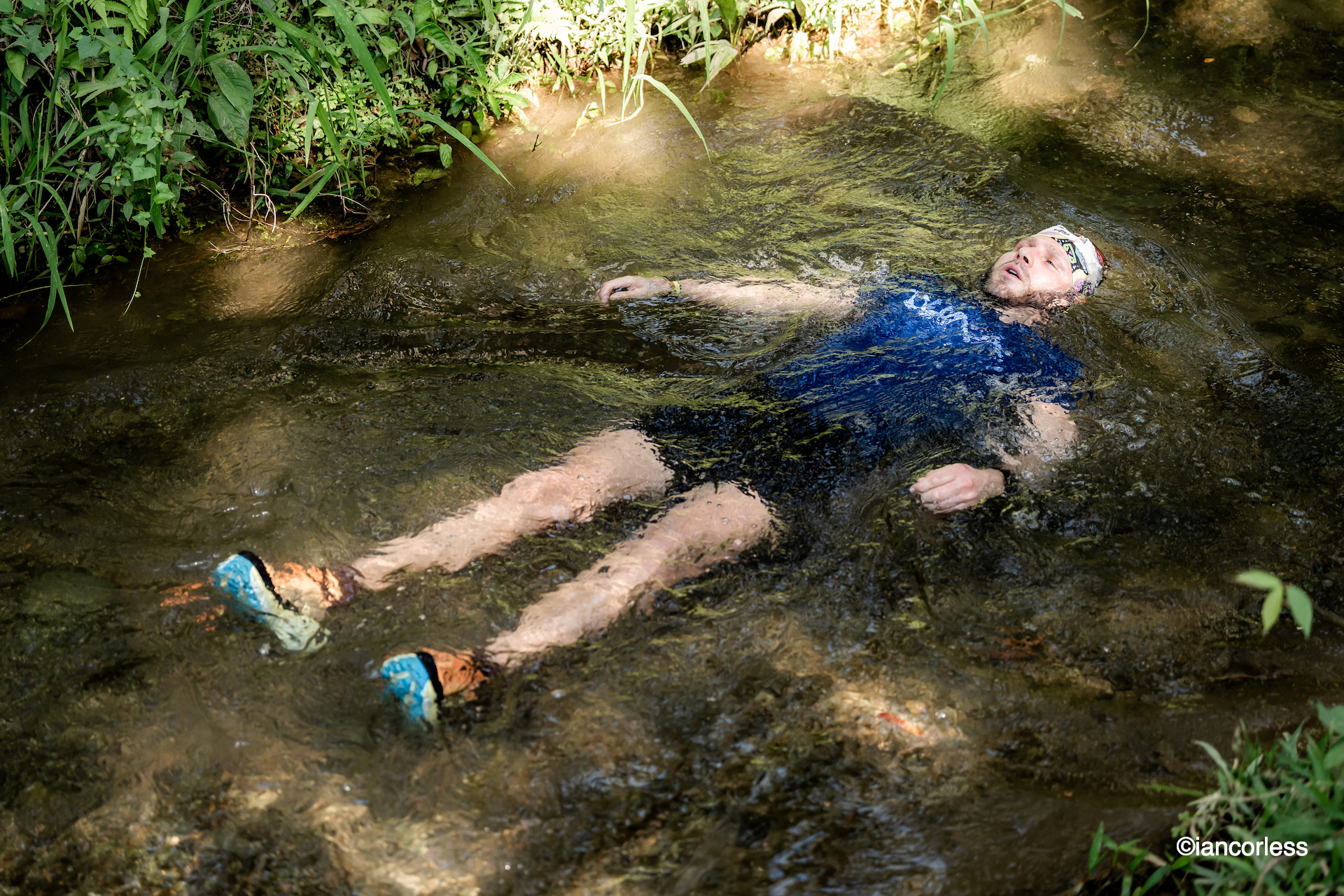
Use the environment to your advantage. Rivers, streams, and pools are not obstacles, they are survival tools. Submerge fully whenever possible. Two or three minutes can reset your entire system.
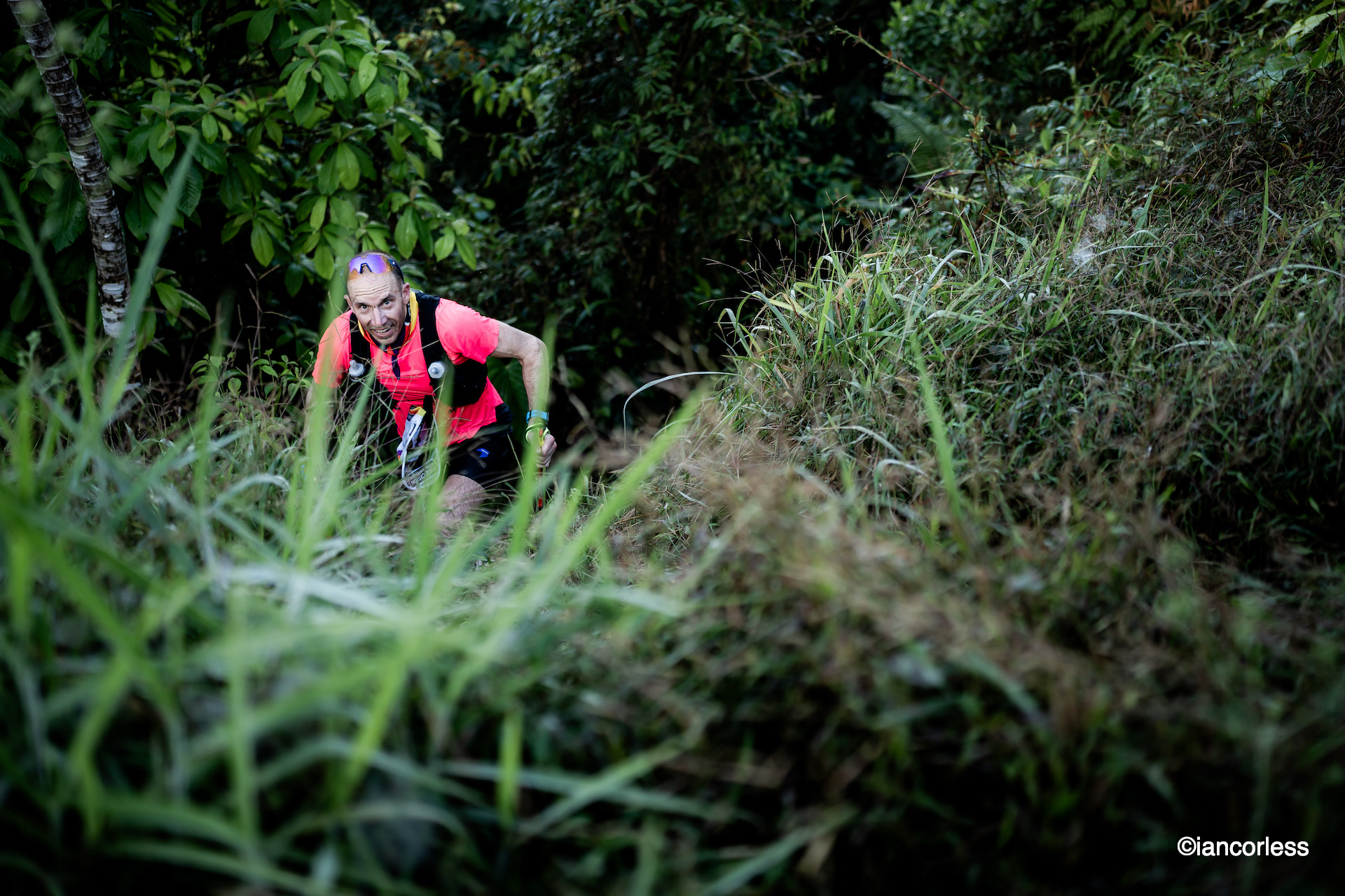
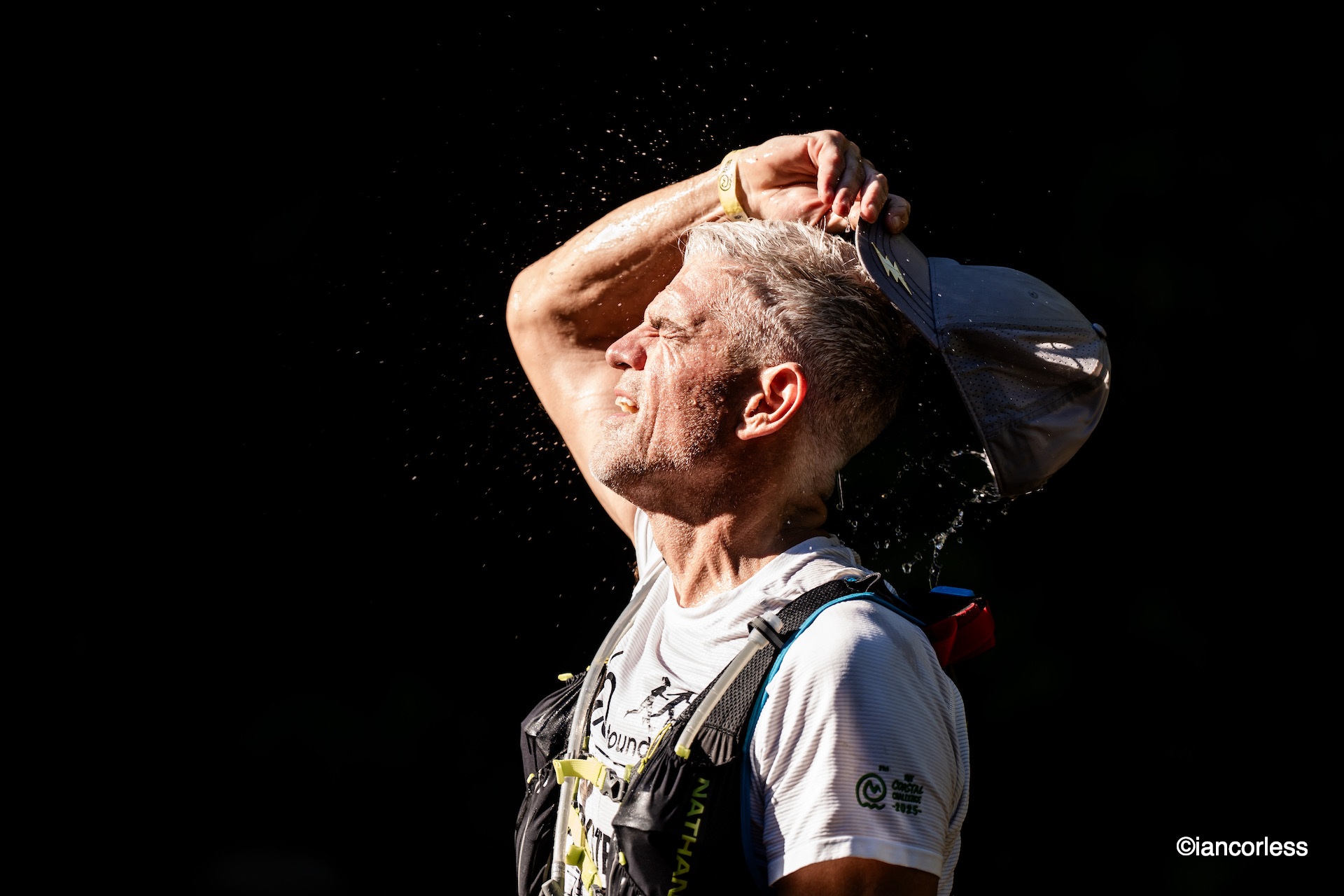
Run in shade. Walk in sun. Cover your head and shoulders. Pour water over yourself often.
Practical Race Wisdom
• Day 1 starts fast and later than other days. Most people go out too hard. Many drop out here.
• From Day 2 onward, you start at sunrise. Use the cooler hours wisely.
• This is a technical race. Train for climbing and descending.
• Everyone walks. Learn to do it efficiently.
• The course is well marked, but fatigue makes mistakes easy. If you haven’t seen a marker in five minutes, stop and check. Use the GPX files on a watch.
• Wildlife surrounds you. You’ll hear far more than you’ll see.
• After each stage: shoes off, feet checked, flip-flops on immediately.
• Eat, hydrate, nap, elevate legs.
• Camps are social, but your tent is your reset space.
A Note for Female Runners
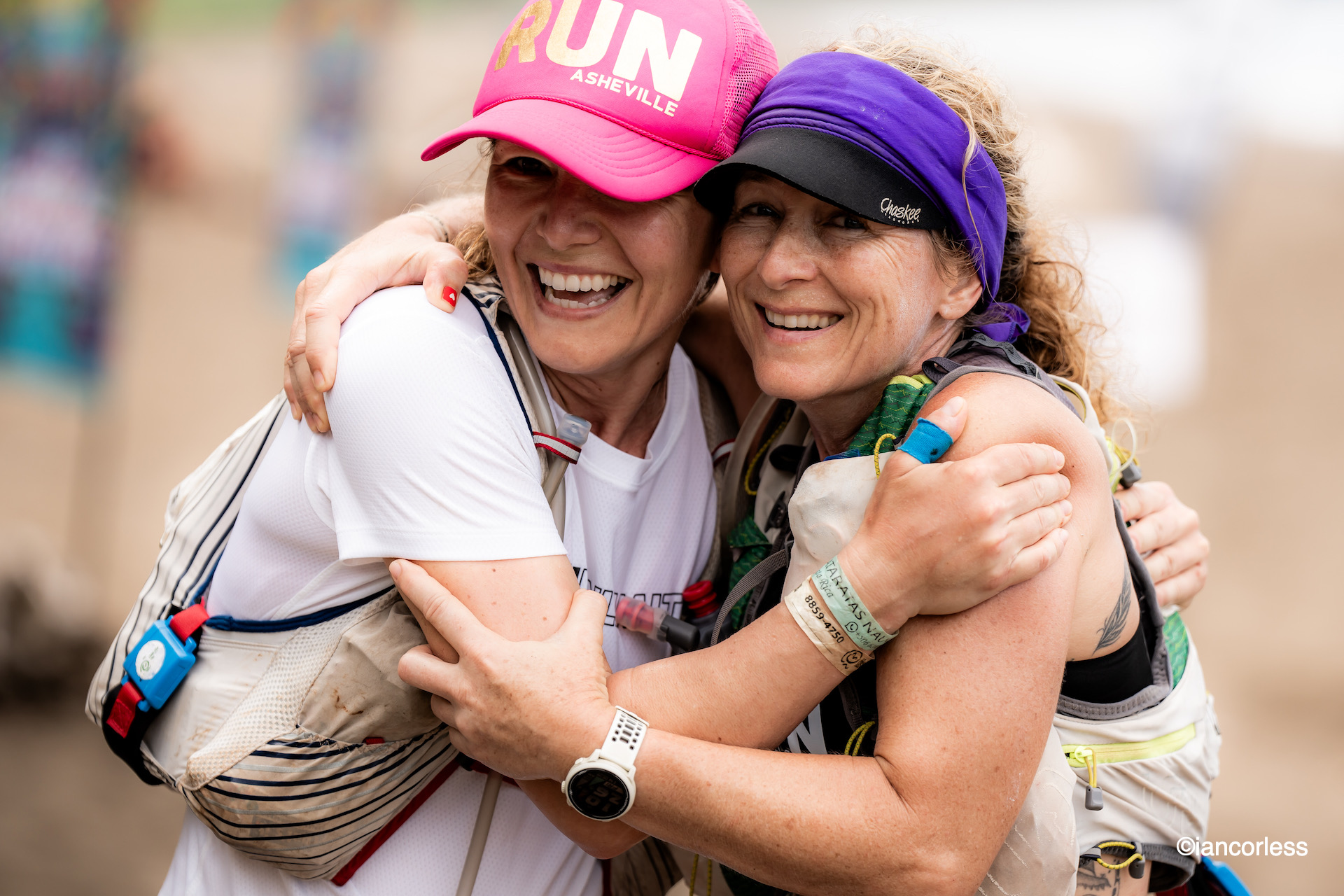
Practical comfort matters.
Light, non-run clothing for evenings makes a big difference. Sundresses or loose cotton work well. Flip-flops are essential, including for showers.
A two-piece swimsuit is useful for river or ocean bathing.
Sleep in run kit.
Don’t economise on sunscreen. Carry anti-chafe cream and reapply regularly. High humidity changes everything.
Avoid skorts. They hold water and add friction. Single-layer shorts or breathable tights work better.
Hair conditioner is not optional. Sachets pack well and don’t leak.
Leave rings at home. Swelling is real.
Waterproof zip-locks for cash and toilet paper are worth their weight.
Phones must be properly waterproofed or left behind for river-heavy sections.
Final Thoughts
The Coastal Challenge doesn’t pretend to be anything other than what it is: a hard, beautiful, immersive journey through one of the most demanding environments you’ll ever race in. It will challenge you. It will frustrate you. It will humble you. And if you arrive prepared, it will reward you in ways few races can.
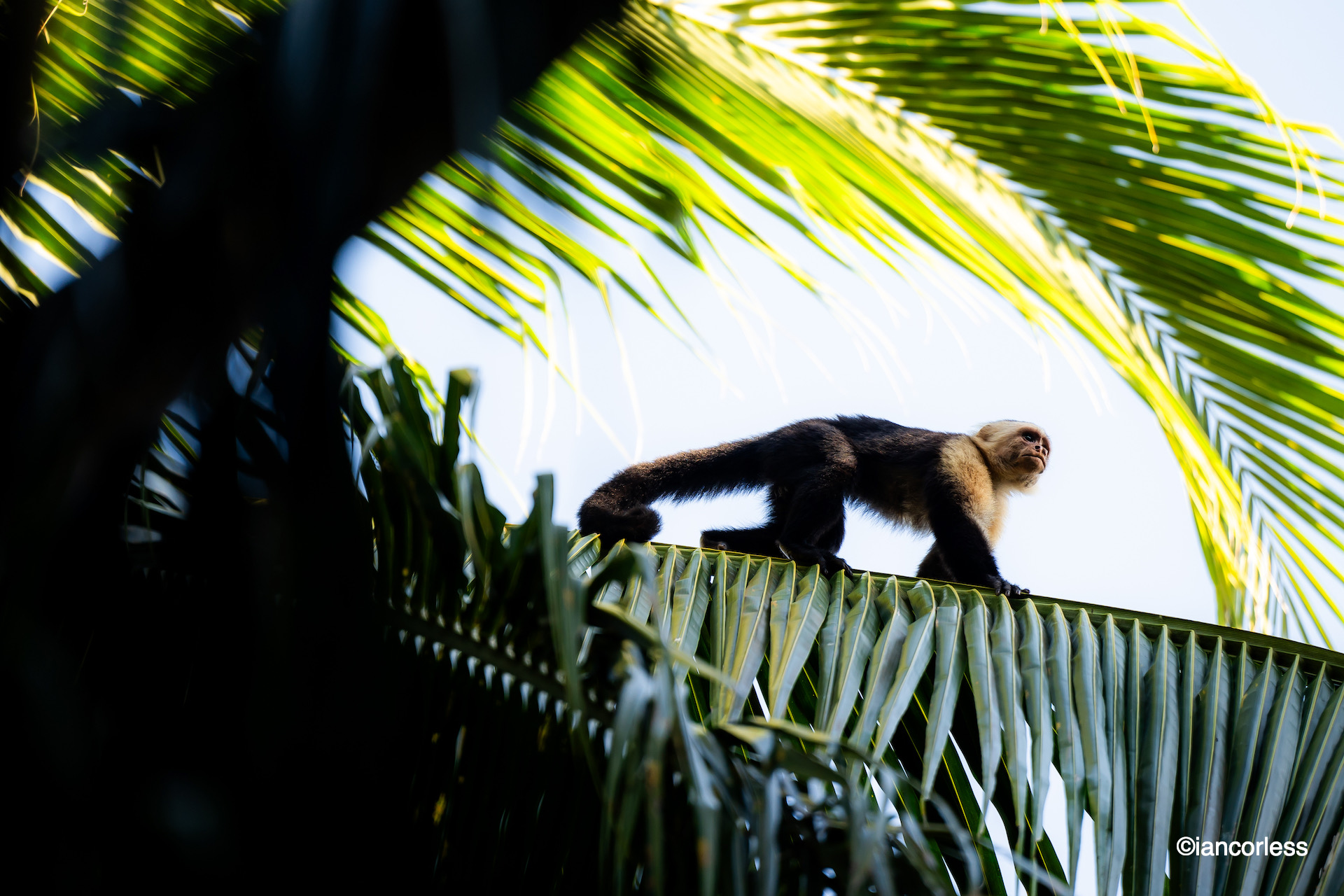
Look up. Take it in. Accept the discomfort. Prepare well for heat, humidity, technical terrain, and recovery. Get your head right before you arrive. If you do that, the race doesn’t just become manageable. It becomes unforgettable.
Entries for The Coastal Challenge are HERE

Instagram – @iancorlessphotography
Twitter – @talkultra
facebook.com/iancorlessphotography
Web – www.iancorless.com





 IAN CORLESS