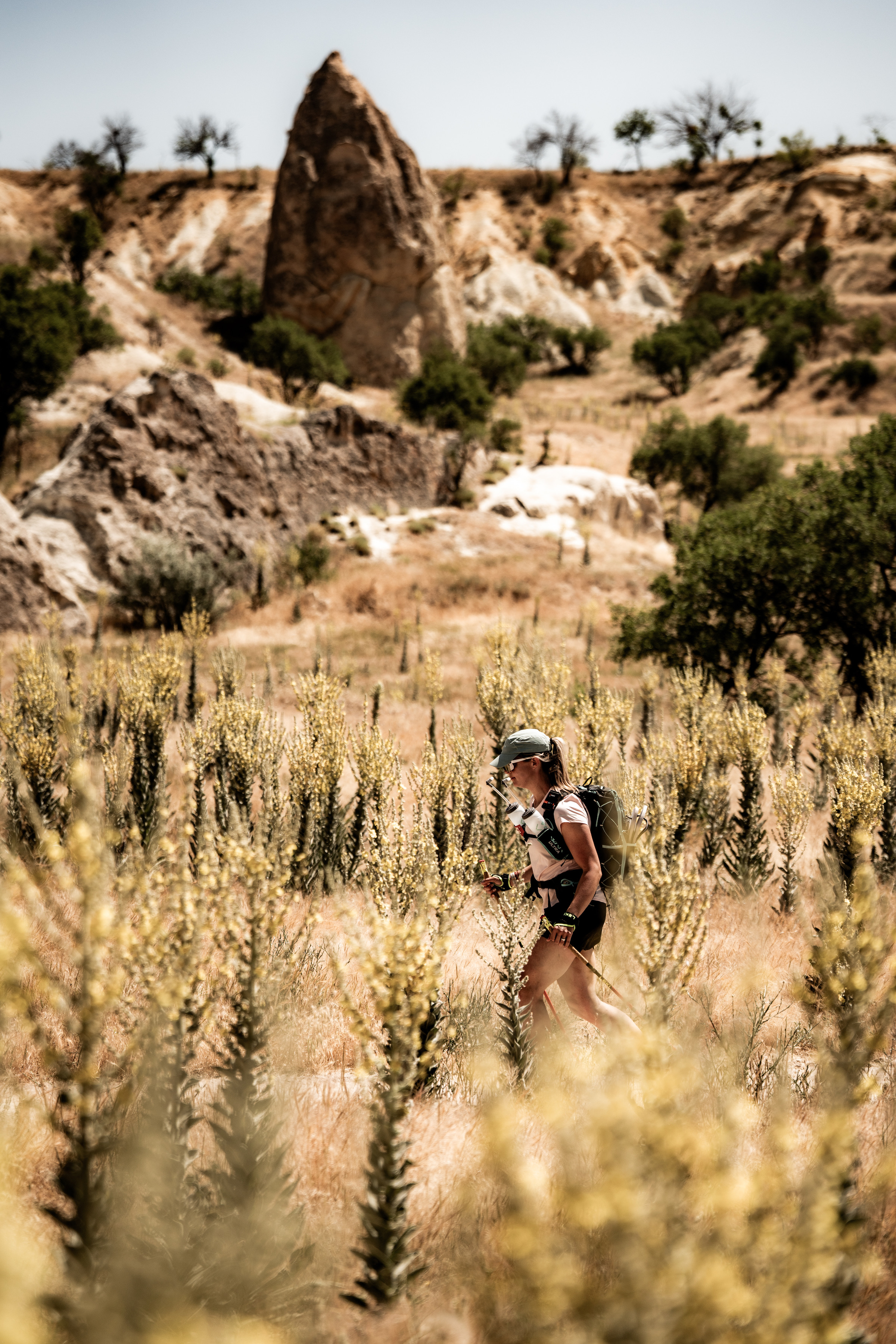
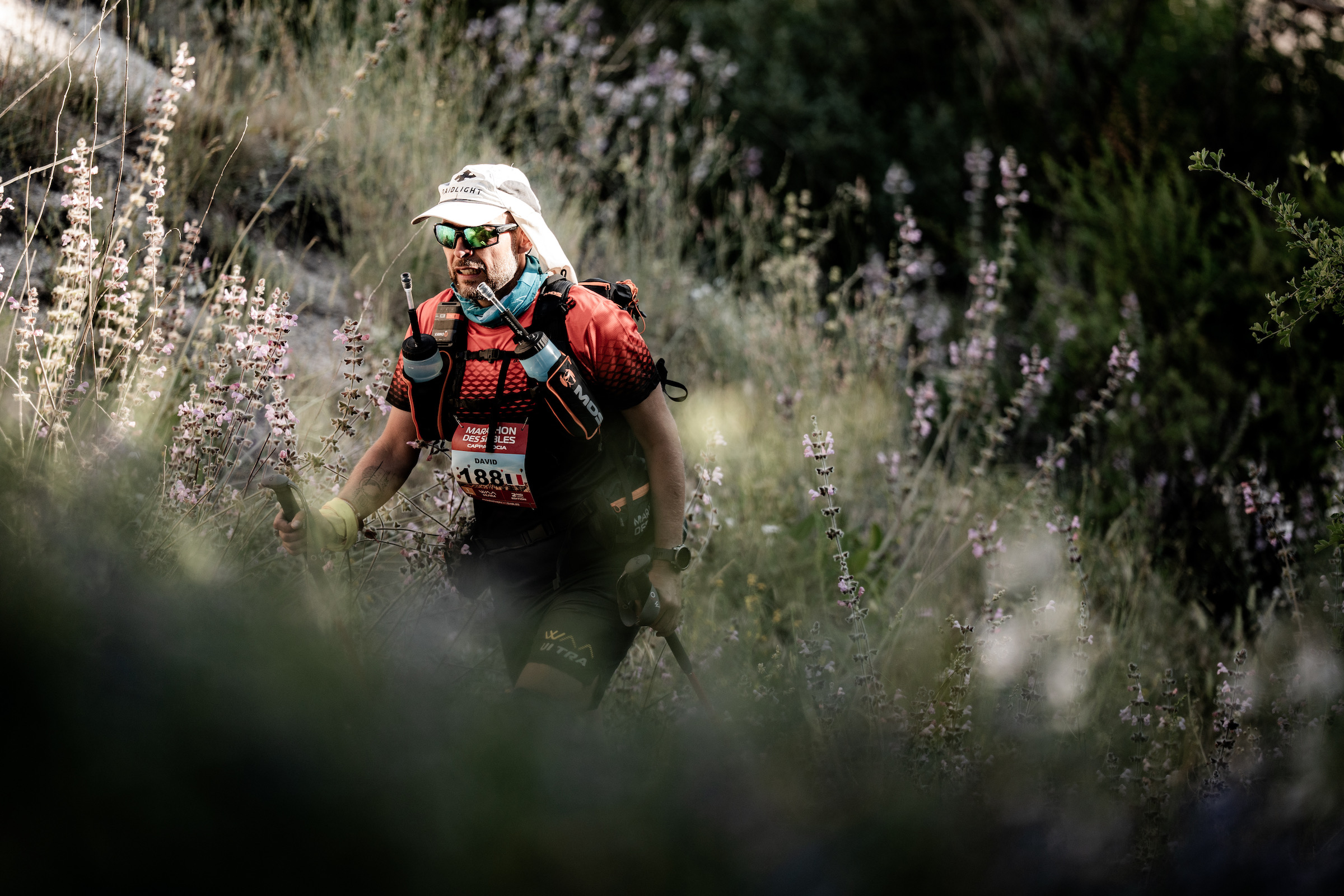
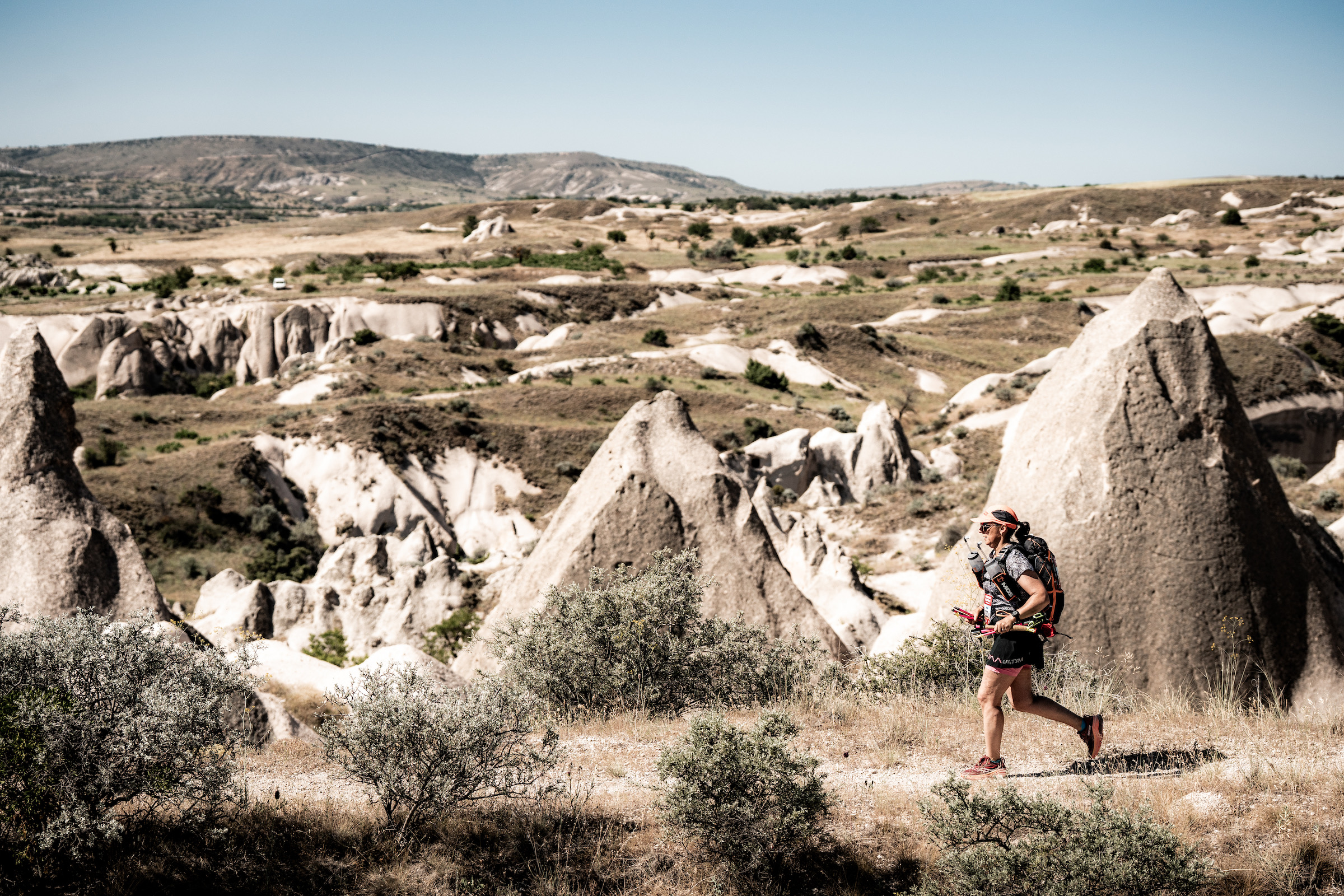
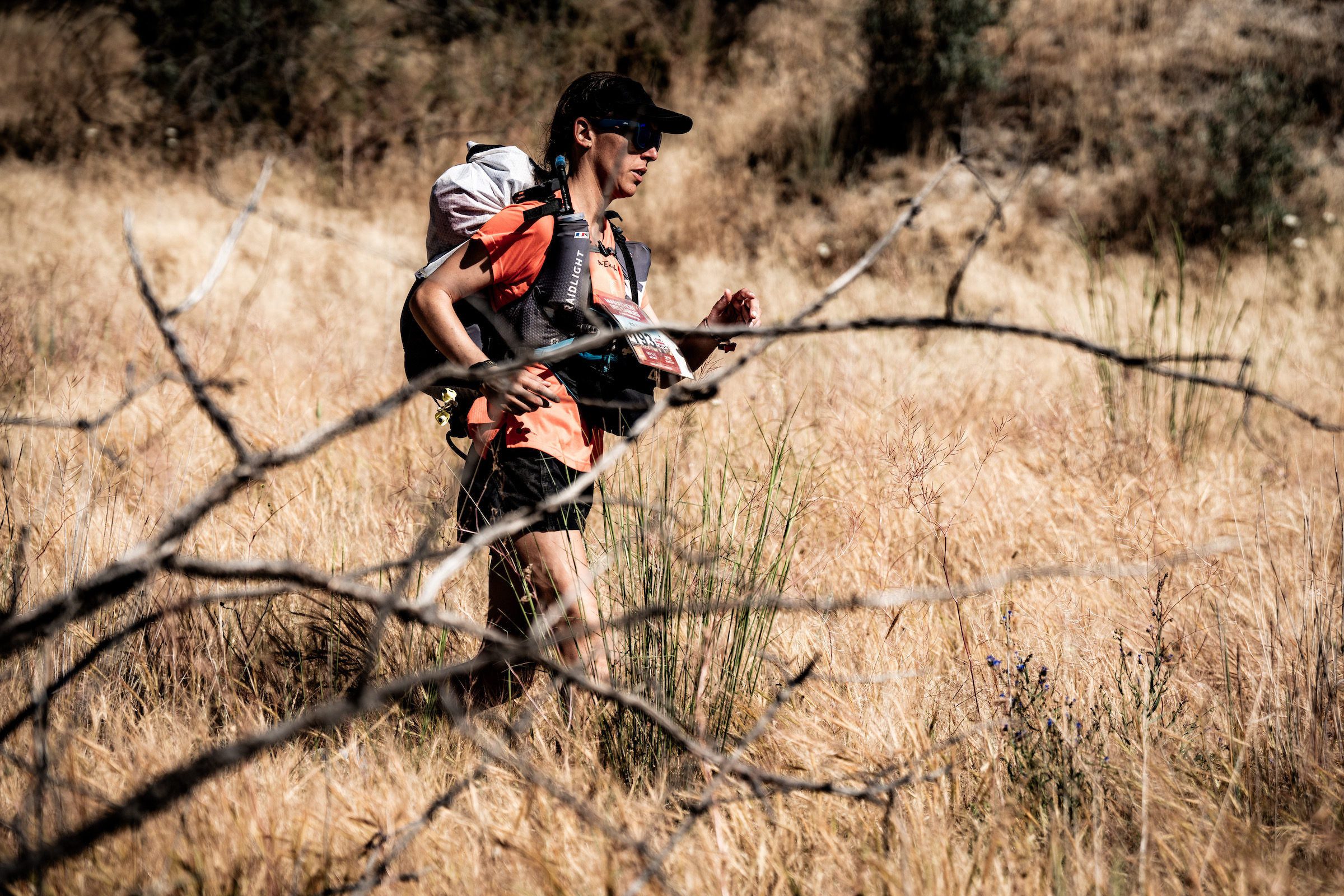
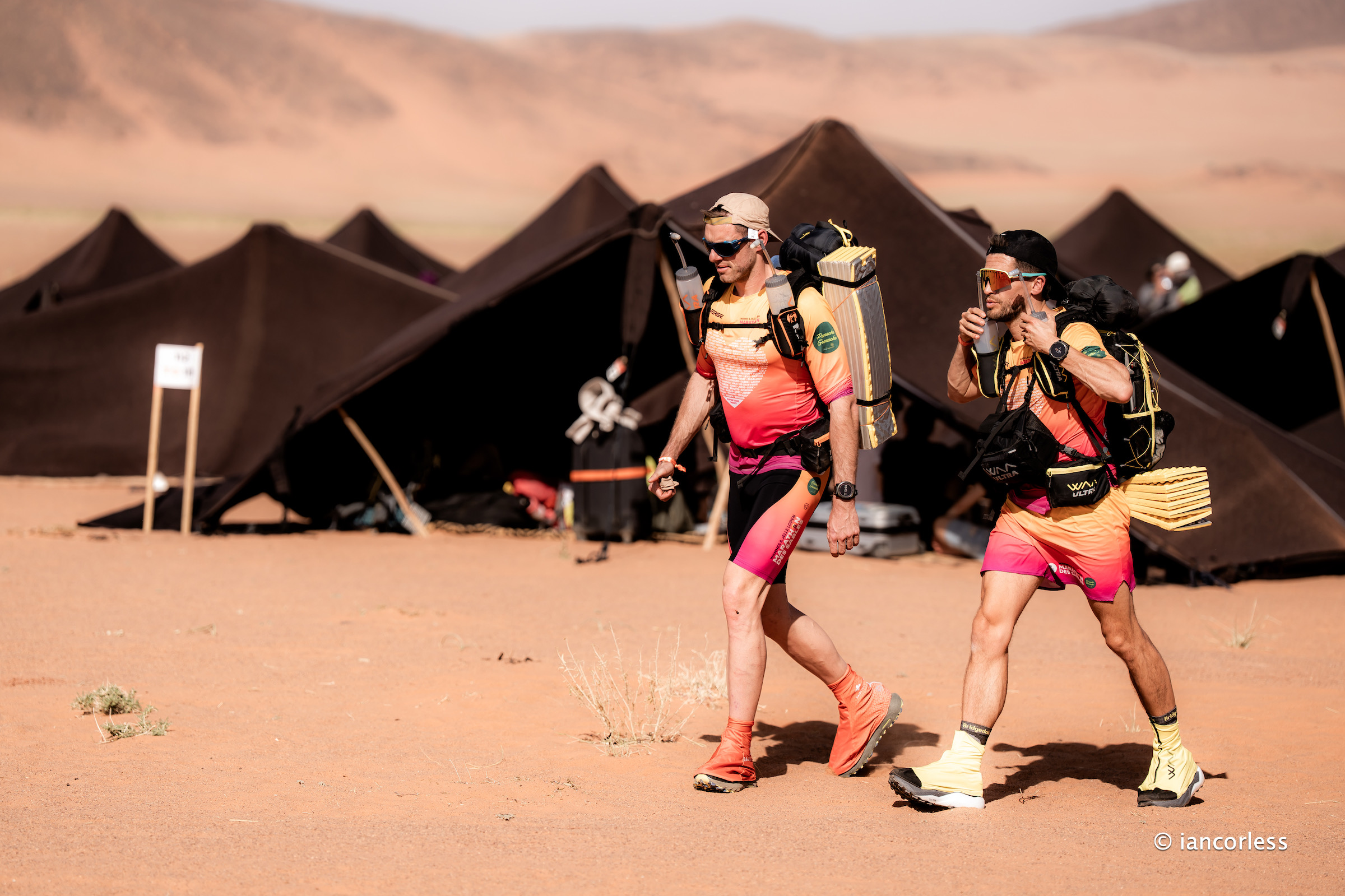
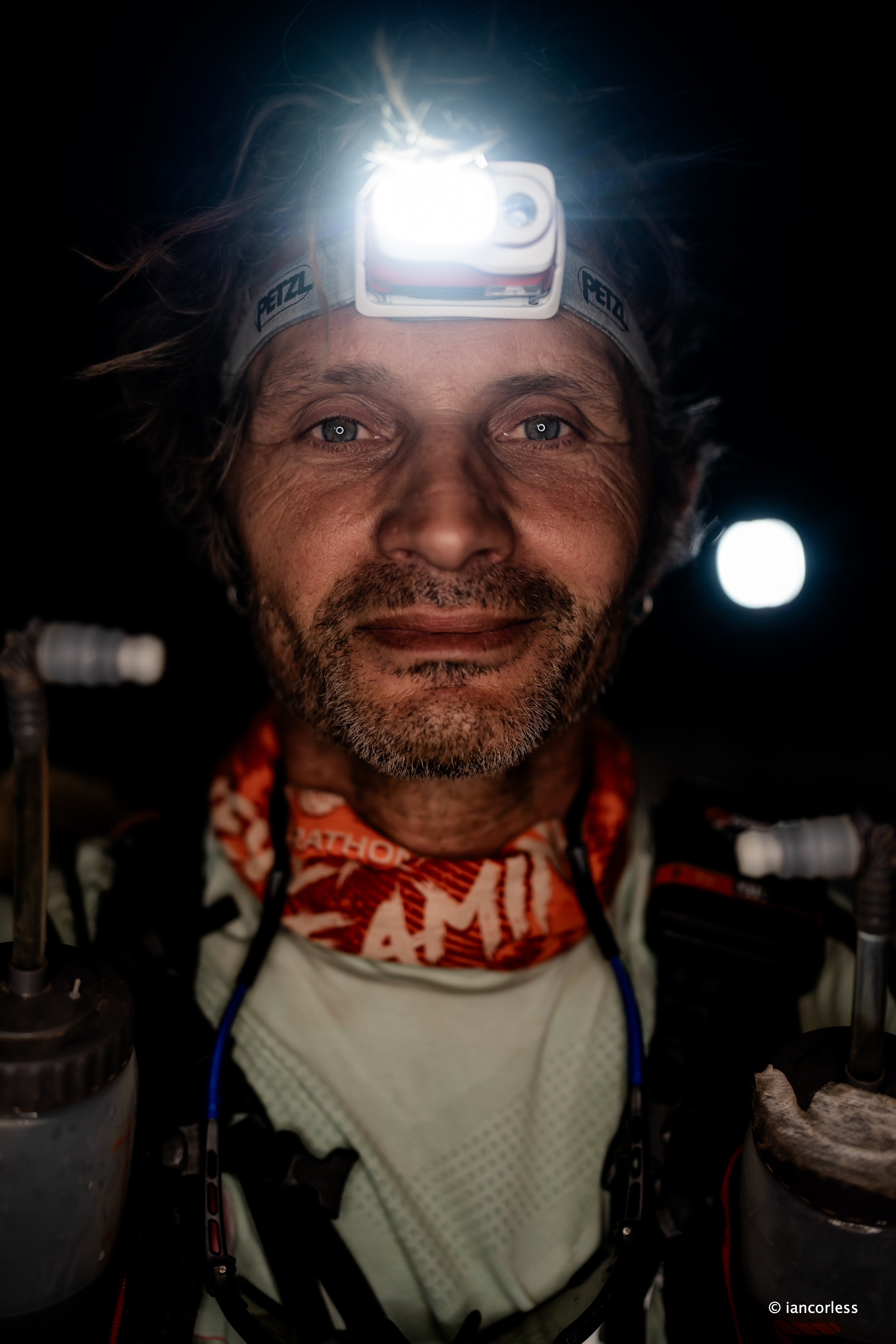
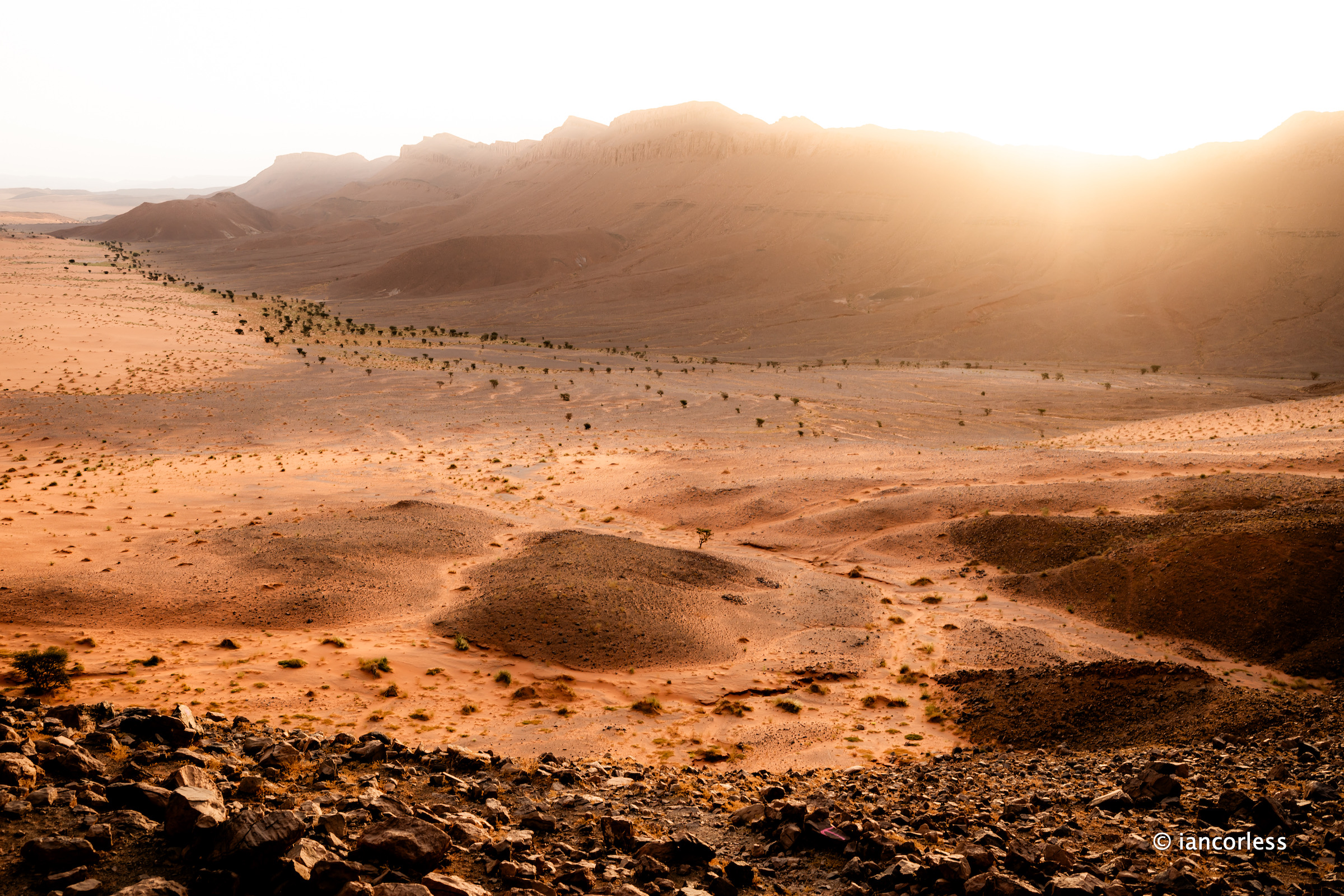
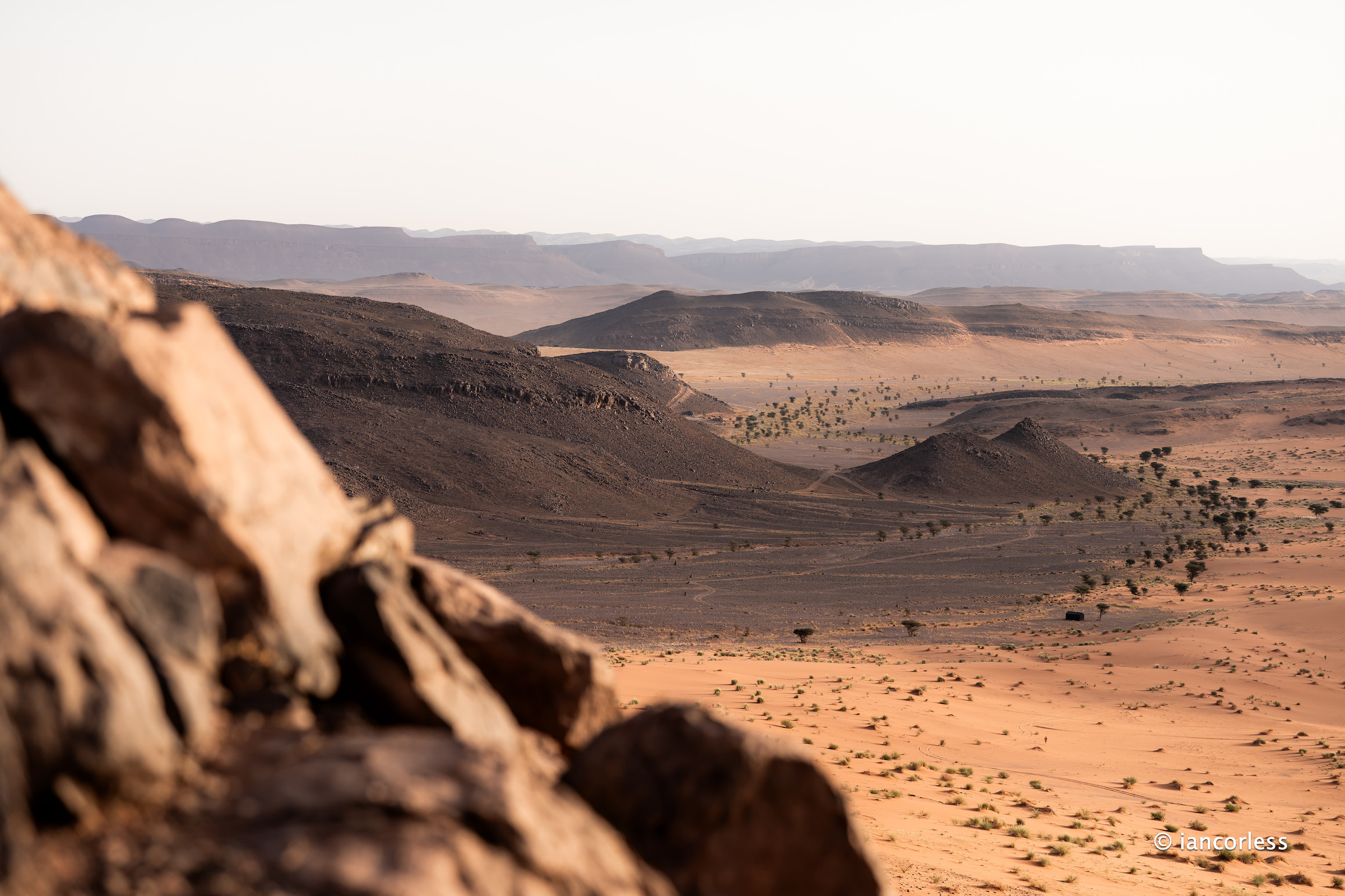
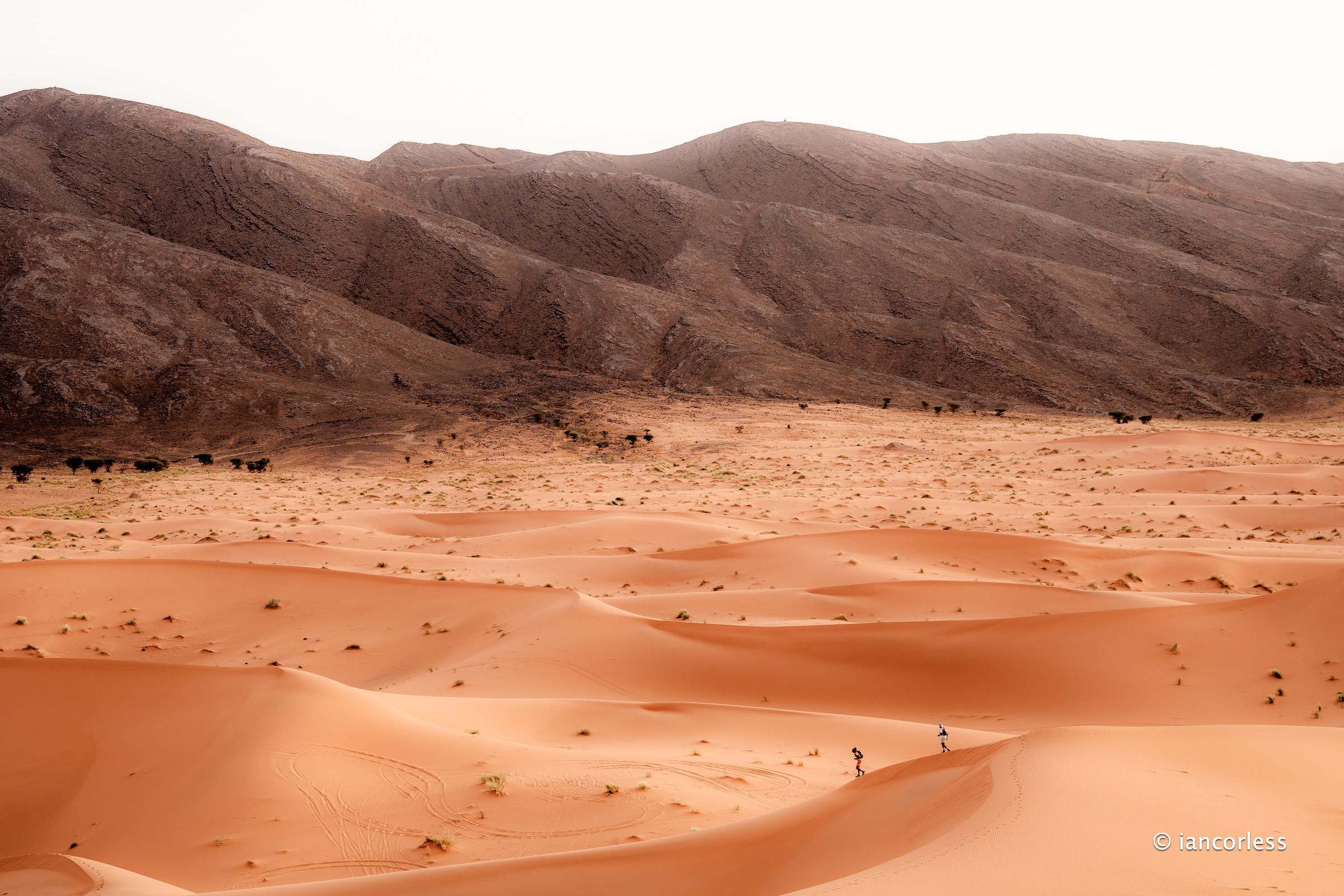
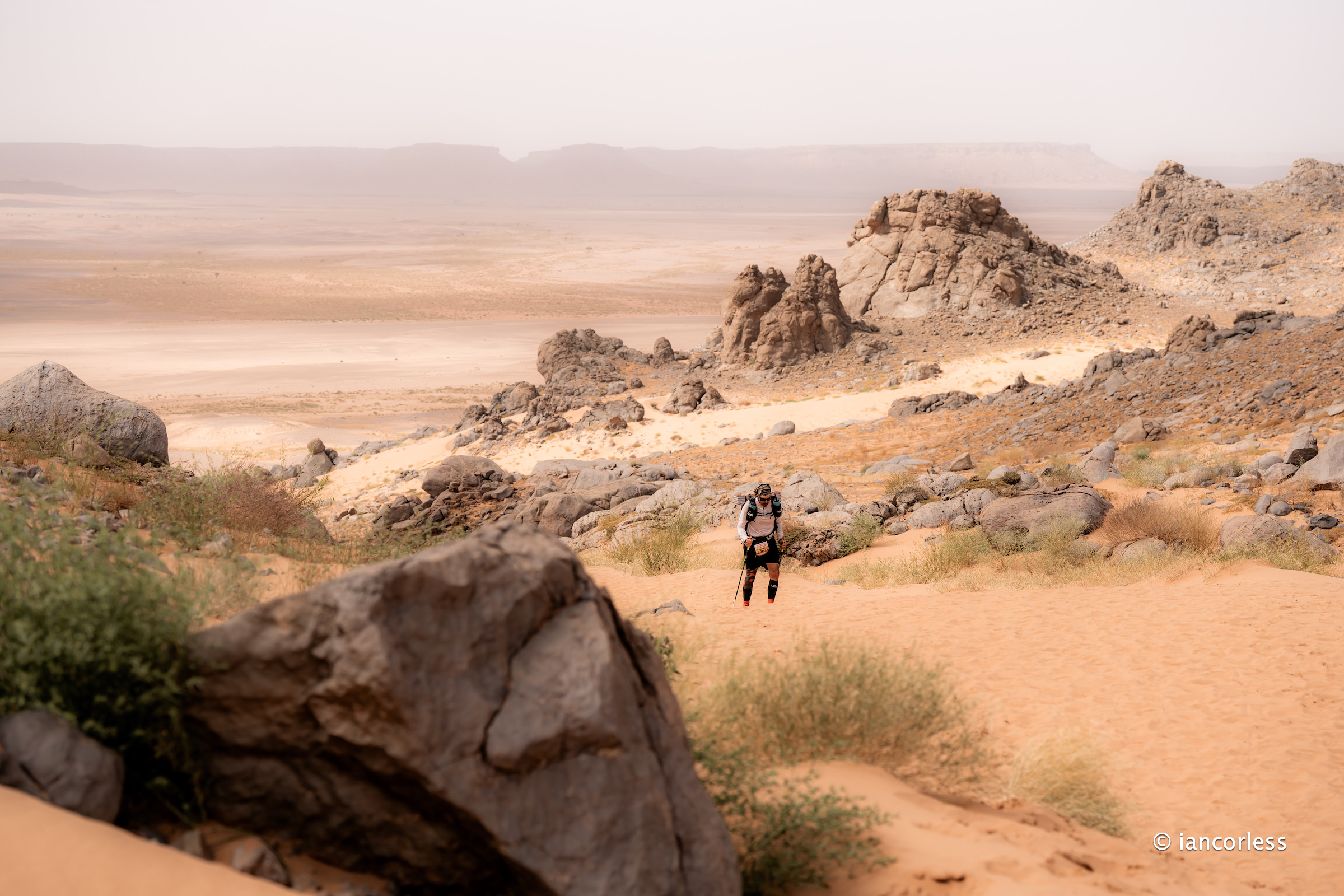
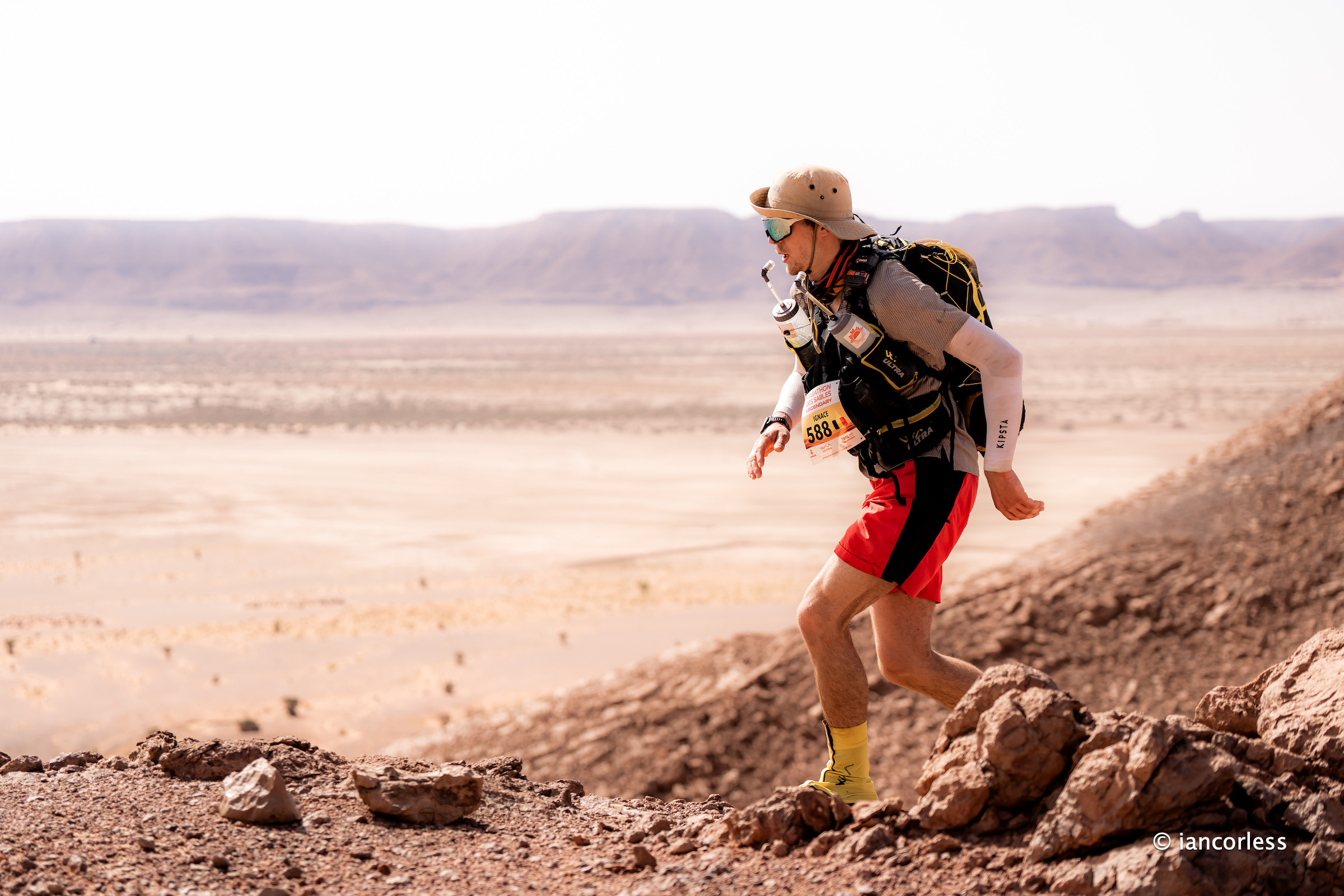
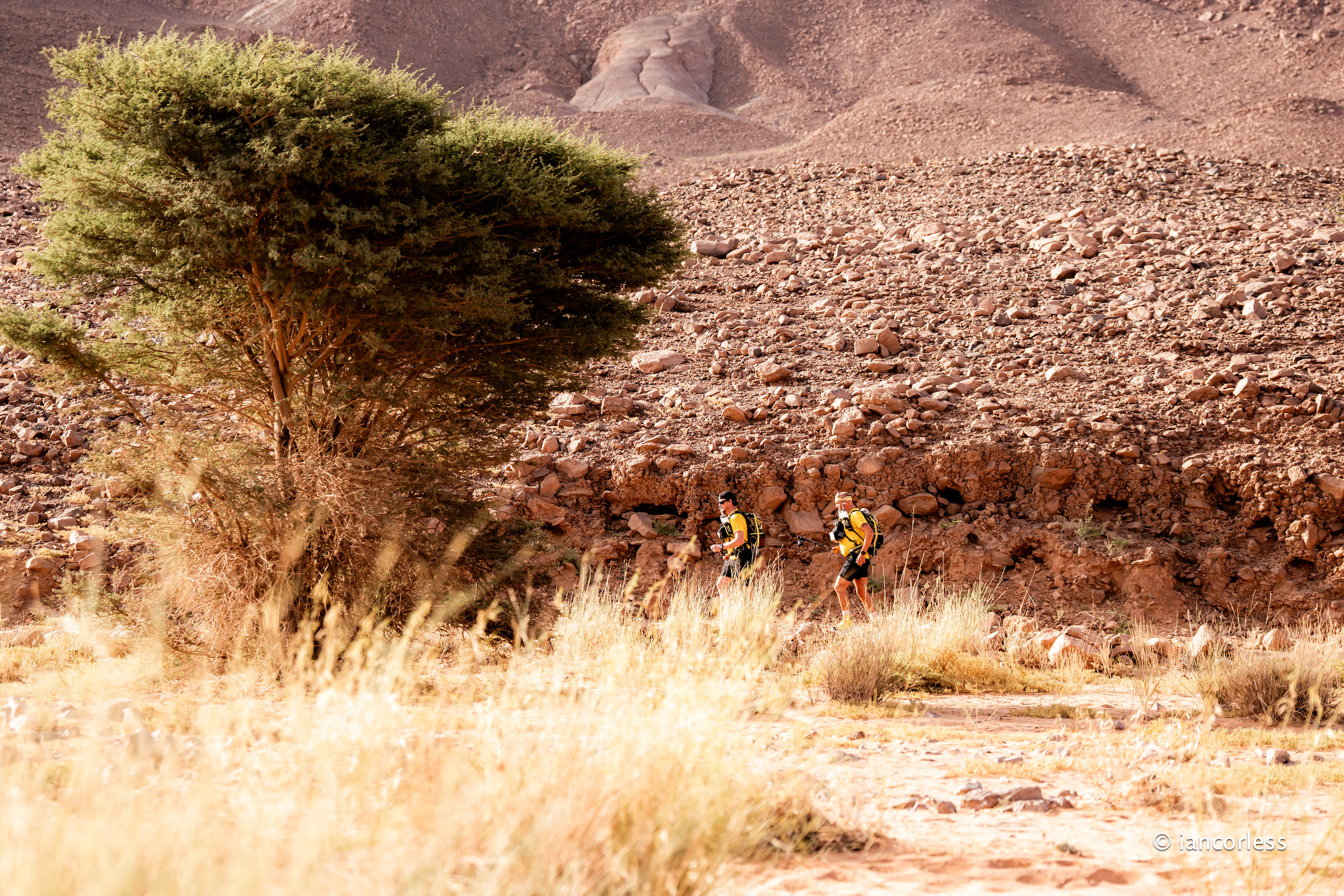
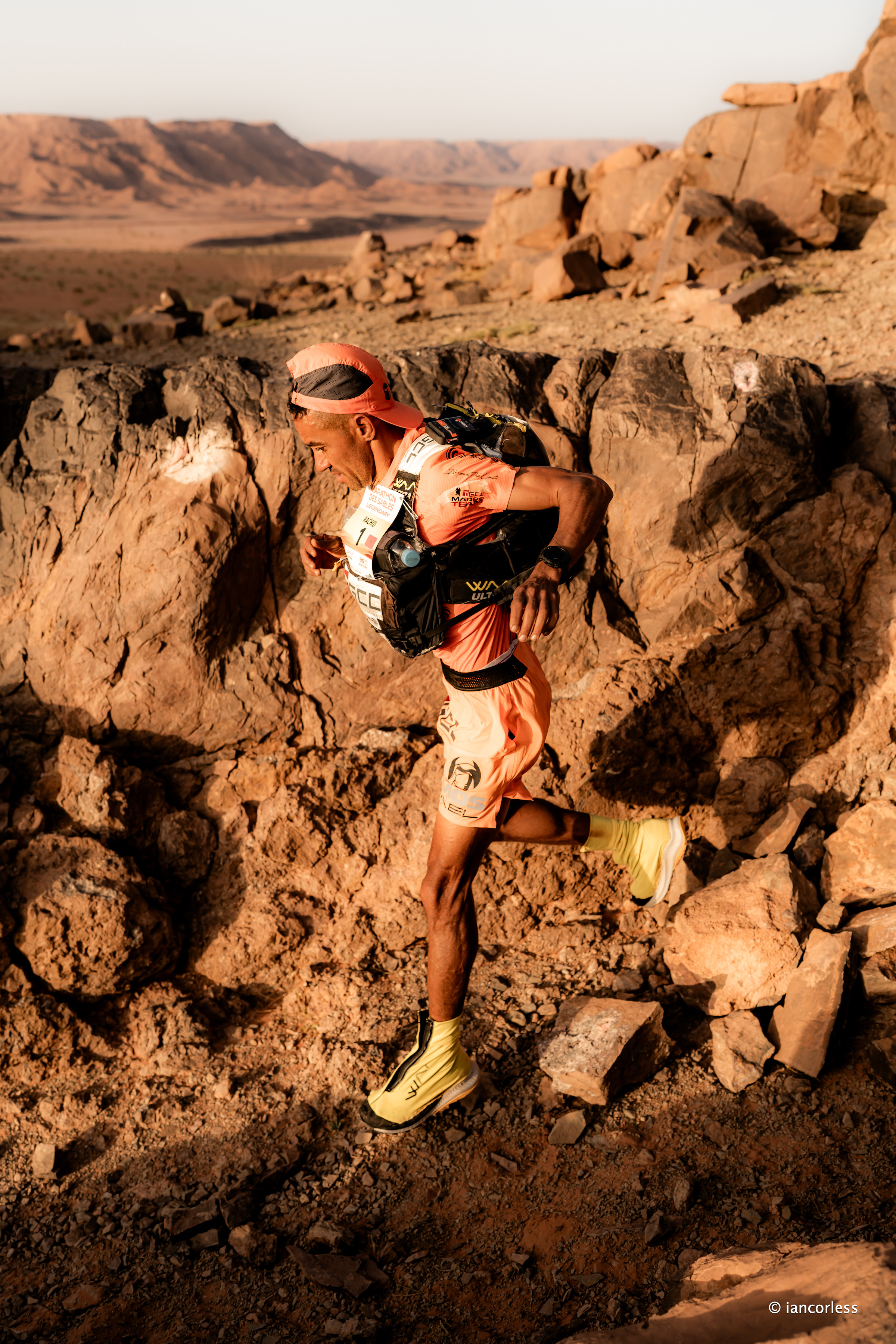
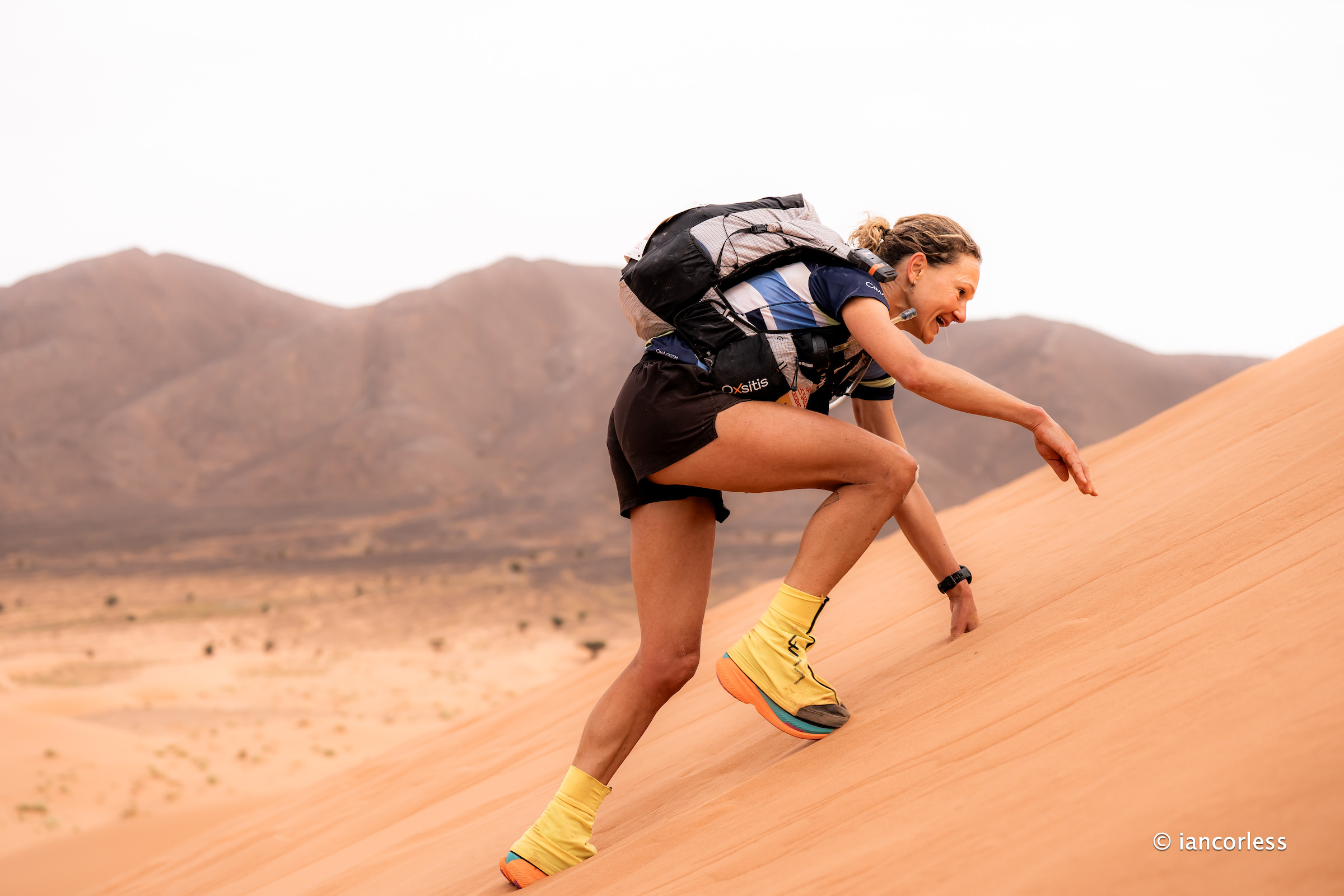
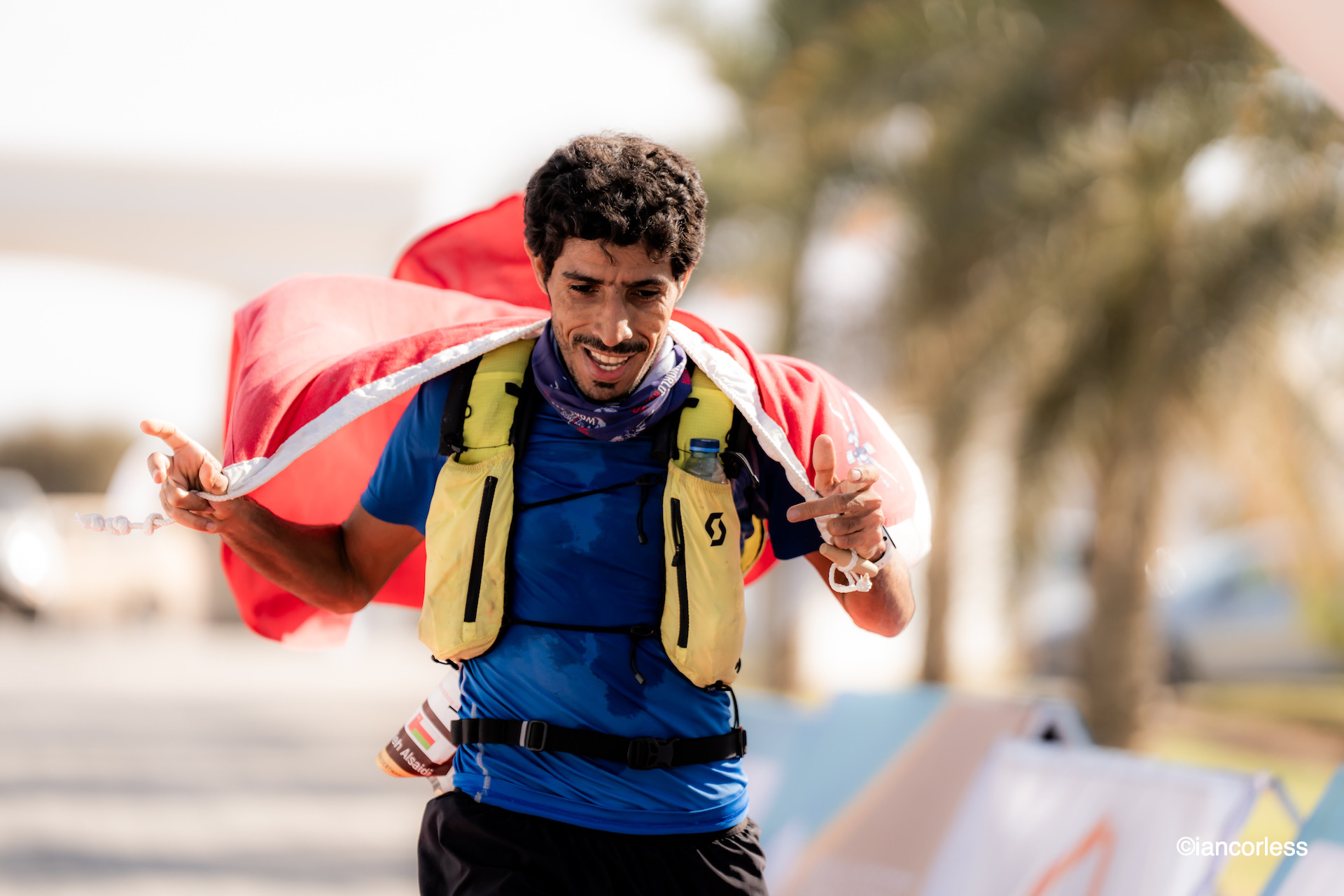
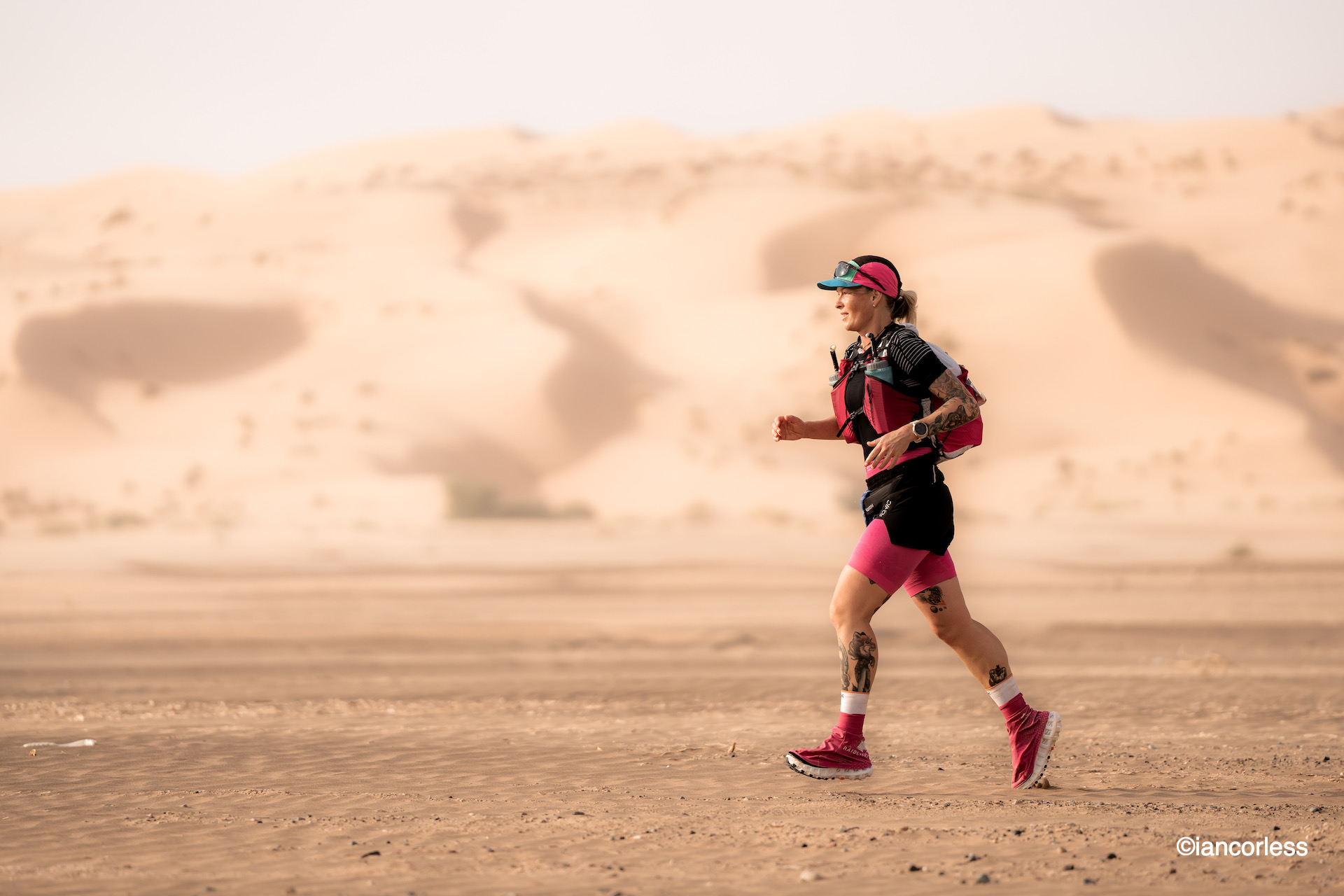
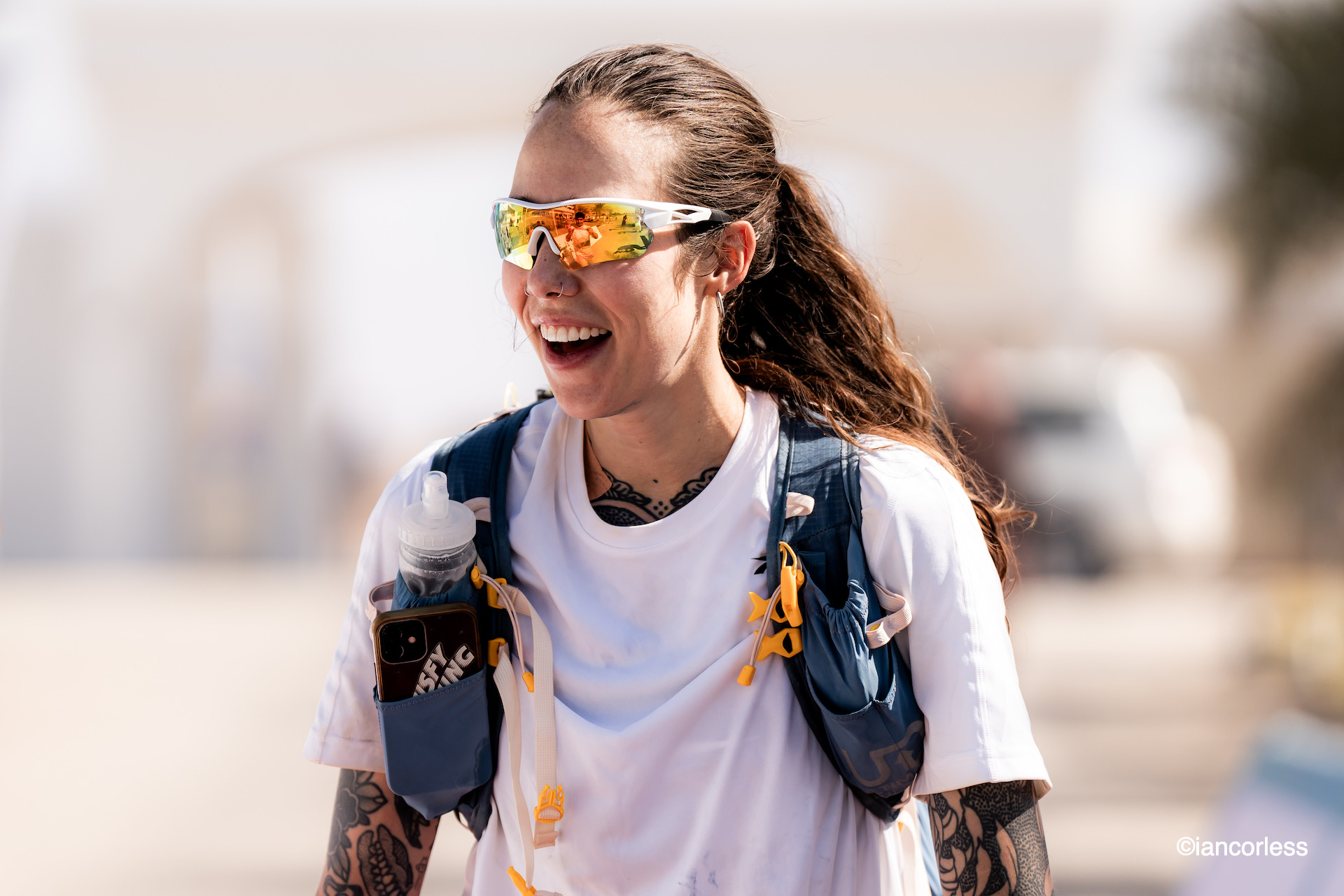
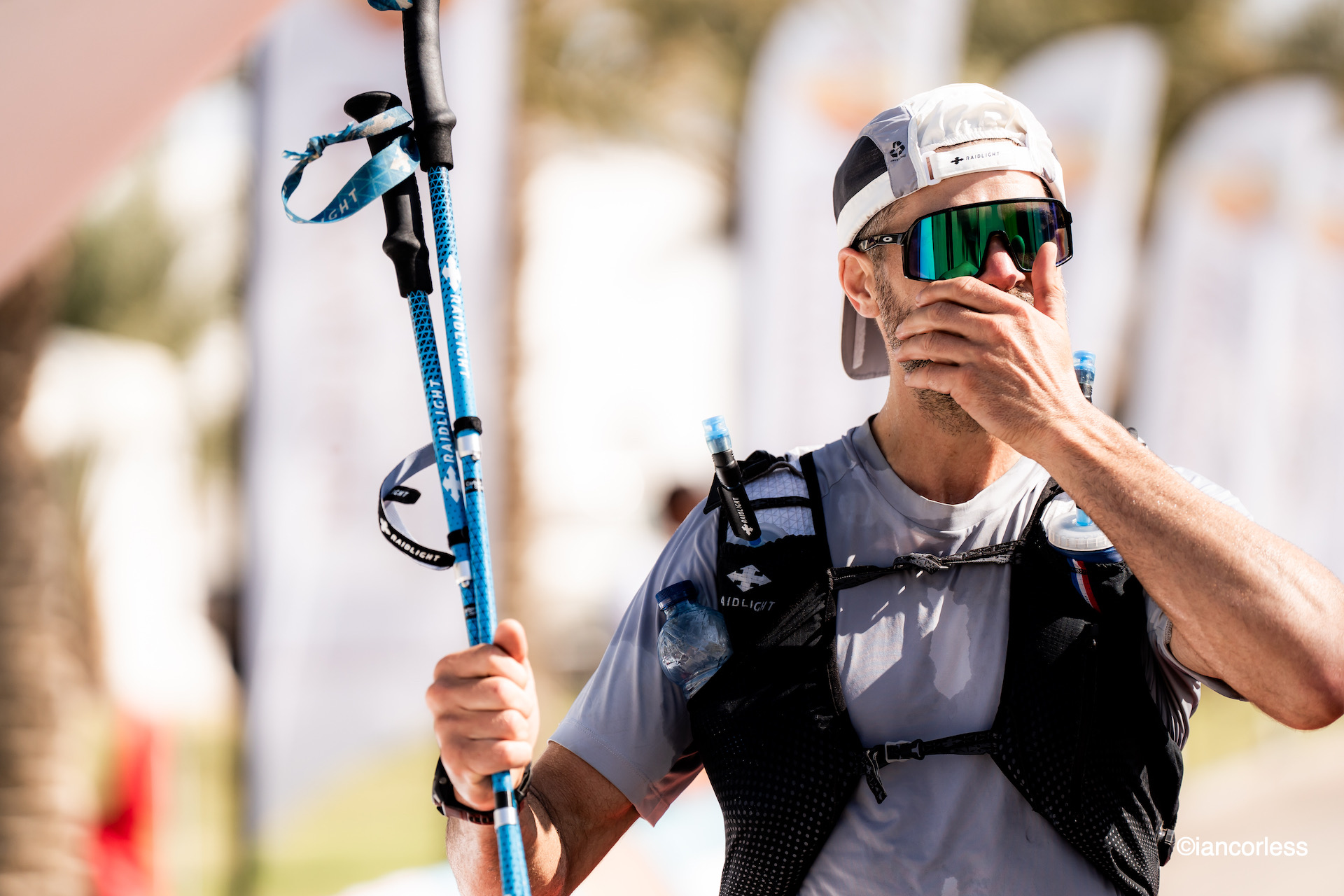
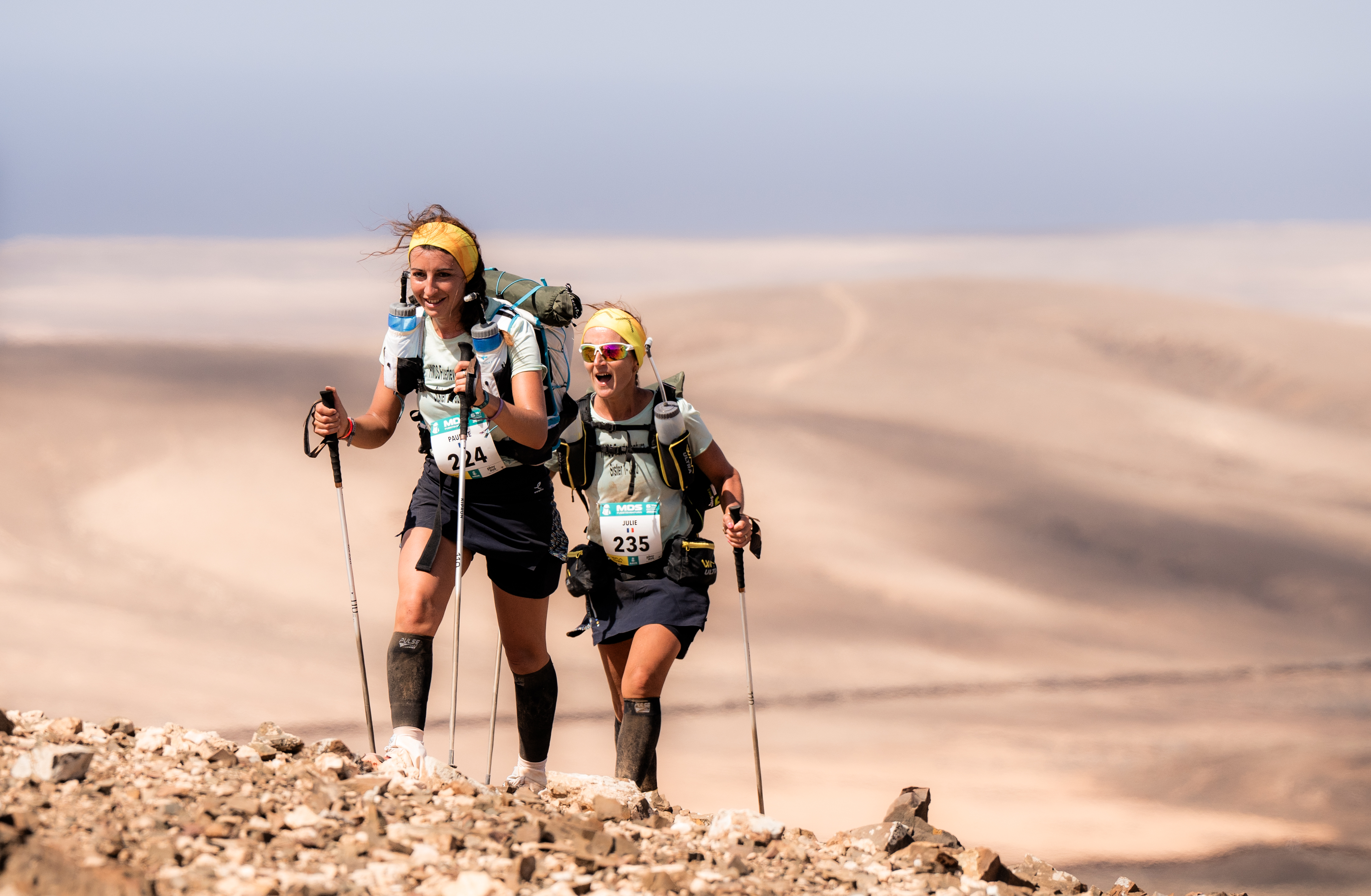
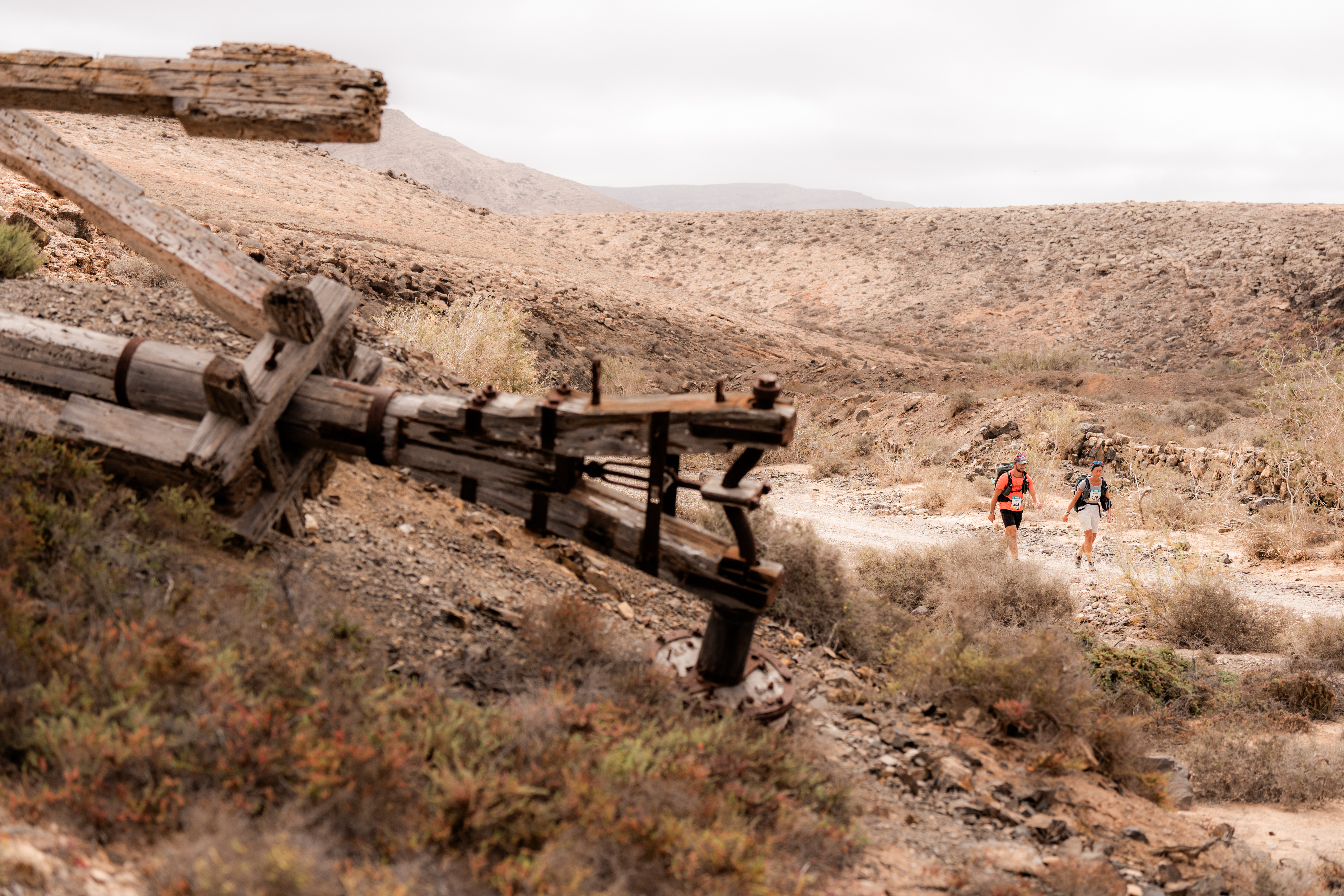
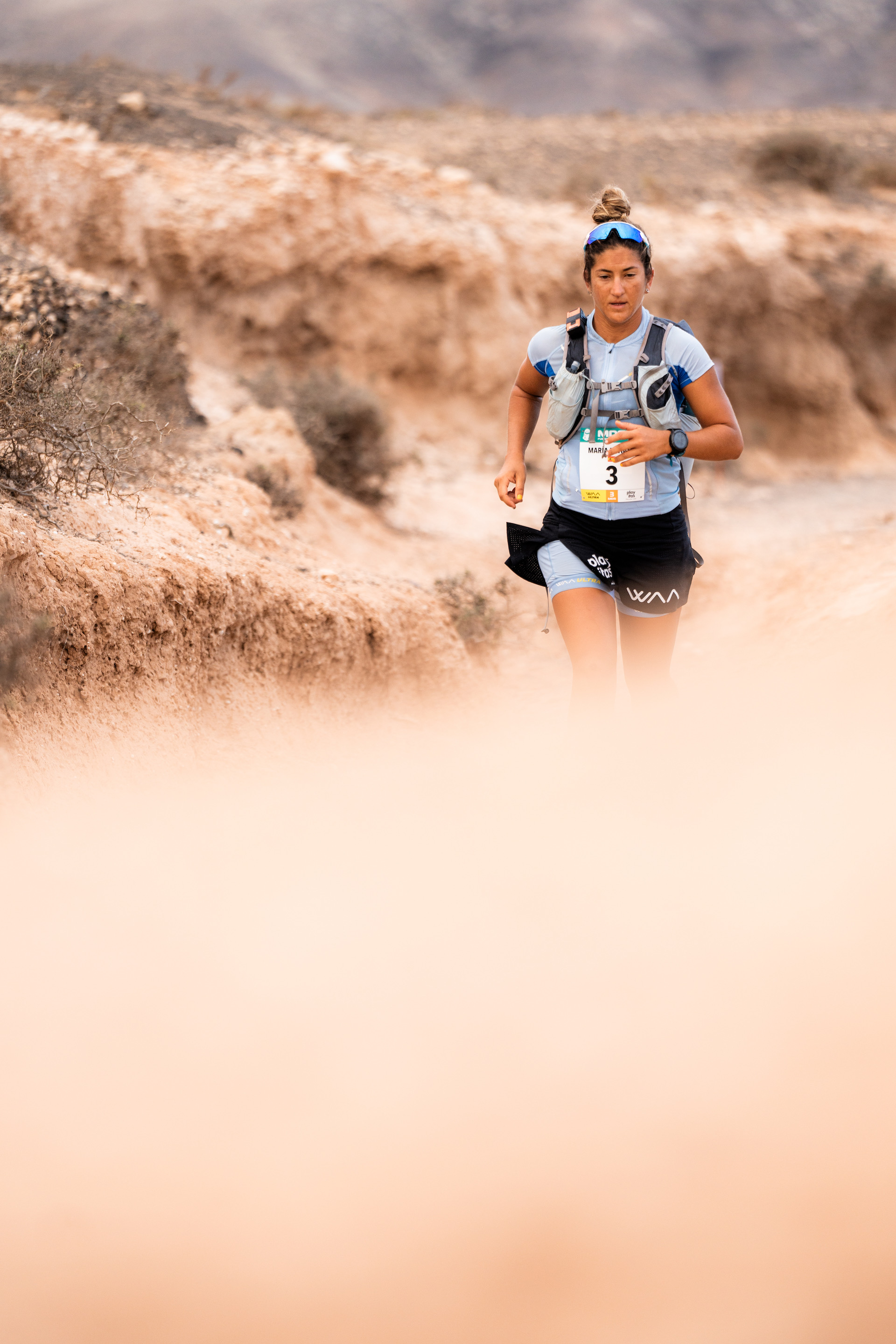
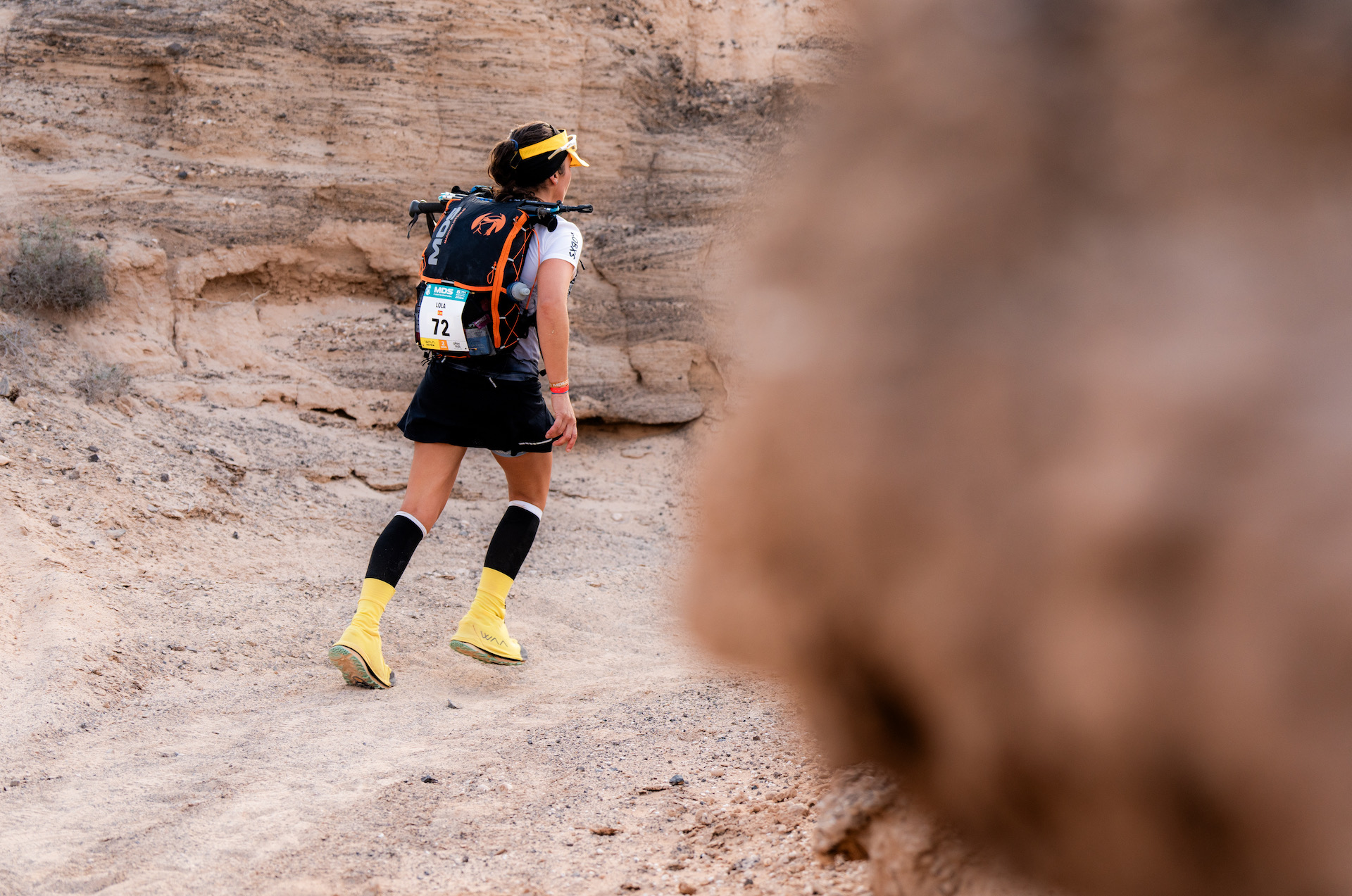
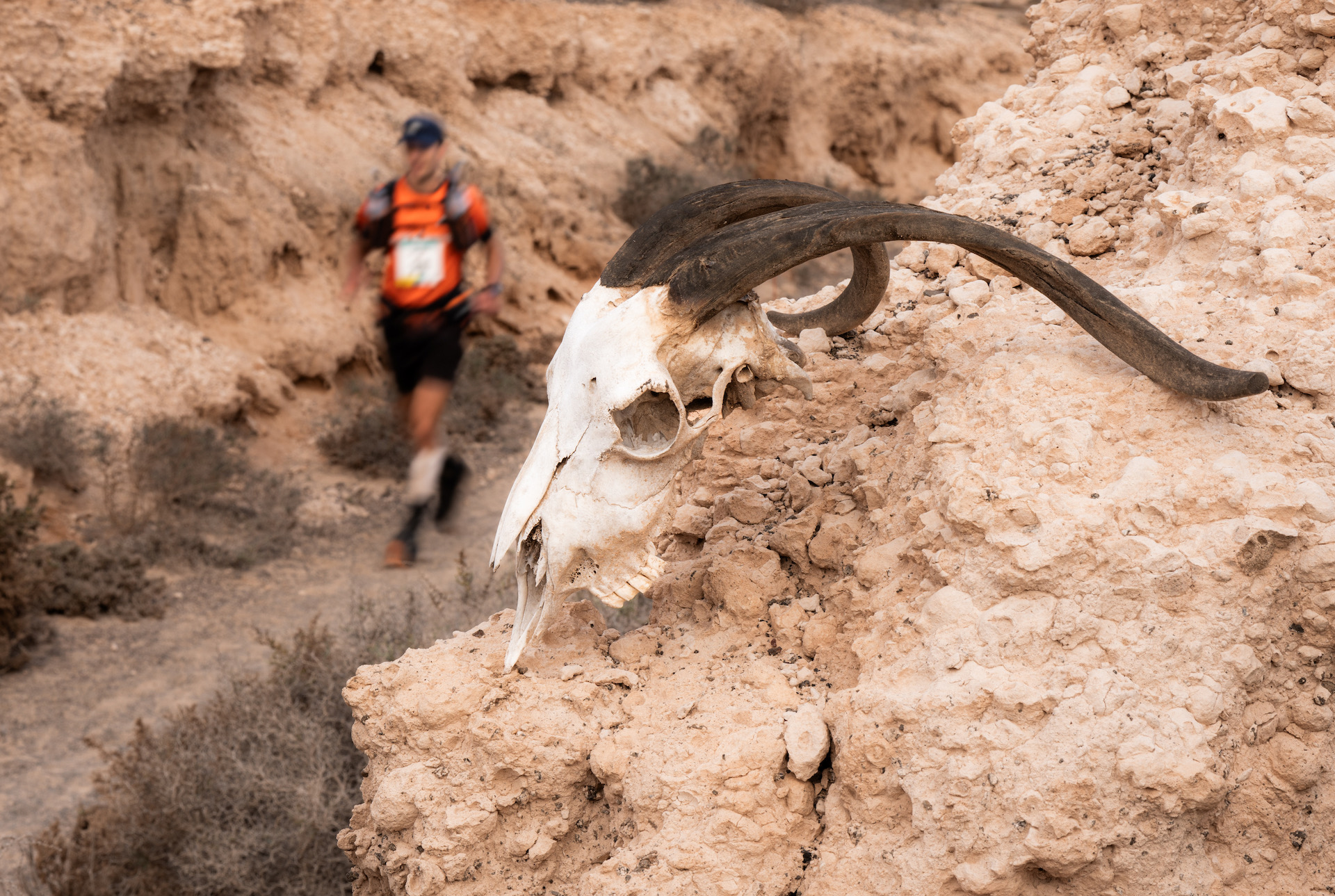
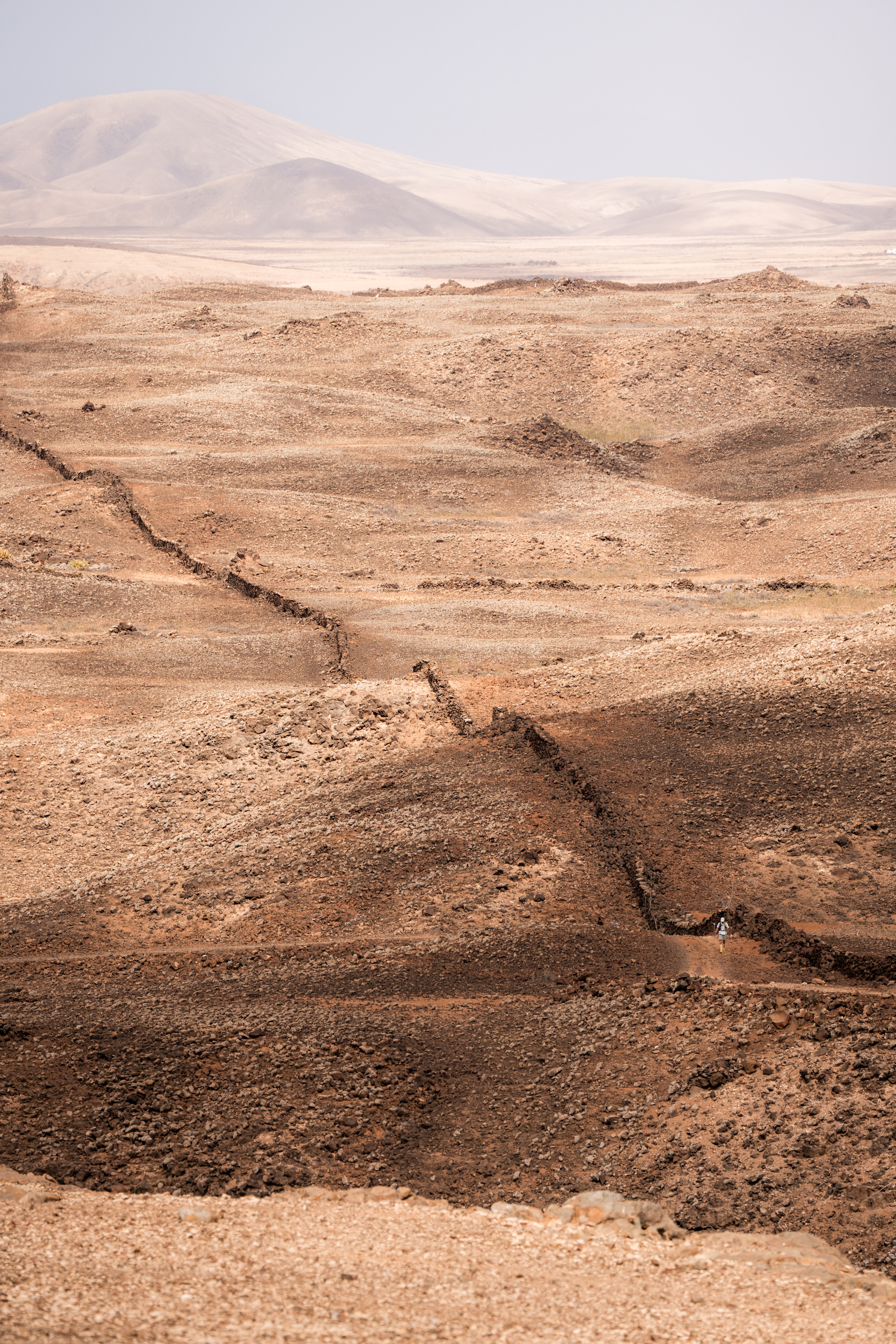
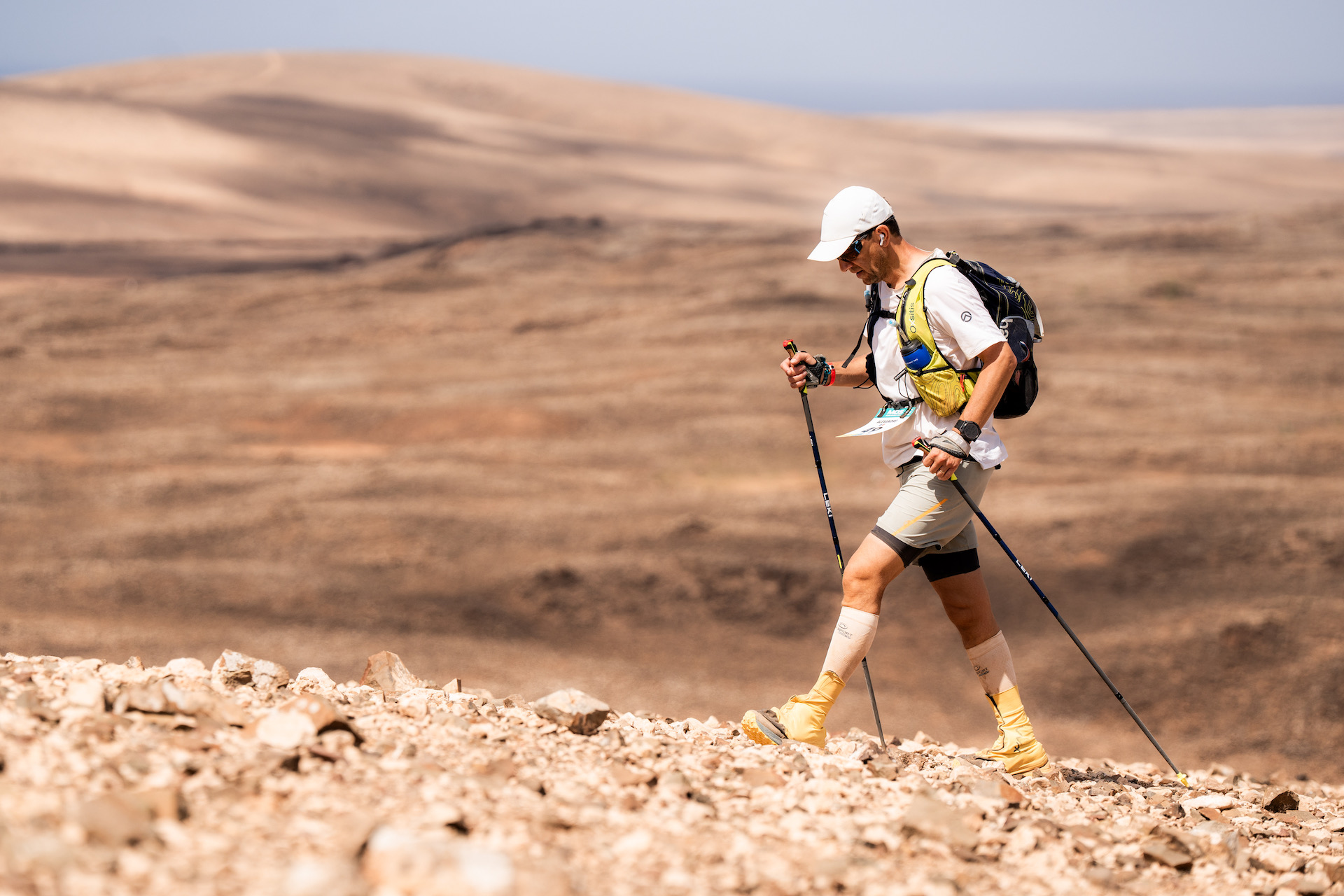
Stage 2 of the 2025 MDS 120 Cappadocia tested every ounce of determination runners had left in the tank.
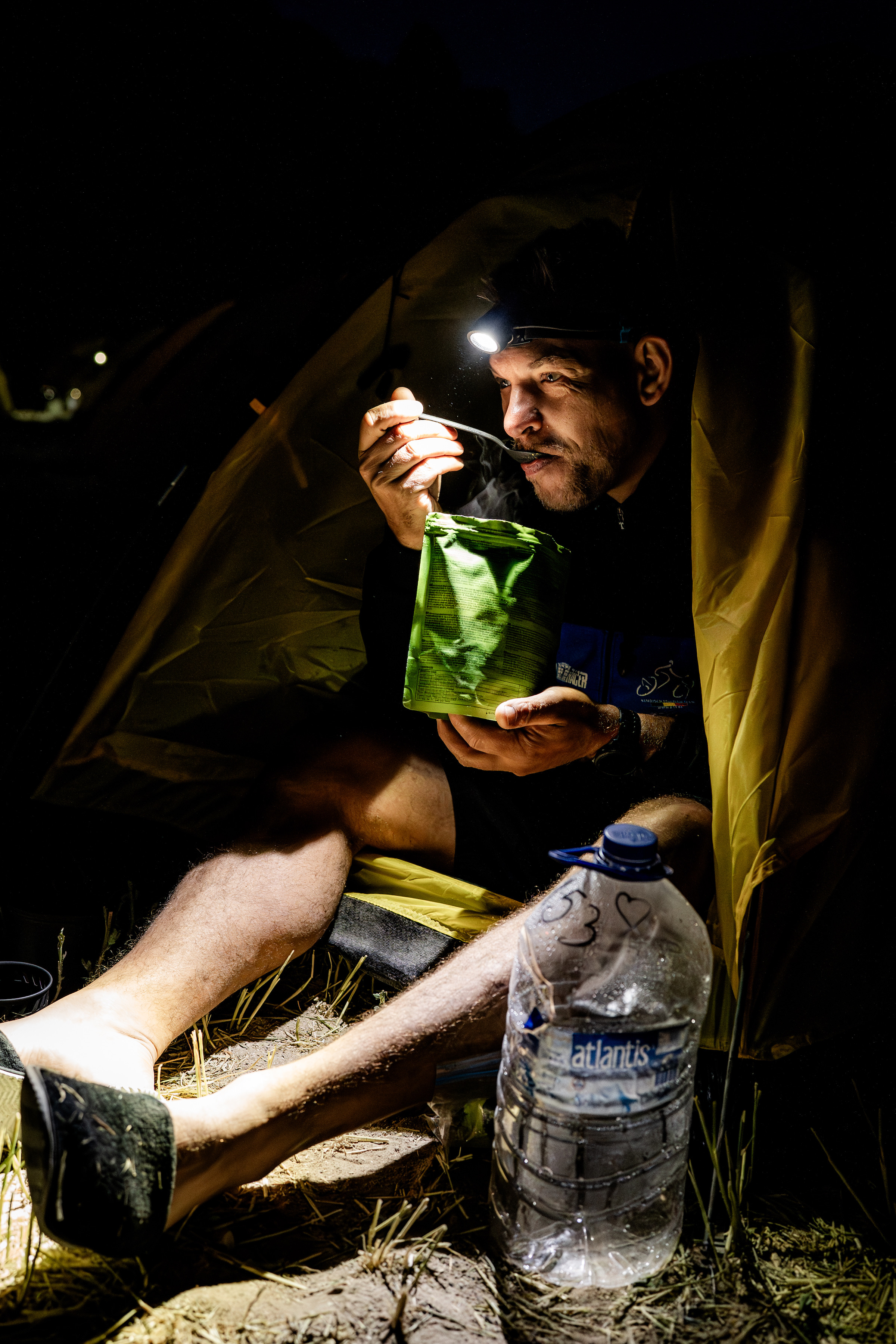
Breakfast bivouac style
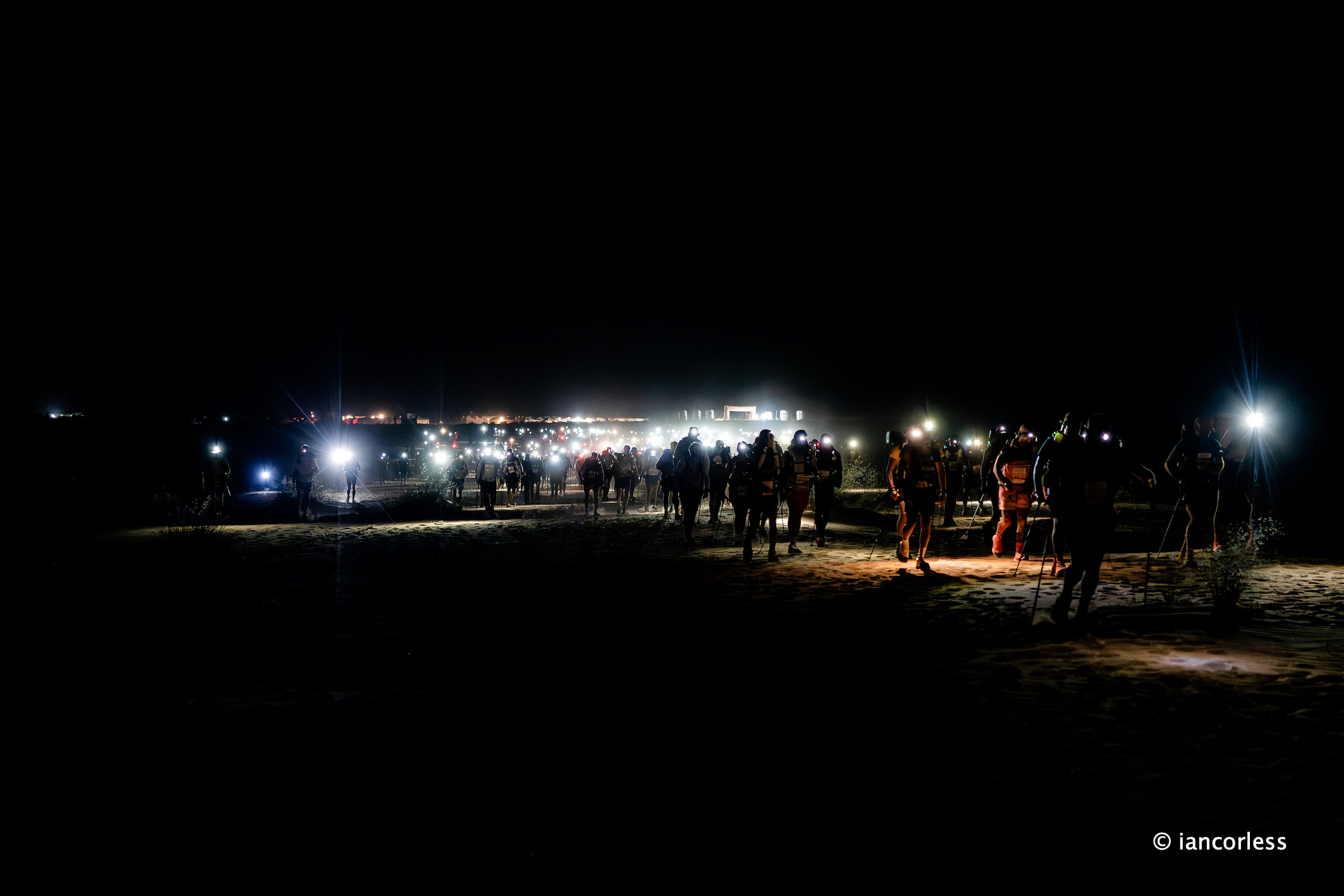
The day began with a 4:00 AM wake-up call under a pitch-black sky.
Just WOW!
By the time the starting line buzzed to life, the first glow of sunrise was filled with dozens of hot air balloons over the otherworldly landscape, a surreal and unforgettable sendoff into a brutal, beautiful day. This is what makes MDS 120 Cappadocia so special.
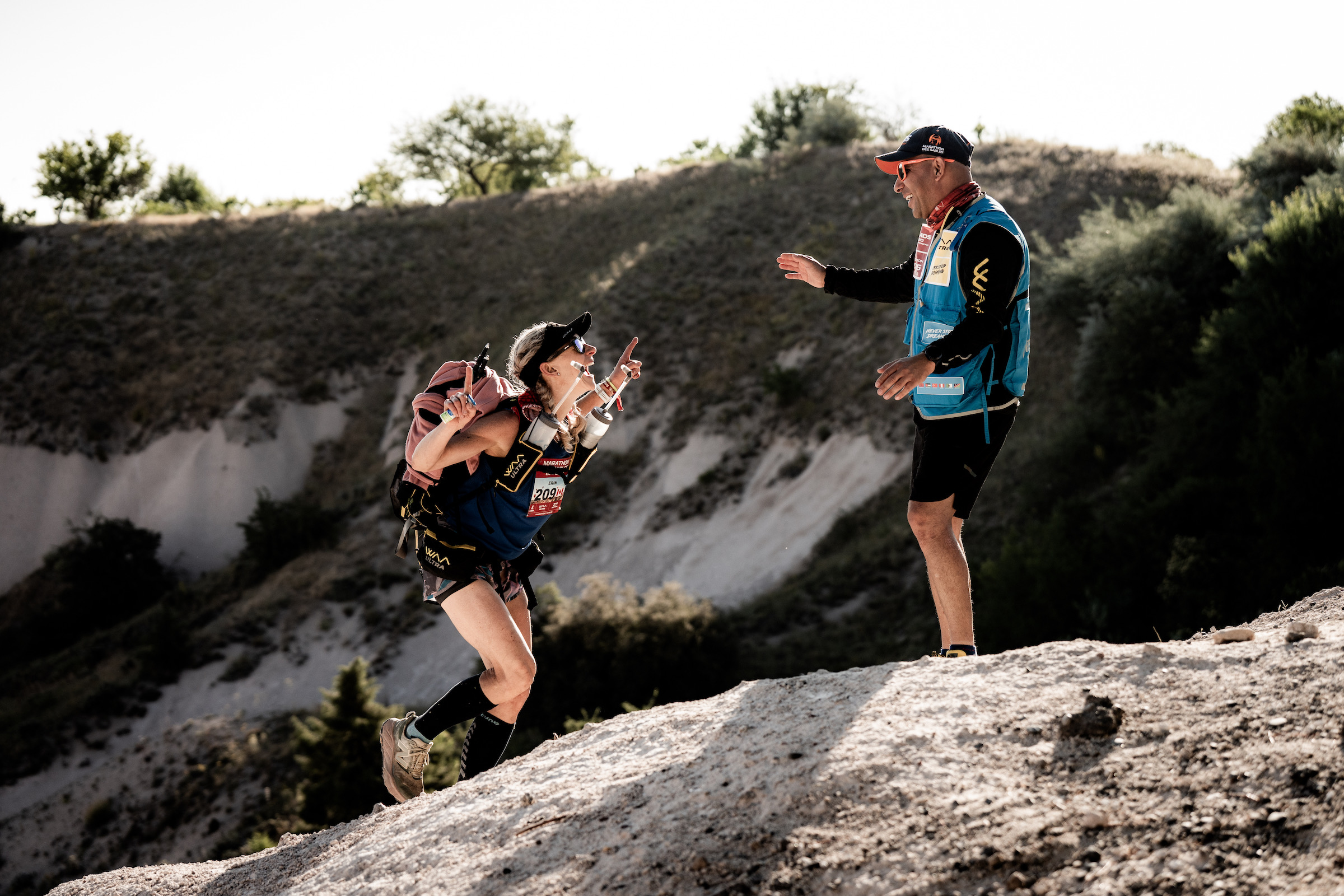
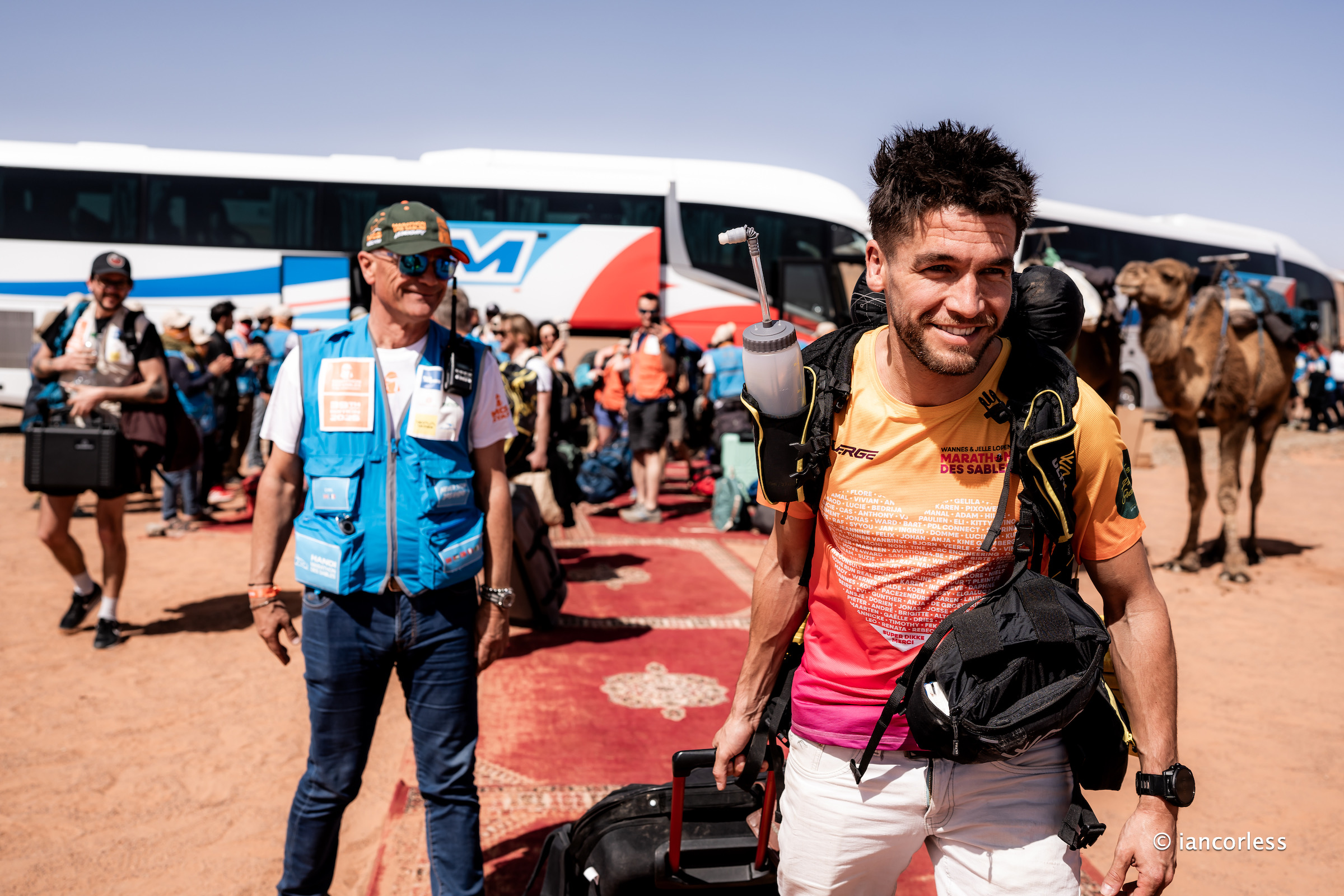
Blue coats, a key and important element of MDS 120.
Participants had a choice: 20km, 40.9km, or 58.6km. Three distances, one shared battle. No matter which course they committed to, the terrain made sure no one got an easy ride.
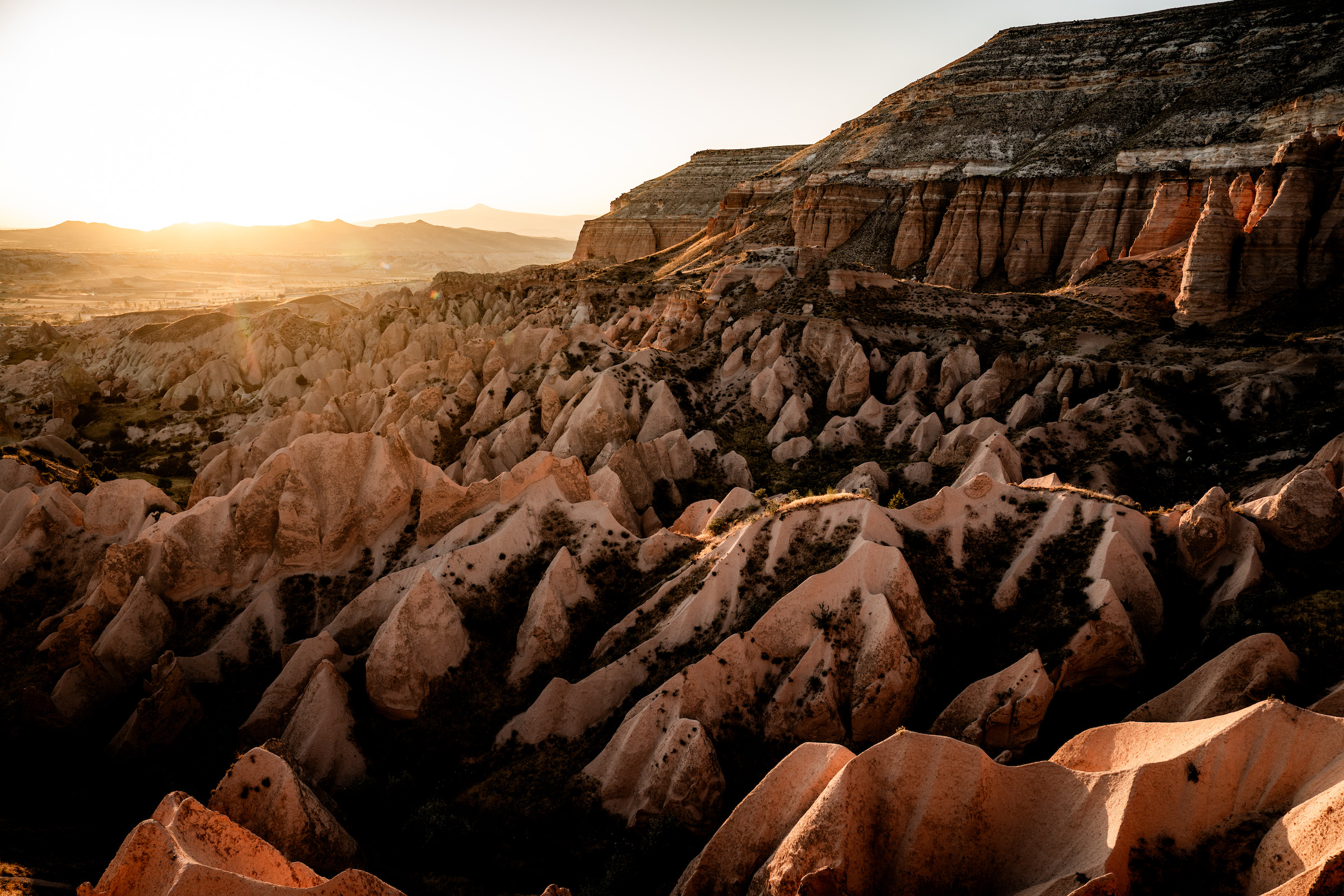
Stunning varied landscape
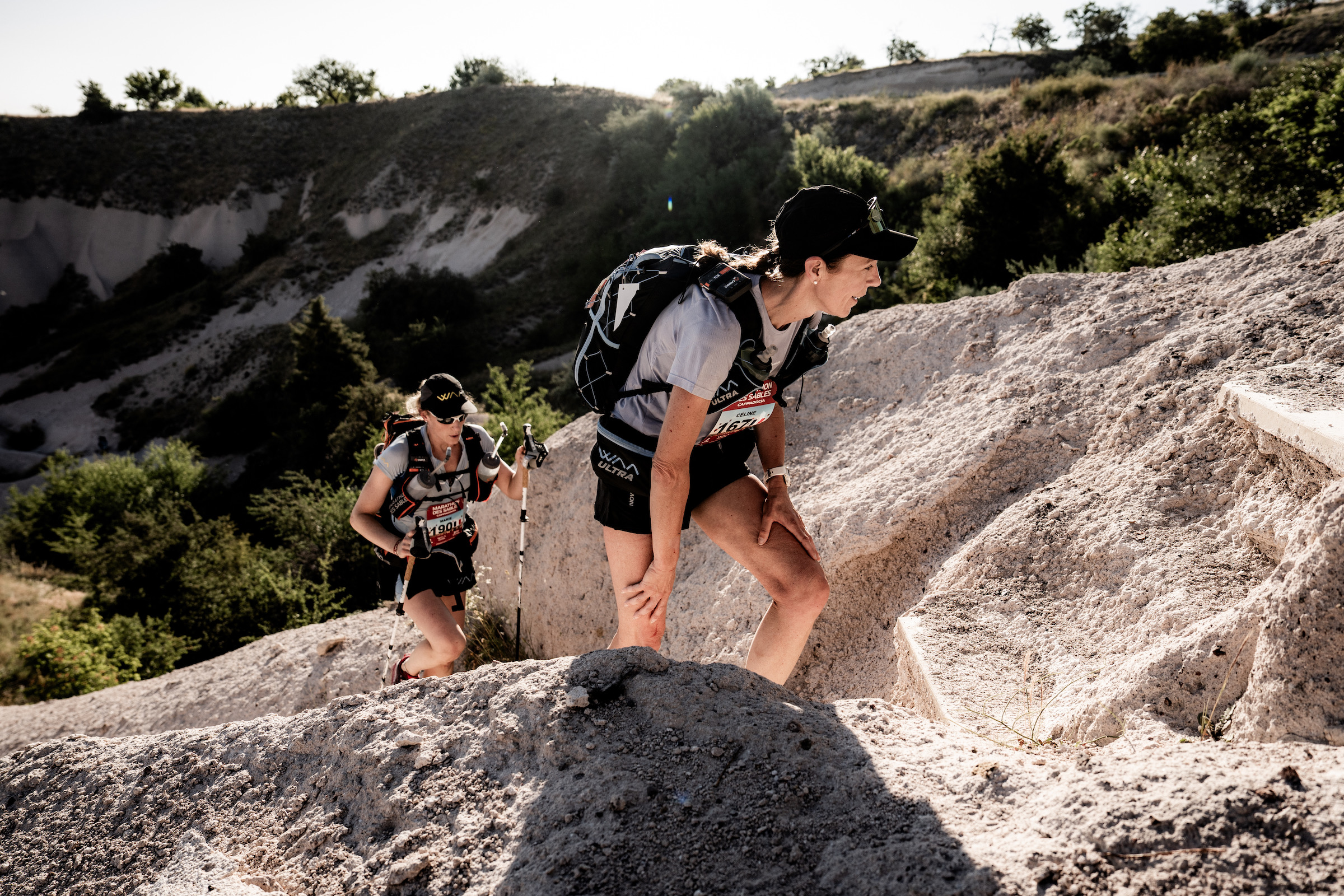
From the start, runners faced a punishing mix of steep canyons, tight tunnels, dusty switchbacks, and rocky plateaus.
Dense vegetation
The famed Cappadocia chimneys, towering rock formations sculpted by time and wind rose like sentinels along the route, offering brief moments of awe in between relentless stretches of heat and effort.
Unique landscape
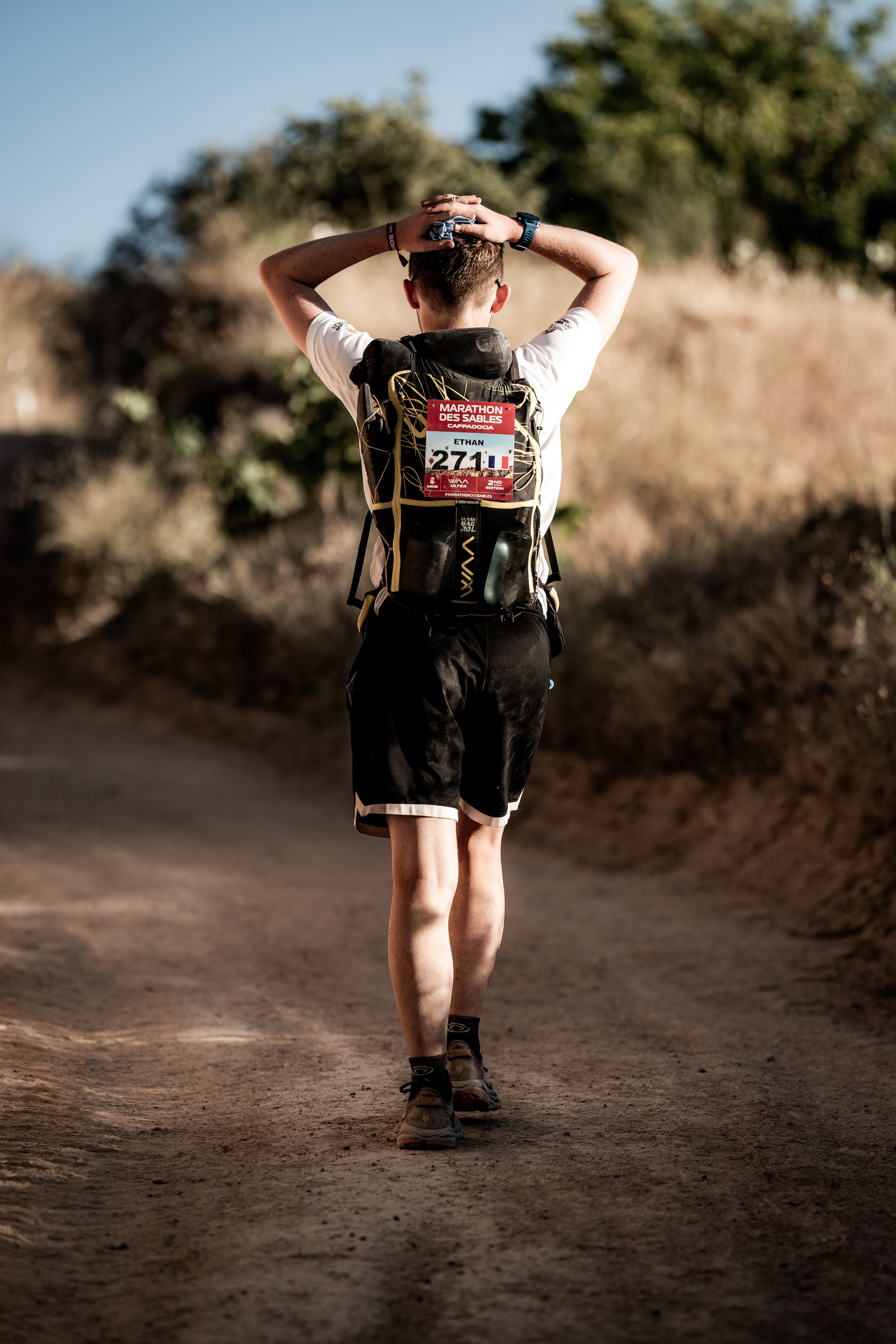
At times, dense vegetation clawed at legs and arms. Elsewhere, there was nothing but the sun, dry air, and the crunch of feet against rock and dust.
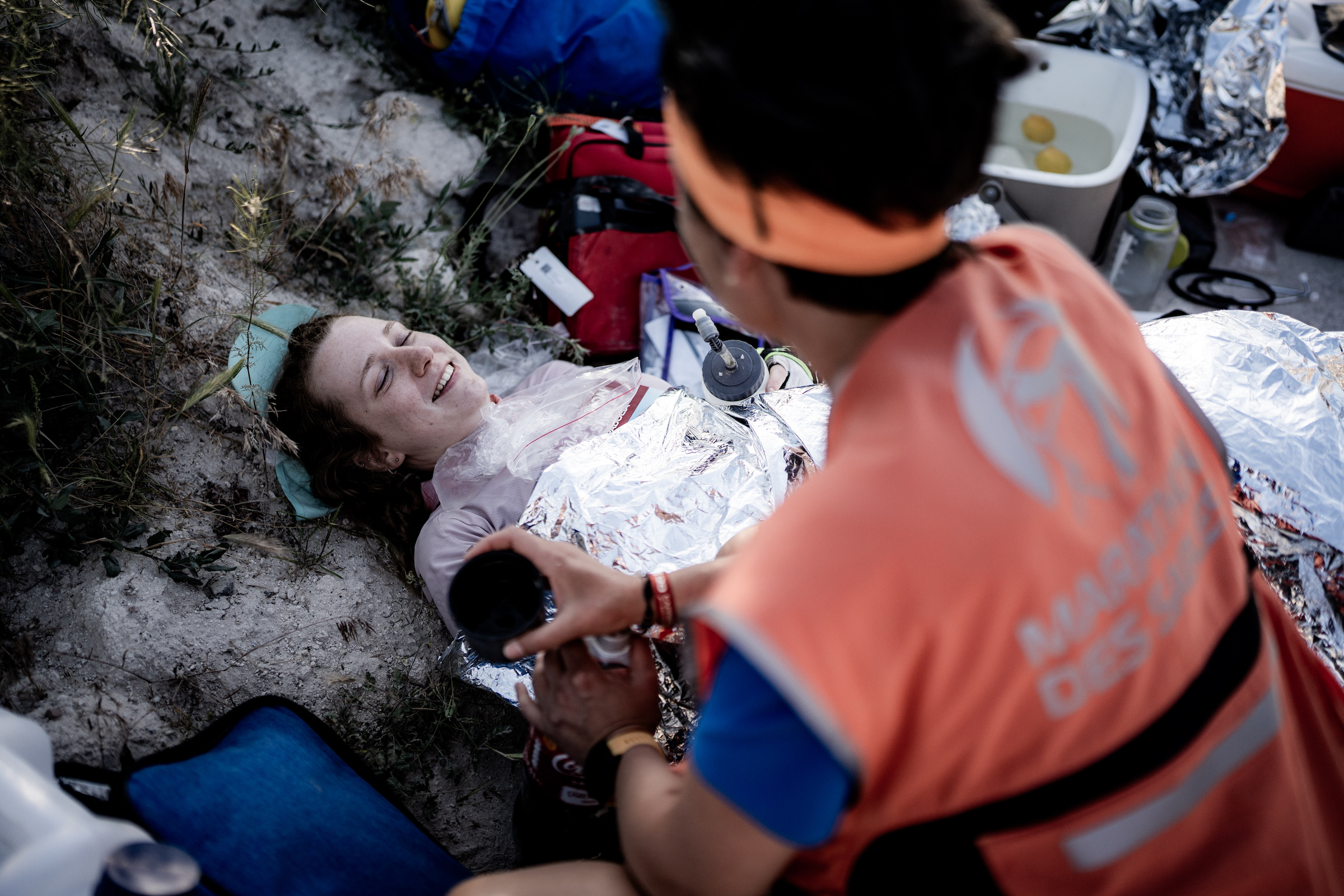
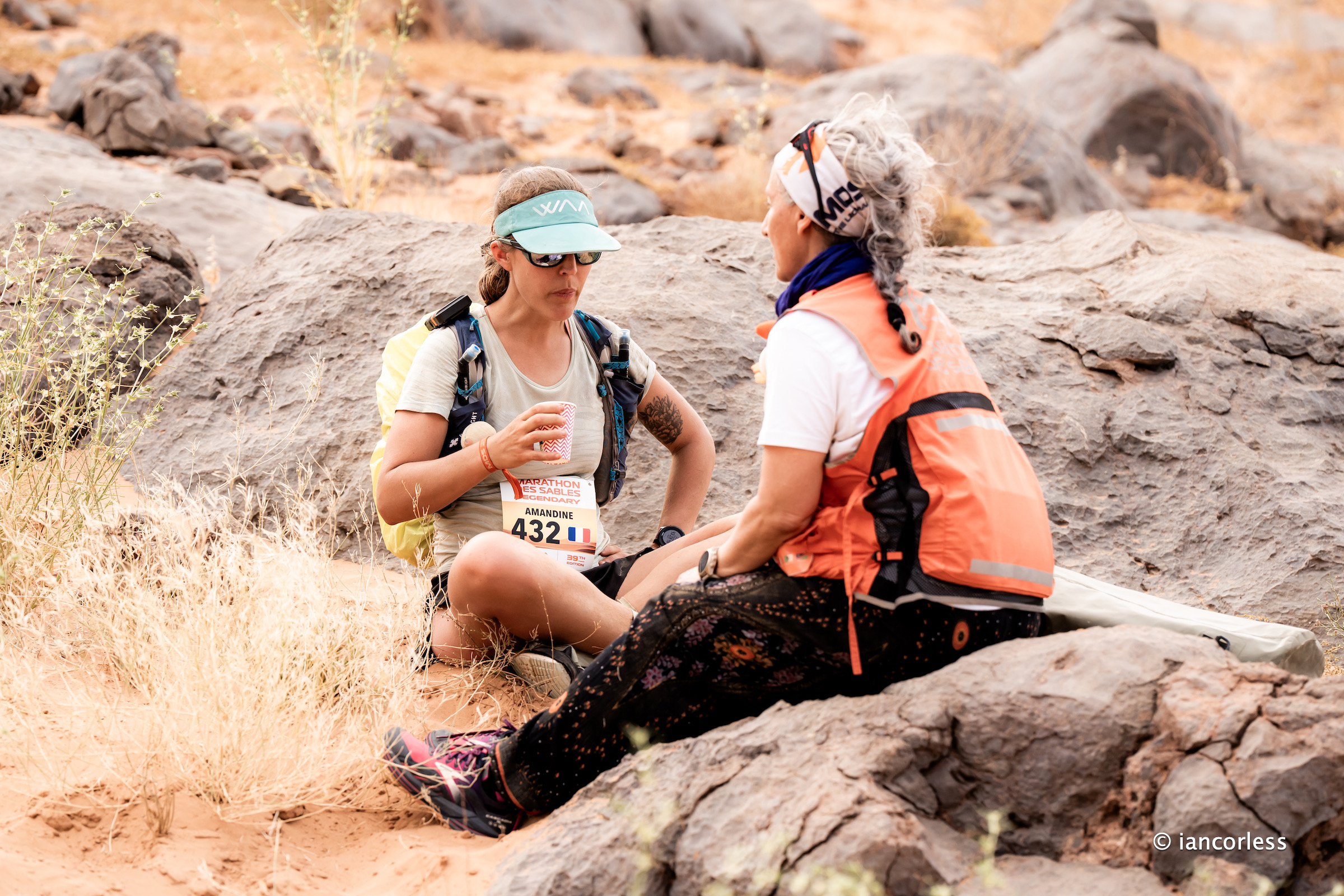
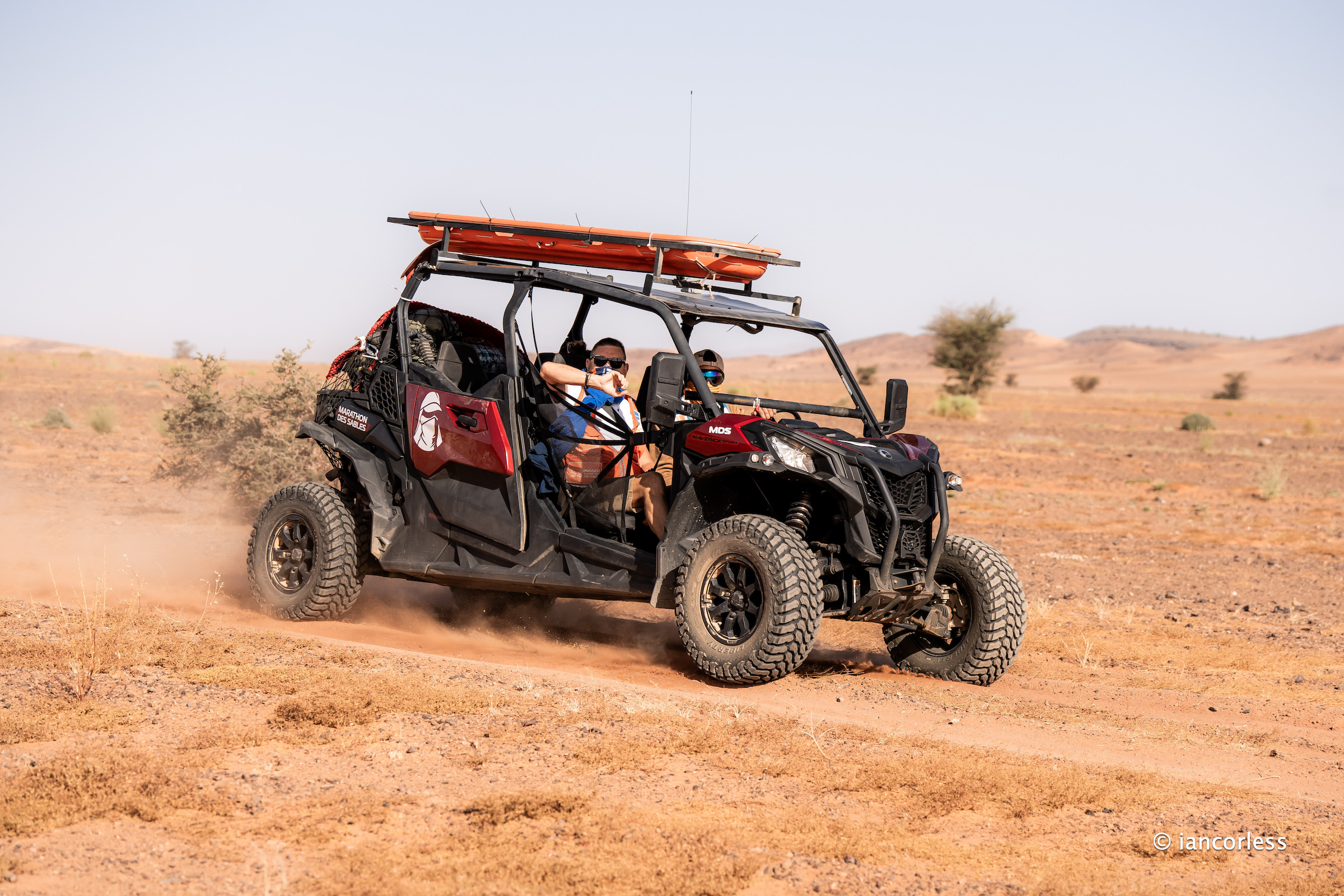
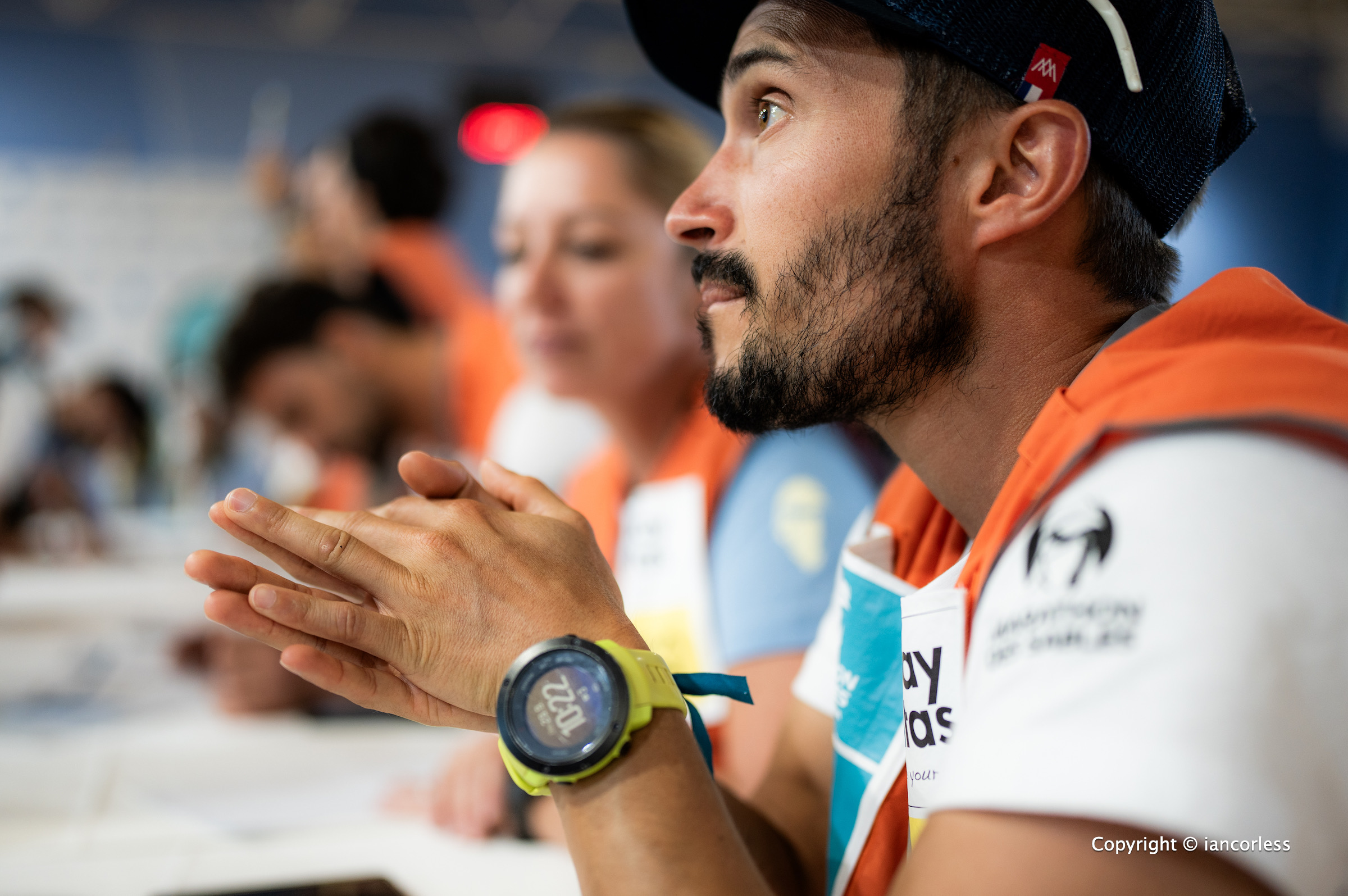
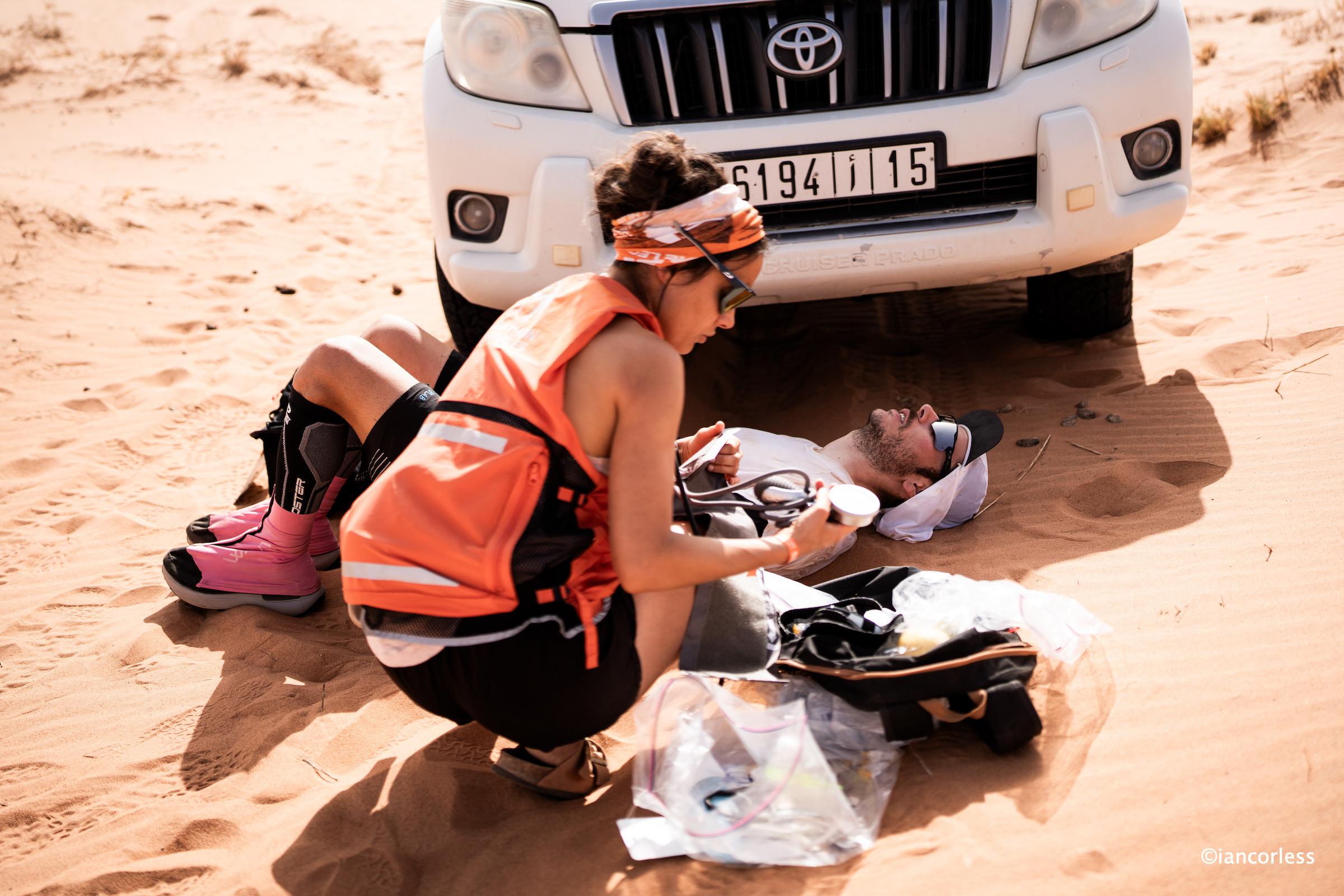
The longer the distance, the deeper the challenge. The sun bore down with intent, turning even the breezes into blasts from a hair dryer. Hydration and mindset became as critical as foot placement. There were stumbles, cramps, and moments of silence where only the sound of breath and grit kept runners going. This is where the MDS 120 orange (medical) and blue (logistics) help keep the runner’s going, importantly, they bring a key safety element to the race.
Maëva, our last finisher receiving treatment just 4km’s from the finish.
But they did go. Every last one of them.
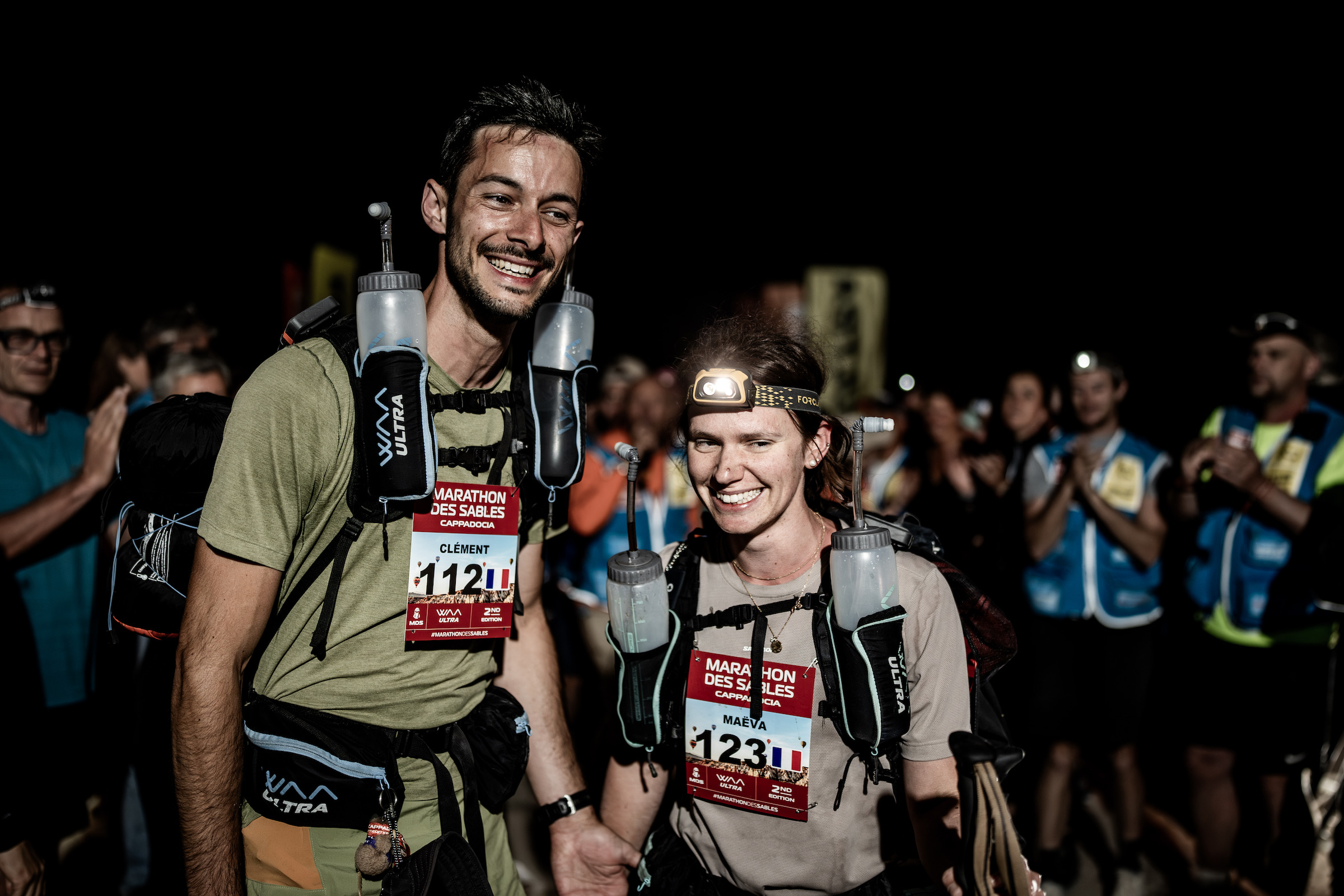
The final competitors crossed the line after an incredible 16 hours and 25 minutes on the move. A huge shoutout to Maëva and Clémment, who showed unreal resilience and heart, pushing through to the very end.
To all who took on Stage 2, no matter the distance, no matter the time, today you didn’t just run through Cappadocia. You conquered it.
Tomorrow brings the third and final stage, concluding in the Love Valley.
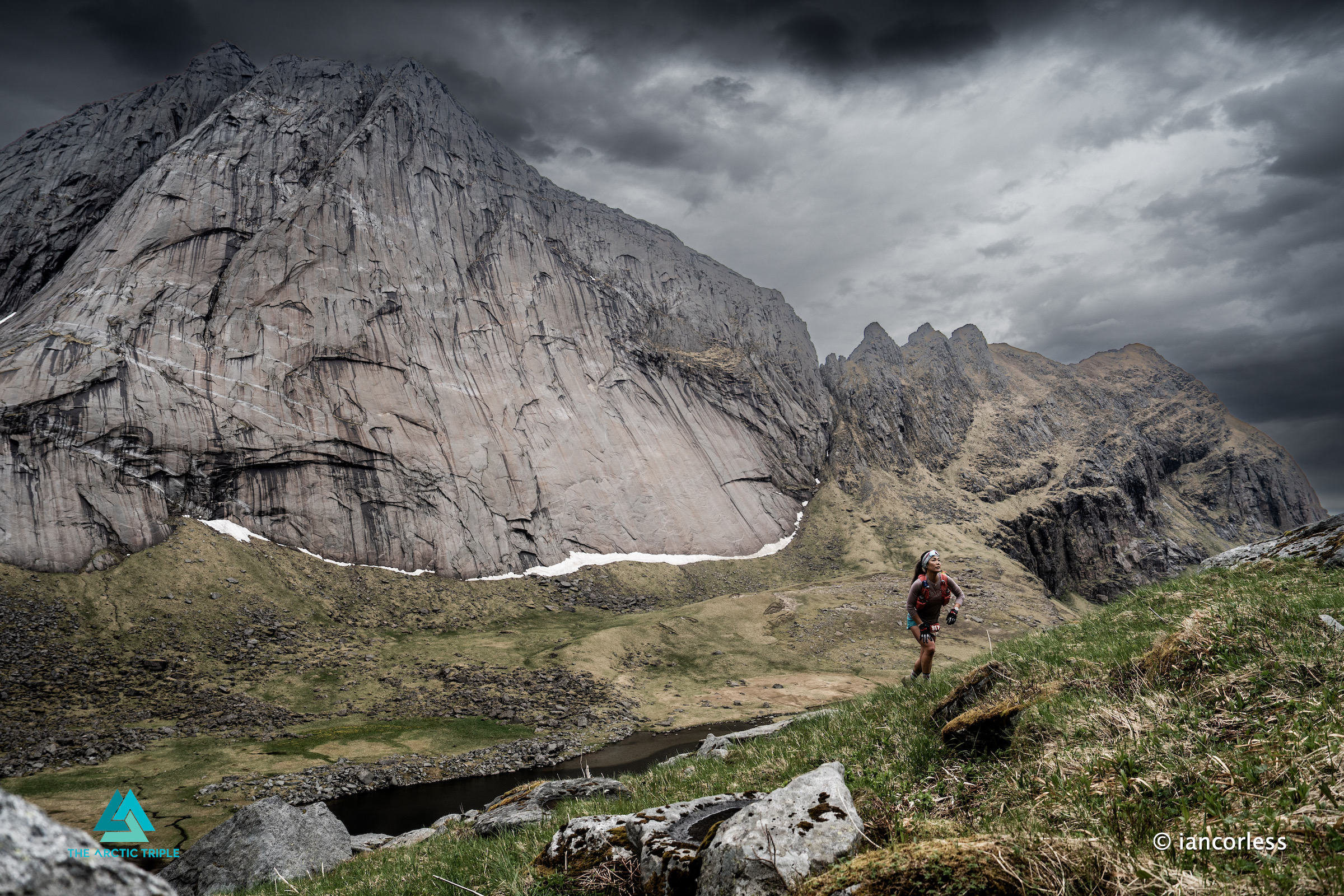
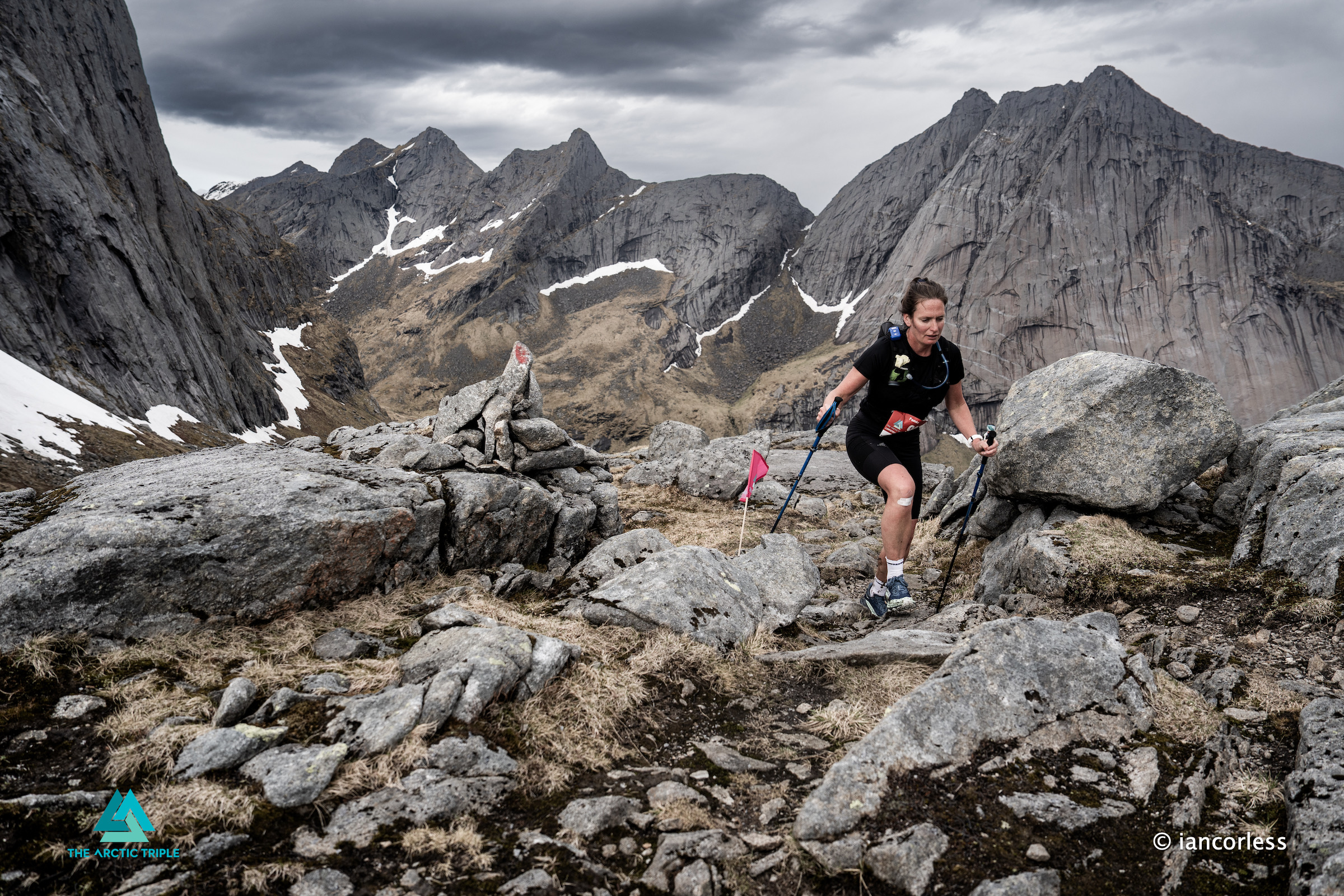
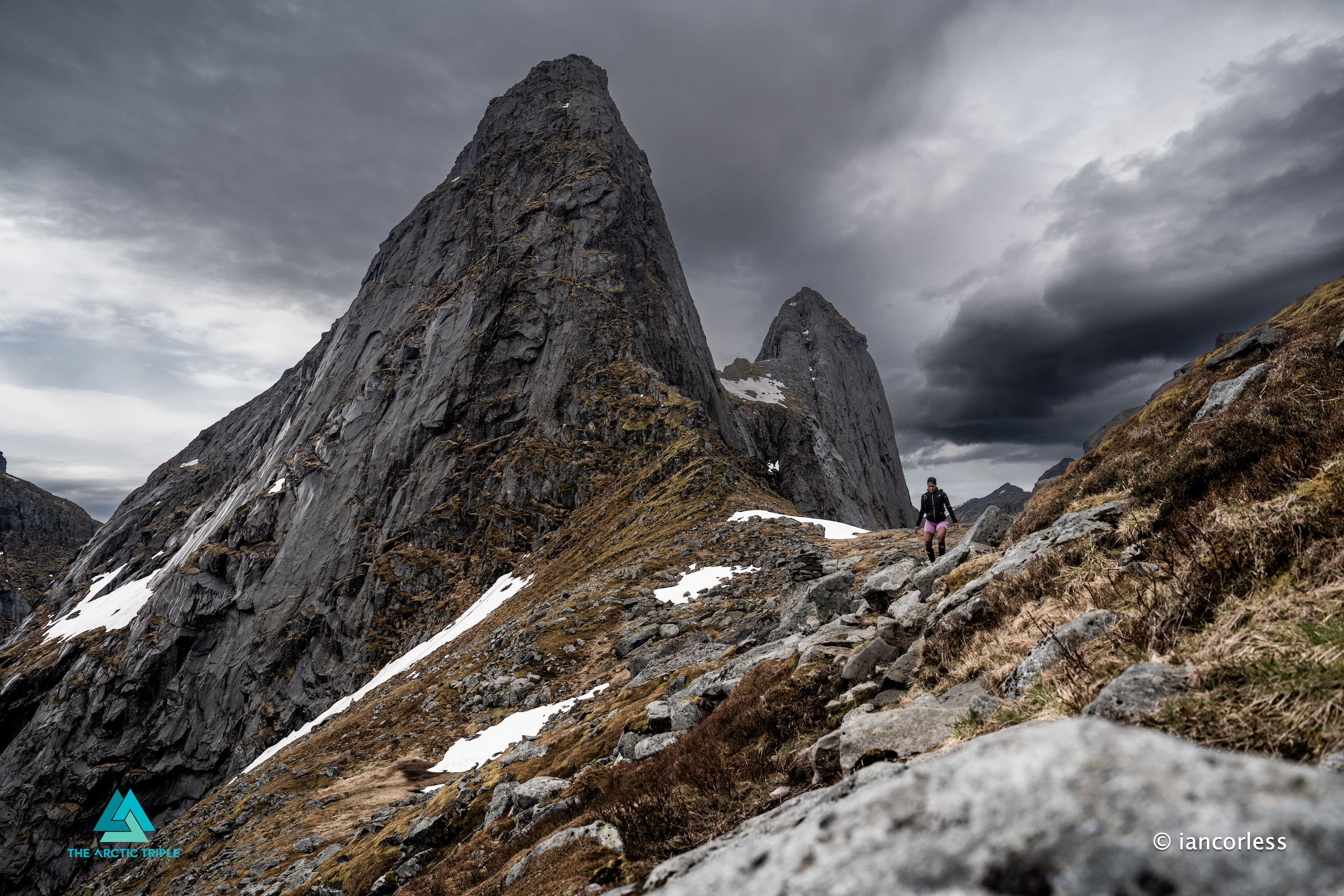
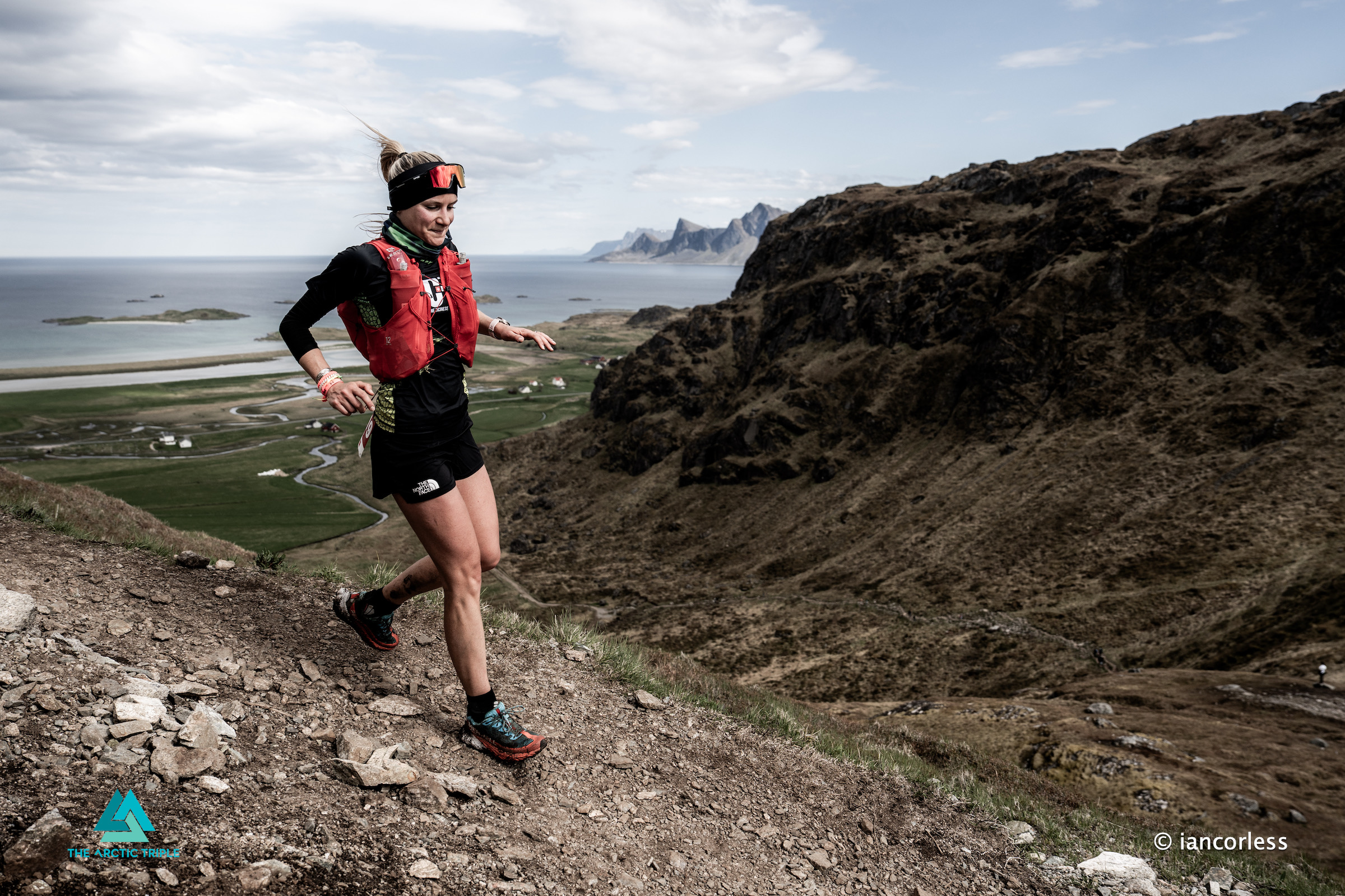
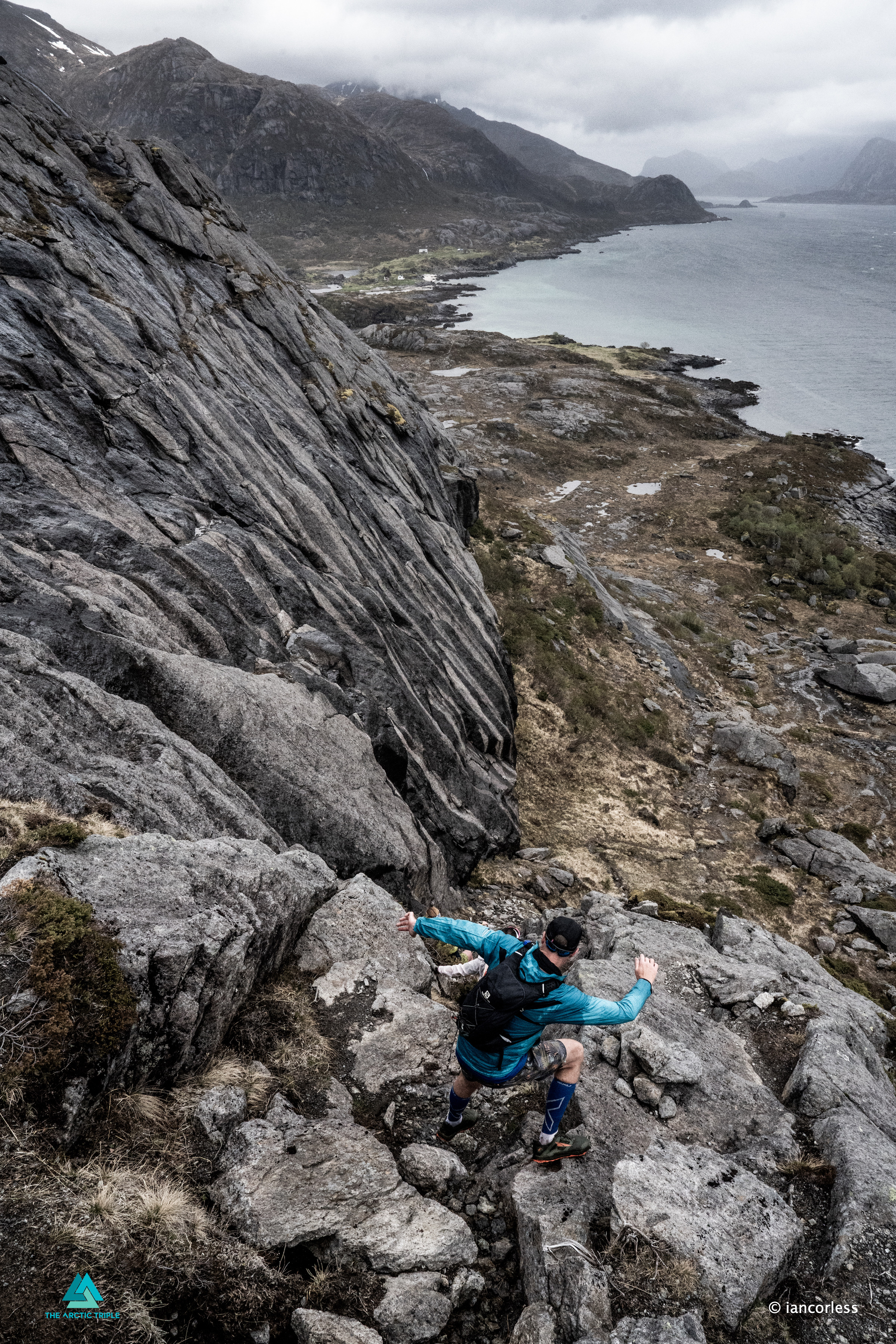
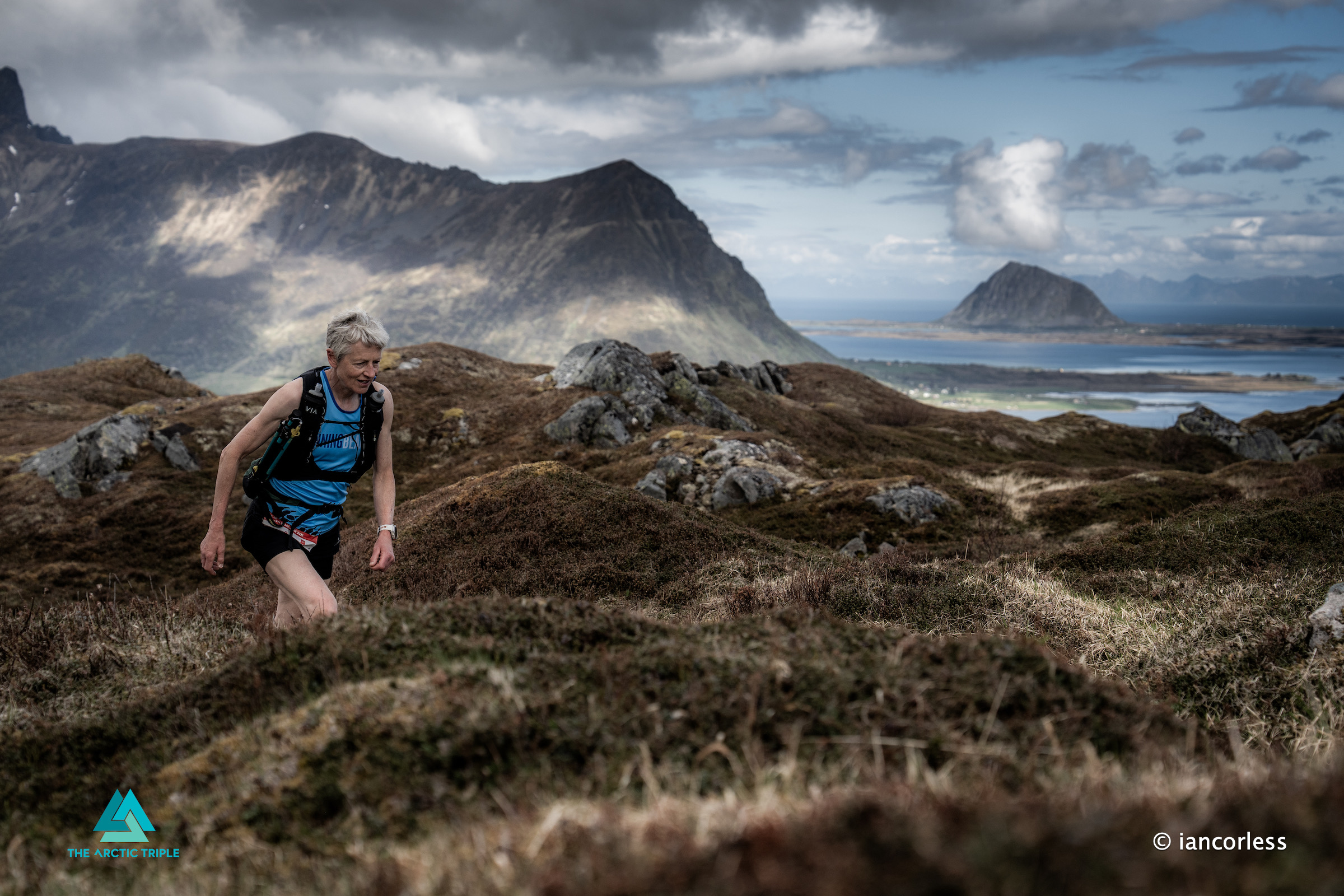
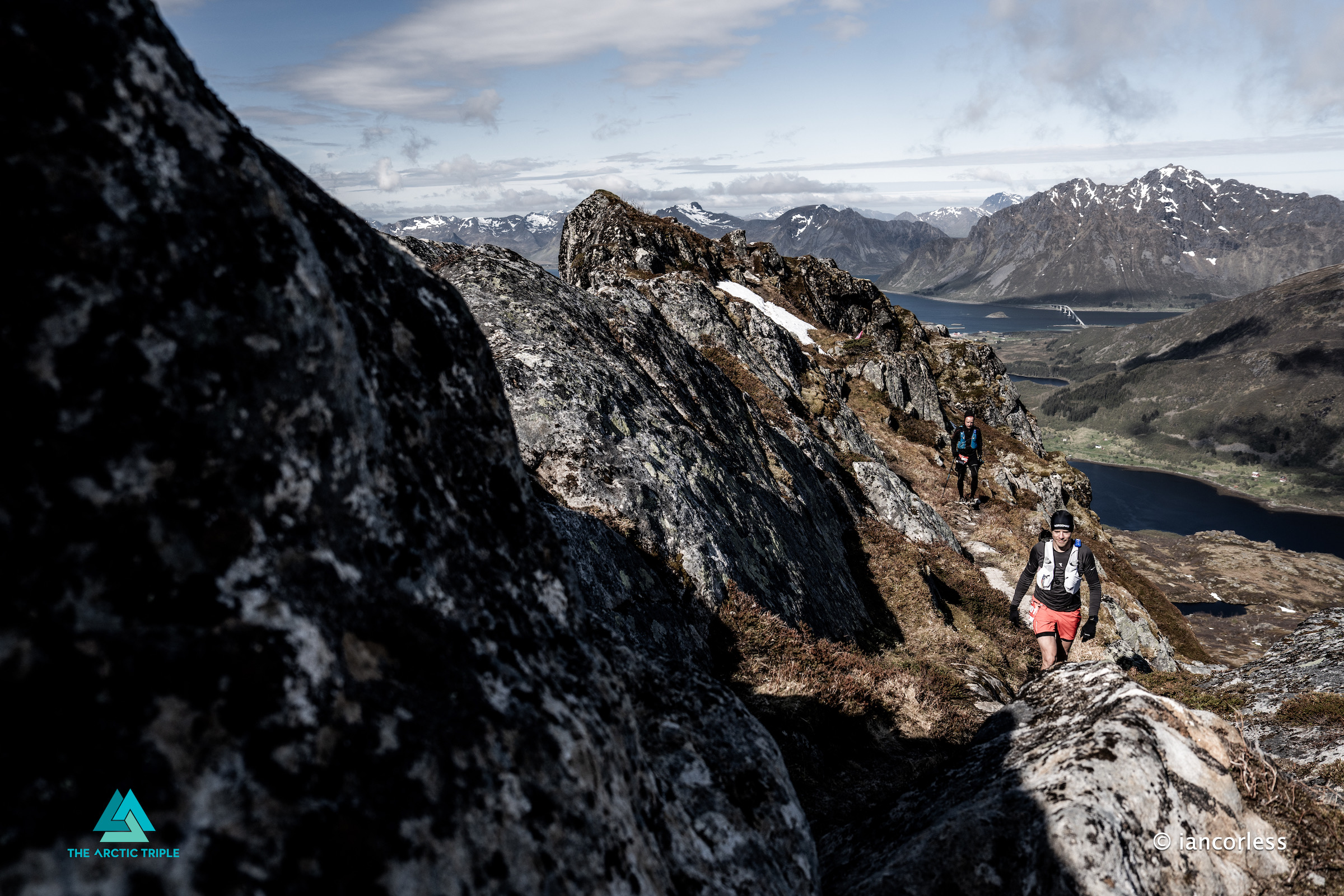
There are races, and then there’s the Lofoten Stage Run by The Arctic Triple team. What unfolded in May 2025 wasn’t just a footrace; it was a deep, soul-grinding, awe-inspiring journey through one of the world’s most arresting landscapes. Four stages. Two distances, 170 km and 100 km.
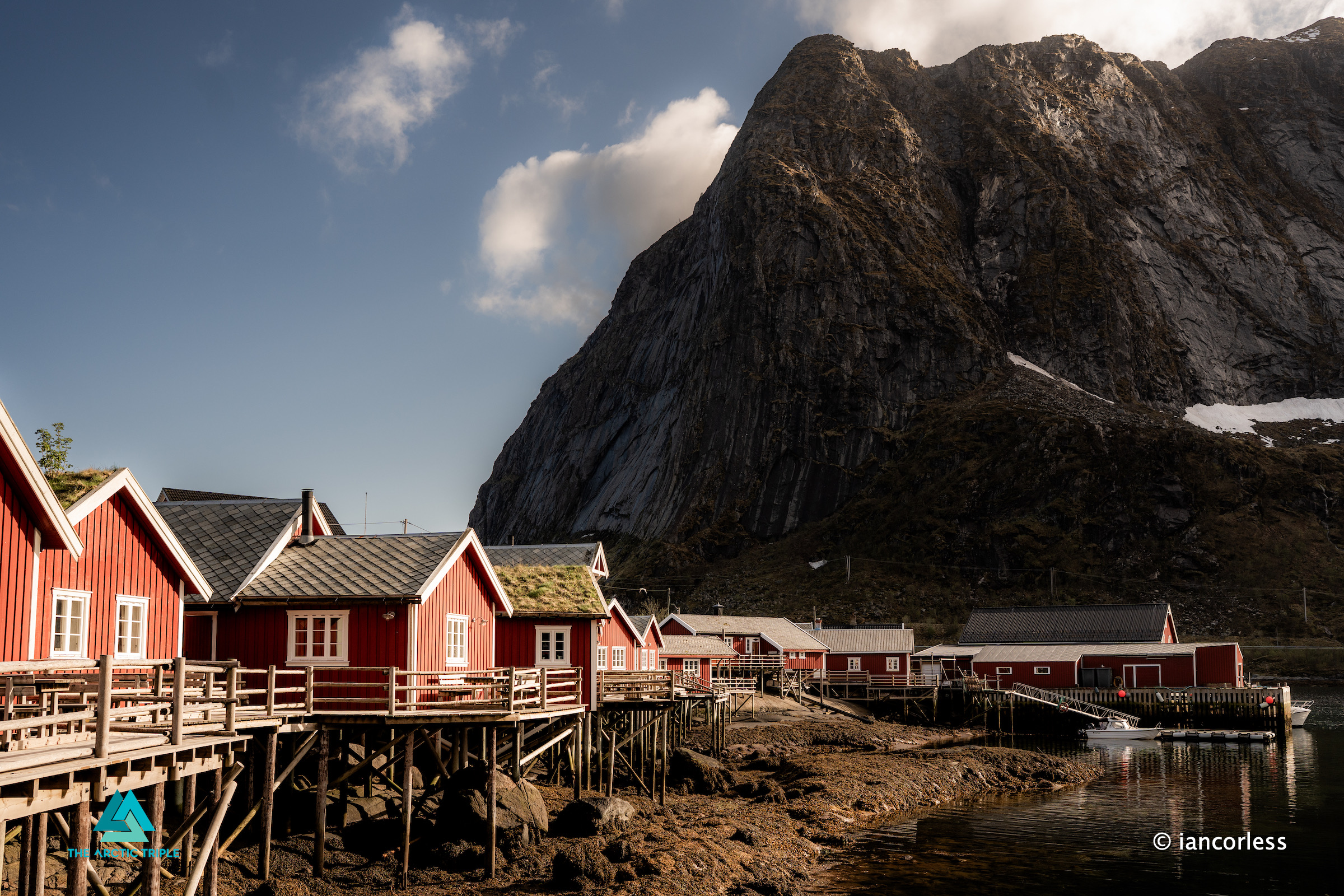
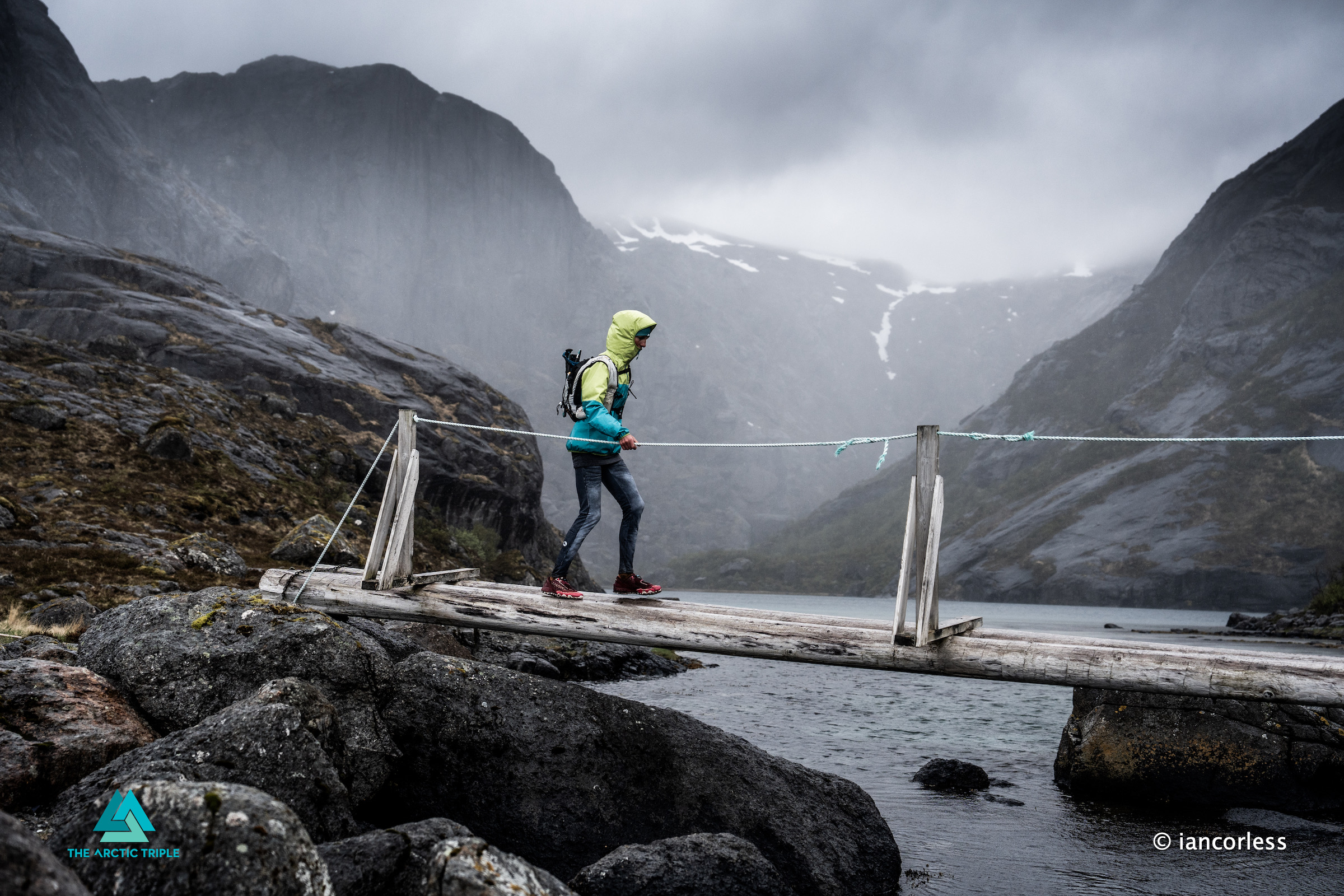
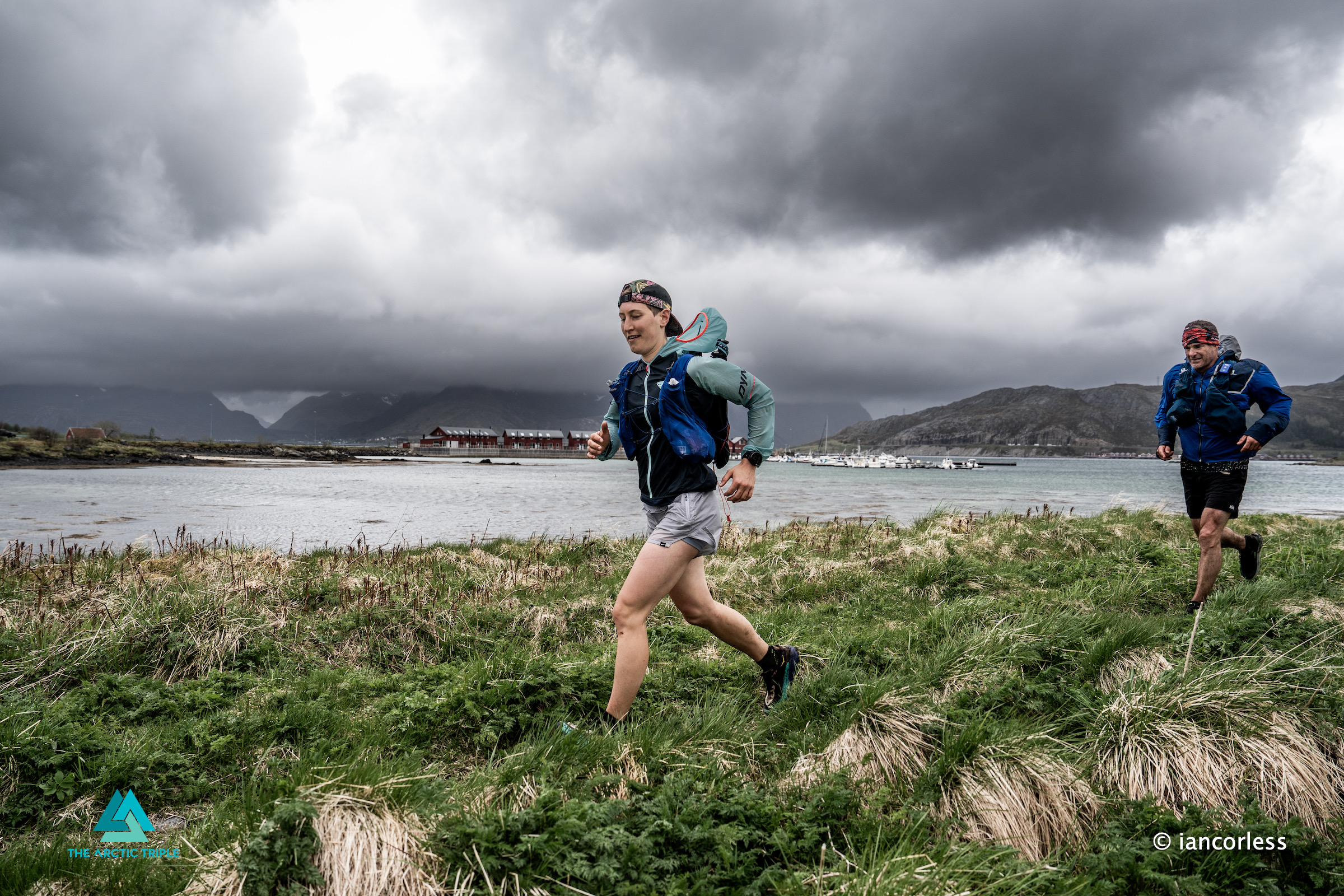
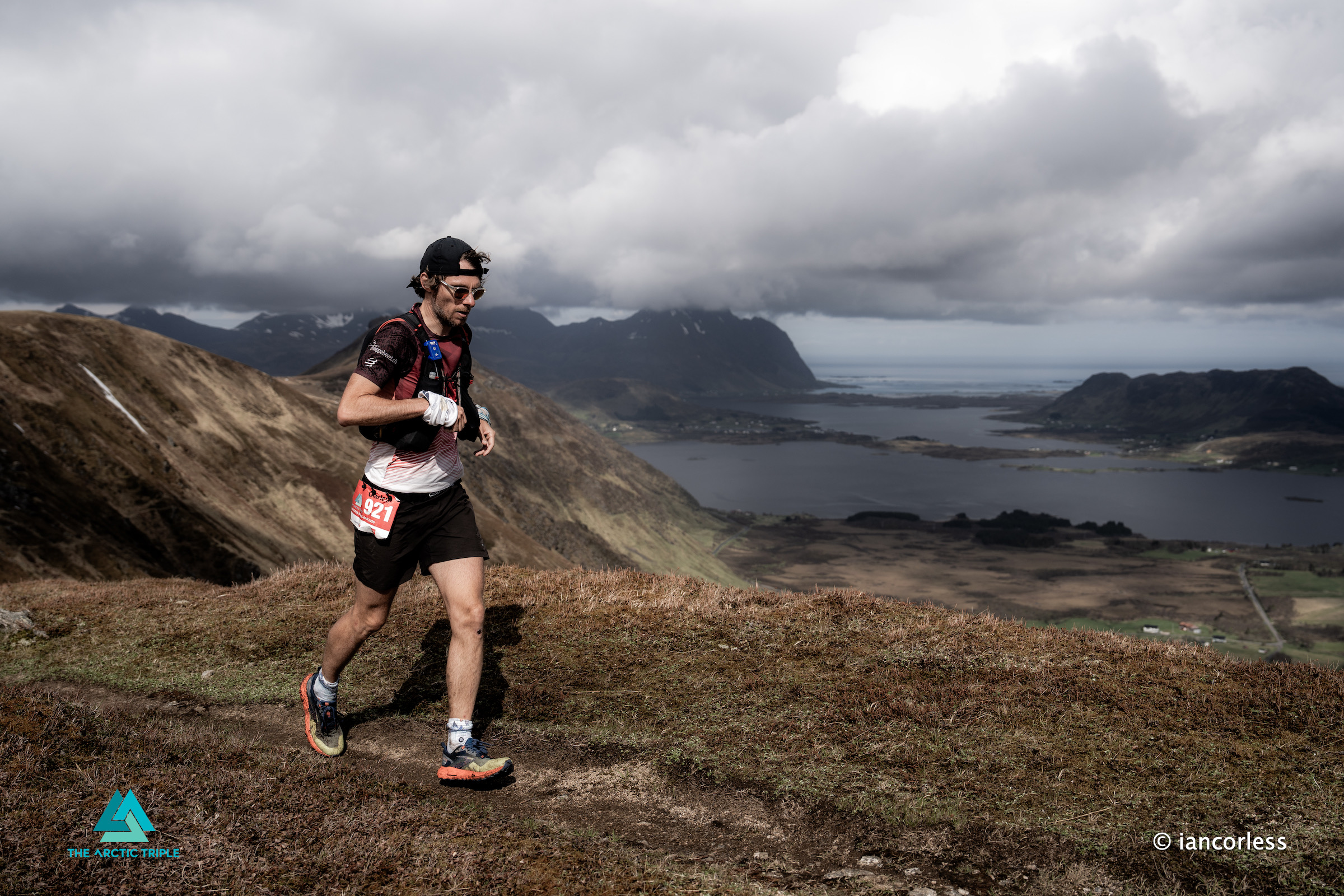
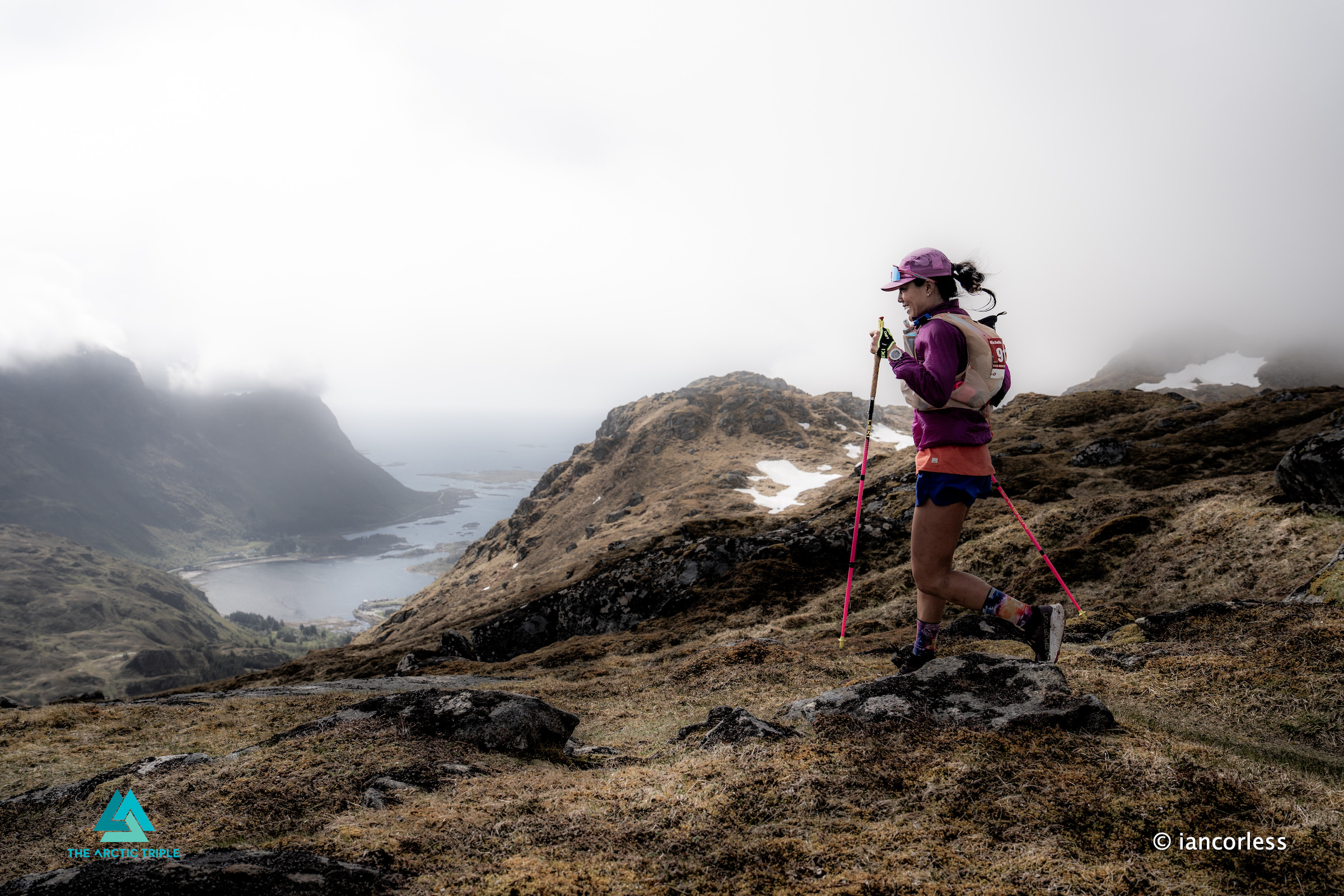
Across wild coasts, knife-edge ridges, fishing villages, and snow-streaked mountains, runners pushed their limits, and often redefined them, surrounded by the raw power and beauty of Norway’s Lofoten archipelago. Sleep came in hytte and seaside rorbuer; rest was fleeting, but memories were burned in.
Stage 1: Into the Wild – Kjerkfjorden to Nusfjord (39 km / 20 km)
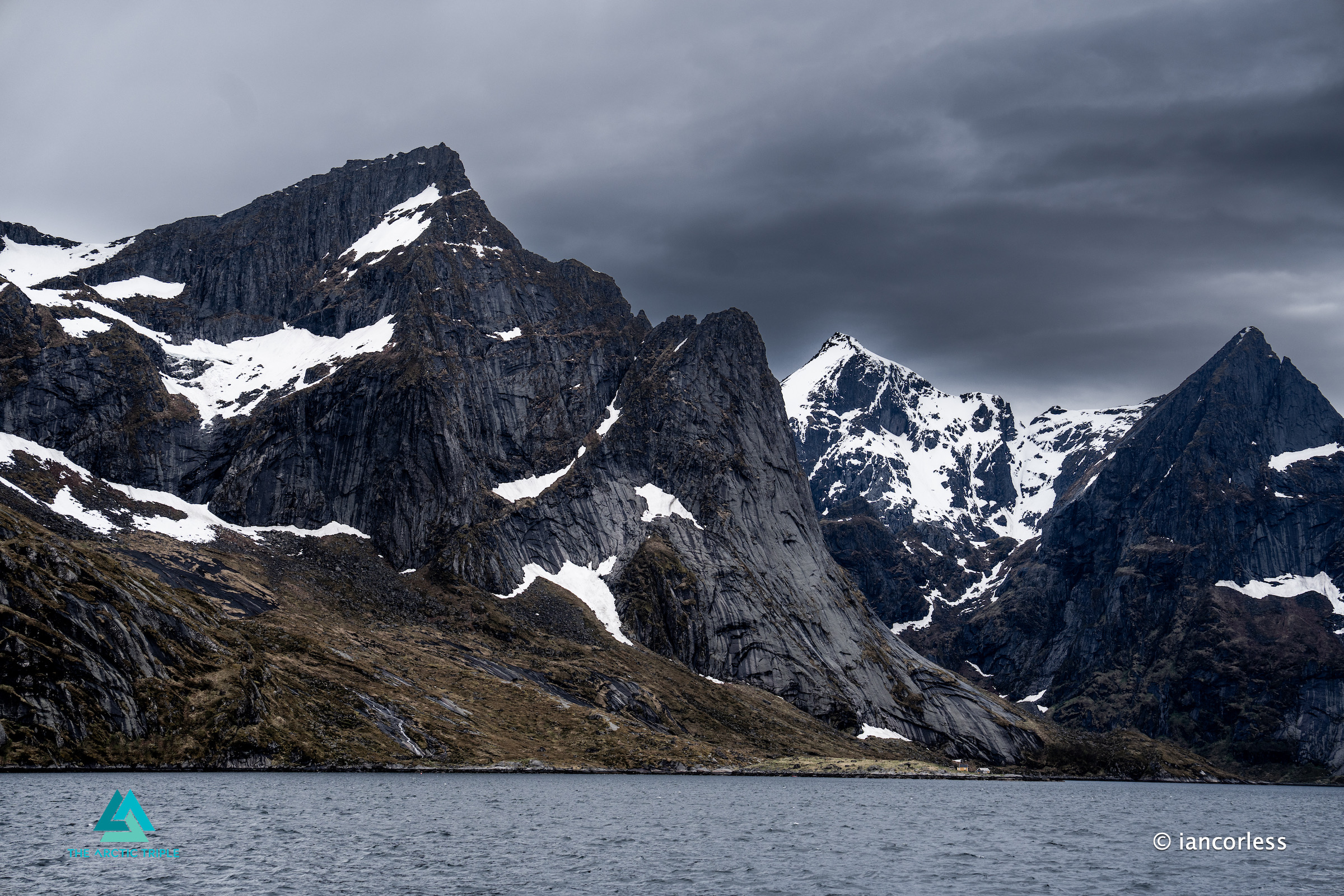
The race began like a dream: a boat ride through cold, steel-blue fjords, cliffs rising on all sides like the jaws of some ancient creature. As runners disembarked at Kjerkfjorden, the silence was broken only by soft footsteps and shallow breaths, nerves on edge, anticipation sharp.
The terrain wasted no time. A steep climb out of the fjord led straight into deep snow patches and slick rock. Then came the surreal beauty of Kvalvika Beach, where sand met snow and the ocean roared its approval. For the 170 km runners, the day stretched long into the day, ending with a technical coastal section into the storybook village of Nusfjord. Legs screamed, but hearts were full.
Stage 2: Edge of the Earth – Nusfjord to Leknes (34 km / 17 km)
Day two was tougher. Tighter trails, more scrambling. The wind picked up, mist rolling in from the Norwegian Sea like smoke, rain fell, at times, hard and relentless. Between breaths, runners caught glimpses of jagged peaks piercing the sky and turquoise bays far below. This was Lofoten in full cinematic glory, wild, moody, and impossibly vast.
A tunnel under the sea added a surreal twist, legs burning as they climbed out of the darkness and back into the light. Offersøykammen offered panoramic views, but it demanded everything. As runners arrived in Leknes, drenched, scraped, and shivering, you could see it in their faces: wonder, pain, pride.
Stage 3: The Long Haul – Leknes to Rolvsfjorden (52 km / 35 km)
This was the crucible. The longest stage. Bodies were already breaking down, but the terrain opened up, longer runnable sections, smoother single track. The landscape changed too. From rugged coastline to sweeping highlands and serene lakes, this was Lofoten in its gentler form.
As the finish line at Brustranda Fjordcamping came into view, many had run out of words. “This is insane,” one runner muttered, grinning. “But it’s beautiful.”
Stage 4: The Final Push – Rolvsfjorden to Svolvær (45 km / 21 km)
The last day was emotional. Legs were dead weight. Ankles rolled. Minds fogged. But everyone knew what waited: the end, the reward, the moment of elation.
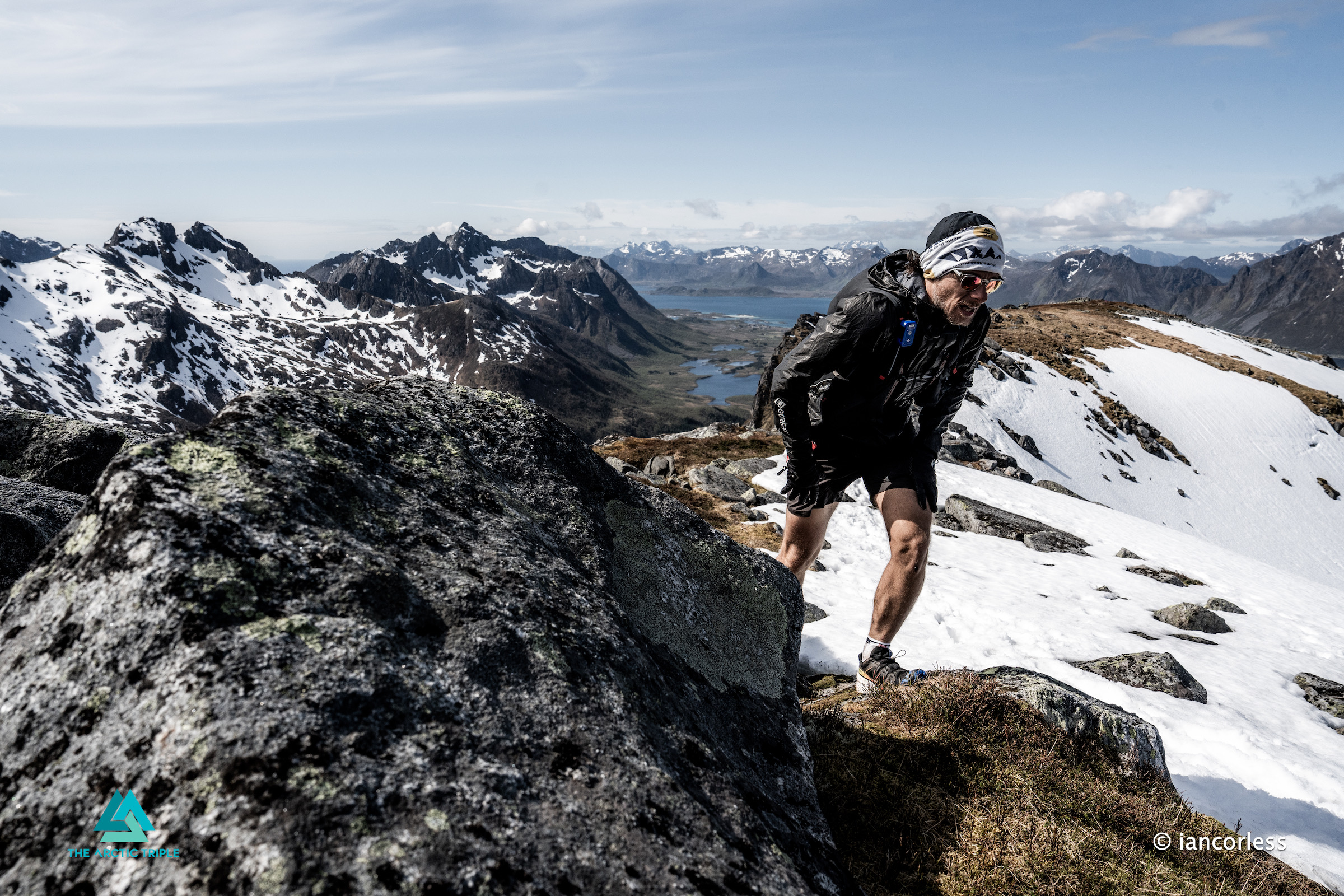
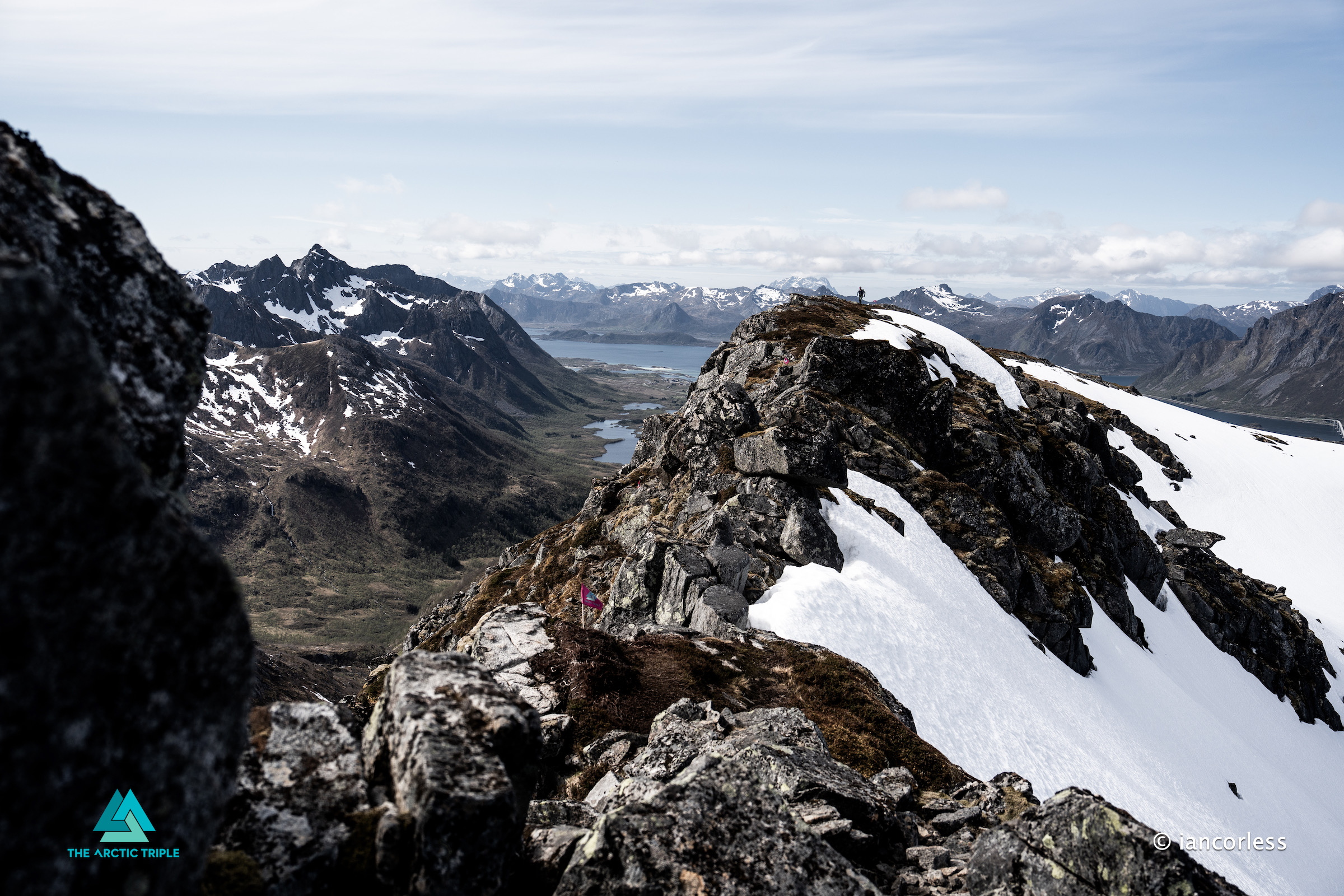
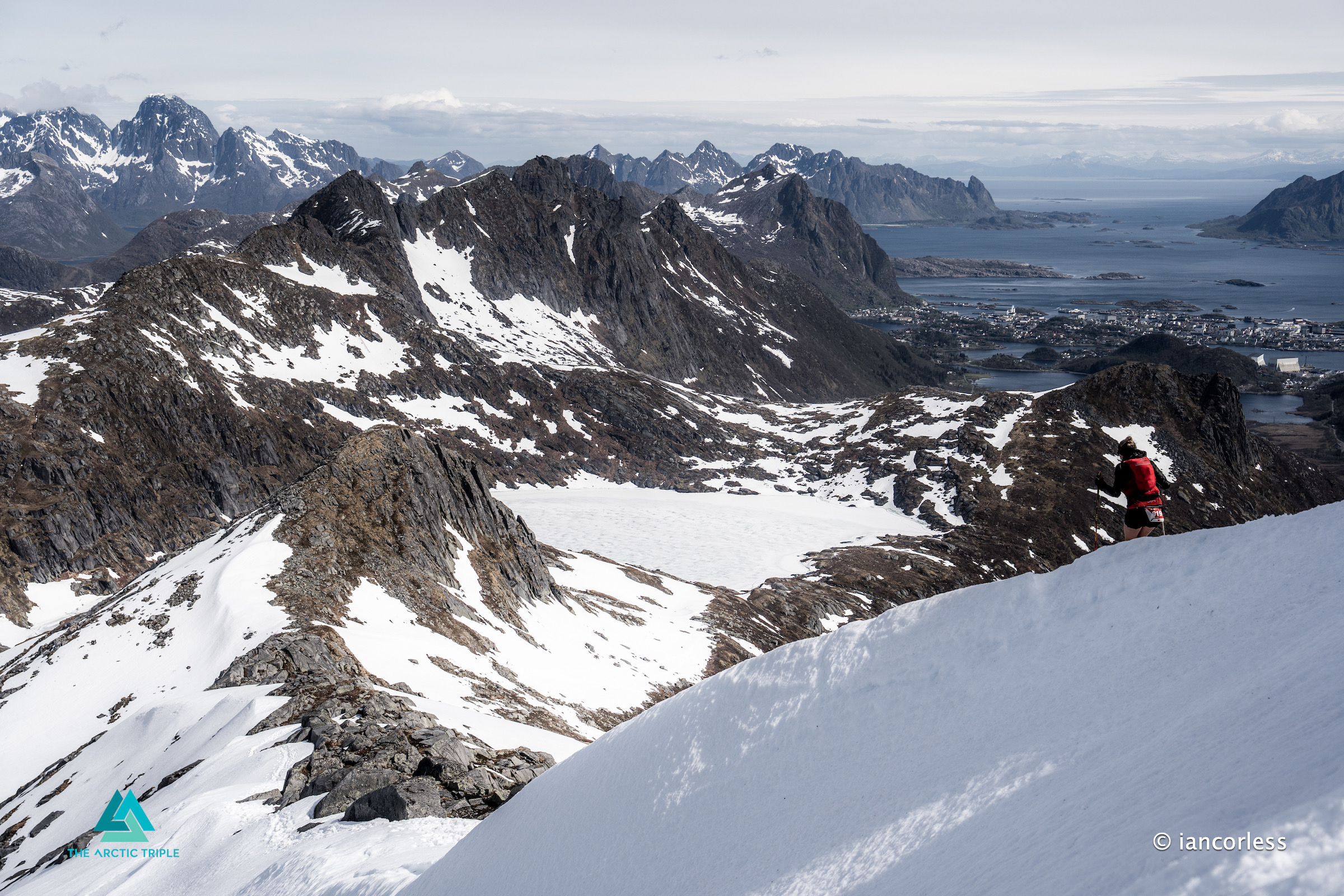
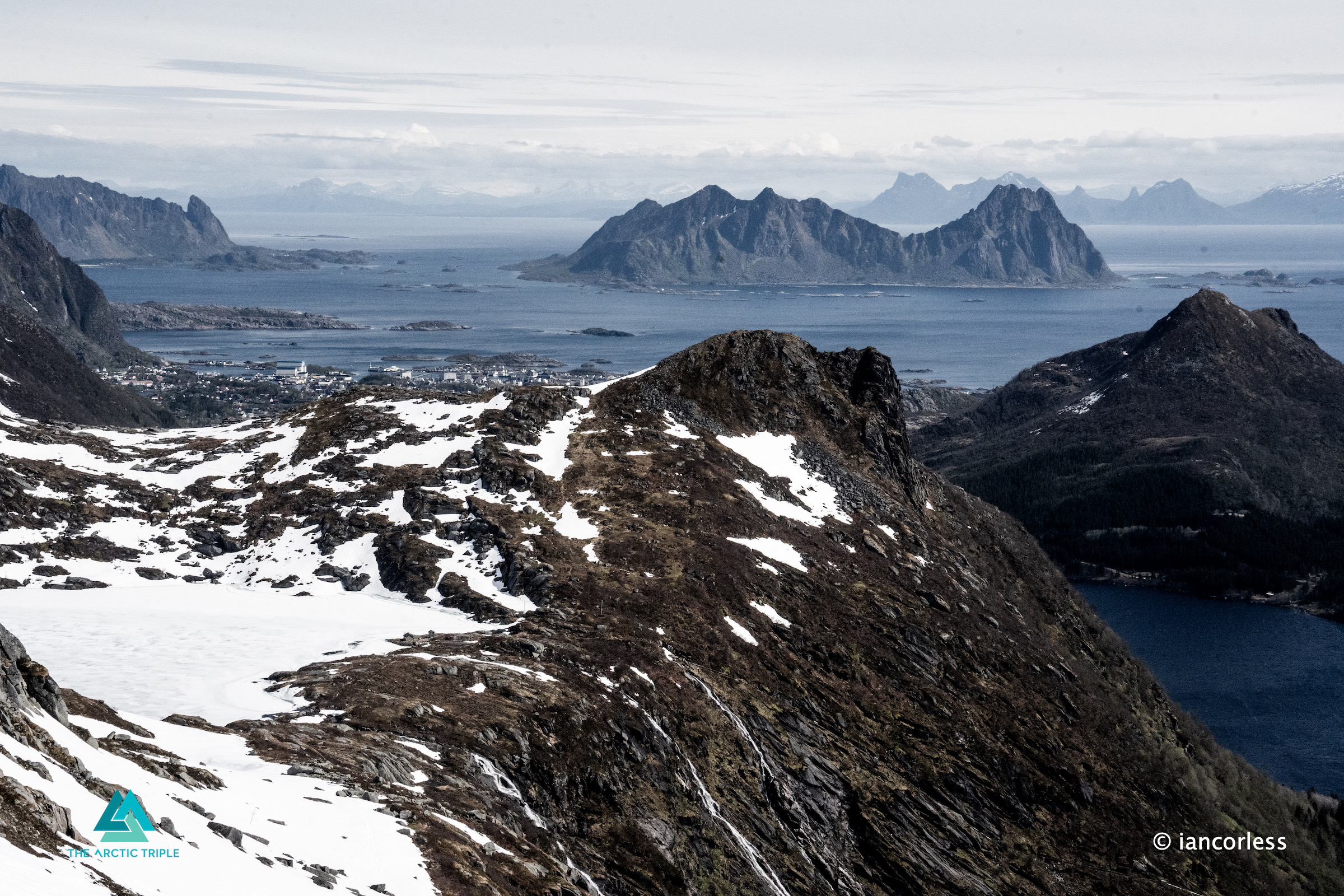
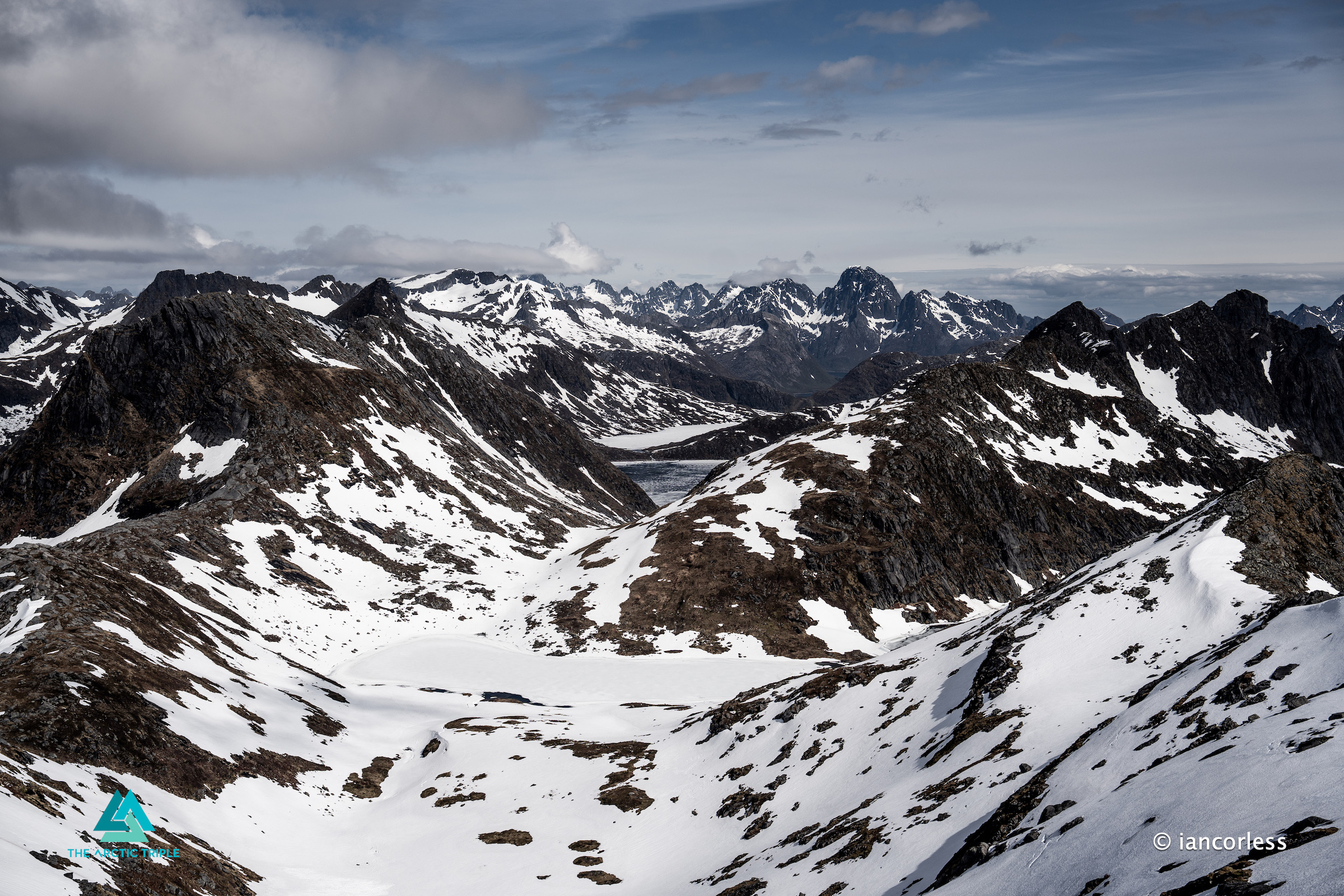
Jordtinden loomed: steep, snowy, relentless. At its summit, clouds lifted like curtains, revealing a 360-degree panorama that stopped runners in their tracks, the ridgeline ahead bringing a sense of awe and fear in equal measure.
This is the queen stage, the terrain bringing together all that makes Norway and Lofoten unique, marvellous and special.
You could see all the way back, mountains, inlets, the journey behind. Some cried. Some screamed. Some just stood there, stunned.
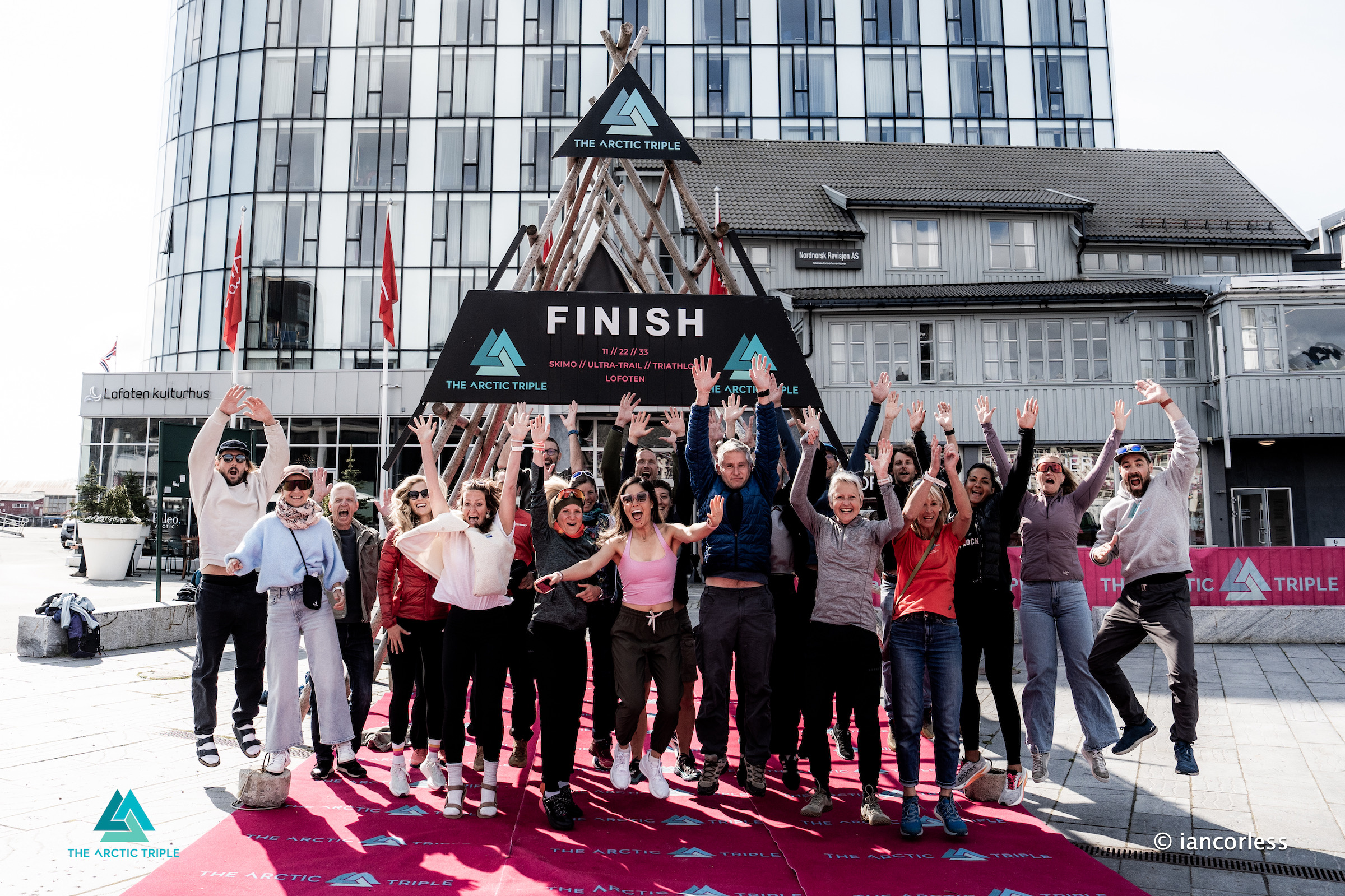
The descent into Svolvær was pure adrenaline, fuelled by joy and relief. The last stretch along the harbour felt like flying. Locals clapped. Teammates waited. People hugged. Some collapsed. Others danced.
More Than KM’s
But the Lofoten Stage Run wasn’t just about distance or finish times. It was about the strange intimacy of shared suffering, of strangers becoming friends over bowls of traditional Norwegian food and stories told in cabins. It was the moment you stepped outside at midnight, sun still hanging low over the sea, and realised how small we are.
It was the rawness of the terrain mirrored in every aching limb. It was the magic of Lofoten, weather that shifted like a mood, peaks that stabbed the sky, and a landscape that didn’t just surround you, it swallowed you whole.
In the end, it wasn’t a race, it never was, the Lofoten Stage Run is an experience, a 360 immersive journey that shocked the mind and the senses and revealed to each and every participant that this route, arguably, is one of the BEST in the world. It was a rite of passage. A storm-chased, mud-caked, heart-thumping reminder that the wild is still out there, and if you’re lucky, it might just let you in.
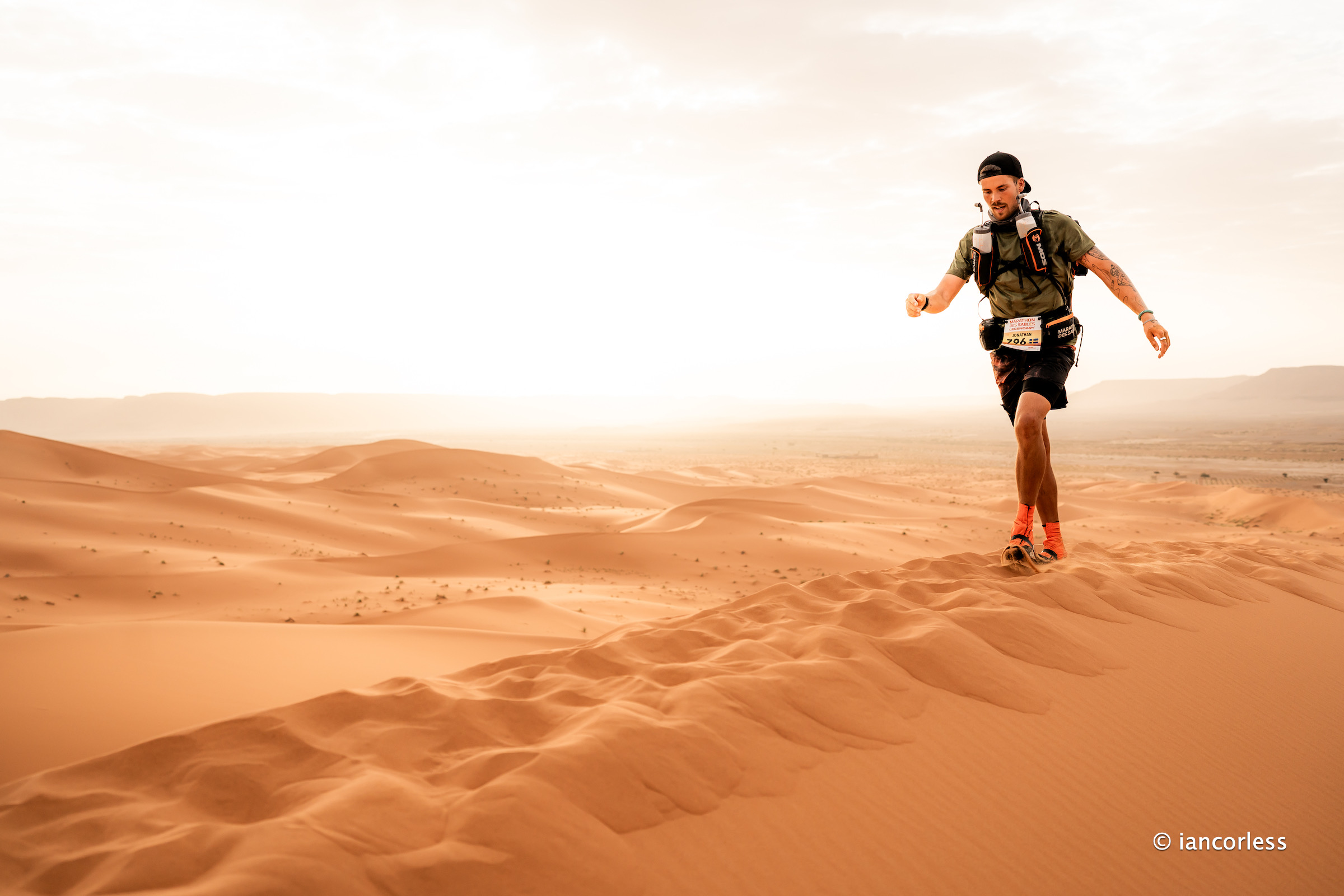
Since 1986, the Marathon des Sables – The Legendary (MDS) has carved its name into endurance racing history as one of the most gruelling, soul-stripping tests of human resilience. For 39 editions, it has pushed thousands to their physical and psychological limits under the crushing sun of the Moroccan Sahara.
In 2026, this legendary race will celebrate its 40th edition and it promises to be the most unforgettable one yet.
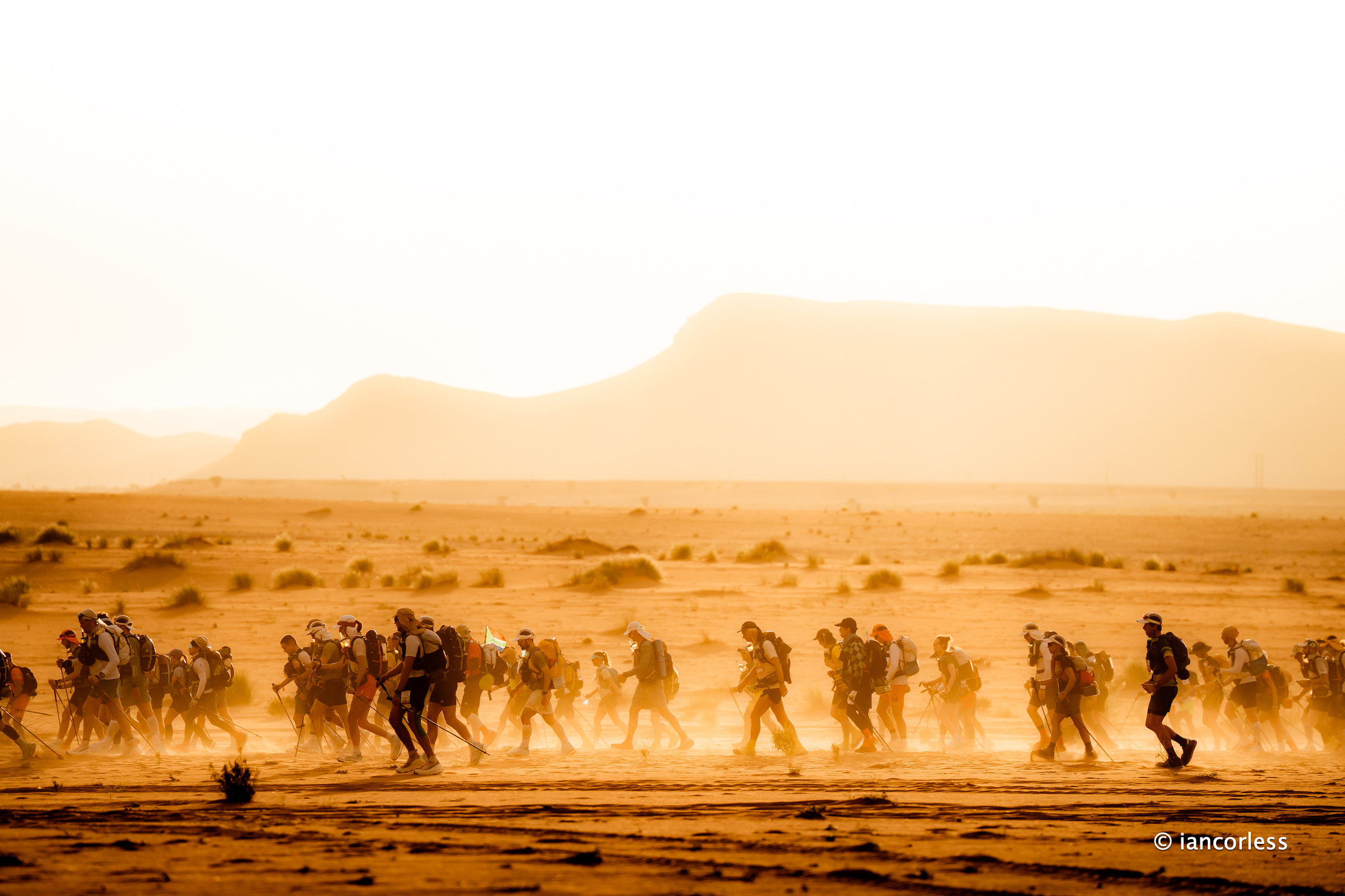
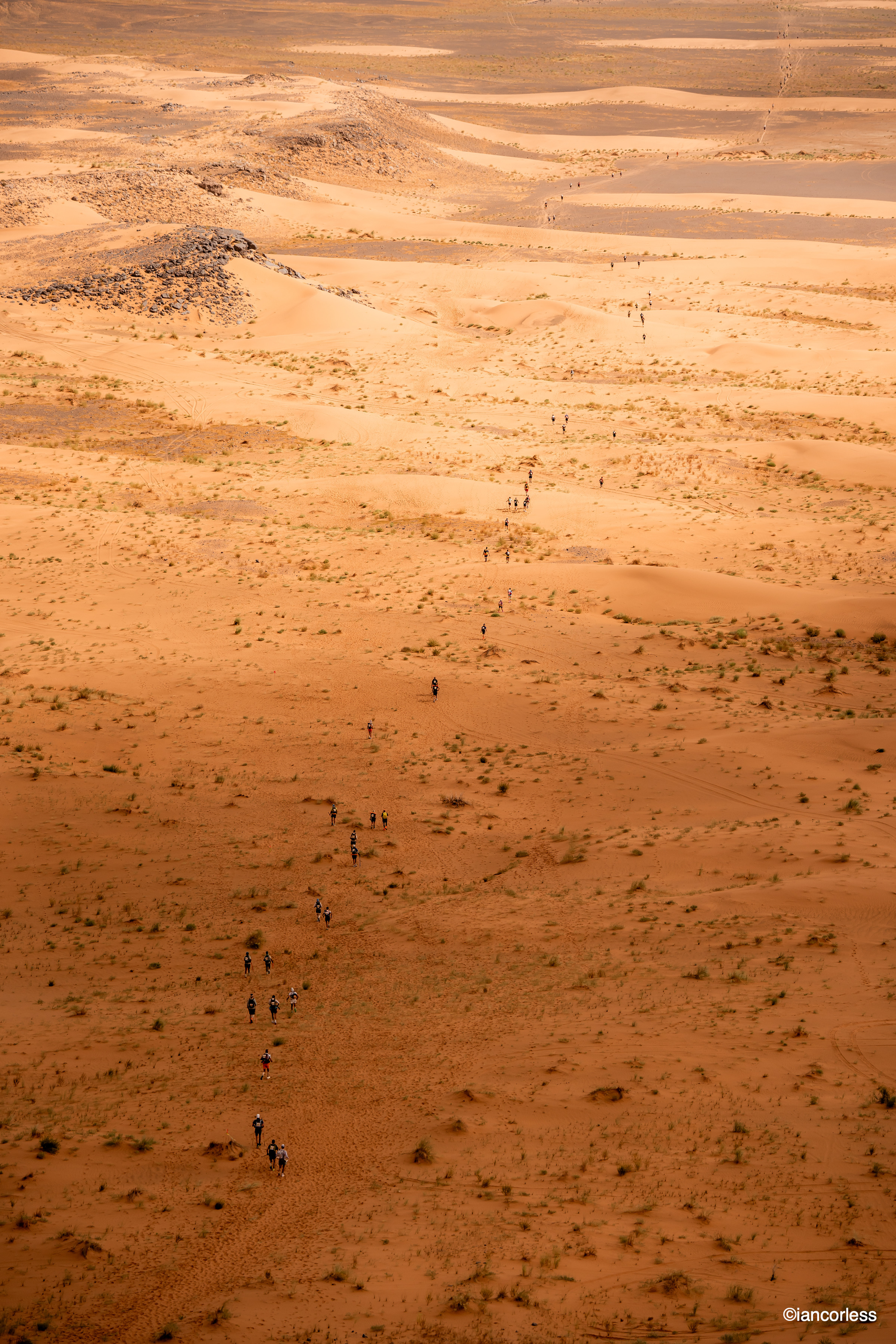
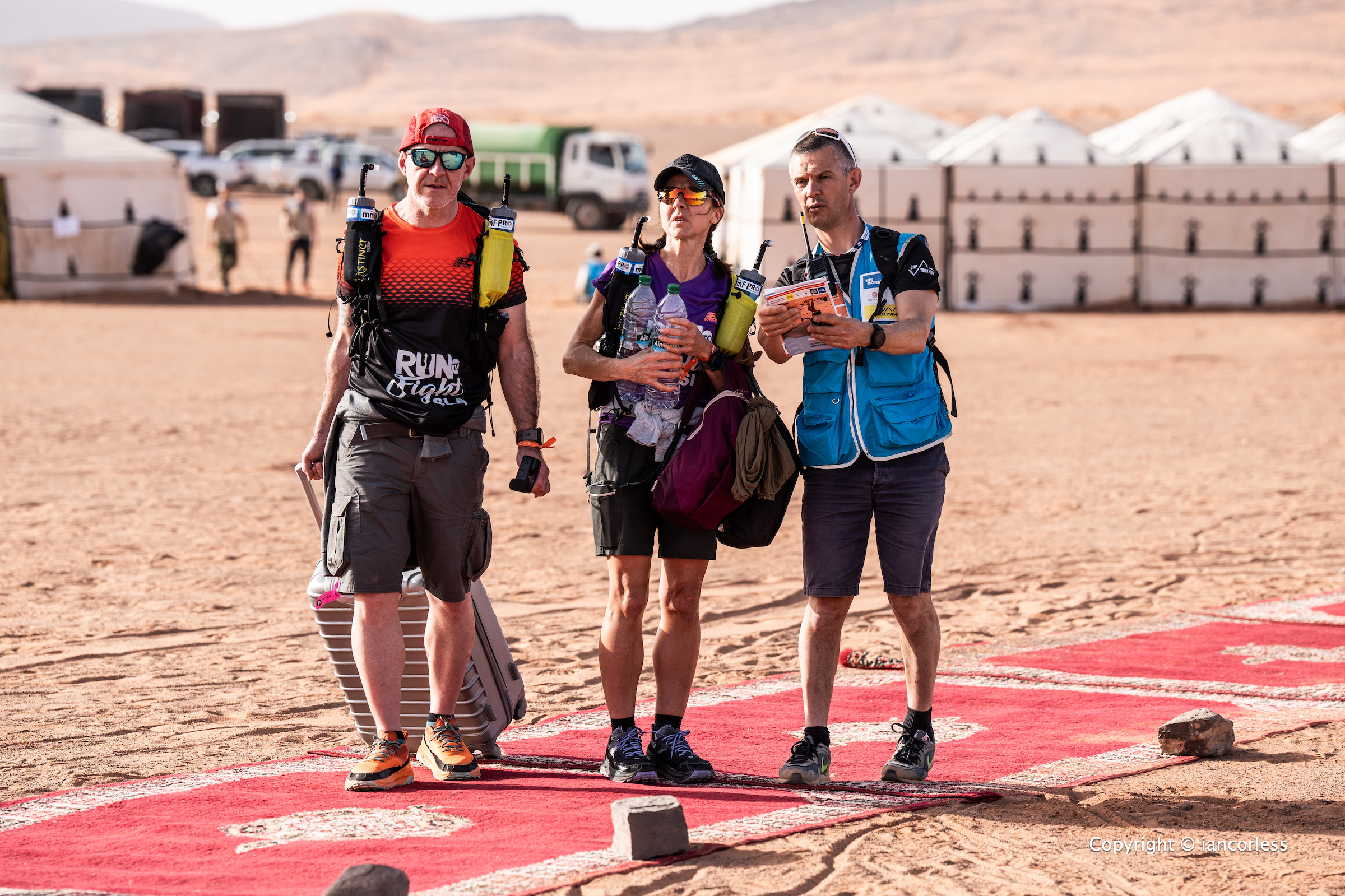
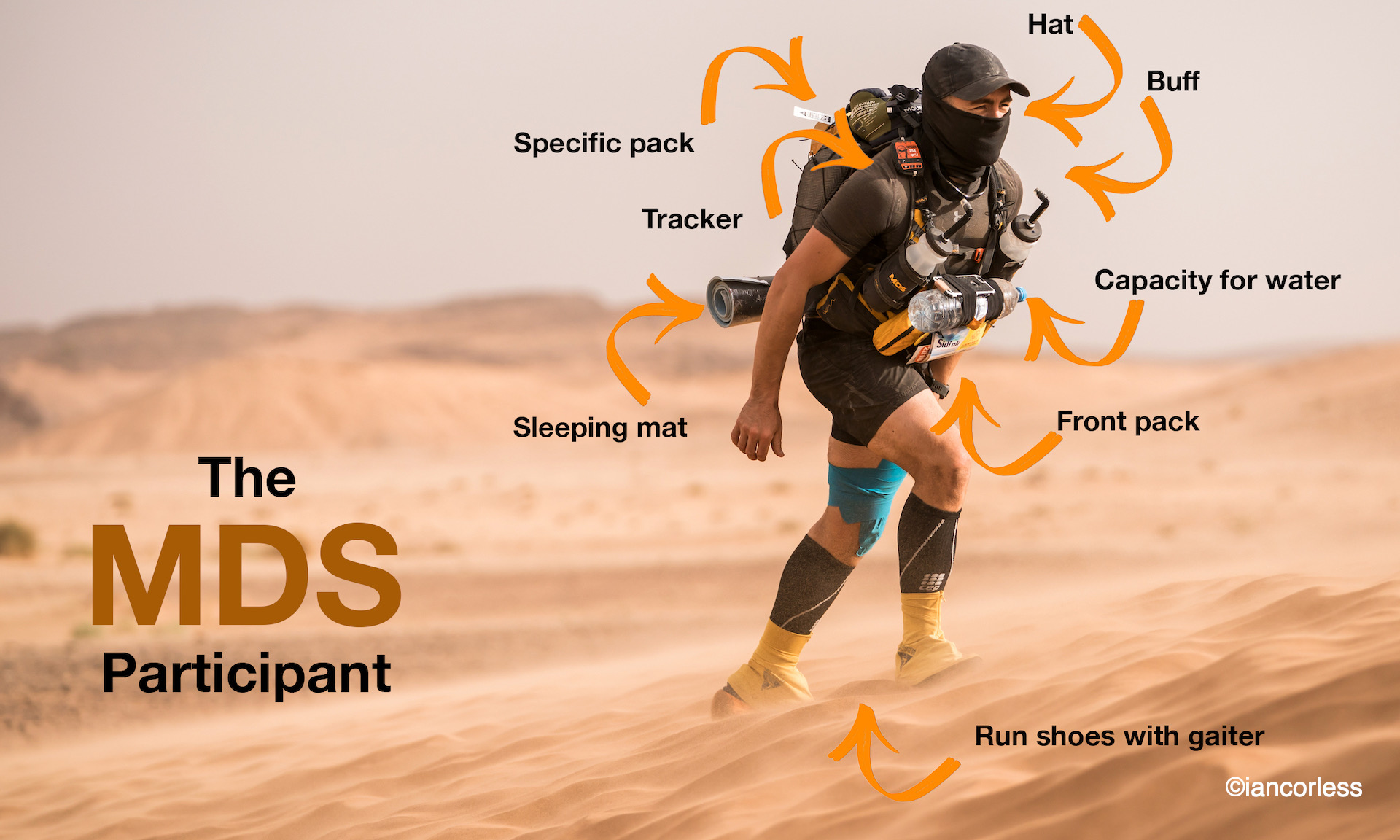
MDS The Legendary is six stages over roughly 250 km (155 miles), on blistering sand, across jagged jebels, and through soul-sapping salt plains. Runners carry everything they need for the week: food, sleeping equipment and clothes. The only luxury provided? A rationed daily water supply and a communal bivouac tent to crawl into at night which is shared with 7 other competitors.
Photo by Ian Corless
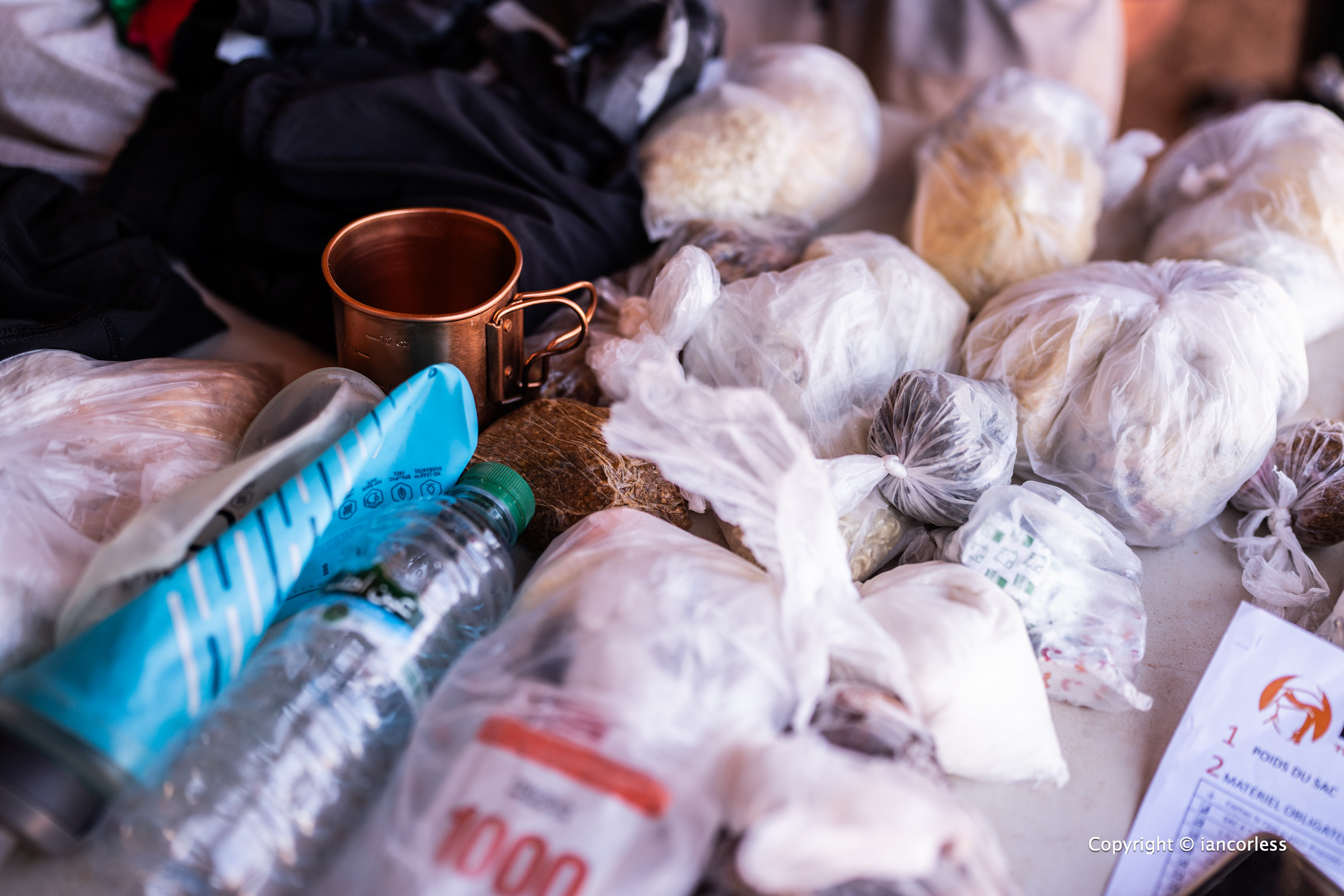
Every ounce carried matters. Bring too little and you starve. Bring too much and the weight drags you down. Success depends on ruthless efficiency and mental grit.
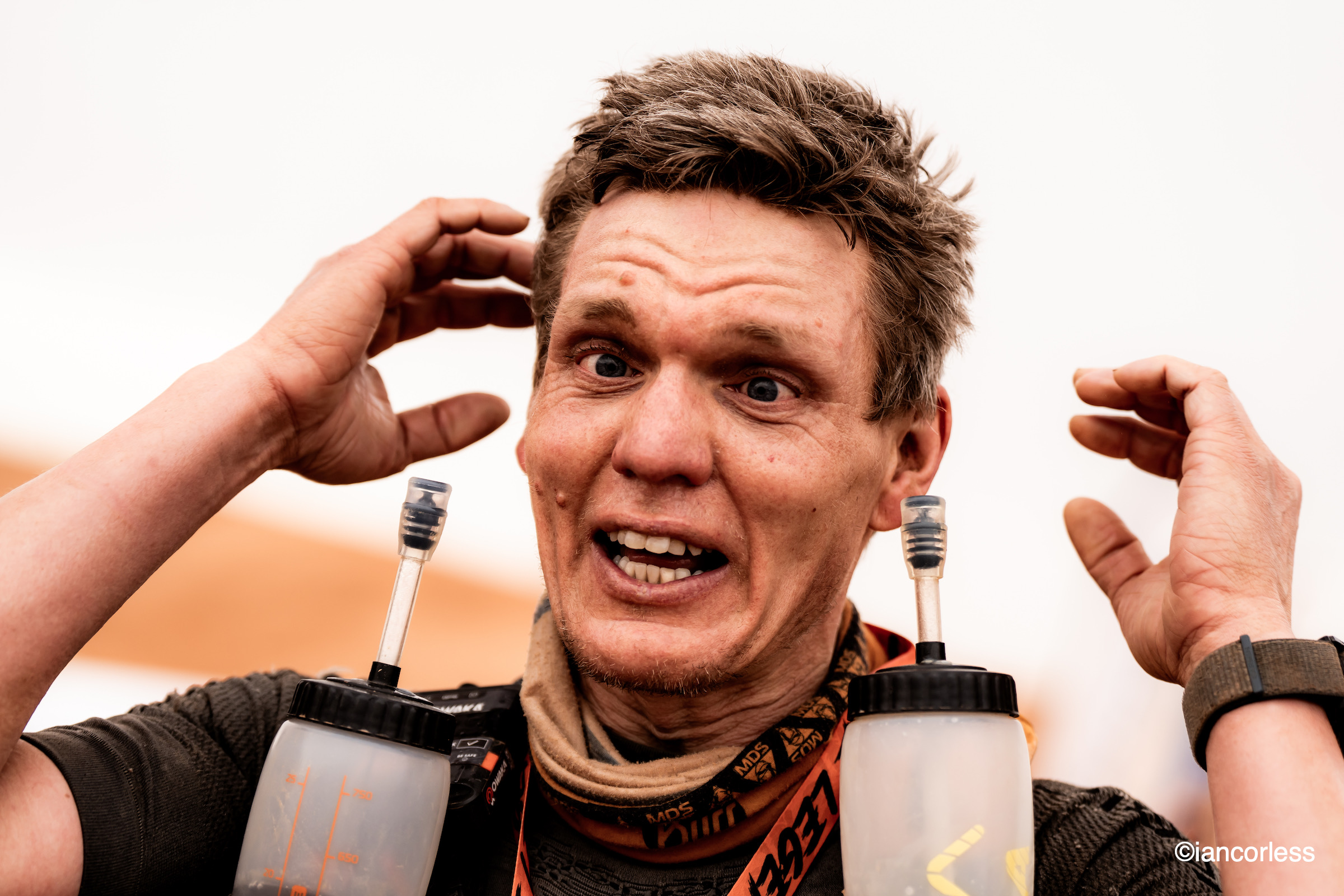
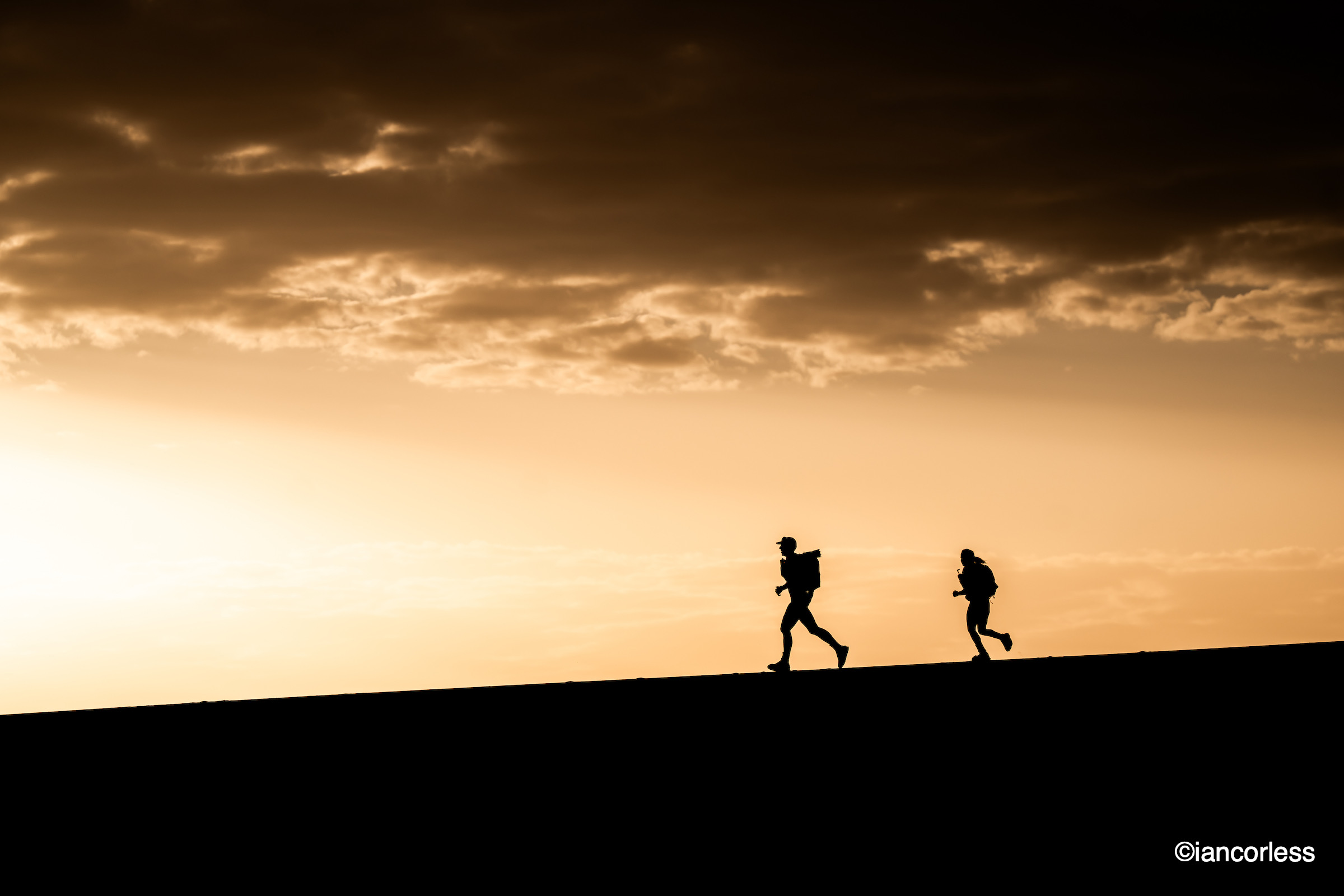
For four decades, the The Legendary has become a rite of passage for ultra runners, adventurers, and those seeking to rewrite their limits. It has seen amputees cross the line, cancer survivors, soldiers, CEOs and importantly, ordinary people doing extraordinary things. The terrain has remained the same: raw, relentless, and unforgiving.
Photo by Ian Corless
Despite the challenges, runner’s keep coming back, some for redemption, some for addiction, and all for the transformation.
The 40th Edition: What’s Coming in 2026
Photo by Ian Corless
The 40th MdS won’t just be another race, it will be a celebration of the madness. A tribute to every blistered foot, every tear shed under Saharan stars, every finisher’s medal earned in blood, sand, and sweat.
Photo by Ian Corless
The 40th will honour the legacy with style and fury.
Think You’ve Got What It Takes?
Entries for the 2026 edition open on June 11, 2025. Veteran or rookie, this is the year to go. Not just to run, but to become part of history.Become a Legend!
The sand is settling, the 2025 and 39th edition of Marathon des Sables The Legendary is over.
Quite simply, a hugely successful edition with 95% completion rate and good time vibes felt throughout the Sahara and beyond.
OVERVIEW
Cyril and Olivier with Michael from the USA – Photo by Ian Corless
The transition from 2023 to 2024 was not an easy one. The take over of MDS from Patrick Bauer and into the hands of Cyril and Olivier had created some concern and anxiety. Most certainly, the build up to the 2024 (38th) MDS had many concerns for participants that were vocalised on social media. However, after the 2024 event, all these worries and concerns were extinguished with an incredibly successful event and high finish rate. You Can read Marathon des Sables – The Legendary : 2024 Summary HEREshould you wish.
Nothing like a MDS start – Photo by Ian Corless
From May 2024 to April 2025 the build up to the 39th Legendary edition was seamless. The successful running and completion of MDS (3-stages over 4-days at 70/100 or 120km) events in Cappadocia, Fuerteventura, Jordan, Morocco, Atlantic Coast and the introduction of Trek and Handi only confirmed the growth, development, upward learning curve and the MDS team bonding and progression.
All of the concerns and worries for the 38th edition of Legendary played out on social media were not present for the 39th edition. There is a couple of reasons for this I believe:
The 38th edition had been a huge success and therefore worries and concerns were answered.
The pro-active communication from the MDS team improved considerably.
Runner testimonies from the 2024 event confirmed that the ‘new’ MDS team and the changes made were all positive.
Evolution, not revolution was the quote that Cyril Gauthier had used in 2023 this was played out in 2024 and then consolidated upon in 2025.
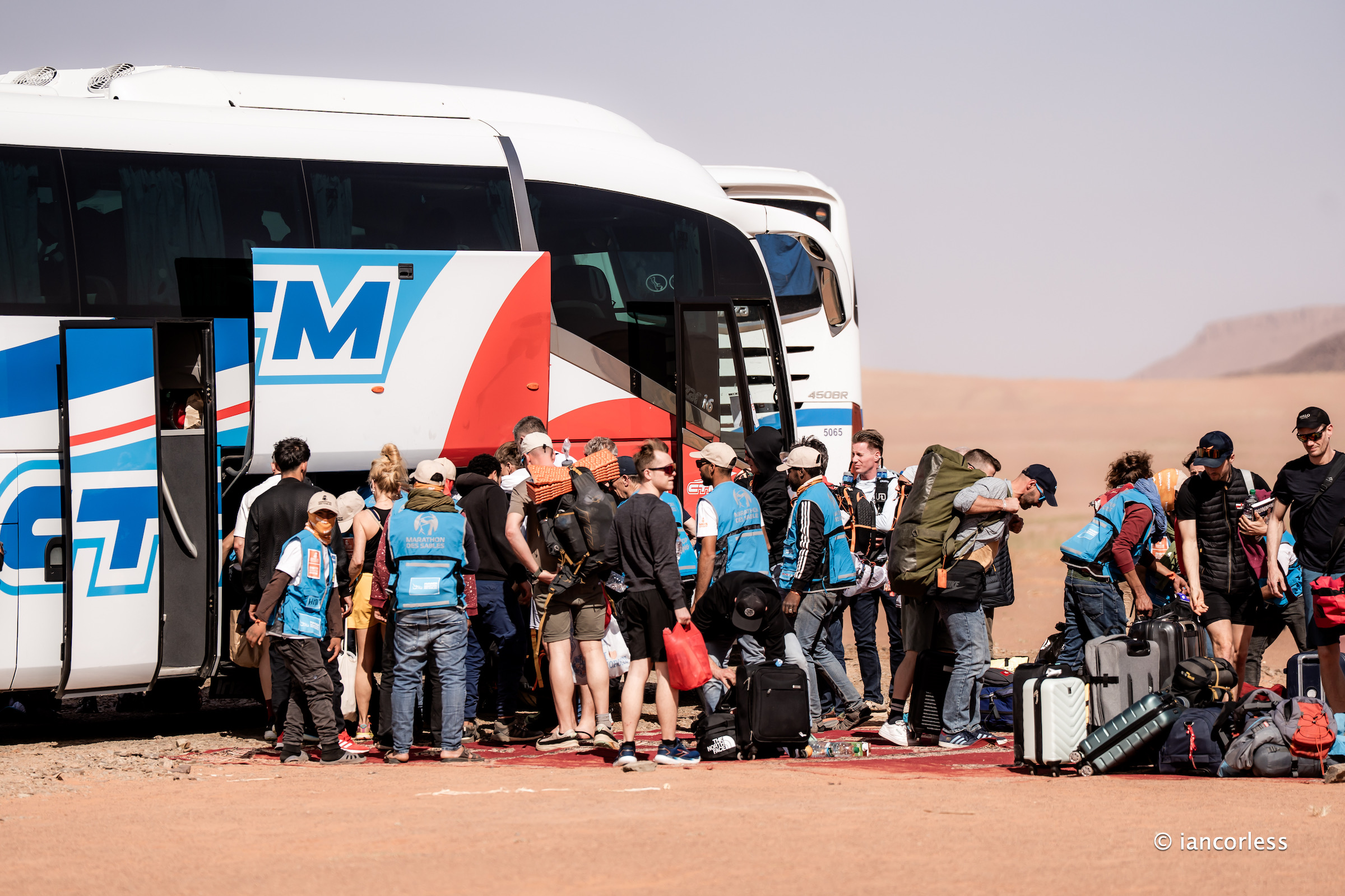
Arrival in the desert – Photo by Ian Corless
THE 2025 EVENT
Welcome to the Sahra – Photo by Ian Corless
Post-race questionnaires are extremely important for the MDS team. Cyril and Olivier very much take all the comments, absorb them, digest them and then move forward with new plans. If a new plan does not work and the participants confirm this, then it is changed. If a new plan works, it is retained. There are no one-stop easy solutions, MDS is an ever-growing and ever-changing event that must constantly be a chameleon to the ever-changing demands and needs of participants.
TRAVEL
Photo by Ian Corless
A key change for 2025 was in transportation. Two key points:
The core MDS team, based mostly in Paris, travelled to Morocco via train, boat and coach, taking 3-days and not using airplane travel. For 2025, this was a one way journey, a test, to see how feasible and practical this form of travel is. The general consensus from those who did it is/ was extremely positive. General comments were around this being an adventure in its own right, a brilliant opportunity to share more time with colleagues, a great opportunity to work while travelling and so on… I think we may well see this grow into something bigger for 2026!
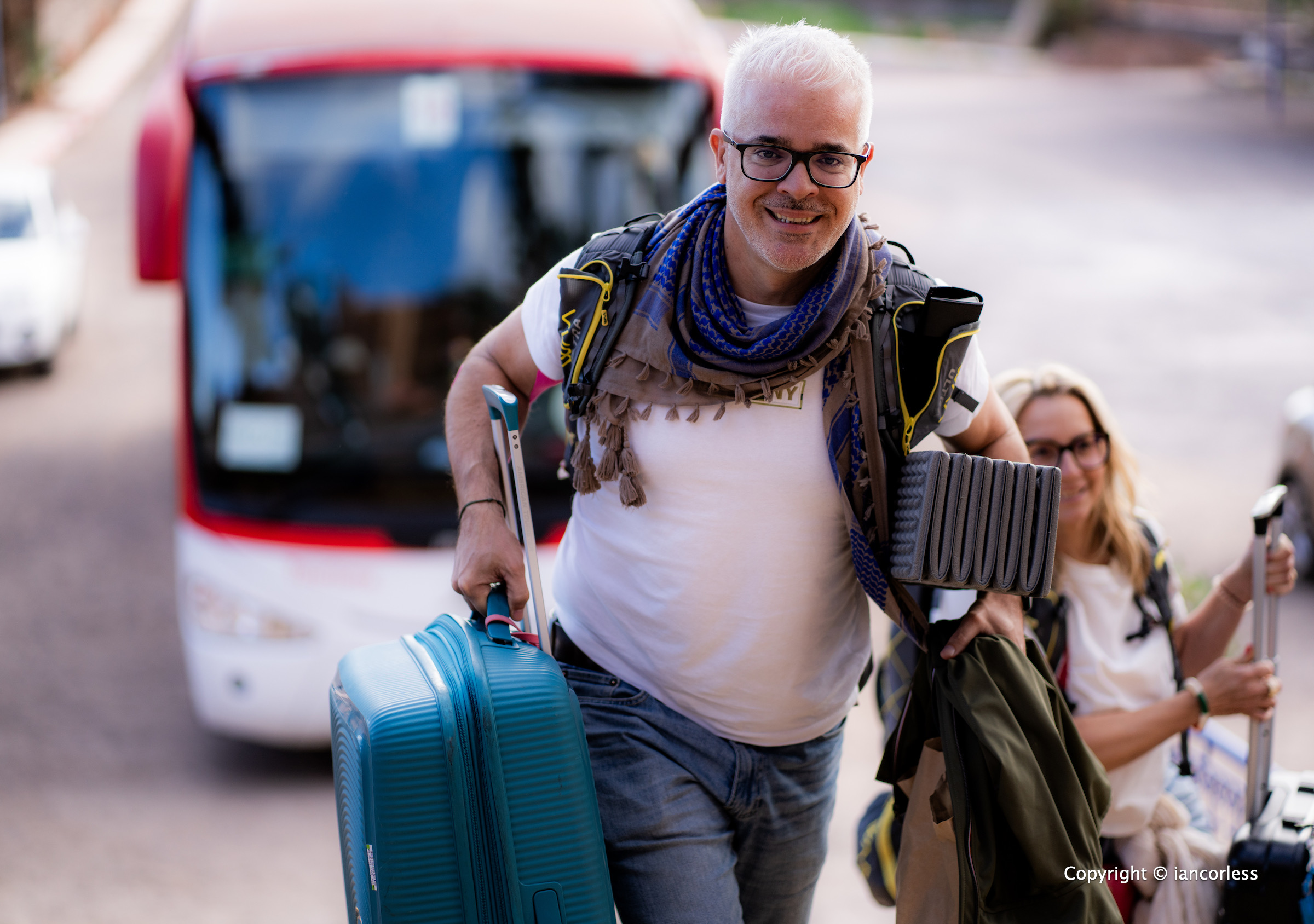
In 2024, plane travel arranged by the MDS organisation was reduced to a minimum. For 2025 it was eradicated all together. Therefore, participants could no longer take the option of a MDS charter plane but had to arrange flights themselves. This is no big deal with so many flight options available, especially with MDS offering a free transfer coach service from Marrakech to Ouarzazate and post-race, a free transfer service back to Marrakech.
SELF-SUFFICIENCY
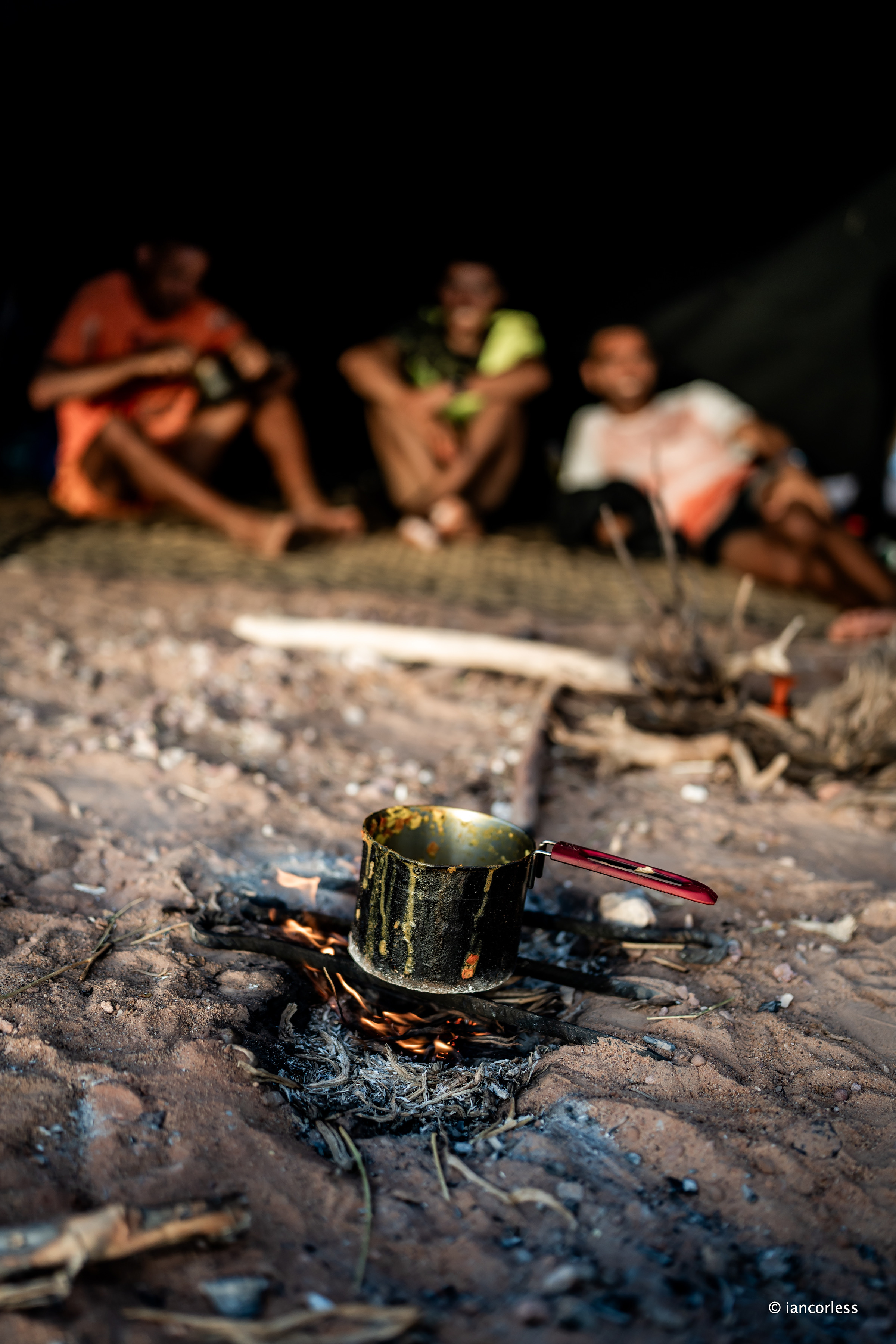
Photo by Ian Corless
Catering by the MDS organisation once in the Sahara was removed in 2024, this was reasoned for 2025. To clarify, when the buses leave Ouarzazate for the desert, self-sufficiency begins for the travel day, the fist night in bivouac, the following day (admin day), the evening and then, the following day, the race starts and ‘race’ self-sufficiency begins. There is a difference between the two forms of self-sufficiency as the travel day and admin day you can bring as much or as little as you like. Quite simply, it’s not part of the mandatory race minimum requirement of 2000 cal minimum per day. You can bring tinned food, drinks, wine, beer, caviar…. Whatever you wish! It’s a no brainer to be able to look after your own food requirements and quite simply it greatly reduces the possibility of food related health issues that could potentially ruin a race.
ADMIN DAY
Photo by Ian Corless
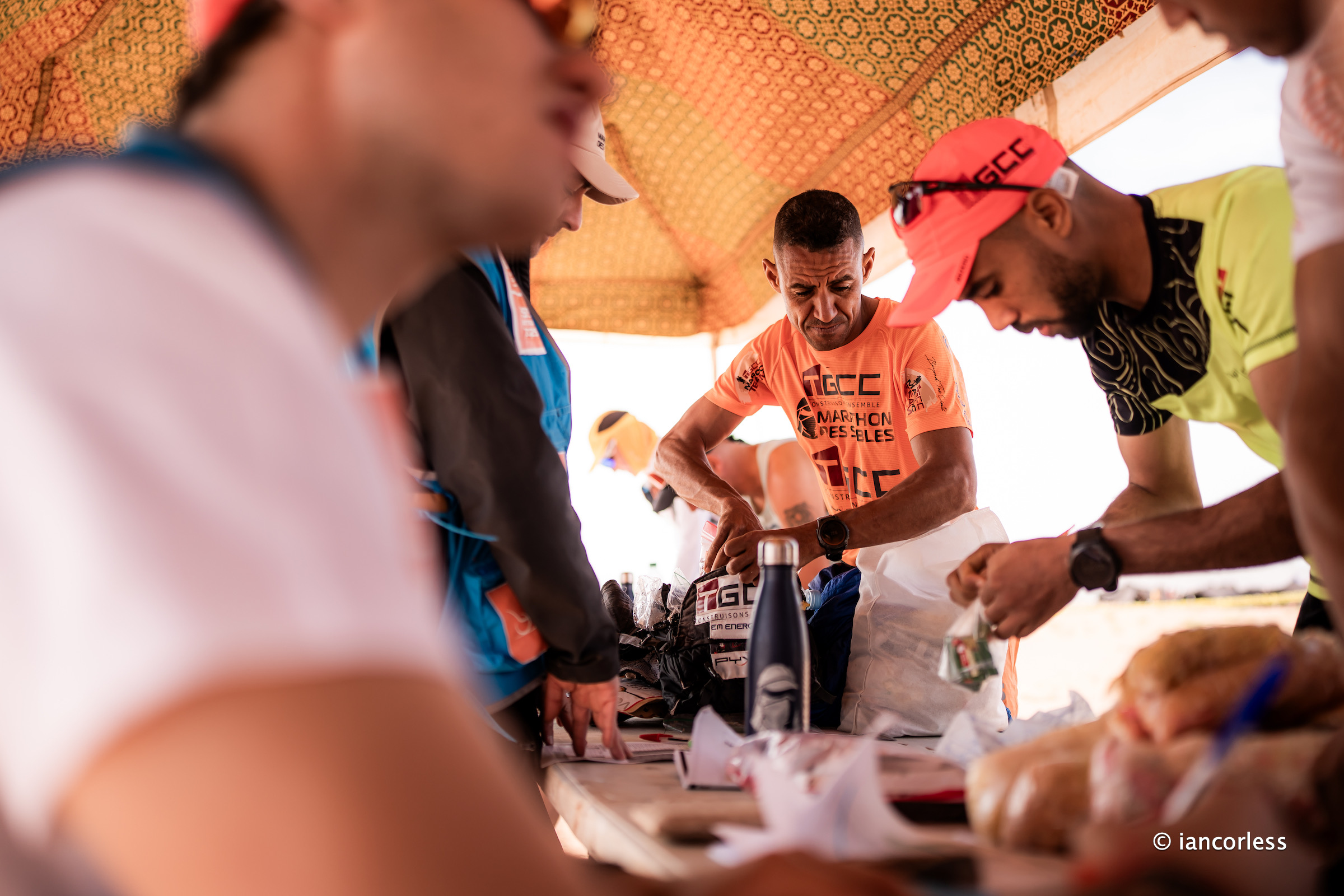
The procedures for admin day were changed for the 2024 edition and they were a huge success. This system was retained for 2025 making the process seamless, fast and considerably less painful than the procedures that had gone before.
Photo by Ian Corless
BIVOUAC
Photo by Ian Corless
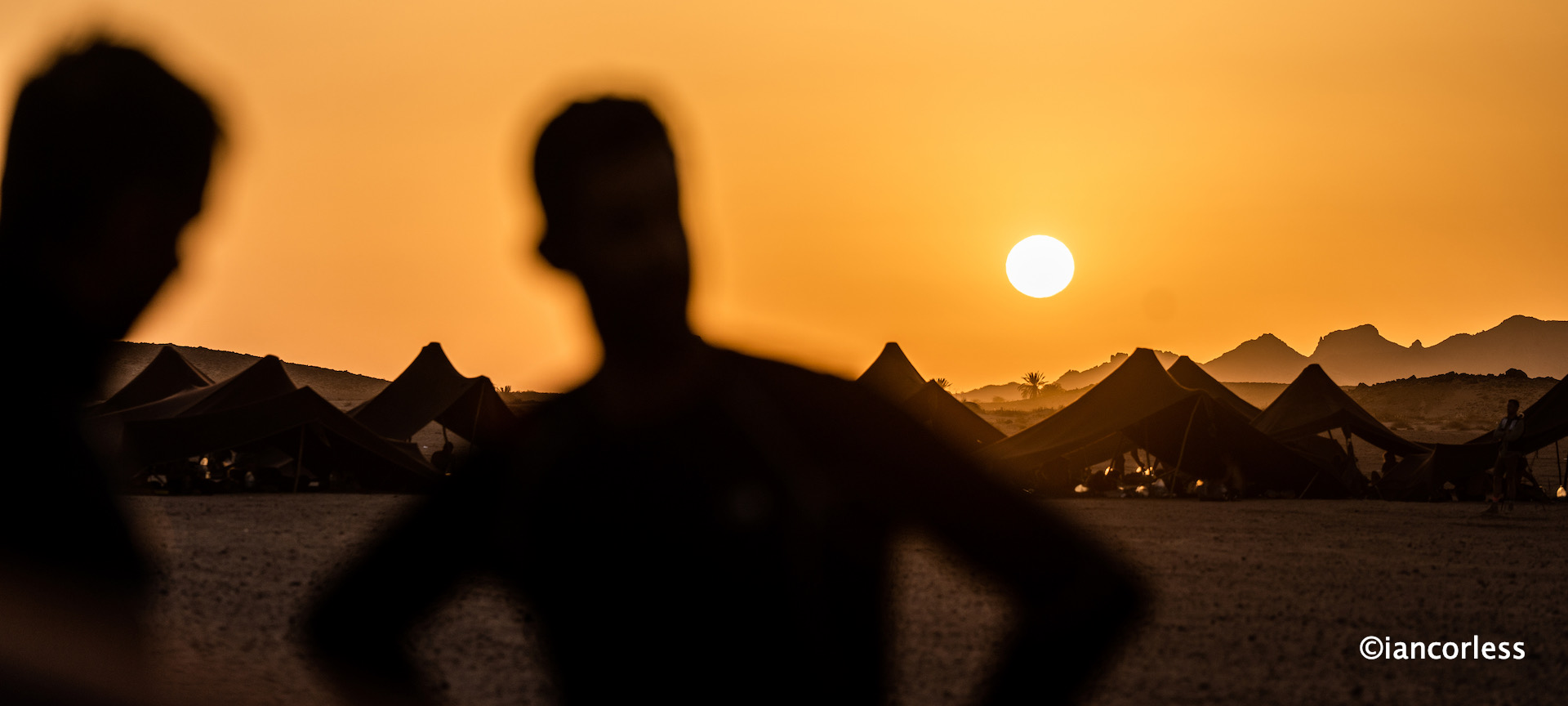
In principle, it may well look the same, however, there are changes for the very observant. Firstly, the circles that make bivouac are smaller and tighter making the camp much more of a community. In 2025 there were new ‘women only’ tents for those who would prefer this option. On some days, in the middle of bivouac, yoga/ stretching was possible, circle of legend talks and yes, even a big fire.
WATER
Photo by Ian Corless
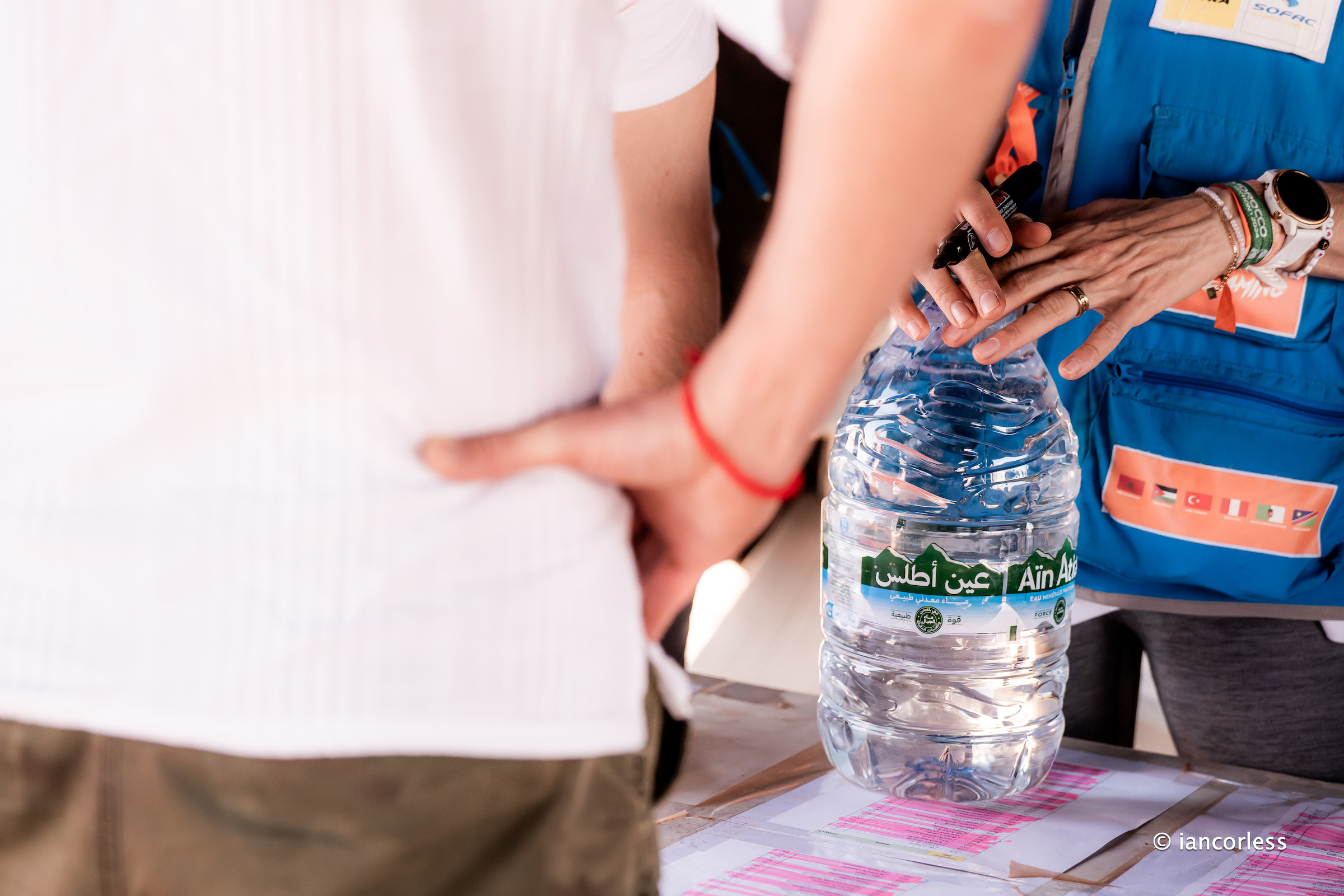
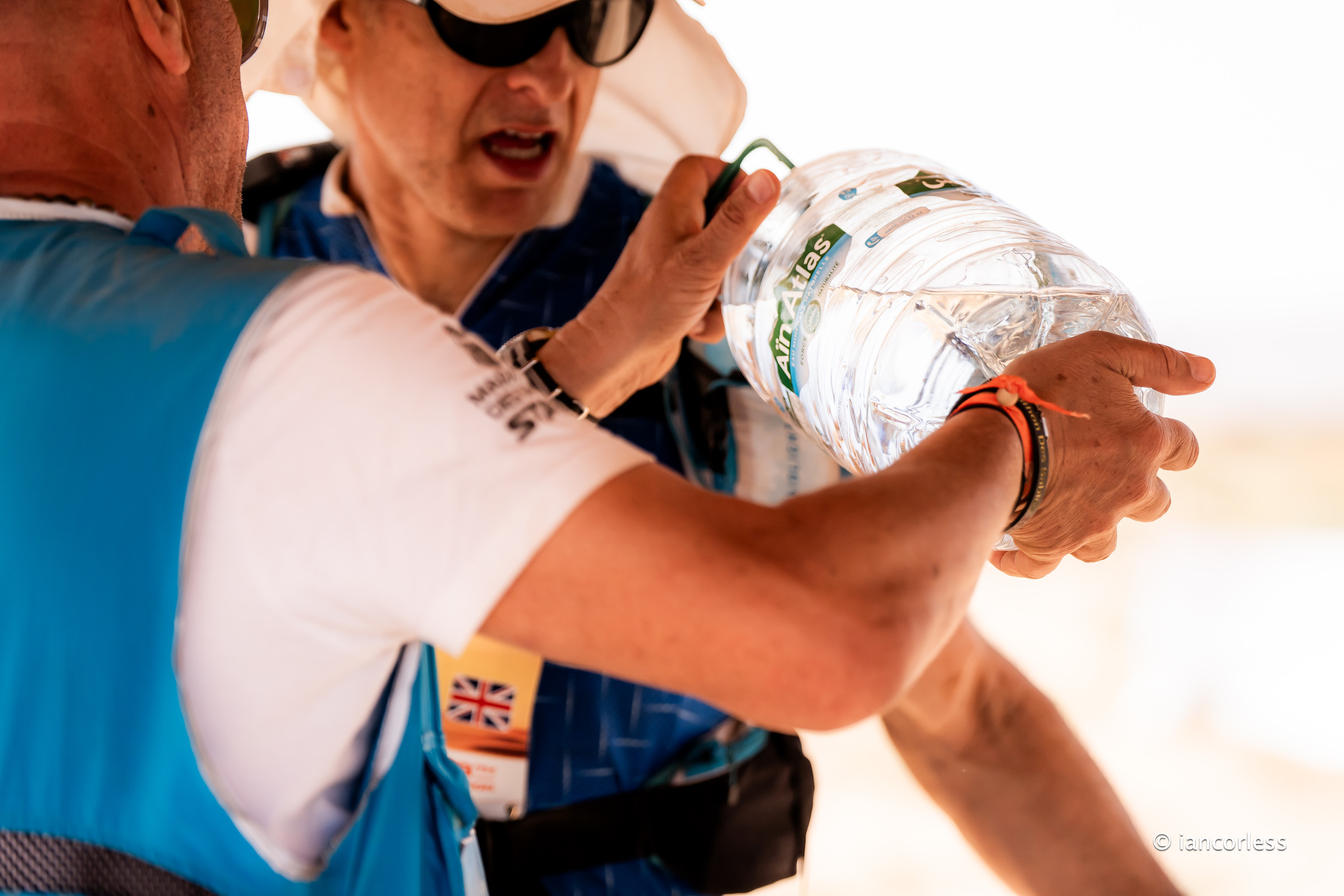
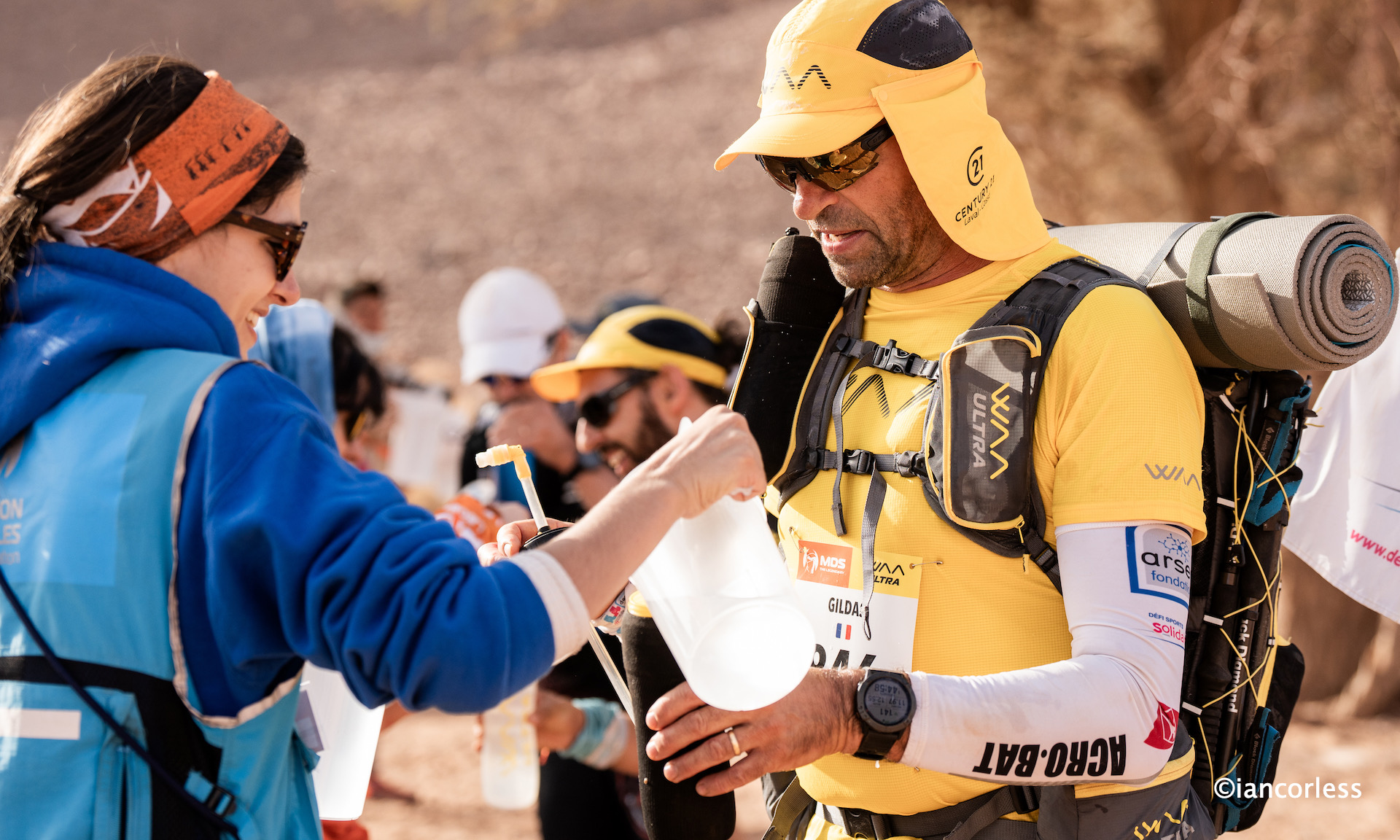
The provision of water was drastically changed in 2024 and this was retained for 2025. During the race there is no rationing of water. As you arrive at a CP, water is decanted into your bottles via MDS blue jackets who pour the water from jugs. This water comes from large 5ltr bottles. Quite simply, you can have 2x 750ml bottles filled, you can then drink one and it will be refilled if required – a game changer.
Photo by Ian Corless
Post-race you are provided with 1 large 5ltr bottle, the is rationed. So, this water must provide hydration post-race, be used for dinner/ breakfast and it must be used to fill your bottles to take you to CP1 the following day.
ICED WATER
Photo by Ian Corless
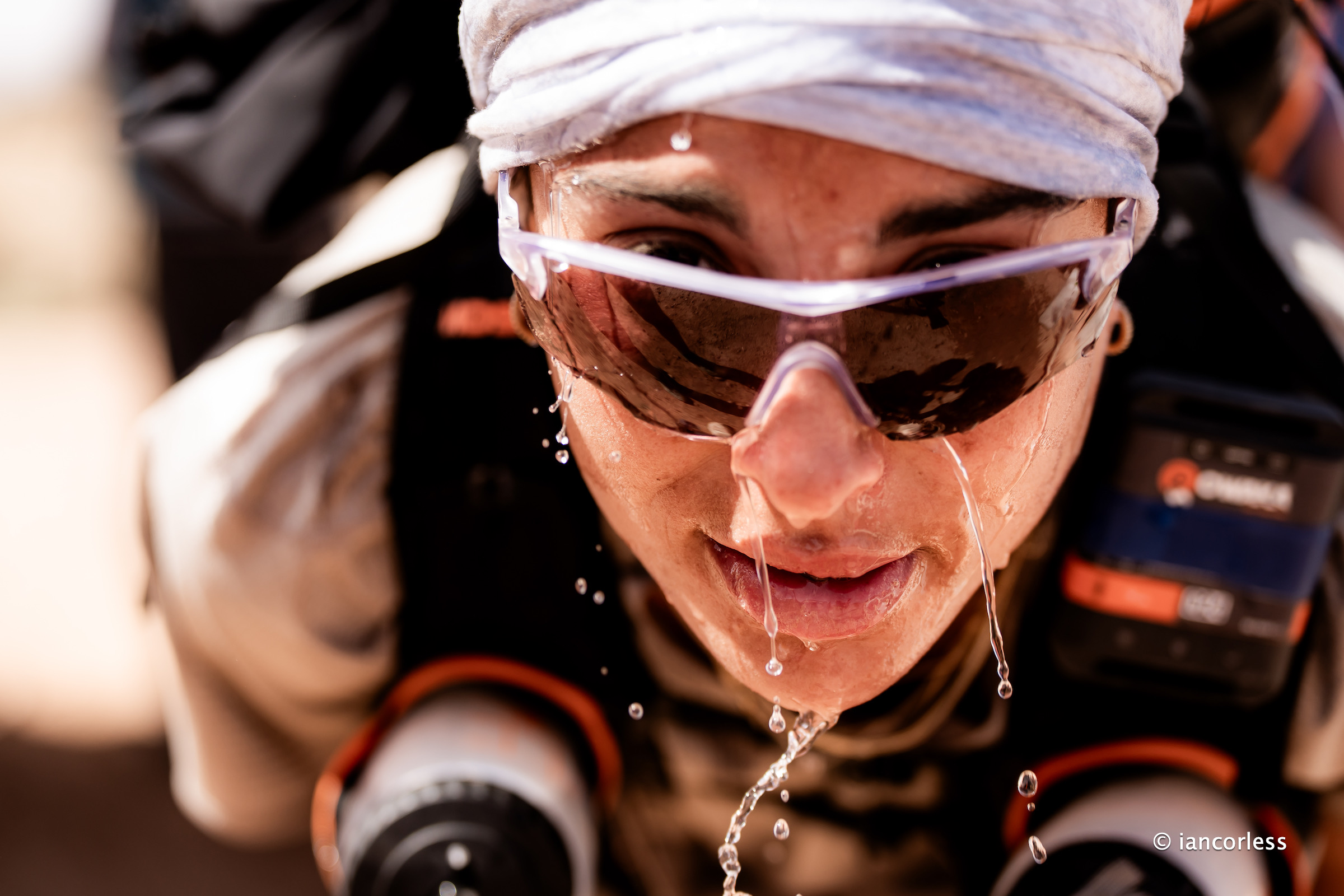
CP’s have MDS orange or blue jackets who will pour iced water over your head to enable cooling. It’s a small simple step that makes a huge change that ultimately helps facilitate completion of the Legendary.
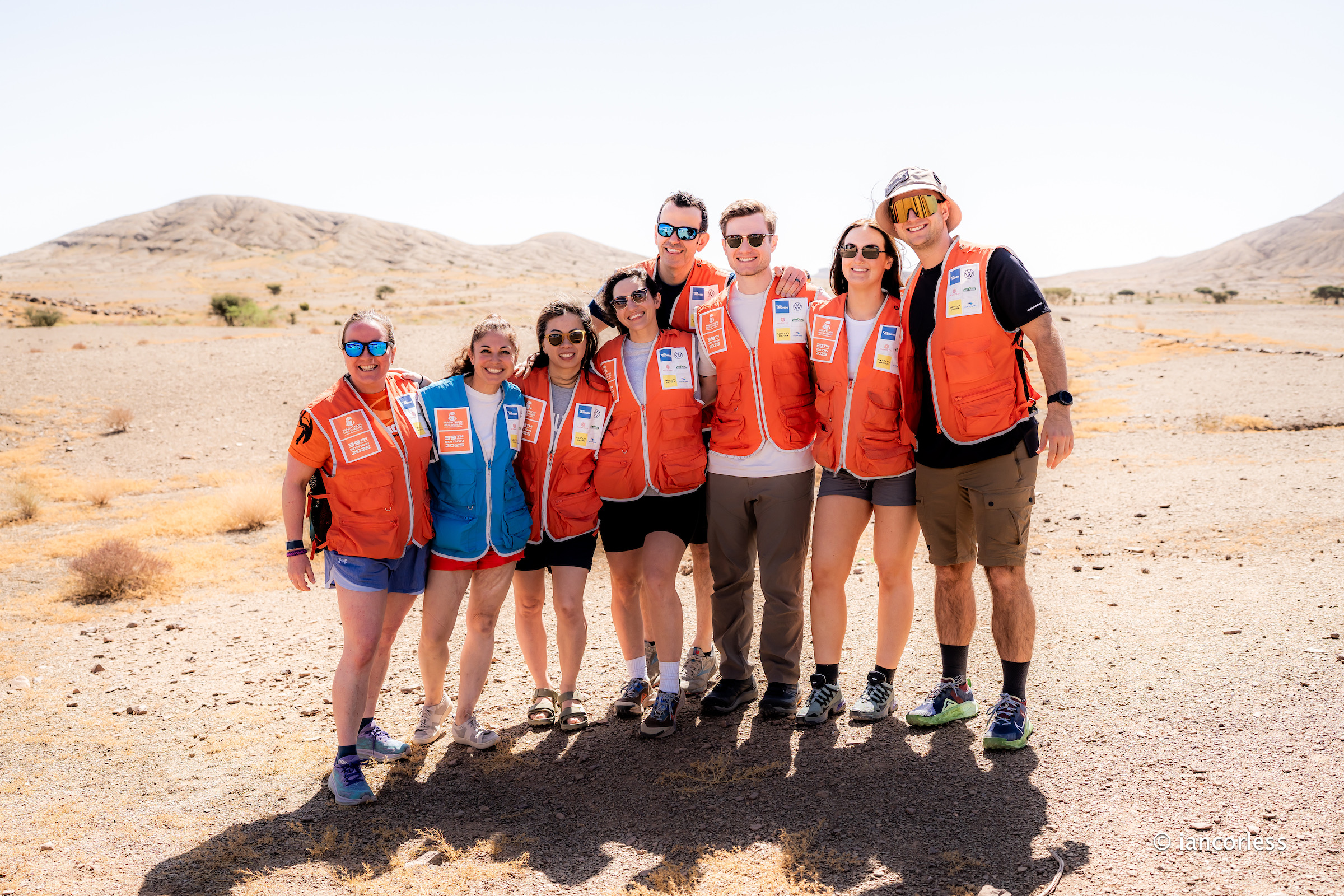
ORANGE AND BLUE JACKETS
Photo by Ian Corless
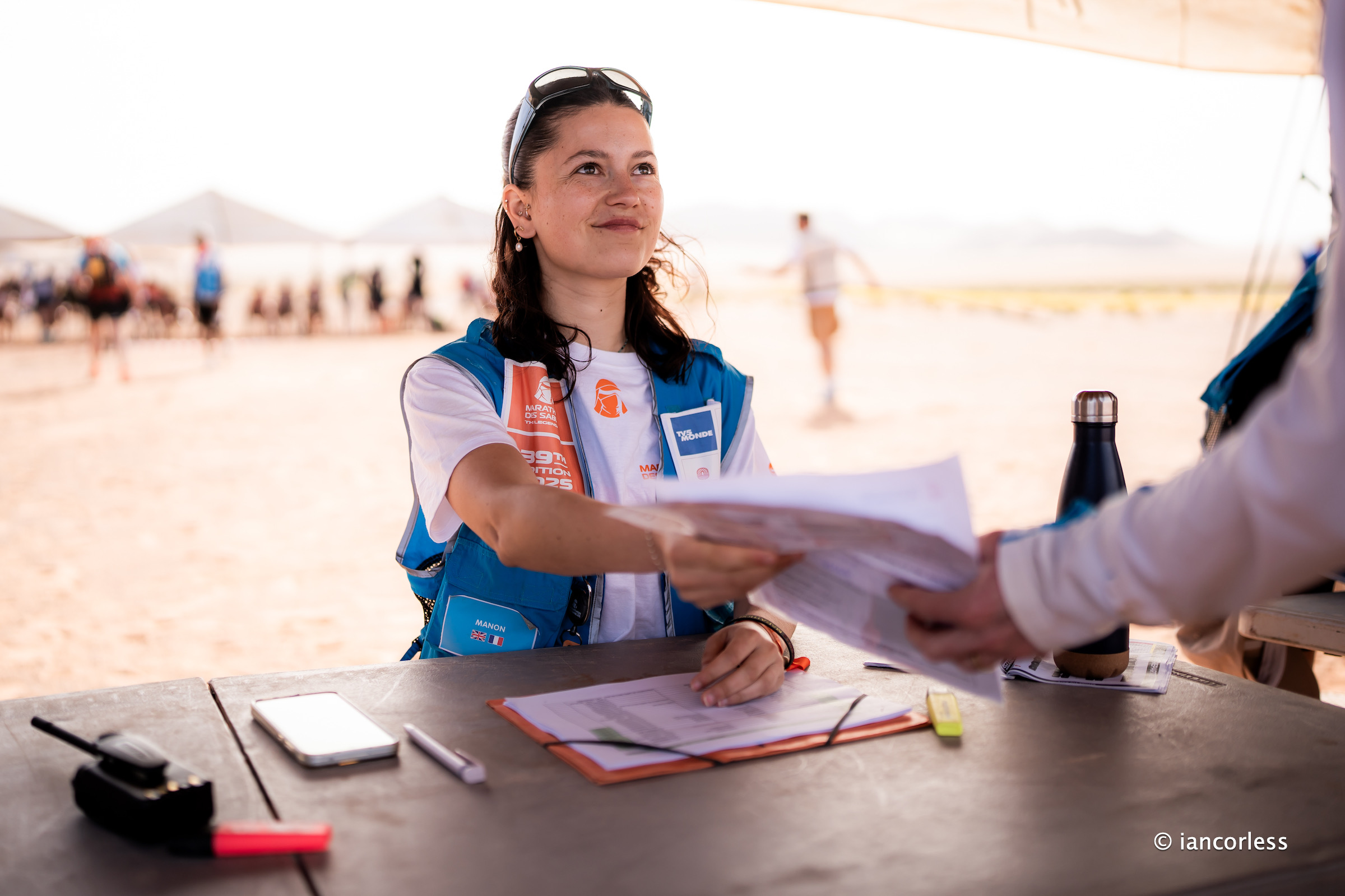
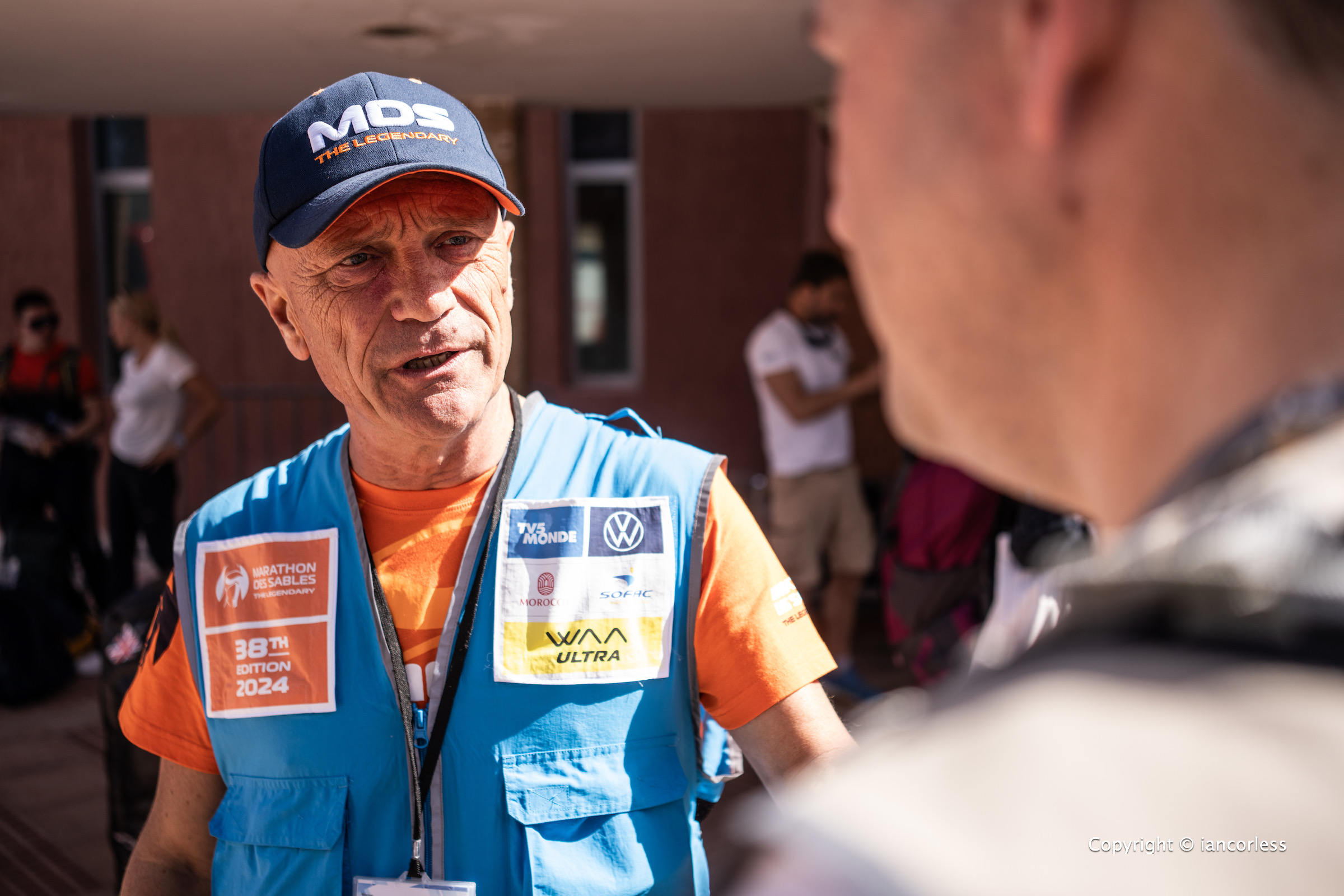
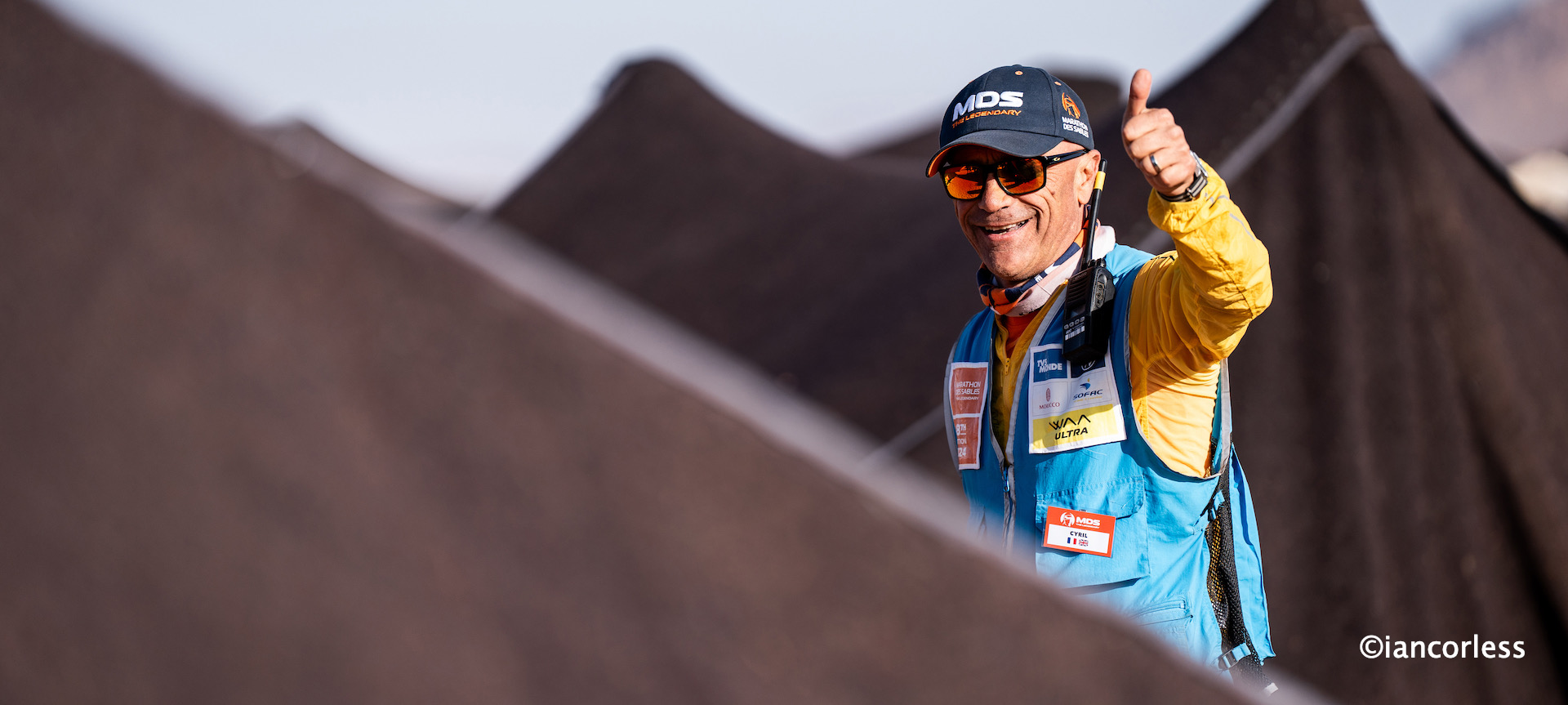
The MDS would not happen without this amazing team of people. The energy, the enthusiasm, the constant good vibes make the runner the number one priority and YES, these people make the difference between finishing and not finishing. They are 100% switched on with the sole purpose to get every runner across the line. You can get a feeling of how important the blue and oranges are by taking a look HERE on Facebook.
Photo by Ian Corless
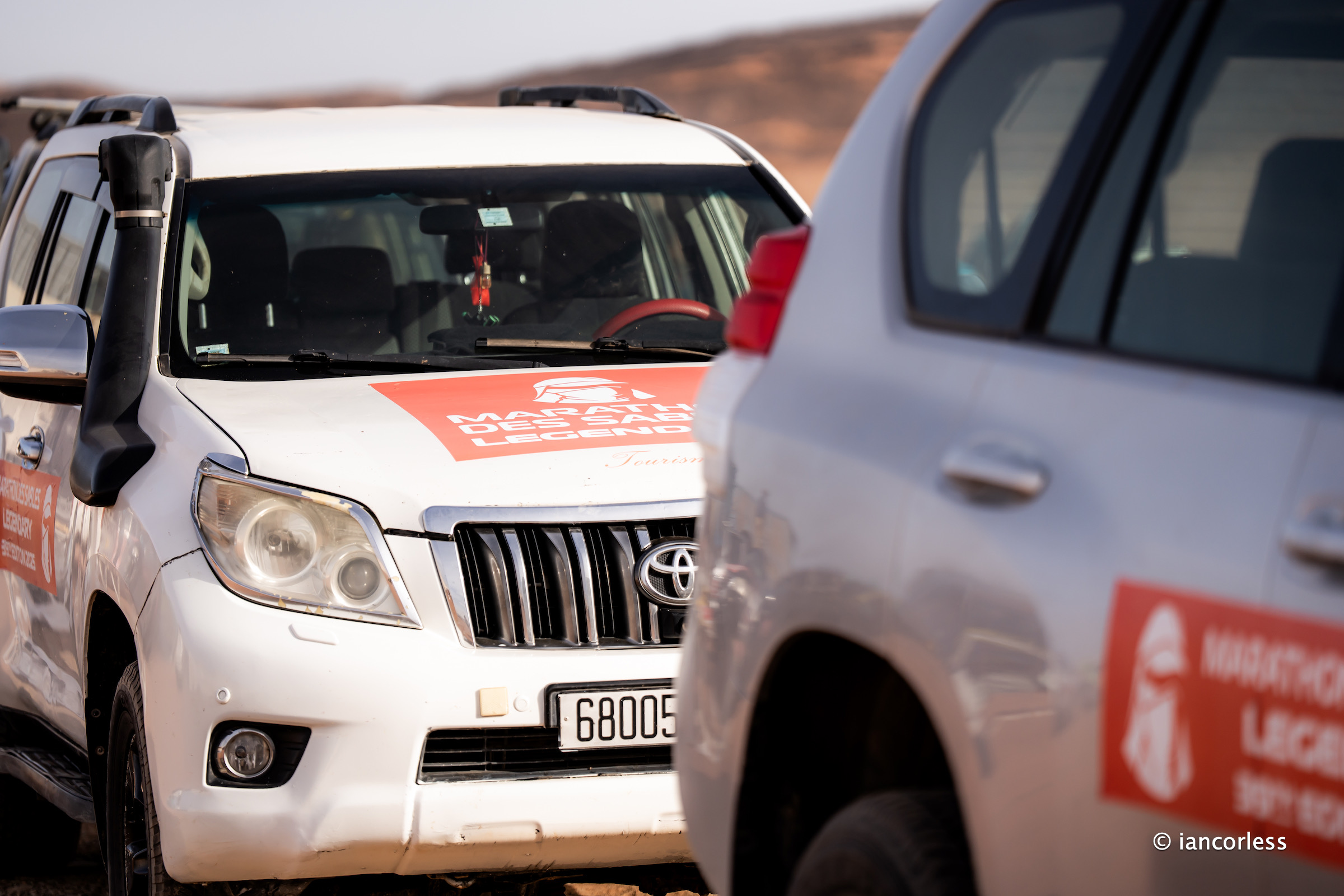
Orange jackets are the medical team who make sure that participants are looked after 100%. They are there for you, no matter what the issue. You will see them on the course at CP’s, in fast response vehicles, in 4×4’s and of course in the medical tents in bivouac.
SAFETY
Photo by Ian Corless
Any MDS event has risks associated with it. We are often in harsh environments, in challenging conditions, we have varying climate conditions and of course, we have runner’s and staff pushing the limit of what is humanly possible. Safety is taken very seriously and how safety is managed is an ever-changing and developing process.
Countless 4×4’s – Photo by Ian Corless
Legendary had more fast response vehicles, more medical professionals on course, there were 10 medical professional runner’s who did the course and there was a new mobile medical unit for 2025 which is state of the art. There was also the inclusion of the ‘Orange Squad’ – a medical team who do the course the opposite way so that they are able to see runner’s coming toward them and should there be a problem, they can help immediately.
Fast response – Photo by Ian Corless
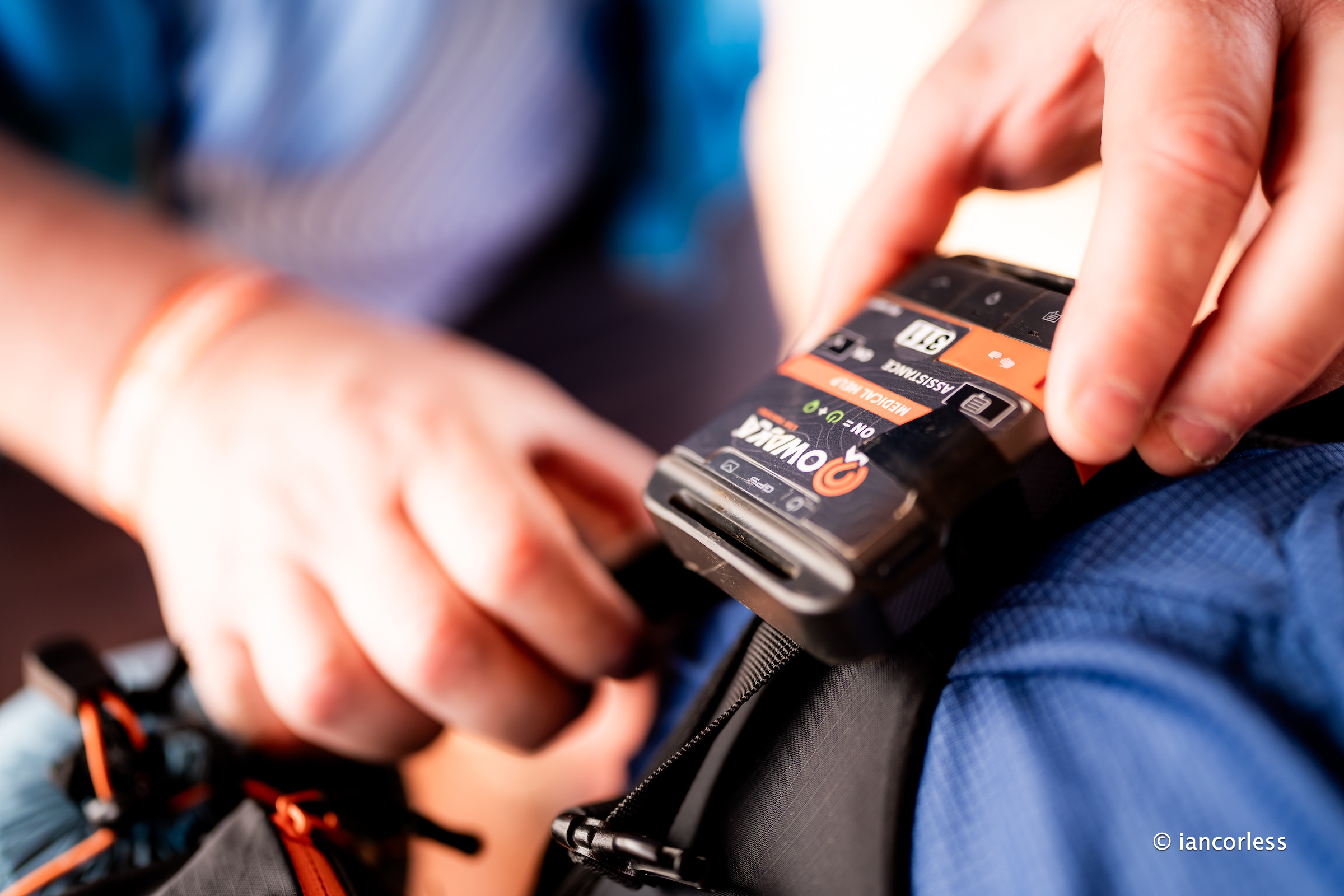
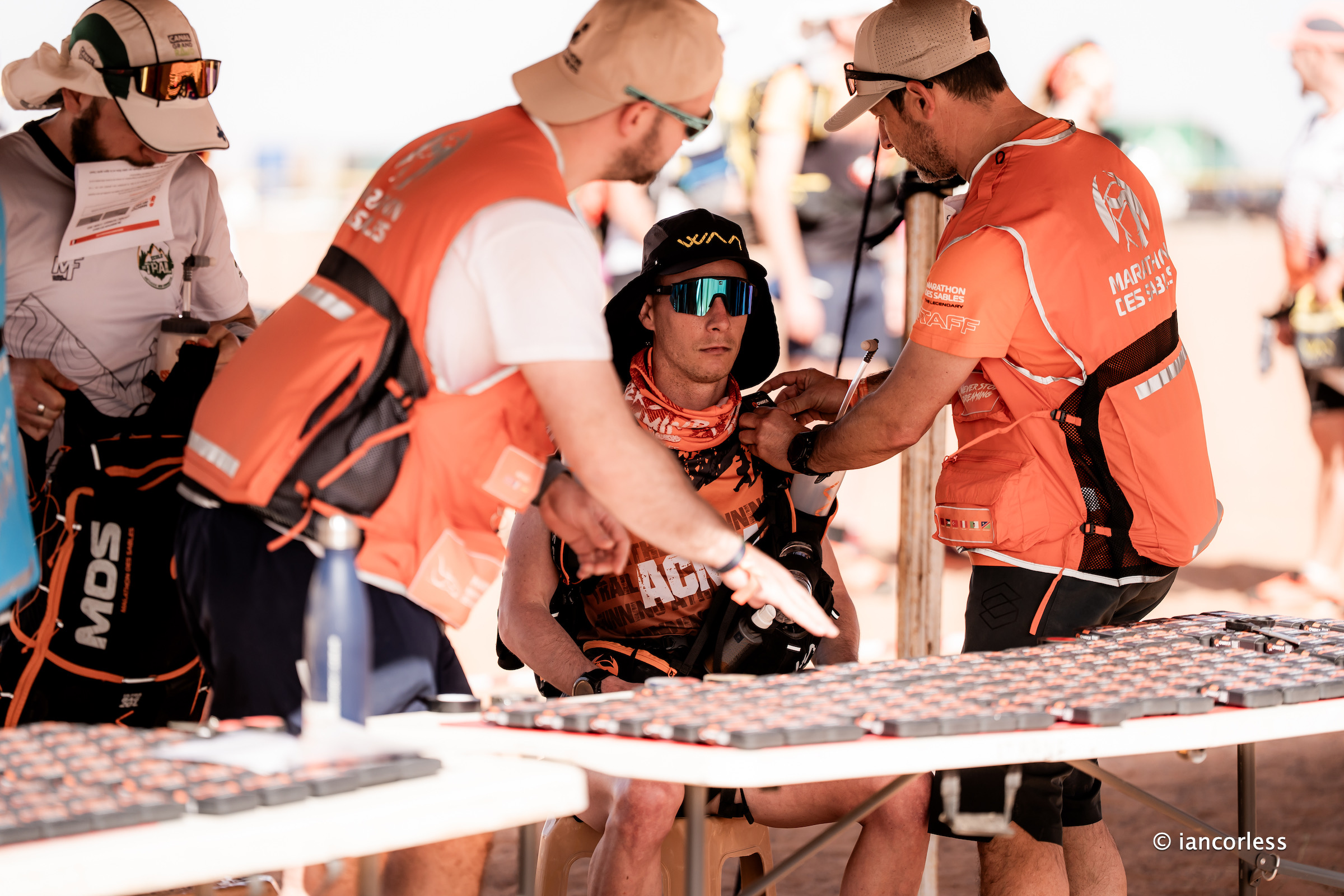
Each runner is issued with a Spot Tracker and this allows the MDS team to monitor each runner on the course and importantly, they have an SOS button which if pressed, will receive a medical response vehicle in minutes.
Fitting SPOT – Photo by Ian Corless
Feet are always an issue and of course, the medical tent is there to facilitate foot repair in bivouac. It’s important to be self-sufficient and look after your feet yourself, however, as and when necessary, a medical professional is always there to help.
RACE BRIEFINGS
Race start times are very important and pre 2024, the race start time was somewhat unpredictable. This changed in 2024 and was upped to another level in 2025 with every stage starting exactly on time! It may sound like a small thing, but knowing you will be underway as scheduled makes planning so much easier. If it says 0600 start, you know it starts at 0600.
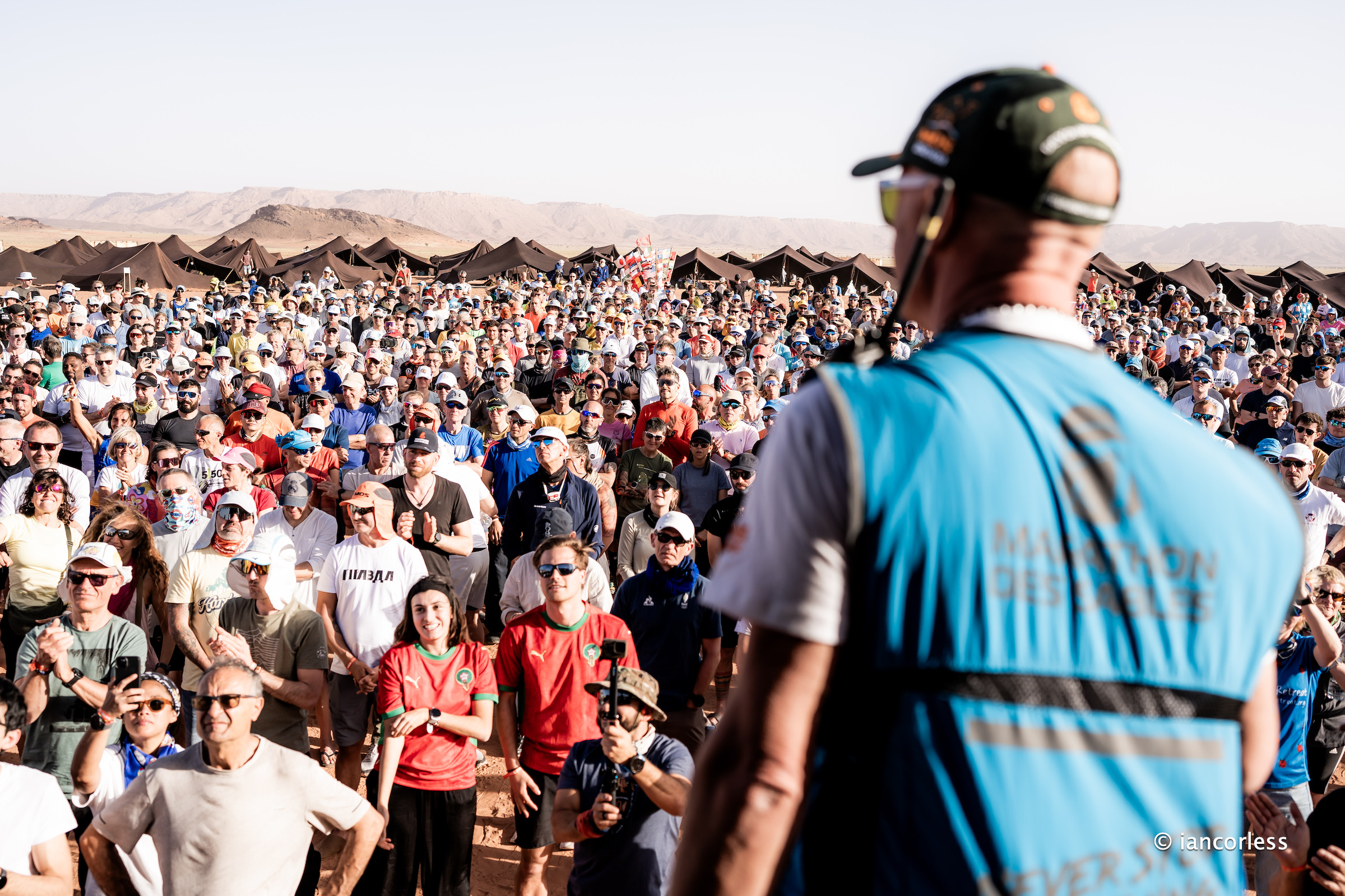
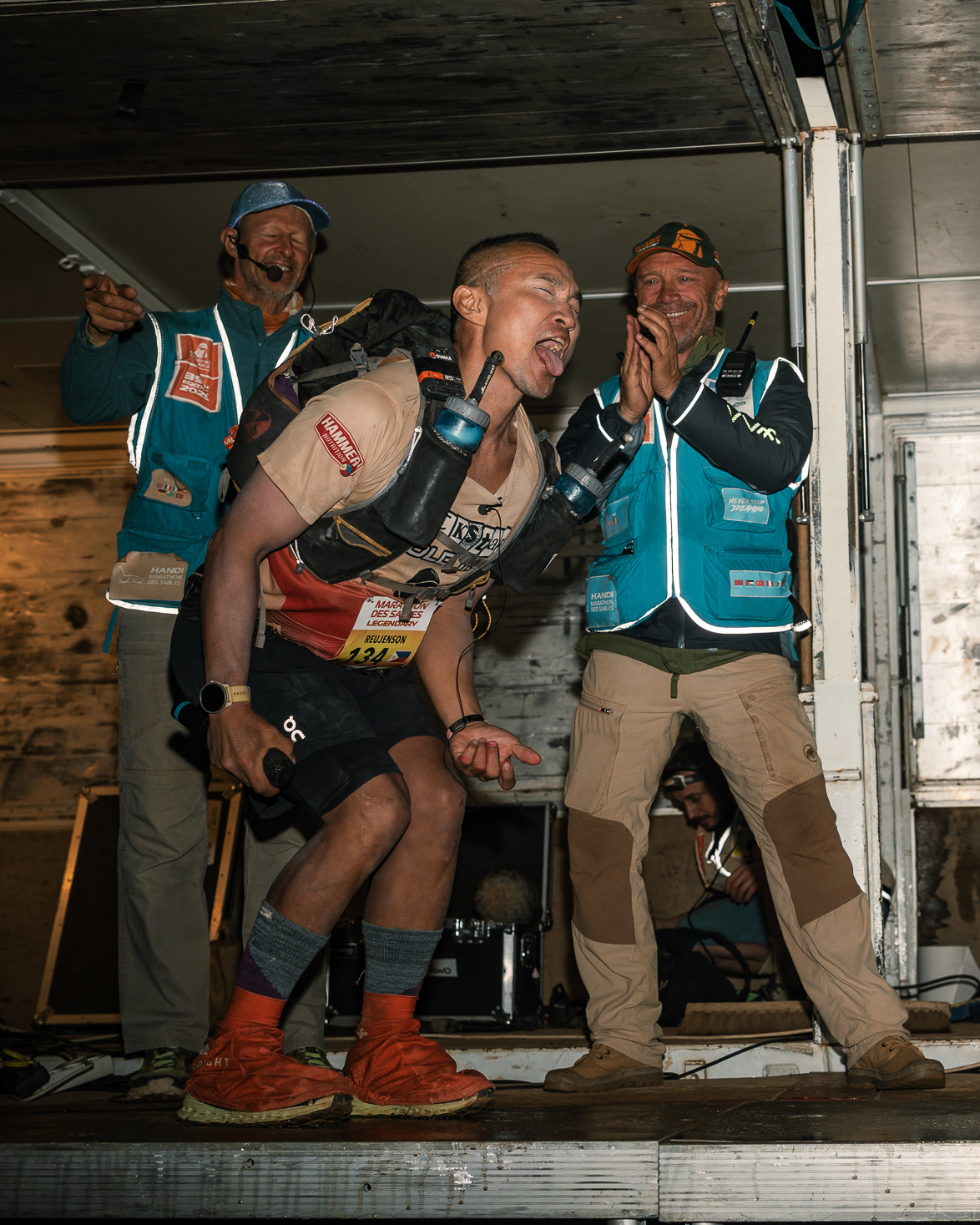
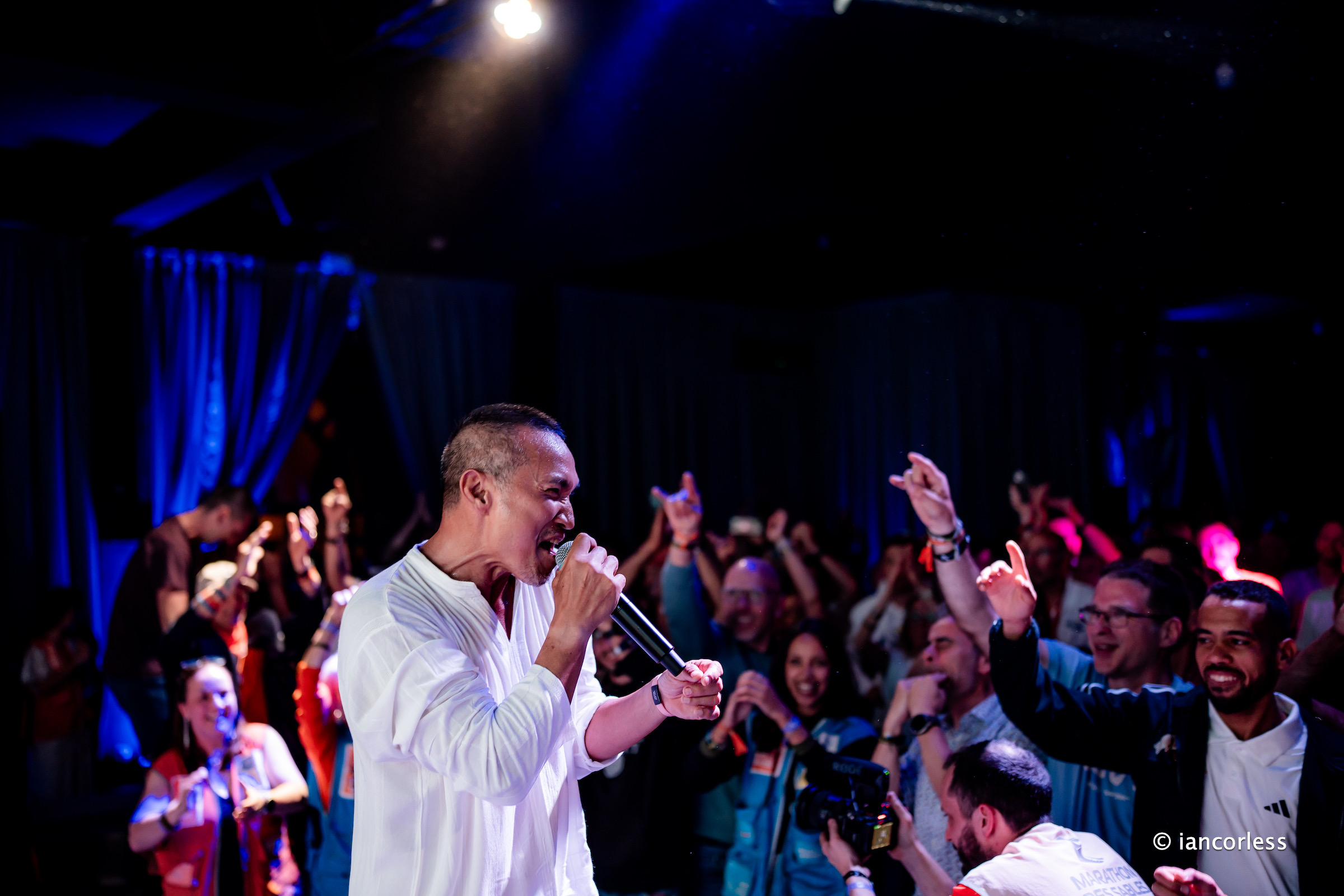
Another change was the addition of an English speaking announcer – yes, it was me! This was the idea of Cyril and we instigated and tested this at Atlantic Coast in January, it worked. So, for Legendary and moving forward, an English briefing will take place and then be translated into French and not the other way around. Stage 6 race briefing may well go down in history as the best. Mood was already high with the final stage ahead, nut hen we had participant, Reujen Lista join us on stage for a ‘live’ version of Highway to Hell – it was epic!
Highway to Hell ‘live’ – Photo by Florian
WEATHER
The weather took its toll – Photo by Ian Corless
As always, weather plays a key part in any MDS event. However, we are most definitely feeling the impacts of ever changing climatic conditions. It was always assumed that MDS will be hot and unbearable, history is showing that is not the case. Recently, particularly in Morocco, we have experienced difficult weather: MDS Morocco in October had torrential rain and flooding, the recent MDS Atlantic Coast in January had cooler temperatures, some rain and the last day had full-on sand storms. The 2025 Legendary started calmly and tranquil, it was looking to be a classic race, it was sunny, hot, but not too hot and the winds were relatively calm. That all changed come stage 4 (the long day) with cloudy skies and cooler temperatures in the day. During the night the winds increased, rain came and without doubt, from 2100 hrs the conditions were difficult and challenging. Especially for those who were moving through the night looking to get the long day done. CP’s had cold participants taking shelter looking to get warm and continue the journey. This weather continued through the rest day. Stage 5 had a mix of everything but the heat never came and stage 6 was cloudy, cool and with intermittent rain. There is a very big lesson that needs to be learned, I did say this before Legendary, but now, post-race, I can only say it more, you need to be prepared for bad weather! A good jacket is now essential, so much so, I do think that it should be added to mandatory kit. I also think it wise to make sure that you are able to keep key items, such as sleeping bag, dry during bad weather. Many had wet sleeping bags during the long day which can effectively make them useless, depending on what filling is inside.
THE ROUTE
Photo by Ian Corless
Legendary is now 6-stages over 7-days and this is a huge difference. Pre 2024, the race was 5-stages and stage 6 was a non-times ‘solidarity’ stage for charity. It’s hard to argue against the charity side of this, however, a non-timed 6th stage was pointless.
Photo by Ian Corless
The race is now 6-stages timed and raced.
Photo by Ian Corless
For 2024, the ‘long day’ was moved to stage 3. For 2025, it was moved back to stage 4. The main reason for this was due to the course and the start/ finish point.
Photo by Ian Corless
2024 participants, as always, tried to stress that the 2024 edition was/ would be harder than 2025. Of course it’s nonsense. Comments like, ‘Argh, but here was more vertical gain in 2024!’ were unfounded as the people who made these comments had obviously not done due diligence, the reality is the 2024 Legendary was 252.9km’s and the 2025 event was 250km. Vertical gain was almost identical, 2024 was 2788m+ and 2025 was 2710m+
Photo by Ian Corless
In many respects, the 2025 edition was more ‘classic MDS’ with a marathon after the rest day.
Photo by Ian Corless
The route was notably different for some key reasons. The Sahara is vast and of course, needs to be explored more. Due to runner demand and logistical reasons, certain features have become almost ‘essential’ when running Legendary. However, Cyril and the team wanted to change that and therefore, there was no Jebel El Otfal in 2025, there was a return to Merzouga Dunes and while the route travelled in similar areas of the Sahara, the track was approximately 80% new. There were some great ‘new’ additions such as the huge dune on stage 4 and the stage 5 route was very special.
Photo by Ian Corless
THE RACE
Rachid – Photo by Ian Corless
Rachid El Morabity once again took victory securing his 11th and in the process he set a record for the most victories. It’s an incredible achievement to have this level of consistency over so many years. It’s fair to say, the level of competition at the front end of the race was less in 2025. The only real person who could upset Rachid was Hamid Yachou, he unfortunately withdrew mid-race with injury. We could argue all day if Mohamed El Morabity could beat Rachid, the simple fact is, it would not happen. However, as we look ahead to 2026, will Mohamed take over the Rl Morabity reigns? Mohamed is 10-years younger than Rachid and therefore, he has great potential ahead. Also, the inclusion of the 3rd and younger El Morabity, Mbark, should not be looked over.
Maryline – Photo by Ian Corless
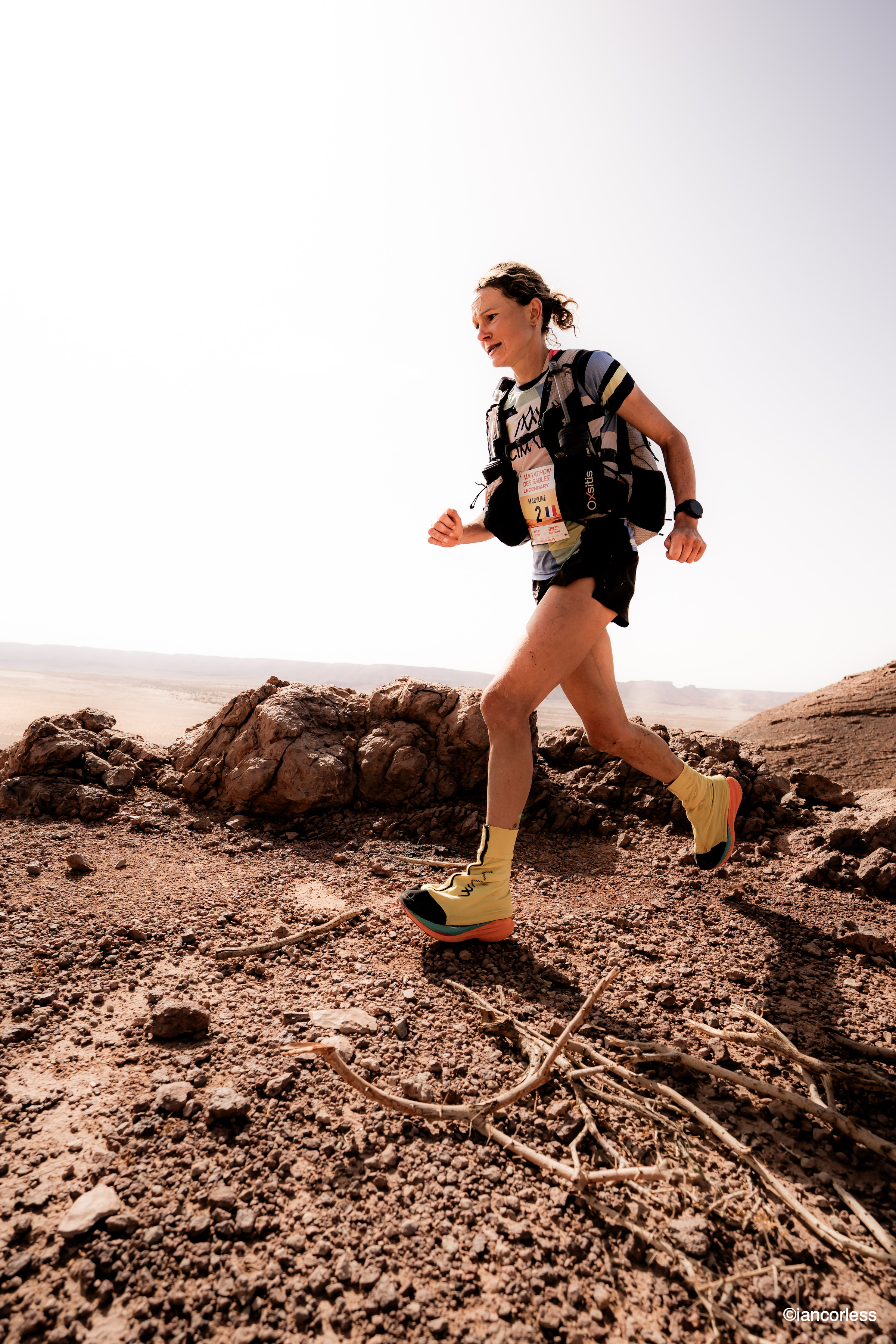
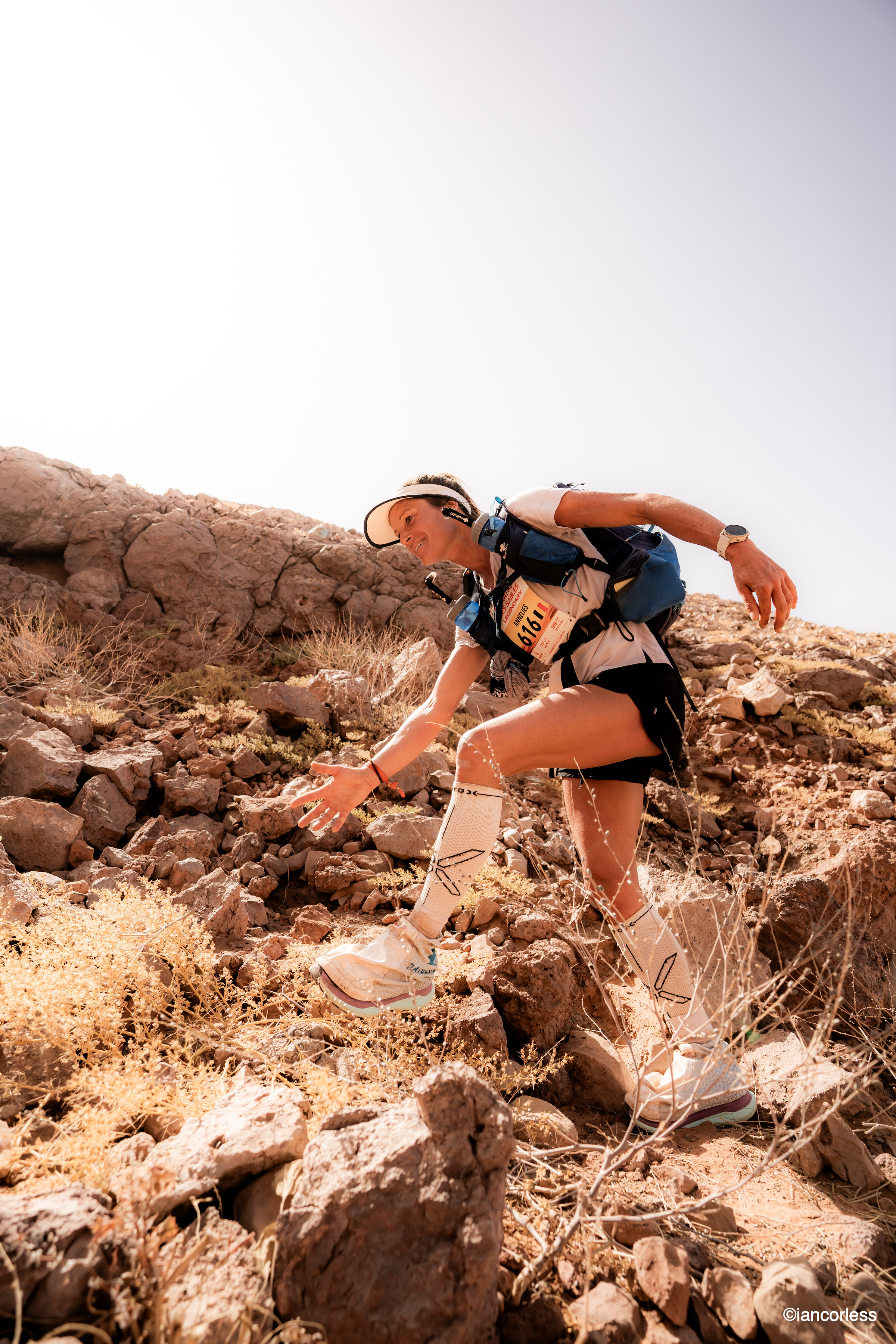
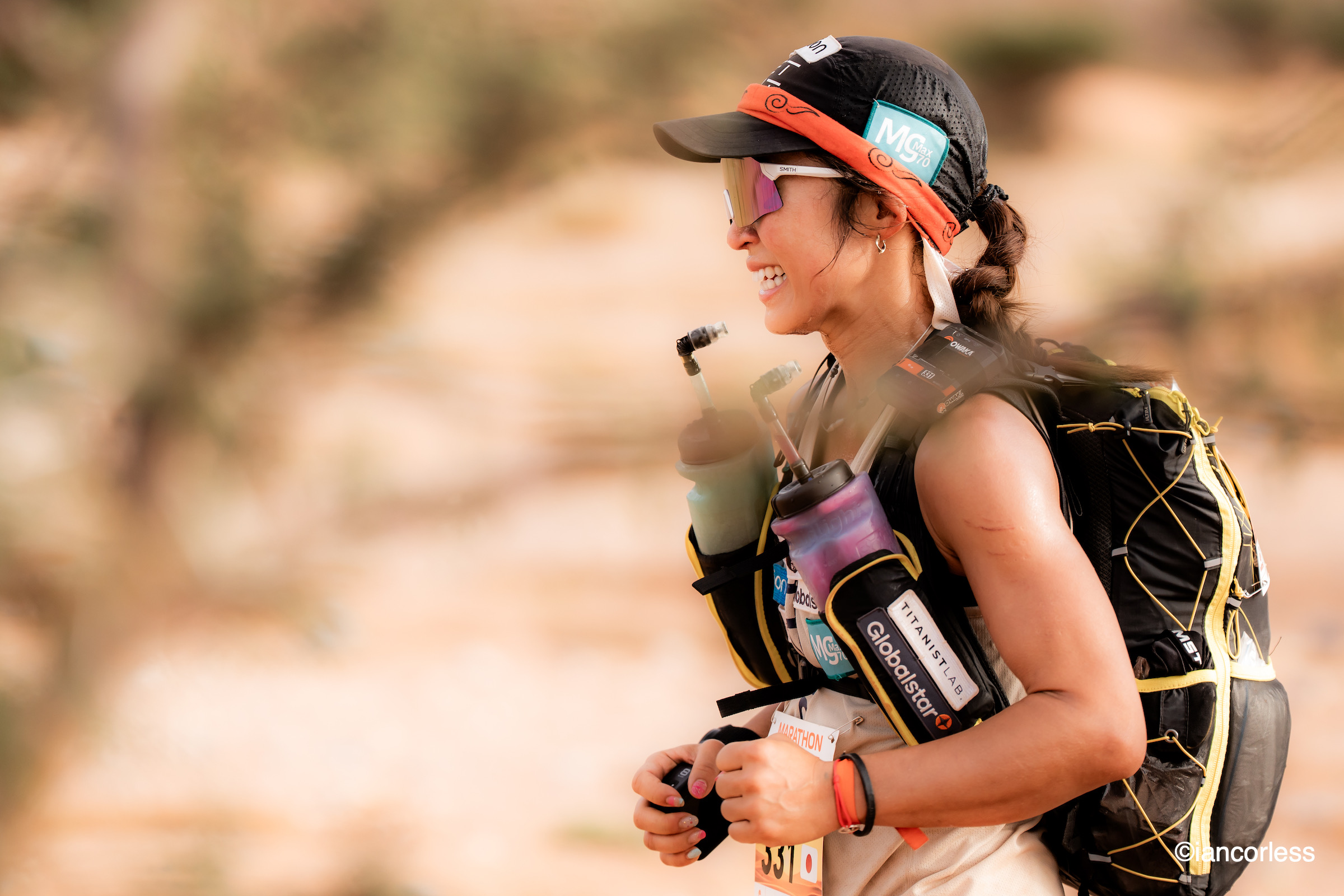
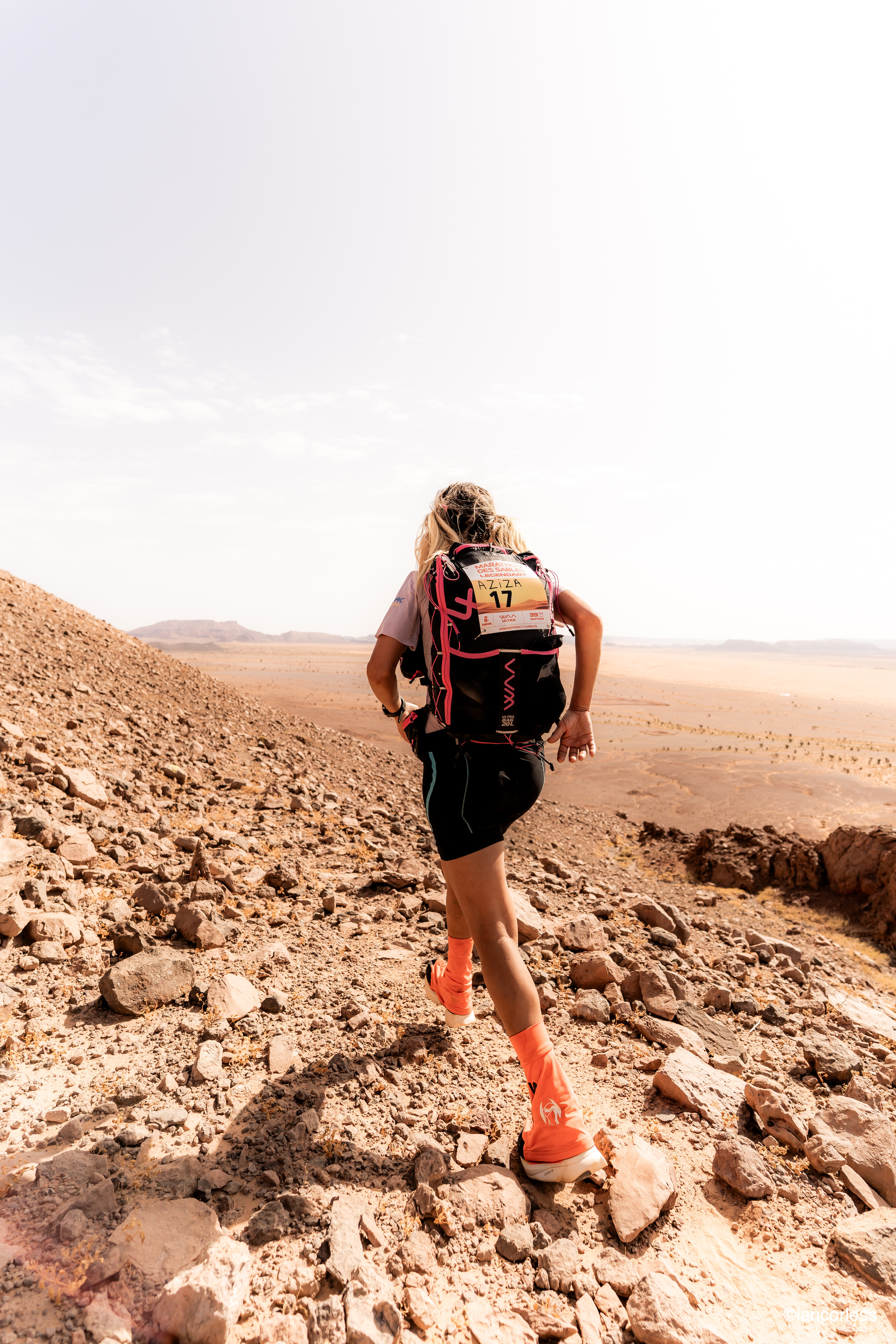
For the women, 2023 Legendary champion, Maryline Nakache returned and she was on fire. No, she was untouchable. For perspective, Maryline finished 3rd on GC for the long day and at the end of the race, was 4th on GC with the closest time to Rachid, by a woman, in the history of the race. Quite incredible. Aziza El Amrany won the race in 2024 and for 2025 she was 2nd, she looked great throughout, despite an arm injury, however, she was no match for Maryline. Tomomi Bitoh placed 3rd, she has placed 3rd before. However, Annelies Brak would have placed 3rd had she not received a 2-hour time penalty for non-compliance of mandatory kit.
Rachid completed the race in 20:55:47 and Maryline in 23:57:20. A total of 847 participants crossed the finish line, the last male Tomohito Hirai in 75:49:27 and the last woman, Nemoto Yuzuki in 74:31:01.
Reujen Lista rocking the awards – Photo by Ian Corless
Transfer back to Ouarzazate was easy and seamless with coaches filling with participants and leaving asap. Of course, a hotel, many showers, buffet food and a nice clean bed always feels amazing after the Sahara. The awards dinner turned into an impromptu rock concert with a participant, Reujen Lista, singing 3 songs on stage, the last, of course, was Highway to Hell. It was a fantastic way to end what was a legendary LEGENDARY.
After a tough and challenging stage 2, participants were happy for a shorter day of 32.5km’s for stage 3 ahead of the feared long day of 82.2km’s on stage 4.
With less soft-sand, the running would be easier, however, there was still 468m+ to test the mind and body.
On the stroke 0f 0730 the runner’s were released under cloudy skies and cooler temperatures. However, the sun and heat soon appeared making for another challenging day.
For the men, the El Morabity brothers today once again played with tactics.
Hamid Yachou started fast and opened a gap, he was pursued by Mohamed and behind, Rachid ran easy.
Mohamed – Photo by Ian Corless
By CP1 Hamid had a strong lead, Mohamed was closing on him but Rachid was some 6-minutes back. Would Rachid close the difference?
Photo by Ian Corless
After CP3, Hamid and Mohamed were side-by-side, the younger El Morabity policing the breakaway and ensuring that all times he would control the race.
Rachid – Photo by Ian Corless
By the time Rachid arrived, the gap had not closed and it became obvious that today Rachid would relinquish the overall lead playing a tactical game with stage 4 tomorrow.
At the close of the day, the male top-3 ranking is as follows:
Mohamed El Morabity 08:33:54
Hamid Yachou 08:38:46
Rachid El Morabity 08:40:16
Maryline – Photo by Ian Corless
For the women, Maryline Nakache ran a more relaxed stage keeping Aziza El Amrany close throughout the day. A sensible move with the long day tomorrow, any energy saved can be called upon for the 82.2km’s.
Annelies – Photo by Ian Corless
Ragna Debats once again ran in 3rd place and Annelies Brak and Tomomi Bitoh were 4th and 5th.
Tomomi – Photo by Ian Corless
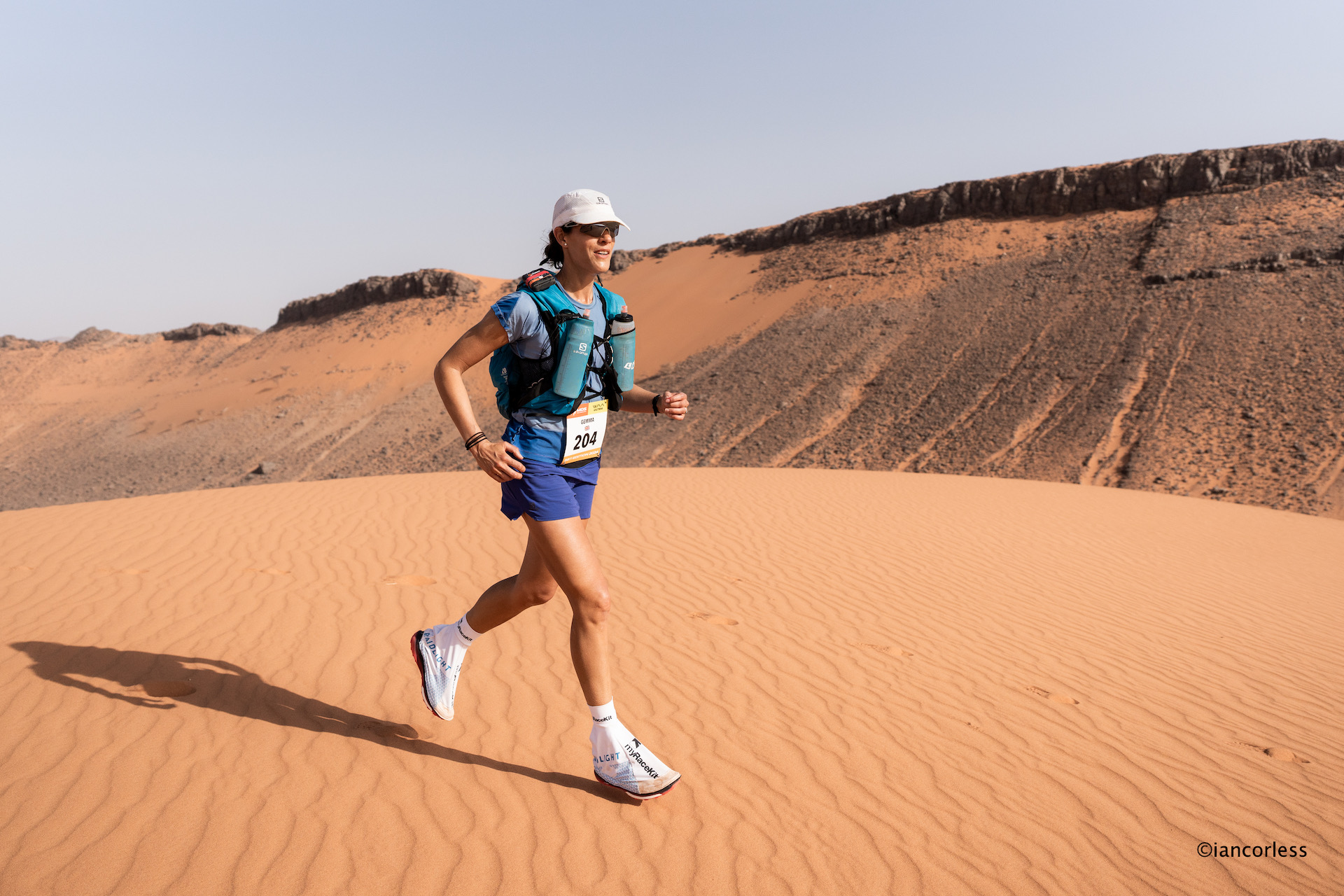
Gemma Game took it easier, again, looking to save energy for stage 4.
With 3 stages complete, the women’s top-3 is as follows:
Tomorrow, stage 4 is 82.2km’s and will have 2 starts, 0600 for the masses and 0730 for the top-50 and top-5 women. With a cut-off time of 34-hours, the conclusion of the stage will come the following day, Thursday Apr 9th.
It is race week, the 39th MDS The Legendary is just days away. Today, Tuesday April1st, for many, will be the last full day of preparation before travel starts. Use the time wisely and use this post Countdown to MDS The Legendary 2025 – Three as a place to start to make sure you have everything.
You may be wondering what the race will look like in regards to distance in 2025? If you know where to look, distances are online and as below:
Stage 132km with 312m+ and 0730am start
Stage 240km 614m+ and 0700am start
Stage 332.5km 468m+ and 0730am start
Stage 4 82.2km 690m+ and 0600am start
Rest Day
Stage 542.2km 424m+ and 0630am start
Stage 621.1km 202m+ and 0630am start
Total 250km and 2710m+
You may be wondering how the 2025 distance and vertical compares to 2024, well, it’s almost identical – 2024 was 252.8km and 2788m+ – The long day was on day 3, so, the order was different, however, daily distances are +/- the same.
The only thing you need to do now is go through the following:
Get your checklist and go through everything and make sure you have all you need.
If possible get some heat exposure – Bikram yoga, heat chamber, sauna, hot bath or similar.
Move – your training is done but your body will appreciate some movement, this can be just walking or some easy running with some short strides to loosen up.
Travel with MDS pack and all equipment (ex poles and knife) and wear race shoes.
Take extra clothing and items in check-in luggage so you can fine tune equipment when in the Sahara.
Remember you are self-sufficient in the desert for the days before the race, have enough food and any drinks you require. Water is provided.
You are in the final 2-weeks for MDS The Legendary.
With this in mind, we follow up the conference calls that took place on Friday March 21st with a summary.
First and foremost, the conference calls were recorded and you can view them on YouTube, the english version is as below.
SUMMARY NOTES AND KEY POINTS
The adventure will be here soon, do not worry, keep calm, 80% of you are first time participants.
Here we will go over the key information about the race.
Logistics
Passport – keep it handy and make sure you don’t forget it! Make sure you have at leat 6 months validity.
Wear race clothing for travel including shoes and gaiters.
Take RACE PACK with all contents as carry-on luggage, this includes the food. The only items you must check-in are poles and knife/ scissors etc.
MDS admin send you a procedure via newsletter in case your checked bag gets lost.
There will also be a pre-race shop at bivouac if needed, this will not have an exhaustive amount of equipment, but it may help in an emergency.
What happens when you land in Marrakech?
At the airport as you exit, after baggage collection, there will be a welcome area on April 2 and 3rd look out for the MDS team wearing orange and blue gilets.
Board your bus
Bus schedule:
KENZI ROSE: April 2 & 3 – 7:00 AM
RAK AIRPORT: April 2 & 3 – 10:00 AM
RAK AIRPORT: April 2 & 3 – 12:00 PM
The drive to Ouarzazate is approximately 4-hour ride + mid-way break MDS will provide a snack. If you have special dietary needs, you should have submitted that on our website. You’re welcome to bring your own snack if that makes you feel more comfortable.
Drop-off at hotels in Ouarzazate – all buses stop at all hotels:
El Baraka
La Perle du Sud
Berbère Palace
Karam Palace
You’ll spend 1 or 2 nights there depending on your booking. Our staff will be present in the main hotels in Ouarzazate if you need anything.
April 4
Transfer to the bivouac
Meet at 7:30 AM in Ouarzazate to board the bus from either:
Karam Palace
Berbère Palace
6-hour transfer
1 break during the ride, lunch pack will be provided BUT I recommend you purchase items in Ourarzazate to take with you, remember dta 1 and day 2 in bivouac is self-sufficient.
REMEMBER you are self-sufficient with food BEFORE the race starts. So, you need to take adequate food, snacks etc. There is no restriction here as you carry this in your luggage.
➤ Arrival at the bivouac with your suitcase and all your gear
➤ You’ll be assigned an 8-person tent – tent numbers will be shared next week
➤ Arrival briefing
➤ Sleep
IMPORTANT – You have luggage with you this night, a great opportunity to fine tune what you will take when racing. If it is cold, you can pack extra layers. If hot, you can maybe take less.
April 5
Technical checks stay in your bivouac tent and a member of the MDS team will come to your tent and tell you when to go. Expect this to take approximately 1-hour.
You will drop your luggage at the technical check. you will not see or have access to luggage until AFTER the race when you return to Ouarzazate.
Rest in camp and prepare for the race.
April 6–12
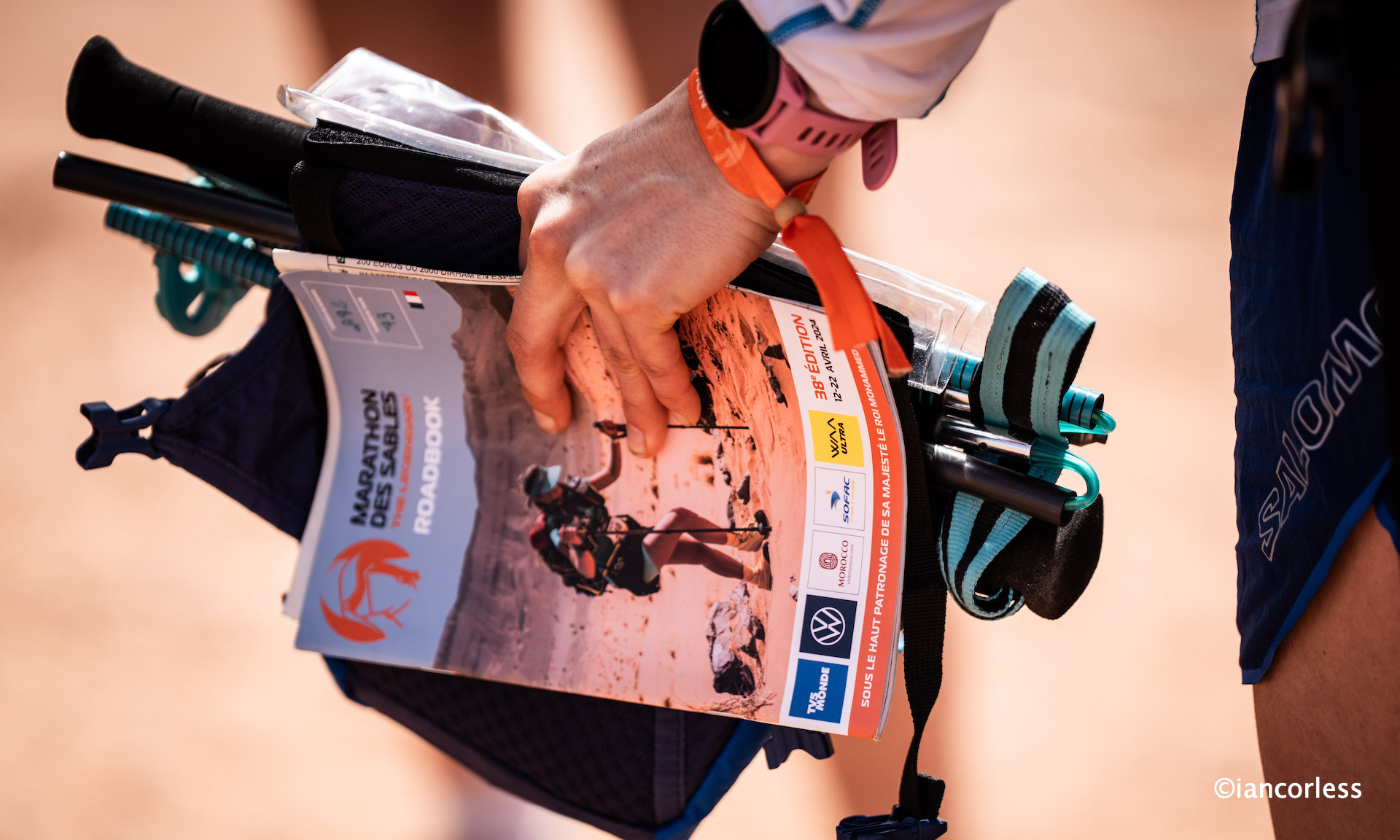
Race Stages You’ll discover the stage details in the roadbook, given to you when boarding the bus on April 4.
The long stage will be the 4th stage.
The race will be 250km’s over 6-stage / 7-days.
A typical stage:
Early starts so you will be getting ready in the dark.
Checkpoints every 10km (+/-) with unlimited water
We recommend carrying an extra soft flask for flexibility – but remember, you carry it!
Each CP has shaded rest zones
Orange-vest staff to help if needed for any medical issue
Cold water available to cool your neck (bring a neck gaiter!)
Feminine hygiene products available at bivouacs and on course
Minimum pace is 3.5 km/h – no stress, go at your own rhythm.
End of the stage: You can refill your bottles + get a 5L water bottle to last to CP 1 the following day.
EQUIPMENT
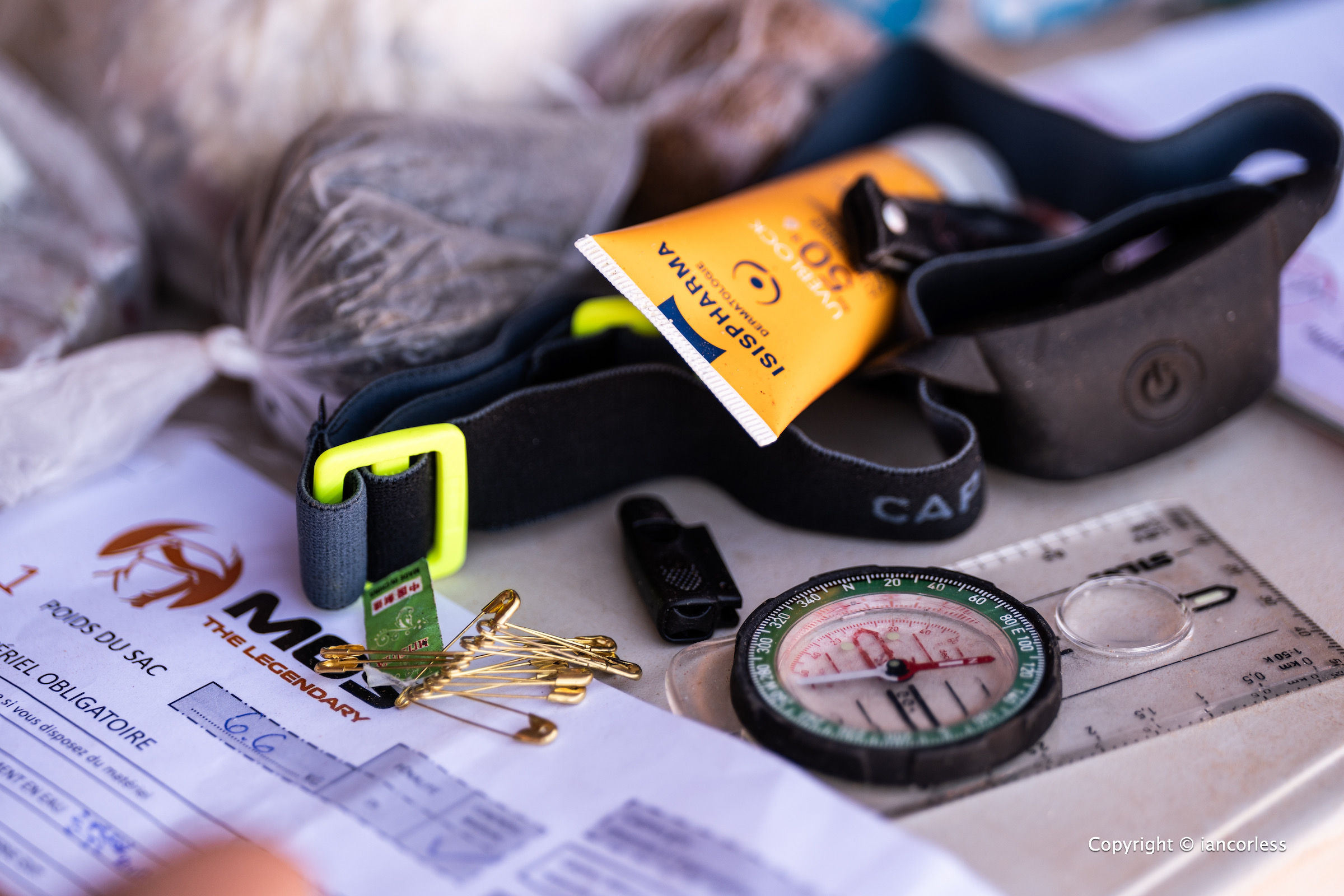
Review the list of mandatory equipment
First night at the bivouac: Good opportunity to test how cold it gets.
Bring a proper sleeping bag,
Have with you warm layers, light down jacket, etc.
Sleeping mat is highly recommended
Make sure you have tried and tested shoes with gaiters
Foot care – trim your toenails before the race – not too short, not too long. A pedicure can be a good idea.
Bring socks you’re used to, and maybe a spare pair.
Foot care during the race:
Clean and let your feet breathe after each stage.
If you feel a blister or small injury, go see the medics immediately – don’t wait!
Rain?
Keep a rain jacket and a rain cover for your bag in your WAA pack – just in case.
Protect yourself from the sun: Hat, sunscreen, sunglasses – don’t neglect anything!
Clothing: Test your gear beforehand to avoid surprises One race outfit + one bivouac outfit is enough
Fire starter bricks – available in the pre-race shopMENT
Before the race: Food for the evening of April 4 and the full day on April 5 – whatever you like.
During the race: Plan 7 days of food: breakfast, lunch, dinner. For the last stage, only breakfast + snacks for the stage are needed. A lunch pack will be given on the return bus.
So, you need roughly 20 meals, totalling around 12,000 to 14,000 calories minimum.
Strategy – Test your meals and drinks in advance! Don’t bring 3 or 4 of the same meal unless you’re sure you like it.
Backpack weight It adds up quickly – aim to be as close to the minimum 6.5kg as possible. This does NOT include water.
Medical Advice Hygiene rules:
Never drink tap water.
Don’t share bottles or cups.
Avoid raw vegetables at hotels or elsewhere.
Stick to cooked food before and after the race.
Your digestive system will be sensitive.
Heat and stress can also cause minor digestive issues.
Don’t panic – mild diarrhea is often just your body adjusting (and it might even make you lighter!).
Limit physical contact at the bivouac.
Wash hands frequently – especially before eating or after using the toilet.
Use hand sanitizer often.
Tips for a safe race:
No self-medication If you feel unwell, don’t self-medicate.
Avoid NSAIDs like ibuprofen, Voltaren, etc. – they can cause serious complications during intense effort.
Talk to the medics instead.
No COMPEED® for blisters They melt into your skin in the desert heat and make treatment harder.
Hydration Drink according to thirst – don’t over hydrate.
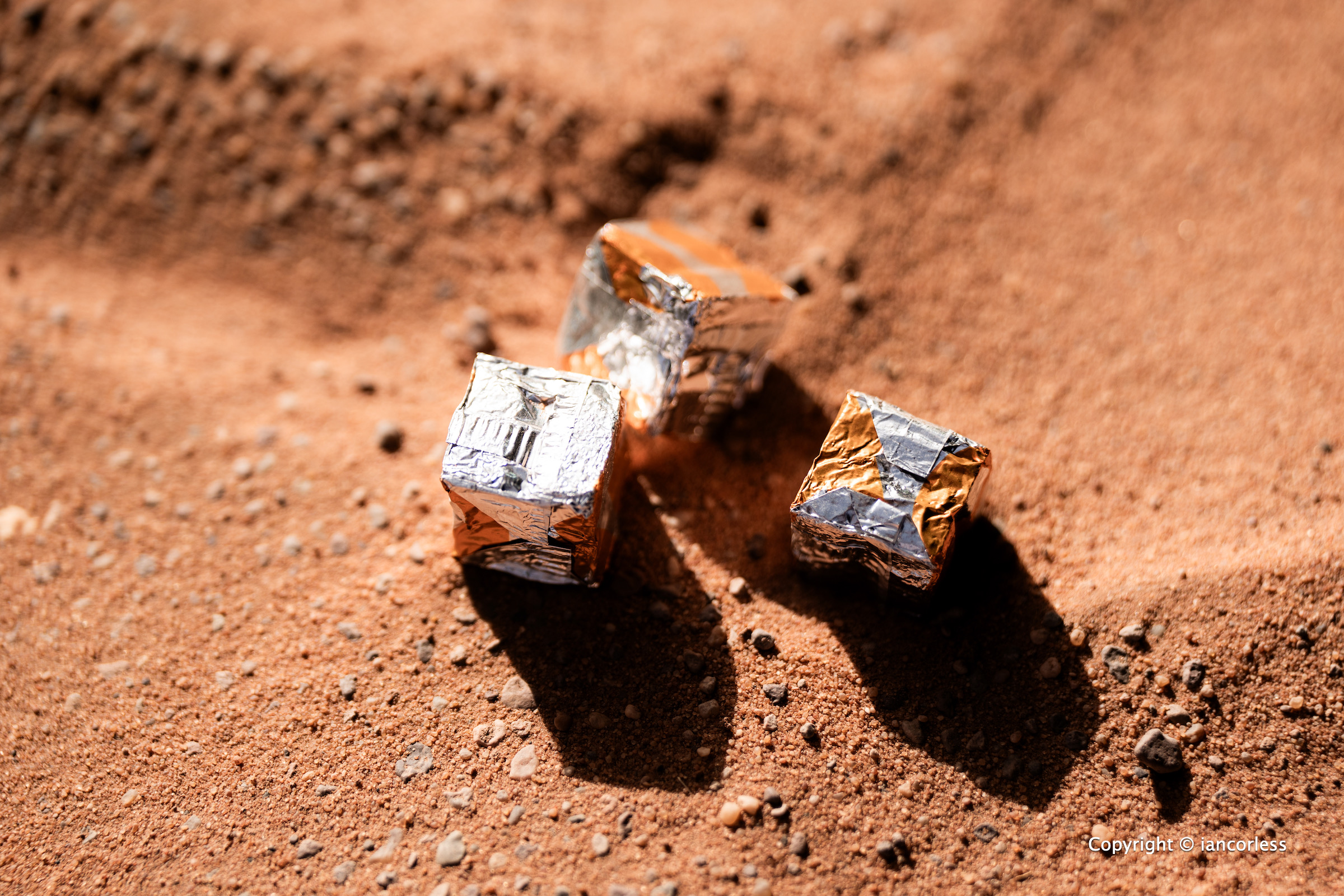
Drink two diluted bouillon cubes per race day.
MDS do not provide salt tablets as they’re not recommended.
Treat pain early The earlier, the better – avoid complications.
Listen to your body Fatigue, dizziness, pain – speak to an Orange Vest!
Medical Form One week before the MDS Legendary, you’ll receive a medical questionnaire from: no-reply@logicoss.net. Filling it out is mandatory to help the medical team take care of you during the event.
Race Tracking
Friends and family can follow you on the MDS website
Live tracking page
Live webcam
EMOTION BOXES
Satellite phone
There will be some connection spots – but we recommend disconnecting and enjoying the moment.
Final stretch:
Stop training. If possible get some heat acclimation – sauna, heat chamber, hot yoga etc
Don’t stress.
Once you’re in Morocco, we take care of everything.
Enjoy it!
Any questions? Call us.
A full recap will be emailed to you next week with all these details.
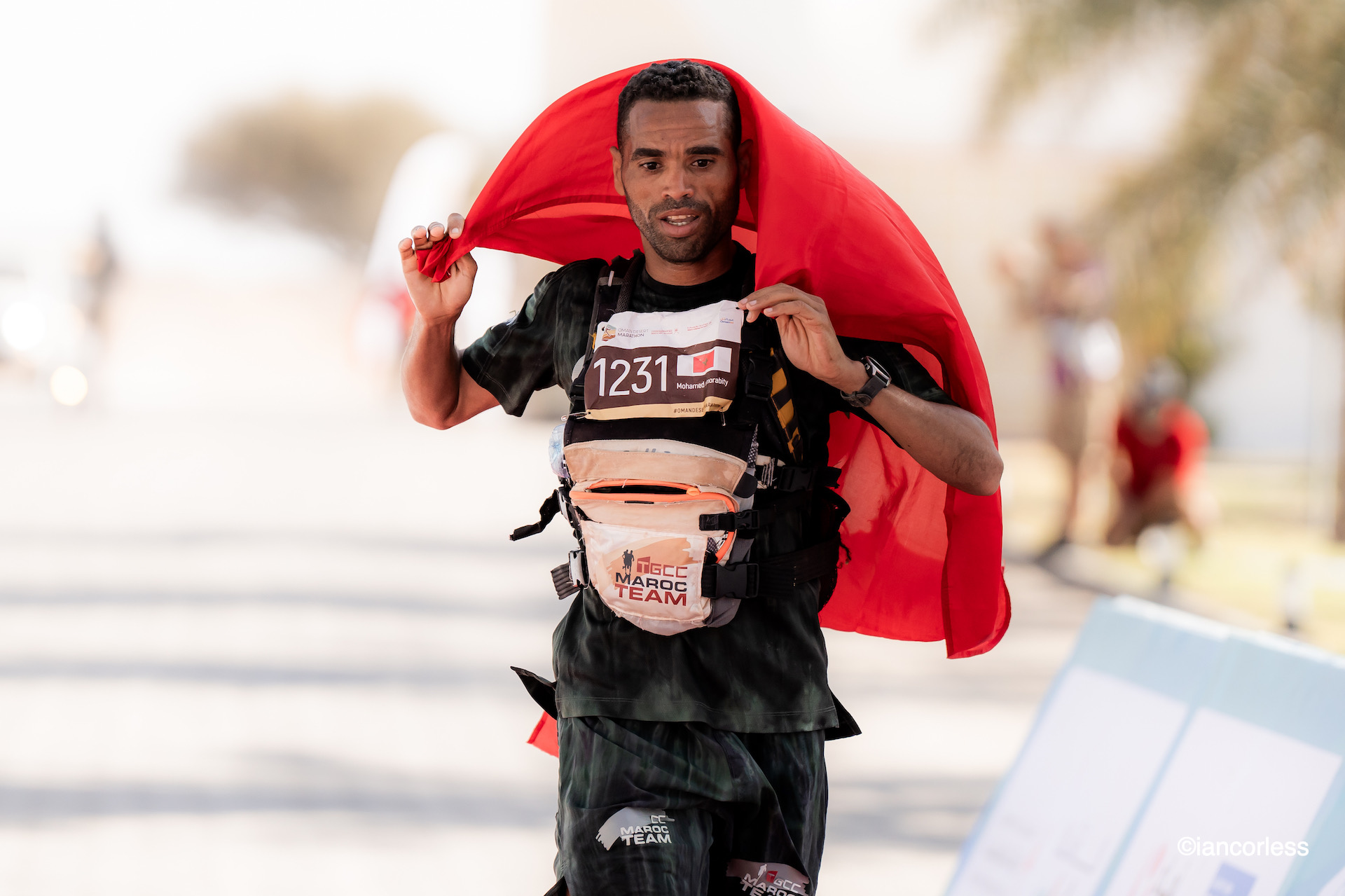
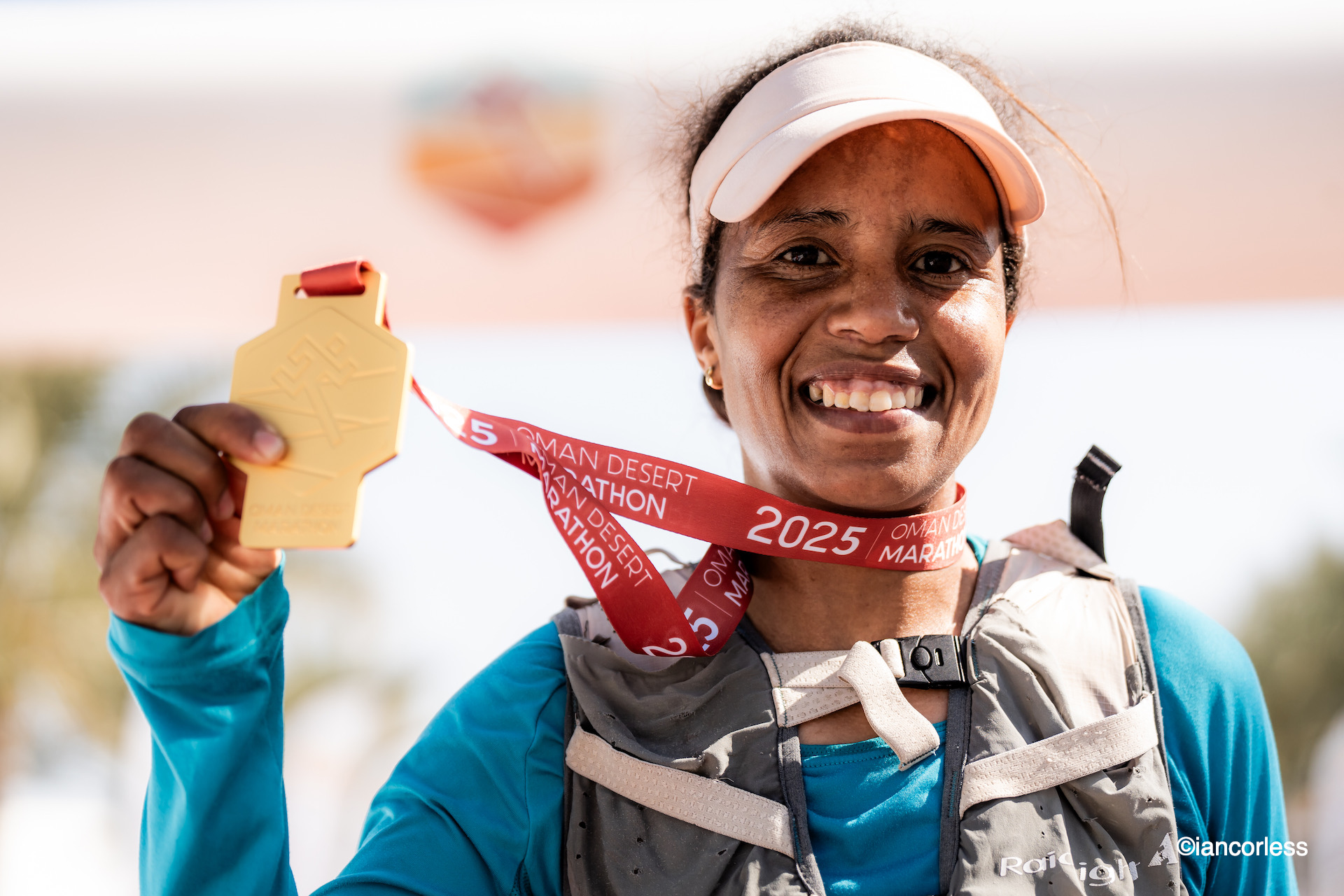
The 2025 Oman Desert Marathon came to a conclusion with a 21km stage finishing at Al Jawharat Resort in Bidiyah.
Mohamed El Morabity and Aziza Raji were crowned champions.
Photo by Ian Corless
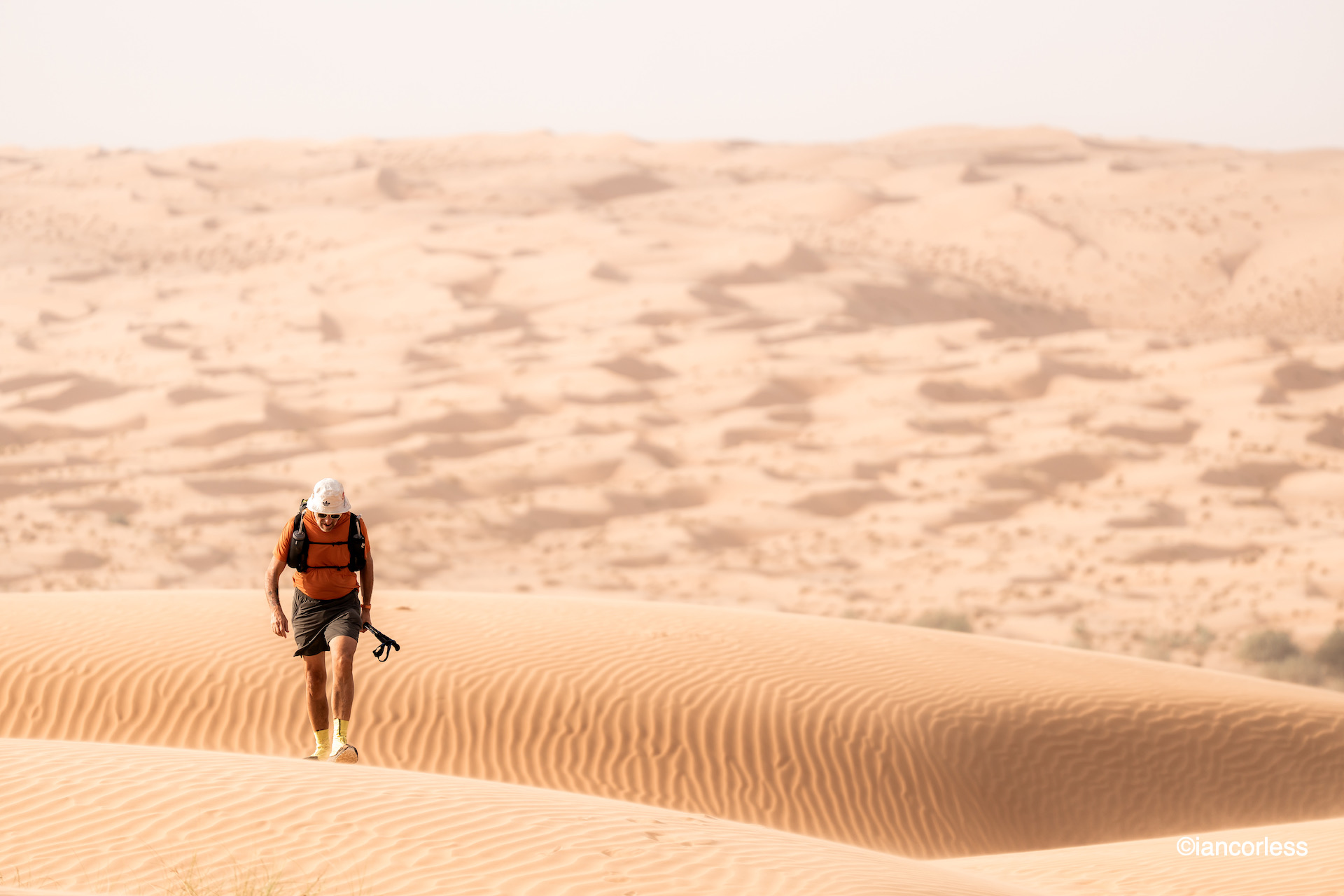
The stage, in comparison to those that had gone before was considered ‘easier,’ with less soft-sand making for a faster pace and easier running. However, a beautiful dune section started the day with impressive 360 views.
Photo by Ian Corless
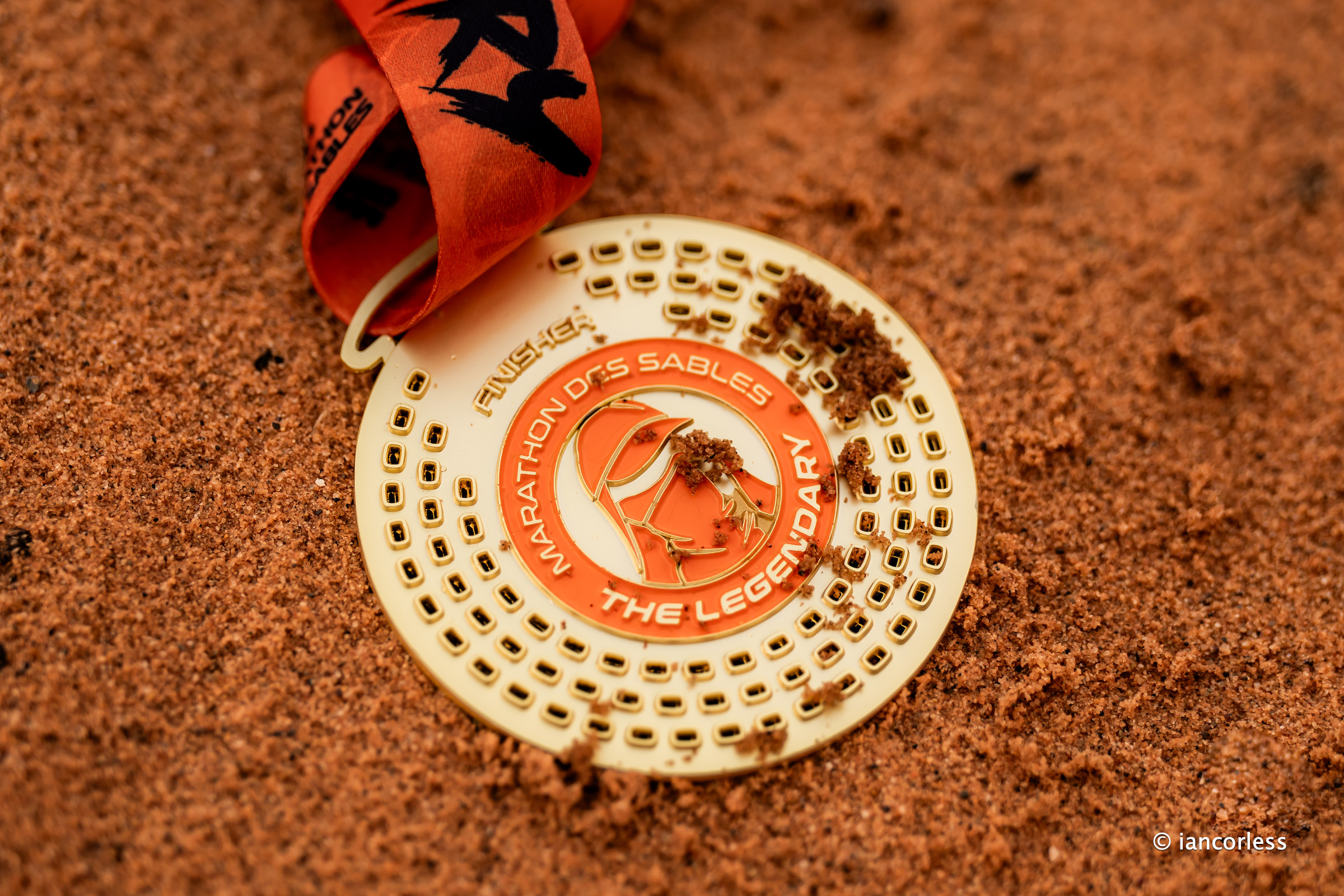
It was one last big effort before receiving a finishers medal that was hard earned.
Saleh and Mohamed – Photo by Ian Corless
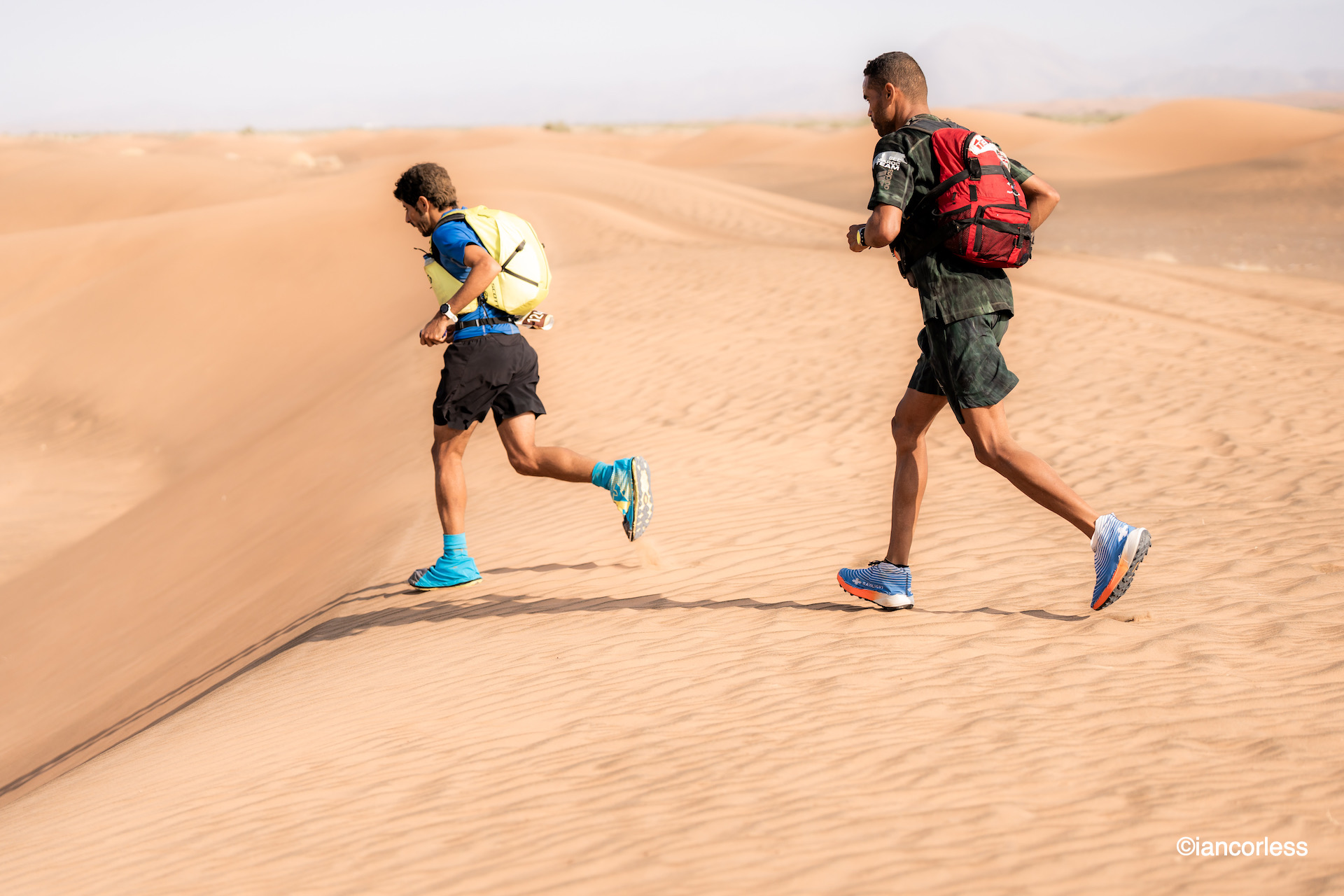
At the front of the race, Mohamed and Saleh pushed a hard pace, no doubt worried that Rachid was on a charge after his previous stage victory and win by a big margin. Mohamed was constantly looking behind fearful for his elder brother. However, Rachid looked relaxed and content that he would be second on the overall finishers podium.
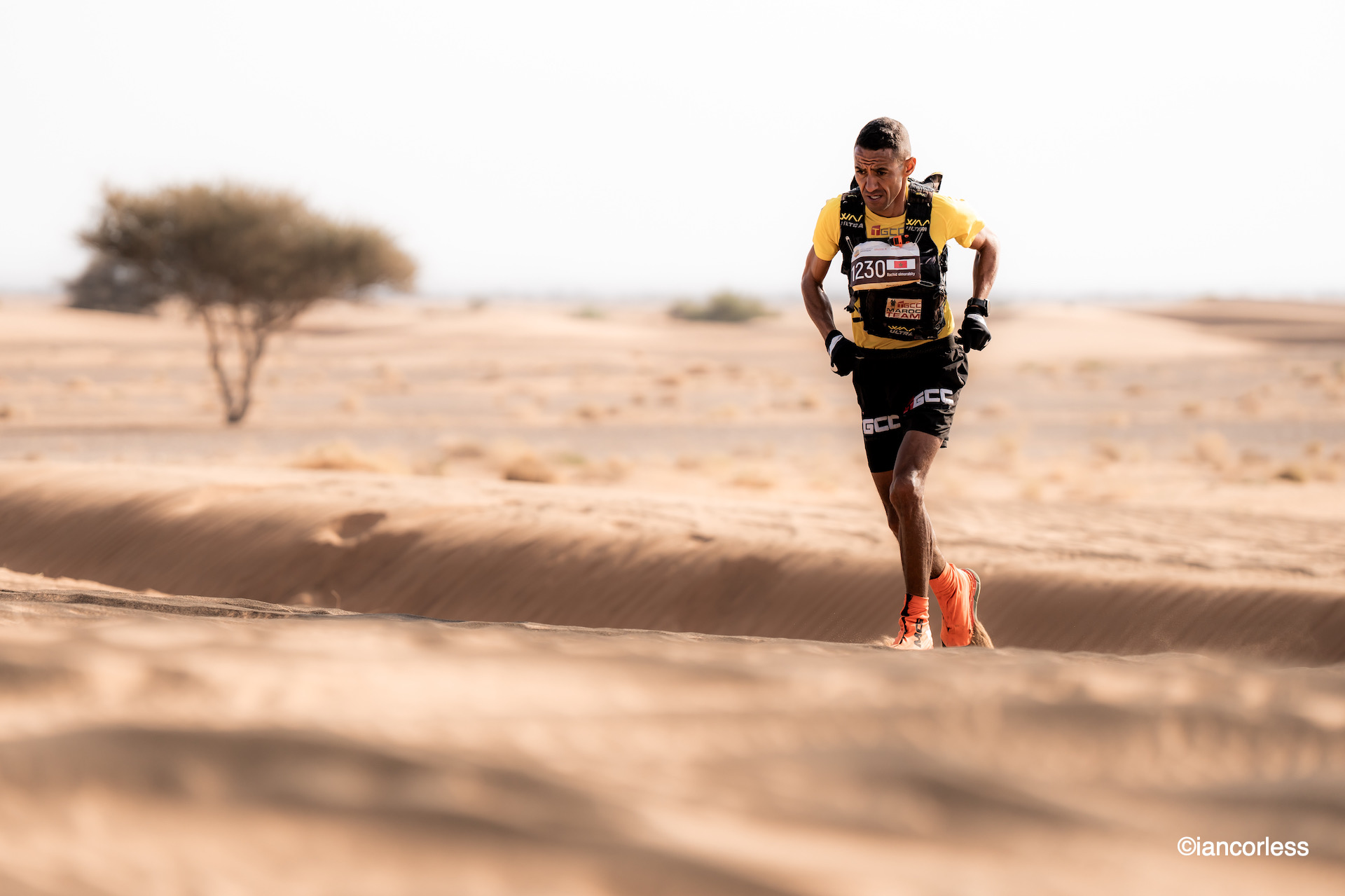
Rachid – Photo by Ian Corless
In the closing km, Mohamed put his foot on the gas and pulled away taking the final stage victory by 22-seconds. Rachid would finish 4-minutes and 28-seconds later.
For the women, Aziza Raji was a clear and stand out winner. She once again won the final stage and was crowned the 2025 champion. Lydia Oldham finished second and Tanja Schoenenborn third. The final women’s podium would be Aziza Raji, Lydia Oldham and Sally Ford.
The 2025 edition of the Oman Desert Marathon will remembered for cold nights, hot days and relentless soft-sand. At 165km’s over 5-stages, the race is a tough one, Mohamed completed the whole route in 15:44:25, Aziza in 22:39:17 and for perspective, the last person concluded in 33:21:18, twice as long as the race winner.
Luigi – Photo by Ian Corless
While a tough challenge, the ODM appeals and caters for runner or walker, especially with the option to take a 100km option, basically broken down as 20km’s per day.
Emotion – Photo by Ian Corless
Planning will now start to take place for 2026, if you enjoy stage racing, the desert and making new friends, the Oman Desert Marathon provides a perfect experience for experienced or novice.
A new year and a new race for Marathon des Sables. MDS returns to Morocco, this time, the Atlantic Coast!
First editions are always special, and anticipation is high to explore the white dunes of this magical part of Morocco.
As with all MDS events, Trek excluded, participants will choose either 70, 100 or 120km’s over 3 stages in 4 days.
Located close to Agadir, on arrival in Morocco, participants will spend two nights in a hotel for relaxation and admin protocols. After the race, everyone will return to the same hotel for post-race relaxation and of course, on the final night, a gala dinner, awards and party.
2026 participants will be pioneers of this new Moroccan adventure.
RACE FORMAT
Participants choose 3 different distances: 70, 100 or 120km,divided into 3 stages.
Typical distances are as follows:
Stage 1: 25km
Stage 2: around 20, 40 or 60km
Stage 3: 25km
Stages can be completed at your own pace: walking or running.
PROGRAM
Jan 25th arrival in Morocco and night at hotel.
Jan 26th technical and medical checks, night in the hotel.
Jan 27th transfer to the desert and stage 1, night in bivouac.
Jan 28th stage 2 and night in bivouac.
Jan 29th rest day and night in bivouac.
Jan 30th stage 3 and finish followed by transfer to hotel.
Jan 31st relaxation day with awards and dinner in the eve, night at the hotel.
Feb 1st onward travel.
THE EVENT
Vast streteches of brilliant whiteness, the white dunes of the Atlantic Coast are special and an epic backdrop for this new MDS event. Away from the hustle and bustle of modern life, an epic adventure awaits everyone. Agadir and the surrounding coastline also offers an opportunity for additional exploration; epic coastline, beaches, tradition, culture and an immersive Moroccan experience.
What is the MDS?
The MARATHON DES SABLES is a unique adventure, shared by thousands of enthusiasts since 1986.
To differentiate the full distance race of 250km’s, Marathon des Sables will now be known as MDS The Legendary, reflecting the legendary status of this iconic event and its long history as a pioneer of the stage racing and multi-day format.
The ‘HMDS’ format will still follow the same protocols as before but has now dropped the ‘half’ title and moving forward, events will be called MDS Jordan, MDS Morocco, MDS Cappadocia and so on.
The MDS events are a one-week sporting adventure that combines discovery, travel, meeting new people and physically challenging yourself in a self-sufficient manner.
Since 1986, the MARATHON DES SABLES has crossed the world’s most stunning deserts with several unique concepts: the MARATHON DES SABLES THE LEGENDARY (252 km in the Sahara Desert in Morocco), the MARATHON DES SABLES (70, 100, or 120 km spread over 3 stages), and the new 2024 concept, the MDS TREK (4 stages with a total distance of up to 120 km), offering an accessible adventure with optimal comfort. These international events have seen over 50 editions in various countries such as Morocco, Fuerteventura Island, Peru, Jordan, Turkey, and offer adventures that combine running/hiking in the desert with tourism.
Stage 1 was a challenging day for many, the 33.6km proving a tough start to the 2024 MDS Fuerteventura. On the positive side, there were no DNF’s.
Stage 2 is called ‘The Long Day’ as this is the day that for 100km and 120km will prove to be the longest of the race. However, the challenge can be as much mental as physical.
An early start
Challenge 1.
After the start, almost immediately, the runner’s are given the option to to turn right and take on the 17.8kmm loop, 20 men and 63 women chose this. Alternatively, you can turn right and start the 40.5km loop. The remainder of the participants chose this.
Challenge 2.
At the end of the 40.5 km loop, you can turn right and run to the finish – 25 min and 41 women chose this.
Challenge 3.
For the brave, a left turn after the 40.5km loop provides the option to complete a final loop and the total long day distance of 56.7km – 75 men and 61 women chose this.
MUJICA GONZÁLEZ
Today’s route followed a figure of 8 shape for the 120km. The terrain mostly sandy and rocky path, the need for gaiters minimal.
Some wonderful small canyons to run through
The day started at 0600 after a warm night under the stars. The winds had calmed but the sky was cloudy and it would remain that way until midday, when a sunny period provide some blue skies. Temperatures reached a high of 28 degrees and running conditions were good.
Time to grab the race by the horns
With three race distance options, rankings would change considerably during stage 2, however, in the 120km distance, the main protagonists of SANTANA FERNÁNDEZ, ROGER PÉREZ and FOULQUIÉ PADILLA would remain the same. However, today it was FOULQUIÉ PADILLA who now takes the overall lead with an elapsed time of 7:31:21 closely followed by SANTANA FERNÁNDEZ in 7:32:11. ROGER PÉREZ remains in third.
For the women, stage 1 winner MUJICA GONZÁLEZ started the day slower but then moved up through the field and is now in the women’s overall lead with a time of 8:56:08. BOLLENGIER who was 2nd on stage 1 is now 4th on GC with DEMARQUILLY moving into 2nd 9:55:47 and DEL RIO VALLES 3rd with 10:49:47.
Since 1986, the MARATHON DES SABLES has crossed the world’s most stunning deserts with several unique concepts: the MARATHON DES SABLES THE LEGENDARY (252 km in the Sahara Desert in Morocco), the MARATHON DES SABLES (70, 100, or 120 km spread over 3 stages), and the new 2024 concept, the MDS TREK (4 stages with a total distance of up to 120 km), offering an accessible adventure with optimal comfort. These international events have seen over 50 editions in various countries such as Morocco, Fuerteventura Island, Peru, Jordan, Turkey, and offer adventures that combine running/hiking in the desert with tourism.