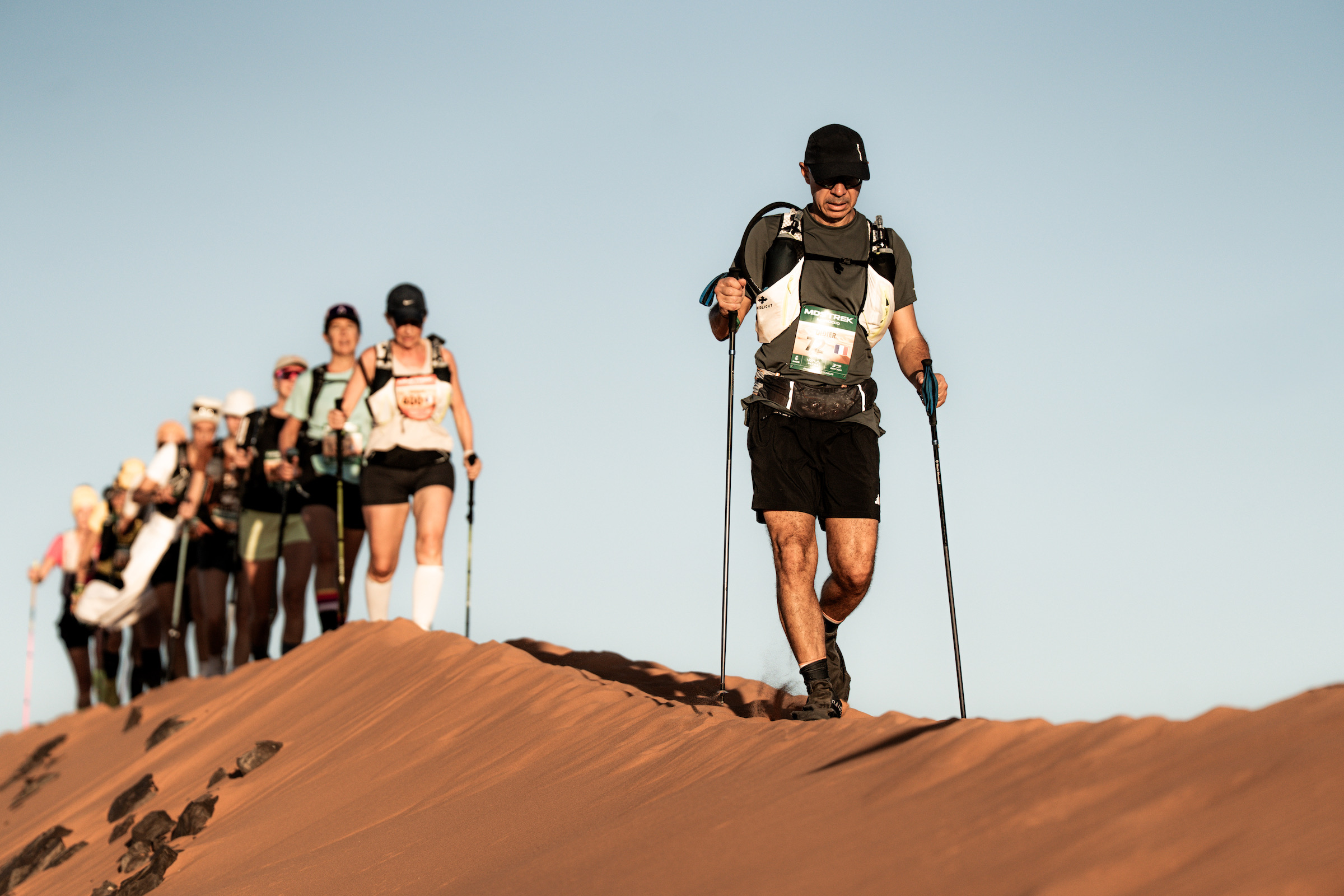
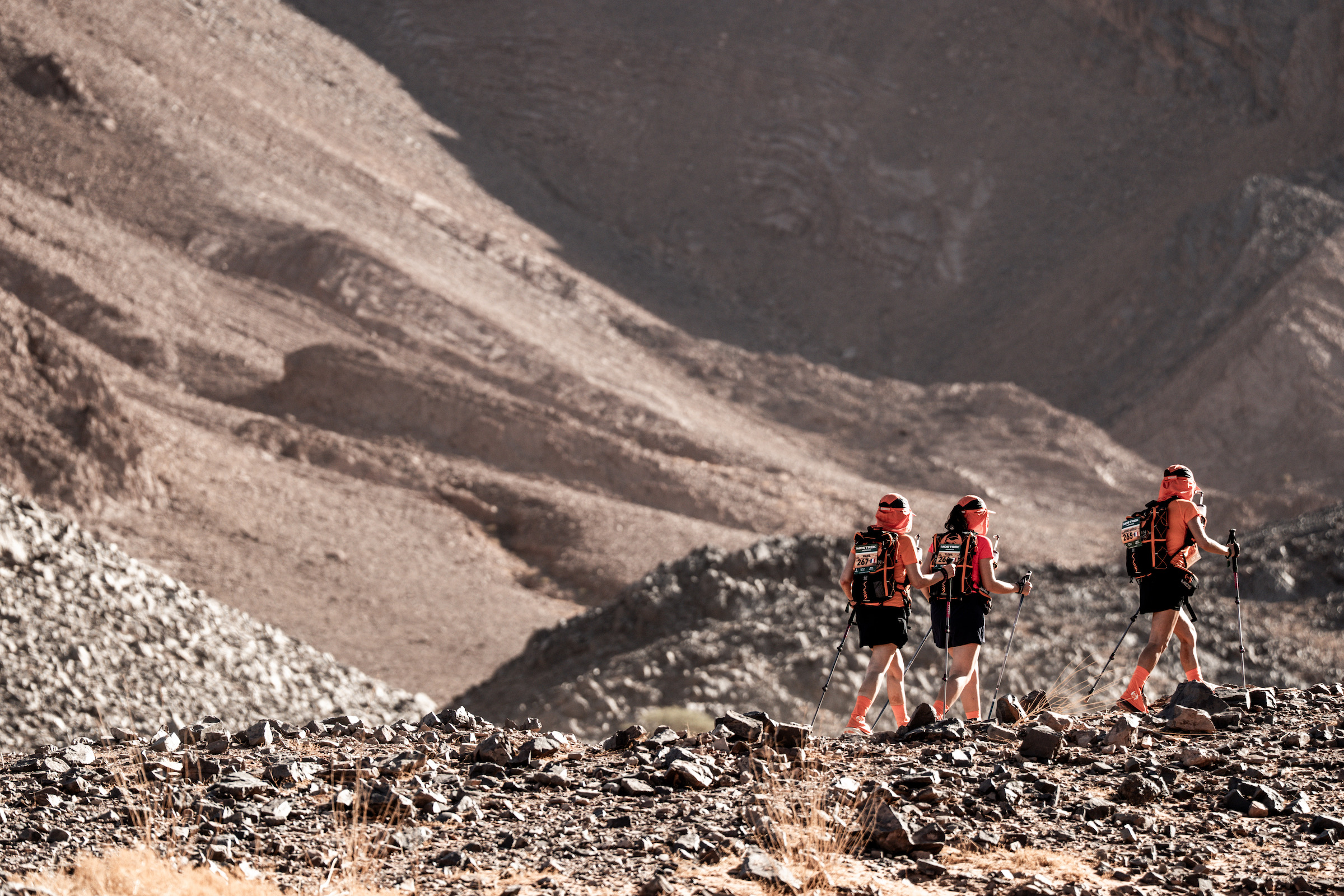
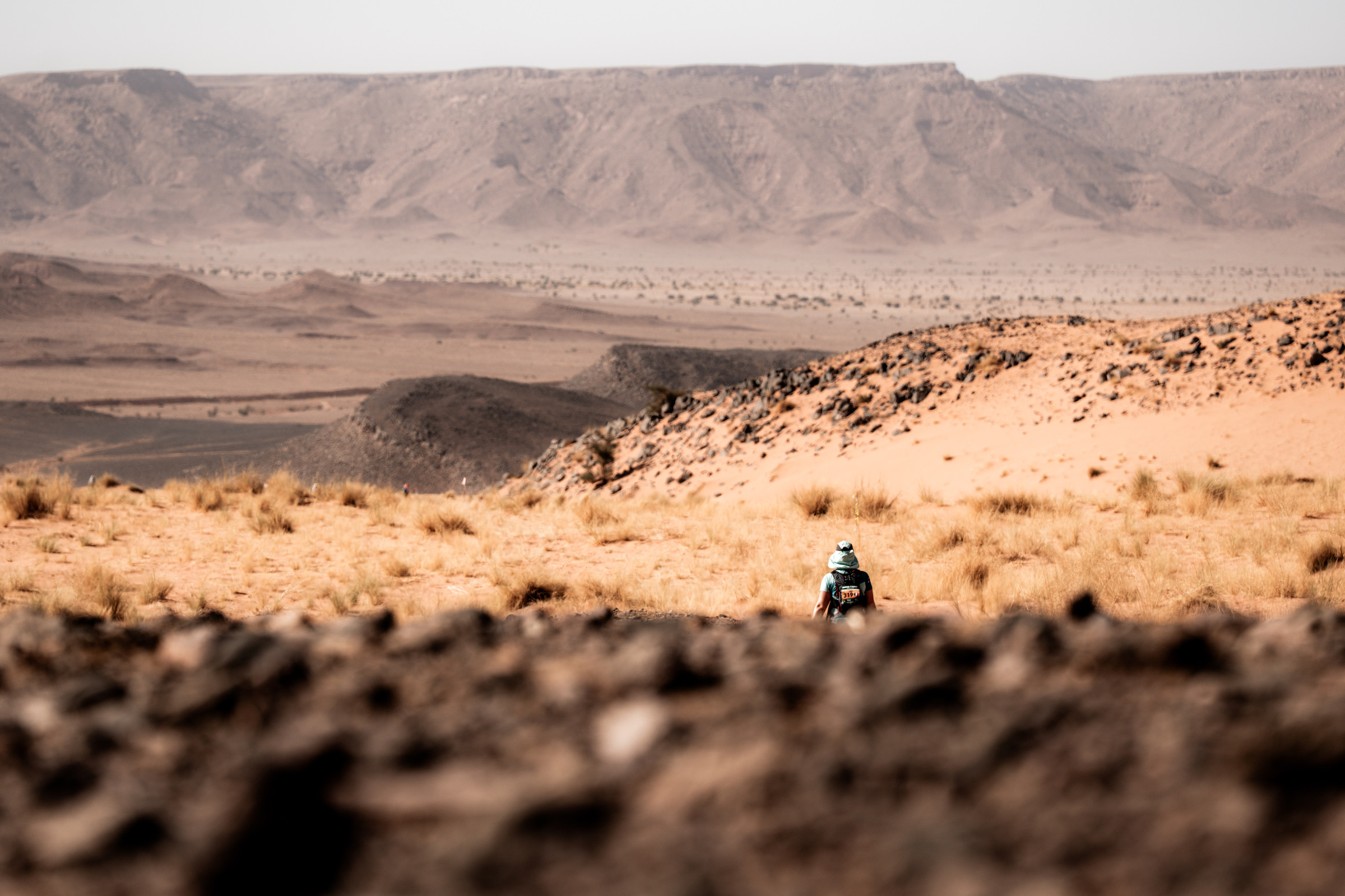
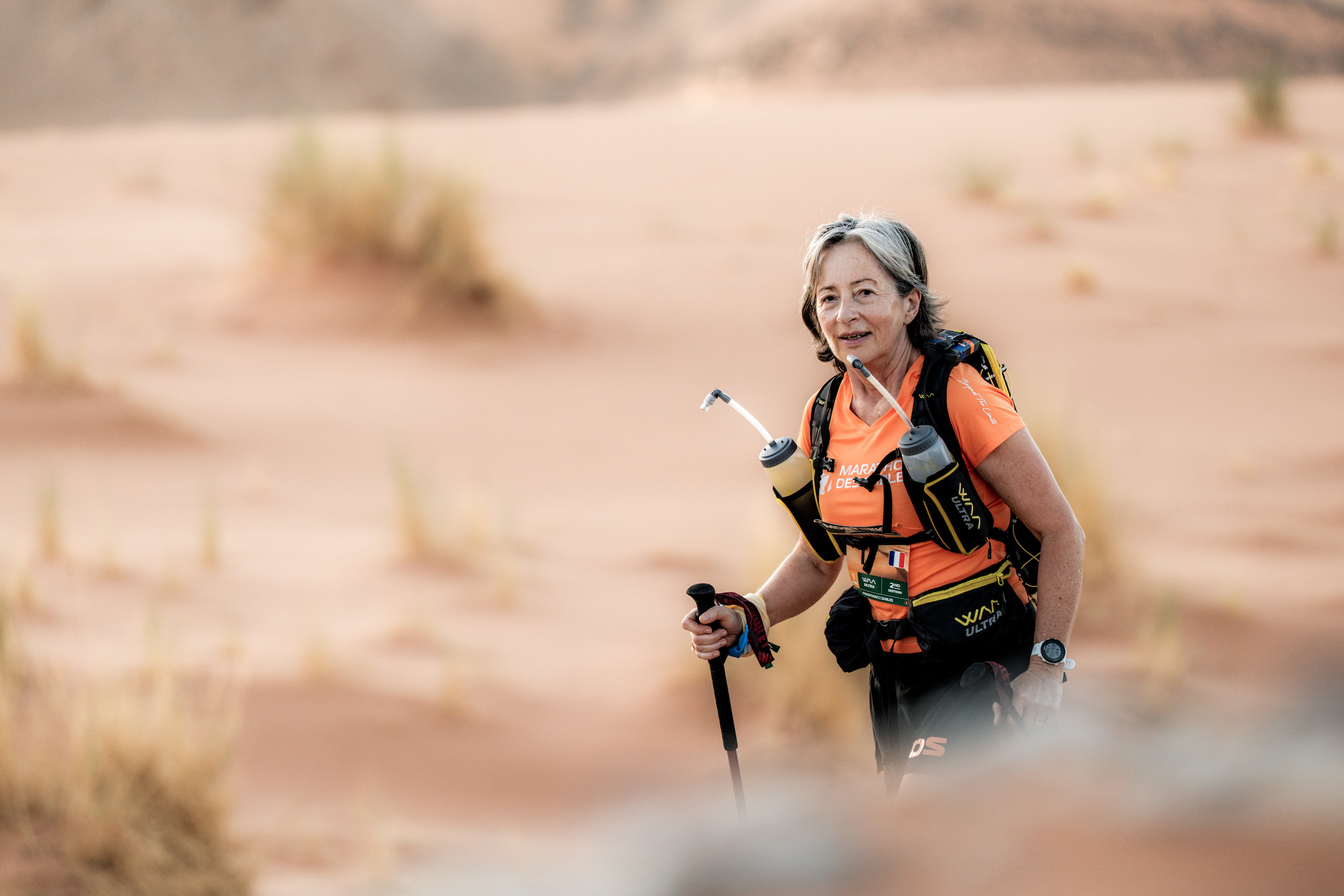
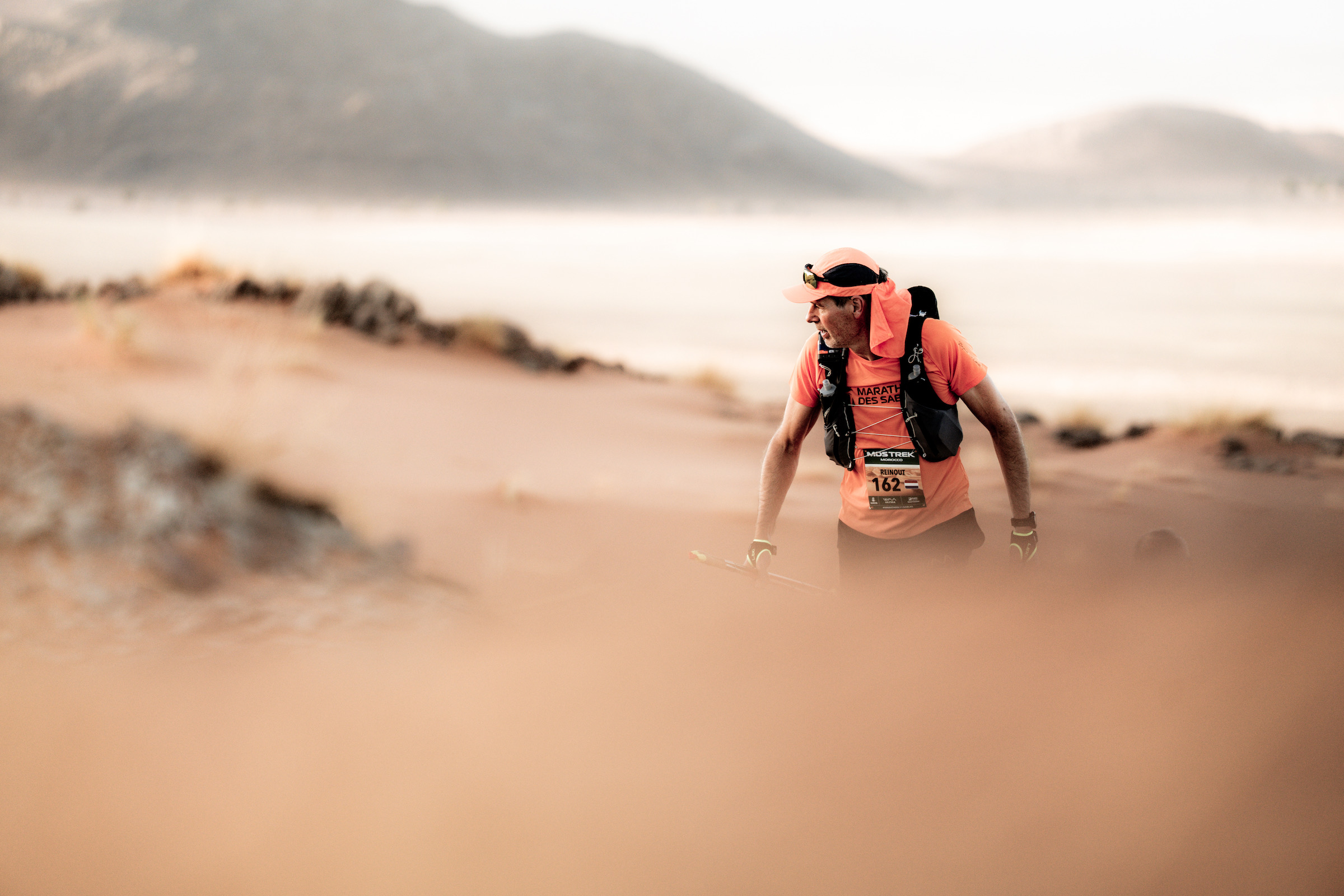
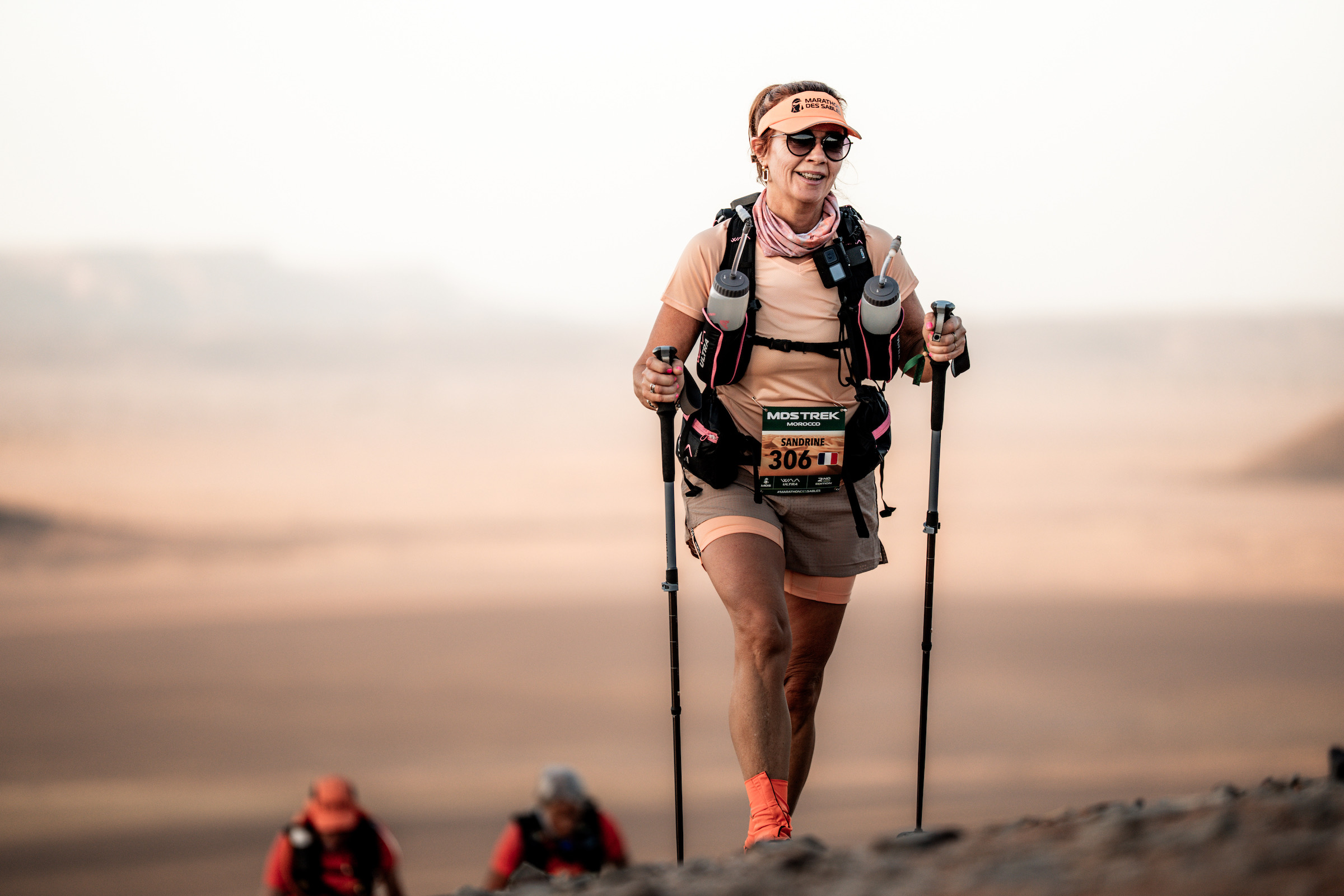
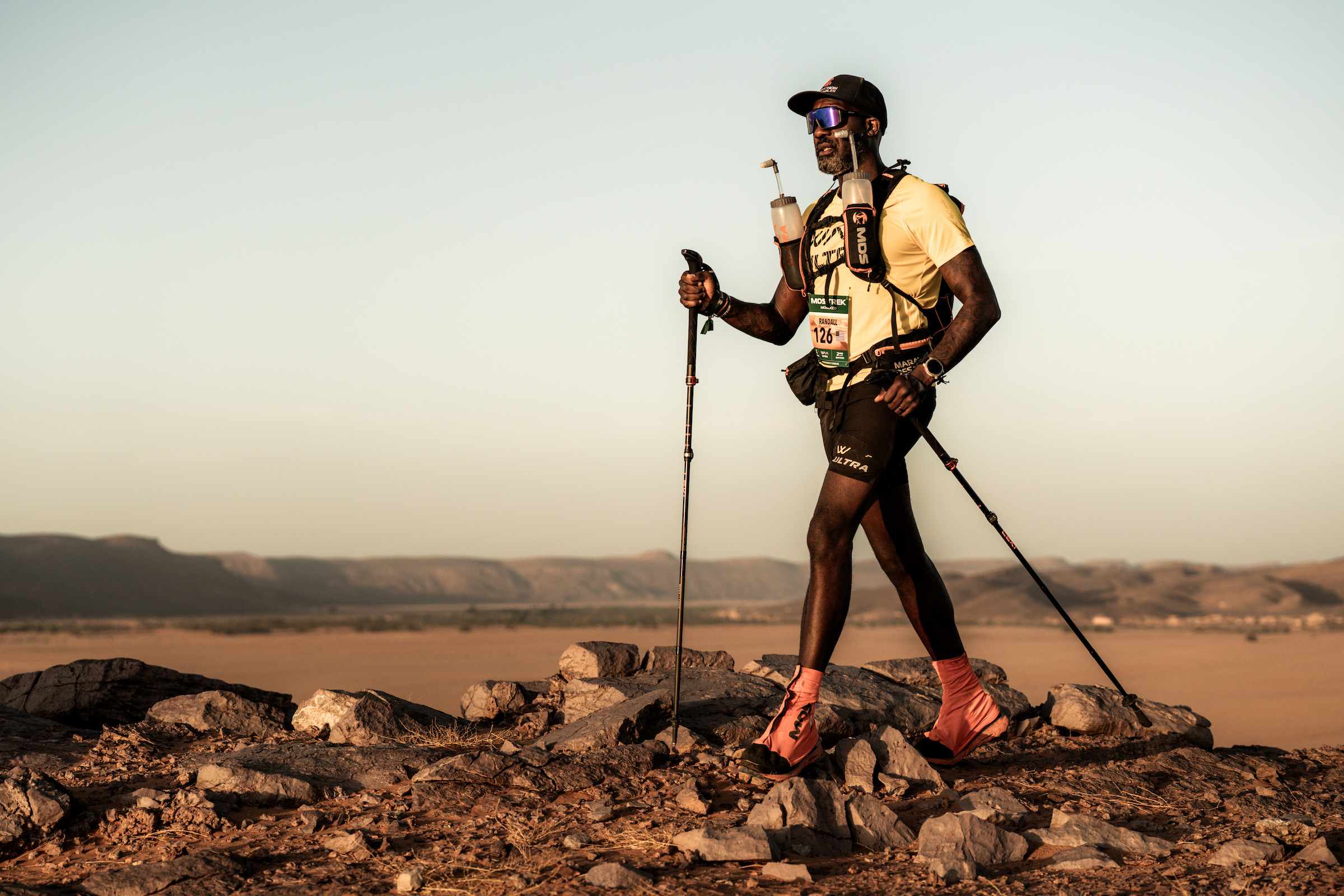
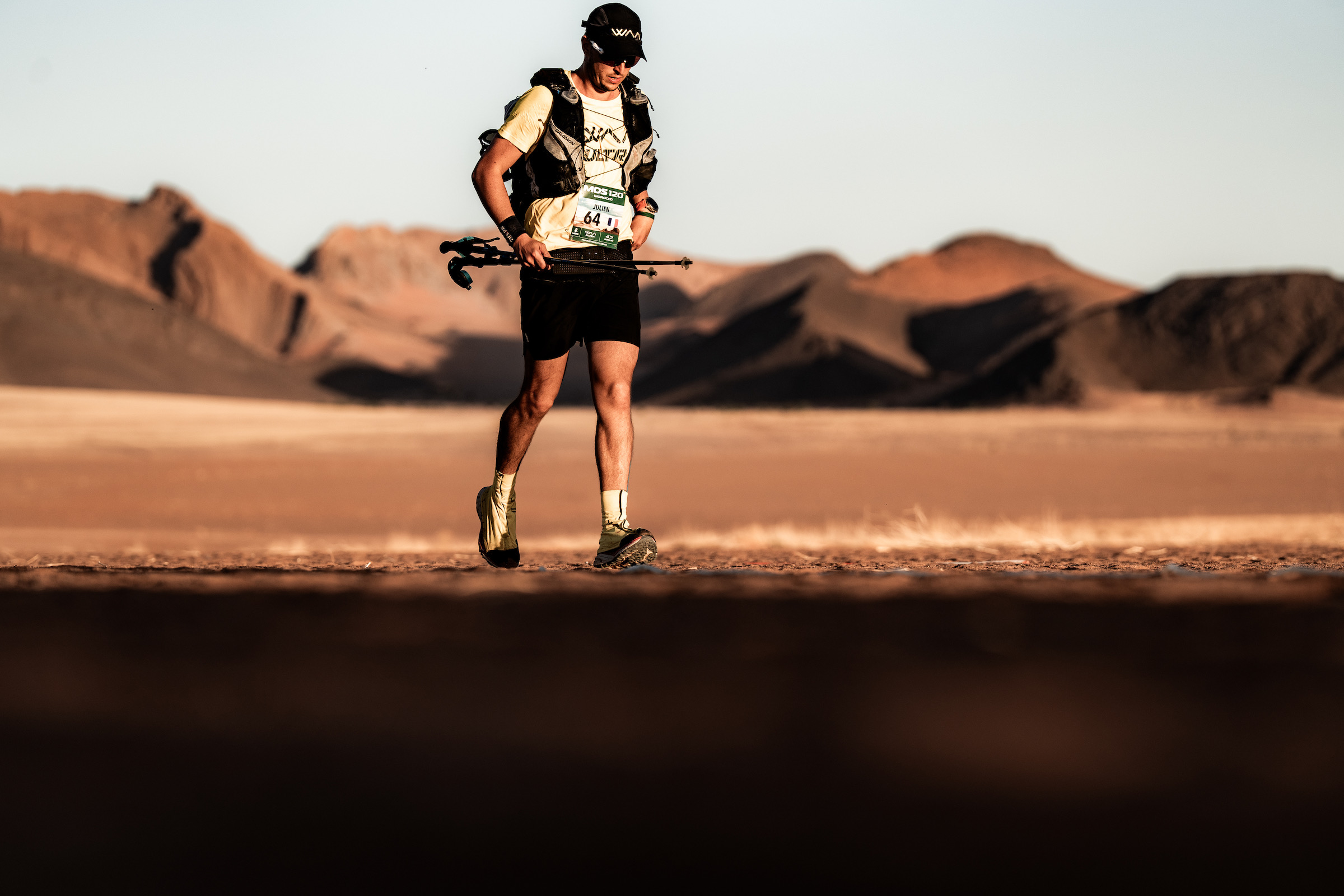
Stage 2 of MDS TREK Morocco was short on distance, 11.7km or 15km, but packed with everything that makes this trek unforgettable: surreal landscapes, emotional highs, and the raw beauty of the desert revealed under first light.
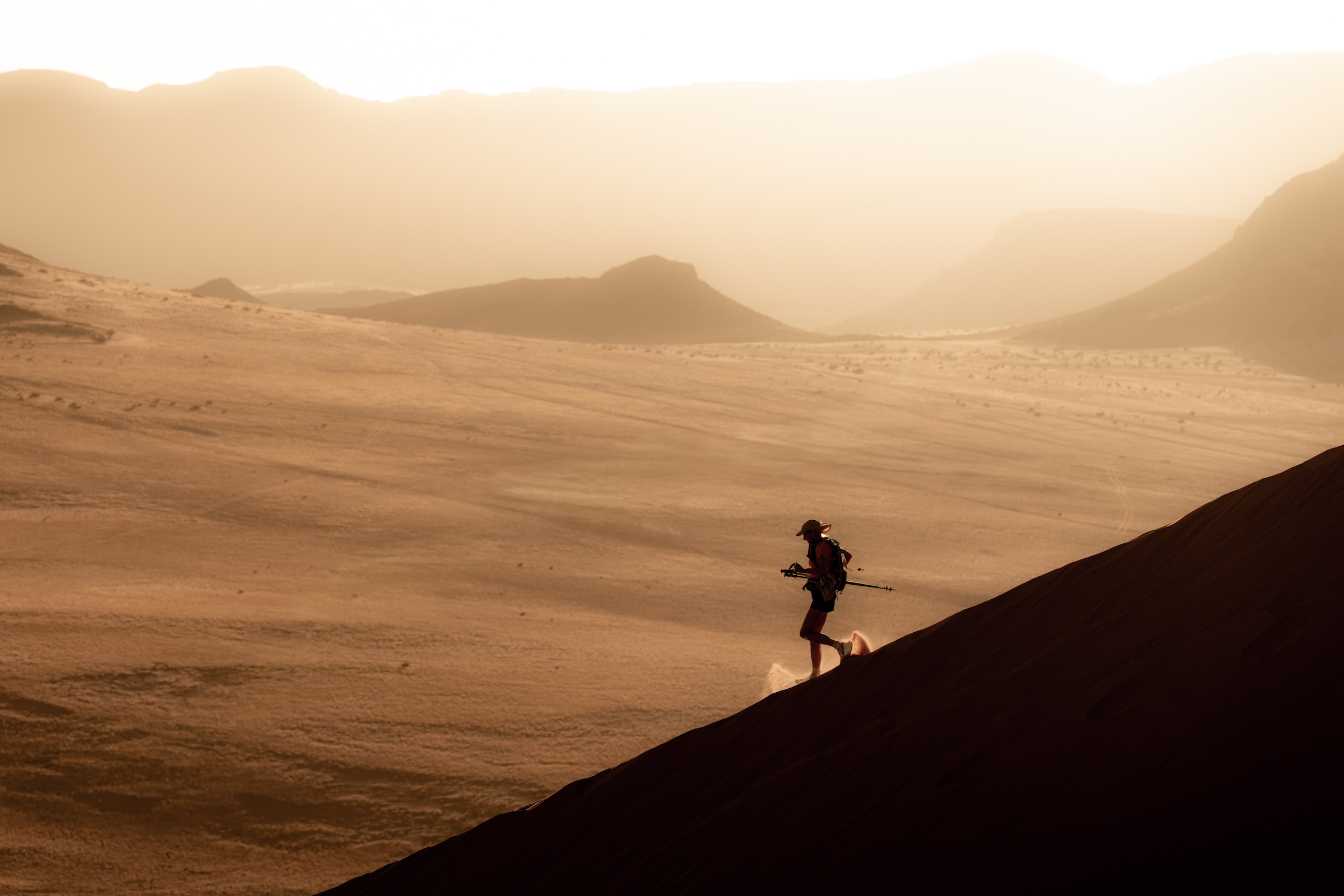
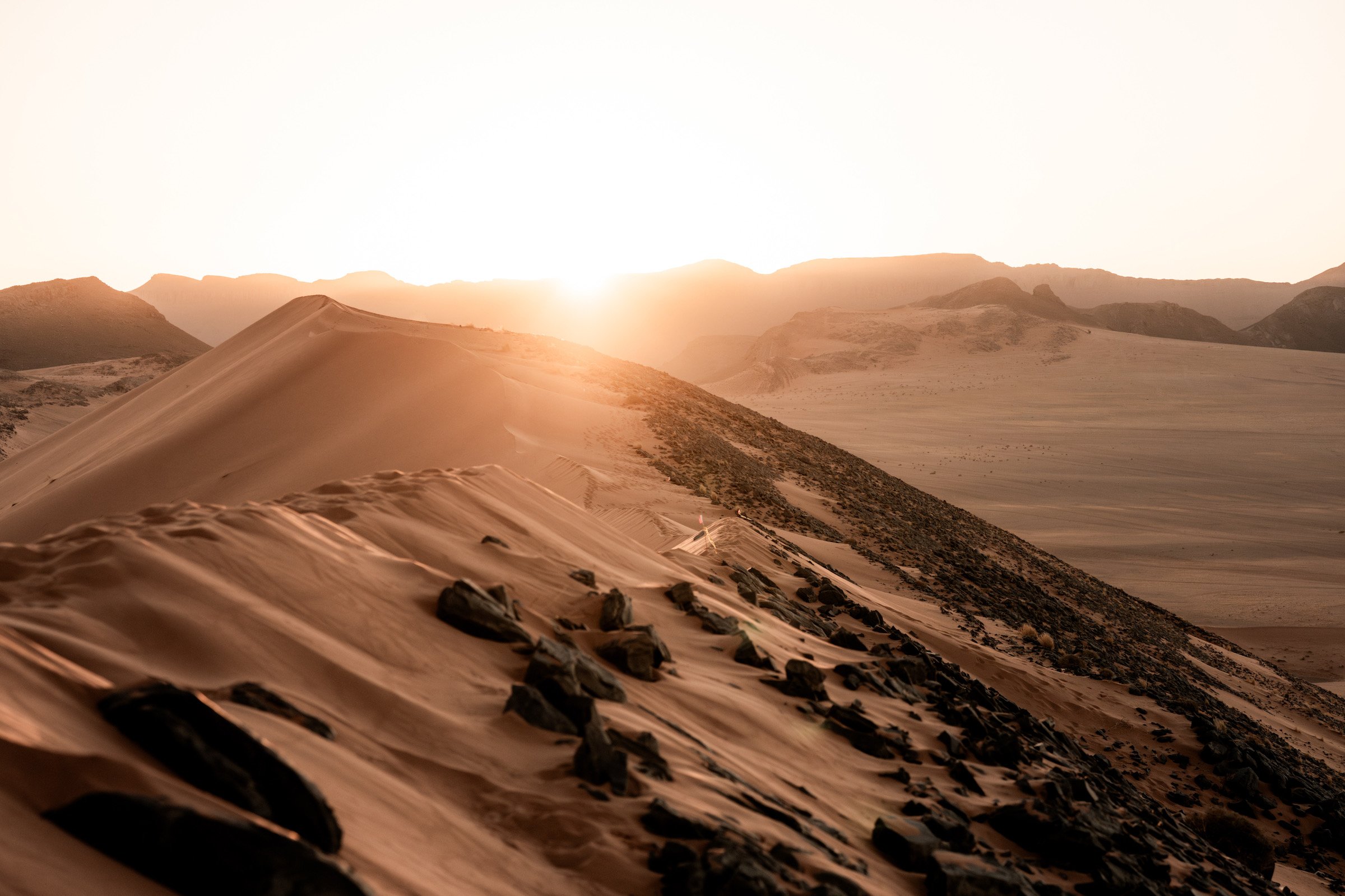
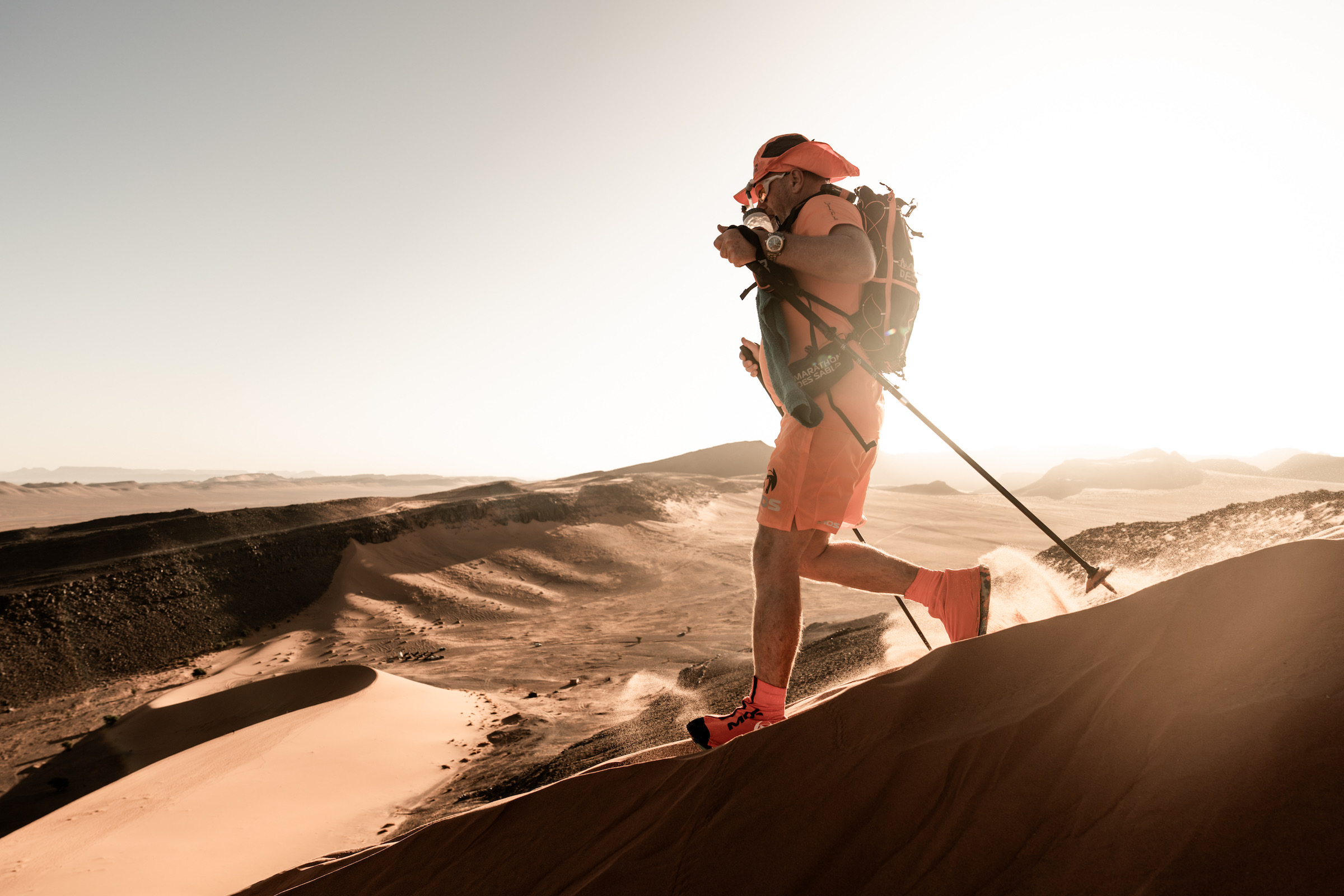
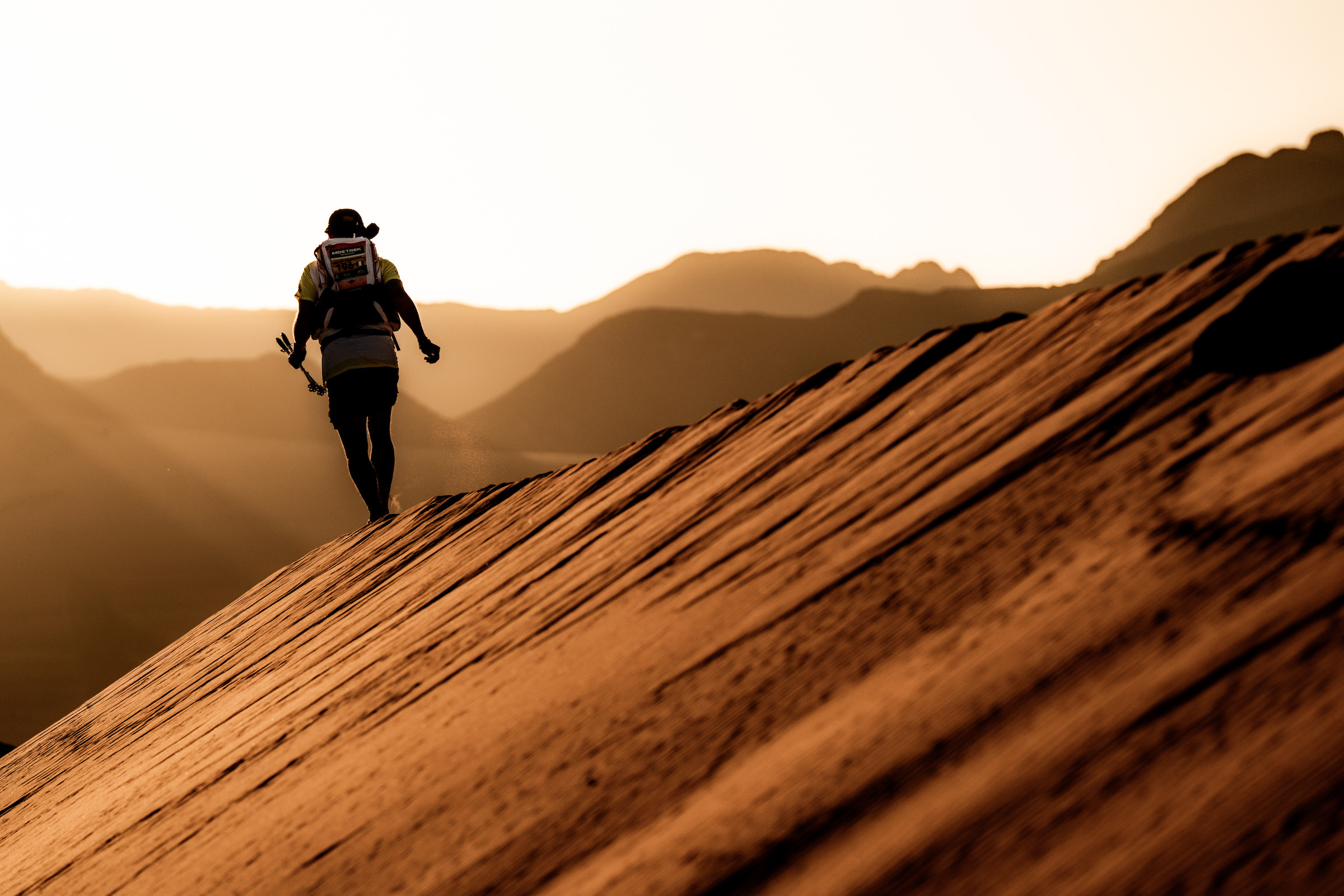
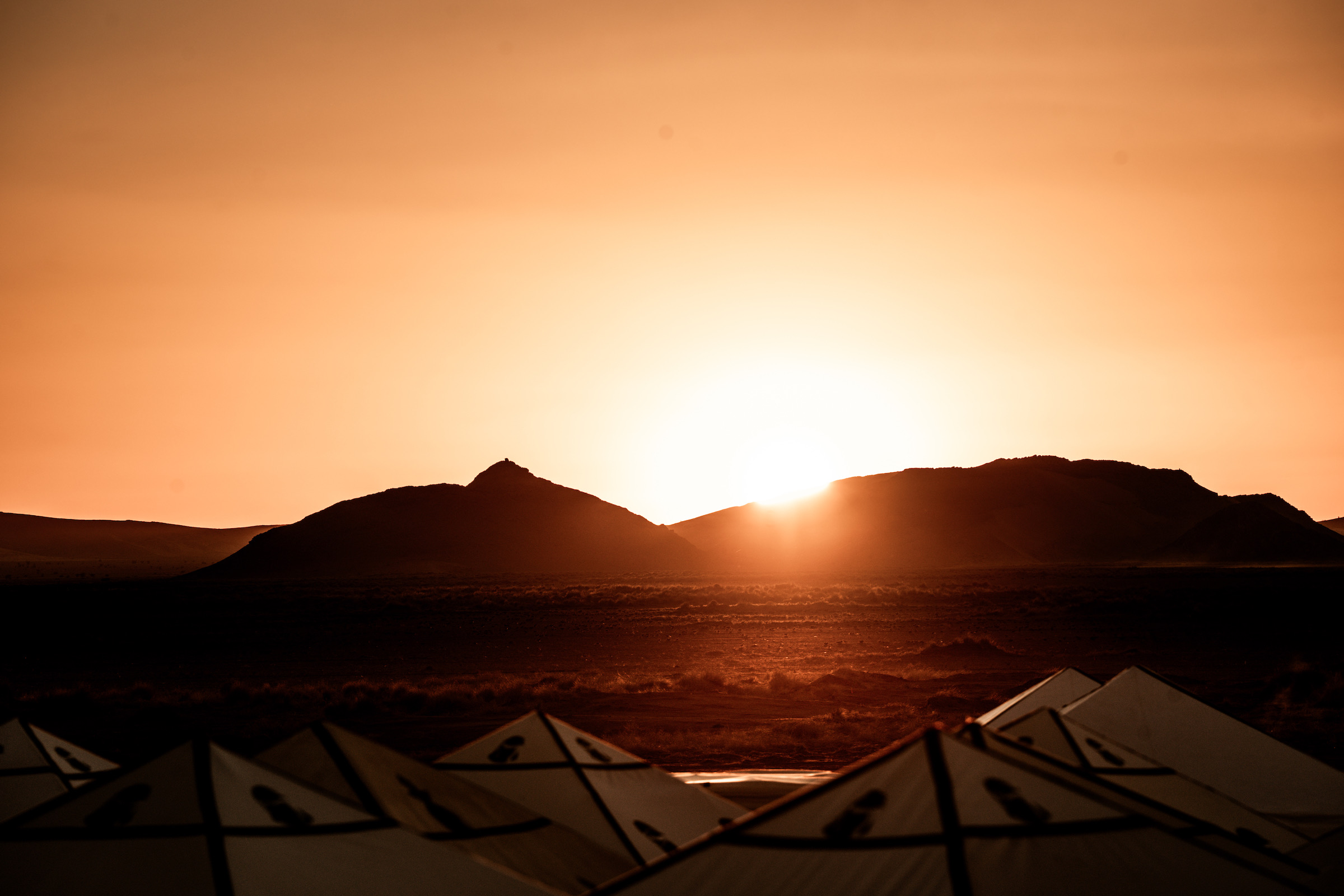
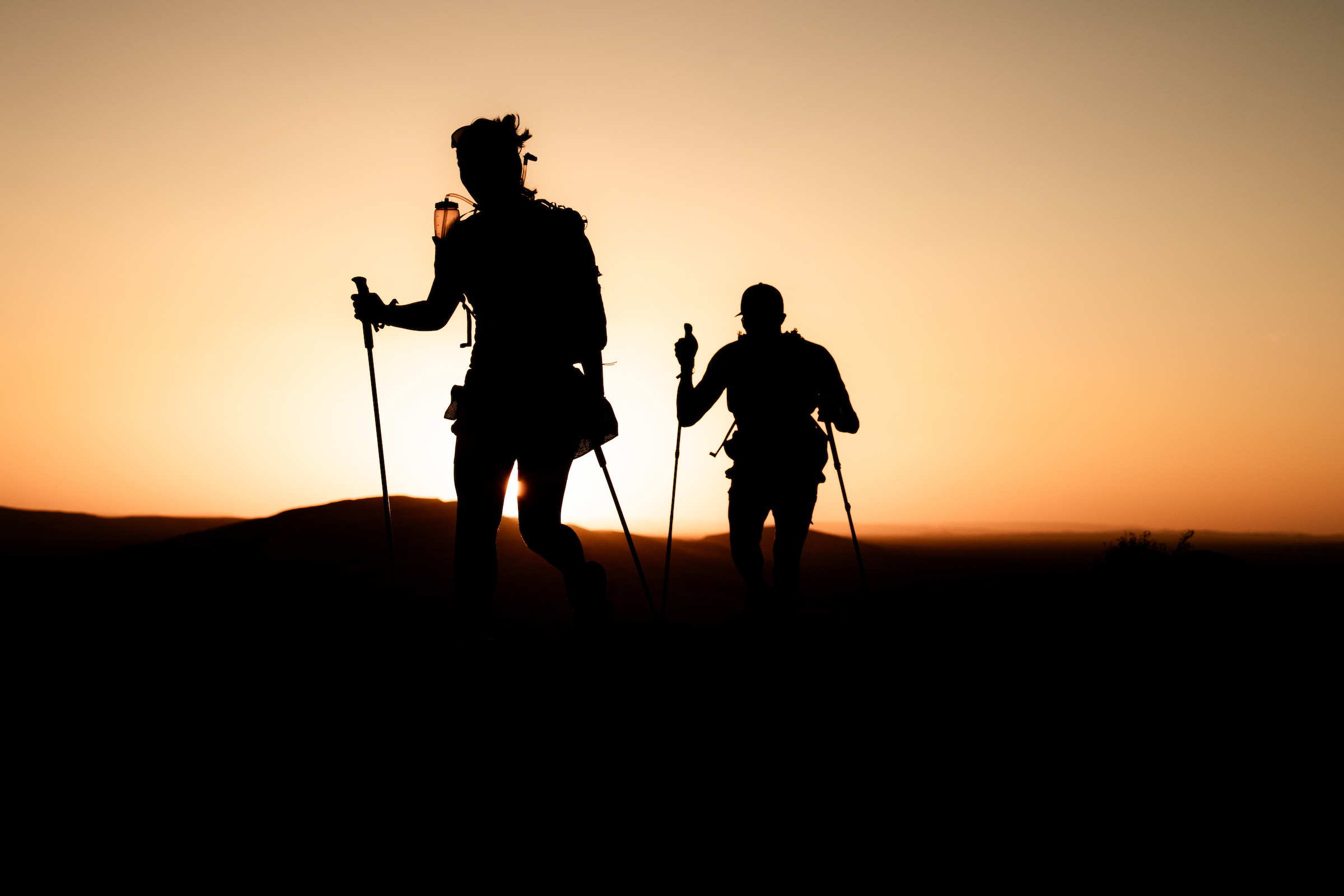
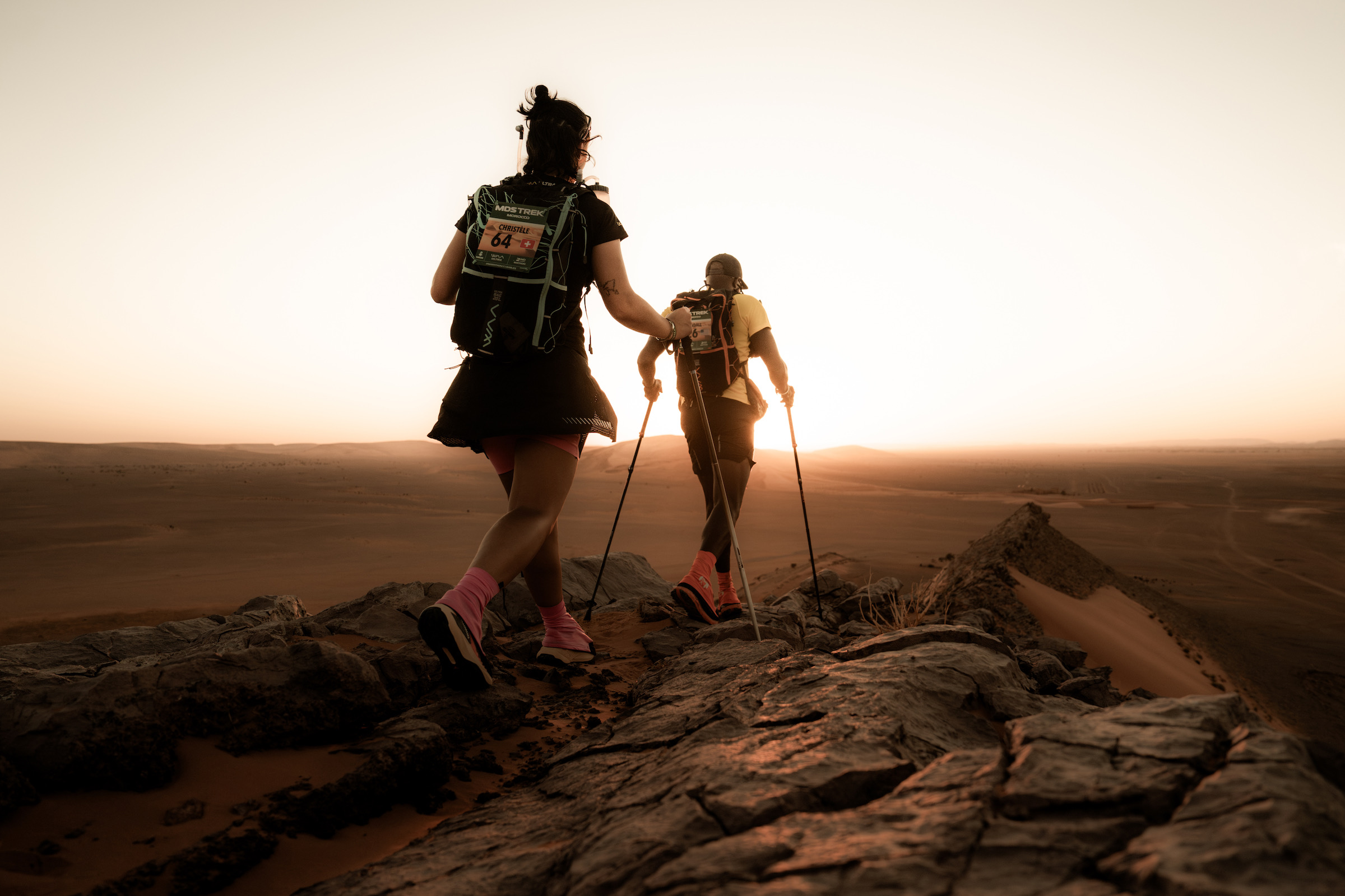
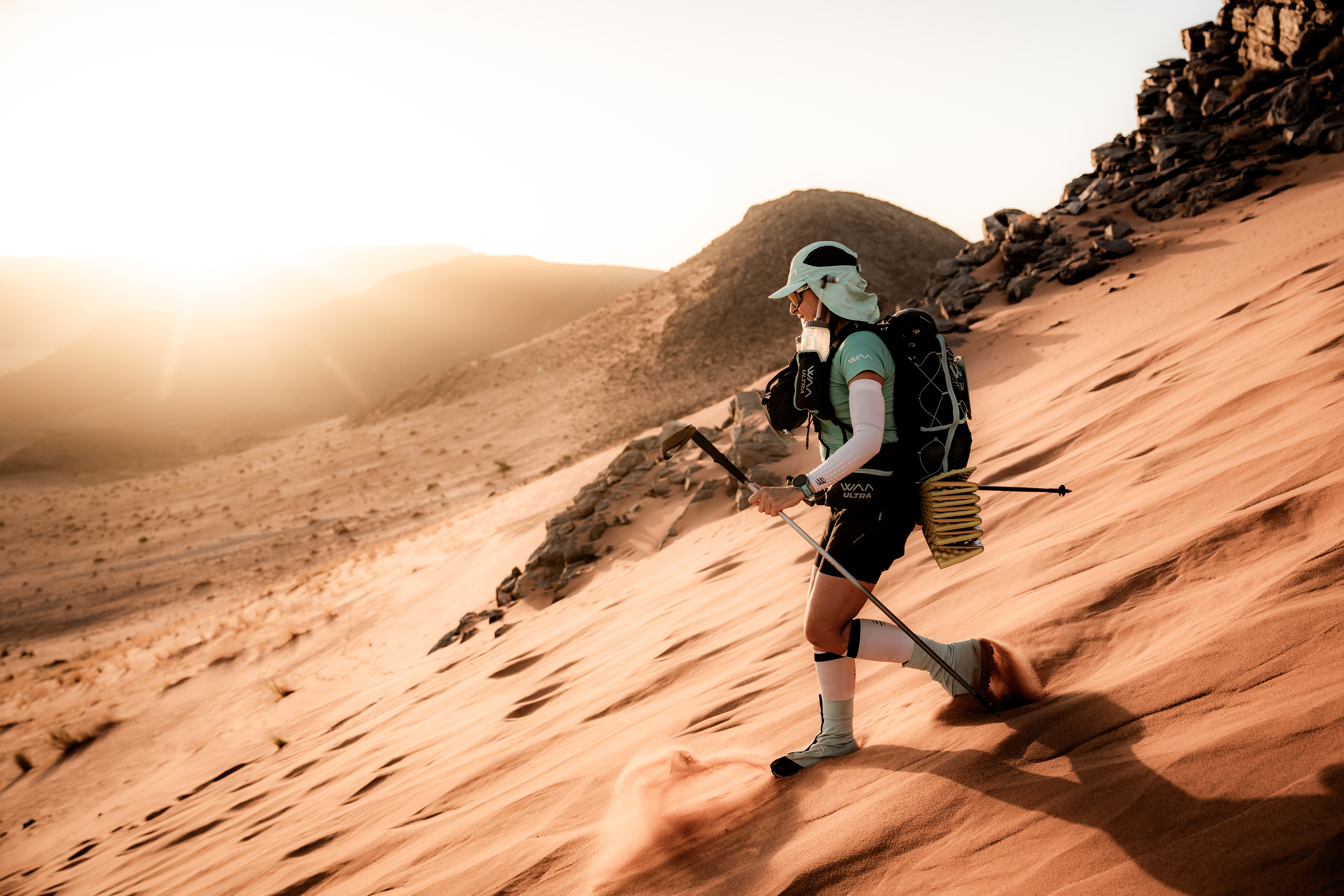
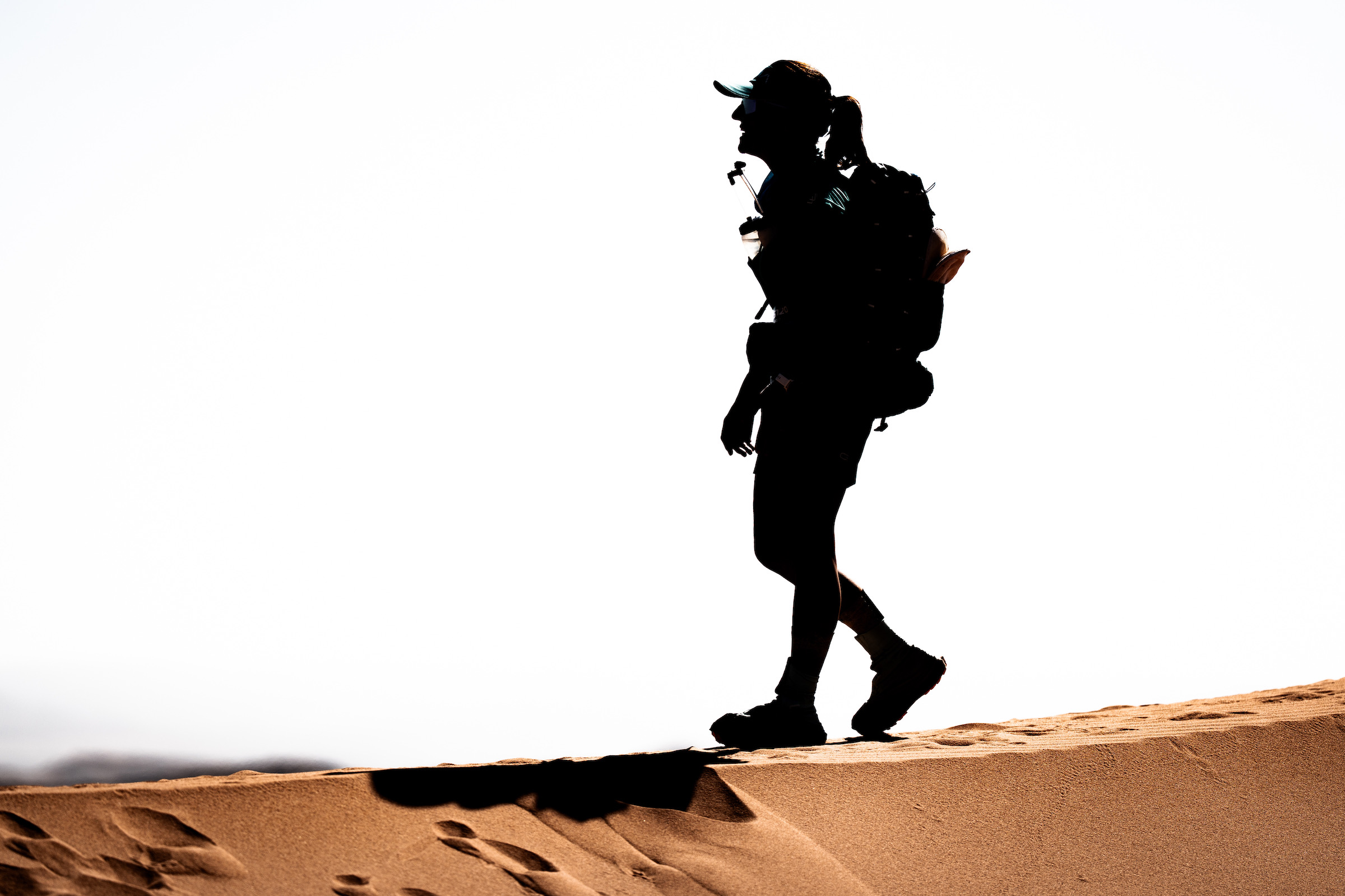
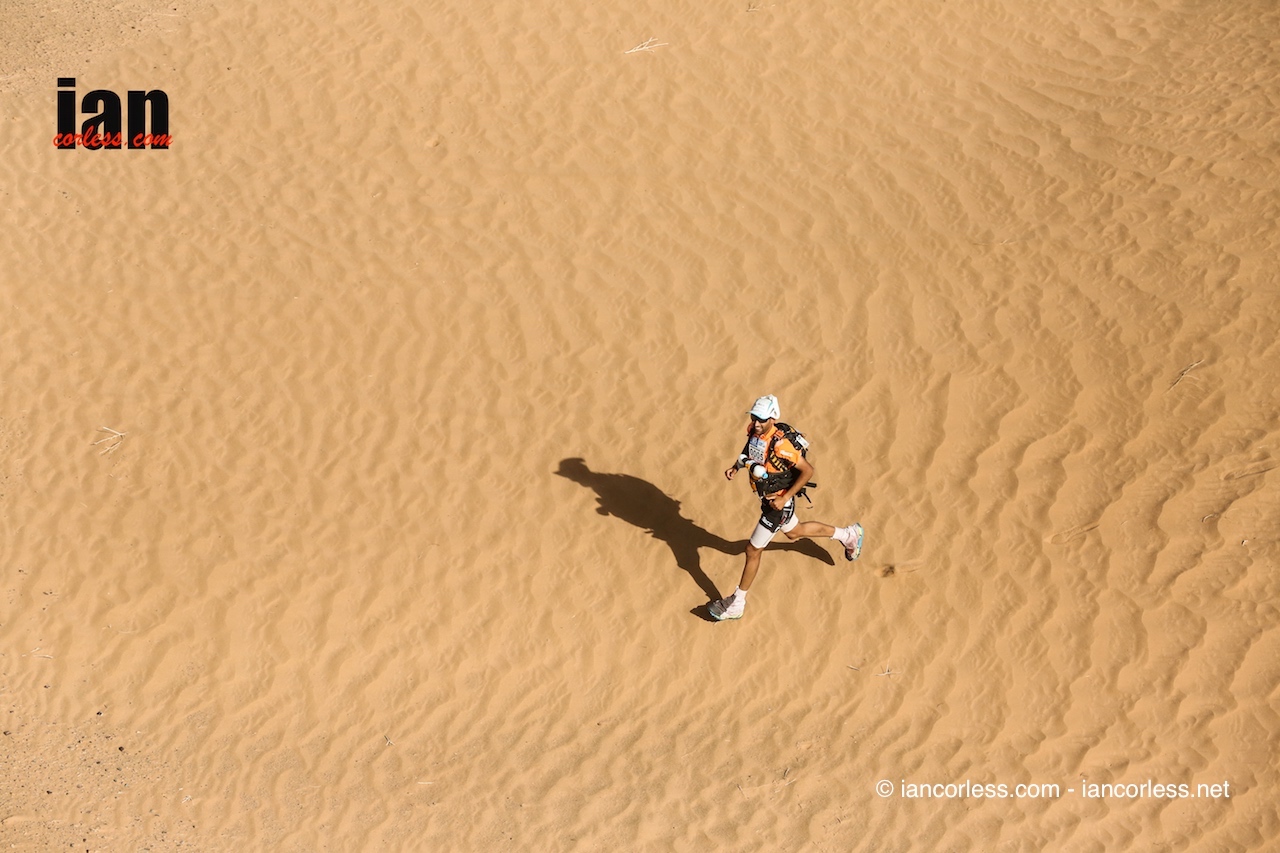
The day began with the kind of sunrise that stops you in your tracks. As the first rays hit the dunes, the Sahara shifted from cool blue shadows to warm, golden brilliance.
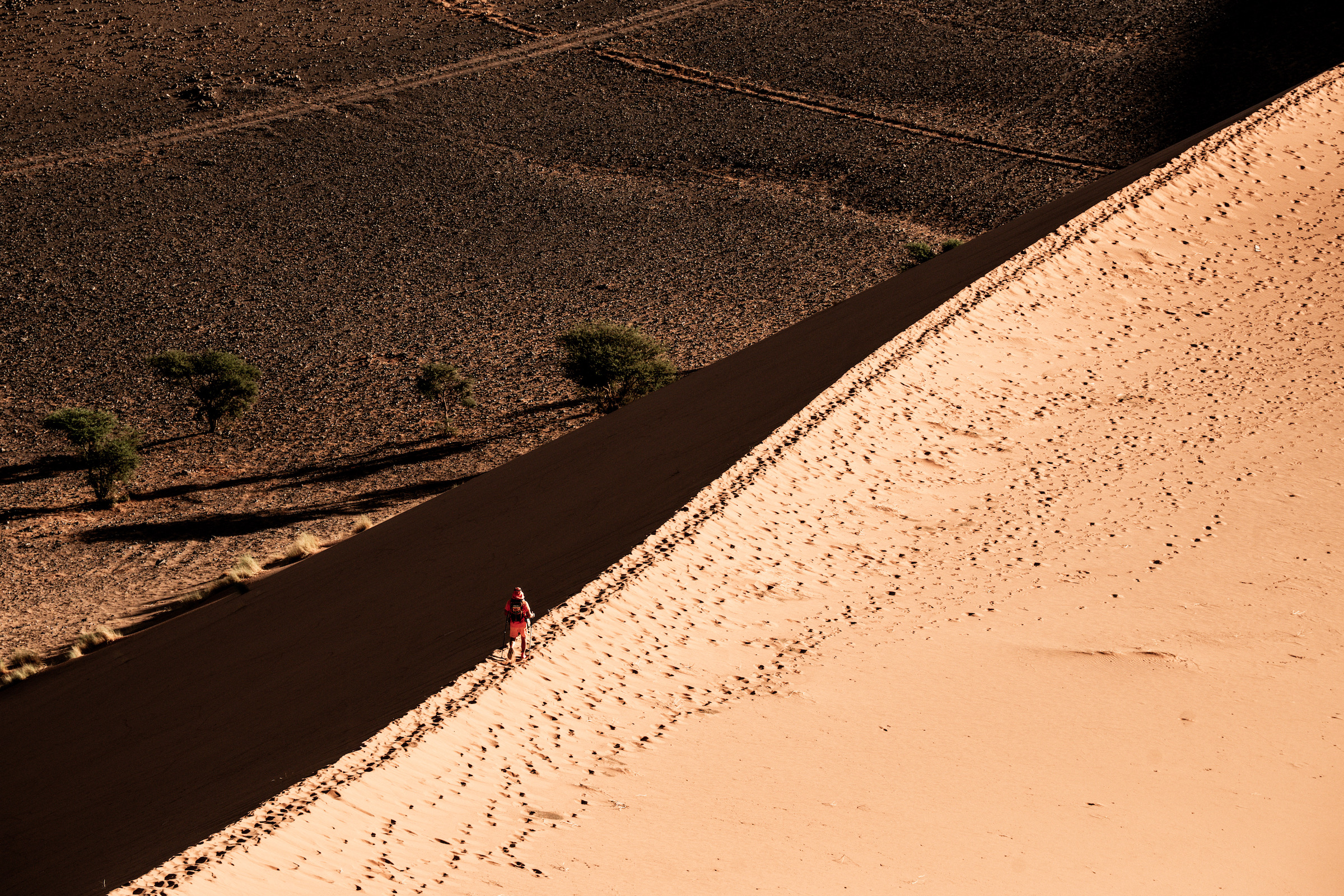
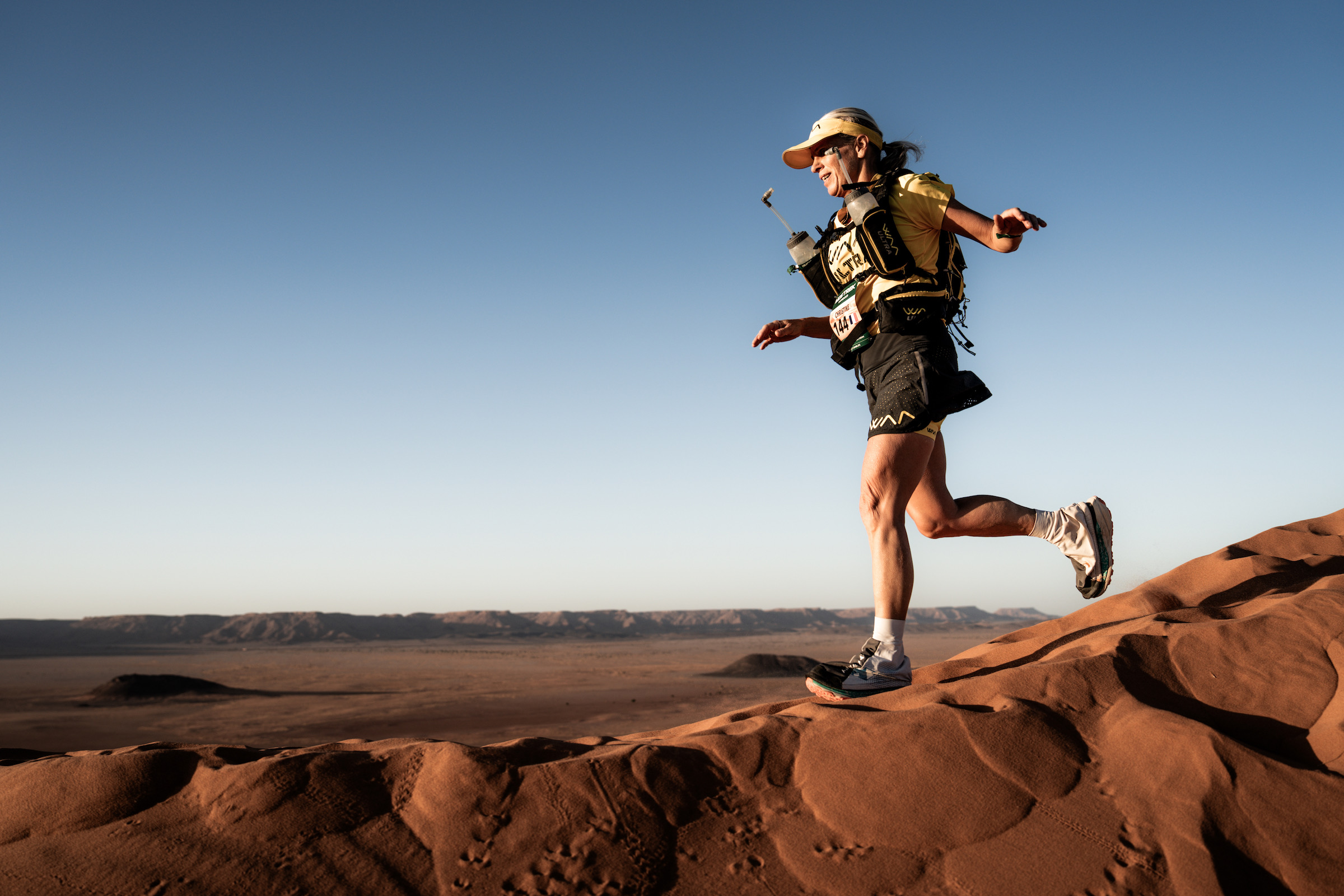
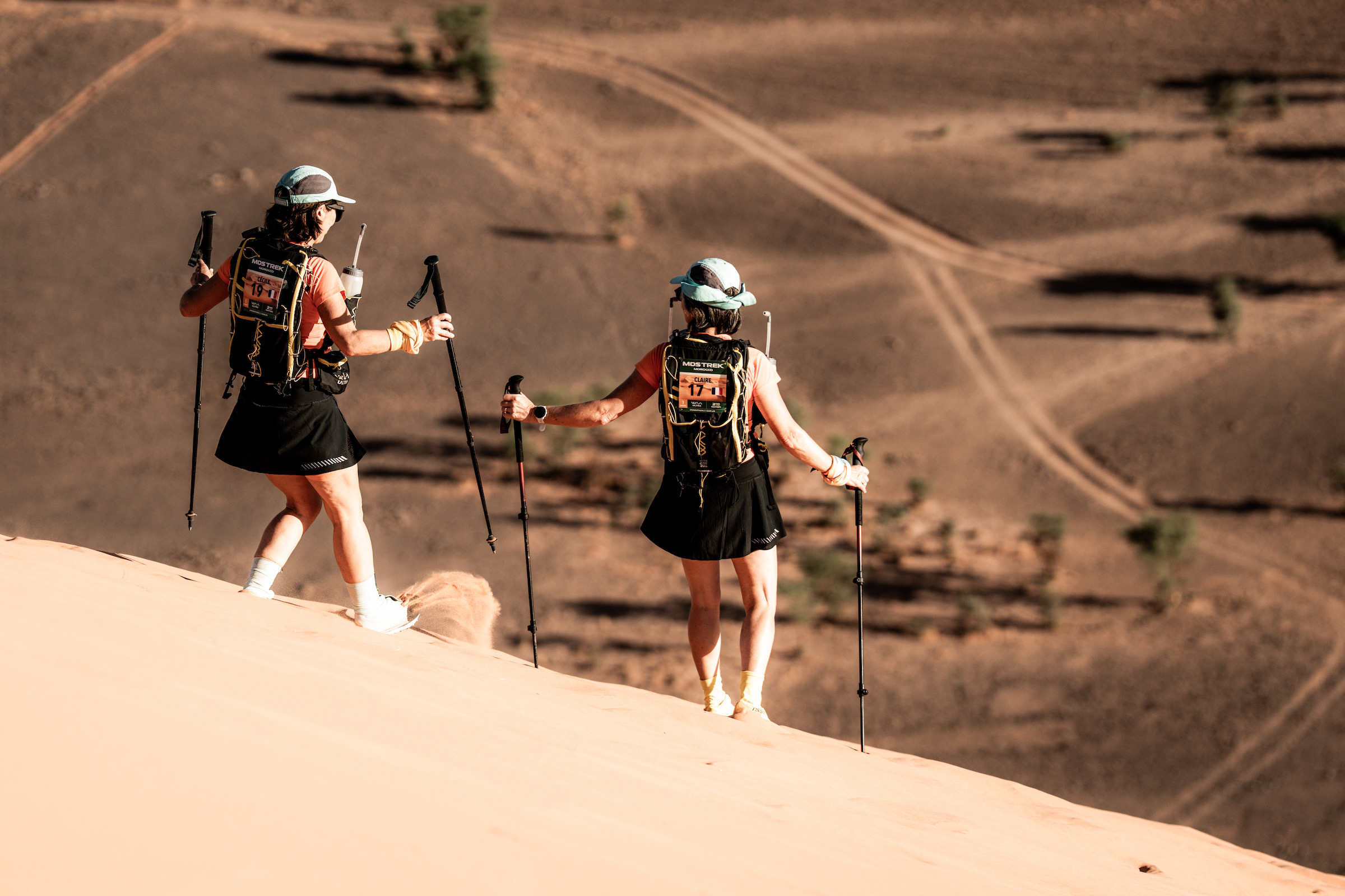
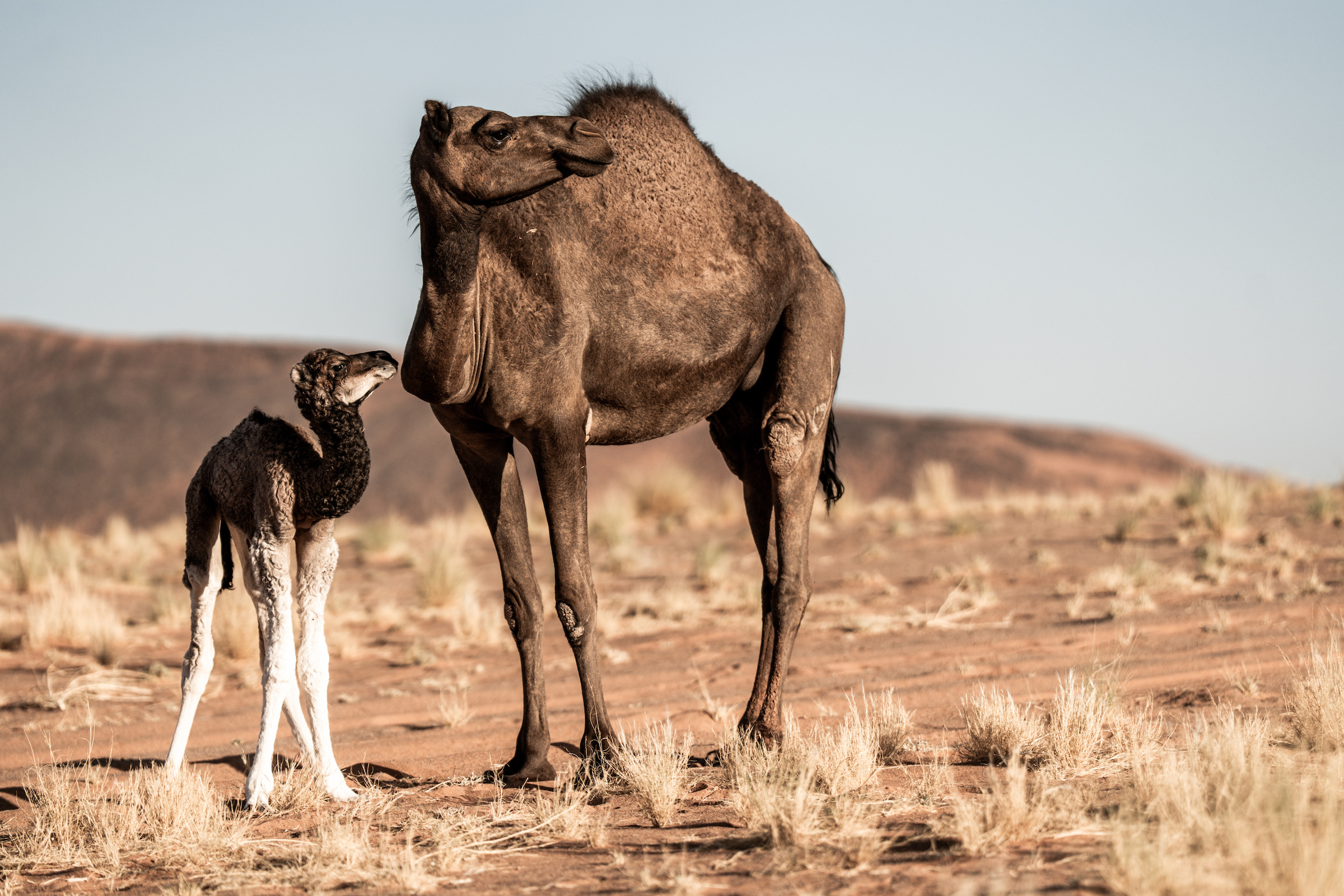
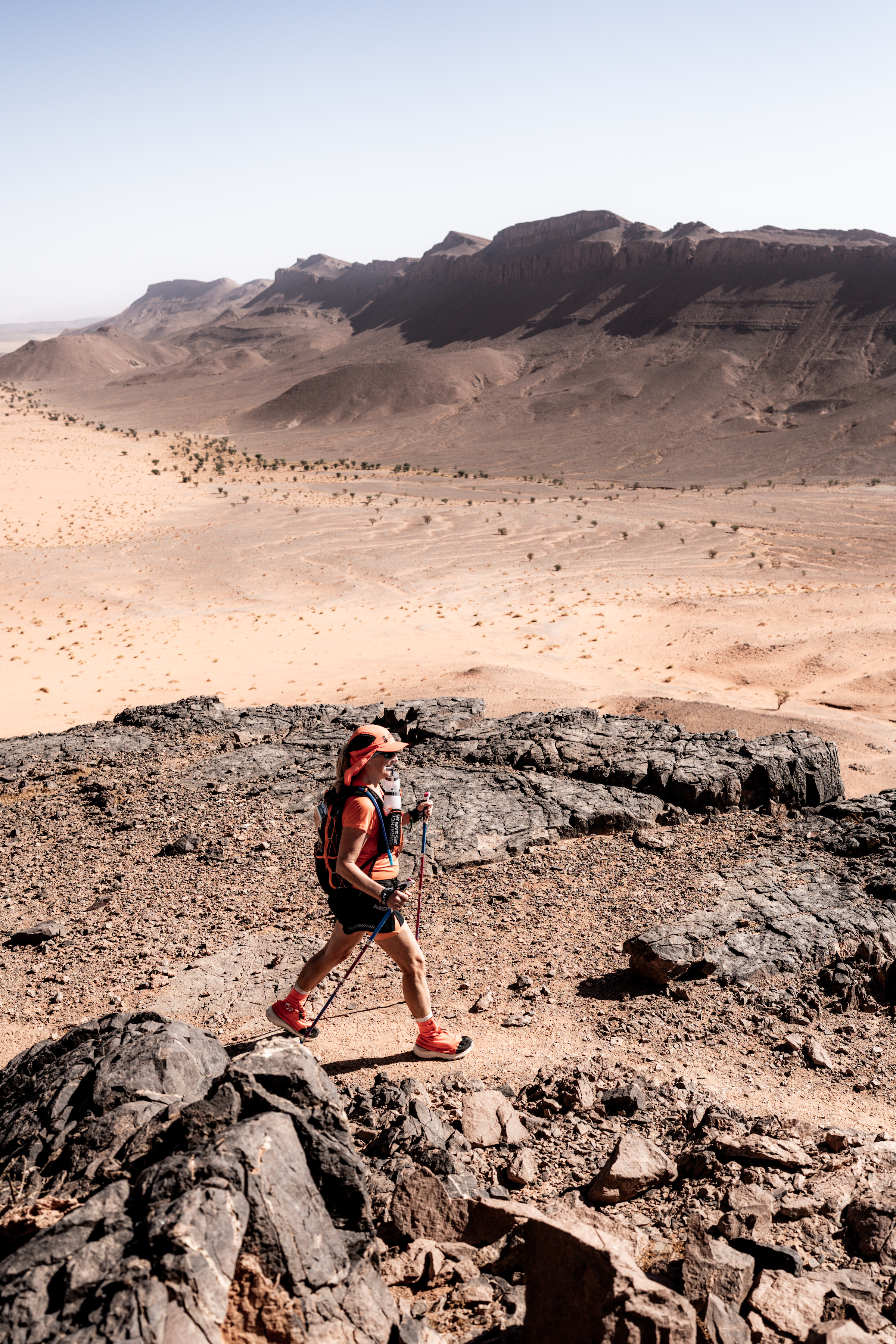
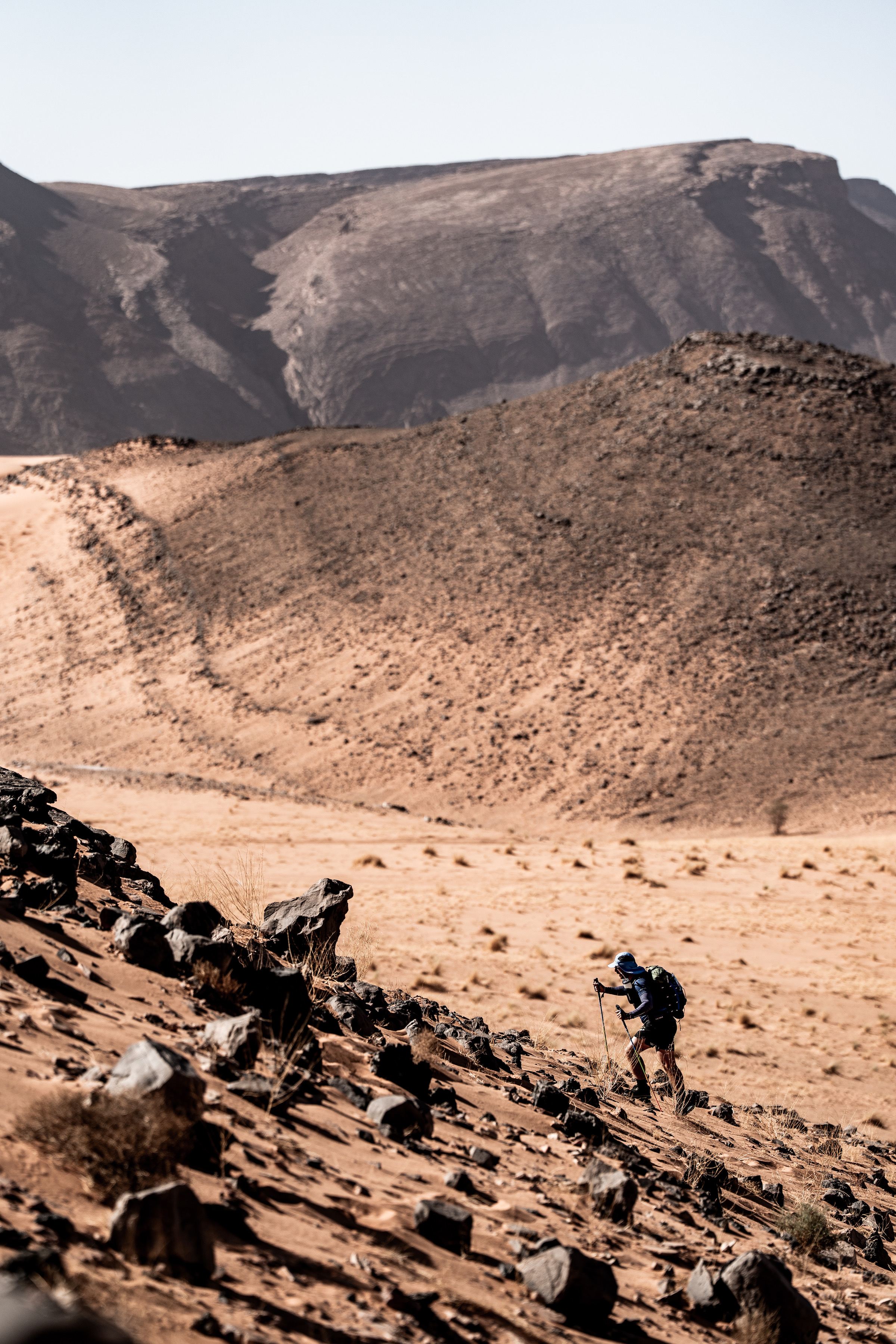
The route kicked off along a dramatic ridge, a high line with sweeping views in every direction, one of the most stunning stretches in MDS history. Sand seas rolled endlessly below, broken only by the occasional rocky outcrop or camel track winding off into nowhere.
This was not a stage to rush. With no time pressure, participants could move at their own pace, soaking in the magic of the moment.
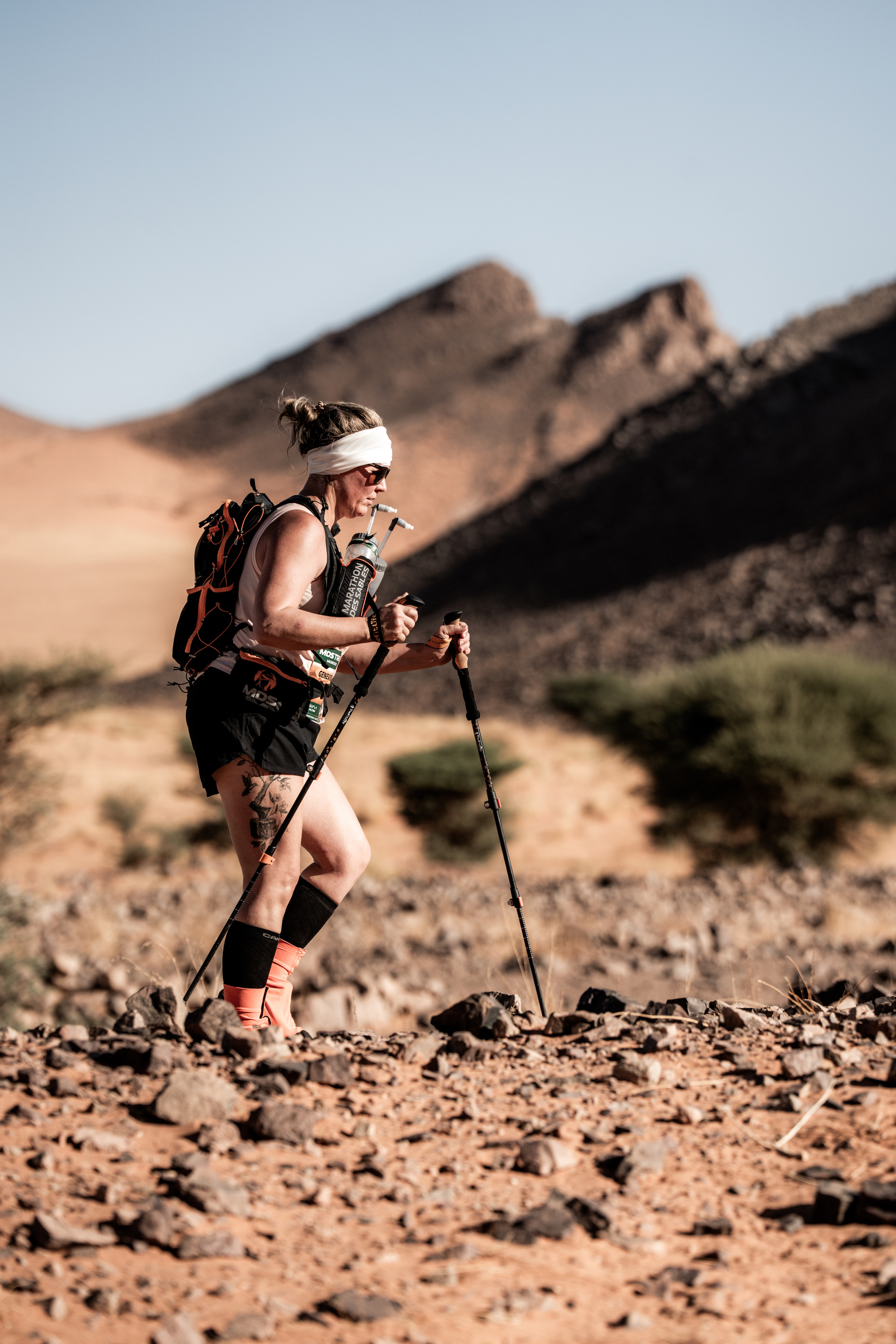
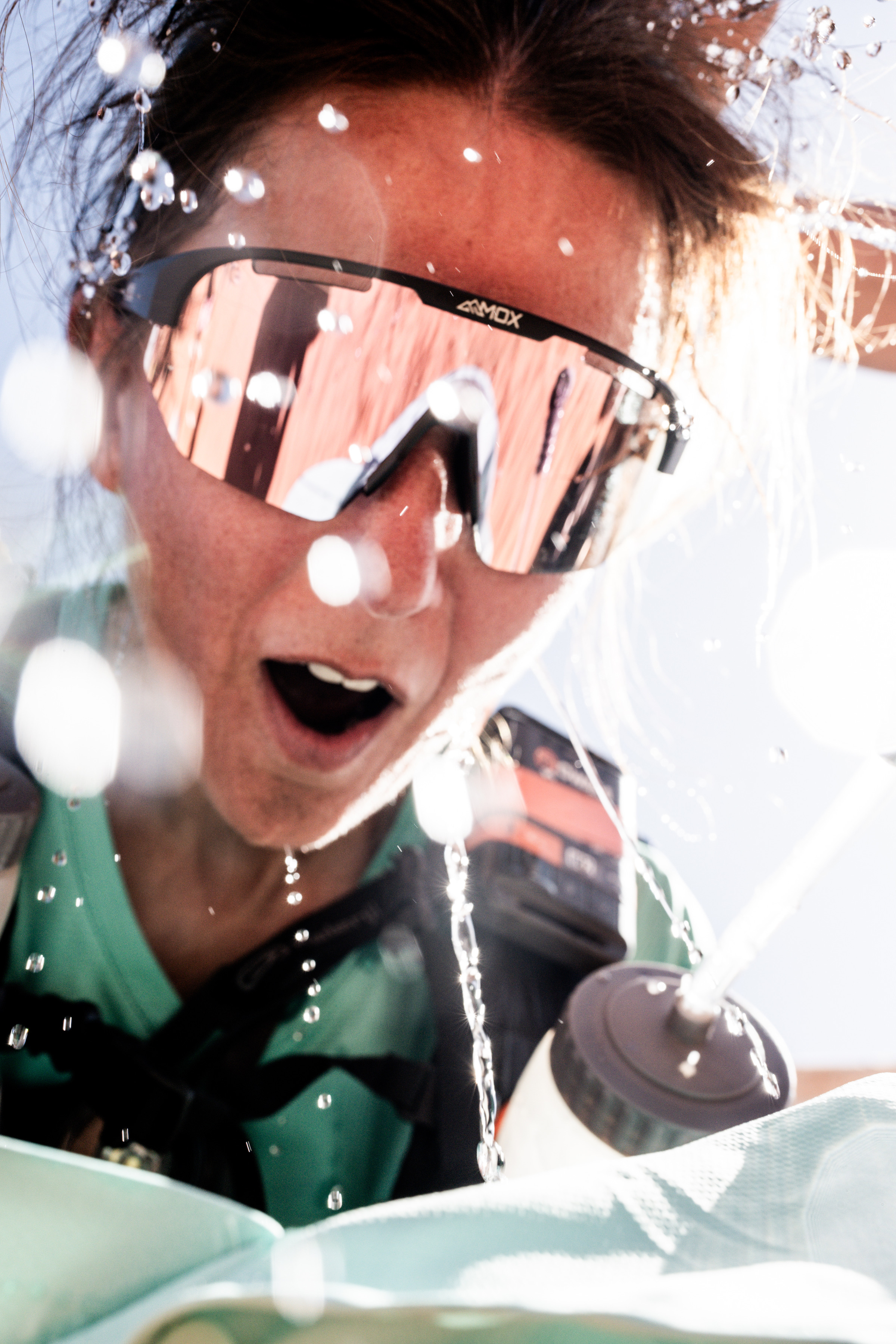
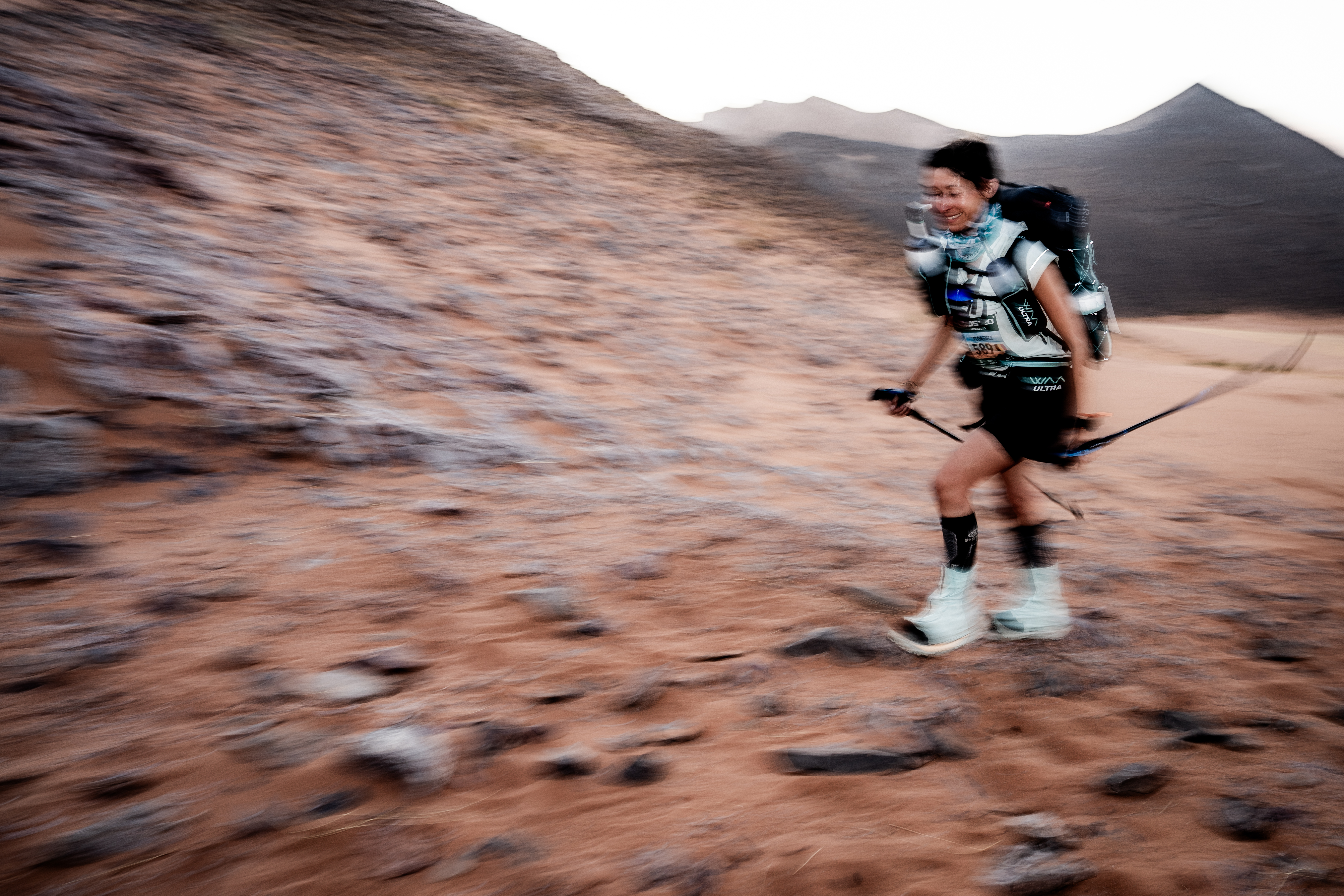
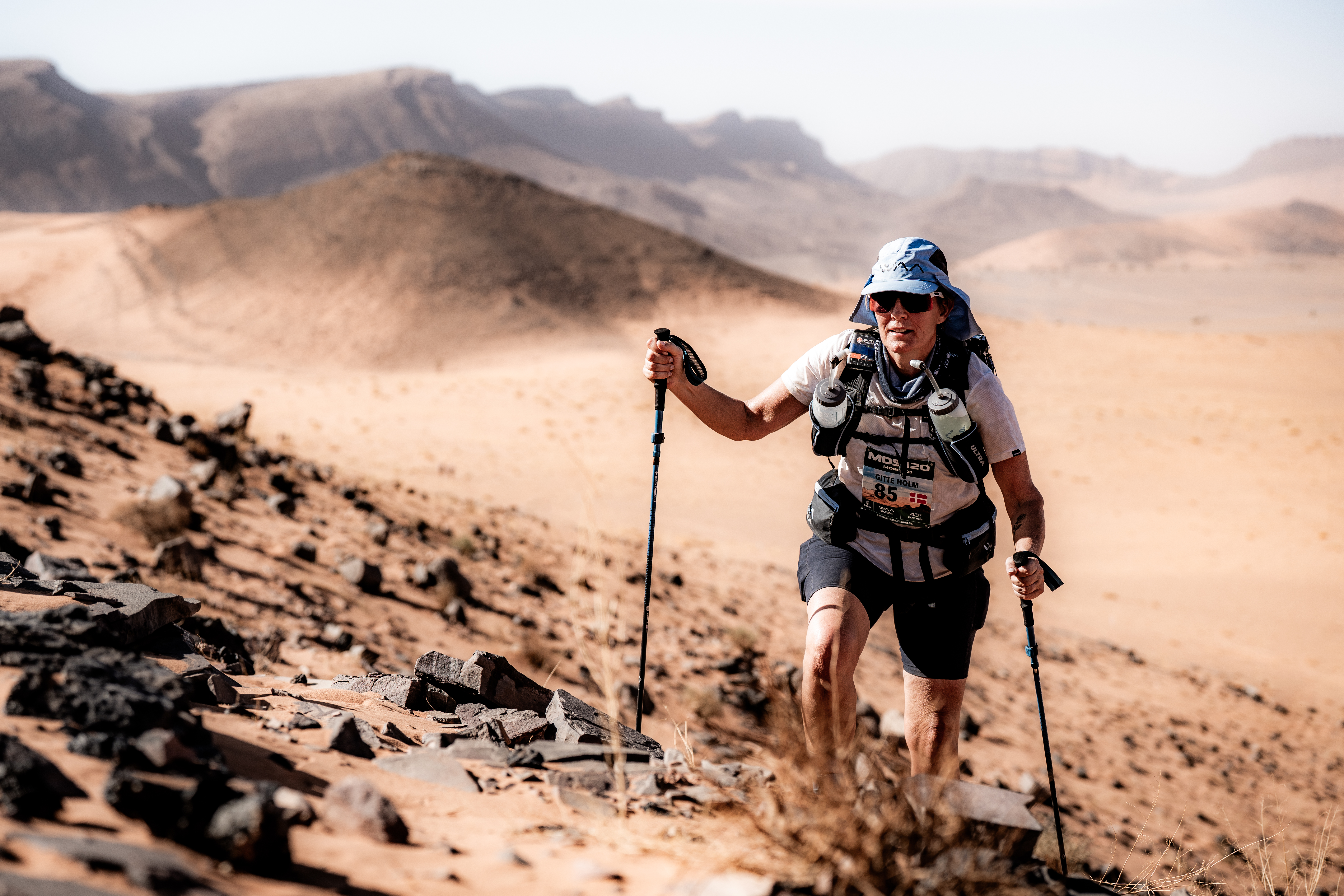
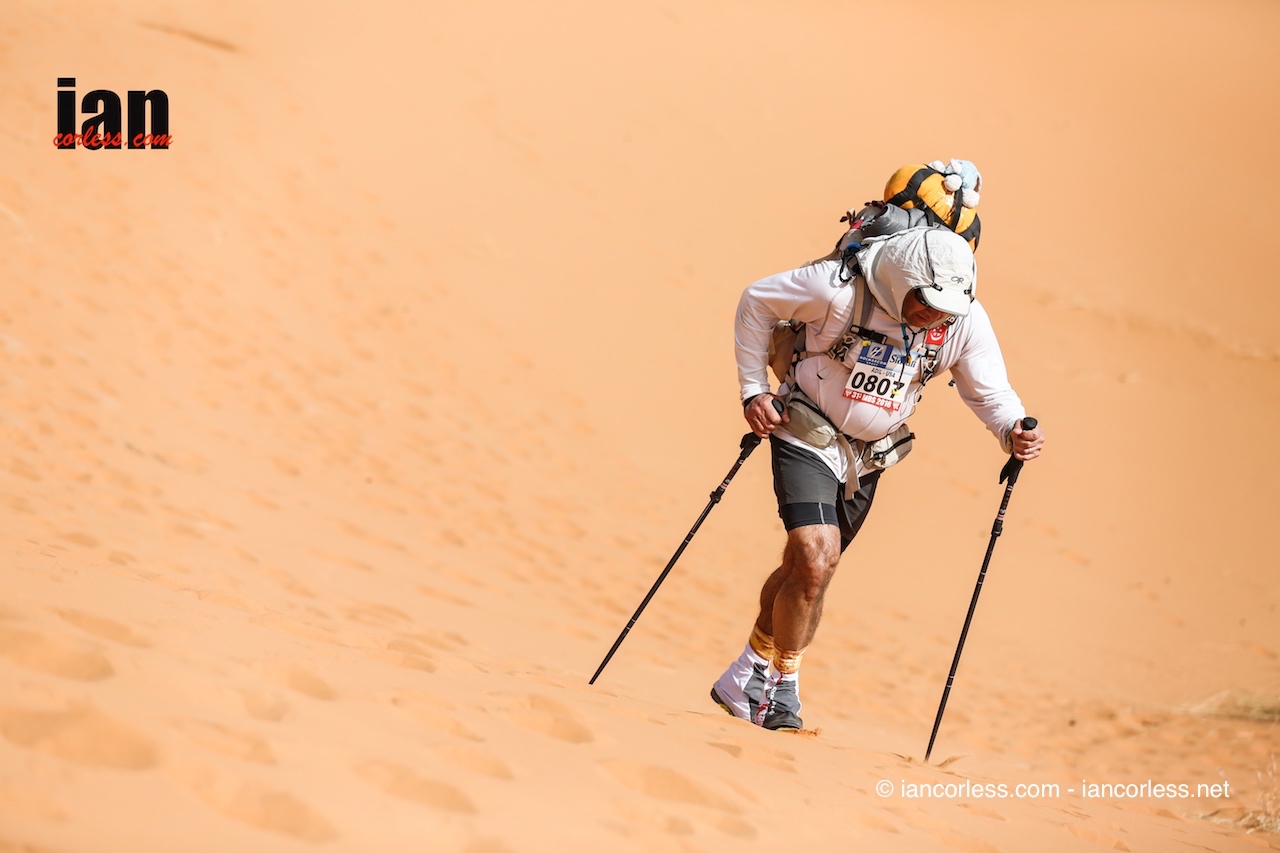
The terrain was varied, soft dune underfoot in some places, firmer ground in others, but the challenge was consistent: the heat. Even early in the day, the sun hit hard. It was a reminder that, out here, progress is earned.
At Checkpoint 2, the route split. Those craving a longer push could opt for the 15km course, while others stuck with the shorter 11.7km track. It didn’t matter which option they chose, both offered the same sense of accomplishment and wonder.
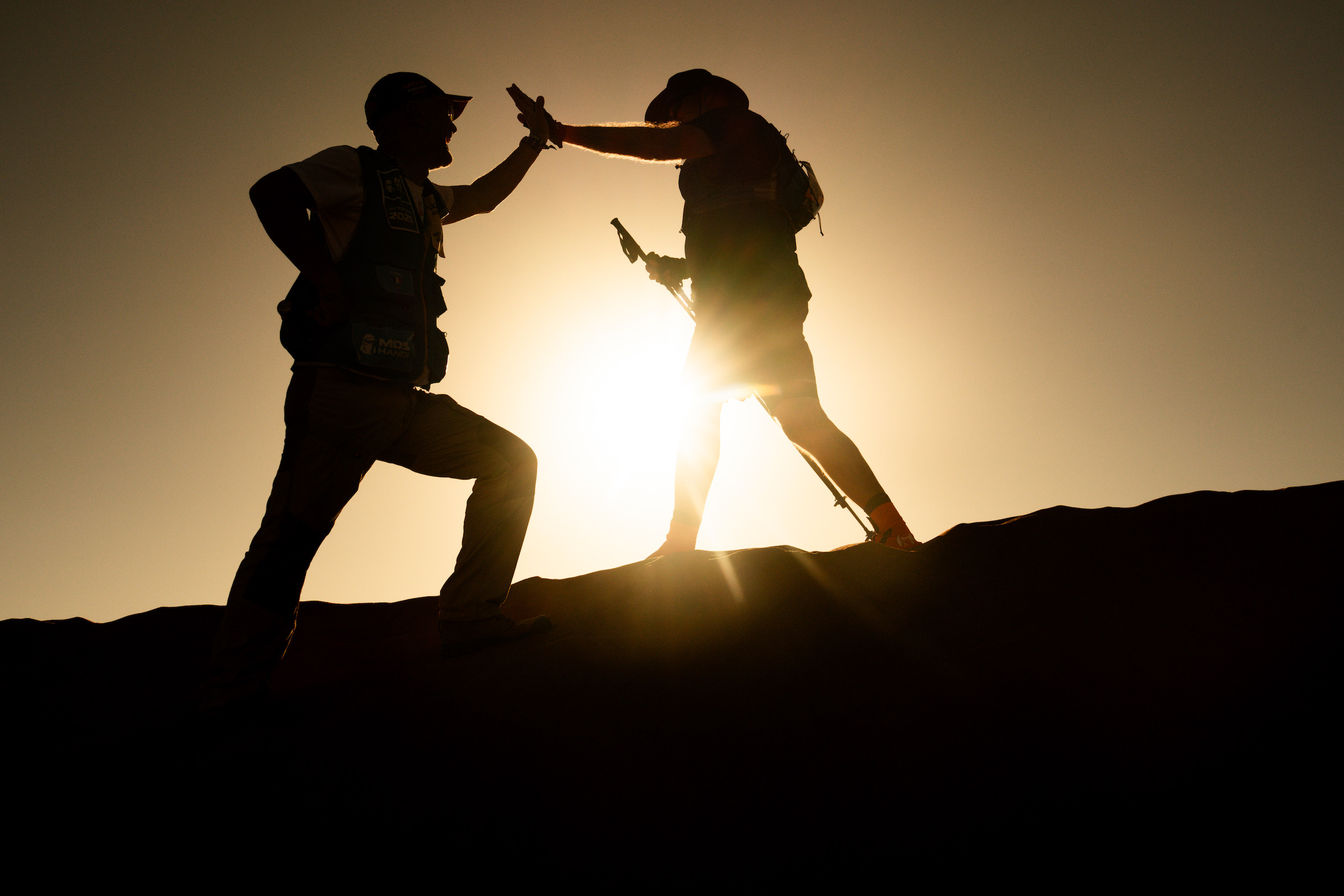
Whether climbing another dune or resting in the shade at the finish, there were smiles all around.
Stage 2 wasn’t about distance or pace. It was about presence, being fully alive in one of the most remote, beautiful places on Earth.
It was about the silence, the sweat, the sunrise. And for many, it was the moment they truly felt the spirit of MDS: the freedom, the challenge, and the deep, personal joy of moving through the Sahara under their own power.
A very special day and one that will stay etched in memory long after the sand is shaken from their shoes.
There’s a certain image that comes to mind when you hear “MDS” – blistered feet, rationed calories, endless dunes, and the punishing solitude of the Sahara. But the second edition of MDS TREK Morocco flips that narrative. It’s still tough, still raw, still proudly Saharan, but this isn’t the Marathon des Sables you’ve heard whispered about in ultra circles. This is MDS with a difference.
This is adventure, elevated.
A New Kind of Desert Challenge
Set across seven nights deep in the Moroccan desert, MDS TREK isn’t about suffering. It’s about connection – to the land, to others, and to yourself. Designed for trekkers who crave the thrill of the Sahara without the demands of full self-sufficiency, this edition delivers a rich, physically challenging, and surprisingly comfortable desert experience.
Forget dehydrated meals eaten crouched in the sand. Here, you’re fed three real meals a day. Forget sleeping shoulder-to-shoulder under a makeshift tarp, you’ll rest in spacious, tents, roomy enough to stretch and breathe. Need a shower? There are actual showers. Want a drink? There’s a desert bar. And after a long day on your feet, you can stretch out with sunset yoga or sink into a post-stage massage.
A Race for Every Level
What sets MDS TREK apart isn’t just the comfort – it’s the accessibility. You don’t need to be an ultra-runner or a desert-hardened veteran to take part. This is a multi-stage trek, not a race to the death.
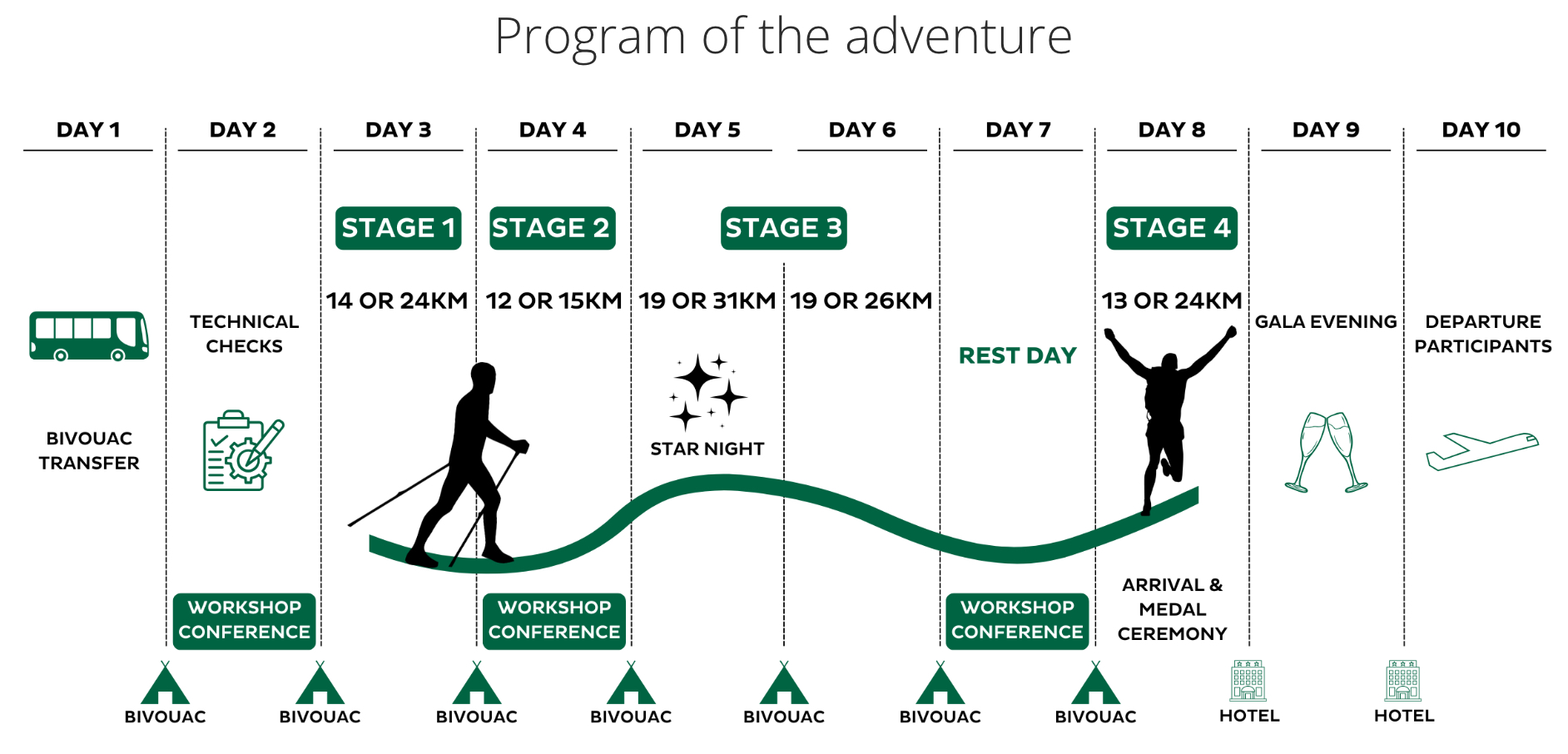
Each of the four stages is offered with two distance options, allowing participants to challenge themselves at their own pace. Want a longer push? Go for the full route. Need a bit less? Opt for the shorter version. The emphasis isn’t on beating the clock; it’s about the experience.
But make no mistake, this is still the Sahara. The terrain is rugged, the climbs are real, and the heat is relentless. The environment demands respect. But it also rewards you with something almost spiritual in return.
Stage 1: Into the Furnace
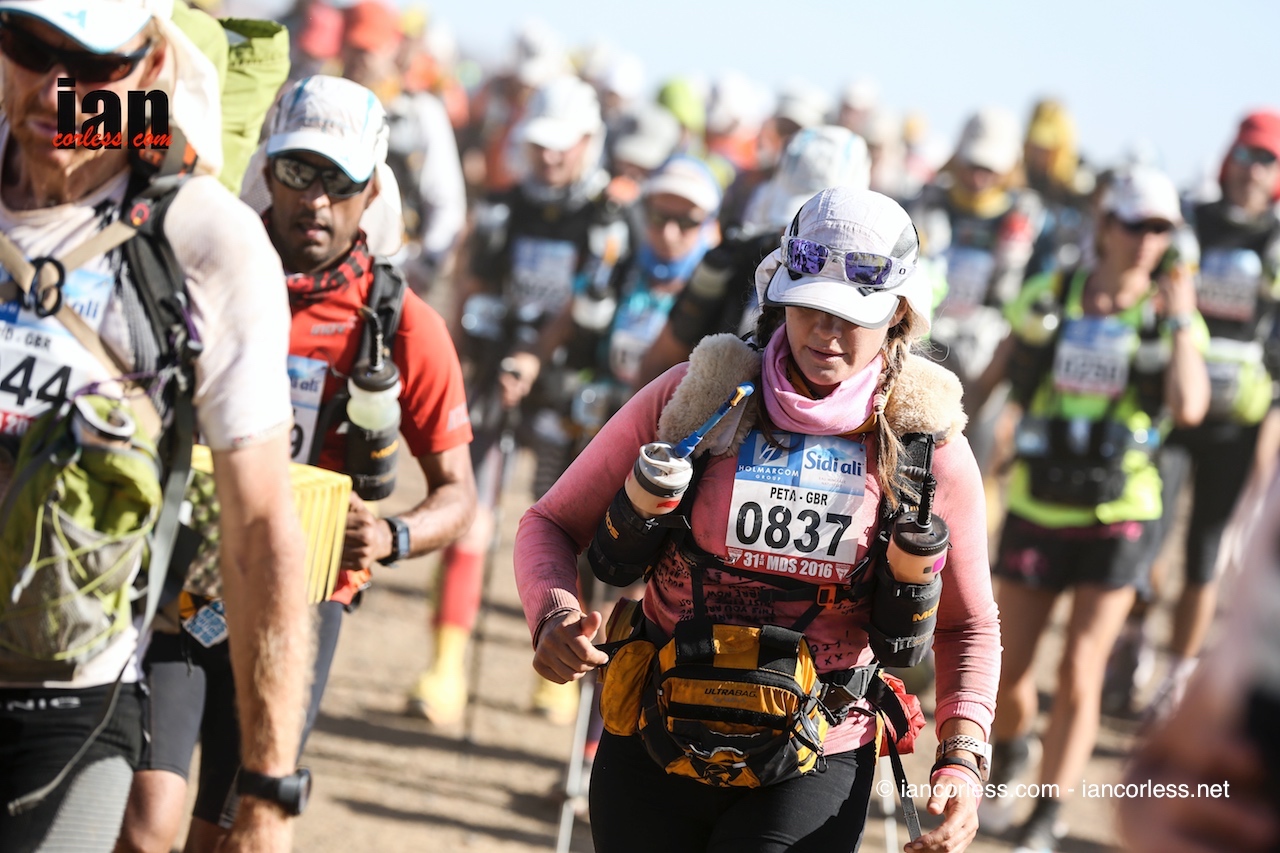
The adventure began under a blazing sun. Temperatures soared as 350 trekkers laced up for the first leg of the journey. The day’s route offered a choice: 15.6 km or 22.7 km, with both options weaving through a landscape as brutal as it was breathtaking.
Soft, shifting sands made even the flat sections a test of will. Then came the tough climbs, sandy ascents that drained the legs and quickened the pulse.
There were sections of technical rock and loose scree, keeping everyone alert. But in between the hardship came moments of wonder: endless panoramas, wind-sculpted dunes, towering jebels casting long shadows across the desert floor.
It wasn’t easy. But that wasn’t the point. This was beauty wrapped in brutality – a reminder of how the desert strips you down, and in doing so, shows you something pure.
And perhaps the most defining feature of the field? More than 60% of participants were women. This wasn’t just an event—it was a movement.
Evenings of Contrast
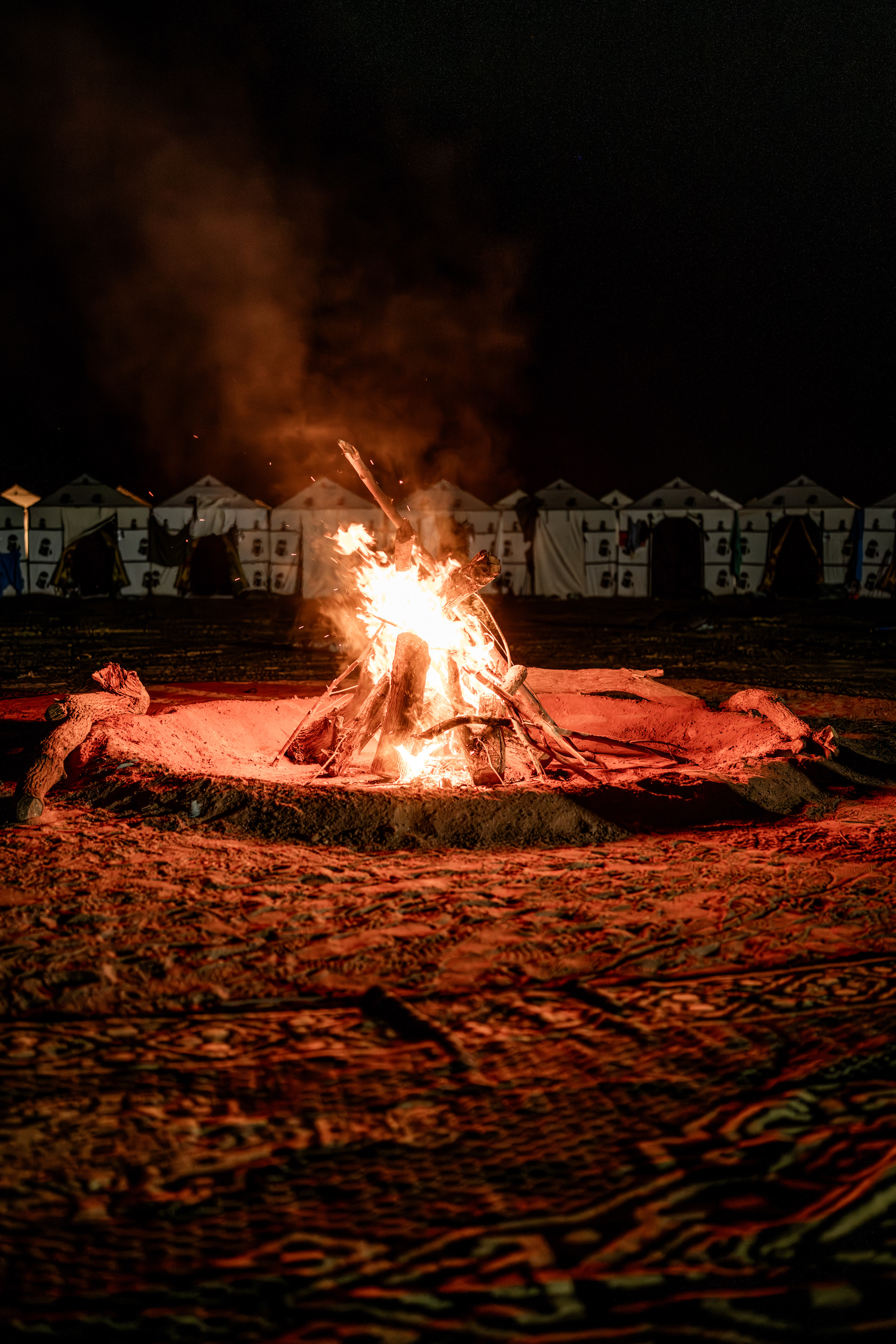
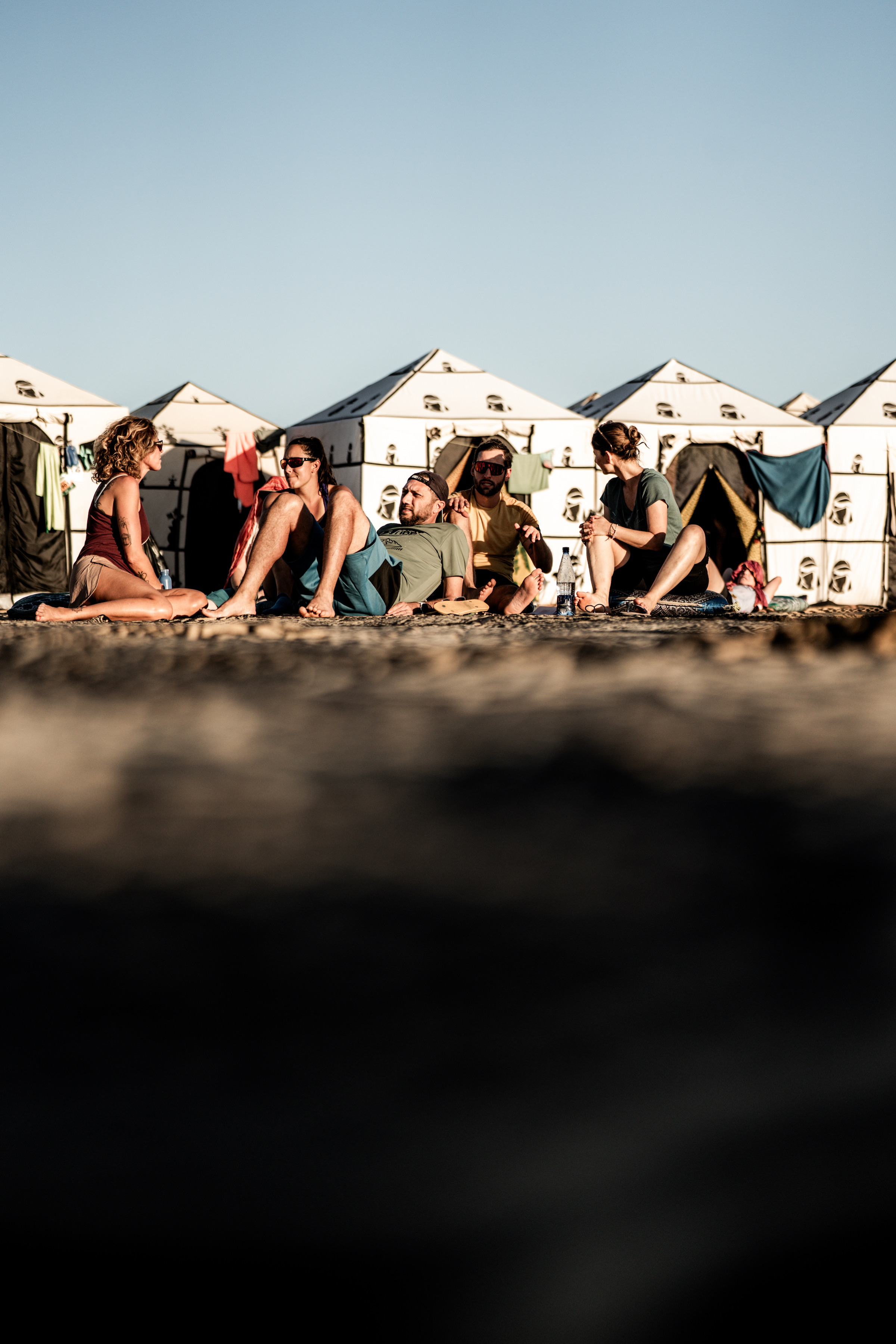
Post-stage life in MDS TREK is where the magic deepens. After pushing their limits under the sun, participants returned to a camp that was more oasis than outpost.
There’s shade. There’s cool water. There’s time to kick off the boots, breathe, and reset.
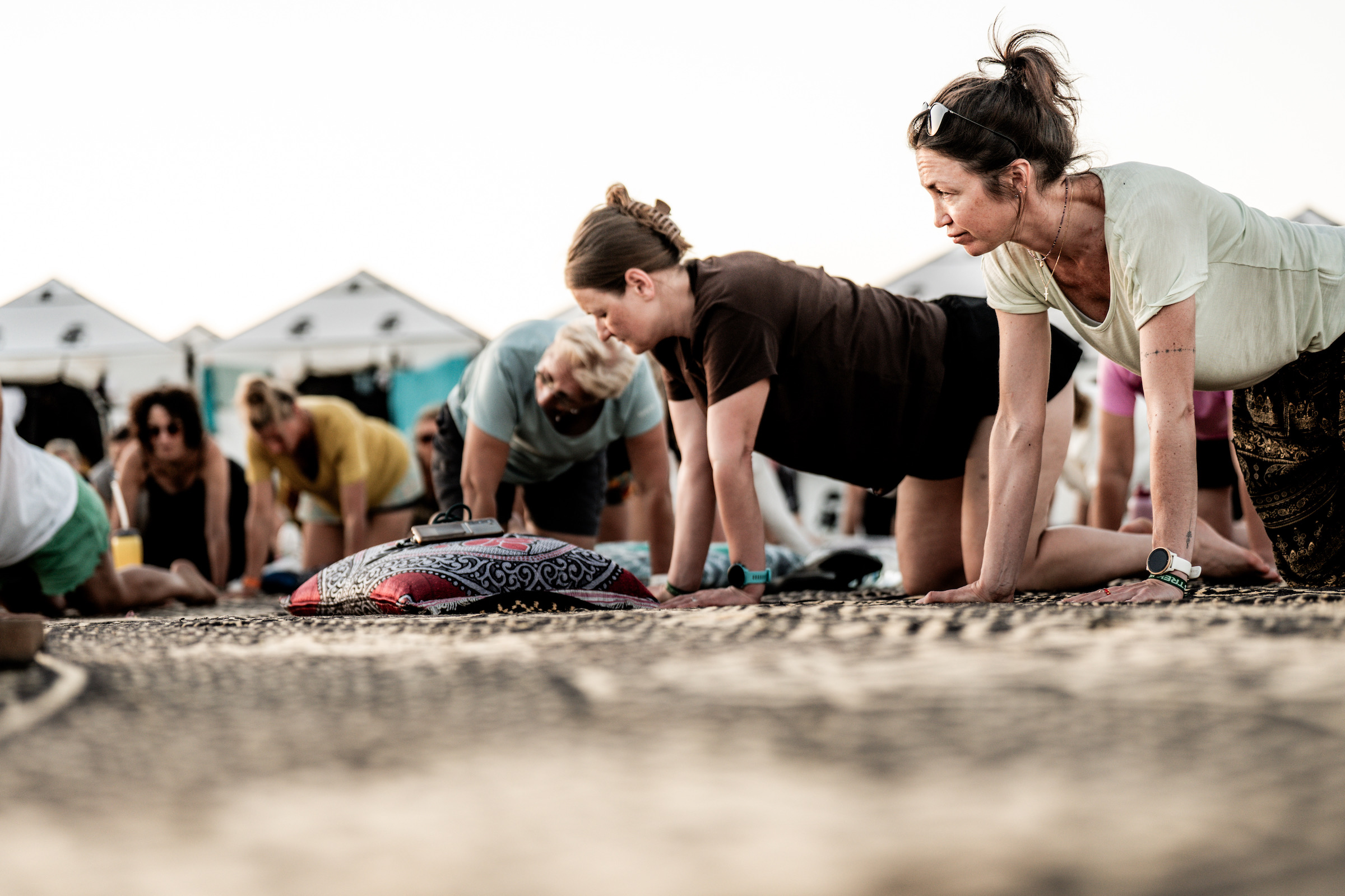
Then, as the desert begins to exhale and the day gives way to dusk, trekkers gather for sunset yoga – a quiet, grounding practice led against the backdrop of endless sky. Others opt for a massage under canvas, loosening the knots earned over each step.
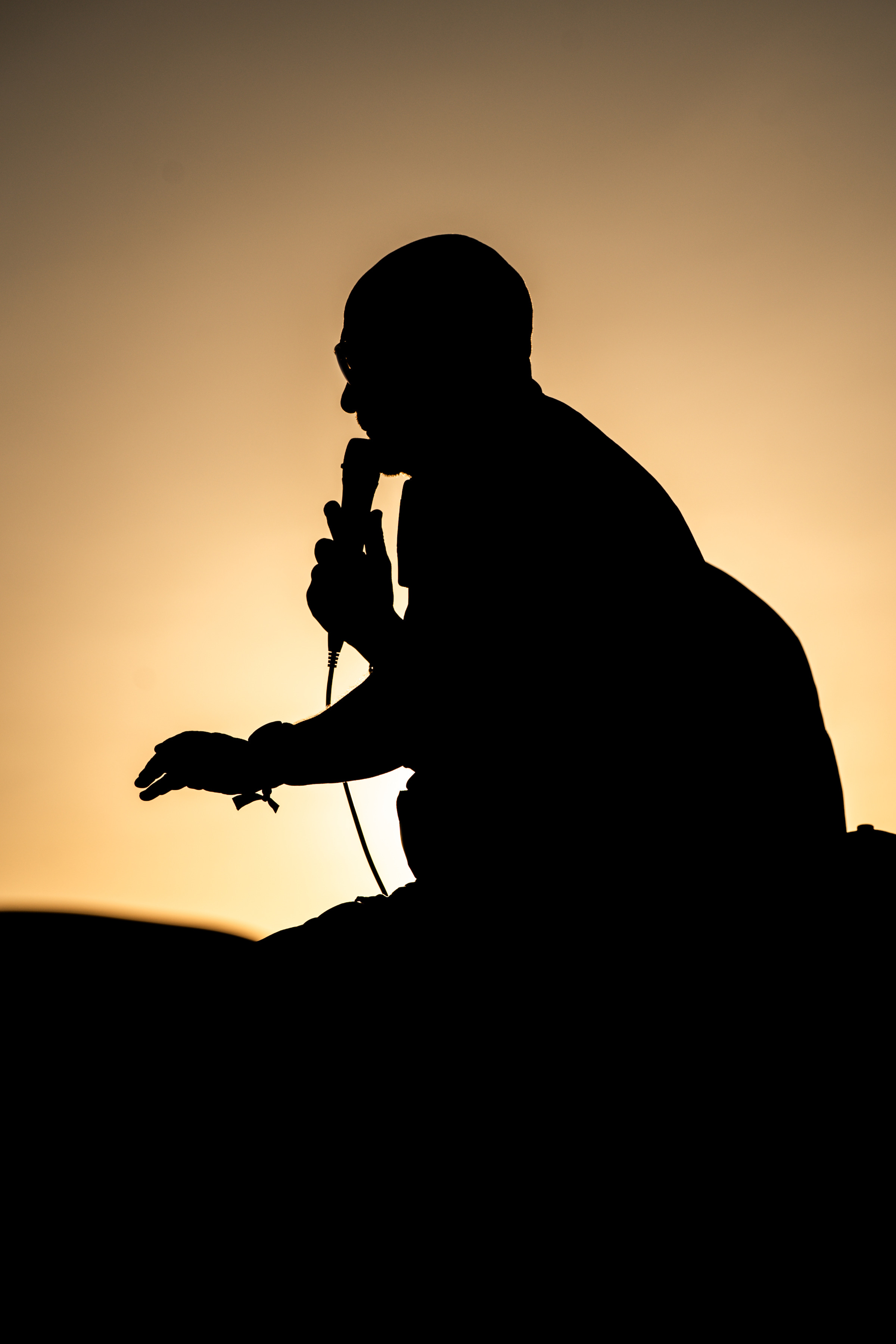
And later, with dinner shared and bellies full, the real depth of the event reveals itself: evening talks and lectures that inspire, educate, and connect. Whether it’s stories from desert veterans, lessons on resilience, or reflections on personal growth, these sessions remind everyone that MDS TREK isn’t just about distance. It’s about transformation.
A Community Like No Other
The mix of people is part of what makes MDS TREK so powerful. Solo adventurers. Groups of friends. Veterans of the classic MDS alongside first-time desert explorers. Young and old. Every background. Every story. This is a space where no one is left behind, and every victory, every climb, every kilometre is cheered like a medal.
MDS TREK Morocco isn’t about breaking records. It’s about breaking through.
To comfort.
To challenge.
To something unforgettable.
Whether you’re a seasoned adventurer or simply someone looking for your next big reset, this is the one.
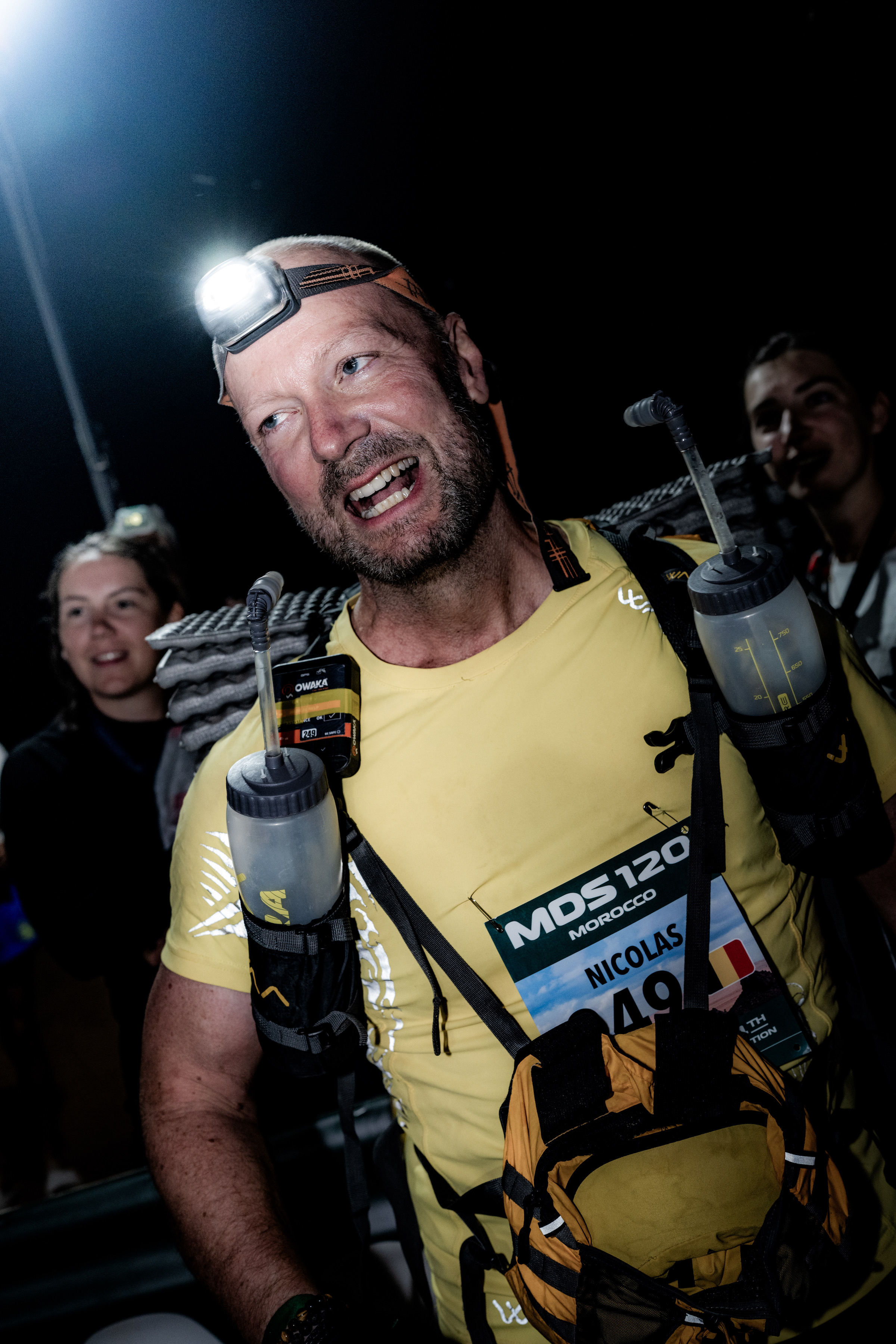
Stage 2 of the MDS 120 Morocco 2025 delivered a punishing reminder of what this race is all about: endurance, resilience, and respect for the elements. With three distances on offer – 20km, 40km, and 60km – runners set out early under revised start times (0630 and 0730 for the top contenders) after stage 1’s extreme heat forced organizers to adapt. It was a smart move. By midday, temperatures soared beyond 45°C, turning the day into a battle of grit and survival.
The day began deceptively calm. The early morning was still and silent, with no wind and nothing to offer relief from the sun’s growing intensity. As the hours ticked on, the heat built steadily, baking the desert landscape and punishing any runner who dared to underestimate it.
This wasn’t just another day in the desert. It was a brutal test across unforgiving terrain – soft sand, rugged mountain passes, exposed plains, and technical ridgelines. There were no shortcuts. No hiding from the sun. Just a long, scorching path to the finish.
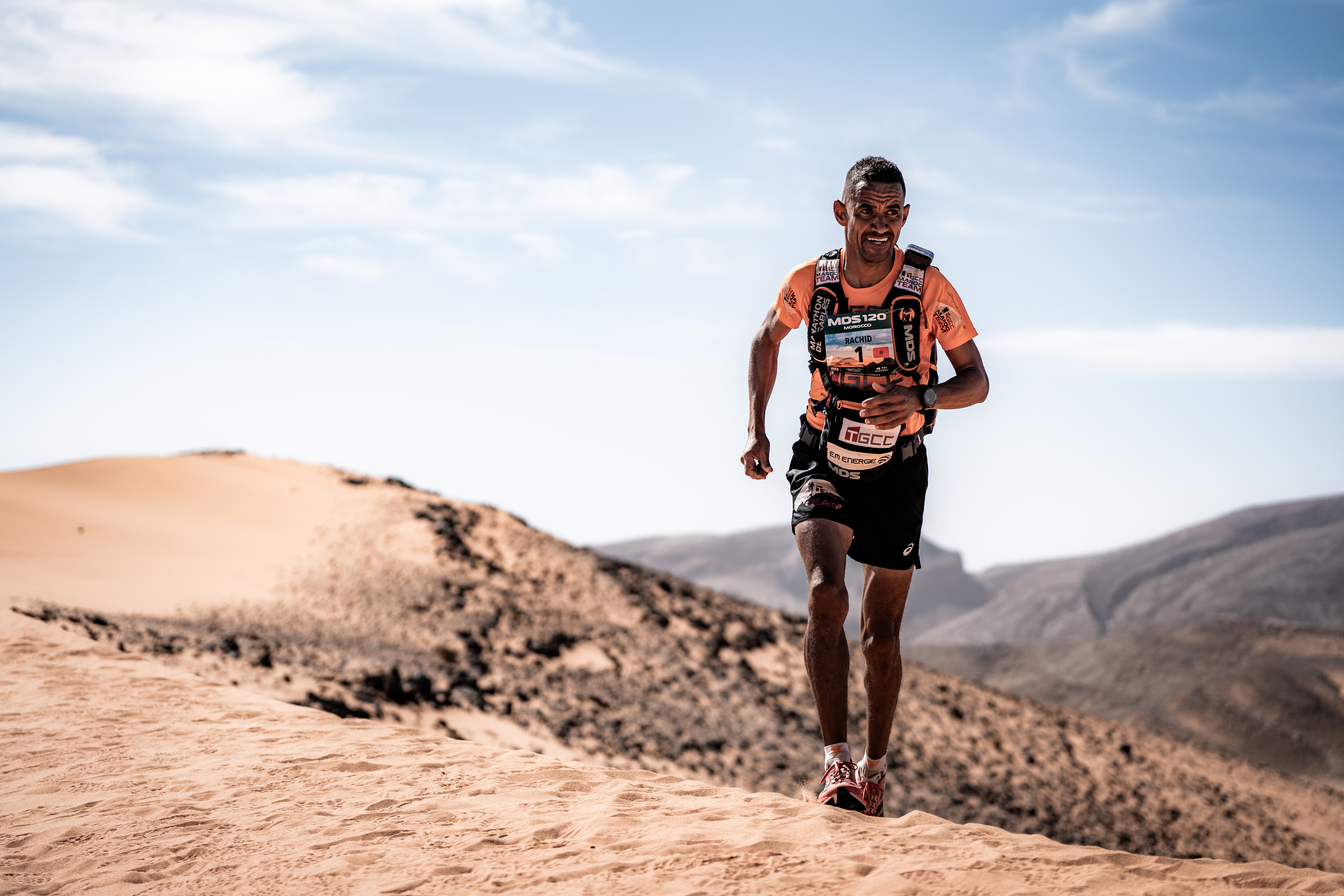
In the longest and toughest of the three routes, Rachid El Morabity did what he does best, dominate. The Moroccan ultra running legend took charge of the 60km stage, navigating the heat and terrain with trademark efficiency. His command of desert racing was evident, even in conditions that forced many to slow, stop, or drop out.
But this wasn’t just about speed — it was about survival. Pacing, hydration, and heat management became as important as footwork. Every decision counted.
On the women’s side, Julia Villanueva had a standout performance. Pushing through the worst of the afternoon furnace, she took the lead overall, ahead of Véronique Mueller-Berberat. Villanueva’s effort was both smart and strong, a calculated drive through the toughest part of the course when many were simply trying to hang on.
In the 100km event, which saw runners take on 40km in Stage 2, Lorick Buckin emerged as the new leader. He now holds a slim margin ahead of Louis Godeman, setting up an intriguing contest for the final day.
For the women, Elaine Caron-Gaudet rose to the challenge, building a lead over Charlotte Van Strydock. Both showed real composure in the heat, but Caron-Gaudet’s consistent pace gave her the edge on the day.
The 70km competitors ran their second stage under the same conditions, with Farid Alouani pulling ahead in the men’s standings. On the women’s side, Louise Marcant now leads the pack — a reward for measured effort across chaotic conditions.
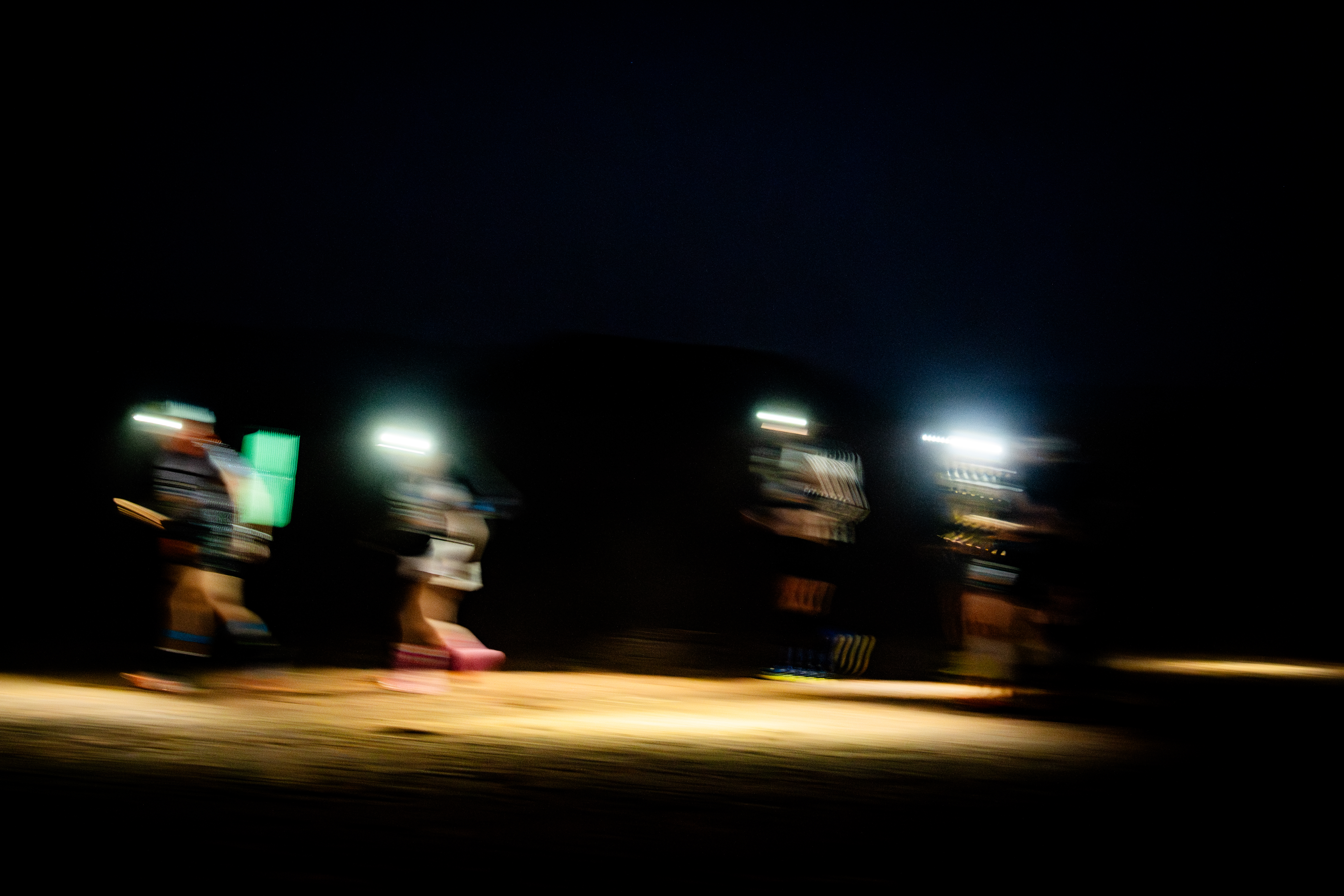
This wasn’t a stage that wrapped up neatly by afternoon. It dragged into the night, with the last runner crossing the line at 23:04 – nearly 17 hours after the first starters. For many, it was less a race and more a trial by fire.
Whether running 20, 40, or 60km, every participant faced the same relentless sun, the same unshaded miles, and the same internal struggle: keep moving or give in. Water checkpoints became lifelines. The heat was no longer an obstacle; it was an adversary.
Respect the Heat. Respect the Race.
Stage 2 of MDS 120 Morocco 2025 will be remembered for one thing: its raw brutality. The course was hard. The heat was harder. And yet, hundreds pushed forward. Not everyone finished with a personal best, but finishing at all was a feat of determination.
This wasn’t just another day on the trail, it was the kind of stage that defines an event. One that strips things down to basics: survive, adapt, endure.
Stage 3 looms next. The bodies are tired. The desert, as always, is waiting.
Interested in a MARATHON DES SABLES EVENT? More Info HERE
In 2026, the Marathon des Sables (MDS) reaches a milestone: its 40th “Legendary” edition. What better way to celebrate four decades of desert ultra-endurance than by rewriting the record books? Among the announcements already stirring excitement: the “long day” stage for 2026 will be extended to 100 km, making it the longest single stage ever in MDS history. This bold move not only raises the bar for what runners will face, but signals that the 40th edition aims to become a defining moment of the race’s legacy.
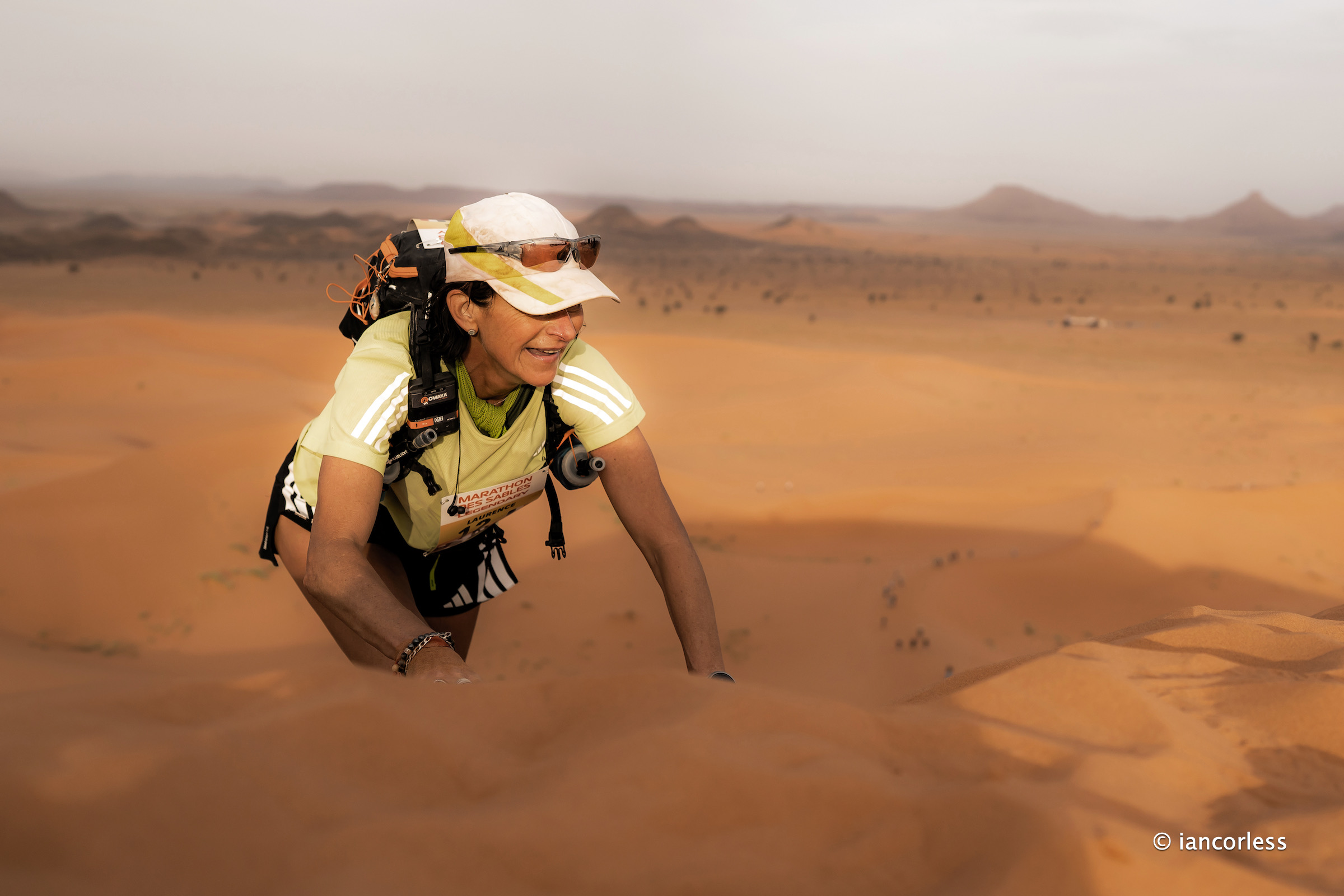
Laurence Klein, 3x MDS champion – Photo by Ian Corless
A Brief History:
The roots of the Marathon des Sables reach back to the daring vision of French promoter Patrick Bauer. In 1984, he traversed part of the Sahara on his own, over 350 km in 12 days, with no external support, an experiment in isolation and survival. Two years later, in 1986, the first official Marathon des Sables was held, with 23 participants tackling a self-supported desert crossing. The winners, Bernard Gaudin and Christiane Plumere making history.
Over the years, MDS has grown from a niche extreme-race to one of the world’s most respected ultramarathons. Its signature format currently features around 250 km over 6-stages (7-days) in the Moroccan Sahara, with participants carrying their own supplies (food, sleeping gear, etc.) in full self-sufficiency – water and a place to sleep the only logistical supply. Terrain at The Legendary shifts from endless dunes, rocky plateaus, dried wadis, occasional mountains and shifting sands; daytime heat can often soar, while nighttime temperatures can drop sharply.
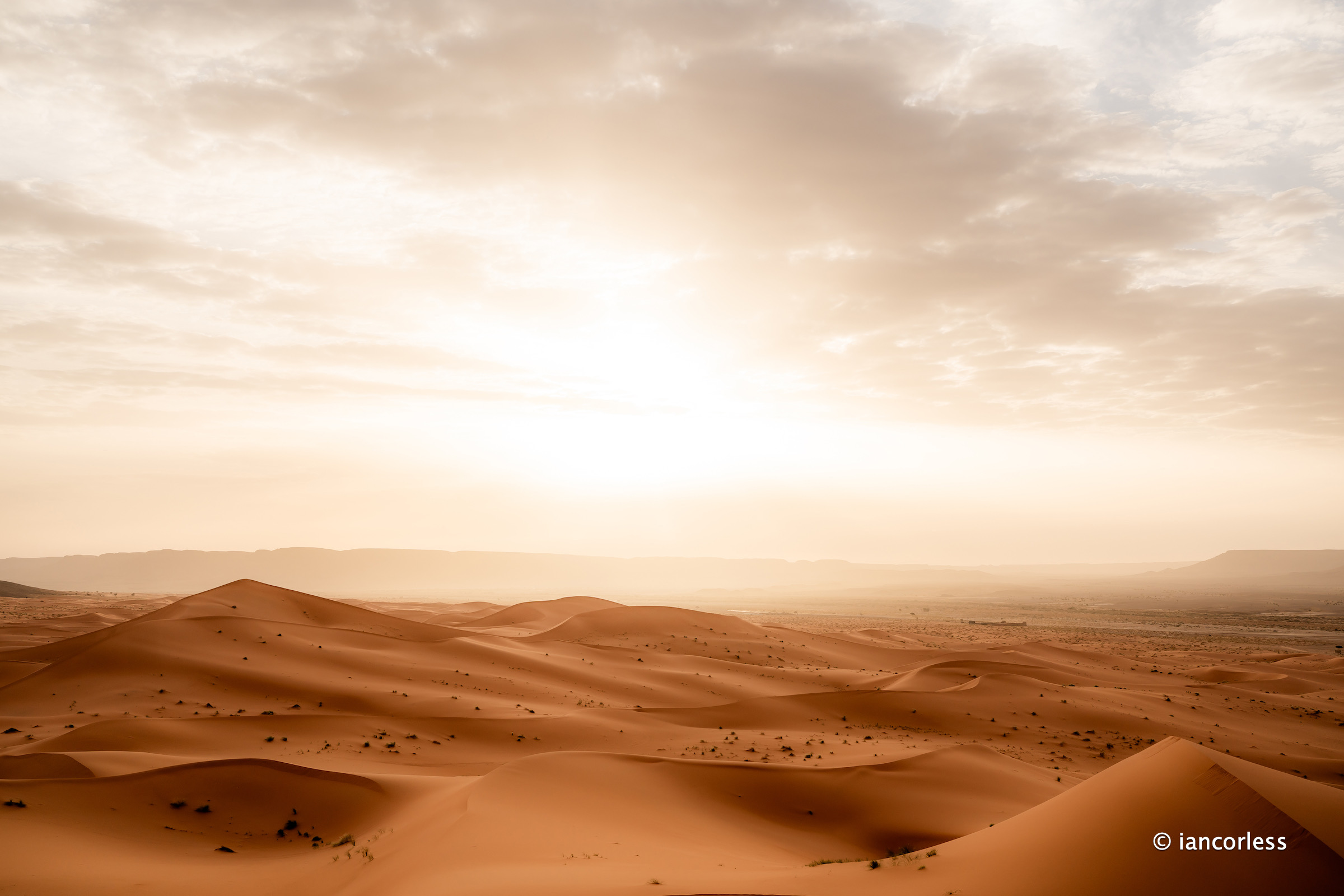
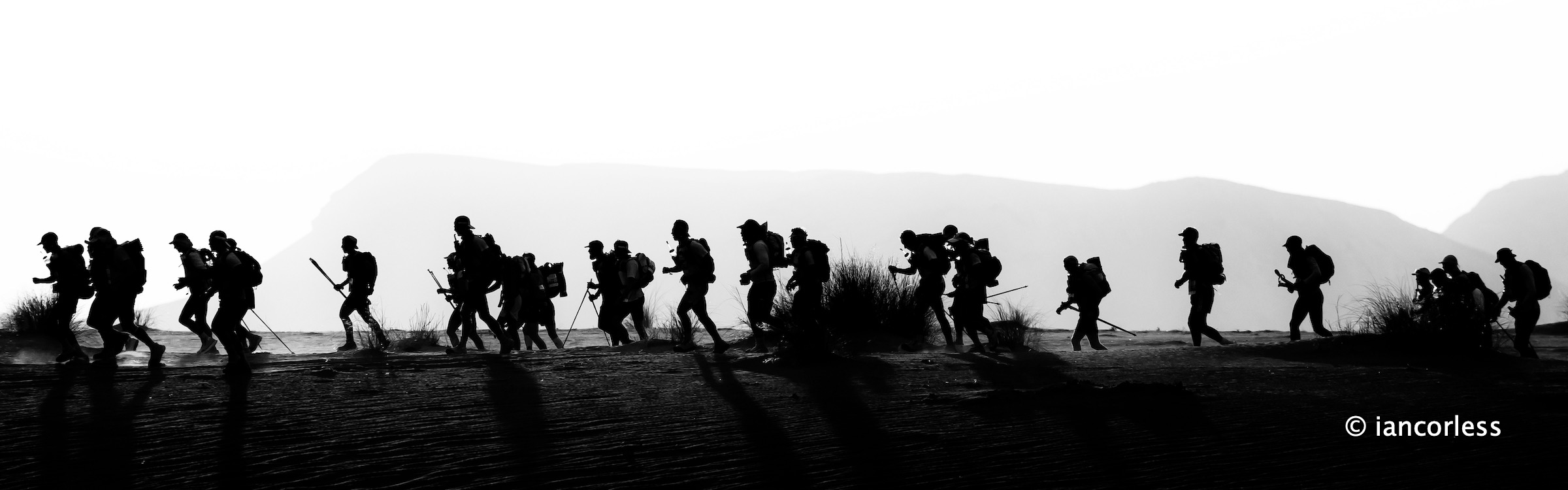
Stunning vistas at The Legendary – Photo by Ian Corless
Notably, throughout its history, MDS Legendary has always included a stage that stretches well beyond the “single marathon” distance, 80–90 km is normal to test endurance in extremes. In 2009, there was a long-stage of 92km’s…. But a full 100 km in one go will top them all.
With a passing of time, MDS Legendary has also diversified; now offering shorter formats such as MDS 120 (70–120 km), the MDS Trek variant with lighter logistics, MDS RAID and for 2026, the MDS Ultra which for the first time offers a single-stage ultra of 100km’s or 100-miles to be undertaken with a 40-hour cut-off. But the heart of the MDS remains firmly with The Legendary stage race.
The 100 km “Long Day” and What It Means
MDS will feature a 100 km long day, a stage longer than anything ever attempted in MDS history. This is more than a symbolic gesture, it’s a structural change that forces participants to rethink pacing, supplies, strategy, and mindset. Will the 40th edition of MDS The Legendary be considered the hardest ever edition? With an expected total distance of 270km +/- the answer is yes!
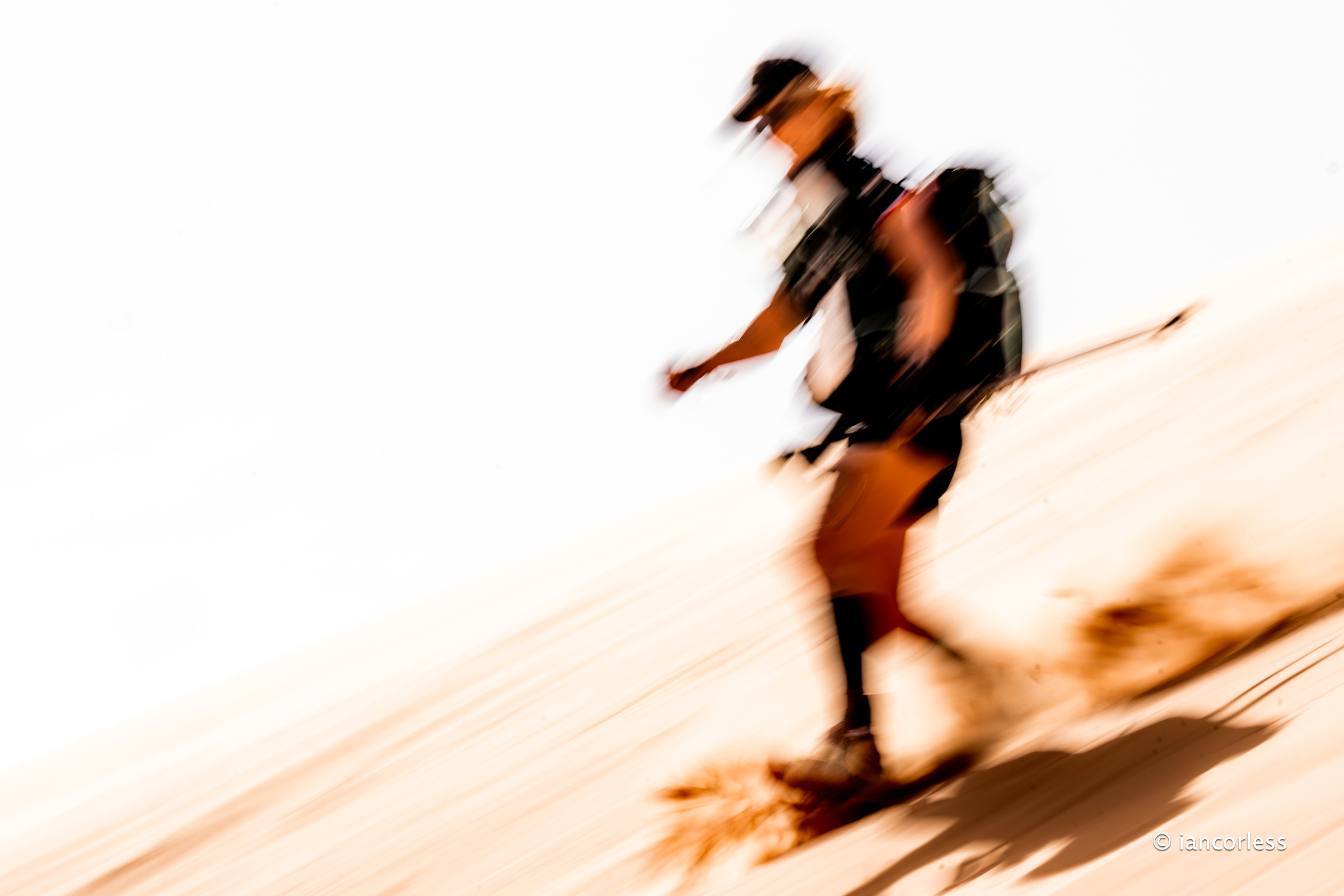
Photo by Ian Corless
From a participant perspective, there will be some key considerations.
Pacing will be crucial with a delicate balance between enthusiasm and energy conservation. During the day, monitoring thermal stress will be crucial.
Pack weight will be crucial – the 40th edition of MDS Legendary, now more than ever, will require participants to have the lightest possible pack without breaking the strict rules and regulations.
Food – With a long day that is in real terms approximately 10 to 25% longer than usual, the need for extra calories and how those calories are consumed will become extra important.
The mental toll will have a huge impact, that will start now with the announcement of a 100km stage – just as you prepare equipment and training, set time aside to prepare the mind for the challenge ahead. This new length will push athletes into deeper zones of fatigue, testing resilience, self-talk, and mental fortitude.
Runners will traverse more varied landscapes, perhaps crossing more dunes, rocky flats, and most certainly everyone will require more night navigation.
Announcing the 100 km day well in advance gives aspirants time to rework prep plans – use this time effectively.
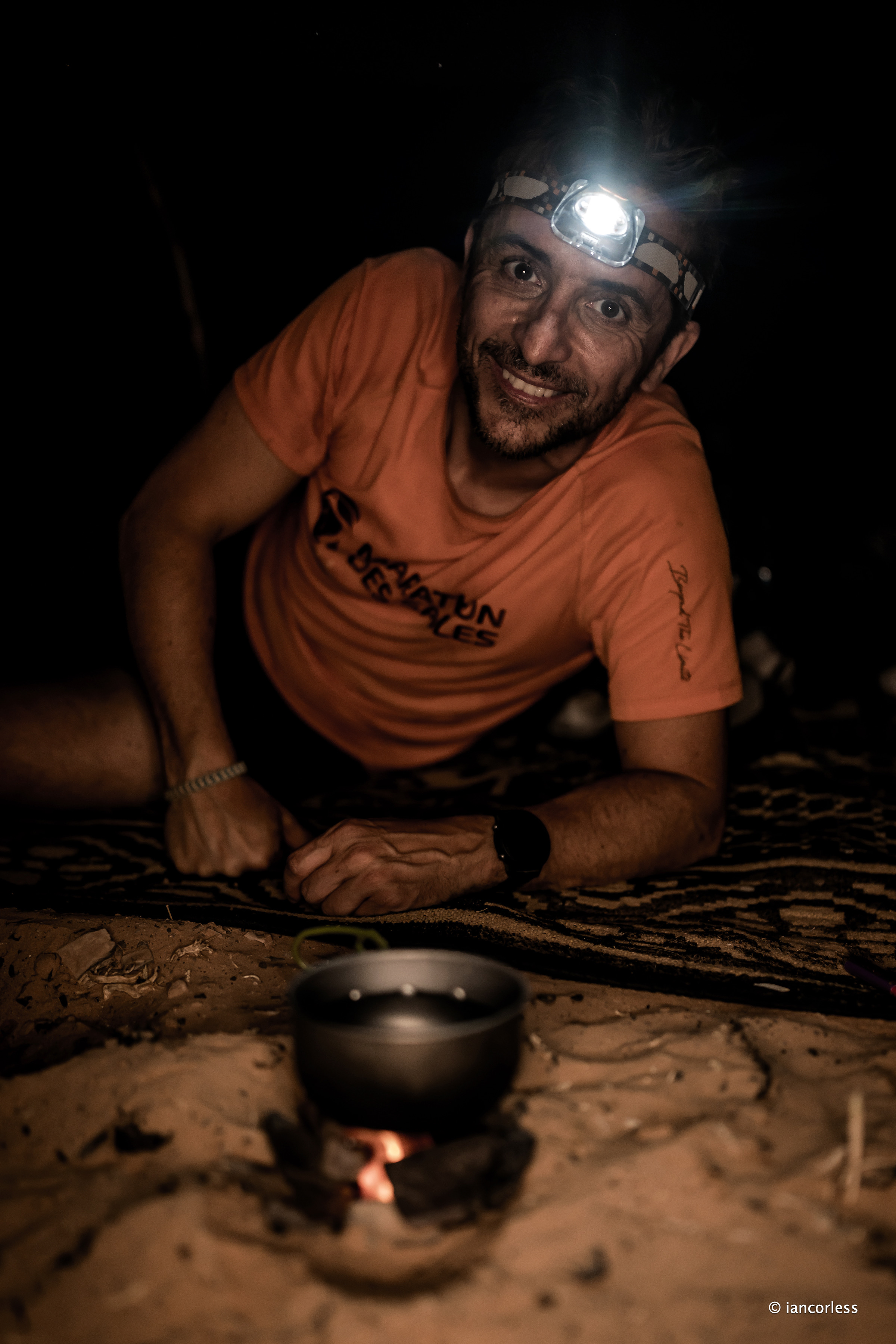
Food, as always, important at MDS – Photo by Ian Corless
Why 2026 Will Be a History-Making Edition
This is not just “another year” of MDS The Legendary, several factors are aligning to make the 40th edition uniquely compelling:
Milestone Significance – Forty years is a symbolic turning point. And by choosing to mark it with the toughest-ever stage, the organisers are intentionally raising the narrative: “Legendary by name, Legendary by reputation.”
New Records, New Legends – With no past precedent for a 100 km stage in MDS The Legendary, whoever finishes that leg (especially among the leaders) will enter the record books.
Attracting Ambition – Some ultra runners chase the “most difficult” challenge. A 100 km desert stage is a headline that will draw audacious minds and bodies, possibly pushing the field performance upward.
Legacy and Storytelling – In future retellings, the 2026 MDS The Legendary will be a pivotal point, some may say, the 40th edition was when MDS truly redefined itself. It’s the kind of turning point that historians of sport may hark back to.
Amplifying the Extremes – MDS has always lived on the edge: heat, sand, navigation, resource management. By stretching one day to 100 km, the extremity is amplified. The race becomes less about surviving the day, and more about mastering it.
The Longest Ever – With a long stage of 100km, the anticipated total distance for the 40th edition will be a record breaking 270km +/-.
Photo by Ian Corless
Challenges & Risks to Keep in Mind
No radical shift comes without risks and MDS The Legendary are required to balance risk against challenge. A 100km stage has long been discussed for this iconic stage race, it’s only right that the 40th edition will personify the Legendary tag with a landmark distance. However, even the world’s top ultra runners may falter under a 100 km leg in desert conditions. Managing attrition will be critical. The required pace will be, as usual, 3.5km per-hour. And of course, the MDS blue and orange jackets will be on-hand, more than ever, to facilitate everyone crossing the line.
100% support from the MDS team – Photo by Ian Corless
Some participants may feel disadvantaged if their prior prep or experience didn’t anticipate such a long stage, but, this is why this early announcement helps – fail to prepare, prepare to fail.
Perspective: How This Compares to Classic Ultra Benchmarks
To put 100 km in context: many stand-alone ultramarathons are in the 100 km to 100-mile range. But those are often supported events, with aid stations and crew support. In MDS The Legendary, with self-sufficiency, navigation demands, and desert extremes, layering a 100 km day is far harder than a flat 100k road ultra.
In prior MDS editions, long days of 80–90 km have already pushed runners to the brink, many cross the nights and run long into another day – for 2026, this will be the ‘norm’ for nearly all the participants.
The 40th edition becomes not just “another chapter,” but a rewriting of what MDS can be.
Final Thoughts: A Legendary Promise
Photo by Ian Corless
The 2026 Marathon des Sables is setting the stage, literally and metaphorically for a landmark event. The 100 km long day announcement signals ambition, courage, and a willingness to push the narrative frontier of desert ultra-running. In addition, the implications for the overall race distance being 270k +/- adds to the drama.
For participants, 2026 will demand a rethinking of training philosophies, gear choices, pacing strategies, and mental frameworks. For the sport, it may become a reference point for what is “next level” in multi-stage desert ultras. And for storytelling, it offers rich stories:”
“Who conquered 100 km in the sands?”
“How 2026 changed MDS forever.”
Legendary by name, and with this edition, legendary by reputation in a whole new way.
Interested in a Marathon des Sables event? More informationHERE
After the last-minute cancellation of MDS 120 Fuerteventura, the focus now shifts firmly to Morocco, where two cornerstone events are about to take center stage: MDS 120 Morocco and MDS Trek Morocco. Anticipation is high, the energy is back, and participants are ready for the desert challenge they’ve been waiting for.
What Are MDS 120 and MDS Trek?
The MDS 120 is a three-stage, four-day 10/100 or 120 km endurance race in the desert, modelled after the legendary Marathon des Sables but in a shorter, more accessible format. Athletes carry their food and gear, manage their effort in the heat, and experience the highs and lows of true desert racing, every kilometer tests both body and mind.
The MDS Trek shares the same landscapes and spirit as all MDS events but swaps competition for exploration. Designed for adventurers and walkers, it offers a supported trek across the Sahara, with each stage a new chance to discover the desert at a different pace. Participants are not self-sufficient, camp has more luxury and yes, even showers are possible!
The Journey Into the Desert
The adventure begins well before the start line. Most participants first gather in Marrakech, where the atmosphere is electric as athletes and trekkers from around the world converge. From there, MDS arrange transfers over the High Atlas mountains to Ouarzazate, often called the “door of the desert.”
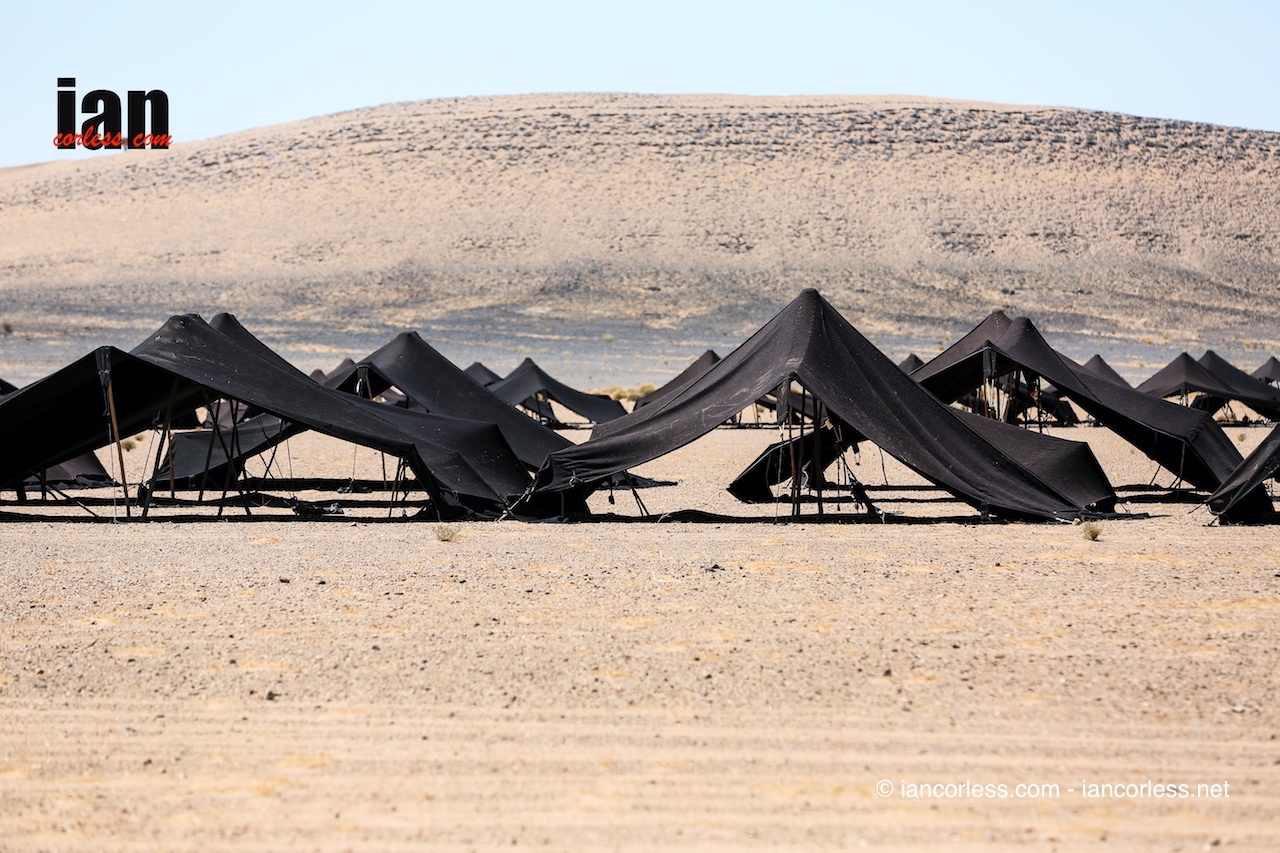
Two hotel nights in a hotel with administration protocols, then the caravan heads deeper into the Sahara. The transfer to Bivouac 1 marks the true start of the experience: the desert horizon stretching endlessly, the iconic WAA tents awaiting, and the realization that the adventure is about to begin.
MDS 120 Morocco:
MDS Trek Morocco:
Looking Back at 2024
The 2024 editions showed the enduring strength of the MDS spirit. Morocco delivered outstanding editions and for MDS 120, there were some challenging climatic conditions with rain and flooding.
MDS Trek, was business as usual with classic Morocco weather. Participants took on dunes, jebels, and starlit nights. These moments reinforced Morocco’s reputation as the spiritual home of the Marathon des Sables.
Why 2025 Will Be Bigger and Better
In 2025, expect the same, but amplified. The organisers have doubled down on delivering unforgettable events, and the buzz suggests the community is ready for it. The MDS 120 Morocco will push competitors harder, while the MDS Trek will continue to offer an inclusive and inspiring path through the Sahara.
And Then Comes Jordan
Photo by Ian Corless
The adventure doesn’t stop in Morocco. Just weeks after the conclusion of the MDS Trek, the focus shifts east for MDS 120 Jordan, where runners and trekkers will swap the Sahara for the dramatic landscapes of Wadi Rum. It’s a quick turnaround, but for those chasing the full MDS experience, it’s the perfect continuation of a year dedicated to desert discovery.
The countdown is on.
Morocco awaits.
Interested in a Marathon des Sables event? More informationHERE
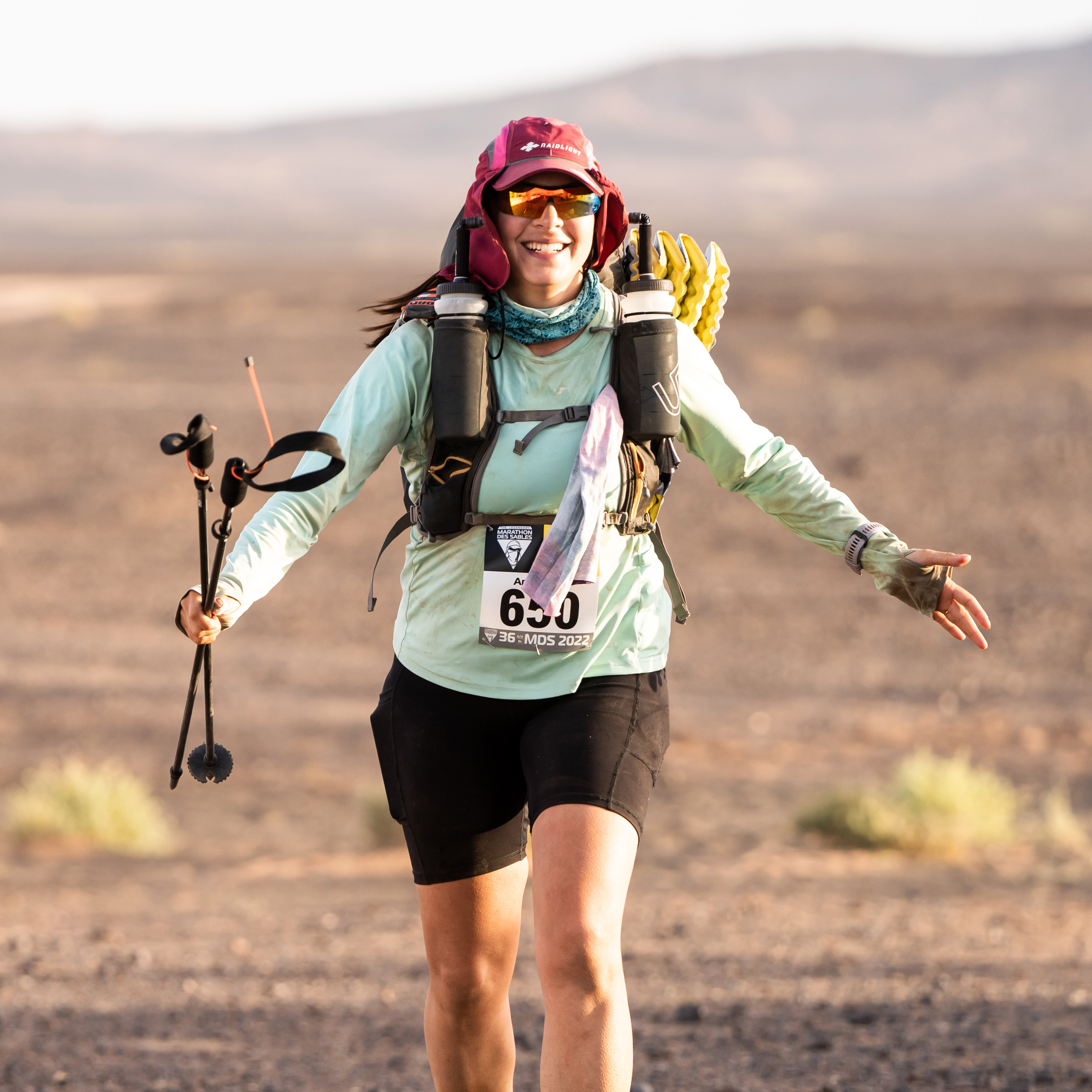
Amy McCulloch is a world-renowned author who in 2022 toed the line of the iconic Marathon des Sables. The race and the experience planted seeds for a story, one of ultra-running and mystery. In June 2025, ‘RUNNER 13‘ was released.
Amy McCulloch is the internationally bestselling author of BREATHLESS, MIDNIGHT (also known as THE GIRL ON THE ICE) and RUNNER 13 – coming out worldwide in Summer 2025. She has also written eight novels for children and young adults, including the #1 bestselling YA novel The Magpie Society: One for Sorrow. In September 2019, she became the youngest Canadian woman to climb Mt. Manaslu in Nepal — the world’s eighth highest mountain. She has also summited the highest mountain in the Americas, Aconcagua, in -45C and 90kmph winds, and has visited all seven continents. In 2022, she completed the 36th Marathon des Sables, a 250km stage marathon through the Sahara Desert. She is also an A-licensed skydiver. She is currently working on her next adult thriller, continuing to draw inspiration from her adventures.
Amy joins the podcast to discuss the book and her MDS story.
Runner 13 is a thriller that drops readers straight into a deadly stage race across the Sahara, echoing the notorious Marathon des Sables in Morocco. McCulloch’s own experience running that event shapes every detail – the brutal desert landscape, the psychological toll, and the obsession with endurance that defines the sport. The story follows Adrienne, a once-great ultrarunner forced back into competition, and Stella, daughter of the race’s manipulative director, Boones, whose events, modelled on real-world extreme events, aren’t designed to be won, but to break runners. Central to the mystery is Runner 13, a symbol of both glory and doom. Told in sharp, cliff-hanging chapters that jump between present and past, the novel feels like Agatha Christie transplanted to the Sahara: a brutal race where survival, not victory, is the prize, and where Morocco’s desert becomes both the setting and the trap.
If you have participated in Marathon des Sables, the narrative of the book will feel familiar, you will relive your desert experience and of course, the added bonus of a murder mystery only makes the book more interesting. For newbies to the desert, rest assured, the book will be a wonderful escape and it can only make your future event even more ‘hotly’ anticipated – hopefully, the murder mystery element will be missing.
On Wednesday, September 10 at 12:00 PM UTC+2, registration opens for three unforgettable endurance adventures:
MDS 120 Morocco – October 2–10, 2026
MDS Trek Morocco – October 11–20, 2026
MDS 120 Jordan – October 31–November 7, 2026
For runners, trekkers, and anyone who dreams of testing their limits in the most breathtaking landscapes on Earth, these dates mark the beginning of a once-in-a-lifetime journey.
What is the MDS?
The Marathon des Sables (MDS) is not just a race. It’s a legend. Born in Morocco in the 1980s, the event has earned a reputation as “the toughest footrace on Earth.” Participants cross vast stretches of desert on foot, carrying their own food and gear, with only water and tents supplied. It’s as much a mental battle as it is a physical one – a journey into resilience, camaraderie, and discovery.
But MDS isn’t just about the ultra-hardcore. Over the years, the family has grown to include formats that open the experience to more people while retaining its wild, adventurous spirit. That’s where MDS 120 and MDS Trek come in.
MDS 120 vs. MDS Trek: What’s the Difference?
Both are designed to immerse you in the magic of the desert, but the style of challenge is different.
MDS 120
A shorter, yet still demanding, version of the iconic Marathon des Sables.
120 kilometers spread across three stages.
Self-sufficient format: you carry your food and equipment.
Runners and fast hikers alike join in, moving between marked checkpoints across some of the most beautiful, wild landscapes imaginable.
Nights are spent in camp, bonding with fellow adventurers under desert skies.
MDS TREK
Designed for those who want the MDS atmosphere without the clock.
Roughly the same length as the 120, but completed at a trekking pace over five stages.
Guided and supported: you carry a daypack, while larger bags are stored in bivouac.
Perfect for walkers, adventurers, and anyone who prefers to savour the desert at a slower rhythm.
In short: MDS 120 is a race. MDS Trek is an adventure. Both give you the thrill of the desert, the community spirit, and the sense of achievement that comes from stepping far outside your comfort zone.
Photo by Ian Corless
Morocco: The Heart of MDS
It’s no accident that MDS was born in Morocco. The Sahara here is everything you imagine when you hear the word “desert”: towering golden dunes, dry salt lakes, endless rocky plains, and distant mountains shimmering in the heat.
During the MDS 120 Morocco (Oct 2–10, 2026), participants will move through terrain that feels ancient and otherworldly. Running or trekking across sand seas lor along fossil-studded plateaus, you’ll witness landscapes that seem unchanged for millennia.
If you prefer a slower, more contemplative journey, MDS Trek Morocco (Oct 11–20, 2026) is your chance to follow in the footsteps of nomadic caravans. Expect strong mint tea at camp, Berber hospitality, and sunrises that wash the dunes in pink and gold.
Jordan: A Desert of Myths and Monuments
After Morocco, MDS 2026 turns east to another jewel of the desert world: Jordan.
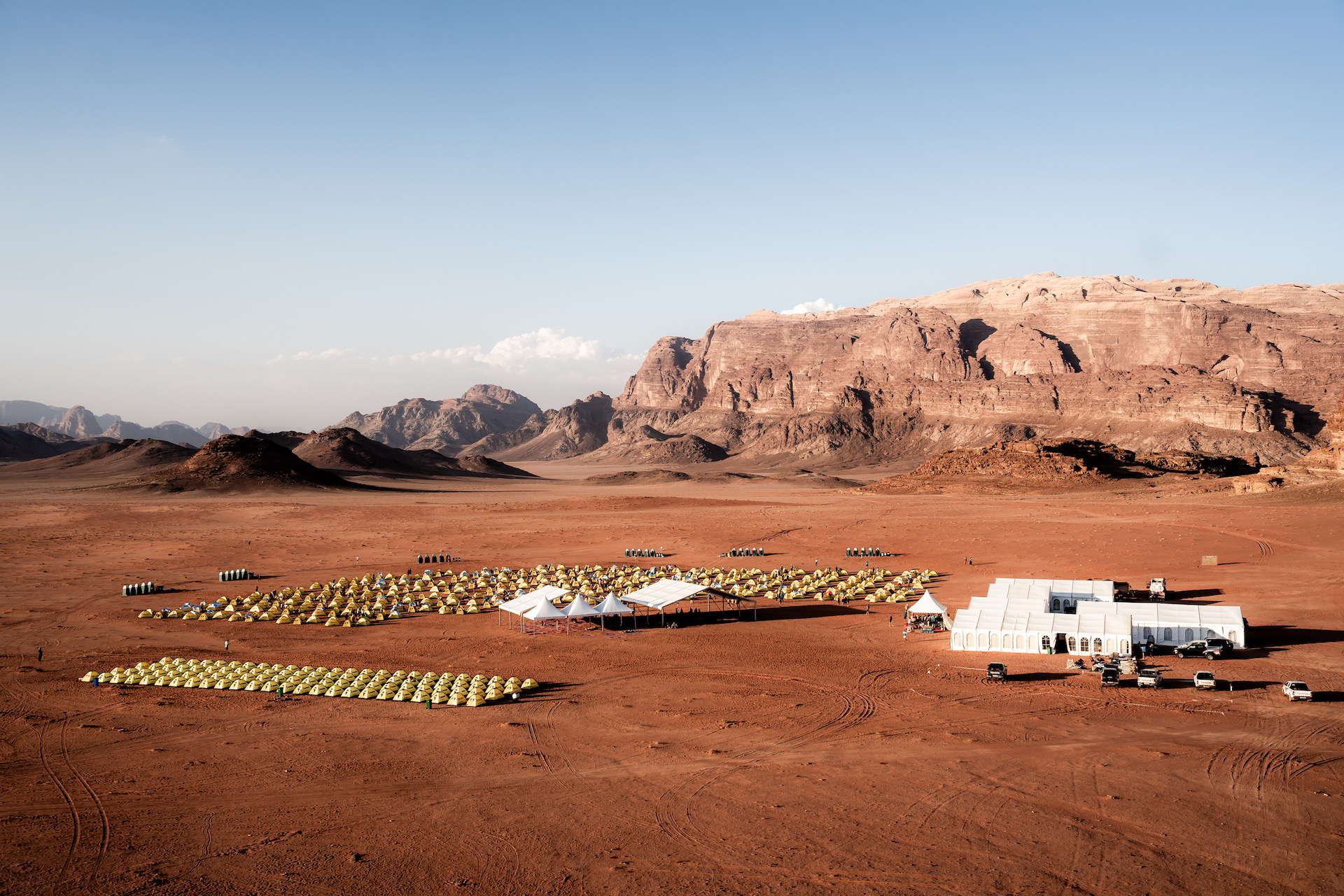
From October 31 to November 7, 2026, MDS 120 Jordan takes place in Wadi Rum, a place so breathtaking it has been called “the Valley of the Moon.” Red sandstone cliffs, natural arches, and wide sandy valleys create a setting that feels almost Martian—no wonder so many films have been shot here.
Photo by Ian Corless
The terrain is ideal for running and trekking: firm sand flats, winding canyons, and rocky ridges that offer sweeping views. And the cultural backdrop is equally unforgettable. This is the land of Lawrence of Arabia, Nabataean traders, and Bedouin camps where hospitality is still sacred.
Photo by Ian Corless
Add in the chance to visit Petra – the rose-red city carved into cliffs – and float in the Dead Sea, and you’ve got a trip that balances physical challenge with world-class cultural exploration.
Why These Events Sell Out
Every MDS event is capped to maintain its unique atmosphere: a balance of challenge, safety, and community. That’s why when registration opens, places vanish fast.
Here’s what draws people back year after year:
The Challenge: 120 kilometers may sound daunting, but it’s achievable for anyone willing to train. Past participants range from elite athletes to everyday adventurers.
The Camaraderie: Camps become villages of shared struggle and shared joy. By the end, strangers become family.
The Scenery: Whether it’s sunrise over Moroccan dunes or starlight over Jordan’s cliffs, the landscapes will etch themselves into memory.
The Transformation: You leave with more than a medal. You leave knowing you can do hard things—and that realization follows you into every part of life.
Photo by Ian Corless
Preparing for MDS
MDS is not something you show up to on a whim. But it’s also not as unreachable as it may seem. With six to twelve months of structured training – mixing endurance, strength, and practice carrying a pack – most people can get ready.
What both demand is an open mindset: ready for sand in your shoes, dust on your face, and joy in small things like shade, water, and shared laughter.
The post-pandemic years have sparked a surge of people craving real experiences – not just vacations, but adventures with meaning. MDS embodies that perfectly. It’s travel, sport, culture, and self-discovery all wrapped into one.
If you’ve ever dreamed of running across the Sahara or walking through Wadi Rum, 2026 is your chance. Spots are limited, and once they’re gone, you’ll be waiting another year.
Photo by Ian Corless
Think about it: ten days where your only job is to put one foot in front of the other. No emails, no deadlines, no noise – just the sound of your breath, the crunch of sand, the laughter of fellow adventurers, and the vast silence of the desert.
That’s what awaits you at MDS 120 Morocco, MDS Trek Morocco and MDS 120 Jordan 2026.
On September 10, 2025 at noon (UTC+2), the door opens.
MDS 120 Fuerteventura returns in September 2025, not ‘just’ another race on the calendar, but an important marker in the history of the MDS 120 format. A collision of raw endurance and wild beauty, where athletes trade comfort for grit, and discover just how far their bodies and minds can be pushed. Set against the sunburnt backdrop of the Canary Islands, the race is part expedition, part survival trial, and part celebration of human resilience. A race for all with 3 distance options available, 70, 100 and 120km’s.
What Is the MDS Fuerteventura?
MDS 120 Fuerteventura is the younger sibling of MDS The Legendary, the original multi-stage ultramarathon across the Sahara Desert in Morocco. Like its parent race, the Fuerteventura edition demands that competitors carry their own supplies while covering gaily distances under variable conditions.
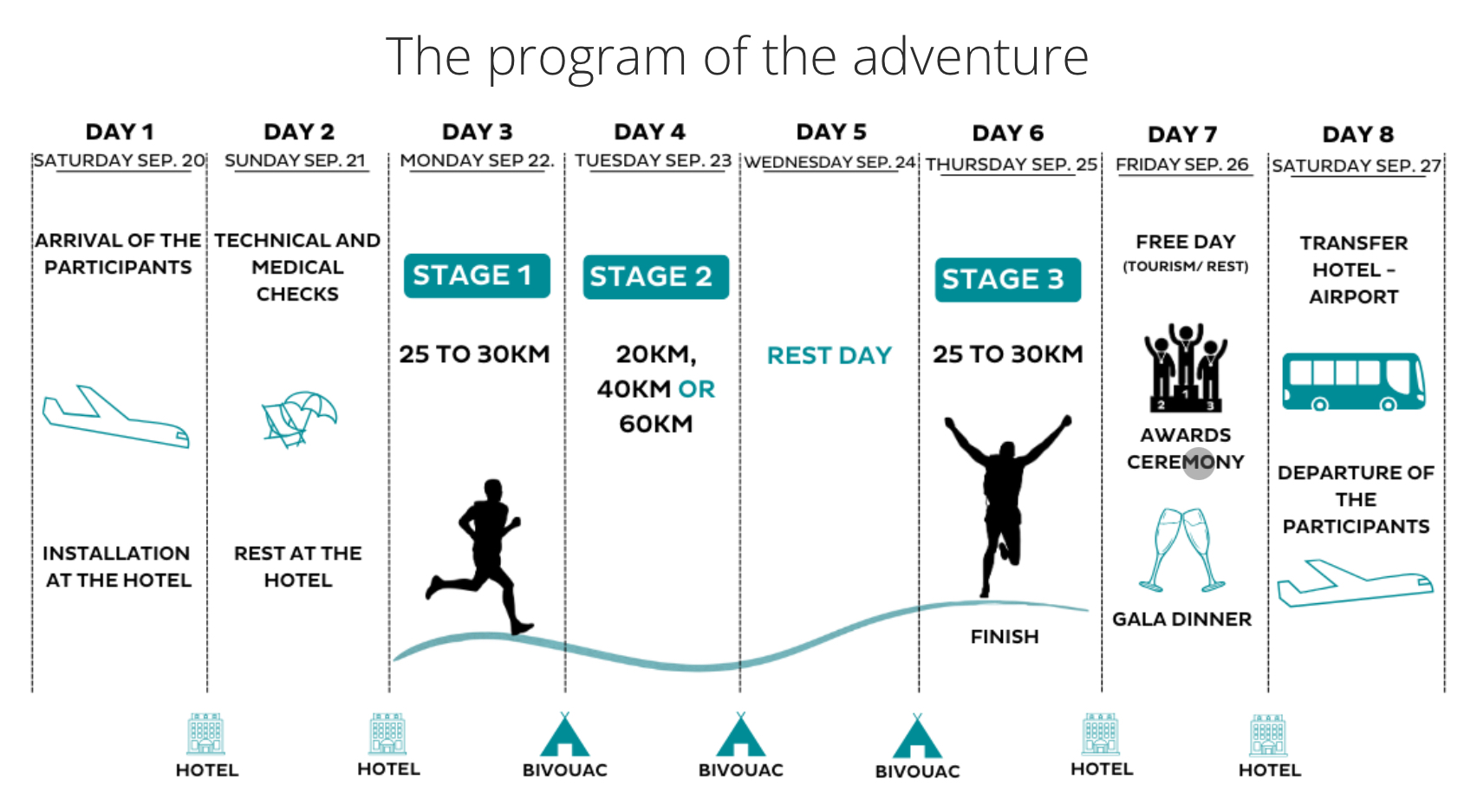
The format is simple but brutal: three stages spread across four days with desert, volcanic ridges, and coastline to endure. Each participant must carry their own food, sleeping kit, and survival essentials, relying only on the organization for water, medical support and a tent. Each stage offers a different flavor of challenge, from long, flat stretches where heat and monotony test mental strength, to rugged climbs that punish the legs and lungs in equal measure.
This self-sufficiency format transforms the MDS 120 Fuerteventura from a simple race into an expedition where every choice is an important aspect – how much food to pack? which shoes to wear? when to push and when to conserve energy? – each decision carries a consequences that can make or break the experience.
Participants spend 3 nights at the MDS bivouac and enjoy 4 nights at the Playitas Resort hotel, offering numerous facilities (two nights before, two nights after).
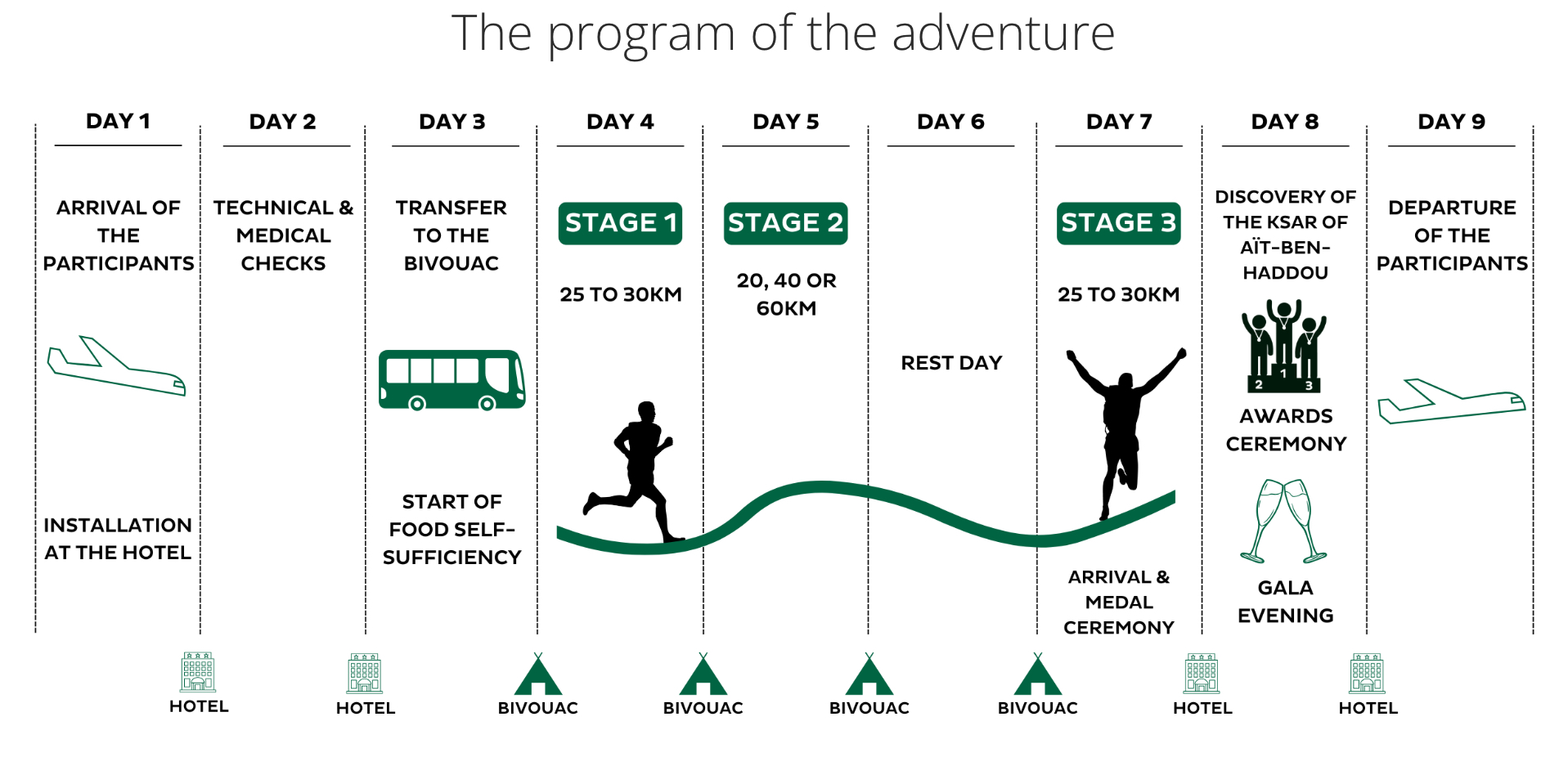
Participants choose between 3 different distances: 70, 100 or 120km, divided into 3 stages, over 4-days. This includes 1 full day of rest.
Here is the breakdown:
Stage 1: around 25 to 30km
Stage 2: around 20, 40 or 60km
Stage 3: around 25 to 30km
The Experience: More Than a Race
Fuerteventura is often described as the most “African” of the Canaries, its landscape shaped by ancient volcanic eruptions, relentless winds, and a climate closer to desert than Mediterranean. It’s the perfect environment for a stand-alone adventure, or an ideal preparastion ground for a further adventure in Morocco.
Beautiful yet brutal. Wide expanses of golden sand stretch for kilometers, interrupted by jagged lava fields and rocky ridgelines. The sun can beat down with unflinching intensity, but be warned, temperatures can swing wildly between scorching afternoons and cooler desert nights.
Coastal stages hug turquoise waters where waves crash against black cliffs. Inland routes weave through barren plains dotted with cactus and aloe, offering glimpses of a stark, unspoiled wilderness.
Ask anyone who has completed the MDS Fuerteventura, and they’ll tell you it’s not just about running. It’s about living in a stripped-down, elemental state for nearly a week. Each day begins with the ritual of packing up camp, stuffing sleeping bags and rations back into packs, ready for a day on the trails. By mid-morning, the desert heat has arrived, runners are strung out across the horizon like a line of ants marching into infinity. The rhythm of the race is simple: walk, run, eat, drink, rest. Repeat.
At night, exhaustion gives way to camaraderie. Competitors gather under the stars, swapping stories, sharing advice, and laughing about the day’s suffering. Bonds form quickly because everyone is in the same fight, battling the same heat, hunger, and fatigue. By the end of the week, the MDS 120 Fuerteventura community feels like family, one forged in adversity.
The finish line is more than a marker of distance. It’s a rite of passage. For many, crossing it means proving to themselves that they can endure more than they ever imagined. That’s why the MDS format is addictive: once you’ve lived through it, you carry its lessons into every part of life.
The Spirit of the Race
Beyond the logistics, numbers, and training plans, what makes the MDS 120 Fuerteventura extraordinary is its spirit. It’s about stripping life down to its essentials: water, food, movement, survival. In a world cluttered with convenience and noise, the race forces participants into clarity. You discover not only the limits of your body but also the surprising depths of your will.
Looking Ahead
MDS is not about beating others. It’s about discovering what you’re really made of. And for those lucky enough to be there in Fuerteventura, September 2025 will be a week they’ll never forget.
Marathon des Sables – information and race entry HERE
Second Edition Confirmed for April 25 to May 2, 2026
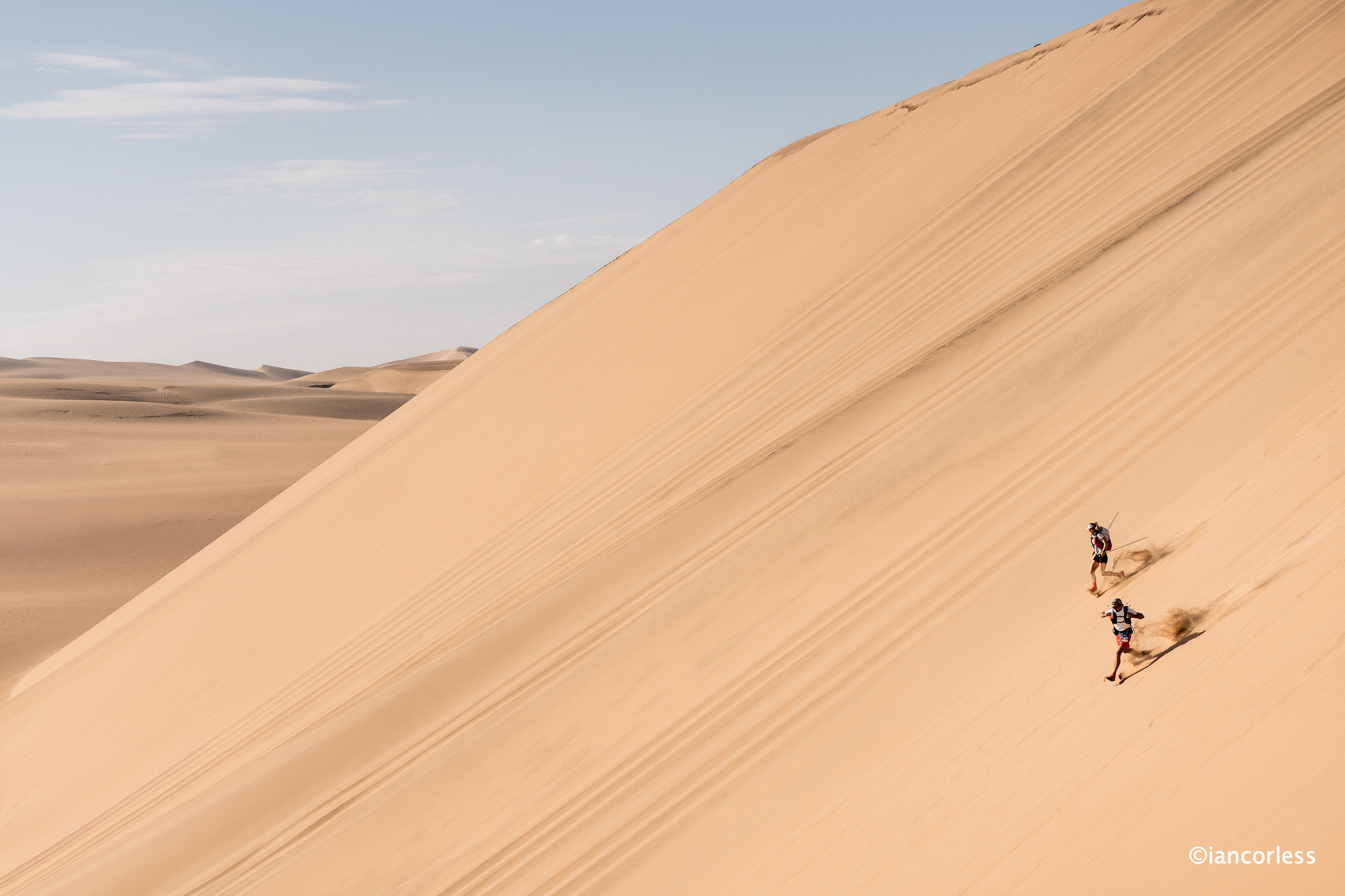
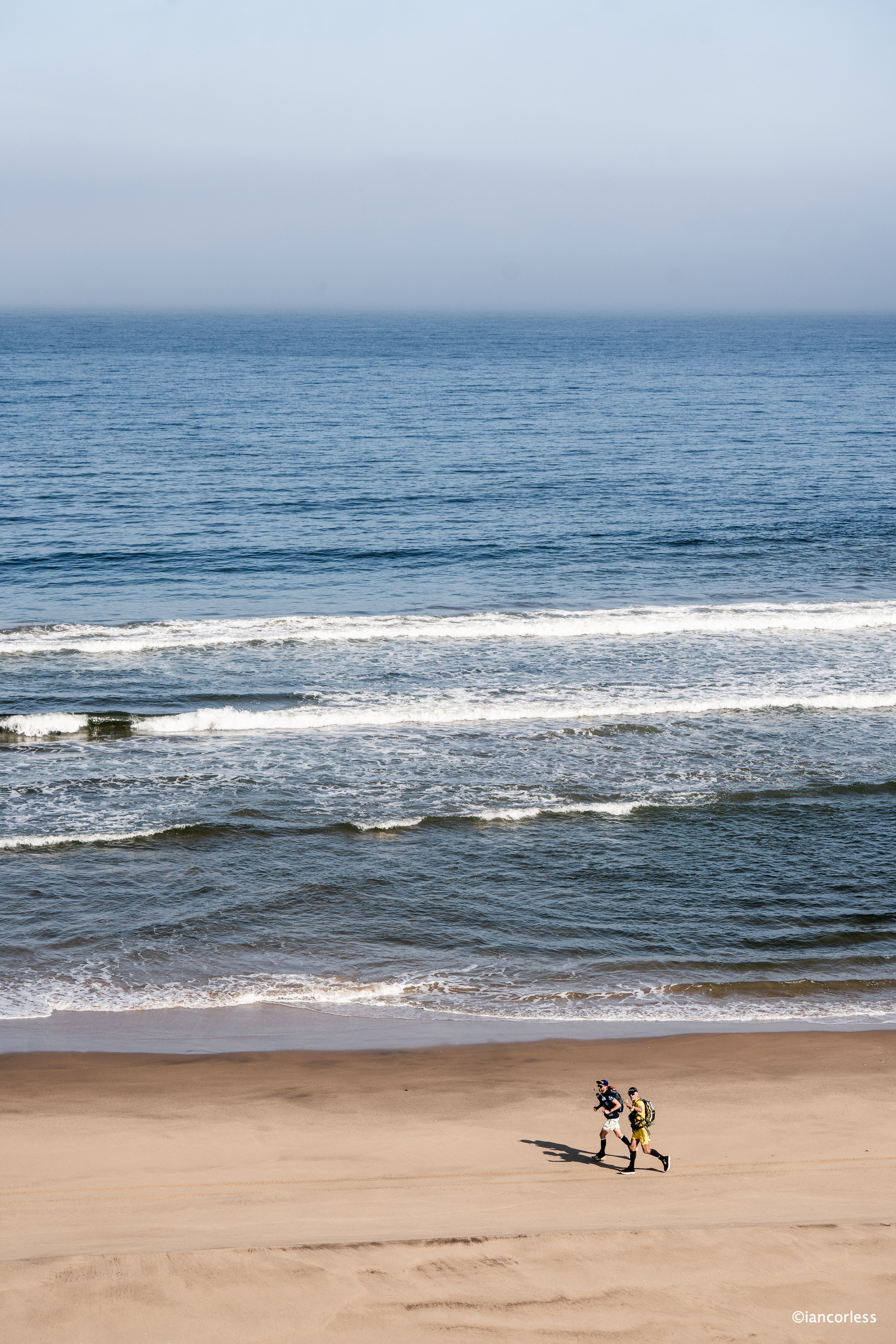
The adventure is back. From April 25 to May 2, 2026, the second edition of MDS Raid Namibia will return to one of the most breathtaking landscapes on Earth, and this time, it’s bigger, bolder, and ready to test your limits.
A Race Like No Other
MDS Raid Namibia isn’t your typical ultra. It’s a Raid format: multi-day racing where each stage takes you deeper into wild, untouched terrain. You and your partner navigate the course together, carrying your essentials, relying on one another’s grit and skill. The rhythm is different from a single-stage event, it’s about strategy, recovery, and building momentum over days in the desert.
Namibia: More Than a Backdrop
The desert here is alive with colour and contrast, towering red dunes, sun-bleached plains, and skies so vast they feel infinite. But the real magic? The people. From the warmth of local communities to the camaraderie among competitors, every smile, handshake, and shared moment turns the race into something unforgettable.
Two Distances, One Challenge
Whether you choose 90km or 107km, you’ll face a course that demands strength, patience, and partnership. The shorter option is still a serious test; the longer route adds extra sting to already challenging days.
Teams of Two
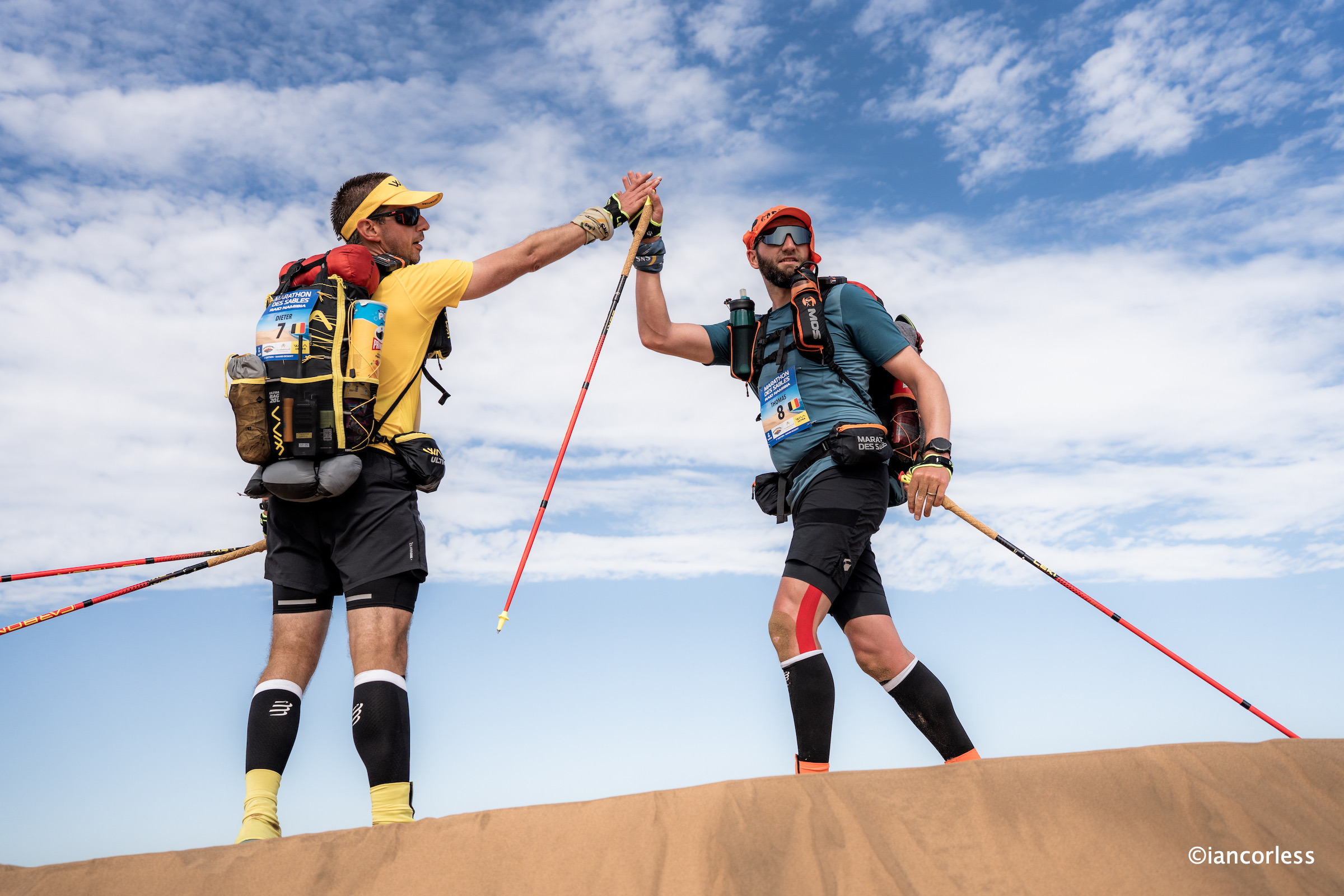
This is not a solo fight. Every team is two runners — sharing the highs, lows, decisions, and celebrations. It’s about knowing when to push, when to pace, and how to keep each other moving forward. You’ll finish this race with more than just a medal — you’ll leave with a bond forged in heat, dust, and determination.
Under the Star Night
And then there’s Star Night — a moment that transcends competition. Out in the desert, far from city lights, the sky becomes a canvas of constellations. It’s an evening to pause, breathe, and feel the scale of where you are. Stories are shared, laughter carries through the darkness, and the adventure takes on a whole new light.
⸻
MDS Raid Namibia 2026 is more than a race. It’s an odyssey. Whether you come for the challenge, the scenery, or the connection, you’ll leave with a story only this desert can write.
The desert is calling.
Read and in-depth summary of the first edition in 2025 HERE and be inspired to join this magical adventure, ‘Testing Limits on the Edge of the Atlantic.’
Desert running brings many challenges and running in a desert for multiple days brings a whole new set of challenges.
For 40 years, the Marathon des Sables (MDS)has defined the edge of human endurance. It began as a wild idea—could someone run across the Sahara carrying everything they needed to survive? That idea sparked a revolution. MDS became the godfather of the ultra-stage race, a test of self-sufficiency, resilience, and pure grit. Over time, it expanded beyond its roots: the MDS 120, the exploratory MDS TREK, the demanding MDS RAID, and the mind-bending MDS Crazy Loops. Each one a new take on the same promise, to push the limits of what a runner can handle.
MDS as it is affectionately known paved the way not only for multi-day desert racing but ‘all’ multi-day racing, be that in snow, ice, rainforest, jungle or the mountains. If multi-day racing was the mafia, MDS would be the Corleone family.
All multi-day races have followed and tried to replicate the MDS format, however, the reality is, I have yet to experience a race that matches the size, the scale, the organisation and awe-inspiring splendour of what MDS has created in the Sahara. Ask anyone, despite experience, despite achievement, MDS is usually ‘on the bucket list!’ It’s fair to say, that MDS is directly attributable for many new ultra-runners. You see, MDS offers more than just running, it offers a challenge, it offers something quite unique – the Sahara and the MDS strips the runner back to basics and deprives them of all luxuries so that they are stripped raw. Runners find themselves in the desert.
2024 and onwards:
2024 saw a new team take over the MDS brand, at the head, Cyril Gauthier and Olivier Cerbeland. Significant changes took place for the 38th (2024) MDS Legendary pioneered at what was the HMDS format (now MDS 120) and they remained for 2025 and moving forward.. There are 3 key points:
Point 1:
Legendary is now 6 timed stages and not 5 stages with a charity stage. The distance will be, +/- 250km’s. The long day in 2024 was stage 3, for 2025 this will be stage 4.
Point 2:
MDS events are contested in food self-sufficiency: only water, in limited quantities but sufficient to cover the needs of an athlete evolving in the desert, is provided to you each day. You must take along for your entire stay in the desert everything you need to eat and prepare to eat (freeze-dried meals, semolina, cereal bars, stove, etc.). This self-sufficiency will include the day of your arrival in the desert, and the day of control preceding the race. *Trek is exempt from food self-sufficiency.
Point 3:
You must arrange your own travel to race destination. As usual, MDS will take care of you from your arrival airport, this will depend on race location. Typically, free shuttles will be offered from one key airport. You will thus have the possibility of anticipating or extending your stay, or of being joined by your family, much more simply than before.
It is recommended you listen to a podcast with co-owner and CEO Cyril Gauthier. Listen HERE.
MDS Events, 2025 moving forward:
LEGENDARY the iconic 6-stage, 250km race celebrating 40-years in 2026.
MDS 120 (used to be HMDS) this is 3-stages over 4-days with distance options of 70/ 100 or 120km.
MDS TREK this is similar to the MDS 120 format, however, there is no self-sufficiency, more comfortable accommodation and additional facilities, an excellent introduction to the MDS.
MDS RAID an event for more experienced athletes that is undertaken in teams of two, over approximately 90-120km’s, typically, two distance options are provided. The format is similar to MDS 120 with 3-stages over 4-days. One night will be undertaken under the stars with no bivouac.
MDS ULTRA new for 2025, a 100-mile or 100km single stage race with a 40-hour cut off.
MDS CRAZY LOOPS three new events for 2025 undertaken in ski resorts, the format is to run as many loops as possible in 24-hours. The loops will be typically, 3-5km’s in length.
DESTINATIONS:
Morocco – has multiple events: Atlantic Coast, Legendary, MDS Ultra, MDS 120 Morocco, and MDS Trek.
Namibia – a MDS Raid event
Turkey – MDS 120
France – Crazy Loops – La Rosière and Courchavel
Fuerteventura – MDS 120
Jordan – MDS 120
Peru – MDS 120– This event takes place every 3-years.
****
If you have entered MDS or another self-sufficient multi-day race or adventure, you will be asking:
“What equipment do I need?”
This question is the same for many other desert races but I need to be clear, not all races are the same. For example, MDS requires the runner to be completely self-sufficient. This harks back to Bauer’s pioneering expedition in 1984. The runner must carry ‘all’ they need for the duration of the event, the only exception being:
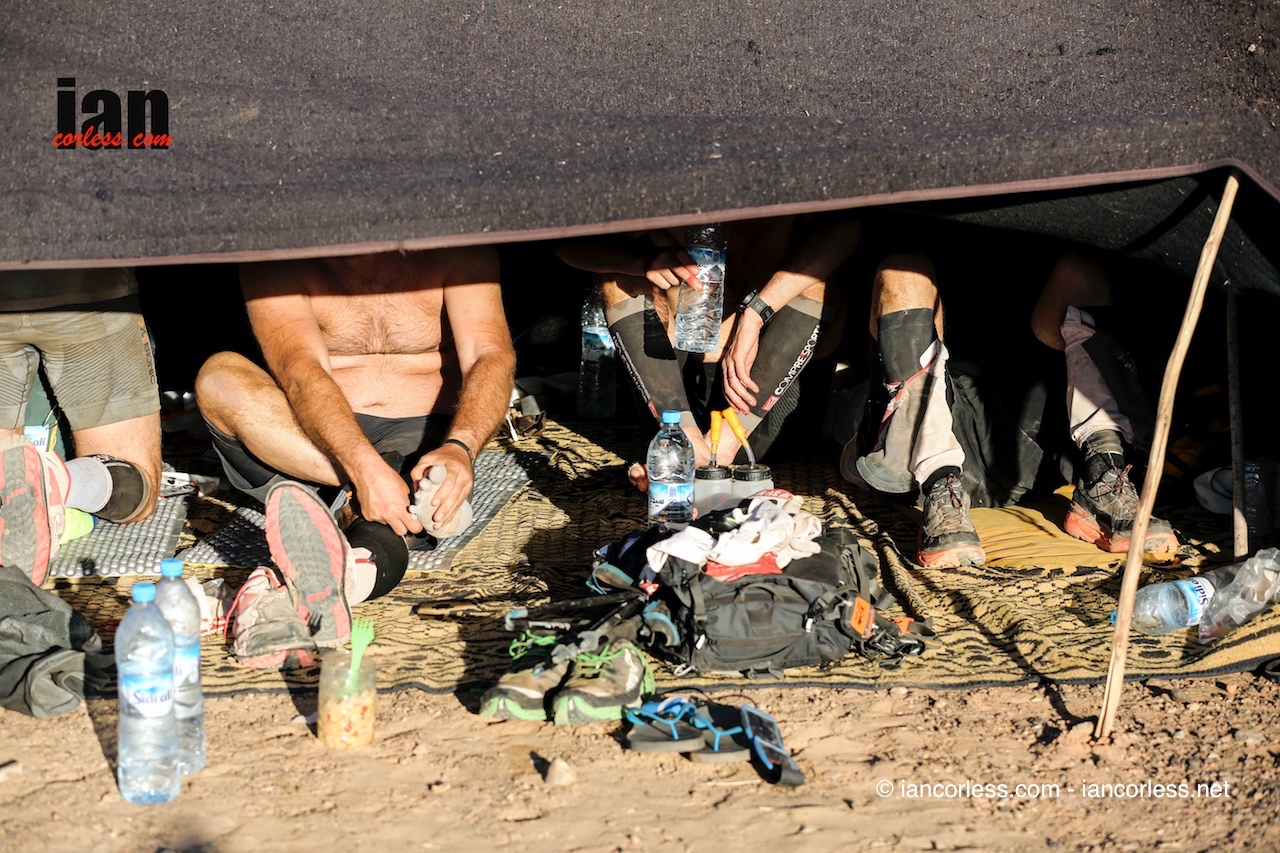
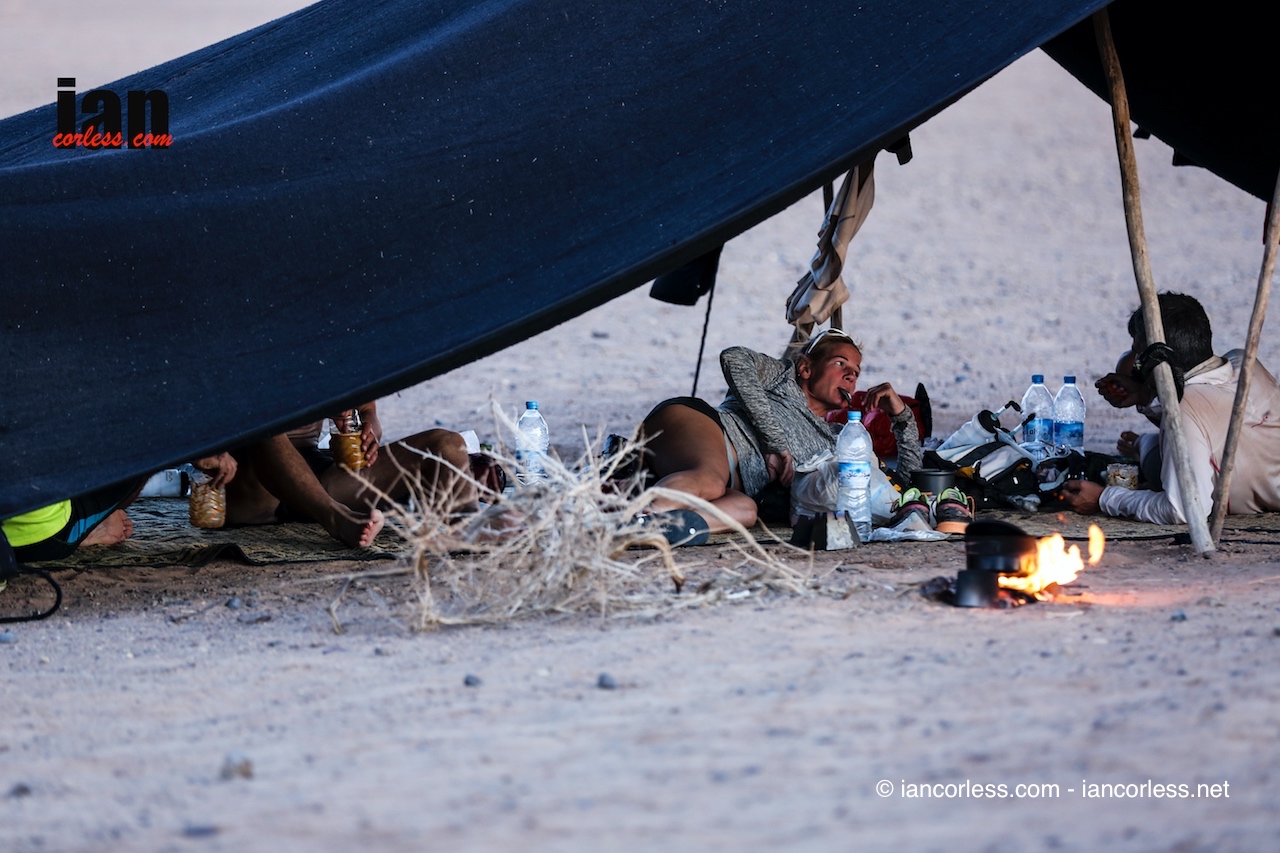
Bivouac – A simple tent cover is provided at the end of each day and this tent must be shared with 7 other runners. This is specific to Legendary. Other MDS events, MDS 120 as an example, runner’s a re provided solo-occupancy small yellow WAA tents.
Water – Water is provided in bivouac and out on the course. Whilst running, water is abundant and not rationed. At the end of the day, you are provided 5ltr of water which must last to CP1 the following day.
Anything else the runner needs must be carried – pack, sleeping bag, sleeping mat, food, snacks, luxuries etc.…
The Detail
Let’s be clear, it is important to note that equipment will not make you complete any race. What it can do is make the process easier and more comfortable. Equipment is something we all must take to any race and finding out what works and doing the research is part of the fun.
If you want to increase your chances of completing your chosen race, commit to the training required, get your head in the correct place and then finish off with the appropriate equipment for the job. Far too many stress about what equipment they need and neglect the appropriate training.
Multi-day racing in its purest form should be very simple. However, over the year’s deciding what equipment to take has become increasingly more complicated.
It shouldn’t be complicated and in all honesty, it isn’t!
Here is just a list of absolute essentials, one could say that this list is mandatory:
Hat
Sunglasses
Buff
Jacket (usually down)
T-Shirt
Shorts/ Skort
Socks
Shoes
Gaiters
Rucksack
Sleeping Mat (optional)
Sleeping bag
Head Torch
Flip-flops or similar
Toilet paper
Personal medical kit (feet etc.)
Spot Tracker (supplied at MDS, optional at other races)
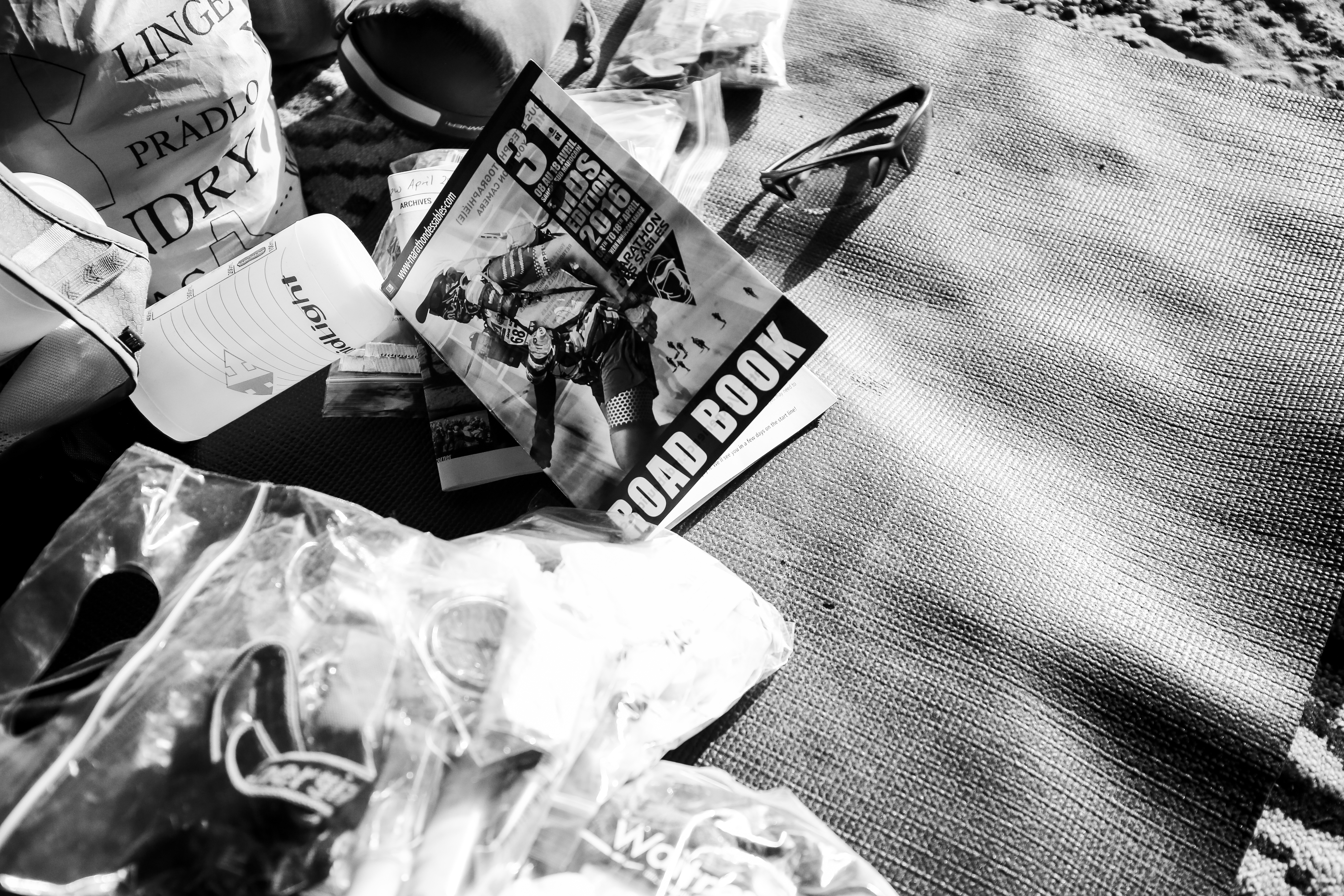
Road Book (supplied)
Stock cubes
*Food for the required days
**Mandatory kit
***Water
Optional items:
Warm jacket (usually down that packs small and light) – I consider this essential and not optional
Stove and fuel blocks
Sleeping bag liner
Spare socks
Walking Poles
Goggles
Spare clothes (?)
Luxuries:
Mp3 player
Phone
Solar charger
Kitchen sink…
Perspective:
Any multi-day race has (arguably) five types of participant:
The elite races who will contest the high-ranking positions.
Top age groupers who will look to race for a high place and test themselves overall.
Competitive runners looking for a challenge.
Those who wish to complete and not compete.
Newbies who are out of their comfort zone looking to finish at all costs.
When one looks at kit and requirements, it’s easy to think that the needs of the top elites in group 1 will vary from those in group 5. I would arguably say no! All the runners need the same things; they all must carry the same mandatory kit and they all must carry the same minimum food requirement.
I think the differences come with experience. Novices and newbies will more than likely prepare for the unknown, the ‘just in case’ scenario. Whereas top runners will be on a minimum, the absolute minimum. Groups 2- 4 are a mix of groups 1 and 5 and they fall somewhere between.
So, for me, groups 2, 3, 4 and 5 should (where possible) aim to be like group 1. The only key difference comes with shoe choice. Runners who will spend much longer on their feet and out on the course will most definitely need a shoe that can withstand that pressure and the shoe must also be good for walking. Groups 2-5 never fully appreciate (often until it’s too late) how much they will walk in a desert race.
EQUIPMENT IN DETAIL
When looking at equipment, I am going to provide a brief synopsis and then some recommendations. I will then supply ‘my’ equipment list.
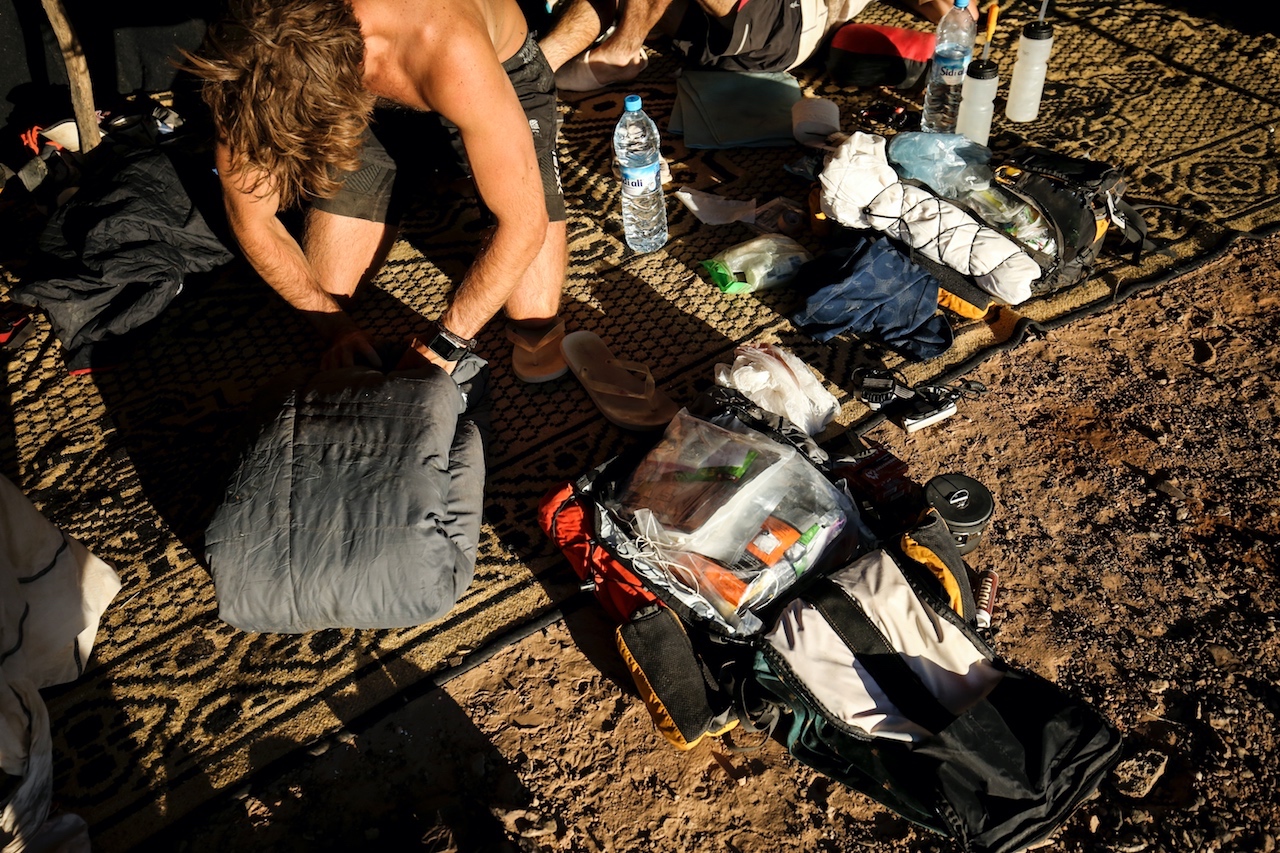
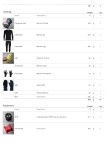
I strongly advice using a tool such as LIGHTERPACK which is a great tool. Here is an example of one of my personal fastpack lists.
Remember WAA is the official equipment of MDS and you can purchase many of the key items via their website HERE
Hat – A hat is essential to keep the sun off your head; options exist that have a neck cover built in to avoid that delicate area that will almost certainly be in the sun all day.
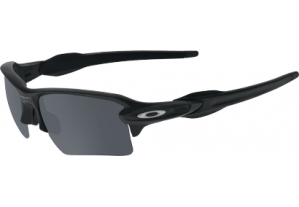
Sunglasses – So many choice, but you need a good pair that has ideally a large lens to protect the eye. Some desert specific sunglasses include a brow pad that helps stop sweat dripping in your eye. Do you need prescription? If so, I use prescription Oakley and they are excellent. Do you need goggles? Yes and no. If you have good sunglasses with good coverage, then no. However, should a sand storm hit, it can be uncomfortable. Goggles guarantee no sand in the eyes.
Buff – A buff or even two are essential. One around the neck helps keep the sun off and you can also wet it to help reduce core temperature. In wind and sand storms, the Buff is lifted and protects mouth, nose and sometimes eyes. A spare Buff is a luxury but worth considering.
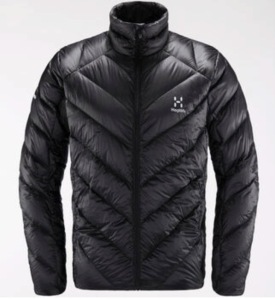
Jacket – Jacket choice will depend on sleeping bag choice. If you are using a light bag, a lightweight down jacket is an essential item. Häglofs, Yeti, Mont Bell, Rab and others have exceleent super light options.
T-Shirt – It’s not rocket science, you will have been running in a shirt already, if it works, why change it? I read countless arguments about should it be black or white – you know what, it doesn’t ‘really’ matter. Look at the elite runners, they are often sponsored and have little or no choice on colour. However, lighter colours reflect heat. Comfort however is key.
Shorts/ Skort – Same answer as T-Shirt.
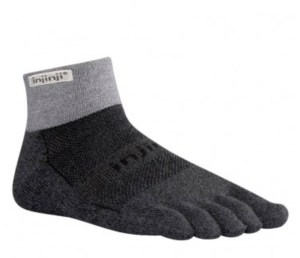
Socks – Getting the correct socks are key for any race and like I have said for shirt and shorts, if you have socks that work, why change? So many options exist but for me I am a firm believer in Injinji toe socks.
Shoes – Read HERE – Shoes are personal and must be suited to you, the individual. Consider your gait (neutral, supinate or pronate), consider time on feet, consider your weight, consider how much you will walk (and then double it) also consider shoe drop and how much cushioning you need. It’s impossible to recommend any one shoe because of these variables. You will see top runners using a lighter shoe, remember, these shoes only need to last 20-30 hours. However, you may well need a shoe for 40, 50 or 60-hours. Do you need a trail shoe? No, you don’t need a trail shoe but I would say that many trail shoes are more durable as they are designed for the rough and tumble of variable terrain. Do you need an aggressive outsole? No, you don’t, but I do think some grip is better than none and therefore I would use a trail shoe over road. Protection? Toe box protection is a good idea as deserts include lots or rocks, far more than you may think. Do I need a size bigger? Shoe sizing does depend on what is ‘normal’ for you. I always recommend a thumb nail of space above the big toe, you don’t need any more than this. Recommendations of going a size is bigger is bad advice in my opinion. A shoe that is too large allows your foot to move, a moving foot causes friction, friction causes blisters and the rest is the same old story that I see at desert races all over the world. However, I would recommend a shoe with a little more width in the toe box, this will allow for some comfort as the days progress. If you are prone to feet swelling, discomfort, blisters and so on, get a strategy sorted before you head out to your chosen race.
Gaiters – Are essential and they should be sewn and glued on to the shoe to guarantee that no sand can enter. WAA provide race gaiters.
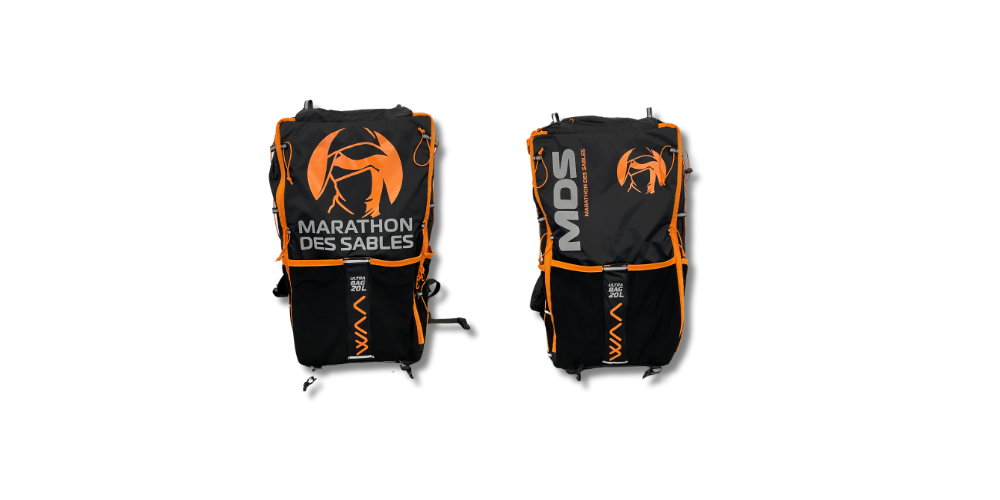
Rucksack – A rucksack is one of the most essential items for the race as it will hold on your kit for the duration of the event. Many versions exist and the type of pack you choose depends on many things: Male/ Female, Small/ Large, Tall/ Short and so on. Some packs just don’t work for some people. You also need to consider if you need a front pack to hold essential items. How will you drink on the go? How much do you plan to run in comparison to walk? I have some simple advice:
Keep the pack as small as possible, if you have a bigger pack you will just fill it.
Keep the pack simple – far too many packs are over complicated and messy
Keep the pack light
Make sure that drinks are accessible, easy to use and don’t bounce
See how the pack feels full with all food and then see how the pack feels with 5-days food missing.
Make sure you can access ‘on the go’ essentials.
Needless to say, WAA is arguably the most popular pack at MDS. However, find what works for you.
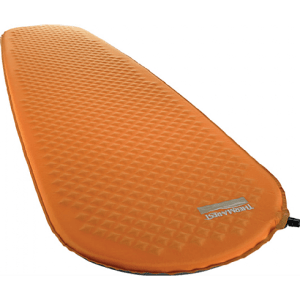
Sleeping Mat (optional) – Inflatable, Foam or no mat. I’m a firm believer in taking a mat, the weight v comfort is a no brainer. I would also choose an inflatable mat even though it does run a risk of puncture. However, with good admin, good care, and years of using inflatable I have never had an issue. A foam mat is guaranteed to last the race but for me is large and cumbersome. Look at products from Thermarest, Sea to Summit, Klymvit and OMM.
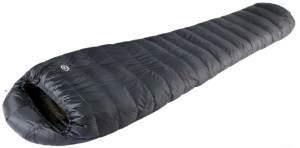
Sleeping bag – Like the pack, a sleeping bag is a key item is it is likely to be the largest and heaviest item (except food and water) that you will carry. A sleeping bag is important as a good night’s rest is key for day-to-day running. I will always go with a sleeping bag and down jacket scenario is this for me provides less weight, less packed size, more flexibility and the option to get warmer at night by wearing the jacket inside the bag. Problem is, this comes at a price. Also, consider your size, shoulder width, height and so on. Some bags are very small whereas bags such as PHD and Yeti can be purchased in small, medium or large. Recommended bags are PHD (custom or off-the peg), Yeti, Western Mountaineering, Häglofs, RAB, OMM (not down) and Raidlight. Read HERE
Head Torch – Don’t compromise, you need a good head-torch that provides enough light for running in a black desert at night. Don’t use rechargeable or a torch with gizmos. You just ideally need variable power, a red-light option so you don’t disturb others at night and it will either take AA or AAA batteries. Recommendations are Black Diamond, Petzl, Silva or LED Lenser.
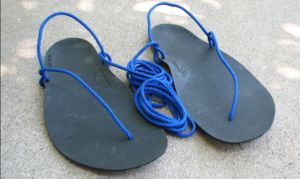
Flip-flops – Free slippers that hotels give away are popular as they are small, fold and are lightweight. However, they don’t stay on and they don’t protect from thorns or stones. Cheap, lightweight plastic or rubber flip flops work for me. I have seen some improvised flip-flops made from run shoe insoles and some string. It’s that group 1 to group 5 scenario again!
Personal medical kit (feet etc.) – Foot care is essential and although many races have a medical team on hand to look after you and your feet, understanding how to do this yourself is key. learn foot care and treatment and understand how to tape your feet. Ready-made foot care kits are available such as this at MyRaceKit here
Spot Tracker (supplied at MDS, optional at other races)
Road Book (supplied)
*Food for the required days – (see clarification below). Food is very personal and it’s imperative you find out what works for you based on your size, gender, calorie burn and speed of running. The front runners will use carbohydrate and fat as fuel as they will run at a faster pace and therefore they will potentially fuel ‘during’ each stage with carbs. However, as you move through the pack going into groups 2-5 the need for fat as a fuel is more important and therefore ALL runners before heading out to any multi-stage race should ideally have taught their bodies to use fat – we have an unlimited supply of this fuel! Post run it’s important to repair, we need protein for this and re-stock energy supplies, we need carbs for this. Dehydrated meals for many runners form the basis of a morning meal and evening meal. Many options are available, some people can eat anything, others are very particular. Keep in mind allergies such as gluten intolerance and decide in advance will you go hot or cold food. For me, the additional weight of a Titanium stove and fuel is worth it for hot food and a drink. We sampled some dehydrated food in 2015 HERE. In 2015 I worked hard to reduce pack weight to the minimum with a coaching client and we made sure we dialled food choices in to provide desired calorie needs but also keep weight low.
It’s important to note that equipment must be specific to the race you are doing and race conditions. The list below is an example of equipment for Marathon des Sables. However, if I was going to Atacama or the Grand to Grand (both self-sufficient) I would be looking at a heavier and warmer sleeping bag and a warmer jacket. Temperatures at night get much colder than the Sahara. The Grand to Grand can also have rain, so that would need consideration.
It’s important to note that equipment will not make you complete any race. What it can do is make the process easier and more comfortable. If you were looking for a one-stop solution, I would say that if you went away and purchased the equipment list below, you would have a comfortable and successful race. The exceptions come with shoes, that is personal and food. Food choices below are personal but a good example, you must find what works for you.
Also, note that minimum pack weight (on day one) at MDS is 6.5kg. So, you can keep purchasing lighter and lighter and then find that you are too light. I have done this. The plus side of this, is that lighter equipment allows you to take more food and/ or more options – again a good thing. For example, in my equipment list, I could go with a slightly lighter jacket, I could not take poles and I could leave the iPods at home and that would allow me 2 or 3 more dehydrated meals. However, I would prefer the equipment I want and am happy with and add 2,3,4 or 500g for the first day. Remember, the pack gets lighter as the day’s pass.
WEARING:
Hat: A good hat that will keep the sun off your head, the option to have neck coverage is a good idea and ideally make sure the inside of the peak is black. It reduces flare from the sand.
Shirt: A good t-shirt that provides coverage for the shoulders, is light and breathable.
Shorts: Lightweight shorts that cause no irritation or friction.
Socks: Injinji Trail Midweight or Injinji Outdoor 2.0 (which is Merino wool)
Shoes: Ultimately a shoe must fit you and fit well. There is no need to go larger, on the contrary, a shoe that is too large allows ones foot to move, a moving foot creates friction and friction creates blisters! However, a wider toe box can be a good option, depending on individual foot shape. Read HERE about how a shoe should fit. Consider how long you will be on your feet, the demands on a shoe are very different for someone who will finish in 20-hours in comparison to someone who will take 60-hours. Consider body weight too; a heavier individual may well need a more substantial shoe. For a race like MDS, a trail shoe is not essential, but for most preferable. Good shoe options for ‘neutral’ runners: Nike Wildhorse, inov-8 Trail Talon, Hoka One One are very popular and for zero-drop enthusiasts, Altra and inov-8 Terraultra G270. Gaiters are essential and typically Raidlight or MyRaceKit are the most popular. You can glue them on (with care and ideally some experience) but most people have them sewn on via Kevin Bradley at Alex Shoe Repairs.
Watch: Coros Vertix and Garmin Enduro are the two key considerations to last any MDS event on one charge
Buff: Any
Glasses: Look for sunglasses that fill well, cover the eyes so as to be suitable for sandstorms. You need a good strong lens that blocks the sun, however, photochromatic offers flexibility. Oakley (and others) offer the option for prescription lenses. I would avoid using contact lenses, there can be endless problems, sand and eyes do not mix well!
IN THE PACK:
WAA Ultrabag has been designed for the race and is the most popular.
Häglofs Essens160g – is super light jacket with treated down suitable for a multitude of conditions – here
PHD Minimus K Sleeping Bag380g – PHD work for me, you can have them custom made with or without zips and they are excellent. Yeti make a bag that is more than 100g lighter but I prefer the warmth and comfort of the PHD. Here
Thermarest Prolite Small310g – Small, comfortable and you can double up and use it as padding in your pack OR Sea to Summit (here)
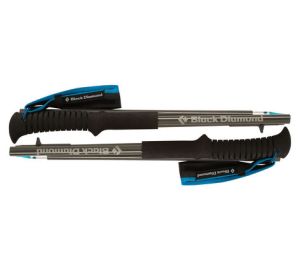
Black Diamond Carbon Z Poles 290g – Lightweight and folding that provide 4-wheel drive when walking.
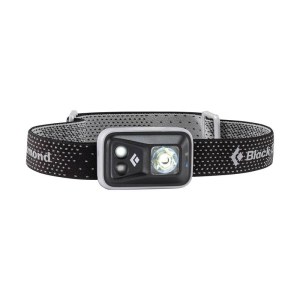
Black Diamond Spot Headtorch w/ batteries and spares 120g – Powerful (200 lumens), lightweight with many varied settings.
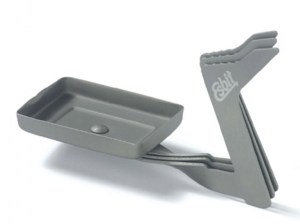
Esbit Stove 11g – Small, lightweight and simple.
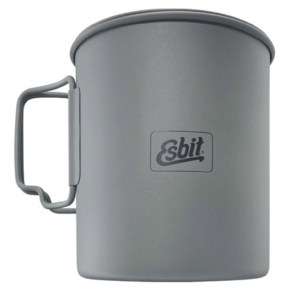
Esbit Titanium Pot 106g – Small, lightweight and durable.
Esbit Fuel 168g
iPod Shuffle x2 64g – Life saver
Spare Socks91g – Injinji Trail Midweight or Injinji Outdoor 2.0 (which is Merino wool)
Flip-Flops 150g – But Xero True Feel are good.
Total Weight 2406g If I was looking to be very minimalist and as light as possible, I would not take the stove, pot and fuel and the poles, total 1831g. But, I would probably prefer the option for hot food/ drinks and work around no poles, so total weight would be 2116g.
Note – with constant changing weather in MDS locations, a waterproof jacket is highly recommended!
EXTRAS:
Compeed 22g
Sportshield 8g
Corn Wraps 8g
Spork 10g
Pen Knife 22g
Compass 32g
Matches 20g
Savlon Antiseptic 18g
Toothpaste 36g
Tooth Brush 15g
Superglue 3g
Space Blanket 60g
Hand Gel 59g
Wipes 85g
Toilet Paper 36g
Safety Pins 5g
Ear Plugs 2g
Venom Pump 28g
Blindfold 15g
Sun Cream 80g
Whistle 15g
Signal Mirror 12g
SPOT Tracker 113g
Total Weight 806g
TOTALS:
Pack and Main Kit Contents: 2406g
Extras: 806g
Food: 3550g
Total 6762g
This pack weight includes poles and cooking utensils plus luxuries like Mp3
(water would be added to this weight)
IN SUMMARY
I enjoy the process of looking at kit, looking at the options available and working out what is best for me and my situation. In some respects, I am lucky as I can test many items out in the market place and decide what I do and what I don’t like. However, trust me, products these days are so good that you can’t go wrong with almost any of the choices. Yeti, PHD, Haglofs etc. all make great sleeping bags, they will all work. Mountain Hardwear, Yeti, Mont-Bell etc. down jackets are all excellent, they all work. I could go on, but you get the picture. Like I said at the beginning, multi-day and desert racing is not complicated, don’t make it so. The only item you need to be sure on is shoes, make sure you get that right. But then again, I am sure you were running before you entered your multi-day race? You were using run shoes, be them road or trail and one must assume that they gave you no problems? If the answer is yes – why change them!
Finally, we all love equipment and gadgets, it’s fun to go shopping and get new items. However, being physically fit and mentally strong is what will get you to the finish line – equipment is just part of the process, remember that.
Good luck!
Clarification:
*Food (As required at Marathon des Sables)
He/she must select the type of food best suited to his/her personal needs, health, weather conditions, weight and backpack conditions. We remind you that airlines strictly forbid the carrying of gas (for cooking) on board either as hand luggage or otherwise. Each competitor must have 14 000 k/calories, that is to say a minimum of 2,000 k/calories per day, otherwise he/she will be penalized (see ART. 27 and 28). Any food out of its original packaging must be equipped, legibly, of the nutrition label shown on the product concerned. Any food out its original packaging must be equipped, legibly, of the nutrition label shown on the product concerned.
**Mandatory Kit (as specified at Marathon des Sables)
10 safety pins
Compass 1deg precision
Whistle
Knife
Disinfectant
12 stock cubes
Signal mirror
Survival blanket
Sun cream
200-euro note
Passport
Medical certificate
***Water (as specified for Marathon des Sables)
Why not join our Multi-Day Training Camp in Lanzarote. The camp takes place in January each year.
























 IAN CORLESS