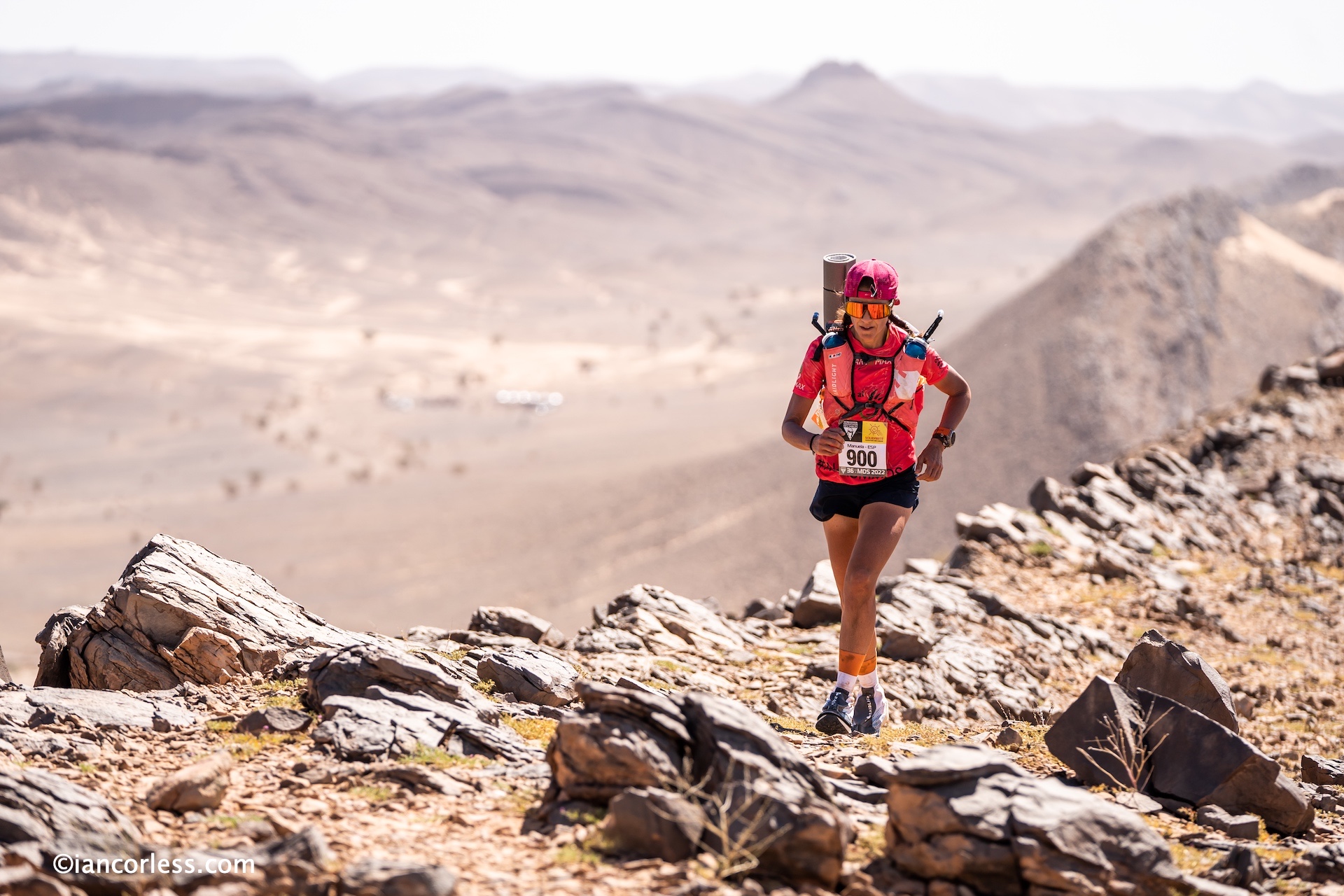
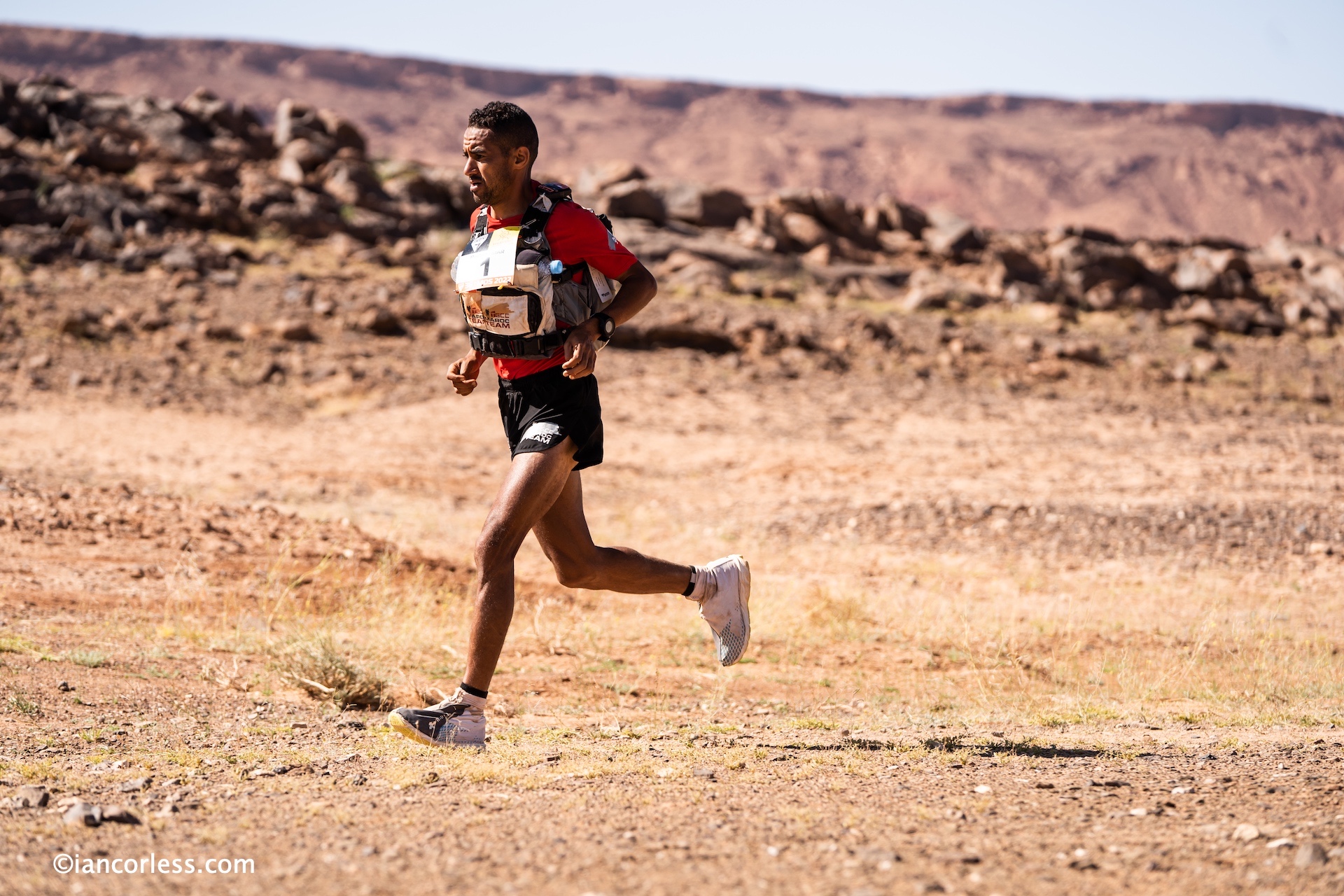
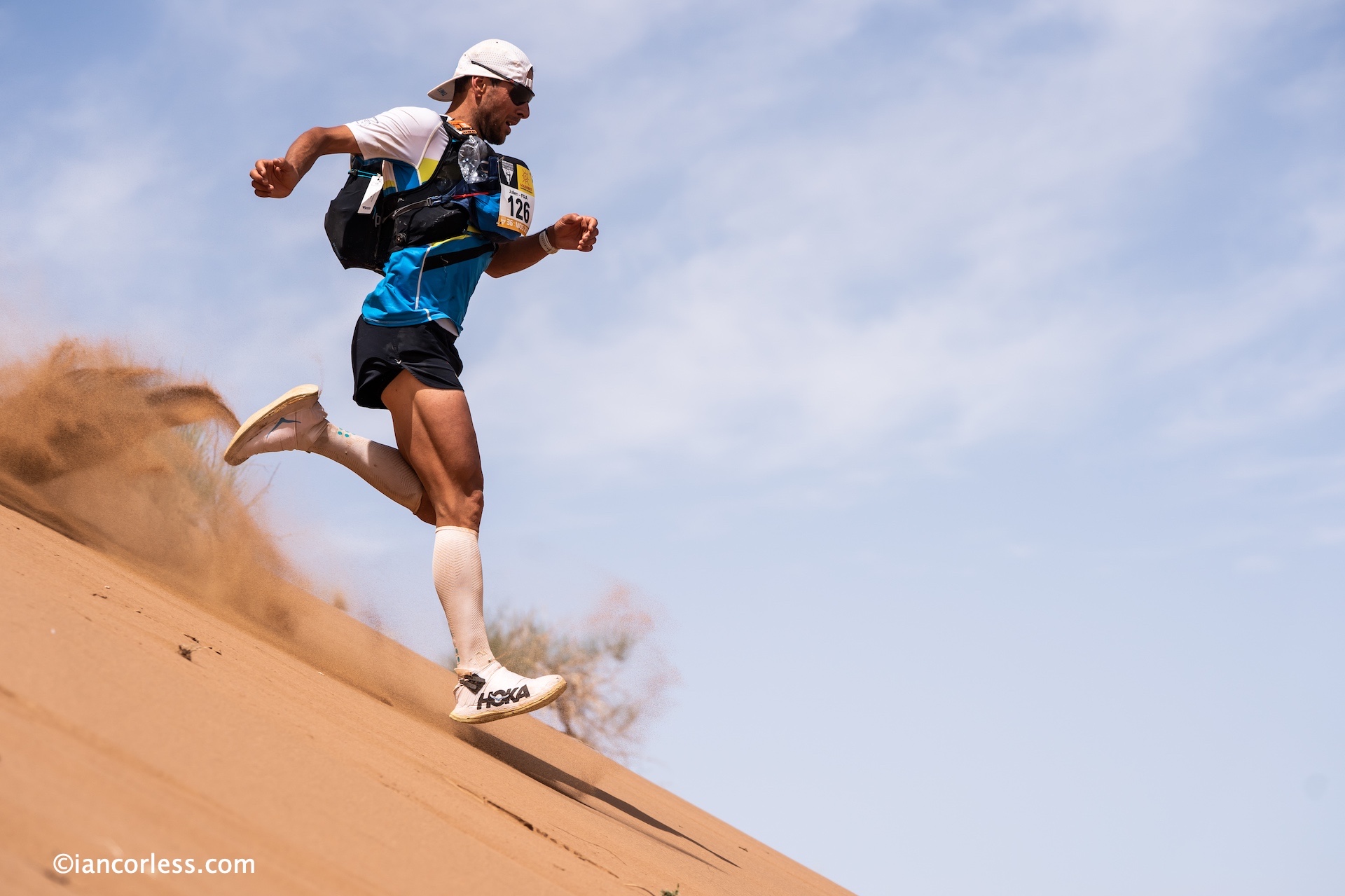
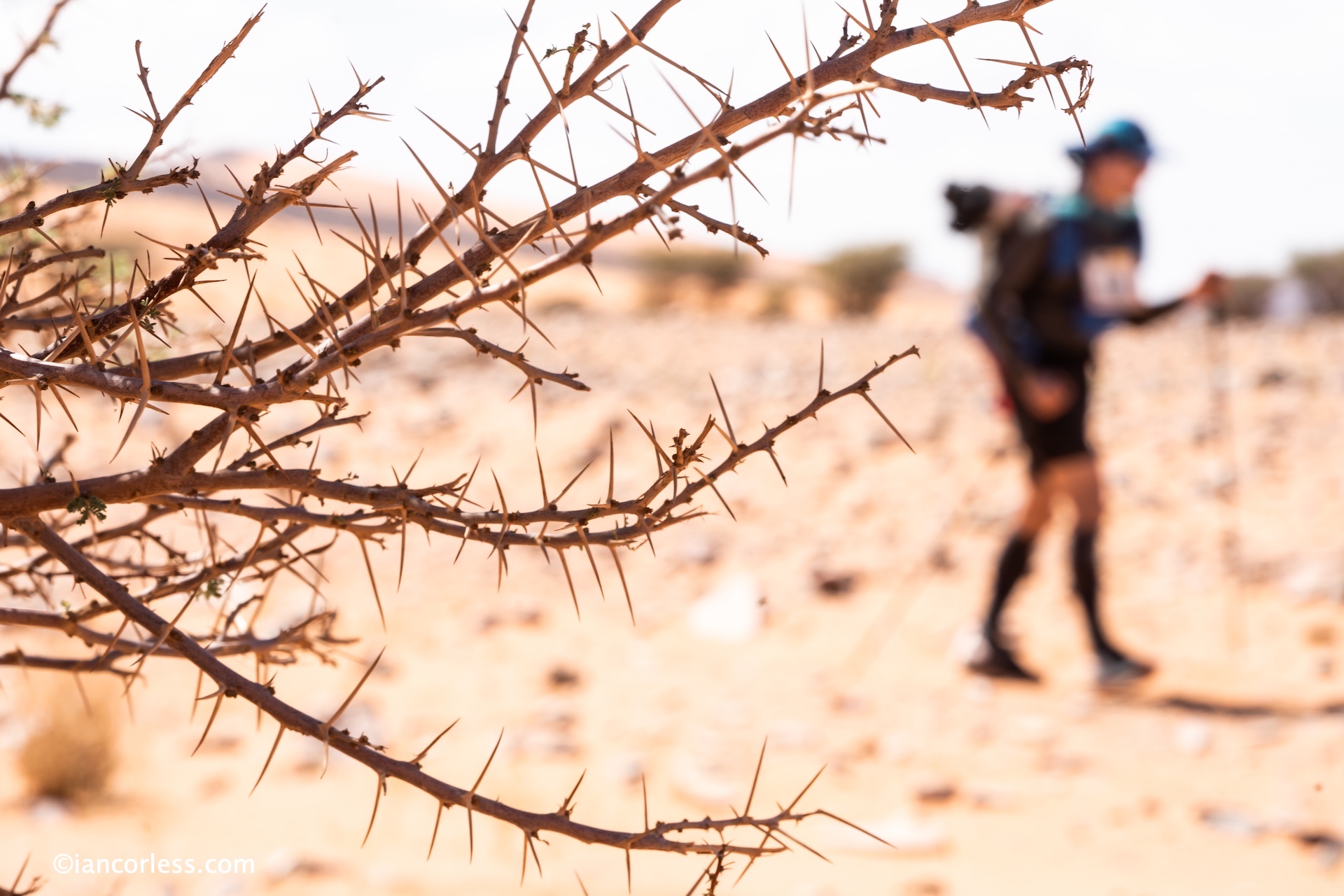
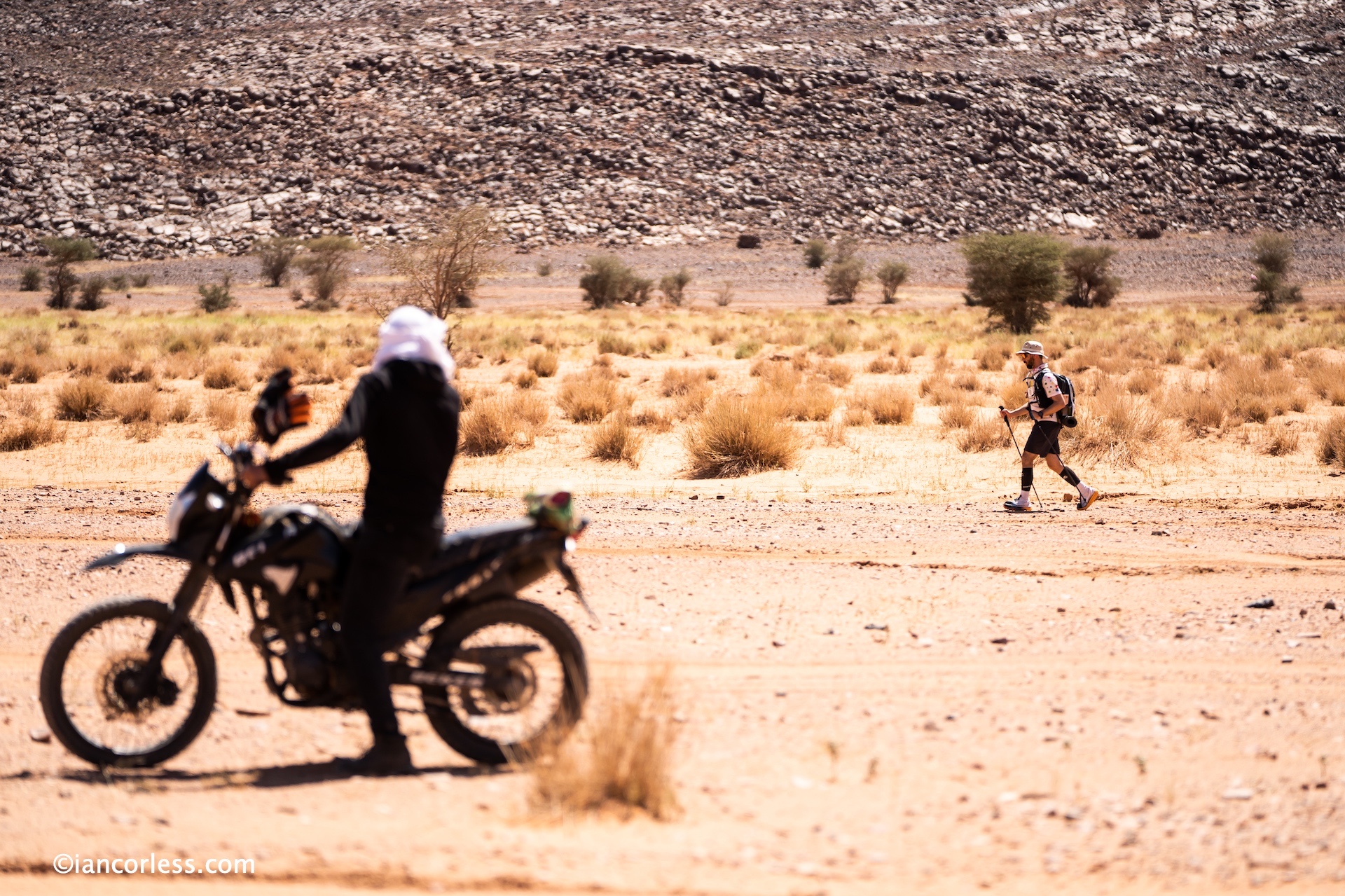
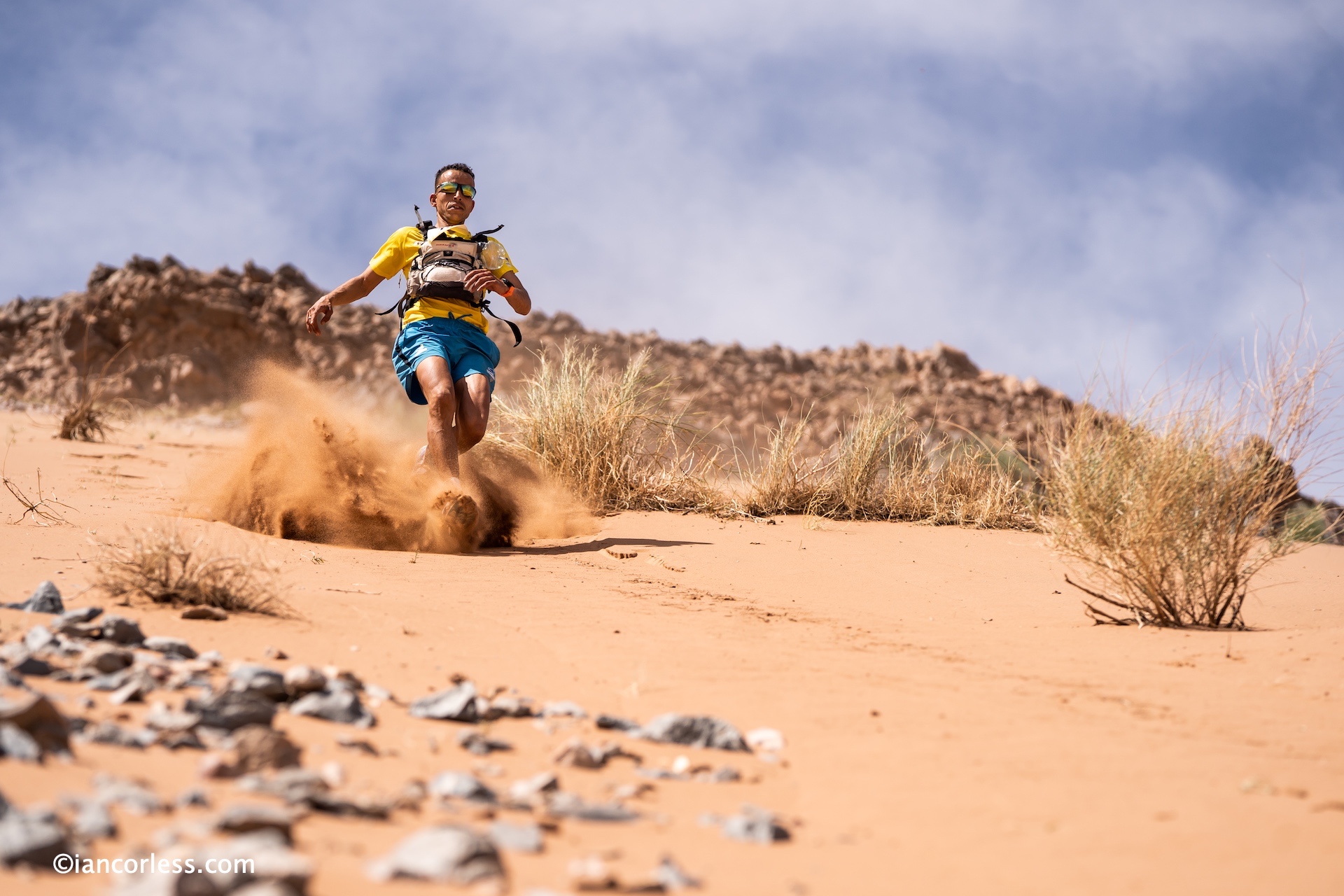
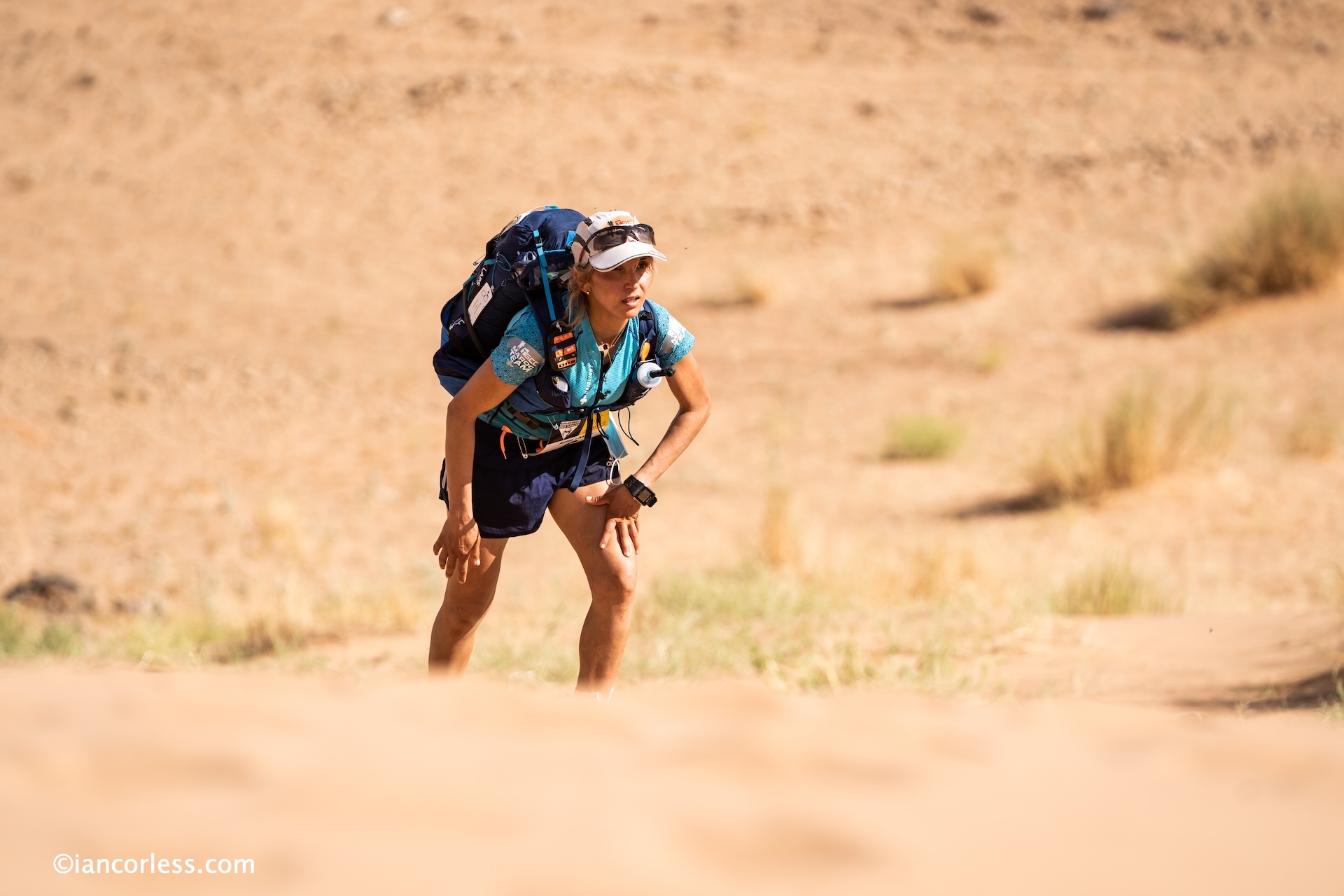
Marathon des Sables 2022 #MDS2022 – Stage 4 85.8km – Part Two

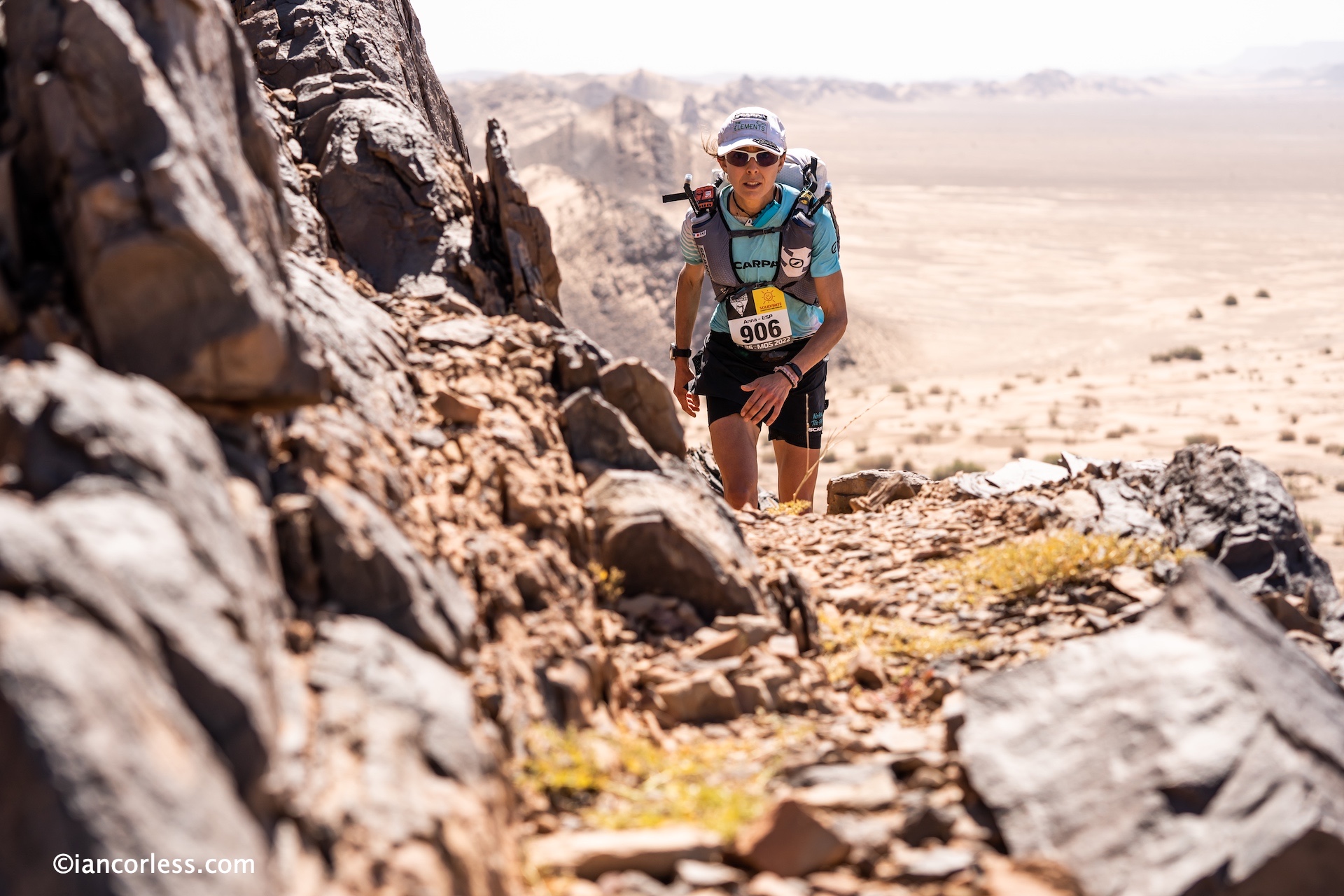
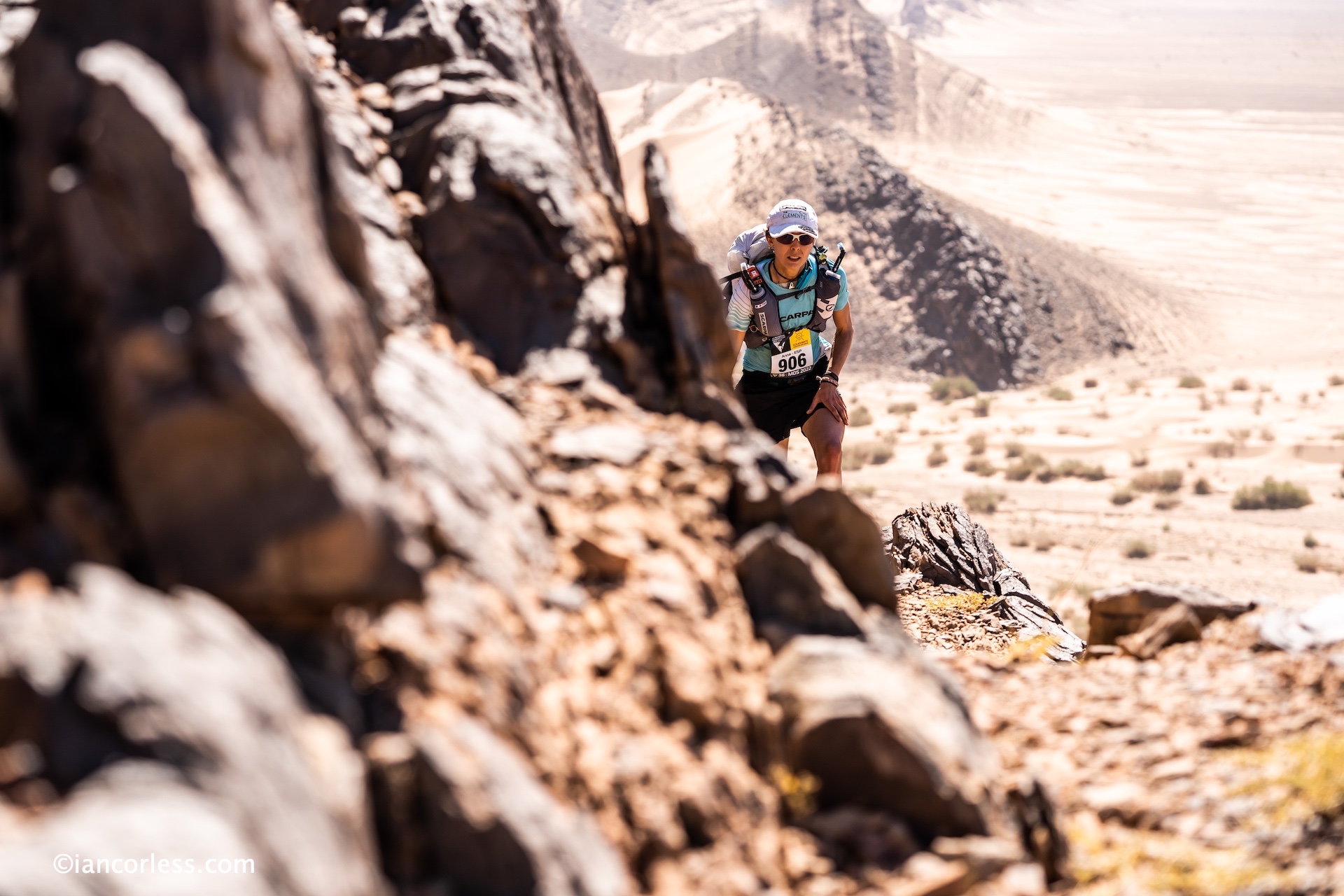
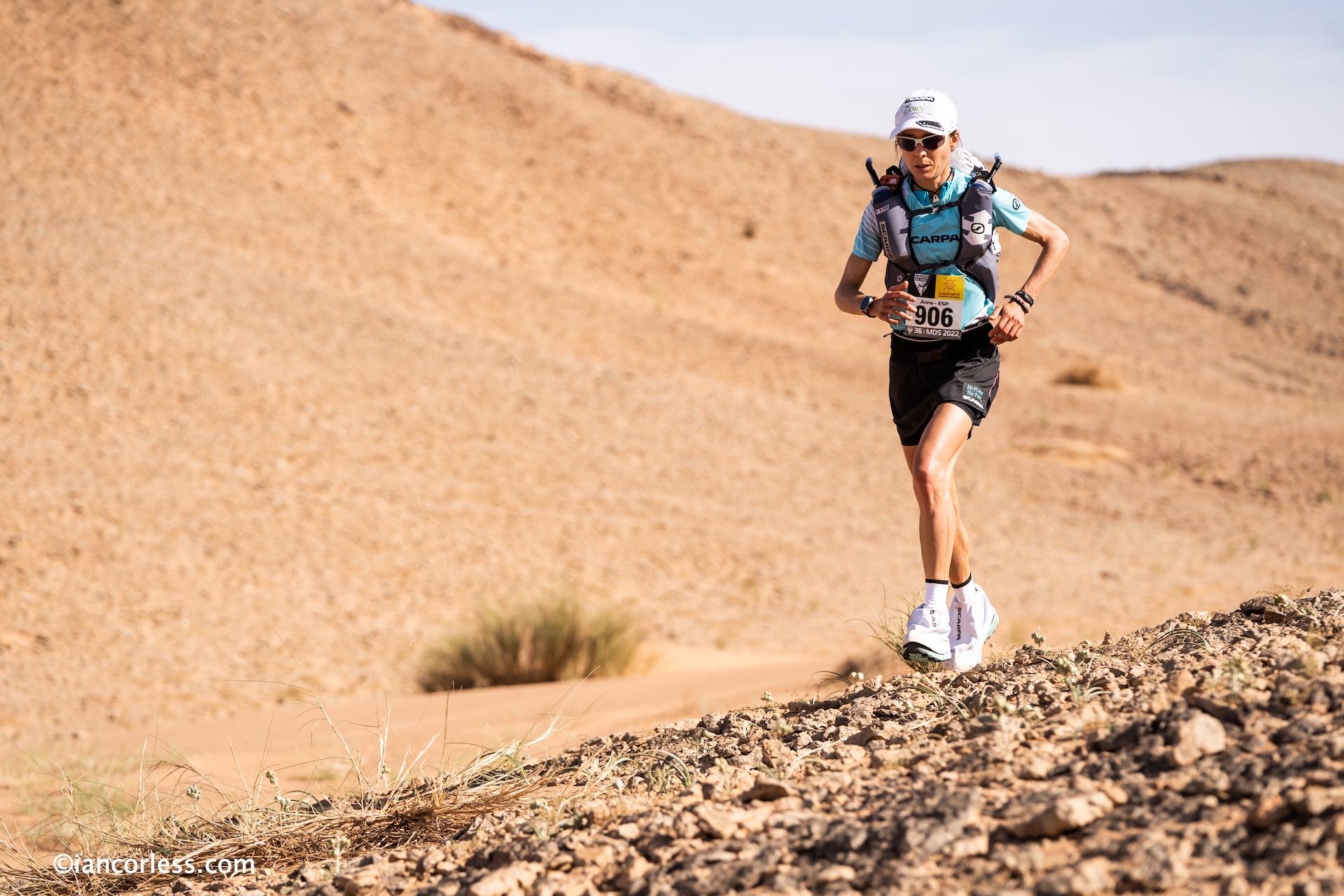
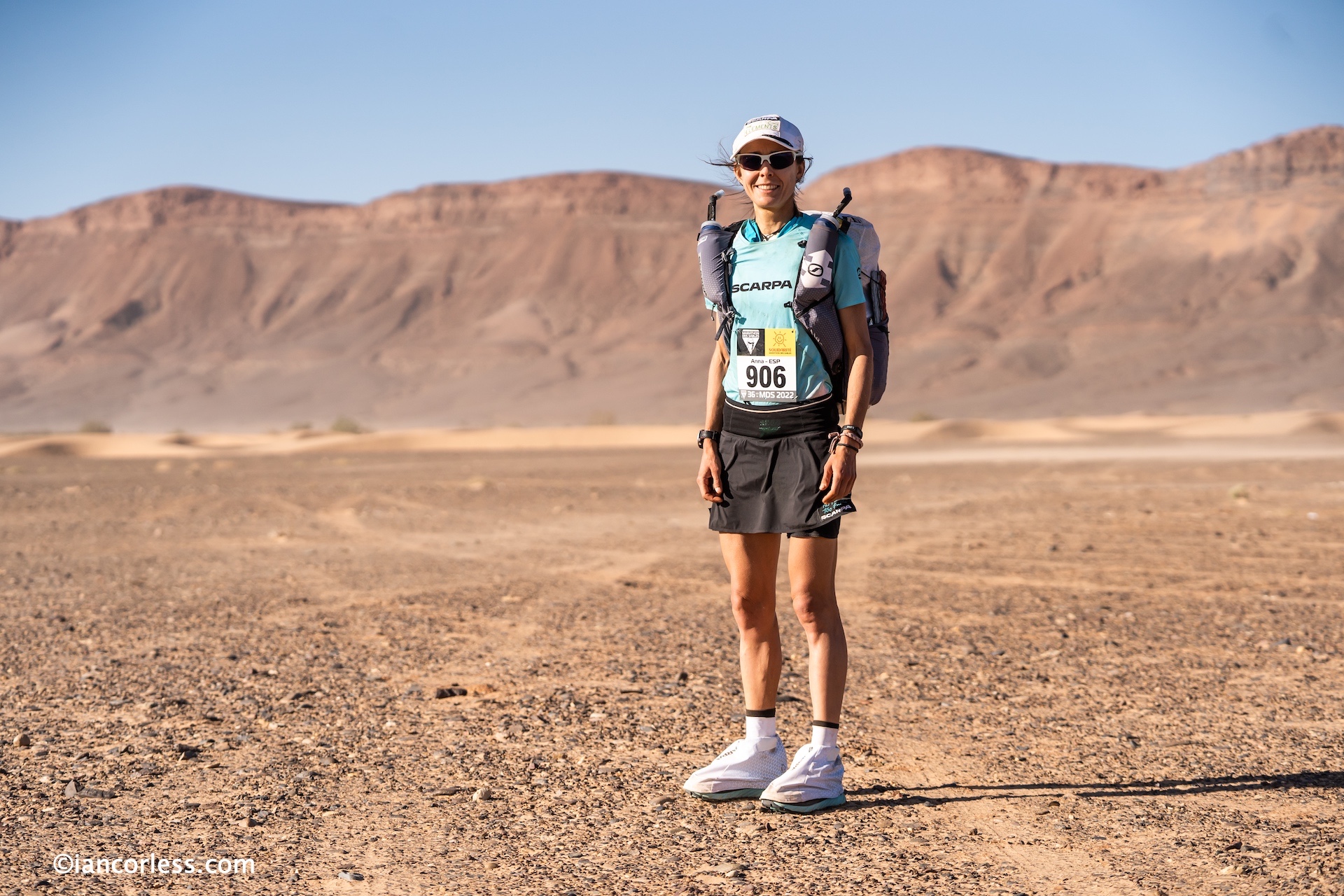
Anna Comet Pascua

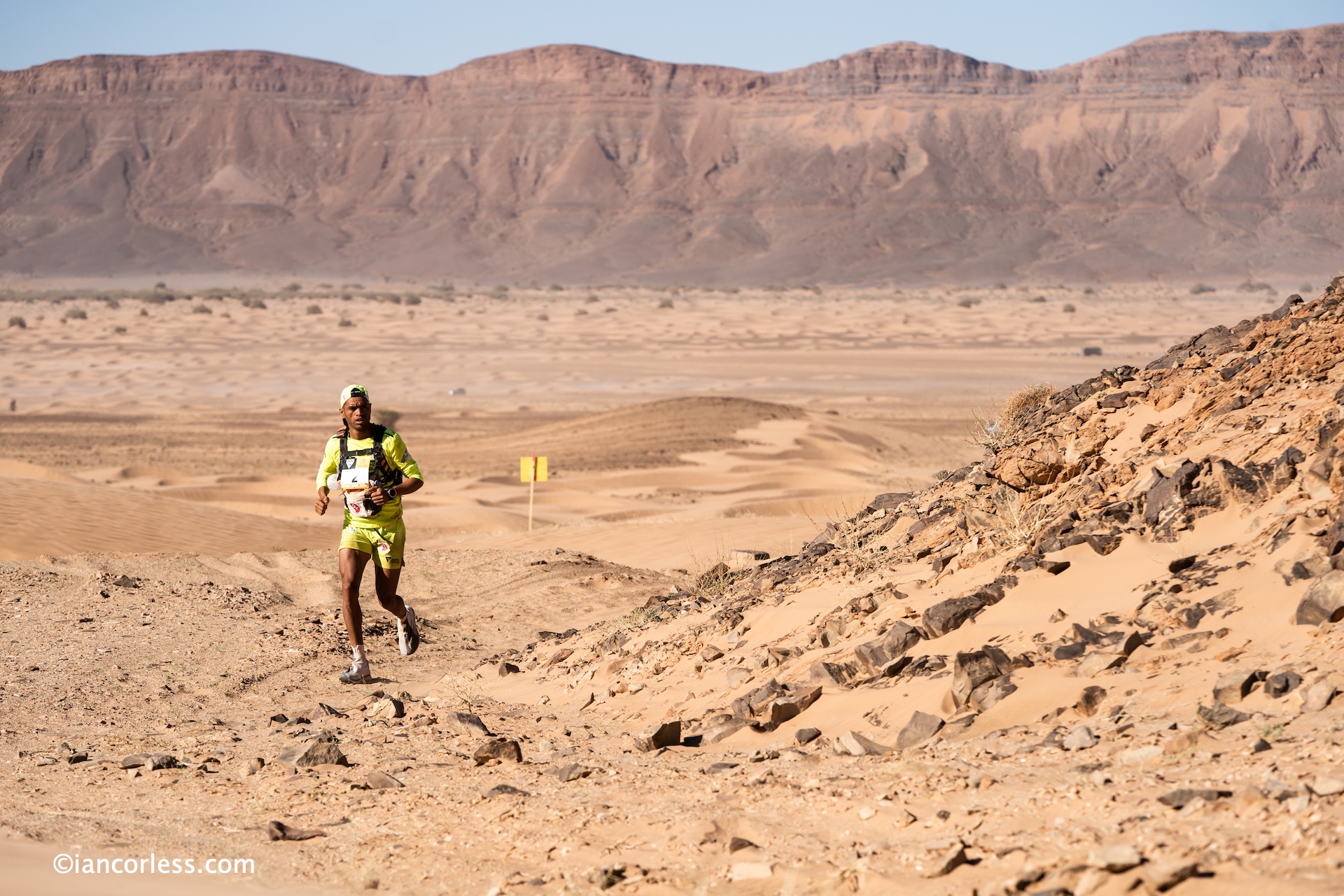
The 36th Marathon des Sables ‘long day’ of 85.8km continued in to the night with runners pushing through darkness and in to a second day to complete in the allocated 35-hours.

The men’s race was fast and furious, read HERE

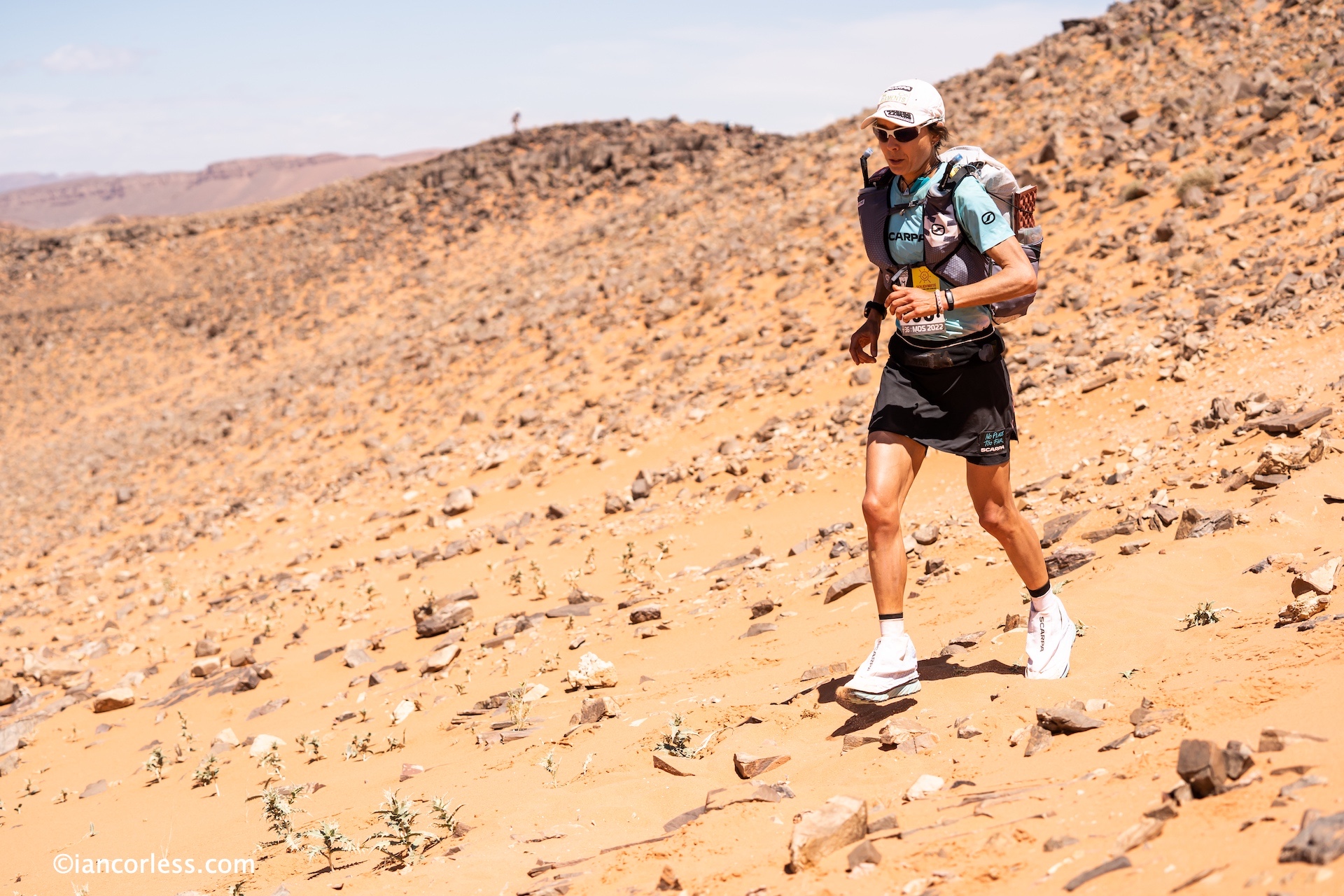
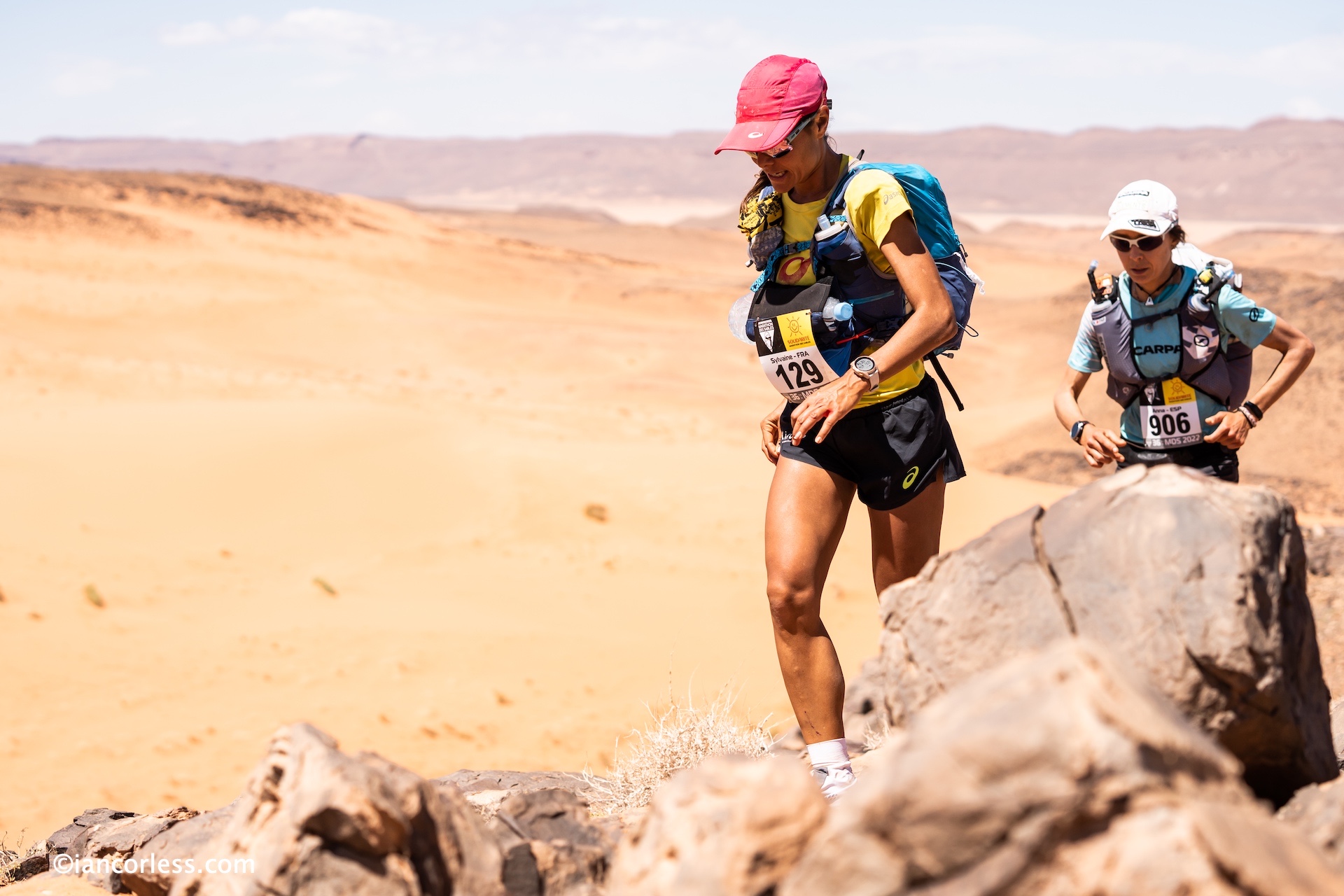
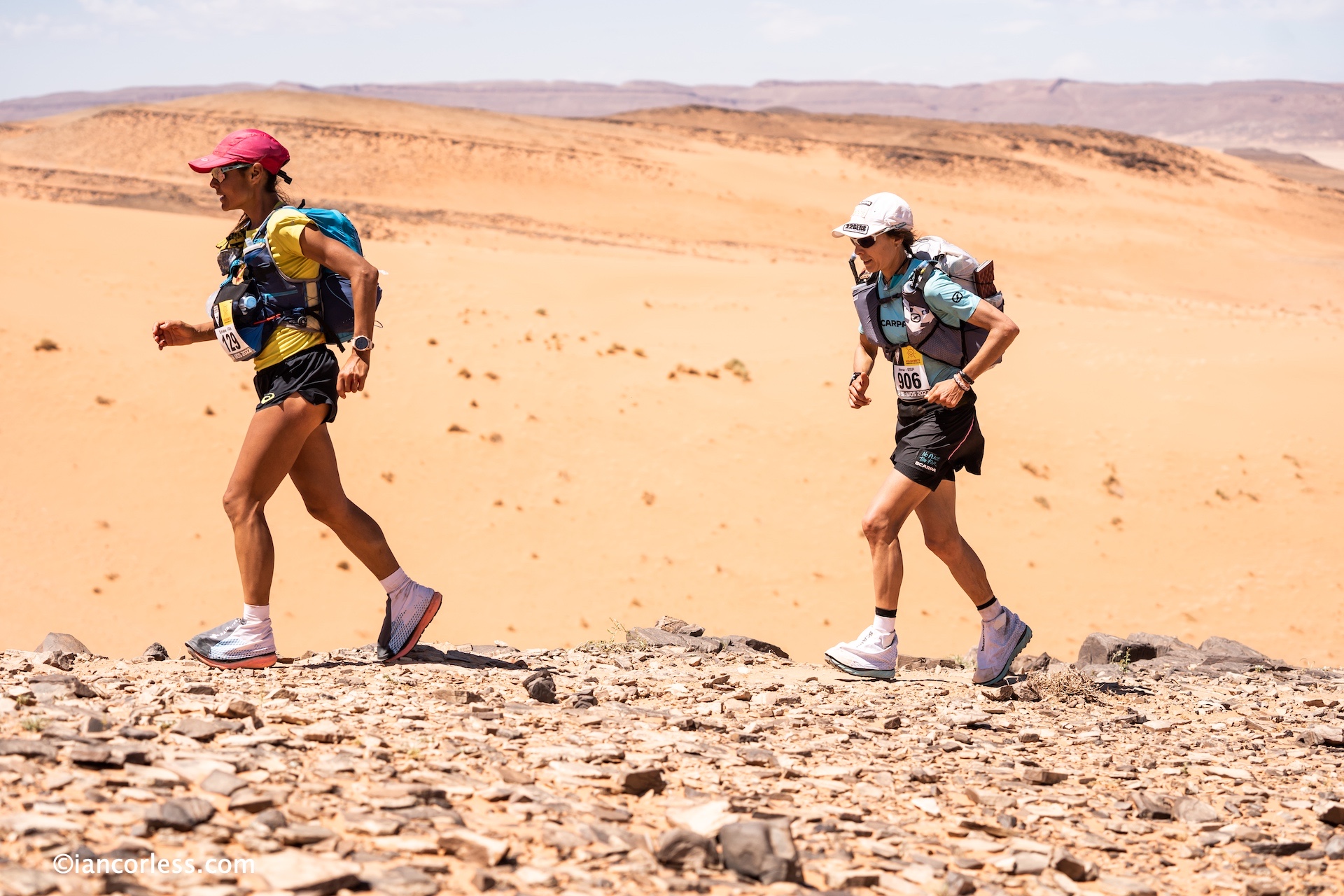
Sylvaine and Anna

The women’s race may not have had the nail biting action of the mens race, nonetheless, it started with Sylvain Cussot and Anna Comet Pascua running together to Cp1 and beyond. Anna, no doubt running with reserves and safety ensuring that she did nothing to put at risk her overall lead on the general classification.

Before Cp1

As the race progressed, Anna eventually moved away from Sylvaine and increased her lead to cross the finish line in 9:43:19 – an incredible time and one that brings her ranked highly on the GC overall. It’s yet to be confirmed but she may well be in the top-10?

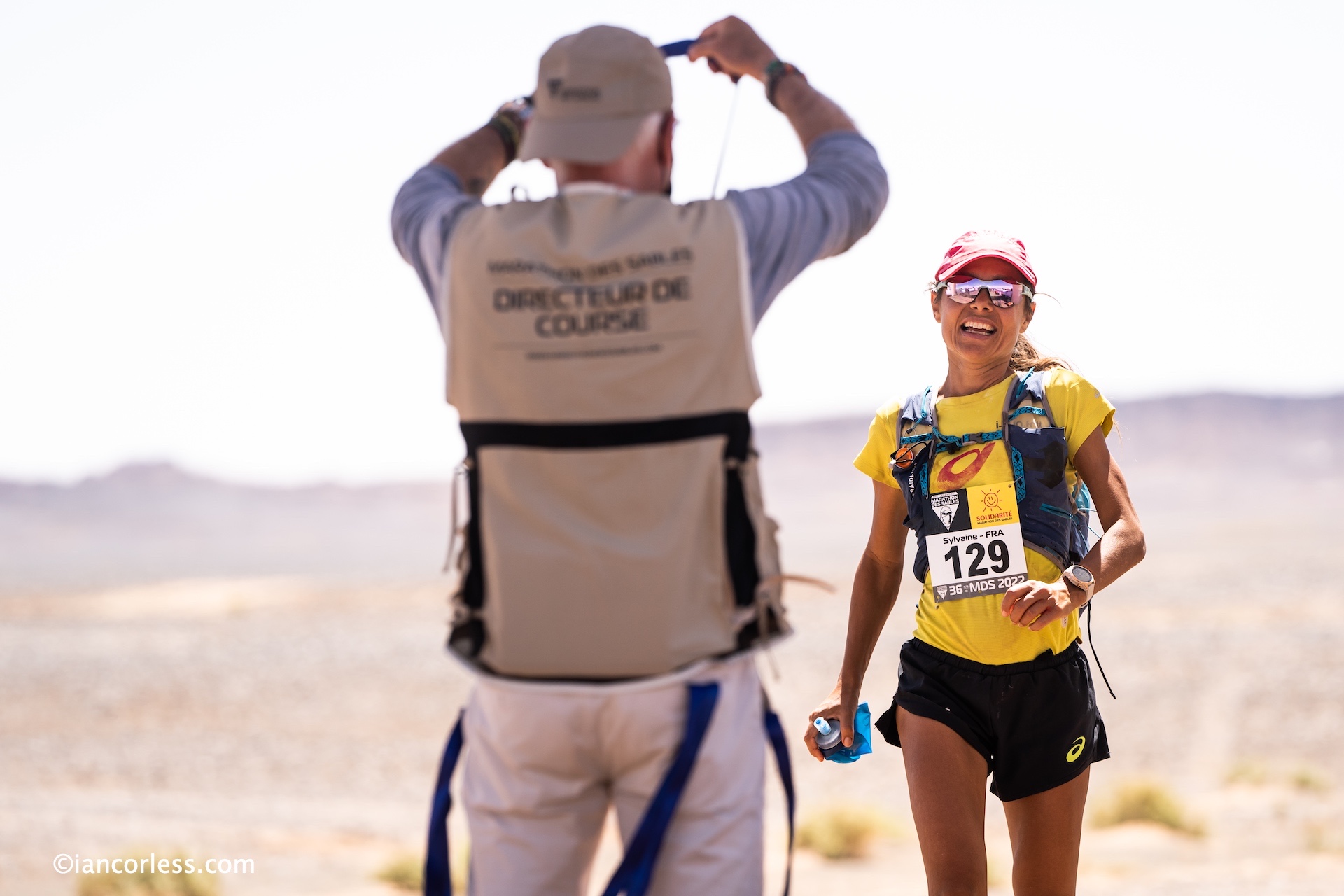
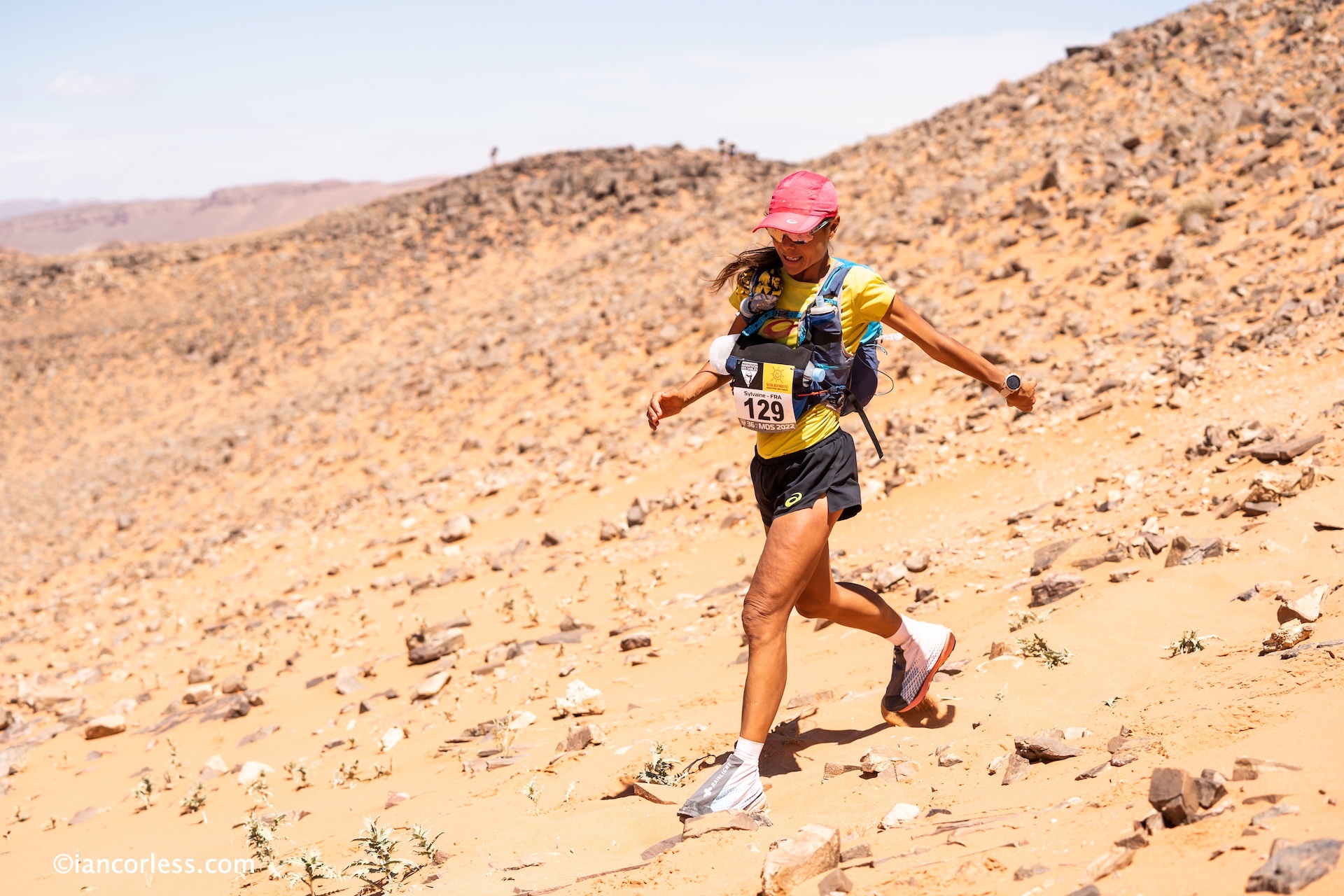
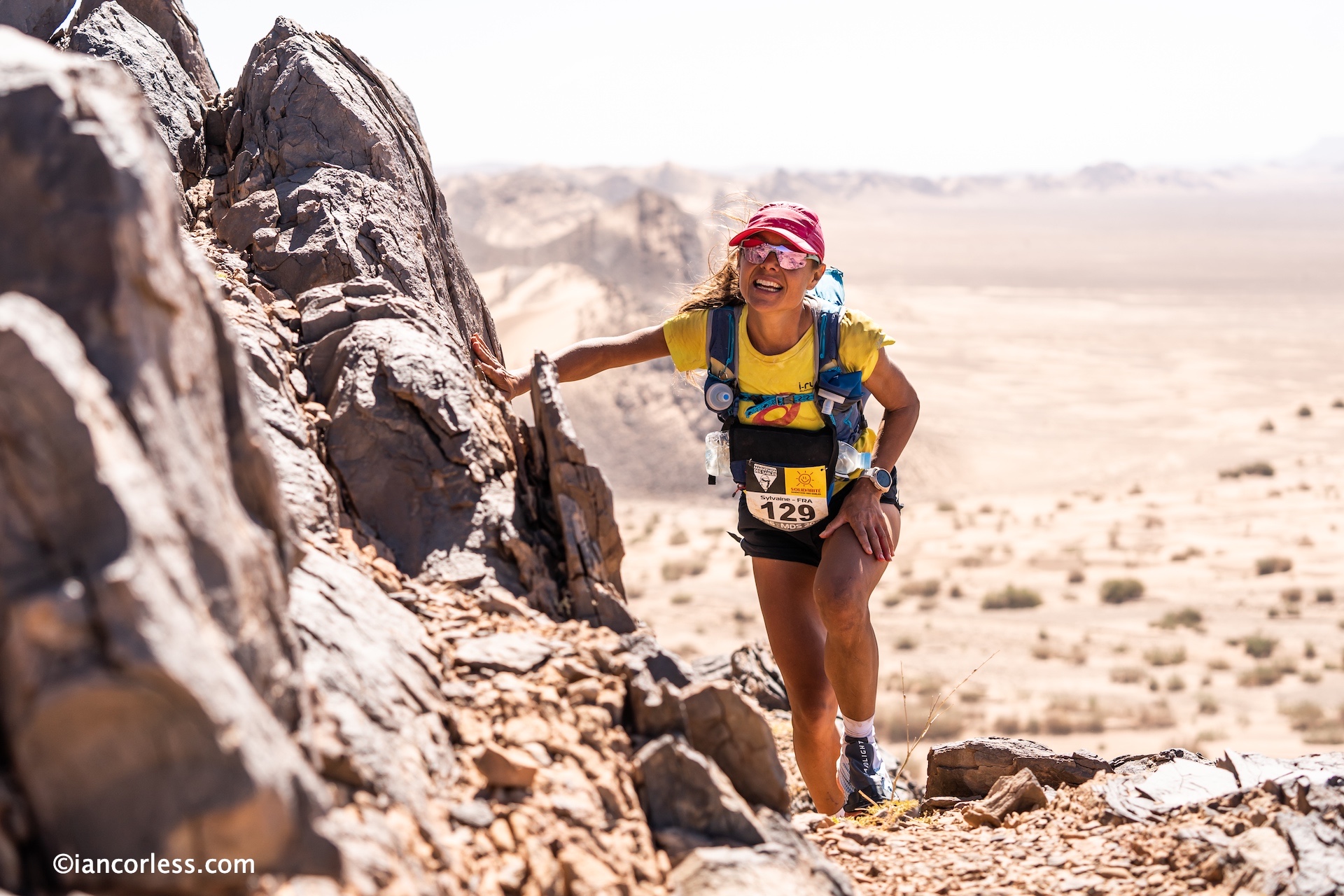
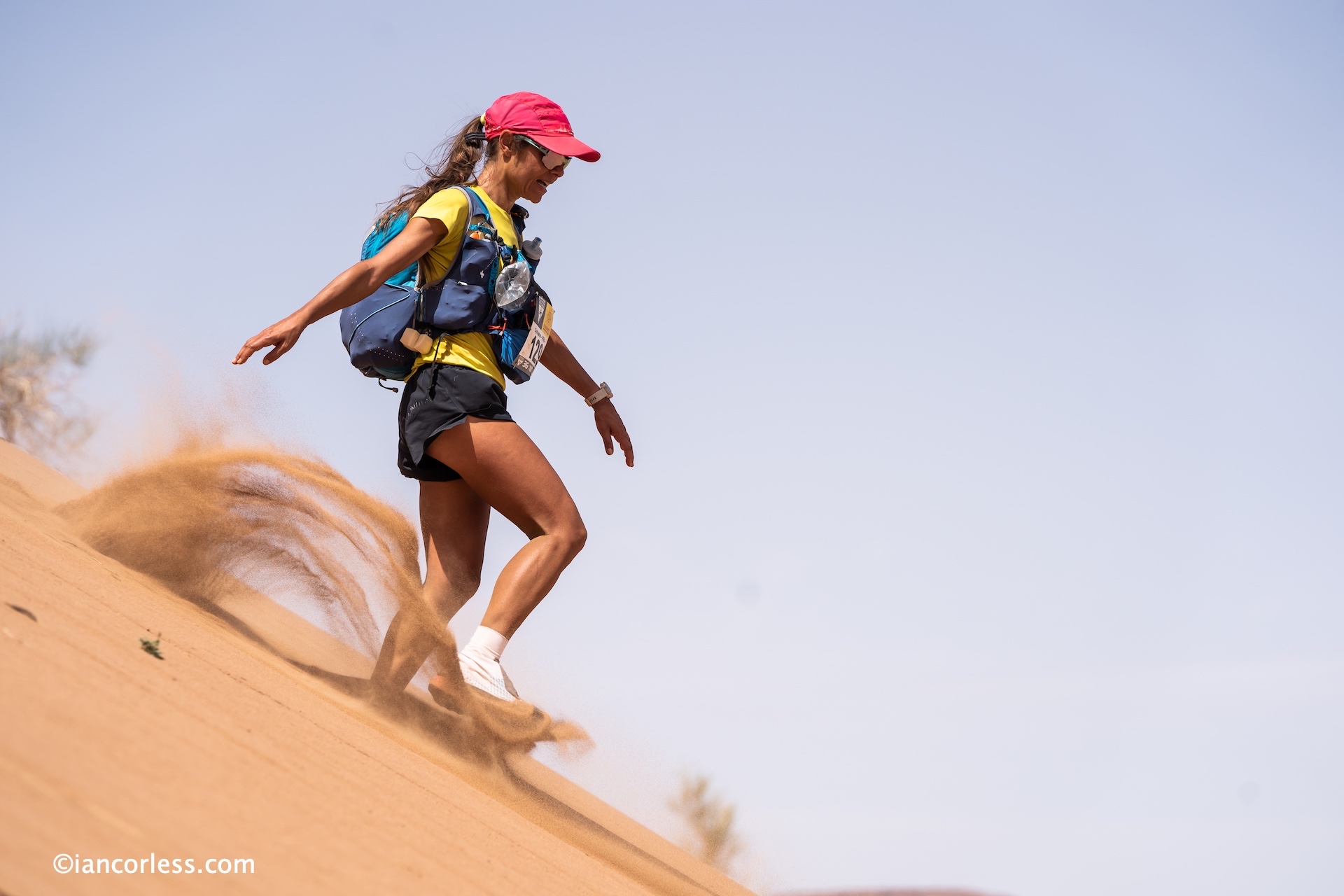
Sylvaine always smiling

Sylvaine has embraced the MDS and has revelled in the conditions, always smiling, always happy. She crossed in 10:10:53 and now her 2nd overall is secured.

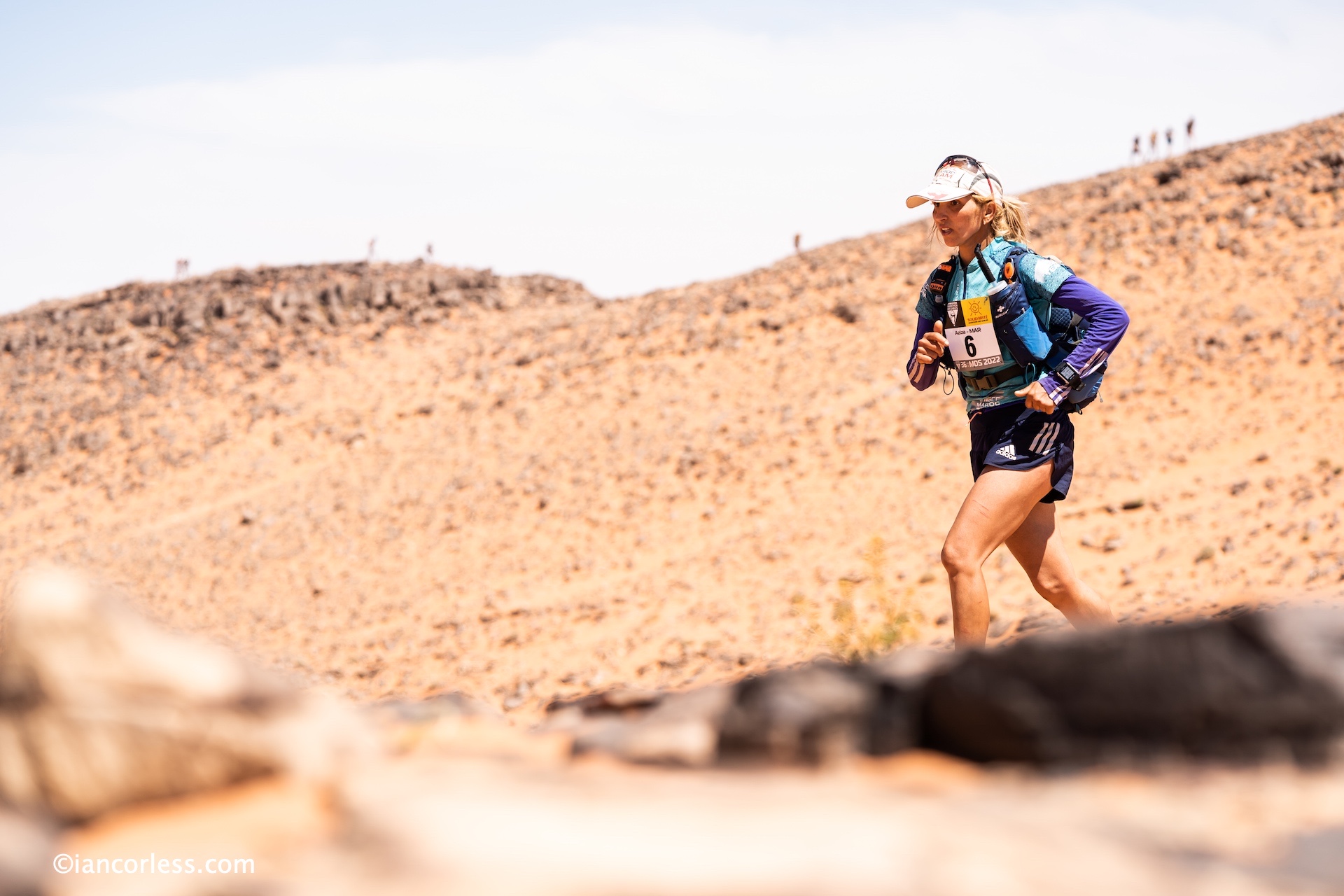
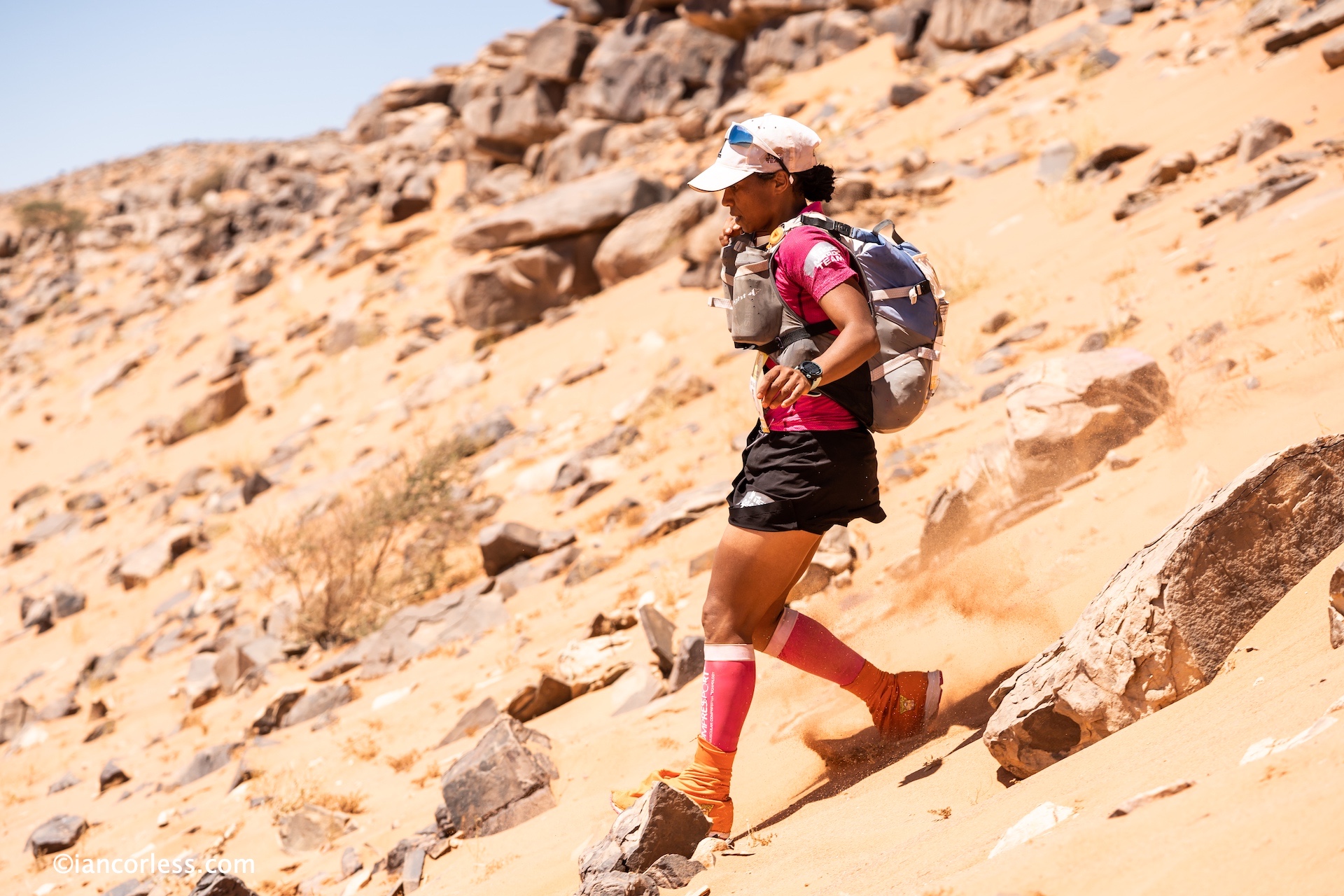
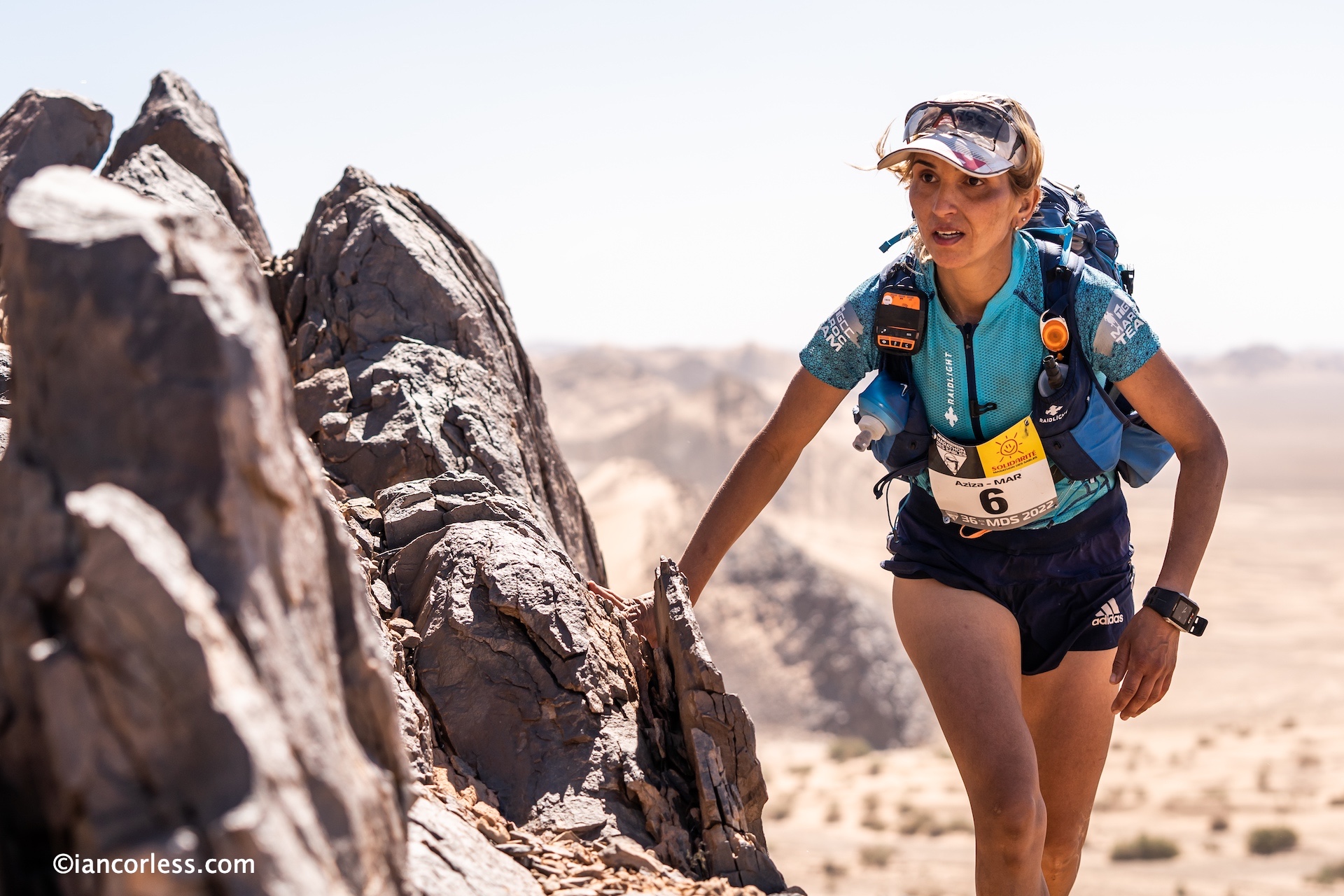
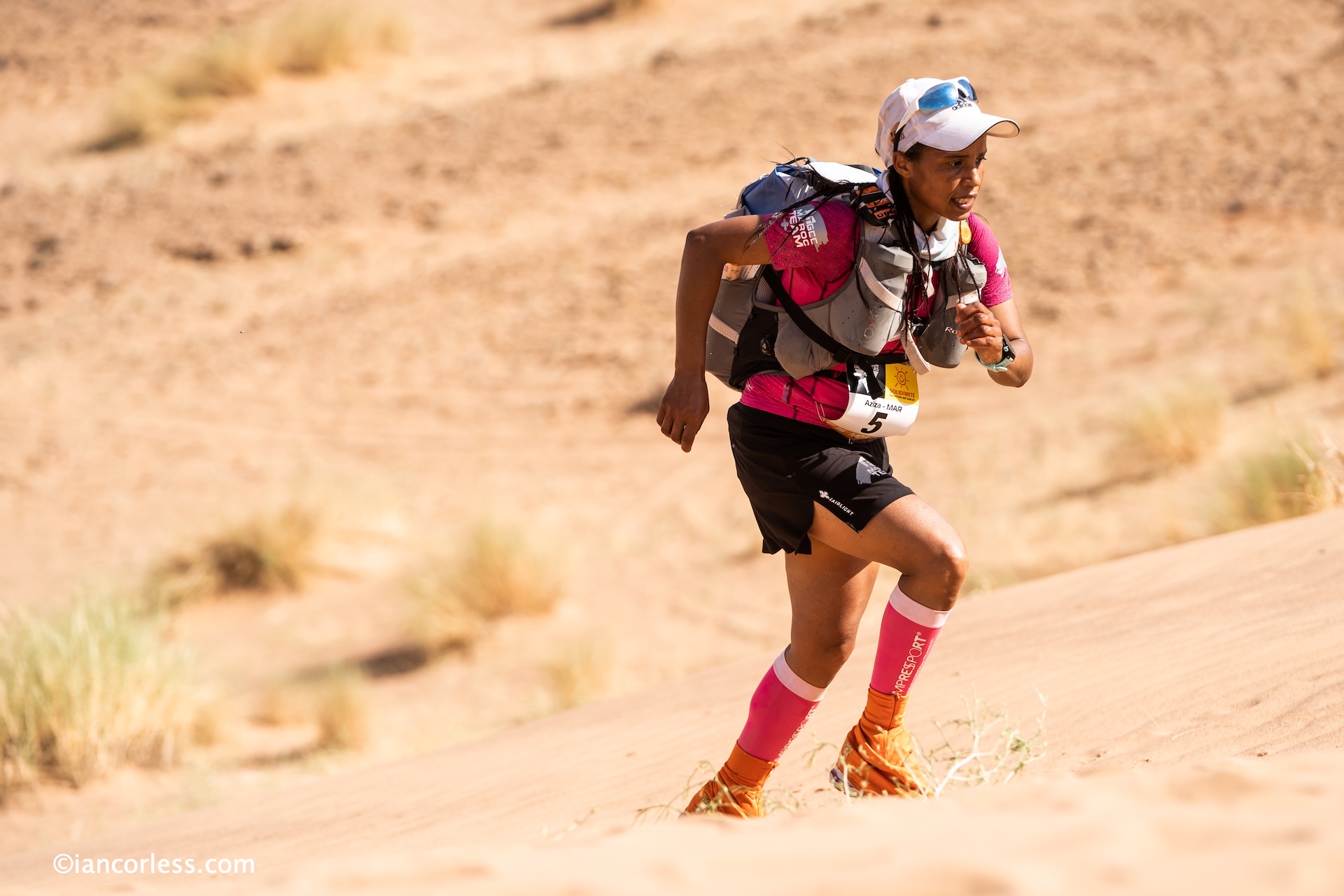
Aziza Elamrany once again ran a brilliant day and her 3rd place on the stage in 10:23:20 ahead of the 2021 chapion, Aziza Raji in 11:17:12, now places her 3rd on GC.

Aiziza Elamrany
Aziza Raji

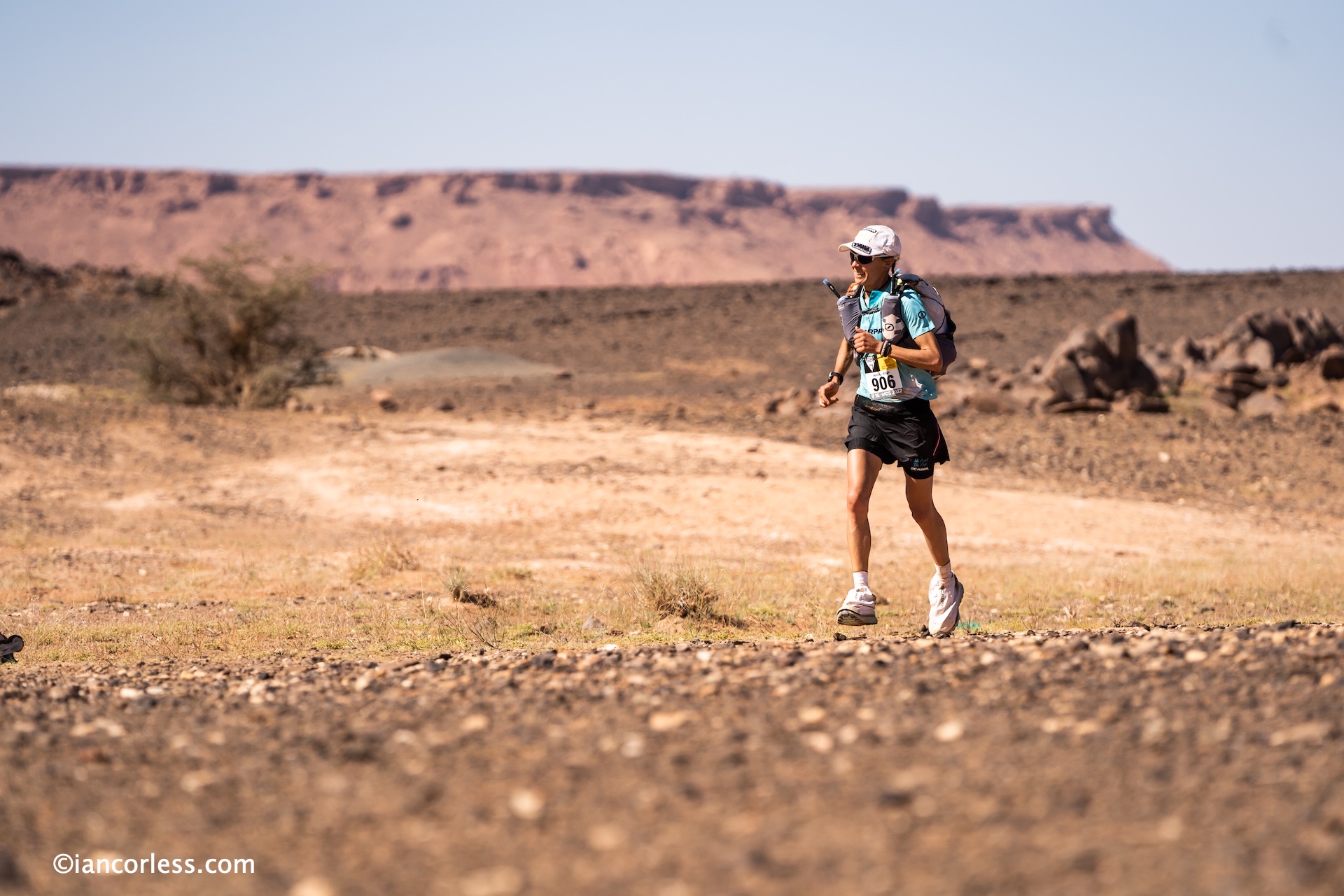
Notably, Beth Rainbow from the UK had a great day and finished 5th in 11:34:19.

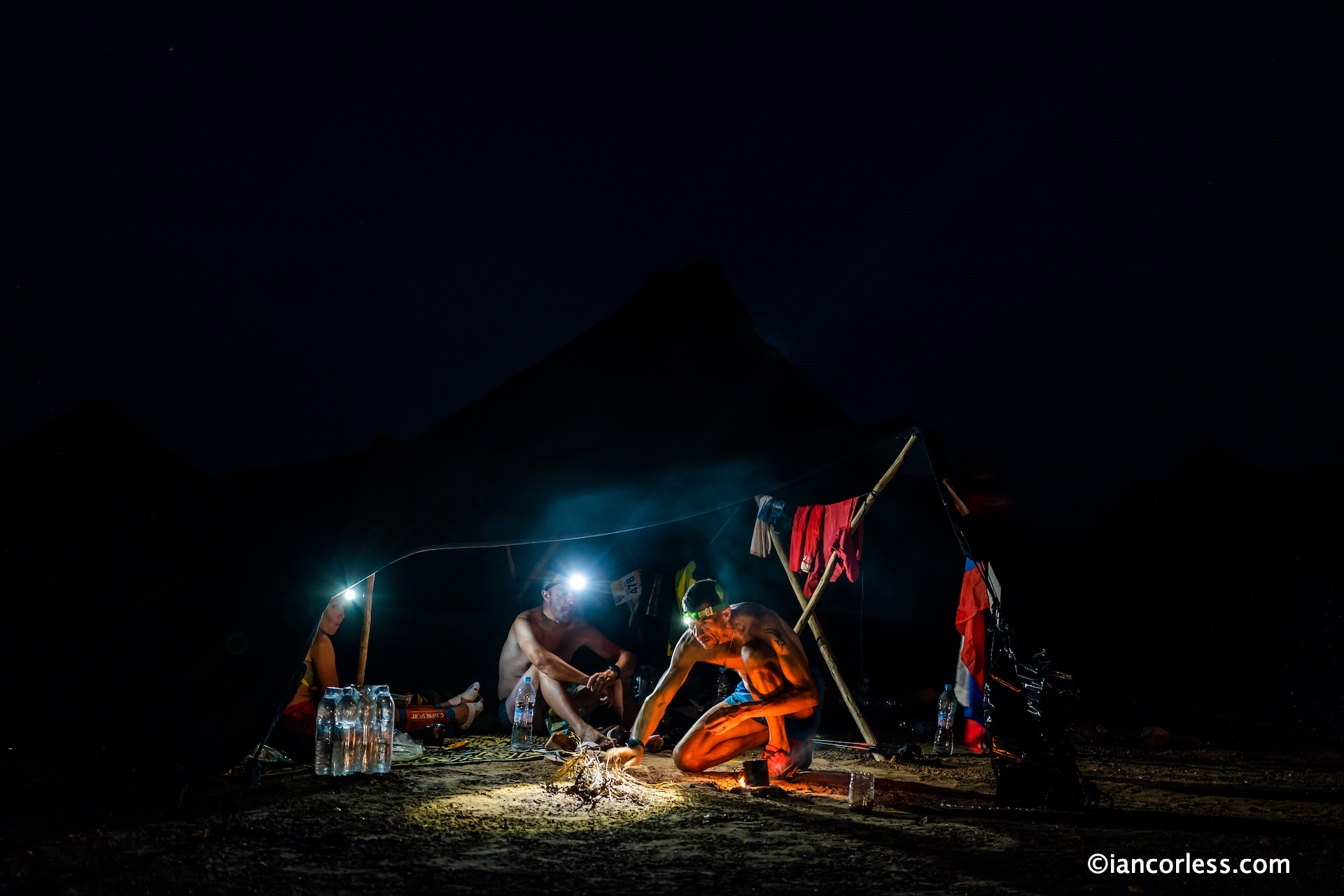
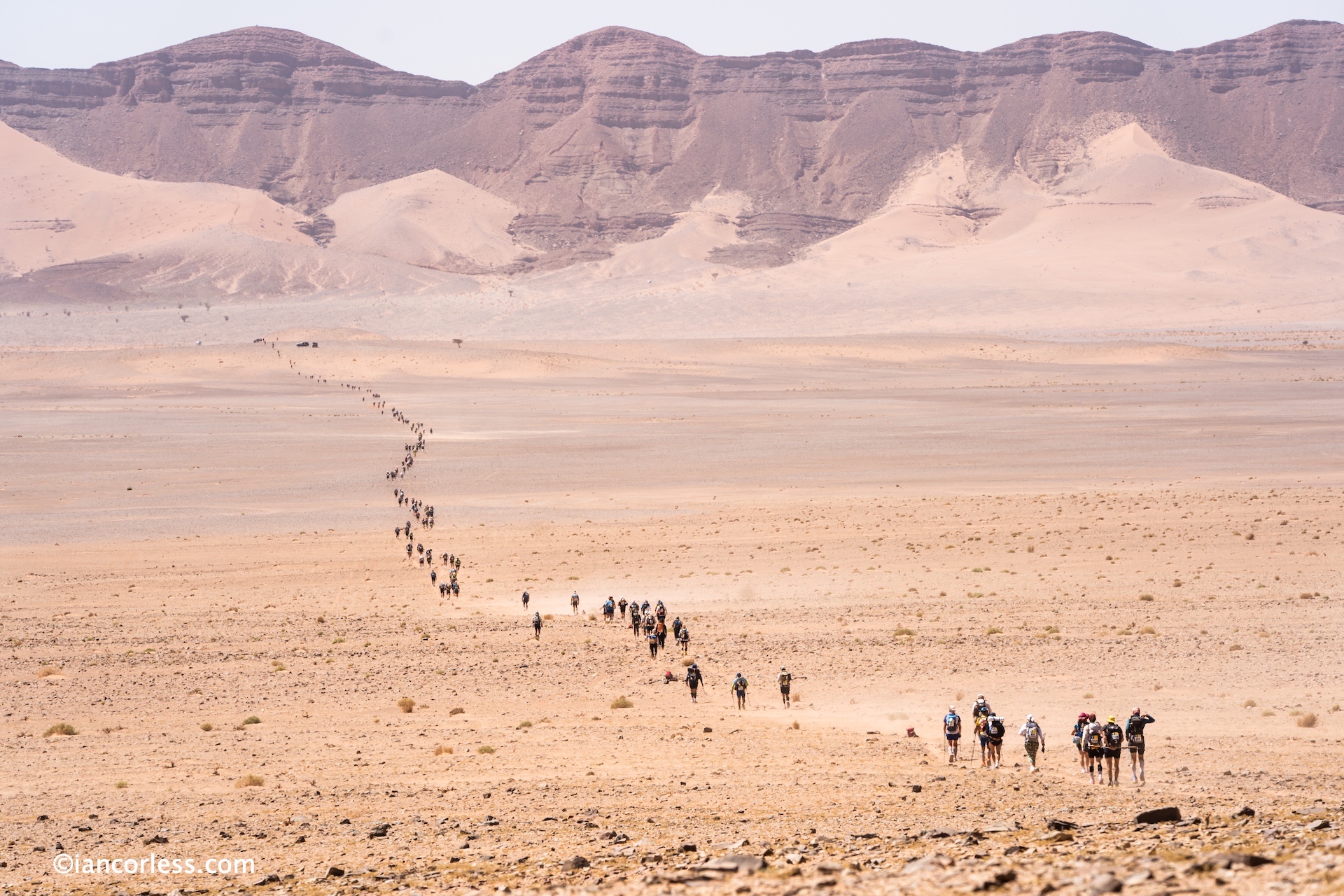
The long day is feared for many reasons, the distance, the weather, the night, the unexpected… As in every edition, there are demons to be fought and mental battles to be won. Conditions were, in general, kind, with less heat, some cloud, the odd rain shower and a cooler night. As I write, some are still battling to achieve a finish, the main priority is to keep ahead of the camels!

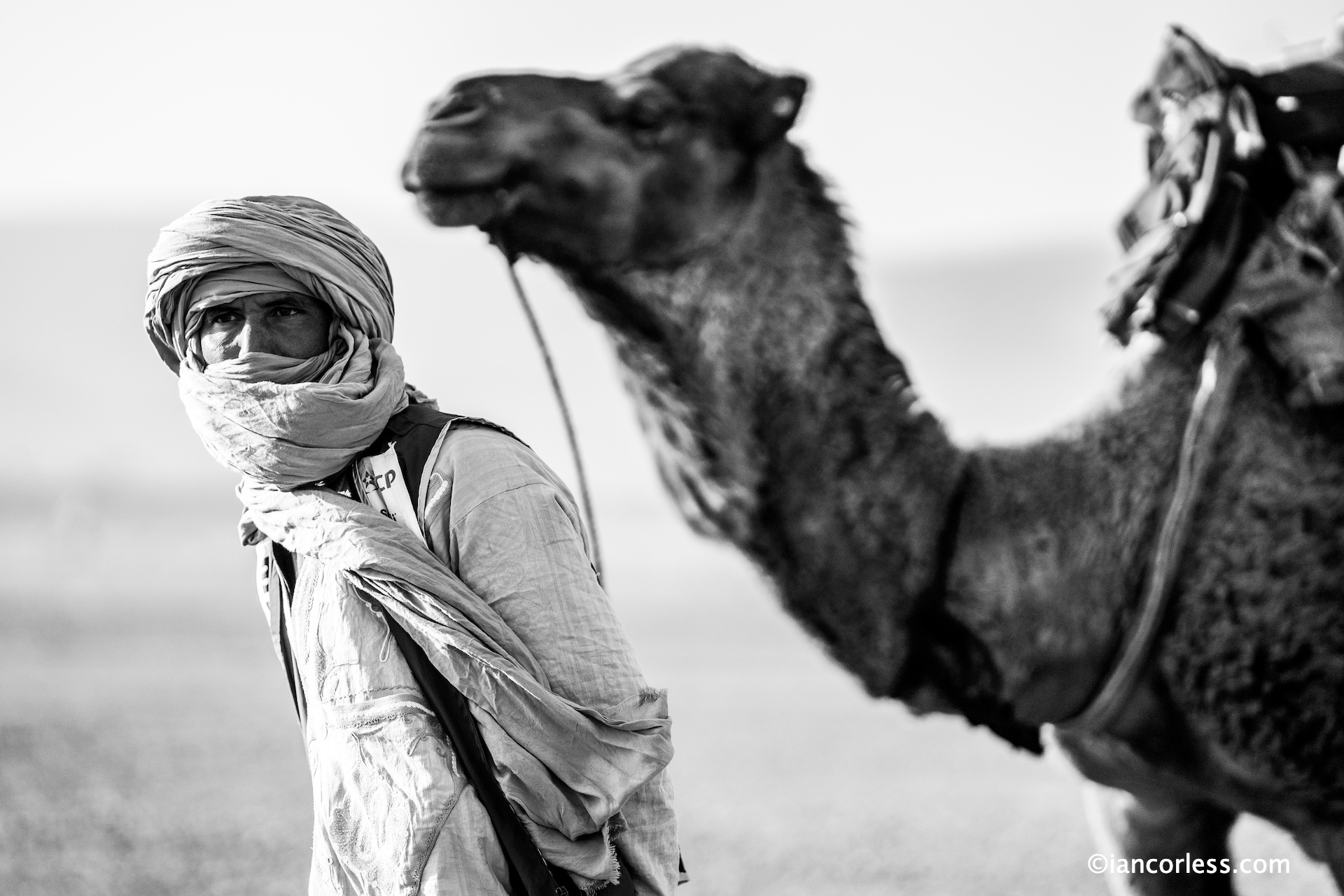
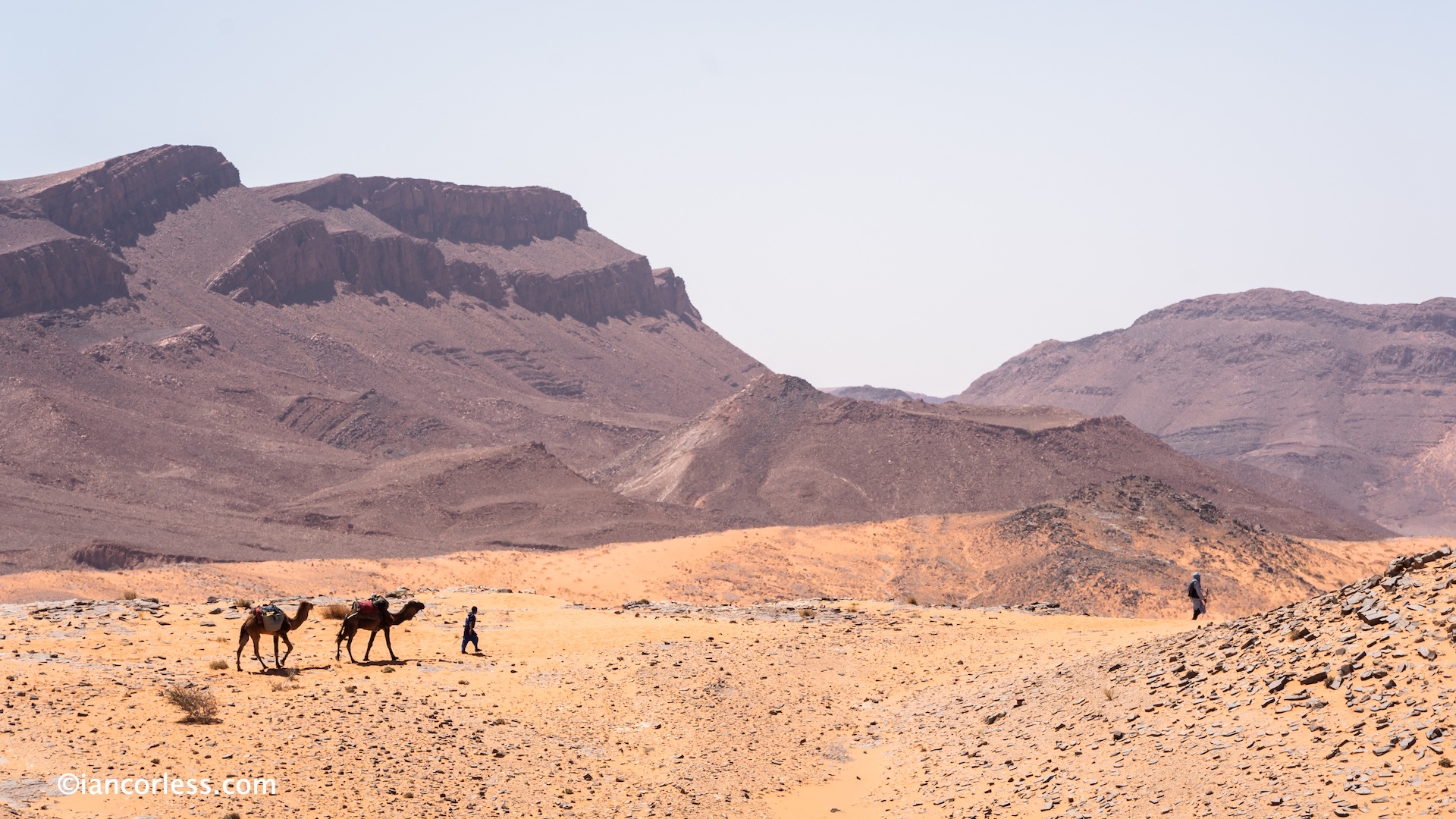
The camels mark the end of the race, you must keep ahead of them.

Tomorrow, stage 5 is marathon distance and the 2022 champions will be crowned. The women’s race, barring a disaster will be a formaility with Anna, Sylvaine and Aziza placing 1, 2 and 3.

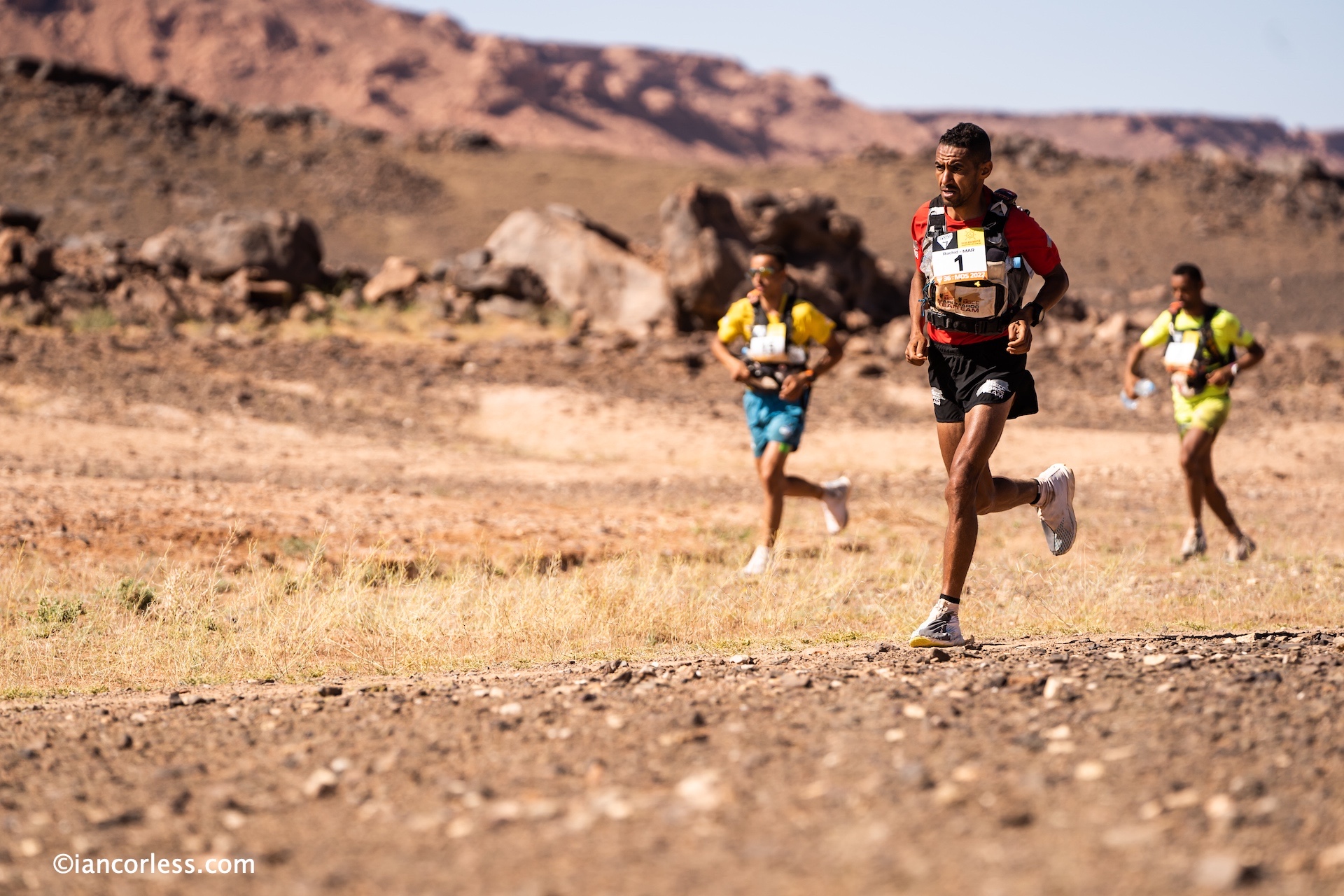
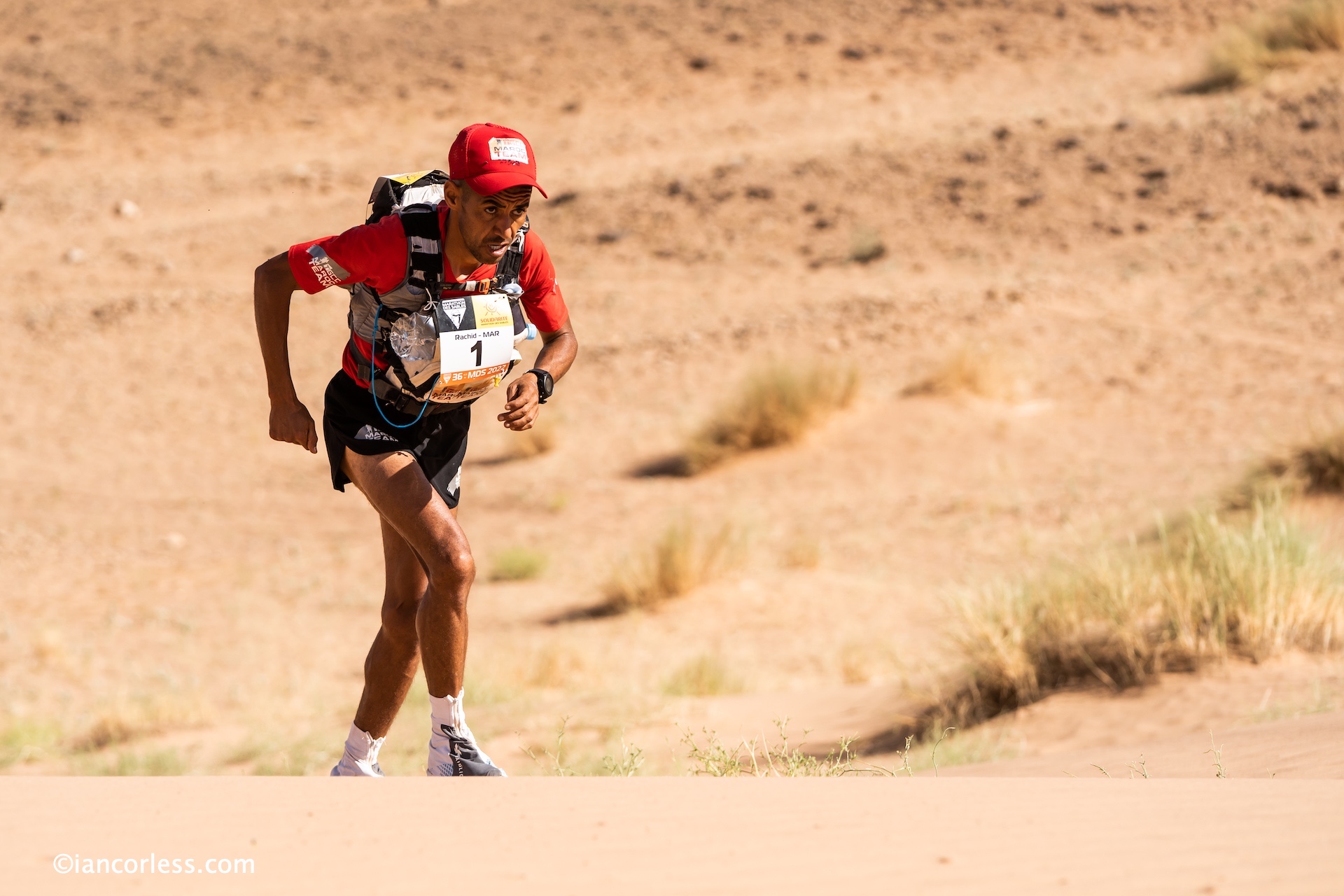
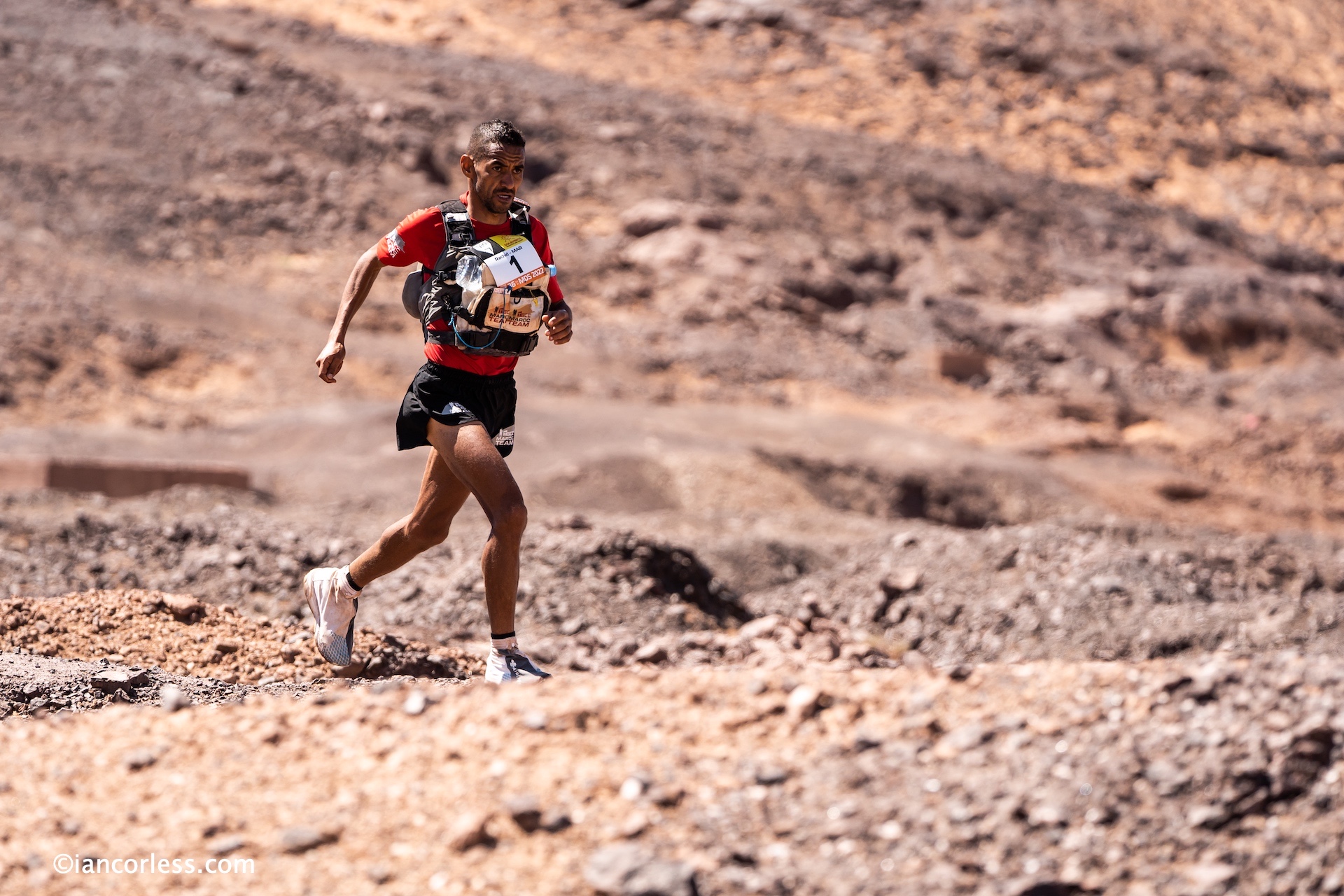
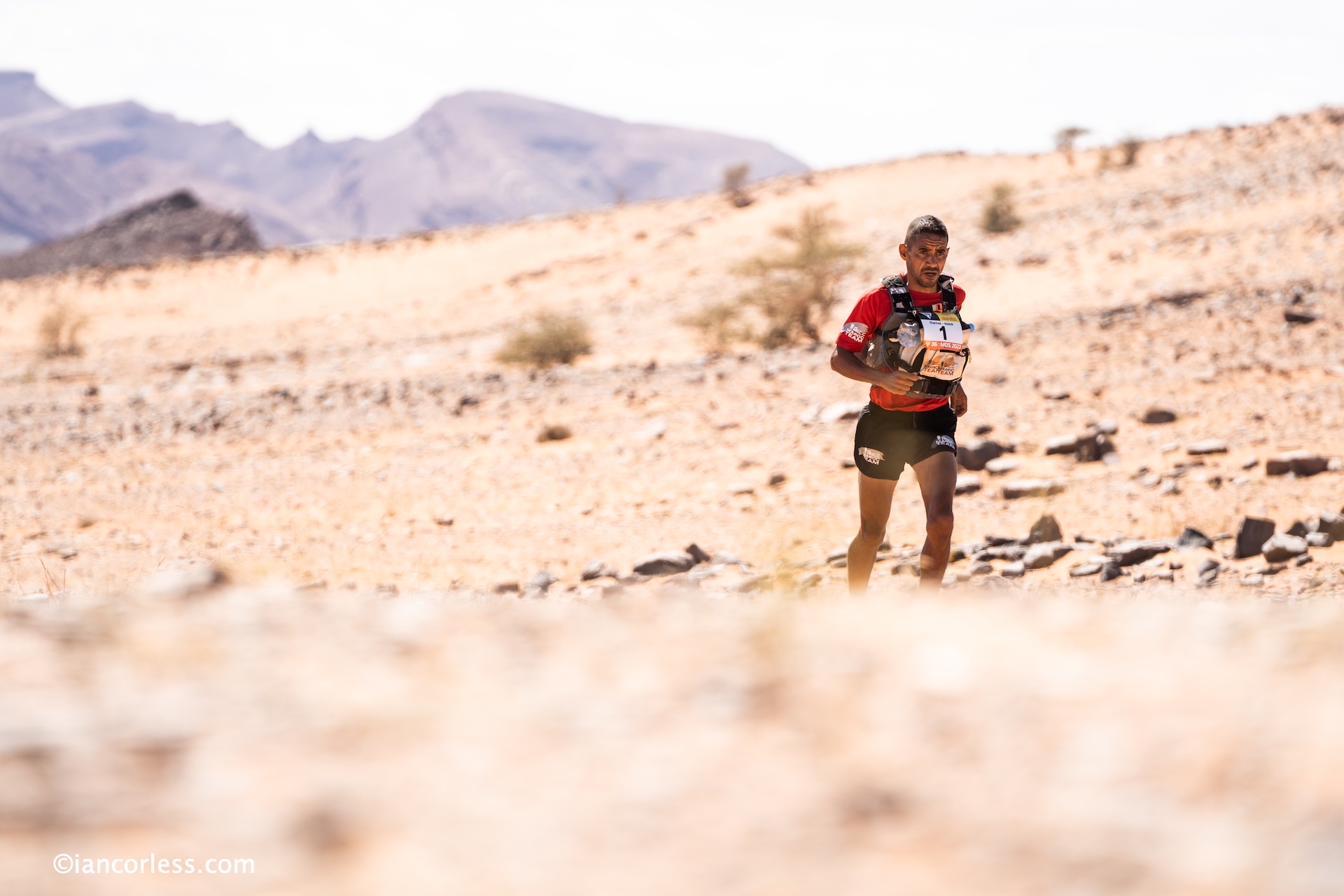
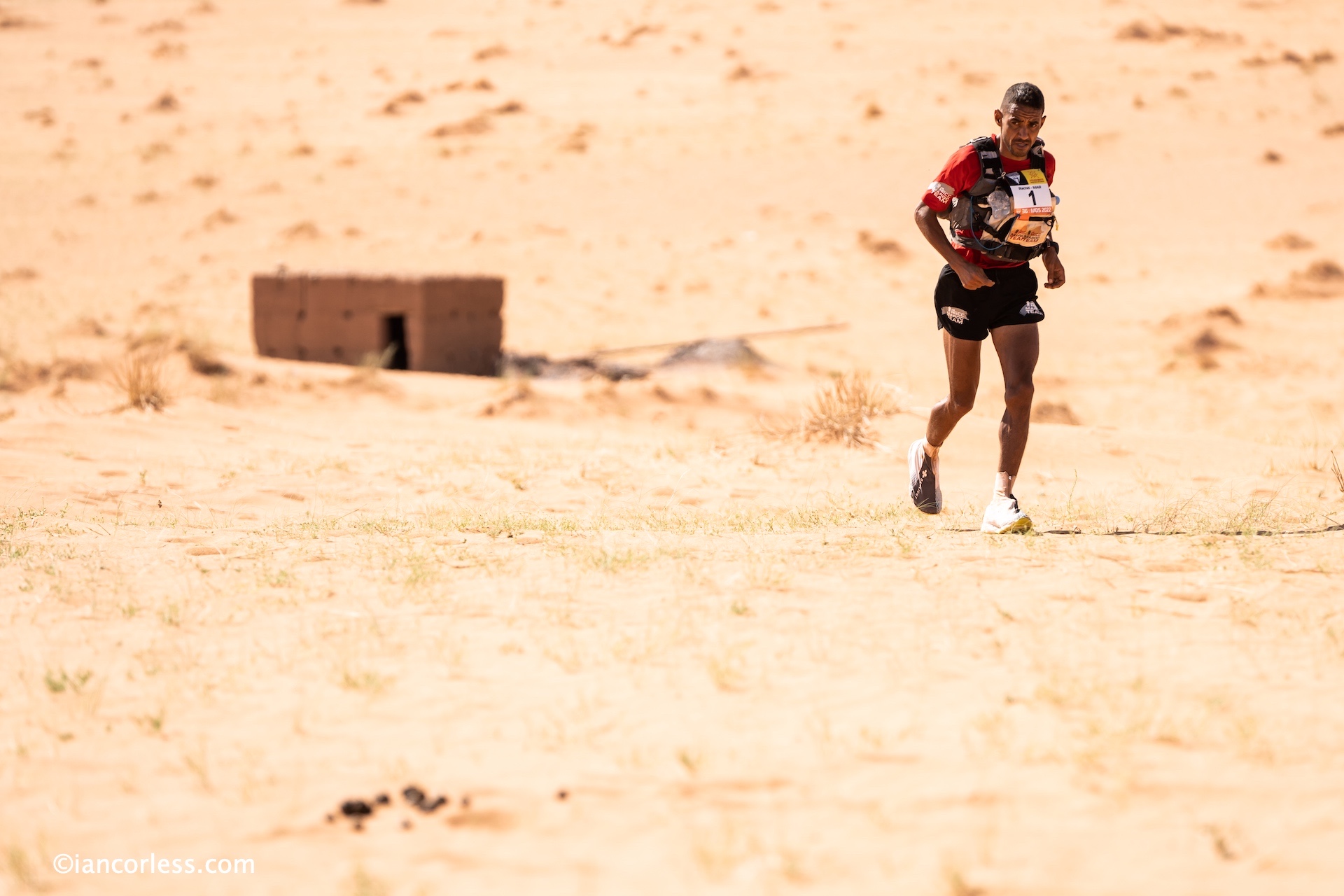
Rachid looking for a 9th victory

The men’s race will be a nail biter. Early in the week I disclosed that I was convinced that the El Morabity brothers had a plan and strategy, that came to fruition yesterday. Now with the marathon stage to go, the duo will mark Aziz and make sure he is kept under control so that 1st place and 2nd is secure. At some point, Mohamed will allow his brother Rachid, to take over the front of the race and gain the 37-second deficit that currently places him 2nd and therefore will allow him his 9th MDS victory. Can Aziz mess up this plan?

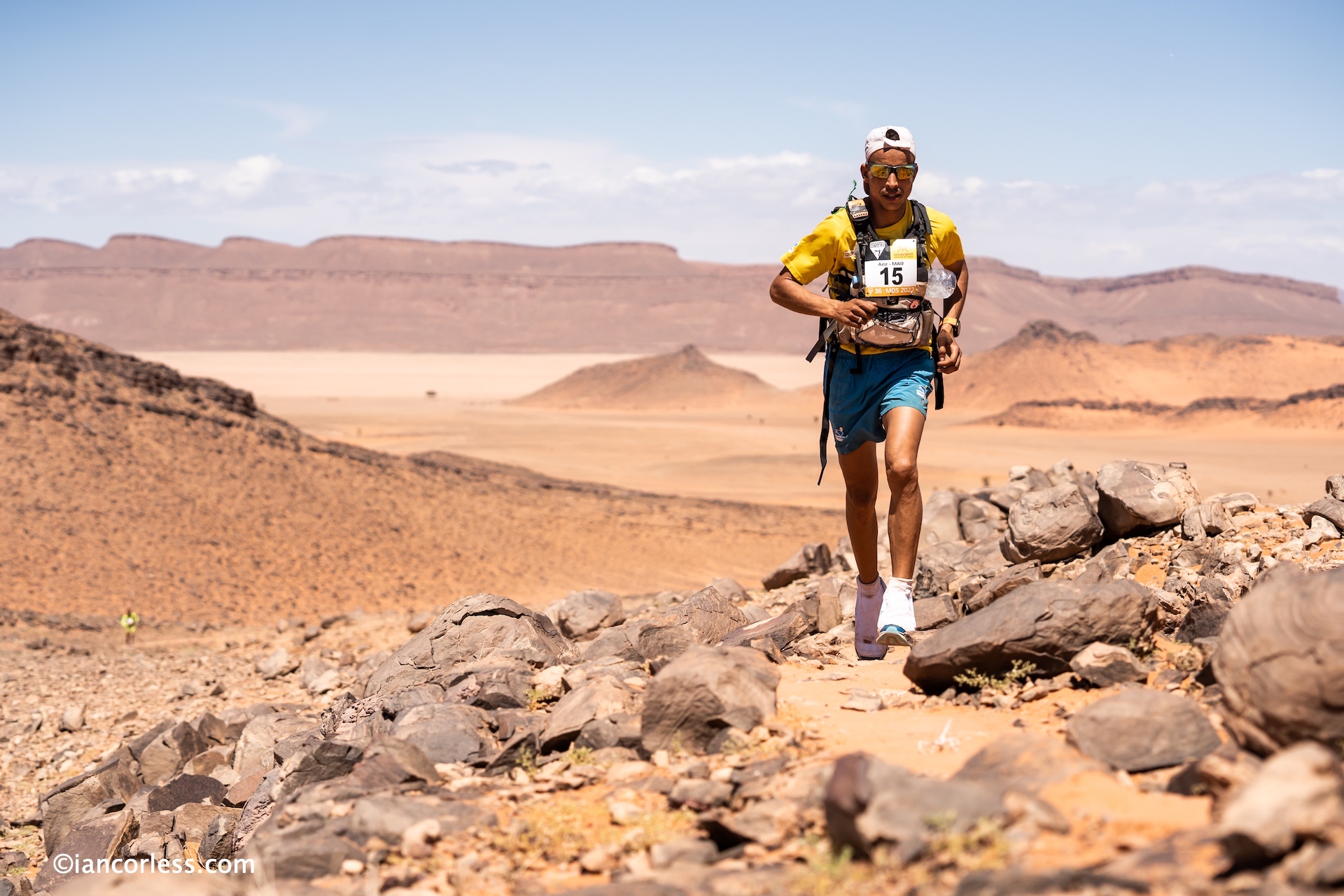
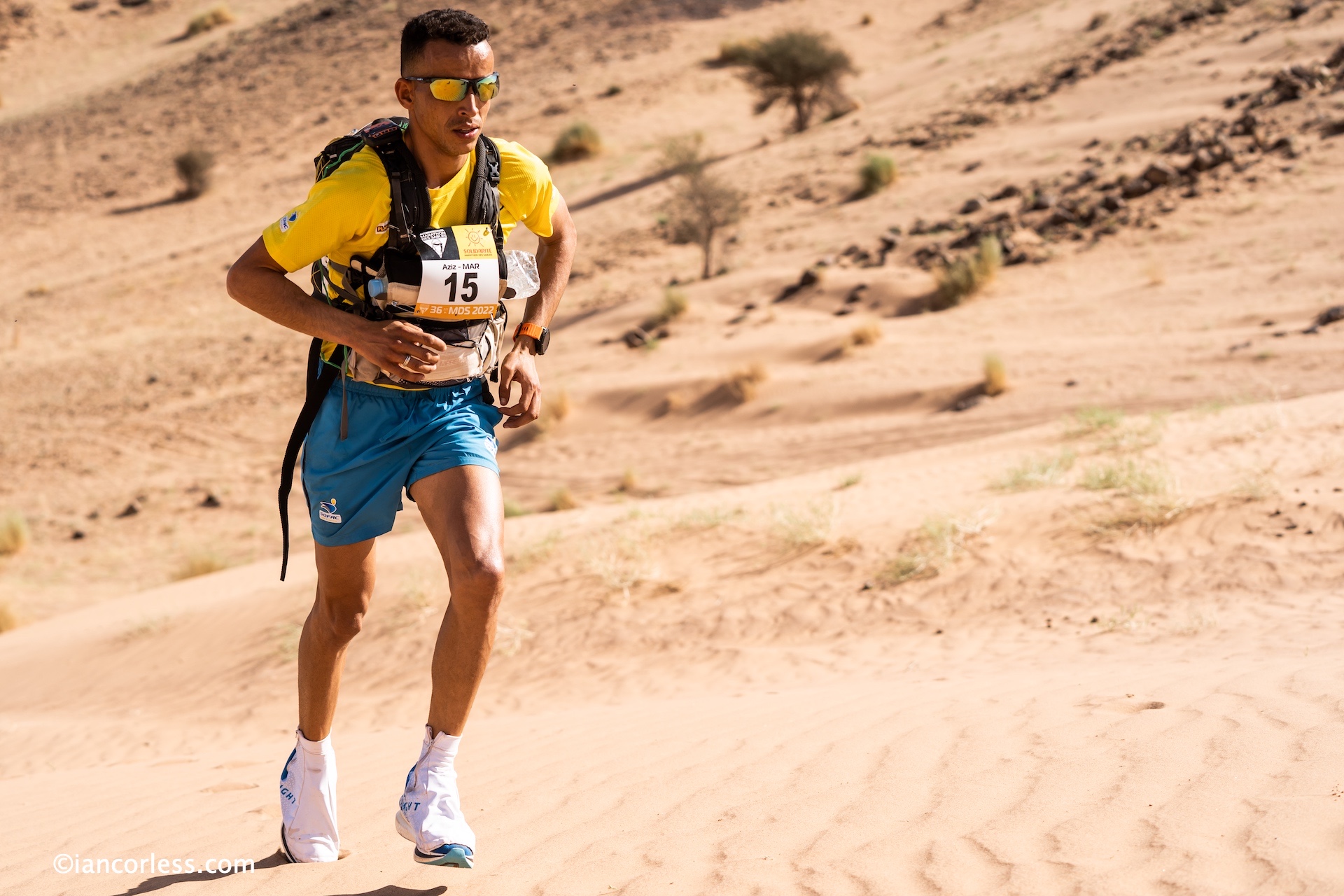
Aziz has a battle ahead

Follow on:

Instagram – @iancorlessphotography

Twitter – @talkultra

facebook.com/iancorlessphotography

Web – www.iancorless.com

Web – www.iancorlessphotography.com

Image sales –www.iancorless.photoshelter.com

Marathon des Sables 2022 #MDS2022 – Stage 4 85.8km – Part One

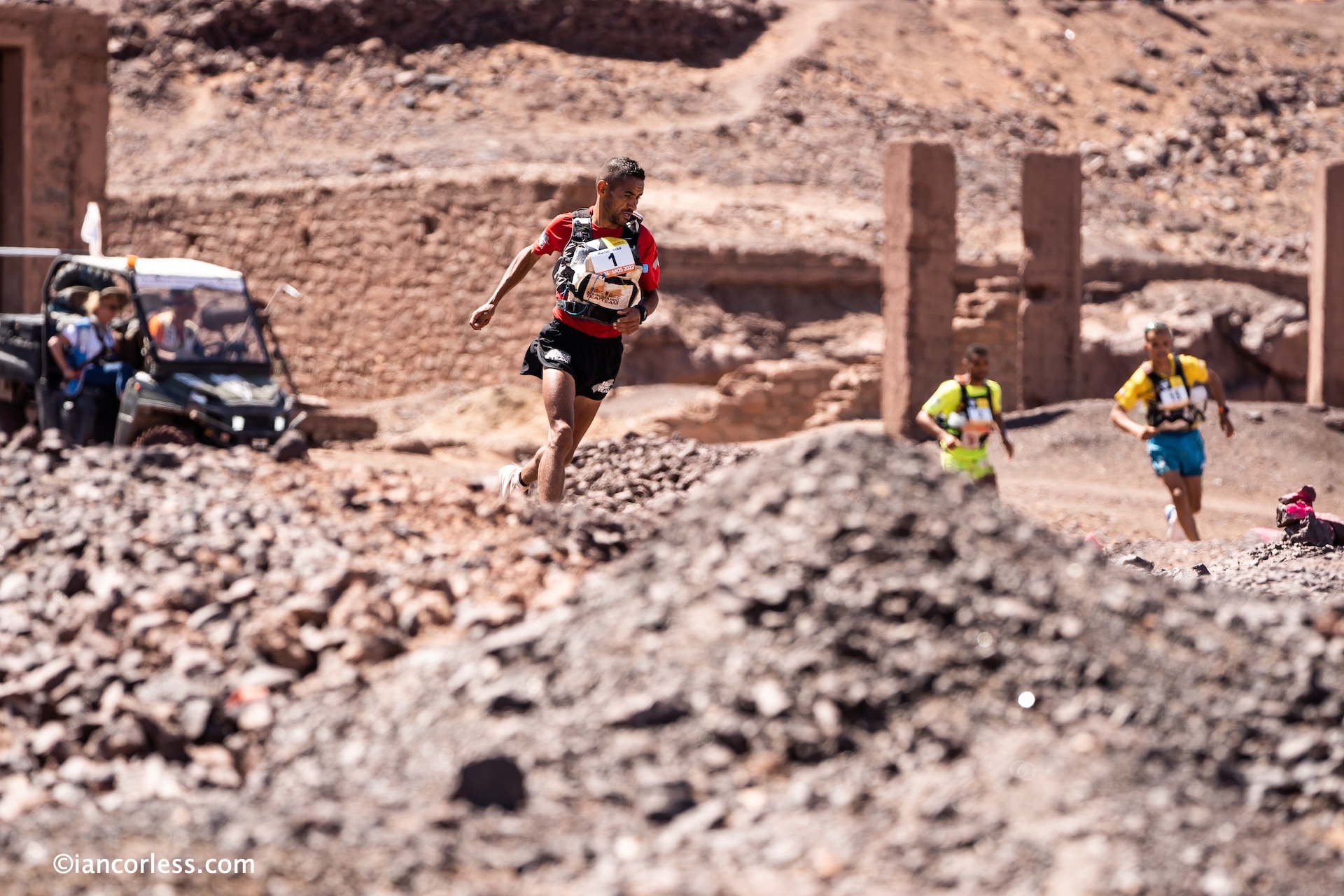
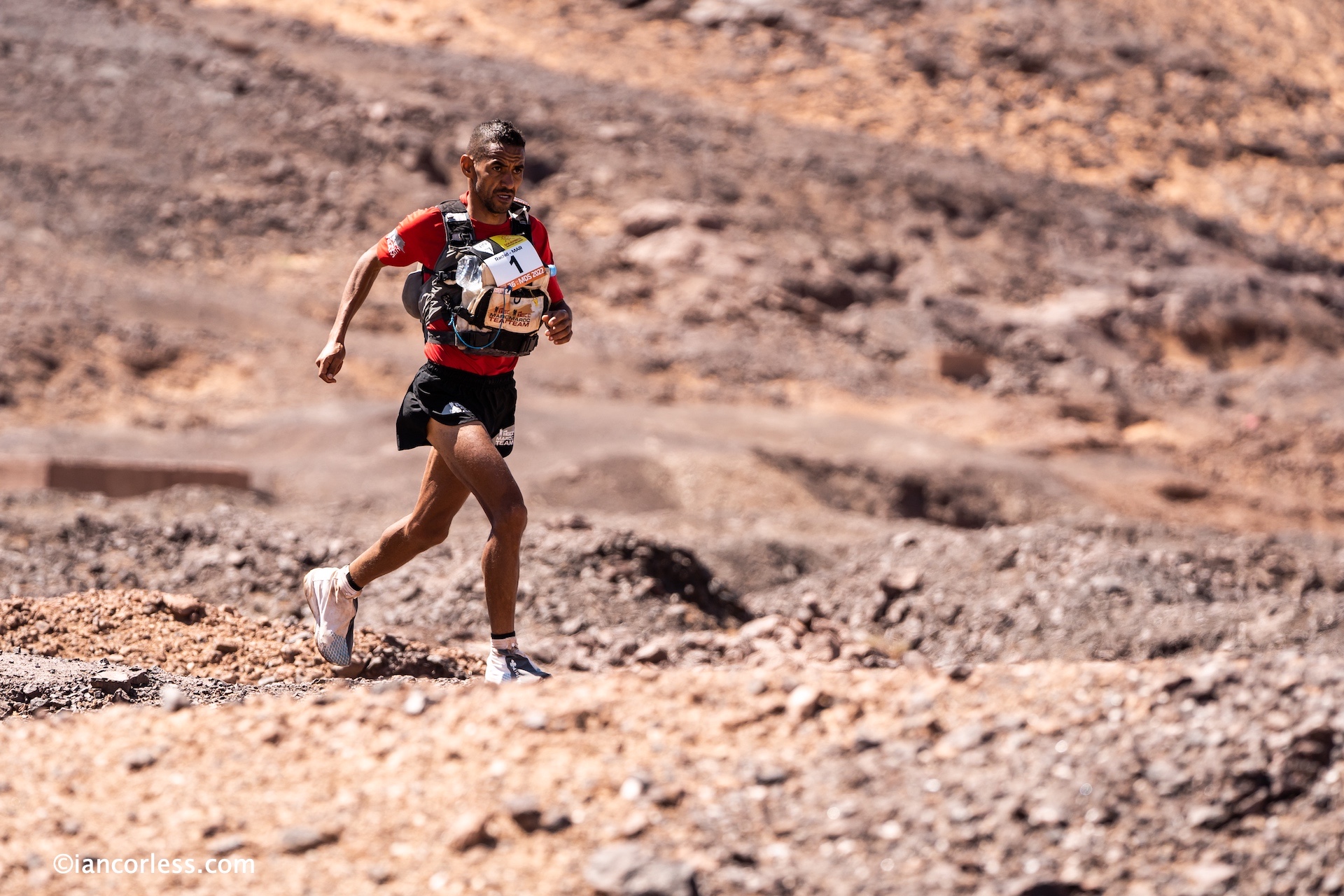
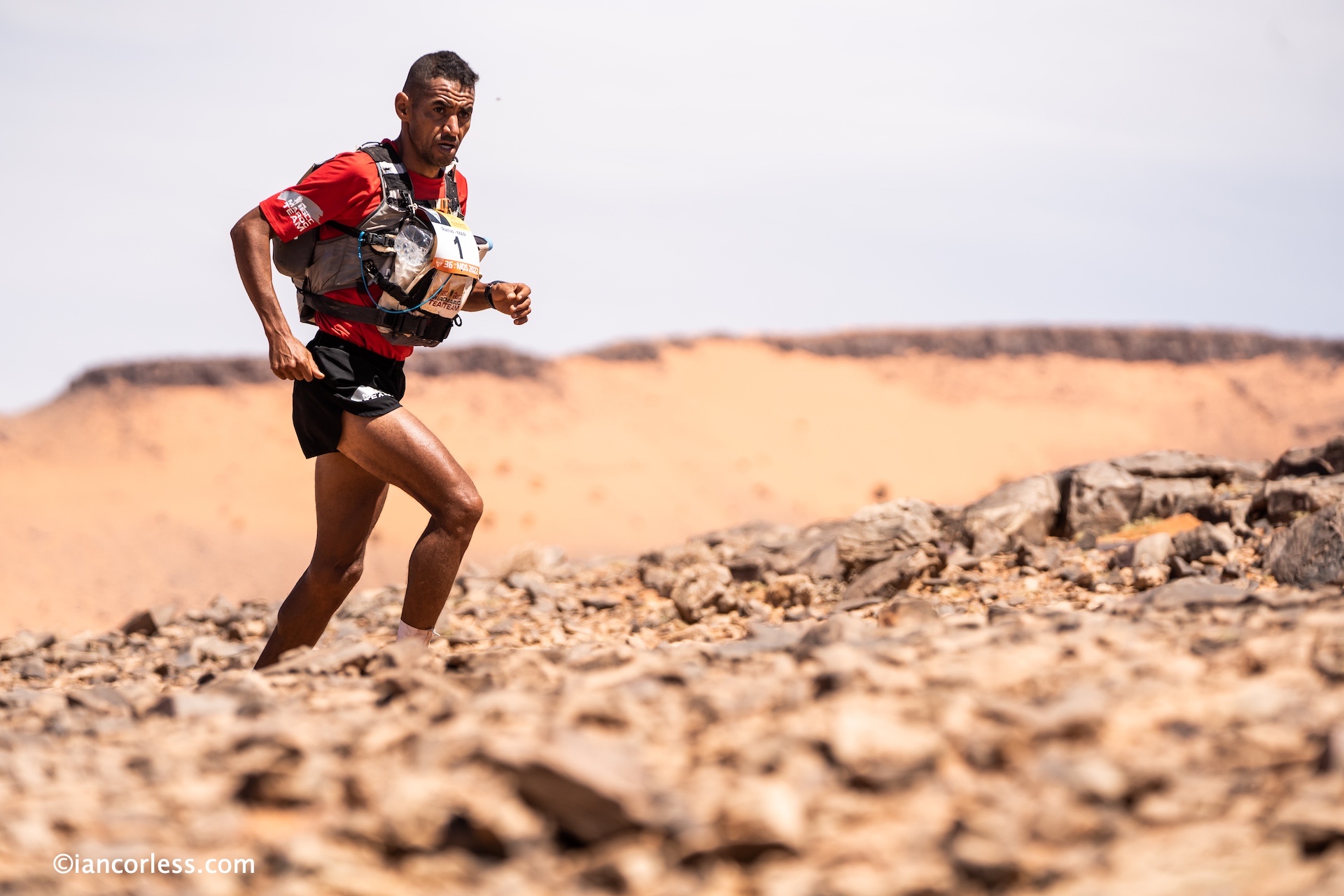
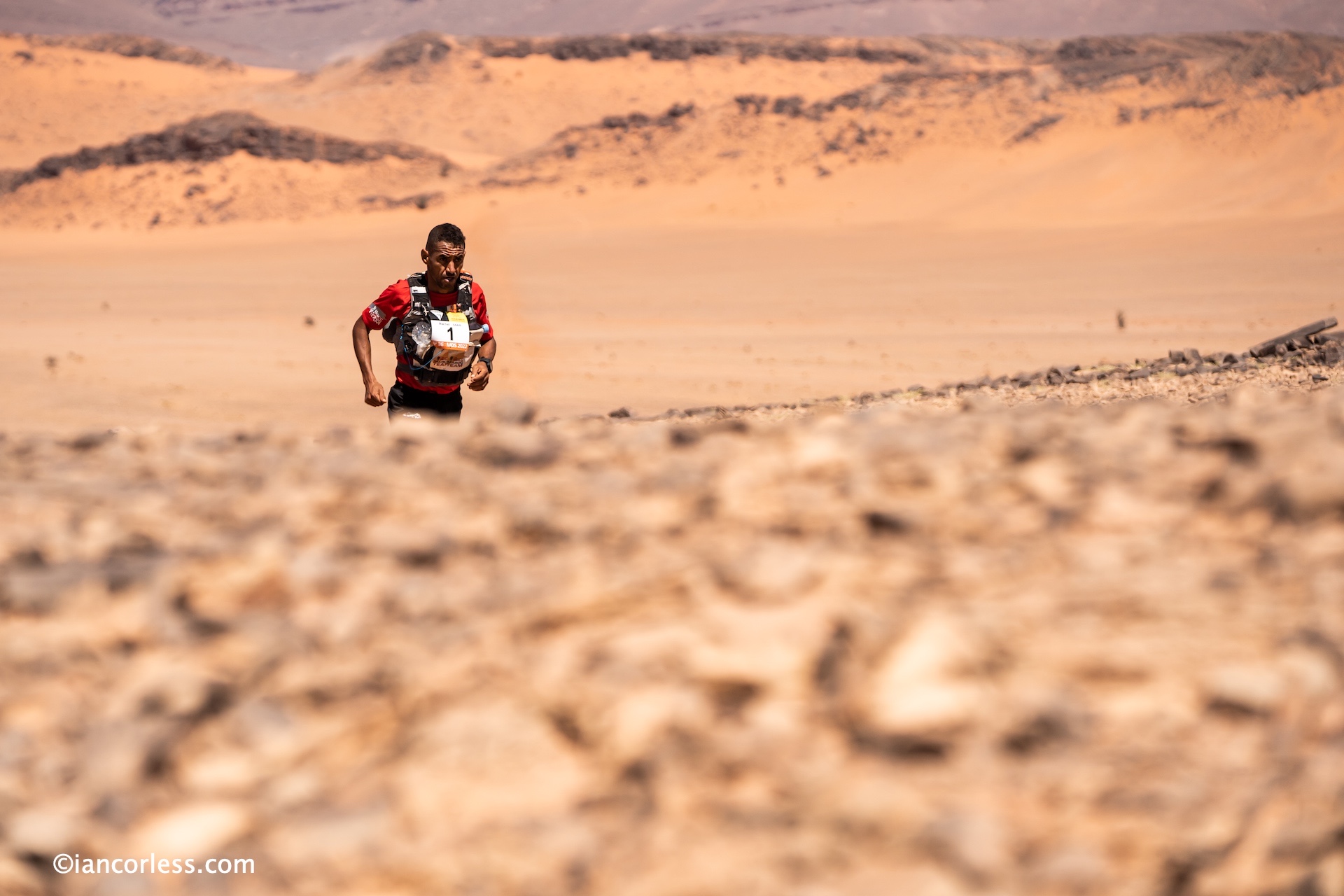
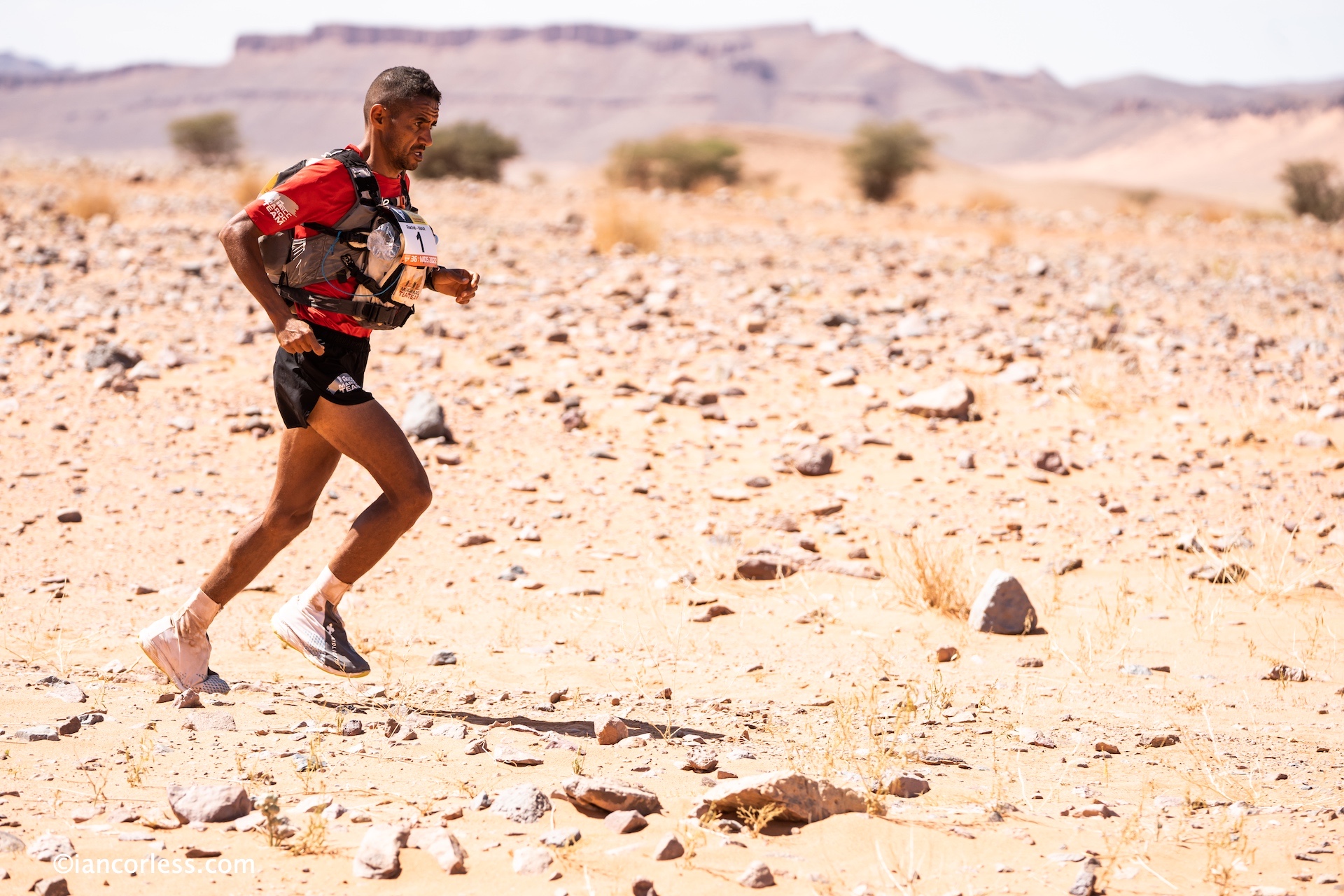
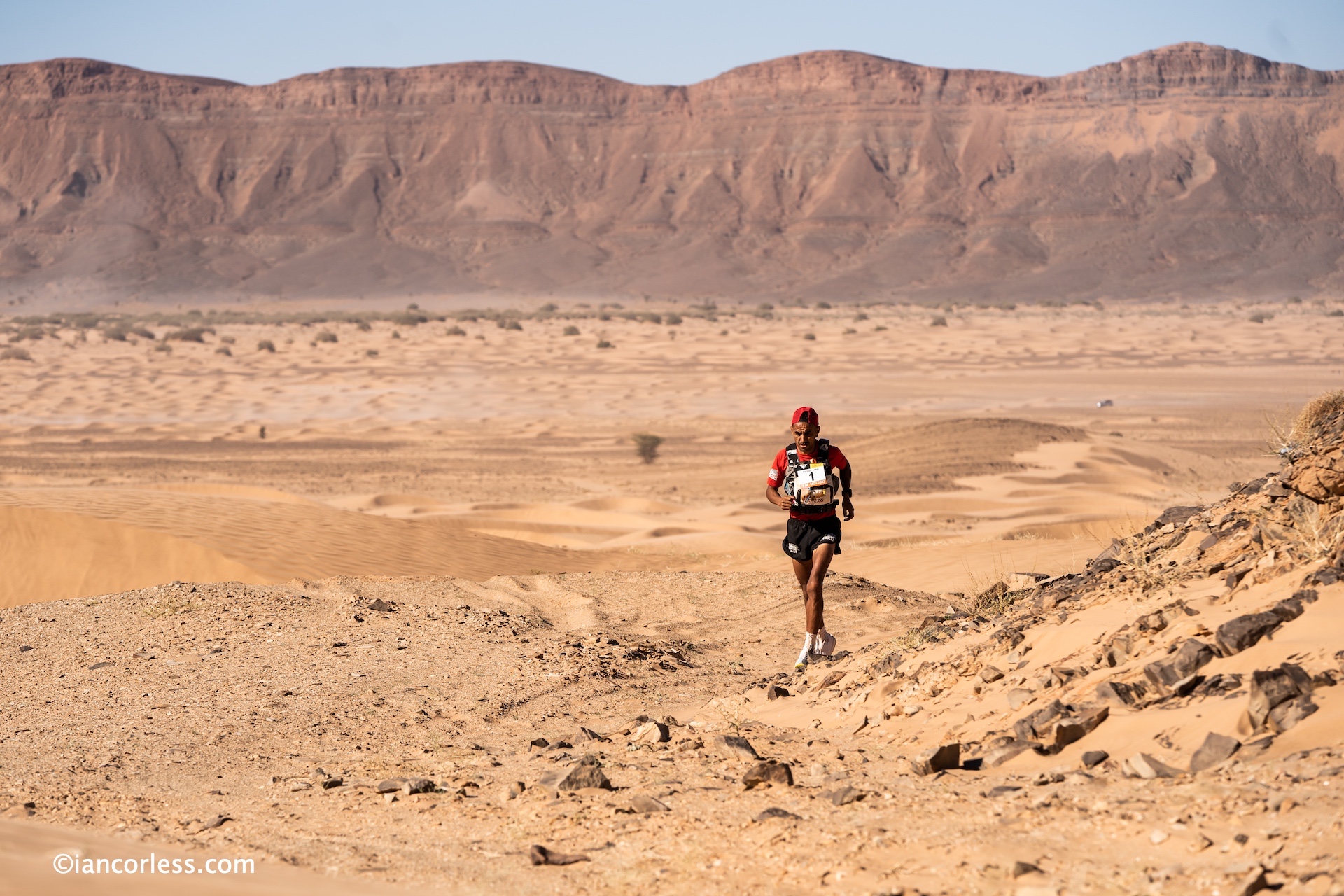
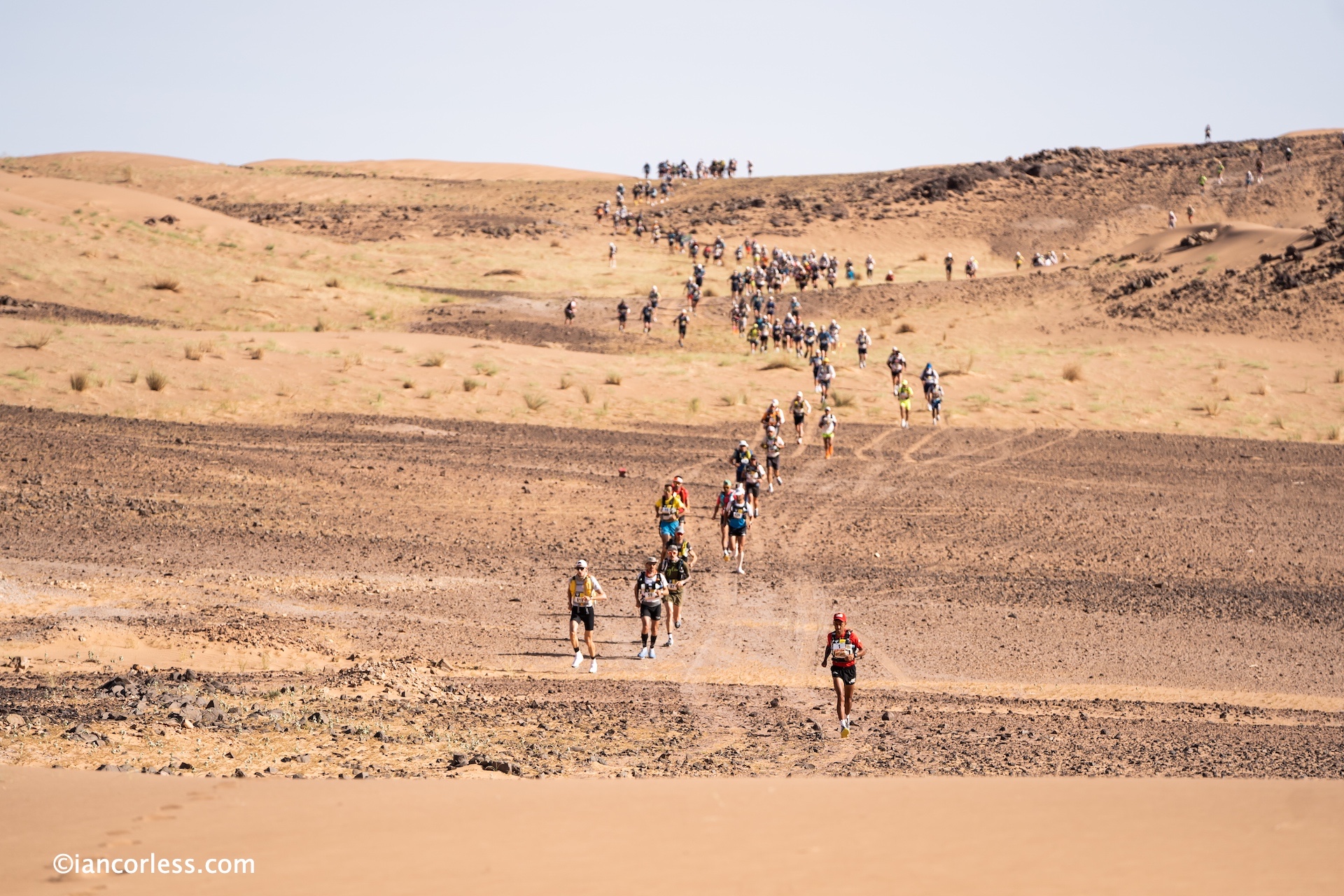
Rachid setting the early pace

It may well have been one of the most exciting days in the history of the Marathon des Sables… It was the feared long day of 85.8km. A long one for the 36th edition but the longest came in 2009 with 92km!

As I write, the top men have finished and the first woman is to cross the line, so, I will update on the men and follow up on the MDS ‘rest day’ with a report on the women’s race.

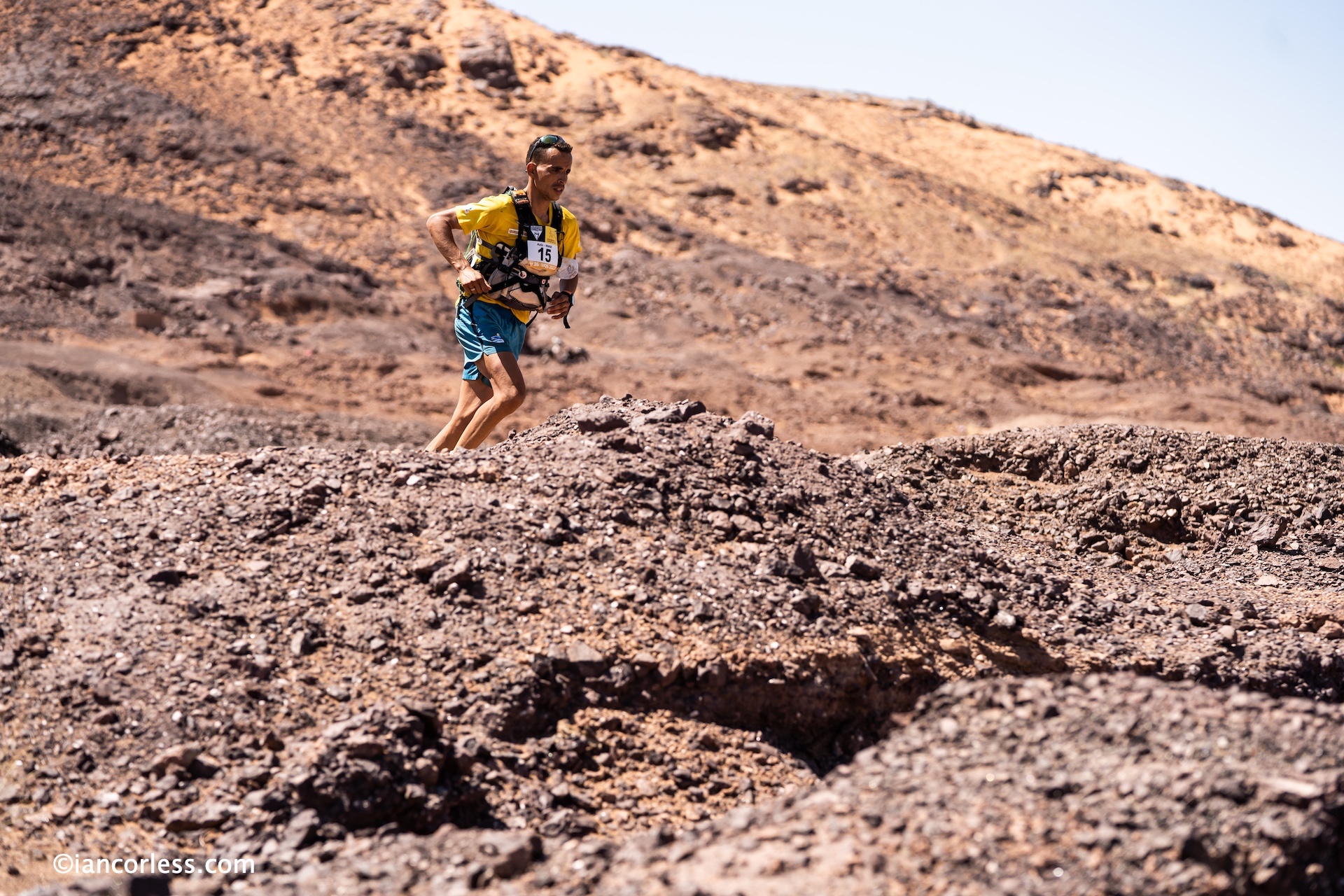
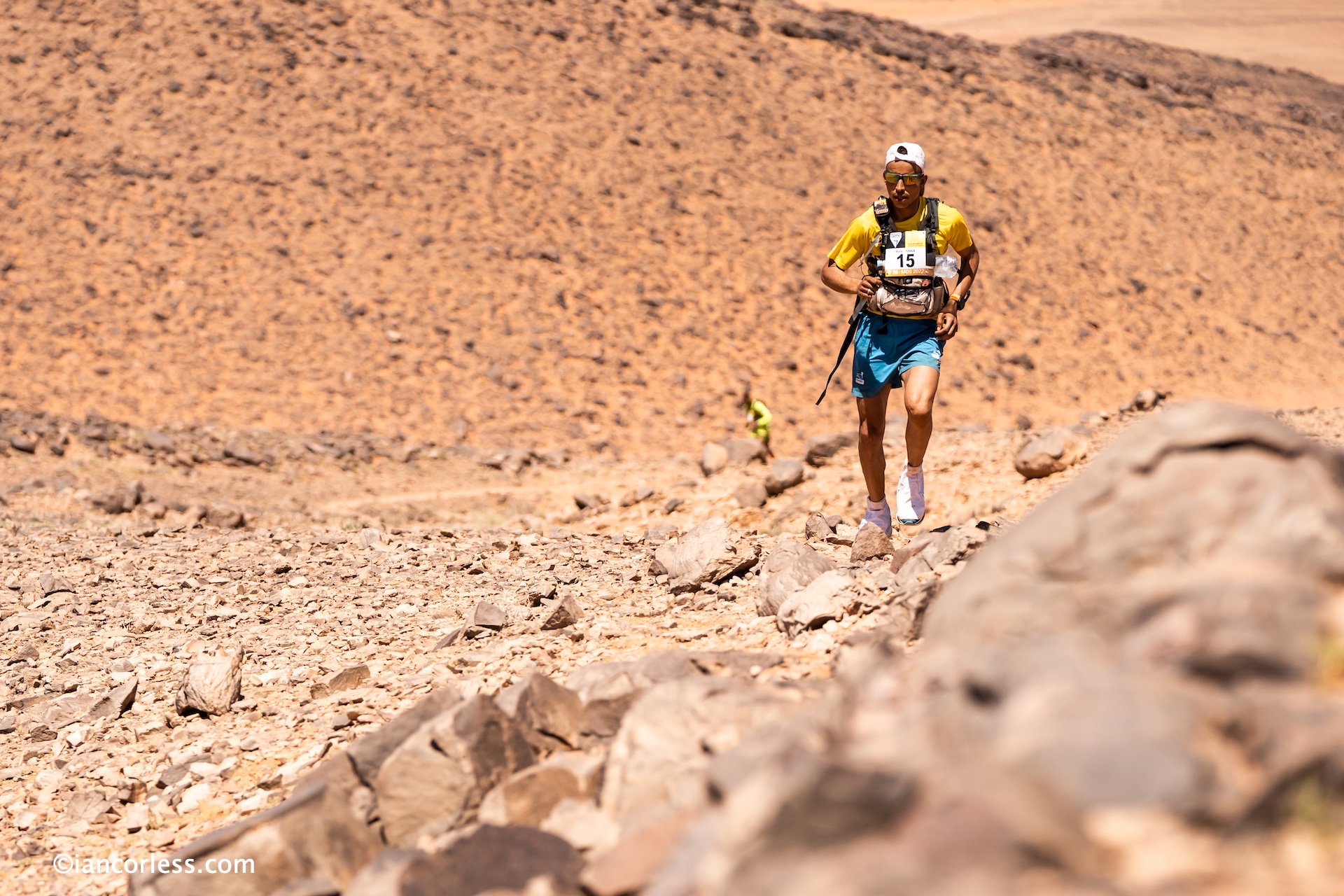
Aziz chasing with 9km covered
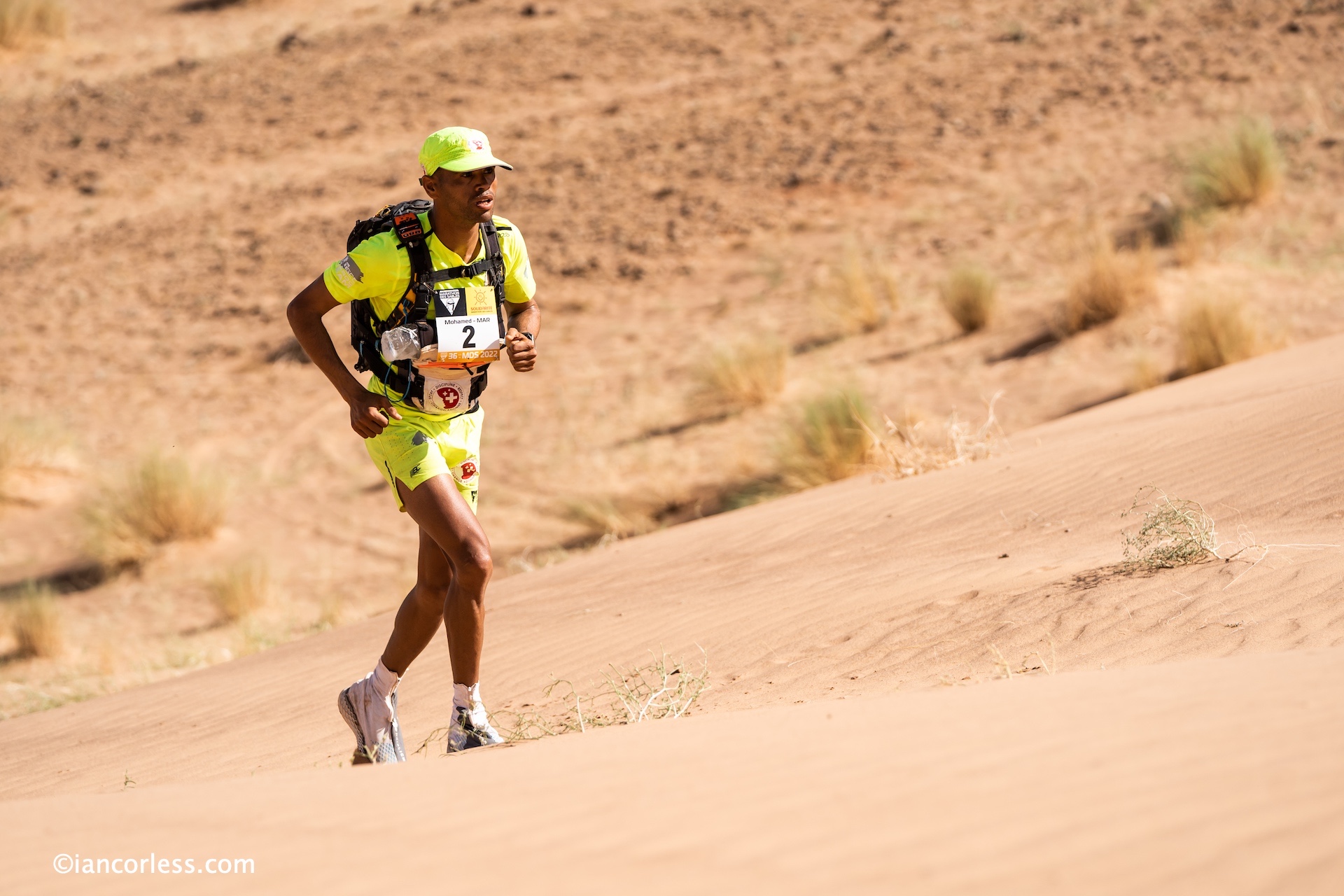
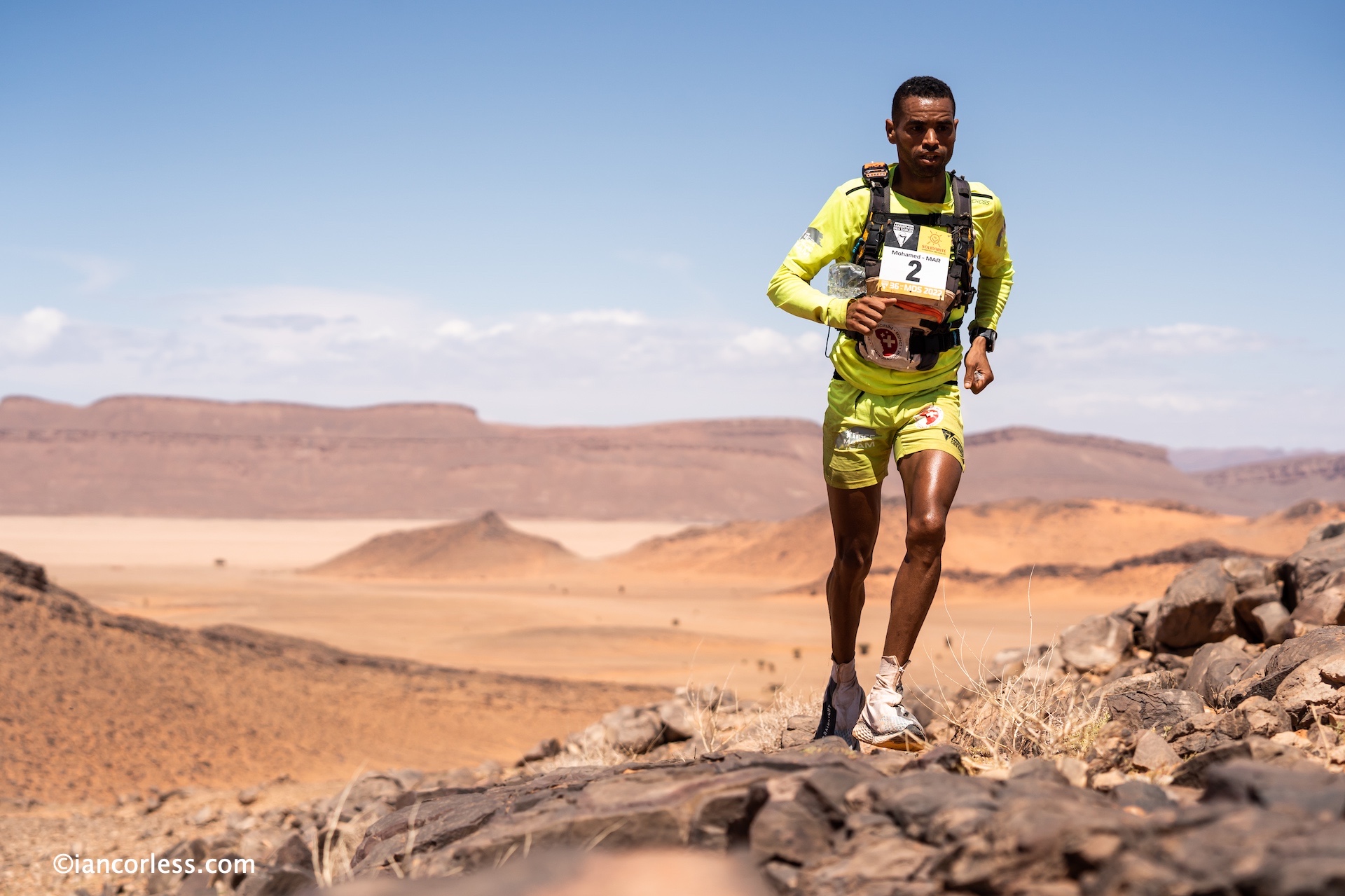
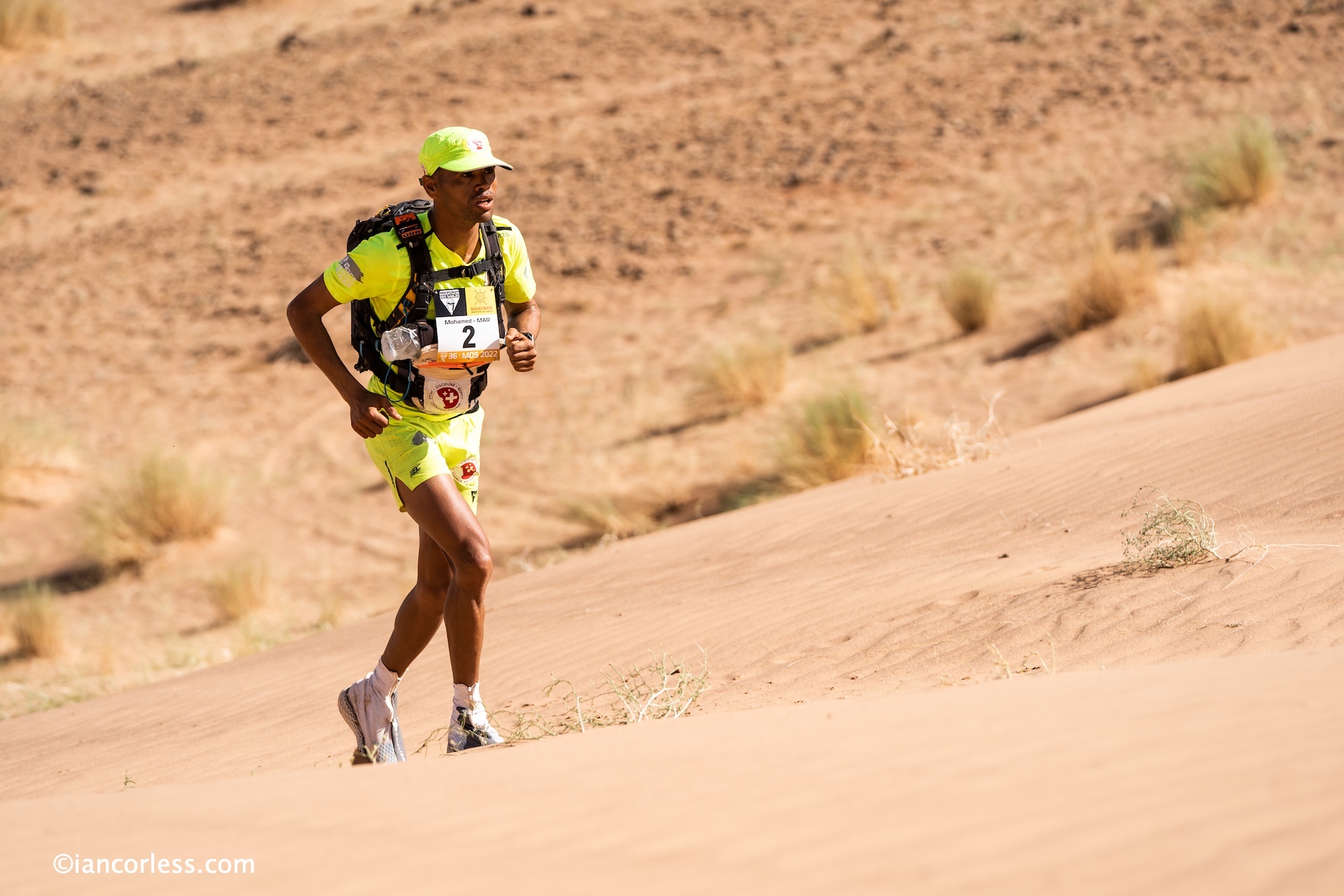
Mohamed watching Aziz

Today was all to fight for. Aziz Yachou was in 1st place, Mohamed El Morabity in 2nd and surprisingly, 8x MDS champion, Rachid El Morabity was in 3rd – 9-minutes behind the leader.

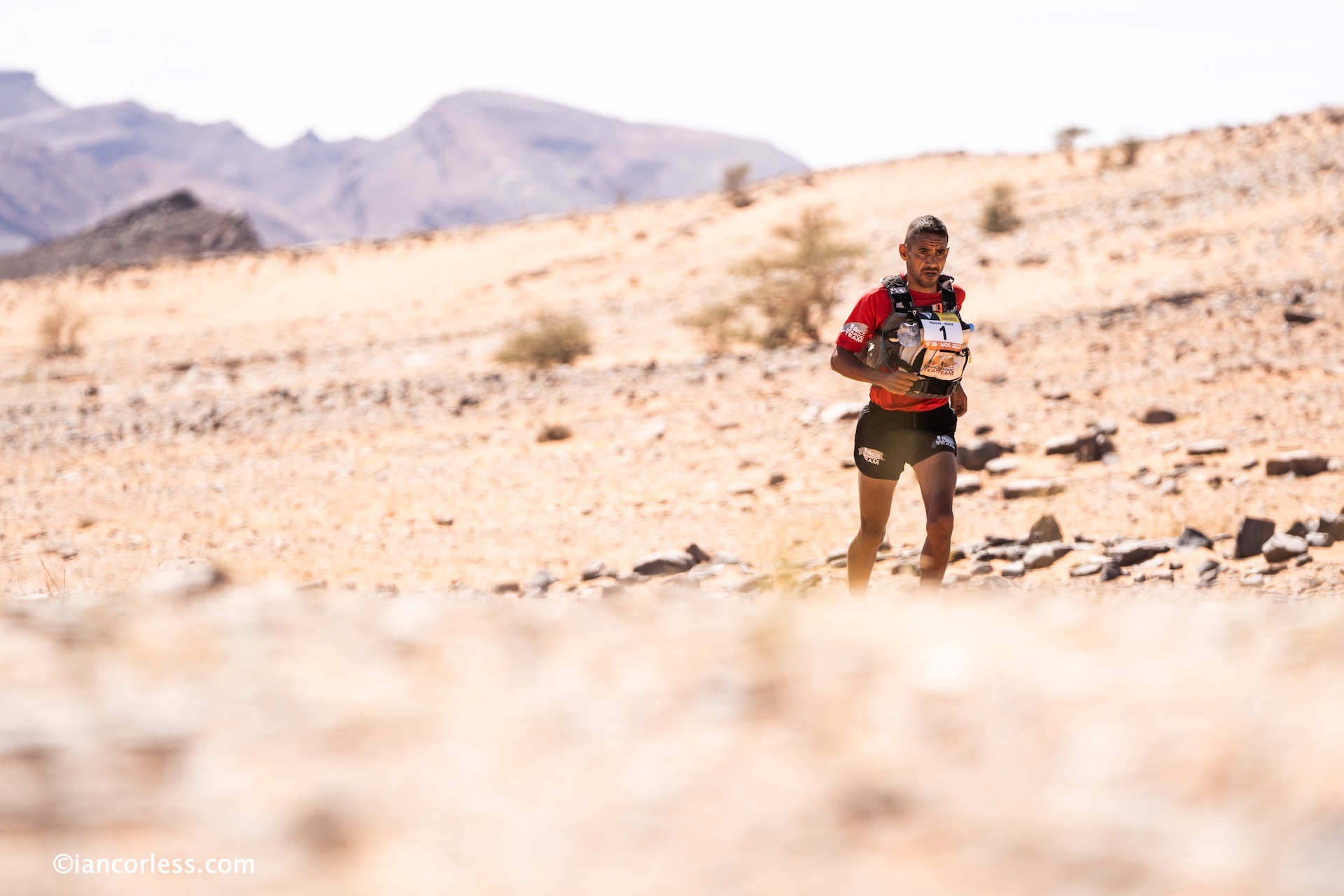
Rachid biding his time and energy

Some had said Rachid was not in form. I doubted this… To me, all along, Rachid had respected and feared the ability of Aziz and he had to race smart.

with 25% of the race covered, the lead was 4-minutes

Rachid started day 1 from the front to build time over Aziz, he won the stage but his time gain was minimal. He therefore had to rethink and place doubts in Aziz’s mind about his fitness and strength. He set out on day 2, once again from the front but relinquished the lead and lost time. On day 3 he ran for over an hour in the lead and was then caught and passed, once again losing time. His brother however raced strong.

Aziz was going nowhere without Mohamed

Come the long day, my thoughts were Rachid would play his ace and his brother would defend and block helping facilitate his brothers 9th victory. Of course, this plan was risky. It required superb form and confidence from Rachid. It also required Aziz not to be a strong.

10 minutes lead and counting

It was a masterpiece day. By 10km Rachid had 2-minutes, at 20km 4-minutes, then 6, 8 and at 50km the lead was over 10-minutes. It was incredible to watch.

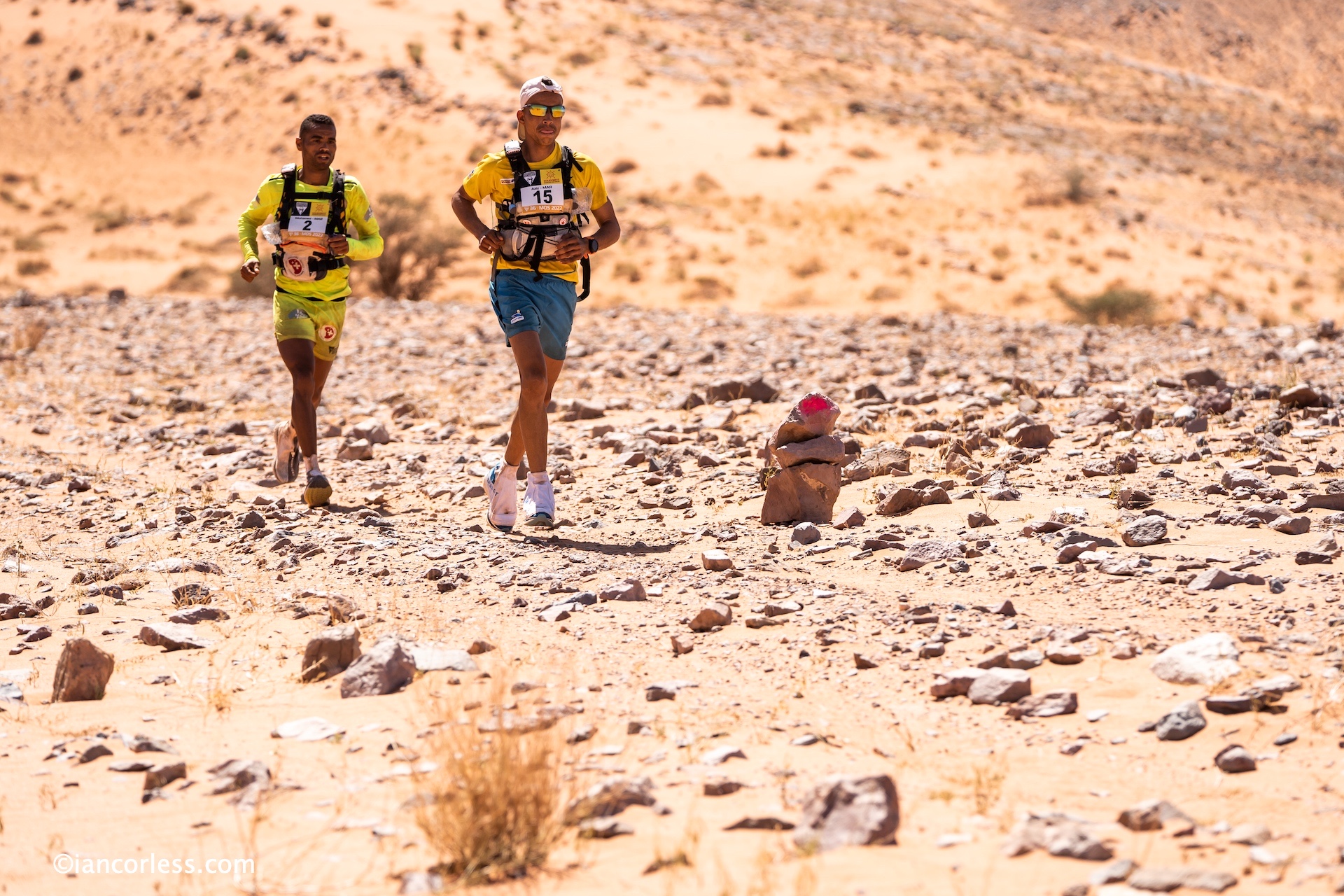
Behind, Mohamed marked Aziz but sensing Aziz fading at the 50km mark, Mohamed also made a move and pulled away from his fellow Moroccan. Now bridging the gap to his brother.

Mohamed made his own move to leave Aziz and gain time

Racing comes no better than this. Chess in running.

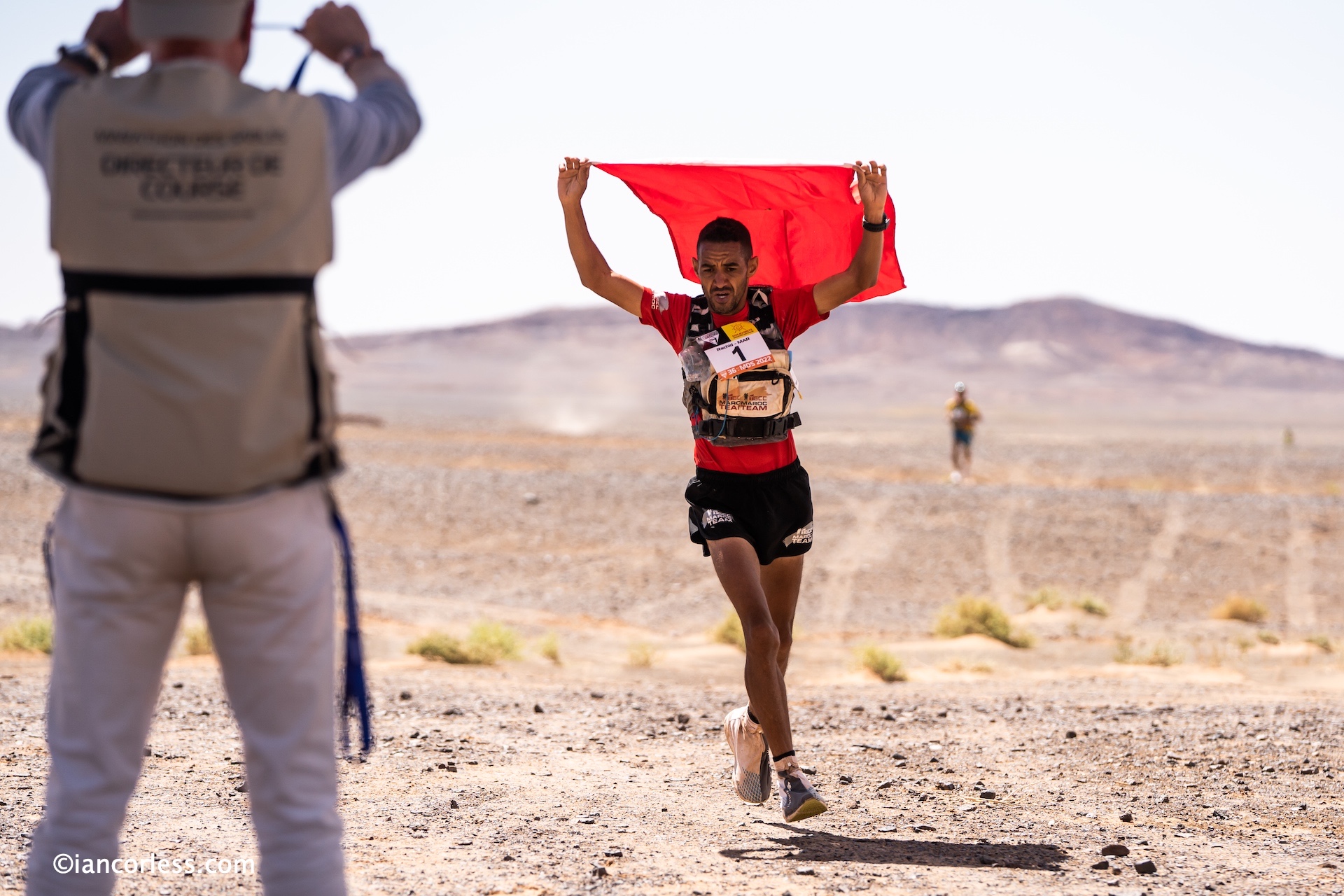
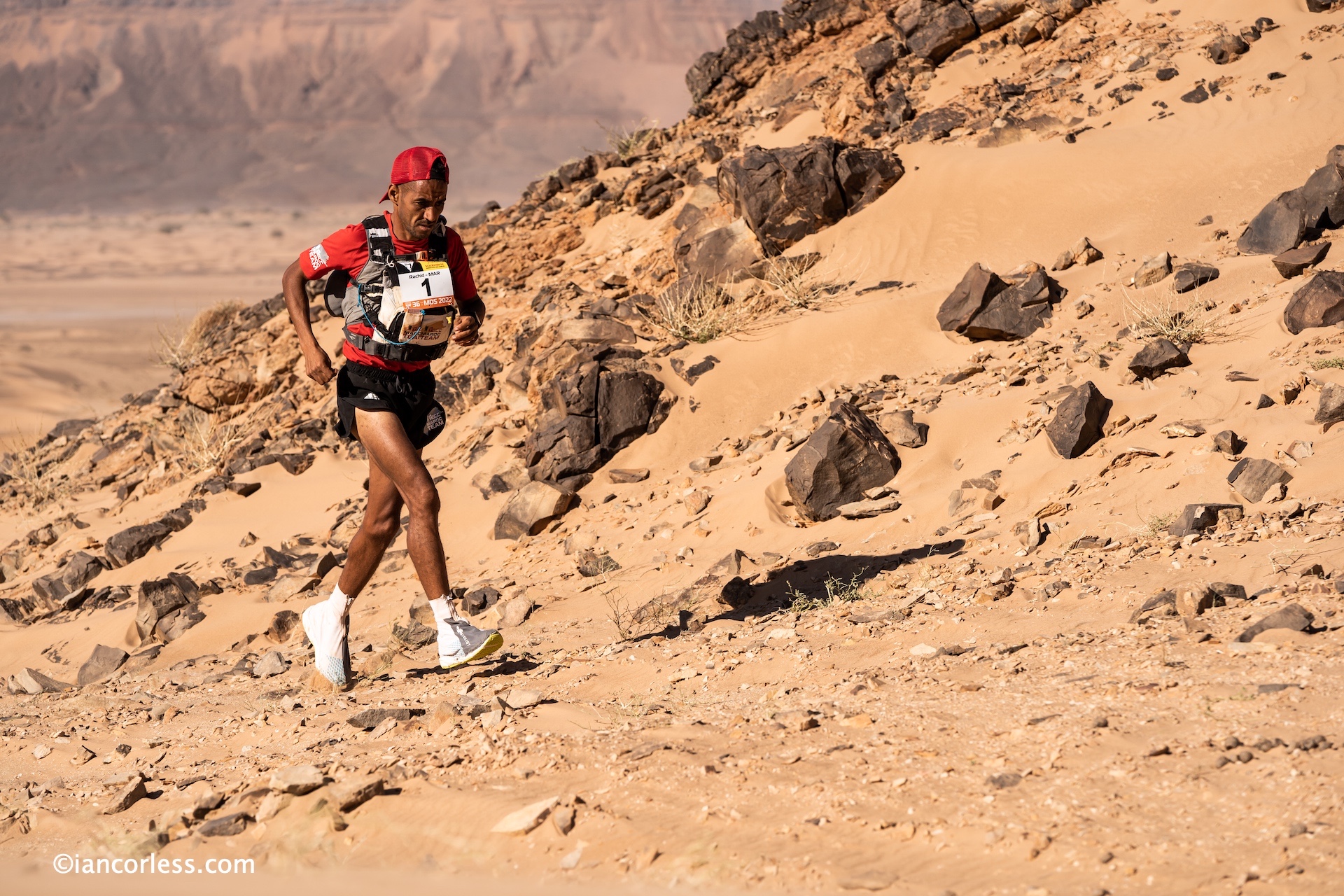
Rachid on his way to victory

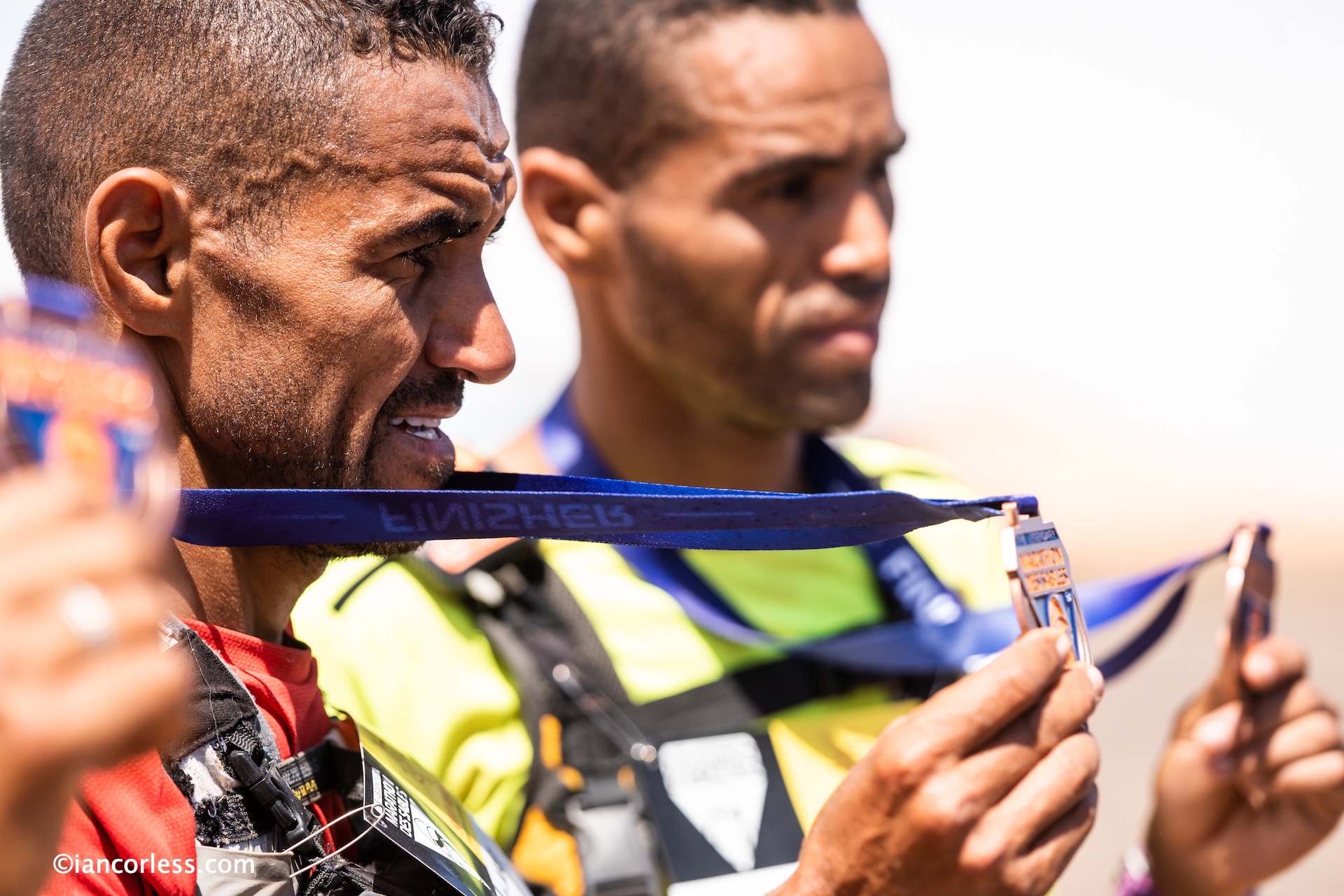
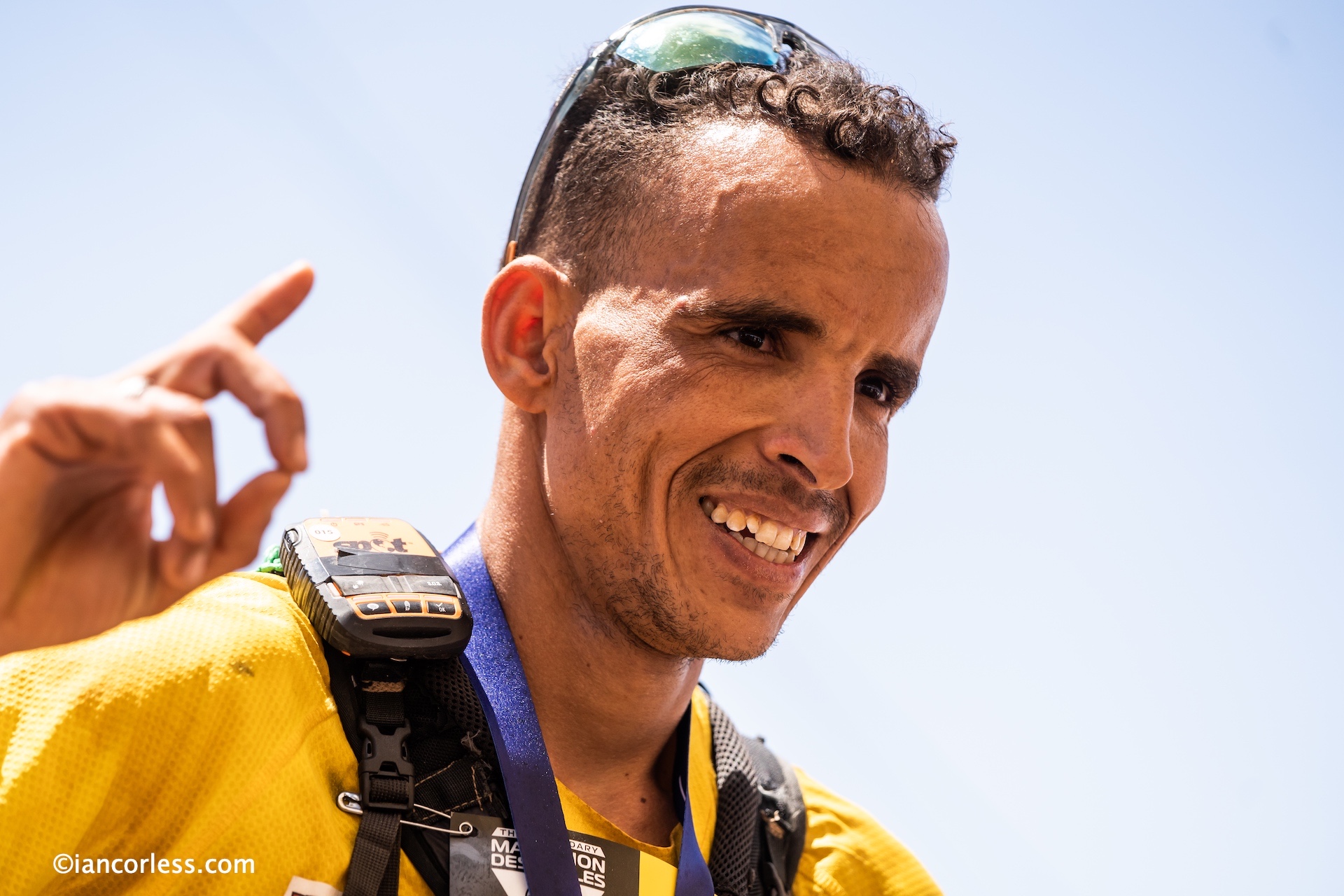
After a stunning day of racing, King Rachid crossed the line in 7:27:04. Mohamed crossed in 7:30:46 gaining a great deal of time on his brother from the 50km to 85.8km finish. Finally, Aziz crossed 7:39:48.

Of course, everyone was keen to know the overall classification? With 15:25:26 elapsed, Mohamed El Morabity leads the 36th MDS. Rachid is in 2nd just 37-seconds behind and now Aziz is 3rd 4:34 behind Mohamed.

One thing is for sure, the ‘marathon’ stage is going to be a nail biter as the El Morabity brothers put their final phase of their plan in to action.

Wow, what a day!

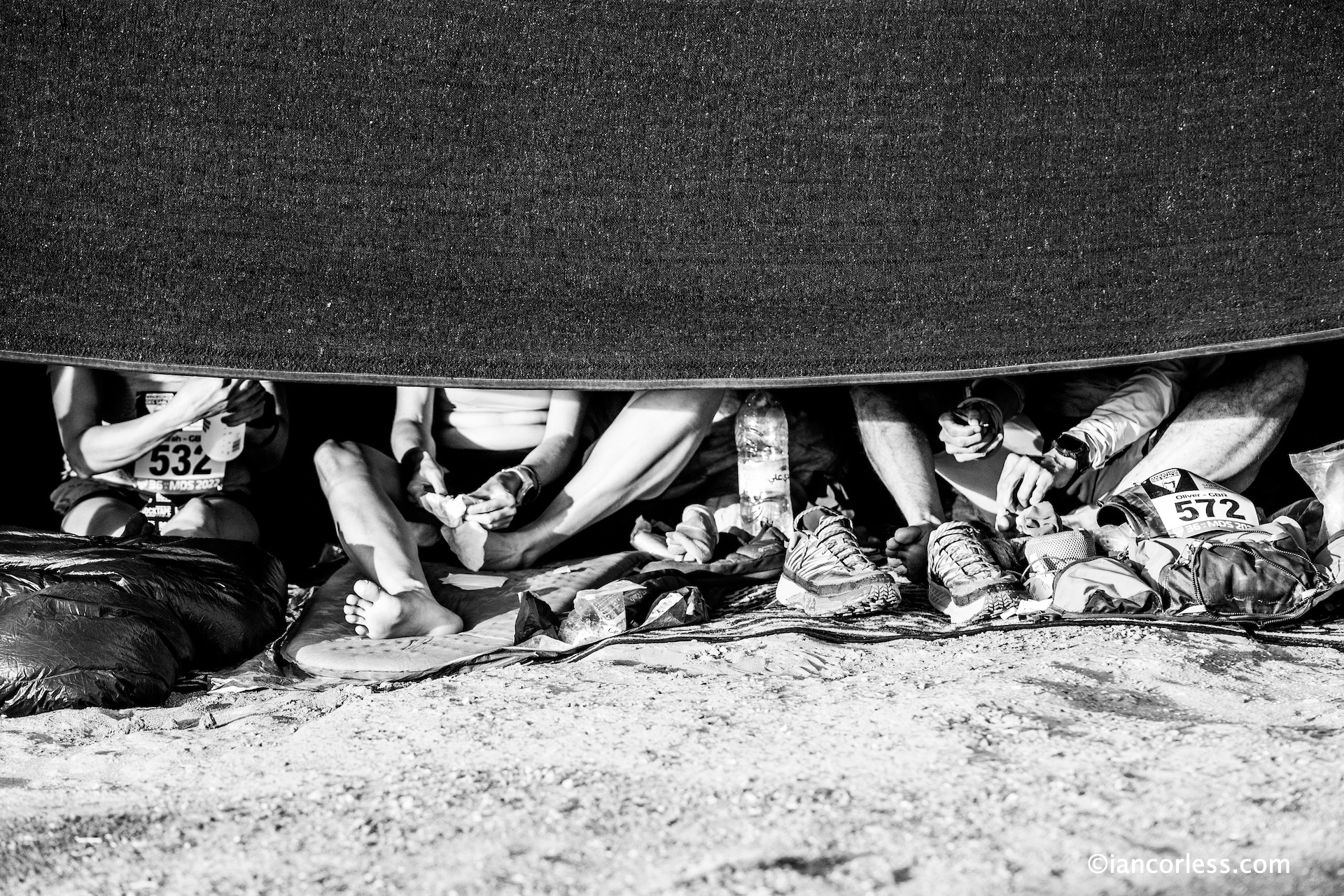
Now the race continues for the many hundreds who will see darkness disappear and they enjoy a journey through the night. The allocated time to complete is 35-hours.

By MDS standards, today was not a hot day. Cloud moved in and out, once or twice it rained and as the sun disappeared, the wind started to increase. It may well be a cold night for many!

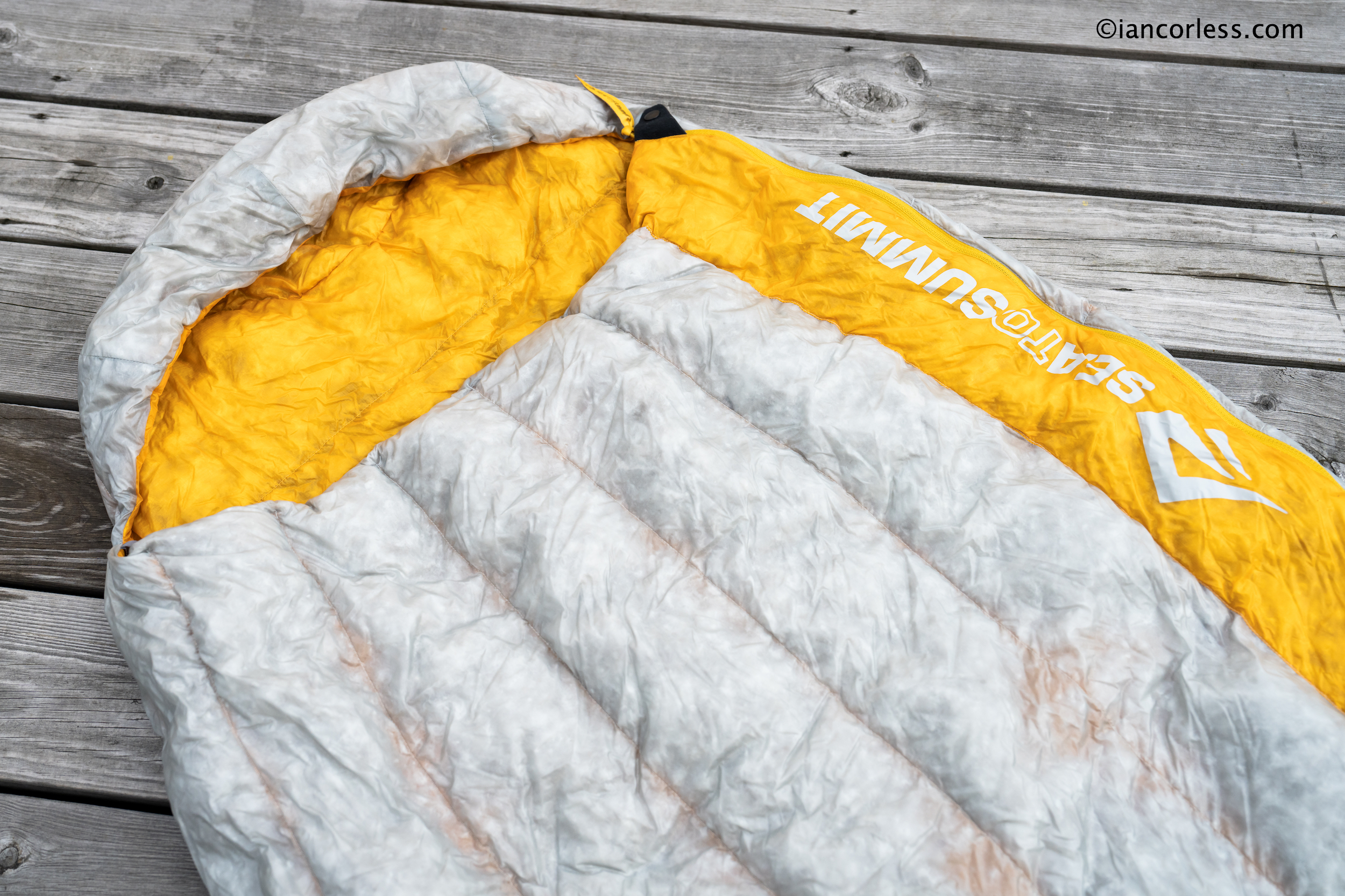
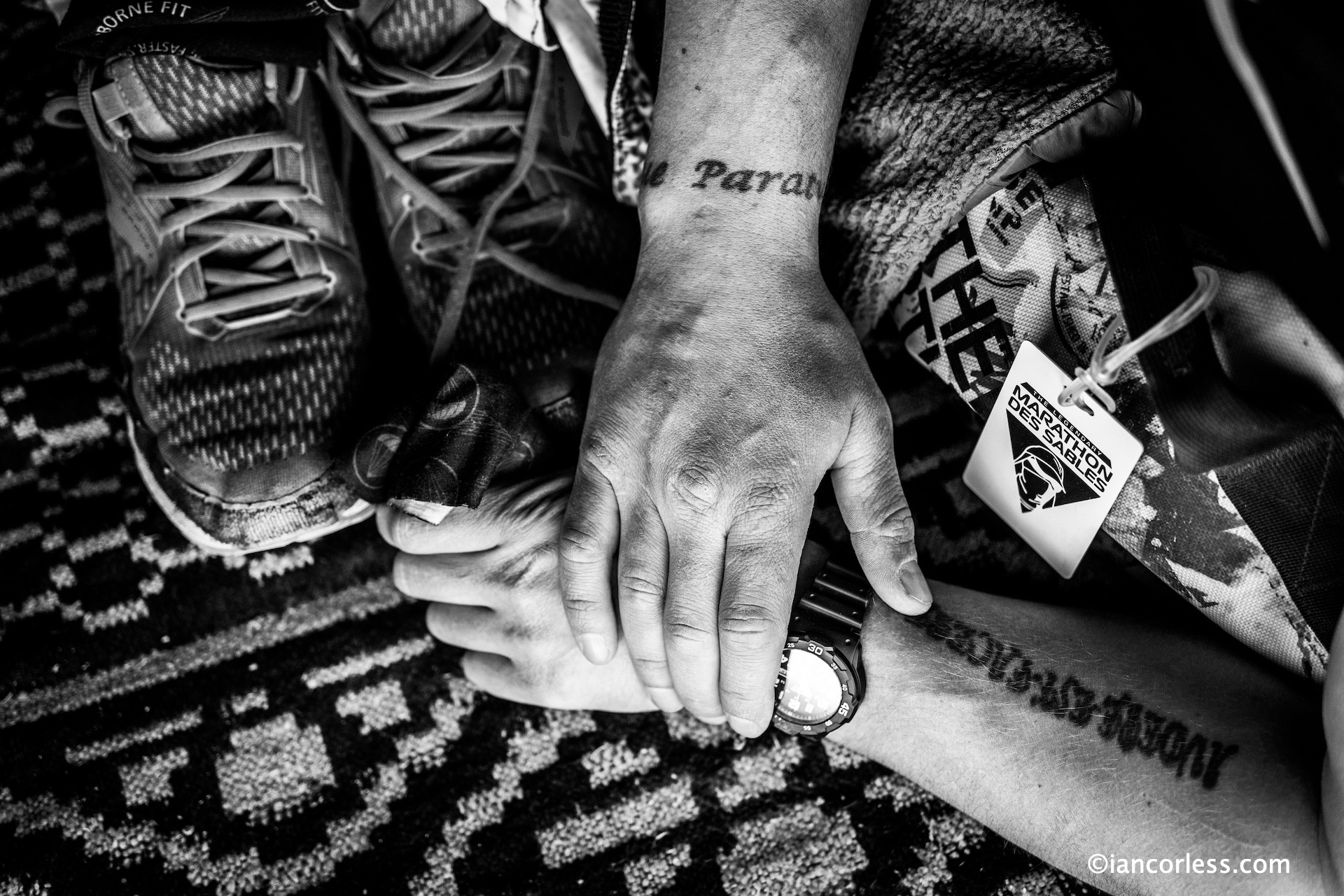
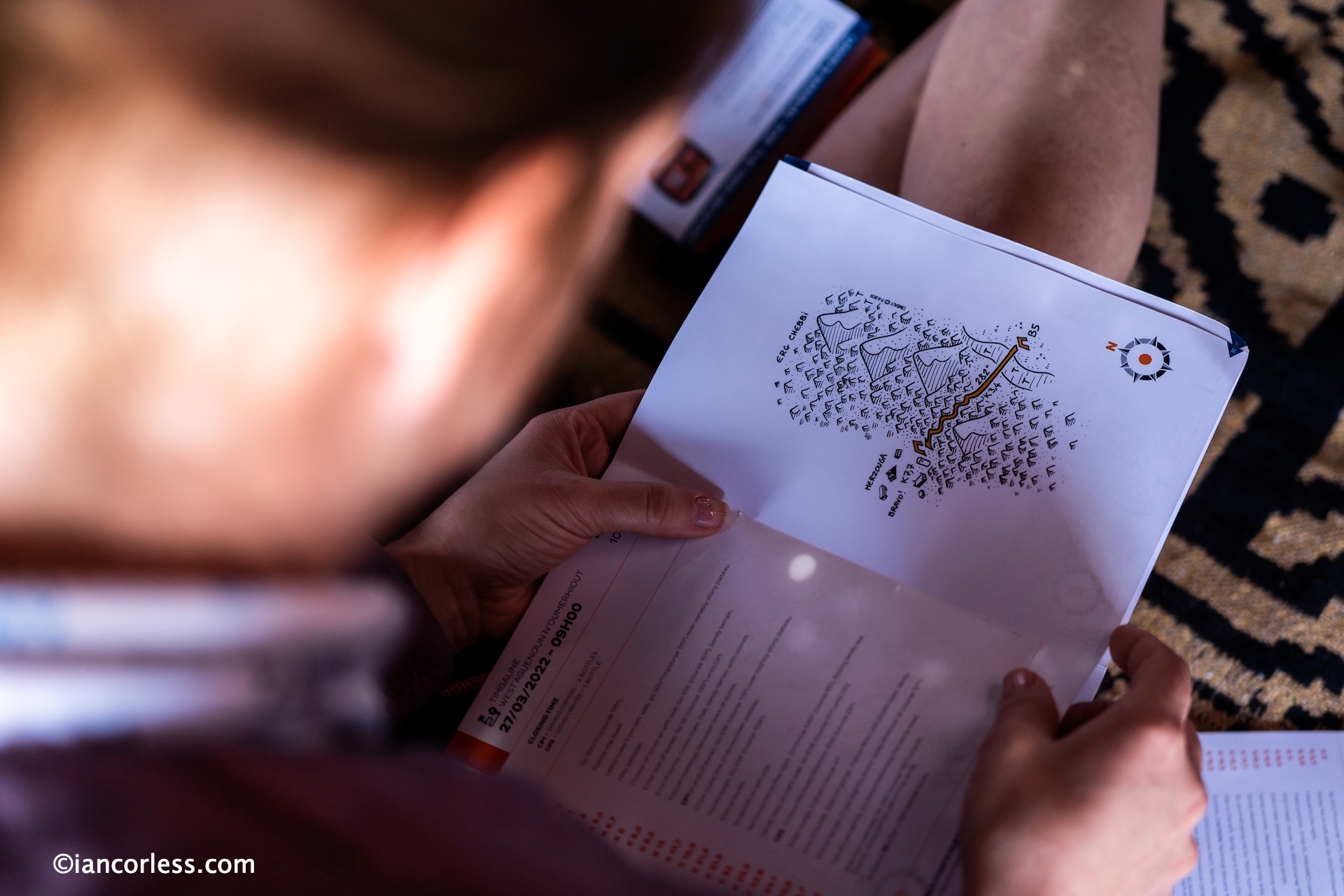
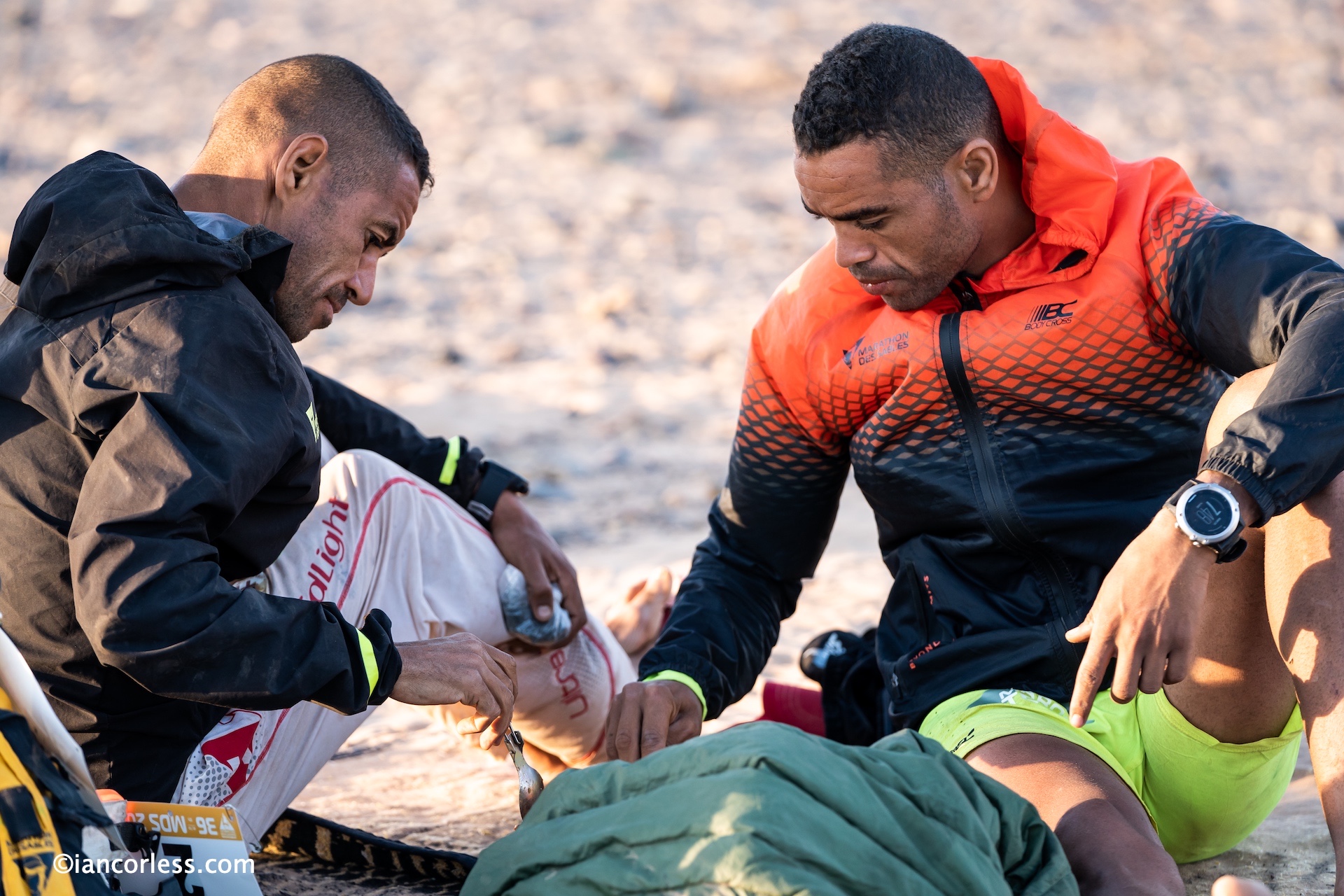
A Runner prepares for a long night

Follow on:

Instagram – @iancorlessphotography

Twitter – @talkultra

facebook.com/iancorlessphotography

Web – www.iancorless.com

Web – www.iancorlessphotography.com

Image sales –www.iancorless.photoshelter.com

Marathon des Sables 2022 #MDS2022 – Stage 3 32.1km

Anna Comet Pascua

The relentless wind and sand storms eased during the night to reveal a clear day that was considerably Warmer than those that had gone before. Another windy day was forecast and of course sand would be blown about, hopefully the full-on no visibility conditions of the previous day would not reappear – everyone hoped! As afternoon came the wind constantly increased making conditions challenging!

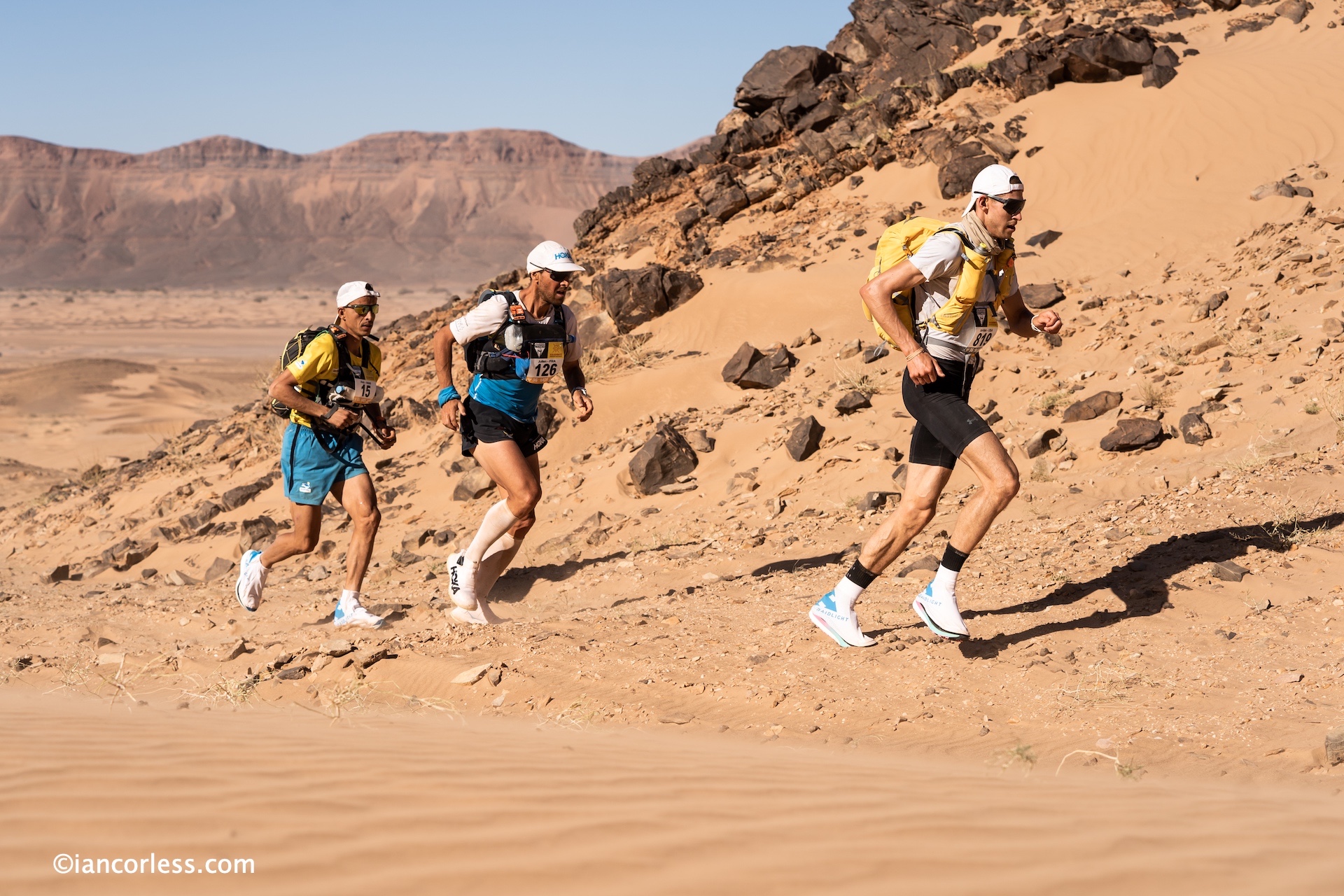
Julien Chorier climbing to the second ridge

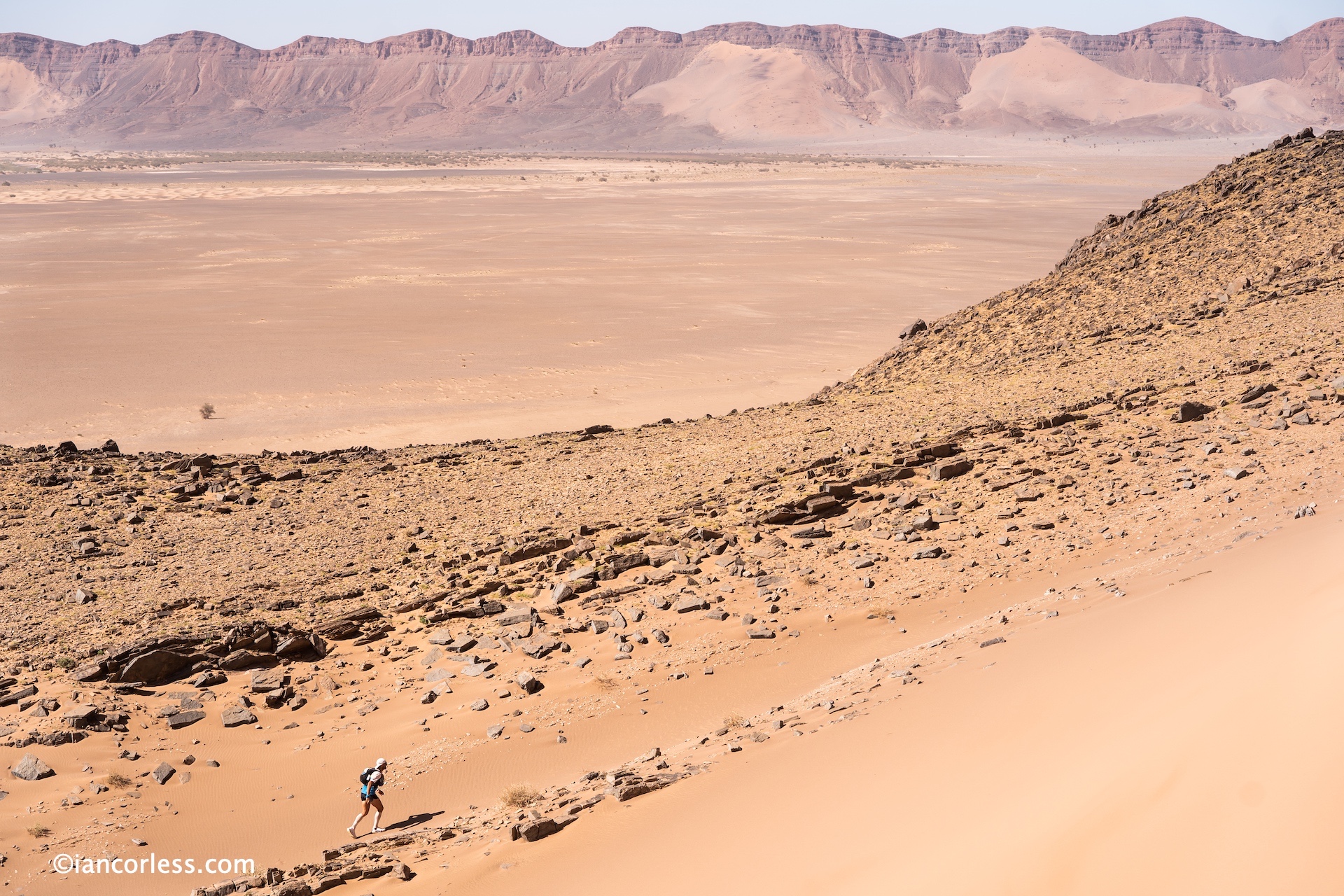
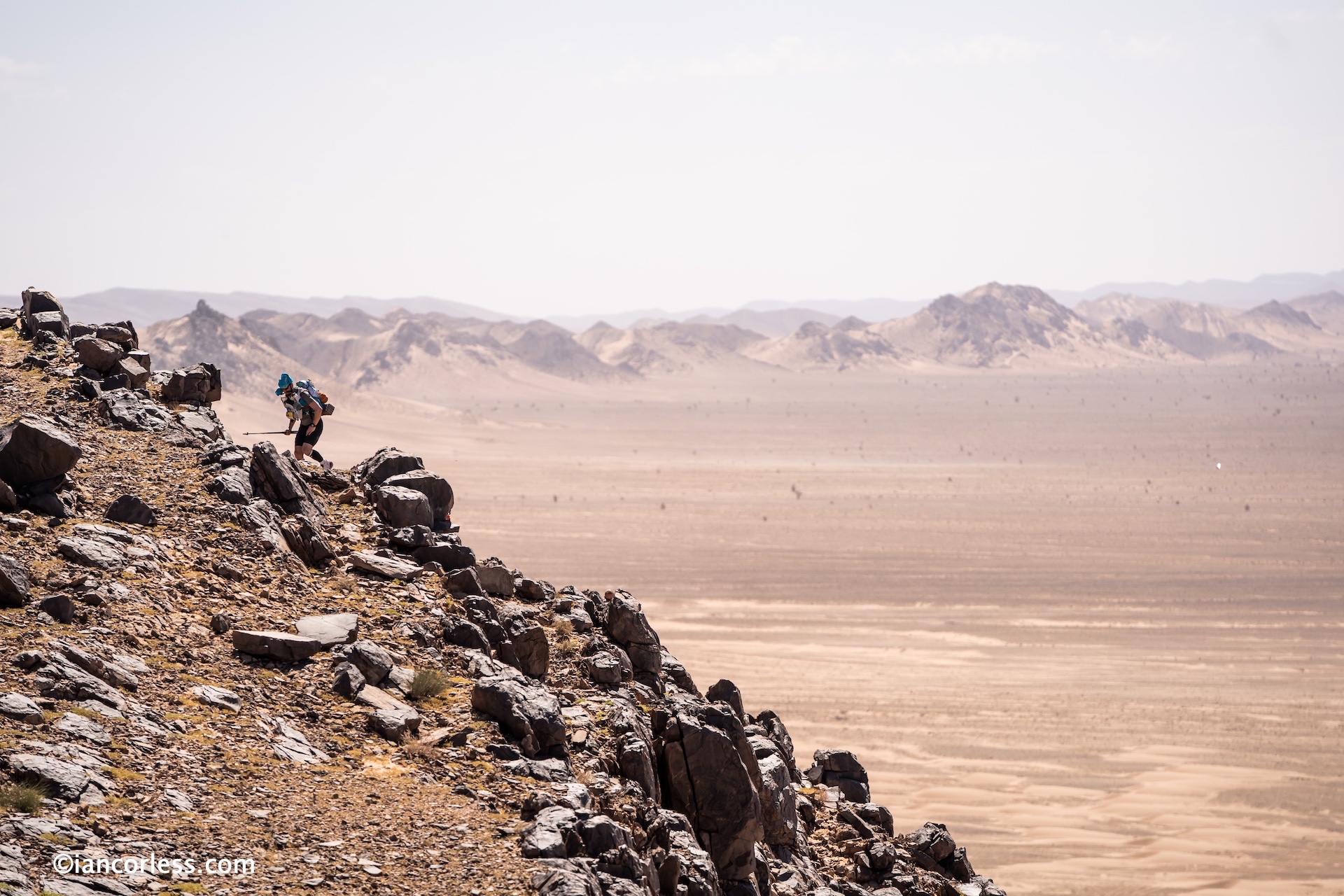
Stage 3 at 32km is a beautiful stage with two exposed ridges split by Cp1, a flat plateaux crossing, the climb of Jebel El Otfal from the normal side and the descent using the gully which the runners climbed on stage 2. At the bottom, a small section of dunes and then flat terrain all the way to the finish. For some, me included, one of THE best stages in all of MDS history. The two ridges and Otfal provide more climb, exposure and challenge and if you like the mountains and vertical, this is a Sahara dream.

Vertical and technical terrain – a dream
Rachid leading from the start

Rachid, once again, went off from the front and set the pace. Three days in a row he has done this – most unusual. I chatted with him in camp before the stage. He was having breakfast with his brother. I asked how he was, his reply simple, he winked and said, “I am very good my friend!”

A brotherly shared breakfast

I am convinced he and his brother have a plan!

Rachid controlled the front of the race for an hour or more and then relinquished the lead to Mohamed and Aziz. The duo pulled away and crossed the line together in 2:36:43.

Aziz behind Julien in the opening km’s

Rachid, once again for the 2nd day finished 3rd and lost more time, his finish coming in 2:38:21.

Rachid formulating a plan

For those in the know, Rachid never concedes time and does not not finish 1st often. To allow his brother and Aziz to pull away only confirms for me that he has a big plan ready for the long day… It’s risky, he is now nearly 9-minutes behind the race leader, Aziz. My thoughts are that he wants Aziz to believe that he is not in good form, that he is struggling and then on the long day, he will unleash a ferocious pace, take back the lost time and gain time to take the lead. Of course, Mohamed will be used as a distraction and a game maker to make this happen. It’s exciting to see how this will play out.

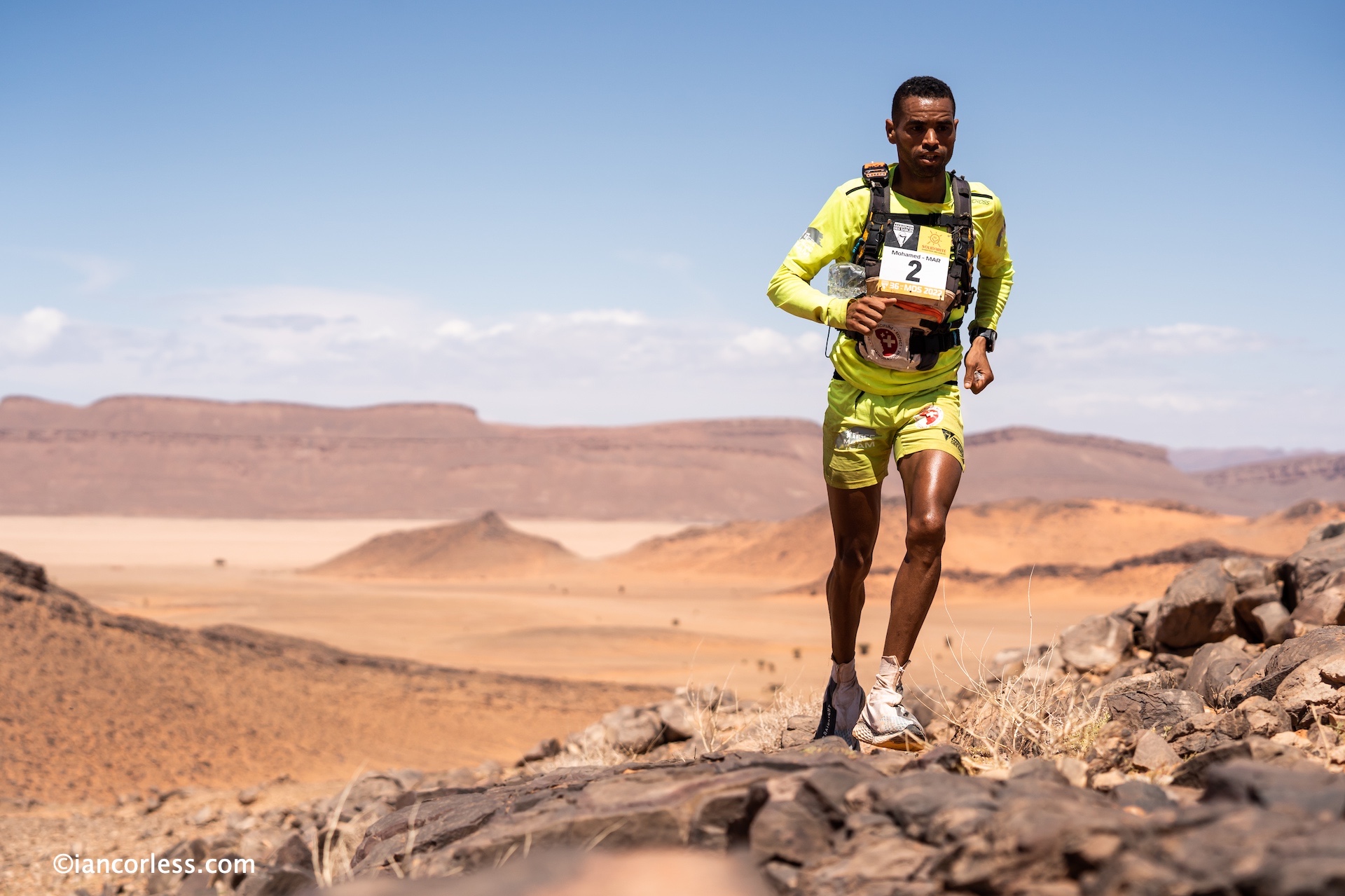
Mohamed El Morabity

Of course, the other scenario is that Rachid really is tired and not on form? I don’t believe that.

Anna Comet Pascua

Anna Comet Pascua once again delivered a solid performance and with her skyrunning background, I am sure she will have revelled on the ridges and climbs. She won the stage in 3:26:49 ahead of Sylvaine Cussot in 3:35:51. A smaller margin than yesterday but no doubt Anna was conserving energy for the 85km long day.

Sylvaine Clussot

Aziza Elamrany once again finished 3rd in 3:49:11 ensuring that the Moroccan home ground will be happy with a podium ranking.

Aziza Elamrany

Tomorrow is the long day and as always it will be a key day that will dictate the potential outcome of the 36th MDS. Nothing is guaranteed, anything can happen on a day of this length and in these conditions. Each runner will need their ‘A’ game to run to their potential and dreams.

Stage 3 of the 36th Marathon des Sables has Anna Comet Pasciu and Aziz Yachou secure their leads ahead of the stage 4 long day.
Mds ants heading to Jebel El Oftal

Follow on:

Instagram – @iancorlessphotography

Twitter – @talkultra

facebook.com/iancorlessphotography

Web – www.iancorless.com

Web – www.iancorlessphotography.com

Image sales –www.iancorless.photoshelter.com
Marathon des Sables 2022 #MDS2022 – Stage 2 38.5km

Anna Comet Pascua

Rachid went off like a shot again… Pushing the pace and behind everyone pursued. Then suddenly, in the space of a couple of km’s he relinquished the lead and hovered somewhere around 10th. I am not sure if there had been a ‘natural break’ requirement or if this had been an intentional move? Certainly it wasn’t blowing up!

Rachid leading early on

His brother, Mohamed took over the lead and on a climb before Cp1 was pushing the pace with Aziz following.

Mohamed El Morabity
Aziz Yachou

Rachid was now further back. It all made sense, in my opinion, the brothers were playing a tactical game on Aziz. I guess my cycling background is at work and my conclusion is Rachid has sent Mohamed out as a decoy, to allow Aziz to take over the lead in the race and placing Mohamed in second. This is a great move potentially. It would take pressure of Rachid to defend and force Aziz and Mohamed to control the front of the race and thus allowing Rachid to pounce… Rachid will need to feel very confident for this move, if not, his 9th victory may not happen!

Rachid moved back in the field

After Cp2 and climbing the stoney side of Jebel Otfal, Mohamed descended first and he continually looked over his shoulder for Aziz. Aziz followed not long later, within 60-seconds. It was however 4-minutes before Rachid appeared, now in 3rd. Was Rachid tired, or was he playing the tactic as mentioned above?

Aziz descending Jebel Otfal to take 2nd on the stage and overall lead

At the line, Mohamed crossed in 3:07:40, Aziz in 3:08:52 and Rachid 3:16:22 for the 38.5km stage. You don’t usually see a result like this in the early stages of MDS for Rachid!

The overall placing Aziz in first, Mohamed in 2nd and Rachid in 3rd, 5:13:29, 5:17:56 and 5:20:38 respectively.

The 36th Marathon des Sables is now Aziz’s to defend and the brothers to pursue. What an exciting 36th edition this is going to be.

Anna controlled from the front

The women’s race was strung out with Anna Comet Pascua dictating from the front with an incredibly strong performance. I said yesterday, she came her to win and this is being proven with her result in stage 2, crossing the line in 4:06:17.

Anna on Oftal

Sylvaine Cussot as on stage 1 pursued and always with a smile, she finished a strong and convincing second in 4:18:46.

Sylvaine Cussot

Aziza Elamrany had showed promise on stage 1 for a podium place and today that came true finishing ahead of the 2021 MDS champion and fellow Moroccan, Aziza Raji, her time 4:39:38.

Aziza Elamrany
Aziza Raji

The overall podium after 2 stages placing Anna and Sylvaine 1 and 2 ahead of Aziza Raji in 3rd, 6:58:37, 7:15:11 and 7:45:03 respectively.

It’s all to fight for on stage 3!

Stage 2 was marked by extremely strong wind and sandstorms that battered the runners. There was also an increase in temperatures recorded at cp2 of +10deg in 1 hour. At the time of writing there have been 49 drop outs today.

Follow on:

Instagram – @iancorlessphotography

Twitter – @talkultra

facebook.com/iancorlessphotography

Web – www.iancorless.com

Web – www.iancorlessphotography.com

Image sales –www.iancorless.photoshelter.com

Marathon des Sables 2022 #MDS2022 – Stage 1 30.3km

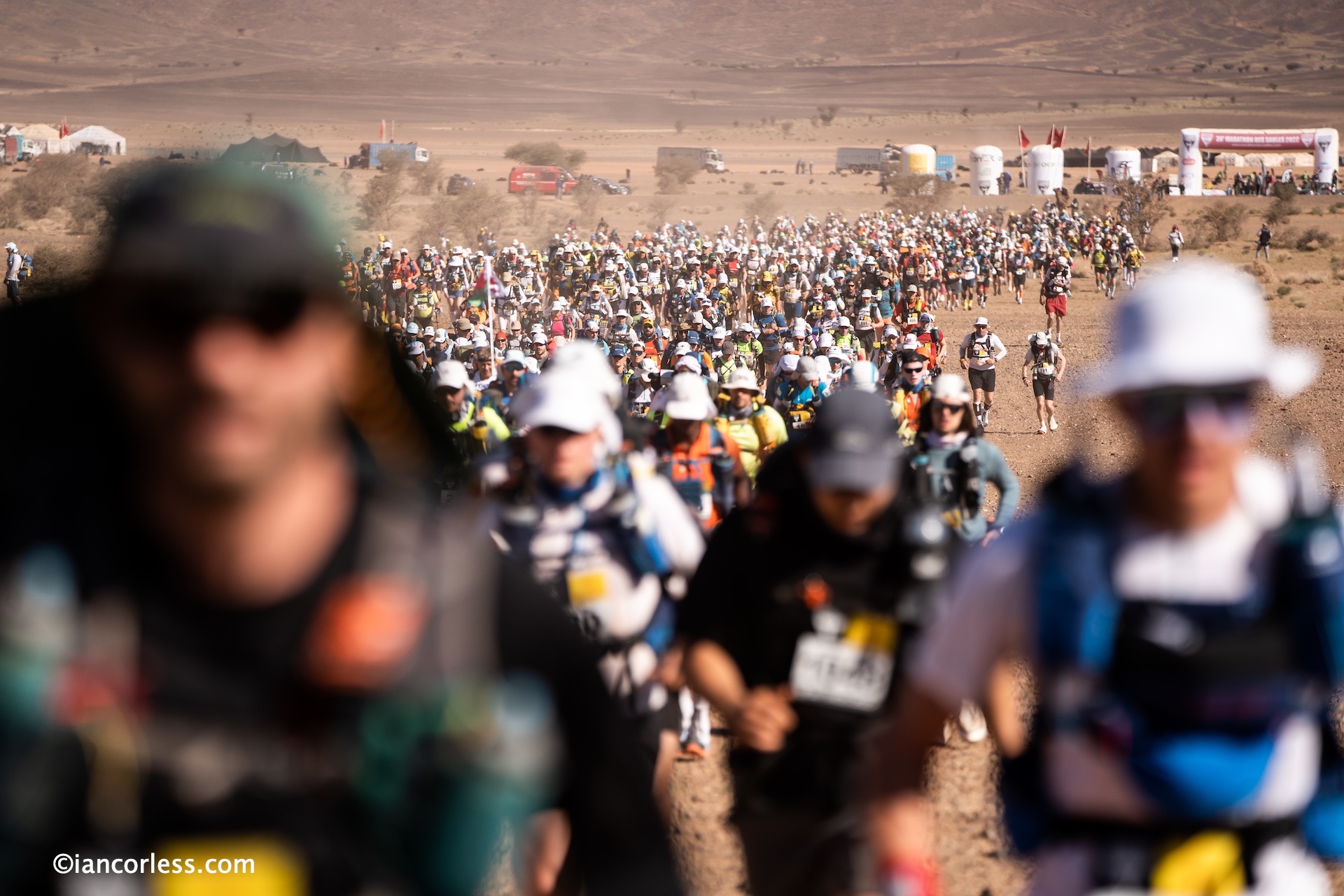
Stage 1 36th edition start

The 2022 Marathon des Sables got underway today, the 36th edition coming quickly after the 35th which took place in October 2021.

Conditions in March are very different to those encountered in 2021 with cool nights and relatively mild daily temperatures for the Sahara.

Patrick Bauer

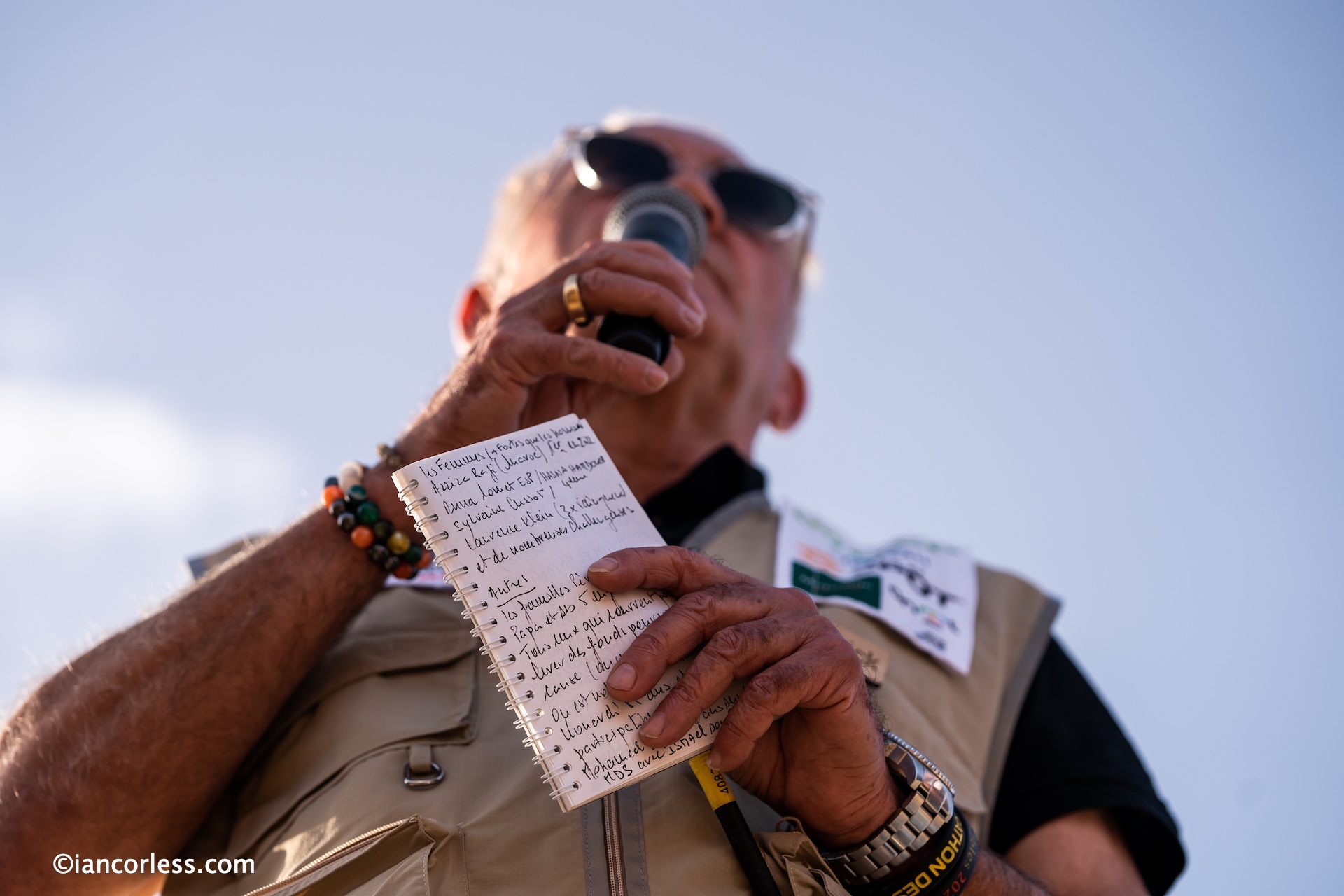
Of course, anticipation was high in bivouac, a mixture of excitement and nerves. However, Patrick Bauer, as per usual, calmed everyone from the roof of his Land Rover with his daily morning introduction to the day. The race was underway at 0900 as planned.

The march forward

Unusually, Rachid El Morabity went to the front and set the pace. He meant business! He was followed by Julien Chorier and within 400m they had already opened a gap… This was a very unusual Rachid tactic. He usually bides his time, eases in to the day and the slowly speeds up; not today.

Rachid and Julien

Rachid started as he meant to go on and won the day! But why did he start so hard? Quite simply, in my opinion, he knows he has a race on his hands this year with Aziz Yachou who pushed him last year and had he not had a time penalty, the result just may have been different?

Aziz Yachou

After the fast start, Aziz pursued and at the line had closed the gap, Rachid 2:04:16 and Aziz 2:04:37. So close!

Mohammed El Morabity

Julien Chorier faded to 5th in 2:16:12 and Mohammed El Morabity after a slow start moved in to 3rd 2:10:16 with Cédric Fleureton 4th in 2:14:40.

One thing is for sure, Rachid will need to work his year and it is clear that he knew this before the start. He looked leaner and fitter, not that he has ever looked any different. But pre-race there was a different look. It’s subtle. The cheeks just a little gaunt and his legs more defined.

Anna Comet Pascua

The women’s race was a different story with a more gradual start to the day with a clear strategy forming. Anna Comet Pascua came here to with the race and although she had run with others in the opening km’s, by Cp1 she had taken the lead and she went on to win the stage in 2:52:20.

Sylvaine Cussot

Sylvaine Cussot finished 2nd in 2:56:25 and the 2021 champion, Aziza Raji finished 3rd in 2:59:41. Amelia Culshaw from the UK was 4th ahead of multi MDS champion, Laurence Klein, 3:06:10 and 3:13:01 respectively. The women’s race is set for an exciting battle as the terrain becomes more challenging and the distances increase.

Anna and Aziza
Aziza 2021 champion

The stage one route was just over 30km’s, flat but had plenty of soft sand and several small hills and dunes but nothing substantial to make the day difficult. It was a good day 1 for all to ease in and for the top men and women, a fast one! Rachid’s time was incredible… We are in for a fast men’s race.

The impressive MDS!

Follow on:

Instagram – @iancorlessphotography

Twitter – @talkultra

facebook.com/iancorlessphotography

Web – www.iancorless.com

Web – www.iancorlessphotography.com

Image sales –www.iancorless.photoshelter.com

Heat Acclimation – Dr Jodie Moss

Heat is often debilitating for a runner. Heat cramp, heat exhaustion, dehydration, heat stroke, headaches and the desire just to stop are all very real problems.

As the summer season approaches, running in a hot climate is sometimes unavoidable, however, racing in a hot climate is relatively controllable as you will understand in advance the race, the environment and the expected temperatures one can expect.

Understanding the conditions of ones running and racing environment is crucial to make the best of all the hard training you have done. So, one needs to adapt and plan.

Heat acclimatisation takes place in a natural environment where one can specifically prepare in advance of a chosen race or project, ideally for 7-14 days before the event. For most of us though, the luxury of travelling for 14-days and having an acclimatisation holiday is not a realistic proposition.

This is where Heat Acclimation comes in. In simple terms, this is about providing heat stress in a controlled environment, typically a heat chamber, over a set period of time and sessions.

Dr Jodie Moss has specialised in heat acclimation and in the process, put her learning to real time use at the 2019 Marathon des Sables where she placed 8th woman.

Jodie at MDS

With Marathon des Sables approaching, it is timely to re-visit and gain a full understanding of what is required to acclimate to heat with an interview with Dr Jodie from July 2020.

Podcast HERE.

What is it about heat that makes running so difficult?

You are imposed upon by a different challenge. What happens is you create this metabolic heat by contracting your muscles. When one runs, you use muscle mass and this generates heat. When you then exercise in a hot environment, particularly if it is greater than skin temperature, then this makes it very difficult to get rid of heat. Humans are not the most efficient mechanically, so this energy from contracting muscles, potentially around 20 to 30% of the mechanical energy being made is converted to chemical energy, that means 70%, maybe even more, needs to be eradicated in the environment. If the environment is hot, for example, the Sahara, a challenge is imposed to eradicate the heat and what often happens is is that the heat is stored and one feels hotter and this then has a cascade effect of issues and problems, physiologically and perceptually.

Physiologically:

An increase in skin temperature is likely the one which is noticed first as it is directly impacted upon by the environment. There will be an increased demand for blood flow that needs to go to muscle to provide it with oxygen/ energy to run, but also there is a competition for blood flow to the skin. In order to thermo regulate, blood is competing with muscles and skin and that creates an impact on one’s cardiovascular system. Typically, heart rate will increase due to the increased workload sending blood to muscles and skin.

Body core temperature will increase.

Sweet rate will also increase and therefore the percentage of water loss will increase and the consequence of this is dehydration – a deficit in body water with onward complications.

Perceptually:

We thermally perceive it to be a lot hotter.

You are more uncomfortable.

The feeling of needing to slow down and therefore performance is impacted.

Is heat acclimation as valid for the runner at the front, as well as the runner at the back?

In principal, yes. However, if we take Marathon des Sables as an example and the winner, Rachid El Morabity, he is a Moroccan, he lives in the environment in which the race takes place, therefore he is naturally acclimatising on all his training runs. Therefore, he has no need to acclimate artificially.

Highly trained individuals though, through training, can gain thermal adaptations, irrespective of environment. For example, if you are training everyday, particularly at a high percentage of VO2max, one will create heat this will require a higher sweat rate and therefore adaptation takes place. But, interventions should be in place both acute and chronic, to minimise the effect of environment on performance. Environment, will always have an impact on performance, no matter which athlete.

Acclimate for the heat.

When is a good time to start adapting to heat and how?

It is a consideration for close to competition, typically in a period of 7 to 21-days. Adaptation from exposure diminishes rapidly, so, there is no need to do this too far away from the chosen event. 

Now of course, if one is fortunate with time, the best scenario is to travel to the race location and adapt naturally in the environment of the race. However, very few have such a luxury and this is where acclimating as opposed to acclimatising steps in.

However, budget can be an issue, so it is possible to adapt via some simple home methods. Keep one’s training as planned, say by a coach, and then add layers of clothing while training. Have a hot bath after training. One can also consider Bikram Yoga and say saunas. But, and this is a big but, while some of these interventions will have some benefit, it is not something that can be recommended completely as it is harder to prescribe and measure.

We want heat adaptation and these adaptations only occur when there is sufficient thermal strain.

As an example, one could run for an hour with layers and build heat. Then immediately have a hot bath. Water has a greater density than air and the heat inside the body would be retained and most likely increase, this would stress the system. But, the issues arise with how long does one do this… Ultimately though, this is considerably better than nothing!

By far the best way, is environmental heat chamber.

Environmental Heat Chamber

The jury is still out on what is the optimal sessions for performance gain, however, five sessions would be considered fundamental over a period of 7 to 14-days. This period has shown results of a much more fulfilled adaptation. The pseudo motor function (sweat rate) takes a little longer to occur, but all the other measurements, cardiovascular and lowering core body temp occurs quite rapidly. So, based on sweat rate, a longer period of time provides the best results.

 In regard to the sessions, they could be performed every 2-days, every other day, every day and some even do 2 sessions per day. But obviously time and budget is a huge factor.

It is also important to remember that these sessions take place close to competition, so, monitoring stress and recovery is equally important. 

In regard to session length, 60-minutes is usually adequate and this allows the body to get hot enough.

I get asked about adding a run pack and weight, for example, MDS is a self-sufficient race and a pack is required. On the start line, the minimum weight will be 8kg. But training with this in the heat is not necessary, but some insist as it provides security, comfort and a greater understanding of what the Sahara, as an example, may feel like. But this adds additional stress and the sessions are about heat adaptation.

The Protocol

Isothermic heat acclimation intervention is typical. We get you to exercise so that your core reaches a certain temperature. For this we use a rectal thermistor. This ensures that you meet the thermal stimulus, crucial for sessions like this.  

We measure body weight naked and this allows us to monitor fluid intake and sweat rate. We can test urine to look at hydration status too. This is all about making the client aware of hydration and levels. We also want the client to leave a session re-hydrated!

A treadmill or bicycle is used. Personally, I prefer the bike as it adds less impact to the body. It’s important to remember, these sessions are about heat adaptation, they are not training sessions. A 5-minute check will include hear rate, core temperature, skin temperature, perception of thermal environment, how hot does the client think it is? And finally, I will ask how comfortable the client is. Then, the exercise will begin.

We aim for a core of 38.5 degrees in each session. This is ideal for pseudo motor and thermo functions to be maximised. It ensures that we are always controlling and meeting a fixed criteria. Measuring the thermal strain is key. It usually takes about 30-minutes to get to 38.5 degrees depending on the individual. But external factors do have an impact. 

We typically see improvements by session 3. But it is important to have, say 10-minutes of each session fixed, that way we can monitor improvement and adaptation. We can gain the data here and then report back. Day 5 to day 7 will show the most improvement. So, 7-sessions.

Time can be an issue and some may prefer to squeeze two sessions per day and compress 7-days, say, into 3 or 4. This is possible and literature confirms this. Total exposure is more important than days.

Ideally, the last session would be 1 or 2-days before departure for the chosen race.

What problems can occur without acclimation and how does one mitigate it?

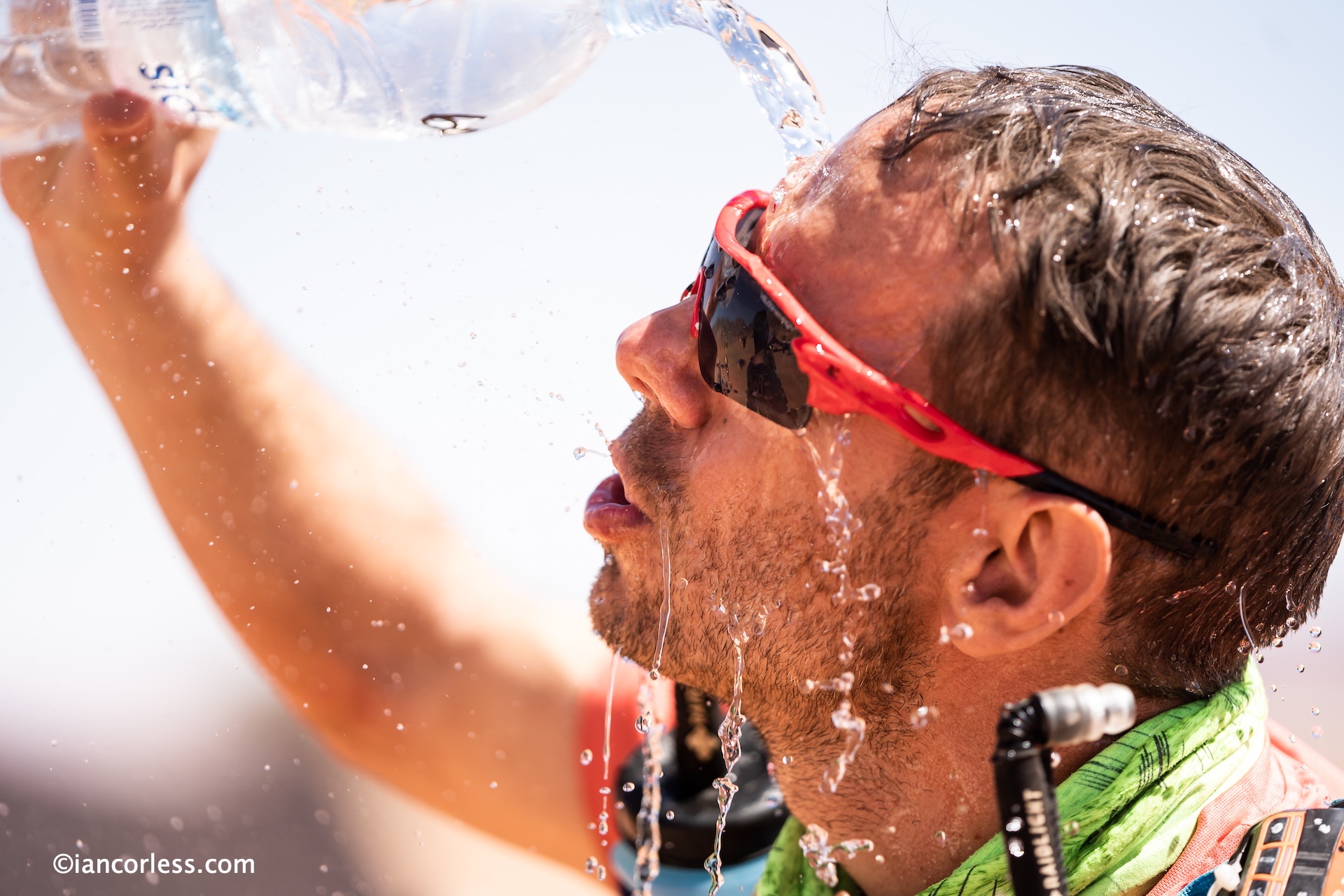
A runner will be faced with a physical and perceptual challenge that will have negative effects. They will be slower, frustrated, dehydrated and have a potential of heat stroke and ultimately they may not finish the race. If any of these elements are experienced, try to cool as much as possible, seek shade at aid stations, rest and allow the core to lower. Hydrate and use spare water to provide a perceptual cooling. Water on face, head, forearms and neck will help a little.  

On a personal note:

I did not have the perfect race and that is what makes me keep signing up to race. My heat protocols were great but I compromised my training and I was surprised with 8th place. I had an amazing support system and I do have chronic heat exposure, I am also very good at getting rid of heat. I also sweat high. But I need to be careful on dehydration. I made a mistake with my pack trying to make it as light as possible but I compromised my pack integrity and this hurt my back. I look forward to going back, I hope in 2021.

Jodie with her medal.

Top 3 tips to get ready in regard to heat and training.

1. Have a heat protocol as outlined above.

2. Test all kit and nutrition, leave nothing to chance.

3. Do not panic. Trust the training you have done. Do not increase mileage and training in the light stages. Do not risk injury or illness. Be healthy.

Seeking shade at the 2021 MDS.

Follow on:

Instagram – @iancorlessphotography

Twitter – @talkultra

facebook.com/iancorlessphotography

Web – www.iancorless.com

Web – www.iancorlessphotography.com

Image sales –www.iancorless.photoshelter.com

Fail to Prepare, Prepare to Fail

A Multi-Day race or a long-distance ultra is a huge undertaking. For many, it’s a 12-month project (or longer) that slowly but surely can consume every available day, hour, minute and second.

I get it, a long-distance race over multiple days in an unfamiliar terrain can leave more questions than answers. However, don’t panic, it’s not that complicated – read HERE.

As your key adventure looms, it’s time to focus the mind, body, and equipment so that you can plan for and anticipate all that may go wrong and right while undertaking this key target.

Quite simply, the old saying, ‘Fail to Prepare, Prepare to Fail’ does and can ring true.

So, what can be done?

Luck can have a place in any success; however, it should never be relied on. In multi-day events, particularly self-sufficient ones, the need to fine tune everything is a key element.

  • Training.
  • Kit.
  • Mind.

All of the above have very important roles to play in success.

  1. Get the training wrong, you may not have the fitness or an injury that will result in you not achieving the finish line.
  2. Get the kit wrong, be it too heavy, not durable or inappropriate may impact on your ability to achieve your goal.
  3. Many say the mind is a key and an integral part of any success. Often, the body can be willing, but the mind can be weak, get the mind focused and prepared.

You need to be prepared for whatever your multi-day adventure will throw at you.

In the final phase of training, 6-8 weeks before your adventure starts, is a great time to start working on the final phases and plans that will help ensure success.

THE PREPARE PHASE

If we assume that tapering will take 2 to 3-weeks, this key ‘Prepare Phase’ should be in weeks 4, 5, 6 and 7 before D-Day.

Train and prepare specifically.

First and foremost, understand the challenge that you are undertaking. You may feel that you already have a grasp on this, but there is no harm sitting down and going through all they key aspects. Terrain, weather, mandatory kit, distance, and conditions. Look at the October 2021 edition of Marathon des Sables, the race started with a series of protocols to manage Coronavirus. Ultimately, Coronavirus was not a consideration, it was extreme heat, sickness and stomach problems.

Understand the event and challenge.

Walk, WALK, WALK! – Walking will (for most) be an absolute essential skill to complete any multi-day adventure. You may think you will run most of the distance… But experience confirms that walking is a key to success. Walking, and walking with purpose is a skill. Practice. Consider poles, they may enhance your walking experience, if so, practice and use them.

Learn to walk.

Without doubt you will have long days, and some will go in to the night and through the night. Take time and plan and include a session like this in the ‘Prepare Phase!’ Understand here that this is an opportunity to test kit, not only yourself. Is your head torch bright enough, how do temperatures vary, how does my appetite and requirement for fluid change etc. By doing this in training, you do it in a safe environment. If it all goes badly, you can always make a call and get picked up or get a taxi. You can’t do that in your race or event. Darkness and nighttime can play tricks.

Back-to-back runs may well have featured in your training but running/ walking tired is a skill. However, be careful how you plan this in training. You want adapt body and mind, not break them.

Practice makes perfect.

Perform training with rationed water and race/ event food. You need to learn what works and what doesn’t work. It’s all very well going for a long run and then getting home and eating chocolate and drinking Coca Cola – can you do that in your event? Mentally this can be a real tough challenge – be prepared.

Get a pack that fits perfectly and does not bounce.

Your pack will be with you for the duration of your event. It must be as light as possible and also sturdy enough to last the challenge without breaking. Be minimalist on equipment and purchase the lightest equipment possible. Remember though, lightweight can often mean less durable, less warm, less functional and so on… Better to break or damage equipment in training so that you can make changes ready for the important challenge ahead. Modify and adapt.

Be specific!

Be specific. Snow, mountains, altitude, heat, or cold. Understand the demands that will be placed on you in your challenge and plan for a specific phase (typically in the 2-3 weeks before the event) to help acclimate. This could be a heat chamber, it could be arriving early before an event and adjusting to high altitude, it could be some specific cold, ice or snow training.

Try out food for an adventure in training.

Plan an ‘event simulation’ that will require you to run for a specific distance, be self-sufficient overnight, sleep in a similar scenario/ situation to your event and then get up and run the next day. This can be a key element in understanding what does and does not work. Is your sleeping mat comfortable? Is the sleeping bag warm? Did your food taste good? How easy was it to cook? How about snacks, did they work? How was the pack weight and distribution of contents?

Spend a night out in training to find out what does and does not work.

Train with your pack and add weight, however, be careful NOT to do too much training with too much weight. This can result in injury. In addition, learn how to pack your bag so that it sits comfortably with minimal bounce. Understand where to put snacks so that you can access them on the go.

Look after feet – many failures come via poor shoe choice and foot care.

Feet and shoes. Please do not ask. ‘What shoe shall I use for ‘X’ Event?’ Runners are individuals and what works for one does not work for others. Gait, foot shape, foot width, foot length, toe length, run conditions and so on all impact. Read THIS article on how to find the correct run shoe.

Water and hydration is key to success.

Food glorious food. Calories are essential for an event, so is what they weigh. Understand food and its nutritional values and make sound educated choices that balance fat, protein, and carbohydrate. Also understand that taste changes. Sweet may be ok early on but typically savory is better as time passes. Is beef jerky better than nuts? What food rehydrates quickly or with cold/ warm water? Should I take bars? What about protein drinks? So many questions… They need answering!

Shops are not always available.

You only have to do three things at most multi-day events:

  • Run.
  • Eat.
  • Sleep.

All three impact on each other, so, make sure you have all of them dialed.

Finally, remember, we are all individual. What works for one person, will not work for another. It is your responsibility to take ownership of yourself, the challenge you are undertaking and the challenges it will bring. Ultimately, that is why you signed up, no?

JOIN OUR MULTI-DAY TRAINING CAMP HERE

Follow on:

Instagram – @iancorlessphotography

Twitter – @talkultra

facebook.com/iancorlessphotography

Web – www.iancorless.com

Web – www.iancorlessphotography.com

Image sales –www.iancorless.photoshelter.com
Tom Evans to join The Lanzarote Multi-Day Training Camp

Tom Evans burst on the ultra running scene when he placed 3rd at the iconic Marathon des Sables in 2017. An unknown runner, what followed was a meteoric rise in the sport.

Tom joined me at our Lanzarote Multi-Day Training Camp in 2018 and his presence was a great success. I knew then, one day that we’d have him back…!

Tom doing volcano hill reps, Lanzarote 2018.

January 2023 and Tom returns to Lanzarote amongst a stellar line-up that included 8x Marathon des Sables champion, Rachid El Morabity and the amazing and inspirational, ‘Dead Man Running,’ Kevin Webber.

MDS opened the door for Tom. He followed up with a win and course record at The Coastal Challenge in Costa Rica.

A 3rd place at the IAU World Trail Championships, a foray in the world of skyrunning and suddenly top was on the start line of the CCC, one of the key races of UTMB week. Running a perfect race, Tom closed on the lead in the latter stages of the race, forged ahead and won the biggest race of his life. A sponsorship deal with adidas Terrex followed and the dream of Western States started to fall in to place.

Western States, the iconic 100-miler in the USA is a ‘bucket list’ dream for any trail and mountain runner. For Tom, it would be his first time racing such a long distance in one day. Taking a unique training approach, Tom moved to Ethiopia to prepare. Race day was a dream scenario with a podium finish and a time that dipped under 15-hours.

Victory at Tarawera Ultra in New Zealand at the start of 2020, whet the appetite for what was to come.

A certain pandemic got in the way of racing plans and Tom decided to have surgery to fix a persistent injury problem. 2021 was very much a year of rehabilitation gaining strength and fitness. 

With the arrival of 2022, Tom is back and it is now a great pleasure to confirm his attendance at the 2023 Lanzarote Multi-Day Training Camp.

With some new routes, new talks and workshops, new guests, the 2023 Multi-Day Training Camp will take what is already a special and unique formula and take it up several notches.

Booking form HERE

Information HERE

Follow on:

Instagram – @iancorlessphotography

Twitter – @talkultra

facebook.com/iancorlessphotography

Web – www.iancorless.com

Web – www.iancorlessphotography.com

Image sales –www.iancorless.photoshelter.com

Lanzarote Multi-Day Training Camp 2023 – NOW TAKING BOOKINGS!

12th January to 19th January, 2023.
Club La Santa, Lanzarote

Missing the 2021 camp due to the pandemic made the ’22’ camp even sweeter. Some may say it was the best camp yet…? To be fair, we think they are all great.

You can read summaries for 2022 HERE

Volcano hill reps, a highlight of the week.

We have so many attendees returning year-after-year and this keeps me on my toes always looking for something new. In the last two editions we have added a ‘Long Day’ that is a point-to-point run offering an opportunity to see and experience new trails. In 2022 we added some new routes that offered a little more technicality and vertical meters.

2023 WILL BE THE BEST YET

Rachid at the 2021 MDS on stage 1.

First and foremost, we will have some new coaches and special guests. The big news is that 8x Marathon des Sables champion, ‘King of the Desert,’ Rachid El Morabity will join us, arriving Friday 13th and departing Monday 16th. He will join us for two runs, provide a 2-hour Talk & Worskshop and yes, I am pretty sure you will all get an opportunity to have a photo taken with him.

The amazing and inspirational, ‘Dead Man Running,’ Kevin Webber will join us for the whole week. He will look to inspire each and every attendee by quite literally, leading by example. As Kevin says, “Got told my prostate cancer may kill me in 2yrs but here I am, nearly 5 years later running ultra marathons, raising awareness and funds for Prostate Cancer UK!”

With some new routes, new talks and workshops, new guests, the 2023 Multi-Day Training Camp will take what is already a special and unique formula and take it up several notches.

Book HERE

It doesn’t stop there though!

More news will come in the coming week as we finalise ‘Lanza 23!’
We hope you will join us, once again, for an epic 7-days in Lanzarote.

Booking form HERE

Information HERE

Follow on:

Instagram – @iancorlessphotography

Twitter – @talkultra

facebook.com/iancorlessphotography

Web – www.iancorless.com

Web – www.iancorlessphotography.com

Image sales –www.iancorless.photoshelter.com


Lanzarote Multi-Day Training Camp 2022 – Day 6

Day 6 of the Lanzarote Multi-Day Training Camp is the ‘long day’ covering a marathon on a beautiful point-to-point course that starts in Uga and concludes at Club La Santa.

The route was first introduced in 2020 with great feedback. The 2022 route was extra special due to the current weather – sun, warm, high winds and Calima. You actually couldn’t get better training conditions for a desert race.

The route is a perfect way to sight see and experience the best of Lanzarote. Early miles pass through countless black sand and wine fields.

At all times, the landscape is magical and unique, the resulting backdrop from the greatest recorded eruptions which occurred between 1730 and 1736.

The area is delicate and protected, so, for the most part, a route weaves its way through the landscape which must be followed.

While there are few high points (in meters) on the island, it is possible to ‘rollercoaster’ and in our marathon point-to-point we accumulated 1500m+.

The wind was strong all day, gusts almost lifting us of our feet.

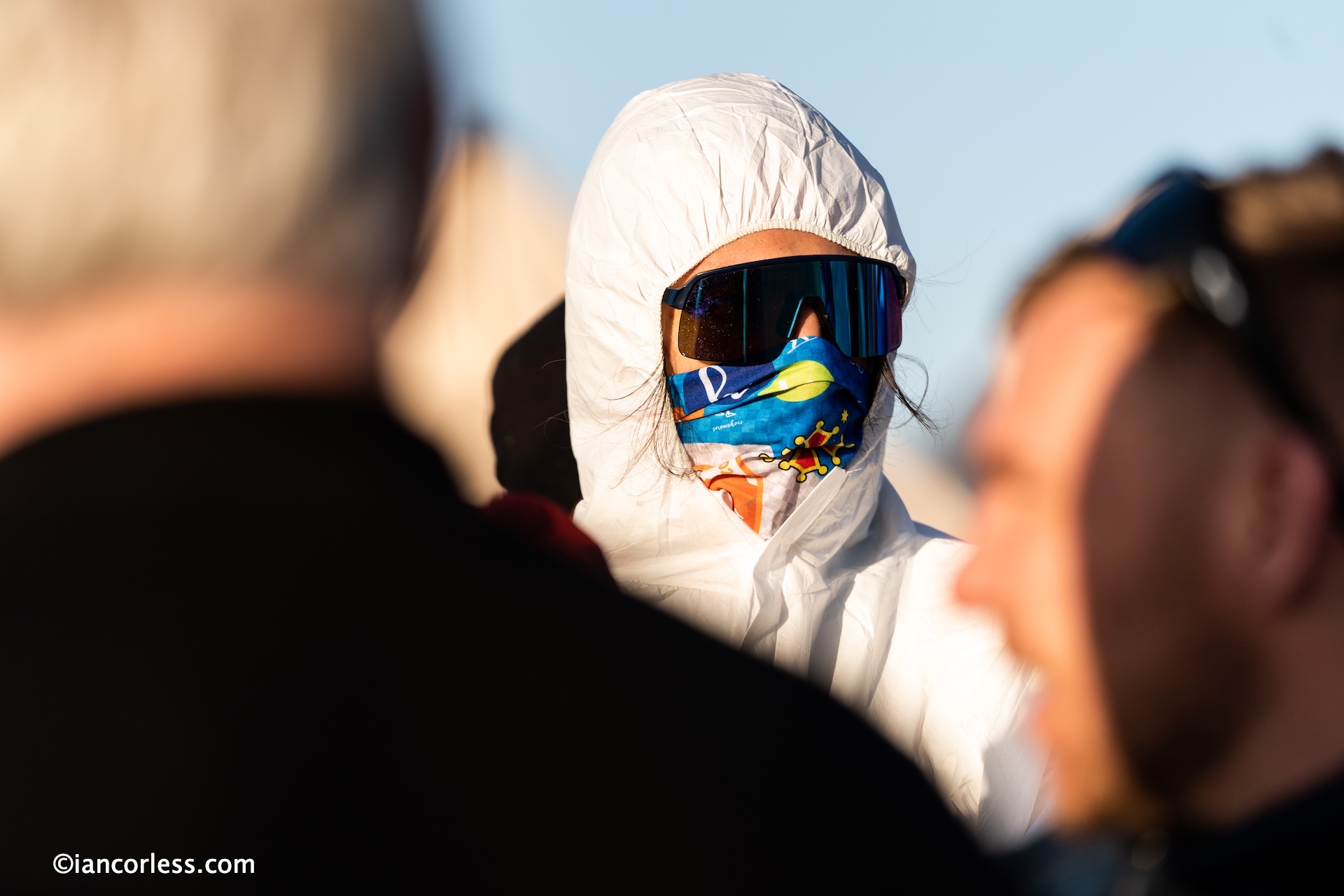
From Tinajo, the fina third of the route, the conditions became increasingly hard as the harder ground became softer with large amounts of soft sand. A Buff making for great protection.


In the latter miles it was head down and push on… Finally Club La Santa could be see in the distance. A marathon done in perfect test conditions.

As training days go, they don’t come any better than today…! With just one day left, many of the attendees are now tired and looking forward to some recovery time to let the stimulus from this training take hold.

Each runner has covered different distances but the below is typical for many!

Day 6 concluded with showers, food, recovery and well-earned calm and peaceful night.

Interested in our 2023 Training Camp? Info HERE

Photo Galleries HERE

Please support this website. I believe everyone deserves to read quality, independent and factual articles – that’s why this website is open to all. Free press has never been so vital. I hope I can keep providing independent articles with your help. Any contribution, however big or small, is so valuable to help finance regular content. Please support me on Patreon HERE.

Follow on:

Instagram – @iancorlessphotography

Twitter – @talkultra

facebook.com/iancorlessphotography

Web – www.iancorless.com
Web – www.iancorlessphotography.com
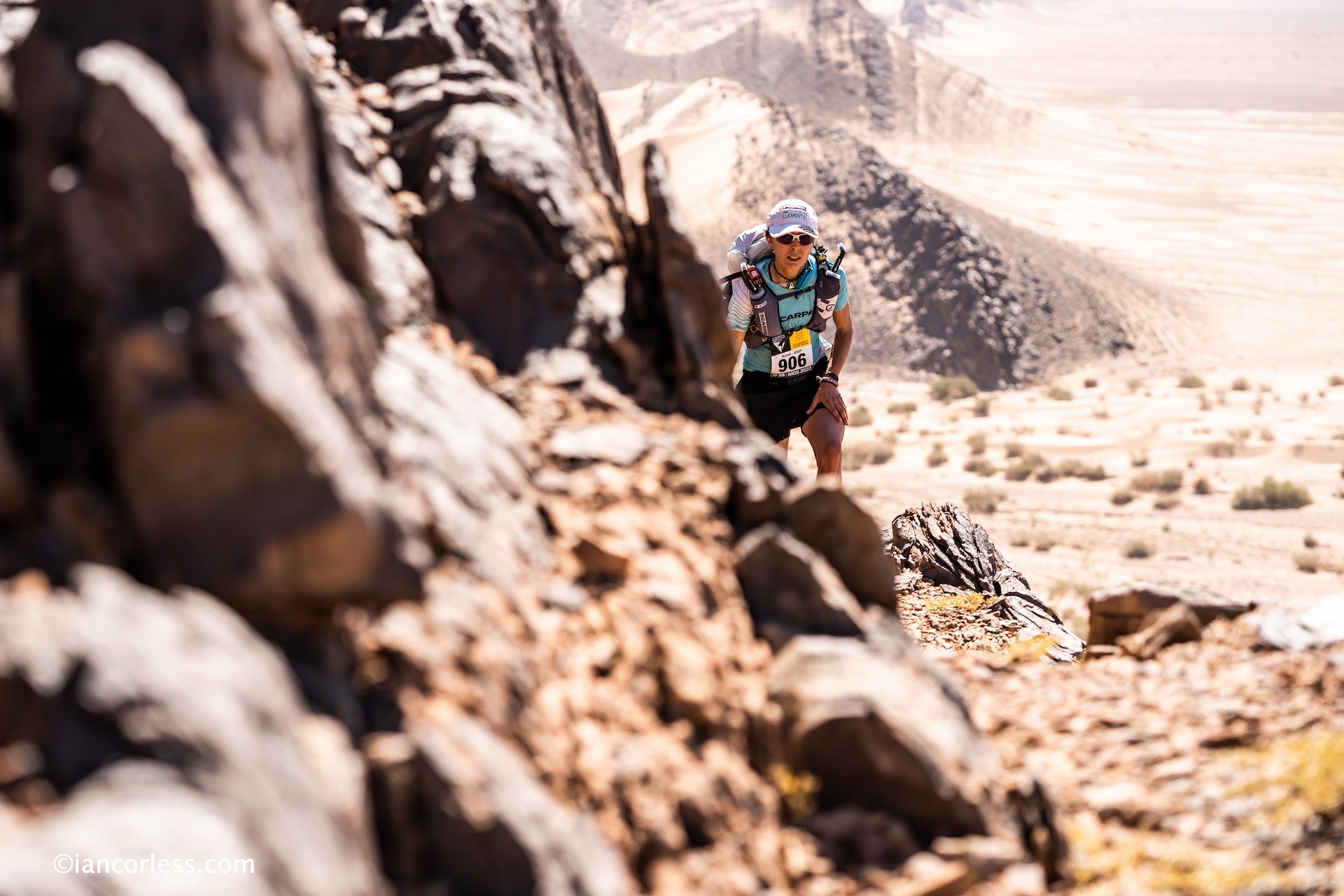
Image sales –www.iancorless.photoshelter.com