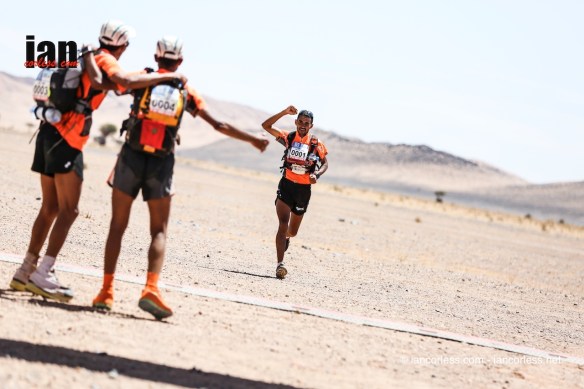
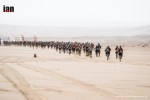
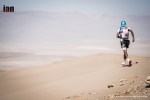
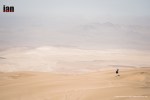
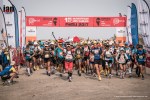
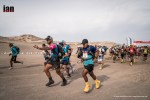
The 32nd MARATHON DES SABLES draws near and as usual, we take a look at several of the main contenders who will toe the line looking to place on the podium of this iconic race. We look at some of the impressive statistics and we preview at the route the runners will need to cover.
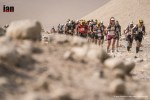
Since 1986, over 20,000 participants have raced at the Marathon des Sables and over 1200 are registered for 2017. Of the 52 Nationalities represented, the British are the largest contingent followed by the French.
2017 ROUTE SUMMARY
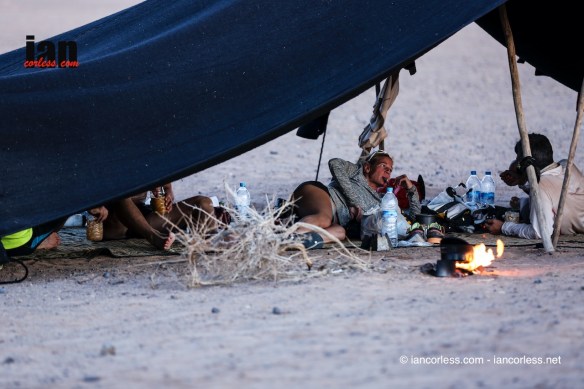
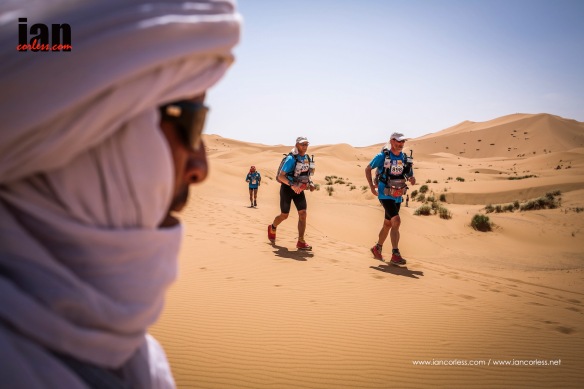
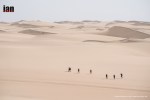
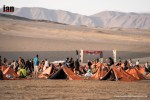
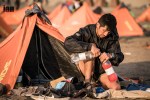
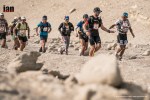
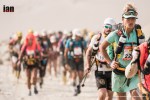
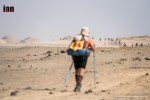
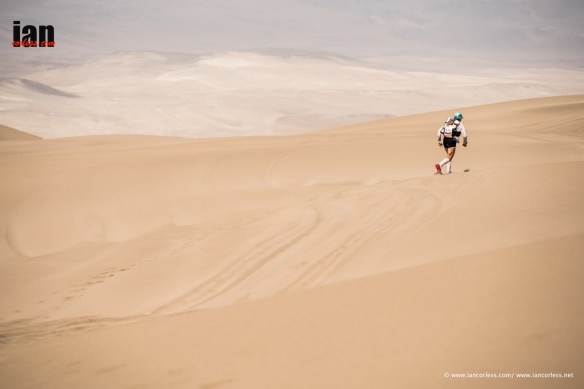
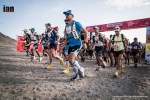
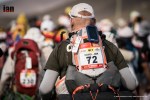
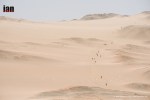
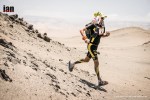
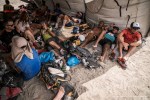
The 32nd edition will cover 250km in five timed stages and one compulsory charity stage. Daily distances will vary from 30km to 90km. The only provision to runners is rationed water and a bivouac each night which must be shared with seven other runners. The race requires self-sufficiency and everything a runner needs must be carried for the duration of the race.
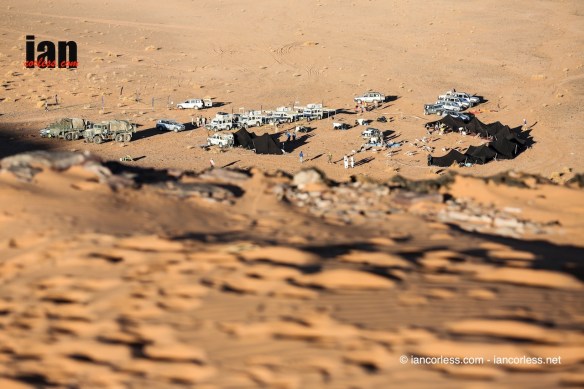
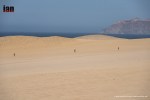
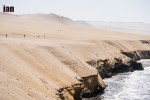
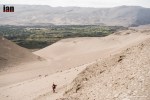
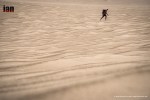
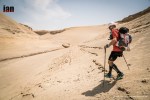
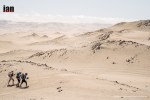
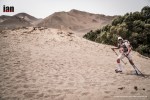
Day 1 – A relatively flat stage with small dunes, lots of sand and a slight climb to the finish. It’s a day when many runners go too fast. Tip: Ease into the race.
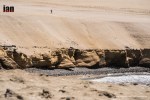
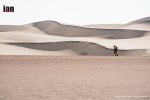
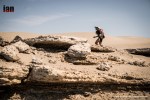
Day 2 – Will be a tough stage that is long with a great deal of sand. You will climb a gorge and run down a very steep descent. Tip: Tough day, keep focused, watch your pace and keep hydrated.
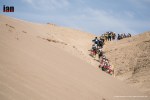
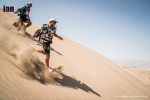
Day 3 – A climb starts the day and it is followed by rollercoaster terrain taking runners up and down. One section is very steep with technical passages. If that wasn’t enough, this stage contains the first ‘real’ dunes of the 32nd edition. Tip: One foot in-front of the other and remember the big day is tomorrow.
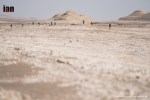
Day 4 – The long one: a feared and formidable stage. A lot of sand and some pitfalls for the feet. Two start times: 8.15 a.m. for most people and 11.15 a.m. for the first 50 men and the first 5 women. It’s a day of much sand and difficult terrain underfoot – be careful not to fall! Two passages through small gorges, a climb up a djebel, a roller coaster through the sand, and a technical descent add to a tough day. Tip: Watch out for the heat and manage the night carefully! Get your head in the right place.
Day 5 – Two start times: 7 a.m. for the majority and 8.30 a.m. for the first 200 runners. Dunes at the start and then no major difficulties, however, be prepared for a hot stretch over a long plateau… Tip: If you finished the long day, the race is in the bag. Smile!
Day 6 – Compulsory charity stage.
THE TOP MEN AND WOMEN
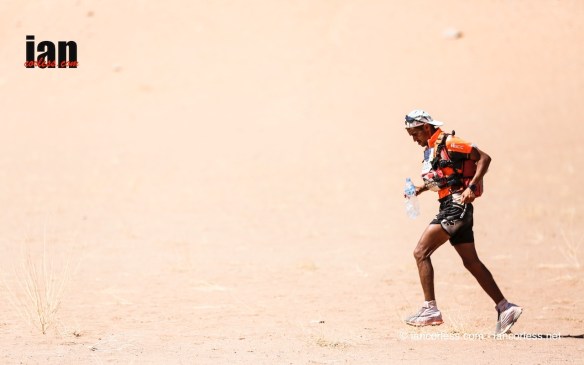
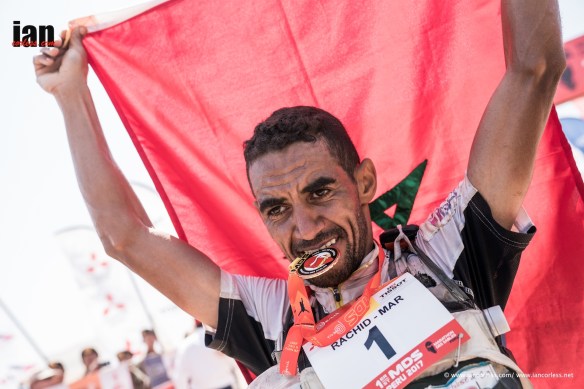
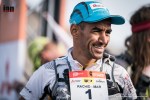
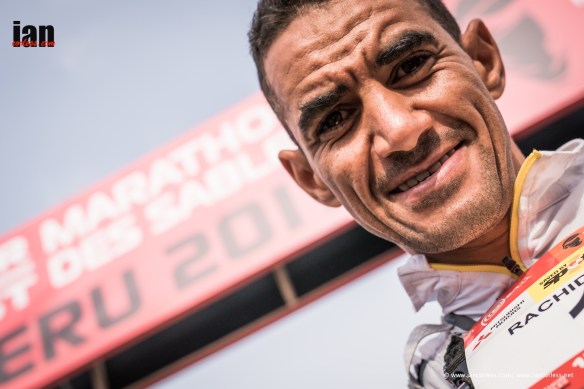
Rachid El Morabity returns and is without doubt, once again, the host favorite for male victory. Russian Natalia Sedyh, who won the race in 2016 has decided not to return in 2017 and this leaves the door open for 2015 MDS champion Elisabet Barnes but it will be no easy run – 2017 is arguably one of the strongest female line-ups the race has seen.
THE WOMEN RACE
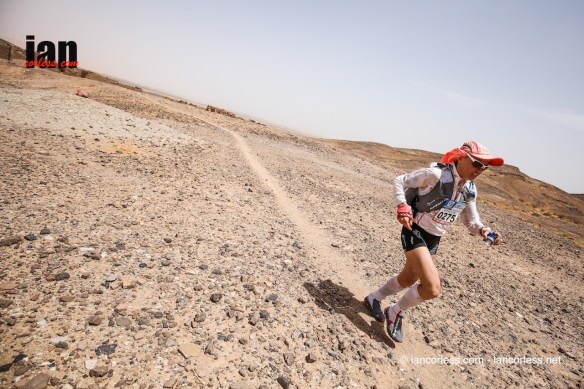
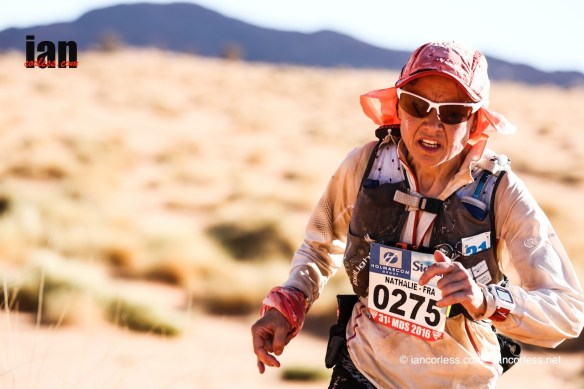
Nathalie Mauclair placed 2nd in 2016 and Fernanda Maciel placed 3rd, with Natalya not returning, could victory go to one of these very strong ladies? Of course, yes! They both now know the race better, they will have adjusted their training and equipment and will arrive prepared. Nathalie has won Diagonale des Fous twice and has been trail World Champion twice – this combination of speed and endurance is just what is required in the Sahara.
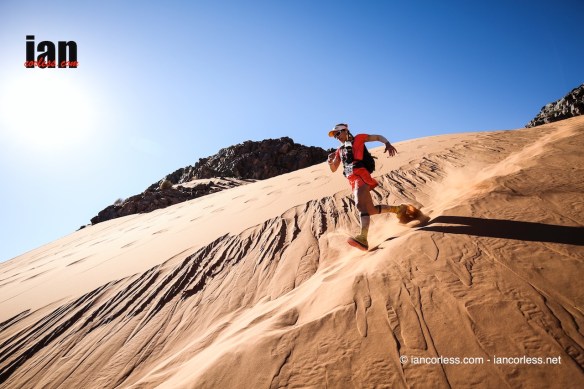
Fernanda Maciel, like Nathalie, is a powerhouse on trails. A regular competitor on the UTWT she brings incredible experience to the race and a tenacity to push to the line.
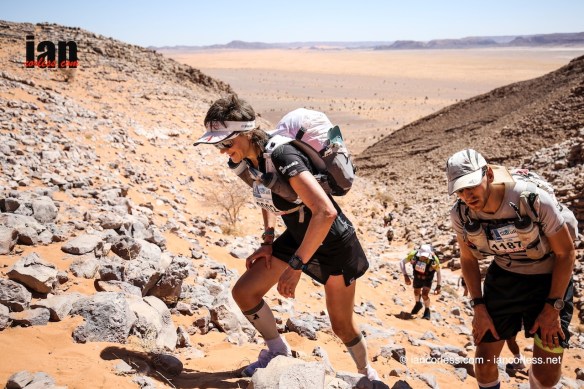
Elisabet Barnes won MDS in 2015 and what has followed is a string of world-class performances in multi-day races all over the world – Australia, South Africa, Costa Rica, USA and so on. Elisabet loves the Sahara and this year has stepped up her training and prepared meticulously for the 32nd edition.
Emilie Lecomte will run MDS for the first time in 2017 but last year, pipped Elisabet Barnes to victory at the Grand To Grand in the USA. Emilie is a specialist in long races and the multi-day format suits her. She still holds the FKT for the GR20 in Corsica and like Nathalie has won the Diagonale des Fous.
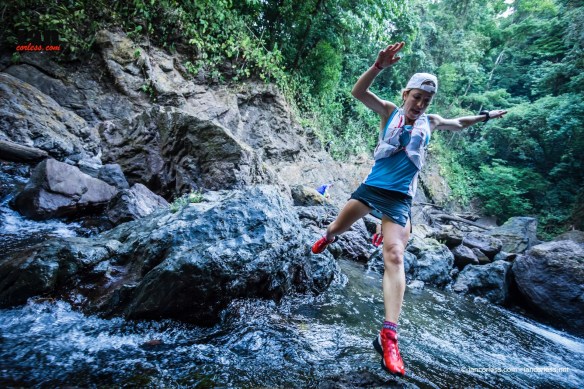
Ester Alves from Portugal won The Coastal Challenge in 2016 and this year placed 3rd. Like the ladies’ above she is a fierce competitor and although this is her first foray into the Sahara, I have a feeling we will see her contend for the top 5, if not the podium.
Our women’s top ten to watch:
Aziza Raji is the Moroccan hope. She won the race in 2008 and 2009 but the speed of the race has increased and she is unlikely to contend with the other top elites.
Lizzie Wraith from the UK is a strong runner who will be under the radar here in the Sahara – watch out, she may surprise many people! Lizzie made the podium at the UK’s tough, Dragons Back Race.
Mélanie Rousset is attempting MDS for the first time but has a string of top-10 results at Diagonale des Fous and UTMB.
Nahila Hernandez San Juan from Mexico placed 8th at MDS in 2009 and was 5th at Badwater 135 in 2013.
Marie Eve Trudel a newcomer to ultra but placed 4th at the Grand To Grand in 2015.
Amy Costa winner of the Badwater 135 in 2013.
Kerri Kanuga 6th at Badwater in 2016.
THE MEN RACE
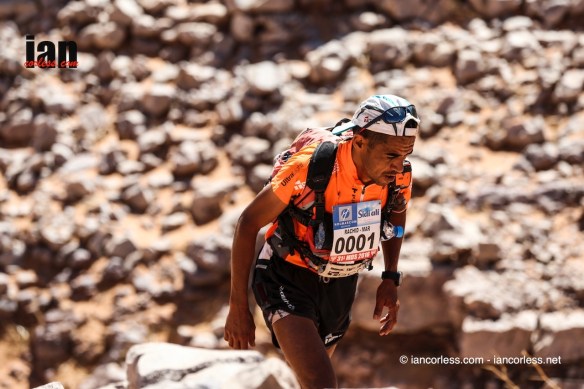
Rachid El Morabity, Samir Akhdar, Aziz El Akad and Abdelkader El Mouaziz are the strong men on this 32nd MARATHON DES SABLES. Rachid has won the race in 2011, 2014, 2015 and 2016 – do you want to bet against him?
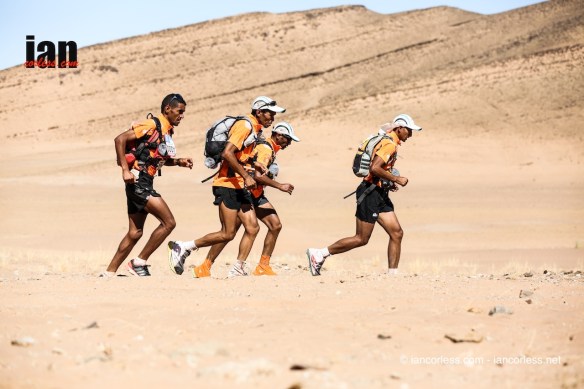
Samir Akhdar is a MDS regular but his best result came in 2015 when he placed 4th. In 2017, he has the potential for 2nd or 3rd. Equally, Aliza El Akad although he is getting on in years, his seven completions at MDS and all within the top-5 would suggest he will continue that consistency.
This year the race does not have Chema Martinez from Spain or Danny Kendall from the UK. Therefore, the great European hope comes with a trio of Brits.
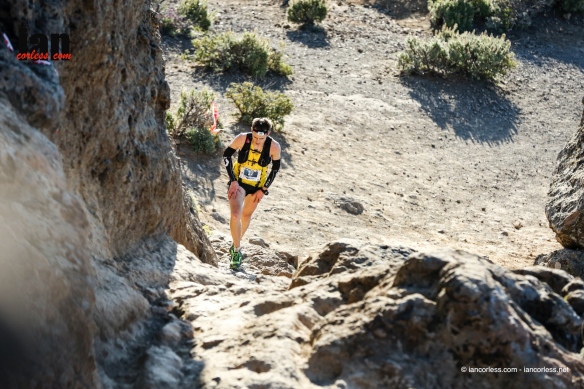
Andy Symonds is a world-class runner who has made the podium all over the world in iconic ultras. Although this is his first MDS he has the running skill to be up there! It all depends if he has adapted to the pack and the additional weight.
Nathan Montague is coming to the race with clear intentions to do well and ideally be the first Brit and hopefully that highest placed Brit ever. He’s a fast runner with some impressive times for 50km and 100km.

Damian Hall has been top-20 at UTMB and placed on the podium at The Spine. He raced in Costa Rica in 2016 with an excellent performance against a world-class field. Like Andy, Damian is on a MDS learning curve but he has the potential to do well.
Moroccans may well provide the competition for the other Moroccans. Abdelkader El Mouaziz is a 2:06 marathon runner and has won London Marathon in 1999 and 2001. He may well be slower now with the passing of the years but class is permanent. His highest placing at MDS is 2nd – one to watch!
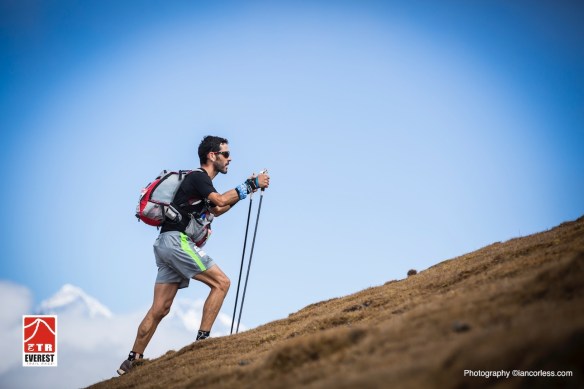
Miguel Capo Soler was 3rd at MDS in 2013 and is the most experienced non-Moroccan who will potentially contend the top-10 placing. In recent years, he has run at The Coastal Challenge and Everest Trail Race.
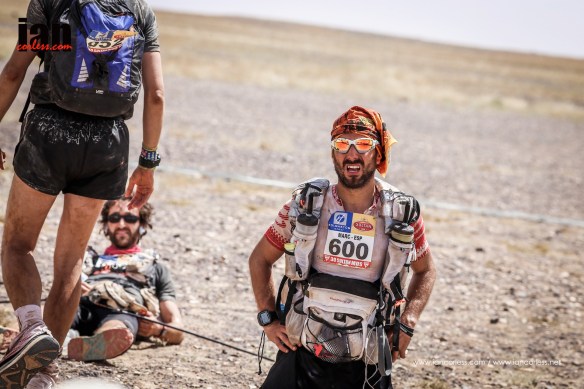
Our men’s top ten to watch:
Mustapha Ait Amar finished MDS 13-times and was 12th in 2012.
Andrew Fargus placed 11th at MDS in 2013.
Luca Papi is a novice MDS runner but brings a wealth of experience.
Marco Olmo is a legend of ultra-trail and MDS – he will not contend the podium but he will be up around the top-20. Not bad for a 68-year old!
Notable mentions for blind runner Didier Benguigu who aged 67 will participate in his 13th MDS.
Also, Duncan Slater from the UK who lost both legs during a mission in Afghanistan. He did not complete in 2016 due to medical complications – he’s back this year for the medal!
Finally…
1216 runners will toe the line and the youngest male is Oscar Daglish from the UK who is just 16-years old. He will be running with his father who has already completed MDS.
The youngest female is Emily Rolfe, also from the UK. Emily will also run with her father.
Claude Leonardi from France is the oldest male runner. The 32nd edition will be his 5th time on the race, not bad for 80-years old!
Edda Hanna Bauer got into sport late, she ran her first marathon and 60. Now aged 72 she has made up for it clocking up 26 marathons and 63 ultra-marathons.
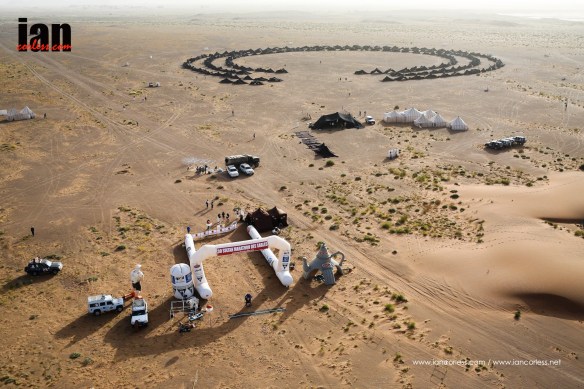
Crazy Statistics of the MDS
“The logistics are a big headache and we organize every detail in advance! We’re a village of 2,000 people that must be set up and dismantled every day. We need to be self-sufficient in energy, food, water and fuel. As one of my friends says, ‘Let’s expect the worst because the best will never surprise us!’ We also benefit from the infallible support of the Royal Moroccan Army, which makes available about 25 6WD military trucks to transport all of our equipment.” – Patrick Bauer
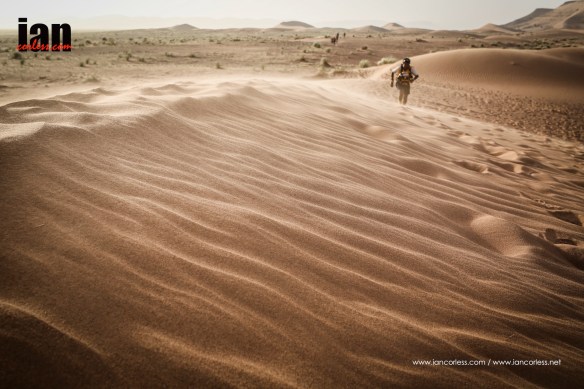
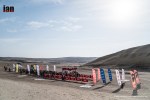
You must see Marathon des Sables t appreciate the size and scale of the event. It’s like the largest moving circus you will ever see and it’s impressive to witness.
Following statistics provided by the Marathon des Sables office:
▪ 150 volunteers to supervise the race,
▪ 450 general support staff,
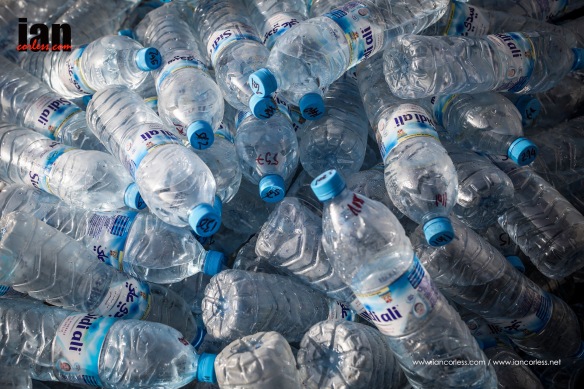
▪ 120,000 liters of bottled mineral water,
▪ 300 Berber and Saharan tents,
▪ 120 all-terrain vehicles and trucks,
▪ 2 Squirrel helicopters and 1 Cessna plane,
▪ 8 Transavia ‘MDS special’ commercial planes,
▪ 30 buses,
▪ 4 dromedaries,
▪ 1 incinerator lorry for burning waste,
▪ 5 quad bikes to monitor race environment and safety,
▪ 72 medical staff,
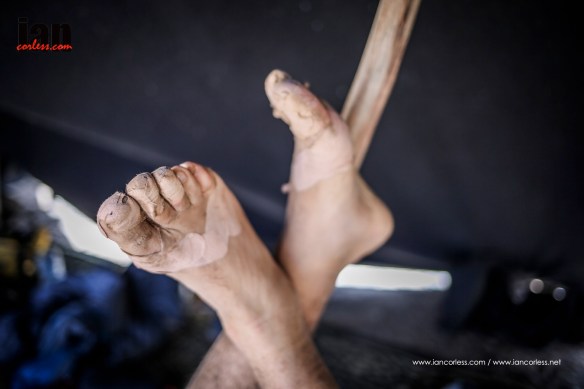
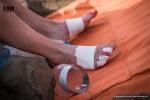
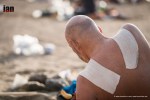
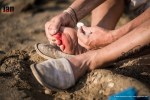
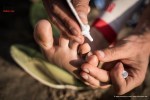
▪ 2.3kms of Elastoplast,
▪ 12,200 compresses,
▪ 6,000 painkillers,
▪ 150 liters of disinfectant,
▪ 1 editing bus,
▪ 5 cameras,
▪ 1 satellite image station,
▪ 10 satellite telephones,
▪ 30 computers, fax and internet,
▪ 20,000 competitors since 1986
▪ 3 runners aged 10-20, 108 aged 20-30, 314 aged 30-40, 491 aged 40-50, 299 aged 50-60, 66 aged 60-70 and 13 aged 70-80 years.
▪ 14 km/hr.: average maximum speed, 3 km/hr.: average minimum speed,
▪ 15 years of age for the youngest competitor and the oldest, 83!
30 Years of the MDS
1986 – Michel GALLIEZ (FRANCE) – Christiane PLUMERE (FRANCE)
1987 – Bernard GAUDIN (FRANCE) – Marie-Ange MALCUIT (FRANCE)
1988 – Bernard GAUDIN (FRANCE) – Marie-Ange MALCUIT (FRANCE)
1989 – Hassan SEBTAOUI (FRANCE) – Marie-Claude BATTISTELLI (FRANCE)
1990 – Hassan SEBTAOUI (FRANCE) – Claire GARNIER (FRANCE)
1991 – Hassan SEBTAOUI (FRANCE) – Monique FRUSSOTE (FRANCE)
1992 – Mohamed BENSALAH (MOROCCO) – Monique FRUSSOTE (FRANCE)
1993 – Mohamed BENSALAH (MOROCCO) – Irina PETROVNA (RUSSIA)
1994 – André DERKSEN (RUSSIA) – Valentina LIAKHOVA (RUSSIA)
1995 – André DERKSEN (RUSSIA) – Béatrice REYMANN (FRANCE)
1996 – André DERKSEN (RUSSIA) – Anke MOLKENTHIN (GERMANY)
1997 – Lahcen AHANSAL (MOROCCO) – Rosanna PELLIZZARI (ITALY)
1998 – Mohamad AHANSAL (MOROCCO) – Rosanna PELLIZZARI (ITALY)
1999 – Lahcen AHANSAL (MOROCCO) – Lisa SMITH (USA)
2000 – Lahcen AHANSAL (MOROCCO) – Pascale MARTIN (FRANCE)
2001 – Lahcen AHANSAL (MOROCCO) – Franca FIACCONI (ITALY)
2002 – Lahcen AHANSAL (MOROCCO) – Simone KAYSER (LUXEMBOURG)
2003 – Lahcen AHANSAL (MOROCCO) – Magali JUVENAL (FRANCE)
2004 – Lahcen AHANSAL (MOROCCO) – Simone KAYSER (LUXEMBOURG)
2005 – Lahcen AHANSAL (MOROCCO) – Simone KAYSER (LUX)
2006 – Lahcen AHANSAL (MOROCCO) – Géraldine COURDESSE (FRANCE)
2007 – Lahcen AHANSAL (MOROCCO) – Laurence KLEIN (FRANCE)
2008 – Mohamad AHANSAL (MOROCCO) – Touda DIDI (MOROCCO)
2009 – Mohamad AHANSAL (MOROCCO) – Touda DIDI (MOROCCO)
2010 – Mohamad AHANSAL (MOROCCO) – Monica AGUILERA (SPAIN)
2011 – Rachid EL MORABITY (MOROCCO) – Laurence KLEIN (FRANCE)
2012 – Salameh AL AQRA (JORDAN) – Laurence KLEIN (FRANCE)
2013 – Mohamad AHANSAL (MOROCCO) – Meghan HICKS (USA)
2014 – Rachid EL MORABITY (MOROCCO) – Nikki KIMBALL (USA)
2015 – Rachid EL MORABITY (MOROCCO) – Elisabet BARNES (SWE)
2016 – Rachid EL MORABITY (MOROCCO) – Natalya SEDYH (RUSSIA)
A brief history of the MDS:
1984: At 28 years of age, Patrick Bauer decided to make for the Sahara to try to traverse a 350km expanse of uninhabited desert, on foot, alone, where he wouldn’t come into contact with a single village, oasis or watering place. Totally self-sufficient, with a rucksack weighing 35kg and containing water and food, he set off on a journey that was to last 12 days. It was the starting point of what was to become the MARATHON DES SABLES.
1986: The creation of the first MDS in the Moroccan Sahara. The 23 pioneers who took the start never imagined that their footprints would mark the start of a legendary event, which has today become a must among the major adventure sport meets. The creation of a non-mechanical competition in the Moroccan sands offers adventure runners a wealth of new prospects.
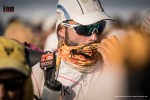
1987: Creation of the MDS logo: the face of a runner covered by a keffiyeh, the eyes protected by a pair of sunglasses and the pipette from the runner’s water container clenched between the teeth.
1989: 170 competitors take the start of the race.
1991: The gulf drama puts the MDS at a disadvantage and the financial partners withdraw. Fortunately, some runners answer the call. For these competitors, the true victory lies in meeting athletes from different backgrounds and their communion in the desert around the same goal. Sport proves once again that it can bring people together and create bonds.
1992: One and the same regulation for everyone. This year sees the establishing of unexpected draconian tests, to ensure that each participant properly transports all his or her gear from one end of the course to the other. A 30-point charter is drawn up.
First participation by the Moroccan Lahcen Ahansal
1994: Arrival of the Doc Trotters at the event.
1995: 10th anniversary. Since the start, over 1,500 men and women have left their footprint and their passion in the desert. Installation of water-pump for the inhabitants of the village of Ighef n’rifi (South of Er-Rachidia) – an idea by competitor Gilles Flamant and backed by Rolland Barthes and Patrick Bauer. Its success is to be repeated again and again
1996: First participation by Mohamed, a younger sibling of Ahansal. The two Moroccan brothers set off together and rank 4th and 5th respectively.
1997: This year heralds the start of the Ahansal saga. Morocco is honored with Lahcen’s first victory. He beats his two pursuers by nearly 30 minutes, despite them being international long-distance running champions.
1999: A mobile hospital on the MDS comes into being. There are around thirty practitioners on the ground, with doctors and nurses joining the caravan. A dedicated helicopter and ten all-terrain vehicles track the competitors each day. On- board these vehicles there are doctors of course, as well as high-tech equipment. The village boasts a genuine field hospital.
2000: Internet appears in the large MDS village. The organization decides to broadcast the texts and photos of the race live, day after day. The competitors can communicate with their nearest and dearest and receive messages of encouragement.
2001: For the first time the long leg, traditionally called “The 70”, exceeds the 80km barrier to reach 82km. The threshold of 240km is also surpassed since the 16th MARATHON DES SABLES spans 243km. Another first relates to the fact that there are no Moroccans on the podium this year.
2002: This edition is punctuated by a sandstorm, involving headwinds, which lasts the entire week. The doctors invent a machine for ‘low pressure cleansing’ to rinse out the runners’ eyes. Despite the difficult conditions, there are few retirements to report as the wind considerably reduces the temperature.
2005: The Luxembourg runner Simone Kayser is the first woman to win 3 MARATHON DES SABLES. For this 20th edition, the total number of runners exceeds 700 for the first time, with no fewer than 777 runners taking the start.
2006: A drying wind and very high humidity levels cause damage to the runners’ bodies. Despite additional allocations of water, a whole series of retirements ensues. There is a total of 146 retirements ultimately, which equates to double that of the previous record… Race management decides to shorten the long leg by over 10km given how tired the runners seem.
2008: The Solidarité MDS association is created. The aim: to develop projects to assist children and disadvantaged populations in the domains of health, education and sustainable development in Morocco.
2009: MDS is disrupted by flooding and the 1st and 6th stages are not able to take place. To avoid the flood zones, the organization is obliged to improvise new legs on a day-to-day basis. In this way, the edition goes down in legend for its 3rd leg, which is the longest ever contested: 92km of sand, loose stones and rocks… The leg even sees the retirement of Lahcen Ahansal… At the prize giving the 2 winners admit to having competed in their hardest MDS. However, it was also the shortest: 202km.
2010: For its 25th edition, the number of participations reaches a record high of 1,013 participants. It is to be the longest MARATHON DES SABLES. It spans 250 kilometers with a course considered by former entrants to be the most difficult ever organized.
2012: A dramatic turn of events on the longest leg as the then leader in the overall standing, Rachid El Morabity (MAR) injures himself one kilometer from the finish. Medical examinations reveal a serious muscular lesion in the quadriceps. After over five years on the 2nd or 3rd step of the podium, Jordanian Salameh Al Aqra secures the title.
2013: 1,027 competitors on the start line make this a new participation record. New feature: a final “Charity” stage sponsored by UNICEF and traversing the Merzouga dunes round off the race. Sports wise, Mohamad Ahansal and Megan Hicks are the champions of the 231.5km event. On a human level, all the finishers pull off their crazy bet.
2014: 2011 winner, Moroccan Rachid El Morabity (MAR) wins the overall ranking and takes Mohamad Ahansal’s crown. In the women’s category, another American stamps her mark, Nikki Kimball. The French revelation is one Michaël Gras, 22 years of age, 8th overall and top Frenchman. A major athletics star, Moroccan Hicham El Guerrouj lines up to take the start of Saturday’s Unicef Charity leg.
You can follow the 2017 Marathon des Sables on this website.
On Facebook – Facebook.com/iancorlessphotography
On Instagram – @iancorlessphotography
On Twitter – @talkultra
Please remember, communications in the Sahara will be sporadic and we will upload content as and when possible.



 IAN CORLESS