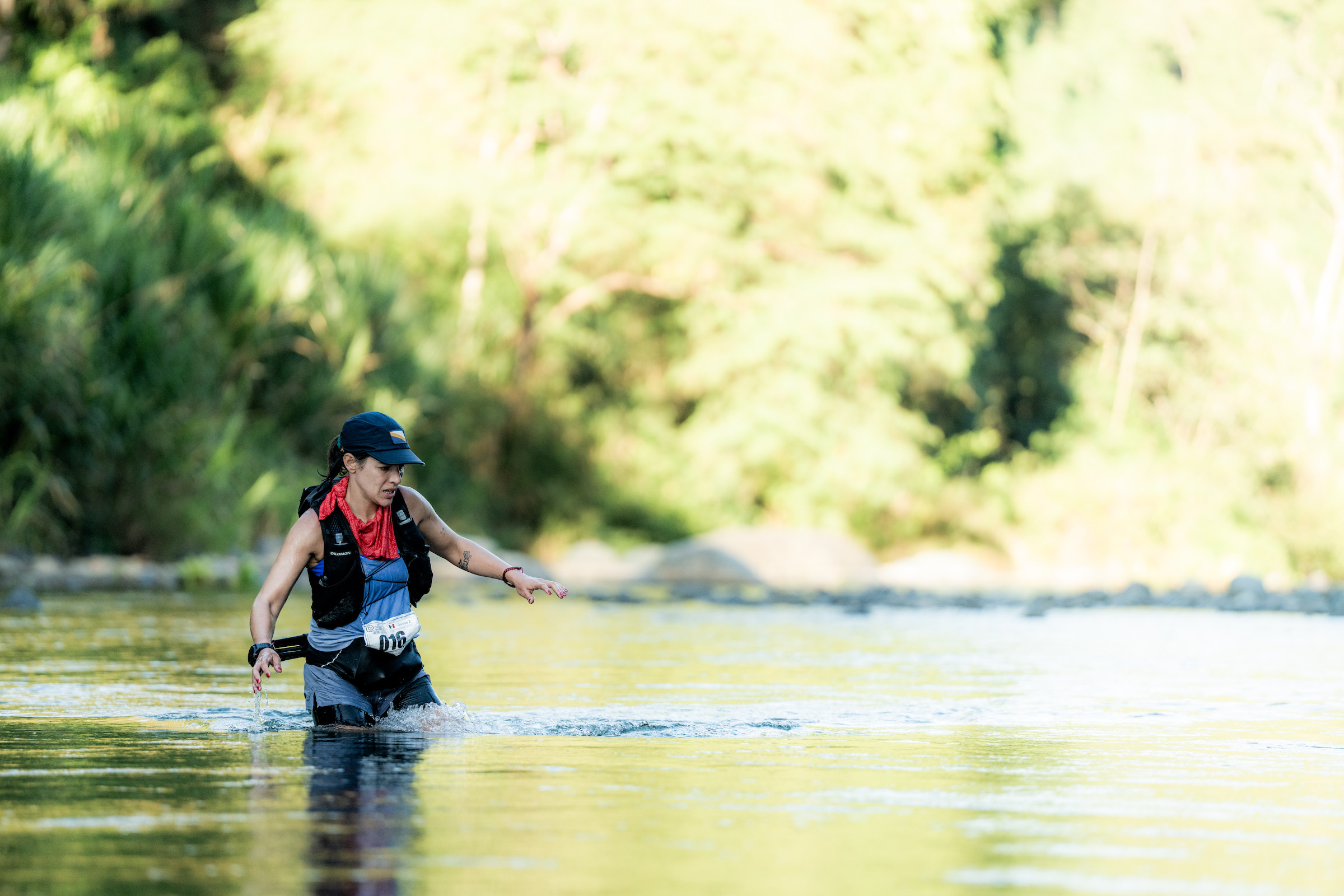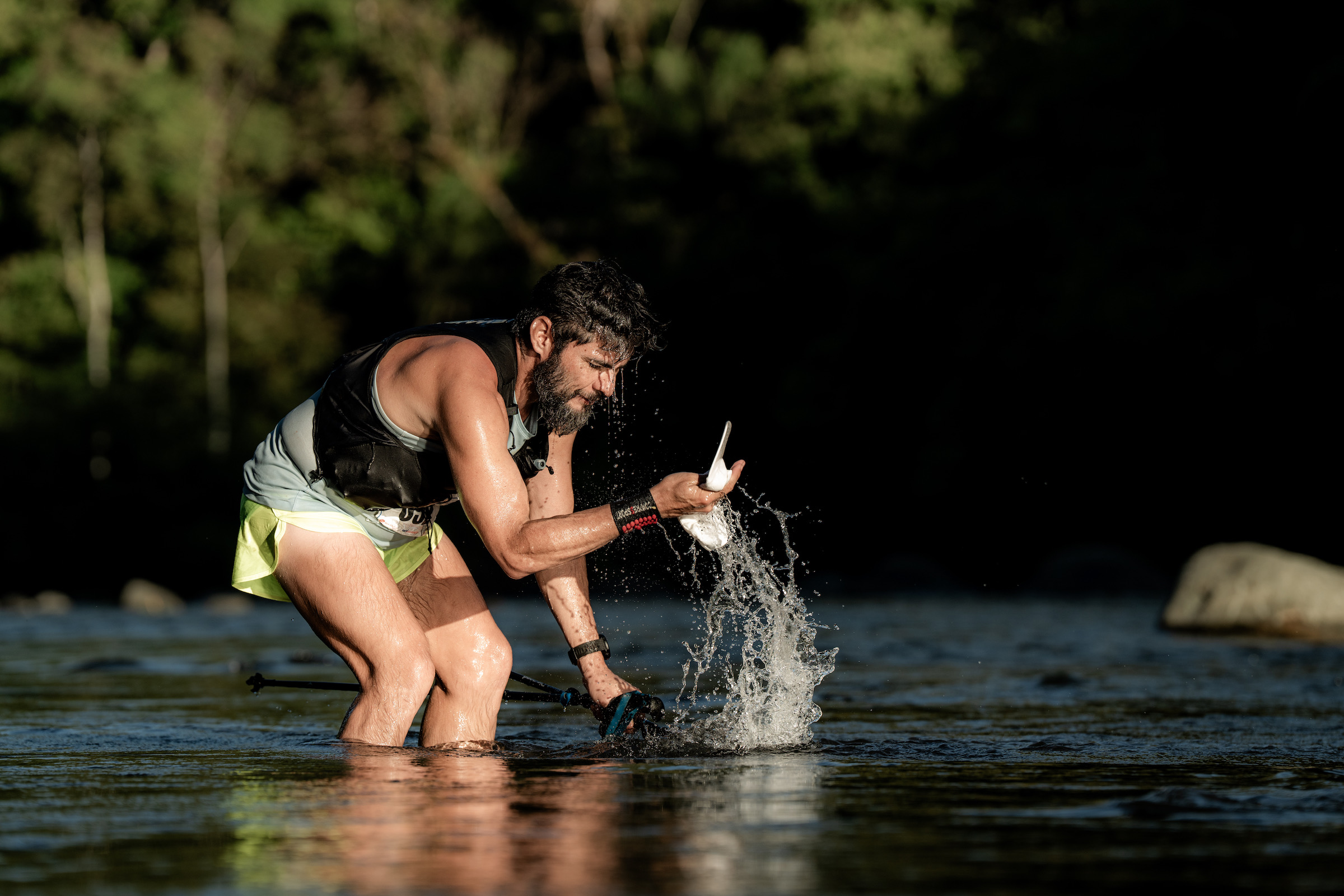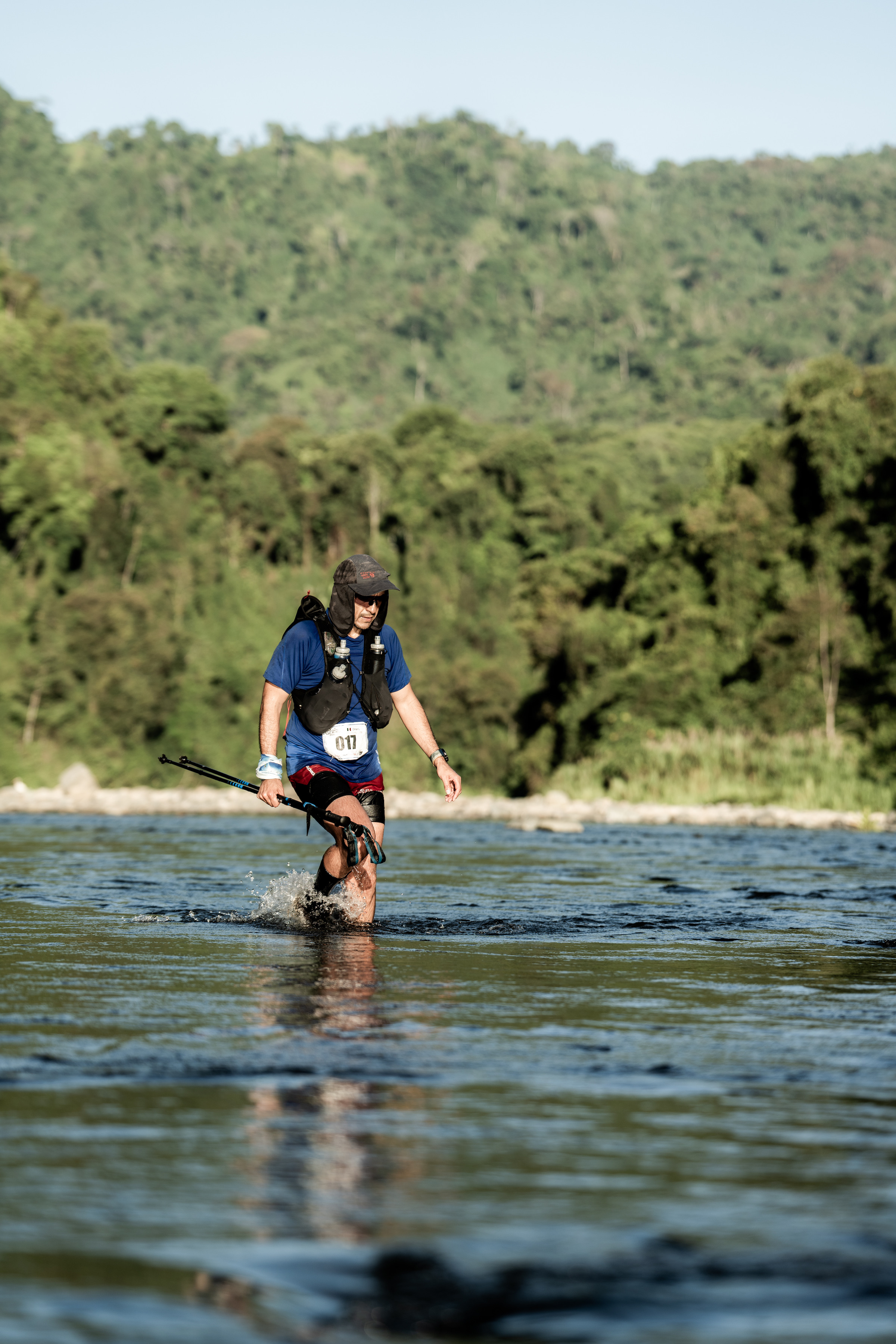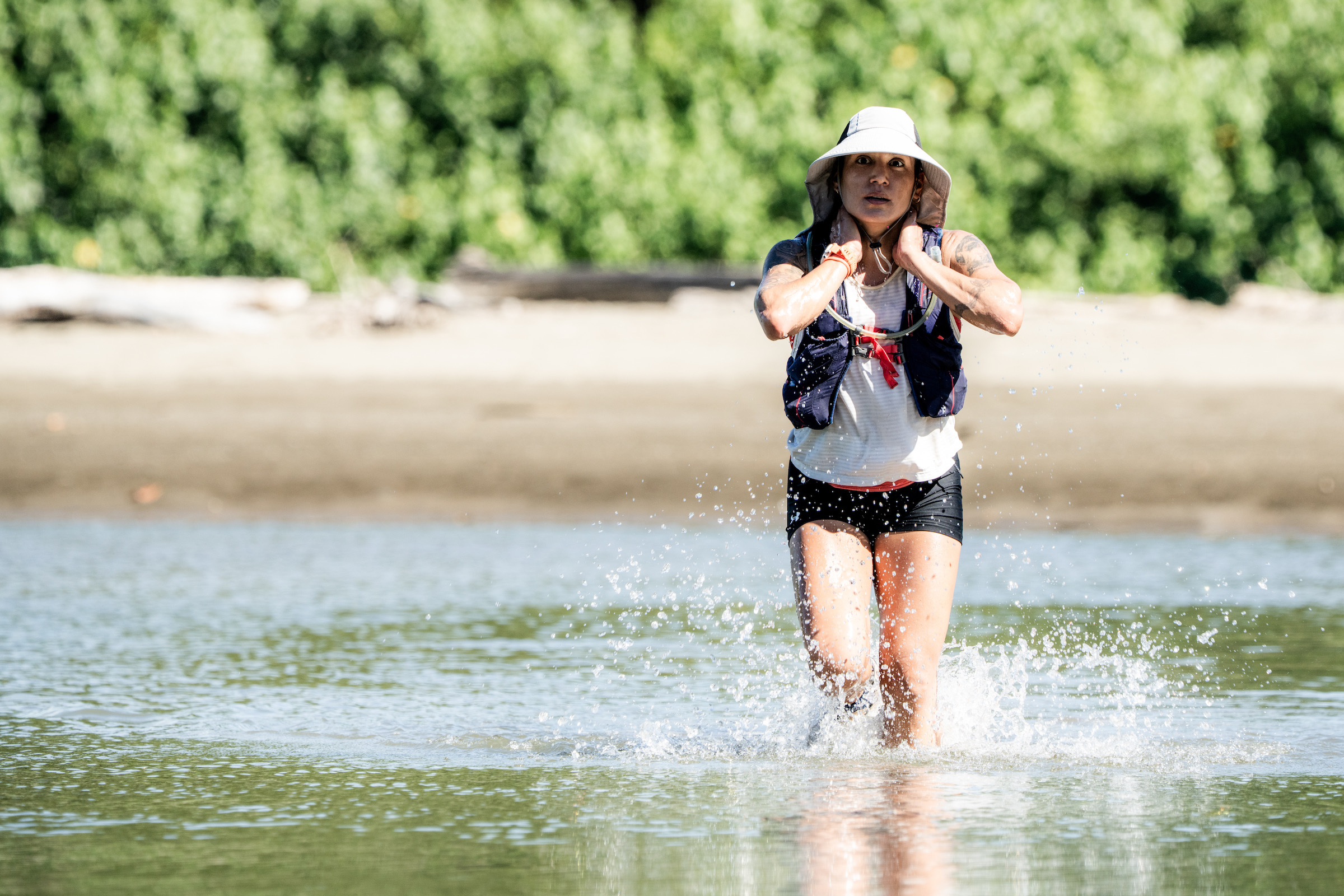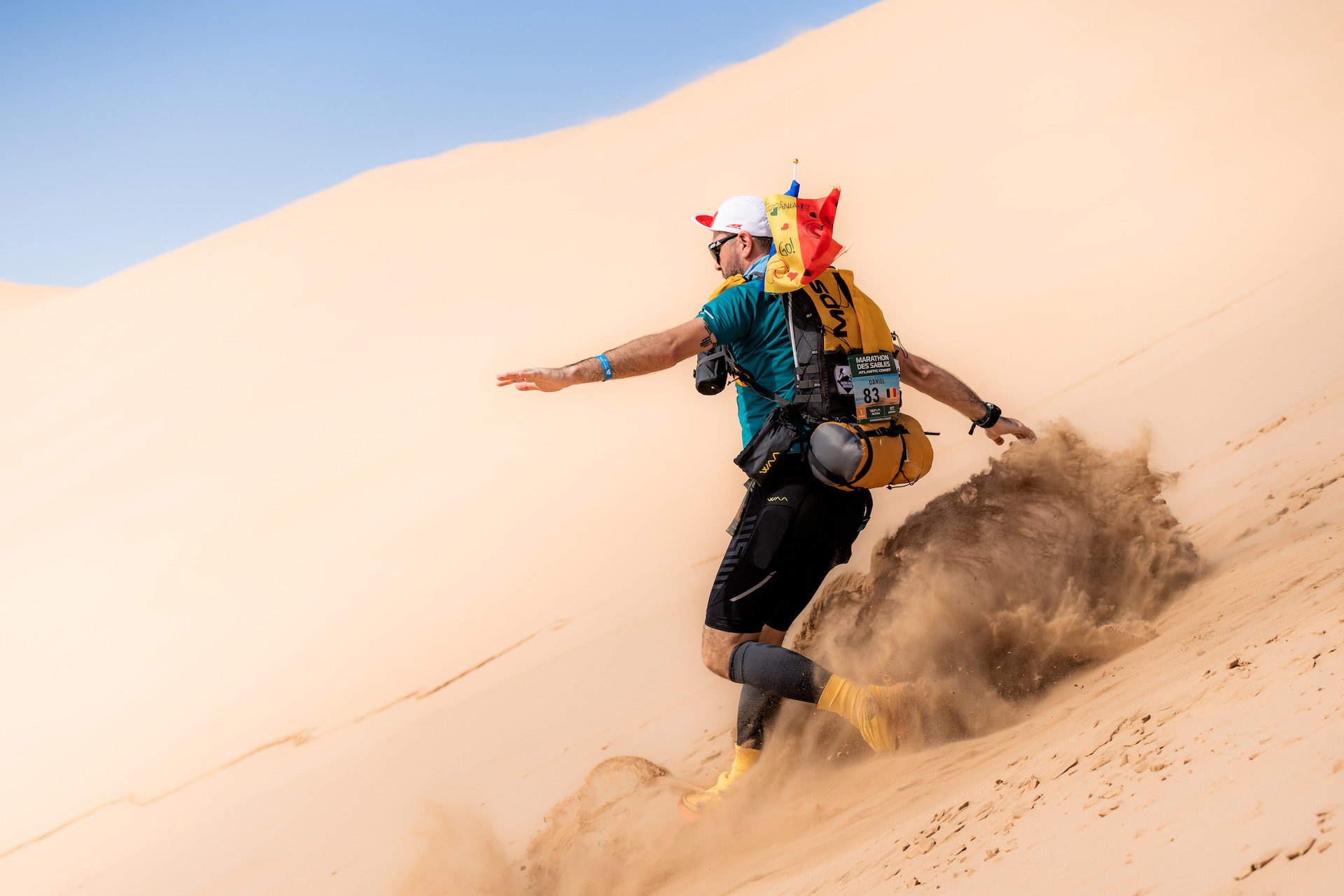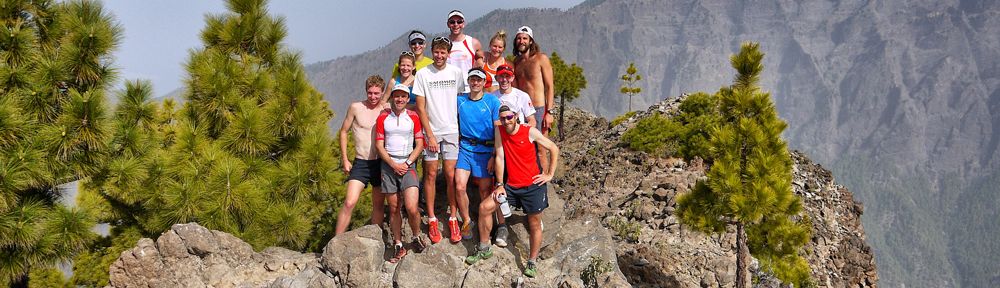
The Coastal Challenge Costa Rica 2026 – Stage 4

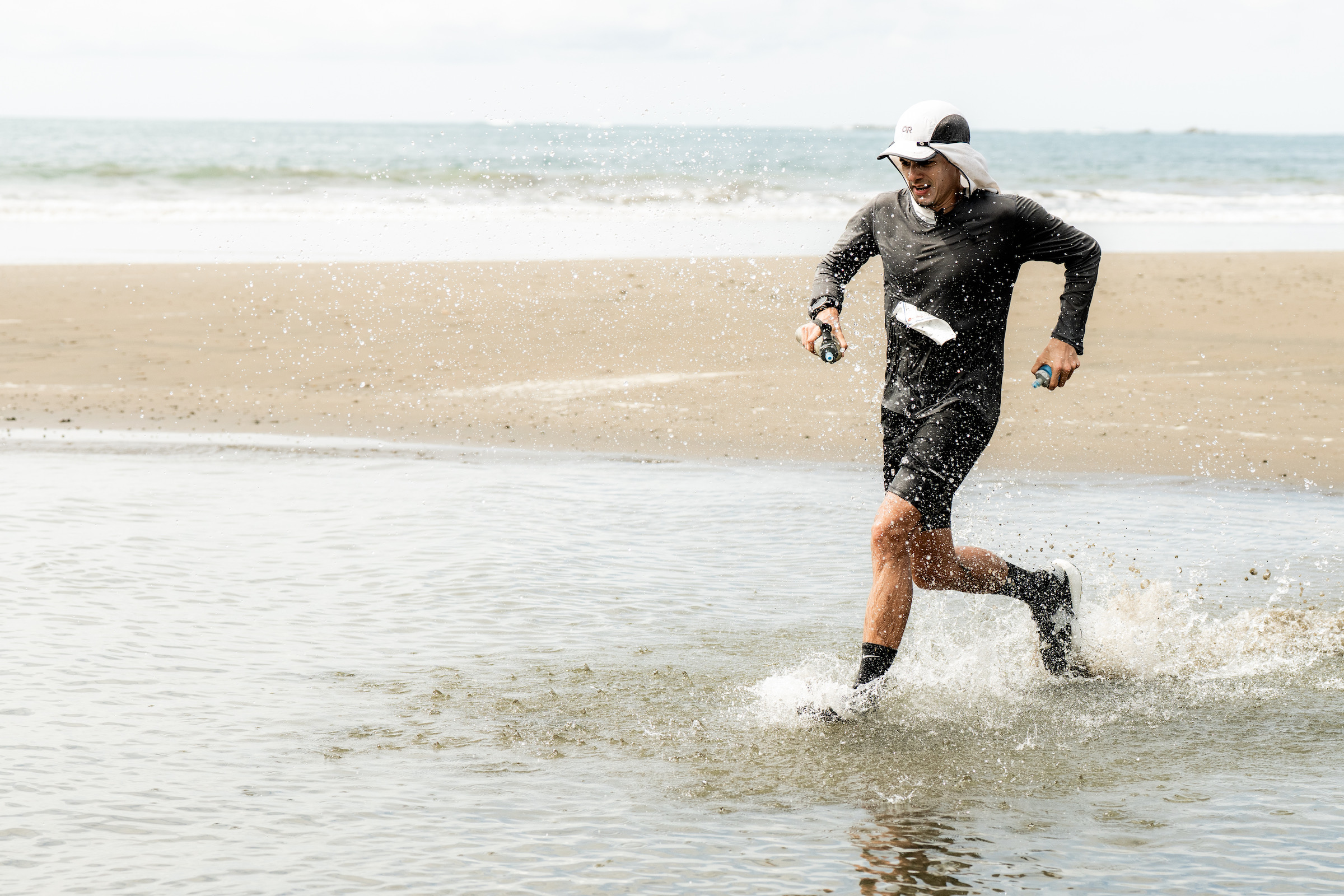
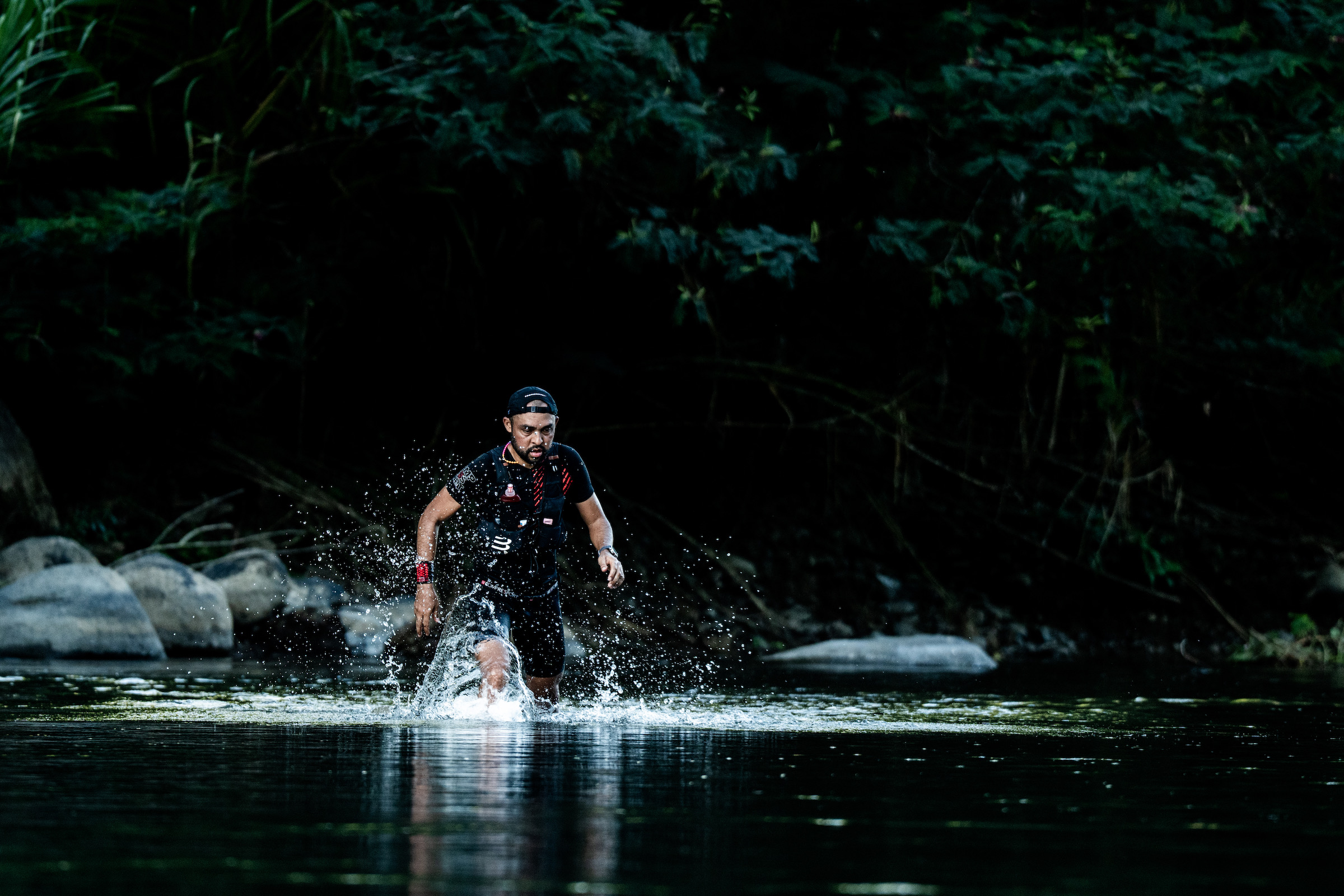
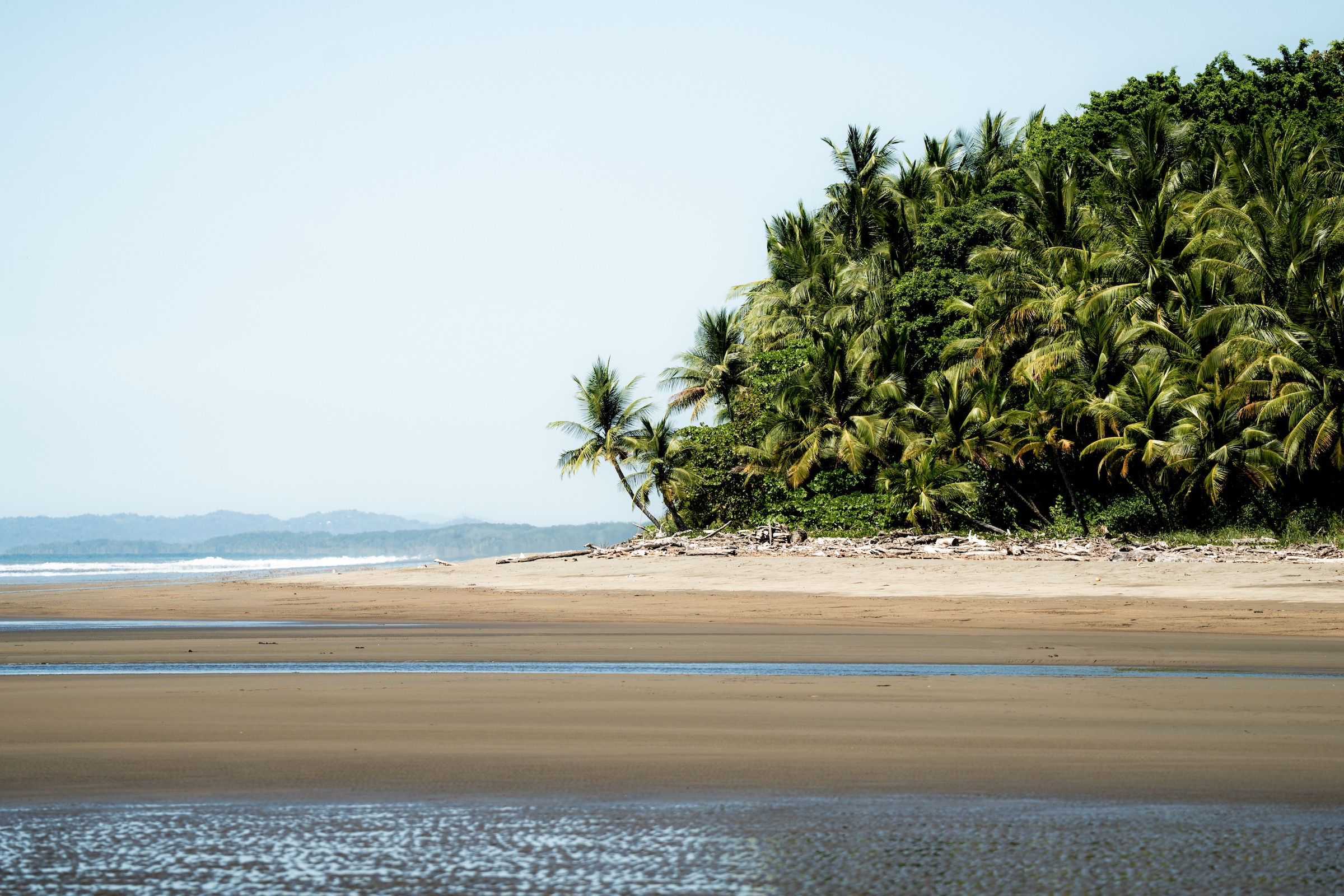
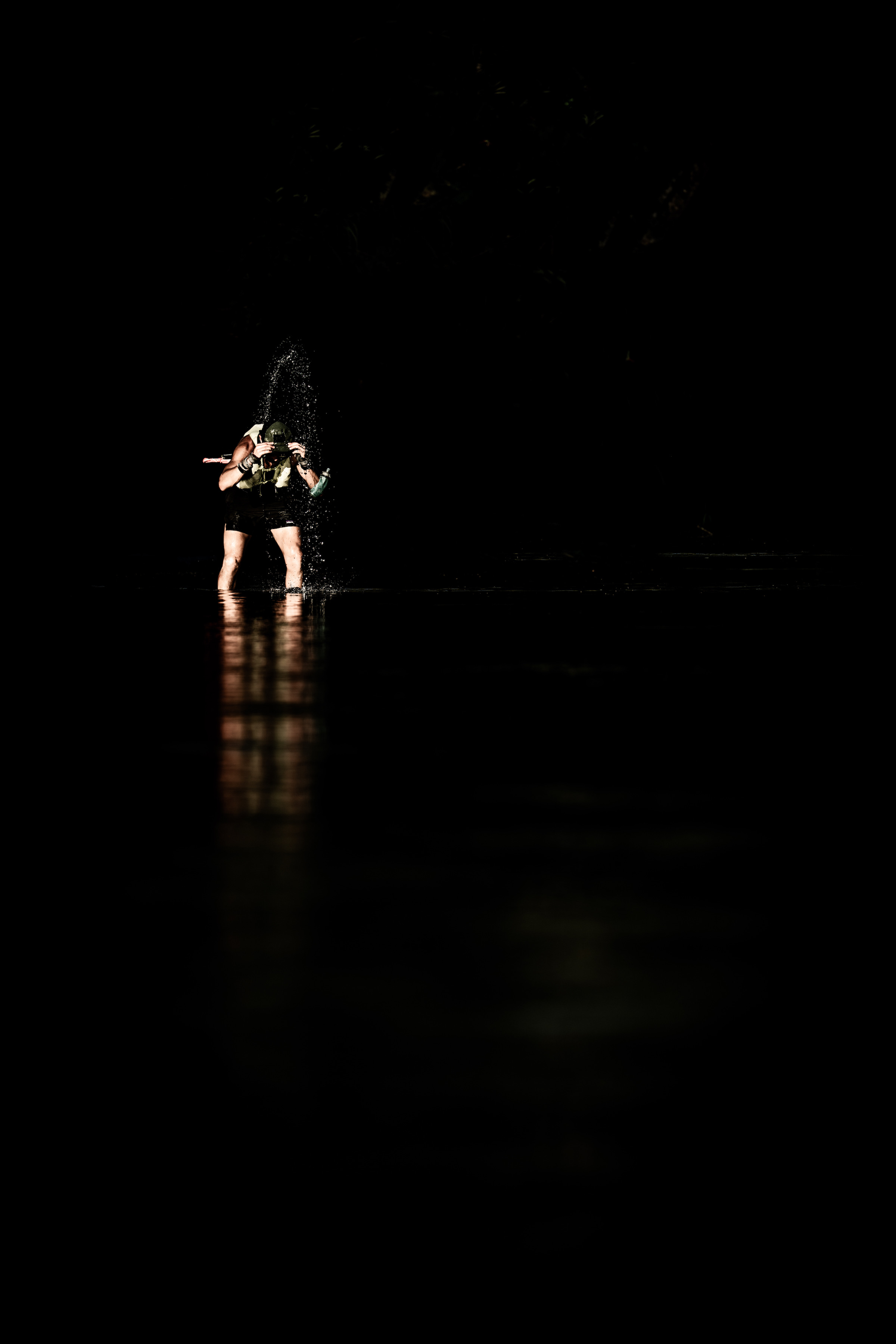
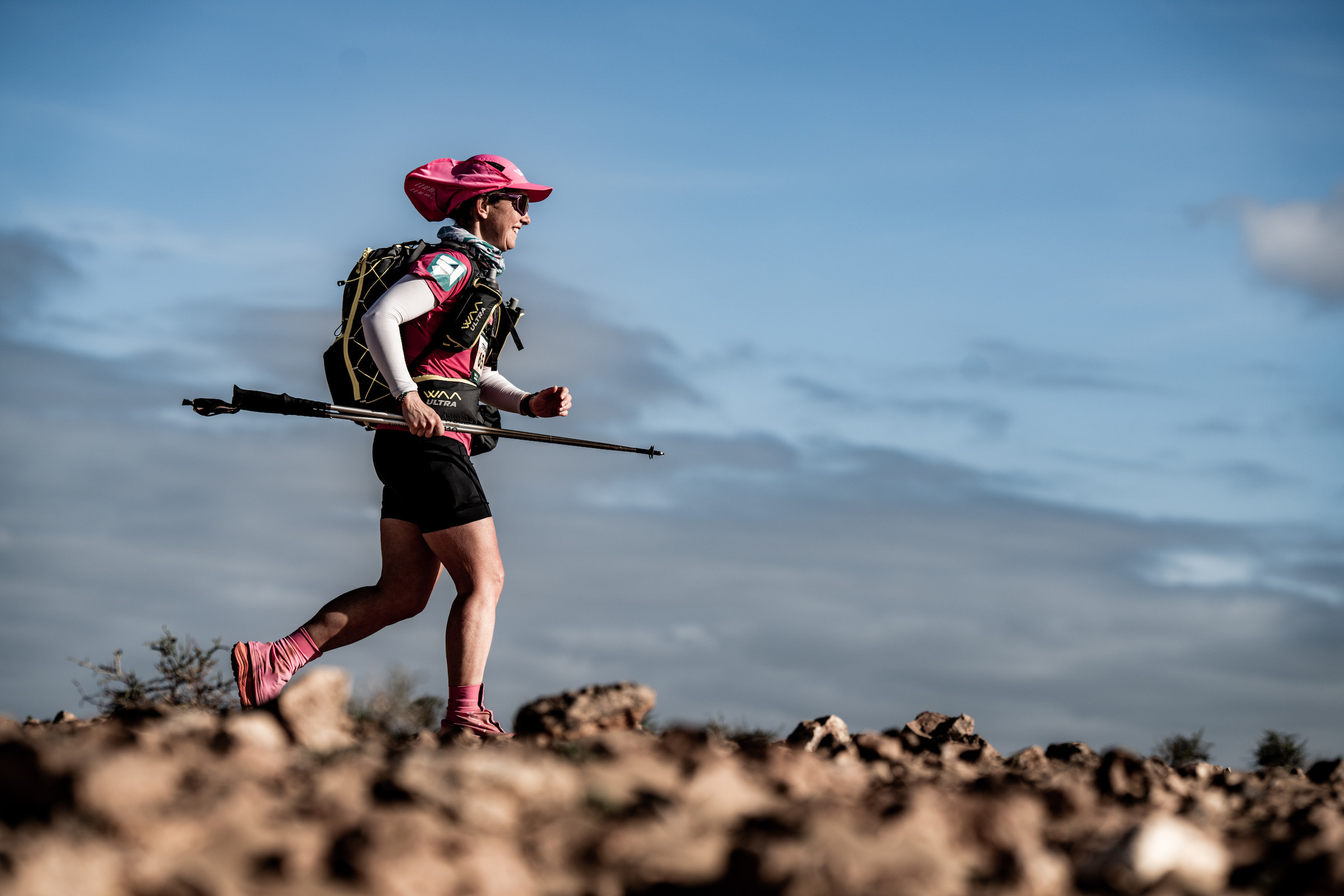
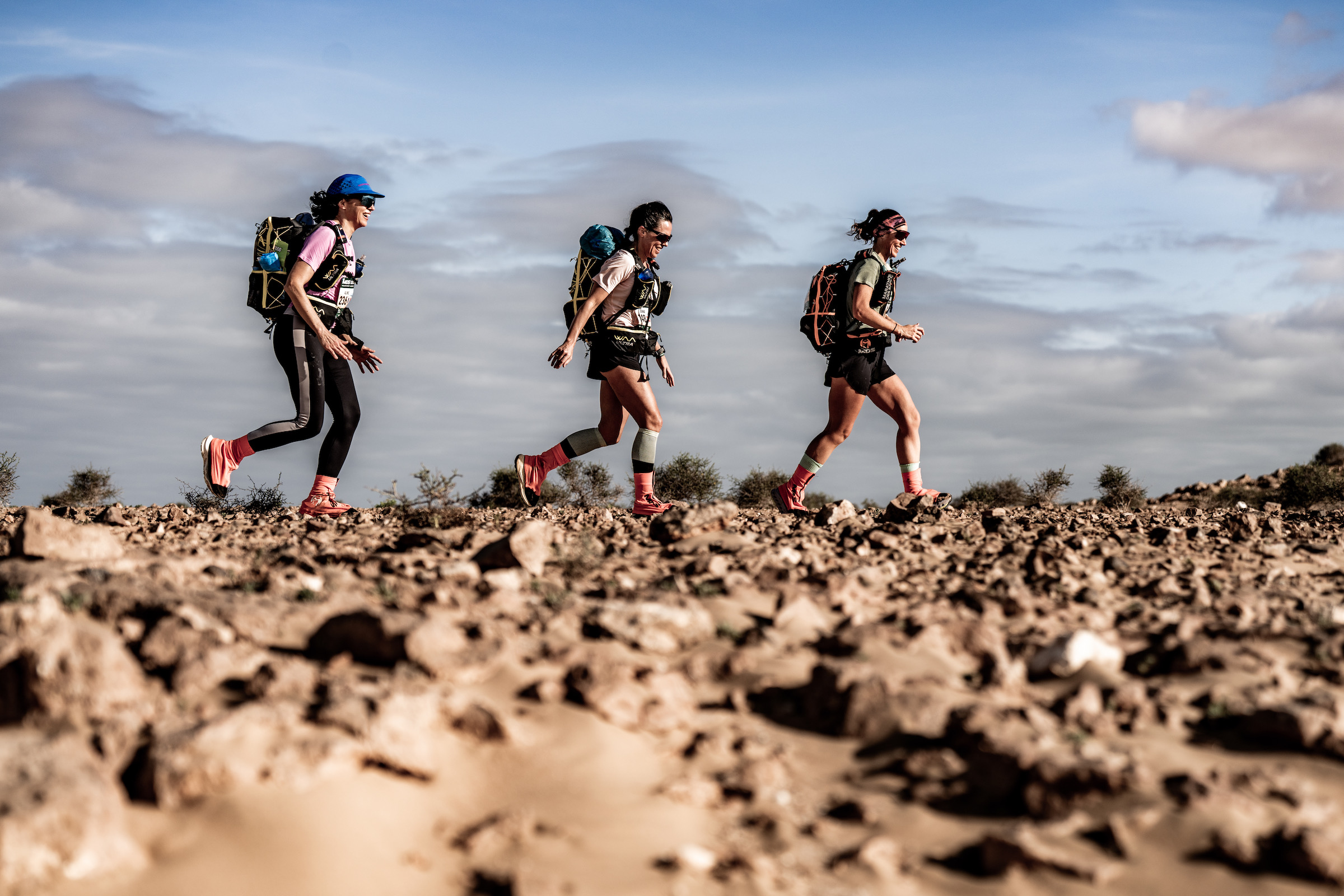
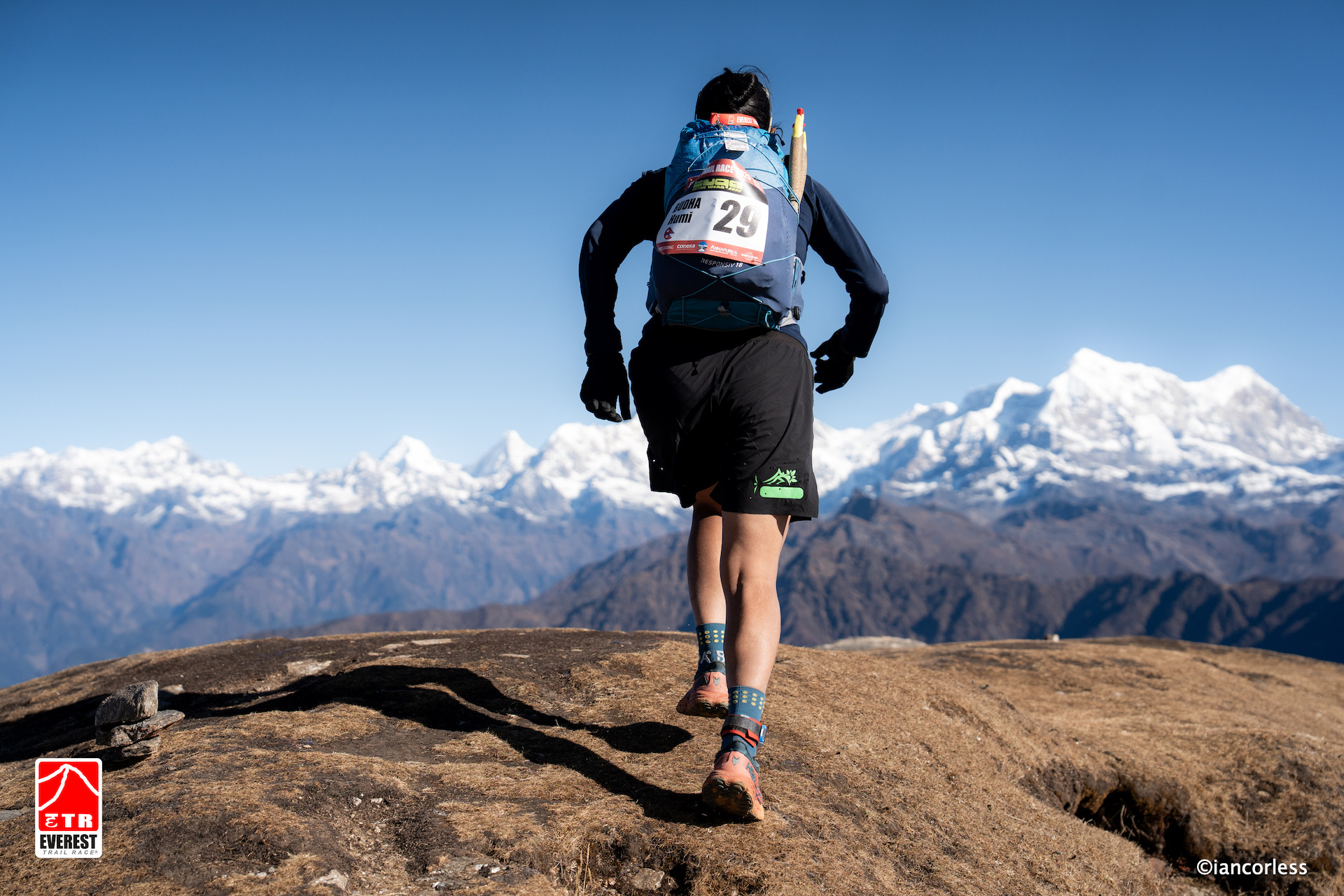
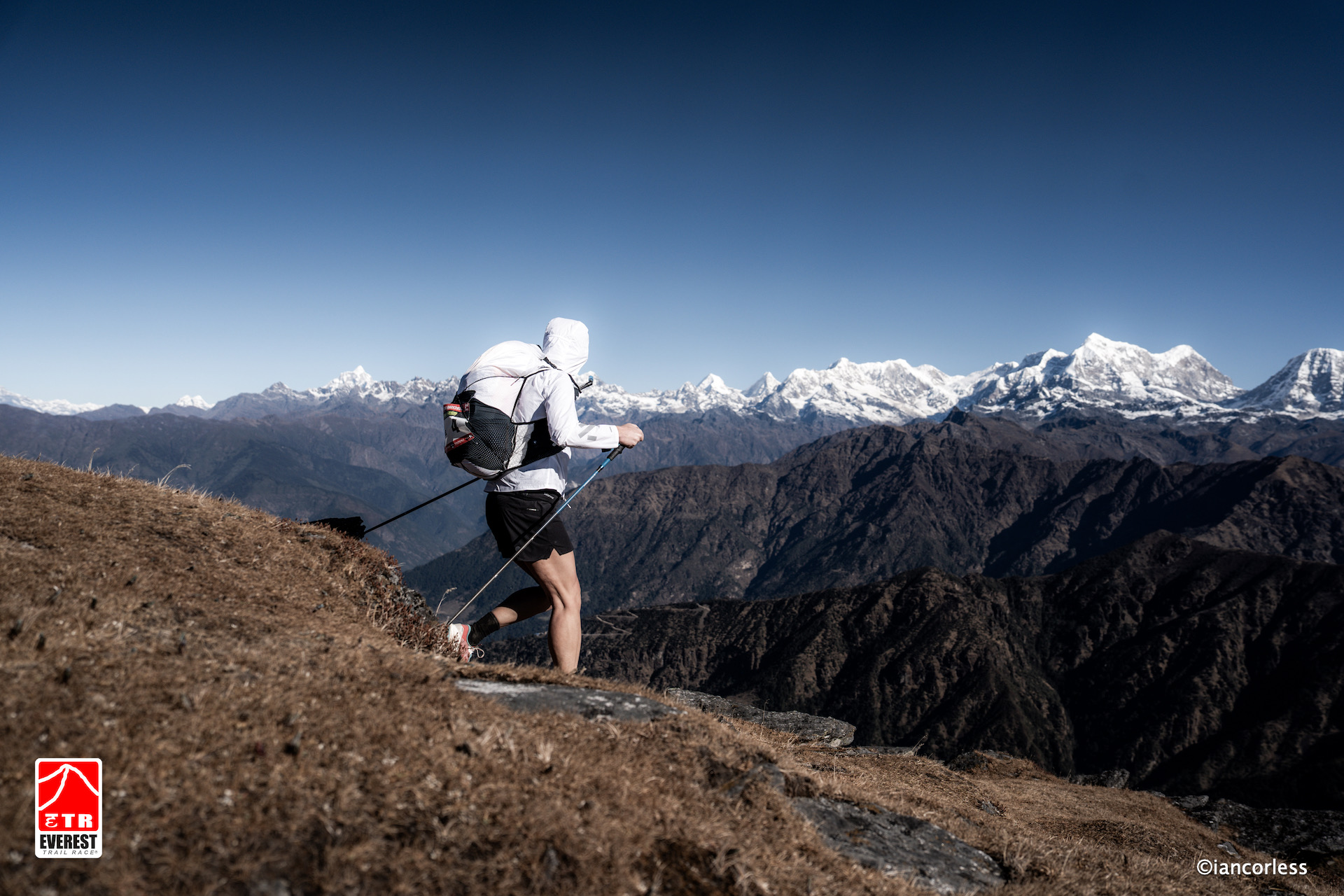
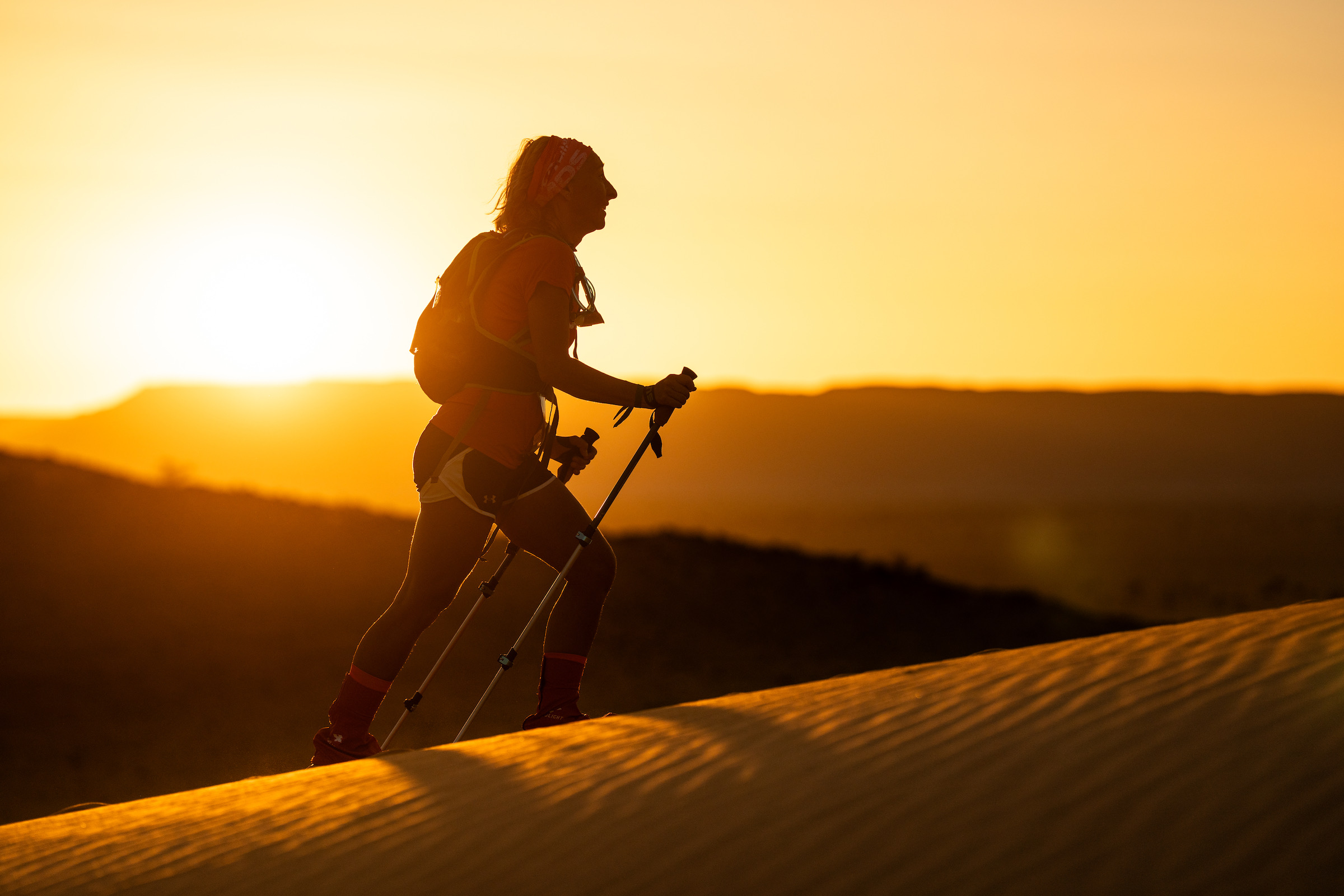
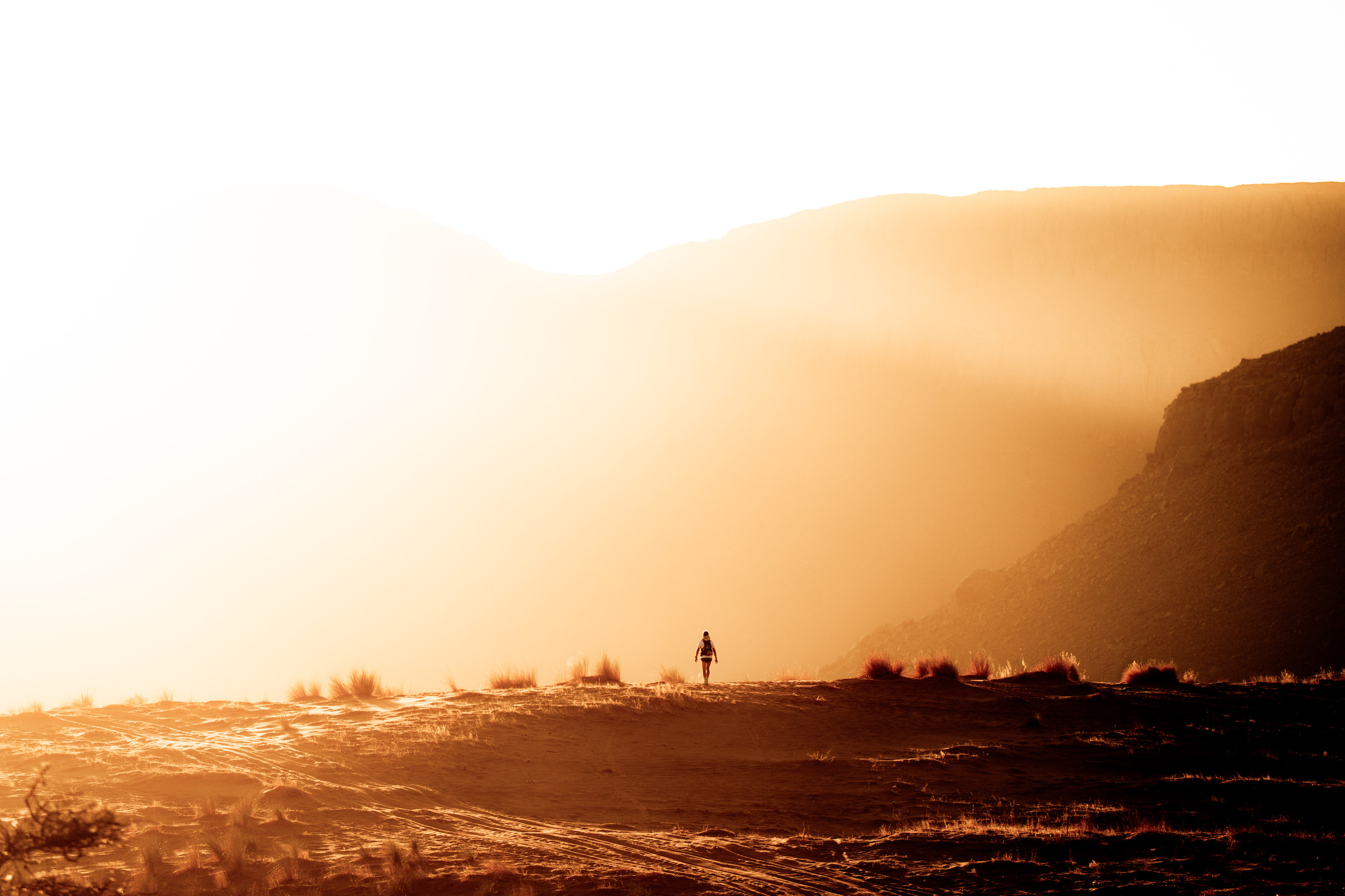
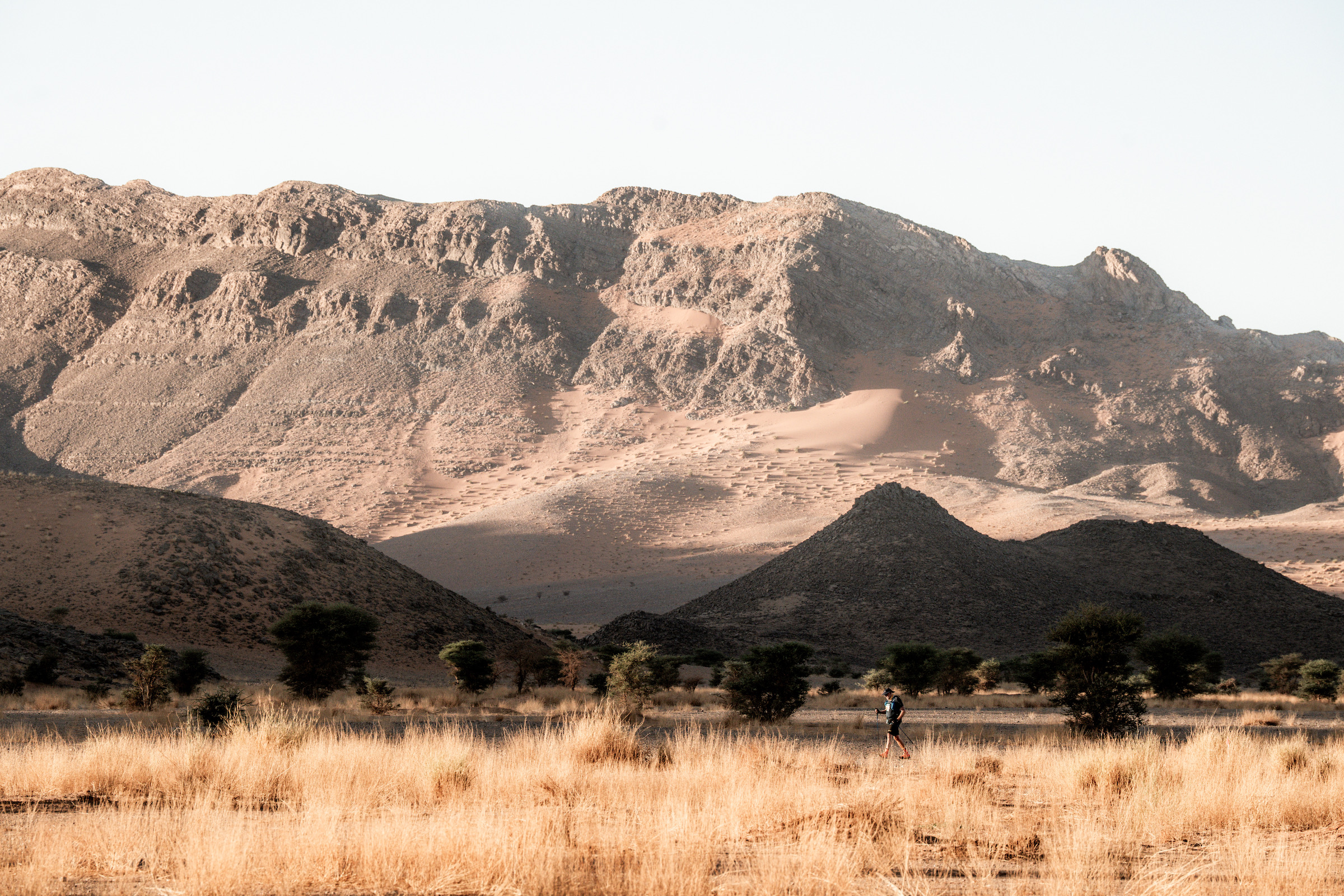
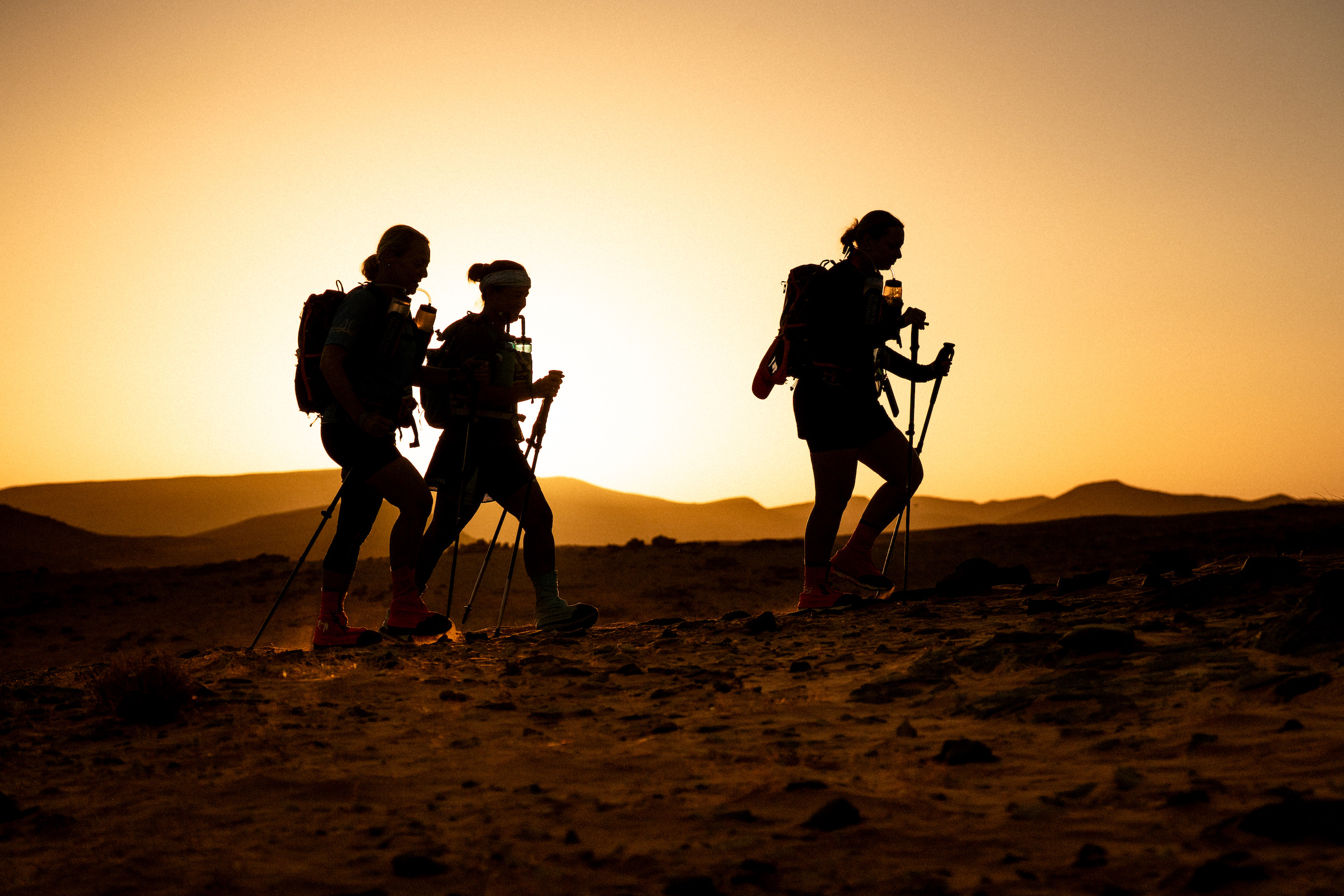
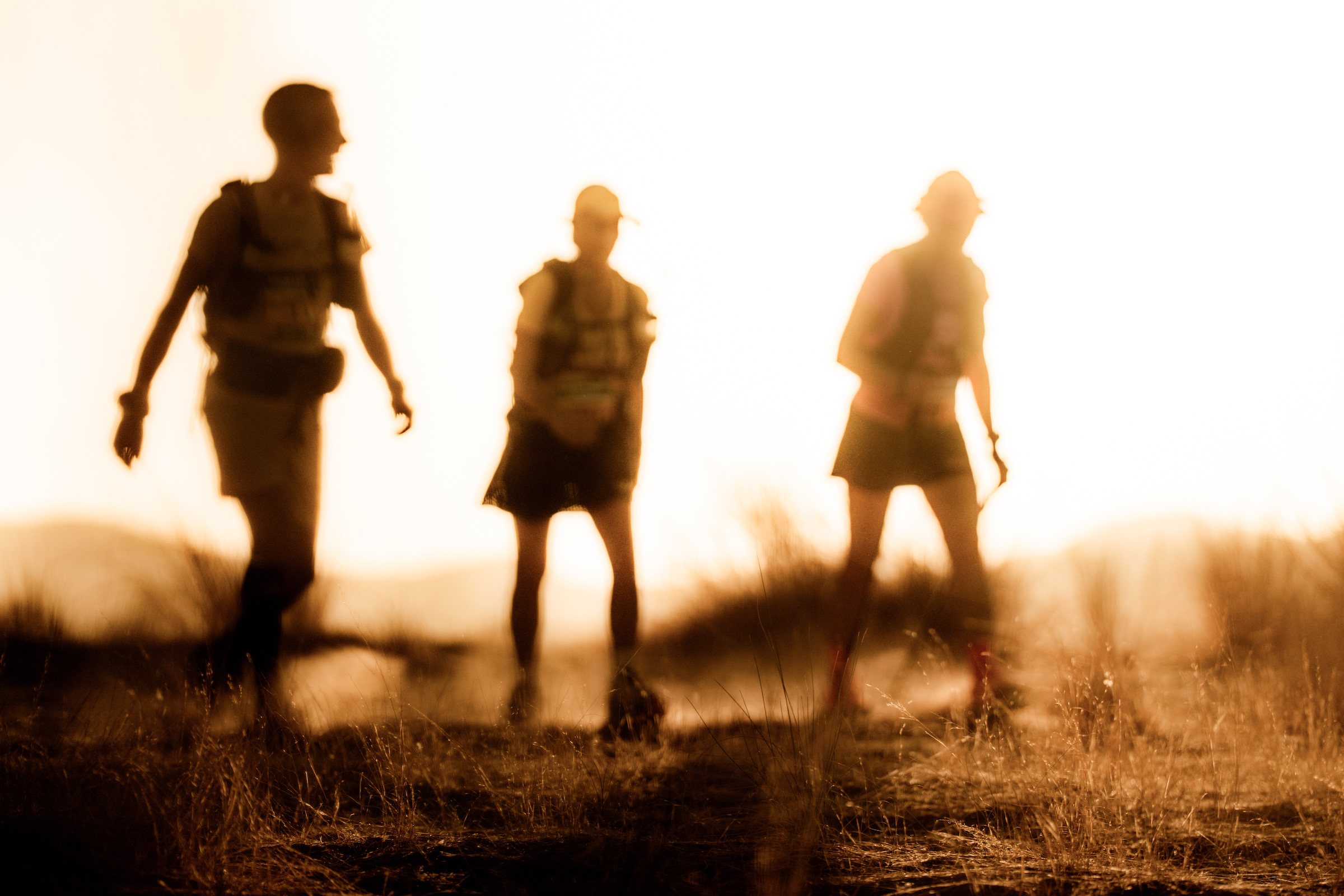
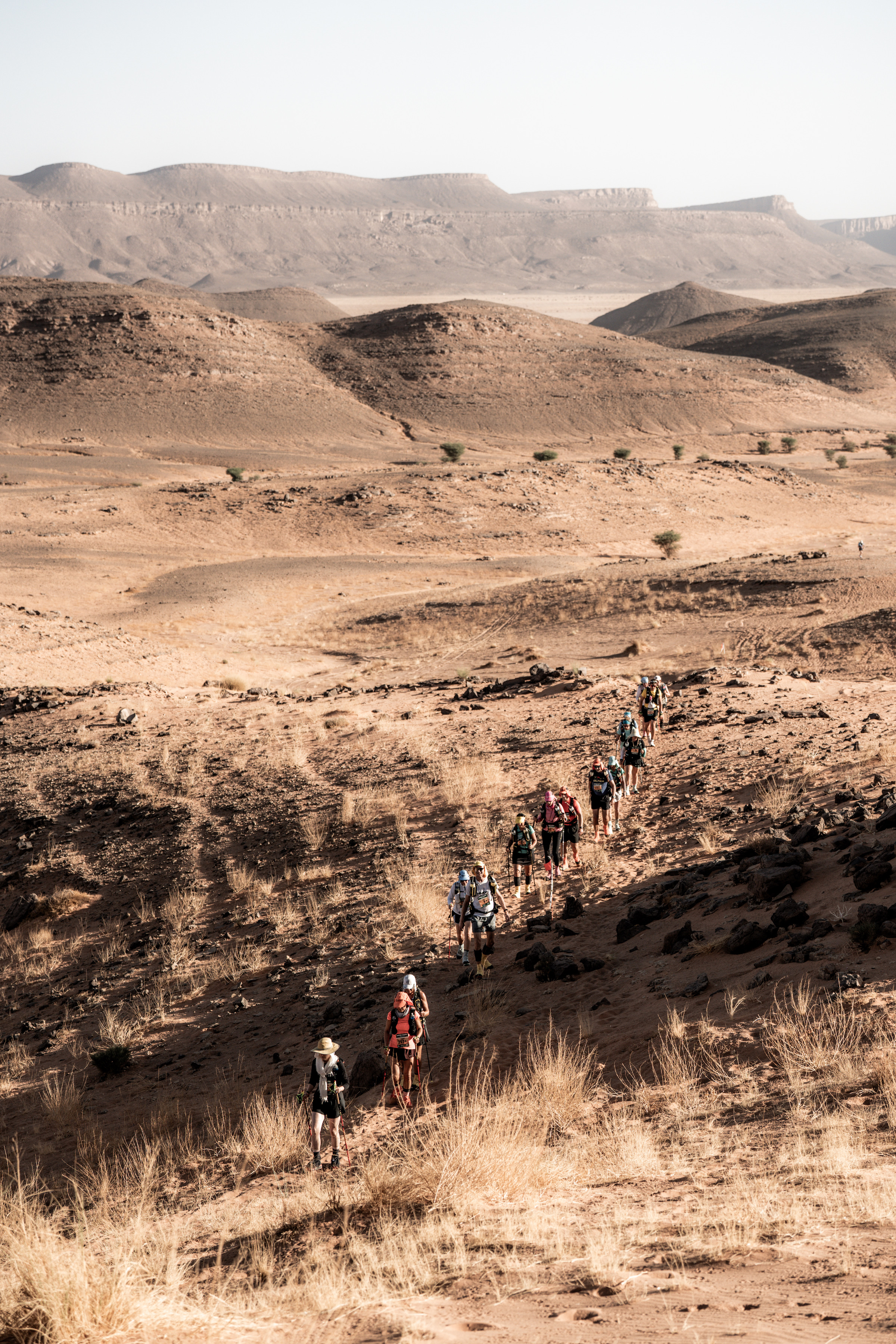
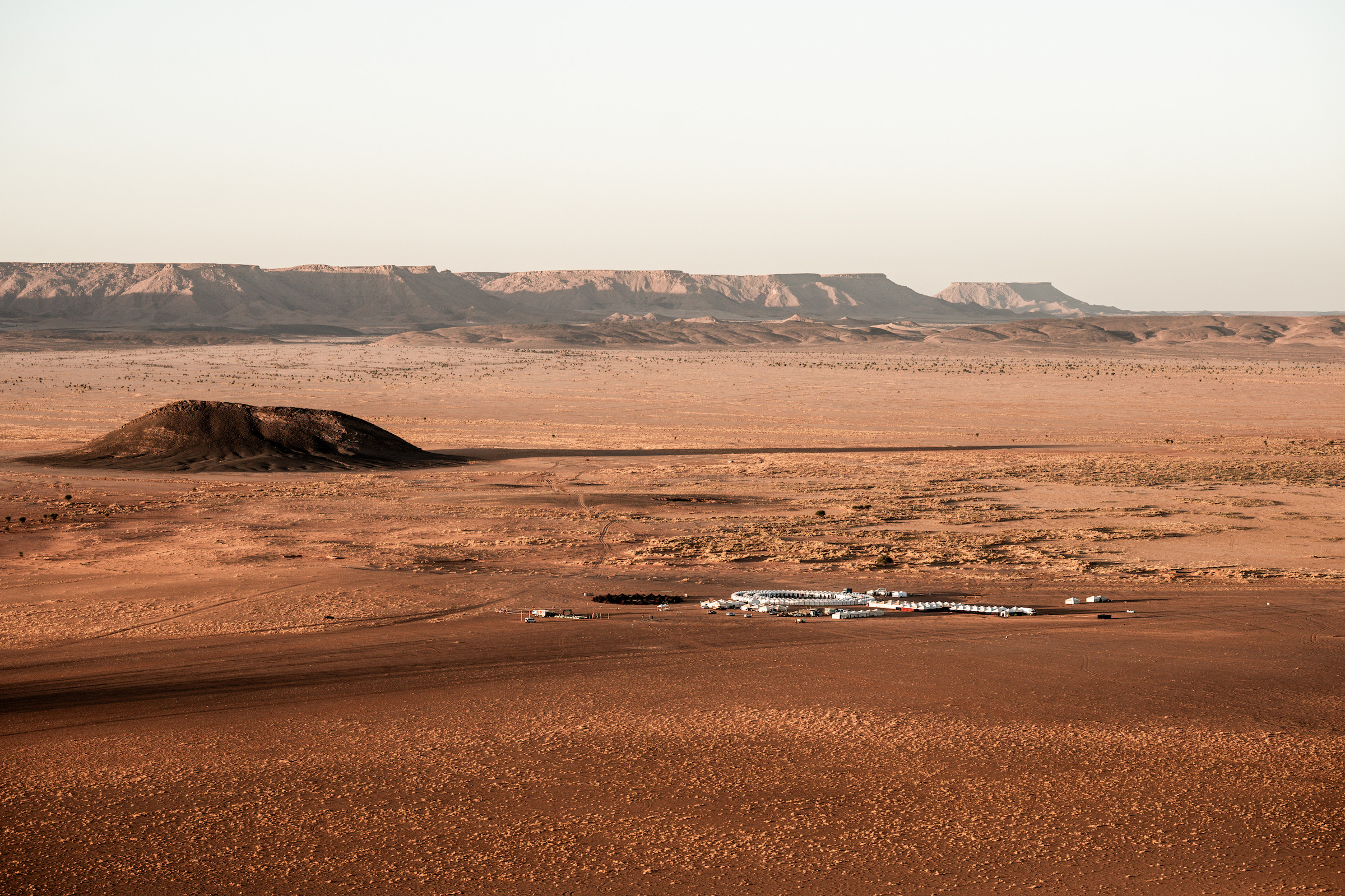
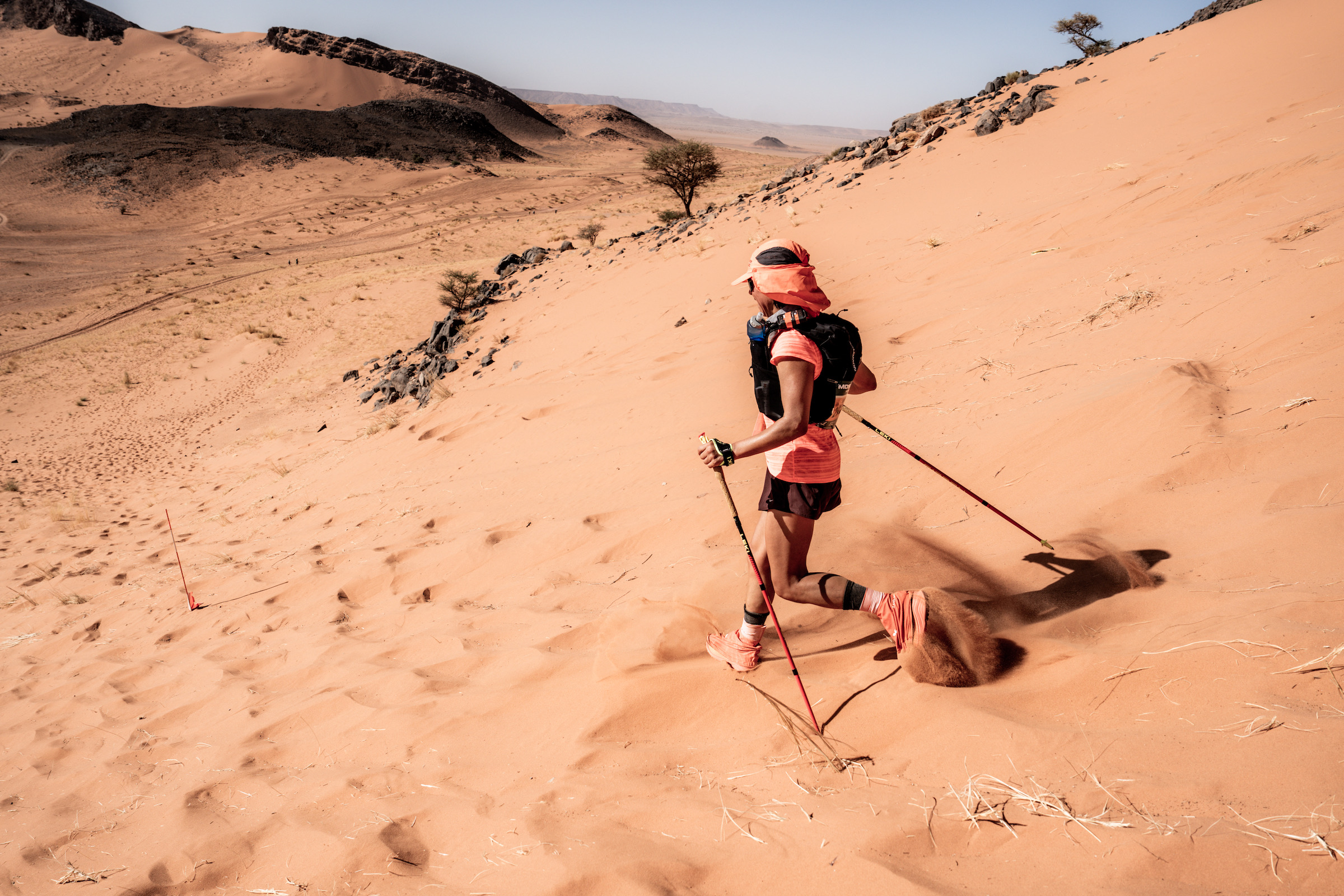
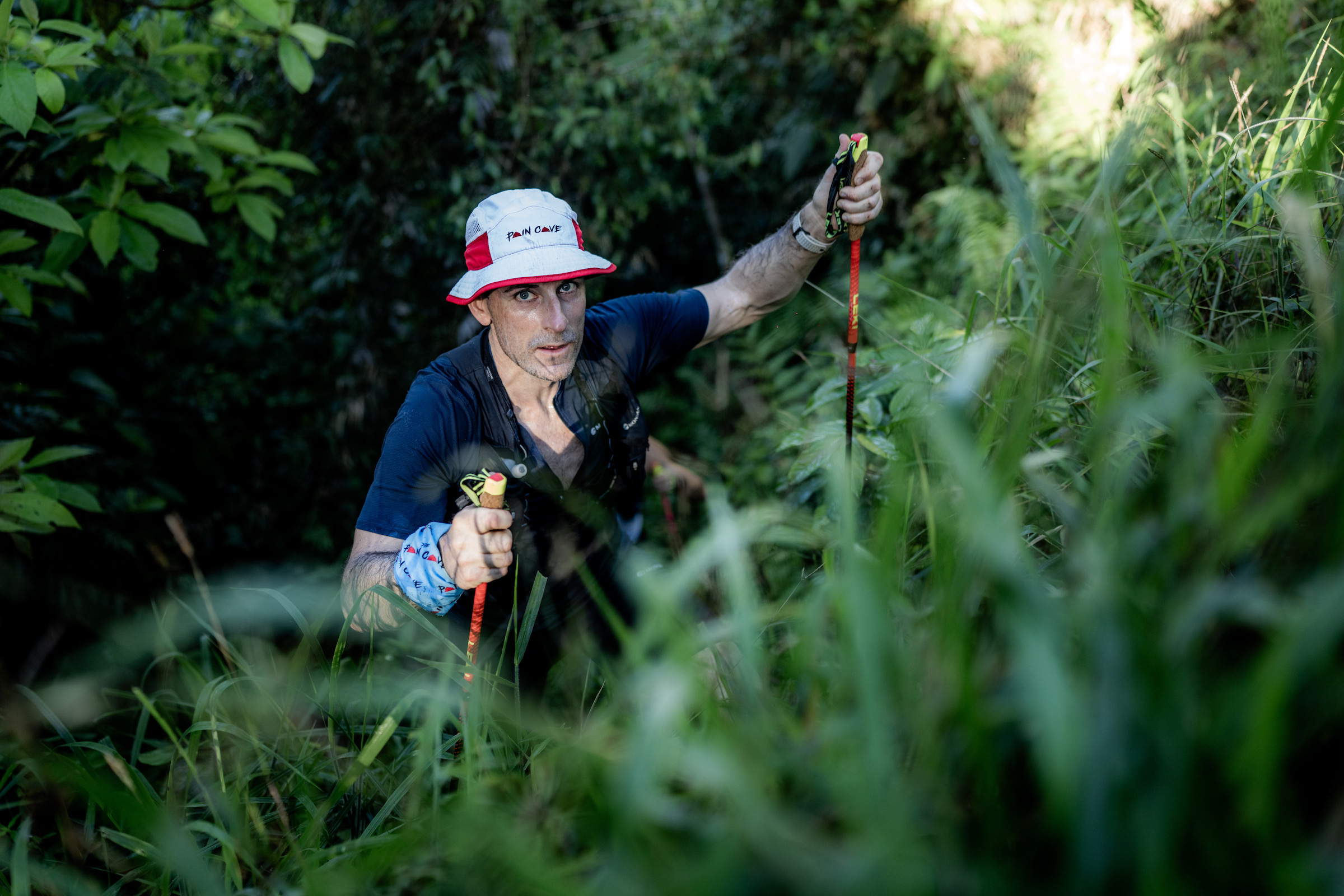
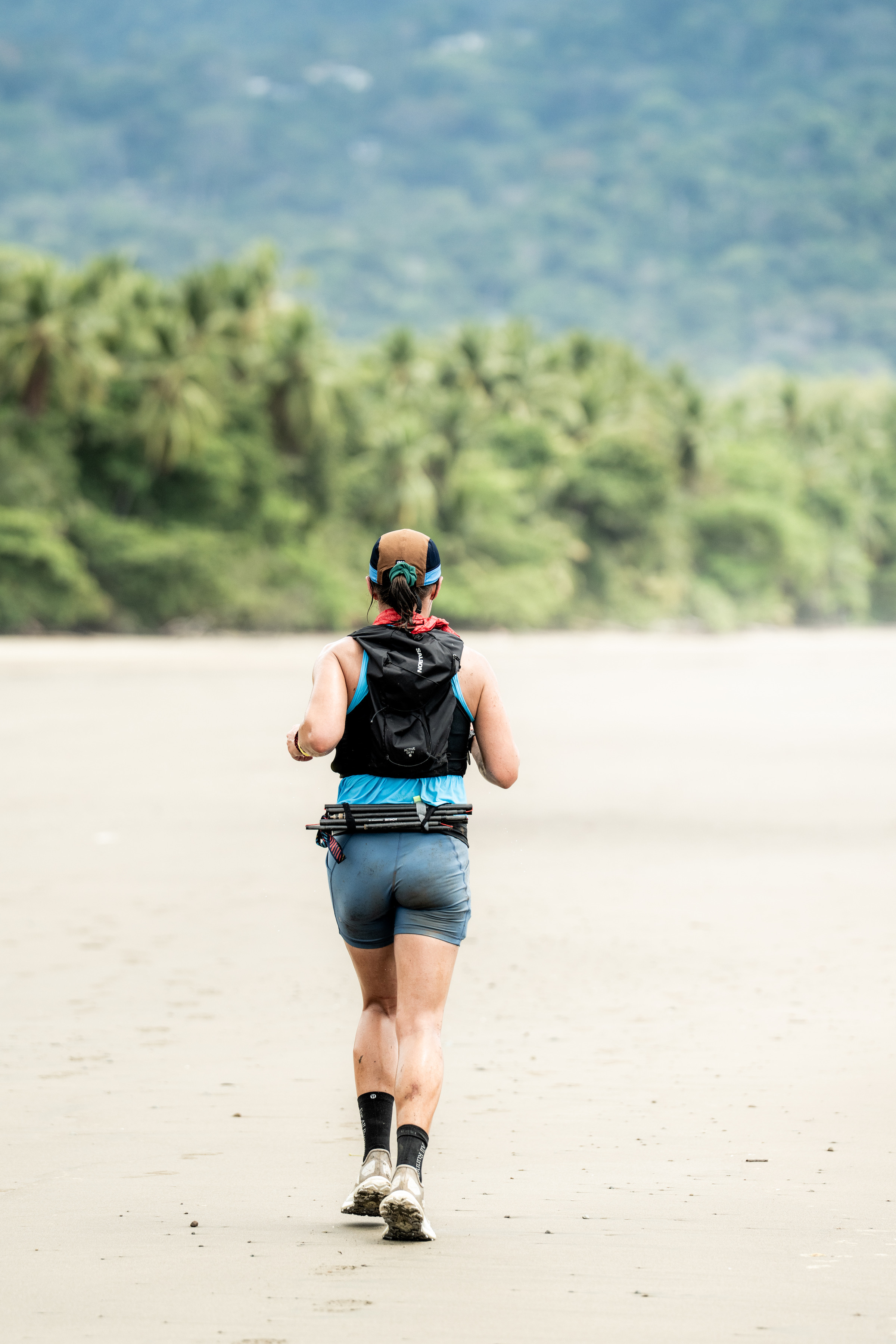
The Coastal Challenge Costa Rica pulled runners away from the coastline and into the high farmlands of the country’s interior. It was a bruising day, 37.7 kilometers with 2,613 meters of climbing for the Expedition category.

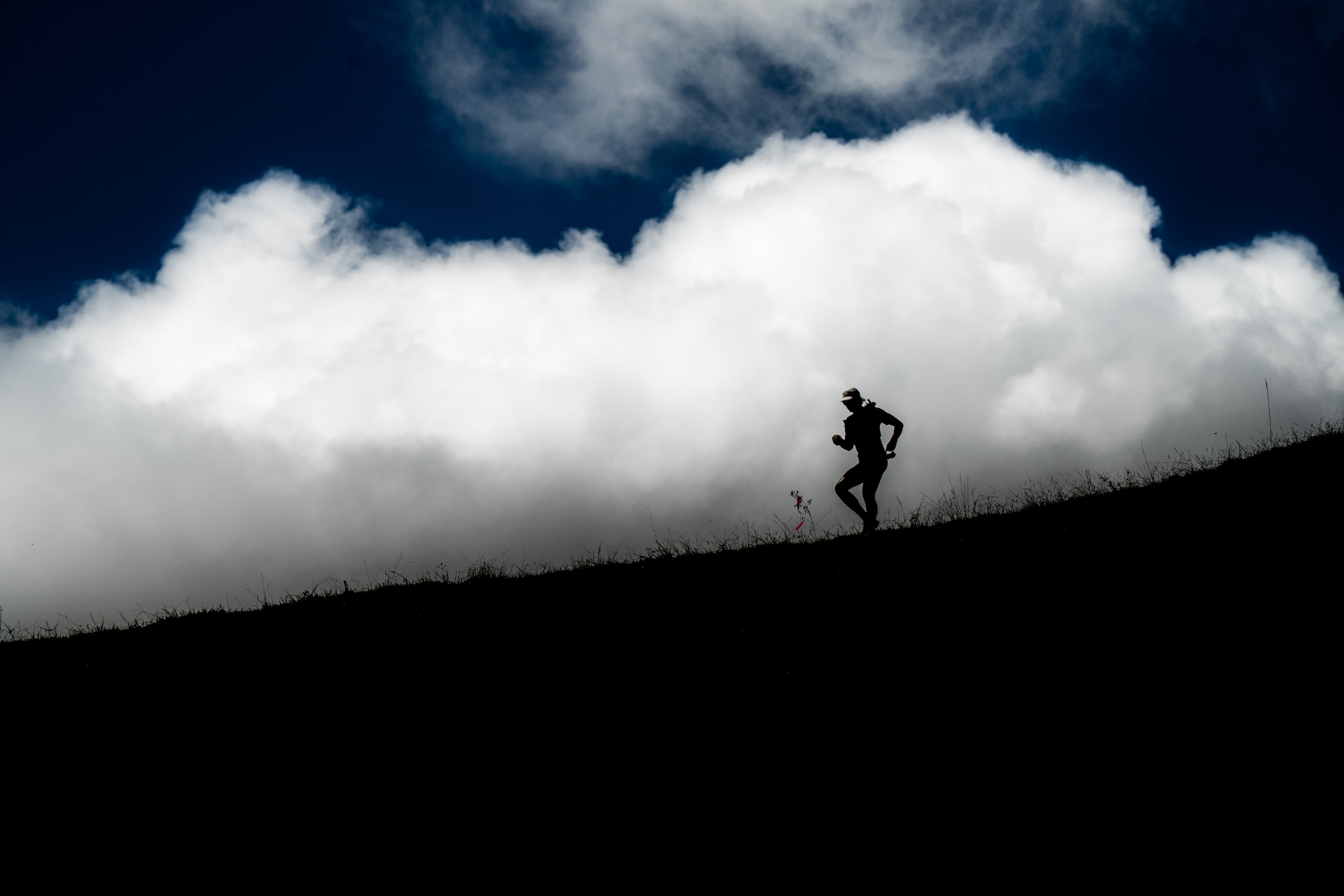
No hiding from it. The terrain rolled relentlessly, climbing and plunging through rough rural tracks and exposed hillsides before dropping toward the finish in Palma Norte. It was a stage built to test already tired legs, and it did exactly that.
Men’s Race

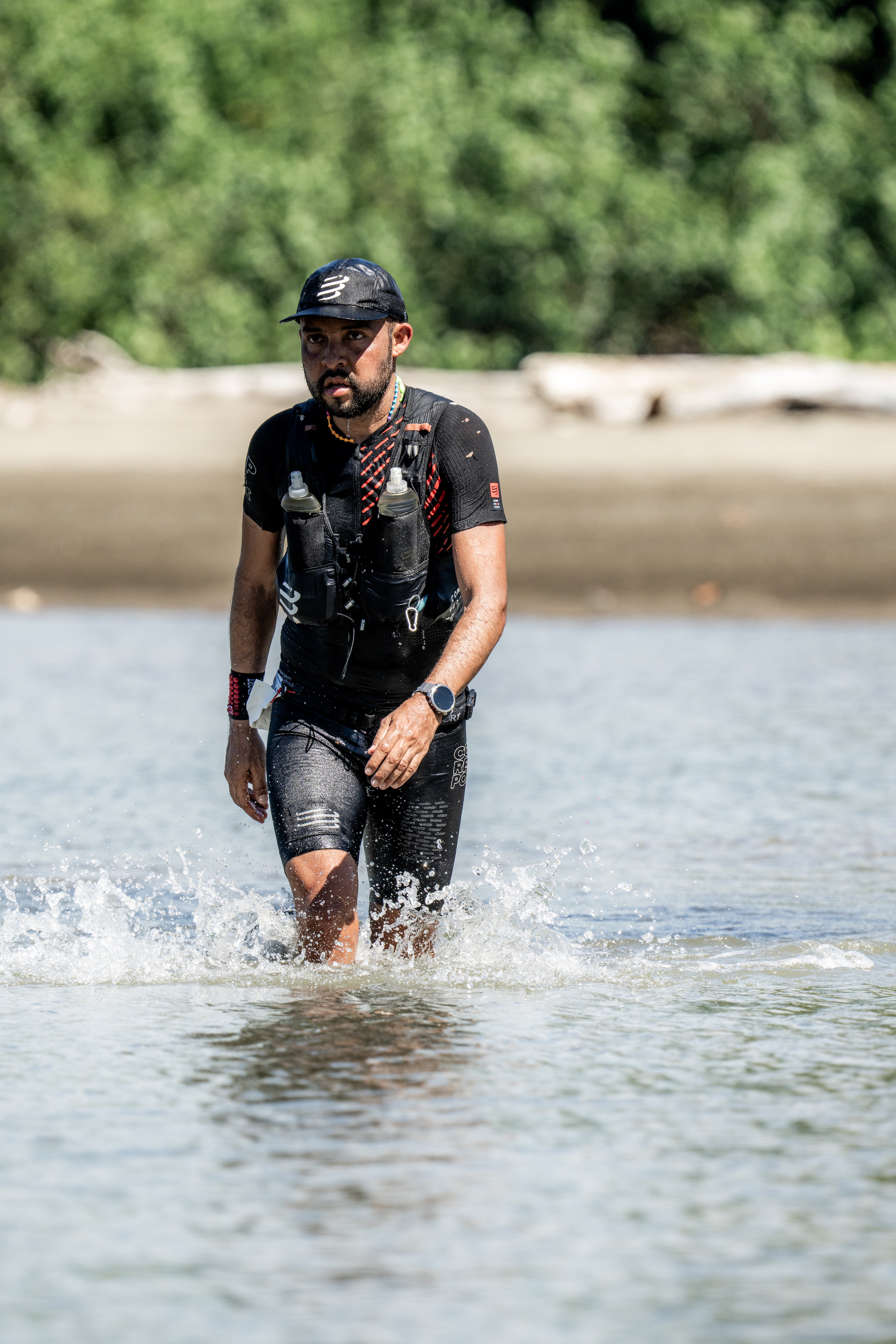
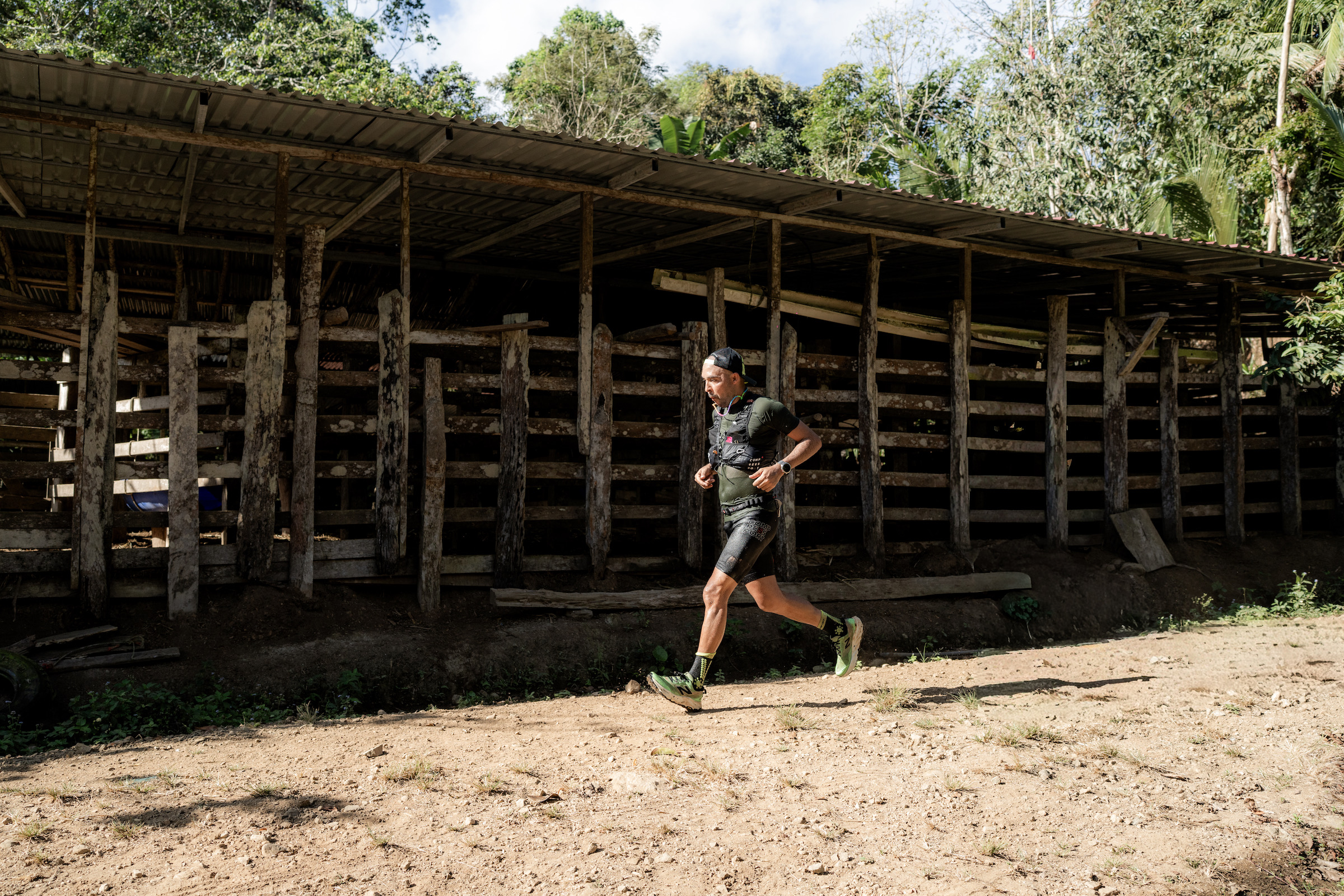
Erick Aguirre ran smart. With a solid overall lead, there was no need to take risks. He spent the day alongside Jesus Cerdas, the pair moving steadily across the harsh terrain. They crossed together in 6:05:43, controlled and composed.
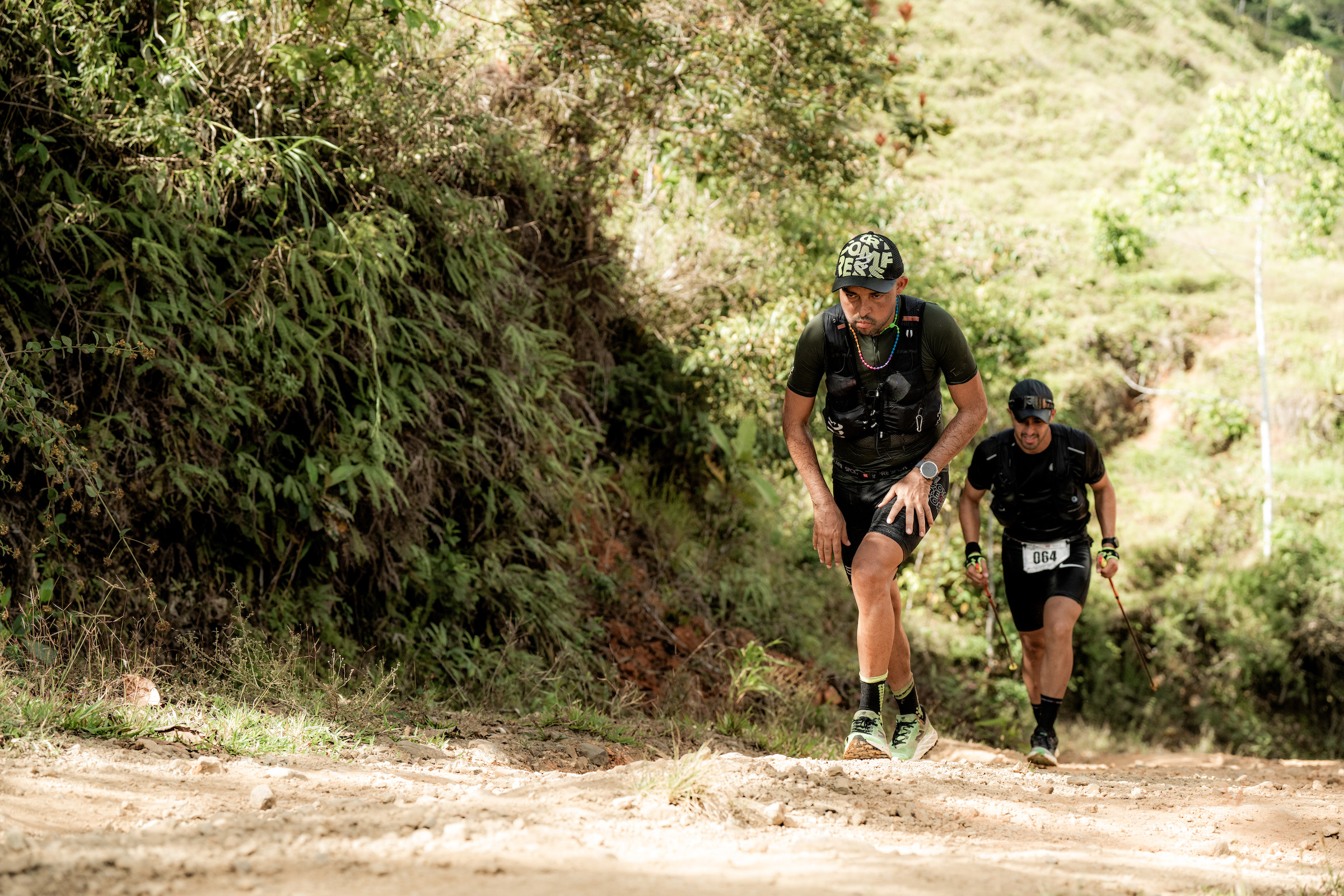
Behind them, the real battle unfolded.
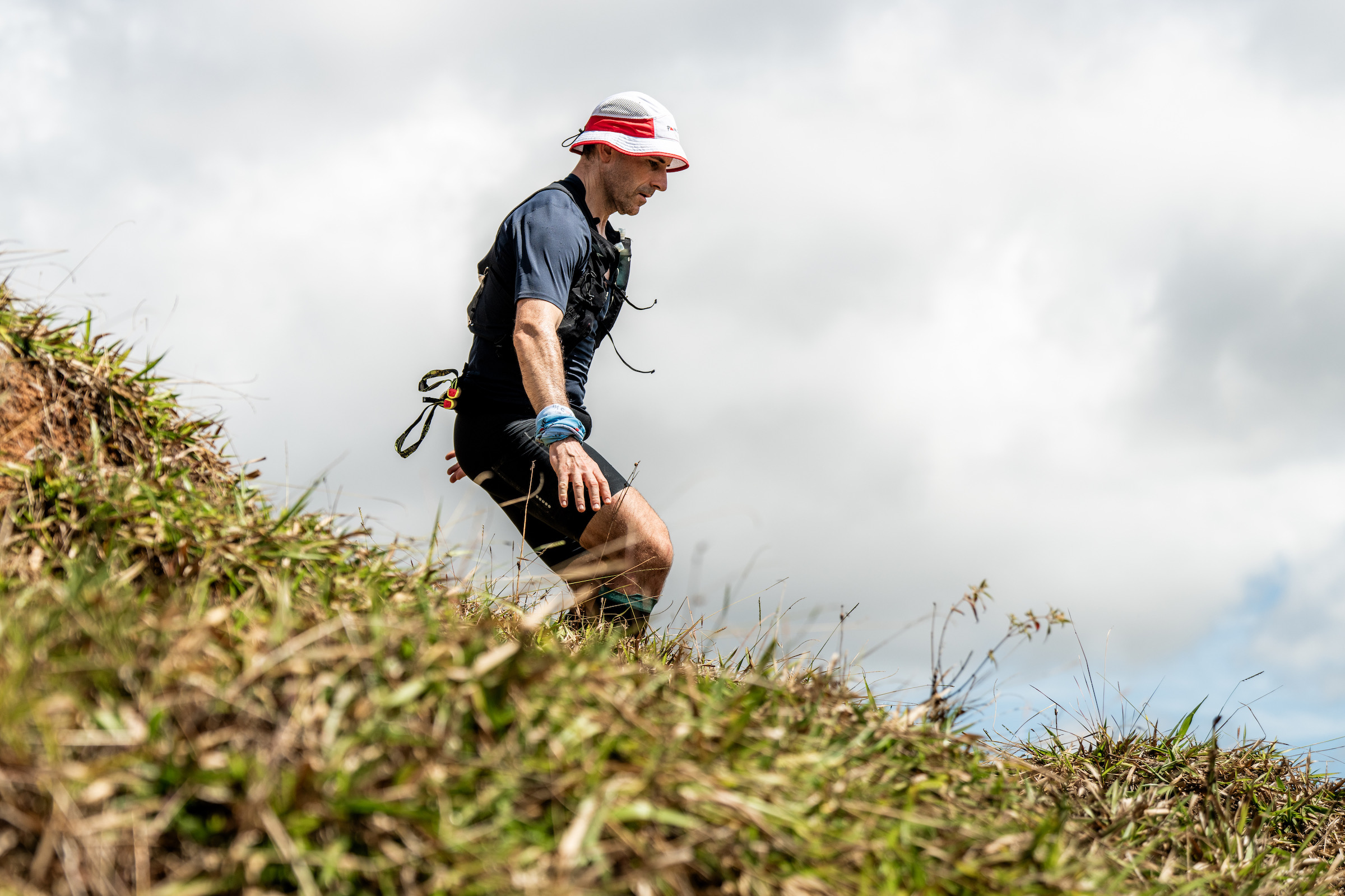
Jon Shield fought all day. For much of the stage he sat in fourth, but he never let the gap grow. Gradually he reeled in Martin Alonso Mena. The two arrived at the line almost inseparable after more than six and a half hours of racing. Shield edged it by just three seconds, 6:38:26 to 6:38:29. A long day decided by the smallest of margins.
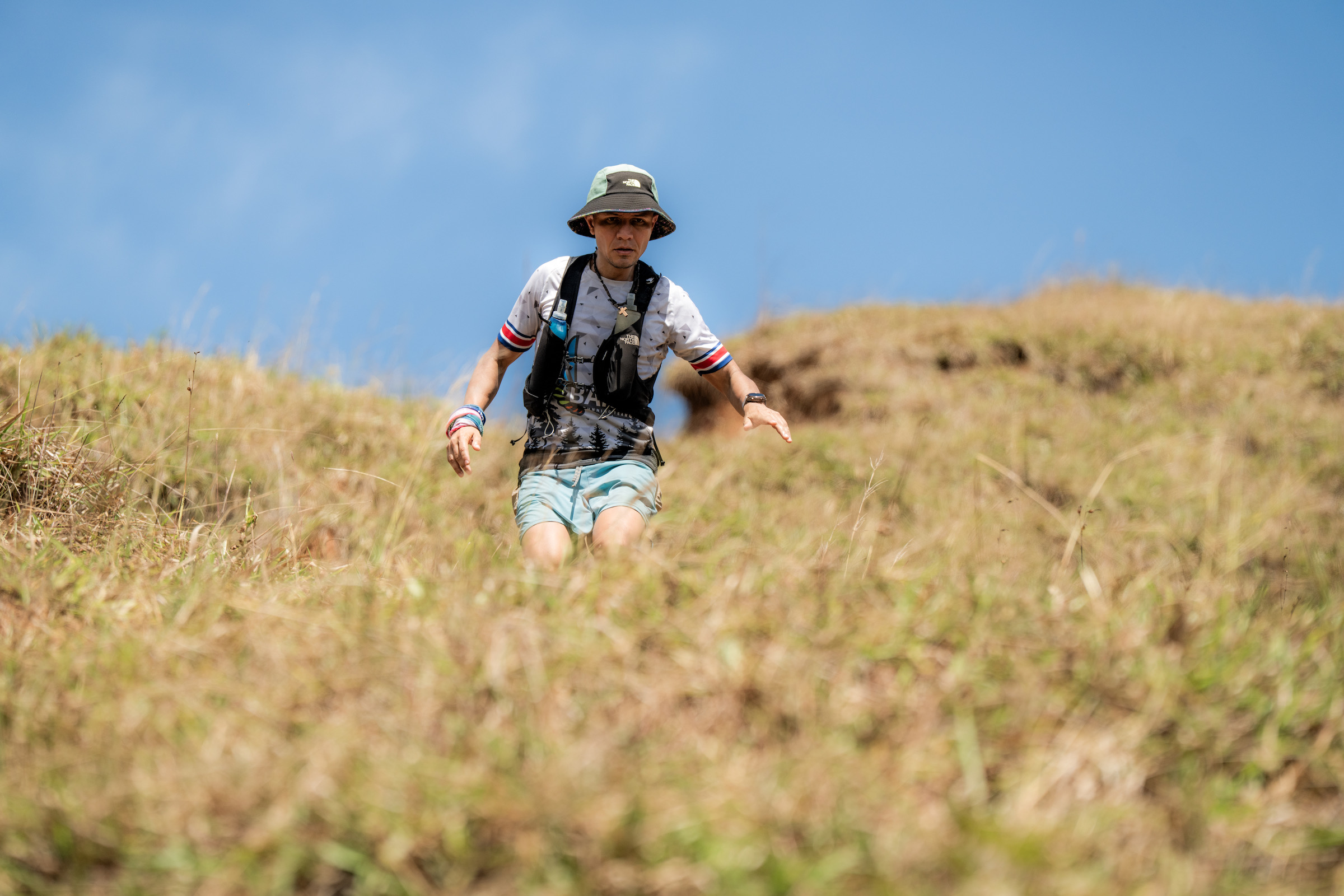
Women’s Race
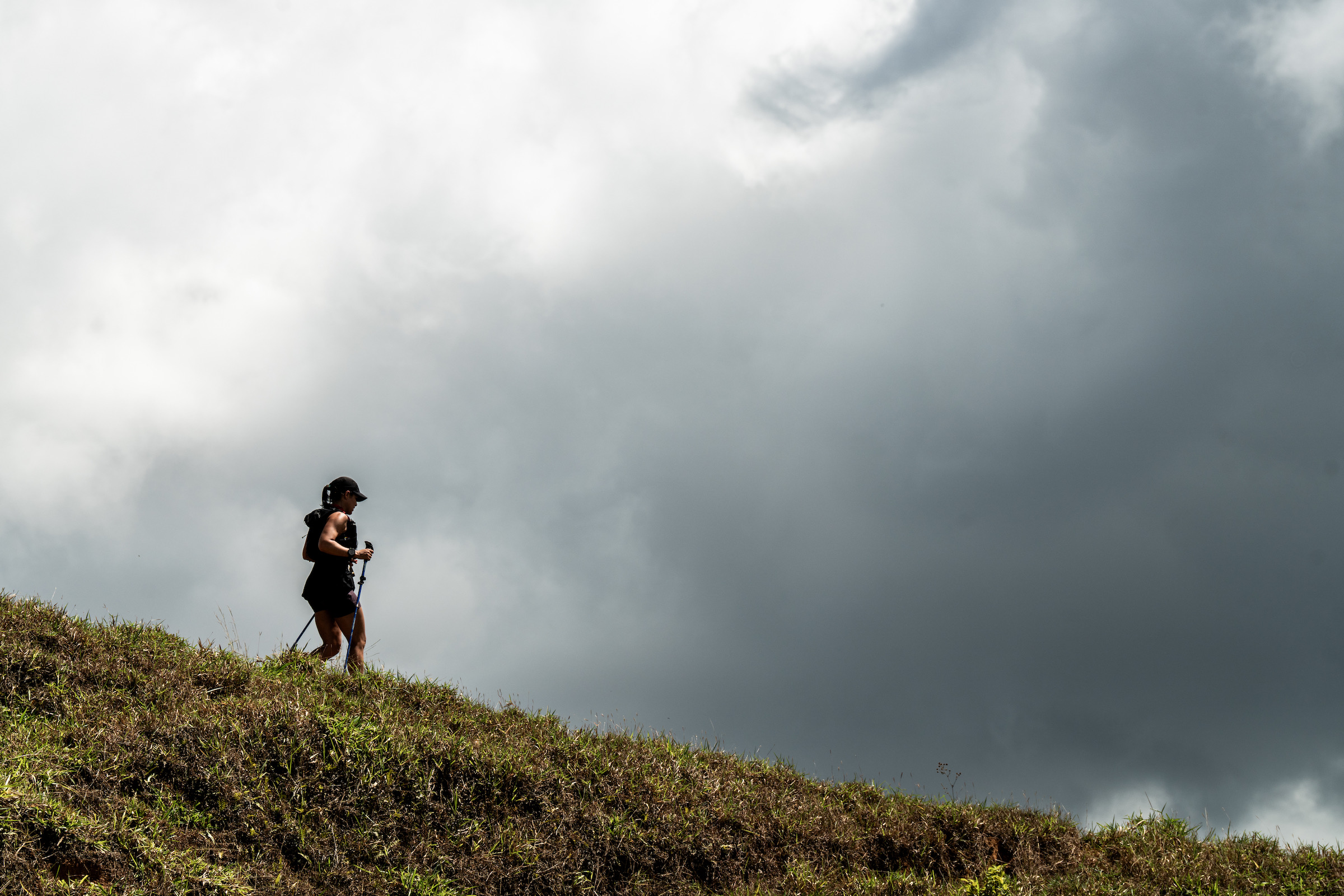
Denise Zelaya continues to run her own race. Calm, consistent, and completely dominant, she finished in 7:29, well clear of the field.
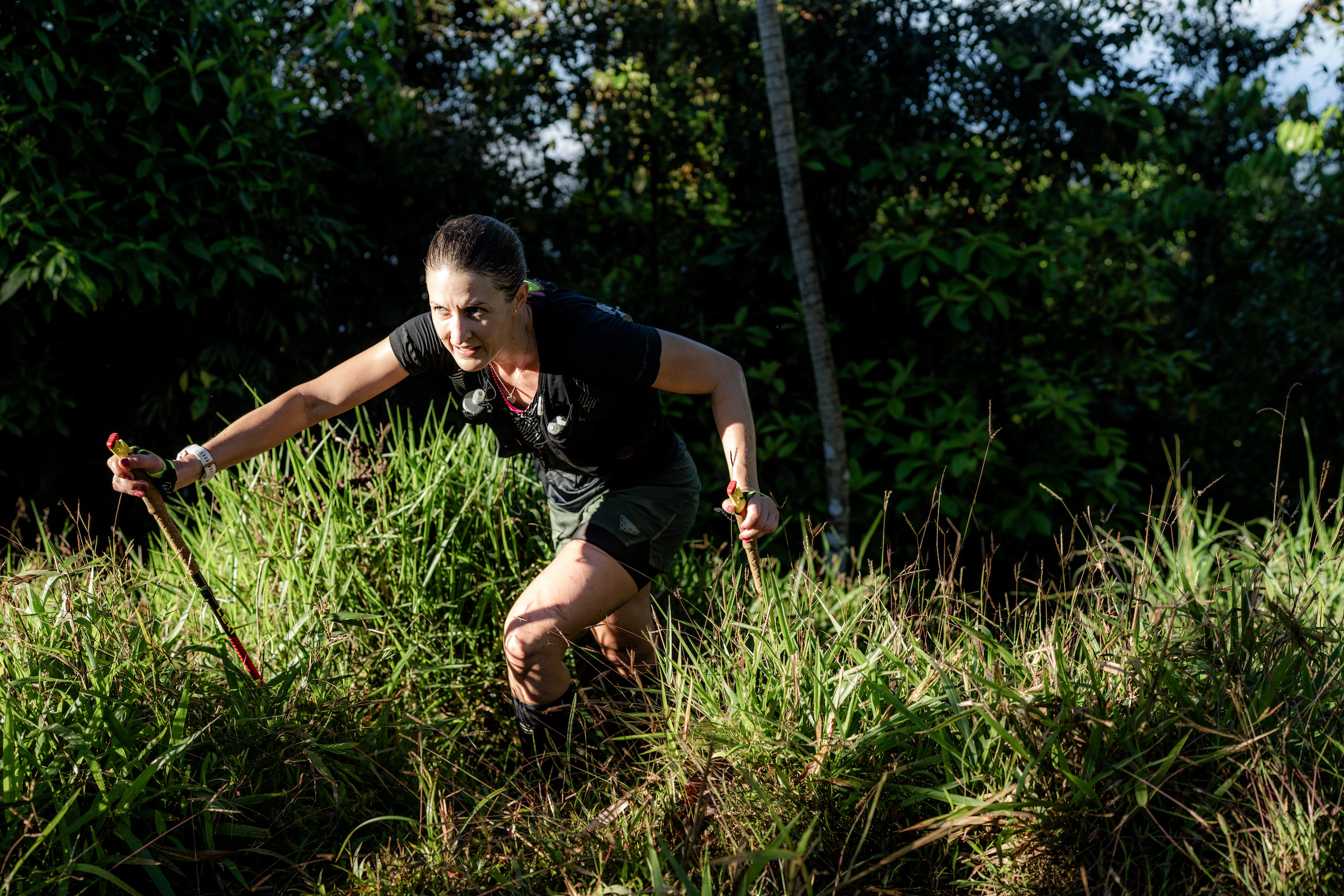
Janina Beck followed in 8:27, with Floribeth Perez completing the podium in 8:59. On a day that punished everyone, Zelaya once again showed control and strength.

Adventure Category

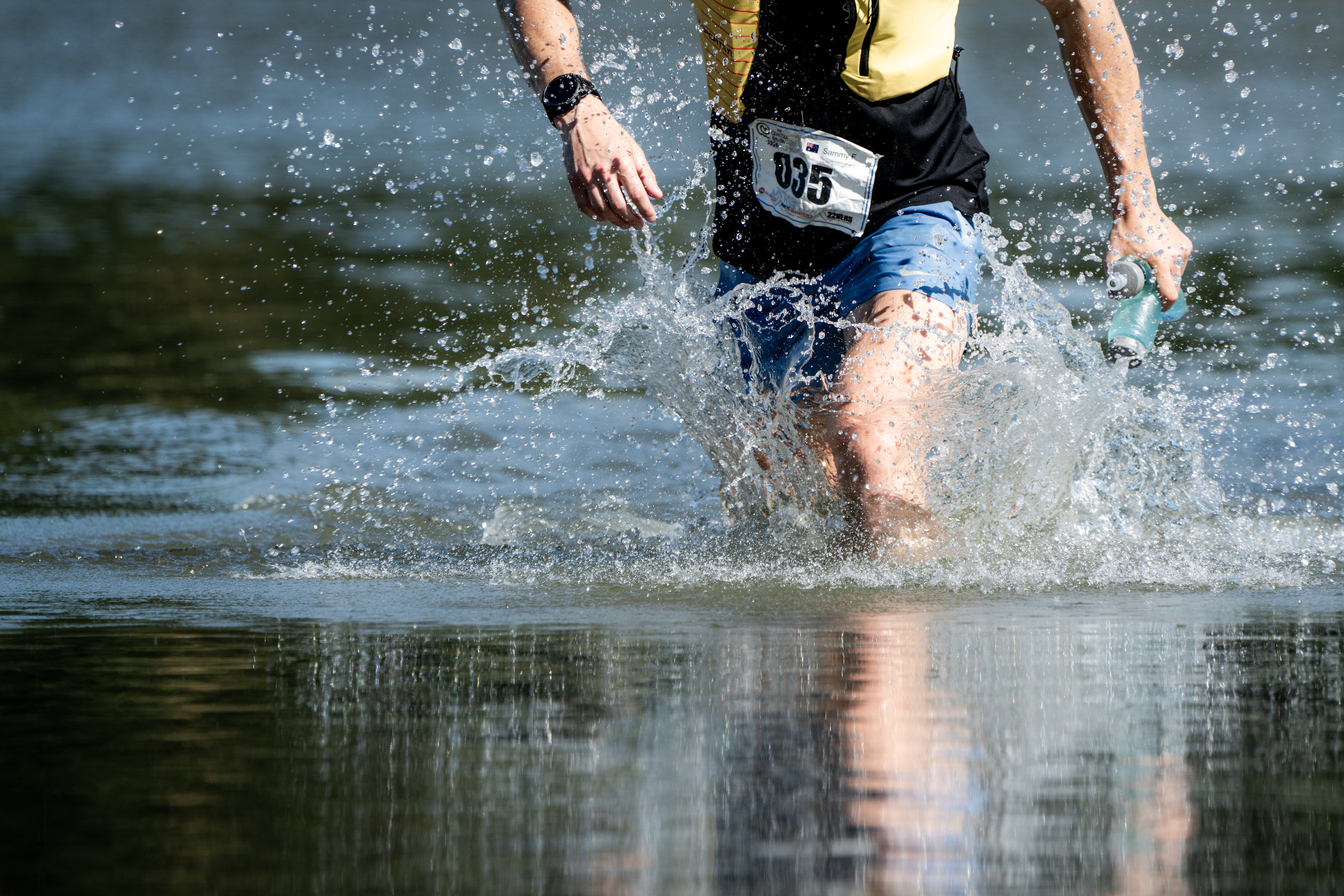
The Adventure course was shorter at 12 kilometers, but still far from easy. Sammy Francis ran solo again, crossing in 3:39:22 with another composed performance. In the women’s race, Laura Zuniga finished in 4:13:45, gaining more time on Toni Clark and steadily building her advantage.

*Please note – Adventure times need to deduct 1:49 from the times
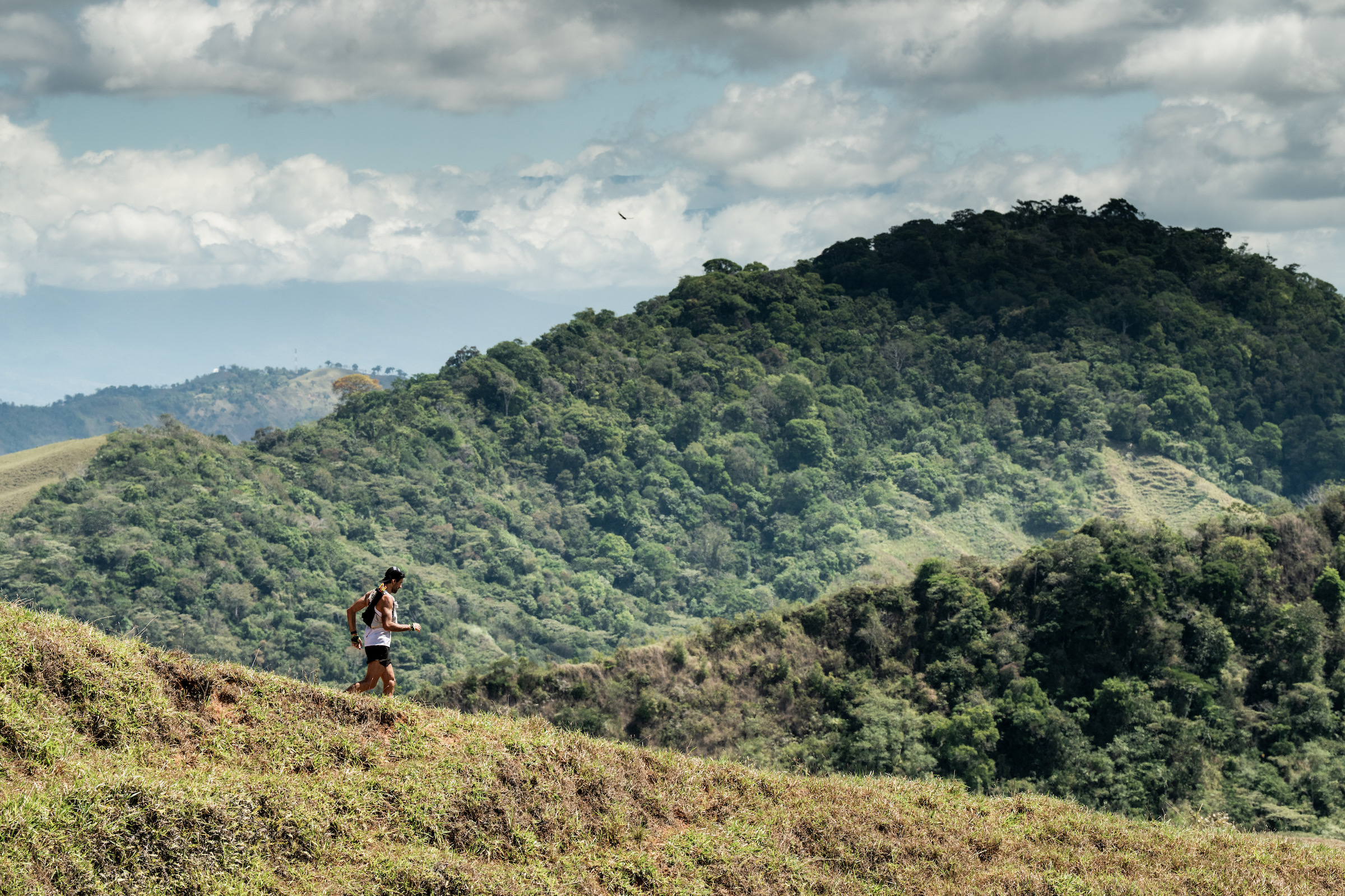
With four stages complete, fatigue is real. The coastal humidity has been replaced by exposed climbs and rolling farmland. Every step now carries the weight of the days before.
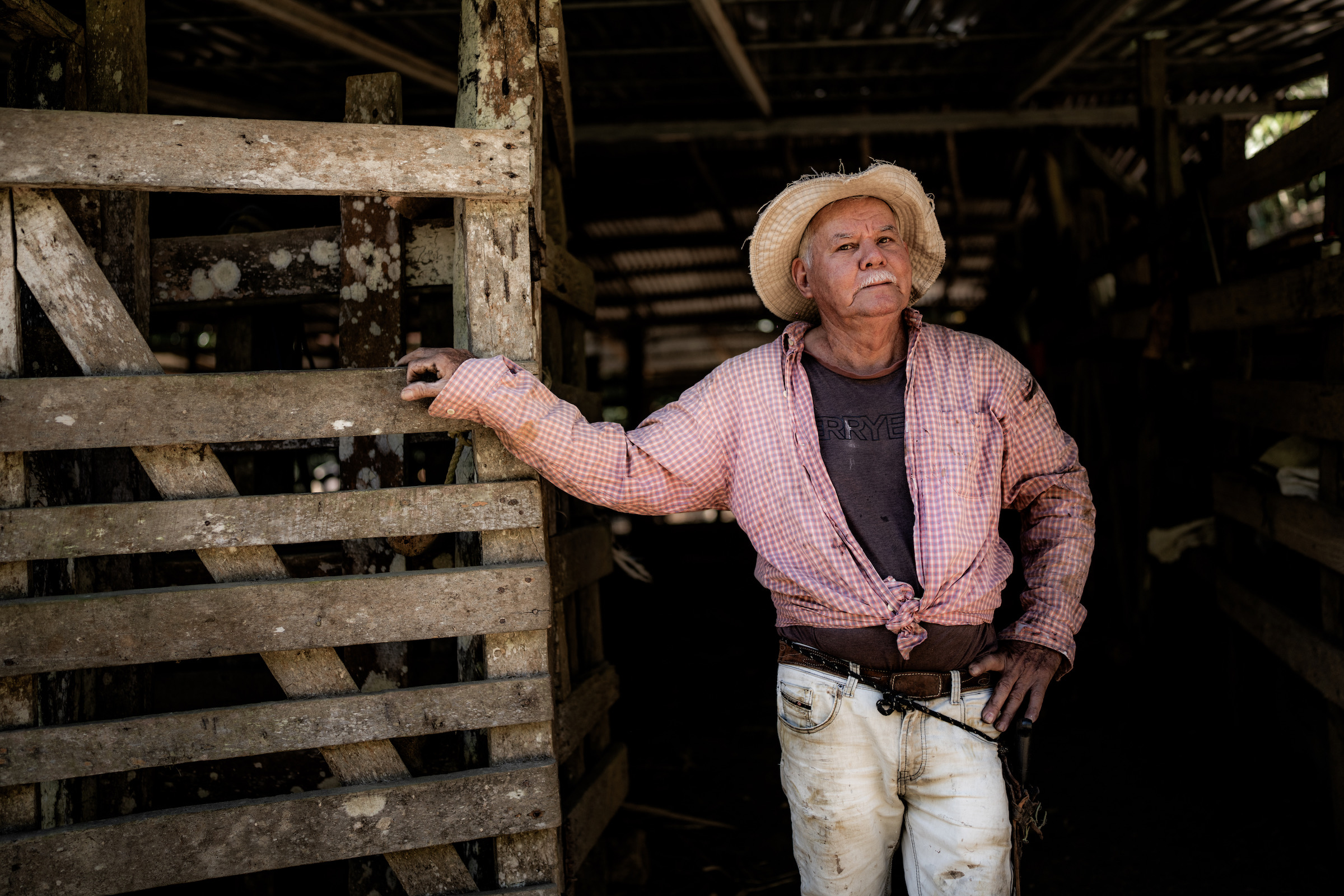
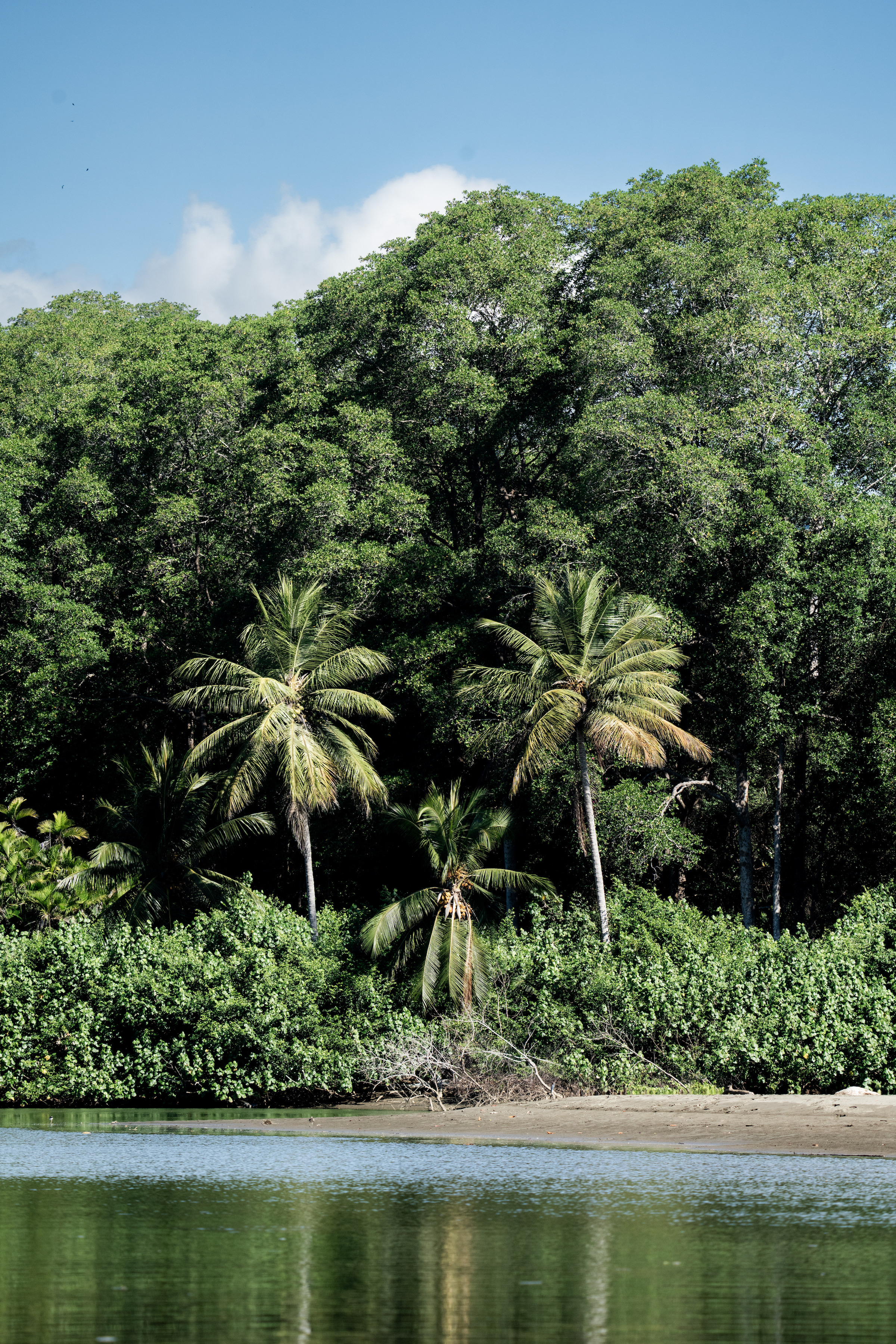
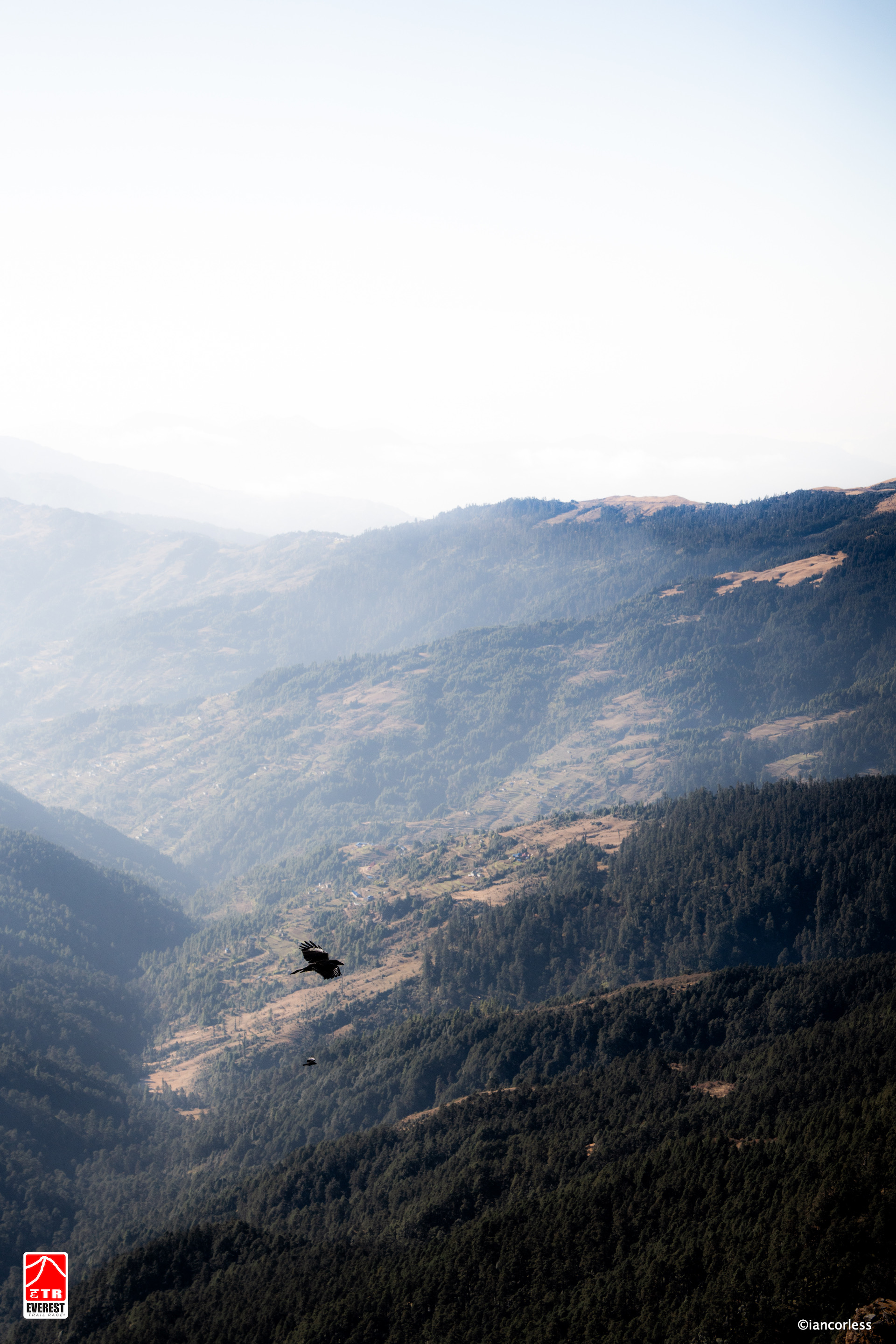
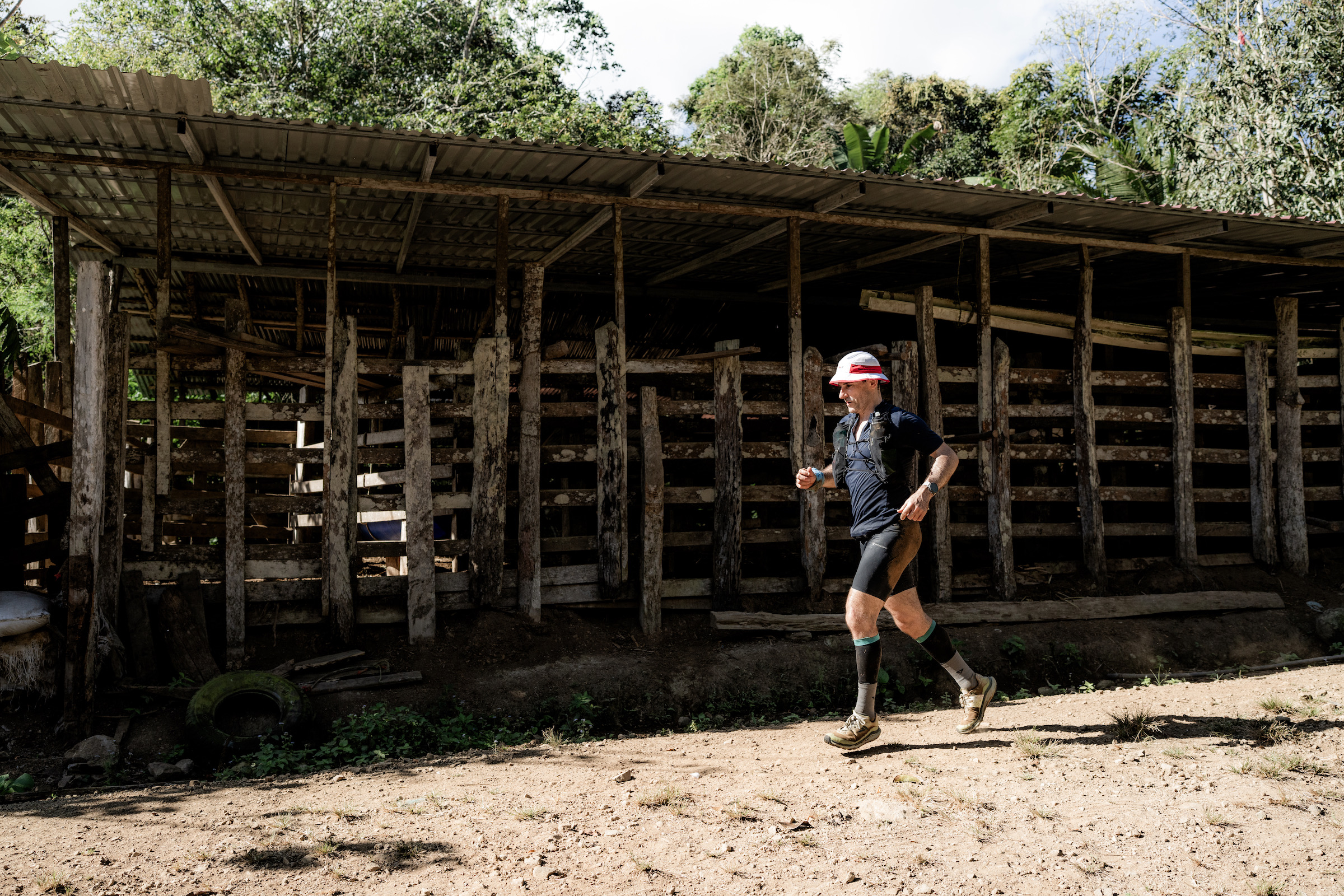
The Boruca region of southern Costa Rica feels different from the postcard version of the country. This is not manicured resort coastline or dense jungle trails pressed flat by tourists. It is rural, working land, shaped as much by history as by weather.
The Boruca people, one of Costa Rica’s remaining Indigenous communities, have lived here for generations, known for their hand-carved masks and fiercely preserved traditions.
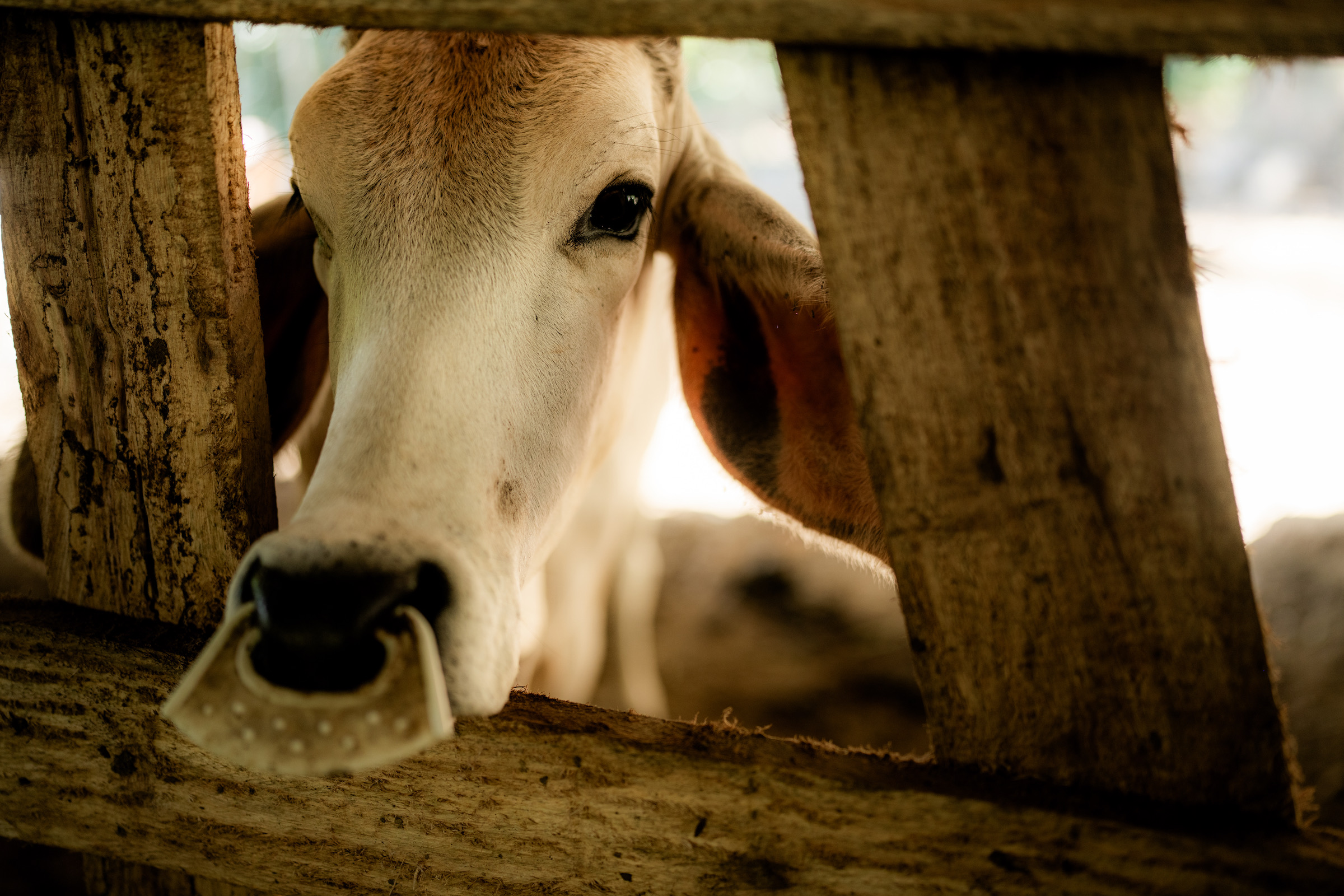
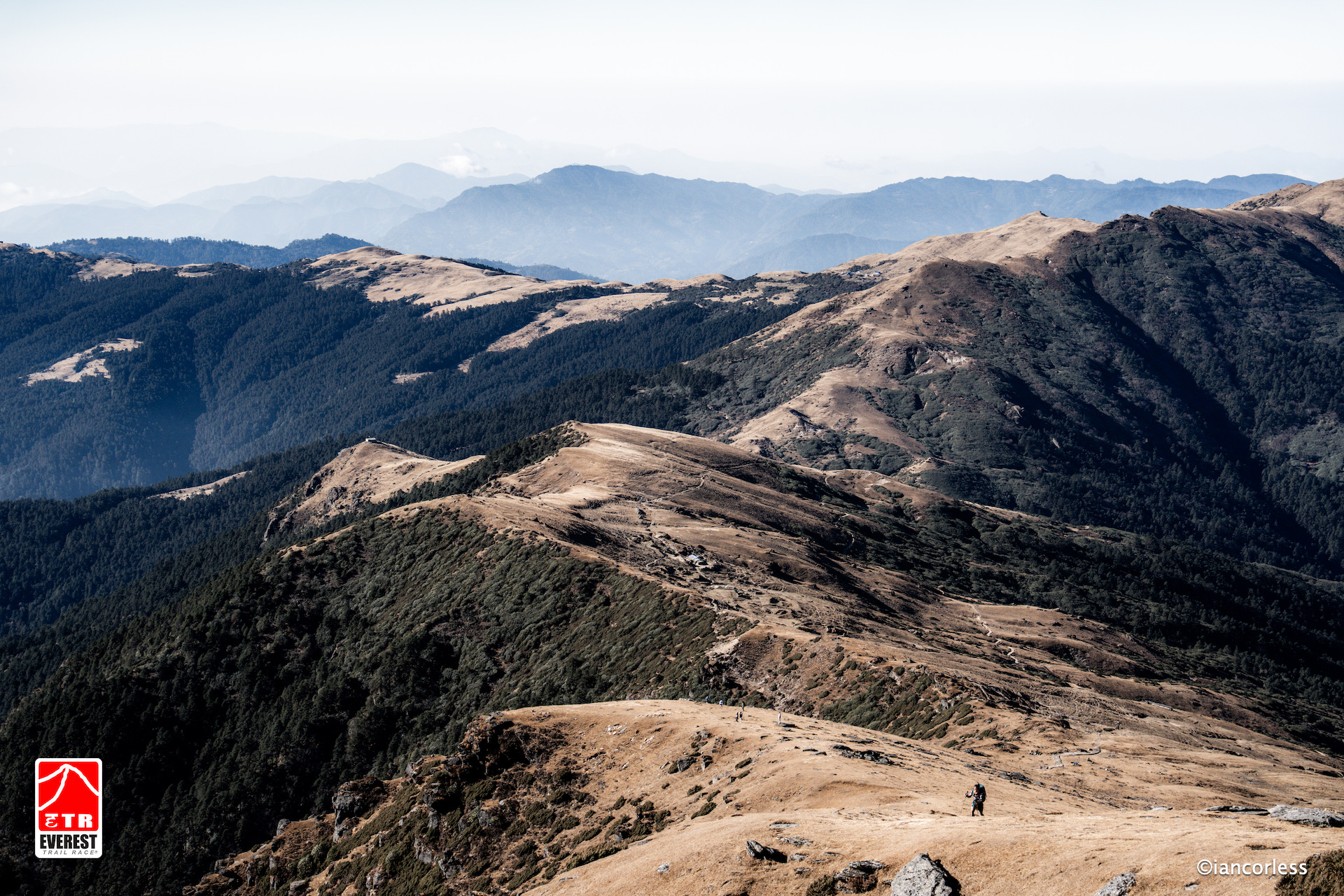
Around their villages the land rolls outward into open pasture and patchwork farmland, where cattle graze on steep green hills and small family plots cling to uneven slopes. The terrain is restless. Long climbs rise without rhythm, dirt roads bake under the sun, and sharp descents cut down into river crossings and humid low pockets before rising again.
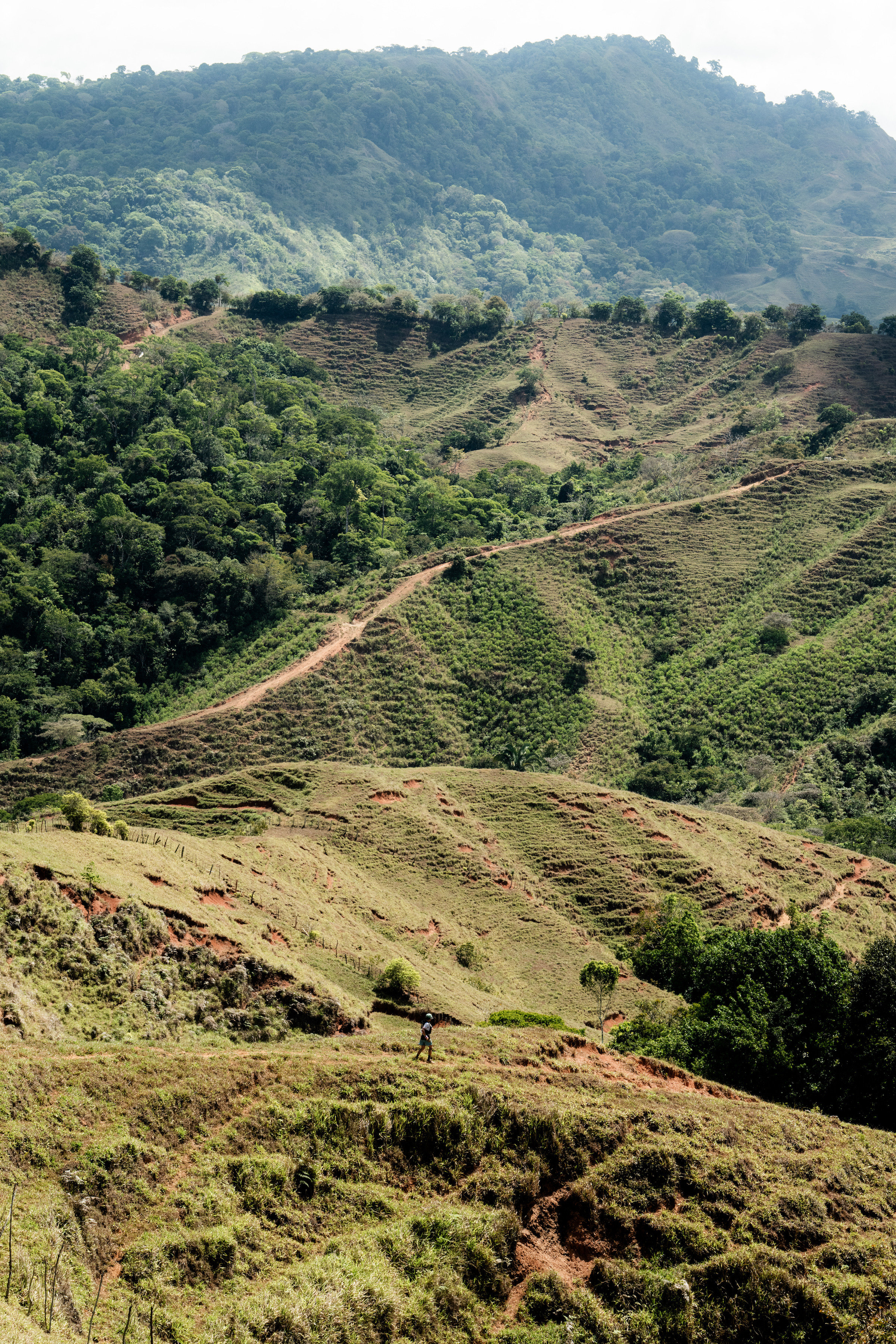
It is a landscape that looks soft from a distance, all green folds and misty ridgelines, but up close it is rugged and unforgiving. The soil can be loose, the heat heavy, and the gradients relentless. In the high farmlands near Palma Norte, you move through open exposure rather than forest cover, feeling the scale of the land around you. It is beautiful, but it demands respect.
Race results https://www.webscorer.com/

Follow Ian Corless

Instagram – @iancorlessphotography

Twitter – @talkultra

facebook.com/iancorlessphotography

Web – www.iancorless.com
Web – www.iancorlessphotography.com

The Coastal Challenge Costa Rica 2026 – Stage 3

Stage 3 of The Coastal Challenge Costa Rica is always circled in red. The Queen Stage. The day that defines the race. The stage that strips things back to effort, patience, and decision-making. On paper it is long and brutal. On the ground, it is something else entirely.

The morning stars with the coast, in the quiet half-light where the jungle still holds the night. Runners gathered with headlamps flickering, shoes already damp from the humidity. The air was heavy but mercifully cooler than previous days. Low cloud sat over the hills. It would prove to be a gift.

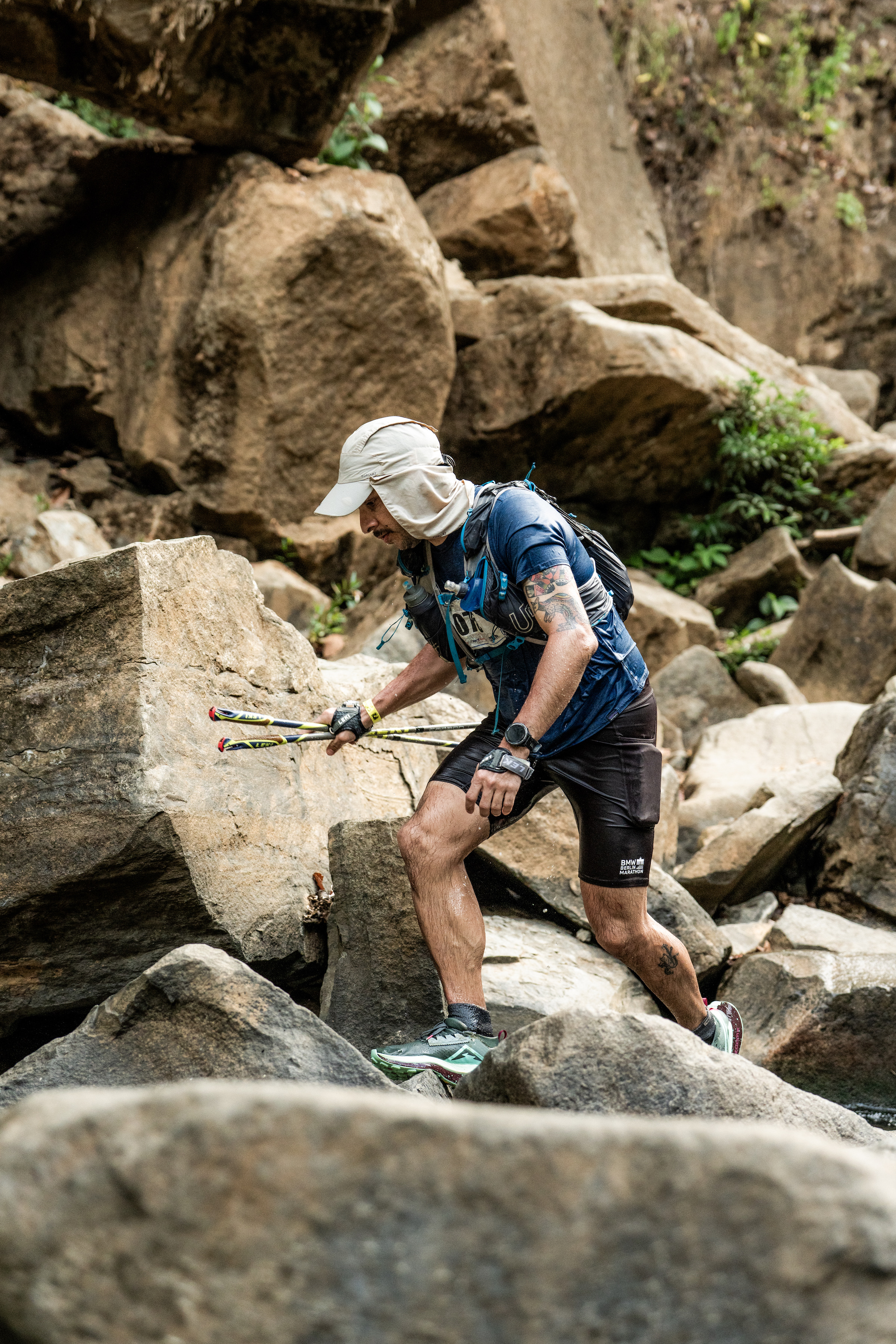
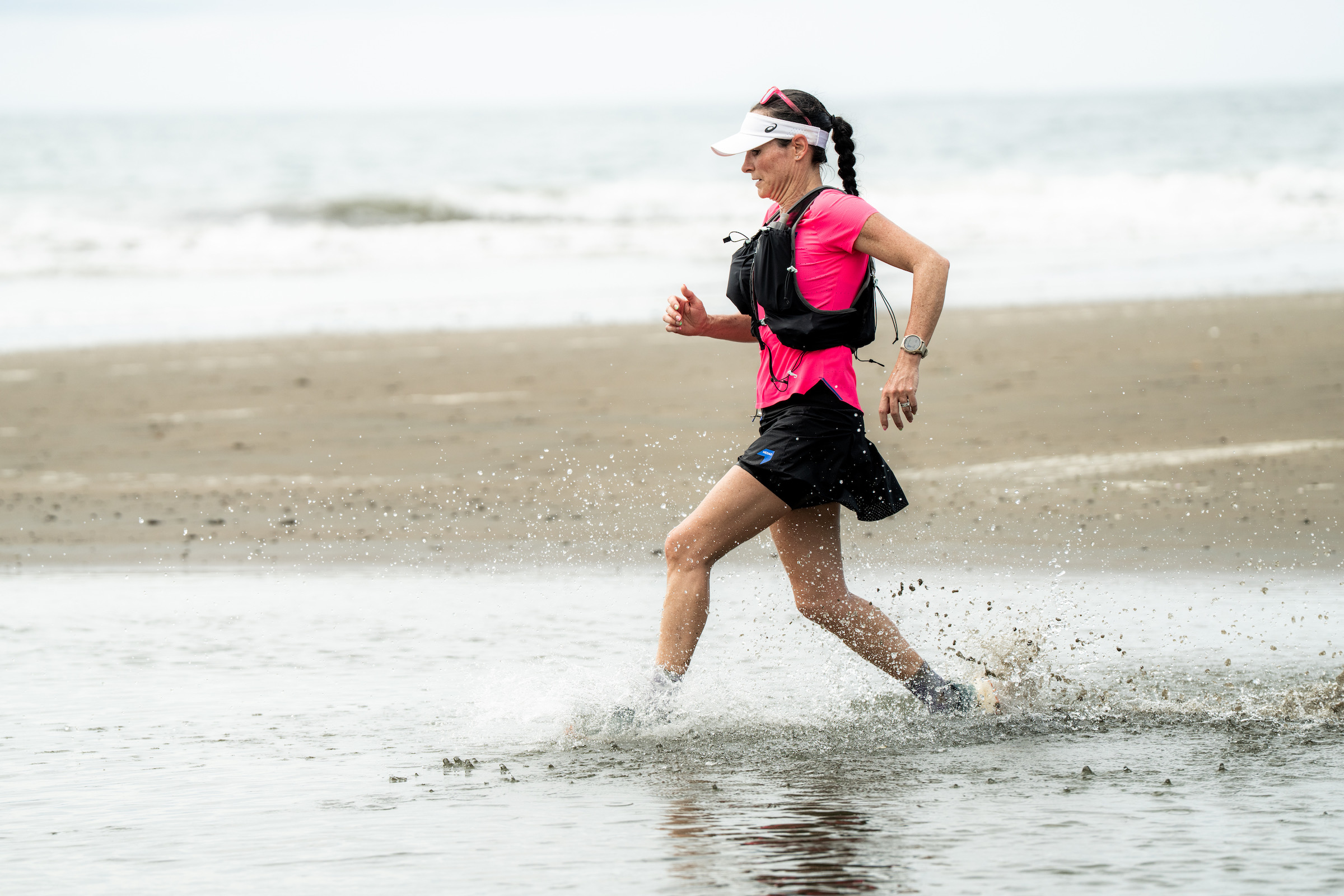
Almost immediately, the course dropped into a wide riverbed. This opening section is deceptive. It looks runnable, even friendly. Pale stones, shallow flowing water, open sky above. But riverbed running is never free speed. Every step shifts. Ankles work overtime. Shoes fill with water within minutes. The rhythm becomes uneven, a constant negotiation between pace and balance. Some runners hopped rock to rock, trying to keep their feet dry. Others accepted the soak and drove straight through, splashing forward with purpose.

The sound here was distinctive. Footsteps slapping water. Heavy breathing echoing off the valley walls. Occasional shouts as someone slipped or laughed at the futility of staying clean. This was Costa Rica announcing itself early.

As the river narrowed, the trail began to rise. Jungle closed in. Thick green walls pressed close, vines hanging low, the smell of wet earth and vegetation everywhere. Heat built quickly once the climbing started, but the cloud cover held. No direct sun. No baking. For this stage, that mattered more than almost anything.

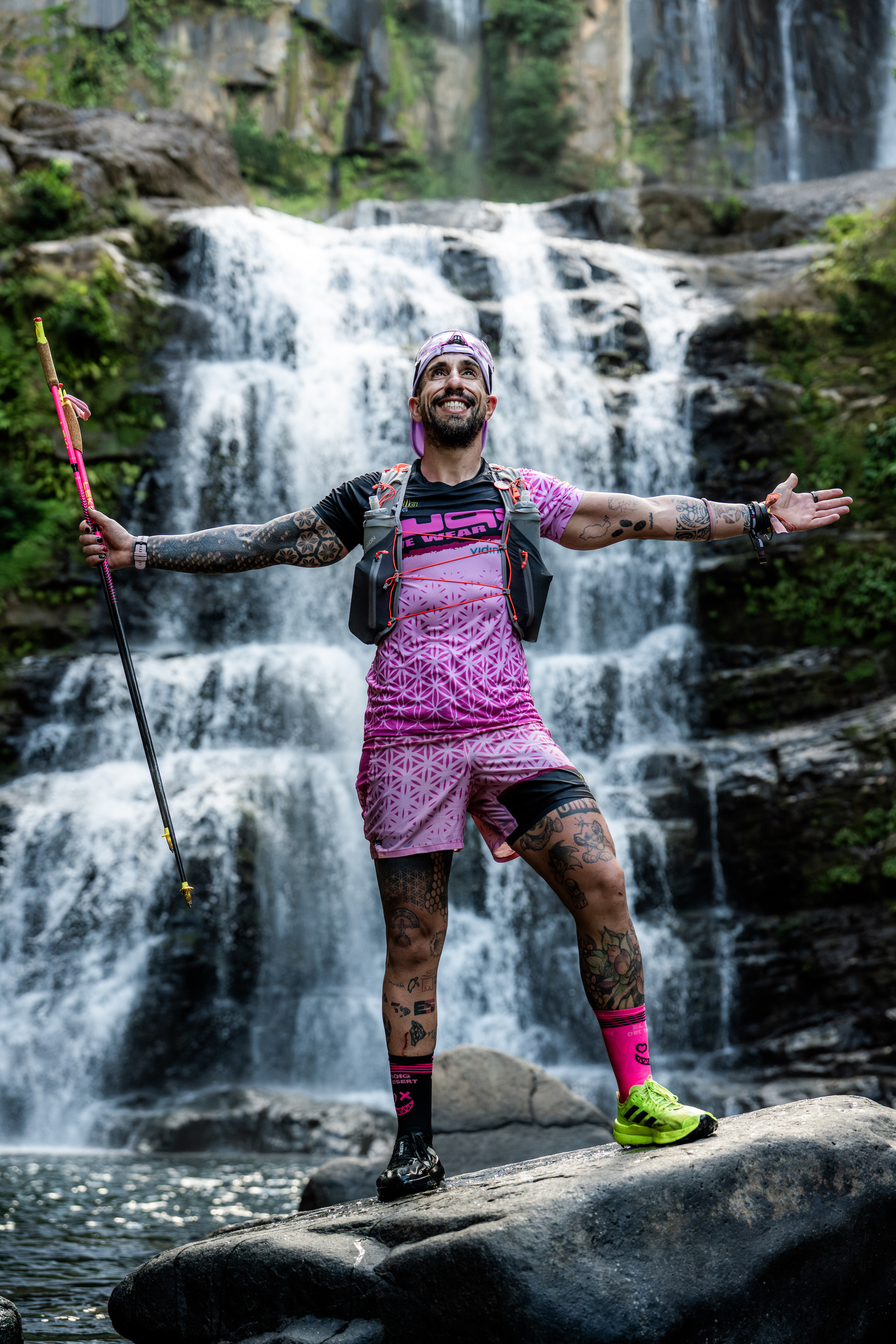
Then came Nauyaca Waterfalls.

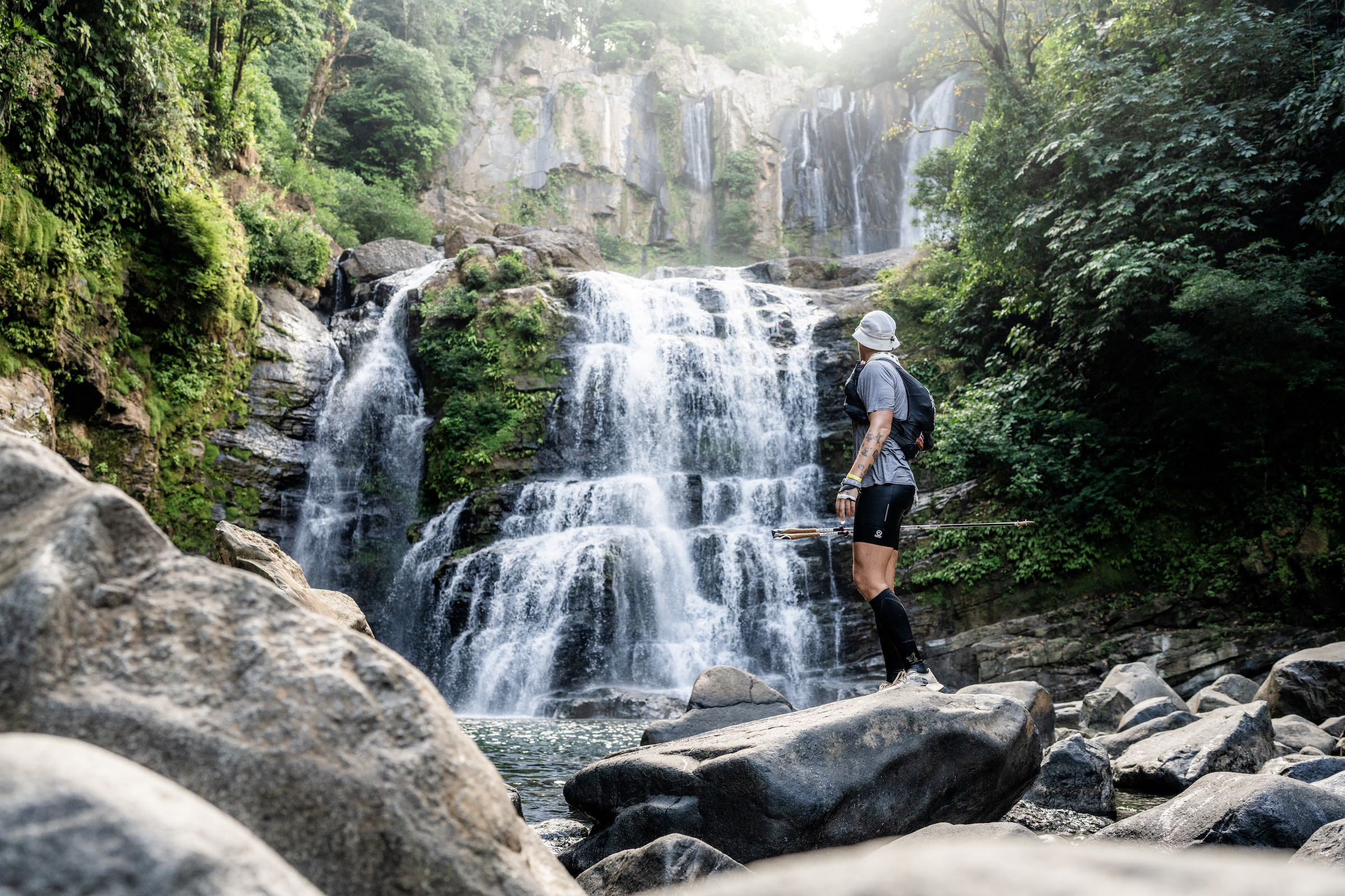
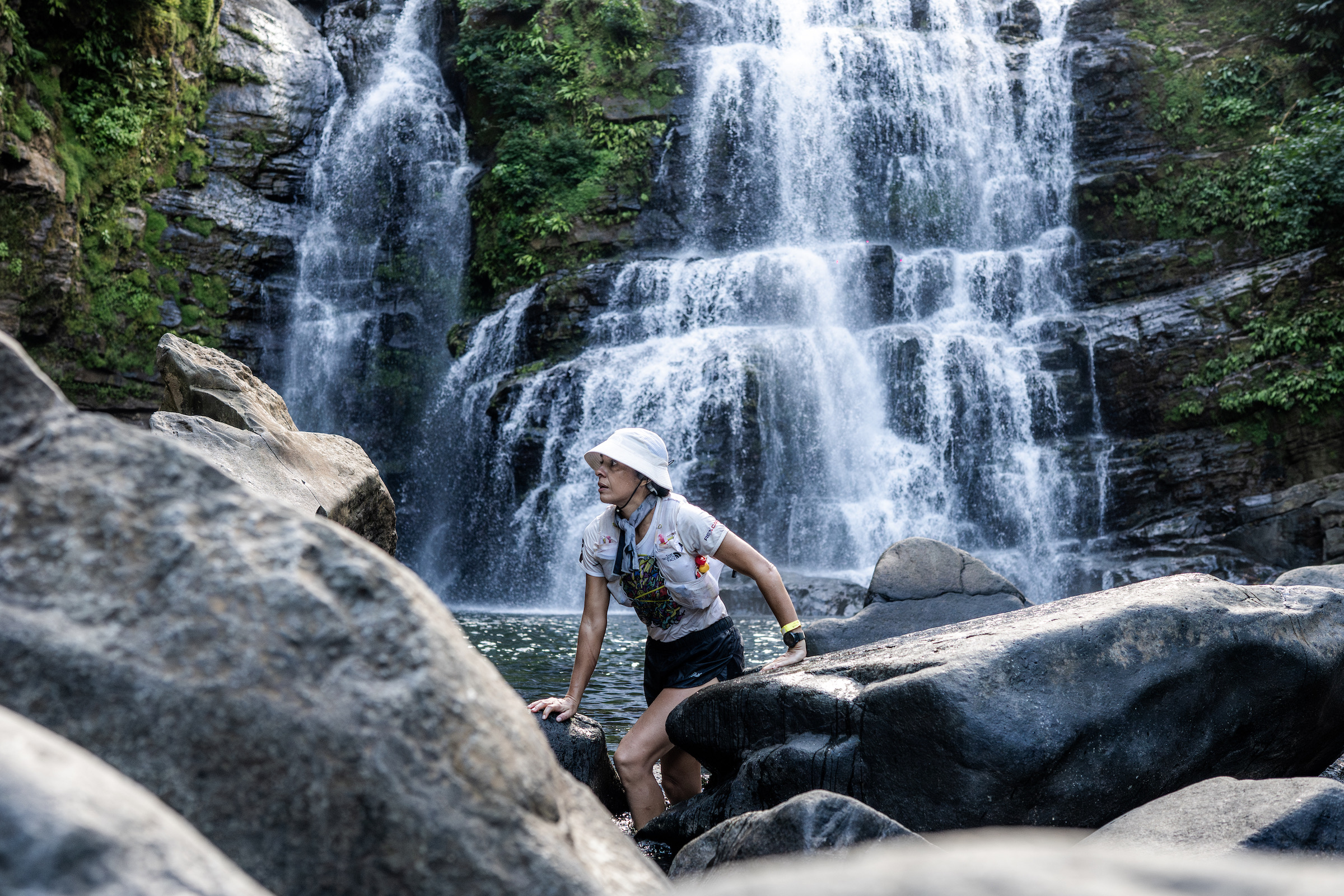
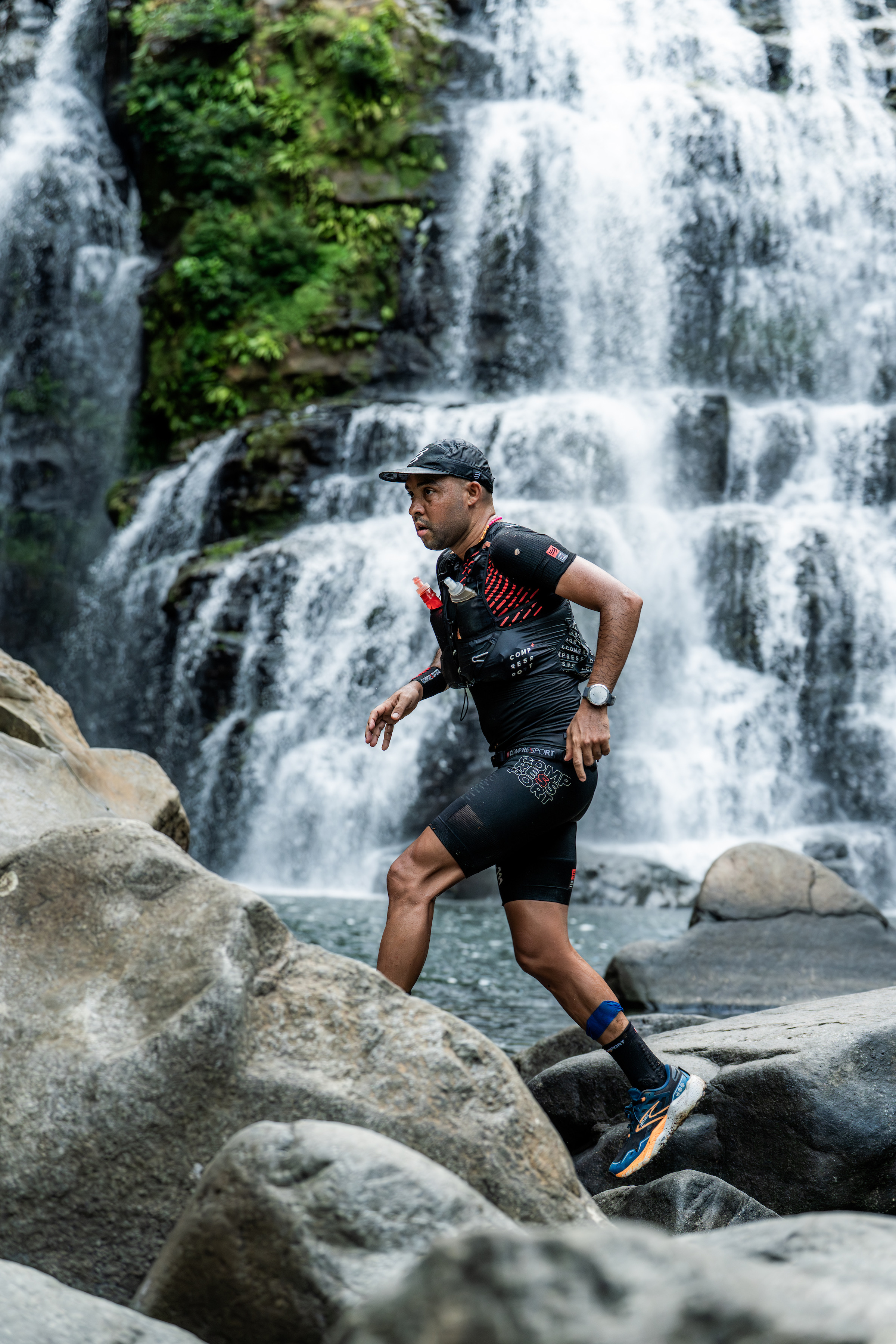
Few race courses pass somewhere this iconic. The roar of the falls could be heard long before they were seen, a deep, constant thunder. Mist hung in the air. The trail twisted along the edge, offering brief, almost cinematic glimpses of white water crashing down into turquoise pools far below. Volunteers stood grinning, clapping runners through, knowing exactly how cruel it is to pass somewhere so beautiful with no time to stop.

The climbs around the waterfalls were short but sharp. Legs were already feeling the cost of the riverbed. Breathing became laboured. Sweat mixed with spray from the falls. It felt primal. Raw. A reminder that this race is as much about environment as distance.

After Nauyaca, the stage changed character again. The trail rolled relentlessly. Up. Down. Some long climbs you can settle into. No extended descents to recover. Just constant undulation through jungle, farmland, and rough tracks. This is where the Queen Stage earns its reputation.

The terrain was hard and punishing. Exposed dirt roads baked under thinning cloud. Narrow singletrack where roots and rocks waited to catch tired feet. Every rise felt unnecessary. Every dip stole momentum. It was a section that demanded discipline. Go too hard, and the coast would destroy you later. Hold back too much, and you’d bleed time you’d never get back.

At the front, Erick Aguero was putting on another master class.

Aguero’s racing here is never flashy. No surges for the crowd. No dramatic moves. Just relentless forward motion. Smooth cadence. Perfect pack management. He ran like someone who knows this land, understands the humidity, respects the distance. While others visibly fought the course, Aguero flowed with it. By the time the terrain began to open and the air shifted, his advantage was already established.

Eventually, after hours inland, something changed. The breeze arrived first. Salty. Cool. Then the light brightened. And suddenly, unmistakably, the coast appeared.

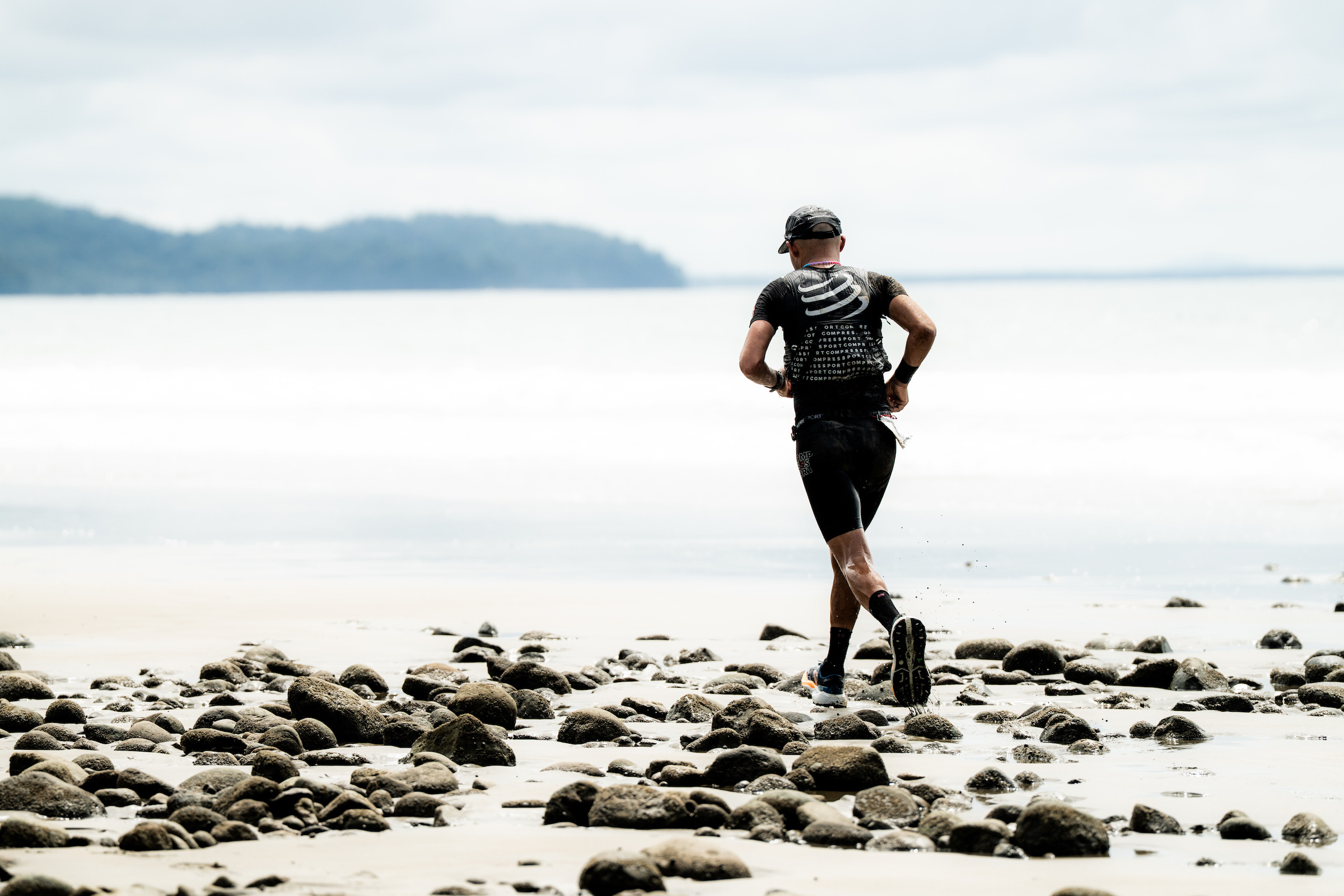
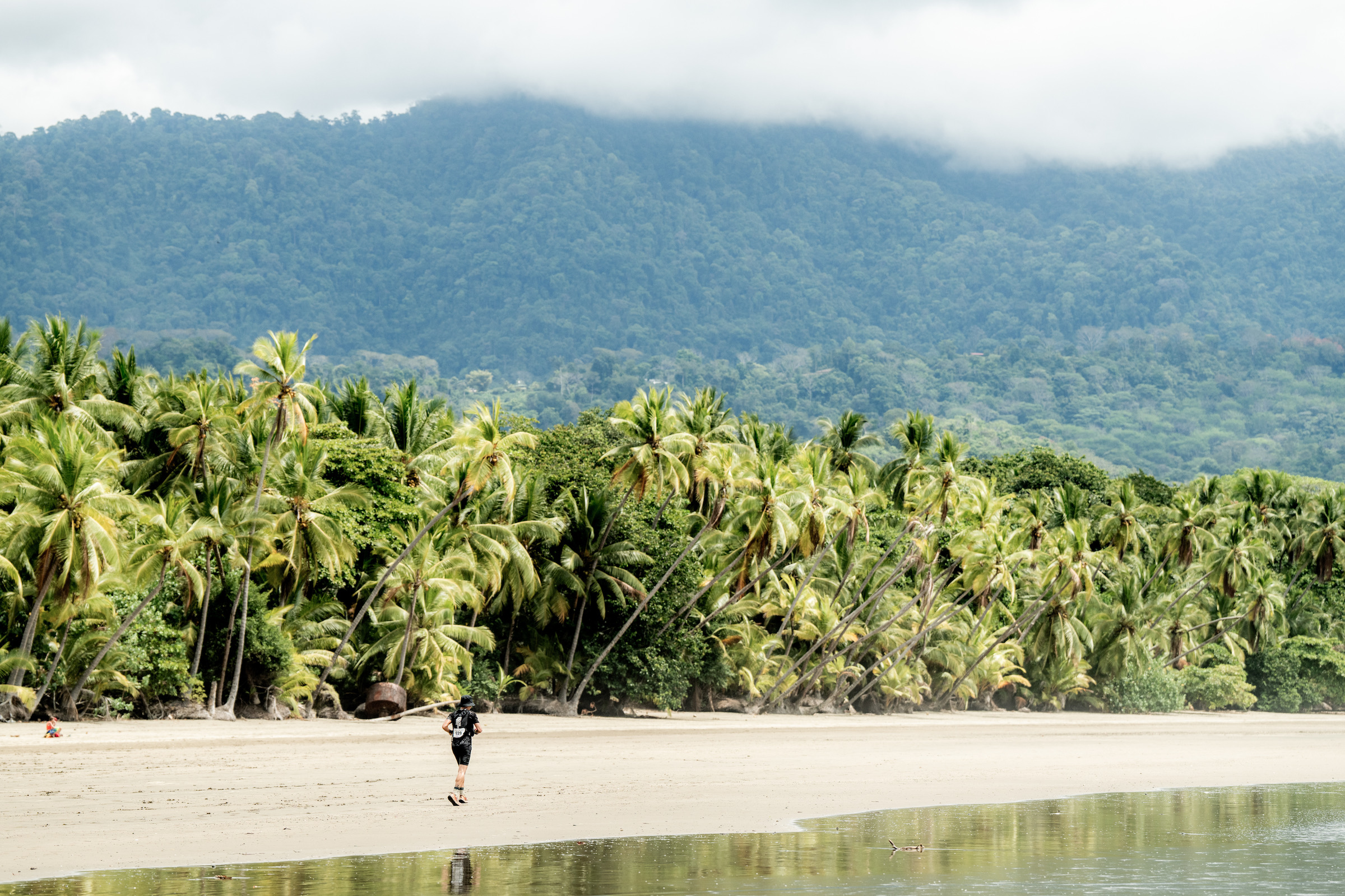
This transition is one of the great moments of the race. Jungle gives way to open sky. The sound of waves replaces insects. The vastness of the Pacific stretches out ahead. Runners hit the sands near the start of the Adventure course, knowing the end is closer now, but also knowing that beaches come with their own price.

The sand was soft in places, compact in others. Feet sank, calves screamed. The trail wove along the coastline, ducking in and out of shaded sections, then back onto open beach. Offshore, the famous Whale Tail formation of Marino Ballena National Park stood out clearly, a natural landmark that feels almost surreal when you’re deep into a long race.

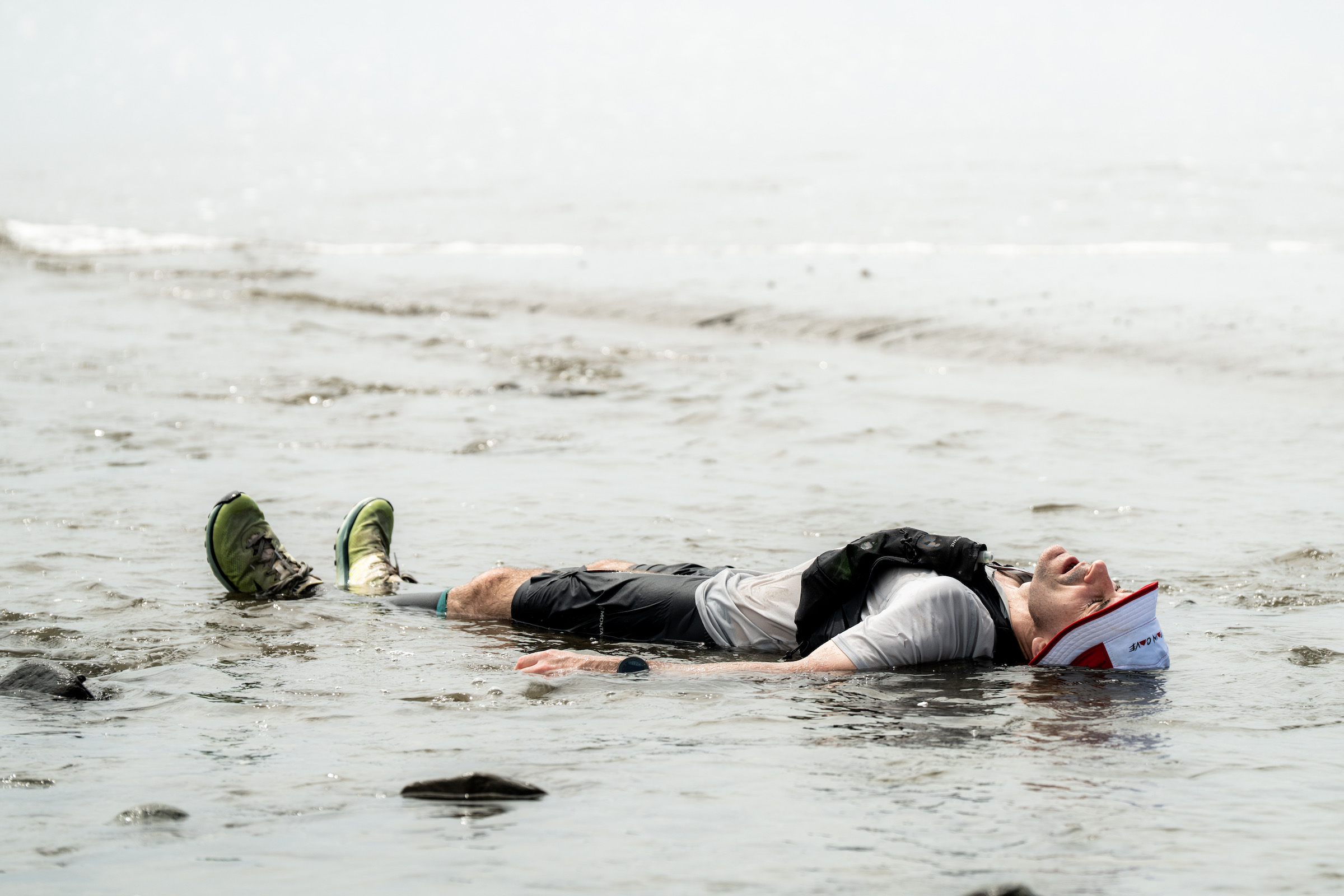
There was beauty here, but also vulnerability. The sun broke through the cloud intermittently. Reflections off the water were harsh. Runners could smell salt on their skin. Aid stations felt like lifelines. Ice, cola, encouragement in multiple languages.

The final kilometres into Ballena Village were a test of stubbornness. Legs heavy. Feet blistered. Packs lighter but shoulders sore. The finish line came slowly, deliberately, making runners earn every step.

Aguero crossed first in 6:26:41, calm, composed, as if he had expected nothing else. Behind him, Jon Shield fought hard to secure second in 6:54:50, holding off a strong late push from Joe Matheson, who finished just over a minute later in 6:56:02. All three looked spent. All three knew they had survived the hardest day.

In the women’s Expedition race, the story was familiar. A repeat of the previous stage with a dominant Denise Zelaya in control from the front. No drama. Just execution. On a day like this, consistency matters more than heroics. Janina Beck finished 2nd 8:57:19 with Vanessa Duran 3rd in 9:34:11.

Results at webscorer.com

In the Adventure category Laura Zuñiga crossed in 5:40:27 with Toni Clarke close behind 5:45:42, it’s a battle between the two, and Kristel polet 5:46:04 in 3rd. For the men, once again Sammy Francis lead Alberto Gil, 5:20:23 and 5:22:28 respectively. Roberto Solano was 3rd in 5:40:20.

Stage 3 didn’t just shuffle the leaderboard. It revealed it. It exposed weaknesses, rewarded patience, and reminded everyone why The Coastal Challenge is respected worldwide. Long after the finish line buzz faded and runners collapsed into shade with food and cold drinks, the Queen Stage lingered

It always does.

Race results https://www.webscorer.com/

Follow Ian Corless

Instagram – @iancorlessphotography

Twitter – @talkultra

facebook.com/iancorlessphotography

Web – www.iancorless.com
Web – www.iancorlessphotography.com

The Coastal Challenge Costa Rica 2026 – Stage 2

Stage 2 of The Coastal Challenge Costa Rica delivered exactly what this race is known for: raw nature, relentless conditions, and a course that asks runners to adapt again and again. Starting deep in the rainforest at Rafiki Lodge, the day unfolded as a true Coastal Challenge classic, blending river crossings, technical trails, jungle heat, and a dramatic run to the sea.

From the first steps out of camp, it was clear this would not be a straightforward stage. The route followed the Savegre River, widely regarded as one of the cleanest and most biologically pristine rivers in Central America. Flowing from the highlands of the Talamanca Mountains down to the Pacific Ocean, the Savegre is internationally recognised for its exceptional water quality and rich biodiversity. Crossing it once would be memorable. Crossing it twice turned Stage 2 into something special.

The river crossings were more than just obstacles. They were moments that forced runners to slow down, focus, and respect the environment around them. Water rose around calves and knees, current tugged at tired legs, and the contrast between cool river water and the heavy jungle air was striking. It was a reminder that this race is as much about managing nature as it is about racing the clock.

After the river, the course tightened and twisted through rainforest trails. Roots, mud, and uneven ground demanded constant attention. The humidity settled in early and stayed all day. Even experienced runners felt the energy drain as the sun climbed higher. This is where The Coastal Challenge often reshuffles the deck, and Stage 2 was no exception.

For the Adventure race, the day began at CP2, roughly the midpoint of the Expedition route. While the distance was shorter, the challenge remained very real. Adventure runners faced the same heat, the same technical terrain, and the same unforgiving humidity. Starting later on the course offered no easy miles, only a condensed dose of everything Costa Rica can throw at a runner.

As both races pushed westward, the landscape began to change. Dense jungle gradually opened up, trails widened, and the distant sound of the ocean hinted at what was to come. Crossing road 34 marked a psychological shift. From there, runners entered the estuaries and beaches that lead toward Dominical. Soft sand replaced dirt, and the open coastline exposed runners to full sun with no shelter. Legs already fatigued now had to adapt once more.

This final section summed up Stage 2 perfectly. After jungle, rivers, and trails, the beach demanded a different kind of strength. Running on sand punished tired calves and slowed even the strongest athletes. Heat radiated from above and below. Yet the sight of the Pacific Ocean and the energy around the finish made it unforgettable.

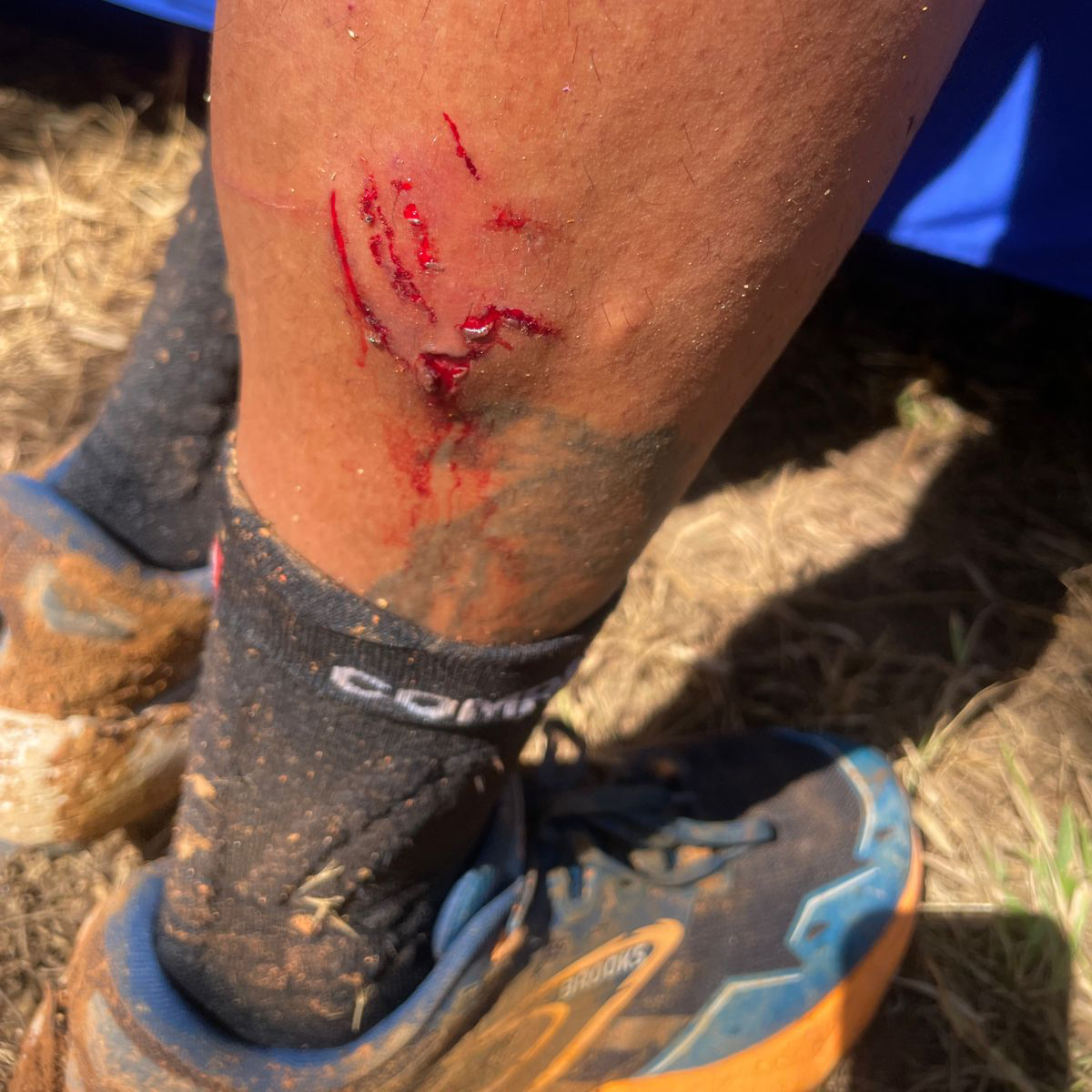
At the front of the Expedition race, the men’s competition came alive. After a controlled and measured Stage 1, Erick Aguero delivered what many have come to recognise as a classic ‘Aguero’ performance. He pushed early, established himself at the front, and gradually opened a gap that no one could close. His strength through the technical sections and consistency in the heat paid off, as he crossed the line in a commanding 4:49:04 – al this despite receiving a dog bite during the race.

Behind him, the battle for the remaining podium places was hard-fought. Jesus Cerdas Padilla ran a strong and steady race to claim second in 5:11:54. Stage 1 winner Ramon Rosello Pons followed in third with a time of 5:24:03. With this result, Aguero moved into the overall lead, setting up an intriguing dynamic for the stages ahead.

In the women’s Expedition race, Denise Zelaya was in a class of her own. From early on, she looked composed and controlled, handling the heat and terrain with confidence. Her dominance was clear as the stage wore on, and she crossed the finish line in 5:59:12, underlining her strength and experience in these conditions. It was a decisive performance on a demanding day.

Janina Beck and Pamela Muñoz placed 2nd and 3rd, 7:05:12 and 7:11:12 respectively.

The Adventure race delivered its own drama. Sammy Francis led the way, crossing first in 3:40:51 after a determined run through the heat and sand. The fight for second was tight and exciting. Toni Clarke, the Stage 1 leader, finished second, just over 30 seconds behind Laura Zuniga Alcazar, who crossed in 3:59:28. The close times reflected the intensity of the race and the way Stage 2 squeezed every bit of effort from the field.

Beyond results and times, Stage 2 captured the essence of The Coastal Challenge. It was tough, unpredictable, and deeply connected to the landscape. Runners were forced to think, adapt, and endure. The Savegre River crossings stood out as defining moments, but the entire course demanded respect.

By the end of the day, fatigue was written on every face. Salt streaked skin, mud-caked legs, and tired smiles told the story better than words. It was a hard day, but an exciting one. Stage 2 reminded everyone why this race holds such a special place in the world of stage racing, it has a little of everything, and it never gives anything away easily. Let’s not forget, Dominical is also an awesome place for camp.

Race results https://www.webscorer.com/

Follow Ian Corless

Instagram – @iancorlessphotography

Twitter – @talkultra

facebook.com/iancorlessphotography

Web – www.iancorless.com
Web – www.iancorlessphotography.com

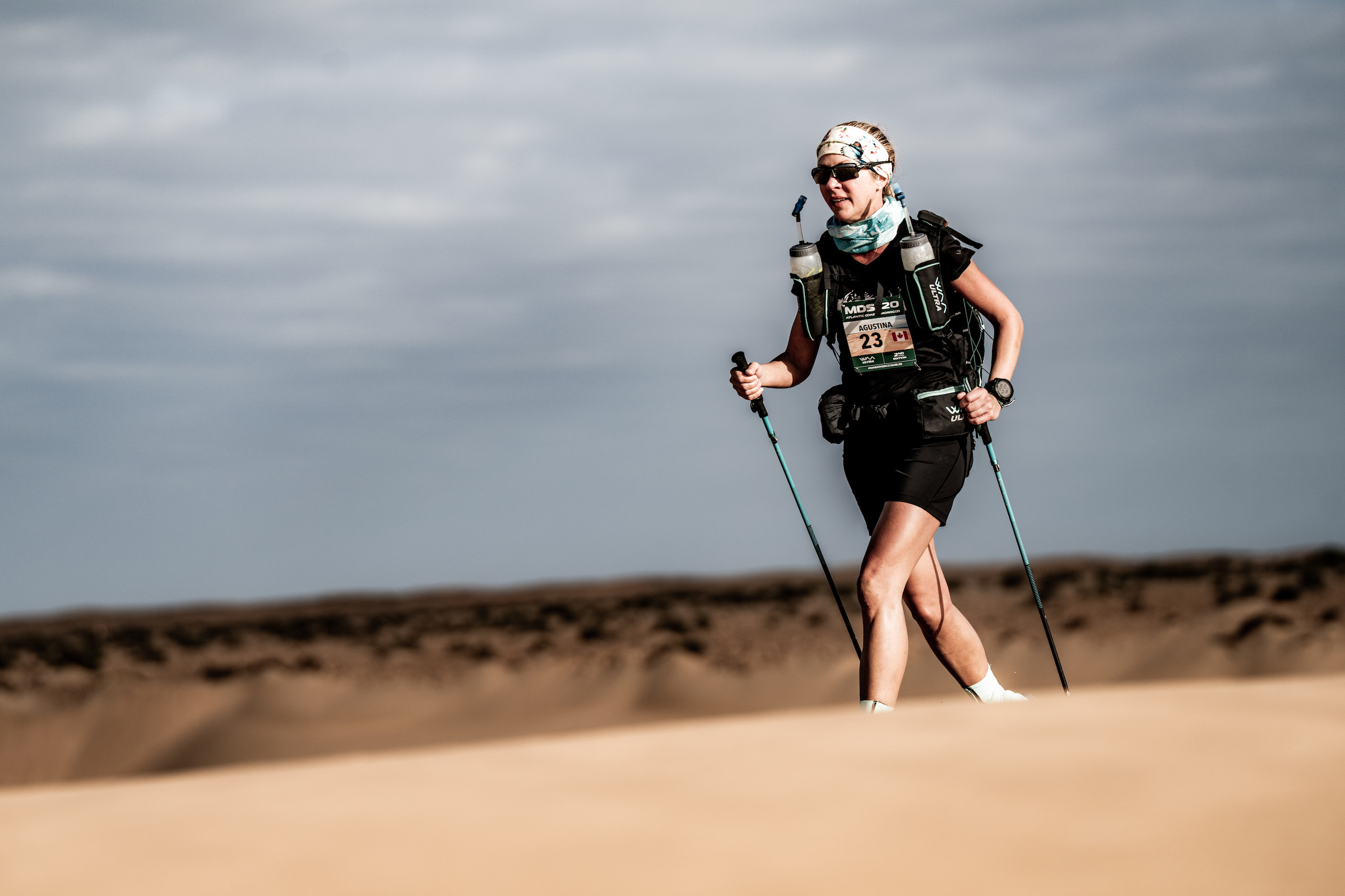
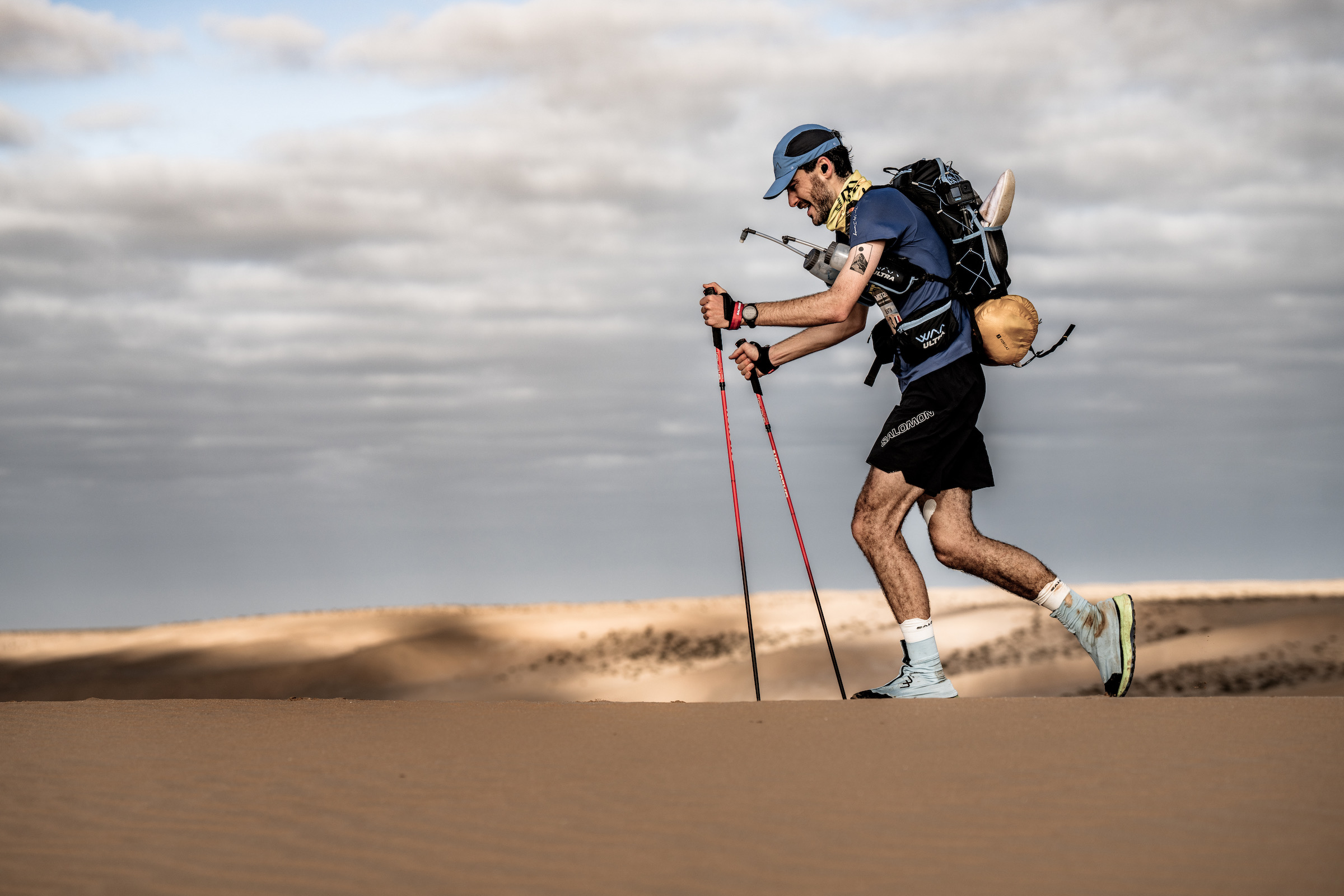
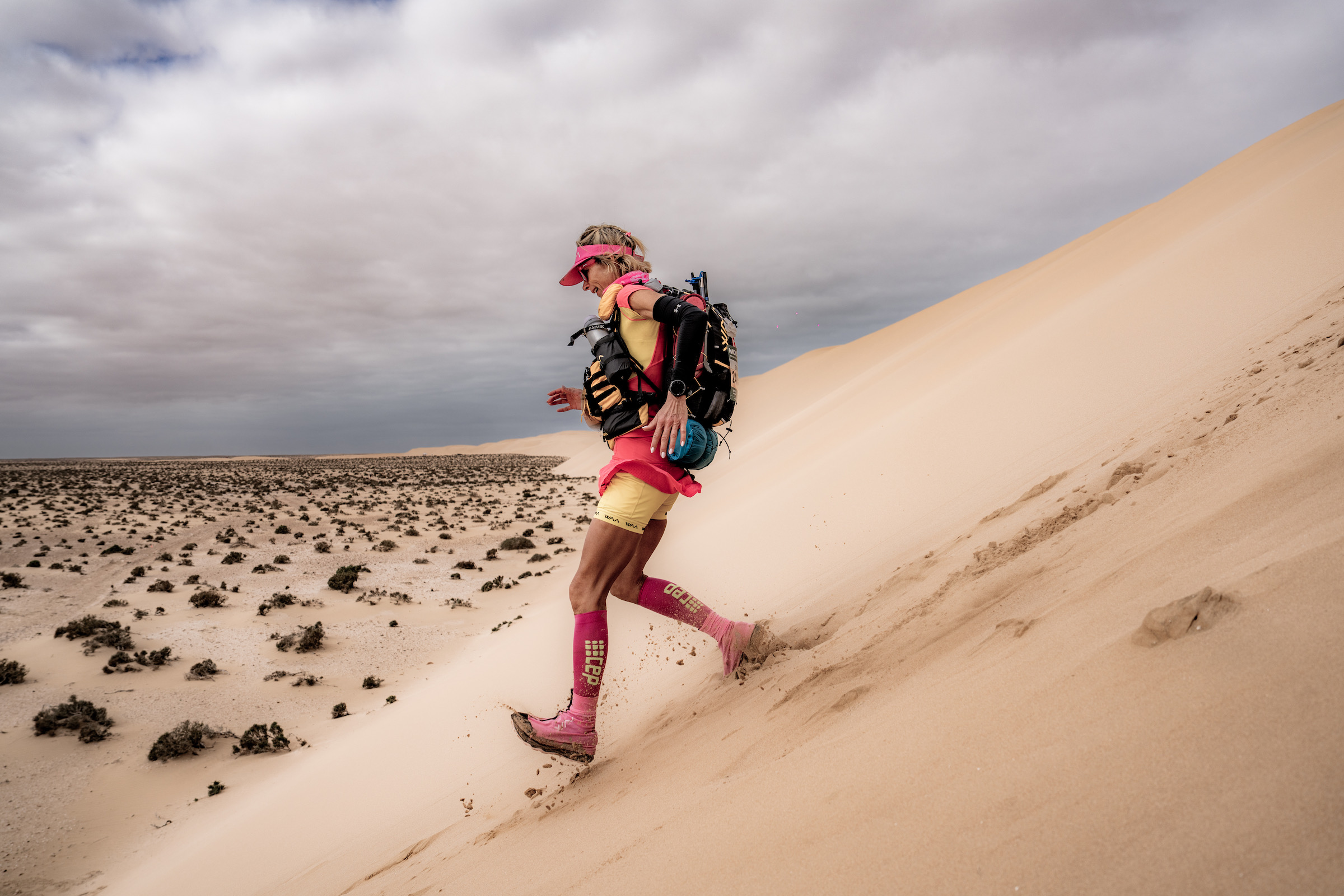
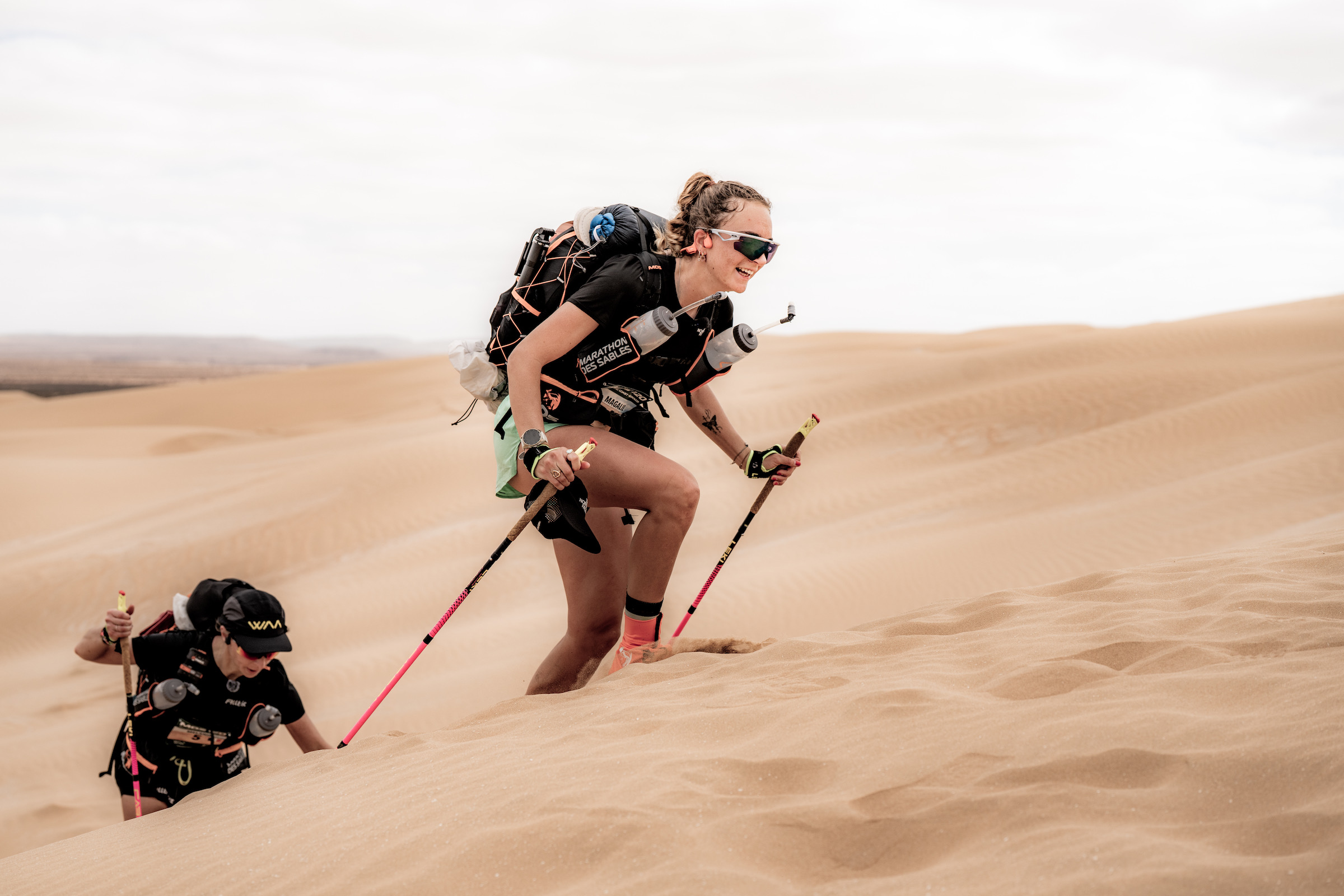
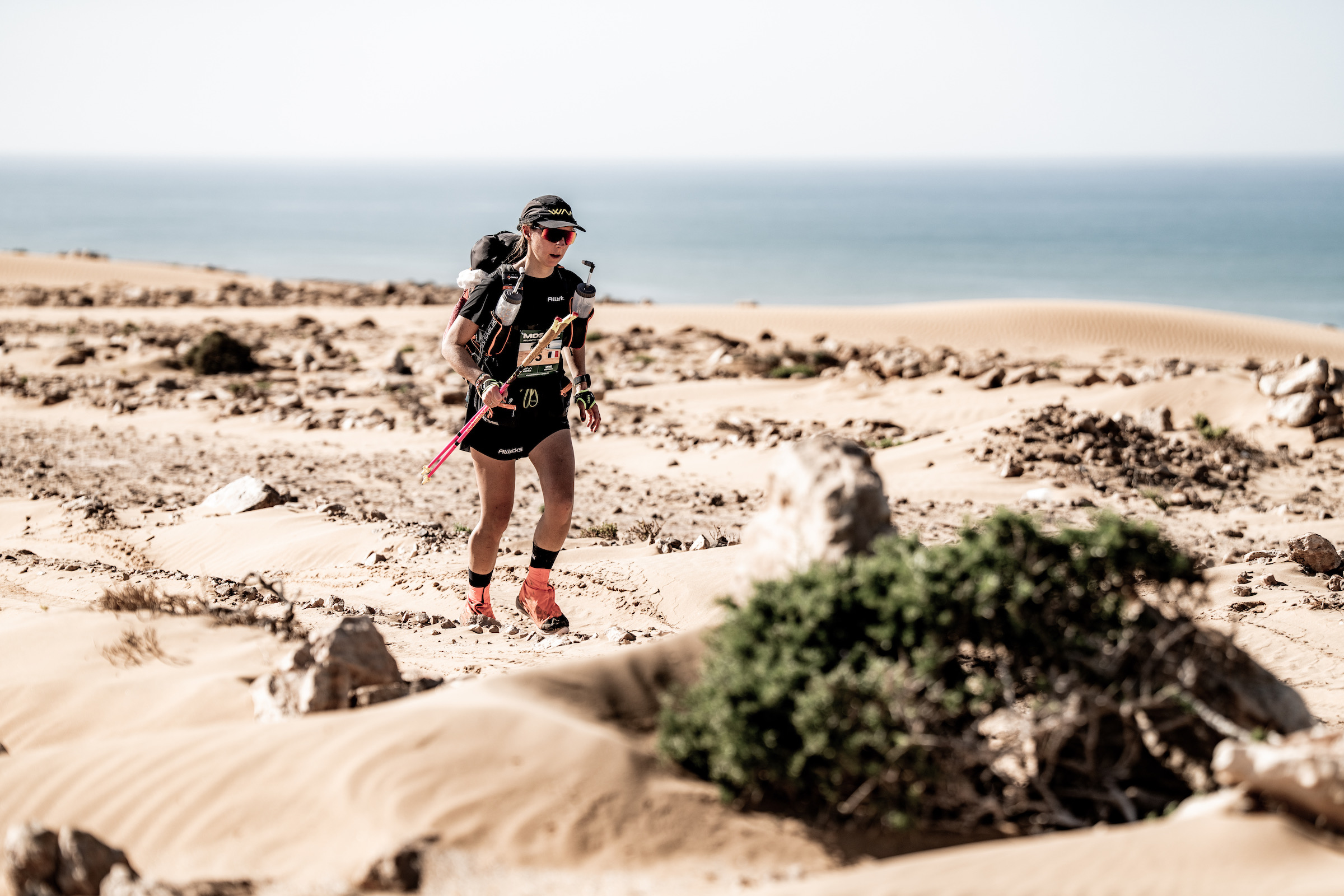
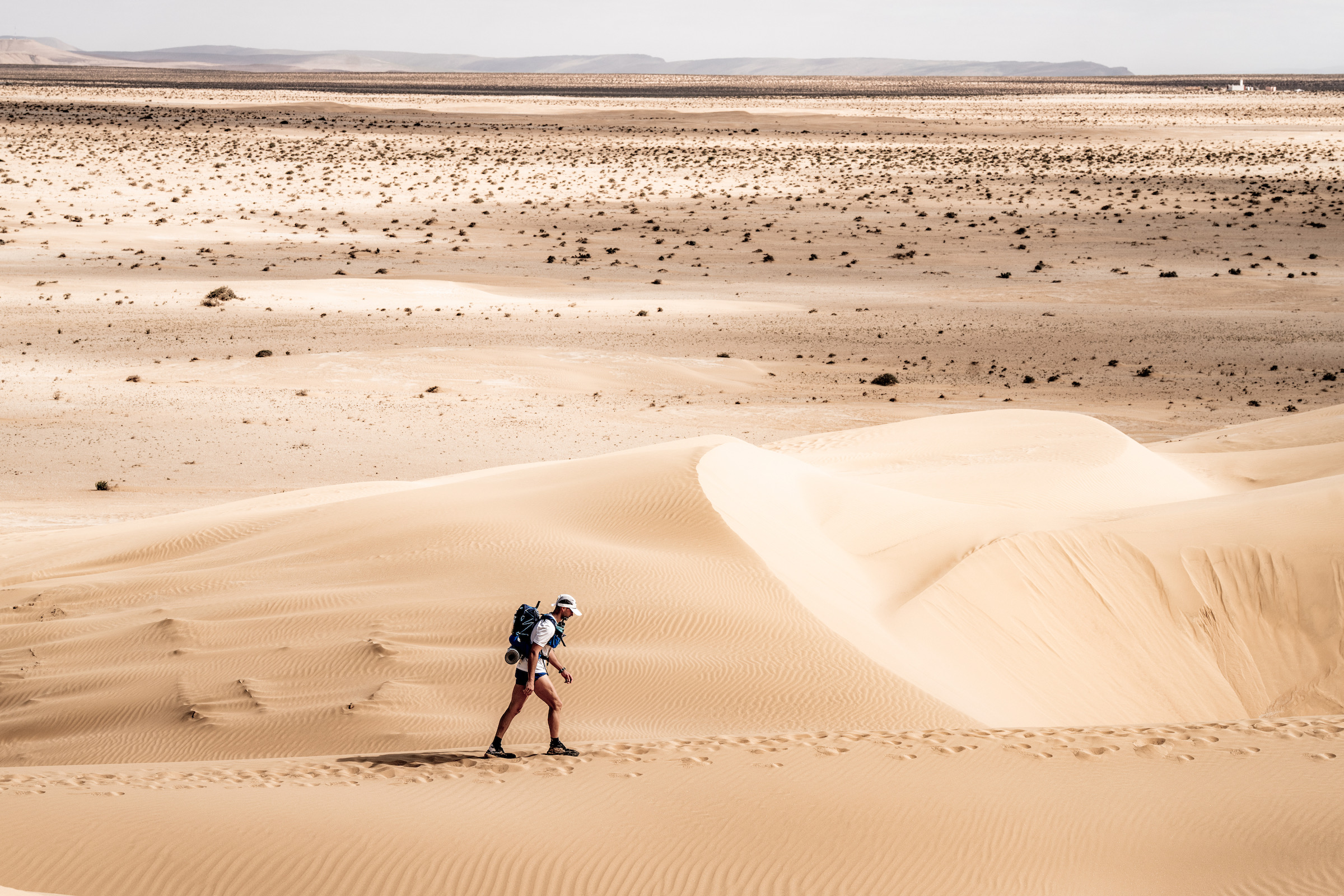
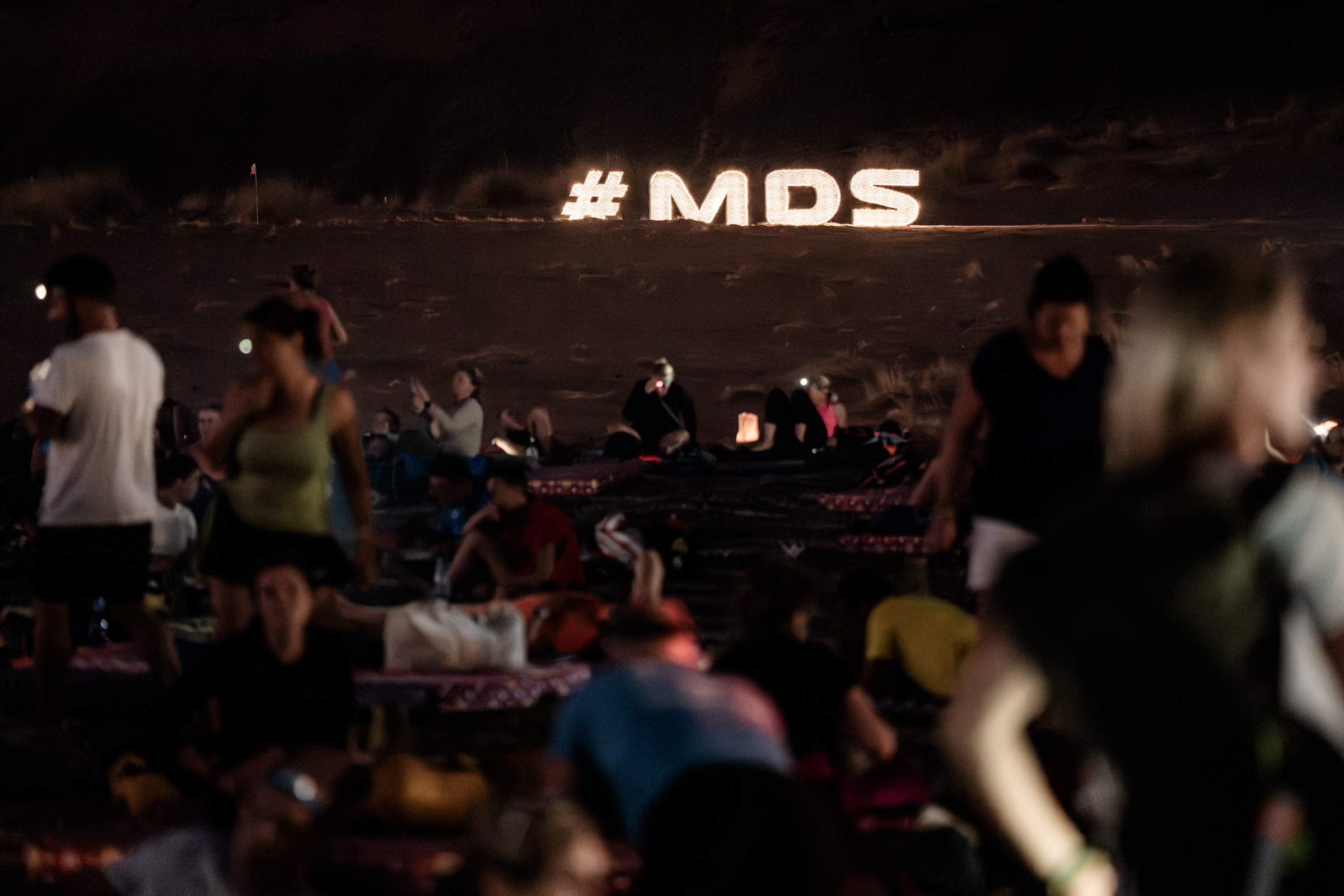
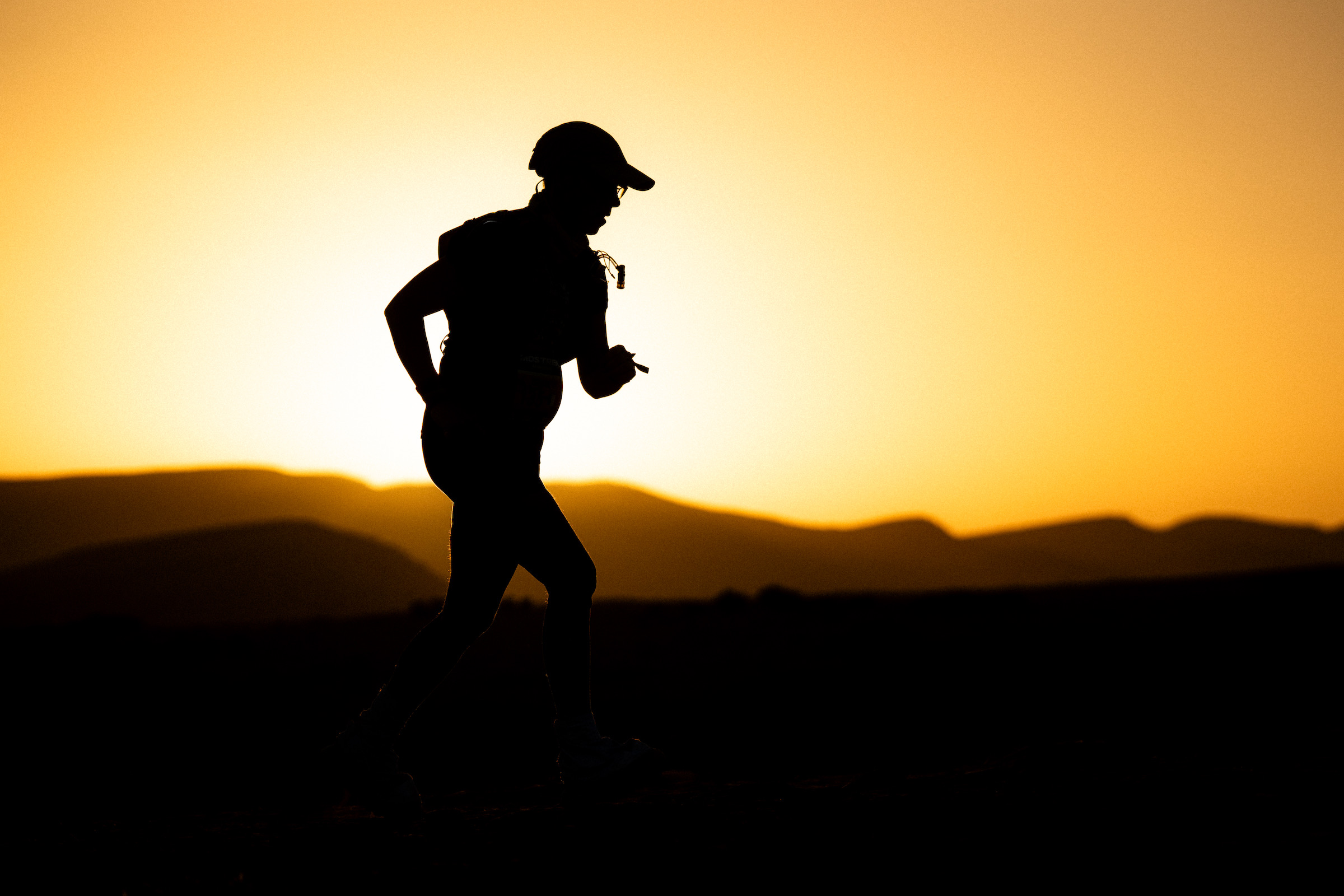
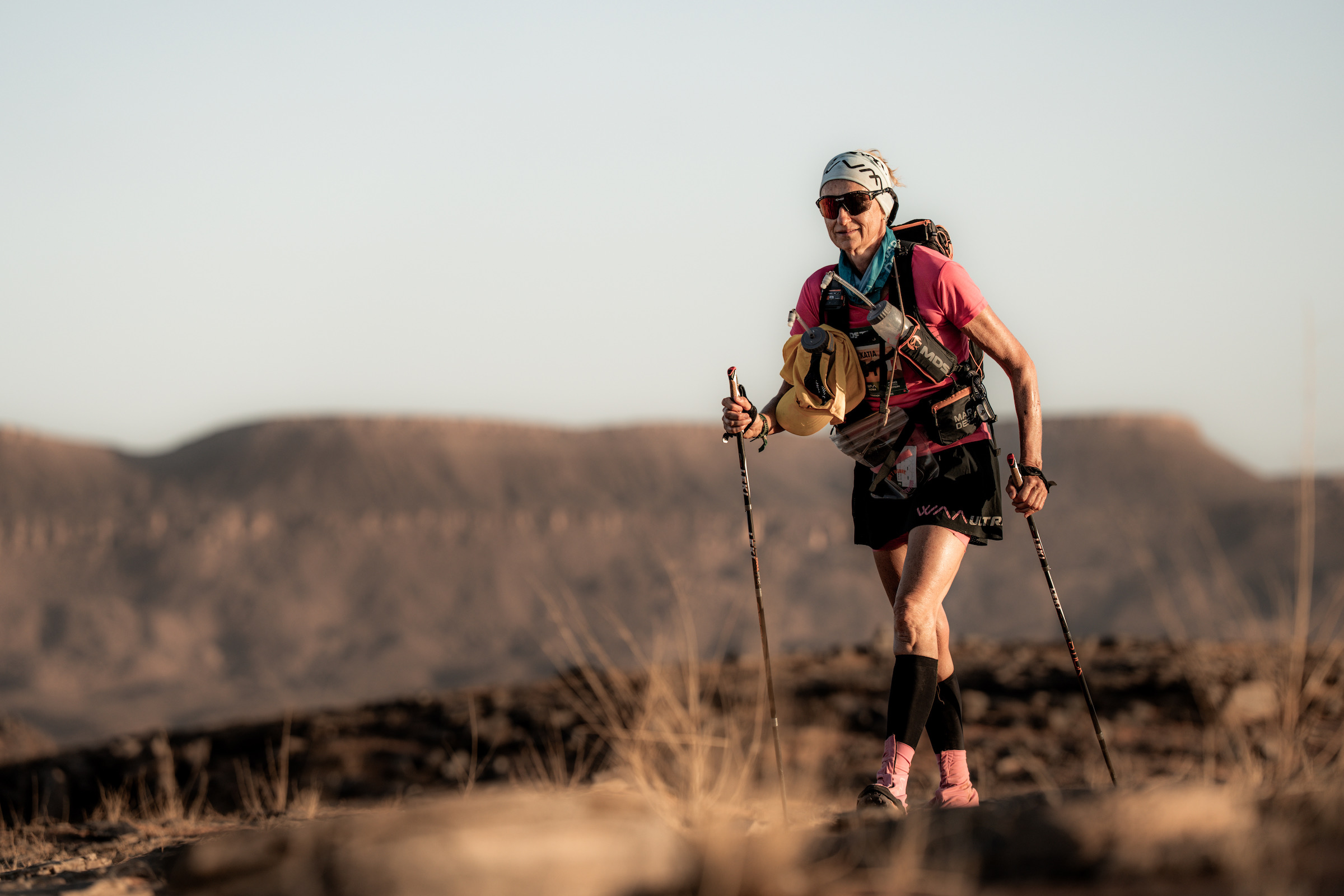
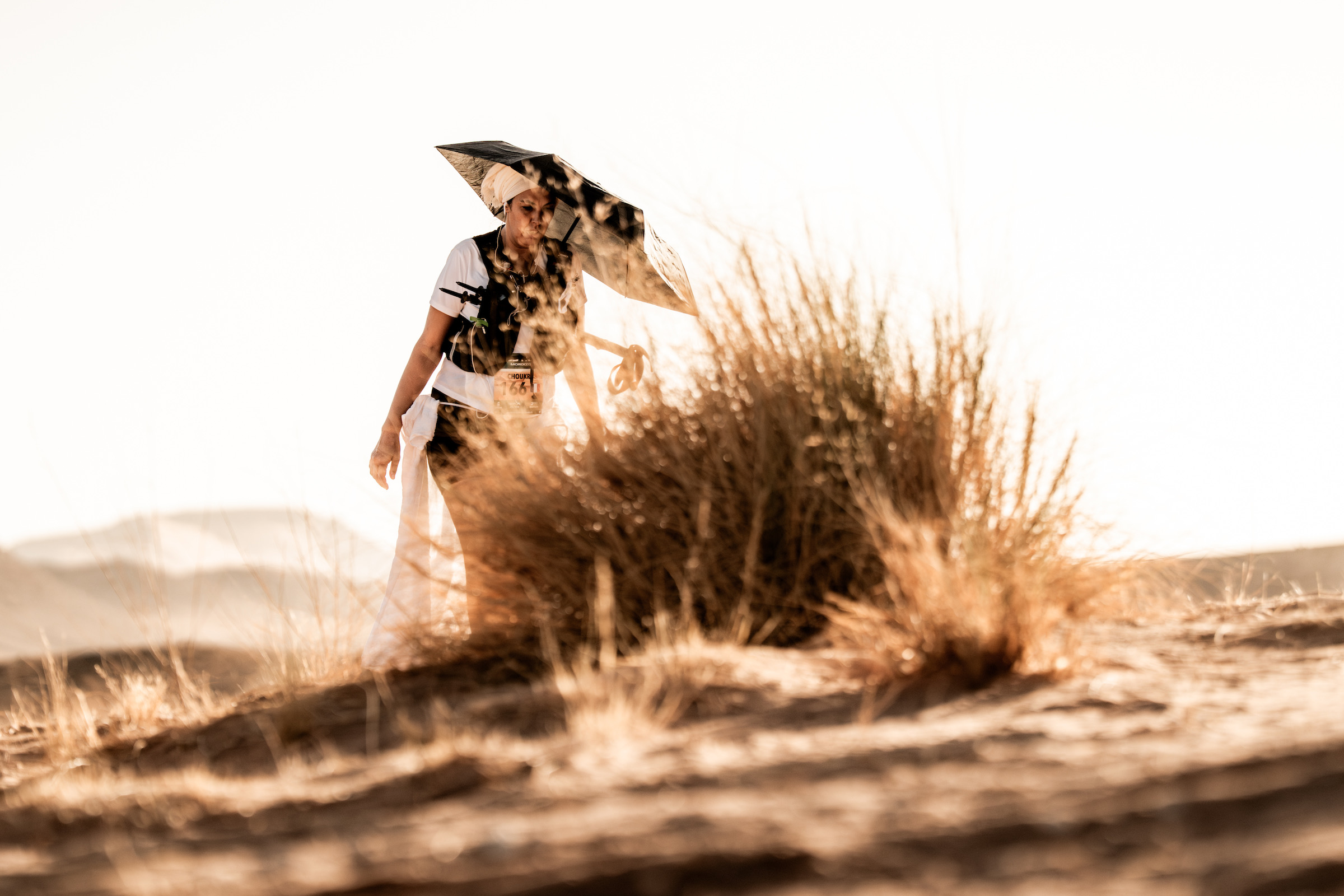
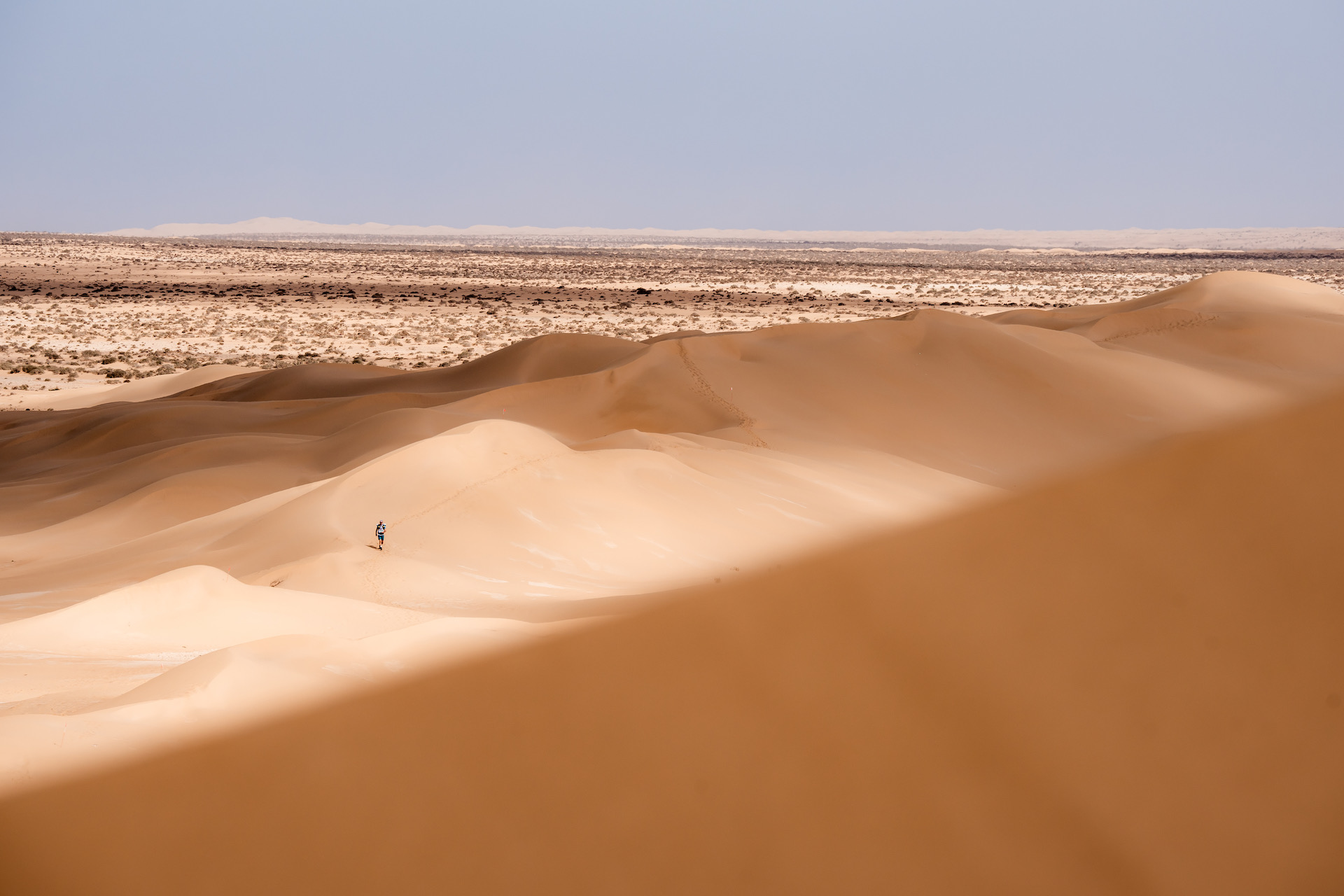
MDS 120 ATLANTIC COAST 2026 – STAGE 2

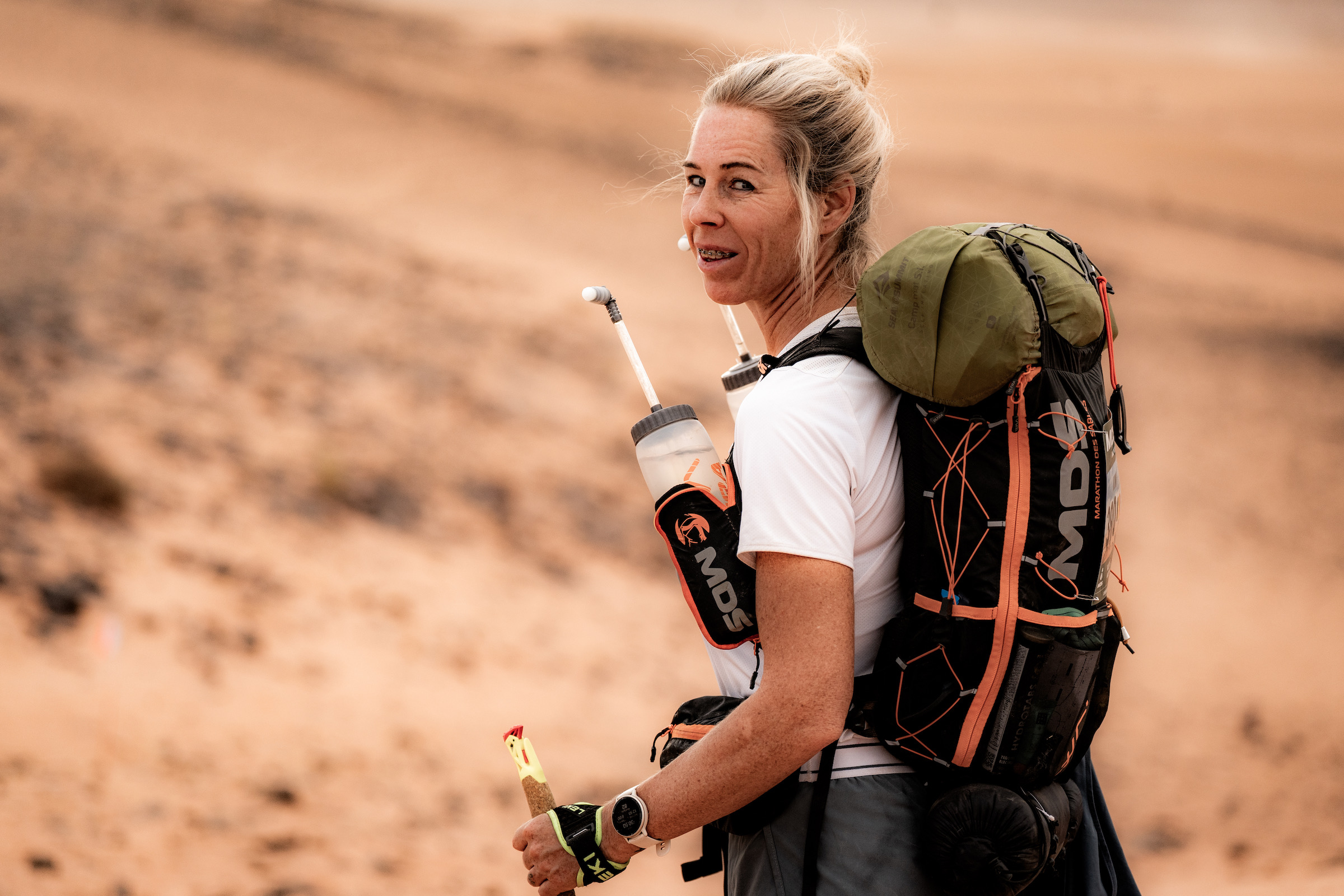
Stage 2 of the MDS 120 Atlantic Coast 2026 arrived with options and consequences. Twenty kilometres, forty, or the full sixty. Three distances, one shared truth: today would ask more than legs. It would ask for patience, judgement, and honesty. The course did not care which option was chosen. It simply waited, stretching out along the Atlantic edge, ready to test everyone who stepped onto it.

The morning hinted at uncertainty. Low cloud rolled in from the ocean, cool air brushing faces that had already been scoured by salt and sand. There was a little rain, just enough to darken the ground and sharpen the smell of wet earth. Then the sun broke through, sudden and bright, as if to remind the field that comfort would be temporary and effort unavoidable. It was a day of changeable weather in every sense, and the tone was set early. Adjust. Adapt. Keep moving.

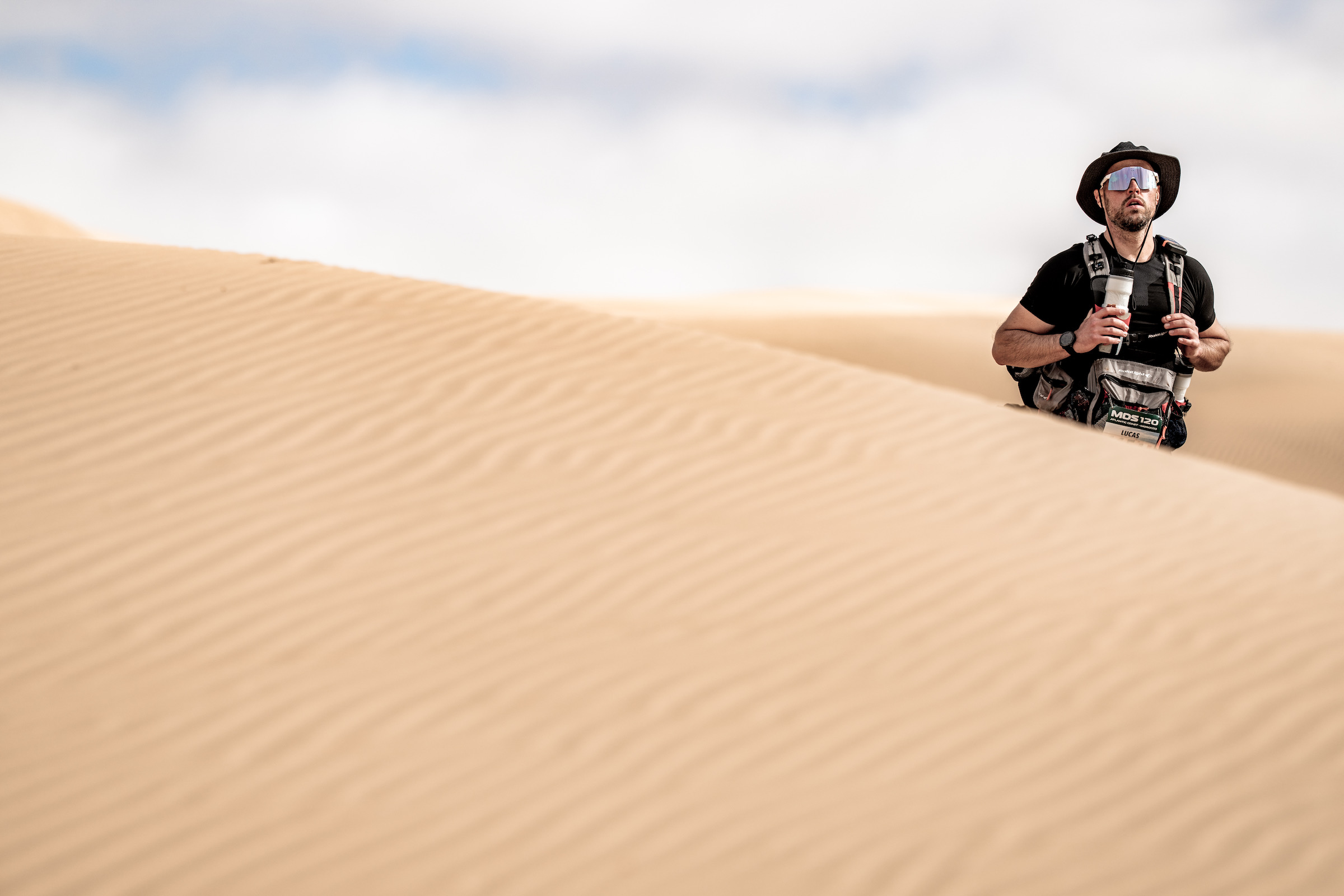
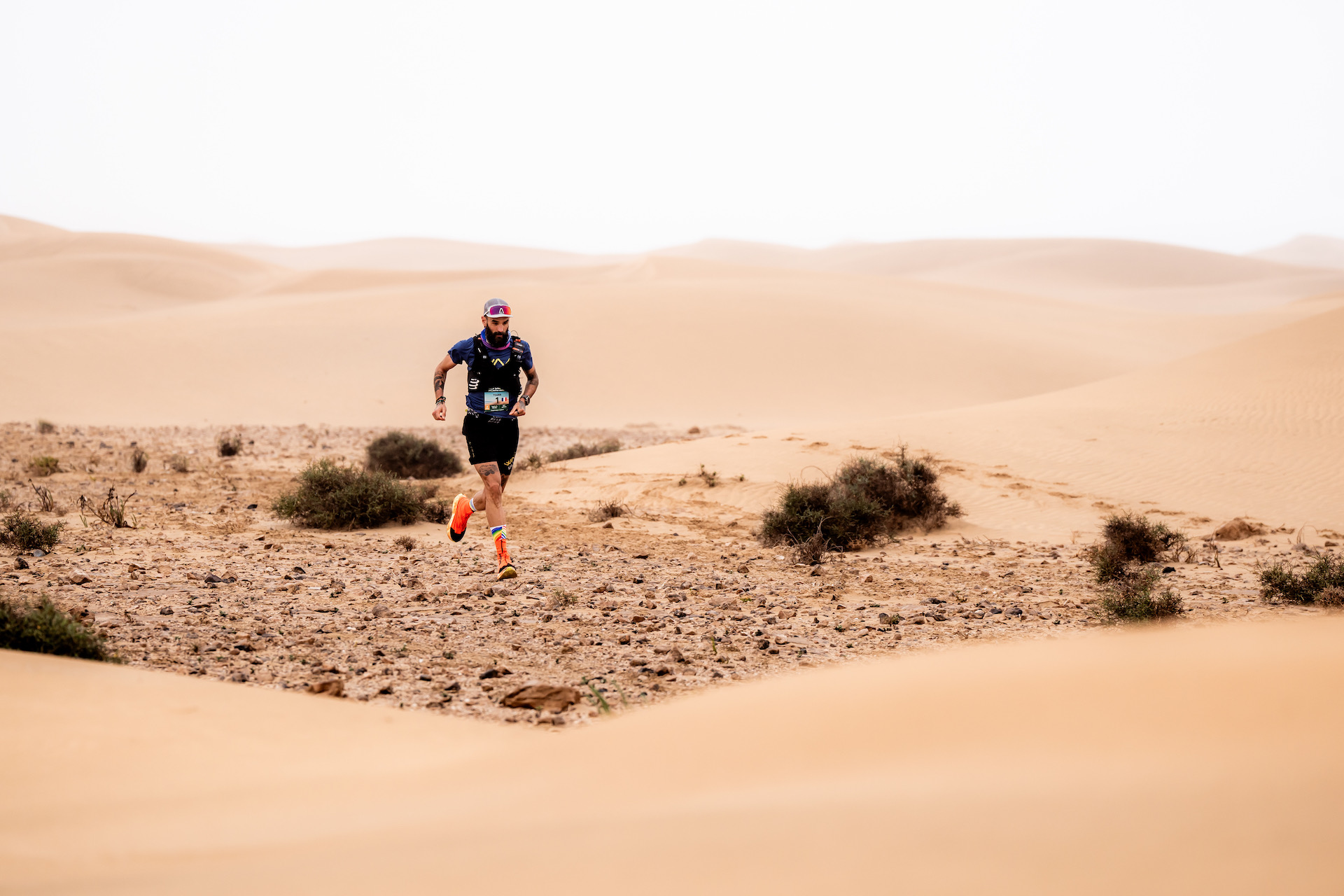
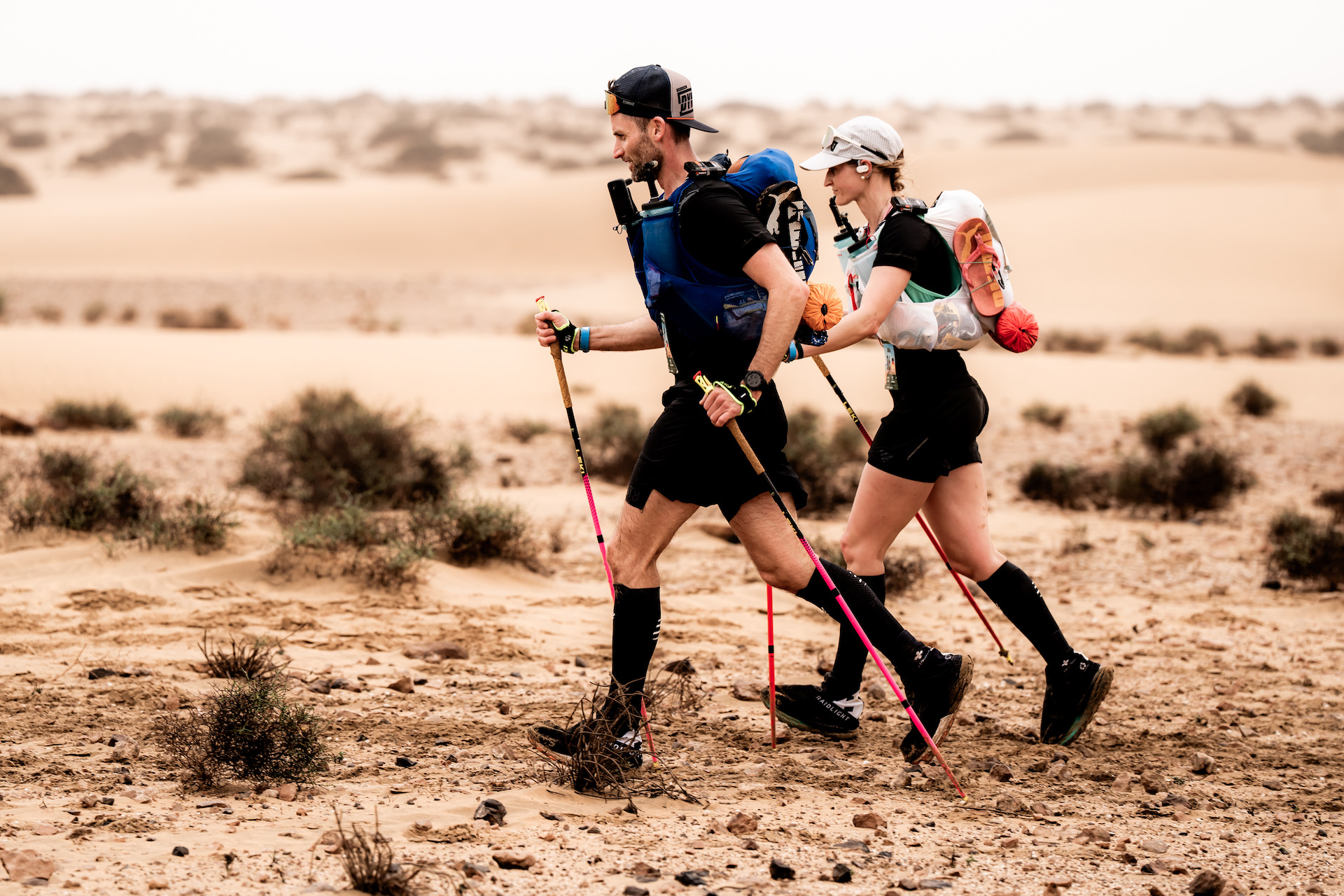
From the first kilometres, the terrain refused to settle into anything predictable. Soft sand swallowed shoes and rhythm, turning simple forward motion into work. Each step demanded attention. Ankles wobbled, calves burned, and breathing grew louder. Then the sand gave way to rocky plateau, hard and uneven underfoot.

The pace changed again, this time to caution. Eyes stayed down, scanning for safe placement. The plateau opened wide, exposing runners to the elements and to themselves. There was nowhere to hide from the wind, the sun, or the thoughts that arrive when the body starts to ask hard questions.

Flooded gorges brought a different challenge. Water pooled where it was least expected, cool and deceptively deep. Shoes filled, socks soaked, and the familiar squelch followed each step on the exit. Some laughed at the absurdity of it. Others grimaced, knowing wet feet mean blisters later. But everyone crossed, because stopping was never really an option. This race does not negotiate.

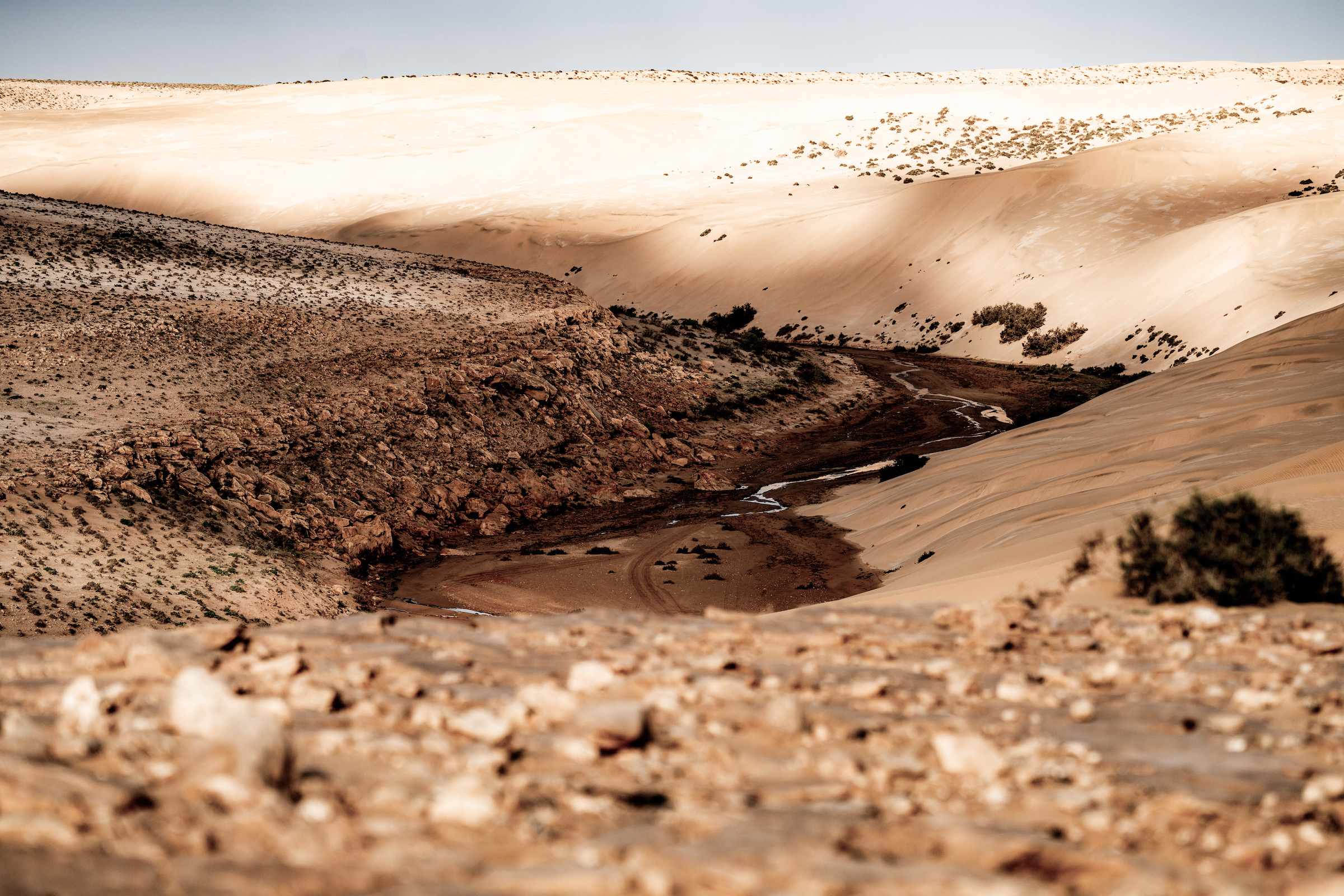
Beyond the gorges, the course stretched into wide open terrain. The Atlantic Ocean appeared and disappeared, sometimes a distant shimmer, sometimes close enough to hear. The scale of the landscape made individuals feel small, but also free. Lines of colour moved slowly across the land as runners spread out, each locked into their own effort. This was where time began to behave strangely. Minutes felt long. Hours blurred. The distance chosen mattered less than the simple act of continuing.

The final stretch ran flat and true, parallel to the ocean. It should have felt easier. On paper, it was. In reality, it was where fatigue spoke loudest. The body was already empty. The mind had been negotiating for kilometres. Yet the finish lay ahead, invisible at first, then slowly, mercifully, real. The ocean rolled on, indifferent and steady, while the race reached its quiet climax.

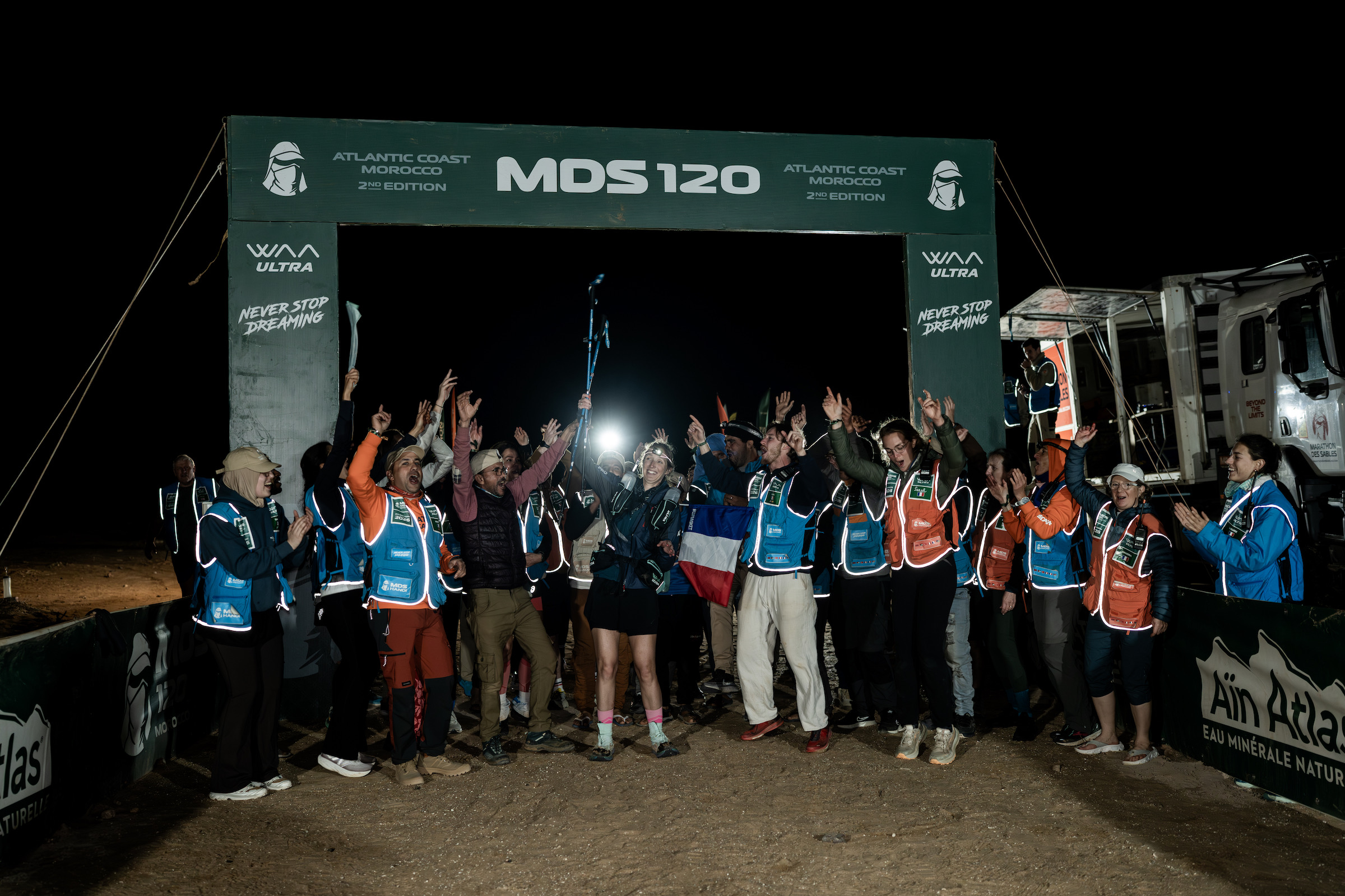
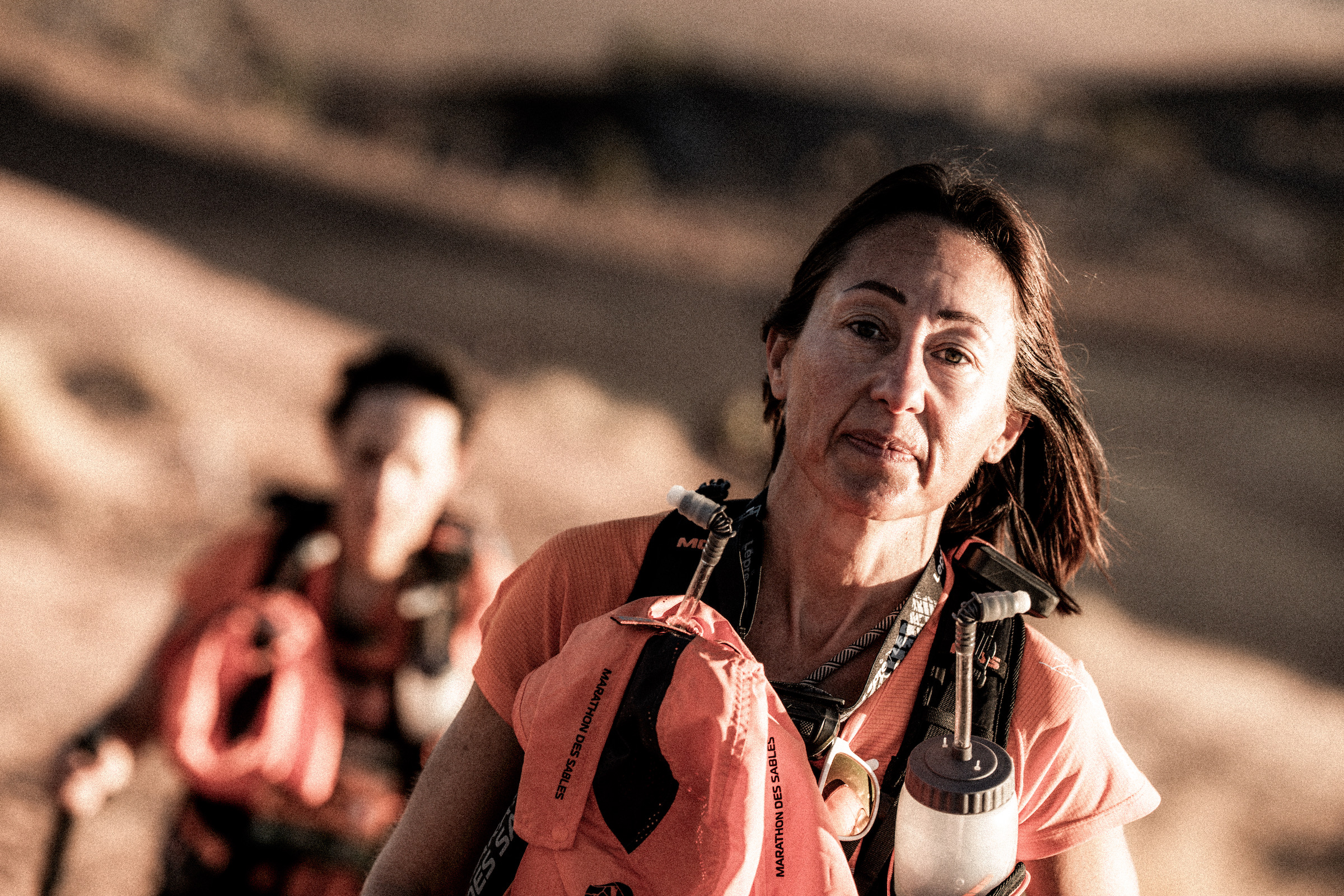
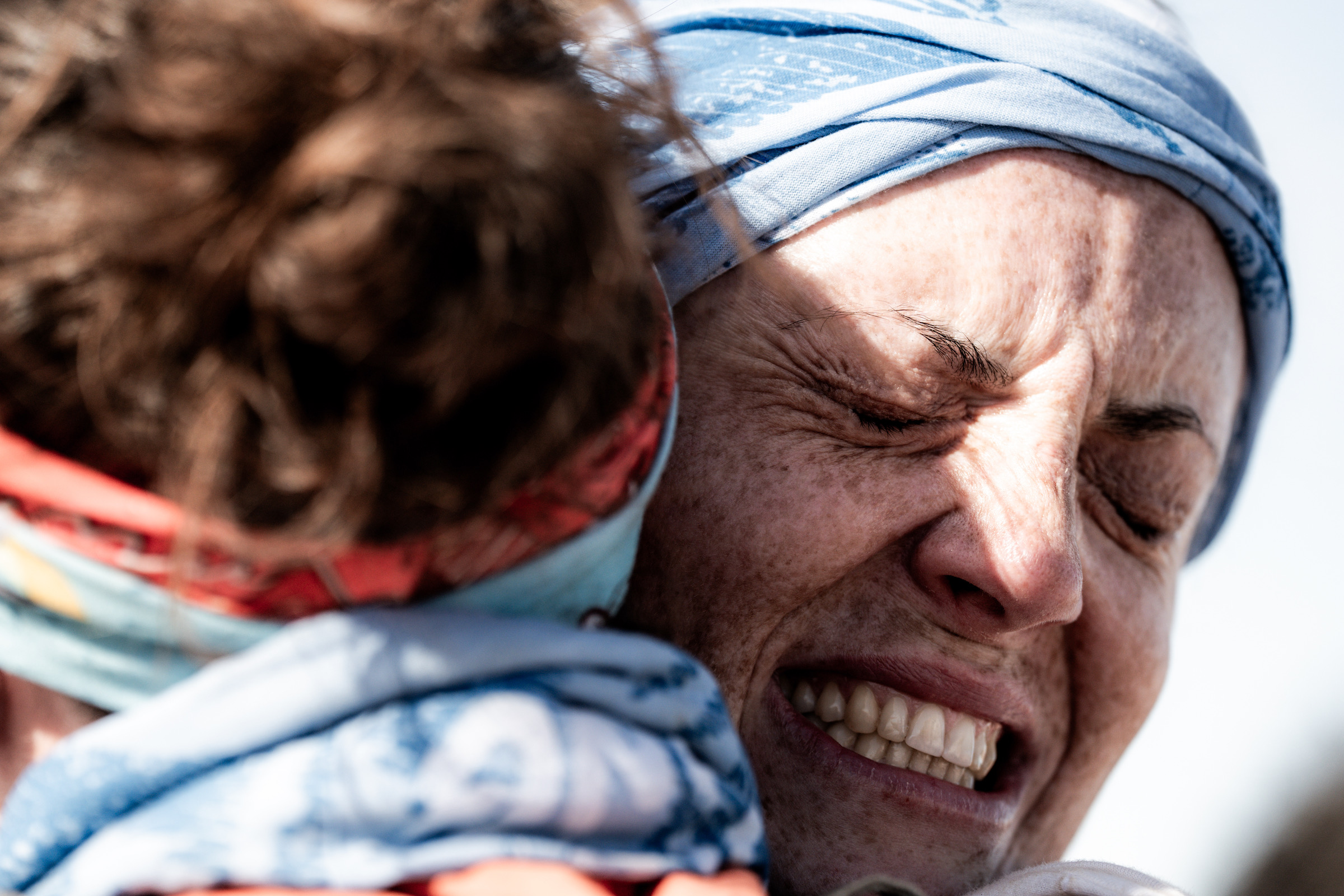
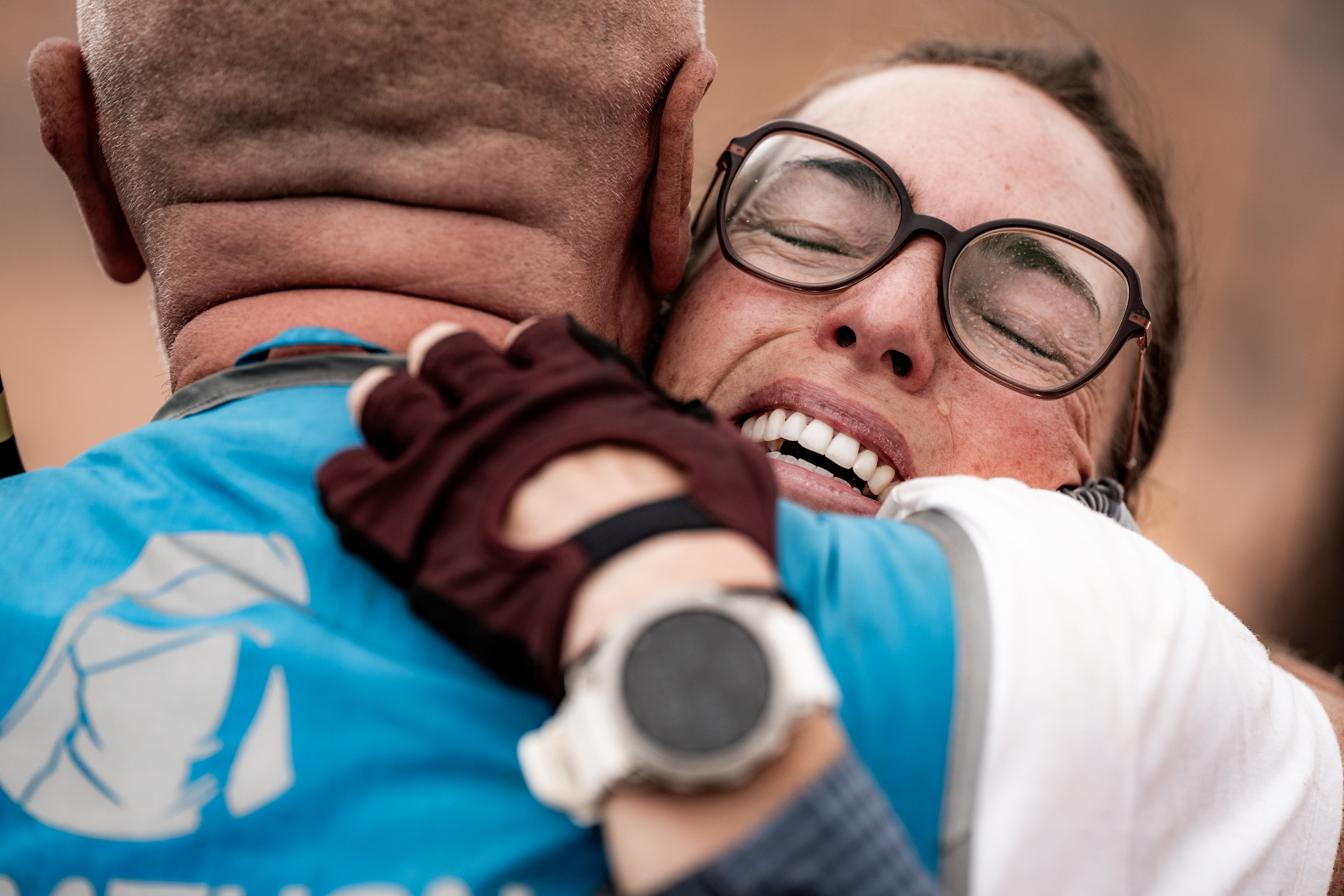
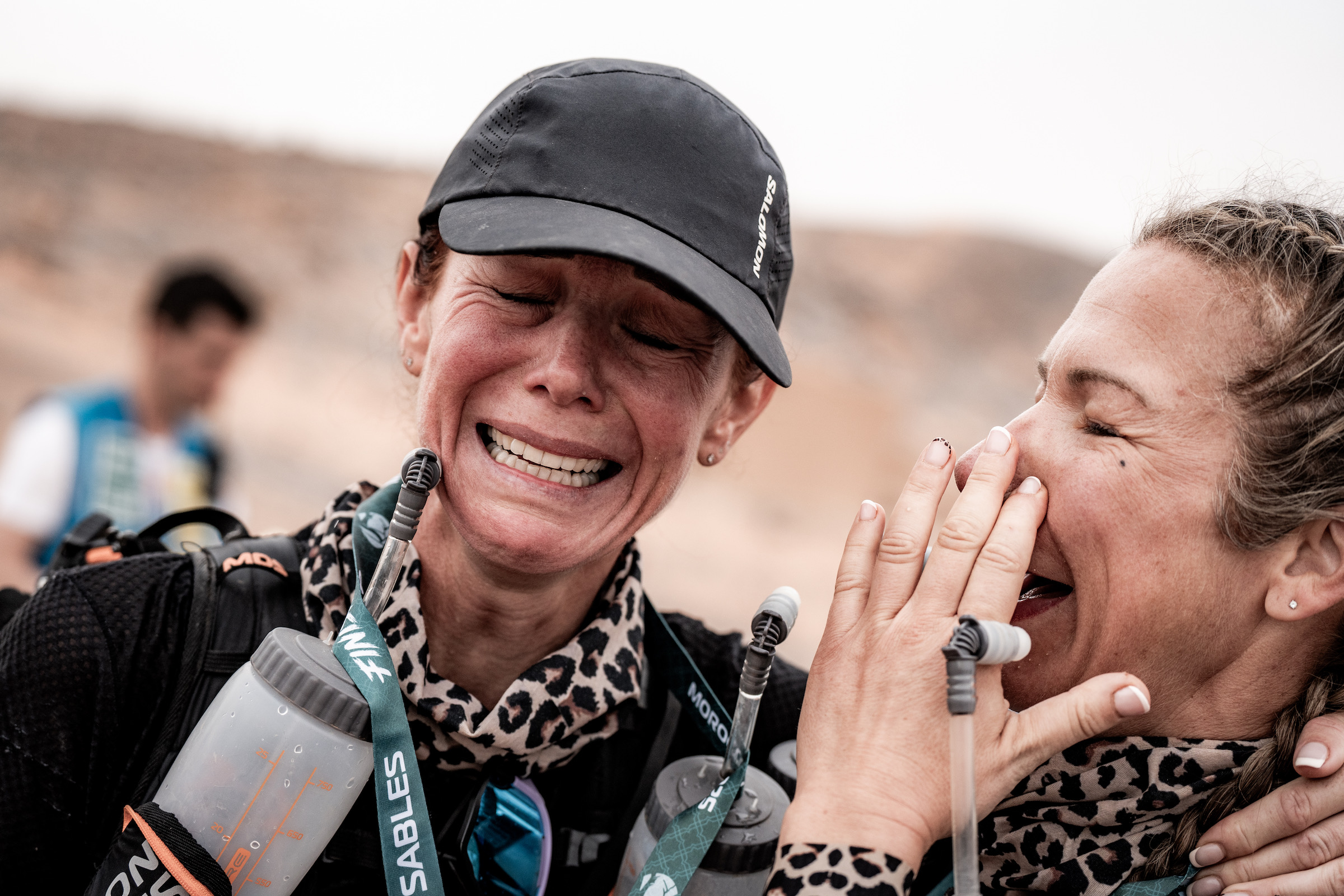
The finish line became a gathering point for everything this day had taken and given. It was a welcome sight, one that drew out raw emotion without apology. Tears fell freely, sometimes before the line, sometimes after. Laughter broke out in short bursts, the kind that comes when tension finally releases. There was joy, genuine and earned, mixed with exhaustion that sat deep in the bones. Some crossed upright and strong. Others bent double, hands on knees, searching for breath. All were changed.

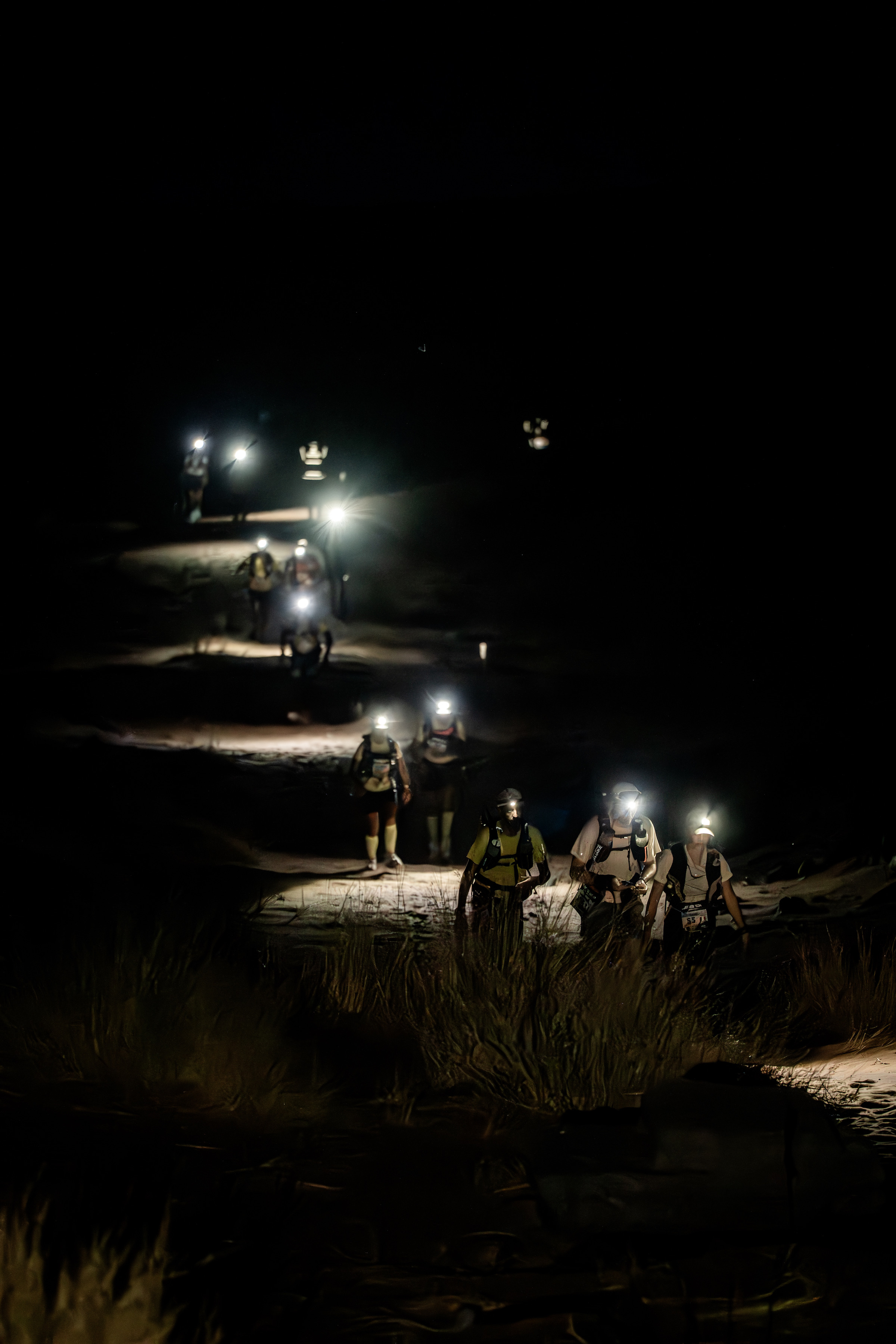
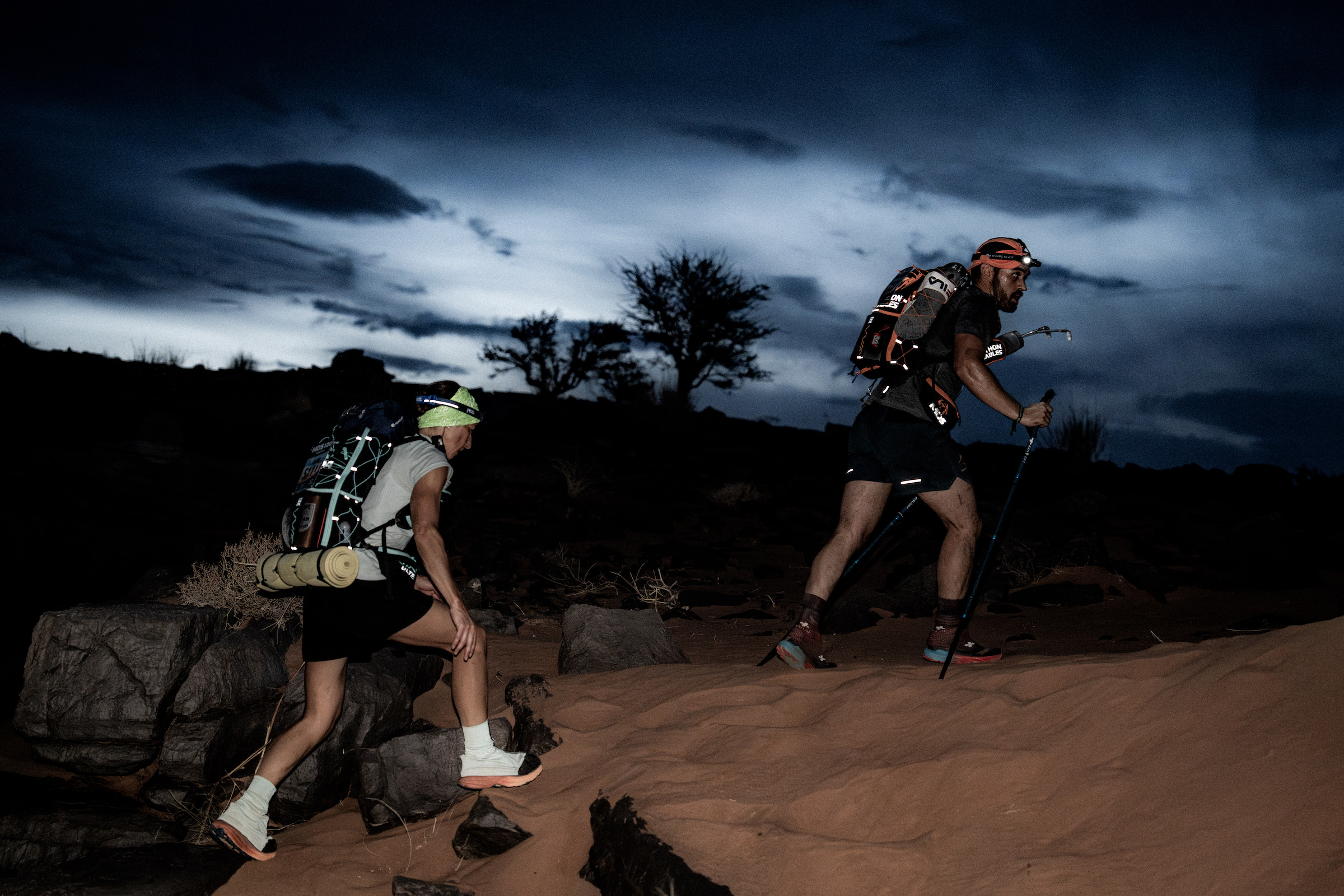
The day stretched long into the night. Headlamps flickered in the distance as darkness closed in. Volunteers stayed wrapped in layers, voices steady, encouragement unwavering. The clock kept moving. And then, close to 2300 hours, the final finisher crossed the line. There was no rush. No hurry to be anywhere else. Just a moment held for someone who refused to stop. Applause cut through the night, not loud, but meaningful. This, too, mattered.

Stage 2 was not about speed. It was about choice and consequence, about learning the difference between discomfort and danger, about discovering how much is left when you think there is nothing. Today, participants found out who they are and why they are here. Some answers were quiet. Others arrived with force. But they arrived all the same.

There were moments of doubt, of frustration, of anger at the sand, the stones, the weather, the distance. There were also moments of clarity, when effort narrowed the world down to the essentials. Step. Breathe. Drink. Keep going. In those moments, the noise of everyday life fell away. What remained was simple and honest.

As the camp settles and the body begins to cool, tomorrow offers something rare in this environment. A day of rest. A pause. Time to recharge and recover. Muscles will stiffen, feet will tell their stories, and minds will replay the day in fragments. There will be care, conversation, and quiet pride. Because Stage 2 demanded respect, and those who met it earned that rest.

The Atlantic continues to roll in the dark. The course waits. And the field, changed by today, will rise again when it is time.

MDS Tour and MDS Clubs for 2026

Join the MDS Clubs on HEYLO HERE.

The MDS Tour starts in January and moves from location to location, Register HERE

Follow Ian Corless

Instagram – @iancorlessphotography

Twitter – @talkultra

facebook.com/iancorlessphotography

Web – www.iancorless.com
Web – www.iancorlessphotography.com

EVEREST TRAIL RACE 2025 – STAGE 2

BRUTAL BEAUTY AND RELENTLESS CLIMBING

Stage 2 of the Everest Trail Race doesn’t waste time. The gun goes off, and it hits hard, right into a beast of a climb that defines the day. The route is 26.6 kilometers with 1,483 meters of vertical gain, but ask anyone who ran it: it feels like double that.

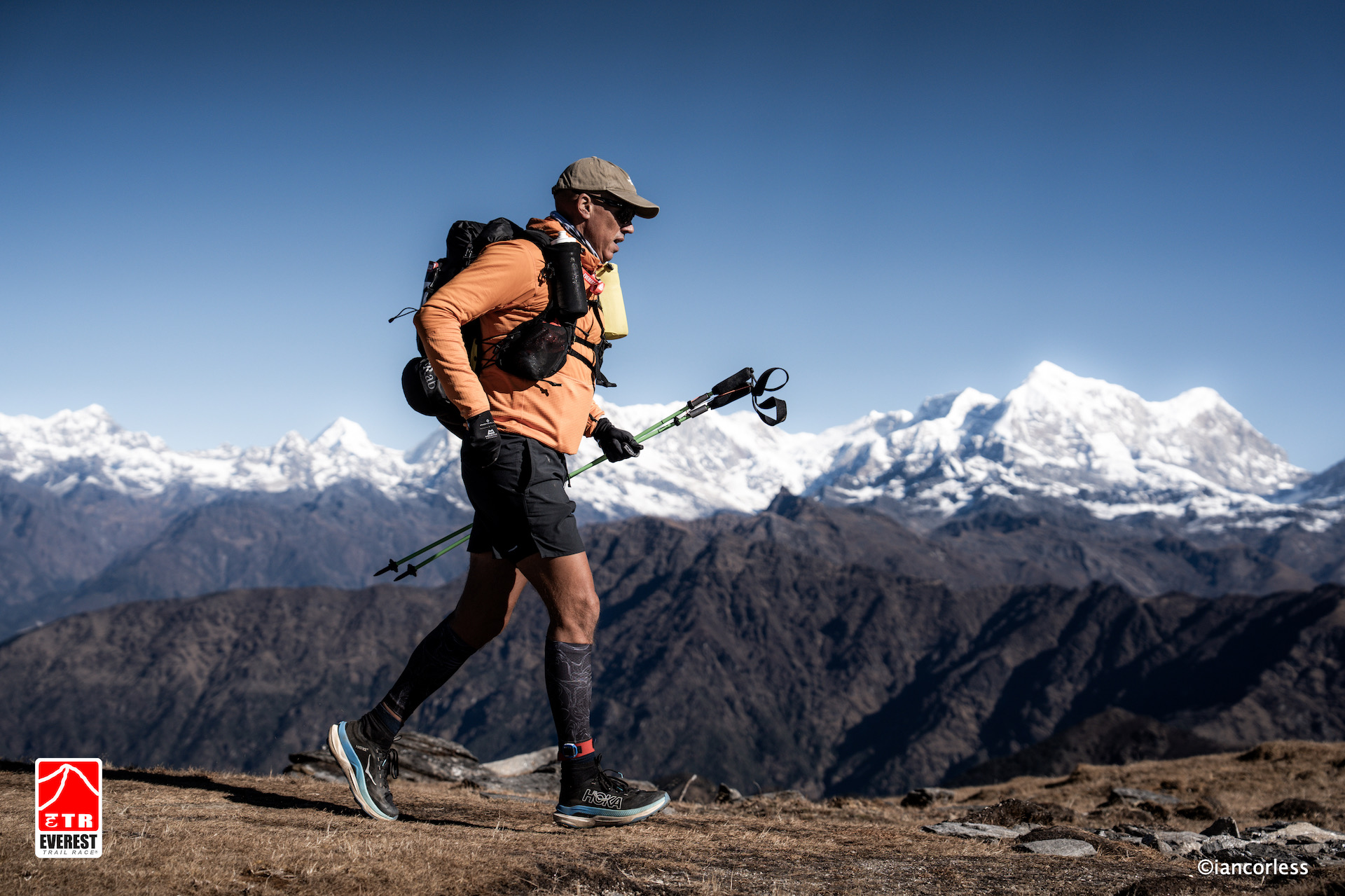
The stage opens with arguably the most iconic stretch of the entire race, a 4km climb straight out of the start gate, topping out at the summit of Pike Peak at 4,046 meters. There’s no easing into it. You’re immediately lunging skyward, legs burning, lungs gasping, every step on loose rock and narrow trail.

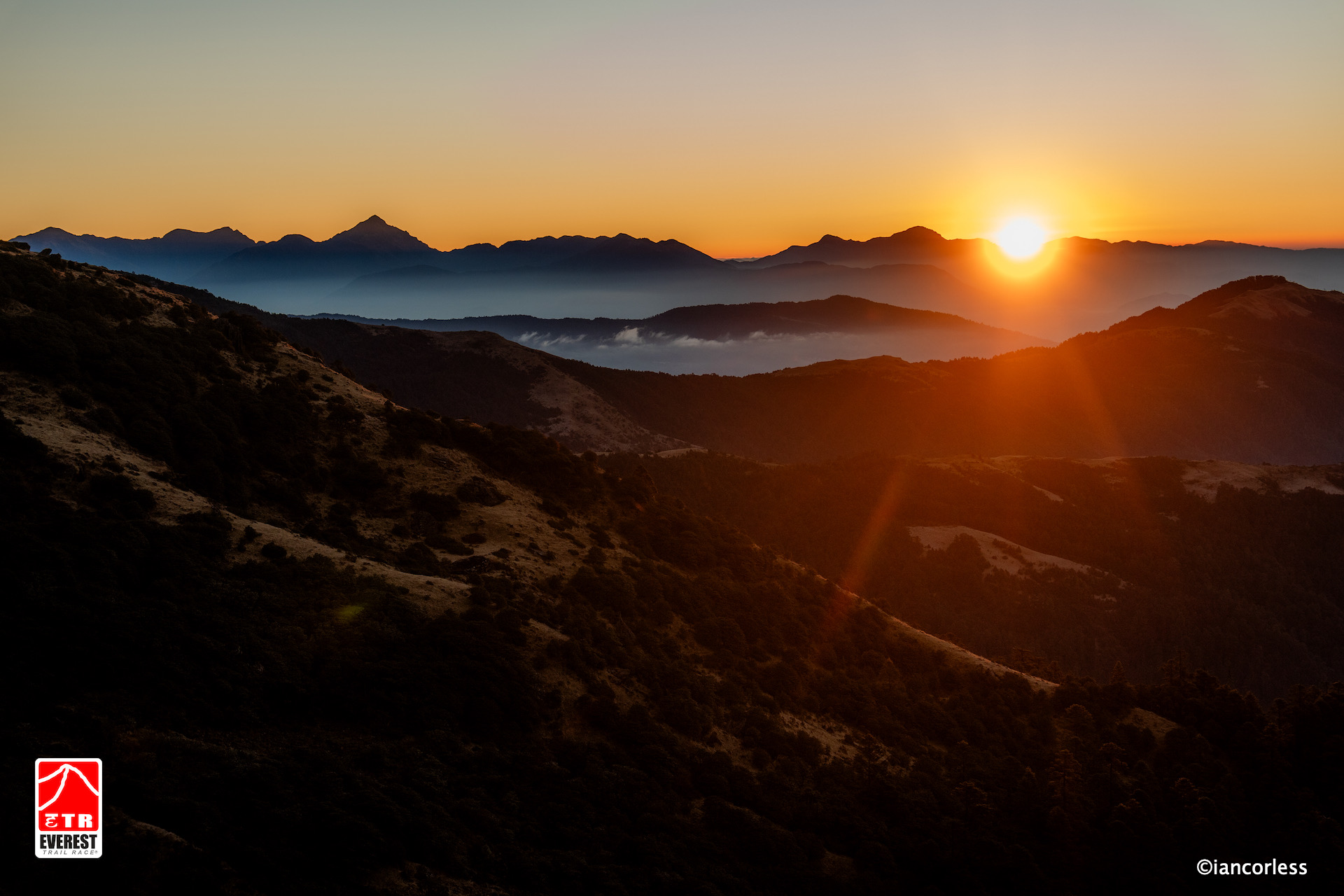
But what a reward. The views from Pike Peak are the kind you earn. Everest, Thamserku, and the distant giants of the Himalayas tower on the horizon.

There’s a strange serenity up there—above the tree line, above the chaos, if only your quads weren’t screaming so loudly.

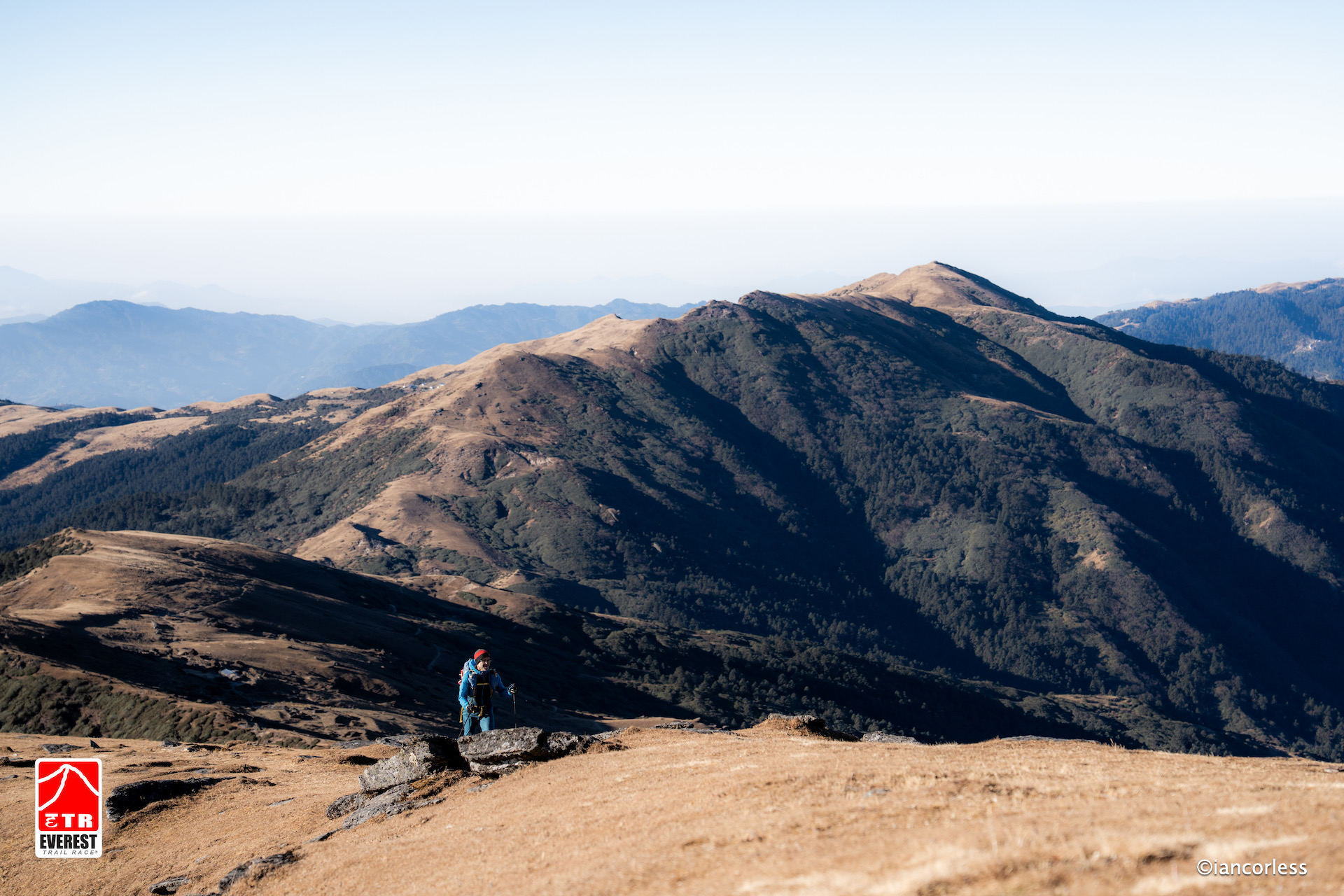
From the summit, runners are thrown into a tricky descent, technical, steep, and demanding full attention. This is no cruise; it’s controlled aggression. The terrain underfoot is a mix of loose stone and rutted trail, constantly shifting. Jase Bhanjyang appears below like a mirage, a short-lived reprieve at 3,510m before the next test.

After a quick breath, it’s back uphill, another climb, this time to 3,800m. It’s less brutal than the first, but by now the fatigue is setting in. The altitude, the sun, the effort, they add up. This section wears on you slowly, sapping strength before delivering a massive release:

This is the stage’s exhale. A long, fast descent winds down to Jumbesi, where Checkpoint 2 awaits. The descent is runnable FOR SOME but relentless. It’s a test of patience, footwork, and knowing how much to push without blowing up. At CP2, some collapse into chairs, others refuel and move quickly, no time to waste.

From Jumbesi, the route shifts gears. A more gradual climb takes runners to Phurteng at 3,000m, a steady push that gnaws at tired legs. Then, a rolling descent gives a hint of relief, but it’s a trap.

Because this stage has a final sting: the kick to Ringmo. Just when you think you’ve made it, the trail juts upward again before finally dropping into the finish at 2,740m. It’s psychological warfare. You can see Ringmo before you reach it – but the trail makes you fight for it.

Stage 2 is a monster. On paper, it doesn’t look like the toughest, less gain than Stage 1, more downhill, but the terrain, altitude, and sequence of climbs make it punishing. The raw elevation loss (2,203m) sounds helpful, but it hammers your legs in a different way. Many finish looking shell-shocked. Others, oddly exhilarated.

This is the Everest Trail Race offers up some of the most staggering views you’ll ever see on a race course, and today, in the shadow of Pike Peak, the price of admission was steep but worth it.

Follow Ian Corless

Instagram – @iancorlessphotography

Twitter – @talkultra

facebook.com/iancorlessphotography

Web – www.iancorless.com
Web – www.iancorlessphotography.com

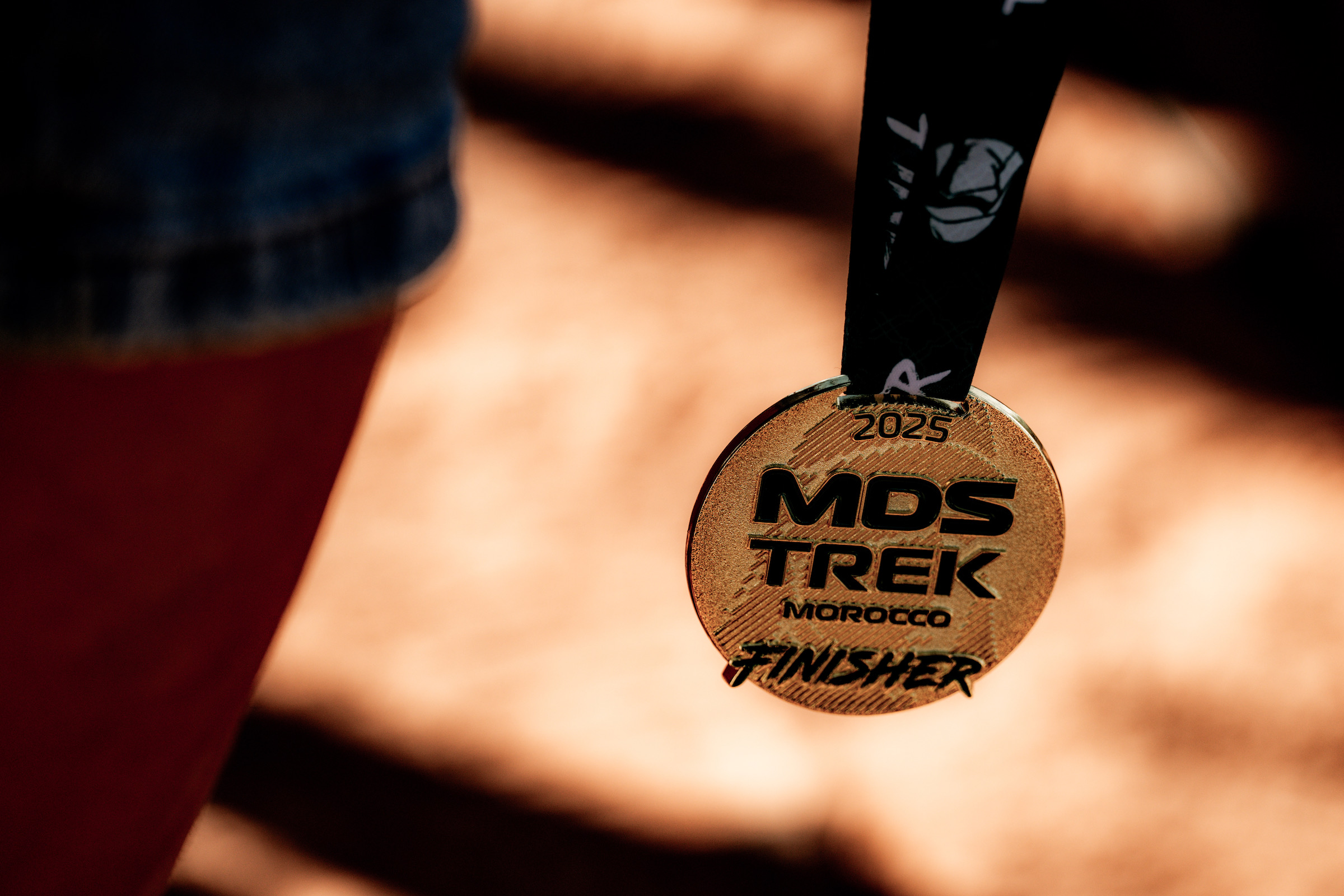
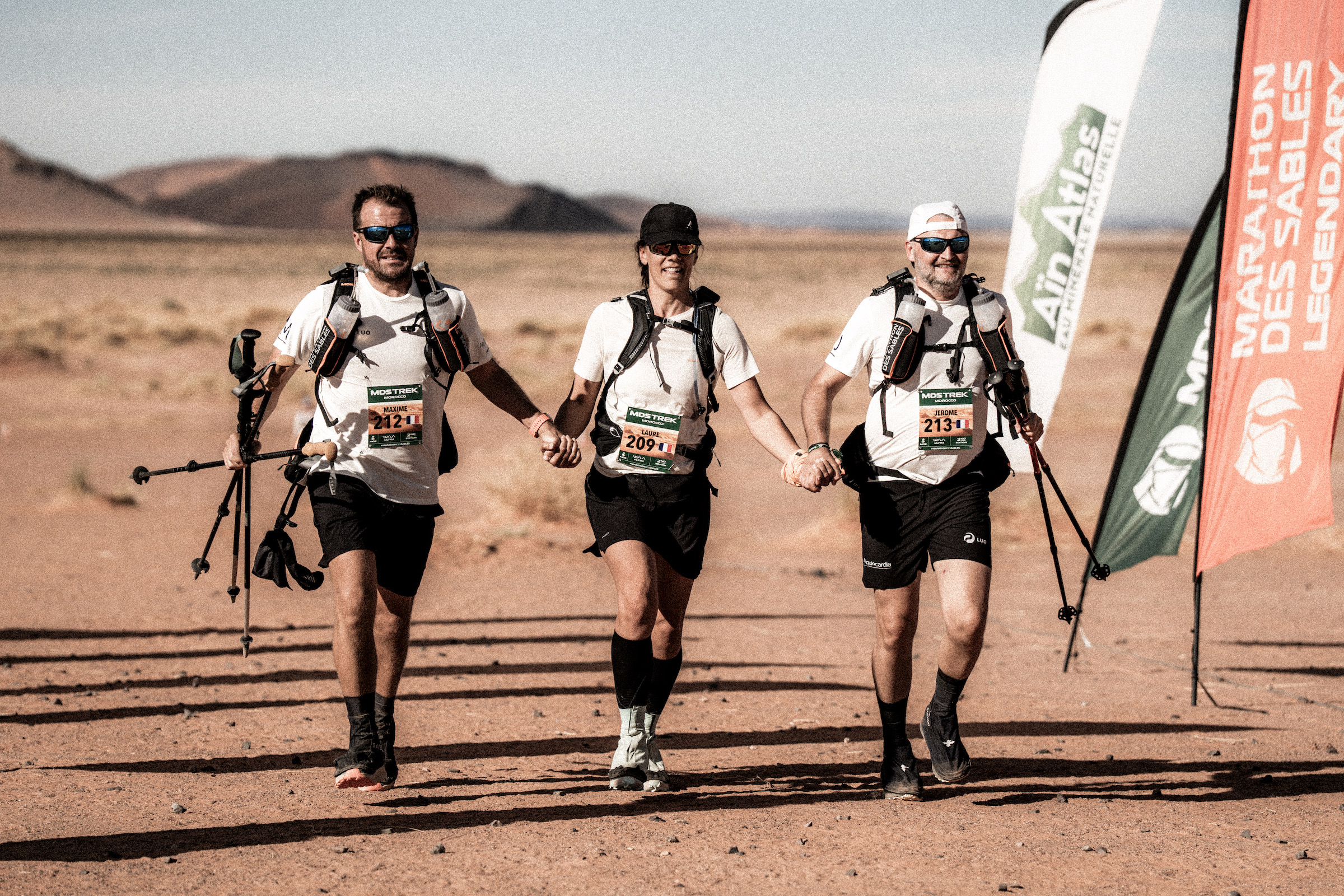
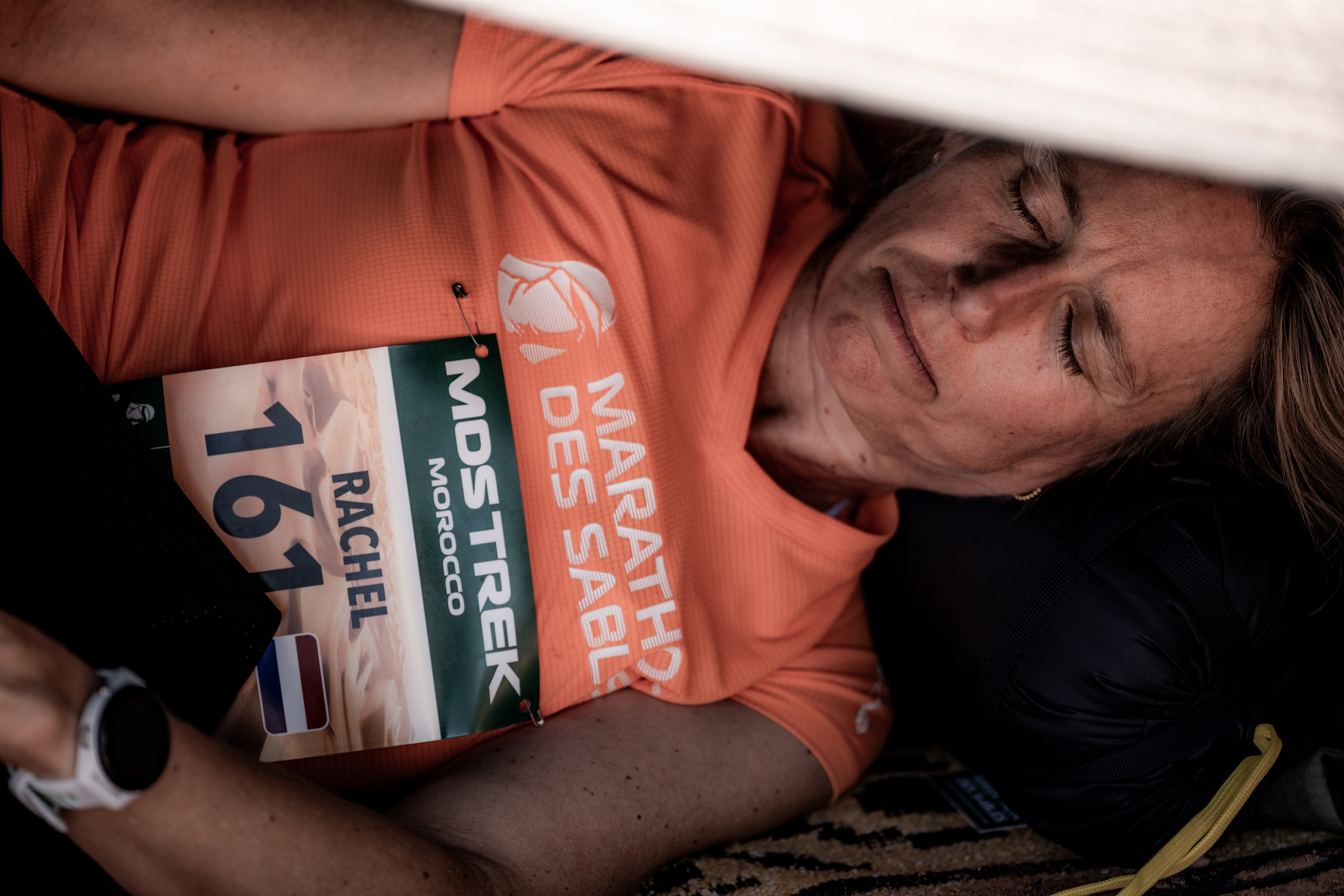
MDS TREK MOROCCO 2025 – Stage 4 –  A Victory Loop Through the Sahara


The fourth and final stage of MDS Trek Morocco is complete. What began as a journey into the vast, unforgiving desert has ended in a loop of triumph, every step earned, every moment remembered.


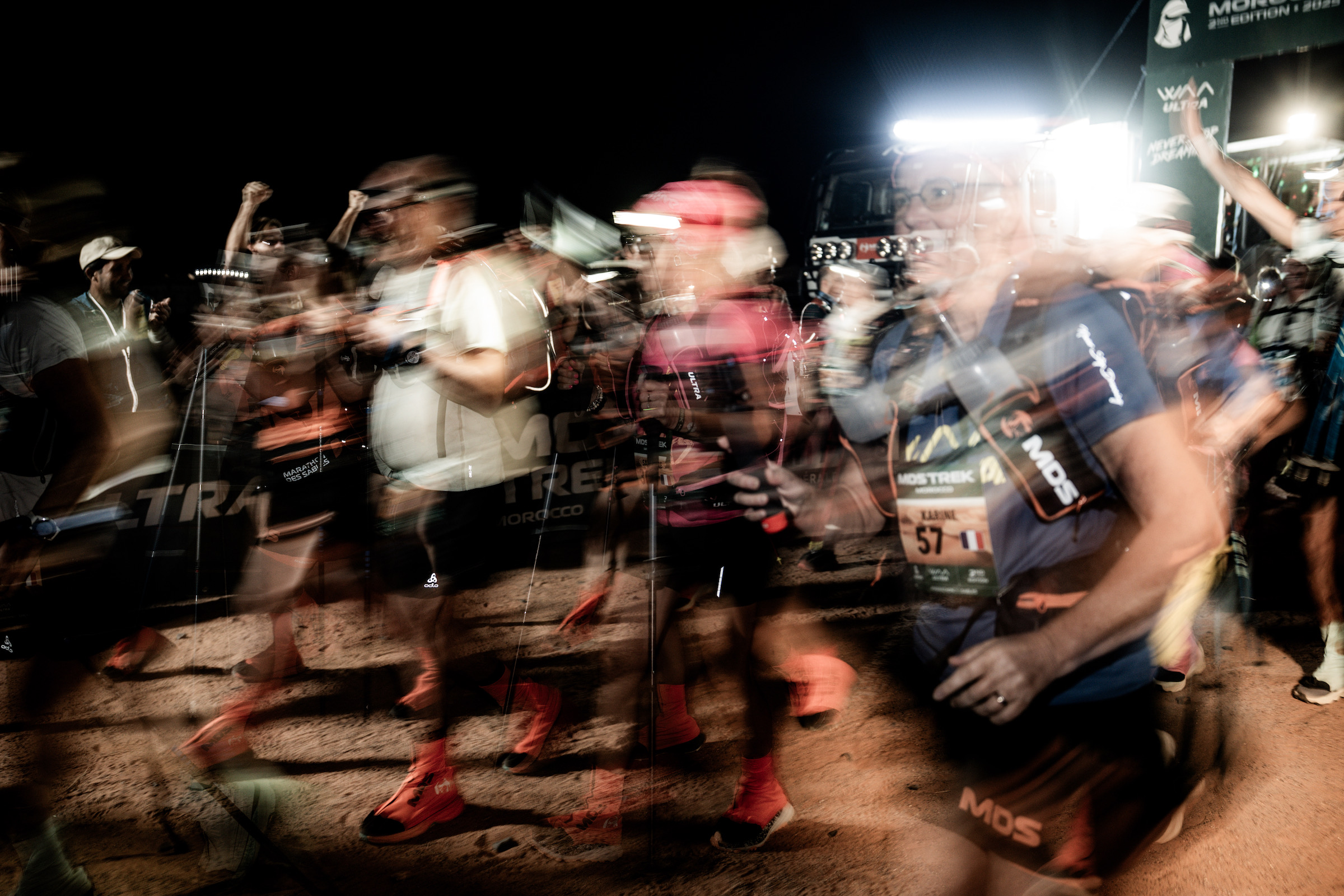
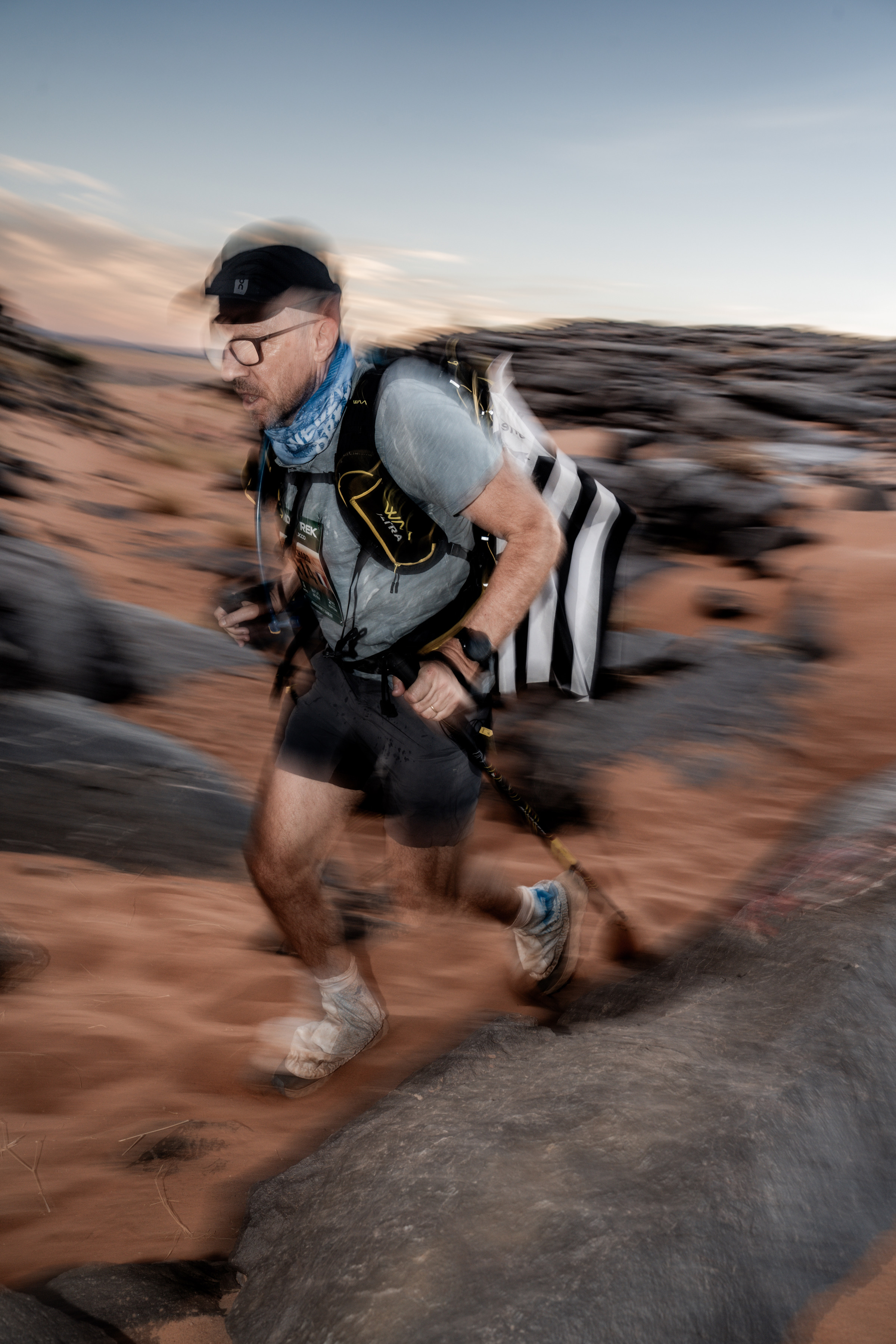
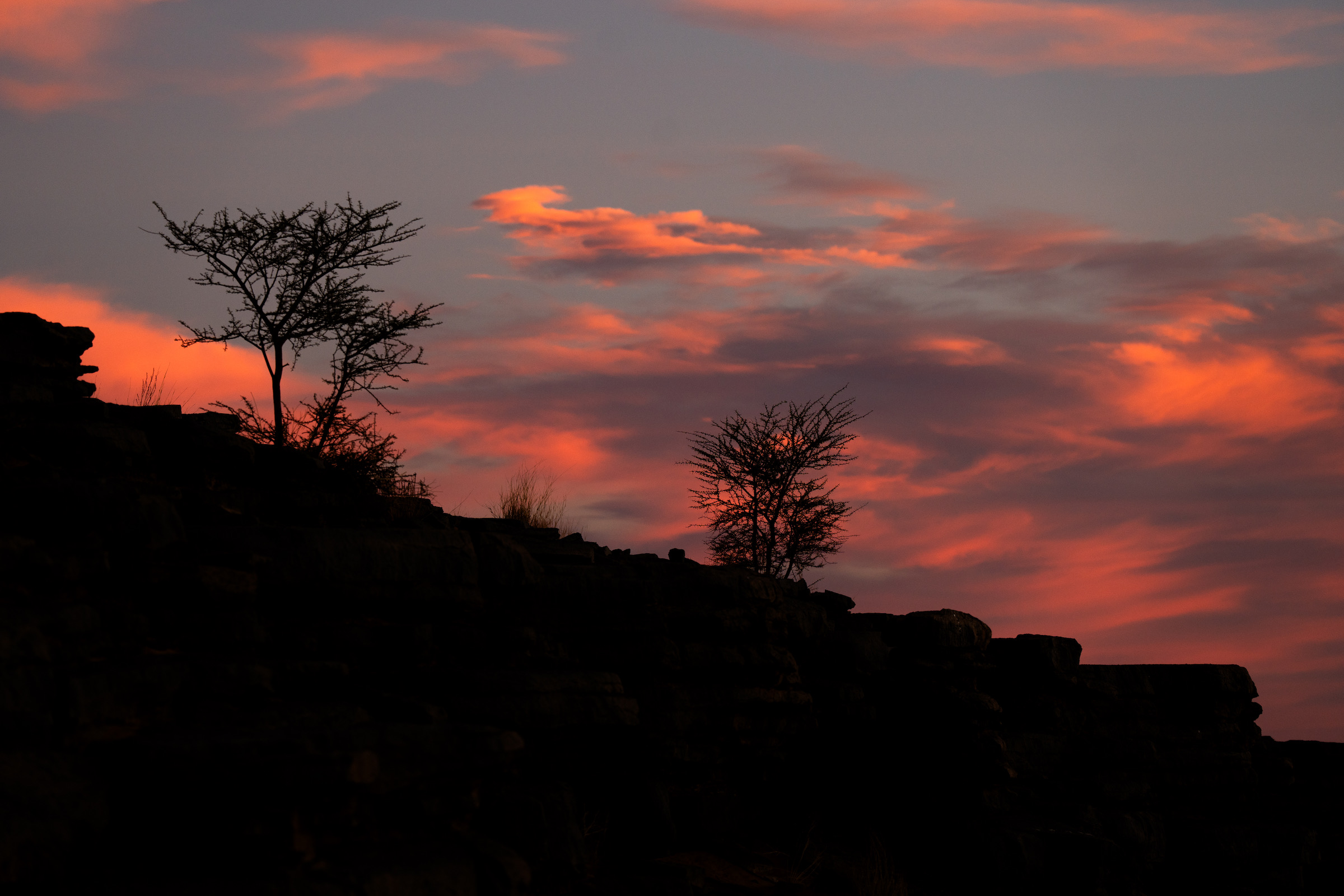
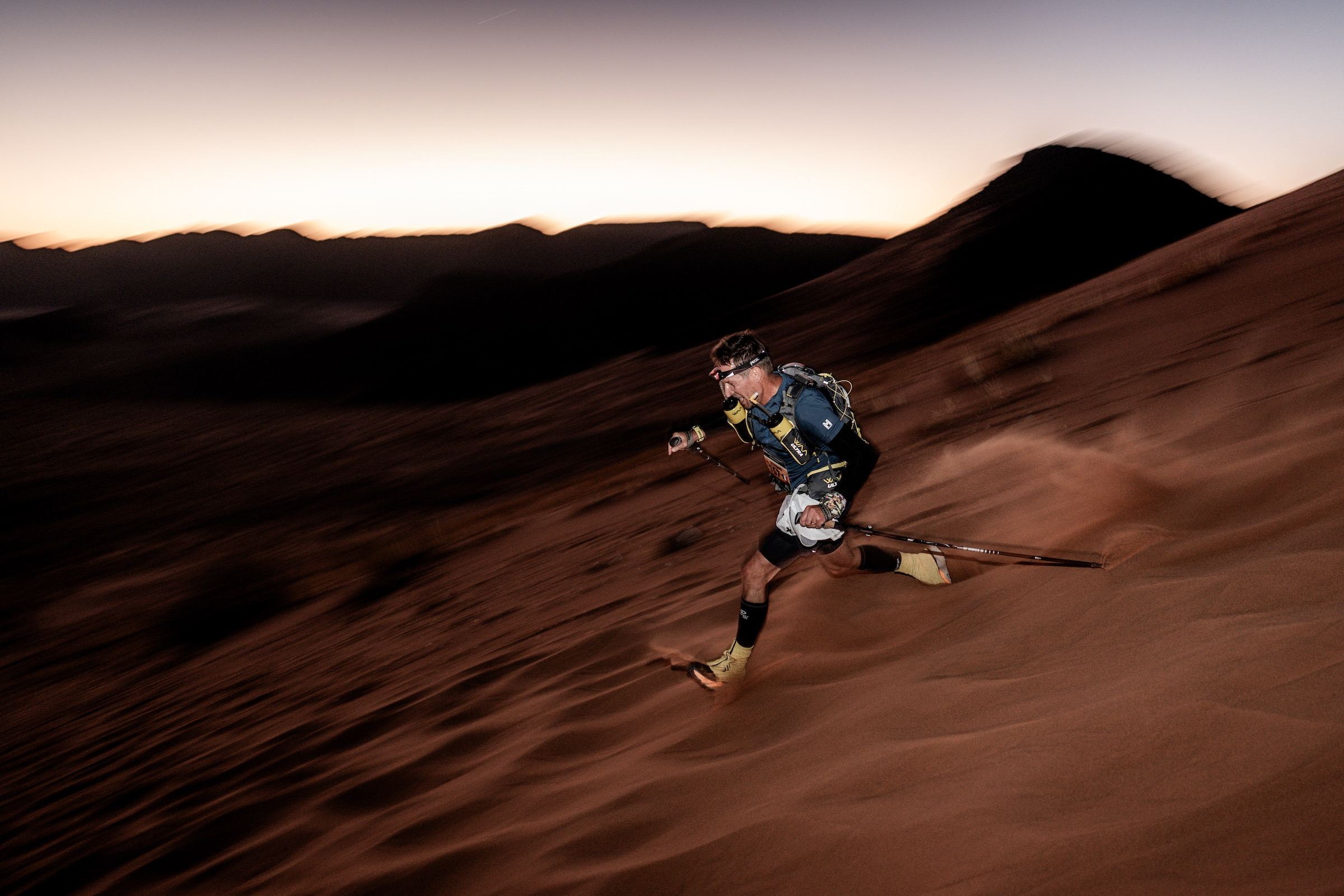
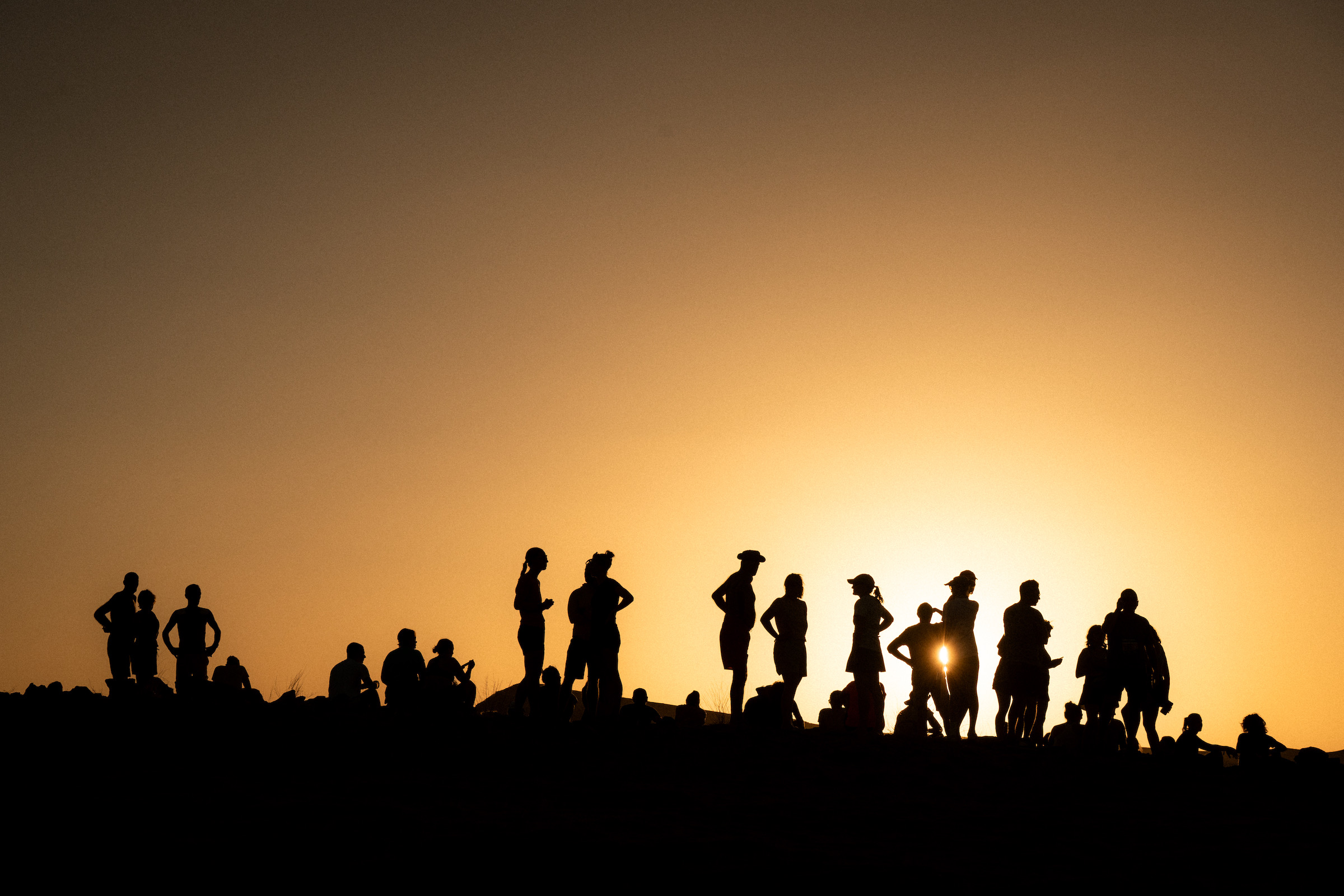
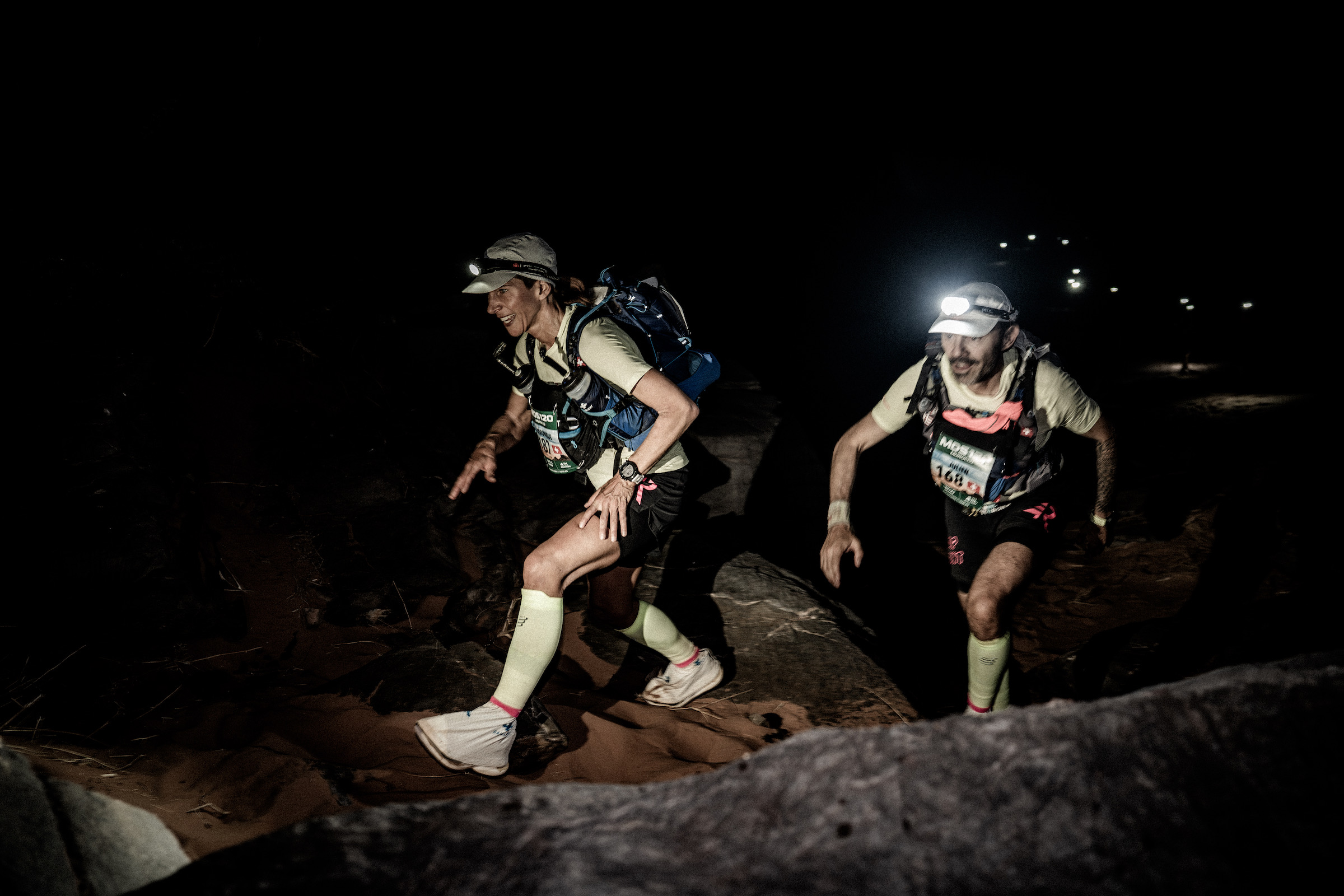
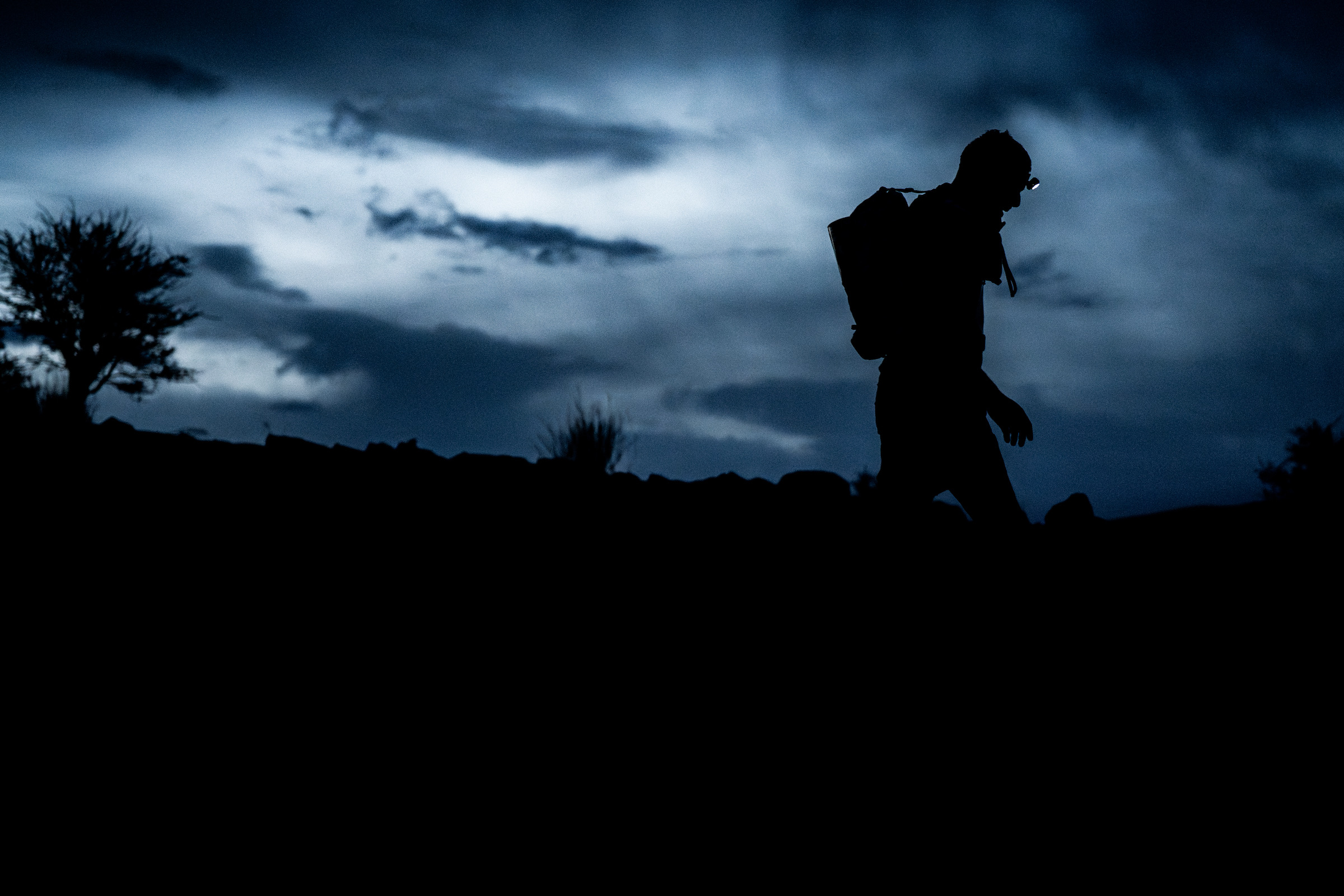
Today’s stage started in darkness. Head torches cut thin beams through the pre-dawn silence, the soft crunch of footsteps the only sound as the group moved out into the unknown once more. The air was cool, but everyone knew what was coming. The early warmth was already hinting at another scorcher in the making.


There were two distances again today, different paths, same glory. Whether you chose the longer route or a shorter challenge, the destination was the same: the finish line, and the medal that waited beyond it.


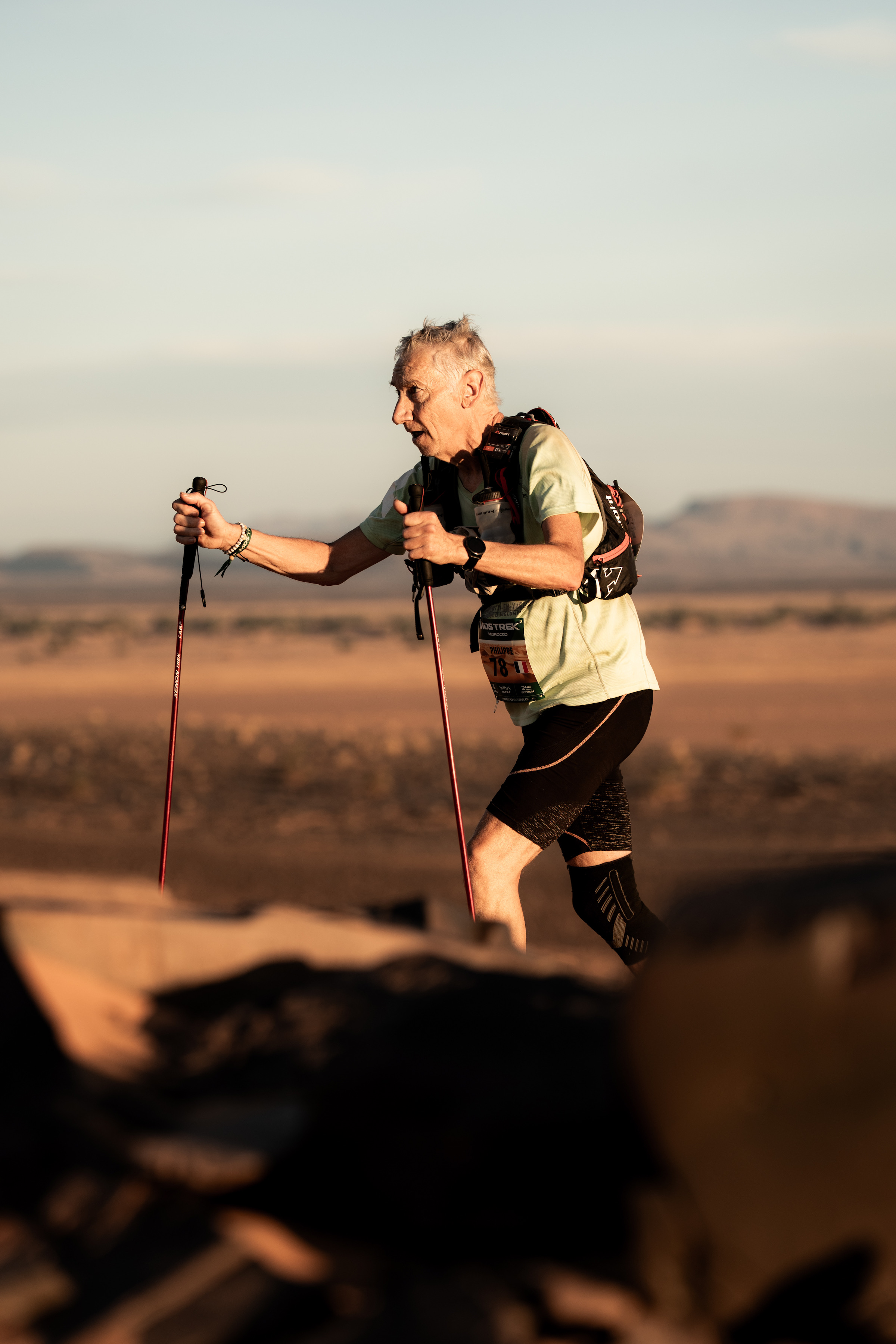
The route offered a final taste of everything the Sahara had thrown at participants over the past days, rolling ridges of sand, winding gorges, and a long, flat, rocky push to the finish. Hard, hot, and humbling. But also deeply rewarding.


Trek has been a shared adventure.

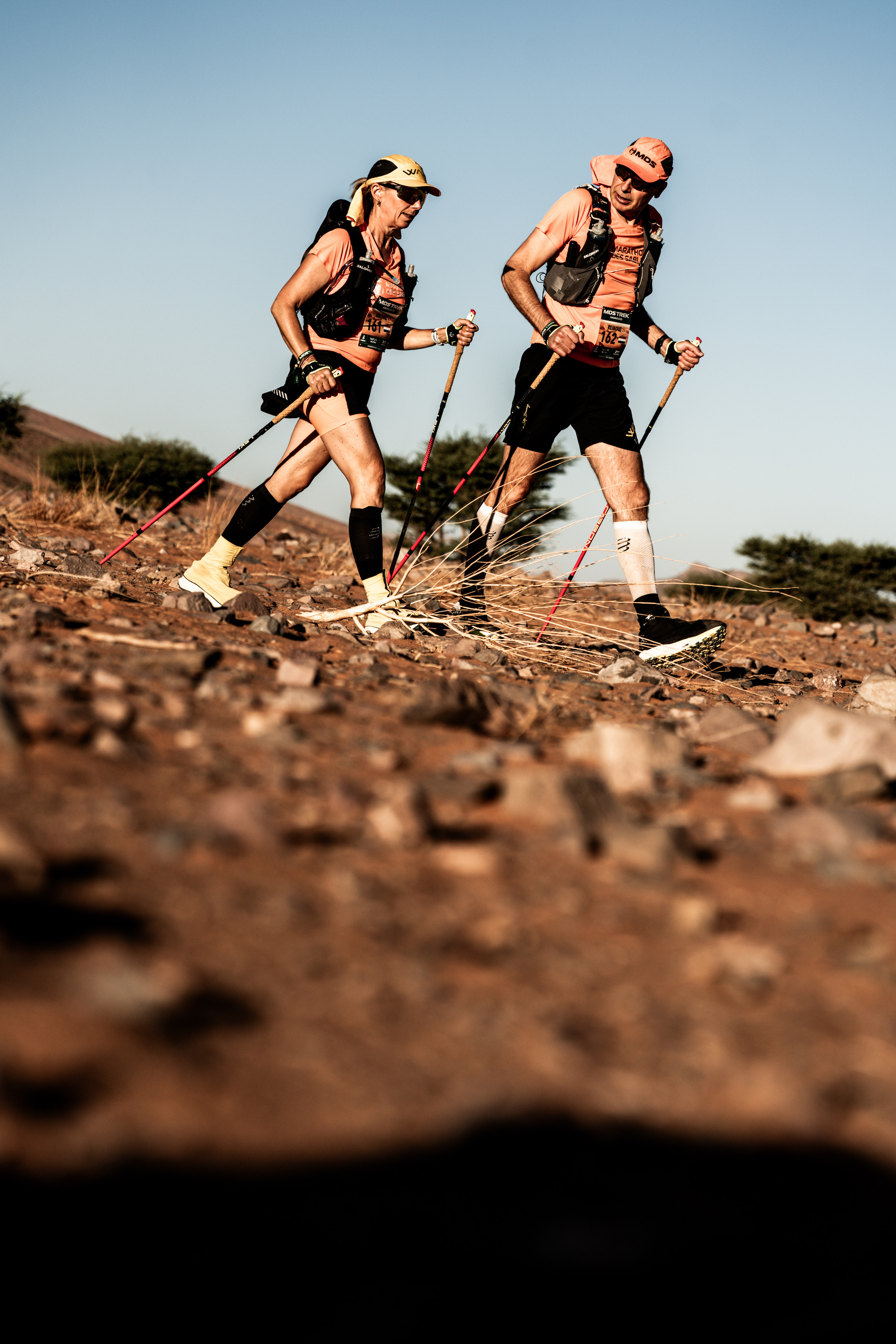
A test of resilience, not speed. MDS Trek Morocco made space for everyone, young and old, first-timers and seasoned explorers, fast hikers and slow-but-steady souls. There were no clocks to beat, only limits to expand.


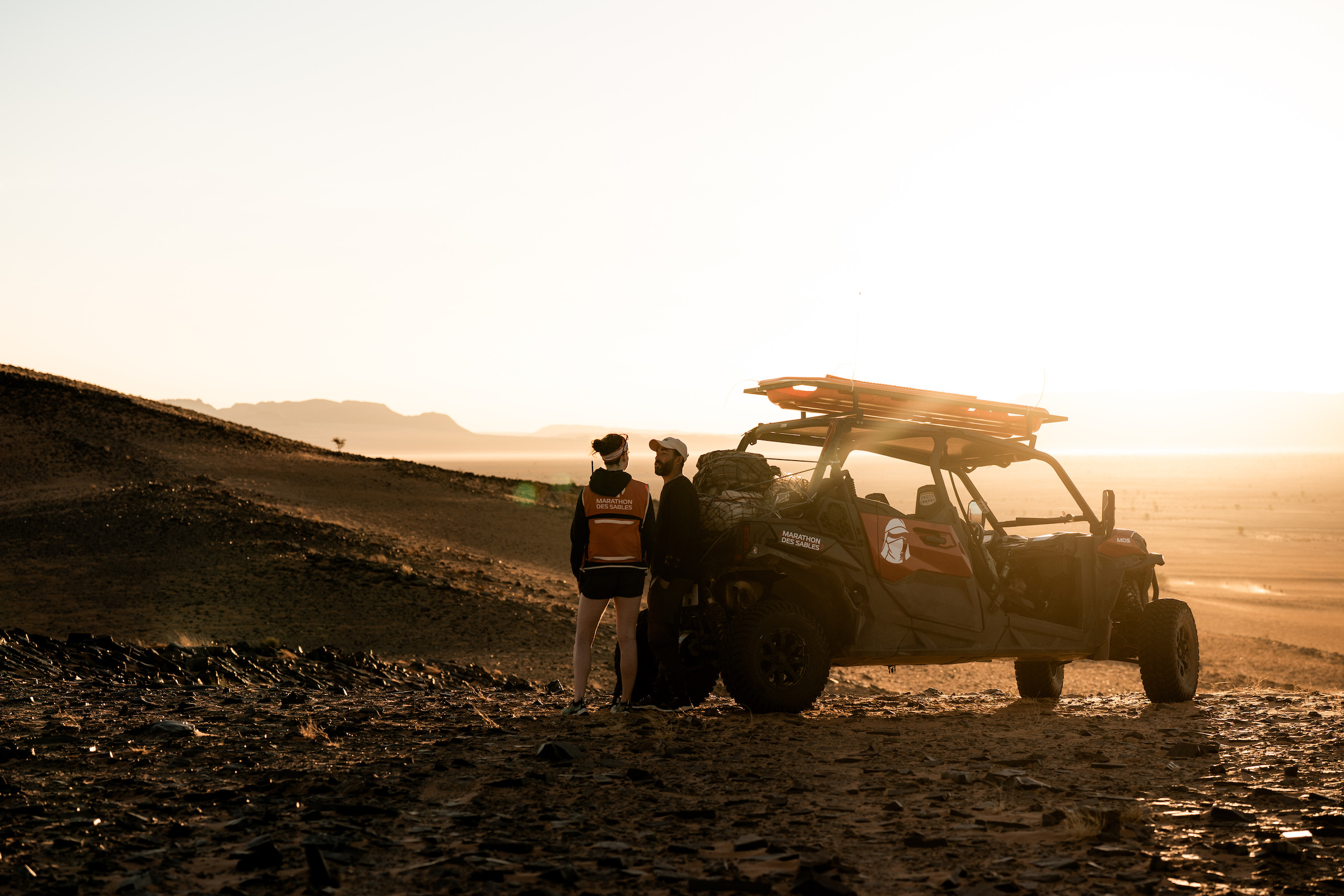
It was also safe. Every step of the way, the organisation was tight, the logistics seamless, the support unwavering. Even in this remote, elemental landscape, the structure and security allowed people to push themselves without fear.


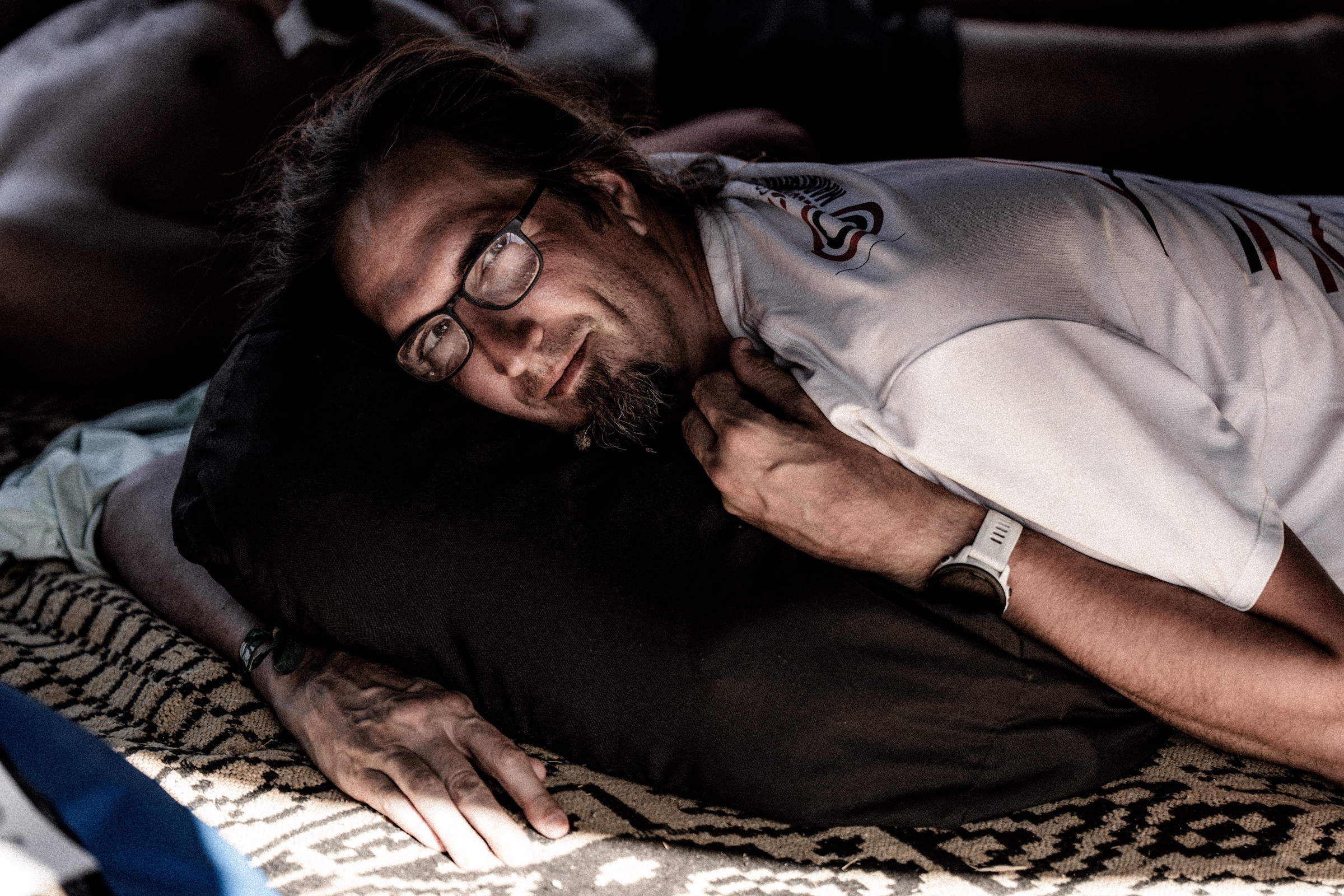
More than anything, MDS Trek was about togetherness. There were moments of solitude, yes, but also laughter, encouragement, teamwork. Bonds were built under starlit skies and blistering suns.

This trek wasn’t just through the Sahara, it was into a deeper understanding of what we’re capable of when we move with purpose, and when we move together.

The Sahara gave everything. So did the people who crossed it.

This was MDS Trek Morocco: a final stage, a victory loop, and an unforgettable finish.

Interested in a MARATHON DES SABLES EVENT?

More Info HERE

Follow Ian Corless

Instagram – @iancorlessphotography

Twitter – @talkultra

facebook.com/iancorlessphotography

Web – www.iancorless.com
Web – www.iancorlessphotography.com

MDS TREK MOROCCO 2025 – Stage 3 – A Journey Through Sand, Stars, and Spirit

There are stages that challenge you, stages that move you, and then there are stages like Stage 3 of MDS TREK Morocco, the kind that embeds itself deep in your memory and never lets go.

This wasn’t just another section of the trek. It was the spiritual centre of the entire experience. A 48-hour symphony of sweat, sand, starlight and self-discovery, this was the Sahara in its rawest, most breathtaking form.

Part One – Into the Desert Before Dawn

It began in the dark, well before sunrise. Head torches flickered to life across the bivouac like constellations on the move. The air was still, cool with the promise of what was to come. This was no ordinary start. There was a choice, two routes: the shorter 17.3km or the longer 30.6km. Two paths leading into the vast unknown, with each step breaking the silence of the Moroccan morning.

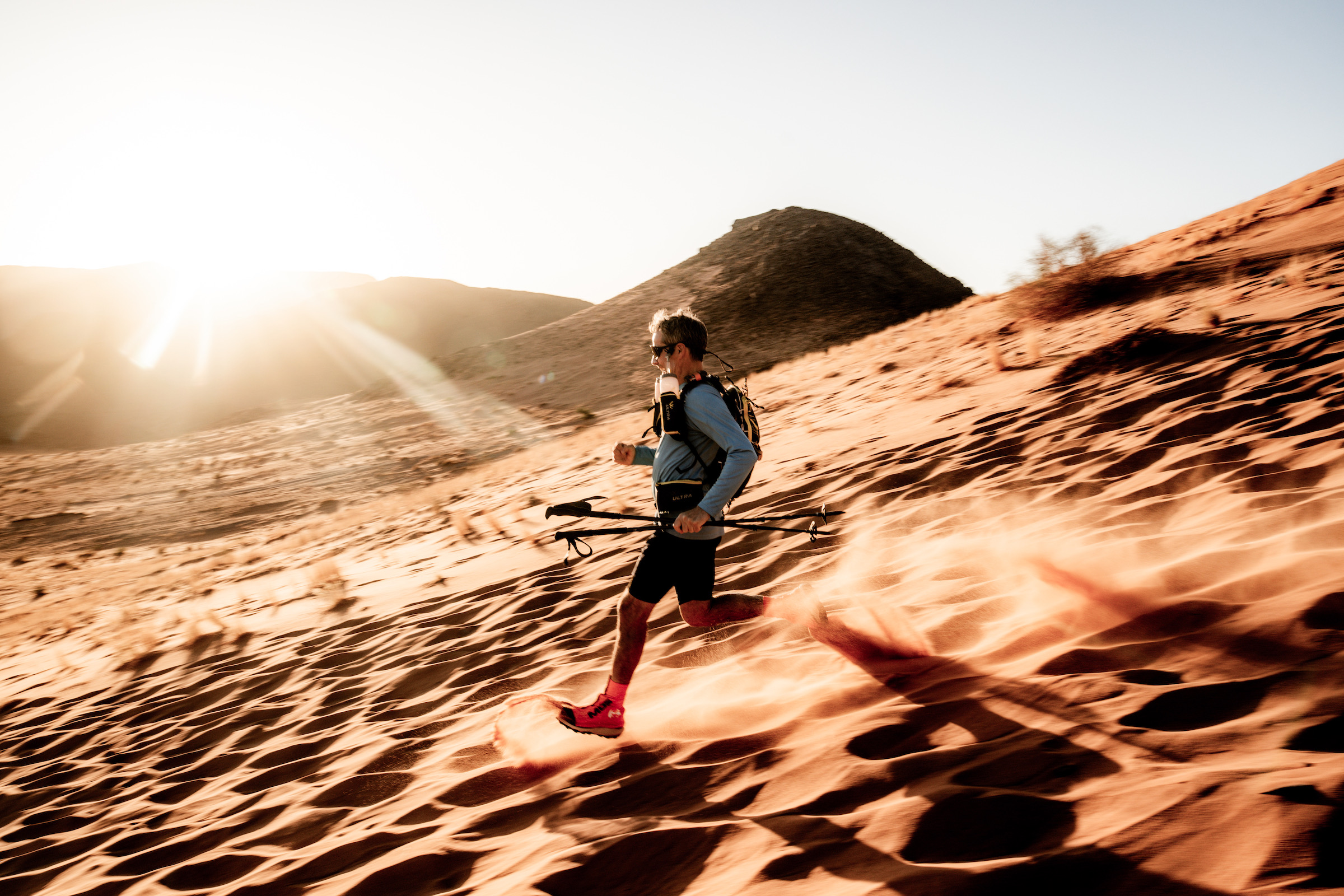
And then came the sand, golden even in the first light. There’s nothing quite like descending those soft sandy giants as the world slowly glows around you.

Laughter echoed, legs burned, hearts raced. The sand gave way to rocky outcrops, and then again to long stretches of sunlit solitude.

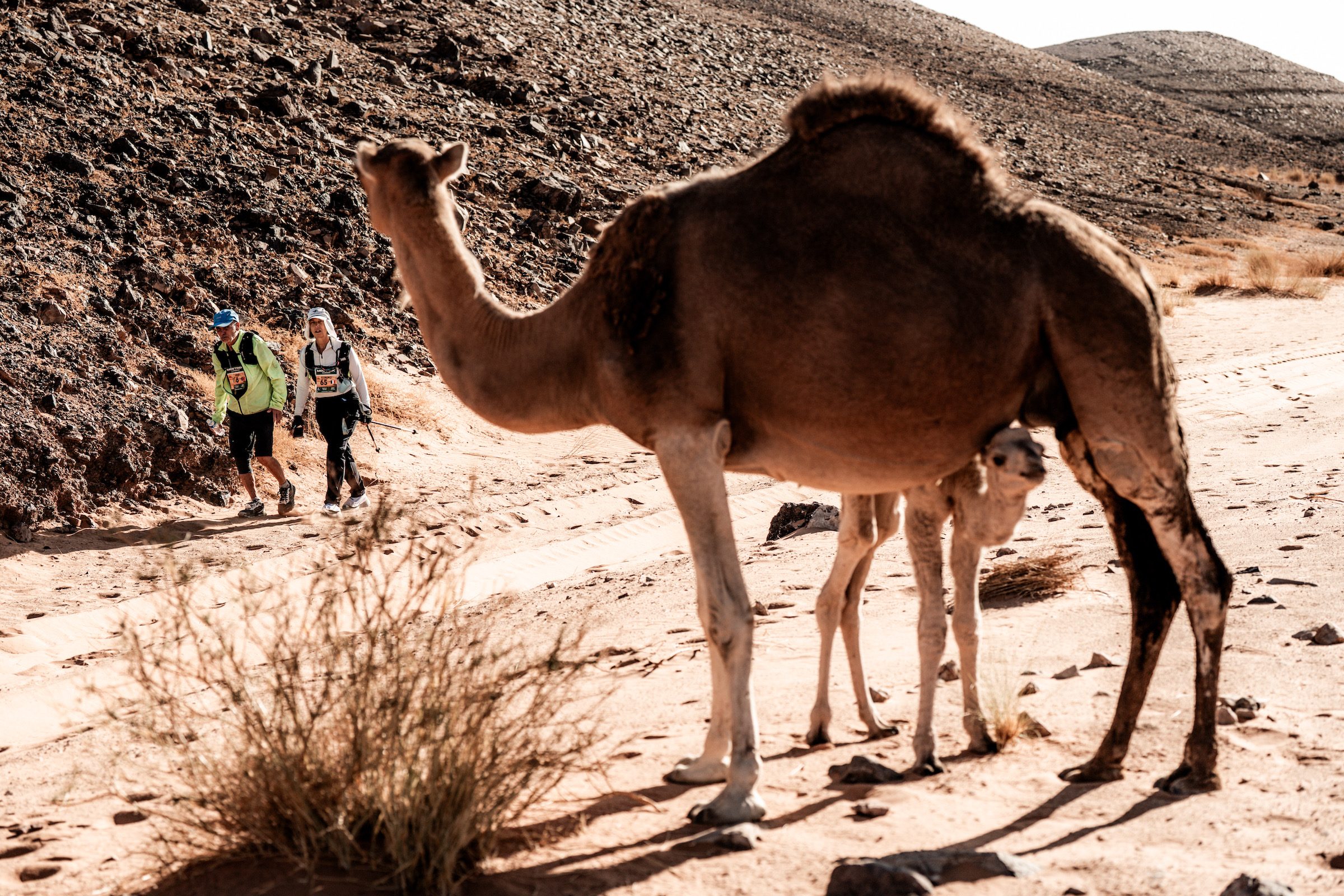
It was terrain that demanded focus: shifting sands, jagged stones, climbs that tested lungs, and descents that punished quads. And moments of pure magic, a Camel with a calf just days old.

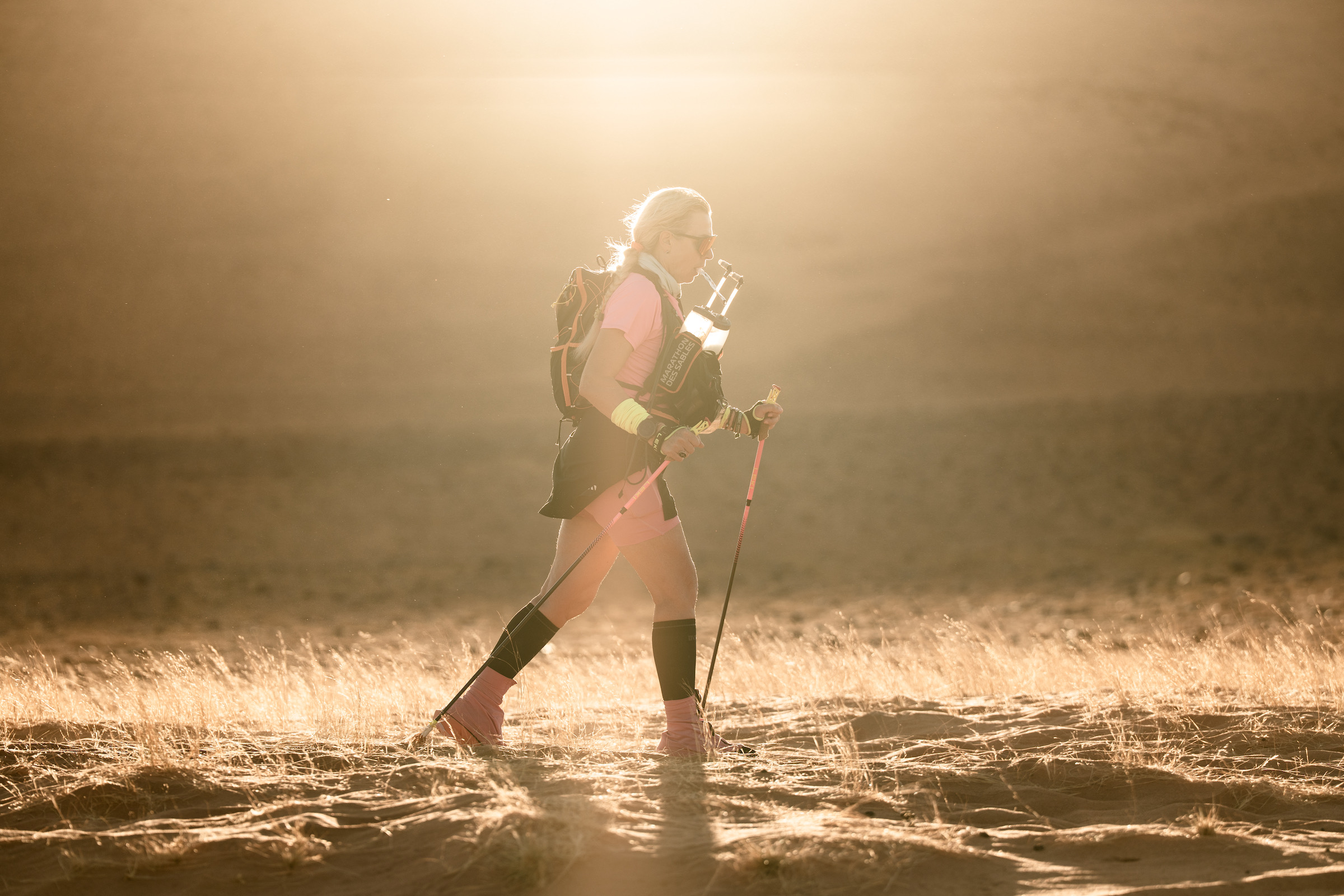
As the sun climbed, so did the temperature, creeping past 40°C, pushing toward the high 40s by midday. Every kilometre was earned. The trek moved through narrow mountain passes, broad empty plains, and wind-rippled dunes that swallowed sound and offered only the rhythm of your own breath in return.

This wasn’t just physical endurance. It was mental stamina. This was the Sahara asking, “How much do you want this?” And the answer was in every footstep forward.

Star Night – A Sahara Festival Beneath the Milky Way

Then came the magic.

As the heat softened and the sky turned amber, the group reached the remote desert bivouac, a temporary outpost far from civilisation, wrapped in silence, surrounded by dunes like a protective embrace.

Tents were set up quickly, offering some shelter from the still-warm evening, but it was clear that tonight, few would sleep indoors.

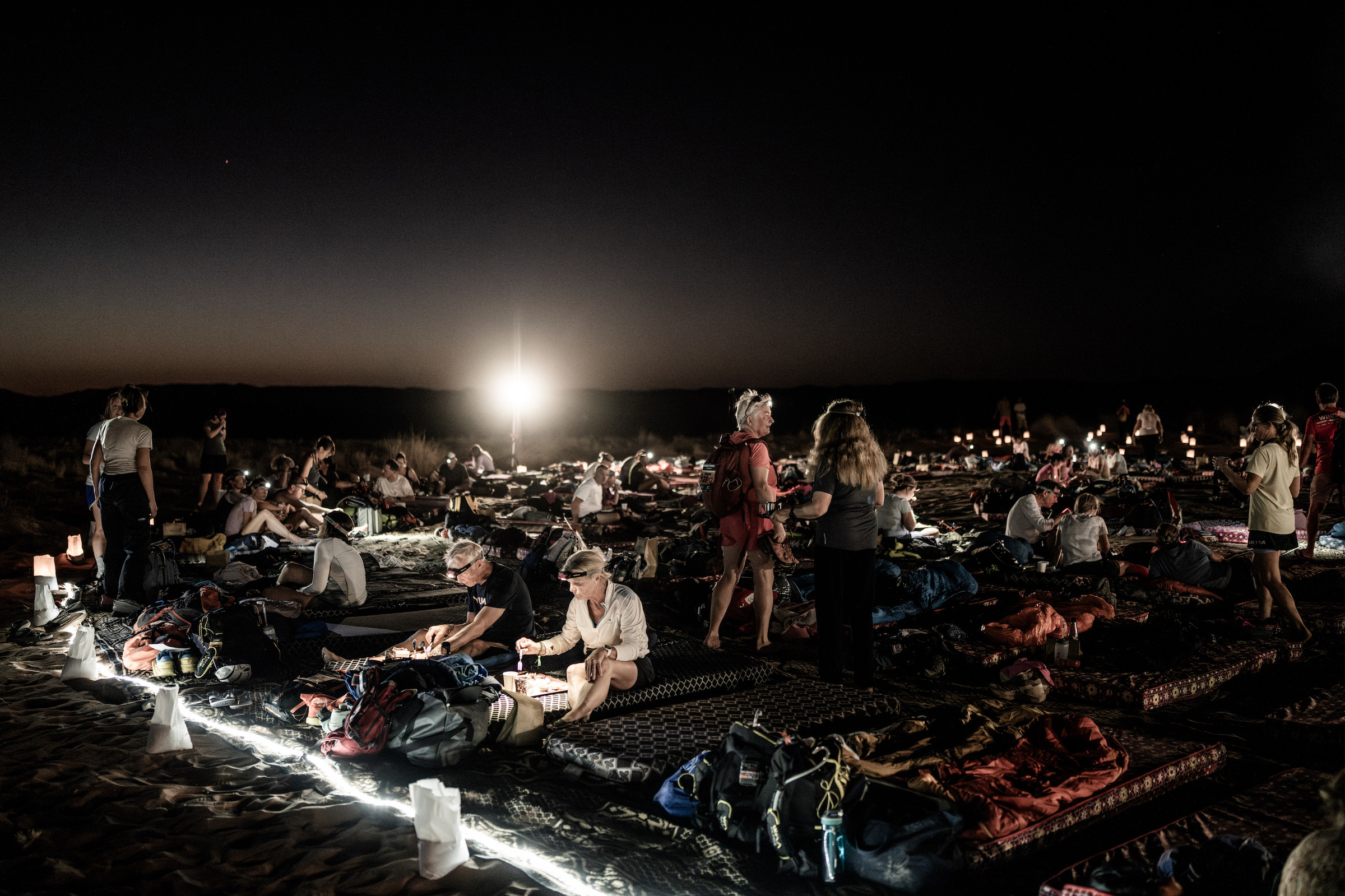
Dinner was served under open skies, a catered desert banquet with the kind of flavour that only comes after a day like that.

Music played. Conversations sparked. Laughter carried on the breeze. And as the sun finally slipped away, the desert lit up in a way that defied belief.

This was no ordinary night.

This was Star Night.

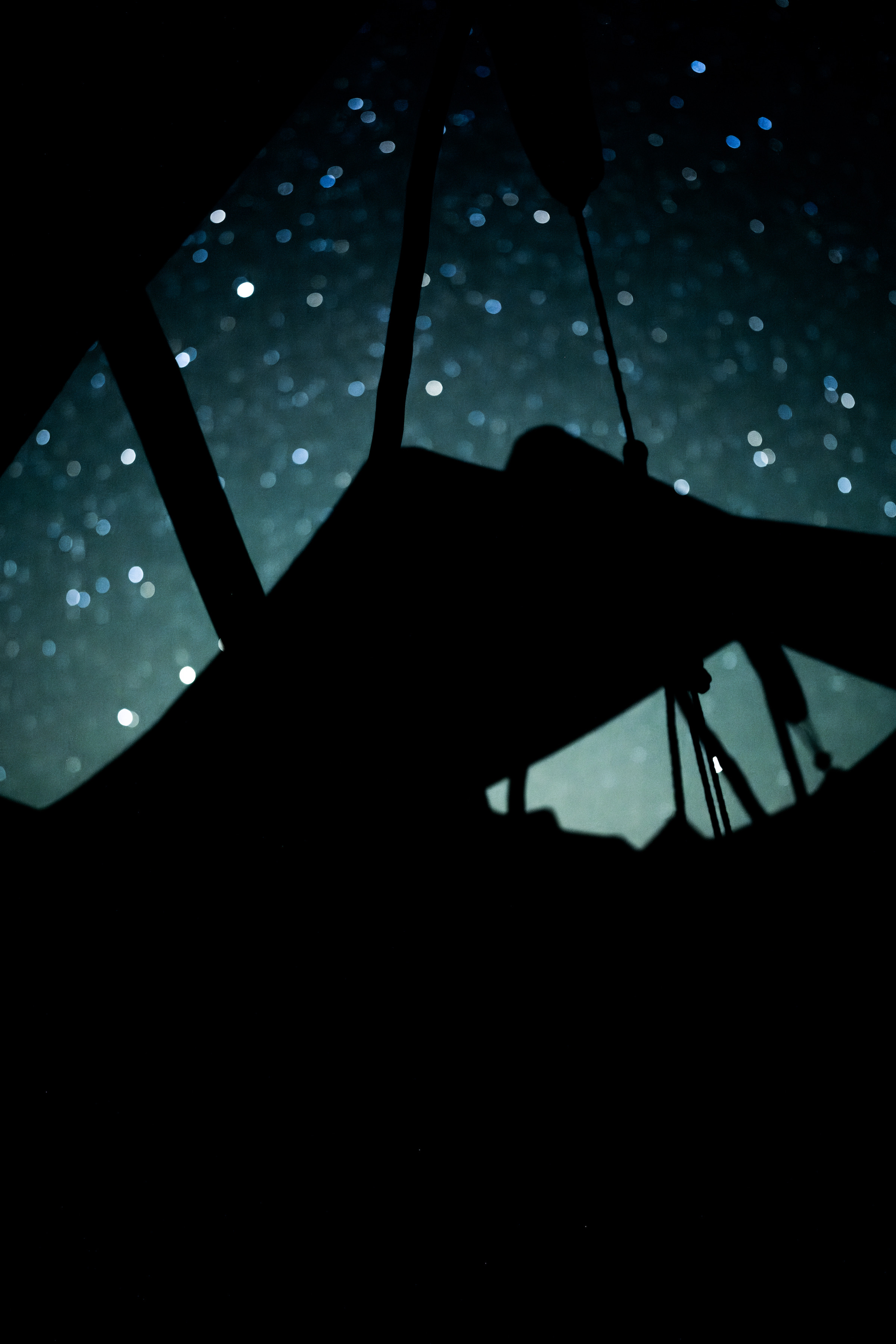
The sky ignited with stars, sharp, bright, infinite. The Milky Way stretched across the sky like a brushstroke of light. It was cinematic. Surreal. And yet, utterly real. Most didn’t even bother with sleeping bags; the night air was warm, comfortable, and inviting. Mats were laid out in the sand, and people lay back, letting the stillness of the Sahara soak in.

This wasn’t just a rest stop. It was a memory being etched in real time. A Saharan festival of connection, nature, and awe. And despite the fatigue, few slept early. Why would you? Nights like that are rare, even in dreams.

Day Two – Sunrise, Sand, and the Final Push

As dawn crept in, the desert glowed again. Another split route awaited, this time 17.5km or 22.5km. But legs were lighter. Spirits were high. The starlit night had done its work. The air still held a bit of cool, and the sun rose gently, casting long shadows over the rippling sands.

The trail wound through more epic Saharan landscapes, twisting through low valleys, across ancient dry riverbeds, and up onto ridges with views that stole the breath before the heat could.

By late morning the thermometer climbed past 48°C. Brutal, yes. But somehow also beautiful. Because every drop of sweat, every pause in the shade, every step forward became part of something larger.

There was camaraderie. People encouraging one another. Sharing sips of water. Pointing out landmarks. Moving as individuals, yes, but always part of a bigger whole.

And then, after hours of pushing through shimmering heat and relentless terrain, the finish line of Stage 3 appeared, home bivouac, familiar now, yet somehow different. Changed. Just like every person who crossed into it.

Why Stage 3 Can’t Be Missed

Stage 3 isn’t just a segment of MDS TREK Morocco. It’s a story within the story. It captures everything the trek stands for: resilience, beauty, challenge, community, and wonder.

This was the essence of the MDS spirit : raw, bold, unforgettable. It tested bodies, ignited minds, and opened hearts. Trekkers will not just remember Stage 3, it will forever be that stage.

Interested in a MARATHON DES SABLES EVENT?

More Info HERE

Follow Ian Corless

Instagram – @iancorlessphotography

Twitter – @talkultra

facebook.com/iancorlessphotography

Web – www.iancorless.com
Web – www.iancorlessphotography.com

MDS 120 MOROCCO 2025 – STAGE 3

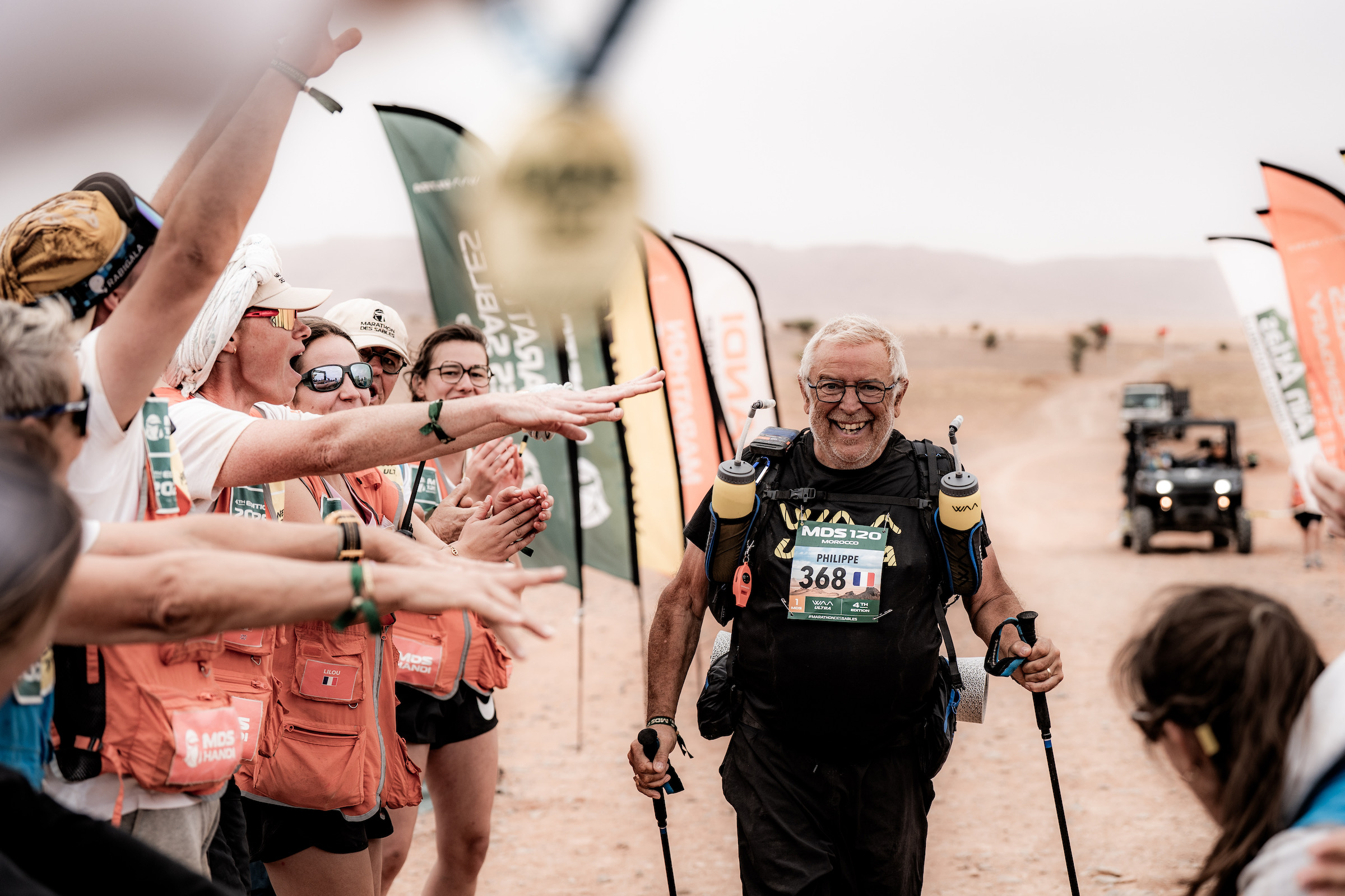
There are moments in life that will etch themselves into your memory with brutal clarity, the sting of the sun, the whip of the wind, the bite of fatigue. And then there are moments that transcend all that. Moments that shine because of what it took to get there. Today, that moment came. MDS 120 Morocco 2025 is complete. But this finish line didn’t come easy.

The Rest Day That Wasn’t

After the double blow of Stage 1 and 2 under an unforgiving sun, participants staggered into the bivouac with blistered feet and salt-crusted skin, ready for a day of rest.

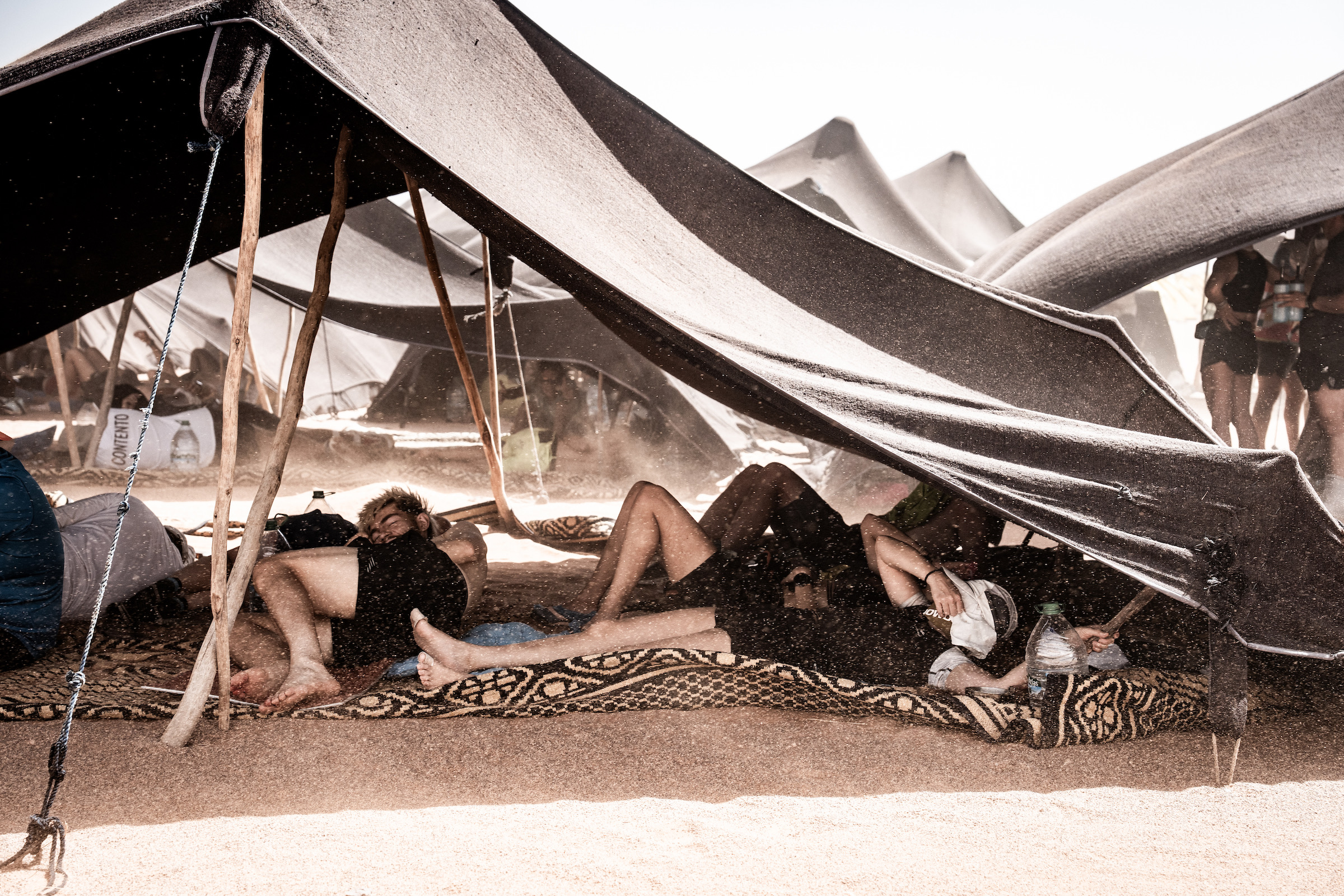
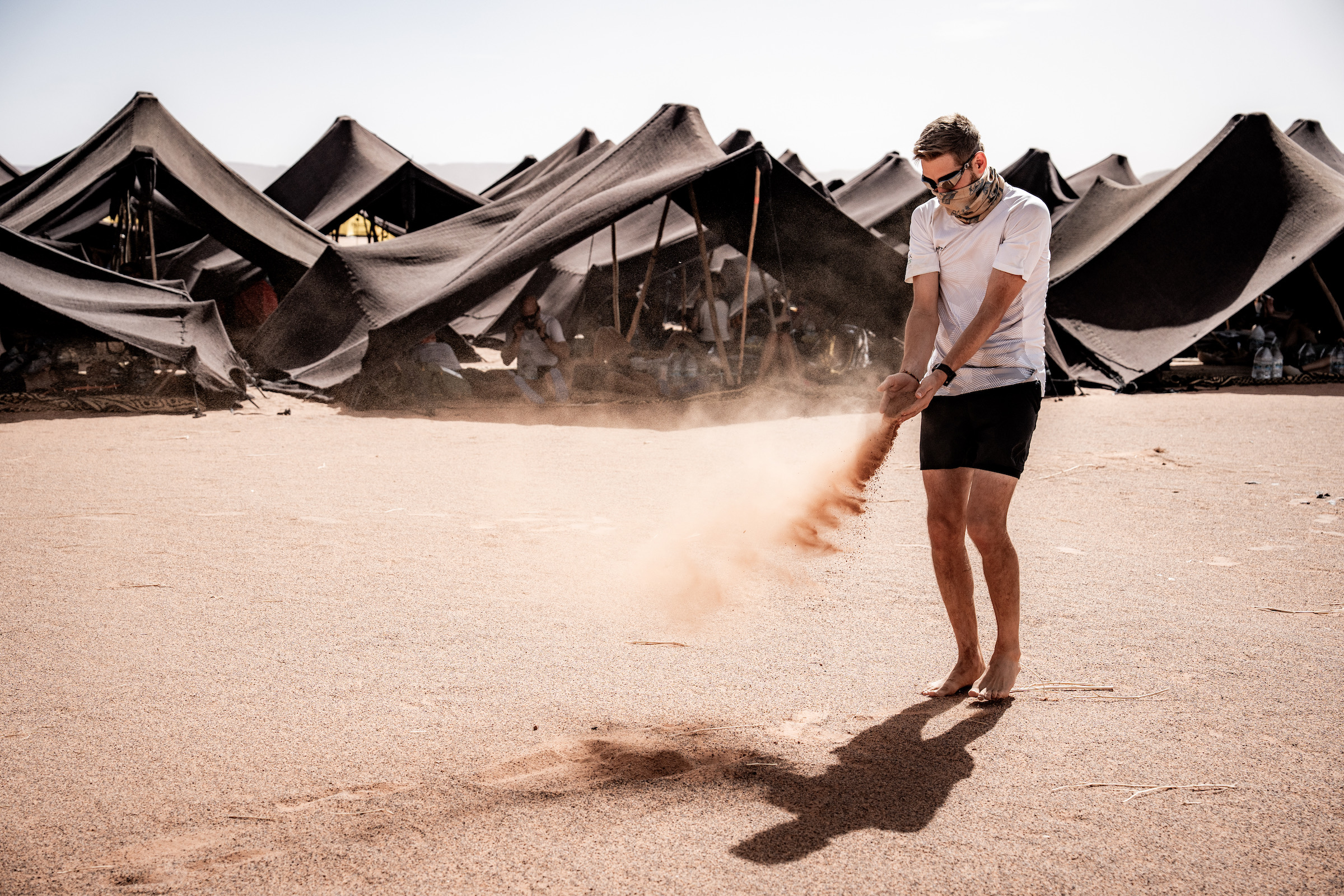
But the Sahara had other plans. Instead of recovery, they got afternoon chaos: a wild sandstorm that tore across camp like a runaway train. The sky turned thick and orange. Tents collapsed. Gear went flying. People huddled in whatever shelter they could find, eyes wrapped in buffs, trying to breathe through the dust. It lasted for hours. When it finally passed, silence hung in the air, but it wasn’t peace. It was exhaustion.

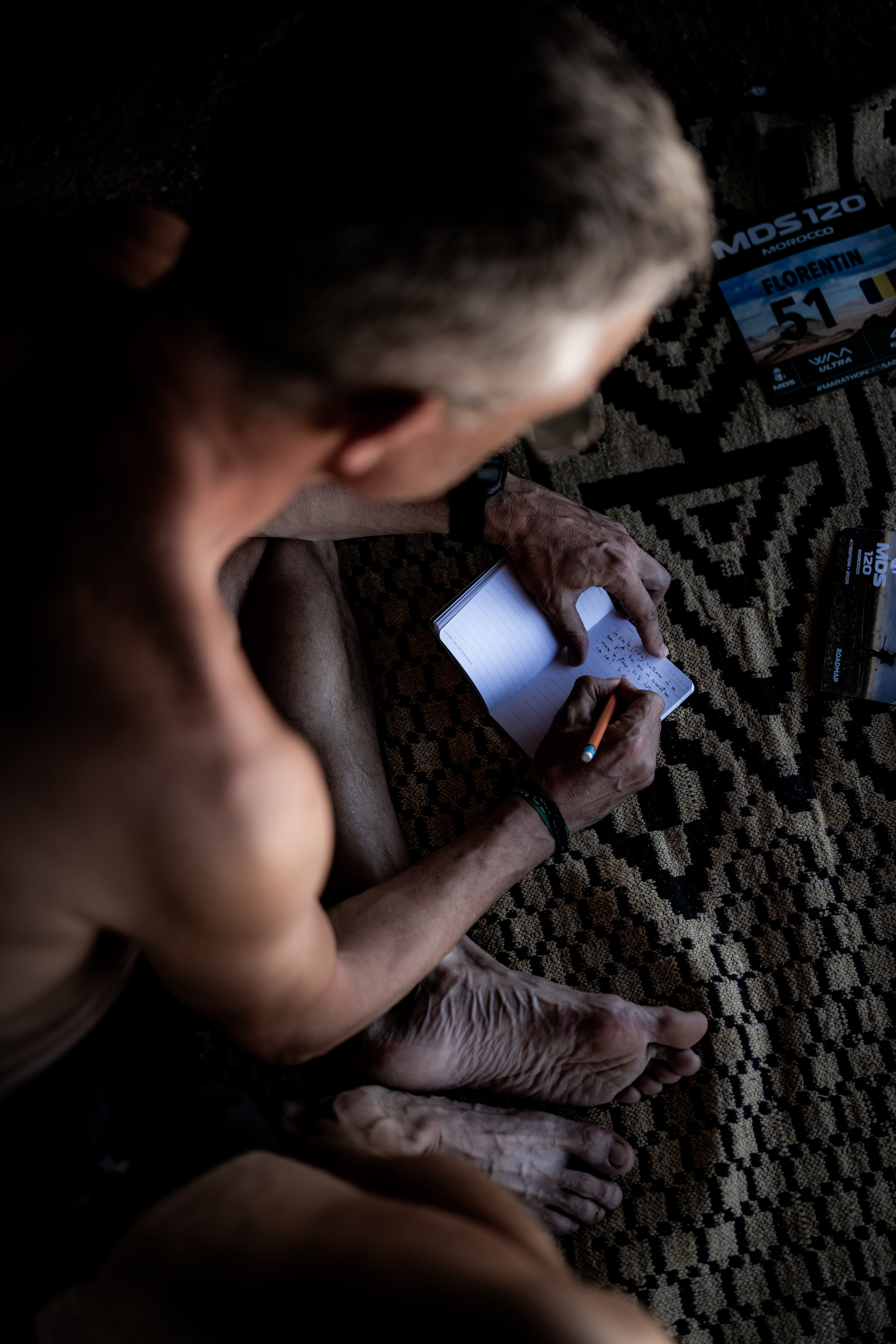
This was not the rest day anyone hoped for. But there were plenty of moment of relaxation before the chaos – lots of sleeping, adding entries in journals.

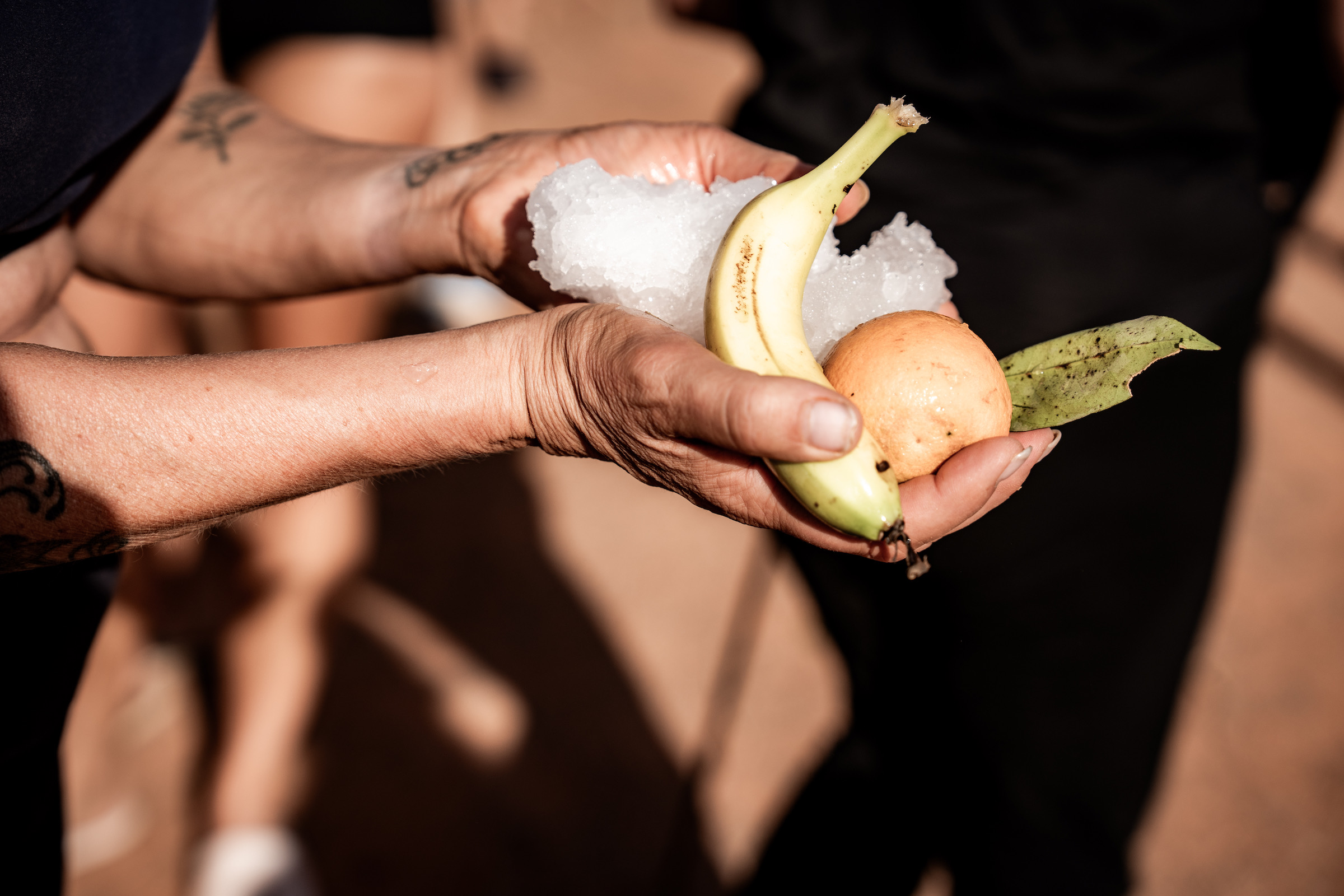
and towards the end of the day, as the wind calmed, MDS organisation offered a treat – no longer a cold can of Coke – today, fresh fruit and ice.

At 0400, camp began to stir. Bleary-eyed runners rose in darkness, fumbling with head torches and gear. The temperature hadn’t dropped. The air felt thick and warm, like the desert was still holding onto yesterday’s rage.

By 0530, the first runners were off. Headlamps cut through the pitch, bobbing along as the desert slowly took shape in the dim light. At 0630, the top-10 runners launched like arrows, chasing the dark down.

Then, something no one expected happened. It started softly. A few drops. Then more. Rain. Actual rain falling from a sky that hadn’t offered a single kindness in days. No one ducked. No one cursed. No one complained. Smiles broke out, quiet and stunned at first, then wide and wild. Some raised their faces to the sky. This was a blessing. A strange, surreal gift. The desert, finally, exhaled.


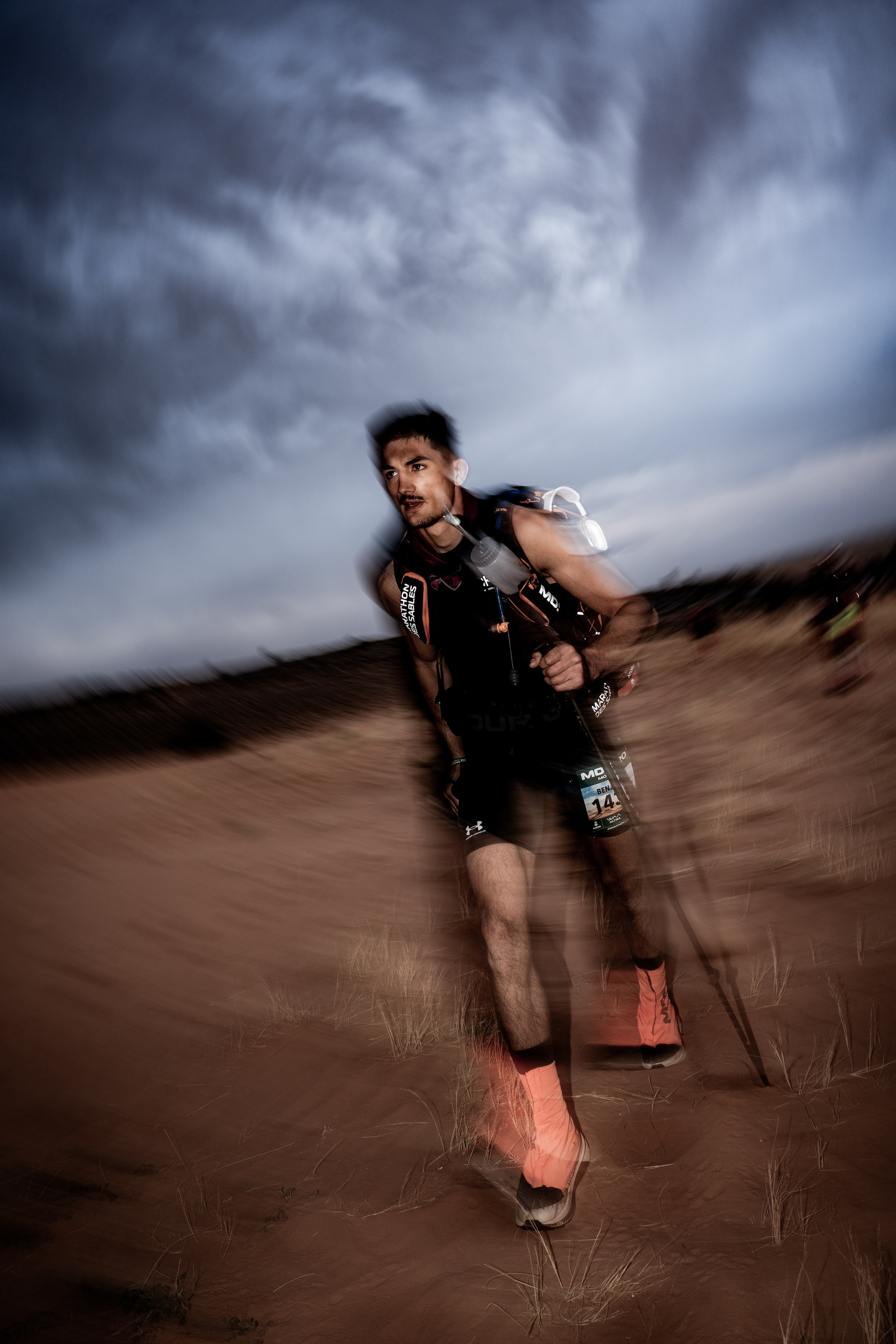
Stage 3 unfolded under gentler skies. The sun eventually returned, but not with the same vengeance. The course was still brutal – sand, rocks, one climbs that never seemed to end, but the worst of the heat was gone. Spirits rose with every kilometre. Runners, ragged but relentless, began to believe the finish was real.

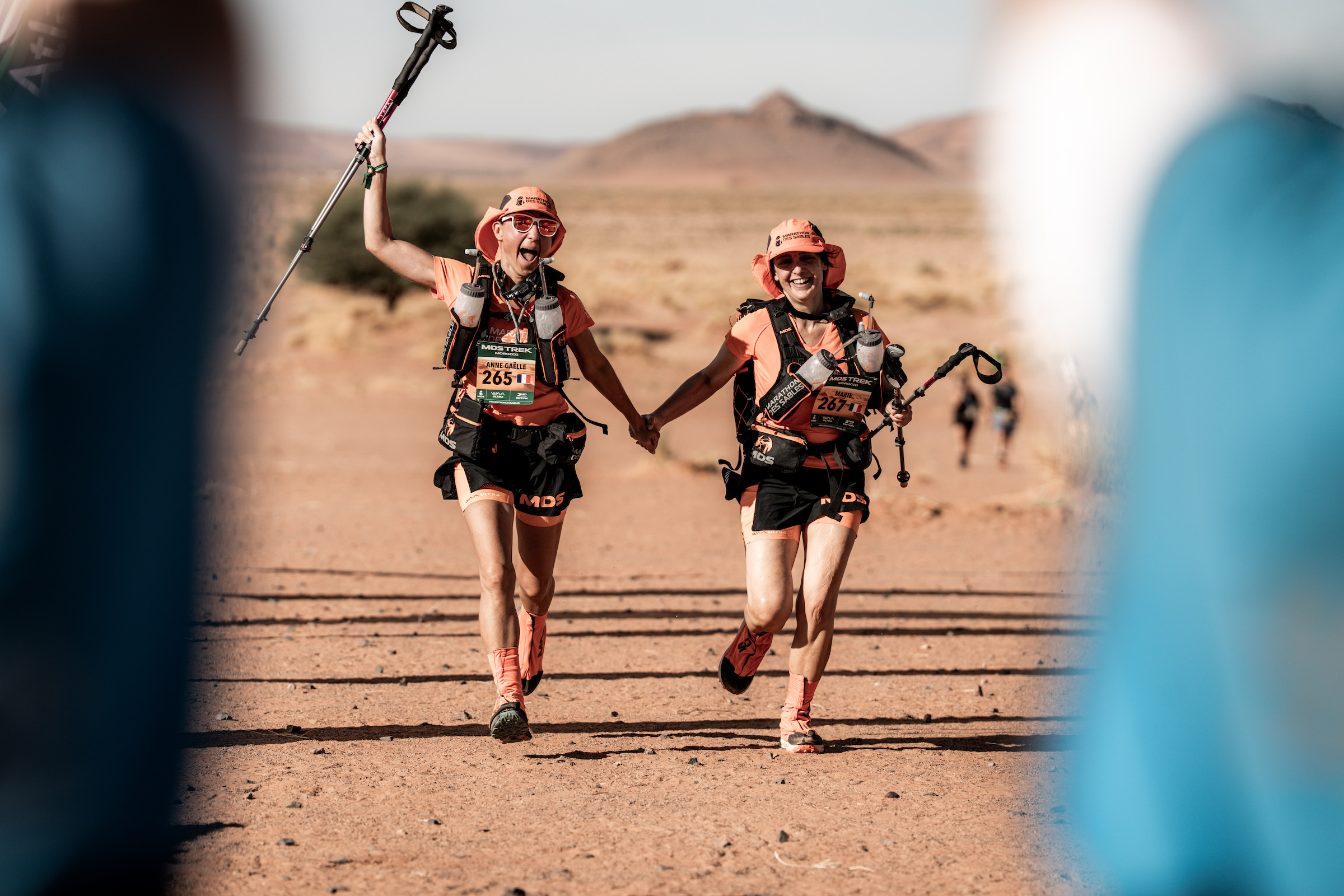
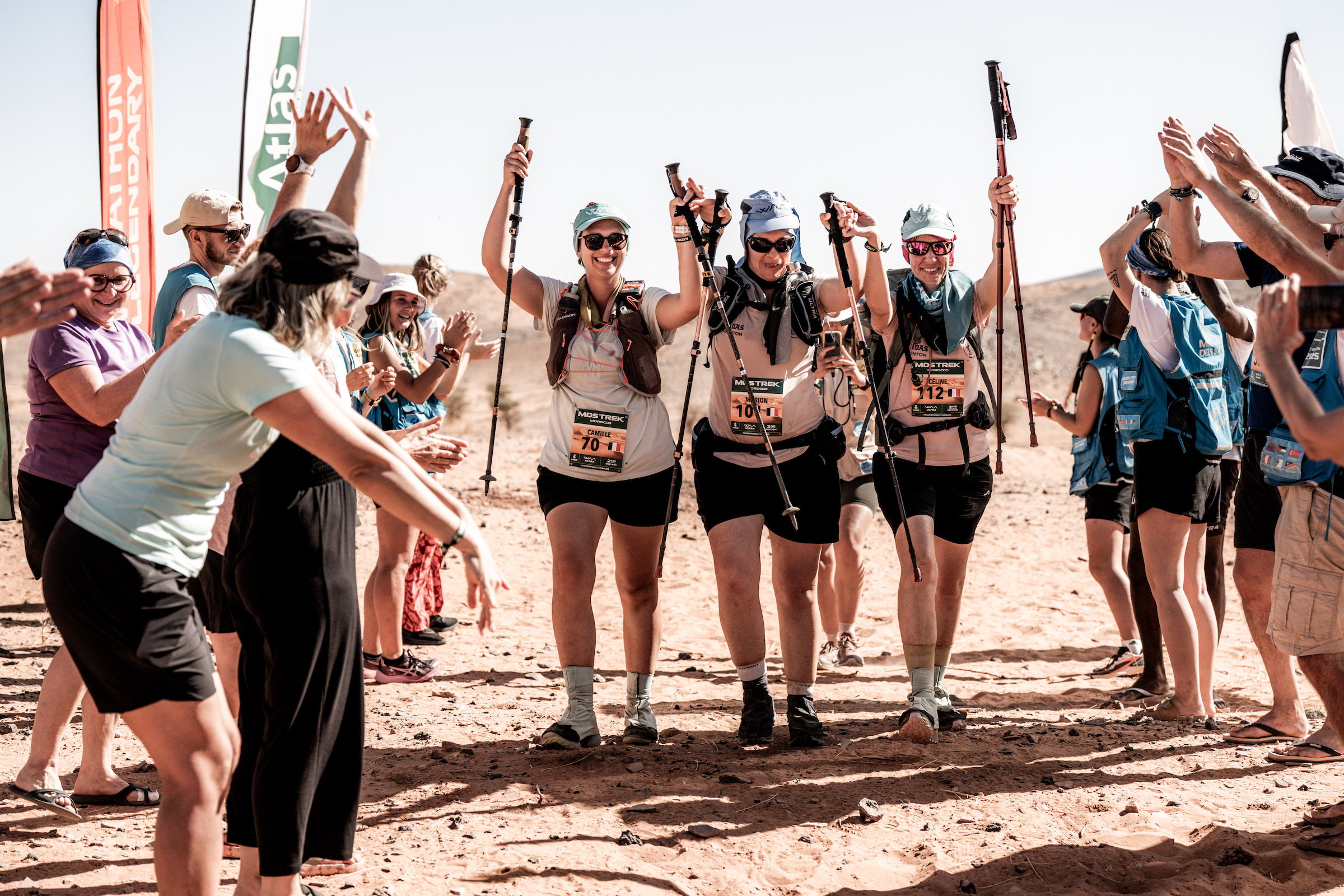
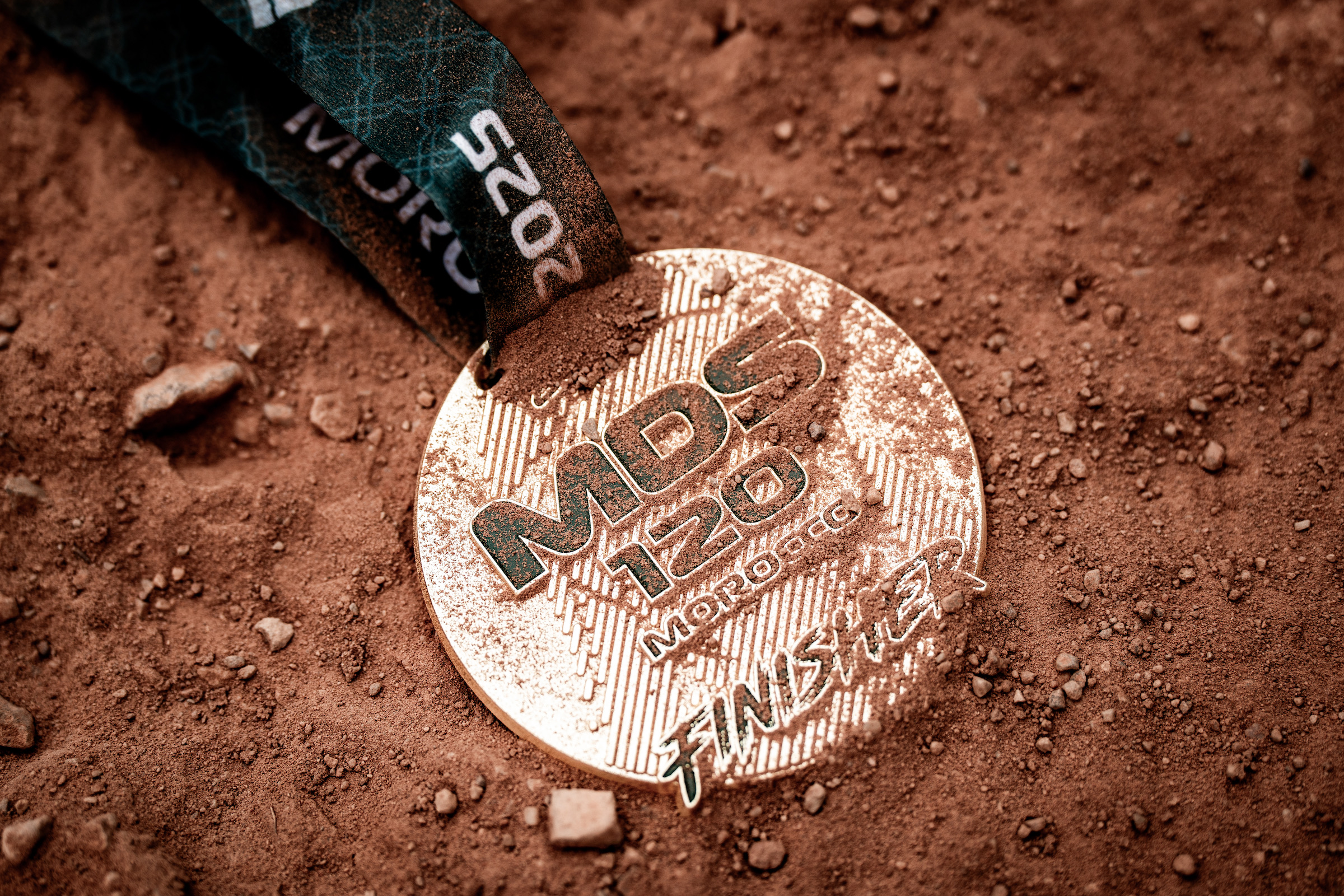
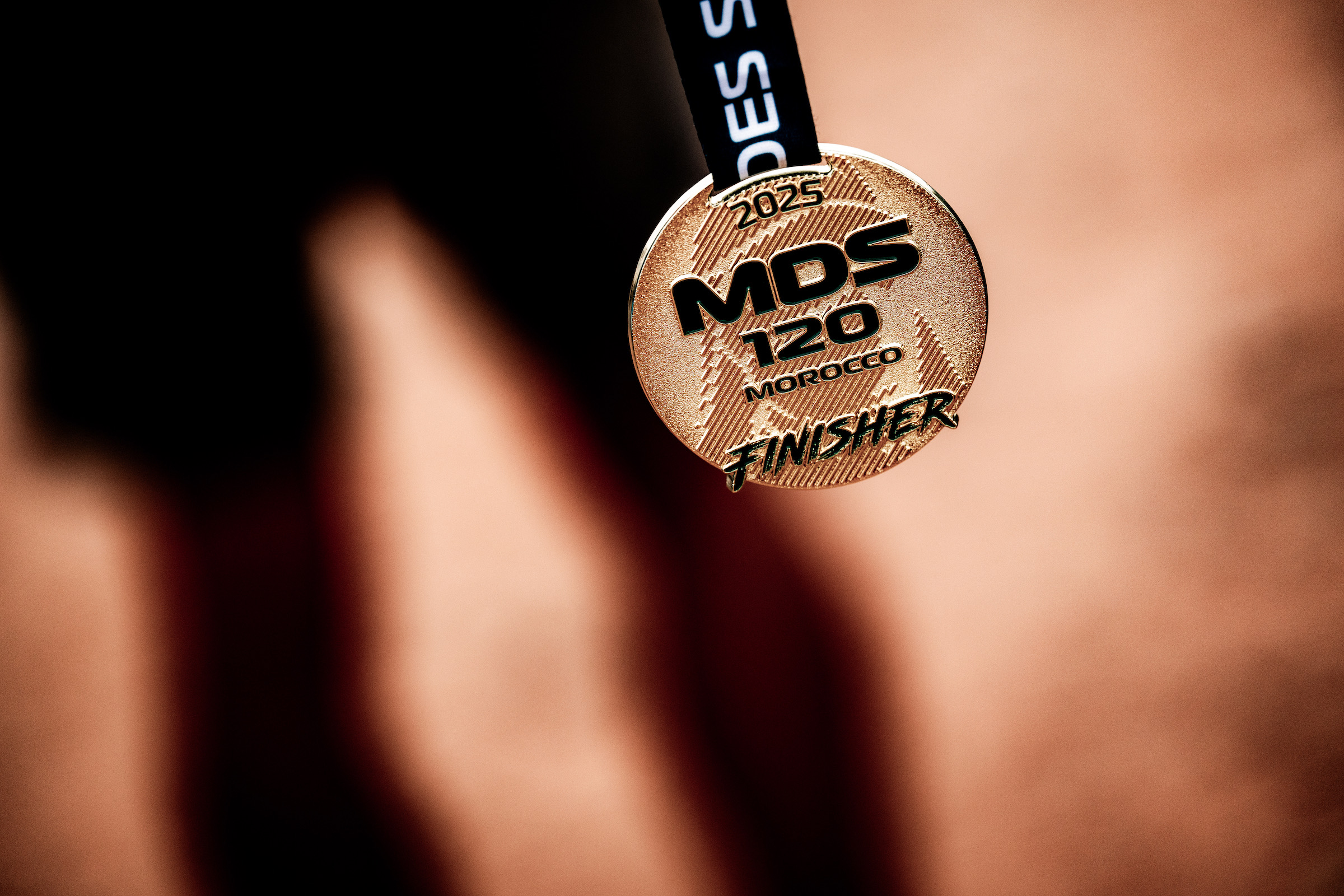
One by one, they crossed the line. Some ran with everything left in their legs. Some limped, leaning on poles. Some clutched hands with teammates or strangers who’d become family over theirshared suffering. And when that medal was placed around their necks, the tears came freely. No shame in them, only pride, release, and the overwhelming relief of completion.

There were cheers. Applause. Laughter. People hugging like they never wanted to let go. Cameras flashed. Medals clinked. Bodies that had been pushed to the limit stood a little taller.

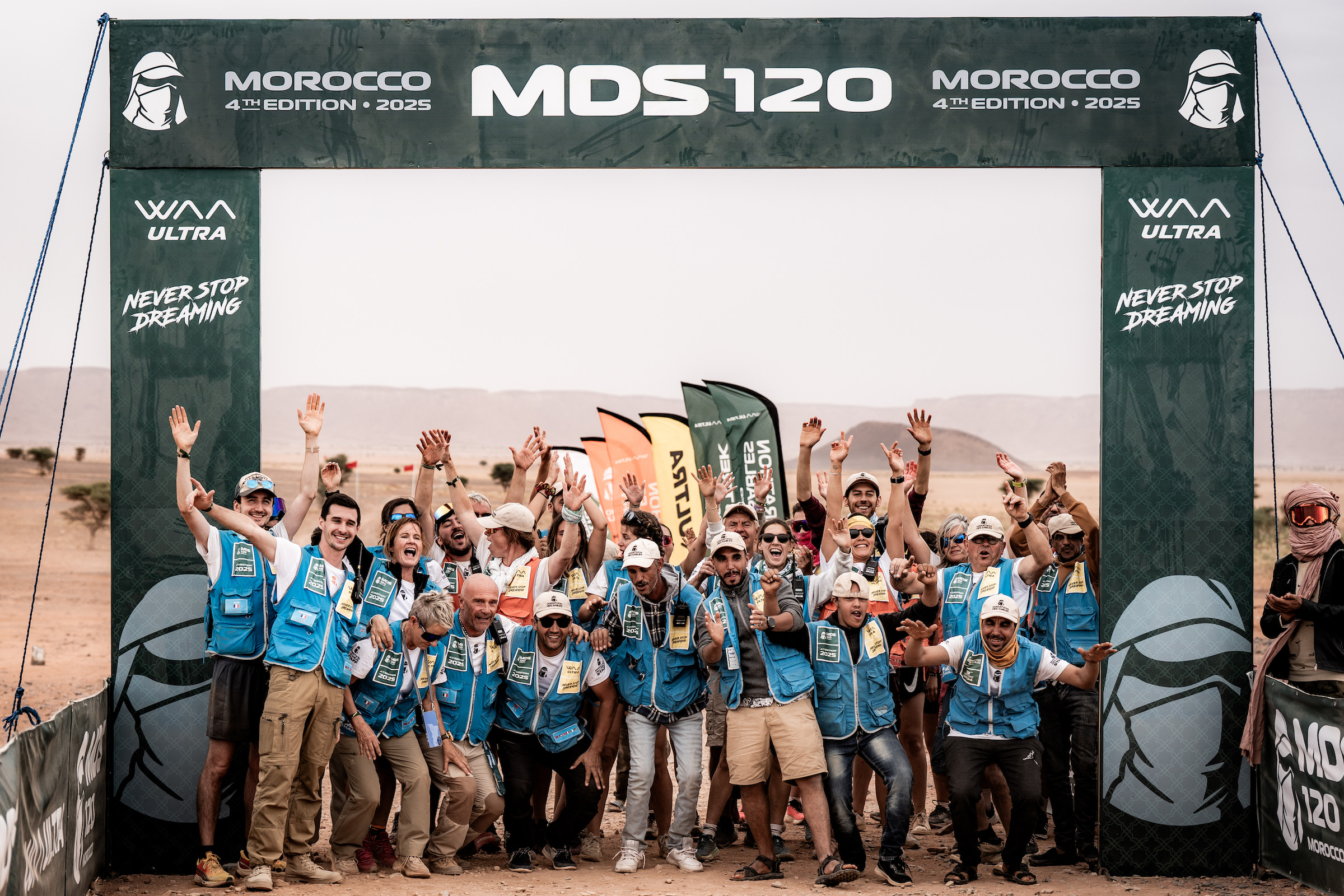
Behind every finish was an army in blue and orange.

The MDS team, the volunteers, medics, logistics crew, water distributors, checkpoint staff, tent builders, camp runners, sweepers, and everyone else in between—made this journey possible.

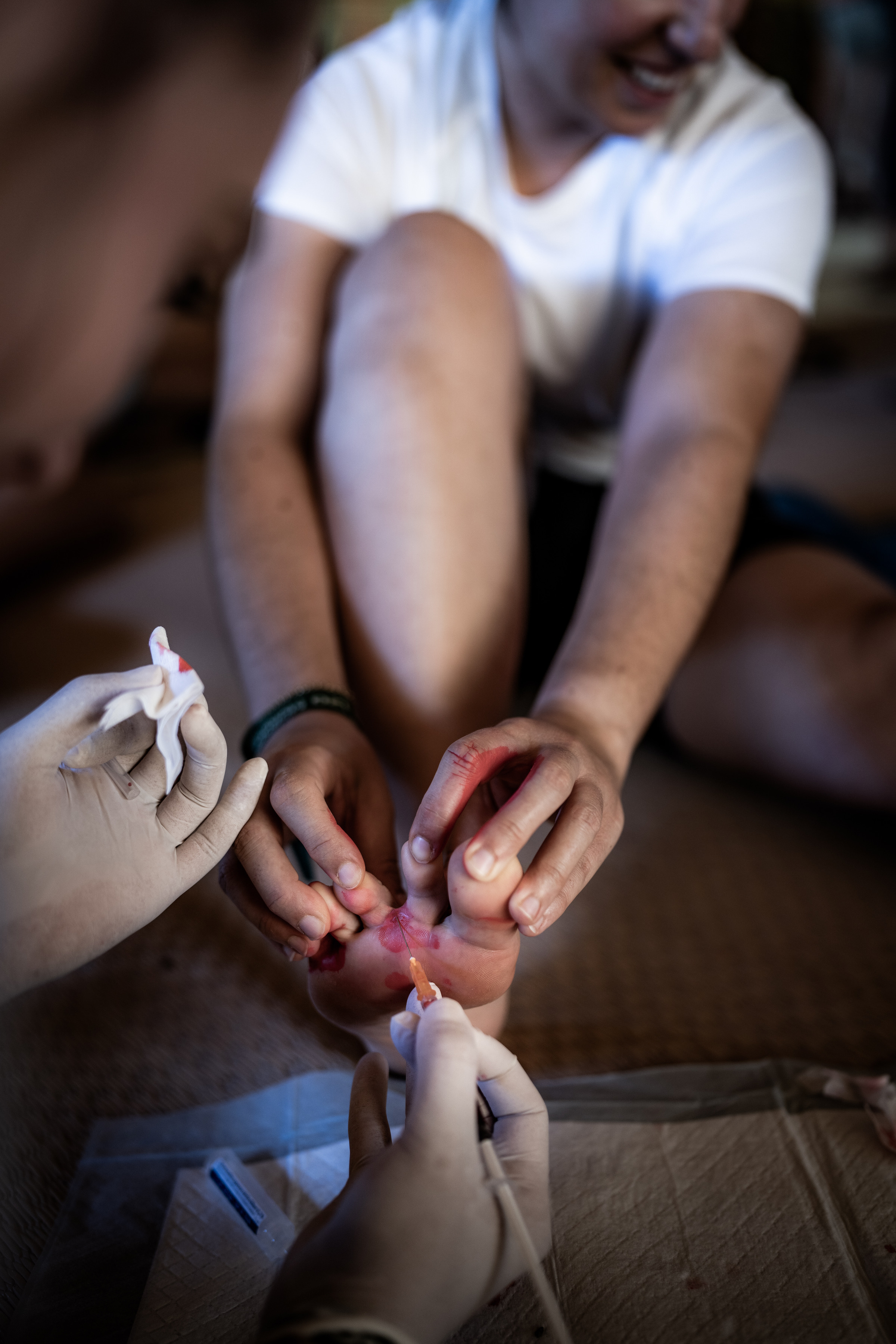
They were the quiet hands who carried everyone forward. The steady voices in the storm. The ones who handed out water in 47°C heat, packed and re-packed tents, tended to blisters, and kept this chaotic caravan moving across an unforgiving land. Their work wasn’t glamorous. It was relentless. And it matters more than words can say.

MDS 120 Morocco is more than numbers. More than distance. It’s more than the desert.

It’s about finding out what lives under your skin when the comfort is stripped away. It’s about running into the teeth of the wind and not turning back. It’s about community, people who arrive as strangers and leave as family. It’s about believing you can, even when everything hurts, and then proving it.

No one who stood on that start line is the same at the finish. And that’s the point.

So to every runner who dared to take this on: you are fierce, you are strong, and you’ve earned every second of this glory. This medal means more because you fought for it.

MDS 120 Morocco is complete. The desert tried to break us. But we endured. And that’s the story you’ll tell forever.

FULL RESULTS AVAILABLE HERE

Interested in a MARATHON DES SABLES EVENT? More Info HERE

Follow Ian Corless

Instagram – @iancorlessphotography

Twitter – @talkultra

facebook.com/iancorlessphotography

Web – www.iancorless.com
Web – www.iancorlessphotography.com

Adventure Awaits: MDS 120 Morocco , MDS Trek Morocco and MDS 120 Jordan 2026 Go on Sale September 10 2025.

Photo by Ian Corless

On Wednesday, September 10 at 12:00 PM UTC+2, registration opens for three unforgettable endurance adventures:

  • MDS 120 Morocco – October 2–10, 2026
  • MDS Trek Morocco – October 11–20, 2026
  • MDS 120 Jordan – October 31–November 7, 2026

For runners, trekkers, and anyone who dreams of testing their limits in the most breathtaking landscapes on Earth, these dates mark the beginning of a once-in-a-lifetime journey.

What is the MDS?

The Marathon des Sables (MDS) is not just a race. It’s a legend. Born in Morocco in the 1980s, the event has earned a reputation as “the toughest footrace on Earth.” Participants cross vast stretches of desert on foot, carrying their own food and gear, with only water and tents supplied. It’s as much a mental battle as it is a physical one – a journey into resilience, camaraderie, and discovery.

But MDS isn’t just about the ultra-hardcore. Over the years, the family has grown to include formats that open the experience to more people while retaining its wild, adventurous spirit. That’s where MDS 120 and MDS Trek come in.

MDS 120 vs. MDS Trek: What’s the Difference?

Both are designed to immerse you in the magic of the desert, but the style of challenge is different.

MDS 120

  • A shorter, yet still demanding, version of the iconic Marathon des Sables.
  • 120 kilometers spread across three stages.
  • Self-sufficient format: you carry your food and equipment.
  • Runners and fast hikers alike join in, moving between marked checkpoints across some of the most beautiful, wild landscapes imaginable.
  • Nights are spent in camp, bonding with fellow adventurers under desert skies.

MDS TREK

  • Designed for those who want the MDS atmosphere without the clock.
  • Roughly the same length as the 120, but completed at a trekking pace over five stages.
  • Guided and supported: you carry a daypack, while larger bags are stored in bivouac.
  • Perfect for walkers, adventurers, and anyone who prefers to savour the desert at a slower rhythm.

In short: MDS 120 is a race. MDS Trek is an adventure. Both give you the thrill of the desert, the community spirit, and the sense of achievement that comes from stepping far outside your comfort zone.

Photo by Ian Corless

Morocco: The Heart of MDS

It’s no accident that MDS was born in Morocco. The Sahara here is everything you imagine when you hear the word “desert”: towering golden dunes, dry salt lakes, endless rocky plains, and distant mountains shimmering in the heat.

During the MDS 120 Morocco (Oct 2–10, 2026), participants will move through terrain that feels ancient and otherworldly. Running or trekking across sand seas lor along fossil-studded plateaus, you’ll witness landscapes that seem unchanged for millennia.

If you prefer a slower, more contemplative journey, MDS Trek Morocco (Oct 11–20, 2026) is your chance to follow in the footsteps of nomadic caravans. Expect strong mint tea at camp, Berber hospitality, and sunrises that wash the dunes in pink and gold.

Jordan: A Desert of Myths and Monuments

After Morocco, MDS 2026 turns east to another jewel of the desert world: Jordan.

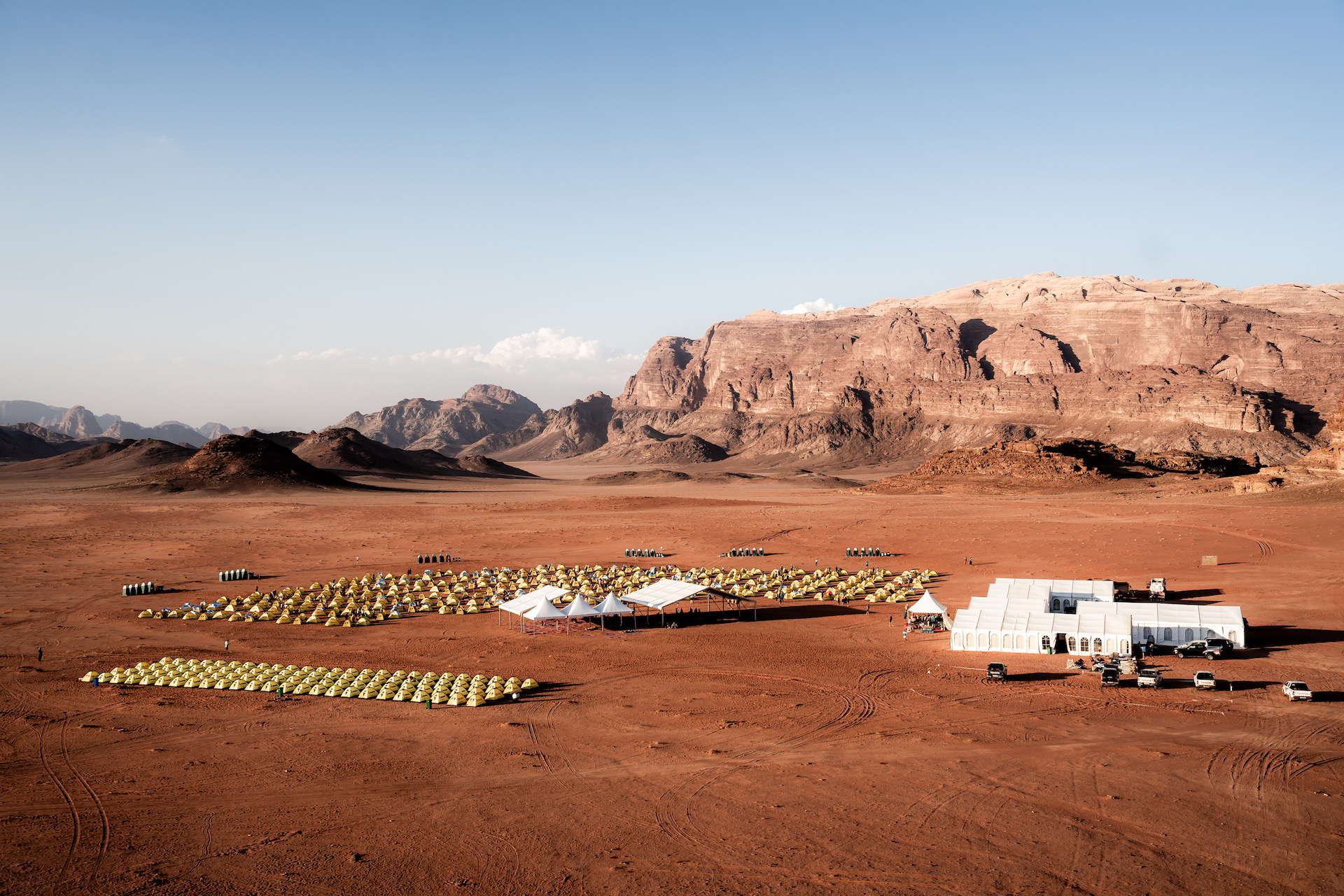
From October 31 to November 7, 2026, MDS 120 Jordan takes place in Wadi Rum, a place so breathtaking it has been called “the Valley of the Moon.” Red sandstone cliffs, natural arches, and wide sandy valleys create a setting that feels almost Martian—no wonder so many films have been shot here.

Photo by Ian Corless

The terrain is ideal for running and trekking: firm sand flats, winding canyons, and rocky ridges that offer sweeping views. And the cultural backdrop is equally unforgettable. This is the land of Lawrence of Arabia, Nabataean traders, and Bedouin camps where hospitality is still sacred.

Photo by Ian Corless

Add in the chance to visit Petra – the rose-red city carved into cliffs – and float in the Dead Sea, and you’ve got a trip that balances physical challenge with world-class cultural exploration.

Why These Events Sell Out

Every MDS event is capped to maintain its unique atmosphere: a balance of challenge, safety, and community. That’s why when registration opens, places vanish fast.

Here’s what draws people back year after year:

  • The Challenge: 120 kilometers may sound daunting, but it’s achievable for anyone willing to train. Past participants range from elite athletes to everyday adventurers.
  • The Camaraderie: Camps become villages of shared struggle and shared joy. By the end, strangers become family.
  • The Scenery: Whether it’s sunrise over Moroccan dunes or starlight over Jordan’s cliffs, the landscapes will etch themselves into memory.
  • The Transformation: You leave with more than a medal. You leave knowing you can do hard things—and that realization follows you into every part of life.
Photo by Ian Corless

Preparing for MDS

MDS is not something you show up to on a whim. But it’s also not as unreachable as it may seem. With six to twelve months of structured training – mixing endurance, strength, and practice carrying a pack – most people can get ready.

What both demand is an open mindset: ready for sand in your shoes, dust on your face, and joy in small things like shade, water, and shared laughter.

The post-pandemic years have sparked a surge of people craving real experiences – not just vacations, but adventures with meaning. MDS embodies that perfectly. It’s travel, sport, culture, and self-discovery all wrapped into one.

If you’ve ever dreamed of running across the Sahara or walking through Wadi Rum, 2026 is your chance. Spots are limited, and once they’re gone, you’ll be waiting another year.

Photo by Ian Corless

Think about it: ten days where your only job is to put one foot in front of the other. No emails, no deadlines, no noise – just the sound of your breath, the crunch of sand, the laughter of fellow adventurers, and the vast silence of the desert.

That’s what awaits you at MDS 120 Morocco, MDS Trek Morocco and MDS 120 Jordan 2026.

On September 10, 2025 at noon (UTC+2), the door opens.

The only question is: will you step through?

Marathon des Sables website HERE

Follow Ian Corless

Instagram – @iancorlessphotography

Twitter – @talkultra

facebook.com/iancorlessphotography

Web – www.iancorless.com
Web – www.iancorlessphotography.com

MDS Morocco Atlantic Coast 2025 – Stage 2

Photo by Ian Corless

Stage 2 of MDS Morocco Atlantic Coast and the option to choose the stage distance: 20km, 40km or 60km?

Photo by Ian Corless

One of the appealing factors of the MDS format is the stage 2 distance option, with stage 1 and 3 the same for all, the stage 2 option allows for an overall distance of 70km, 100km or 120km.

Photo by Ian Corless

The day started under heavy cloud and winds coming from the north . At 0845 as participants arrived for the start, rain started to fall. It was an ominous beginning for the day and the weather remained challenging with rain increasing in strength during the morning.

Photo by Ian Corless

Gladly, by midday, blue skies and sun started to appear, however, the wind increased in strength and continued to do so into the night.

Photo by Ian Corless

With epic landscape, stunning dunes, there was much to appreciate in this stage and despite the weather, runner’s were constantly smiling.

Photo by Ian Corless

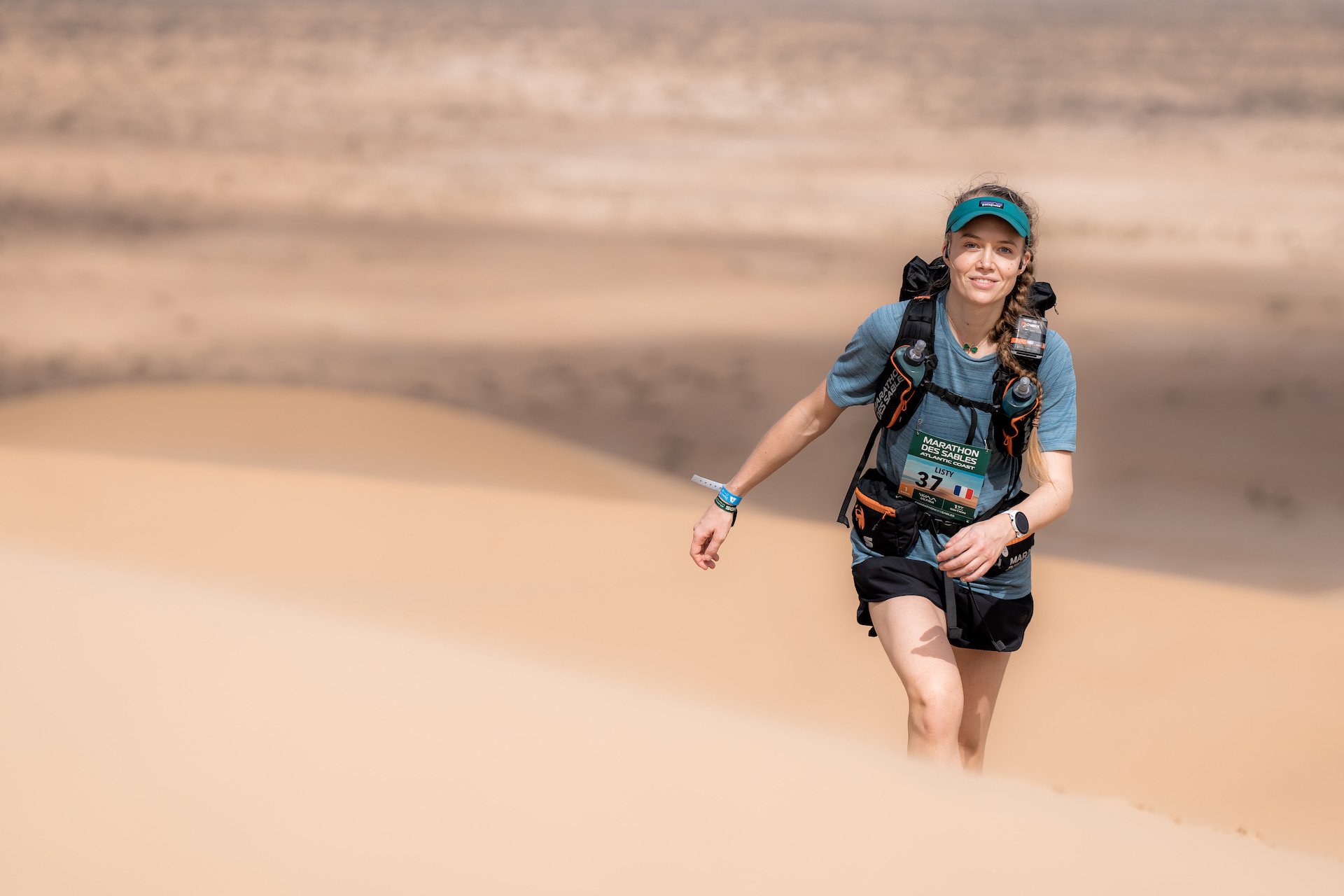
With three distances, rankings change after stage 2, often considerably, for example, Listy Mazille, a clear winner on stage 1 is now the leader of the 1ookm and we have a new leader in the 120km category now.

In the 120km, ranking is as follows:

RACE LEADERS 1 – Yoann STUCK 2 – Göran SCHREY 3 – Stephan BAWEY

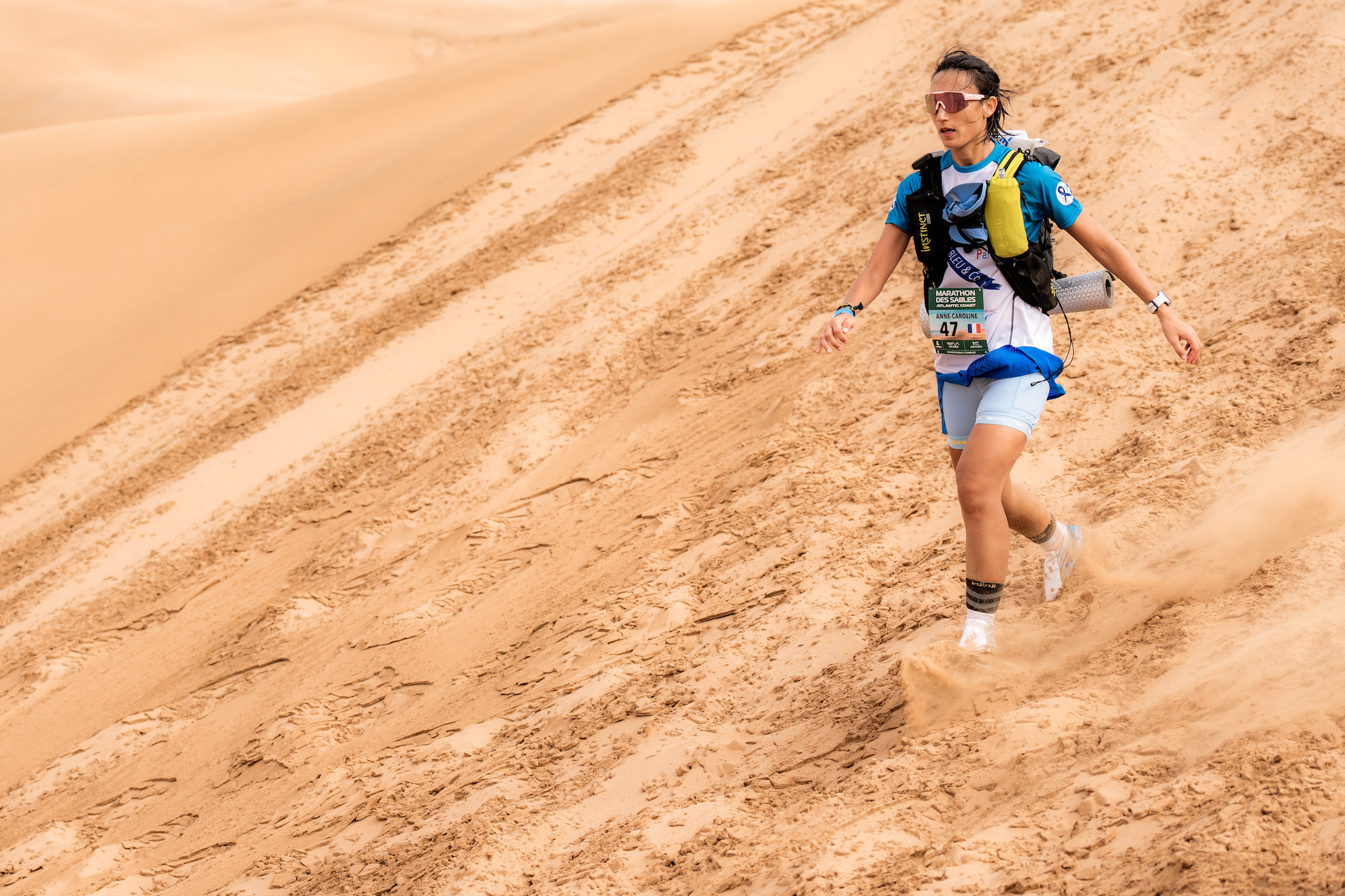
WOMEN RACE LEADERS 1 – Anne-Caroline KUSNIERZ 2 – Janina BECK 3 – Adele THOMAS

In the 100km, ranking is as follows:

RACE LEADERS 1 – Listy MAZILLE 2 – Benoit BERCHEBRU 3 – Adrien LHERMITTE

WOMEN RACE LEADERS 1 – Listy MAZILLE 2 – Tiphaine SANQUER 3 – Joana TEIXEIRA

In the 70km, ranking is as follows:

RACE LEADERS 1 – Christian HARTEL 2 – Justine DEBOTÉ 3 – Cyril MALEJAC

WOMEN RACE LEADERS 1 – Justine DEBOTÉ 2 – Vanessa CUADRADO 3 – Audrey SCOTTO

The stage, for many, goes into the night. The last runner will arrive late, maybe early the next day.

Tomorrow, a rest day of relaxation and recovery before the third and final stage.

Photo by Ian Corless

Full race results HERE

Interested in joining an MDS event in 2025? A full calendar of dates and destinations are available HERE

Photo by Ian Corless

Instagram – @iancorlessphotography

Twitter – @talkultra

facebook.com/iancorlessphotography

Web – www.iancorless.com
Web – www.iancorlessphotography.com