If you’ve ever dreamed of running in a place that feels otherworldly, where every breath reminds you you’re alive, and every step tests your limits, the 2025 Everest Trail Race is your chance. Happening this November, 10th to 22nd, 2025.
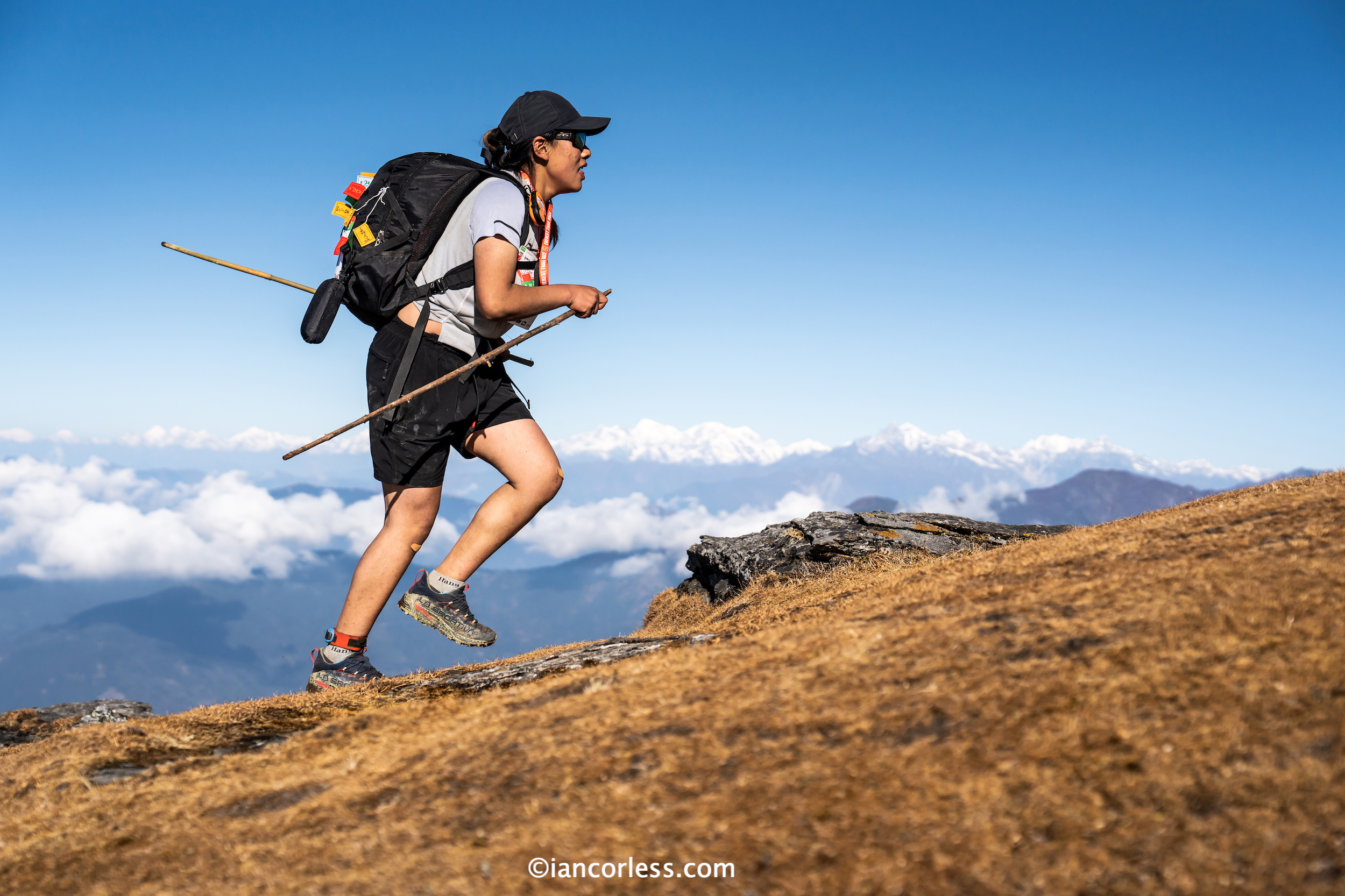
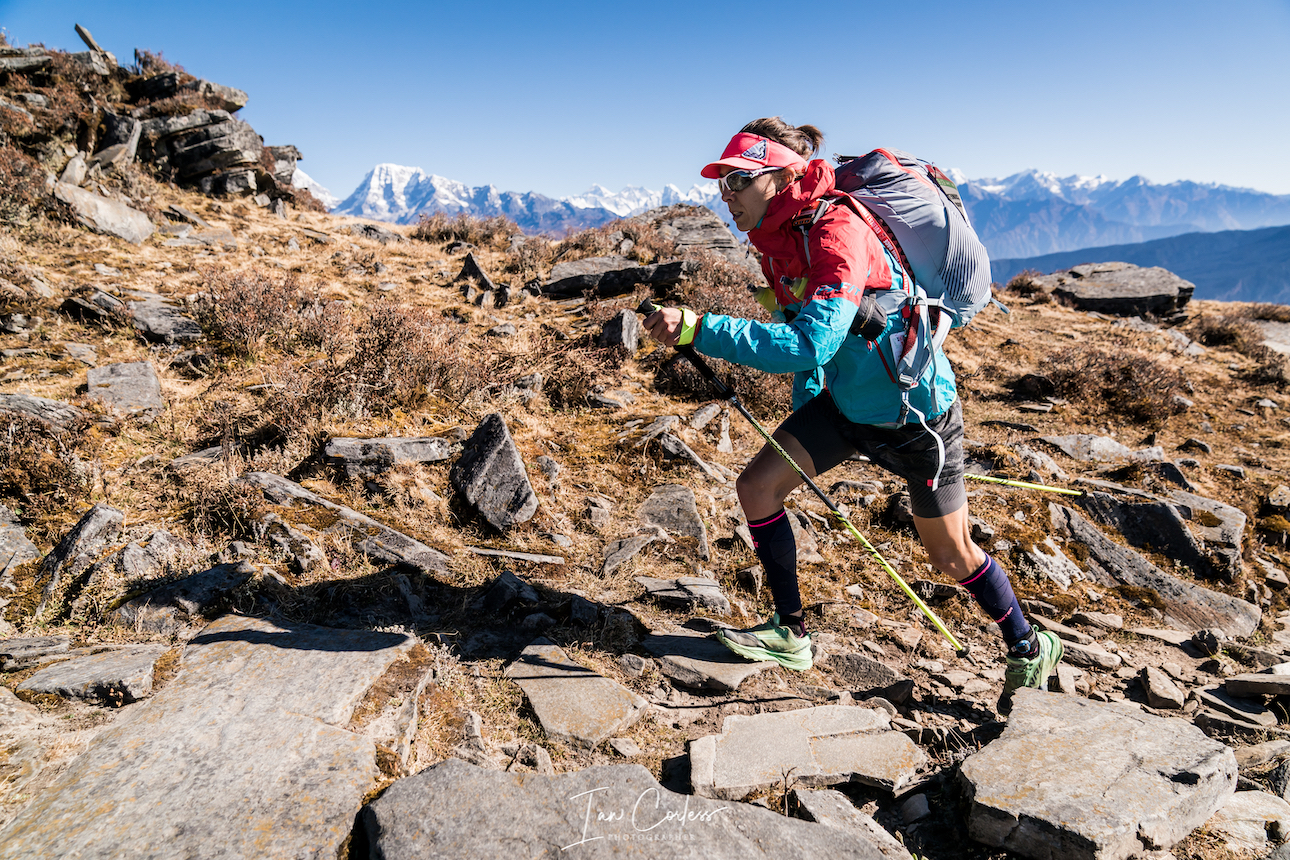
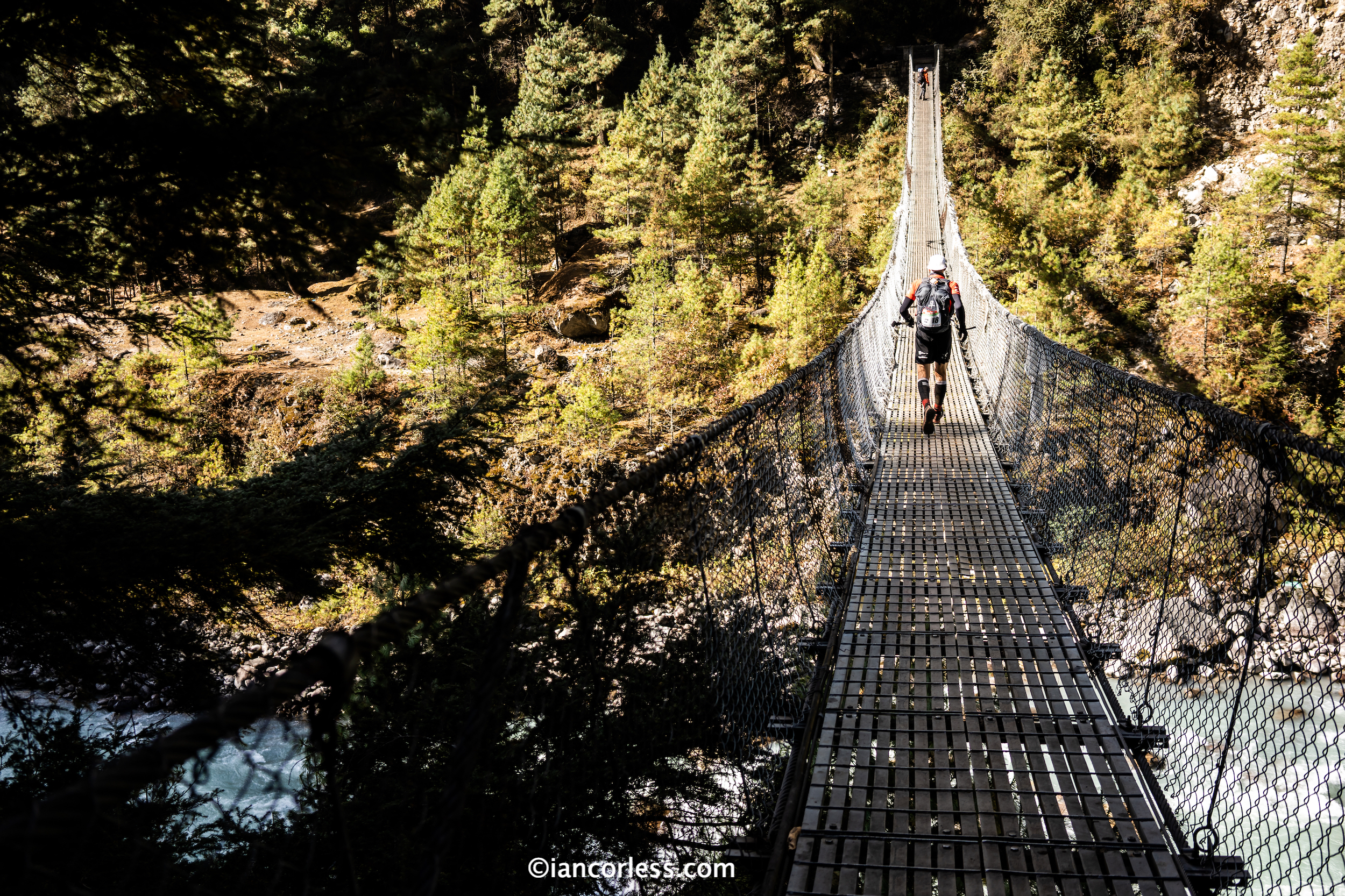
You carry your own gear. You fuel yourself. You keep going. Over six days, you’ll face steep ascents, grinding descents, suspension bridges, narrow trails, and thin air all at altitudes between 2,000 and 4,100 meters.
This is not a race for comfort. It’s a race for people who crave discomfort, who see sweat and struggle as part of something bigger.
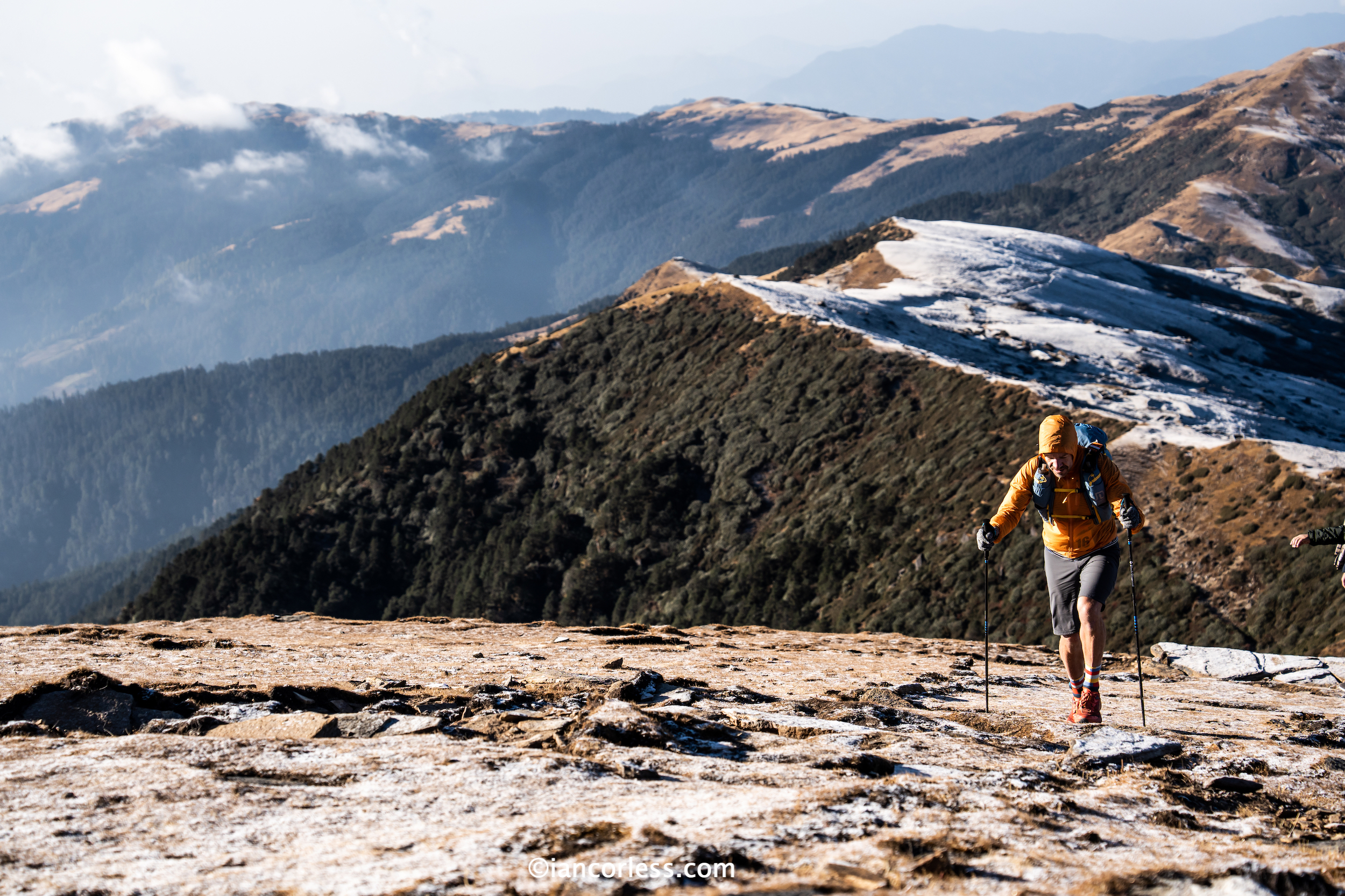
This is trail running in its purest form. Technical sections, single tracks carved into mountainsides, ancient stone paths connecting remote villages. One moment you’re running through a pine forest; the next, you’re skirting a cliff with views that stop you in your tracks.
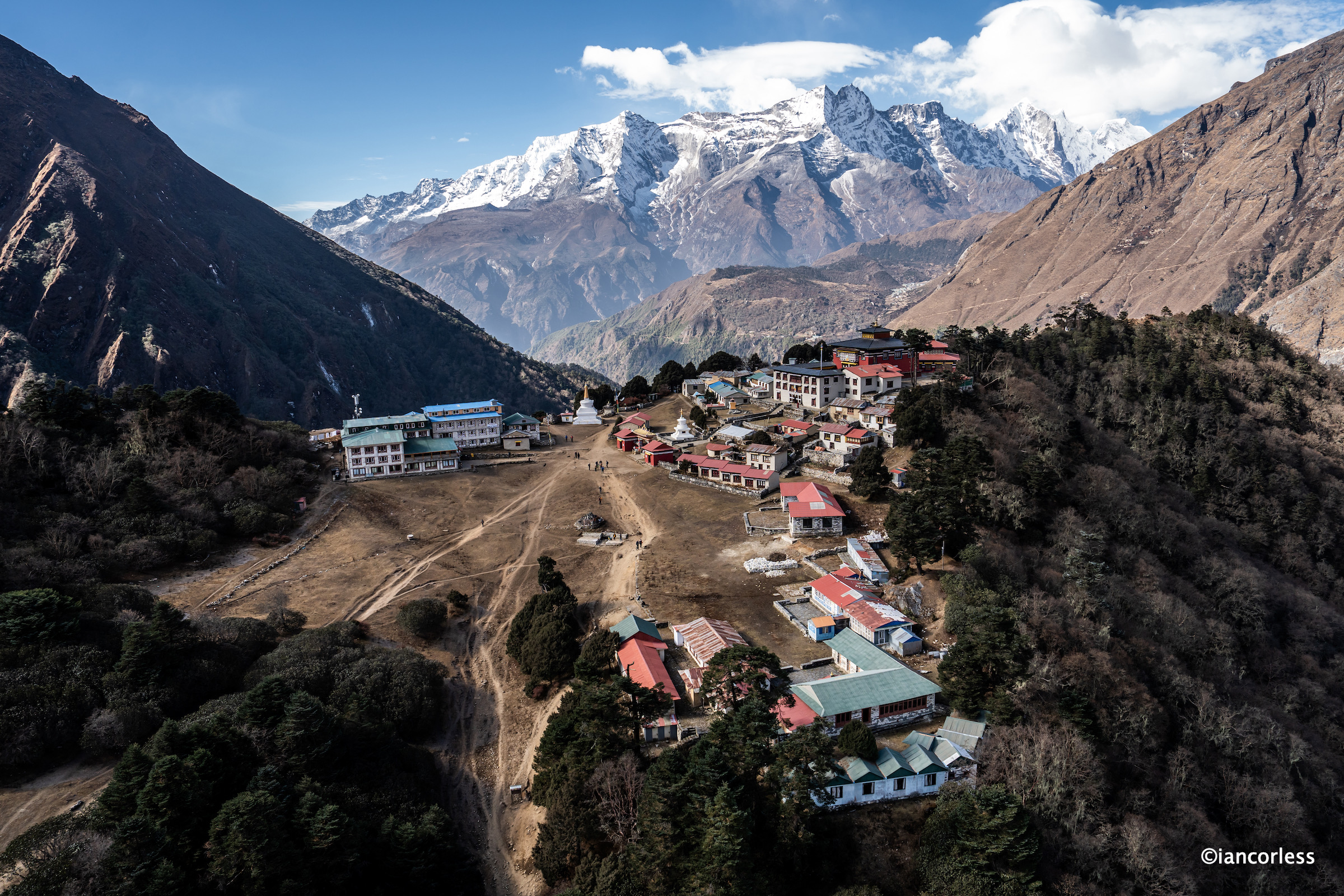
The race route threads through the Solukhumbu region, home to the legendary Sherpa people, along the same trails used by mountaineers heading to Everest Base Camp.
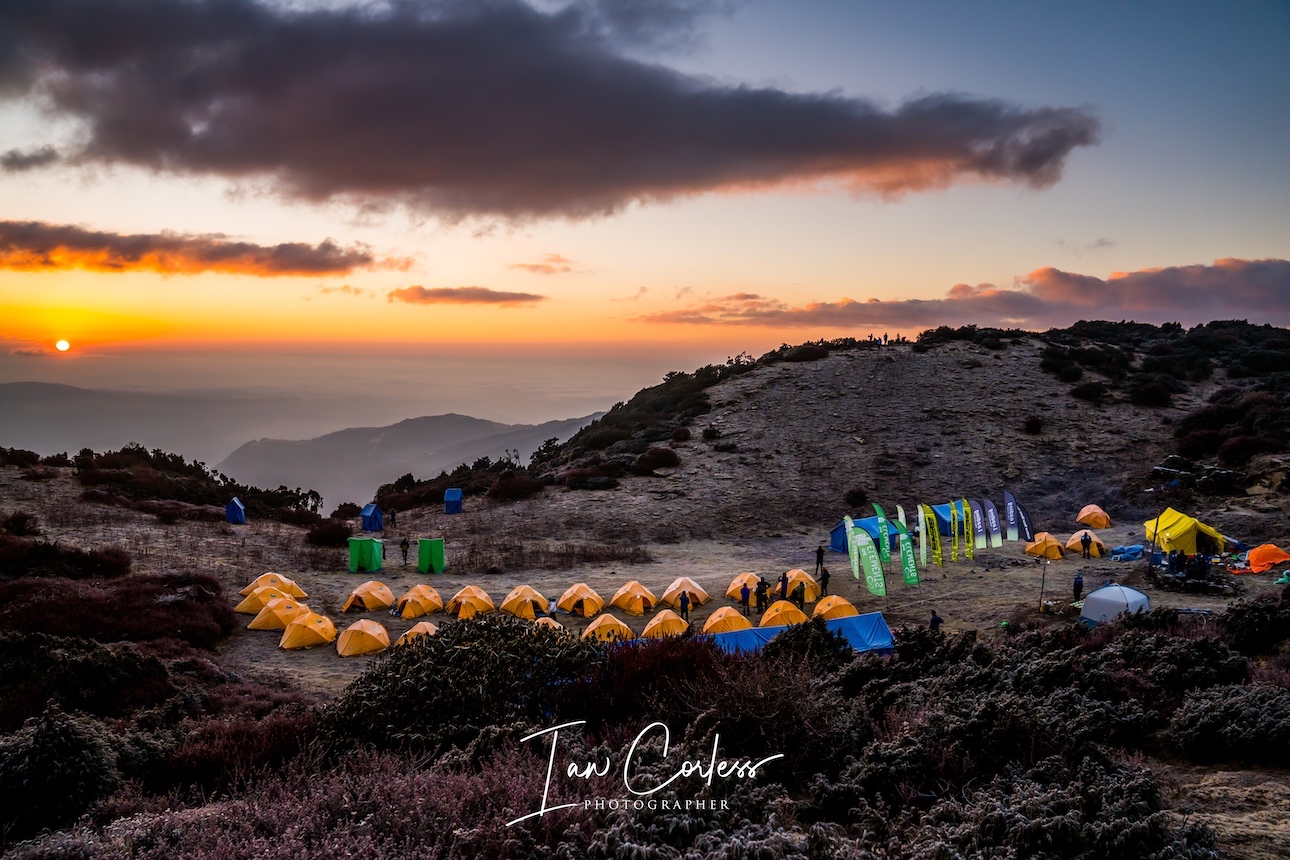
November in the Himalayas is cool, crisp, and clear, perfect for trail running. Daytime temps are mild, with intense sunshine at altitude.
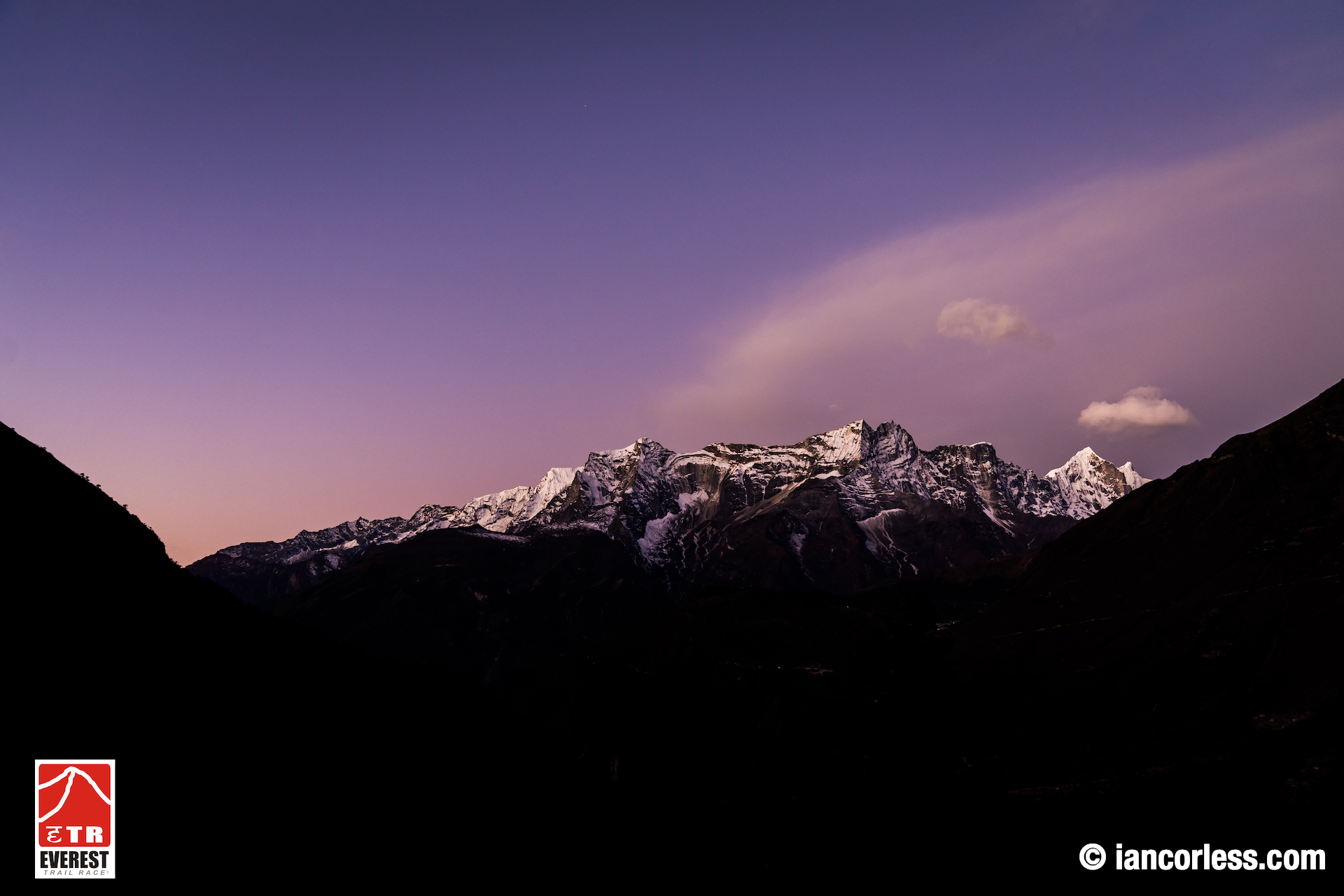
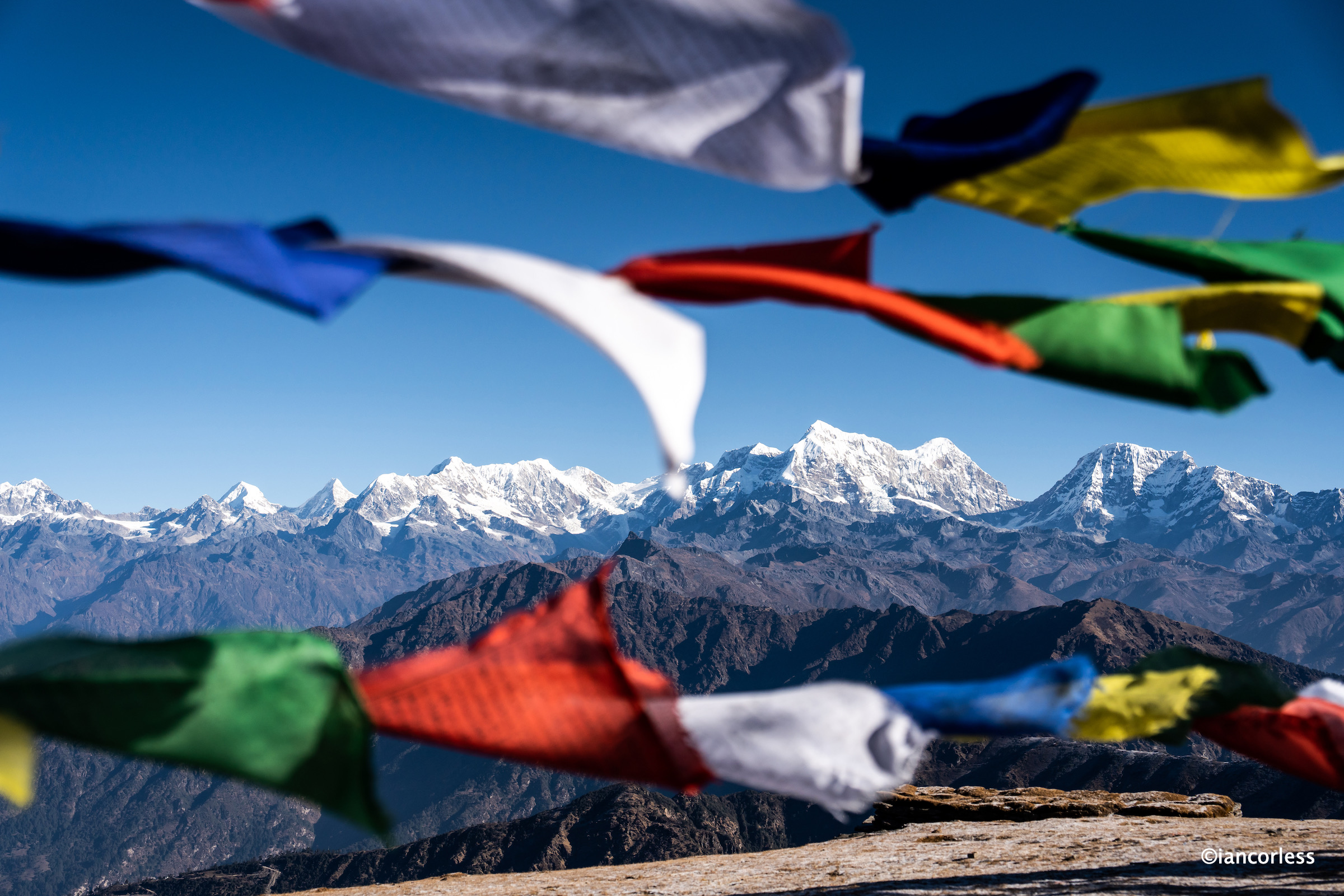
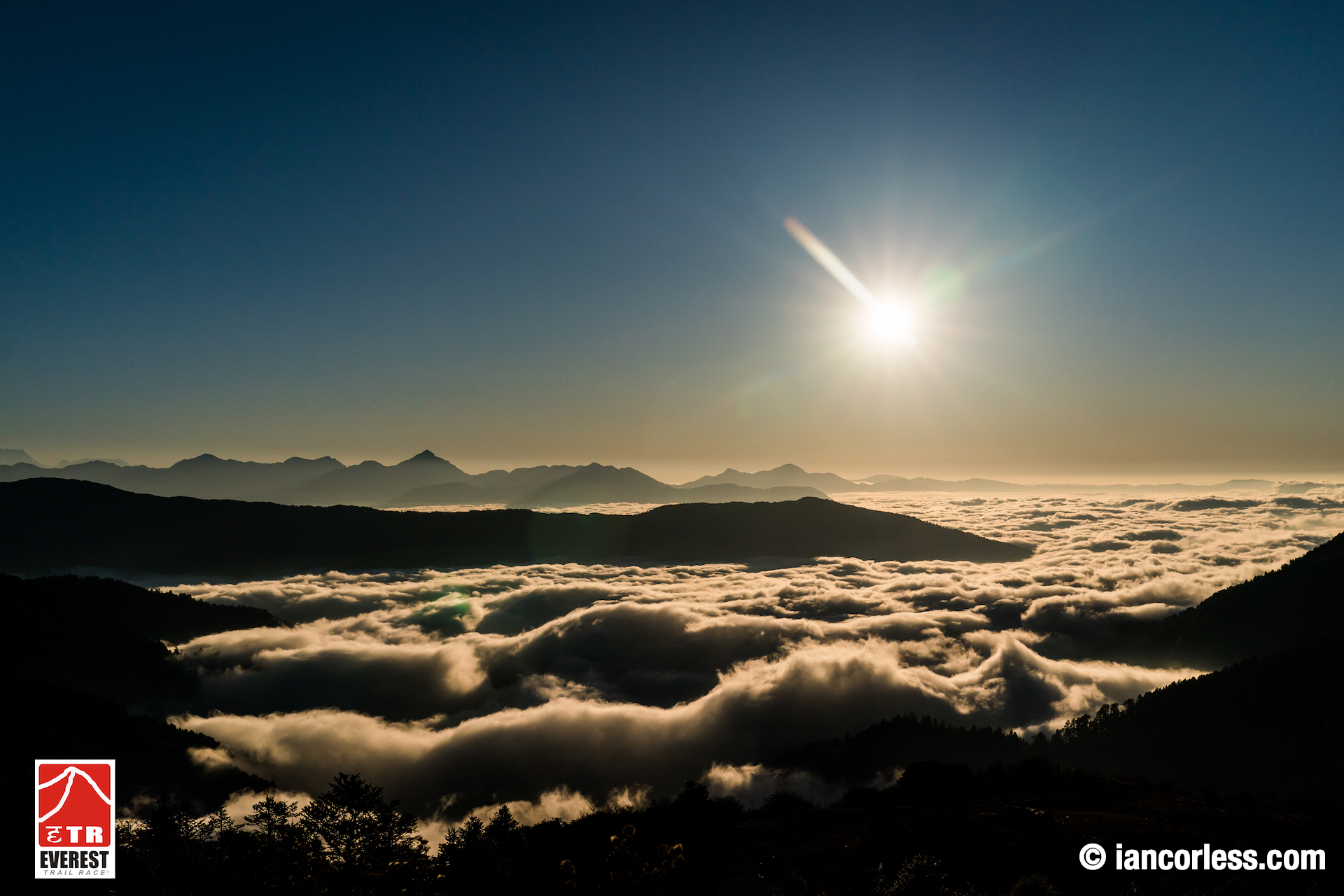
But the nights get cold. You’ll wake up to frosty mornings, and every breath will be visible. It’s the dry season, so the skies are often brilliantly blue, framing the snowcapped peaks like a postcard that never ends.
This is the kind of race where you learn to respect the air. The oxygen gets thinner, and your body feels it. It’s a slow grind uphill, and then a fast, careful descent. Pacing becomes survival. Acclimatisation is your secret weapon. But when you’re out there, breathing hard, moving slow, you realise something: you don’t need speed. You just need grit and determination.
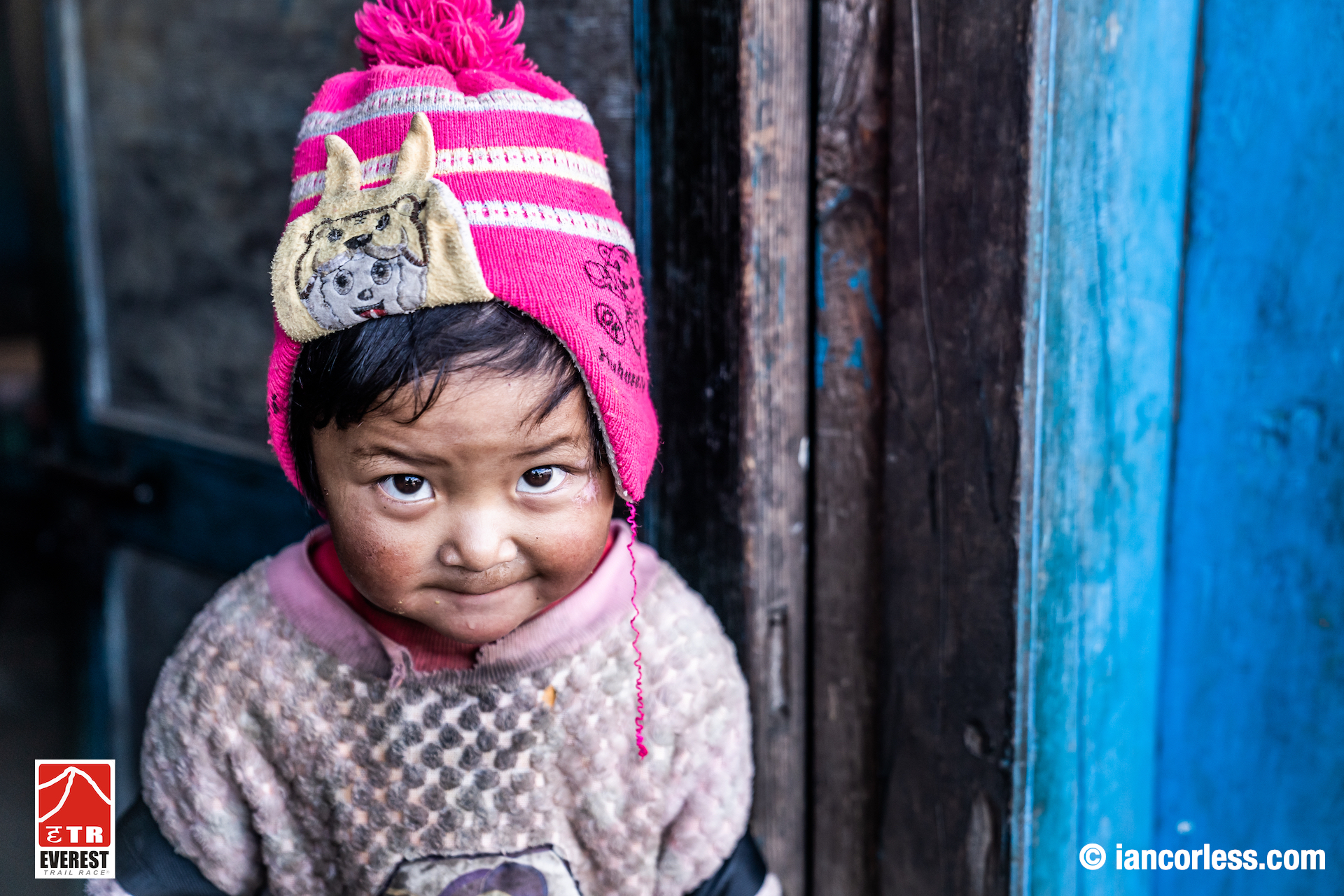
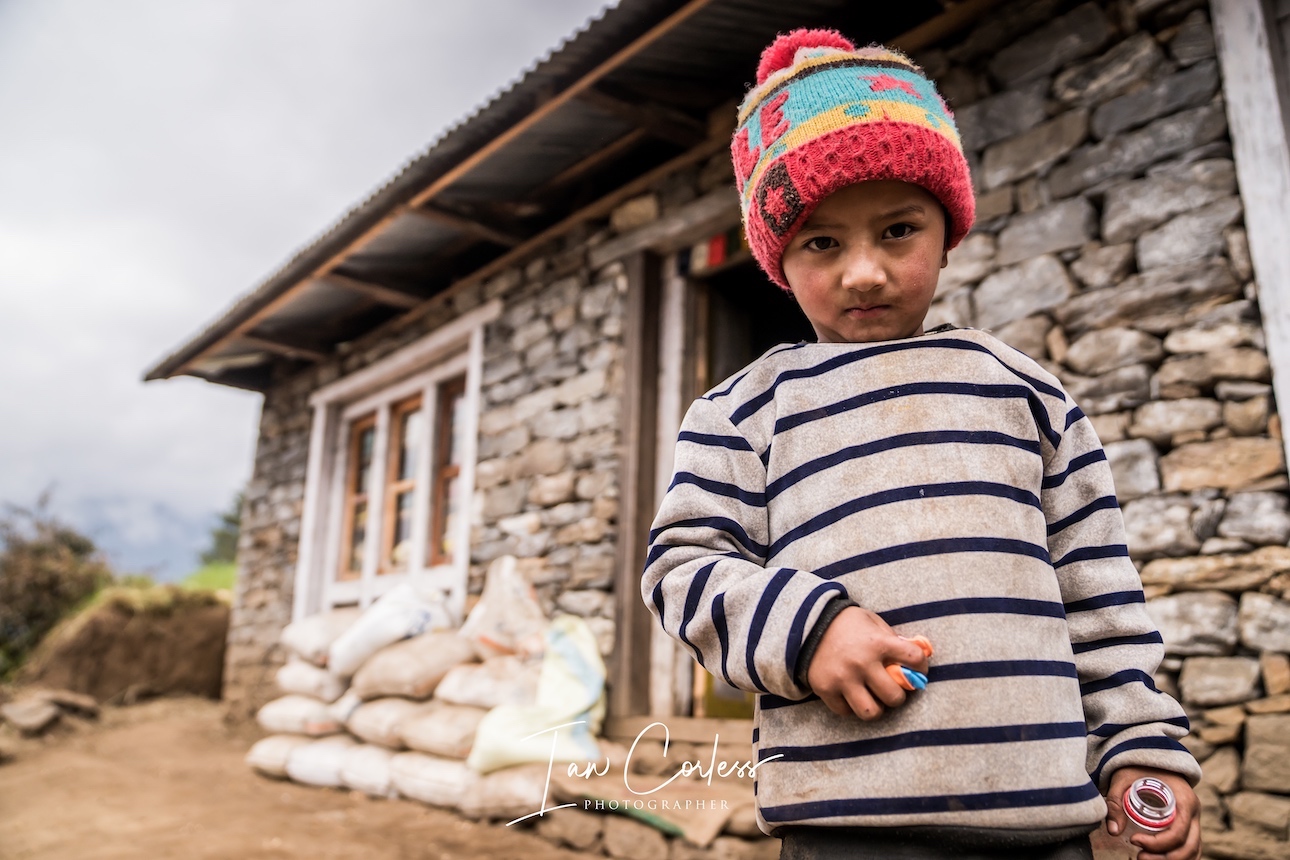
You’ll meet Sherpa families offering you tea from tin cups in smoky kitchens. Kids will run beside you, barefoot and beaming.
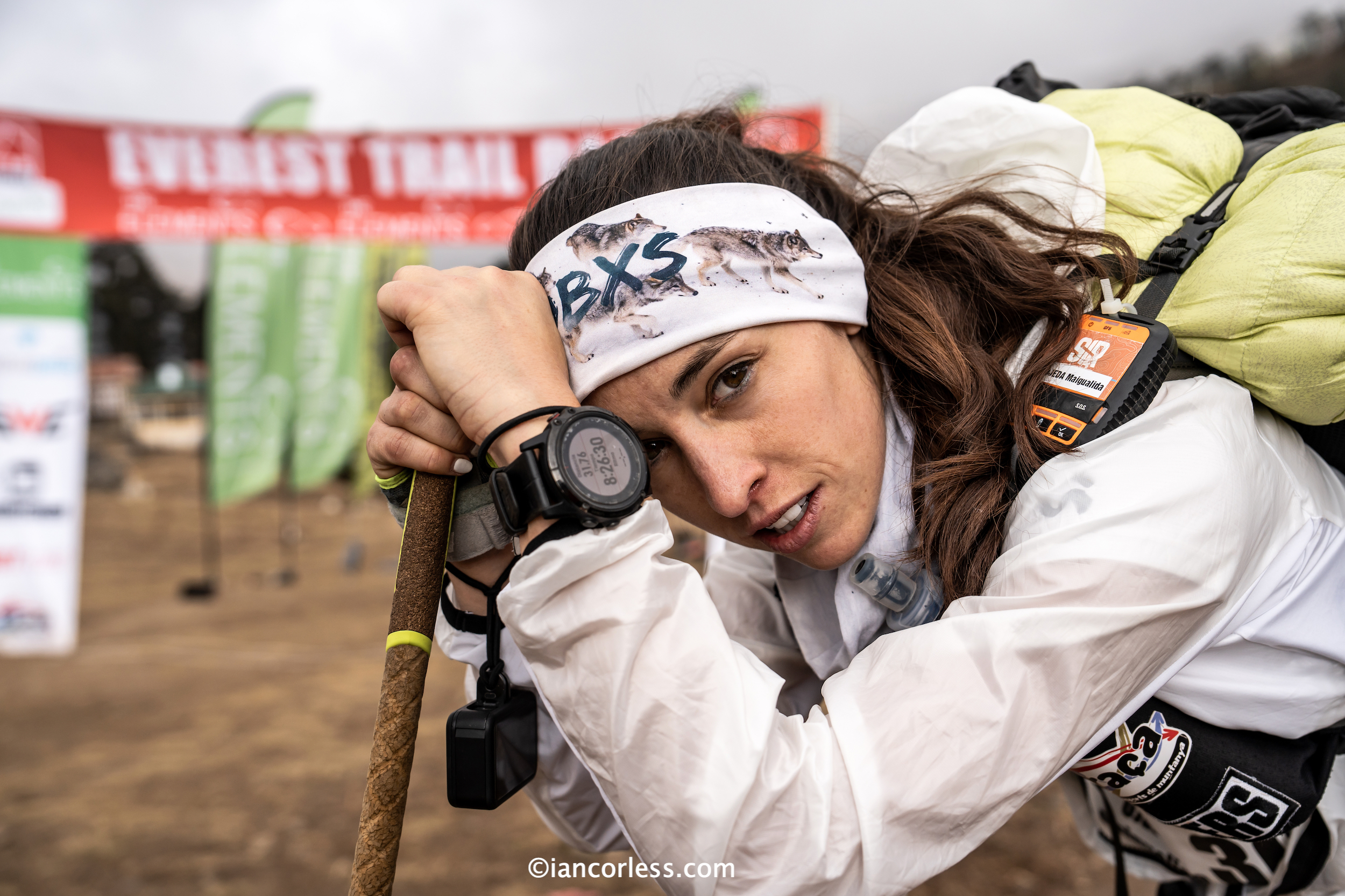
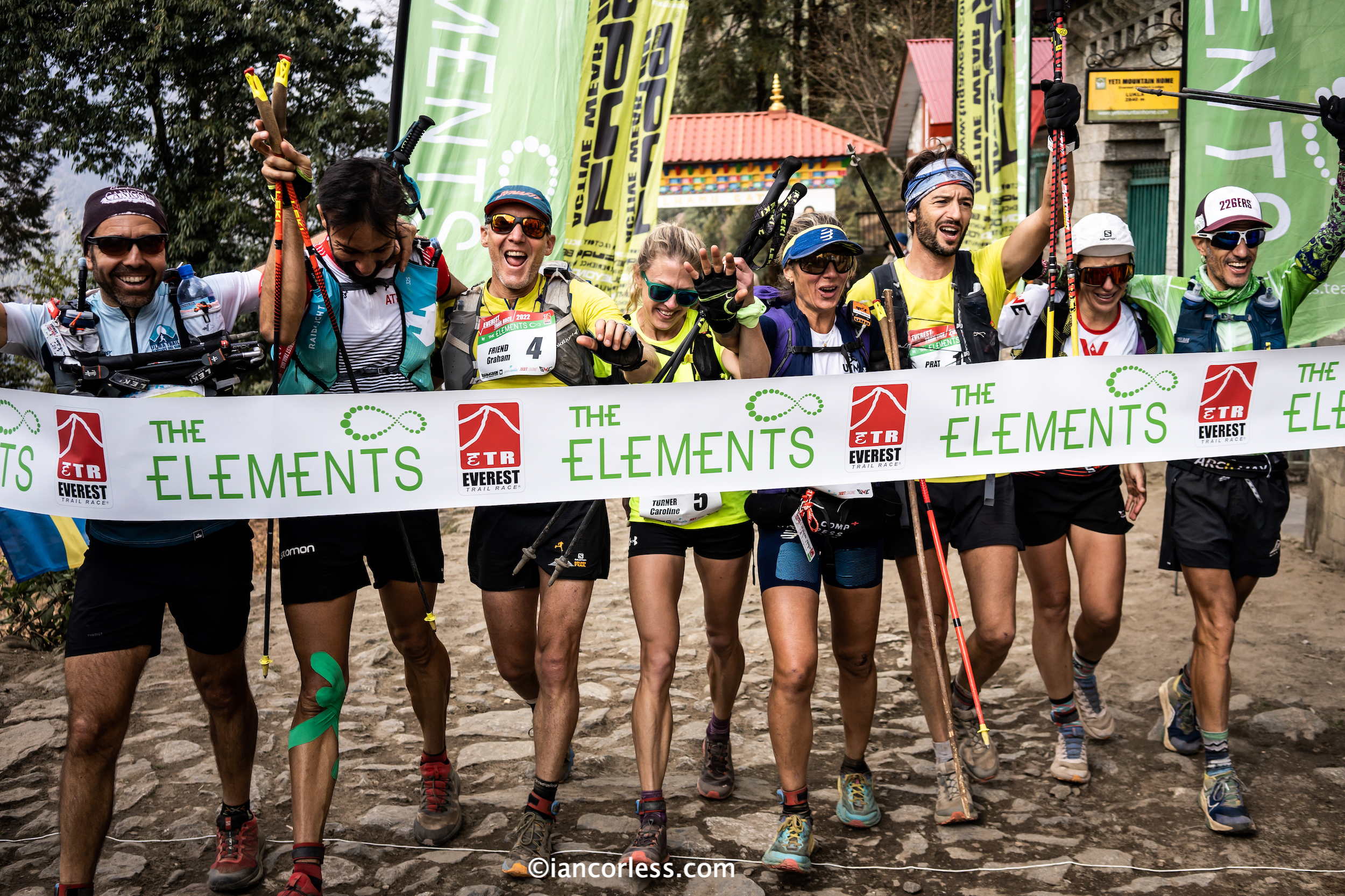
The camaraderie among runners is real, forged in pain, sweat, and shared awe. You’ll finish each stage beside people who were strangers, now teammates.
The Everest Trail Race is small and personal. It’s not about crowds. It’s about connection — to the land, to each other, and to something deeper inside yourself.
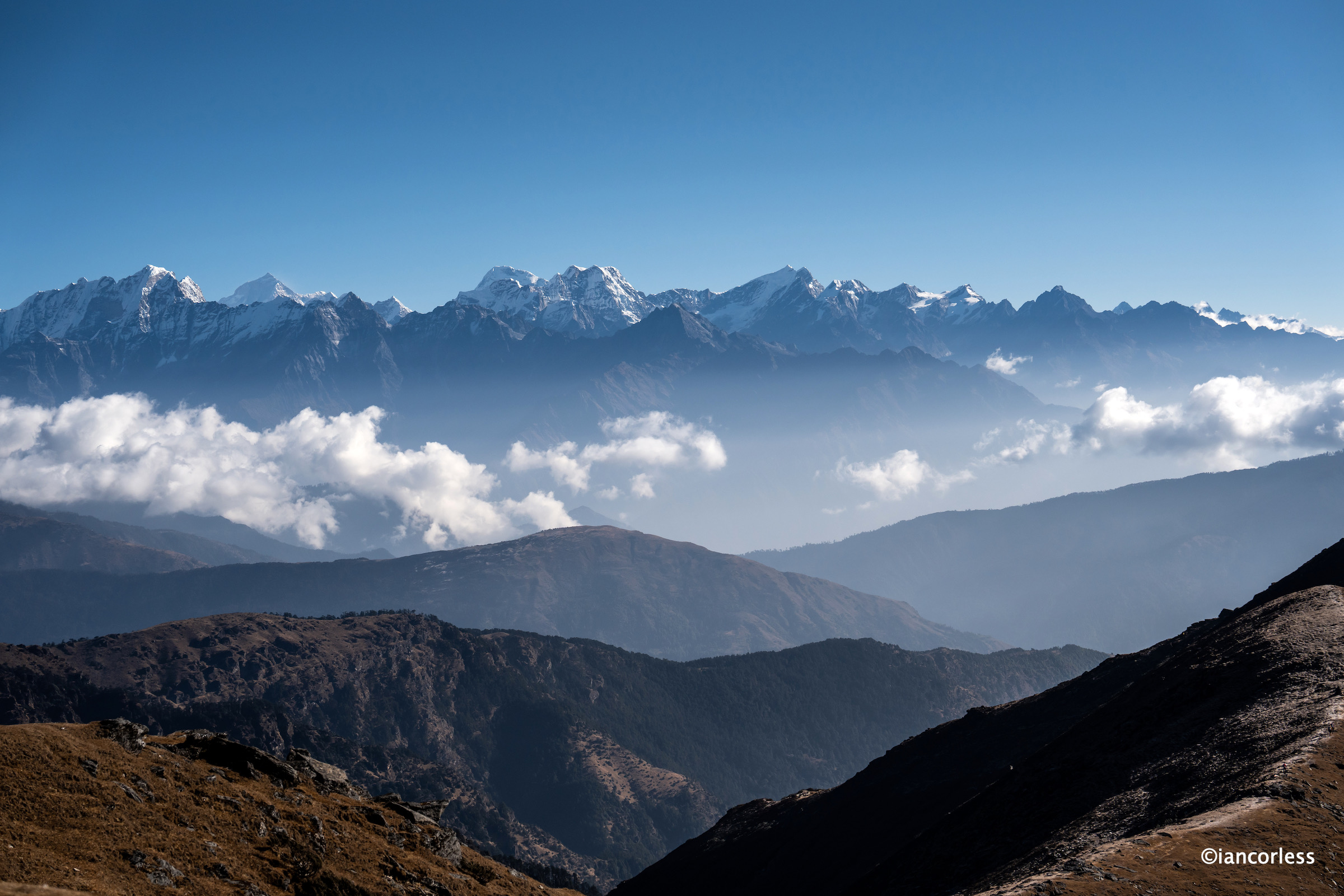
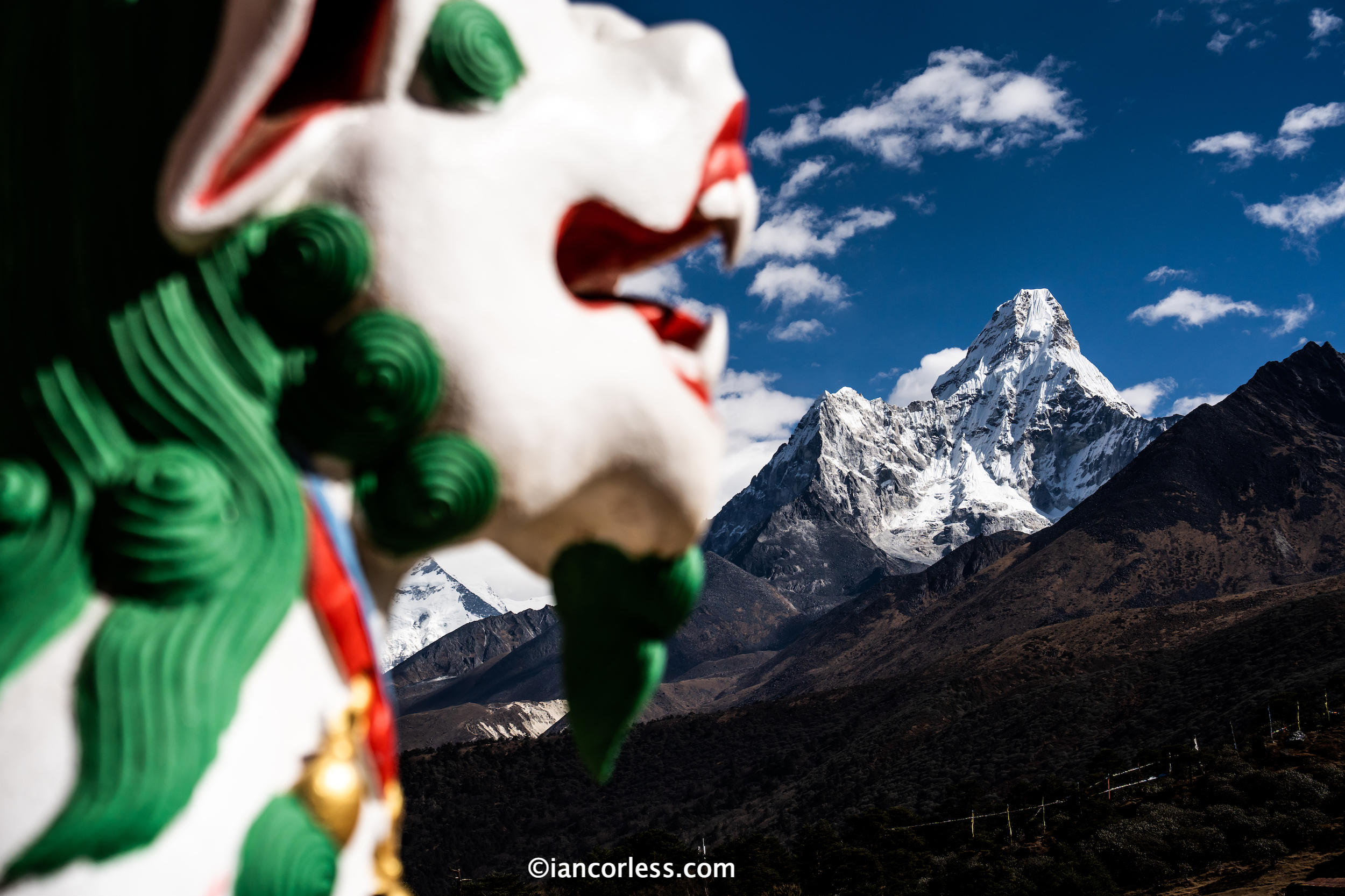
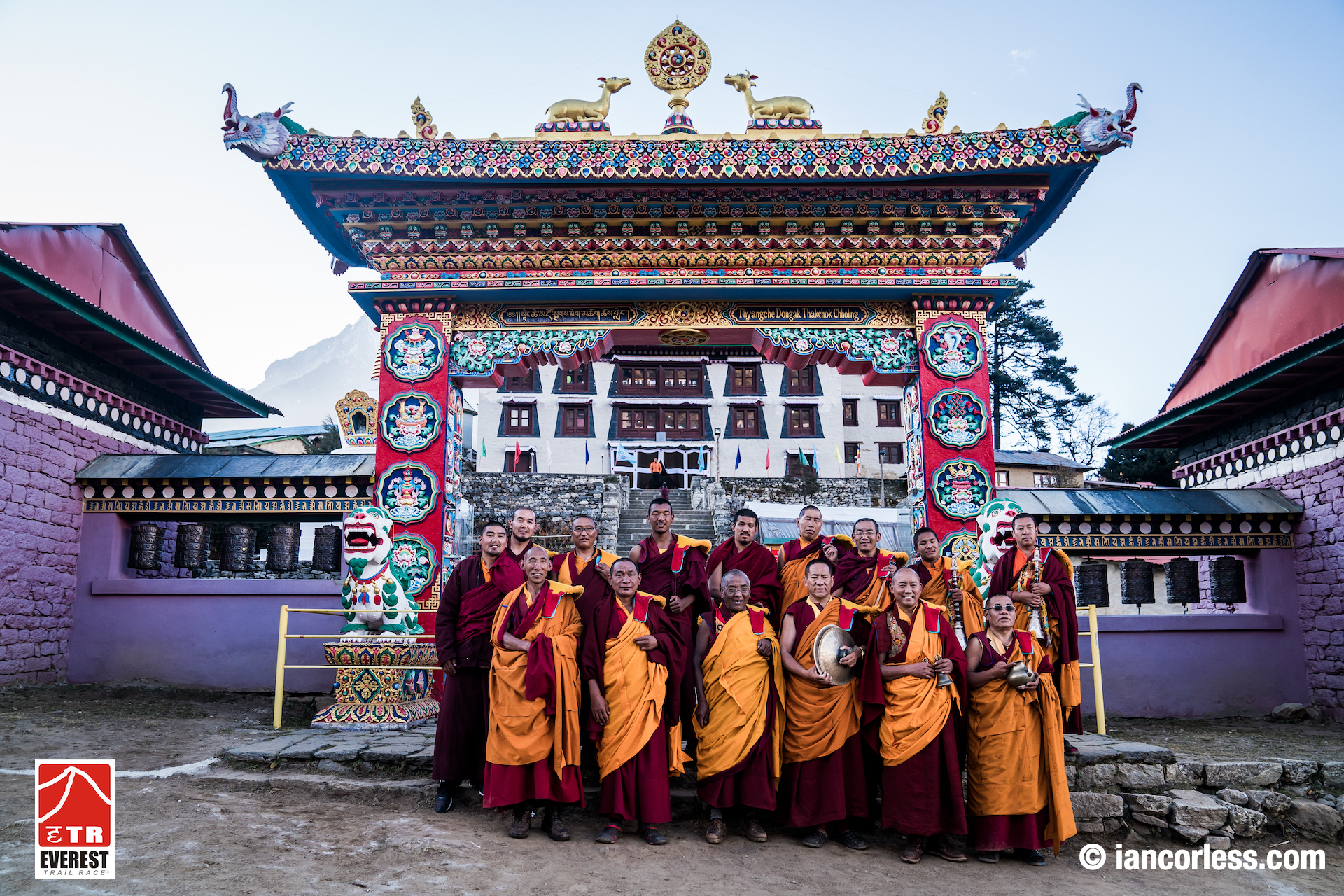
You’ll see Everest, Lhotse, Ama Dablam, and other giants of the Khumbu up close. But it’s not just the mountains — it’s the prayer flags flapping in the wind, the monasteries perched on hillsides, the layers of ridge upon ridge fading into the horizon. Every day looks like a screensaver. Every sunrise feels earned.
If you’re waiting for the “perfect moment,” this is it. You don’t need to be the fastest or the strongest. You just need to show up ready to push, adapt, and feel everything this place throws at you. The Everest Trail Race is not about conquering the mountain. It’s about discovering who you are when the mountain pushes back.
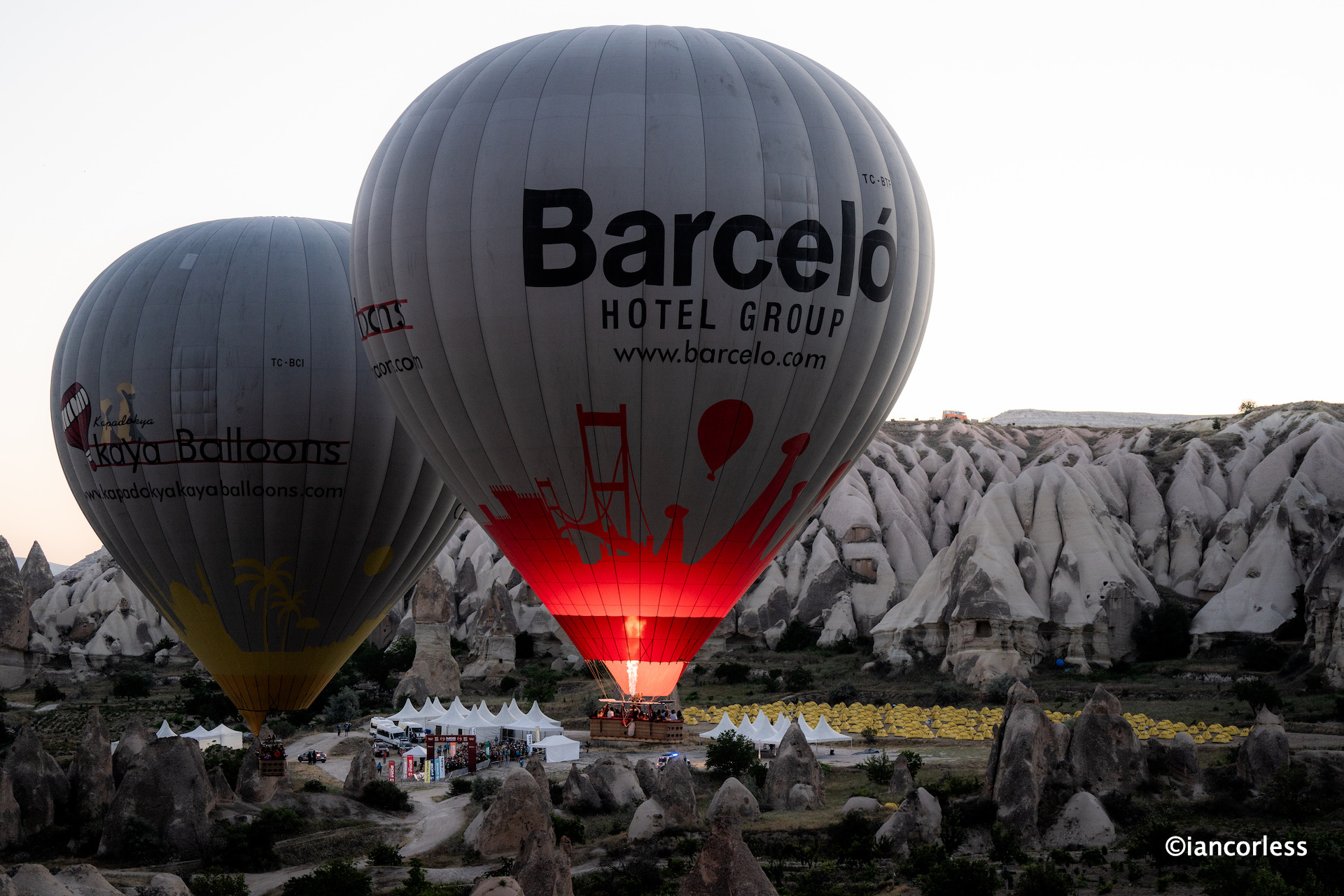
The 2024 inaugural MDS CAPPADOCIA has concluded on a high, quite literally, as all participants and staff were treated to a surprise early morning balloon flight by the organisation to celebrate a pioneering moment for the MDS brand.
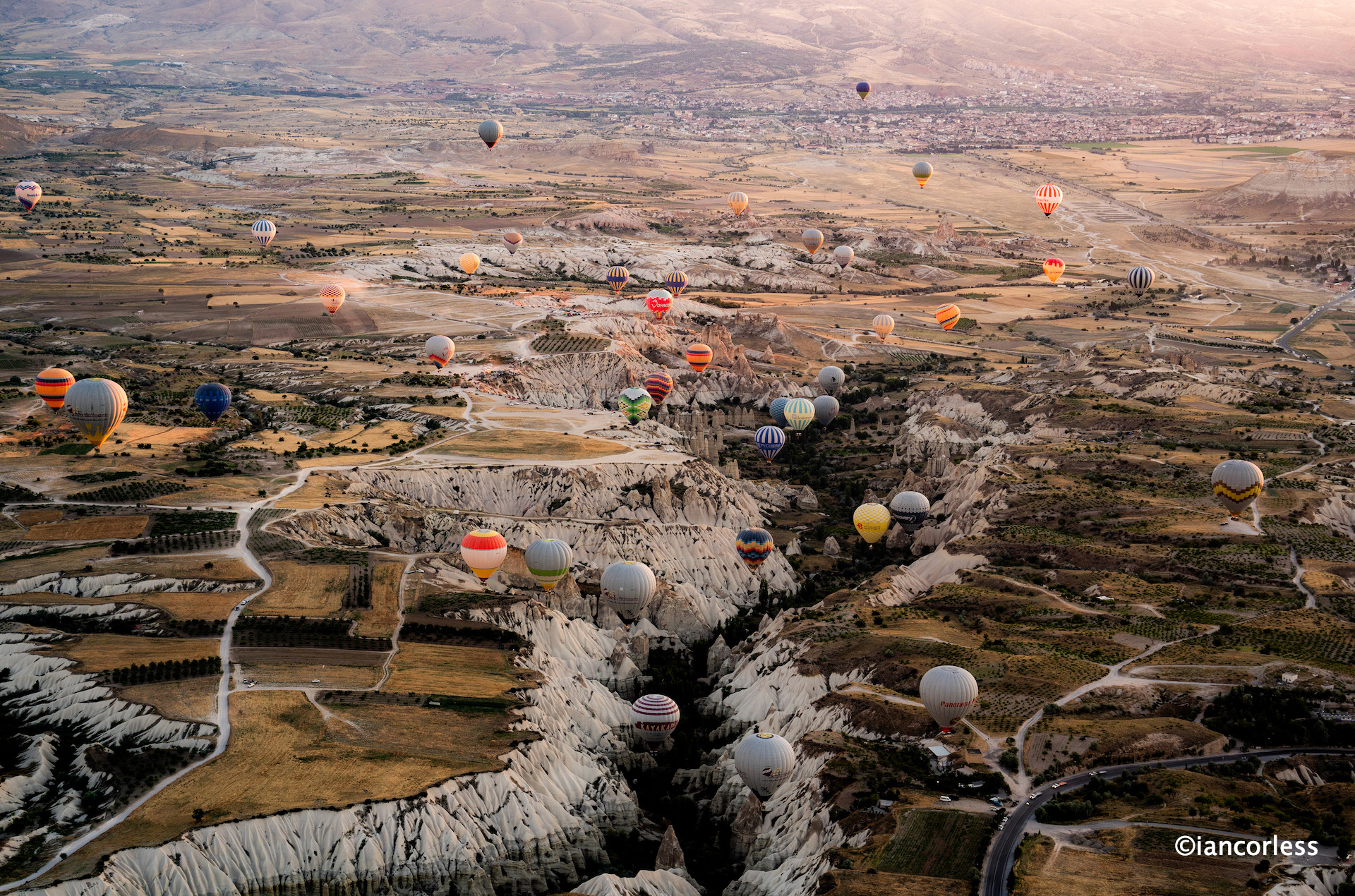
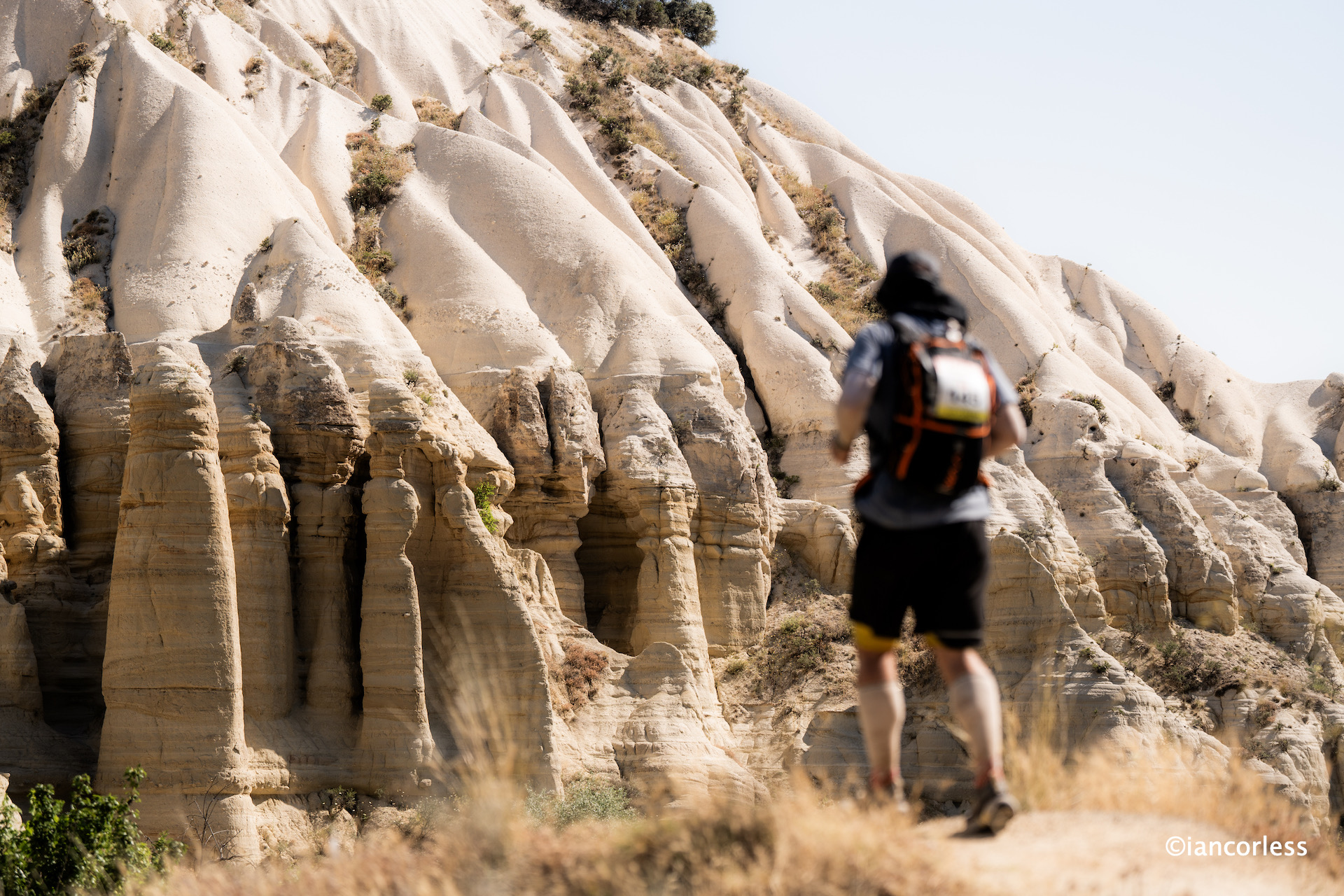
The Love Valley
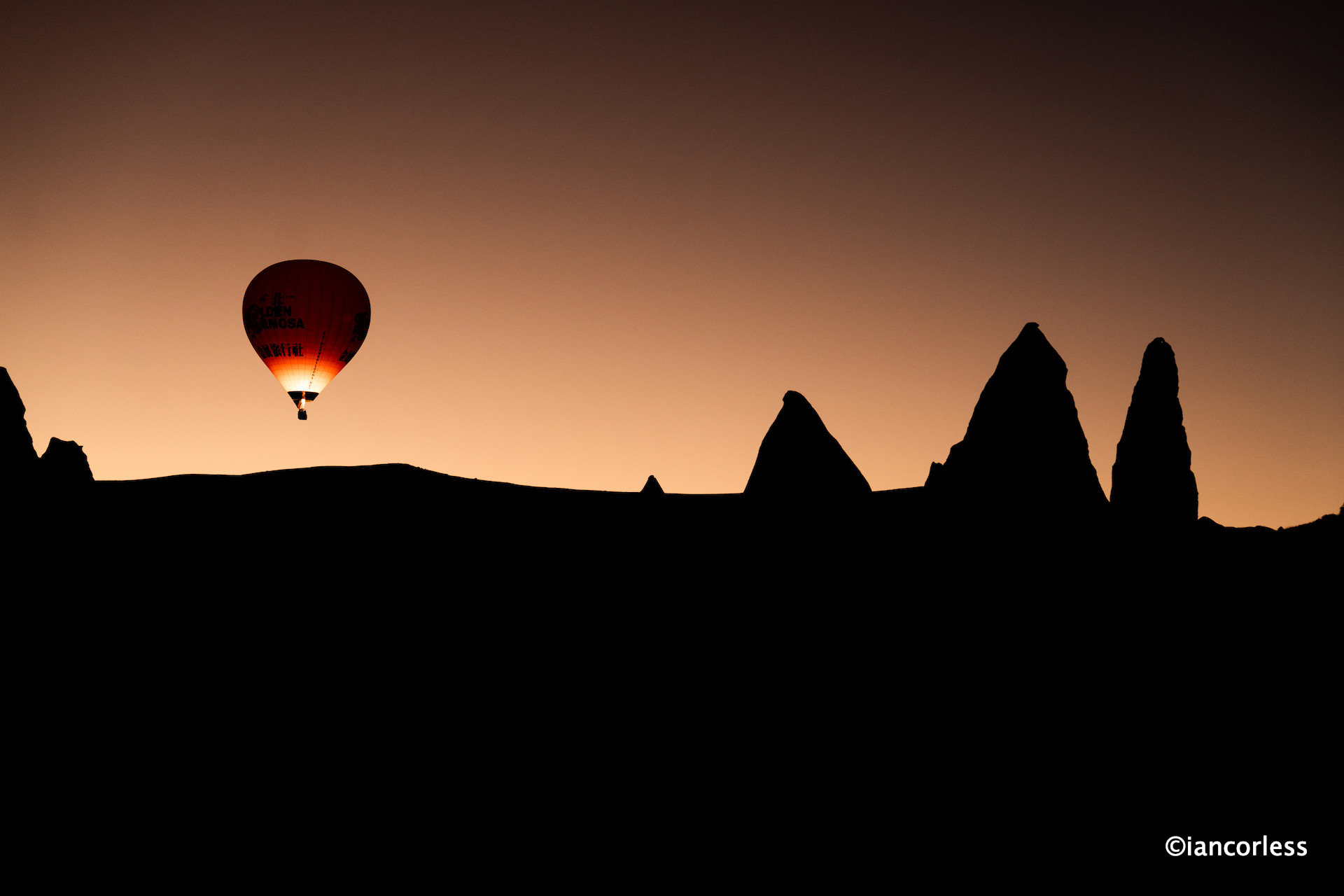
For many, the early morning sky filled with 100’s of balloons is one of those lifetime memory moments, to be given the option to fly, was a dream come true. From the airy heights, the full MDS Cappadocia route was able to be viewed providing a new perspective of the incredible journey that was only completed the day before.
Memory for a lifetime
And what a journey this MDS experience was.
As Cyril Gauthier mentioned in his opening briefing before the race, ‘Welcome to first edition of Marathon des Sables Cappadocia, but ironically, the sables element is missing here…’
Cyril before stage 1
It of course came as no surprise, however, Cappadocia is very much a desert-like landscape, correctly though, the element of soft sand and dunes is completely missing.
Unique and special
One may question, ‘Is this a bad thing?’ The simple answer here is no, each and every participant could not speak highly enough about this unique MDS experience and actually, many were very vocal and happy that MDS Cappadocia was a very new and different.
OVERVIEW
MDS Cappadocia is a 7-day experience following the same format of other MDS events that have gone before, Fuerteventura, Jordan and so on as perfect examples.
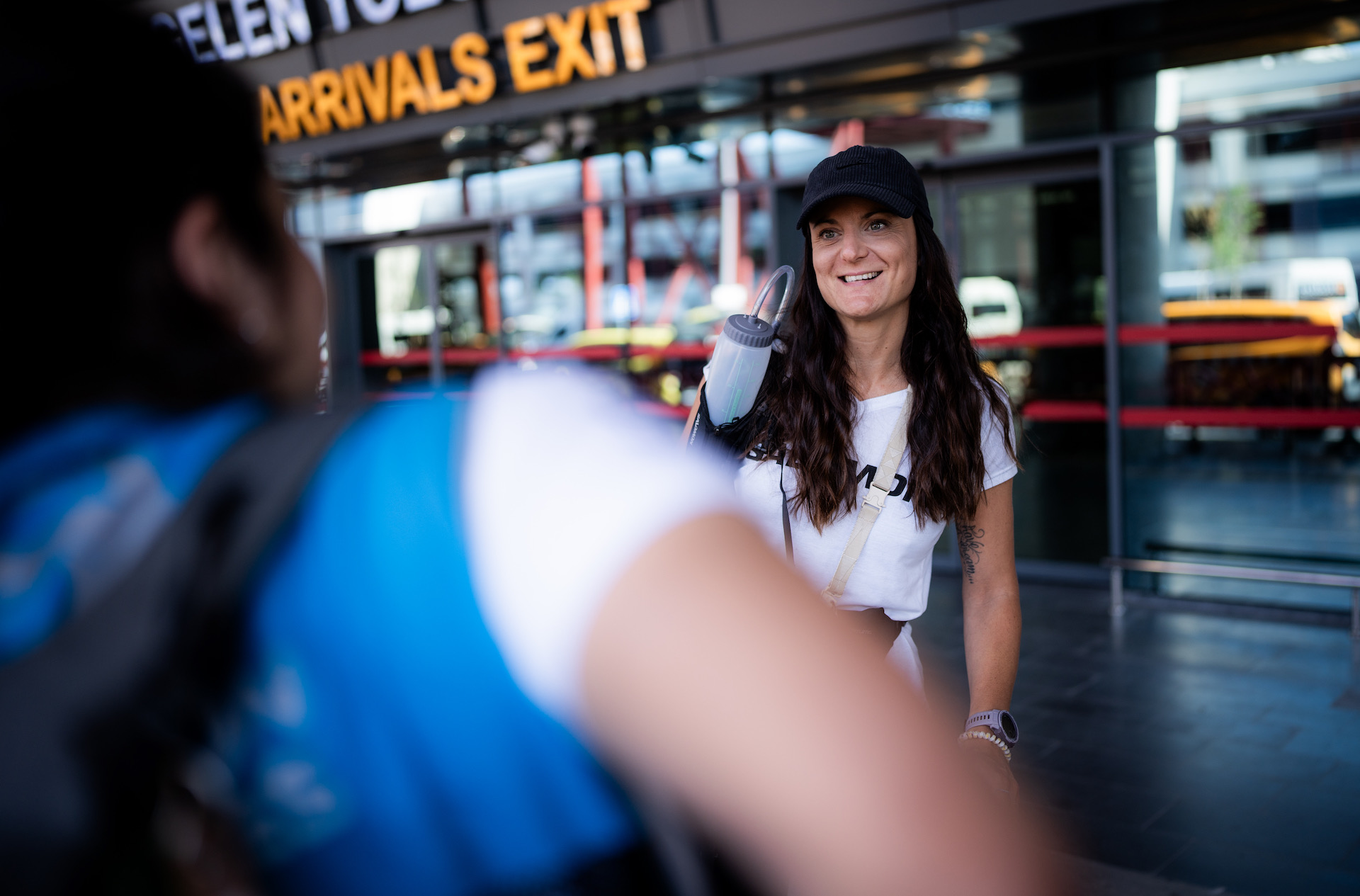
MDS team meet and greet before transfer to hotel
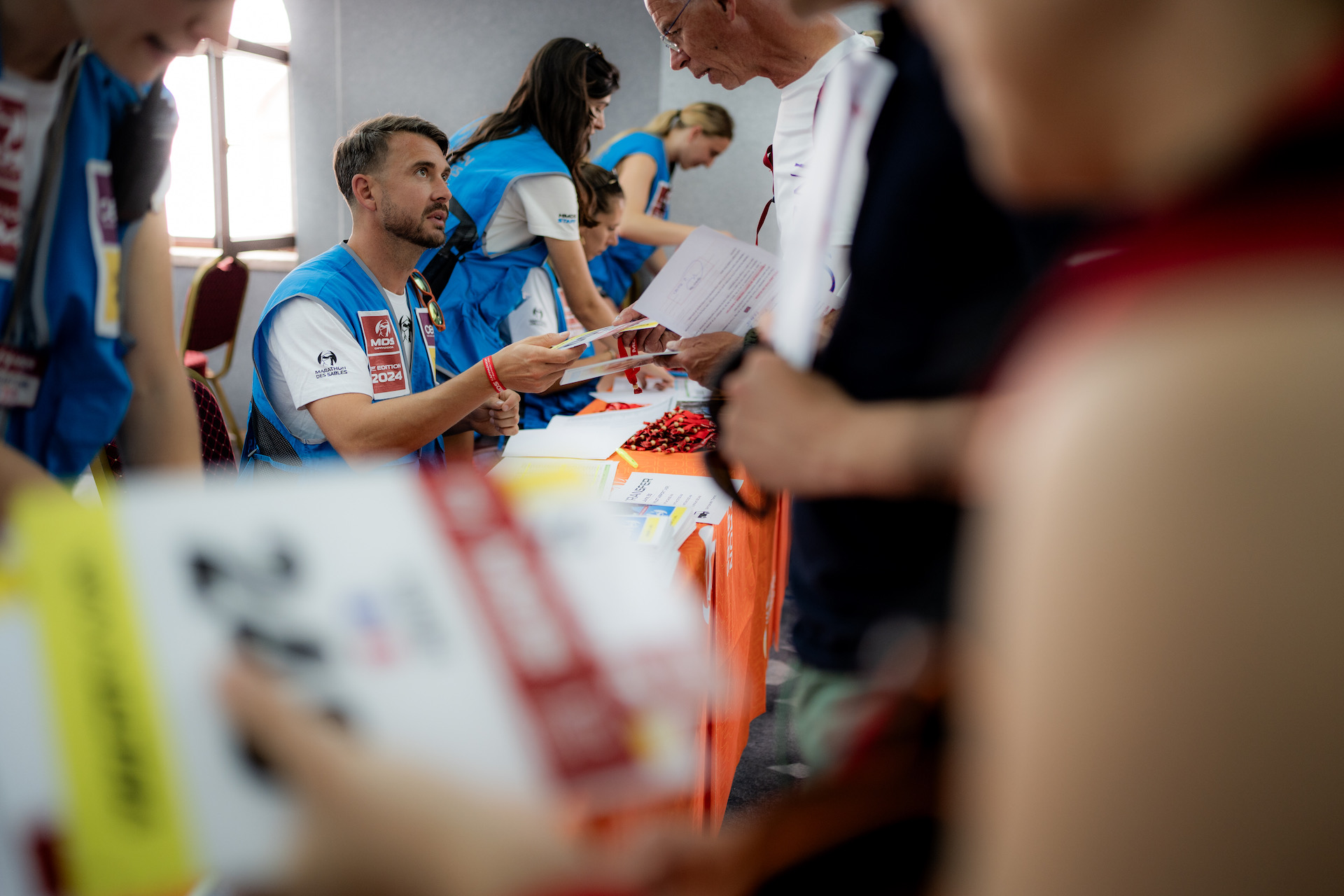
Day 1 – Runner’s are required to travel to Kayseri airport and arrive on a certain day so that they are able to take a transfer, provided by the organisation to the race hotel. At the hotel, technical checks and admin take place. In the evening dinner is provided.
admin and technical checks
Day 2 – Runner’s depart the hotel via transfer to the start. Now self-sufficiency begins and stage 1 starts. Runner’s run/walk 25km to the bivouac and conclusion of stage 1.
Stage 1
Day 3 – Stage 2 starts at bivouac and runner’s return to the bivouac choosing the option to run/ walk 20km, 40km or 60km.
Stage 2
Day 4 – A rest and recovery day.
Bivouac
Day 5 – Stage 3 26km which concludes in the Love Valley. A short transfer to the race hotel is provide. The evening is free.
Stage 3
Day 6* – A relaxing day at the hotel or sightseeing followed by awards, gala dinner and party.
The balloon flight
Day 7 – Onward travel.
*Runner’s were surprised with a hot air balloon flight, this required a 04:00 departure from the hotel to experience the magic of Cappadocia from the sky. They returned between 0700-0800 for breakfast.
THE RACE
Travel, admin and the race hotel was slick providing a relatively easy and relaxed start to the MDS Cappadocia experience.
Stage 1 had a bus departure of 0800, race briefing at 0900 and race start of 0930. I think everyone welcomed a relaxed start, however, the challenge of stage 1 was very real.
There are several key factors that must be considered for MDS Cappadocia.
It was hot
The heat for the duration of the race week was very high, temperatures were consistently between 33 to 36-degrees with a ‘feel’ on the skin of high 40’s. It was hot!
The Göreme Valley where much of the race takes place has an altitude of 1100m. This of course is not high altitude, but, the impact on breathing and physical effort was significant.
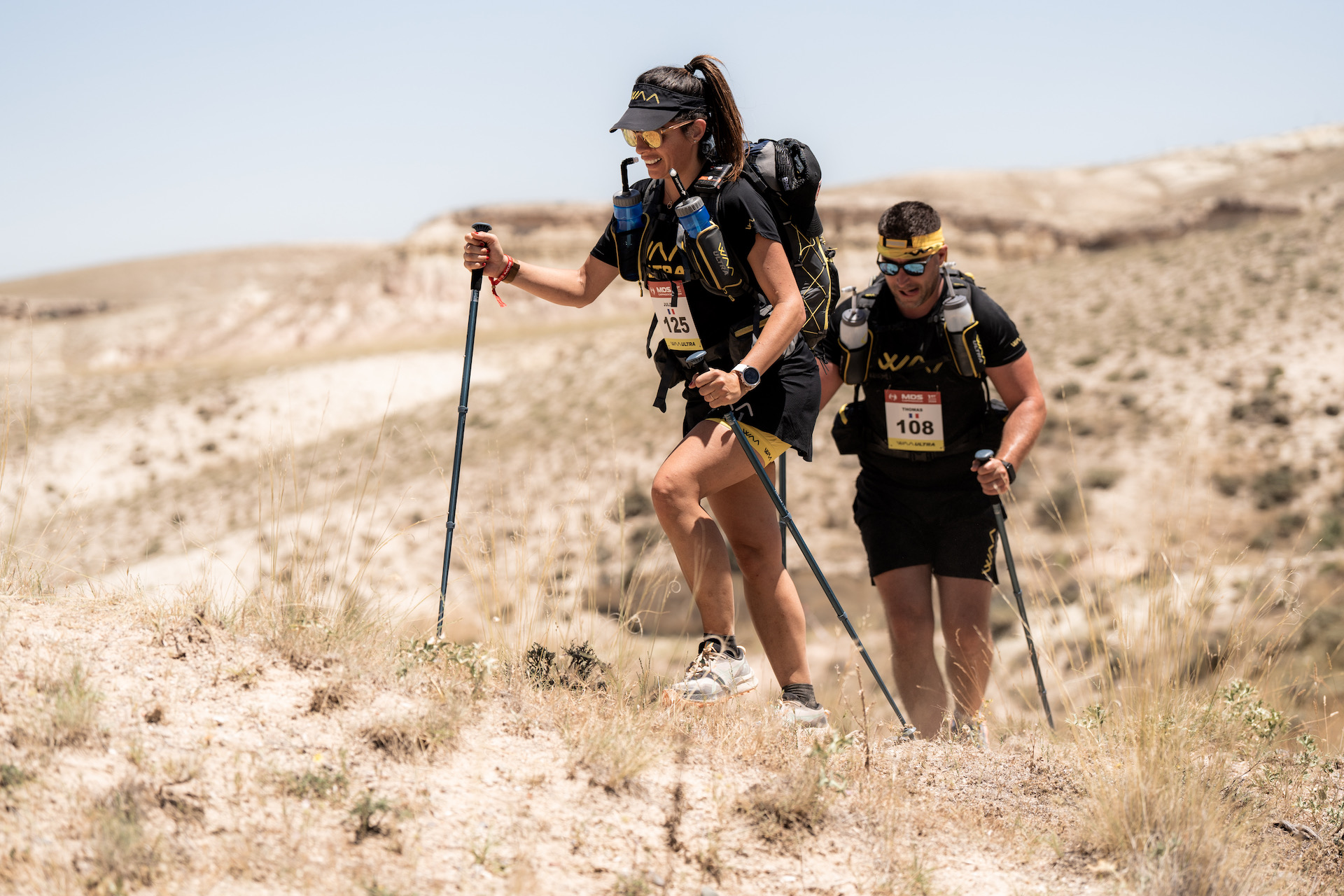
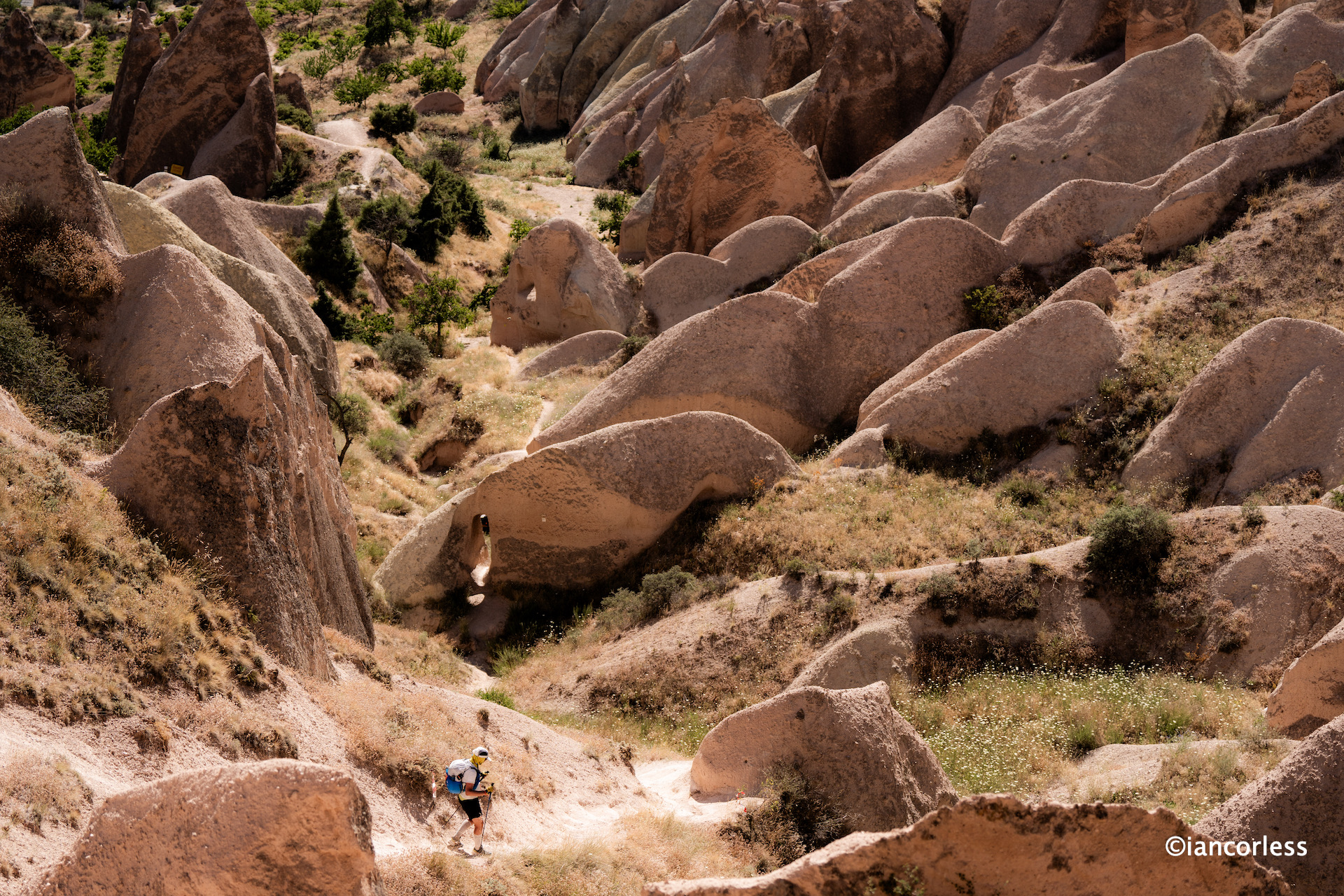
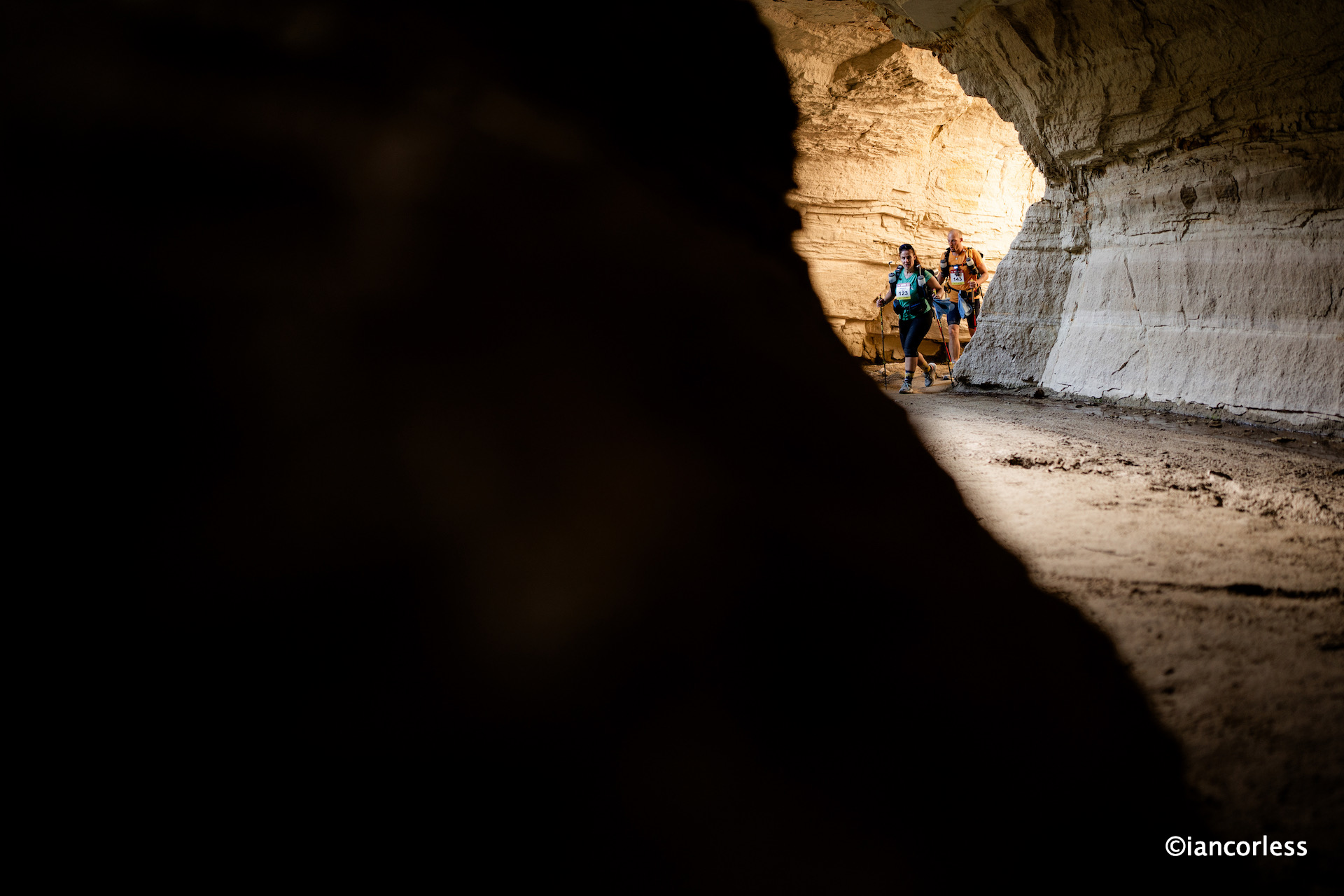
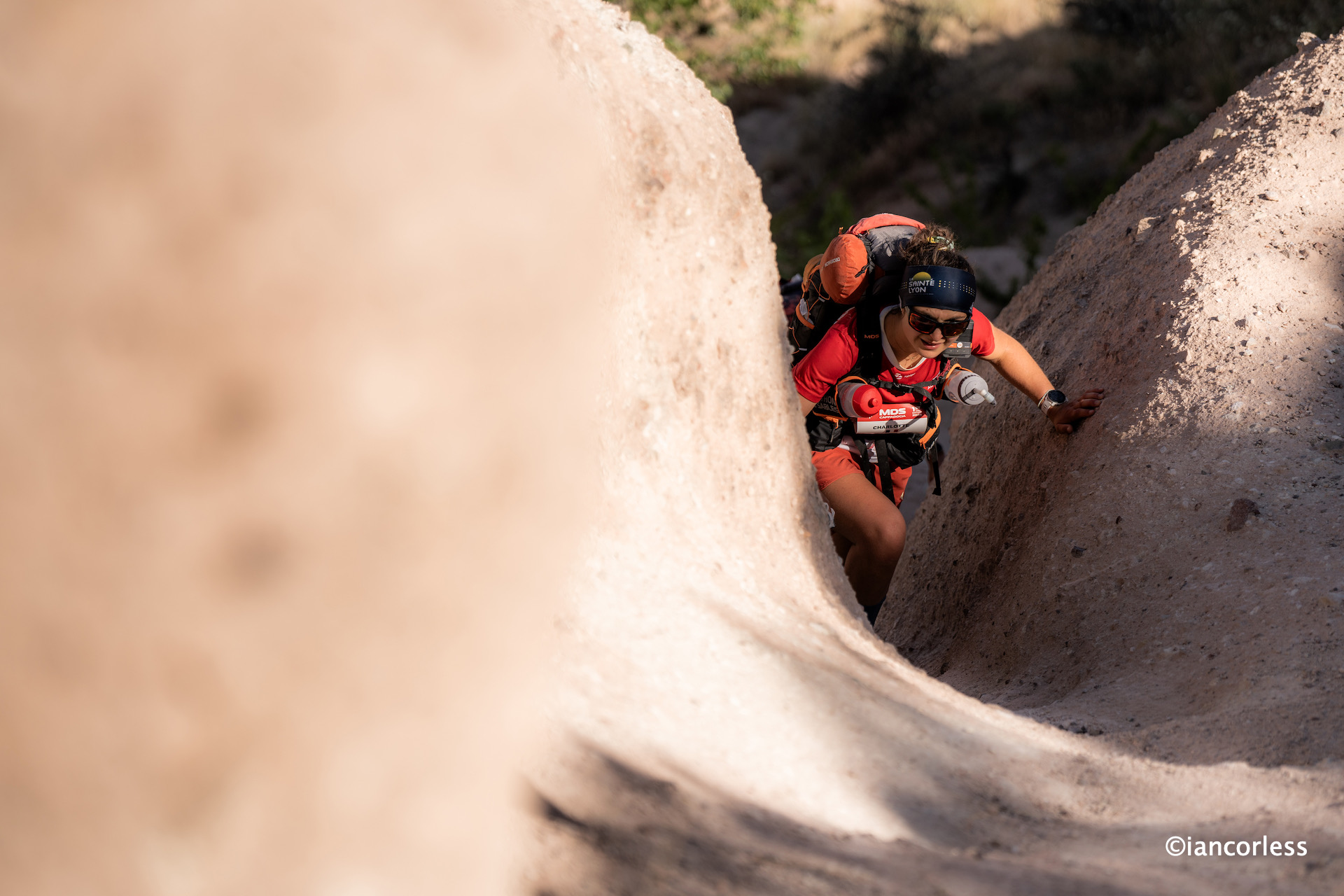
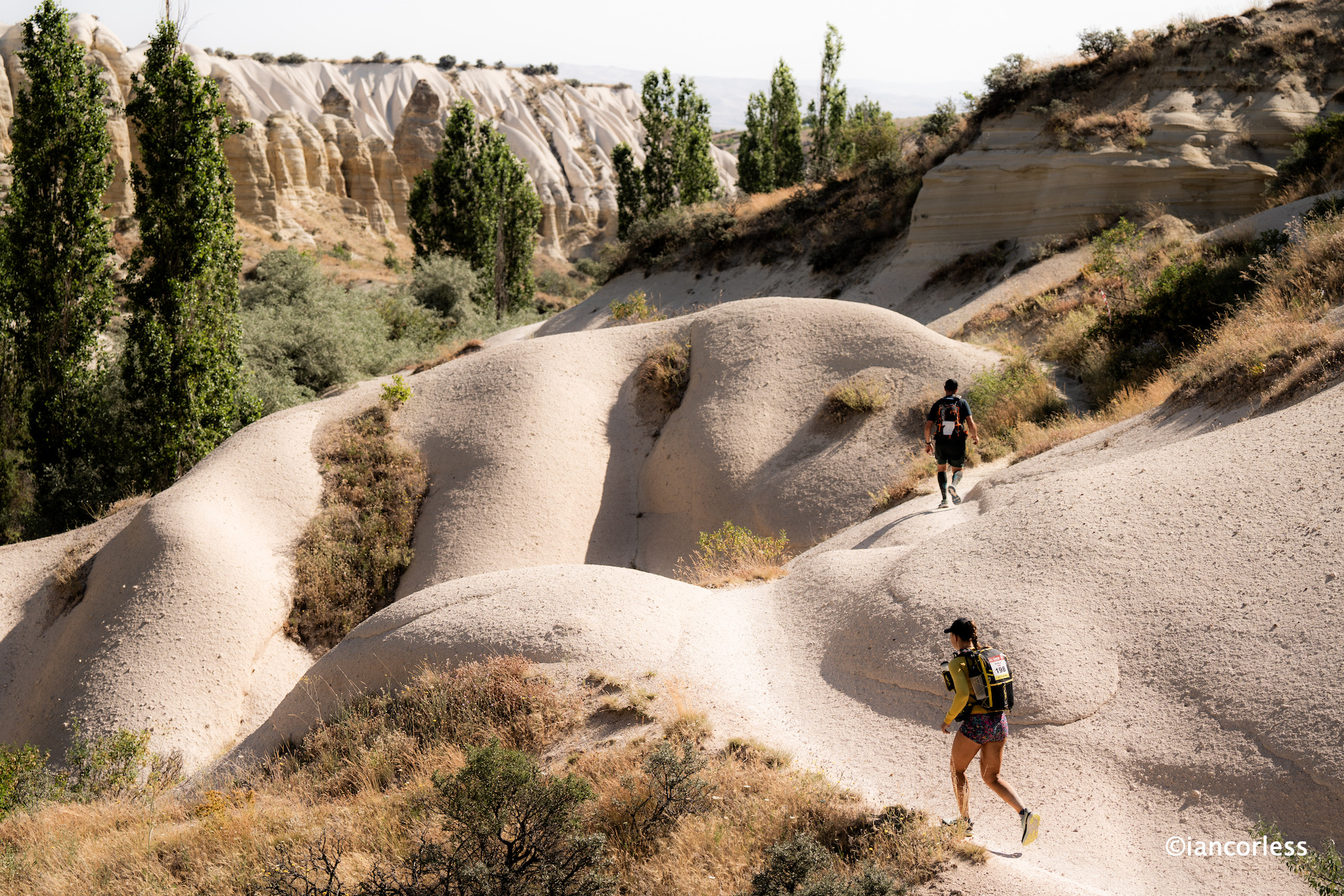
The route is considerably more challenging than other MDS events. Much of the route is single-track trails, mountain passes, gorges, tunnels, forest, technical trail, loose ground and it is undulating.
The vertical gain for each stage is significant, for the 72km it is 1767m, for the 91km it is 2243m and for the 111km it is 2576m.
Unique terrain
The combination of elements above made MDS Cappadocia, km for km, more challenging and difficult than any other MDS race, The Legendary included. If MDS Cappadocia was an equivalent 250km distance of The Legendary, it would be a very hard race.
This is no ordinary race.
After stage 1, it was very clear to the organisation that start times were needed to be adjusted to allow for cooler temperatures. Stage 2 moved from a 0600 start to 0500, and stage 3 was moved from a 0700 start to a 0500 start. This quite simply was an excellent decision and it is fair to assume that future MDS Cappadocia will have earlier start times, especially on stage 1.
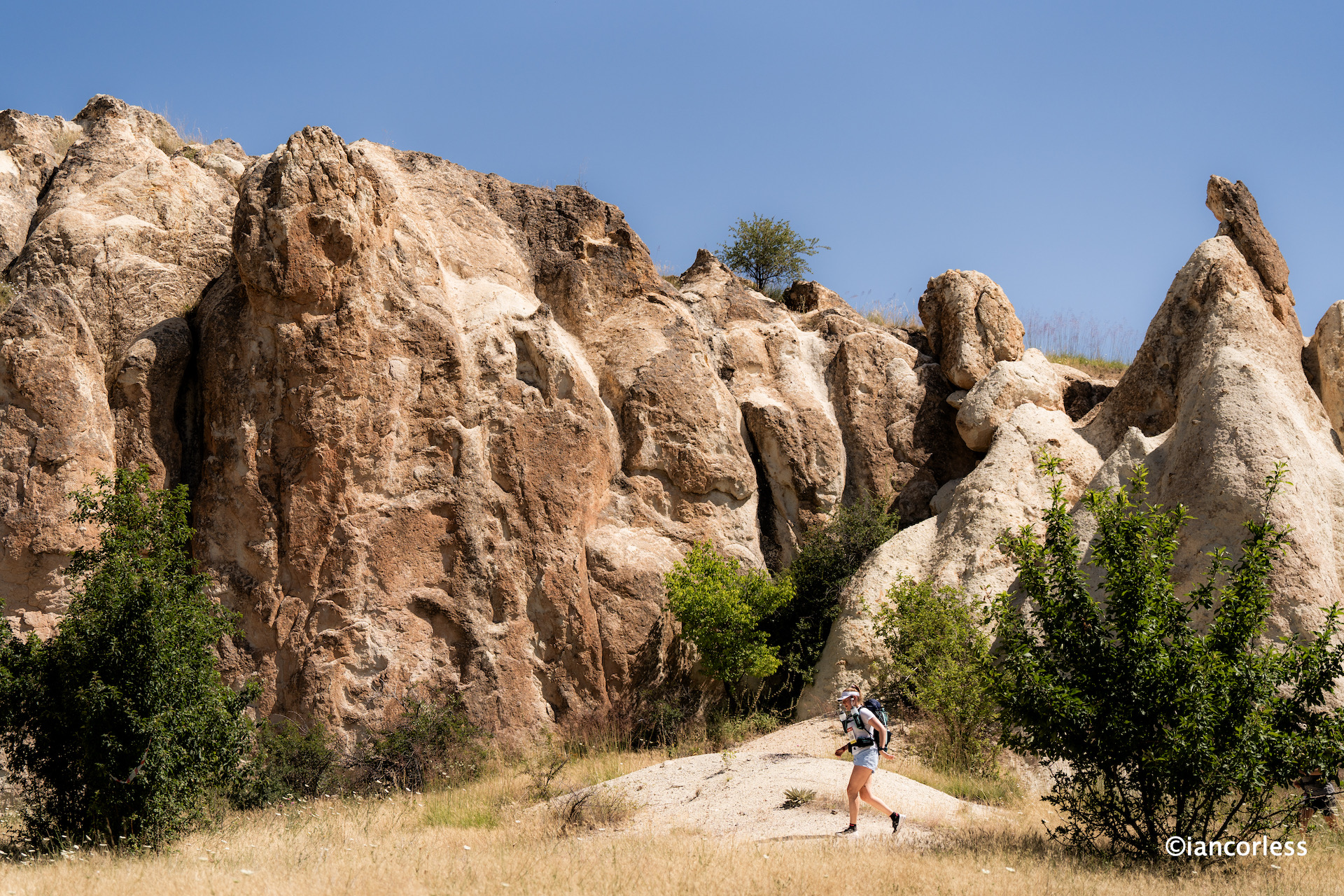
Bivouac was in a stunning location surrounded by iconic Cappadocia landscape such as fairy towers and Troglodyte caves. A very special place.
Camp life
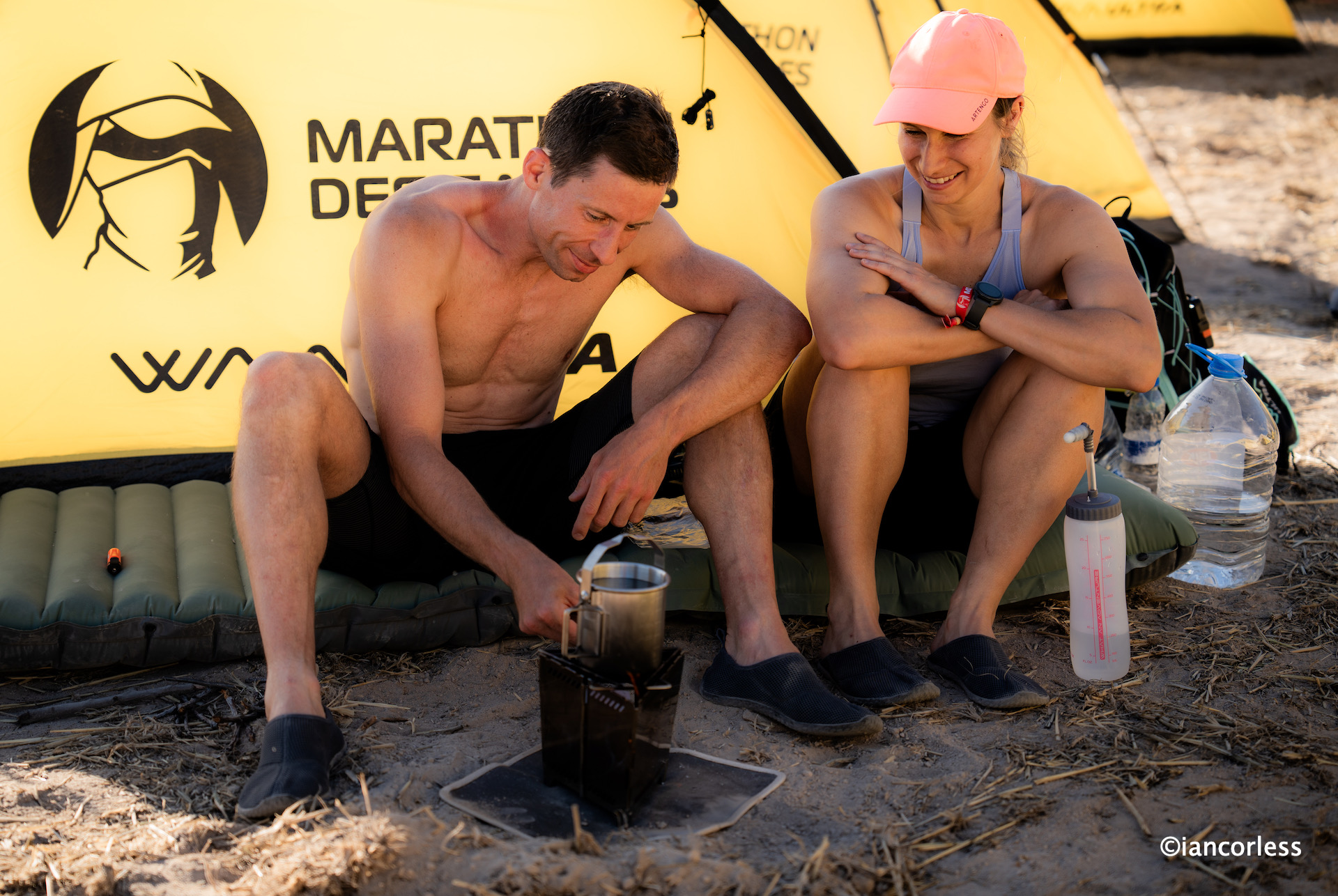
Participants sleep in individual MDS tents in cells of 6. There is a communal shaded area with matts so that everyone can relax post-race.
Camp life is like all other MDS events, The Legendary excluded, as here the bivouac tents hold 8-people. Priority is to relax, hydrate, eat and sleep. It’s a simple life. Participants are self-sufficient and therefore they must have all they need for the duration of the event. The exception is water, at the end of each stage, participants are provided a 5L bottle of water which must last to CP1 the next day (rest day excluded.)
In camp, there is medical/ foot care to ensure competitor safety.
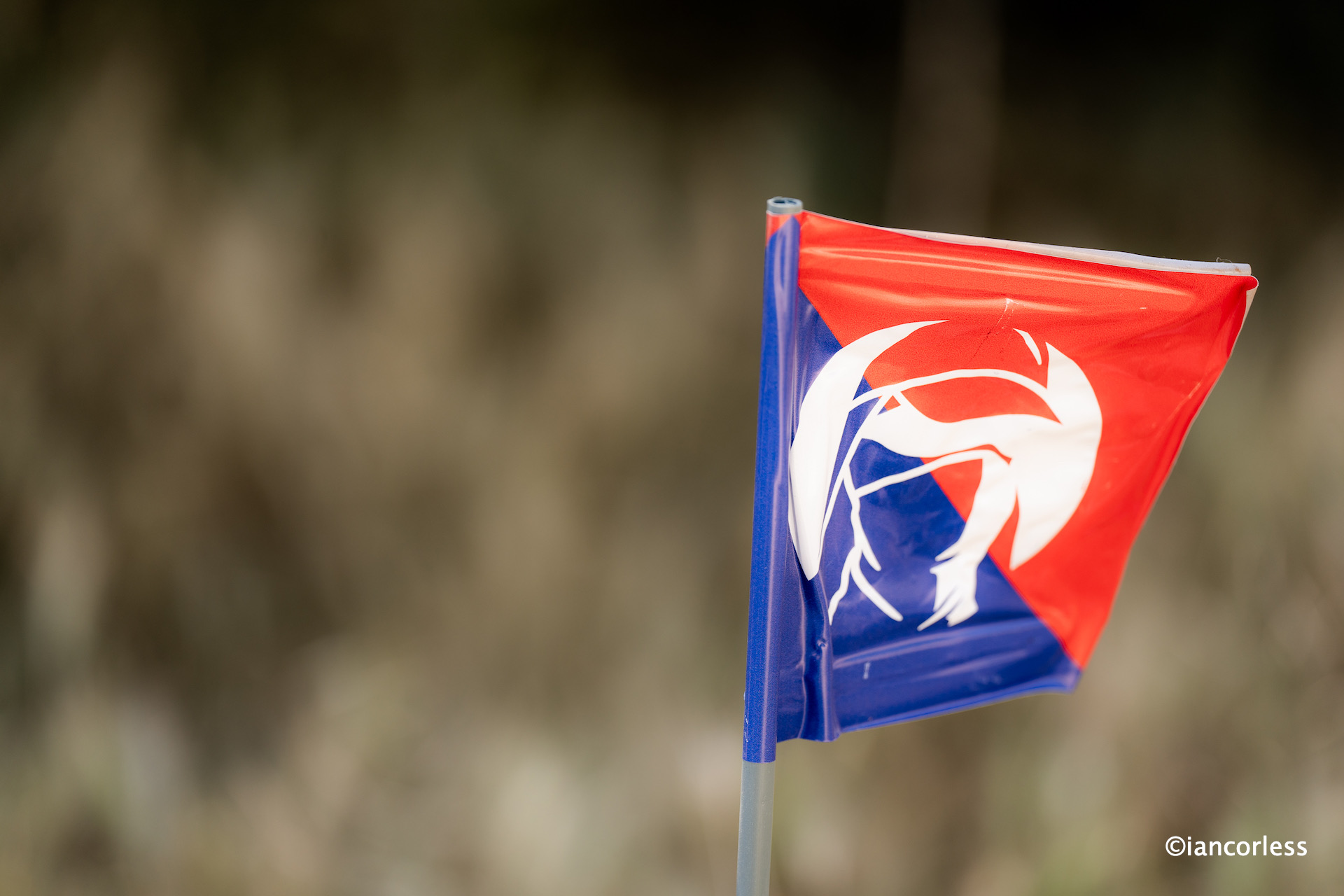
Flag markers
The race route is considerably more complex than other MDS events and as such, route marking is crucial. Marking consisted of red/ white tape and flags, and the route was very well marked. However, I do feel that the provision of GPX files would be a great addition.
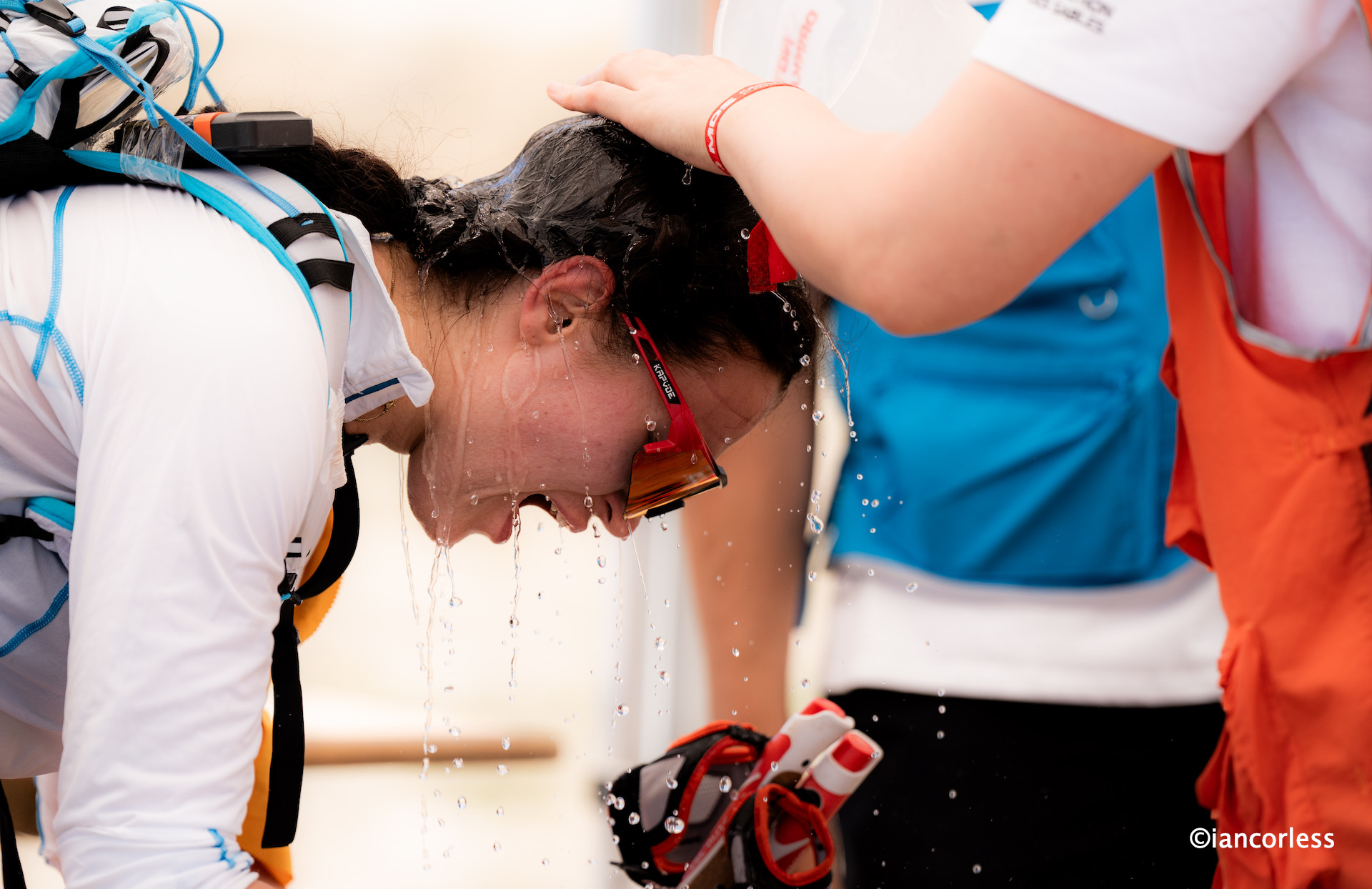
Aid stations with medical teams
Aid stations were superb offering a shaded area, an abundance of water and importantly, iced water which the medical team pour on heads and necks to enable cooling. Medical provision is at each CP. For stage 1 there was two CP, stage 2 depending on the chosen distance had up to five CP’s and stage 3 had two CP. If required, the organisation added impromptu water stations to ensure competitor safety.
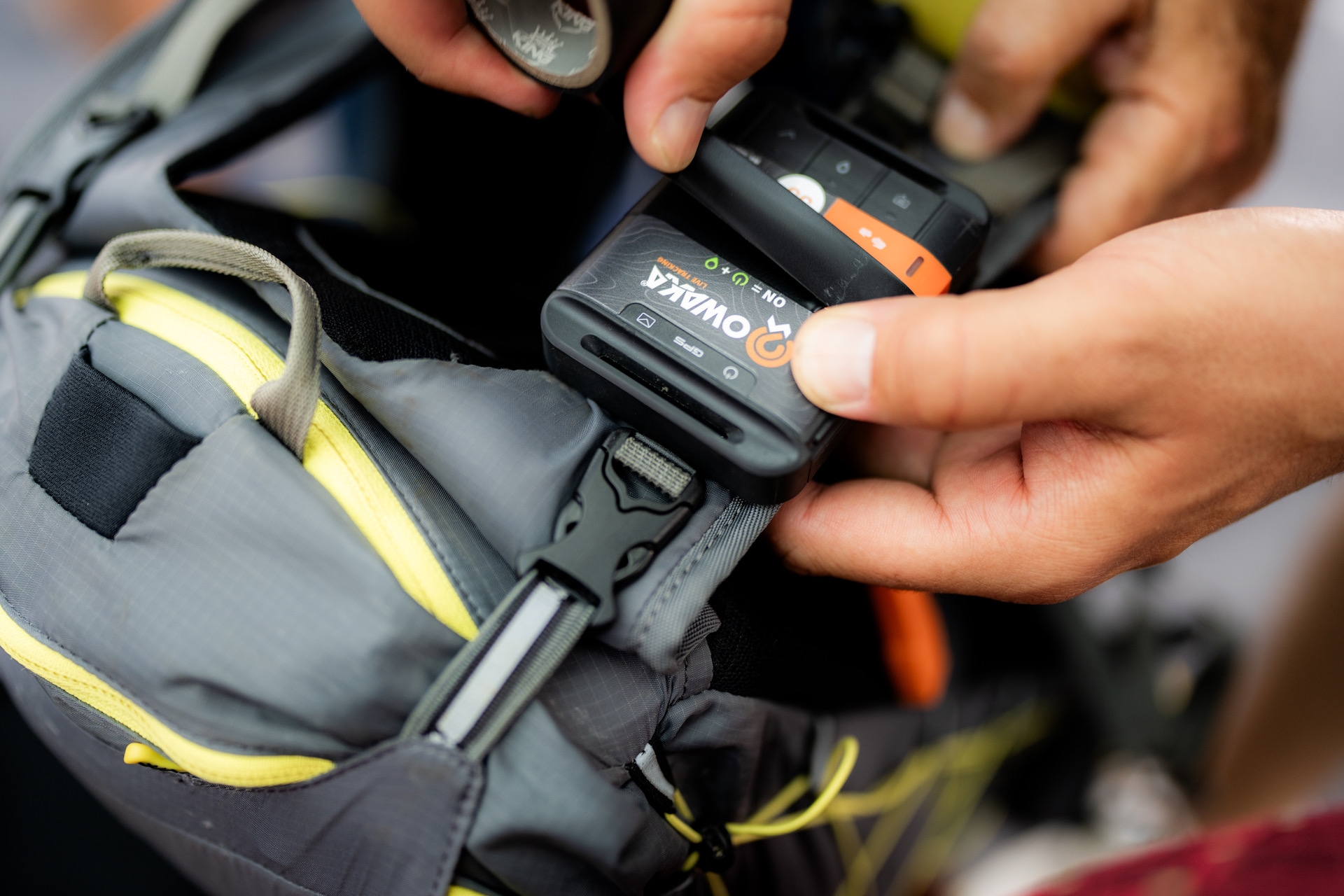
A tracker for each participant
Competitors each have a tracker so they they can be monitored and in addition, there is a SOS button in the event of an emergency.
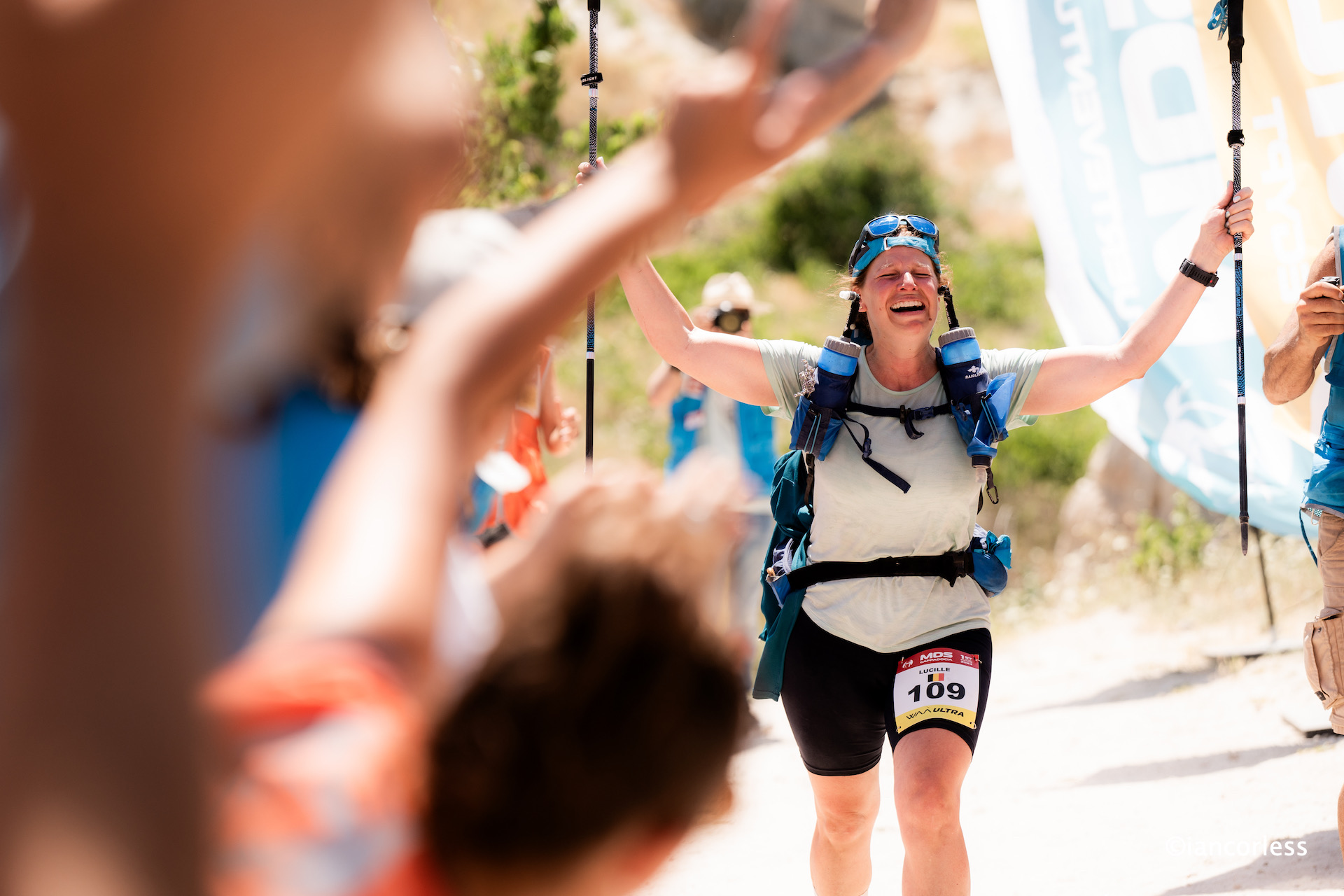
All about the finish
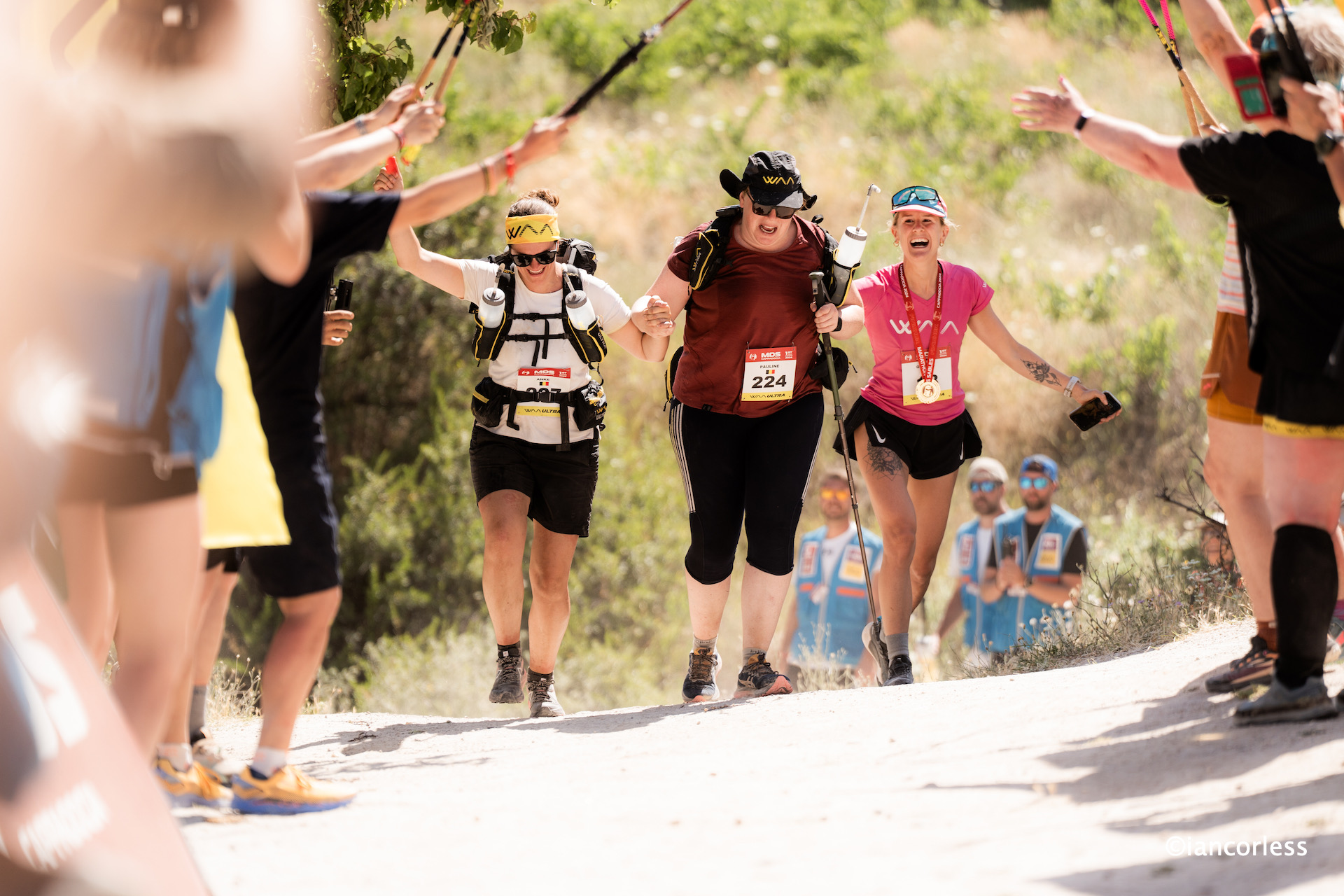
The event has cut-off times, however, the goal of MDS events is that each participant finishes, therefore, the organisation do all they can to facilitate runner’s crossing the line. Should someone DNF, they are given a free entry for the following year!
THE ROUTE
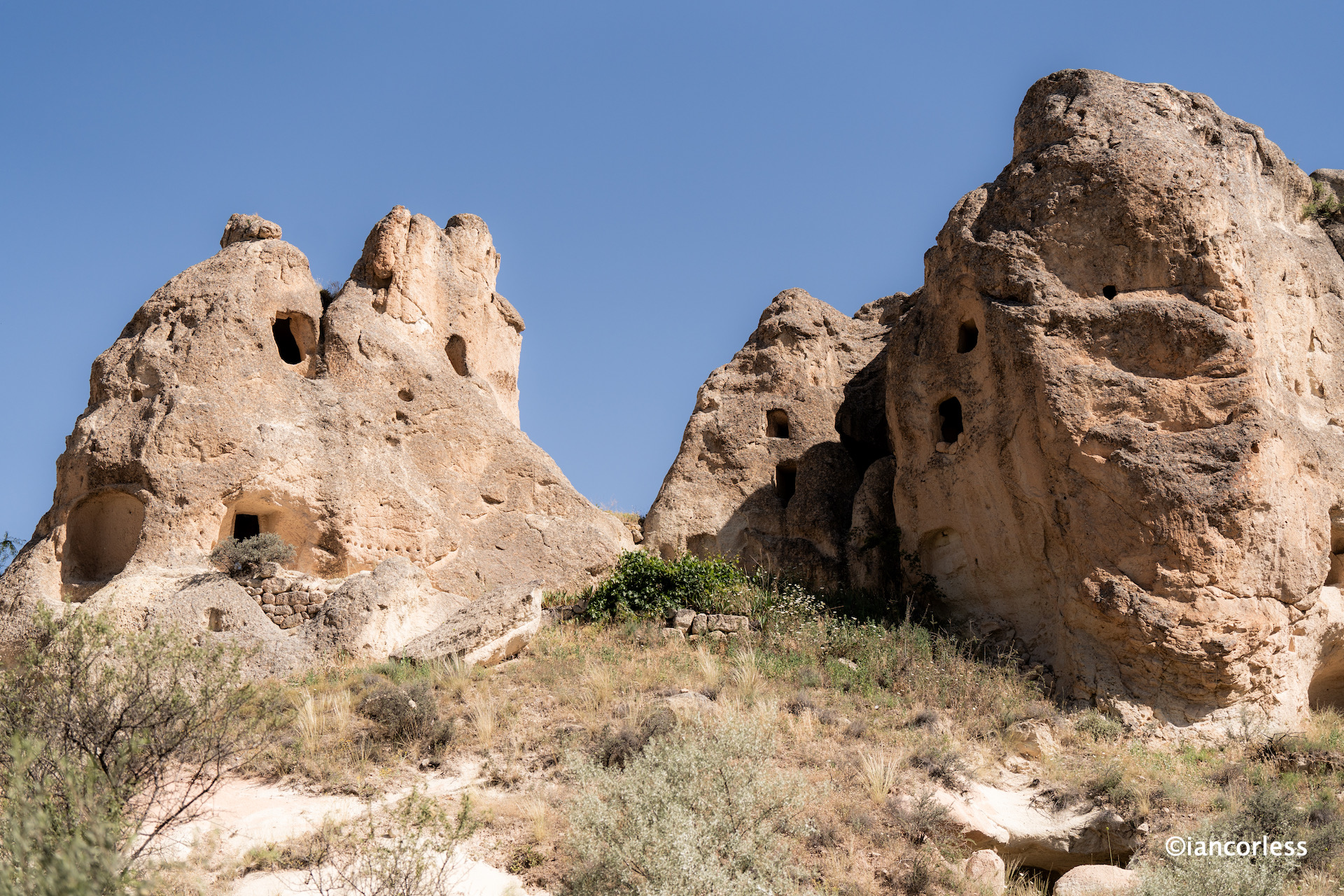
Troglodyte homes
MDS Cappadocia brings something very unique to the MDS line-up. This is not a desert race, it is much more a trail race.
Underfoot, there are considerably more challenges with an ever changing terrain.
Just look at the photos, the route is a visual splendour of a very unique landscape. Taking in key areas of the Göreme Valley such as the Red Valley and Love Valley, the experience is special. A volcanic landscape, that has been shaped by wind, rain, lava, ice and erosion. Add the early morning spectacle of the hot air balloons and I firmly believe that Cappadocia needs to be experienced at least once. What better way to do this running or walking?
As mentioned above, the route is much more of a physical challenge, km for km, this is a harder race, however, as all the 2024 competitors confirmed, it is an achievable one… If it was easy, anyone could do it!
THE EXPERIENCE
Quite simply, the feedback from participants was a wow. From the moment stage 1 started, the visual splendour begins and that is consistent throughout the whole race experience.
Balloons at bivouac
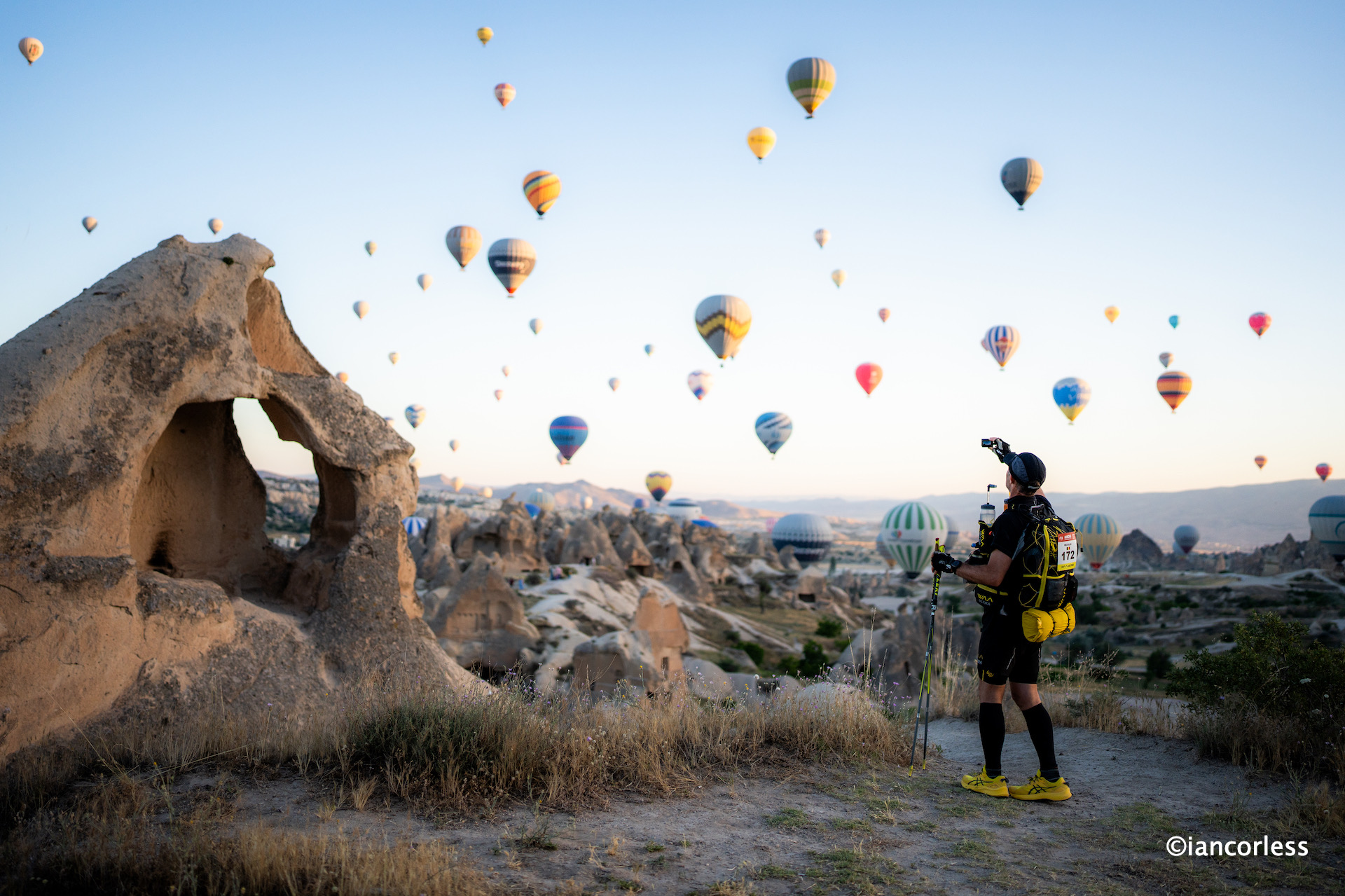
A highlight was the early start for stage 2 when the whole bivouac area was surrounded hot air balloons. I personally have experienced start lines all over the world and this was a highlight. It was completely mind-blowing and one that will last with everyone for their lifetime. It was a privilege and honour to experience it.
The last finisher emotions
The race was hard, especially with the intense heat. However, the MDS option to provide three distances for stage 2 is inspired and it gives everyone an opportunity to challenge themself in their own way.
In terms of runner’s needs, this is just like any other MDS event, however, there are some key considerations: 1. You need good trail shoes with excellent grip and toe protection. 2. Sand gaiters are not required but small ankle gaiters are a good idea to stop stones etc entering the shoe at the ankle. 3. Poles (and knowing how to use them) are a very good idea for the majority of the participants.
Teamwork
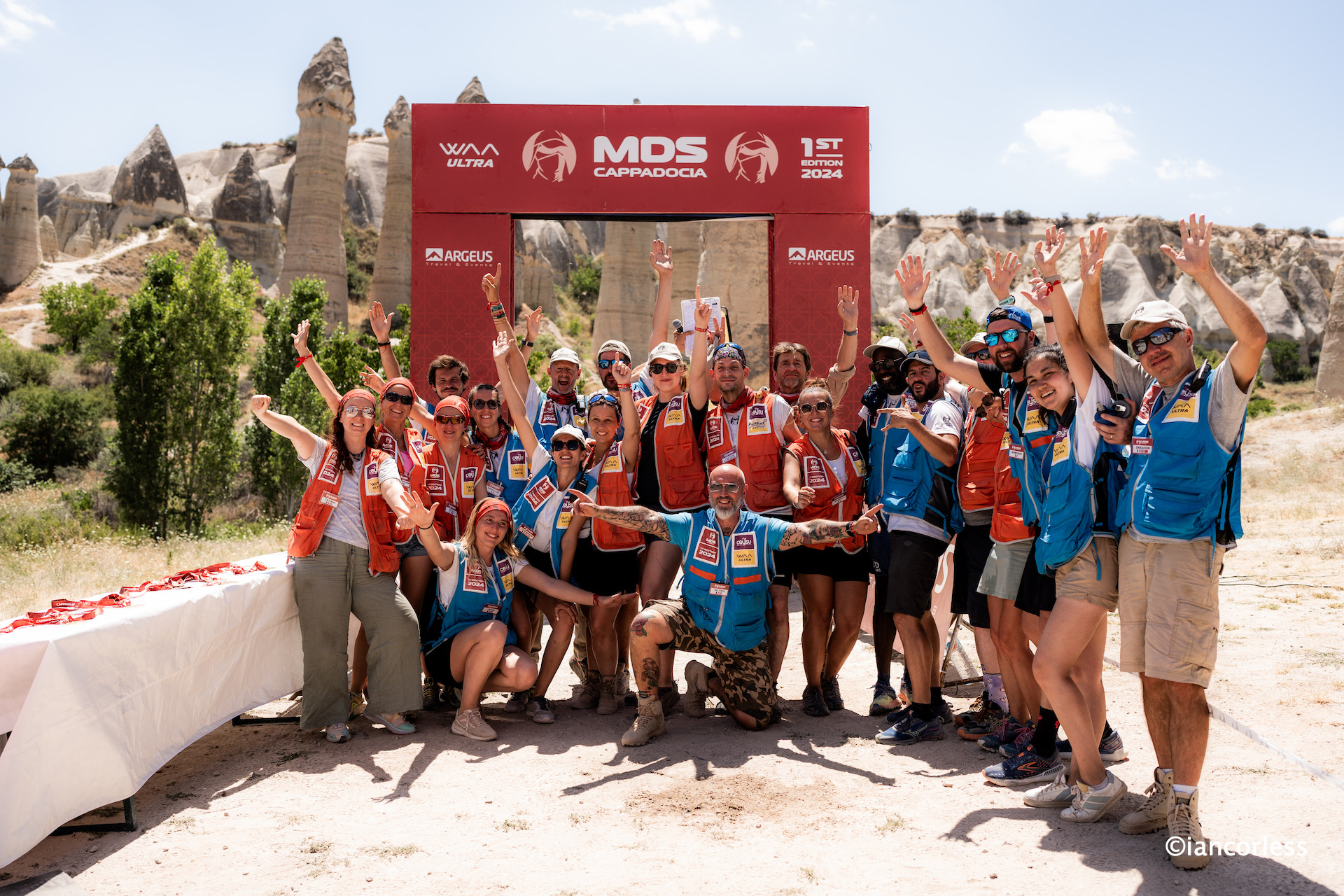
The MDS team have these events dialled and with a dedicated team they ensure competitor happiness and safety. Of course, first editions are always difficult, they are an opportunity to learn what does and what does not work. The general consensus post-race was one of huge success, however, it wasn’t perfect and the team look for this, so, tweaks.
The surprise of a hot air balloon flight was an incredible gesture by the MDS organisation, I think this almost certainly will be ‘option’ to add to the race experience in future editions.
The post-race awards, film, gala dinner and party was a great success.
It takes a dedicated team to make an event happen and it’s important to acknowledge Argeus Travel and in particular, Koray and Hayden for their on ground experience in facilitating the first edition of MDS Cappadocia.
The event brings something new and different to the MDS line-up and that should be applauded. There is something special here in Turkey that needs to be experienced just once.
The challenge is real, respect this environment. The combination of altitude, heat, challenging terrain, self-sufficiency and camp life is something special.
And finally, this landscape is very, very special it needs to be experienced to be believed.
Are you up for an adventure in an incredible part of the world?
If the answer is yes, Home Of The Giants is for you!
JULY 21ST TO JULY 28TH 2024
A multi-day adventure through the magical and amazing playground that is Jotunheimen, Norway. Unlike a race, this journey is a finely balanced exclusive trip for just 12 participants. A challenge at a more relaxed pace, taking in an amazing route whilst moving light in a semi self-sufficient mode.
The iconic ‘The Church’ we go to the summit on day 2
Spread over 5-days, our journey starts from Bygdin Fjellhotel with an overnight stay, the following morning we depart via the iconic M/B Bitihorn boat covering the length of Bitihorn lake to our start point at Eidsbugarden. A magical journey, on foot, covering 100kmand 4774m+
Snow fields, water crossings and morraine
You will encounter snow, water crossings, airy and exposed sections, plenty of climbing and descending and full days on the trail. Each day will conclude at a DNT cabin where you will have a bed, shower facilities, 3-course dinner and breakfast included.
Rock and snow transitions to lush green and single-track
WANT TO JOIN US?
Only 12 places are available for what will be a journey of a lifetime.
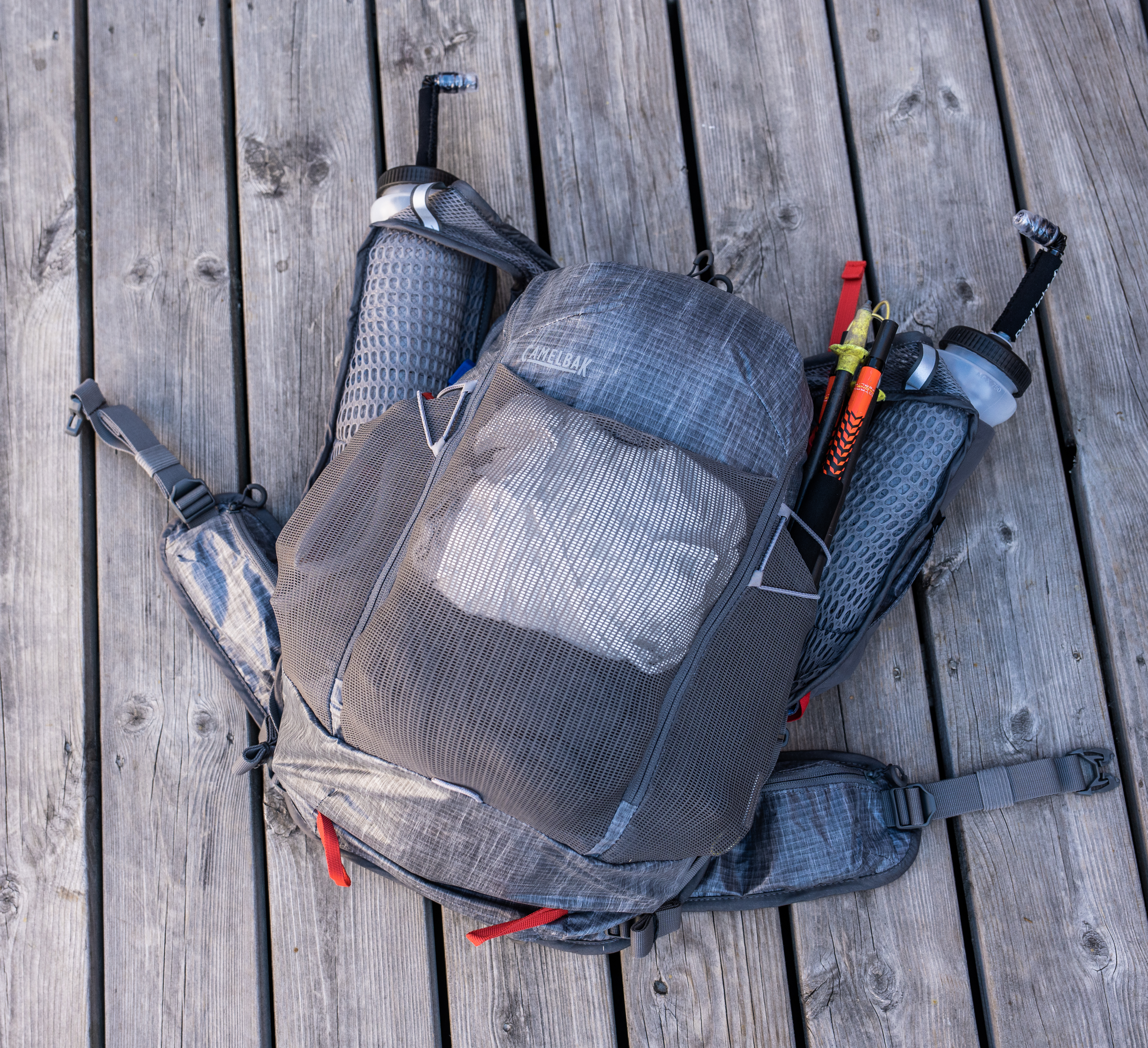
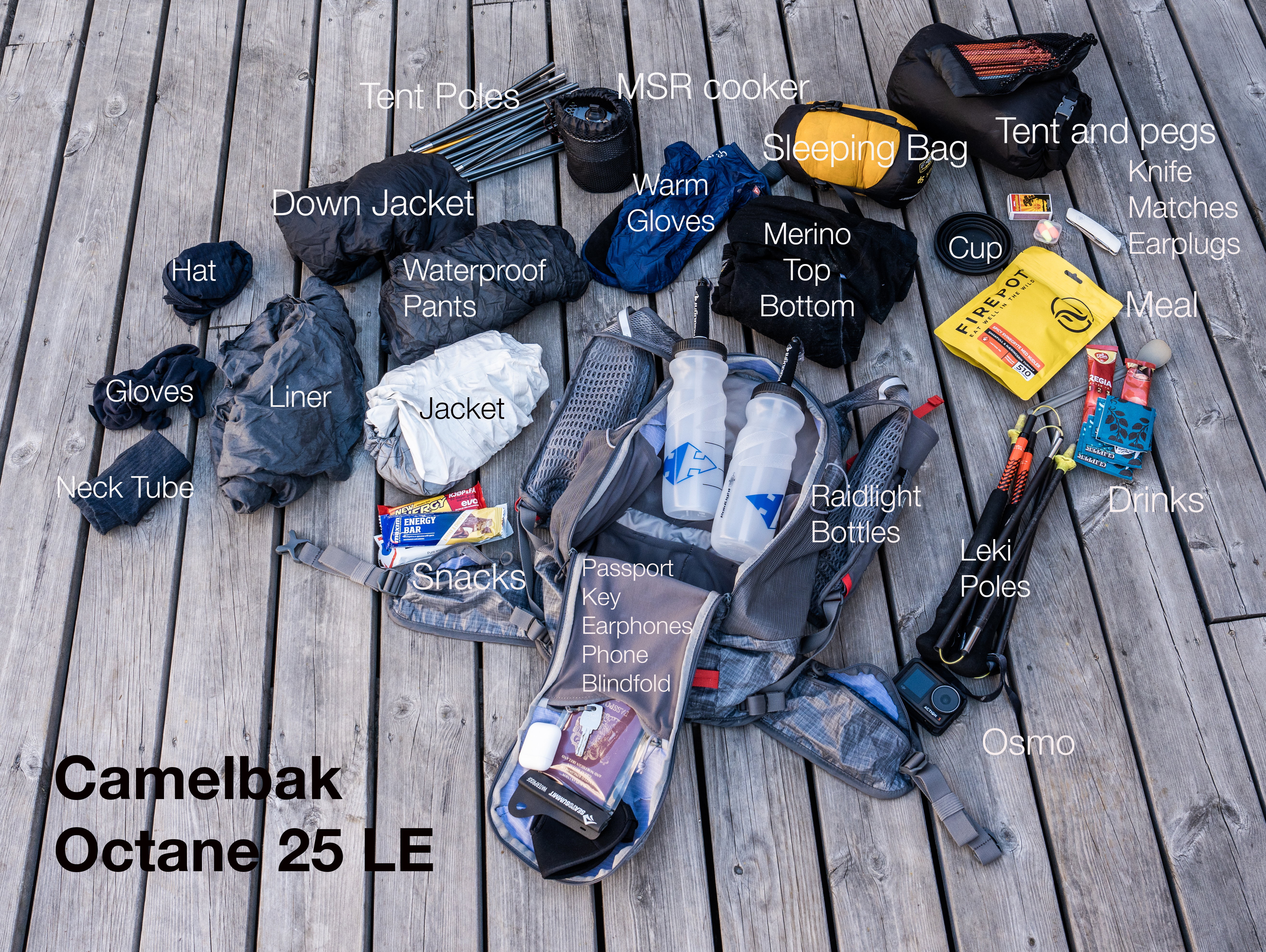
Octane 25 fully packed with tent,sleeping bag, apparel and food for a 1-night fastpack.
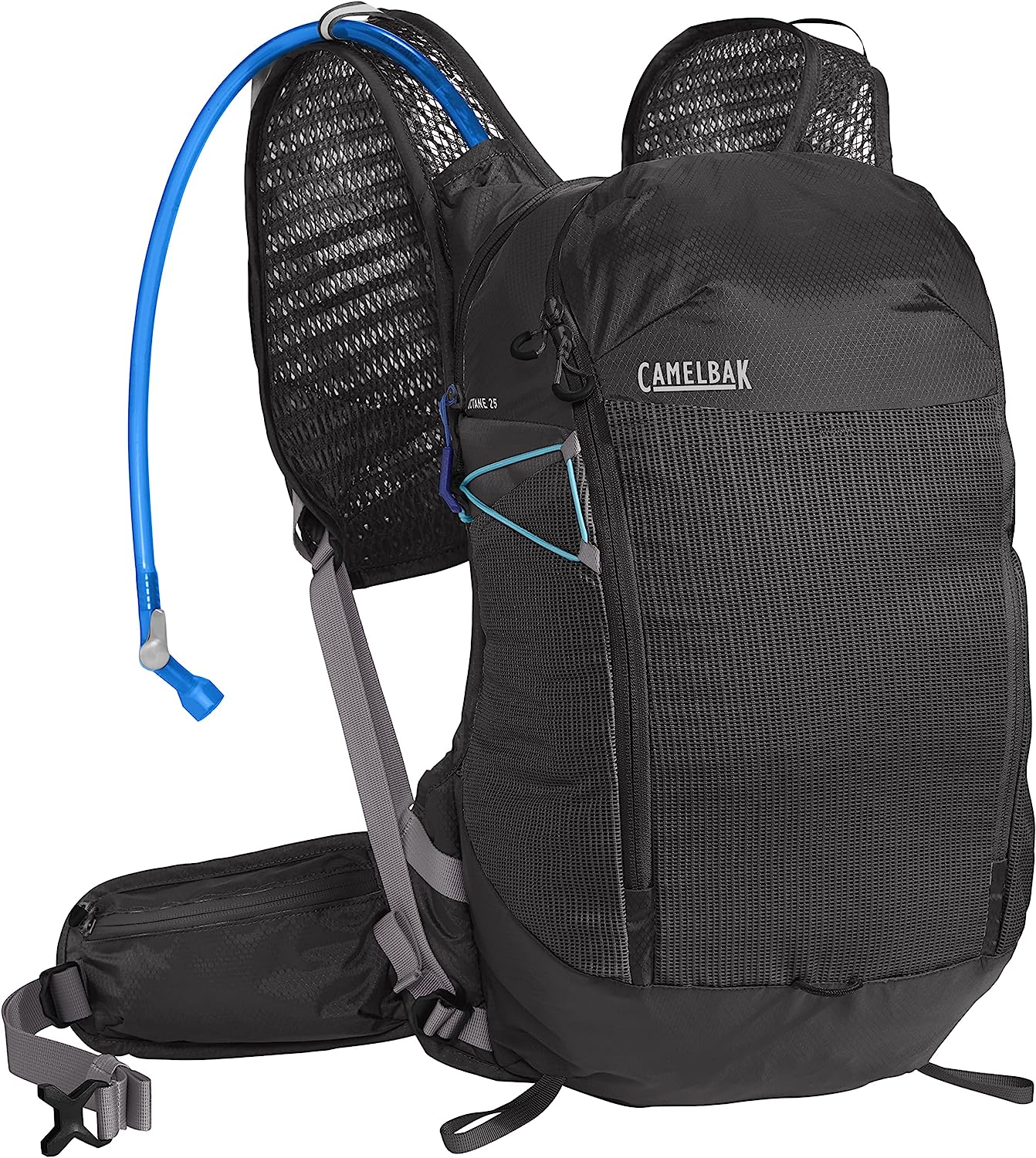
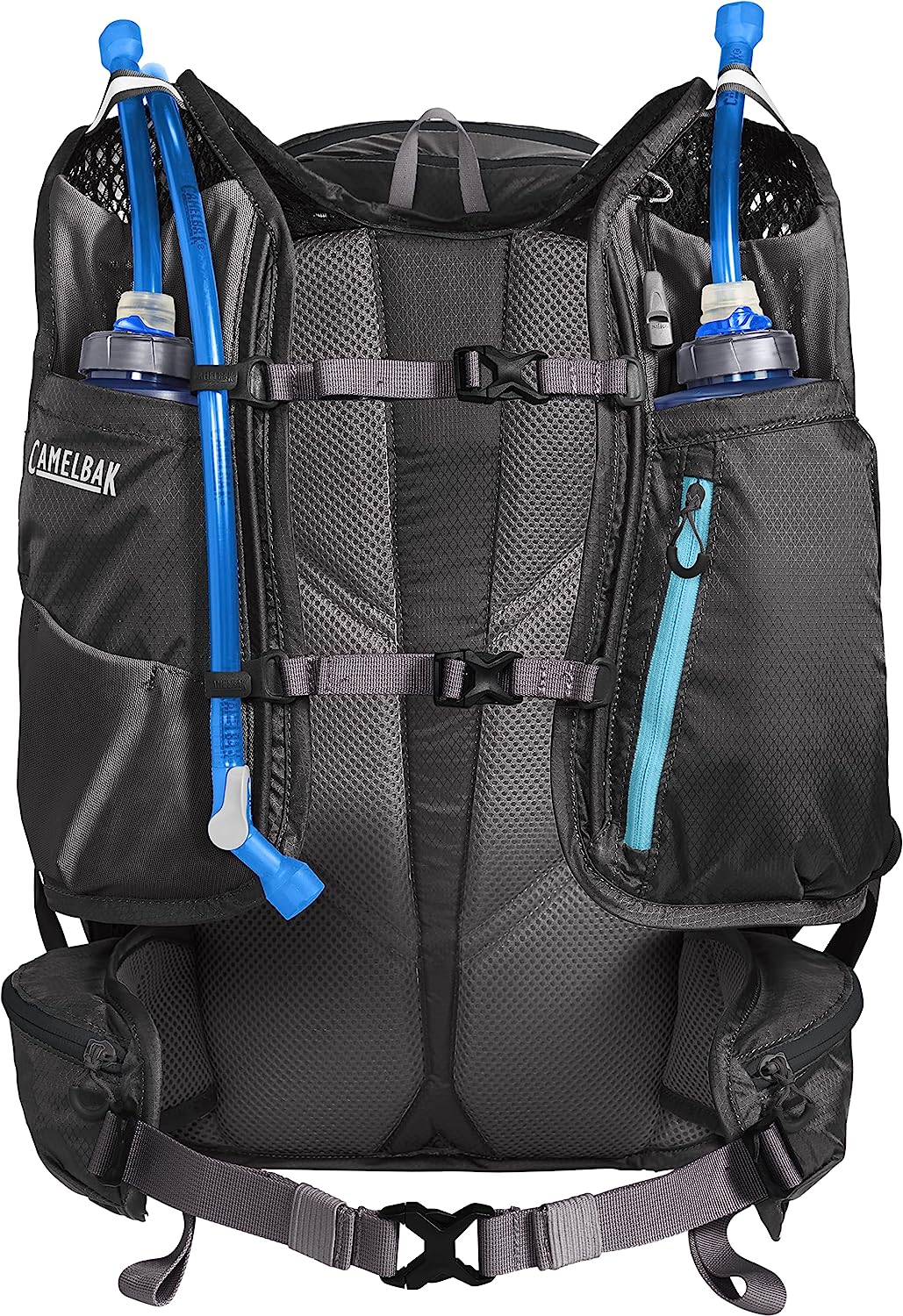
Streamlined, lightweight, full of features and storage, CamelBak have brought together the best of both the trail running and hiking worlds with Octane 25 LE.
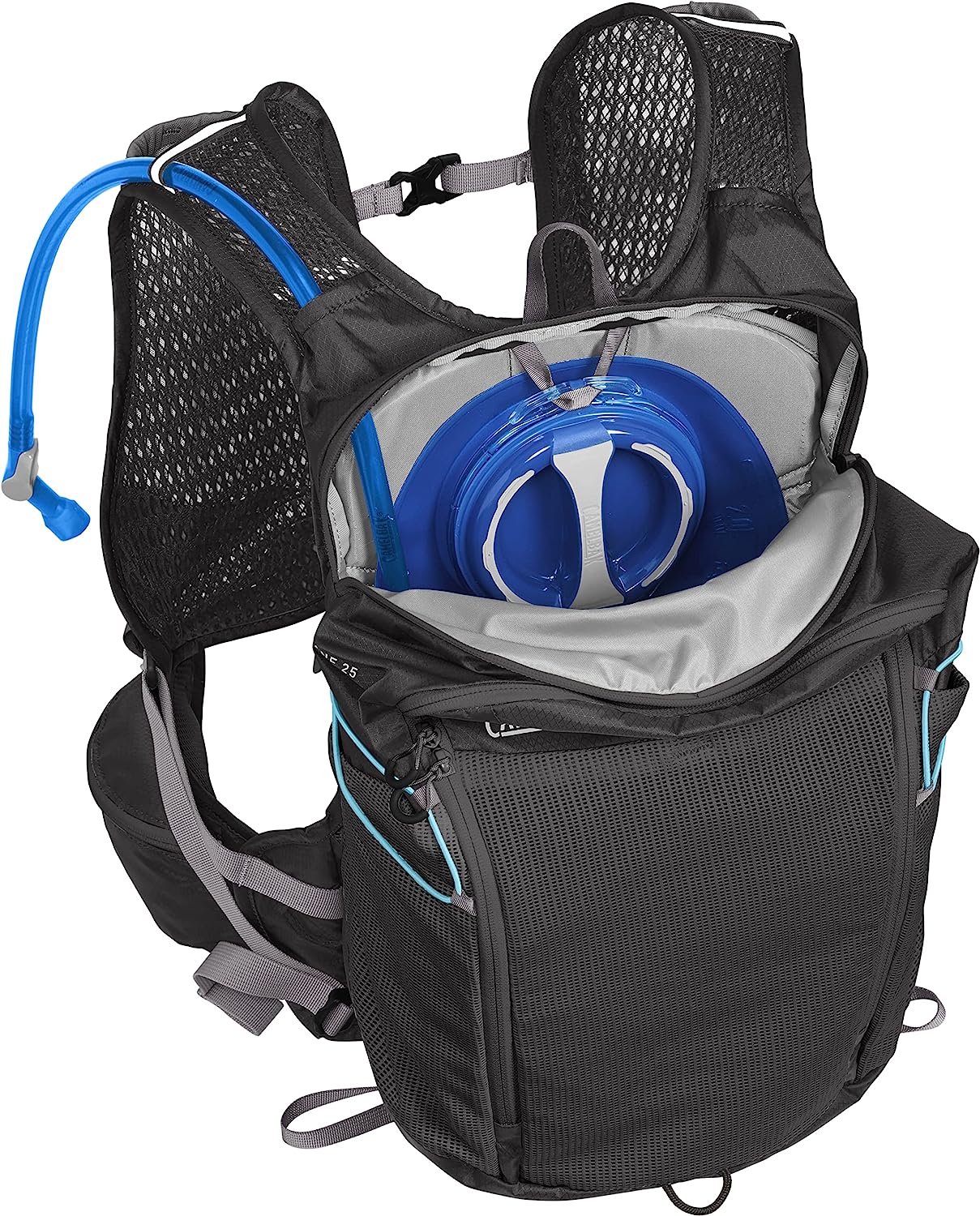
As you would expect, CamelBak has integrated a system to keep the bladder secure and easy to access, with the hydration hose tucked in and out of the way with secure fixings at the front. For many though, the use of the bladder can be a plus or a minus, so, removal is easy. At the front, there is storage for two large bottles or soft-flasks.
Ultimately, this pack with 25L of storage is perfect for fast packing and multi-day stage events. It is optimised for those who want to stay light and move fast. It is full of features and after packing and testing, this is a piece of equipment that is ideal for a race such as Marathon des Sables.
Key features are:
Belt with two zippered pockets for ‘on-the-go’ snacks.
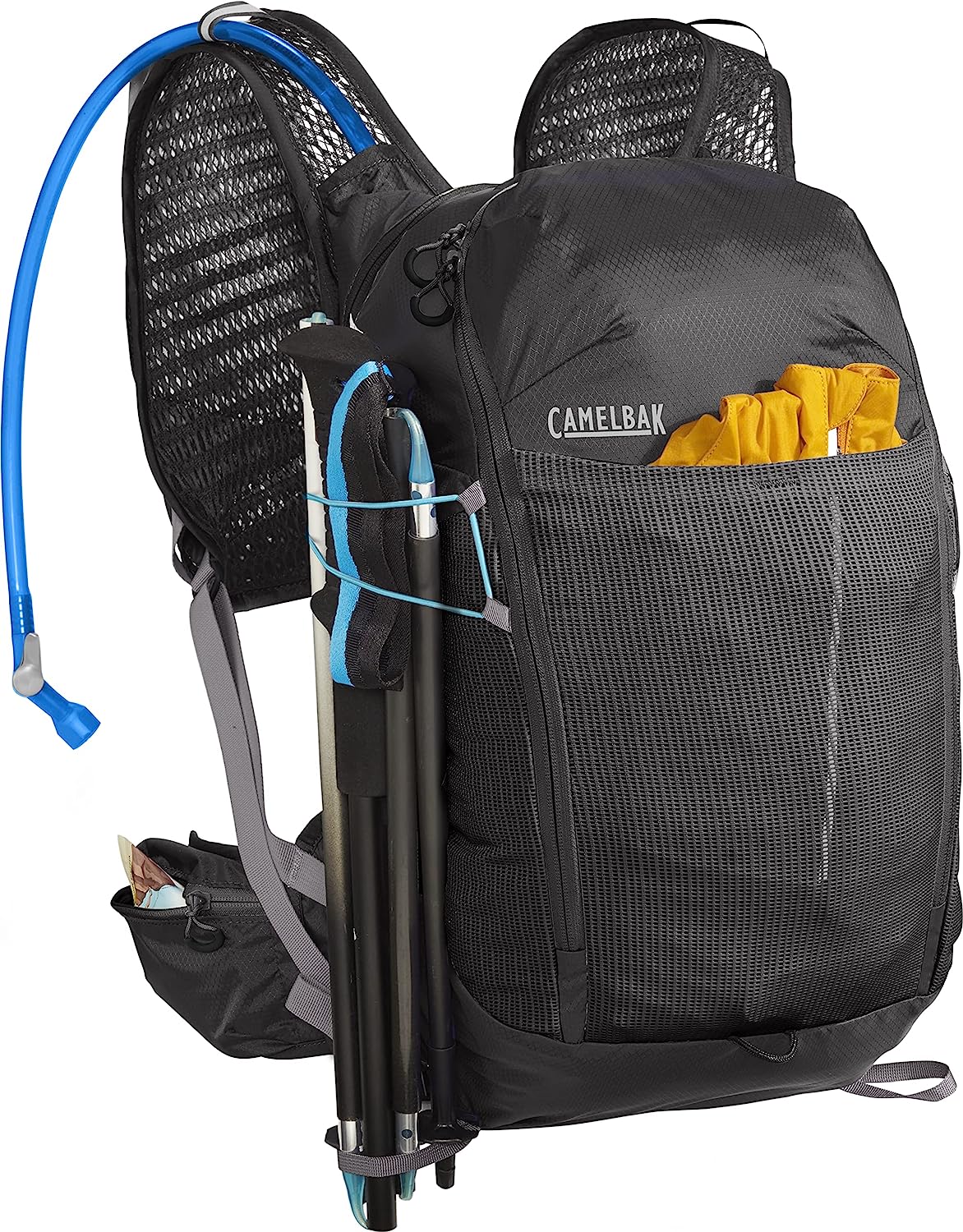
Trekking pole storage via left or right side.
11 exterior pockets one with zipper and two for bottles/ soft flasks.
8 interior pockets one with zipper and key holder
2 chest straps
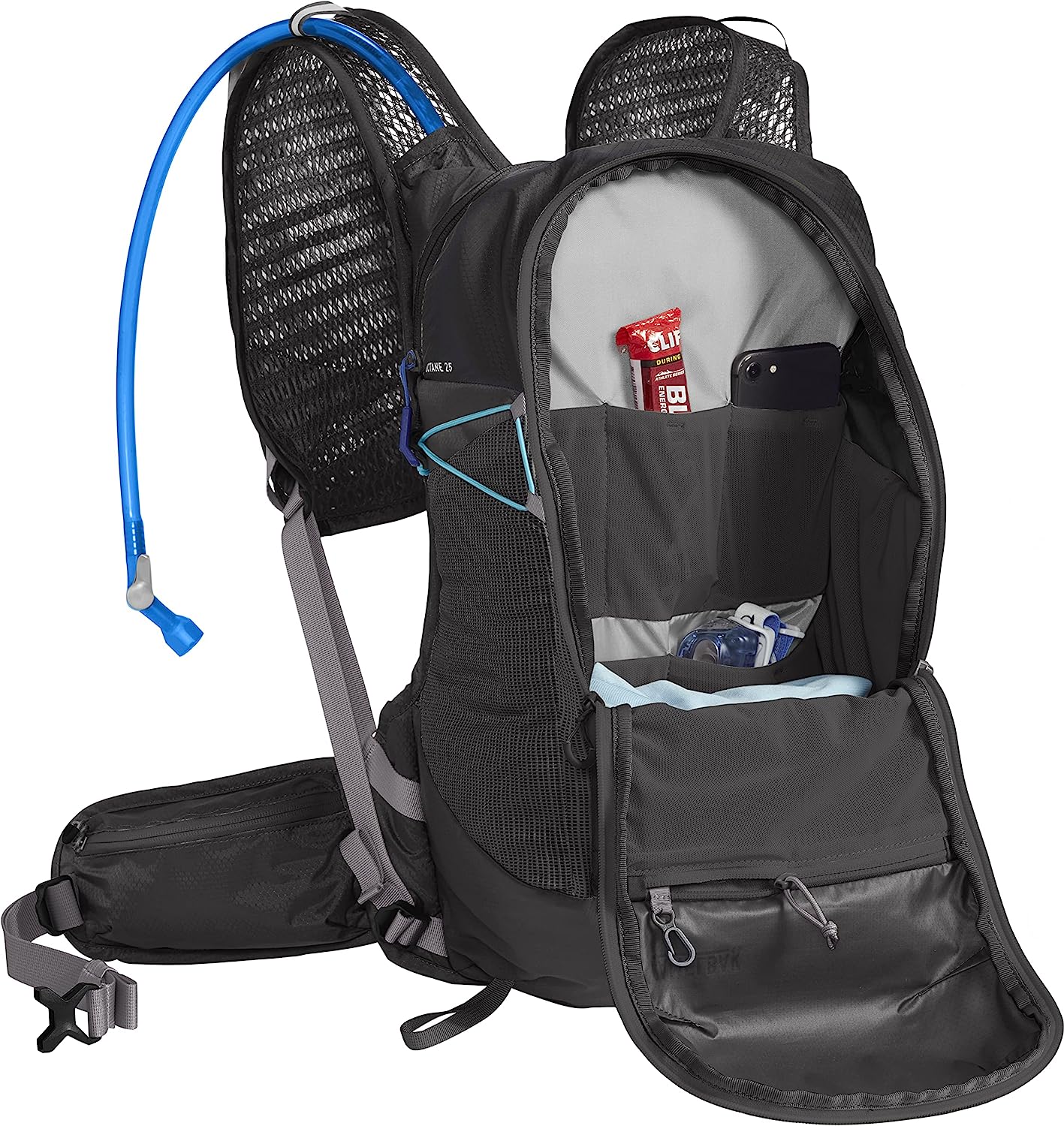
A large zipper opens up the pack like a suitcase, therefore adding and removing contents is easy. Inside the pack are multiple small stretchy storage pockets, 8 in total. On the rear insides 5, 2 longer pockets on the sides of the inside. In the lid of the pack is a zipper pocket ideal for wallet, passport with an integrated key holder.
Outside there are 11 exterior pockets and a giant compartment that is dedicated to hold the bladder, or, if doing multi-day, this is a great place to put a sleeping mat or even some clothing. Three large mesh pockets are ideal for external storage that may require quick access, for example, waterproof jacket, pants, hat, gloves, additional liquid and so on. Two elastic straps not only will hold poles in place but also help compress the pack smaller.
Pockets help keep things in place, and the dual chest straps keep it all closely attached to the body. The addition of the waist belt and two zippered pockets only adds to a secure feel and the increased pockets are welcome for ‘on-the-go’ snacks.
To provide perspective I removed the bladder and added a sleeping mat in to the bladder compartment (not shown in the video) and the items you see are as follows:
2 large Raidlight bottles
Big Agnes solo backpacking tent with poles and pegs.
Sea to Summit Sp1 sleeping bag.
Sea to Summit sleeping bag liner.
Merino LS top and bottoms.
Waterproof jacket.
Waterproof pants.
Down jacket.
Warm gloves.
Leki poles.
Merino beanie, neck roll and gloves.
MSR solo cook kit.
Sea to Summit spoon
Knife, matches, hot chocolate sachets, tea, earplugs, blindfold, snacks, and cup.
Firepot food and bars.
Osmo Active.
Phone, passport, and credit card.
To wear, the pack hugs the body, is comfortable and if adjusted correctly provides a run with minimal bounce. Made from ultralight sail cloth, the Octane 25 feels very durable. 3D vent mesh helps comfort and breathability.
While not one of the obvious choices for a multi-day or stage race, this pack is proving hard to beat. The features, the storage capacity and the fit against the torso is superb. It really is one of the best, if not the best, we have tried. Coming in one size, smaller or larger individuals would need to try on and make sure fit and comfort works. The side adjustments do compensate for many sizes and the waist belt adds to a secure feel and it helps spread the carry load.
Is there a downside? The only possible problem could be the zip. Zips can break, particularly when under pressure from holding in contents or from harsh environmental conditions, such as sand. However, this is just a thought process that needs considering, there is nothing in testing that would suggest there to be a problem.
Ultimately, one of the best fast packing and multi-day packs I have tried and one that I am using on all adventures for the foreseeable future.
This article is geared toward Marathon des Sables but is valid for any race with some adjustments and specific changes appropriate to the type of race and distance.
Marathon des Sables, once again, has been postponed. Originally scheduled for April 2020, the race was moved to September 2020 amidst growing worries and concerns over Coronavirus. As September approached, the writing was already on the wall and the decision was made to focus on April 2021 – everything will be fine then, won’t it!?
December 2020 soon came and with it, increased infection rates, new variants and despite the optimism of a vaccine, the world once again crumbled under the cloud of an ever-spreading pandemic. Christmas was cancelled and the new year unfortunately had nothing ‘new’ about it, it carried far too much of the old year.
January has been a disaster and the long-term view is not good. The world once again has been in a lockdown, some far worse than others. One thing is for sure, we are all a long way from ‘normal!’ So, it came as no surprise as events were cancelled all over the world.
Patrick Bauer.
MDS race director, Patrick Bauer, travelled to Morocco to assess the situation and on January 22nd, the MDS was once again postponed to another time; October 1-11, 2021.
All is good… the race WILL come!
I think it’s important to clarify, here and now, that at the end of the day, when people are dying globally, for a race to be postponed, is no big deal… I think once you accept that, dealing with race cancellation, disappointments and postponements becomes so much easier. It´s only a race! And we are fortunate to be able to race. It’s a luxury. But equally, livelihoods are struggling, RD´s are losing work, all the businesses associated with races are losing work, travel companies are losing customers, hotels, restaurants, design agencies, photographers, videographers and the list goes on, are all losing their livelihoods to an ongoing escalating pandemic. So while it is only a race, have a consideration for all involved and maybe, a little understanding for the very difficult challenges everyone is facing at the moment.
The locals need MDS, our tourism and our regular trips to Morocco.
Taking MDS as an example, 2020 participants will have entered in 2019 and some may well have entered in 2018. Typically, a MDS participant will prepare for 1-year. While the initial postponement was not great, it was easy to focus on September.
Then September was cancelled… Already, many were struggling to re-focus, but April would be it, one last push and we are good to go!
Now, with another postponement, MDS runners are left in a void, the race is 8-months away. They are all asking, what do I do now?
Gemma Game has been on the podium of MDS multiple times. She is a busy professional with a family.
Firstly…
When things change, adjust. Don´t kick-off against what has changed. Accept what is not in your control and control what you can. Adapt, move on (with running shoes) and train differently for a while; focus on different aspects of your running, weaknesses in particular. Look at the opportunities – focus on speed, work on hill strength, build a good core, do drills, stretch, maybe try yoga? A change of focus will give a physical and mental break and will help your performance. When the time is right, resume an appropriate training plan for your chosen race. I guarantee, you will be stronger, better prepared and ready for the challenge ahead. You are lucky and fortunate that you are able to even contemplate a race like MDS.
Uncertainty is a virus in itself, it can eat away at you. Quite simply, remove negativity and question marks. The current dates for MDS are 1-11 October. Do not consider the event will not happen, plan and train accordingly.
The reality is you are already in a good place. You have been training for a great deal of time already, just imagine how much better you will be when October comes.
Training in Lanzarote on a specific Multi-Day Training Camp HERE
Importantly though, it would be fool hardy to carry on with current training levels for an October race. You run the risk of injury and/ or getting peak fitness too early. Take a break!
“One of the mistakes I see most with runners is jumping from one race specific cycle to the next, without either giving themselves enough time between races or not “focusing” on training during the time between race and “taking a break”.
– runnersconnect
Kick back, take some time off from any structured plan and do a week/ two weeks (or even a little longer) of ´how you feel´ training. In this period, take time (with a piece of paper) to assess personal strengths and weaknesses. From this list, you can use February and March to address these weaknesses while ´maintaining´ fitness. Back off any intensity, maintain some decent mileage/ hours and keep sessions moderate.
Tom Evans placed 3rd at MDS and works on strength and core to enhance his running.
Importantly, get a running MOT from an experienced physio. Address any problems now and use that ‘extra’ time for therapy, strength, stretching and core. Find any underlying problems that may cause injury.
Work on admin – food for the MDS (article HERE), pack, sleeping bag (article HERE) sleeping mat and finalise equipment choices optimising weight, size and cost. Do everything you can to make your pack 6.5kg (plus water) for the start line on October 3rd. Read a guide HERE.
Do you need a 12-week and/ or 24-week Multi-Day Training Plan perfect for a multi-day adventure or a race like Marathon des Sables? They are designed to provide you with a structured weekly plan culminating in a target event.
View a sample week HEREfrom the 12-week plan. Purchase HERE.
View a sample week HERE from the 24-week plan. Purchase HERE.
*****
The arrival of April will give you 6-months to race date. Now is the time to re-focus. Did you have races planned? If so (and they happen) maybe now they change focus and become preparation for MDS?
Use 3-months (April, May and June) to build on the weaknesses that you have worked on in February and March and lay the foundations for the key phase, July, August and September.
“One of the most common reasons runners hit a plateau is that they don’t work on their weaknesses between races, by focusing on your weaknesses now, you’re able to make progress long-term, even without training as hard.”
– runnersconnect
Do some specific training, here Sondre Amdahl at the Lanzarote Training Camp HERE
July should be the start of a very specific MDS phase (12-weeks) where you fine-hone all the relevant skills to make the 35th MDS not only successful but awesome.
It is easy to feel deflated with another disappointment and postponement but look at this cloud with a silver lining!
Please support this website. I believe everyone deserves to read quality, independent and factual articles – that’s why this website is open to all. Free press has never been so vital. I hope I can keep providing independent articles with your help. Any contribution, however big or small, is so valuable to help finance regular content. Please support me on Patreon HERE.








 IAN CORLESS