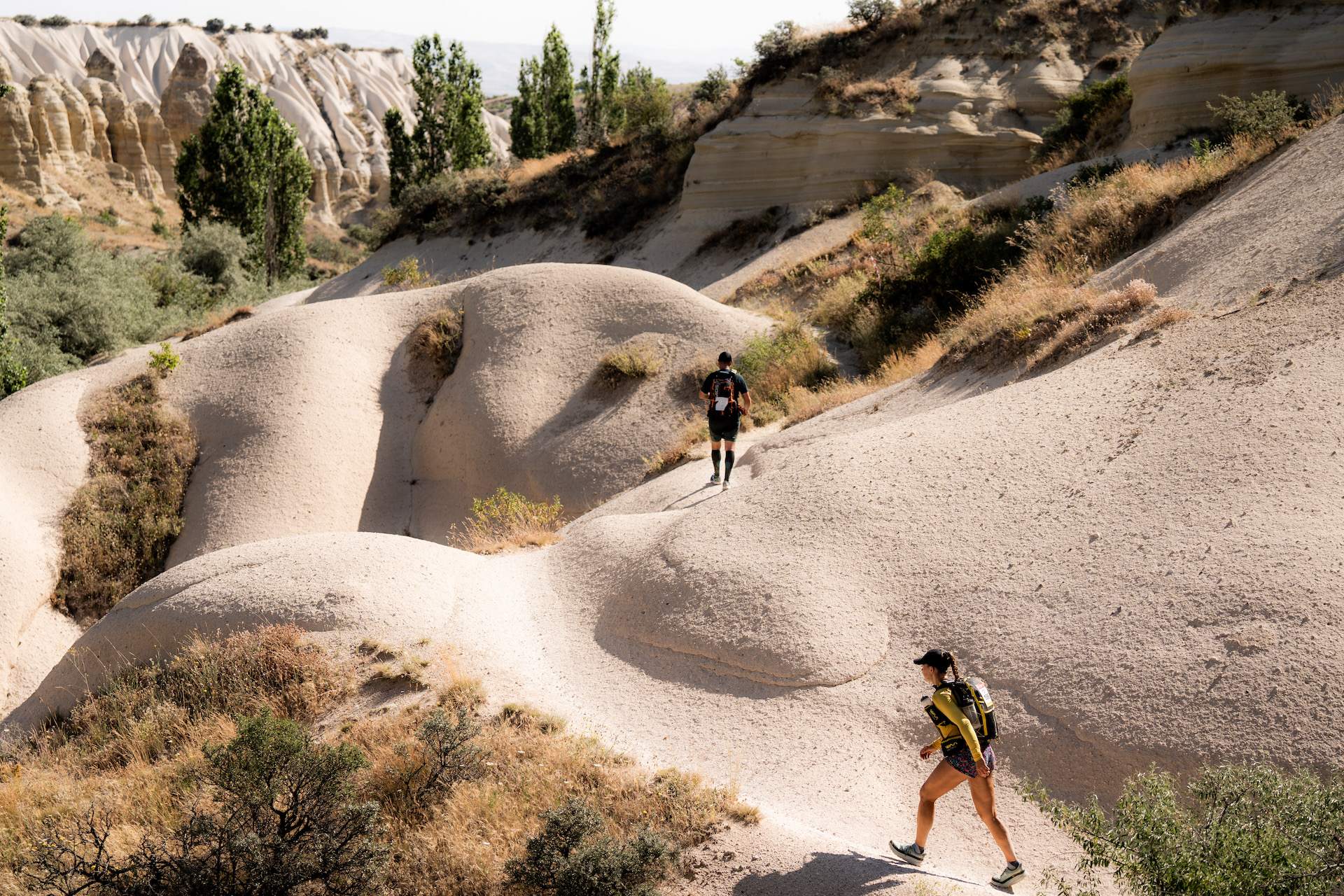
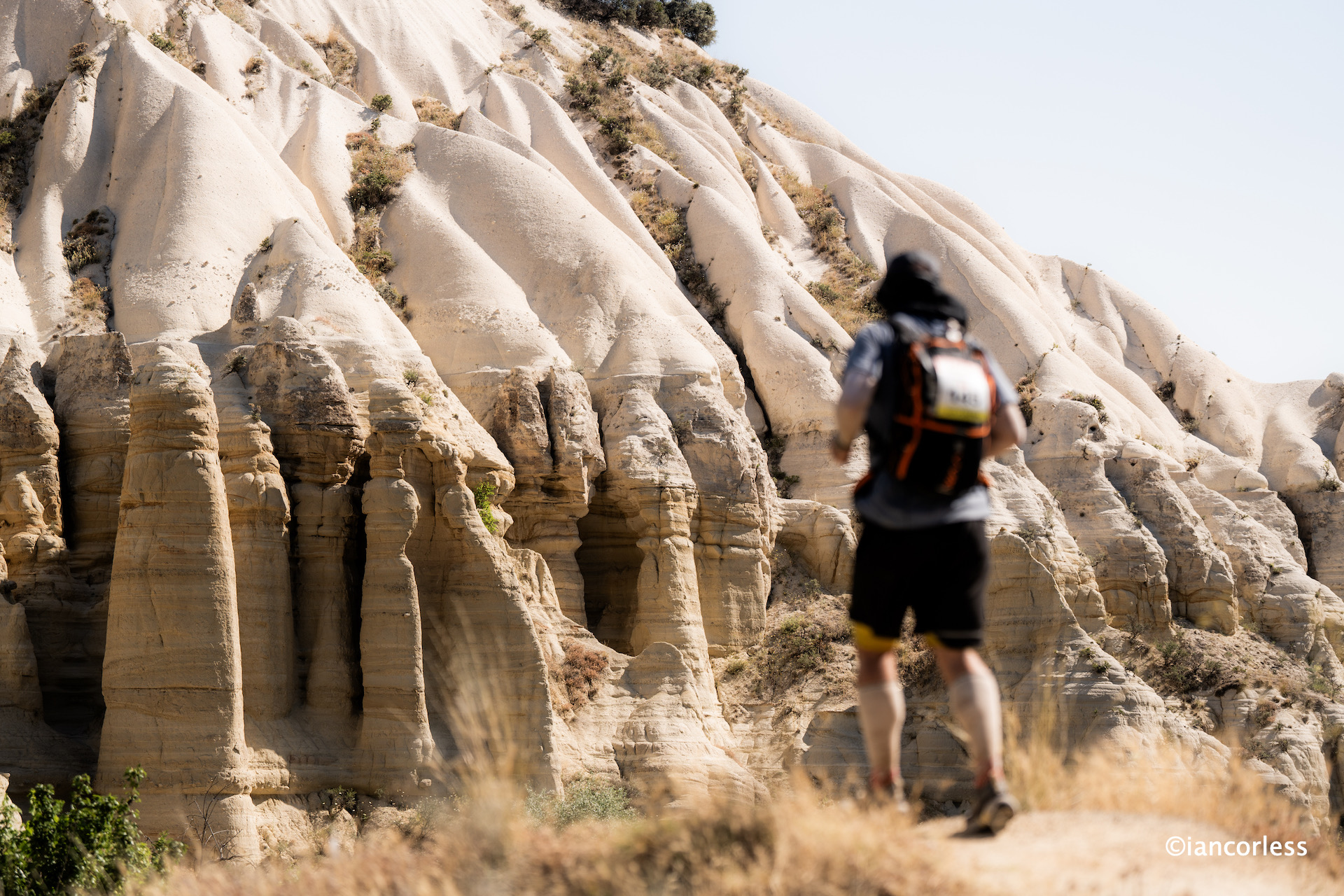
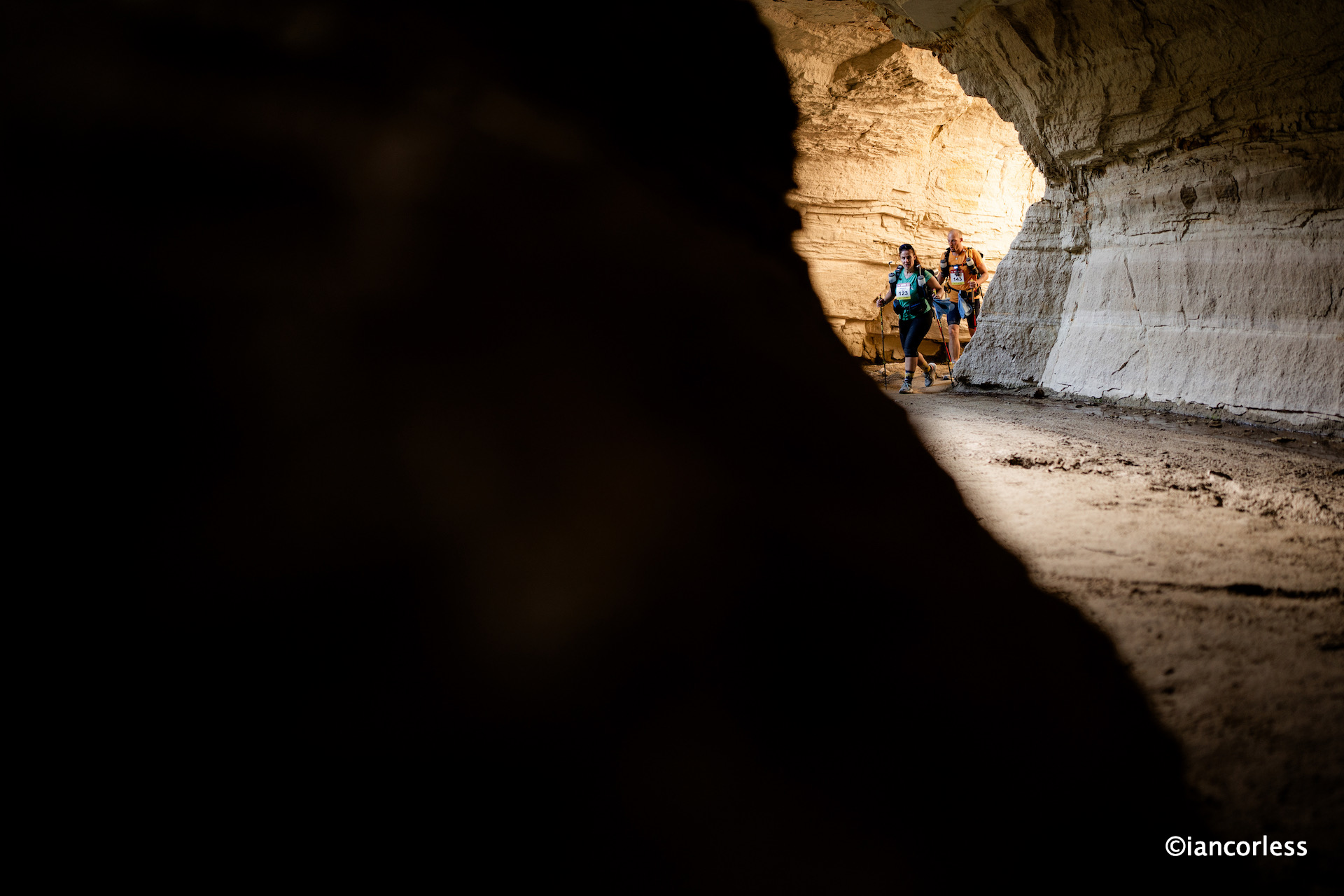
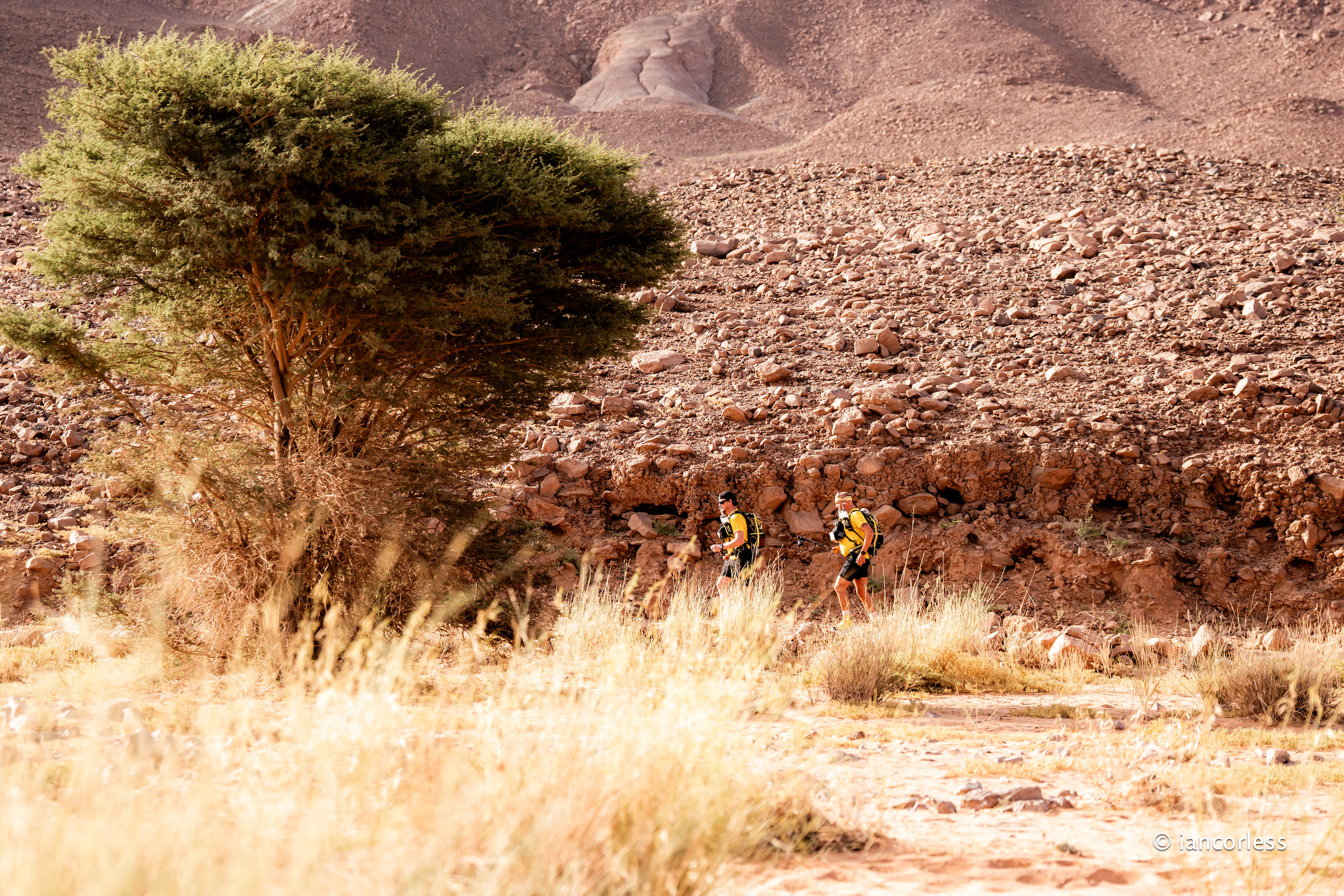
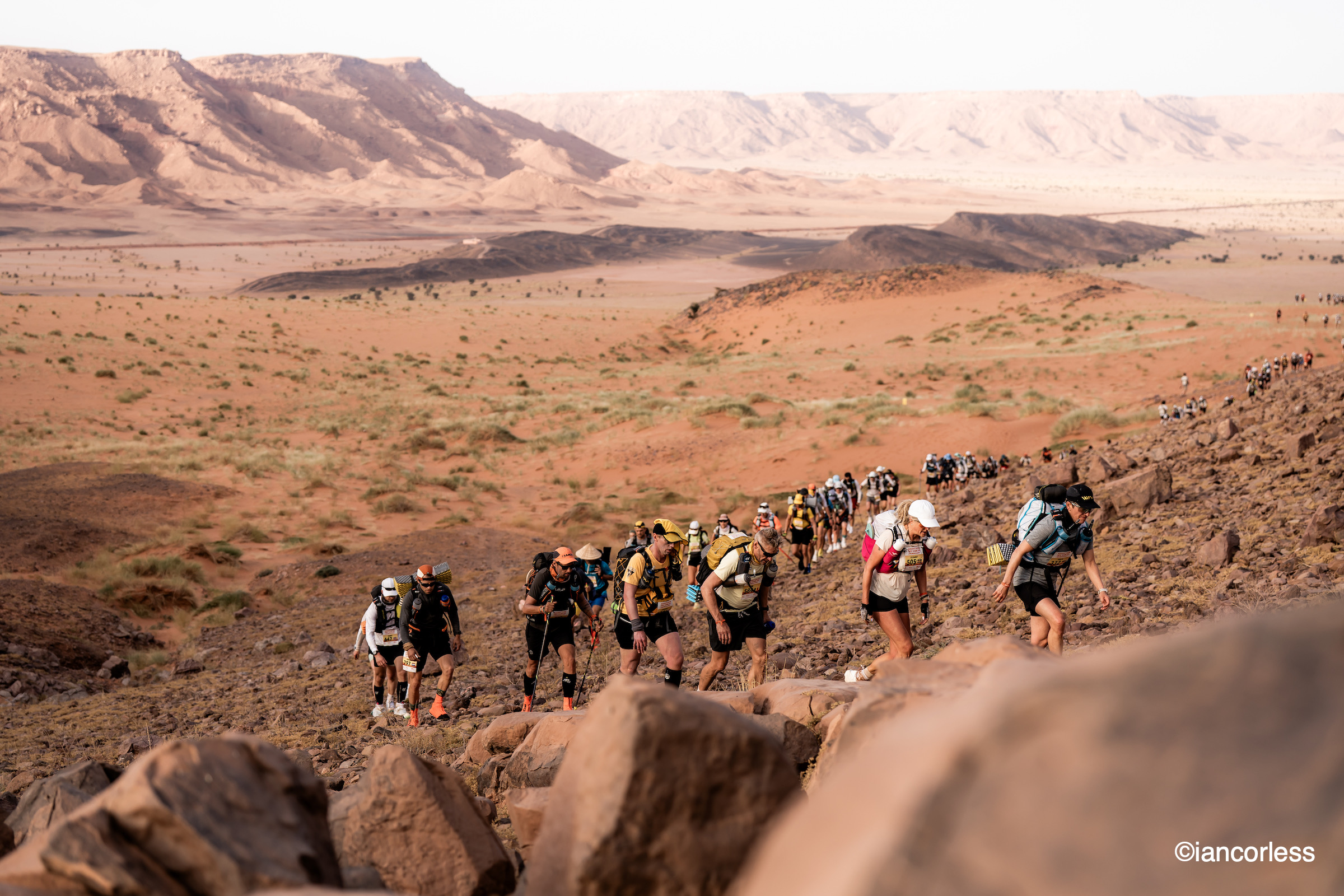
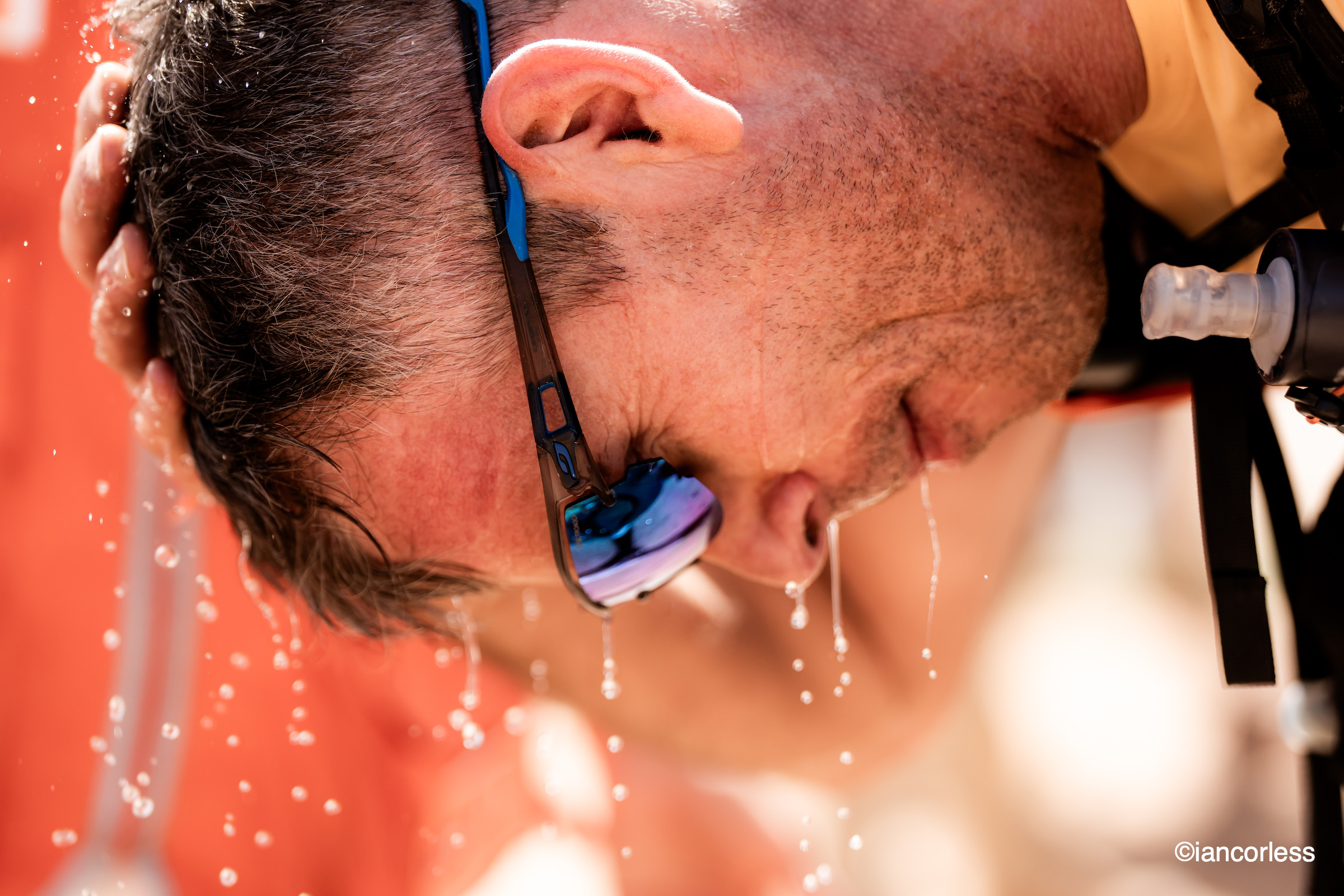
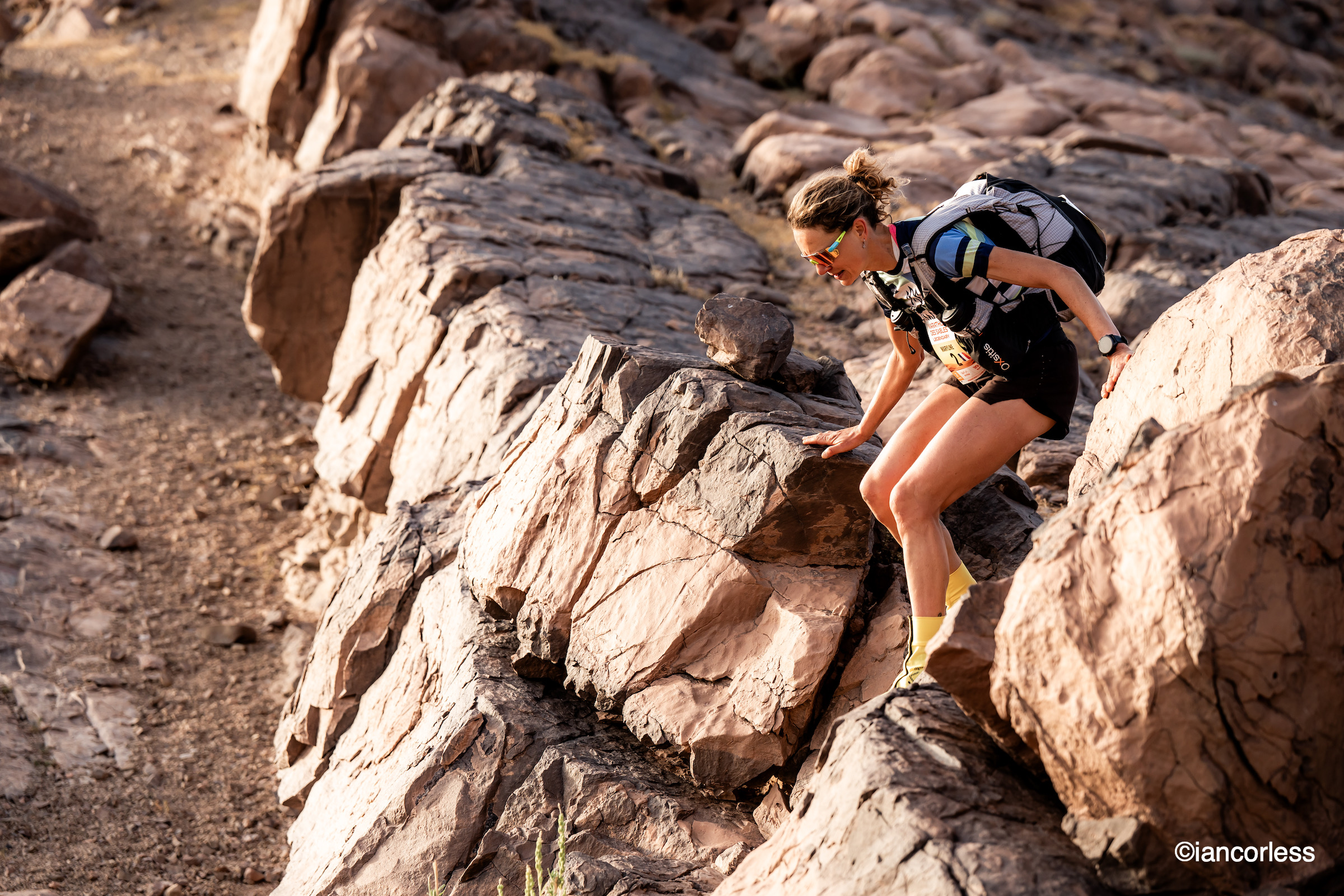
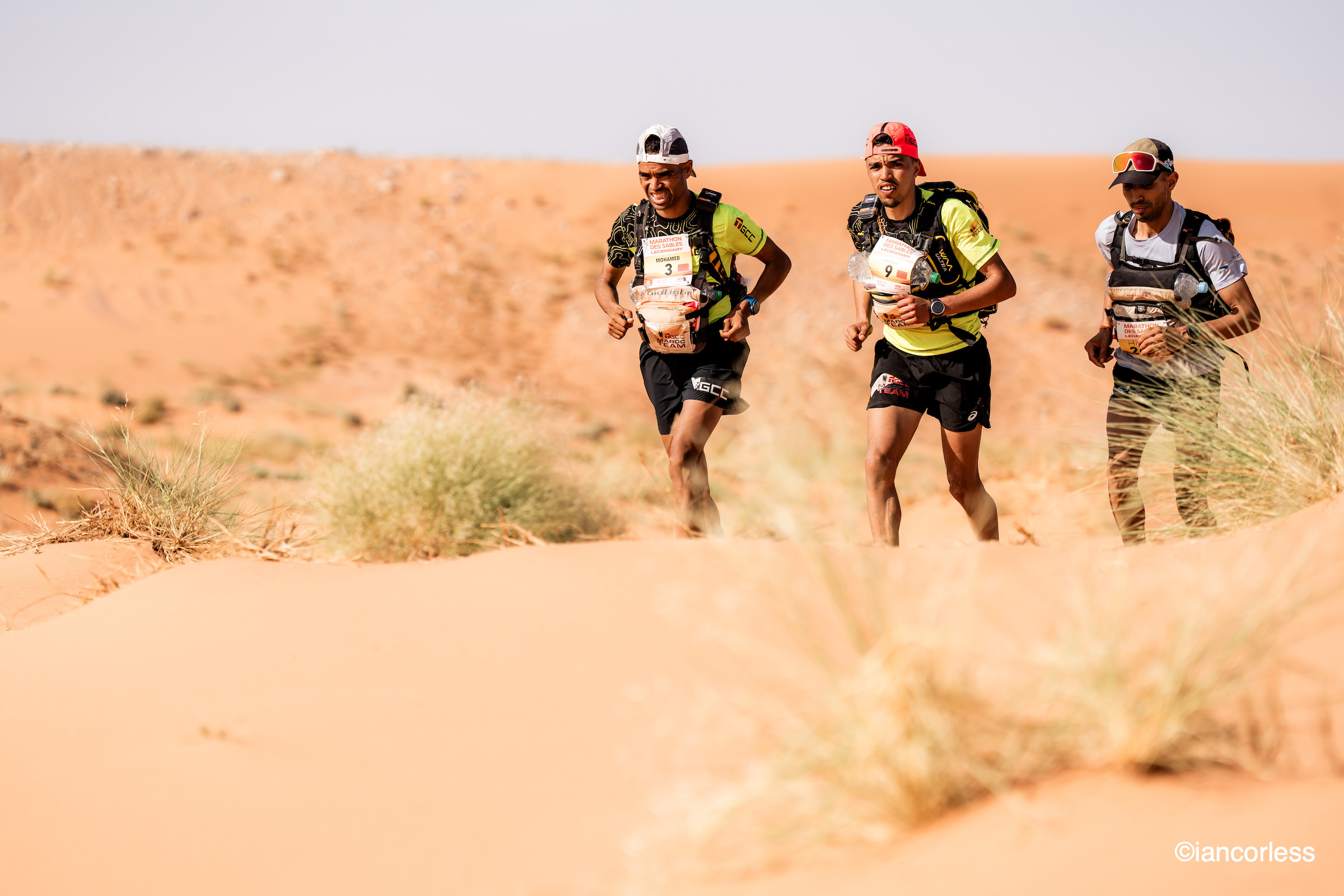
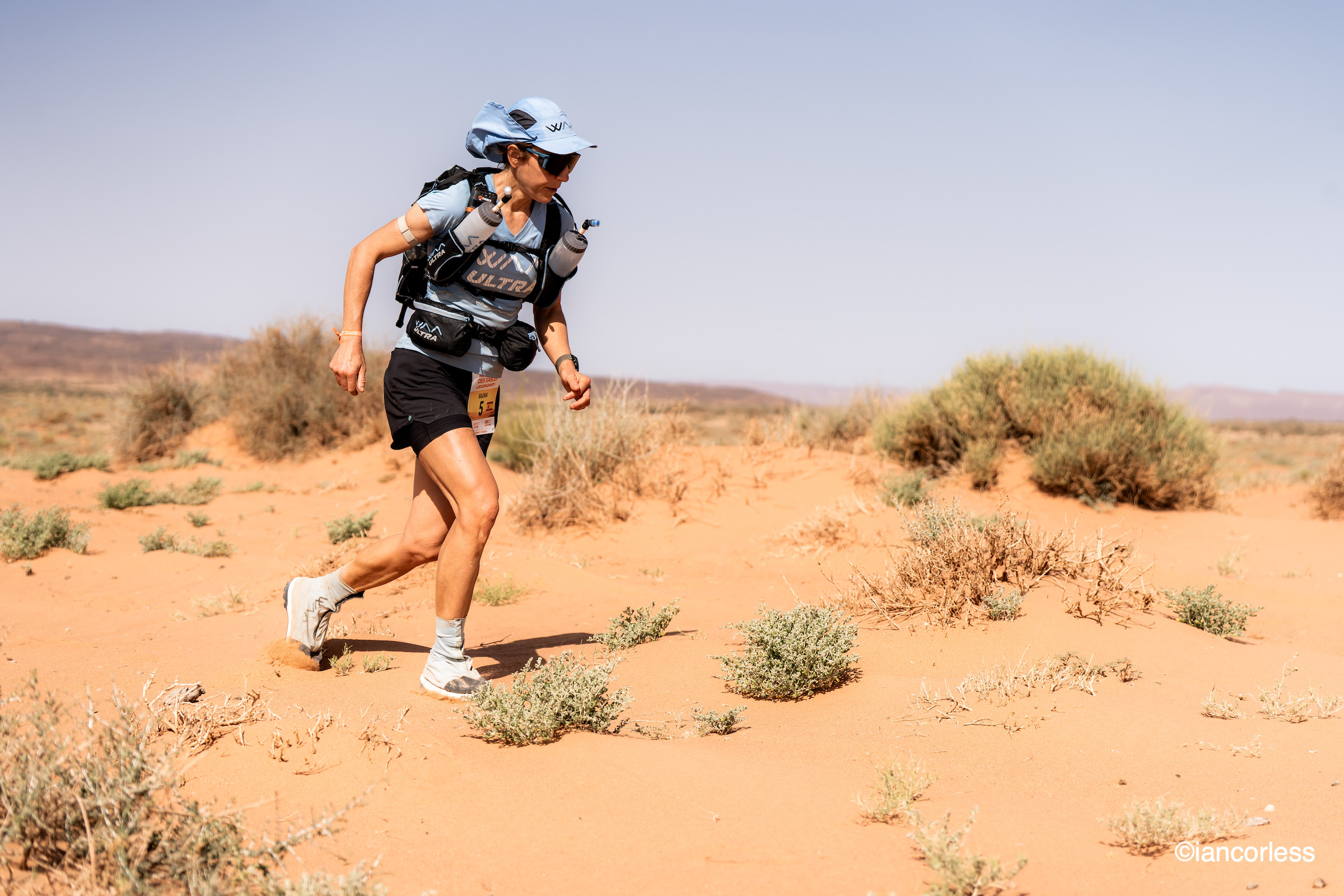
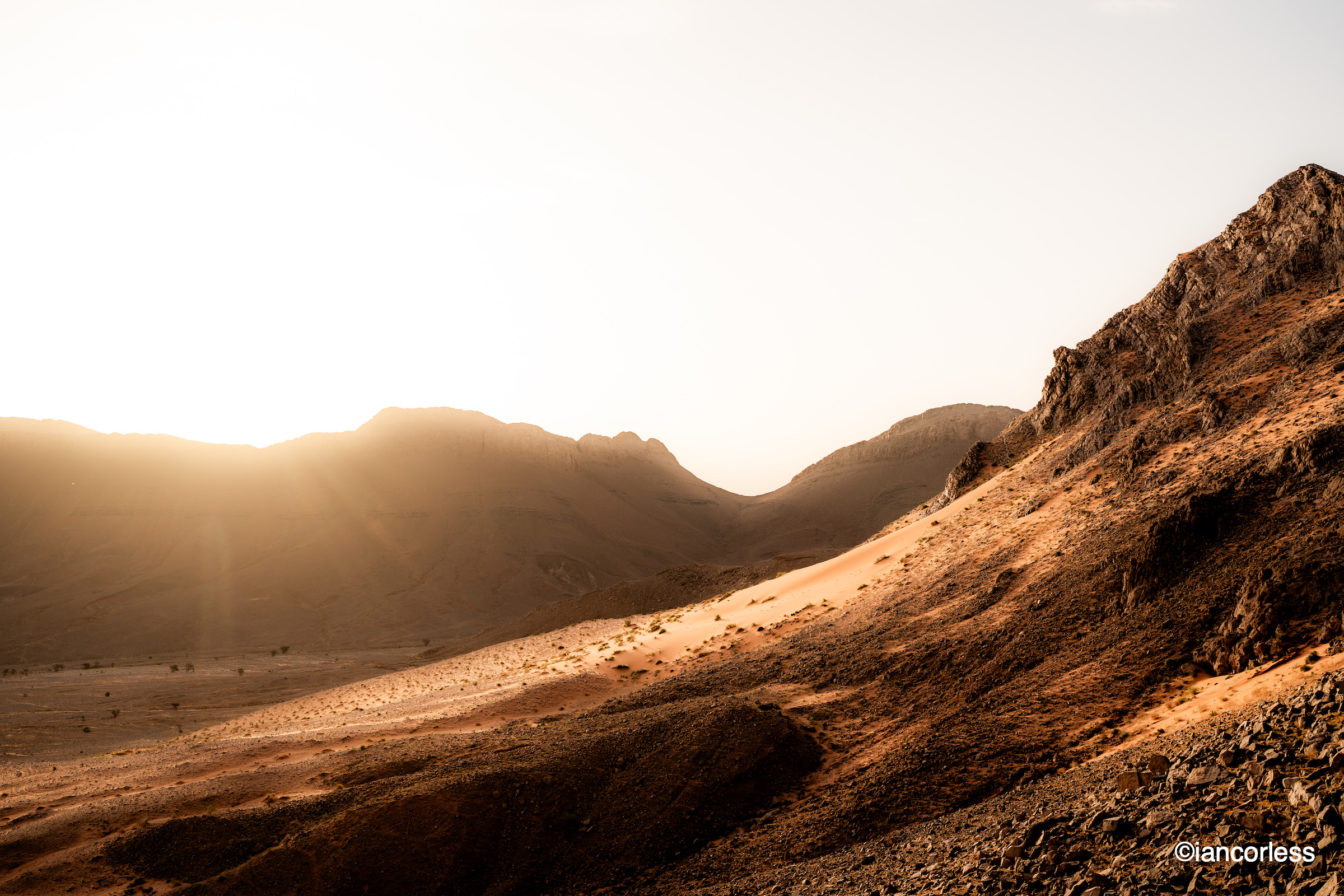
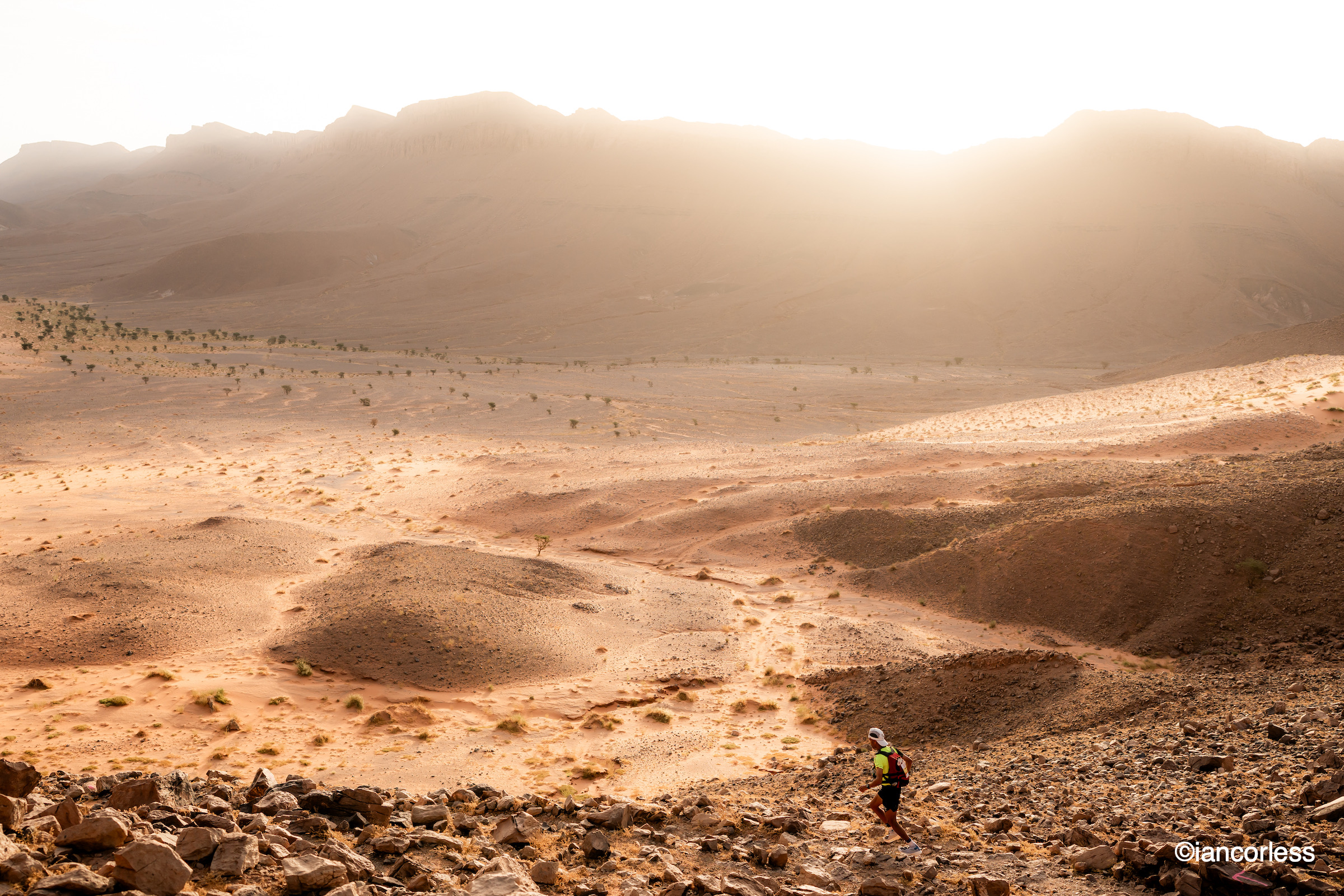
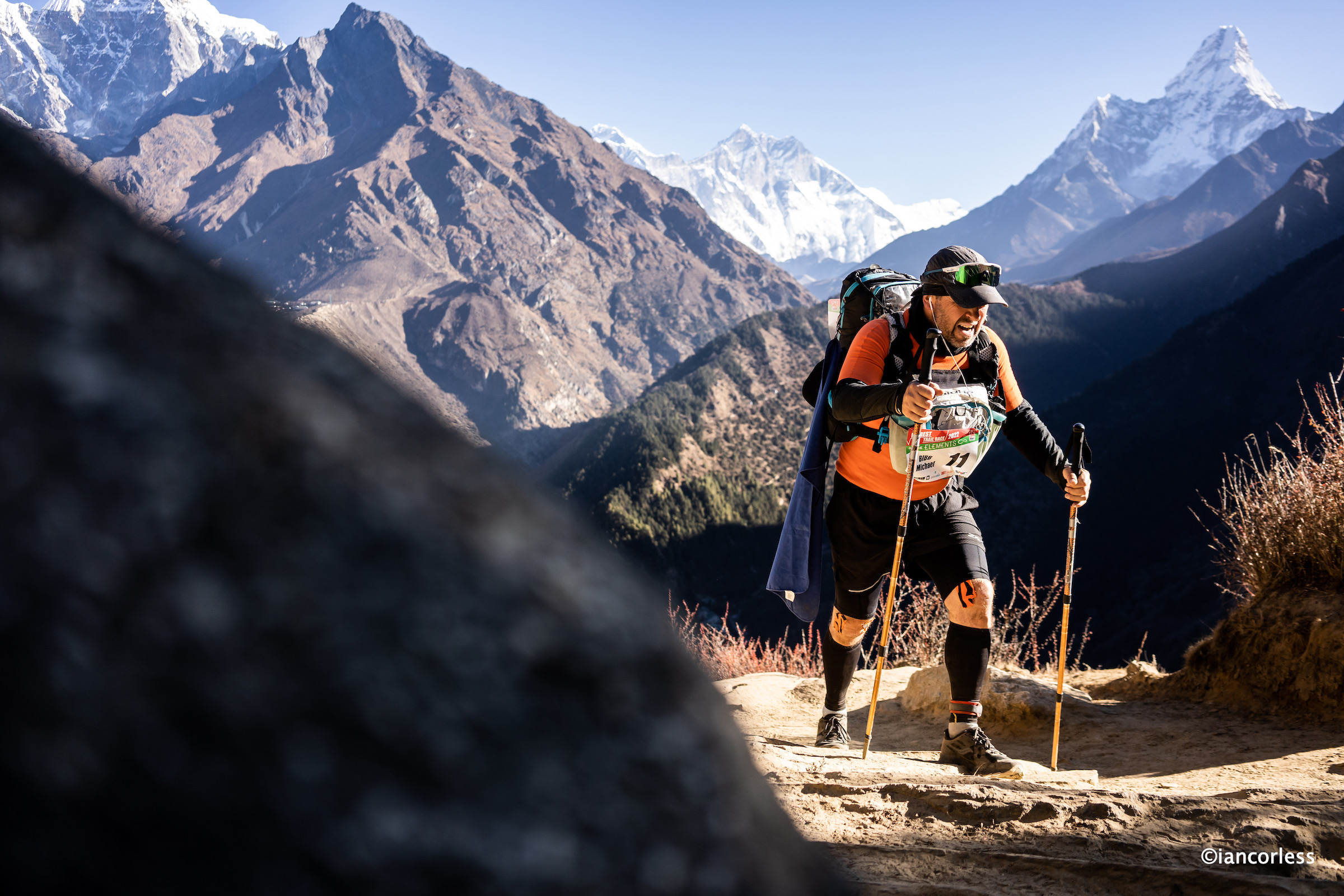
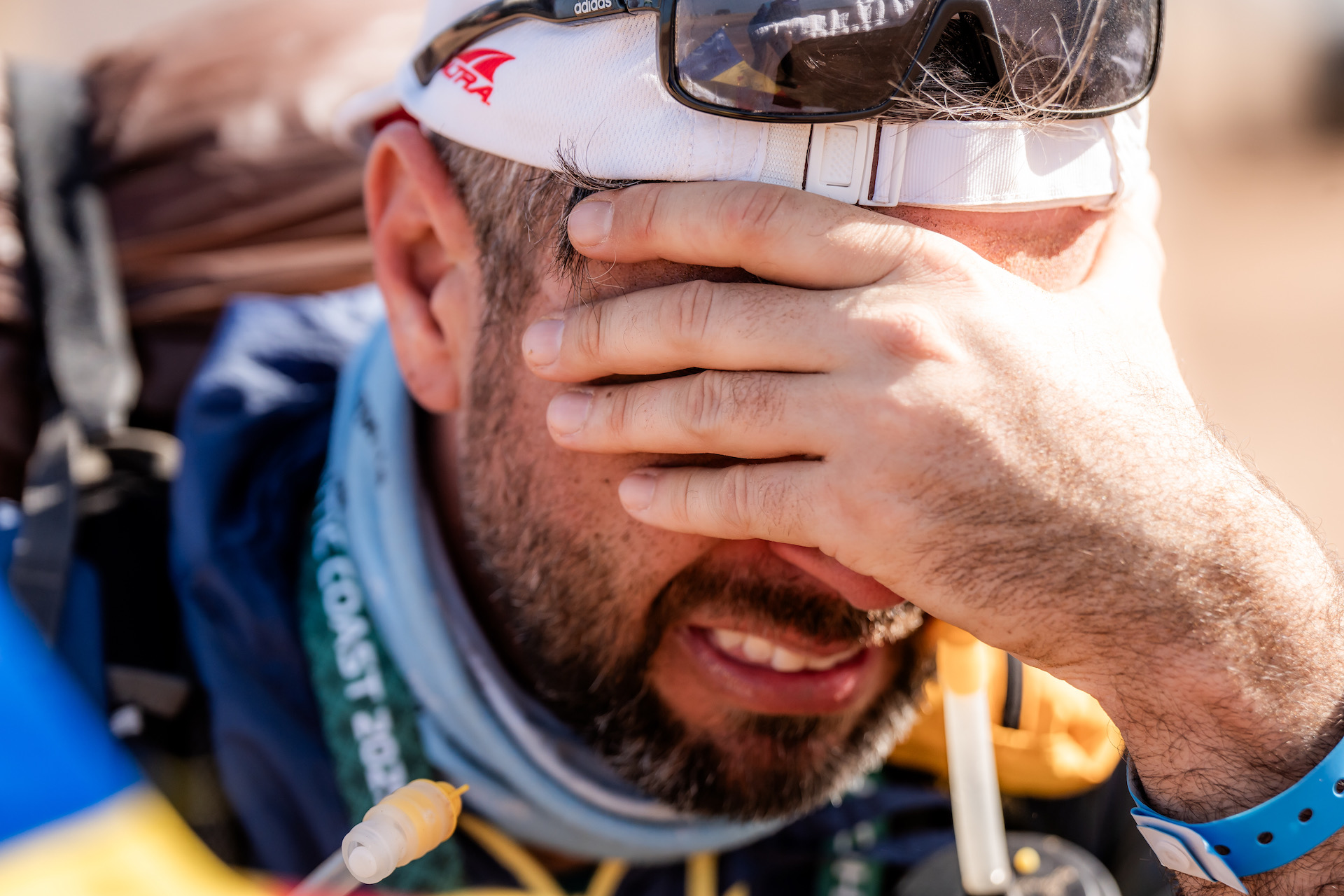
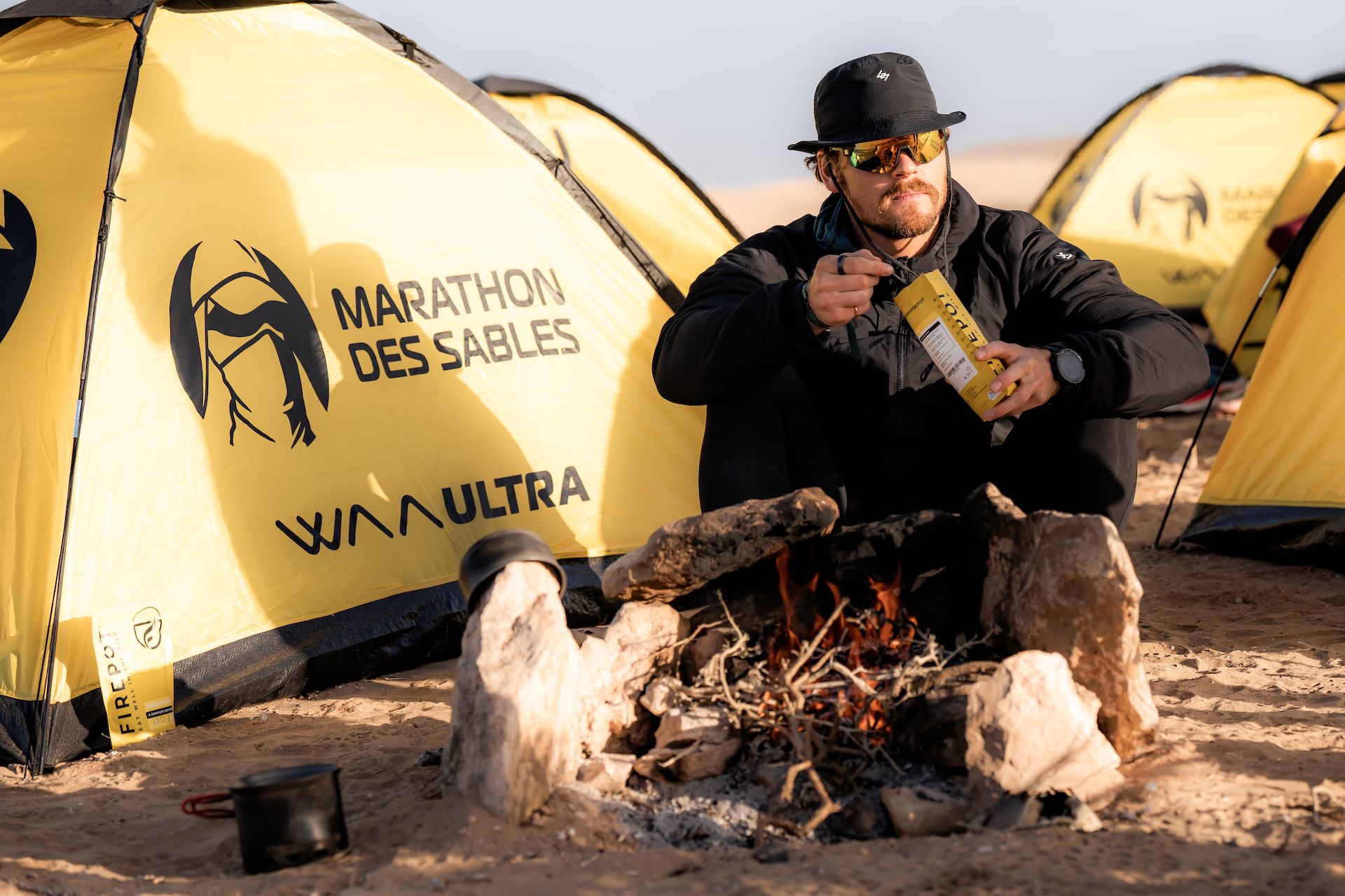
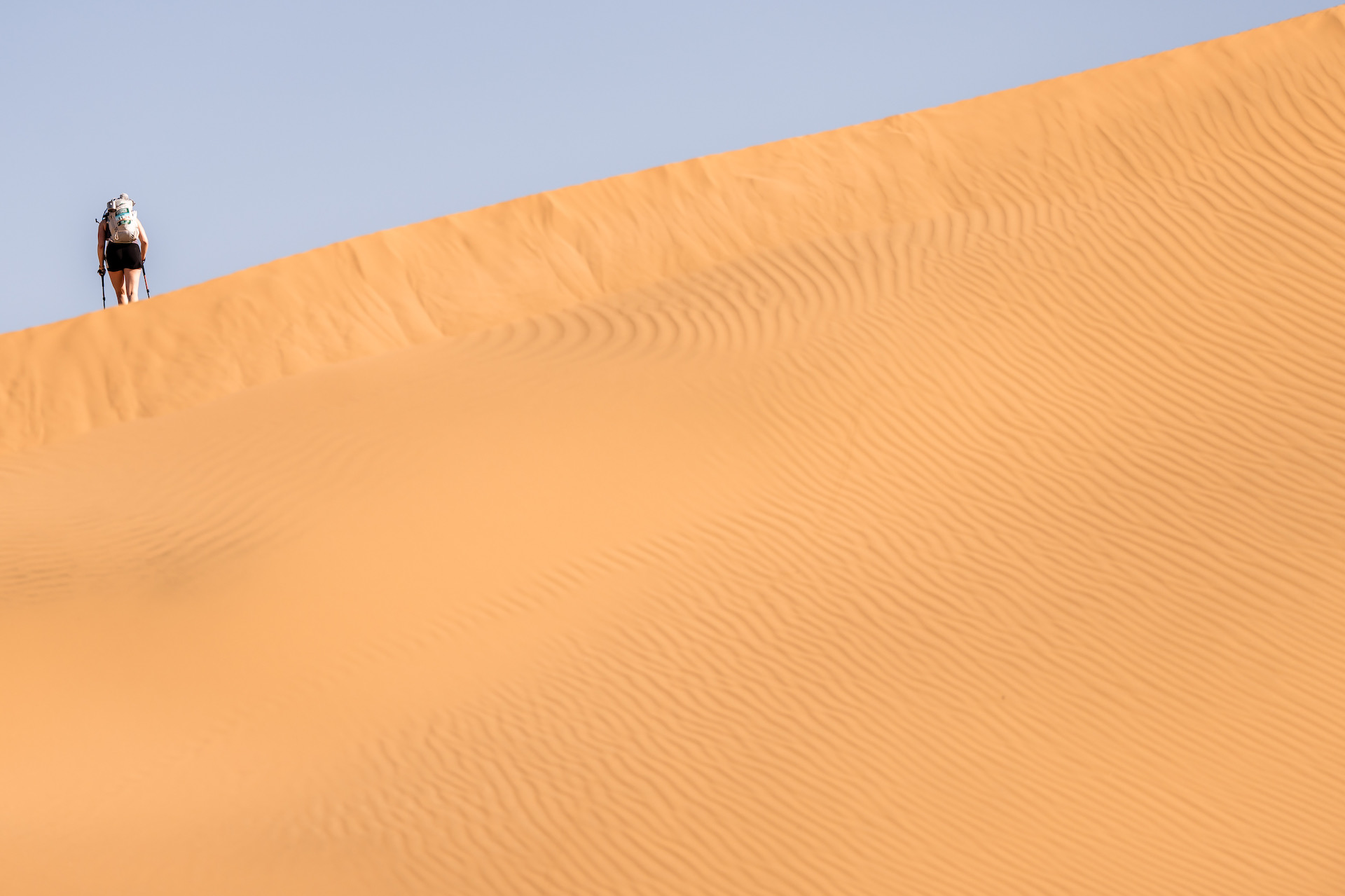
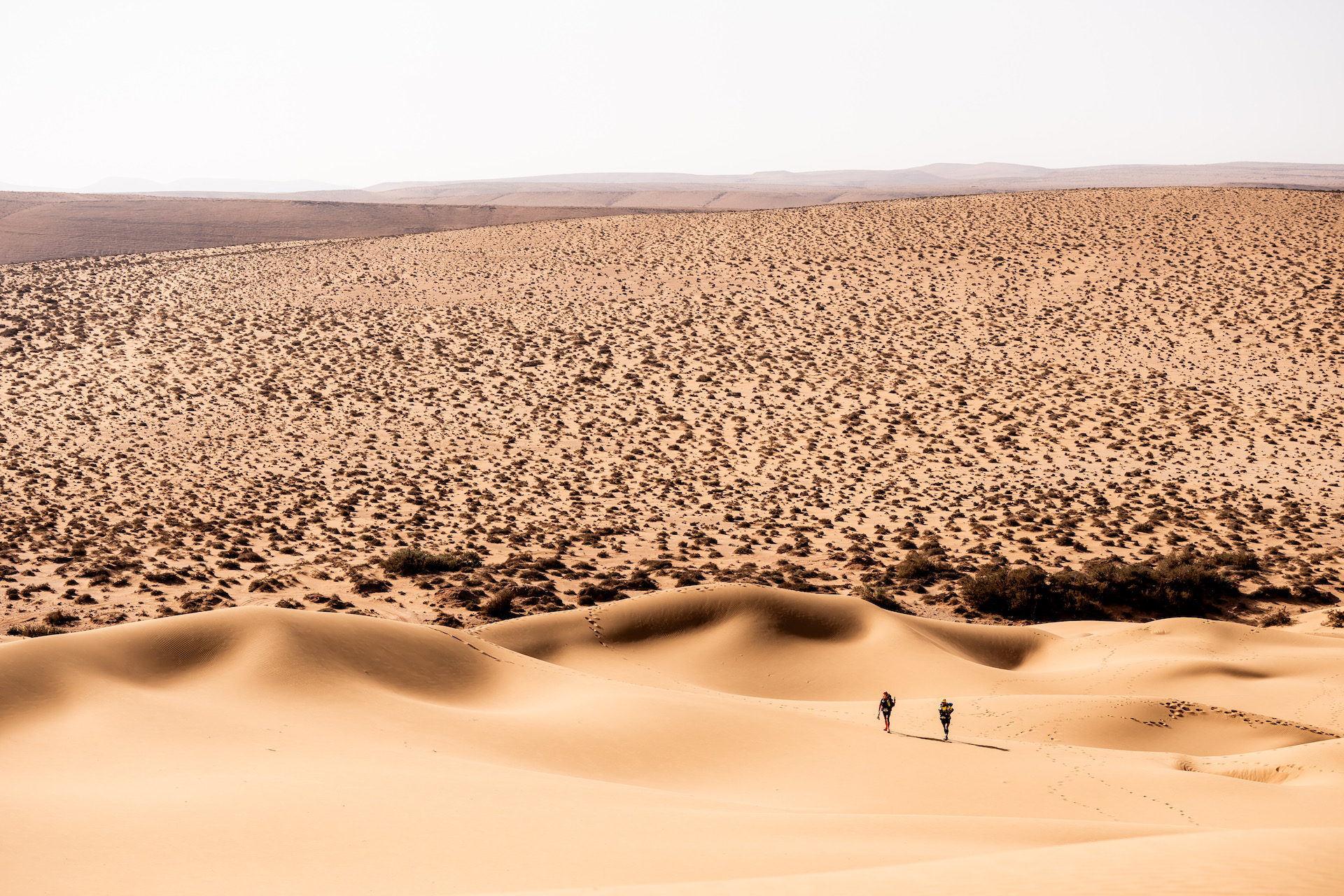
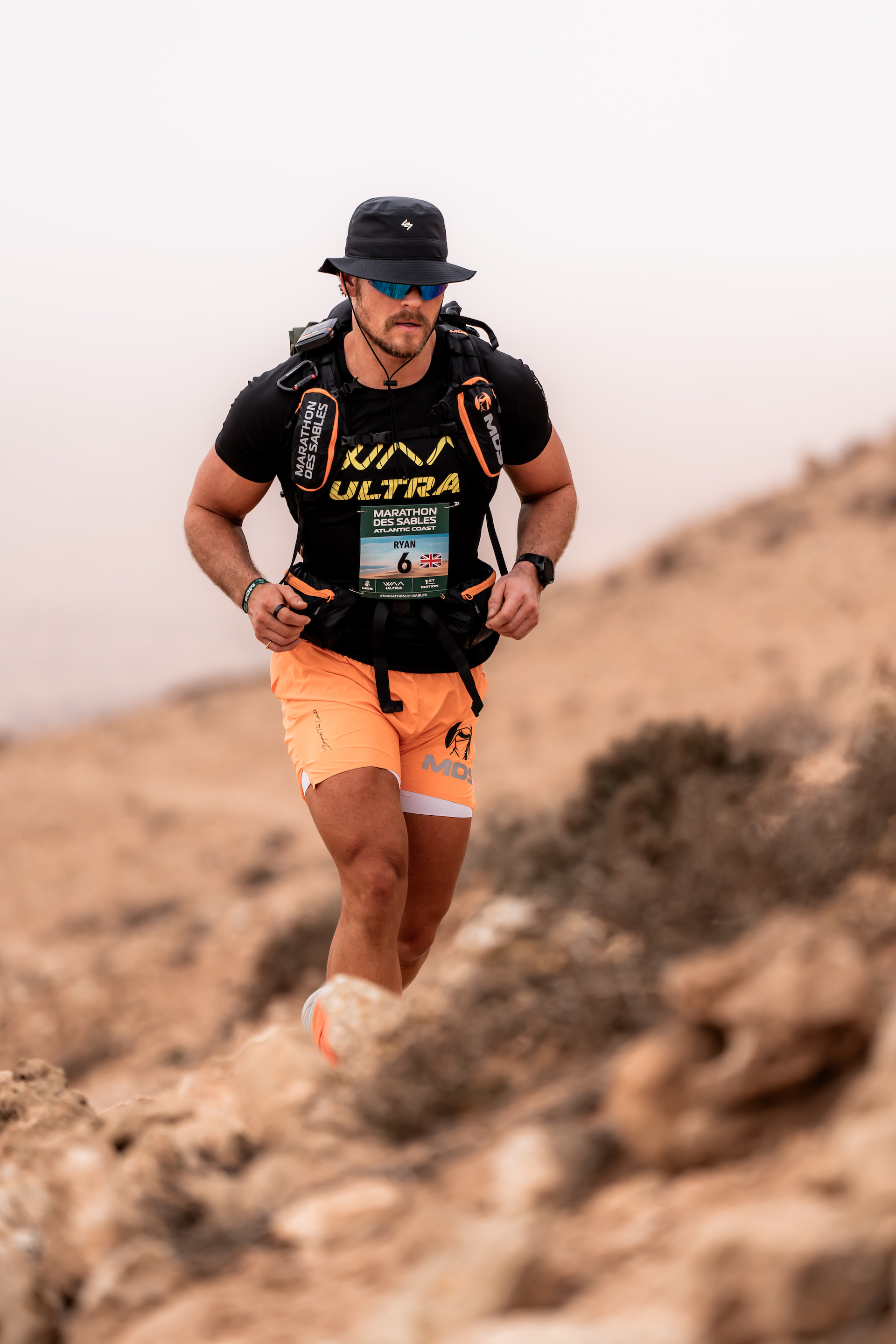
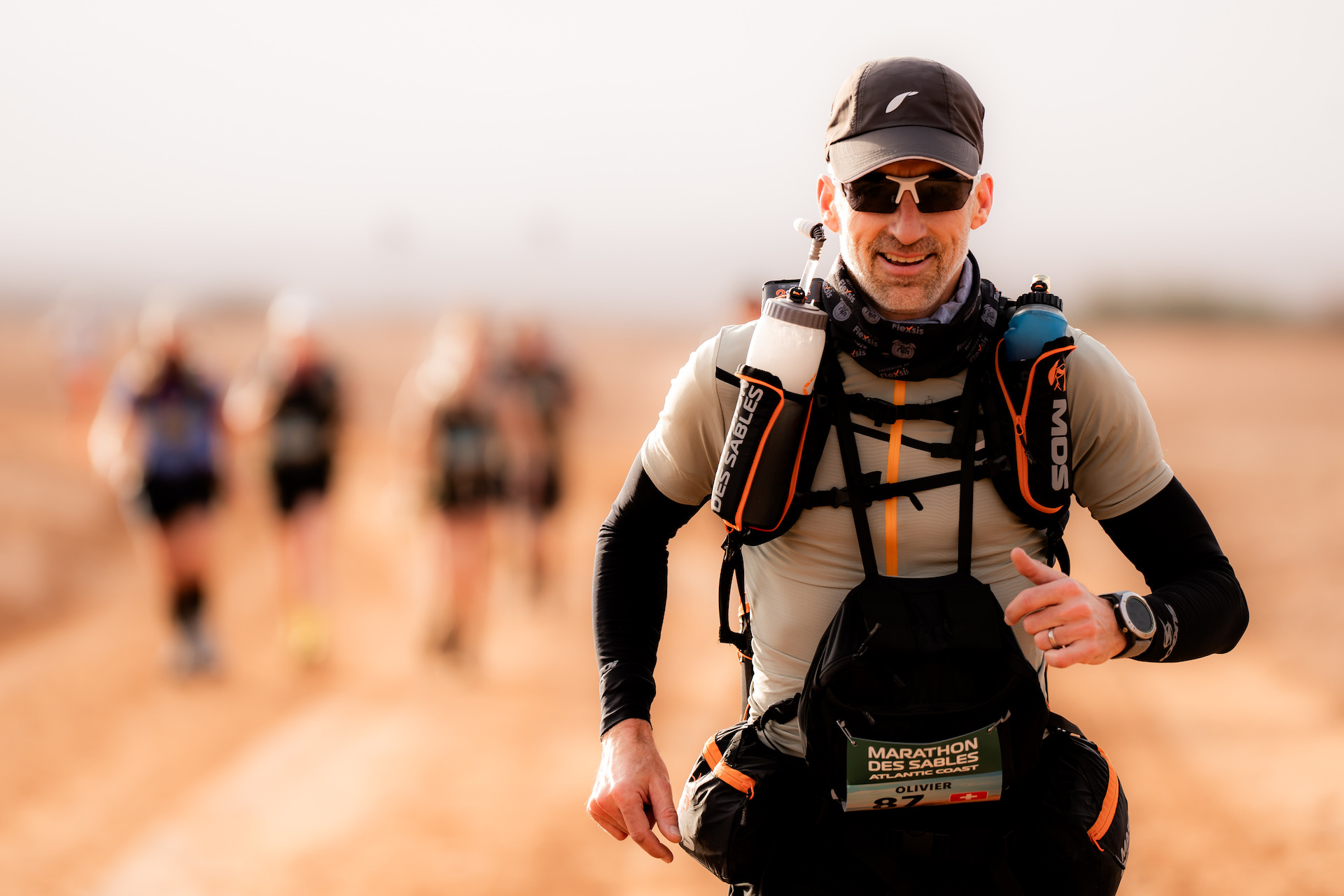
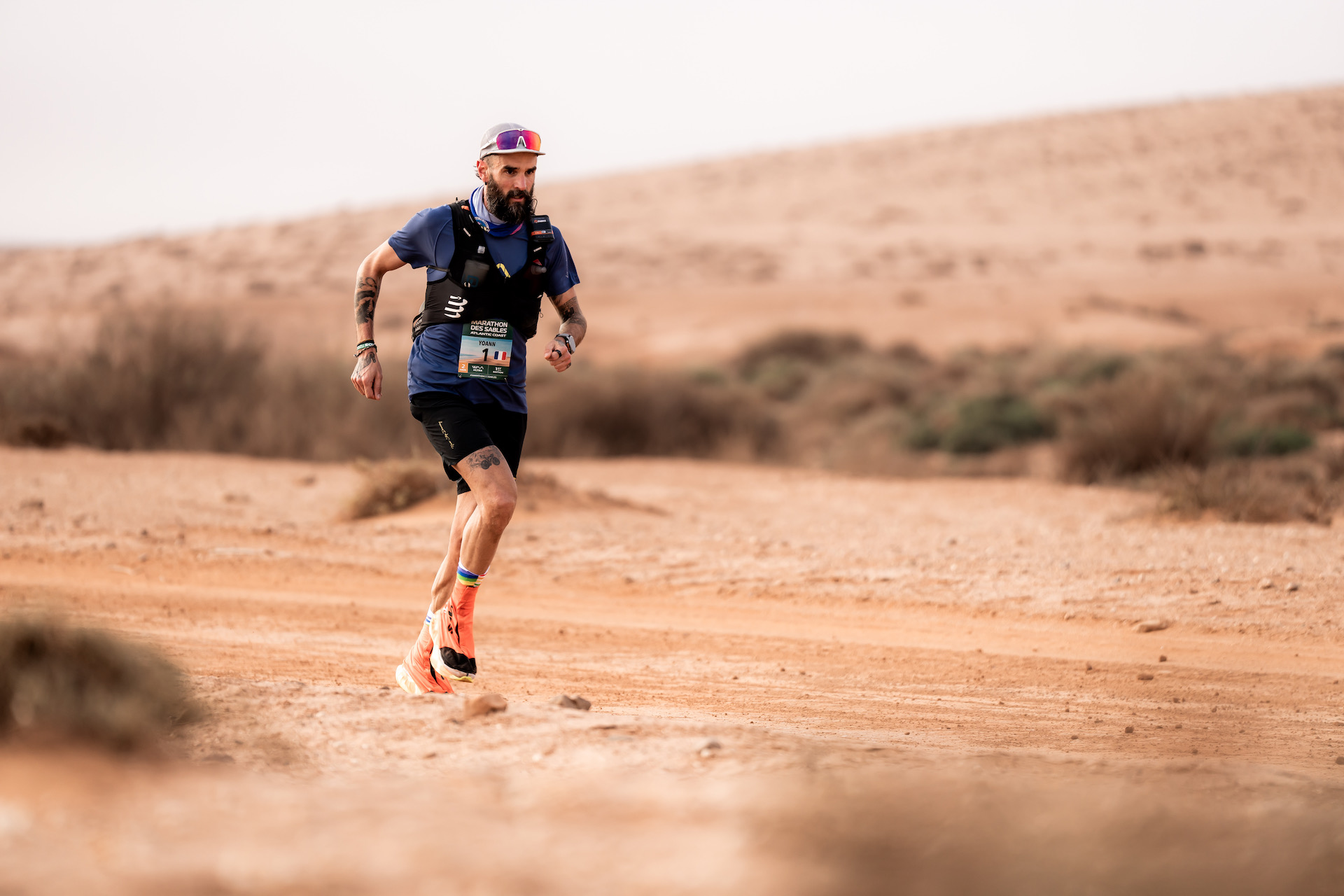
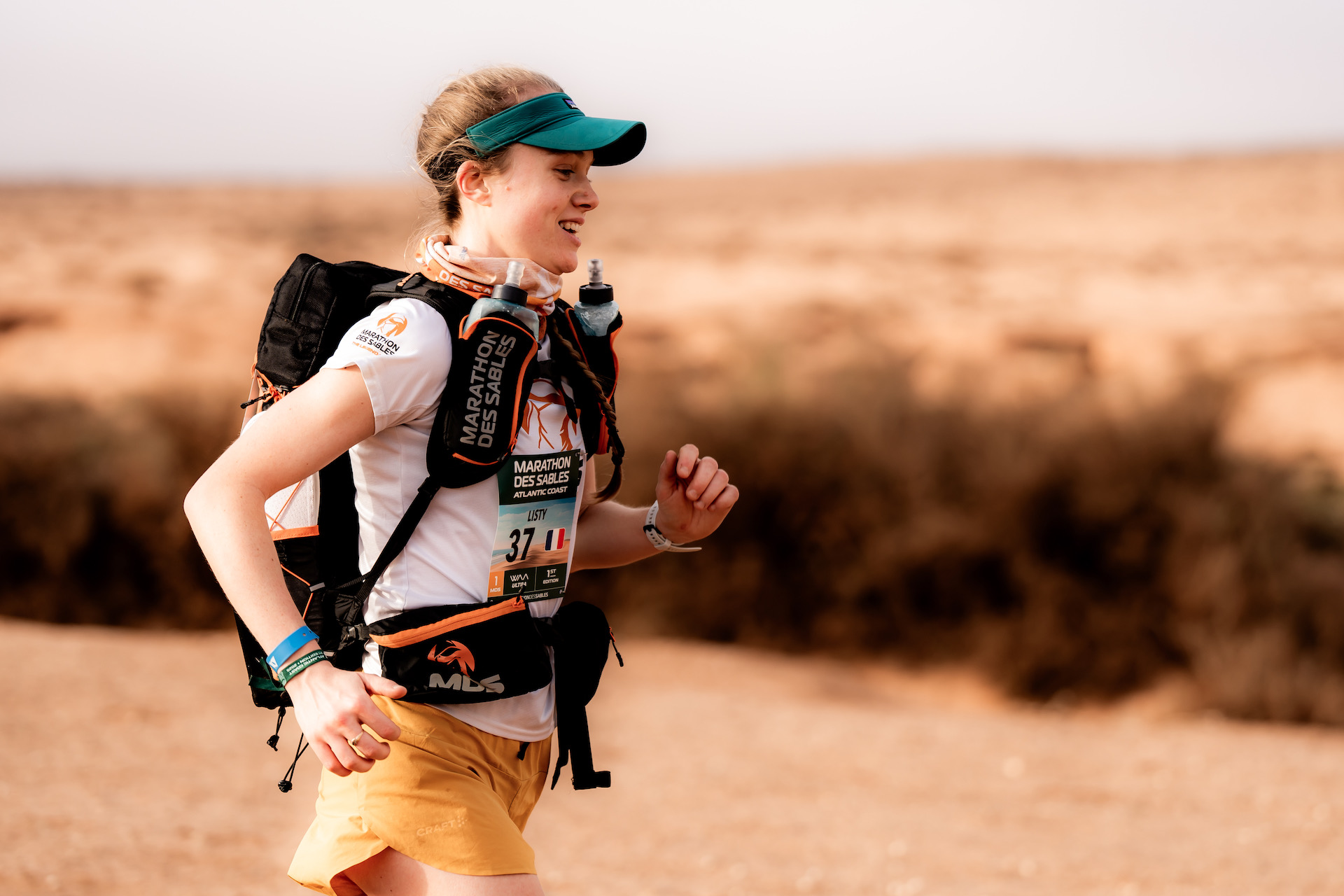
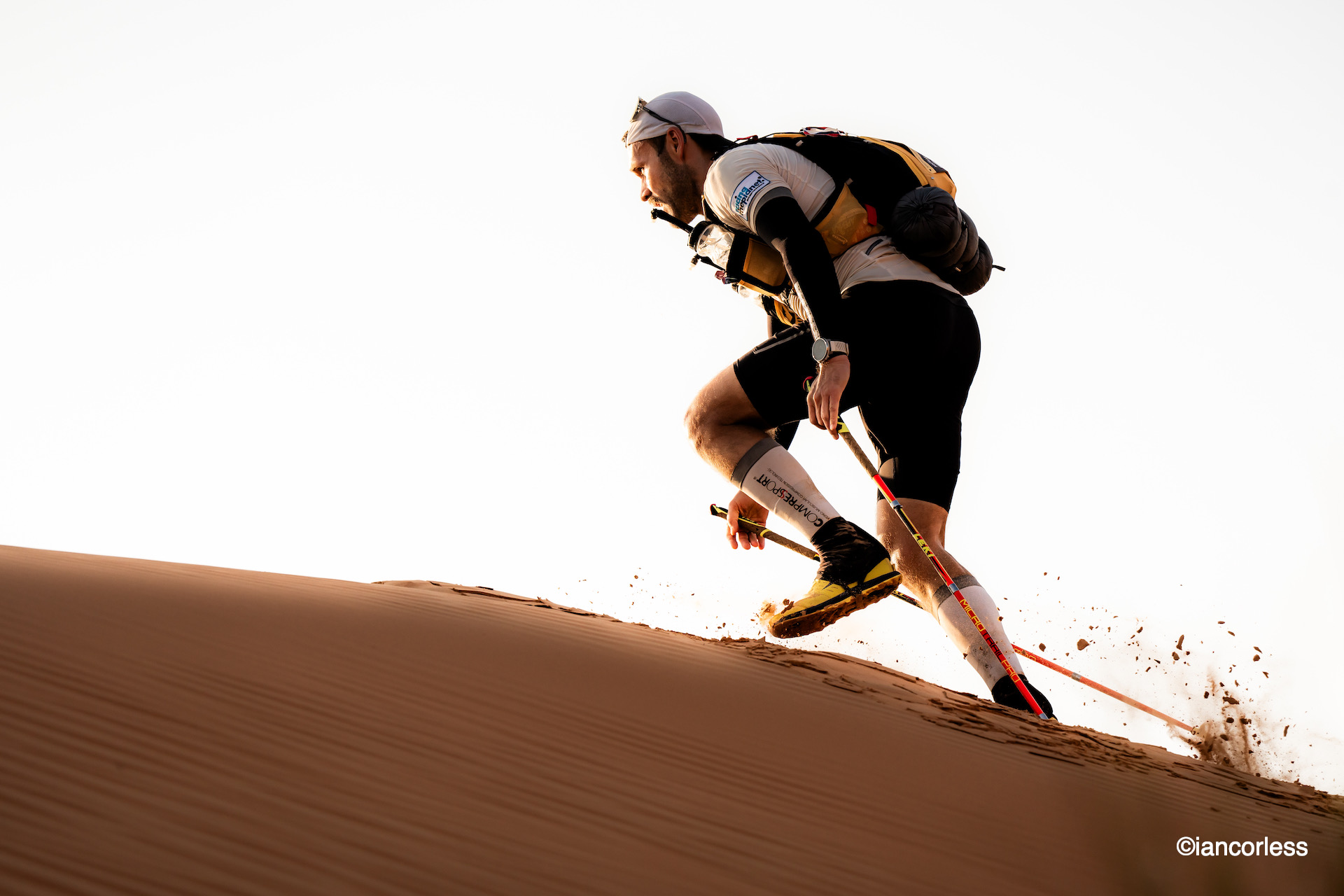
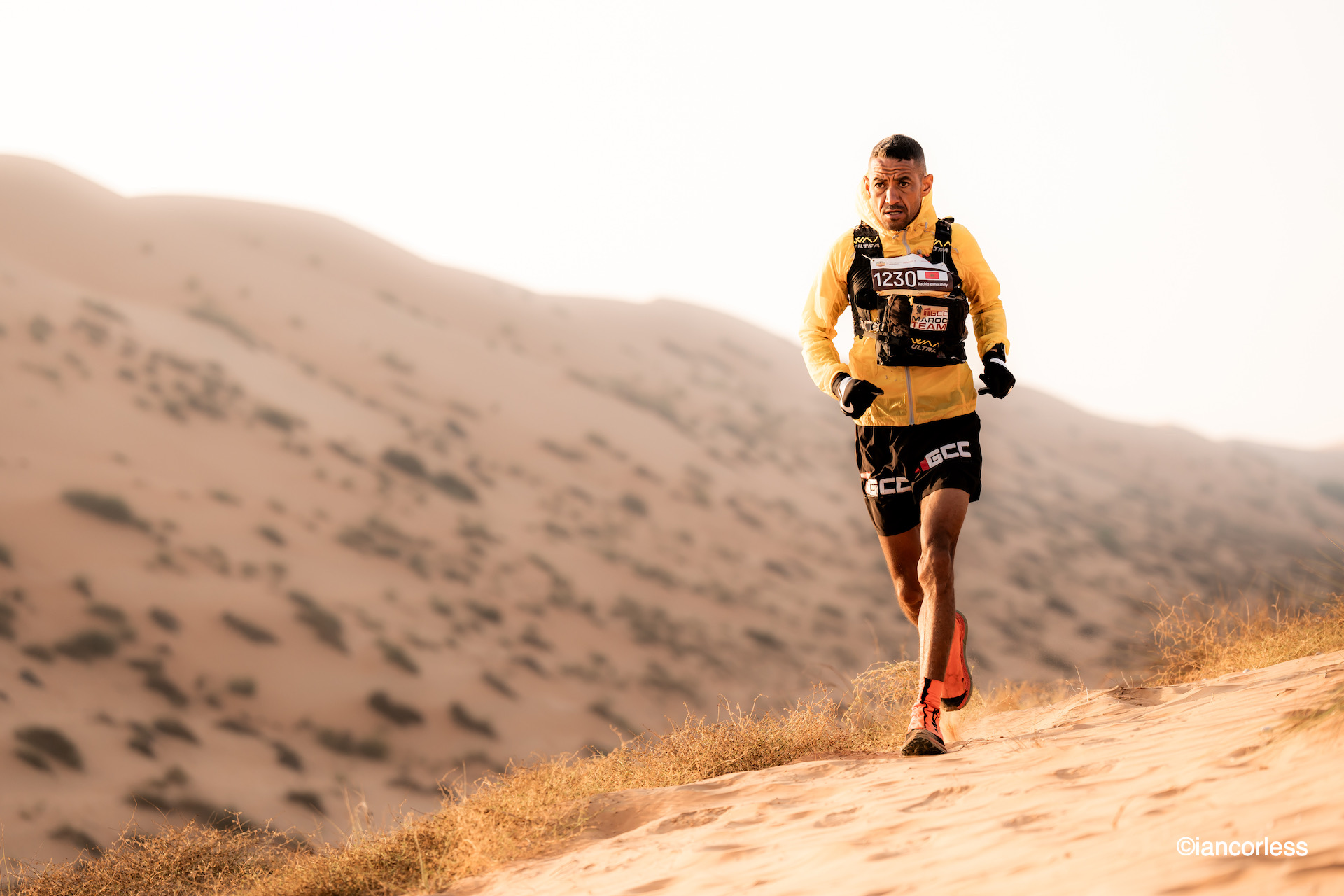
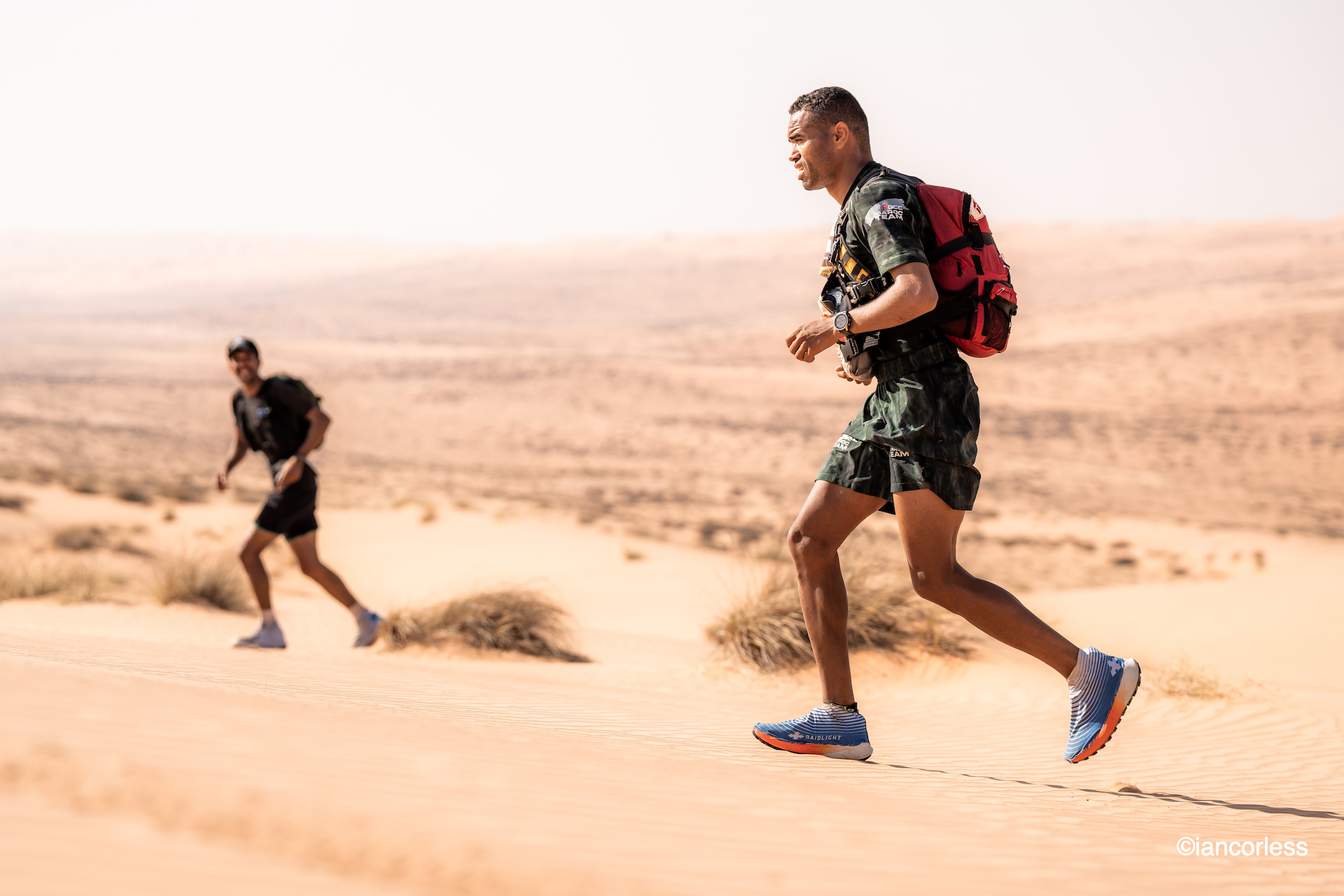
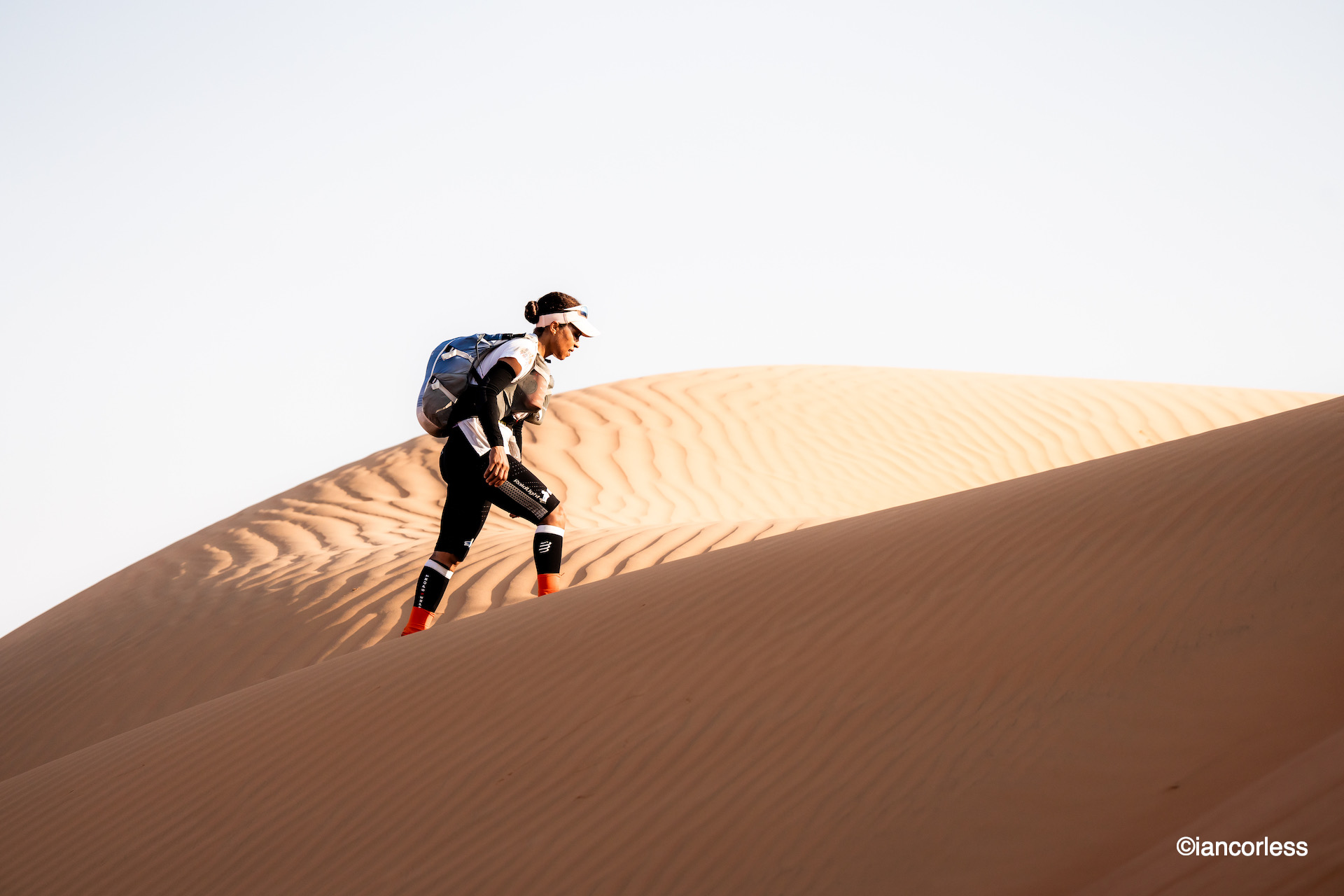
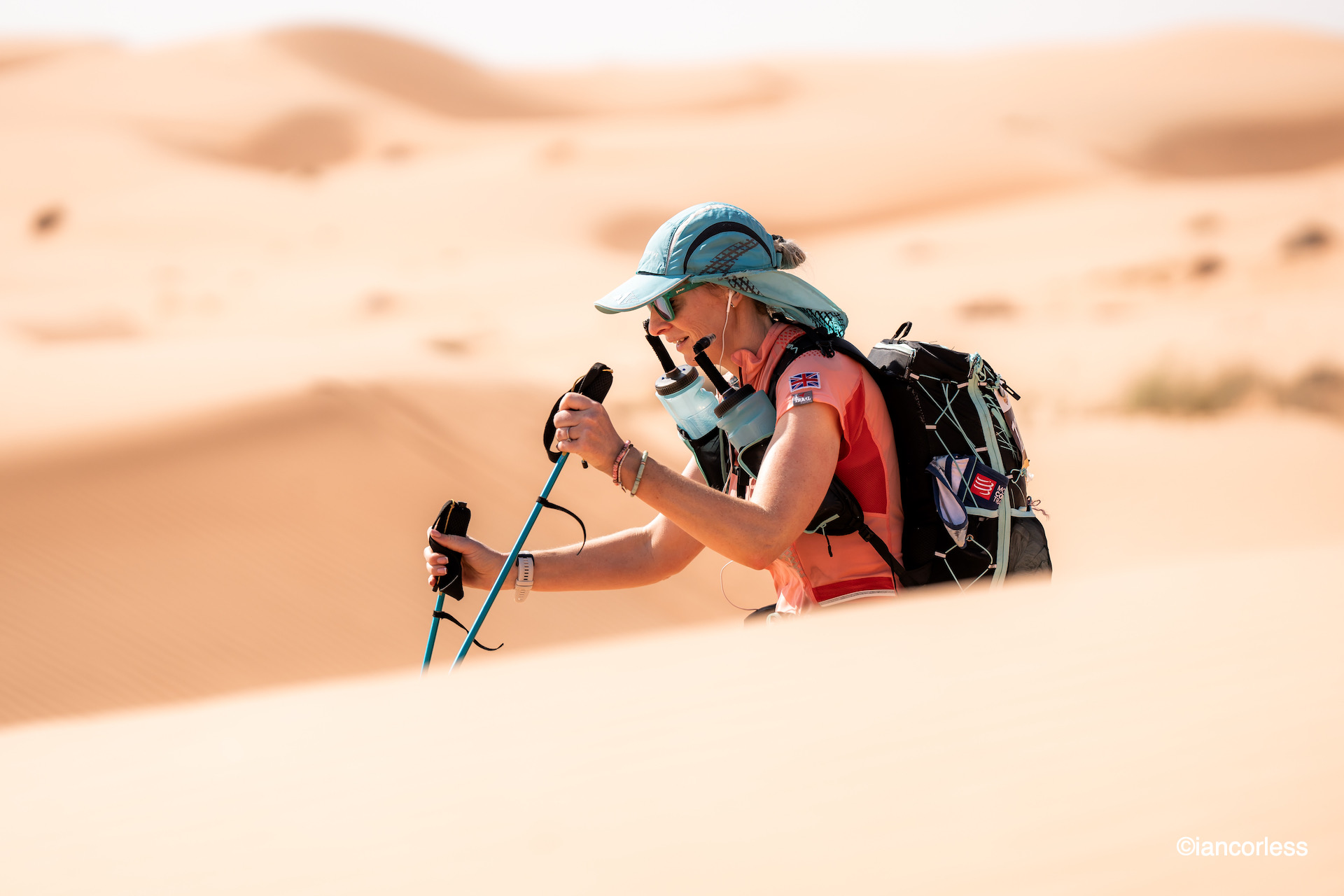
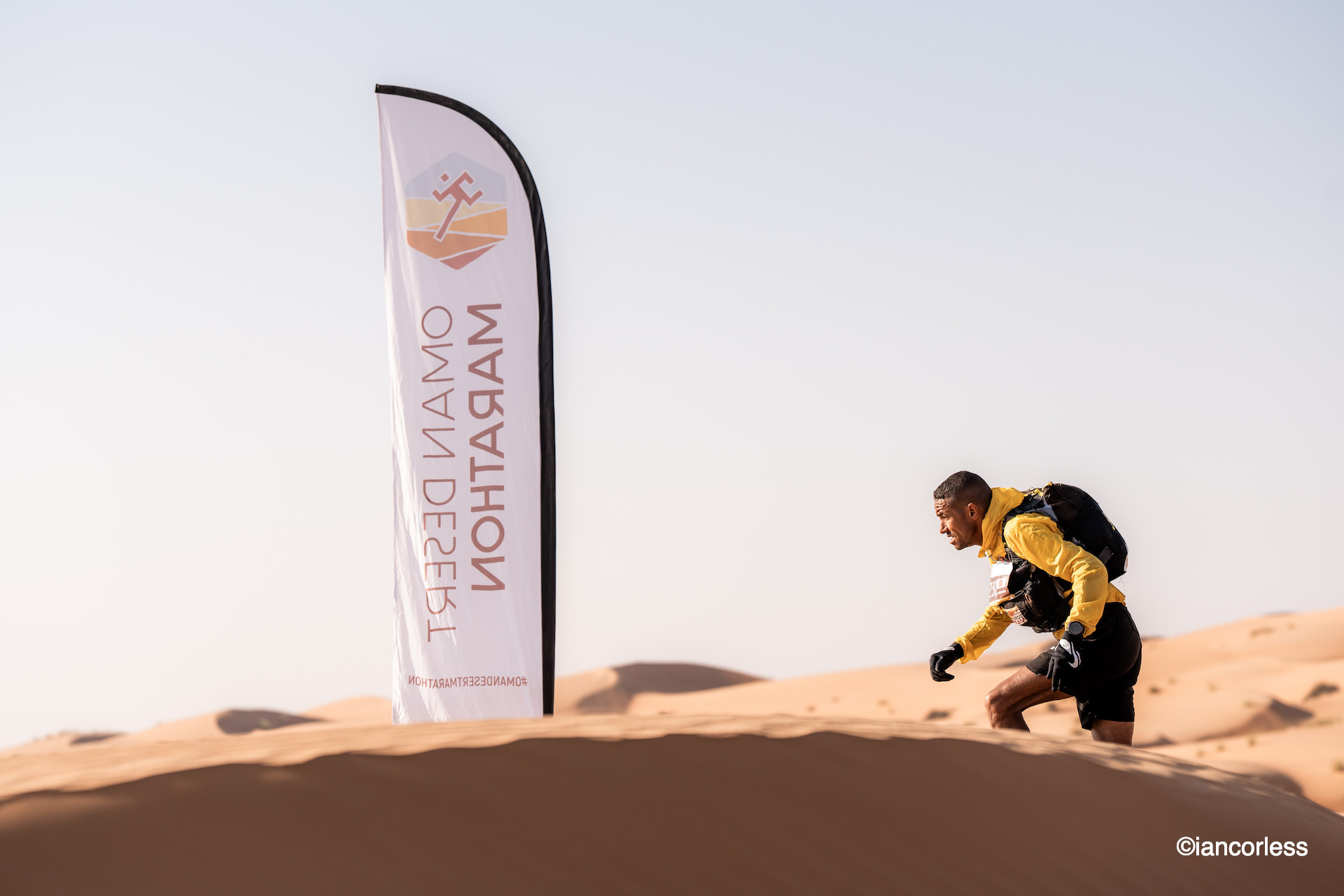
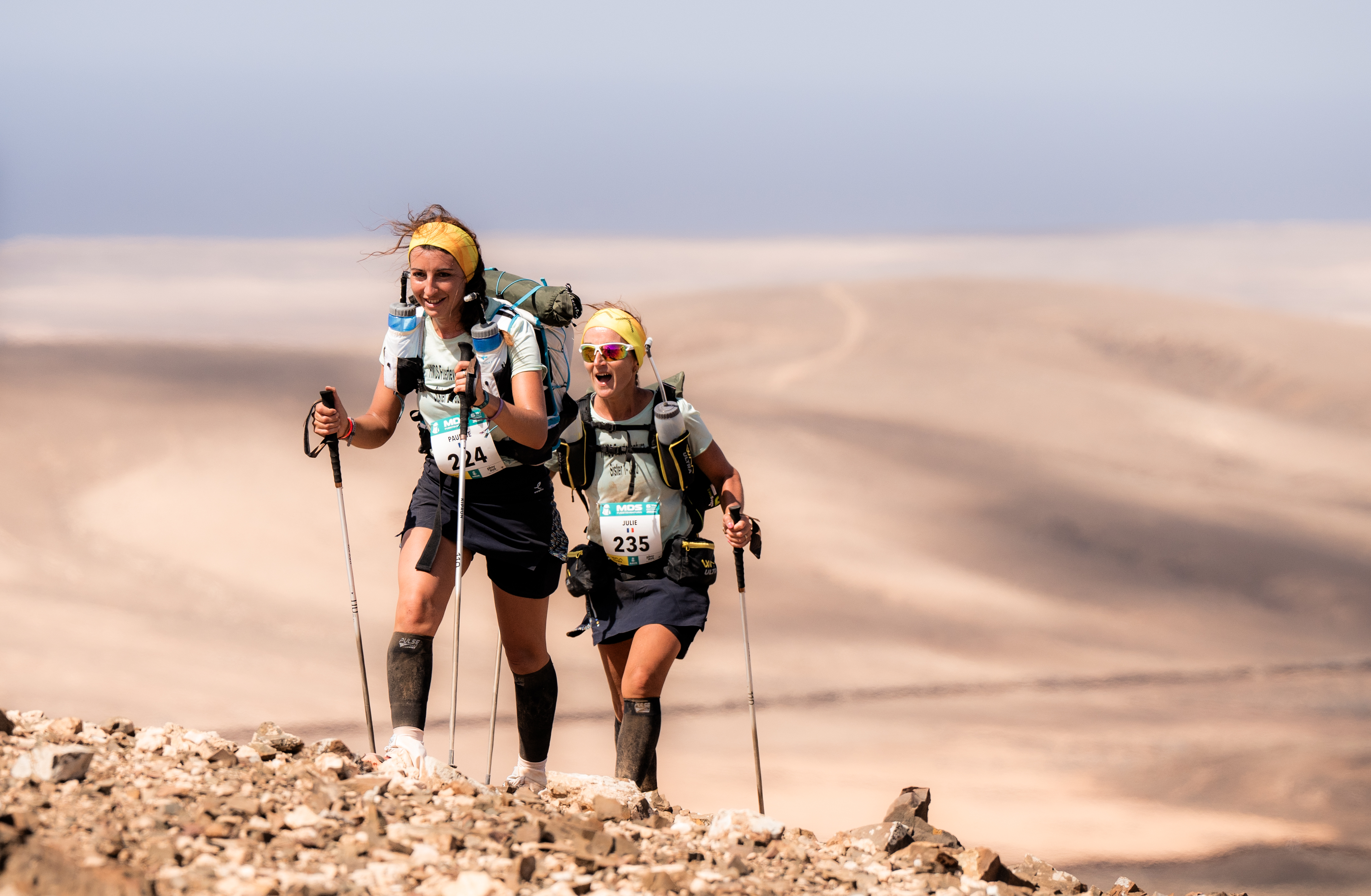
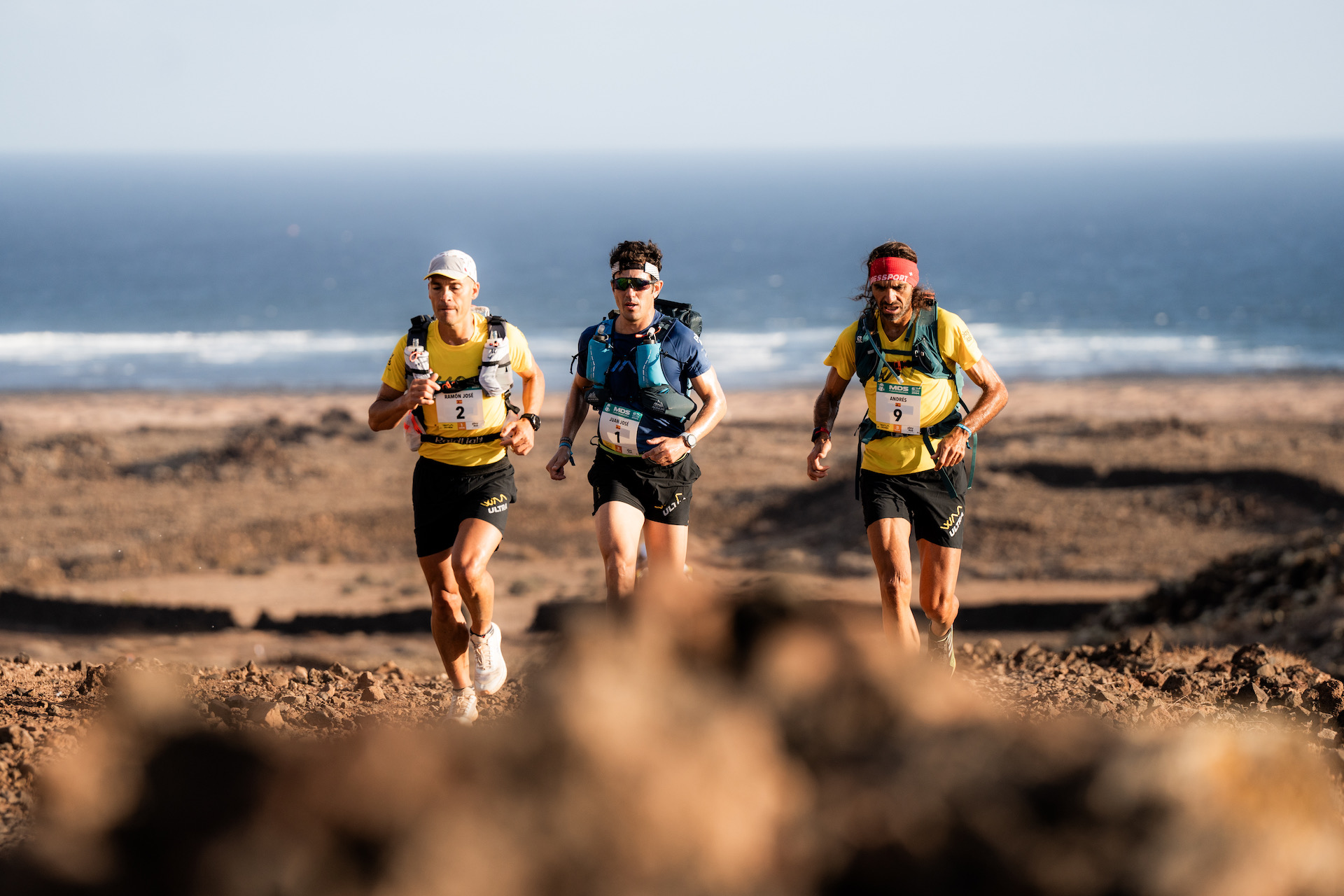
The MDS Cappadocia returns for its second edition, bringing trail runners back to one of the most visually surreal landscapes on Earth.
Set across three demanding stages over four days, this is not your typical desert race, on the contrary, it’s a technical, high-impact trail event through ancient terrain steeped in history and visual splendour.
Runners choose between 70km, 100km, or 120km of total distance, stages 1 and 3 are the same for everyone, stage 2 participants choose 20/40 or 60km.
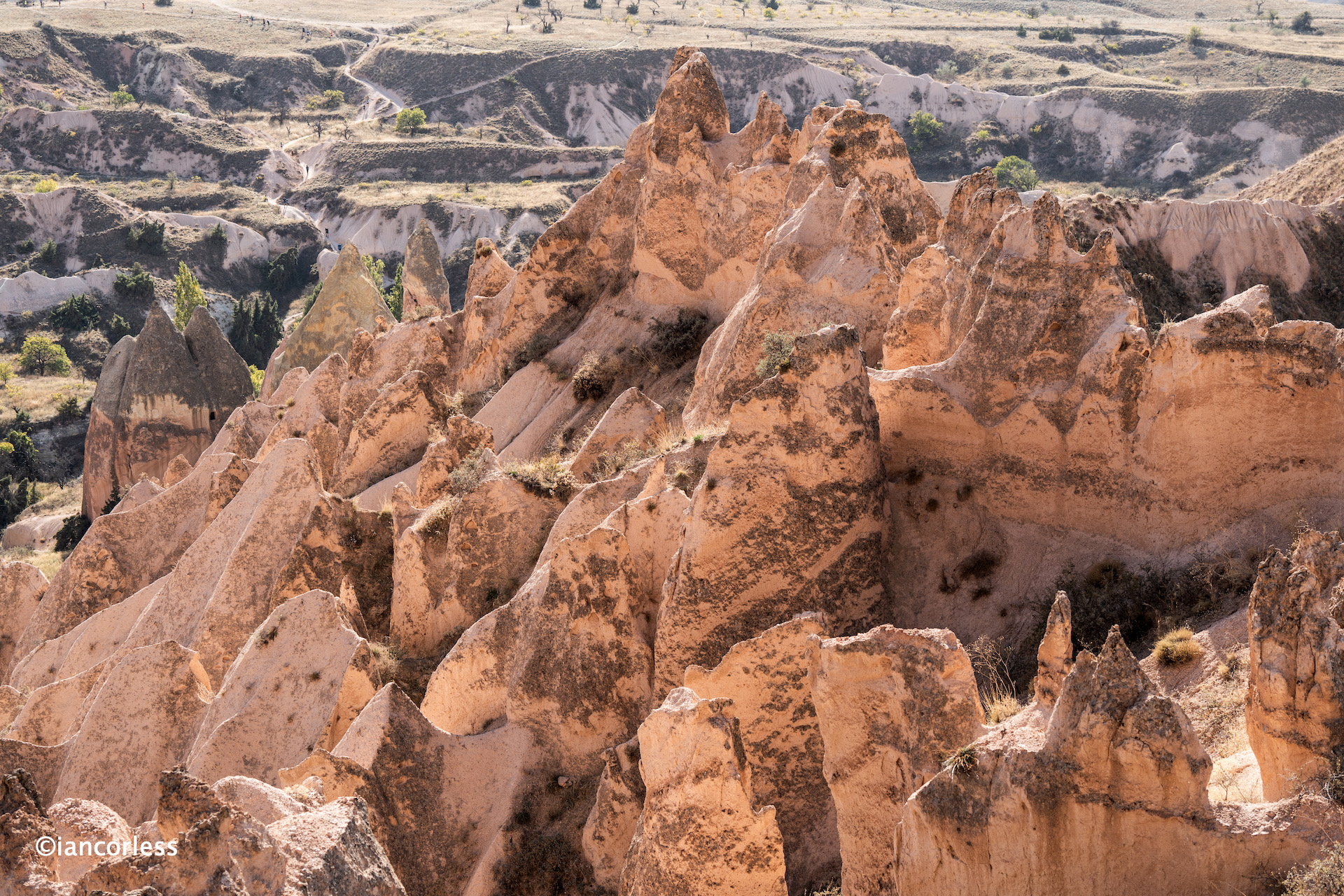
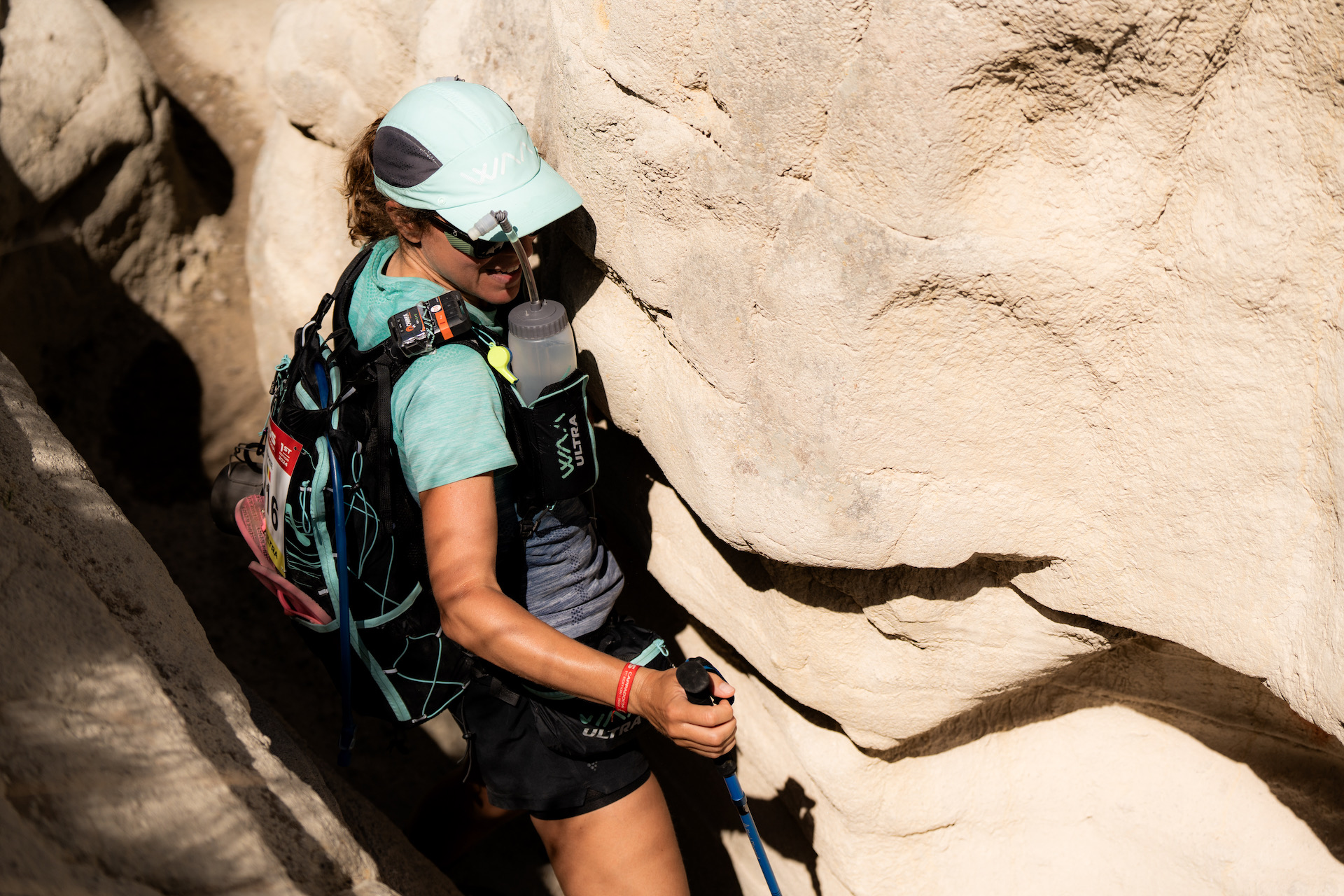
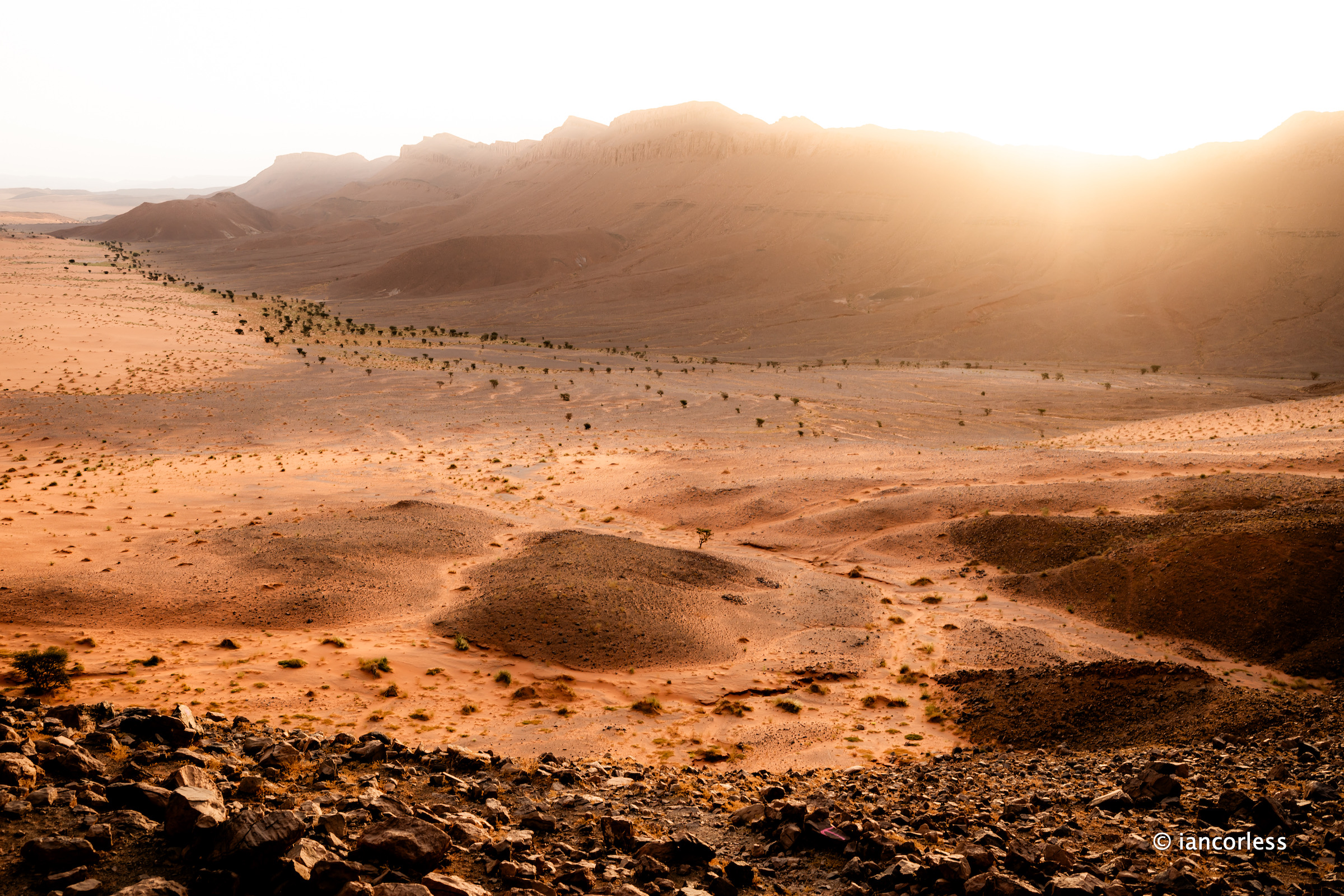
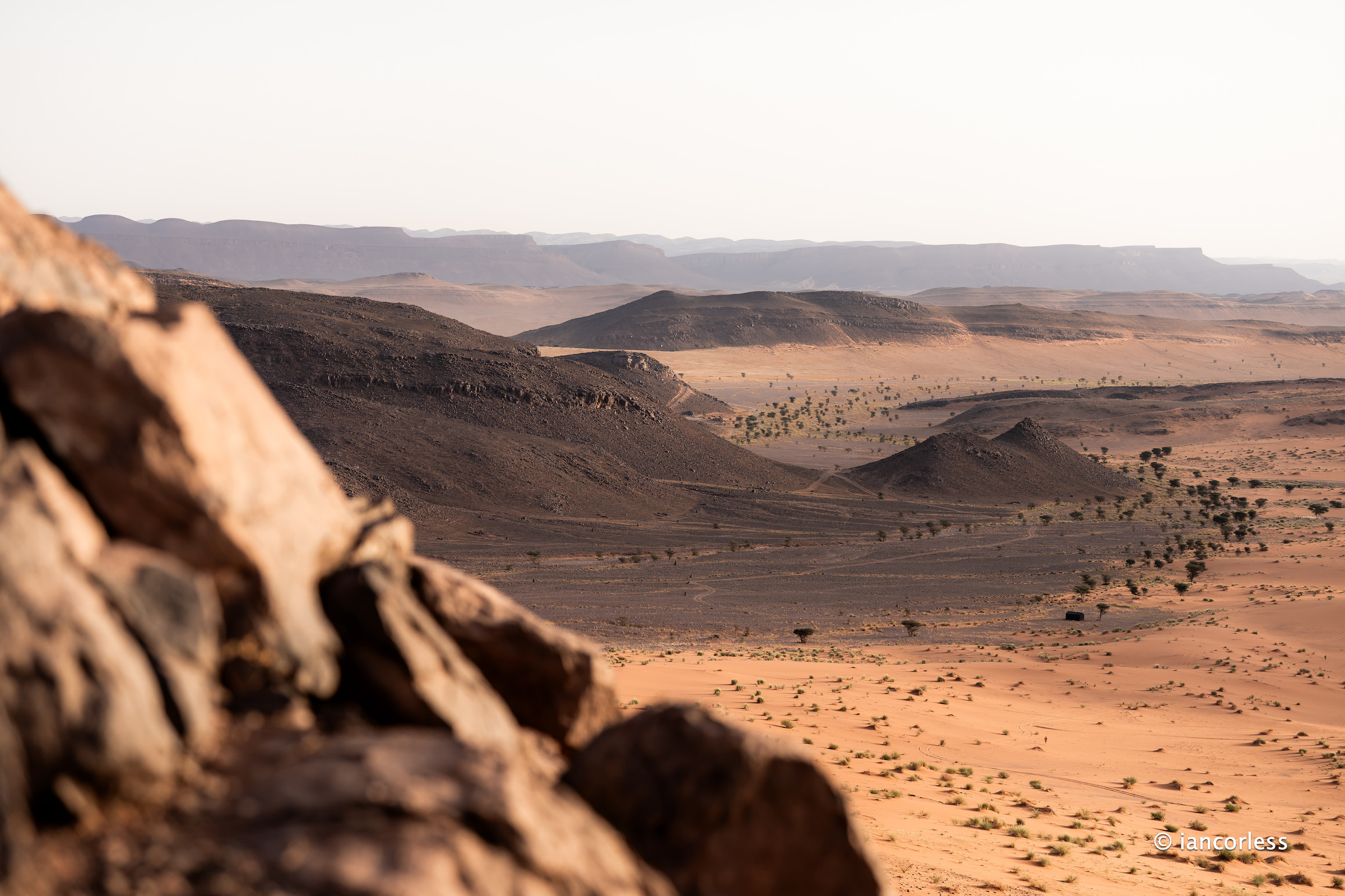
Each course is carved through a landscape that feels pulled from another planet.
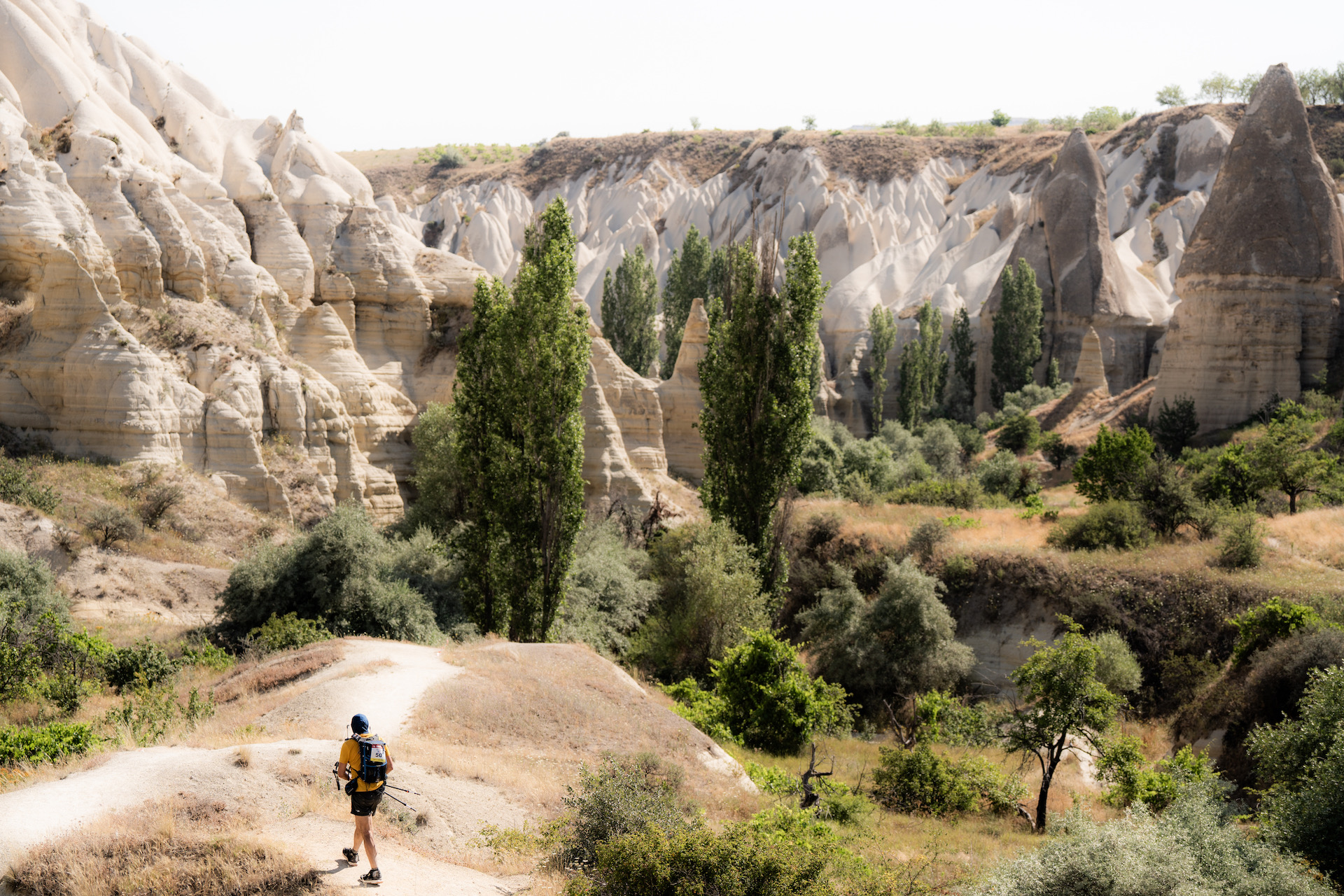
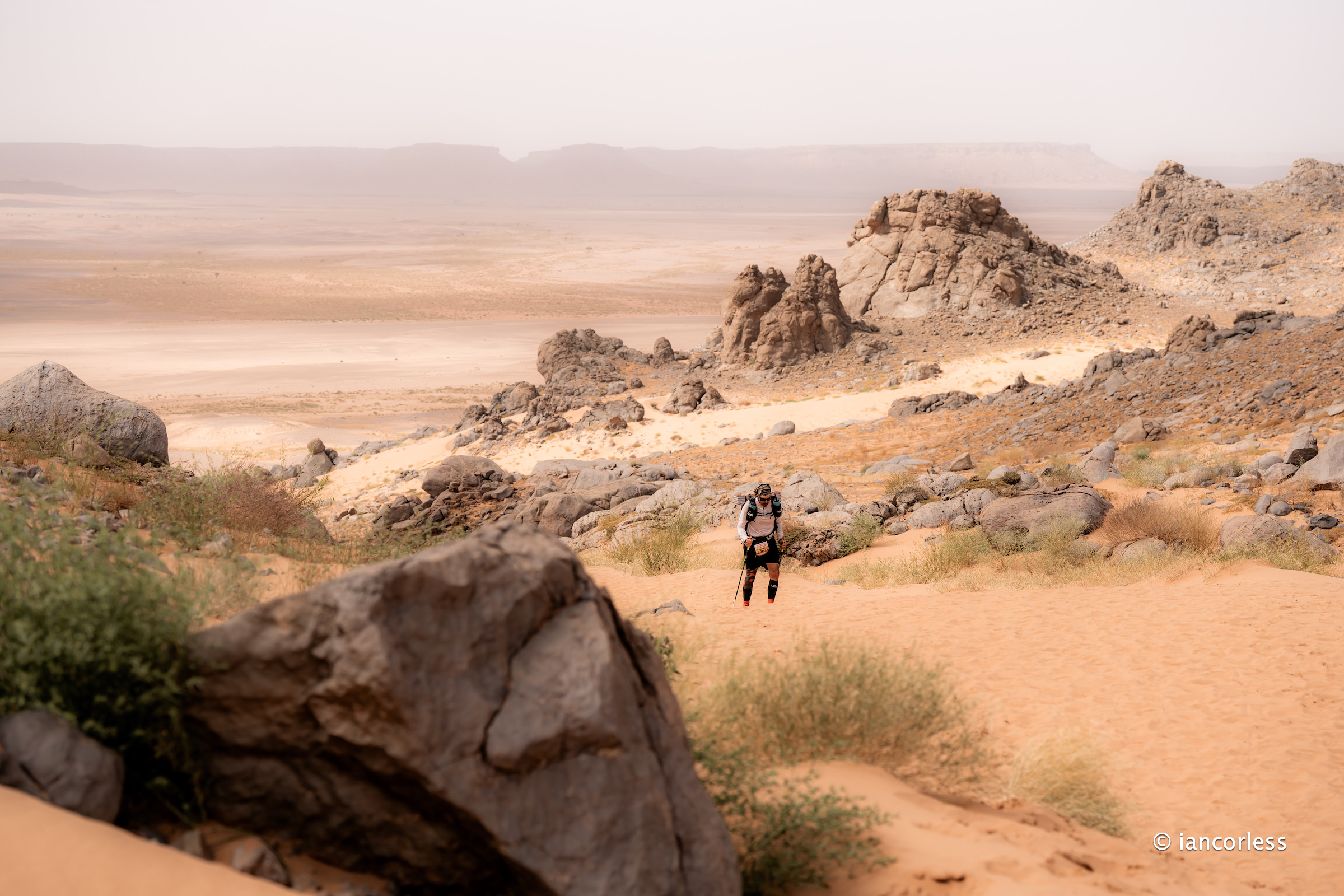
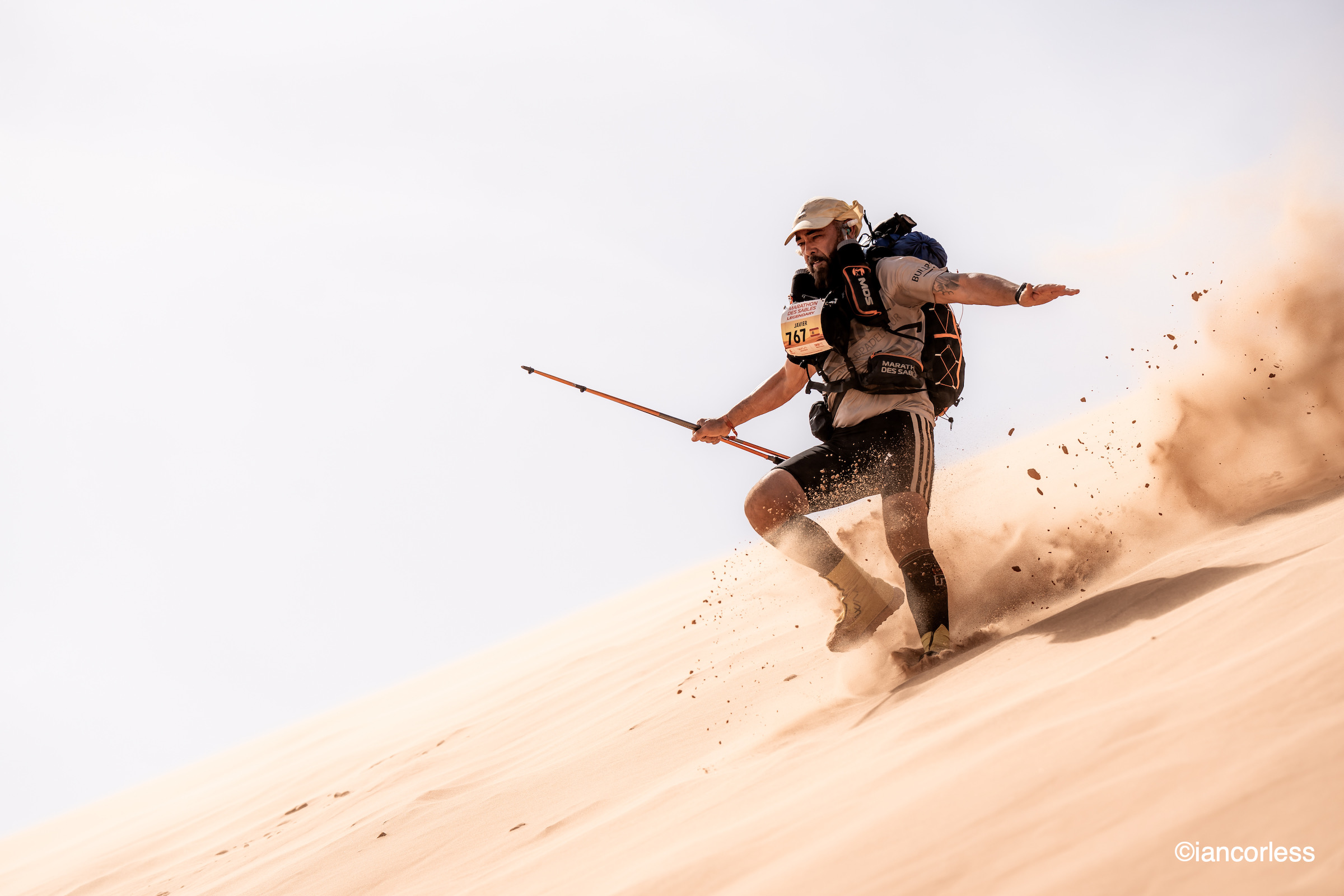
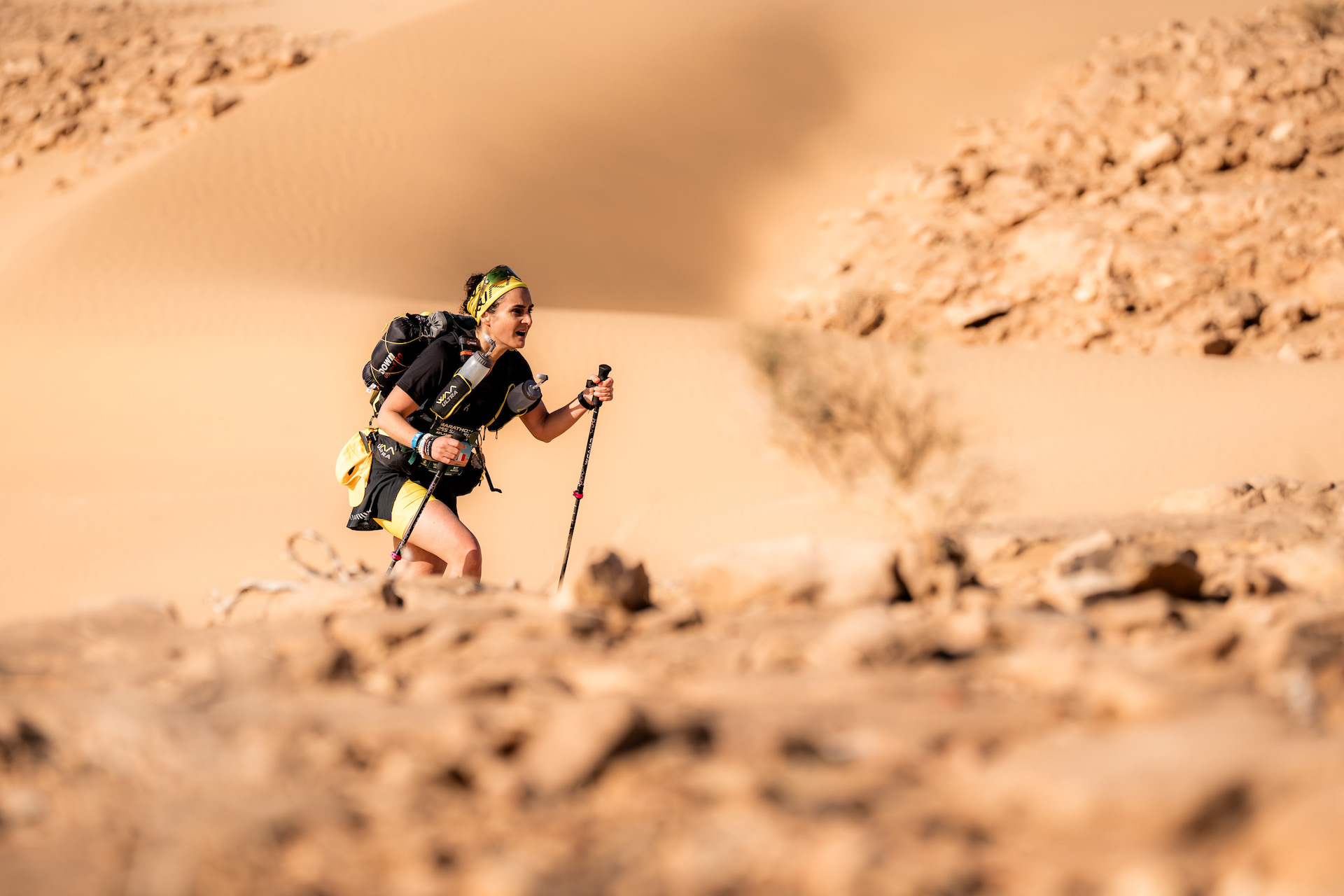
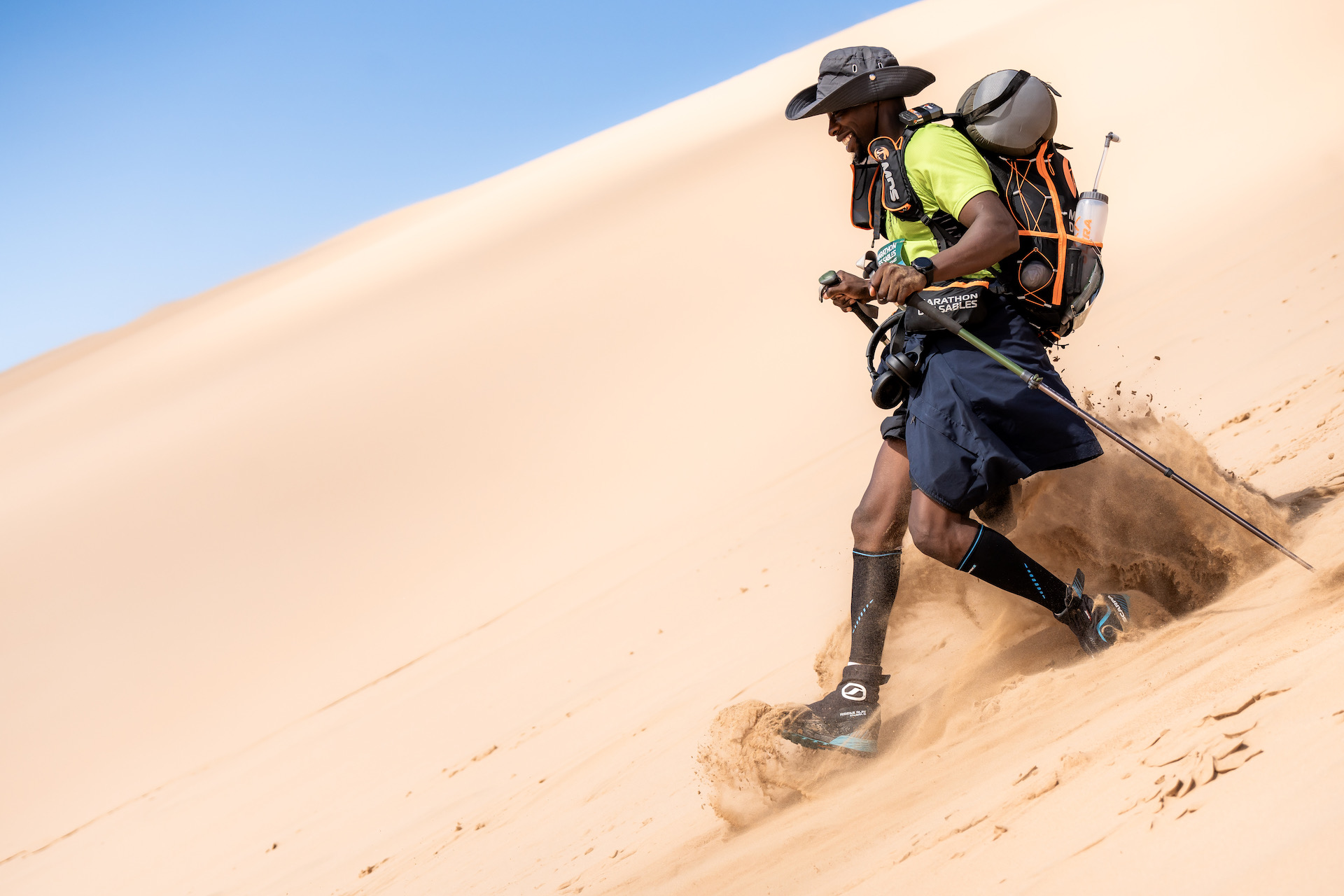
This isn’t a race of endless dunes, Cappadocia stands unique in the MDS format with no sand. It’s a test of grit over rock, gravel, and dust trails, winding through steep valleys, high plateaus, and narrow chimney-like formations.
The terrain shifts constantly. One moment you’re powering up a canyon, the next you’re cruising past thousand-year-old cave dwellings.
Cappadocia’s late summer weather is unpredictable. Days can scorch above 30°C (86°F), while nights drop sharply in temperature. As with all MDS events, participants will sleep in individual tents in a stunning location set within an amphitheatre of rock.
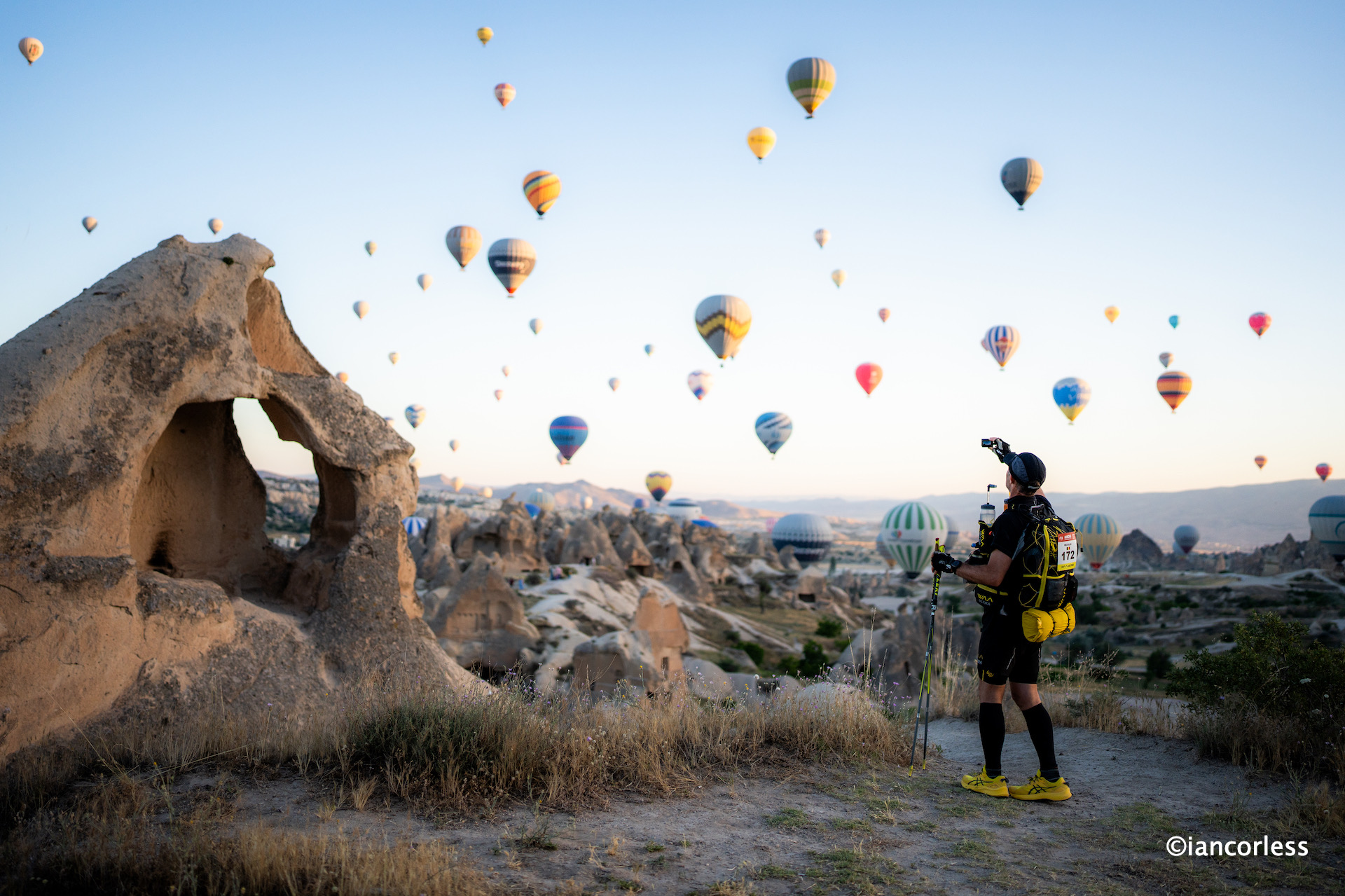
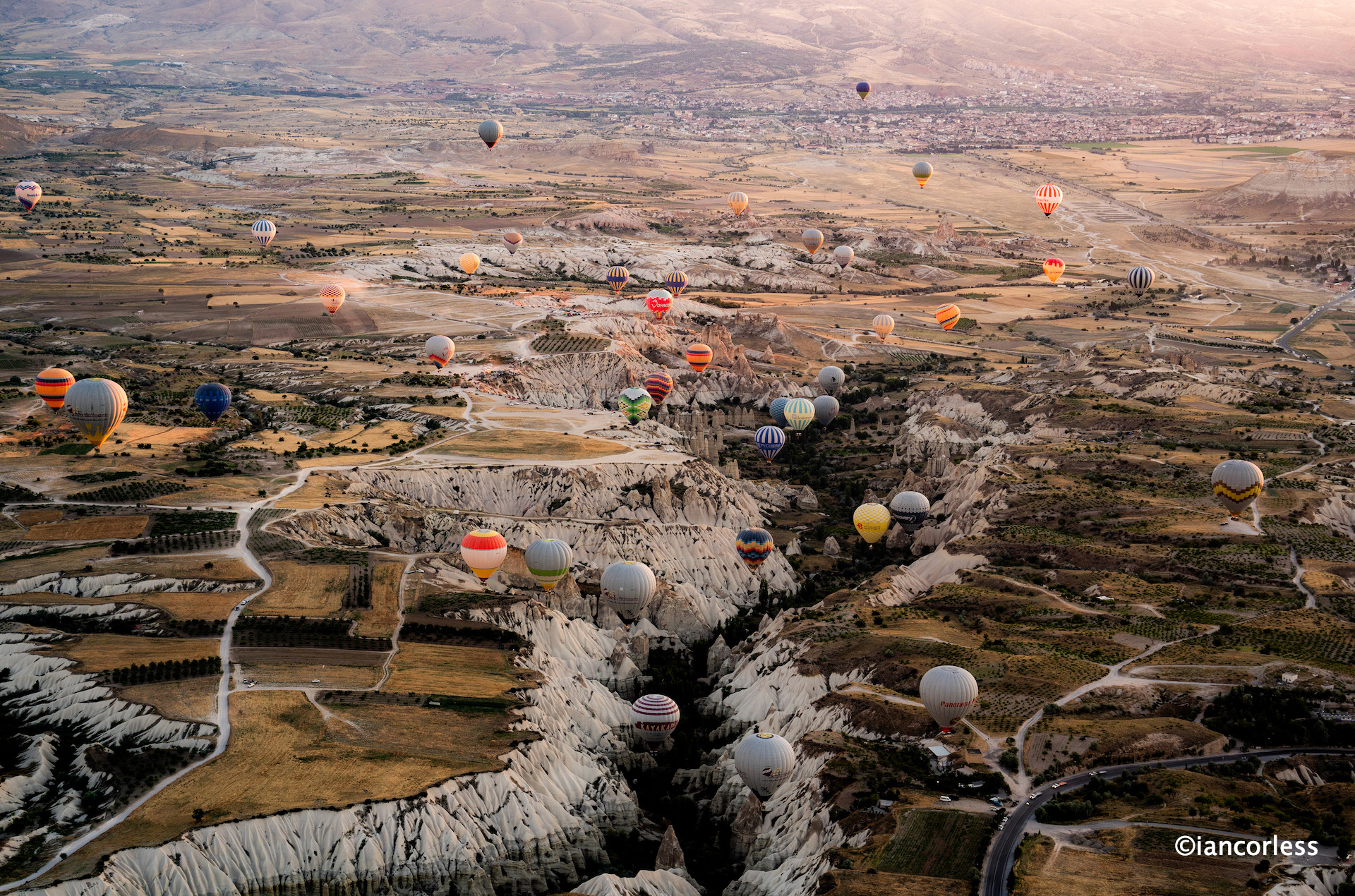
The sky, often cloudless, fills at dawn with dozens of hot air balloons, silent giants drifting above the rock spires and carved cliffs. Arguably, one of the most unique and memorable sights in any MDS event.
Whether you’re going for the 70km or pushing through the full 120km, MDS Cappadocia strips away distractions and puts the challenge squarely on participant versus the trail: raw, remote, and unforgettable.
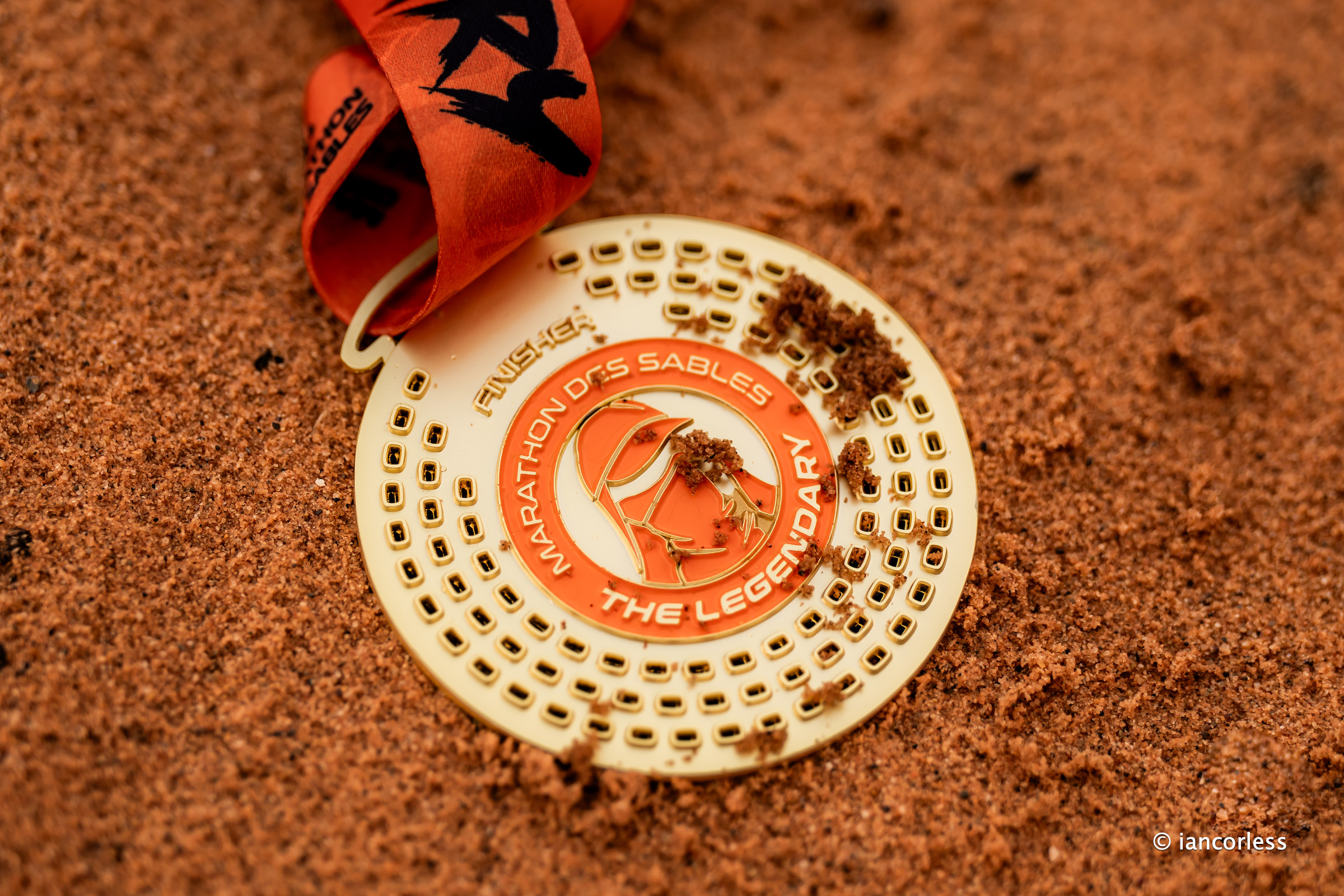
The sand is settling, the 2025 and 39th edition of Marathon des Sables The Legendary is over.
Quite simply, a hugely successful edition with 95% completion rate and good time vibes felt throughout the Sahara and beyond.
OVERVIEW
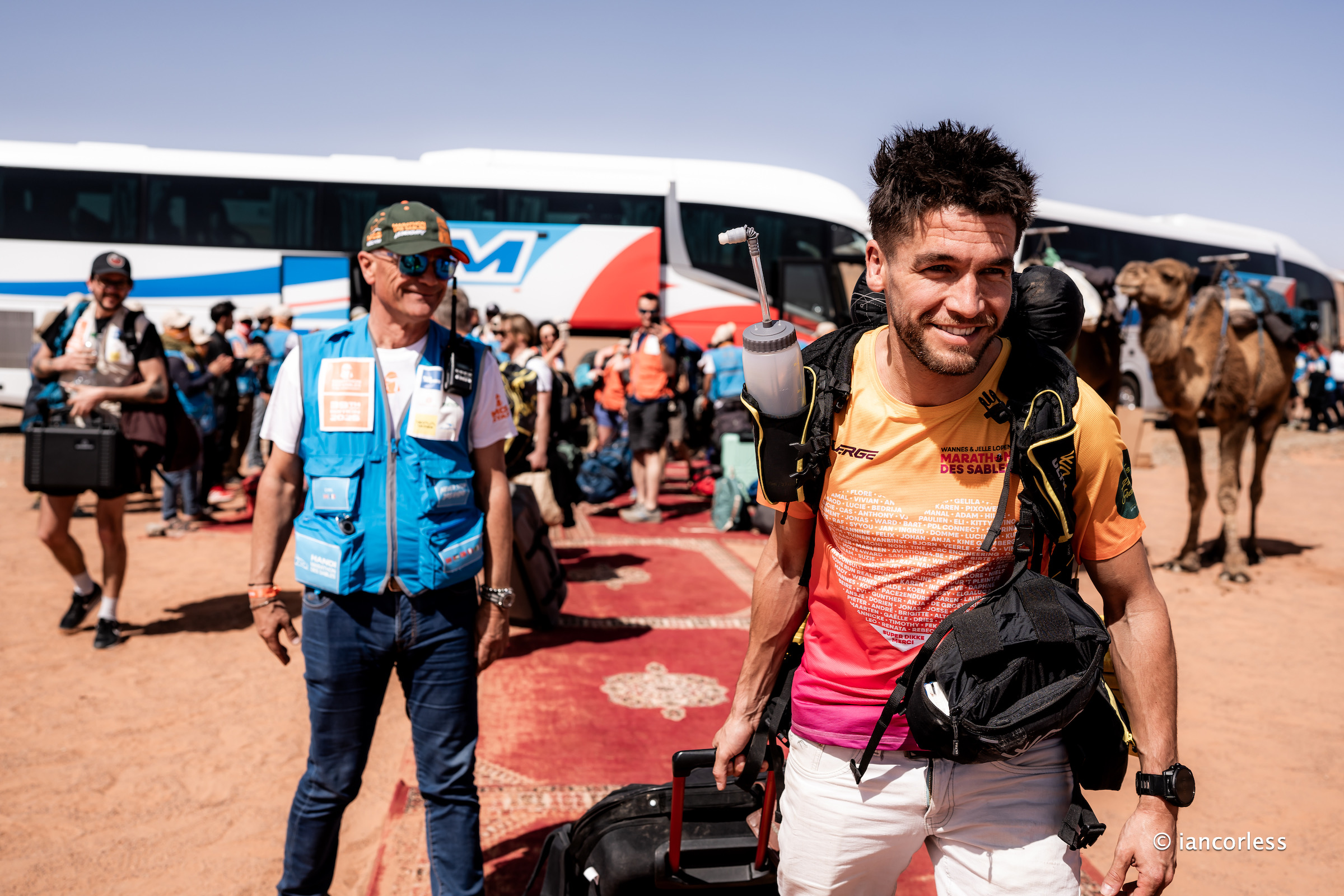
Cyril and Olivier with Michael from the USA – Photo by Ian Corless
The transition from 2023 to 2024 was not an easy one. The take over of MDS from Patrick Bauer and into the hands of Cyril and Olivier had created some concern and anxiety. Most certainly, the build up to the 2024 (38th) MDS had many concerns for participants that were vocalised on social media. However, after the 2024 event, all these worries and concerns were extinguished with an incredibly successful event and high finish rate. You Can read Marathon des Sables – The Legendary : 2024 Summary HEREshould you wish.
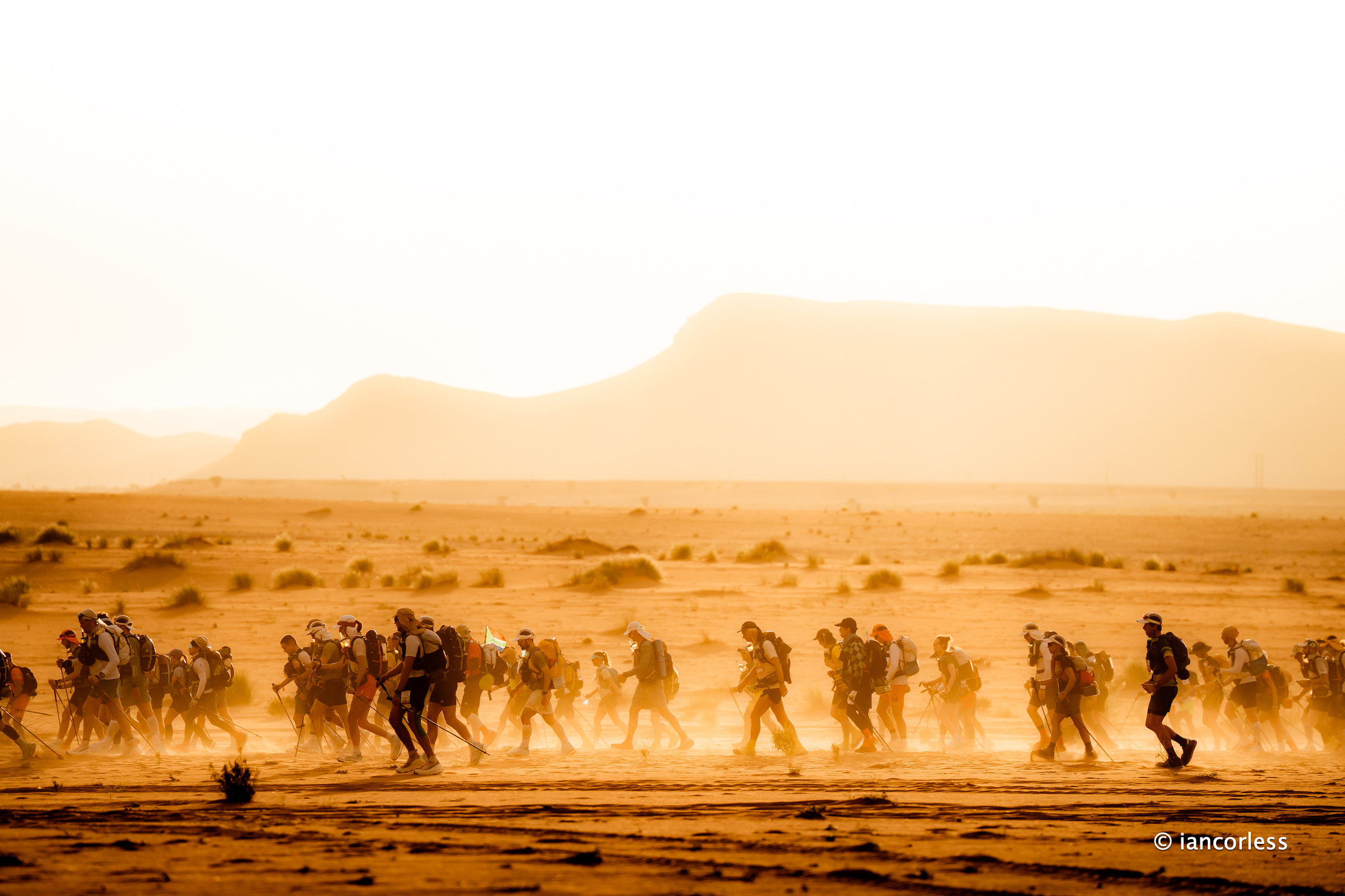
Nothing like a MDS start – Photo by Ian Corless
From May 2024 to April 2025 the build up to the 39th Legendary edition was seamless. The successful running and completion of MDS (3-stages over 4-days at 70/100 or 120km) events in Cappadocia, Fuerteventura, Jordan, Morocco, Atlantic Coast and the introduction of Trek and Handi only confirmed the growth, development, upward learning curve and the MDS team bonding and progression.
All of the concerns and worries for the 38th edition of Legendary played out on social media were not present for the 39th edition. There is a couple of reasons for this I believe:
The 38th edition had been a huge success and therefore worries and concerns were answered.
The pro-active communication from the MDS team improved considerably.
Runner testimonies from the 2024 event confirmed that the ‘new’ MDS team and the changes made were all positive.
Evolution, not revolution was the quote that Cyril Gauthier had used in 2023 this was played out in 2024 and then consolidated upon in 2025.
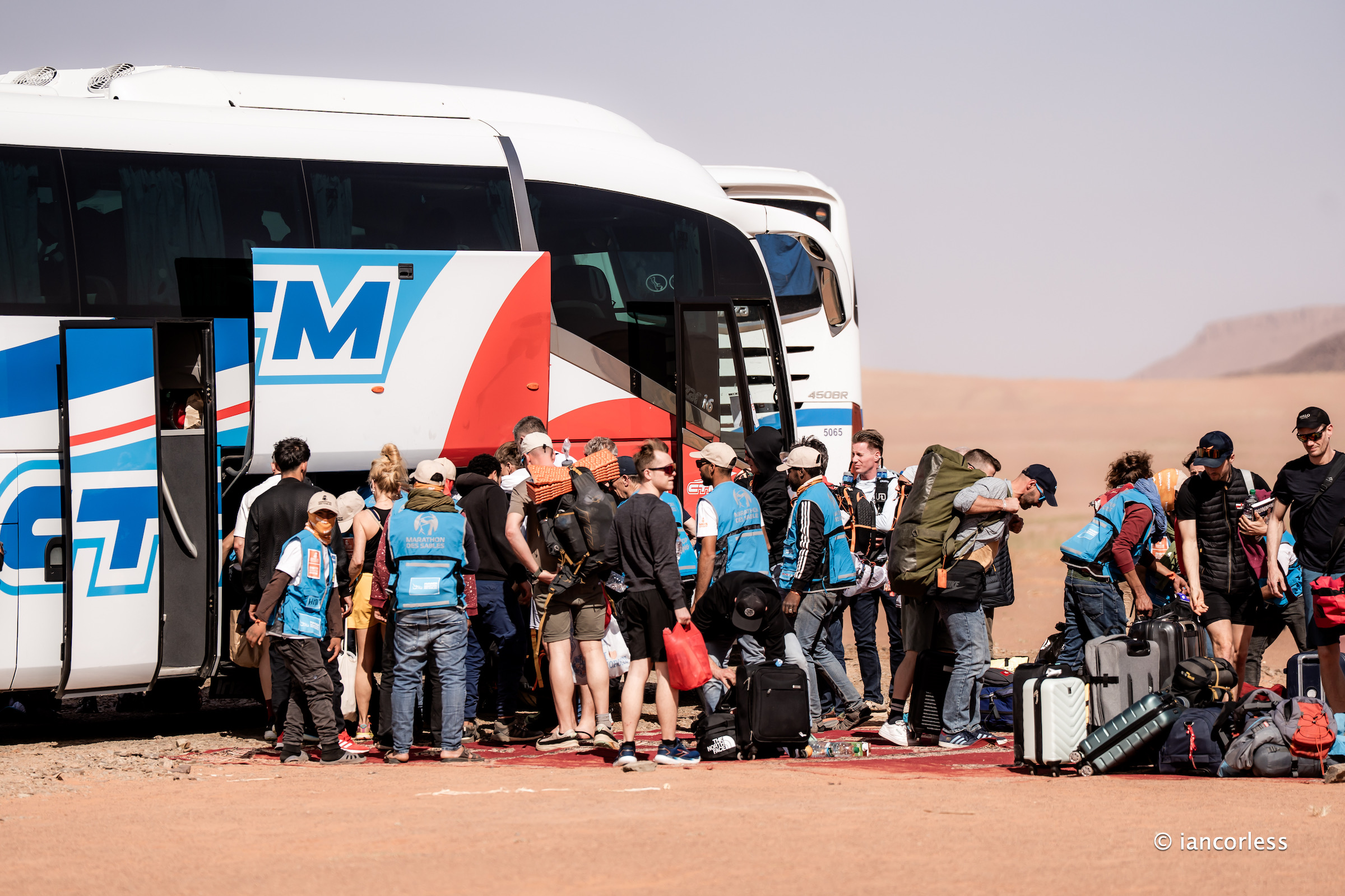
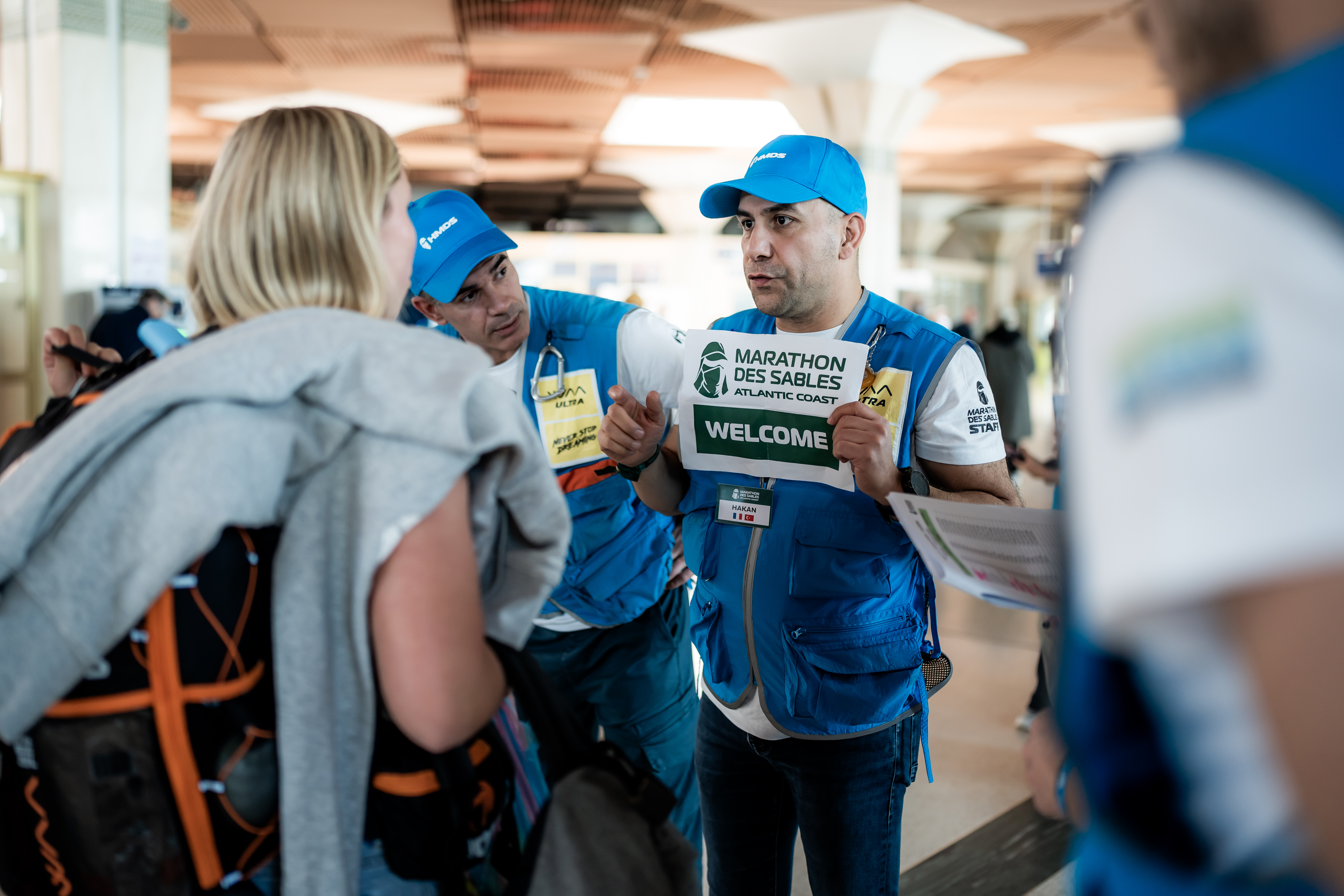
Arrival in the desert – Photo by Ian Corless
THE 2025 EVENT
Welcome to the Sahra – Photo by Ian Corless
Post-race questionnaires are extremely important for the MDS team. Cyril and Olivier very much take all the comments, absorb them, digest them and then move forward with new plans. If a new plan does not work and the participants confirm this, then it is changed. If a new plan works, it is retained. There are no one-stop easy solutions, MDS is an ever-growing and ever-changing event that must constantly be a chameleon to the ever-changing demands and needs of participants.
TRAVEL
Photo by Ian Corless
A key change for 2025 was in transportation. Two key points:
The core MDS team, based mostly in Paris, travelled to Morocco via train, boat and coach, taking 3-days and not using airplane travel. For 2025, this was a one way journey, a test, to see how feasible and practical this form of travel is. The general consensus from those who did it is/ was extremely positive. General comments were around this being an adventure in its own right, a brilliant opportunity to share more time with colleagues, a great opportunity to work while travelling and so on… I think we may well see this grow into something bigger for 2026!
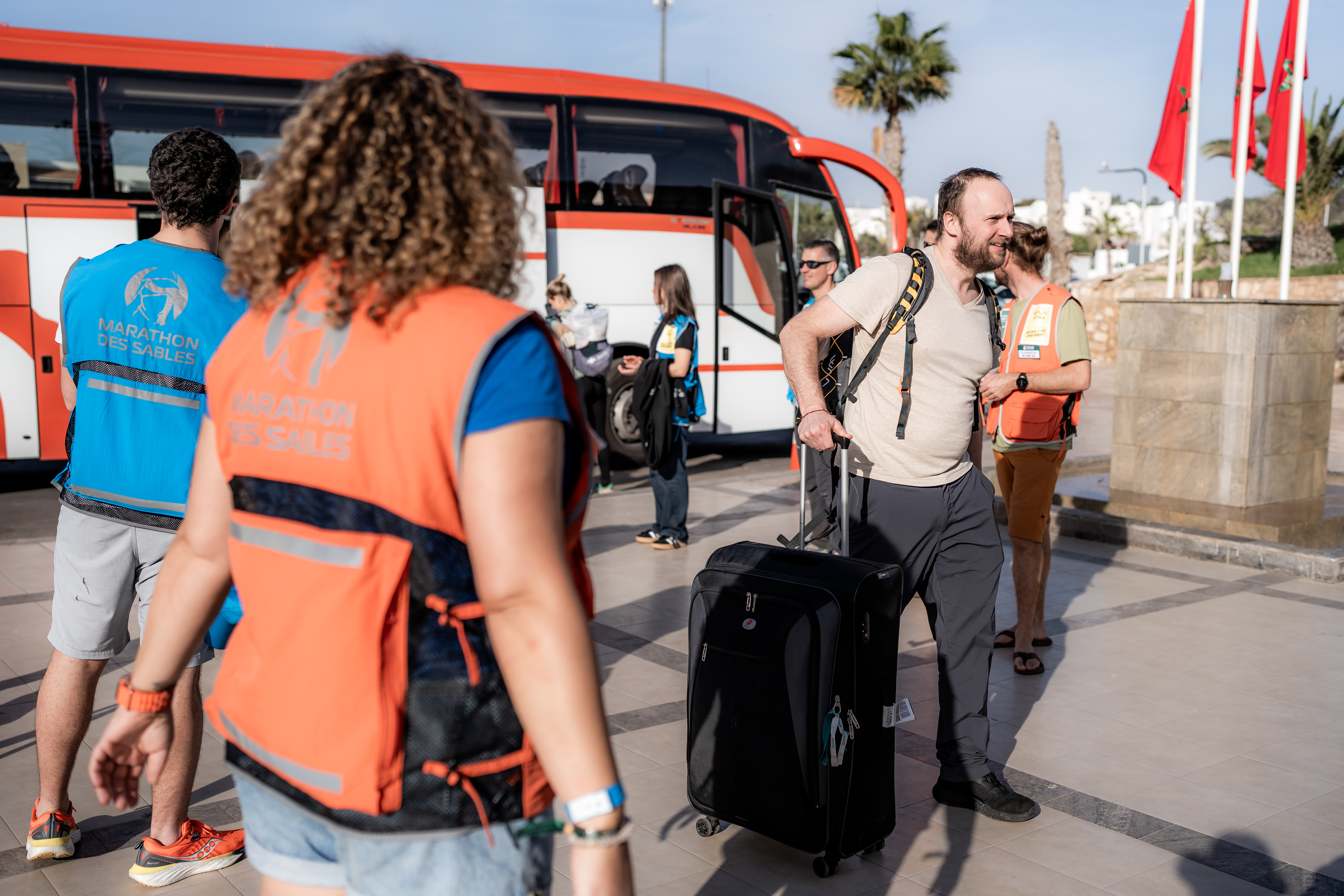
In 2024, plane travel arranged by the MDS organisation was reduced to a minimum. For 2025 it was eradicated all together. Therefore, participants could no longer take the option of a MDS charter plane but had to arrange flights themselves. This is no big deal with so many flight options available, especially with MDS offering a free transfer coach service from Marrakech to Ouarzazate and post-race, a free transfer service back to Marrakech.
SELF-SUFFICIENCY
Photo by Ian Corless
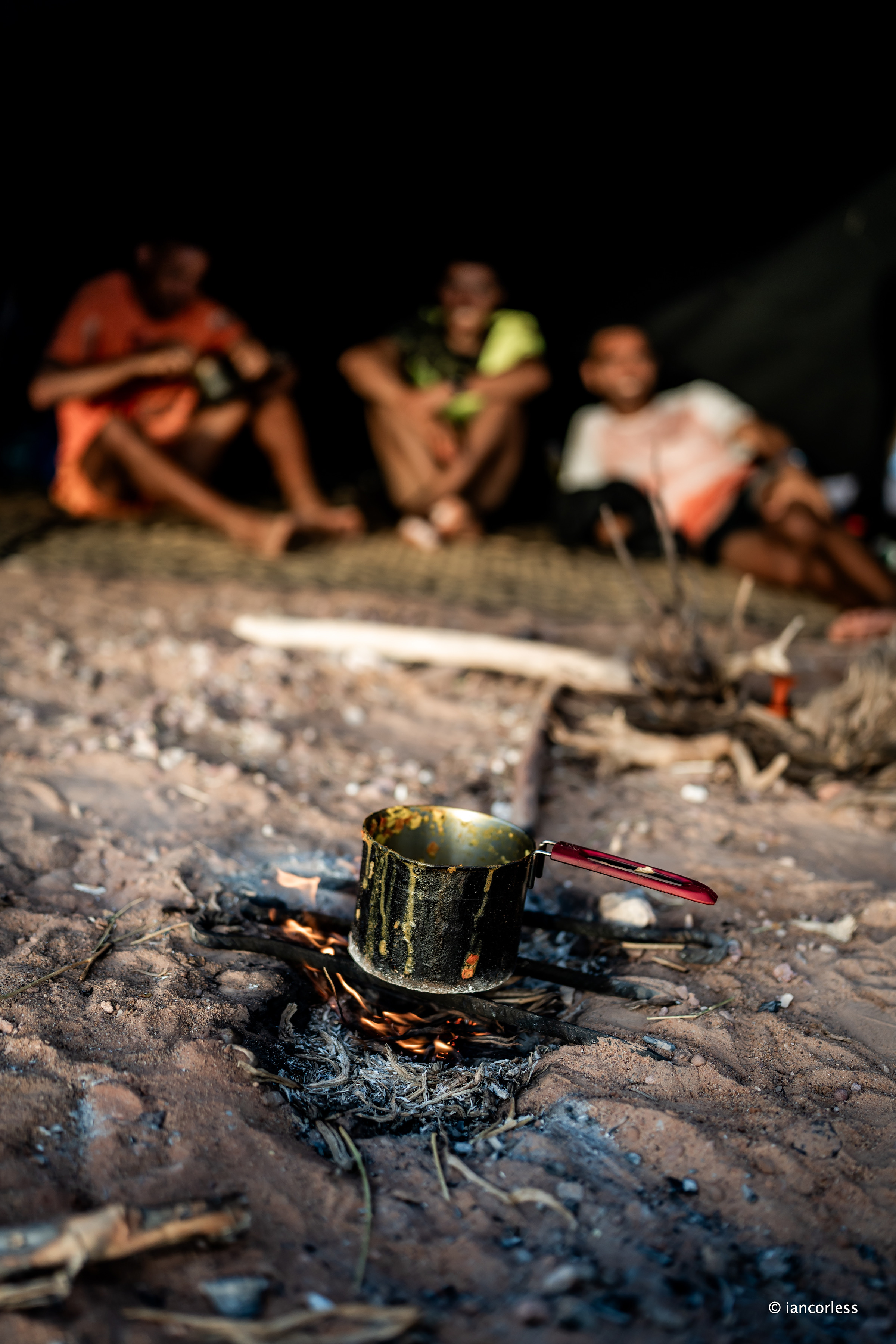
Catering by the MDS organisation once in the Sahara was removed in 2024, this was reasoned for 2025. To clarify, when the buses leave Ouarzazate for the desert, self-sufficiency begins for the travel day, the fist night in bivouac, the following day (admin day), the evening and then, the following day, the race starts and ‘race’ self-sufficiency begins. There is a difference between the two forms of self-sufficiency as the travel day and admin day you can bring as much or as little as you like. Quite simply, it’s not part of the mandatory race minimum requirement of 2000 cal minimum per day. You can bring tinned food, drinks, wine, beer, caviar…. Whatever you wish! It’s a no brainer to be able to look after your own food requirements and quite simply it greatly reduces the possibility of food related health issues that could potentially ruin a race.
ADMIN DAY
Photo by Ian Corless
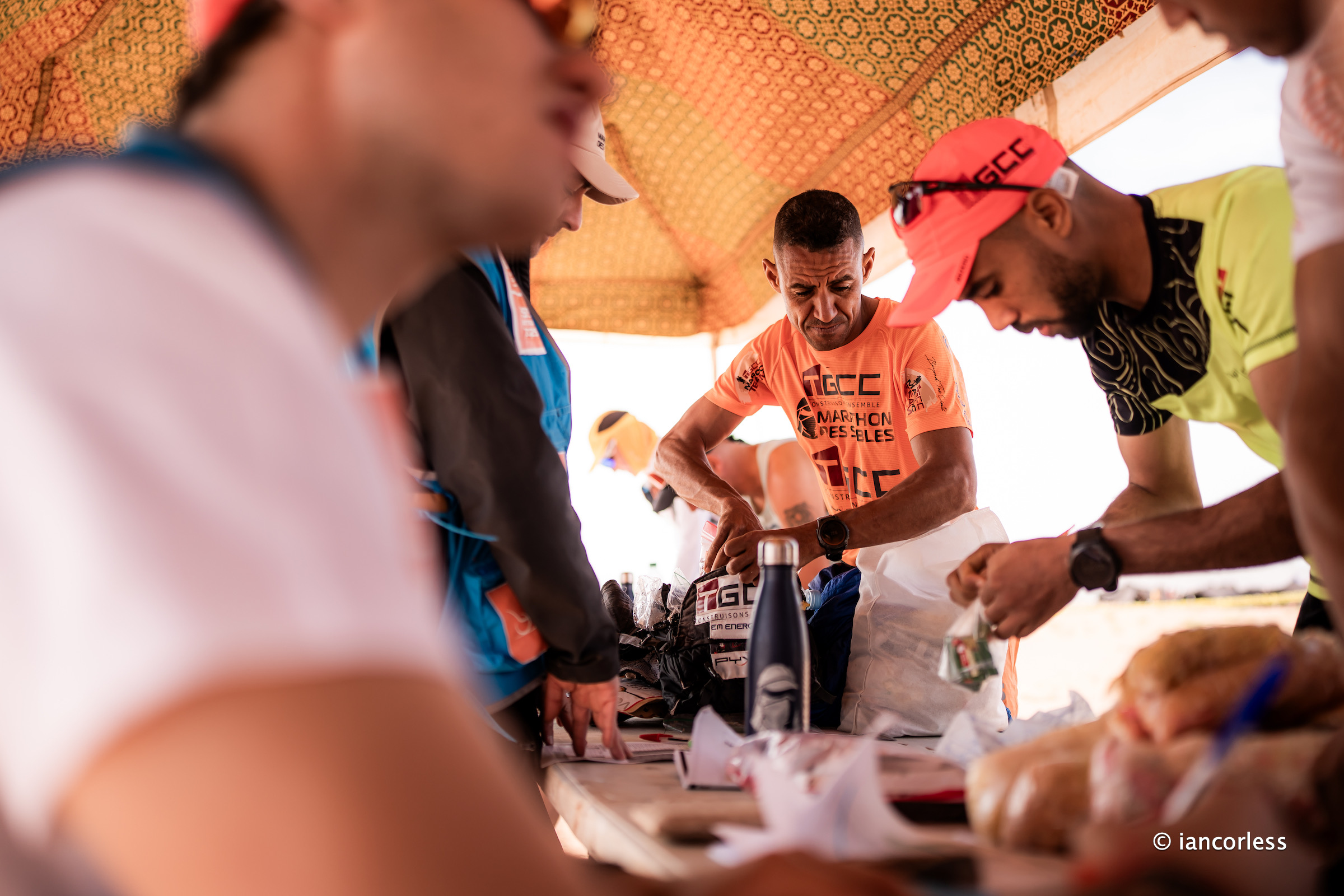
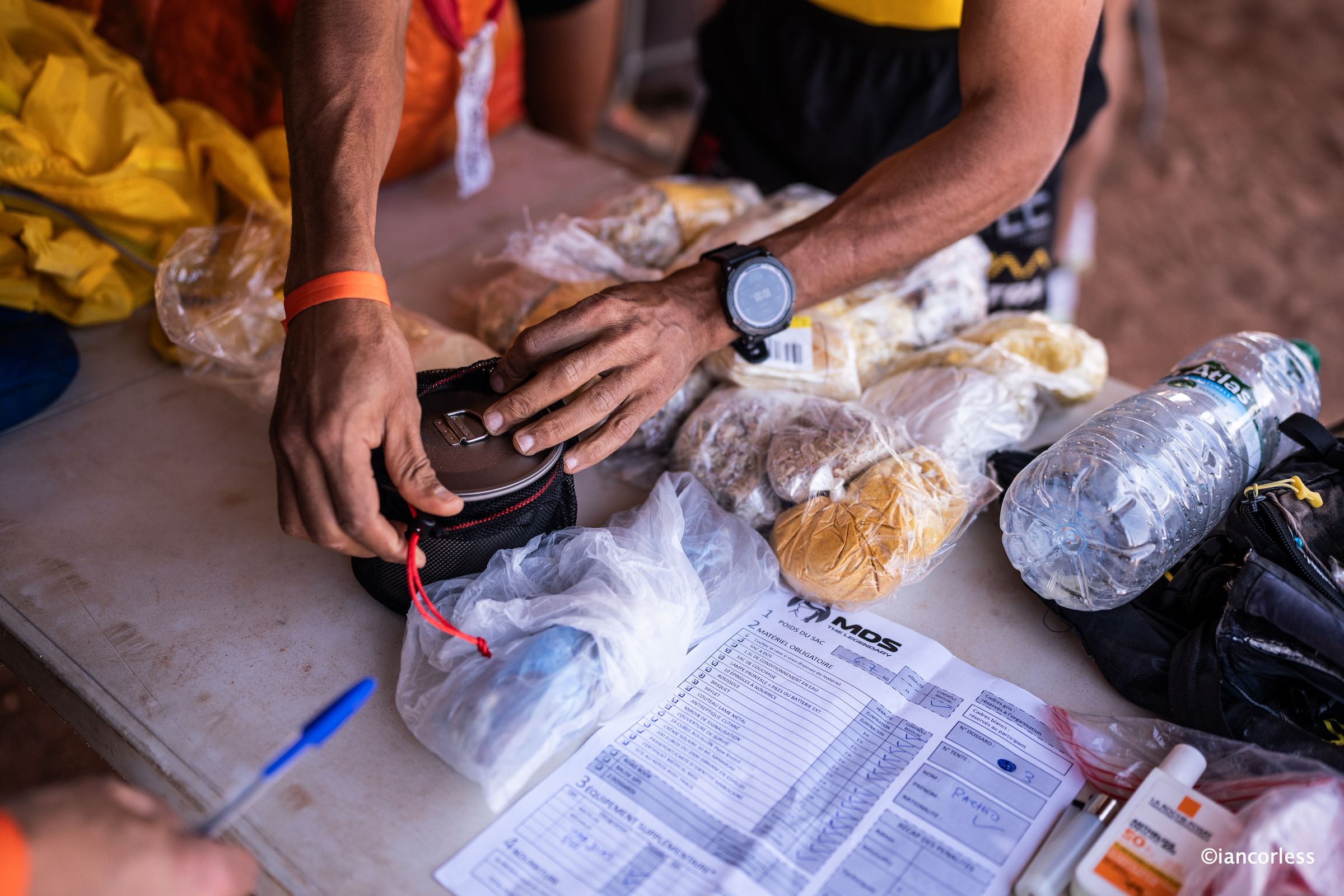
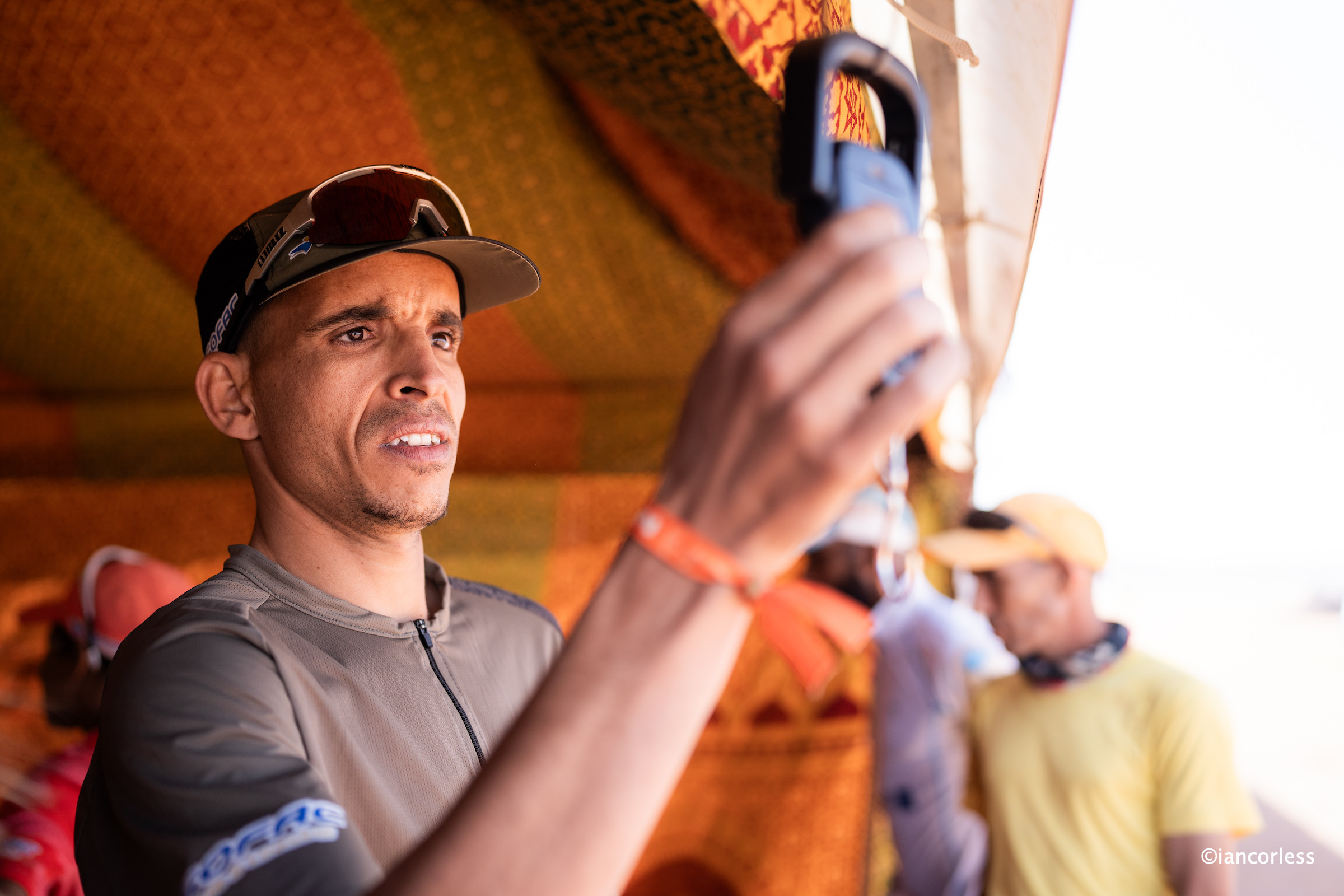
The procedures for admin day were changed for the 2024 edition and they were a huge success. This system was retained for 2025 making the process seamless, fast and considerably less painful than the procedures that had gone before.
Photo by Ian Corless
BIVOUAC
Photo by Ian Corless
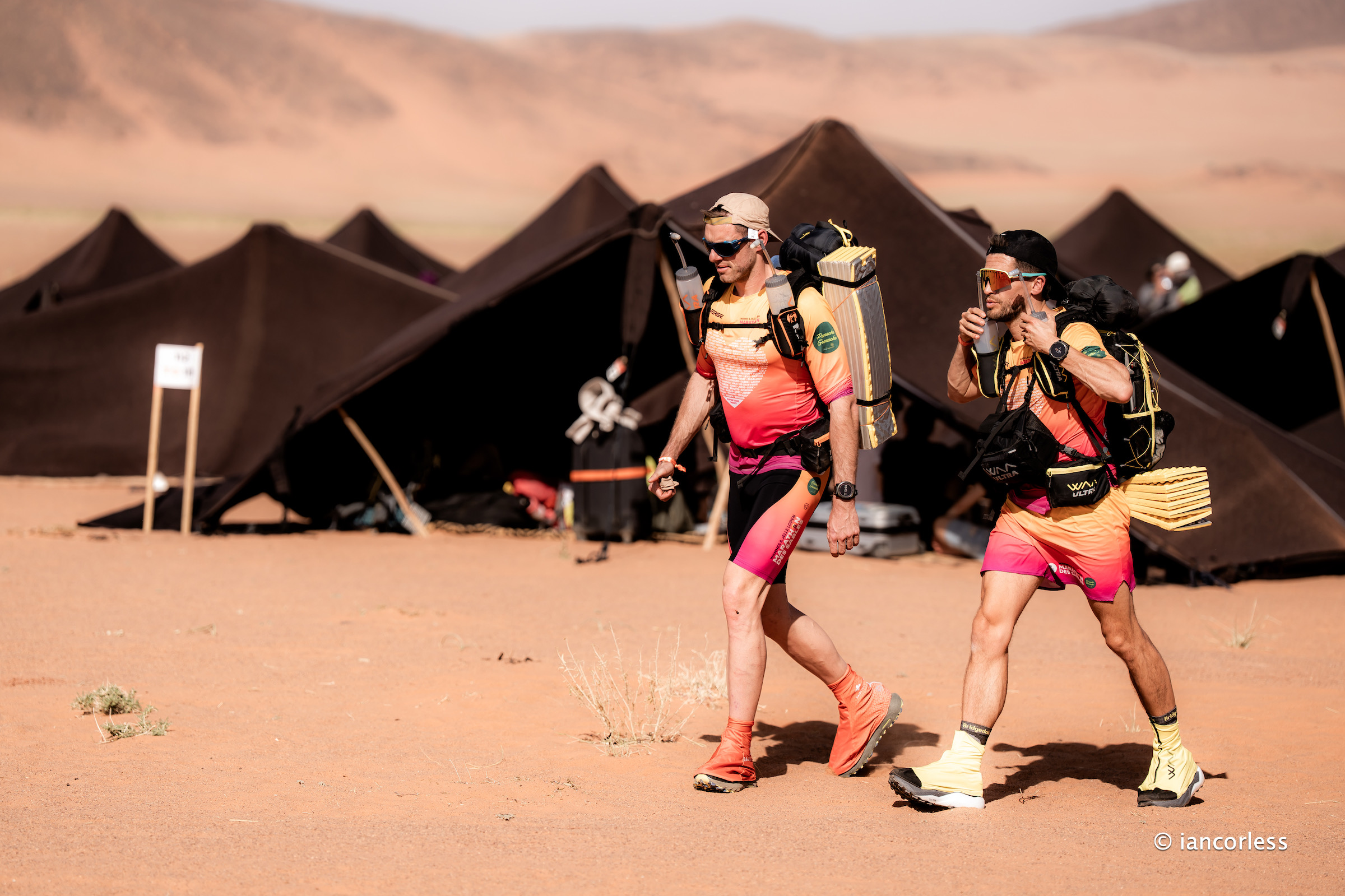
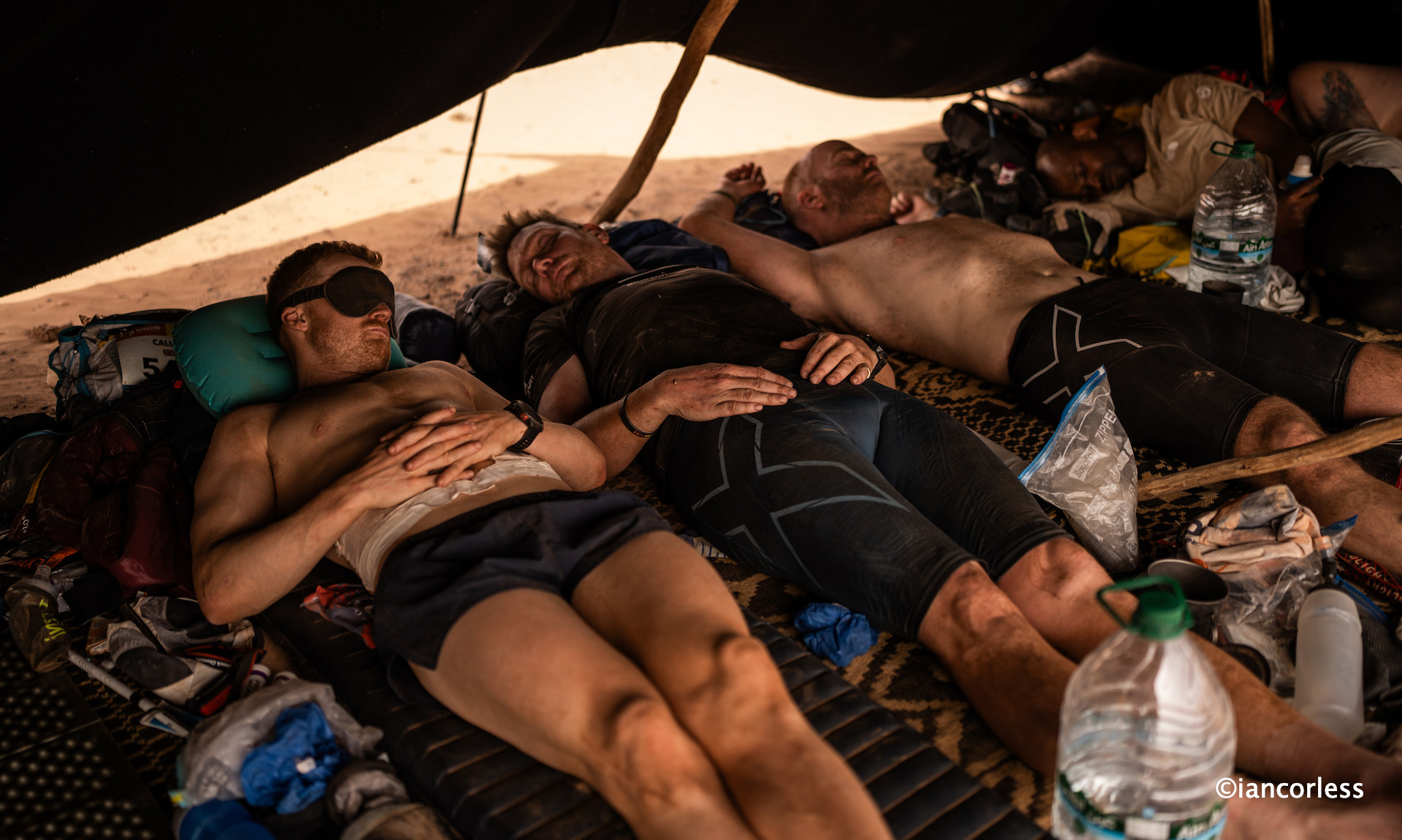
In principle, it may well look the same, however, there are changes for the very observant. Firstly, the circles that make bivouac are smaller and tighter making the camp much more of a community. In 2025 there were new ‘women only’ tents for those who would prefer this option. On some days, in the middle of bivouac, yoga/ stretching was possible, circle of legend talks and yes, even a big fire.
WATER
Photo by Ian Corless
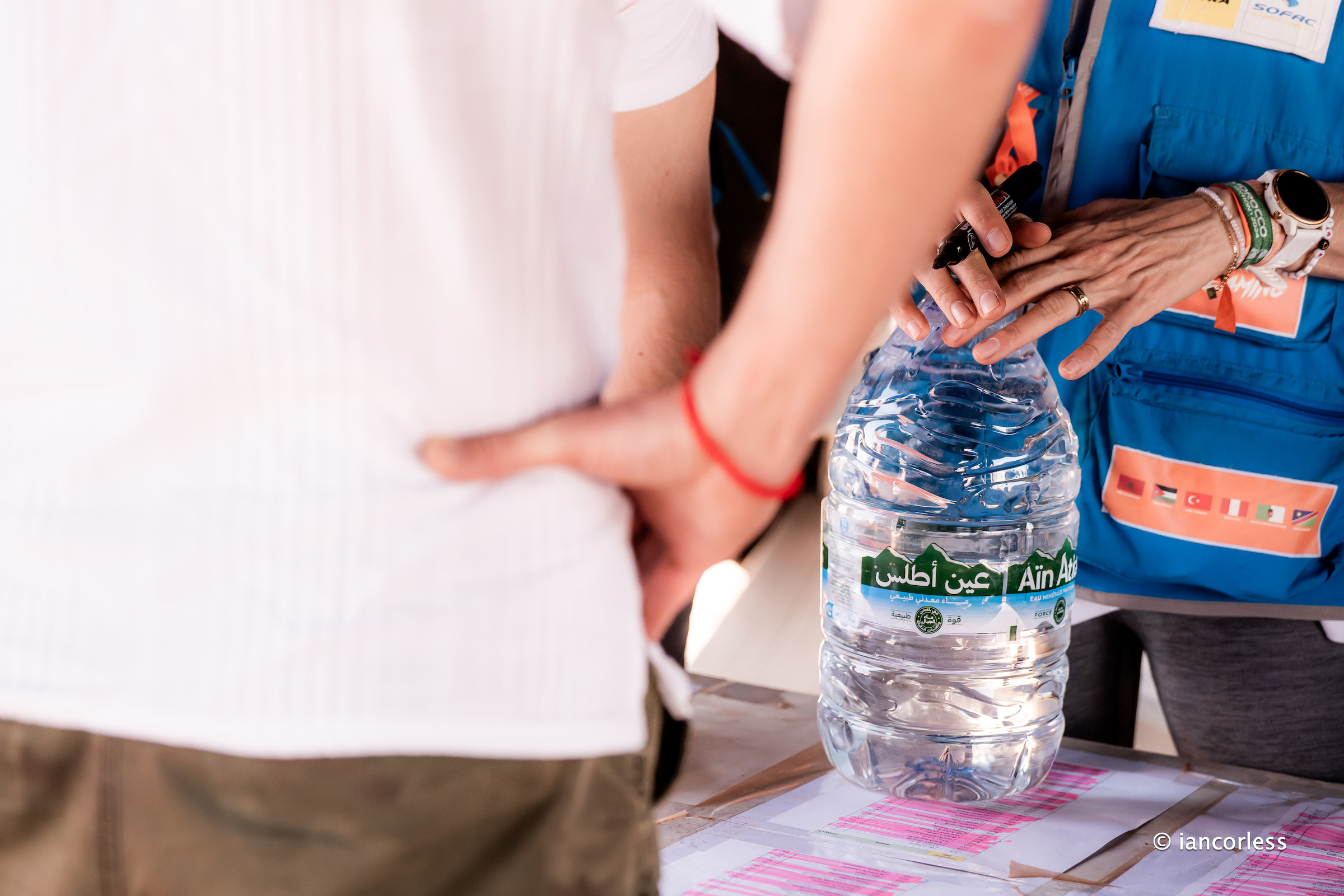
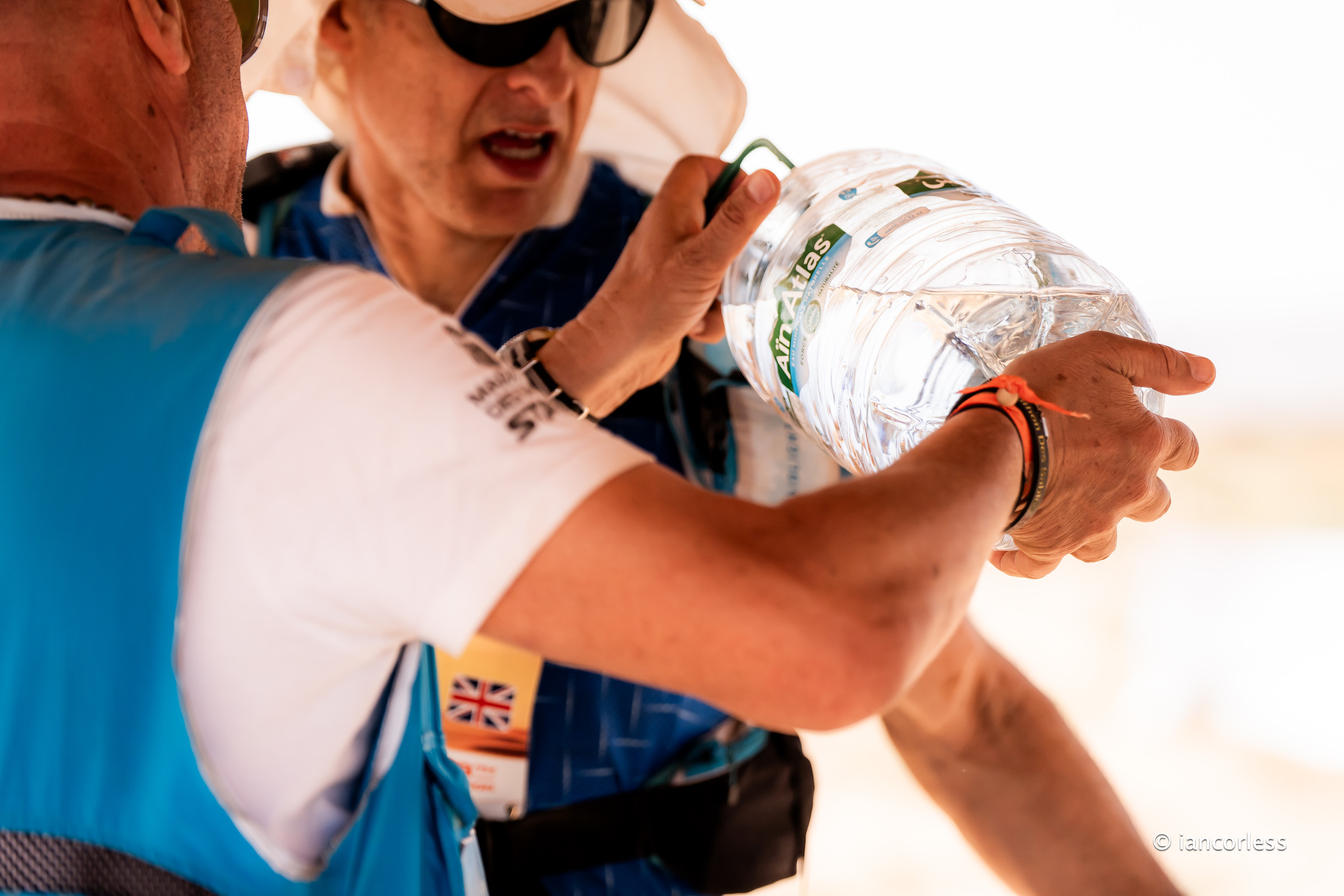
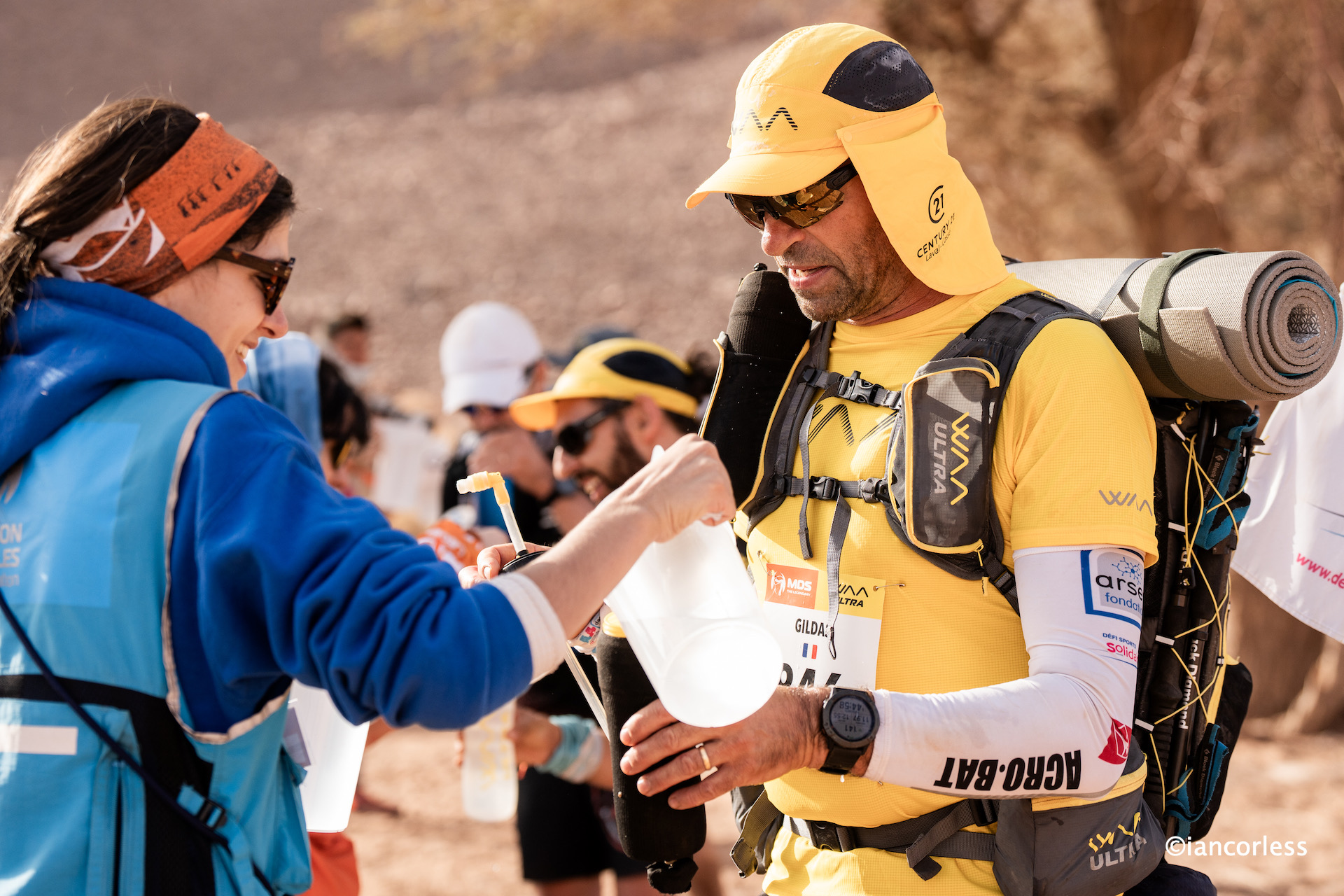
The provision of water was drastically changed in 2024 and this was retained for 2025. During the race there is no rationing of water. As you arrive at a CP, water is decanted into your bottles via MDS blue jackets who pour the water from jugs. This water comes from large 5ltr bottles. Quite simply, you can have 2x 750ml bottles filled, you can then drink one and it will be refilled if required – a game changer.
Photo by Ian Corless
Post-race you are provided with 1 large 5ltr bottle, the is rationed. So, this water must provide hydration post-race, be used for dinner/ breakfast and it must be used to fill your bottles to take you to CP1 the following day.
ICED WATER
Photo by Ian Corless
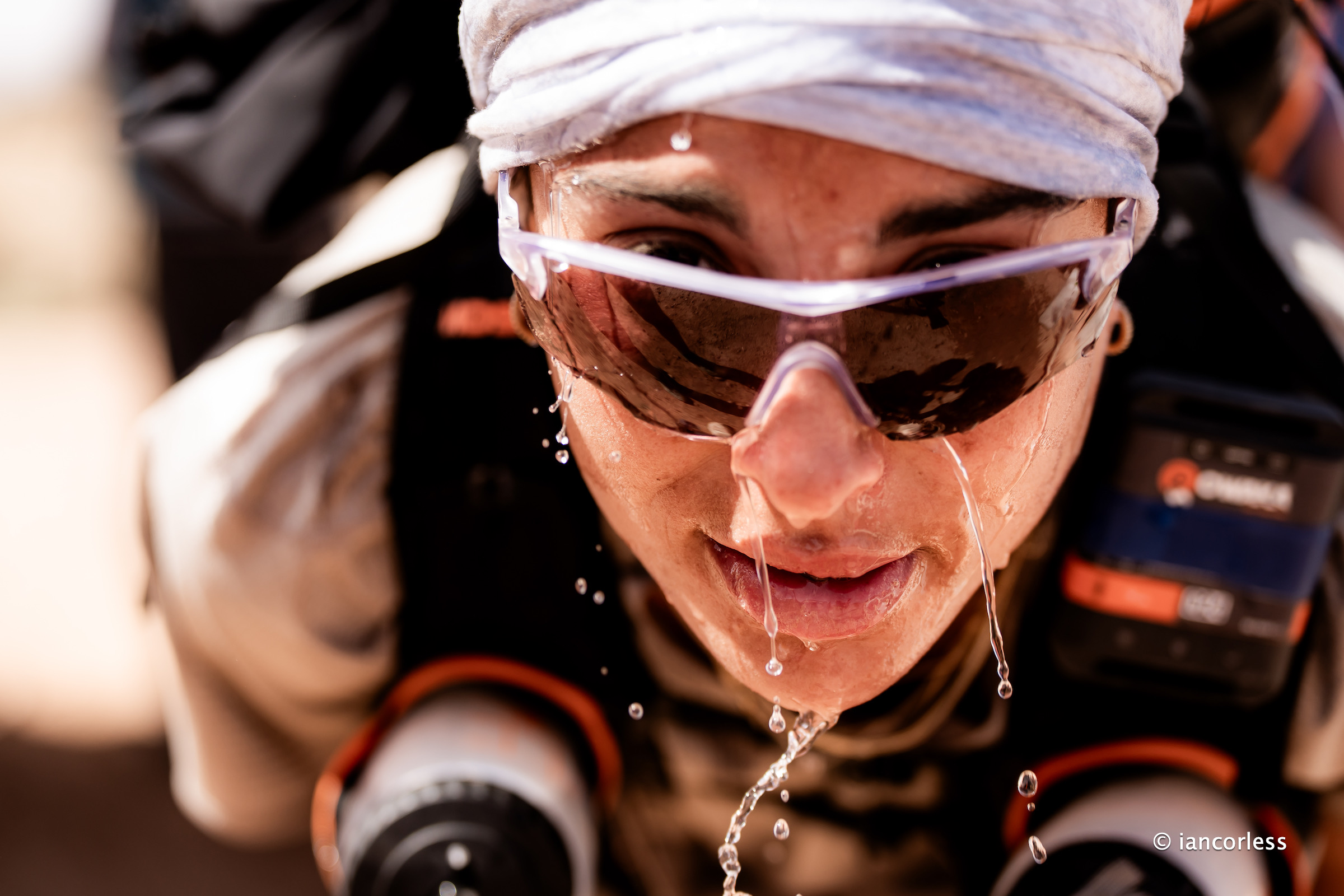
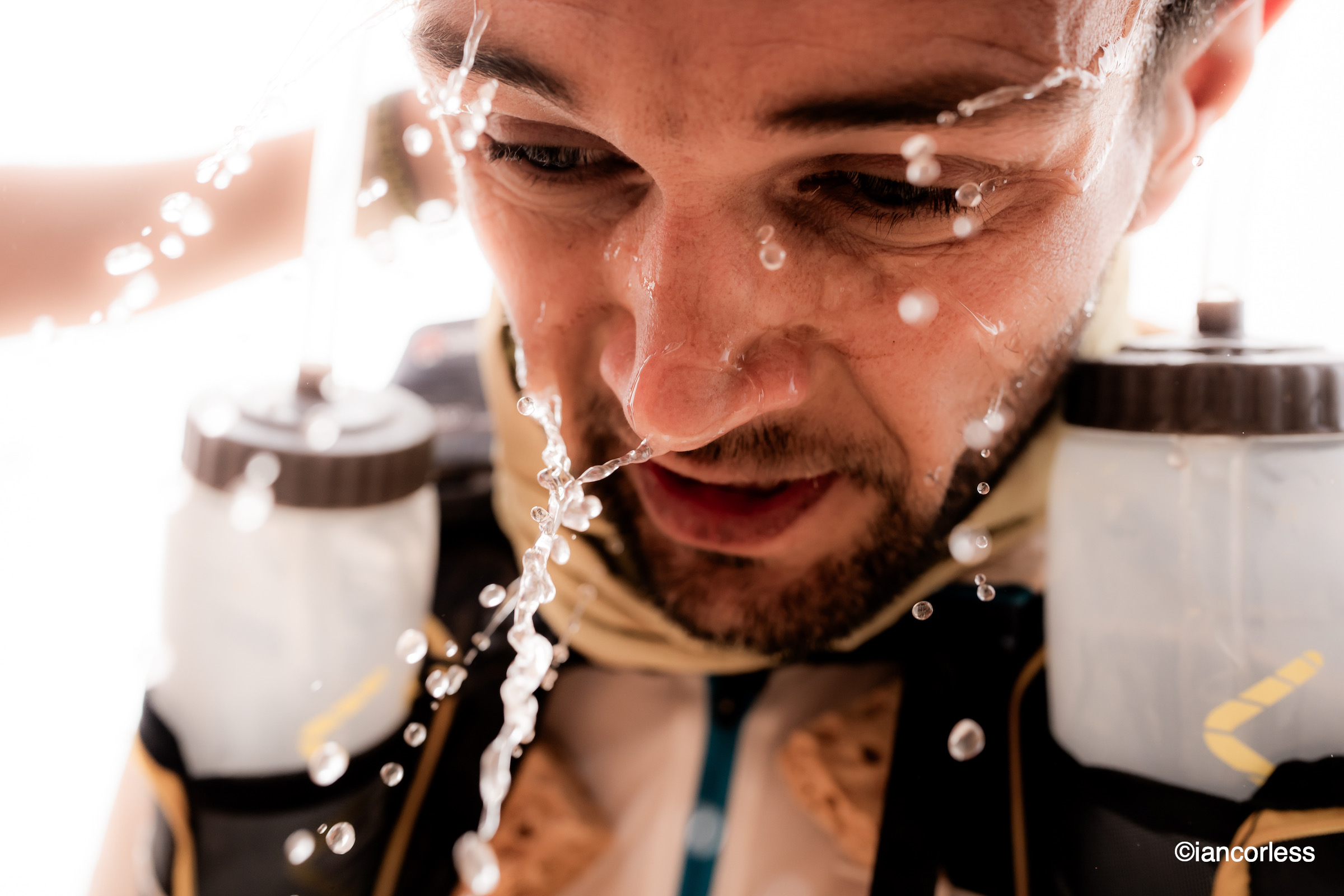
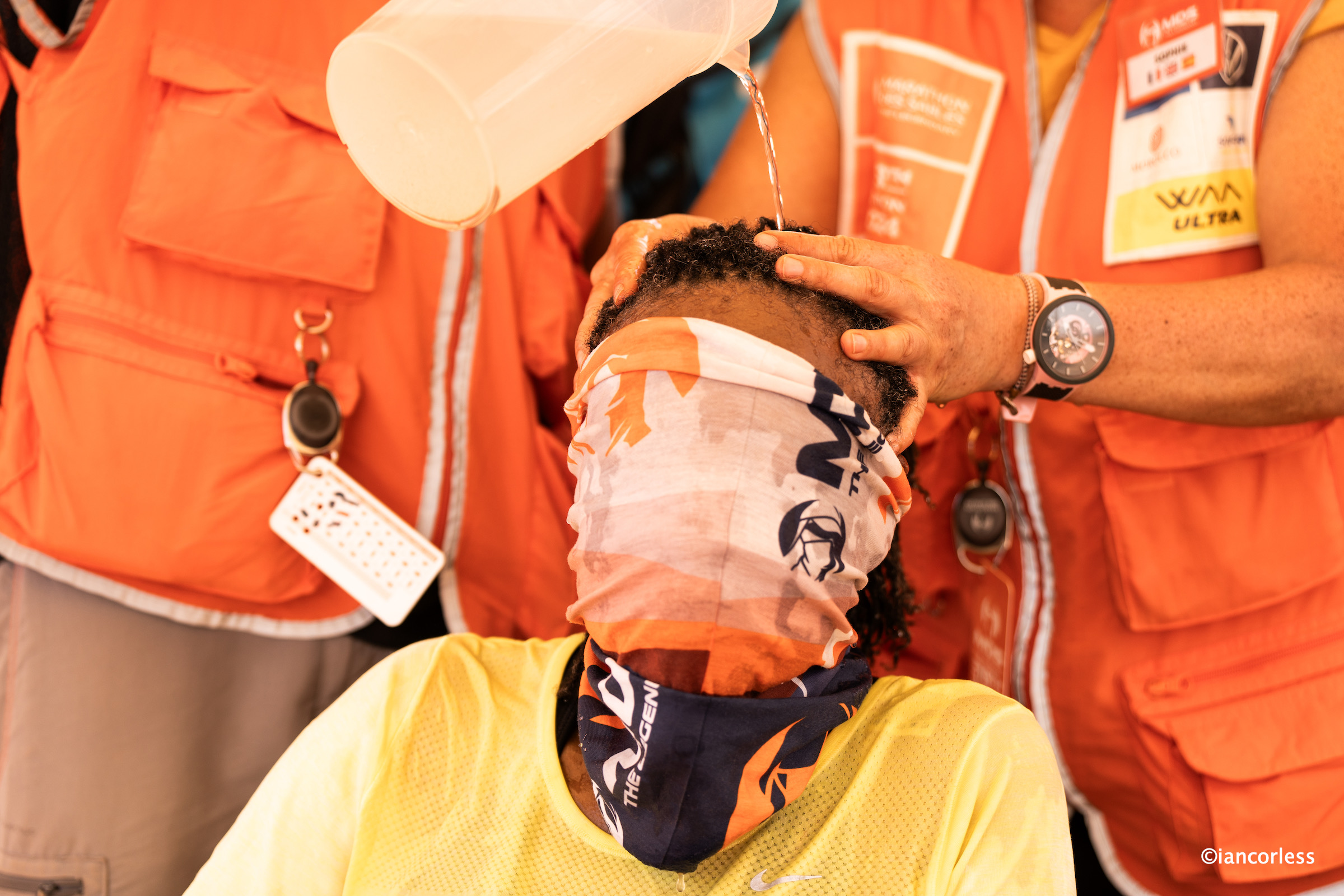
CP’s have MDS orange or blue jackets who will pour iced water over your head to enable cooling. It’s a small simple step that makes a huge change that ultimately helps facilitate completion of the Legendary.
ORANGE AND BLUE JACKETS
Photo by Ian Corless
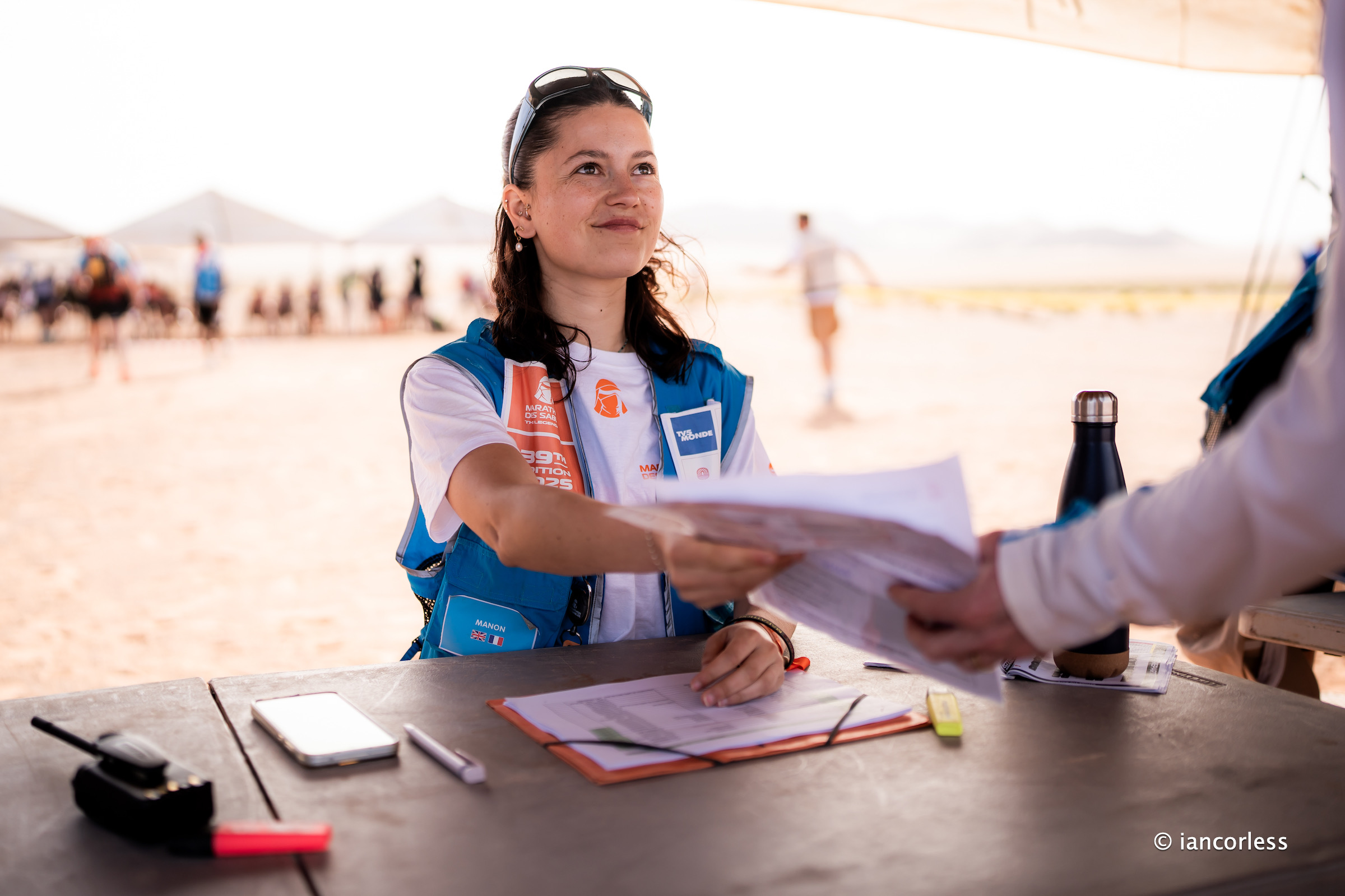
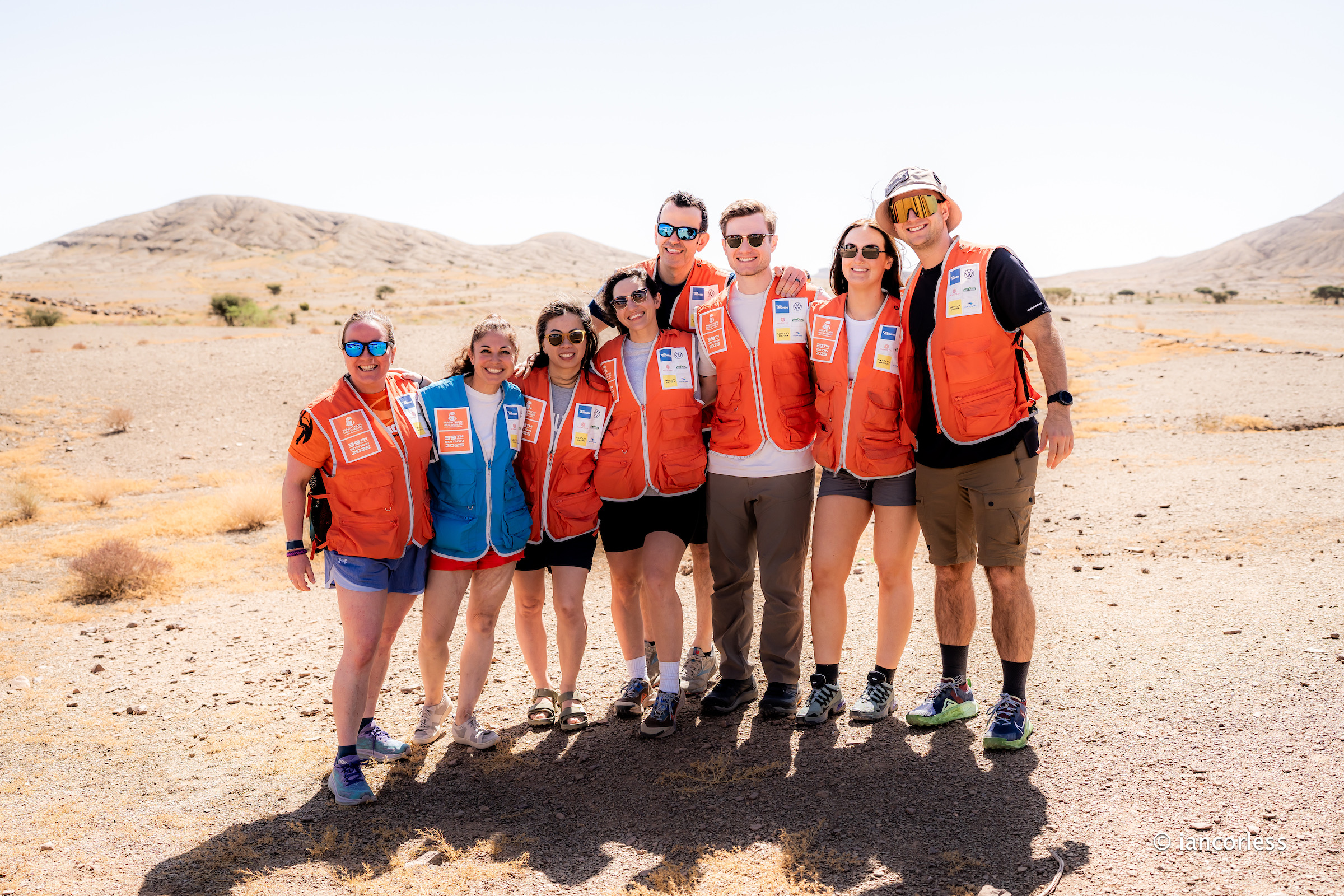
The MDS would not happen without this amazing team of people. The energy, the enthusiasm, the constant good vibes make the runner the number one priority and YES, these people make the difference between finishing and not finishing. They are 100% switched on with the sole purpose to get every runner across the line. You can get a feeling of how important the blue and oranges are by taking a look HERE on Facebook.
Photo by Ian Corless
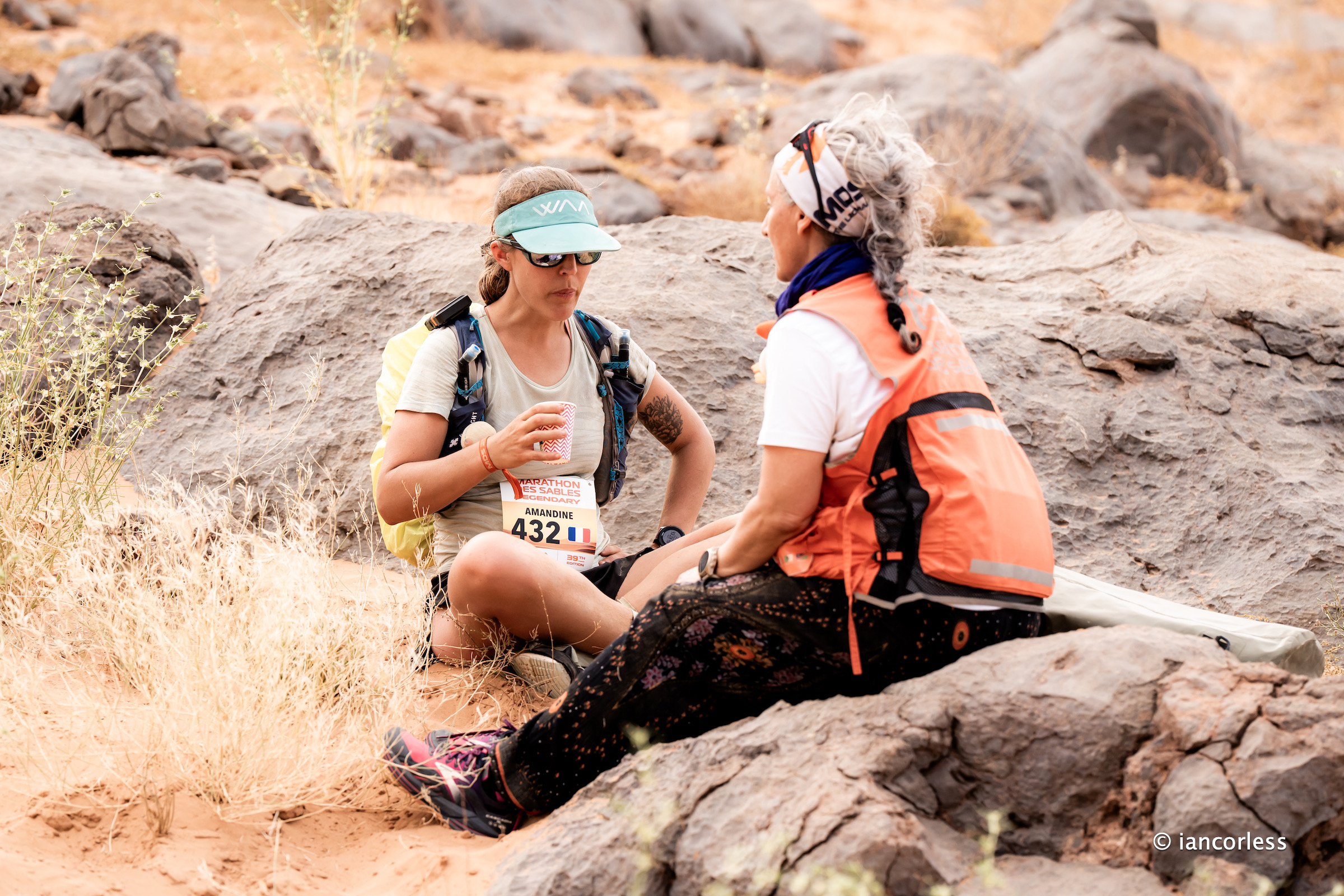
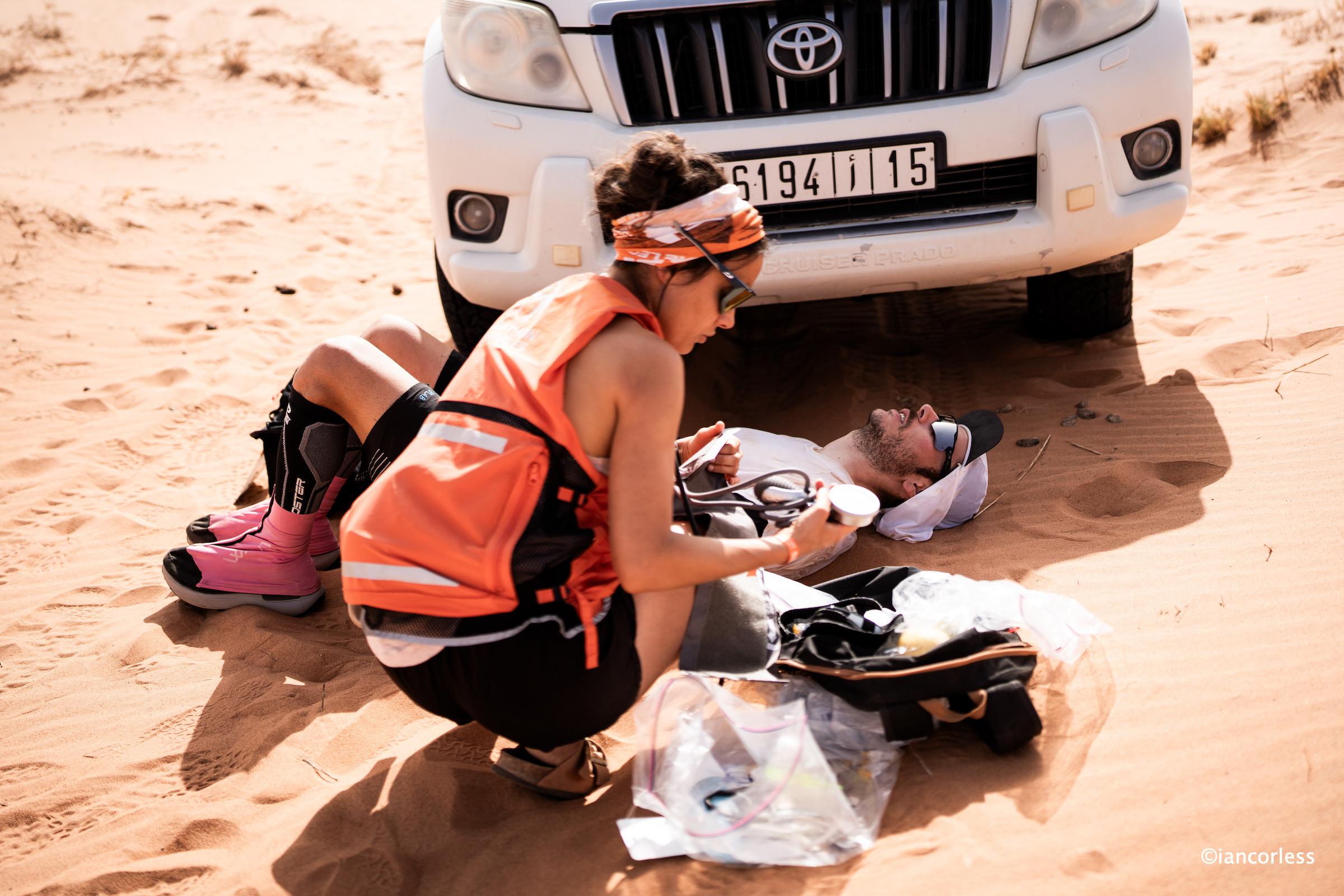
Orange jackets are the medical team who make sure that participants are looked after 100%. They are there for you, no matter what the issue. You will see them on the course at CP’s, in fast response vehicles, in 4×4’s and of course in the medical tents in bivouac.
SAFETY
Photo by Ian Corless
Any MDS event has risks associated with it. We are often in harsh environments, in challenging conditions, we have varying climate conditions and of course, we have runner’s and staff pushing the limit of what is humanly possible. Safety is taken very seriously and how safety is managed is an ever-changing and developing process.
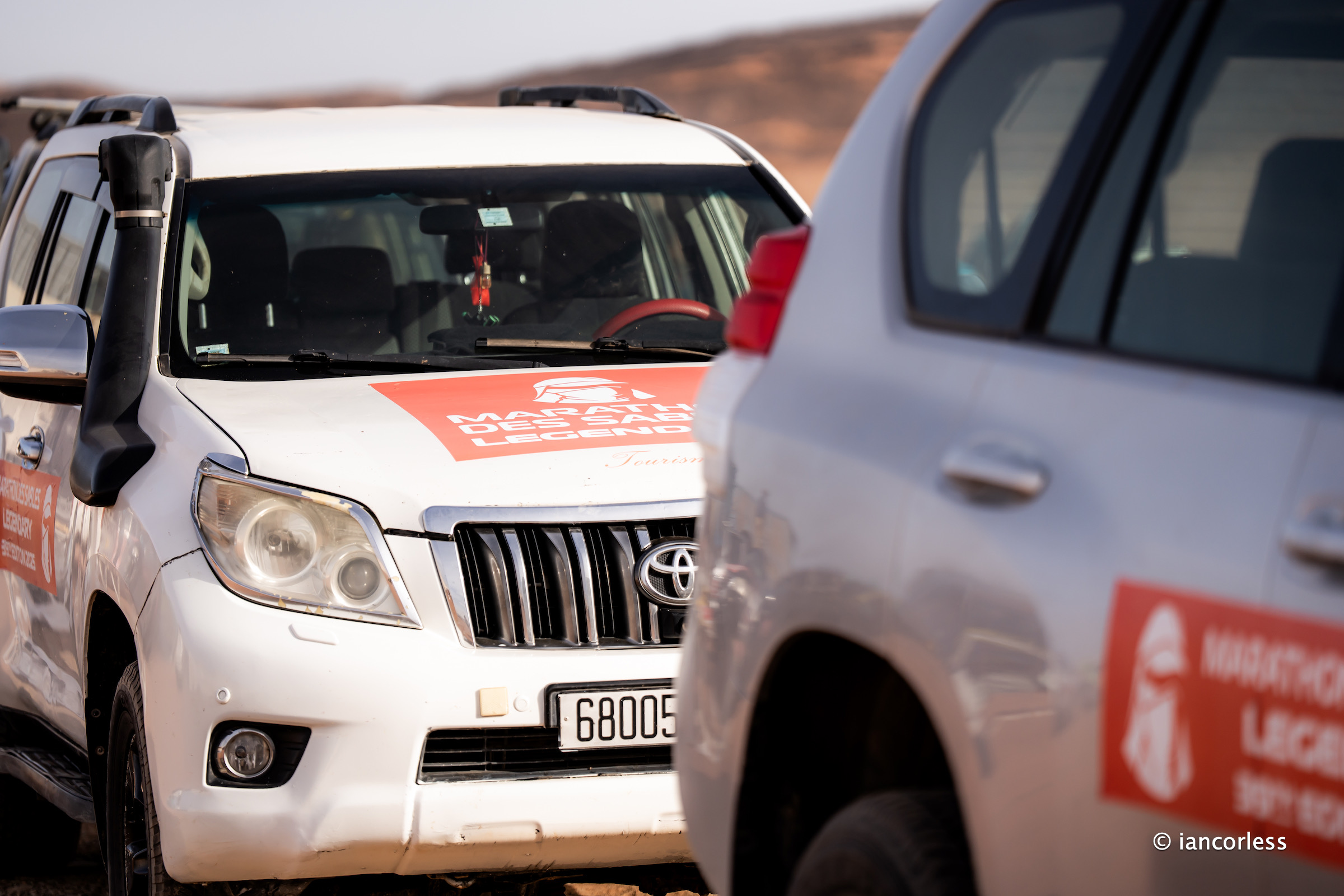
Countless 4×4’s – Photo by Ian Corless
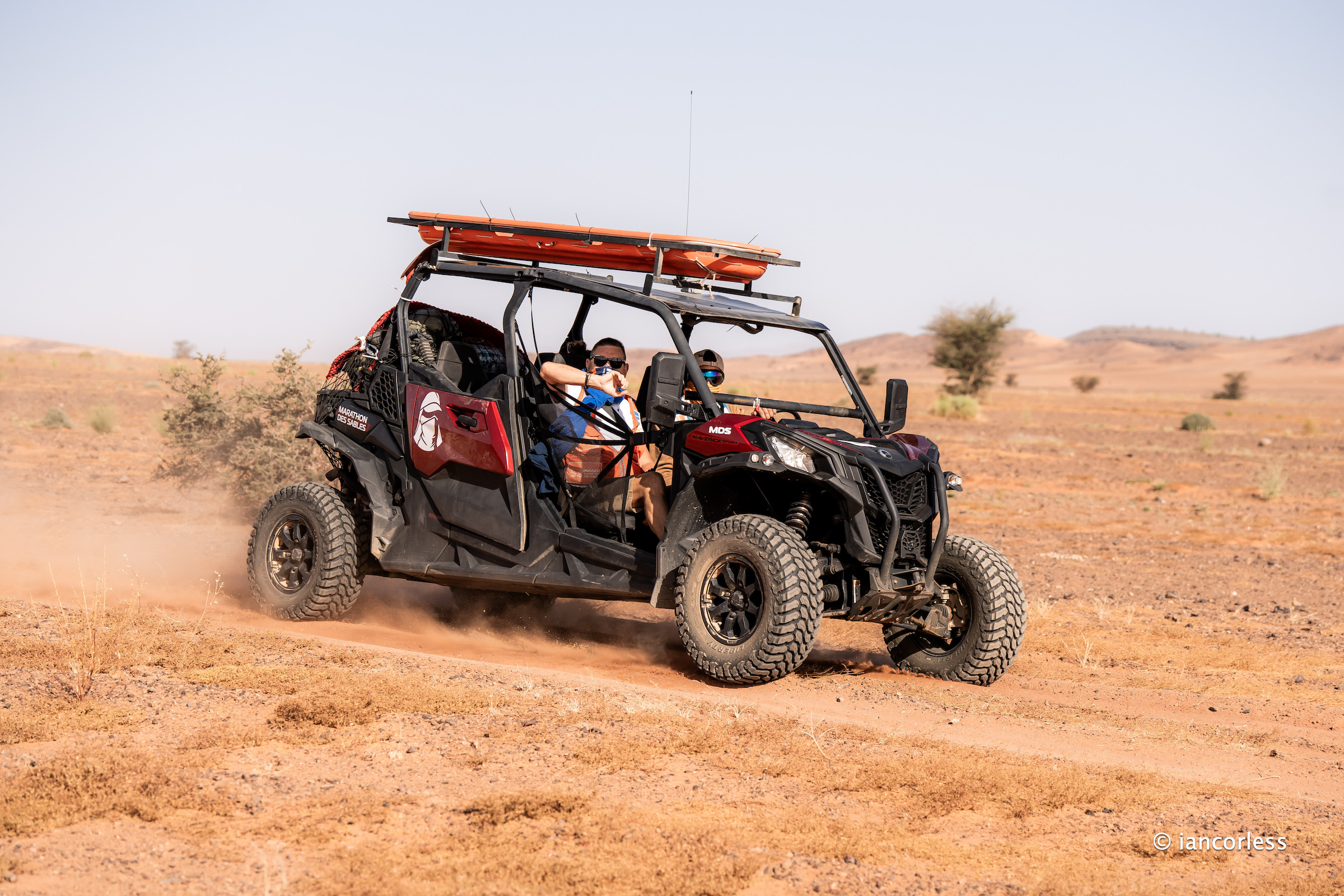
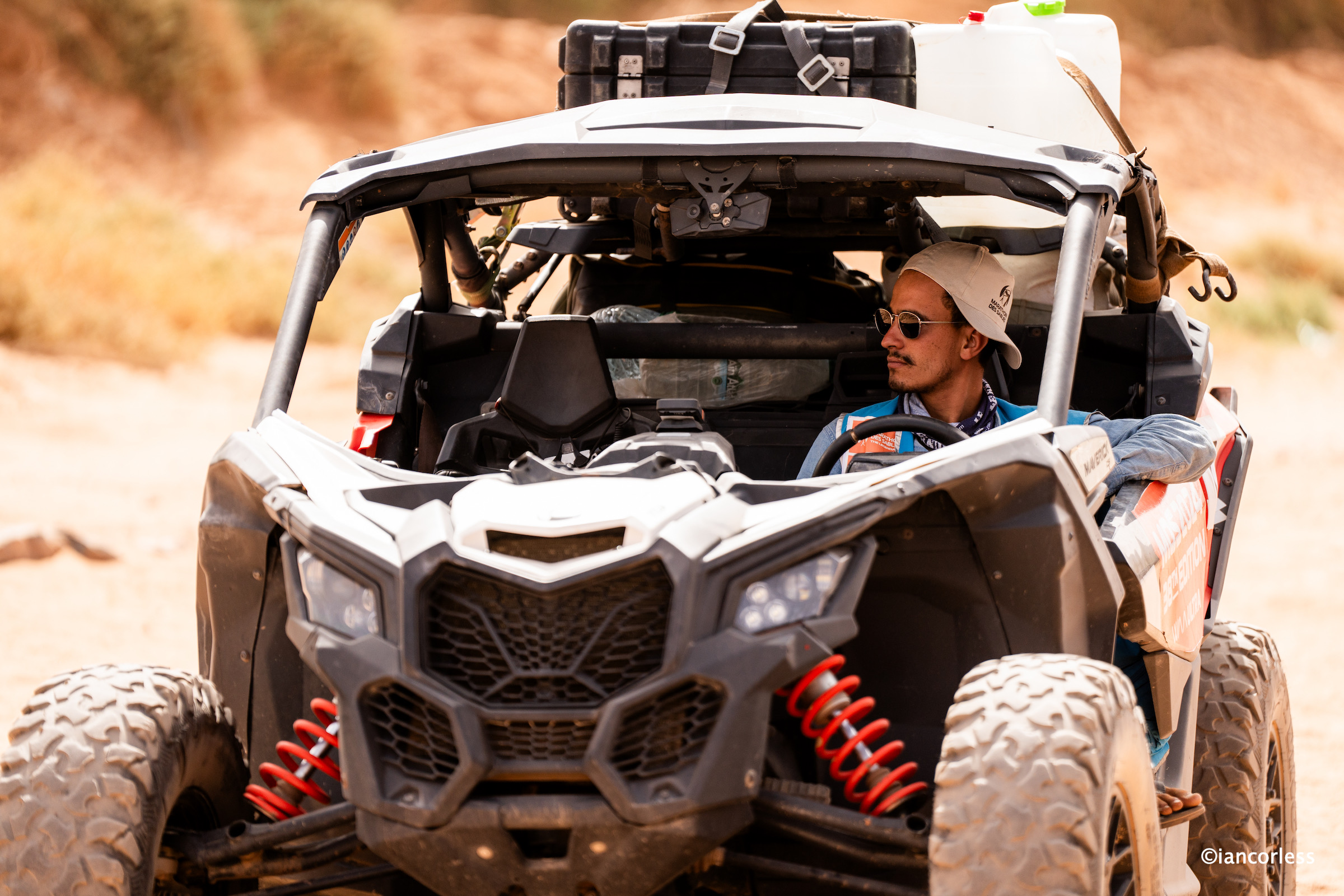
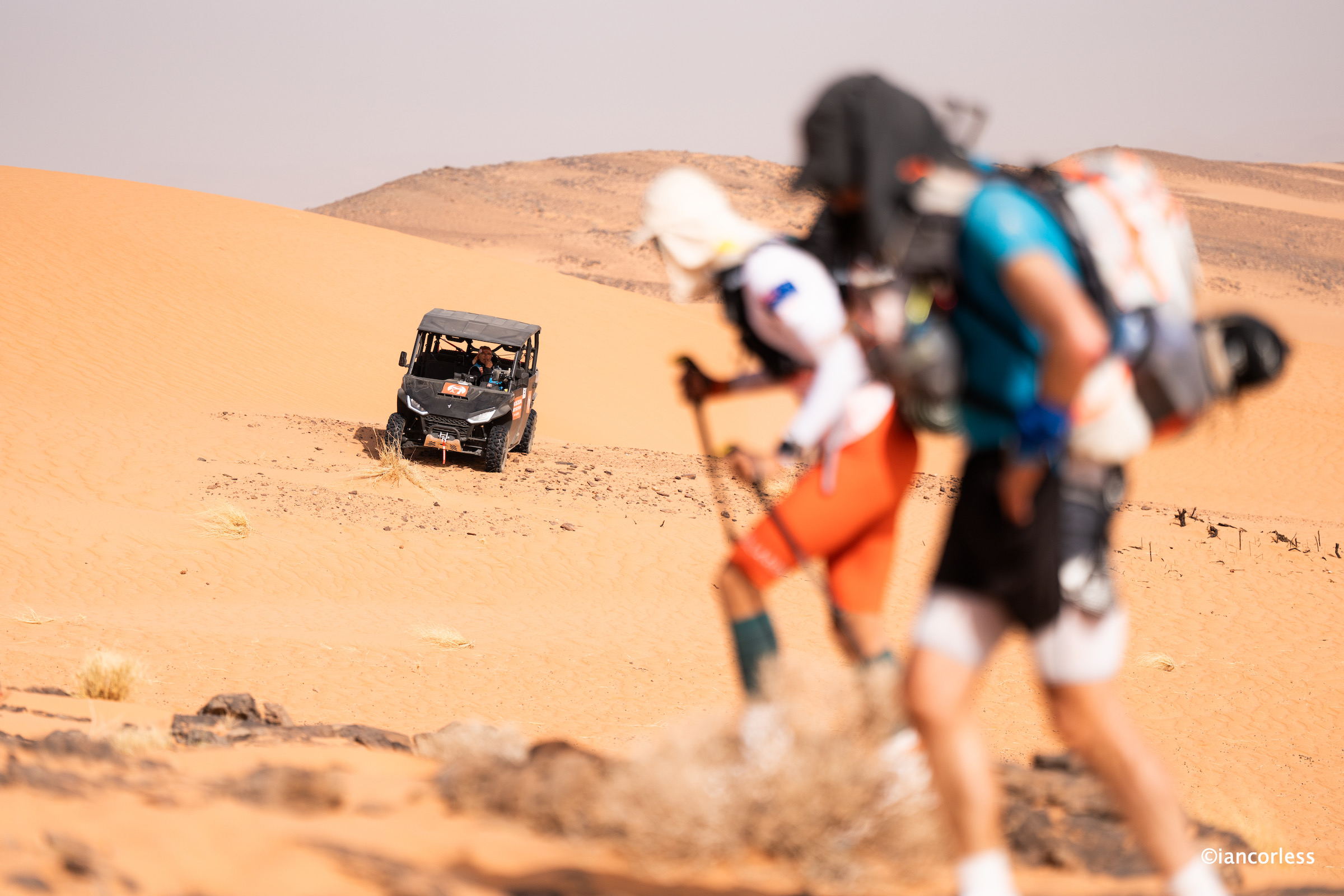
Legendary had more fast response vehicles, more medical professionals on course, there were 10 medical professional runner’s who did the course and there was a new mobile medical unit for 2025 which is state of the art. There was also the inclusion of the ‘Orange Squad’ – a medical team who do the course the opposite way so that they are able to see runner’s coming toward them and should there be a problem, they can help immediately.
Fast response – Photo by Ian Corless
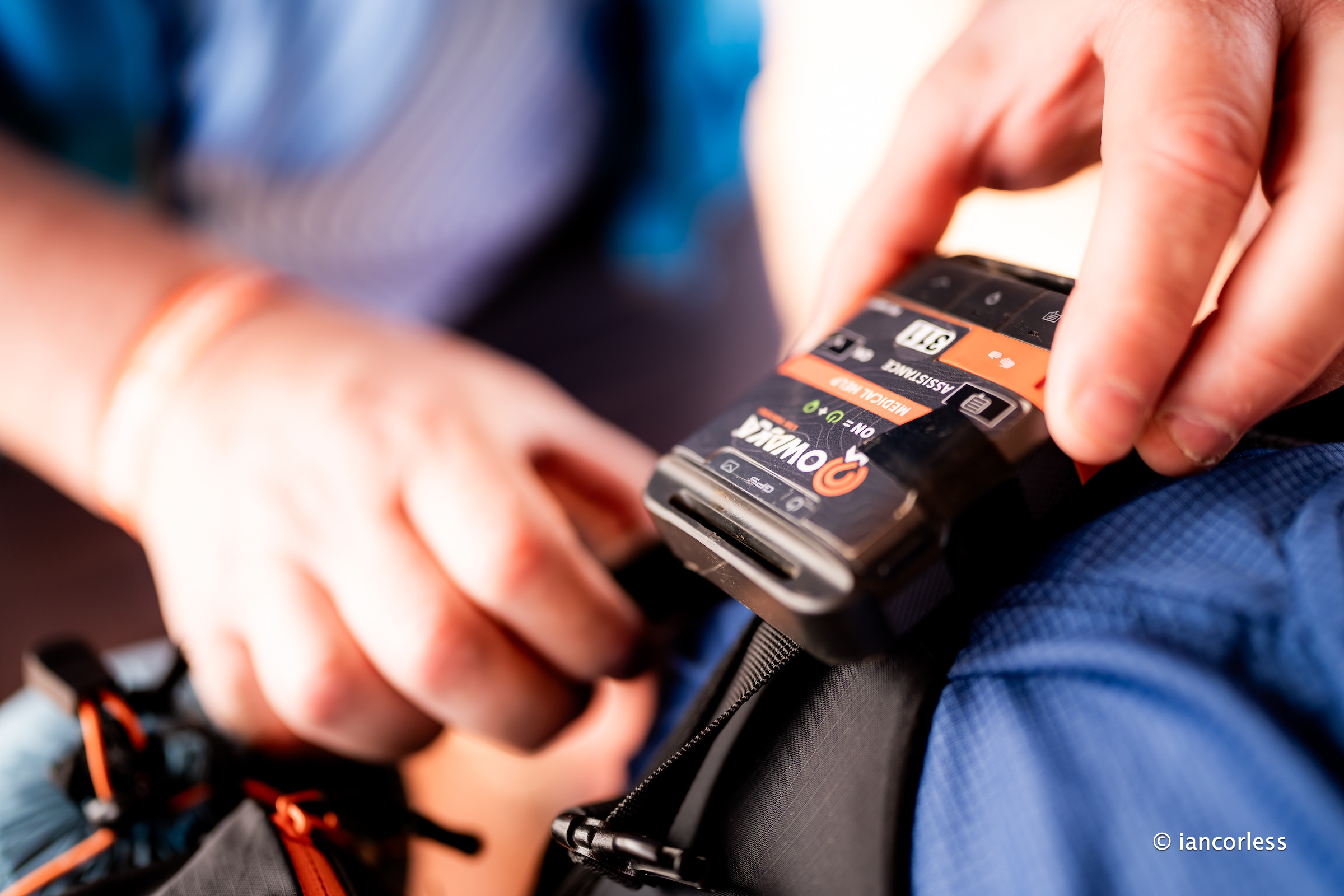
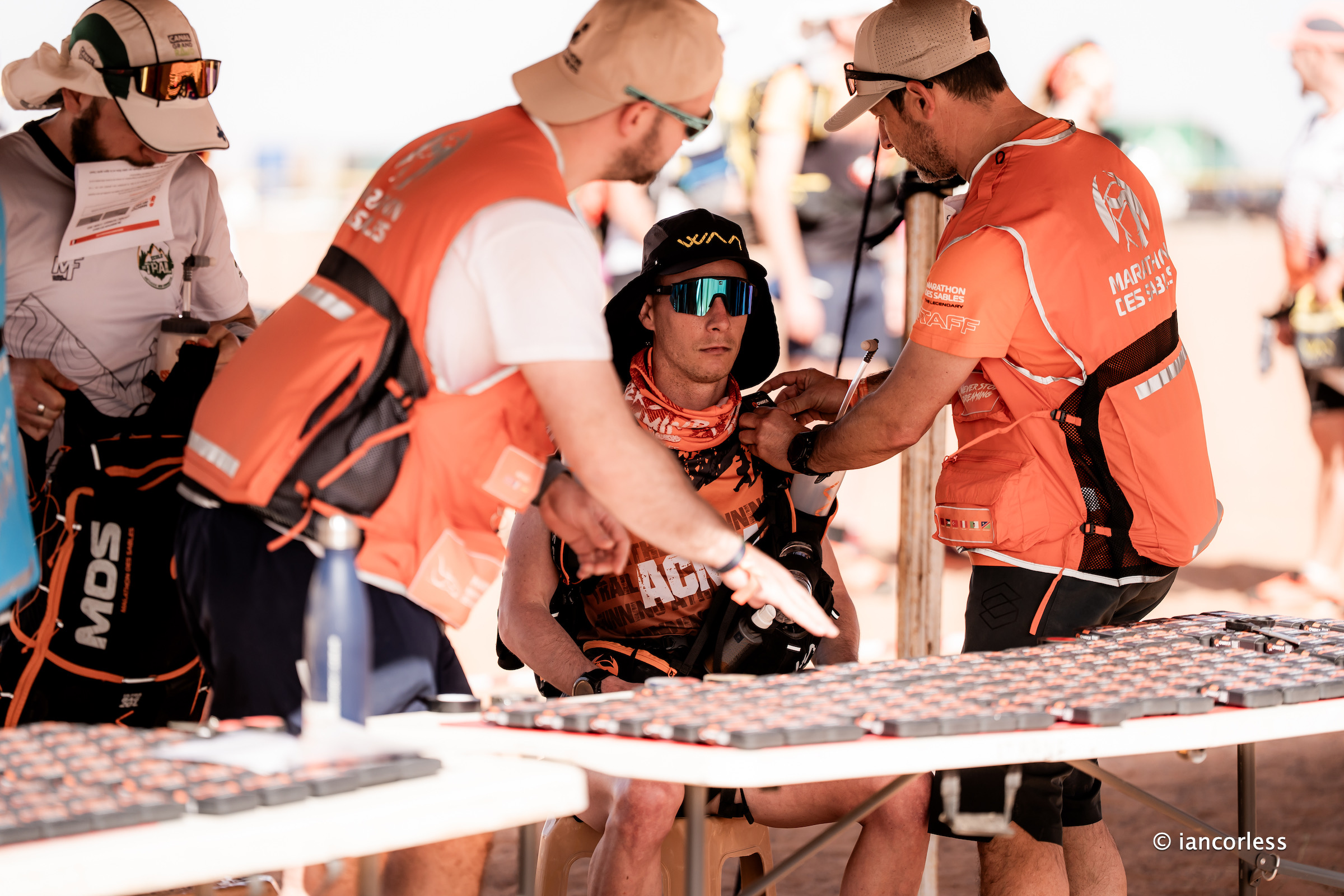
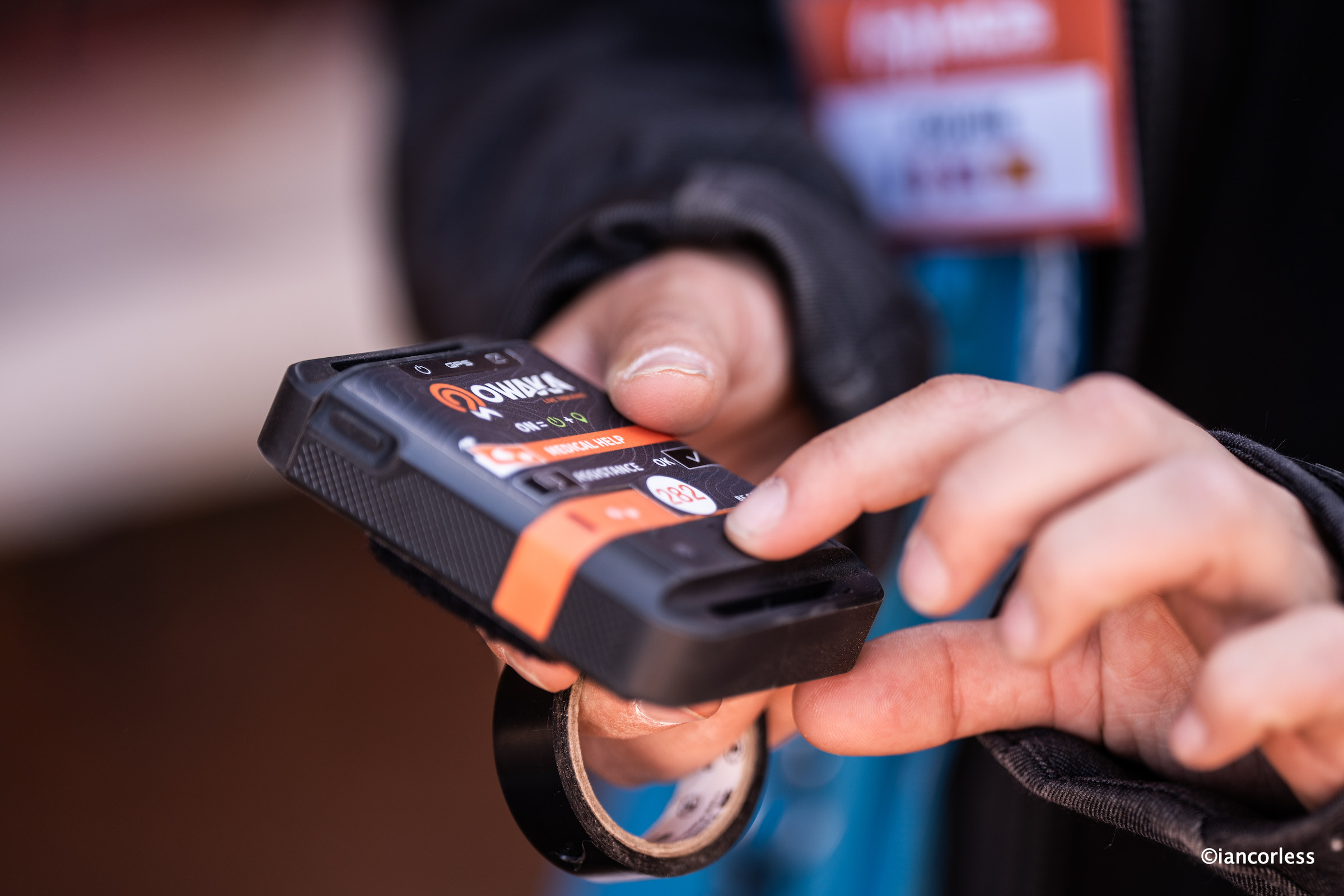
Each runner is issued with a Spot Tracker and this allows the MDS team to monitor each runner on the course and importantly, they have an SOS button which if pressed, will receive a medical response vehicle in minutes.
Fitting SPOT – Photo by Ian Corless
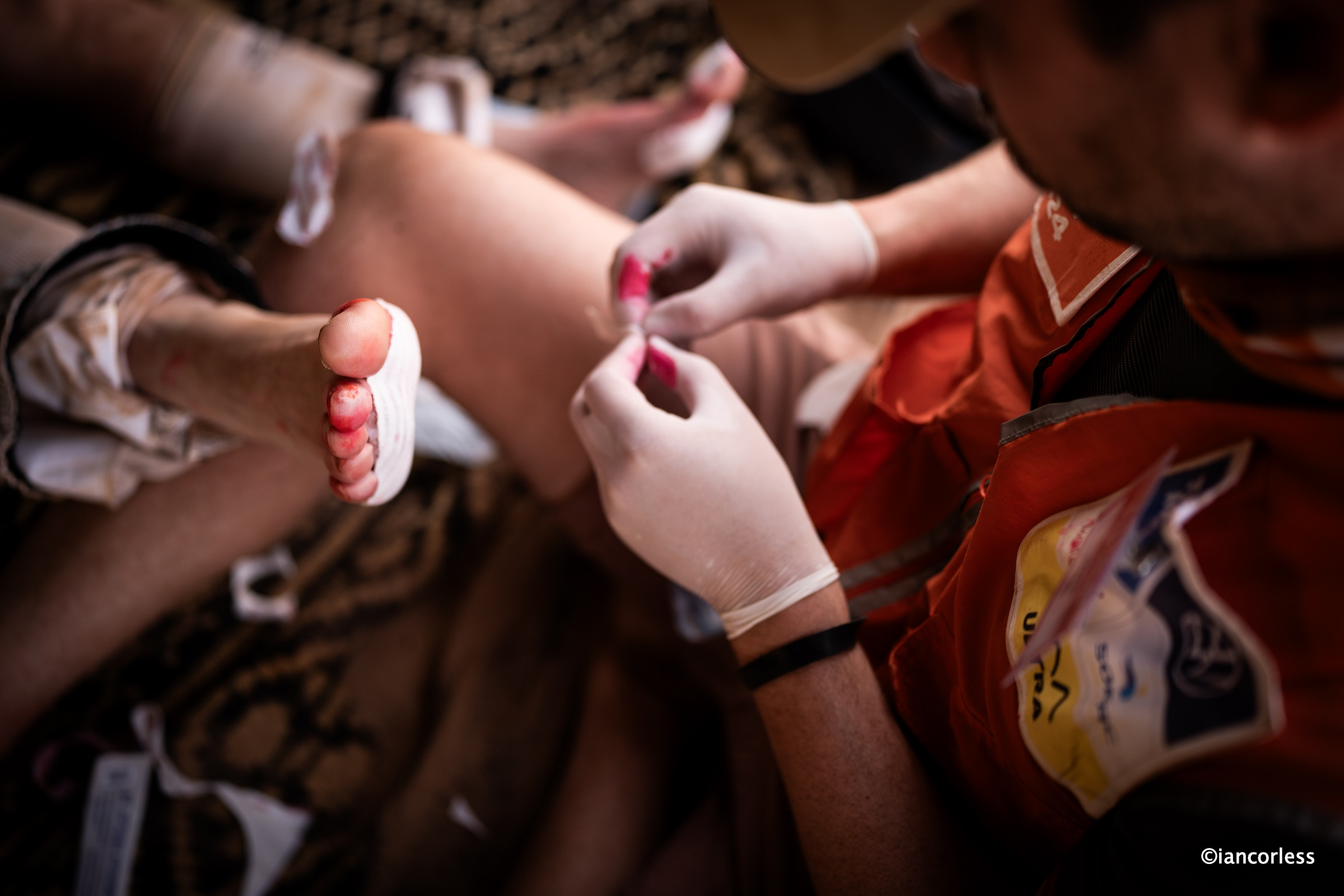
Feet are always an issue and of course, the medical tent is there to facilitate foot repair in bivouac. It’s important to be self-sufficient and look after your feet yourself, however, as and when necessary, a medical professional is always there to help.
RACE BRIEFINGS
Race start times are very important and pre 2024, the race start time was somewhat unpredictable. This changed in 2024 and was upped to another level in 2025 with every stage starting exactly on time! It may sound like a small thing, but knowing you will be underway as scheduled makes planning so much easier. If it says 0600 start, you know it starts at 0600.
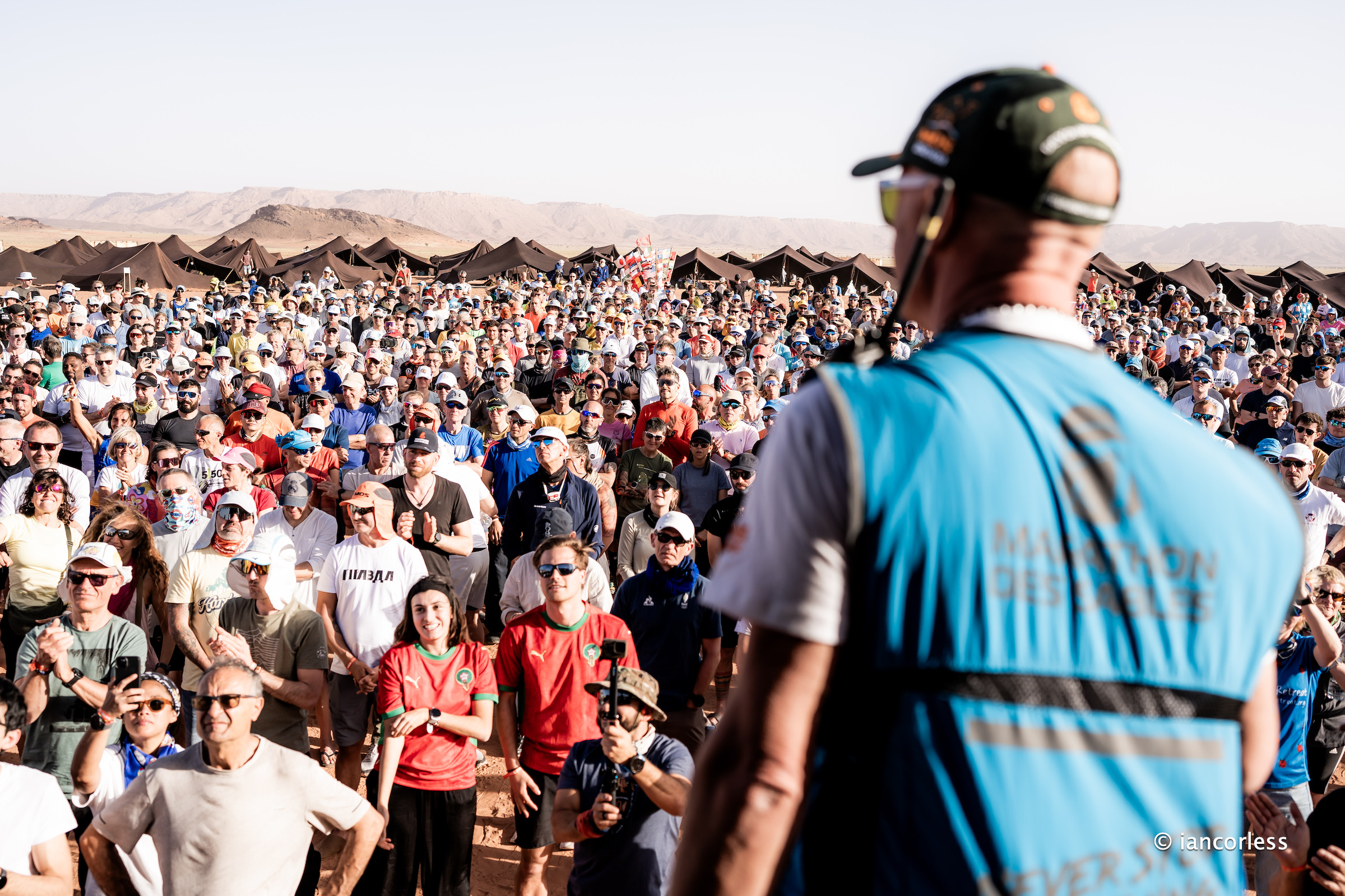
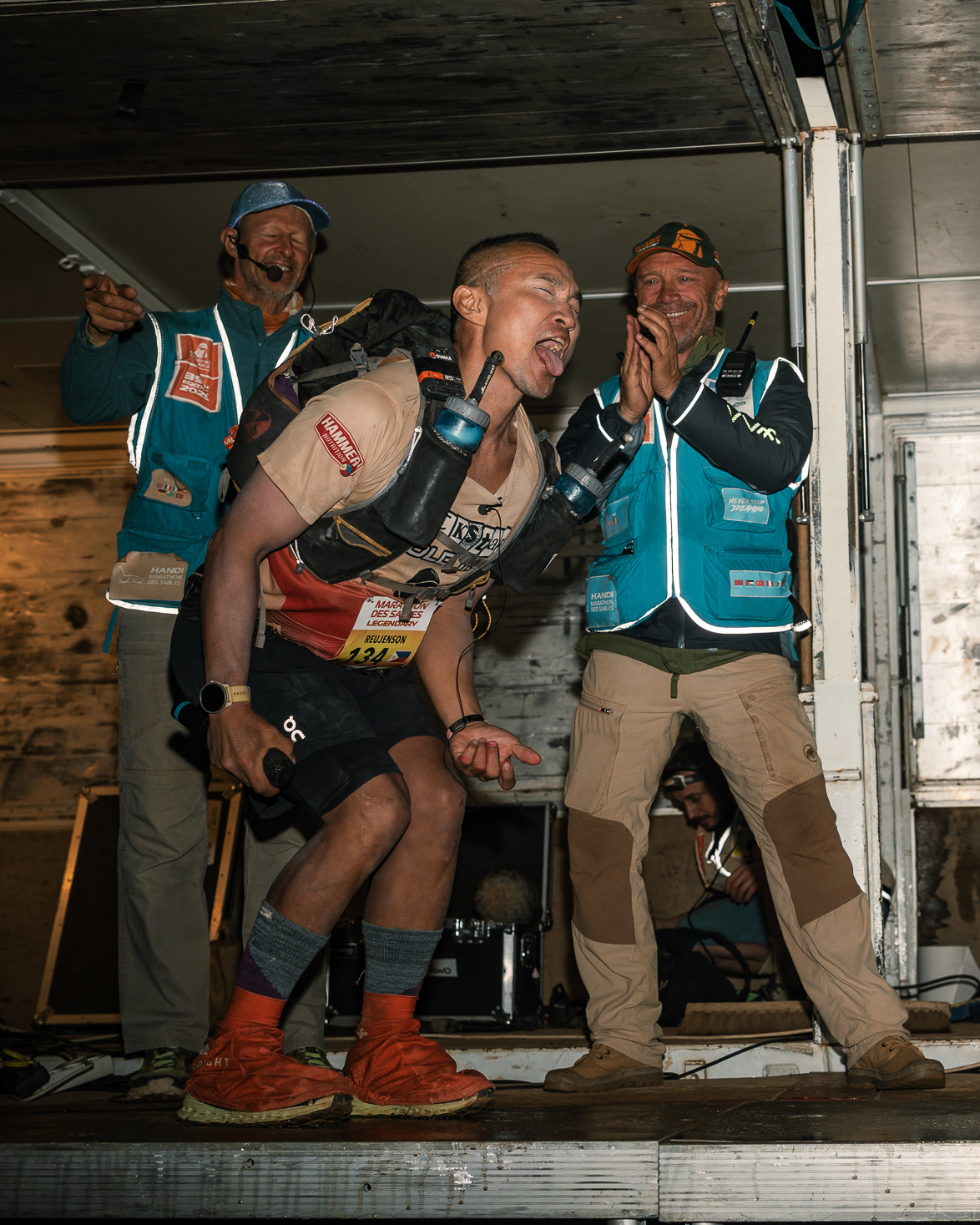
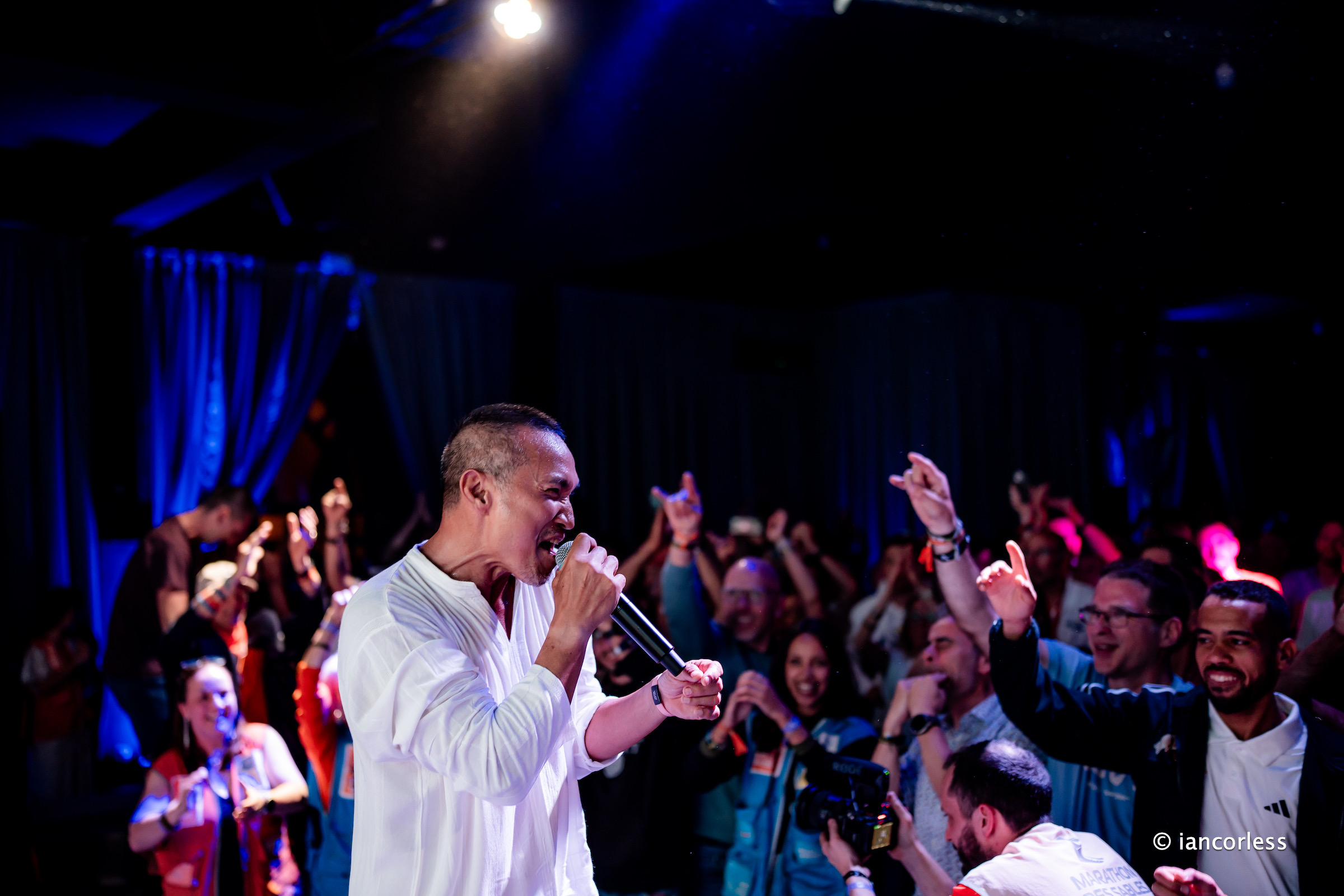
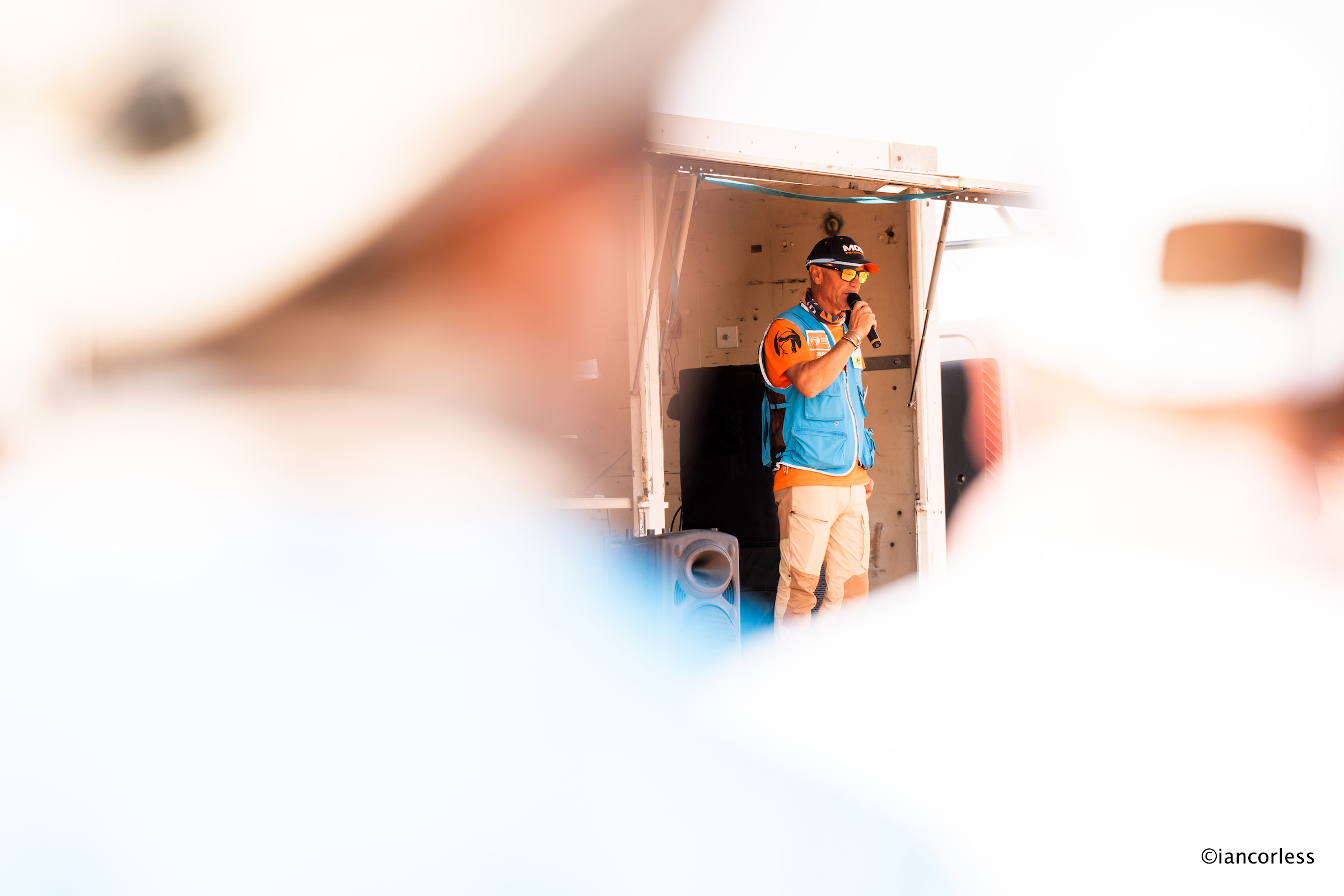
Another change was the addition of an English speaking announcer – yes, it was me! This was the idea of Cyril and we instigated and tested this at Atlantic Coast in January, it worked. So, for Legendary and moving forward, an English briefing will take place and then be translated into French and not the other way around. Stage 6 race briefing may well go down in history as the best. Mood was already high with the final stage ahead, nut hen we had participant, Reujen Lista join us on stage for a ‘live’ version of Highway to Hell – it was epic!
Highway to Hell ‘live’ – Photo by Florian
WEATHER
The weather took its toll – Photo by Ian Corless
As always, weather plays a key part in any MDS event. However, we are most definitely feeling the impacts of ever changing climatic conditions. It was always assumed that MDS will be hot and unbearable, history is showing that is not the case. Recently, particularly in Morocco, we have experienced difficult weather: MDS Morocco in October had torrential rain and flooding, the recent MDS Atlantic Coast in January had cooler temperatures, some rain and the last day had full-on sand storms. The 2025 Legendary started calmly and tranquil, it was looking to be a classic race, it was sunny, hot, but not too hot and the winds were relatively calm. That all changed come stage 4 (the long day) with cloudy skies and cooler temperatures in the day. During the night the winds increased, rain came and without doubt, from 2100 hrs the conditions were difficult and challenging. Especially for those who were moving through the night looking to get the long day done. CP’s had cold participants taking shelter looking to get warm and continue the journey. This weather continued through the rest day. Stage 5 had a mix of everything but the heat never came and stage 6 was cloudy, cool and with intermittent rain. There is a very big lesson that needs to be learned, I did say this before Legendary, but now, post-race, I can only say it more, you need to be prepared for bad weather! A good jacket is now essential, so much so, I do think that it should be added to mandatory kit. I also think it wise to make sure that you are able to keep key items, such as sleeping bag, dry during bad weather. Many had wet sleeping bags during the long day which can effectively make them useless, depending on what filling is inside.
THE ROUTE
Photo by Ian Corless
Legendary is now 6-stages over 7-days and this is a huge difference. Pre 2024, the race was 5-stages and stage 6 was a non-times ‘solidarity’ stage for charity. It’s hard to argue against the charity side of this, however, a non-timed 6th stage was pointless.
Photo by Ian Corless
The race is now 6-stages timed and raced.
Photo by Ian Corless
For 2024, the ‘long day’ was moved to stage 3. For 2025, it was moved back to stage 4. The main reason for this was due to the course and the start/ finish point.
Photo by Ian Corless
2024 participants, as always, tried to stress that the 2024 edition was/ would be harder than 2025. Of course it’s nonsense. Comments like, ‘Argh, but here was more vertical gain in 2024!’ were unfounded as the people who made these comments had obviously not done due diligence, the reality is the 2024 Legendary was 252.9km’s and the 2025 event was 250km. Vertical gain was almost identical, 2024 was 2788m+ and 2025 was 2710m+
Photo by Ian Corless
In many respects, the 2025 edition was more ‘classic MDS’ with a marathon after the rest day.
Photo by Ian Corless
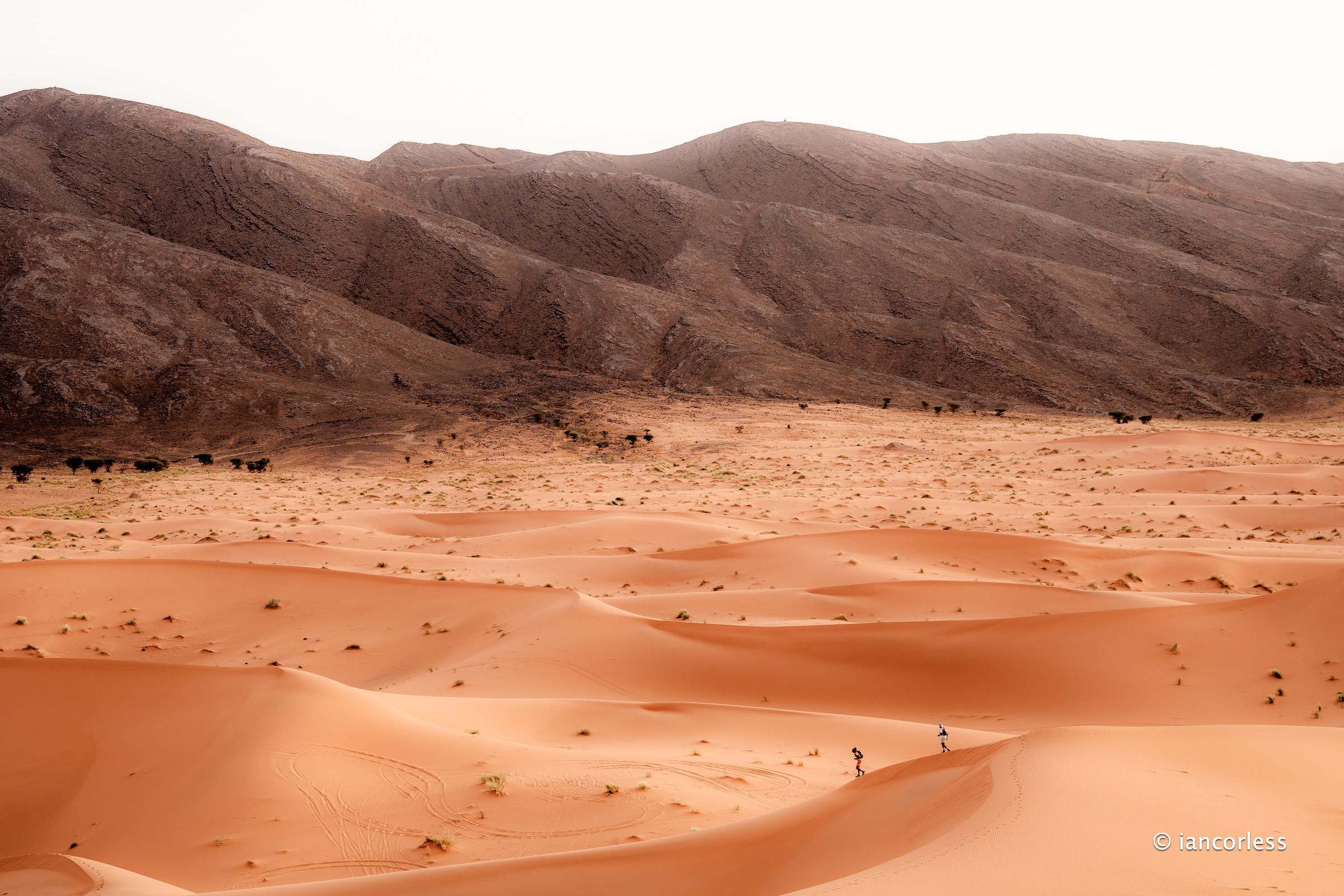
The route was notably different for some key reasons. The Sahara is vast and of course, needs to be explored more. Due to runner demand and logistical reasons, certain features have become almost ‘essential’ when running Legendary. However, Cyril and the team wanted to change that and therefore, there was no Jebel El Otfal in 2025, there was a return to Merzouga Dunes and while the route travelled in similar areas of the Sahara, the track was approximately 80% new. There were some great ‘new’ additions such as the huge dune on stage 4 and the stage 5 route was very special.
Photo by Ian Corless
THE RACE
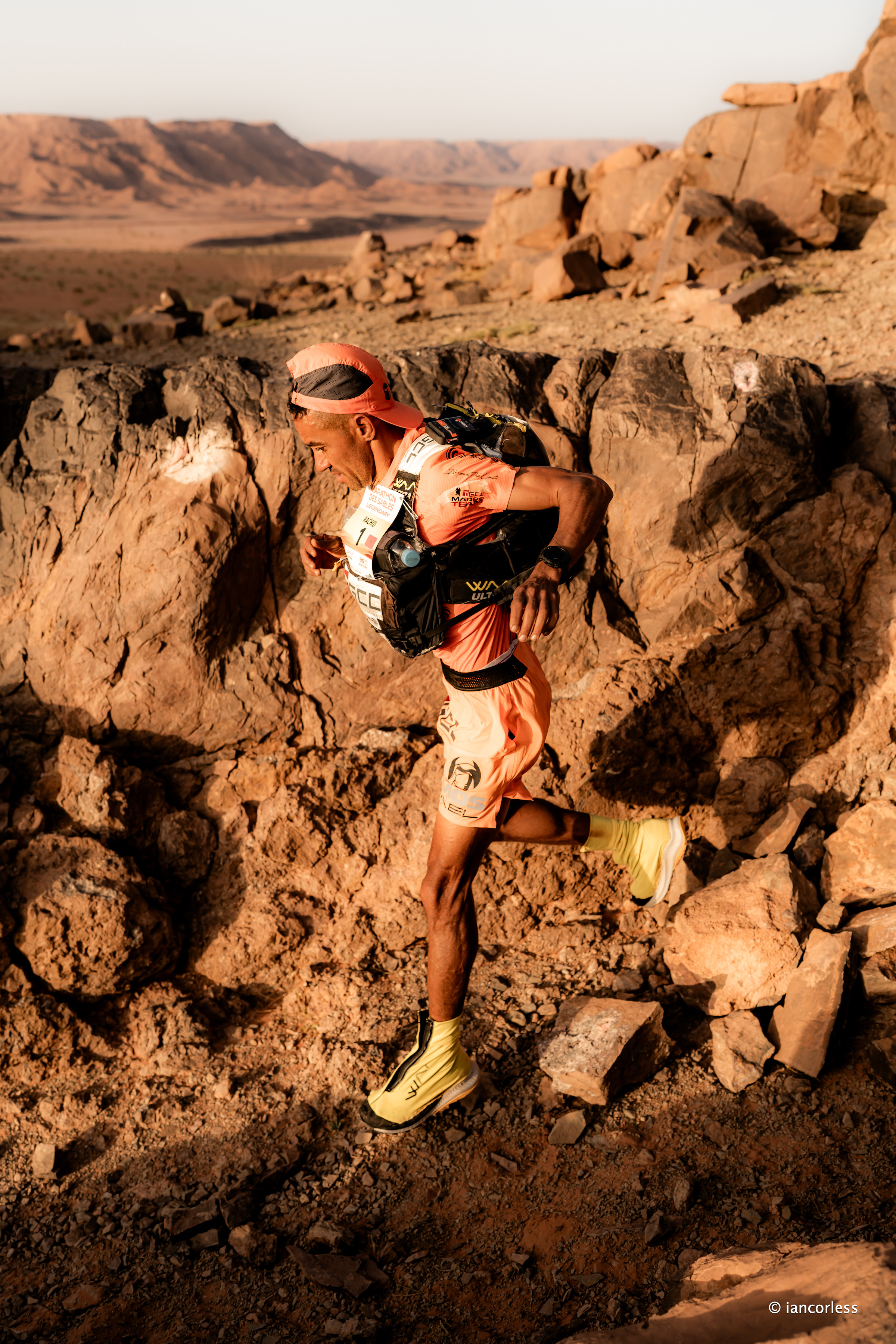
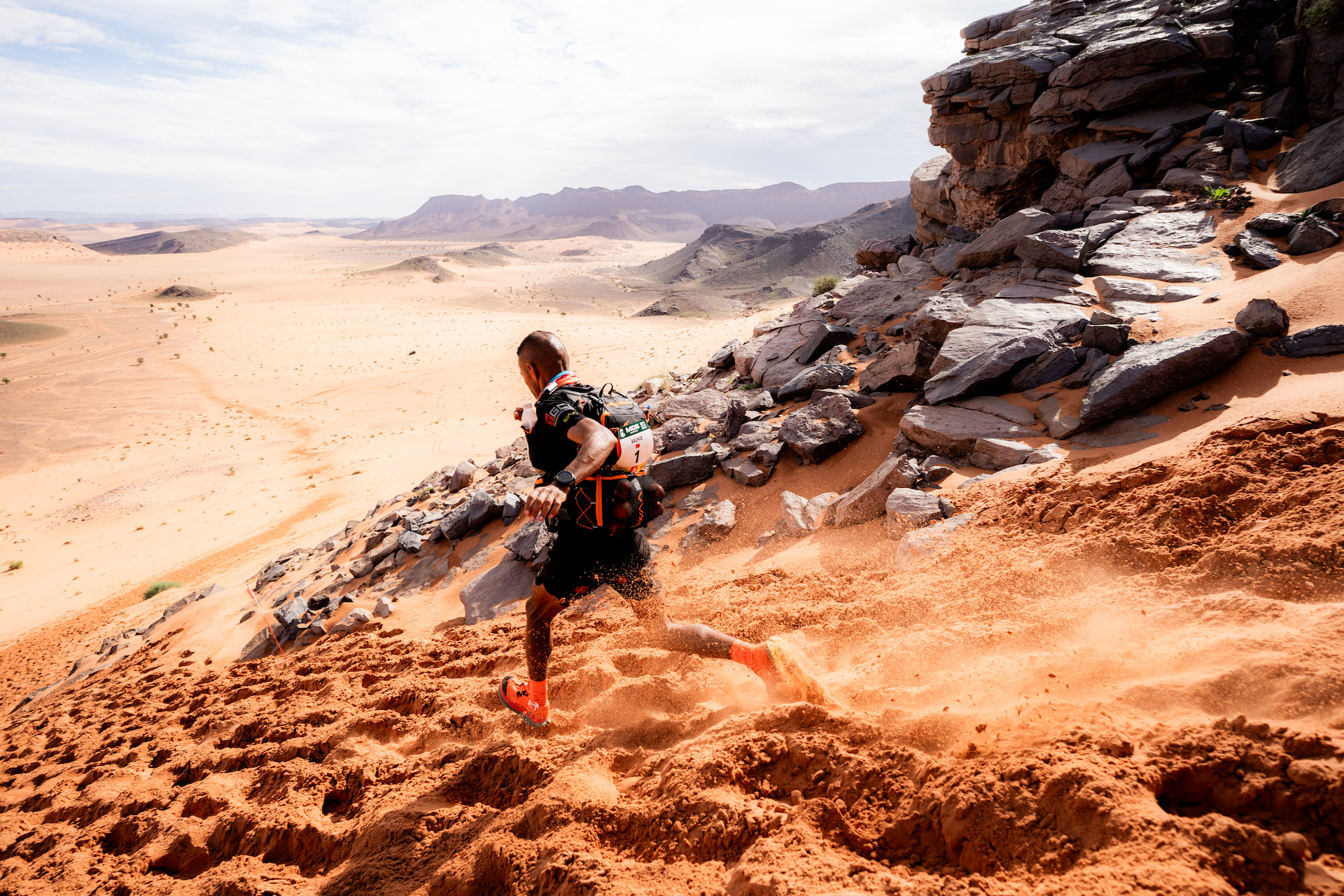
Rachid – Photo by Ian Corless
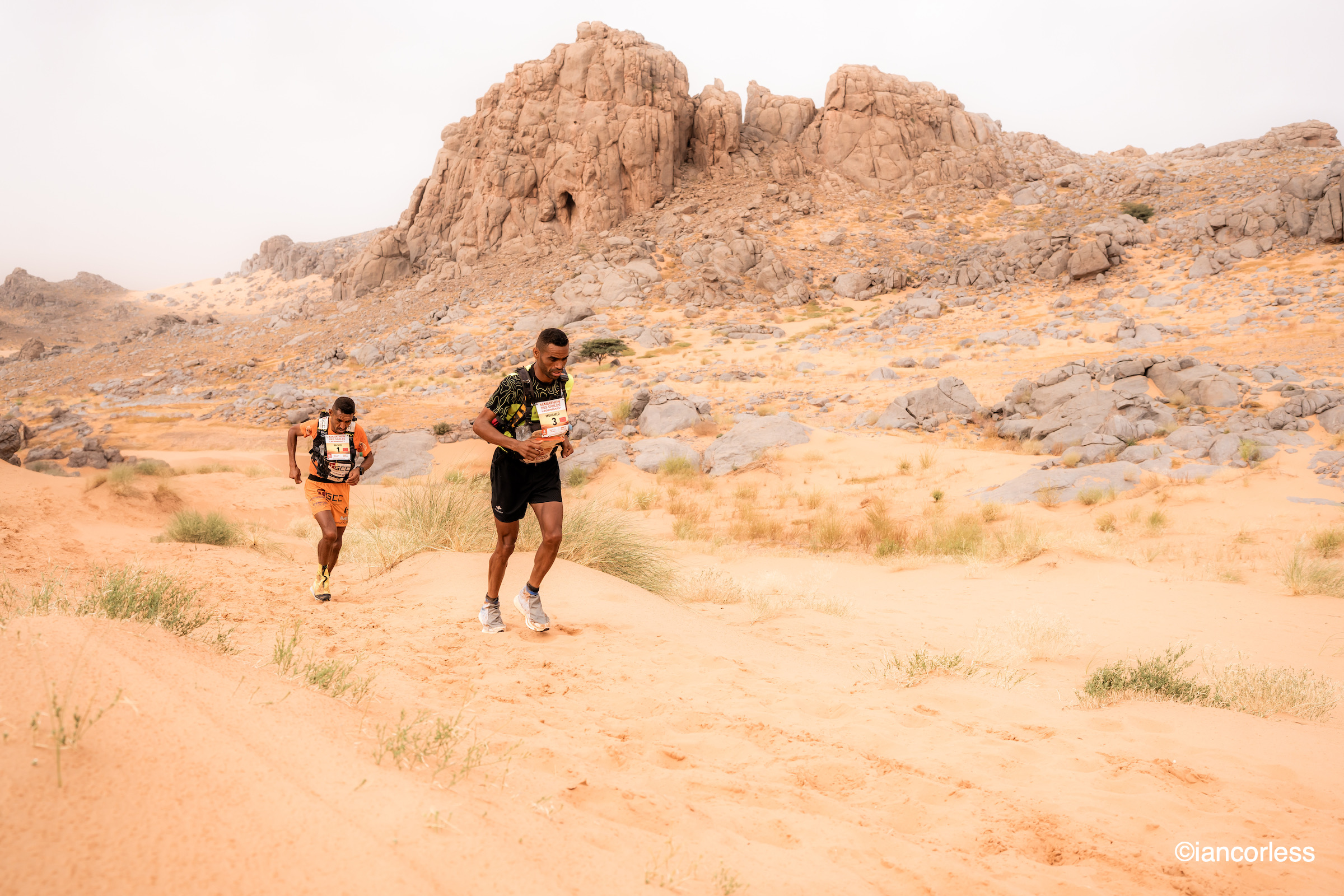
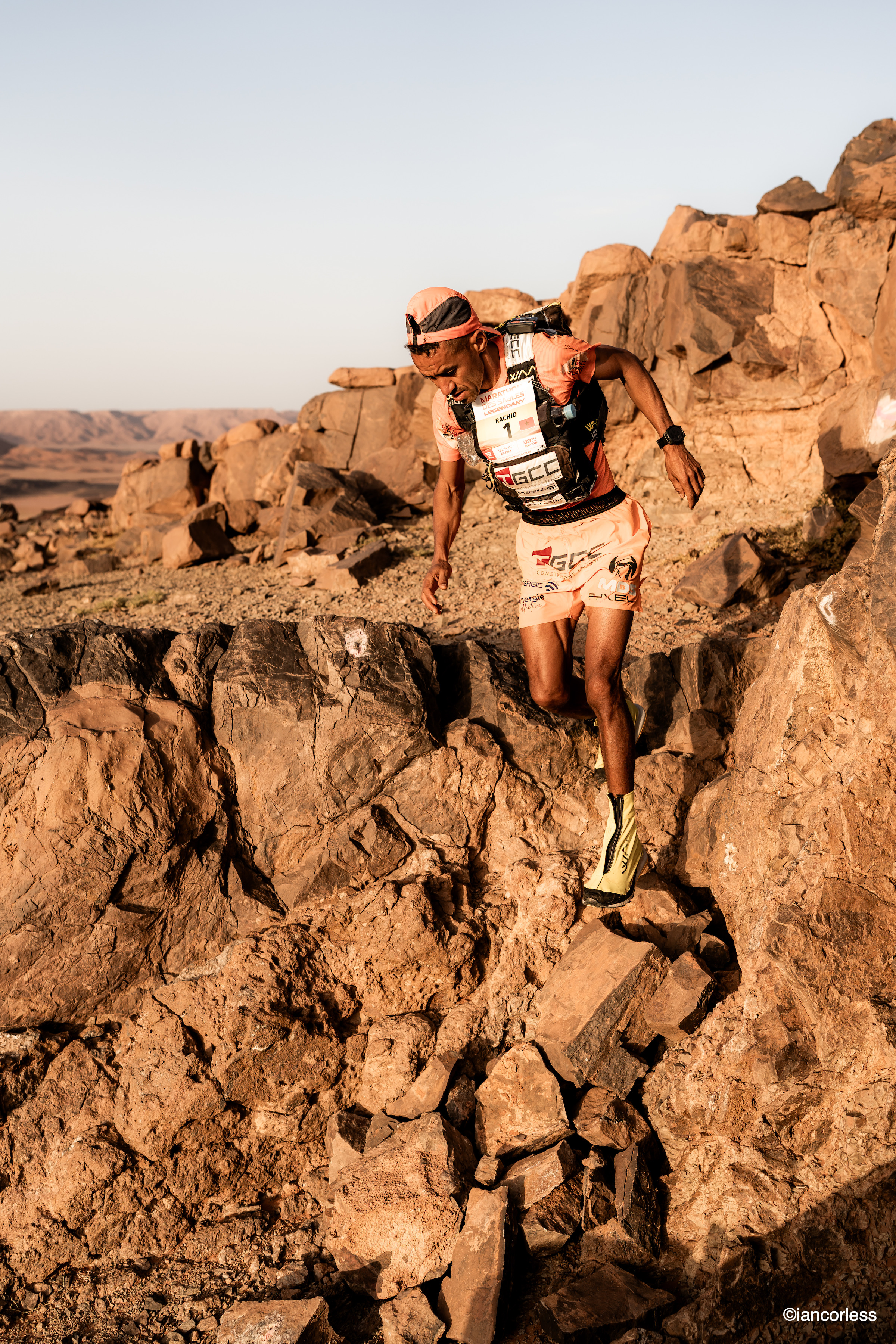
Rachid El Morabity once again took victory securing his 11th and in the process he set a record for the most victories. It’s an incredible achievement to have this level of consistency over so many years. It’s fair to say, the level of competition at the front end of the race was less in 2025. The only real person who could upset Rachid was Hamid Yachou, he unfortunately withdrew mid-race with injury. We could argue all day if Mohamed El Morabity could beat Rachid, the simple fact is, it would not happen. However, as we look ahead to 2026, will Mohamed take over the Rl Morabity reigns? Mohamed is 10-years younger than Rachid and therefore, he has great potential ahead. Also, the inclusion of the 3rd and younger El Morabity, Mbark, should not be looked over.
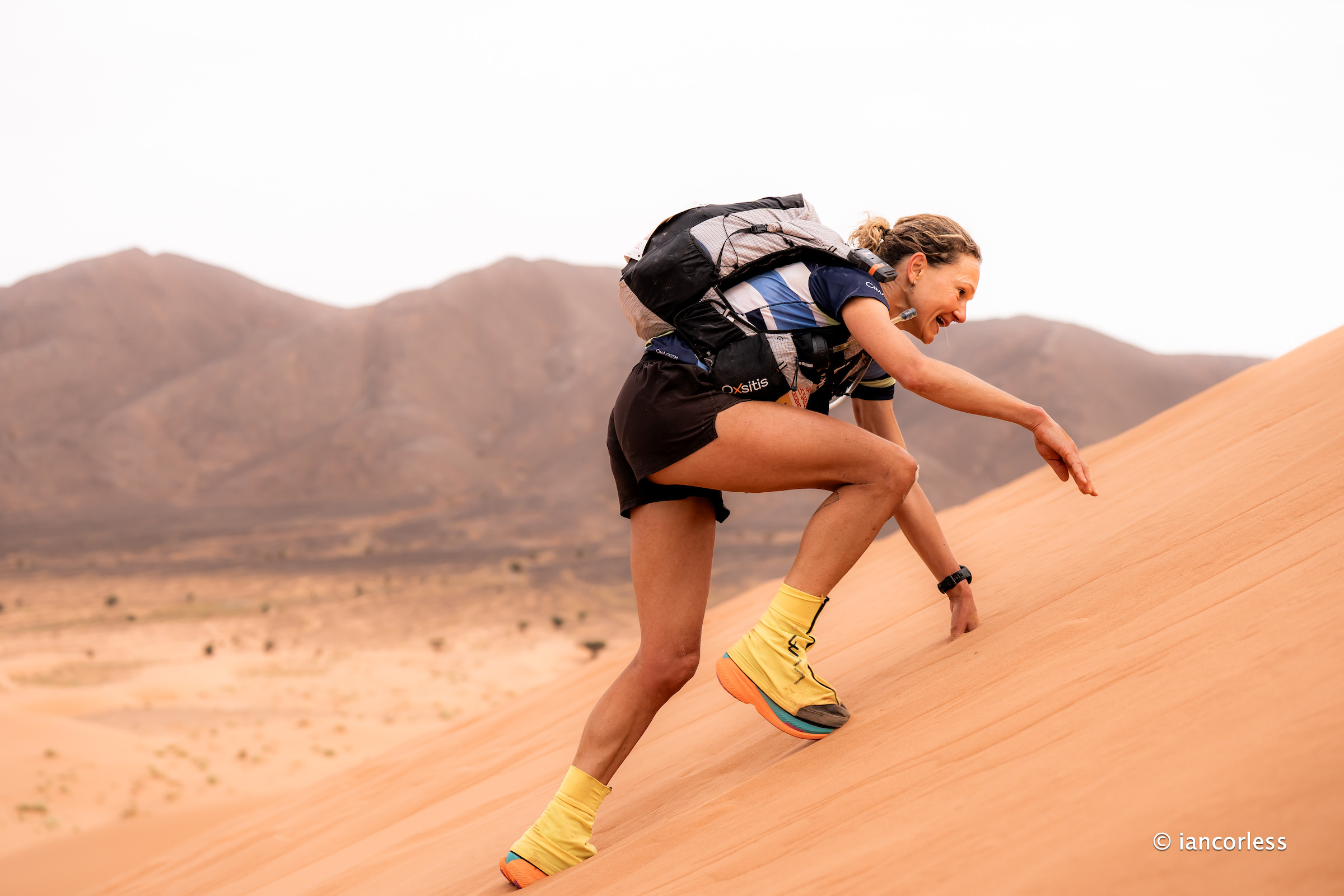
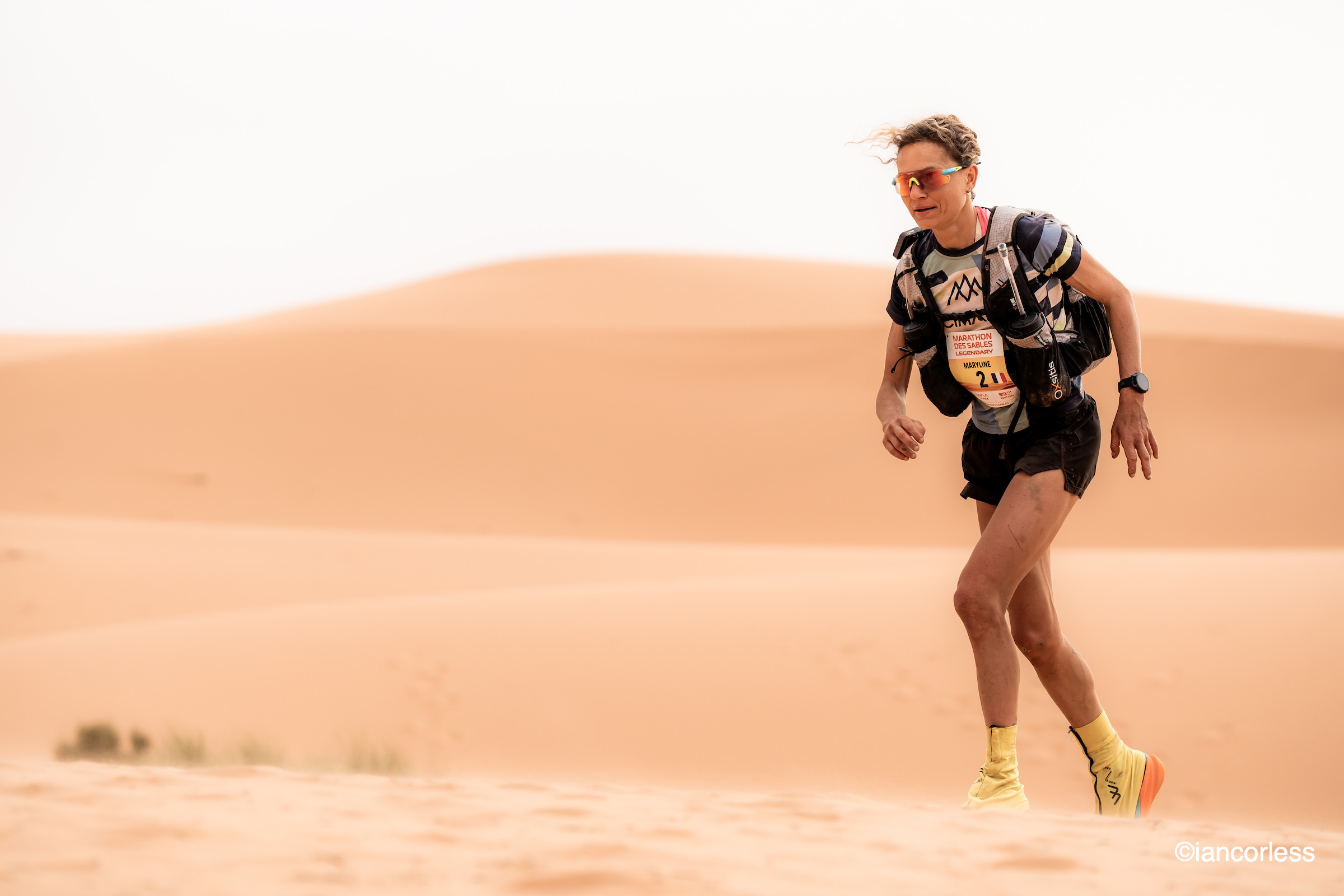
Maryline – Photo by Ian Corless
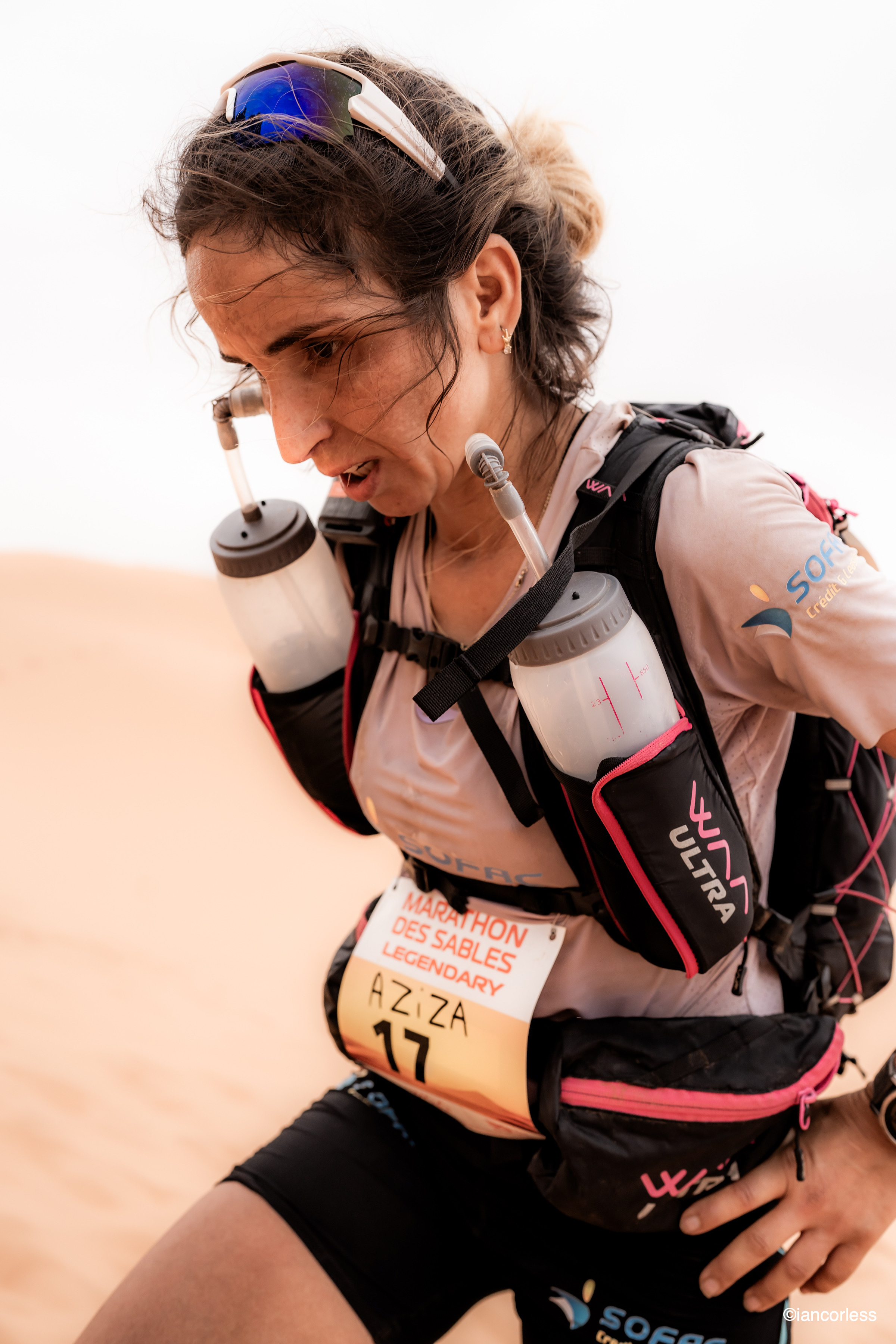
For the women, 2023 Legendary champion, Maryline Nakache returned and she was on fire. No, she was untouchable. For perspective, Maryline finished 3rd on GC for the long day and at the end of the race, was 4th on GC with the closest time to Rachid, by a woman, in the history of the race. Quite incredible. Aziza El Amrany won the race in 2024 and for 2025 she was 2nd, she looked great throughout, despite an arm injury, however, she was no match for Maryline. Tomomi Bitoh placed 3rd, she has placed 3rd before. However, Annelies Brak would have placed 3rd had she not received a 2-hour time penalty for non-compliance of mandatory kit.
Rachid completed the race in 20:55:47 and Maryline in 23:57:20. A total of 847 participants crossed the finish line, the last male Tomohito Hirai in 75:49:27 and the last woman, Nemoto Yuzuki in 74:31:01.
Reujen Lista rocking the awards – Photo by Ian Corless
Transfer back to Ouarzazate was easy and seamless with coaches filling with participants and leaving asap. Of course, a hotel, many showers, buffet food and a nice clean bed always feels amazing after the Sahara. The awards dinner turned into an impromptu rock concert with a participant, Reujen Lista, singing 3 songs on stage, the last, of course, was Highway to Hell. It was a fantastic way to end what was a legendary LEGENDARY.
The rest day allowed participants an opportunity to relax, look after their bodies and recharge ready for stage 5. However, sand storms throughout the day caused consistent problems, gladly, they eased when darkness came.
Photo by Ian Corless
With 2 starts for stage 5, 0630 and 0800, bivouac awoke early with the eagerly anticipated marathon stage.
Enthusiasm was high with the long day done! It may sound crazy, but the minds of the runners now think, ‘it’s only a marathon today!’
Photo by Ian Corless
The early part of the day was cloudy and cool, allowing for some great running temperatures.
Photo by Ian Corless
Around 0900 the sun started to appear but was constantly arriving and disappearing and on occasion, small amounts of rain would fall. As the day progressed, once again the winds increased for some challenging conditions.
Photo by Ian Corless
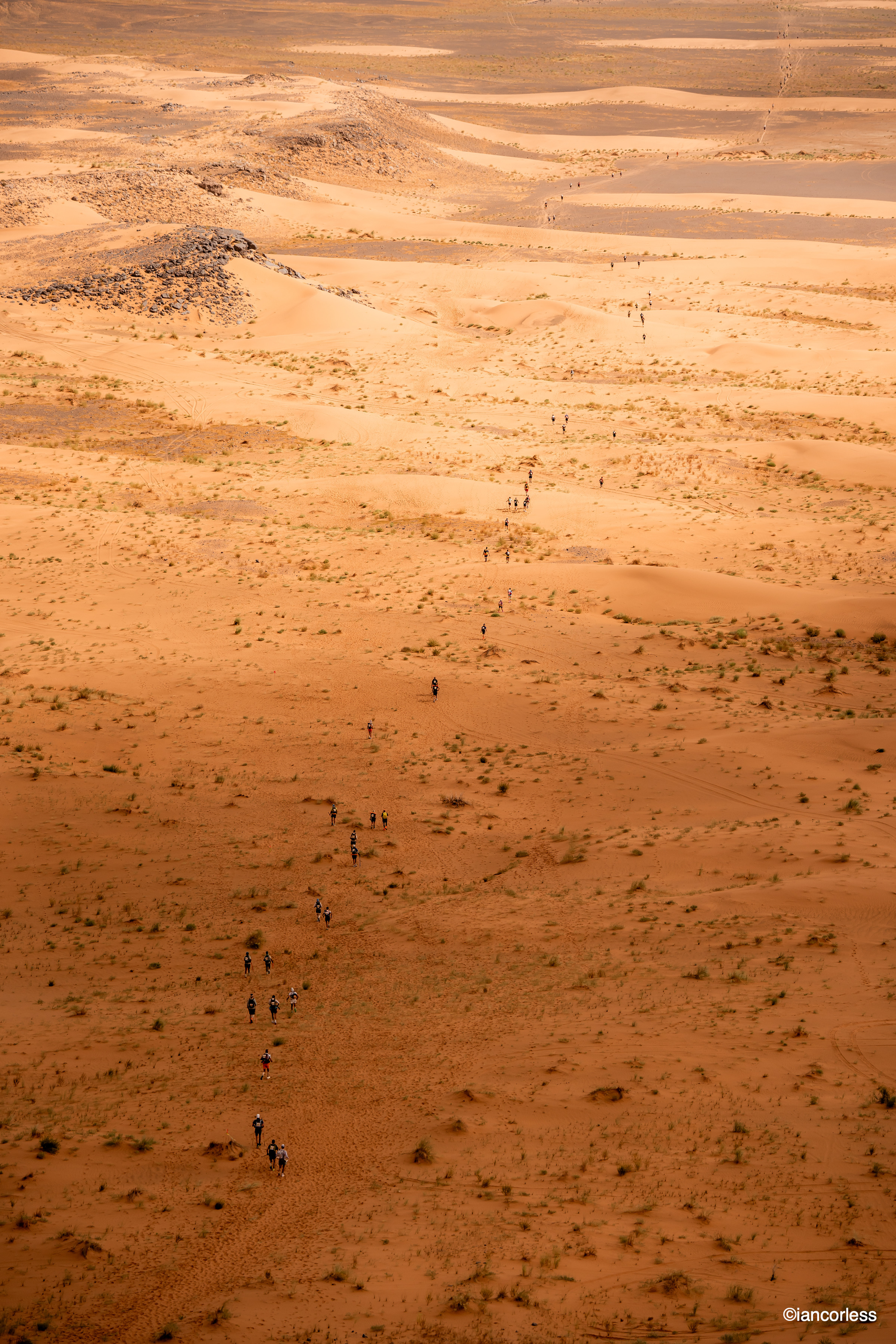
The route, new for MDS took participants through 3 key sections, Znigui Dunes, a mountain pass j. el Beg’e and finally a return to Znigui Dunes.
Photo by Ian Corless
The men’s race was as expected, not a race. The top-3 contenders ran together for much of the day. It was only in the latter stages that Rachid and Mohamed pulled away from Ahmed to finish in 3:26:15 and 3:26:55 with Ahmed 4:26 later for a finish of 3:30:41.
Photo by Ian Corless
For the women, Aziza pushed hard from the front, constantly fighting and never giving up.
Photo by Ian Corless
However, Maryline looked calm and relaxed, she is in incredible form this year. Eventually she caught and passed Aziza to open up a gap of 03:37 to finish in 03:45:27.
Photo by Ian Corless
Aziza crossed the line in 03:39:04 and as expected, Annelies Brak charged looking to get back time after a 2-hour penalty and regain the 3rd position. She finished 3rd on the stage in 04:14:22.
Photo by Ian Corless
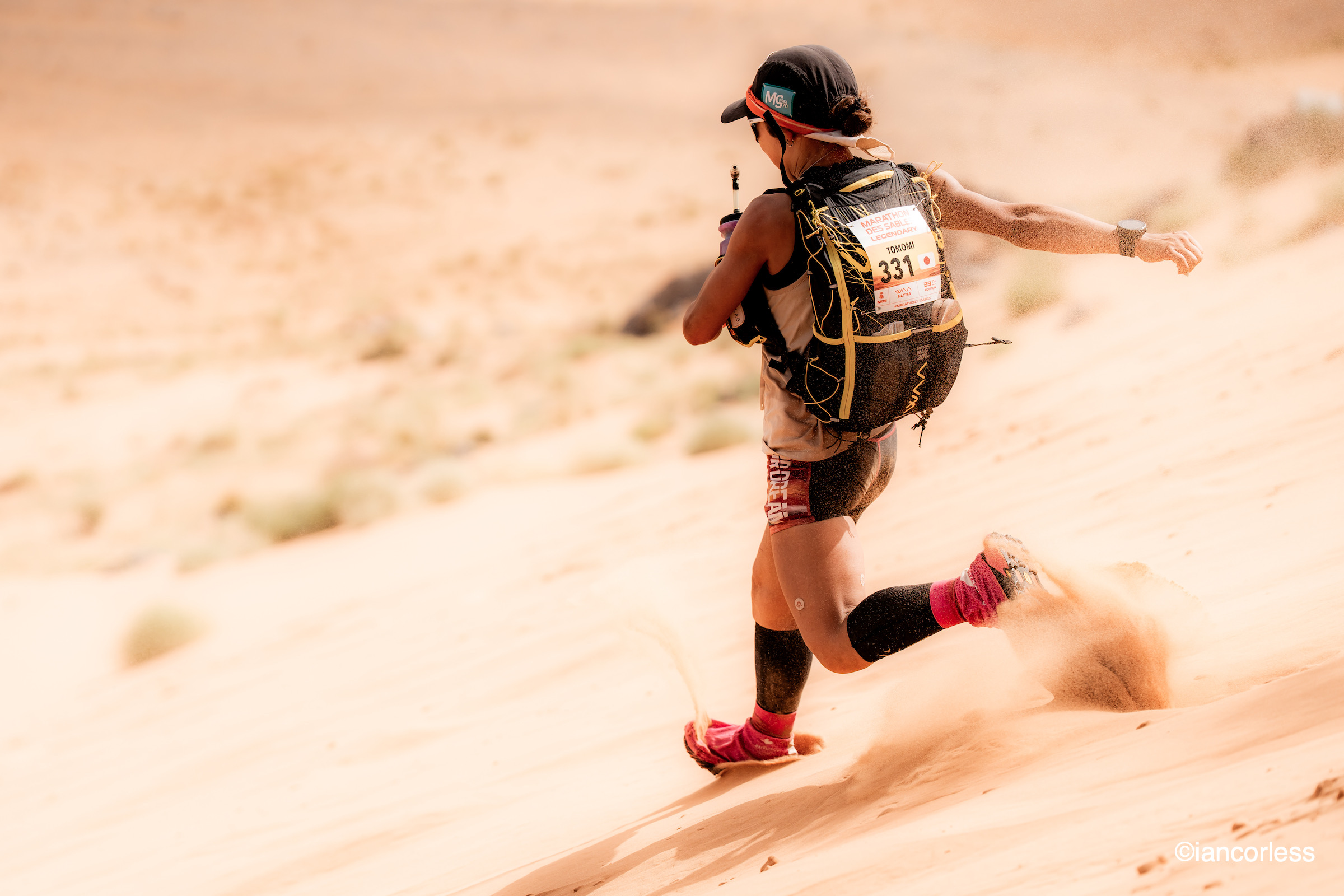
Tomomi Bitoh who is in 3rd overall finished 6th losing time to Annelies and 4th place on GC, Francesca Canepa had a tough marathon stage finishing 12th in 05:00:08 which has now moved Annelies to 4th on GC.
Photo by Ian Corless
With 21.1km’s tomorrow, Tomomi has a substantial 40-minute lead over Annelies. Can Annelies do something remarkable?
The mood in bivouac was incredible after stage 1. Many happy runners felt relaxed with the race started and one completed stage. With nerves and anxiety settled, everyone was eager to continue the journey with stage 2.
Photo by Ian Corless
With 40km’s and 614m+ the day was going to be a considerably harder challenge with 8km’s extra and almost double the vertical of stage 1. For the front of the race this would equate to one extra hour, for those towards the back, considerably more time on the feet.
Photo by Ian Corless
Wiyh an 0700 start and a slight wind from the east, the runner’s were treated to cooler temperatures for the first 3-hours and then heat started to rise and by mid-afternoon, the temperatures hovered around 30-degrees.
Photo by Ian Corless
Early action came from Mohamed El Morabity for the men and Aziza El Amrany for the women. Of course, the main protagonists were not far behind.
Photo by Ian Corless
Maryline Nakache, Ragna Debats and Gemma Game followed Aziza.
For the men, Hamid and Amed ran side-by-side and then Rachid was in 4th just a minute back.
Photo by Ian Corless
Passing through the early CP’s it was between CP2 and CP3 that Rachid made a move for the front and he pulled away.
Behind, Hamid was in a Mohamed and Amed sandwich, he was marked constantly and of course, Rachid continued to move ahead, reclaim lost time from stage 1 and win convincingly to provide enough margin to lead the race.
Photo by Ian Corless
With 2-stages covered, the top-3 men are ranked:
Rachid El Morabity 05:54:35
Mohamed El Morabity 05:55:53
Hamid Yachou 05:59:40
Photo by Ian Corless
Maryline Nakache is on fire this year, the 2023 champion started slowly but once in gear she was on fire, so much so she dominated the stage for the women and finished 6th overall and is now 6th on GC too – impressive.
Photo by Ian Corless
Aziza El Amrany, the 2024 champion, battled hard, but it was impossible to match the pace of the French woman.
Previous MDS champ, Ragna Debats was in 3rd place ahead of Annelies Brak and Gemma Game.
Photo by Ian Corless
With 2-stage complete, the women’s top-3 is as follows:
Tomorrow, stage 3 is 32.5km’s and no doubt, for the majority, will be a day to move easily and efficiently saving as much energy as possible before the intimidating long day for stage 4.
Nepal, the magic of Nepal. If you haven’t experienced it, you need to experience it! If you have experienced it before, you already know that you need to experience it again.
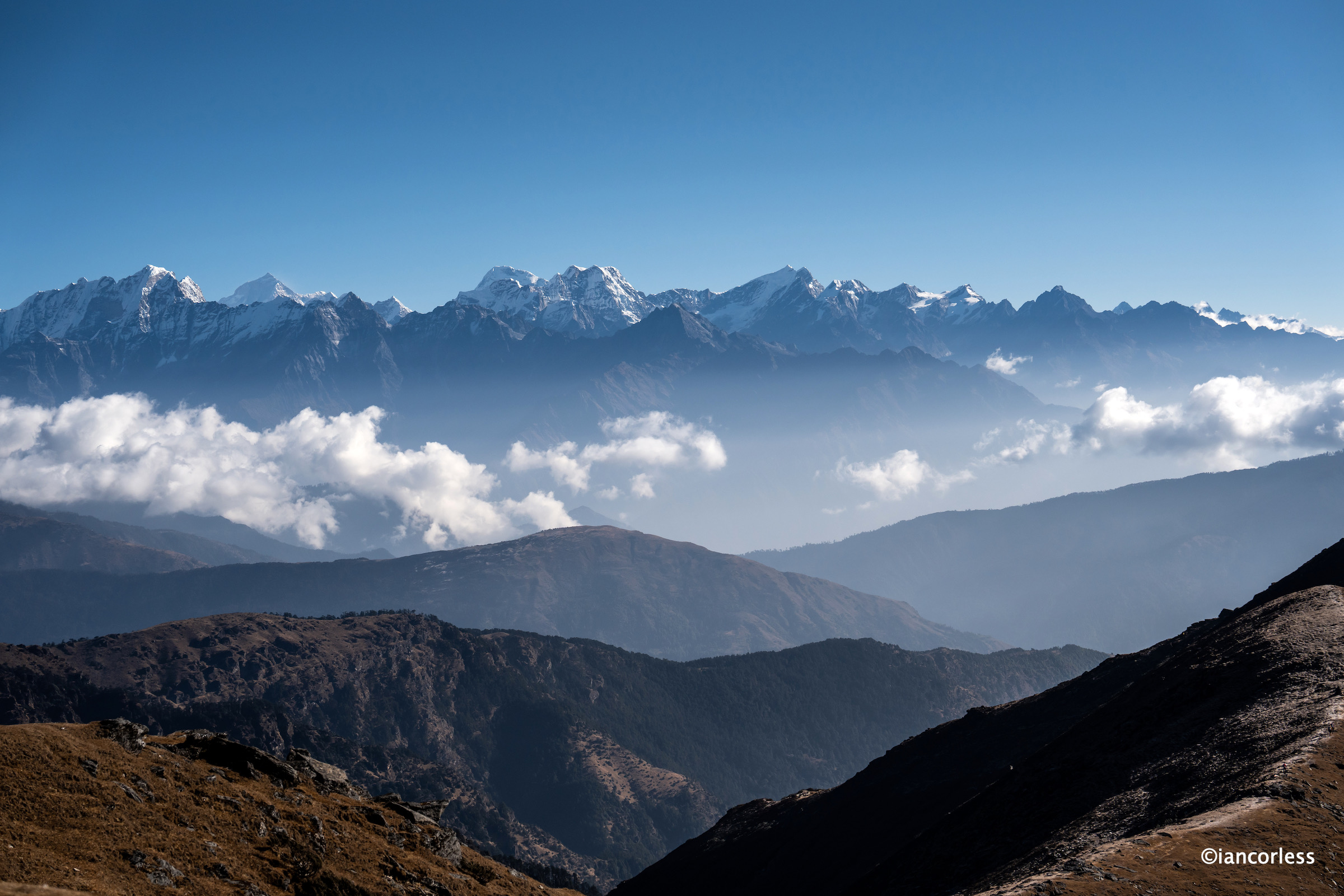
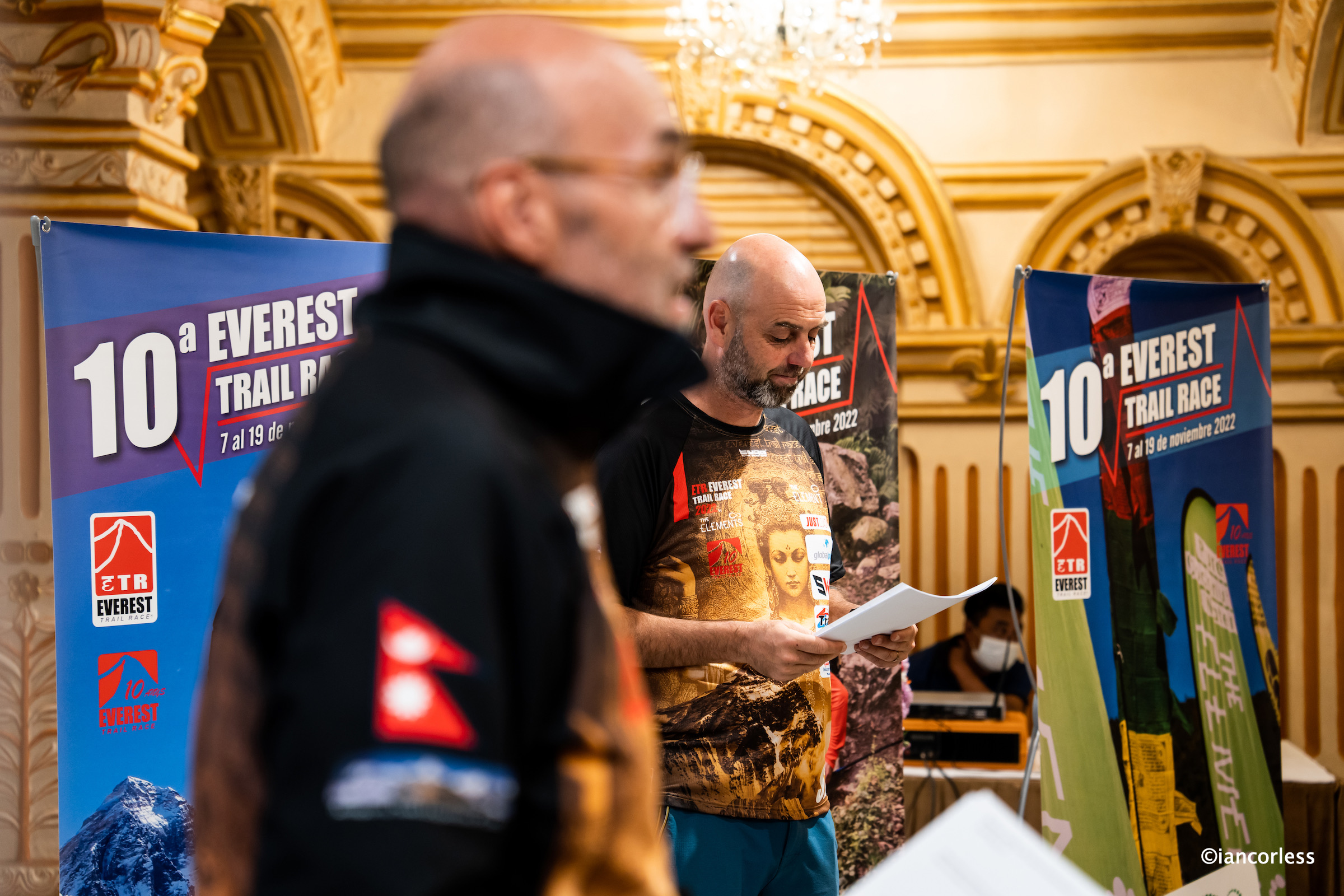
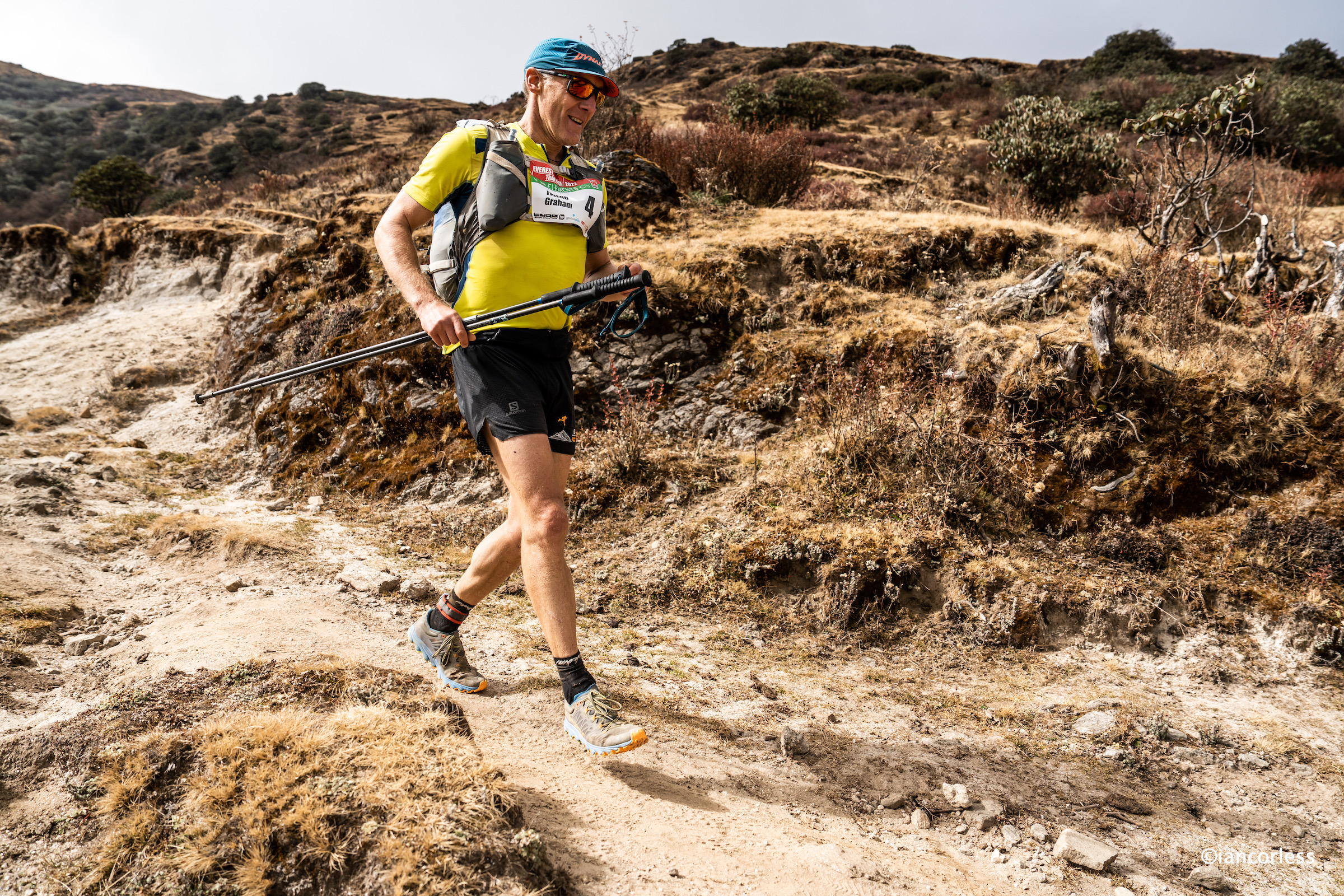
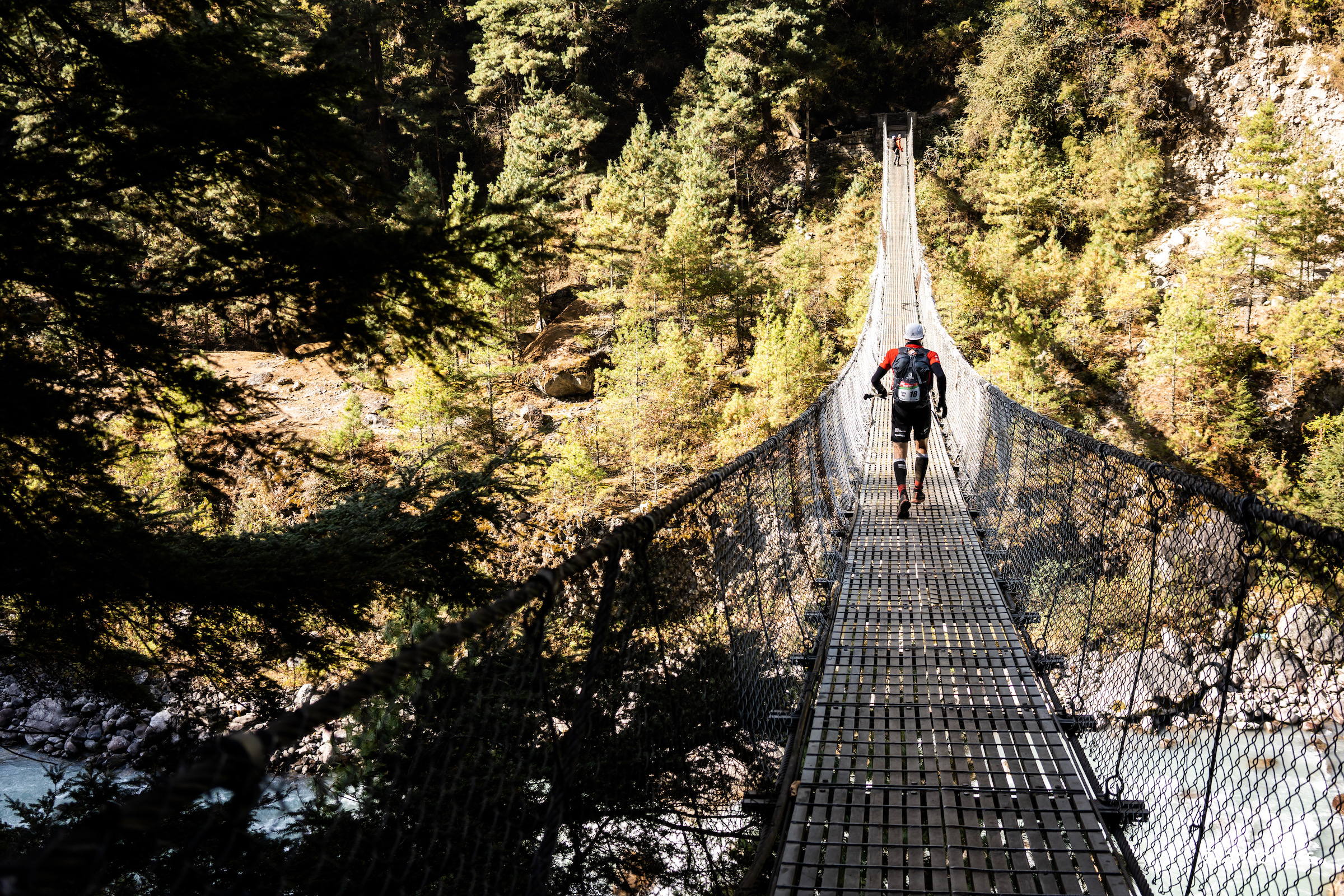
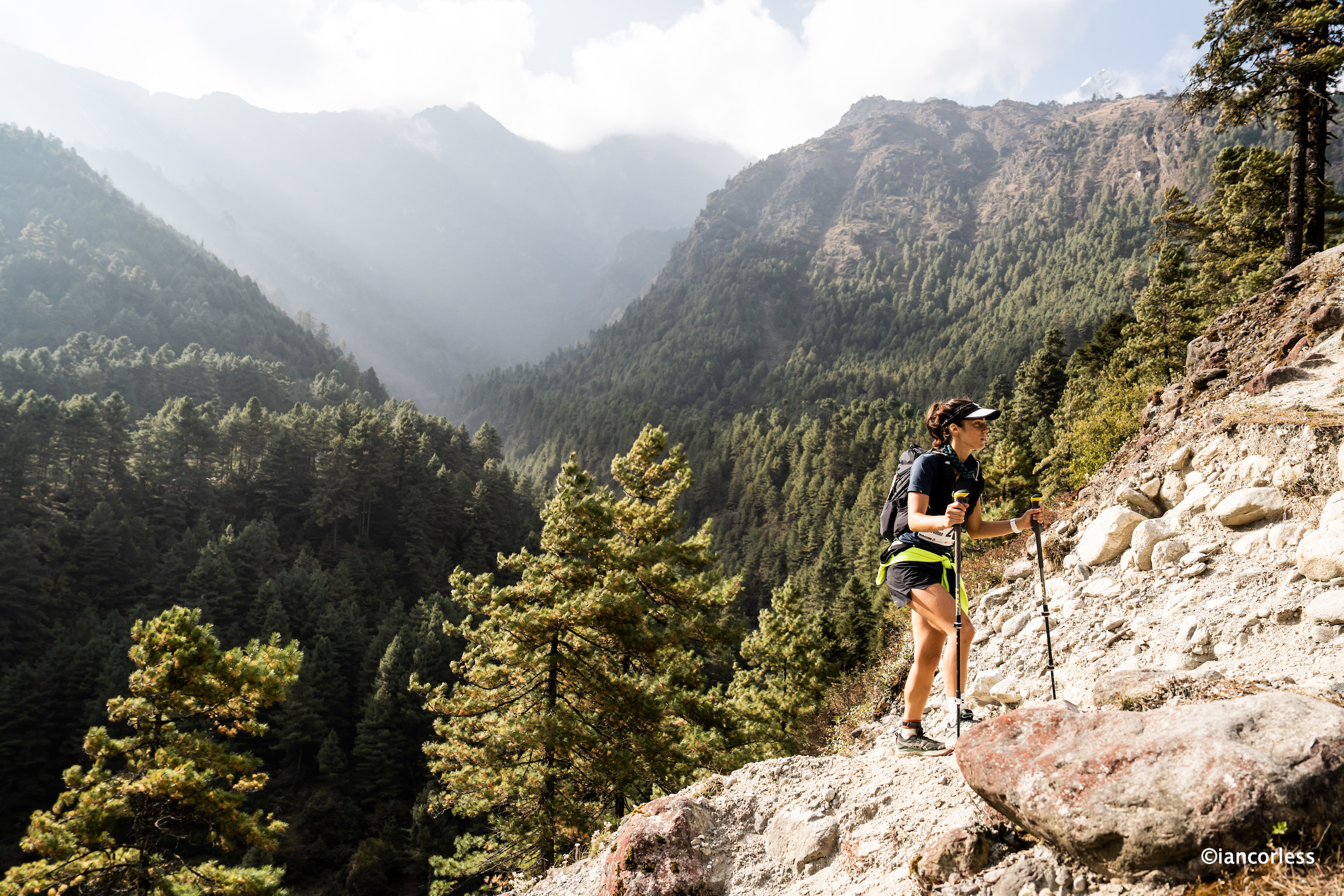
The ETR – Everest Trail Race, provides an opportunity to immerse yourself, to experience on foot, a journey through the heart of this magical place. The race takes place over 6-stages, a total of 170km’s with a combined elevation gain/ loss of 26,000m. A self-propelled adventure through the Himalayas reaching a maximum altitude of 4104m.
Now in its 11th year, ETR, taking place November 10th to 22nd, has become a bucket list adventure for those looking to combine travel, tourism and adventure in a package designed to provide the maximum return on the shortest amount of time.
The noise, the bustle, the chaos of Kathmandu, it needs to be experienced. It’s a cacophony of explosive elements. The transfer from the airport to the hotel gives an indication of what is to come.
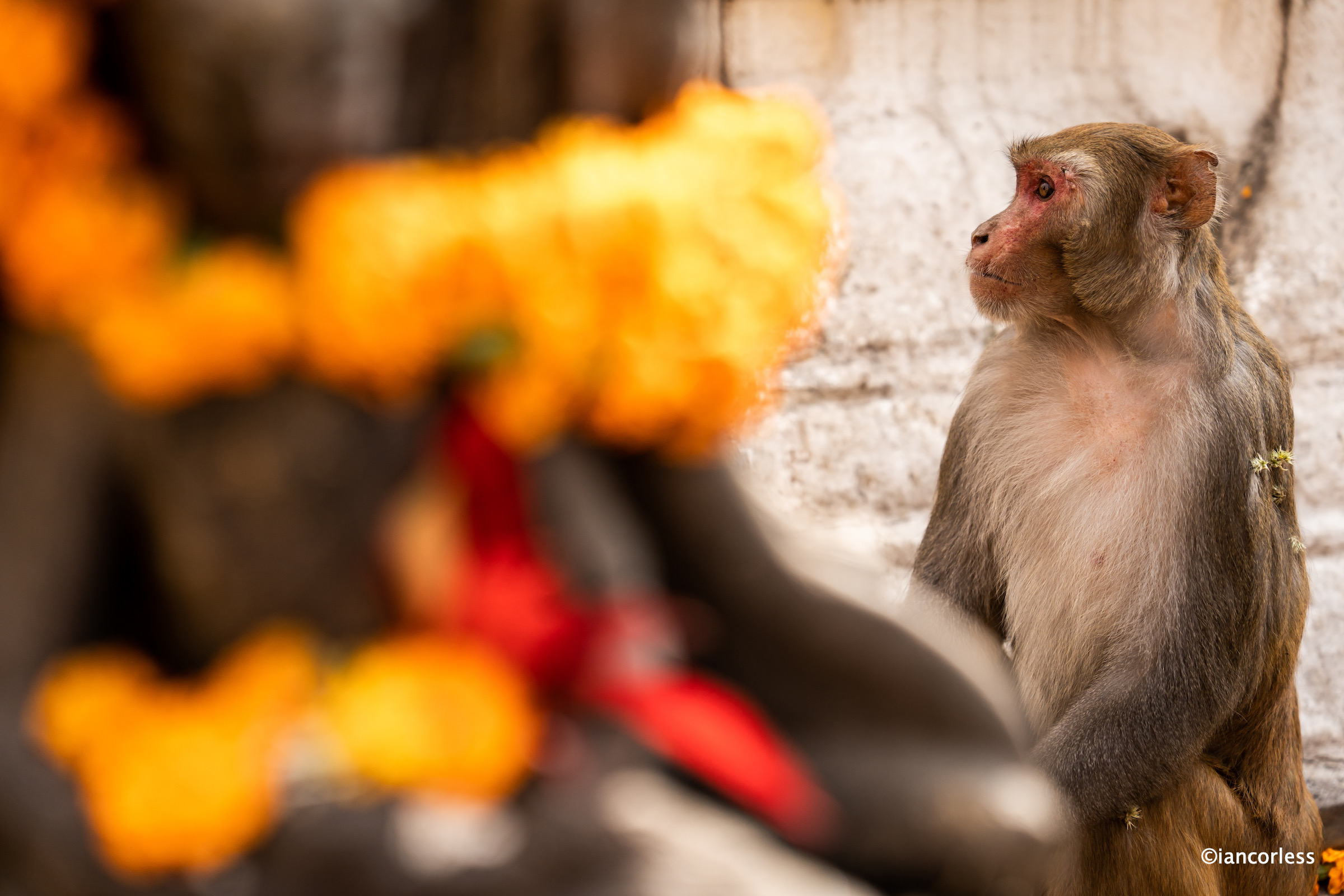
Before the admin protocols begin, a day of leisure in and around Kathmandu allows for key visits to the Monkey Temple and Patan. It’s always a shock to the senses, an assault of noise and colour and yes, poverty and hardship.
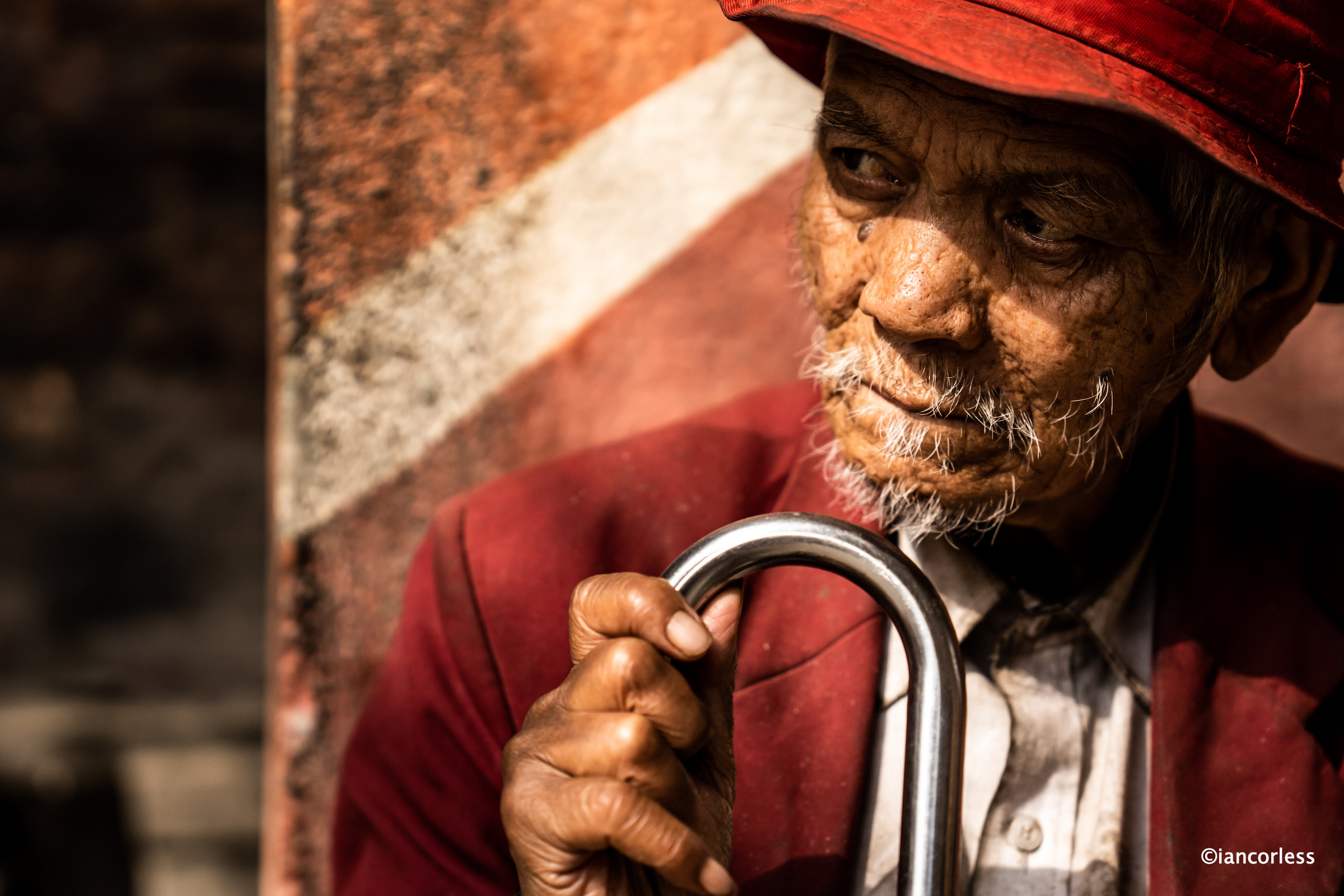
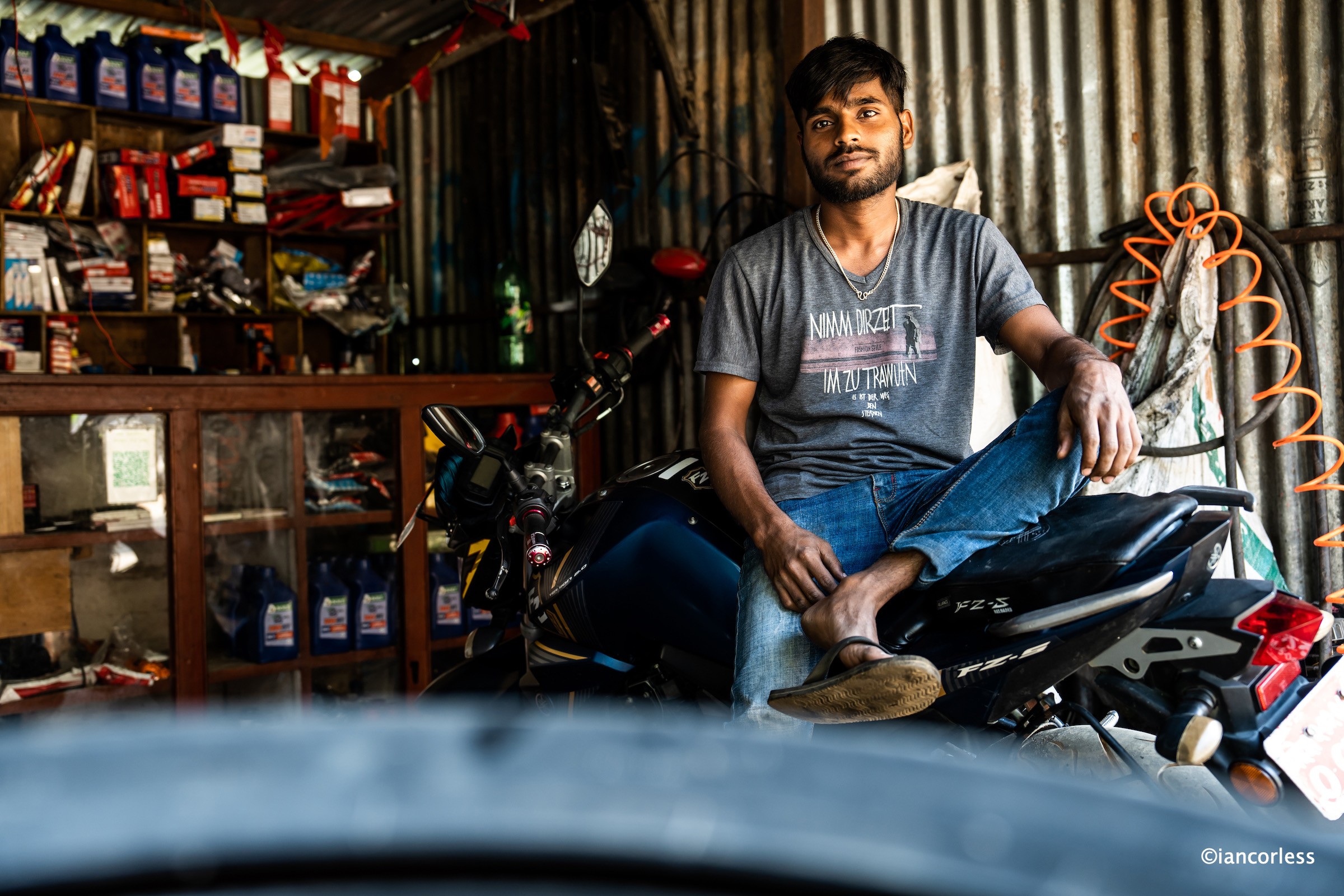
The Nepali people have hard and tough lives, and in Kathmandu you get to fully appreciate the highs and lows of this. One thing is for sure though, you will soon fall in love with the Nepali people, they are the salt of the earth.
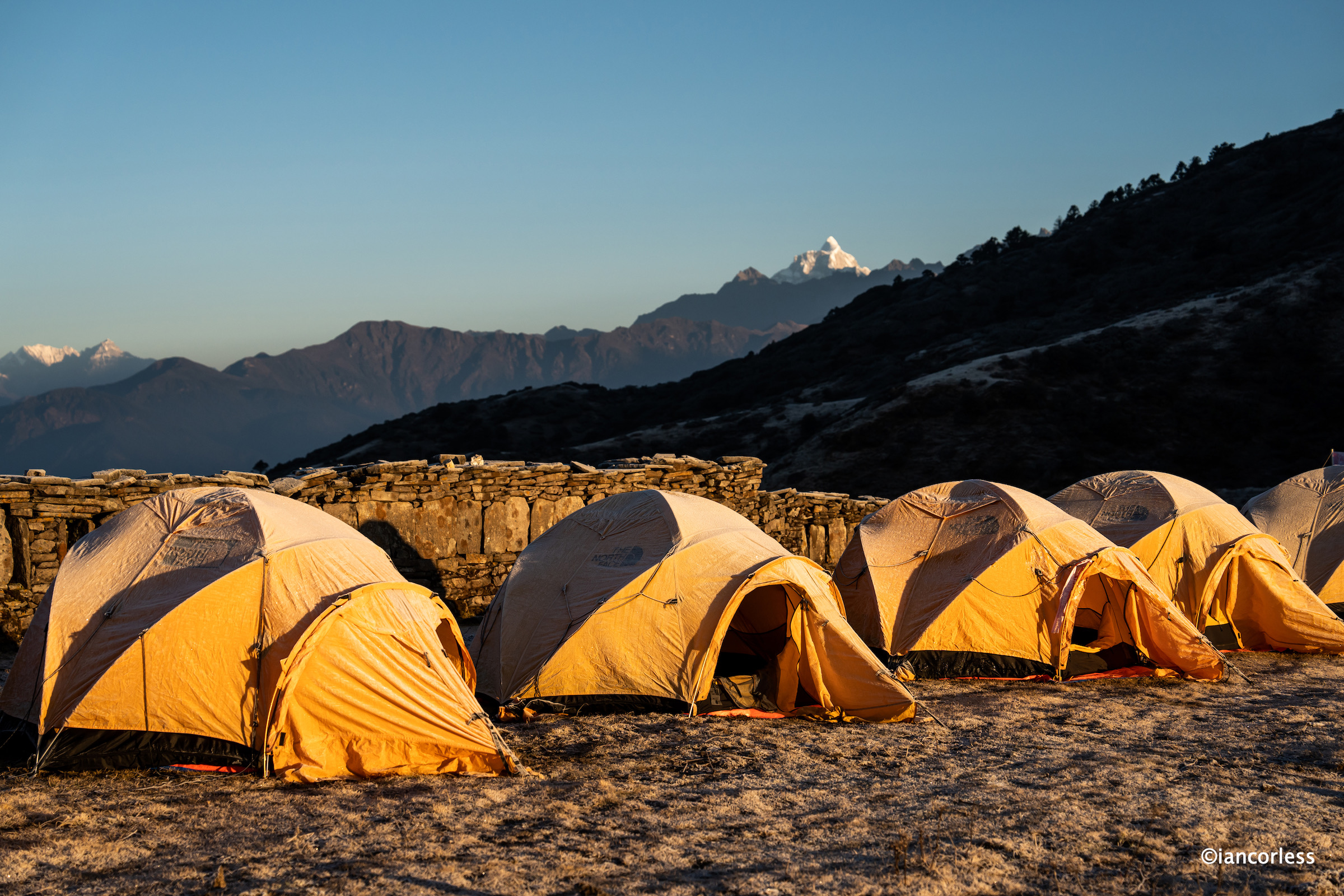
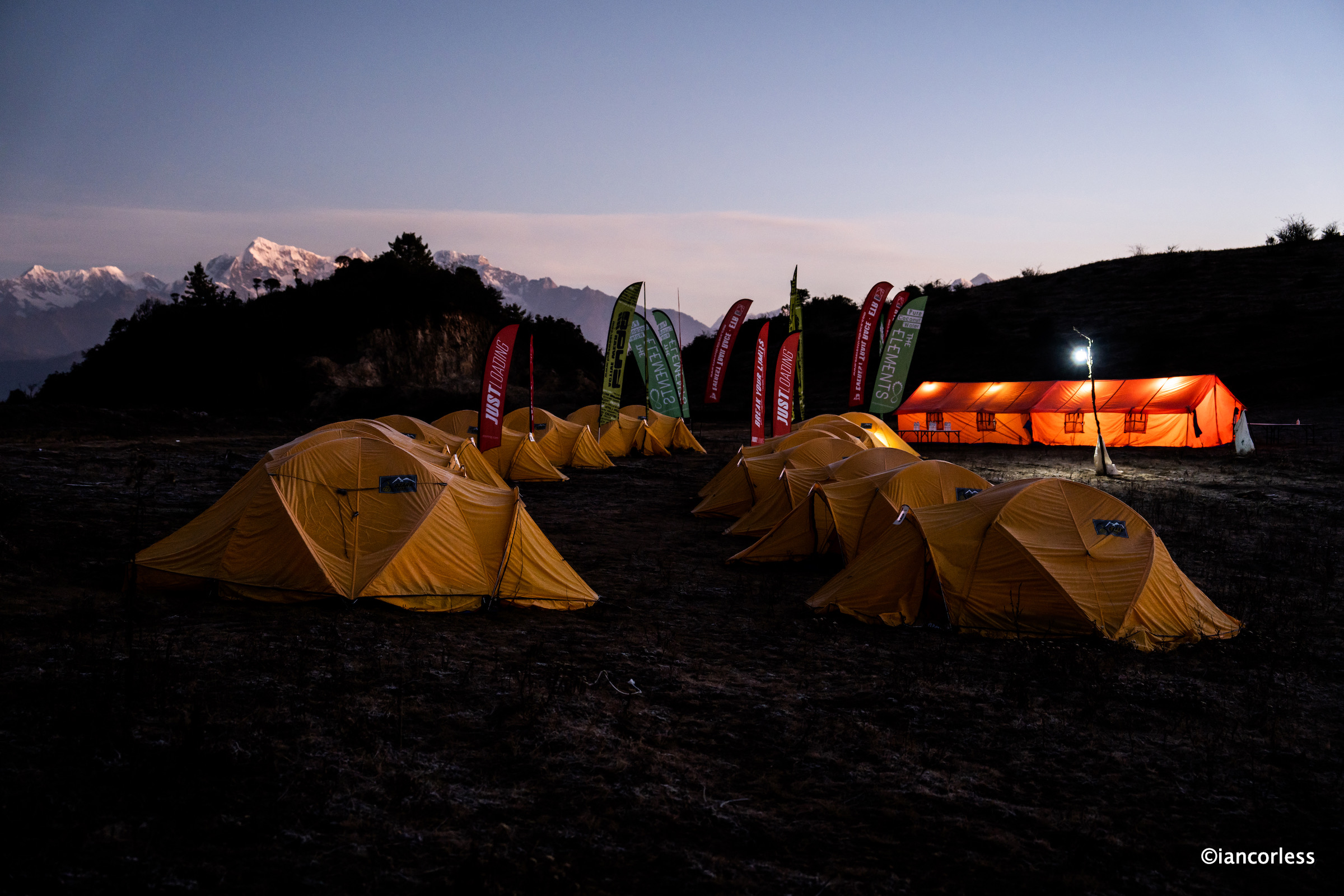
The following day, the journey to camp 1 begins, a bus drive from the noise and bustle of the city to the wild remote landscape of the Himalayas. The views for ever changing, you get to see the variety that this region brings before arriving at camp, tent allocation and a first night under canvas. The next day, the adventure begins with stage 1.
The following 6 days takes you on a journey of both physical and mental as you leave the remote and wild farmlands heading toward the majestic beasts of Lhotse, Ama Dablam, Nuptse and of course, Everest.
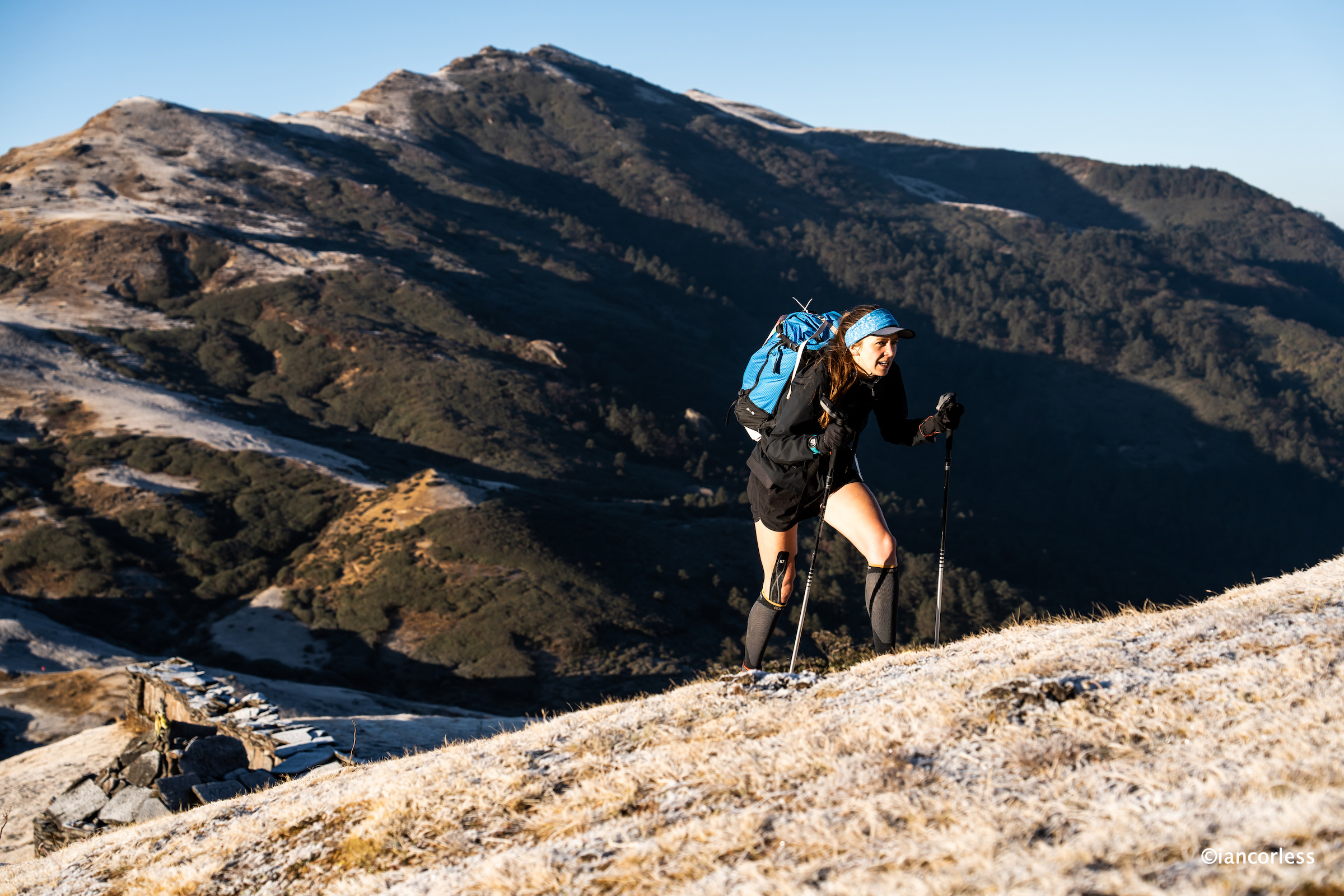
The early stages avoid the classic trekking routes as the participants make their way towards Lukla. Remote, isolated and free from tourism, stages 1-4 show the ‘real’ Nepal, the difficulty of life here and the harshness of weather and land. Days are warm, nights are cold.
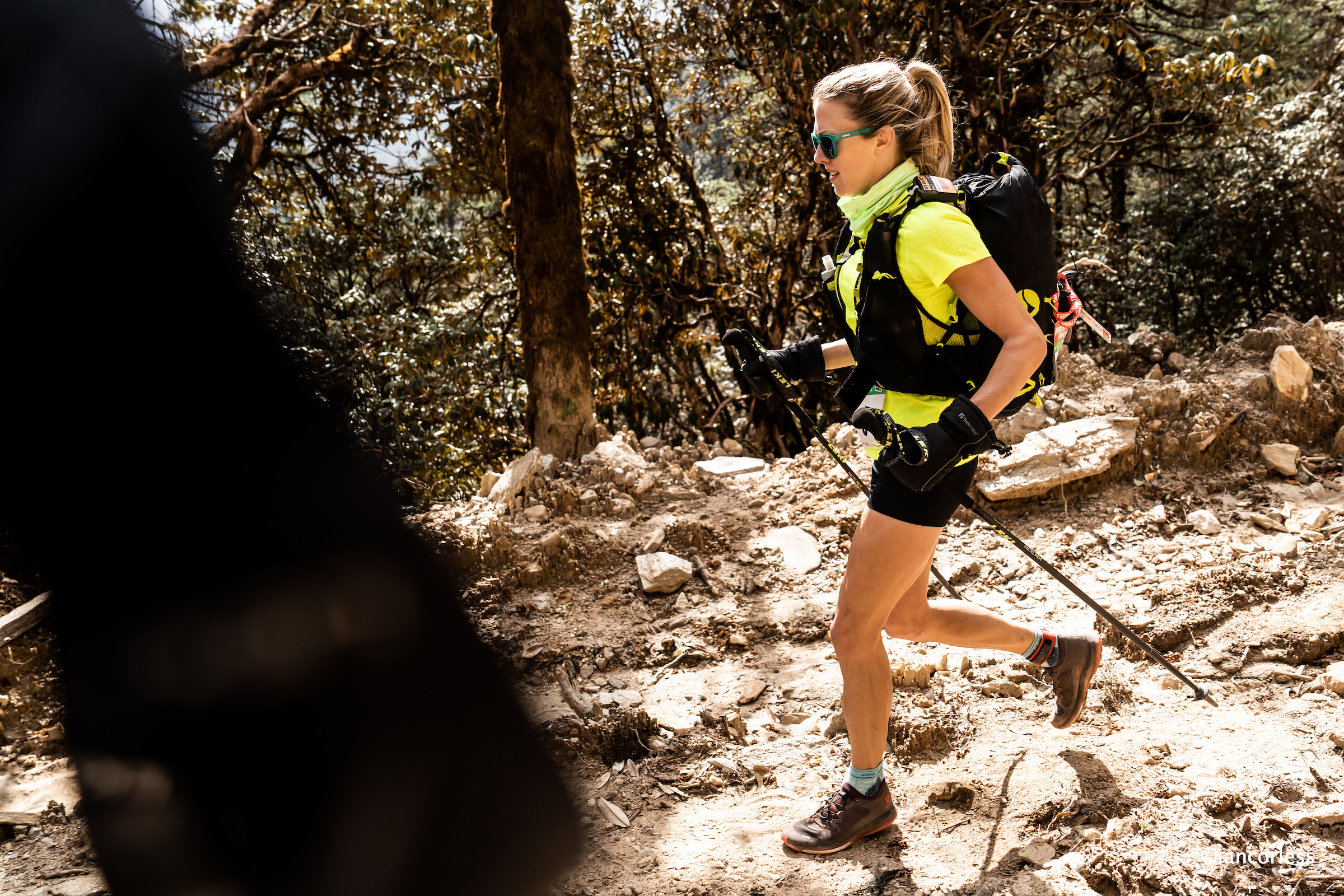
Traveling in a semi self-sufficient manner, participants carry all they need for the journey – sleeping bag and clothes. The race organization provides a place to sleep, breakfast and dinner and en-route, there are sporadic aid stations to provide essential calories and replenish water.
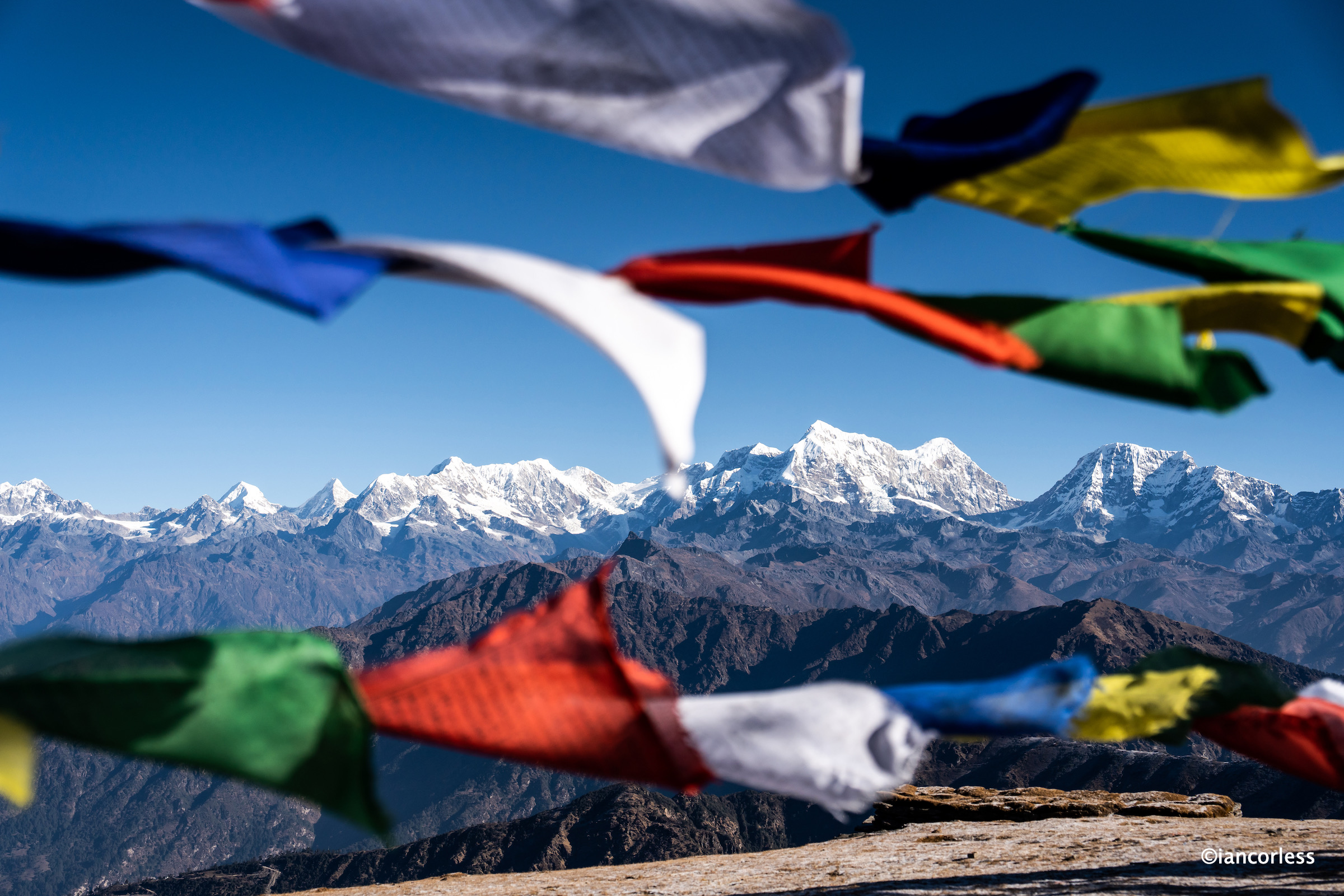
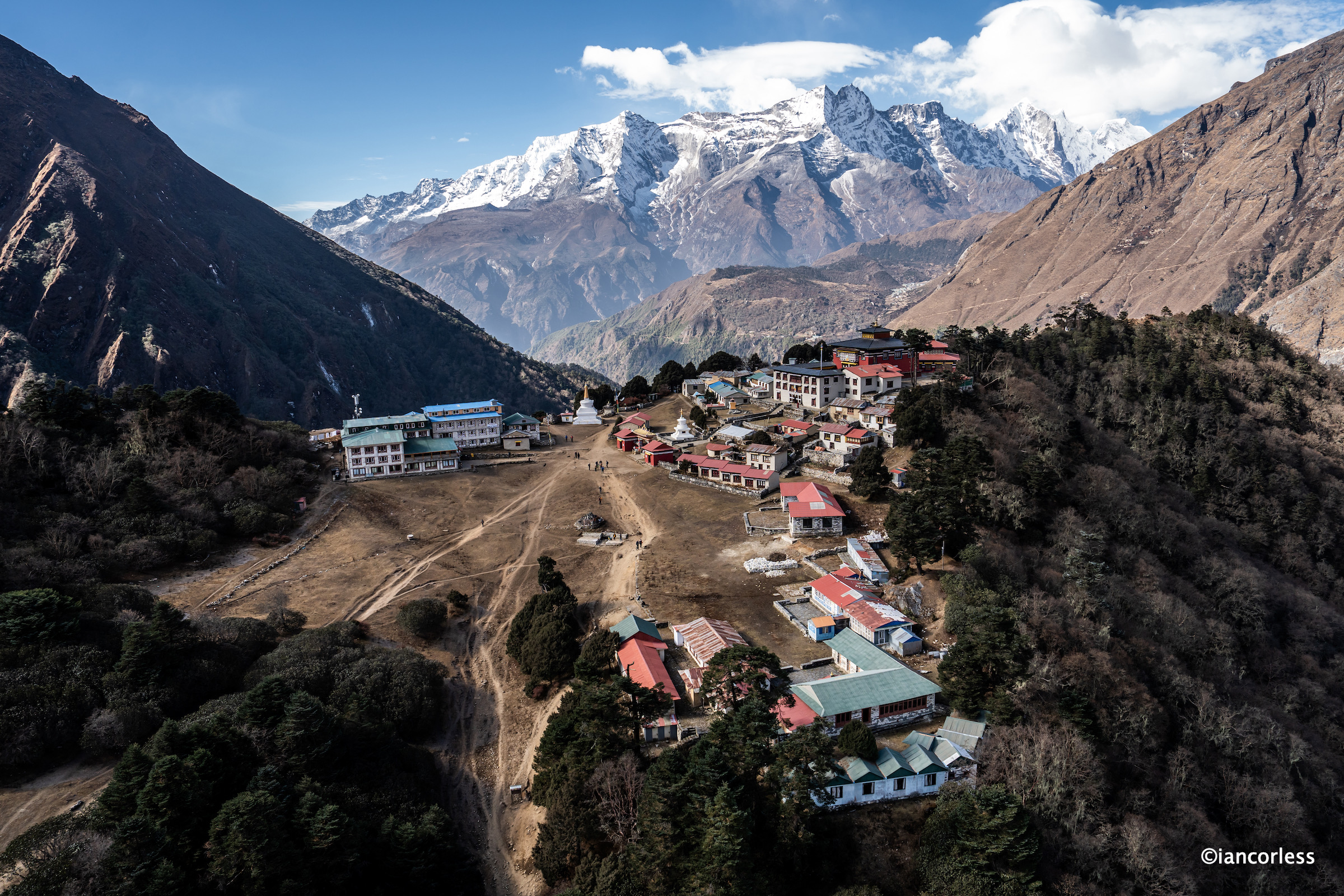
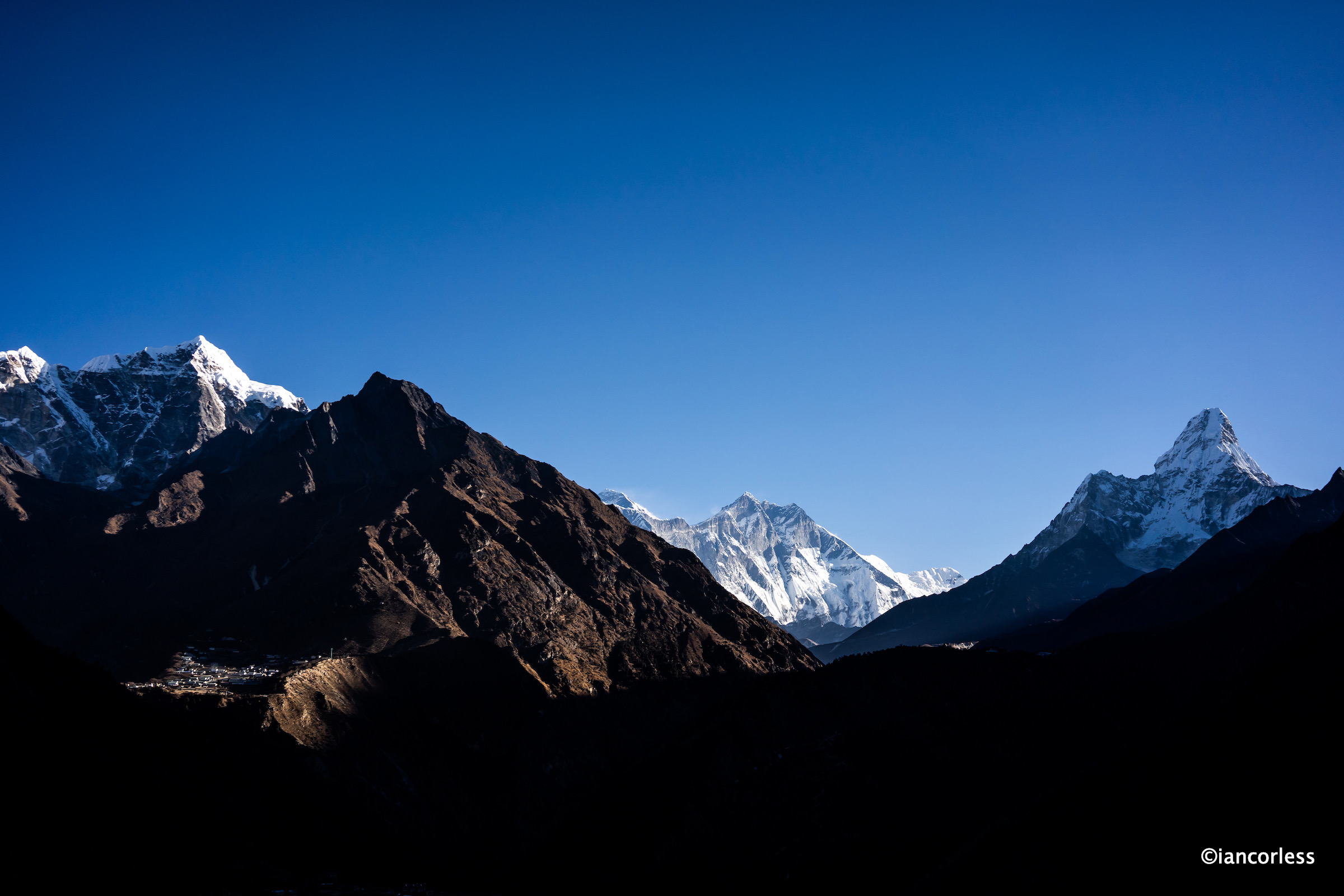
Stage 5 provides a magical journey passing through Namche Bazaar, up and onwards to the eventual finish line at Tengboche Monastery, the backdrop of the key Himalayan peaks making this, arguably, the greatest finish line on the world. Ama Dablam to the right, Everest in the middle, finish lines get no better than this.
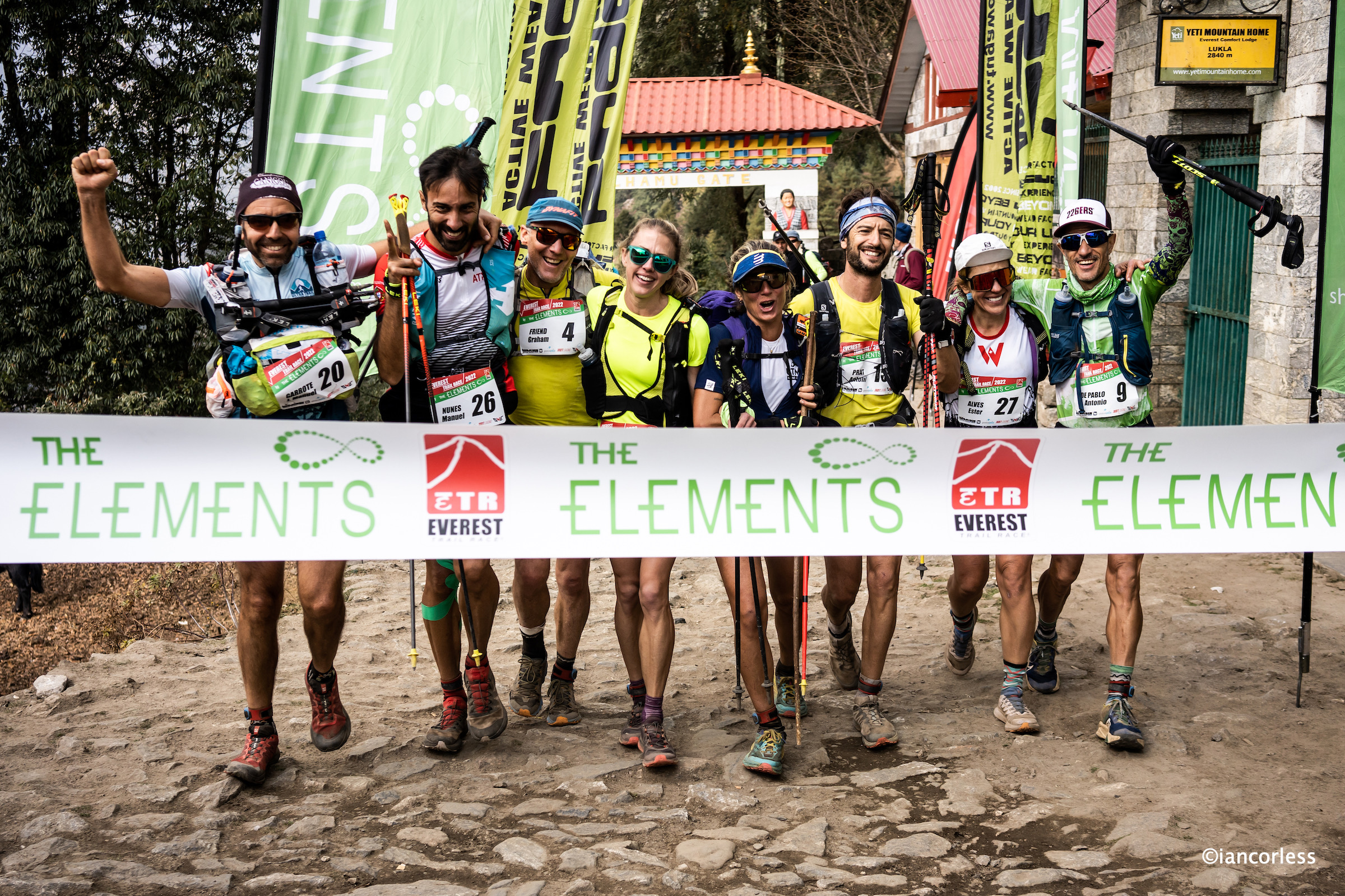
Stage 6 returns to Lukla, the ETR finish line and a night in a lodge. The following day, a return flight to Manthali and then bus back to Kathmandu and hot showers, hotel luxury and a night in a real bed with crisp white sheets.
The following day is free, allowing for relaxation, recovery and of course, a compulsory trip in to Tamil to by souvenirs before the final night awards and gala dinner.
The Everest Trail Race is a special race, one that introduces participants to a very magical place with the safety, back up and organization to make sure the journey is a special one.
Due to the nature of the challenge, an understanding and comfort with mountain terrain is required, in addition, this is a race that takes place at altitude and reaches a high point of over 4000m. Do not underestimate the difficulty this terrain and altitude brings. Daily distances, on paper, may seem very short and achievable, but they are a challenge. But hey, that is why we sign up for these things, no? If it was easy, anyone would do it.
The 2025 edition of the Marathon des Sables – The Legendary is getting close, as we journey through March, we will post weekly articles to help you fine tune your preparation.
Following on from the 2024 edition, the longest in MDS history, the 39th 2025 edition will follow a similar format and distance. The event will take place over 6-stages/ 7-days and notably, the ‘long day’ was stage 3 in 2024, for 2025 it will return to stage 4.
All 6-stages will be timed as in 2024, previously, the charity stage was not timed.
Although the race has fluctuated in distance over the years, a distance of +/- 250km’s should not come as any great surprise and training in the build up to the event should have been planned with this in mind.
6 timed stages does make a considerable difference and that should be considered. In 2024, the long day coming on stage 3 was an extra challenge, for 2025, it returns to stage 4! Depending on how fast you complete the long day, you can have a full day and night as recovery before stages 5 and 6.
Daily distances are typically never disclosed before the race and the jury is out if the distances will be announced pre arrival in Morocco, watch this space! However, it is pretty easy to guess on approximate distances.
The 2025 MDS Legendary will look (potentially) like this:
Stage 1: 32km (day 1) running total: 32km
Stage 2: 38km (day 2) running total: 70km
Stage 3: 36km (day 3 running total: 106km
Stage 4: 80km (day 4 and 5) running total: 186km
Stage 5: 42km (day 6) running total: 228km
Stage 6: 21km (day 7) running total: 249km
Total: 249km
Three key considerations:
Expect more sand, anticipate no Djebel El Otfal and expect Merzouga Dunes. With the above information, you now have at least a template and guide for which to plan around.
“…and for sure it will be tough, I am not going to tell you that it will be easy! The distance will be 250km’s, I am little unhappy because I cannot put the long stage in the third position, I loved this last year, but according to our plan, we need to move it to the fourth stage. It will be tough, very tough and really beautiful. We have some amazing places planned, 80% is new tracks. You will see places never seen before in any MDS. There will be no El Otfal, there will be lots of sand and yes, Merzouga will return.” – Cyril Gauthier
SCHEDULE
Photo by Ian Corless
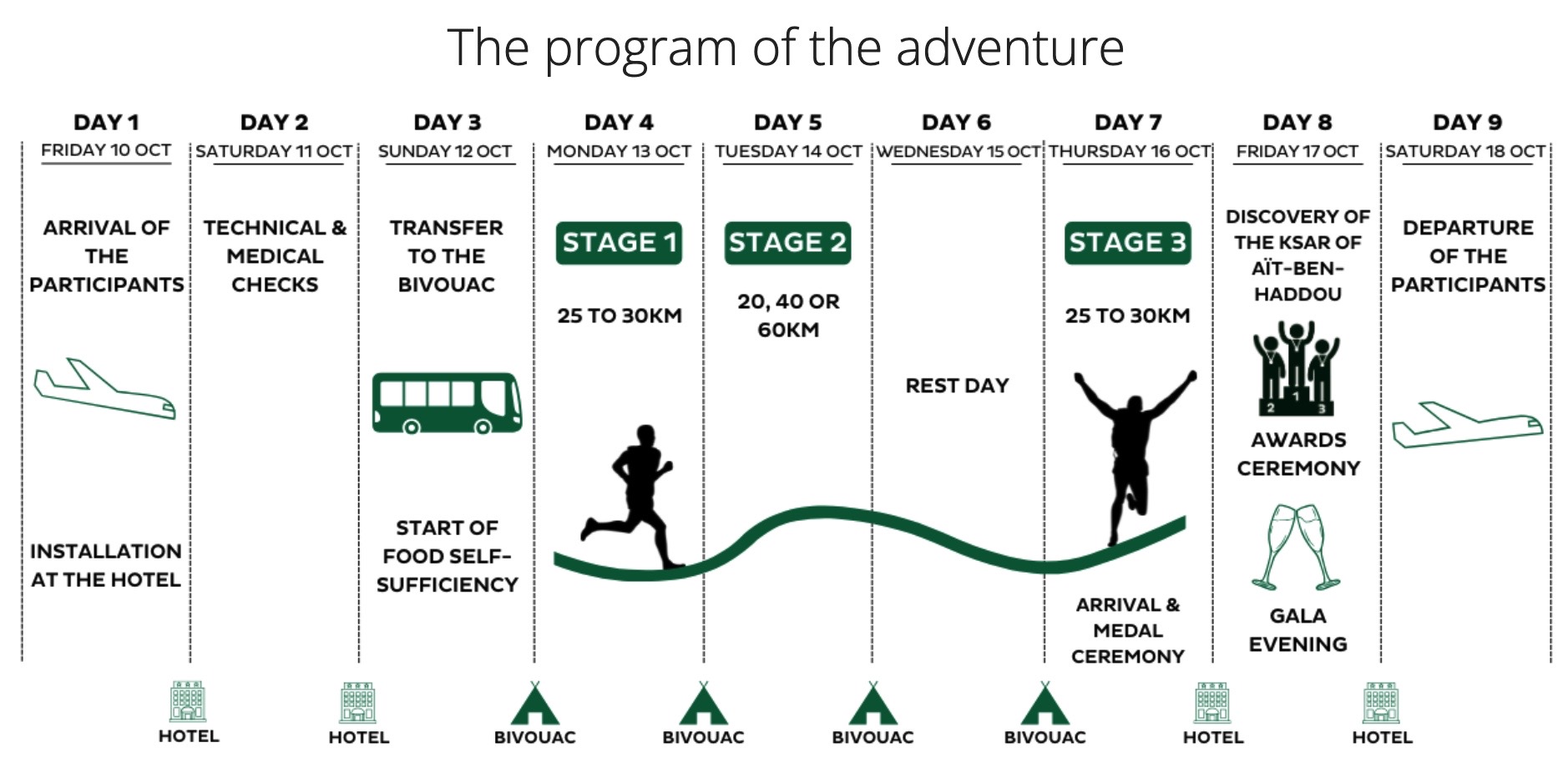
Day 1: Arrival in Morocco, transfer by bus to the bivouac in the desert, installation and overnight stay in the bivouac wih self-sufficiency.
Day 2: Day of technical, administrative and medical checks. Overnight in bivouac with self-sufficiency.
Day 3: First stage, overnight in bivouac.
Day 4: Second stage, overnight in bivouac.
Days 5: Third stage, overnight in bivouac.
Day 6 and 7: Fourth stage, the long one” – lasting 2 days, overnight in bivouac.
Day 8: Fifth stage, overnight in bivouac.
Day 9: Sixth stage, medal at the finish line, then bus transfer to Ouarzazate, overnight in hotel with half-board accommodation.
Day 10: Free day in Ouarzazate, awards ceremony, gala evening. Overnight at hotel with half-board accommodation.
Day 11: End of adventure, transfer back to airport.
BIVOUAC
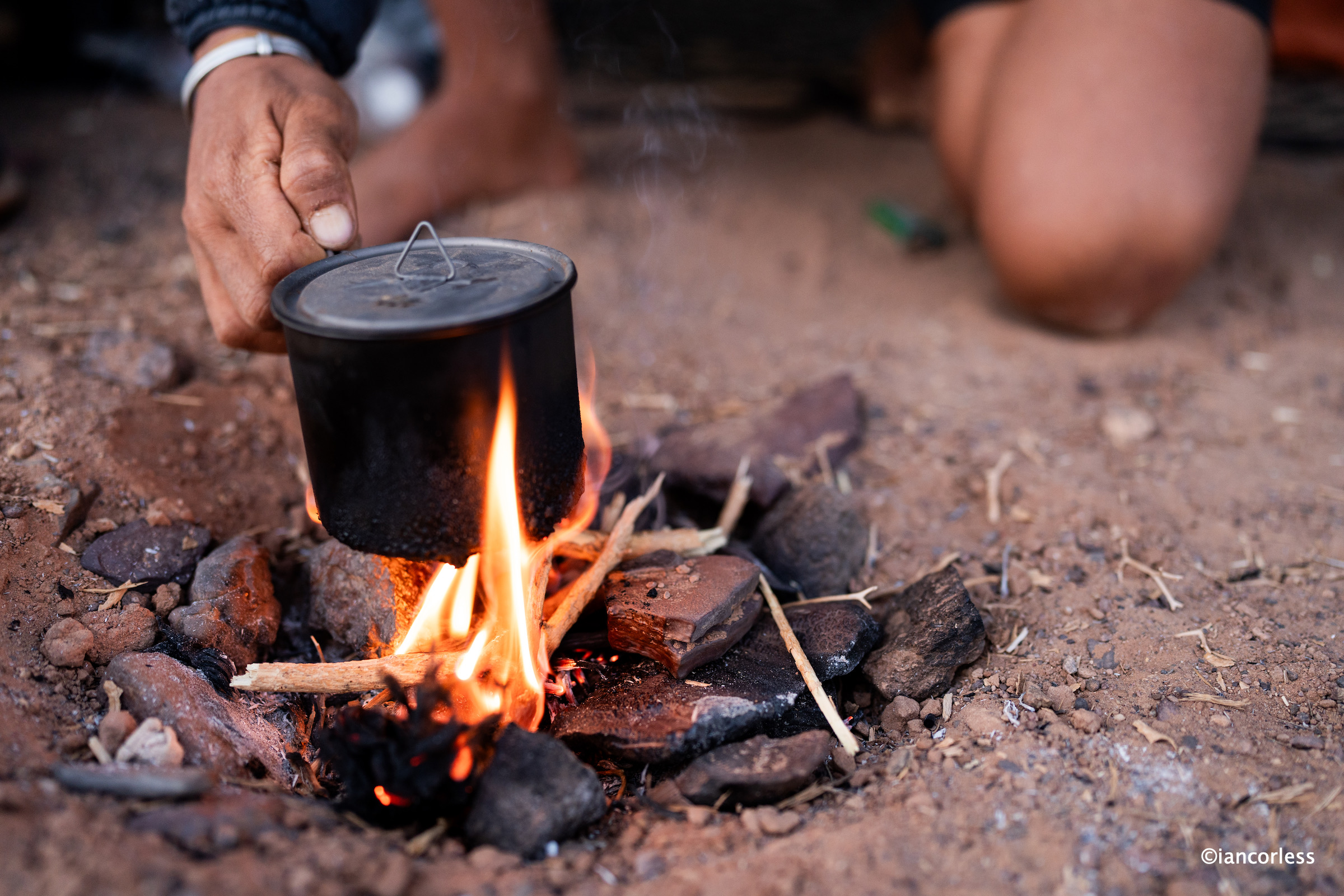
Remember, from the moment you arrive in bivouac you are self-sufficient. So make sure you bring food/drink (water is provided) to cover the days before the race starts. This food can be in any form and weight as you do not need to carry it, so, be creative. Rachid for example makes a Tagine in camp…!
Also remember, you have your luggage with you before the admin protocols. So, bring extra items, warm layers, spare kit etc. That way you can fine tune equipment in a real situation. Particularly helpful when judging climate conditions. DO NOT assume that it will be hot, recent history has shown that temperatures and conditions in the desert are changing – MDS Morocco in October had rain and flooding. The recent MDS Morocco Atlantic Coast had extreme wind, cold temperatures and rain. Be prepared!
ADMIN DAY
You will have your luggage with you in bivouac before admin day. You can make last minute adjustments if required. Be prepared and make sure you comply with all rules and regulations. A pack must have a minimum weight of 6.5kg PLUS water (1.5L). You must have a minimum of 2000 cals per day. You must have ALL the mandatory kit.
SALT
The new revised mandatory requirement for the race requires 14 broth cubes – these cubes are known to be salty. You have no choice here, you must have them. In 2024 many questioned the validity, however, during and post the event the general consensus was very positive. Take note here, not all cubes dissolve the same in water, so, make sure you find a cube that works such as Knorr. My advice is to plan a strategy that works for you. Listen to my podcast with Andy Blow from Precision Hydration HERE. Remember, this is a self-sufficient race, so, be prepared to be self-sufficient and have a plan/ strategy that works for you.
WATER
Another key change from 2024 is water and how it is provided. In principal, once you start on stage 1, water is unlimited. No longer are you provided 1 or 2 1.5ltr bottles at checkpoints. Now, the blue coats will pour water from jugs in to your bottles. If you stand at a CP and then drink a full bottle, it will be refilled.
Another key note to consider is that should conditions dictate or should the organisation think that additional water will be helpful, water stations may be added between CP’s. This is very important. Typically (conditions and terrain allowing) CP’s are 10km’s apart, therefore, you may heave an additional water station at say 5km’s.
The long day may (tbc) have a requirement that you can carry extra water capacity? This extra water would potentially be provided in a 1.5ltr bottle, so, either have an extra bottle to decant this to, or, have a system to carry a 1.5ltr bottle.
After the stage finishes, water is then rationed and you are provided with 1 large 5ltr bottle. This water will be needed for your hydration post stage, cooking dinner, cooking breakfast and your water allowance to CP1 the following day. If you want to wash, that also comes from the 5ltr allowance, so, make sure you drink and eat and understand what water capacity you need before taking a wash.
FEET
Along with dehydration, damaged feet are a key reason NOT to finish MDS. Make sure you have correct fitting shoes, the right socks for you and you know how to look after your feet. Read HERE and HERE.
SAFETY
MDS has strict protocols for your safety. You will see fast response vehicles (buggies) designed to gain fast access to the most difficult and challenging parts of the desert. In addition, there are 4×4 vehicles situated throughout the course.
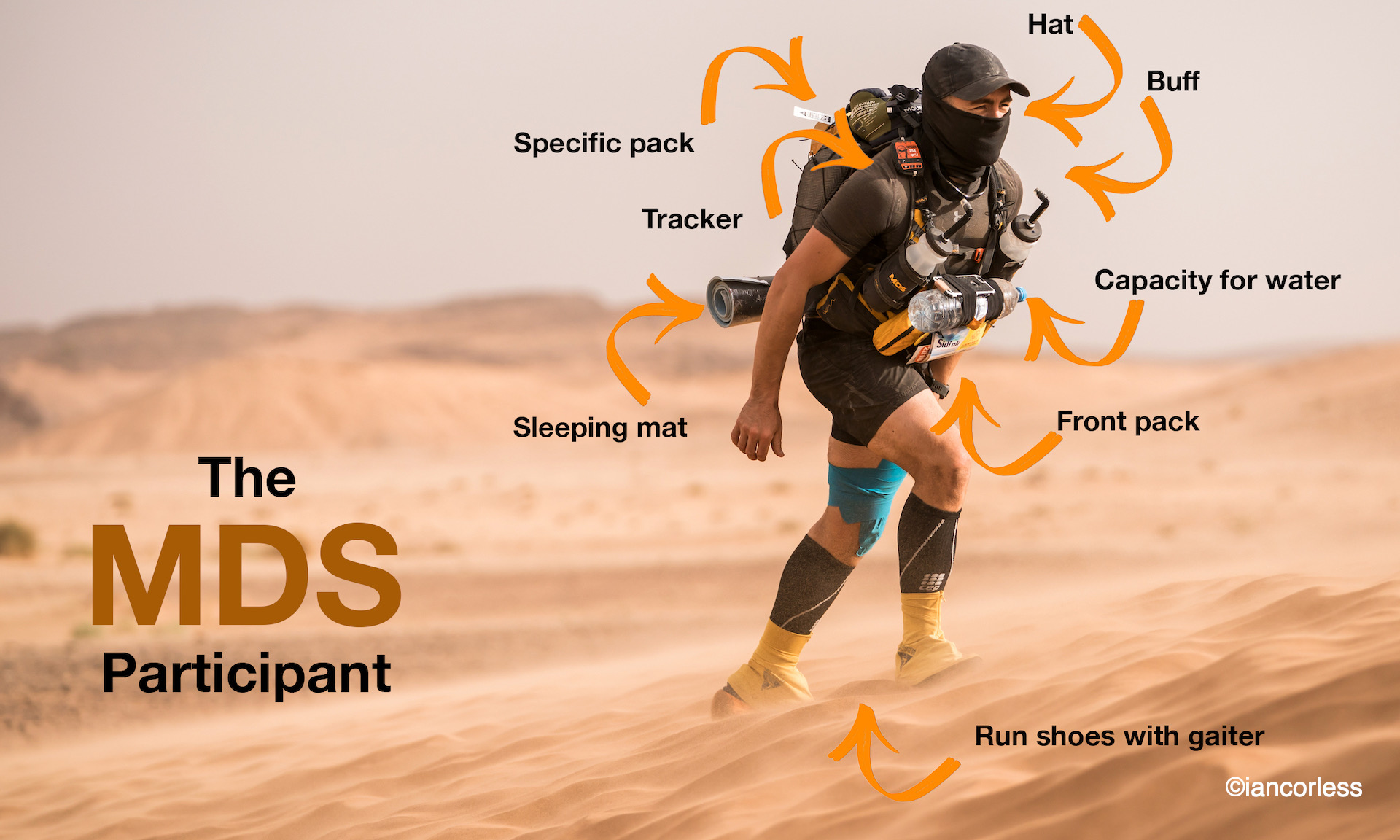
Each runner is using a tracker attached to their pack. This allows MDS to follow you and keep an eye on your position, it also has an emergency button which notifies the MDS team of your need for immediate response and attention.
There are also medical runner’s. These are trained medical staff who will participate during the race. They will be on the course with you and in certain scenarios, they are able to provide immediate care or attention to those who need it. They have a different coloured number so you can identify them.
Medical team personnel are trained and equipped to provide immediate attention at any location within the desert.
Finally, water is not rationed during the race, so, if you need more liquid, you can have it! Also, at key CP’s, iced water is available to enable cooling. This will be poured on your head via a blue coat volunteer. Orange jackets handle medical emergencies.
MANDATORY EQUIPMENT
Needless to say, despite what some believe, but mandatory equipment is mandatory!
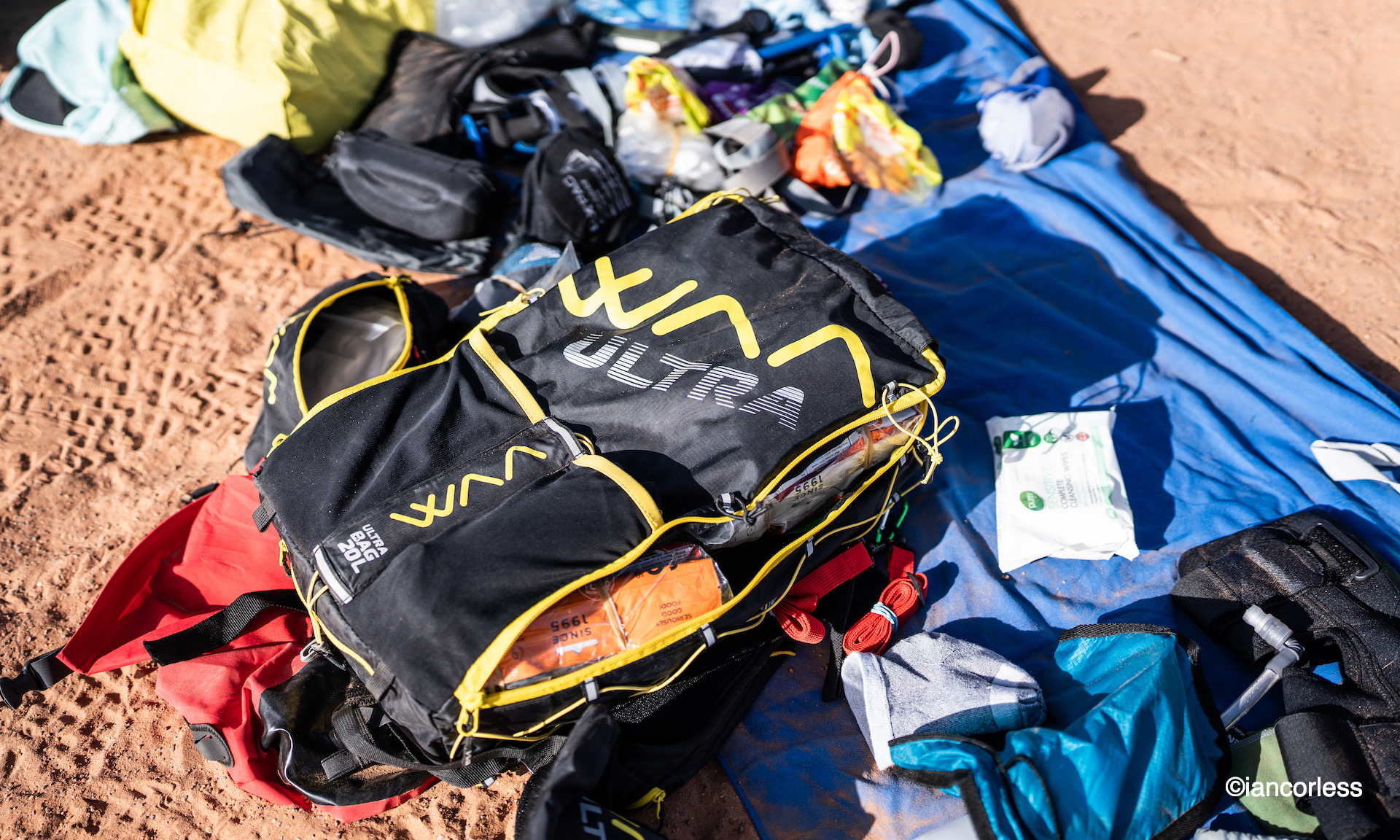
Pack such as WAA Ultra Bag 20L
Minimum capacity of 1.5 litres of water
Sleeping bag
Head torch and spare batteries (you can have a charger/ solar charger)
10 safety pins
Compass with 1 or 2 deg precision
Lighter
Whistle
Knife
Topical disinfectant
Signal mirror
Survival blanket
14 cubes of broth
Sun cream
200 euro or 2000 dirhams
Passport or ID card
ECG (original doc) and medical
Roadbook (supplied on arrival)
Make sure you comply with the very strict regulations and timeline in regard to ECG and medical form.
FOOD
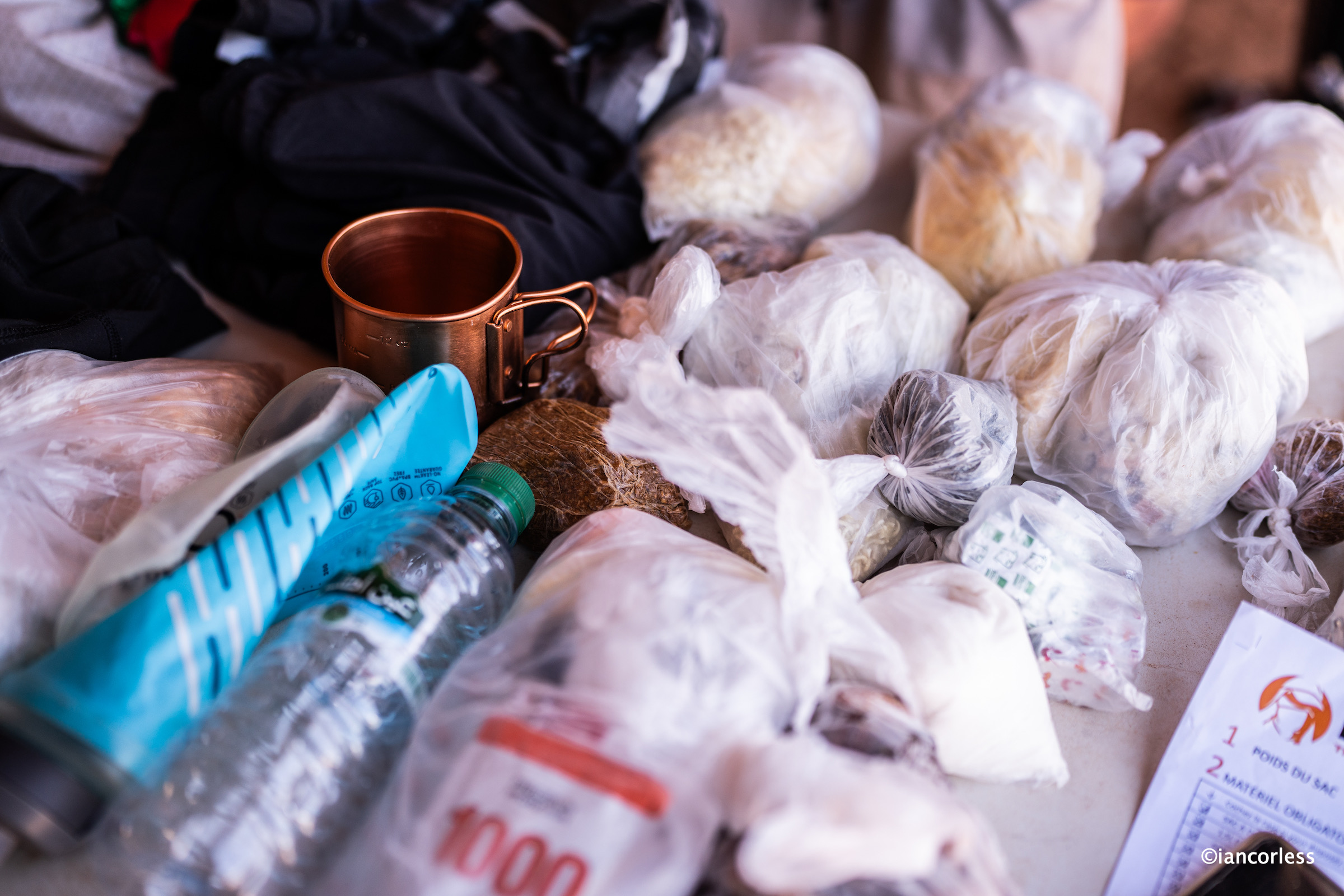
You need ** 14,000 calories of food, 2000 calories per day. However, 12,000 is mandatory. You can of course carry more than this, but I consider 14,000 is the minimum with the rest day. You must be able to prove the calories, so, if you decant food into lighter or different packaging, make sure you keep the nutritional information.
** Adding as clarification:
2000 calories per day, it’s a 6 stage race
BUT remember the rest day.
I see the calories as below BUT YES 12,000 cals to comply with rules.
Stage 1 : 14,000 cals – Day 1
Stage 2 : 12,000 cals – Day 2
Stage 3 : 10,000 pls – Day 3
Stage 4 : 8,000 cals (the long day) – day 4
Day 5* : 6,000 cals (rest day)
Stage 5 : 4000 cals – Day 6
Stage 6** : 2000 cals – Day 7
*Day 5 you may still be running/ walking and/ or in camp for the rest day and will need 2000 cals.
**Stage 6/ day 7 you technically only need breakfast and snacks for the stage.
WHAT YOU NEED
In addition to mandatory equipment and food requirements, you need essential items to complete the race. Use the list below as a guide:
Run top (maybe with long sleeves)
Neck roll/ Buff
Run shorts/ skirt or similar
Socks (plus maybe spare socks)
Shoes with gaiters (make sure you have the gaiter velcro sewn on well in advance)
Hat (consider cover for the neck too)
Sunglasses (make sure they have good protection and if they fit well for protection in sand storms)
Watch
Warm layer (windproof and maybe lightweight down jacket)
Foot care
Hygiene products
Toilet roll/ wipes
Lip balm
Blind fold
Ear plugs
Spoon
Pot/ bowl*
Stove**
Fuel cubes**
Sleeping mat
Pillow
Flip flops or similar
**Stove and fuel only required if you plan to heat water
*Pot/ bowl or similar will be required as now it is no longer possible to cut down a 1.5ltr bottle
Recommended
Many things can happen in a self-sufficient race and yes, equipment can fail. So, think about on-the-go repairs and what you may need.
Zip ties
Gorilla tape
Super glue
Sewing kit
Cord/ thin rope
Top Tips
Keep the pack weight as close to the minimum 6.5kg as possible, additional weight is additional stress that you do not need.
Keep luxuries to a minimum, they only add weight. A super light Mp3 player (with good battery) and earphones is the only luxury I would consider.
Accept that this is a tough challenge, you will be stripped back to a survival mode. You may not wash, you will get dirty, you will get smelly. Accept it.
Start slow and ease into the race.
Photo by Ian Corless
Poles can be a lifesaver and I recommend them but you must learn to use them. Those at the front do not need poles, they can run.
Learn to walk, walk and walk. Many go to the desert with the expectation of running 80% and walking 20%. The reality is it will be the other way around.
Look after your feet and start with the correct shoes for you.
Take a sleeping mat or pad. You only need to do three things: run, eat and sleep. Sleep and comfort is important for recovery.
Make sure you check the full rules and regulations HERE
There is always something special about a first edition race. Despite all the planning, despite tight schedules, despite ticking all the boxes, there is always an element of the unknown, a curve ball nobody expected or predicted flying in and causing a problem. Gladly, no curve ball arrived on the Atlantic Coast, on the contrary, the first edition of MDS Morocco Atlantic Coast was a huge success and without hiccup.
Morocco is obviously not a new destination for MDS, Legendary is in its 39th year and MDS Morocco, MDS Morocco Trek and Handi MDS have all happened previously, so, a new event in Morocco feels comfortable.
Close to Agadir, the MDS Morocco Atlantic Coast brings something new to MDS events in Morocco and obviously brings something special to the MDS line up.
Photo by Ian Corless
Like Fuerteventura and Peru, the ocean provides a backdrop to the race and this alone is unique. The juxtaposition of desert, dunes, beach and the roar of waves and the blue ocean make for a special environment for a race to take place.
LOGISTICS
As with all MDS events, the race is 3-stages taking place over 4-days with 3 distance options, 70km, 100km and 120km. Stage 1 and Stage 3 is the same for all participants and stage 2 is the one where a choice must be made, typically 20km, 40km or 60km. It’s a great format that makes MDS appealing for all ages and all abilities.
With 170 participants and 27 nationalities, the MDS Morocco Atlantic Coast was a great first edition. Notably, once again, female participation was around 50%. MDS are without doubt pioneering the way for female participation in their races and this must be applauded and encouraged.
Photo by Ian Corless
Travel to Morocco is easy and transfers were provided by MDS from Marrakech (appx 6-hours) or from Agadir, with just a 40-minute transfer to the race hotel, needless to say, most people flew to Agadir.
Photo by Ian Corless
A Saturday arrival and a Saturday departure, the race format had 2 nights in the hotel, 4-days and 3-nights in the desert and then a return to the hotel for 2-nights before onward travel.
The format provides an excellent opportunity to mix holiday and relaxation with sport.
THE EVENT
Saturday arrival was relaxed and with no commitments for the participants.
Photo by Ian Corless
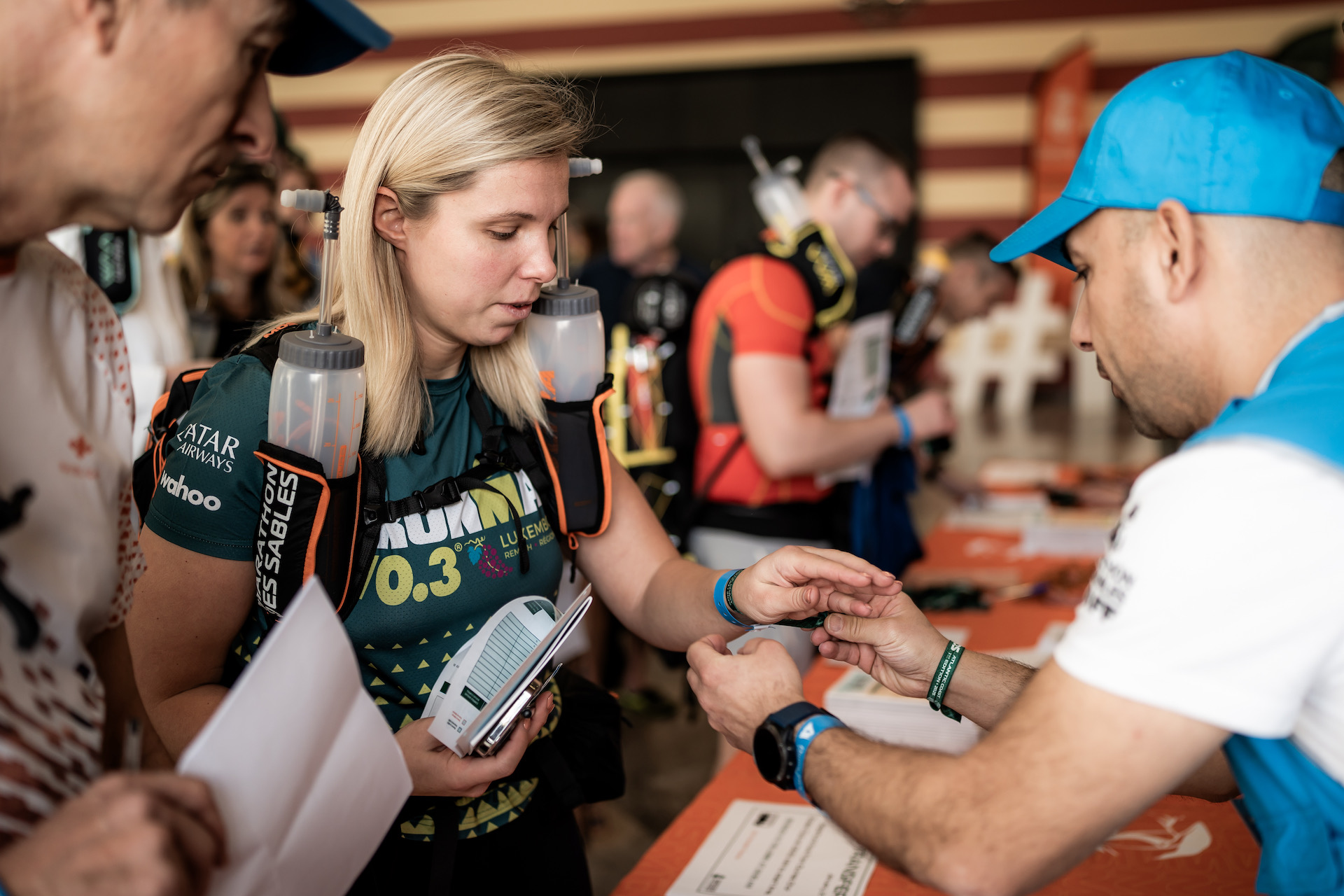
Sunday mornning and the MDS admin protocols were in place between 0900 and 1200, this is a requirement for eah participant – equipment is checked, medical certificates are checked, GPX trackers are added to packs and race numbers are provided. The whole thing is efficient, seamless and fast.
The afternoon provided an opportunity for relaxation or sight seeing and then an early dinner and bed.
Departure time for day 1 was 0300 for a 5-hour journey to the desert. On arrival, the plan, as always, was to get the runner’s underway as soon as possible.
Highway to Hell finished and the participants departed under cloudy skies at approximately 0930.
Photo by Ian Corless
Day 1, stage 1 at 24km’s headed from an inland location and basically headed directly to the coast. The terrain was mixed, with some easy running to start the day, of course, sand featured heavily with a dune section coming just after CP1 and a final dune section concluding the race just before the finish. Temperatures reached a high of 25-degrees and it was a great first day. Bivouac awaited the runner’s and a first night in sleeping bags with self-sufficiency started. The wind blew and the temperatures dropped, a chilly night was expected. Stage summary HERE
Photo by Ian Corless
Day 2, stage 2, intermittent rain and wind blew in off the ocean and there was a sense of dread at what this day would bring, especially for those participants who would take on the 40 or 60km distances. A challenging start and just a few hours later the weather started to clear and finally, skies cleared and the sun came to make for a beautiful day, highs reached 28-degrees. The course offered an obvious challenge mixing the best of Moroccan terrain with tsome stunning dune sections. The latter km’s running parallel to the ocean to give an epic backdrop. The race wnt into the night with the final finisher arriving just after midnight. Stage summary HERE
Photo by Ian Corless
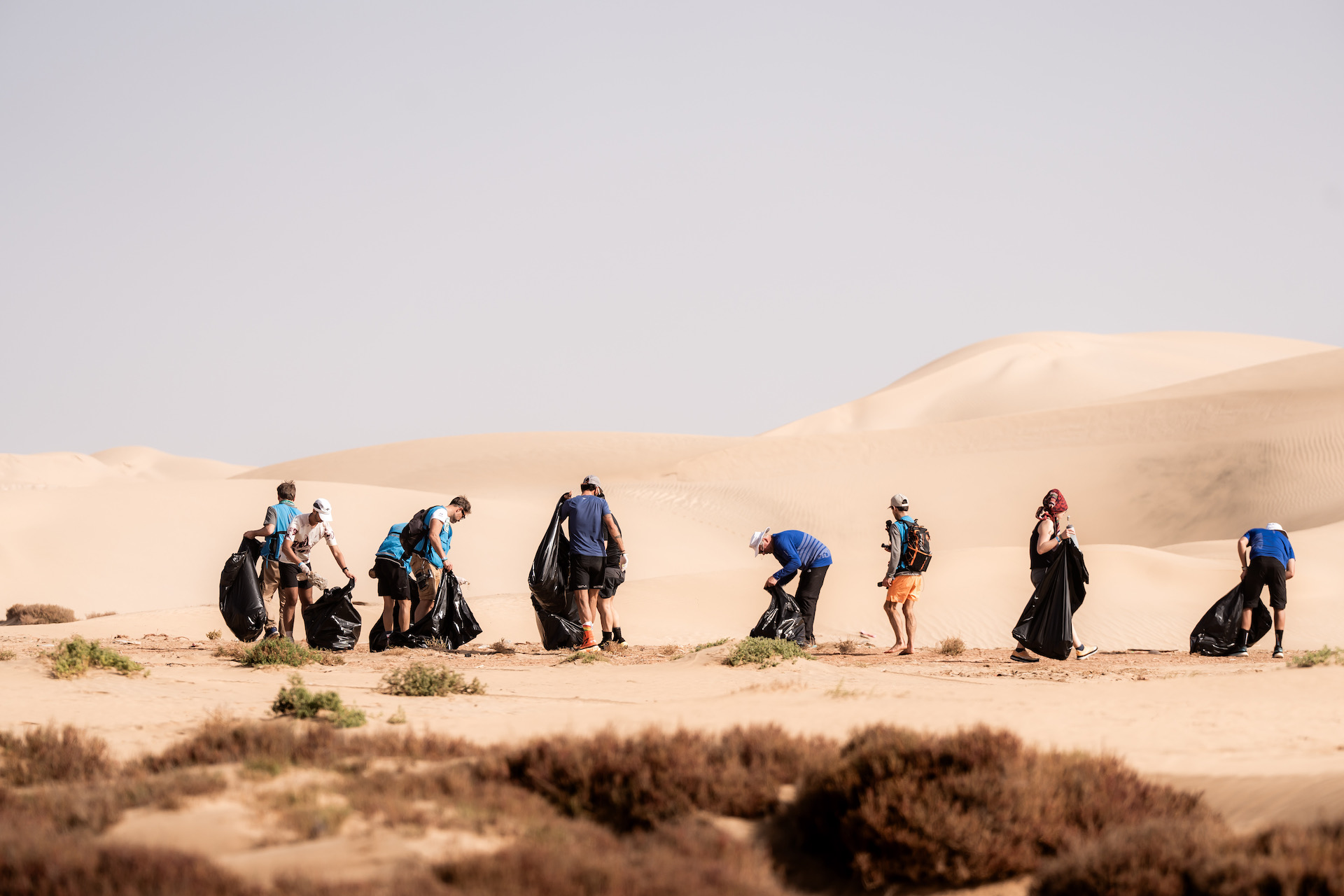
Day 3 was a welcome rest day. The skies were blue, the wind gentle and the warmth of the sun relaxing. It was a leisurely and relaxed start to the day. At 1130, blue and orange coats with participants walked to the beach and on the way cleared away rubbish and notably huge amounts of plastic. We race in these magical places and sadly, littering and pollution is high. The ocean obviously washing in debris daily. It was a huge campaign and yes, we may have only provided a small dent in what is a very big problem, however, it felt good and the difference afterwards was noticeable. The remainder of the day was releaxed, as per usual, mid-afternoon, a cold and refreshing drink was provided and as darkness came, most were already in sleeping bags gaining valuable rest before the final day.
Photo by Ian Corless
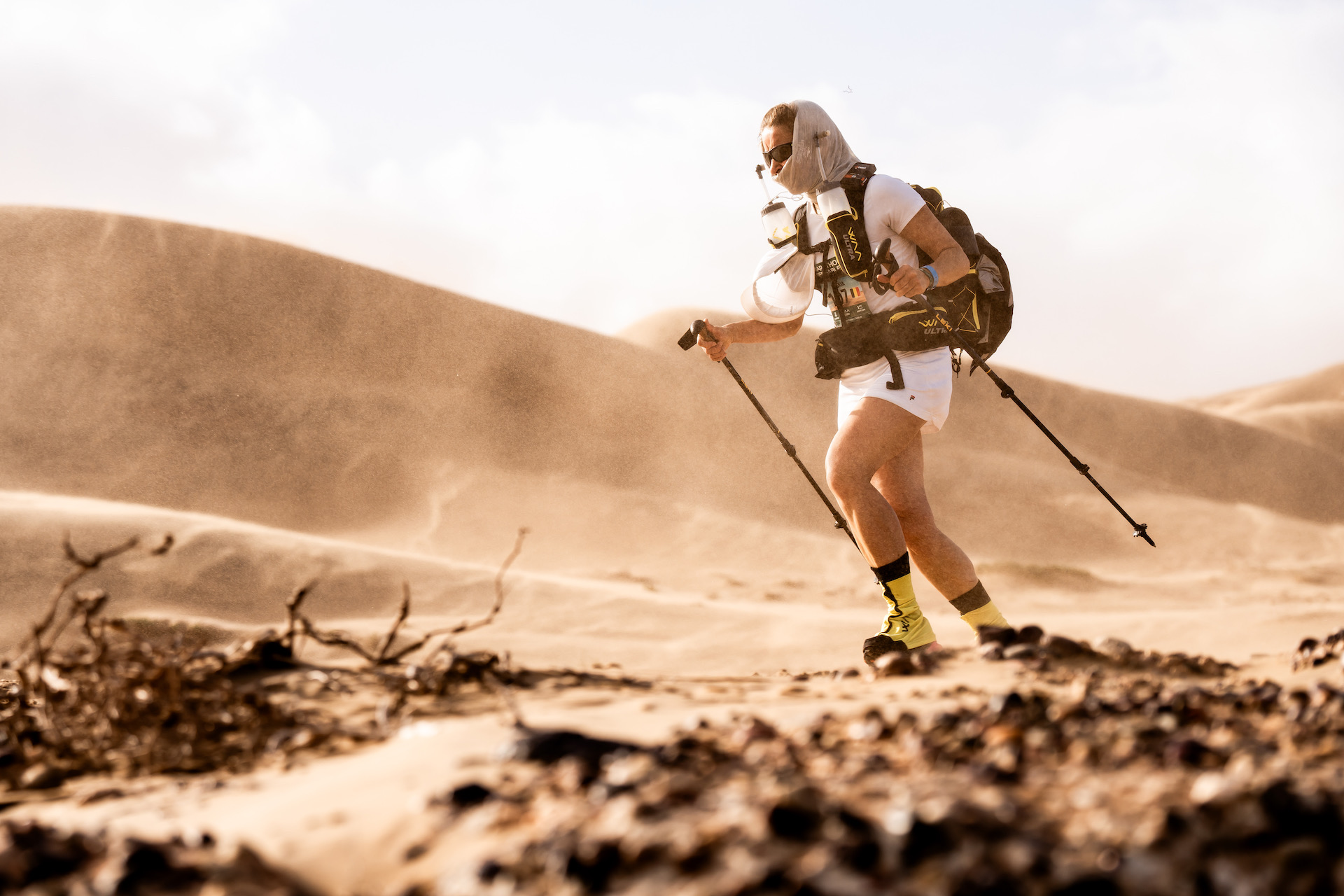
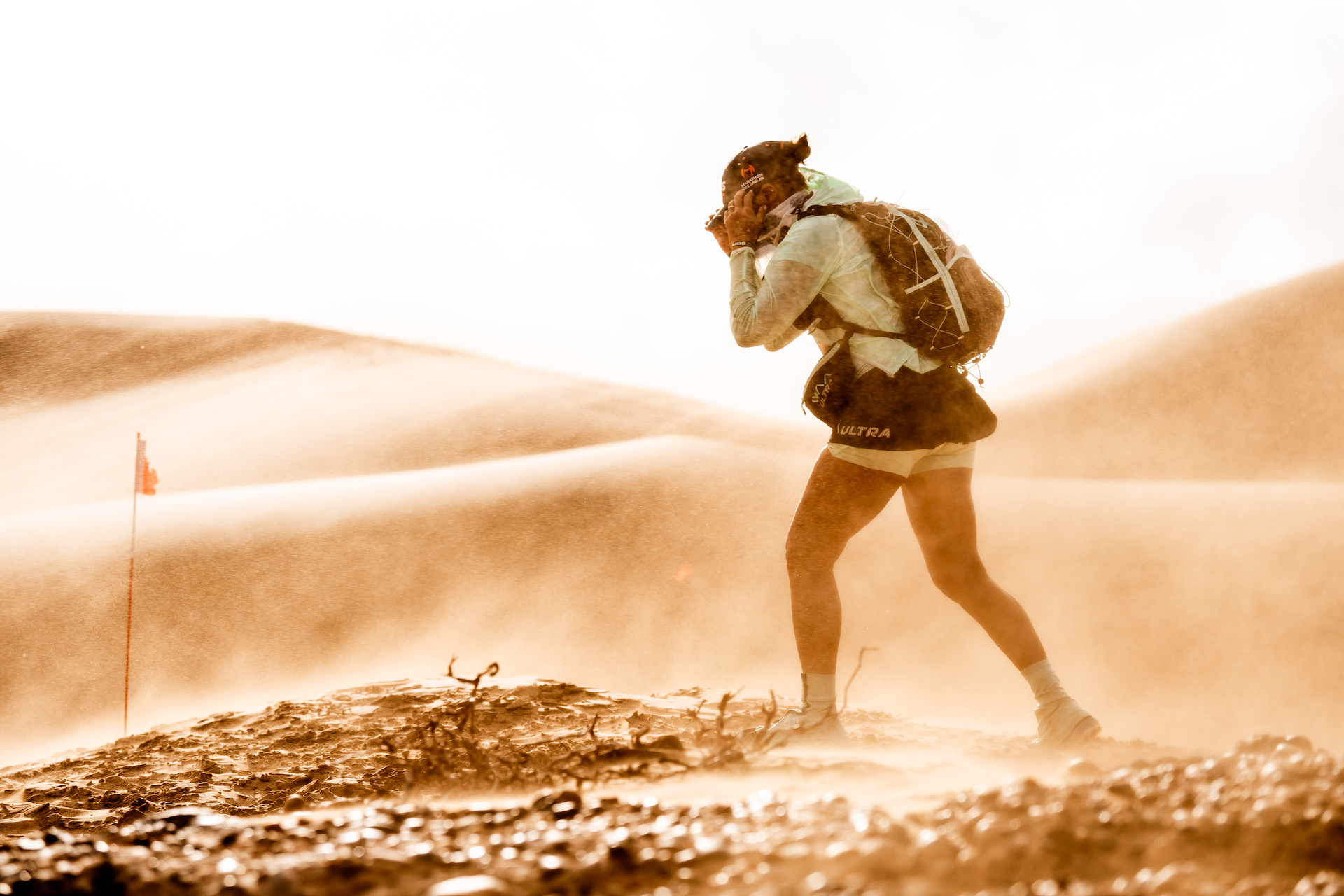
Day 4, stage 3 and what a start to the day, the wind was howling from the north bringing with it, at times, torrential rain. Runner’s were ready for the challenge though, with 2 starts, 0800 and 0930 for the top-25, the day got underway and gladly, by 0830 the rain stopped. However, the wind did not. The wind blew and blew, providing a constant headwind and relentless sand storms for the whole 27km’s. It was an epic and special day. Yes, it was hard but boy was it memorable. The joy, the emotion and the tears at the finish made the medal only more special. From the finish line, buses were waiting and as each was filled, they then departed back to Agadir for hotel comforts – shower, buffet dinner and a night in a bed with sheets and comfort. Stage summary HERE
Photo by Ian Corless
The following day was one of relaxation. Dinner was served at 1900 and then followed at 2000 hrs with a closing ceremony, awards and the showing of the MDS Morocco Atlantic Coast movie. The atmosphere was electric, the feedback incredible, the emotion high, it was a very memorable ceremony that only confirmed the success of the event. An outdoor DJ and dancing concluded the night and brought to a close this first edition.
Saturday and onward journies home.
NOTES AND CONSIDERATIONS
Photo by Ian Corless
MDS events are meant to challenge you both physically and mentally, some challenge more than others. MDS Morocco Atlantic Coast certainly falls in the latter category with challenging weather and varying temperatures. Having experienced 20 MDS events all over the world, my top-tip is ‘be prepared!’ Deserts are not always hot, they are not always dry and they are not always calm. Have with you a waterproof/ windproof layer, have with you a warm layer (lightweight down or primaloft jacket) and make sure you have eye protection. Trust me, those who did not have sunglasses or goggles for stage 3 suffered badly trying to move forward in a headwind for 27km’s.
Photo by Ian Corless
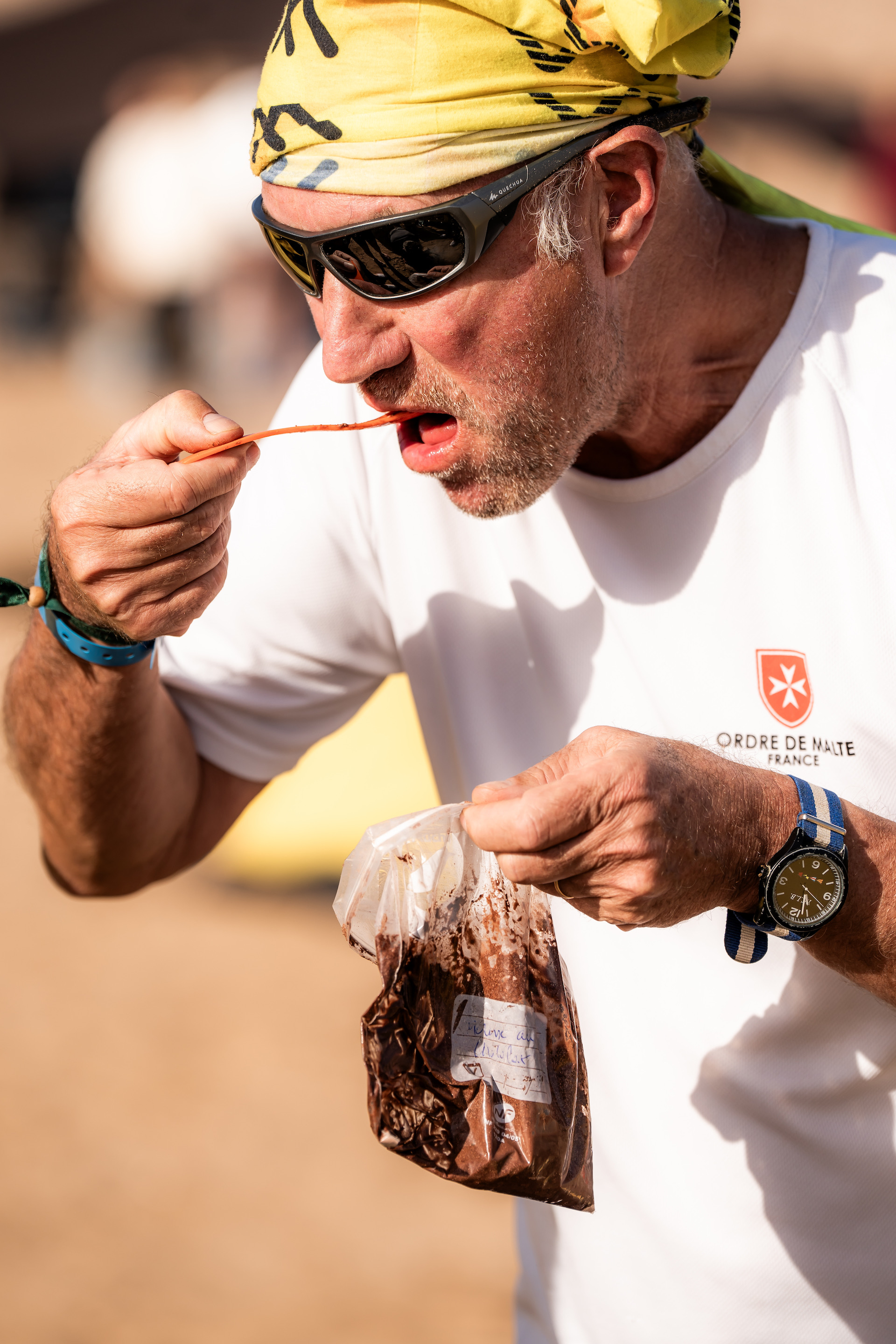
Be prepared with a variety of food choices and undesrtstand that what tastes good at home, may not taste good the desert. A balance of sweet and savoury s good and take note, as days pass, the demand for sweet becomes less.
Photo by Ian Corless
Prepare the mind for the challenge. Understand the WHY you are doing the event and be prepared for anything. The body is an amazing thing that could do incredible things, however, it needs to work in harmony and synergy with the mind to achieve your goals.
CONCLUSION
Photo by Ian Corless
MDS Morocco Atlantic Coast was a huge success. We were all tested by the weather but this only made the event more special and memorable. The MDS event team have called it the Viavaldi race as we had all four seasons. The Atlantic Coast brings something special to Morocco and in contrast to Legendary, MDS Morocco and MDS Trek, the terrain is different, unique and of course, the ocean as a backdrop is special. No doubt, this event will grow to become an MDS favourite. January is great timing, what a great way to start a year and globally, few races take place so early in the year making this an easy option for those looking for something special post Christmas.
The 2025 Marathon des Sables calendar kicks-off the a new event, MDS Morocco Atlantic Coast, a great addition to the MDS line-up and now the fourth event in the country, the others, Legendary, MDS Morocco and MDS Morocco Trek.
Photo by Ian Corless
Located close to Agadir, the MDS Morocco Atlantic Coast explores a new area of this magical country.
Photo by Ian Corless
For stage 1 it was a very early start of 0300 for the drive from Agadir and the start line.
Photo by Ian Corless
Kicking-off at 0930, 170 runners from 27 nationalities started the 23km journey with 344m+ heading north to the coastline of the Atlantic Coast. Of the 170 participants, 50% of the field are women, MDS once again pioneering the way for female participation in ultra races.
Photo by Ian Corless
The day started with hard pack runnable terrain making for easy km’s before a dune passage, followed by a gorge and finally high dunes with the glimmer of the ocean in the distance. Cloud and a chill in the air soon moved away to leave blue skies and daily high temperatures of 27-degrees.
Photo by Ian Corless
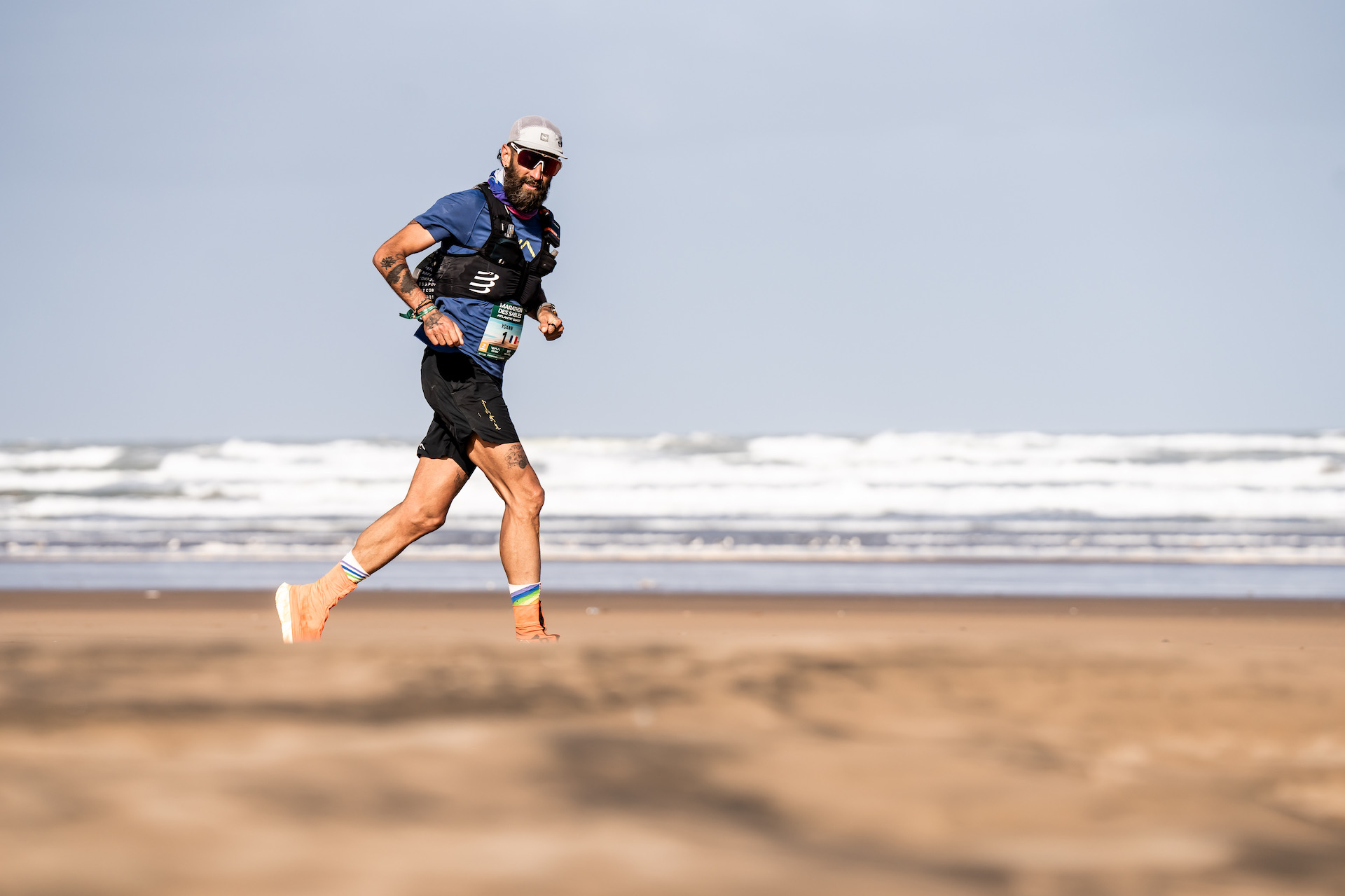
Yoann Stuck and Listy Mazille dominated the day. Yoann finishing the day in a super-fast 01:49:52 ahead of Göran Schrey and Stephan Bawey, 02:01:30 and 02:01:52 respectively.
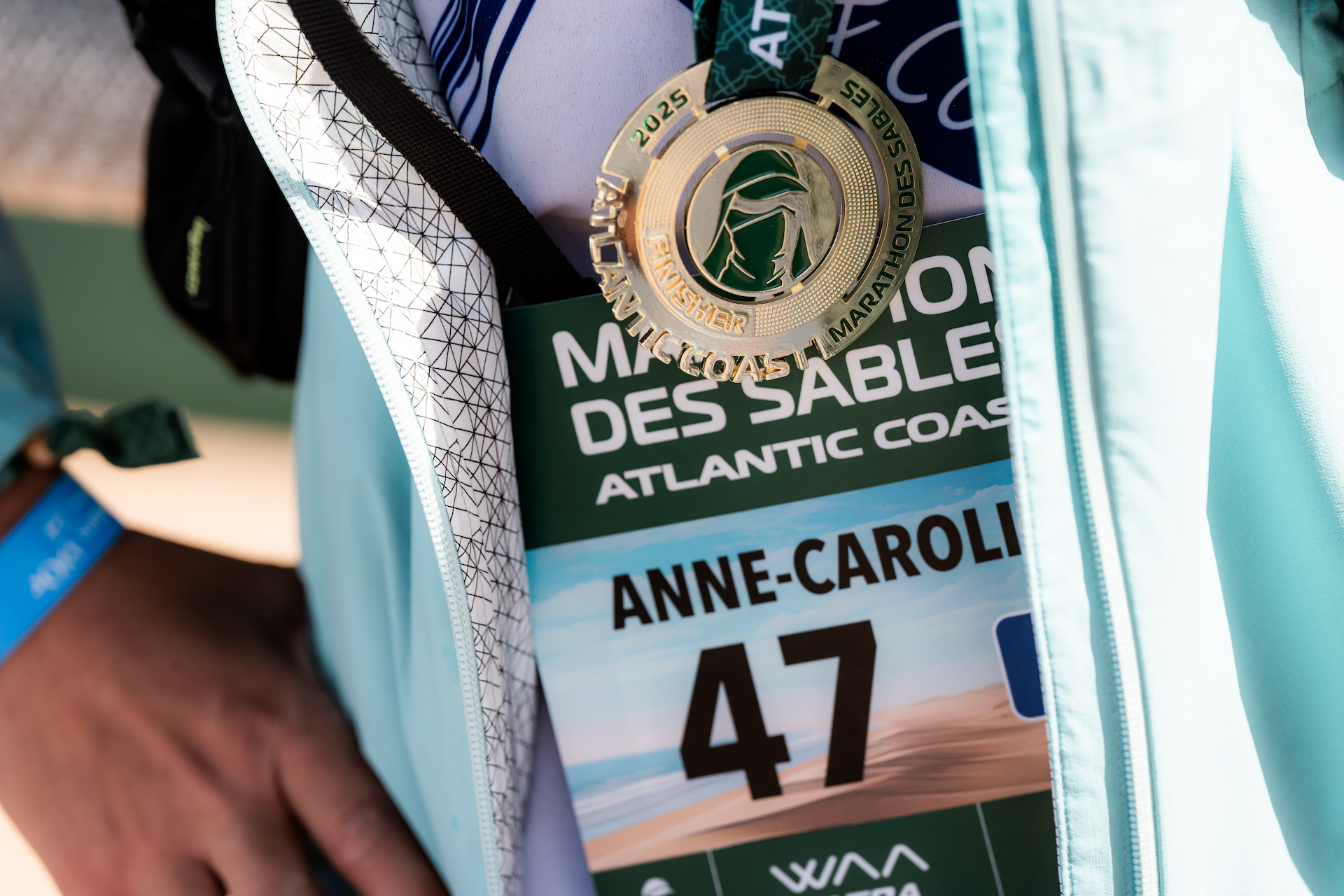
For the women, Listy crossed the line in 02:16:58, a huge gap opened up with Janina Beck 2nd in 02:39:43. Anne-Caroline Kusinierz was 3rd in 02:43:08.
These Omani nights are cold. Dare I say that last night was colder than the night before? It’s tough for the runner’s, especially those that are minimum with kit, particularly lightweight sleeping bag and no down jacket.
Stage 3 at 40km is the second longest of the week and arguably the toughest, compensated for with incredible beauty.
Saleh – Photo by Ian Corless
The Oman Desert Marathon is very much a sand race. Every step is on varying decrees of soft-sand and stage 3 adds the spice of a rollercoaster of dunes. There is even a dune section to the finish line.
Lots of sand – Photo by Ian Corless
Starting just after sunrise, the early morning light and views in the first and second dune sections were spectacular. Up high, you really get to see the enormity and expanse of the sand here in Oman, it is relentless.
A tough day – Photo by Ian Corless
Early km’s of the day saw many wearing a windbreaker, trying to get warm after a cold night and chilly start. The heat soon came though and it would keep rising to a high of 27-degrees.
Rachid feeling the chill – Photo by Ian Corless
The top male contenders ran much of the day together, nobody seemed particularly eager to push the pace. Rachid took it very easy wearing a windbreaker and gloves for the whole day, he was a long way back early on and then little by little he moved up the field as the race progressed.
Mohamed playing a waiting game – Photo by Ian Corless
Mohamed and Saleh are inform and the duo finished first and second on the stage just 11-seconds apart, 4:14:39 and 4:14:50 respectively. Rachid moved up to third by the finish line crossing nearly 10-minutes behind his brother.
Aziza Raji – Photo by Ian Corless
For the women, Aziza finished 11th overall in 5:52:44 and a long way ahead of Lydia Oldham in second, 6:30:49. Sally ford was third nearly 50-minutes behind second.
Tomorrow is the penultimate stage of 30km. With three starts, 1500hrs, 1600hrs and 1700hrs, the participants will go into the night and finish in darkness.
January 15th 2025 12:00pm (cet)three MDS events go on sale for the 2025 calendar.
MDS Fuerteventura – September 20the to September 27th.
MDS Morocco – October 10th to October 18th.
MDS Trek Morocco – October 19th to October 28th.
FUERTEVENTURA – September 20th to September 27th.
2024 was a significant year for the MDS, it saw the return of MDS Fuerteventura exploring a new part of the island and with a capped entrant list it was not only a sell out but a huge success.
You can read daily summaries of the 2024 edition and explore the route via images:
With an isolated bivouac close to the ocean, Fuerteventura brings something very special to the MDS portfolio. In many respects it can draw comparisons to MDS Peru, however, it does not have the epic dunes that the Ica desert provides. With stunning cliffs, runnable terrain and epic views, this is one race that must be experienced.
MDS Morocco follows in the footsteps and the history of The Legendary. Taking place in the same area of the Sahara, this race is ultimately a mini Legendary and as such holds a special place for all participants. The 2024 edition was notable for two reasons… Freak weather – believe it or not, rain and flooding in the Sahara! It made for a unique and special edition with some unforgettable visual stories. Secondly, the Handi category which saw wheelchair athletes take on the Sahara with the help of a team.
The 2025 edition of the race will once again pave the way for the MDS brand and the history of the race.
TREK – October 19th to October 28th.
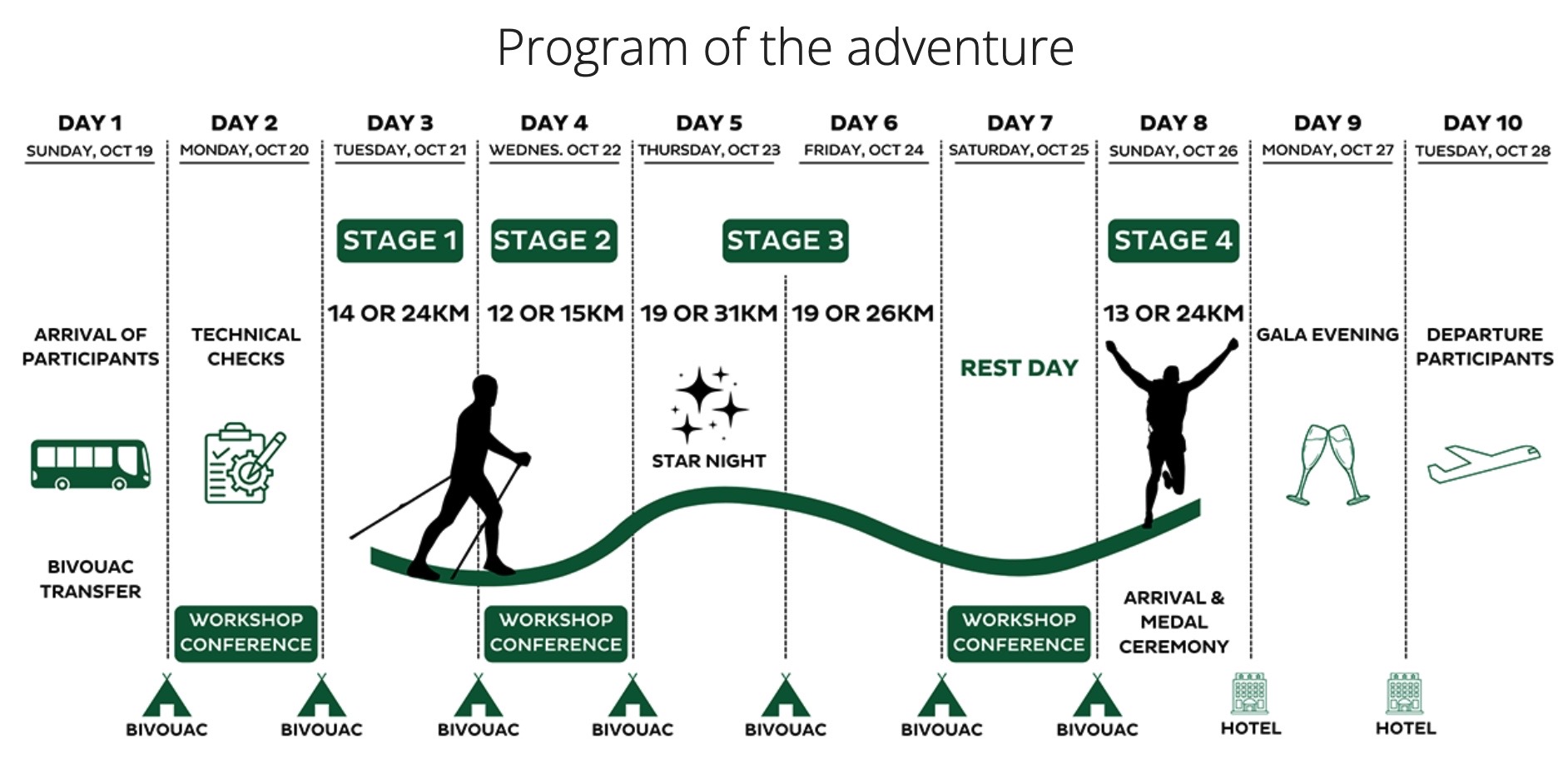
MDS Trek was new for 2024. Combining much of what we see and experience in a normal MDS event, the TREK format added more comfort (2-person tents with mats,) no self-sufficiency (in regard to food,) showers, and after the stages, you will have the opportunity to relax with a daily massage* for better recovery, enjoy cold drinks* from the available bar, and share convivial moments in the social areas.
*extra charge locally
Combining mental enrichment with workshop conferences, the TREK still offers the classic MDS distances of 70-120km but at a more relaxed pace and a slightly different format due to the very special ‘star night!’
Here’s the approximate breakdown of distances:
Stage 1: 14 or 24km
Stage 2: 12 or 15km
Stage 3 – day 1: 19 or 31km
Stage 3 – day 2: 19 or 26km
Stage 4: 13 or 24km
A perfect event for those looking for an introduction to stage racing, an active holiday or just an escape with a loved one or friend. An opportunity to experience the DNA of the MDS, the 2024 edition was a huge success and returns for 2025, bigger and better! Accessible to everyone, this format is perfect for those who want to explore the desert, make new connections, push their physical limits, and all while maintaining a level of comfort.
To differentiate the full distance race of 250km’s, Marathon des Sables will now be known as MDS The Legendary, reflecting the legendary status of this iconic event and its long history as a pioneer of the stage racing and multi-day format.
The ‘HMDS’ format will still follow the same protocols as before but has now dropped the ‘half’ title and moving forward, events will be called MDS Jordan, MDS Morocco, MDS Cappadocia and so on.
The MDS events are a one-week sporting adventure that combines discovery, travel, meeting new people and physically challenging yourself in a self-sufficient manner.
MDS TREK was introduced in 2024 and is a 10-day adventure at a more relaxed pace with extra comfort, perfect for an active holiday, training or as an introduction to desert stage racing.
Since 1986, the MARATHON DES SABLES has crossed the world’s most stunning deserts with several unique concepts: the MARATHON DES SABLES THE LEGENDARY (252 km in the Sahara Desert in Morocco), the MARATHON DES SABLES (70, 100, or 120 km spread over 3 stages), and the new 2024 concept, the MDS TREK (4 stages with a total distance of up to 120 km), offering an accessible adventure with optimal comfort. These international events have seen over 50 editions in various countries such as Morocco, Fuerteventura Island, Peru, Jordan, Turkey, and offer adventures that combine running/hiking in the desert with tourism.