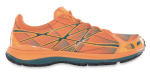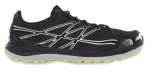
Salomon S-Lab Sense 4 Ultra SG (Soft Ground) – Review

©iancorless.com_Sense4SG-9063

C’mon, GET A GRIP!

Oooooh grip! I love grip…. before you read anymore, I strongly suggest that you read my very recent review of the new Salomon S-Lab Sense 4 Ultra HERE

I loved the Sense 4 Ultra but I did say that due to the precision fit, 4mm drop and relatively tight toe box, it would not be a shoe for everyone! I suppose the same should apply here… it does BUT I do think that other factors come into play for the ‘SG’ version.

First and foremost, when running off road and when running in muddy, sloppy or technical terrain you most definitely need a shoe that is going to hold your foot, allow little or preferably no movement and of course be precise. That is the Sense 4 Ultra SG. So you see, although normally I wouldn’t say squeezing your foot into a shoe is a good idea, with a SG version it is acceptable based on two key principles:

  1. The shoe is not ‘too’ tight and in anyway causes discomfort, pain or unnecessary stress.
  2. You are not running for hours and hours.

If you fall into the above two options and you are thinking that the SG maybe or maybe not for you; it may well be worth a risk for the supreme fit, comfort and grip.

As with the Sense 4 Ultra (non SG) the new shoe has had thorough reworking taking into consideration much of the feedback not only from everyday runners like you and I but also the elite Salomon runners such as Kilian Jornet.
©iancorless.com_Sense4SG-9068

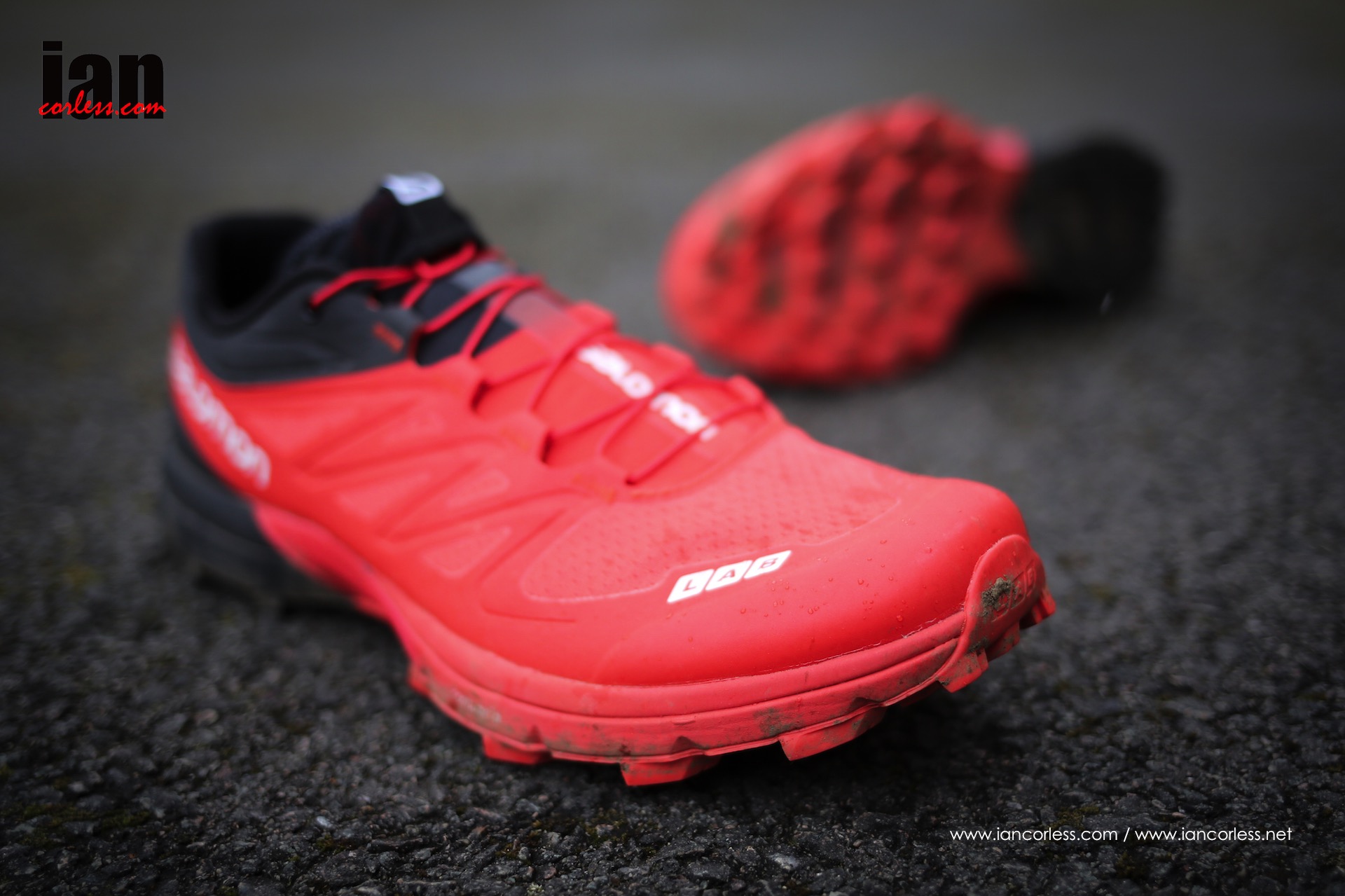
SG stands for Soft Ground and as such, this shoe is all about grip when it’s needed. So, for many, the Sense 4 Ultra and Sense 4 Ultra SG go hand-in-hand and I think it’s fair to say that many will have (or at least wish for) both pairs of shoes.
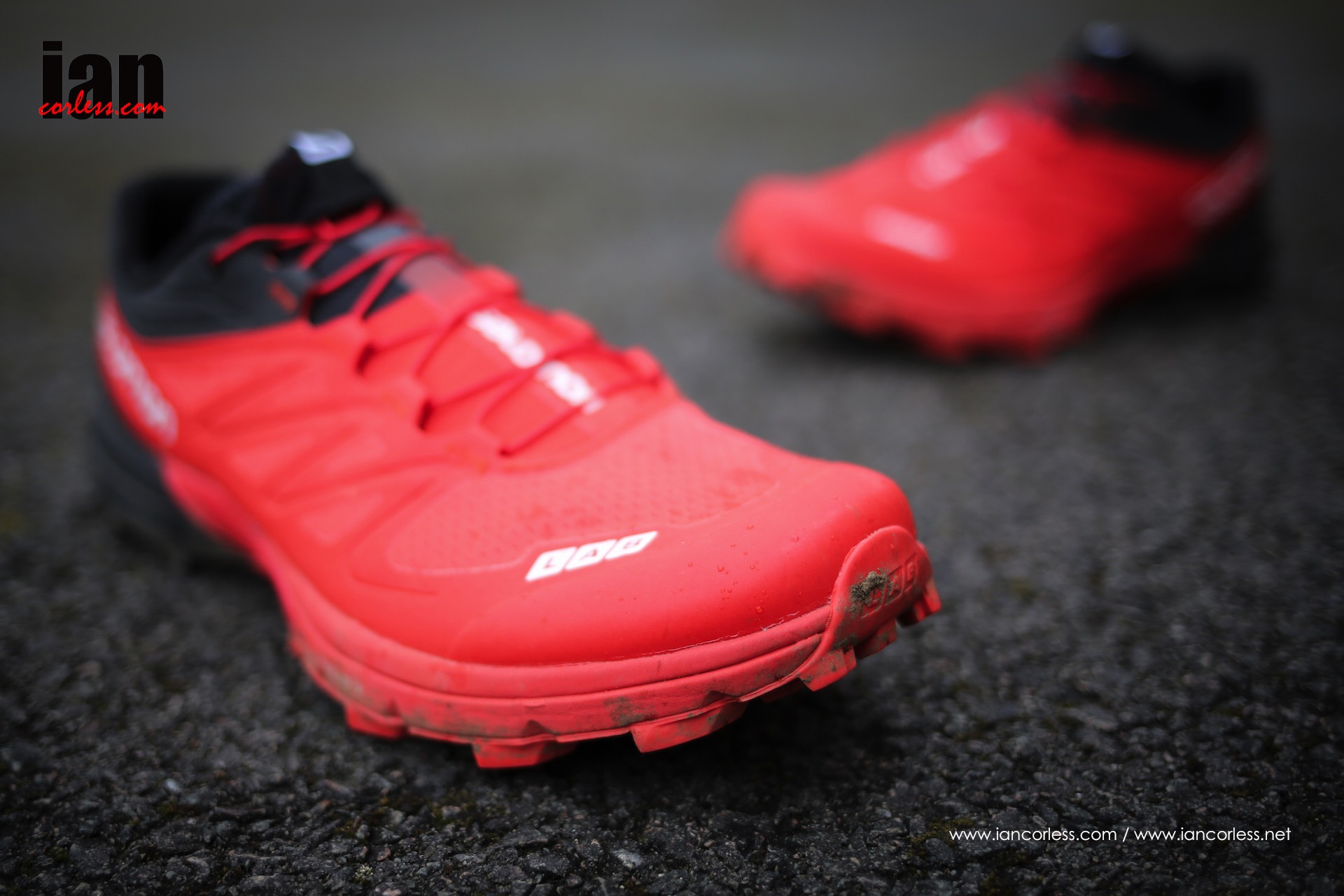
©iancorless.com_Sense4SG-9072 The new shoe has been left alone in certain areas and tweaked and improved in other areas. Lets be clear, although it’s called SG it does make a perfect trail shoe for all conditions in my opinion. Admittedly, I wouldn’t want to run a pure hard trail in them but if I was mixing up dry trail, rocks, gravel, water, mud and a whole multitude of other surfaces, this is and would be my shoe of choice.

The Salomon S-Lab range very much follows the ethos of FAST and LIGHT but as the ‘Ultra’ name suggests, the shoe has a little more added to increase longevity and comfort. As with the Sense 4 Ultra, cushioning is 9mm and 13mm with a 4mm drop. I keep saying it but 4mm drop is not for everyone so don’t be tempted to use this shoe just because Kilian and the rest of the team use it… be sensible with shoe drop! The Fellraiser or Speedcross may be better options for you?
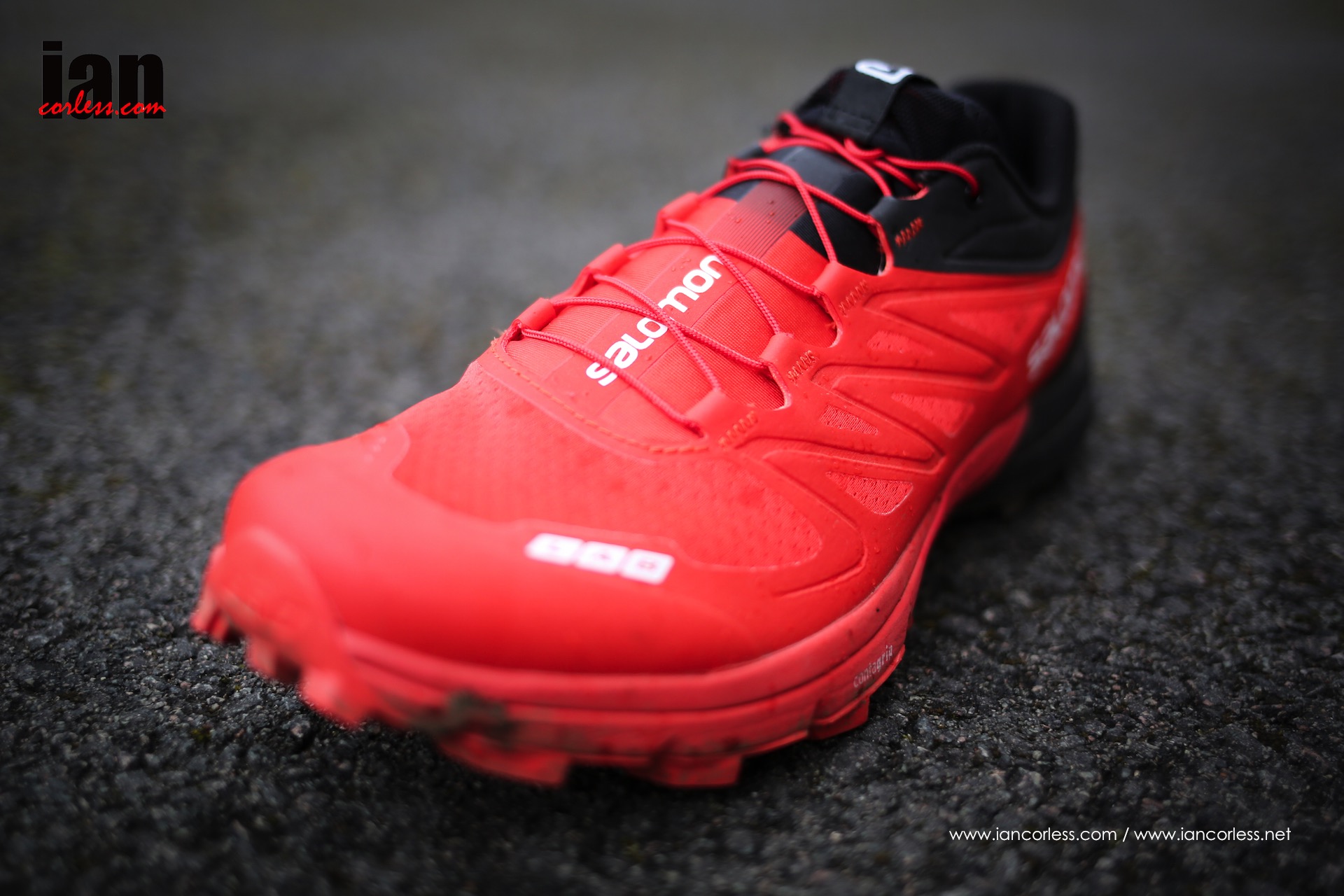
©iancorless.com_Sense4SG-9081

The SG upper, like the Sense 4 Ultra has been revised. The fit has been tweaked with additional support added to the mid foot. Additional room has been added to the toe box but it’s marginal in my opinion. Sensifit has also been tweaked and the mapping on the upper is now different and holds the foot more secure.
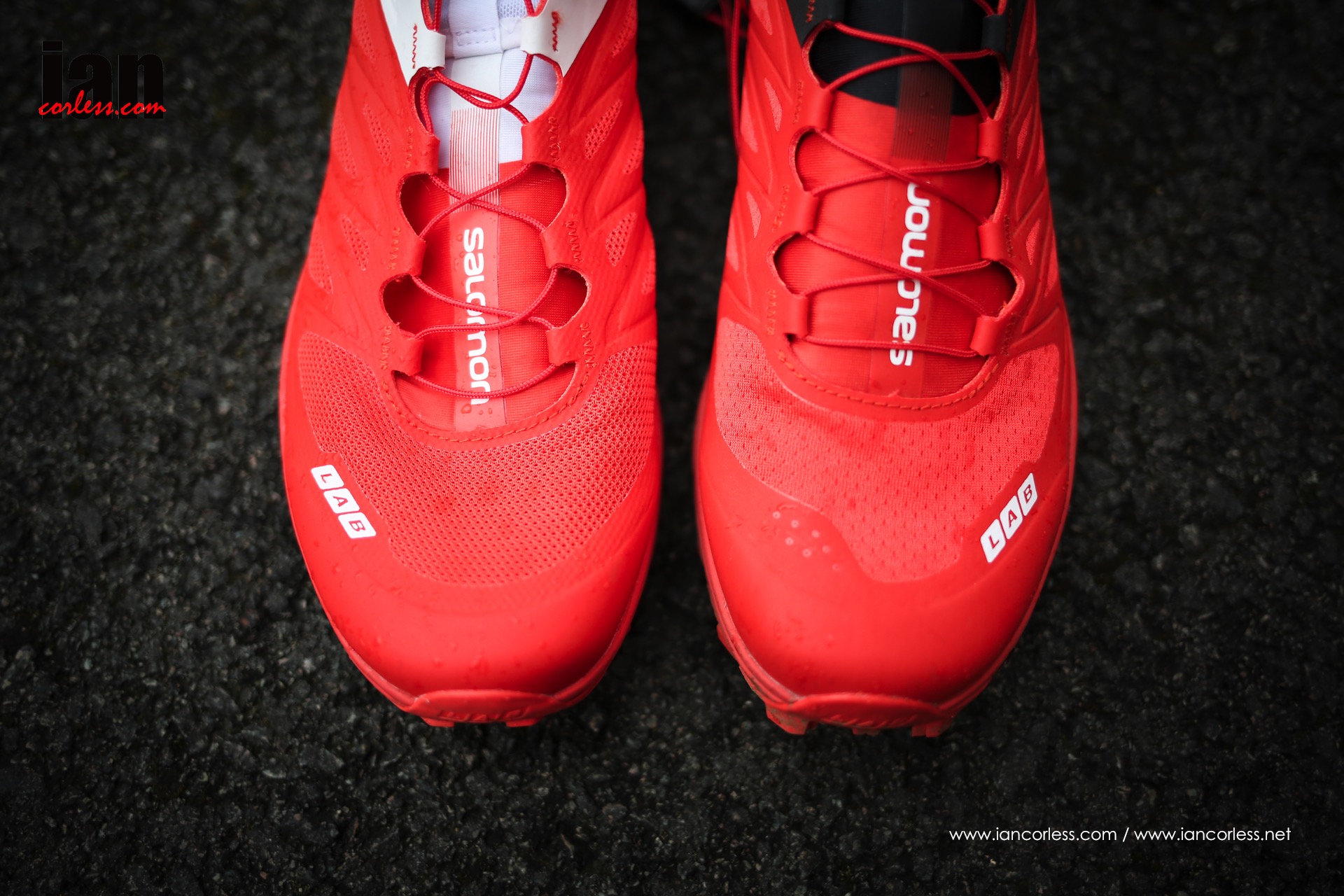
©iancorless.com_Sense4SG-9088

Sense 4 ULTRA on the left and the Sense 4 ULTRA SG on the right

Materials on the upper vary between the Sense 4 Ultra and the SG, the SG is more durable and arguably less breathable. The Sense 4 Ultra had additional toe box protection and the SG has even more added wich makes complete sense considering the shoe will be used in tougher terrain. If you read my Sense 4 Ultra review you will know how much I love Sensfit, Endofit and all the usual Salomon buzzwords. In a nutshell, for me, no shoe on the market fits as well as a Salomon Sense and I am inclusive in that statement; the Sense Pro, Sense Mantra 3 and so on all have that wonderful precise and secure hold. It’s the best! (If the shoe fits you)
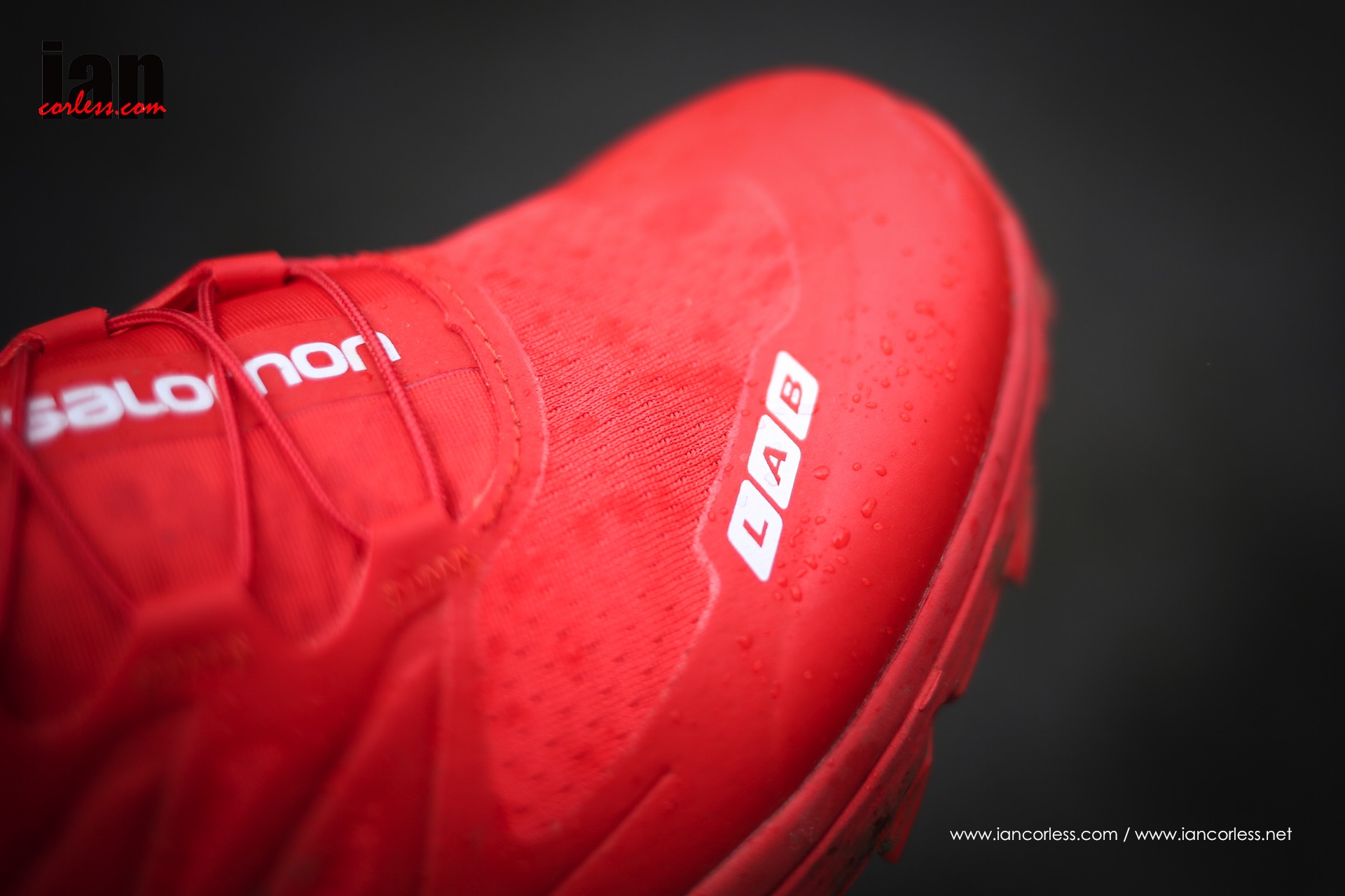
©iancorless.com_Sense4SG-9094

The SG is obviously a shoe for the rough and tough and the tongue has been changed to provide added protection and security. The fit between the upper and the tongue has been re-designed to reduce any possibility of debris entering. The lacing system and lace pocket again make the Salomon Sense stand head and shoulders above other shoes. It’s reliable, logical, provides great overall tension and of course, what you don’t need is stored away. The obvious downside is that adjusting tension is very difficult. So you’d have to make a call if that works for you! Many have said to me, ‘what if the lace breaks?’ In all honesty, I have never had a lace break and I don’t know anyone else who has.
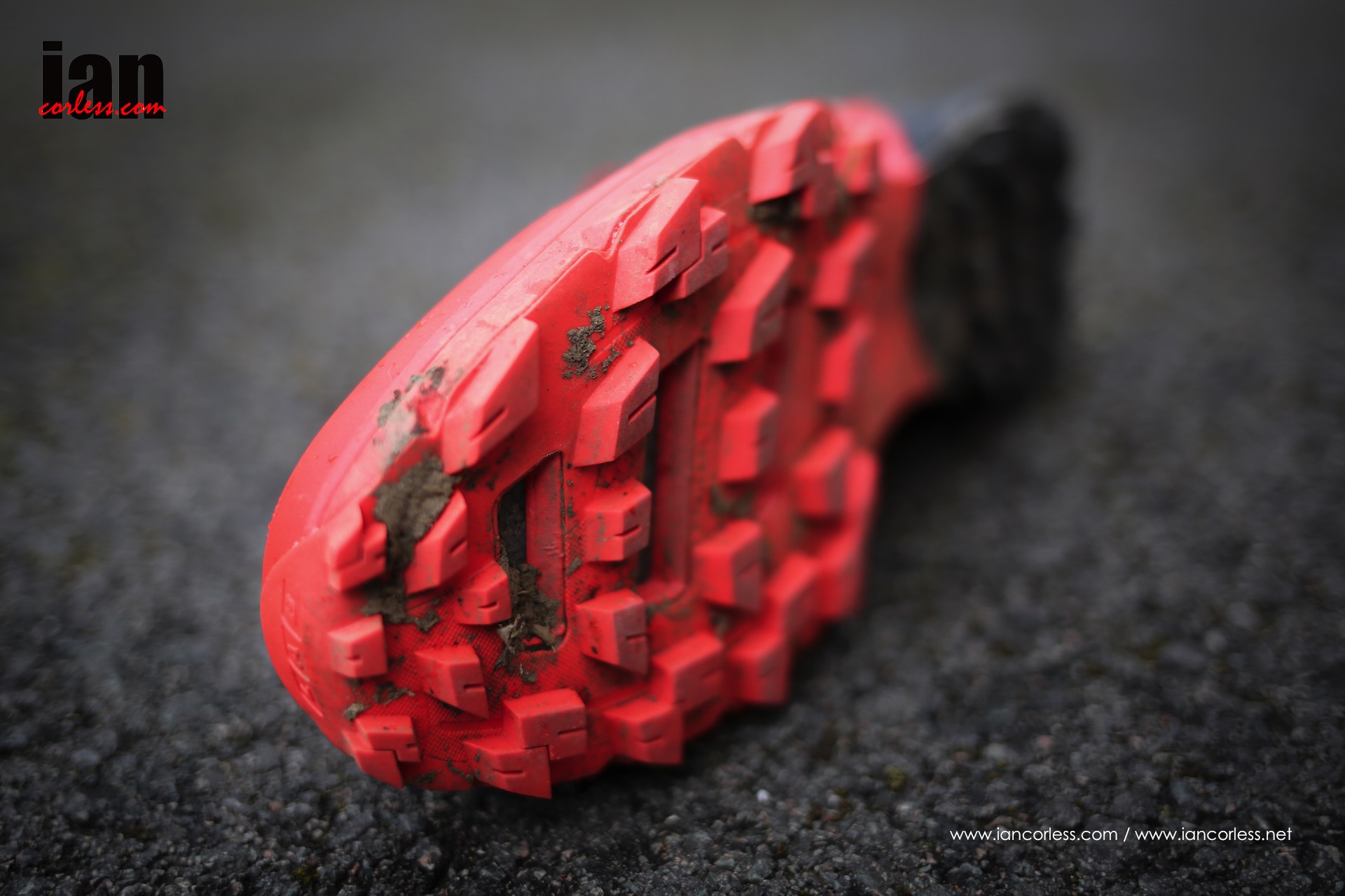
©iancorless.com_Sense4SG-9078

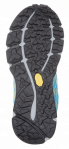
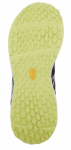
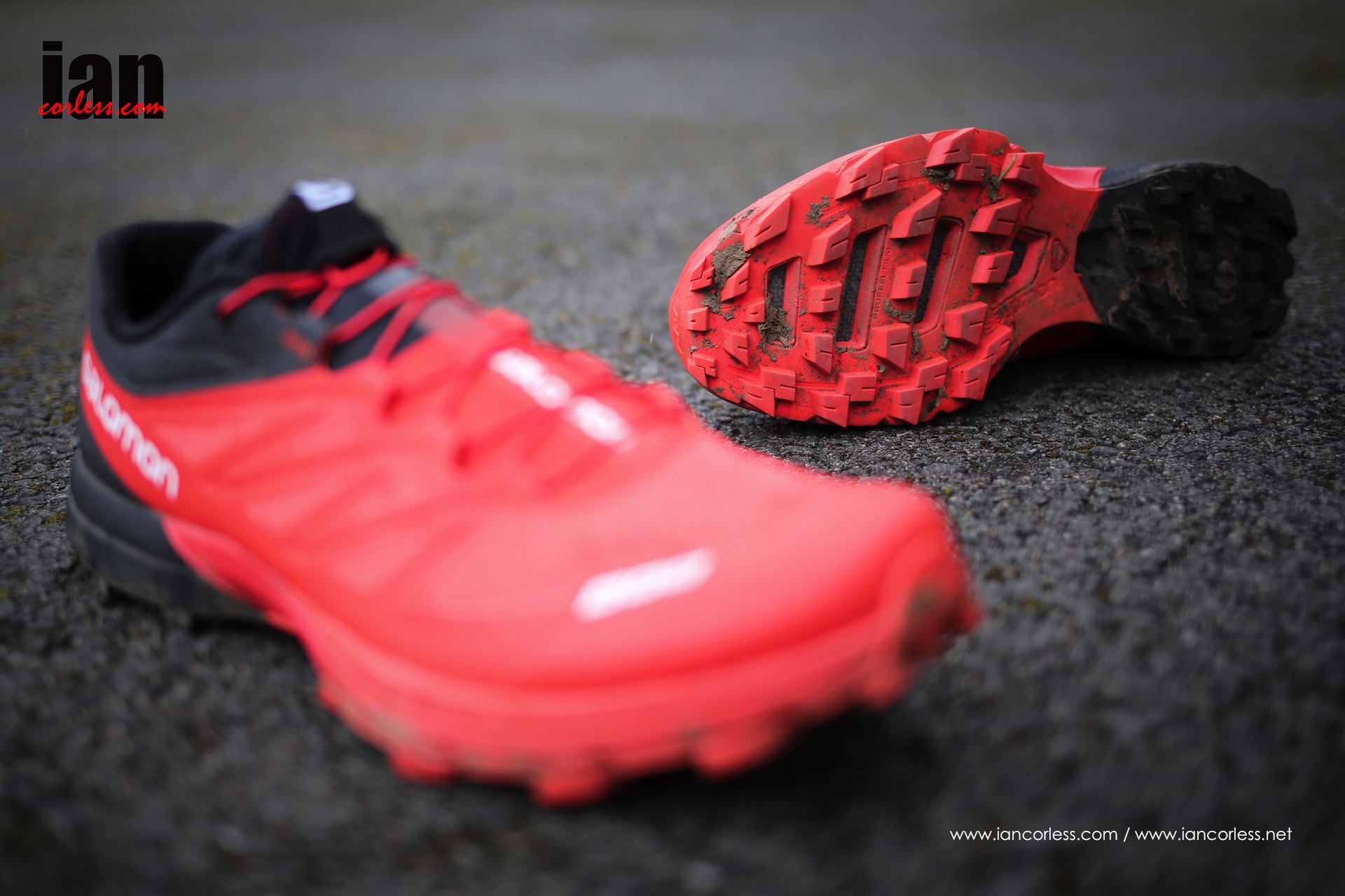
As with the Sense 4 Ultra, the SG has a complete overhaul of the outsole. The Contragrip lug pattern has been changed and the lugs are deeper to provide additional grip when the ground is soft and muddy but not so much grip that you cannot run on dry, hard or rocky trail. The compound has been revised and I noticed a difference on wet rock. The shoes have better bite. I said in my Sense 3 Ultra SG review (HERE) that although the shoe is called SG I wouldn’t necessarily say it would be my out-and-out soft ground shoe. The same applies here! I think the Sense 4 Ultra SG is an improvement on the previous model but if I just wanted a shoe for mud, I would potentially look at another option. Don’t get me wrong; this is not a negative comment. For example, Salomon make the S-Lab Fellcross and that would be ideal… the Sense 4 Ultra SG is designed for multiple surfaces, including soft ground and in those uses, they excel!
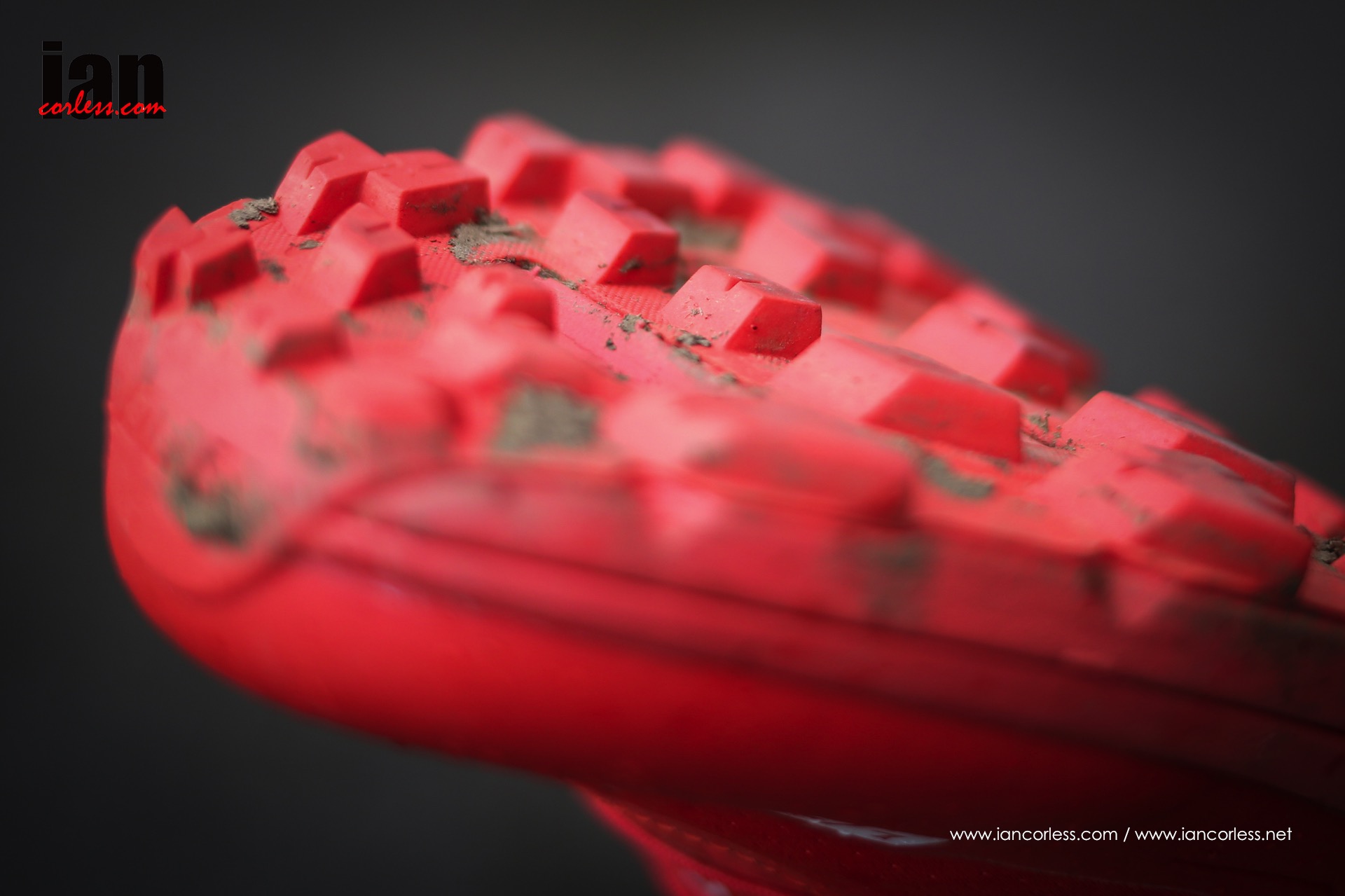
©iancorless.com_Sense4SG-9101

In Use

What can I say, the SG runs as well if not better than the Sense 4 Ultra. They do feel a little different and this is primarily down to the lugs on the bottom of the shoe. With the extra lug height, it does make the SG feel a little more cushioned, it may be placebo but I don’t think so.

Fit between the Sense 4 Ultra and SG is almost the same. No, it is the same. The only difference comes in the material used on the uppers. The ‘Ultra’ has a more breathable and lighter upper in comparison to the SG which is a great call by Salomon. One could almost say that the shoes are Summer (Sense 4 Ultra) and Winter (SG). Of course it’s not that simple, particularly if you run in the UK! We don’t have summers, so, they are both winter shoes ;-).

The toe box of the SG feels the same as the Sense 4 Ultra in use but does have more protection..

Running in the shoe is a dream. Foothold and protection is awesome. The shoe has plenty of flex and suppleness (especially after 3-4 runs) and the Endofit, Sensifit and Quicklace make the precision feel of the shoe shine. I really struggle to find any negatives. Grip in the heal area is brilliant and once on and laced up, you have no foot movement. Just whaT I want from a shoe that would tackle technical terrain.

The grip is definitely improved over the Sense 3. On my local trails I noticed improved grip on softer ground and transitioning between surfaces is seamless. Ironically, the SG does feel nice on the road but I don’t recommend too much, particularly if you want the sole to last! On wet rocks, pavement and tarmac the outsole noticeably provided a more secure and reassuring contact with the ground. Is it the best out there? No, probably not. But this outsole is designed for ultra and mixed terrain, soft ground just being one aspect. I’d have no problems with the SG being my ‘go to’ trail shoe for any race or training run.

On that note, is it really an ultra shoe, by that I mean could I run for hours and hours in it? No I couldn’t. I love the 4mm drop but for me, I think I’d need something a little more relaxed for real long stuff, a 6mm or 8mm drop version would be sweet. Lets be clear though, that is me being greedy. The Sense 4 is an S-Lab shoe and as such, it’s all about speed and efficiency. On the right feet, these shoes will fly!

PROS:

  • Light
  • Responsive
  • Grip
  • Fit
  • Black and red (my fave colours)

CONS:

  • Too tight for some
  • Expensive
  • I struggle for cons!

It’s always difficult reviewing a Salomon S-Lab shoe as to be honest; I find it very hard to find negatives. The negatives are more often than not based around the shoe not being suitable for some people because of width, drop and so on.

The same applies here! The Sense 3 Ultra and Sense 3 Ultra SG were both brilliant shoes and the Sense 4 incarnations of both shoes are better! It’s hard to believe but they are.

Weighing in at 260g for a UK 8.5 (true to size fit), the Sense 4 Ultra SG is without doubt one of the best ‘grip’ trail shoes I have used. I do wish that Salomon would make this ‘exact’ shoe with a 6mm or maybe even a 8mm drop.
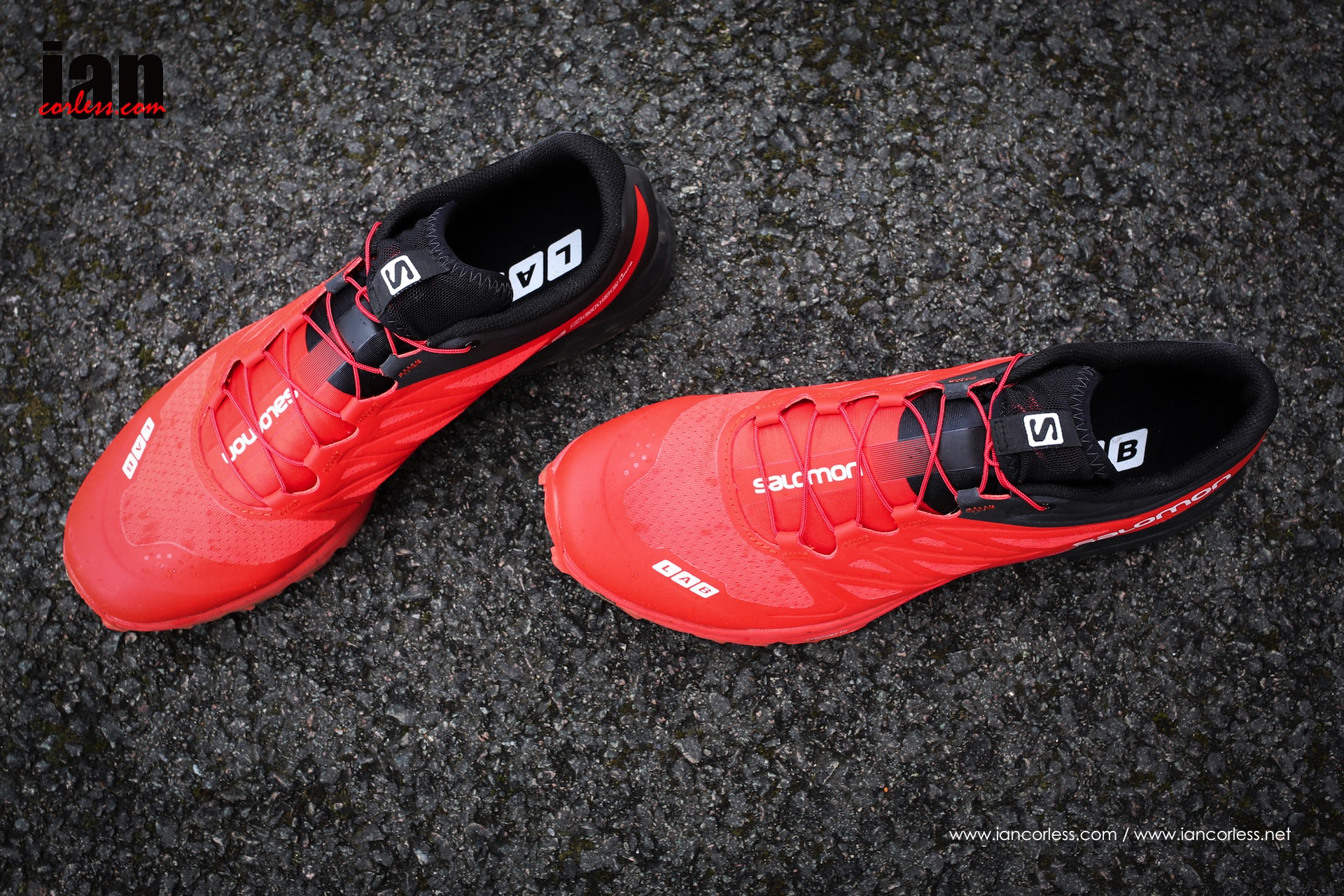
©iancorless.com_Sense4SG-9060

As with the Sense 4 Ultra: the Sense 4 Ultra SG has OS Tendon, Profeet Film, dual density EVA, racing last, Quicklace, Sensifit, Endofit and a series of other notable technologies making this shoe the best 4mm drop shoe on the market… should the precise fit work for you!

Recent changes in the Salomon Sense range now make the Sense 4 Ultra (dry fast trail), Sense 4 Ultra SG (mixed trail) and the Sense Mantra 3 (road and trail) my shoes of choice. I keep going on about the Sense Mantra 3 (Here) but I think this is a great everyday shoe.

My final question is, will we see a new Sense Pro?


Specs for the Sense 4 Ultra SG

  • Sensifit
  • Quicklace
  • Racing Last
  • EndoFit
  • Lace Pocket
  • Quick Dry Mesh
  • OS Tendon
  • Profeet Film
  • Dynamic Traction
  • Contragrip Aggressive Outsole
  • Midsole Dual Density EVA
  • Cushioning Front – 9mm
  • Cushioning Rear – 13mm
  • Drop 4mm
  • Weight 260g / UK8.5

Check out the Salomon S-Lab range HERE

Salomon Logo


Training is like baking – Marc Laithwaite

©iancorless.com_IMG_3117Marino2014_

In recent posts, we’ve been talking about enhancing fat burning to boost endurance. This week’s post was due to focus upon pacing strategy for training and competing and specifically how pacing interacts with the types of fuel you use when exercising. However, as we’ve been discussing Maffetone in recent weeks, I’ve had a few messages stating that I’ve contradicted myself. The reason for this is that I am a believer in the importance of short and high intensity workouts for endurance performance. In the past I have outlined the danger of too much low intensity riding and running, specifically how it makes you slower. I understand why this may be seen as contradictory, so let me explain…

If you are competing in Ironman, one of the things you need to consider is your estimated time and pacing strategy on the bike section. To calculate your ‘race pace’ a simple and popular test is the cp20. During this test, the rider is required to sustain the highest power output for a 20 minute period and from the results, you can calculate your ‘functional threshold’. Some of you may have heard these strange terms before but in simple terms your ‘functional threshold’ is the output you should feasibly be able to manage for an hour. The calculation is simple, look at the average power for the 20 minute test and 95% of that figure is your functional threshold

Using functional threshold you can guess the amount of power that in theory you can sustain for all distances up to the Ironman 112. For example, 70% of your functional threshold is a reasonable target for Ironman. The critical thing here is that the power you can hold for only 20 minutes (a very short period of time) predicts Ironman pace. So, if you cannot ride quickly for 20 minutes, you will undoubtedly be riding slowly in Ironman over a distance of 112 miles, as 70% of ‘slowly’ is ‘even slower’. A common mistake people make when training for long distances is that they focus on endurance only and ride lots of slow miles. They ‘get it in their heads’ that Ironman is all about ‘the distance’ so ride long and slow. As a result of doing so much slow riding, their 20 minute power output is reduced to a score potentially even lower than when they started! Subsequently, their Ironman pace (70% FTP) is therefore also reduced.

So the solution is simple, just train to produce the highest power output for 20 minutes by doing short and high intensity riding and you’ll PB in Ironman? Unfortunately not… The test dictates your Ironman pace from the amount of power you can produce within the 20 minutes. However, the critical part is that the test also presumes that you have done the mileage, so therefore have the endurance to support your performance.

The same applies to running and training for a marathon. Let’s say as a ‘guess’ that if you double your 10k time and add 4-5 minutes, you’ll be close to your half marathon time. Now double your half marathon time and add 10 and you’ll get your predicted marathon time. You’ve probably heard that formula before, it’s been around for many years. The key thing to point out is that when using that formula, your 10k time is therefore dictating your marathon time. As with our cycling example, if you can’t run quickly for 10k, you can’t run a fast marathon.

However, the formula of double 10k and add 4-5 minutes or double half marathon and add 10 presumes that you have ‘done the mileage’. You can’t just train for 10k racing and expect to run a great marathon. Your 10k time will ‘predict’ your running speed in the marathon, but without the mileage in your legs, you won’t be able to hold that pace for the entirety of the race.

So let’s look at it this way:

  1. The 20 minute test in cycling or the 10k time in running tells you how quickly you are capable of riding or running Ironman or marathon.
  2. Whether you have done the long distances in training will determine whether you are actually capable of maintaining that speed and reaching the finish line in your target time.
  3. As a quick summary, ‘how fast can you go and can you keep it going?’

The simple lesson to learn here is that both long-term endurance and maximal output over shorter distances are equally important for performance. If you choose one but not the other, you’ll either manage the distance ‘comfortably but slowly’ or you’ll go quickly at the start and die a painful death at the end. Don’t dismiss either of these key factors if you want to hit your target time.

To finish, I’ll go back to something, which I mentioned 3 weeks ago, when writing about the Maffetone formula. Each training intensity, level or zone has it’s own benefits and purpose. Too frequently athletes do their easy stuff too hard and their hard stuff too easy, as a consequence the sessions merge into one grey area of moderate intensity. When riding or running in zone 1, there are specific benefits, which are lost when you push too hard. When attempting a high intensity interval workout you will not gain the specific benefits of that session if you do not push hard enough.

Training is like baking, you need to put lots of different, but high quality ingredients together or you’ll find that on race day the whole thing will just taste a bit bland.

Go forwards endurance students, train well and practice burning the fat

– Marc Laithwaite

About Marc:

Sports Science lecturer for 10 years at St Helens HE College.

2004 established The Endurance Coach LTD sports science and coaching business. Worked with British Cycling as physiology support 2008-2008. Previous Triathlon England Regional Academy Head Coach, North West.

In 2006 established Epic Events Management LTD. Now one of the largest event companies in the NW, organising a range of triathlon, swimming and cycling events. EPIC EVENTS also encompasses Montane Trail 26 and Petzl Night Runner events.

In 2010 established Montane Lakeland 50 & 100 LTD. This has now become the UKs leading ultra distance trail running event.

In 2010 established The Endurance Store triathlon, trail running and open water swimming store. Based in Appley Bridge, Wigan, we are the North West’s community store, organising and supporting local athletes and local events.

Check out the endurance store HERE

Endurance Store Logo

Suunto Launches Ambit3 Run GPS watch

Suunto Ambit3Run Trio_1

The Ambit3 Run is a smart Bluetooth® enabled GPS watch for runners for whom style, fit and functionality are of equal importance. It is a running partner, coach and guide, letting you plan, progress and recover more efficiently.

Plan your workouts and discover how well you have recovered

The Suunto Ambit3 Run lets you create and follow detailed interval workouts with the Suunto Movescount App. Set the duration and intensity you want, activate your workout and when used with the Movescount App, the voice coach will guide you through the workout.  A software update later in the spring will allow you to compare your running performance against your last 30 day average and analyze your recovery using a quick recovery or sleep recovery test.

Ambit3 Run has full GPS navigation meaning you can plan your route online, download and then run without fear of making a wrong turn.  Battery Life of 10hrs when GPS accuracy set to 1 sec, 15hrs when set to 5 sec and 100hrs when set to 60 sec.

Follow your friends using the Suunto Movescount App

Using the watch together with the popular Suunto Movescount App brings additional benefits. You can customize your Ambit3 watch and share your Moves while on the go as well as receive call and text notifications on the watch so you don’t need to stop to see who’s calling. Or you can make a Suunto Movie, which turns your route into a playable video file. A new feature of the App, available via a software update this spring, will be an activity feed which lets you follow your friends’ activities – and lets them see what you’ve been up to. The App is currently available for iPhone/iPad users and becomes compatible with Android in April.

Suunto has also teamed up with TrainingPeaks. Moves can now be seamlessly synced to TrainingPeaks after uploading to Movescount. The online service offers advanced training advice for endurance athletes. 

The Suunto Ambit3 Run has a rrp of £200/£250 (with the Smart Sensor) and is available from March 3rd.

For more details, visit www.Suunto.com/ambit3.   @suunto

Suunto_logo [ConveWHITE_rted]Press release by Suunto


Interview with MARSHALL ULRICH

Marshall Ulrich Interview


There was one day though when Jean lay in her bed at home in a darkened room, battered and exhausted from all that disease was doing to her. The gloomy scene made me claustrophobic. My wife was wasting away in a lightless cabin I wanted to run and I told her so.


“How can you leave me right now? How can you be so callous? I need you. I’m so tired. Please stay.”


“I have to run.”


“Don’t do. Please, god I’m alone.”


I looked at her desperate to go. I left. I ran and I still regret it.


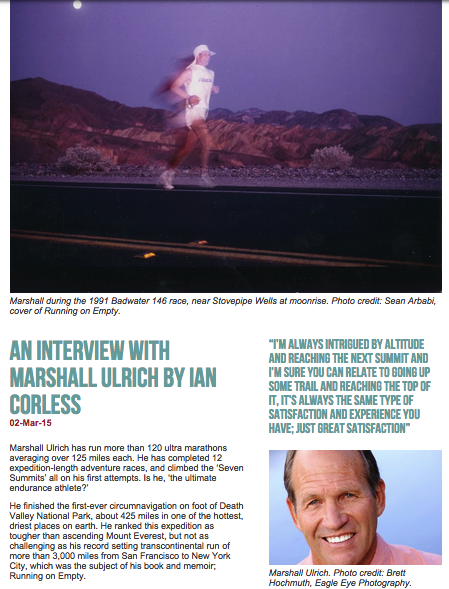
Marshall Ulrich has run more than 120 ultra marathons averaging over 125 miles each. He has completed 12 expedition-length adventure races, and climbed the ‘Seven Summits’ all on his first attempts. Is he, ‘the ultimate endurance athlete?’

He finished the first-ever circumnavigation on foot of Death Valley National Park, about 425 miles in one of the hottest, driest places on earth. He ranked this expedition as tougher than ascending Mount Everest, but not as challenging as his record setting transcontinental run of more than 3,000 miles from San Francisco to New York City, which was the subject of his book and memoir; Running on Empty.

In his sixties, Marshall inspires adventurers, active and armchair athletes, and a growing general audience by sharing his experiences and defying the ideas of “too far,” “too old,” and “not possible.”

I caught up with this amazing man to get a glimpse into what makes him tick.

You can read the full interview on RUNULTRA HERE

run-ultra-logo

The North Face ULTRA TR II and ULTRA CARDIAC shoes new for 2015

TNF Men Ultra Trail II Shoe angle

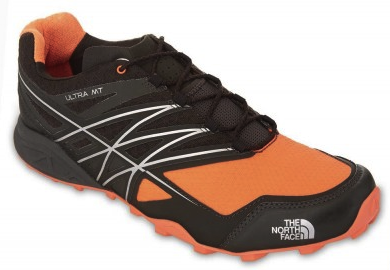
The North Face are stepping things up for 2015 with three new shoes that will allow all of us to choose a specific shoe designed for the trails and conditions we are running on. Just the other week we had a first look and several test runs in the ULTRA MT (read HERE). The ULTRA MT is a bullet proof shoe built on a firm last, 8mm drop and a super grippy Vibram sole.

The ULTRA MT

Sticking to their guns, TNF now have the ULTRA TR II and the ULTRA CARDIAC. As a brand, TNF have obviously decided that 8mm drop is the perfect sweet spot and comprise when coming to a one drop for all scenario. I have to say, I agree! Purest and low drop enthusiasts out there will say, no, no, it needs to be 6mm, 4mm or even lower. To an extent I agree and understand but when you are only making three shoes, you need to commit. For many, particularly when running long, 8mm provides a great compromise and as we run longer and our run style and technique fades, 8mm drop allows for some leeway. I run in 4mm and 6mm drop shoes on a regular basis and I find the 8mm option a pleasure and a joy. Ultimately, there is no shortage of shoes on the market and a selection of drops. If TNF and an 8mm drop shoe is of interest, read on.

TNF ULTRA TR II

TNF Men Ultra Trail II Shoe angle


The 2014 Ultra Trail shoe received much praise for it’s look and feel when running on dry trail. However, it did gain some criticism for the the longevity of the upper! So, the launch of the Ultra Trail II is a great sign that all previous pluses and minuses have been pooled to create a new and fast shoe.

The Vibram sole of the Ultra Trail was arguably one of the highlights of the shoe, it’s great to see this carried over to the Ultra Trail II. Vibram are synonomous with grip and this sole had an abundance of grip on dry trails, rocks and road. I do think that the Ultra Trail will work very well as a shoe that can switch between road and dry trail seamlessly.

TNF Men Ultra Trail II Sole

Influenced by cross-country spike shoes, the upper is a featherlight rip stop upper that provides a snug fit. As one would expect, the shoe is using TNF’s CRADLE technology to offer support in the heel and the midsole.

TNF Men Ultra Trail II Shoe side

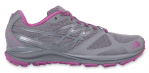
The Ultra TR II is a lightweight performance shoe that will weigh 230g (UK8) and without doubt, the shoe is all about speed and feel for those faster training sessions or races on dry trails. It is anticipated that the shoe will be available in two colours for men and one colour for ladies.

TNF Men Ultra Trail II Shoe orange

TNF Ladies Ultra Trail IISpecifications:


  • Ripstop-tent-fabric
  • Pebax® heel CRADLE™ for support and proper foot positioning
  • Glove-like heel fit with protective suede overlays
  • Suede forefoot and toe protection
  • 16 mm heel
  • 8 mm forefoot
  • Dual-injection-molded EVA CRADLE™ GUIDE midsole platform
  • Vibram® full-length road-to-trail outsole engineered for optimal traction and balance
  • 8 mm offset
  • Approximate Weight: 460 g (pair) *based on Men’s 8

TNF ULTRA CARDIAC

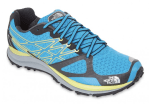
TNF Men Ultra Cardiac Shoe angle


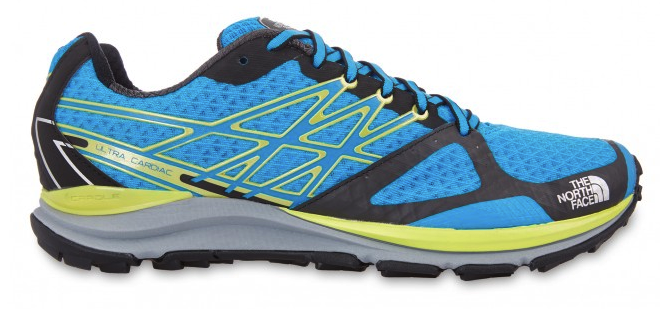
The Ultra Cardiac looks to be an exciting shoe… I have long hailed my love for the Ultra Guide (no longer made by TNF) and on first looks, the Cardiac may well take off where the Ultra Guide finished. I hope so!

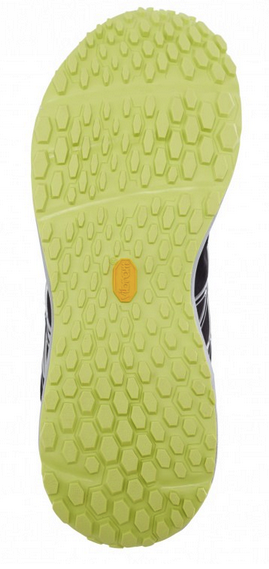
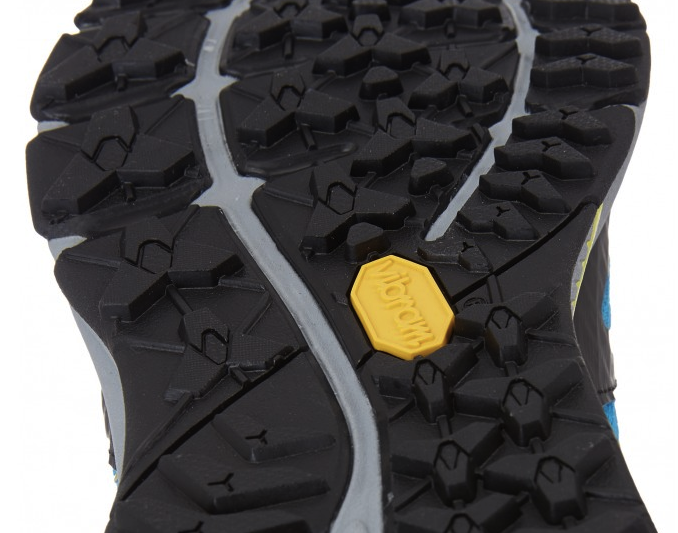
As mentioned, the Ultra Cardiac follows on with an 8mm drop providing a great sweet spot for many runners. Unlike the Ultra TR II, the Cardiac will ideally suit runners as a one-stop shoe. It will provide grip through a Vibram sole on a multitude of terrain: road, hard trail, rocks and wet/ muddy trail (providing it’s not too muddy.)

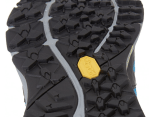
TNF Men Ultra Cardiac Sole

The upper has FlashDry technology and it really is a great multipurpose shoe with enhanced cushioning: 20mm rear and 12mm at the front. When compared to the Ultra TR II (16mm/ 8mm) it’s easy to see how these two shoe differ not only in weight but cushioning and purpose. The Ultra Cardiac is a shoe that you can slip on, run all day on mixed terrain and not get home battered and bruised from the experience.

TNF Men Ultra Cardiac Side

Despite a full length Vibram sole, fast drying upper and great cushioning the Ultra Cardiac still weighs in at a lightweight 275g (UK8) which is extremely appealing.

Ultra Cardiac Sole


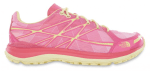
Available in one colour for men, the ladies colour option is as below and will size from UK4 to UK9.

TNF Ladies Ultra Cardiac

Features:


  • Ultra Airmesh and FlashDry™ keep you cool and dry
  • Zonal protection in the heel and toe
  • Pebax® heel CRADLE™ for proper heel positioning and support
  • Luxurious cushioning in the collar lining and tongue for a comfortable fit
  • 20 mm heel /12 mm forefoot
  • EVA underfoot
  • Vibram® full-length outsole engineered for optimal traction and balance
  • 8 mm offset
  • Approximate Weight: 548 g (pair) *based on Men’s 8

A full review of both shoes will be available in the coming months. The ULTRA TR II and ULTRA CARDIAC will be available from March 2015 prices are expected to be £85 and £105 respectively.


Read a ‘first impression’ review of the new, TNF ULTRA MT HERE

TNF Ultra MT angle

Check out The North Face HERE

the-north-face-logo


The 2015 11th edition of The Coastal Challenge on RUNULTRA

TCC 2015

“Anything can happen in a race that lasts multiple days and believe me, The Coastal Challenge provided more than its fair share of excitement. But as a battle raged at the front, behind, the story was one of survival, perseverance and enjoyment in equal measure.”

Read the full article  and view a selection of images from the 2015

The Coastal Challenge

HERE

A full selection of images are available HERE

And you can read daily reports with images from the race here:

Day 1 HERE

Day 2 HERE

Day 3 HERE images HERE

Day 4 HERE images HERE

Day 5 HERE images HERE

Day 6 HERE

run-ultra-logo

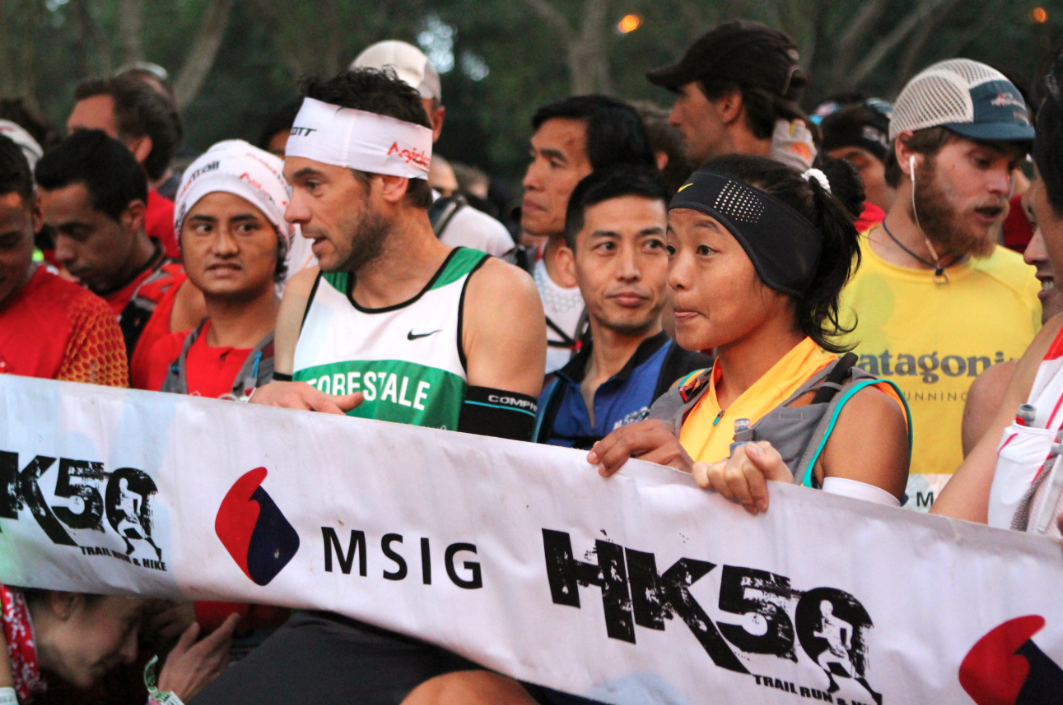
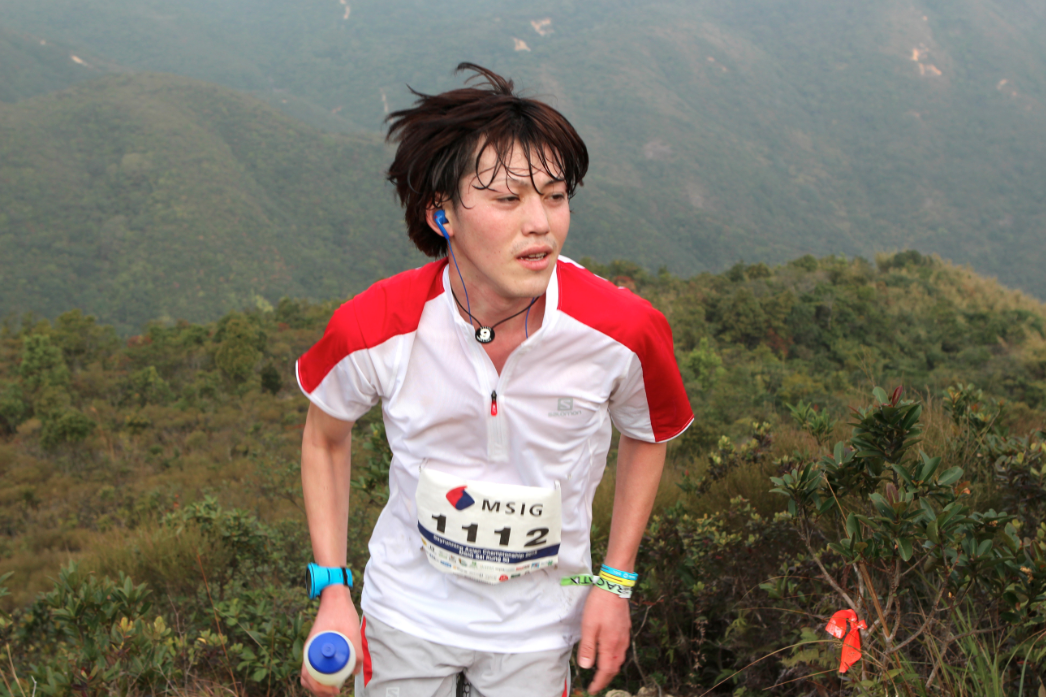
MSIG Sai Kung 50 Skyrunning Asian Championships race report

Screen Shot 2015-02-07 at 18.23.52Hong Kong is certainly full of surprises and the MSIG Sai Kung Skyrunning race was no exception, with results going against the odds and also against form.

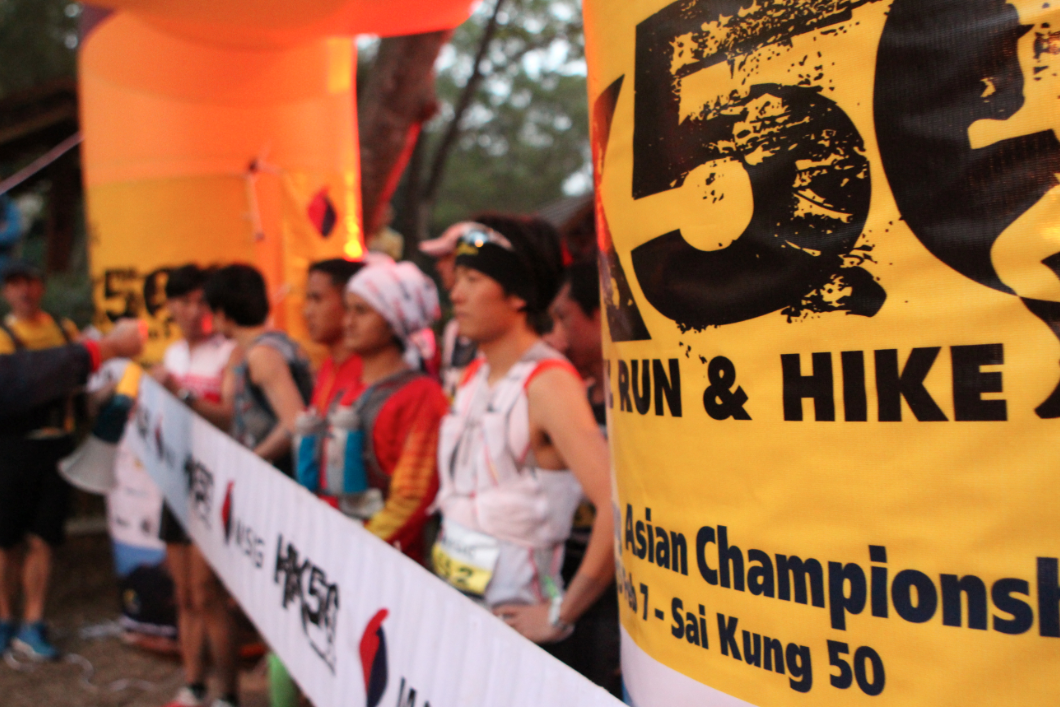
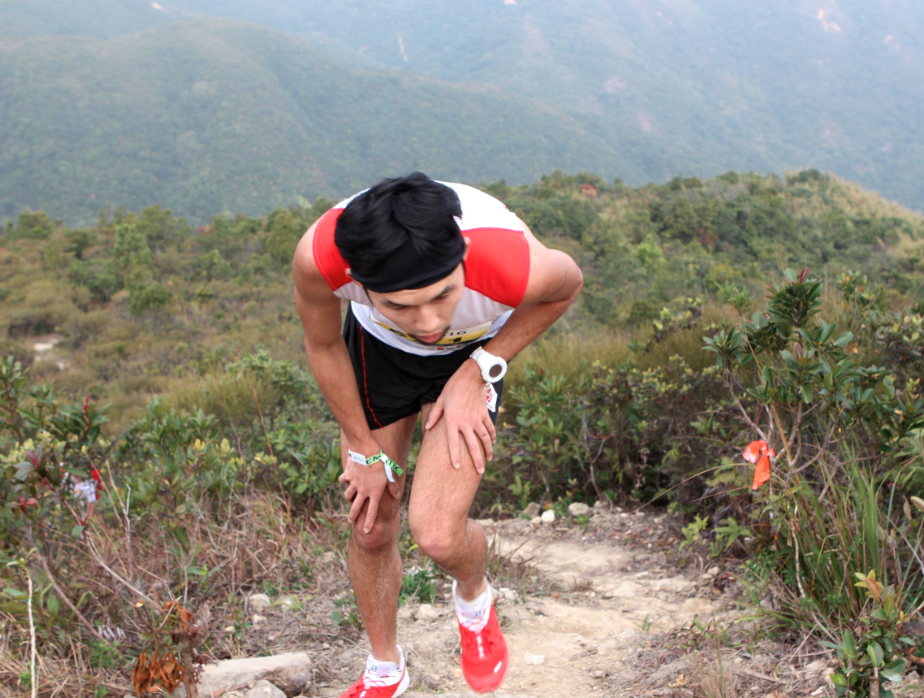
Certainly the most significant surprise for a visitor to Hong Kong is the presence of hills and forests. Actually the towering, high-rise, tightly packed urbanised area, full of flashing neon and determined taxi drivers, that is synonymous with Hong Kong represents a tiny fraction of the area that Hong Kong covers. Forty five minutes drive out of the city is the Sai Kung Screen Shot 2015-02-07 at 18.24.30Country Park, the venue for today’s race: a seemingly vast area thickly covered with vegetation made up of extremely steep hills tumbling down to beaches and the sea. It was on these hills that 2000m of vertical ascent was packed into 28km on extremely steep and in some places technical trails.

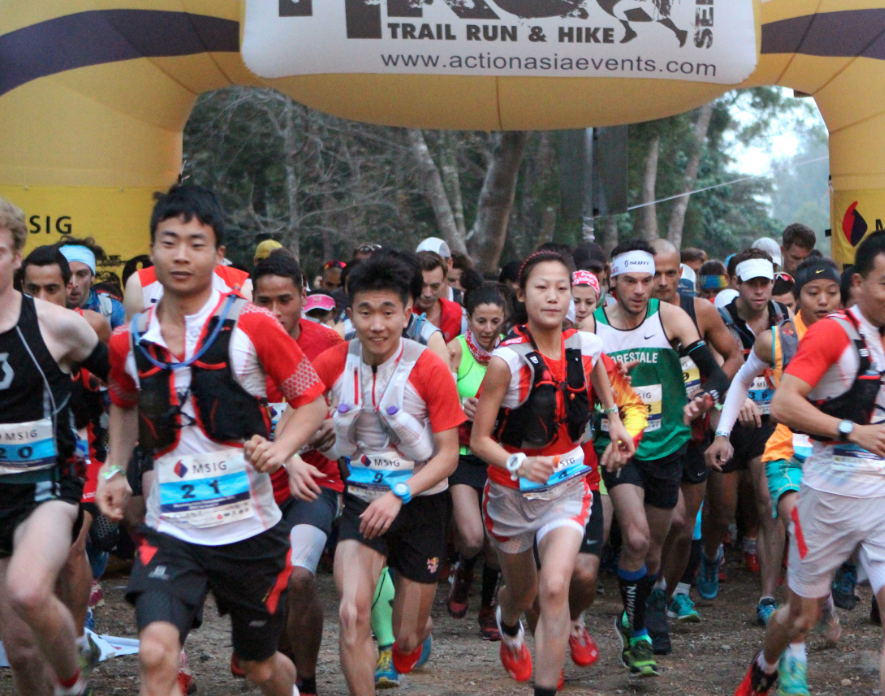
Screen Shot 2015-02-07 at 18.24.20The race was scheduled to start at 7am and the sun rose on a grey overcast and thankfully cool morning for the four races taking place over 13km, 24km, 28km and 50km.

The first to set off were the 28km and 50km races.

In the shorter distance, the men’s favourite was considered to be Marco de Gasperi, but with athletes such as Tom Owens, and Martin Gaffuri lining up with him, it was never likely to be a cake-walk. In the 50km the same was true: whilst Yan Long Fei was considered to be the favourite by many, Samir Tamang, David Byrne, Luke Nelson and Blake Hose plus others were never going to give in easily.Screen Shot 2015-02-07 at 18.24.00

For the women, Elisa Desco and Stephanie Jiminez were considered the pre-race favourites for the 28km race, whilst in the 50km Kasie Enman, Wyan Chow Pui Yan, Dong Li and Mira Rai were the ones to watch.

The race

The start of the 28km and 50km races happened at the same time and involved a very fast downhill road section, before the first climb started towards the trails that would make up the majority of the races.

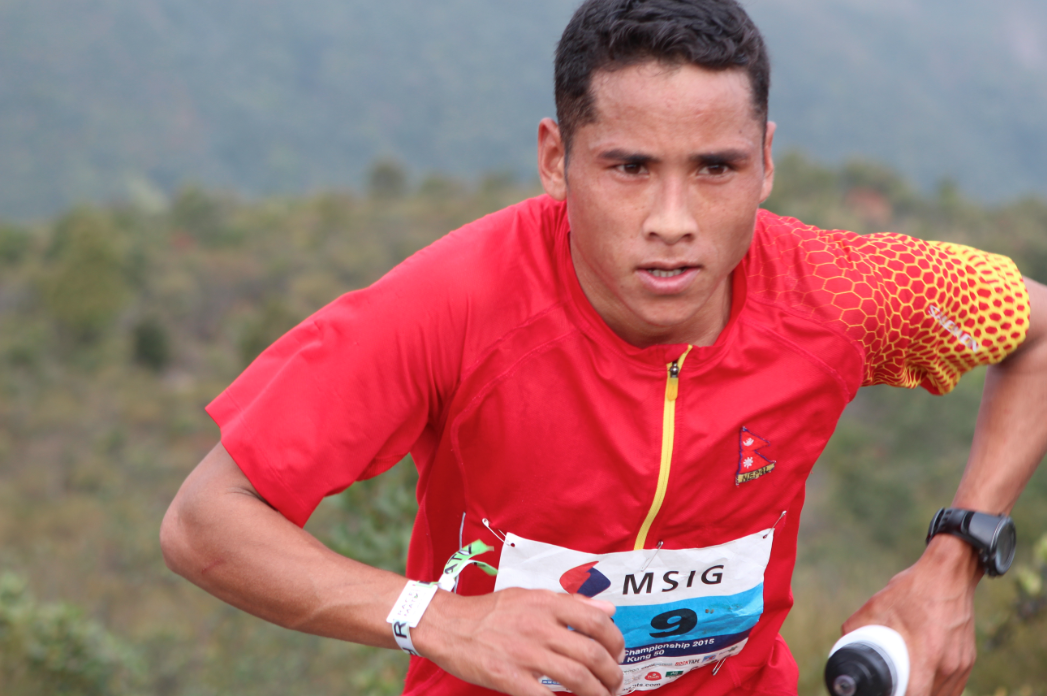
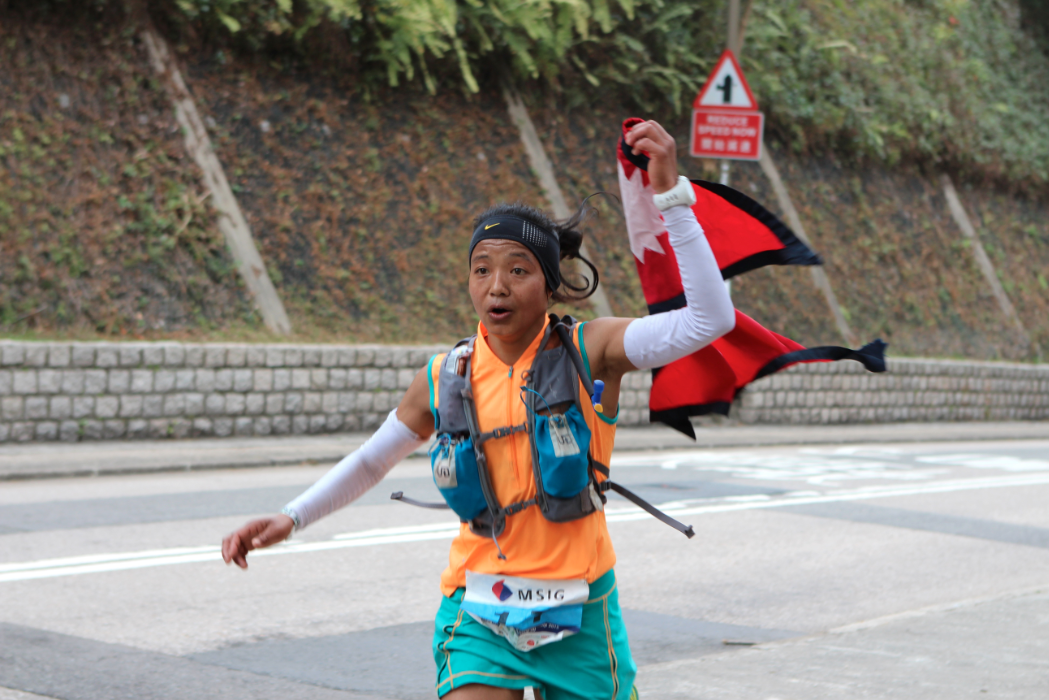
Samir Tamang from Nepal in the 50km race

Samir Tamang from Nepal in the 50km race

Perched just above the third check point before the two races split at around 22km, we were getting snatches of news. Especially about the race leaders who we were hearing were having some problems staying on the course. Before we caught sight of the runners we knew that 28km pre-race favourite de Gasperi has taken a wrong turn and lost time on two Japanese runners who had taken the lead.

By the time the runners reached us, we could see that de Gasperi’s mistake had indeed cost him and the Japanese pair of Dai Matsumoto and Kondo Yoshihito were in control with only around 6km left to go.

Dai Matsumoto in the 28km race

Dai Matsumoto in the 28km race

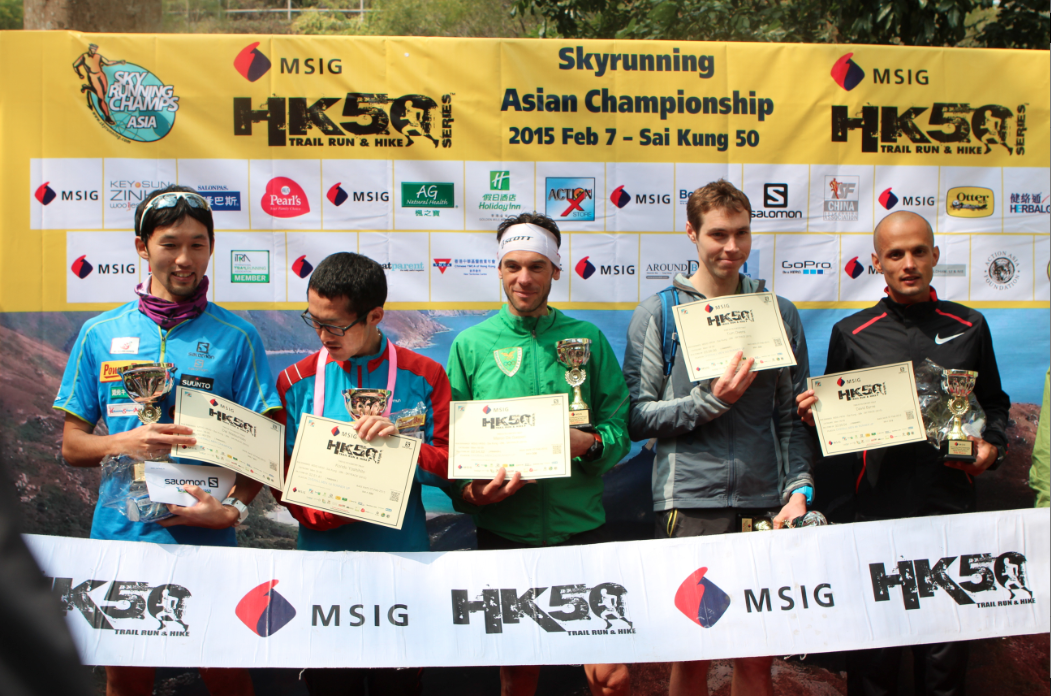
Indeed from that point to the end, the positions remained the same, with Dai winning in 2:49:23, Kendo second in 2:51:41seconds and a disappointed de Gasperi in third in 2:54:32, who rued taking a wrong turn. He said after the race “I made a mistake by missing the course and I realized it until I saw Dai, the Japanese runner coming in front of me running down the hill. I probably wasted 4 minutes until I found the right way. If time can turn back, I would do everything to avoid the mistake.”

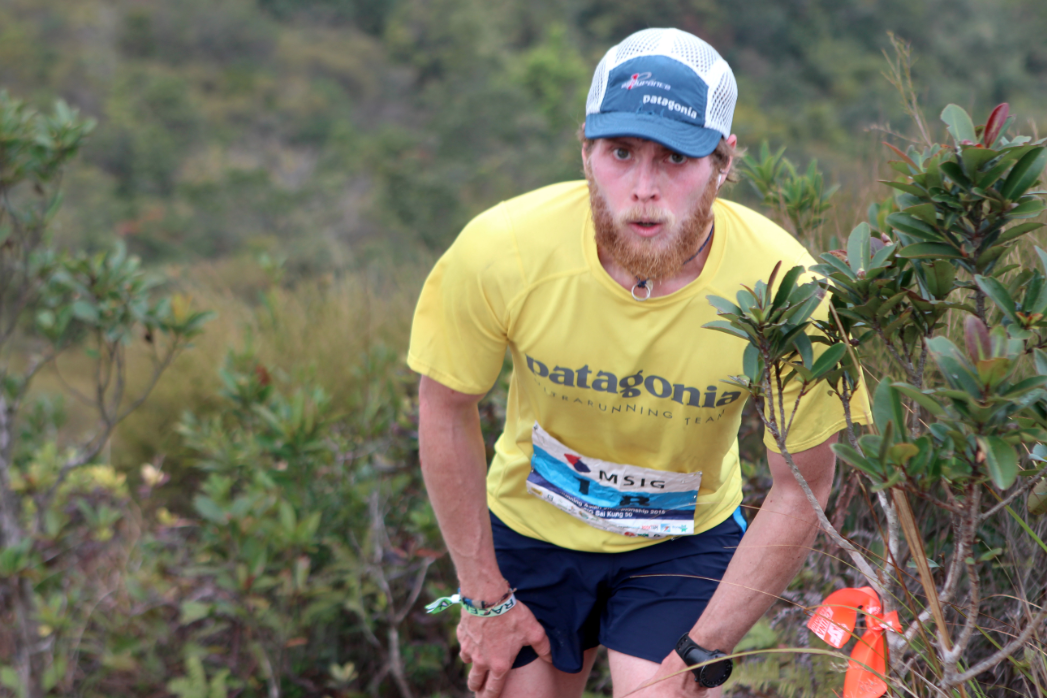
In the men’s 50km race Nepalese runner Samir Tamang won 4:58:40. After the race he said ‘Such an honor to become the champion, but I didn’t finish the course within my estimated time. I have been to Hong Kong once before for a 100k race and this is my first 50k in HK. It marked a good start of the year in 2015!’ Tamang was followed in by Yan Long Fei from China in 5:11:50 ‘I chose to follow some of the strong runners as usual and I guess I followed the wrong person this time. I realized there were two people ahead of me at the very last bit of the race and that was too late for me to overpass them both. I enjoyed the race overall especially the view at the hilltop.’ The final spot on the podium was taken by Spanish runner Cristofer Clemente in 5:15:07.

Screen Shot 2015-02-07 at 18.25.34

Elisa Desco on her way to victory in the women’s 28km race

Screen Shot 2015-02-07 at 18.25.43

Stephanie Jiminez in the 28km Skyrun

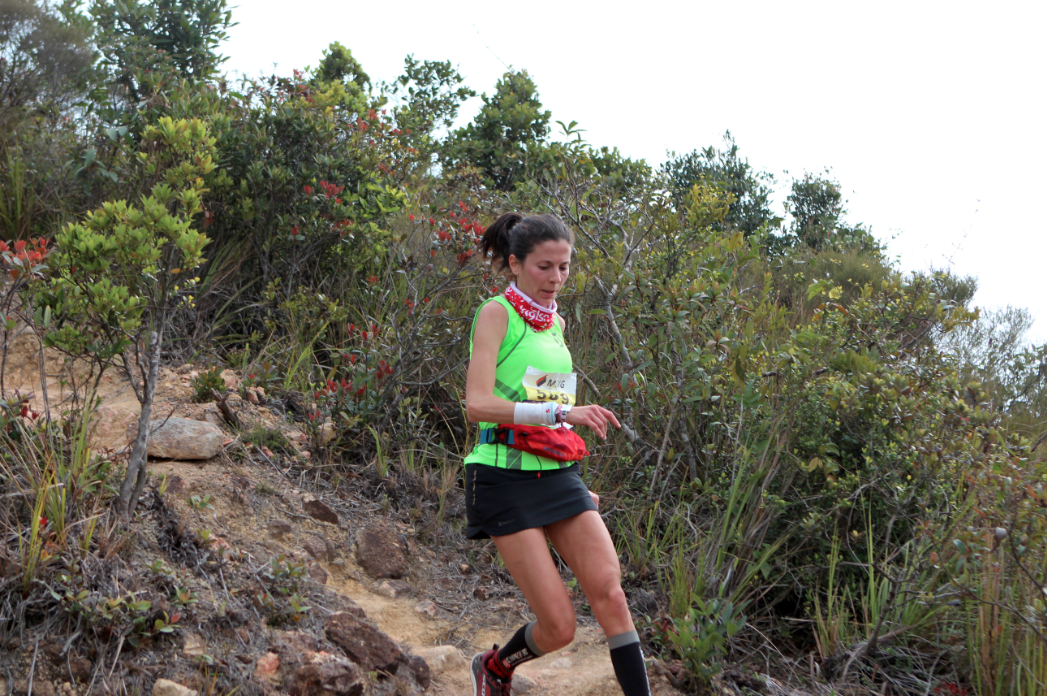
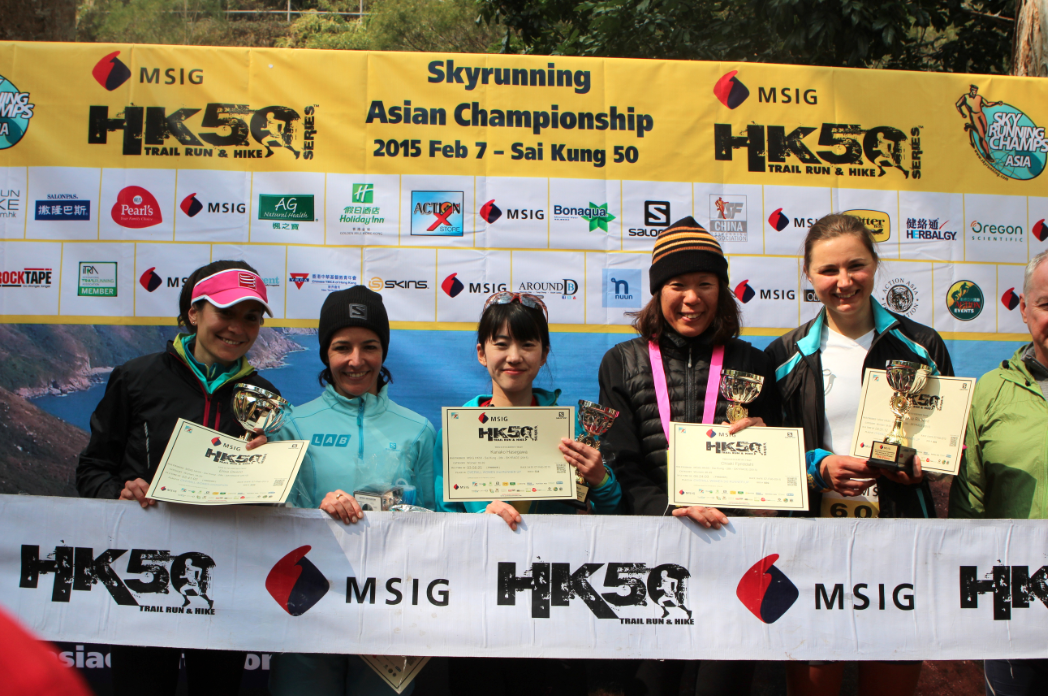
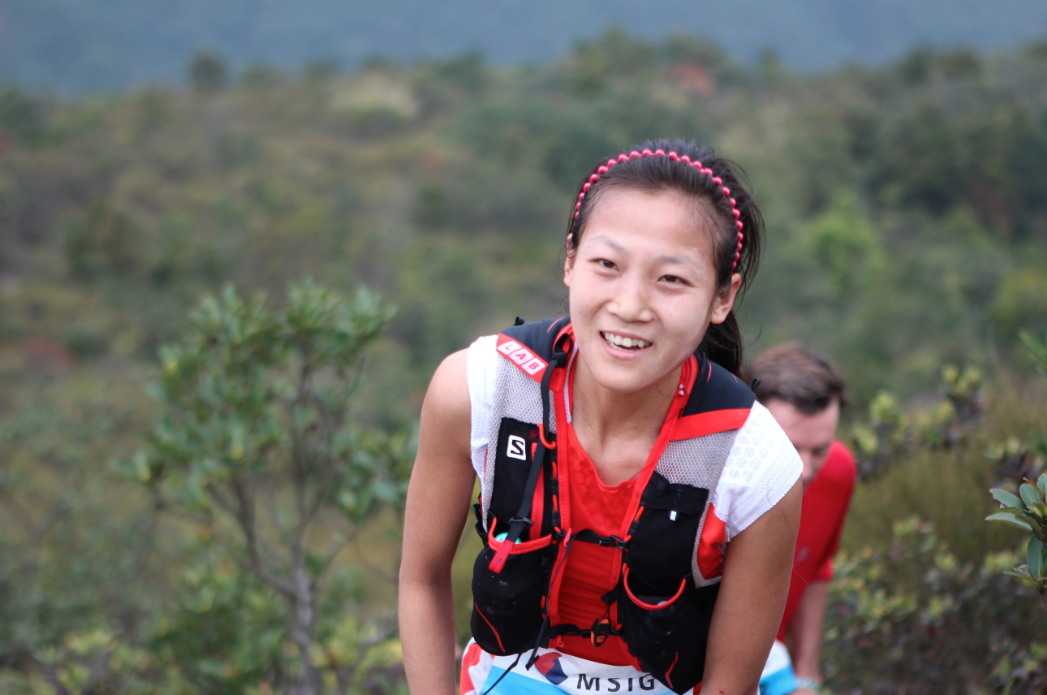
For the women, the 28km race went with the predictions, with Elisa Desco narrowly beating Stephanie Jiminez in 3:41:02. Desco said afterwards ‘The course is very challenging for me because there were lots of up hills and down hills. Unlike those in Italy, we usually climb up one main mountain. I’m not used to the hilly terrain and it makes the course very technical to me.’ Finishing the trio was Japanese runner Kanako Hasegawa in 3:56:25.

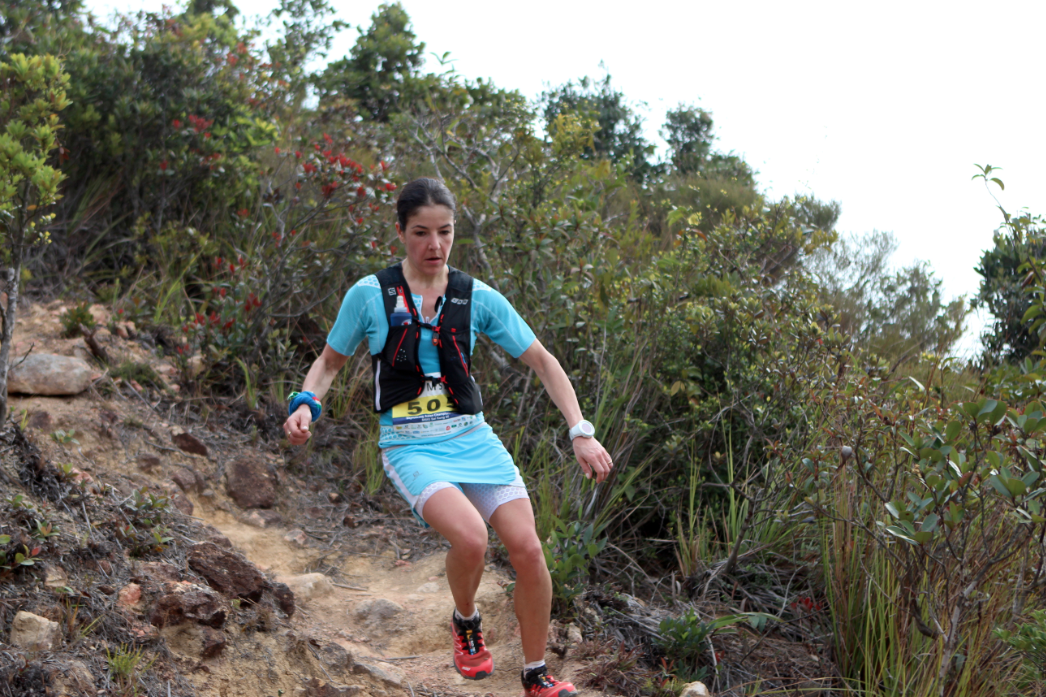
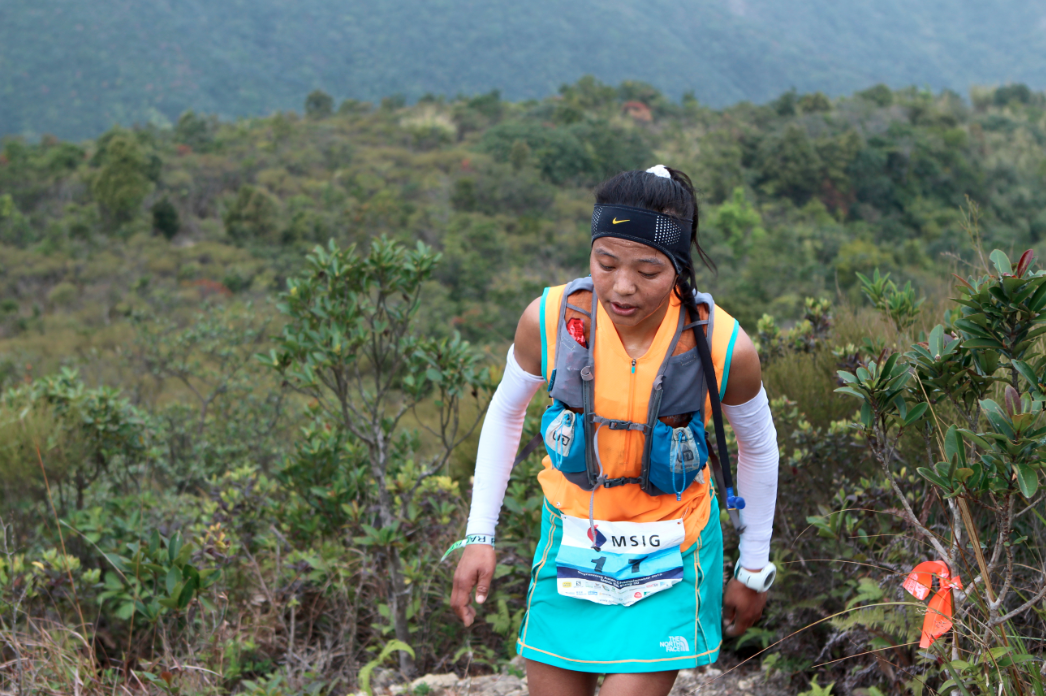
In the women’s 50km race, it was Mira Rai from Nepal who backed up a win in the HK50 with a completely dominant performance, elegantly skipping up the brutal climbs and down the technical descents to win in 5:39:31 over an hour ahead of China’s Dong Li in second and Kasie Enman in third.

Screen Shot 2015-02-07 at 18.26.03

Mira Rai winning the women’s 50km race

For complete results click here.

The responses

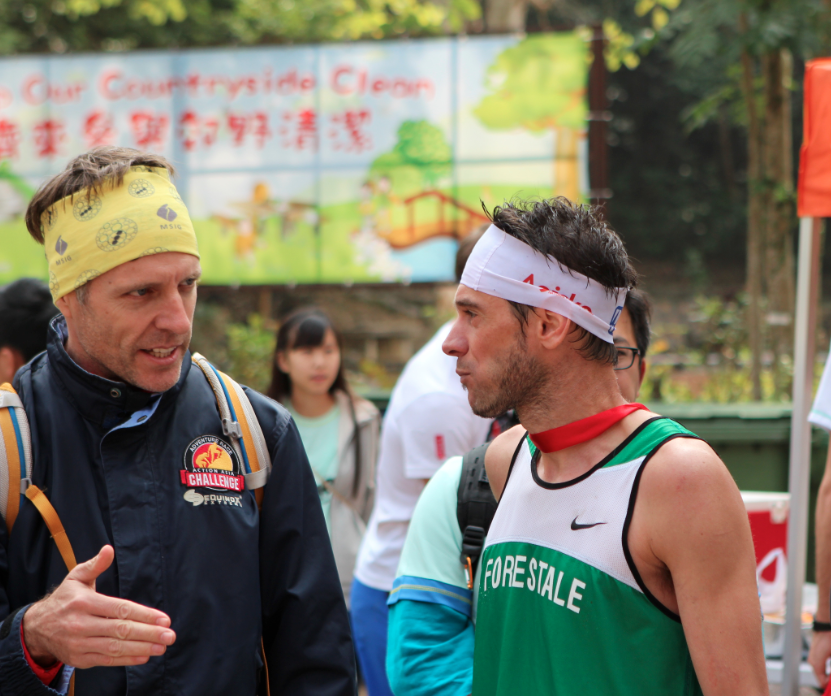
Screen Shot 2015-02-07 at 18.26.13 Screen Shot 2015-02-07 at 18.26.21Whilst there were a few runners who went off course which caused frustration, the general feeling was that the race was a great way for many to start the year. The route was technical and exciting with many of the more experienced runners saying that it was a ‘true’ Skyrunning race.

As a part of the new way that the Skyrunning series will be decided, there were valuable points scored for some today and for others it was a chance to bounce back from lacklustre ends to 2014 or injury.

Whatever the racer’s take on the Sai Kung 50, it was a great way to see a different side to Hong Kong and a superb way to ensure that Asia has an even stronger place on the world trail running map.

Screen Shot 2015-02-07 at 18.25.51

Race director Michael Maddess and Marco de Gasperi discuss the race after the action has finished

Screen Shot 2015-02-07 at 18.25.16

Luke Nelson

Screen Shot 2015-02-07 at 18.25.25 Screen Shot 2015-02-07 at 18.25.07

Screen Shot 2015-02-07 at 18.24.50

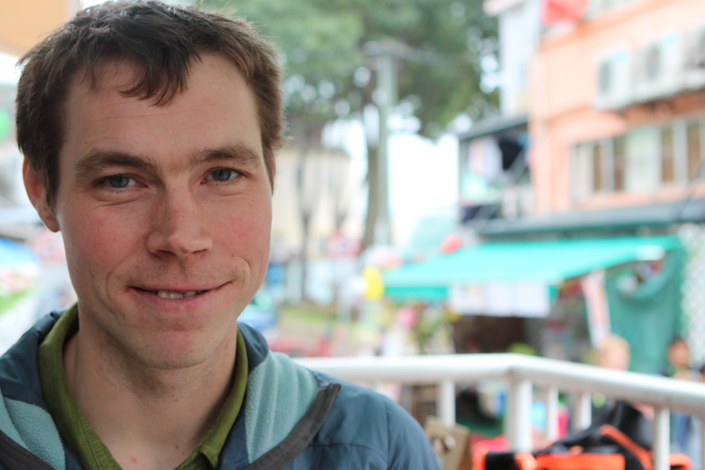
MSIG Sai Kung 50 & Skyrunning Asian Championships: pre-race interviews

Hong Kong is certainly a place of contrasts. A pre-breakfast run along the waterfront this morning saw the whole city shrouded in a thick, yellow smog which softened the outlines of the masses of skyscrapers and high-rise apartment blocks. People bustle along the pavements whilst taxis and buses fill every meter of the chaotic roads. Even the water between the mainland and the island is crammed with boats of all sizes ferrying people or freight around seemingly 24 hours a day. Not really a promising place for a Skyrunning race then…

But an hour out of the city and Sai Kung is a leafy, charming place with a vibrant sea port and – more importantly perhaps – towering forest covered hills rising from the sea shore to the sky. Suddenly the potential for a challenging Skyrunning race and the Asian Championships is revealed.

Just after lunch Simon had a chance to catch up with a few of the elite athletes looking to make an impact on this race early in the season:

Tom Owens

Screen Shot 2015-02-06 at 22.12.27After a ruptured ankle tendon in 2013, Tom was actually happy with how he raced in 2013 and enjoyed including some long races that the surgically repaired ankle dealt with without a problem. When I asked Tom why he chose to race the Sai Kung race, he said that he had already planned on taking some time off in February to go on a warm weather training camp, to get away from the freezing temperatures that he has been enduring in Scotland all winter. As soon as the opportunity to race in Hong Kong came up, Tom changed his plans to be here.

Tom also said that after a winter of cyclo-cross and cross country racing, he thought that tactically, getting a Skyrunning race under his belt early in the season would give him an advantage later in the year.

Simon asked Tom about how cyclo-cross has played a part in his training and Tom admitted that although he really enjoys it, he is technically not as strong as he’d like to be having only taken up the sport in the last couple of years. But Tom thinks that it has given him a physical and psychological edge that he needed after his surgery.

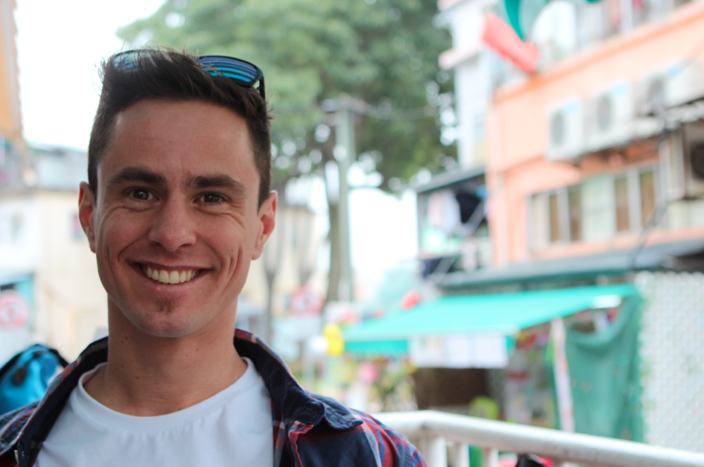
Martin Gaffuri

Screen Shot 2015-02-06 at 22.12.45Martin is a French resident although he is soon moving to Switzerland for work, so coming to Hong Kong for a race is a great opportunity to escape the snow and run in relatively warm conditions.

The Sai Kung race also represents a chance for Martin to return to the sport he loves after a hiatus in 2014. He feels that his best result last year was in Tarawera, but around racing the 80km World Champs in Chamonix, where he came 17th, Martin lost motivation for his running and took time off, only really returning to the sport towards the end of the season with a tilt at the Rut where he took a tumble off the trail.

With his new full-time job about to start, Martin is looking forward to having some structure, aiming for more quality over quantity. This makes the 28km race in Sai Kung a perfect chance to test his legs on a relatively shorter course.

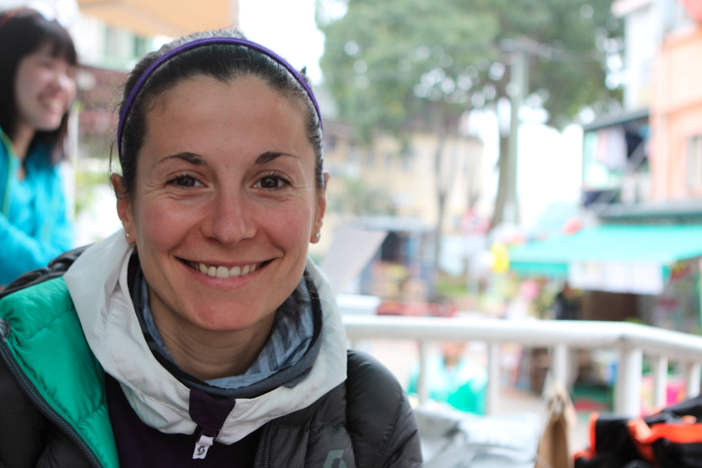
Elisa Desco

Screen Shot 2015-02-06 at 22.13.31Elisa told Simon that this is her first season Skyrunning. In fact until last year she had not raced more than 20km. She said that Zegama was a fantastic new experience for her and that, along with her brilliant run at the World Championships in Chamonix, have surprised her and given her added motivation to train and race.

Looking ahead Elisa is racing the shorter Skyrunning series in 2015 and then thinks that she might start to consider tackling some longer races. But for now she thinks that her speed on relative short distances – her road marathon debut was a very impressive 2:36 – will mean that she can compete with the best of them on the trails in the hills.

Marco De Gasperi

Screen Shot 2015-02-06 at 22.13.18On reflection Marco believes that he may have been over-trained in 2014. He told Simon that for a few crucial months in the middle of the year he felt very tired and weak. Thankfully now he has fully recovered and has trained consistently – ensuring that he isn’t over-training – so that he is ready for the Sai Kung event, which Marco sees as a significant race and a great way to start the Skyrunning season.

Sat in Sai Kung town in a cafe today, Marco looked remarkably relaxed and told Simon that whilst he is wary of the other elite athletes on the start line tomorrow, he is also not stressed and is looking forward to the trails.

Marco has an eye on races beyond the Sai Kung event. He wants to be in best possible share to race Zegama later in the year and he knows that he needs to measure out his efforts so that he can get the best from himself at the right moments.

The action starts at 7am in Hong Kong and Simon will be on the course following events. You can keep up-to-speed on twitter and check back for a race report soon.

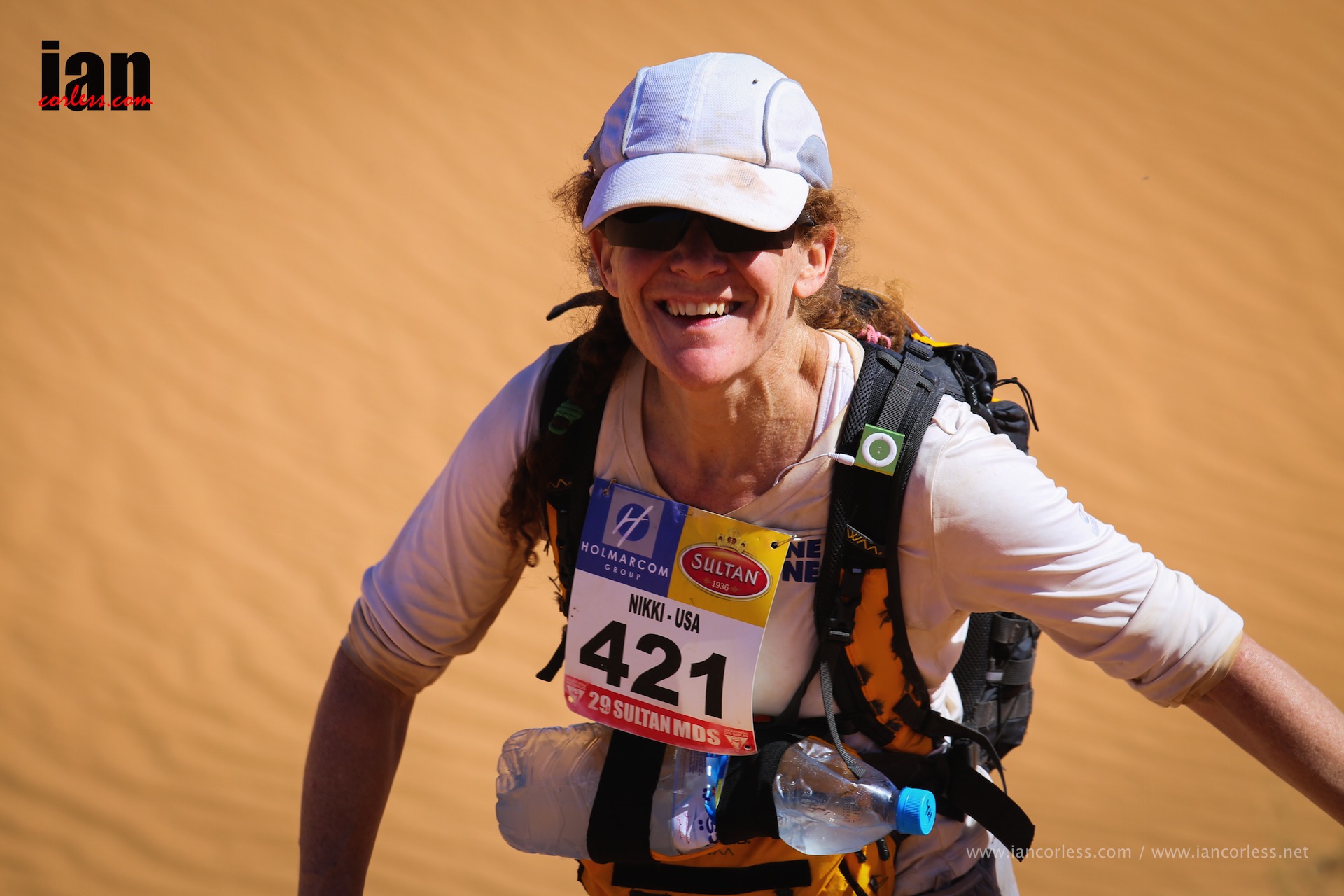
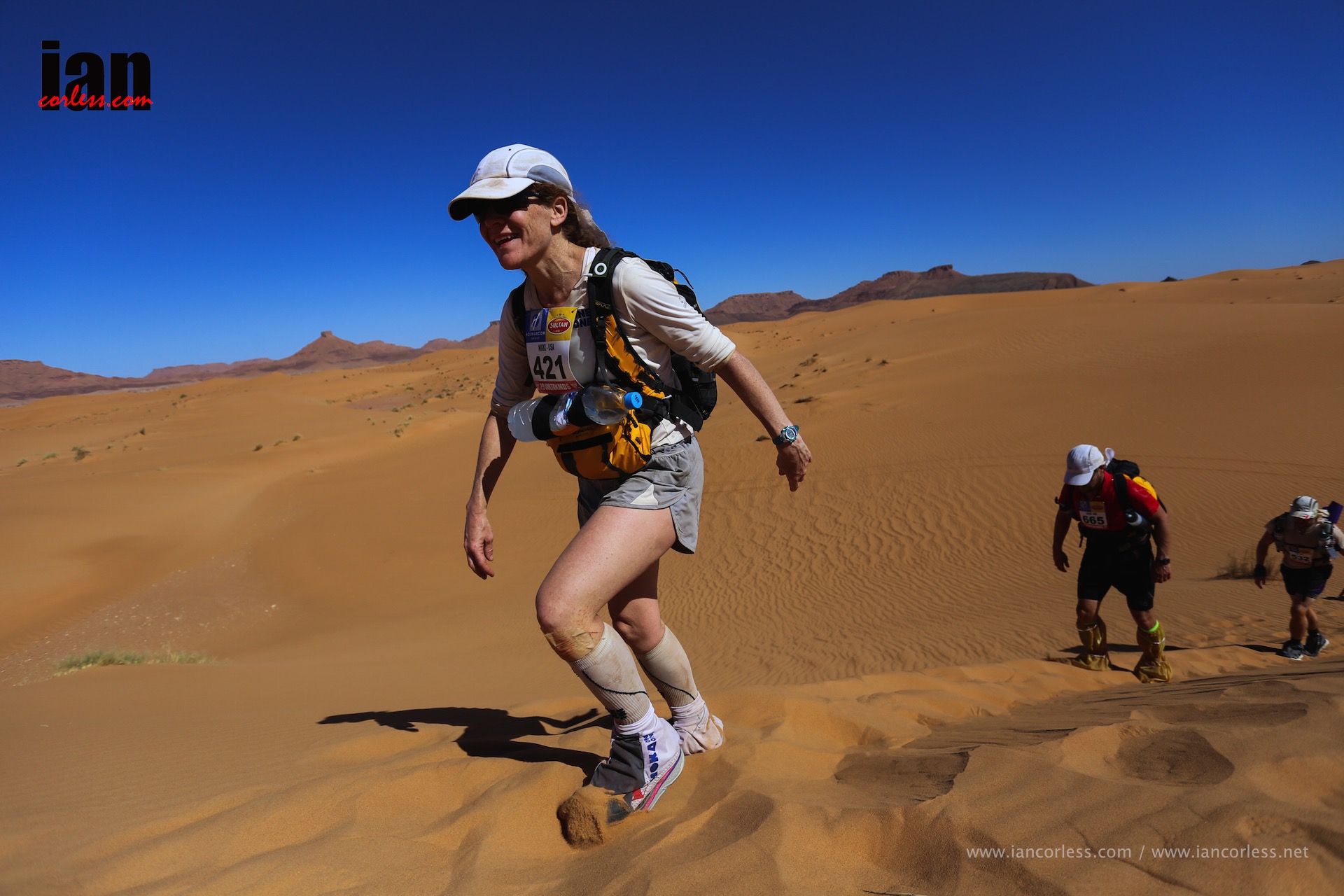
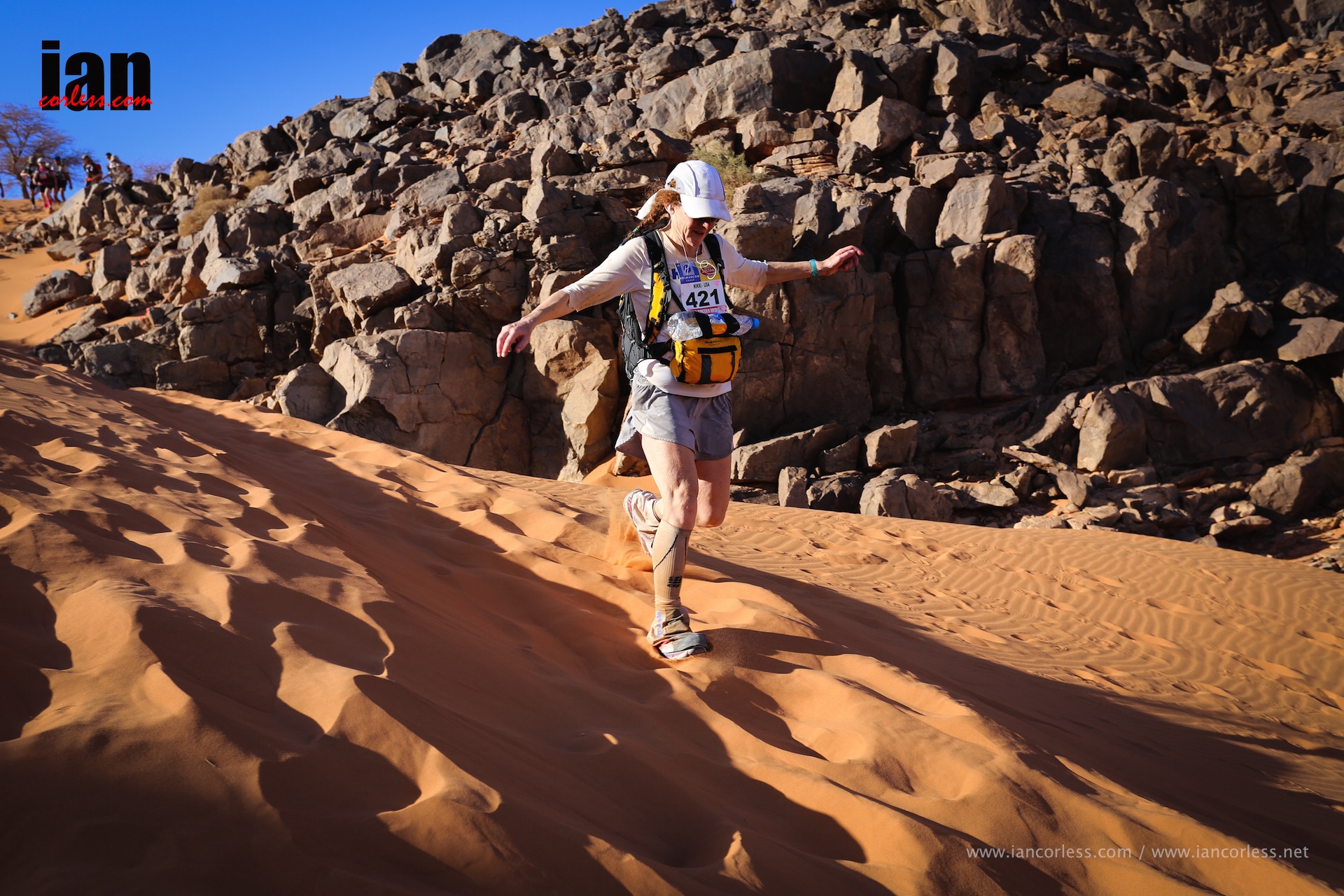
Nikki Kimball to race the 150km Richtersveld Wildrun™

©iancorless.comIMG_9176

Nikki Kimball, current female champion of the 254km Marathon des Sables and three-time Western States 100 miler winner will be taking part in the four day, 150km Richtersveld Wildrun™ held during the first week of June 2015 in the /Ai/Ais-Richtersveld Transfrontier Park in South Africa.

Website HERE

Kimball, a resident of Boseman, Montana in the USA, is one of the most respected female ultra-runners in the world and her presence at the Richtersveld Wildrun™ is a fantastic opportunity for top South African runners to measure themselves against one of the best in the world.  

©iancorless.comIMG_2710

A few of Kimball’s achievements include:

  • 1st female at Western States 100 miler in 2004, 2005 and 2007 (the only woman to win this race three times)
  • 1st female at the 166km Ultra Trail du Mont Blanc in 2007
  • 1st female at her first ever attempt at the 7 day, 251km Marathon des Sables 2014.
  • The women’s supported speed record for completing the iconic Long Trail, a 438km hiking trail in Vermont, Canada. It took her 5 days, 7 hours and 42 minutes – one of the fastest five runners to accomplish this feat. 

Closer to home, Nikki finished the Comrades Marathon in 2010 in an impressive 7:26:37. She is over the moon to return to South Africa before she heads to another Western States 100 later this year:

“South Africa has had a special place in my heart since 2010 when I visited the country with teammates Kami Semick and Michael Wardian to race Comrades Marathon and raise money for Vukukhanye, an AIDS orphan charity in Chesterville near Durban,”   

While the distance of the Richtersveld Wildrun™ is what Kimball is used to racing non-stop, she is excited by the opportunity to explore the truly unique landscape of the /Ai/Ais-Richtersveld Transfrontier Park – one of only 25 biodiversity hotspots in the world.

 “During my one and only visit to South Africa in 2010, we never reached the lands near the border of Namibia.  Each of us wanted to explore the stark beauty of this area, and my one regret from our trip was the fact that we did not tour this area.  Thus when given the chance to run Richtersveld Wildrun™, I had to change my race schedule to include this amazing event.  I cannot wait to play in the arid beauty of this rocky, hilly, truly wild piece of Africa!”

©iancorless.comIMG_4051

View image galleries of

Richtersveld Wildrun™  HERE

About the Richtersveld Wildrun™ 

The 150km Richtersveld Wildrun™ takes place in the /Ai/Ais-Richtersveld Transfrontier Park over four days from 2 to 5 June. Starting and finishing at Sendelingsdrif, runners will get to experience a world of geological splendour. From the heights of Hellkloof pass, to the granite slabs of Tatasberg, the green swathe of the Orange River, the gargoyles of Halfmens Ridge and the crystal fields of the Sendelingsdrif plateau – every kilometre is unforgettable and participants are sure to leave the Richtersveld changed people.  The Richtersveld experience is unlike any other in the world. Botanically, this area holds 40% of the world’s succulent species, many with incredible adaptations to the harsh mountain desert environment.

Wildrun™ stage races have become known as some of Southern Africa’s premier multi-day trail running events, and Owen Middleton, founder and managing director of the organising company, Wildrunner, is proud to see the interest in Wildrun™ events shaping up internationally, particularly with top-class runners such as Kimball.

“We are absolutely thrilled to have Nikki on the start line this year! I have no doubt she will be enthralled and inspired by the magnificence of the Richtersveld mountains, the people and the event,” says Owen. “The Wildrun™ events offer a unique opportunity to run in truly wild places together with a limited field of 80 other adventurous and likeminded people.” 

Since its inception in 2014, the Richtersveld Wildrun™ has had amazing support from Boundless Southern Africa and marketing manager, Roland Vorwerk was equally excited about Kimball’s decision to join this adventure.

“We are looking forward to Nikki joining the field of runners experiencing the unique natural and cultural landscape of the /Ai/Ais-Richtersveld Transfrontier Park and meeting the communities associated with this innovative event. The Richtersveld Wildrun™ route includes many of the Park’s most spectacular features, and includes trails that very few people get to traverse.”

Peter McKuchane, general manager of Business Tourism in the Northern Cape said:

“We are excited to once again host the Richtersveld Wildrun™ and to welcome exceptional world-class athletes of the calibre of Nikki Kimball to our province. Athletes will have an opportunity to experience the incredible beauty and warm hospitality of the people of the Northern Cape.  The vast openness and rugged landscapes of this remote corner of the Northern Cape will create unforgettable memories for the participating athletes and visitors. We wish all the participants the best of luck in this destination of Extreme Adventure, Nature and Culture.”

SALOMON S-LAB SENSE ULTRA SET and SALOMON S-LAB SENSE SET
©iancorless.com_Salomon-7704

A new year and new products! Nothing is more eagerly awaited than a new offering from Salomon and today I take a look at two new race vests from the French brand, the S-LAB SENSE ULTRA SET and the S-LAB SENSE SET.

Race vests have become the norm in racing now and it’s east to see why. When the product works (and some don’t) they fit like a piece of clothing, they don’t move, they cause no chaffing and they provide easy and immediate access to everything you need while still pushing the pace. I honestly don’t know who first came up with the ‘vest’ concept, what I do know is I always remember Kilian Jornet finishing and winning UTMB and holding his vest above his head!

Salomon vests and the S-LAB ADV SKIN HYDRO 12 SET can be seen in long distance races all over the world. Tweaked from one model to the next and the current incarnation has moved away from using a bladder to front mounted soft flasks. With a huge capacity, it’s often considered as one of the most ideal packs to hold all mandatory kit for a long distance race. The pack is lighter and utilises all the key features that one needs including that snug form fitting hold on the body. However, 12L capacity is not needed for shorter and faster races.

Enter the S-LAB SENSE ULTRA SET and the S-LAB SENSE SET.

It’s unusual in a review that I would review two packs at once, however, these two packs are so similar that a separate review is not necessary. So, I am reviewing the SENSE ULTRA SET and I will note comments and changes as appropriate for the SENSE SET.

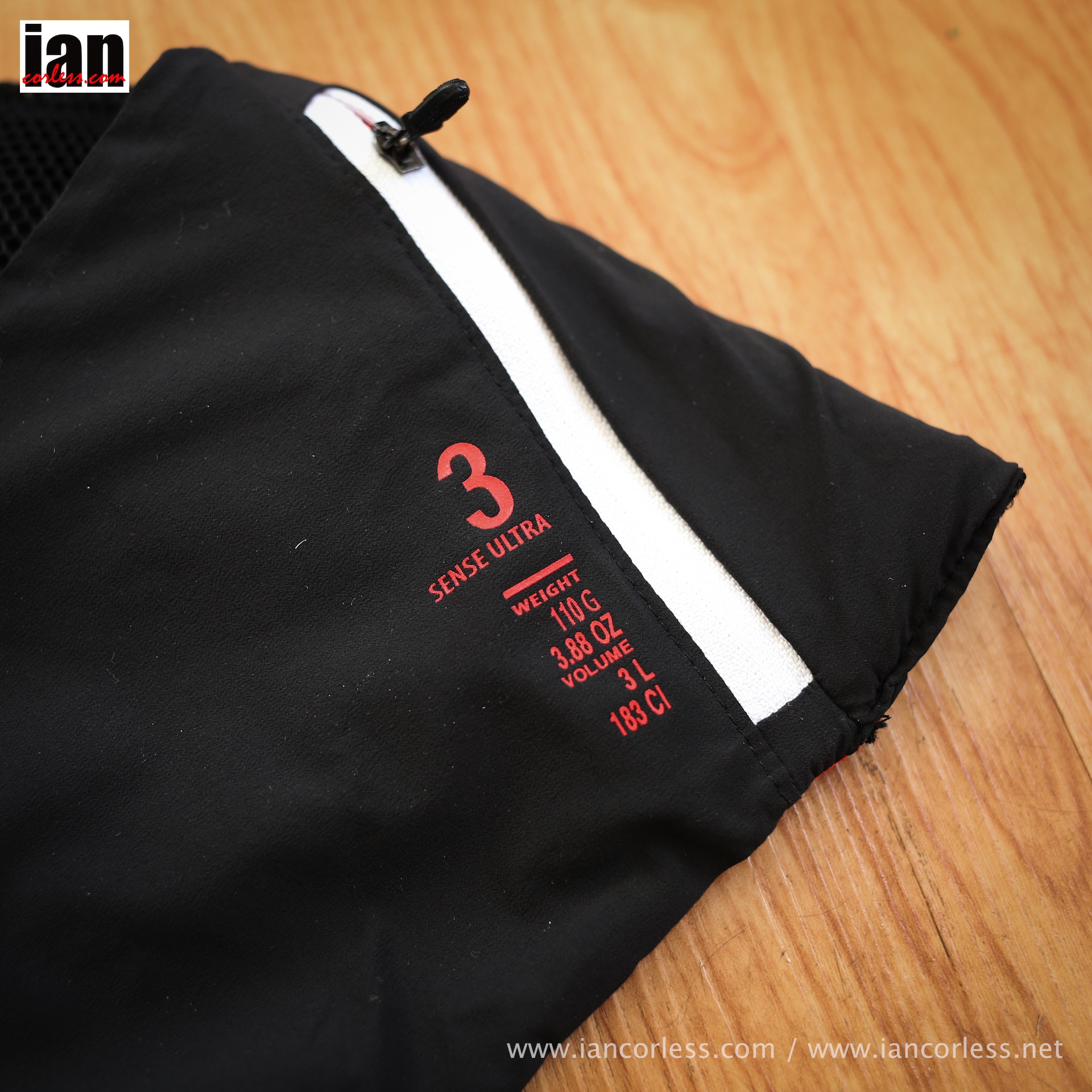
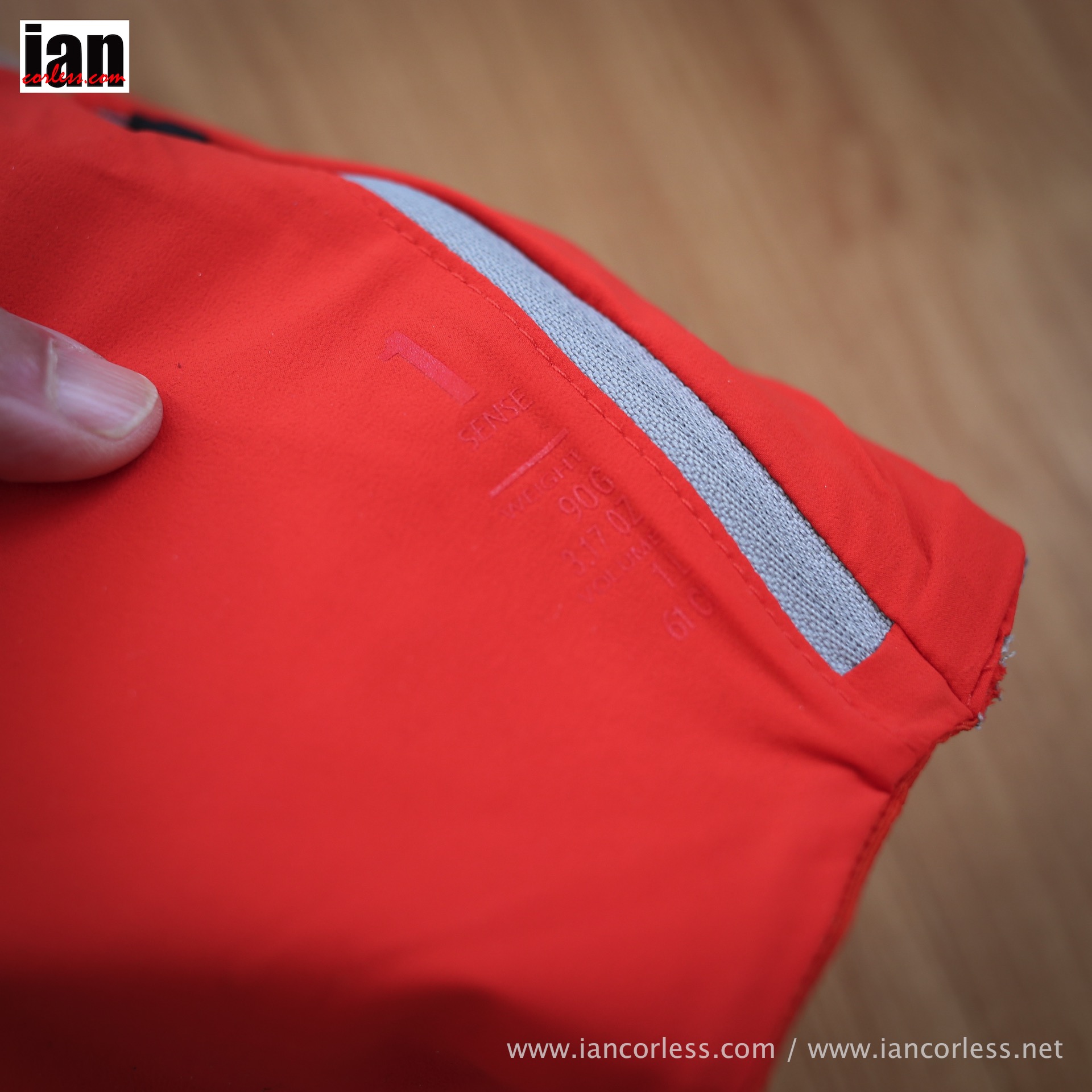
So what is the difference? Simple: weight and capacity. The SENSE ULTRA SET has a 3L capacity and weighs a  110g. The SENSE SET has a capacity of 1L and weighs 90g. I am pleased to say that my two test packs are different colours, the 3L is black and the 1L is red. That’s going to make things easier.

©iancorless.com_Salomon-7741©iancorless.com_Salomon-7796


Both packs are identical at the front and differ at the back. This is where capacity is removed or added, so, let’s look at the front first.

©iancorless.com_Salomon-7704


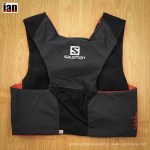
This is a really sweet pack! The layout is great, comfort is awesome and the capacity is ideal for any run when mandatory kit is minimal.

Key features:

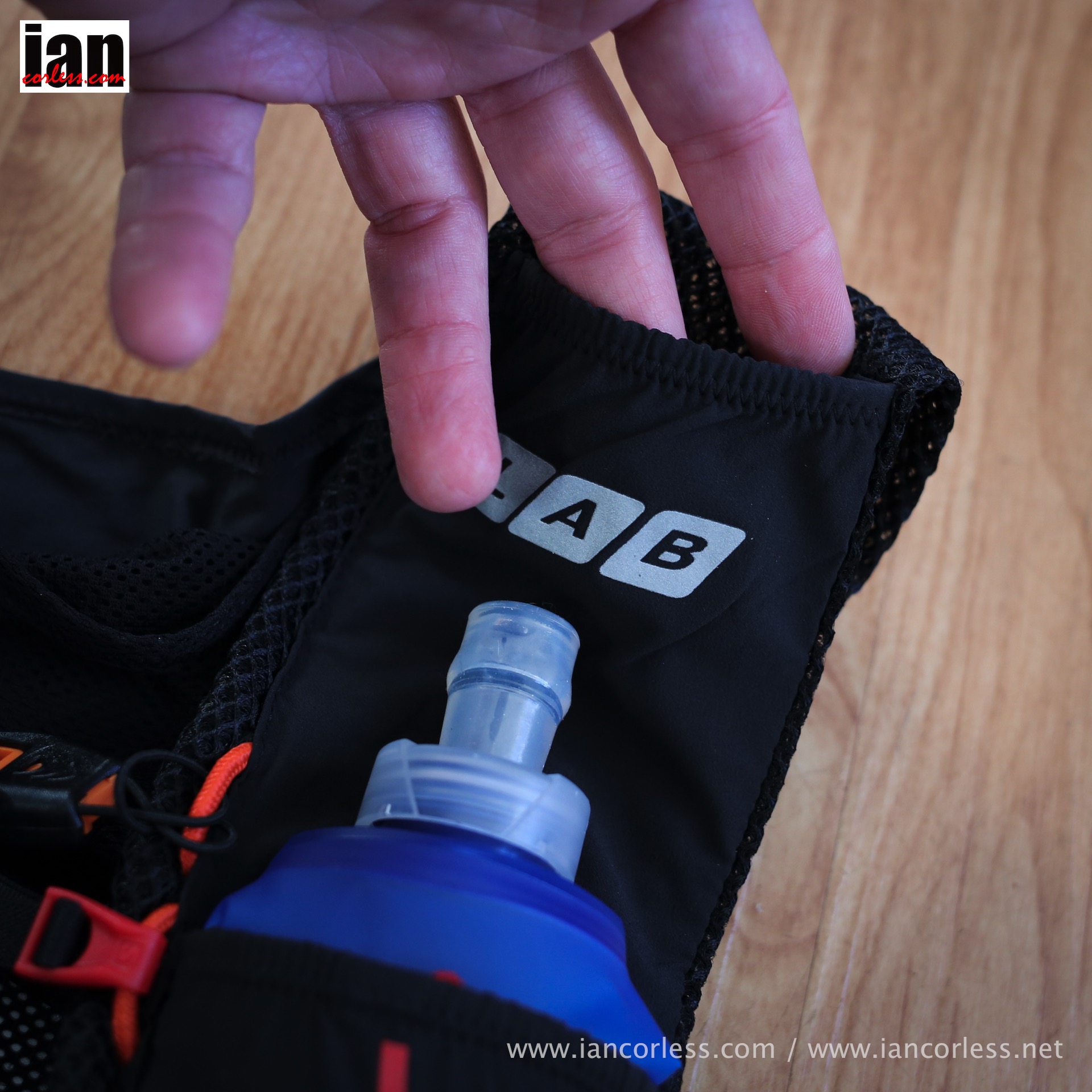
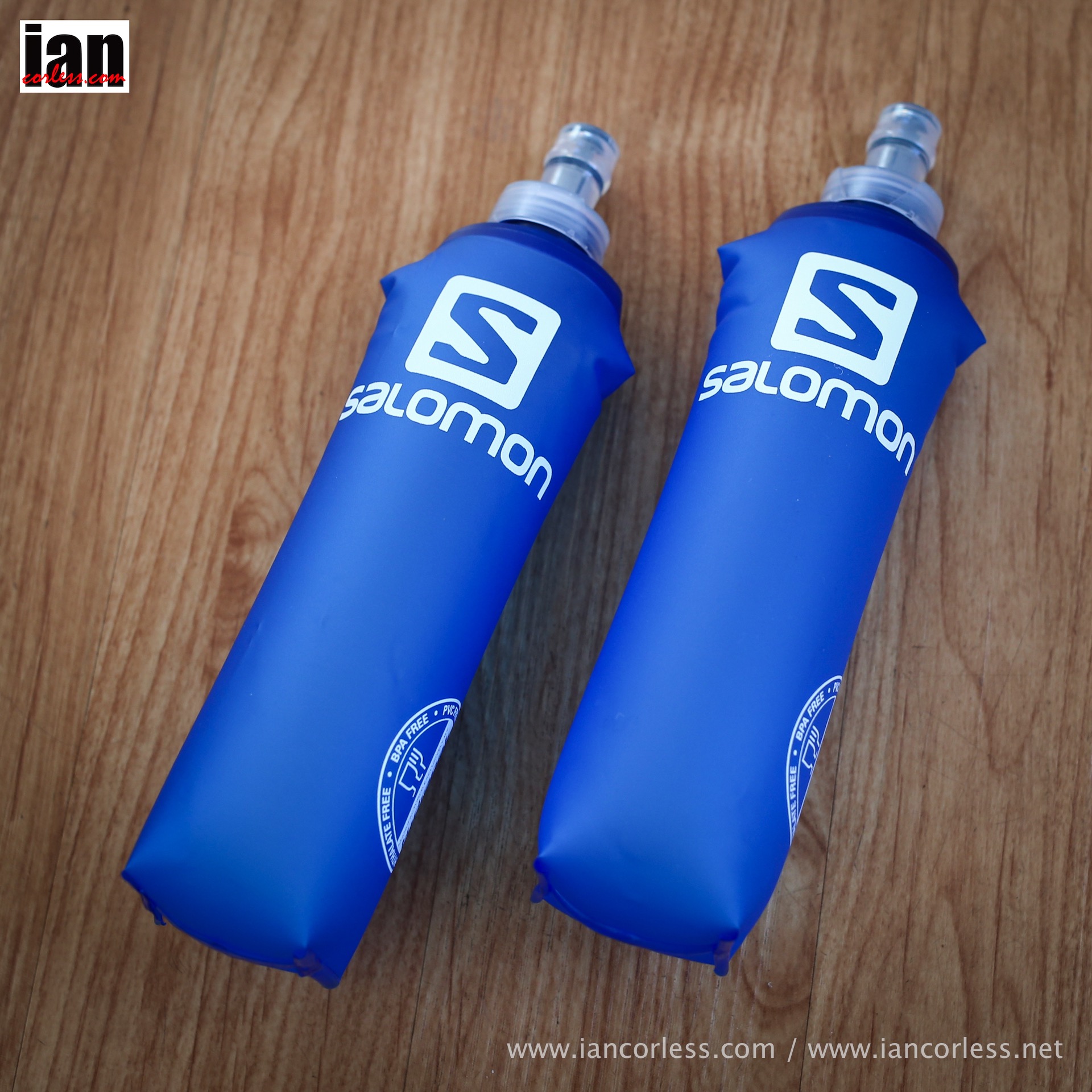
Two 500ml soft flasks in two stretch pockets.

©iancorless.com_Salomon-7704

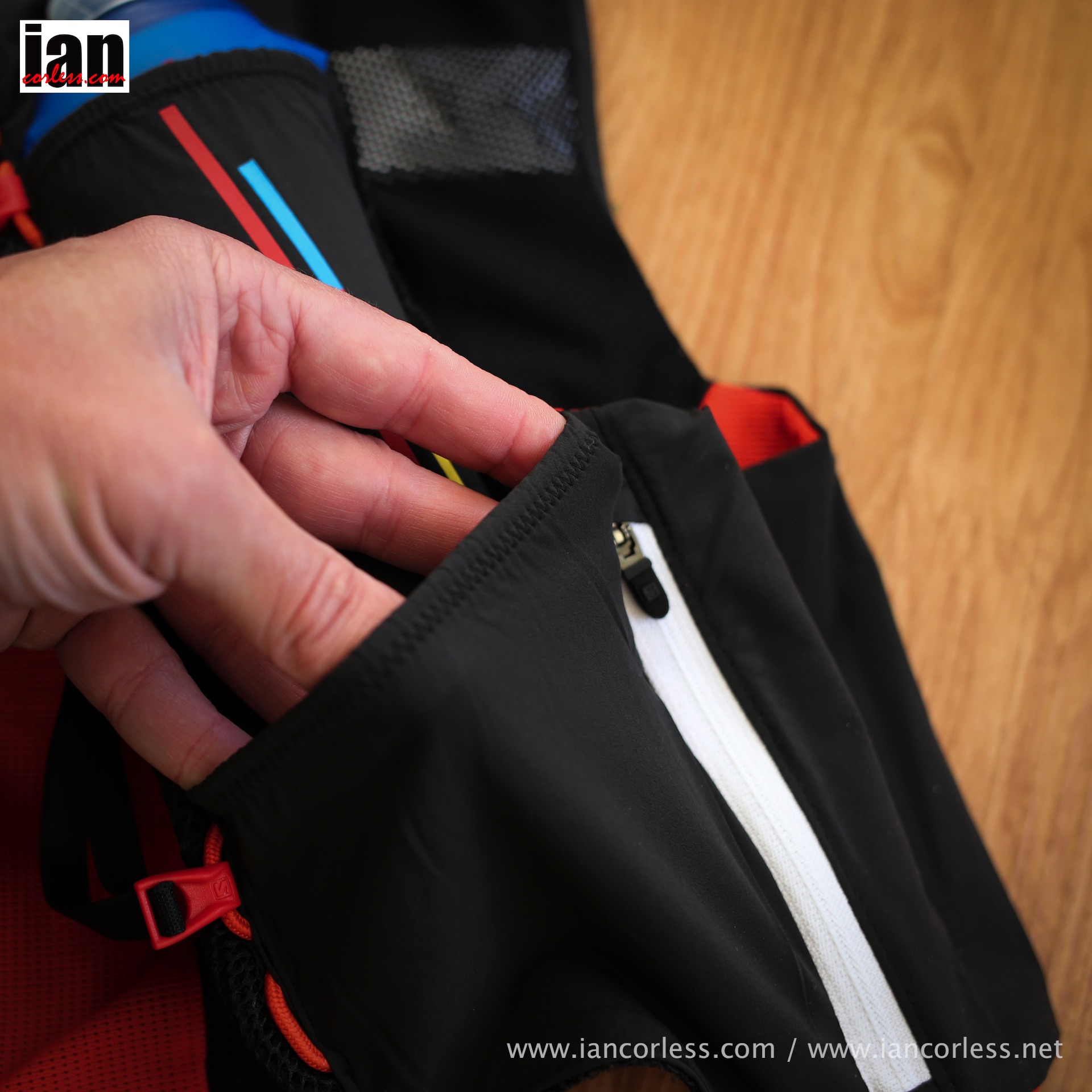
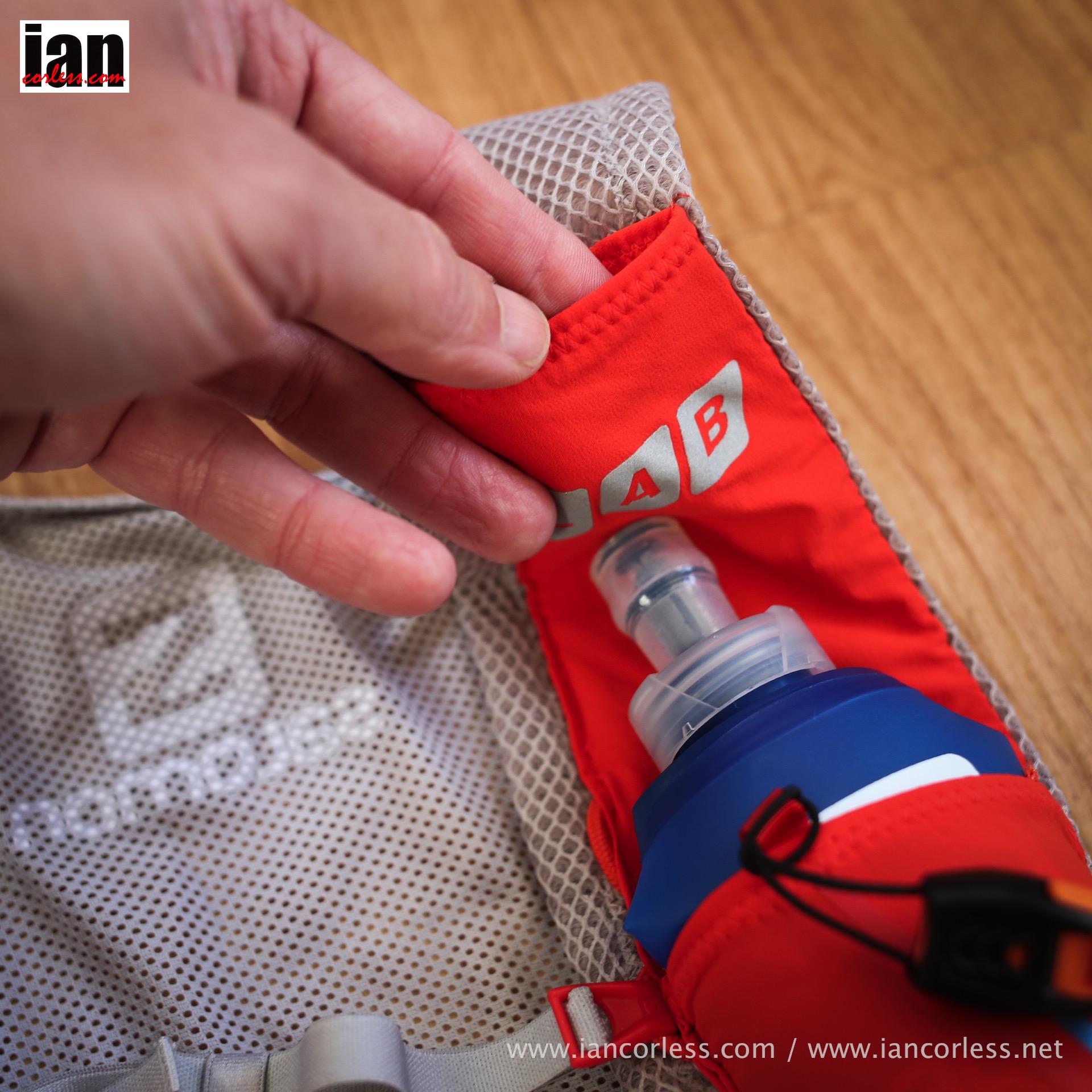
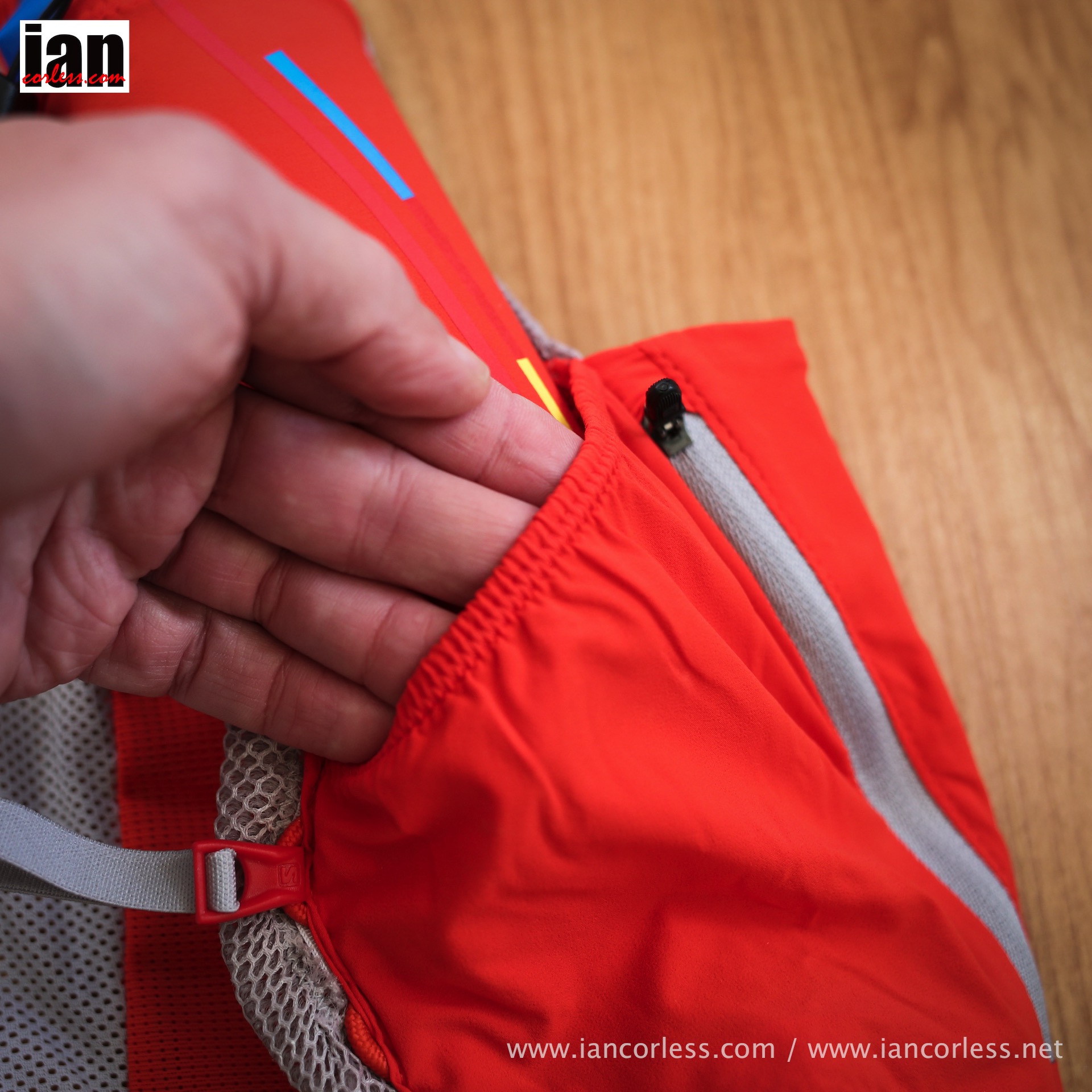
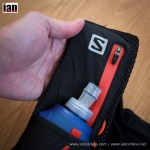
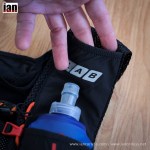
Two dump pockets (open ended but elasticated at the top) at the bottom of the soft flasks

©iancorless.com_Salomon-7720

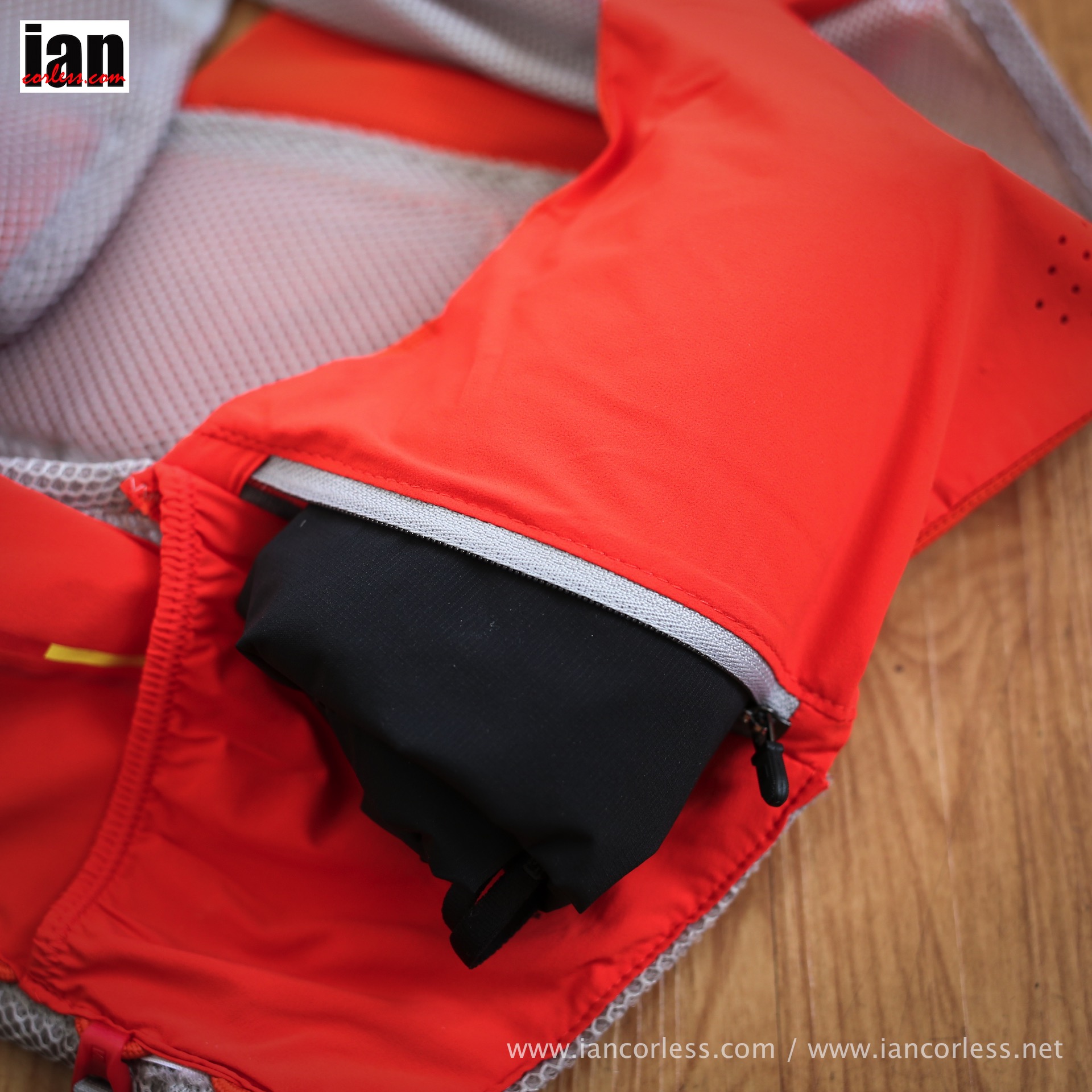
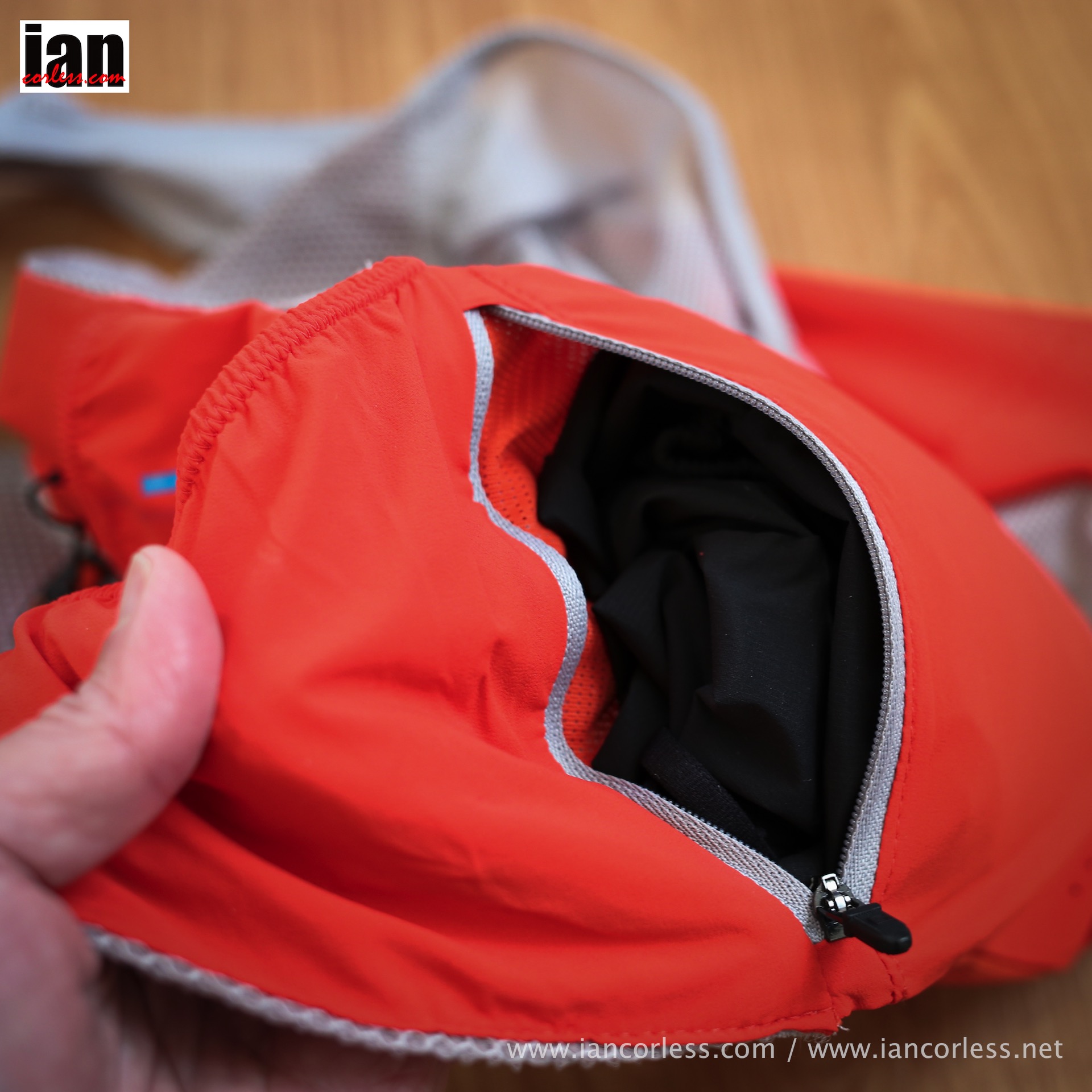
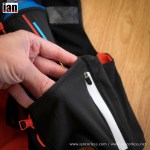
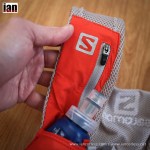
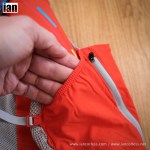
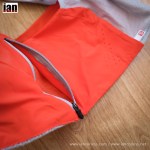
Two zipper pockets (on each side) with large capacity made from a stretch fabric.

©iancorless.com_Salomon-7722 ©iancorless.com_Salomon-7724

Open ended stretch pocket on the left shoulder strap above the bottle.

©iancorless.com_Salomon-7711


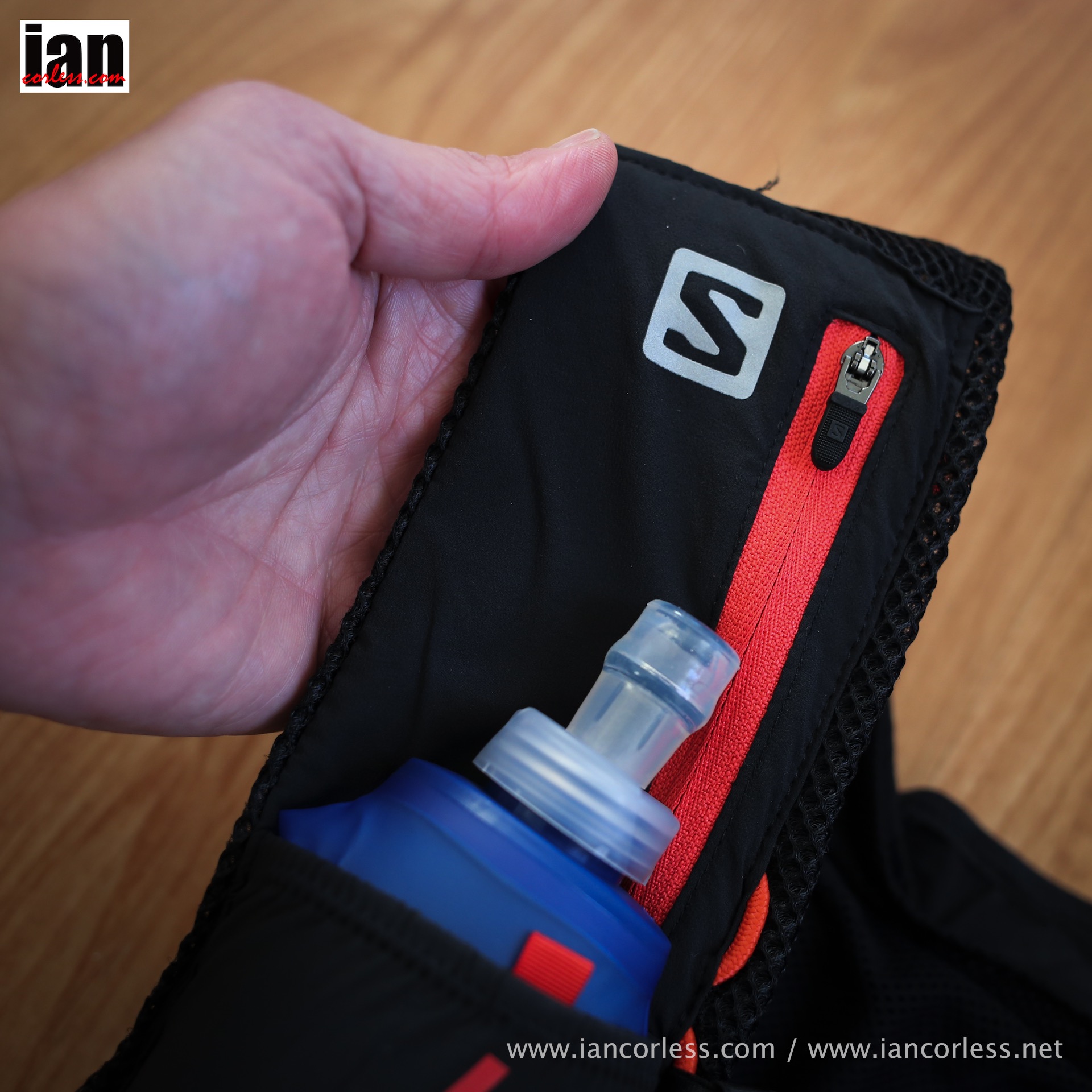
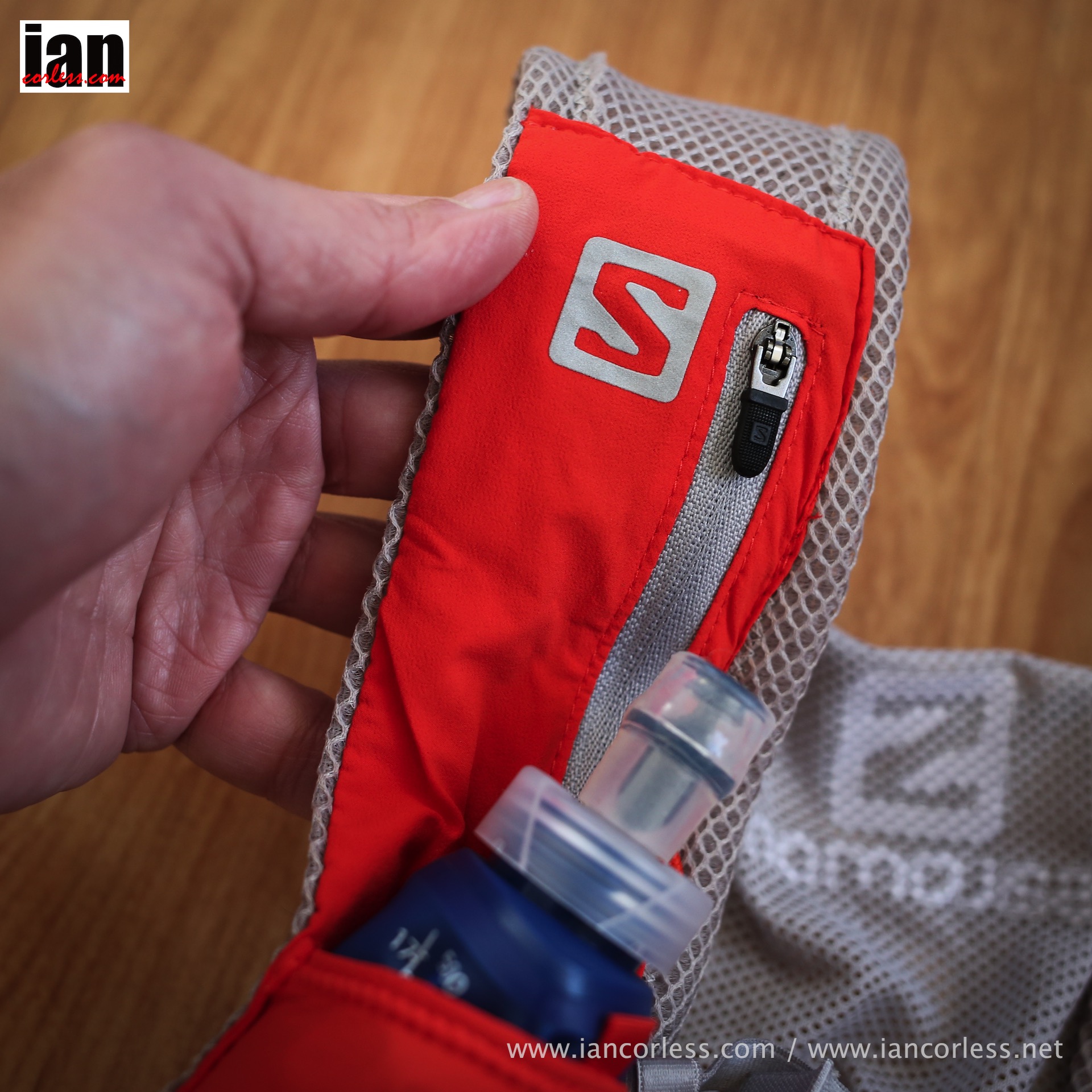
Zipper pocket on the right shoulder strap above the bottle.

©iancorless.com_Salomon-7710


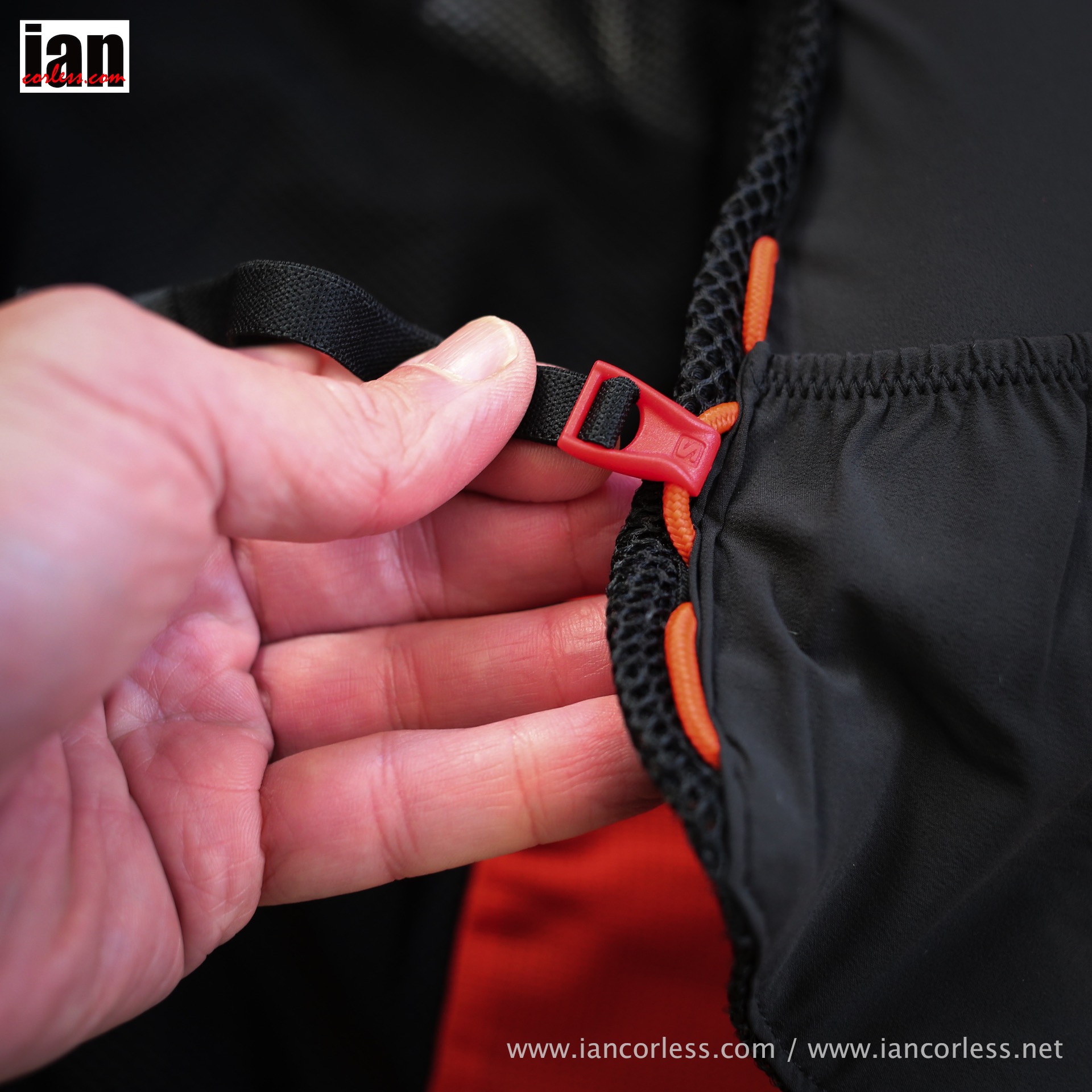
Adjustable fitting system (left to right) with three upper and lower settings.

©iancorless.com_Salomon-7713

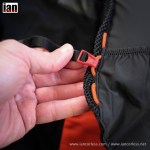
Whistle.

©iancorless.com_Salomon-7707

In Use

I have the M/L fit and it’s quite simply the most comfortable pack I have ever worn. The pack hugs the body, it does not rub and importantly under the armpits and around the neck area the cut is wide to avoid any nasty rubbing.

The soft flasks sit on the chest and do not bounce. You can drink from the bottles without removing them when required, however, I haven’t been able to do that running. I need to stop, lean over, bite the bottle, take a drink and then push on…  Soft flasks and tight fitting stretch pockets make for a tricky combination. The soft flasks and the way they fit on the body are perfect, but trying to add a full bottle back to the pocket can be tricky. With practice it does get easier and a tip is to blow back into the bottle once you have taken a drink. This inflates the bottle and makes it more rigid. I personally have always preferred bottles over bladders and soft flasks and Salomon’s positioning make this combination the best I have tested.

©iancorless.com_Salomon-7756

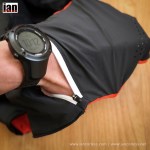
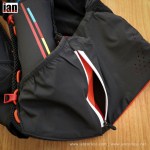
The upper zipper pocket will fit a phone or a gps device. I personally use and old style waterproof phone when racing and that fits perfectly. However, on training runs I have taken an iPhone 5 in a waterproof casing. So, capacity is ideal. The pocket is tight and stretchy and therefore whatever you put in is held tight with no bounce, another plus!

©iancorless.com_Salomon-7775

On the opposite side the open ended stretch pocket is also large enough to hold a phone but is ideally suited for maybe food items or a music player.

©iancorless.com_Salomon-7772

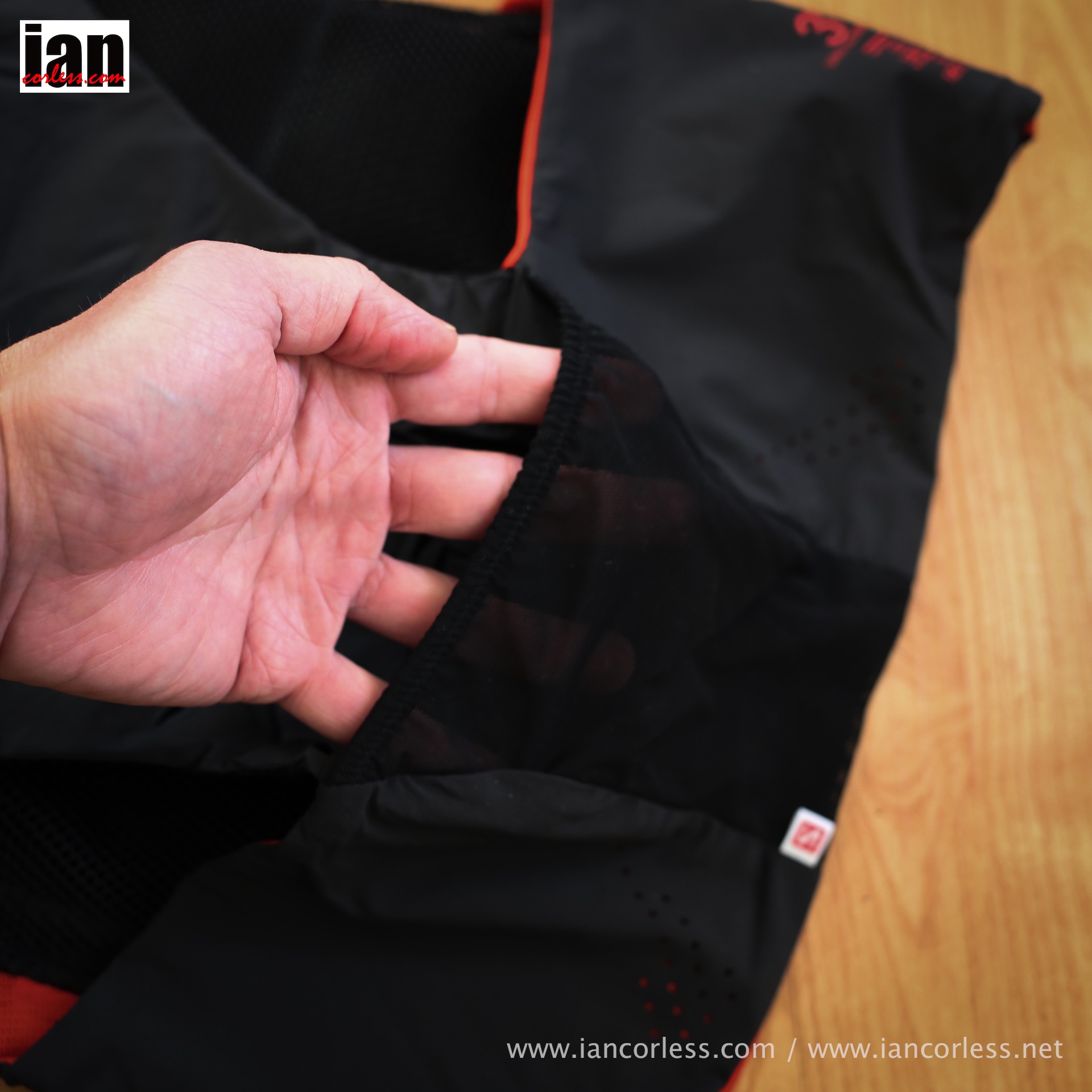
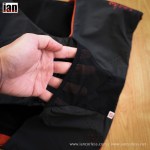
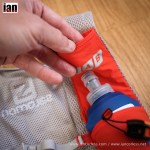
The two open ended dump pockets on either side of the pack below the bottles are large enough to hold multiple gels and bars and/ or items such as gloves, hat, buff or anything similar. To give you an idea of capacity, I could fit a beanie and gloves in one side and four/ five gels or bars on the other side. Ultimately it means you have plenty of room for energy when racing. Access is dead easy. Just put your hand in and pull the items out.

©iancorless.com_Salomon-7779

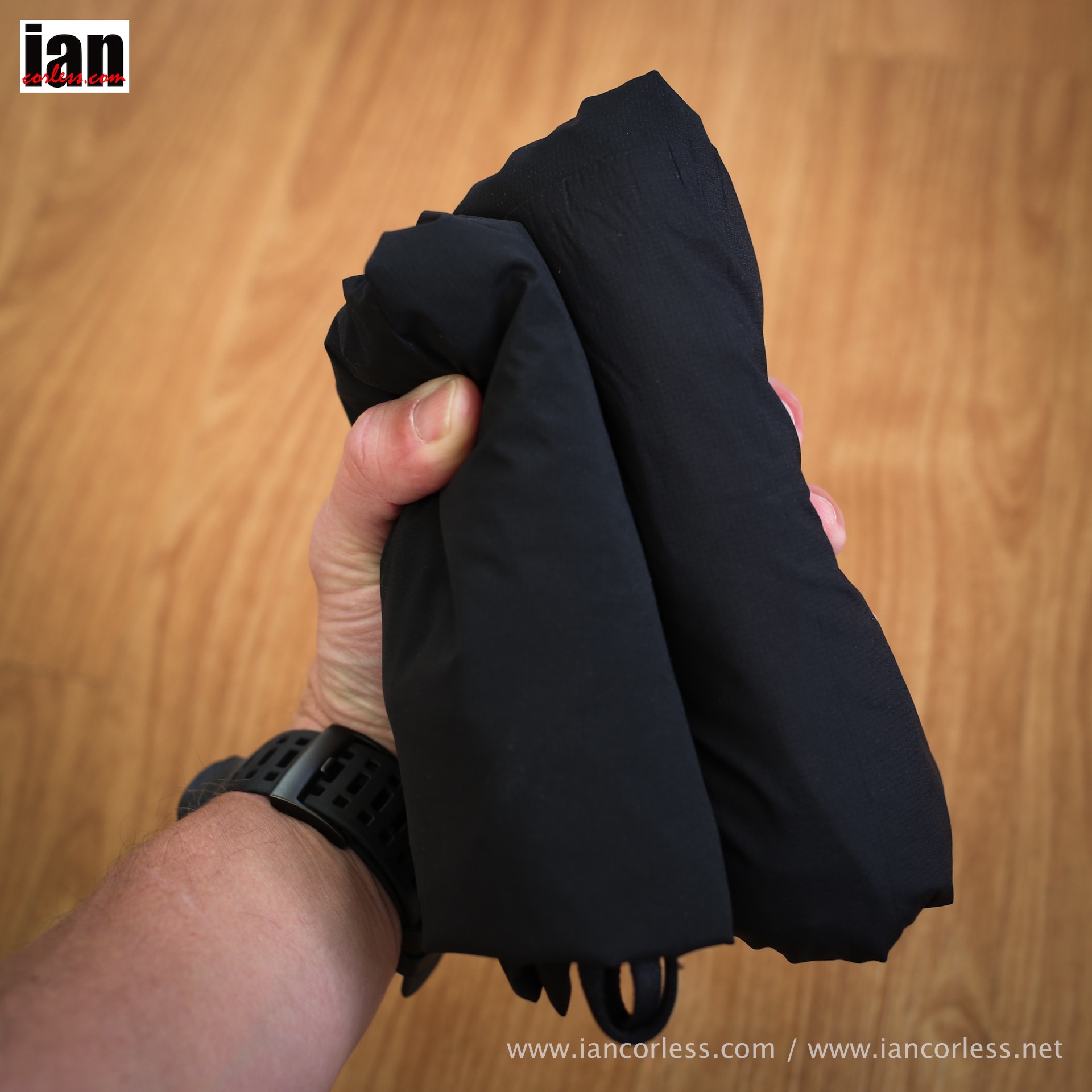
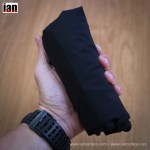
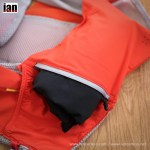
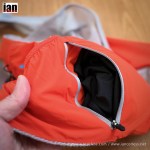
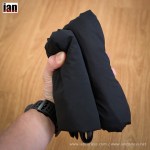
The two zipper pockets are the secret weapon on both packs. I am amazed at how spacious these pockets are. Depending on the race you are doing and also dependant on your own personal preferences; the zipper pockets will actually hold a taped seam waterproof jacket in one side and taped seam waterproof trousers in the other side!

©iancorless.com_Salomon-7832 ©iancorless.com_Salomon-7836


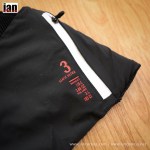
Salomon provided me the  S-LAB HYBRID JACKET and S-LAB HYBRID PANTS (both medium) to test (review to follow later) and these items folded up and fitted in both packs perfectly.

©iancorless.com_Salomon-7847

Considering the SENSE SET pack is only 1L capacity, this is remarkable. Lets just look at the facts, you can fit in:

  • Jacket
  • Trousers
  • Phone
  • 1L of fluid
  • 4-10 bars or gels
  • Hat and gloves
  • and then other extras such as Mp3, space blanket or other small items.

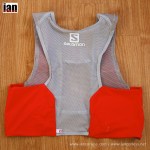
The SENSE ULTRA SET adds extra capacity at the rear in the form of two pockets. The SENSE SET is just a highly breathable and lightweight pack with no extras.

©iancorless.com_Salomon-7793

A ‘kangaroo pocket’ on the on the lower third of the rear of the pack provides an easy access open ended pocket that can be added to or taken from whilst moving. The pocket is quite small and would take a windproof jacket or food items.

©iancorless.com_Salomon-7732


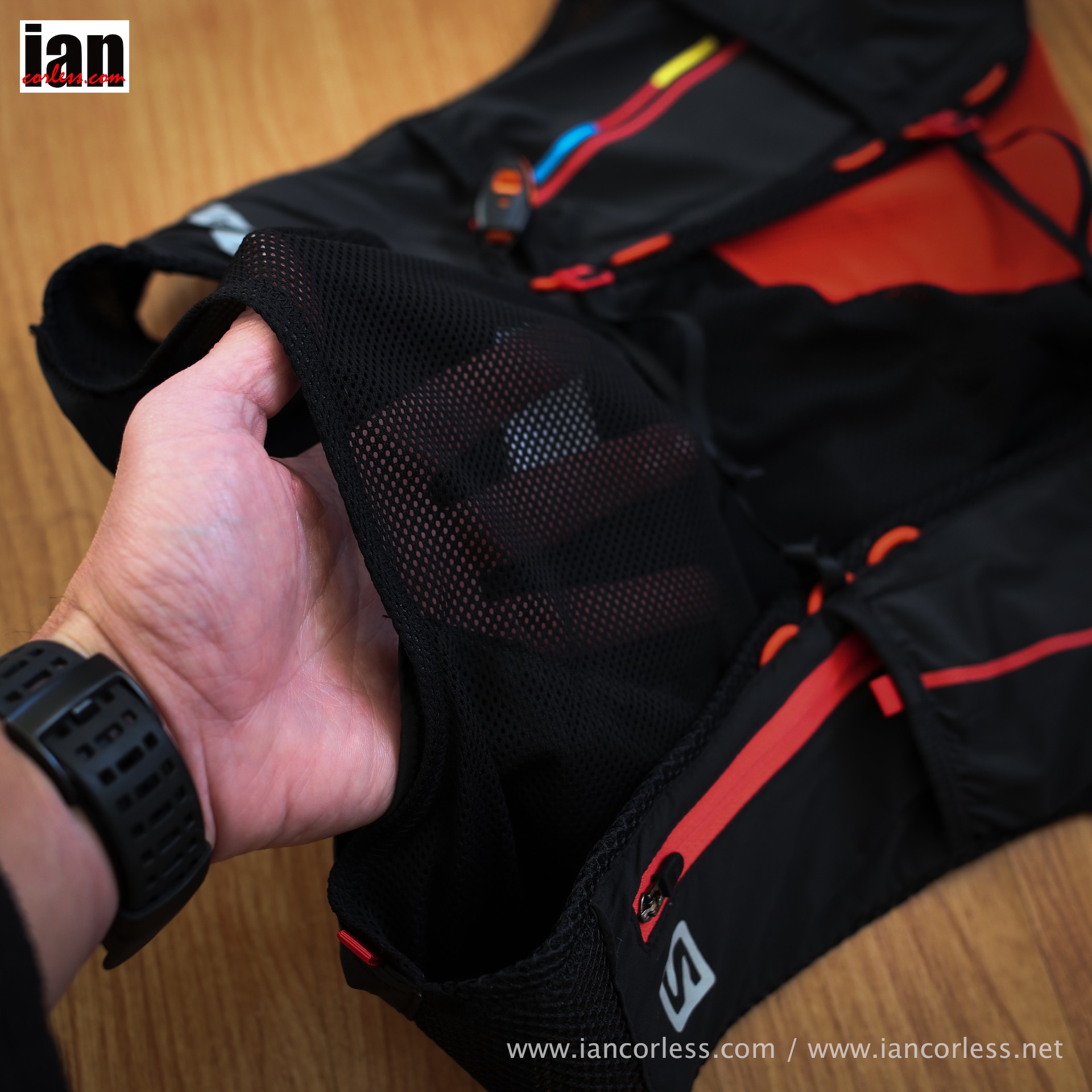
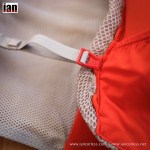
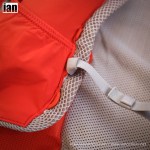
The mesh back panel is actually two layers and makes an open ended deep pocket that can actually be accessed without removing the pack. It’s surprisingly roomy and should you decide not to add a jacket and trousers to the zipper pockets, this pocket can hold both items. Yes, it’s that roomy!

When running, it was easy to reach over, place my hand in the pocket and pull out my jacket. Of course, it was easier to do this if I stopped BUT this vest is very much designed about moving fast and light. It’s a performance product and as such, should you have the need to be quick… this product will allow you that comfort!

©iancorless.com_Salomon-7748

©iancorless.com_Salomon-7729

I have reviewed many products and last year I reviewed the stripped down inov-8 race vest (review here). This for me was a great product. I loved the feel of it, I loved the capacity and I loved its usability when running. For me though, Salomon have upped the game with the SENSE ULTRA SET and the SENSE SET and produced two sublime products that are a joy to wear and use.

Considering the minimal differences between the two vests, I would almost certainly recommend that the SENSE ULTRA SET is the ideal purchase. From Salomon’s perspective, it almost feels an indulgence to have a 1L and 3L version. The added cost and added capacity of the 3L makes far more long term sense for me and lets face it, if you are running really long races, you will probably have the 12L product (or similar) anyway.

On a final note, I am seriously impressed with the capacity of both packs. The SENSE SET at 1L holds a ridiculous amount of kit for something so minimal that I question if 1L capacity is correct? The SENSE ULTRA SET wouldn’t hold all the required items for a race like UTMB but it wouldn’t come far off if you were keeping items to a minimum. That said, the SENSE ULTRA SET makes a perfect and ideal pack for racing any distance (even 100-miles) when all you need is some liquid, food, jacket, trousers, hat, gloves, space blanket, phone and a few other small items. It’s arguably the perfect pack!

Pros:

  1. Soft flasks are a dream
  2. Capacity on the front of both packs is incredible
  3. Zipper pocket is great for valuable items
  4. Open ended dump pockets great for items that you need all the time – food, hat, gloves and so on.
  5. Zipper pockets have amazing capacity
  6. You could wear the products against your skin
  7. On the SENSE ULTRA SET the rear capacity is superb and a real eye opener
  8. Weight is amazing
  9. Price is good £100 for SENSE ULTRA SET and £85 for SENSE SET

Cons:

  1. Soft flasks can be tricky to get back in the open ended pockets
  2. I am not sure how the pack would fit for lady users. The bottles would potentially sit in just the wrong place?
  3. The ‘kangaroo’ pocket on the SENSE ULTRA SET is small
  4. These are lightweight products and durability ‘may’ be an issue?

Conclusion:

I love these two packs. They actually make wearing a pack a pleasure rather than a chore and that is a real bonus. Capacity is quite mind blowing in both products and the SENSE ULTRA SET makes the most logical purchase choice as it provides more usage options. I actually found it difficult to come up with ‘cons’ for these packs they are that good!

Check out Salomon HERE


Salomon LogoSALOMON S-LAB SENSE ULTRA SET
©iancorless.com_Salomon-7704

Ultra-lightweight running pack designed by Salomon Athletes. The Salomon S-LAB Sense Ultra Set weighs in at 110g and is designed to carry the bare essentials in absolute comfort with a 3L capacity.

  • Motion fit trail
  • Sensifit
  • Soft twin link
  • 2 zippered pockets
  • 1 chest pocket
  • 2 soft flask
  • Zipper phone pocket
  • 2 stretch pockets
  • Back compartment
  • Kangaroo pocket
  • soft rim
  • Reflective
  • Whistle

SALOMON S-LAB SENSE SET

©iancorless.com_Salomon-7759

Ultra-lightweight running pack designed by Salomon Athletes. The Salomon S-LAB Sense Set weighs in at under 100g and is designed to carry 1L of the absolute bare essentials.


  • Motion fit trail
  • Sensifit
  • Soft twin link
  • 2 zippered pockets
  • 1 chest pocket
  • 2 soft flask
  • Zipper phone pocket
  • 2 stretch pockets
  • soft rim
  • Reflective
  • Whistle