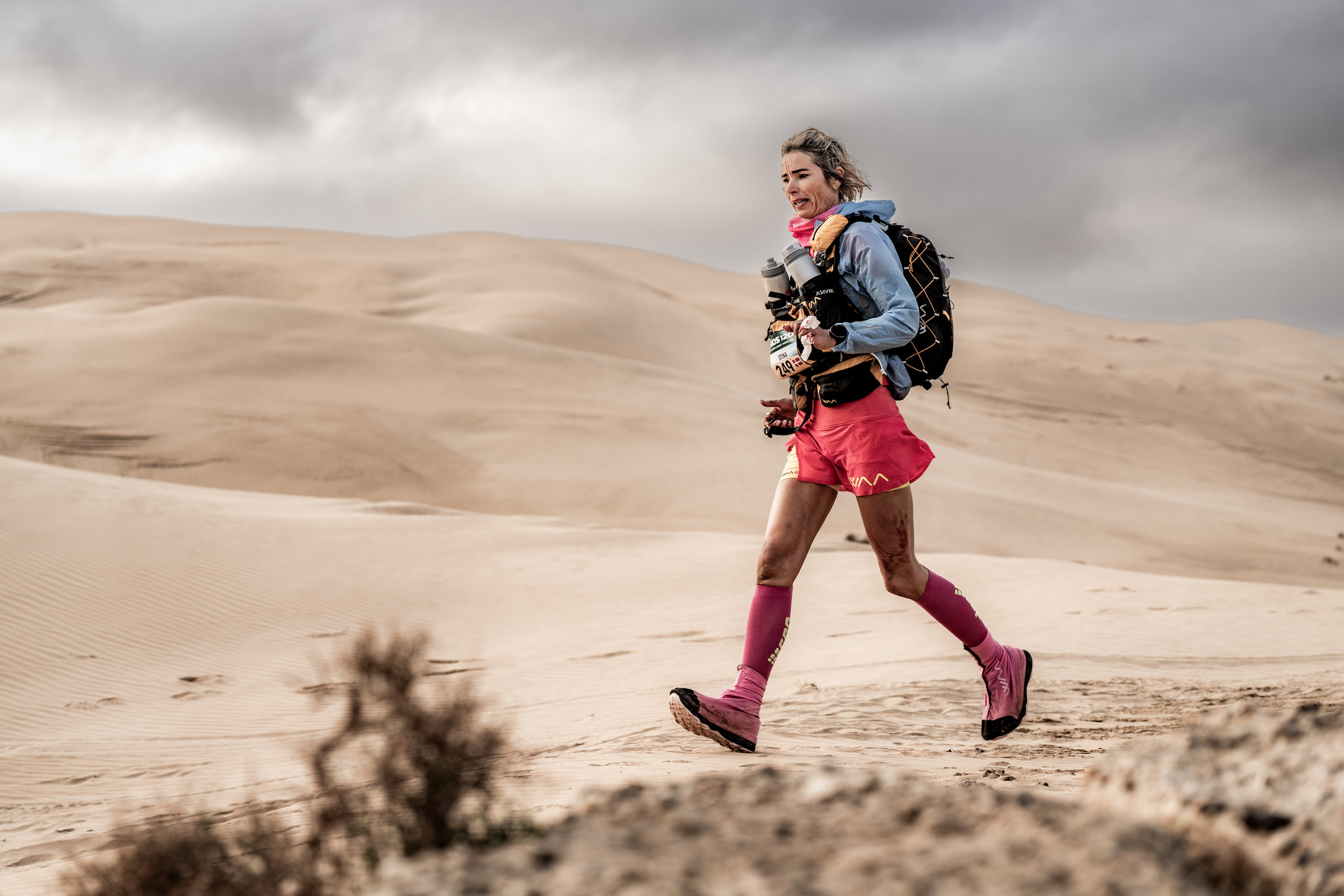
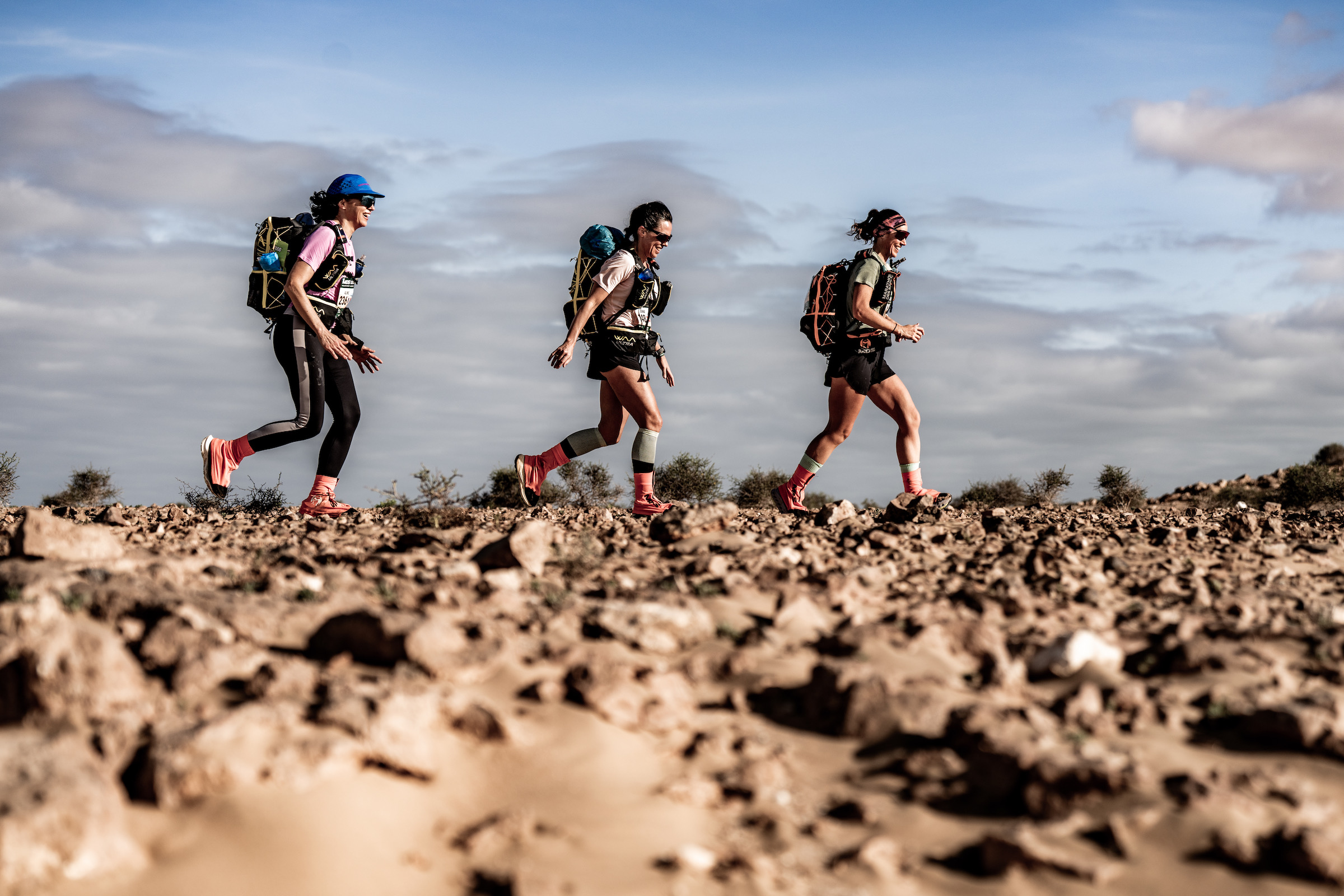
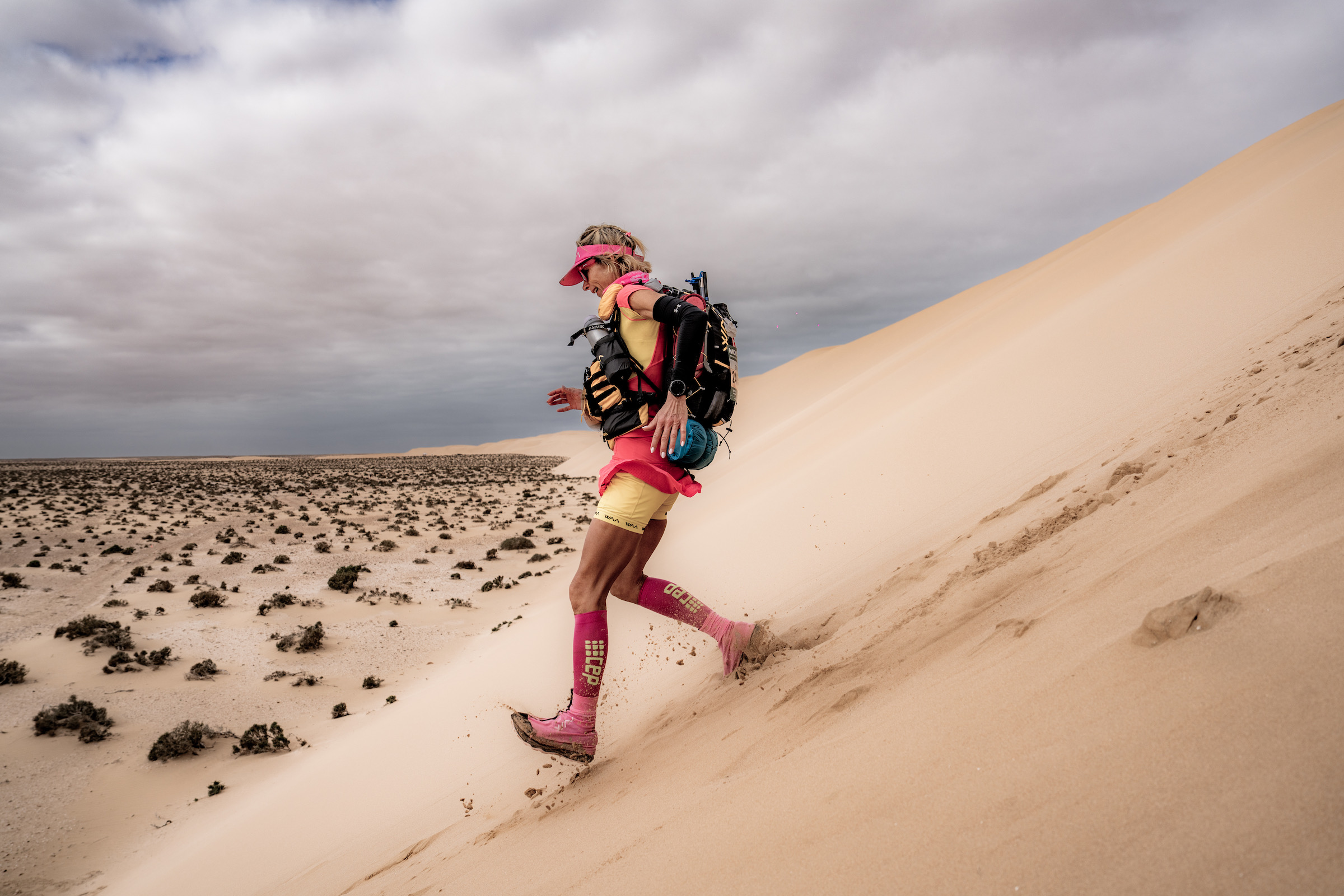
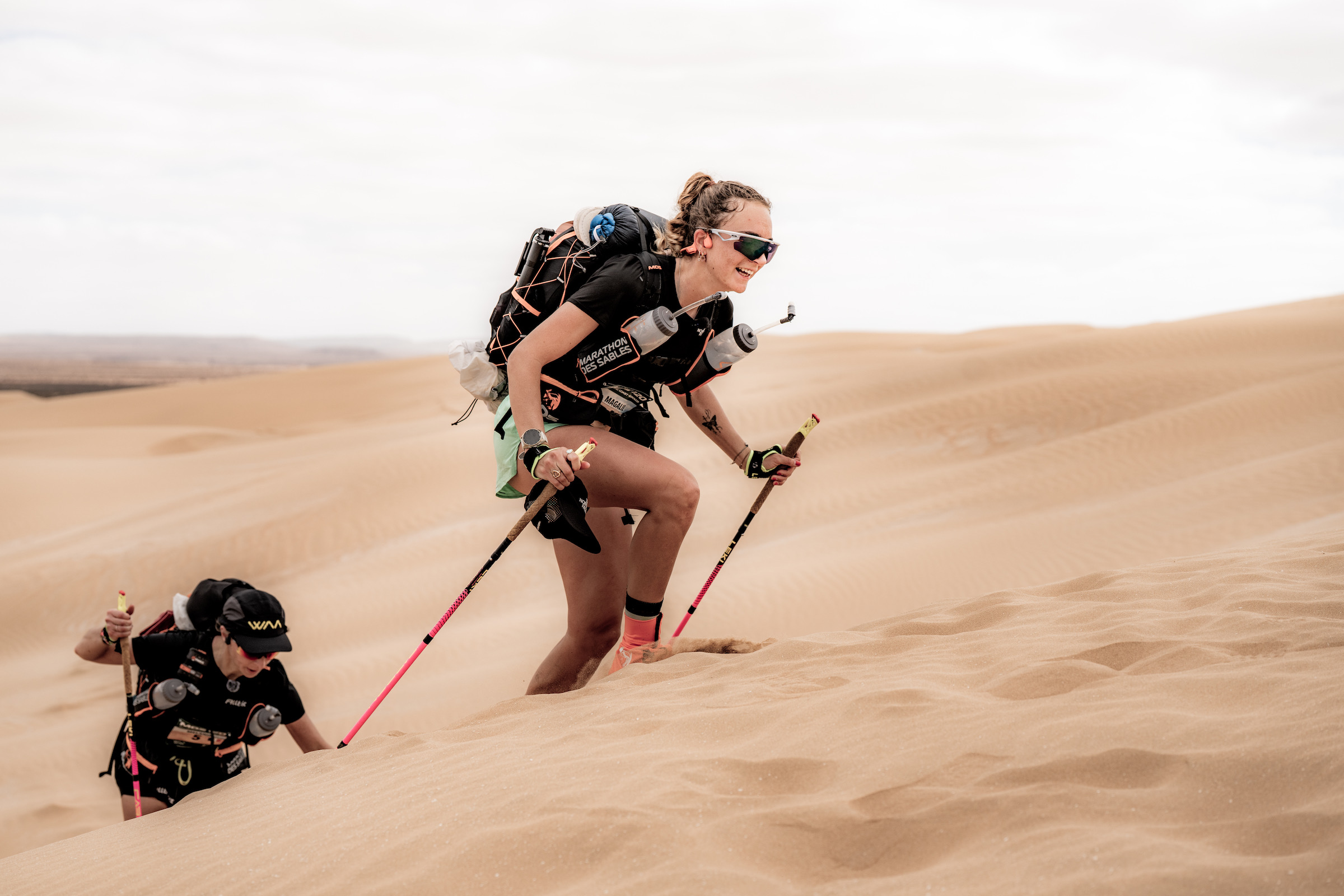
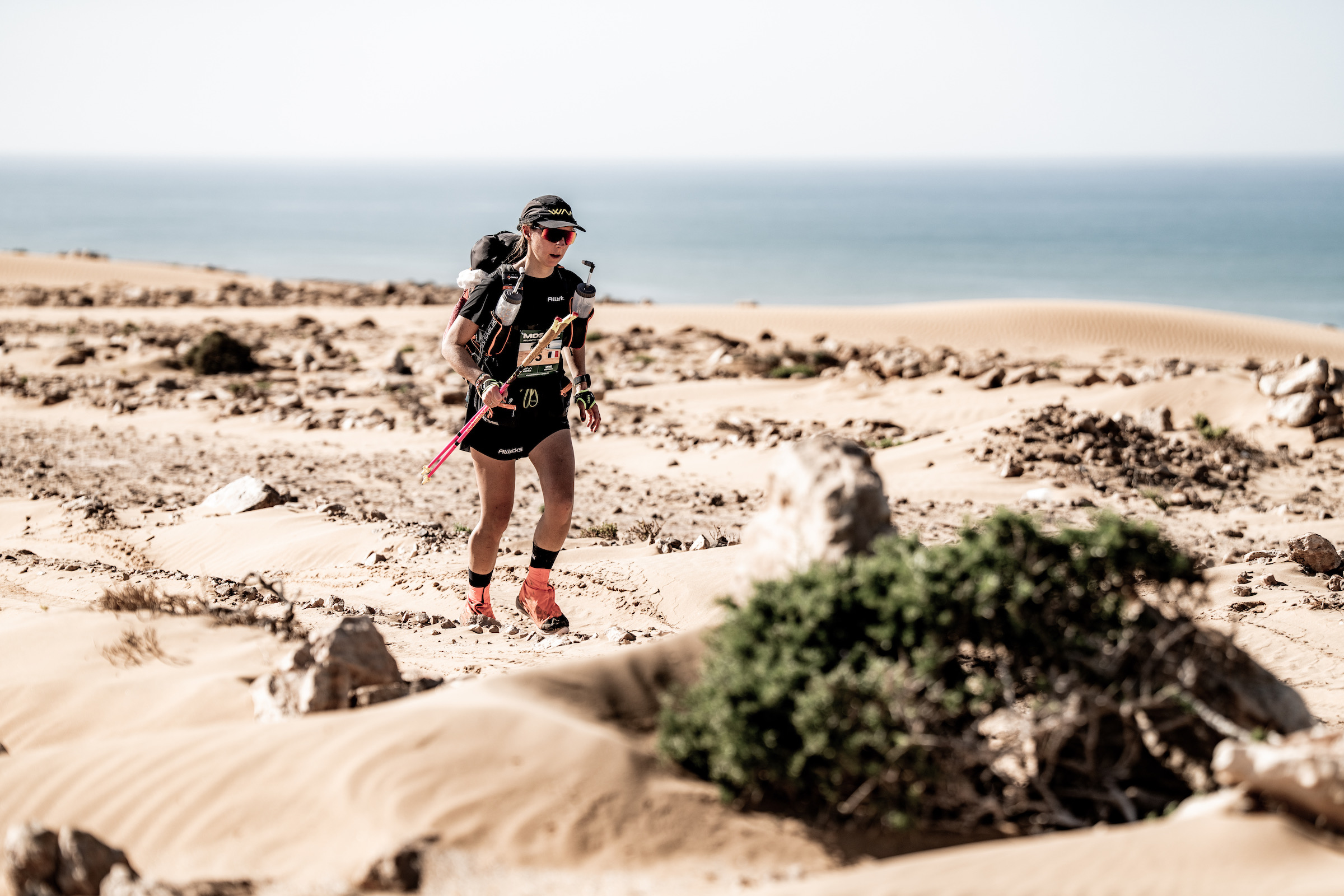
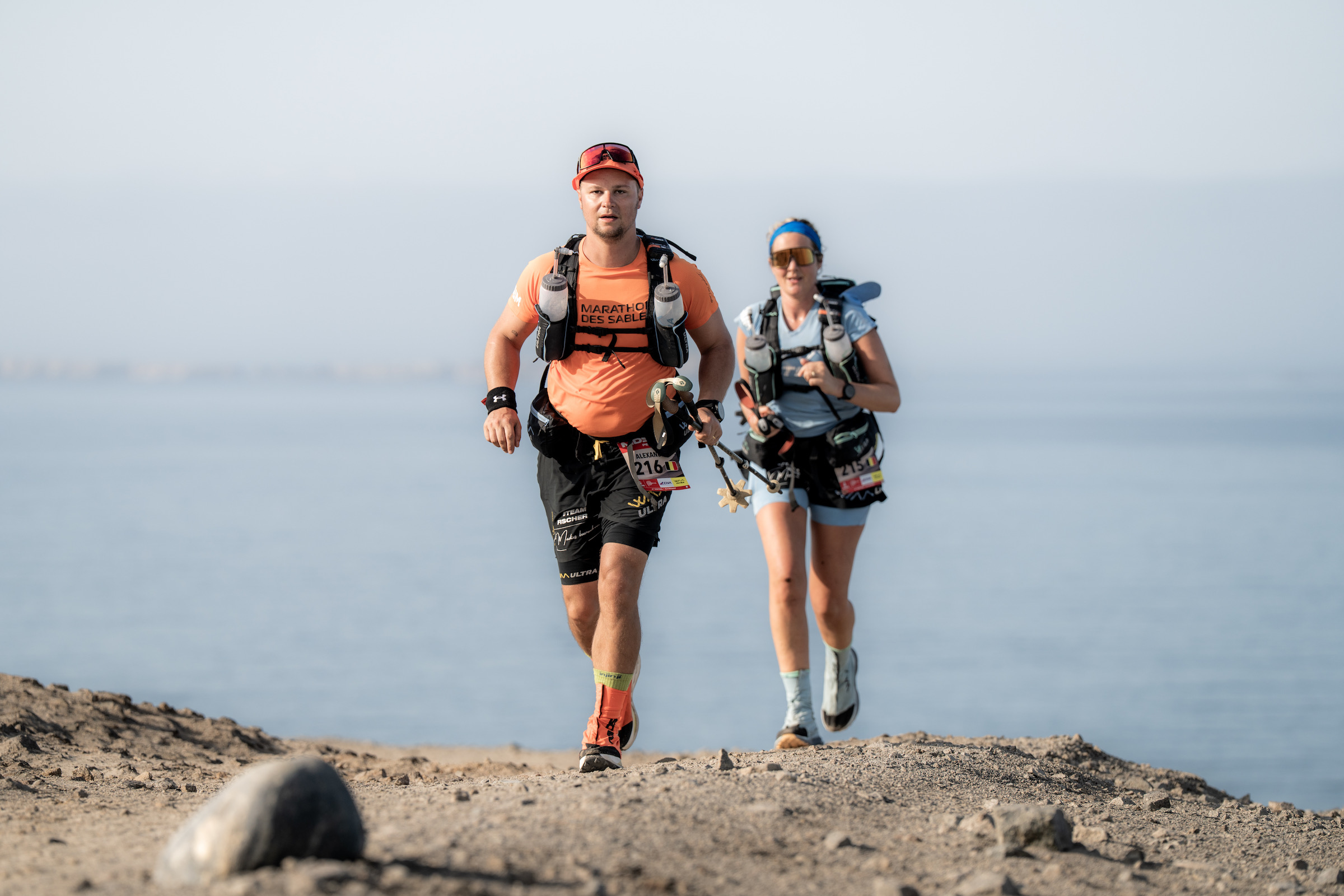
Stage 3 of the MDS 120 Atlantic Coast wasn’t about pace. It was about heart. Twenty-seven kilometres stood between every runner and the finish. The final stage. The one that decides how the story ends.
The day opened under a heavy sky. Low cloud hung over the coast, light rain drifting in and out, just enough to cool the skin and sharpen the mood. It felt serious. Proper. A stage that demanded respect.
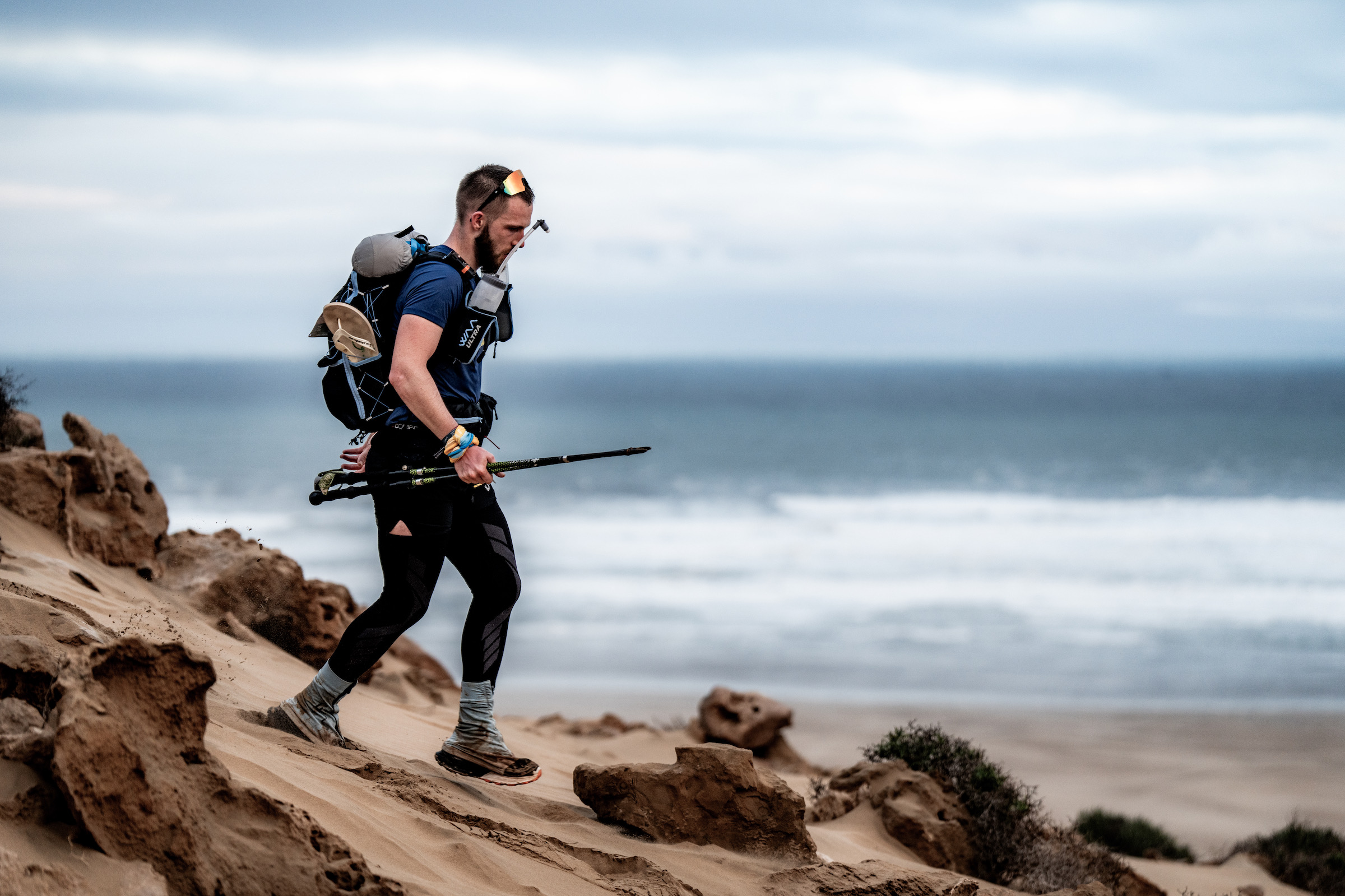
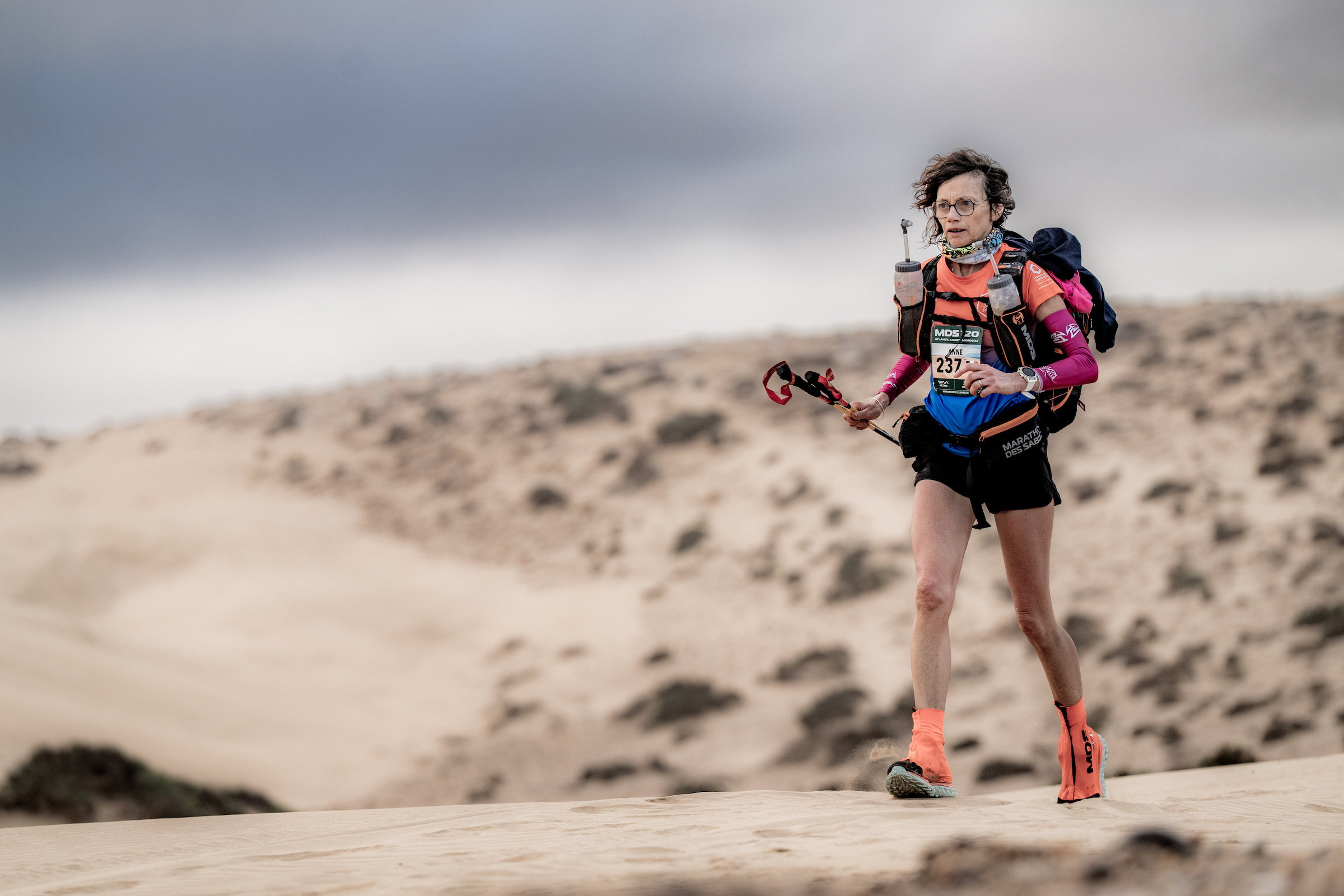
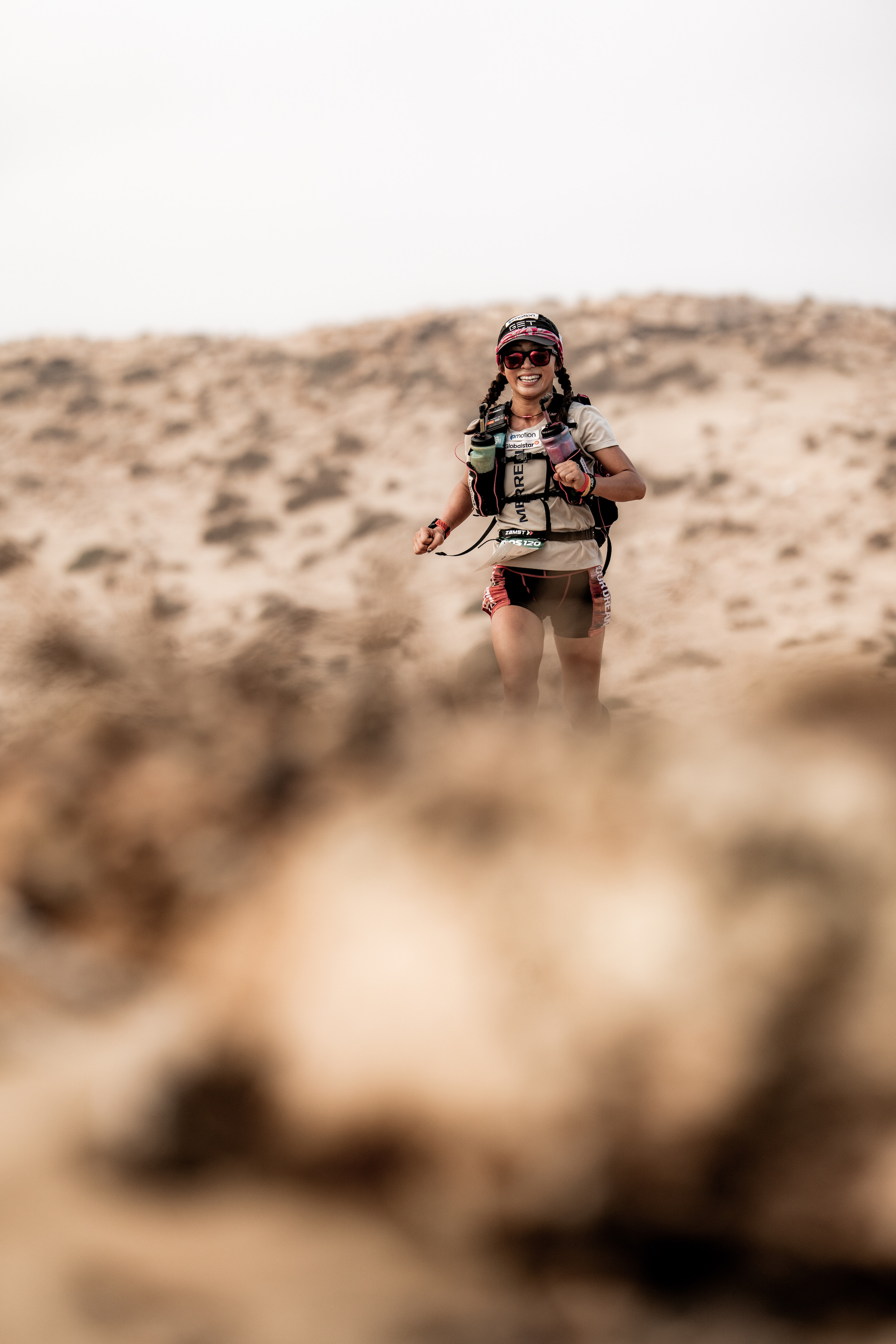
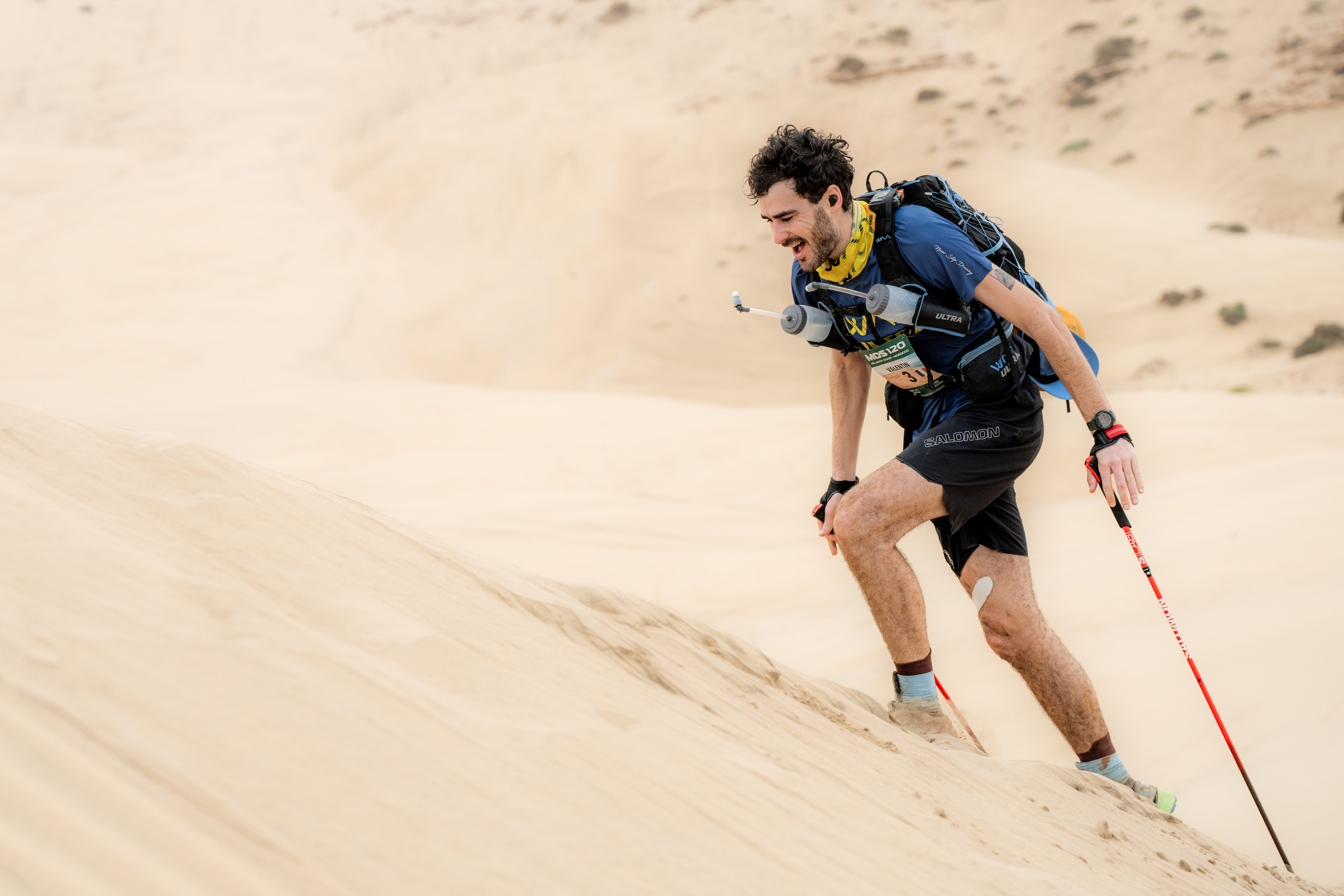
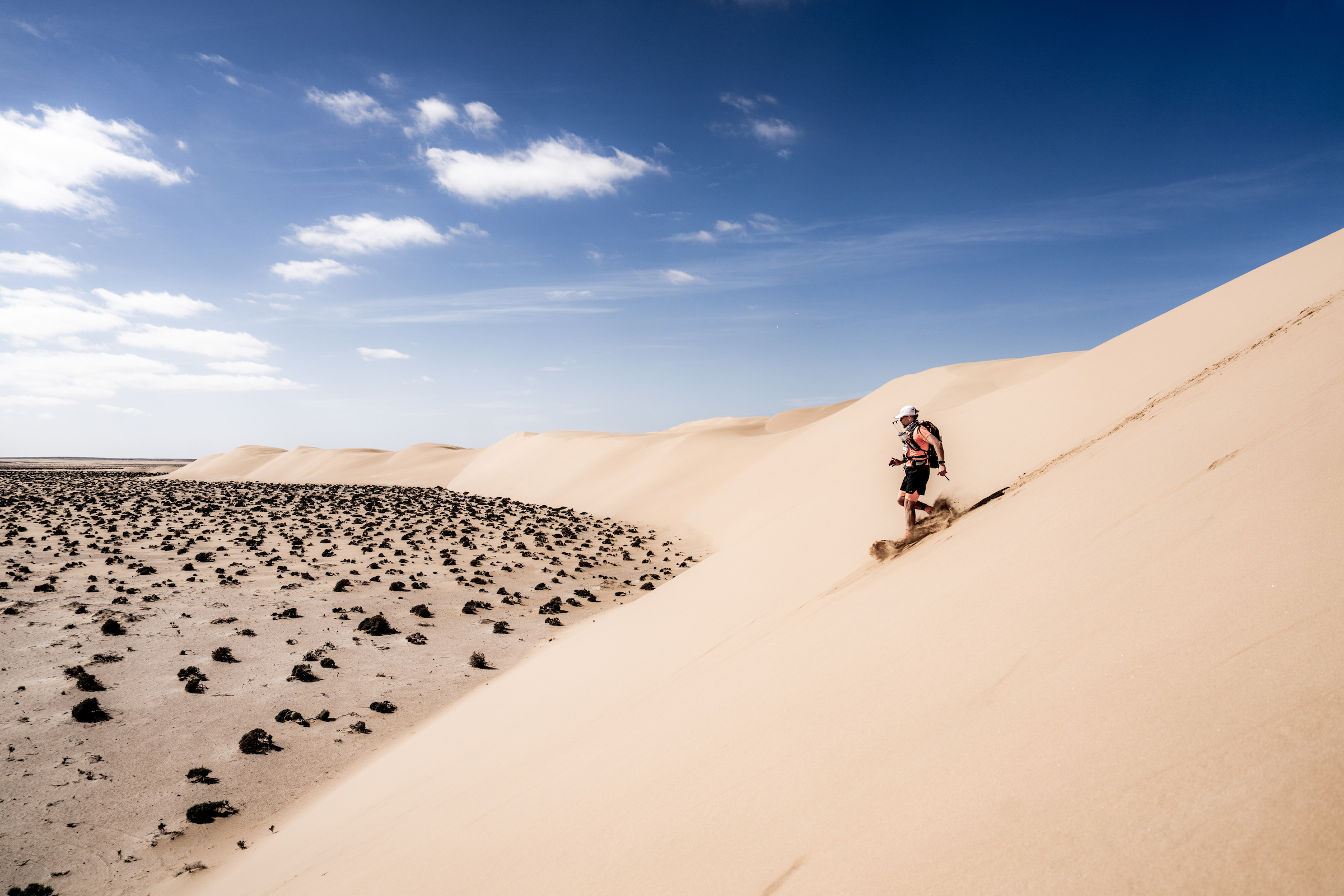
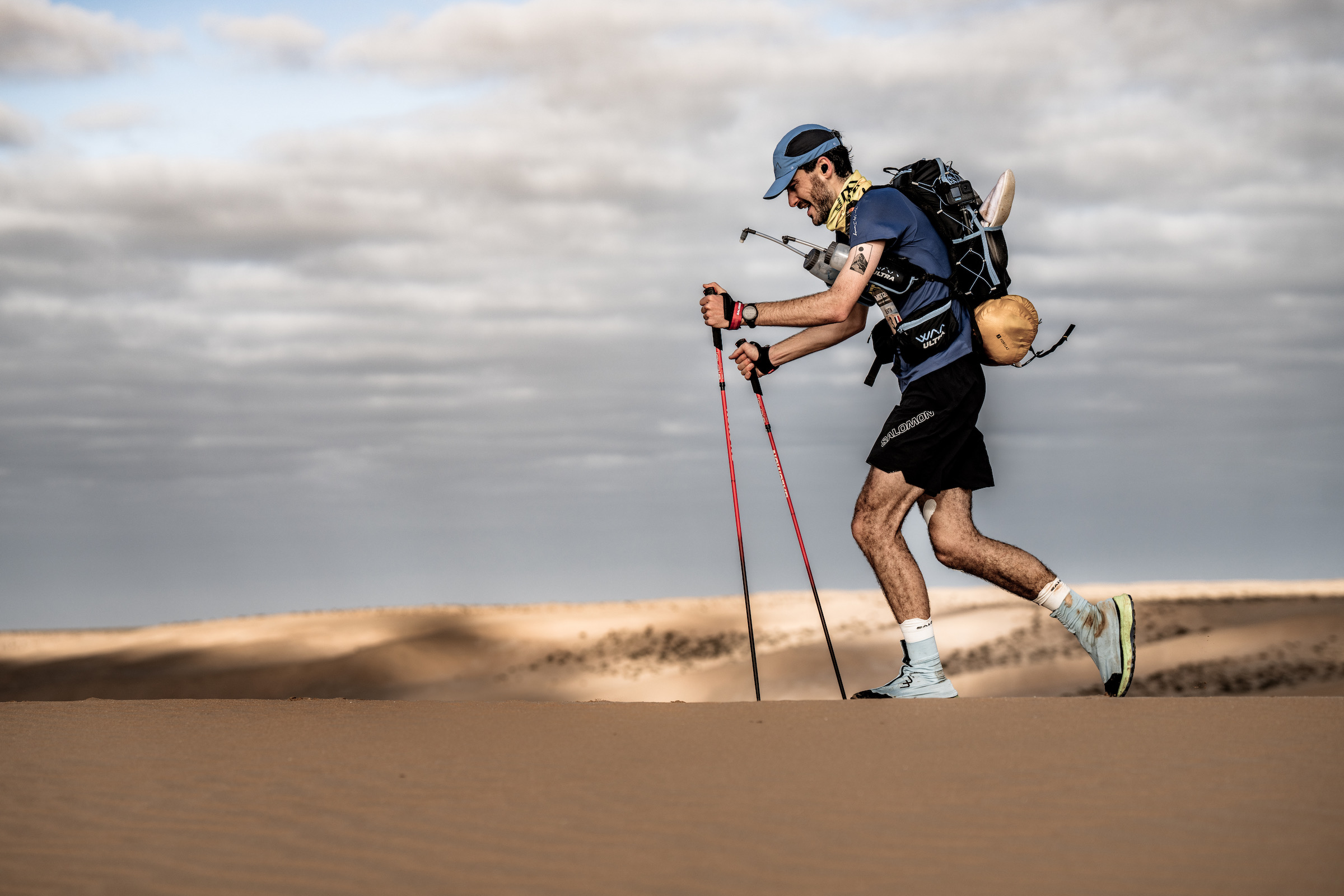
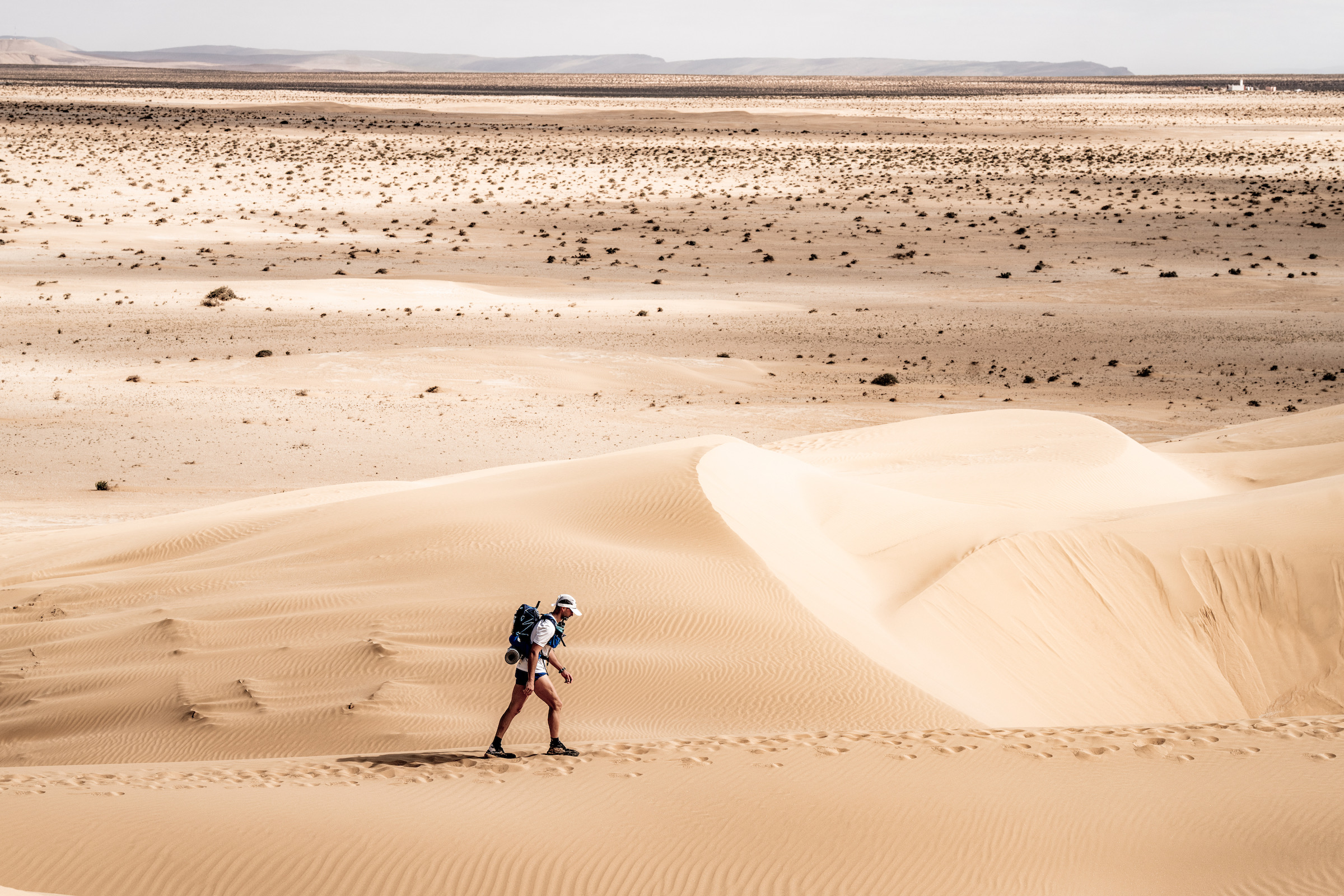
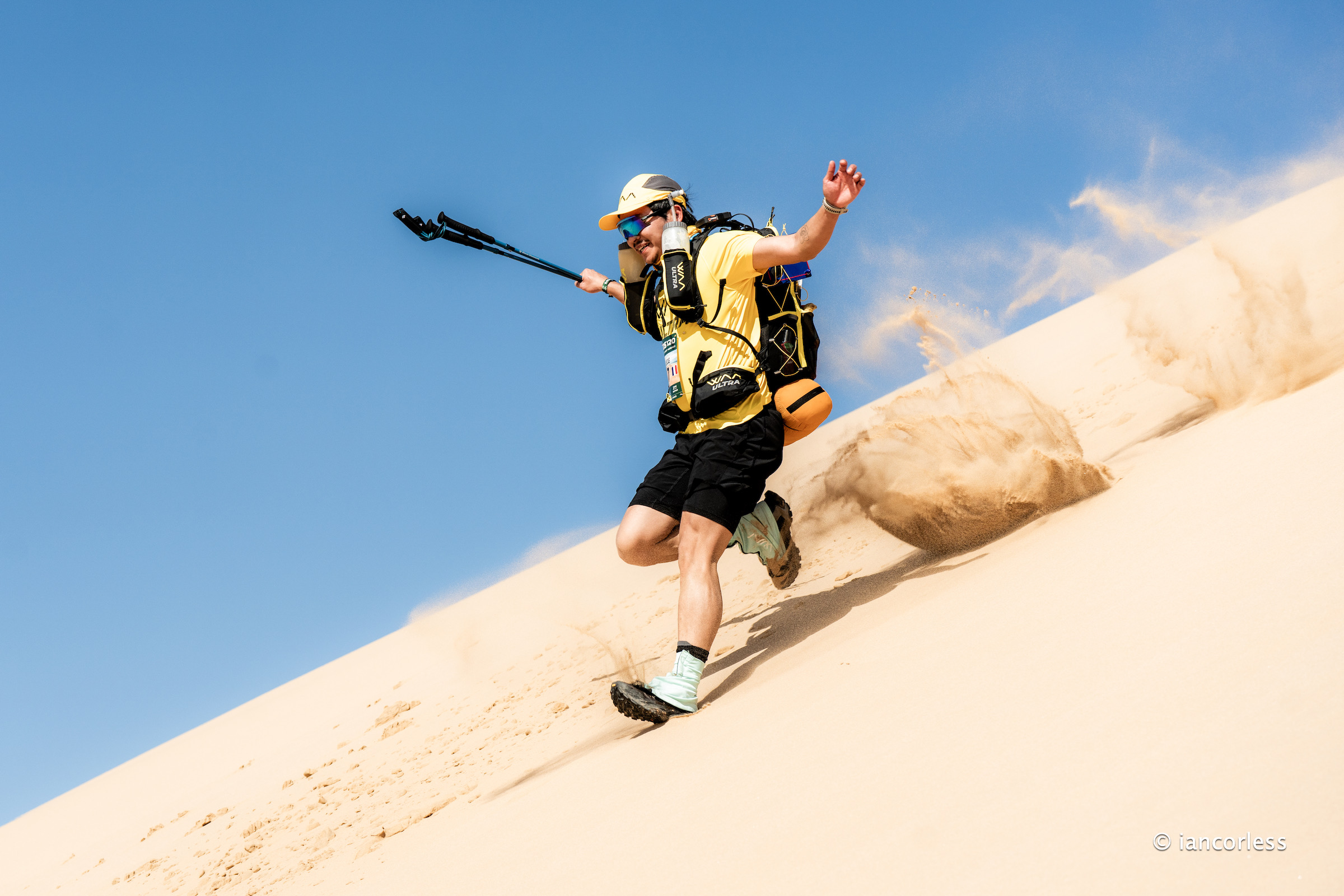
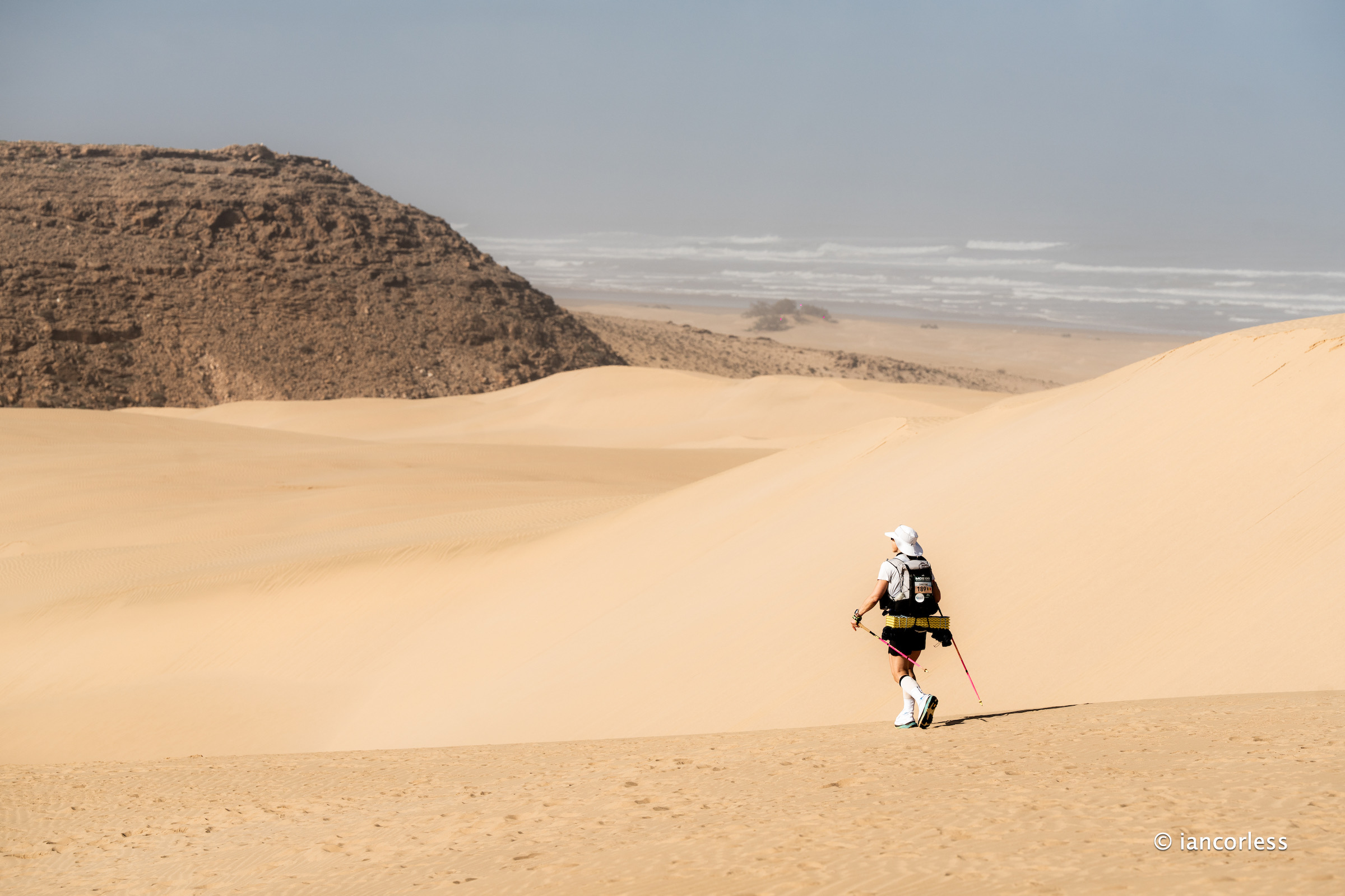
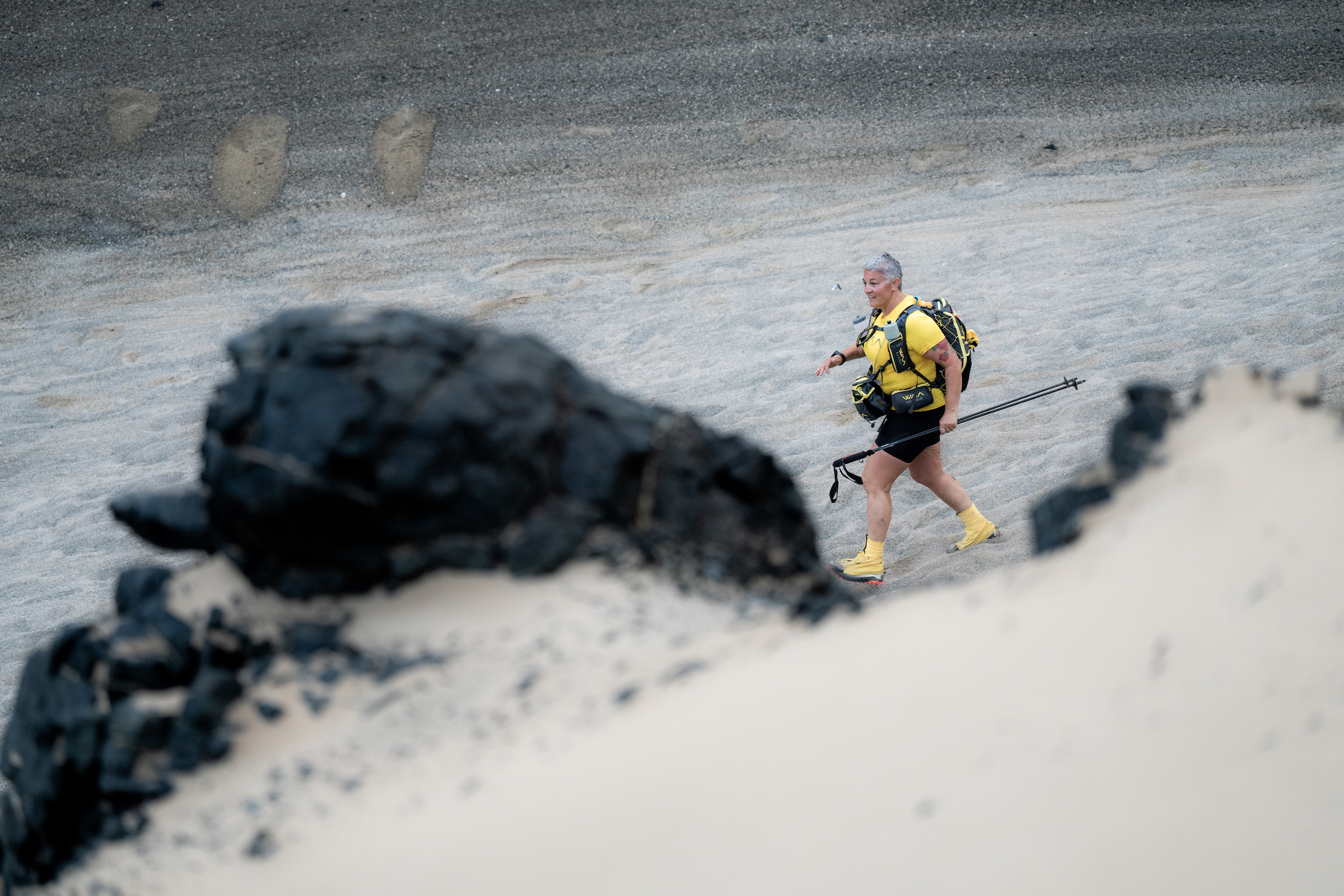
From the first steps, the terrain made its intentions clear. Soft sand soaked up energy. Feet sank, calves burned, rhythm disappeared. Progress came the hard way, one honest stride at a time.
Then there was the Atlantic – Wild. Loud. Unapologetic. The ocean pushed high up the beach, swallowing the firm running line and forcing everyone into deeper, slower sand. The final ten kilometres became a test of patience and grit. Shoes heavy with water. Legs tight. Eyes fixed forward. The sound of the waves constant, relentless, daring you to stop.
Every runner carried their own journey into those final kilometres. Some had 70 kilometres in their legs. Others 100. Many the full 120. Different distances, same effort. Same doubts. Same determination.
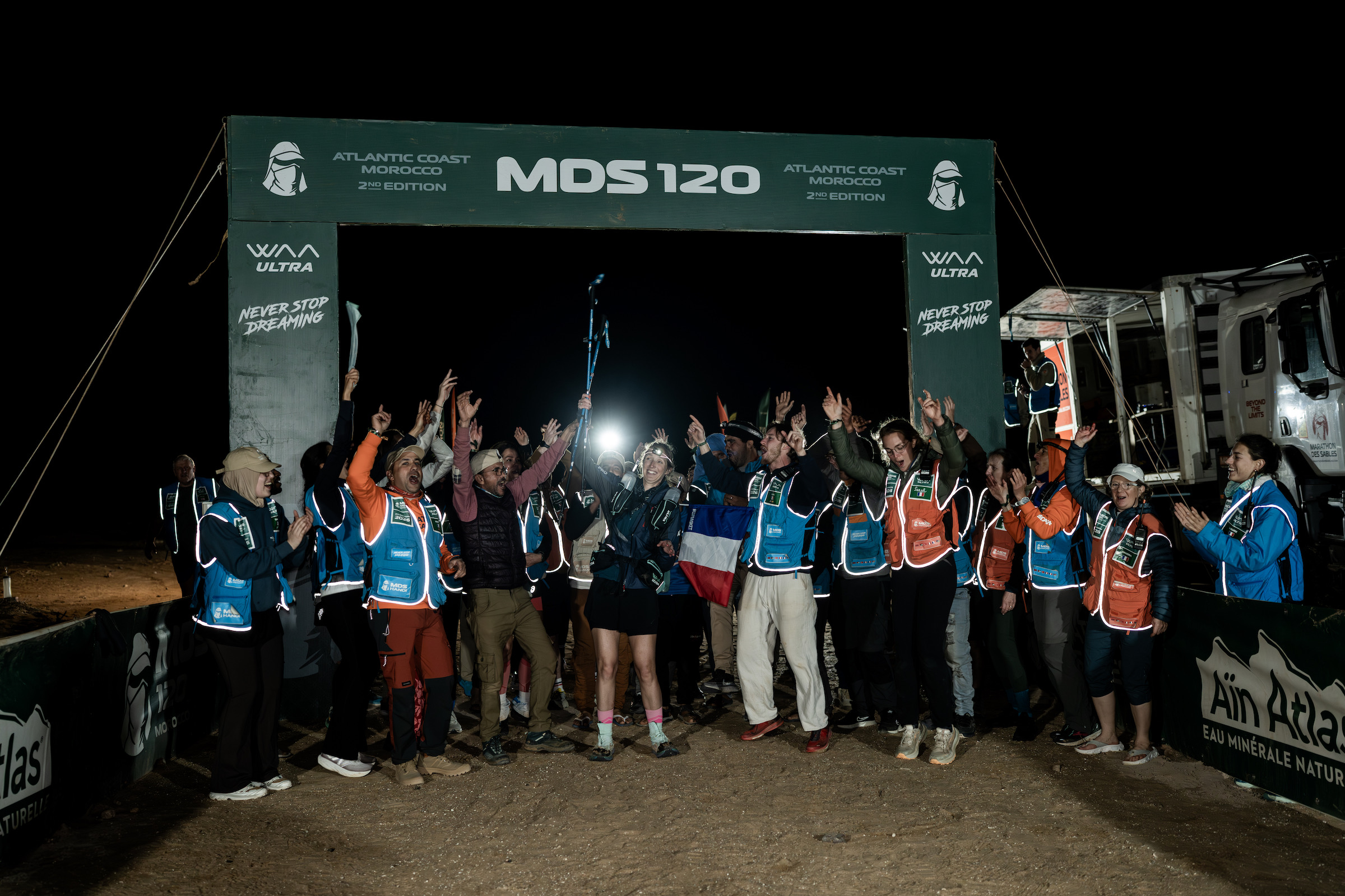
And then, finally, the finish.
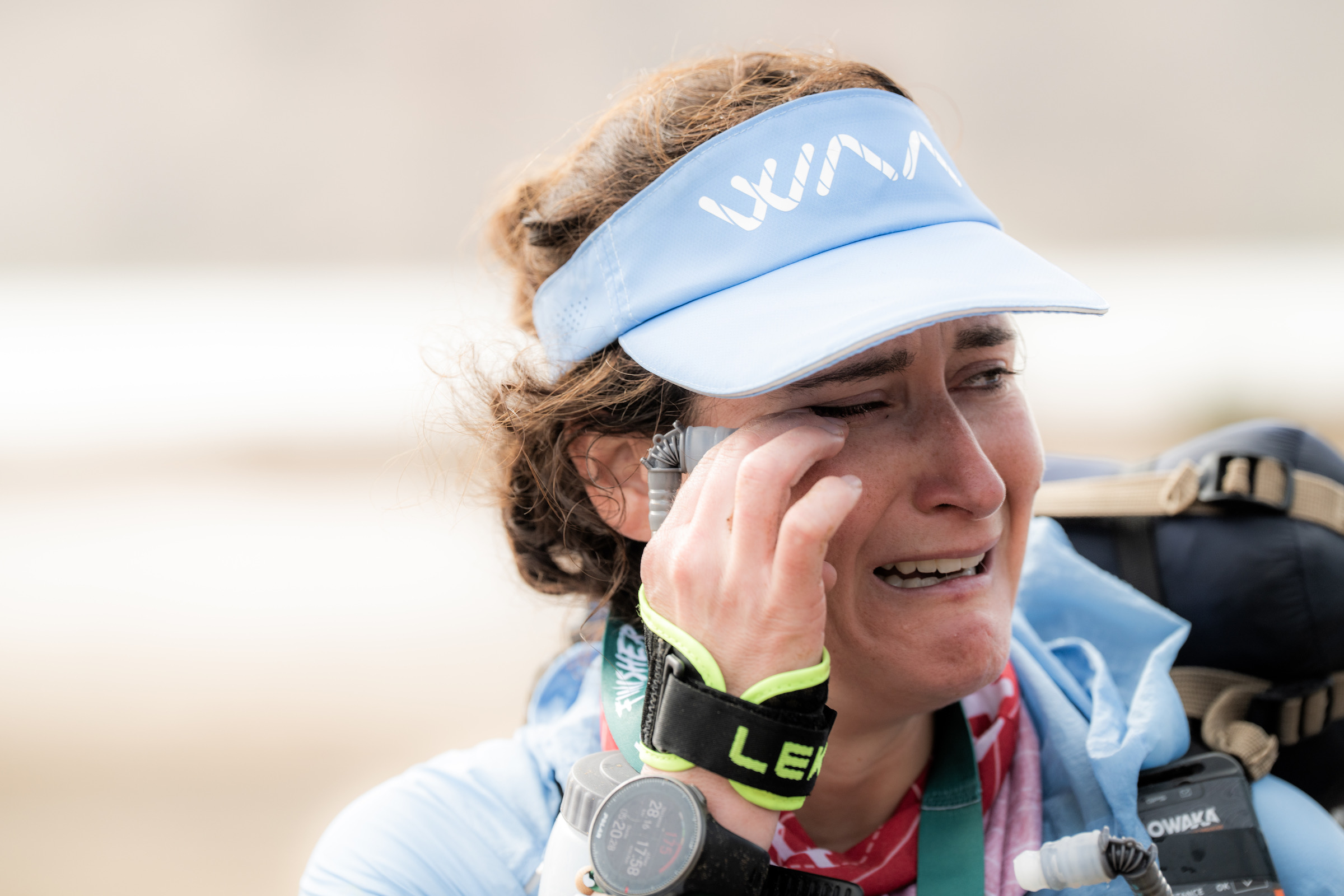
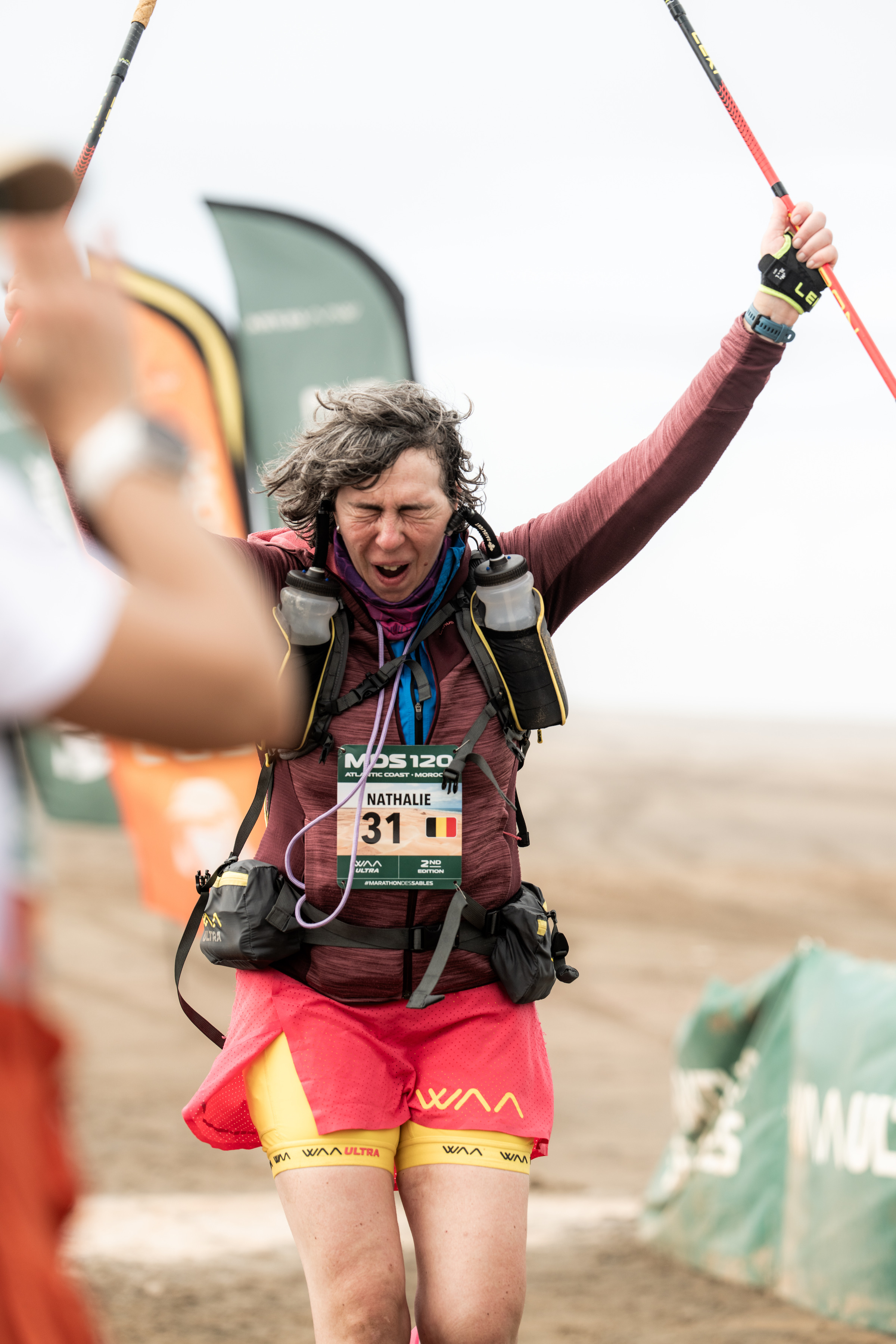
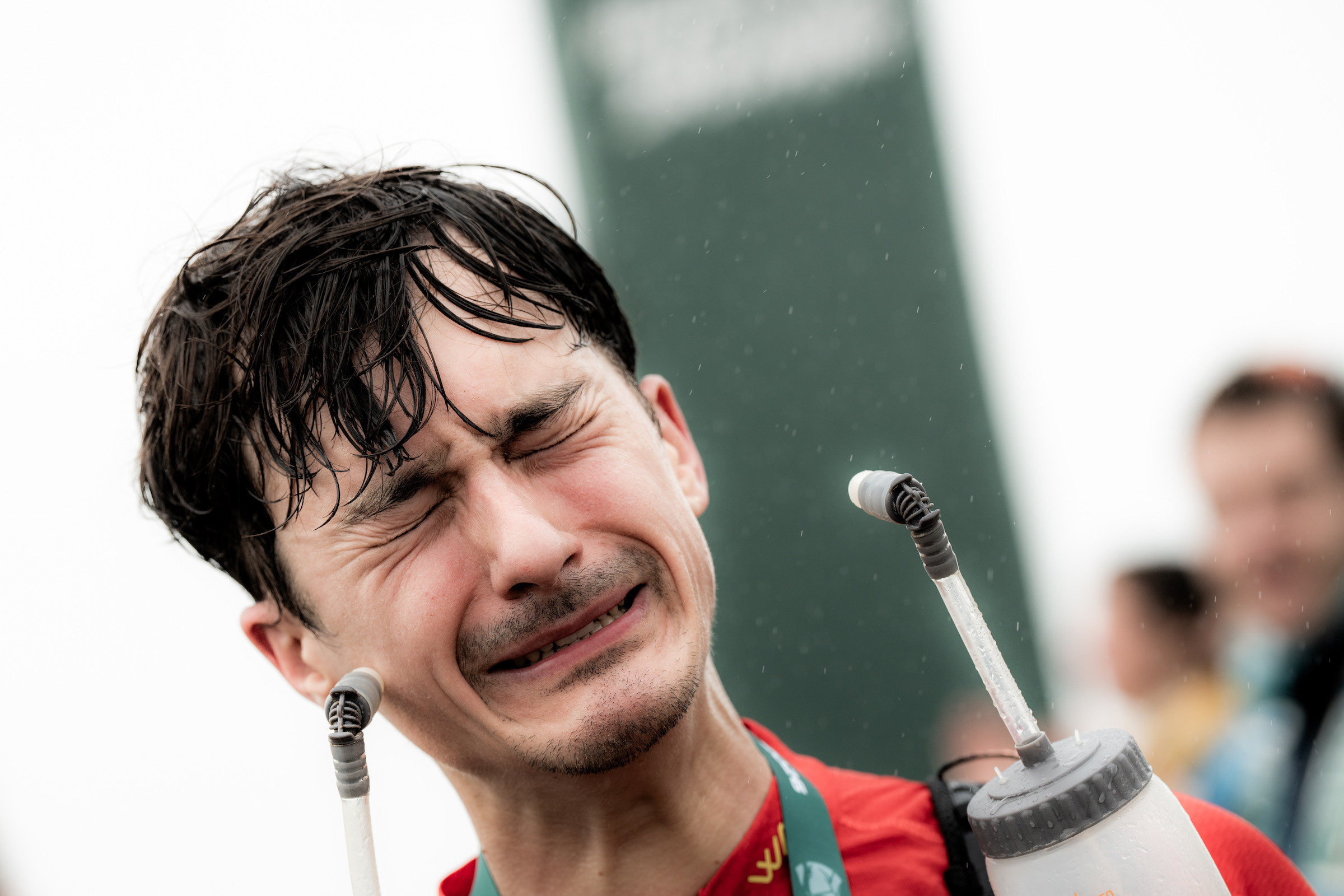
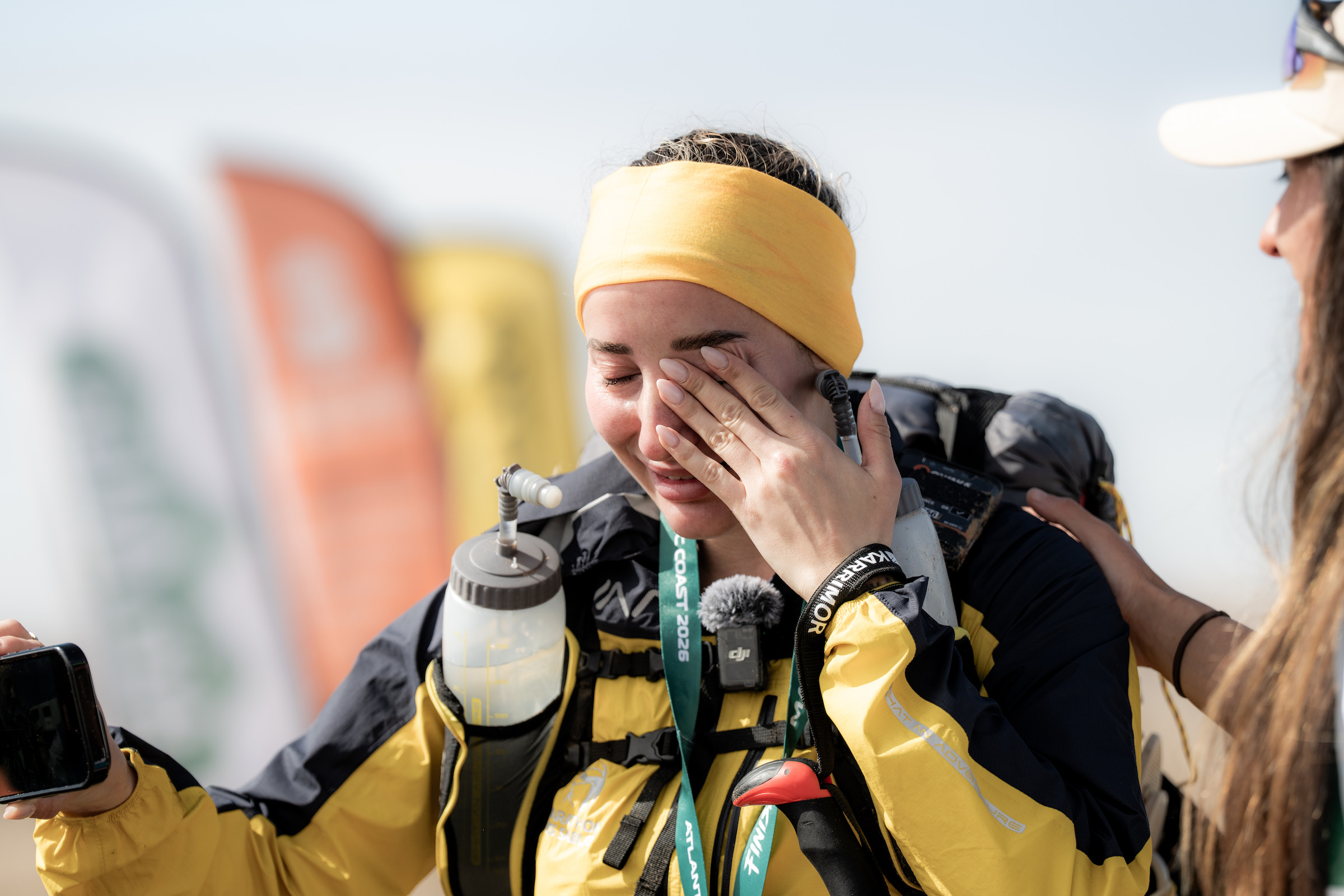
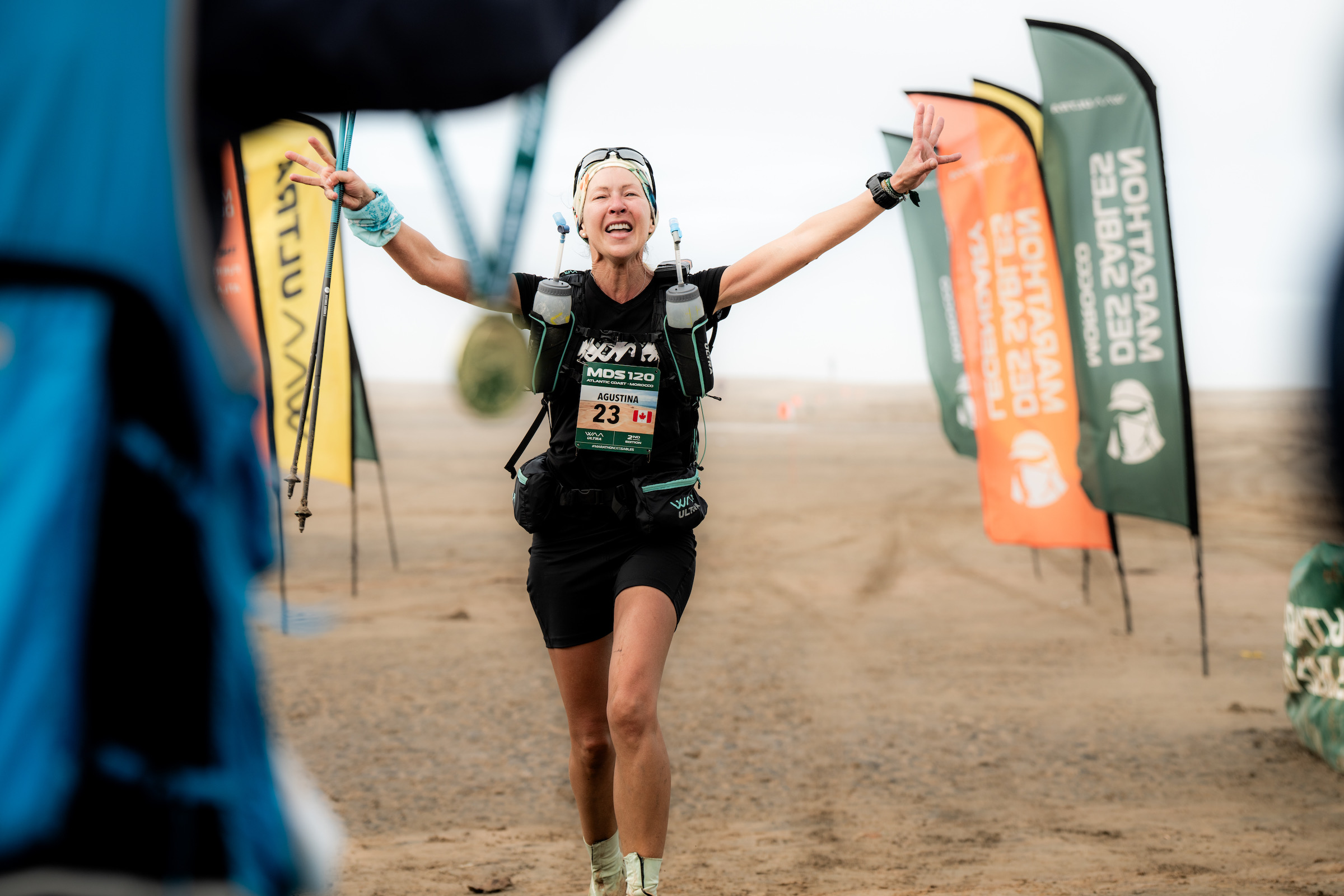
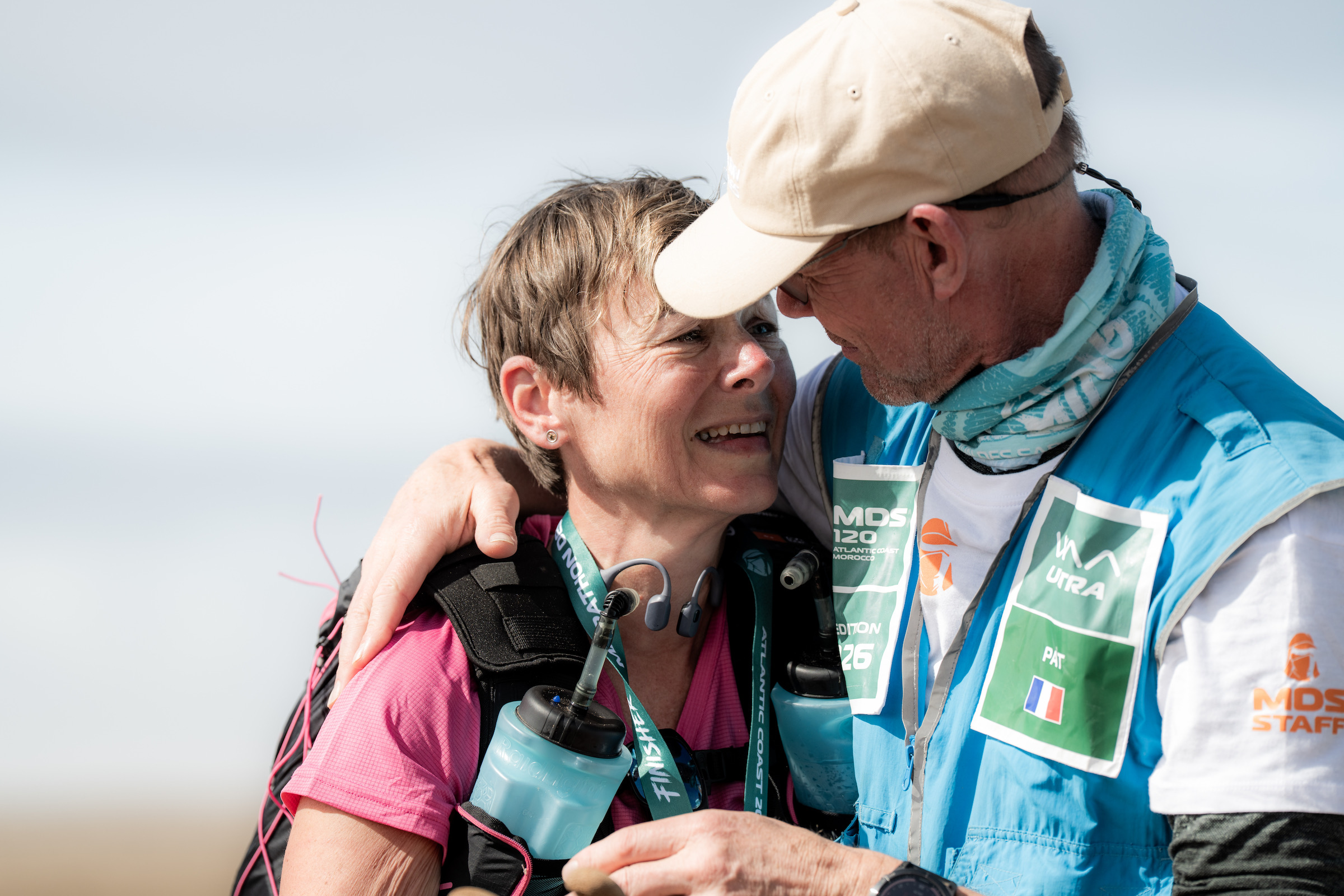
Not a sprint. Not fireworks. Just raw, unfiltered emotion.
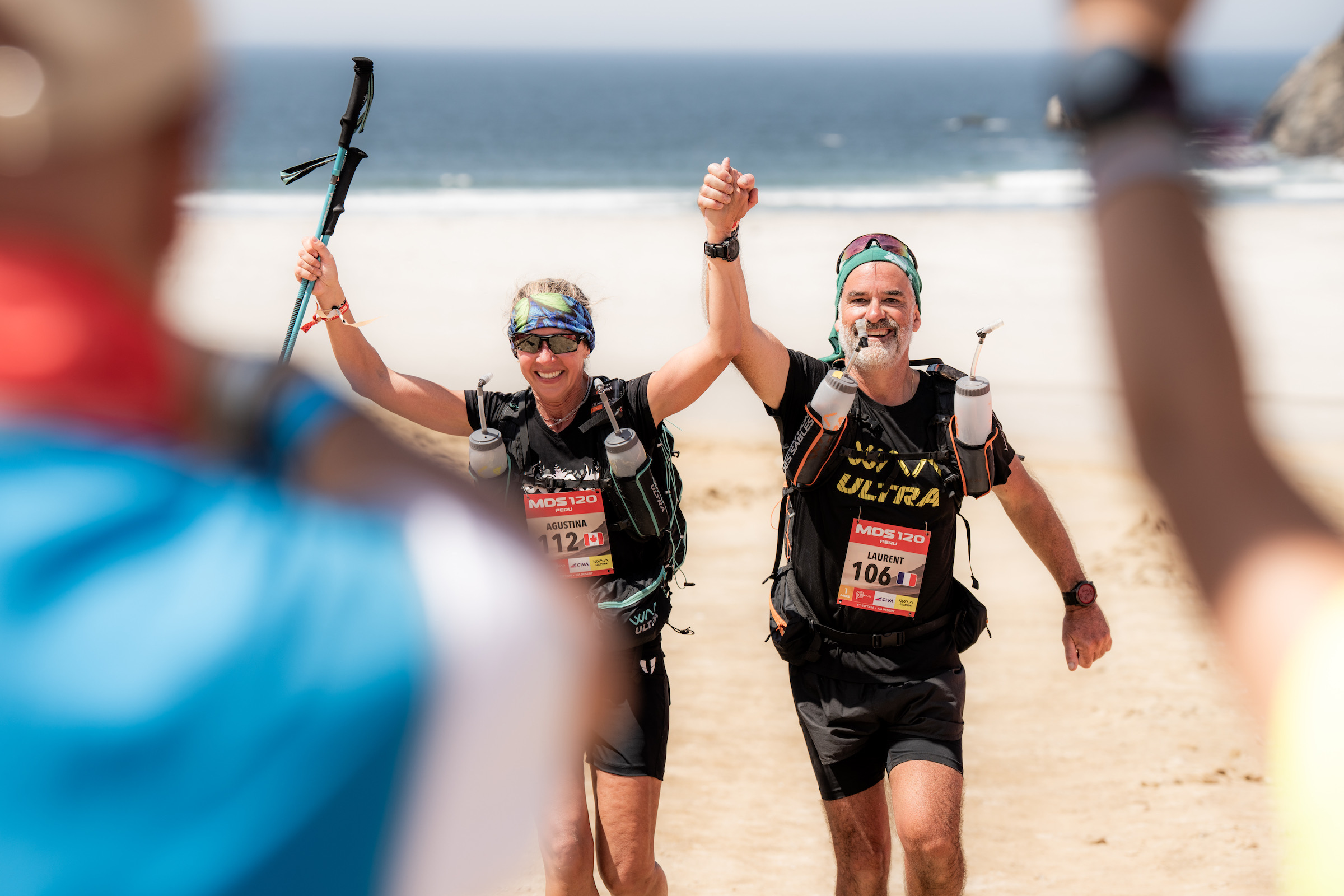
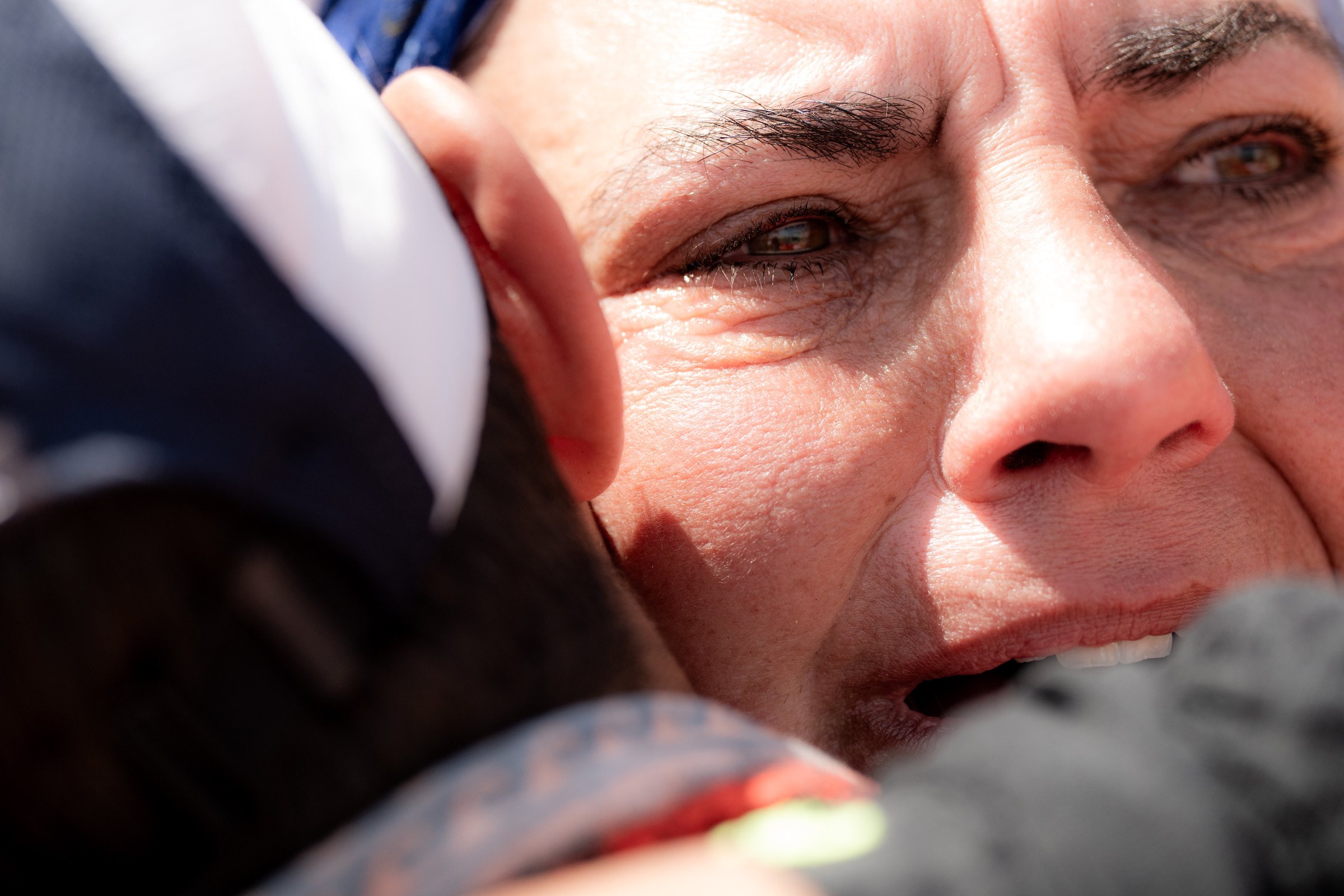
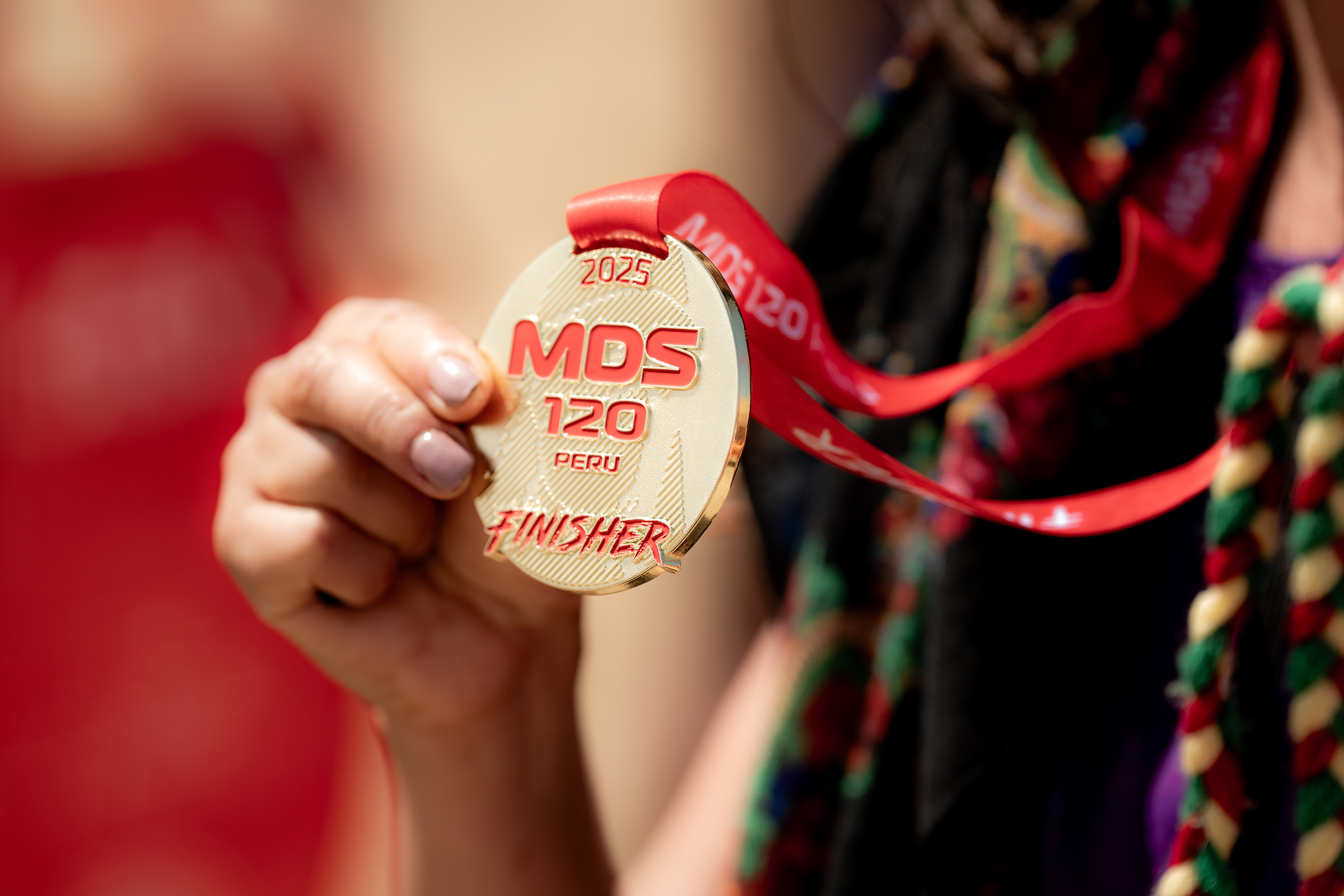
Tears mixed with rain. Smiles broke through exhaustion. Hugs lasted longer than words. That medal, placed gently around tired necks, meant everything. It wasn’t just metal. It was proof. Of discipline. Of resilience. Of promises kept when quitting would have been easier.
This is what the Atlantic Coast gives you.
It gives you challenge. It gives you atmosphere. It gives you moments where the world narrows down to breath, movement, and will. And in return, it gives you something rare. A finish that feels truly earned.
If you’re looking for a race that stays with you long after the sand is washed from your shoes, this is it. The coast is waiting.
Stage 2 of the MDS 120 Atlantic Coast 2026 arrived with options and consequences. Twenty kilometres, forty, or the full sixty. Three distances, one shared truth: today would ask more than legs. It would ask for patience, judgement, and honesty. The course did not care which option was chosen. It simply waited, stretching out along the Atlantic edge, ready to test everyone who stepped onto it.
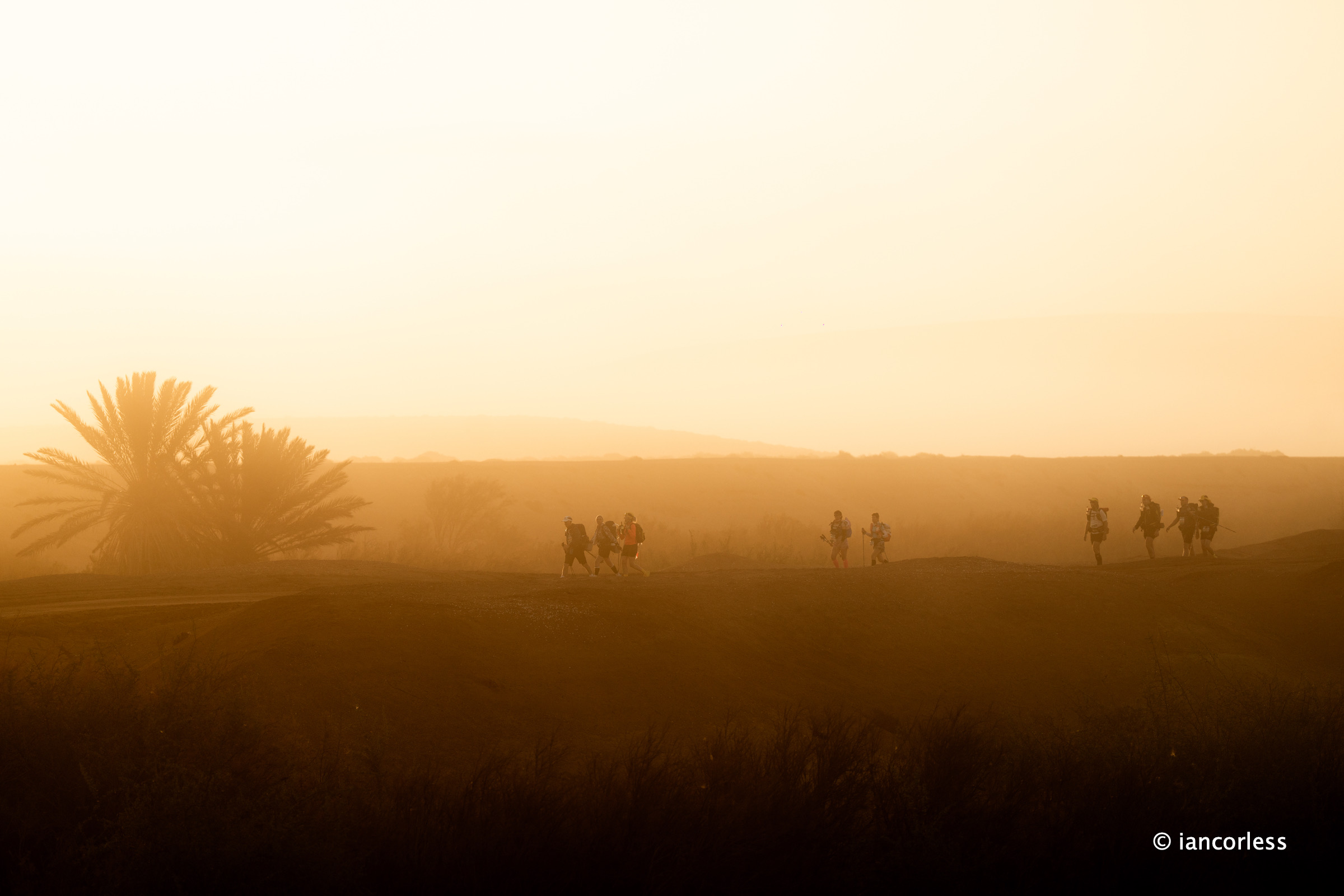
The morning hinted at uncertainty. Low cloud rolled in from the ocean, cool air brushing faces that had already been scoured by salt and sand. There was a little rain, just enough to darken the ground and sharpen the smell of wet earth. Then the sun broke through, sudden and bright, as if to remind the field that comfort would be temporary and effort unavoidable. It was a day of changeable weather in every sense, and the tone was set early. Adjust. Adapt. Keep moving.
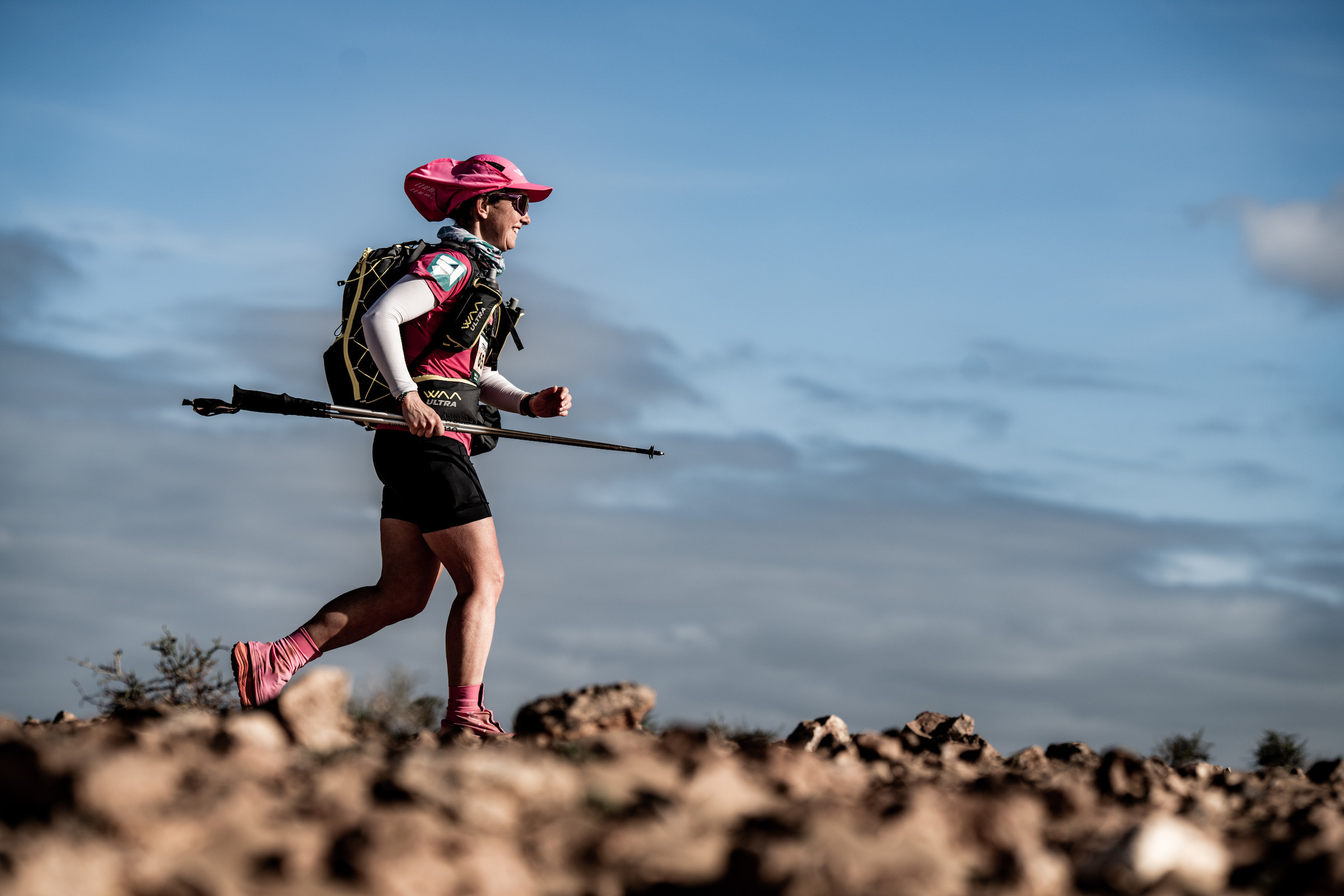
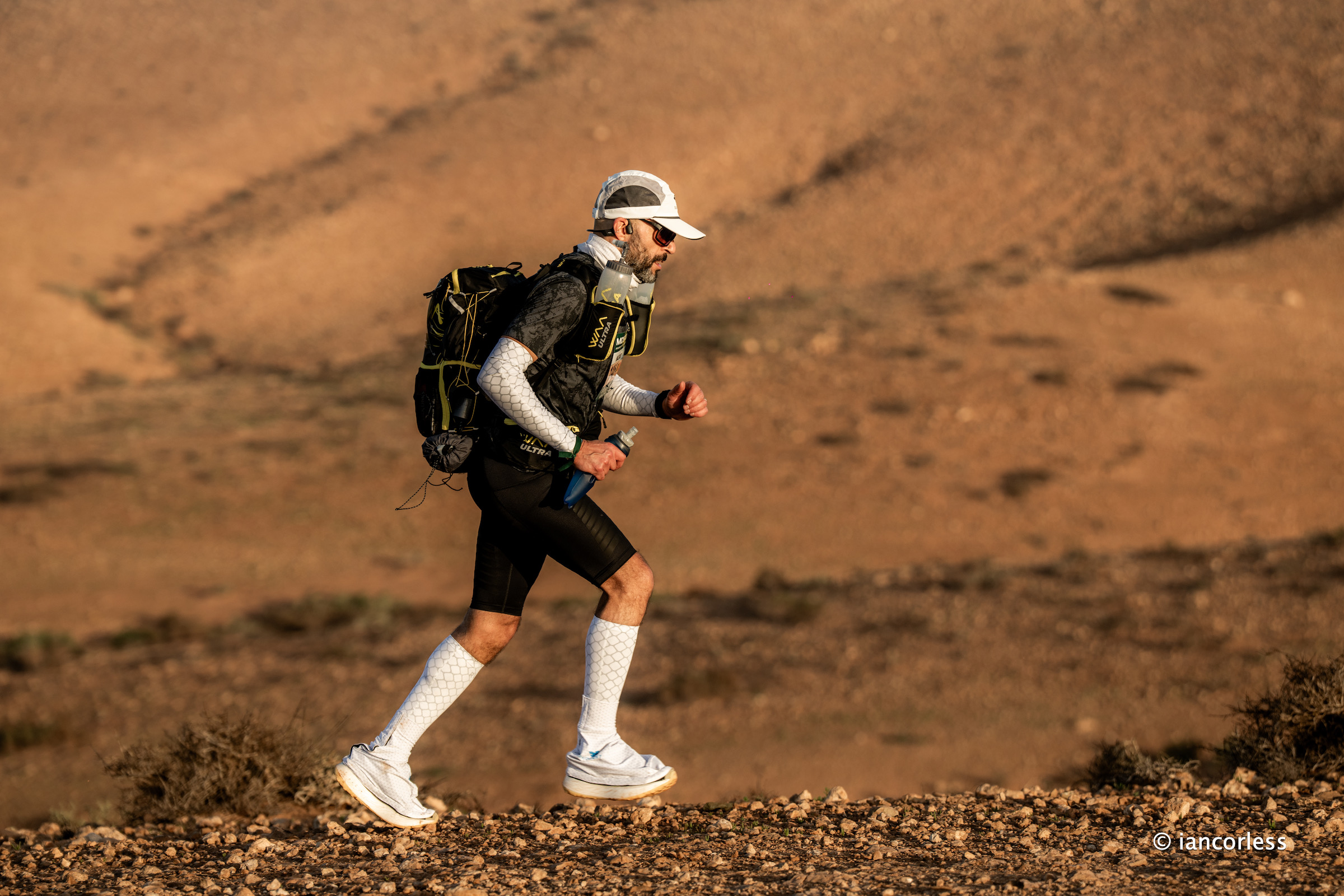
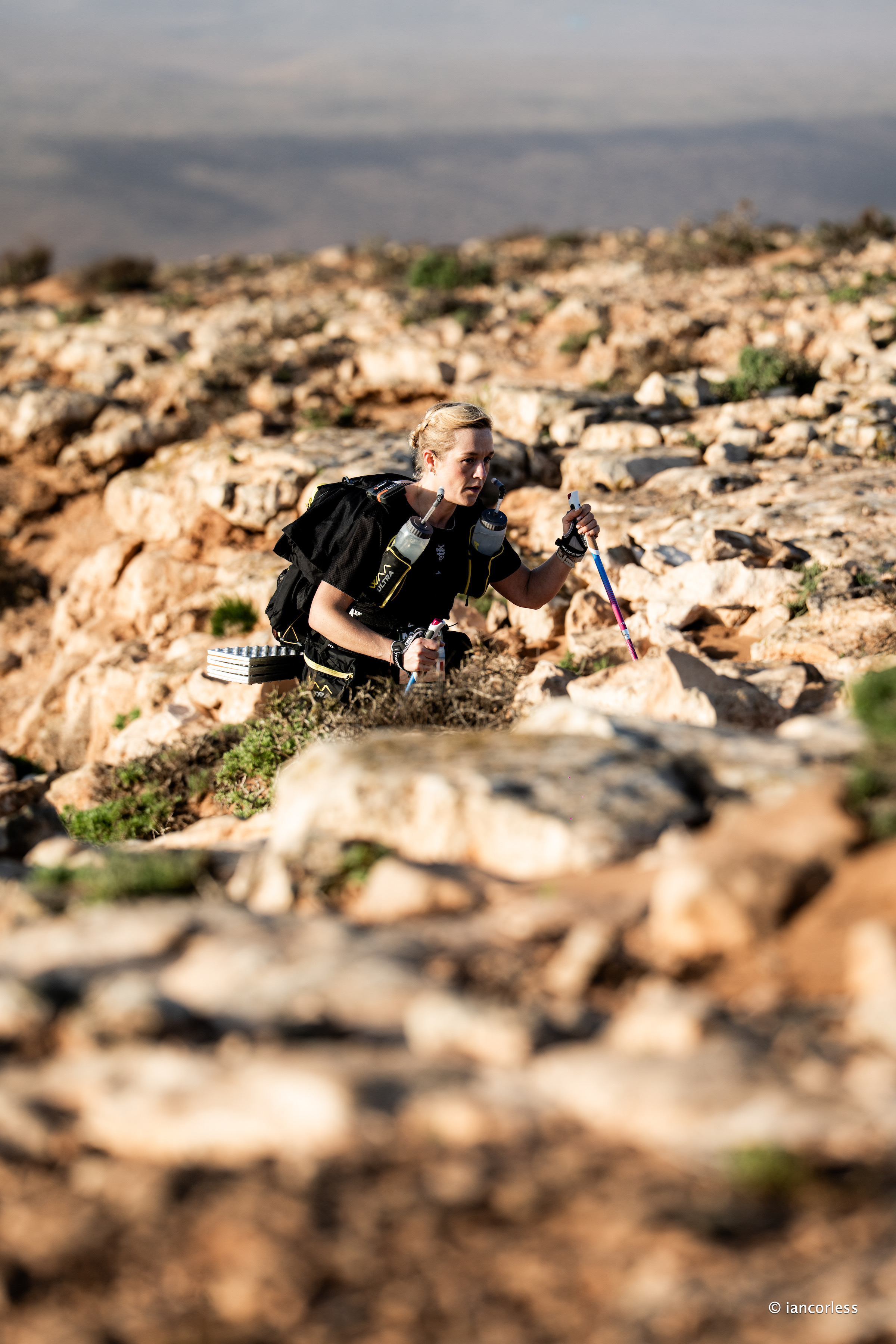
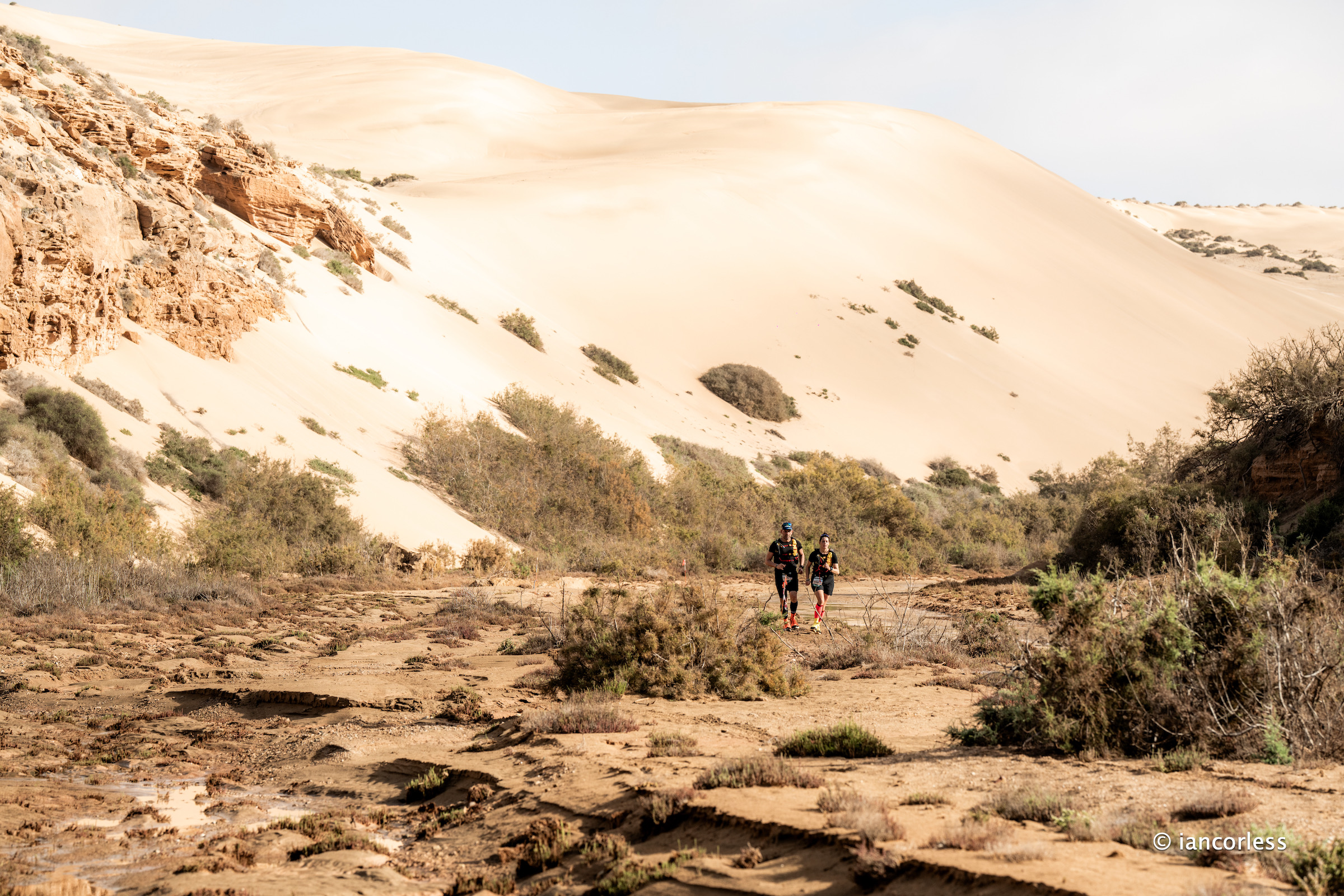
From the first kilometres, the terrain refused to settle into anything predictable. Soft sand swallowed shoes and rhythm, turning simple forward motion into work. Each step demanded attention. Ankles wobbled, calves burned, and breathing grew louder. Then the sand gave way to rocky plateau, hard and uneven underfoot.
The pace changed again, this time to caution. Eyes stayed down, scanning for safe placement. The plateau opened wide, exposing runners to the elements and to themselves. There was nowhere to hide from the wind, the sun, or the thoughts that arrive when the body starts to ask hard questions.
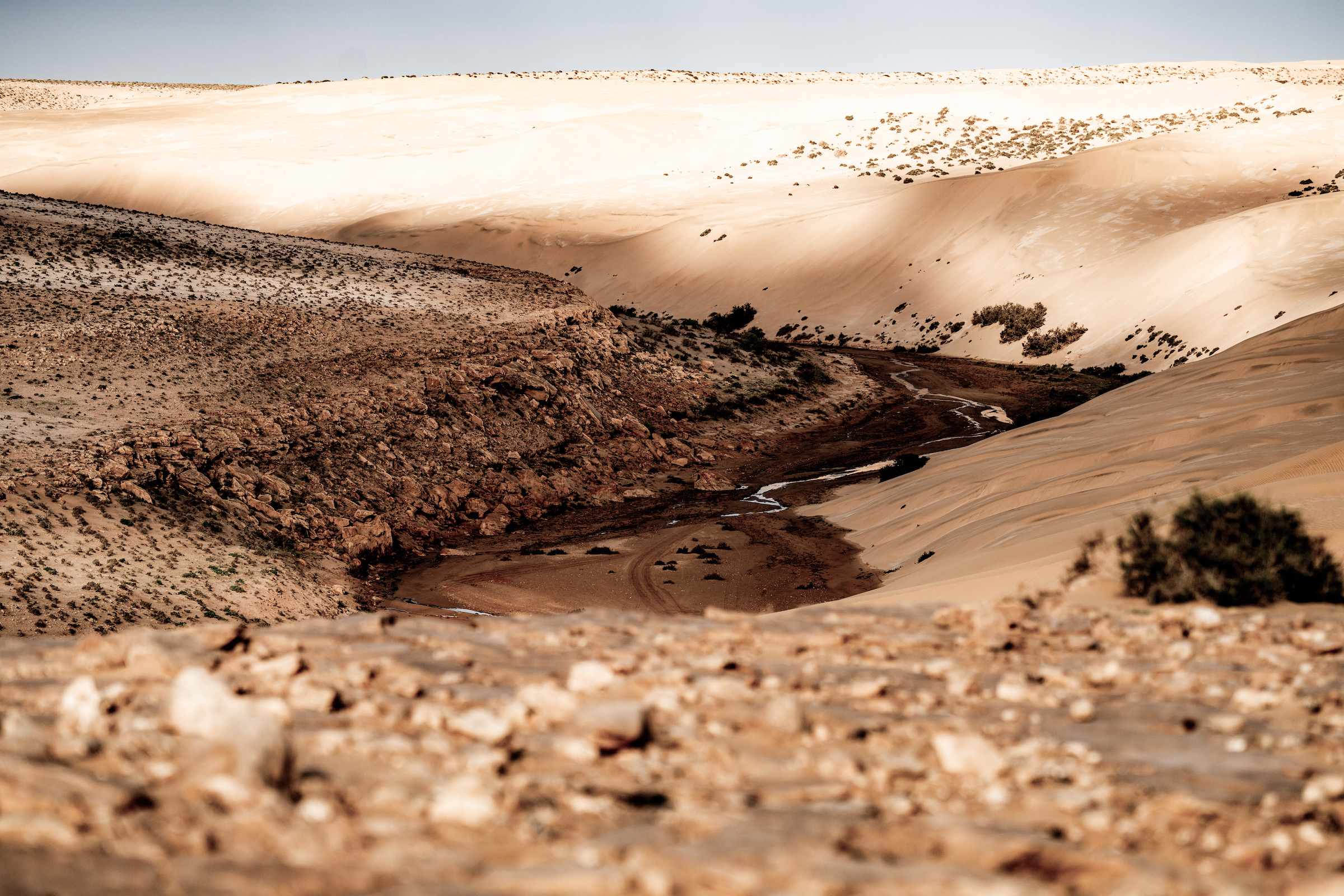
Flooded gorges brought a different challenge. Water pooled where it was least expected, cool and deceptively deep. Shoes filled, socks soaked, and the familiar squelch followed each step on the exit. Some laughed at the absurdity of it. Others grimaced, knowing wet feet mean blisters later. But everyone crossed, because stopping was never really an option. This race does not negotiate.
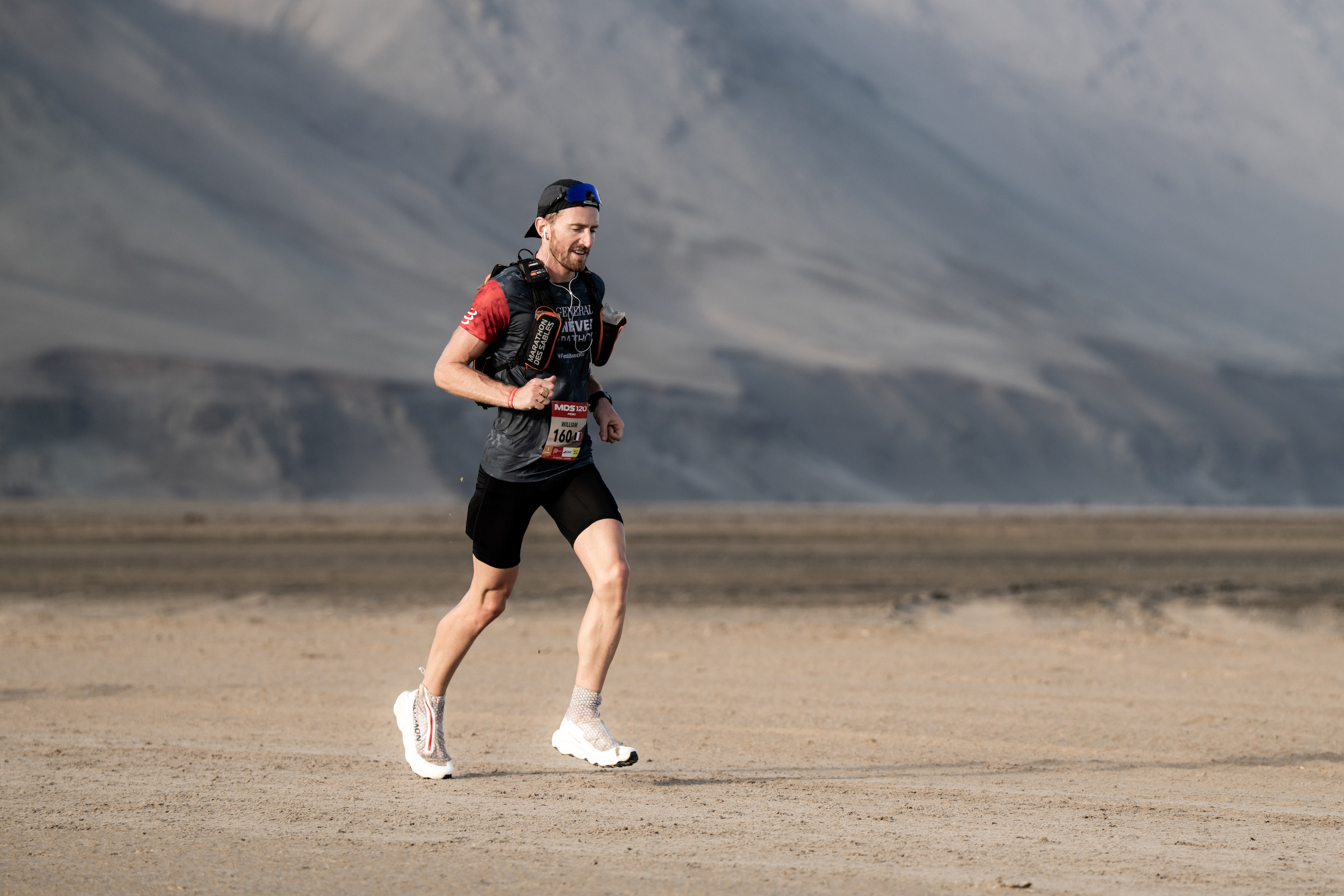
Beyond the gorges, the course stretched into wide open terrain. The Atlantic Ocean appeared and disappeared, sometimes a distant shimmer, sometimes close enough to hear. The scale of the landscape made individuals feel small, but also free. Lines of colour moved slowly across the land as runners spread out, each locked into their own effort. This was where time began to behave strangely. Minutes felt long. Hours blurred. The distance chosen mattered less than the simple act of continuing.
The final stretch ran flat and true, parallel to the ocean. It should have felt easier. On paper, it was. In reality, it was where fatigue spoke loudest. The body was already empty. The mind had been negotiating for kilometres. Yet the finish lay ahead, invisible at first, then slowly, mercifully, real. The ocean rolled on, indifferent and steady, while the race reached its quiet climax.
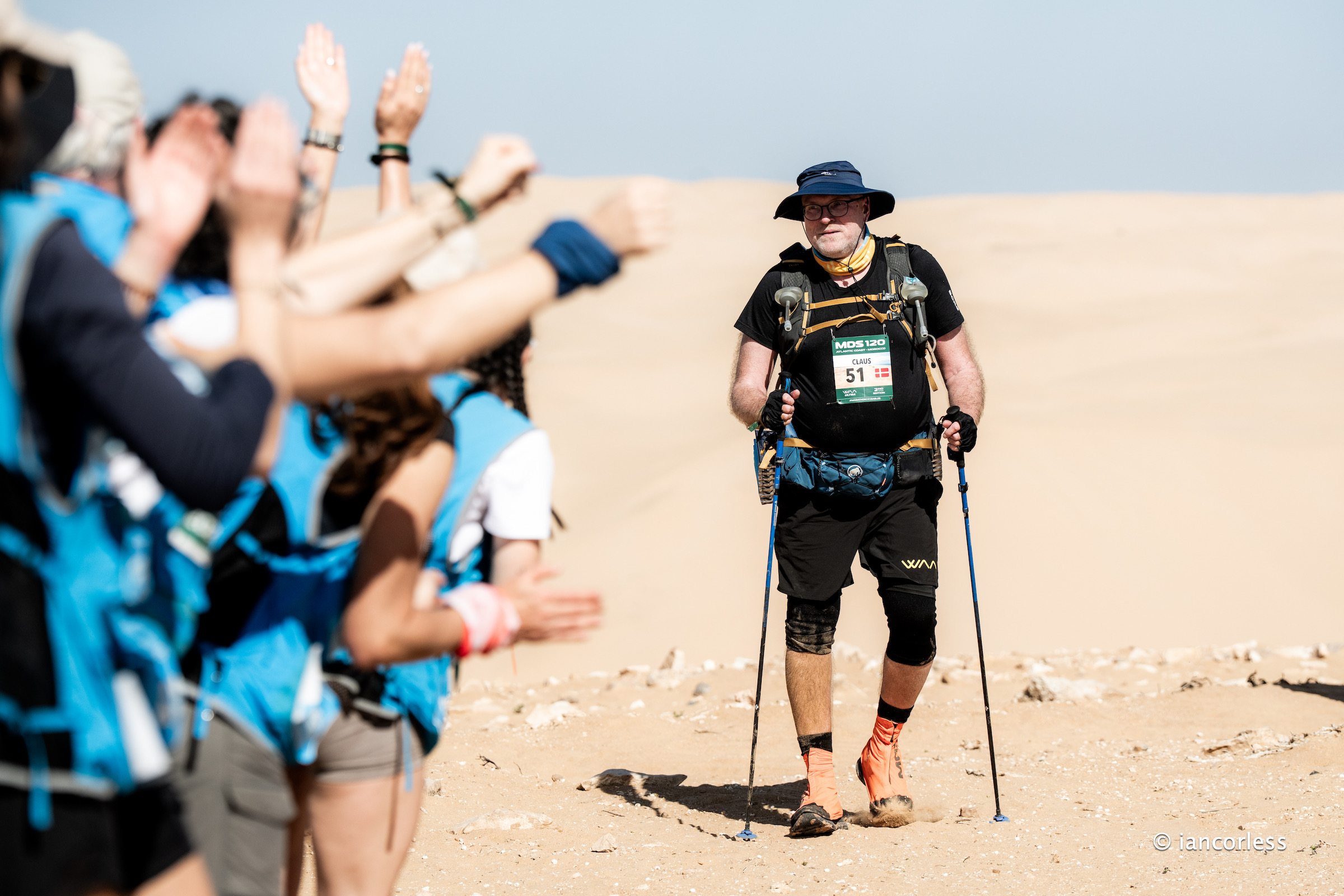
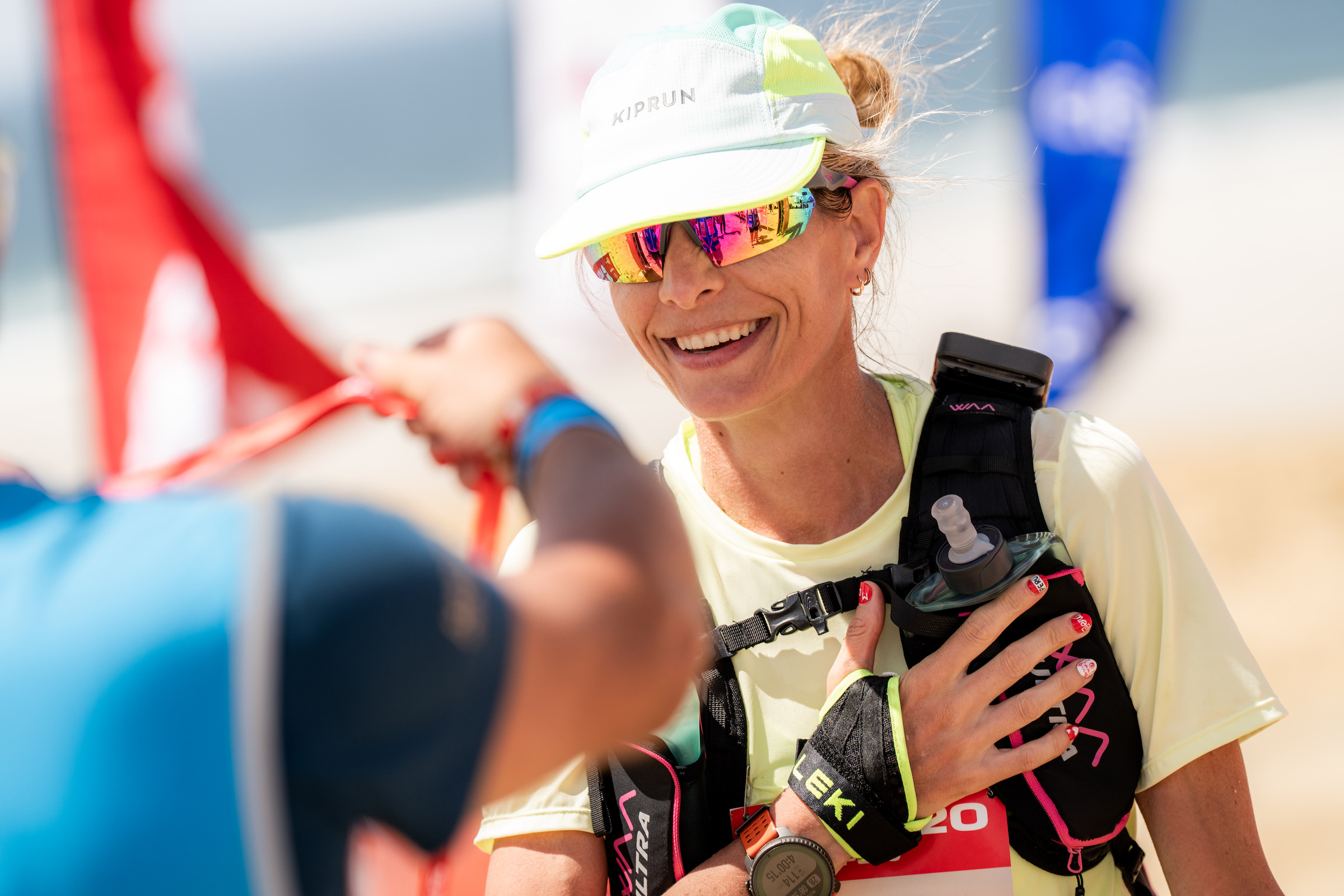
The finish line became a gathering point for everything this day had taken and given. It was a welcome sight, one that drew out raw emotion without apology. Tears fell freely, sometimes before the line, sometimes after. Laughter broke out in short bursts, the kind that comes when tension finally releases. There was joy, genuine and earned, mixed with exhaustion that sat deep in the bones. Some crossed upright and strong. Others bent double, hands on knees, searching for breath. All were changed.
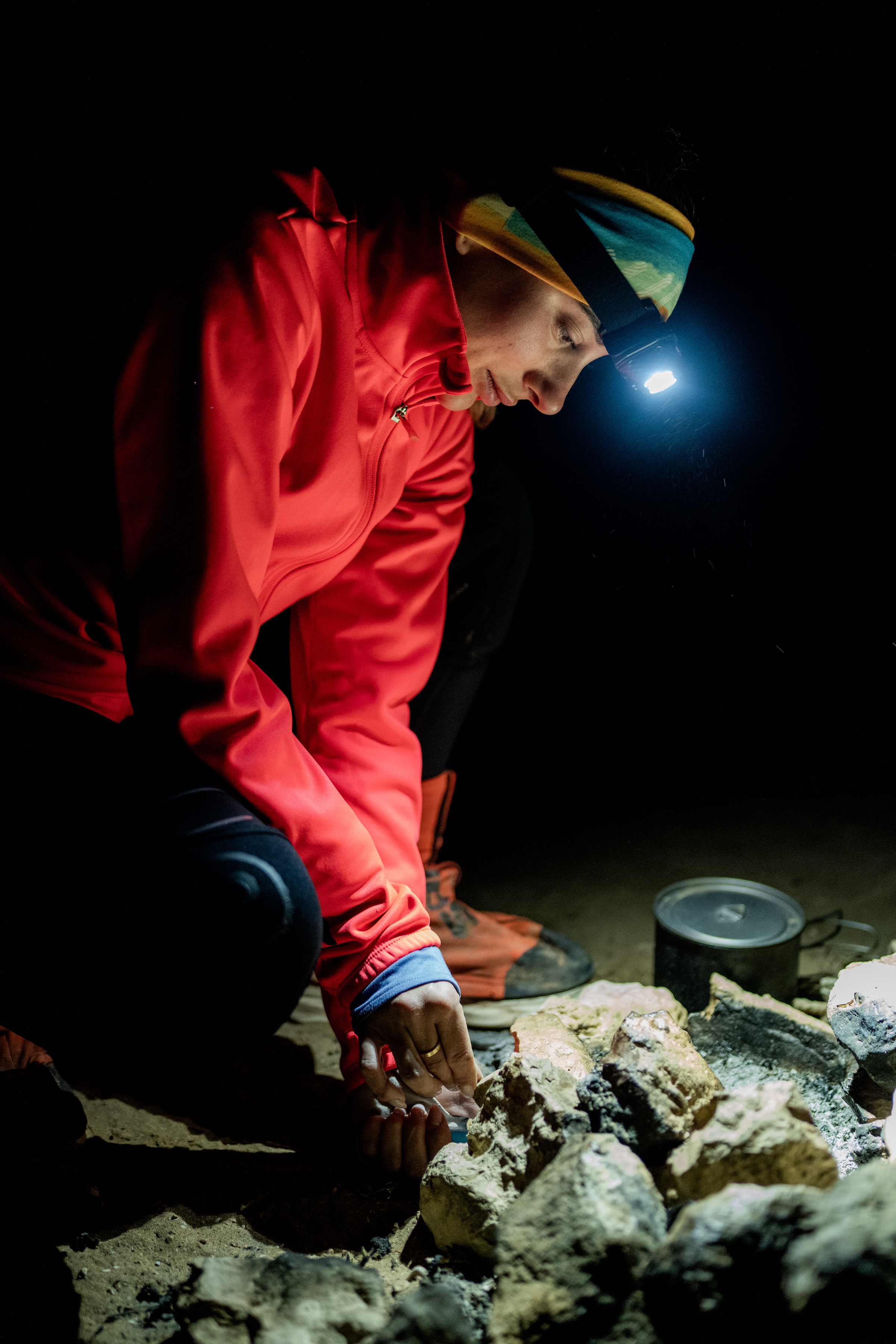
The day stretched long into the night. Headlamps flickered in the distance as darkness closed in. Volunteers stayed wrapped in layers, voices steady, encouragement unwavering. The clock kept moving. And then, close to 2300 hours, the final finisher crossed the line. There was no rush. No hurry to be anywhere else. Just a moment held for someone who refused to stop. Applause cut through the night, not loud, but meaningful. This, too, mattered.
Stage 2 was not about speed. It was about choice and consequence, about learning the difference between discomfort and danger, about discovering how much is left when you think there is nothing. Today, participants found out who they are and why they are here. Some answers were quiet. Others arrived with force. But they arrived all the same.
There were moments of doubt, of frustration, of anger at the sand, the stones, the weather, the distance. There were also moments of clarity, when effort narrowed the world down to the essentials. Step. Breathe. Drink. Keep going. In those moments, the noise of everyday life fell away. What remained was simple and honest.
As the camp settles and the body begins to cool, tomorrow offers something rare in this environment. A day of rest. A pause. Time to recharge and recover. Muscles will stiffen, feet will tell their stories, and minds will replay the day in fragments. There will be care, conversation, and quiet pride. Because Stage 2 demanded respect, and those who met it earned that rest.
The Atlantic continues to roll in the dark. The course waits. And the field, changed by today, will rise again when it is time.
Stage 1 of the 2nd edition of the MDS 120 Atlantic Coast marked a powerful and inspiring beginning to the adventure in Morocco, where the desert meets the Atlantic Ocean. A field of 250 participants set out on this opening day, with an impressive 80 percent taking on their very first MDS experience. Just under half of the runners were women, and the age range spoke volumes about the inclusive spirit of the race, from the youngest at 19 years old to the oldest at 78. With 30 nationalities represented and the support of 147 dedicated staff, the event immediately felt global, vibrant, and alive.
This first stage covered 23km, with 343m of elevation gain, following a point-to-point route along the Atlantic coast. Checkpoints were placed at 9.1km and 17km, guiding runners through a constantly changing landscape.
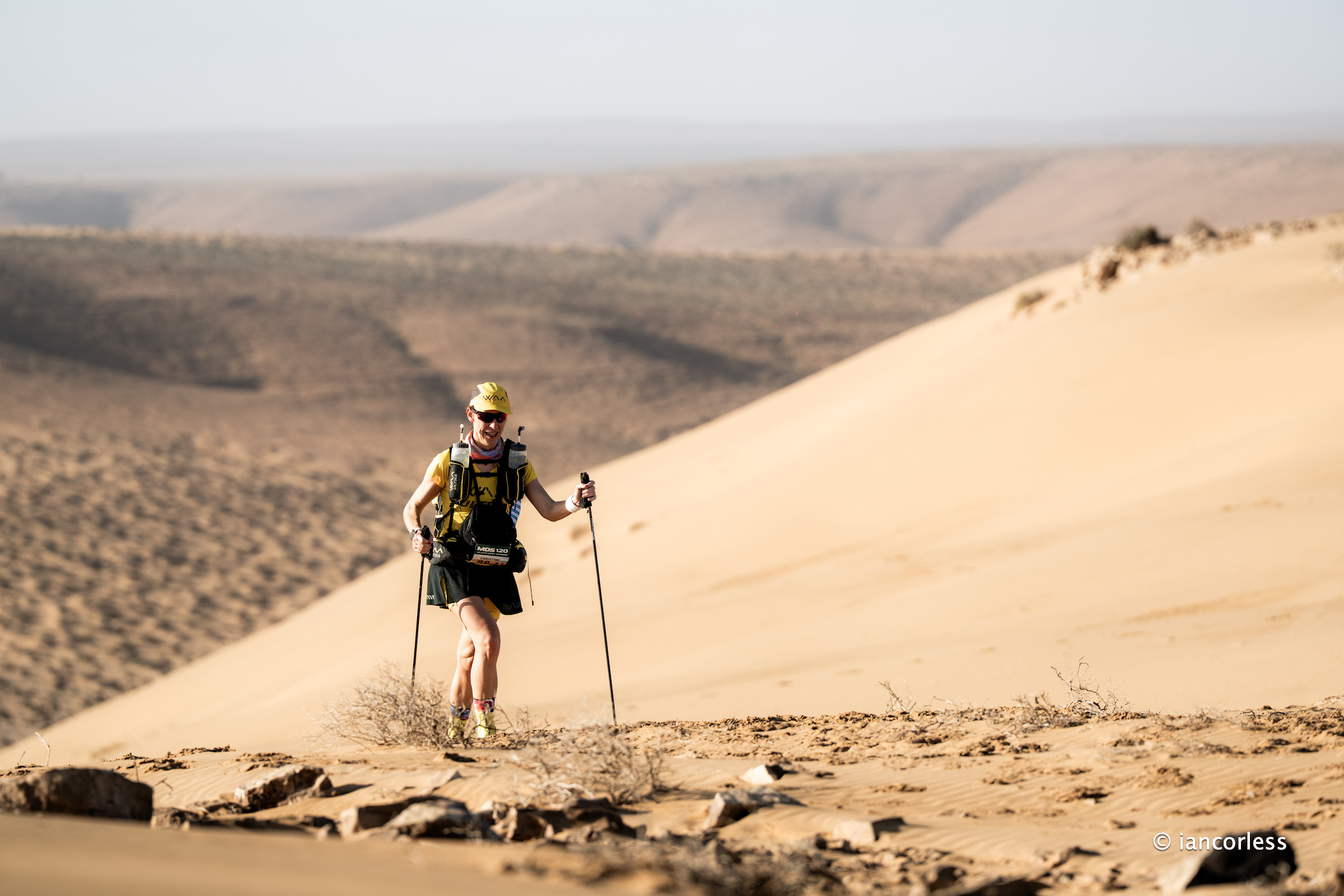
The terrain offered little rhythm. Soft sand drained energy, dry river beds broke momentum, and rocky plateaus demanded focus and careful footwork. While the elevation profile looked modest on paper, the reality underfoot made it a demanding day from start to finish. The sand, in particular, turned every step into a test of patience and strength.
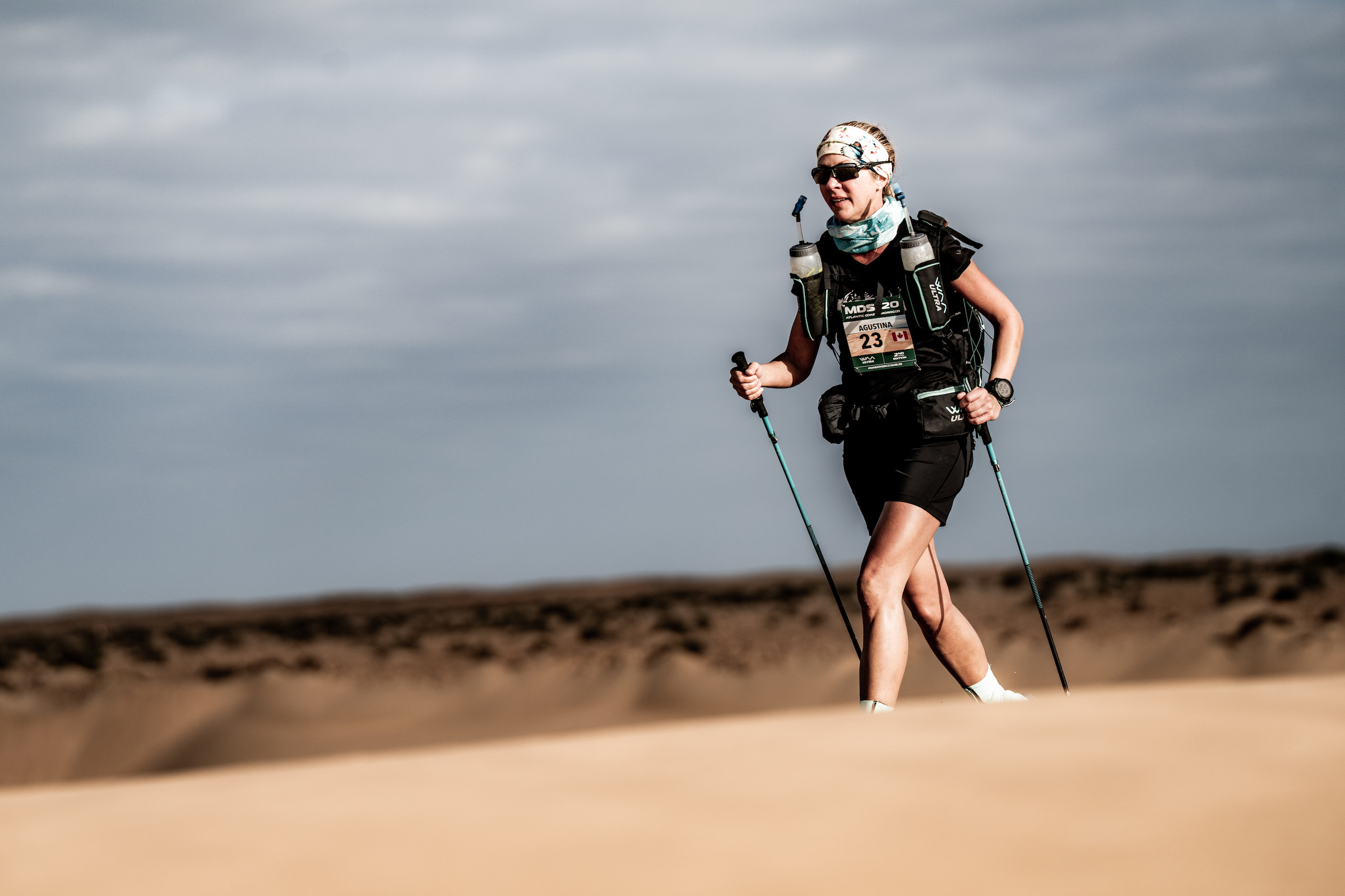
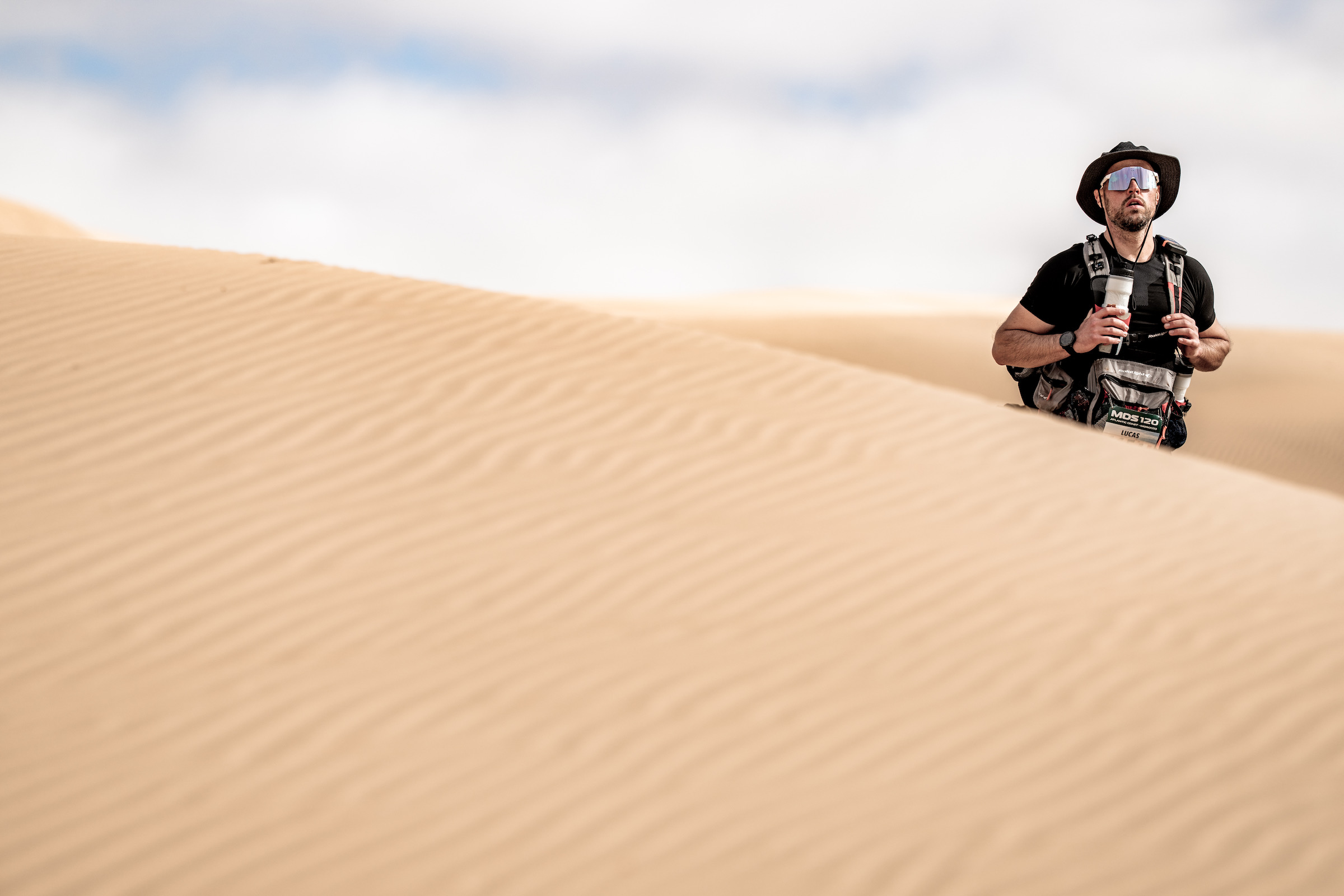
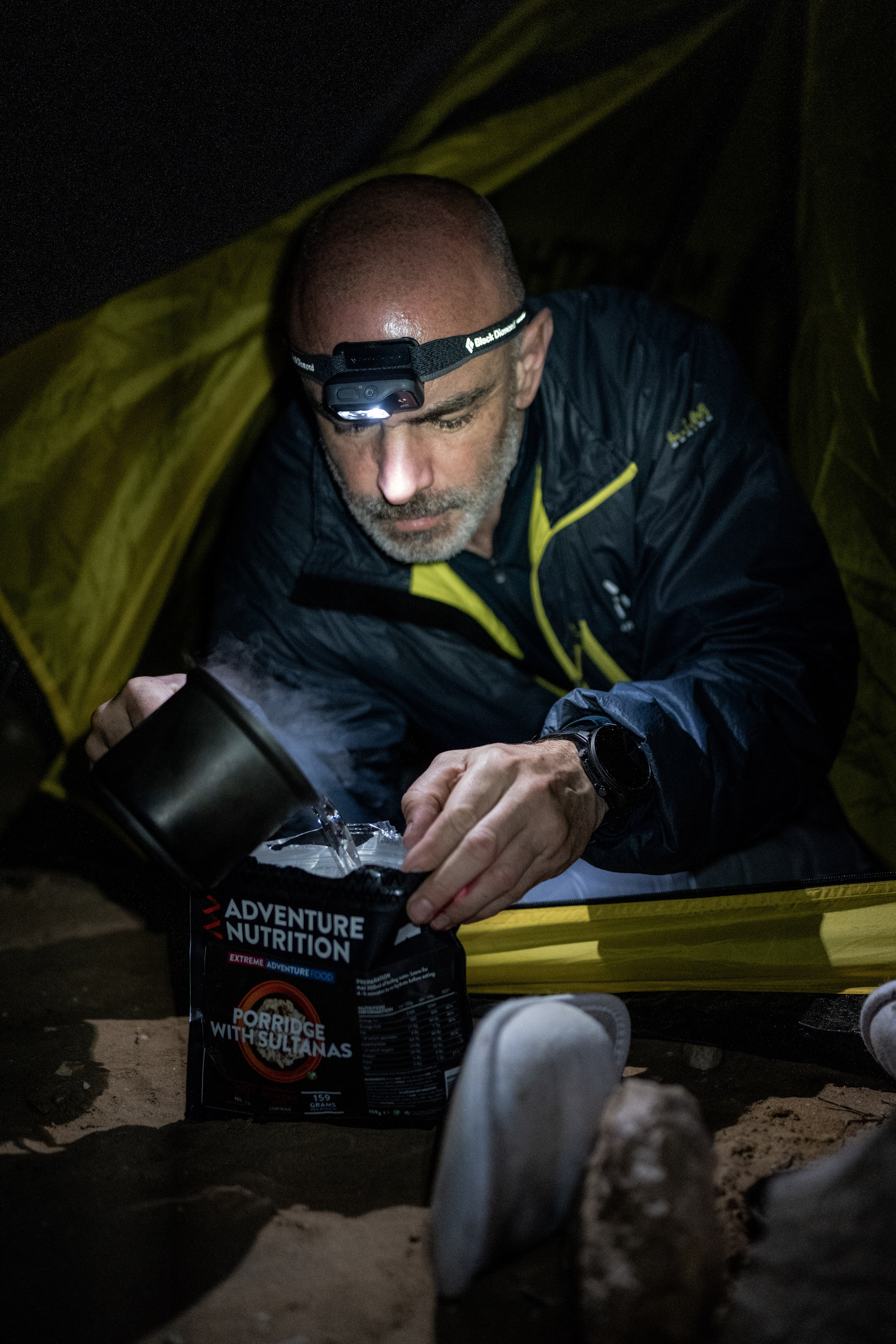
The challenge began long before the start line. A 2am wake-up, followed by a 3am departure and a lengthy transfer, asked a lot of the runners before dawn had even broken. Yet spirits remained high. These athletes were fully self-sufficient, carrying everything they needed on their backs, managing their nutrition, hydration, and equipment as they moved across the course. It was a true test of endurance, organisation, and resilience.
Despite the early start, the travel, and the relentless terrain, the performance across the field was outstanding. Every runner dug deep, and the final participant crossed the finish line well within the cut-off time, greeted with applause and encouragement.
As the sun dipped and the day drew to a close, the runners settled in for their first night under the stars on the Atlantic coast. Tired legs, sandy shoes, and quiet smiles told the story of a hard-earned first stage completed. It was a demanding, memorable opening chapter, and a clear signal that the MDS 120 Atlantic Coast is as much about heart and determination as it is about distance.
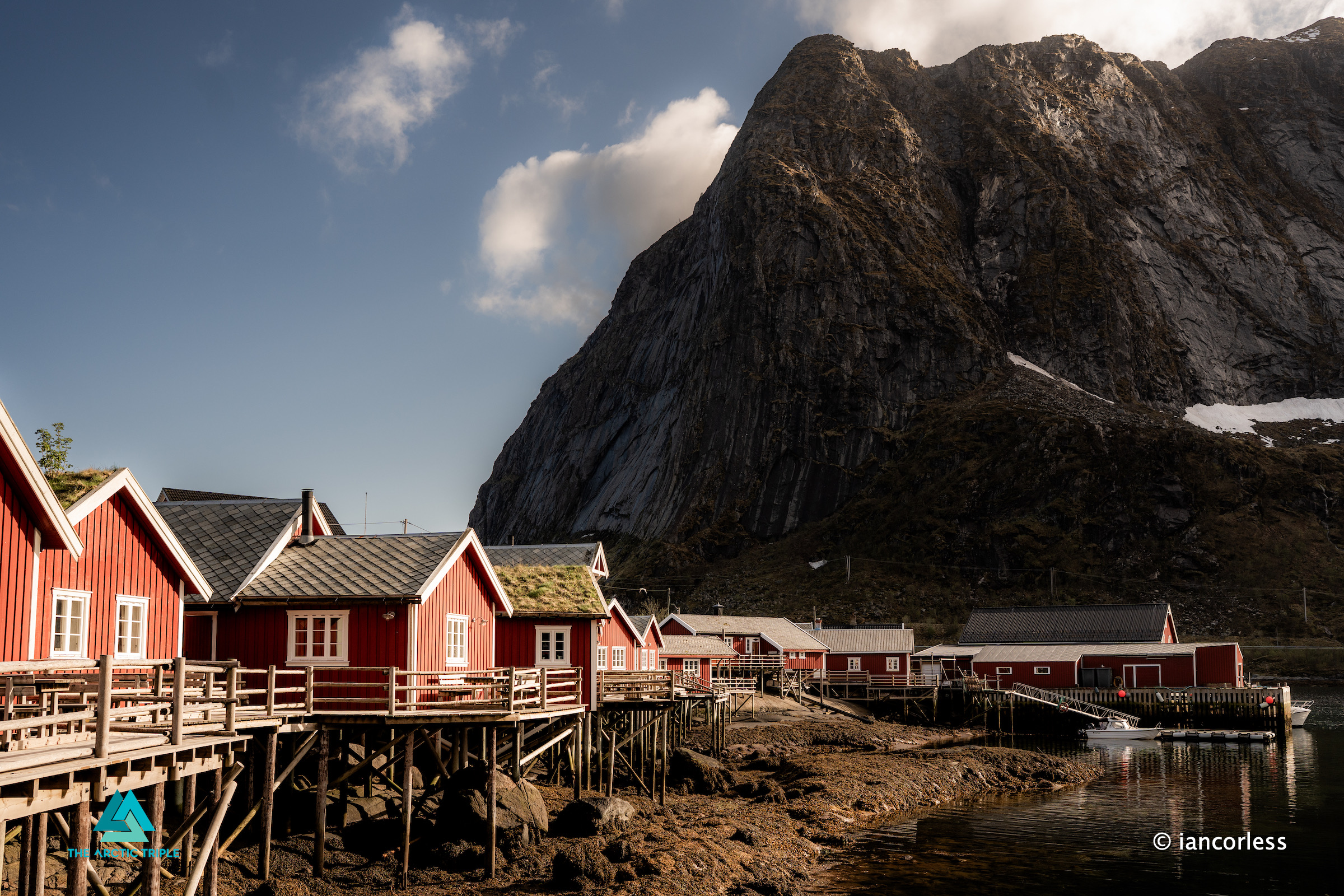
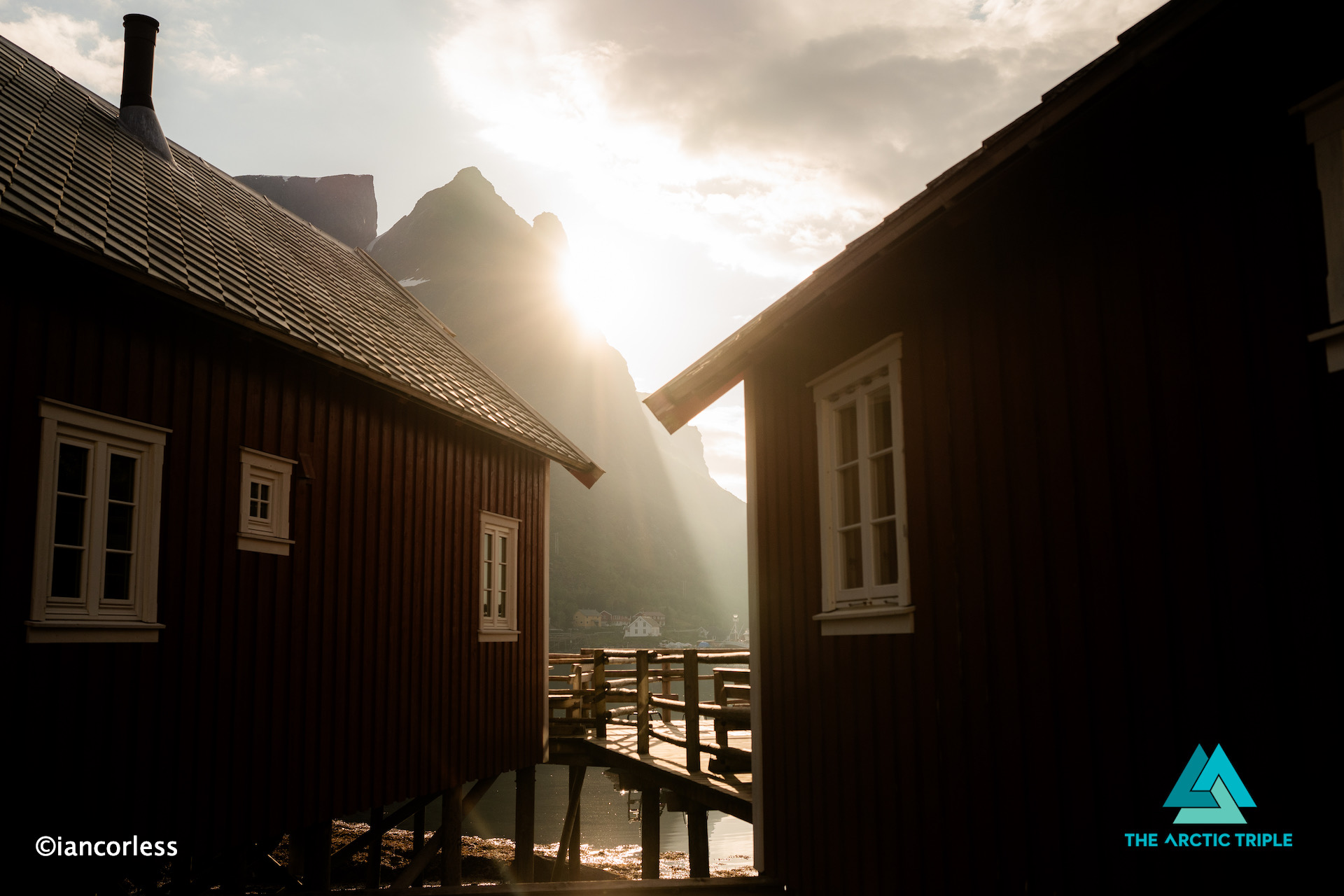
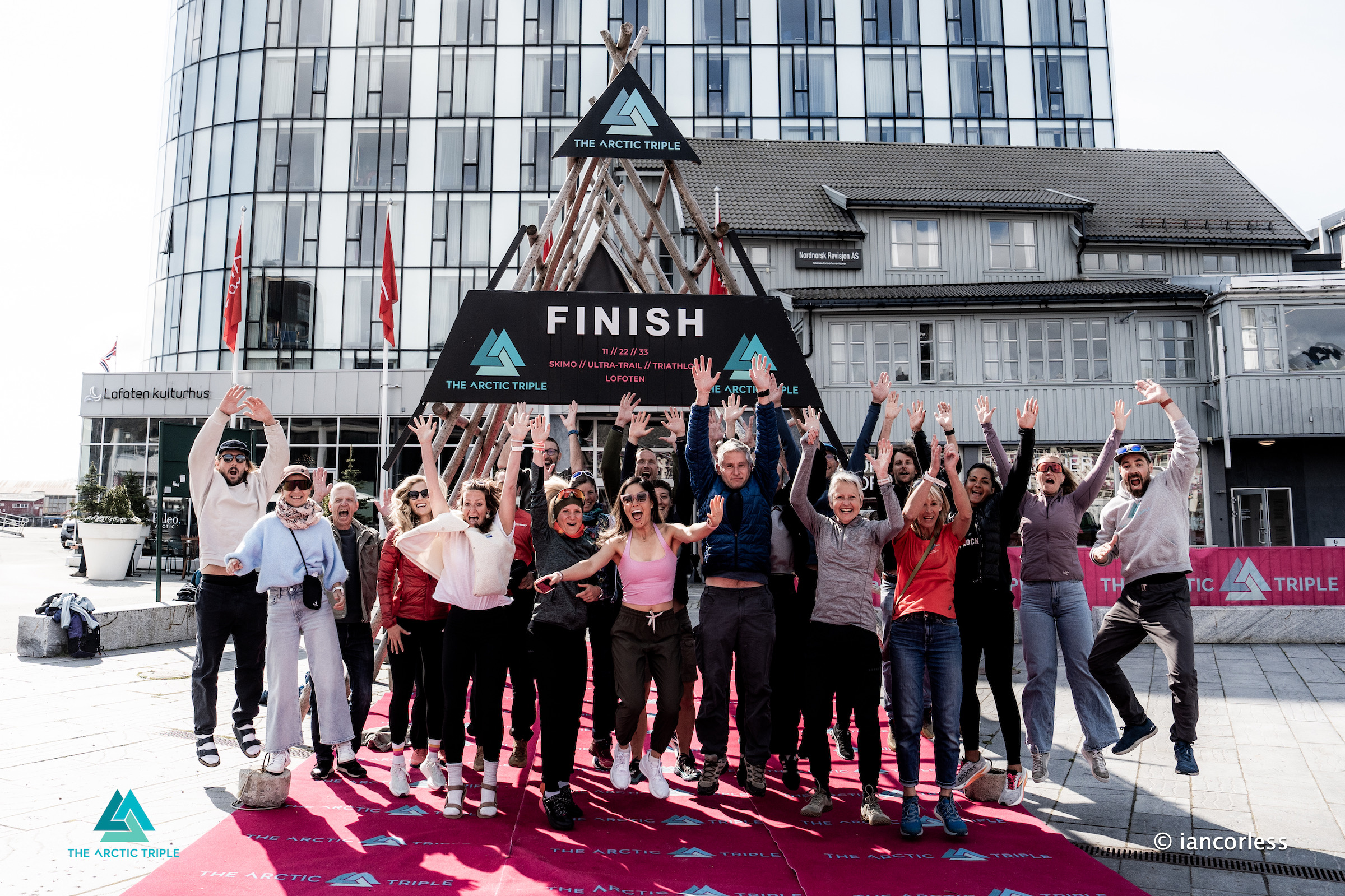
Lofoten Stage Run by the team at The Arctic Triple – Is the world’s most beautiful stage run, a rare kind of race that feels less like an event and more like a journey.
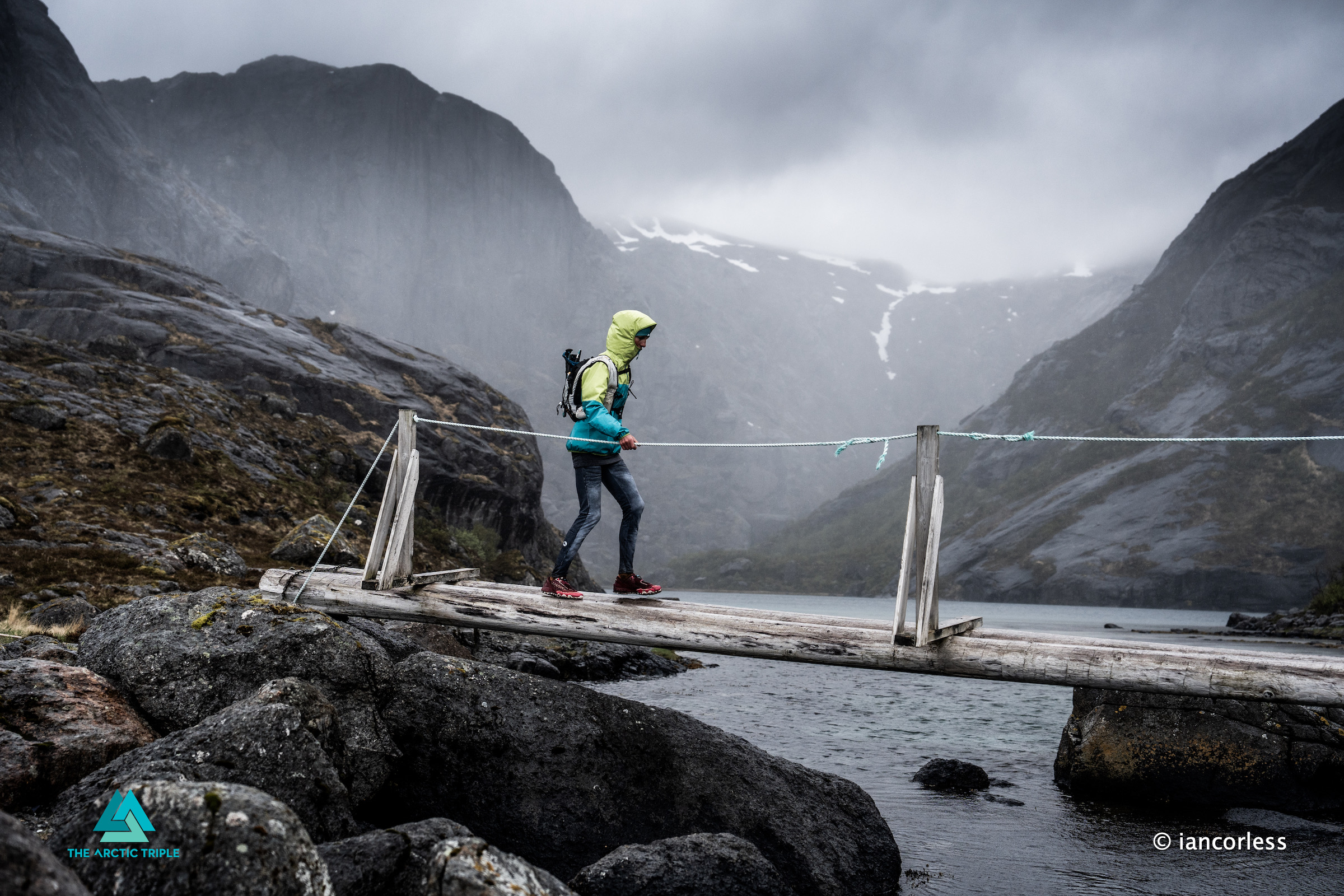
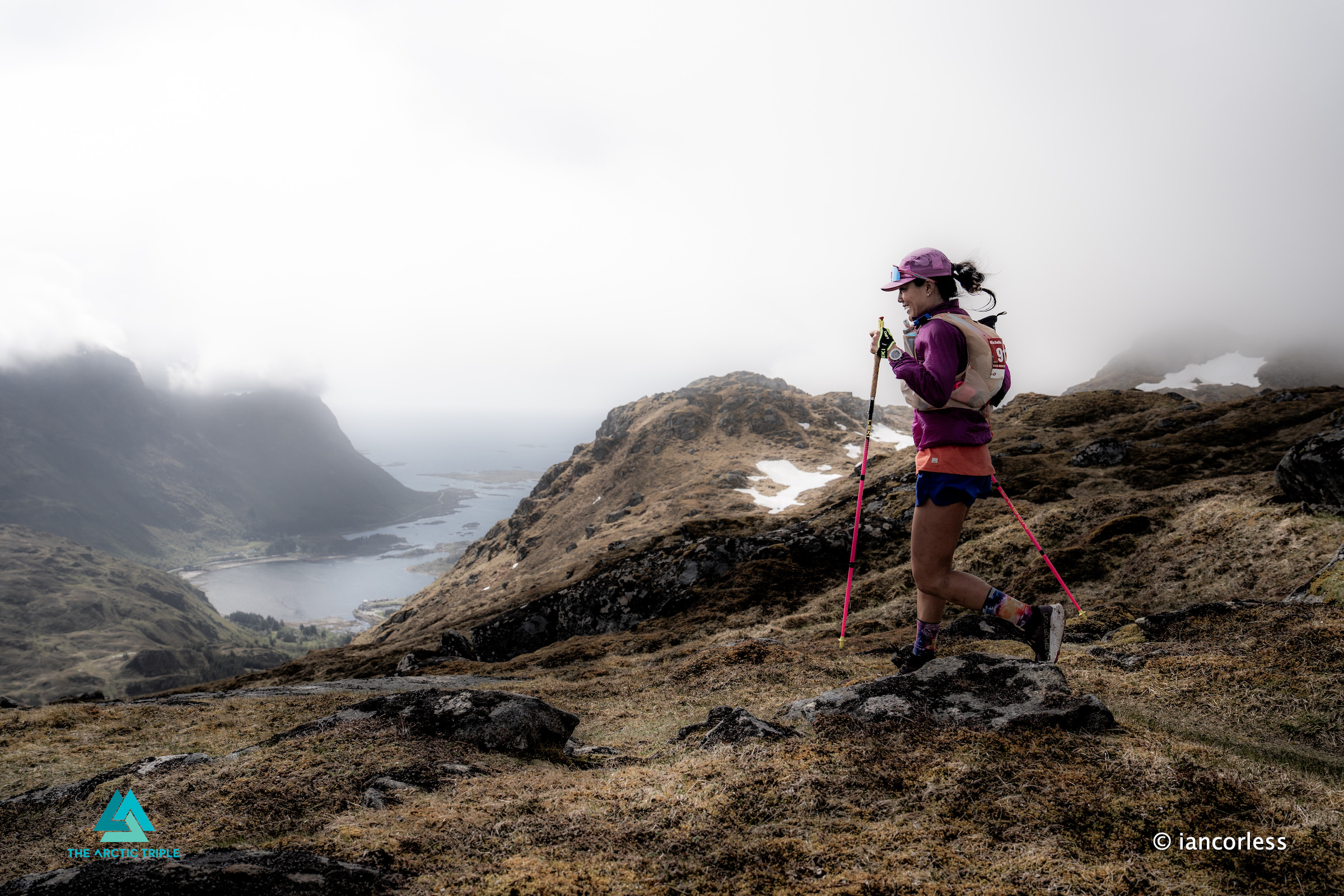
From 26 to 31 May 2026, a small group of just 30 runners will cross one of the most dramatic landscapes on the planet, moving step by step through mountains, fjords, beaches, and fishing villages under the returning light of the Arctic summer.
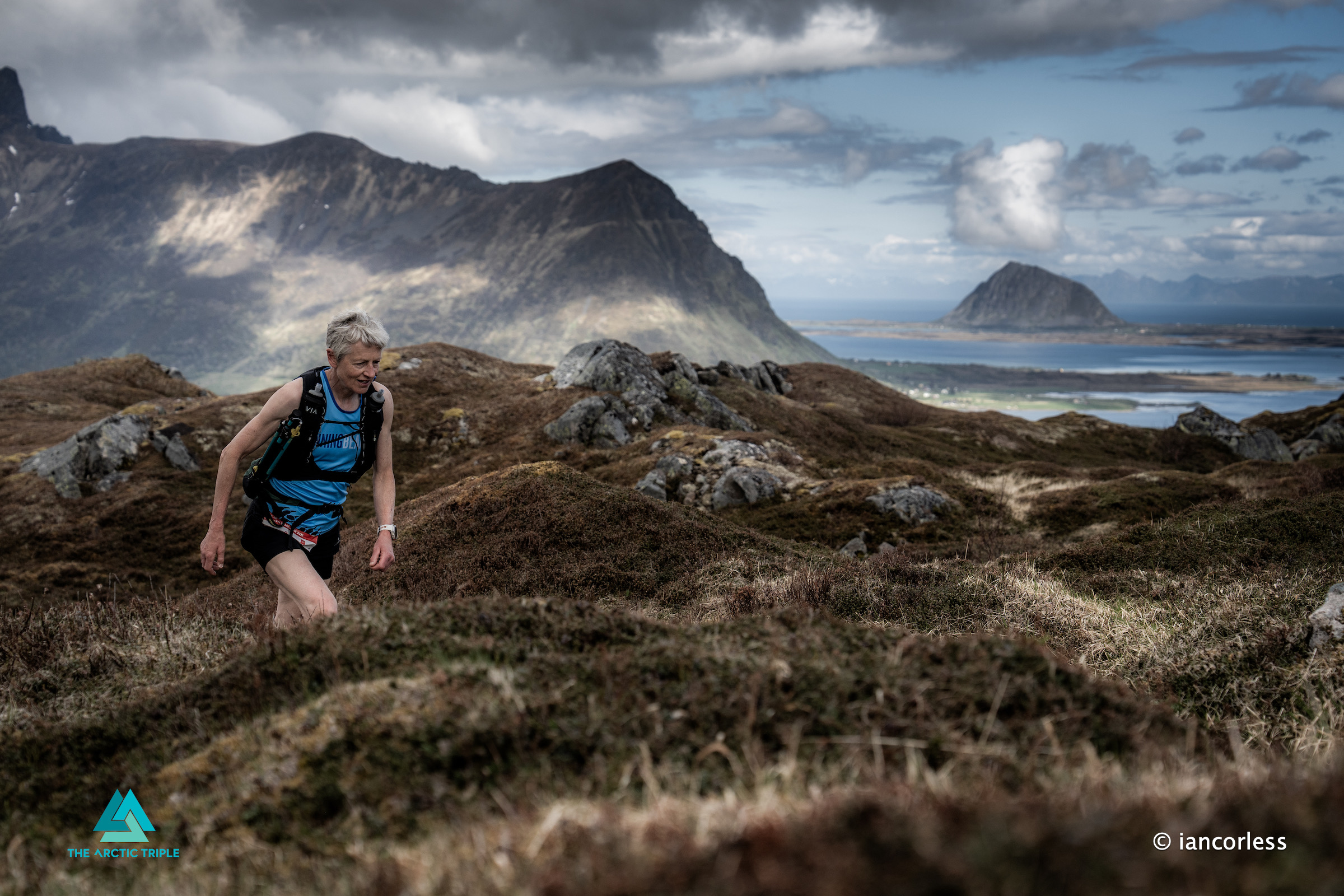
Set in Lofoten, Norway, this is a real multi-day adventure race spread over six days and four stages. The archipelago rises straight from the sea, with sharp granite peaks, narrow coastal trails, and open horizons in every direction. Late May is when the midnight sun begins to settle in, stretching the days and bathing the landscape in soft, golden light that never quite fades. You’ll run when the sun hangs low above the water, when shadows move slowly across the mountains, and when time feels different.
The race offers two distances. The 170 km Expedition Run covers four demanding stages between 34 and 52 kilometres, designed for runners who want a deep, physical immersion in the terrain. The 100 km Adventure Run follows the same spirit across four stages between 17 and 35 kilometres, offering a shorter but equally powerful experience. Both routes blend runnable sections with technical trails that require focus, respect for the landscape, and a steady rhythm rather than speed alone.
What sets Lofoten Stage Run apart is the way everything is woven together. From the moment we meet in Svolvær the day before race day, the experience is fully taken care of. Accommodation is comfortable, meals are generous and rooted in local flavors, and your luggage moves seamlessly from basecamp to basecamp. You run light, recover well, and wake up ready for the next stage. Every detail is designed so you can stay present in the experience rather than worry about logistics.
Each day on the trail brings something new. A climb that opens onto a wide fjord. A quiet stretch along white sand with turquoise water at your side. A remote valley where the only sounds are your breath and the wind. One stage begins with a boat ride into the heart of the landscape, delivering you to the start line in Kjerkfjorden, surrounded by steep walls of rock and sea. These are the moments that stay with you long after the race is over.
Evenings slow the pace. Warm dinners are shared around the table, stories traded between tired legs and smiling faces. With such a small field, the atmosphere stays personal and welcoming. You don’t disappear into a crowd. You become part of a temporary community moving together through a wild place. There is time to rest, to talk, to look out over the water and realise how far you’ve come.
The entry fee includes the entire package: five nights of accommodation, including the night before the race and the night after finishing, race registration, luggage transport, all meals from the first day in Svolvær until breakfast on day six, start kit, The Arctic Triple buff, service stations, first aid and evacuation transport, timing and tracking, warm dinner every night, the boat transfer to the starting line, and a quality finisher award. Everything is included so the focus stays where it should be, on the running and the place.
Lofoten Stage Run is not about crowds, noise, or chasing records. It’s about long days on epic trails, running beneath the midnight sun, and experiencing Norway at its most raw and beautiful. This is a race for runners who want more than a finish line, who are drawn to wild landscapes, shared effort, and the quiet magic that happens when movement, nature, and light come together.
Only 10-places remain for the 2026 edition, be quick!
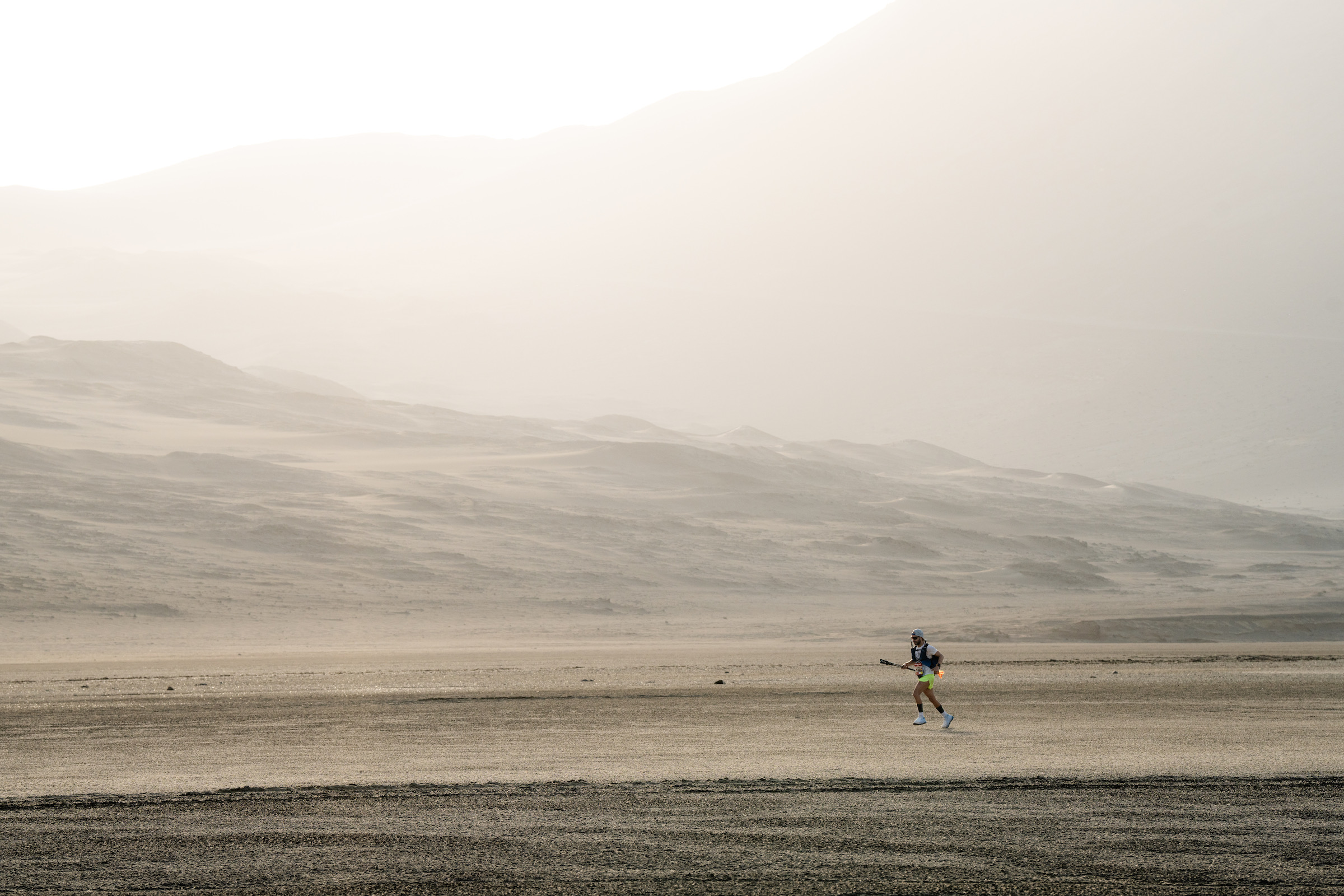
The last stage of MDS 120 Peru opened in darkness. Two waves, 0500 and 0600, slipped out of bivouac beneath a sky heavy with cloud and mist. It was a quiet start, almost private. Footsteps softened in the cool sand. Headlamps cut short beams through the haze. The whole scene carried a sombre tone, as if the desert itself was waiting to see who still had strength left to give.
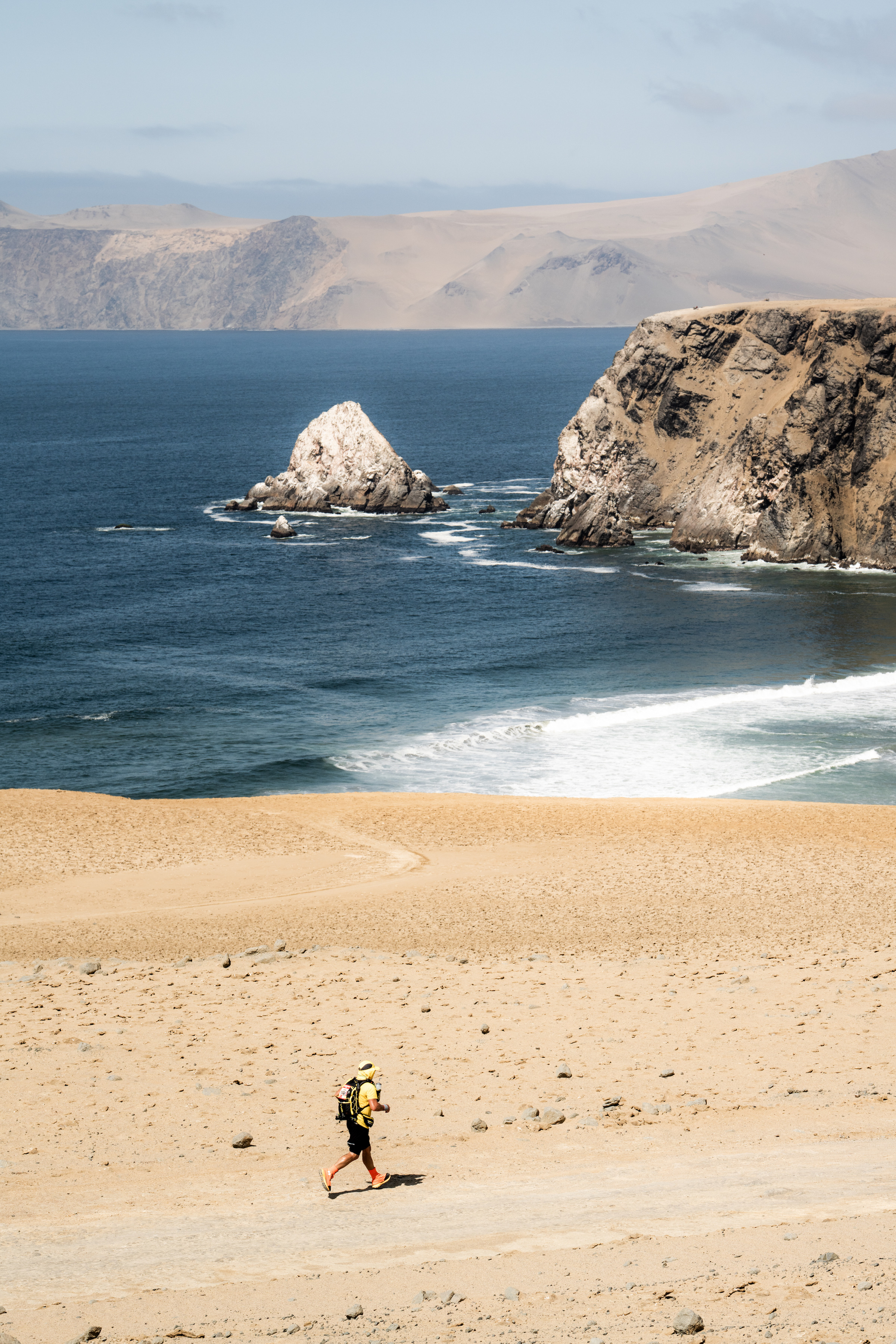
Runners set off knowing this was it, 27.3km’s stood between them and the finish close to Laguna Grande, with the South Pacific stretching out behind Isla Independencia.
A straight line on paper. A world of effort in reality. After days of navigating sand ridges, barren slopes, and the weight of self sufficiency, the final morning felt like a test wrapped in silence.
Then the sun rose. Not with drama, but with intention, as if it had been saving its entrance for the moment runners needed it most. Light broke through the mist and transformed the mood. What had been grey became gold. What felt eerie turned warm. Shapes that were hidden came alive in full color. The desert opened up, and the coastline showed its depth. The day shifted from hard to hopeful in minutes.
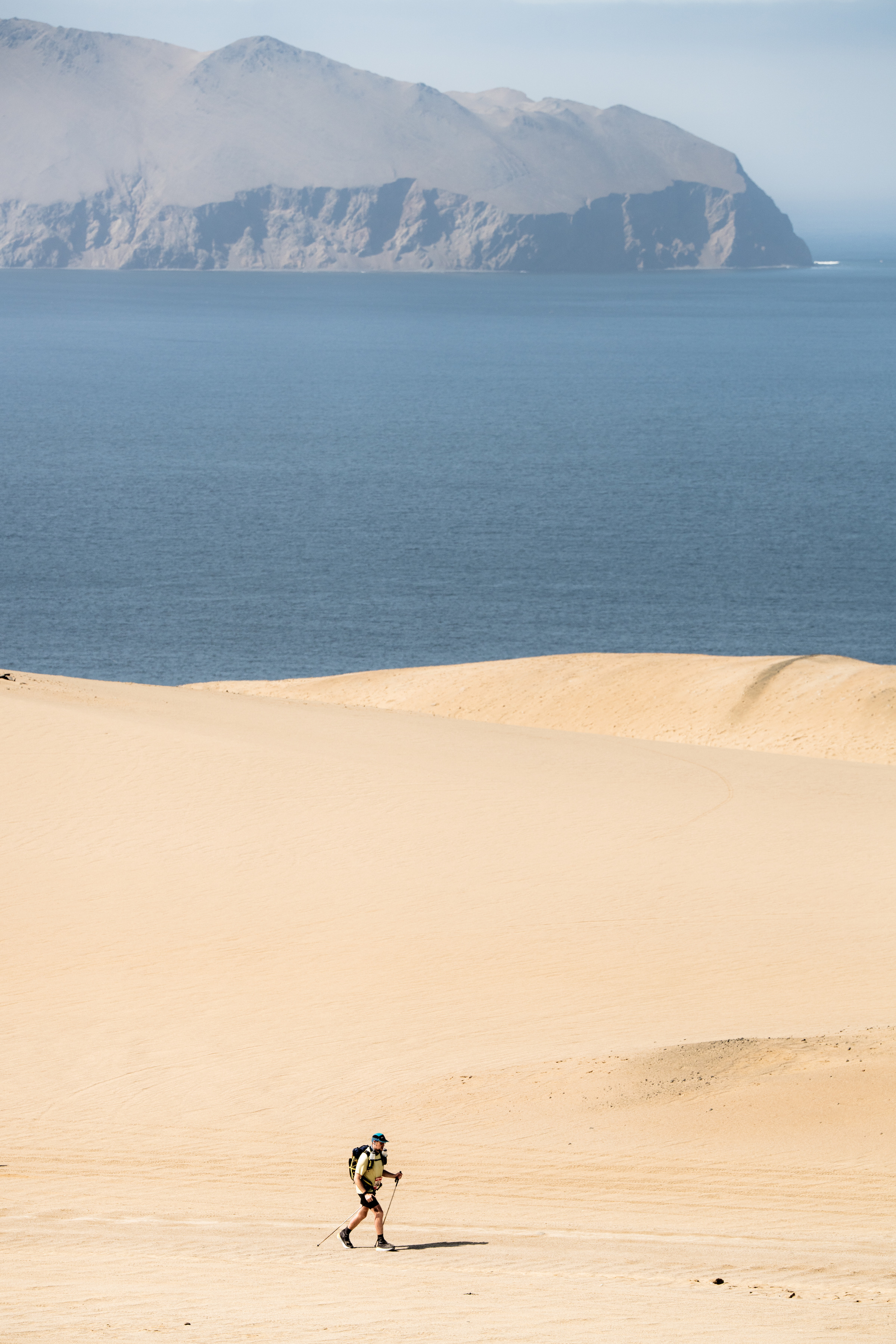
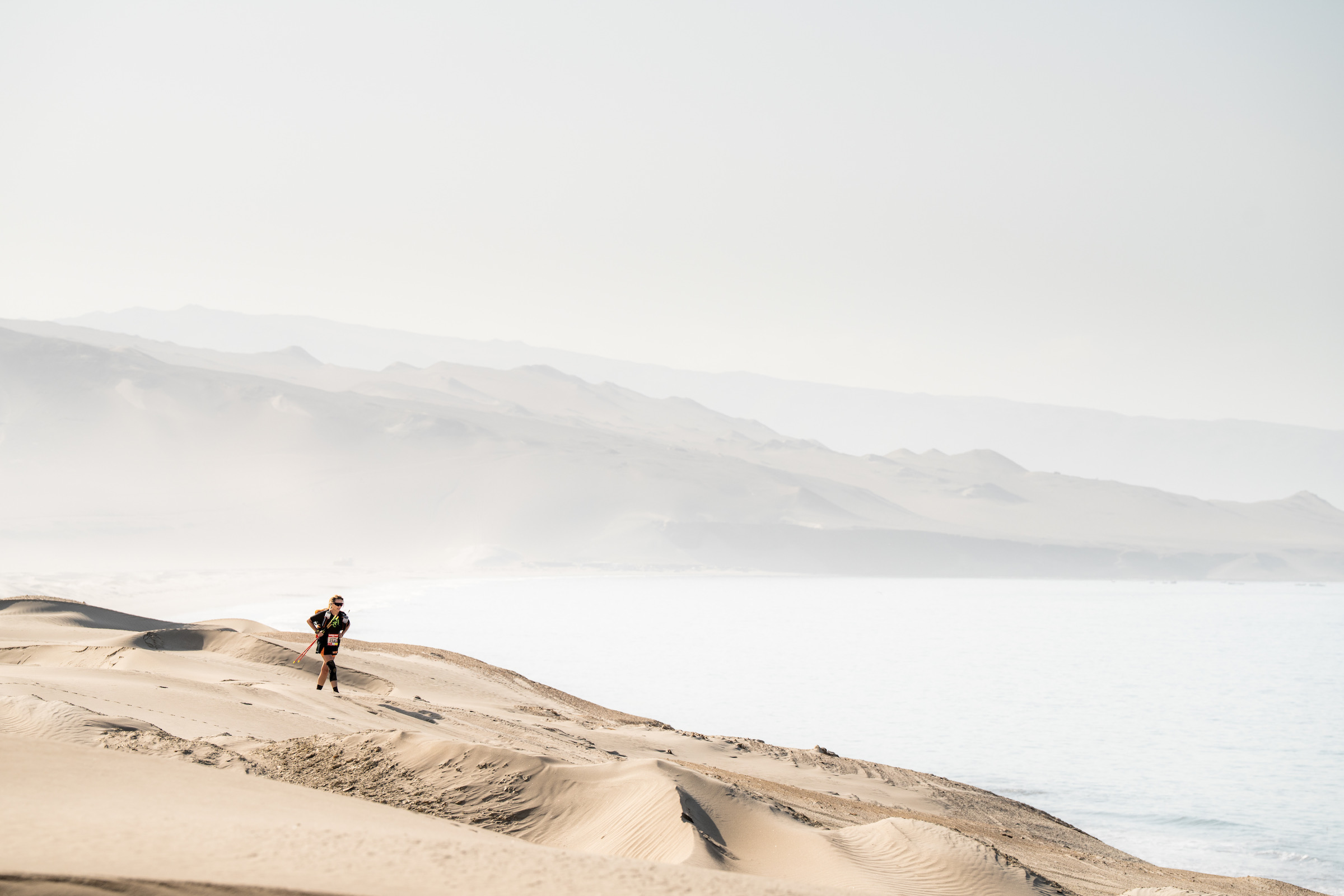
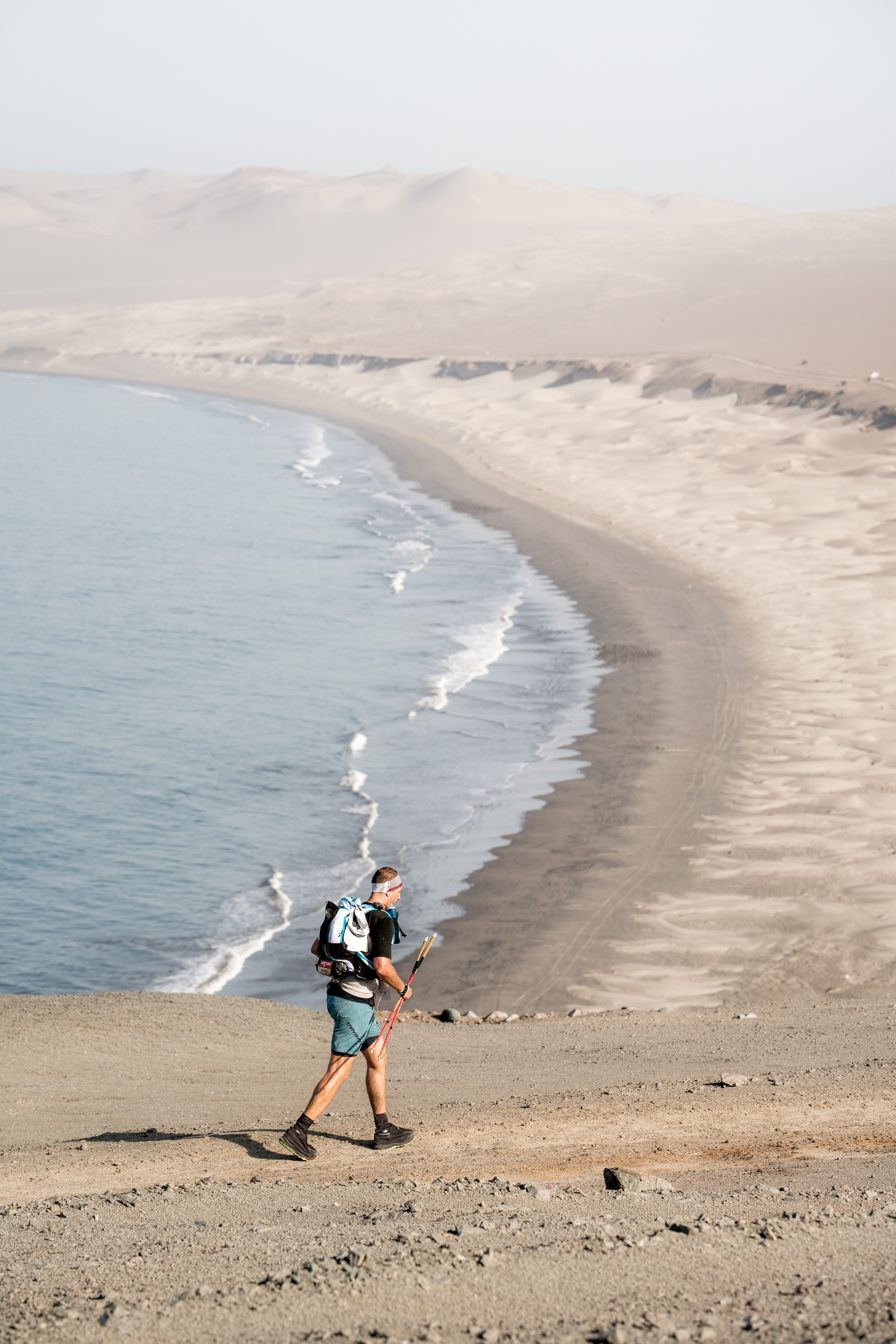
The course unfolded in long stretches where the runners sat between sand and sea. To the left, dunes rising and falling with perfect curves. To the right, the ocean pulling at the shoreline with steady rhythm. The contrast was sharp. The calm blue of the Pacific. The pale heat of the desert.
The line of runners threading through it all. It was a route that looked simple but felt huge. Every kilometre carried its own personality. Hard packed sand, soft patches, wind-carved paths, open flats. The landscape changed often enough to keep minds awake, and beautiful enough to pull them forward.
The heat arrived just as the field settled into its stride. It wasn’t the fierce blowtorch heat of earlier days, but it was real. A reminder of where they stood. Yet the ocean breeze stepped in like a quiet ally. It never erased the challenge, but it kept it honest. It made the effort manageable, even enjoyable, for those who still had enough in the tank to look around and absorb the moment. The contrast between struggle and beauty gave the stage its edge. You work for every step, but you are rewarded at every turn.
Ahead waited the final finish line. The one everyone had imagined since the first briefing. Flags. A strip of sand. A medal that represents far more than distance. For some, it marked the end of 70km’s, for others, 100 or 120km.
The numbers matter less than what they represent. Hours of carrying everything you need. Days of managing effort, discomfort, nutrition, and doubt. Nights spent in bivouac with sand in their shoes and a story building in their mind. Every runner arrived with their own reason for standing on that line. Every runner left with their own version of pride.
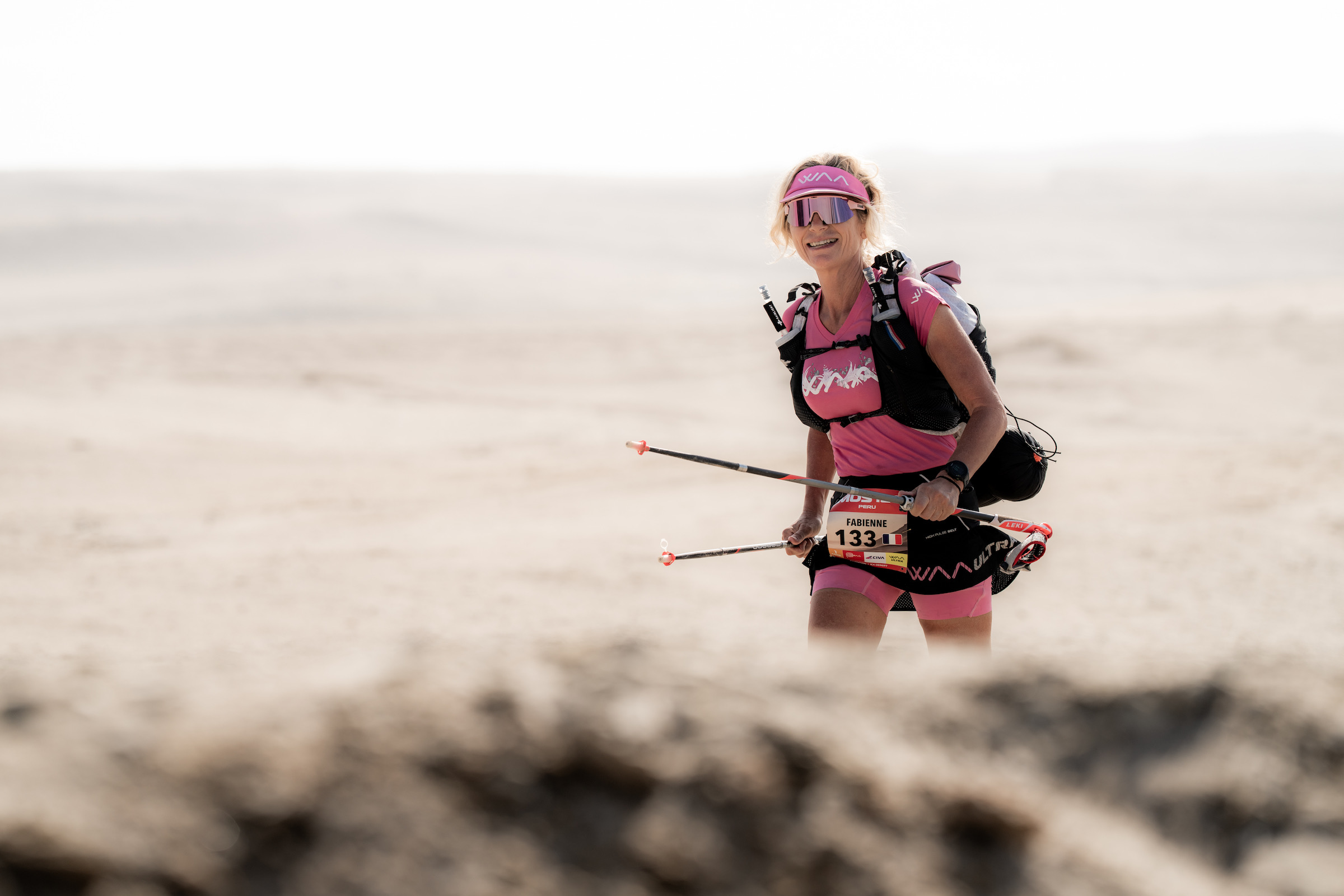
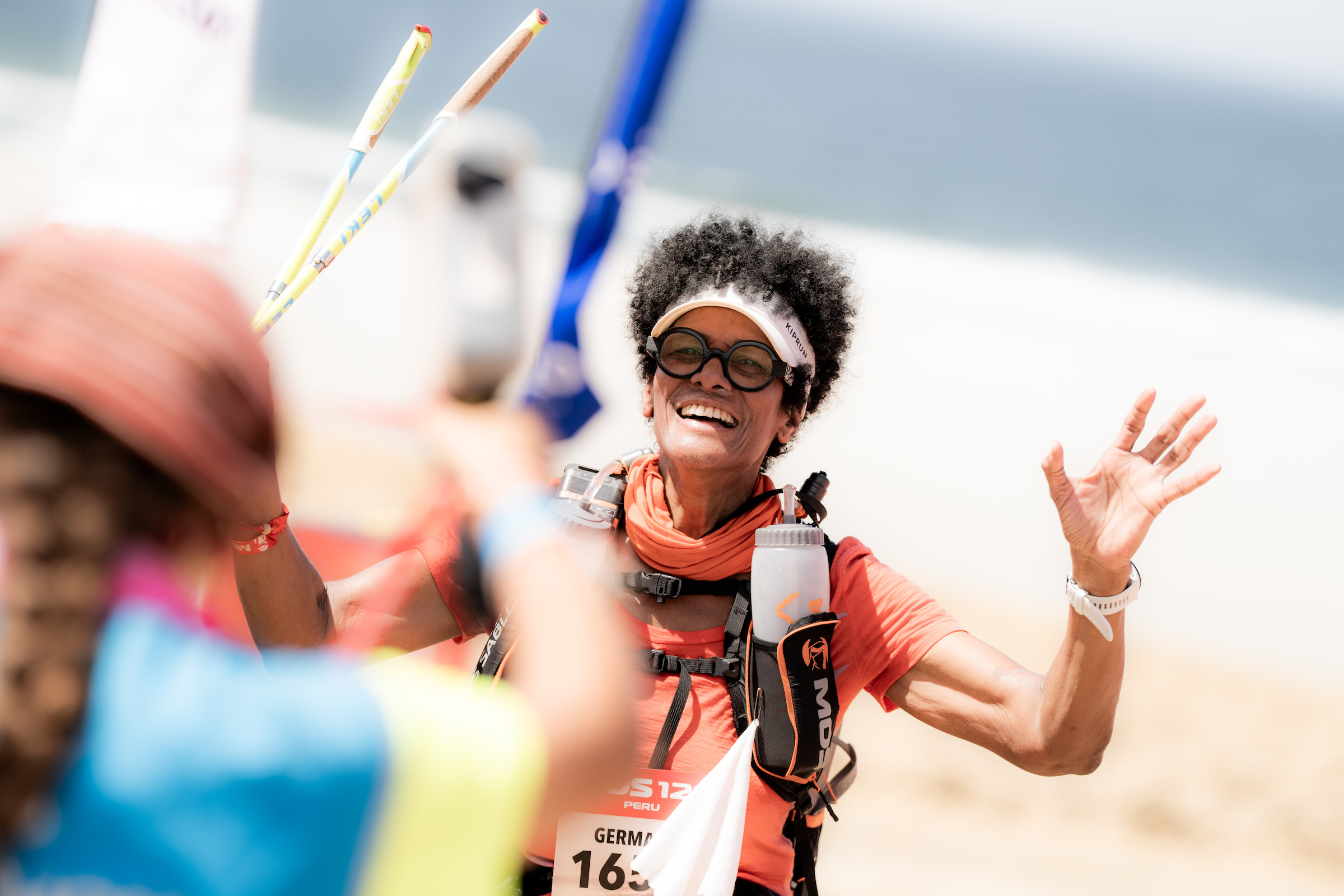
Ocean, desert, island, sky. A backdrop that looked unreal even with tired eyes. The final meters felt both endless and too fast. Some ran strong. Some walked with purpose. Some cried.
Some smiled because crying would have taken too much energy. But when they crossed, the moment hit all the same. Relief, release, accomplishment. A medal placed on a dusty, sunburned chest always carries more weight than its metal. It is a statement: you finished what you started.
Peru helped deliver that feeling. This place is varied and magical in a way words only capture from the surface. Participants have now experienced it from within. They have lived at the pace of the terrain. They have watched light move across dunes and cliffs. They have felt the temperature swing, the sand shift, the silence settle. They have stared at landscapes that looked untouched and walked through areas shaped by wind, water, and time. The magic isn’t something you observe. It is something that gets into you until the experience becomes part of your memory, and part of your identity.
Self sufficiency sharpened that magic. Carrying your world on your back changes how you see everything. Meals taste different. Rest hits harder. Small wins grow bigger. Each person learned to handle the course with their own decisions. When to push. When to save. When to stop and fix something. That independence builds a kind of confidence that no one can hand you. You earn it step by step. You also earn the hardship that comes with it. Fatigue. Friction. Heat. Moments when your thoughts wander into the wrong corners. Yet that is where the race shifts from physical to personal. You leave with a stronger sense of who you are and what you can do.
Stage three completed that story. It tied the effort of previous days into one clean line toward Laguna Grande. A route that looked almost gentle from above but carried the full emotion of the journey. Those final twenty seven kilometers gave runners space to reflect. Not in a soft poetic way, but in the grounded, honest way that comes when you are tired but not broken. Many thought about why they came. Many thought about who helped them get here. Many thought about how they had changed over the past days. The finish line didn’t give those answers. It confirmed them.
What stands out from this stage is the sense of balance. Mist, then sun. Heat, then breeze. Hardship, then reward. Desert, then ocean. A final effort that closed the race exactly as it should have: with clarity. Runners saw Peru in wide angles and fine detail. They felt the country’s scale and its intimacy. They moved through places you cannot appreciate from a screen or a road. They earned every view and every step.
MDS 120 Peru is built on challenge, but it thrives on discovery. Participants discovered what the desert holds, what the coastline gives, and what they themselves can carry through heat, sand, and self doubt. They discovered that Peru is not only beautiful. It is alive, shifting, layered, and surprising in ways that stay with you.
Stage three delivered the finish, but more importantly, it delivered perspective. The medal is the symbol. The journey is the reward, the magic of Peru is something they will keep long after the sand is washed from their shoes.
The end is in sight. After five brutal, beautiful days in the high Himalayas, Stage 6 of the 2025 Everest Trail Race delivers the final blow and the final reward. It’s 28.5 kilometres fo Lukla, a day marked by more descent than ascent: 2612 meters down, 1578 meters up, and every single step earned.
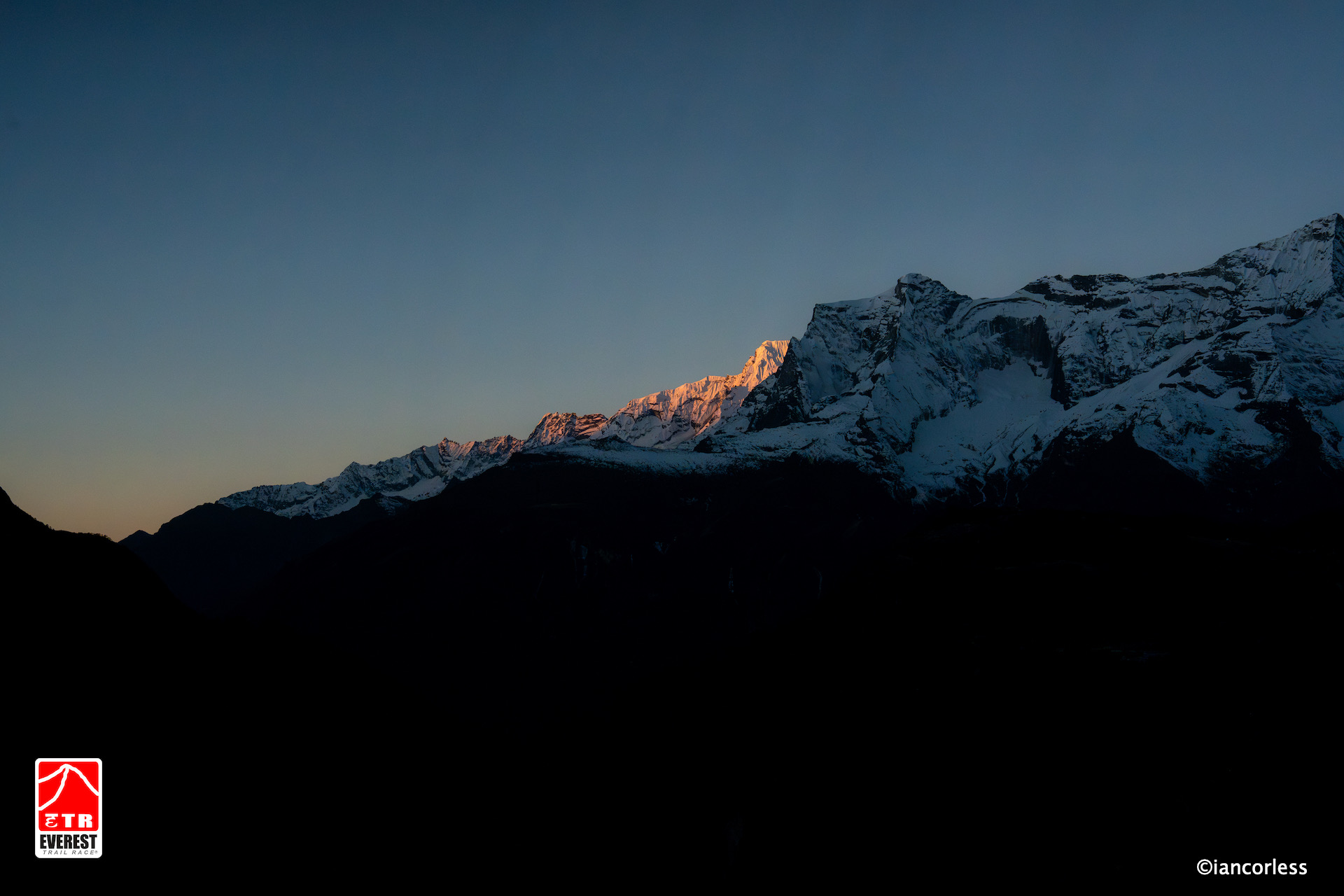
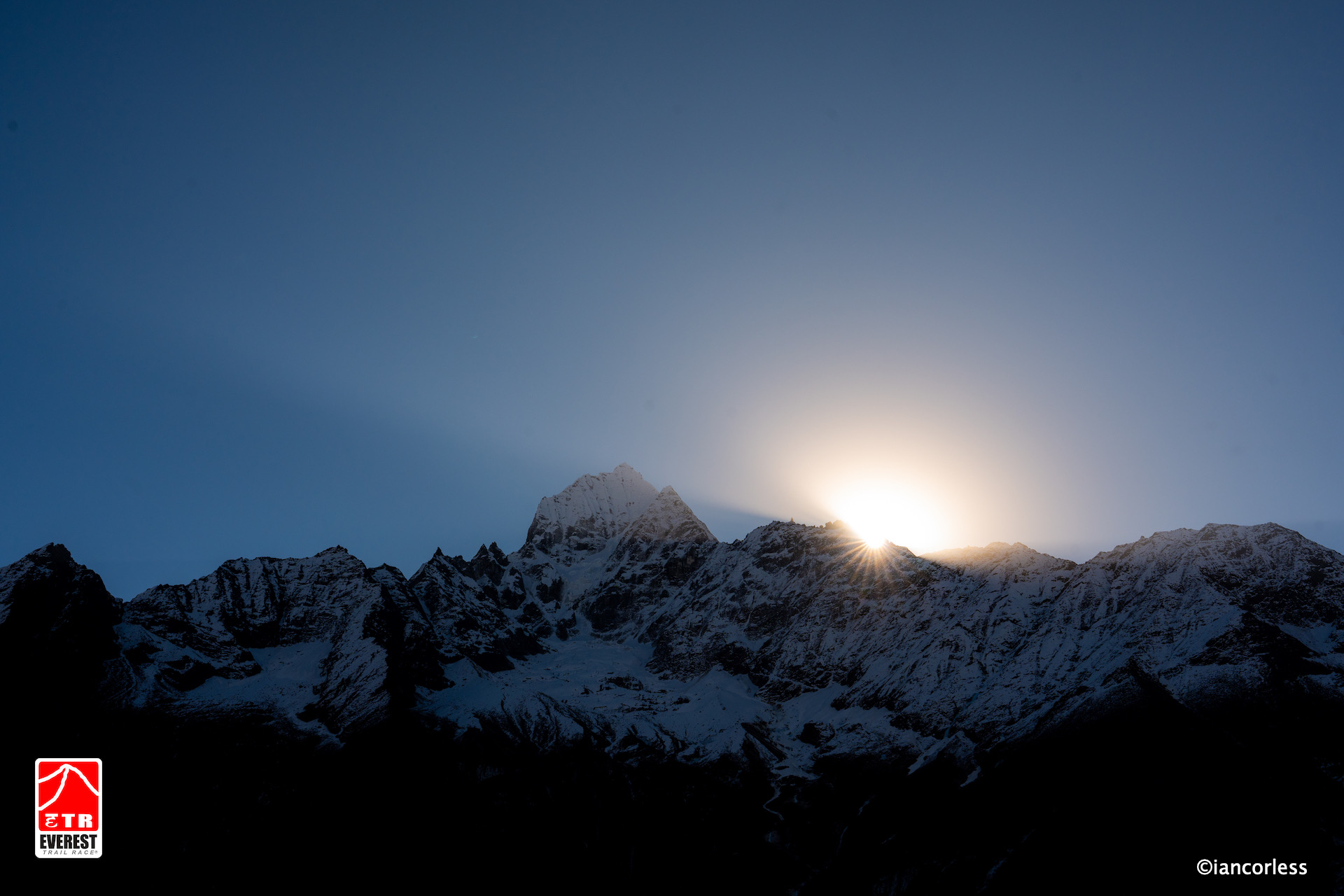
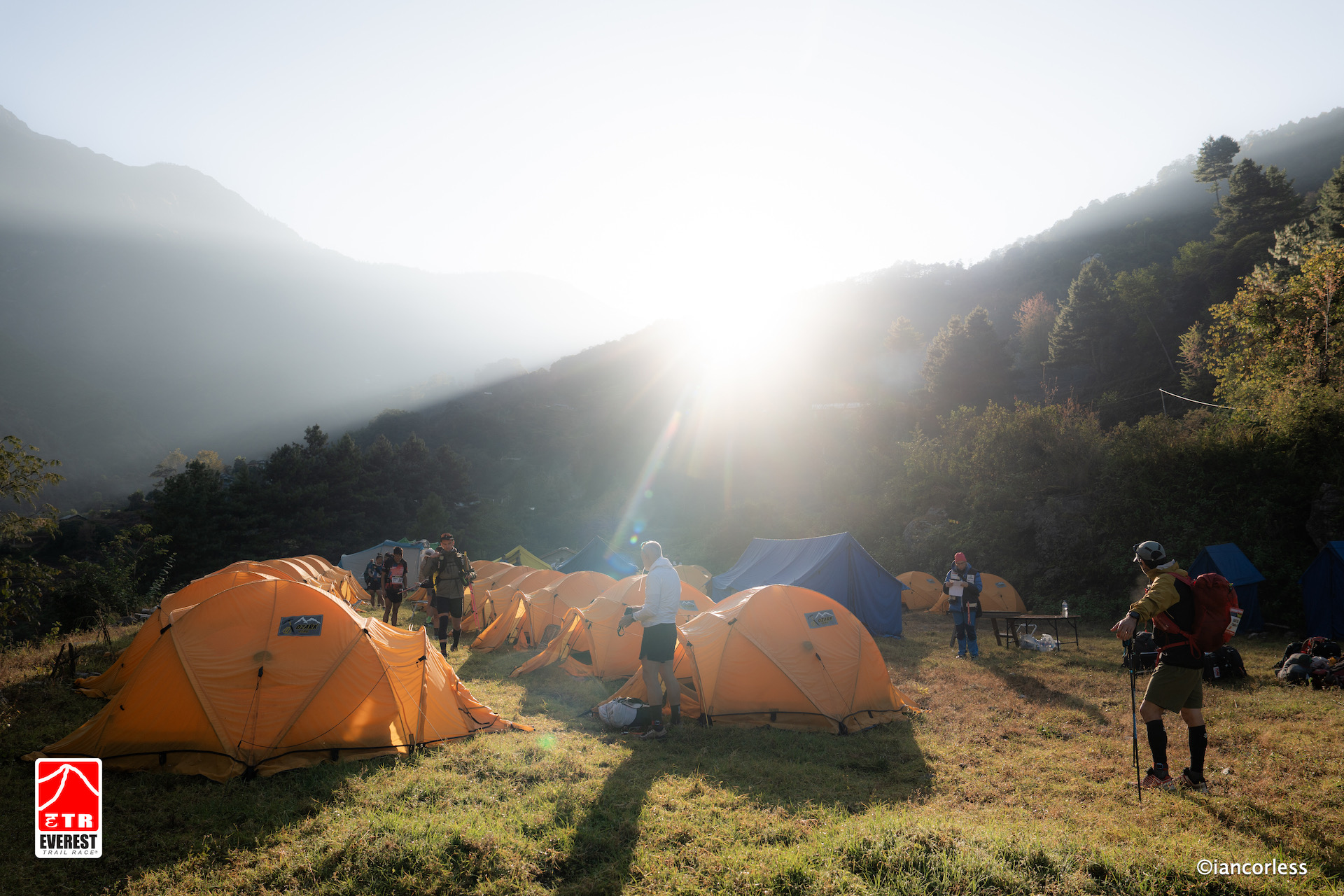
An early start, the arrival of the sun and soon, the heat will come – not only in the sky but with the bodies of each participant.
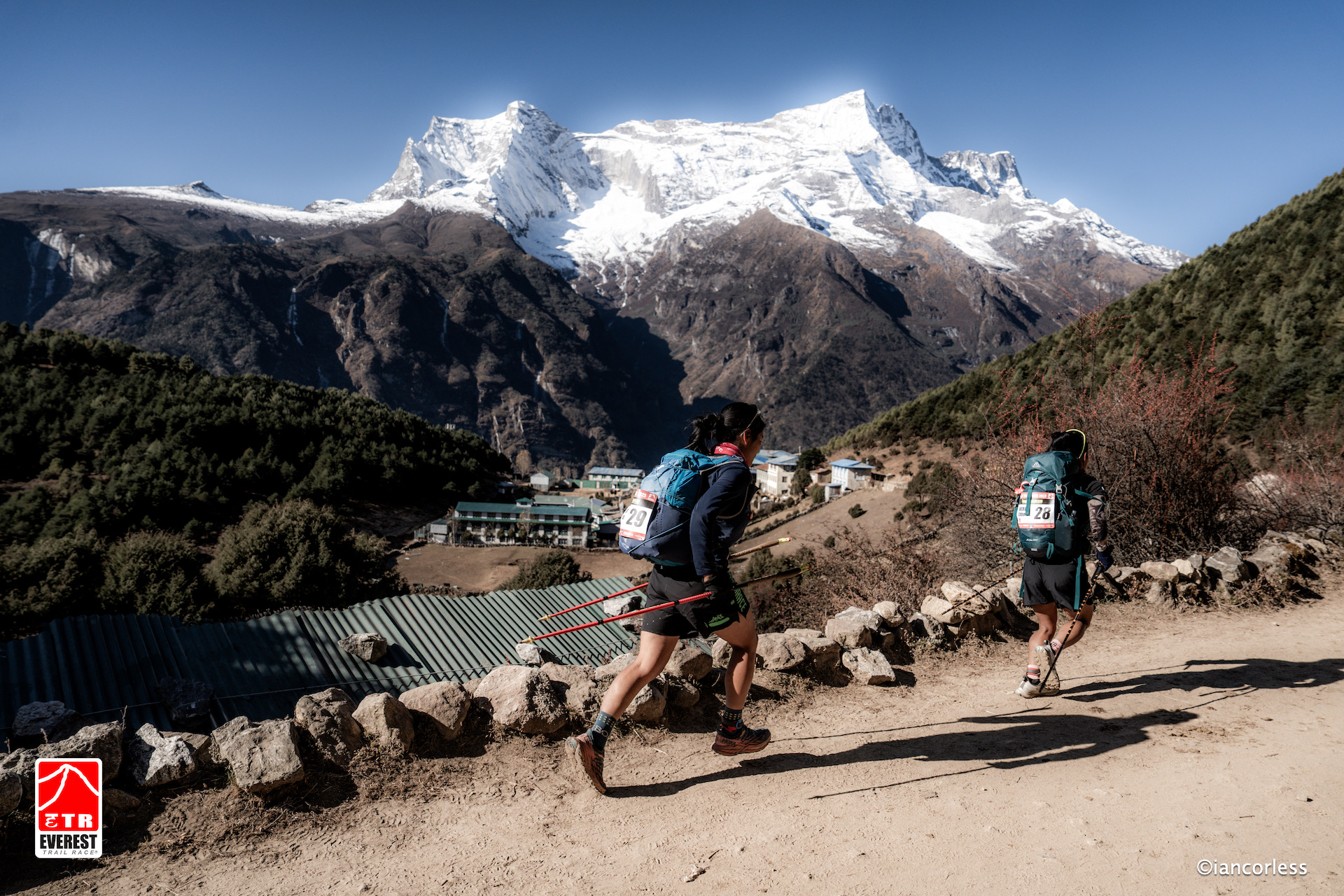
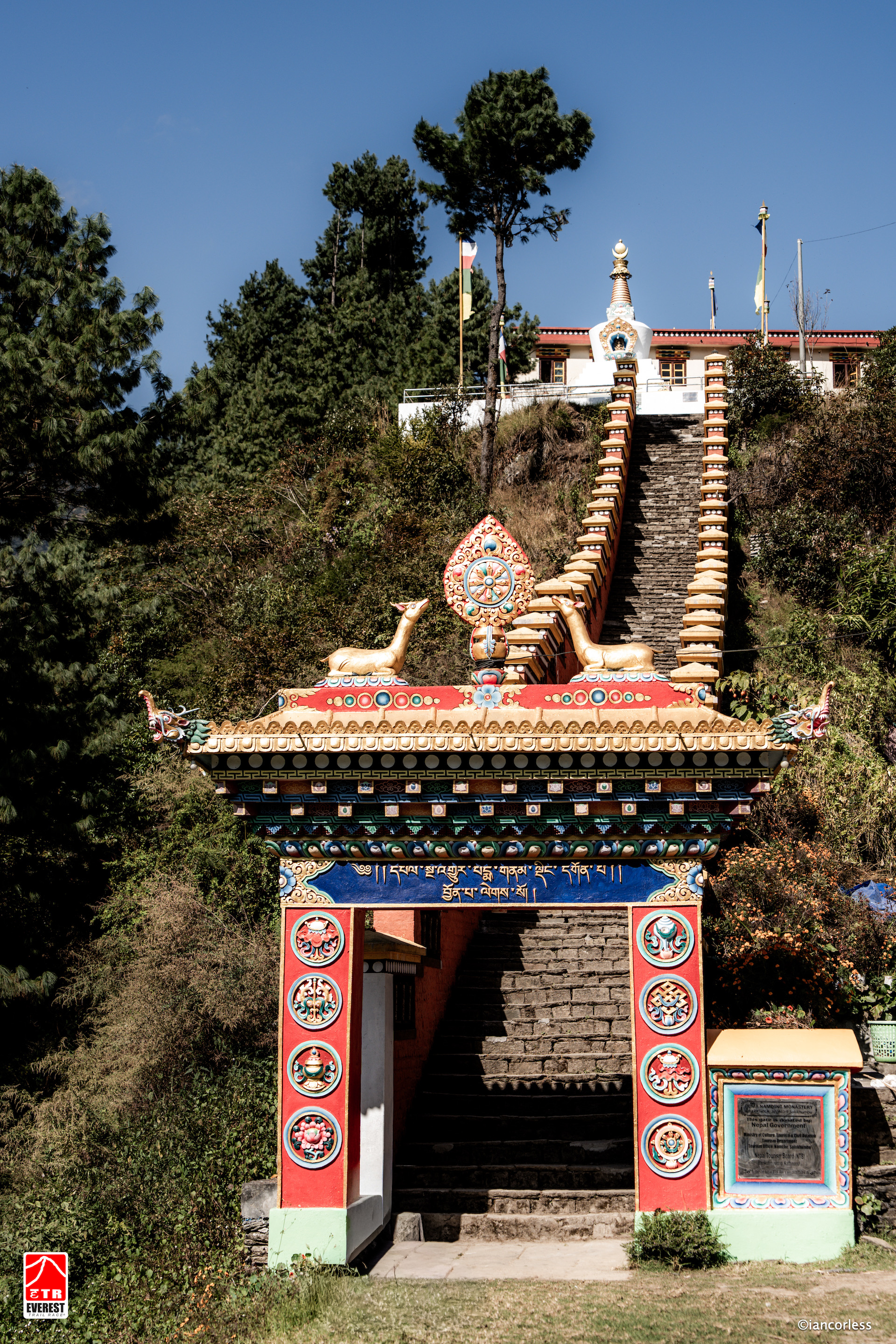
The day kicks off with iconic trails that weave from Stupa to Stupa to Namche Bazaar, the buzzing Sherpa hub perched on the mountainside like a fortress.
The backdrop behind, stunning, but the participants don’t get a chance to see it…
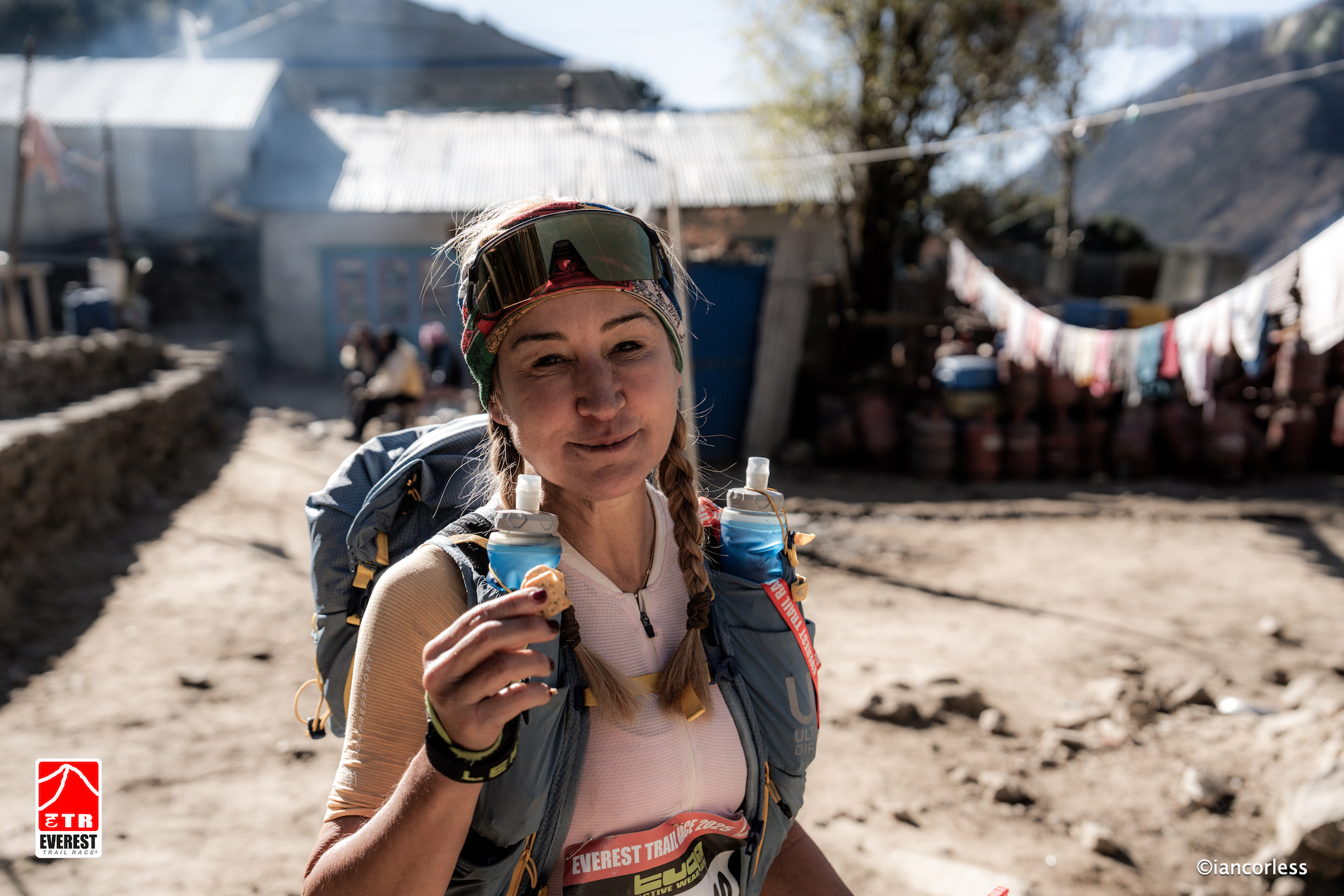
Namche brings checkpoint 1, it’s welcome, the early kilometres had worked the body hard with a steep descent, followed by a gentle climb and then an ‘easy’ run to the refreshment.
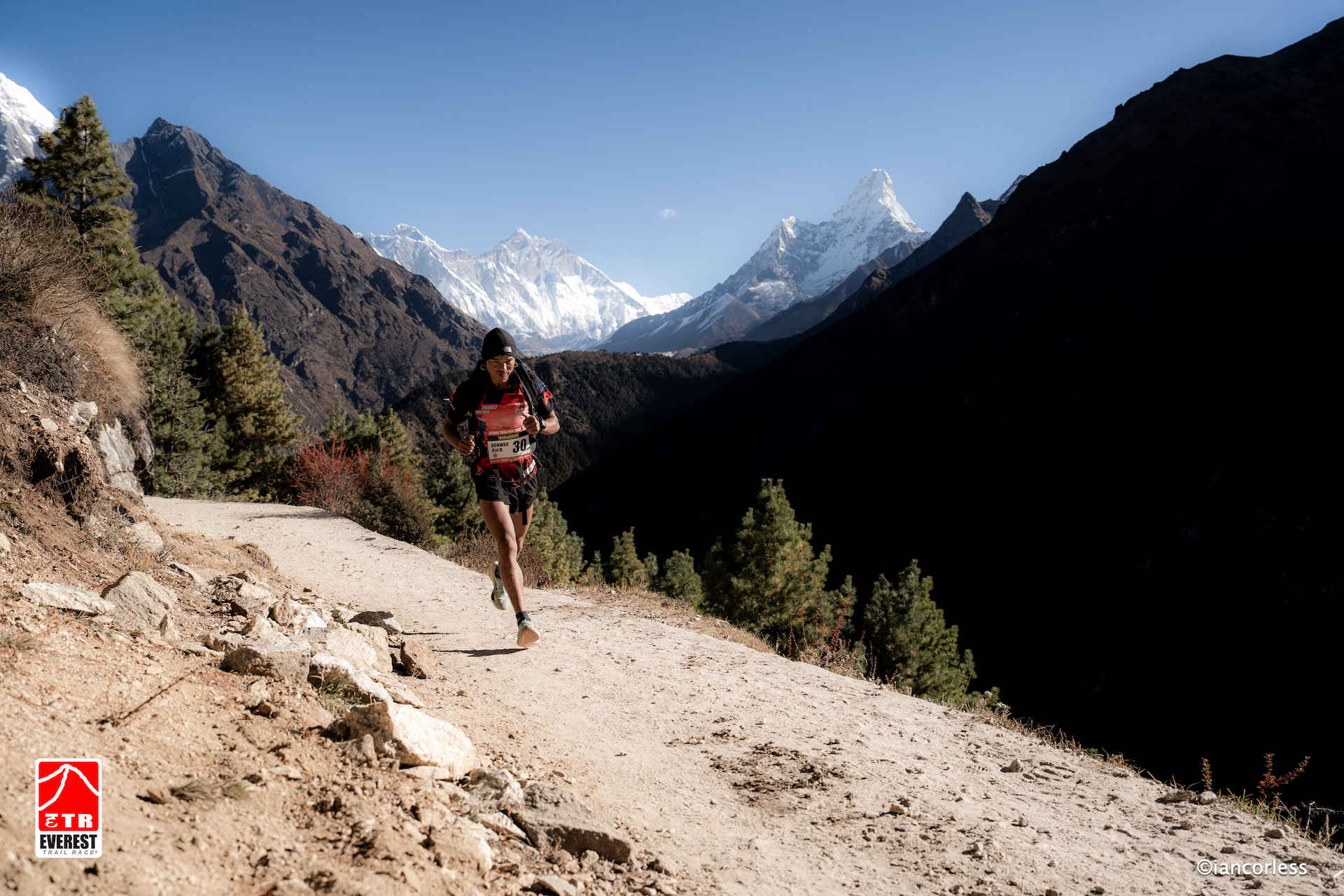
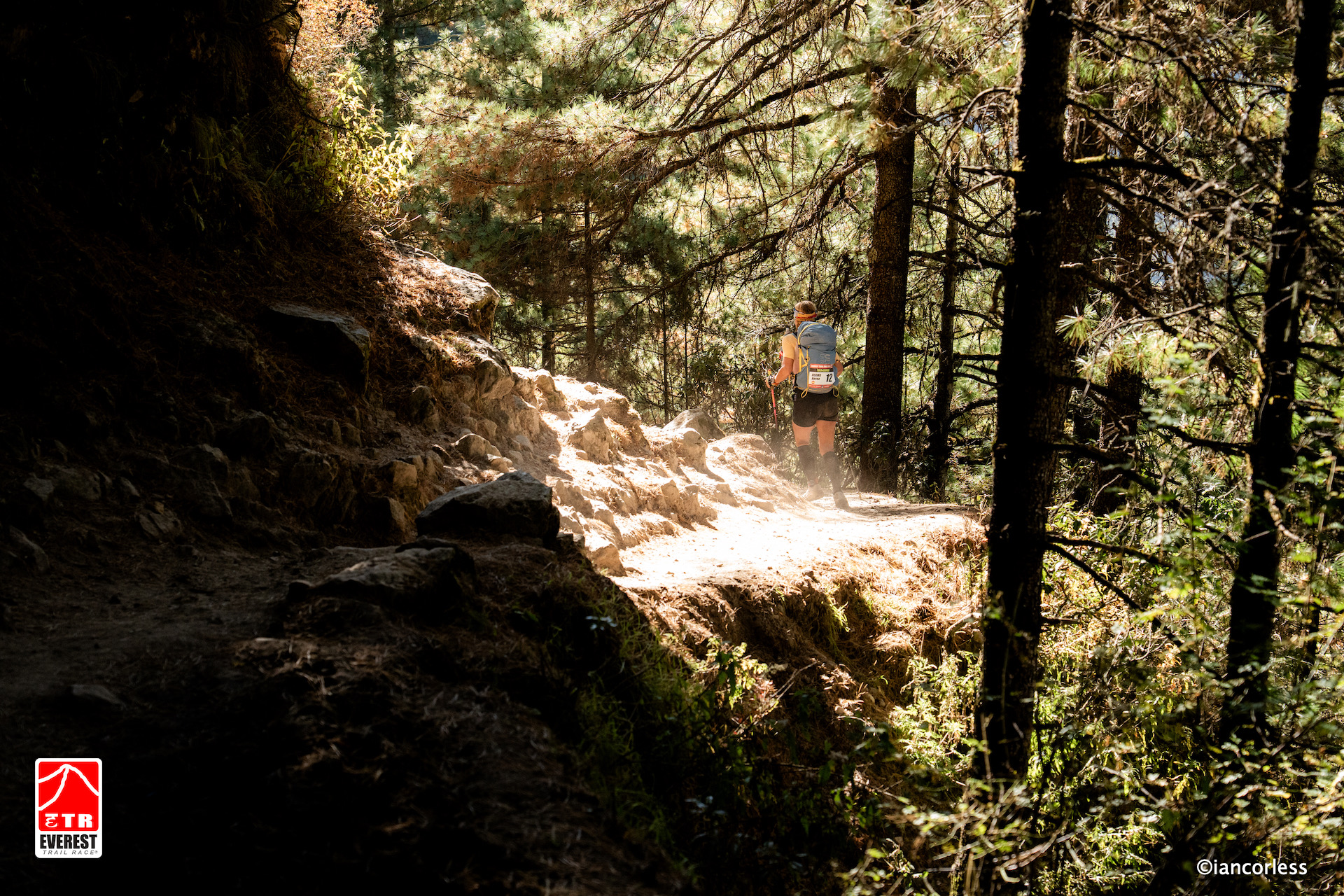
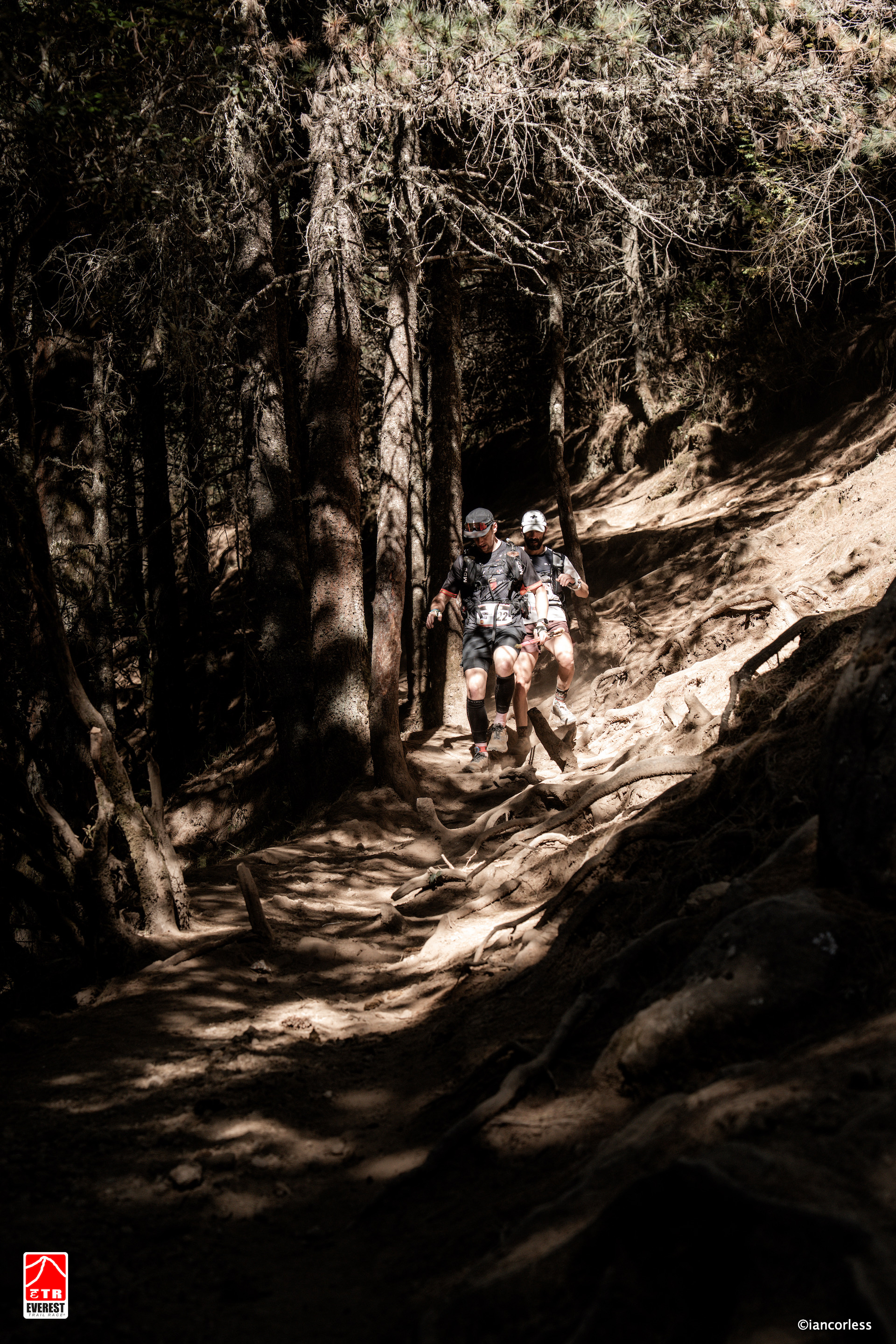
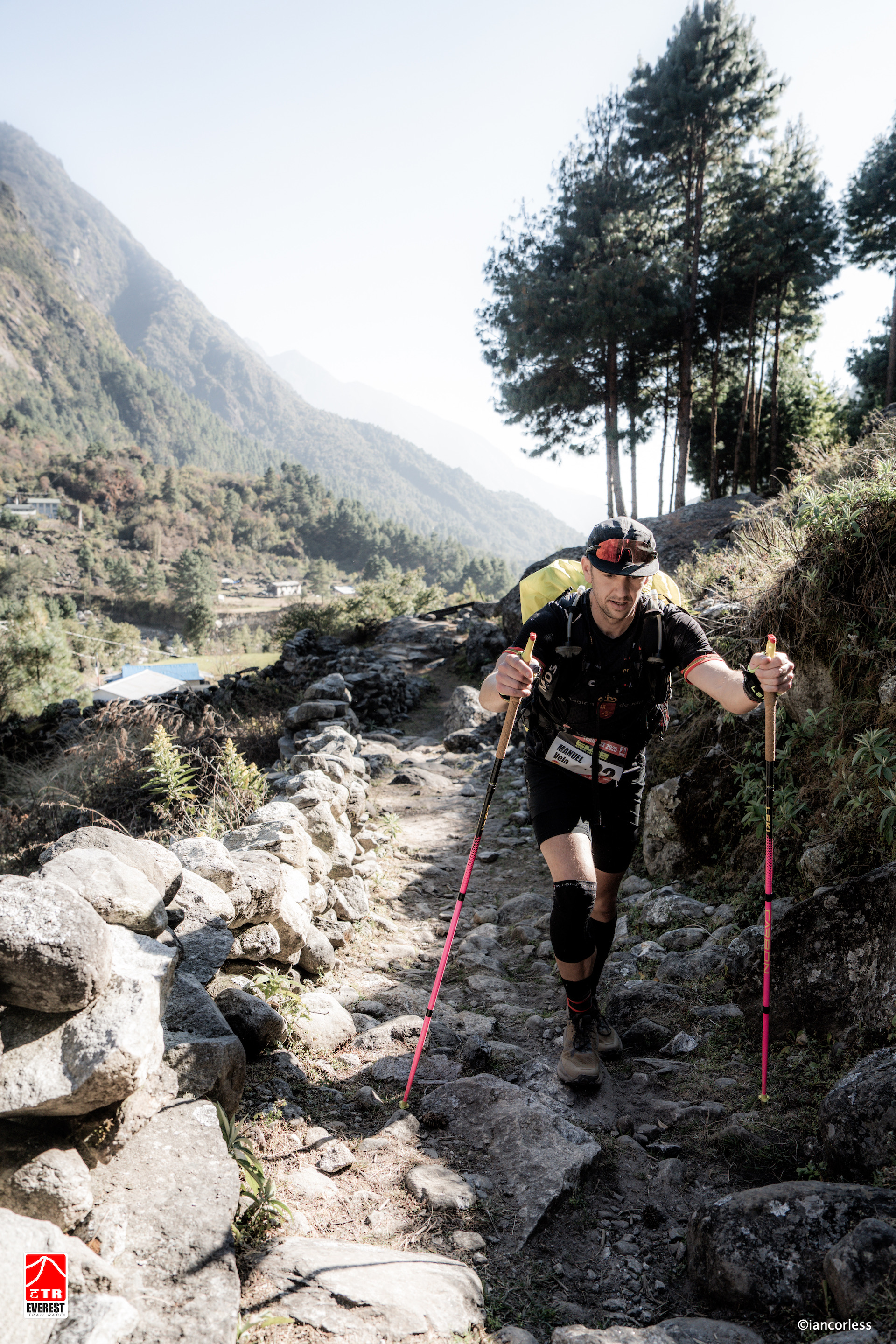
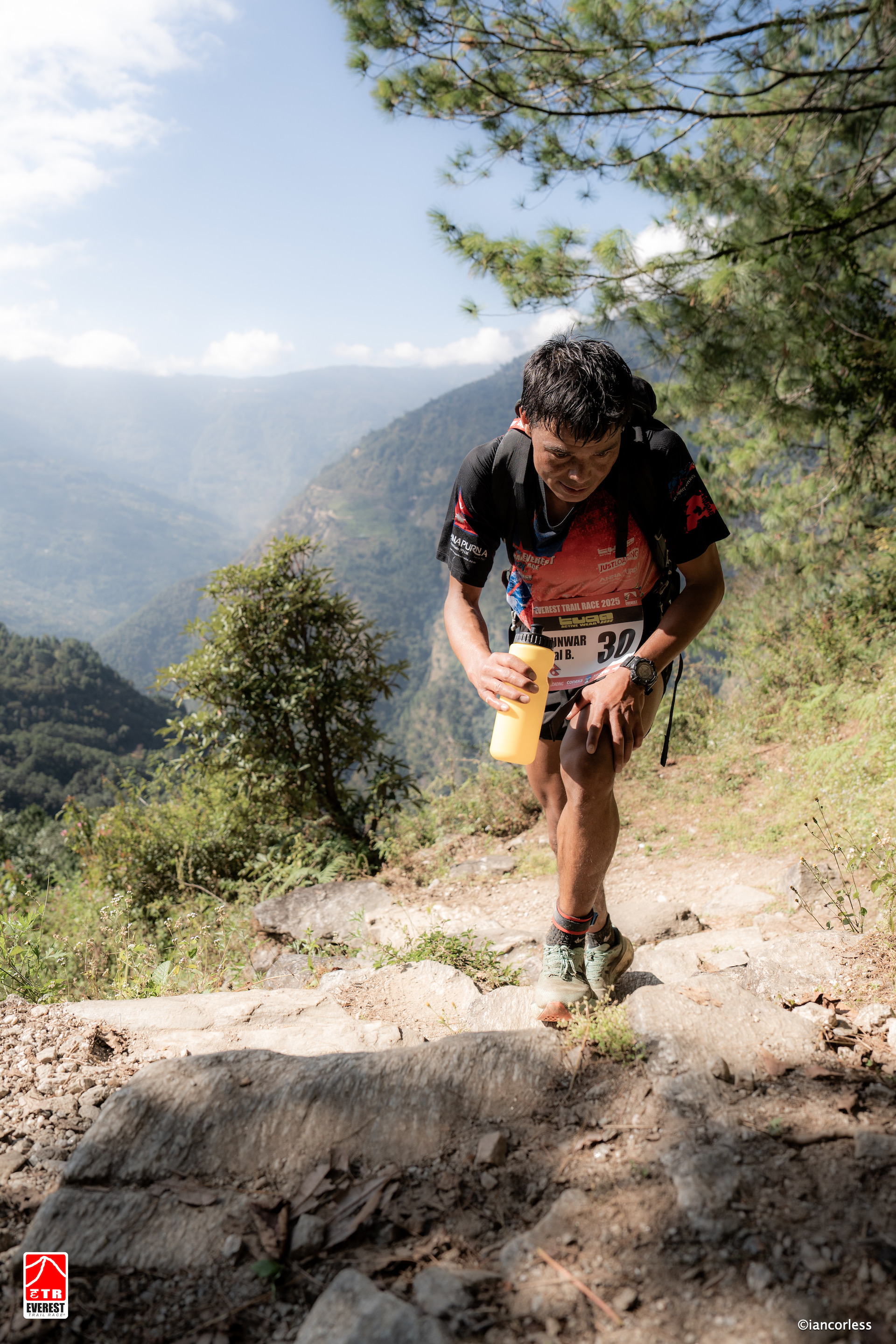
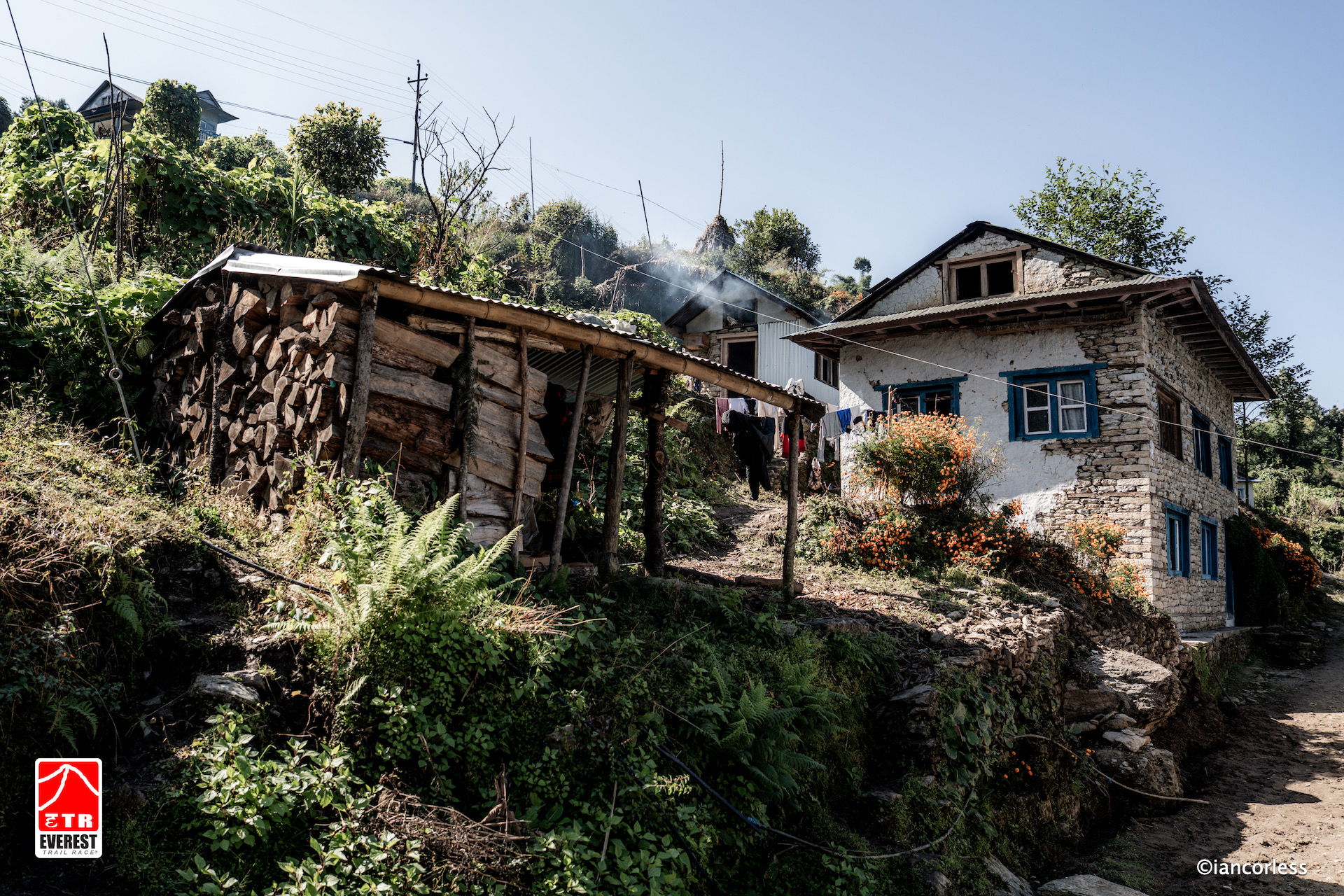
The early kilometers retrace some familiar ground – Sanasa, Phunki Tenga, and trails edged with mani stones and prayer flags, twisting through pine forests and clinging to cliffs. But don’t call it a repeat. The fatigue, the altitude, and the stakes make every step feel different.
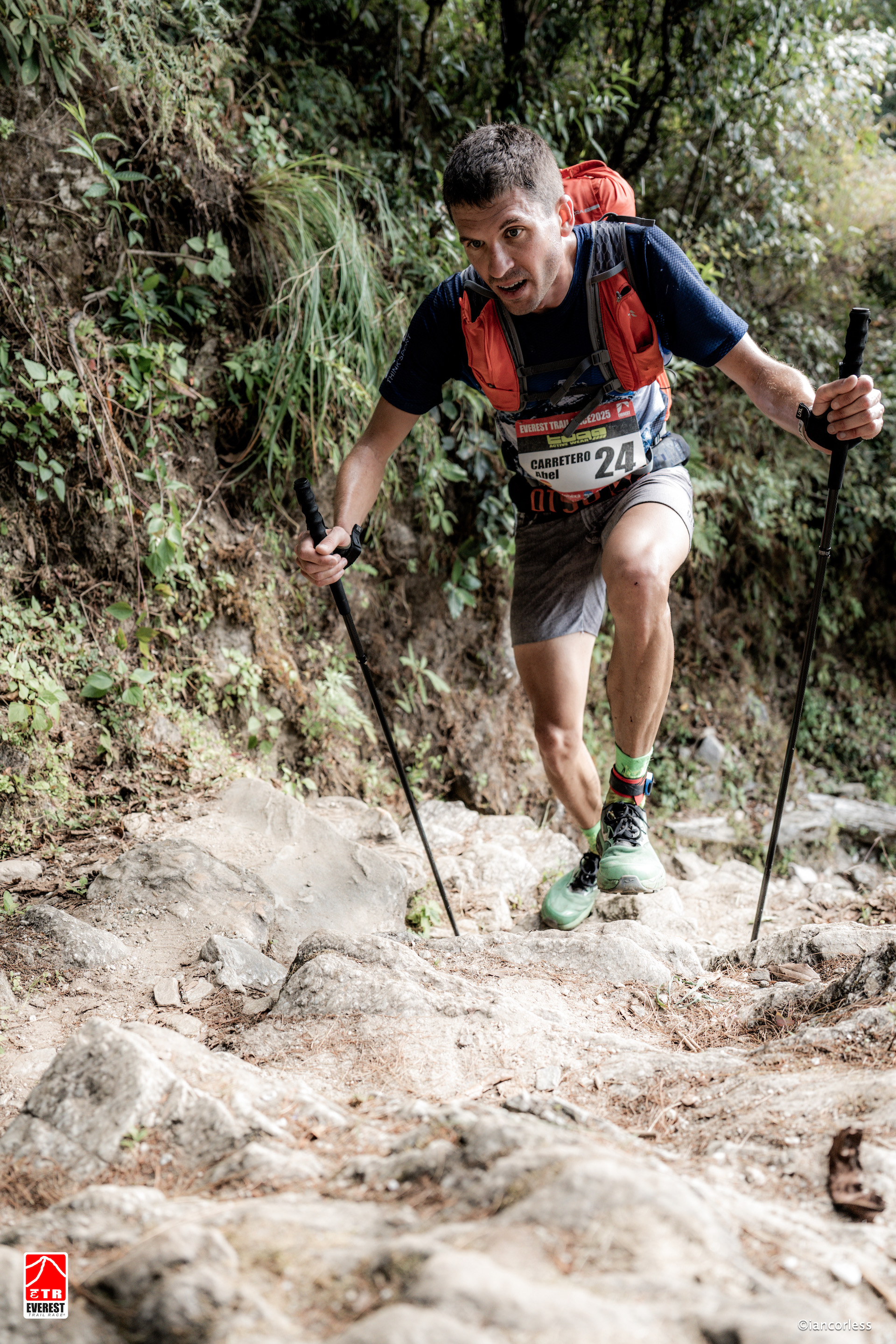
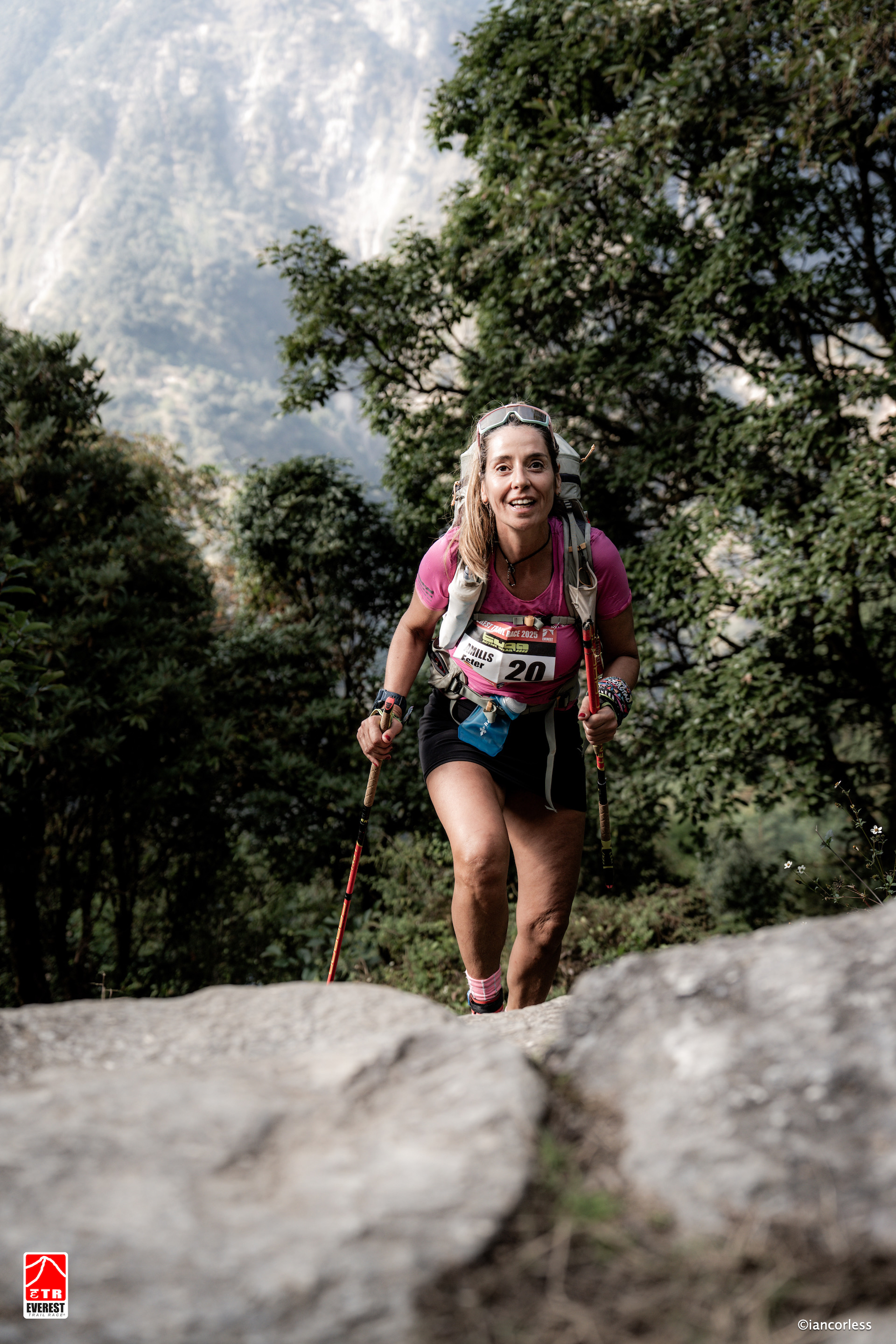
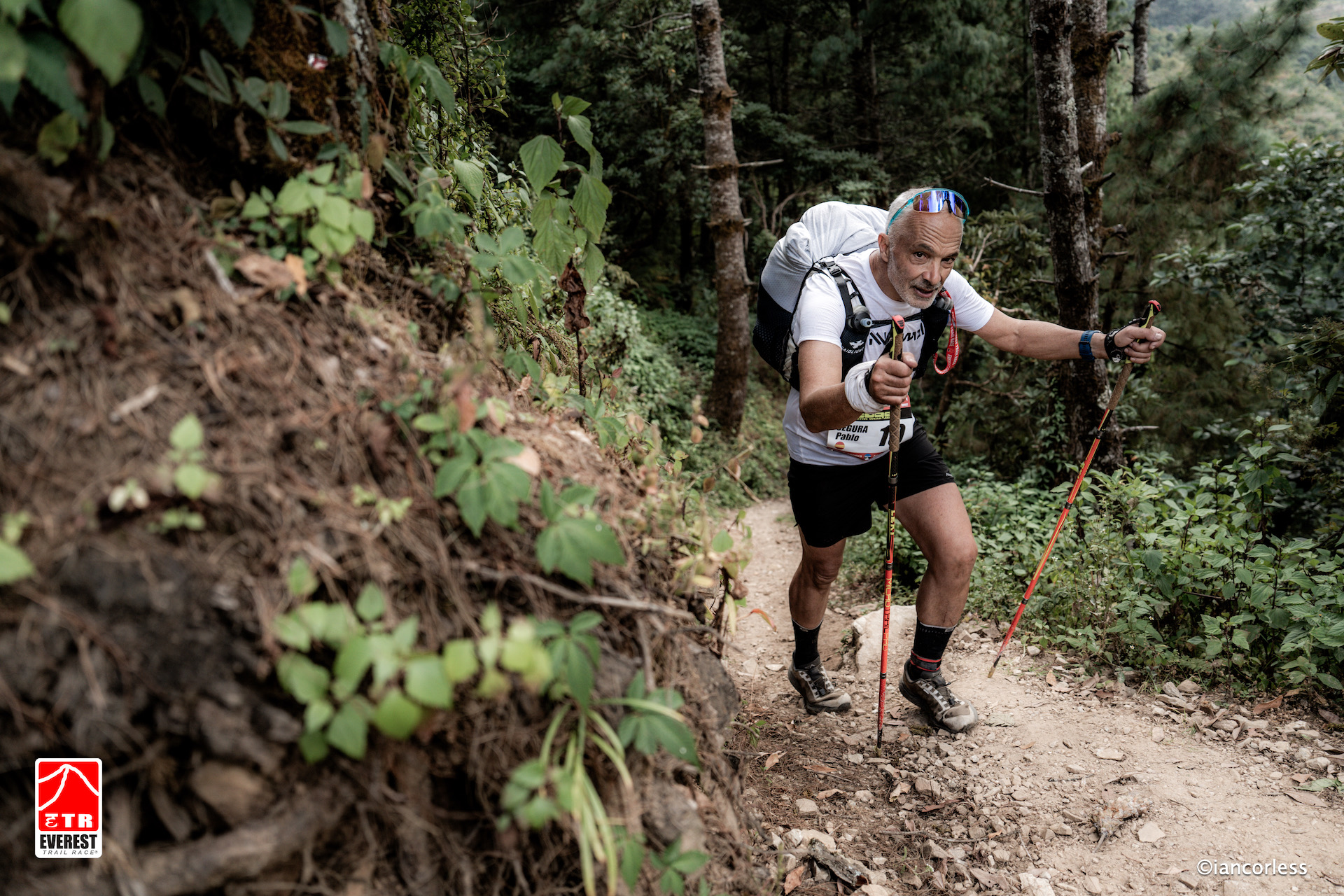
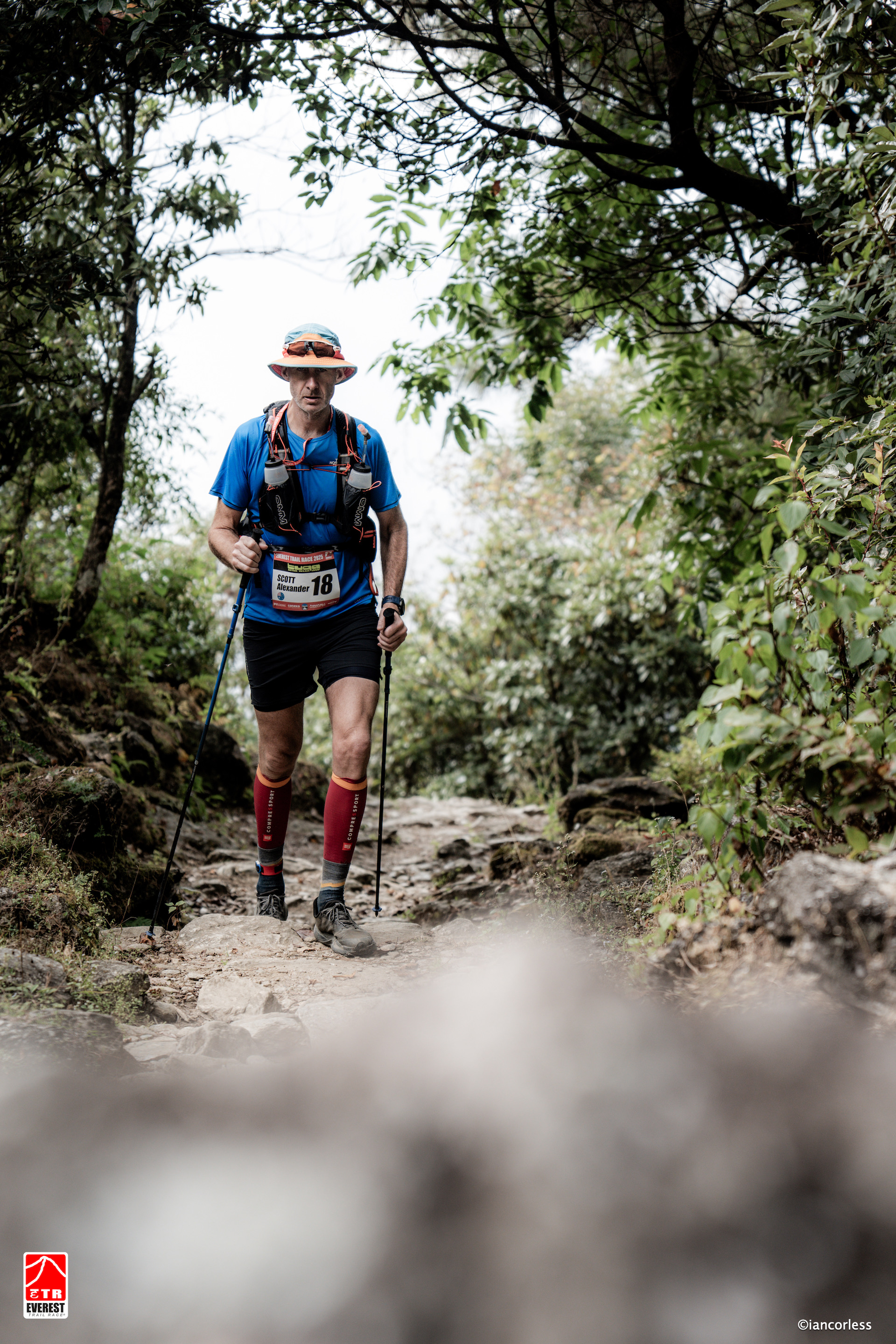
This stage is less about vertical brutality and more about holding form, keeping control as the trail drops fast and hard. Quads burn, knees scream, but momentum is everything.
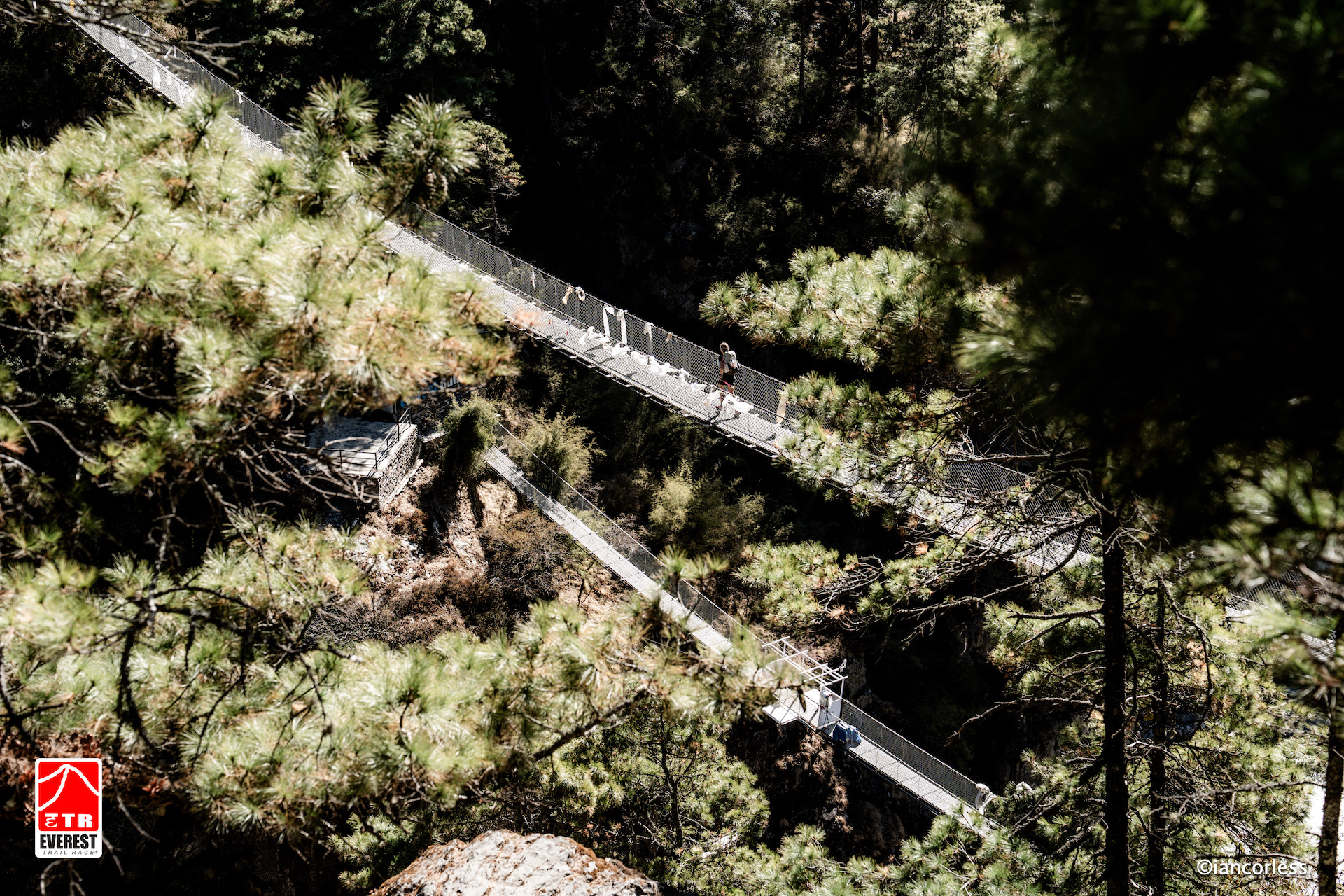
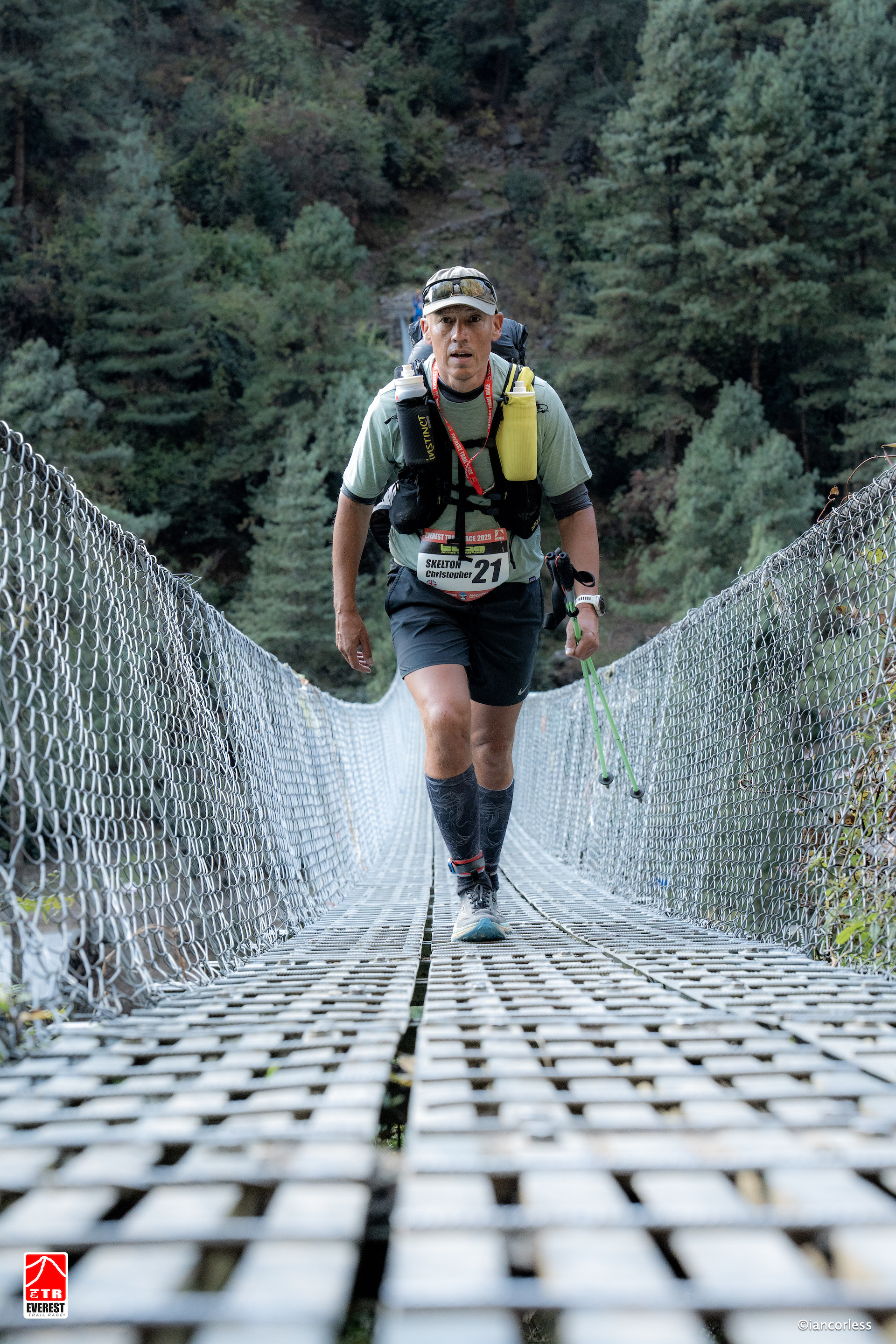
Soon, the trail funnels runners toward the legendary new Hillary Bridge – a sweeping, high-tension crossing that swings over the Dudh Kosi with views that could stop you in your tracks, if the clock wasn’t ticking.
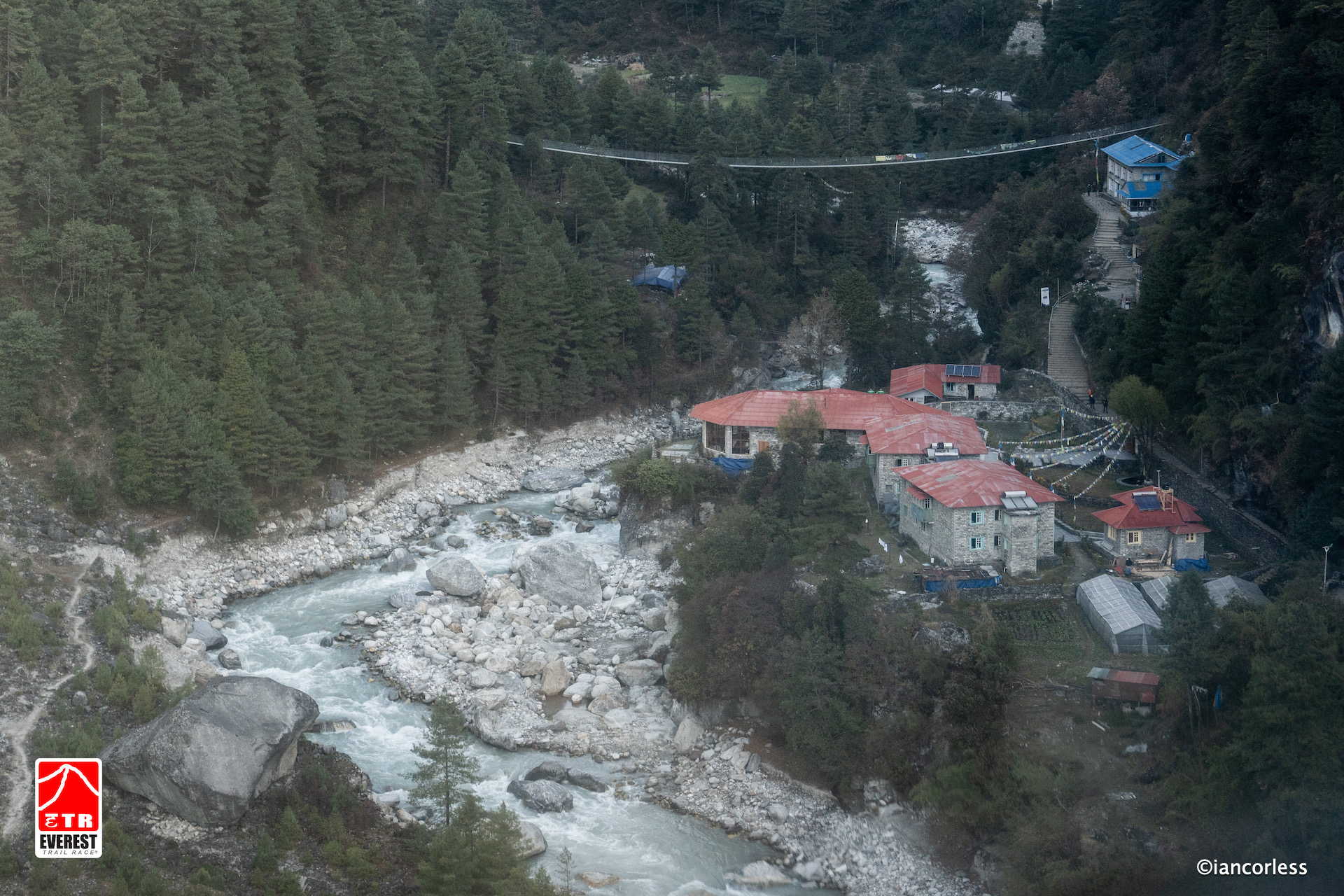
Past the bridge, it’s Jorsale, where the race starts to feel like it’s dragging runners home. The Phakding checkpoint (CP2) marks another milestone, each bib scanned there is one step closer to Everest Trail Race glory.
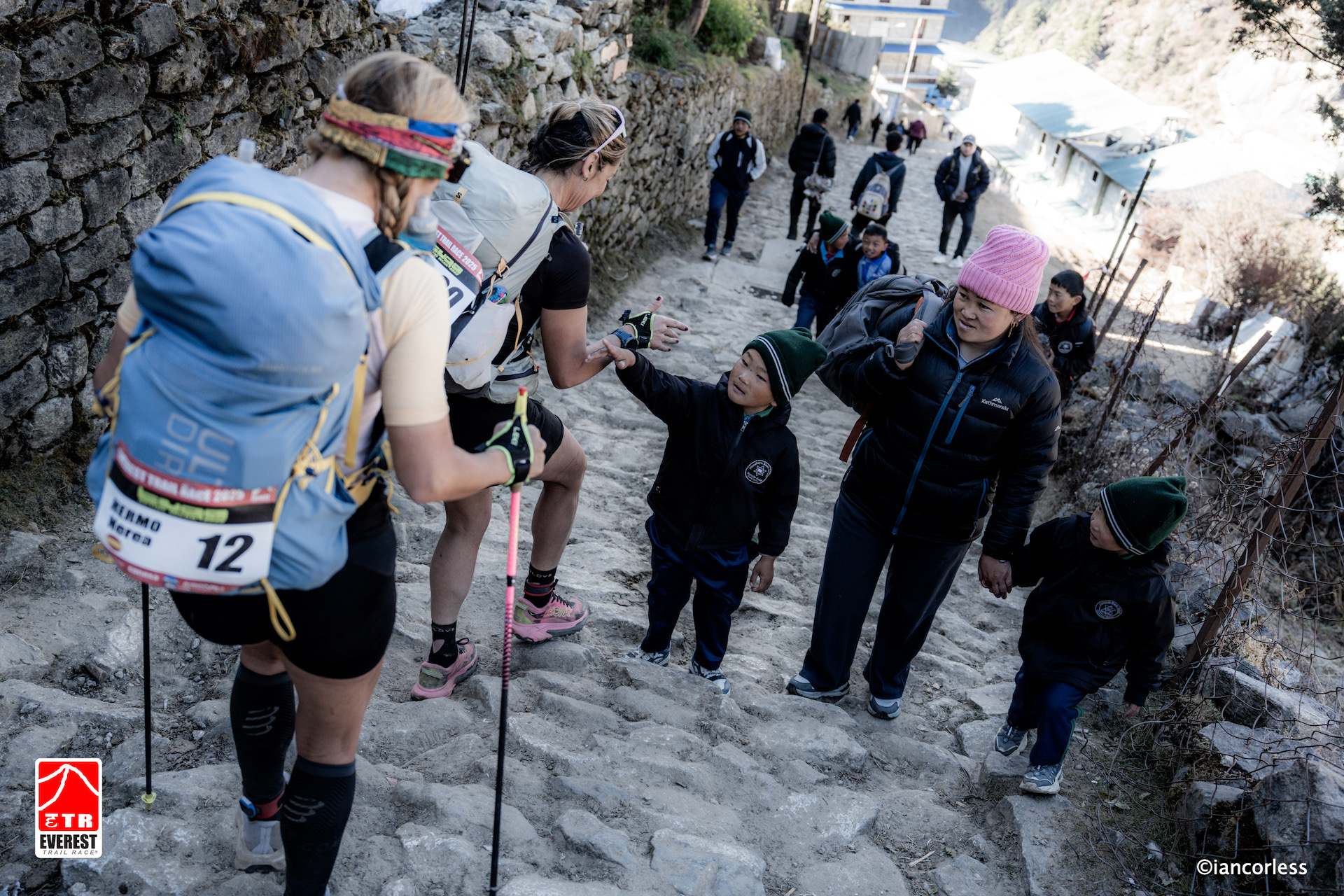
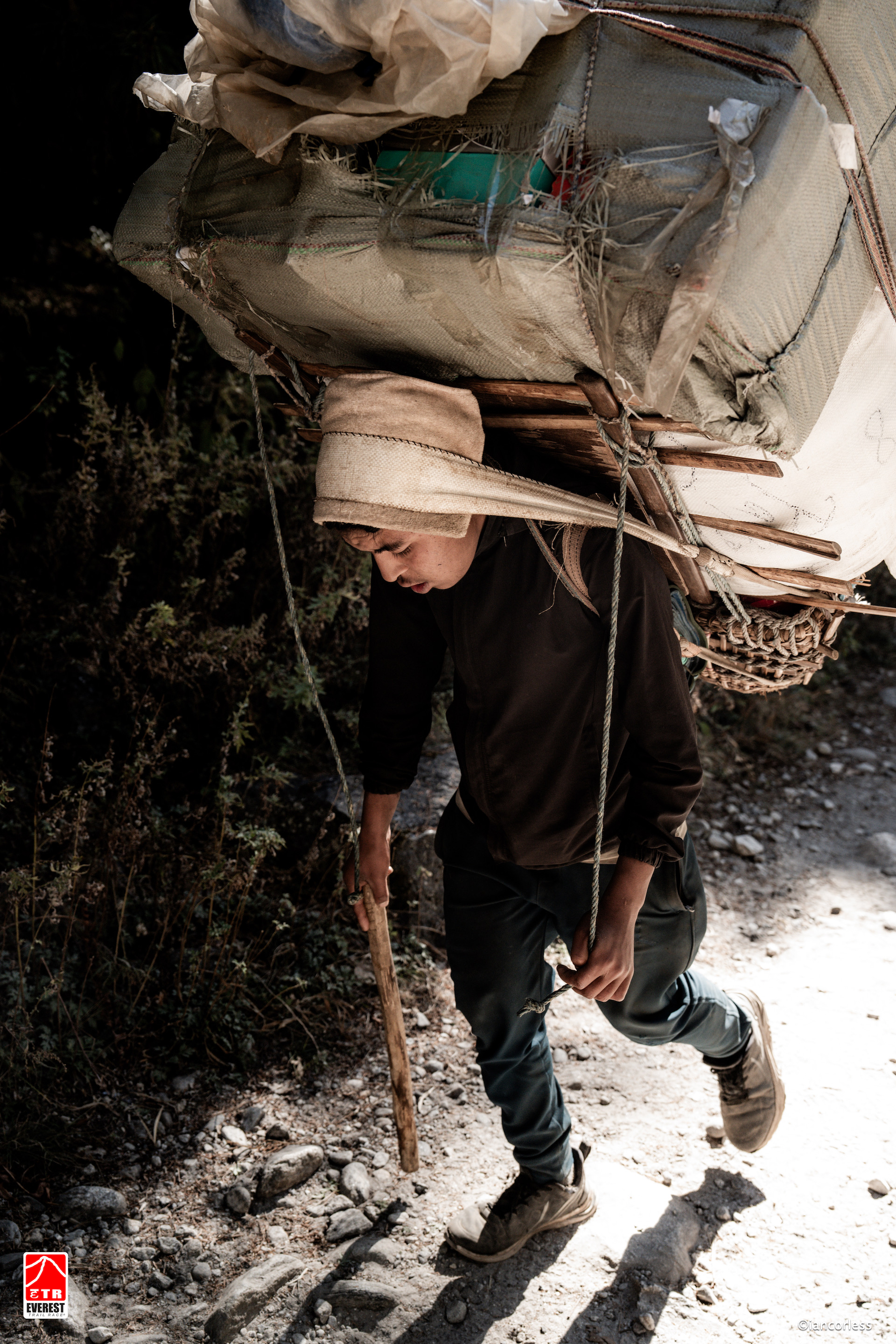
By the time runners hit Cheplung, it’s all on the table. Here, a sharp left turn signals the endgame: the final climb to Lukla and oce again, Nepal and the Porters remind us, how lucky we are!
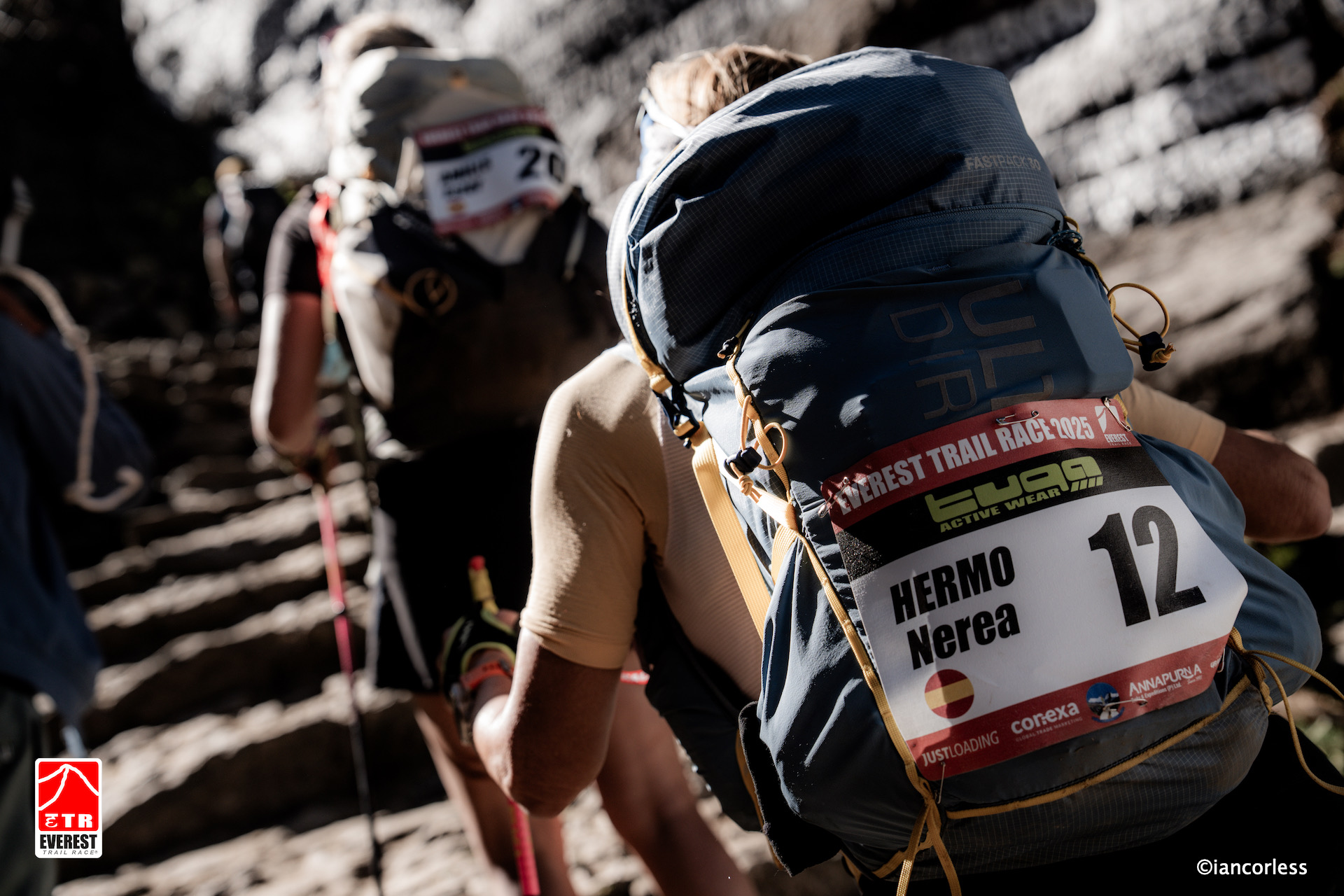
It’s not long, but it bites. After the day’s long descent, this uphill kick demands whatever strength is left in the tank. Runners grit teeth, dig deep, and push toward the town that marks the start of most Everest dreams, and now, the finish of this one.
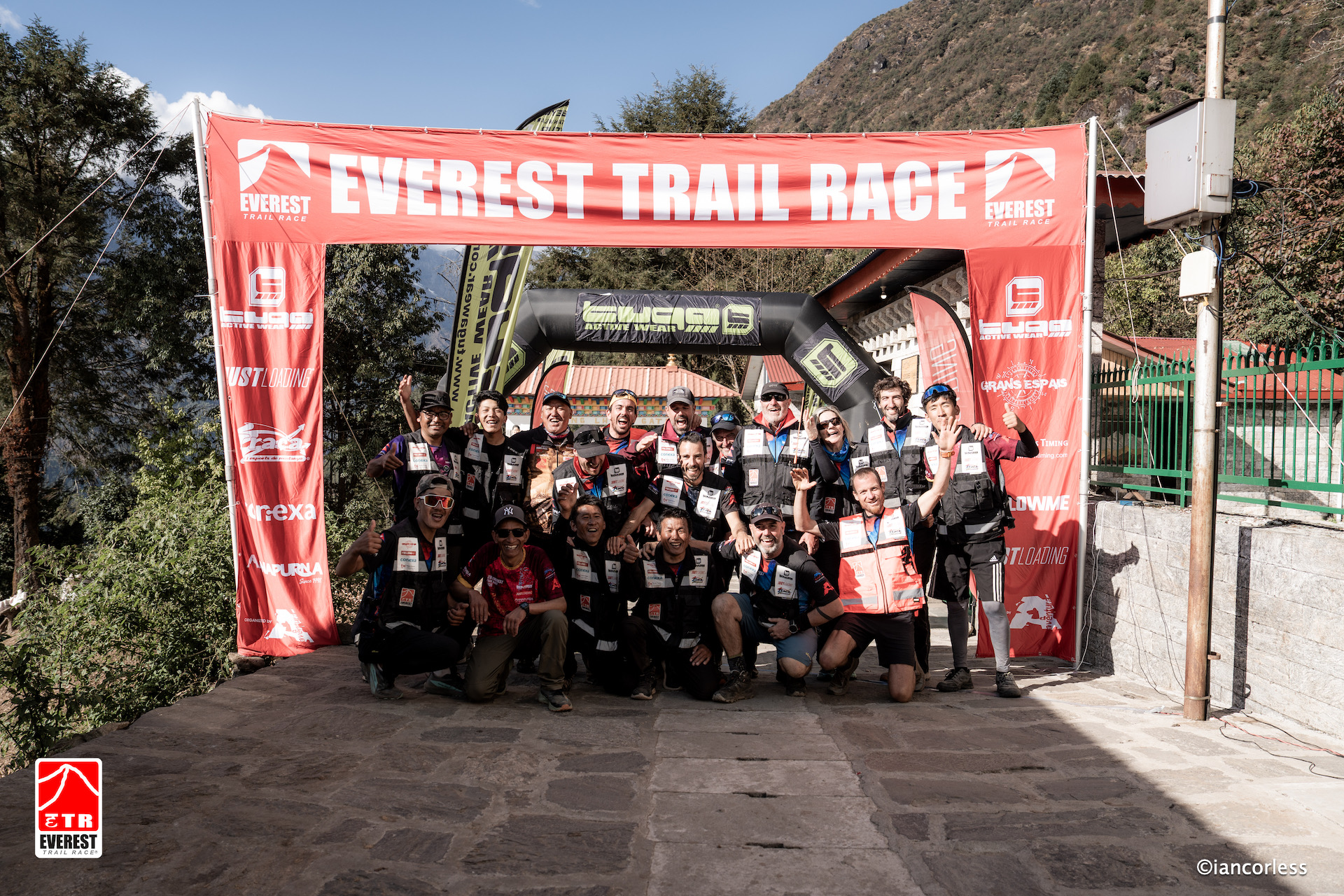
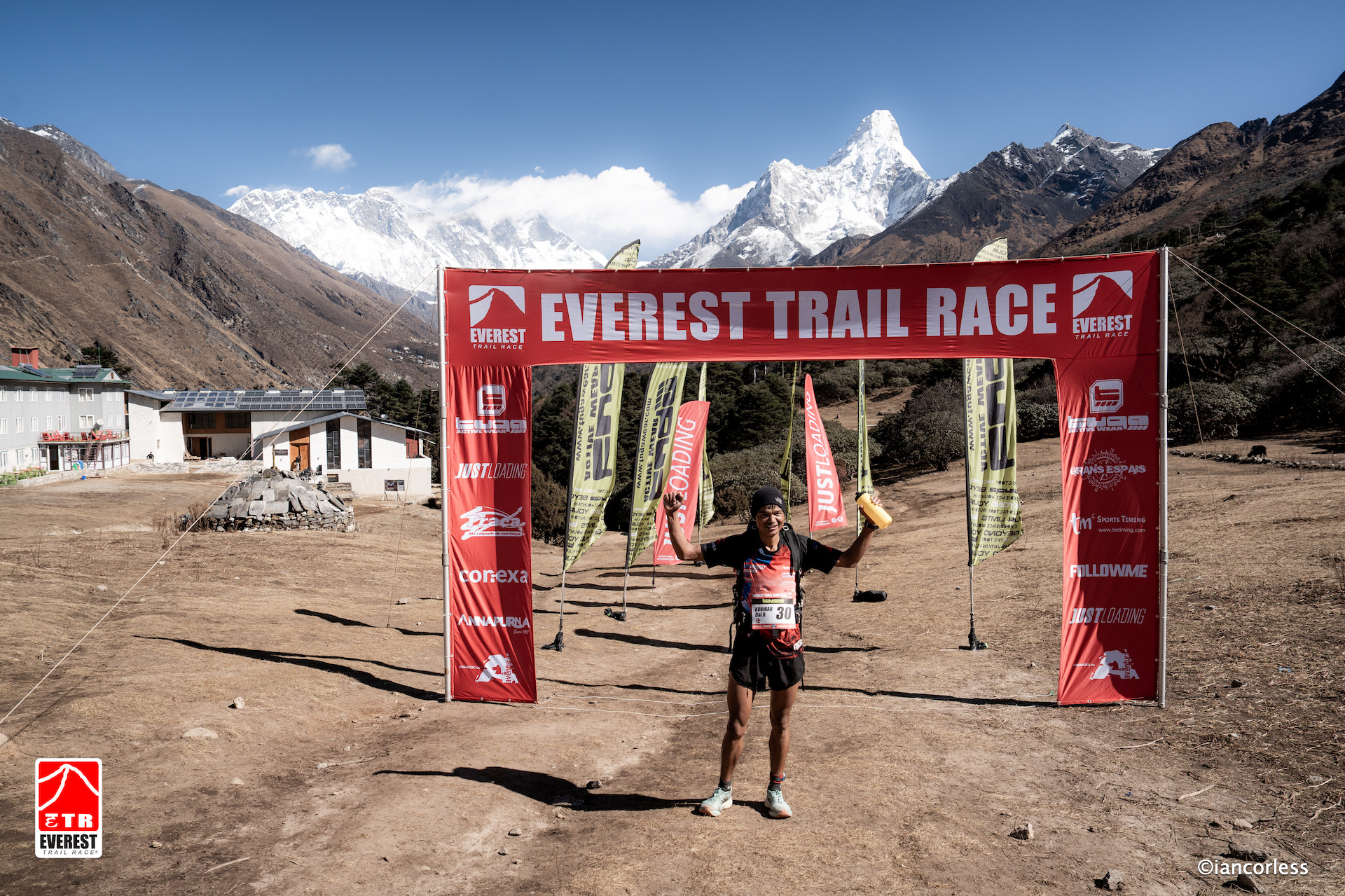
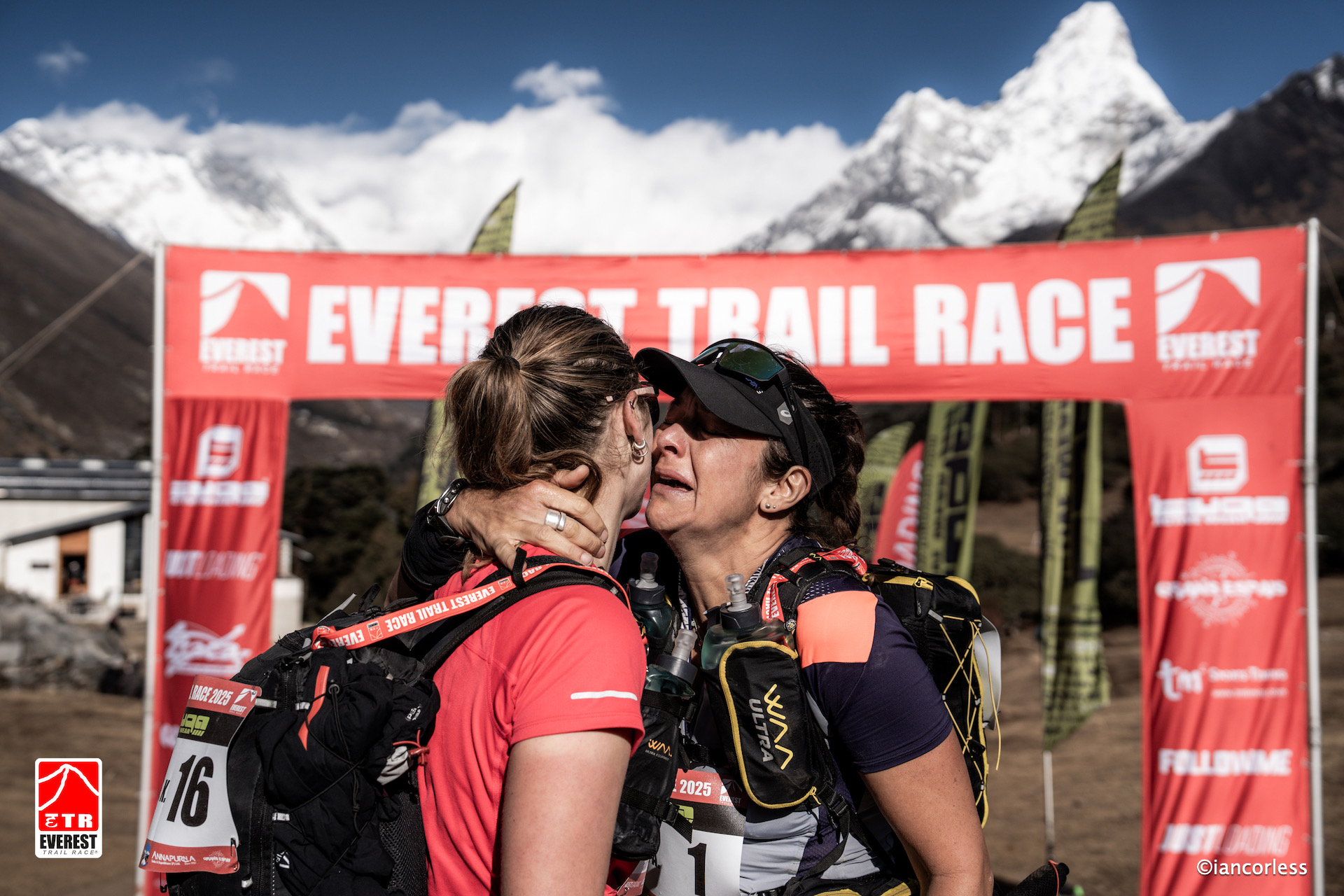
Crossing into Lukla is like breaking through into another world. Crowds, bells, cheers, and tears—this is where it all ends. For some, it’s a triumphant sprint. For others, a silent, emotional walk over the line. But for everyone, it’s the culmination of six days of relentless racing through some of the world’s toughest terrain.
The 2025 Everest Trail Race is done, everyone earned more than a medal, they earned the mountain’s respect.
Stage 5 of the Everest Trail Race pulls no punches. At 24km with a punishing 2,483 meters of ascent, this is the stage that earns its reputation as the toughest of them all. The numbers alone are intimidating, but it’s the relentless terrain and shifting altitude that test runners on every level – physical, mental, emotional.
This year’s route sees a change from previous editions, adding new layers of challenge and beauty. Starting in the shadow of Sagarmatha National Park’s giants, the trail weaves through the quiet village of Chumoa before rising into the bustling trails of Namche Bazaar, where the first checkpoint offers a brief reprieve. But this is only the beginning.
From Namche, the course climbs to Syangboche, skirting airstrips and yak paths, before pressing on to Kumjung, a Sherpa village set high beneath the peaks. Then comes Mong La – Checkpoint 2 – perched like a balcony above the valleys below. From there, it’s a steep descent to Phortse Tenga, followed by a lung-busting climb to Phortse, a village known for its mountaineering legacy.
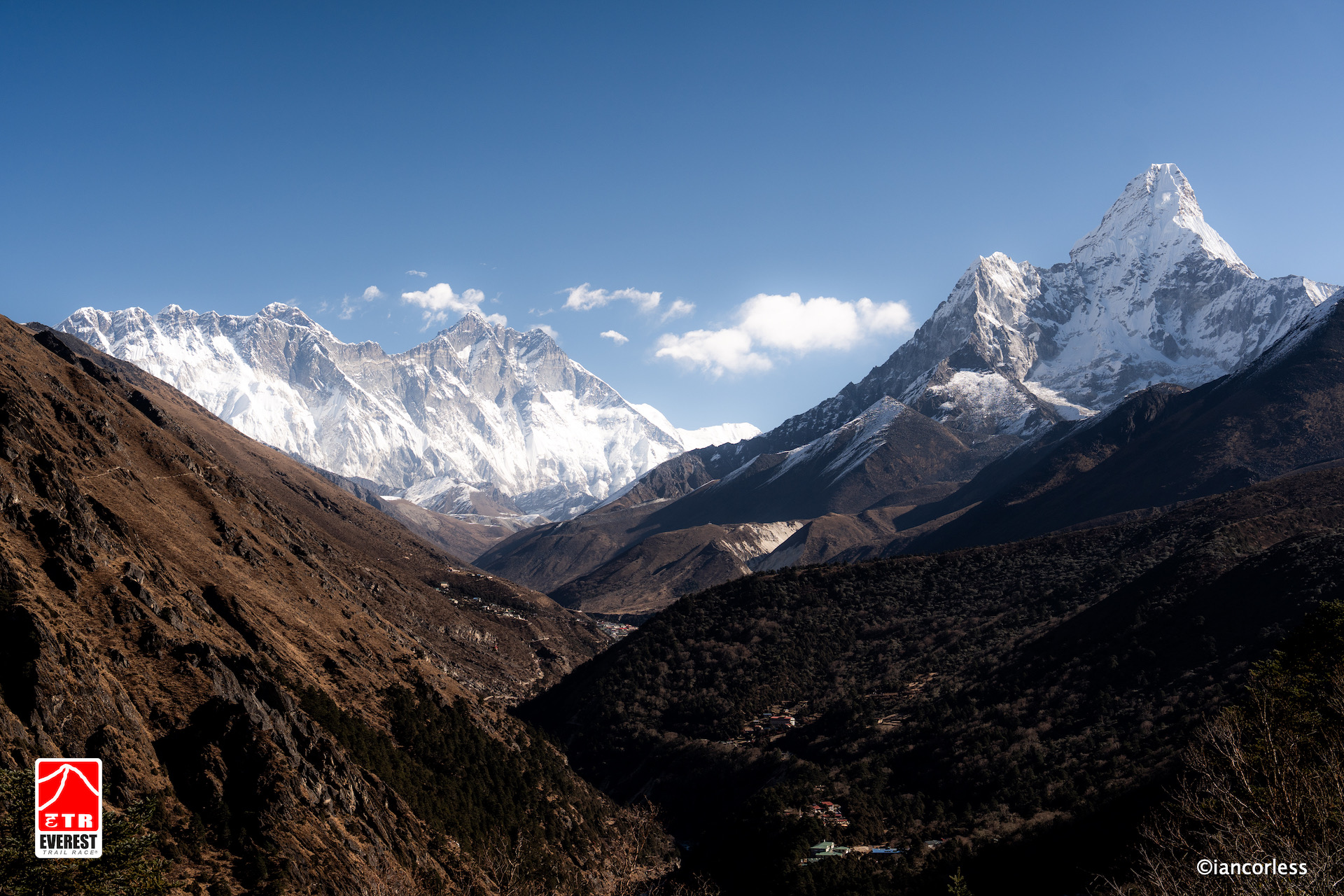
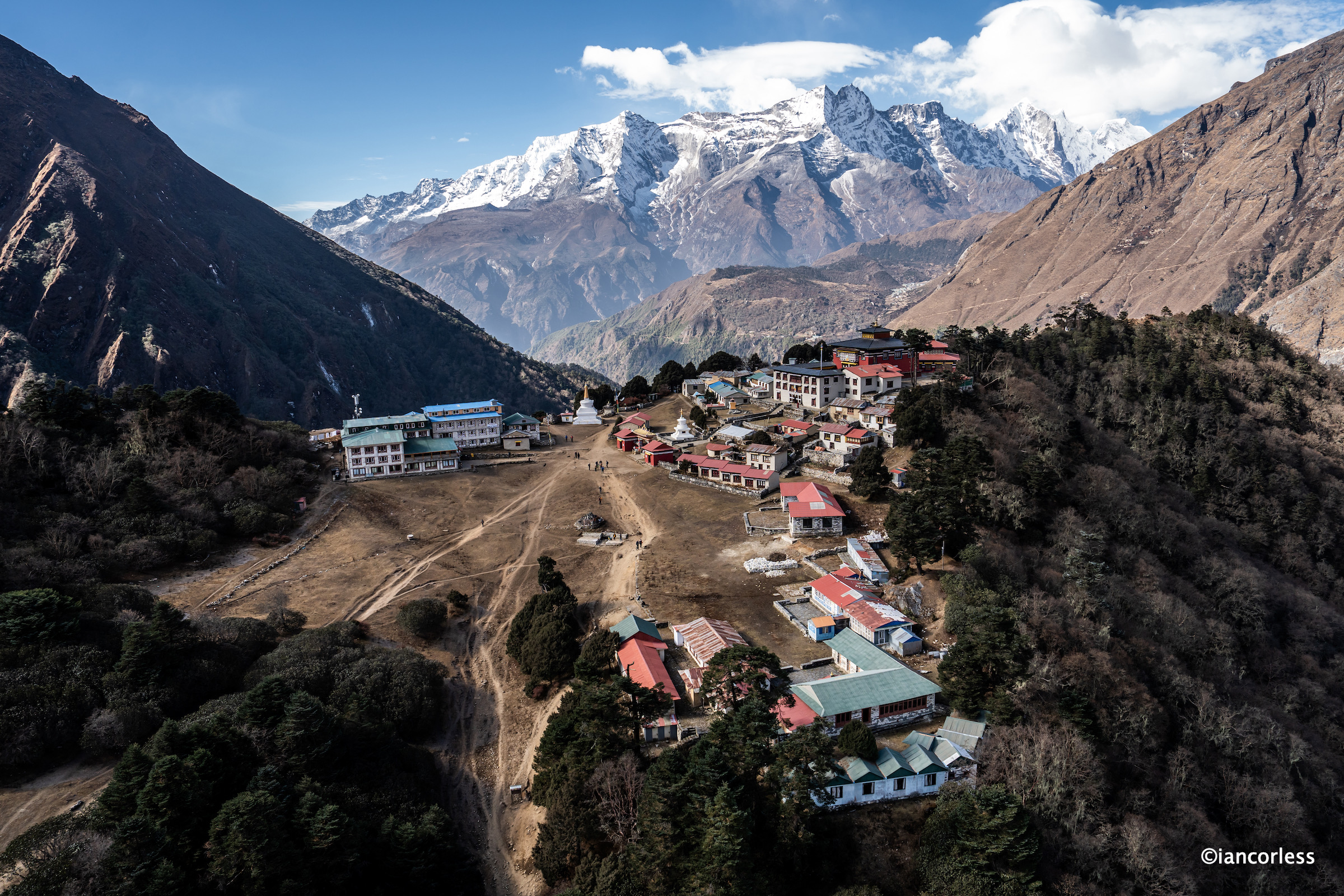
But the final ascent is where Stage 5 seals its legacy. The climb to Tyangboche Monastery, sitting at 3,860m, is a final test of grit. Legs scream, lungs burn, but the reward is immense. As runners crest the trail, they’re greeted by one of the world’s most iconic alpine views: Ama Dablam, Everest, Nuptse, and a horizon lined with Himalayan giants. Arguably, one of THE greatest finish lines in the world.
The pain is real, but so is the pride. After this brutal day, there’s relief in knowing only one stage remains. For those who made it to Tyangboche, it’s not just another finish line – it’s a summit of spirit, dedication, tenacity and perseverance.
After three gruelling stages through remote and rugged terrain, Stage 4 of the Everest Trail Race turns the page. Today, the athletes trade solitude for the storied footpaths of Nepal’s most iconic trekking corridor. This is the gateway to Everest.
A warmer night, lower altitude and this morning, the runner’s may have felt a little more rested, however, stage 4 was intimidating.
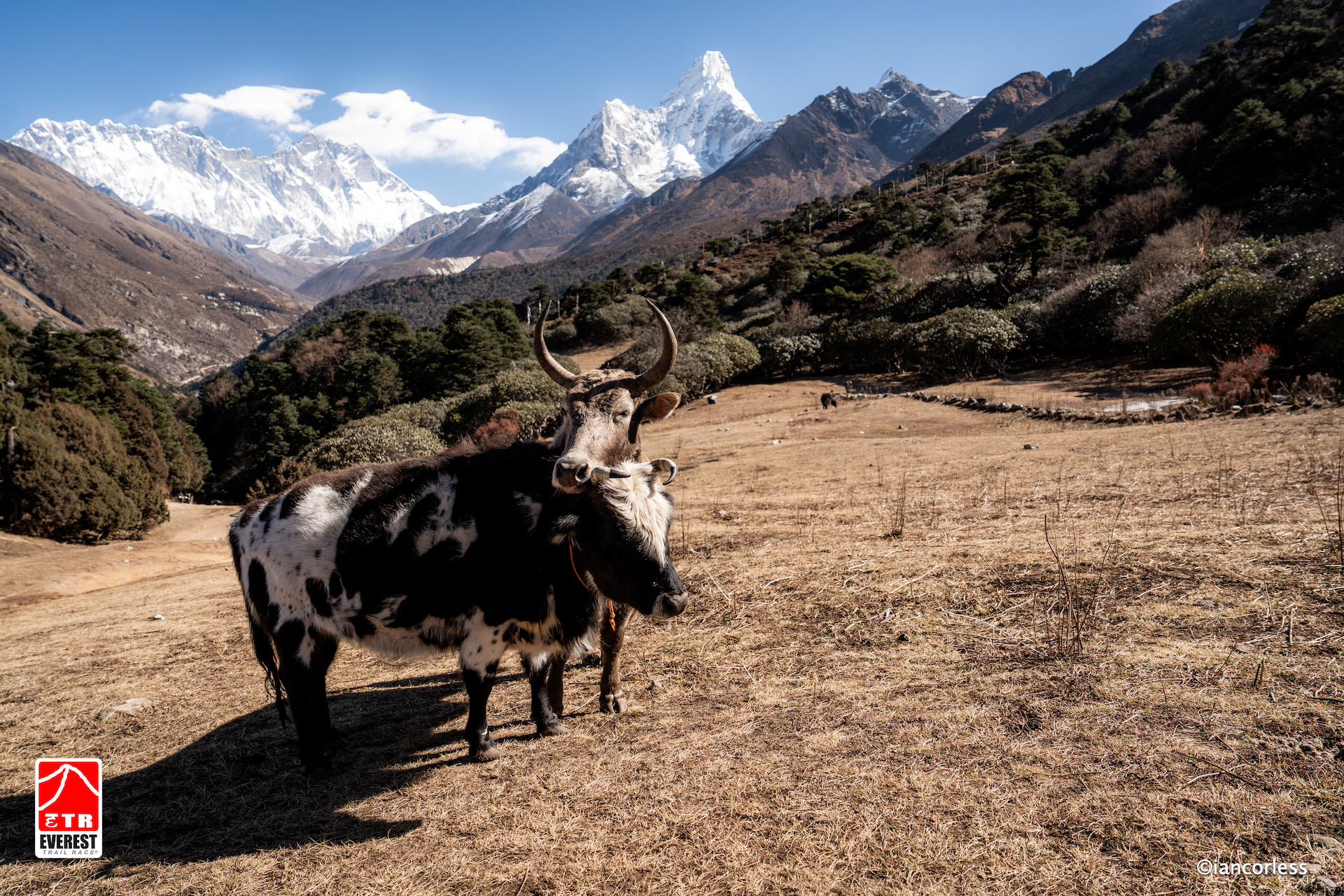
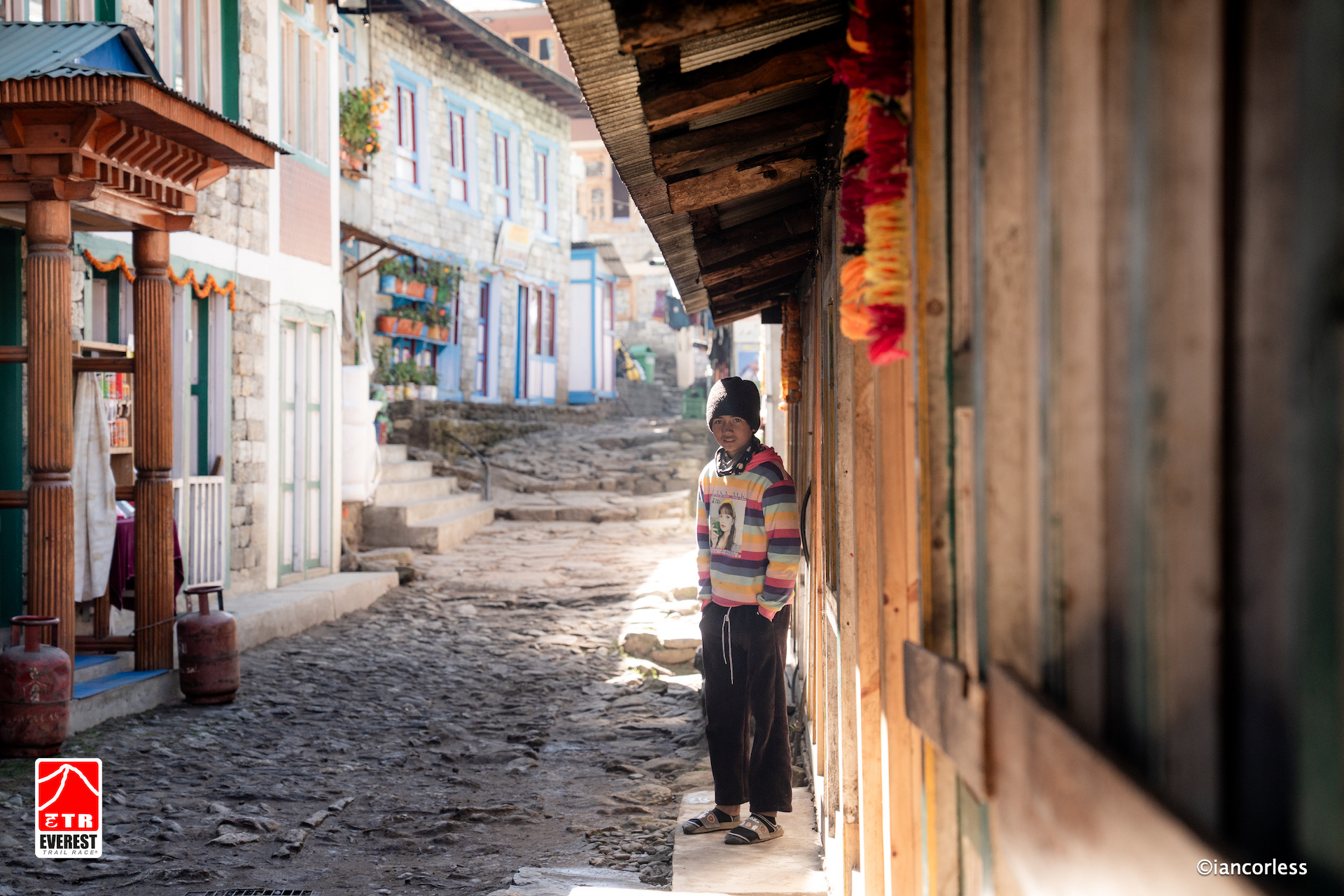
Covering 27.36 kilometers with 2,170 meters of elevation gain, Stage 4 is no break in the action. It’s a demanding route with steep climbs, quad-burning descents, and a new cast of characters on the trail: trekkers, porters, yaks, and teahouses buzzing with the hum of expedition life.
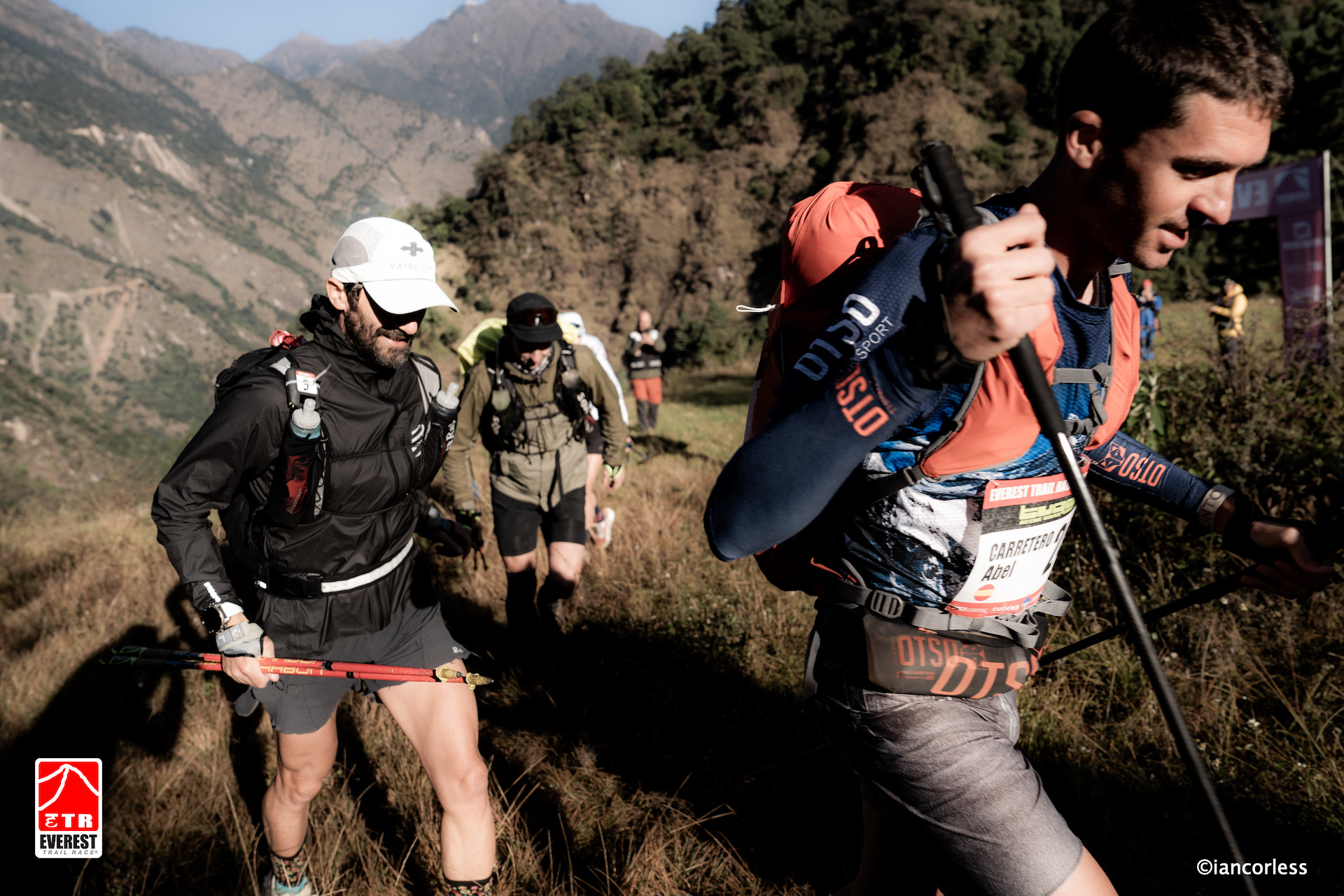
From the gun, it’s all uphill. The stage opens with a brutal 1,000-meter climb in just over 6 kilometres. The goal? Kari La, perched at 3,080 meters. This is the kind of climb that shows no mercy. Legs burn, lungs strain, and the views remind runners they’re racing through giants.
Checkpoint 1 at Paia arrives as a welcome relief. It’s a place to regroup, rehydrate, and reset. But the descent to Surke at 2,750 meters is no victory lap. Fast, technical, and relentless, it punishes tired legs before the next climb begins.
From Surke, runners face another grind: the climb to Chaurikharka (Checkpoint 2) at 2,621 meters. It’s lower in altitude but still a fight, especially coming late in the stage. From there, the course becomes unpredictable: a rollercoaster of ups and downs, testing whatever reserves are left.
The final push into Phakding at 2,620 meters marks more than the end of the stage. It’s a symbolic arrival.
The runners are now on sacred ground, part of the ancient route to Everest Base Camp. The trails are busier, the lodges more frequent, and the landscape unmistakably Himalayan.
Stage 4 isn’t just a physical battle, it’s a transition. The isolation of the early stages gives way to the buzz of one of the world’s most legendary trekking routes. But don’t let the crowds fool you. With over 2,000 meters of climbing and the fatigue of three hard days behind them, today was a war of attrition.
The finish line at Phakding means rest, food, and maybe even a little comfort, tents are traded for a lodge. Everest still looms. And the toughest stage lies ahead – stage 5 the ultimate test.
Stage 3 of the Everest Trail Race is where the real punishment begins. With 28.3 kilometres of unrelenting terrain and a leg-wrecking descent from the high-altitude village of Kamo (3855m) down to the valley floor at Jubing (1600m), this stage isn’t just tough, it’s a full-body assault.
Runners start high, where the air is thin and every step feels like a negotiation with your lungs. The early climb up to Checkpoint 1 at Kamo is already a grind, but what follows is what defines this stage: a relentless plunge that feels like it goes on forever.
The descent from Kamo to Jubing is not gentle. It’s steep, technical, and unforgiving. The views are spectacular, sure, but most runners will be too focused on staying upright to take much of it in. The drop of over 2200 meters smashes quads and shreds knees. Every rock, step, and switchback becomes part of the battle. If the climbs test your endurance, the downhills here test your durability.
Fortunately, the support is solid. CP1 at Kamo, CP2 at Hewa, and CP3 at Jubing are well-stocked and strategically placed. Runners have every opportunity to refuel and regroup, though few will find much comfort in the knowledge that the real sting comes right at the end.
Just when you think you’ve done enough, the trail throws in a final climb up to the iconic village of Kharikola. It’s a steep, grinding ascent that comes after hours of muscular destruction.
This is where mental strength counts just as much as physical preparation. After hammering down thousands of vertical meters, your legs are begging for mercy, and yet, up you go again.
Kharikola, perched proudly in the hills, is a reward in itself. Not just for the views, but for what it represents: survival. Conquering Stage 3 is a badge of toughness. It’s where the Everest Trail Race shakes out the pretenders from the contenders.
Stage 3 doesn’t just test you, you feel it in your legs for days. You carry it in your mind for longer. It’s beautiful, brutal, and unforgettable. And for every runner who arrives in Kharikola, it’s a hard-earned victory etched into the heart of the Himalayas.
Stage 2 of the Everest Trail Race doesn’t waste time. The gun goes off, and it hits hard, right into a beast of a climb that defines the day. The route is 26.6 kilometers with 1,483 meters of vertical gain, but ask anyone who ran it: it feels like double that.
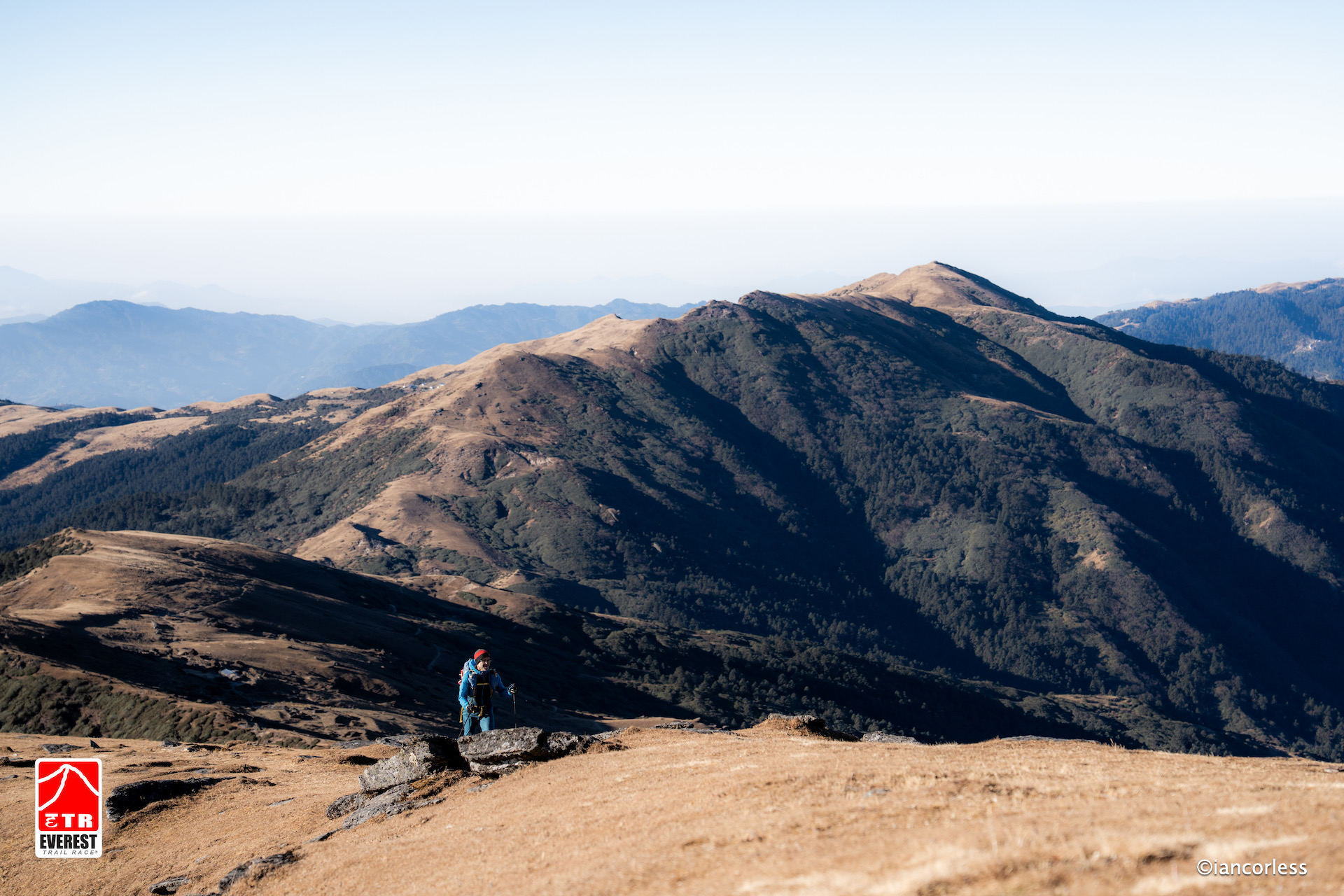
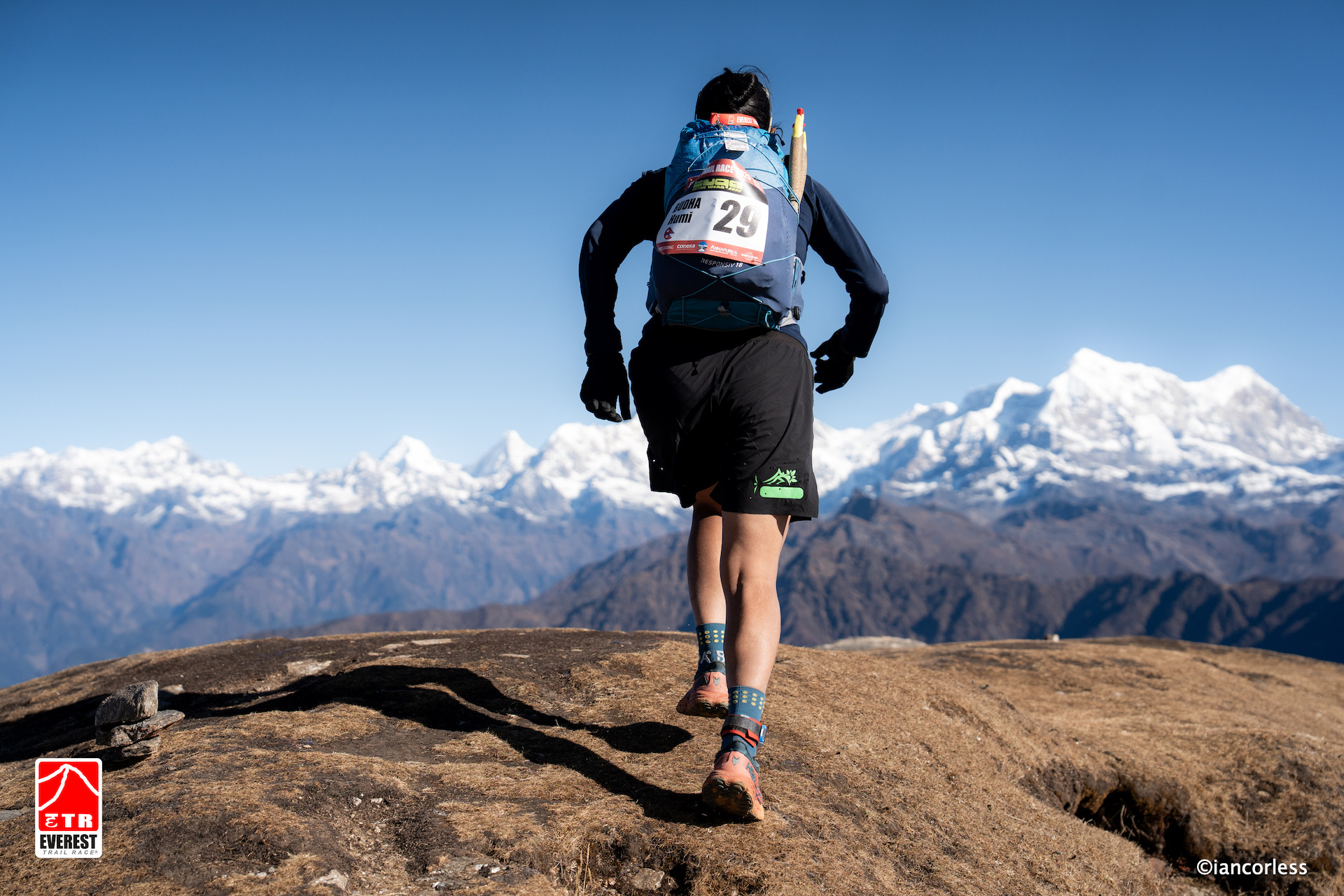
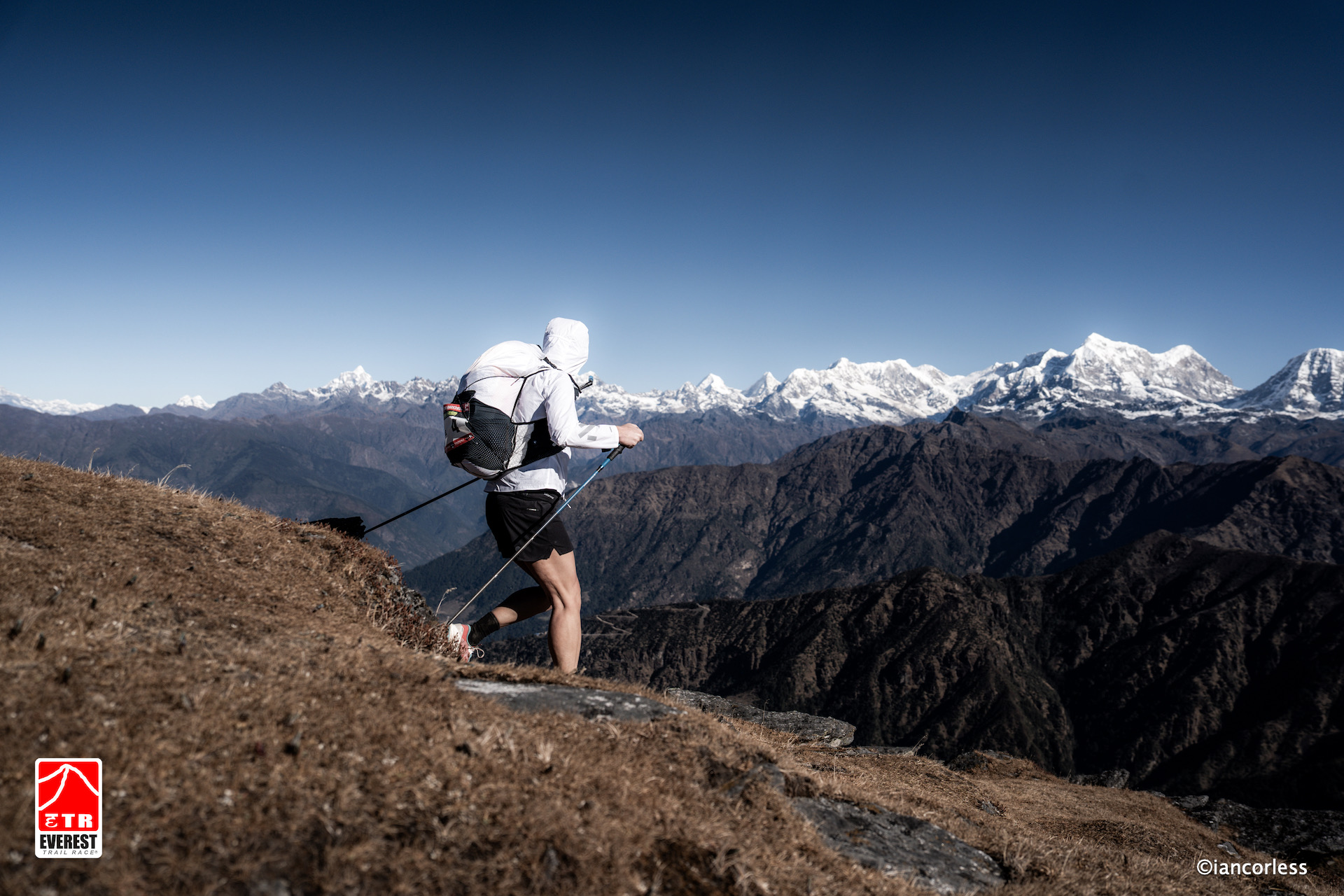
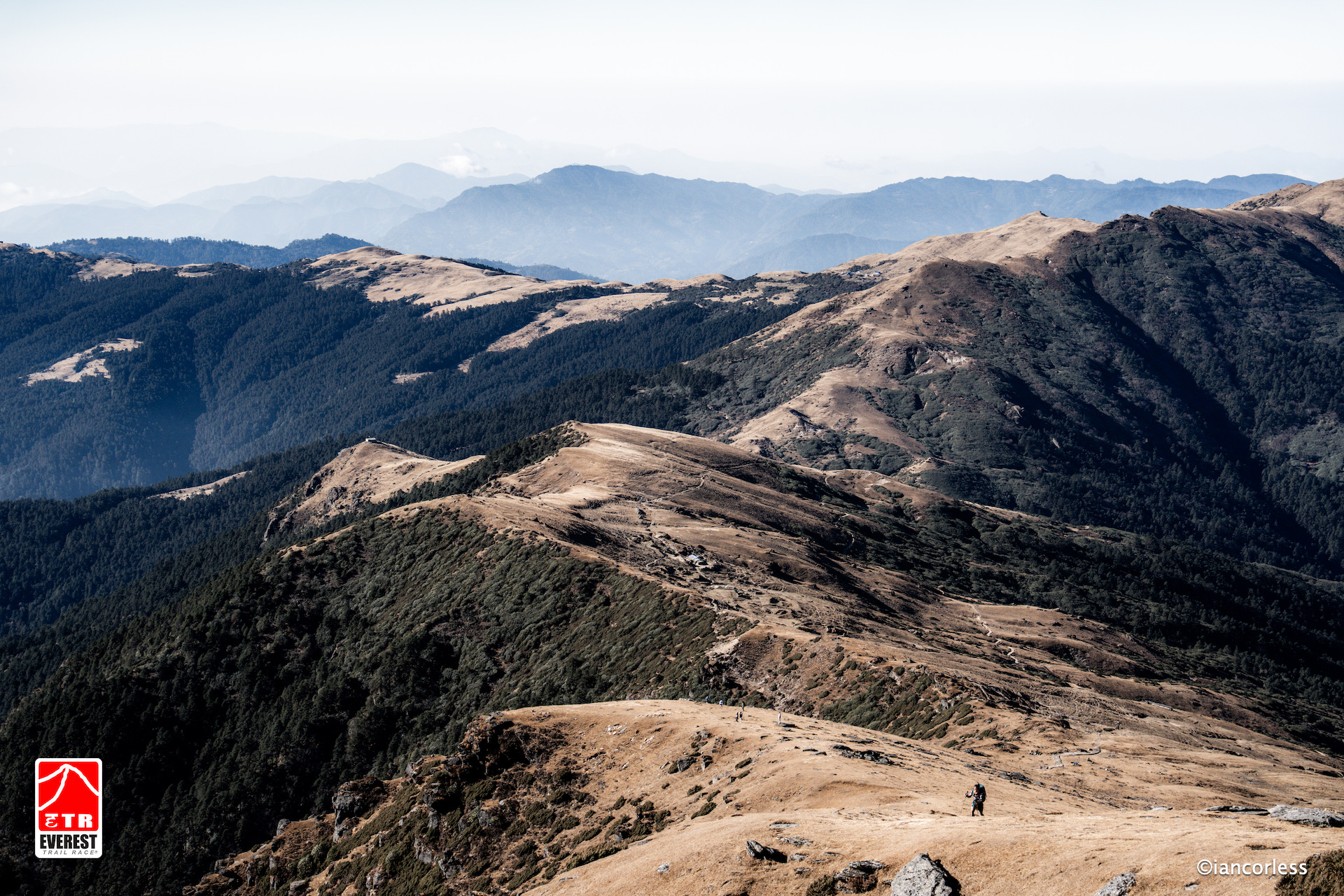
The stage opens with arguably the most iconic stretch of the entire race, a 4km climb straight out of the start gate, topping out at the summit of Pike Peak at 4,046 meters. There’s no easing into it. You’re immediately lunging skyward, legs burning, lungs gasping, every step on loose rock and narrow trail.
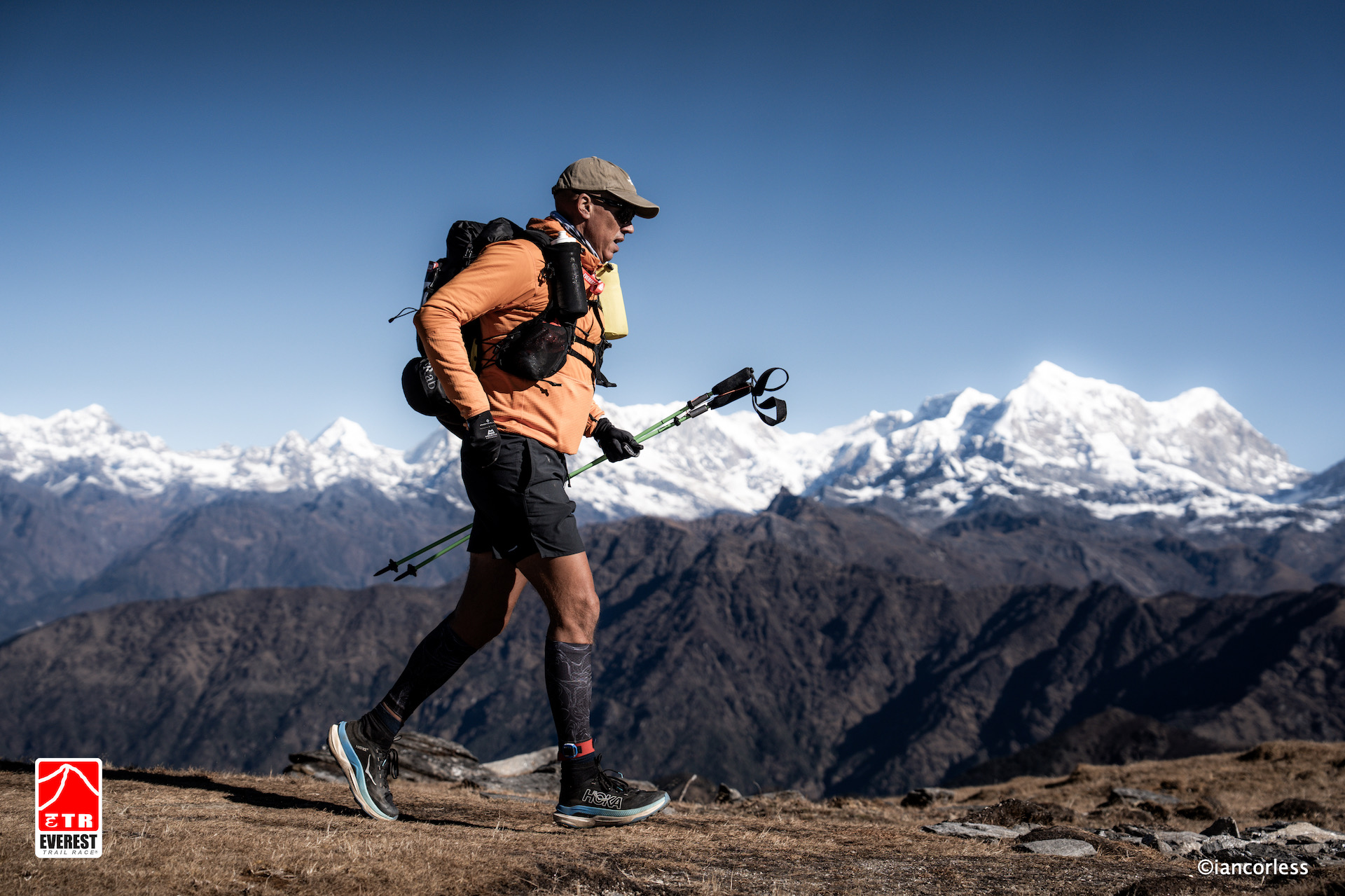
But what a reward. The views from Pike Peak are the kind you earn. Everest, Thamserku, and the distant giants of the Himalayas tower on the horizon.
There’s a strange serenity up there—above the tree line, above the chaos, if only your quads weren’t screaming so loudly.
From the summit, runners are thrown into a tricky descent, technical, steep, and demanding full attention. This is no cruise; it’s controlled aggression. The terrain underfoot is a mix of loose stone and rutted trail, constantly shifting. Jase Bhanjyang appears below like a mirage, a short-lived reprieve at 3,510m before the next test.
After a quick breath, it’s back uphill, another climb, this time to 3,800m. It’s less brutal than the first, but by now the fatigue is setting in. The altitude, the sun, the effort, they add up. This section wears on you slowly, sapping strength before delivering a massive release:
This is the stage’s exhale. A long, fast descent winds down to Jumbesi, where Checkpoint 2 awaits. The descent is runnable FOR SOME but relentless. It’s a test of patience, footwork, and knowing how much to push without blowing up. At CP2, some collapse into chairs, others refuel and move quickly, no time to waste.
From Jumbesi, the route shifts gears. A more gradual climb takes runners to Phurteng at 3,000m, a steady push that gnaws at tired legs. Then, a rolling descent gives a hint of relief, but it’s a trap.
Because this stage has a final sting: the kick to Ringmo. Just when you think you’ve made it, the trail juts upward again before finally dropping into the finish at 2,740m. It’s psychological warfare. You can see Ringmo before you reach it – but the trail makes you fight for it.
Stage 2 is a monster. On paper, it doesn’t look like the toughest, less gain than Stage 1, more downhill, but the terrain, altitude, and sequence of climbs make it punishing. The raw elevation loss (2,203m) sounds helpful, but it hammers your legs in a different way. Many finish looking shell-shocked. Others, oddly exhilarated.
This is the Everest Trail Race offers up some of the most staggering views you’ll ever see on a race course, and today, in the shadow of Pike Peak, the price of admission was steep but worth it.












 IAN CORLESS