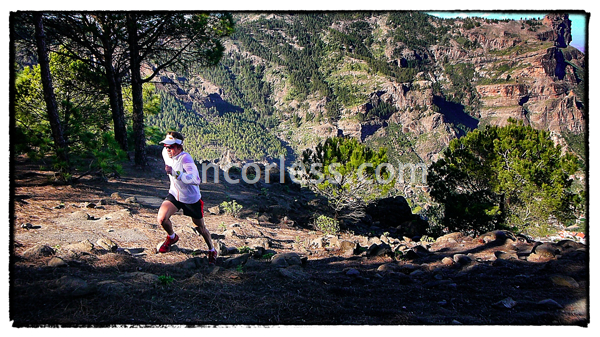
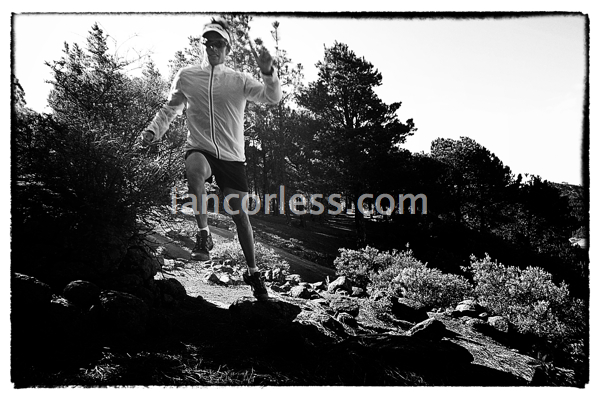
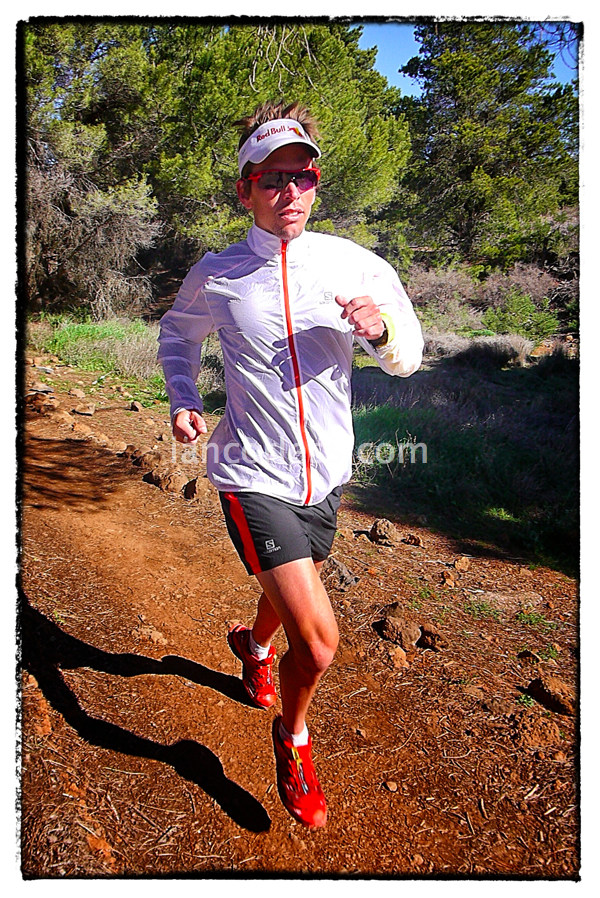
Ultra Trail World Tour announcement (UTWT)

Ultra-Trail® World Tour: bringing together the most emblematic trails (of 100km or more) in the World.

Chamonix, 1st September 2013
The organizers of:

– The Western States 100 Mile Endurance Run
– Marathon des Sables
– The North Face® Ultra-Trail du Mont-Blanc®
– The North Face® Transgrancanaria
– The North Face® Lavaredo Ultra-Trail
– Vibram® Tarawera 100km Ultramarathon
– Vibram® Hong Kong 100
– Ultra-Trail® Mont. Fuji

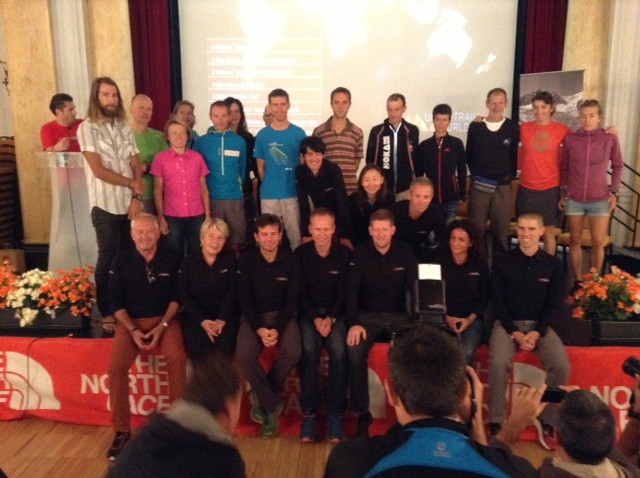
have today announced at Chamonix their participation in the 2014 Ultra-Trail® World Tour.

International circuit, shared values
The races in the Ultra-Trail® World Tour, in their specific natures, illustrate all the diversity of trail: steep paths of the Alps, California trails, hills and beaches of Hong Kong, Moroccan desert…
The races’ many different formats will present participants with a real adaptation challenge .

Between The North Face® Lavaredo Ultra-Trail and the Vibram® Tarawera 100km Ultramarathon, between the Ultra-Trail Mont Fuji and The North Face® Transgrancanaria, participants will need very different qualities to win, or simply to become a finisher.

While being fundamentally different, the Ultra-Trail® World Tour races will have common values, which they are proud to share and to promote. Ethics, equality in sports, self-respect, respect for others, for the Environment…
Taking part in the Ultra-Trail® World Tour will be the opportunity, throughout the years, to discover cultural and sporting differences. Every continent will be visited: Africa, America, Asia, Europe, Oceania… providing opportunities to enhance their sporting culture, create new friendships, and to feed on emotions in order, one day perhaps, to be a “finisher” in all the events!

Simple criteria of eligibility

Long distance trail running races of at least 100km.
Emblematic venues.
Popular races (around 500 runners minimum).
International events (a minimum of 20 countries represented).
Minimum 2 realized editions
An annual ranking for the award of the title of champion of the Ultra-Trail® World Tour
Any “Finisher”, according to his performance, will be assigned a number of points and be integrated into the international ranking , updated for each race, and available online at http://www.ultratrailworldtour.com site.
The Ultra-Trail® World Tour will propose an international competitive circuit, in partnership with the International Trail Running Association (http://www.i-tra.org).

With the goal of bringing together top athletes, a limited number of races will be labelled «Ultra-Trail® Series». Only the 3 best results should be taken in consideration, with a maximum of 2 “Ultra-Trail® Series”.

At the end of the year, after the last race, the titles of “Ultra-Trail® World Tour 2014” champion, male and female, will be awarded.
Who will win? Encourage your favorites!

A passport for all races
By the end of 2013, all runners planning to participate in one or more stages of the Ultra-Trail® World Tour can order their “Ultra-Trail® World Tour” passport on the http://www.ultratrailworldtour.com site.
Whenever they are “finishers” in a racing circuit, they receive a visa to stick in this passport.
Participation in one of these circuit races will automatically imply integration in the rankings for the Ultra-Trail® World Tour of the given year .

2014, a year full of promise
For its very first year, the Ultra-Trail® World Tour will be present on all the continents, with a dozen venues spaced out throughout the year.
The following have already been confirmed:
– January 18th: Vibram® Hong Kong 100 (Hong Kong, China)
– March 1st: The North Face® Transgrancanaria (Spain)
– March 15th: Vibram® Tarawera 100km Ultramarathon (New Zealand)
– April 4th to 14th: Marathon des Sables (Morocco)
– April 25th to 26th : Ultra-Trail Mt.Fuji® (Japan)
– June 27th to 29th : The North Face® Lavaredo Ultra Trail (Italy)
– June 29th: The Western States 100 Mile Endurance Run (USA)
– August 29th: The North Face® Ultra-Trail du Mont-Blanc® (France, Italy, Switzerland)

Other emblematic races will soon be confirming their participation.

Many questions were left unanswered at the press conference. It felt as though the organisation wanted to monopolise on the media presence available for the UTMB and spread the UTWT news.

Importantly, when I asked questions directly about Western States the answer was less than reassuring. I can’t help but think all those who love WSER will be asking serious questions.

I will update more on this but please respond? Make your points here.

For in depth live coverage from the press conference go to @talkultra twitter feed and follow by blow-by-blow comments from 0930 French time. Or use #UTWT and follow the thread.

More to follow

photo 5

Legends! what if… Ann Trason

keep-calm-you-re-a-legend-1

I posted today on my Talk Ultra Facebook page, ‘Question? Who is excited to see how Scott Jurek does at Leadville 100 on the 17th August… I am for sure!’

Now, Scott is a legend of the sport, but for a while now he hasn’t raced in anger… to be honest, he has hardly raced! He has paced Anton Krupicka at Leadville and most recently he paced Seb Chaigneau at Hardrock 100, but, Scott has not toed a line for himself for some time. Probably the 24-hour was his last big race when he set an American record?

Now of course, he may be just turning up at Leadville to run for fun. I am sure all will become clear… to be honest, I am not too concerned. First or last, I for one am just going to be really happy to see him out on the trails.

With that in mind, I was thinking, who else would I love to see back in the mountains, back on the single track mixing it up with everyone else?

I laughed a little.

Of course, I would love to see Ann Trason back in a race again.

Then I thought to myself, my good buddy, Marcus Warner over at Ultra168 told me how Ann was pacing at Western States this year. In actual fact, Marcus spoke with her and ran with her. So, never say never!

Ping!

My email alerts me…

The contents are simple. Just a link. A link that says, click HERE

Now I know who this email is from, so my concerns about it being a problematic email are eased, however, I do wonder, is it a joke? If I click ‘here’ what will happen?

I press.

It’s a list of runners.

At the top it says, ‘2013 IMTUF 100 – Idaho Mountain Trail Ultra Festival – Registered Entrants’

I look down.

BINGO! all becomes clear.

RANK it says 99.5%

AGE RANK it says, 100%,

RESULTS it says, 51,

TARGET it says, 34:24:53,

F53 and the name…

ANN TRASON, Kensington, CA

Now, lets get one think clear. Ann Trason has been away from our sport for a long time. To see her name on a start sheet means just one thing.

She is back running.

For me, that is enough… I won’t discuss what can she do, why, what if or maybe.

All I want to say is, welcome back Ann.

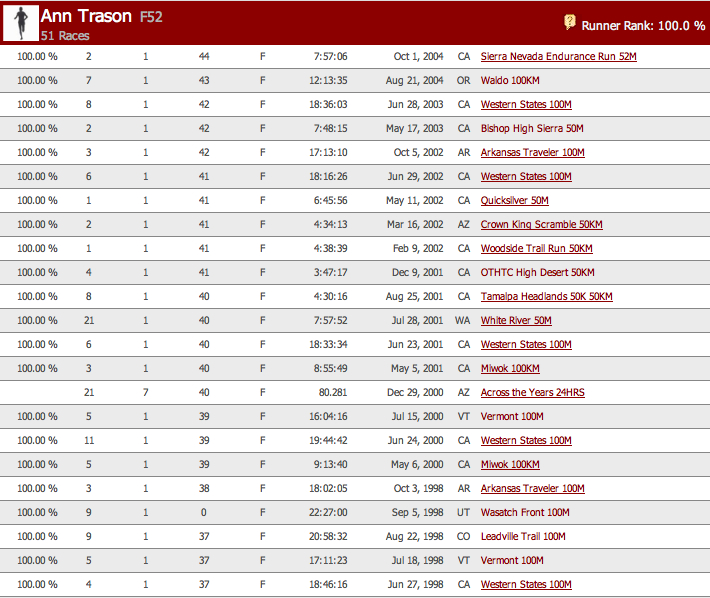
This list below says it all.

LEGEND!

51 races, 49 wins.

Ann Trason Page 1

Ann Trason Page 2

 Idaho Mountain Trail Ultra Festival website HERE

Ann Trason on Ultra Signup HERE

Timothy Olson – Western States video

©copyright .iancorless.com._1020298

I am super stoked to share this video of Western States 2013. My amazing Parent in-laws filmed and edited, spending many hours! Bob spent all day filming at Western before and after. Debbie spent countless nights editing and putting this together. I’m blessed to have such a loving and caring family who enjoys the sport just as much as I do. Thank you both for all you do, I’m beyond grateful!

I hope you all enjoy the video!

cheers!

YouTube HERE

Timothy Olson website HERE

The North Face HERE

Ryan Sandes – Wandering Fever Fund

MG_00841Ryan Sandes is a modest and extremely giving person. Modest about his ability, one almost has to laugh when he says, “An impulsive decision one Sunday afternoon completely changed my life back in 2008. Could I run 250km, self-supported through a Desert? Without another thought, I maxed out my credit card and entered a race I knew almost nothing about. The lead up to the Gobi Desert Race consumed me but most importantly it enabled me to dream.”

Dream he did and look what has happened. He has won races on all continents, he is unbeaten in the four deserts, he has won Leadville 100, he was second at Western States 2012, beating Geoff Roes CR and loosing out to a flying Timothy Olson.

It is an incredible journey.

Ryan says, “I have worked damn hard to achieve my dreams, but I have always been in a fortunate position. What about the people who do not have the opportunities to make their dreams a reality?”

Way back when Ryan’s  journey started, long time friends Dean Leslie and Greg Fell (The African Attachment) asked if they could document his story. What a coup. Nobody would have thought that a fil project called ‘Wandering Fever’ would actually document the rise of somebody to the pinnacle of the sport.

Now Wandering Fever has been a long term project, Dean, Leslie and Ryan have said many times… it won’t be long! Well, finally, it looks like the latter half of 2013 may well see the release of this highly anticipated film.

Ryan is extremely appreciative of his success and he wants to give back.

“I want to provide a base, a launching pad for people to reach out and grab their dreams with both hands and change their lives. I have decided to set up a Fund which will be distributed  to individuals, charities or worthwhile causes, enabling people to LIVE their dreams.”

It is all about givingback to the community, and I for one am so pleased to here of this initiative.

“The “Wandering Fever Fund” is currently being setup and will be kick-started by 50% of all the profit made from the documentary Wandering Fever (which is due to be completed later this year). Wandering Fever has been a very raw and personal project for Dean, Greg (The African Attachment) and myself, and we all feel very strongly about giving back to the community that has given me so much.”

Ryan finishes off by saying, “It is up to us more fortunate people to share our opportunities with those less fortunate. If I could help only one person live their dream, then that in itself would be a dream come true for me.”

Links:

Ryan Sandes HERE

Wandering Fever HERE

Western States Endurance Run Preview

images

In a recent interview with Rob Krar about his incredible ‘FKT’ (fastest known time) on the Rim-to-Rim-to-Rim we discussed the up and coming Western States. Humble and respectful he called it the Super Bowl of ultra running. You have to agree, Western States is the Super Bowl of 100-mile events.


June 29th in Squaw Valley, once again an incredibly talented male field will toe the line to do battle over probably the most iconic 100-mile race on the calendar. It may not be the hardest but it has history. Way back in ‘73’ when Gordy Ainsleigh’s horse went lame, he had two choices; not to take part in the iconic 100-mile horse race called the Tevis Cup or run it… now of course, way back then running the course was the most ridiculous idea ever. But Gordy, ever the maverick, brushed caution aside and tackled the heat to arrive in Auburn. The stage was set and the 100-mile Western States Endurance Run was created.


The race – Male


So, Ryan Sandes wont join the party due to injury, shame! However, the men’s field has enough quality names to make the 2013 edition of the race an exciting one. We have a champ and previous course record holder returning after a 16 year gap, we have last years champ and course record holder, we have the new and the old. This year could be an exciting race because of the variables and unpredictability of those involved.

copyright iancorless.com

Timothy Olson as the remaining champion and course record holder, of course gets top billing. His recent 4th place at Transvulcania La Palma was a real indicator that his form was coming. I went out for a run with him just days after the race and he was moving fast and effortless, no sign of a tough 80km race in his legs. He said, “I could have done with the finish line being a little farther away, I was just getting warmed up”.  Early 2013 season form wasn’t too shabby either with win at Bandera 50k, 2nd Ray Miller, and 2nd at Tarawera behind Sage Canaday in New Zealand. His relative silence post Transvulcania should worry the competition; he has been training and training hard. Can he go faster than his incredible 14:46:44 set in 2013?


Brit, Nick Clark in a recent interview with me ahead of this year’s race said, “I am running to win, I feel good this year. I have started my three week taper and I don’t know, maybe this could be my year!” Nick is super consistent over the 100-mile distance and demands respect from his peers. He ran 15:44 last year for 3rd place and almost certainly he is going to need to run that quick, if not quicker if he wants to be in contention for a podium place. Even more impressive is that Nick is taking on the Grand Slam. However, it’s one race at a time and he plans to run all of them as hard as he can. A win at Fuego Y Agua he says was so long ago that it has no real meaning for Western States but his 10th at Lake Sonoma recently was a little disappointing by his standards. However, as we keep saying, 100 miles is a different race altogether.


Sixteen years ago, Mike Morton set a course record at Western States and then disappeared into running wilderness. A combination of injury and work commitments took him away from the sport. However, just a couple of years ago he came back on the scene with a comeback not dissimilar to that of Robert Redford playing Roy Hobbs in the film, ‘The Natural’. Mike seems to be able to churn out 100-mile races in 13:11 and win them. He had an incredible 2012 with multiple 100-mile wins, a win and missing the CR at Badwater 135 and then setting an American 24-hour record of 172+ miles. He has been relatively quiet lately which can only mean one thing, he is preparing! You would say that age may well be against him, but this is Mike Morton… will 2013 have one of the greatest comebacks in sport ever, a win for Mike Morton? It is a distinct possibility!


Hal Koerner has been quiet recently and it is impossible to gauge what his form is like. Having said that, his reputation precedes him and his list of palmares confirms that he will always be in the mix. His win at the 2012 Hardrock 100 confirms that he can always pull something special out of the bag when required.


Ian Sharman has consistently improved at WSER and last year placed 5th with a great run. However, by Ian’s standards he has been very quiet lately. He pushed himself a little too hard in the latter stages of 2012, basically, one race too many and he has had some niggling knee issues. He went to Fuego Y Agua but didn’t run. He has had a couple of top 5 placing’s in recent months and most recently he raced a multi-stage race in the rainforests of Peru. Although lying in 2nd place overall he didn’t finish the last stage as he felt niggling pain in his troublesome knee. So, the jury is out. In addition, like Nick Clark, Ian will run the Grand Slam. His original intention was to run each race to the best of his ability and see what happens. He prepares well and understands the demands of each race so you can’t rule him out of the top 10.


Dave Mackey 4th in 2012 and in doing so broke Tsuyoshi Kaburaki’s ‘Masters’ time with 15:53:36. He has always raced consistently over the 100km distance but has never had quite the luck over the 100-mile distance. In early 2012 he was second at Bandera 100k behind a storming Sage Canaday but a great indicator of form is the recent San Diego 100. Dave was blazing a trail at the front of the race until he went of course at around the 60-mile mark. Although initially disappointing, this may actually be a blessing in disguise for WSER. He definitely has podium potential if his day goes well.

copyright iancorless.com

Cameron Clayton young, brash and bold has laid it all on the line and said he plans to just run! No caution for the demands of 100 miles, he will go for glory. Cameron, like Sage Canaday is new to ultra running, he has enthusiasm to take on the best and see what happens. I have to say I like his approach. In an interview with him post Transvulcania (he placed 7th) he said then that his intentions for Western States would be to go for glory, “I may not get the chance to run at Western States again so I need to run for the win. If I don’t top the podium, that is fine, at least I will have tried”. So there you have it, WSER will be Cameron’s first 100 outing, it’s a fair prediction to say that we will see him at the head of the race in the early stages, question is, will he pull along some others or will they allow him to head on up the trail on his own?


Rob Krar like Cameron is new to the 100-mile distance but he is giving it 100% respect. He is a little daunted by the distance and as he said in my interview with him, “I just don’t know what to expect, my rim-t0-rim-to-rim is my longest ever run at just over 40 miles, Western States is a completely different experience”. Rob, like Mike Morton is also a come back story, originally a track and field athlete he ran 1500m and holds an impressive 1:06 for a half marathon. He has only ever run one road marathon and that was around 2:30, so, he has speed. His win and CR at Leona Divide 50 turned heads but his Grand Canyon double crossing time took breaths away… if he brings that speed to WSER anything is possible. He is a real unknown but I can’t help but think we will see a surprise!


Karl Meltzer needs no introduction! He has wanted to run at WSER for years and now he finally he has the chance, however, his build up has not been ideal with a problematic calf. Last week he told me that he is pretty sure it is all cleared up now and that he had just had 10 days of consecutive running. Karl said, “I finally feel that a top 10 place is now possible, we will have to see”. With over 30 wins at the 100-mile distance, Karl brings experience to the race. Just like Run Rabbit Run last year, he will allow the main contenders to head off up the trail and as he gets warm (around 60 miles) he will then slowly but surely start to pick them off. A podium place is unlikely but a top 10 is a distinct possibility. I certainly hope so! Top 10 will give him a guaranteed slot for 2014 and then he can run the Grand Slam.


Dylan Bowman placed 7th at 2012 WSER and has had a couple of great performances at Ray Miller 50 and Miwok 60k. Considering the depth of the 2013 field a top 10 placing is highly likely, the question is, can he embrace early season form and move into the top 5.


Jorge Maravilla and Joe Uhan placed 8th and 9th respectively at the 2012 race but both runners have had relatively quiet times lately. Jorge placed 3rd at UROC in late 2012 and recently was joint winner at the Great Wall Marathon in China with his Salomon teammates, but it’s difficult to predict what form Jorge and Joe will bring to this years race. It is fair to assume that no news is good news and that they will arrive on the start line ready to push hard.


The list could go on but here is a selection of other notable names that will almost certainly drift into the top 20 and of course, on a good day, they may even make top 10.


Yassine Diboun, Trent Briney, Andy Jones Wilkins, Gustavo Reyes, Nick Pedatella (also going for Gran Slam), Paul Terranova (ran the Grand Slam last year) and finally, Jacob Rydman.


Notable non-starters for the 2013 are as follows:


Ryan Sandes who pushed the pace at the front last year, placed 2nd overall and in doing so, also broke Geoff Roes old course record. Needless to say, we are all disappointed that Ryan can’t make it. He unfortunately twisted his ankle on a training run and needs to allow for recovery. Fellow South Africa, the Comrades King, Bruce Fordyce is also a no show due to injury. Bruce would not have contested the overall placing but to have 9x Comrades Marathon winner on the WSER course would have been special. He told me via email that he has carried over his place for 2014.


Notable no-racers:

The 2013 race has a quality field, however, we have notable omissions: Kilian Jornet, Anton Krupicka, Dakota Jones, Geoff Roes, Sage Canaday, Julien Chorier, Max King, Mike Wolfe, Mike Foote, Joe Grant and so on.


The race – Female


With no Ellie Greenwood, no Lizzy Hawker, no Kami Semick, and no Krissy Moehl I have to say I can’t help but feel a little cheated with the ladies field. Don’t get me wrong, we have some great talent ready to toe the line but I do feel as though it’s about who is not here than who is…


Having said that, Rory Bosio was 2nd in 2012 and she returns this year as odds on favorite. At 28 years old she manages to go about her run life with very little fuss or exposure. She keeps herself to herself but she has some impressive results that we should all be shouting about. She has run WSER three times; 4th in 2010, 5th in 2011 and of course, 2nd in 2012. Do you see the progression! 2013 may very well be the year the she has a 1st next to her name. She placed 4th at Lake Sonoma recently and was 2nd at Way to cool earlier in 2013, not results that you would predict a WSER win on, but she knows how to run this race!


I am going to stick my neck out here and say that Cassie Scallon has every possibility of not only making the podium or winning the race! The only question mark comes from a fall she took at Cayuga Trails a couple of weeks ago. Had she not pulled out of that race and been in tip top form she would have been my prediction for the win. She earned her WSER slot at Lake Sonoma and after missing the race last year; I can’t help but feel that she will be fired up for this edition. Of course, she hasn’t run this race before and experience counts for a great deal!

copyright iancorless.com

Talking of experience, Nikki Kimball has plenty. Nikki placed 5th in 2012 but look at her history; she won the race in 2004, 2006 and 2007 and she was 4th in 2009, 3rd in 2010 and 2011. That his some history! Now in her early 40’s you may well say that age is against her but you just can’t rule her out. She has been troubled with injuries but without doubt the 2012 Transvulcania La Palma was a turning point for her, she finished that race in tears. Not because of pain but joy that things had gone well. Her recent form is difficult to predict as she too pulled out of Cayuga Trails.


Another newbie, Emily Harrison brings speed to the WSER arena. She has a marathon PB of 2:32 and although that may not be a prediction of a good Western States performance, it does show that the speed is available if needed. She earned her place at JFK50 when she placed 2nd behind Ellie Greenwood and recently she has had a win at Moab Red Hot 55k. Emily has the potential to pull something out of the back and may very well make the podium.


Aliza Lapierre was 3rd last year and it almost feels disrespectful to wait this long before mentioning her but she has had surgery and only returned to running in late April, early March of this year. Her form for WSER is an unknown but if one thing in her favor is that she will be fresh and keen to perform. That counts for a great deal when it gets hard.


Tina Lewis, Amy Sproston, Ashley Nordell and Meghan Arbogast all return after placing 7th, 8th, 9th and 10th respectively in 2012.


Certainly I see Ashley Nordell moving to a higher place for 2013 and she has the potential to make top 5 should all go well.


Tina Lewis placed best of the bunch in 2012 and although injury has caused serious issues in the build up to this years race, her win at Leadville in the latter half of last year has to mean that, if fit, she will improve on her 7th.


Amy Sproston won Ray Miller 50, Iznik Ultra 80k and was 3rd at Lake Sonoma all in the first half of 2013. A 100km champion she has speed and although 100 miles may not be her distance you have to say that in this ladies field, should things go right, a placing higher than 8th awaits.


Meghan Arbogast may well be a dark horse of the race… you just can’t rule her out! She proved this by beating Rory Bosio to the top slot at Way to Cool 50k. Last year she ran just under 20 hours (19:54) and I think she will need an ‘18’ time to contest the front of the race but she can do it, don’t rule her out.

Joelle Vaught has been top 10 at WSER before in 2010 when she ran 20:19. Certainly if she wants to place top 10 in 2013 she needs to be looking at sub 20. Her win at Pocatello 50 (to put things in perspective, she beat her own course record by just over 20 minutes) recently would suggest that a surprise may well come from Joelle.


Jennifer Benna recently turned up at Transvulcania La Palma and dropped early on saying that it just didn’t feel right. To travel that far and drop so early shows some real commitment to the bigger picture, that being WSER. She has already won a 100 this year at Zion 100 way back in April (probably why she didn’t feel great in May) I think Jennifer has the potential to make the top 10 but she will need a good day.


My final tip is Pam Smith, she has run WSER before and has placed 10th in 2010 and 2011. She hasn’t run under 20 hours but if she managed to match her previous best of 20:40, another top 10 may well just be hers, just!


Ones to watch:


Kerrie Bruxvoort, Denise Bourassa and Rhonda Claridge.


Provide us with your feedback:

  • What are your predictions for the men’s and ladies races?
  • Who will surprise us this year?
  • Will the course record go in either race?
  • Who isn’t racing that you had hoped would be?

LINKS:

WSER website HERE

Ryan Sandes out of Western States

20130530-143828.jpg

In an unfortunate turn of events, ultra-marathon trail runner Ryan Sandes has sadly had to withdraw from the 2013 Western States 100 miler being held in Squaw Valley, California next month.

“On a training run on Tuesday afternoon this week, I unfortunately rolled my ankle rather badly. The post-MRI diagnosis is a partial tear to one of the ligaments in my ankle. Although it’s not a serious injury, and doctors expect me to be up and running again in about 4 to 6 weeks, I have had to make the tough decision of pulling out of the Western States 100 miler,” explains Ryan. “I am really disappointed as my training has gone so well this year and I was so looking forward to racing the WS100 after my tummy bug mishap in Australia. After 6 years of mostly injury-free racing, I can’t complain and will be back on the trails again soon!”

The next race on Ryan’s calendar will be the Run Rabbit Run 100 miler in Steamboat Springs, Colorado on the 13th of September 2013. This is the 2nd year the 100 miler race will be run, alongside the usual 50miler race, and has already drawn big names like Timothy Olsen, winner of the 2012 Western States 100miler.

Good luck Ryan!

Beth Cardelli – TNF 100, Australia

courtesy of - bethcardelli.blogspot.co.uk

courtesy of – bethcardelli.blogspot.co.uk

Beth Cardelli (33) only started running in 2007. Just this past weekend, Beth blasted around the TNF 100 course in Australia and set a new course record breaking her own previous best by some seventeen minutes.

In such a short space of time she has had an incredible rise in the sport. Stand out performances have been:

2009

  • The North Face 100km 2009 – 13:32 2nd
  • Sydney Trailwalker 100km 2009 – 13:25 1st
  • Fitzroy Falls Fire Trail Marathon 2009 – 3:32 1st

2010

  • Bogong to Hotham 64km 2010 – 9:00 1st
  • The North Face 100km 2010 – 12:16 1st
  • Fitzroy Falls Fire Trail Marathon 2010 – 3:17 1st
  • Great North Walk 100M 2010 – 25:23 1st CR

2011

  • Bogong to Hotham 64km 2011 – 8:14 1st CR
  • Cradle Mountain 82km 2011 – 9:46 1st
  • Six Foot Track 45km 2011 – 4:10 3rd
  • Mt Solitary 45km 2011 – 5:39 1st CR
  • San Fancisco Zombie Runner Half Marathon (USA) 2011 – 1:47:22 1st CR
  • Western States 100M (USA) 2011 – 22:16 12th
  • Willy to Billy 34km 2011 – 2:40 1st
  • Luxmore Grunt 27km 2011 – 2:30:12 3rd

2012

  • Lapstone Lap Race 6hr 2012 – 60km 6:07 1st CR
  • The North Face 100km 2012 – 11:18 1st CR
  • Glow Worm Tunnel Marathon 2012 – 4:36 2nd
  • Centennial Park Ultra 100km 2012 – 9:22 1st CR
  • Great North Walk 100km 2012 – 12:36 1st CR

2013

  • Tarawera Ultra Marathon 100km 2013 – 11:43 2nd
  • The North Face 100km – 11:01 1st and new CR

Beth said in her race report about the 2013 TNF 100:

“I have a certain affinity with this event. It is in the Blue Mountains and I love the Blue Mountains. It traverses some of my favorite locations with stunning views. It was my first 100km event and first big ultra. I ran in the inaugural event (2008), which was held shortly after I started running. During the first event all I could think about was just finishing and perhaps getting a silver belt buckle (then available for sub 20hr finishers). I trained as hard as I could and was absolutely stoked to finish, and more so to have done it in 15:30. The lead guys and girls in that year’s race managed to finish in 10:22 and 12:45 respectively. I was in absolute awe of their athletic ability and couldn’t comprehend how people were capable of traversing such difficult terrain in the times they did. They must have been exceptional athletes to accomplish such incredible times.”


I caught up with Beth just a couple of days after her incredible run and found out a little more about what makes her tick!

IC: Beth you just had a stunning run at TNF 100 in Australia, welcome!

BC: Thank you so much, it’s a real pleasure. I listen to Talk Ultra all the time so it is an honor for me.

IC: Can I go back in time and ask how you started running. Am I correct in saying that you didn’t run pre 2007?

BC: That is correct. I was never a runner; I enjoyed netball and bush walking. It is only when I moved house with my husband to a new area and we joined a local running club to meet new people that things started to progress. My running took off. I started to run longer distances. I did my first 10k with the running club. It took me ages to recover. (laughs) It took me quite a while to adapt my body but I took my time.

IC: Why ultra, what made you think ultra would be good?

BC: I didn’t have lots of speed and I preferred longer distances. I found that I could run for hours but not really run fast. I didn’t seem to tire over long distances. I was definitely more endurant.

IC: You have progressed and come a long way in a short space of time. In 2009 you placed 2nd at TNF 100. That was impressive.

BC: Yes, things have progressed in the last few years. Way back in 2009 I didn’t have lots of races to choose from. Now if I look at the females, the 2nd and 3rd place runners at TNF 100 this year would have won the race with the times they have run in 2009. It’s all about progression.

IC: I guess from your perspective being based in the Southern Hemisphere do you ever think to yourself, okay, I am in a big country but ultra running is a small minority. I may be a big fish in a small ultra pond here but how would I compare to European and American runners?

BC: Yes, I never really thought about it like that but I have always thought about running in Australia and I admit we are sort of sheltered. I look at the USA and European runners and wonder if I could run that fast… it is amazing the times they run. Whenever I have an opportunity to compare myself I will, it is awesome.

IC: In 2011 you went to Western States and this provides comparisons. We can look at it and compare you to some of the best runners in the world. That gives you and your performances a perspective. You placed 12th, you must have been very happy and positive with that?

BC: That was a favorite race experience. Going over seas and racing an incredible field. All I want to do is go back. I know I can do better now. I just want another go! But that is the point of ultra, you do an event and when you have done it you think, I can go back, I can do better. It is important to have goals and to strive for something.

IC: Currently in Southern Hemisphere running who is your main female competition?

BC: Shona Stephenson and Ruby Muir for sure. Shona is incredible; she can run back-to-back races without much recovery. I can’t do that. It is incredible. I got to run with Hanny Allston at the weekend, she is powerful. I don’t think she was focused on TNF100 but if she really wanted to she could fly through that course. She is someone to watch out for.

IC: You mention the course, what is it about that course you like, you perform consistently well?

BC: I train on the course a lot. It helps mentally, I know what is coming. It provides strength. I also have a house in the Blue Mountains. I love to train in that area.

IC: What is the course like in comparison to European mountains or lets say Western States.

BC: Well I haven’t raced in Europe so I can’t really compare. I have raced mainly in Australia but in comparison to WS I found it an amazing trail to run. The trails are smooth and the scenery is pretty. Hard to compare the two. I got sick at WS due to altitude so I missed lots… but TNF100 certainly requires more hiking. Having said that, they are both very runnable courses. The course has variety, lots of trail, mountains and road.

IC: In 2012 at TNF100 you set a CR, what was your ambition for 2013. Did you just want to win or did you want a time?

BC: I got 11:18 last year so I wanted to go sub 11:00 this year. I just missed it by 1 minute. But as you say I got a new CR. I tried hard but I just missed my target… next year?

IC: When you are racing, what inspiration do you take from the men as you placed high overall too?

BC: The guys are pretty good when I catch them. I have a chat with them. It’s funny; I always seem to see the same guys in the same place as the years before. It’s like the race is on repeat.

IC: Like déjà vu?

BC: Yes, absolutely. Even at the beginning the same things happen. Funny how this happens but you have to run your own race and take the rough with the smooth and do your best. If you catch people, you catch them and that is good, it’s a distraction and it helps take your mind away from the moment.

IC: What is your training like; do you break your training down into a structured format?

BC: I do hover around a 100k a week. I try to do a couple of quality runs but I do lots of ‘junk’ miles. Time on my feet. I am told it is not the most effective way to train but I find I don’t get injured and it works for me. For the time being anyway. Every second weekend in the months leading up to The North Face to put in solid training sessions of up to 50km on sections of the course.

IC: It works!

BC: For the time being… I always look ahead and try to get information. For example I listen to Talk Ultra to find out what others are doing I mix that into my training…

courtesy of - bethcardelli.blogspot.co.uk

courtesy of – bethcardelli.blogspot.co.uk

IC: Glad to hear you listen to Talk Ultra!

BC: (laughs) Absolutely!

IC: Apart from running, do you work?

BC: I am a director for a center involved with child care. I work 0700-0900 and then 1430-1830 so that split shift allows for training and rest.

IC: Perfect for training.

BC: Yes, I can often get an afternoon nap.

IC: Now that you have a new CR and the TNF100 out of the way, what is next?

BC: In five weeks I have Lavaredo Trail in Italy and then I have a couple of other plans.

IC: Other races, what are they?

BC: I am doing a VK and the European Skyrunning Championships.

IC: Fantastic!

BC: That is the plan anyway.

IC: I will be at the VK and the championships.

BC: Awesome, cool. Be nice to meet up.

IC: VK, wow that is going to be new for you.

BC: Yes, I am going to be really interested in that, I can’t do a VK in Australia.

IC: The Europeans will be a great race. Another new experience. Very exciting for you… once you have the Skyrunning bug you will want to come back more.

BC: It’s a great opportunity to plan holidays and racing together.

IC: Great to catch up for just a brief chat. Many congratulations on a great TNF100 and I look forward to catching up later in the year.

BC: Thank you so much. It has been great and as you say, really looking forward to catching up in Europe.

courtesy of - bethcardelli.blogspot.co.uk

courtesy of – bethcardelli.blogspot.co.uk

TNF 100 Results:

Ladies:

  1. Beth Cardelli 11:01:08 (12th overall)
  2. Joanne Brischetto 11:44:35
  3. Shona Stephenson 11:45:38

Men:

  1. Brendan Davies 09:16:12 new CR beating Kilian Jornet’s previous best
  2. Vajin Armstrong 09:42:22
  3. Andrew Tuckey 09:44:52

Links:

  • TNF 100 full race results HERE
  • Lavaredo Trail race HERE
  • Skyrunning Calendar HERE
  • Beth Cardelli : bethcardelli.blogspot.co.uk

Paleo, Maffetone & the Method

Have you ever asked yourself?

  • Why can’t I lose weight?
  • What can I do to reach my potential as an ultra runner?
  • Why do I sometimes have pain and discomfort?

Dr Phil Maffetone says he can’t tell you the answers to such questions but what he does say is that he can help you find out.

He has a mantra that ‘everyone can succeed’. I agree, we are all capable of so much more than we think. But often, we need to think outside the box or we need to think in a very different way. We all become programed; we conform to the general consensus when actually finding our own path may very well be the best decision we could make.

Forget easy fixes. They don’t really exist. If you want something, you are going to need to work at it. That doesn’t necessarily mean you will need to make sacrifices but it may mean that you will need to adjust your thought process and look at things from a completely different angle.

Dr Maffetone has evolved and developed his ‘method’. We are all individual but certain patterns exist within all of us when we are not balanced in a perfect way.

As Dr Maffetone says, “These were physical, biochemical and mental-emotional imbalances, complete with various signs and symptoms. These patterns provided vital information, which helped lead to quicker and more accurate evaluations, and faster therapeutic outcomes.”

The ‘method’ leads to specific questions such as “Do you get pain?”

  • How do you get the pain?
  • When does the pain start?
  • What makes it better or worse?
  • How long does the pain last?

“These questions are a vital part of my style, and important tools anyone can use to find and fix physical ailments, metabolic imbalances and other problems.” Says Dr Maffetone.

Ultimately we all need our own personal program that will allow us to progress and function to the best of our ability. We need to self-test.

“By testing the body by adding or avoiding certain foods or specific workouts, for example, one can obtain valuable information to begin piecing together the details of an individualized program.”

There are many different facets of health and fitness that also must work together to create optimum human potential for an ultra runner, we are primarily looking at the bodies efficiency at using fat as a fuel and the physical activity that we undertake in training to make us stronger and fitter for the challenges ahead.

Burning body fat helps any athlete to perform at high levels, particularly ultra runners. The benefits are incredible, lets face it, and we all have plenty to call on. If we are using the fat within our bodies effectively not only can we perform better but we also prevent the accumulation of excess stored fat and weight.

Most of the body’s energy for daily living comes from the conversion of both sugar (glucose) and fat to energy (in the form of ATP).” Says Dr Maffetone “Some people rely on larger amounts of fat, with the result of high physical and mental vigor, improved health, and better all-around performance.“

If you are not able to burn fat and rely mostly on sugar for energy, then you will burn less fat in day-to-day life but more importantly you are neglecting one of the primary fuel sources that will enhance your training and race experiences. In addition, you will have the highs and lows that are associated with the ‘spikes’ from a high sugar diet, you will gain body fat and weight and you may very well feel sluggish with less consistent energy to perform daily tasks.

Is a Paleo lifestyle something that you now feel will enhance your life?

But Paleo is only one aspect of the Maffetone Method. If you want to switch on the fat burning mechanism within your body and enhance it, then we need to look at how we undertake our physical activity. Dr Maffetone pioneered this process way back in the 80’s with Mark Allen (now a highly respected champion Ironman Triathlete).

We need to train our Aerobic system.

“By stimulating the full spectrum of slow-twitch muscle fibers, which rely on fat for fuel, improvements in the heart and lungs with increased circulation and better brain function also occur.”

If we don’t train our fat burning system we are missing a really key component that will enable us to function at the best of our ability, we actually run the risk of becoming aerobically deficient.

Dr Maffetone explains, “Being aerobically deficient is a common syndrome associated with fatigue, increased weight and body fat, reduced immune function, physical disability, and hormonal imbalance.”

The Maffetone Method also covers so many other aspects such controlling chronic inflammation and stress management, which you may like to follow up on in one of his many publications.

  • “In Health & Fitness” by Dr Phil Maffetone HERE
  • “The Maffetone Method” by Dr Phil Maffetone HERE

I caught up with Dr Maffetone for episode 32 of Talk Ultra and we discussed the Aerobic system and Paleo diet. You can listen to the full interview HERE

Aerobic Training

How do you calculate your own maximum aerobic training heart rate?

To find your maximum aerobic training heart rate, there are two important steps to the Maffetone Method:

1. Subtract your age from 180.

2. Modify this number by selecting among the following categories the one that best matches your fitness and health profile:

a. If you have or are recovering from a major illness (heart disease, any operation or hospital stay, etc.) or are on any regular medication, subtract an additional 10.

b. If you are injured, have regressed in training or competition, get more than two colds or bouts of flu per year, have allergies or asthma, or if you have been inconsistent or are just getting back into training, subtract an additional 5.

c. If you have been training consistently (at least four times weekly) for up to two years without any of the problems just mentioned, keep the number (180–age) the same.

d. If you have been training for more than two years without any of the problems listed above, and have made progress in competition without injury, add 5.

For example, if you are thirty years old and fit into category (b), you get the following:
180–30=150. Then 150–5=145 beats per minute (bpm). 

In this example, 145 will be the highest heart rate for all training. This is highly aerobic, allowing you to most efficiently build an aerobic base. Training above this heart rate rapidly incorporates anaerobic function, exemplified by a shift to burning more sugar and less fat for fuel.

If it is difficult to decide which of two groups best fits you, choose the group or outcome that results in the lower heart rate. In athletes who are taking medication that may affect their heart rate, those who wear a pacemaker, or those who have special circumstances not discussed here, further individualization with the help of a healthcare practitioner or other specialist familiar with your circumstance and knowledgeable in endurance sports may be necessary.

Two situations may be exceptions to the above calculations:

• The 180 Formula may need to be further individualized for people over the age of sixty-five. For some of these athletes, up to 10 beats may have to be added for those in category (d) in the 180 Formula, and depending on individual levels of fitness and health. This does not mean 10 should automatically be added, but that an honest self-assessment is important.

• For athletes sixteen years of age and under, the formula is not applicable; rather, a heart rate of 165 may be best.

Once a maximum aerobic heart rate is found, a training range from this heart rate to 10 beats below could be used as a training range.

For example, if an athlete’s maximum aerobic heart rate is determined to be 155, that person’s aerobic training zone would be 145 to 155 bpm. However, the more training at 155, the quicker an optimal aerobic base will be developed.

Initially, training at this relatively low rate may be stressful for many athletes. “I just can’t train that slowly!” is a common comment. But after a short time, you will feel better and your pace will quicken at that same heart rate. You will not be stuck training at that relatively slow pace for too long. Still, for many athletes it is difficult to change bad habits.

CASE STUDY taken and edited from markallenonline.com

Mark Allen says:

During my 15 years of racing in the sport of triathlons I searched for those few golden tools that would allow me to maximize my training time and come up with the race results I envisioned. At the top of that list was heart rate training. It was and still is the single most potent tool an endurance athlete can use to set the intensity levels of workouts in a way that will allow for long-term athletic performance. Yes, there are other options like lactate testing, power output and pace, but all of these have certain shortcomings that make them less universally applicable than heart rate.

In our sport there are three key areas of fitness that you will be developing. These are speed, strength and endurance. Strength is fairly straightforward to do. Two days per week in the gym focusing on an overall body-strengthening program is what will do the trick.

Next are the focused workouts that will give you raw speed. This is perhaps the most well known part to anyone’s training. These are your interval or speed sessions where you focus on a approaching a maximal output or your top speed at some point in each of these key sessions. But again, developing speed in and of itself is a fairly simple process. It just requires putting the pain sensors in neutral and going for it for short periods of time.

Now for the tougher part…the endurance. This is where heart rate training becomes king. Endurance is THE most important piece of a triathlete’s fitness (or ultra runner). Why is it tough to develop? Simply put, it is challenging because it usually means an athlete will have to slow things down from their normal group training pace to effectively develop their aerobic engine and being guided by what is going on with your heart rate rather than your will to the champion of the daily training sessions with your training partners!

For those patient enough to do just that, once the aerobic engine is built the speed work will have a profound positive effect their fitness and allow for a longer-lasting improvement in performance than for those who blast away from the first day of training each year.

What is the solution to maximizing your endurance engine? It’s called a heart rate monitor. And using one in the way I am going to describe will not only help you shed those last few pounds, but will enable you to do it without either killing yourself in training or starving yourself at the dinner table.

I lived by the motto “No Pain, No Gain” motto. And it worked…sort of. I had some good races the first year or two, but I also suffered from minor injuries and was always feeling one run away from being too burned out to want to continue with my training.

Then came the heart rate monitor. A man named Phil Maffetone, who had done a lot of research with the monitors, contacted me. He had me try one out according to a very specific protocol. Phil said that I was doing too much anaerobic training, too much speed work, too many high end/high heart rate sessions. I was forcing my body into a chemistry that only burns carbohydrates for fuel by elevating my heart rate so high each time I went out and ran.

So he told me to go to the track, strap on the heart rate monitor, and keep my heart rate below 155 beats per minute.

Maffetone told me that below this number that my body would be able to take in enough oxygen to burn fat as the main source of fuel for my muscle to move. I was going to develop my aerobic/fat burning system. What I discovered was a shock.

To keep my heart rate below 155 beats/minute, I had to slow my pace down to an 8:15 mile. That’s three minutes/mile SLOWER than I had been trying to hit in every single workout I did!

My body just couldn’t utilize fat for fuel.

So, for the next four months, I did exclusively aerobic training keeping my heart rate at or below my maximum aerobic heart rate, using the monitor every single workout. And at the end of that period, my pace at the same heart rate of 155 beats/minute had improved by over a minute. And after nearly a year of doing mostly aerobic training, which by the way was much more comfortable and less taxing than the anaerobic style that I was used to, my pace at 155 beats/minute had improved to a blistering 5:20 mile.

That means that I was now able to burn fat for fuel efficiently enough to hold a pace that a year before was redlining my effort at a maximum heart rate of about 190. I had become an aerobic machine!

On top of the speed benefit at lower heart rates, I was no longer feeling like I was ready for an injury the next run I went on, and I was feeling fresh after my workouts instead of being totally wasted from them.

Now use the 180 Formula as outlined above and….

Go out and do ALL of your cardiovascular training at or below this heart rate and see how your pace improves. After just a few weeks you should start to see a dramatic improvement in the speed you can go at these lower heart rates.

Over time, however, you will get the maximum benefit possible from doing just aerobic training. At that point, after several months of seeing your pace get faster at your maximum aerobic heart rate, you will begin to slow down. This is the sign that if you want to continue to improve on your speed, it is time to go back to the high end interval anaerobic training one or two days/week. So, you will have to go back to the “NO Pain, NO Gain” credo once again. But this time your body will be able to handle it. Keep at the intervals and you will see your pace improve once again for a period.

But just like the aerobic training, there is a limit to the benefit you will receive from anaerobic/carbohydrate training. At that point, you will see your speed start to slow down again. And that is the signal that it is time to switch back to a strict diet of aerobic/fat burning training.

Who is Mark Allen?

Mark Allen was born January 12, 1958 and is the six-time Ironman Triathlon World Champion. He graduated from Diego, where he was an All-American swimmer, with a degree in biology. After competing and losing in the Ironman Triathlon Championships six times, Mark Allen emerged victorious in 1989, winning one of the most difficult one-day sporting events in the world. It would be the first of six Ironman victories for Allen, the last coming in 1995 at age 37.

Web Site markallenonline.com

What is Paleo?

We have had some excellent discussions on Talk Ultra in the ‘Talk Training’ element of the show and I recommend that you go back and listen to them. In particular, my discussion with Barry Murray in episode 19 available HERE

The Paleolithic (‘Paleo’) lifestyle has been gaining a lot of interest lately. It has gained increased momentum recently with such notable figures as Prof Tim Noakes and Comrades legend, Bruce Fordyce changing to this way of eating and reaping the benefits. So much so, that Prof Tim Noakes is re writing the nutrition section of his iconic book “The Lore of Running’.

Followers of a Paleo lifestyle are finding that they loose weight quickly as well as generally feel better once their bodies adjust to it.

Paleo is a call to old food values for millions of years ago before a relatively recent event, ‘The Agricultural Revolution’, completely changed the way humans eat.

But what does Paleo mean for you and your running lifestyle?

Well, it will mean a complete change for many… A daily diet of rice, pasta or potatoes will go. No grains, no bread, and especially no sugar or processed carbs, nothing that comes out of a box or a carton and no vegetable oils.

Nothing labeled “low fat” or “light”. Low or light usually means fat is removed and replaced with processed sugar.

I can hear you now, but that is what I eat. I live on rice, pasta and bread.

Paleo is high fat, medium protein, and low carb. It is about eating plenty of meat, eggs, fish, vegetables, fruits and nuts. The emphasis of this diet is based around eating fats of all kinds such as the ones found in Canola oil. Ideally when cooking, you will use coconut oil or butter.

Paleo and exercise work well together and as we have explored with Dr Phil Maffetone and the case study of Mark Allen, if you are patient the rewards can be reaped. Many ultra runners (amongst other athletes) are switching to a Paleo approach, 2012 Western States winner; Timothy Olson is a classic example.

You may find this article taken from ‘Me & My Diabetes’ of interest.

Earlier this summer, Steve Phinney and Jeff Volek, authors of The Art and Science of Low Carbohydrate Performance, headed to the Western States 100-mile Endurance Run, to study how runners in this grueling race fared, literally, for they were checking how the athletes performed, AND how they ate.

Link HERE

Ultimately, and I love this quote, this article is ‘Food for Thought’. Paleo has been around for years and recently its prominence has grown. Just like barefoot running became the next best thing after the book ‘Born to Run’, Paleo may very well be the next best diet. I however feel that having investigated it for months that a Paleo approach, or should I say, a reduction in carbohydrate is certainly a direction that can reap rewards and benefits.

But it’s all about the individual and finding out what works for you!

I’d love to get your feedback and stories both for and against all that has been mentioned above.

Ryan Sandes – Trans Gran Canaria

iancorless.comP1000828

“Howzit”

“I’m good Ryan, it’s great to finally meet up”

Ryan Sandes in Europe is quite a treat and for sure, the runners on Gran Canaria appreciate it.

Our first meeting is in a secluded mountain campsite. Ryan has arrived from South African heat so the chill in the air is noticeable by the several layers he is wearing. Our initial chat is purely a catch up about mutual friends and who is doing what. But then over dinner we discuss the season ahead and what it holds.

iancorless.comP1000777

We discuss the pitfalls of too much racing and too much training and Ryan explains that the end of February, beginning of March is still VERY EARLY in the season. His decision therefore to move from the 119km race and enter the 83km seems logical.

Ryan very much carves his own niche in the ultra world. Maybe the ‘isolation’ of South Africa allows him to do this? But what is for sure is that this guy nows exactly his strengths and weaknesses and knows how to maximise what he has.

“My first marathon was like teenage sex… it wasn’t pretty”

Ryan explains at a talk/ video presentation at the H10 hotel in Meloneras on the southern coast of the island. He has a great story, an ex rugby player who stopped growing and decided to move sports… He ran a marathon, it wasn’t pretty but somehow picked up the bug. He wanted a challenge and thought big! So big he chose a multi stage race in the Gobi desert.

Why did he choose it?

“Well the Gobi desert sounded like a cool place to go but to be honest, I didn’t even know where it was let alone a multi day race. But I gave myself six months, trained hard and amazed myself by winning the race”

iancorless.comP1000908

Quite amazing. That natural ability came through and he then went on to win all the ‘four’ desserts.

2010 4 DESERT CHAMPION AND ONLY COMPETITOR TO WIN EVERY STAGE OF EACH OF THE 4 DESERT RACES (www.4deserts.com)

Always looking for a challenge he needed to test himself against the best in the world, at the time this ‘stage’ for ultra running was America. Paced by team mate, Anna Frost, Ryan ran Leadville 100 in 2011 and won it! Suddenly the North American runners started to take notice.

Results 2011

2011 The North Face 100 Australia – 3rd

2011 The Salomon Zugspitz Ultra – 4th

2011 Leadville 100 Mile Trail Run – 1st in 3rd fastest time in history

iancorless.comP1000658

In 2012 all attention was focused on Ryan as he moved to the ‘Big Dance’ Western States 100. After a win at Vibram Hong Kong 100km Ultra (new record) and The North Face 100 in Australia what would Ryan do… many thought that ok, yes, he won Leadvillie and yes, no doubt he is a good runner. But this is Western Sates!

iancorless.comP1000788

An usually cold year at the Big Dance produced the fastest year on record with Timothy Olson setting a new bar for the 100 mile race. But pushing him all the way was Ryan. Ryan crossed the line in 2nd place also breaking the old course record set by Geoff Roes.

Results 2012

2012 Vibram Hong Kong 100km Ultra – 1st in new record

2012 The North Face 100 Australia – 1st

2012 Western States 100 Miler USA – 2nd in 2nd fastest time in history

2012 Fish River Canyon Trail – 6h 57min ( record time )

The Fish River Canyon was a personal project… a fastest known time attempt. He had tried the ‘fish’ before and as he explained at his talk;

“I looked at the distance and thought, no problem. I just wasn’t prepared for the severity of the course. It chewed me up and spat me out”

Returning to the Canyon in 2012 he put the demons to rest and as his video shows, he tamed the beast that had chewed him up.

The Beauty of the Irrational

So how will Ryan perform at Trans Gran Canaria in 2013? Well for sure, he is going to be competitive. However, he does have ‘Wonder Kid’ Philipp Reiter to race against plus plenty of other talent. Very often in these events the focus is on the ‘main’ event. At Trans Gran Canaria that is the 119km race. With Sebastien Chaigneau and Miguel Heras on the start line of the 119km, a classic race is in the making, but don’t forget the little brother, I think this year spectators and followers of ultra racing are going to get a 2 for 1 deal.

iancorless.comP1000871

You can see images from my photo shoot with Ryan HERE

Ryan Sandes website HERE

You can check out the race website HERE

Follow the race on Facebook HERE