Ian is a photographer, writer, reviewer and blogger at iancorless.com. Ian is currently travelling the world capturing stories from some of the most iconic ultras on the planet. Ian is also creative director and host of an ultra running podcast called Talk Ultra. The show is available every 2 weeks 'for free' on iTunes and talkultra.com.
In the last 2-years I have tested many pairs of winter running shoes. By ‘winter’ shoes I mean specific shoes that are designed to handle snow and more particularly, ice. A winter shoe for me must have studs.
Key brands are VJ Sport and Icebug. The duo have very much paved the way for shoes that are designed, not surprisingly, for Scandinavian winter. There are multiple shoe reviews on this website, two stand outs are theVJ Xeroand theIcebug Route. Ironically, the Route was a very much entry level shoe (which I believe they do not make anymore) and despite some flaws it was my ‘go-to’ shoe in the winter of 2020 and early 2021 and the VJ Xero my shoe for shorter runs. I had constantly been enticed by the ASICS Gel Fujisetsu 3 G-TX but a very good friend advised me against using them, they didn’t like them… Turns out they had used a previous version and not the third incarnation of the shoe.
Cut to the chase, they are superb!
Every winter shoe I have used, and in particular the ones I have liked have always been about 80/85% perfect. The VJ Xero not cushioned enough and a touch narrow, the Icebug route great comfort, grip and feel but a cold shoe.
The ASICS Gel Fujisetsu 3 G-TX has hit my 100% mark. It really has been a revelation and surprisingly, for me, Asics have produced a really incredible winter shoe.
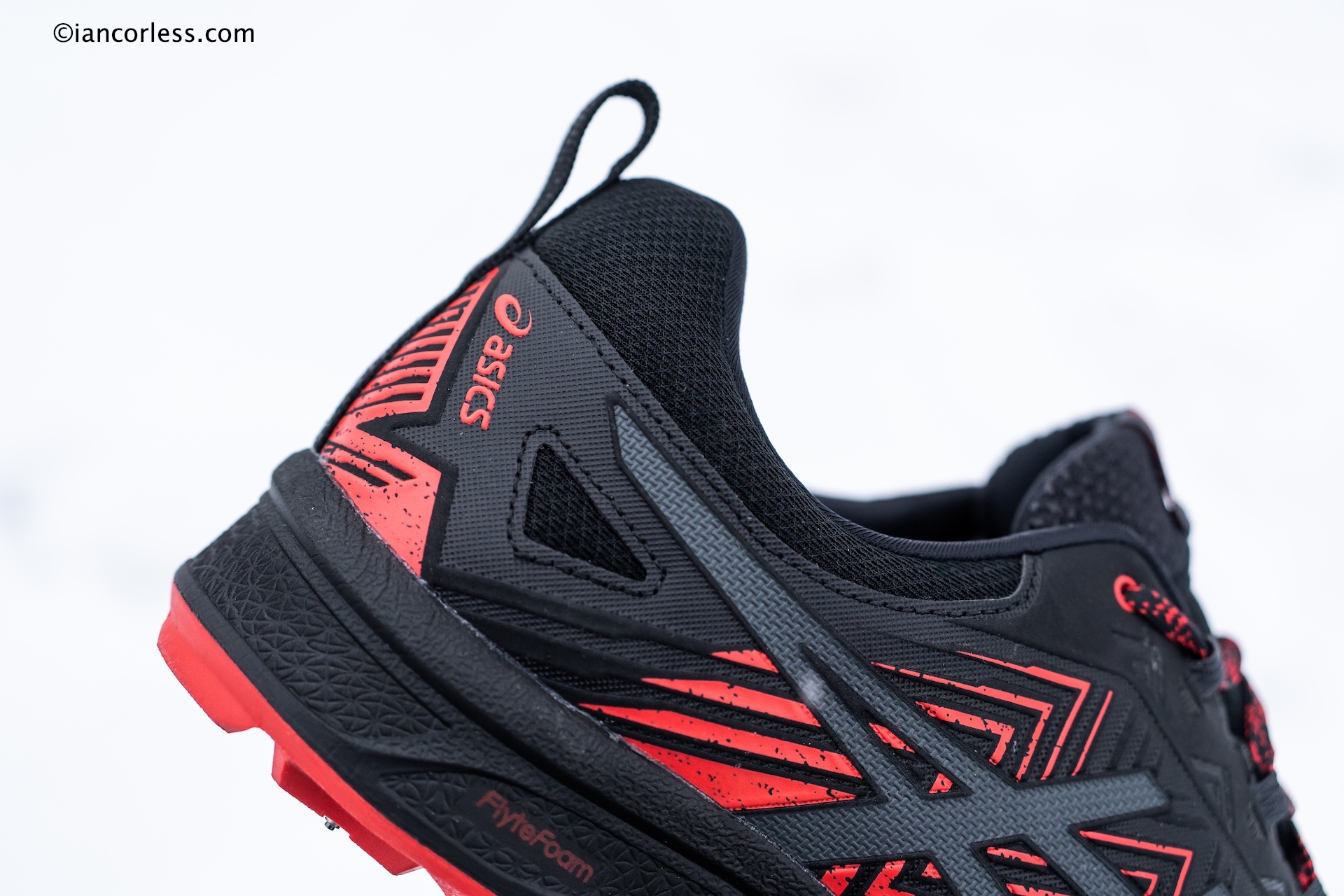
The shoe is cushioned and has great comfort with front and rear cushioning that provides the right amount of ground feel in either soft snow or hard ice. I have struggled to find the exact measurement of front/ rear cushioning but have been informed (tbc) it is 18mm front and 28mm rear. FlyteFoam and layered GEL offer the protection and it works great.
A 10mm drop is high these days and just like the VJ Xante (same drop) I had concerns it was too high. Not so. The drop has not even been a consideration. On a recent 23-mile run in fresh snow and hard ice, the ASICS Gel Fujisetsu 3 G-TX performed perfectly with great comfort.
The upper is Gore-Tex and yes, I am am well aware of the downsides of Gore-Tex in a run shoe. But 6-hours of running in -10 in thick snow and I had warm feet all-day. Just make sure you use excellent socks such as Merino. In addition, I also use a barrier sock such as SealSkinz. Getting socks right is personal, the above works for me.
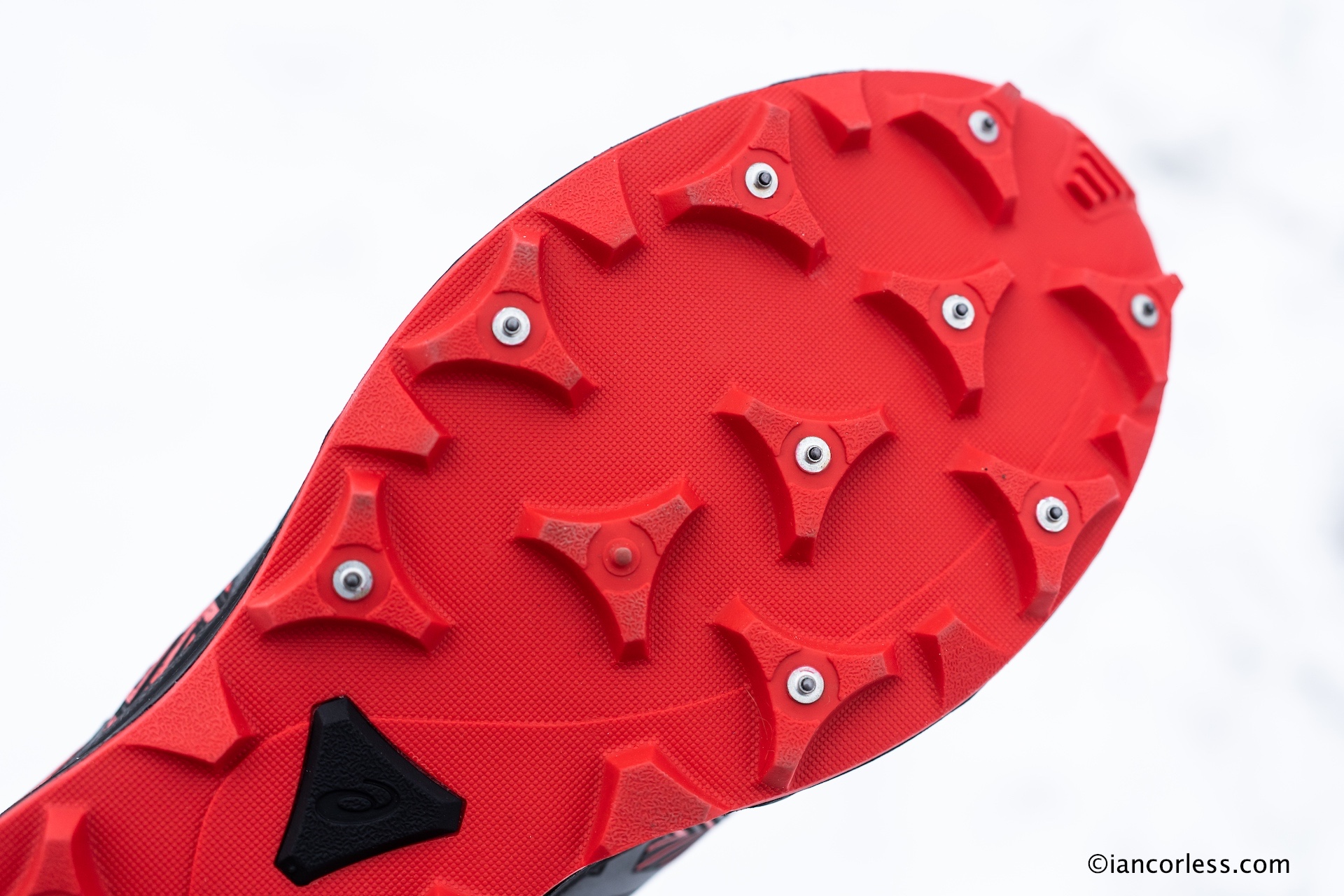
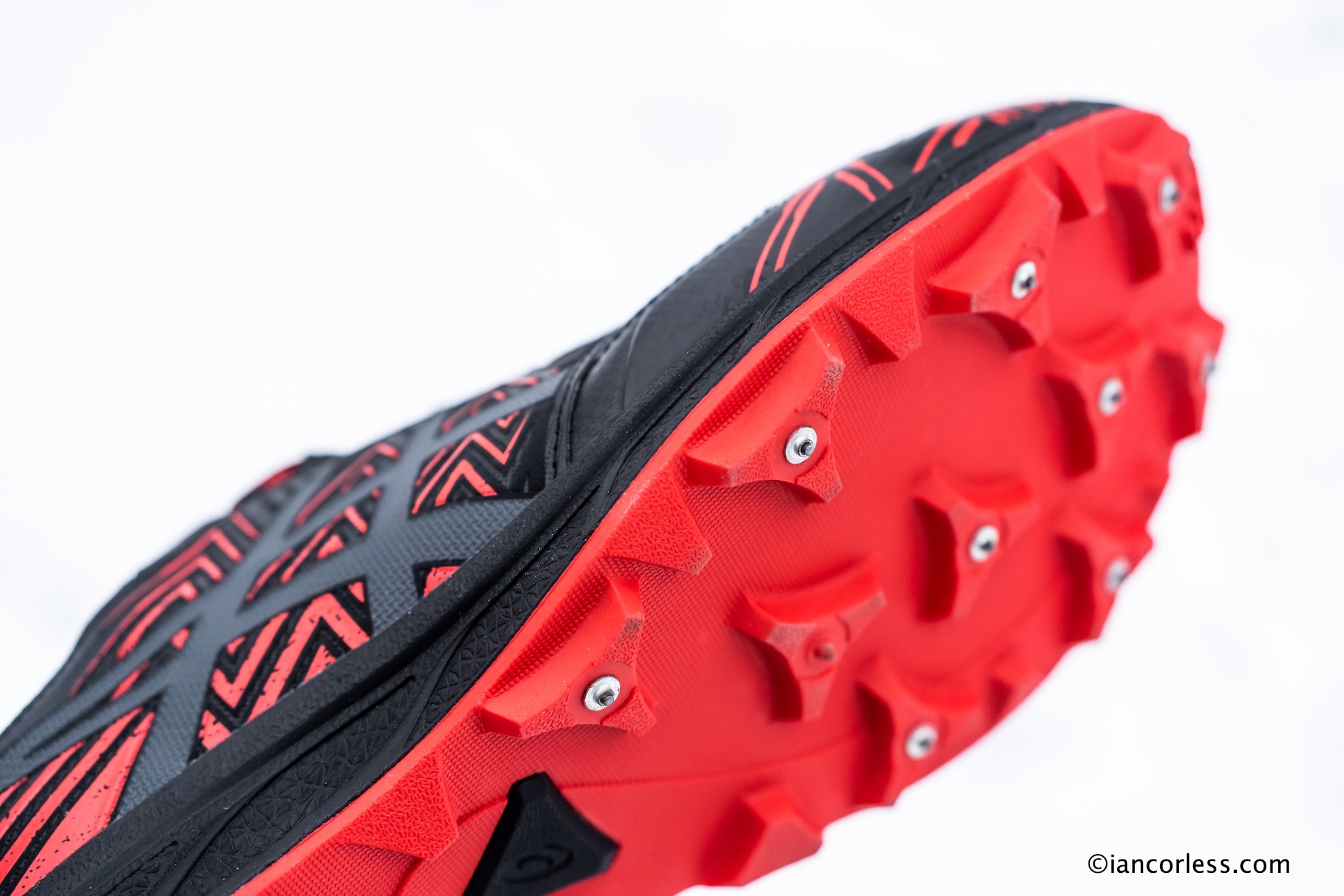
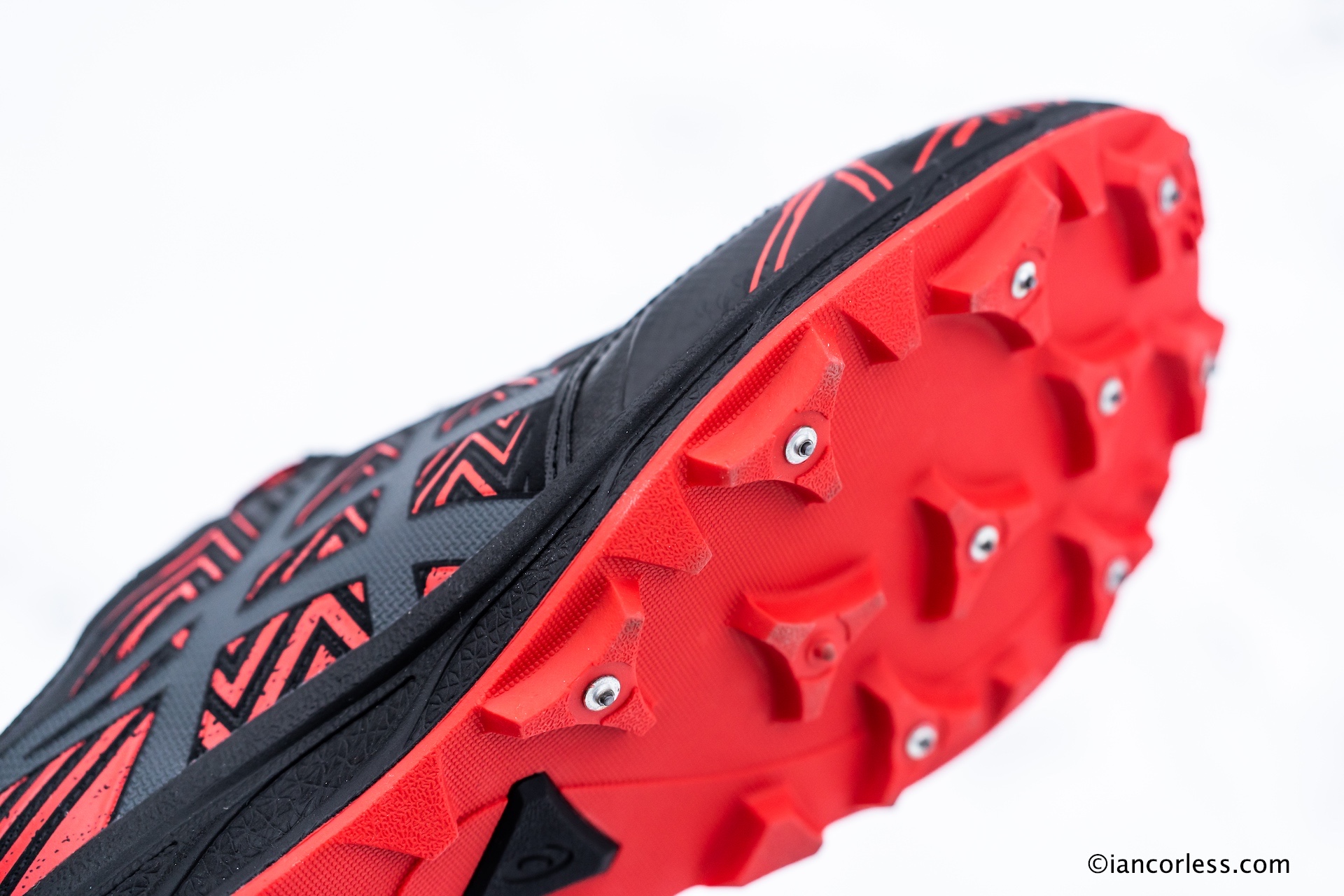
The outsole is the star of the shoe with 14 studs placed strategically from front to rear. There is no missing grip despite run style. I have had top-notch grip on every run and complete confidence the shoe will do its job. In snow and ice, there is definitely a gait change when running and most certainly, the flatter you can place your foot, the more grip you will have as you will engage more studs. But, running uphill, when just the forefoot is engaged, and the 8/9 front studs really provide incredible traction.
The 5 rear studs work exceptionally well for heal strikers with an emphasis on the outer of the shoe, 3 studs on the edge, 1 in the middle and the other to the inside middle.
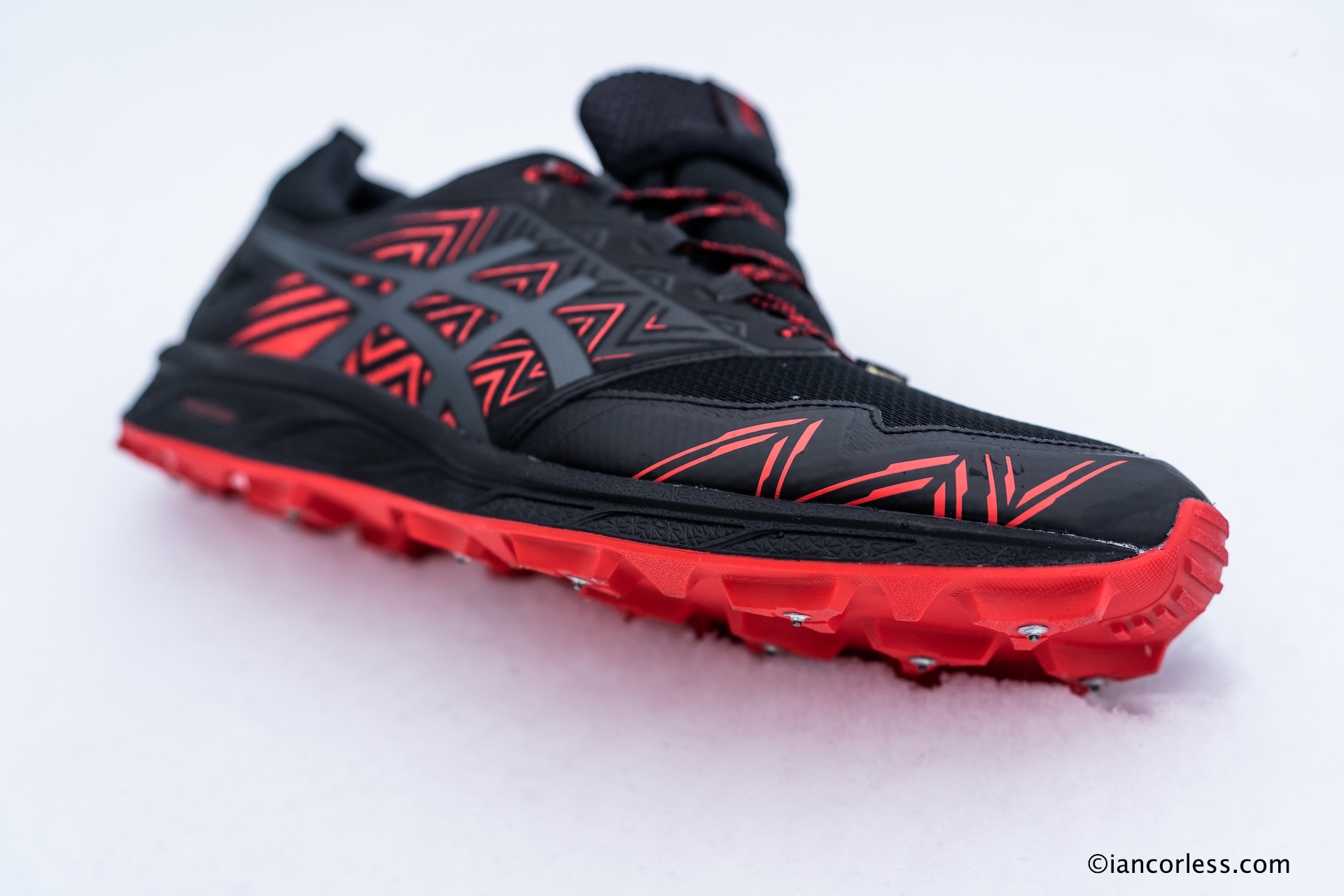
The tongue has a sock-like fit and and is well padded adding the overall comfort of the shoe. It also has a lace garage at the top to stowaway the lace after fastening. Five sets of eyelets and good laces allow the shoes to be pulled tight with really excellent foot-hold, added to with a plush and comfortable heal area that gave me no slipping. There is no option to lock-lace or similar. The toe box is wider, definitely a 3 and edging to a 4 on a 1-5 scale, 5 being wide. Importantly there are no seams or stitching in this area so comfort is top-notch, especially in the propulsive phase. A good toe bumper adds to the protection.
Weight is on the heavier side, this is typical on a winter shoe as they need to be more robust, plus you have the addition of the studs and a more substantial outsole to hold them, my EU45 were 338g. A note on sizing, I am always EU44 but for the Asics I chose EU45. The shoe does size a little smaller BUT I also knew I would be using Merino and SealSkin socks. The EU45 is perfect.
The shoe is neutral.
Colour-way is black and red which works really well, it’s a nice looking shoe.
Conclusion
Designed to enjoy running in the dead of winter, the ASICS Gel Fujisetsu 3 G-TX is equipped with several technical components that enhance the running experience in complex and demanding terrains. I have waited sometime to find a shoe that ticks all my winter boxes and this pair of Asics does that. There are no more excuses, it may have taken 3 versions to get it right but the features all combine to make this a stunning shoe: outsole studs, optimal grip, protection, comfort and great feel for the ground. Highly recommended.
Please support this website. I believe everyone deserves to read quality, independent and factual articles – that’s why this website is open to all. Free press has never been so vital. I hope I can keep providing independent articles with your help. Any contribution, however big or small, is so valuable to help finance regular content. Please support me on Patreon HERE.
Winter running can be challenging for many reasons, but for most, conditions underfoot are a deciding factor if running outdoors is viable.
In all honesty, running outdoors is always viable, you just need the correct equipment.
For me, winter is arguable one of my favourite running seasons. I like the cold, brisk and dry air, I love running in the snow and YES, I love running on ice.
First and foremost, a specific winter run shoe with studs is always the best option. You can read an article, Running on Icefor more specifics.
However, for many, spending money on a winter run shoe can be prohibitively expensive. Don’t worry, a solution is at hand.
You can DIY your own winter run shoe.
TOP TIPS
Pick a shoe that is coming towards the end of its normal day-to-day run life.
Ideally, a shoe with a little more cushioning is a good idea as you will be screwing winter studs through the outsole and in to the cushioning of the shoe.
Check wear marks on the outsole. This will provide you invaluable information about you and your run style, importantly, it will tell you where you strike the ground. The is the place for the studs to go.
Plan on the outsole where you will add the studs in advance.
Take your time.
HOW TO?
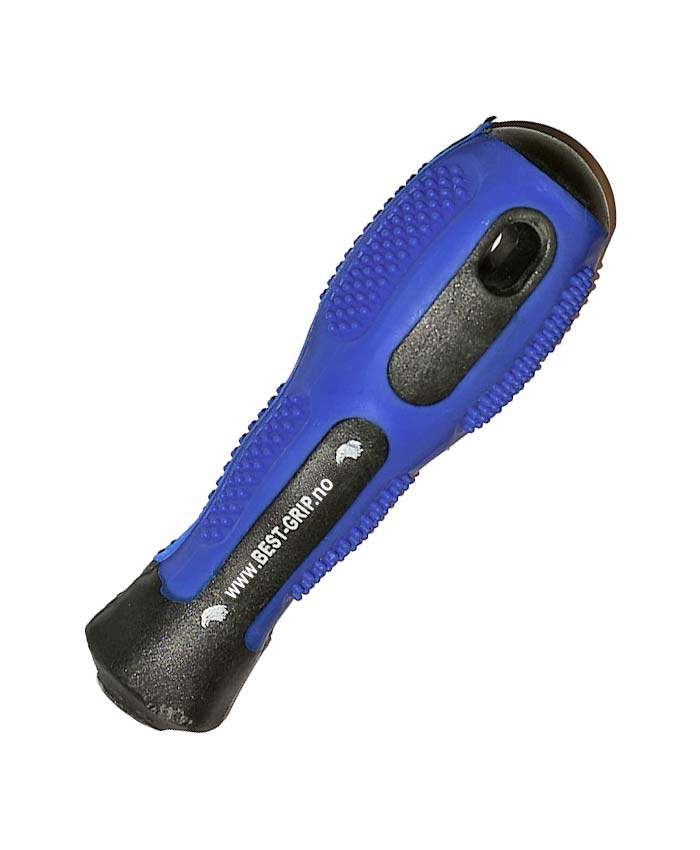
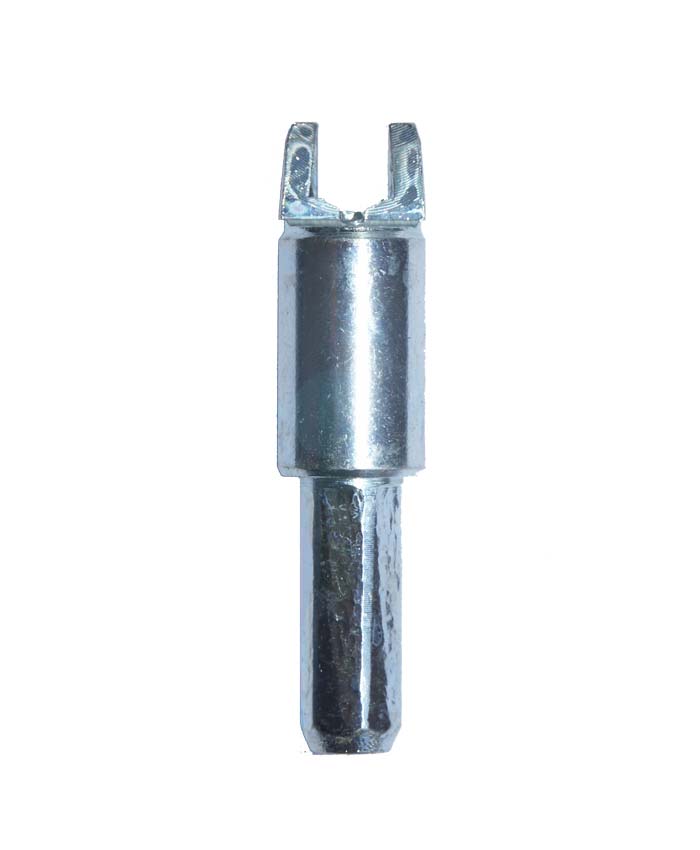
I use a specific winter stud from Best Grip (code BG3040) which comes with 20 studs and the tool for easy and convenient placement. The tool is made of two parts, the handle BG5000 and the BG4000 attachment which holds the stud when applying.
BG5000 Handle
BG4000 tool
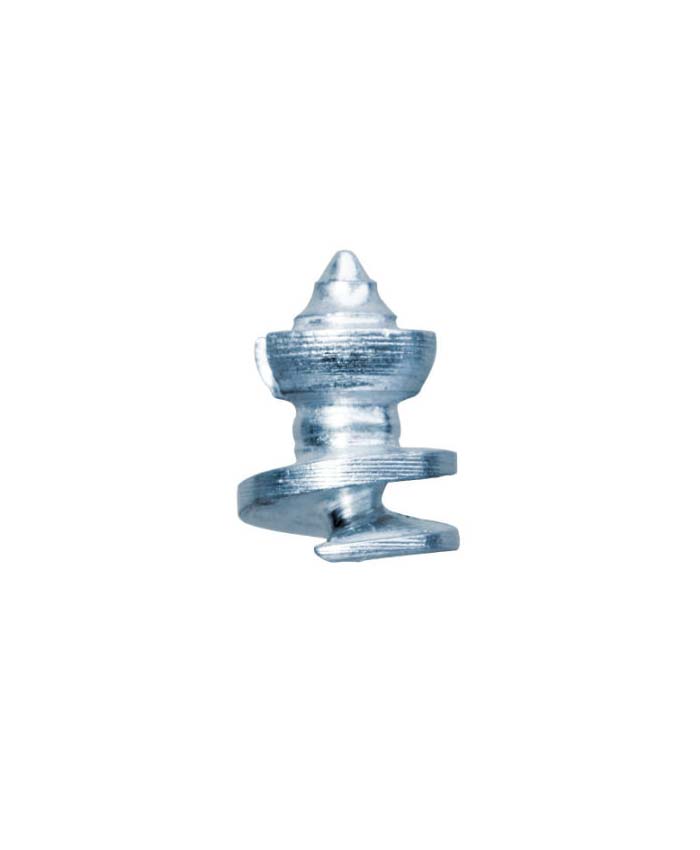
If you already have the tool, you can purchase just the studs, the BG1000 has a thickness of 6mm and 6.2mm mounting depth which is ideal for most shoes.
BG1000 stud
20 studs provide 10 per shoe. I consider 10 to be a minimum and personally, I often prefer 14 or 16 depending on the shoe. My current specific shoe of choice for winter is the Asics GEL-FujiSetsu 3 G-TX (review to follow) which has 14 studs in a specific winter shoe with Gore-Tex upper.
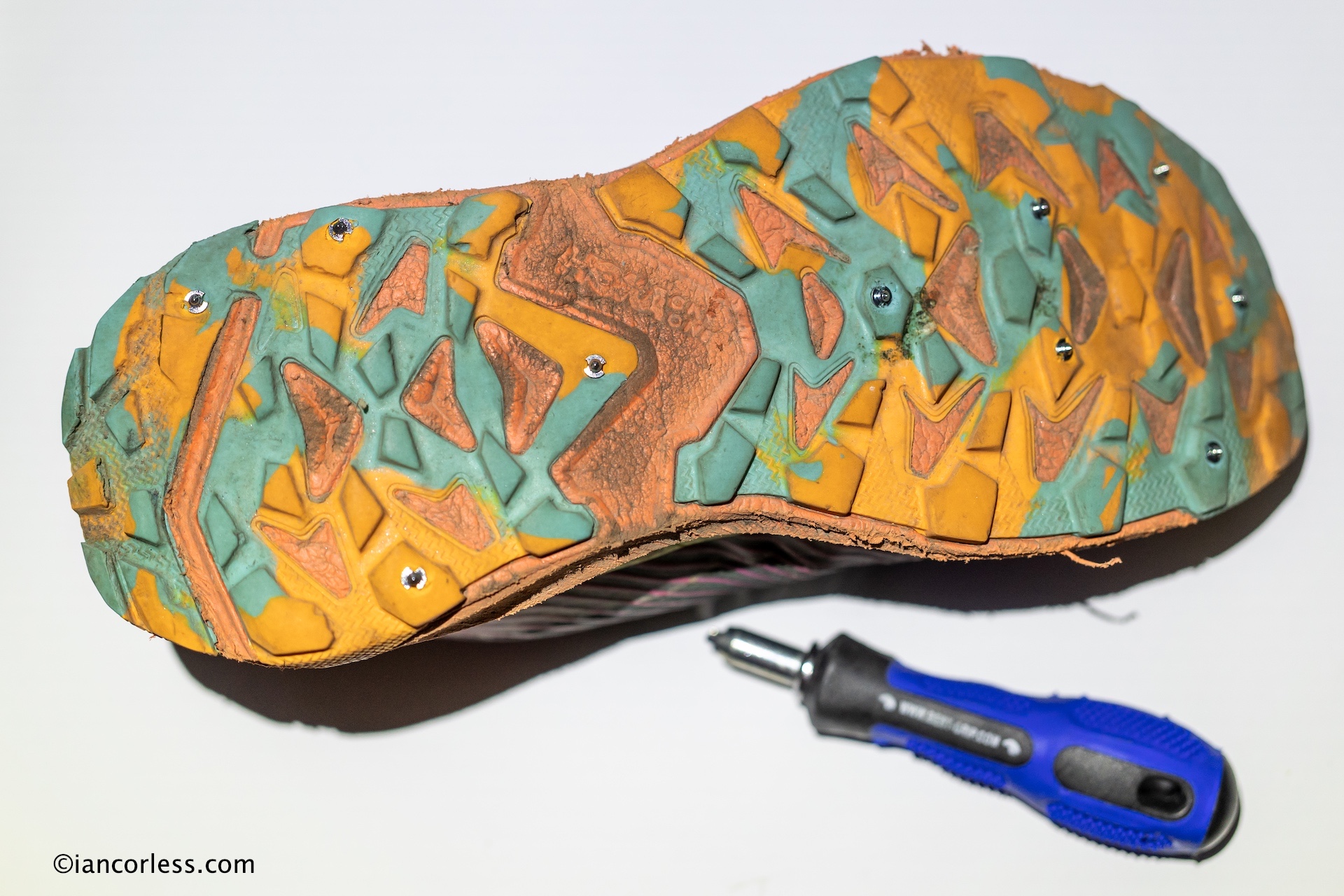
I used a Hoka One One Torrent 2for the purposes of this demo. This is a shoe that has served me well recently with 600km of use. It’s about ready to be shelved BUT it does have life left in it for winter.
The Hoka Torrent 2 is one of Hoka’s least cushioned shoes (why I like it) but it still has plenty of cushion to take studs.
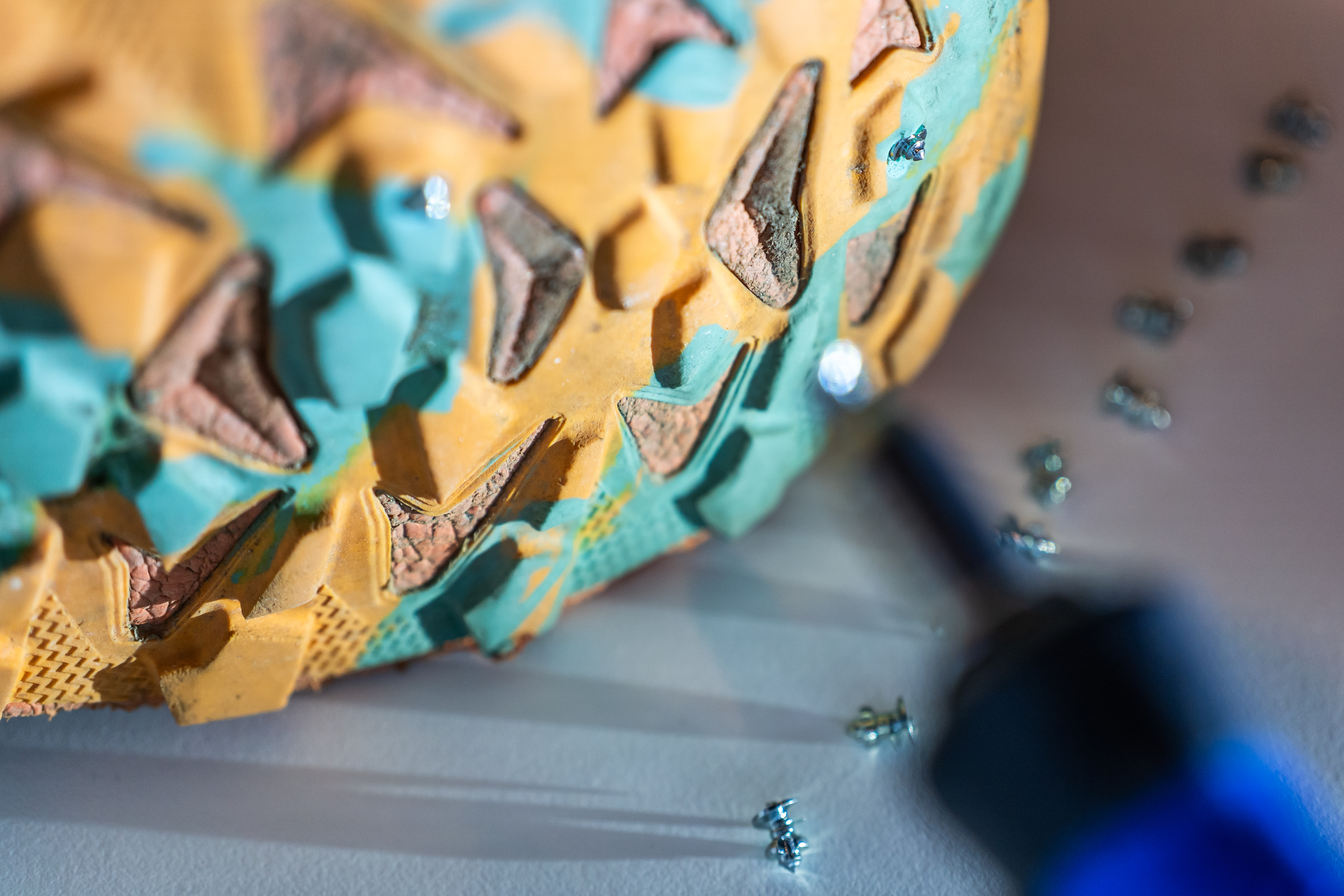
You can see on the outsole how I am very much a forefoot runner with some supination. This makes it easy for me to decide where to place the studs. Of course, run style and technique does change in snow and ice, so, always make sure you have good distribution for added comfort and security.
Apply the screws one at a time. Ideally choose larger lugs that can host the screw better. Some outsoles will just not work, so think ahead.
Place the studs with at least 6 at the front and 4 at the rear. Typically, 3 rows of 2 works at the front and 2 rows of 2 at the rear, but one advantage of applying the studs yourself is that you can be specific to run style as tho where to place the stud of optimum grip.
ON THE CHEAP
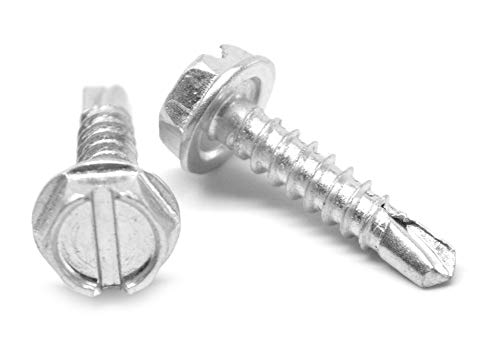
If purchasing a specific winter stud such as the Best Grip is still a little more than you want to pay, you can purchase self drilling Hex Head screws (ideally slotted) ⅜ inch size #8 or #10 usually works.
I recommend pre-drilling pilot holes with a drill bit, maybe 1/16th in size. Make sure the shoe is held secure either by another person or ideally in a workmate or similar.
Drill the pilot hole slowly and obviously, make sure you go straight.
Once you have made pilot holes, you can then add the screws.
SUMMARY
A specific winter run shoe is the best option, without doubt. They are specific for the job and provide a great run feel and experience. However, spending upwards of £120 for another pair of shoes with a very specific use, is just too much for many. Therefore, adapting a used shoe for winter makes sense. It puts additional life in to a shoe and provides an option for winter running that would not have existed before.
Using a specific stud like the Best Grip (or similar) provides the next best thing to a specific winter shoe, with the added advantage that you ca actually apply the studs where you want them.
If spending money on a specific stud is still too much, Hex Head screws have been used for adapting shoes for a considerable time, they are tried and tested and while not as good as studs, they can do the job.
Of course, the final option is to use any run shoe and add a micro spike such asNortec. A micro crampon has uses but they provide a less than desirable running experience.
Please support this website. I believe everyone deserves to read quality, independent and factual articles – that’s why this website is open to all. Free press has never been so vital. I hope I can keep providing independent articles with your help. Any contribution, however big or small, is so valuable to help finance regular content. Please support me on Patreon HERE.
Episode 220 of Talk Ultra is co-hosted by Karl Meltzer and we talk with Tomas and Jordi from Pyrenees Stage Run and woman of the moment, Therese Falk from Norway.
La Sportiva CYKLON shoe review HERE listen to Episode 208 of Talk Ultra is a special show with DANIEL FEENEY and Jonathan Wyatt discussing the collaboration between BOA and La Sportiva for the new, Cyklon shoe.
Importantly, go to iTunes and subscribe so that you automatically get our show when it’s released we are also available on Stitcher for iOS, Android and Web Player and now Tunein. We are also on Spotify too. Our web page at www.iancorless.com has all our links and back catalogue. Please support Talk Ultra by becoming a Patreon at www.patreon.com/talkultra
2021 has been the year of adidas for me. The three stripe brand with the distinctive TERREX logo has made great progress in the trail, mountain and ultra world with some stand out shoes.
Early in the year, I called out the Speed Ultra as not only my favourite shoe but arguably, one of the best shoes I have ever used. Three pairs on and I still think the same. Without doubt one of ‘the’ shoes of 2021.
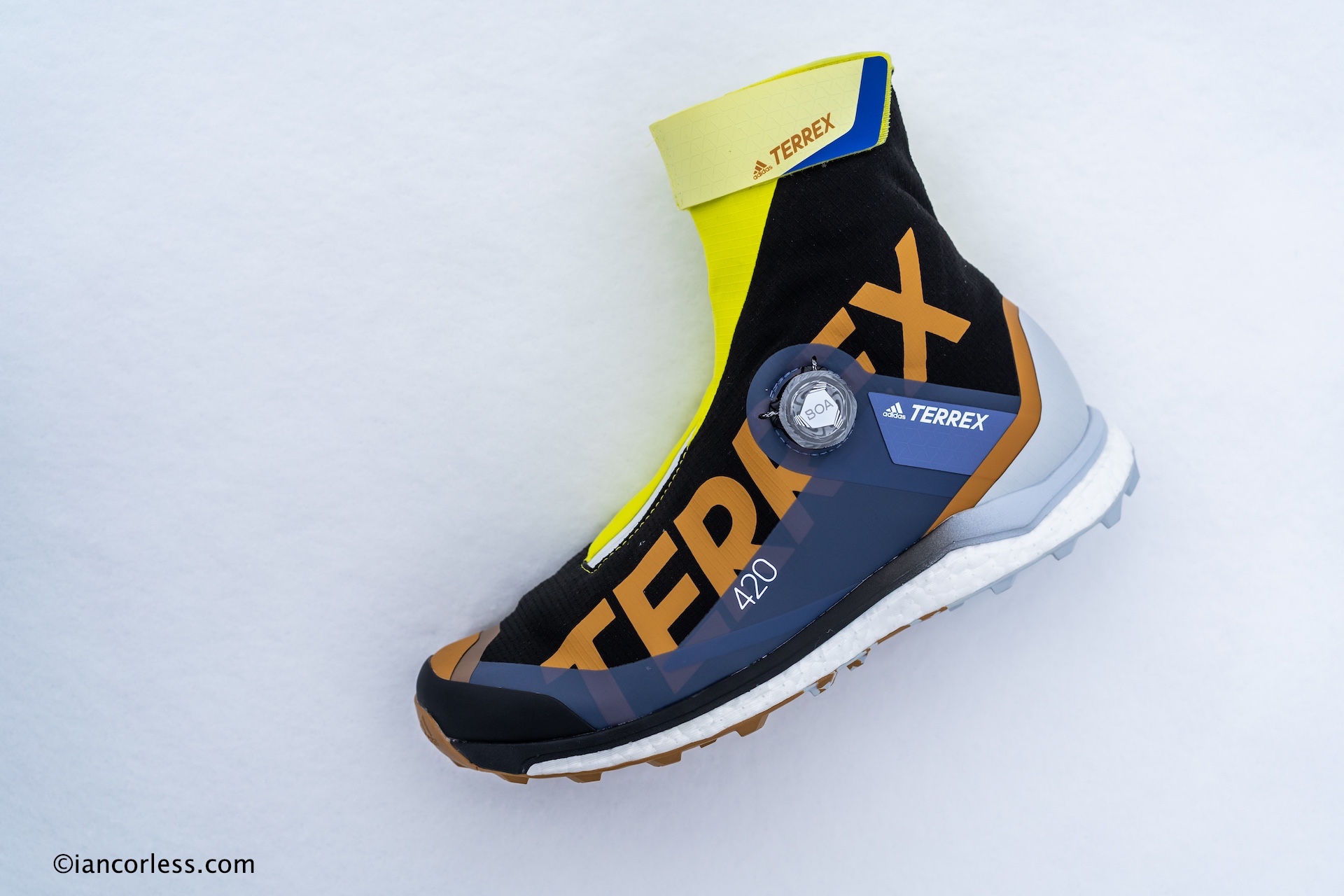
Recently, I received a pair of the adidas Terrex Agravic Tech Pro with BOA.
Now I have to say, I was initially frustrated, here in Norway we still had ‘decent’ weather and this boot would have just been way too much for the conditions… Gladly though, winter arrived in November and we have plenty of snow, ice and temperatures well below -10. A perfect testing ground.
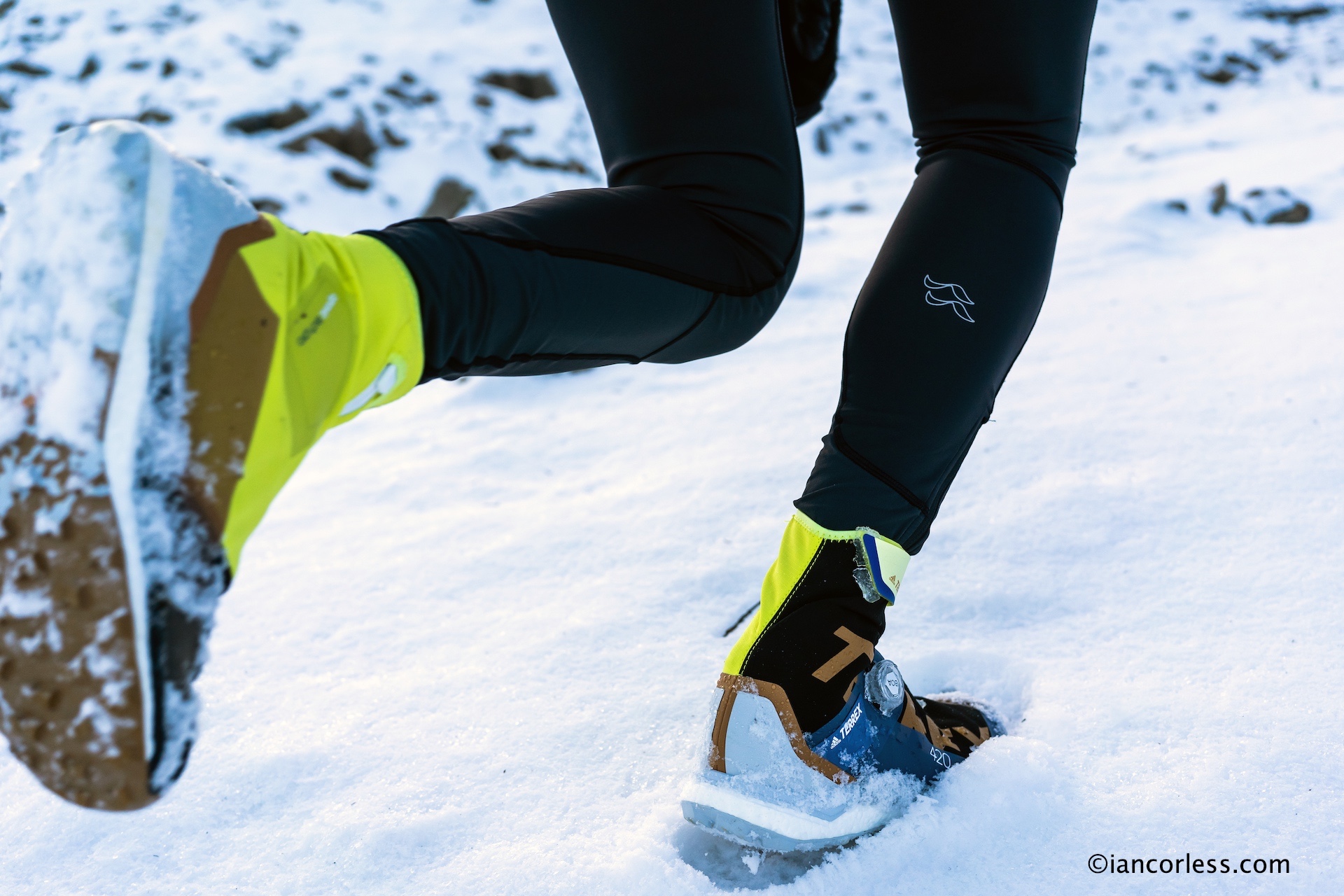
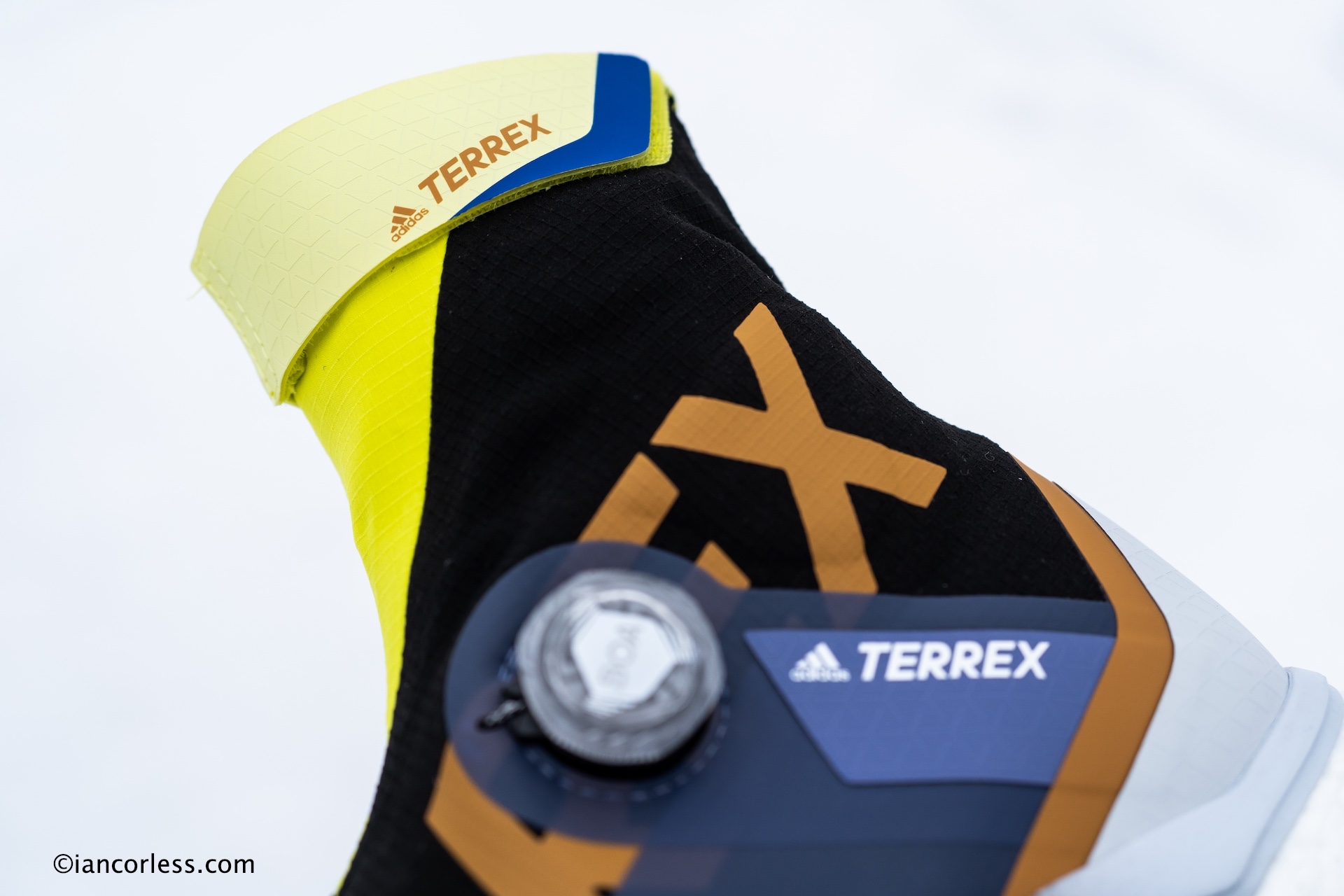
The adidas Terrex Agravic Tech Pro is distinctive! The shoe does come in a more sedate and classy looking black with hints of red, I received the ‘stand out’ look at me colour way of black, Mesa and Halo Blue.
Let’s be clear, this is a shoe for very specific use and that I love! Far too often when it comes to winter, I am compromising trying to make the best os shoes that are not specific for the task. Here in the adidas Terrex Agravic Tech Pro you have shoe that is designed for harsh, rough, wet and cold conditions. And trust me, when it is -20 snow and ice, warm feet make a very happy runner.
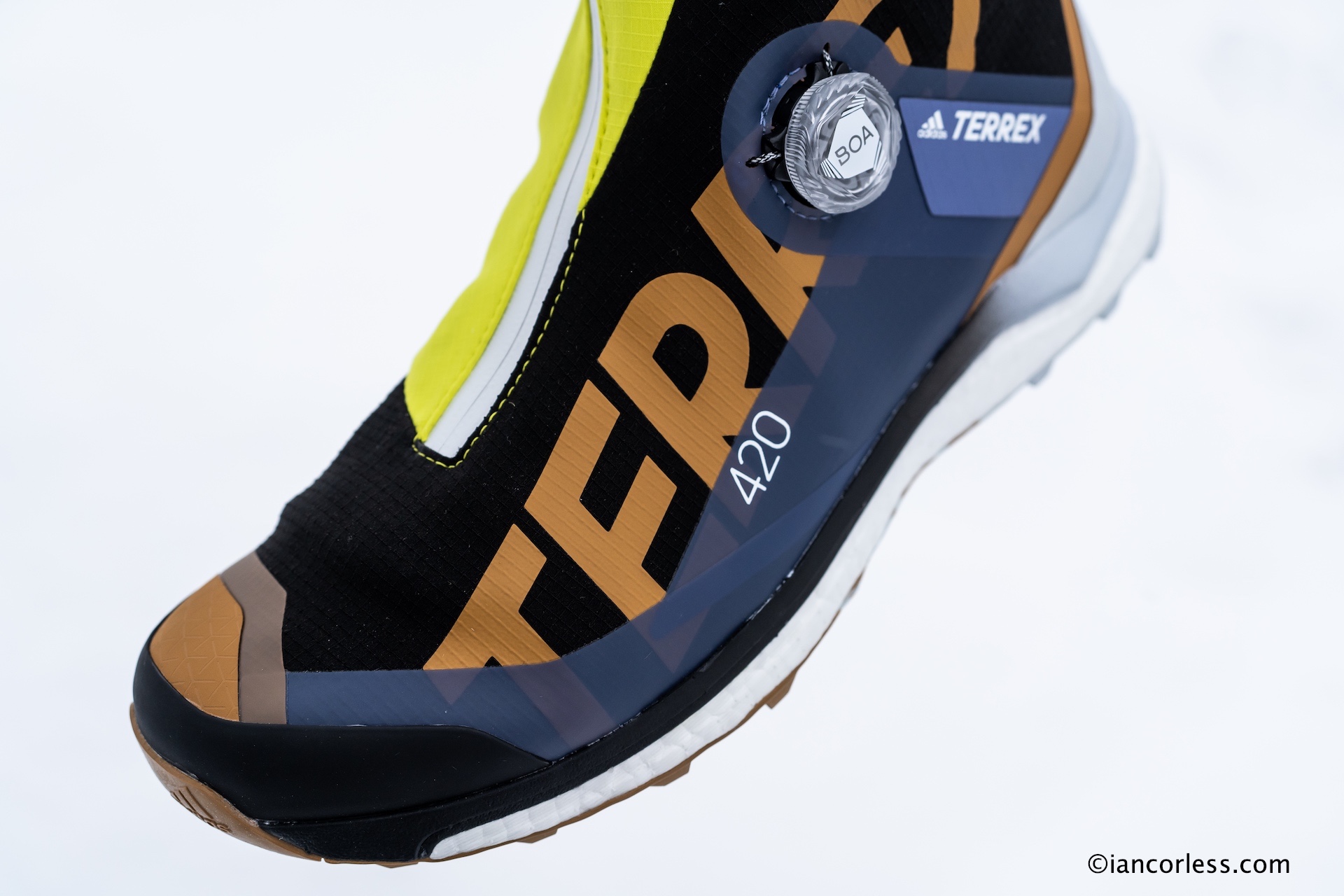
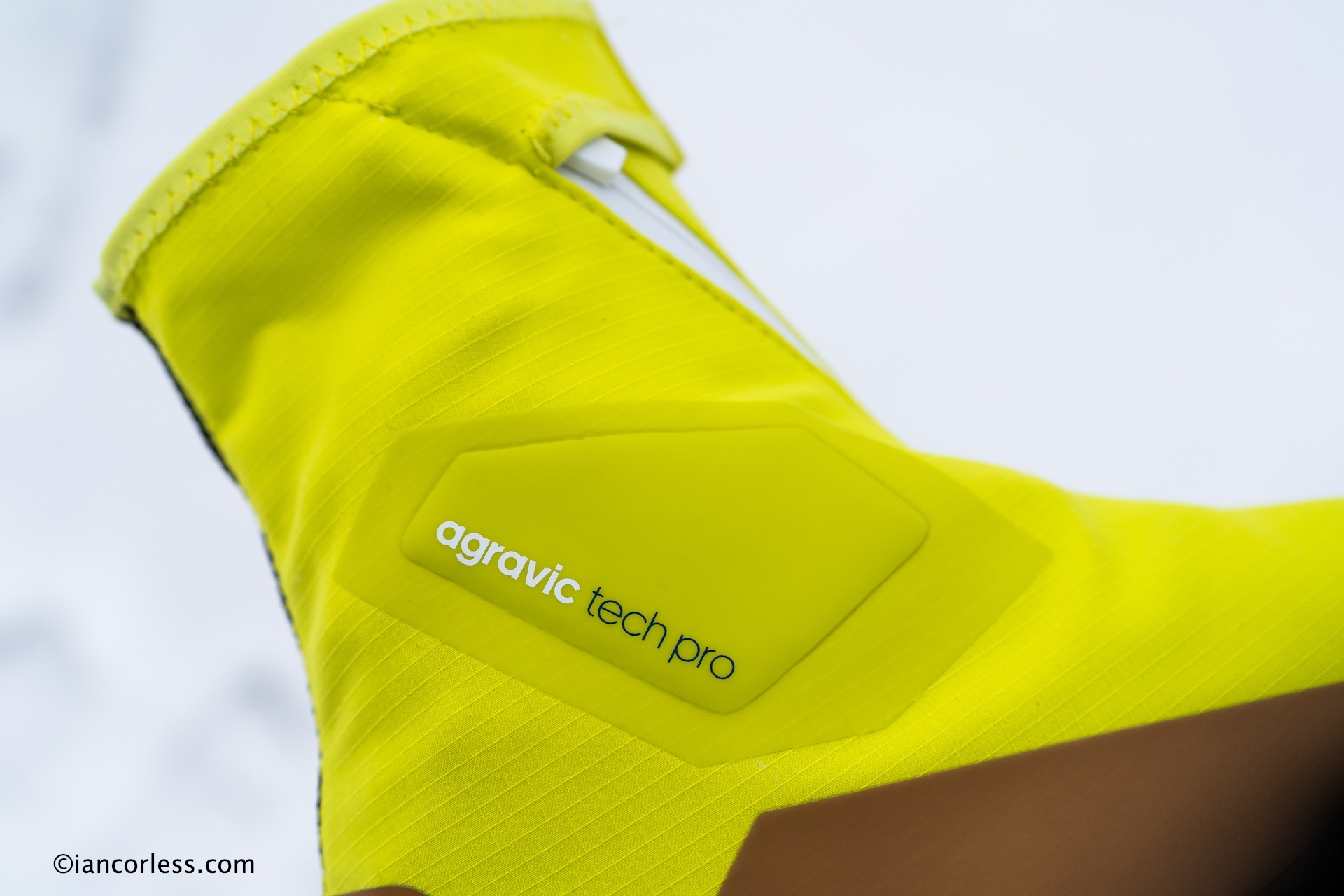
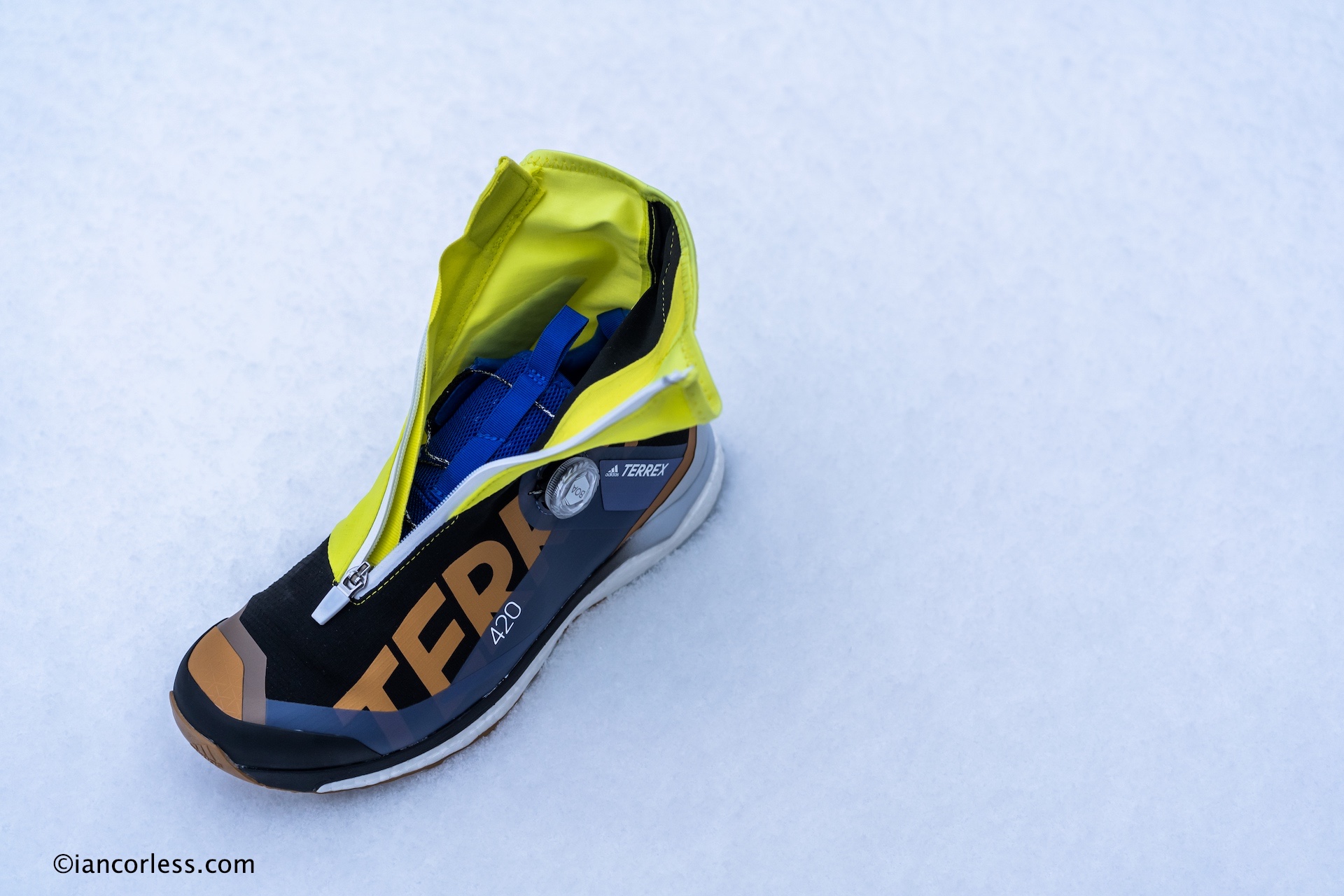
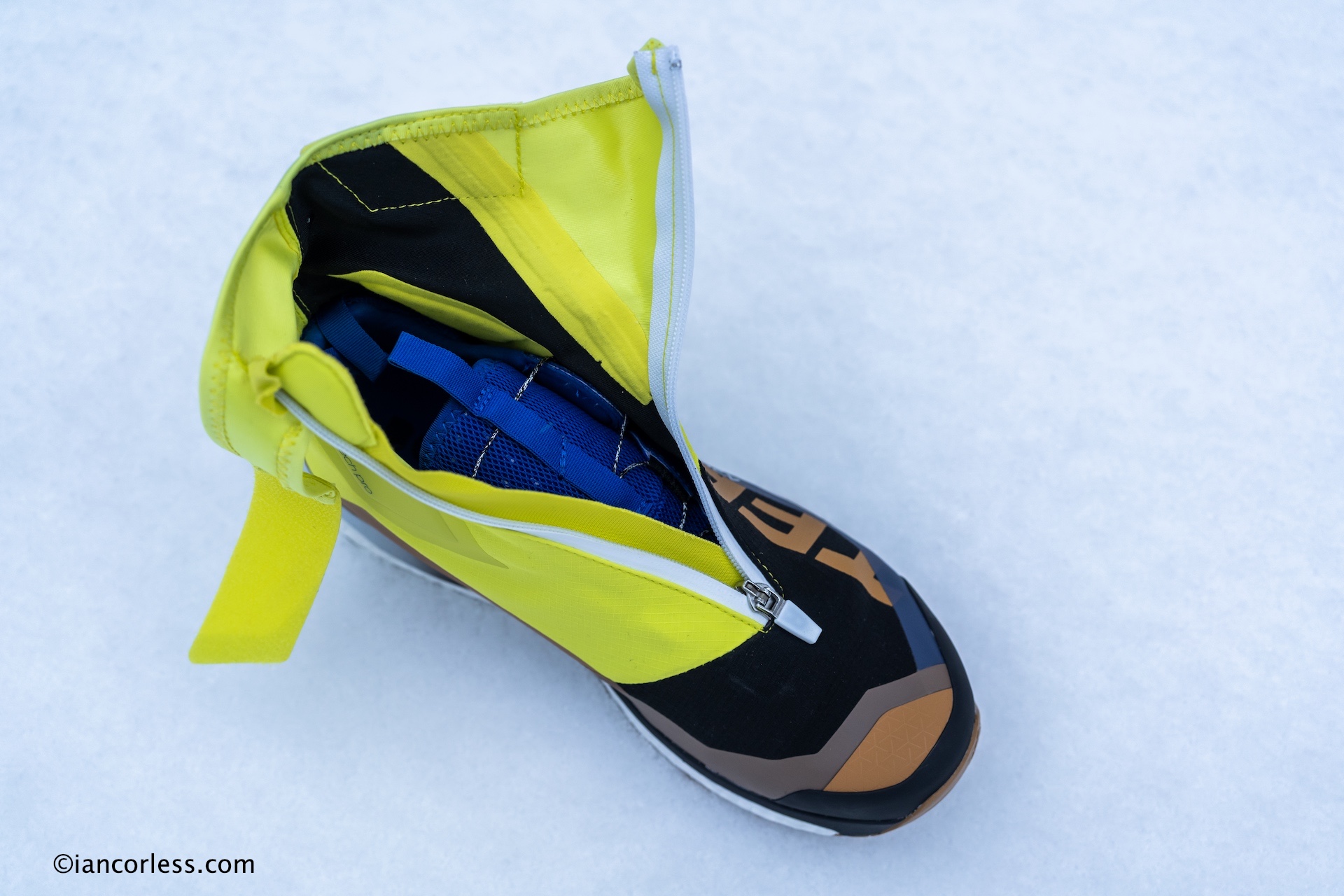
The adidas Terrex Agravic Tech Pro has some really incredible design and engineering. Inside the boot is a Terrex Agravic shoe with the usual adidas comfort, continental outsole and Boost cushioning. The shoe is wrapped in a water repellent envelope with durable front closure zipper and on the outside the BOA dial to provide tension and security.
The BOA brings a welcome development. Often winter boots like this incarnation by adidas have a laced shoe inside. Therefore, you put the boot on, lace up the shoe inside and then zipper the enclosure. The downside of this, is that when out on the trail, should you need to adjust the lacing, you must unzip the boot and then do the lace… Maybe no big deal you think? Trust me, if it is below zero, freezing cold and your hands are already feeling somewhat numb, the last thing you want to do is take gloves off and tie laces. Here in the adidas Terrex Agravic Tech Pro
That problem is solved as the whole shoe, inner and outer is tightened and released by the BOA on the outside of the shoe. It’s push in/ twist and pull out/ twist for less or more tension is just perfect even with gloves on. It may well be one of the most practical and logical reasons to use a BOA adjustment. It really is spot on! Using the L6 platform, with a L6 dial and TX4 lace, this is a perfect winter shoe fastening system as it protects against dirt contamination. You may well wonder about durability and strength, but the L6 uses a bayonet and cartridge system which is designed to release without breaking. If it releases, you can insert the cartridge back into the bayonet. The TX4 lace is also flexible and light weight with low friction. It’s the best BOA system I have used thus far.
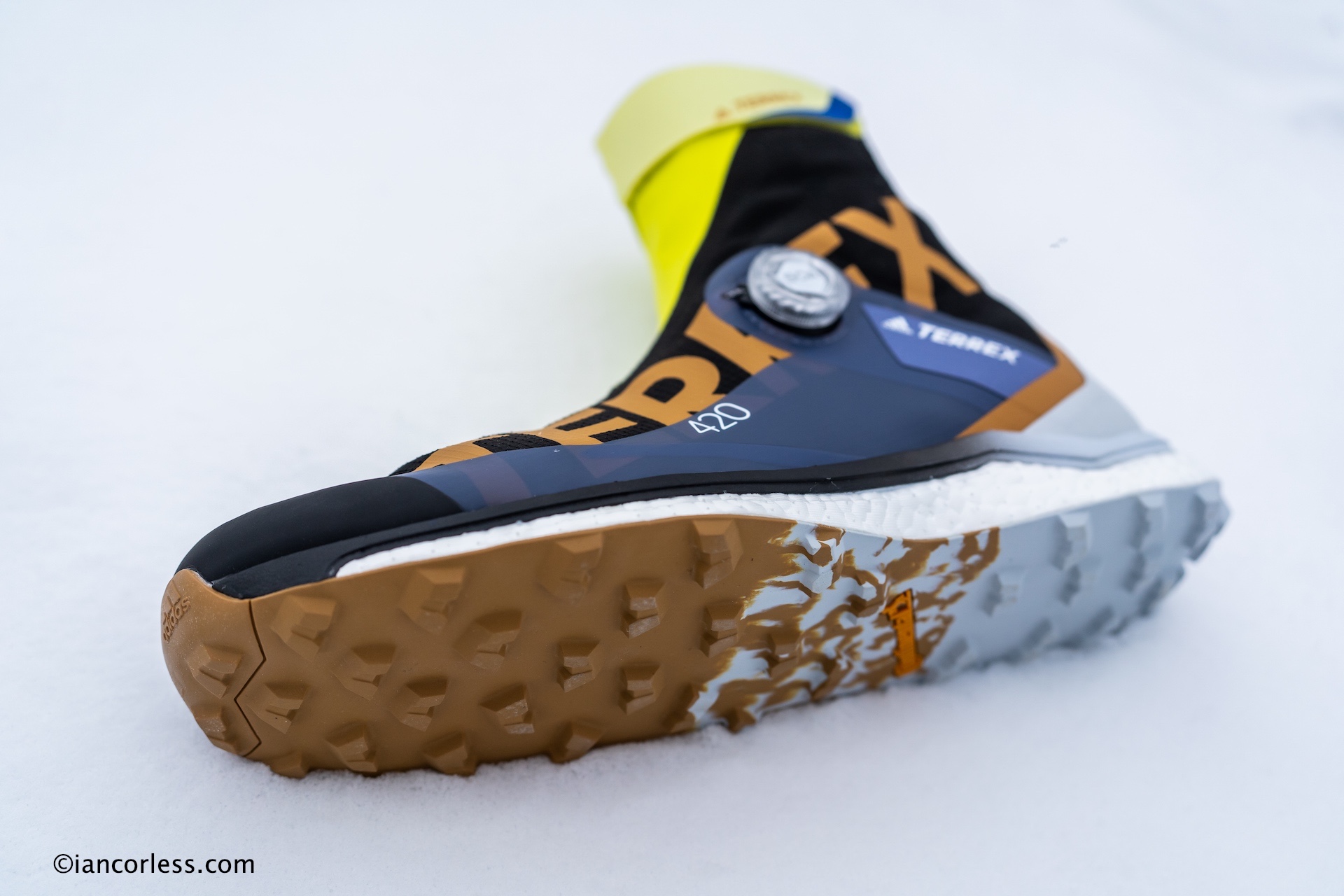
As the number on the side suggests, ‘420’ this refers to weight in a standard UK8 size, 489g for my UK9.5/EU44 . This is not a lightweight running shoe, but what it is is a durable beast to offer support, warmth and protection in the harshest environment. Be that running in snow, climbing, running trail or even crossing a glacier (with the appropriate cramp on).
You may think it’s a boot and to an extent it is, however, because a running shoe is inside, the adidas Terrex Agravic Tech Pro has a completely different feel. It has the best of both worlds!
An 8mm drop sits perfectly in a shoe like this providing the potential for all-day comfort. Protection both at the fore and rear is excellent, there is some stability in the shoe but flex, particularly behind the metatarsals is great, important for when running and climbing.
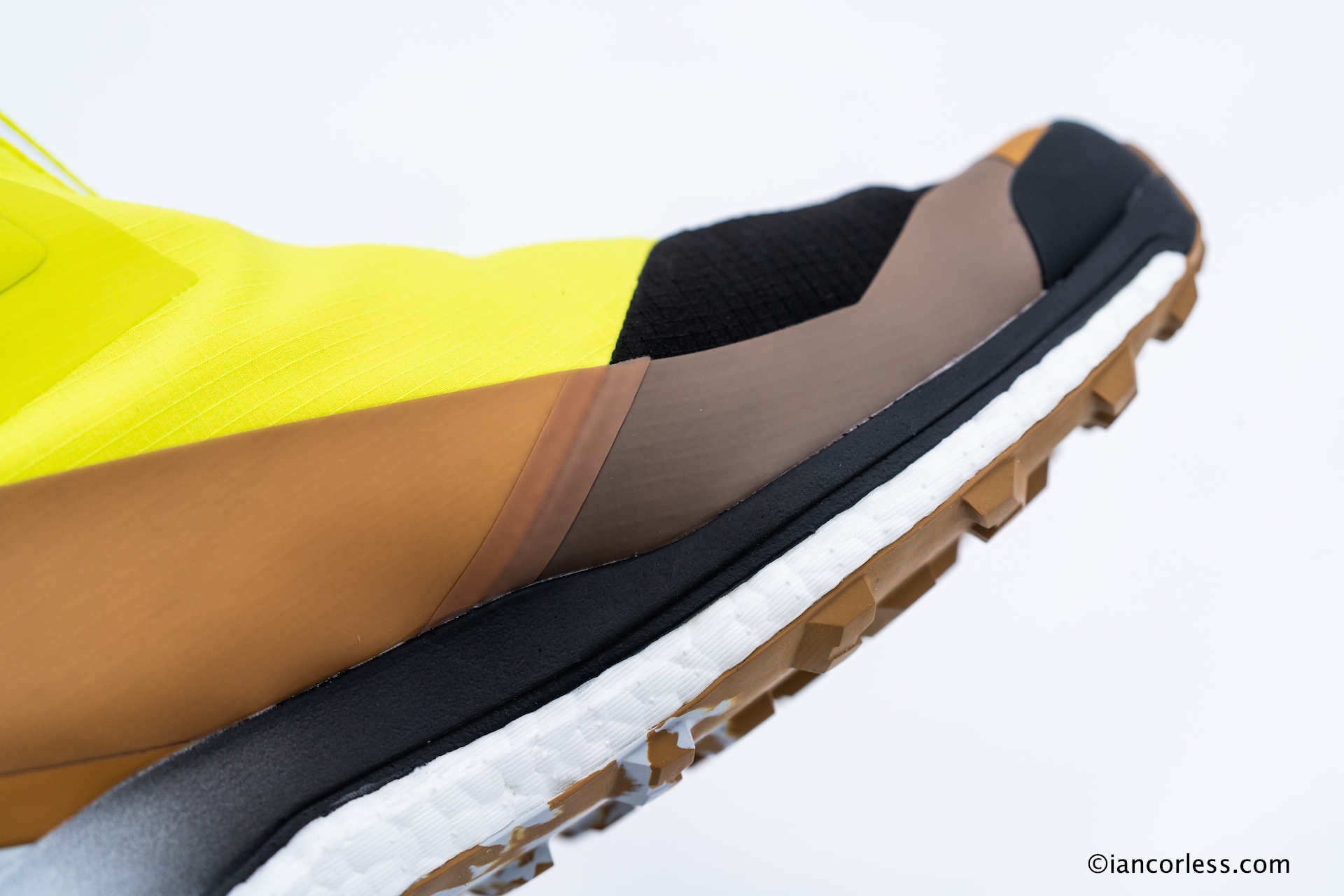
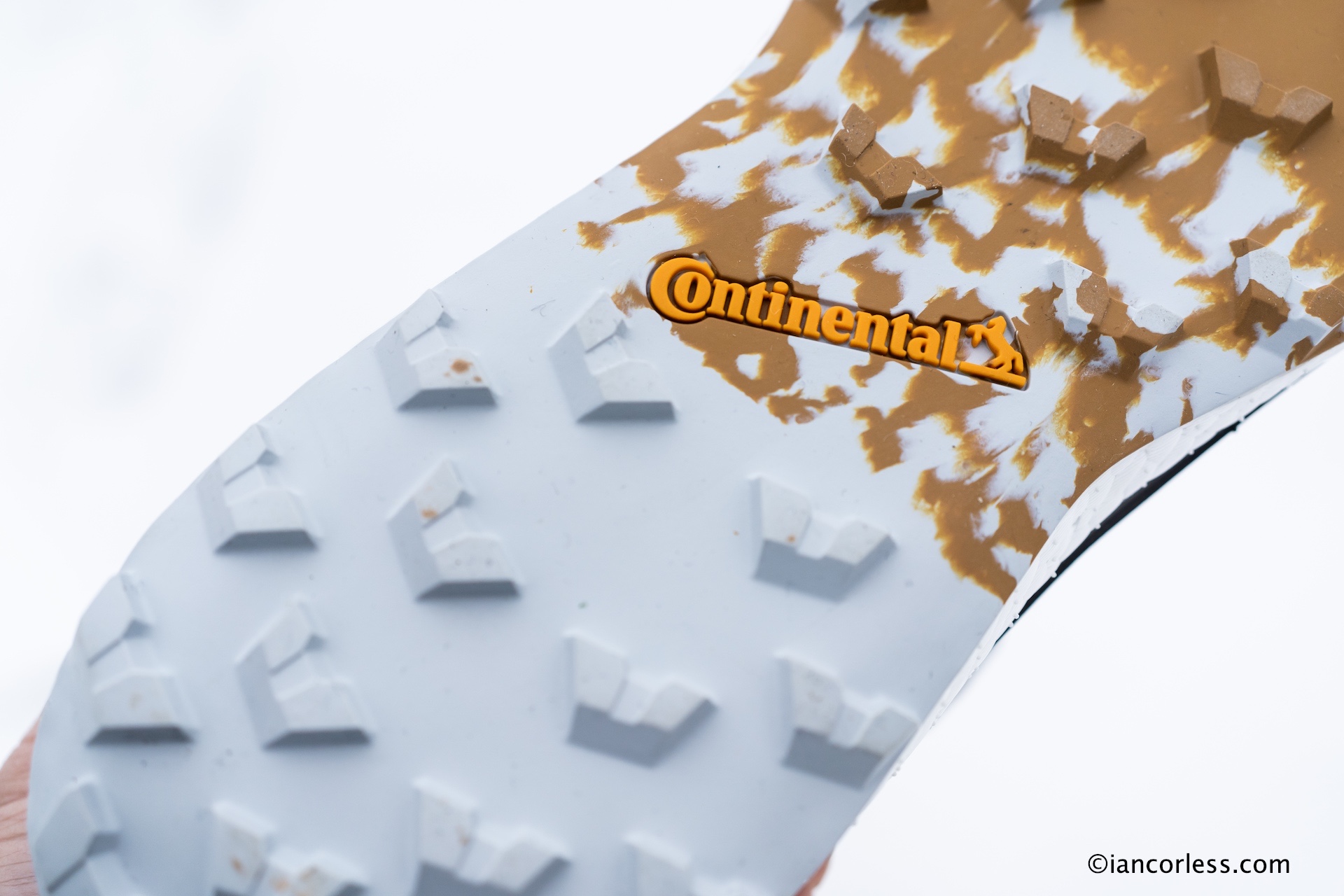
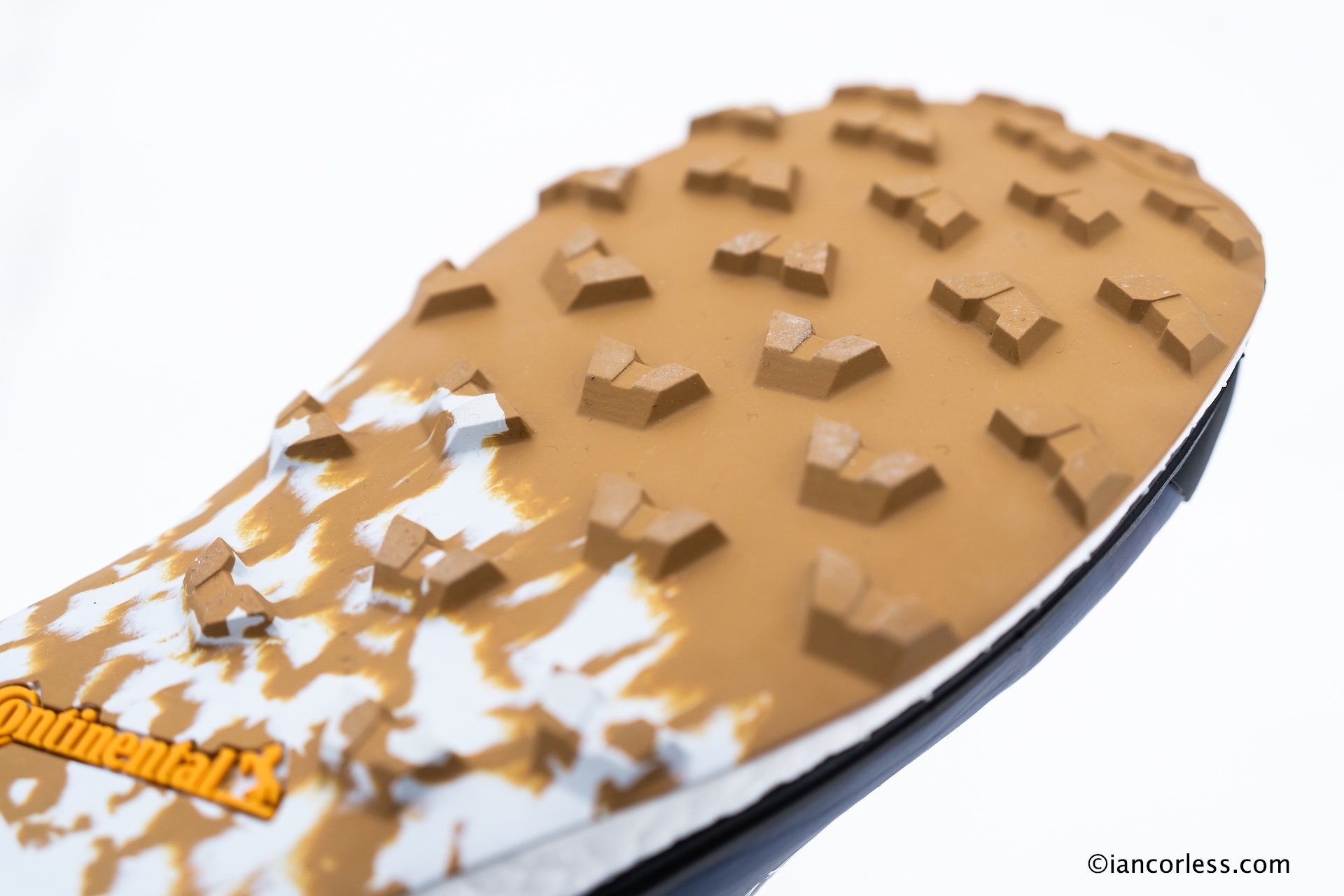
Cushioning is Boost which is durable in could and challenging conditions, importantly it does not harden in the cold. There is an EVA frame for stability. Front rock protection is good and the outsole is grippy Continental with 4mm lugs.
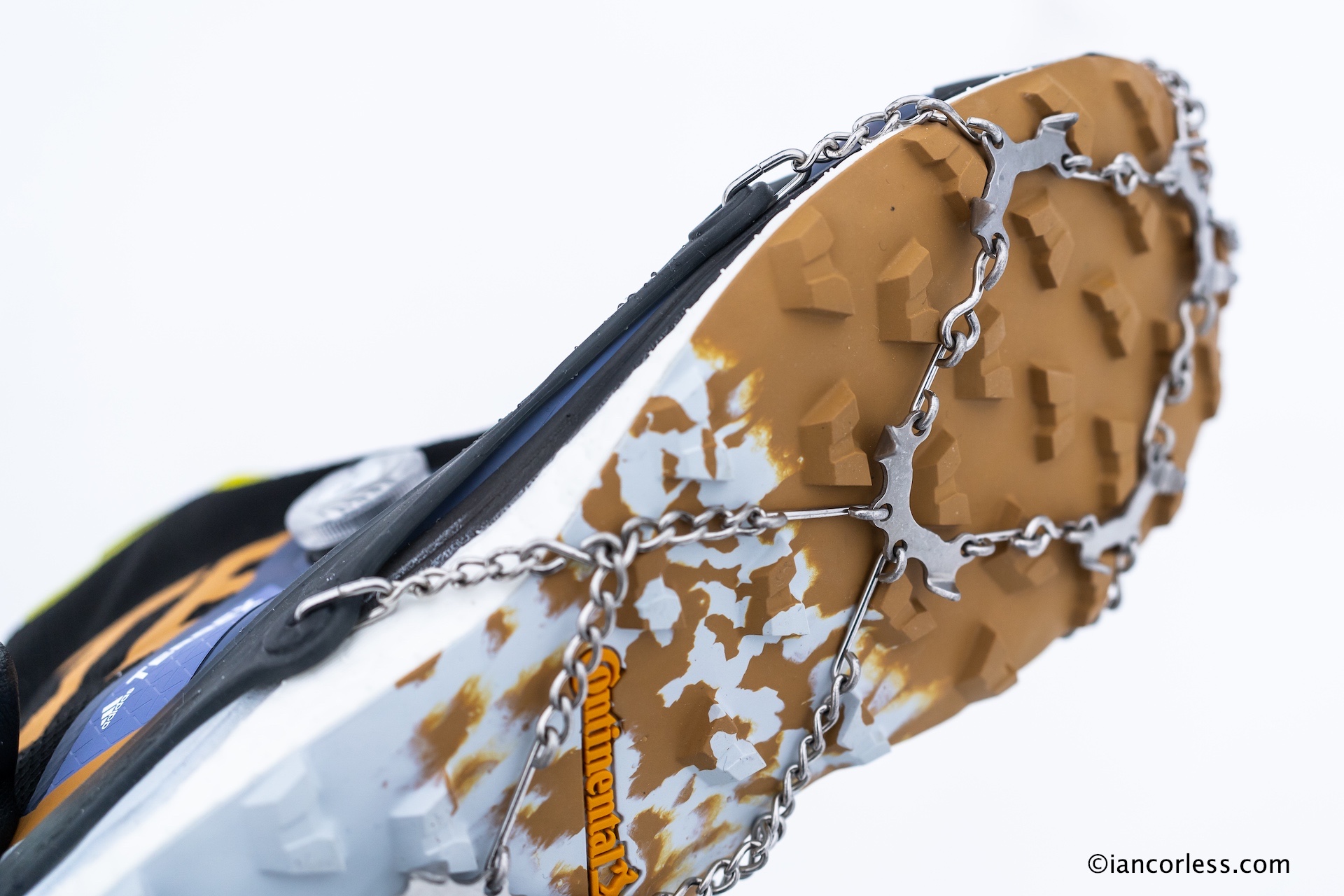
The outsole does leave me perplexed. I am not complaining about the grip, BUT I would have liked to have seen winter spikes on a shoe like this. In soft snow the spikes cause no hindrance but if you hit ice, they are a life saver. I understand why adidas would choose NOT to add winter spikes: it basically narrows the market. So, this boot would require one of two options for me:
Add a micro crampon that could be taken on and off as required.
Add studs myself.
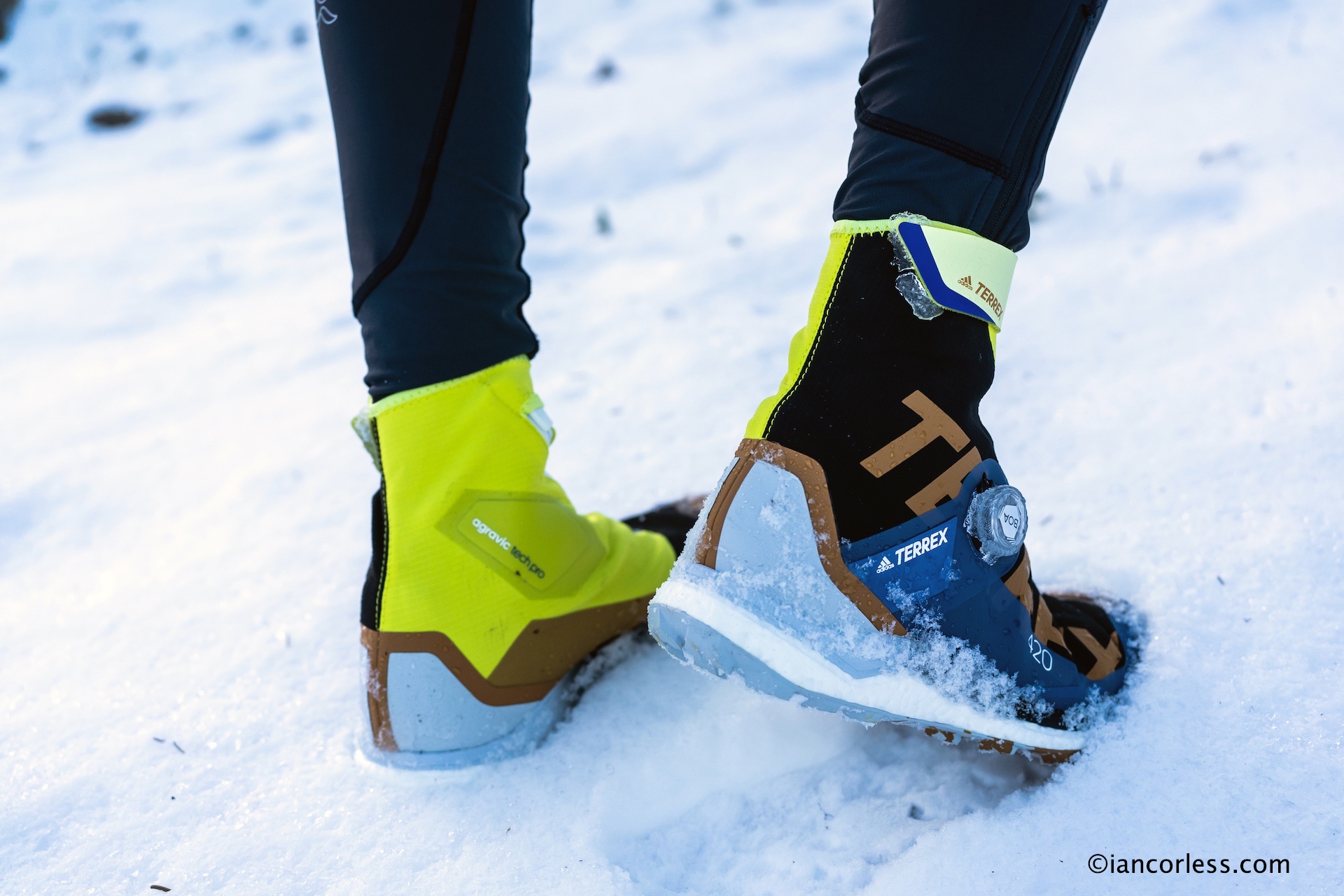
Currently I have used a micro crampon which provides the grip I need BUT the running experience is nowhere near as good as an outsole with studs. With a studded outsole you have the best of both worlds, the outsole grip and the stud. With a crampon, you have just the metal spikes which can provide a much harsher run.
IN USE
You need to invest a little more time putting this shoe on. Make sure you slide your foot in to the inner shoe correctly, adjust your socks and make sure the heal feels correct. On a sizing note, I use an EU44 and I would say these are arguably a little larger. This is a good thing! I have used these with Merino liner socks and Sealskinz over sock and the sizing has been great. So, keep this in mind.
Once the foot is inside and comfortable, zip up the outer. It has sock-like fit. This can be a little challenging to start but once closed, it already provides a snug fit. One thing to note, I wouldn’t want to be trying to zip up the shoe, outdoors in -10.
There is a velcro adjust collar which you tighten, this helps stop or reduce anything going in via the top of the boot. Now adjust the BOA. You do this by pushing in the dial and then rotating. The more you rotate, the tighter the hold. It hold really well and importantly this can be adjusted ‘on-the-go’ with just a quick turn. No messing with laces, just turn. A really important feature for cold conditions when hands are not functioning as normal.
On paper, the adidas Terrex Agravic Tech Pro is a heavy run shoe BUT it feels and acts much lighter. It’s a pleasure to wear. It is agile, has bounce, feels extremely protected, is snug and warm. You really feel as though you have bullet proof protection.
The toe box has width and plenty of comfort. On a scale of 1-5 (5 being wide), I would say they are a 3/4.
One note on BOA, I always feel as though I need to over tighten to get a score feel. It’s no different here in the adidas Terrex Agravic Tech Pro BUT I advise getting tension ‘close’ to how you want it and then run for say 10-minutes or so. Then stop and adjust. Why? Quite simply, in winter and cold conditions, you don’t want to over restrict blood flow. Feet and hands get neglected to keep the core warm in winter, no need to add to the problem with over tightened shoes. BOA is great for this as you just turn to tighten, takes less than 1-second.
While water resistant, they are not waterproof and therefore over prolonged use, partially if you submerge in water, you will get some seepage.
Warmth is good especially with merino socks. This is an active shoe and therefore is designed for the user to be moving at pace, either walking, running or climbing and therefore generating blood flow and warmth. Standing around in snow doing nothing, the adidas Terrex Agravic Tech Pro eventually allows the feet to feel chilly; any shoe/ boot would!
The midsole is firm and cushioned but not plush. As you would imagine, this shoe is trying to balance comfort and protection and it does it extremely well. They are stable and predictable and he Boost works exceptionally well, even in extreme cold with the EVA frame adding extra security. It’s not a fast and light shoe, to be honest I never expected that. The adidas Terrex Agravic Tech Pro is all bout durability, protection and comfort in harsh conditions and it excels at this. The alternative would be a boot which would not have any of the unique characteristics of this shoe, especially for a runner.
Outsole is Continental and having used countless adidas shoes, I know is tried and tested. The 4mm lugs sit in that perfect middle ground providing traction on trail and work well on road if required. I did wonder if the outsole lugs should be more pronounced, say 6mm? This would certainly help in snow. I have already mentioned the omission of winter spikes which for me is a disappointment BUT I fully appreciate that I may have specific and selfish needs.
I have tried the shoe with Snowline Chaisen Trail (as photo) and also Camp Ice Master which is a more substantial crampon, ideal for glacier and steeper travel. Please note, all micro crampon/ boot combinations have limitations, the adidas Terrex Agravic Tech Pro is NOT a mountaineering boot.
CONCLUSION
If you have rough winter weather, be that wet, cold and muddy or snow, ice and freezing temperatures, the adidas Terrex Agravic Tech Pro is a great addition to your run shoe collection. Only you can decide if the cost (£220) is worth it. For me, they are most definitely worth it and if they had studs, I would use them for every winter run.
The combination of a proper run shoe inside a protective gaiter is not new, but adidas have done a great job in making this a durable, warm and protected package. The BOA adds to the USP as it allows for constant adjustment ‘on-the-go’ with no need to remove gloves.
Versatility is a key feature. You can use them for winter hikes, running, add a micro crampon and you can handle ice and due to the build of the shoe, they will take snow shoes too. This is a great alpine shoe and here in Norway, it’s almost THE perfect shoe. You can mix hard and rock terrain, transition to snow and then add a cramp on to cross ice on with excellent comfort and security.
The comfort, secure hold and cushioning is all excellent and they feel considerably more lively and agile than the weight would suggest.
There is little not to like in the adidas Terrex Agravic Tech Pro. Weight will always be an issue BUT this is not a normal run shoe and there has to be a penalty for all the added comfort and protection. When you take that in to account, this is not a heavy shoe, especially when you consider the options. It certainly runs considerably lighter than you would expect.
La Sportiva Blizzard GTX – This boot has AT Grip Fixed Spikes
Please support this website. I believe everyone deserves to read quality, independent and factual articles – that’s why this website is open to all. Free press has never been so vital. I hope I can keep providing independent articles with your help. Any contribution, however big or small, is so valuable to help finance regular content. Please support me on Patreon HERE.
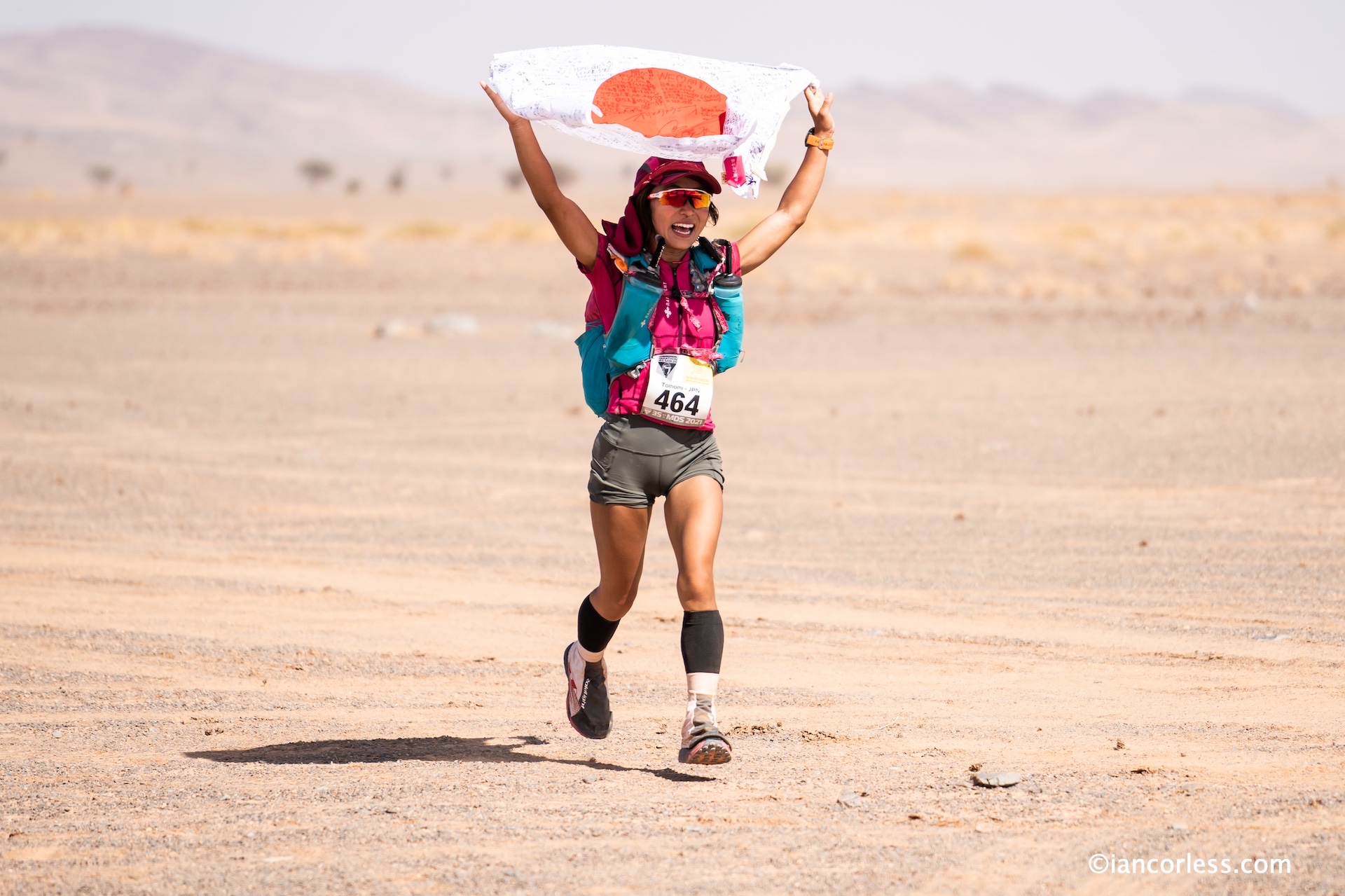
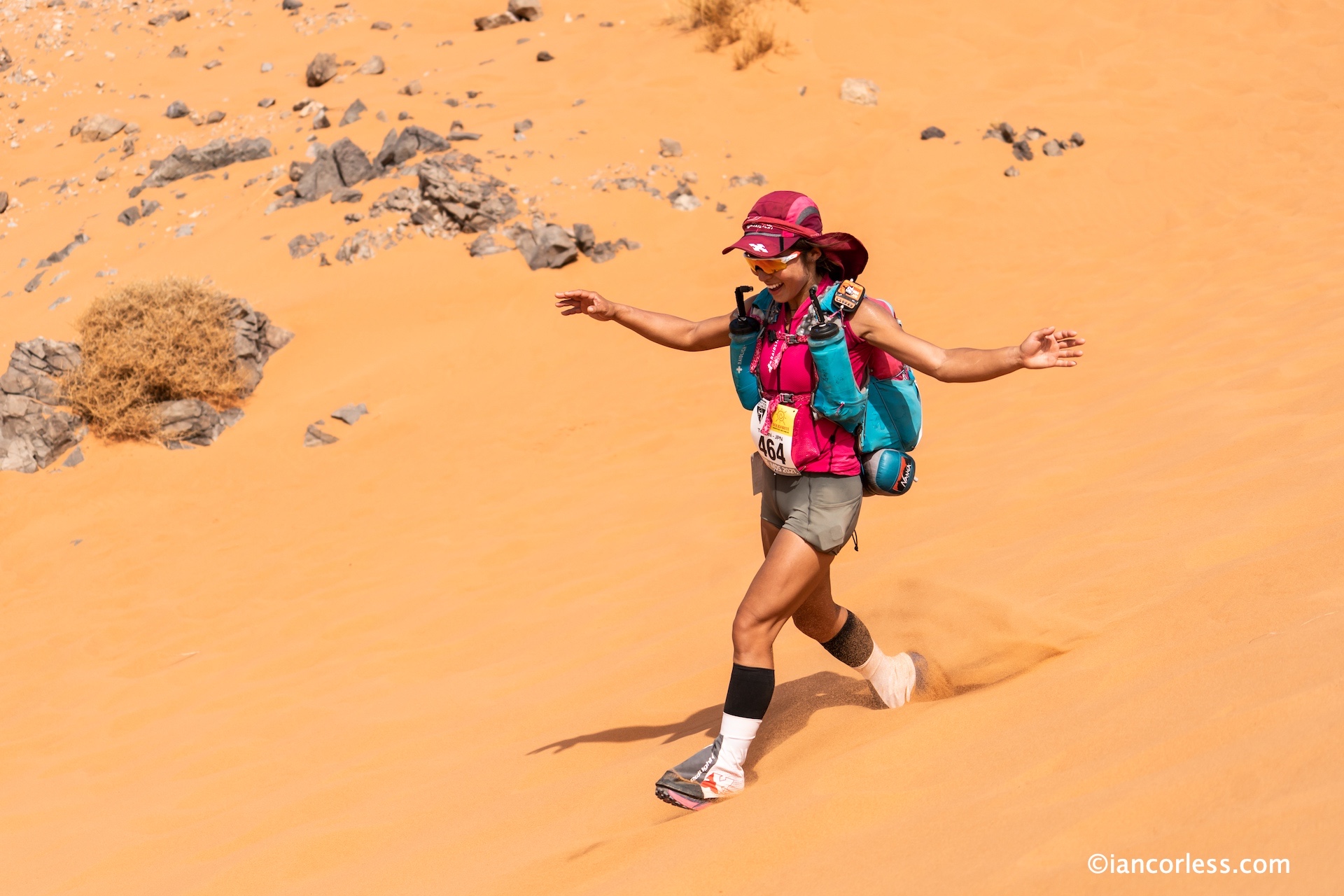
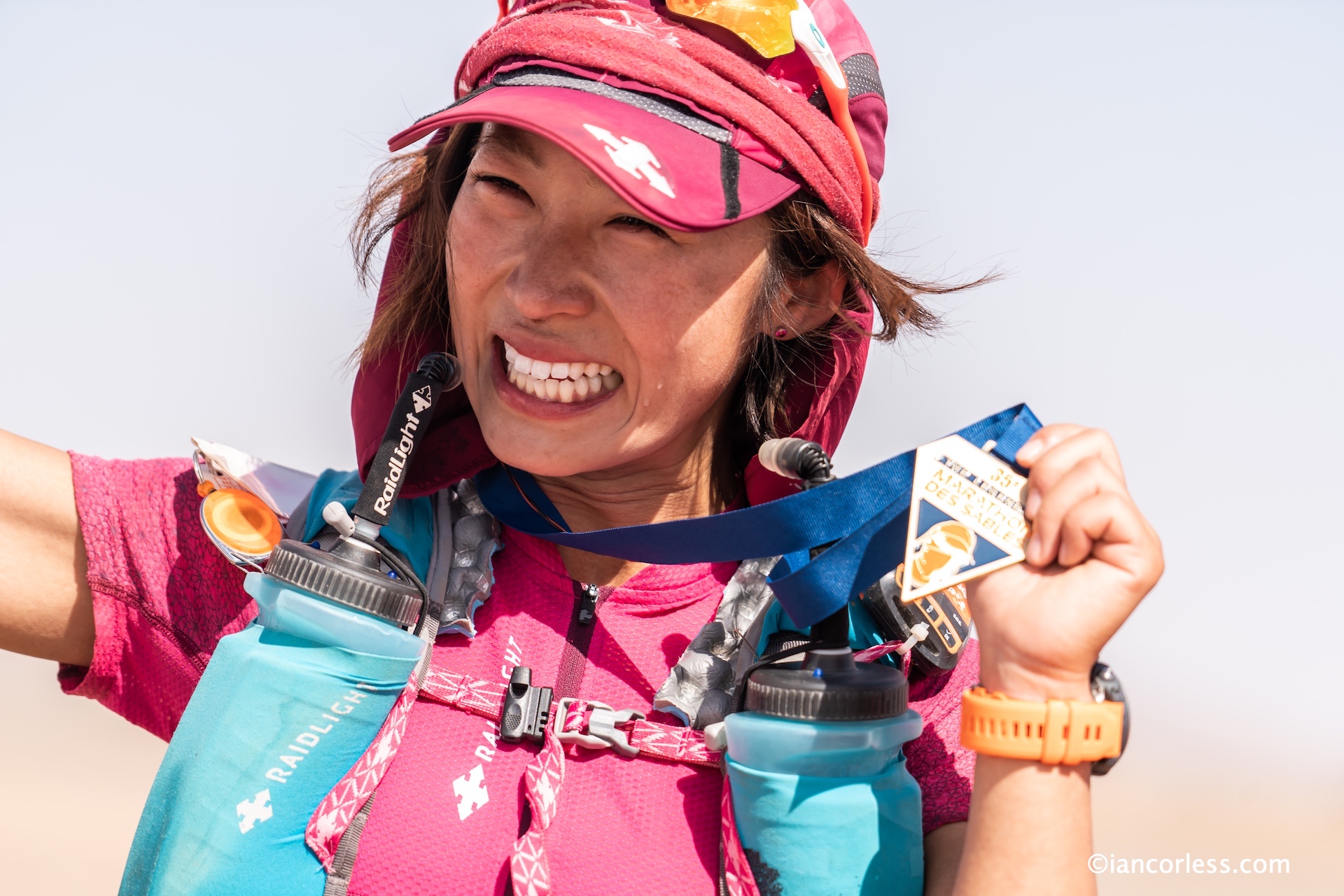
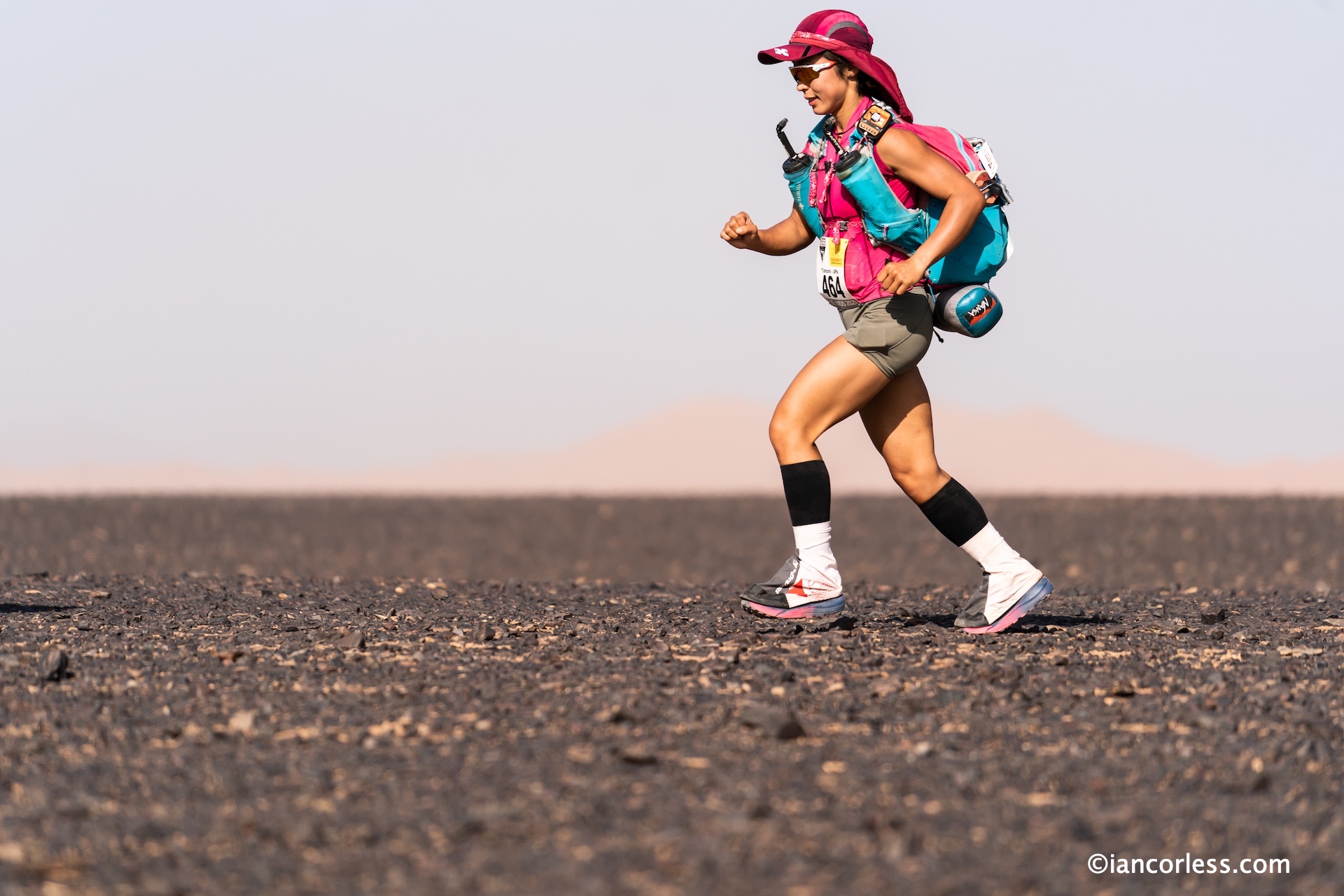
A second-place finish at the 35th Marathon des Sables in October 2021 has set Japans Tomomi Bitoh up for The Coastal Challenge that will take place in Costa Rica, February 2022.
A relatively unknown when standing on the start line of MDS in Morocco, it soon became apparent that Tomomi was ‘one-to-watch’ as the race unfolded. Her relentless smile, positive attitude shone through resulting not only in a victory of the final stage marathon distance but 2nd overall.
Tomomi is new to the sport, in 2018 she became a freelance professional trainer and in April that year ran her first marathon, she now has a PB 2:59:32. Winner of the Fuji Five Lakes Ultra Marathon and the Fuji Goko Ultra Marathon 118km, Tomomi also races at a competitive level in Spartan events. Spartan will provide Tomomi a great level of skill sets that she will be able to utilize at TCC, especially with the mixed and challenging terrain.
Marathon des Sables was a breakthrough performance and the multi-day format of TCC in Costa Rica will bring a new challenge.
The Race
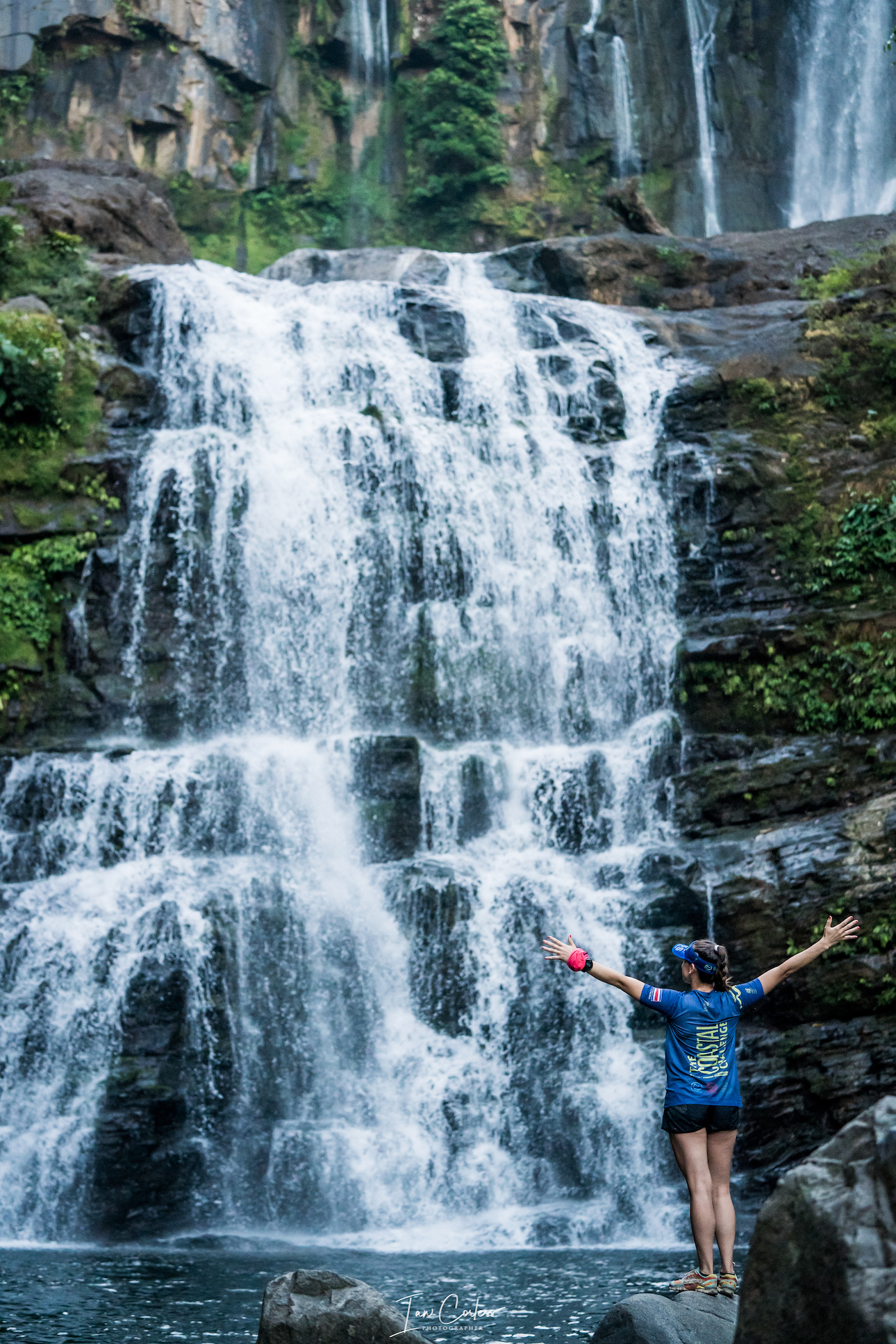
Hugging the coastline of the tropical Pacific, The Coastal Challenge is the ultimate multi-day experience that weaves in and out of the Talamancas, a coastal mountain range in the Southwest corner of Central America. The terrain is ever-changing from wide, dusty and runnable fire trails to dense and muddy mountain trails. Runners will cross rivers, boulders, pass under waterfalls, survive long relentless beaches and finally finish in the incredible Corcovado National Park, a Unesco World Heritage site with a stunning final loop around Drake Bay.
With two races available, an Expedition Run of 230km and an Adventure Run of 155km – TCC is a race not to be missed!
230km and 10.000m+
Join the race in 2022, February 5th to 12th, registration HERE
Please note, TCC requires full vaccination and documented proof will be required.
Please support this website. I believe everyone deserves to read quality, independent and factual articles – that’s why this website is open to all. Free press has never been so vital. I hope I can keep providing independent articles with your help. Any contribution, however big or small, is so valuable to help finance regular content. Please support me on Patreon HERE.
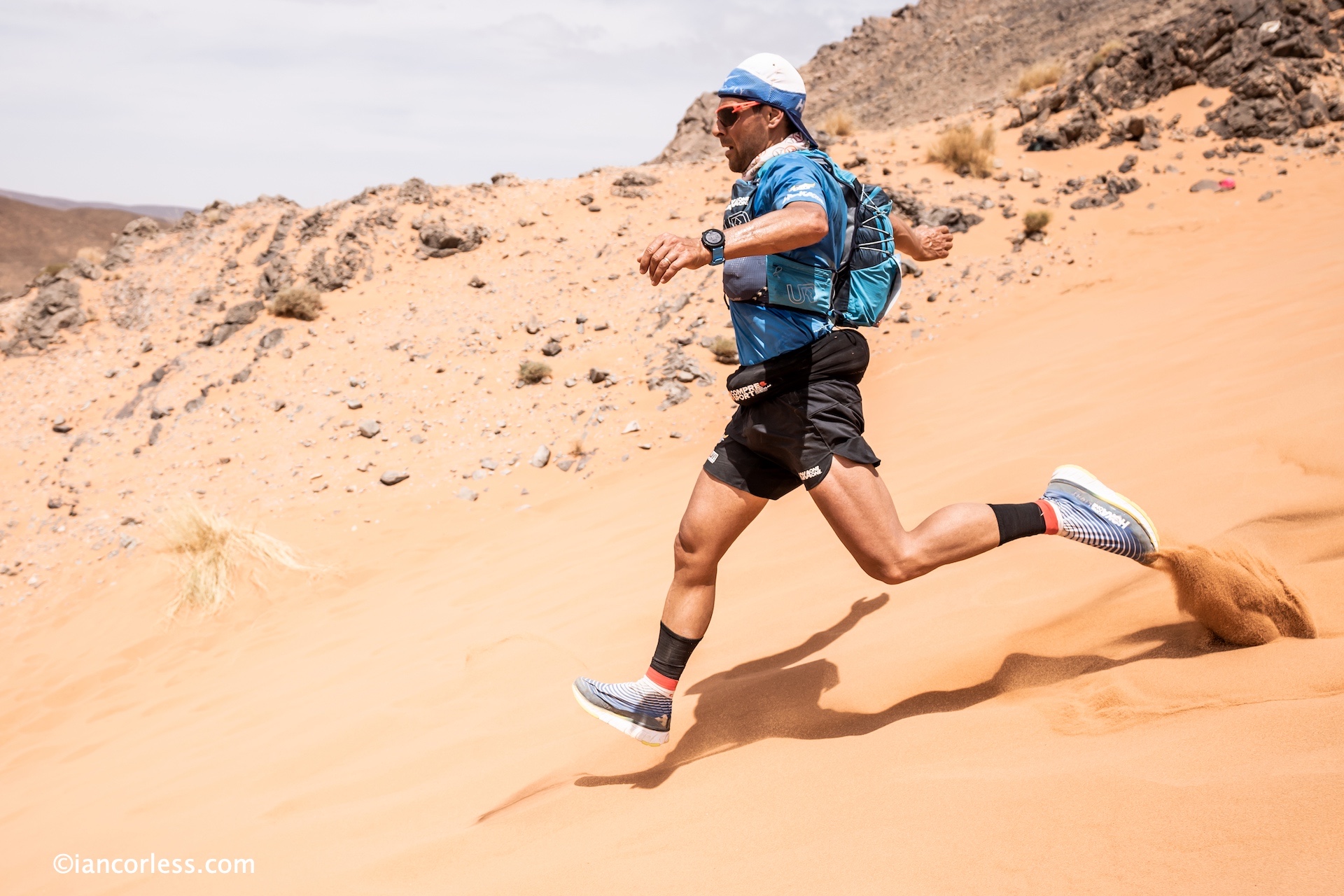
Former cyclist and triathlete, now inspirational trail runner, Julien Chorier will join the line-up of the 2022 The Coastal Challenge in Costa Rica.
It’s been a long-term project for Julien to join the TCC party, originally planned for 2020 then 2021, now Julien can make the dream a reality in ’22.’
With well over 10-years in the sport, there are few races that Julien has not participated in. Importantly, he has also won many… Way back in 2007 the Frenchman won CCC, in 2008 he was 3rd at UTMB, in 2009 he won the iconic Raid de la Reunion.
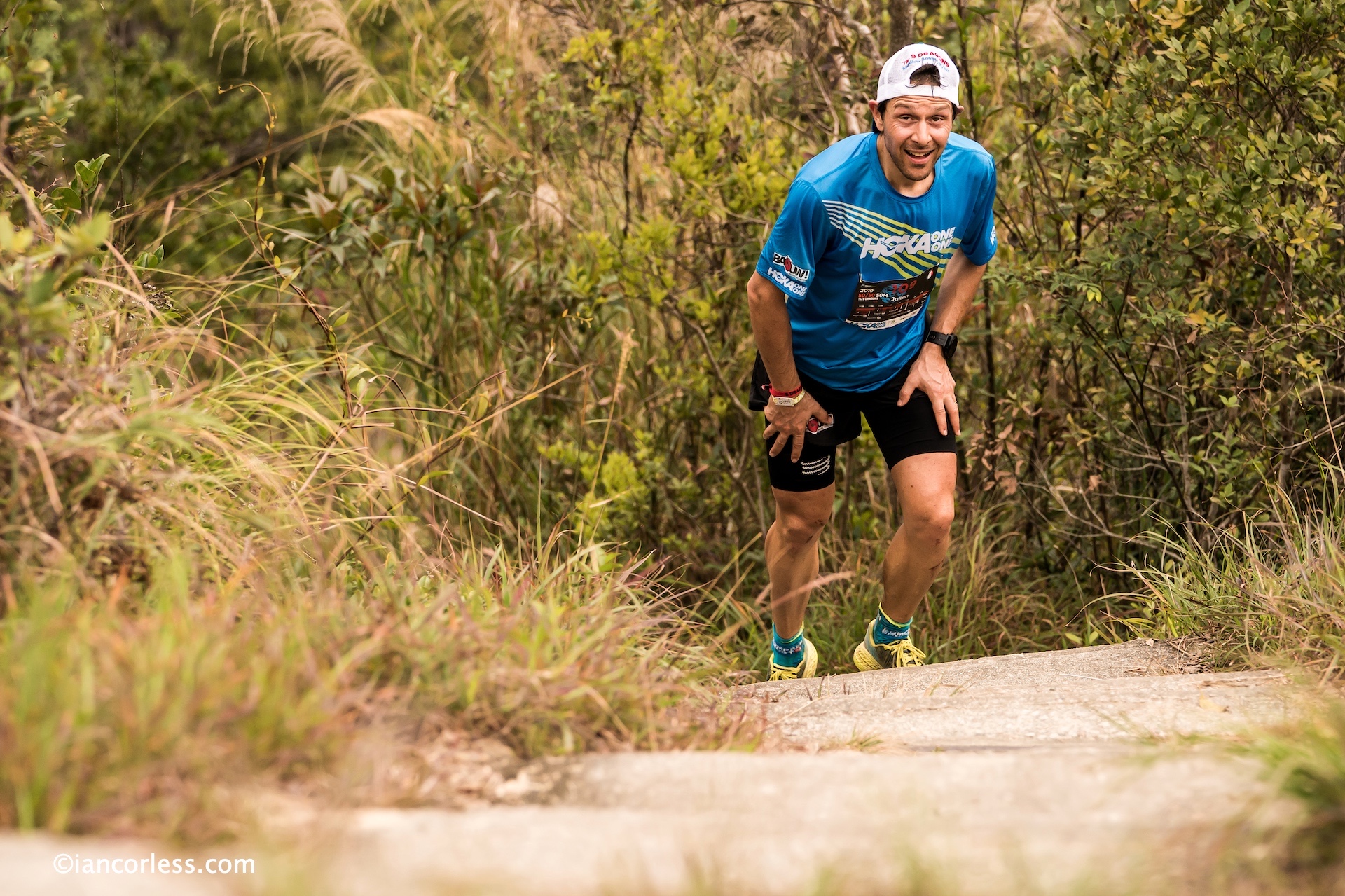
9 Dragons, Hong Kong
What followed is a list of palmáres that are too long to list, key highlights being: 1st Andorra Ultra Trail 2010, 1st Hardrock 100 and Raid de la Reunion 2011, 1st UTMF 2012, 1st Andorra Ultra Trail 2013, 1st MIUT 2014, 1st EcoTrail Funchal 2016 and in and amongst all these victories are countless podium and top-10 places. Importantly, Julien has multi-day experience both at the iconic Marathon des Sables and MDS Peru.
Julien is an ambassador for the sport. Since 2014, he has been running and working for the HOKA brand, as team captain of the team trail. In addition to this, he has a ‘Middle Mountain Guide’ diploma and organizes and supervises trail courses, as he says, “It is a way to transmit my passion and my experience of ultra.”
The Coastal Challenge is excited to have Julien toe the line in Quepos come February 2022. One thing is for sure, Julien will bring a wealth of experience to the start line and doubt, in camp every night, he will pass that experience on to each and every participant.
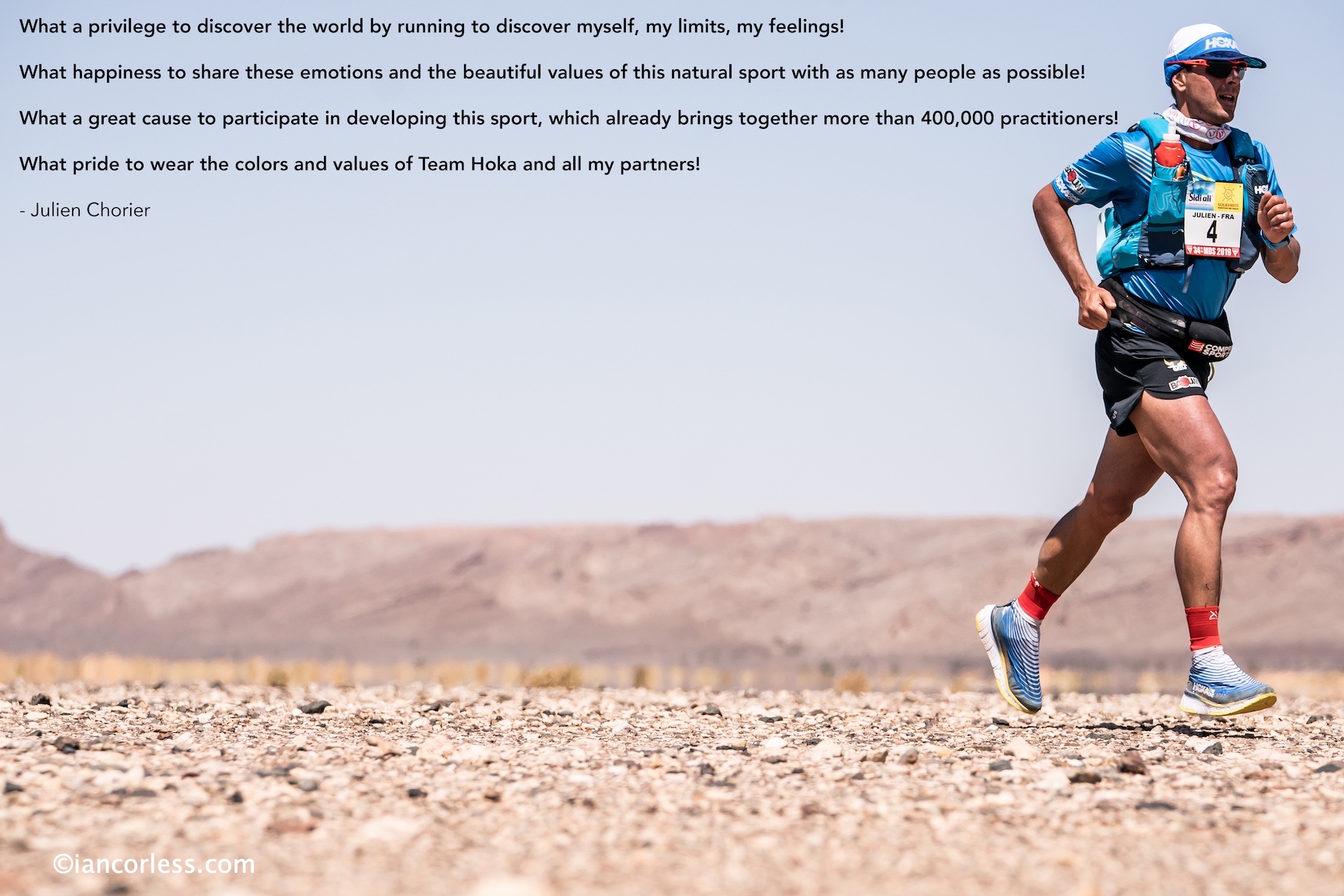
“What a privilege to discover the world by running to discover myself, my limits and my feelings!”
– Julien Chorier
The Coastal Challenge
Irrespective of pace or effort, the Costa Rican coastline never stops providing inspiration. This is so much more than a race, It is a journey, a running holiday and a voyage of discovery. Friendships made in the rainforests, on the beaches and in the camps are ones to last a lifetime – the race is one of survival, perseverance and enjoyment in equal measure.
“This has been an incredible journey. It’s a stunning and magnificent part of the world and the course, terrain, views and the racing has been world-class. I have been blown away by everything – the final stage was just stunning and it managed to compress the whole TCC experience in just 22km. I will be back to TCC and Costa Rica one day, guaranteed!”
– Tom Owens, 2017 Champion
Hugging the coastline of the tropical Pacific, TCC is the ultimate supported multi-day experience that weaves in and out of the Talamancas; a coastal mountain range in the Southwest corner of this Central American country. Runners will cross rivers, boulder, swim through rivers, pass under waterfalls, survive long relentless beaches and finally finish in the incredible Corcovado National Park, a Unesco World Heritage site. The terrain is ever-changing from wide, dusty and runnable fire trails to dense and muddy mountain trails.
With two races available, an Expedition Run of 230km and an Adventure Run of 155km – TCC is a race not to be missed!
230km and 10.000m+
Join the race in 2022, February 5th to 12th, registration HERE
Please note, TCC requires full vaccination and documented proof will be required.
Please support this website. I believe everyone deserves to read quality, independent and factual articles – that’s why this website is open to all. Free press has never been so vital. I hope I can keep providing independent articles with your help. Any contribution, however big or small, is so valuable to help finance regular content. Please support me on Patreon HERE.
Following on from the recent announcement that Hayden Hawks and Beth Pascall will join the 2022 The Coastal Challenge, today we announce the participation of Italian duo, Franco Collé and Giuditta Turini.
Short term inconvenience and the sun will shine again.
Franco, a three-time champion (2014, 2018 and 2021) and course record holder legend of the gruelling Tor de Géants330km endurance trail will test himself running along the stunning coastline of Costa Rica, starting in Quepos and concluding in the stunning Drake Bay. He will be joined by Giuditta Turini, a ski mountaineering star and recently also in trail running. In 2021, Giudy has won Orobie Skyward and Etna Trail and had two significant 2nd places at TDS and 90km du Mont-Blanc.
Franco in Sardinia
No doubt, The Coastal Challenge and Costa Rica’s heat and humidity will bring an early season challenge for the duo.
Franco has a stunning set of career highlights (for trail running) starting in 2012 with two victories at Gran Trail Valdigne and Cervino X-Trail but it was here that his love affair with Tor des Géants started with a 5th place. In 2013 at ‘Tor,’ he placed 3rd and wonGran Trail Jensen, Gran Paradiso Trail, Cervino X-Trail and Gran Trail Courmayer. 2014 was a key year bringing his first ‘Tor’ win in 71h 49m. What followed is a stunning CV of mountain, trail and Skyrunning results with top-raking places at Transvulcania, Ultra SkyMarathon Madeira, High Trail Vanoise and more, culminating recently with a ‘Tor’ course record of 66h 43m.
Giuditta leading her team, Monte Rosa SkyMarathon
Giuditta, known for her ski mountaineering was a late starter in the trail world with significant results starting in 2017. In 2019, she hit a purple patch with 4 victories winning DoloMyths Run Sellaronda Trail, Valmalenco Ultradistance Trail, Adamello Trail and Ultratrack Supramonte Seaside. In 2020 she won SwissPeaks 170 and then has had a stunning 2021 season.
Giuditta Ultratrack Supramonte, Sardinia
In addition, both Franco and Giuditta have used their ski and running abilities to excel at the Monte Rosa Skymarathon, a very unique race by the International Skyrunning Federation.
Considered one of the top trail running races in the world, TCC is much more than that. A supported multi-stage trail running race, every runner will test their mental and physical strength. Participants will traverse jungle and rainforest trails, run mountain trail and single track across ridge lines, pass though highlands and coastal ranges; there’ll be beaches, rocky outcroppings and reefs, river and estuary crossings, and miles of river to wade through. Concluding in Corcovado National Park, Drake Bay is one of the premier rainforest experiences in the world as well as a Unesco World Heritage site.
With two races available, an Expedition Run of 230km and an Adventure Run of 155km – TCC is a race not to be missed!
230km and 10.000m+
Join the race in 2022, February 5th to 12th, registration HERE
Please note, TCC requires full vaccination and documented proof will be required.
Please support this website. I believe everyone deserves to read quality, independent and factual articles – that’s why this website is open to all. Free press has never been so vital. I hope I can keep providing independent articles with your help. Any contribution, however big or small, is so valuable to help finance regular content. Please support me on Patreon HERE.
Episode 219 of Talk Ultra is co-hosted by two times MDS champion, Elisabet Barnes. We discuss the 35th 2021 race with expert discussion on heat from Dr Jodie Moss. We also have eight interviews with 2021 participants: Emma Burton, Gower Tan, John Murray, Kim Hutt, Mags McHardy, Martina Taylor, Paul Been and Pierre Meslet.
Talk Ultra needs your help! We have set up a Patreon page, this is the easiest way to support Talk Ultra and help us continue to create! Many thanks to our Patrons who have helped via PATREON Donate HERE
Episode 219 is a Marathon des Sables special. After three postponements, the first in April 2020, a second cancellation late 2020 and then a 3rd cancellation in April 2021 finally saw the race take place in October 2021. October was selected due to climatic conditions typically being very similar to those of April. Little did we know that October would see freakish high temperatures that would impact on the race.
Stats show that 353 completed the event, Rachid El Morabity running the whole event in 21-hours, 17-minutes, and 32-seconds. Christine Taieb was 353rd in 72-hours, 41-minutes, 31-seconds.
From the 353 finishers, 91 were from the UK, Patrick Kennedy the fastest in 25:16:14 and placing in the top-10 with Martina Taylor the 91st in 44:06:16.
Below daily race summaries which were published from the Sahara during the 2021 race.
Importantly, go to iTunes and subscribe so that you automatically get our show when it’s released we are also available on Stitcher for iOS, Android and Web Player and now Tunein. We are also on Spotify too.
Our web page at www.iancorless.com has all our links and back catalogue.
The Coastal Challenge, is pleased to announce the first two elite athletes to join the line-up of the 2022 race that will take plane in February – Hayden Hawks and Beth Pascall.
Due to the global pandemic, the 2021 edition of the TCC took place but unfortunately, due to travel complications, was very much a local event. Now with restrictions easing throughout the world, the race will return to its original format welcoming competitors from all over the world. Hayden Hawks, a previous participant at the TCC will headline the line-up along with the 2021 Western States Endurance Run champion, Beth Pascall.
Hayden TCC 2018
Hayden burst on the ultra-running scene in 2016 when he battled with Zach Miller at TNF50 where he placed 2nd. He won the CCC in 2017 and in addition he has won Lavaredo 120km, Chuckanut 50km, Black Canyon 100km, Squaw Peak 50m, JFK50, Red Mountain 55km and recently Zion Ultra. At The Coastal Challenge 2018, Hayden ran a stunning head-to-head battle with the UK’s Tom Evans which produced a course record time for the Brit. Hayden returns in 2022 looking to top the podium and preparation for the 2022 Western States after placing 11th in 2020.
Beth at Transgrancanaria
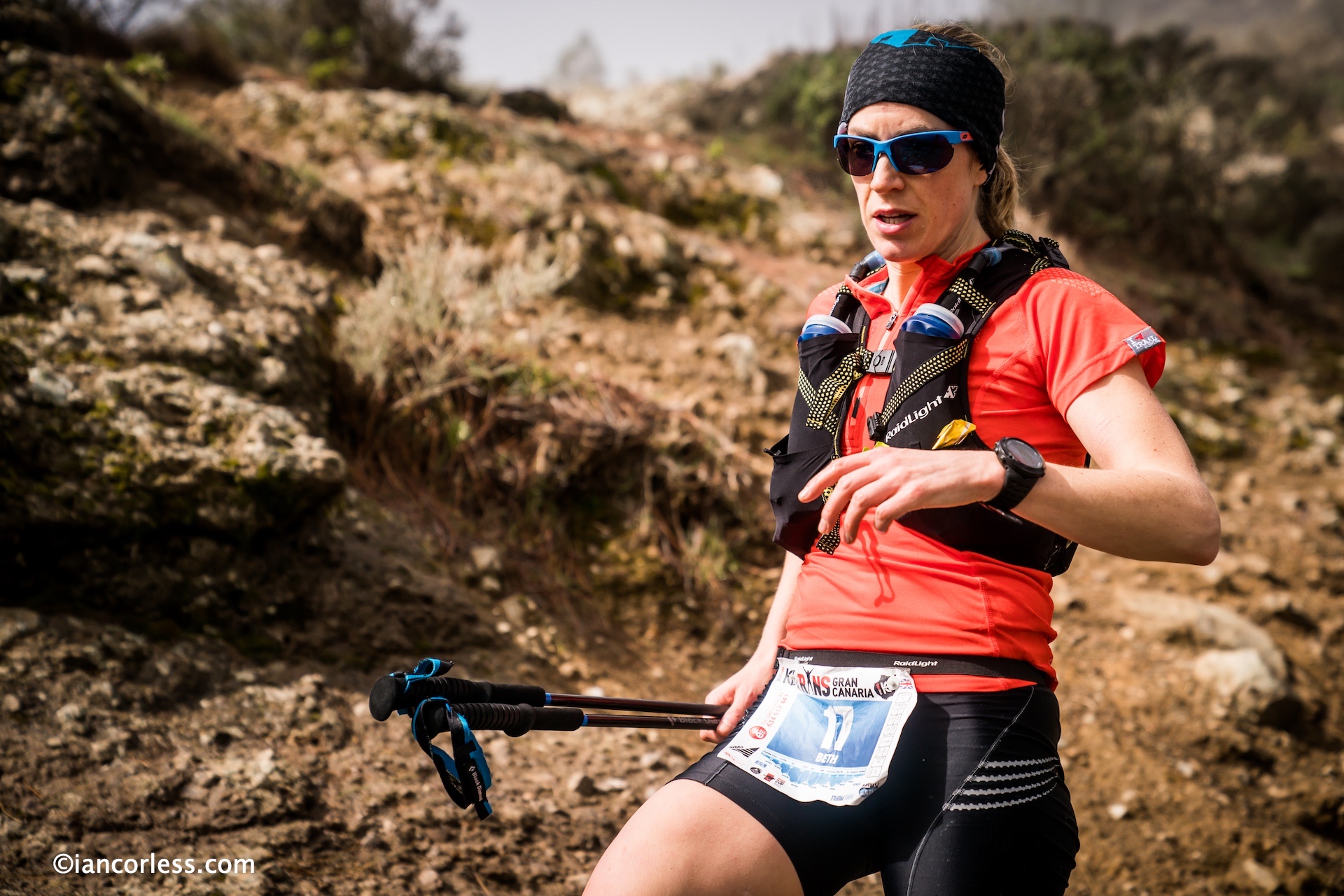
Beth first came to my attention in 2016 when photographing the UK’s Lakeland 100, her victory in 21:29 placing her 4th overall. From that moment on, Beth has impressed, always challenging herself on a world stage and progressing through the ranks, be that in multi-day races such as The Dragons Back or fighting the 100-mile distance at UTMB. Highlights have come with 1st at the Highland Fling (UK Championship), 2nd at MIUT, 6th Raid de la Reunion, 4th and 5th UTMB and a string of FKT’s. Recently, a stunning Bob Graham Round course record time of 14:34 in 2020 provided a hint of the athletic talent and speed that Beth possesses and this was confirmed with victory at Canyons 100km in 2021. This set the platform for the 2021 Western States where Beth ran the race of her life to take victory. Now, she returns to the multi-day format and the heat and humidity of Costa Rica for the 2022 The Coastal Challenge.
Hugging the coastline of the tropical Pacific, TCC is the ultimate supported multi-day experience that weaves in and out of the Talamancas, a coastal mountain range in the Southwest corner of this Central American country.The terrain is ever-changing from wide, dusty and runnable fire trails to dense and muddy mountain trails. Runners will cross rivers, boulder, swim through rivers, pass under waterfalls, survive long relentless beaches and finally finish in the incredible Corcovado National Park, a UNESCO World Heritage site with a stunning final loop around Drake Bay before departing for their journeys home via speedboat.
230km and 10.000m+
Join the race in 2022, February 5th to 12th, registration HERE
Please note, TCC requires full vaccination and documented proof will be required.
Please support this website. I believe everyone deserves to read quality, independent and factual articles – that’s why this website is open to all. Free press has never been so vital. I hope I can keep providing independent articles with your help. Any contribution, however big or small, is so valuable to help finance regular content. Please support me on Patreon HERE.
Carbon shoes are a thing… There is no shortage of new shoes boasting a variation of a carbon plate that is designed to provide additional speed for in principal, less effort.
There are many arguments for and against and a plethora of recent world records confirms the current ‘new’ shoe design is bringing a performance enhancement.
I personally feel that any brand tries to make the new version of any product, better than the last. It’s called progression. We only need to look at the shoe that Roger Bannister used to break the 4-minute mile… Current milers are using very different shoes and running on very different surfaces to the cinder track of Bannister’s era.
But of course, a limit has to come (eventually) and gladly, I don’t have any say what or when that limit is. I do believe though; we are not there yet with the current carbon shoes.
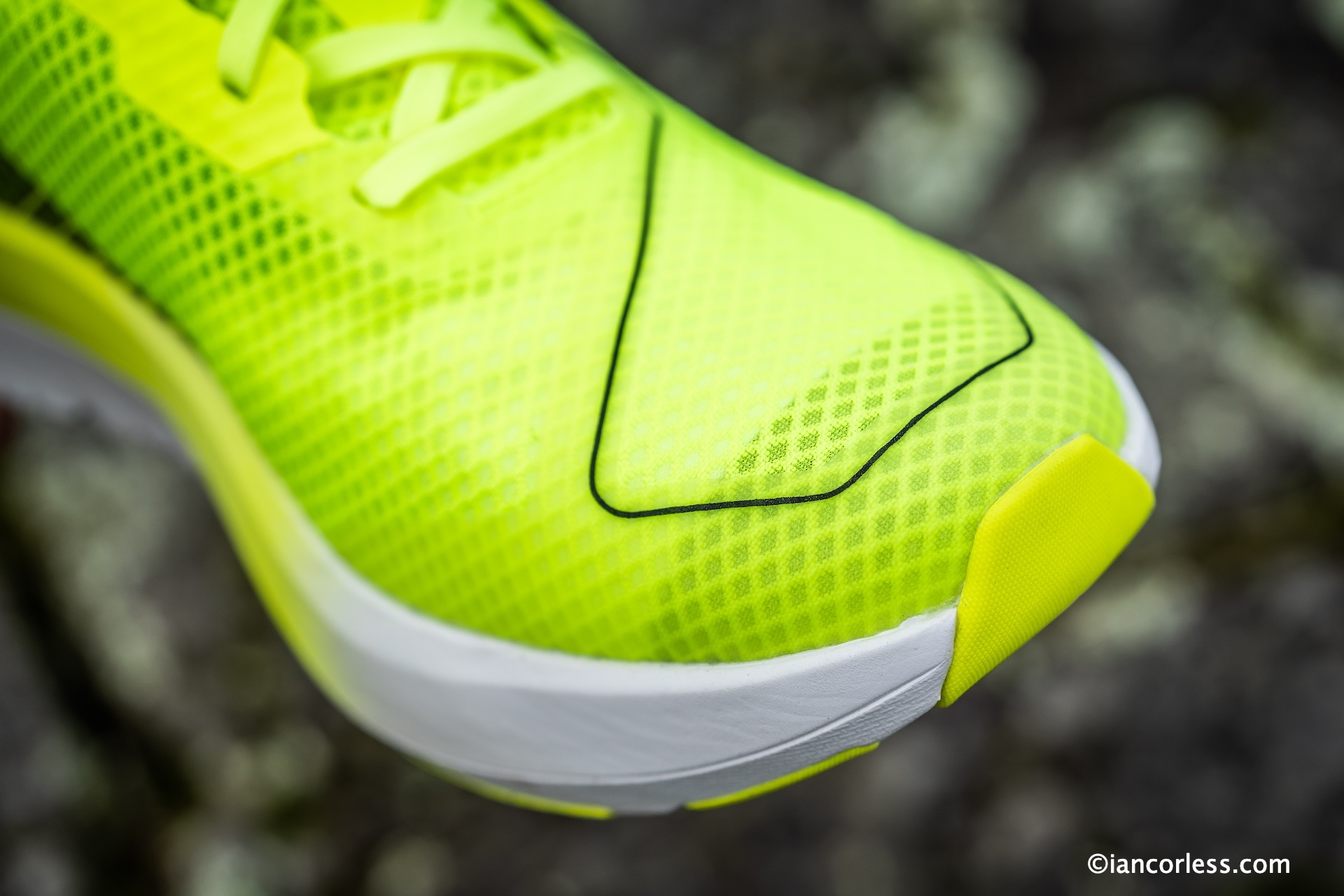
Scott have been making shoes for many years and this current incarnation has been a revelation. It’s a great looking shoe. The yellow is bold! It maybe looks heavy but it’s not, it is a super-light shoe that screams speed. The cushioning is substantial and Hoka One One like – This is a standard feature of carbon enhanced shoes across all brands.
Notably, the Scott has a very noticeable rocker that makes you want to lean and propel forward. This is even noticeable when standing still, you can almost feel off balance.
The upper is light, breathable and the lacing reassured providing an excellent hold of the foot.
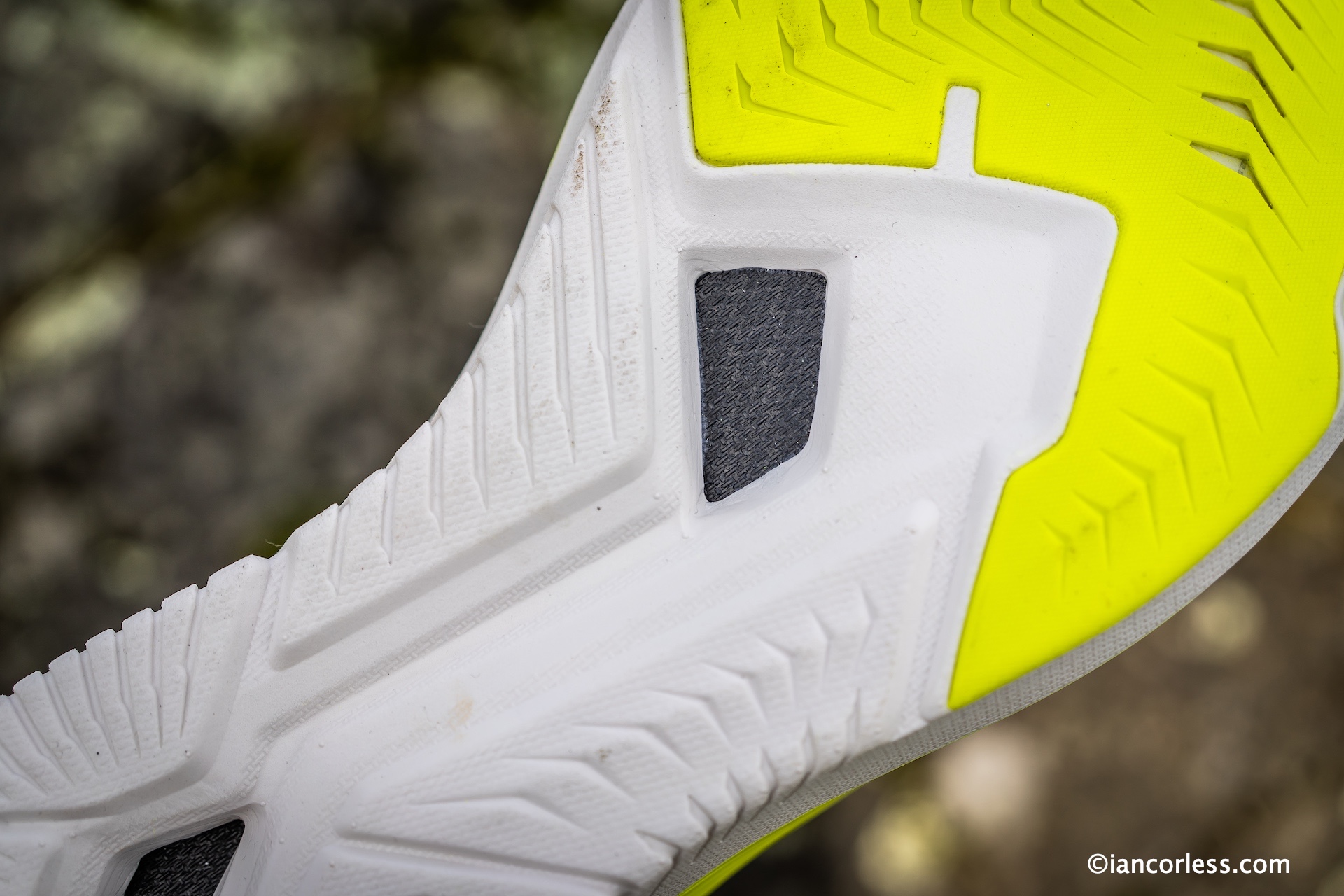
The outsole is designed for speed and provides grip when needed, but not so much grip that it slows the user down.
IN USE
I am not experienced in carbon shoes and in all honesty, I am probably beyond my best running days when a carbon shoe could make a difference. But, it’s easy to compare recent road runs over fixed distances when I have timed and monitored effort.
i decided that my first run would be a half marathon. I have a run that rolls along with hills, descents and some long and flat sections.
Lacing the shoes up I initially found that my foot was not as secure as I preferred, so I lock laced and tied them tight… Post-run I realised I had tied them too tight as it had caused some inflammation.
The opening km’s felt a little weird. The cushioning and stack height was extremely noticeable but not unpleasant. The rocker was VERY noticeable and without doubt it makes you want to roll forward and increase speed and cadence. The Scott makes you want to run fast and funnily enough, post-run, I felt the shoe made me want to run faster than I had the fitness for.
With 5km covered I was getting in to a rhythm and cadence. Noticeably, to reap any benefit from the shoe, you need to strike the ground hard. This enables the carbon to do its job and propel you forward. This shoe does not give you anything for free, you need to invest effort to reap the rewards.
I purposely did not look at my watch during that first run. I wanted to run on feel and go on perception. I felt good, the shoe felt as though it was giving me something I hadn’t experienced before. But there was a fatigue in the legs different to my normal runs. I put this down to the carbon and the need to strike the ground harder to gain extra propulsion. As my run came to a close, I was feeling worked but also quick. I was convinced I had run quicker than previous runs, in different shoes on the same route. With 21.1km covered I stopped my watch… I was 33 sec slower than my fastest time on the route! I was surprised, I was convinced I had gone quicker but the margin of plus and minus was minimal and of course well within parameters of testing.
Thinking about the run above, I gave it 12-hours before accessing. The Scott is a fast shoe and without doubt is a shoe that would result in faster times and PB’s. But they are not magic! They require adaptation, they require investment and I would say that they do require some change in run style.
They are not shoes for training runs, they are ideal for speed sessions, intervals, timed sessions and of course races. But before you toe the line for a key or important race, you need to have made adaptation and learned both physically and mentally how to get the best out of the shoe.
POST INITIAL RUN
The Scott have joined me on many a run but only when I have wanted to run faster. I find running slower difficult in them; the rocker is so prominent that it constantly wants you to roll forward, increase cadence and push the pace. Also the carbon, irrespective of all the cushioning, does give a harder ride at slower speeds. But, increase the speed and the carbon flexes with impact and propels you forward. This is when the Scott comes to life and like I said previously, if you have the fitness, the Scott will keep tempting you to run faster, and faster.
As I accumulate miles and adapt to the shoe, I will eventually go back to my 21.1km route and see if I can give the Scott’s the speed they deserve. I may even toe the start of a road race, but don’t count on it… Ultimately though, over the years, running for me has been less about looking at minutes per mile and considerably more about the journey and the adventure.
The Scott is all about speed, about getting the most from a run when it counts. So, if that is for you, I firmly believe that the Scott will provide you with what you are looking for. But don’t expect something for nothing, you need to invest in this shoe to make the most out of it!
Please support this website. I believe everyone deserves to read quality, independent and factual articles – that’s why this website is open to all. Free press has never been so vital. I hope I can keep providing independent articles with your help. Any contribution, however big or small, is so valuable to help finance regular content. Please support me on Patreon HERE.

































 IAN CORLESS