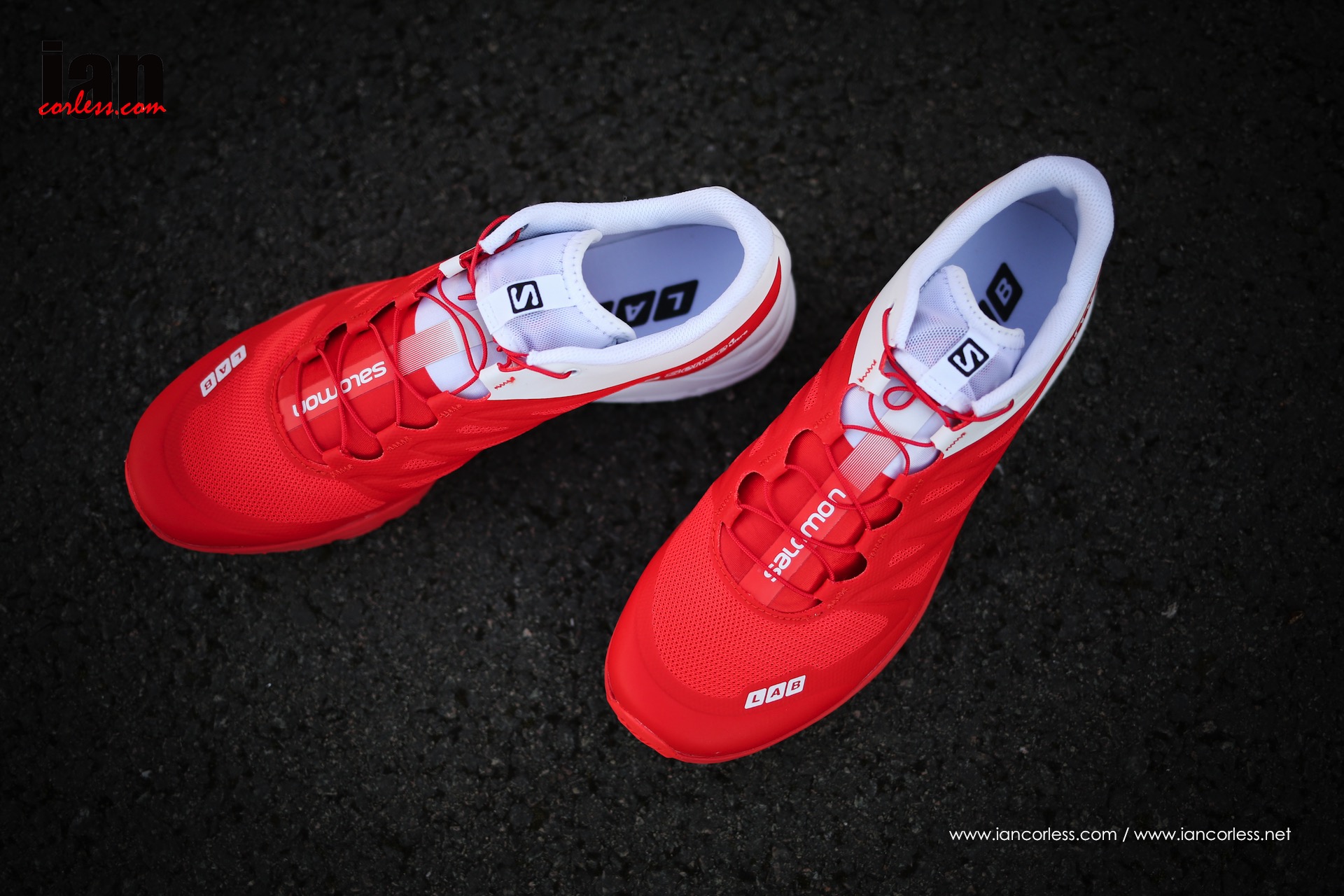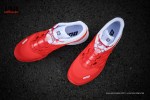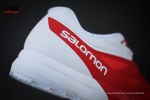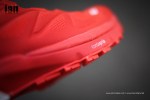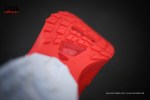
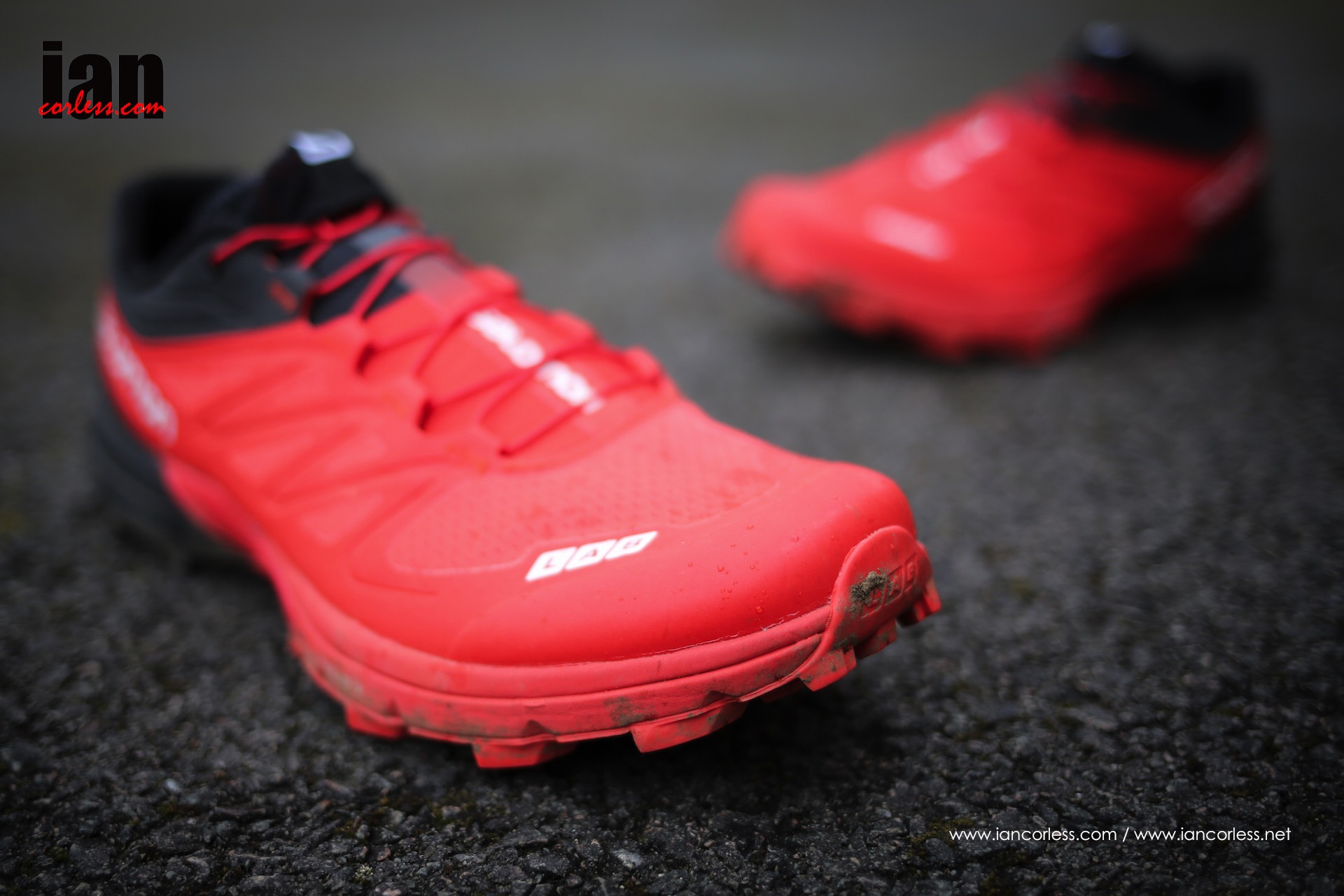
Salomon S-Lab Sense 4 Ultra SG (Soft Ground) – Review

©iancorless.com_Sense4SG-9063

C’mon, GET A GRIP!

Oooooh grip! I love grip…. before you read anymore, I strongly suggest that you read my very recent review of the new Salomon S-Lab Sense 4 Ultra HERE

I loved the Sense 4 Ultra but I did say that due to the precision fit, 4mm drop and relatively tight toe box, it would not be a shoe for everyone! I suppose the same should apply here… it does BUT I do think that other factors come into play for the ‘SG’ version.

First and foremost, when running off road and when running in muddy, sloppy or technical terrain you most definitely need a shoe that is going to hold your foot, allow little or preferably no movement and of course be precise. That is the Sense 4 Ultra SG. So you see, although normally I wouldn’t say squeezing your foot into a shoe is a good idea, with a SG version it is acceptable based on two key principles:

  1. The shoe is not ‘too’ tight and in anyway causes discomfort, pain or unnecessary stress.
  2. You are not running for hours and hours.

If you fall into the above two options and you are thinking that the SG maybe or maybe not for you; it may well be worth a risk for the supreme fit, comfort and grip.

As with the Sense 4 Ultra (non SG) the new shoe has had thorough reworking taking into consideration much of the feedback not only from everyday runners like you and I but also the elite Salomon runners such as Kilian Jornet.
©iancorless.com_Sense4SG-9068

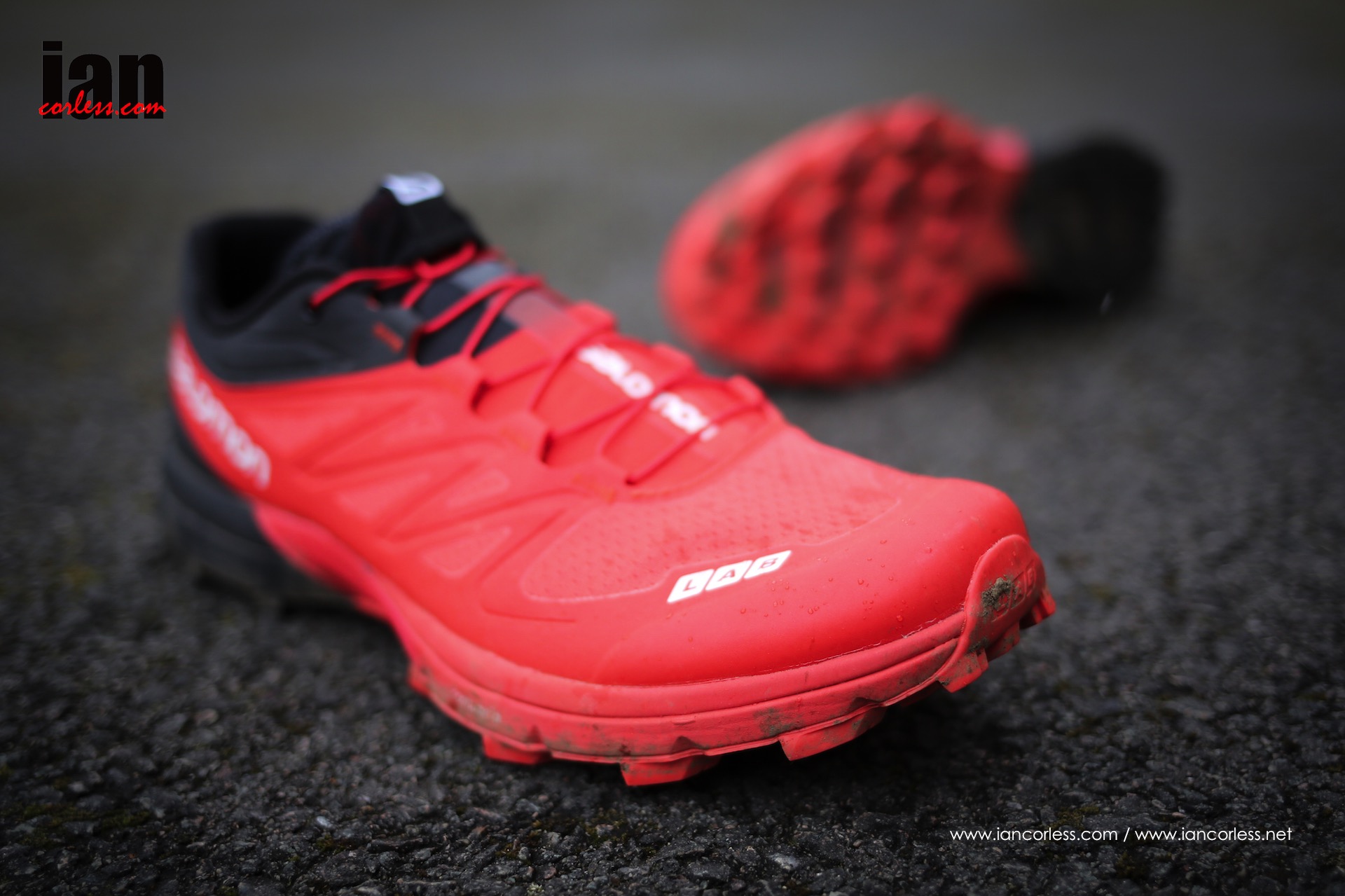
SG stands for Soft Ground and as such, this shoe is all about grip when it’s needed. So, for many, the Sense 4 Ultra and Sense 4 Ultra SG go hand-in-hand and I think it’s fair to say that many will have (or at least wish for) both pairs of shoes.
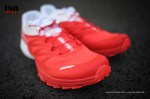
©iancorless.com_Sense4SG-9072 The new shoe has been left alone in certain areas and tweaked and improved in other areas. Lets be clear, although it’s called SG it does make a perfect trail shoe for all conditions in my opinion. Admittedly, I wouldn’t want to run a pure hard trail in them but if I was mixing up dry trail, rocks, gravel, water, mud and a whole multitude of other surfaces, this is and would be my shoe of choice.

The Salomon S-Lab range very much follows the ethos of FAST and LIGHT but as the ‘Ultra’ name suggests, the shoe has a little more added to increase longevity and comfort. As with the Sense 4 Ultra, cushioning is 9mm and 13mm with a 4mm drop. I keep saying it but 4mm drop is not for everyone so don’t be tempted to use this shoe just because Kilian and the rest of the team use it… be sensible with shoe drop! The Fellraiser or Speedcross may be better options for you?
©iancorless.com_Sense4SG-9081

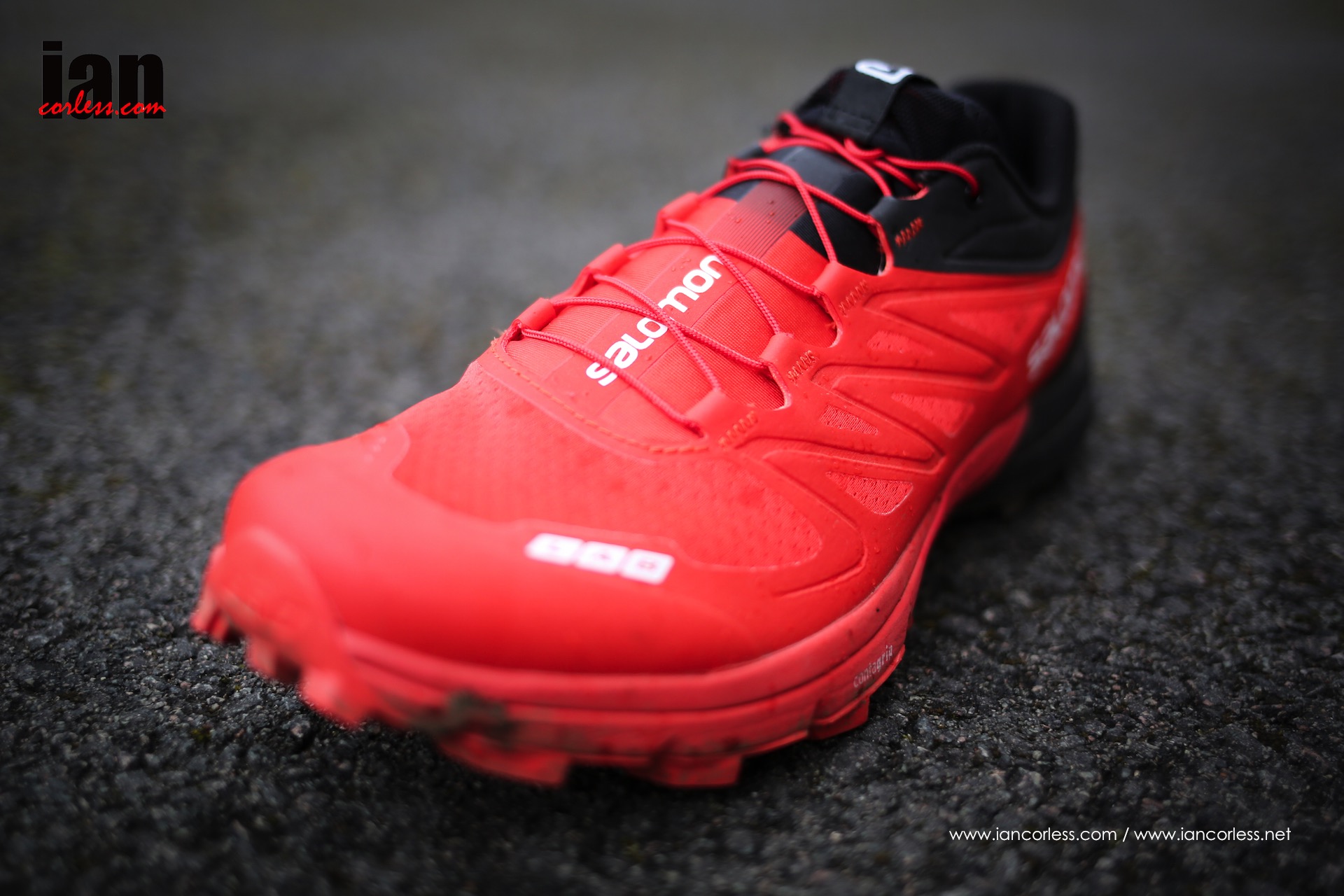
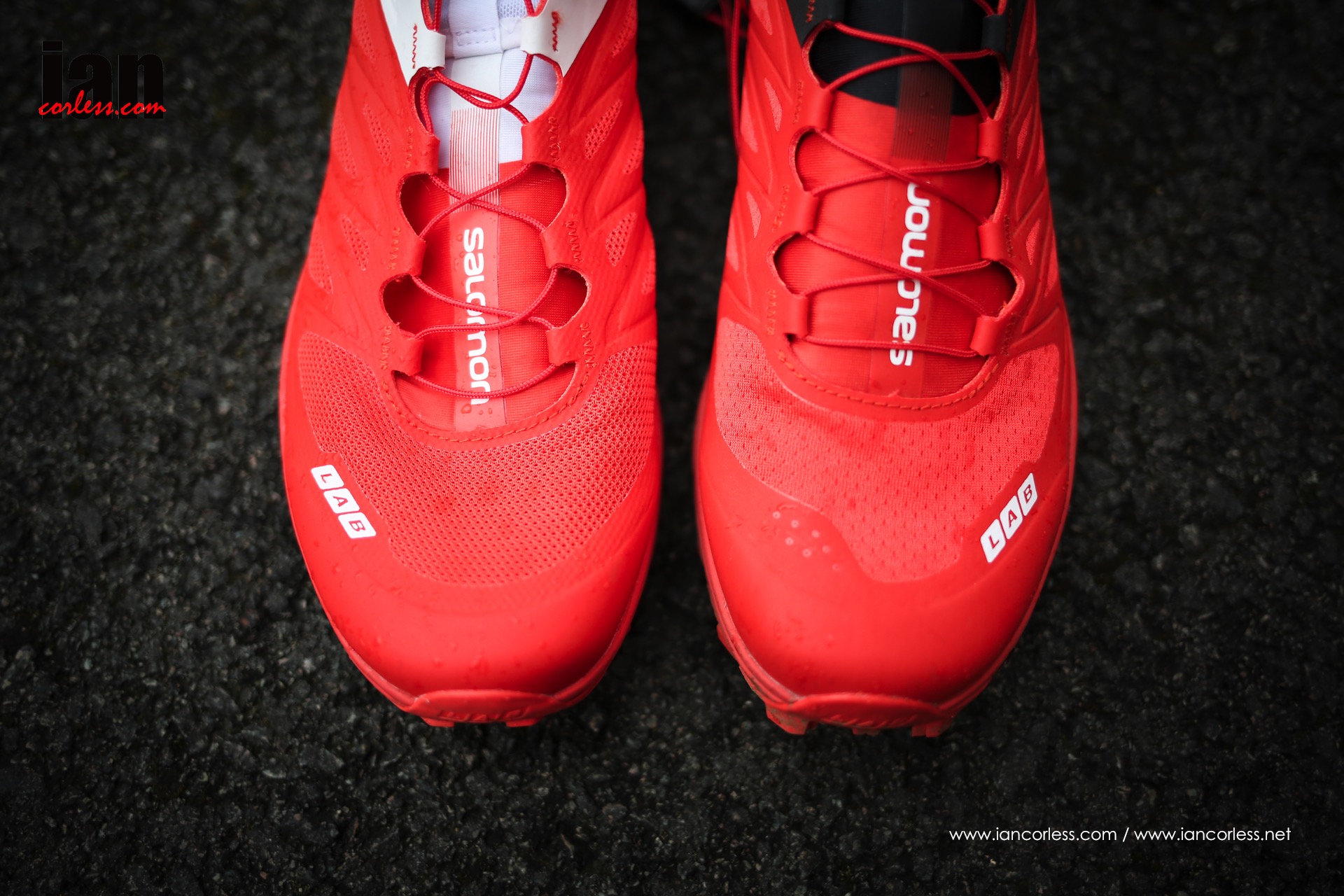
The SG upper, like the Sense 4 Ultra has been revised. The fit has been tweaked with additional support added to the mid foot. Additional room has been added to the toe box but it’s marginal in my opinion. Sensifit has also been tweaked and the mapping on the upper is now different and holds the foot more secure.
©iancorless.com_Sense4SG-9088

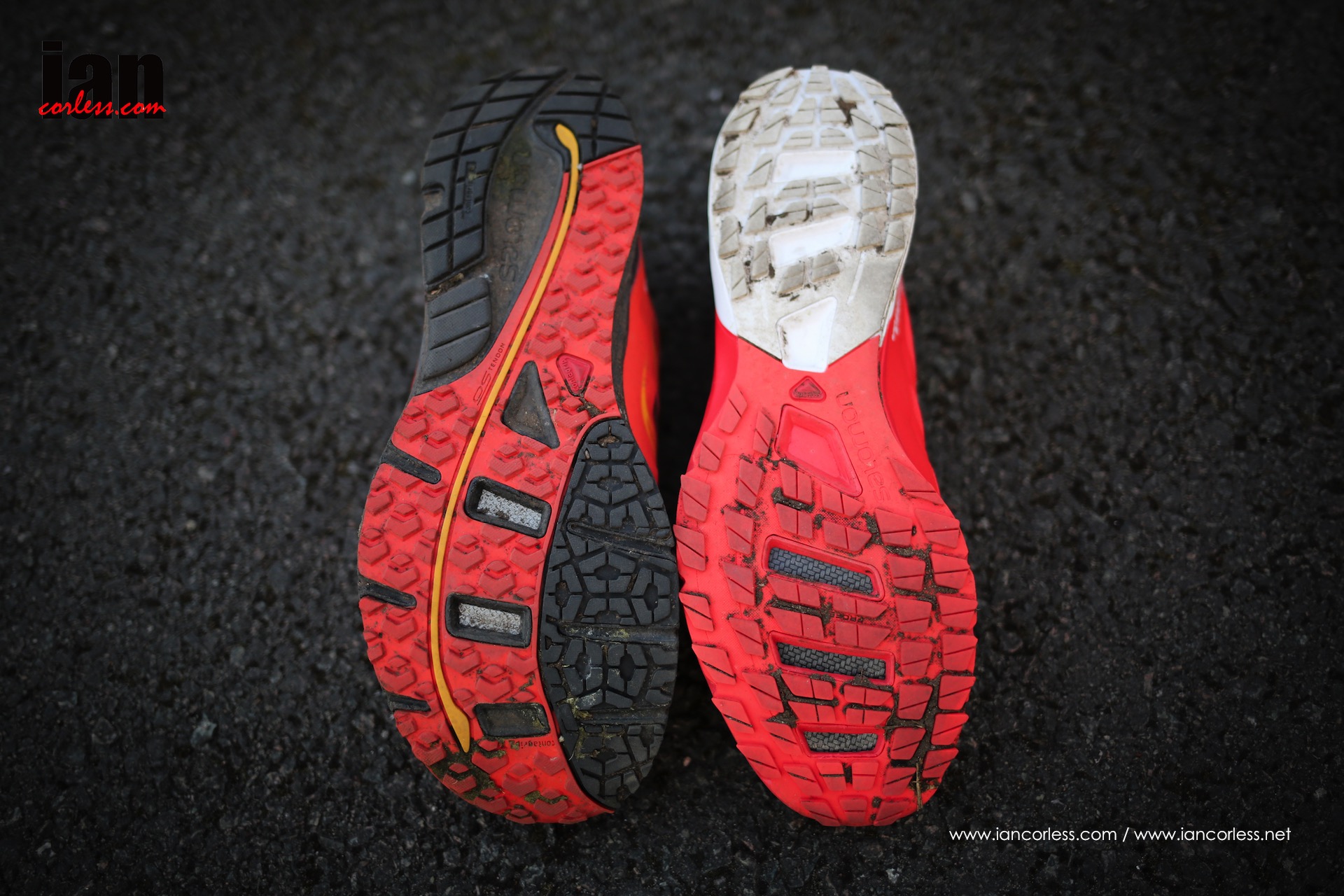
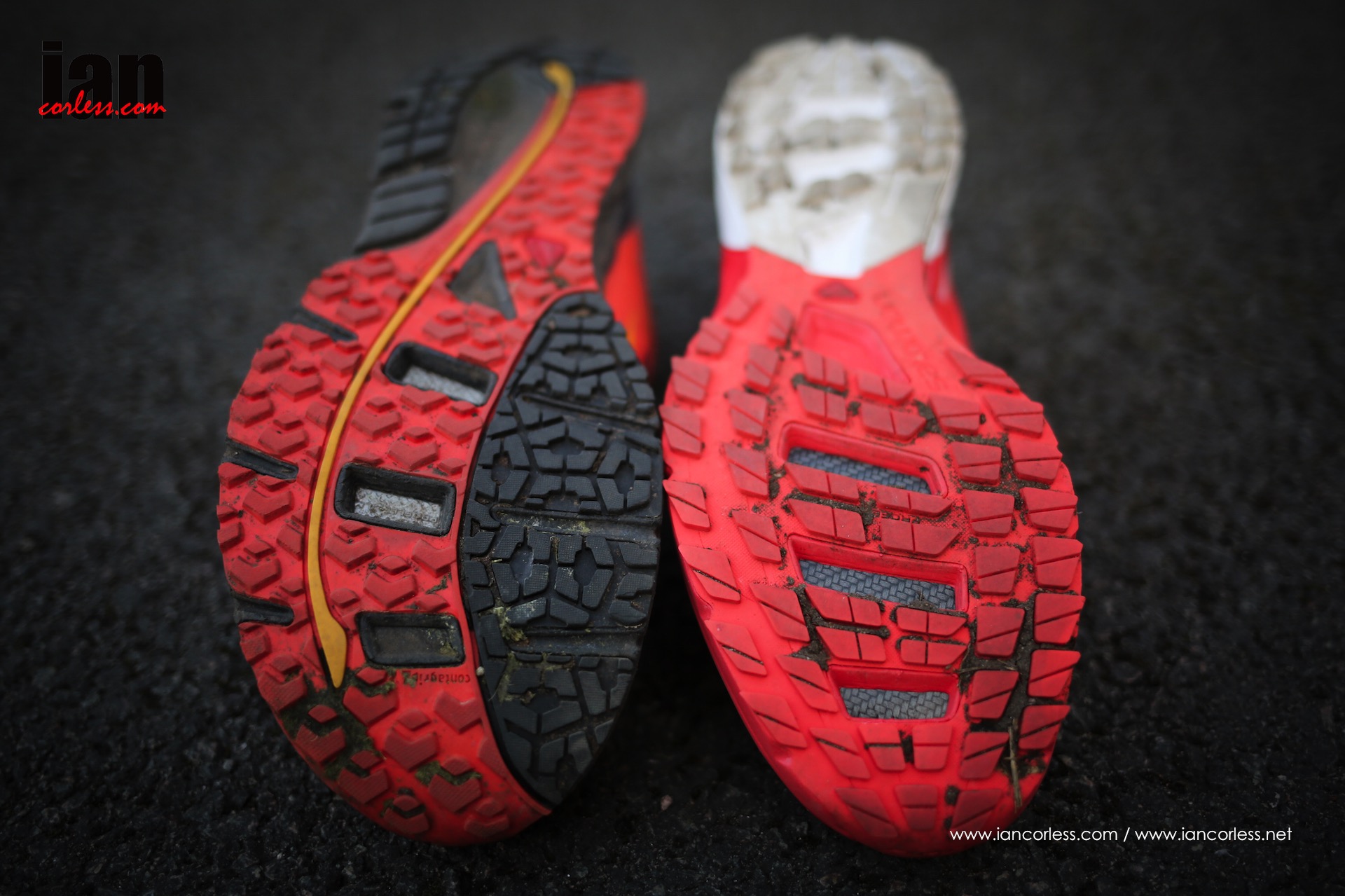
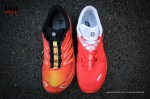
Sense 4 ULTRA on the left and the Sense 4 ULTRA SG on the right

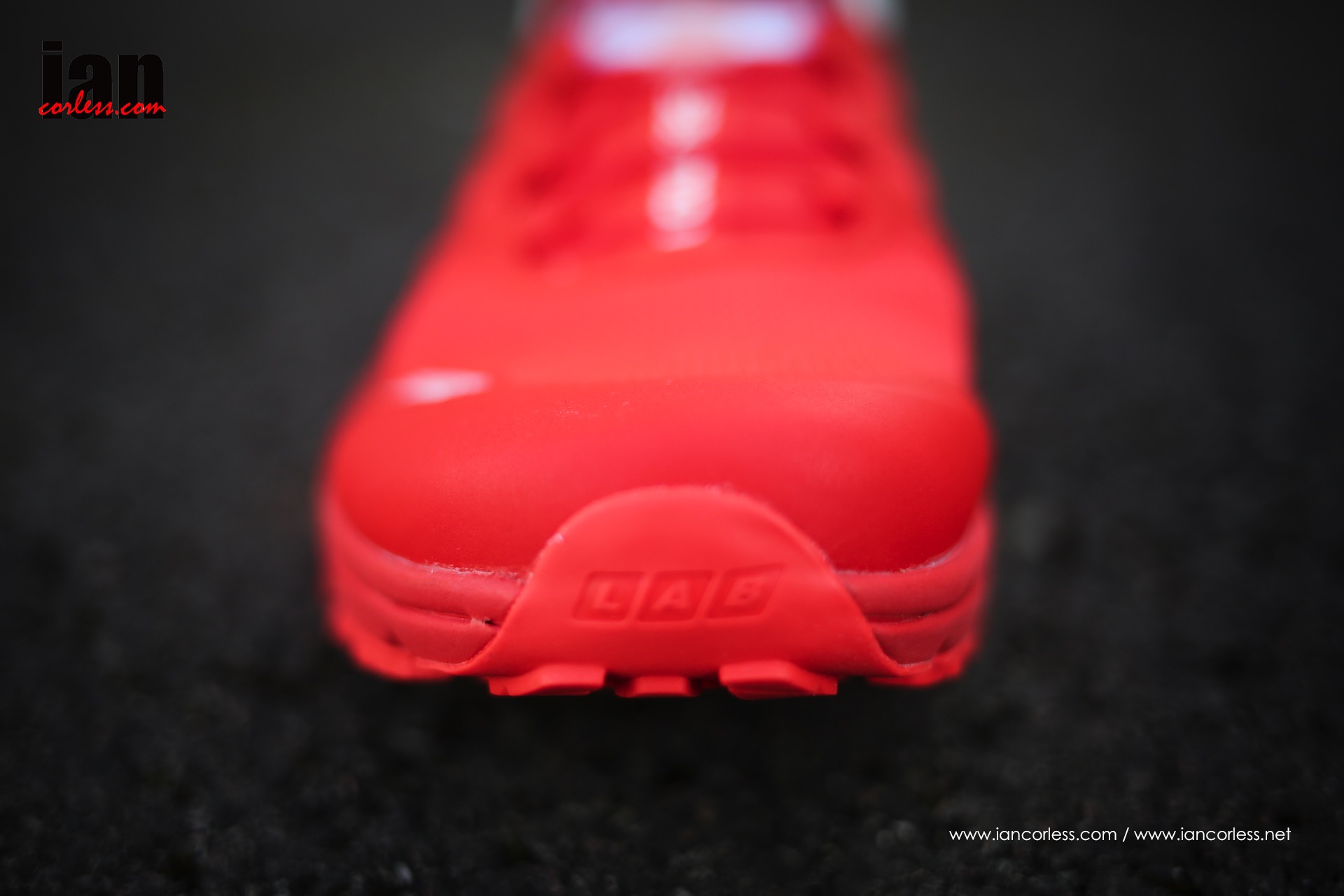
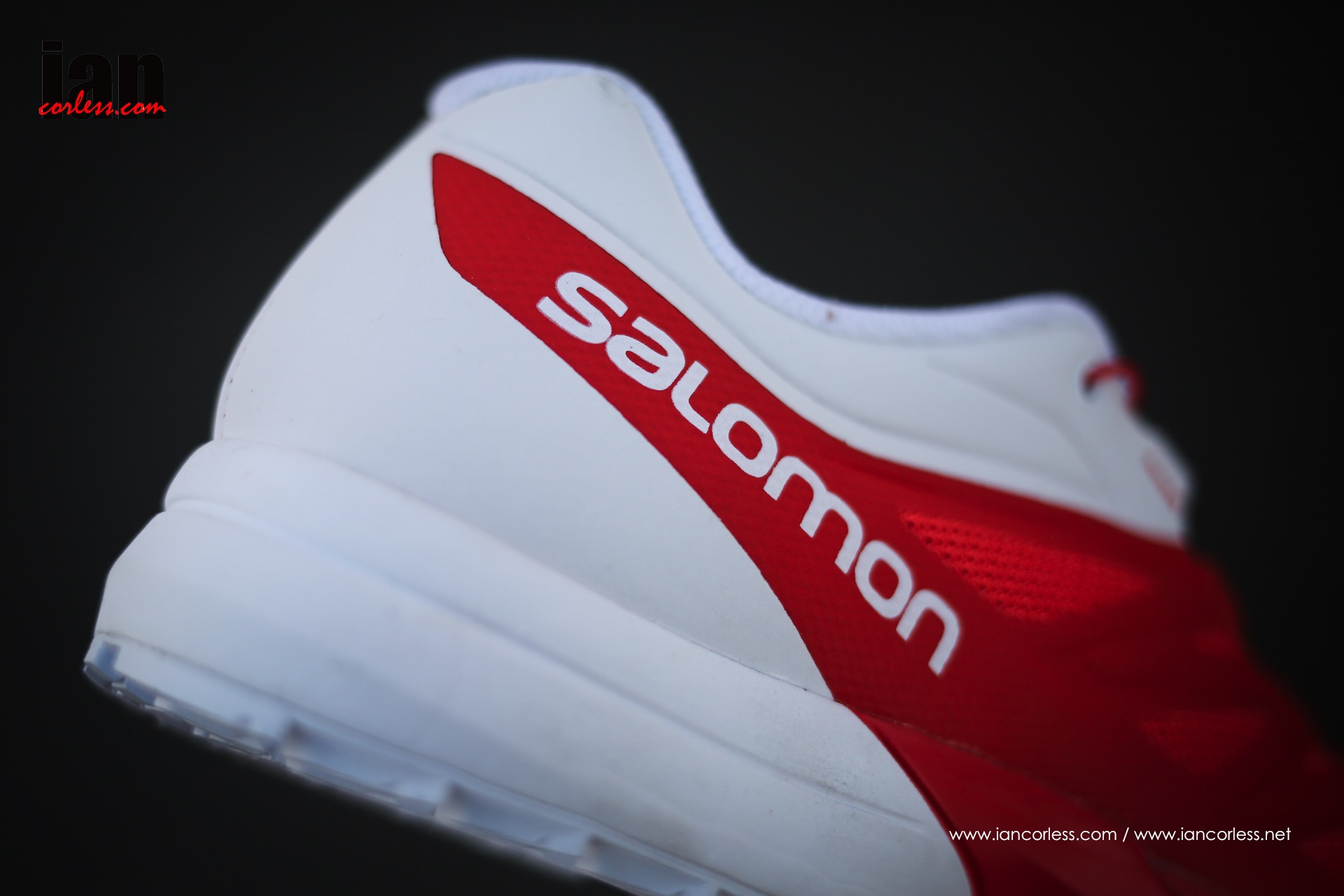
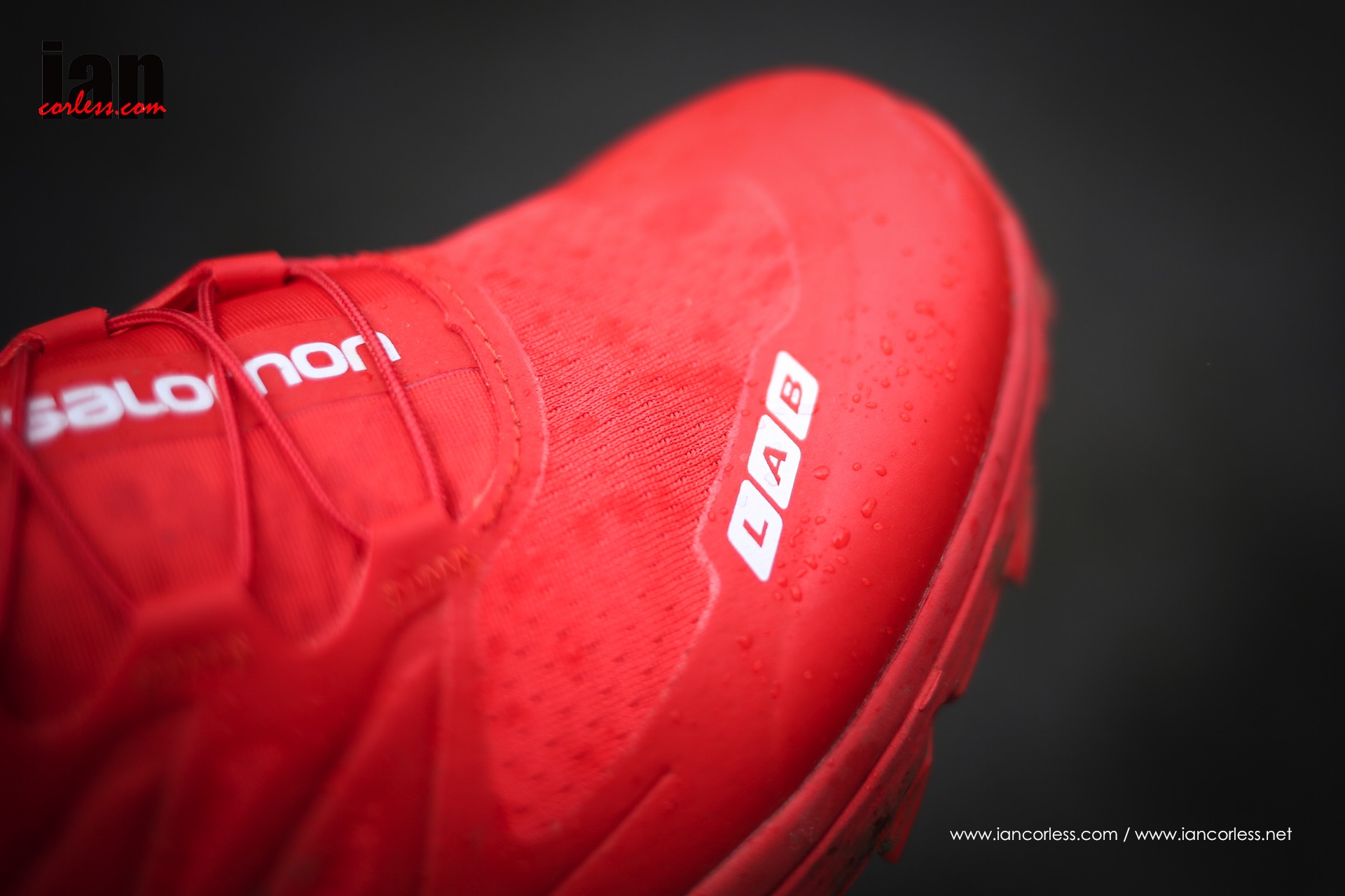
Materials on the upper vary between the Sense 4 Ultra and the SG, the SG is more durable and arguably less breathable. The Sense 4 Ultra had additional toe box protection and the SG has even more added wich makes complete sense considering the shoe will be used in tougher terrain. If you read my Sense 4 Ultra review you will know how much I love Sensfit, Endofit and all the usual Salomon buzzwords. In a nutshell, for me, no shoe on the market fits as well as a Salomon Sense and I am inclusive in that statement; the Sense Pro, Sense Mantra 3 and so on all have that wonderful precise and secure hold. It’s the best! (If the shoe fits you)
©iancorless.com_Sense4SG-9094

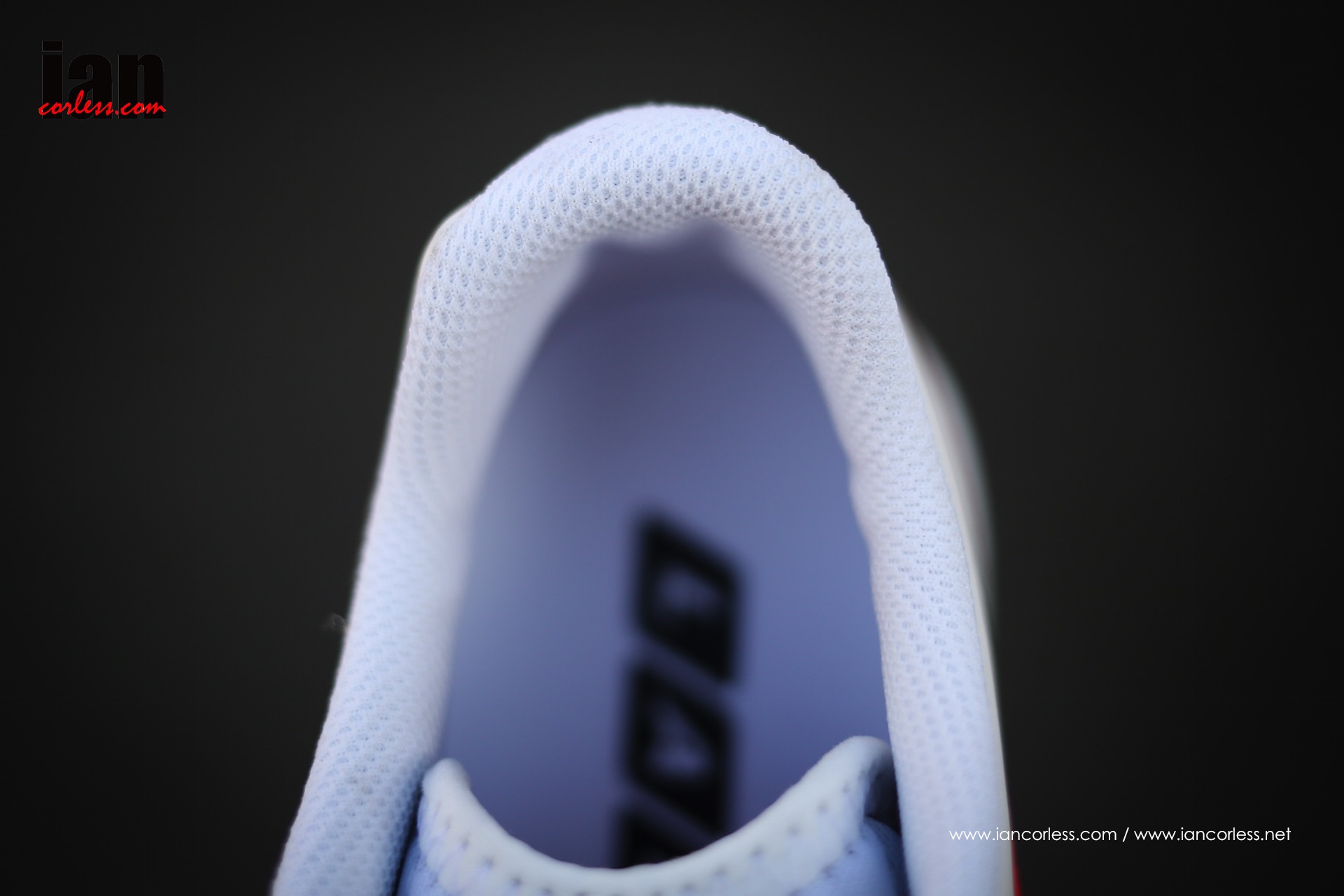
The SG is obviously a shoe for the rough and tough and the tongue has been changed to provide added protection and security. The fit between the upper and the tongue has been re-designed to reduce any possibility of debris entering. The lacing system and lace pocket again make the Salomon Sense stand head and shoulders above other shoes. It’s reliable, logical, provides great overall tension and of course, what you don’t need is stored away. The obvious downside is that adjusting tension is very difficult. So you’d have to make a call if that works for you! Many have said to me, ‘what if the lace breaks?’ In all honesty, I have never had a lace break and I don’t know anyone else who has.
©iancorless.com_Sense4SG-9078

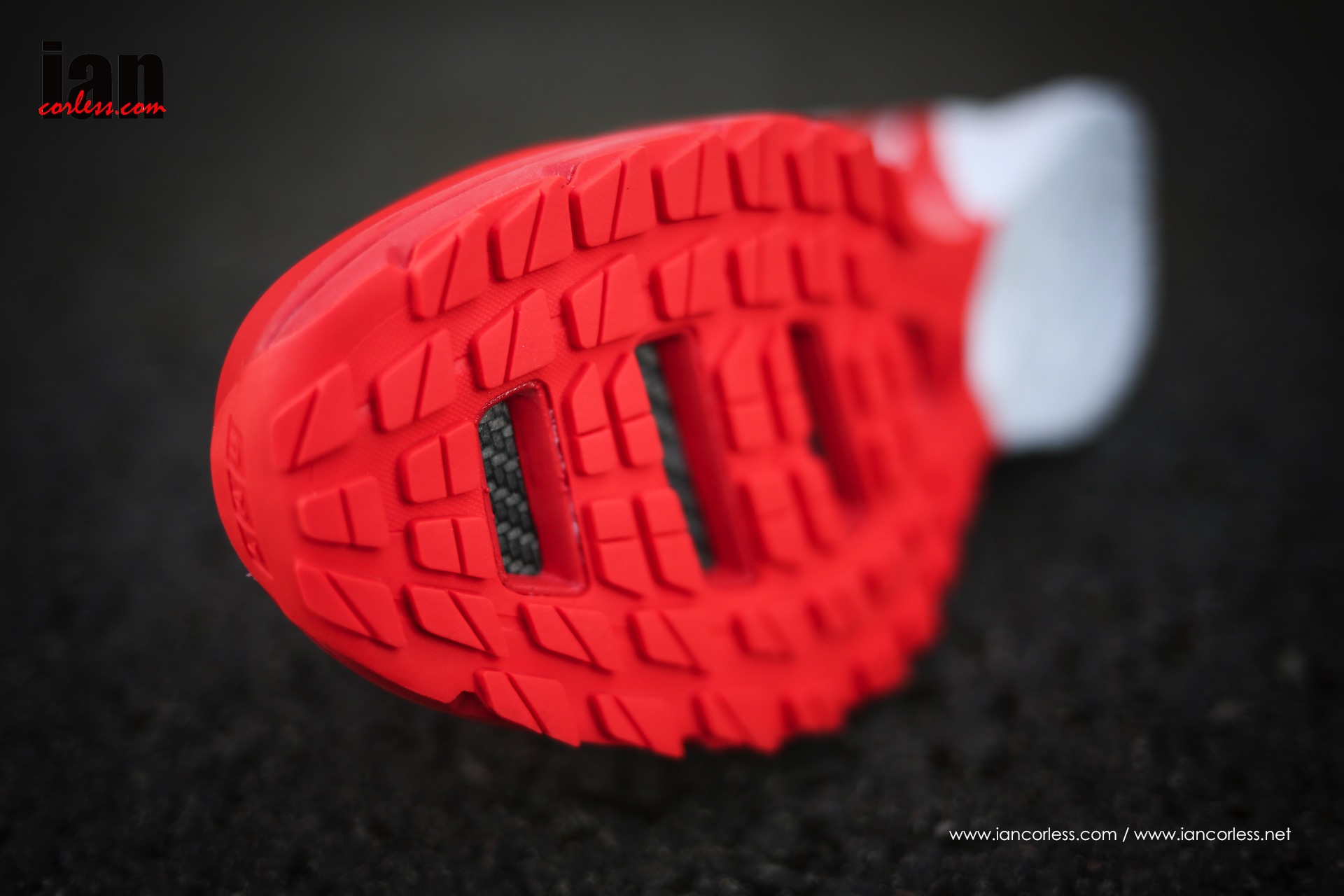
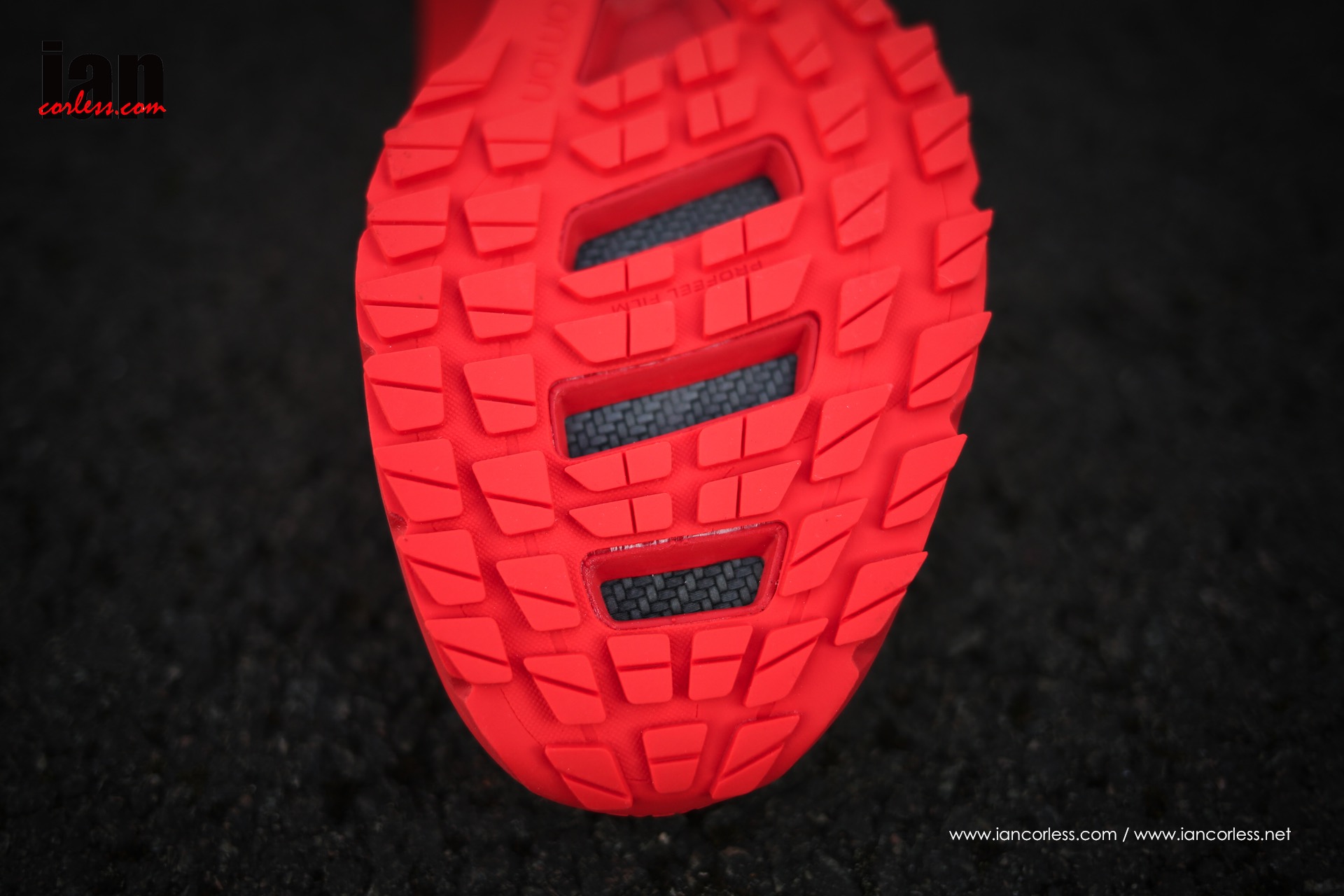
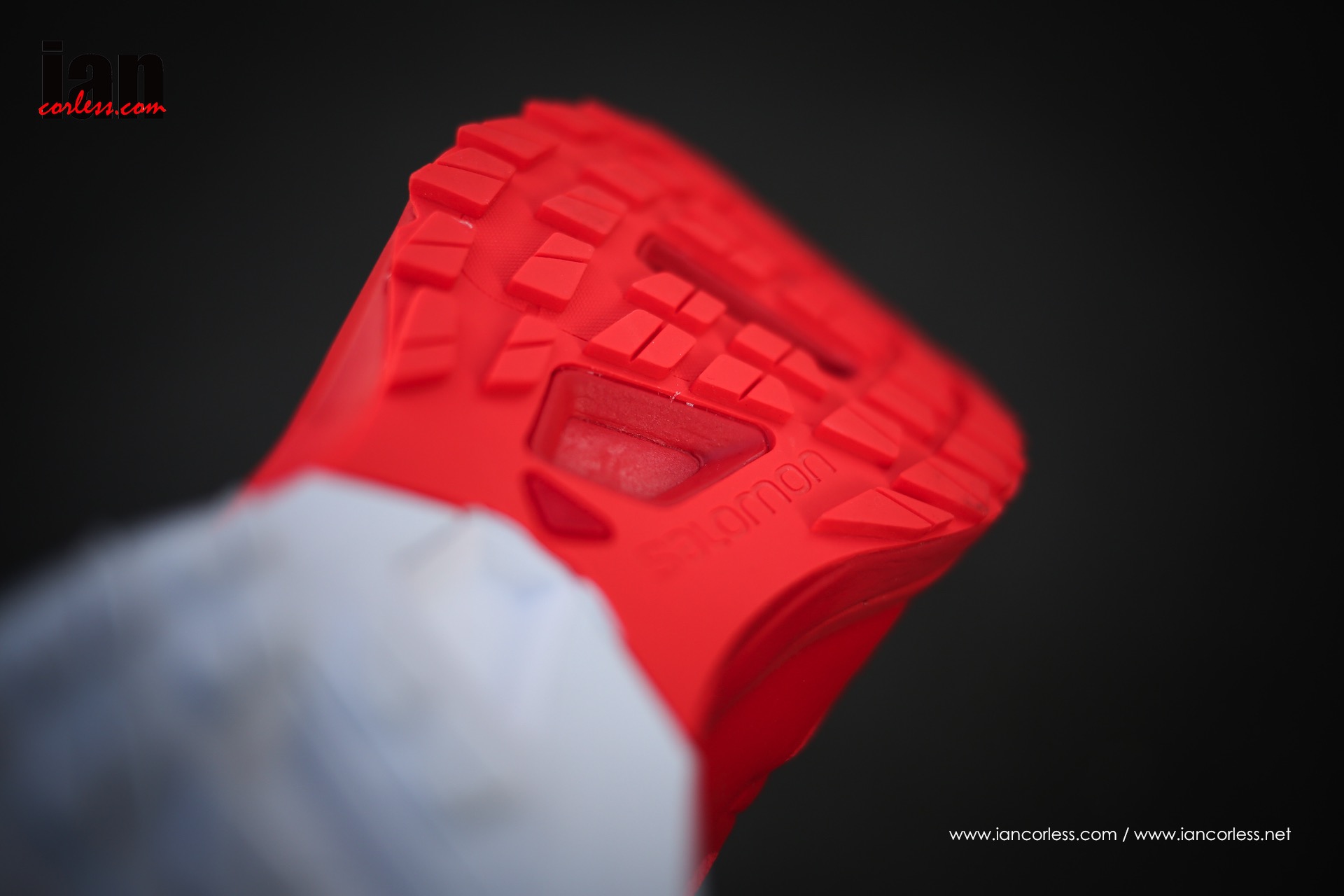
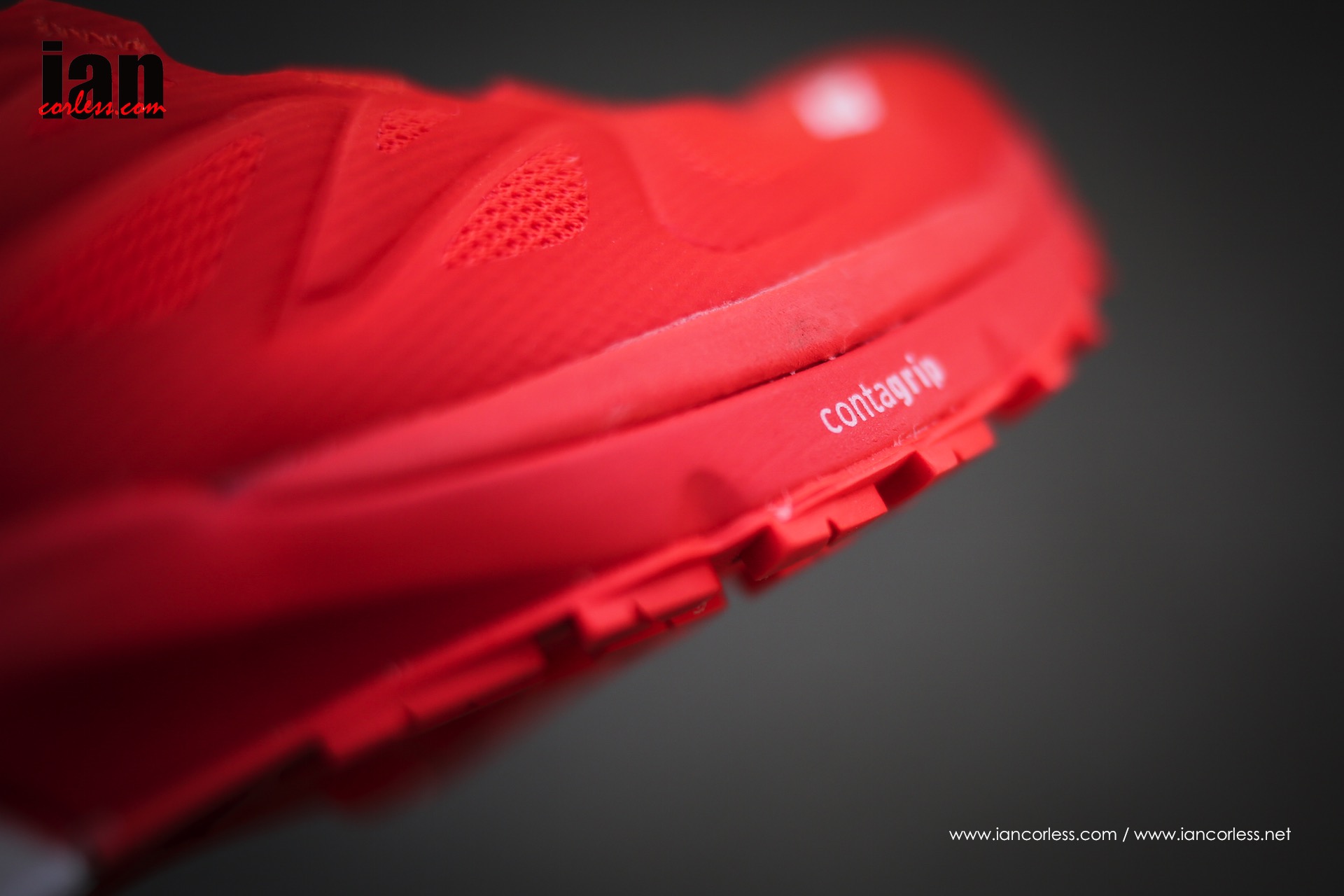
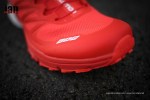
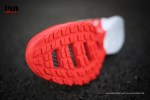
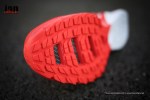
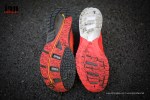
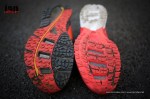
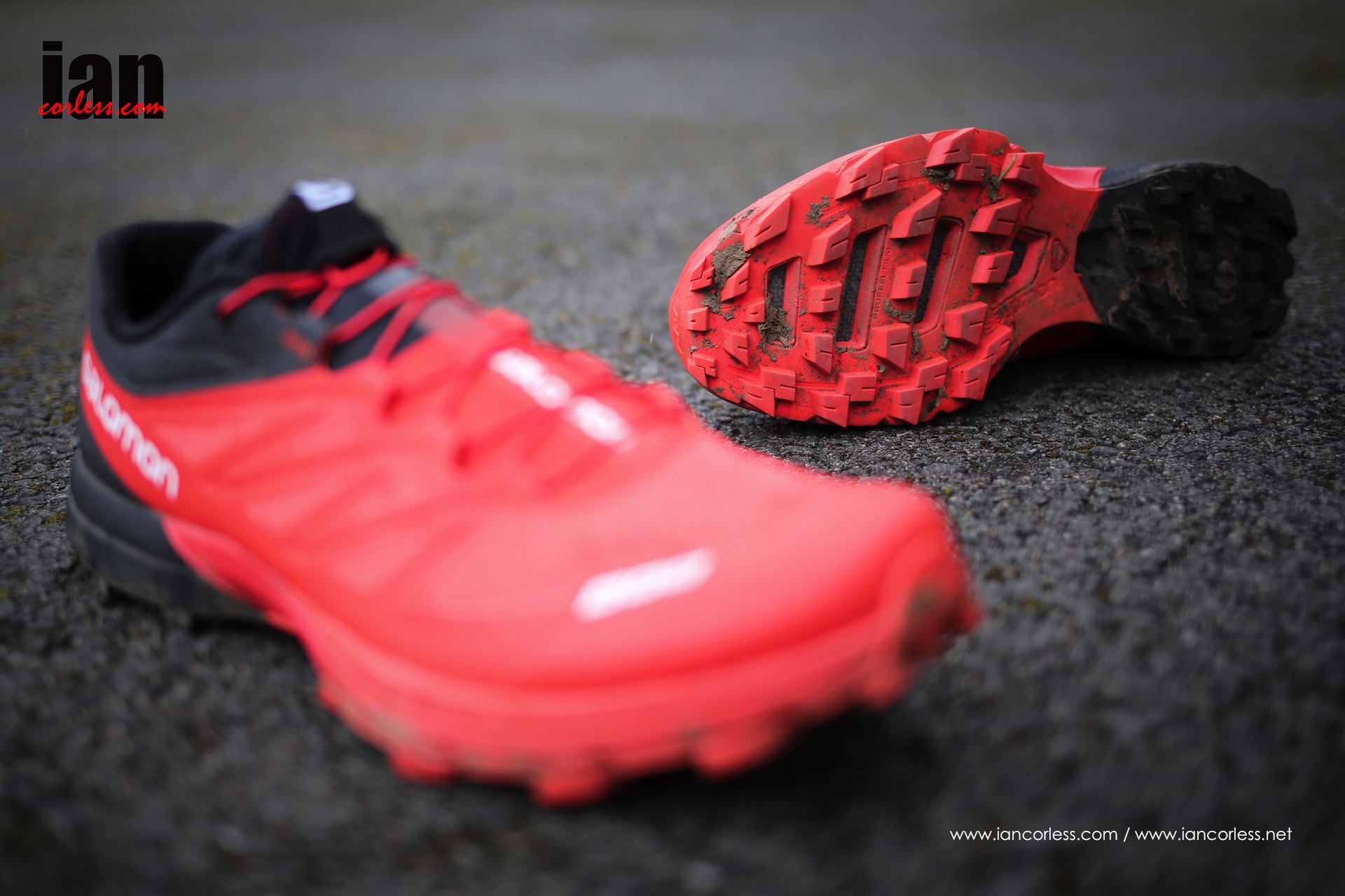
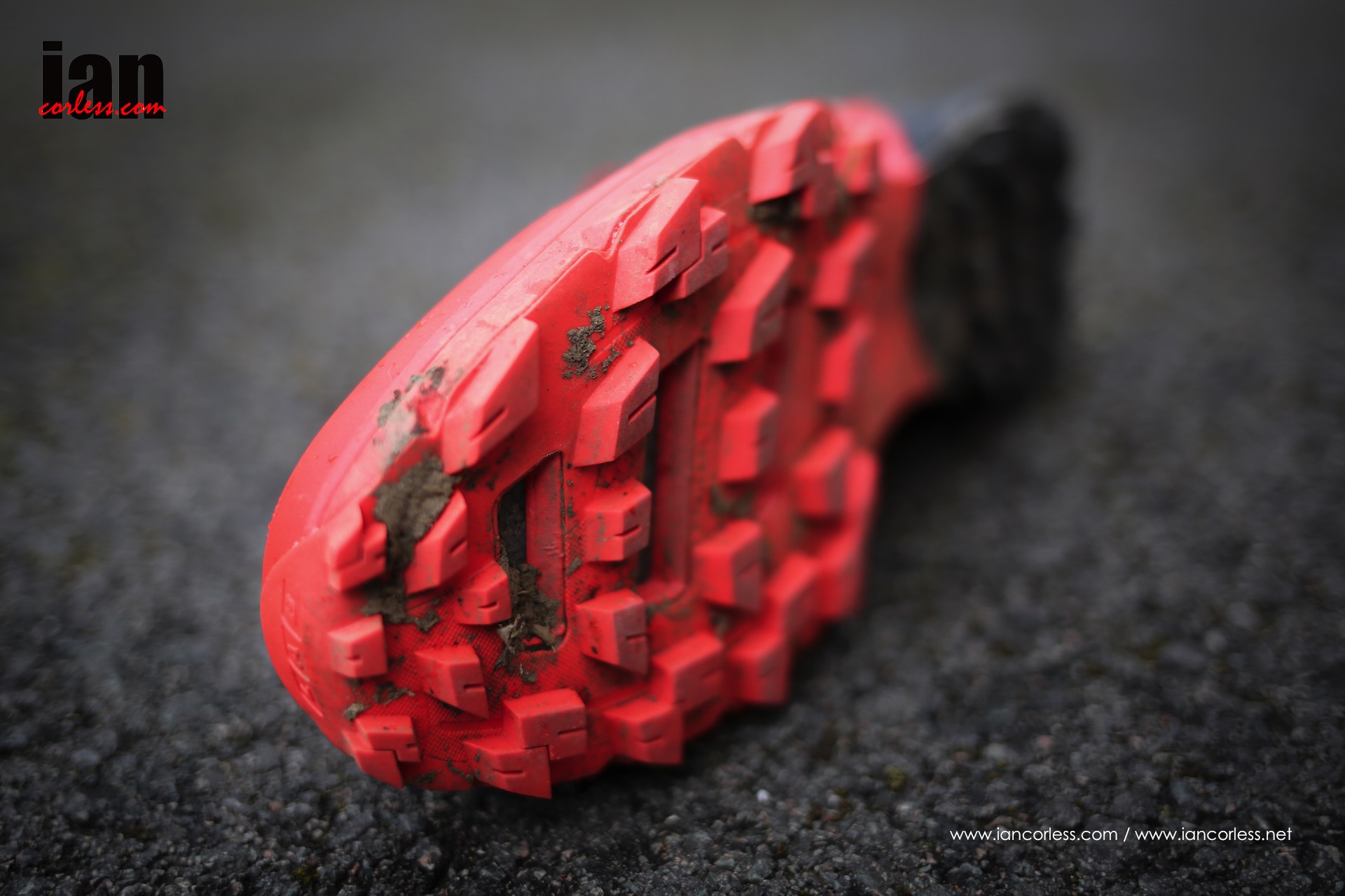
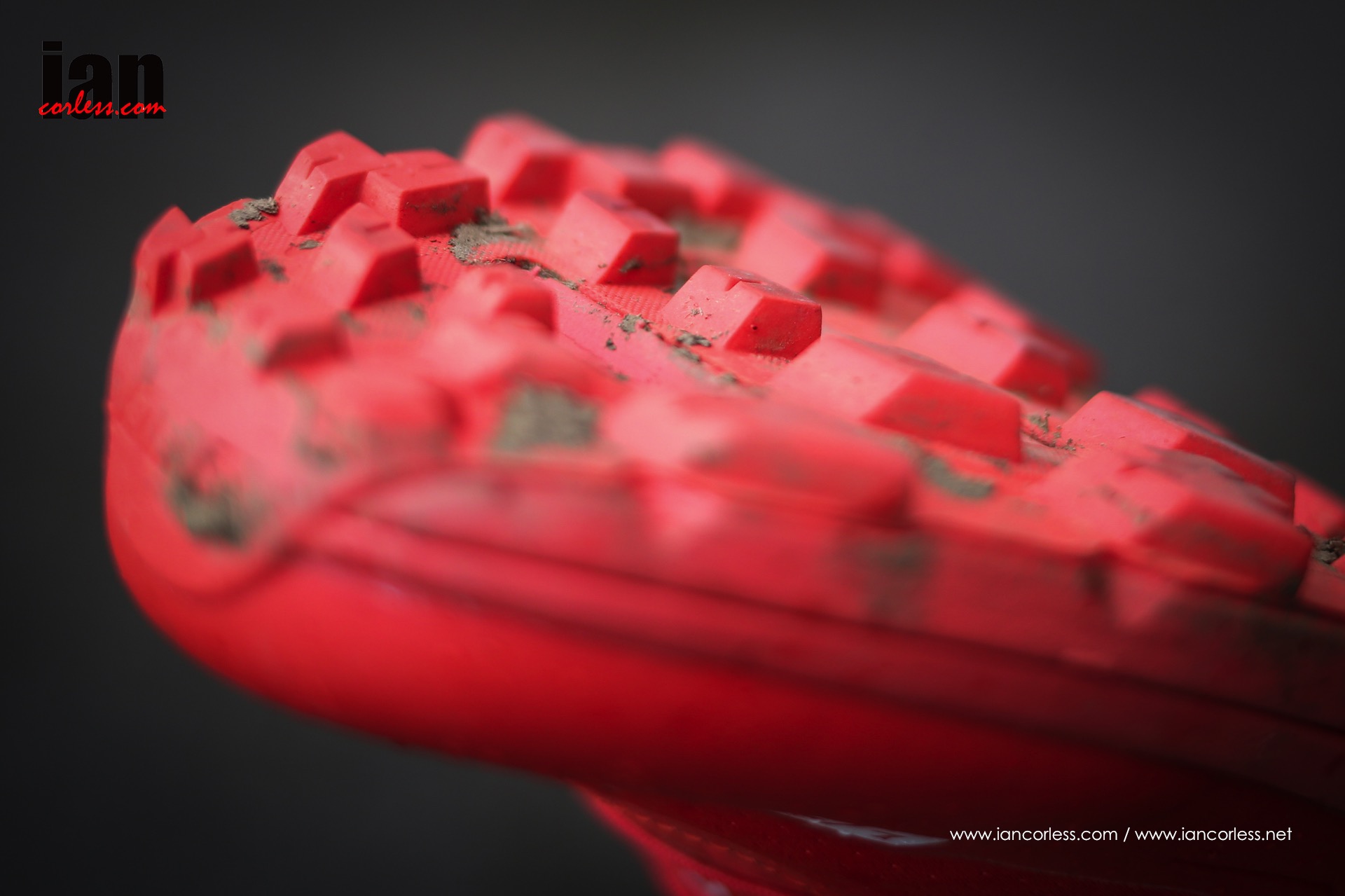
As with the Sense 4 Ultra, the SG has a complete overhaul of the outsole. The Contragrip lug pattern has been changed and the lugs are deeper to provide additional grip when the ground is soft and muddy but not so much grip that you cannot run on dry, hard or rocky trail. The compound has been revised and I noticed a difference on wet rock. The shoes have better bite. I said in my Sense 3 Ultra SG review (HERE) that although the shoe is called SG I wouldn’t necessarily say it would be my out-and-out soft ground shoe. The same applies here! I think the Sense 4 Ultra SG is an improvement on the previous model but if I just wanted a shoe for mud, I would potentially look at another option. Don’t get me wrong; this is not a negative comment. For example, Salomon make the S-Lab Fellcross and that would be ideal… the Sense 4 Ultra SG is designed for multiple surfaces, including soft ground and in those uses, they excel!
©iancorless.com_Sense4SG-9101

In Use

What can I say, the SG runs as well if not better than the Sense 4 Ultra. They do feel a little different and this is primarily down to the lugs on the bottom of the shoe. With the extra lug height, it does make the SG feel a little more cushioned, it may be placebo but I don’t think so.

Fit between the Sense 4 Ultra and SG is almost the same. No, it is the same. The only difference comes in the material used on the uppers. The ‘Ultra’ has a more breathable and lighter upper in comparison to the SG which is a great call by Salomon. One could almost say that the shoes are Summer (Sense 4 Ultra) and Winter (SG). Of course it’s not that simple, particularly if you run in the UK! We don’t have summers, so, they are both winter shoes ;-).

The toe box of the SG feels the same as the Sense 4 Ultra in use but does have more protection..

Running in the shoe is a dream. Foothold and protection is awesome. The shoe has plenty of flex and suppleness (especially after 3-4 runs) and the Endofit, Sensifit and Quicklace make the precision feel of the shoe shine. I really struggle to find any negatives. Grip in the heal area is brilliant and once on and laced up, you have no foot movement. Just whaT I want from a shoe that would tackle technical terrain.

The grip is definitely improved over the Sense 3. On my local trails I noticed improved grip on softer ground and transitioning between surfaces is seamless. Ironically, the SG does feel nice on the road but I don’t recommend too much, particularly if you want the sole to last! On wet rocks, pavement and tarmac the outsole noticeably provided a more secure and reassuring contact with the ground. Is it the best out there? No, probably not. But this outsole is designed for ultra and mixed terrain, soft ground just being one aspect. I’d have no problems with the SG being my ‘go to’ trail shoe for any race or training run.

On that note, is it really an ultra shoe, by that I mean could I run for hours and hours in it? No I couldn’t. I love the 4mm drop but for me, I think I’d need something a little more relaxed for real long stuff, a 6mm or 8mm drop version would be sweet. Lets be clear though, that is me being greedy. The Sense 4 is an S-Lab shoe and as such, it’s all about speed and efficiency. On the right feet, these shoes will fly!

PROS:

  • Light
  • Responsive
  • Grip
  • Fit
  • Black and red (my fave colours)

CONS:

  • Too tight for some
  • Expensive
  • I struggle for cons!

It’s always difficult reviewing a Salomon S-Lab shoe as to be honest; I find it very hard to find negatives. The negatives are more often than not based around the shoe not being suitable for some people because of width, drop and so on.

The same applies here! The Sense 3 Ultra and Sense 3 Ultra SG were both brilliant shoes and the Sense 4 incarnations of both shoes are better! It’s hard to believe but they are.

Weighing in at 260g for a UK 8.5 (true to size fit), the Sense 4 Ultra SG is without doubt one of the best ‘grip’ trail shoes I have used. I do wish that Salomon would make this ‘exact’ shoe with a 6mm or maybe even a 8mm drop.
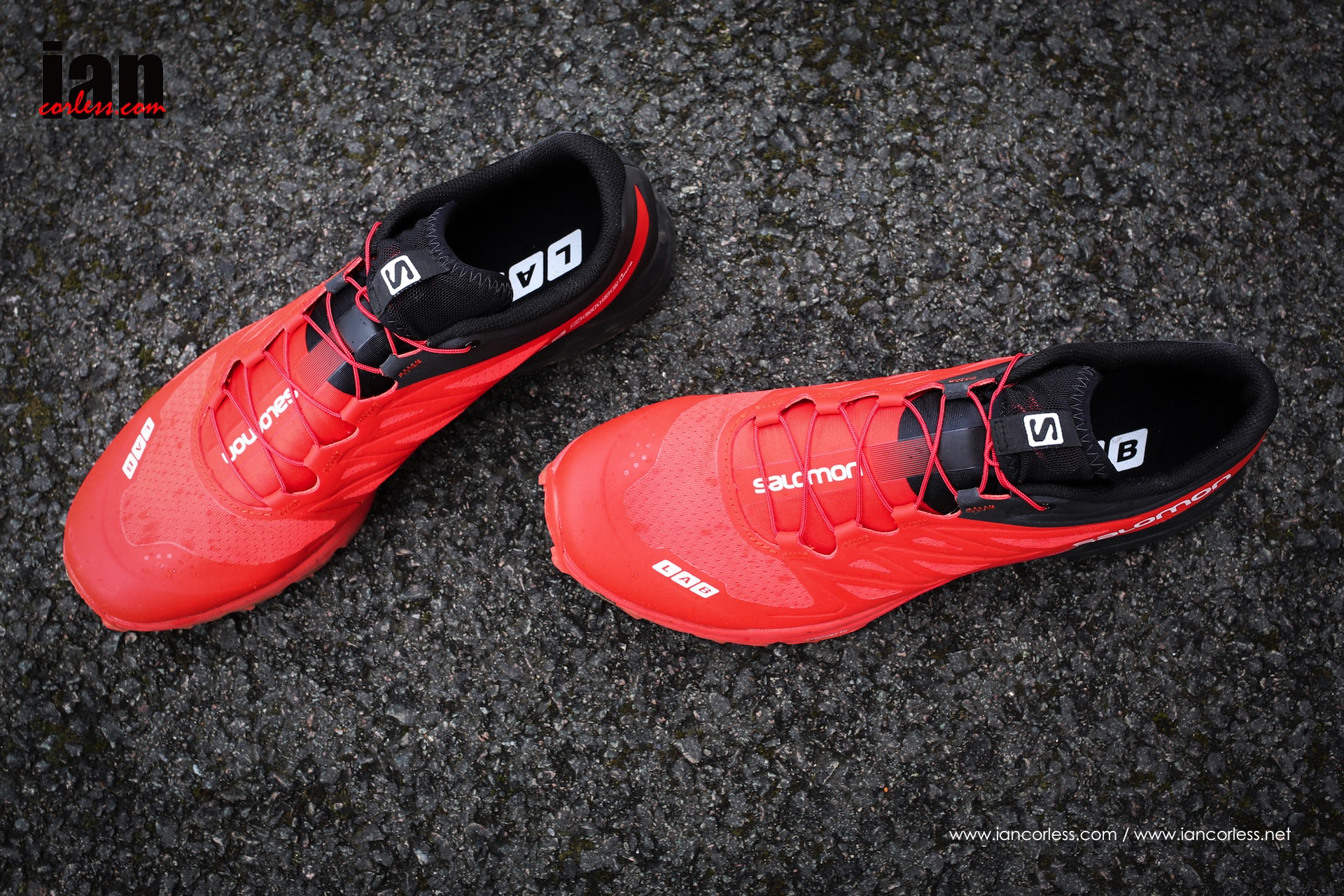
©iancorless.com_Sense4SG-9060

As with the Sense 4 Ultra: the Sense 4 Ultra SG has OS Tendon, Profeet Film, dual density EVA, racing last, Quicklace, Sensifit, Endofit and a series of other notable technologies making this shoe the best 4mm drop shoe on the market… should the precise fit work for you!

Recent changes in the Salomon Sense range now make the Sense 4 Ultra (dry fast trail), Sense 4 Ultra SG (mixed trail) and the Sense Mantra 3 (road and trail) my shoes of choice. I keep going on about the Sense Mantra 3 (Here) but I think this is a great everyday shoe.

My final question is, will we see a new Sense Pro?


Specs for the Sense 4 Ultra SG

  • Sensifit
  • Quicklace
  • Racing Last
  • EndoFit
  • Lace Pocket
  • Quick Dry Mesh
  • OS Tendon
  • Profeet Film
  • Dynamic Traction
  • Contragrip Aggressive Outsole
  • Midsole Dual Density EVA
  • Cushioning Front – 9mm
  • Cushioning Rear – 13mm
  • Drop 4mm
  • Weight 260g / UK8.5

Check out the Salomon S-Lab range HERE

Salomon Logo


Episode 84 – Hawker Canaday Kimball

Ep84

Episode 84 of Talk Ultra has an interview with Sage Canaday talking about coaching and training, Lizzy Hawker tells us all about her new book and Nikki Kimball talks TCC, fell running, her new film and racing in South Africa. Talk Training, the News, Up and Coming Races and Speedgoat.
00:13:48 NEWS
 
Barkley
Fair play to Jamil Coury but nobody finished….
Chuckanut 50k
David Laney 3:40
Andrew Benford 3:40
Brett Hornig 3:35
Magdalena Boulet 4:13
Catrin Jones 4:25
Cassie Scallon 4:29
 
Gorge Waterfalls
Justin Houck 9:22 CR
Chris Denucci 9:49
Ben Stern 9:59
Michele Yates 11:03 CR
Joell Vaught 11:10
Olga Nevtrinos 11:20
Ryan Sandes sets FKT on Table Mountain and Red Bull sets up a website to see if you can beat it…
Kilian tells us about his 2015 plans as does Timmy Olson
 
Sage Canaday going to run UTMB
 
Marathon des Sables kicks off…. Preview HERE
00:35:18 INTERVIEW
 
SAGE CANADY provides us with an insight into his coaching and training ethos and how he applies them to his own racing HERE
01:29:00 BLOG
 
What goes in the MDS pack? Read HERE
01:30:55 INTERVIEW
 
LIZZY HAWKER has been away from the running scene with injury. However, she has used the time wisely writing a book called RUNNER. We catch up with her, discuss the book and you have an opportunity to win one of two copies.
WIN A COPY OF THE BOOK HERE
Purchase the book HERE
 
02:16:03 TALK TRAINING
Marc Laithwaite talks all about race pacing. Read the blog post HERE
02:44:50 INTERVIEW
 
NIKKI KIMBALL talks about The Coastal Challenge, her new film, fell racing and heading to South Africa
Finding Traction movie HERE
03:31:20 UP & COMING RACES

Argentina

Patagonia Run 100k | 100 kilometers | April 11, 2015 | website

Patagonia Run 63k | 63 kilometers | April 11, 2015 | website

Patagonia Run 84k | 84 kilometers | April 11, 2015 | website

Australia

Australian Capital Territory

Australian Running Festival Ultra Marathon | 50 kilometers | April 12, 2015 | website

Queensland

Wildhorse Criterium 50 km | 50 kilometers | April 05, 2015 | website

Wildhorse Criterium 70 km | 70 kilometers | April 05, 2015 | website

Victoria

Buffalo Stampede Ultra SkyMarathon | 75 kilometers | April 11, 2015 | website

Western Australia

3 Waters 50km Ultra Marathon | 50 kilometers | April 12, 2015 | website

Canada

British Columbia

Diez Vista 50k Trail Run | 50 kilometers | April 11, 2015 | website

Chile

Ultra Fiord 100K | 100 kilometers | April 17, 2015 | website

Ultra Fiord 100M | 100 miles | April 16, 2015 | website

Ultra Fiord 70K | 70 kilometers | April 17, 2015 | website

Croatia

100 Miles of Istria | 100 miles | April 17, 2015 | website

France

Bouches-du-Rhône

Trail Sainte Victoire 60 km | 60 kilometers | April 12, 2015 | website

Haute-Loire

L’Ultra trace de St Jacques | 740 kilometers | April 12, 2015 | website

Jura

Le Savagnin | 58 kilometers | April 12, 2015 | website

Rhône

Ultra Beaujolais Villages Trail | 110 kilometers | April 11, 2015 | website

Germany

Hesse

Bilstein-Marathon BiMa 53+ | 53 kilometers | April 12, 2015 | website

Guadeloupe

GUADARUN : ultra-marathon des îles de Guadeloupe | 136 kilometers | April 04, 2015 | website

Indonesia

Trans Sumbawa 200 Miles | 200 miles | April 08, 2015 | website

Ireland

Connacht

Connemara Ultramarathon | 39 miles | April 12, 2015 | website

Israel

Race the Promised Land Ultra | 124 kilometers | April 16, 2015 | website

The Sea to Jerusalem 144 km Ultra | 144 kilometers | April 16, 2015 | website

The Sea to Jerusalem 54 Ultra | 54 kilometers | April 16, 2015 | website

The Sea to Jerusalem 70 km Ultra | 70 kilometers | April 17, 2015 | website

Italy

Latium

UltraTrail dei Monti Cimini | 80 kilometers | April 11, 2015 | website

Piedmont

100 km di Torino | 100 kilometers | April 11, 2015 | website

Tuscany

Elba Trail “Eleonoraxvincere” | 54 kilometers | April 12, 2015 | website

Jordan

Dead Sea Ultra Marathon | 50 kilometers | April 03, 2015 | website

Morocco

Ecotrail de Ouarzazate | 111 kilometers | April 16, 2015 | website

Marathon des Sables | 250 kilometers | April 03, 2015 | website

Nepal

Annapurna Mandala Trail | 250 kilometers | April 15, 2015 | website

Buddhist Stupa Trail Marathon | 50 kilometers | April 04, 2015 | website

Netherlands

North Holland

Castricum Ultraloop | 60 kilometers | April 11, 2015 | website

De Zestig van Texel – 120 km | 120 kilometers | April 06, 2015 | website

De Zestig van Texel – 60 km | 60 kilometers | April 06, 2015 | website

Norway

Bergen Maratonkarusellen no3 – 1 1/2 Marathon | 63 kilometers | April 11, 2015 | website

Bergen Maratonkarusellen no3 – Ultra 100km | 100 kilometers | April 11, 2015 | website

Philippines

Mayon 360º | 80 kilometers | April 11, 2015 | website

Portugal

Madeira Island Ultra Trail 115 | 116 kilometers | April 11, 2015 | website

Madeira Island Ultra Trail 85 | 85 kilometers | April 11, 2015 | website

South Africa

Old Mutual Two Oceans Marathon | 56 kilometers | April 04, 2015 | website

Spain

Catalonia

24 hores del Cap de Creus | 87 kilometers | April 11, 2015 | website

Extremadura

LXVII Milhas Romanas | 100 kilometers | April 10, 2015 | website

United Kingdom

Calderdale

The Calderdale Hike – Long | 36 miles | April 11, 2015 | website

Carmarthenshire

Pendine Sands Ultra | 32 miles | April 05, 2015 | website

Devon

Coastal Trail Series – Exmoor – Ultra | 34 miles | April 11, 2015 | website

Dorset

The ONER | 78 miles | April 11, 2015 | website

The ONER Half Day Section | 39 miles | April 11, 2015 | website

East Sussex

South Downs Way 50 | 50 miles | April 04, 2015 | website

Glasgow City

Glasgow – Edinburgh Double Marathon | 55 miles | April 04, 2015 | website

Hampshire

Compton 40 mile Challenge | 40 miles | April 04, 2015 | website

Highland

2XU Jogle | 860 miles | April 10, 2015 | website

Surrey

North Downs Way 50 | 50 miles | April 05, 2015 | website

USA

Arizona

Solemates Prescott Circle Trail 100 Miler | 104 miles | April 10, 2015 | website

Solemates Prescott Circle Trail 150 Miler | 156 miles | April 09, 2015 | website

Solemates Prescott Circle Trail 200 Miler | 208 miles | April 09, 2015 | website

Solemates Prescott Circle Trail 50 Miler | 52 miles | April 11, 2015 | website

California

American River 50-mile Endurance Run | 50 miles | April 04, 2015 | website

Grizzly Peak 50 Km Trail Run | 50 kilometers | April 04, 2015 | website

Lake Sonoma 50 | 50 miles | April 11, 2015 | website

Oriflamme 50k | 50 kilometers | April 11, 2015 | website

Ragnar Relay So Cal | 200 miles | April 10, 2015 | website

Woodside Crossover 50K | 50 kilometers | April 12, 2015 | website

Florida

Croom Trail 50K Fools Run | 50 kilometers | April 04, 2015 | website

Croom Trail 50M Fools Run | 50 miles | April 04, 2015 | website

Wild Sebastian 100 Spring Edition – 100 Miles | 100 miles | April 11, 2015 | website

Wild Sebastian 100 Spring Edition – 50 Miles | 50 miles | April 11, 2015 | website

Wild Sebastian 100 Spring Edition – 75 Miles | 75 miles | April 11, 2015 | website

Illinois

Potawatomi 100 Mile Trail Run | 100 miles | April 11, 2015 | website

Potawatomi 150 Mile Trail Run | 150 miles | April 10, 2015 | website

Potawatomi 50 Mile Trail Run | 50 miles | April 11, 2015 | website

Indiana

2 Person Team | 100 miles | April 11, 2015 | website

3 Person Team | 100 miles | April 11, 2015 | website

4 Person Team | 100 miles | April 11, 2015 | website

5 Person Team | 100 miles | April 11, 2015 | website

6 Person Team | 100 miles | April 11, 2015 | website

7 Person Team | 100 miles | April 11, 2015 | website

8 Person Team | 100 miles | April 11, 2015 | website

Iowa

Hawkeye 50k | 50 kilometers | April 11, 2015 | website

Kansas

Rocking K Trail 50 Mile Run | 50 miles | April 04, 2015 | website

Louisiana

LUR’s Sleepy 50K | 50 kilometers | April 11, 2015 | website

Massachusetts

Cape Cod Trail Race – Run Forward. Give Back – Ultra | 50 kilometers | April 12, 2015 | website

Michigan

Kal-Haven Trail Run | 33 miles | April 11, 2015 | website

Minnesota

Zumbro 100k | 100 kilometers | April 10, 2015 | website

Zumbro 100M | 100 miles | April 10, 2015 | website

Zumbro Midnight 50 Mile | 50 miles | April 11, 2015 | website

Mississippi

Gulf Coast Interstate Relay – Ride or Run | 263 miles | April 03, 2015 | website

Race Across Mississippi – Border to Border (7 Marathons) | 192 miles | April 10, 2015 | website

Missouri

Ozark Foothills 50K | 50 kilometers | April 11, 2015 | website

Nebraska

Double Half Mary+5 | 50 kilometers | April 10, 2015 | website

New York

100 Mile PEACE Ultra Marathon | 100 miles | April 17, 2015 | website

North Carolina

Cedar Island 40 | 42 miles | April 11, 2015 | website

Ohio

Forget the PR Mohican 50K | 50 kilometers | April 11, 2015 | website

Oklahoma

Tatur’s Lake McMurty Trail Race 50K | 50 kilometers | April 11, 2015 | website

Oregon

Peterson Ridge Rumble 40 Mile Trail Run | 40 miles | April 12, 2015 | website

Shotgun Trail Blast 50K | 50 kilometers | April 04, 2015 | website

South Carolina

Blind Pig 100K Ultra Marathon | 100 kilometers | April 11, 2015 | website

Blind Pig 100 Mile Ultra Marathon | 100 miles | April 11, 2015 | website

Tennessee

Power to the Tower 50k Ultra | 50 kilometers | April 04, 2015 | website

War at Windrock – 3 stages race | 51 kilometers | April 11, 2015 | website

Texas

Hells Hills 50 km Endurance Trail Run | 50 kilometers | April 04, 2015 | website

Hells Hills 50 Mile Endurance Trail Run | 50 miles | April 04, 2015 | website

Utah

Zion 100k | 100 kilometers | April 10, 2015 | website

Zion 100 Mile | 100 miles | April 10, 2015 | website

Zion 50K | 50 kilometers | April 11, 2015 | website

Virginia

Bull Run Run 50 Mile | 50 miles | April 11, 2015 | website

Washington

Alger Alp 50k | 50 kilometers | April 12, 2015 | website

Lumberjack 100 K Run | 100 kilometers | April 11, 2015 | website

Lumberjack 100 Mile Run | 100 miles | April 11, 2015 | website

Lumberjack 50 Mile Run | 50 miles | April 11, 2015 | website

Squak Mountain 50K Trail Run | 50 kilometers | April 11, 2015 | website

Wisconsin

Mad City 100K | 100 kilometers | April 11, 2015 | website

Mad City 50K | 50 kilometers | April 11, 2015 | website

Zimbabwe

33 Miler | 33 miles | April 12, 2015 | website

33 Miler Relay | 33 miles | April 12, 2015 | website

03:35:32 CLOSE
03:41:11
LINKS:

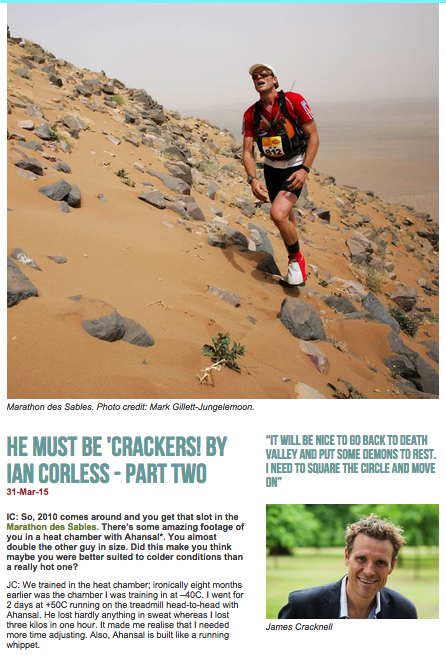
He must be CRACKERS! Part Two of an interview with James Cracknell

Crackers 2

In our next article we feature James’s experiences in the Marathon des Sables in 2010 and his tips for those taking part in April 2015 or planning to take part in the race in future years. His 2015 comeback plans include the Richtersveld Wildrun and the Badwater 135.

“It will be about me drawing a line after the accident as well and moving on. It will be nice to go back to Death Valley and put some demons to rest. I need to square the circle and move on. I don’t want my life to be defined by winning two gold medals. I don’t want my life to be defined by being the guy who got hit on the head by a truck! I refuse, I will choose my path and I will not be pigeon holed. I will create my path.” – James Cracknell

If you missed Part One please go HERE

To read Part Two in full please go to RUNULTRA HERE

run-ultra-logo


Join Cracknell, Kimball and a quality line up at Richtersveld Wildrun, SA.

richtersveld-page_0

It’s game on at the Richtersveld Wildrun™

At the sharp end of this year’s 150km, 4 day Richtersveld Wildrun™ race will be three of Southern Africa’s best trail runners, an American ultra-running legend and a double Olympian gold medallist.

©iancorless.com_TCC2015_Day4-2099

Bernard Rukadza and Katya Soggot will both return to defend their titles and will come up against the likes of South African long distance trail running champion, Thabang Madiba, American ultra-running legend, Nikki Kimball and global adventure extraordinaire, James Cracknell.

Mens Four Medal Ceremony

The friendly Cape-based Zimbabwean and current Richtersveld Wildrun™ record holder, Rukadza, comes off his second straight victory at the ProNutro AfricanX with teammate, AJ Calitz and will be confident that he can defend his Richtersveld Wildrun™ title. He put in a dominant performance at the inaugural event in 2014, winning three of the four stages and thus goes into this year’s event with a distinct advantage over Madiba. “I know the route from running it last year and I definitely want to win again. I always want to push and improve my time and am looking forward to racing Thabang. He’s very good and it will be fantastic,” he said.

Day 2 of the 2014 Richtersveld Wildrun, 'Die Koei' to Hakkiesdoring, Northern Cape, South Africa on 5th June 2014

Defending champion, Bernard Rukadza will return to the Richtersveld Wildrun™ from 2-5 June 2015. Image by Kelvin Trautman


Gauteng-based Madiba, on the other hand, will be giving his all and plans to push the limits as he gains more experience in stage racing. He has set his sights firmly on improving his second place at the ProNutro AfricanX, but is philosophical on his approach to the Wildrun™. “Stage racing is one of the races that helps to find your strength in running. You learn to push while in pain and learn techniques to apply to survive all stages. It is only a matter of surviving and reaching the finish line. I’ve never done 150km in four days before and I’m super excited to give it a try. Life becomes interesting when you try new things and get out of your comfort zone. A win will be a big bonus for me but I’m looking forward to give all my best,” he said.

SA long distance trail champion, Thabang Madiba at the Outeniqua Traverse. He will be taking on Bernard Rukadza at the Richtersveld Wildrun™. Image by Kelvin Trautman

SA long distance trail champion, Thabang Madiba at the Outeniqua Traverse. He will be taking on Bernard Rukadza at the Richtersveld Wildrun™. Image by Kelvin Trautman

“What more can be said other than this is going to be one hell of a race! Bernard has been on fire in the Cape recently, winning everything from marathons to short Spur Trail Series™ events, but Madiba comes with the South African long distance trail champion label and arguably more endurance experience. I can’t wait to see these two trail heavy weights going head to head, solo, and in the magical Richtersveld desert,” said Owen Middleton, MD of Wildrunner – the events company behind the Wildrun™.

Also in the hunt, and sure to be nipping at the heels of Rukadza and Madiba, is second time Richtersveld Wildrun™ challenger, Filippo Faralla as well as British adventurer, James Cracknell.

Soggot vs Kimball

Katya Soggot will be defending her title at the Richtersveld Wildrun™ and facing competition such as Nikki Kimball and Karoline Hanks. Image by Dylan Haskin

Katya Soggot will be defending her title at the Richtersveld Wildrun™ and facing competition such as Nikki Kimball and Karoline Hanks. Image by Dylan Haskin

In the ladies field, Katya Soggot will be representing South Africa off the back of victories at the Spur Silvermine Mountain XL, Spur Cape Summer Trail Series™, Three Peaks Challenge, Matroosberg Challenge and fourth place at the Otter African Trail Race, to name but a few. Soggot’s continuous achievements will come in handy as she is up against three-time Western States 100 champion, previous Ultra Trail du Mont Blanc champ and current Marathon des Sables champion, Nikki Kimball.

Other top lady runners who are worth keeping an eye on, include the female winner of the 2014 Rhodes Ultra Trail Run and uber-experienced ultra-trail runner Karoline Hanks; third placed female at the Wildcoast Wildrun™ 2014 Harriet Cullinan; and second placed female at the 100km Cederberg Traverse, Georgina Ayre.

“Last year, the ladies race was very amicable, with Katya and Tracy Zunckel running together for a large portion of the time. This year will be so exciting to watch, with at least five really strong contenders for the title. Katya will be looking to defend her title, with the advantage of knowing the route and Nikki is certainly a tough challenger,” says Tamaryn Middleton, general manager of Wildrunner. “Karoline Hanks is also extremely strong and comfortable with self-navigation so is definitely one to watch.”

Soggot has said she has amazing memories from the Richtersveld Wildrun™ in 2014 and is ecstatic to go back again. “The magnitude of untouched wilderness, the comfort and welcome at every rest camp, and the elves who made it so. My feet touched where angels fear to tread. I never dreamt I would have the privilege to relive such an experience and I am overwhelmed with gratitude to Boundless Southern Africa and Wildrunner for the opportunity,” she said.

Since its inception in 2014, the Richtersveld Wildrun™ has had amazing support from Boundless Southern Africa and marketing manager, Roland Vorwerk was equally excited about the quality of racing anticipated. “The Richtersveld Wildrun™ route includes many of the Park’s most spectacular features, and includes trails that very few people get to traverse. We are looking forward to these runners experiencing the unique natural and cultural landscape of the /Ai/Ais-Richtersveld Transfrontier Park and meeting the communities associated with this innovative event.”

Do you fancy joining these incredible athletes in South Africa?

Limited places are available through the UK agent. Please use the contact.

← Back

Thank you for your response. ✨

Warning
Warning
Warning
Warning

Warning.


Race Day Nutrition (Part Two) – Marc Laithwaite

©iancorless.com_TCC2015_Day1-9778

So last week (Part One Here)we finished by talking about how many calories you use during an event and how to make a quick calculation of fat and carbohydrate contributions. To recap, we said:

80/20: If you are struggling to ride 50 miles / run 15 miles even when fuelling yourself throughout, then apply the 80/20 rule. That means 80% of your fuel is carbohydrate and 20% is fat.

65/35: If you can ride 50 miles / run 15 miles comfortably using fuel, then apply the 65/35 rule. That means 65% of your fuel is carbohydrate and 20% is fat.

50/50: If you can ride 50 miles / run 15 miles comfortably without using any fuel whatsoever, then apply the 50/50 rule. That means 50% of your fuel is carbohydrate and 50% is fat.

Let’s give ourselves a simple scenario. Tom is 43, weighs 82 kg and is racing Ironman triathlon, he falls into the 65/35 category and his main objective is to complete the event without major disaster and to run as much of the marathon as possible. When Tom is riding at his Ironman pace, he is using 820 Kcal per hour, so the calculation works like this:

Fat contribution:  820 Kcal x 35% = 287 Kcal

Carbohydrate contribution: 820 Kcal x 65% = 533 Kcal

Step 1: Discard the Fat

The calories which come from fat do not need to be replaced, even the leanest athlete has ample fat stores for the longest endurance events. Step 1 is therefore to discard the Kcal from fat and focus on the carbohydrate contribution. Carbohydrates is the fuel which must be replaced!

Step 2: Focus on the carbohydrate

For Tom, our calculated figure is 533 Kcal of carbohydrate per hour, so this is our target to replace during the ride. It’s often easier to work in grams as most foods are also measured in grams. Each gram of carbohydrate contains 4 Kcal, so we calculate grams of carbohydrate as follows:

533 Kcal per hour / 4 = 133 grams per hour

Step 3: Apply the maximal intake rule

You may remember from the last couple of weeks, we discussed that the maximum amount of carbohydrate you can take during exercise is 60g per hour. Tom is using 133 grams per hour (just to clarify, that’s not excessive and is realistic). If the maximum Tom can take is 60g per hour, that means there’s 73 grams (133-60) that he’s losing and can’t be replaced every hour.

Step 4: Work out the race total

Tom’s bike time is estimated to be 6.5 hours. If he’s losing 73 grams of carbohydrate per hour which can’t be replaced, what does that add up to over the total bike ride? Well, the calculation is simple: 6.5 x 73 = 474.5 grams. That means that Tom will lose 474.5 grams of carbohydrate, which he can’t replace, by the end of the 6.5 hour bike ride.

Step 5: Work out your time to collapse

The big figure missing here is the actual amount you have got stored in your body, is losing 474.5 grams a big problem? The average human stores 400 grams of carbohydrate stored in the muscles,  and 100g is stored in the liver. There’s also approx 25g circulating in your blood at any given time. For the astute amongst you, the problem has already struck you squarely between the eyes. Tom, sadly, will not be running the majority of the Ironman marathon.

Does this happen in the real world?

Definitely, take a look at the photo below. This is some data for an Ironman athlete taken this week, male veteran, approx 68 kg with a long history of endurance competition. There’s 12 minutes of data on the screen, the first column shows the power output (watts) and the third column shows time in minutes. Prior to this the rider warmed up for 10 minutes at 100-120 watts. Now look at columns 11, 13 and 14 on the far right hand side, they show Kcal per hour, fat% and carbohydrate%. Consider that 120/150/170 watts is not high intensity, despite that and the previous warm up, you can see that the carbohydrate use is very high. Take into account that our athlete is only 68 kg and that Kcal per hour will be greater in larger athletes.

IMG_0534

Would these fugures be similar for running?

Yes, pretty much. The Kcal usage is slightly higher when running at a similar intensity, but the fat usage tends to be a little higher also. I’d suggest that the fat usage is slightly higher as running requires less ‘fast twitch’ fibre contribution, cycling requires a cretain amount of ‘stregth’. Running intensity also tends to be a bit more consistent. Cycling can be hard on the uphill and then rest and freewheel on the downhill, but running is less so.

Should Tom withdraw his entry right now?

Hang on… we know that people can ride the full Ironman bike and then run the marathon. We also know that people run 100 miles, so there’s got to be a catch, these calculations can’t be correct. Will Tom be completely depleted of all carbohydrate even when taking in the recommended 60g every hour?

No, indeed he won’t and the calculations are not so clear cut as above. Your body is pretty clever so it will make some changes along the way to help you out. Throughout the event, your metabolism will switch, so it’s reasonable to suggest that by the time the bike has ended, 50-60% of Tom’s energy will come from fat, rather than the 35% contribution at the start point. That means he’ll only be using half the amount of carbohydrate every hour, compared to when he started.

That’s good right?

In some ways yes it is, it’s saving your carbohydrate stores by halving the amount used every hour. But you need to consider why this change occurs. Your body switches to use a larger amount of fat because it’s ‘RUNNING OUT OF CARBOHYDRATE’ so whilst every cloud does have a silver lining, let’s not look too positively on this change.

As most people struggle to metabolise fat, having to rely upon it will lead to a drop in pace and performance. If we continue our theme of ‘clouds and silver linings’, at least the slower pace means you will be using less Kcal per hour (slower pace = less energy required) so that also helps to reduce the amount of carbohydrate required.

Is anyone else getting concerned here or is it just me?

It’s ok, there is an answer. The 2 key areas for improvement are economy (Kcal per hour) and substrate ulilisation (fat or carbohydrate). If you are aerobically fit, you will be more economical than most people. In fact, for endurance performance, economy is perhaps the most important thing. We can define economy very simply as ‘how much energy do you need to ride or run at any given speed?’

If you take your unfit pub mates for a run, you may well trot along at 8 minutes per mile and hold a comfortable conversation. Your mate on the other hand, may be breathing like a bulldog in a hot car, blowing out of most parts of his body. He will be using far more energy, require far more oxygen and use far more calories. People are like cars, some can go a long way using only a small amount of fuel and some require a regular filling due to their poor economy.

The second thing to consider is substrate utilisation. This simply refers to the relative contributions of fat and carbohydrate towards your total energy need. We’ve discussed this above and in pretty much every blog in the last 6 weeks, so hopefully you’re already familiar with this concept. If more of your energy comes from fat, you’re less likely to run out of carbohydrate. The best athletes in the world require a small amount of energy (Kcal) to ride or run at race speed. If a large chunk of that energy requirement comes from fat, their total carbohydrate use is very small indeed.

The new Tom… we can rebuild him

By making changes to Tom’s training and diet, the new version arrives for the Ironman triathlon using only 700Kcal per hour and 55% is being provided by fat. A quick maths calculation reveals the following:

1. He’s using 315 Kcal of carbohydrate per hour on the bike, compared to the previous figure of 533

2. With his intake of 60 grams per hour (240 Kcal), he now only has a deficit of 75 Kcal per hour compared previously with 292 Kcal (73 grams)

3. As a consequence, Tom runs the whole marathon and Tom becomes a LEGEND…..

Do you want to become a legend? If so, do the calculations and work it out for yourself, then let’s go forwards from here.

– Marc Laithwaite

About Marc:

Sports Science lecturer for 10 years at St Helens HE College.

2004 established The Endurance Coach LTD sports science and coaching business. Worked with British Cycling as physiology support 2008-2008. Previous Triathlon England Regional Academy Head Coach, North West.

In 2006 established Epic Events Management LTD. Now one of the largest event companies in the NW, organising a range of triathlon, swimming and cycling events. EPIC EVENTS also encompasses Montane Trail 26 and Petzl Night Runner events.

In 2010 established Montane Lakeland 50 & 100 LTD. This has now become the UKs leading ultra distance trail running event.

In 2010 established The Endurance Store triathlon, trail running and open water swimming store. Based in Appley Bridge, Wigan, we are the North West’s community store, organising and supporting local athletes and local events.

Check out the endurance store HERE

Endurance Store Logo

He must be CRACKERS! Part One of an interview with James Cracknell

Crackers 1

In a previous life, James Cracknell spent too much time mucking about in a boat with big blokes wearing too much Lycra. He was lucky enough to win gold medals at the Sydney and Athens Olympics. After that he stupidly rowed across the Atlantic and did a race to the South Pole (both filmed by the BBC).


After Antarctica he decided the cold wasn’t for him and entered the Marathon des Sables where he did okay and came 12th. At the time that was the highest place a Briton had ever come until Danny Kendall upstaged the Olympian.

James’s MDS progress was filmed by the Discovery Channel. This was followed with another film documenting a journey from LA to New York: cycling from LA to Death Valley running through Death Valley then remounting and cycling Route 66 to Lake Erie, rowing Lake Erie then cycling to New York and finally swimming to the Statue of Liberty.


Unfortunately James didn’t complete this journey as a fuel truck in Arizona hit him! Placed in a coma and a two-month stay in a Phoenix hospital, James was close to the edge. It’s been a long journey and one that is ongoing.

Read the full (part one) article on RUN ULTRA HERE 

run-ultra-logo

Win €250 COMPRESSPORT goodies!


©iancorless.com.IMG_1876MDS2014

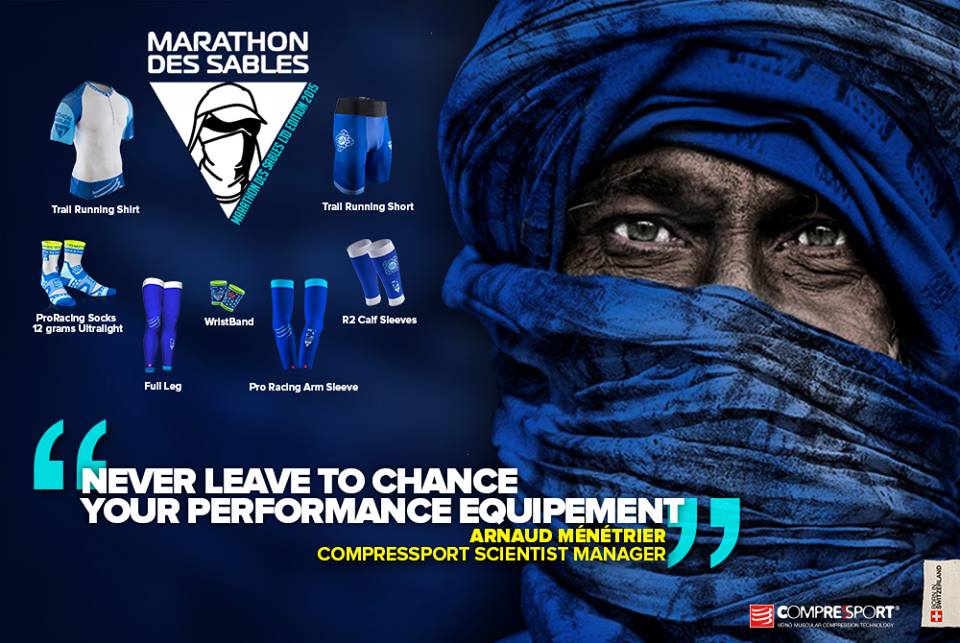
With the imminent start of the 2015 and 30th edition of the Marathon des Sables (preview HERE), leading sport compression brand COMPRESSPORT are providing you all with the opportunity to win one full set of TRAIL clothing.

Male or female apparel is available, all products will be shipped directly from Compressport.

How do you win?

You need to answer the question below using the contact form on this website.

Deadline – April 10th for last entries.

Image ©compressport

Image ©compressport

The total value of products available is €250 and includes the following items

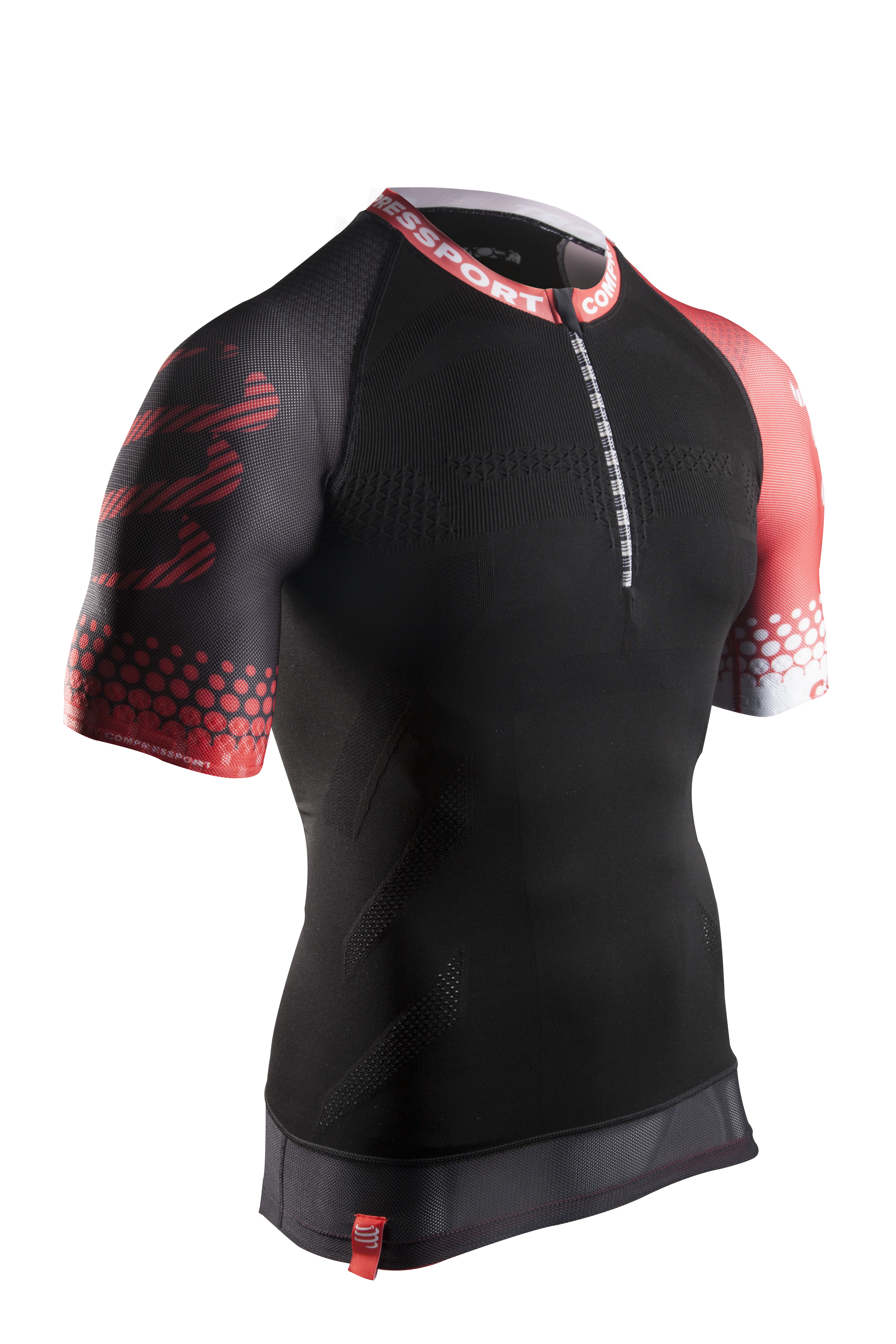
Trail Running shirt Black 02

                                                                Image ©compressport


TRAIL running shirt (male or female)

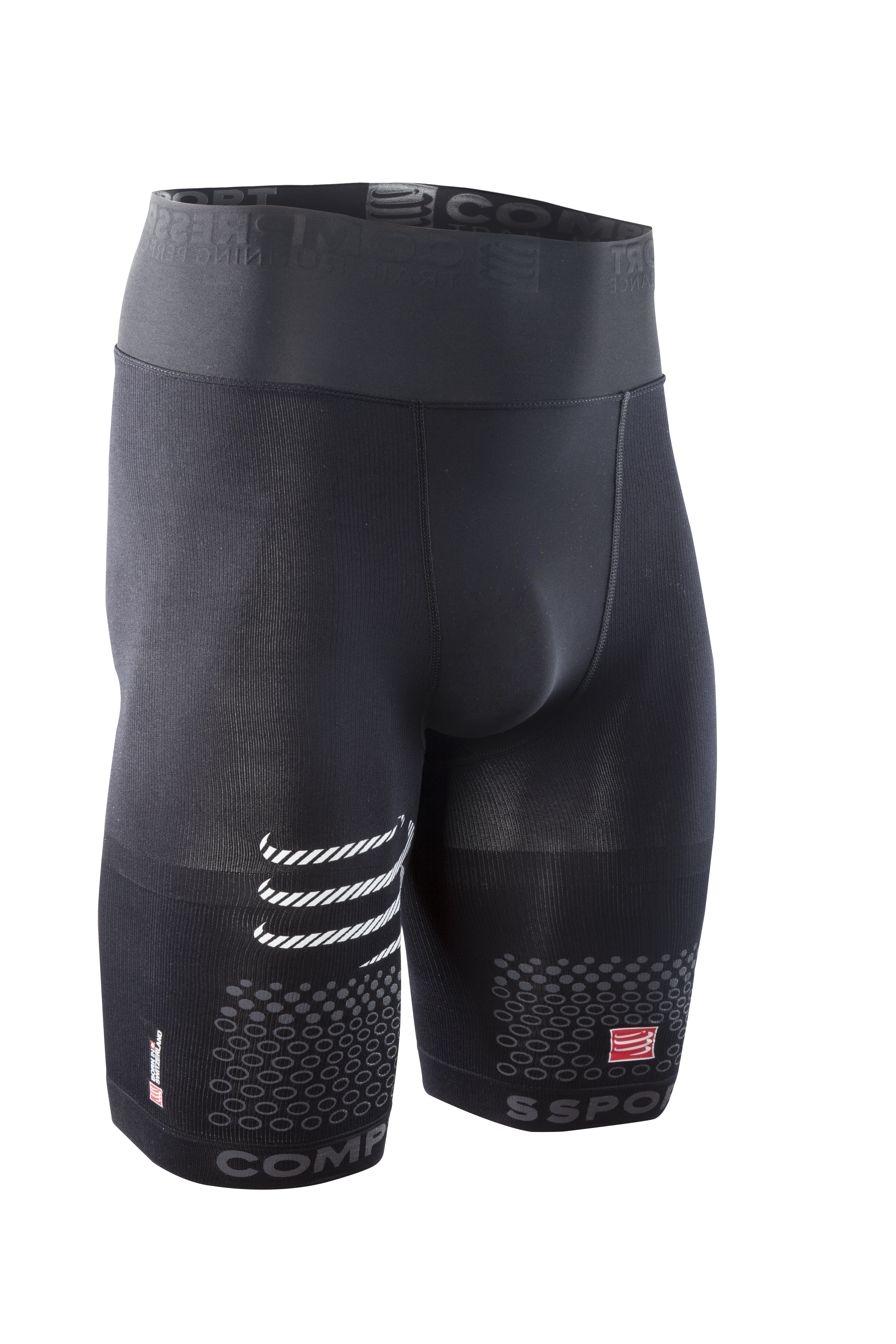
Trail Running Shorts black 02

                                                                Image ©compressport


TRAIL running short (male or female)

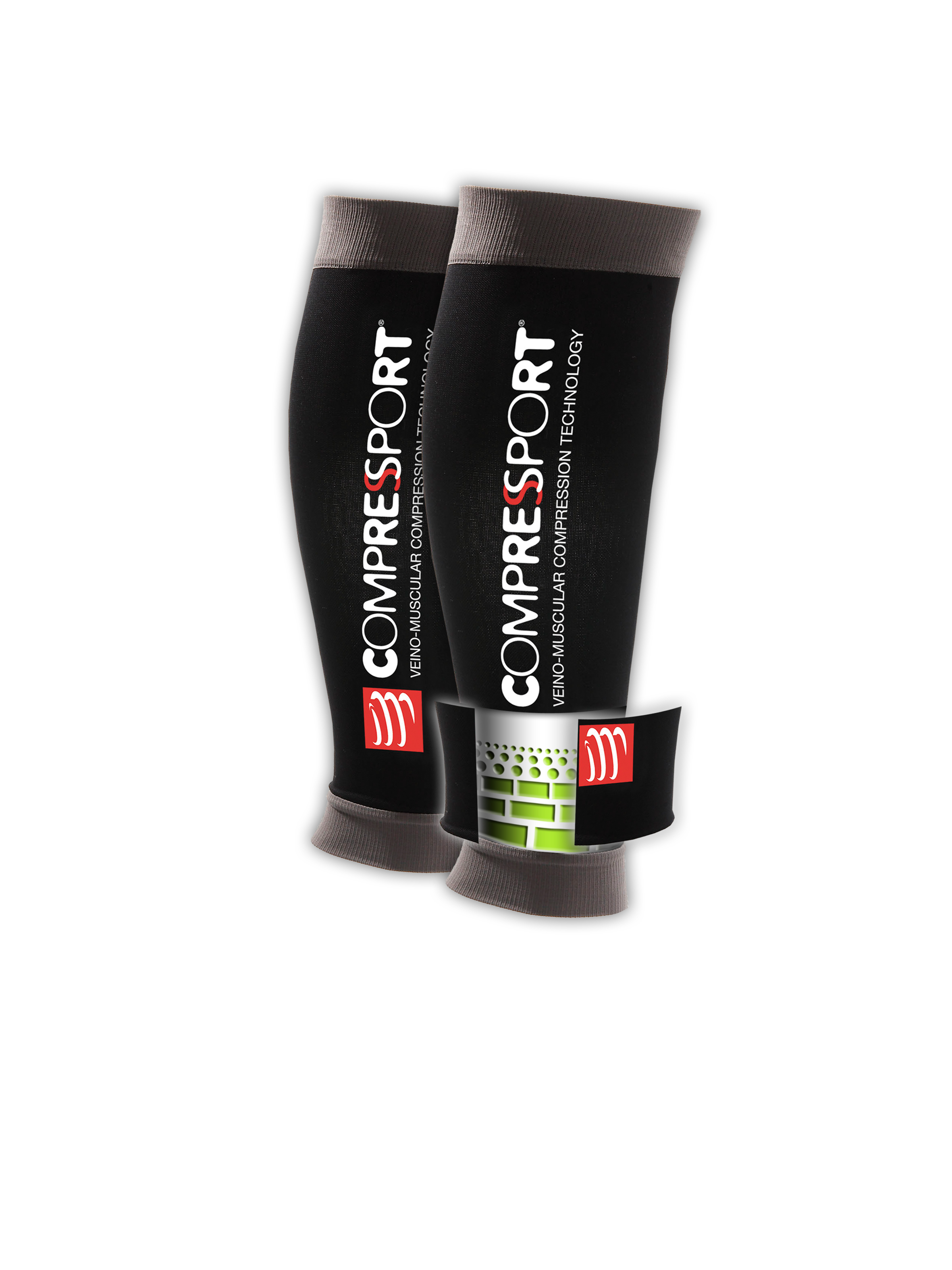
Compressport Paire US Black

                                                               Image ©compressport


Compression Calf

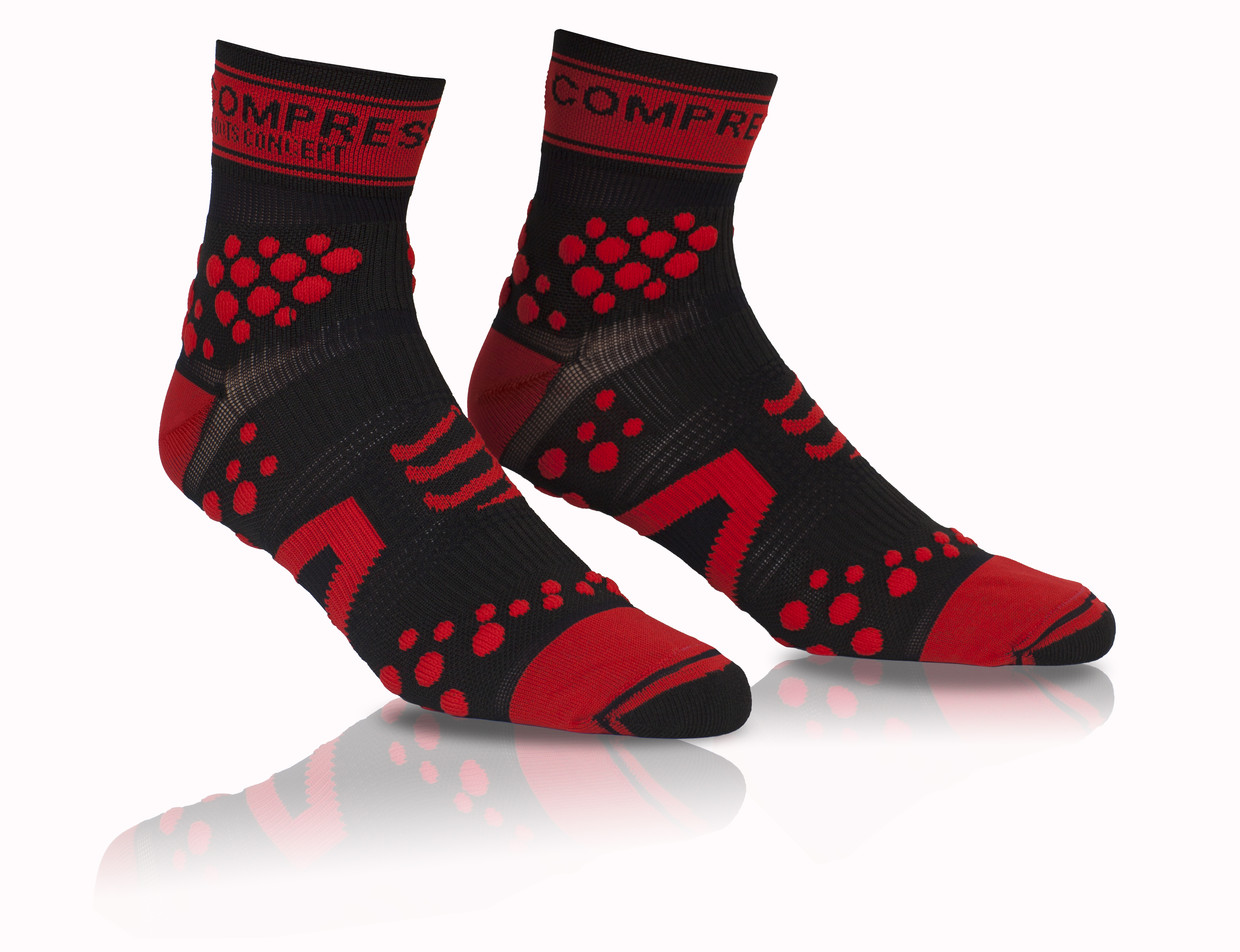
prs_v2_trail_ blackred_2

                                                              Image ©compressport


TRAIL sock

If you would like to win a full set of apparel as listed above.

Please answer the following question using the contact form below.

“Please predict the winning male OR the winning female of the 2015 (30th edition) of the Marathon des Sables.”

Entries will close on April 10th and no entries will be accepted after this date.

Please use the form below

← Back

Thank you for your response. ✨

Warning
Warning
Warning
Warning
Warning
Warning

Warning.


Ryan Sandes sets new FKT

11102633_1125150590844132_4587907915075796064_n

Trail-Blazer Sandes sets Table Mountain FKT challenge

Cape Town (South Africa) – Almost a year to the day after he and Ryno Griesel set the record for the Drakensburg Grand Traverse (in a lightning-fast time of 41h 49m), Ryan Sandes decided it was time for a new challenge. In 02h02m13s, Sandes set the ‘Fastest Known Time’ for 15.1km route (with 1070m ascent and 949m decent) across Cape Town’s famed Table Mountain.

Press release by Kelly Burke – Flux

Mention the name ‘Ryan Sandes’ and it immediately conjures thoughts of the ultimate trail runner adventuring through breath-taking landscapes. Not one to lie back and take it easy, Sandes’ decided to be the first to set the Table Mountain record.

Having started out at 6:30 am at Suikerbossie Restaurant, Ryan ventured his way across the sandstone and fynbos checking through 3 designated points before finishing at SAN Parks Information Centre on Lower Tafelberg Road.

“Anything under 50km is a bit of a sprint for me so racing a route under 16km was a shock to my system, “ Sandes joked. “I felt really good, and really enjoyed myself on the route as it is super technical.”

“I’ll definitely have another crack at the FKT when I get another chance this year as I would like to go under two hours. I think that is the beauty of the project – runners can challenge themselves and run the route a couple of times to try better their times.”

FKT chasing has become somewhat of a phenomenon in the ultra-running world over the last few years. Essentially, an FKT is a course record for a given distance on a trail, usually set on trails where a race with many participants would be detrimental to the area.

Would-be contenders should head to http://www.redbull.co.za/FKT where they’ll be able to pit themselves up against Sandes’ time using any GPS device or the Strava App. A simple registration process and uploading the GPS data from their run is all that stands in the way of getting their name on the Table Mountain FKT leader board.

Just by running the route and uploading their result they stand a chance of joining Sandes’ support team as he travels to compete in the Grande Raid Réunion in October. The race, set on the picturesque volcanic isle, is arguably the world’s toughest 100 miler, with over 10 000m of climbing.

“Get out there, hit the mountain and push past what you think is possible! It’s more about challenging yourself and taking in the beauty that the mountain has to offer. I’ve had the opportunity to run all over the world and what we have in Cape Town is pretty special,” says Sandes.

Image copyright Craig Kolesky

For more information regarding the route and to see the current leader board please visit the website – http://www.re

Ryan Sandes to attempt FKT on Table Mountain

©iancorless.com_South Africa14-5983

On Friday Ryan Sandes will be running a Fastest Known Time (FKT) for a 16km route across Table Mountain in Cape Town, which is amongst the new 7 wonders of nature and is a World Heritage Site. There is over 1400m of climbing, and super technical running along the 16km course. He has partnered with Red Bull for this project and they will be setting up a website where local runners can run the route and record their times and the runner with the fastest time will be able to join Ryan, as a spectator, when he travels to the Island of Reunion to run Raid of Reunion later this year.

The website will be live from next week

©iancorless.com_SkyRun14-3777#ETRkathmandu

Table Mountain Crossing Fastest Known Time Route

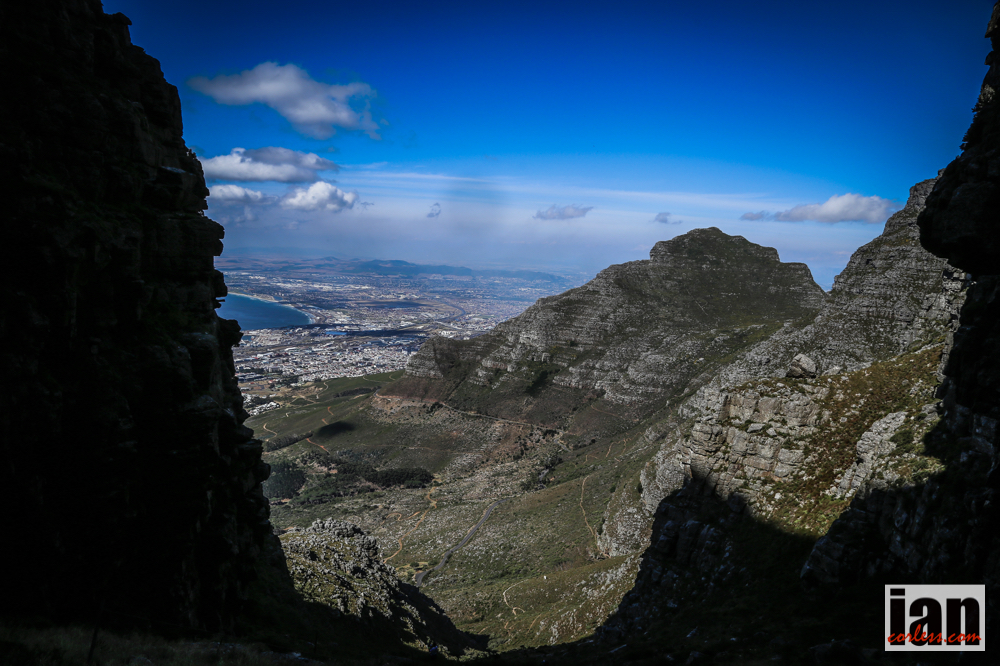
The route is from Suikerbossie Restaurant to the SANParks information centre on lower Tafelberg Road. It takes in Llandudno Ravine and the Kasteelpoort beacon, from where it routes through the Valley of the Red Gods and toward Platteklip Gorge. Then via the Upper Table Mountain Contour path it winds to the Kloof Nek corner beacon and on to the finish.

©iancorless.com_South Africa14-6237

Detailed Route Description (step-by-step)

Start at the main entrance gate to Suikerbossie Restaurant and run towards Llandudno Ravine (Hout Bay Trail Challenge leg 2 route).

Head up Llandudno Ravine where the first Check Point will be a quarter of the way up the climb. Once on top of the mountain, follow the trail towards Kasteelpoort and do not take any of the turn off’s, including the turn off to the WoodHead Reservoir.

Once you reach the beacon at the top of Kasteelpoort, continue straight through the Valley of the Red Gods and towards Platteklip Gorge.

Do not take the turn down to Kasteelpoort.

You will pop out at the top of Platteklip Gorge where Check Point two is. Head down Platteklip Gorge but DO NOT run all the way down to Tafelberg Road.

You must take the Upper Table Mountain Contour path towards Kloof Nek corner (you will run under the Cable Car) and turn down right on the trail once you get to the Kloof Nek corner beacon.

The third and final Check Point is on the Kloof Nek corner trail heading down towards Tafelberg Road.

Follow this trail down to Tafelberg Road. Once you hit the road, turn left follow the road down to the SANParks information centre in the parking-lot where the Table Mountain Trail Challenge starts.

Touch the far lefthand side (if you are facing towards the city centre) of the information hut and you have finished.

©iancorless.com_South Africa14-6838

The run starts with a massive climb up Llandudno Ravine to warm your lungs and legs up. This is a super technical climb to the top of Table Mountain with lots of rock stairs and scrambling. Once on top of Table Mountain the route is a little flatter but don’t be fooled it is not completely flat. It is very technical running along a single track which can be quite overgrown and seeing large snakes is a common occurrence. The views on top of Table Mountain are amazing and makes every drop of sweat getting up to the top of the mountain worth while. Once you get to the Valley of the Red Gods you have a few small ladders to negotiate before descending Platteklip Gorge. This is the hardest part of the run for me, as you have big rock stairs leading down Platteklip which kill your legs and you also have to constantly dodge tourists hiking up the mountain. Once on the contour path, the running is fairly fast to the finish but your legs will be feeling tired after the big descent off Table Mountain. The route is around 16km, but is very slow moving and you can never get into any rhythm. I love the run as it is in my “back garden” and I feel right at home.

©iancorless.com_South Africa14-6931 

Follow Ryan Sandes on his website HERE on Facebook HERE and on Red Bull HERE

Salomon S-Lab Sense 4 Ultra – Review

©iancorless.com_Sense4-8538

Okay, calm down. Yes I know it’s the Salomon S-Lab Sense 4. Yes, I know it’s the shoe that Kilian uses… yes, yes, it’s arguably one of the most desired shoes out in the market place. But is it any good and is it the shoe for you…?

Well, first and foremost. Is it the shoe for you?

Potentially NO!

Shock horror. Easy, easy, don’t go and throw your computer on the floor or punch the screen. More importantly don’t hate me. In all honesty, this may well not be the shoe for you!

To clarify, I am not saying the S-Lab Sense 4 Ultra is not a good shoe. Quite the opposite, it’s a great shoe with loads of great features and it’s a shoe that will delight and provide many a happy mile for the appropriate runner.

So what am I going on about?

Well quite simply, S-Lab is the pinnacle of the Salomon line up. It’s the bees knees, the dogs bolx, the big kahuna, the… you get the drift! Yes I know Kilian uses them! But I am not Kilian and to be quite honest, neither are you.

©iancorless.com_Sense4-8534

The Sense 4 range of shoes currently Sense 4 Ultra and Sense 4 Ultra SG are the evolution of the original shoe pioneered by Kilian on the trails of Western States many years ago. It has evolved and arguably the current model is the best shoe to date. Salomon have listened to the feedback and most notable improvements are:

  • Improved grip
  • Slightly wider toe box (slightly)
  • Durability
  • Protection

I don’t disagree. All the above boxes are ticked. Without doubt, if you are a Sense 3 user, lover and aficionado, you are going to love the Sense 4 Ultra. The shoe does feel different and from experience they feel great out of the box but even better after 3-4 hours of running in them. they just soften up a little.

©iancorless.com_Sense4-8566

The shoe is designed to be light and it is, 240g for UK8.5. It’s designed for dry trail, rocky and mountainous courses and in many respects the shoe is designed for long racing, hence the ‘Ultra’ name. However, this is not an ultra shoe for everyone! (more on that later.)

A 4mm drop shoe, cushioning is 9mm at the front and 13mm at the rear, for comparison, the Sense Mantra 3 has 9mm front and 15mm rear.

You may be asking, why has Ian mentioned the Sense Mantra 3?

Well actually, I personally feel that for many runners out there, the Sense Mantra 3 may very well be a better choice… controversial I know but I will go on to explain.

But first lets look at the Sense 4 Ultra in detail:

The shoe upper has been revised and is one seamless piece uber technology. Overall fit is better (that is hard to believe as the Sense 3 was awesome) and the toe box is a little wider.

©iancorless.com_Sense4-8547

To be honest, I did notice a little extra width but it’s marginal. If you thought the Sense 3 had a tight toe box, you won’t try the sense 4 and think wow, that is so much wider. If you want that, you need to look at the Sense Mantra 3. But toe protection has been improved and you have a great bumper to protect from rocks.

©iancorless.com_Sense4-8552

Sensfit mapping on the upper has been tweaked and I find it hard to believe but it does hold the foot even better than the previous model. I go on about Sensfit, Endofit and the Quicklace system all the time but for me, it’s the shoe fitting system that I compare all other shoes too. Yes, it’s that good!

©iancorless.com_Sense4-8570

The fit of the tongue has also been improved. Again, the Sense 3 was awesome so any improvement here is a bonus and after several runs I can confirm less debri/dust enters the shoe as the  fit is ‘snugger’ than previous models.

©iancorless.com_Sense4-8556

The Contragrip sole has had a significant change with extra depth added to the lugs. Don’t get me wrong, this is not an aggressive sole. I merely compare to the Sense 3.

©iancorless.com_Sense4-8558

I would say that the most noticeable change is the outsole compound; It most definitely has greater grip on rock, road and gravel. Salomon say durability has also been improved? I can’t comment on that at the moment as it is too early in testing.

©iancorless.com_Sense4-8567

Slipping the shoe on, I noticed the improved fit immediately and almost questioned if I needed a size bigger? I didn’t. I just needed to tweak my foot, pull the tongue and adjust appropriately. I was a UK9.5 in Sense 3 and I am a UK9.5 in the Sense 4 Ultra (and Sense 4 Ultra SG for comparison.)

©iancorless.com_Sense4-8548

The S-Lab Sense was always designed to be worn with or without socks. Same applies here. Snug, snug fit and no seams to cause any issues. Endofit, Sensfit and all the usual Salomon S-Lab wonders are present and the shoe fits like a dream.

©iancorless.com_Sense4-8574

The heel area is plush, snug, has no hot spots and holds the foot firm. Uphill or downhill you have 100% reassurance.

©iancorless.com_Sense4-8576

The S-Lab range of shoes excel with a precision fit. By precision, I mean snug and for some that may well be perceived as tight. But that is the point… the shoe is designed to hold the foot secure and allow little to no movement. When running on tough and technical terrain, you don’t want a sloppy shoe. This is why I said in my introduction that this may not be the shoe for you!

©iancorless.com_Sense4-8534

If you are not a fore to mid-foot runner this is not the shoe for you. A drop of 4mm keeps you on your toes and you need to be efficient to make the most of the Sense 4 Ultra. Cushioning at 9mm is very good and ironically is comparable with the Sense Mantra 3. I did it again, I mentioned the Mantra 3!

Looking at the outsole you will see grip on the forefoot and the heal but no grip in the middle of the shoe.©iancorless.com_Sense4-8580

To explain things a little more clearly, look at the image below comparing the Sense 4 Ultra to the Sense Mantra 3.

©iancorless.com_Sense4-8591

It’s really noticeable. The Sense 4 Ultra is more streamlined, narrower in the toe box, most definitely narrower in the middle of the shoe and a touch narrower at the back of the shoe. To clarify, the Sense 4 has a racing last.

You may now begin to understand my constant mention of the Sense Mantra 3 and why for many, it may well be a better choice.

Running in the Sense 4 as you would expect is wonderful and secure. The shoe is precise, has great flexibility, improved grip and overall improved feel over the Sense 3. It’s a winner! On technical terrain you have a constant feel for the ground and due to the tight fit, the shoe goes exactly where you want it to go and importantly your foot does not move inside the shoe. The Quicklace and Lace Pocket are still my favourite lacing option of any shoe. As in the Mantra 3, the OS Tendon really works in providing spring and the Profeet Film protects from sharp objects on the trail.

©iancorless.com_Sense4-8578

Although the shoe is called ‘Ultra,’ I see this model as being a great mountain race shoe for dry and rocky terrain. Could you run an ultra in them? Well, that depends on the runner, the distance of the race and how long you would be running. For me, I personally don’t feel I could run for longer than four (ish) hours in this model. As I say, this is very personal.

Summary

Awesome shoe for the efficient ultra trail and mountain runner who needs a shoe that offers precise control, awesome fit and grip for dry (non muddy) technical terrain.

DING DING DING

Okay, that is my alarm bell ringing – read on!

I said in my intro, ‘Shock horror. Easy, easy, don’t go and throw your computer on the floor or punch the screen. More importantly don’t hate me. In all honesty, this may well not be the shoe for you!’

The combination of tight fit, 4mm drop, racing last and narrow toe box may well mean that the Sense 4 Ultra is not the shoe for you to use. Don’t despair…

I have used the Sense 3 in both versions for months and loved them. I love the Sense 4 Ultra but having used the new Sense Mantra 3, I can honestly say that the Mantra 3 may well be my preferred choice for certain types of running.

If I was going for an out-and-out technical trail mountain run I would choose the Sense 4 hands down, The secure fit, improved grip and combination of features make it a winner. But I wouldn’t want to be out all day.

If I was going for a long run on dry trail with rocks, technical terrain and plenty of miles, I would go the Mantra 3.

The Sense Mantra 3 finally provides a real opportunity for many runners who wanted to use a Salomon Sense but couldn’t get a shoe wide enough in the toe box. The addition of 2mm to the drop is also an added boost to the less ‘race’ orientated runner. Yes I know Kilian doesn’t wear the Mantra 3 but you can’t have it all!

©iancorless.com_Sense4-8594

Final conclusions:

The Sense 4 Ultra has all the usual S-Lab traits and they have been tweaked to provide you, the runner, with arguably the best incarnation of the Sense yet. But it’s a specialist shoe as mentioned previously. The combination of 4mm drop, tight fit and narrower toe box will not be for everyone. However, if you have been using a Sense 3, you will almost certainly love the Sense 4.

If Salomon and in particular the Sense have been too tight and too low (drop) for you, don’t despair. The Sense Mantra 3 is an absolutely incredible shoe, has all the important ‘Sense’ features and you will not be disappointed.

Read a review of the Sense Mantra 3 HERE

Technical Specs for the S-Lab Sense 4 Ultra

  • WEIGHT 240
  • WEIGHT 1
  • CUSHIONING 2
  • STABILITY 2
  • PROTECTION 2
  • BREATHABILITY 5
  • DURABILITY 2
  • MIDSOLE HEIGHT 13mm/9mm
  • DROP 4mm

Quick drying breathable mesh

Propriotection™

Sensifit™

Quicklace™

Racing last

Lace pocket

EndoFit™

Outsole: Non marking Contagrip®

OS Tendon

Dynamic TRACTION

Chassis: Profeel Film

Midsole: Dual density EVA

Sockliner: Die cut EVA

 Check out Salomon S-Lab range HERE
Salomon Logo