Marathon des Sables, today, announce MDS TREK MOROCCO which will take place from October 20th – 29th 2024.
Registration opens June 12th.
Building on the format of MDS – The Legendary, the MDS Trek brings a new concept to the desert with 10-days of disconnection from the noise, clutter and chaos of the modern world.
A 10-day adventure, spending 7-nights in the desert, the trek course will cover between 70 and 120km’s divided into several stages. The distance will be for you to decide based on your personal desires and ability. Unlike MDS – The Legendary, this is not a self-sufficient experience, therefore, participants will only need to carry a light pack with essential items.
But this experience is more than just a trek, it’s 360 experience of escape that will include workshops in the evening on physical and mental well-being in sport, for example, “Athletic Fasting – Its Strengths and Weaknesses”, “Glucose and Blood Sugar Management” or “The Power of Breathing”.
Staying in double tents with mattresses provided, at the end of each stage you will be able to have a Berber shower and buffet dinner. For a small extra charge, massages will be available and in the evening, the option to purchase cold drinks to relax, share experiences and unwind in social areas.
Following the route of the Marathon des Sables, the MDS Trek Morocco will have 4 timed stages, as previously mentioned, you choose the distance. There are no cut-offs, so, pace can be relaxed and should you have any difficulty, you can be repatriated to camp and still able to start the following day.
Water stations will be available along the route, and you will need capacity to carry 1.5 ltr of water, some food/ snacks and nothing more. The rest of your equipment will stay in bivouac.
There is an exception, the **long day, split over 2-days will require a sleeping bag as you will spend a night under the stars in a Nomad camp with a buffet dinner.
This new format offers an opportunity to be active both in mind and body, without the stresses of a more demanding self-sufficient race. It’s a trekking holiday that can be used as a unique stand alone experience or as a stepping stone to another MDS event.
Day 1 – The experience will last 10-days with the need to meet in Ouarzazate on day-1 for transfer to the desert.
Day 2 – Will have technical checks, workshop and a night in bivouac.
Day 3 – Stage 1
Day 4 – Stage 2 and in the evening, workshop.
Day 5 – Stage 3 part 1 with Nomad star night and buffet.
Day 6 – Stage 3 part 2 with return to bivouac and completion of the ‘long day.’
Day 7 – Rest day with workshop.
Day 8 – Stage 4 followed by night at a hotel.
Day 9 – Relaxation day, gala dinner, night at hotel.
Day 10 – Onward travel.
FEES
It will be possible to sign up for this experience from June 12thand the price will be 1950 euro for the first 100 participants and then increasing to 2050 euro.
Done MDS before? Maybe you’d like to return to the Sahara with a loved one or with friends and enjoy a more relaxed trek holiday? The price will be 1750 euro for the first 100 and then increasing to 1850 euro.
The meeting point will be in Ouarzazate on Sunday morning, October 20th, 2024, to join the organisation and take transfers to the desert.
To get to Morocco and Ouarzazate, you can arrive at different airports:
Ouarzazate airport Take a flight for Ouarzazate before the adventure and spend one or more nights at the hotel (at your own expense) then come to the meeting point on the morning of October 20th. We recommend that you arrive before October 19th so as not to miss the shuttles in case of a delay at the airport on Sunday, October 20th.
Marrakech airport Shuttles will be organised on Saturday April 19th in the morning, between Marrakech and Ouarzazate (5 hours journey). You can either: • Book a flight for Marrakech airport and on arrival, take one of our shuttles directly to Ouarzazate. • Spend one or more nights in Marrakech and take a shuttle on April 19th to Ouarzazate.
The return journey at the end of the MDS Trek follows the same logic.
If you wish, you can take advantage of the bus organized between Ouarzazate and Marrakech. These buses will leave Ouarzazate on the morning of October 29th, therefore you’ll need to book a return flight from Marrakech in the afternoon.
If you take a return flight from Ouarzazate, in this case you are free in the hotel-airport transfer and you can book a flight whenever you prefer.
The inaugural 2024 Lofoten Stage Run has just concluded, two experiences, the 170km Expedition Run and the 130km Adventure Run brought to you by The Arctic Triple team. Six days and four stages inspired by the Lofoten Ultra-Trail 100 Miles solo race, the Lofoten Stage Run brings the same route broken down into manageable chunks.
Epic landscape and views
There is no better way to fully immerse oneself and experience that magic that Lofoten offers. The routes journey to hidden places, often only experienced by the most adventurous tourist. Each day concluding with the Norwegian Hytte experience and local cuisine.
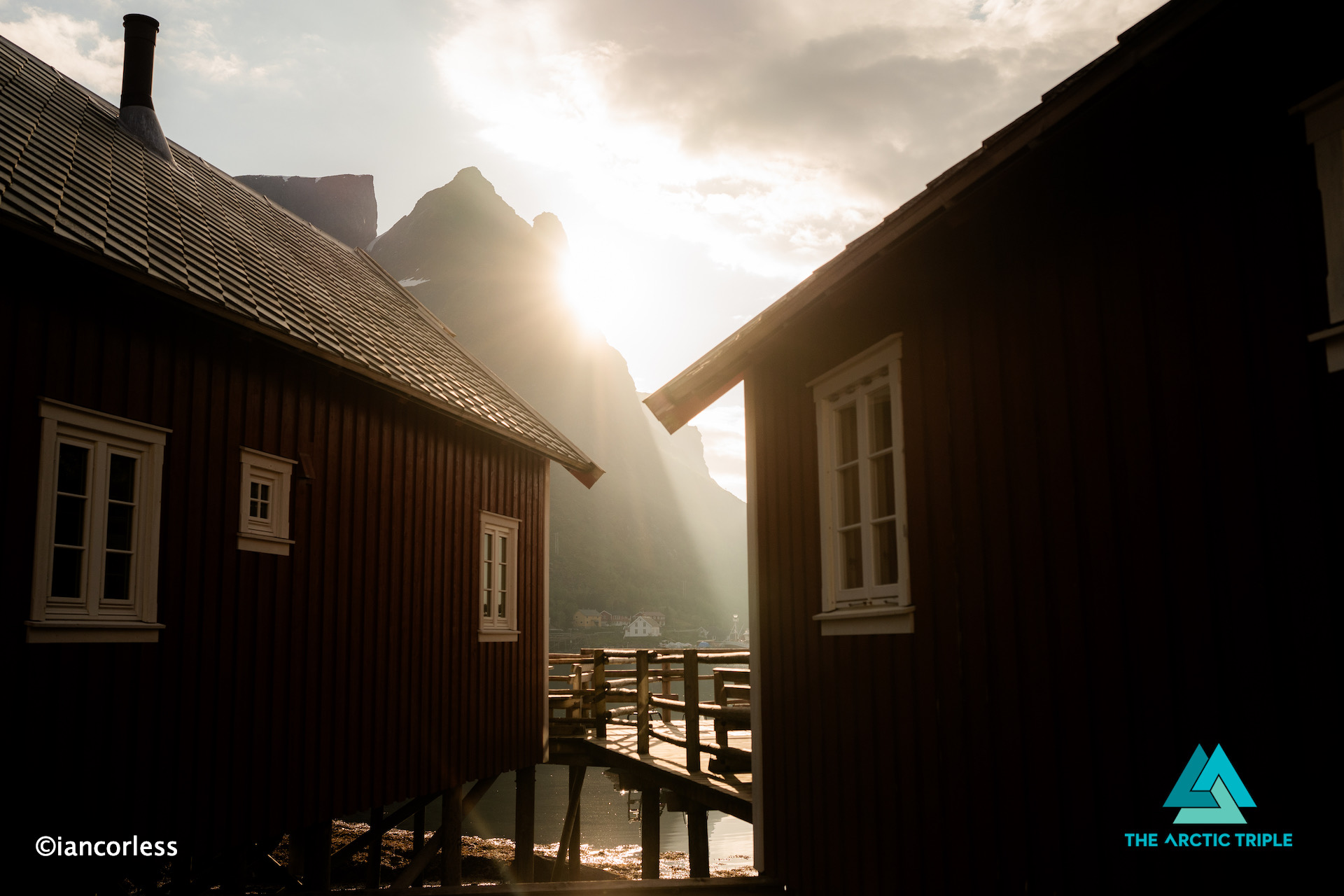
Norwegian Hytte – Reine Rorbuer
Designed to be a running holiday, however, do not be fooled, those cozy and comfortable evenings are worked for. The terrain here in Lofoten is challenging; a mixture of all terrains and elements that can bring for many, the ultimate challenge.
Mountains, snow, single-track and amazaing views with Johan Cajdert.
THE EXPERIENCE
Arriving in Svolvær on Tuesday May 28th, participants were transported to Reine, considered by many to be the most beautiful village in Norway. It is certainly iconic.
Reine Rorbuer
Staying in an authentic fisherman cabin in Reine Rorbuer, the 2024 experience kicked-off with a race briefing and then dinner.
Race briefing
Wednesday, stage 1, started with a boat trip from Reine to Kjerkfjorden.
What a way to start a journey.
The route ahead, 39km’s. The opening 10km’s a real challenge with tough climbs, technical terrain, snow sections and soft/ boggy ground.
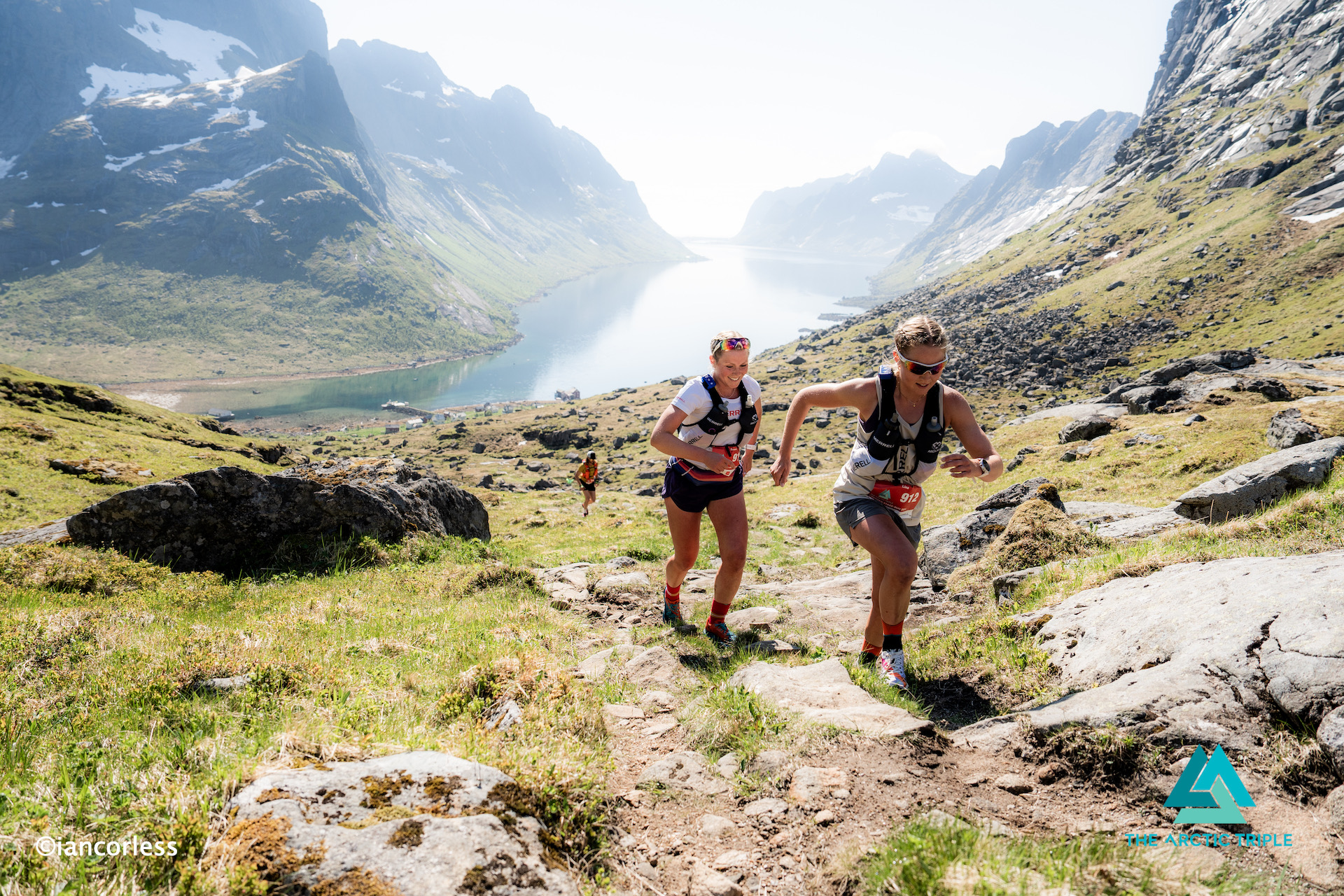
Lina and SannaRock, trail, grass and snow.
Kvalvik beach offers some opportunity for flat terrain before a steep climb and eventually a descent to Fredvang and checkpoint.
It’s more than just running.
A road section leads to Nesland and the final technical trail sections before arriving in the picture postcard, Nusfjord – a tough day!
Tzvetie at the end of stage 1Twin power finishing in Nusjford
Stage 2 at 34km’s concludes at Lofoten Rorbuutleie another amazing location surrounded by sea and mountains.
Early miles of stage 2 and epic viewsClimbing to coastal trails
The early route to Napp bringing many a challenge, technical trails and mild hands-on scrambling sections before sweeping single-track with stunning views.
Hands-on scramblingMagical terrainRoad sections provide some easy running and link the key trails
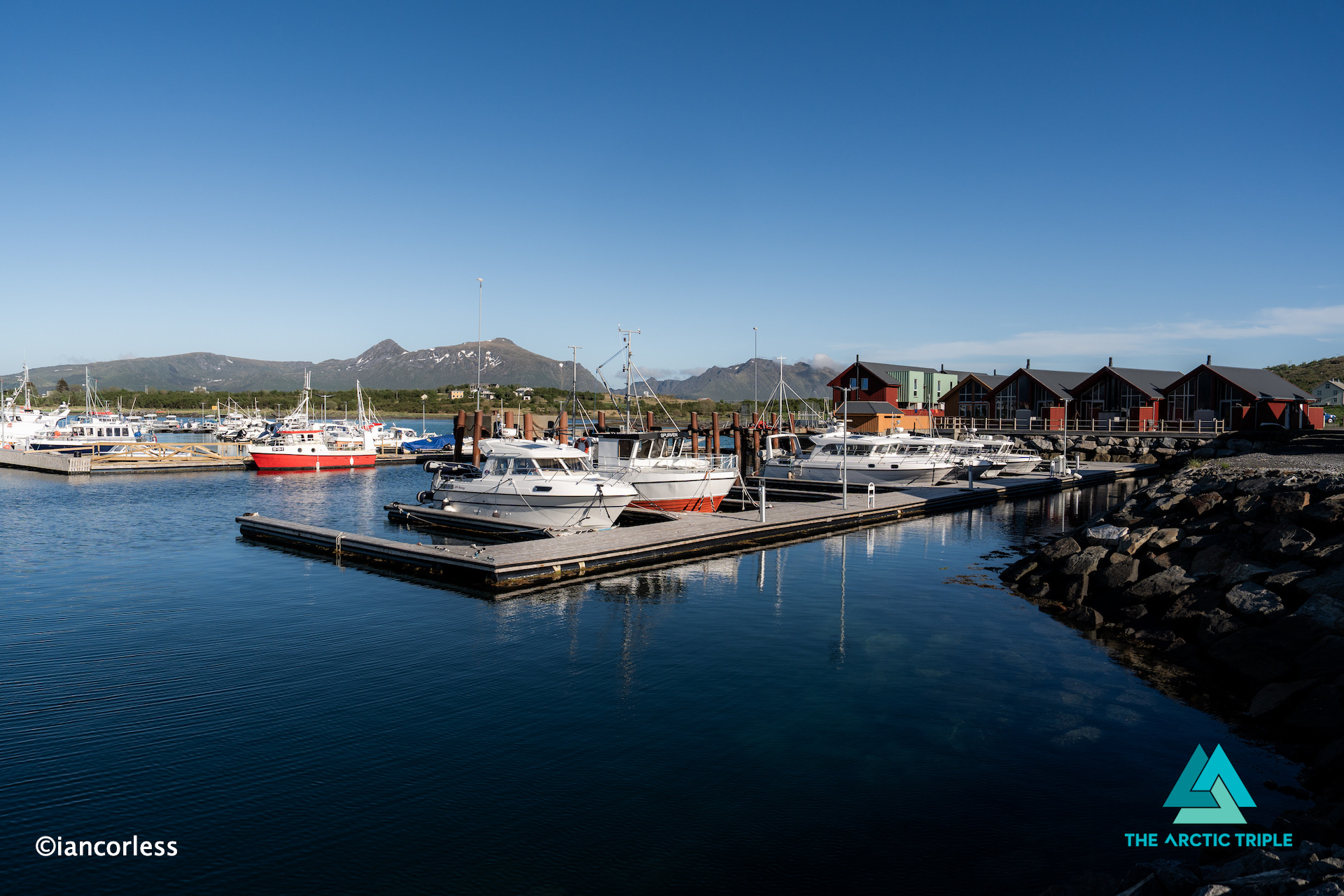
Road gives way to coastal trail and another road section before arriving at Lilleeidetholmen Marina, the buildings are located with water on both sides and direct access to quays and floating docks.
Lilleeidetholmen Marina
Stage 3 for 170km Expedition runner’s is the long day, covering 52km’s with arguably the most ‘runnable’ terrain of the whole week.
Between a rock and a hard placeSnow fields add to the experience
Technical aspects are reduced and much of the route is single-track interspersed with some road.
Johan Cajdert
The finish at Brustranda Fjordcamping once again offering a wonderful Norwegian hytte experience of cabin surrounded by water and mountains.
This is Lofoten
Stage 4, the final day bringing some of the most technical terrain of the whole Lofoten Stage Run experience, especially the climb to Jordtinden and the ridge that follows with some exposure form ‘airy’ single-track, snow fields and at times, challenging terrain.
Graeme Murdoch at Jordtinden.On the way down the ridge.The twins dominated each stage
The final peak of Tjeldbergtinden a final challenge before the run in to Svovær and the conclusion of four magical days. After the race, a meal at the event hotel, Thon Hotel Lofoten, where the focus is some of the best local food from the area. A perfect evening to recap from the race and share new and old stories with your new friends.
Great food a feature of the experience
THE RUN
Run, walk or hike.
170km or 130km, one thing is for sure, running in Lofoten is tough and challenging. Terrain constantly switches from demanding and technical sections to easy flowing single-track. For sure, day 1 was a surprise to many and a warning of the challenge that would be ahead to complete the 4-day experience.
Always some snow throughout each stage
Despite schedules for the 170/130km runs, this journey was all about enjoyment and experience, therefore, participant requests for shorter days, or even rest days were accommodated. The Lofoten Stage Run is as explained, a running holiday and therefore it should provide the right experience for the individual.
Reiner completed the 170km mixing walking and running
What was key was the unified enjoyment through the whole group of participants, key to this was the evening hytte experience and the sharing of a meal together.
Hytte in great locations
Of course, racing did take place, and Lina and Sanna Elkott Helander were the stand out champions of the 170km distance along with Johan Cajdert.
The twins!
Graeme Murdoch and Tzvetie Erohina lead the way for the 130km.
Graeme and Tzvetie
Results though don’t tell the story, the Lofoten Stage Run was a relaxed trail running experience that brought so much more than just running.
Wow
The weather played ball and provided not only pleasurable temperatures but also allowed Lofoten to be visible, this really is a truly magical landscape. Traveling point-to-point, on foot, experiencing the majesty of Norway. Stunning trails, majestic mountains, resplendent views, and all during the endless daytime of the midnight sun. It gets no better!
Shoes are personal. Run shoes are very personal. Quite simply, we are all unique and our needs when running vary greatly depending on the distance we are running, the terrain we are running on and how long we will be out for. It is why so many shoes exist.
Last year I said my shoe of the year was the Merrell Agility Peak 5. It is a shoe that ticked all the boxes, comfort, great foot hold, excellent grip and a fantastic all rounder for trail and mountain running. If I was only allowed one trail shoe, the Agility Peak 5 would be my choice.
It’s fair to say, that Merrell are still fighting an uphill battle to be taken seriously in the run world, especially when compared to the giants like Hoka, adidas, Brooks, Asics, Salomon and so on… Take note, Merrell should definitely be on your consideration list.
With the announcement of the MTL Long Sky 2 Matryx and my love for the Agility Peak 5, I was very keen to give this new incarnation plenty of testing.
In contrast to the Agility Peak 5, the MTL Long Sky 2 Matryx is a completely different beast. Less cushioning, lower weight, lower profile and lower drop. It’s a very specific shoe.
To draw a comparison, the Agility Peak 5 is like an everyday car for the family, plenty of room, comfort and great for a full day out. The MTL Long Sky 2 is much more a 2-seat sports car that is has a very specific use and some comfort is missing in exchange for speed.
So, although the name has ‘Long’ in the title, don’t be fooled in to thinking this is a long distance shoe. It is not. The most relevant part of the shoes name is ‘Sky’ and the reference to skyrunning which takes place in tough, challenging and technical terrain and mostly over shorter distances between 20 and 50km.
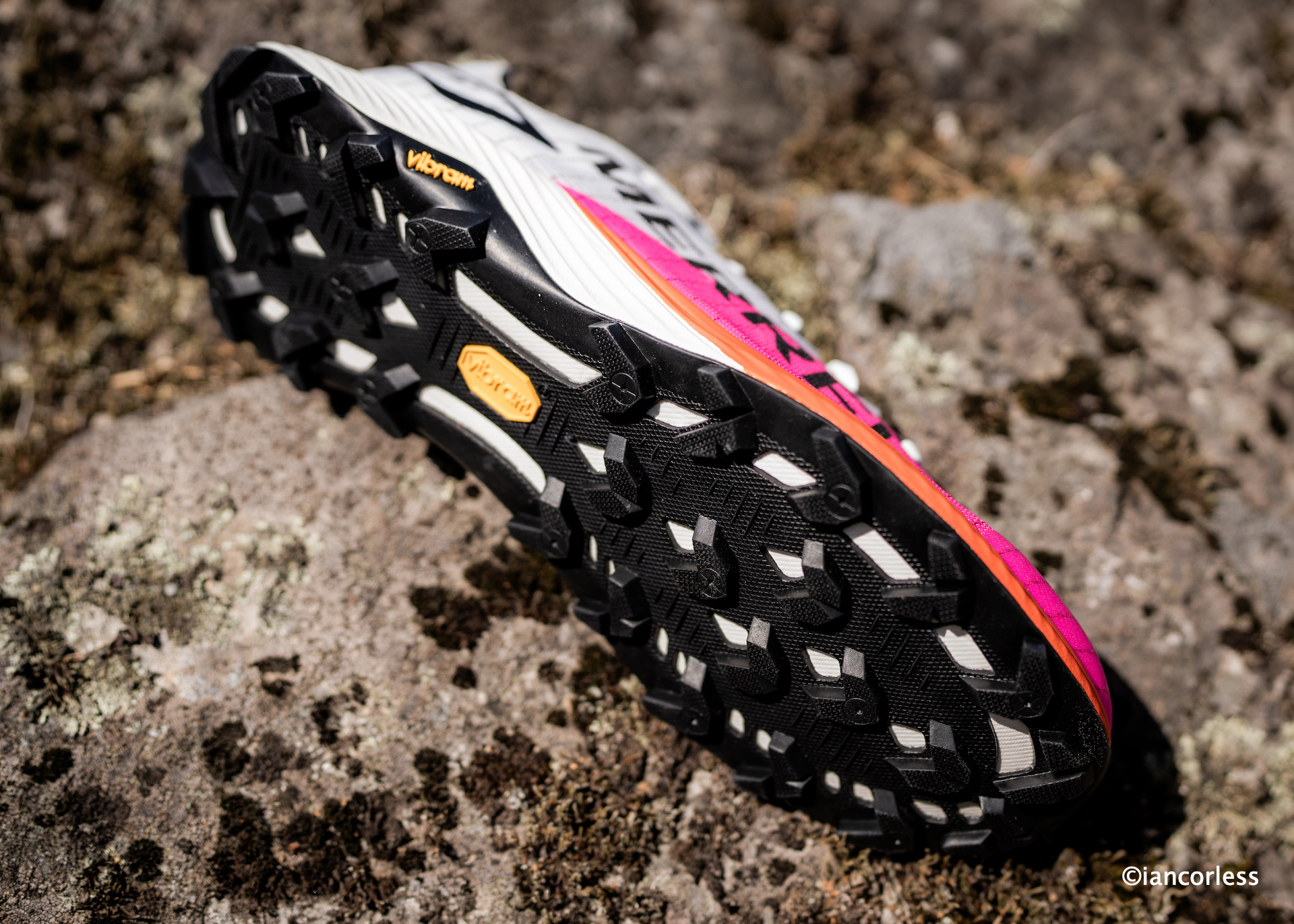
A neutral shoe, in comparison to the previous model (the Long Sky) the drop has been reduced from 8mm to 4mm. This is significant is it gives a much greater contact with the ground and control. Cushioning is 19.5mm at the front and 23.5mm at the rear. The outsole is Vibram MegaGrip with 5mm lugs.
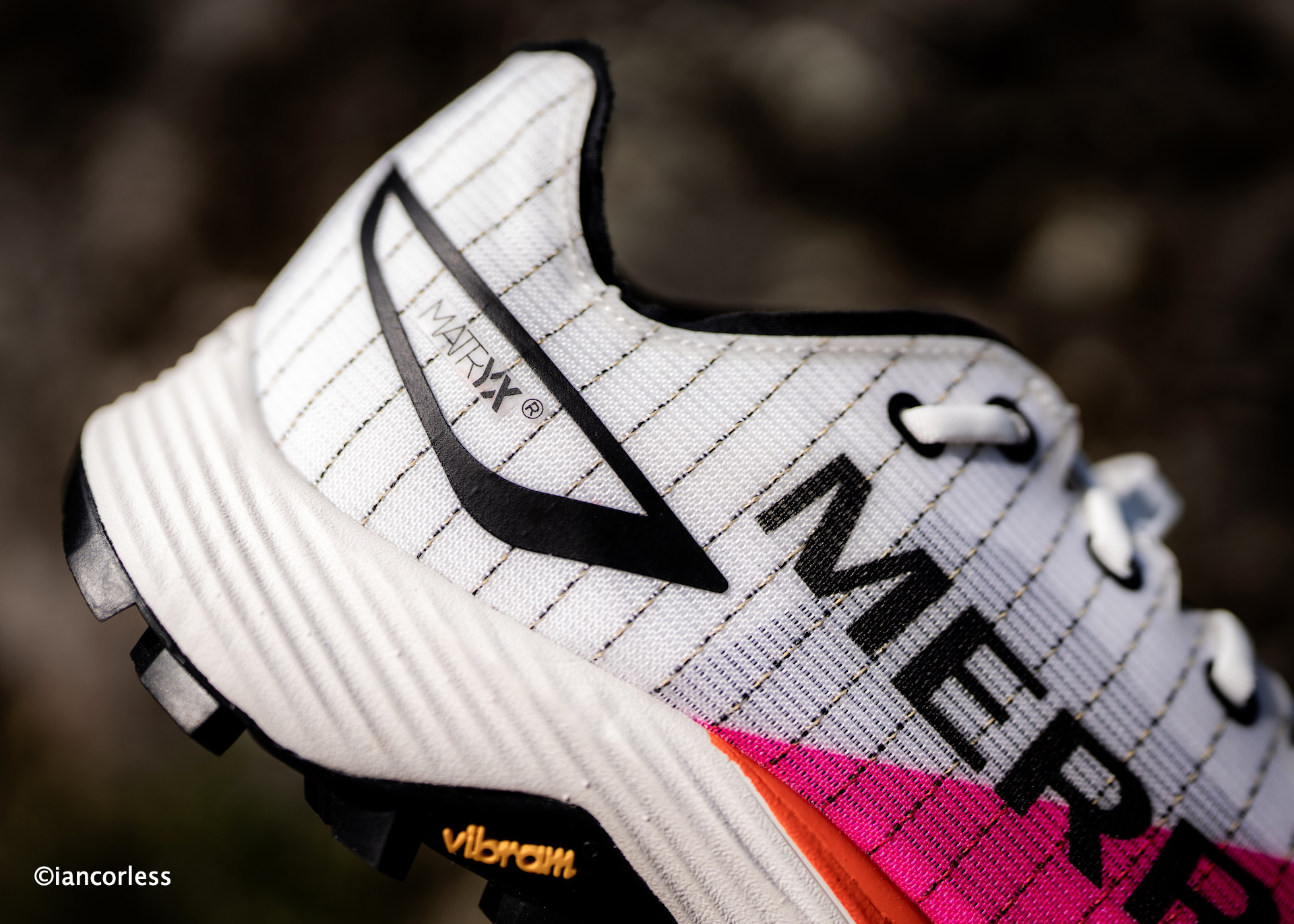
A key feature is the new MATRYX upper which has more durability and is designed to keep the foot cooler with greater wicking.
They have a gusseted tongue for excellent foot hold. Cushioning is via EVA foam insole and dual FloatPro Foam.
There is a temperature regulating footbed. A UK9/ EU44 is 259g and sizing is true to size. The shoe is 15% lighter than the previous model
THE SHOE
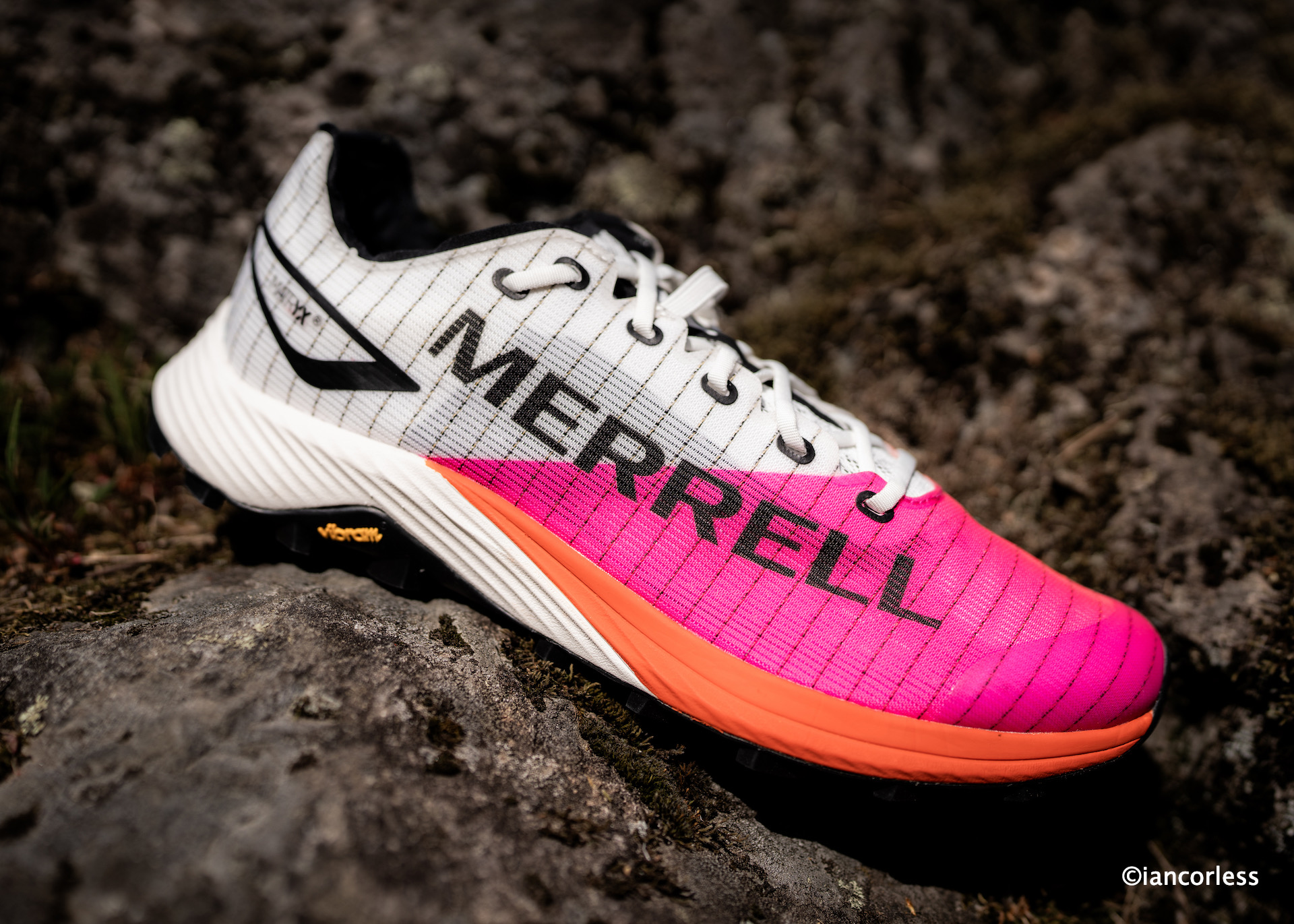
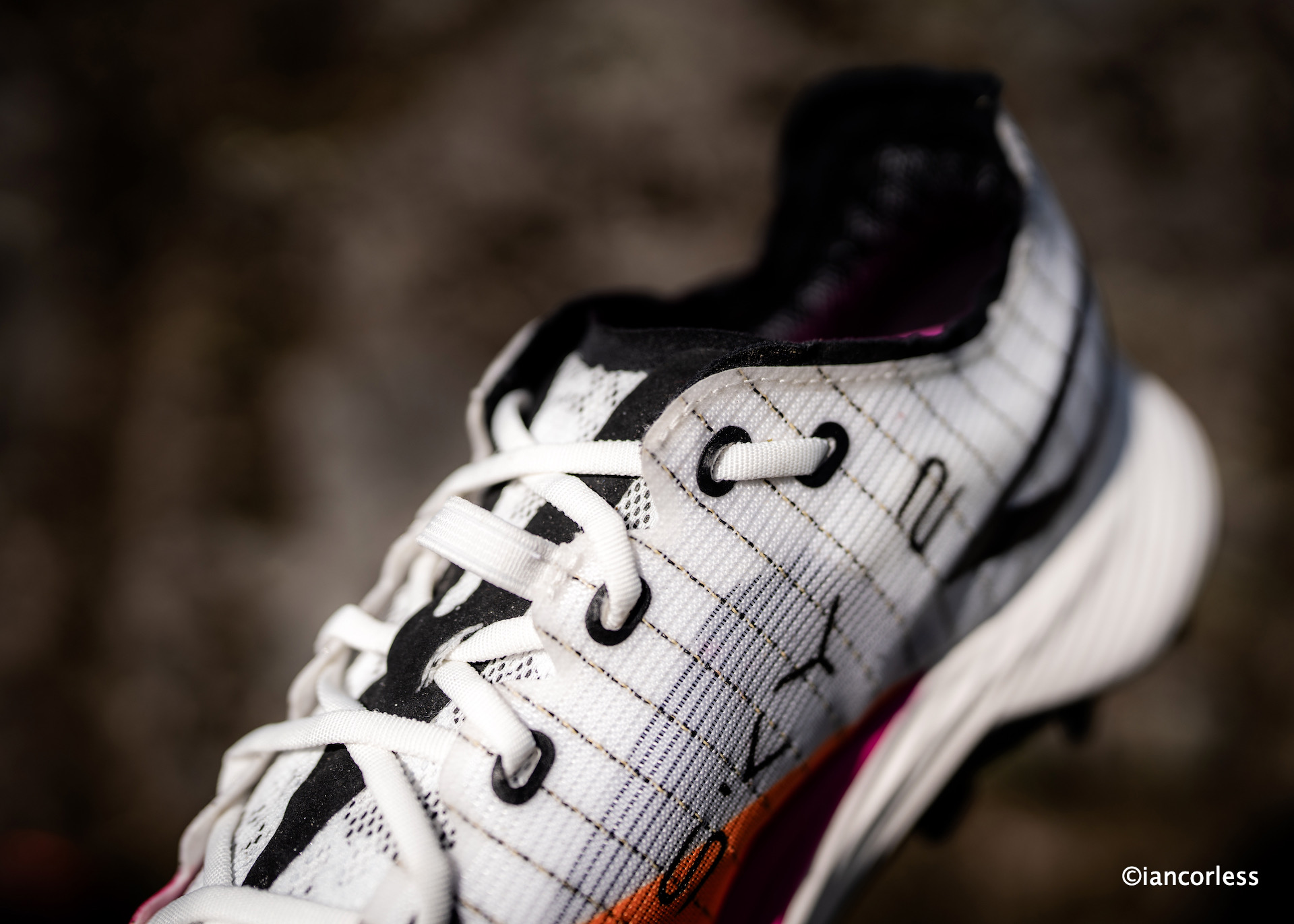
It’s a great looking shoe and one that immediately says speed. The white to multi fade orange and pink is striking.
Slipping the shoe on, the foot hold is immediately noticeable and with the laces adjusted and the sock-like fit, there is no movement at all. Exactly what you want from a shoe that will handle mountainous and technical terrain. The heel area is very minimal and there is a raised padded area inside that is designed to grip and hold – it certainly does, arguably they are the most secure shoe I have experienced in this area. The front of the shoe opens up to provide enough width for toe splay, but not too much room so that you would lose control when precision is required.
With a 19.5/23.5mm cushioning, this shoe is designed to provide a compromise offering cushioning but not losing ground feel and control. As mentioned before, the ‘Long’ in the name is relative and for most people, this is not a long distance shoe.
The upper construction is minimal and notably so at the front, there is token toe protection. Don’t be fooled though, this MATRYX upper is tough and durable.
The shoe immediately feels comfortable when you put them on. I strongly suggest you play around with socks to find out what works best for you, I noticed a huge difference in feel between a lightweight sock and a slightly thicker merino sock.
Merrell say the shoe is good for up to 50km. For sure, yes, 50km is possible, but this depends on the runner and the speed they are going. A top elite mountain runner may tick off 50km in 4 to 5 hours, whereas, someone else may take 10-hours, so, use caution.
The MTL Long Sky 2 Matryx is designed to be agile and nimble, they are! But this comes at a price on comfort and protection. I had expected more protection and ultimately, for me, that just wasn’t there. I could feel stones, rocks and tree roots through the shoe which did surprise me. They feel thin!
They are very flexible and the propulsive phase is very good. On the correct feet, this is a fast shoe.
The biggest problem for me was the heel area. In one area they are brilliant, the hold is fantastic, they are secure and there is no slipping. However, this hold comes from the raised cushioned area with the heel, no matter what I did or tried, this just rubbed and caused blisters on both feet. I must caveat here, I never get blisters. So, this just made the MTL Long Sky 2 Matryx unwearable for me.
The outsole is Vibram MegaGrip with 5mm lugs. Ideal for technical terrain providing grip when required on rock, gravel, light mud and varying terrain. I am still not 100% convinced or confident of Vibram on wet rock, especially when compared to VJ Sport or the Continental grip on adidas shoes.
Conclusion
There is a great deal to like in the Merrell MTL Long Sky 2 Matryx and if you are looking for something light, nimble, fast with ground feel for short mountain days or racing, this is for you. However, this all comes at a price. It’s a specific shoe for a specific task, just like a Formula One car. This is not the only shoe to have or use. It’s too specific for everyday runs, so, the MTL Long Sky 2 Matryx should be added to an already existing shoe collection and they should be reached for and used on special days. Given that Merrell sponsor the Skyrunner World Series, it’s unsurprising that this shoe is designed to specifically perform on this terrain.
The iconic race of sea, to summit and back to the sea has returned to its roots and the people of La Palma. Few races, anywhere in the world, have the magic of Transvulcania.
It’s more than a race, it’s an experience that transcends running. A 360 journey of location, culture, emotion and a journey to the core of what makes the sport of trail and mountain running so special, a unified glory of experience.
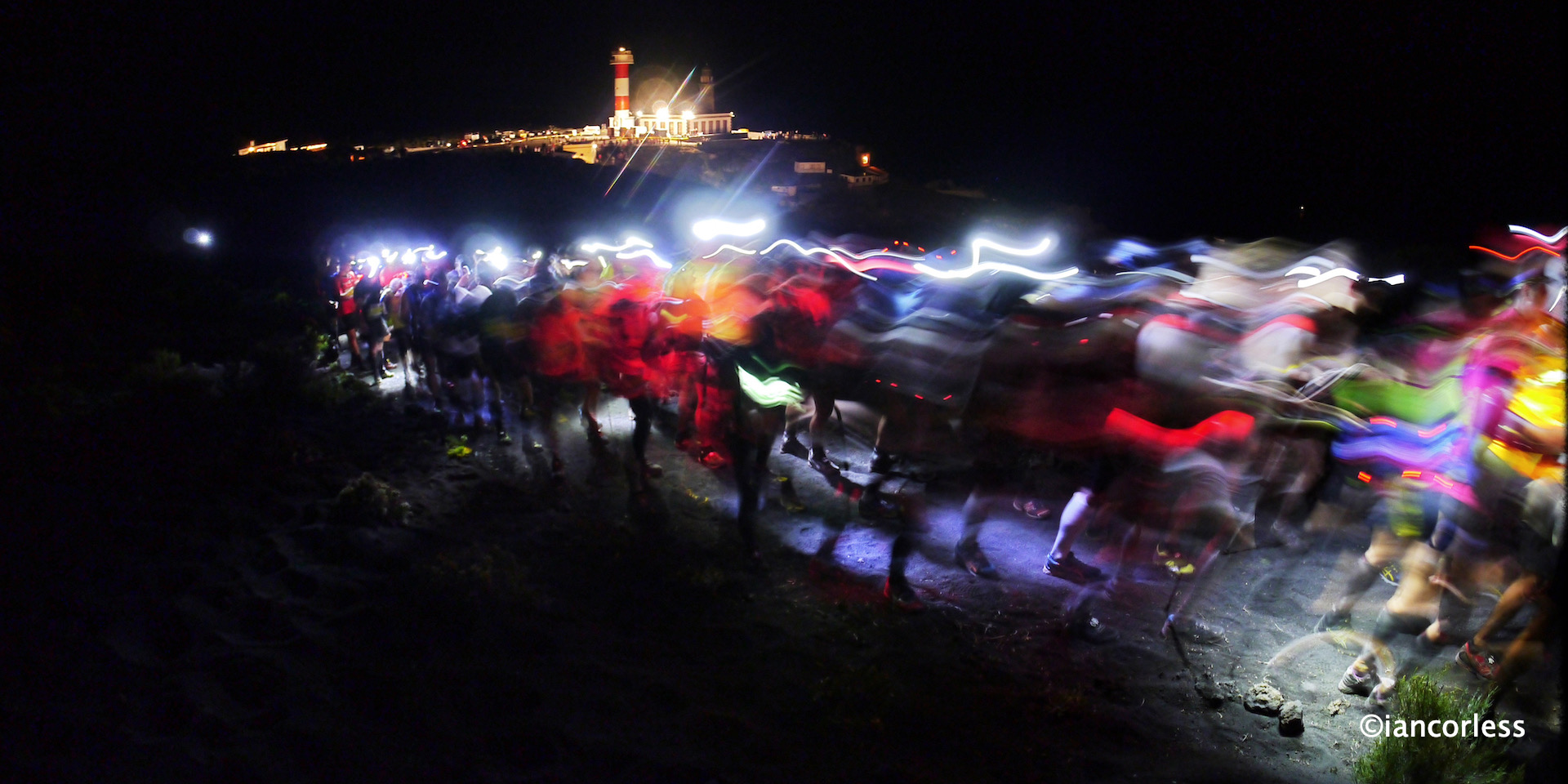
From the early morning start at the Fuencaliente lighthouse, the pounding drums and guitar of AC/DC and the words, THUNDER, THUNDER, THUNDERSTRUCK…!
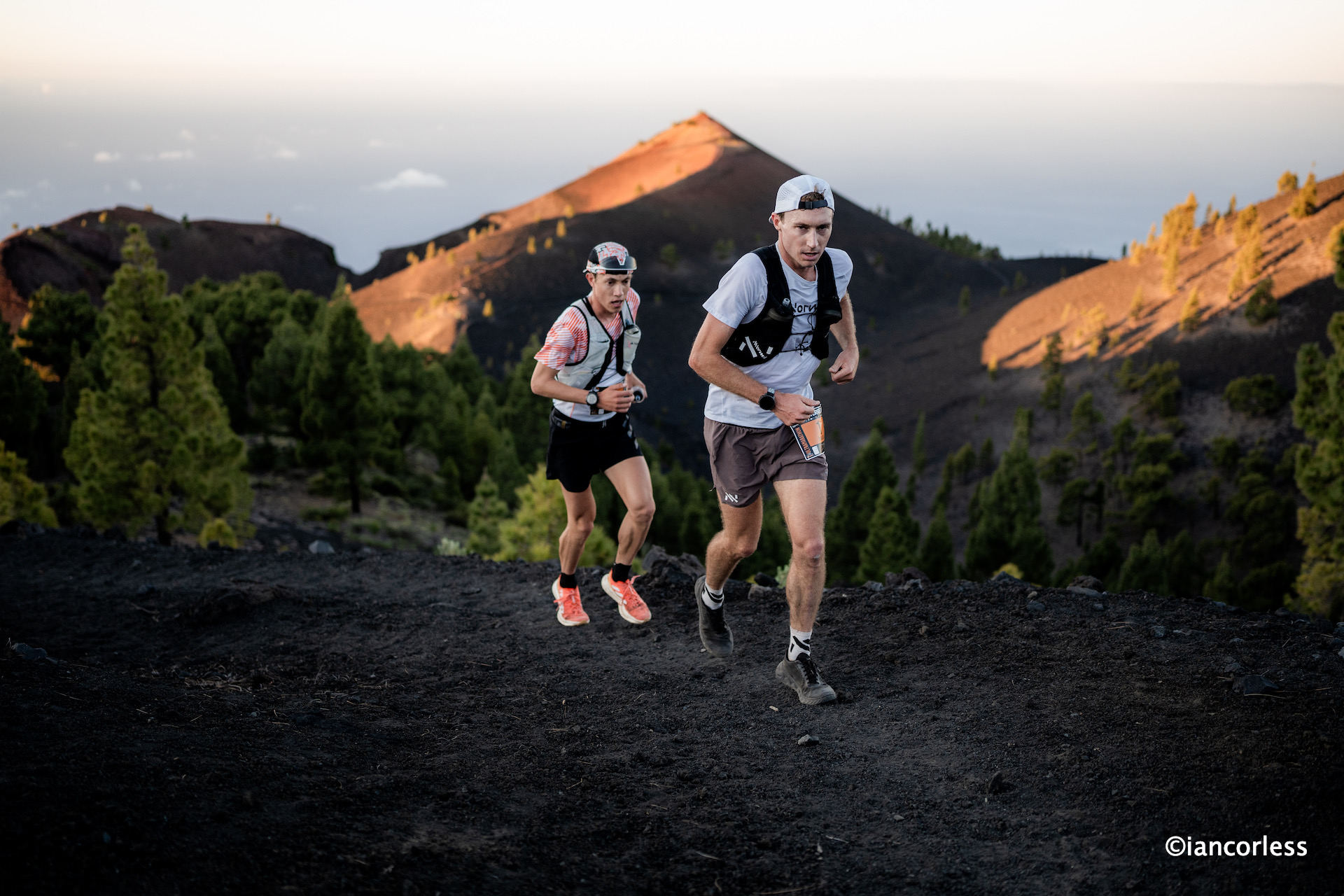
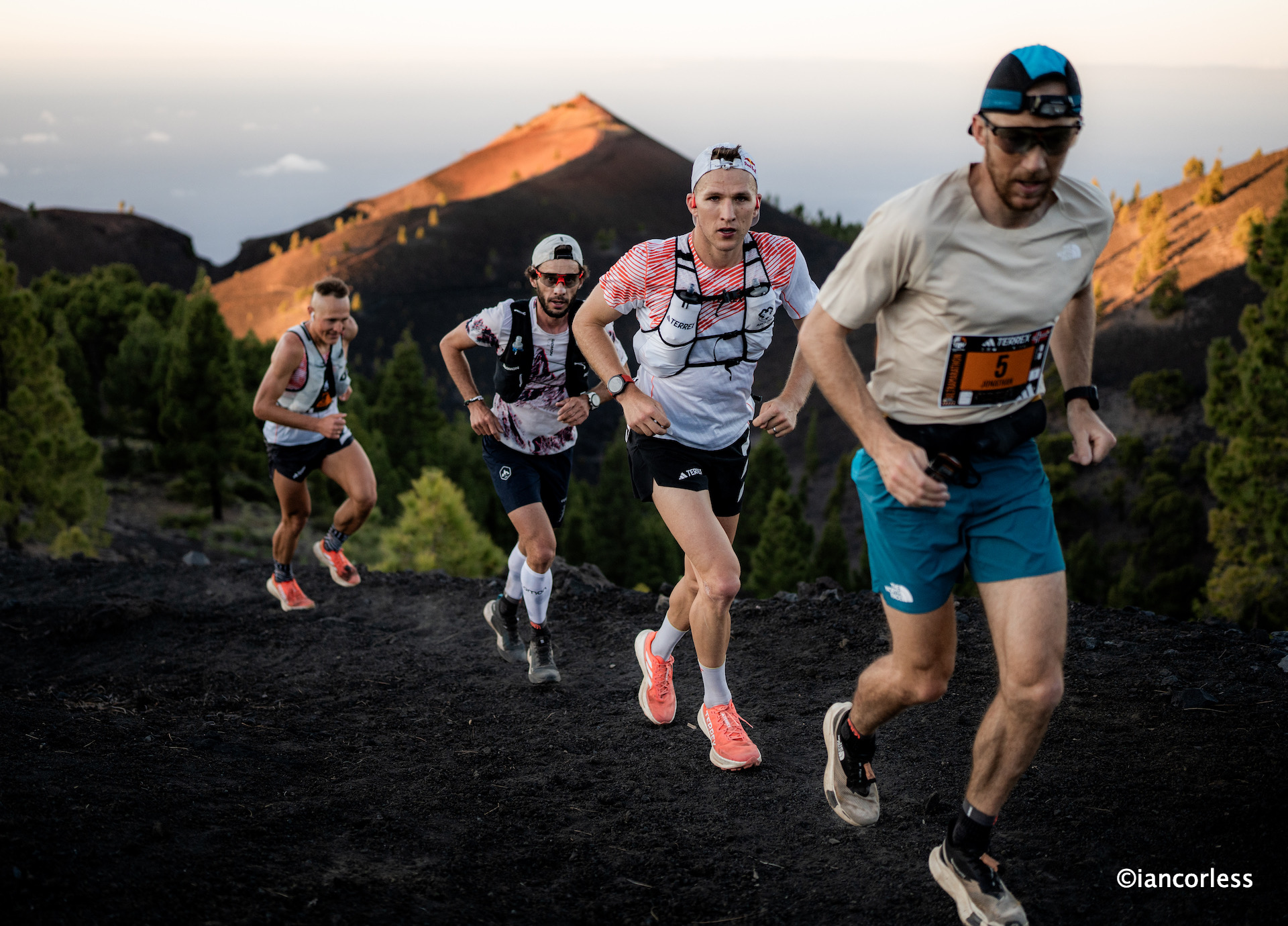
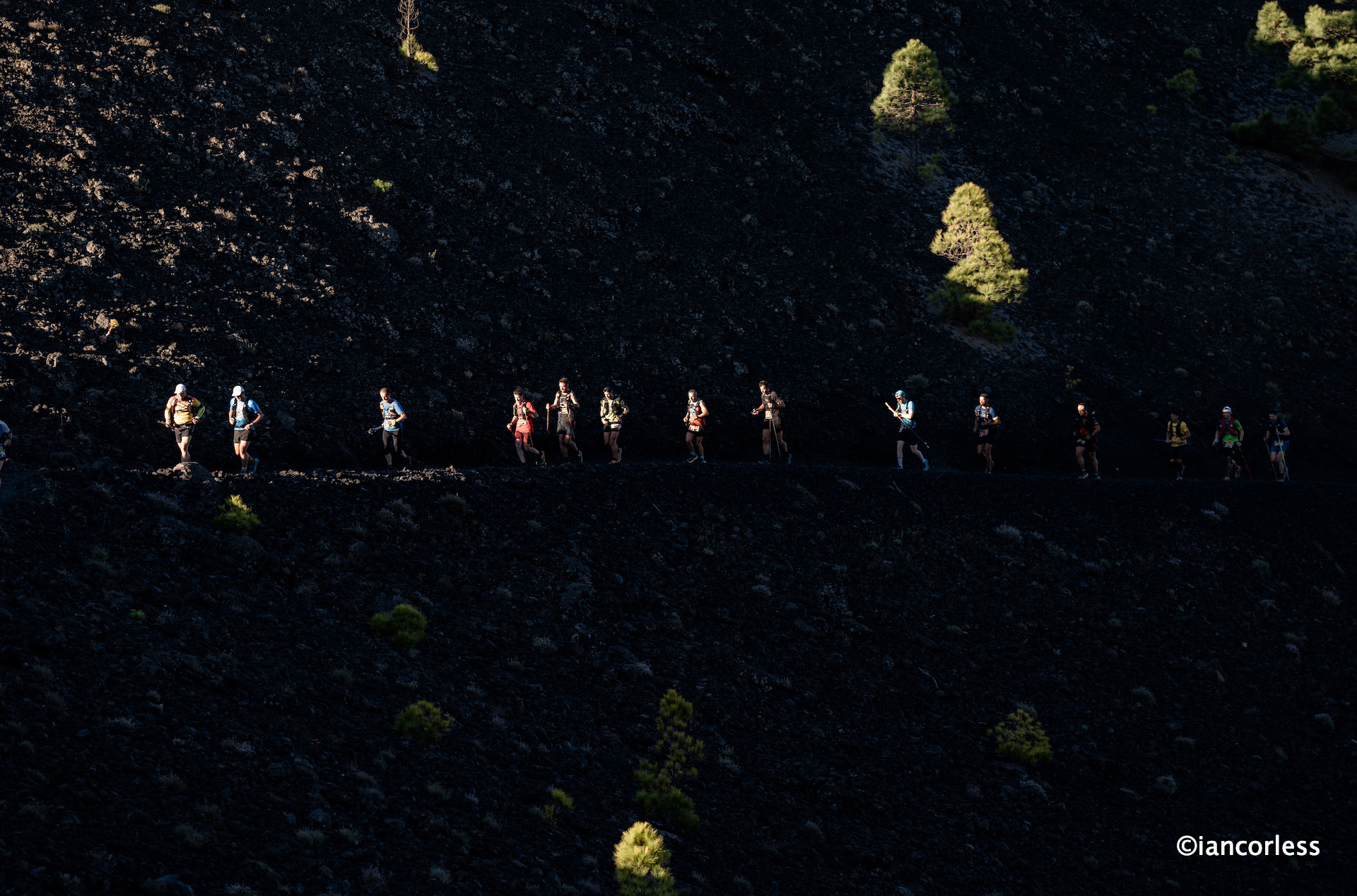
The blackness illuminated by the glow of 100’s of headlights and then the upward journey begins through a landscape that makes the most well travelled smile with joy at the magic the GR131 route brings.
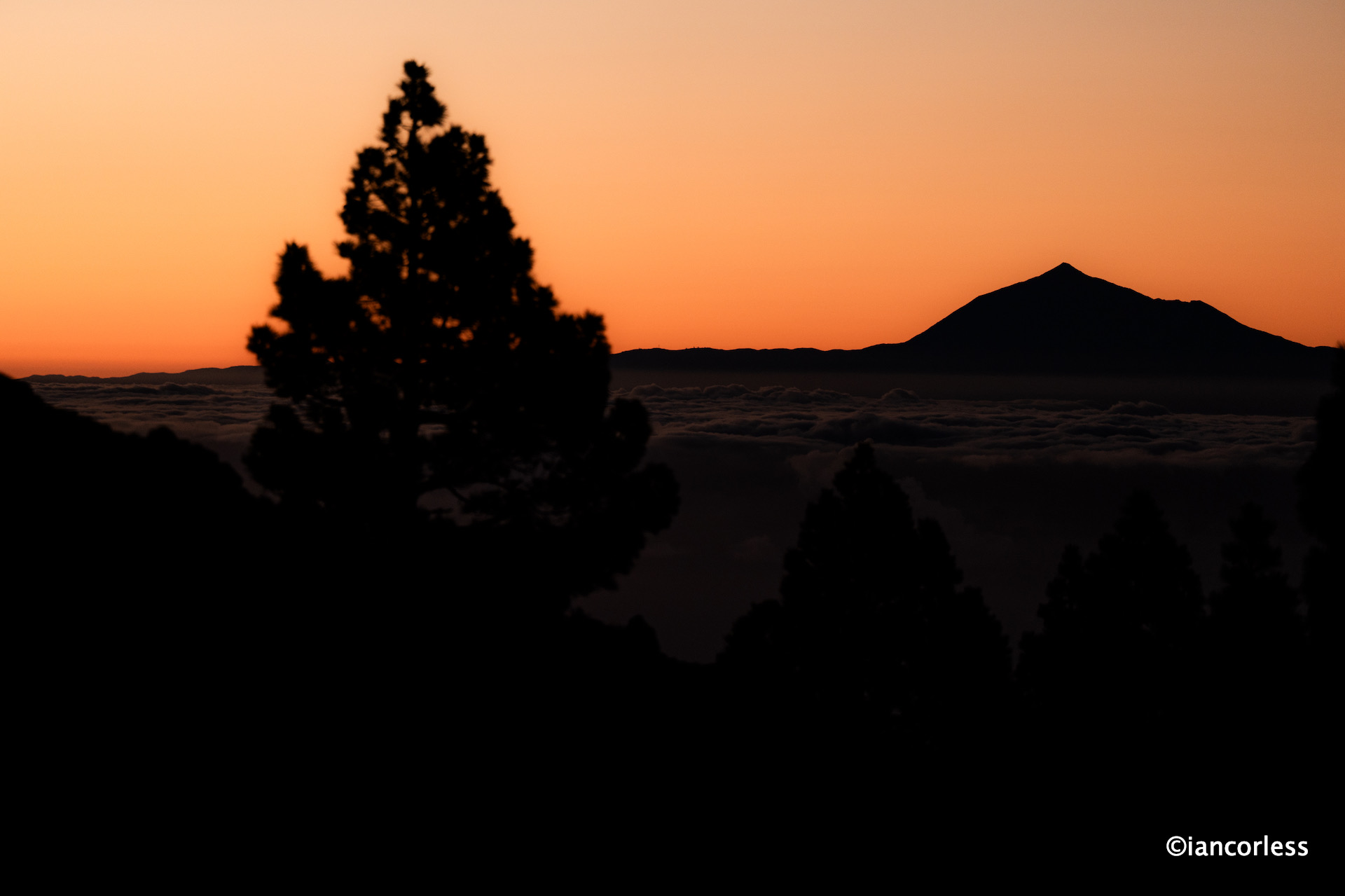
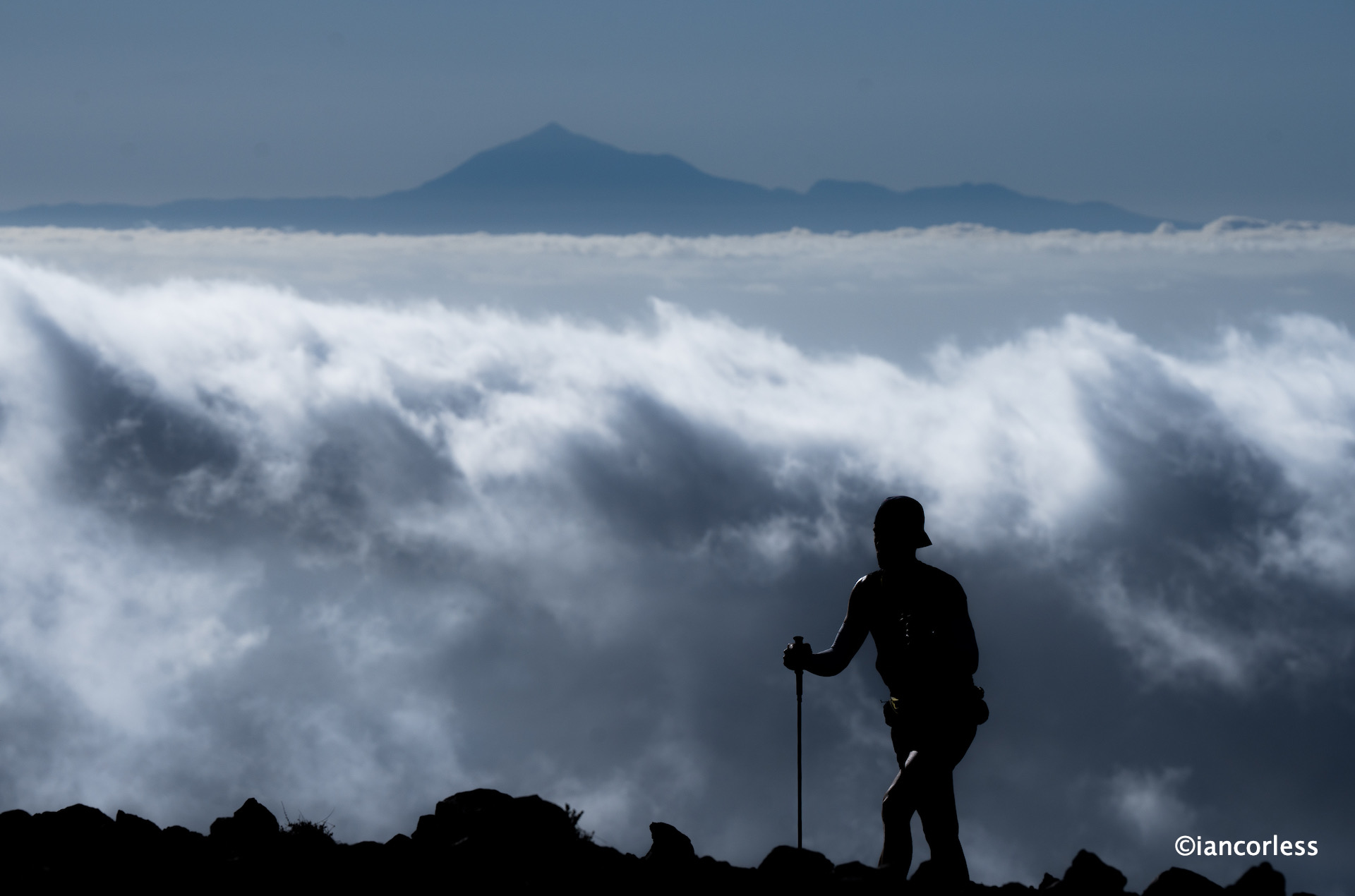
Los Canarious offers an opportunity for refreshment before single-track of black sand and rock weaves through pine trees and the eventual magnificence of the route of the volcanoes coinciding with the first light of a new day. A glimpse to the right, the sky a mixture of orange and blue, Tenerife and Teide visible and suddenly you feel like a plane, floating above the clouds in what many considering a life-changing moment.
The route winds and climbs down the spine of La Isla Bonita. From the highest point in the lower sections of the GR131 (1908m) in the Cumbre Vieja, the route drops to the micro-climate of El Pilar, one-third approximately of the route completed.
From here, cloud encapsulates the runner, some easy trails eventually give way to climbing, a myriad of single-track that weaves left and right and finally you break through the cloud to the most amazing views of Caldera de Taburiente National Park.
Reventon arrives, it’s one of the highlights of the route. With 40km’s covered, the GR131 is now above 2000m and ever so slowly the route creeps over the next 10km’s to the highest point at Roques de los Muchachos at 2403m, a rollercoaster ride of undulating and at times technical trails that offer a 360 panorama of this stunning island.
What goes up, eventually must come down and what follows is a 16km drop back to the ocean; a relentless knee, quad and mind blowing war of attrition that must be overcome. The iconic zig-zag descent provides an entrance to Tazacorte beach and the final aid station.
Beach gives way to canyon, canyon gives way to weaving paths through banana plantations before what seems like never-ending road before the glorious arrival in Los Llanos and the roar of the Palmero people.
This is La Palma.
This is Transvulcania.
This is La Palma
The 2024 Race
Men:
Dakota and Jeshrun
As expected, the early pace was fast and a core group of pre-race favourites dictated the pace with 2023 champion, Dakota Jones at the front. Behind, Jeshrun Small, Jon Albon, Tom Evans, Dmitry Mityaev, and more.
Jon Albon leading the chase group
As the km’s passed and the arrival of El Pilar came, Dakota suffered from the early pace and now, pre-race favourite, Jon Albon took over at the front with an inspired Jeshrun Small. Tom Evans, Thibaut Baronian and Dmitry Mityaev followed.
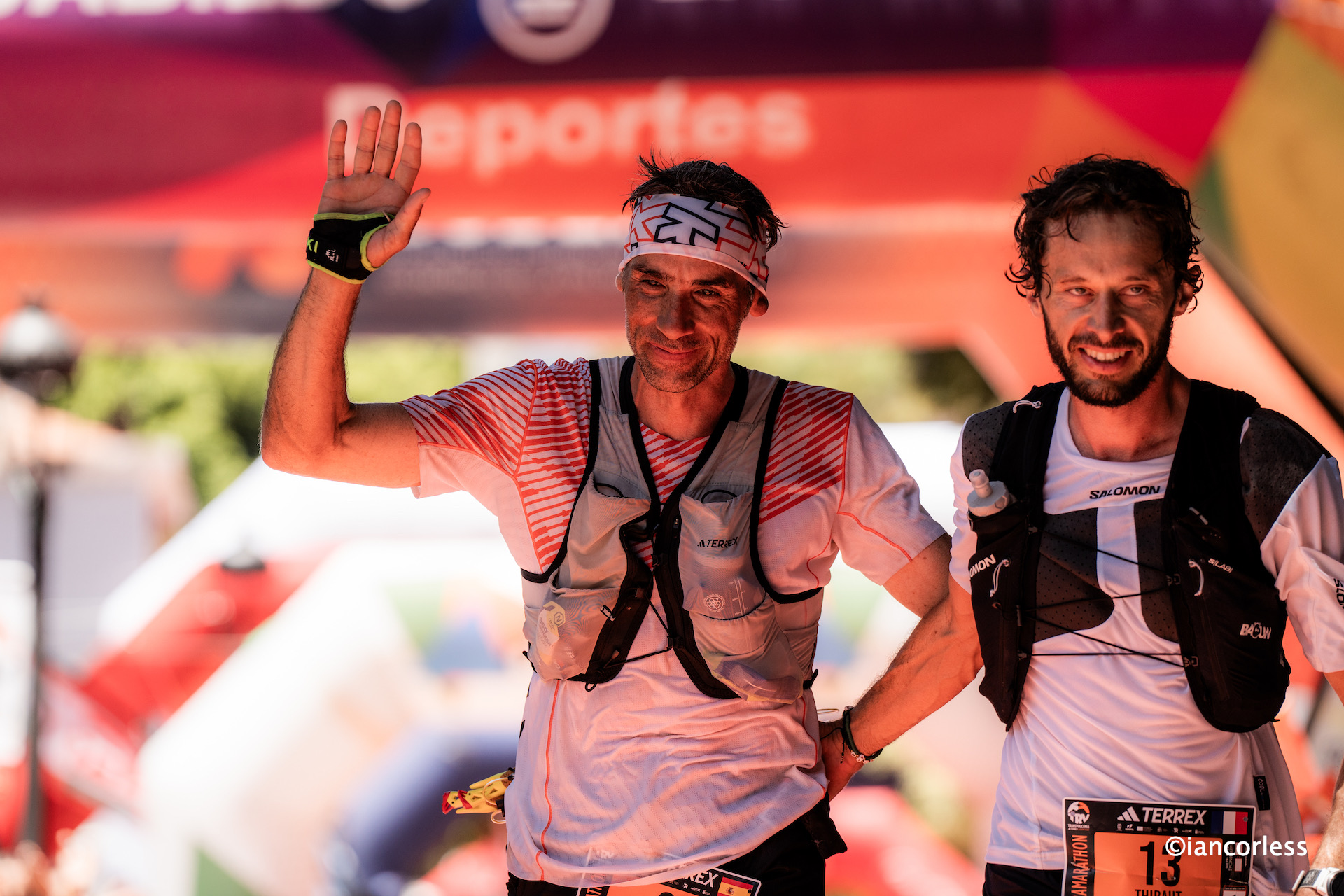
The elastic finally snapped and Jon made his move and opened a gap. It was on the final descent that Jeshrun relinquished second to his adidas Terrex team mates, Tom who had moved up from fifth and Dmitry who were now charging to the ocean in pursuit of The North Face athlete.
Jon arrived at Tazacorte and a course record looked possible. But as the climb to the finish came, the early pace and now heat was taking its toll. Jon was having to dig deep and the behind, the Terrex duo were pushing each other, Dmitry looking stronger than Tom.
But Dmitry did not attack… Maybe he didn’t know the 4-minute gap to Jon at the beach was reducing with each stride?
Victory
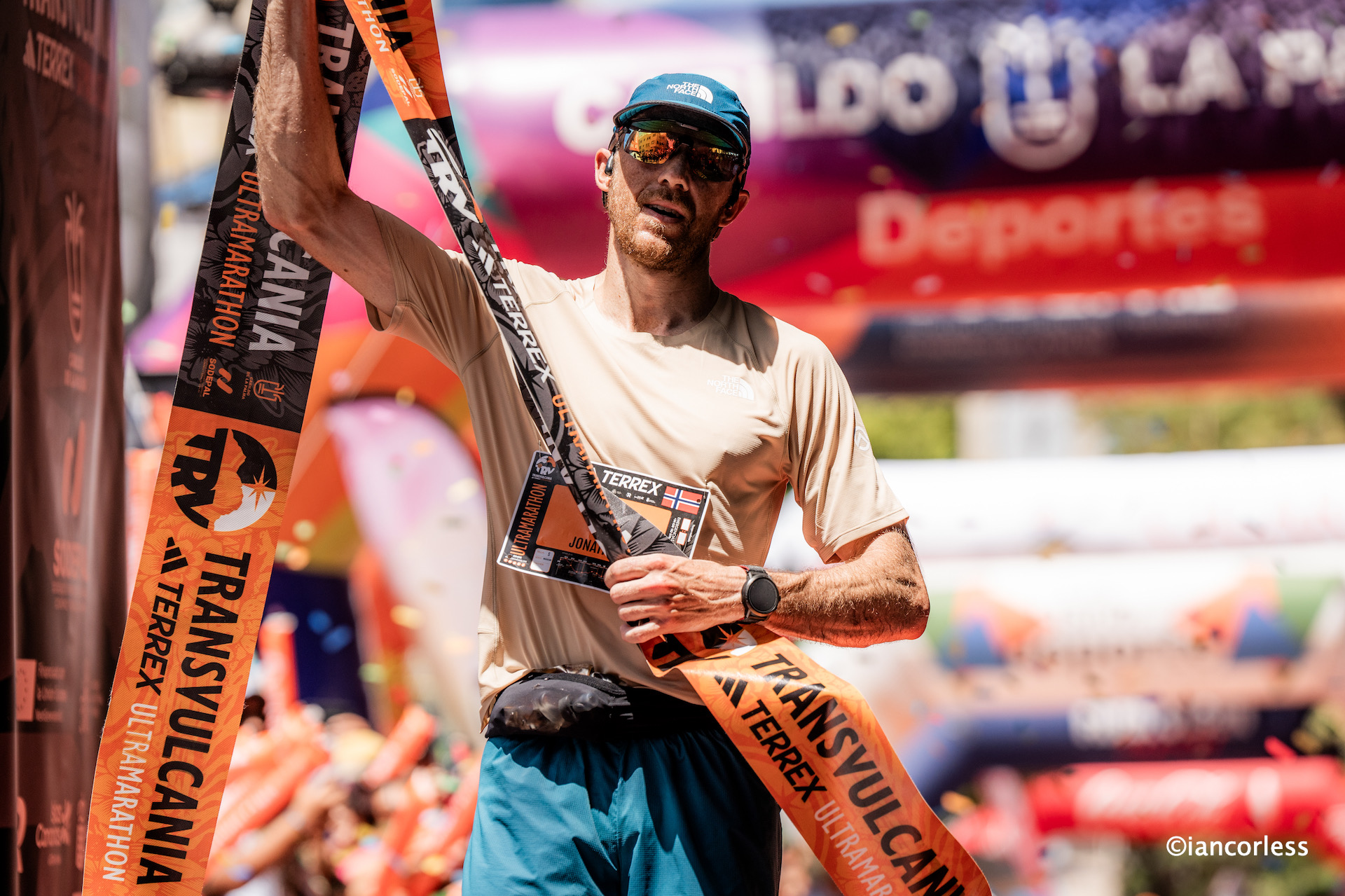
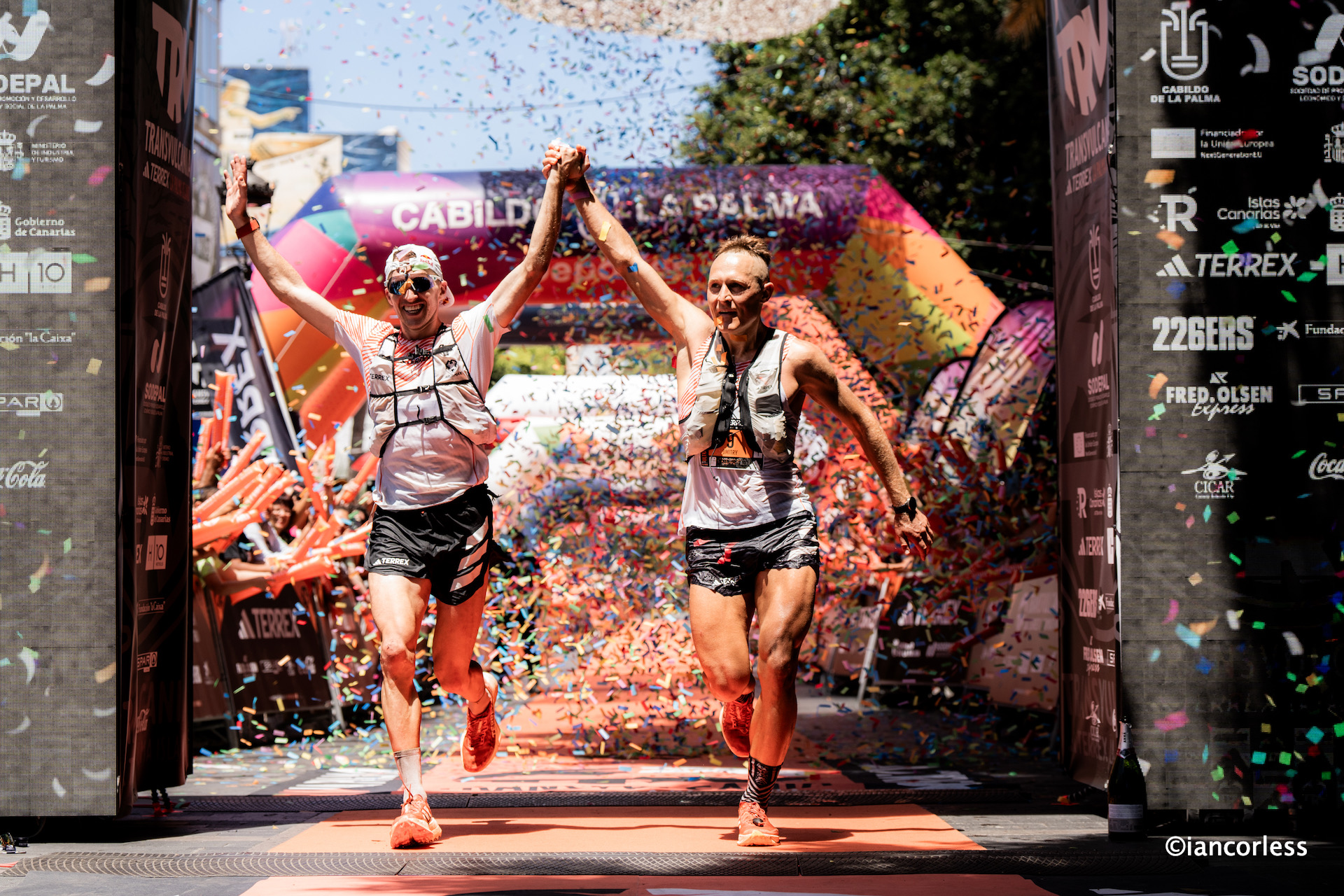
Jon crossed the line, exhausted, the 2024 Transvulcania champion. Behind, less than 2-minutes later, the duo arrived, hand-in-hand.
There was no course record but it was darn close. One hell of a race.
Tom and Dmitry
At the finish line, Albon (7h.03:10) crossed first, followed by Dmitry Mytiaev (7h.05:16) and Tom Evans who entered together at de finish line (7h.05:17)
Women:
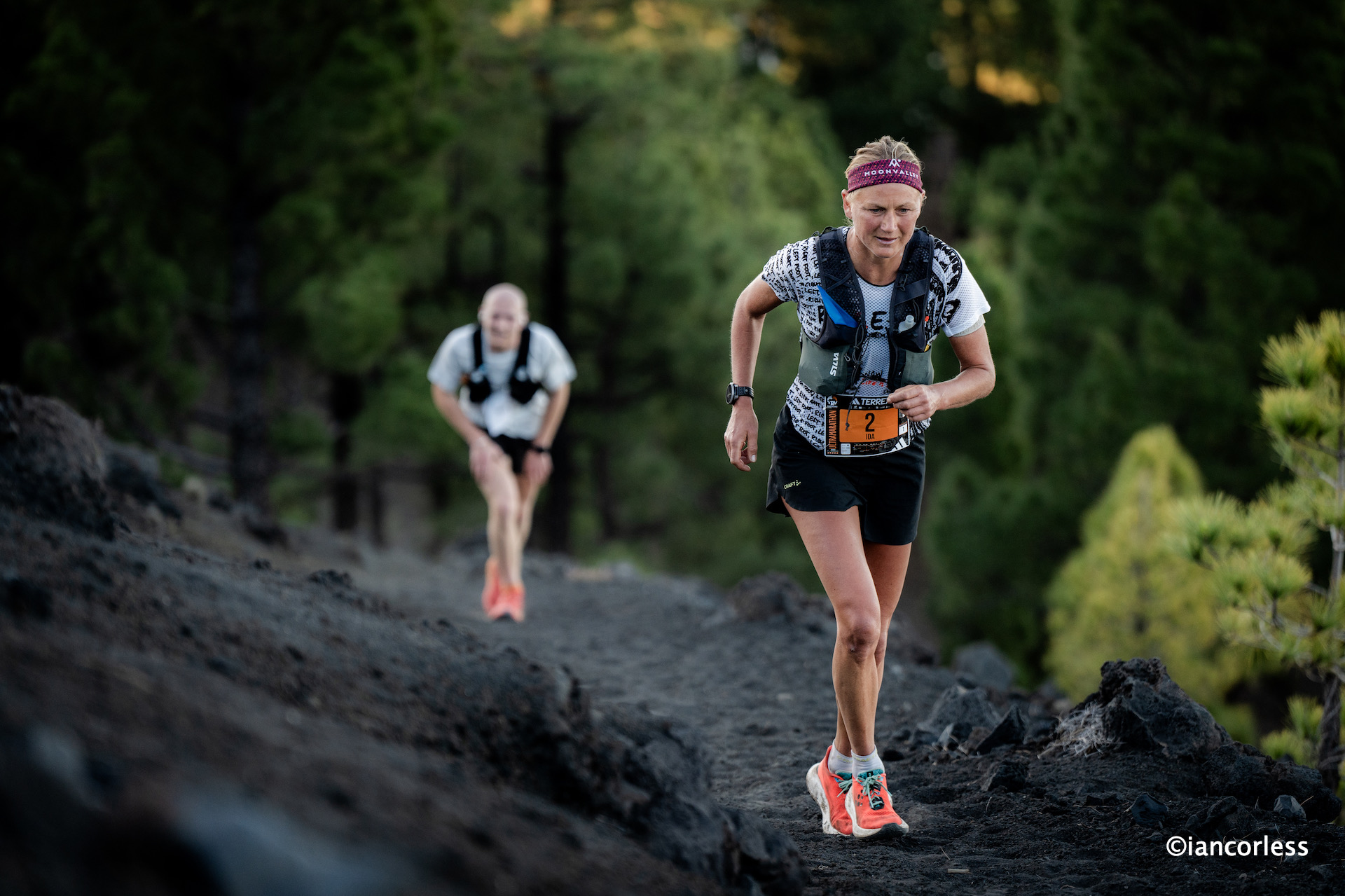
Ida a three times champion
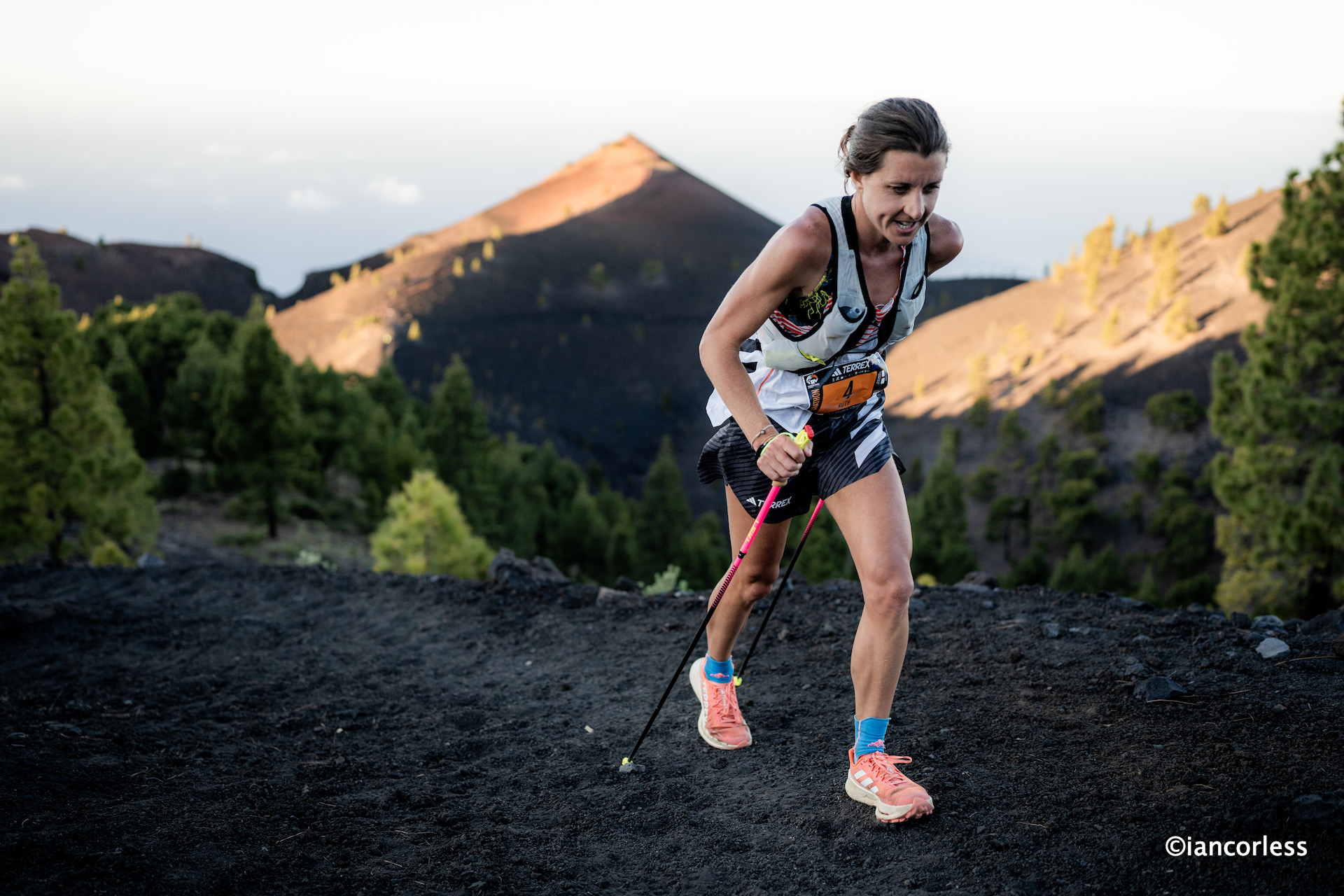
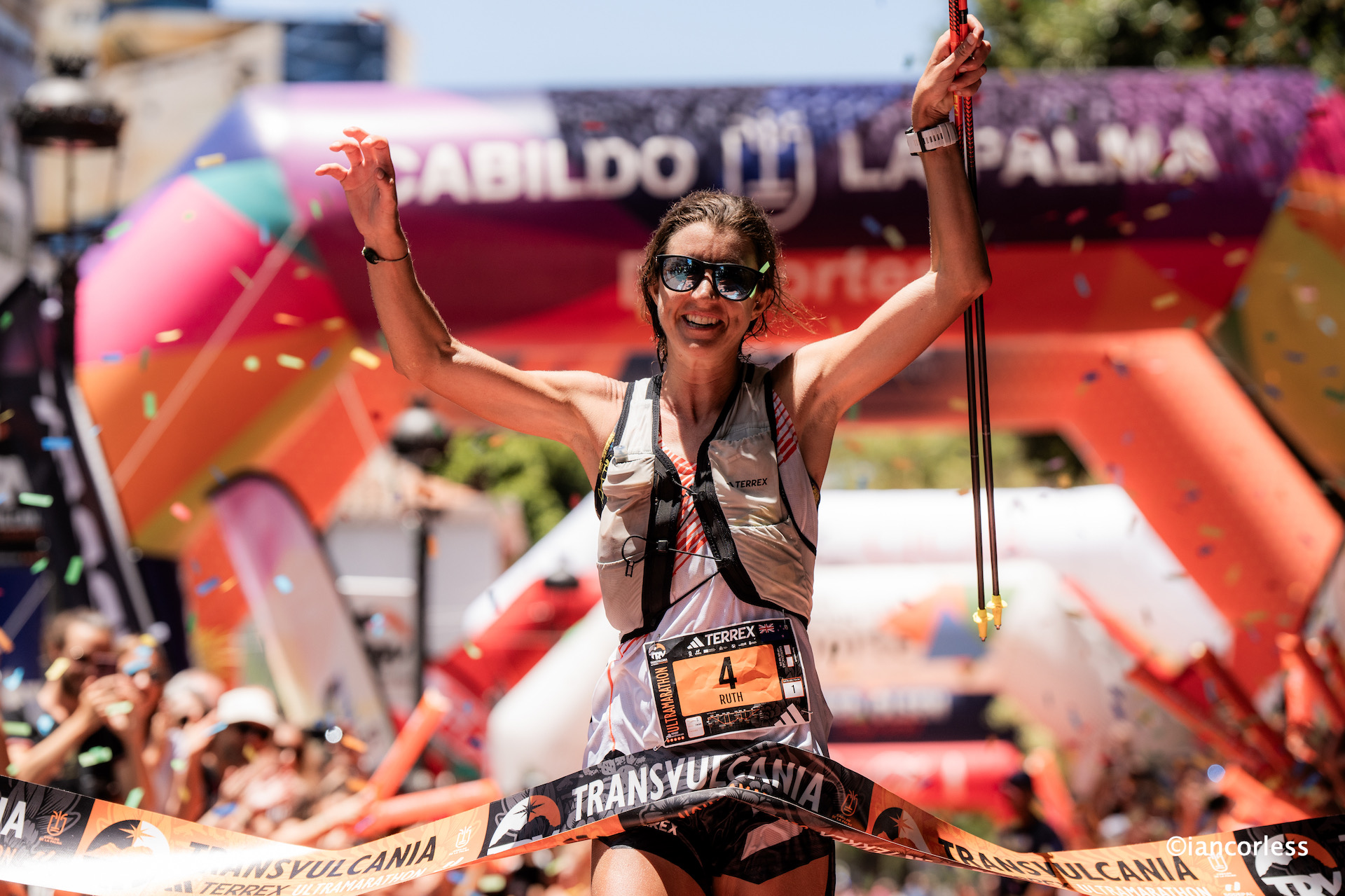
Ruth Croft set the early pace and what a pace! For much of the day, it was a display of style, power and confidence. The performance only faltered at Roques de los Muchachos when a charging Ida Nilsson, three times Transvulcania champion, closed the gap to seconds.
Ruth – incredible
It gave Ruth the wake-up call to push hard to the line, and push she did, not only resulting in victory but a new course record. It was a stunning performance that only confirms that currently, along with Courtney Dauwalter, Ruth Croft is one of the most exciting and dominant trail runners in the world.
Champ and new CR
It was glory day for Ida Nilsson, a La Palma favourite who ran another stunning race to secure second.
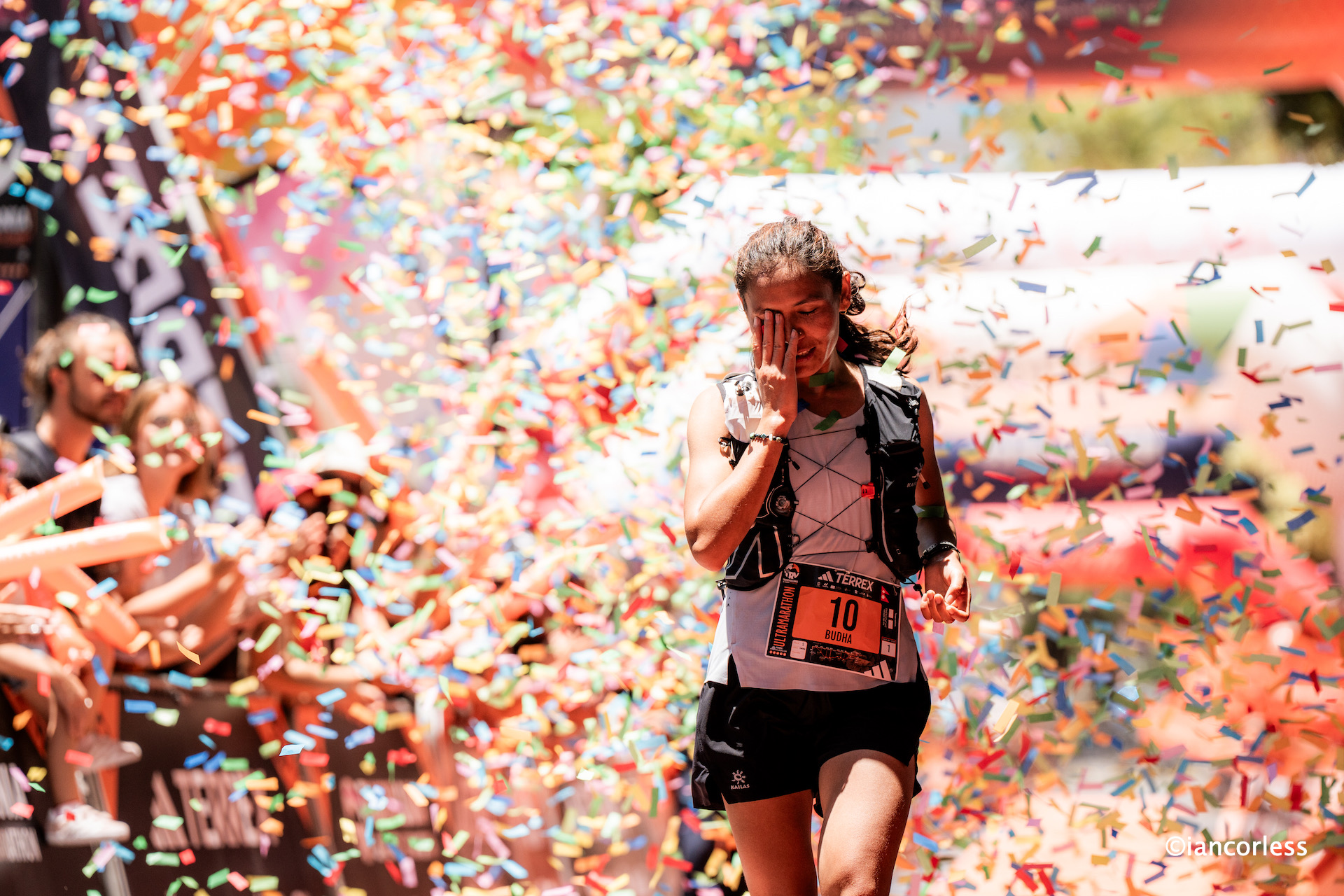
As always happens, there was drama behind and it was Nepali, Sunmaya Budha who finished third looking very fresh… There is more to come from this strong woman!
Sunmaya
Ruth Croft (8h.02:49, record) won, Ida Nilsson (8h.16:32) finished second, and Sunmaya Budha (8h.20:31) closed the podium.
The Story:
As with all races, we have champions and we celebrate them. But the story of the 2024 Transvulcania is a return of the race to the island and people of La Palma.
“I didn’t have the day I wanted today,” said one runner. “But how can I be disappointed? It’s such a privilege to be on this island with these people enjoying what is one of the greatest races and places in the world.”
It was a sentiment that was echoed by many. There is something special here on this Canary Island.
I for one am already waiting for the 2025 countdown. This race should be a fixture for every dreaming trail runner and trust me, once experienced, one edition is not enough.
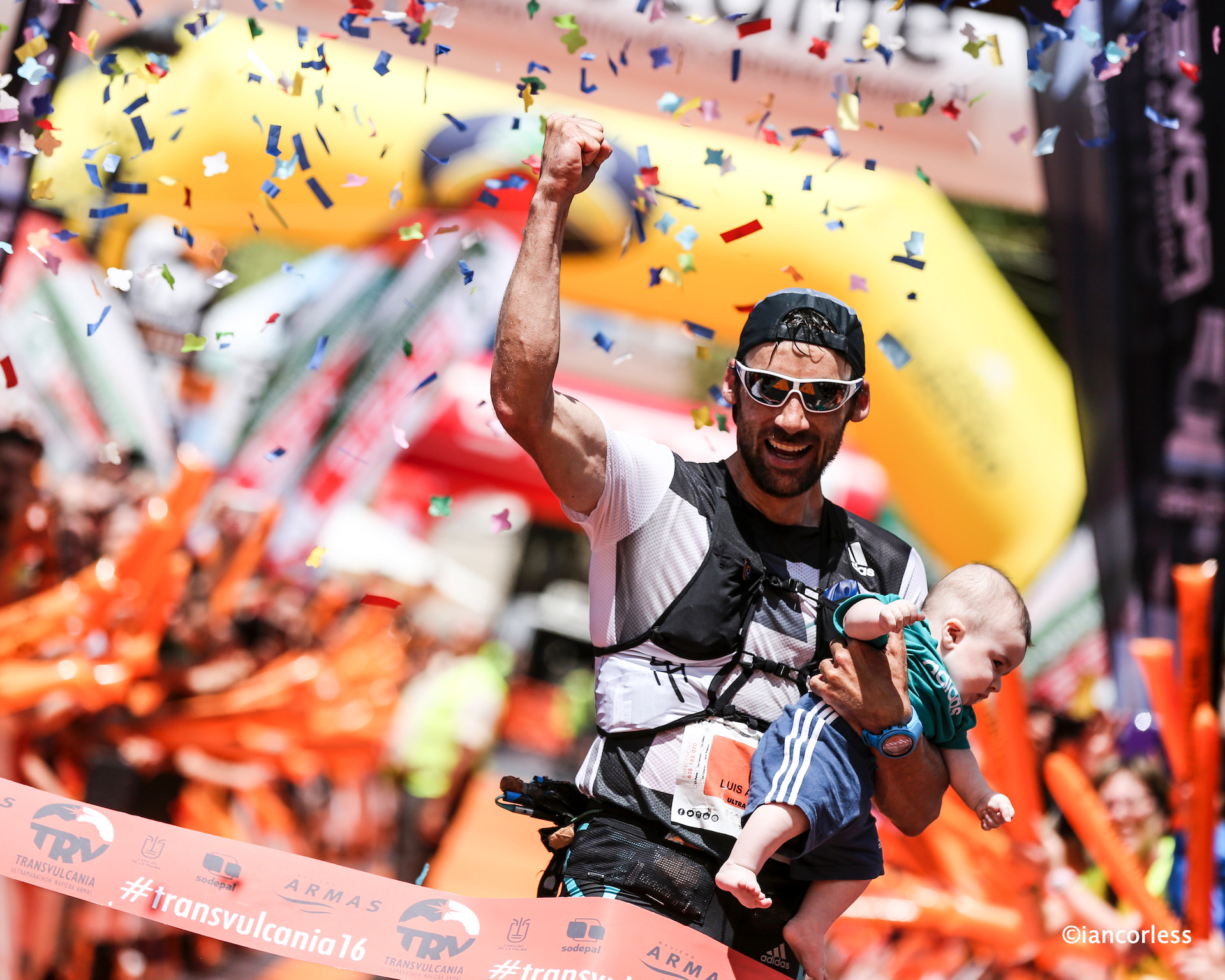
The boss, Luis Alberto Hernando, his last victory.
Finally, I give a special (personal) mention to a true inspiration of Transvulcania, the Maestro ‘Luis Alberto Hernando’, a three time champion of the race. He told me before the start, I am now 1-hour slower and I will be happy with top-20. He placed 12th after Thibaut Baronian acknowledging ‘The Boss’ on the line, bowing, and allowing the master to pass. What a moment.
Following on from the success of the 38th (2024) edition of Marathon des Sables – The Legendary (summary here), today the dates for 2025 are announced:
April 4th to 14th 2025.
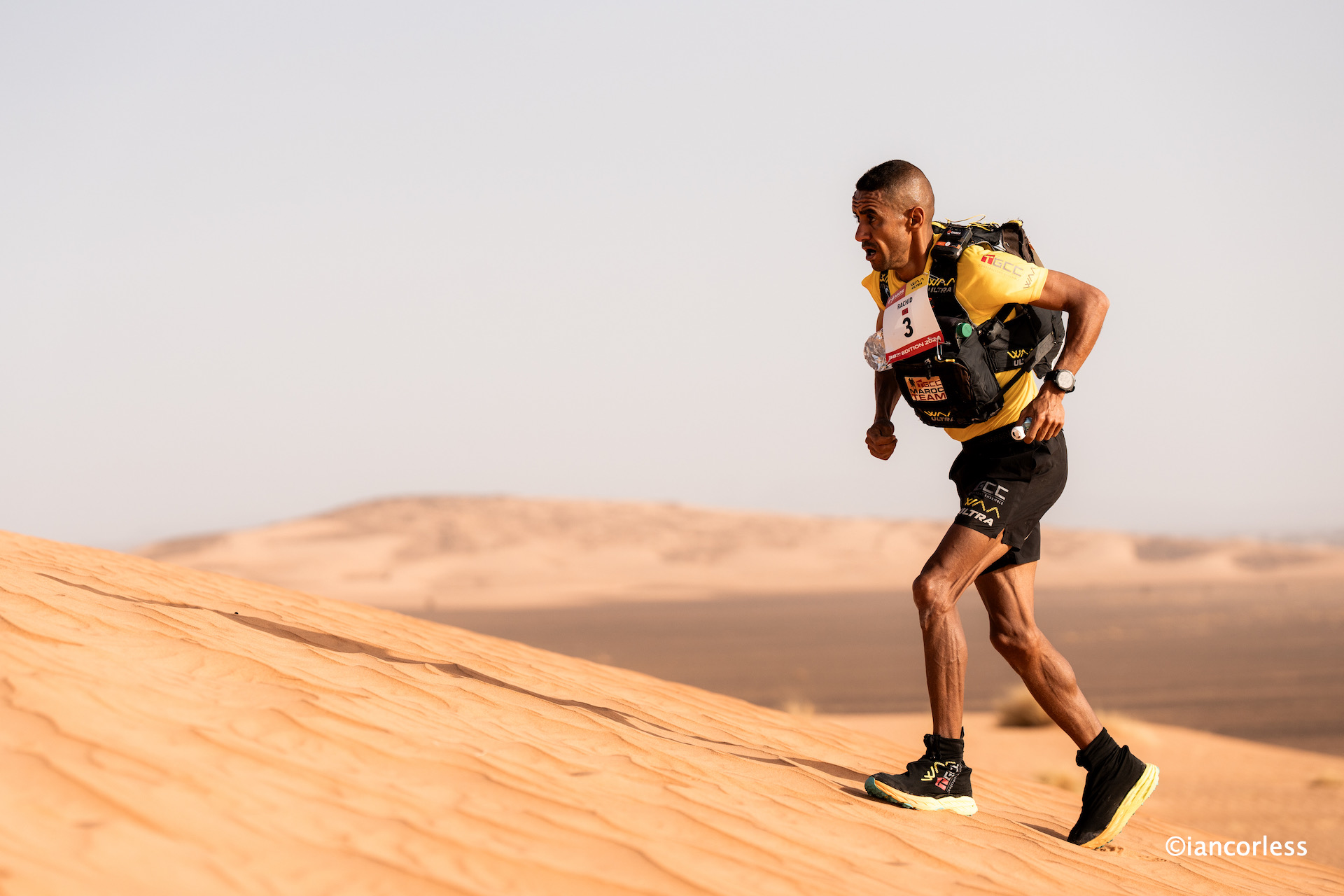
Will Rachid return in 2025 for an 11th title?
The timings will be as follows:
Apr 4 – Arrival in Morocco and meet in Ouarzazate for onward transfer to B1.
Apr 5 – Admin day.
Apr 6 – Stage 1
Apr 7 – Stage 2
Apr 8 – Stage 3 *
Apr 9 – Stage 3 continuation or rest day *
Apr 10 – Stage 4
Apr 11 – Stage 5
Apr 12 – Stage 6 and onward travel to Ouarzazate
Apr 13 – Free Day and Gala Evening Presentation
Apr 14 – Onward travel
* Based on ‘the long day’ coming on stage 3.
Currently, it is not possible to register for 2025, but entry will open on JUNE 19th 2024.
These are exciting times for the MDS brand and it is highly anticipated that entries for 2025 will flood in after the success of the most recent event which concluded just weeks ago.
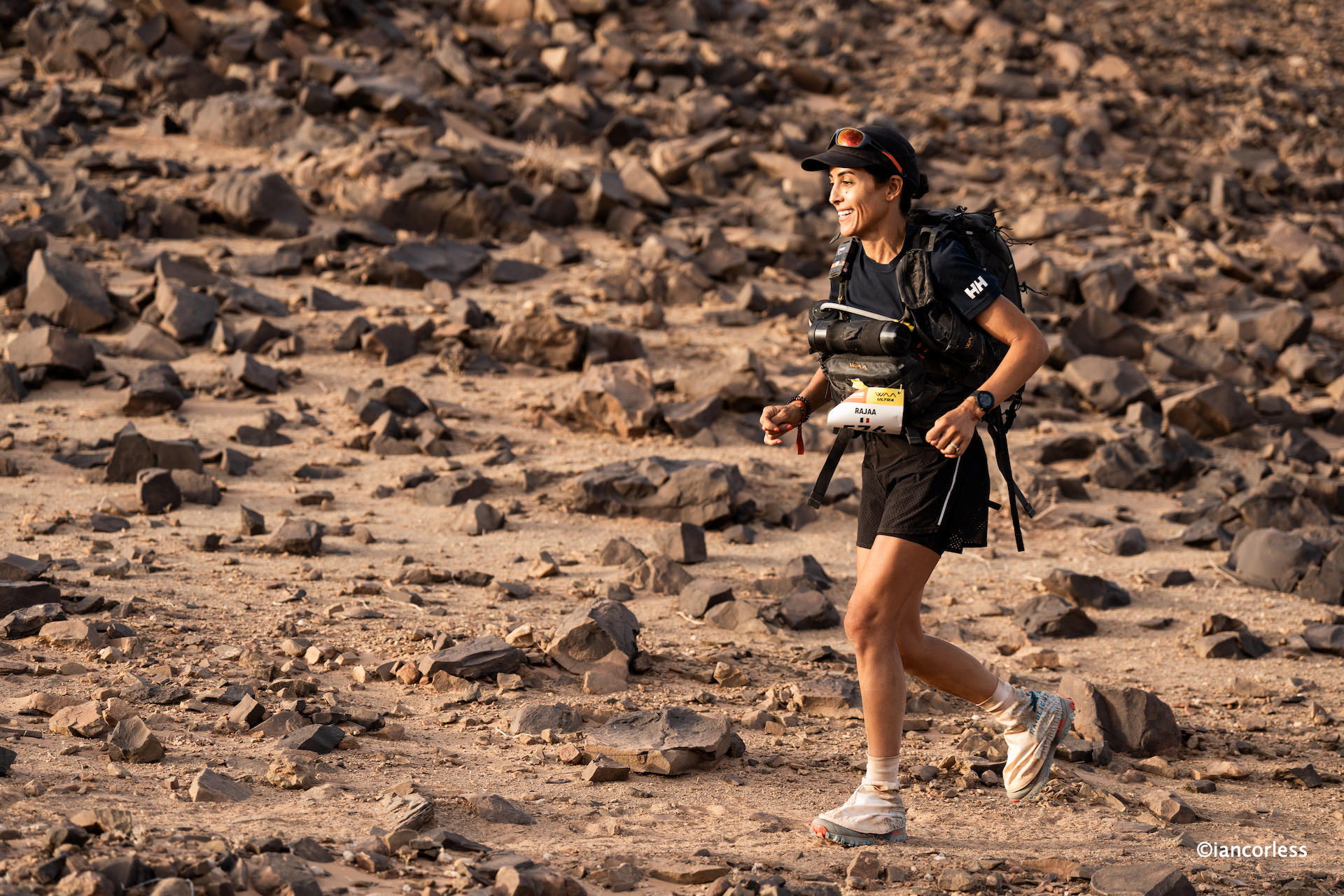
Rajaa HAMDAOUA placed 4th in 2024.
WHAT IS NEW?
PRICE
Well, first of all, the price. For 2025 there will be no additional price for UK entrants. In past years, UK entrants have paid an increased price due to staying at the Berbere Palace Hotel. This hotel will now be an ‘upgrade package’ which will bring a smile to many a UK entrant, for multiple reasons.
PRICE FOR THE FIRST 500:
€3,690/person
and €3,890/person later.
THE UPGRADE PACKAGE with Berbere Palace Hotel
€4,090/person for the first 500
and €4,290/person later.
Both offers are available to everyone, regardless of their country of residence.
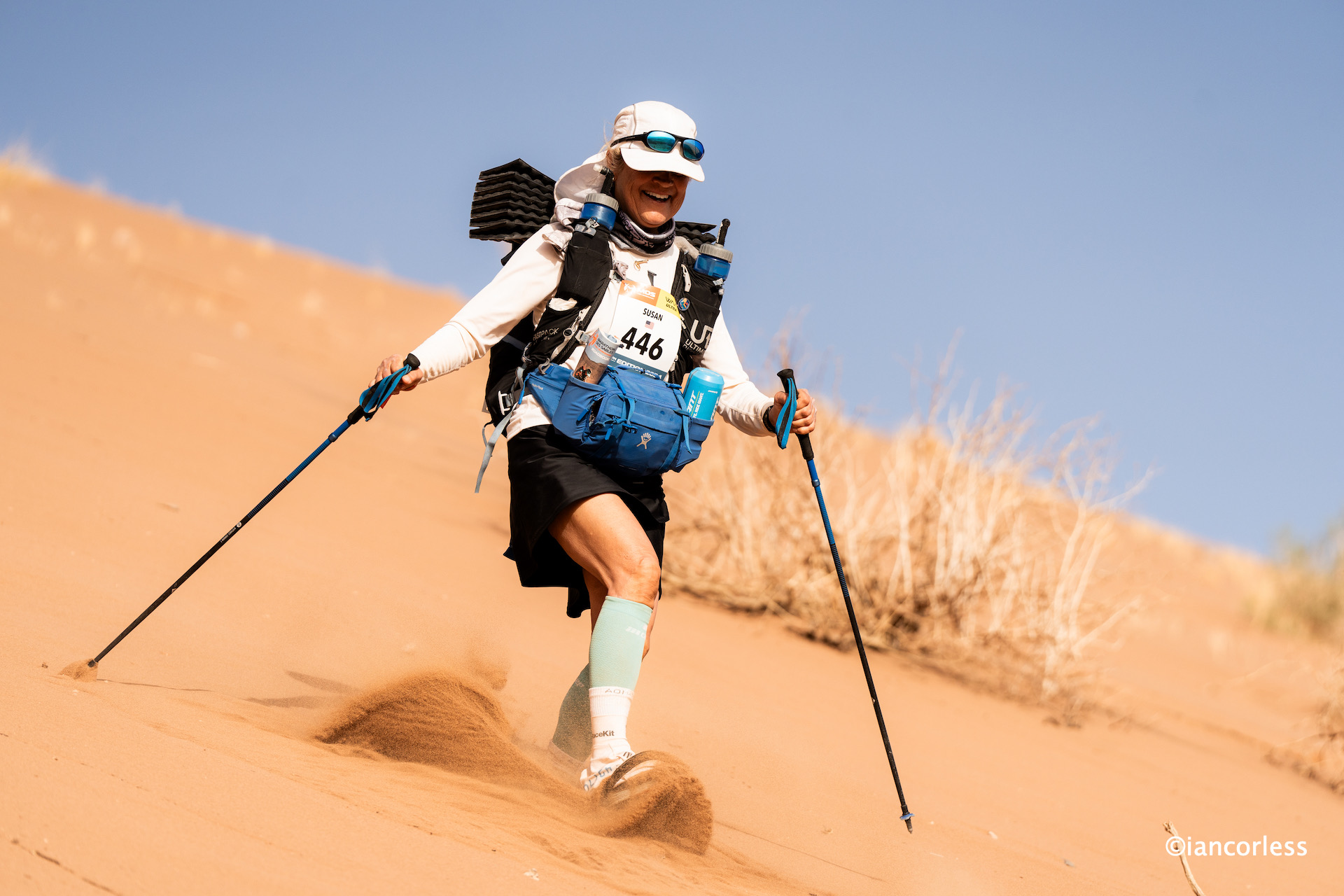
Susan Grimes from the USA.
NO CHARTER FLIGHTS FOR 2025
The meeting point will be in Ouarzazate on Friday morning, April 4, 2025.
Ouarzazate airport Fly to Ouarzazate before the race and spend one or more nights in a hotel at your expense.
Marrakech airport Fly to Marrakech the days before the race and go by *shuttle to Ouarzazate.
*Shuttles will be organized on the morning of April 2 and 3, 2025, between Marrakech and Ouarzazate (5-hour journey).
Timetable for the Marrakech / Ouarzazate shuttles on April 2 and 3 : 07:00 am: From the center of Marrakech (meeting point at the Kenzi Rose Garden hotel). 10:00 am: From Marrakech airport. 12:00 pm: From Marrakech airport.
The return trip at the end of the MDS follows the same logic.
If you wish, you can take advantage of the bus service provided between Ouarzazate and Marrakech. These buses will leave Ouarzazate at 06:00 am on April 14, so you’ll need to book a return flight from Marrakech after 2:00 pm.
A unique experience
THE EVENT
Will remain similar to the 2024 38th edition and in summary:
The total distance of the MDS The Legendary will be about 250km’s, divided into 6-stages. The exact route and distances are given at the latest in the road book which is distributed in Morocco on arrival and transfer to bivouac 1.
Self-autonomy (food) is required from immediate arrival at B1 and then race self-autonomy starts at the beginning of stage 1.
The 2024 edition was as follows:
Stage 1: 31,1 km
Stage 2: 40,8 km
Stage 3: 85,3 km (the 3rd stage takes place on 2 days)
Stage 4: 43,1 km
Stage 5: 31,4 km
Stage 6: 21,1 km
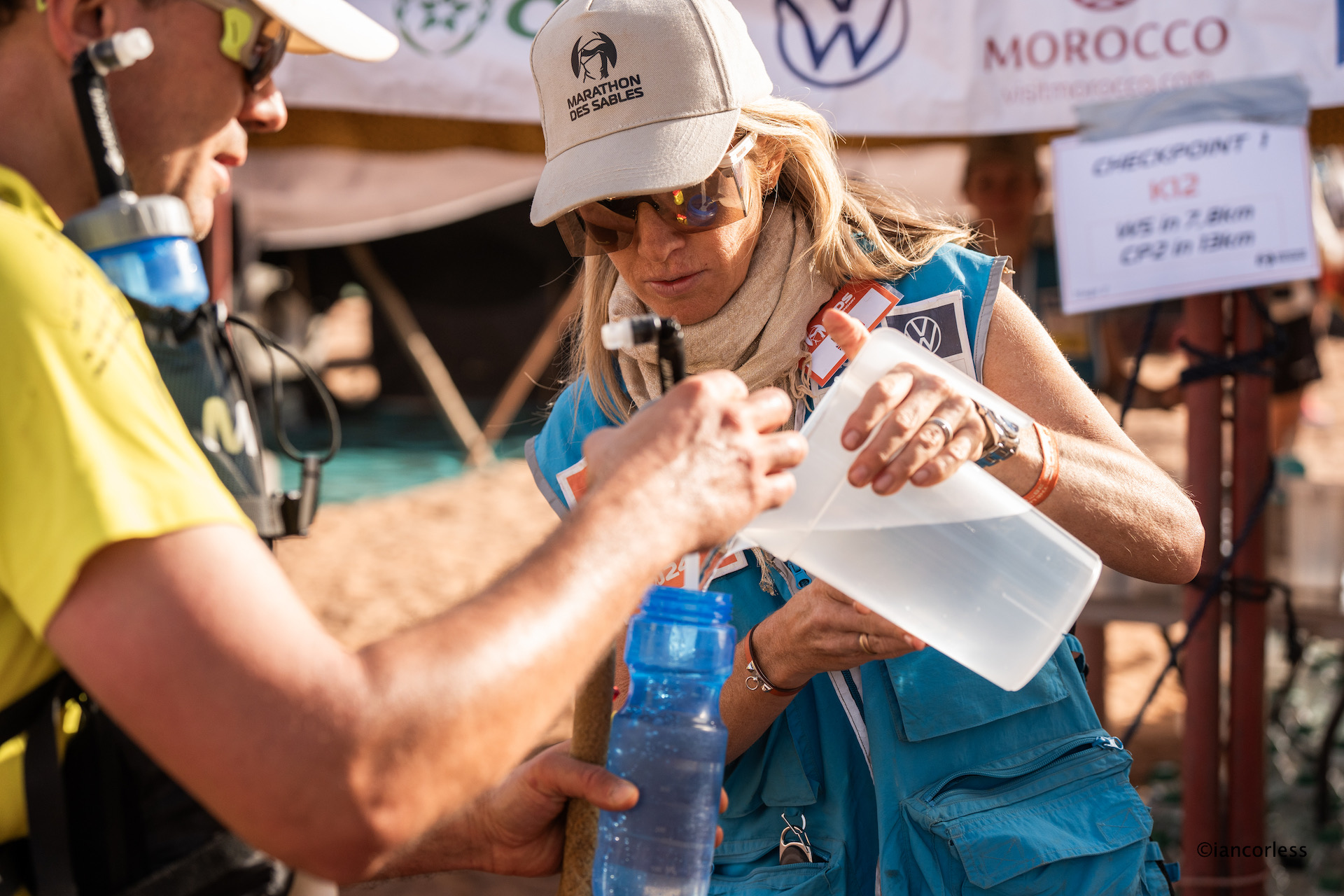
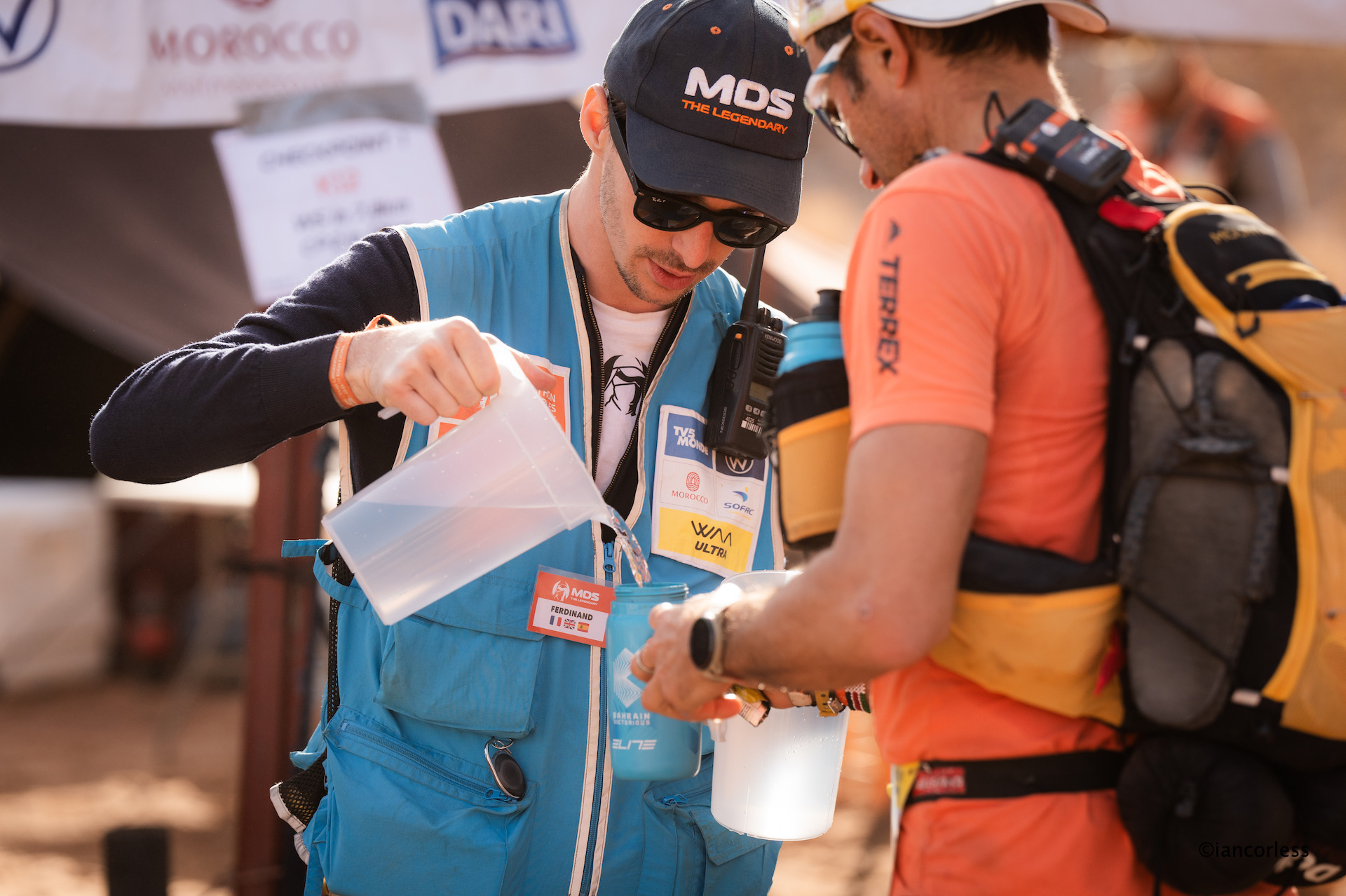
CP’s with water and iced water to cool the runner.
The MARATHON DES SABLES – The Legendary is a self-sufficient adventure. Competitors must carry all their equipment and food, except the water and the tent. Check-points are located approximately every10 km. Post stage, participants receive a water ration when arriving to the bivouac, for the evening and the morning.
Have peace of mind and benefit from free postponement insurance up to 7 days before the event, included in your registration.
A mythical crossing of the desert, 11 days of adventure in Morocco, including 9 days in the desert, a course of about 250 km divided into 6-stages, to be done by walking or running.
MARATHON DES SABLES – The Legendaryan extraordinary race and adventure.
The elation of the finish
Taking place in the southern Moroccan Sahara since 1986.
Raidlight as a brand have been synonymous with desert racing for over 20-years, it was the brands USP and even today, it is a the core of the business founded by Benoit Laval in 1999.
It was around 2006/ 2007 when the ‘Olmo’ pack was created for Italian legend, Marco Olmo. A ground-breaking ultralight pack designed to carry many items with bottle holders on the front. From here, the rest is history with a range of packs and apparel that are specifically designed for stage and multi-day racing in hot environments such as the Sahara. A range of specific products can be seen HERE.
Ultralight packs, front packs, desert hats, gaiters, sun protect long-sleeve tops, tyvek top and pants and now a DESERT SPECIFIC SHOE.
In 2019, Raidlight created their first shoes. A bold move in a market that is saturated with choice, especially when one considers the R&D and manufacturing costs.
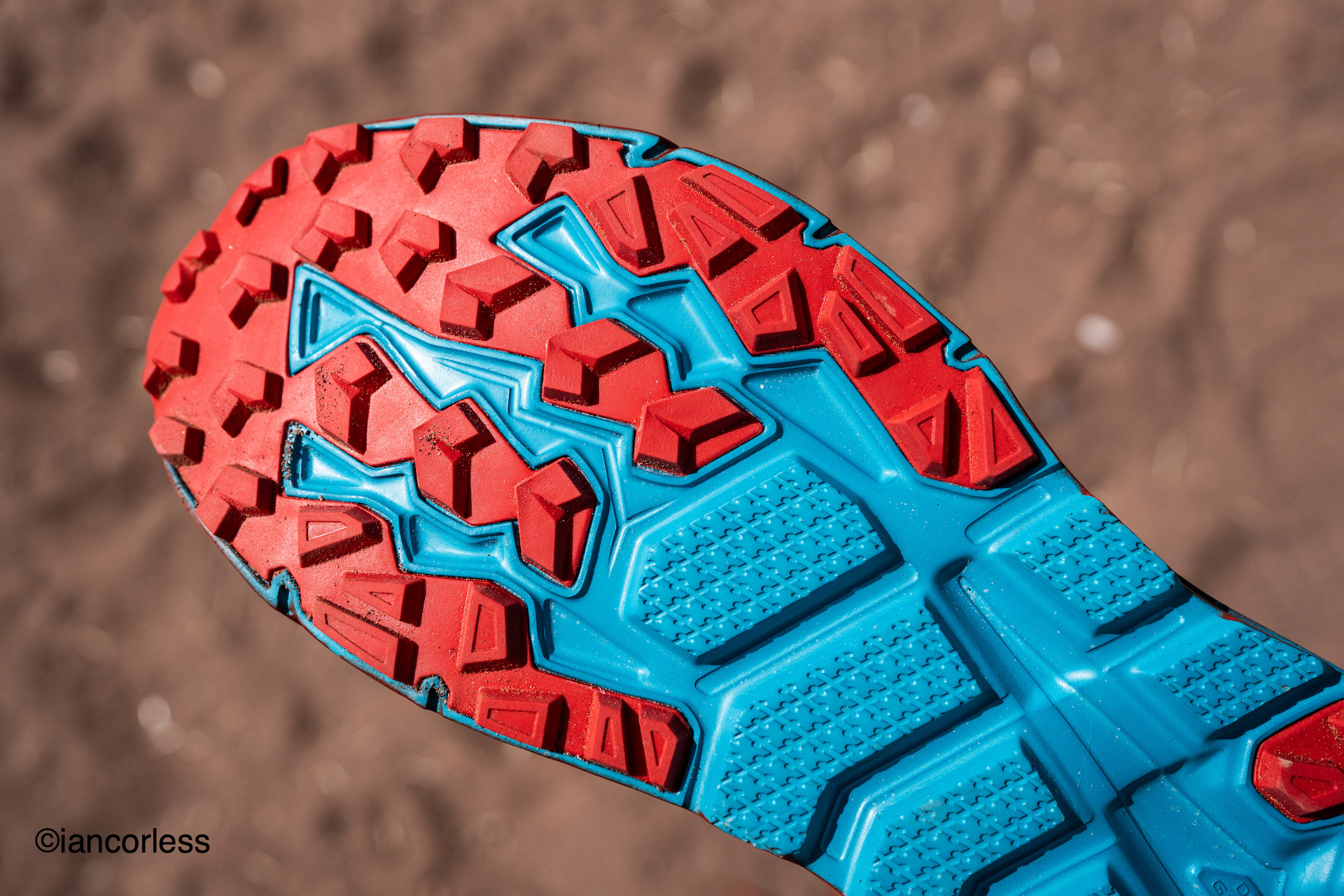
The recent Ultra 4 shoe with 6mm drop, 4mm outsole and increased cushioning has now been developed to provide the ultimate, one-stop shoe for desert terrain. The ULTRA 4 DESERT PROTECT.
What is a specific desert shoe?
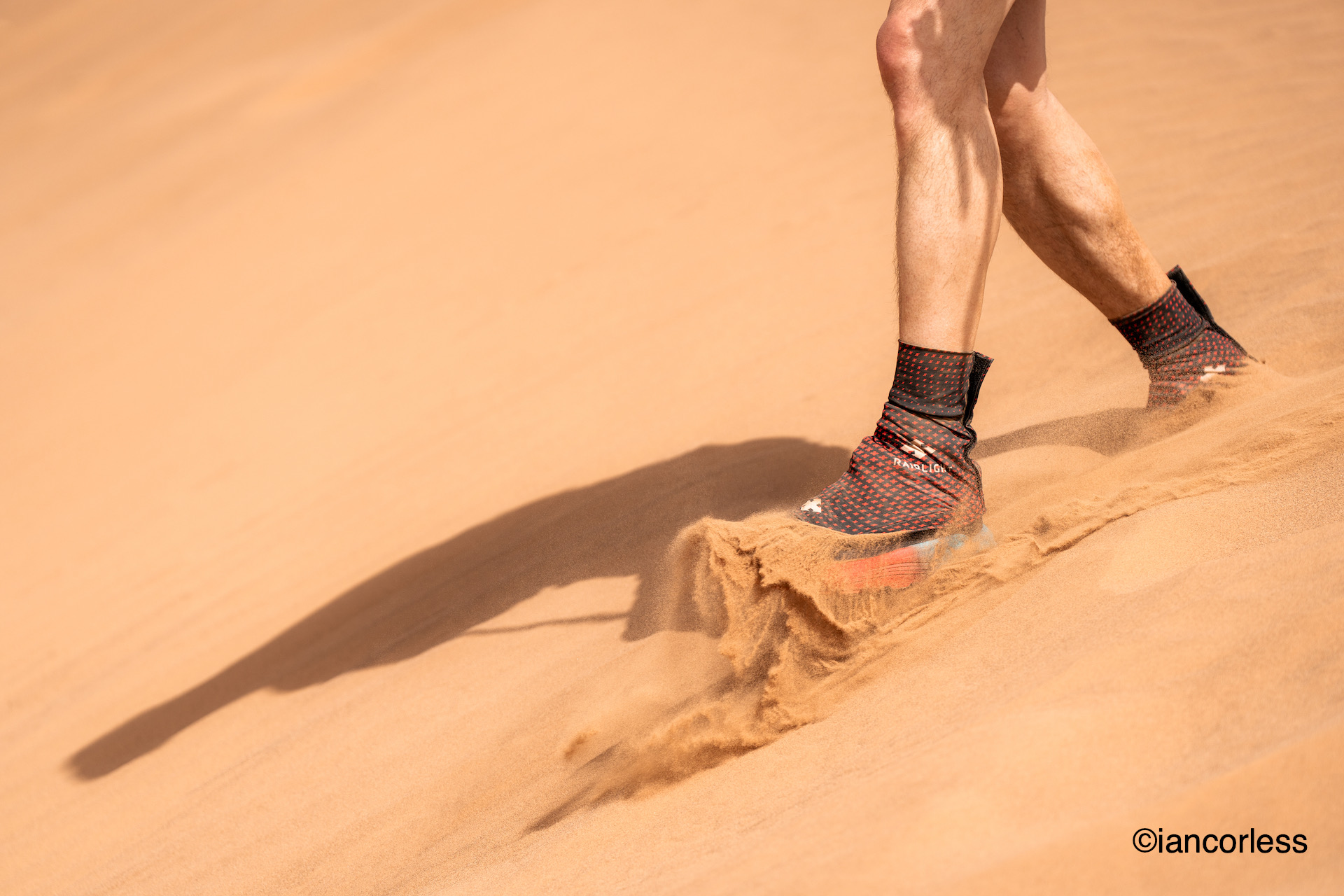
Running in a desert, sandy or harsh environment, even snow, brings a challenge for a shoe. Shoes are designed to be comfortable but also breathable. The downside of breathable is that while it allows hot air to escape the shoe, this also allows sand and debris to enter the shoe. This is not a good idea in a desert environment. For many years, the best option has been to have velcro sewn and glued to your preferred shoe and then add a gaiter /such as THIS) to not allow sand to enter the shoe – it works.
There is a cost involved to this:
Shoe 150.00
Gaiter 25.00
Sewing/ glueing velcro: 60.00
Total cost 235.00+/-
For countless editions of desert races all over the world, this system is tried and tested. It really does work. The only downside, one needs to be careful that the addition of velcro to a shoe does not alter alter its shape and feel, so, once you have velcro added ALWAYS test and make sure the fit is the same.
ULTRA 4 DESERT PROTECT
Many brands have played with the idea of producing a specific desert shoe and notably in the last 5-years I have seen brands such as Salomon, Hoka, Merrell and La Sportiva specifically adapt existing shoes to make prototypes for elite athletes. We have seen this work specifically for Julien Chorier (Hoka), Mathieu Blanchard (Salomon) and Ragna Debats (Merrell).
Why have the brands above not released a shoe to market?
I guess the simple answer is, a desert running shoe is a very specific market and in real terms, it’s a small market. So, financially (maybe) the figures just don’t add up?
Raidlight on the other hand already produce gaiters, they also already offer a velcro stitching service (here), so, by adapting an already existing shoe with the addition of velcro and a specific gaiter makes sense.
Especially when this is all offered for 150.00 euro in the ULTRA 4 DESERT PROTECT.
I received my shoes in advance of Marathon des Sables, perfect timing. I wasn’t running the race but I was in Morocco before the race running everyday and in addition, I was working everyday during MDS in the same environment as the runners. Ideal.
THE SHOE
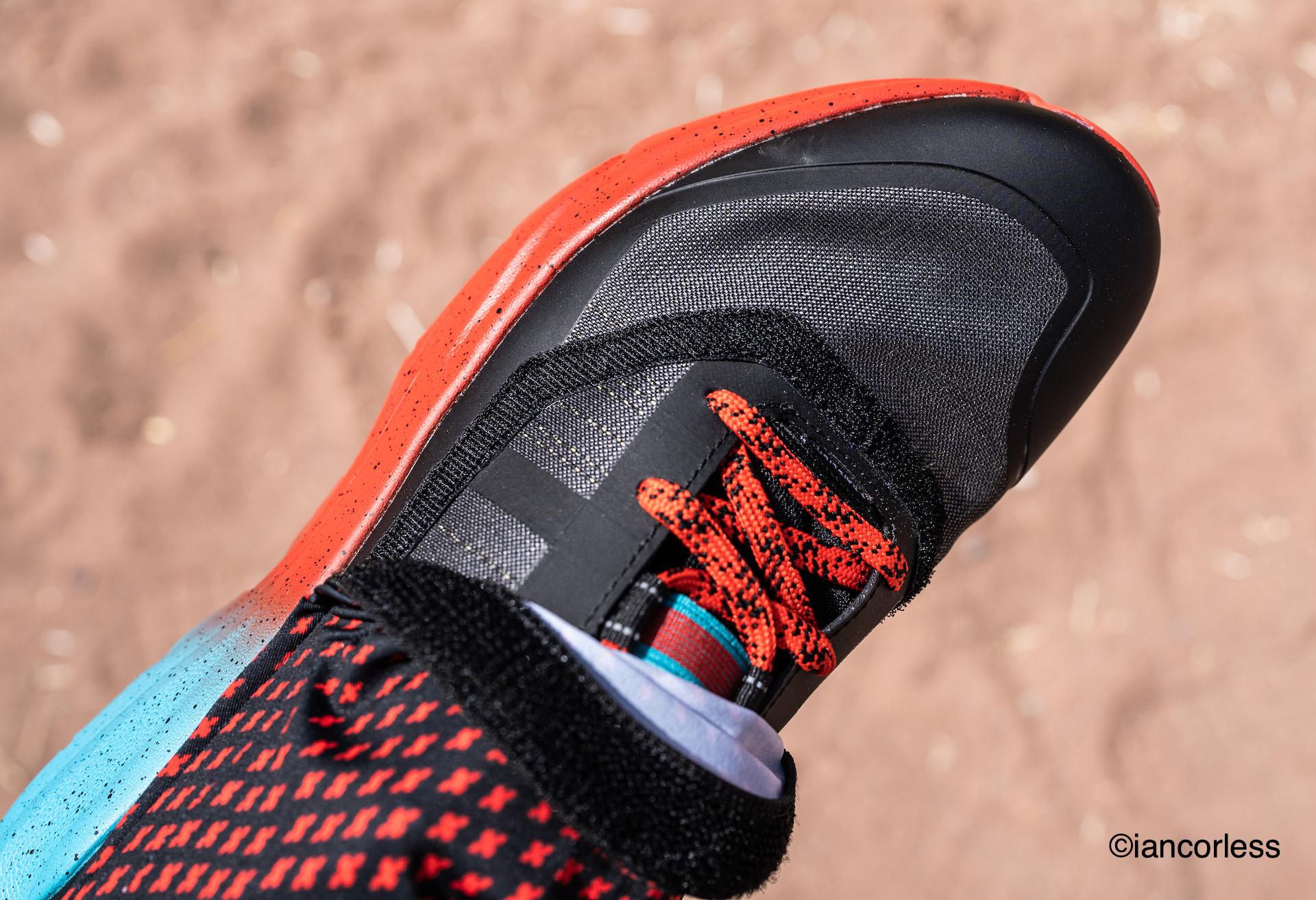
My first surprise was the weight of the shoe, they look heavy but they are not! For a standard UK8/EU42 they were 280g, for my UK9.5/ EU44 they were 295g with the velcro and 325g with the gaiter.
Not knowing how the shoe fit was my biggest concern, especially for a desert/ sand shoe. There is no need for ‘bigger’ shoes just because you are going to a desert (read a article HERE). Quite simply, if a shoe is too big your foot moves inside the shoe, a moving foot creates friction, friction equals blisters. A thumb nail of space above your longest toe is ideal, and when I say longest, this may not be the big toe! One consideration is width, make sure you have enough room for toe splay. Feet may go wider in the desert, so, be considerate of this.
The ULTRA 4 DESERT PROTECT were true to size and I therefore went with my standard UK9.5/ EU44 based on advice from Raidlight and they were perfect.
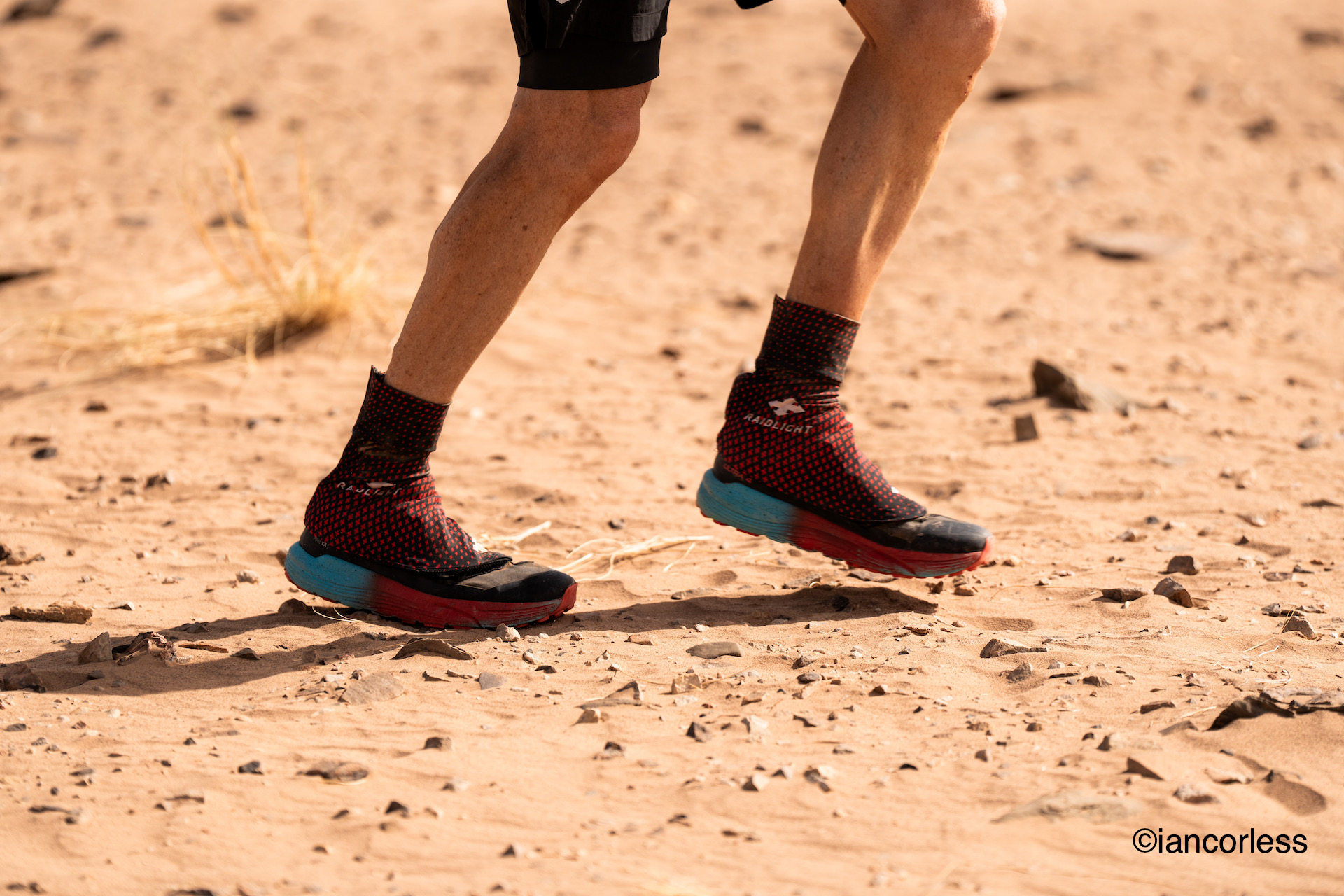
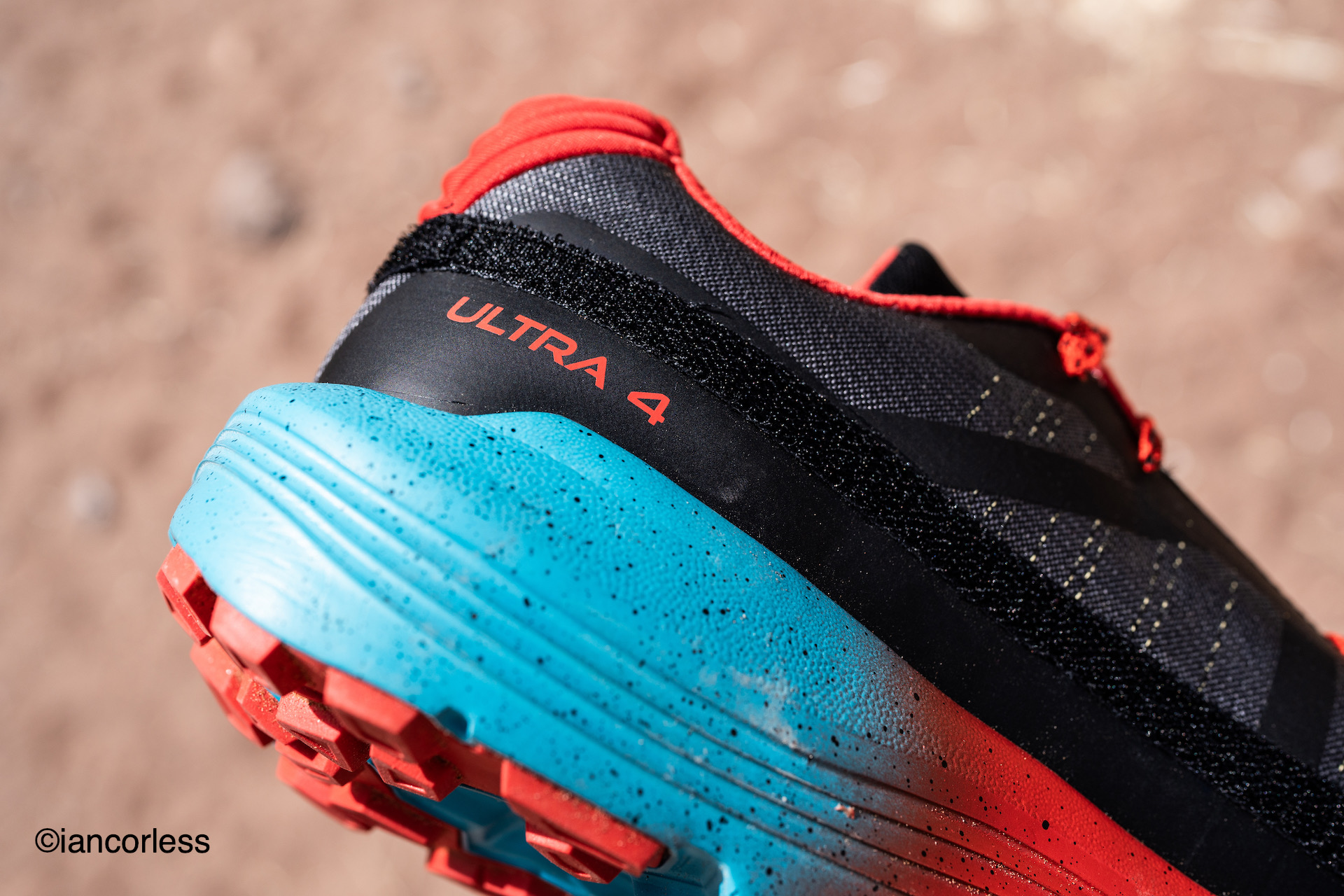
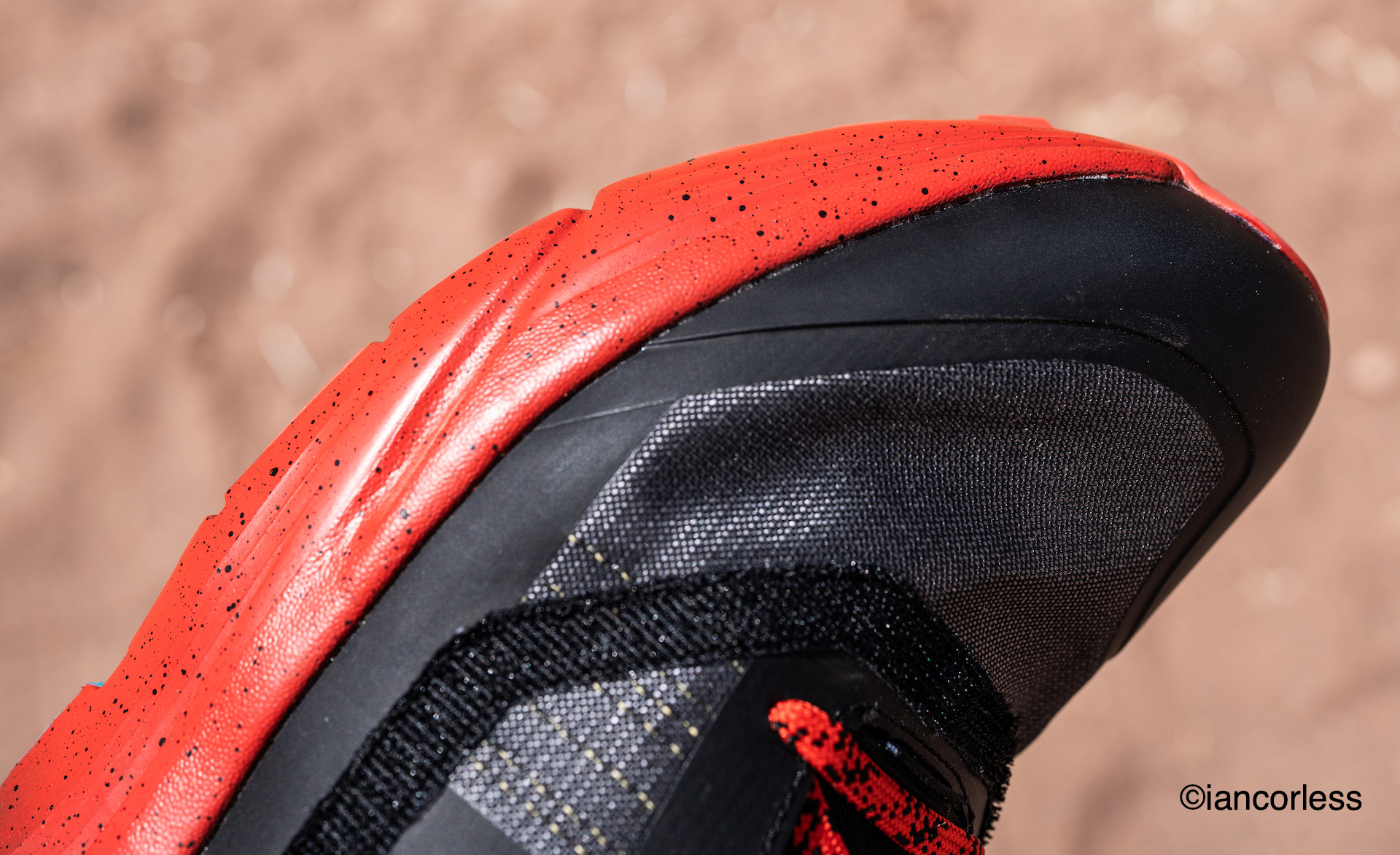
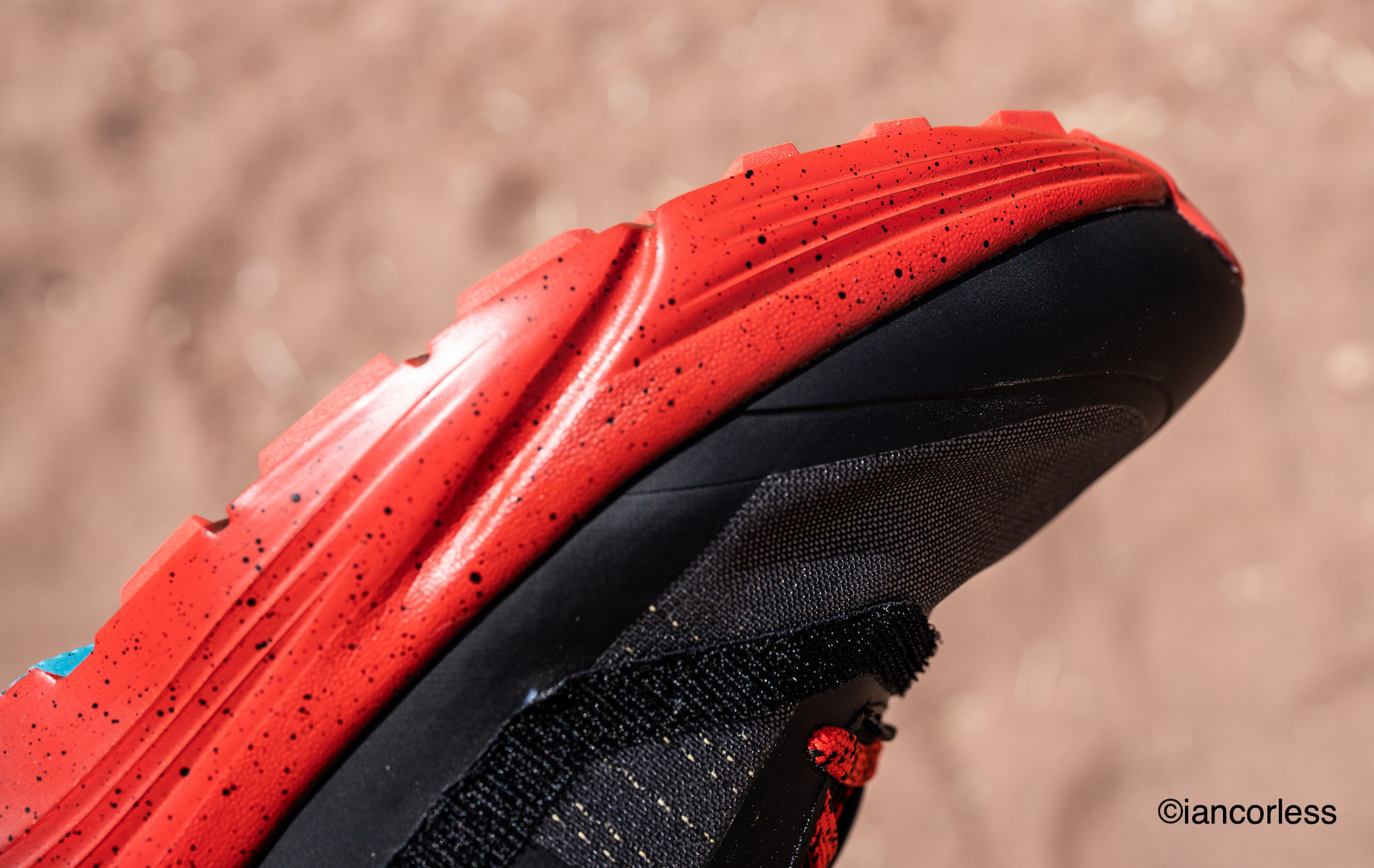
The colour way of red/blue/black really works, I like them. The red/black gaiter is also a nice touch.
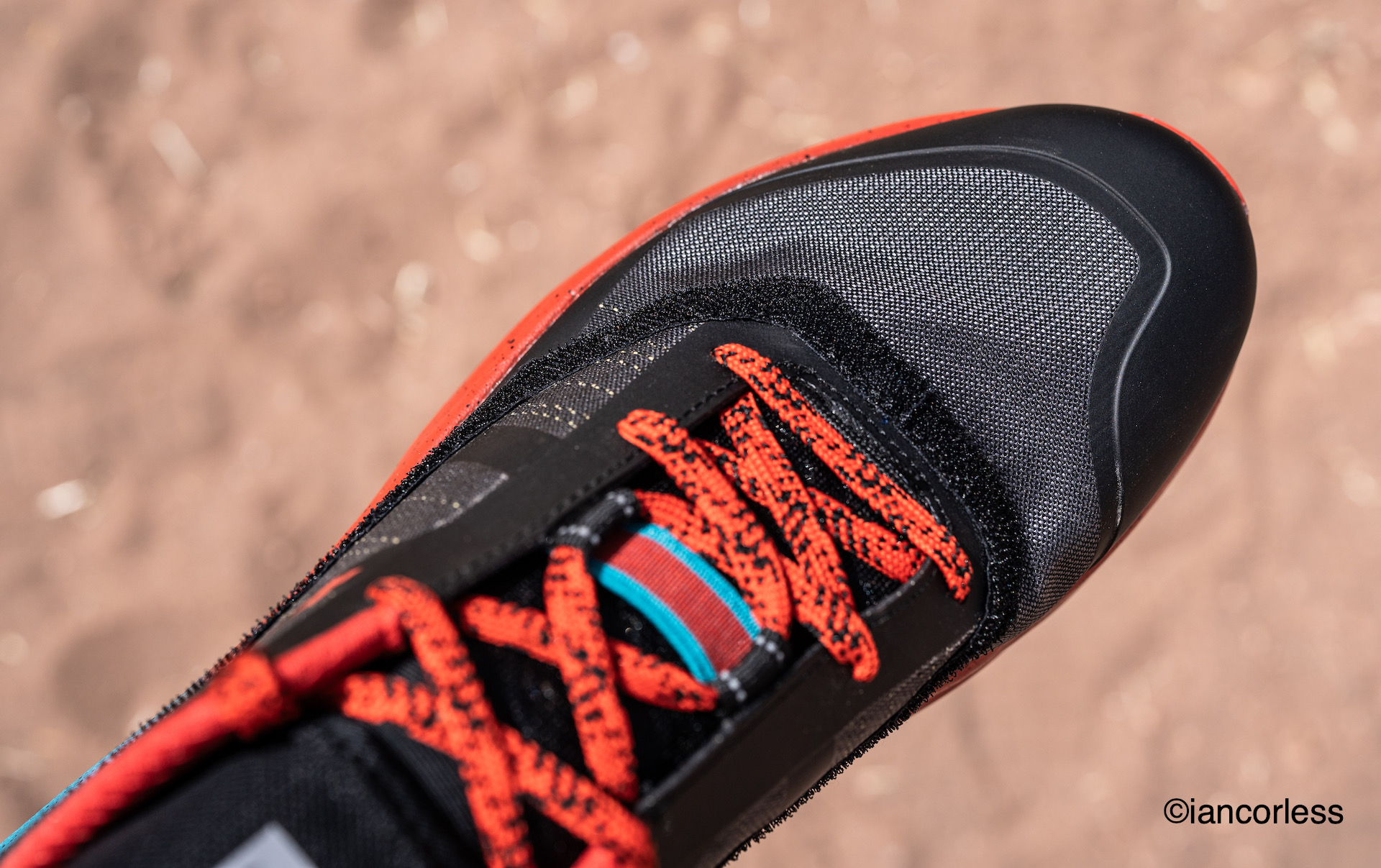
If you have velcro sewn/glued on a normal shoe, the velcro will go completely around the perimeter of the shoe, this ensures sand/ debris can enter at no point. The downside of this is that the velcro can get damaged at the front when hitting rocks or on challenging terrain.
Raidlight have got around this by bringing the velcro up the shoe to just below the laces. This I love.
To combat sand entering the shoe where there is no gaiter, Raidlight use MATRYX material. In a way, this is similar to Gore-Tex, keeping debris out while allowing the foot to breathe. It works, I had no sand enter my shoe on any occasion.
The gaiter attaches as standard and comes higher up the leg with velcro fastening and the option to adjust how tight at the top of the leg. I actually never opened mine. I fastened them together the first time and then removed and added them like socks when in use. This worked for me and ensures the velcro has a longer life. You just simply need to remember to put the gaiter on first, then socks, then shoes and then fit the gaiter.
The lacing works really well providing plenty options for great foot hold and the storage pocket at the top of the tongue is great for keeping laces out of the way. Once tied I had no reason to adjust them when in use and they never came undone, partly due the laces being flat and not round.
A neutral shoe, sliding them on, there was an instant comfort feel. These are not bouncy shoes but they are cushioned and comfortable with notable excellent grip at the heel. When running, there is good propulsion from behind the metatarsals and notably there is excellent protection from rocks and debris. The addition of elastic (M-lock band) on the tongue allows for flexibility and support.
The toe bumper is solid and offers great protection from rocks and debris.
The outsole with 4mm lugs offers a great middle ground and works exceptionally well. I have not tried them on wet ground or rocks.
With 19mm cushioning at the front and 25mm at the rear, the 6mm drop sits, once again in the middle ground and is ideal for long distance running.
IN USE
Have to say, I was surprised. My first sand run felt very comfortable and the shoe performed perfectly. They provided excellent comfort, great protection, plenty of toe splay and the gaiter with the Matryx upper allowed no sand to enter.
The downside? They were warm! To be fair though, comparing to my other shoes (Hoka) with sewn velcro and the addition of a Raidlight gaiter, the differences were comparable.
The more runs I had in them, the better the feel cam and I would recommend looking to put 30-50km’s in them before using them for your chosen race or adventure. I do caveat that by saying they were great out of the box, but certainly several runs did allow them to just fit and conform to my foot.
I have no negative comments. With 150km’s now in the shoe and a complete battering in the Sahara, the shoes offered all day comfort without a trace of sand entering the shoe.
I will also add, this is a new shoe. They only came available just before the 2024 MDS. Despite this, I saw many pairs out ion the Sahara. I spoke to everyone I could and the feedback was the same, perfect shoe, great comfort and no sand inside.
CONCLUSION
Shoes are personal and the most important thing in any adventure or race is a shoe works for you and causes no problems or issues. This is especially important in a race like MDS when so many other factors and variables come in to play. The ULTRA 4 DESERT PROTECT offers a one-stop solution to a problem and if this shoe works for you, it comes highly recommended. It will certainly be a highly recommended shoe of choice for this environment in the future.
“Unrivalled comfort, cushioning and dynamism. Designed and engineered to go the distance, making them the shoe for ultra trail runners. The midsole incorporates dual density technology, offering a perfect balance between cushioning and responsiveness. The lightweight design reduces fatigue while providing protection and support. Comfort over longer distances, while maintaining optimum stability over a wide range of terrain.”
The 2024 edition of Marathon des Sables – The Legendary is over. The statistics say this is the 38th running of the race, but in reality, it is 37 plus 1 or maybe, it is really just edition 1 of a new era of the race?
There is no getting away from the fact that the departure of Patrick Bauer and the arrival of new organisation caused anxiety, worry, and many questions. In real terms, there may have been many runner’s deciding to ‘wait and see’ what happened in 2024 and if all goes well, they would enter 2025.
The worry is over.
Statistics show MDS had 867 start the race and only 60 DNF’d (did not finish) – These statistics alone are a success!
Laurence Klein, MDS legend.
Nothing is ever simple and straight forward, so, lets look at the 2024 edition.
MDS
Every year, after each edition of MDS, I write a summary article. Some are more in-depth that others. For 2024 I provide a summary here and in-time, I may well come back to this post or write a new post based on comments and feedback, so please feel free to add your experiences in the comments.
Yoann Stuck on Jebel El Otfal
There were many changes for the 2024 edition and in the build up to the race, a familiar comment was heard:
‘If it ain’t broke, don’t break it!’
Cyril Gauthier
To some extent, after 37-years, this was a valid comment, however, Cyril Gauthier, Ferdinand Charriau and others at MDS HQ thought differently. There was no spur of the moment and rash thought process, on the contrary, ideas and protocols had been tested on the HMDS format. They had seen success there and the idea, quite simply, was to bring that to MDS The Legendary.
It was a success!
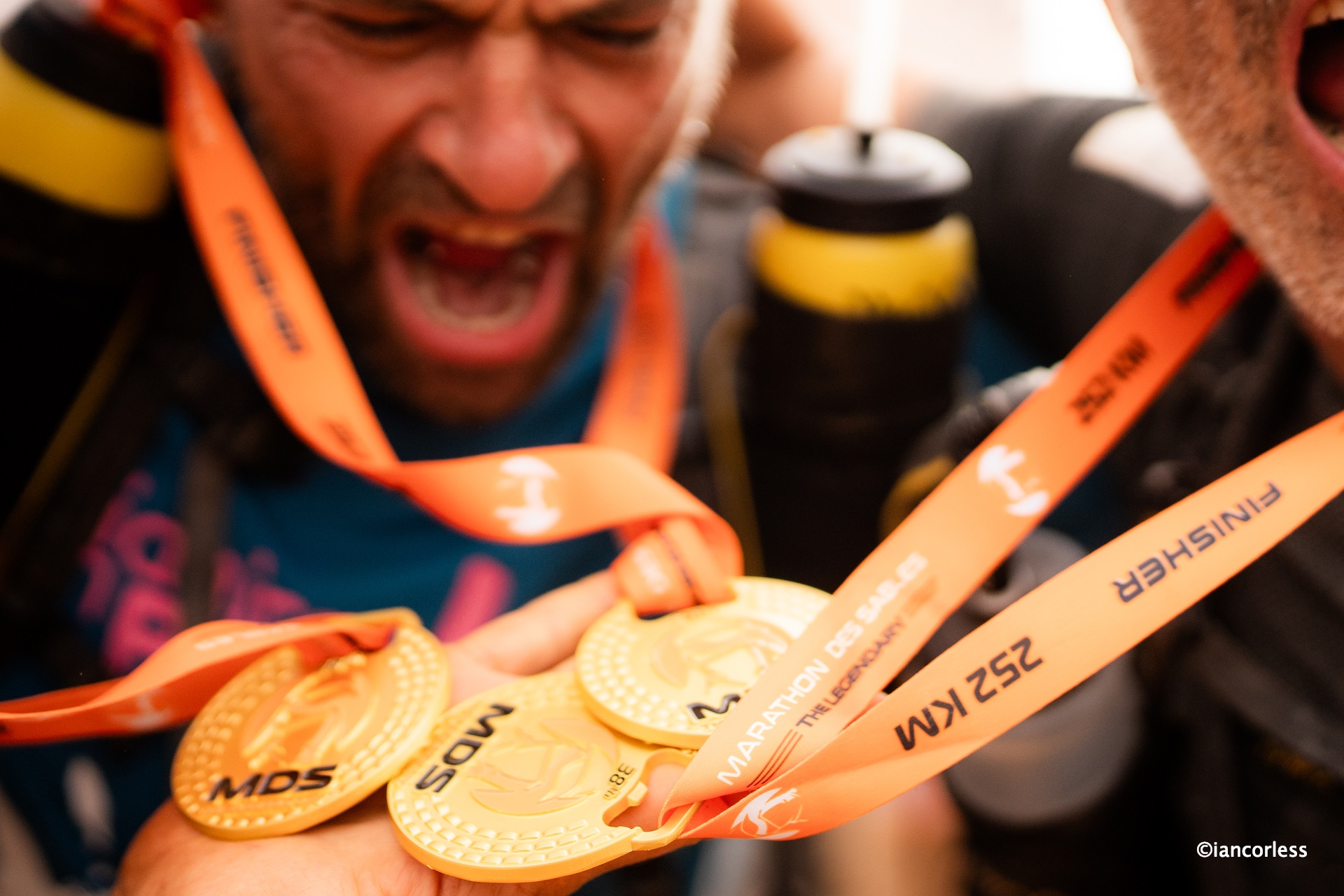
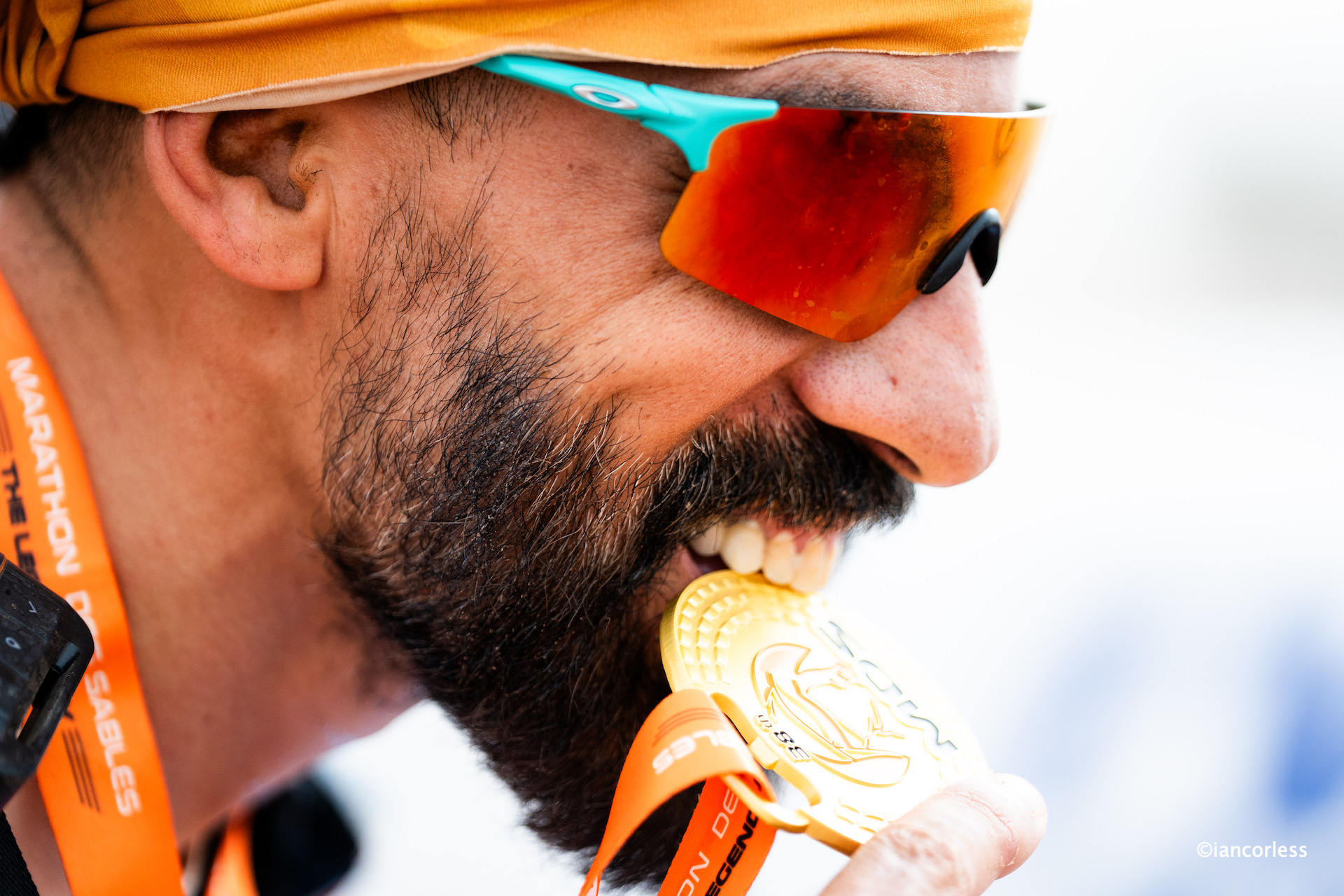
No better feeling, the medal.
All the the pre-race doubts, questions, frustration and at times anger soon disappeared as the race and the organisation unveiled the 2024 race and it’s format.
Cyril had used the term in 2023, ‘This is not revolution, but evolution.’ As the 2024 race progressed, this evolution slowly but surely converted the 867 and convinced them that the new format was a winner.
Oxo cube at CP7 on the long day, just over 10km to go.
It’s still MDS.
It is still a multi-stage run.
It’s still in the Sahara.
It’s still tough and still around 250 km’s in distance.
BUT, and this is a big BUT, there are complete changes in the way the race is now run.
THE CHANGES
Communication:
The changes start before we even get to the desert with years and finally months of planning and tweaking. I think the MDS team will confirm here that communication, information and news could have improved in the early stages but as soon as the race came close, there was a significant improvement, so, we can expect that to not only continue but get better moving forward.
Travel:
Arrival in Morocco and bust transfer to the Sahara
Travel plans and options changed in an effort to be more environmentally friendly and therefore charter planes were reduced to two and I think it is fair to say, that we can expect to see them removed completely for 2025? With travel options increasing all the time, it is now very easy to travel to Marrakech and therefore, travel options will and can be expected to be more flexible for future years. However, to facilitate travel to Ouarzazate and the race RV point, buses were provided from Marrakech and post-race for return travel.
Self-Sufficiency:
Self sufficiency is a key to the MDS experience
No catering was provided before the race as in past editions, therefore, runner’s had to provide there own food before race self-sufficiency started. While some would have preferred a catering option, ultimately it was no problem and no issue. One thing was for sure, there was little stomach upset in camp using this method. That alone is confirmation enough.
Admin Day:
Admin day was fast, slick and efficient.
Admin day in the past has been a long and laborious process that has taken 3-hours for some. This was changed completely and it was an absolute success with average processing times of 30-minutes. It was simple, fast, efficient and a game changer that resulted with less time in the sun for runner’s, less time on feet and little to no stress.
Camp:
Legends in the Sahara
The bivouac looked the same but there was a significant change, the circles of tents were made tighter and smaller making for a much smaller space in the middle. This made for easier comms and a more comfortable, homely feel. Each evening there was a small talk called ‘Legends’ that introduced 2/3 significant people from MDS history in a casual Q&A format. This was followed with relaxation and yoga.
Early starts:
The long day with an 0600 start for the majority of the race, the top 50 started at 0800
Depending on the stage and the distance, race start times each day were earlier to allow for 2/3/4 hours of significantly cooler temperatures. The earliest start 0600, the latest start at 0800 for the top-50 on the long day.
Water:
No water rations and no 1.5ltr bottles.
Water was in abundance, not rationed and in addition to CP’s typically every 10 to 12km’s, additional water stations were added on certain stages.
Ferdinand Charriau at CP1 on stage 2
Cold water:
No better way to cool down
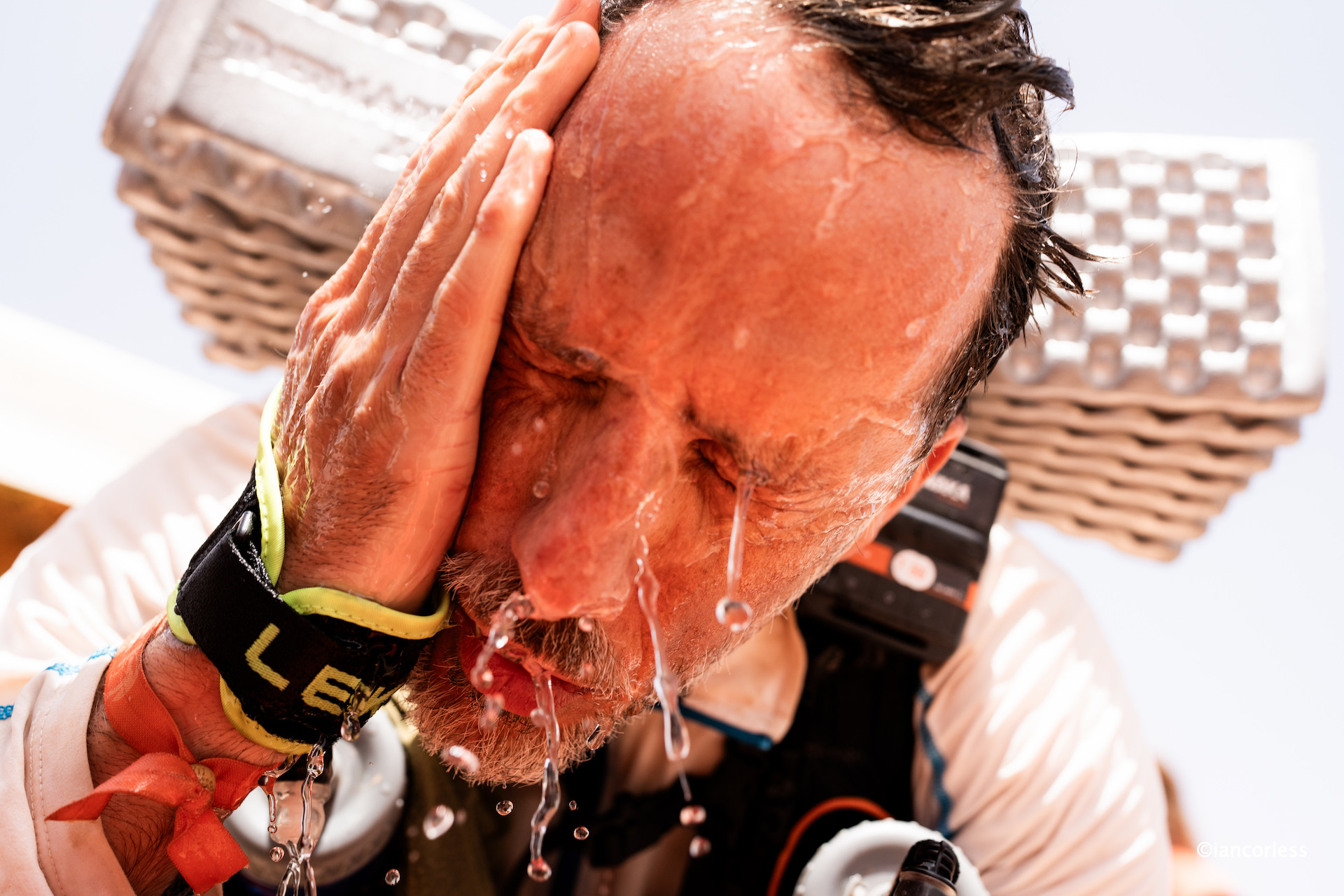
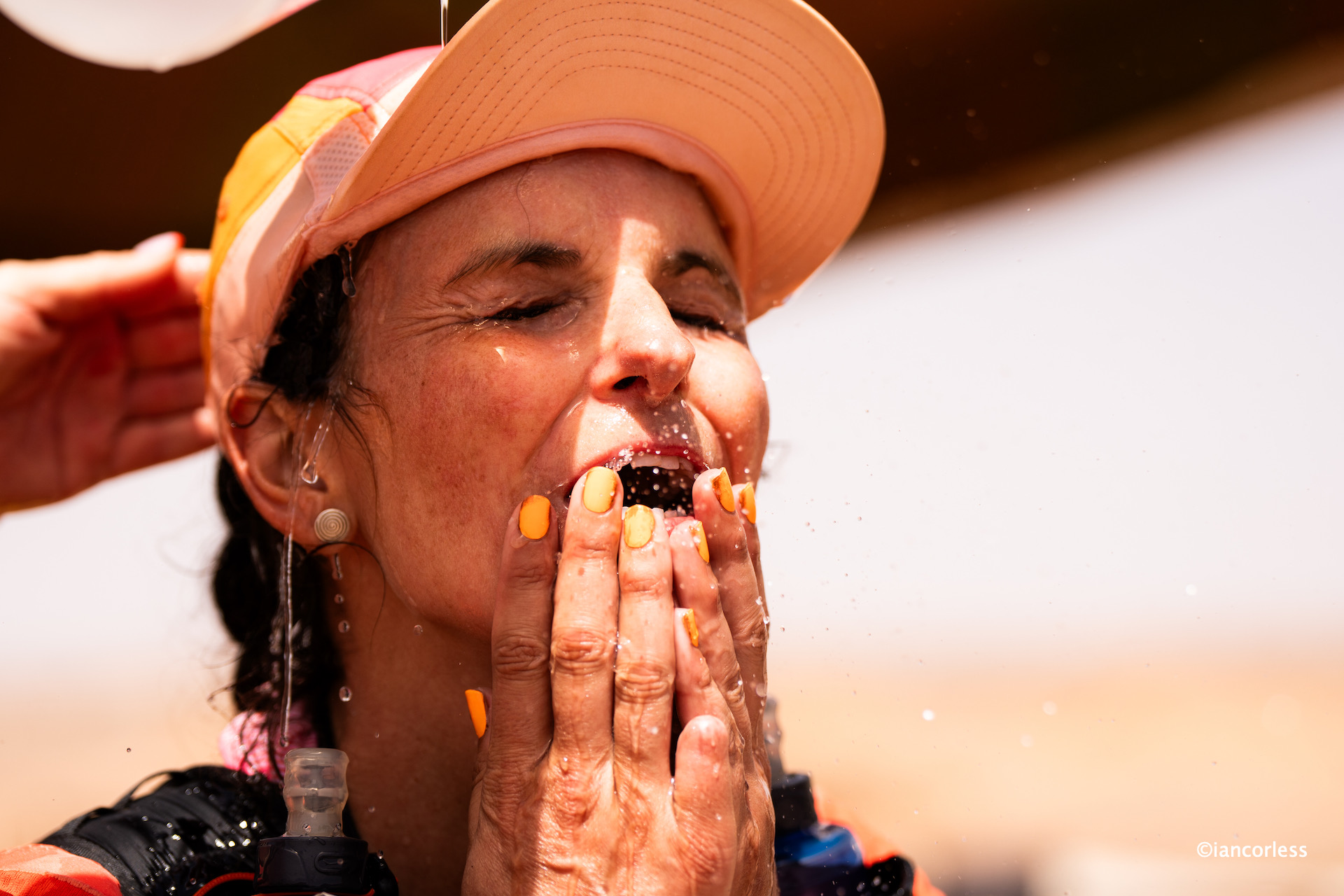
Each significant CP had cool iced water that was poured on necks and heads to help with cooling.
Staff:
It’s a team effort
Volunteers made the event a success with dedication, commitment and enthusiasm.
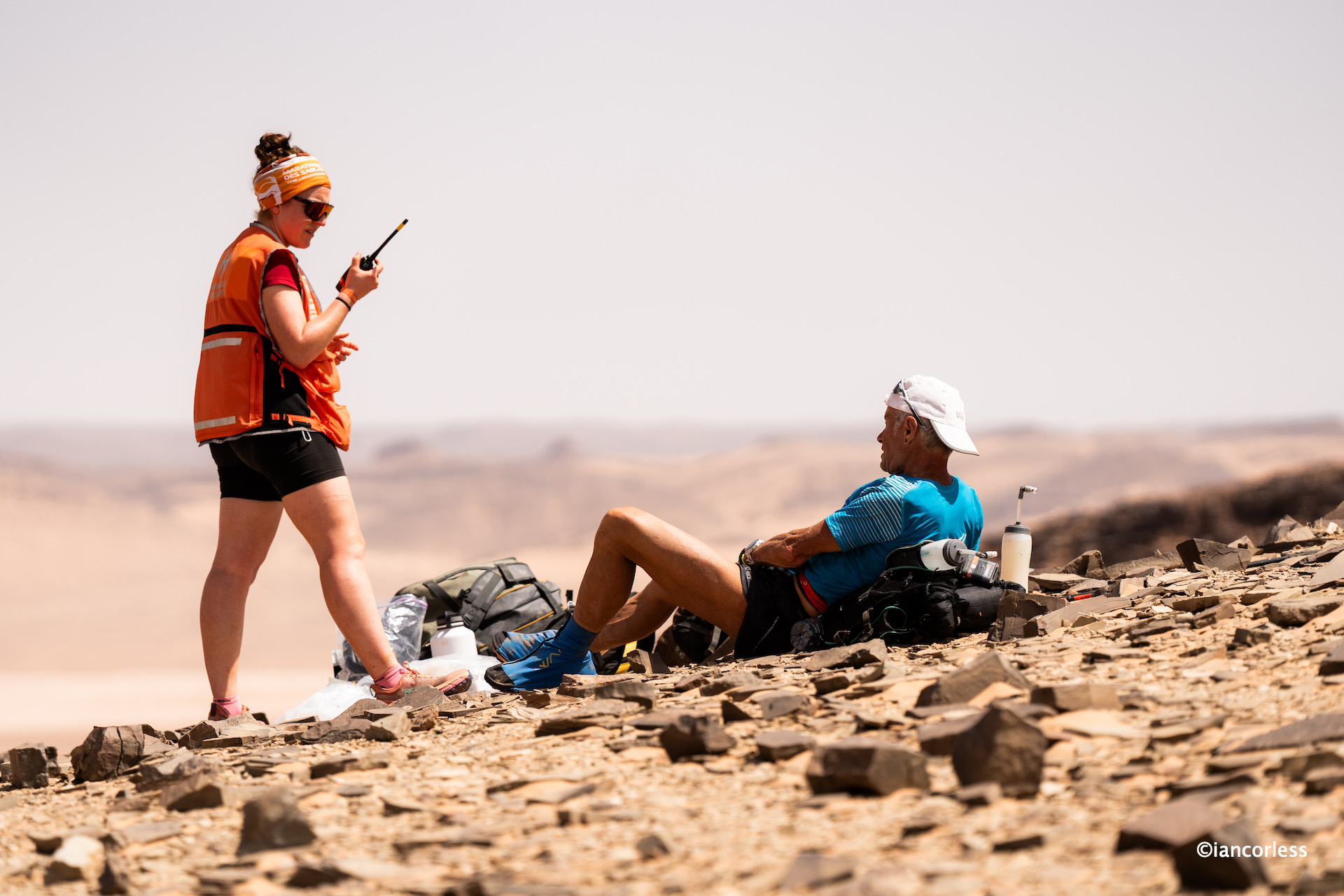
Safety:
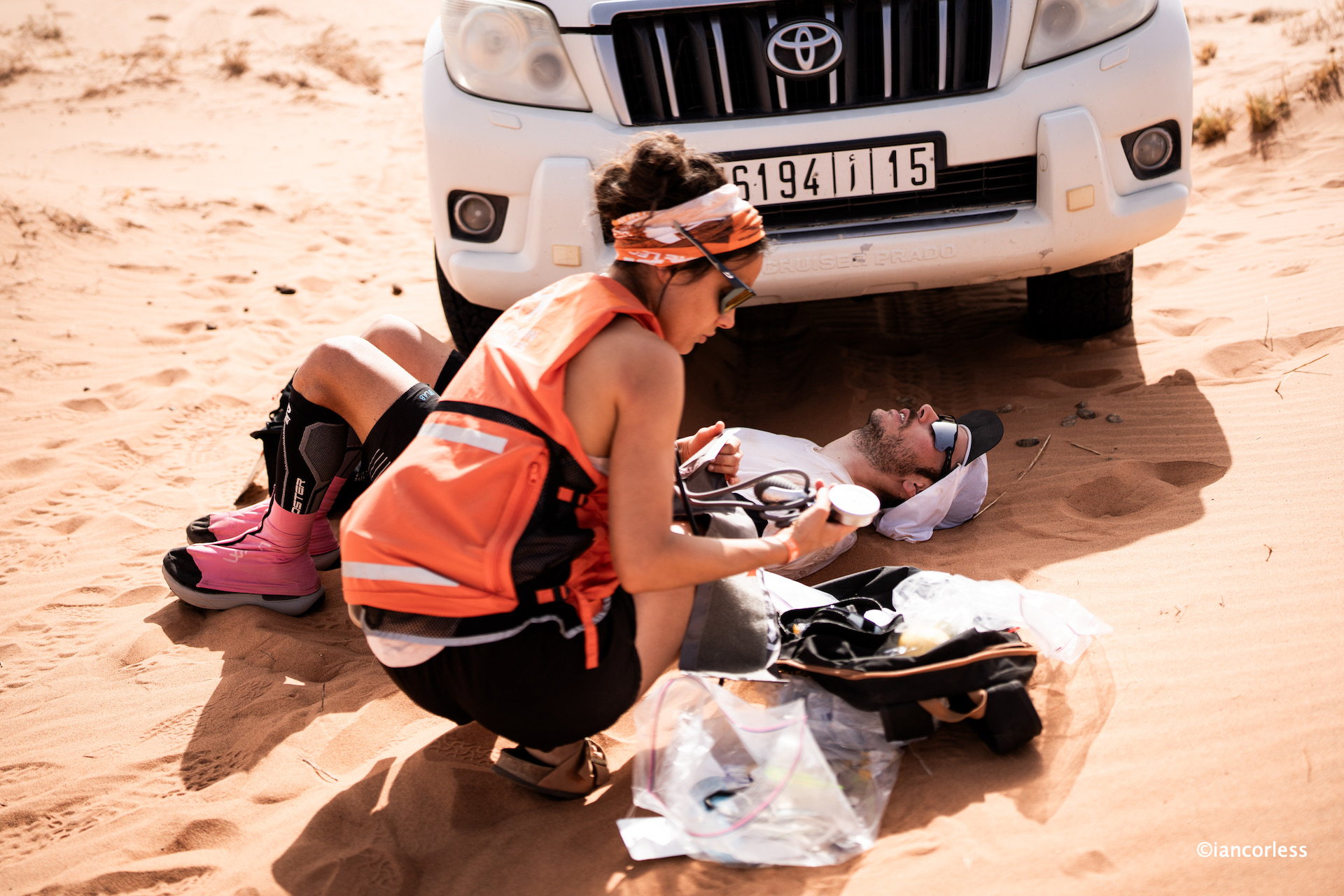
Medical teams were at CP’s, running the race and in fast response vehicles.
Much of the above: early starts, more water, water stations, cold water come in the ‘safety’ section but the race had medical runners, more fast response vehicles and more medics/ doctors.
Safety is a key element of MDS
Stock cubes:
Salt tablets were replaced with mandatory stock cubes. This caused huge controversy before the race, but, during the race I heard many comments such as, ‘stock cubes, who’d have thought it, I have grown to love them!’ Now of course, MDS is a self-sufficient race and just as one would train, test equipment, research food and so on, salt/ electrolyte replacement should also figure in this. If that is stock cubes, great! If not, make sure you have what you need. Again, only 60 DNF’s reflect that whatever was happening was working.
“I enjoyed them as either a side dish to my lunch and dinner or, on the long stage, during the stage itself. They worked for me, in addition to my own nutrition. No issues with dehydration or hyponatremia, and enjoyed something aside from the mostly sweet race nutrition.” – Stephanie Tang
“I used them in the evening, 1 as a hot “brew” and the other inside my evening meal. I did supplement the day with 1 salt tablet per hour. On the day I didn’t use 1 tablet per hour I cramped up significantly. I was on the fence of not using them, however I see the benifit and actually looked forward to my evening Knorr brew. Everyone is different but that’s just what worked for me, knowing my body and stomach.” – Maximus Baximus
Foot care:
Foot care
As per usual, foot care was provided and as the race went on, the demand increased. It’s important to remember, MDS is a self-sufficient race and so therefore, an element of self-care is required. This also helps avoid any wait. However, for those who had bad feet and needed to wait for attention, care was given to all these that needed it.
“It was my experience that you could see a medic if you were prepared to wait for one, there was also medics overseeing the self care side of things too.” – Matt Pearson
“…when you just ran 85k you don’t want to threat your own blisters.” – Stijn Vin Cauter
Tracking:
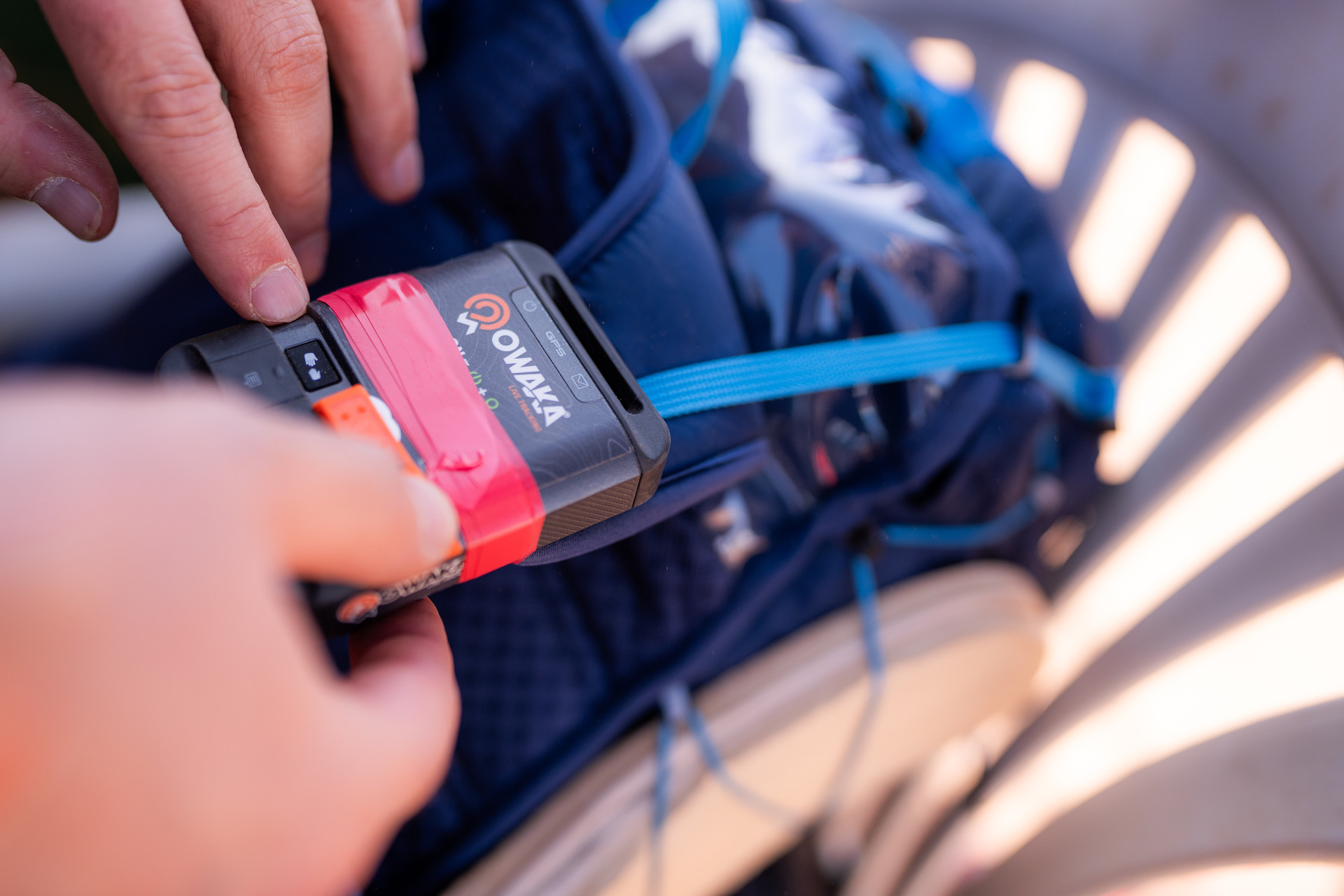
As per usual, each runner had a tracker for safety and so loved ones at home could follow.
The race format:
2024 was the longest race in MDS history. It was also 6 race days and not 5 with a charity stage. So, on paper, the race was harder…? The feared long day, typically on day 4 was now on day 3. This allowed for runner’s to be fresher, but to counter balance this, packs were heavier. In past editions, with the long day done, there was ‘just’ a marathon to do. Now, with the new format, there was still some 100 +/- km’s to go over 3 stages! The typical format of the race has been to run through the desert, point-to-point resulting in 5/ 6 bivouac. For 2024, just 3 bivouac were utilised allowing the race to concentrate on what many considered, the best part of the Sahara – it worked!
Stage 3 was stunning
MDS The Legendary
Every year, MDS has challenges. If we look at the last 4-years, the challenges have been very significant:
2020 Covid.
2021 Intense heat, norovirus and the highest DNF rate in MDS history.
2022 Cooler temperatures and even some rain.
2023 Intense heat and sandstorms.
It was very clear that the new management wanted to learn from 2020 to 2023 and make sure that the 2024 edition, as much as possible, facilitated increased safety and a higher completion rate.
Nothing like the emotion of the finish.
The figures speak for themselves, just 60 DNF’s. A success!
Now of course, many factors come into play when discussing DNF rates and to be fair, 2024 was a good year with no excessive heat and the new protocols as discussed above. Having experienced 11 MDS, 2024 was not a hot year. For sure it had its moments, particularly on stage 3 and stage 4 between midday and 5pm, but with earlier starts, typical temps of 30-33 degrees and often wind, conditions were good.
A trickle of cold water at each CP makes a huge difference
There was an abundance of sand storms and a day did not pass without the presence of wind, some days were worse than others. However, there was never one of those full-on white out days.
Wind and sand on admin day
The route was a classic, taking in ‘the best’ of the region, the long day in particular was beautiful. Some days were easier than others, ultimately though, the route was a showcase for Morocco and the Sahara.
Epic landscape
Everyday, CP’s and the finish line was a party with motivated volunteers and music. The final day finish, at times, was like a rave with a DJ and a full-on party mode.
“First time running, so cannot compare, but absolutely loved the event . From start to finish, I have nothing but praise. Amazing staff and volunteers.” – Julianna Ambrosi
What a team of volunteers from all over the world
To sum up, the runner was placed first (correctly) and the organisation facilitated, as best as possible, a finish.
“First time for me so don’t have any comparison but having UK volunteers was great. Especially at the checkpoints when a friendly face and some words of encouragement instantly made things better.” – Si Brewington
The after party, awards, film show and celebration was top notch – a great finish.
THE RACE
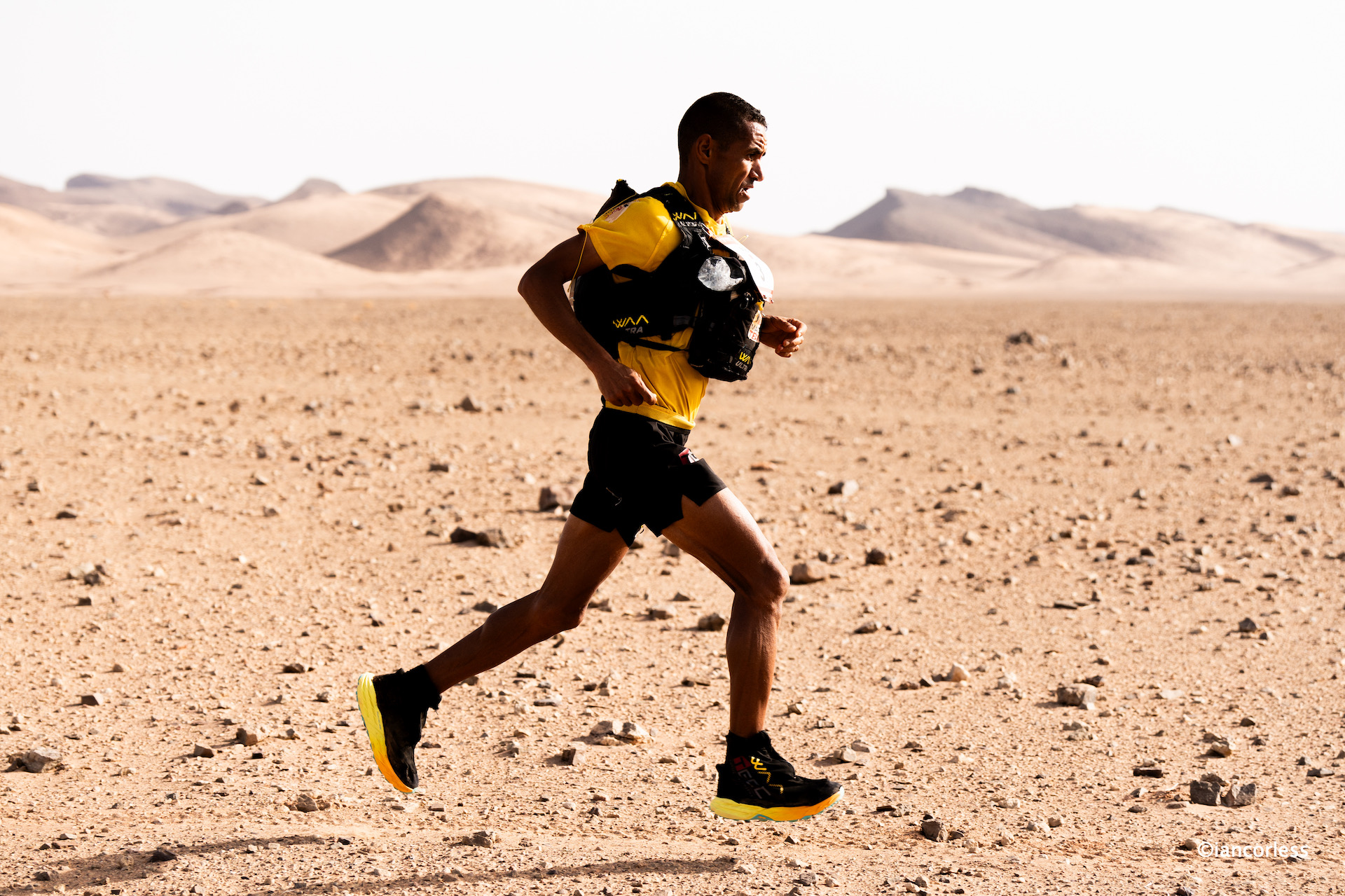
Rachid, king of the Sahara
Rachid El Morabity and Aziza El Amrany were crowned champions. Rachid obtaining his 10th title and Aziza gaining her first.
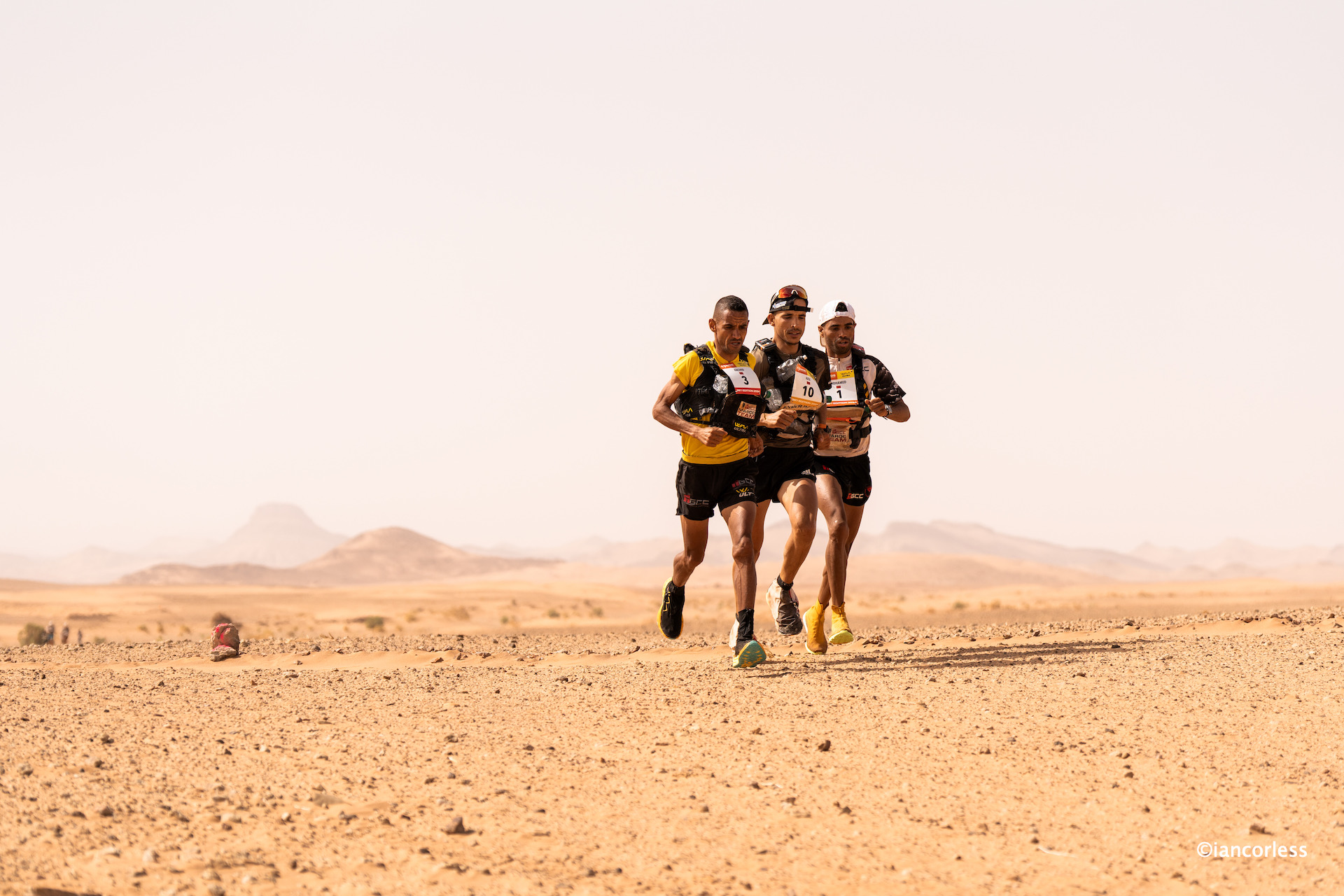
The El Morabity once again used tactics for victory, Aziz Yachou could only watch on and fight as hard as possible, hoping that one of the duo would have a bad day… Bad days never came. Mohamed ‘played’ a bad day on stage 5 to relinquish time for his brother. It was just a game, just a like chess or a domestique in cycling.
It was this close
For the women, Aziza El Amrany was in a race on her own. She was head and shoulders above the competition and gave a dominant performance.
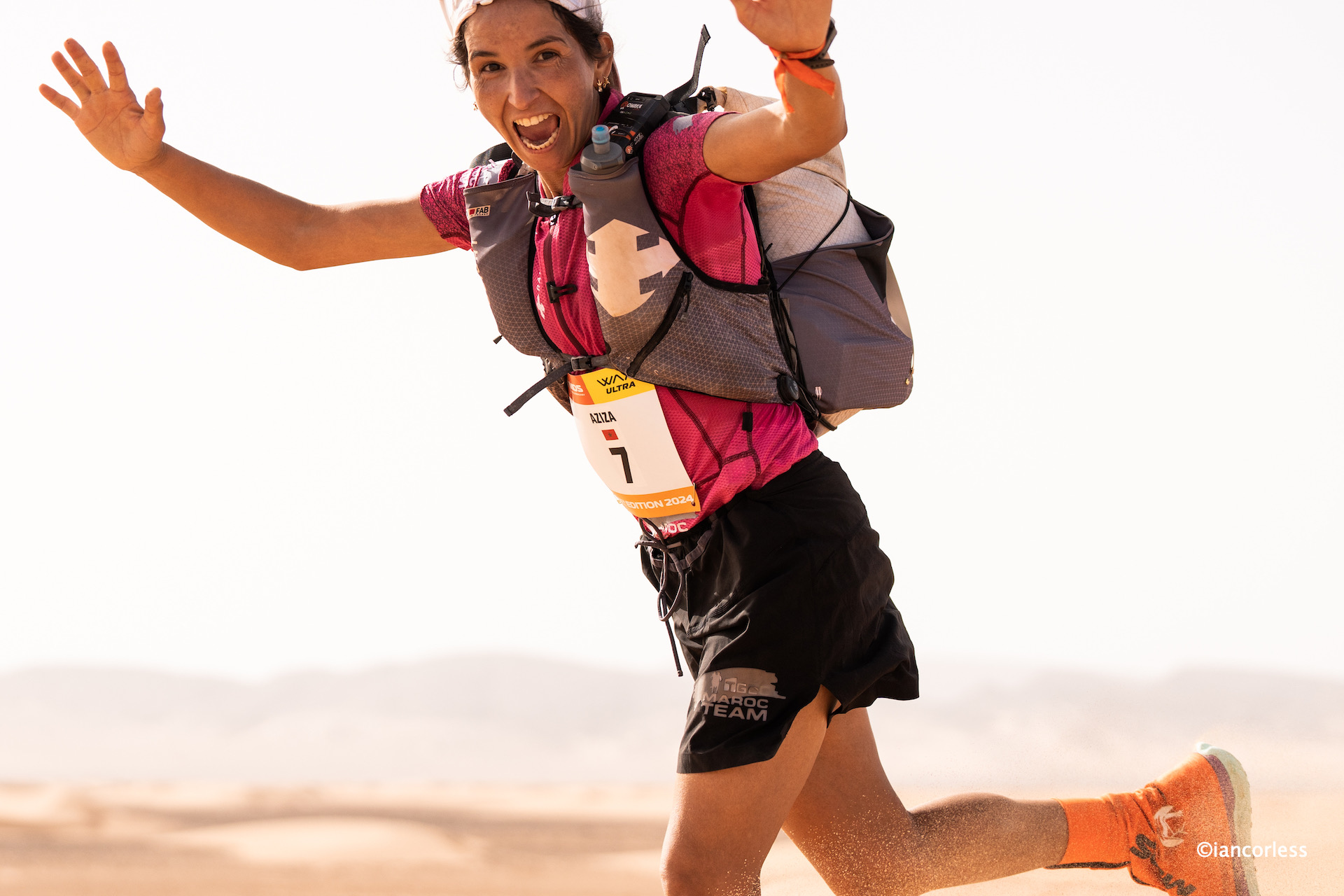
Aziza flying
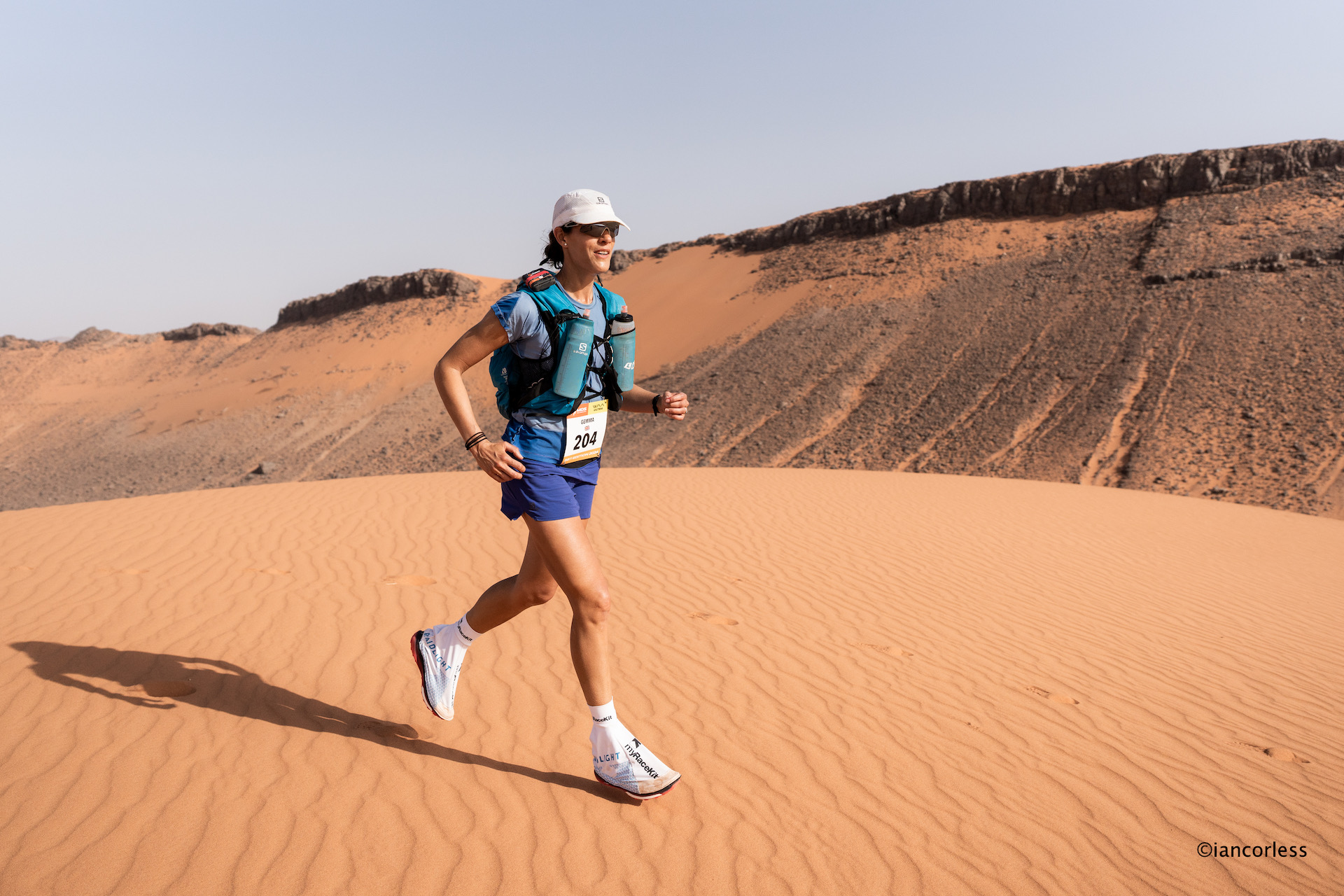
Aziza Raji, who has won MDS before and earlier in the year won Omand Desert Marathon placed 2nd and UK’s Gemma Game, once again placed 3rd. This Gemma’s 3rd time placing 3rd.
This is not an in-depth analysis of the 2024 MDS The Legendary, that will follow with more feedback and analysis. However, with thoughts and ideas fresh in the mind, it’s good to have immediate analysis and put thoughts down. I think I can safely say that the race can be summed up in one word, SUCCESSFUL.
What have I missed? I know I will have missed something, so, please let me know.
There may have been some controversy, worries and anxiety in the build up but quite quickly that evaporated.
MDS The Legendary may not be perfect yet, but for the runner, the 2024 edition came close.
If you hesitated placing an entry for 2024, my advice is to act quick for 2025. I firmly believe that once participants share their positive experiences, entries will fly in.
CALL FOR COMMENTS
I welcome you to share experiences, the highs and the lows. The positives and any negatives. The MDS will grow and become better with more feedback.
The 2024 Marathon des Sables – The Legendary is over. The race concluded with stage 6 and 21.1km to cover; challenging terrain of stony plateau, small dunes, an ascent to Jebel Mefatigbzef, wadi, and a palm grove finish – the MDS medal hard earned! Rachid El Morabity and Aziza El Amrany the champions!
Camp life
Once again it was an early start as everyone had to prepare for an 0630 start time.
Yoann Stuck
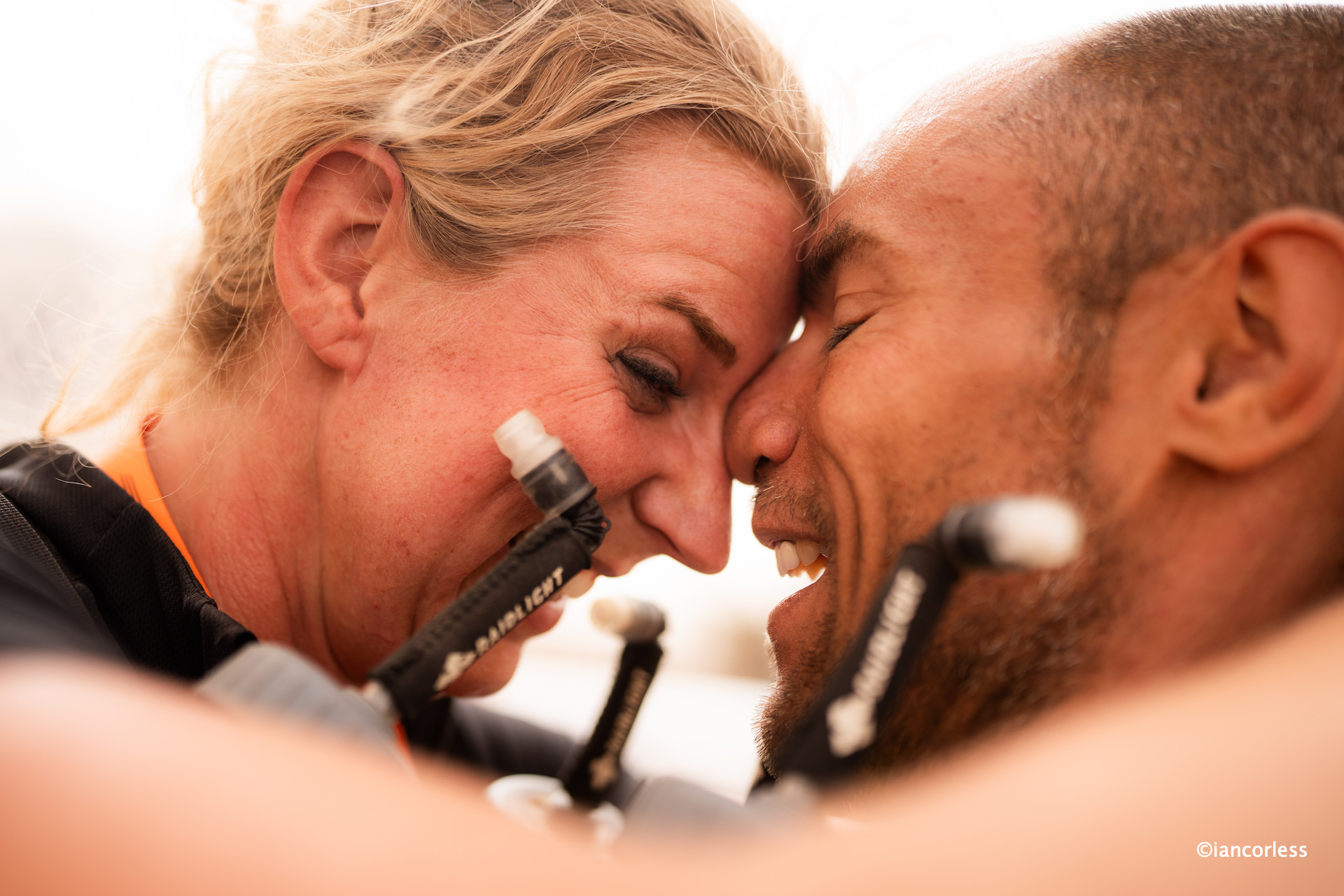
The last day was all about survival and getting the job done as quickly as possible, crossing the line and receiving the medal. The finish line for 2024 incredible, it was full of tears, emotion, relief and laughter; all accompanied by a DJ and party tunes. Quite a way to finish the race.
The medal
However, while the women’s race was decided early on and the top-3 places confirmed, the men’s race was a potential nail biter.
The El Morabity brothers had played their trump card on stage 5 and now Rachid could smell a 10th victory, however, he would need to perform at a top level to make this happen and make sure Aziz Yachou did not attack and pull back time.
The trio started fast and it stayed that way for the duration of the 21.1km’s. Aziz looking to break Rachid.
No matter how Aziz tried, Rachid responded and as the finish came in sight, the 9 times MDS champion pulled away, removed his Moroccan flag from his pack and secured a 10th victory. Mohamed eased up making sure that Rachid pulled back the required seconds to win overall, but not so many seconds that he would lose 2nd place.
Aziza El Emrany finally took the MDS top slot after many years coming close. It was great to see and one that is really deserved, she was in incredible form this year. Aziza Raji placed and for the third time, Gemma Game placed 3rd again.
The story though was all the legends who crossed the line and achieved greatness in making it through the Sahara to place a medal around their neck.
The 2024 edition has proven to be a memorable one, with a new organisation and many changes, many feared the race would lose something, not so. The opposite, the general consensus has been approval and open appreciation for what repeat MDS participants have said, ‘the best yet!’
As in any race, some don’t make the finish. For the 2024 MDS, at the time of writing, only 60 are DNF’s, this is from 867 starters.
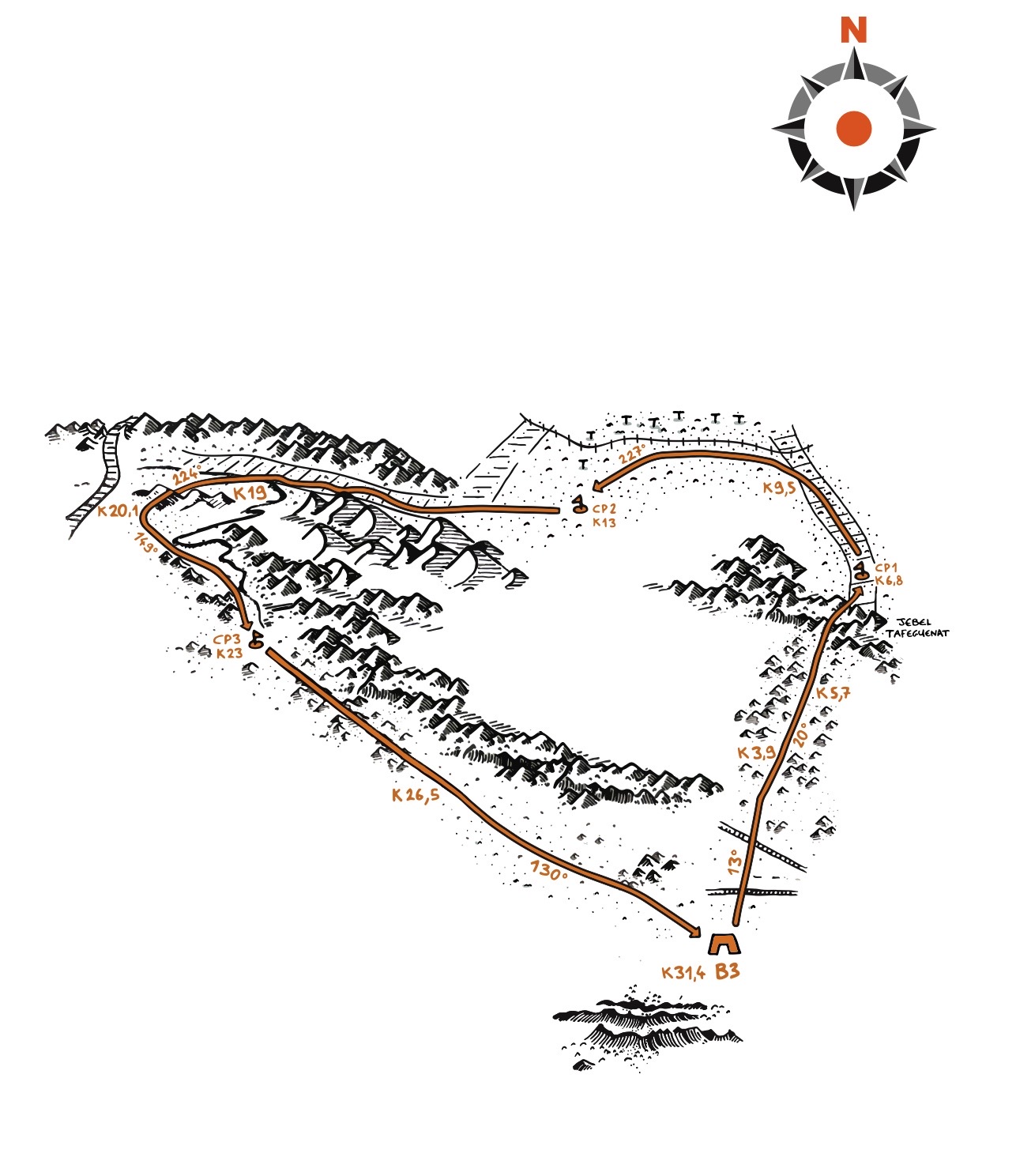
B3 and back to B3, the heart stage at 31.4km’s takes place in a new area for Marathon des Sables.
Sunrise
One could say that this is a classic MDS stage with a little of everything and while the participants may be feeling a little too tired to enjoy the views, there is much to appreciate here.
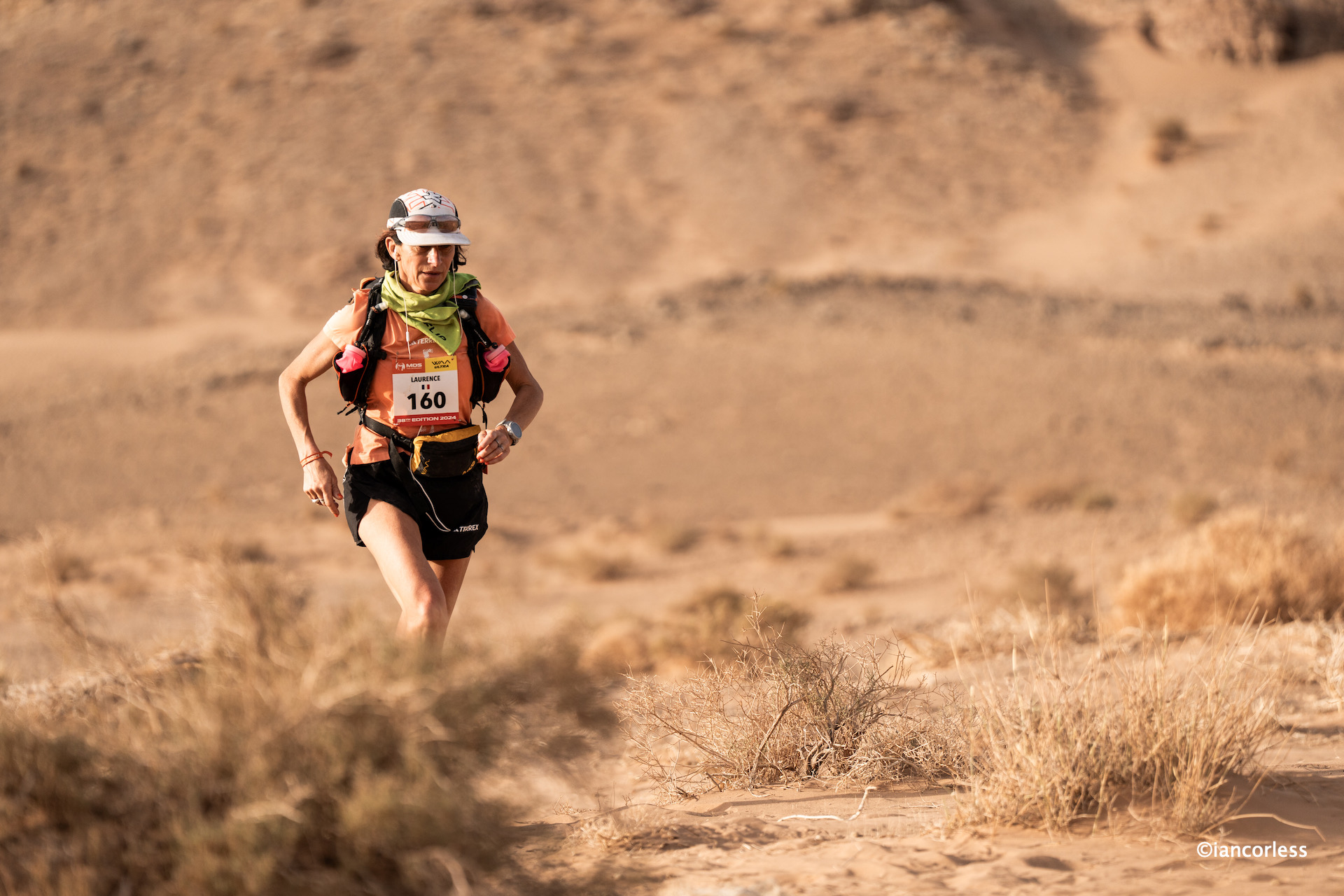
Laurence Klein
Jebel Tafeguenat a highlight followed by wadi, stony terrain and small dunes. CP’s ease the journey at 6.8km, 13km and 23km.
Easy start to the day
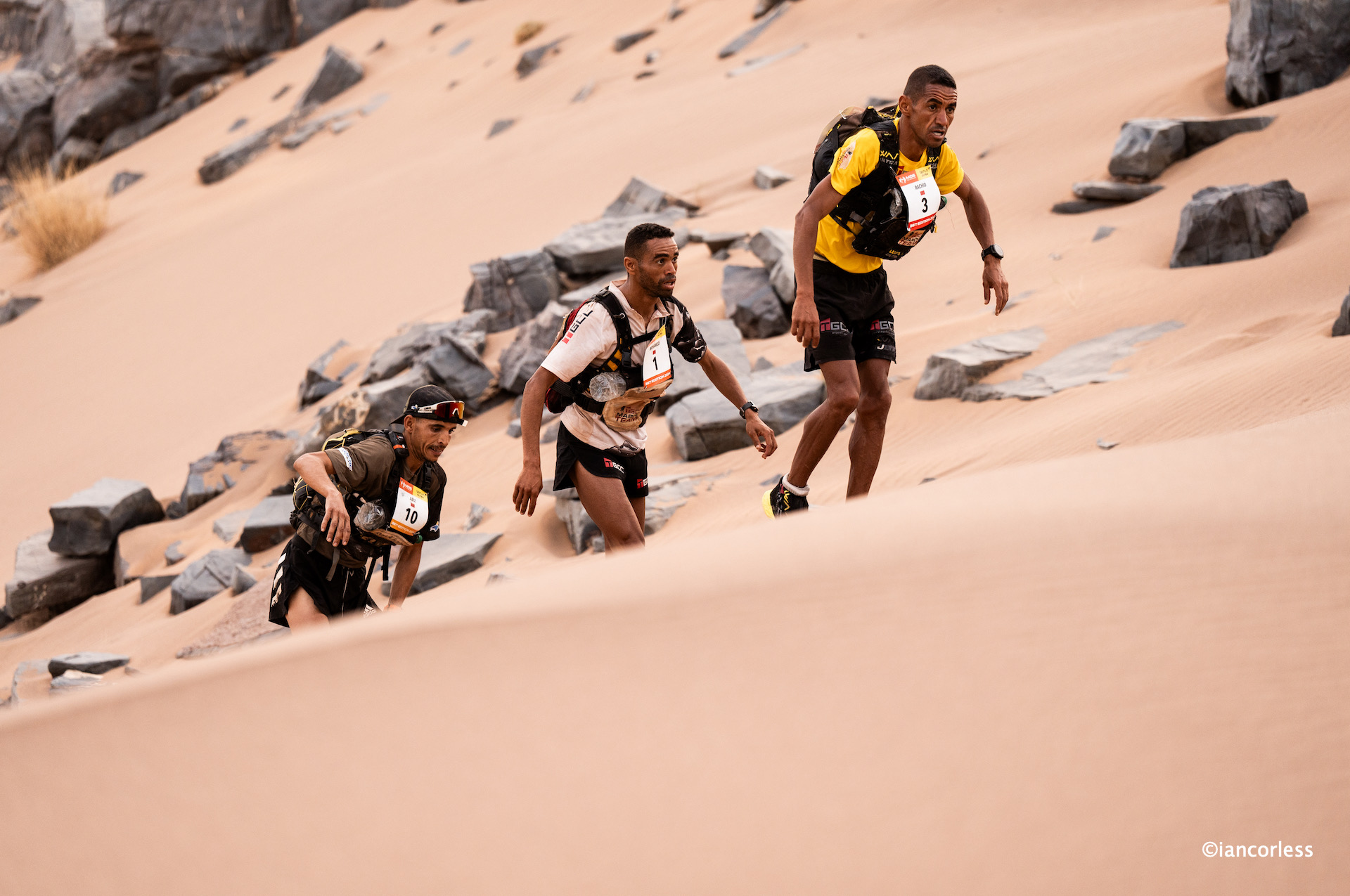
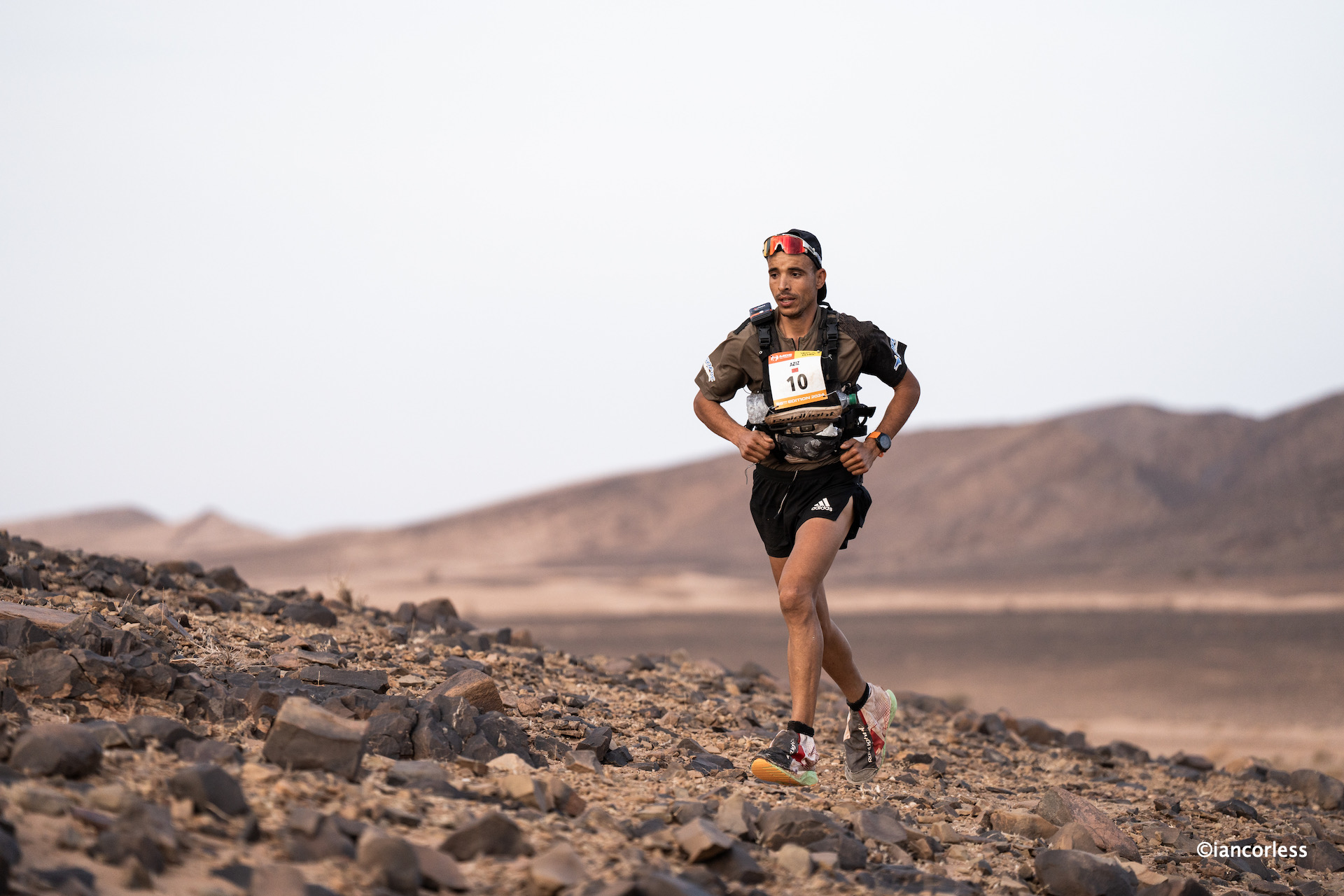
The day started under cloud and cool temperatures after a night of sandstorms. The early pace easy, with Rachid El Morabity and Mohamed somewhere in the middle of the pack. However, this soon changed with Aziz Yachou dictating the pace.
Rachid El Morabity followed and the race was on.
Was this the day that Mohamed El Morabity would relinquish his lead and allow his brother the opportunity for a 10th MDS title? The simple answer, yes!
Full flight
As the stage progressed, Rachid and Aziz pushed a relentless pace and Mohamed dropped farther and farther back.
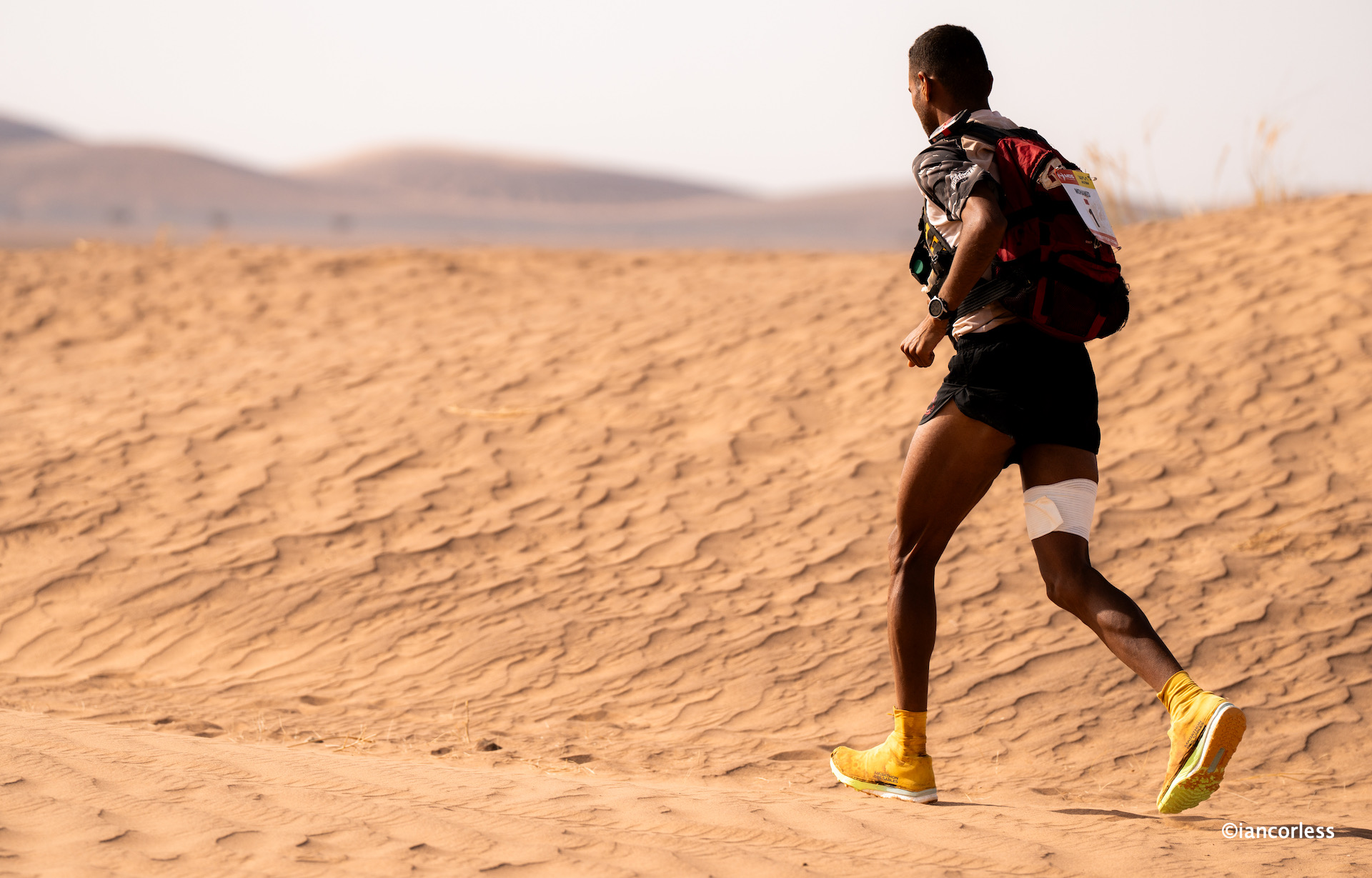
Mohamed watched the race pull away, strapping on his leg…
Within the final 8km, the duo of Rachid were at full pace, it was superb to watch as the master, Mr MDS, Rachid El Morabity opened a gap pushing at almost 17km’s and hour.
Aziz Yachou
Aziz grimaced trying to keep up. This was the make or break day and Rachid crossed the line in 2:11:43. Aziz followed with 2:12:23.
Aziz watching Rachid pull away!
Now, what time was Mohamed going to cross in? No doubt he was calculating a pace to make it all very close for the last day, his time, 3:04:06 (35th place) and 52:23 after Rachid.
The ranking going in to the last stage:
Mohamed El Morabity 19:19:39
Rachid El Morabity 19:20:14 (35 seconds behind)
Aziz Yachou 19:22:30 (2:51:00 behind)
It’s all becoming a blur.
The strategy for stage 6 is simple, Mohamed will recover from his leg problem but relinquish the 35 seconds to his brother whist also making sure he does not lose time to Aziz so that he finishes second. It has been a stunning El Morabity game plan, once again!
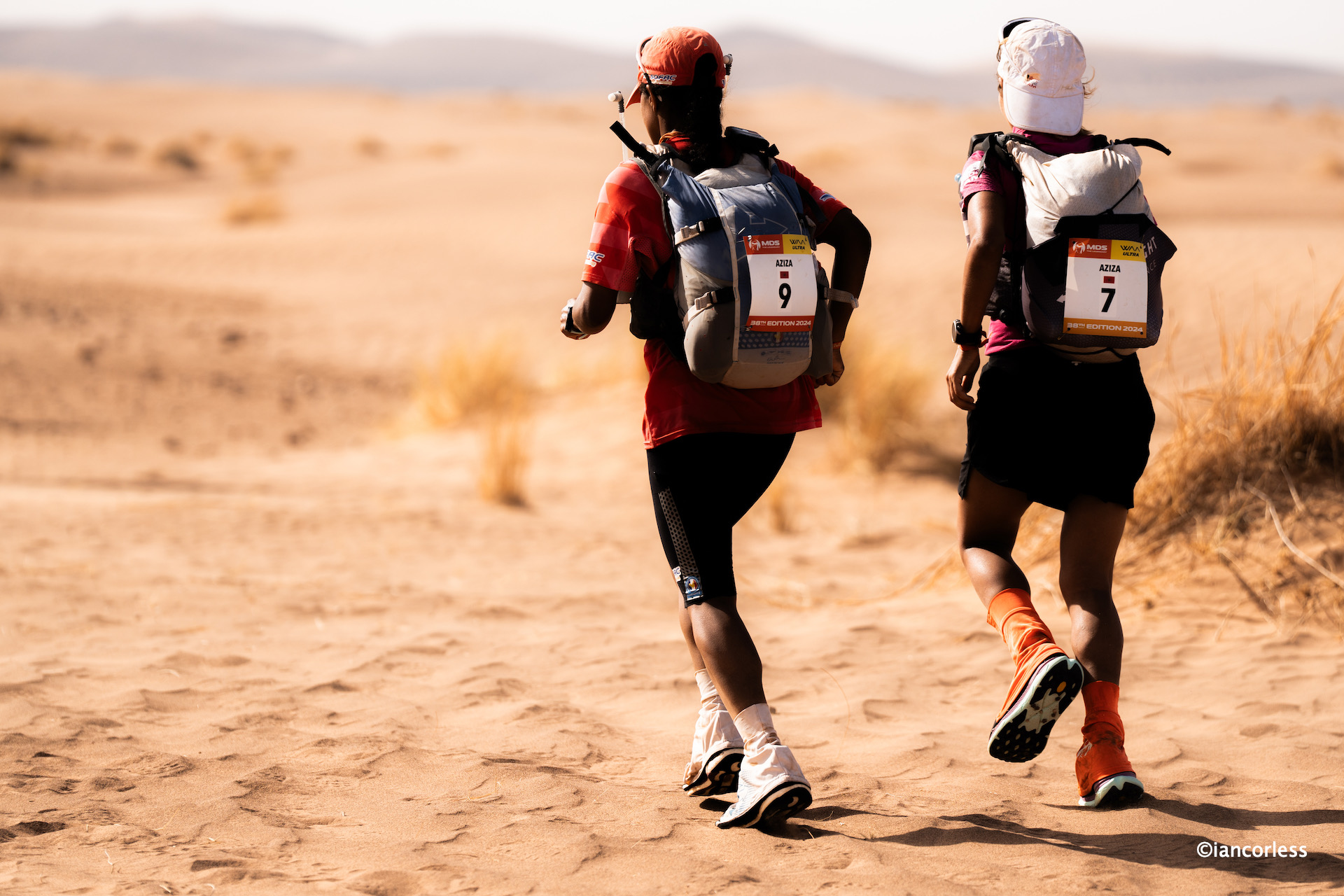
Aziza El Amrany and Rziza Raji
The Aziza’s ran together today and crosssed in 3:15:01. Rajaa Hamdaoua 3rd in 3:28:52 and Gemma Game 5th in 3:54:54.
Rajaa 3rd on stage
Stage 6 for the women will be casual with Azia El Amrany secure in 1st, Aziza Raji secure in 2nd and Gemma Game secure in 3rd.
It’s all getting too much for some.
You can receive daily updates and reports on this website. Follow on IG @iancorlessphotography and @mdslegendary
Time allowance 12-hours 45-minutes / 0630am and 0800 start (top 150 ranked)
The fall out from the long day is always hard. Bodies are now tired and normally, many would be saying, ‘just a marathon to go!’ But not for the 2024 edition.
Aziz Yachou
Stage 4 is 43.2km’s and to follow, stage 5 and stage 6 at 31.4km and 21.1km respectively.
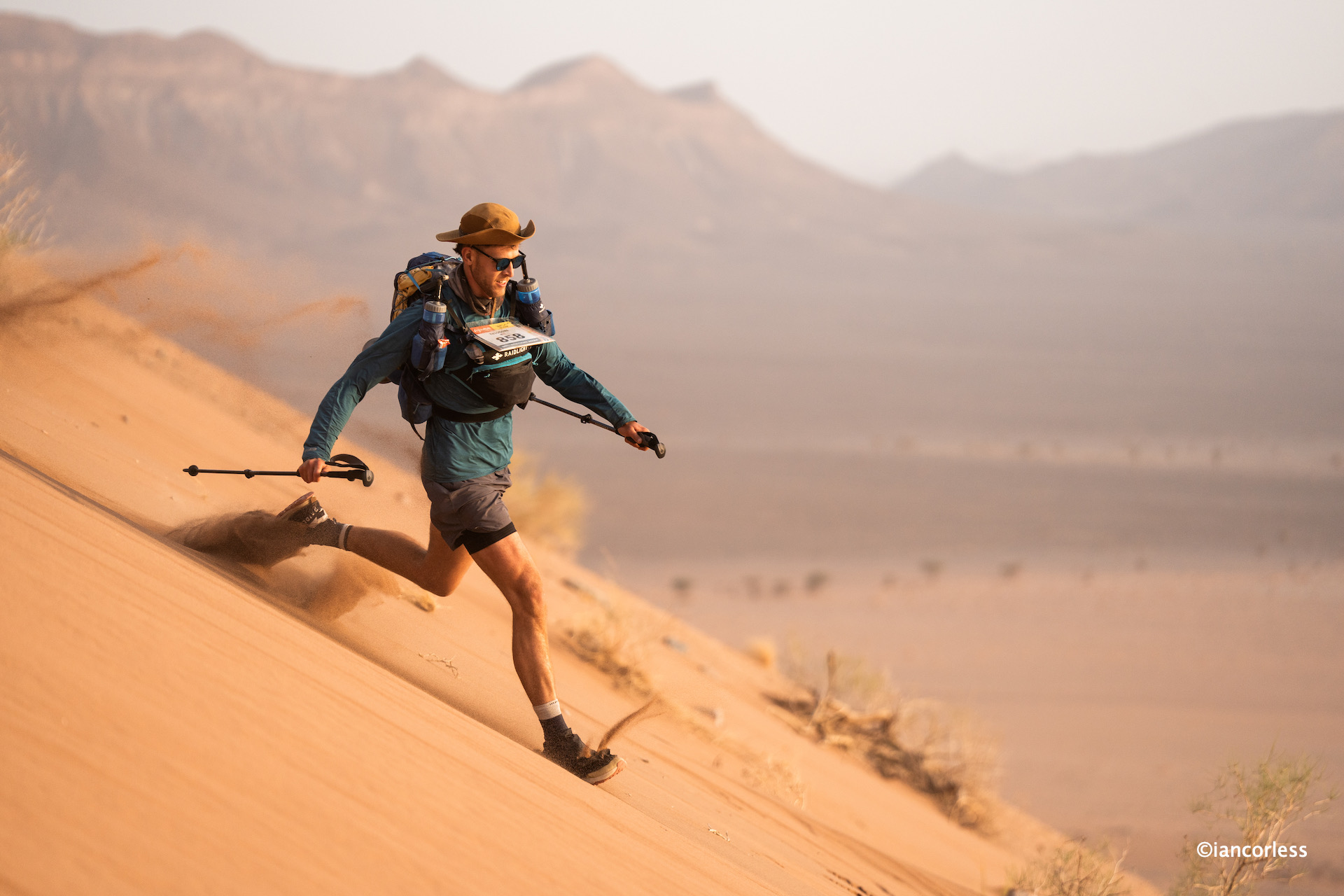
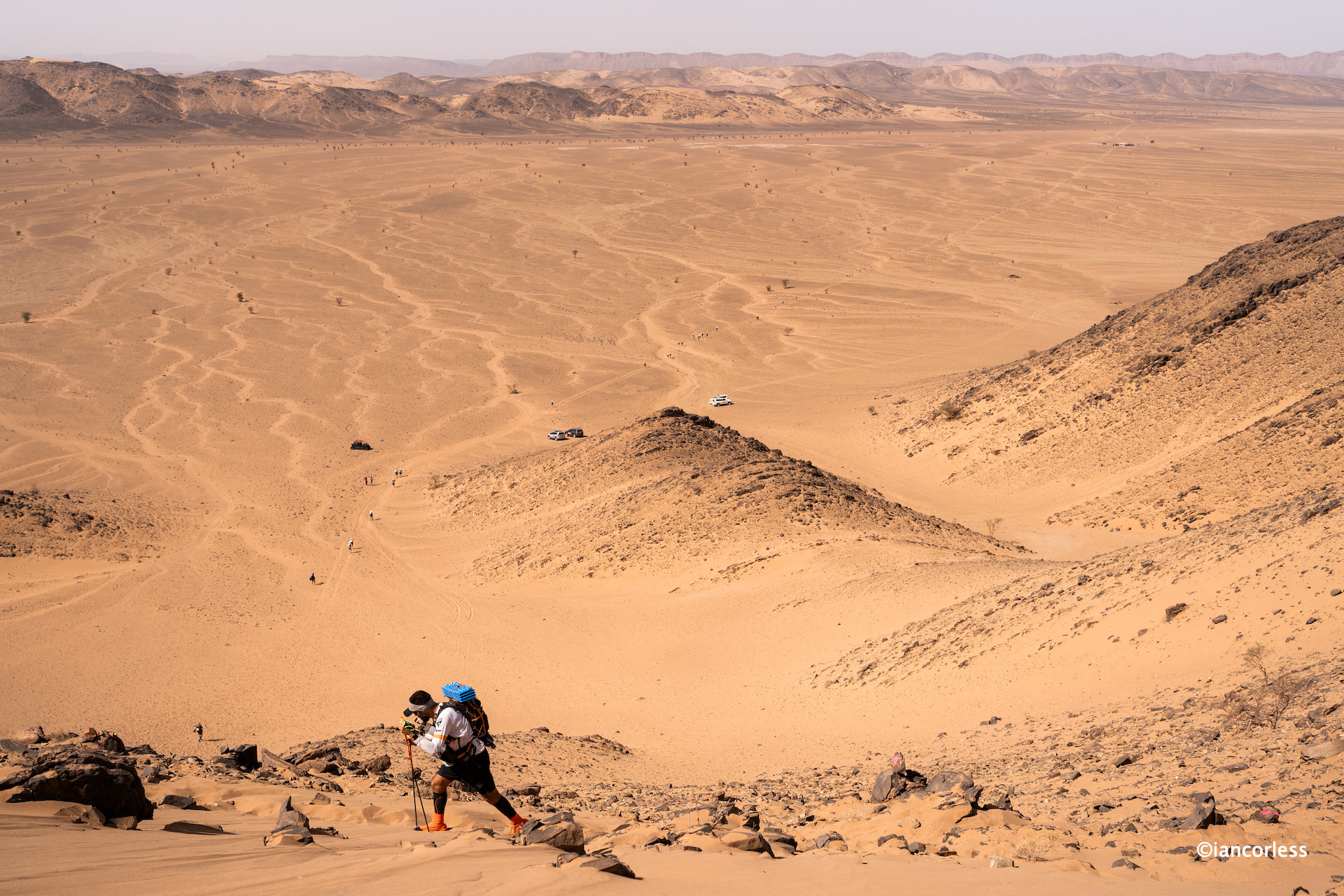
Travelling north all the way to B3, this is a tough day and probably will be remembered as the soft-sand day, especially as the most challenging terrain comes at the end.
Sand and heat
With 3 CP’s at 10km, 22.9km and 30.1km, the severity of the stage is reflected with ‘additional’ water stations at 17km 37.7km.
Cooling off at the CP’s
While the early km’s allowed for easier terrain with cooler temperatures, the kick is in the tail with relentless sand and dunes from 22km all the way to the finish with increasing heat, expected at a 35-degree high, but feeling much hotter than 40-degrees for the runner’s. A tough day!
Rachid in the early 10km’s
Rachid El Morabity dictated the early pace with Aziz and Mohamed behind.
Mohamed
The trio mixed it up but by the halfway point they were all together.
Two company, three a crowd
In the closing 10km, Rachid made a notable kick and pulled away for the stage win, Aziz and Mohamed behind 3:13:24 for Rachid and 3:14:59 for the duo.
Aziza
Aziz E Amrany has been at another level this year and once again she dominated the stage from the front with another stage win in 4:29:41.
Aziza Raji
Aziza Raji followed looking relaxed and strong with a secure 2nd place in 4:53:08.
Adriana Moser
Sadly, 3rd placed runner Adriana Moser had to withdraw from the race at one of the CP’s opening the door for Gemma Game who has placed 3rd at MDS twice in the past; it maybe three times a charm! However, it was Rajaa Hamdaoua who was 3rd on the stage with 5:09:59.
The spectacle of the Sahara
You can receive daily updates and reports on this website. Follow on IG @iancorlessphotography and @mdslegendary






















































 IAN CORLESS