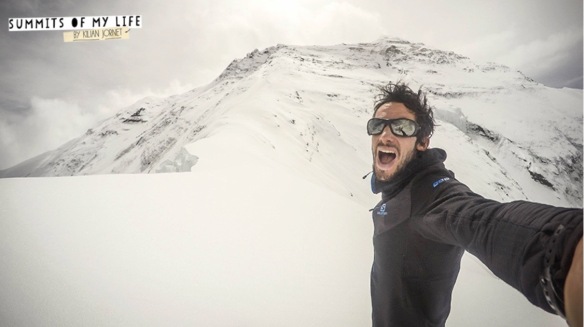
“Time was running out and conditions on the mountain weren’t changing. The unstable weather continued and there continued to be a high risk of avalanches on the higher reaches. We left the mountain feeling somewhat frustrated. We were well acclimatized and could climb without taking serious risks, but at the same time we were very satisfied with the activities that we had been able to carry out.” – Kilian Jornet
The mountain is always the boss. The day that you don’t respect the mountain may well be the last day that you spend in the playground. I am pleased to say that Kilian as an adventurer and mountaineer has progresses not only physically but mentally. He some this up well when despite obvious eagerness to reach the summit of Everest, he was able to step back and think, ‘We had to postpone the challenge of climbing Everest because a rapid ascent would expose us to the risk of accidents.’
I for one am happy to hear Kilian speak these words. The mountain will always be there.
“I’m very happy with what I’ve learned these last few weeks in the Himalayas. We’ve seen what things work and what needs to change. We have learned and personally I have grown as a climber. The expedition has left us feeling very positive in spite of not being able to reach the summit.” – Kilian Jornet
Importantly, Kilian looks at this expedition not as failure but as a stepping stone to a future successful attempt.
In his own words you can read his thoughts on his SOML post HERE.
Day 4 of the Cape Wrath Ultra was a stunner, no, it was amazing! The early morning cold temperatures and icy wind lifted to show the highlands in their true magnificence and what a course… today was arguably THE day of the Cape Wrath Ultra.
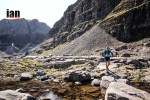
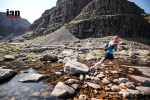
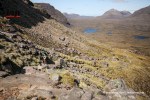
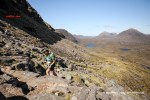
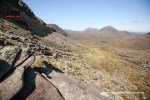
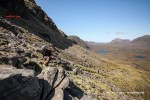
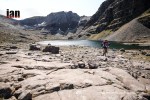
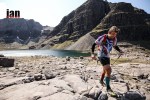
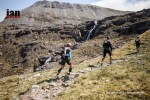
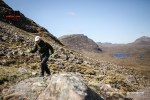
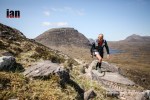
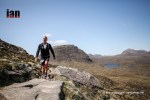
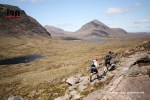
Just 69 runners (from 95) are left in the race, yes, the first 3-days have really started to hit! Although day-4 was a ‘recovery’ day (heard in the camp this morning!) of 22 miles, it was still a day of epic challenges and one seriously beautiful course. In particular, the section of trail from CP1 (on the A896) in the Glen Torridon that weaved it’s way up and up via a stony path between Spidean a Choire Leith and Spidean Coire nan Clach to the amazing cauldron that backed onto Loch Coire Mhic Fhearchair. This is a stunning place! Despite tired legs, fatigue, pain and no matter what ailments, this place put a smile on every single participants face.
It may come as no surprise that Marcus Scotney once again lead the charge. He was instructed by event director, Shane Ohly, that under no circumstances must he start before 0900. For the remaining runners, the start window of 0700-0900 was open and many, despite fatigue, still decided to leave early in the hope that they would be back in camp to gain additional rest at the end of the day.
Finishing in Kinlochewe, Scotney stopped the clock in 4:05:52 and although Thomas Adams had been very close to hime at the midway point, he lost more time at the finish with a 4:22:22. Ian White finished 3rd and Pavel Paloncy finished 4th, their respective times 4:41:23 and 4:42:32 – looks like we may have a fight on our hands for 3rd place with Paloncy just 9-minutes advantage.
For the ladies, Ita Emanuela Marzotto was back on form today, with a definite, ‘I love the mountains!’ as she moved past me on the trail. Her time of 6:14:51 extended her lead over Laura Watson (overall ladies 2nd place) who finished in 6:42:26. However, 2nd lady on the stage and 3rd lady overall, Louise Staples stopped the clock in 6:34:04. We may have a battle on our hands for the ladies podium?
Ultimately, today was all about blue skies, white clouds and the stunning highlands, even Marcus Scotney stopped to grab some photos on his phone! Today was a special day and one that all the runners will not forget.
Roll on day 5 which once again is a (relative) shorter day of 27-miles and 1400m+ to Inverlael.
Recently I have been writing a series of posts about training and starting a new year of running on the right foot, no pun intended. A recent post called, ‘Planning a Running and Racing Year’ HERE.
Base training is something that all endurance athletes are familiar with, it’s about laying a strong aerobic foundation for the coming years racing. But if you are an experienced ultra runner I question if you need to base train. For me, flipping things on the head now would be a good idea. Drop the distance and time on feet and go short and fast, get some speed back in those one- paced legs and become a fast ultra runner later in the year. Read a post, ‘To Base Train Or To Not Base Train’ HERE that discusses these points.
But if you are new to running, new to ultra running or are coming from shorter and faster running, say 5k, 10k and half marathon, base training is for you.
Ultimately at this time of the year (and all times) we should ask:
What we’re doing and why?
What are the real reasons for doing any training?
What are the actual objectives we are trying to achieve?
Without understanding your objectives, you will never be able to understand how to structure your training and maybe more importantly, you won’t know when you have achieved your goal so that you can then move to the next phase.
Recently I have produced a couple of articles about how to ensure that you are an efficient walker when participating in long or mountainous events. You can read them HERE and HERE.
The first article discusses Training to Walk for Ultra, Trail and Mountain Running and the second article is about Walking, Running and Climbing with Trekking Poles.
JOIN OUR YEARLY MULTI-DAY TRAINING CAMP IN LANZAROTE – HERE
On December 15th, the University of Colorado Boulder released a document called, CU-Boulder researchers discover optimal range of slopes for extreme uphill running.
This article made me take a look and read in-depth for two reasons: first and foremost it ties in nicely with my previous two articles but more importantly and secondly, research into VK data dates back some 16-years and was pioneered by the ISF (International Skyrunning Federation) who created the VK format as a racing discipline.
To clarify a VK is 1000m of vertical ascent and the objective is to climb the elevation gain as quickly as possible. The original context of the VK always was about research and data.
VK courses vary greatly but the ISF consider a true VK to be under 5km in length. To understand the variables, some VK’s, for example the Dolomites are just over 2km in length. By contrast, Limone Extreme is a considerably longer course with a less extreme gradient.
Fully, Switzerland has long been a testing ground for VK performance and a post from the ISF which was updated 22nd October 2012 adds some very clear and specific points to consider:
“Italy’s Urban Zemmer rocketed up the 1,000m vertical course, only 1.9 km long, in just 30’26”, 20 seconds faster than the standing world record set here in 2011.”
In addition, the ladies records tumbled:
“French runner Christel Dewalle was first in 36’48” followed by Axelle Mollaret in 37’44” and third, Maude Mathys from Switzerland in 37’56, all beating the previous world record set two years ago by Italian Valentina Belotti in 38’50.”
Notably, the ISF commented:
“The new men’s record nears a speed of 2,000 vertical metres per hour (precisely 1,971m) an incredible ground-breaking performance that the ISF has been monitoring for many years in a scientific research project… Depending on the course and type of start, poles are permitted and yesterday, most of the runners used them. However, to date, the advantages of using poles has not been scientifically demonstrated.”
In 2014, the record for the VK was once again broken by Urban Zemmer at Fully, Switzerland with the incredible time of 29’ 42”.
Remi Bonnet prefers to run a VK and never walks
So by simple logic (I am no scientist), it would suggest that the steepest course is the fastest as Fully is only 1.9km long. To quote, Run the Alps,”The Vertical KM race in Fully, Switzerland is considered to be the fastest vertical kilometer course in the world. The race, held on a former funicular route, is home to both the men’s and women’s world records.”
You can watch a YouTube clip of the 2013 Fully race HERE
Watch the video of Fully and you will see varying techniques, some walk, some walk/ jog, some (most) use poles but one thing is consistent, the effort is almost maximal for all. Therefore, in a non-scientific look at Fully, the fastest performances come from the genetically gifted who have all the elements required for an optimum VK performance: lung capacity, V02max, lactate threshold, power to weight ratio, technique and so on.
Marco de Gasperi like to mix running and walking
But what about the optimal slopes for uphill running as questioned by CU-Boulder. They posed the question:
“Imagine that you are standing in Colorado at a trailhead where the base elevation is 9,000 feet. Your friend challenges you to race to the summit of the mountain, which tops out at 12,280 feet, roughly 1,000 meters of elevation gain. There are several different trails that go to the summit. They are all steep and some are extremely steep. One trail averages a 10 degree incline and the sign says it is 3.6 miles long. A second trail averages 30 degrees, but is only 1.25 miles long. A third trail averages 40 degrees, but only 1 mile long. To get to the summit the fastest, which trail should you choose and should you walk or run?”
Poles or no poles on a steep gradient?
This is a question that the ISF have asked and researched for many years. A paper titled, “Energy costs of walking and running uphill and downhill at extreme slopes” looks into this:
Davide Susta, Alberto E. Minetti*, Christian Moia and Guido Ferretti
Département de Physiologie, Centre Médical Universitaire, 1211 Genève 4, Switzerland, *Department of Exercise and Sport Science, Manchester Metropolitan University, Alsager ST7 2HL, U.K.
The energy costs of walking and running (Cw and Cr, respectively, in J kg-1 m-1) increase with the slope uphill (up to +20%) and decrease with the slope downhill (down to -10%) (Margaria, 1938; Margaria et al, 1963). Outside this range, no measurements of Cw and Cr are available in the literature, even though walking and running on the mountains at greater slopes is becoming commoner and commoner practice in leisure and sport. We therefore set out to carry out the present study, the aim of which is to determine Cw and Cr on men walking and running at slopes up to +45% and -45% on the treadmill. After local ethical approval, 10 subjects (Skyrunners) were admitted to the study (age 32.6 + 7.5 years, body mass 61.2 + 5.7 kg, maximal O2 consumption 68.9 + 3.8 ml min-1 kg-1). They are all endurance athletes practicing mountain racing. O2 consumption at the steady state was measured by the open circuit method, using Leybold O2 and CO2 analysers and a Singer dry gas meter. Heart rate was measured by cardiotachography. Blood lactate concentration was determined after each run as a check for submaximal aerobic exercise.
Each subject performed up to three walking and three running trials at progressively increasing speeds on the level, and at the slopes of 10, 20, 30, 35, 40 and 45 % uphill and downhill. The duration of each trial was 4 min, and expired gas was collected during the 4th min of exercise. Minimum Cw on the level was:
1.85 + 0.57 J kg-1 m-1 (n = 10) at the speed of 0.69 m s-1. During uphill walking, Cw increased with the slope, to attainthevalueof18.08+1.57Jkg-1 m-1 (n=9)atthespeedof0.69ms-1 andat the slope of +45%. During downhill walking, minimum Cw was lower at the slope of -10% (0.81 + 0.37 J kg-1 m-1, n = 9) than on the level. At slopes below -10%, it progressively increased. At -45%, it was 3.46 + 0.95 J kg-1 m-1(n = 5). Cr on the level was 3.40 + 0.24 J kg-1 m-1(n = 30). Cr increased with the slope, to attain 18.69 + 1.42 J kg-1 m-1(n = 6) at +45%.
During downhill running, Cr decreased and attained its lowest value at the slope of -20% (1.73 + 0.36 J kg-1 m-1, n = 24). At lower slopes, it increased. At -45%, at speeds higher than 1.38 m s-1, it was equal to 3.79 + 0.57 (n = 7). The mechanical efficiency for vertical displacement was 0.216 + 0.015 at +45% and 1.078 + 0.275 at -45%. This data on the level and at slopes up to 20% correspond to those found by others on non-athletic subjects (Margaria, 1938). At higher slopes, the increases in Cw and Cr are such as could be predicted assuming that all energy is used to lift the body. By contrast, at -10% and -20%, both Cw and Cr are lower than in non- athletic subjects (Margaria, 1938), suggesting greater recovery of elastic energy at each step in the present athletes. At slopes below -20%, the increases in Cw and Cr are such as could be predicted assuming that all energy expenditure is for negative muscle contractions.
REFERENCES
Margaria, R. (1938). Atti Acad. Naz. Lincei 7, 299-368.
Margaria, R., Cerretelli, P., Aghemo, P. & Sassi, G. (1963). J. Appl. Physiol. 18, 367-370. This work was supported by a grant from the FSA- Federation.for Sport at Altitude
Referring back to the CU-Boulder research:
“Based on our research, we now know that choosing the second trail (30 degrees) and walking as fast as you can within your aerobic capacity is the fastest way to go,” Kram said. “For either running or walking, slopes between 20 and 35 degrees require nearly the same amount of energy to climb the hill at the same vertical velocity.”
This new study (HERE), which was recently published in the Journal of Applied Physiology, is believed to be the first to examine the metabolic costs of human running and walking on such steep inclines (suggested by the CU-Boulder researchers.) However, I would question this and refer to research by the FSA – “Energy cost of walking and running at extreme uphill and downhill slopes.” Received 29 November 2001; accepted in final form 29 April 2002. You can download this detailed documentation HERE and it is essential reading.
Who is the most efficient?
It would appear that gradients of 20-35 degrees require the same amount of effort and interestingly, CU-Boulder research found in a study:
“A vertical rate of ascent of just over 1 foot per second, is a pace that high-level athletes could sustain during the testing. At that speed, walking used about nine percent less energy than running. So, sub-elite athletes can ascend on very steep uphills faster by walking rather than running.”
In simple terms, this is something I have found out by attempting VK’s in my own time in and around events. More often than not, the effort required to run is so hard that it becomes counter productive. I have even found that including run sections to be counter productive as this raises my heart rate, increases lactate acid and requires me to recover while still climbing. However, if I maintain a constant effort walking, this produces the best results for me.
CU-Boulder research went on to say:
“The study examined 15 competitive mountain runners as they ran and walked on the treadmill at seven different angles ranging from 9 to 39 degrees. The treadmill speed was set so that the vertical rate of ascent was the same. Thus, the treadmill speeds were slower on the steeper angles. The athletes were unable to balance at angles above 40 degrees, suggesting a natural limit on the feasible slope for a VK competition.”
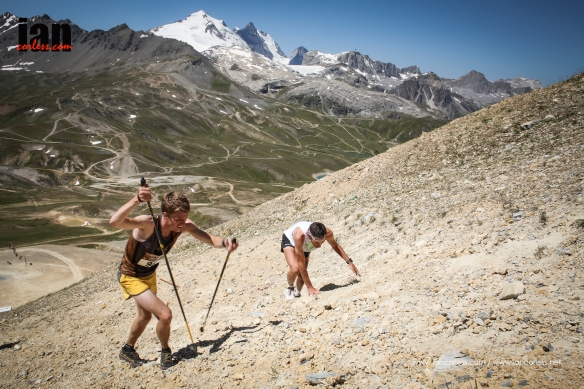
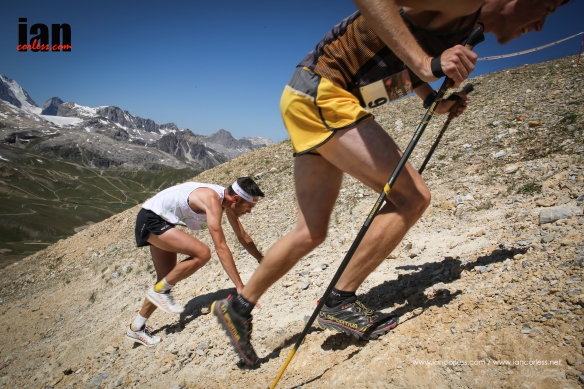
In regard to the latter point, this in some respects relates to Fully, Switzerland and brings in another element, the use of poles and if poles allow a faster ascent when the gradient steepens. One only has to look at the Dolomites VK and Fully VK where poles are used by nearly all participants. The ISF plan to do a new test with and without ski poles, but it is not easy to do a serious test. Although not scientifically proven, it’s fair to say that using poles with gradients under 20% it will mean more Kcal and a reduced performance. However, with gradients steeper than 25 or 30%, the use of poles can correct style, etcetera and can improve the overall performance.
The CU-Boulder article is available to read in full HERE.
I can quote technical papers and research all day, however, as a runner you want to know the answer to the question, should I walk or should I run uphill and should I use poles?
Irrespective of if you plan to run a VK or not, the research and thoughts provided by the FSA and CU-Boulder confirm that running or walking uphill provides an incredible workout. Importantly though, research confirms that walking should be a key element in any training plan, (*…walking used about nine percent less energy than running) especially if you are racing or training on hilly or mountainous terrain.
When participating in ultra events, reverting to periods of walking may well produce greater results and faster times. This is very evident when the terrain steepens; running will only expend more energy and produce slower times. The use of poles appears to benefit performance when gradients steepen, this is not scientifically confirmed.
On a final note though, many other factors come into play when looking at results and as with everything, there are exceptions. Urban Zemmer, Remi Bonnet, Laura Orgue, Christel Dewalle and so many more are able to run when others need to walk. We can’t choose our parents or our genetic pool. Ultimately, find out what works for you but practice makes perfect and the more climbing you do, the better and the faster you will become.
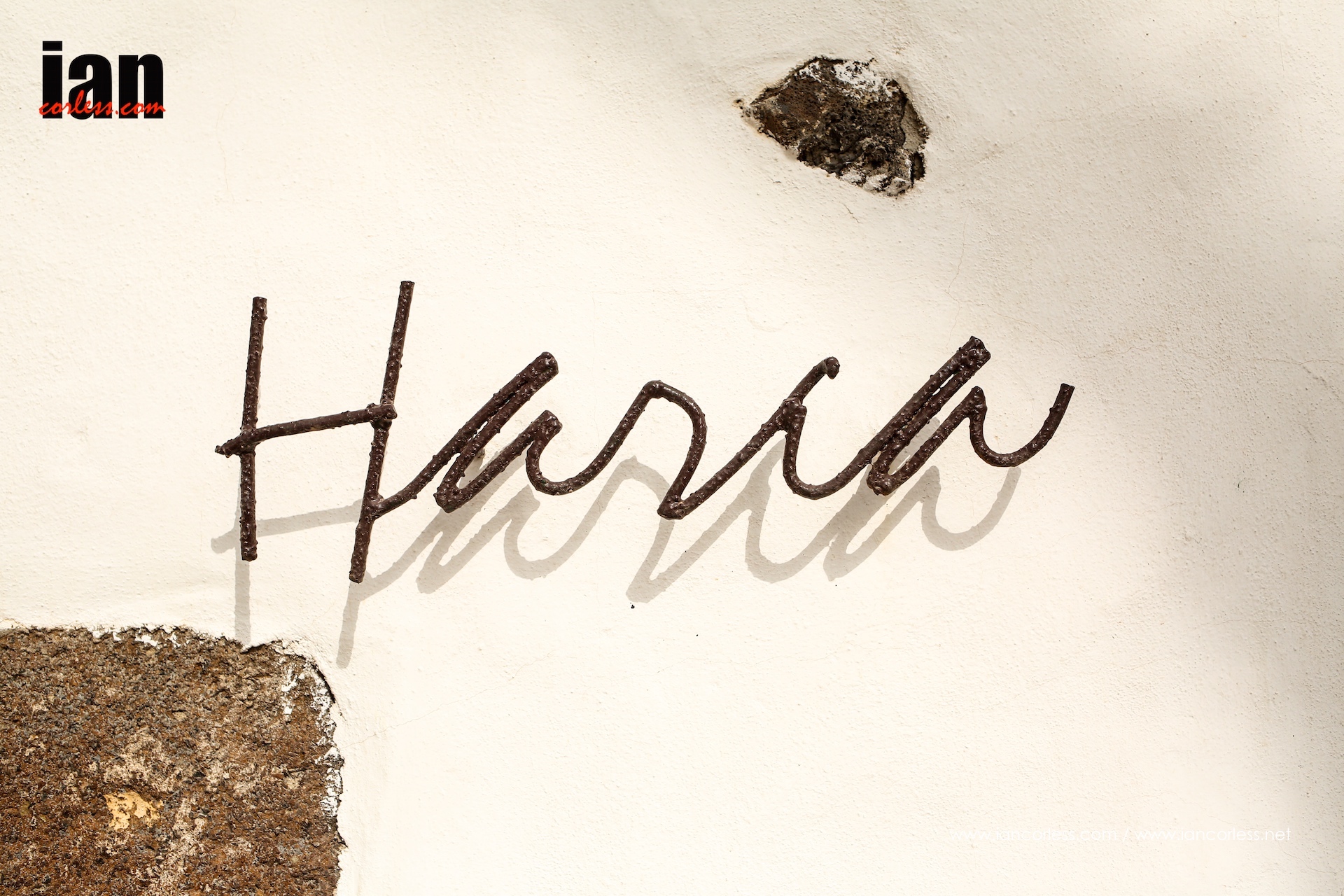
It has been a hot and humid day in Lanzarote. One that has allowed staff from Arista Events to make final preparations for the Haria Extreme, arrange a press conference and in the process organise a relaxed and informal lunch on the beach ahead of this evening’s showing of Marco Olmo’s film, ‘Il Corridore’ – The Runner.
“Marco Olmo is a living legend of extreme running. In his “previous lives”, as he says, he has been a farmer, a truck driver, a workman. Running has became his reason for living, the way to take revenge on his hard destiny. At the age of 58 he became Ultratrail World Champion, winning the Ultra Trail du Mont Blanc, the hardest and most important endurance race in the world, over twenty hours of uninterrupted running, 167 km (over 100 miles) around the tallest mountain in Europe. An almost unimaginable speciality, where mental and physical training and personal motivations are fundamental. Despite age, physical problems and always younger and more prepared opponents, he doesn’t want to stop. For one year he prepares for the new edition of the Ultra Trail du Mont Blanc. This competition, which for two consecutive times has consecreted him as the champion, could become the last of his career. Marco must win, to show himself that he can still do it.”
Tomorrow, Friday, registration opens and fund raising raw for Nepal will take place at 1000am.
On Saturday, racing starts at 0500 with the two main races, the 80km ultra and the marathon.
Today the Wildrun lived up to expectations and really did become a wild run! The weather cleared, the winds dropped and the rain disappeared and we were all treated to a very special South African day.
Today’s course was special!
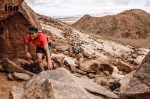
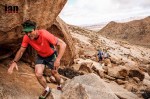
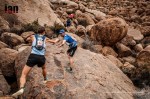
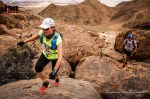
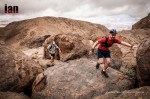
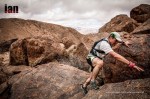
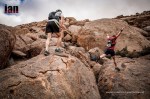
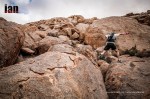
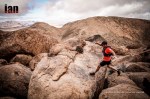
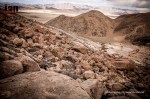
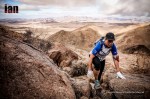
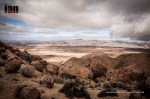
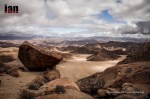
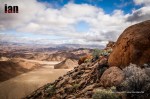
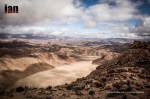
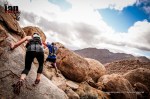
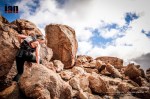
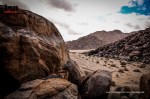
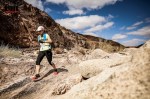
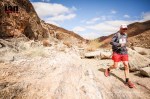
Notably, the Tatasberg Mountain is one of the most impressive sections of ‘trail’ I have ever witnessed. I use the term trail very loosely as it was a combination of scrambling and boulder hopping, not only on the way up but down. It was an intimidating section for some. A fear of heights not recommended. However, in pain, fear or discomfort on the climb was rewarded with incredible views. It was stunning!
Racing started at 0800 with separate waves; 0800, 0830, 0900 and 0930; slower runners starting first and faster runners in the last wave as per the previous day. Early running was relatively easy but the views were stunning. Particularly as early morning cloud cleared.
By the time the runners reached the climb of Tatasberg at approximately 16km, Thabang and all the usual suspects had pretty much caught all the early starters with the exception of 3 people.
Thabang made the boulders look easy as he hopped from one to the next. The other runners used a little more caution and a natural gap opened. Katya Soggot and Dayle Wheeler closely followed James Cracknell as he pursued Thabang, occasionally helping each across the larger boulders. Nikki Kimball trailed a little but only by minutes. At the summit the boulders started to clear providing the occasional opportunity to run.
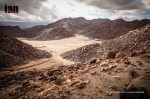
The bottom of the climb opened up to a wide plateau and then a clear zigzag trail lead to the lush Orange River and across the water, Namibia. Lush green vegetation populated the left and right banks. It was a stunning contrast to what had come before. Running along the river banks, the sound of flowing water, birds and the occasional baboon made this day, arguably the best one yet.
Camp was located next to the river and of course, a braai was prepared for the arriving runners. Thabang Madiba arrived first (once again) closely followed by Katya Soggot, Dayle Wheeler, Karoline Hanks, Nikki Kimball and Filippo Faralla. But today really wasn’t about the racing, it was the course that was the hero. It was the Richtersveld National Park that had completely blown the minds of every runner and every runner on the Richtersveld Wildrun race.
James Cracknell had a tough day, his groin strain and twisted ankle from the previous day reducing him to a frustrating walk. He is currently unsure if day 3 is possible for him. He’s a stubborn and committed competitor and after travelling all this way, once has to think that he will fight his way through the last day even if it is slowly!
Results
Thabang Madiba 3:24:03
Dayle Wheeler 3:32:31
Katya Soggot (1st lady) 3:32:31
Nikki Kimball (2nd lady) 3:49:10
Filippo Faralla (3rd man) 4:04:10
Karoline Hanks 4:04:10
Nikki Kimball has now moved up into 2nd overall, 10 minutes ahead of Karolin Hanks.
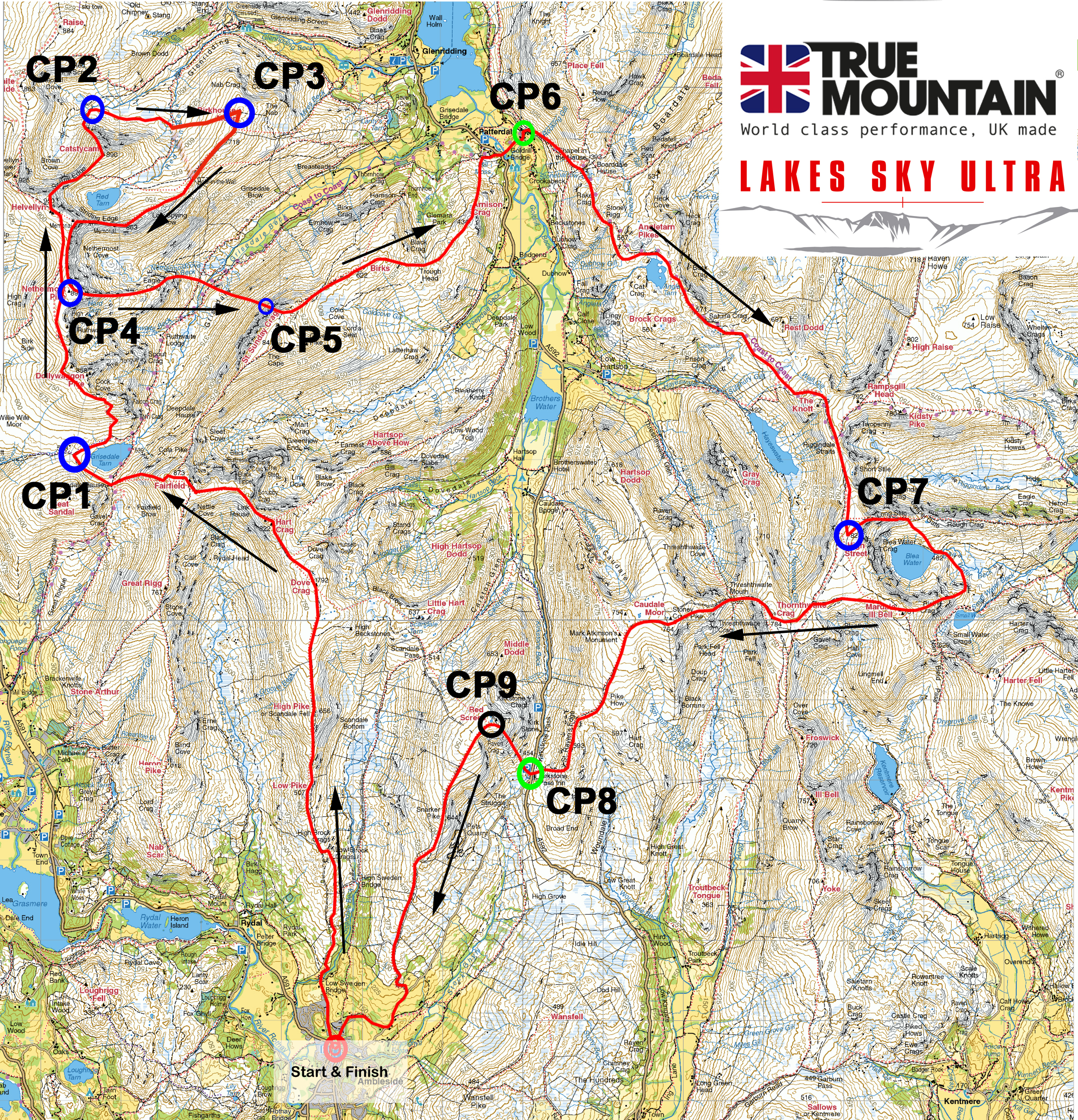
Skyrunning UK is pleased to announce a new race for 2015, the LAKES SKY ULTRA™. A 50km+/- course with 4300m+/- ascent that includes soaring ridgelines, rock scrambling and a course that will test the most experienced competitor. Starting and concluding in the iconic Lakeland village, Ambleside: the LAKES SKY ULTRA will look to bring a European feel and ambiance to Skyrunning in the UK.
Created by Charlie Sproson (Mountain Run) and Andrew Burton, the LAKES SKY ULTRA™ will follow on from the recently announced Glen Coe Skyline in providing competitors from the UK and overseas with an opportunity to test themselves on a course that harks back to the late 80’s and early 90’s when ISF President, Marino Giacometti went fast and light to the summit of Monte Rosa.
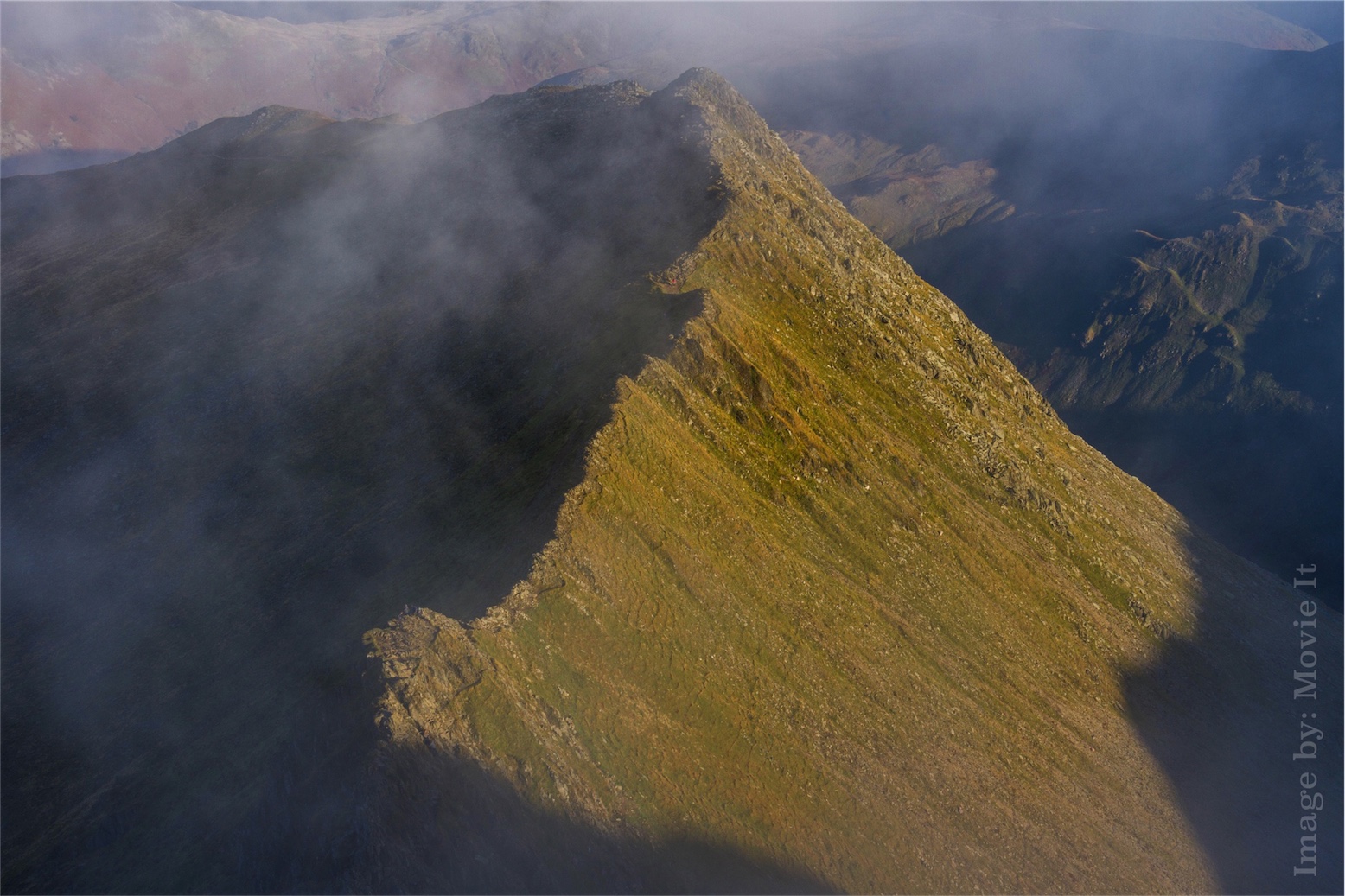
We may lack altitude in the UK but we have a strong history and heritage founded in the traditions of fell and mountain running. The LAKES SKY ULTRA™ will combine a series of graded scrambles: 0.5 at Swirral Edge, grade 1 at Striding Edge and grade 3 at Pinnacle Ridge to offer a unique racing experience but it is not for the feint hearted…
“We have so much great scenery and courses in the UK; we certainly have exposure and technical terrain. We have a sense of high mountains even though we lack altitude. Throw in British weather and our course will be a challenge. No question. We are offering an opportunity to explore from a different perspective.”
Andrew and Charlie have had some great days out planning routes and have therefore created a course with added spice. It will be a test and the route will inspire those who like a challenge. They have pulled together something quite special. Soaring ridgelines in the sky… Skyrunning!”
“We have some very technical parts on this course but we also have plenty of simple running. The route has three graded scrambles so foot and hand placements are going to be important. We have elements of not just running but hands-on rock fun to be had!”
In year one the LAKES SKY ULTRA™ will only have 100-places available and this race will require a certain type of runner. Participants will need to provide a list of past experience when applying. Just being an ultra runner won’t cut it. Charlie and Andrew quite clearly state, “We need scrambling and rock climbing experience. However, we are planning a mountain skills course in August to help those interested to gain experience… but this will not guarantee race entry!”
Safety is key in any race, however, Skyrunning races of this style are designed to challenge… so, although Charlie and Andrew are looking at safety, a course of this nature does bring risk and ultimately, that is part of the attraction; hence the vetting procedure. “If a runner is asking, ‘I wonder if I have the correct experience?’ they probably don’t!” says Andrew.
The LAKES SKY ULTRA ™ course is designed to have an element of danger, however, no compromises are being made in regard to the safety of everyone.
“We will have manned checkpoints at high level sections of the course, electronic checkpoints and a cut-off at Patterdale.” Charlie explains. “We will also have evacuation routes should they be required due to danger or injury. An appointed safety officer, Joe Faulkner from Nav4 will look at the course and will provide safety without taking away the excitement… for example, on the grade 3 scramble we may have a fixed rope? Many of these elements are yet to be decided but we are looking at all aspects.”
“The Helvellyn range is one of the most iconic massifs in the Lake District. The combination of this spectacular mountain and a series of scrambles make the LAKES SKY ULTRA™ route a real highlight within the UK. We have fantastic edge running from Riggindale Straights to Kirkstone pass with some amazing scenery. You can look over Ambleside from Red Screes… this course has it all. Mountain scenery, splashed with lakes and technical terrain make this a True Mountain™ experience.”
The race will start and finish in Ambleside and Skyrunning UK sincerely hope over time that the race will mimic some of the experiences that have been encountered in some of the top European races. Think Zegama-Aizkorri or the Dolomites Sky Race. A town center race start and finish includes everyone: families, shops, restaurants, tourists, supporters and of course the race can interact with everyday life. It’s going to be incredible to bring this experience to an iconic Lakeland town. We want people with cowbells, whistles and cheering. A carnival of Skyrunning!
“Winning isn’t about finishing in first place. It isn’t about beating the others. It’s about overcoming yourself. Overcoming your body, your limitations and your fears…. To find out whether we can overcome our fears, that the tape we smash when we cross the line isn’t only the one the volunteers are holding but also the one we have set in our minds? Isn’t victory being able to push our bodies and minds to their limits and in doing so discovering that they have led us to find ourselves anew and to create new dreams?” – Kilian Jornet, RUN or DIE
December always provides me with a little more spare time (not much) but certainly more time than the past 10-months when I have been on the road, travelling from race-to-race, recording images, writing stories and podcasting on the weekly and monthly action of mountain and ultra running.
I like to look back, soak in my experiences and one-by-one highlight key moments.
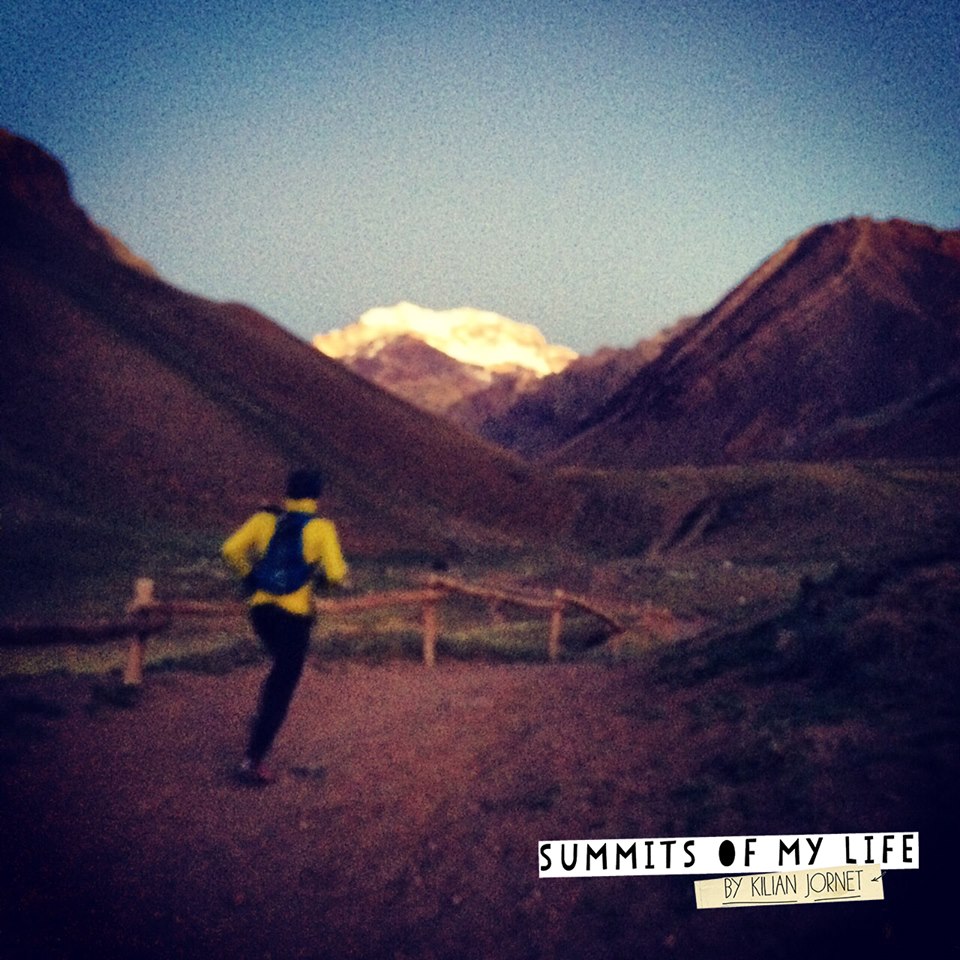
Although I plan to do this in the coming weeks, Kilian Jornet’s imminent ‘Summit’ attempt on Aconcagua has made jump ship and write a post about the Catalan himself.
What a year Kilian has had…
In a face-to-face interview in Zermatt earlier this year, I remember asking, “I think it’s topical we are speaking mid season. I believe the Kilian Jornet today is a different person to 1-year ago. For me, you seem to be in perfect shape. I don’t think I have seen you so fit and strong. Would you agree?”
As one would expect, Kilian looked away from me a little embarrassed by such a direct question that basically said, ‘you are the best!’
However, he replied with a smile and a twinkle in his eye that confirmed my thoughts, “This year I feel really well. I don’t know why? I started the season in Colorado in the winter doing plenty of high altitude meters. I was great in the ski season. It was my best season in regard to my condition. I was not tired after skiing so it was a big bonus. I have raced the same number of races but I seem to be recovering so much better. I am climbing more meters and doing fewer kilometers.”
I smile at his honesty and his genuine analysis of his form. You see 2014 has been the most impressive year not only in Kilian’s short life but arguably the most impressive in relation to any sportsperson.
We can argue all day about the pros and cons of distance, speed, difficulty and complexity of Kilian’s year but look at the simple facts:
Denali – Summit record (11-hours 40-minutes)
Hardrock 100 course record
Skyrunner World Series Champion – Vertical Kilometer
Skyrunner World Series Champion – Sky distance
Skyrunner World Series Champion – Ultra distance
Is Kilian THE most rounded athlete? I am biased but I like to think impartial and I have to say, with all things considered, yes! VK to 100-miles, Ski mountaineering and climbing. The Catalan is off the scale.
We have heard the stories of how Kilian says in RUN or DIE, “I enjoyed a normal childhood… I have never been one for being shut inside and was lucky that my parents lived in a refuge, which my father managed, 6500-feet above sea level.”
Kilian may well consider his childhood as normal, for him it was, but many would agree that right from aged two he was being nurtured step-by-step to be the perfect outdoor person.
“By the age of 3 I had already climbed Tossa Plana, Perafita and La Muga. By the age of 6 I had completed four Aneto summits and at the age of 10 I crossed the Pyrenees in 42-days.”
It’s an inspiring and intimidating thought process. At 10 years old I was a naive and inexperienced kid, in contrast Kilian was already on a path of greatness. It may not be a path that was pre determined, however, as we look back we can see that Kilian has not stumbled on this ability, this career, this destiny. With the passing of each year, he has created a legacy and should Kilian stop now at the age of 27, his list of records, results and palmares would quite happily last him to the end of his days.
“I have lost count of the weeks I have spent away from home, of the countries I have visited and the beds I have slept in. I began to compete 10-years ago and it has been 10-years of seeking to relive again-and-again the emotions and sensations that take me to the peak of ecstasy and make me live life at a pace more suited to a rock-and-roll musician.”
December is here and as runners all over the world slip into recovery and hibernation in preparation for the new-year, Kilian departs for the Andes and his attempt to set a record on Aconcagua.
In 2000 Brunod, Pelissier and Meraldi climbed from Plaza de Mulas in 3-hours 40-minutes to the summit and Carlos Sa did 15:42 from National Park Horcones. Two records, I wondered which Kilian would go for?
“I will go from the entrance and I will try to achieve both records. Also, Emelie Forsberg will try a female record too,” Replied Kilian to my question. “Aconcagua is easier than the Matterhorn. It’s rocky but not steep. Altitude is the big issue. You can get sick and have problems so the challenge is different. Aconcagua is the highest mountain in the western and southern hemisphere at just under 7000m.”
The first attempt to reach the summit of Aconcagua by a European was made in 1883 by a party led by the German geologist and explorer Paul Güssfeldt. Bribing porters with the story of treasure on the mountain, he approached the mountain via the Rio Volcan, making two attempts on the peak by the north-west ridge and reaching an altitude of 6,500 metres (21,300 ft). The route that he prospected is now the normal route up the mountain.
The first recordedascent was in 1897 by a British expedition led by Edward FitzGerald. The summit was reached by the Swiss guide Matthias Zurbriggen on January 14 and by two other expedition members a few days later.
The youngest person to reach the summit of Aconcagua was Tyler Armstrong of California. He was nine years old when he reached the summit on December 24, 2013.The oldest person to climb it was Scott Lewis, who reached the summit on November 26, 2007 when he was 87 years old.
Pushing boundaries is what Kilian does. It is his DNA and as an appreciation and acknowledgement for his contribution to our sport, Kilian was voted: ‘Peoples’ Choice Adventurer of the Year’ by National Geographic.
As the coming days unfold, Kilian will test himself once again. He will push his own boundaries and he will ask questions of himself and those around him. To document the journey, Seb Montaz will once again record the action as it unfolds. We get to see the Catalan’s endeavors and achievements through the brilliance of Seb’s eyes. Believe me, as a photographer I not only appreciate the craft of a man at the pinnacle of sports imagery but also as climber and sportsman himself. Remember, Seb is on the mountain, often side-by-side with Kilian, matching his strides, following his movements and in doing so he captures moments that we can look on and savor. We are able to experience the brilliance of two pioneers.
We will see less of Kilian in 2015. A return trip to Hardrock 100 is almost certainly on the cards. After all, why wouldn’t he want both course records? But ultimately, Kilian will focus on Everest and the ultimate challenge that this mountain will provide.
“It’s completely different, it’s very high, 9000m. It’s very long and this is the biggest problem, to go all this way without oxygen and fast. The route is technical. I will start on the north face to prepare. It’s quiet so I will have no problems with people. I will need to prepare. I will go in spring, autumn and maybe the following spring. As per usual with all mountains, any attempt will be weather dependent. I expect to have several attempts.”
I am unsure what Kilian will do in the future… I think maybe even Kilian is unsure?
Aconcagua is a priority for now and then focus will shift to Everest; the big peak in the Himalayas.
Everest will dominate the mind of the Catalan. It will consume him and with meticulous preparation and he will conjure a plan… a plan that will take him to the top of the world!
Credits 'RUN or Die by Kilian Jornet, Wikipedia and Seb Montaz
*****
Follow Kilian and his team in the Andes @kilianj @sebastienmontaz @summitsofmylife
Today is the day!!! Kilian is right now trying to be the fastest person to climb up and down the Aconcagua!!! C’mon Kilian, you can make it!!! Gooo!!!#SoML
Dec 19th – 2:27pm
NEWS FROM ACONCAGUA: Kilian was not able to reach the summit on his attempt due to strong wind. He could reach up to 6.500m but 90km/h winds made the attempt completely impossible and he had to turn back. In Kilian’s words “I will try again soon” #SoMLAConcagua
December 20th
“I consider this failed attempt like a big training in altitude” said to me kilian after running and climbing from Horcones ( 2950m) to 6200 m and back ( about 14h) with crazy 90km/h wind in his face.
Emelie and Kilian will be stronger for the next attempt!
December 21st
When things do not go as expected, you go fast back at the start point and you try it again (soon #SoMLAconcagua
December 23rd
Aconcagua 2nd Round!
Kilian is on his way trying to achieve another dream!!
You can see the long road to the Summit! Go Kilian!!!
We’ll Keep you posted! #SoMLAconcagua
December 23rd
Kilian passed Plaza de Mulas, Aconcagua’s Base Camp at 4.300m. He is feeling well because weather is good and not too windy. Let’s push him up to the summit!!! GOOOOO KILIAN!!!
December 23rd
BREAKING NEWS: Kilian reached the summit of Aconcagua and is back to Plaza de Mulas Base Camp. He feels well but still 25 more Km to go. Enjoy it and goooo!!! #SoMLAconcagua
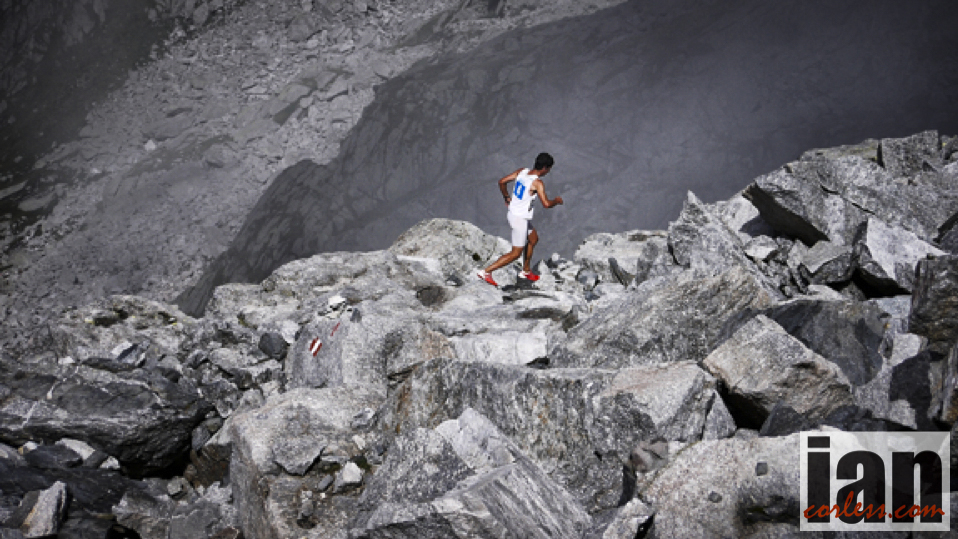
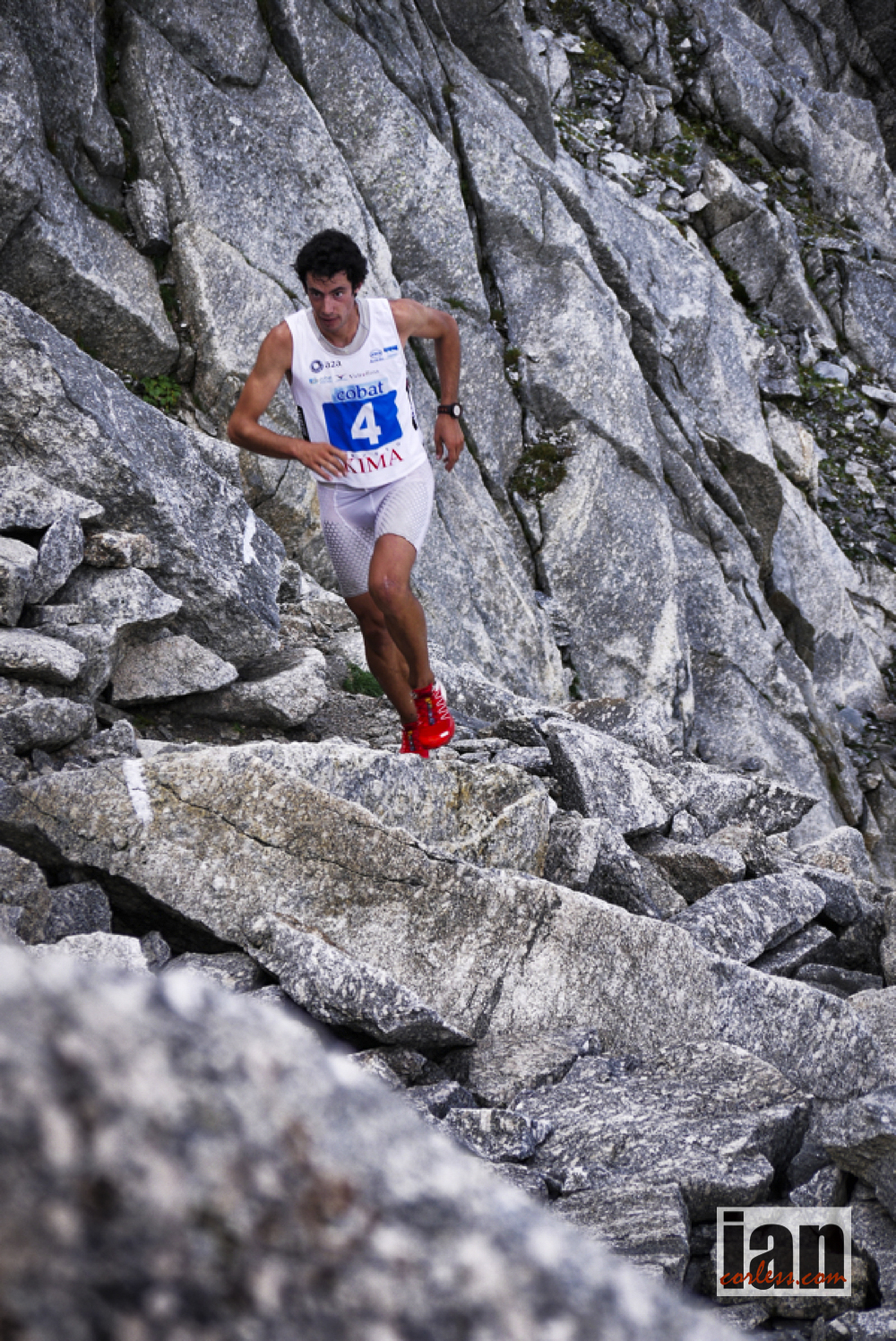
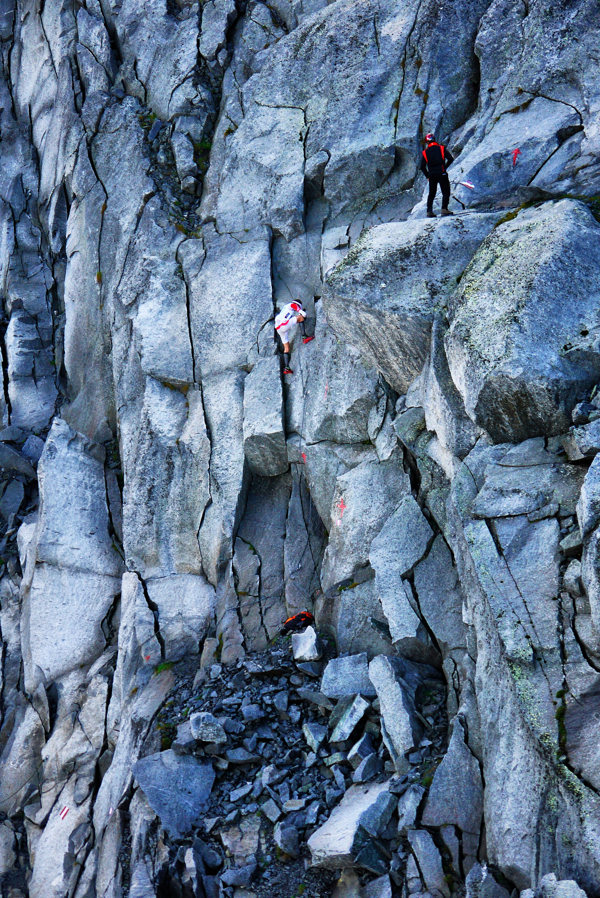
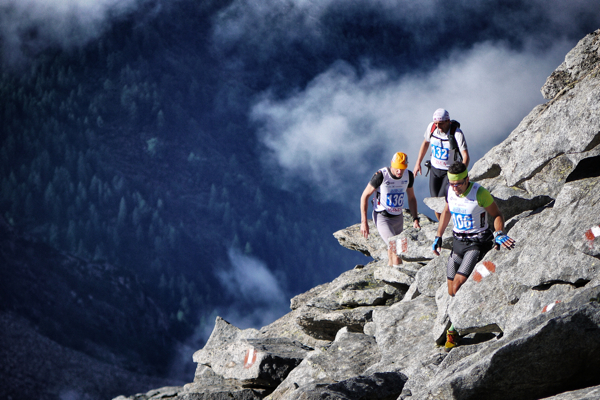
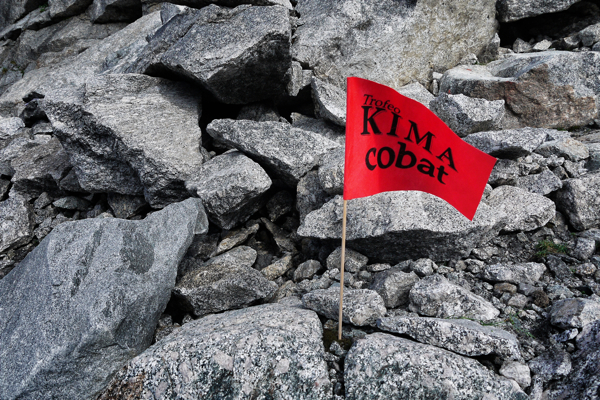
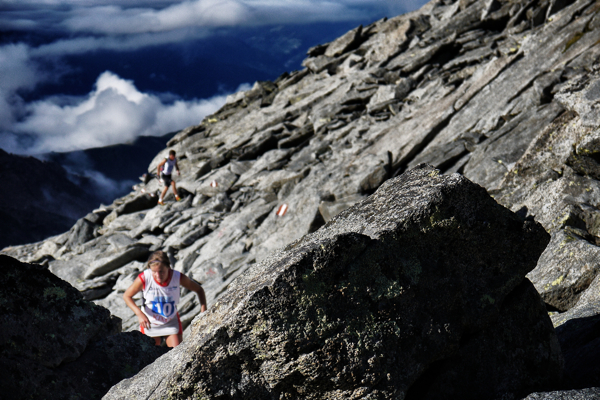
Don your gloves, find your helmet and prepare for the jewel in the Skyrunning crown. Trofeo Kima is here! This is THE all-out, kick ass event that Skyrunning put on and as such it is often the most anticipated. You can’t just do Kima. As Kilian Jornet said in a recent interview,‘It’s not about being strong or fast it’s about how you climb! You need confidence and you need self-awareness. It’s another level. It’s not about kilometres it’s about mountain experience.’
Famous throughout the mountain running world, Kima is run over seven mountain passes with 8400m of ascent/decent over the 52km course. It is an all out white-knuckle ride and not for the feint hearted. Biennial, the race has a capped field of just 250 and embraces the true spirit of Skyrunning created way back in ‘89’ when Giacometti (ISF President) first ascended and descended Monte Rosa. The fourth race in the 2014 Ultra Skyrunner® World Series, KIMA will provide, once again, a showcase for earth meeting sky – Skyrunning!
MEN
It may come as no surprise that man on fire and 2012 winner, Kilian Jornet is the one to beat on this course. In reality, Kima is one of the most perfect courses for the Catalan. His advantage over the rest of the competition is marked and other than a disaster on race day, I think we will see Kilian top the podium and should conditions be favourable, a course record may well be on the cards! To put the severity of this course into perspective, it took Kilian 6:28:52 in 2012 to cover the 52km course. (The record stands at 6:19:03 also set by Kilian.)
Tom Owens ‘running’ at Trofeo Kima copyright Ian Corless
Brit, Tom Owens had an incredible 2012 and pushed Kilian at many races. With over a year out of the sport, Tom is back in 2014 and although he has had a few blips, he is showing some of the fire and all out natural ability that saw him place 2nd at Kima at the last edition in a time of 6:39:28. Feeling tired at Sierre-Zinal Tom missed Matterhorn Ultraks and I can’t help but think that will pay dividends here. The last time he toed the line at Kima, he had this to say, ‘It’s the definition of Skyrunning. Racing here is like being a kid, jumping nimbly from rock to rock and feeling full of energy.’
Paolo Gotti placed 8th in 2012 and was the winner in 2008 and 4th in 2010. It’s difficult to predict how Gotti will perform but he knows this course like the back of his hand and that is a huge advantage.
Both Philipp Reiter and Michel Lanne placed 5th and 6th at the last edition of Kima. Philipp has been a little quiet recently with injury and although he is back running, he told me he is not in the best shape for Kima, so, he will have to miss it. Needless to say he is very disappointed. By contrast, Michel was runner up to Kilian at the Skyrunning World Championships and last weekend raced Matterhorn Ultraks and was having a great race until going off course. He dropped, saved his legs and we may well see him looking for pay back in Kima.
Nicola Golinelli effectively retired drop top level racing last year. However, he is still a highly competitive athlete and on this course, if in great shape, we can expect a top-5 performance. When you are racing fun with the pressure off a whole new experience can be enjoyed. One to watch!
Fulvio Dapit knows how to run in the mountains and has speed, experience and technical ability in abundance. Without doubt a contender for the podium should all things align. His recent victory at Dolomiti Extreme Trail can only be a good sign of things to come.
Manuel Merillos is the new kid on the block and a hot talent. His recent 4th place at Dolomites Skyrace shows that he can trade blows with the best on a pure Skyrunning course. A definite contender for the podium!
Es Tressider is an interesting inclusion in to the line-up for this race and a runner that many of the other competitors will not be familiar with. In 2007 he set a record for the Cullin Ridge on the Isle of Skye in 3:17:28. The ridge is Britain’s premier mountain traverse and is usually attempted by 2-people in one or two days. Crossing multiple peaks over 3000ft it’s the perfect training ground for Kima.
Jordi Bes Ginesta on his day can trade blows with the best in the world. Hailing from a ski mountaineering background he as all the skill levels required for this tough and challenging course, Top-10 potential?
Greg Vollet team manager for Salomon can never be ruled out of the mix in a race like this. He won’t win it but top-10 is always a distinct possibility. The true global appeal of Skyrunning and Kima is reflected by the inclusion of Matt Cooper and Clarke McClymont. Matt had a great run at Ronda dels Cims in 2013 and Clarke has been dreaming of Kima every since he watched the race 2-years ago.
Ones to watch:
Pau Bortolo
Stuart Air
J Francisco Pinera
Carles Rossell
Yan Longfei
Jan Bartas
Phudorjee Lama Sherpa
Tim Stephens
Ricky Lighfoot is listed on the start sheet but may not be racing (tbc)
LADIES
Emelie Forsberg placed 2nd in 2012 and at the time it was her longest ever run. Leading the race to halfway, Emelie finally relinquished to Nuria Picas who went on to set a course record 7:36:21. Two years on and Emelie is a very different runner. Like Kilian, Kima will suit Emelie’s skill set and she is the outright favourite.
Kasie Enman is currently on a European tour of Skyrunning races and Kima brings a conclusion to the trip. The technical aspects of the course, will not allow Kasie to use her outright speed. However, she is always in the mix and a podium place is a distinct possibility.
Nuria Dominguez is a regular and consistent performer in the Skyrunner® World Series. In 2013 she had a string of top results: 3rd Dolomites Skyrace, 4th Trans D’Havet, 3rd at Matterhorn Ultraks and was ranked 4th in The Skyrunning World Championships. Nuria may well lack the speed of Emelie and Kasie but can more than compensate with experience of the montains.
Alessandra Carlini has had a sold 2014 and her recent 2nd at Ice Trail Tarentaise elevates the Italian to ‘one-to-watch’ at Kima. Living on the Italian coast she has very little opportunity to terrain on a mountainous course, however, this hasn’t proven to be too much of a disadvantage so far.
Emanuela Brizio past winner and course record holder and placed 3rd behind Picas and Forsberg in 2012. I doubt that Emanuela can win the race this year but 2nd place is up for grapes and if she has a great day, who knows. Forsberg only beat Brizio by 15-seconds last time!
Skyrunning legend Corinne Favre will also toe the line. Apparently she won’t be ‘racing’ but we must definitely tip a hat to the first lady of Skyrunning. She was the first world champion in 1998 and although the sport is very different today, Corinne can still hold her own. Don’t rule her out!
Ladies to watch:
Judit Lamas Borras
Anna Eriksmo
Rosa Vallas Tio
Zuzana Urbancova
Needless to say, Kima will have a plethora of Italian talent toeing the line who will without doubt have an impact on the top-10 results for the men and in particular the ladies.
Graham Millington Achilles Tendonitis even though it really should if I were sensible. . But then I wouldn’t be running an Ultra…
Jane BensonArthritis in the lumbar spine. My very overweight consultant said I should quit. I went onto win 2 events and have learnt to train effectively without the junk miles and get off road more…
Lior Sion Wild boars at night. As of this morning…
















































 IAN CORLESS