Countdown to MDS The Legendary 2025 – Three

Marathon des Sables is a simple race that often becomes over complicated by too much information. Take advice, look at websites, process the information but importantly find out what works for you. We are all individual, what works for one may well not work for another.

When you break the race down, here are my TOP 20 TIPS of what to focus on for Marathon des Sable – The Legendary.

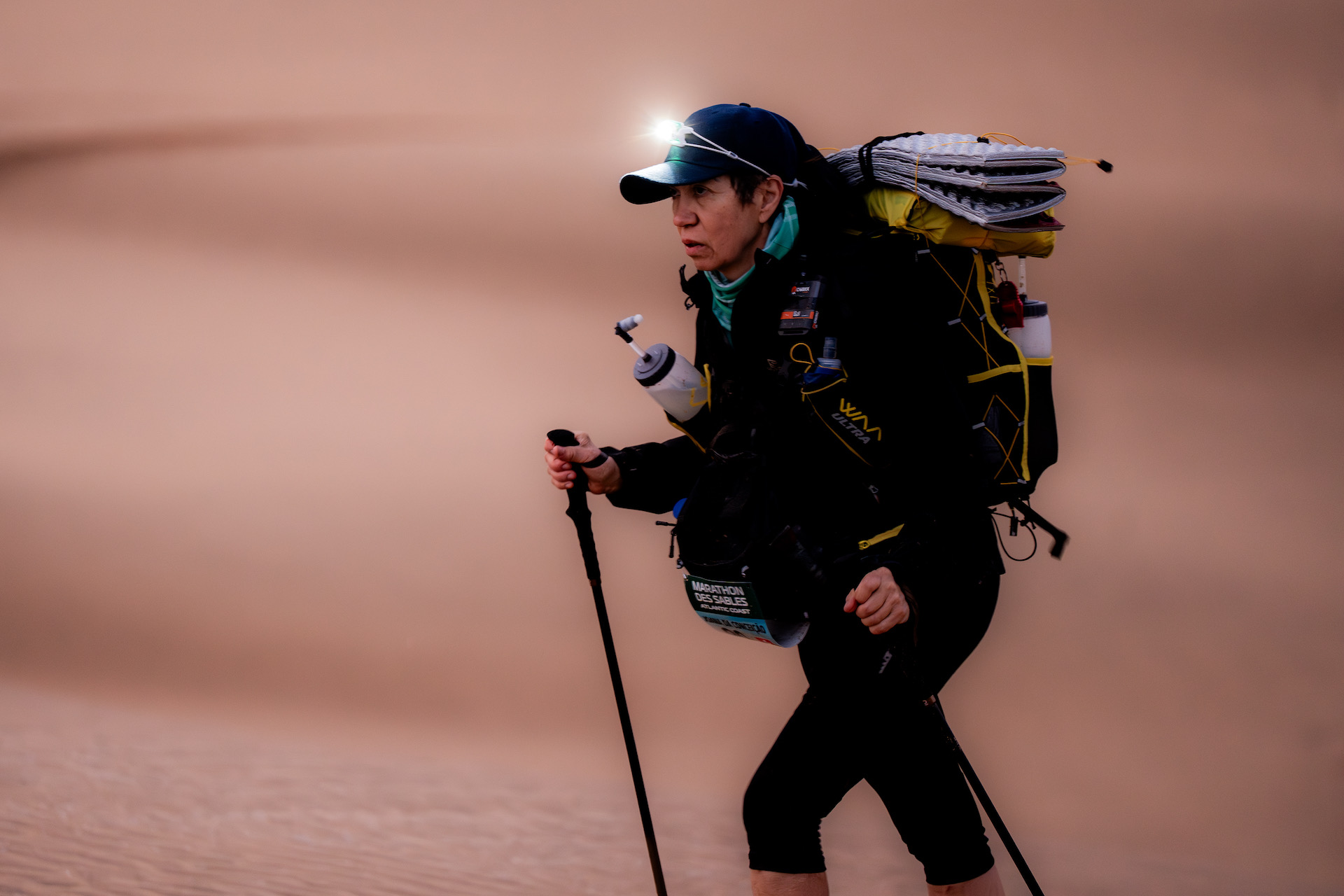
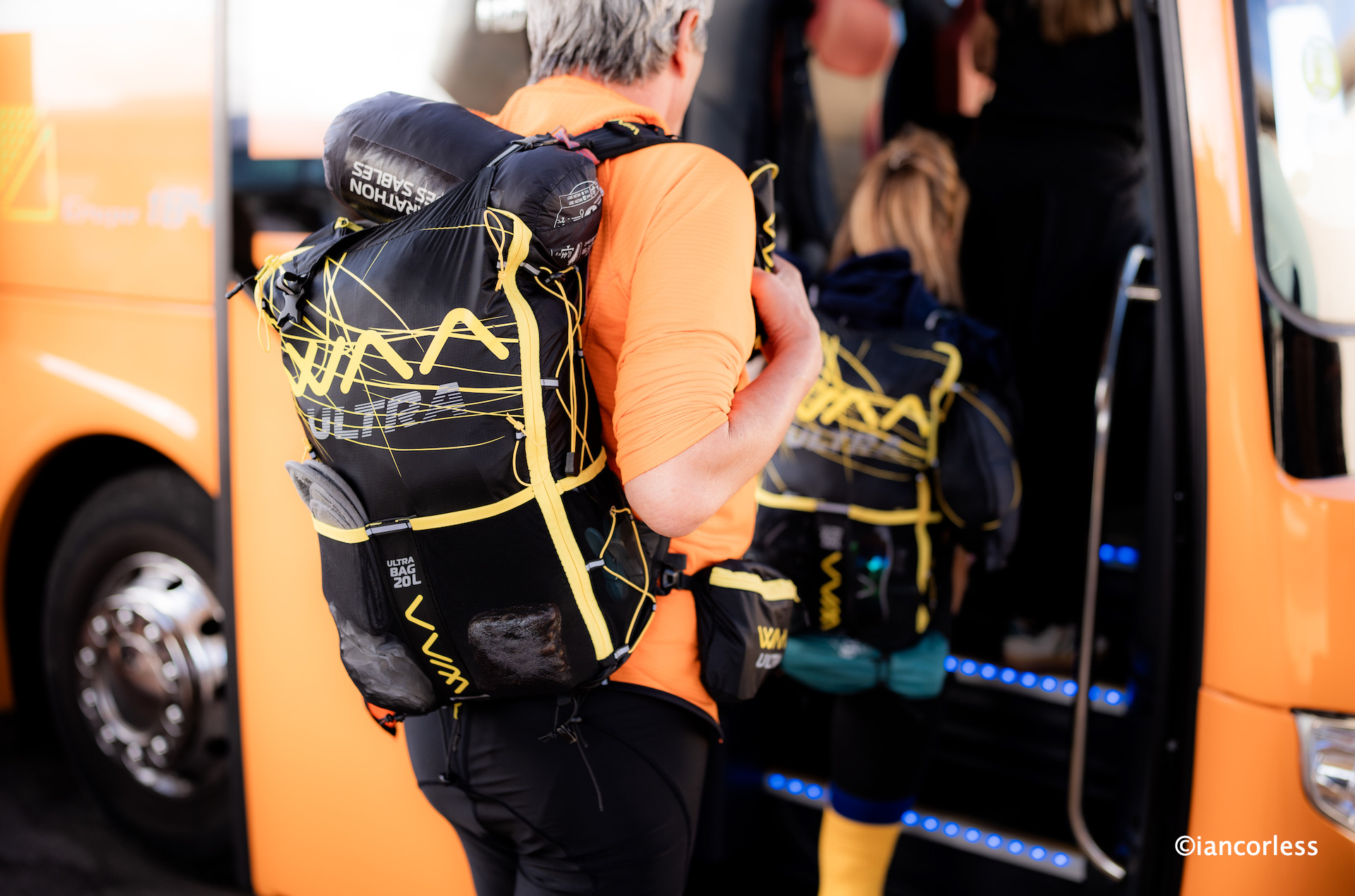
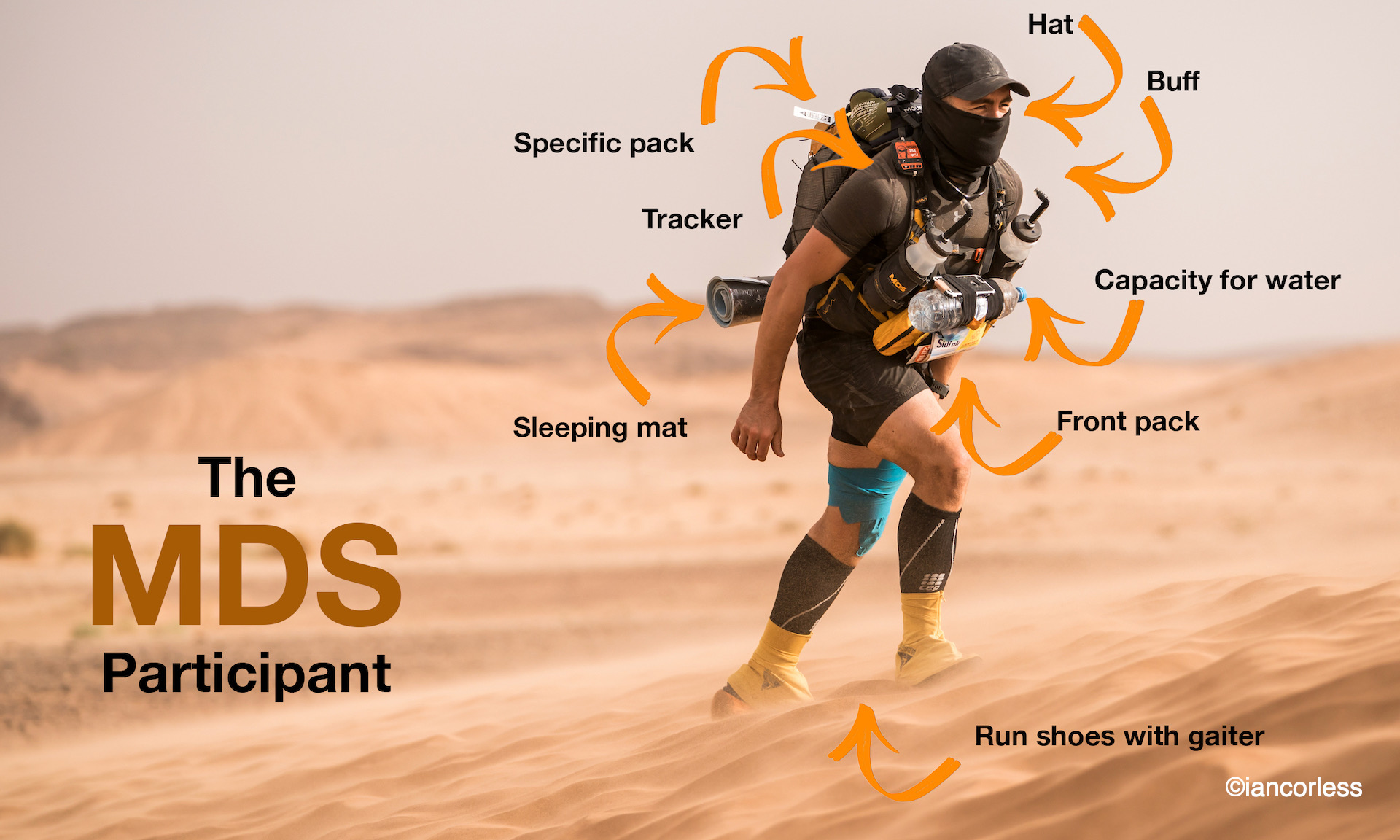
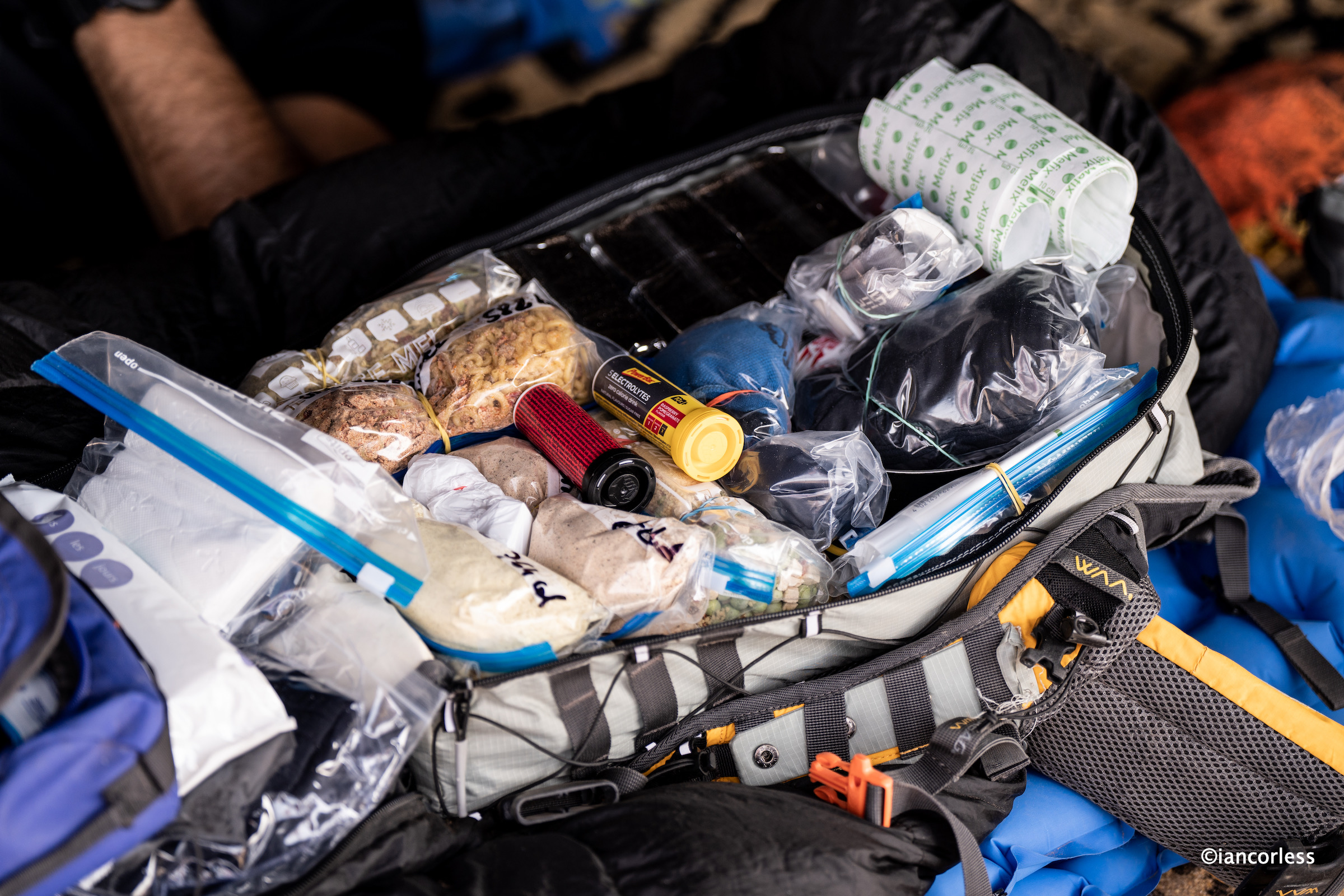
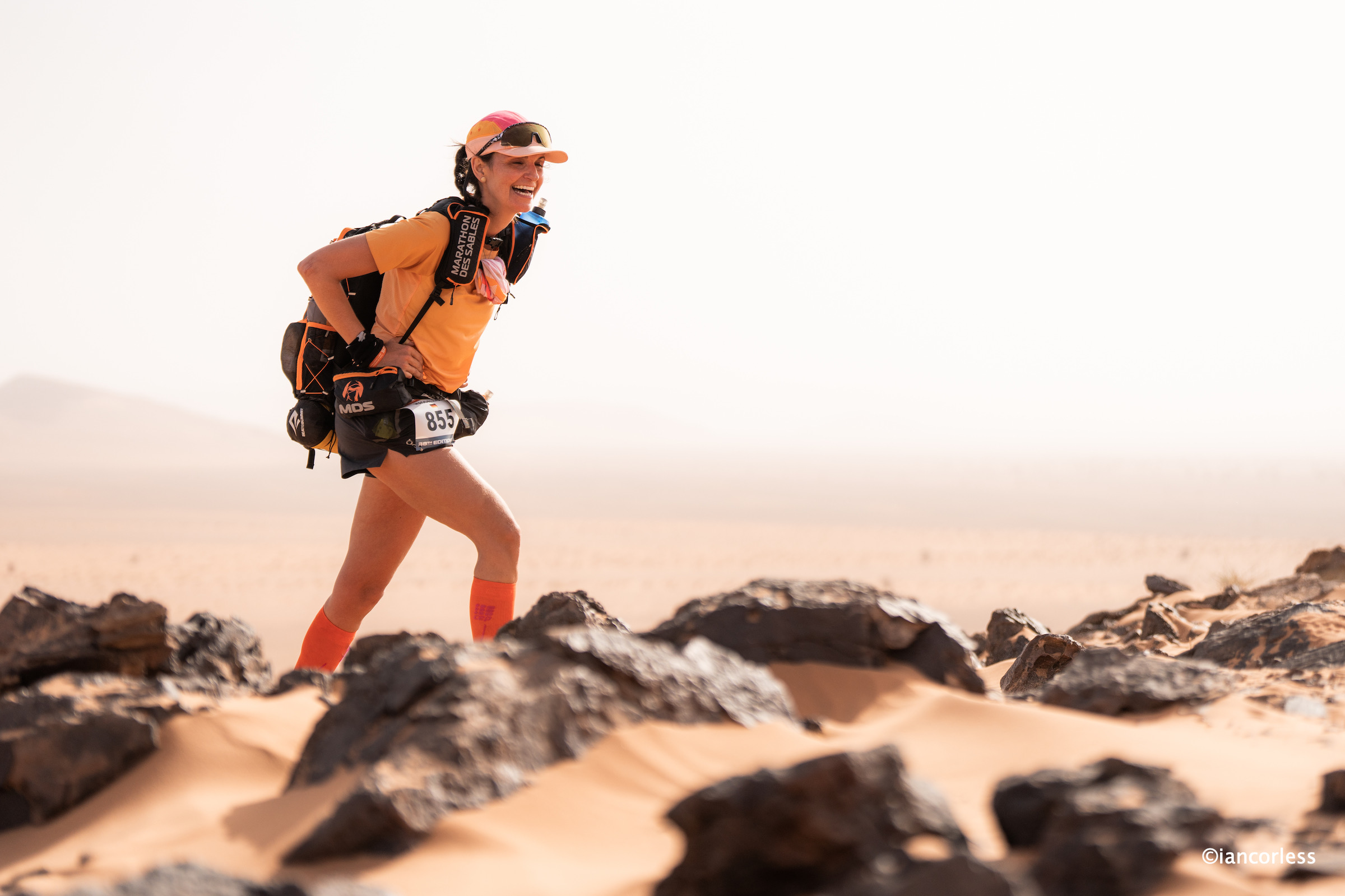
  • Pack – Many packs exist on the market, without doubt, the most popular is the WAA 20ltr Ultra Bag which as designed specifically for MDS events. However, we are all different sizes and shapes, what works for one, will not work for another. Get a pack that is exactly the right size and ideally just a little too small. Remember, after each day, the contents of your bag reduce, so, too much space and you will have items bouncing around. Try, as best as possible, to go no larger than 20ltr, the more space you have, the more you are likely to take. Get your pack as close to the minimum 6.5kg as possible
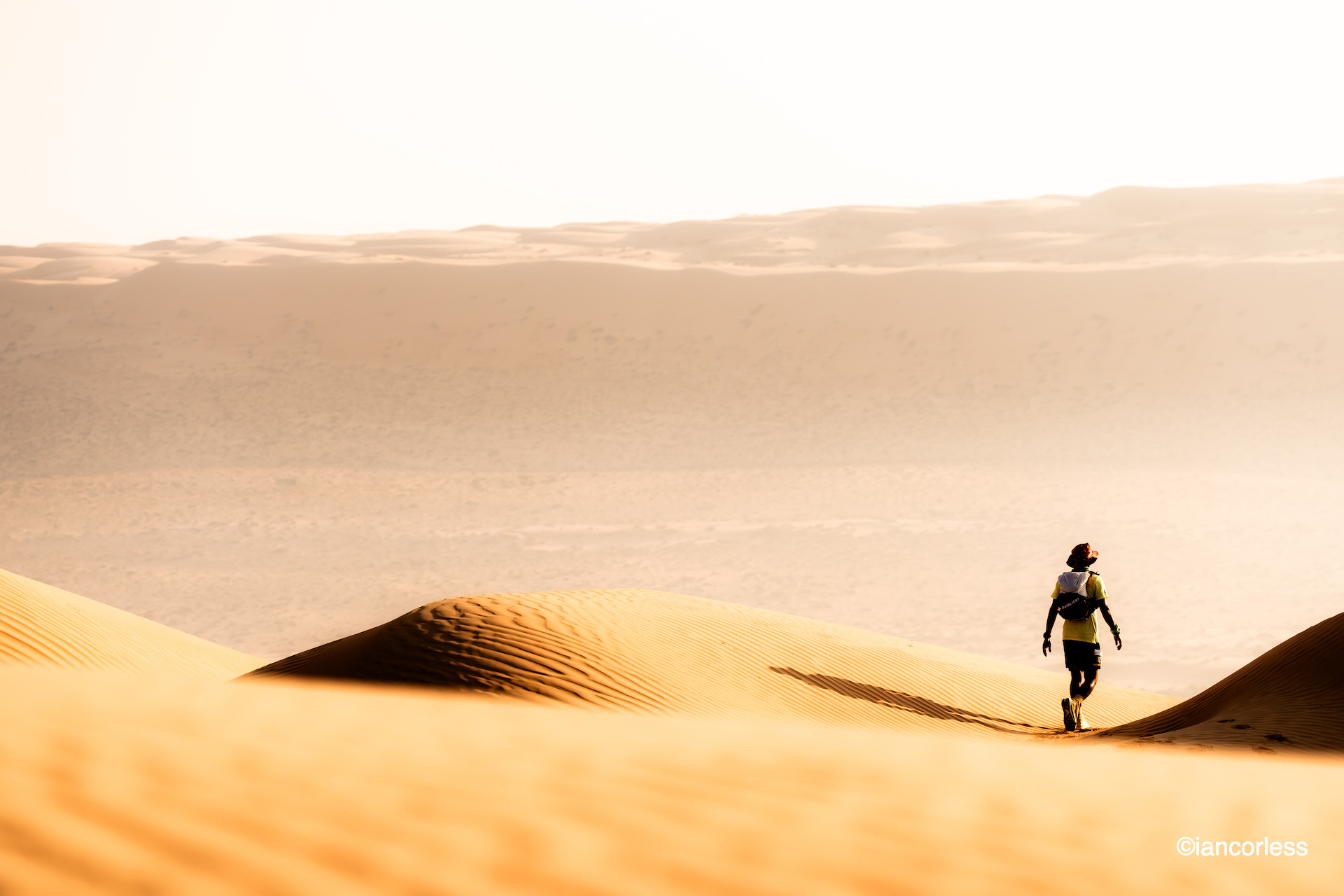
©iancorless
  • Sleeping bag – You can spend a great deal on a sleeping bag, so, think about your budget. Consider, do you sleep cold or do you sleep warm? There is nothing worse than being cold at night, you really need to sleep, so, a little extra weight and a good warm night is key. However, you can be too warm! Think about layers, you can get away with a lighter sleeping bag if you are taking a down jacket. If you have a jacket, you can sleep in it inside the sleeping bag for added warmth. If it is cold, make sure you cover your head, most heat is lost here.
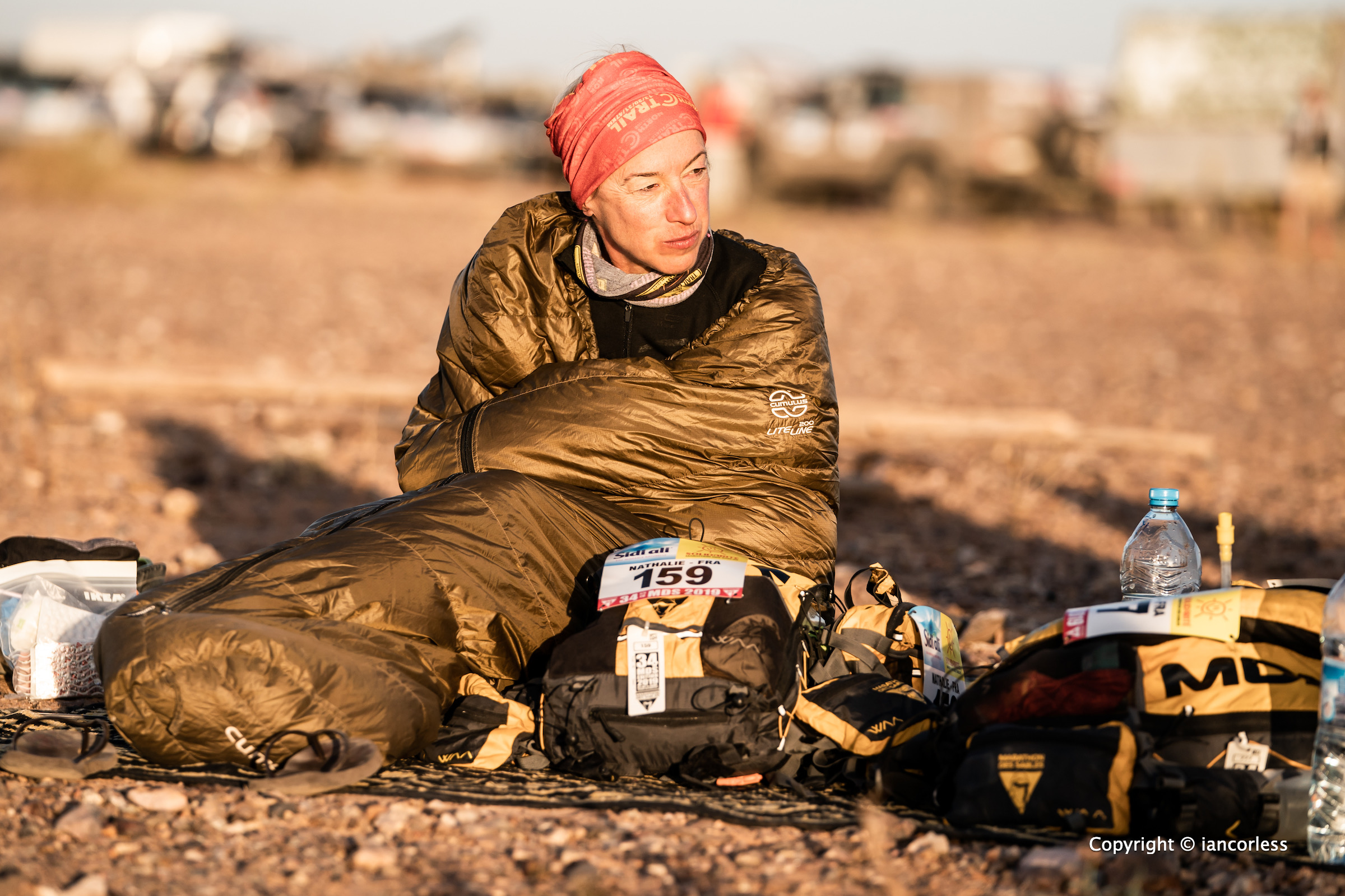
  • Jacket – At a minimum take a windproof jacket such as the WAA wind running jacket. I always recommed taking a small and lightweight down jacket, many exist and the most popular are by Mont Bell, Haglofs Yeti/ Nordisk etc. A down jacket is idal for sitting around camp and as extra warmth imside your sleeping bag. Of course, if on admin day the weather is forecast for a week of excessive heat, you can decide not to take it. However, having the option is important. Recent MDS events have had varying weather and jackets have been essential.
  • Clothes – You just need what you will run in. However, a spare pair of socks is commonplace. No need to get new clothes and don’t worry about colours. The most important is that they are comfortable and they do not rub or chafe. Consider an option for post-run so you can be warmer and fresh, this allows run cloths to be washed through and dry, if you so wish.
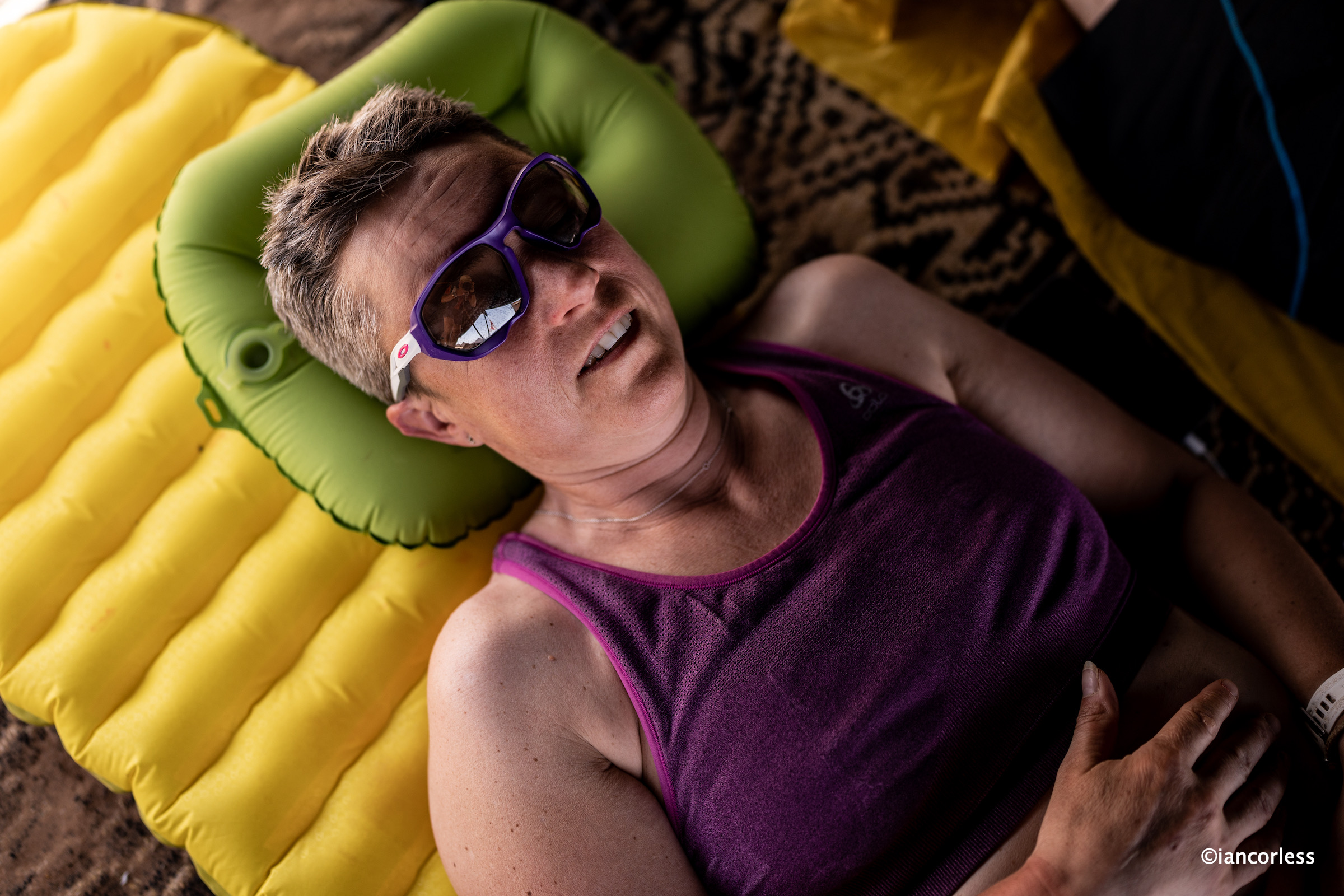
  • Sleeping Mat – A mat is optional but I 100% recommend. You spend a great deal of time in camp sitting and sleeping. Comfort is essential and a good sleep is needed to aid recovery. Many options exist and you can get excellent products well under 400g that give you a great nights sleep.
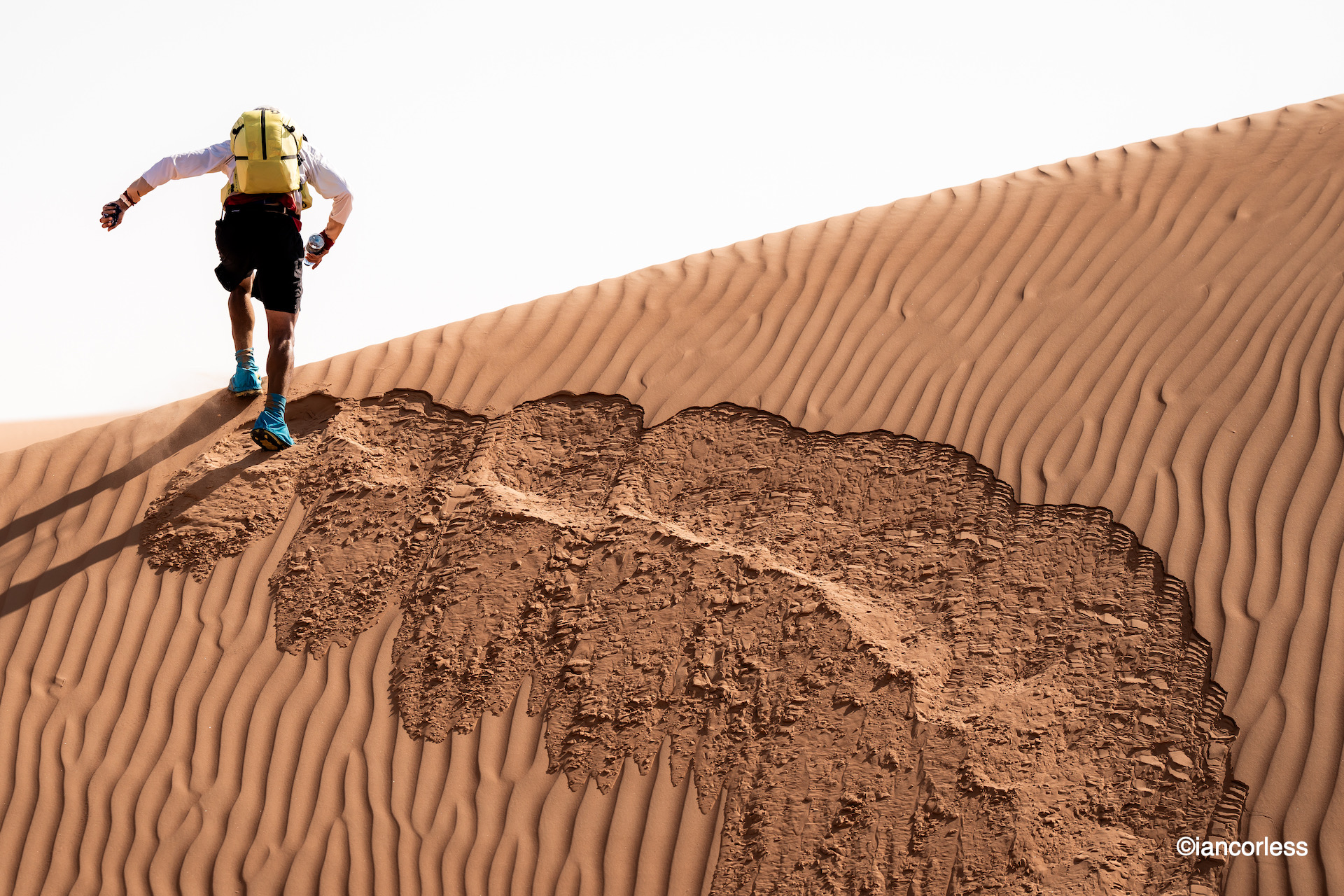
©iancorless
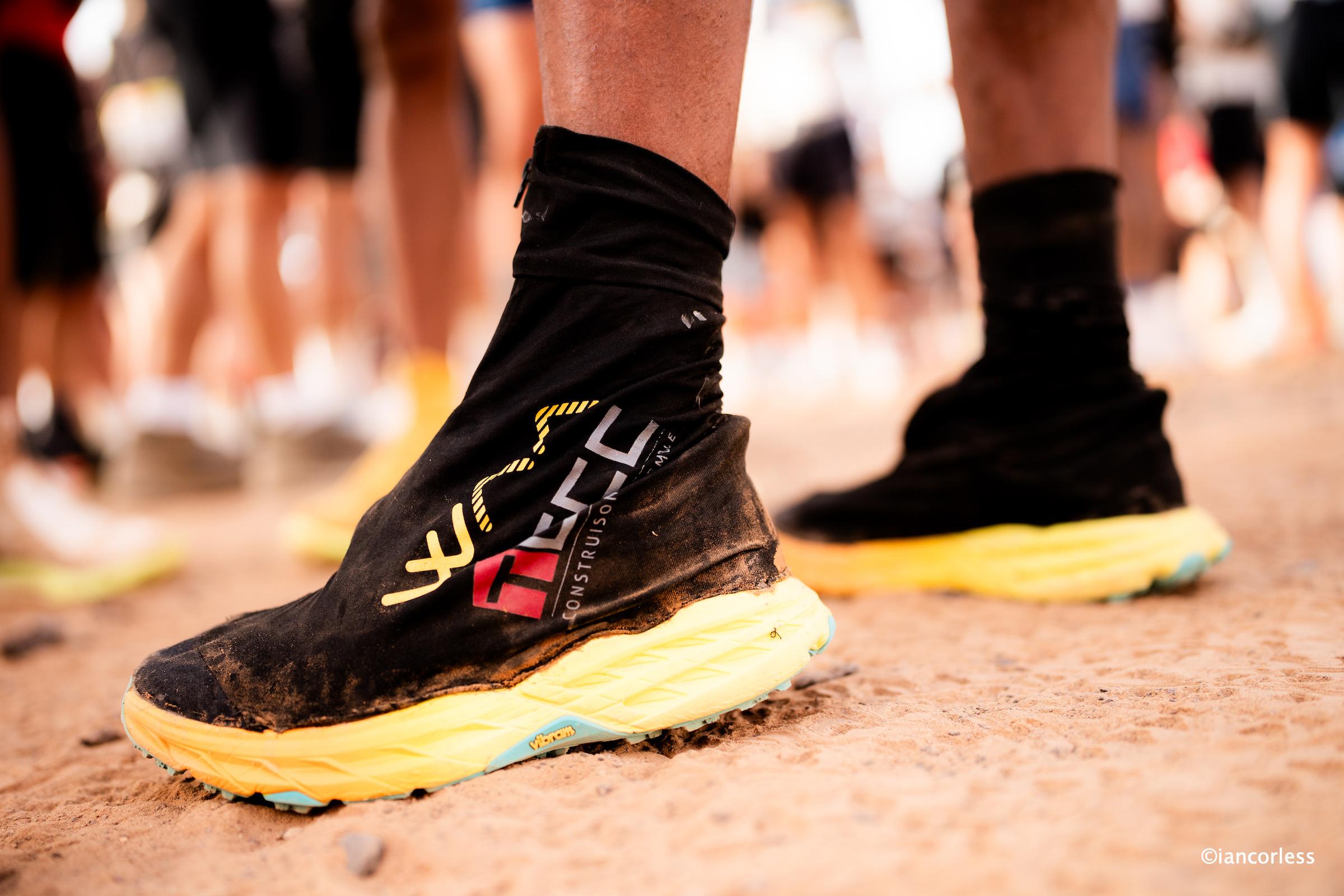
  • Shoes and Gaiters – Shoes are so important. They must be comfortable, cause no irritation and they must have gaiters. A slightly wider shoe is recommended BUT be careful on advice of going a size and/ or sizes bigger. A shoe that is too big allows the foot to move, a moving foot causes friction, friction results in blisters. A thumb nail of length above the longest toe (this may not be the big toe) is recommended.
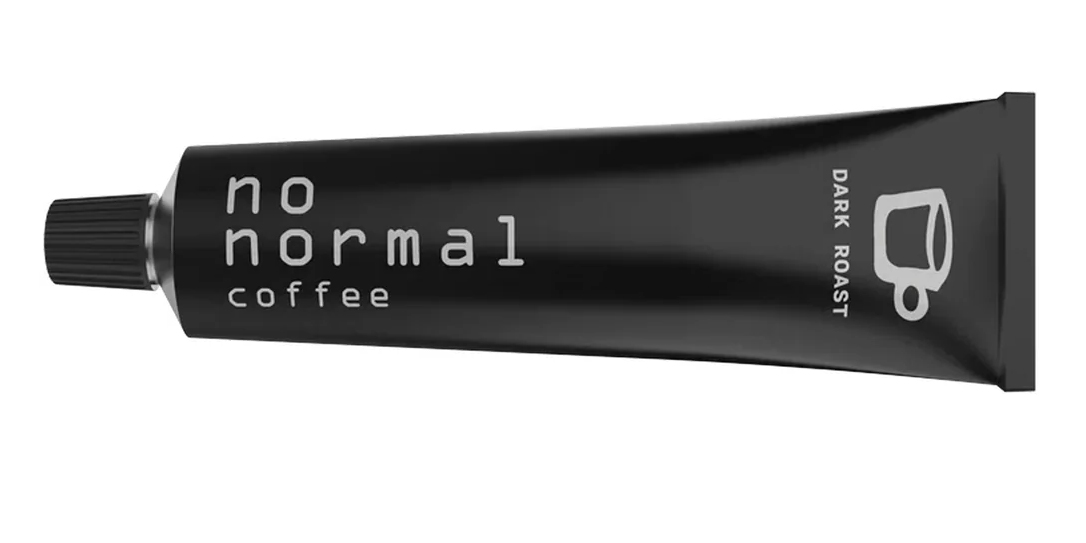
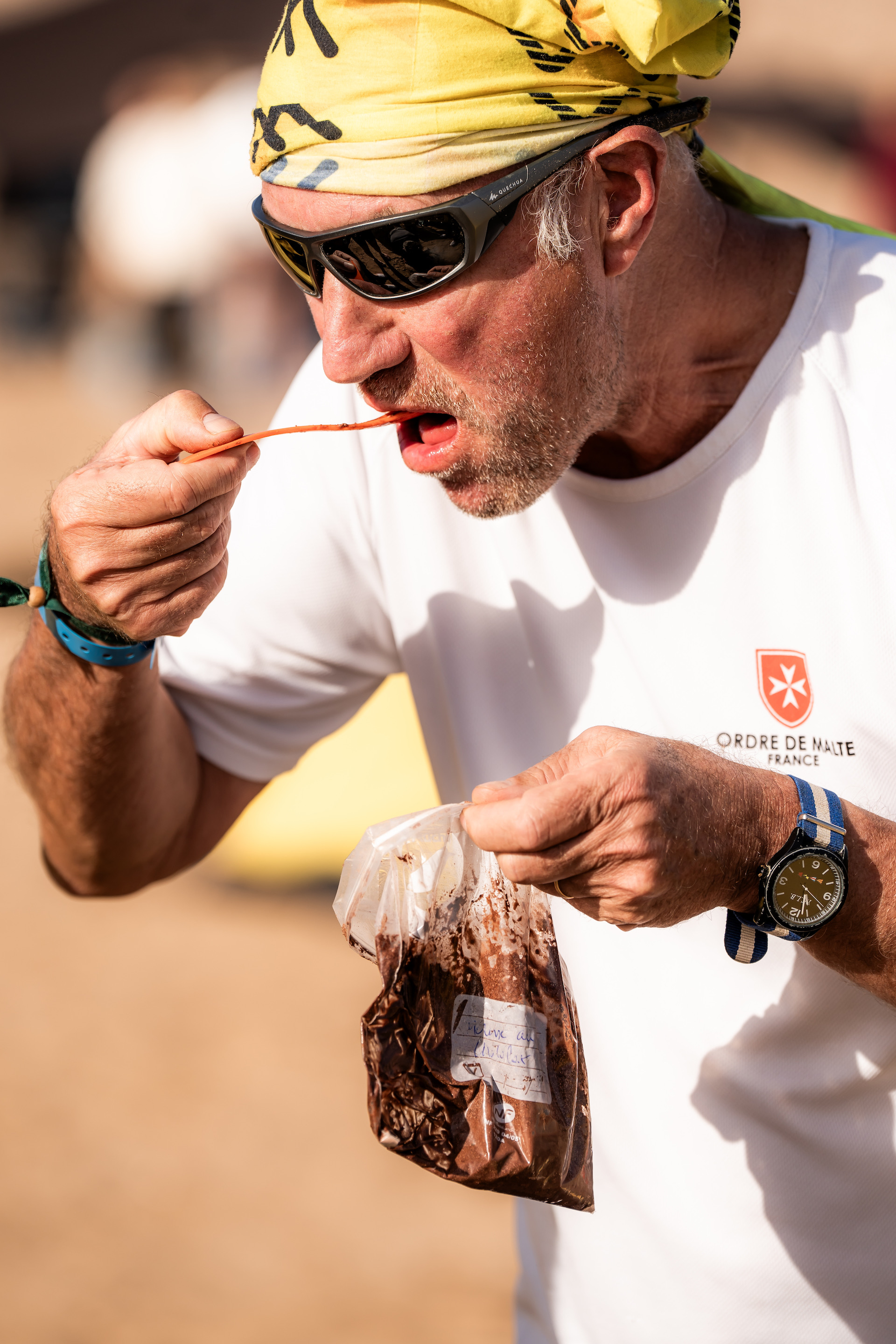
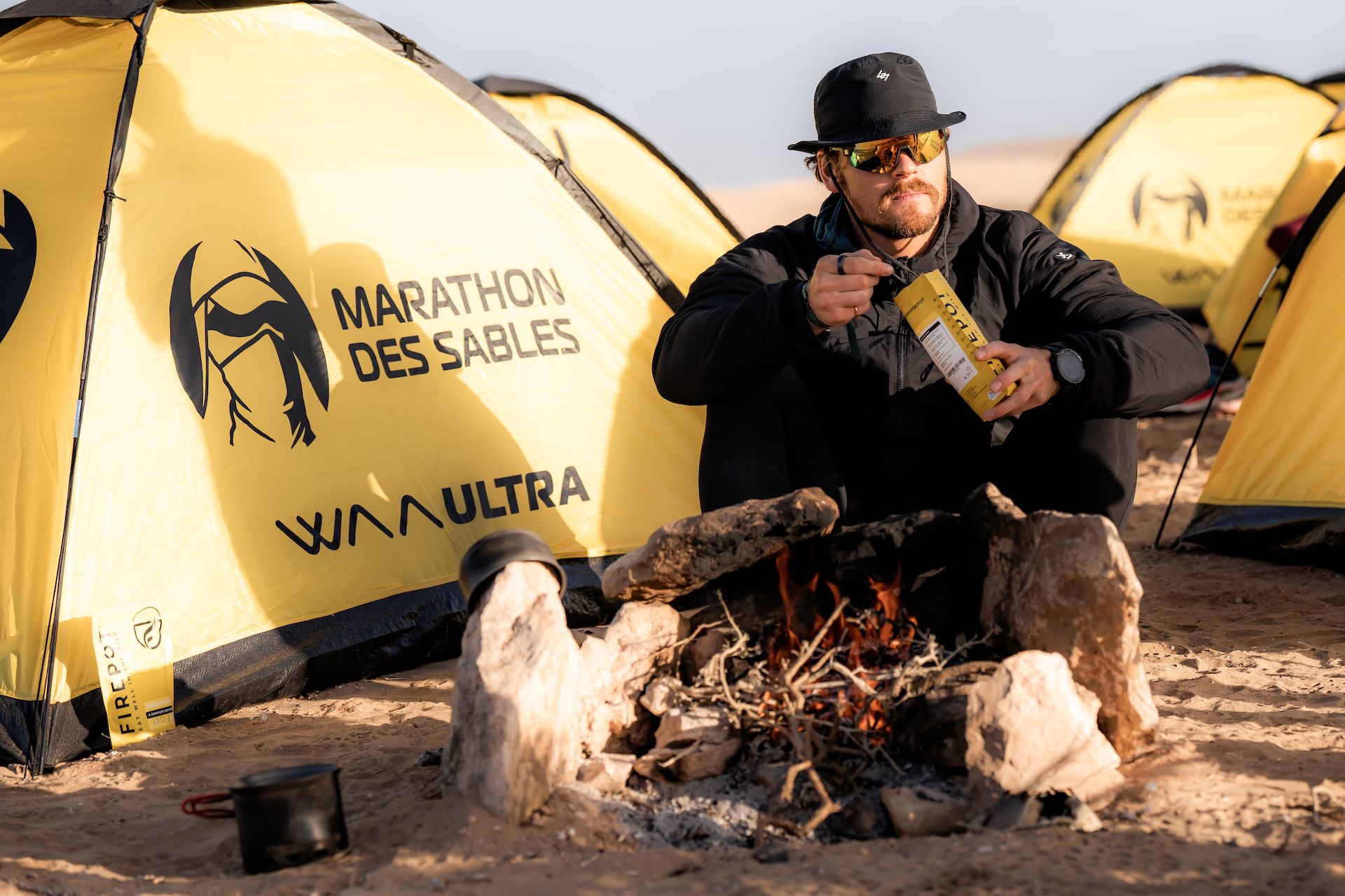
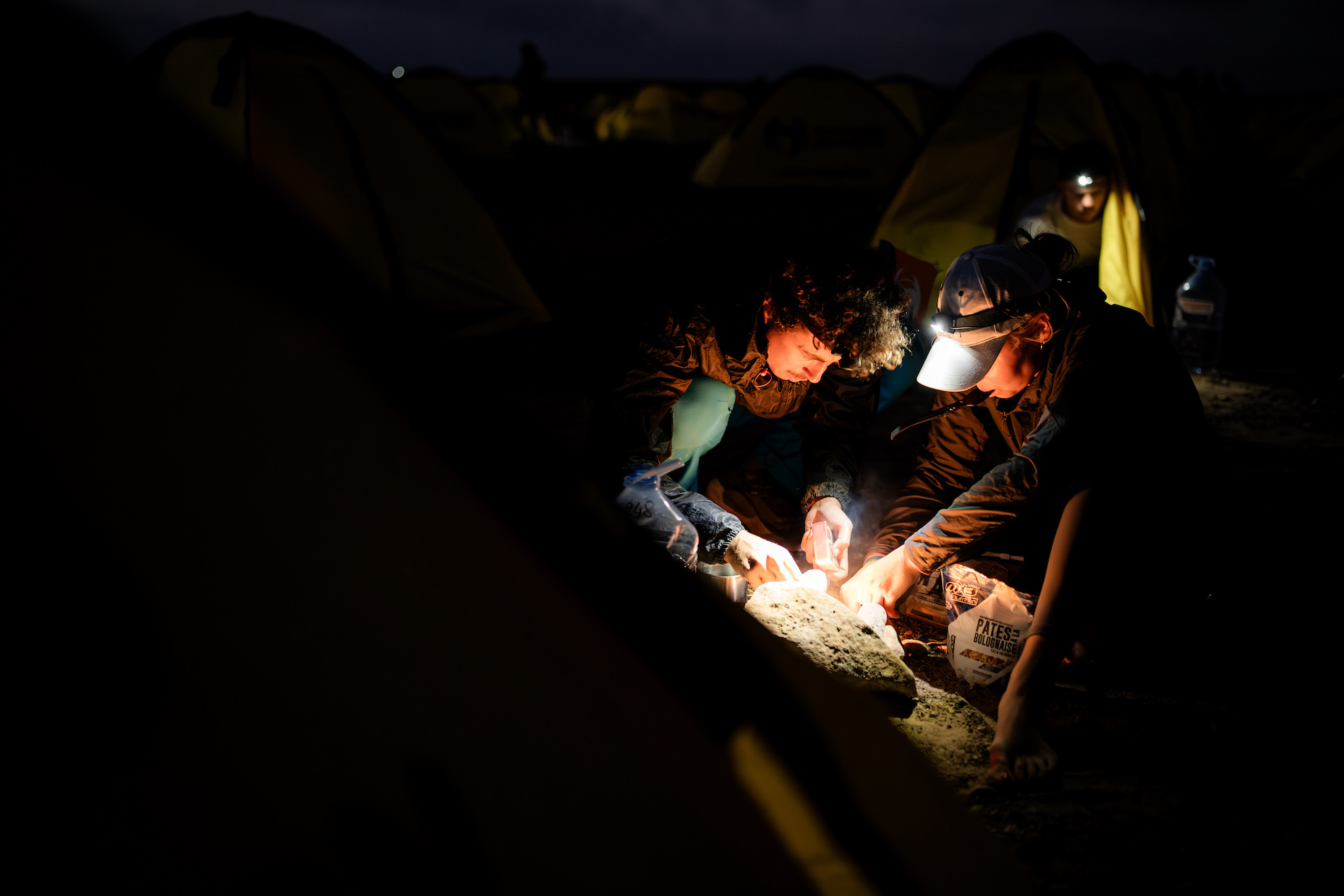
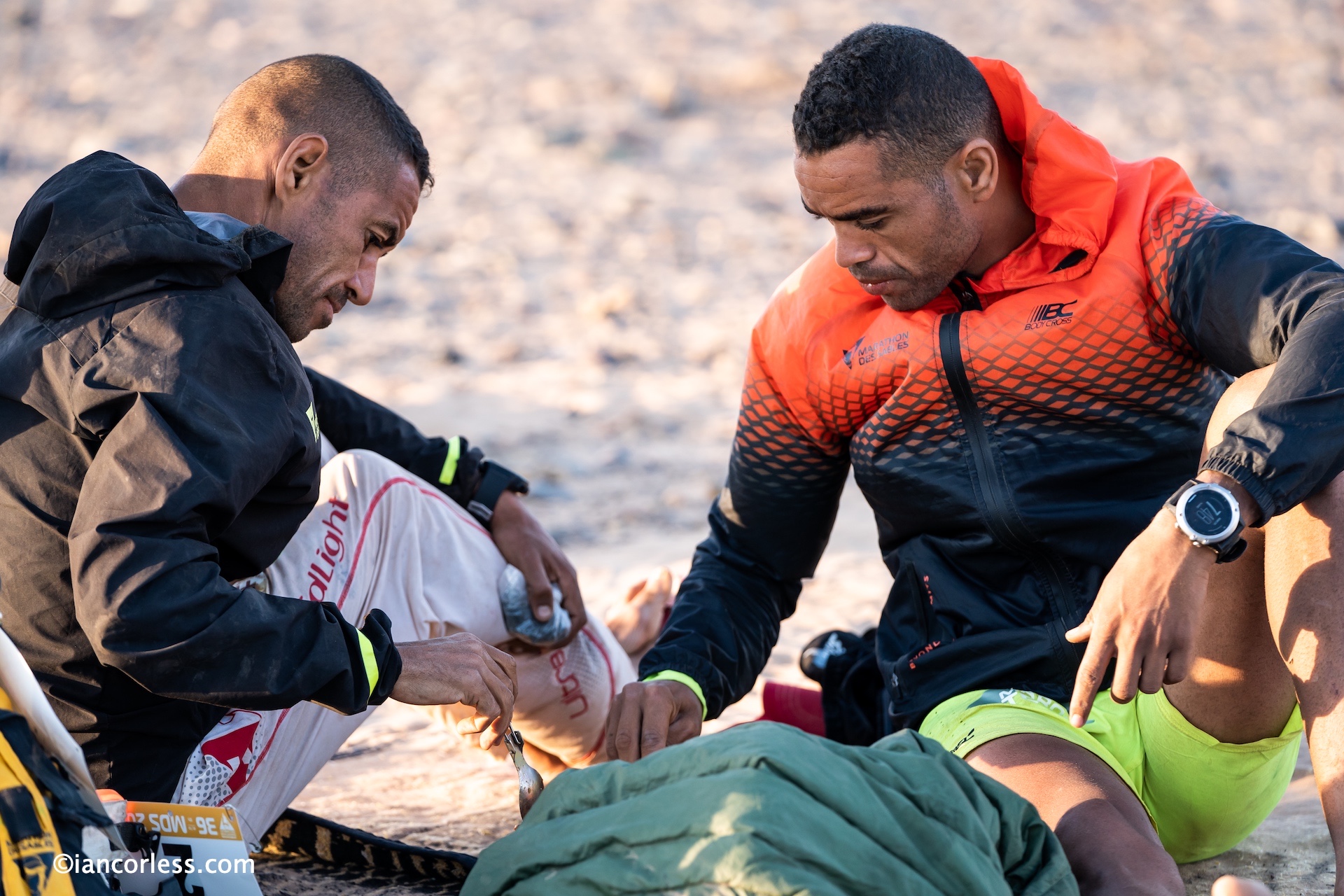
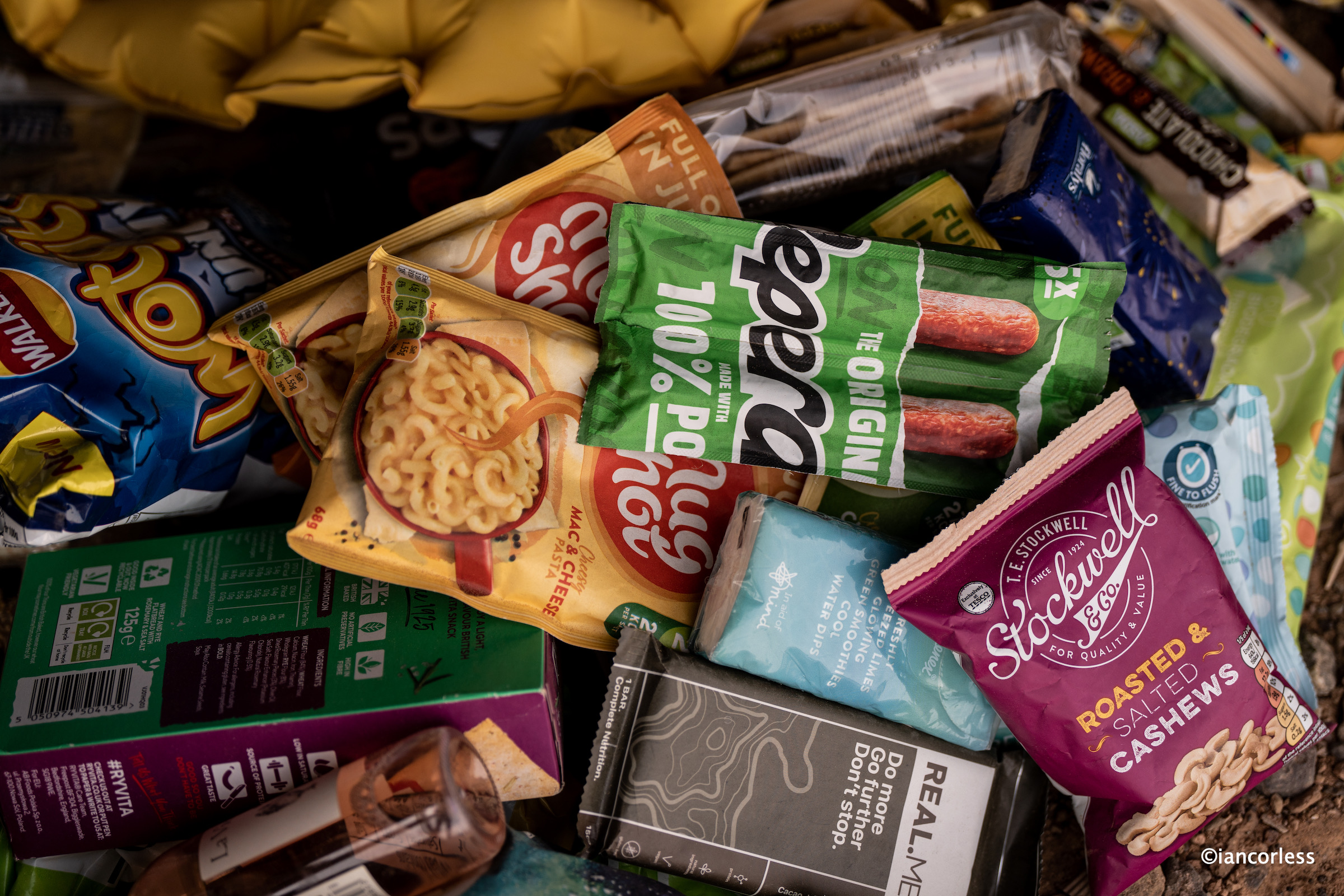
  • Food – You must comply with the minimum requirement of 2000 calories per day, of course you can take more. Think about what will work for you in the Sahara. What tastes good at home, may not taste good on day 3 when you are tired. MIx sweet and savoury and remember, as days pass, preference shifts away from sweet. Balance fats, protein and carbohydrate. Think about the option for recovery drinks that can be taken immdiately post-run to speed recovery and then follow with a meal. Consider if you will heat water for food, if not, will your food work with just water? And if you need coffee, look no further than NO NORMAL tubes.
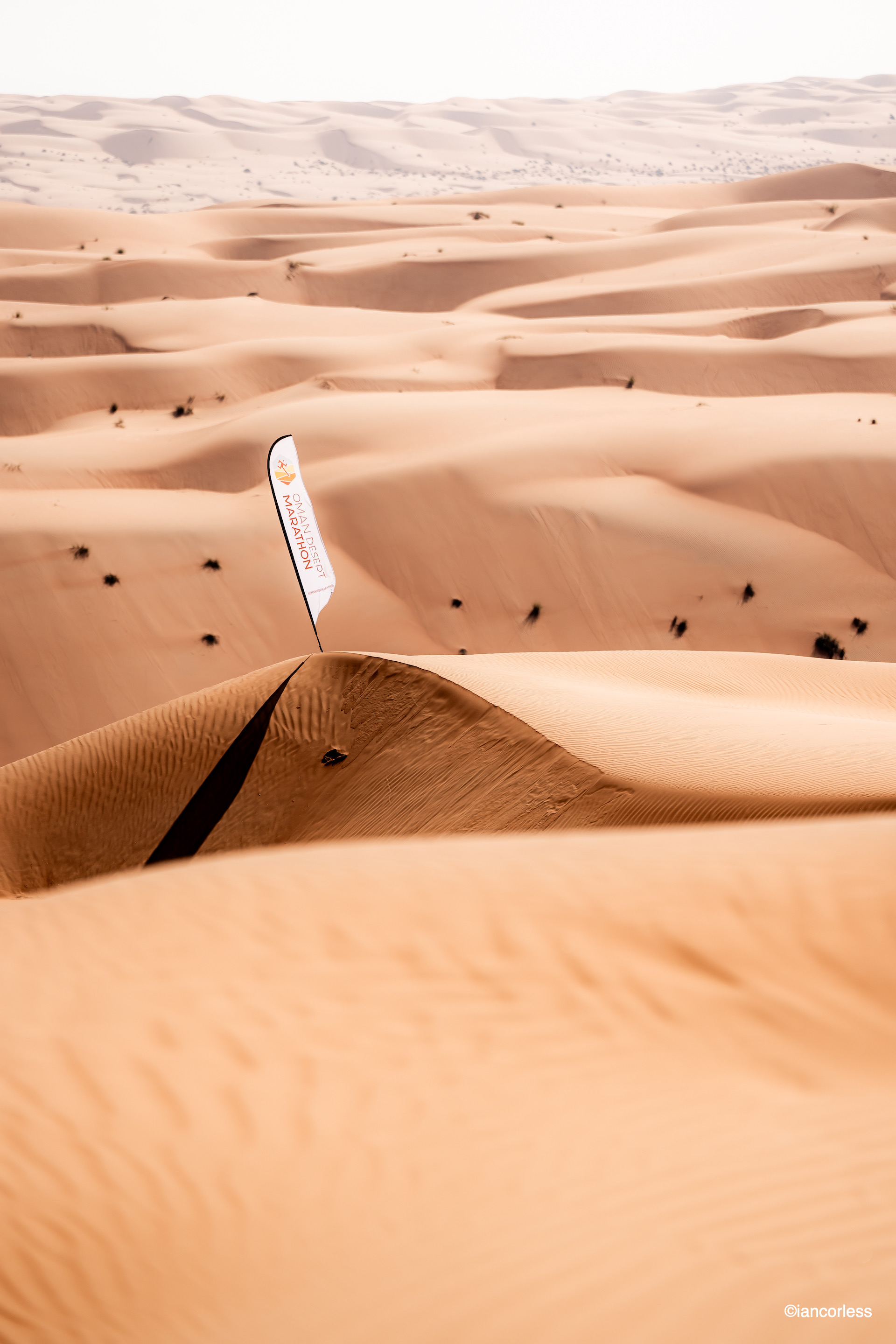
©iancorless
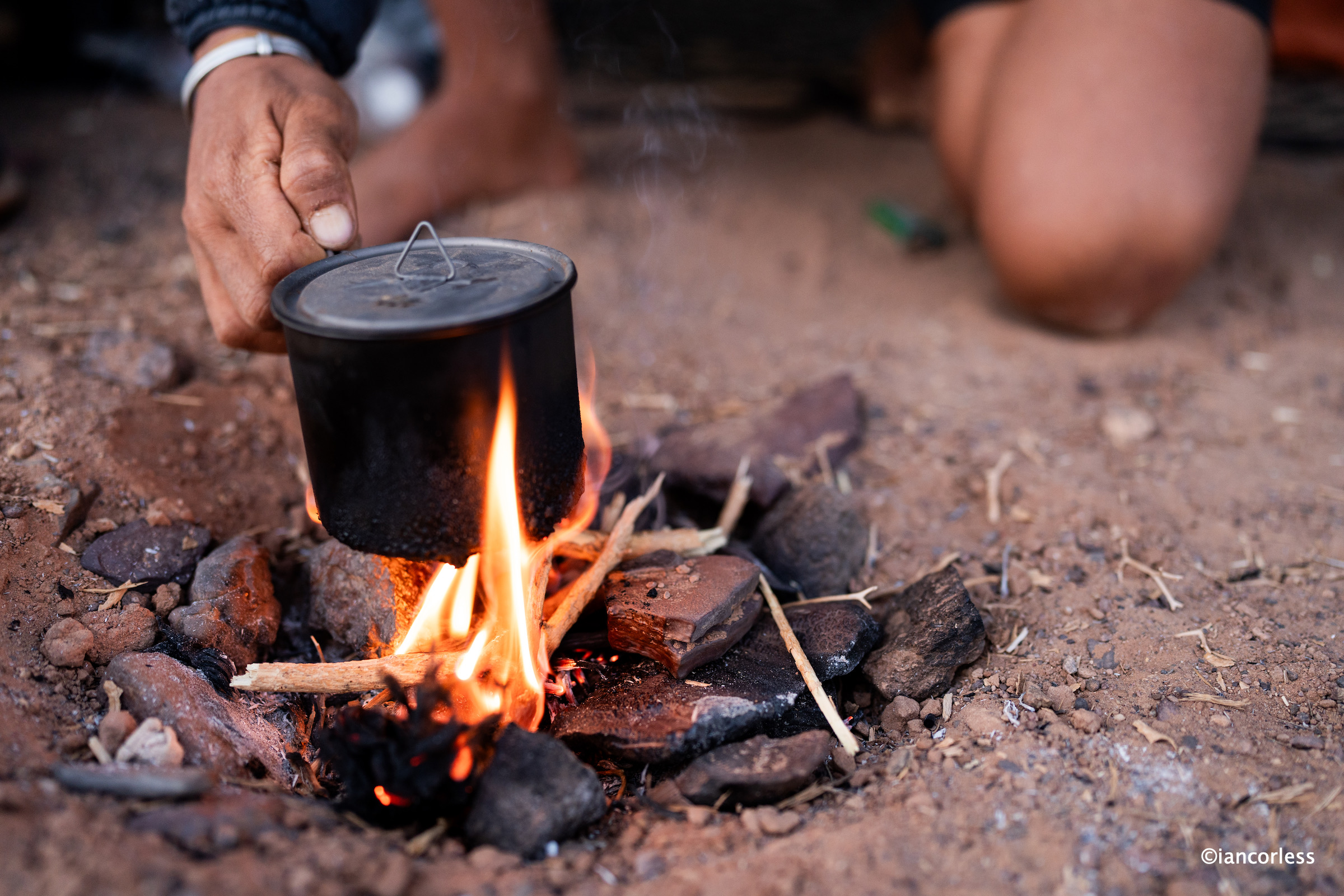
  • Stove – The decision to use a stove is another question mark but it would appear that most runners like that hot water option. Remember though, you can make a fire from twigs, shrub and branches that surround bivouac. Pot – A pot or mug is now more essential than pre 2024. The main reason? When 1.5ltr bottles were provided, runner’s would cut them down and make a mug or pot, this option now does not exist, so, take a small titanium mug.
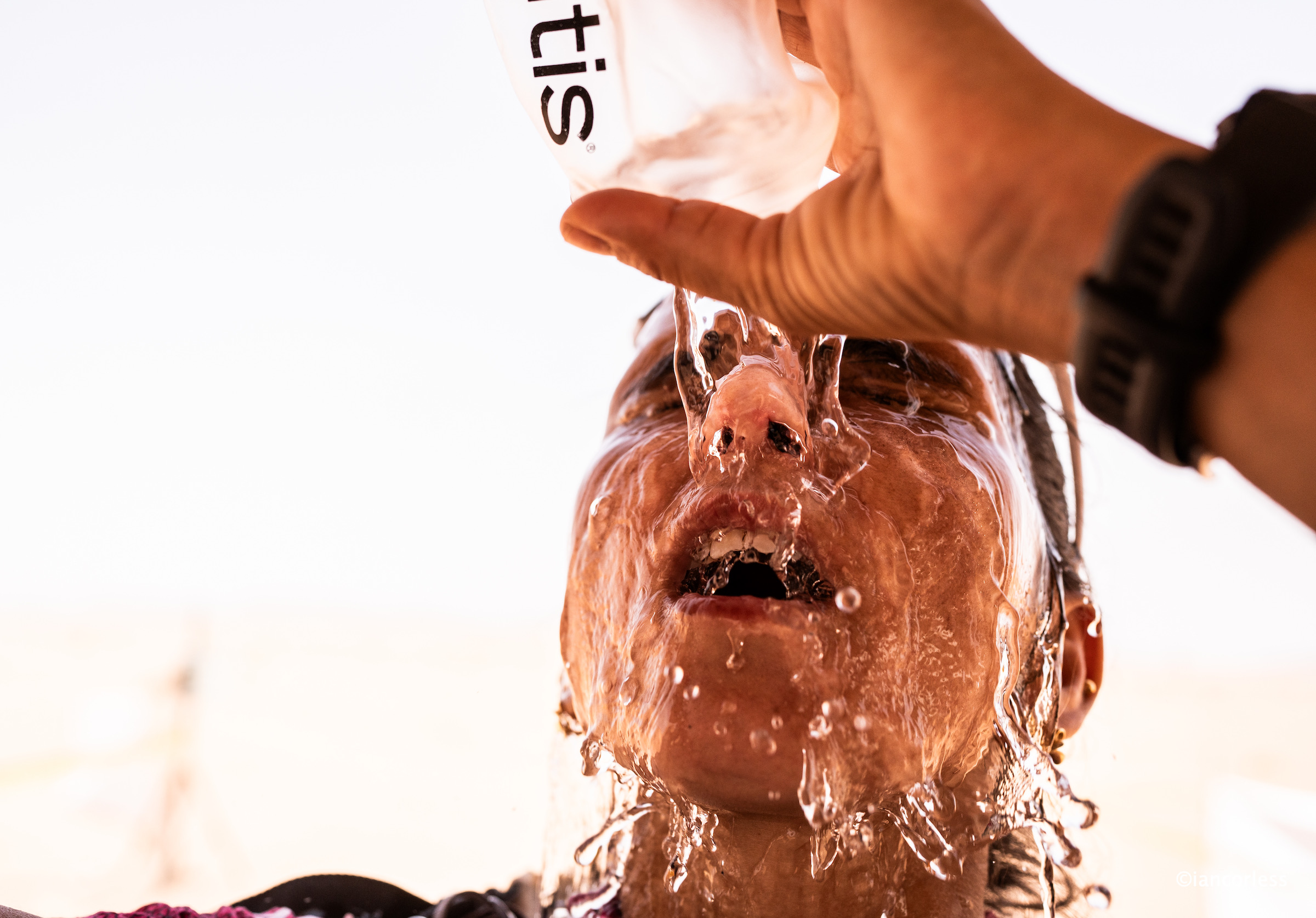
  • Water – You must be able to carry 1.5ltr of water, typically 2x 750ml bottle on the chest. However, should you wish, you can take a bladder or soft-flasks. The choice is yours, however, remember soft-flasks and bladders can puncture, so, use caution. Make sure you plan for and have the option to carry an additional 1.5ltr of water – if excessive heat occurs, the race may provide this option. Also, on the long day, the race has provided the option for extra water in the past based on course accessibility and the distance between cp’s, be prepared.
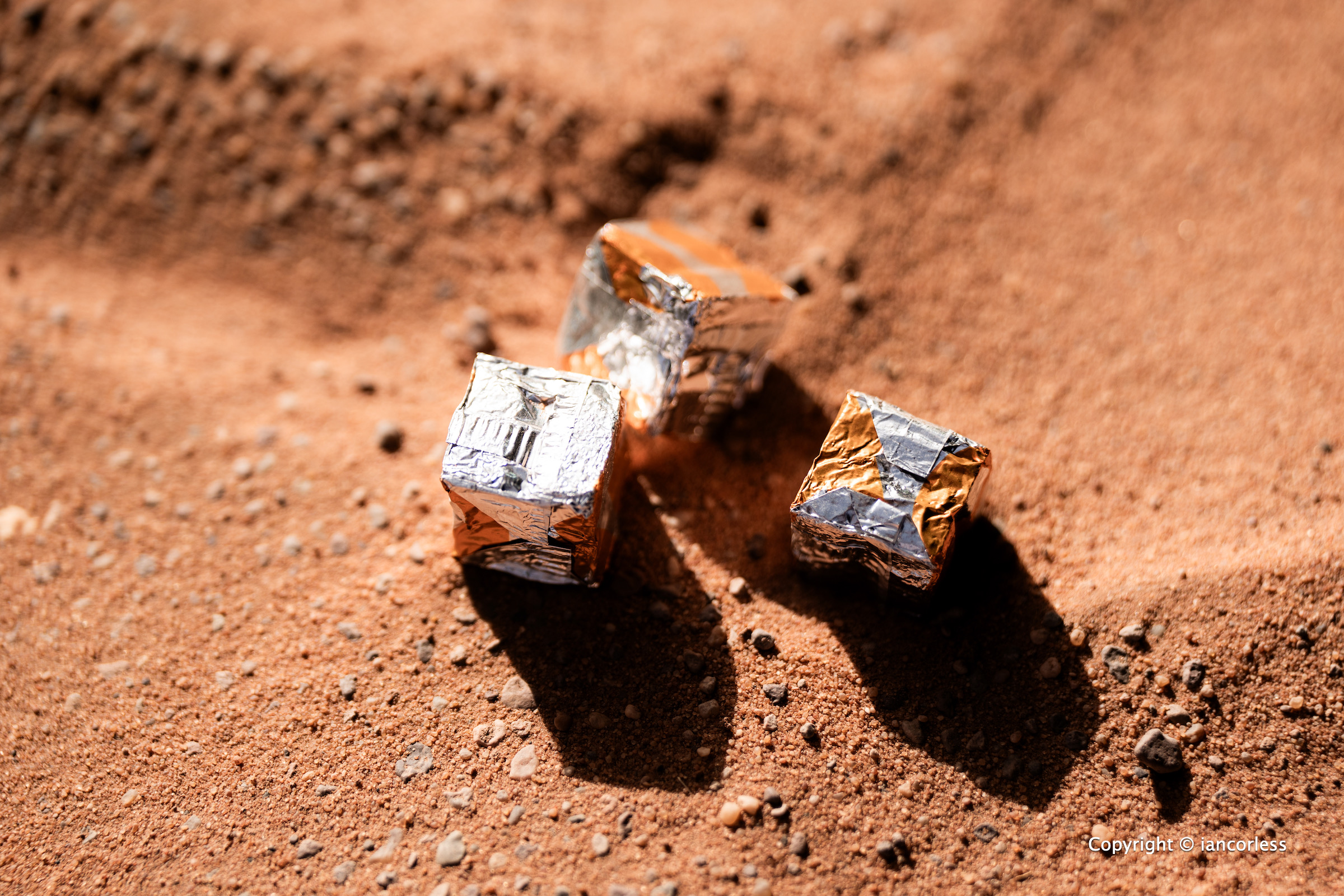
  • Salt Tablets – These are no longer provided and it is mandatory to carry 14 stock cubes at the start of the race. Do your research and find out what works for you.
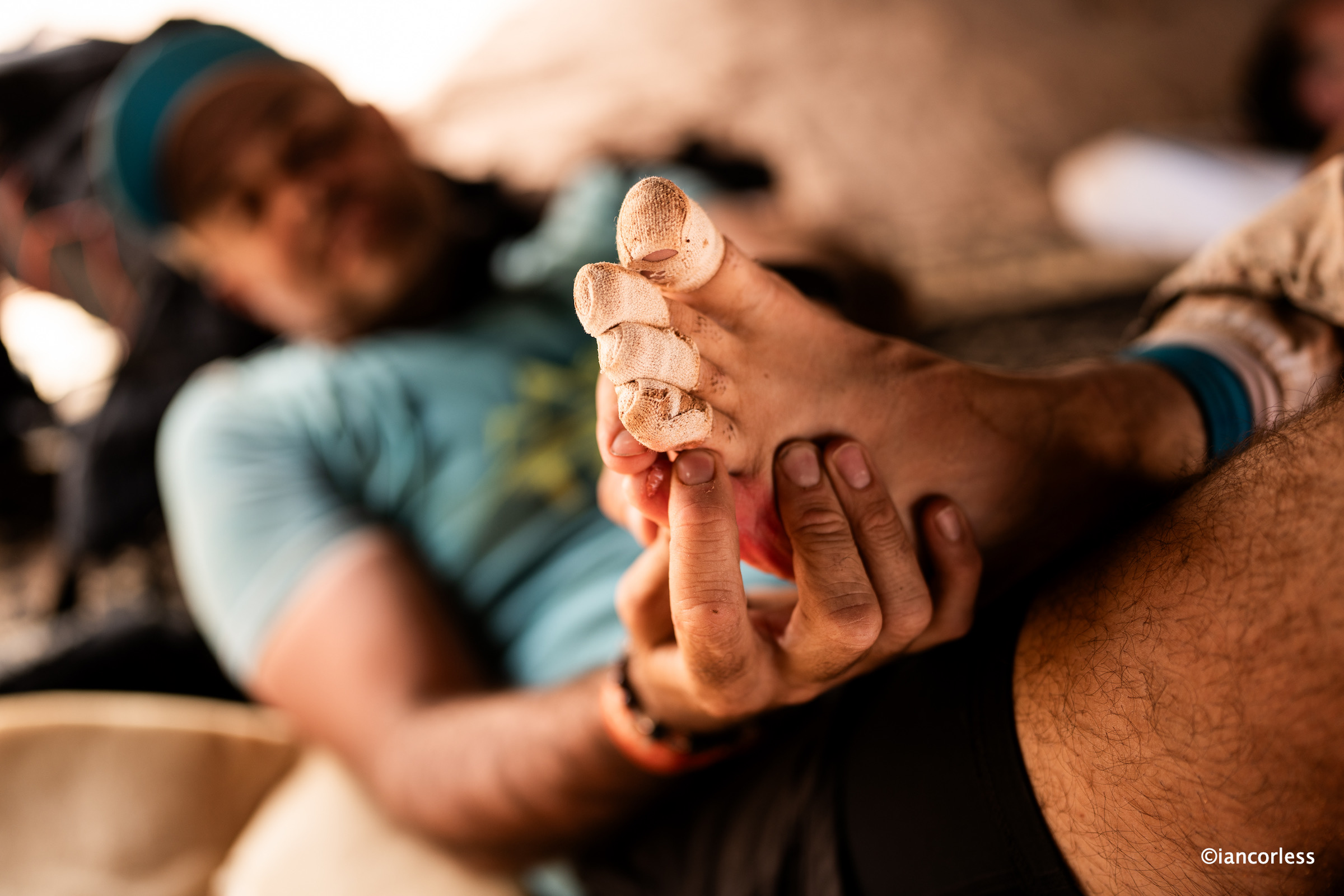
  • Feet – Look after them, along with dehydration, blistered and damaged feet are a key reason for failure in any multi-day race. Prepare them before the race especially trimming nails back and knowing what socks work for you. After each day in the race, clean feet, allow them to breathe and look after them. Get any sore or hot points addressed immediately.
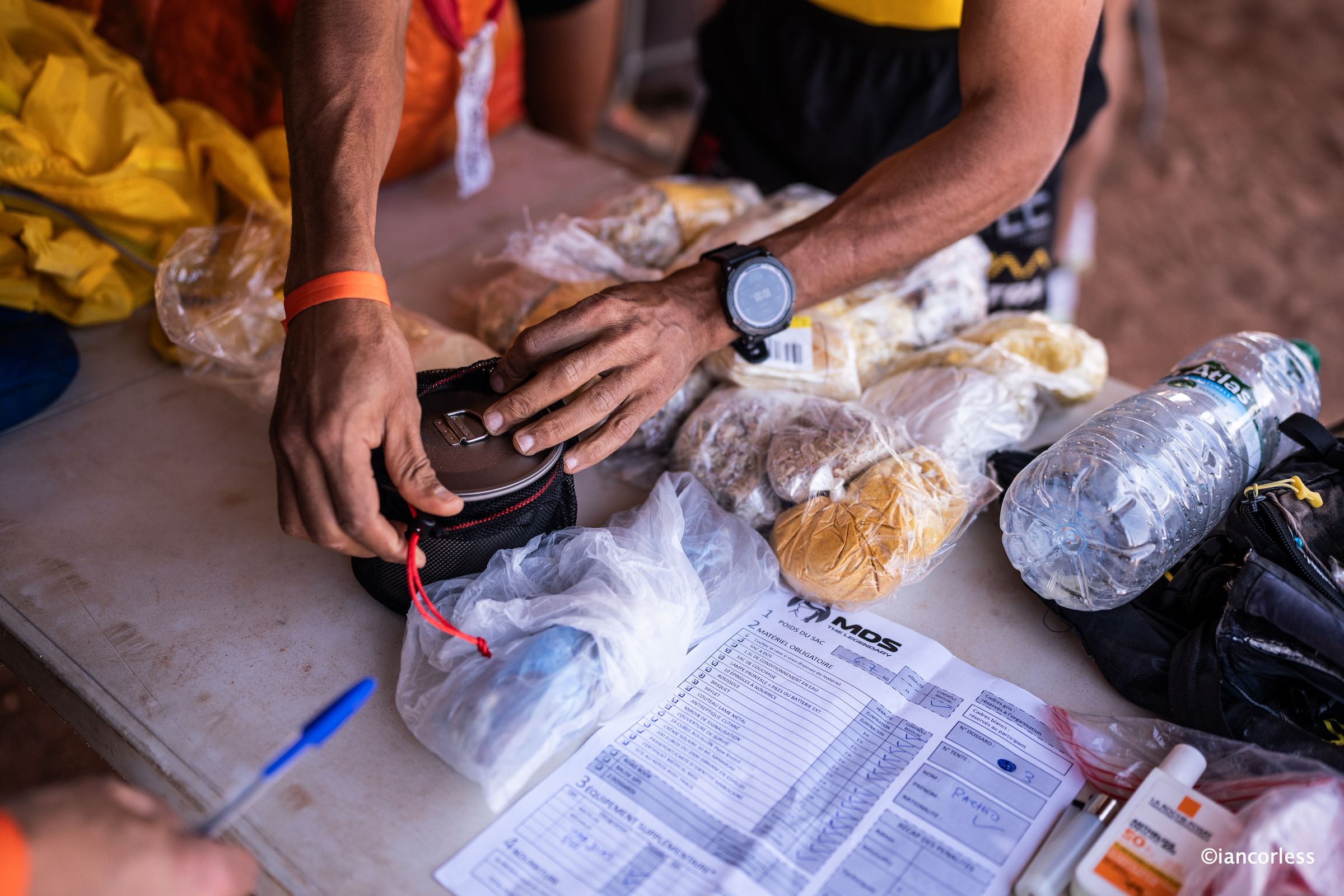
  • Mandatory kit – You are supplied with a mandatory kit list and you MUST have everything on that list.
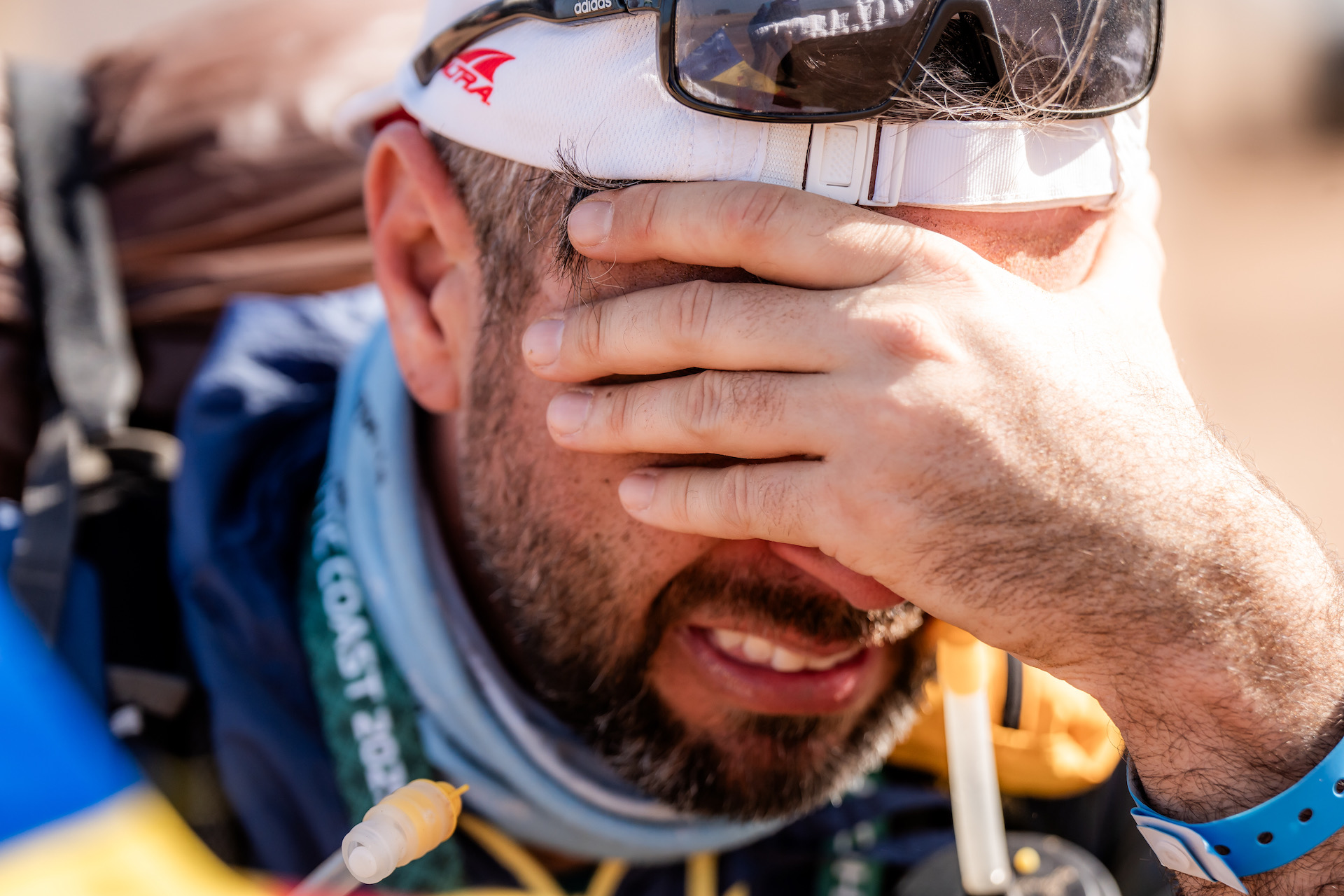
  • You – Prepare mentally for the challenge. Often, the race is completed through mental grit and determination and not physical ability. Accept you will have low and high points. If it was easy, anyone would do it. You are in for the adventure of a lifetime, embrace every moment and second. This is a life changing journey and when it’s over, you’ll be desperate to return.
  • HEAT TRAINING – Plan to acclimate for heat in the two weeks before the race. Options exists from heat chamber, bikram yoga, sauna etc. Read an article HERE on Heat Acclimation by Dr Jodie Moss.
©iancorless
  • Training – With weeks to go, your training is nearly done. Don’t over do it. Taper gradually, be fresh for the race and in the final two weeks before the race plan heat acclimation so you are prepared ready for stage 1.
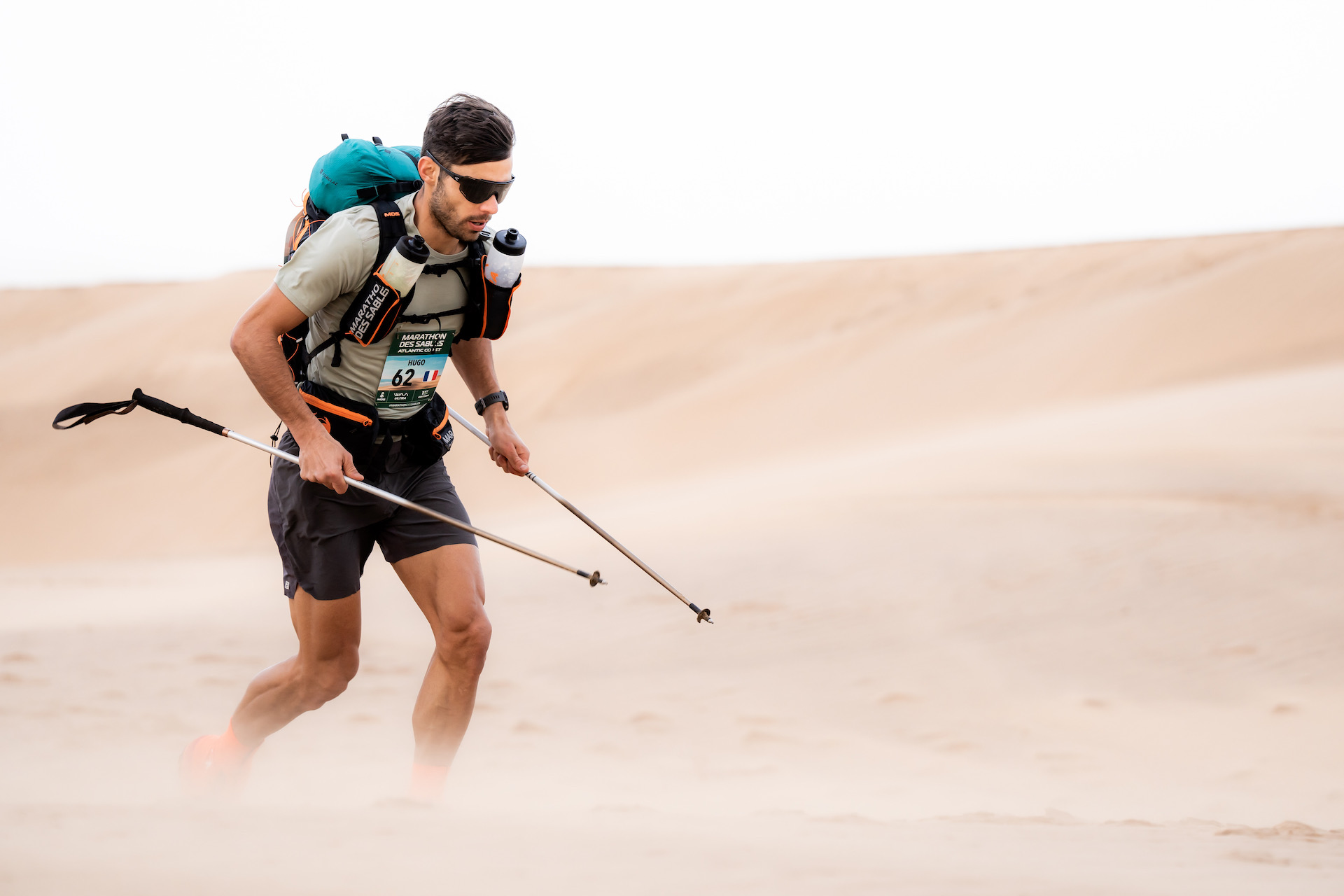
Photo by Ian Corless
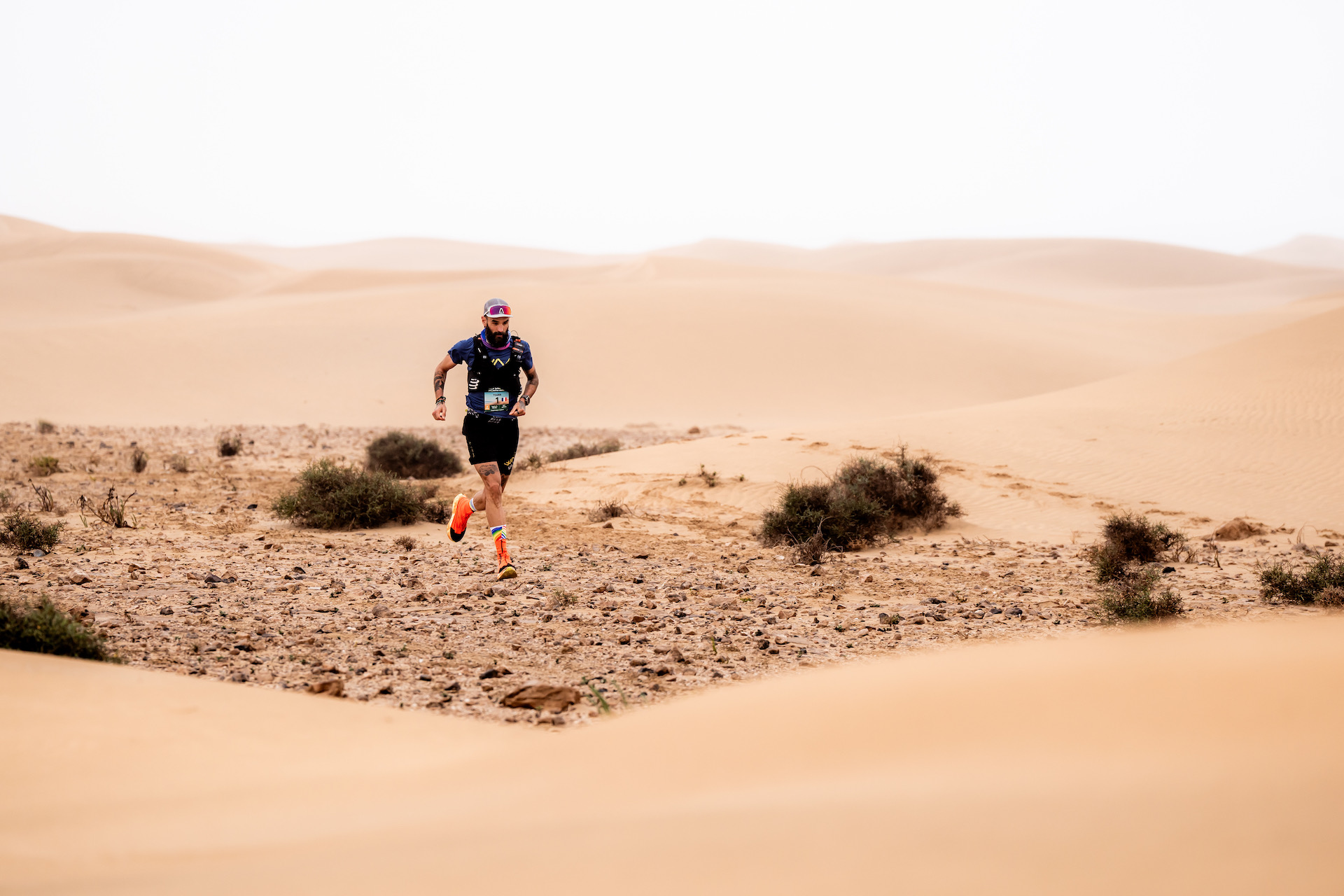
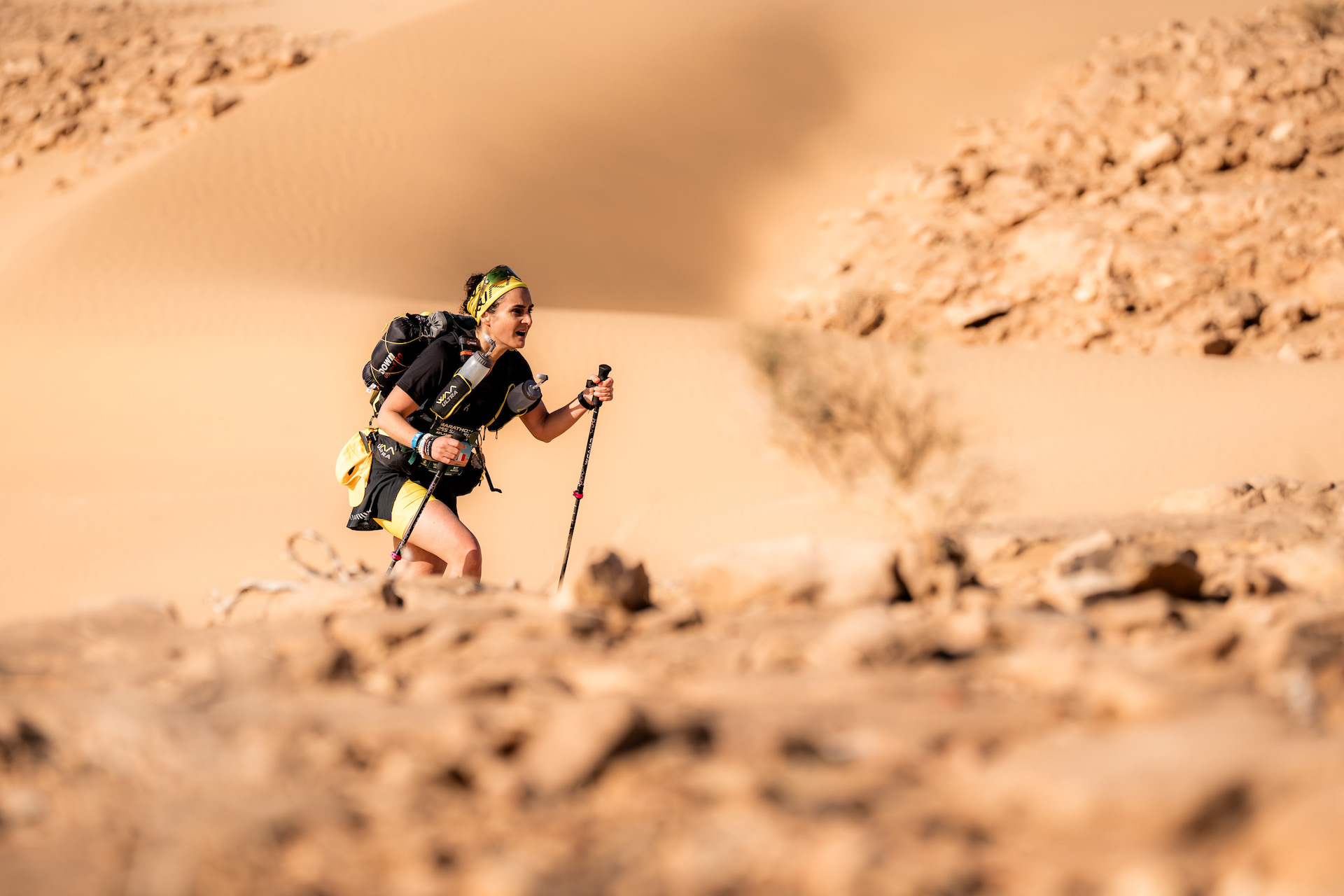
  • Walking – Many think they will run 80% and walk 20%, if you are lucky, it’s the other way around. Make walking a positive, make walking fast, make walking productive.
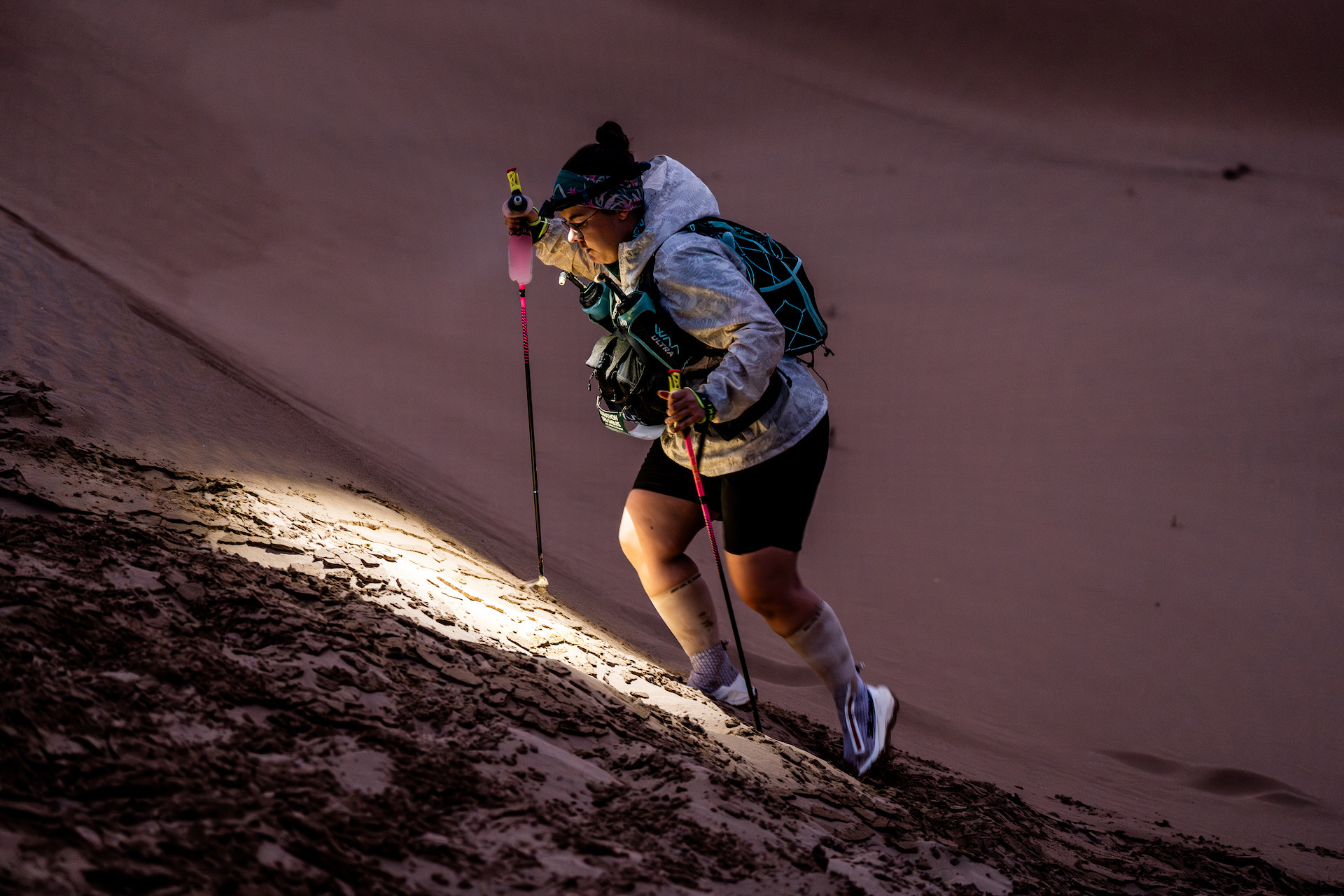
Photo by Ian Corless
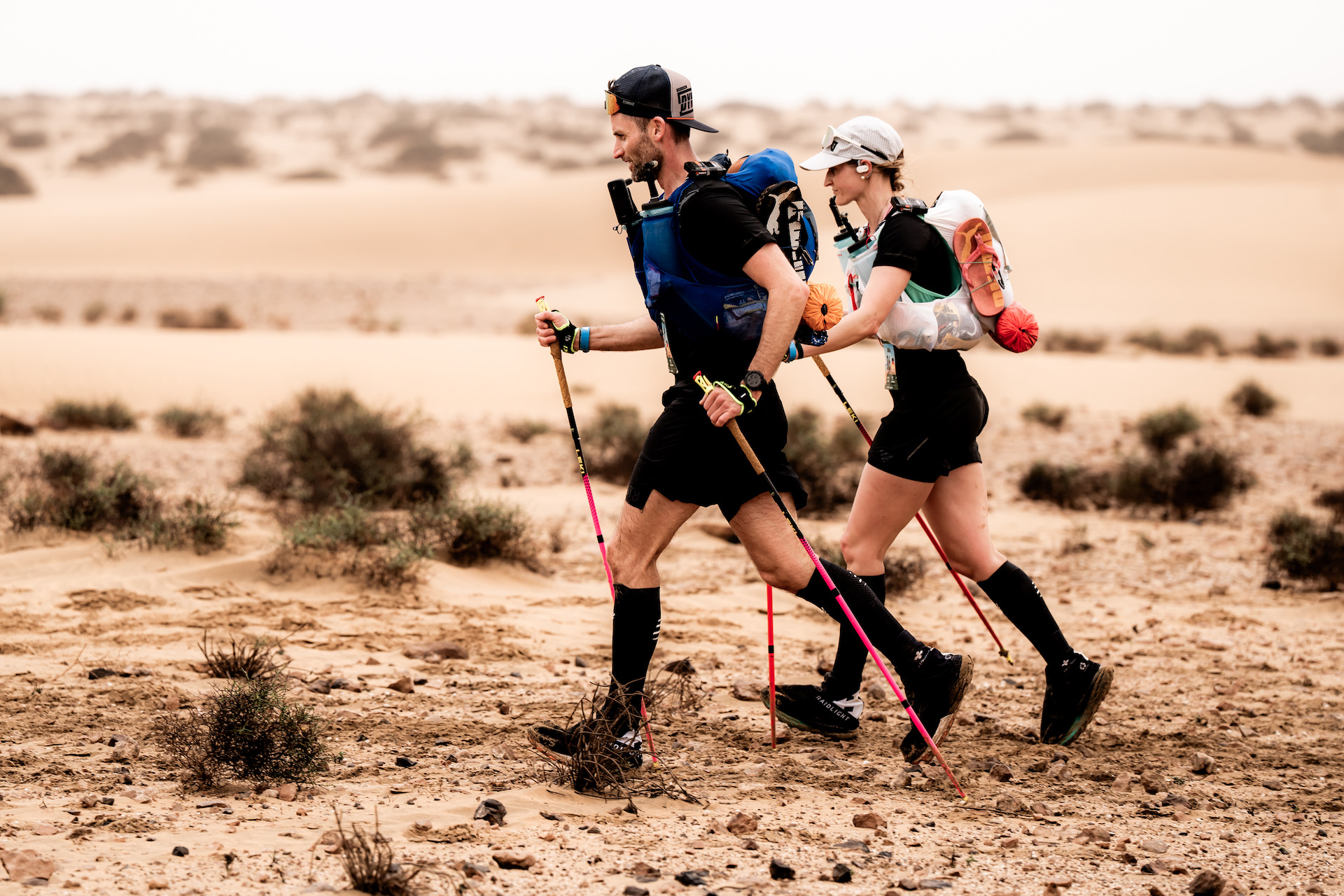
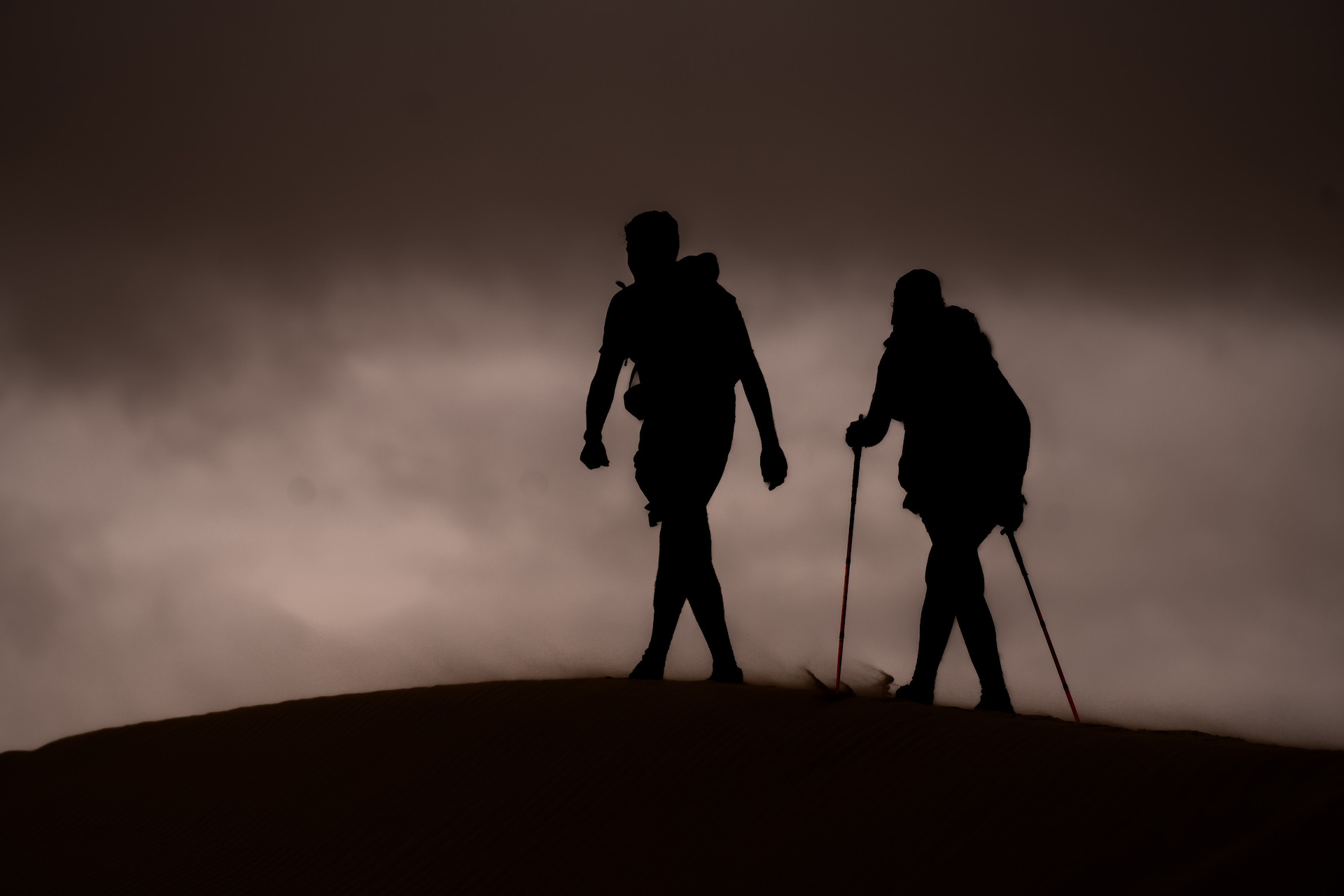
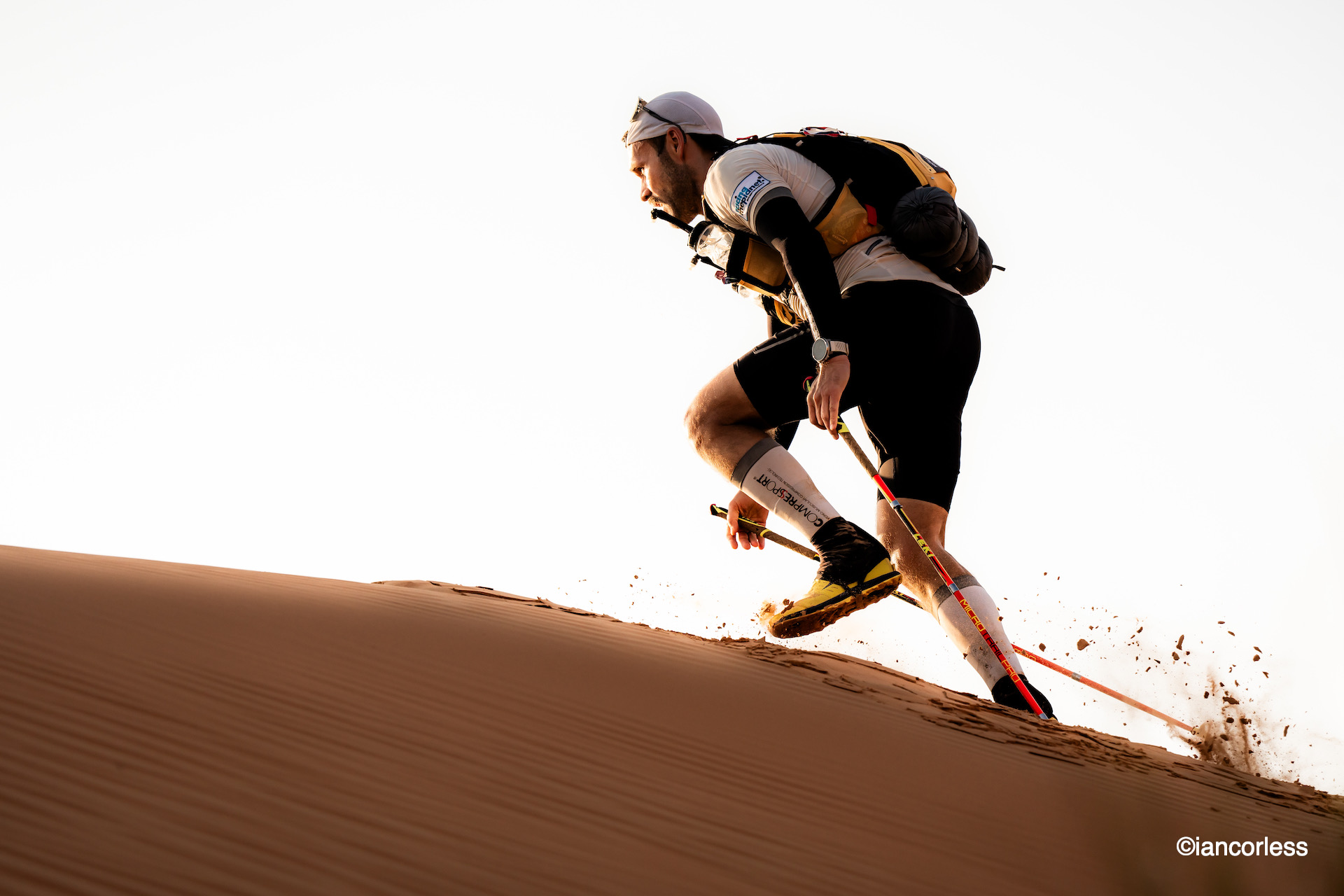
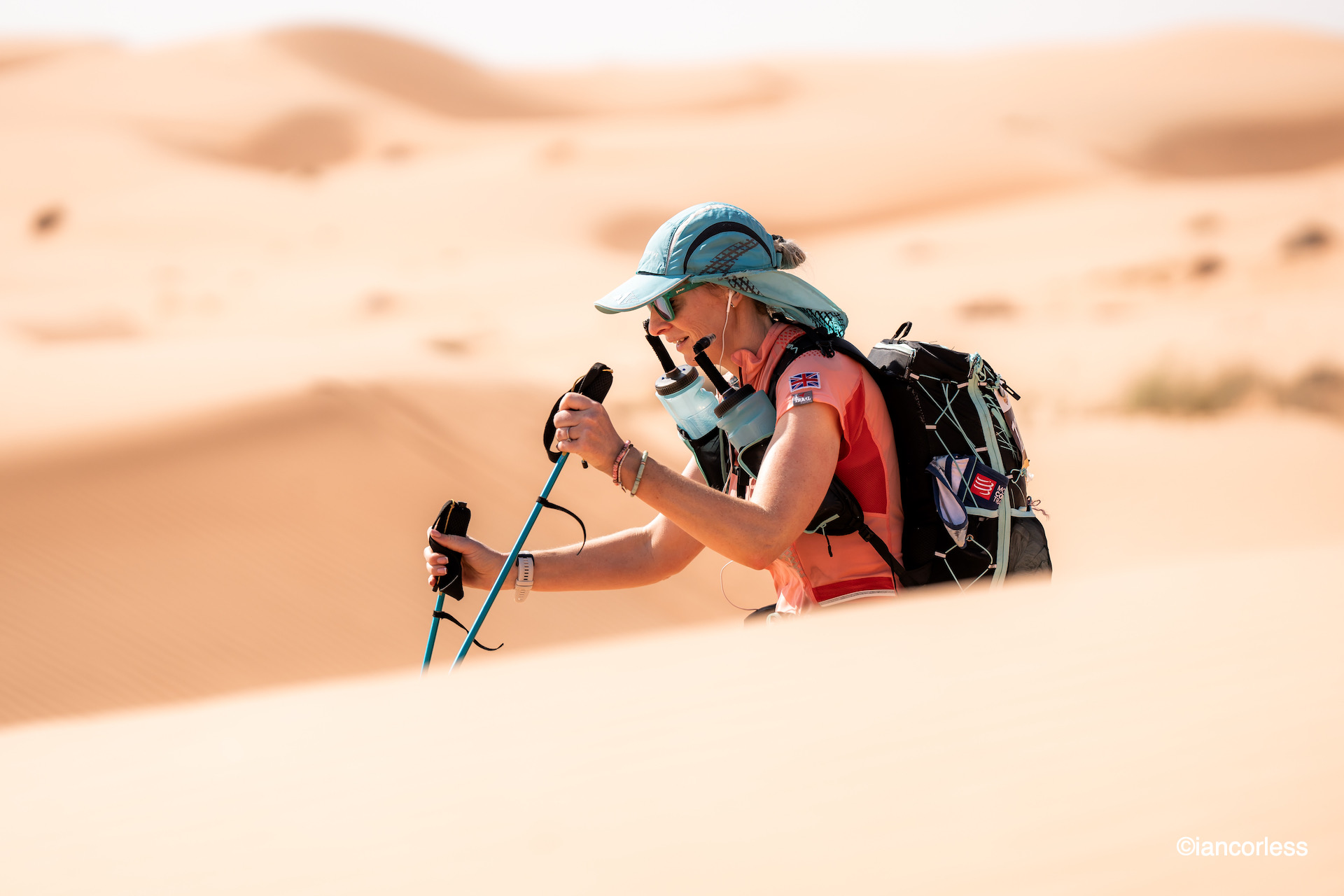
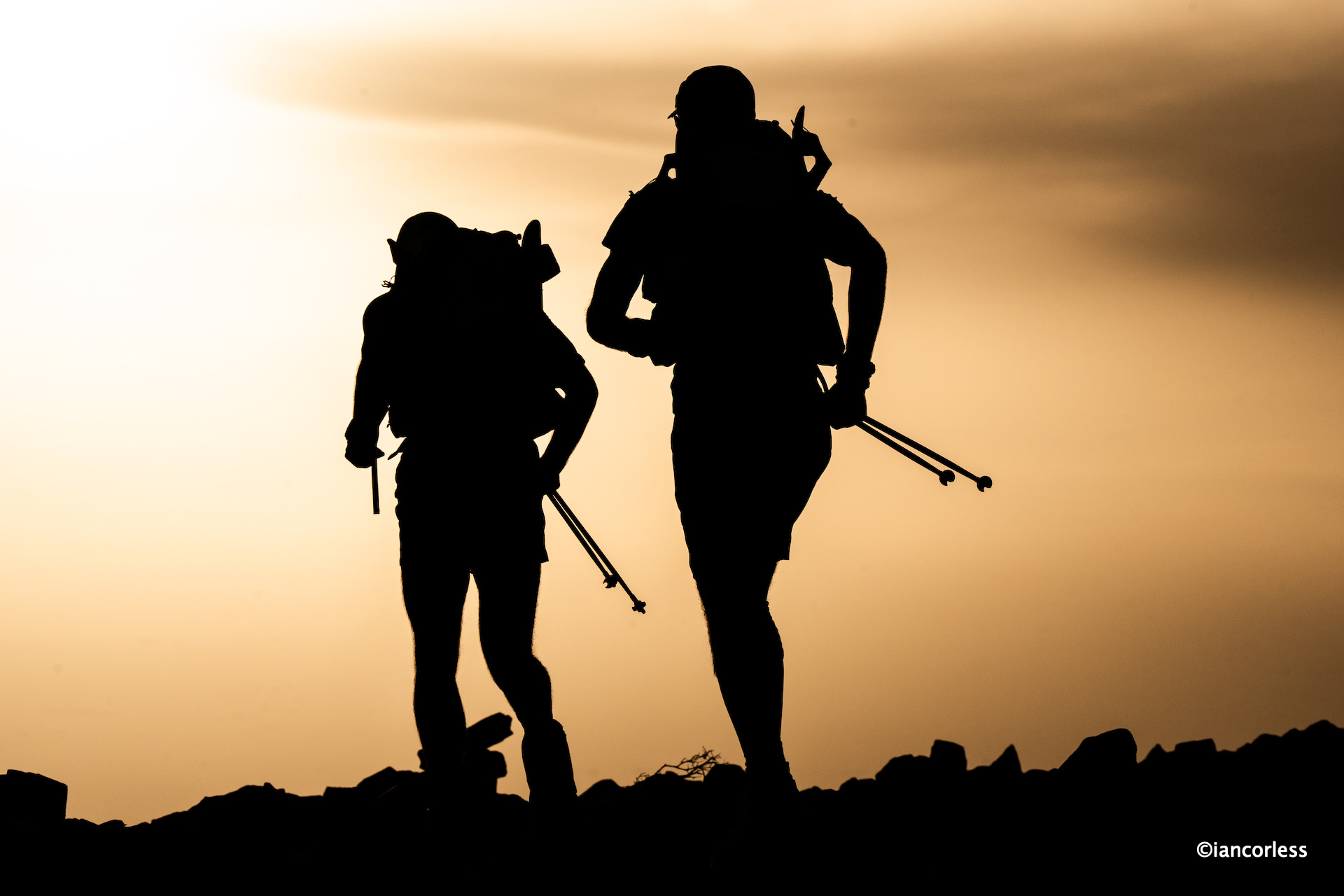
  • Poles – For many, poles are a huge advantage. They are like 4-wheel drive and without doubt, they make you walk faster. But you must train with them and learn how to use them. Get lightweight carbon ones that fold, Black Diamond and Leki are the best options.
  • Equipment – Keep it to a minimum. Luxuries are not needed unless they make the journey better. Make sure your pack is as close to 6.5kg as possible. Leave your phone at home or in your luggage. The only luxury I would take is a lightweight way to play music.
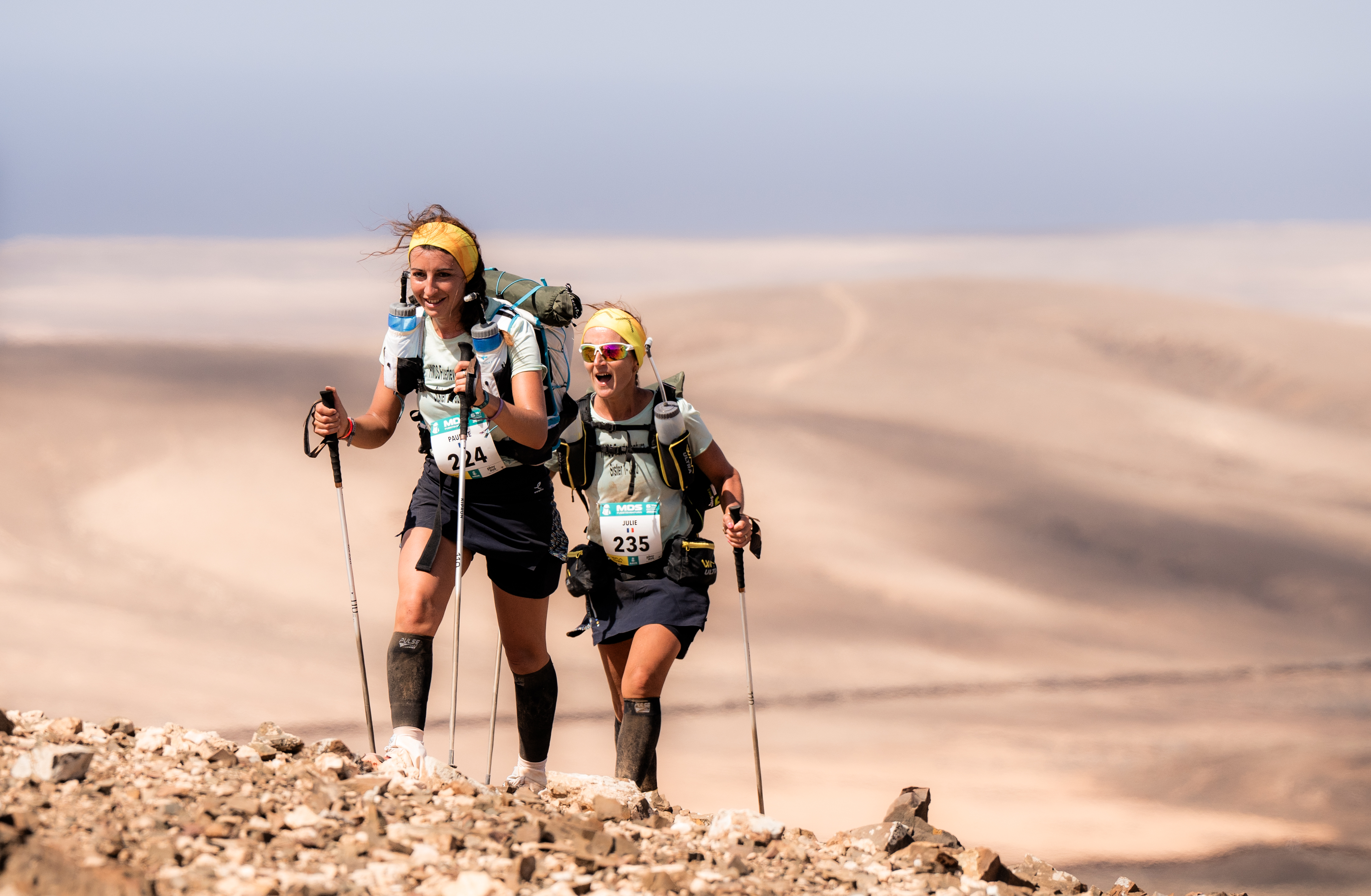
  • Friends – You will share a tent with 7 other souls. These are your brothers (and sisters) in arms and they will become friends for life. You will share the highs and lows. The desert bond is incredible. Find great tent mates and plan your group in advance of the race.
  • Admin and Preparation –

Take essentials on the plane and wear your run apparel and shoes. That way, should a baggage disaster happen your chances of racing improve.

Take food with you for the travel and on the plane. 

The journey from the airport to bivouac 1 can be lengthy be prepared with your own snacks and drinks. MDS do provide a packed lunch.

Night 1 and night 2 in bivouac are NOT self-sufficient so take extras such as an inflatable bed, food and luxuries that you are happy to give away to the berbers. May as well have 2 comfortable nights and a comfortable day before the racing starts.

Food before the race starts is now down to you. Be prepared to have plenty of variety and remember, within reason, this can be anything! 

Admin day can be  lengthy multi-hour experience. Take water and snacks for when standing in line and maybe take an umbrella so you have shade.

Keep sun screen on and keep hydrated. No need to drink vast volumes – drink to thirst before the racing starts.

Make sure you have a repair kit for during the race. Accidents happen, equipment fails and the desert can be harsh.
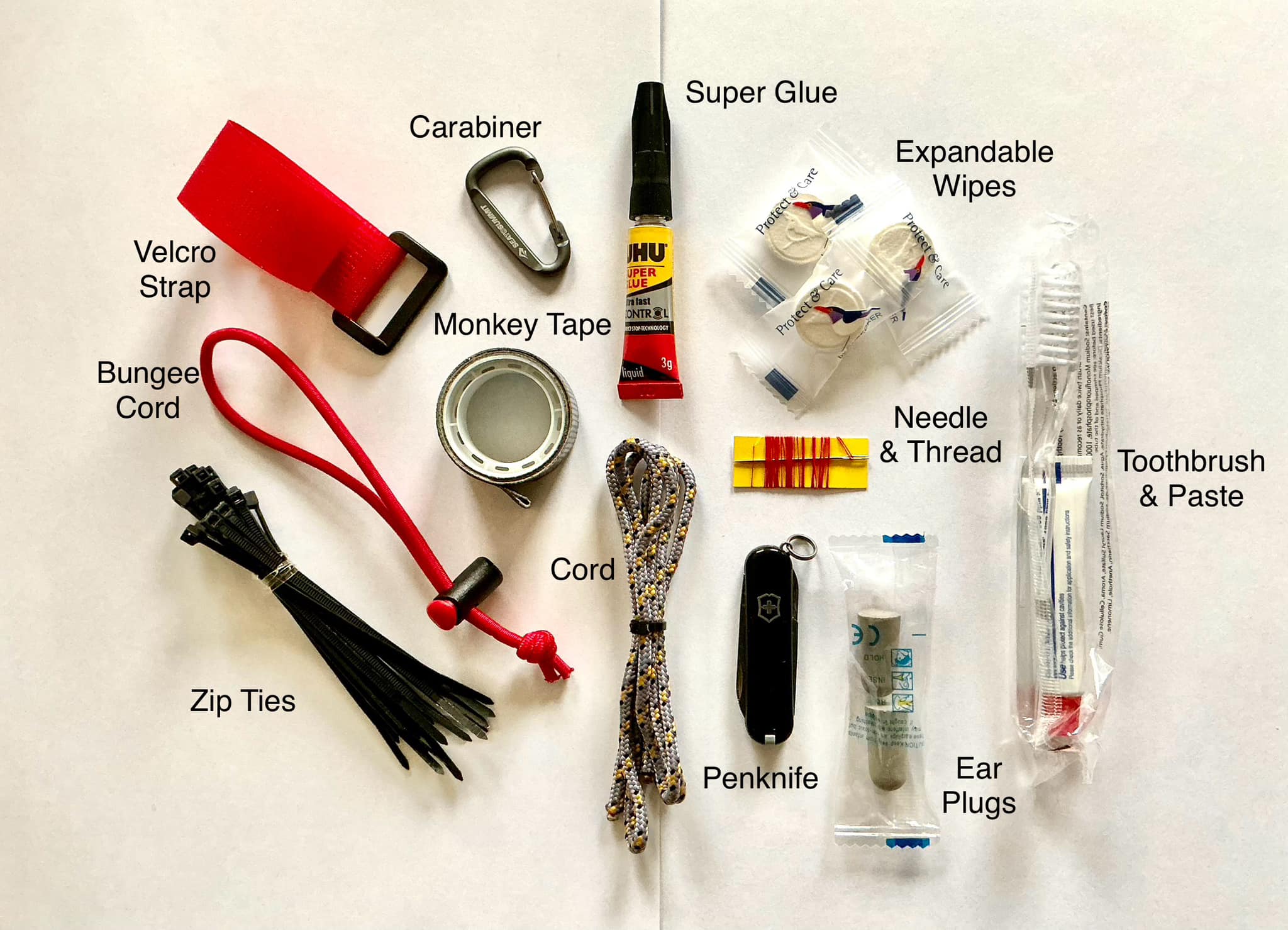
Make sure you have a repair kit, the above is just 94g

Have additional items such as a base layer, sleeping bag liner and other items that may be on a ‘question’ list for the race. On night 1 and before you go to admin, you can make final decisions of what to and what not to take. Particularly important if you think you may be cold at night.

Remember that after bag drop and check-in you have no access to any additional items, however, you only become completely self-sufficient when you start the race. With that in mind, you can have additional food and luxuries with you until day 1 kick-off, it’s a useful tip and does mean that you can have additional comfort for a good 12-hours.

Conclusions:

Marathon des Sables is a magical and life changing journey as are most if not all multi-day races. It really is a true challenge of mind and body to race over many days, irrespective if you complete the race in just over 20-hours or 60+ hours. It’s a hark back to a more primitive time, a time without clutter and modern technology. Embrace this. Embrace the silence of the surroundings and the simplicity of placing one foot in front of the other.
Interested in another MDS event in 2025?

A full calendar of dates and destinations are available HERE

Instagram – @iancorlessphotography

Twitter – @talkultra

facebook.com/iancorlessphotography

Web – www.iancorless.com
Web – www.iancorlessphotography.com

MDS Morocco Atlantic Coast 2025 – Race Summary

Photo by Ian Corless

There is always something special about a first edition race. Despite all the planning, despite tight schedules, despite ticking all the boxes, there is always an element of the unknown, a curve ball nobody expected or predicted flying in and causing a problem. Gladly, no curve ball arrived on the Atlantic Coast, on the contrary, the first edition of MDS Morocco Atlantic Coast was a huge success and without hiccup.

Morocco is obviously not a new destination for MDS, Legendary is in its 39th year and MDS Morocco, MDS Morocco Trek and Handi MDS have all happened previously, so, a new event in Morocco feels comfortable.

Close to Agadir, the MDS Morocco Atlantic Coast brings something new to MDS events in Morocco and obviously brings something special to the MDS line up.

Photo by Ian Corless

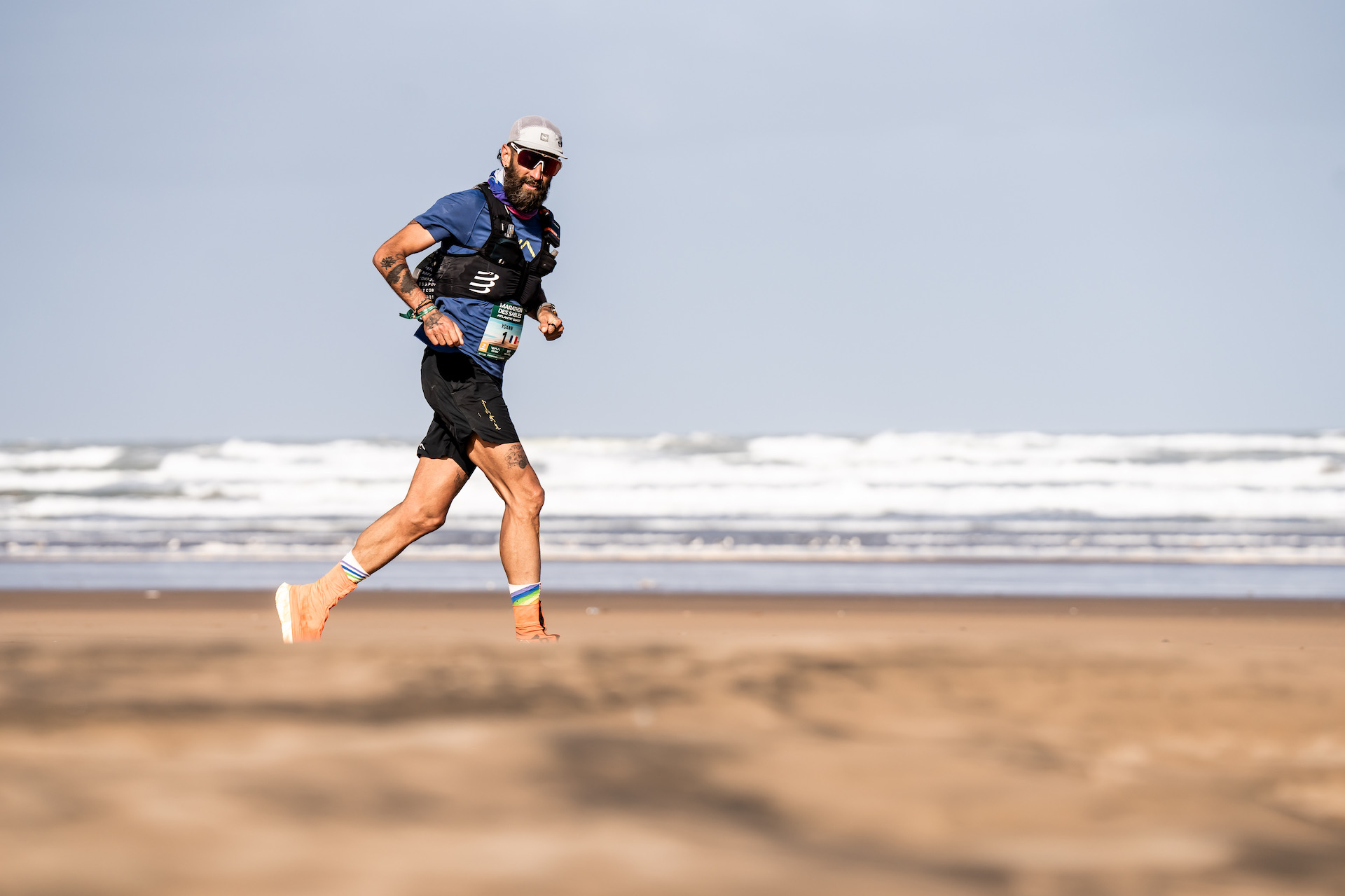
Like Fuerteventura and Peru, the ocean provides a backdrop to the race and this alone is unique. The juxtaposition of desert, dunes, beach and the roar of waves and the blue ocean make for a special environment for a race to take place.

LOGISTICS

As with all MDS events, the race is 3-stages taking place over 4-days with 3 distance options, 70km, 100km and 120km. Stage 1 and Stage 3 is the same for all participants and stage 2 is the one where a choice must be made, typically 20km, 40km or 60km. It’s a great format that makes MDS appealing for all ages and all abilities.

With 170 participants and 27 nationalities, the MDS Morocco Atlantic Coast was a great first edition. Notably, once again, female participation was around 50%. MDS are without doubt pioneering the way for female participation in their races and this must be applauded and encouraged.

Photo by Ian Corless

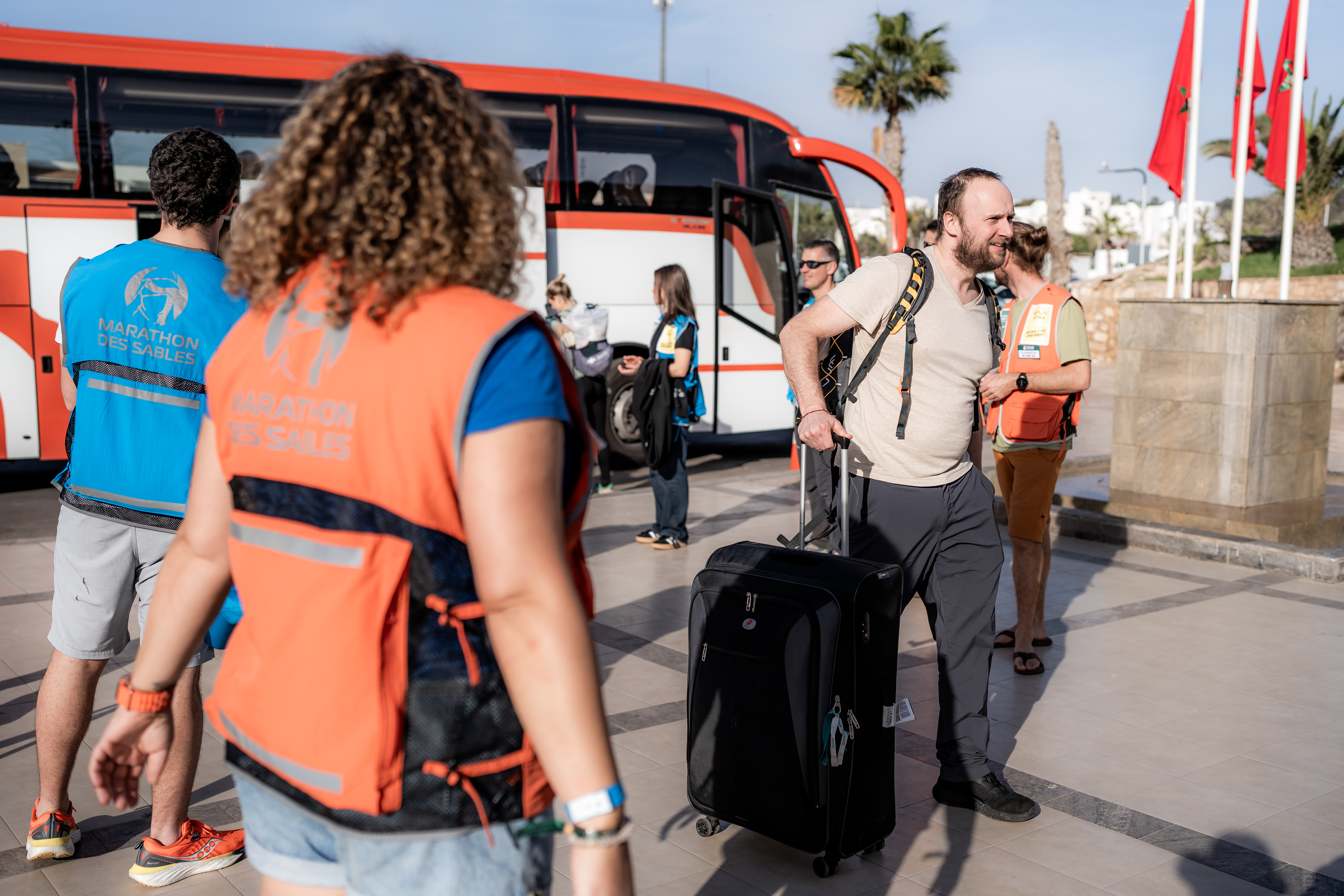
Travel to Morocco is easy and transfers were provided by MDS from Marrakech (appx 6-hours) or from Agadir, with just a 40-minute transfer to the race hotel, needless to say, most people flew to Agadir.

Photo by Ian Corless

A Saturday arrival and a Saturday departure, the race format had 2 nights in the hotel, 4-days and 3-nights in the desert and then a return to the hotel for 2-nights before onward travel.

The format provides an excellent opportunity to mix holiday and relaxation with sport.

THE EVENT

Saturday arrival was relaxed and with no commitments for the participants.

Photo by Ian Corless

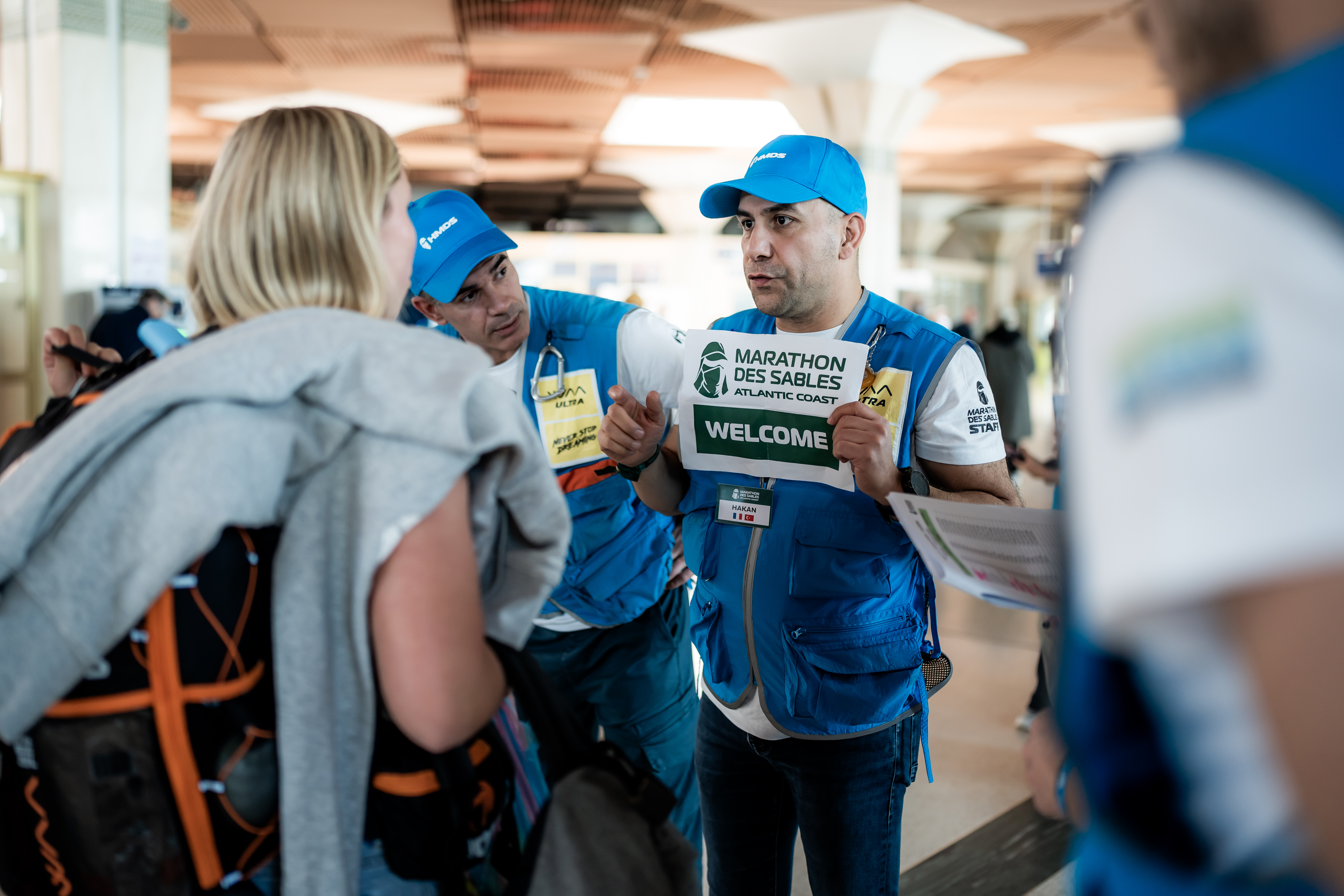
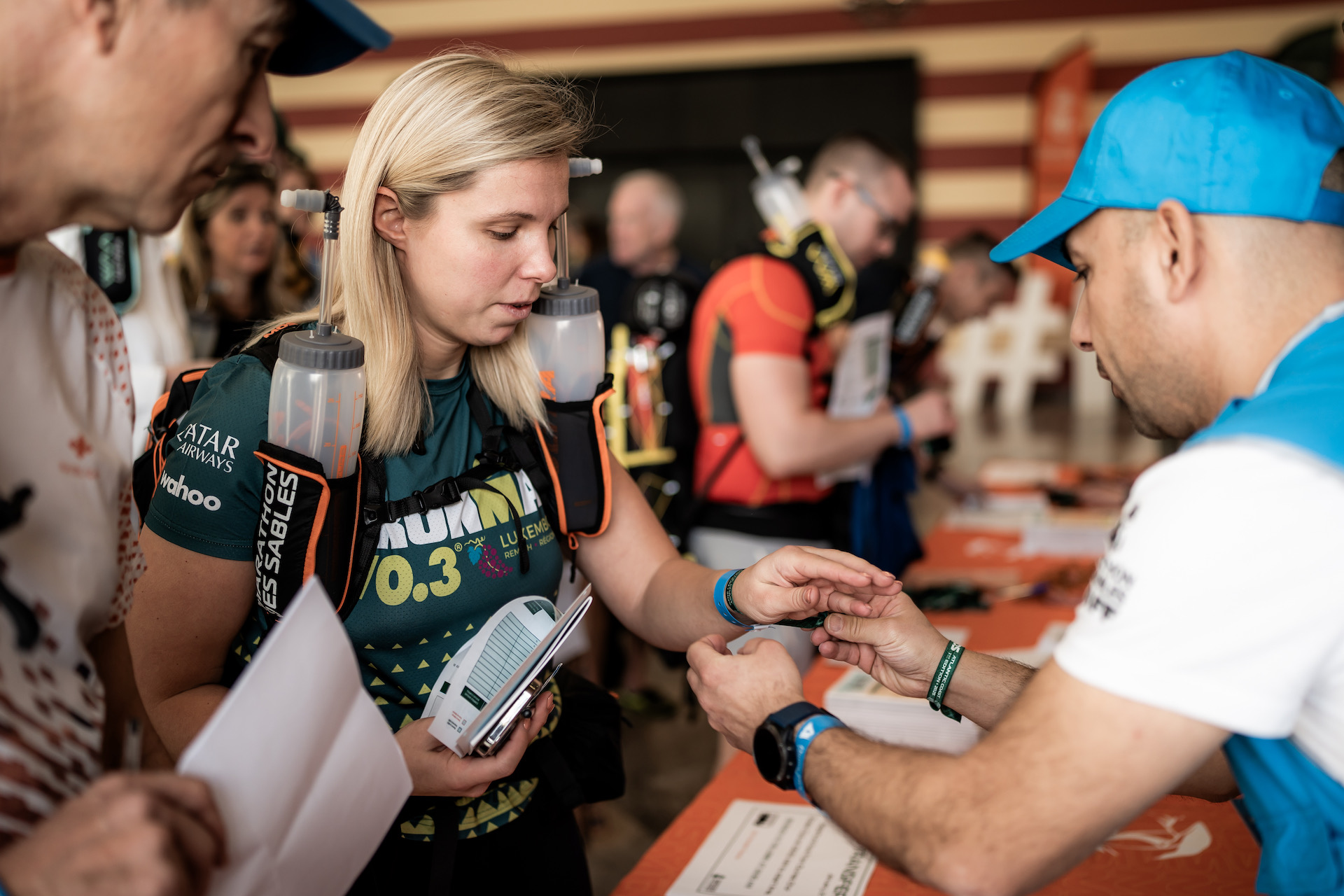
Sunday mornning and the MDS admin protocols were in place between 0900 and 1200, this is a requirement for eah participant – equipment is checked, medical certificates are checked, GPX trackers are added to packs and race numbers are provided. The whole thing is efficient, seamless and fast.

The afternoon provided an opportunity for relaxation or sight seeing and then an early dinner and bed.

Departure time for day 1 was 0300 for a 5-hour journey to the desert. On arrival, the plan, as always, was to get the runner’s underway as soon as possible.

Highway to Hell finished and the participants departed under cloudy skies at approximately 0930.

Photo by Ian Corless

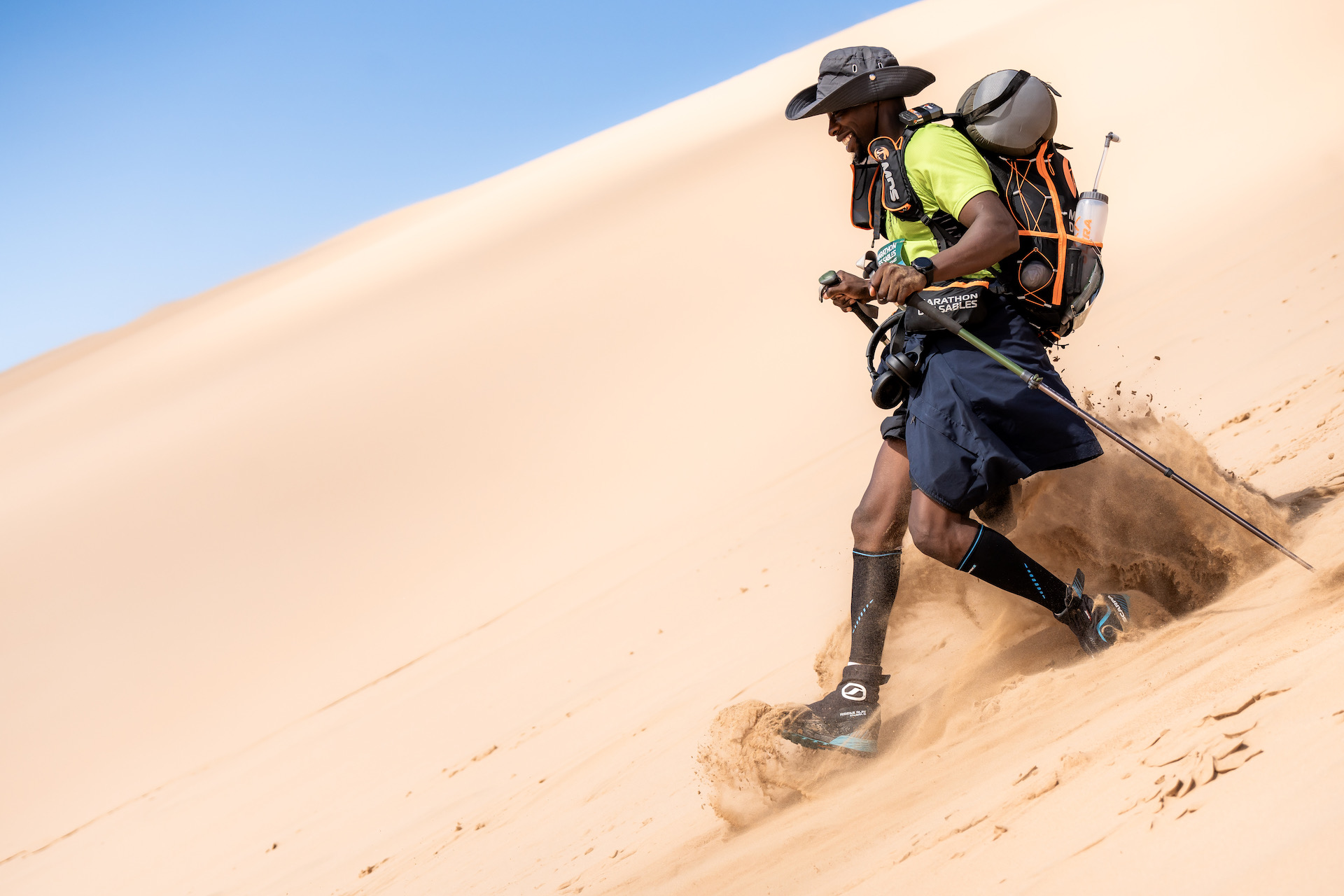
Day 1, stage 1 at 24km’s headed from an inland location and basically headed directly to the coast. The terrain was mixed, with some easy running to start the day, of course, sand featured heavily with a dune section coming just after CP1 and a final dune section concluding the race just before the finish. Temperatures reached a high of 25-degrees and it was a great first day. Bivouac awaited the runner’s and a first night in sleeping bags with self-sufficiency started. The wind blew and the temperatures dropped, a chilly night was expected. Stage summary HERE

Photo by Ian Corless

Day 2, stage 2, intermittent rain and wind blew in off the ocean and there was a sense of dread at what this day would bring, especially for those participants who would take on the 40 or 60km distances. A challenging start and just a few hours later the weather started to clear and finally, skies cleared and the sun came to make for a beautiful day, highs reached 28-degrees. The course offered an obvious challenge mixing the best of Moroccan terrain with tsome stunning dune sections. The latter km’s running parallel to the ocean to give an epic backdrop. The race wnt into the night with the final finisher arriving just after midnight. Stage summary HERE

Photo by Ian Corless

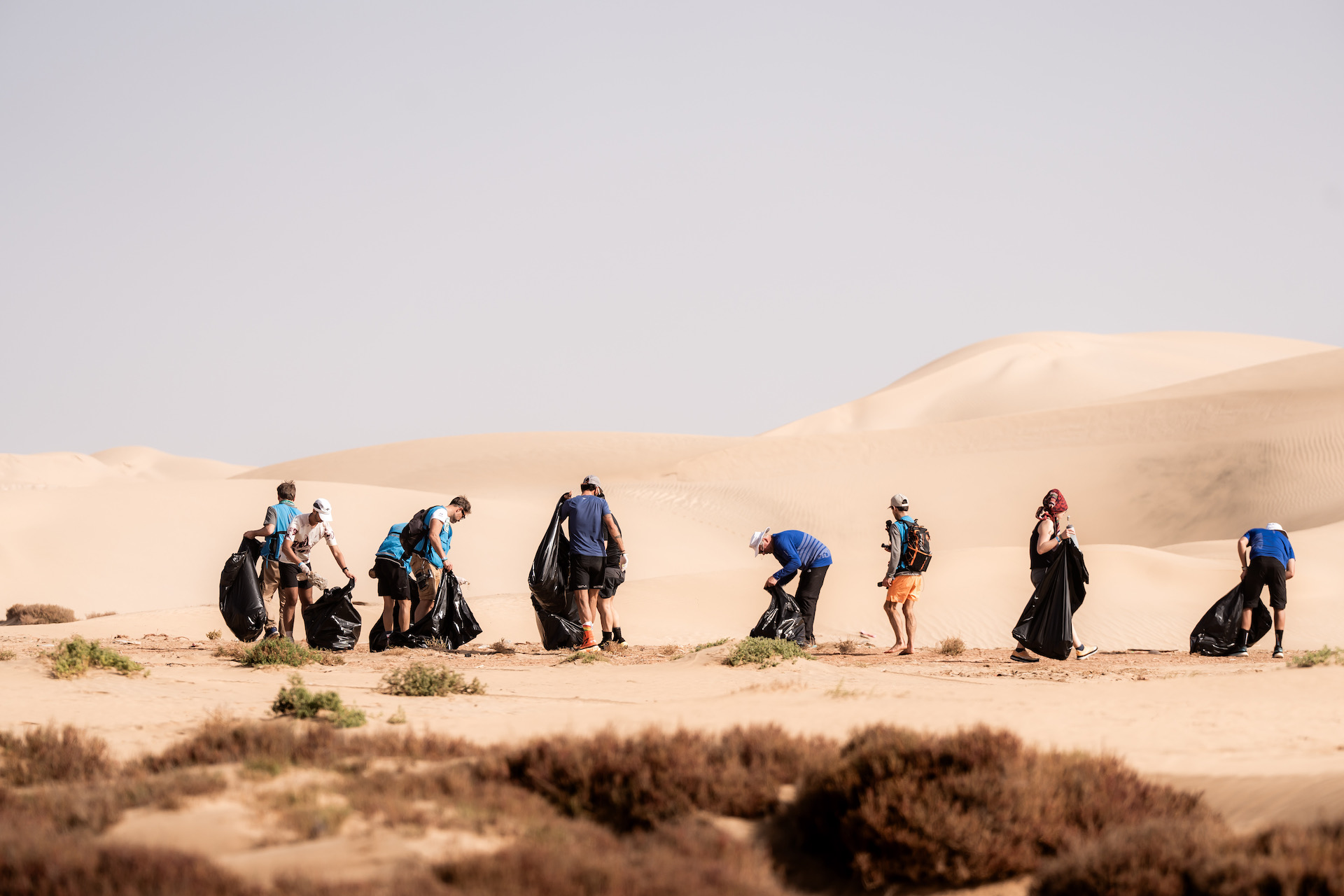
Day 3 was a welcome rest day. The skies were blue, the wind gentle and the warmth of the sun relaxing. It was a leisurely and relaxed start to the day. At 1130, blue and orange coats with participants walked to the beach and on the way cleared away rubbish and notably huge amounts of plastic. We race in these magical places and sadly, littering and pollution is high. The ocean obviously washing in debris daily. It was a huge campaign and yes, we may have only provided a small dent in what is a very big problem, however, it felt good and the difference afterwards was noticeable. The remainder of the day was releaxed, as per usual, mid-afternoon, a cold and refreshing drink was provided and as darkness came, most were already in sleeping bags gaining valuable rest before the final day.

Photo by Ian Corless

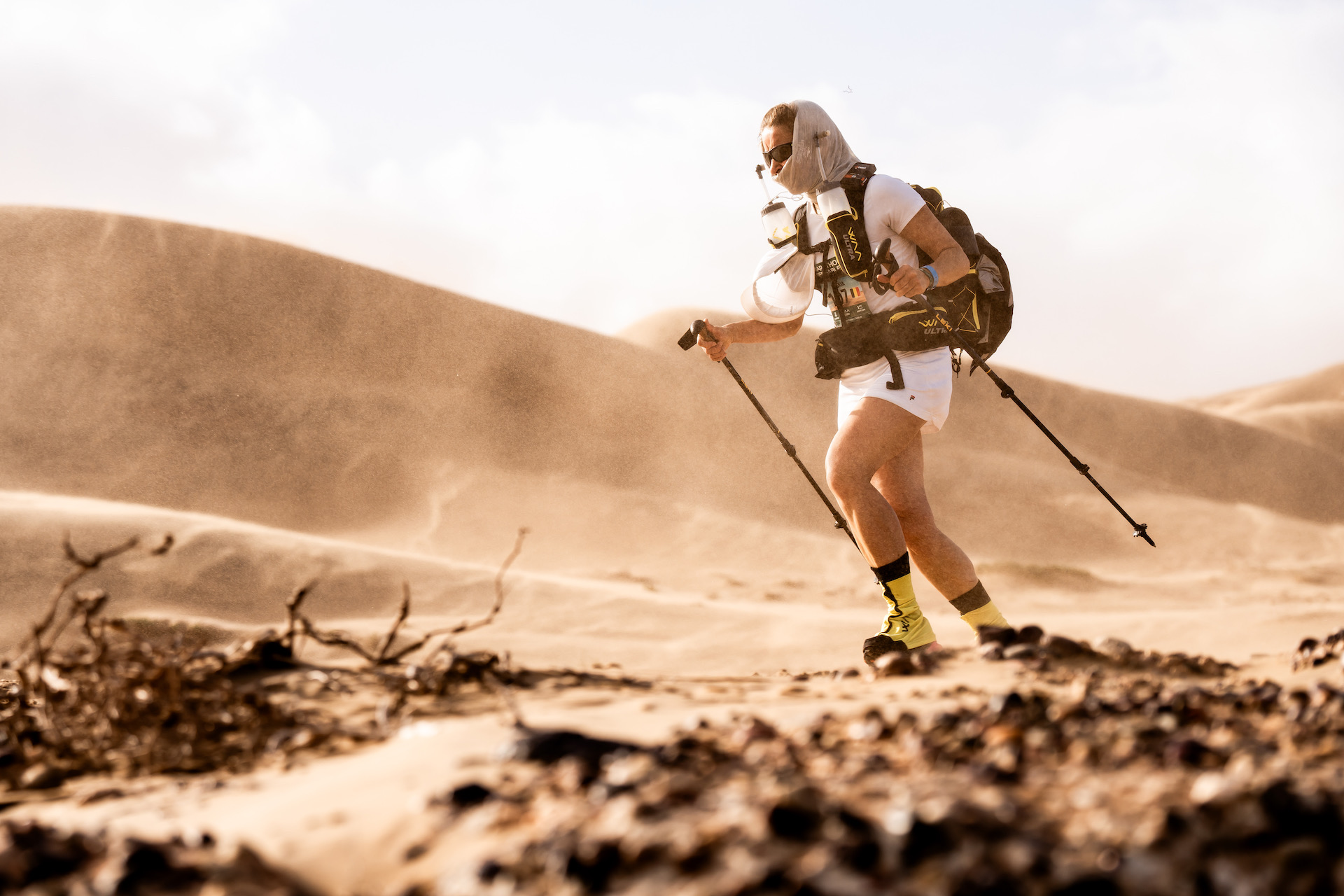
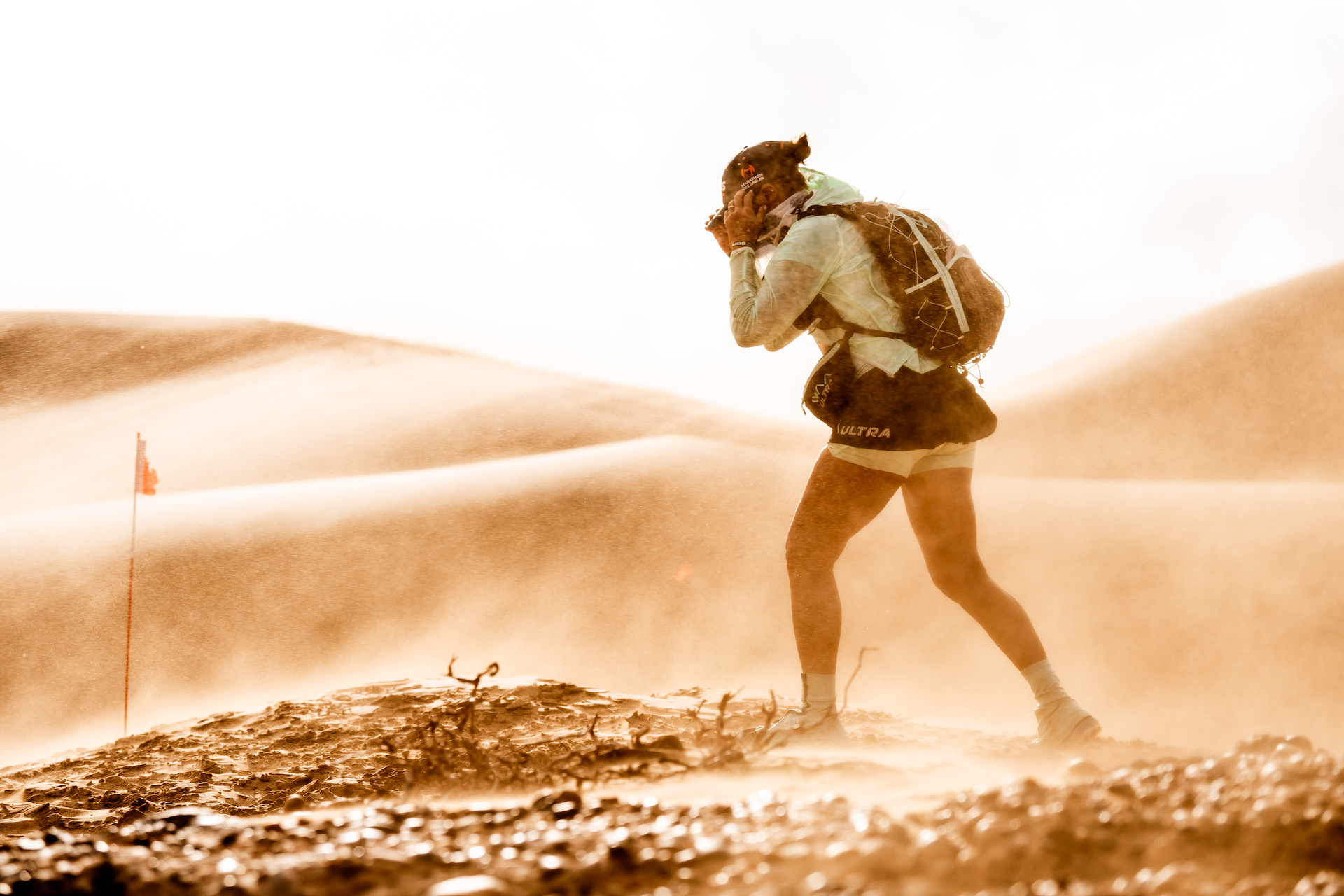
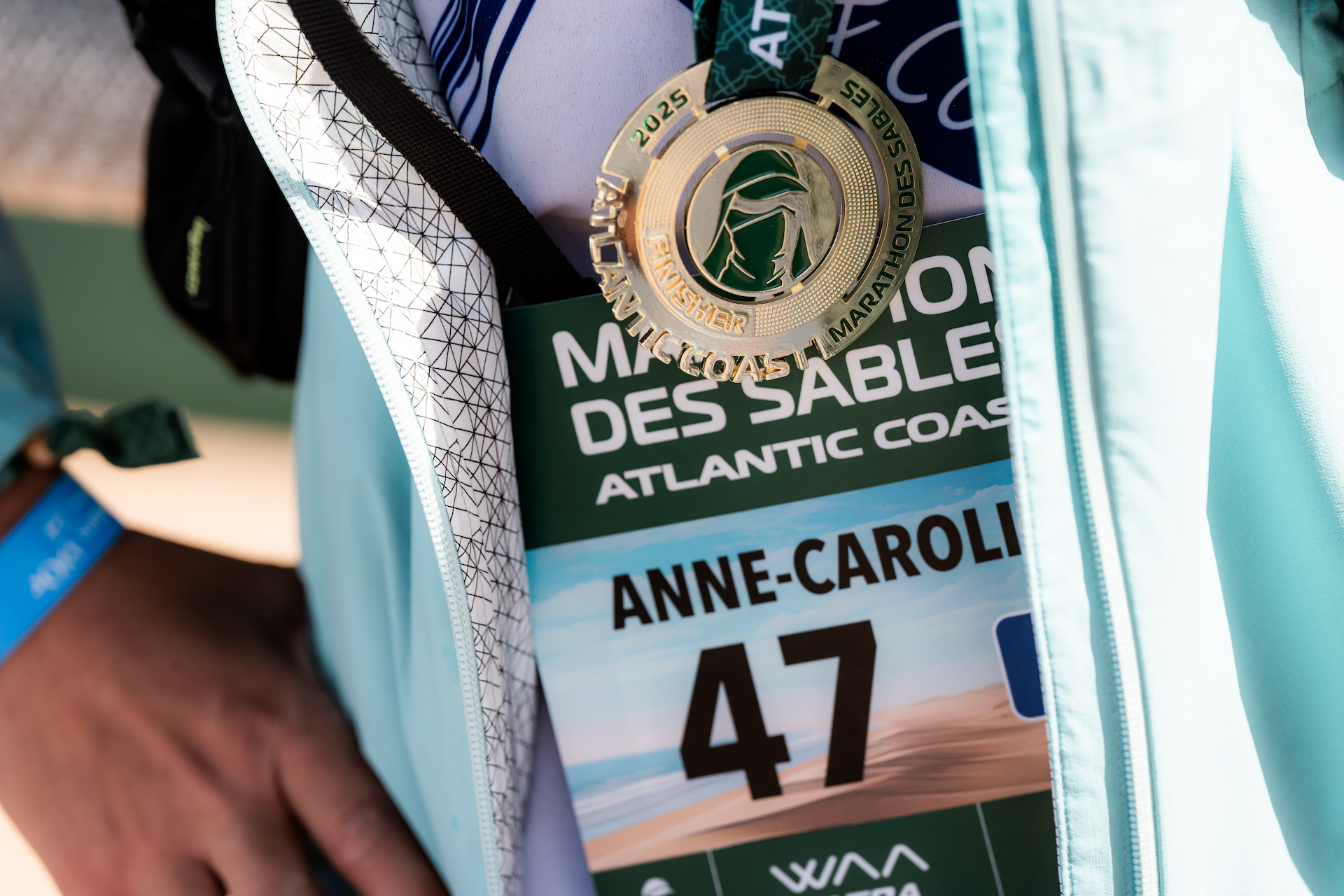
Day 4, stage 3 and what a start to the day, the wind was howling from the north bringing with it, at times, torrential rain. Runner’s were ready for the challenge though, with 2 starts, 0800 and 0930 for the top-25, the day got underway and gladly, by 0830 the rain stopped. However, the wind did not. The wind blew and blew, providing a constant headwind and relentless sand storms for the whole 27km’s. It was an epic and special day. Yes, it was hard but boy was it memorable. The joy, the emotion and the tears at the finish made the medal only more special. From the finish line, buses were waiting and as each was filled, they then departed back to Agadir for hotel comforts – shower, buffet dinner and a night in a bed with sheets and comfort. Stage summary HERE

Photo by Ian Corless

The following day was one of relaxation. Dinner was served at 1900 and then followed at 2000 hrs with a closing ceremony, awards and the showing of the MDS Morocco Atlantic Coast movie. The atmosphere was electric, the feedback incredible, the emotion high, it was a very memorable ceremony that only confirmed the success of the event. An outdoor DJ and dancing concluded the night and brought to a close this first edition.

Saturday and onward journies home.

NOTES AND CONSIDERATIONS

Photo by Ian Corless

MDS events are meant to challenge you both physically and mentally, some challenge more than others. MDS Morocco Atlantic Coast certainly falls in the latter category with challenging weather and varying temperatures. Having experienced 20 MDS events all over the world, my top-tip is ‘be prepared!’ Deserts are not always hot, they are not always dry and they are not always calm. Have with you a waterproof/ windproof layer, have with you a warm layer (lightweight down or primaloft jacket) and make sure you have eye protection. Trust me, those who did not have sunglasses or goggles for stage 3 suffered badly trying to move forward in a headwind for 27km’s.

Photo by Ian Corless

Be prepared with a variety of food choices and undesrtstand that what tastes good at home, may not taste good the desert. A balance of sweet and savoury s good and take note, as days pass, the demand for sweet becomes less.

Photo by Ian Corless

Prepare the mind for the challenge. Understand the WHY you are doing the event and be prepared for anything. The body is an amazing thing that could do incredible things, however, it needs to work in harmony and synergy with the mind to achieve your goals.

CONCLUSION

Photo by Ian Corless

MDS Morocco Atlantic Coast was a huge success. We were all tested by the weather but this only made the event more special and memorable. The MDS event team have called it the Viavaldi race as we had all four seasons. The Atlantic Coast brings something special to Morocco and in contrast to Legendary, MDS Morocco and MDS Trek, the terrain is different, unique and of course, the ocean as a backdrop is special. No doubt, this event will grow to become an MDS favourite. January is great timing, what a great way to start a year and globally, few races take place so early in the year making this an easy option for those looking for something special post Christmas.

Full race results HERE

Interested in an MDS event in 2025? A full calendar of dates and destinations are available HERE

Instagram – @iancorlessphotography

Twitter – @talkultra

facebook.com/iancorlessphotography

Web – www.iancorless.com
Web – www.iancorlessphotography.com

MDS Morocco Atlantic Coast 2025 – Stage 2

Photo by Ian Corless

Stage 2 of MDS Morocco Atlantic Coast and the option to choose the stage distance: 20km, 40km or 60km?

Photo by Ian Corless

One of the appealing factors of the MDS format is the stage 2 distance option, with stage 1 and 3 the same for all, the stage 2 option allows for an overall distance of 70km, 100km or 120km.

Photo by Ian Corless

The day started under heavy cloud and winds coming from the north . At 0845 as participants arrived for the start, rain started to fall. It was an ominous beginning for the day and the weather remained challenging with rain increasing in strength during the morning.

Photo by Ian Corless

Gladly, by midday, blue skies and sun started to appear, however, the wind increased in strength and continued to do so into the night.

Photo by Ian Corless

With epic landscape, stunning dunes, there was much to appreciate in this stage and despite the weather, runner’s were constantly smiling.

Photo by Ian Corless

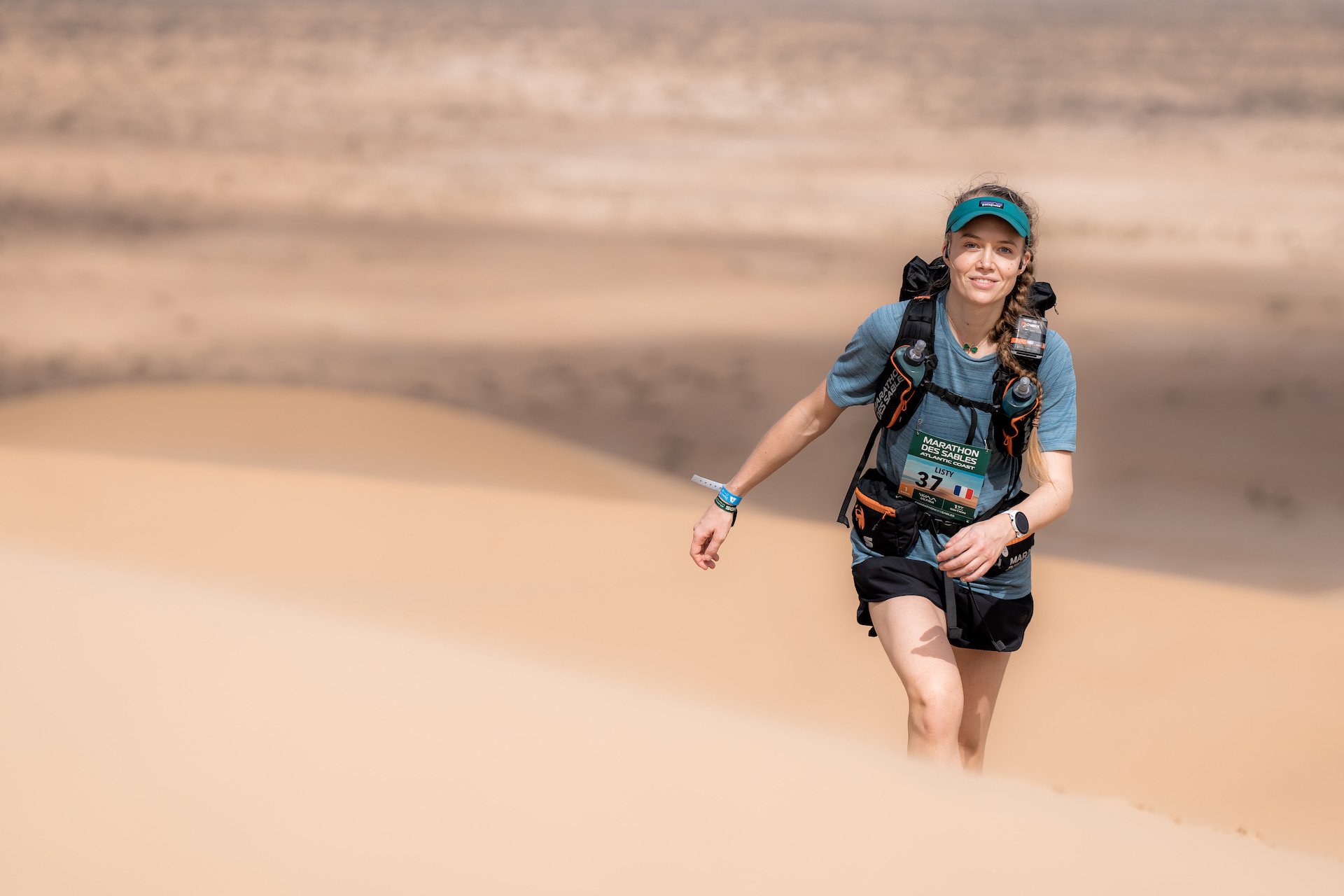
With three distances, rankings change after stage 2, often considerably, for example, Listy Mazille, a clear winner on stage 1 is now the leader of the 1ookm and we have a new leader in the 120km category now.

In the 120km, ranking is as follows:

RACE LEADERS 1 – Yoann STUCK 2 – Göran SCHREY 3 – Stephan BAWEY

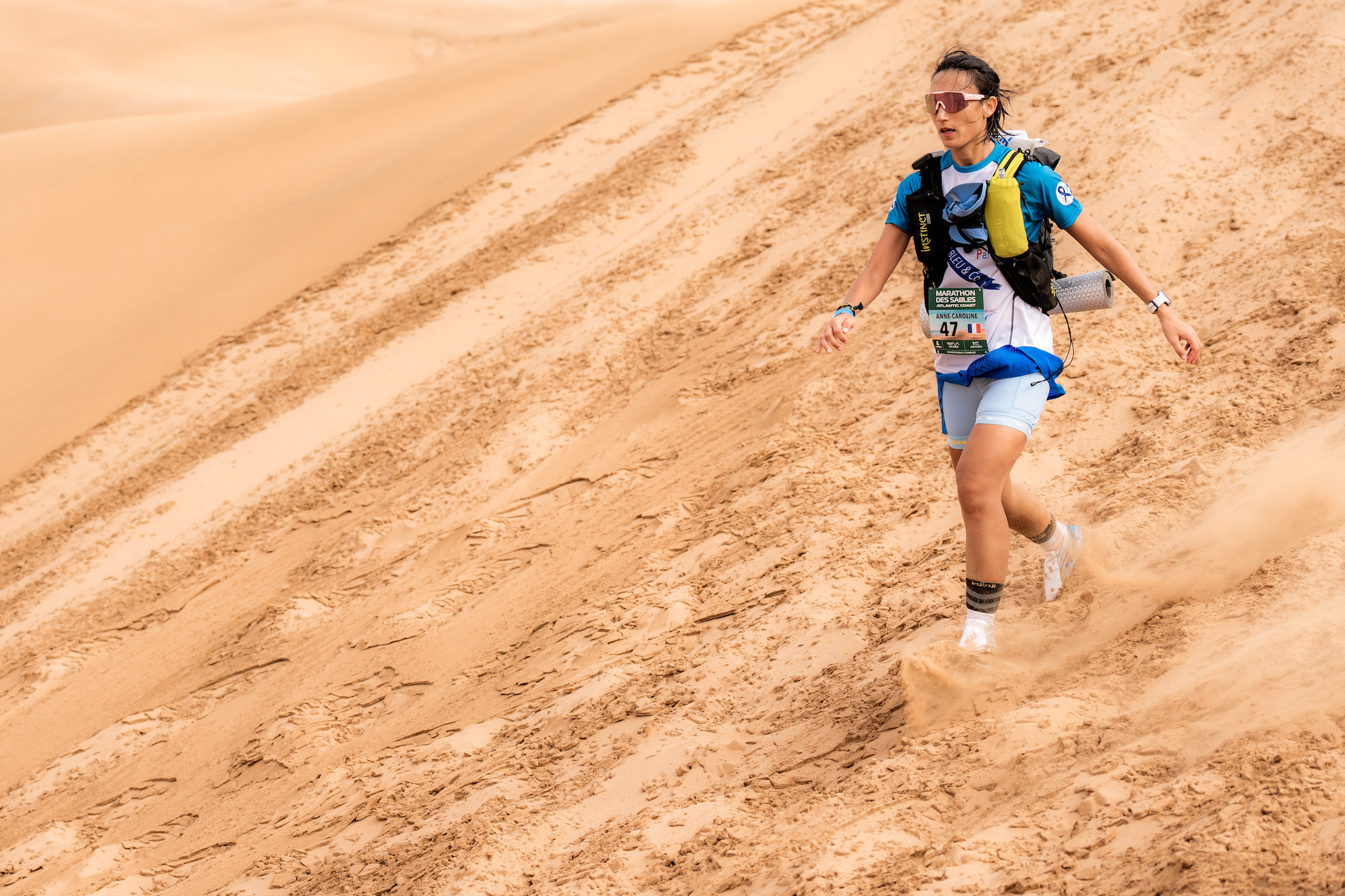
WOMEN RACE LEADERS 1 – Anne-Caroline KUSNIERZ 2 – Janina BECK 3 – Adele THOMAS

In the 100km, ranking is as follows:

RACE LEADERS 1 – Listy MAZILLE 2 – Benoit BERCHEBRU 3 – Adrien LHERMITTE

WOMEN RACE LEADERS 1 – Listy MAZILLE 2 – Tiphaine SANQUER 3 – Joana TEIXEIRA

In the 70km, ranking is as follows:

RACE LEADERS 1 – Christian HARTEL 2 – Justine DEBOTÉ 3 – Cyril MALEJAC

WOMEN RACE LEADERS 1 – Justine DEBOTÉ 2 – Vanessa CUADRADO 3 – Audrey SCOTTO

The stage, for many, goes into the night. The last runner will arrive late, maybe early the next day.

Tomorrow, a rest day of relaxation and recovery before the third and final stage.

Photo by Ian Corless

Full race results HERE

Interested in joining an MDS event in 2025? A full calendar of dates and destinations are available HERE

Photo by Ian Corless

Instagram – @iancorlessphotography

Twitter – @talkultra

facebook.com/iancorlessphotography

Web – www.iancorless.com
Web – www.iancorlessphotography.com

Oman Desert Marathon 165km 2025 – Stage 3

Photo by Ian Corless

These Omani nights are cold. Dare I say that last night was colder than the night before? It’s tough for the runner’s, especially those that are minimum with kit, particularly lightweight sleeping bag and no down jacket.

Stage 3 at 40km is the second longest of the week and arguably the toughest, compensated for with incredible beauty.

Saleh – Photo by Ian Corless

The Oman Desert Marathon is very much a sand race. Every step is on varying decrees of soft-sand and stage 3 adds the spice of a rollercoaster of dunes. There is even a dune section to the finish line.

Lots of sand – Photo by Ian Corless

Starting just after sunrise, the early morning light and views in the first and second dune sections were spectacular. Up high, you really get to see the enormity and expanse of the sand here in Oman, it is relentless.

A tough day – Photo by Ian Corless

Early km’s of the day saw many wearing a windbreaker, trying to get warm after a cold night and chilly start. The heat soon came though and it would keep rising to a high of 27-degrees.

Rachid feeling the chill – Photo by Ian Corless

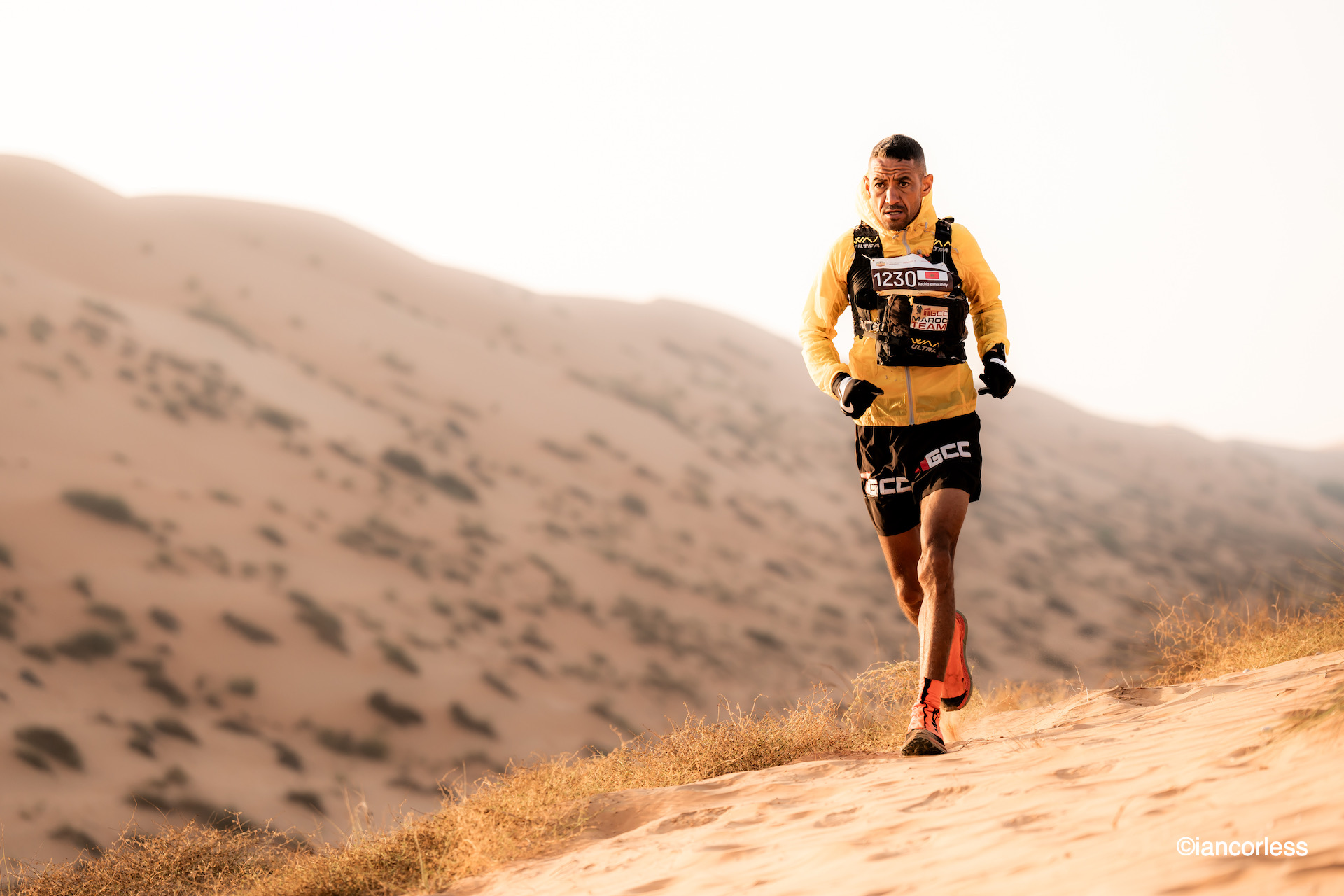
The top male contenders ran much of the day together, nobody seemed particularly eager to push the pace. Rachid took it very easy wearing a windbreaker and gloves for the whole day, he was a long way back early on and then little by little he moved up the field as the race progressed.

Mohamed playing a waiting game – Photo by Ian Corless

Mohamed and Saleh are inform and the duo finished first and second on the stage just 11-seconds apart, 4:14:39 and 4:14:50 respectively. Rachid moved up to third by the finish line crossing nearly 10-minutes behind his brother.

Aziza Raji – Photo by Ian Corless

For the women, Aziza finished 11th overall in 5:52:44 and a long way ahead of Lydia Oldham in second, 6:30:49. Sally ford was third nearly 50-minutes behind second.

Sally Ford – Photo by Ian Corless

Stage 3 results HERE

Full results HERE

Tomorrow is the penultimate stage of 30km. With three starts, 1500hrs, 1600hrs and 1700hrs, the participants will go into the night and finish in darkness.

Ronan Kirby – Photo by Ian Corless

Oman Desert Marathon website HERE

Photo by Ian Corless

Instagram – @iancorlessphotography

Twitter – @talkultra

facebook.com/iancorlessphotography

Web – www.iancorless.com
Web – www.iancorlessphotography.com

MDS Jordan 2024 – Stage 2

Photo by Ian Corless

It was a cold night, the temperature plummeted when the sun disappeared and bivouac became a place of camp fires and groups of runner’s huddled together trying to keep warm.

Photo by Ian Corless

As always, MDS events are about planning and being prepared, the need for a jacket, and ideally a down jacket, was never more important. Those with sleeping bags that were too minimal, had a cold and shivering night.

A new day was welcomed and today two starts, 0700 for the masses and 0800 for the top-50.

Photo by Ian Corless

Stage 2 of MDS is special due to the three route option, 20km, 40km and 60km. The decision can actually be made on the course, the first option obviously 20km and then 40km. Pass the 40km turn and you are doing the 60km.

Photo by Ian Corless

The three route option is as much a mind game as a physical game. Given the option, do you choose to go easier or harder, it’s a tough question to answer for some, especially after a challenging stage 1 that gladly saw everyone finish.

Photo by Ian Corless

Due to the nature of the three distances, the true story of who leads each distance will come at the closing of the stage, so, check LiveTrail HERE for 120km, HERE for 100km and HERE for the 70km.

Photo by Ian Corless

Notably, Salameh Alaqra chose the 40km option today after picking up a slight injury on stage 1.

Photo by Ian Corless

The true star of stage 2 is the magical and unique landscape of Wadi Rum. It’s a very special place.

Photo by Ian Corless

Tomorrow, a rest day. An opportunity to relax and recover before the final stage 3.

Photo by Ian Corless

Marathon des Sables website HERE

Since 1986, the MARATHON DES SABLES has crossed the world’s most stunning deserts with several unique concepts: the MARATHON DES SABLES THE LEGENDARY (252 km in the Sahara Desert in Morocco), the MARATHON DES SABLES (70, 100, or 120 km spread over 3 stages), and the new 2024 concept, the MDS TREK (4 stages with a total distance of up to 120 km), offering an accessible adventure with optimal comfort. These international events have seen over 50 editions in various countries such as Morocco, Fuerteventura Island, Peru, Jordan, Turkey, and offer adventures that combine running/hiking in the desert with tourism.

Instagram – @iancorlessphotography

Twitter – @talkultra

facebook.com/iancorlessphotography

Web – www.iancorless.com
Web – www.iancorlessphotography.com

MDS Jordan 2024 – Stage 1

Photo by Ian Corless

Is Jordan the jewel in the MDS line-up of races? It is hard to pick any one location with so many stunning options, but, Jordan offers something very unique.

Photo by Ian Corless

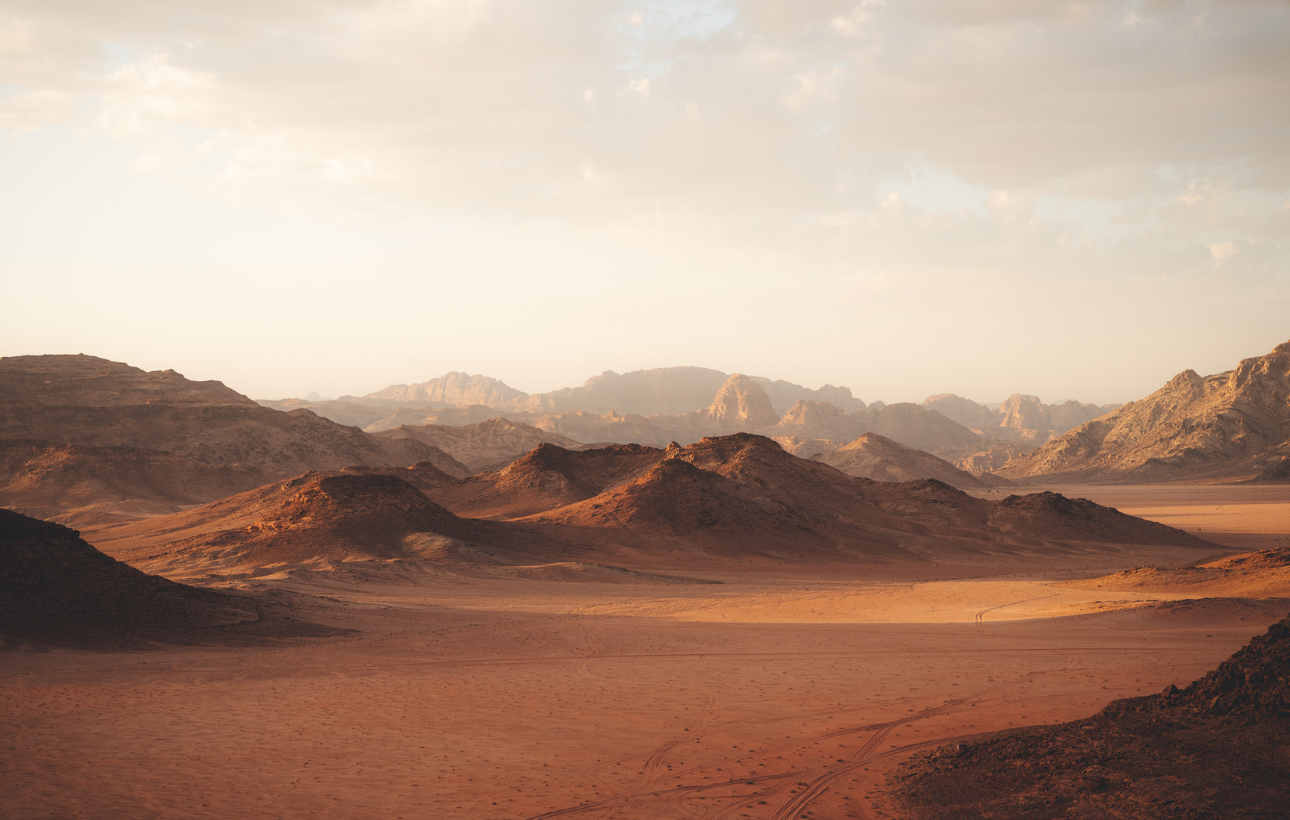
The runner’s are surrounded by ampitheatres of rock, canyons, gorges and the glow of intense light making Wadi Rum a very special place.

Photo by Ian Corless

Stage 1 started with an early wake up and a 4am depart from the race hotel, ahead, a 4-hour journey to the desert.

Photo by Ian Corless

Starting a little after 0930, 550 runner’s were released for the adventure of a lifetime, ahead 27.4km and 980m+.

Photo by Ian Corless

The passage of a narrow gorge and climb came early and then the track weaved through mountains, much of the time, the terrain soft sand. It’s a tough day 1.

Photo by Ian Corless

After cp2, the track is more open and flat allowing for an ‘easier’ run to the finish line of the day and bivouac, home for the next three nights.

Photo by Ian Corless

As with all MDS races, the journey is unique and challenging for each person, run or walk. However, at the front a race takes place and today, Rachid El Morabity was the victor ahead of Theo Detienne and Dorian Louvet, 2:07:52, 2:12:47 and 2:14:58 respectively. Salameh El Alaqra, the Jordanian was 4th in 2:30:44.

Photo by Ian Corless

MDS The Legendary champion in 2022, Sylvaine Cussot was the clear winner for the women, crossing the line in 3:18:24. Pauline Thinus was 2nd and Maine Canas was 3rd, 3:40:10 and 3:43:14.

Photo by Ian Corless

Tomorrow, stage 2, is the long day where participants can choose 20km, 40km or 60km.

Photo by Ian Corless

Marathon des Sables website HERE

Since 1986, the MARATHON DES SABLES has crossed the world’s most stunning deserts with several unique concepts: the MARATHON DES SABLES THE LEGENDARY (252 km in the Sahara Desert in Morocco), the MARATHON DES SABLES (70, 100, or 120 km spread over 3 stages), and the new 2024 concept, the MDS TREK (4 stages with a total distance of up to 120 km), offering an accessible adventure with optimal comfort. These international events have seen over 50 editions in various countries such as Morocco, Fuerteventura Island, Peru, Jordan, Turkey, and offer adventures that combine running/hiking in the desert with tourism.

Instagram – @iancorlessphotography

Twitter – @talkultra

facebook.com/iancorlessphotography

Web – www.iancorless.com
Web – www.iancorlessphotography.com

MDS Jordan 2024 – Countdown Time

Photo @mirandahdz

It has been a hectic period for the MDS crew with back-to-back events, MDS Fuerteventura, MDS Morocco and then MDS Trek. Now it’s a quick transition from Morocco to Jordan and the highly anticipated, 2024 edition of MDS Jordan.

With 599 participants, of which 332 are women and 267 men, once again, MDS events pioneer the way with more women participants than men, 55% to 45% for Jordan.

Jordan will see 25 different nationalities with the French topping the participation numbers. Unsurprisingly, the average age is 43! With 10-participants under the age of 25-years and 16-participants over 65-years. It’s an incredible testament to the MDS format that these races appeal to everyone seeking an adventure.

Schedule:

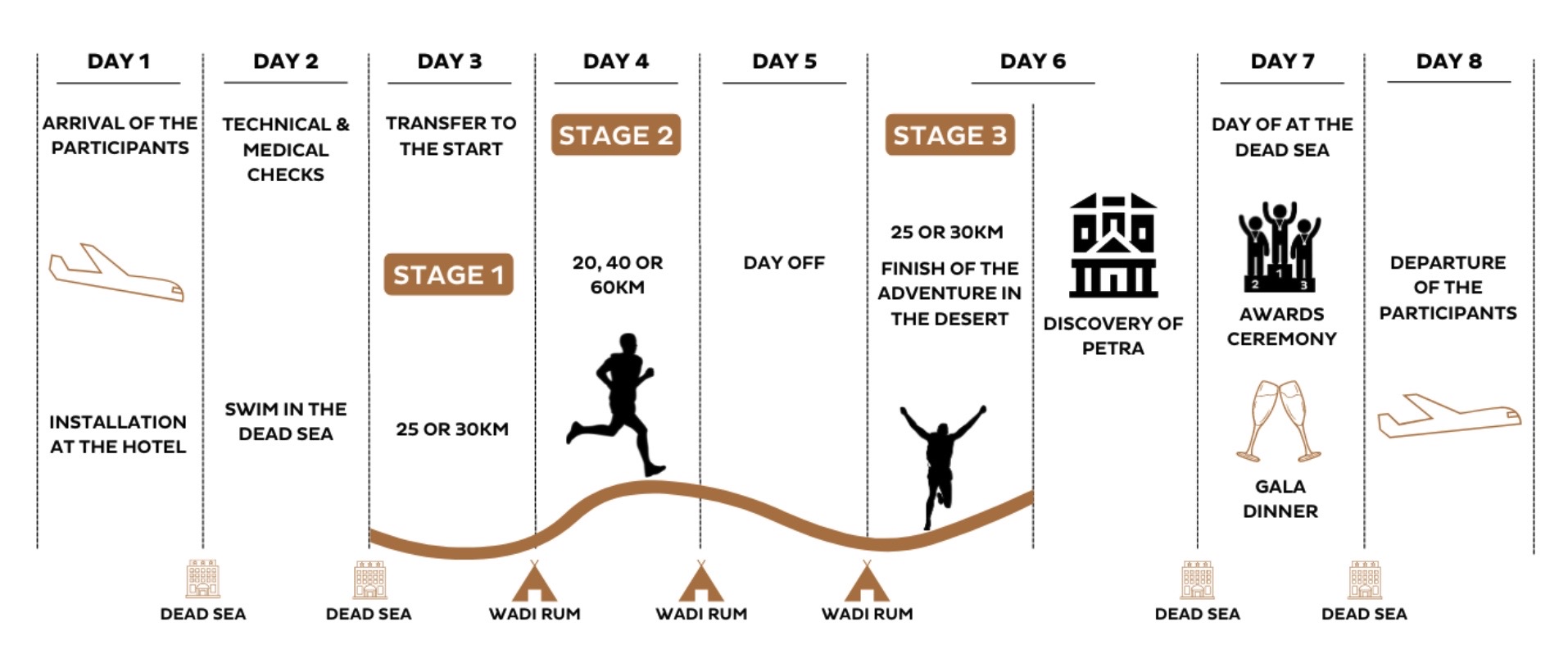
  • Day 1: Arrival at hotel
  • Day 2: Technical and medical checks, day at hotel with access to the Dead Sea
  • Day 3: Bus transfer, first stage, night in bivouac
  • Day 4: Second stage, night in bivouac
  • Day 5: Rest day, night in bivouac
  • Day 6: Third stage, discover Petra, night in hotel
  • Day 7: Day at hotel, Gala dinner
  • Day 8: Transfer to airport, end of adventure

Is Jordan the jewel in the MDS crown? With so many great destinations, it’s hard to pick a stand out, however, when speaking to many, Jordan is high on many a runner’s wish list for very good reason. Only ‘The Legendary’ tips the ‘wish list’ scales.

The 4th edition, running from November 2nd to 9th is sold out and importantly, dates are already set for the 5th and 6th editions, May 9-16 2025 and November 1-8 2025.

Breathtaking landscapes and backdrops await in the amazing desert of Wadi Rum. Living in the rhythm of the desert, as with all MDS events, participants will run or walk 70, 100 or 120km over 3-stages in 4-days.

  • Day 1 / Stage 1 25-30km.
  • Day 2 / Stage 2 choose 20km, 40km or 60km.
  • Day 3 Rest day
  • Day 4 / Stage 3 25-30km followed by transfer to hotel.

Follow LIVE via LiveTrail HERE

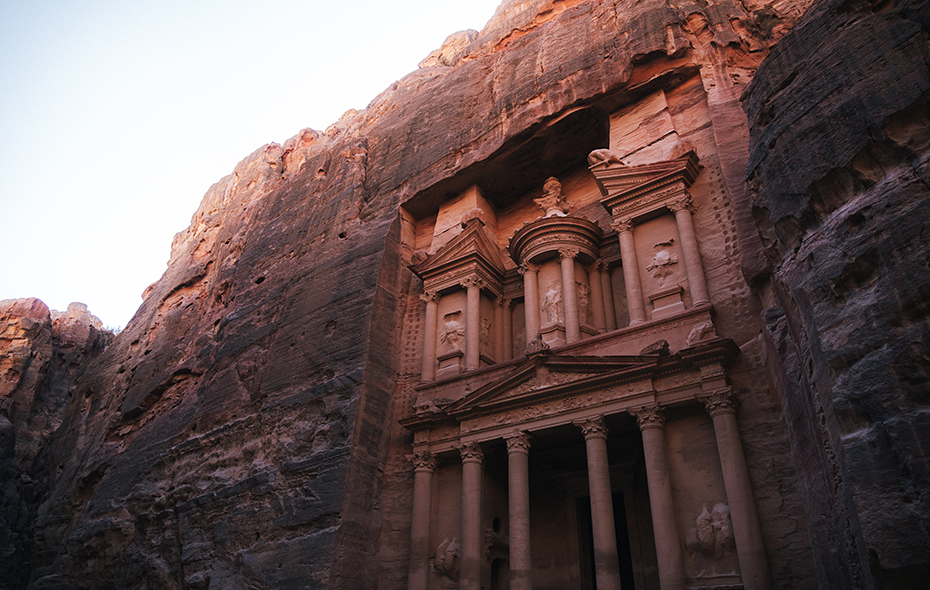
Pre and post-race, 2-nights before and 2-nights after, the 599 runners will enjoy a 4-star hotel situated on the Dead Sea. But the magic does not end there, post-race, a visit to the mythical city of Petra is included.

Photo @mirandahdz

On the final day, time to relax and prepare for the awards ceremony and gala dinner.

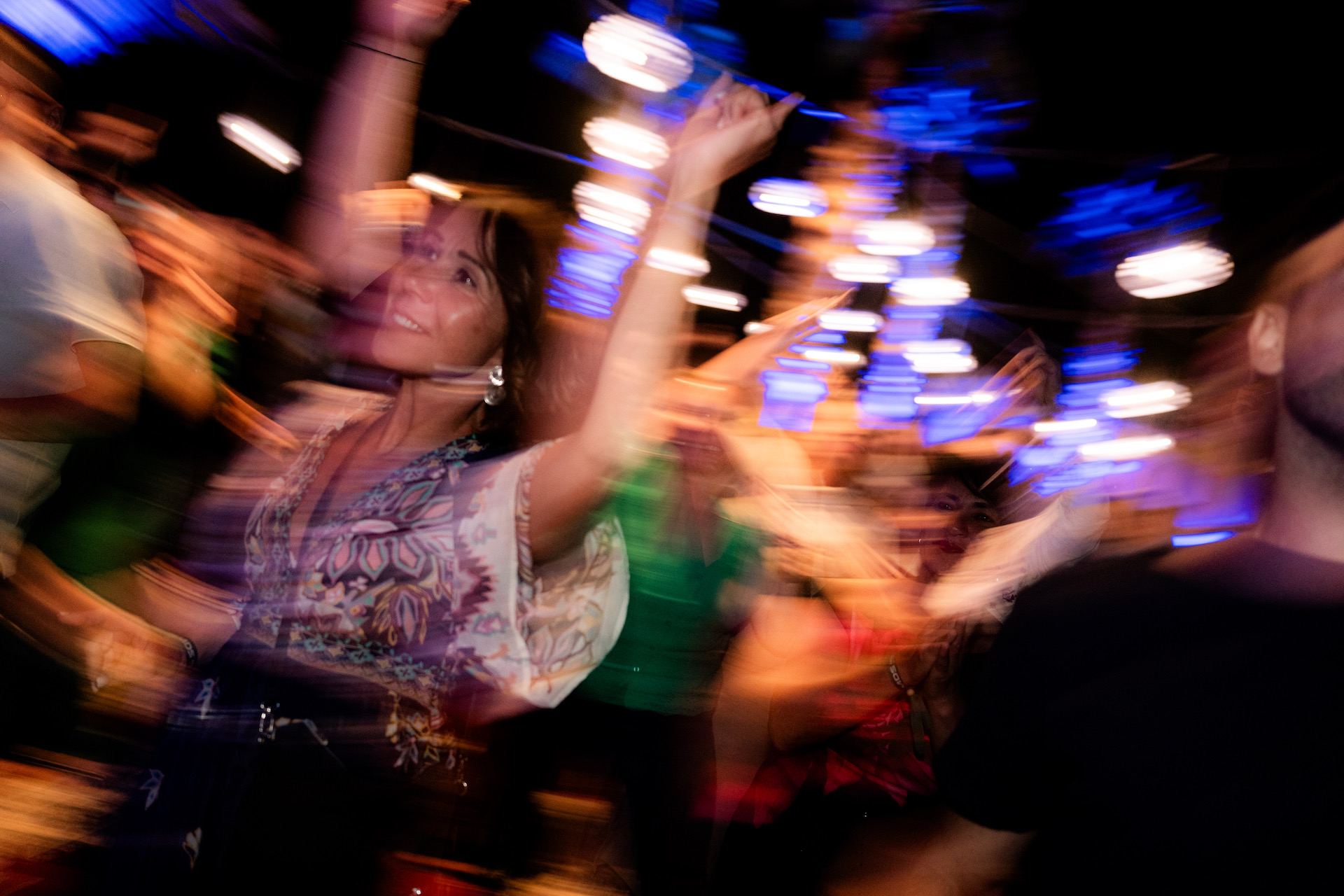
Nothing like an MDS post-race party with DJ Robin.

Three sublime stages which will transport participants in the most beautiful places. Wadi Rum is a truly exceptional place Located in the south of Jordan, the desert is breathtaking Contrasting sand, mountains, canyons, caves and natural arches; the landscape is mind-blowing.

4 days in the heart of Wadi Rum, that’s the unique experience that the participants of this MDS adventure will live.

What is the MDS?

The MARATHON DES SABLES is a unique adventure, shared by thousands of enthusiasts since 1986.

To differentiate the full distance race of 250km’s, Marathon des Sables will now be known at MDS The Legendary, reflecting the legendary status of this iconic event and its long history as a pioneer of the stage racing and multi-day format.

The ‘HMDS’ format whill still follow the same protocols as before but has now dropped the ‘half’ title and moving forward, events will be called MDS Jordan, MDS Morocco, MDS Cappadocia and so on.

The MDS events are a one-week sporting adventure that combines the discovery, travel, meeting new people and physically challenging yourself in a self-sufficient manner.

Read MDS THE ULTIMATE GUIDE HERE

Since 1986, the MARATHON DES SABLES has crossed the world’s most stunning deserts with several unique concepts: the MARATHON DES SABLES THE LEGENDARY (252 km in the Sahara Desert in Morocco), the MARATHON DES SABLES (70, 100, or 120 km spread over 3 stages), and the new 2024 concept, the MDS TREK (4 stages with a total distance of up to 120 km), offering an accessible adventure with optimal comfort. These international events have seen over 50 editions in various countries such as Morocco, Fuerteventura Island, Peru, Jordan, Turkey, and offer adventures that combine running/hiking in the desert with tourism.

Instagram – @iancorlessphotography

Twitter – @talkultra

facebook.com/iancorlessphotography

Web – www.iancorless.com
Web – www.iancorlessphotography.com

MDS Morocco 2024 – Stage 3

The final stage of the 2024 MDS Morocco started with an early wake up ahead of the 0530 start. There was a chill in the air as participants prepared their last meals.

WAA – What An Adventure

The stage 3 route had been modified due to flooding, but the course would take place in the same region of the Sahara as planned, just a slight detour avoiding the requirement to swim…

Race winner, Rachid El Morabity

The stage of 25km’s was notable as the HANDI category would complete the entire stage, just one section at around 11km, a narrow gorge, requiring outside assistance from the MDS blue coats to help ensure safe passage.

Teamwork makes the dream work.

For the top runner’s, the stage would be completed in almost darkness, with sunrise coming at 0720 and the expected first finisher at 0730.

Amazing sunrise

It was a magical day, the glow and lines of headlamps creating a visual spectacle. The Handi teams inspiring and showing that there are no limits and of course, the sunrise was really exceptional.

Magic of the Sahara

The 2024 MDS Morocco will be remembered in the history of the Marathon des Sables legacy; strong winds, sand storms, thunderstorm, torrential rain, flooding and the Handi teams.

The flooding created unique visual moments.

The experience has been all the greater for these moments of test. And for future editions of MDS lessons can be learnt, participants must be prepared for all eventualities. History has shown, the Sahara is not always hot, it is not always dry and it is not always calm and relaxing. This is what makes the adventure and challenge so great and rewarding.

The Handi category, amazing and emotional.

As with all MDS events. there are three distance categories, 70km, 100km and 120km. For the 2024 MDS Morocco, a fourth category, the Handi. A category that we all hope that can grow and develop to more races in the MDS portfolio.

The MDS Morocco 2024 came to an end. Winners were crowned at the awards ceremony, but the top-3 in each distance are only the tip of the iceberg in a race of 630 participants. The MDS format truly appreciates and applauds all who take part, be them fast runner or walker. These races exist to allow all abilities an opportunity to seek an adventure at a pace and a distance that is a challenge to themselves, it’s a wonderful concept.

The finish

Full results HERE

120km

RESULTS 1 – Rachid EL MORABITY 2 – Abdelkader ELMOUAZIZ 3 – Thomas Benjamin BERTIN

WOMEN RESULTS 1 – Lucie MATT 2 – Emilie GARCIA 3 – Carine DAVID

100km

RESULTS 1 – Fabrice ARMAND 2 – Morgane GODEFROY 3 – Alberto CAPPAROTTO

WOMEN RESULTS 1 – Morgane GODEFROY 2 – Lisa PUJOLAS 3 – Emily COCKELL

70km

RESULTS 1 – Christian HARTEL 2 – Pierre-Luc VITOUX 3 – Clémence VIENNET

WOMEN RESULTS 1 – Clémence VIENNET 2 – Catarina VILLAS 3 – Jasmine LIBOIRON

Handi

RESULTS 1 – Benoit COLLIOT – L’UN POSSIBLE 2 – Yann GRANDGUILLAUME – L’UN POSSIBLE3 – Guillaume LEGRAS – L’UN POSSIBLE

WOMEN RESULTS 1 – Anais KRAUTH – HANDI MDS 1 2 – Kaïna RAHMOUNI – HANDI MDS 93 – Claire NOLET – HANDI MDS 7

Unique images for the Sahara

Marathon des Sables website HERE

Since 1986, the MARATHON DES SABLES has crossed the world’s most stunning deserts with several unique concepts: the MARATHON DES SABLES THE LEGENDARY (252 km in the Sahara Desert in Morocco), the MARATHON DES SABLES (70, 100, or 120 km spread over 3 stages), and the new 2024 concept, the MDS TREK (4 stages with a total distance of up to 120 km), offering an accessible adventure with optimal comfort. These international events have seen over 50 editions in various countries such as Morocco, Fuerteventura Island, Peru, Jordan, Turkey, and offer adventures that combine running/hiking in the desert with tourism.

Instagram – @iancorlessphotography

Twitter – @talkultra

facebook.com/iancorlessphotography

Web – www.iancorless.com
Web – www.iancorlessphotography.com

MDS Morocco 2024 – Countdown Time

Following on from MDS Fuerteventura, the MDS team quickly transition to Morocco and the 2024 edition of MDS Morocco that will take place in the heart of the Sahara. MDS Morocco offers an adventure accessible to all kind of walkers and runners. A unique journey, where you will cross breathtaking landscapes. Far from any form of civilization, this is a unique opportunity to refocus on yourself and enjoy the simple pleasures of life.

This 3rd edition, 12th to the 19th October will see 600 participants arrive for the adventure of a lifetime in the place where the Marathon des Sables story started over 37-years ago, Morocco.

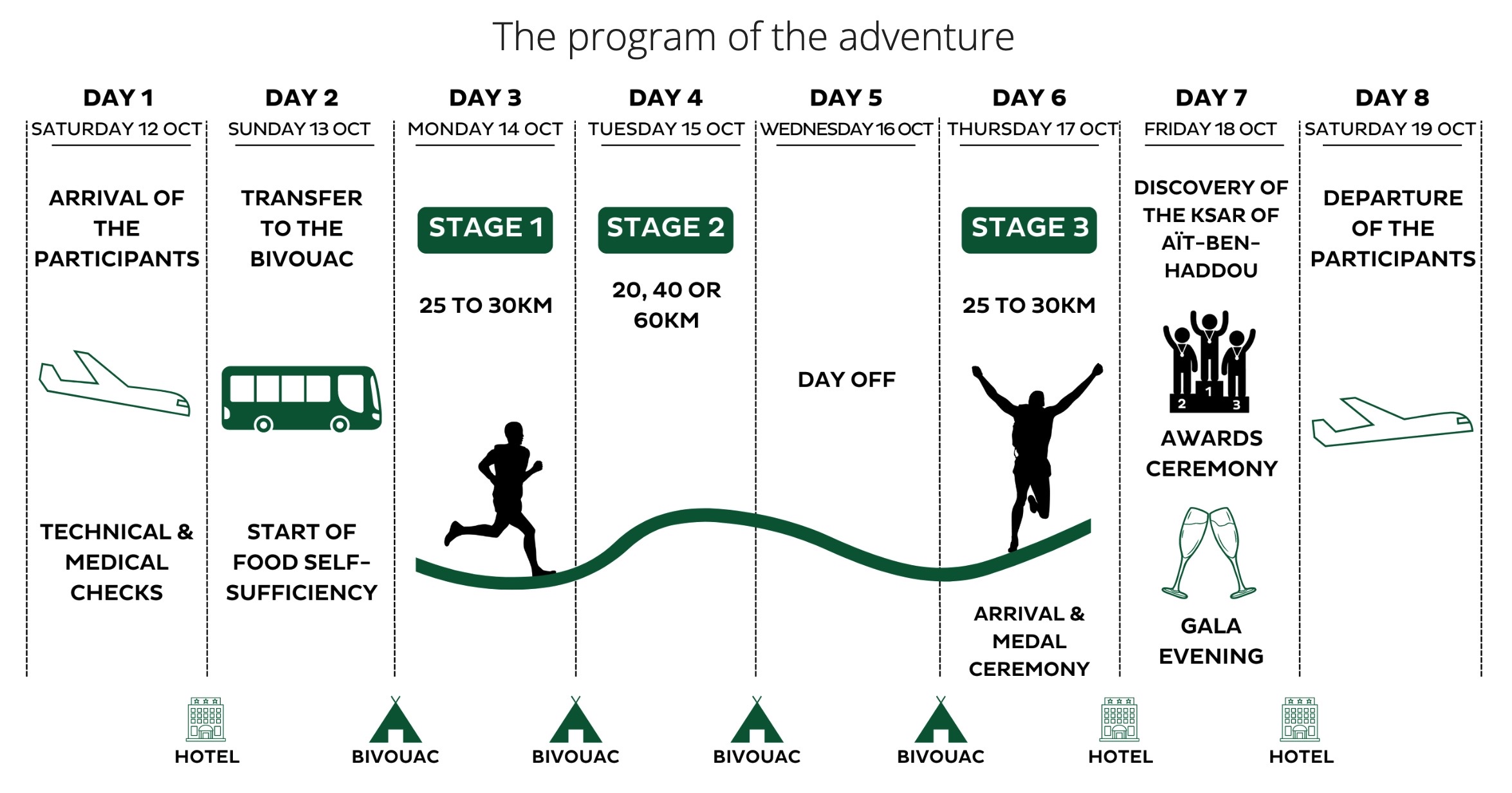
Participants will arrive in Ouarzazate on Saturday October 12th for technical and medical checks followed by a night in a hotel.

Admin and medical checks

The following day, Sunday, is the journey, via bus, to the desert (approximately 6 hours) with arrival in bivouac and the start of self-sufficiency.

Bus transfer to the desert

Day 3, 4, 5 and 6 will have participants follow the classic MDS format of racing, 3 stages spread over 4-days.

  • Day 1 / Stage 1 25-30km.
  • Day 2 / Stage 2 choose 20km, 40km or 60km.
  • Day 3 Rest day
  • Day 4 / Stage 3 25-30km followed by transfer to hotel.

Importantly, MDS Morocco will see the addition of the NEW category, HANDI MDS which will cover 51km and 867m+

TRACKING AND RESULTS HERE

The following day provides the opportunity to visit the iconic site of Aït-Benhaddou (one of the locations of the film Gladiator). On arrival back at the hotel, time to relax and prepare for the awards ceremony and gala dinner.

Saturday 19h October is departure day.

Three sublime stages which will transport participants in the most beautiful places of the Moroccan Sahara, sleeping 4 nights in the MDS bivouac, this is the start of one of the adventures of a lifetime.

What is the MDS?

The MARATHON DES SABLES is a unique adventure, shared by thousands of enthusiasts since 1986.

To differentiate the full distance race of 250km’s, Marathon des Sables will now be known at MDS The Legendary, reflecting the legendary status of this iconic event and its long history as a pioneer of the stage racing and multi-day format.

The ‘HMDS’ format will still follow the same protocols as before but has now dropped the ‘half’ title and moving forward, events will be called MDS Jordan, MDS Morocco, MDS Cappadocia and so on.

MDS always an adventure

The MDS events are a one-week sporting adventure that combines the discovery, travel, meeting new people and physically challenging yourself in a self-sufficient manner.

Read MDS THE ULTIMATE GUIDE HERE

Since 1986, the MARATHON DES SABLES has crossed the world’s most stunning deserts with several unique concepts: the MARATHON DES SABLES THE LEGENDARY (252 km in the Sahara Desert in Morocco), the MARATHON DES SABLES (70, 100, or 120 km spread over 3 stages), and the new 2024 concept, the MDS TREK (4 stages with a total distance of up to 120 km), offering an accessible adventure with optimal comfort. These international events have seen over 50 editions in various countries such as Morocco, Fuerteventura Island, Peru, Jordan, Turkey, and offer adventures that combine running/hiking in the desert with tourism.

MARATHON DES SABLES 2025 events are already open:

  • MDS Morocco – Atlantic Coast: January 25 to February 1, 2025
  • MDS Cappadocia: June 21 to 28, 2025
  • MDS Jordan – May: May 9 to 16, 2025
  • MDS Jordan – November: November 1 to 8, 2025

Instagram – @iancorlessphotography

Twitter – @talkultra

facebook.com/iancorlessphotography

Web – www.iancorless.com
Web – www.iancorlessphotography.com

PHD Ultra Jacket and Desert Race Halfbag Review

A key consideration for any self-sufficient multi-day journey is weight. Additional weight is just a burden, so, fine tuning equipment for your adventure is key.

In races such as Marathon des Sables, there is a requirement to be completely self-sufficient with just water and a shelter provided.

So, in addition to the clothes you are wearing, you must carry all the food required for the week, any luxuries and importantly warm layers: sleeping bag, sleeping mat, jacket and so on.

The debate, ”Do I need a warm jacket?” takes place every year and in all honesty, the most truthful answer is yes and no! It doesn’t help does it! The reason being, in a hot year, the need for a jacket can be very minimal or not at all. However, in a cold or cooler year, a jacket can be a life saver. So, the best answer here is usually have a jacket, take it with you and before the race, whilst in race location, make a decision based on the current weather and forecast.

Sleeping bag in some ways is easier to answer, yes, you need one! However, that is only the start of the process with a sleeping bag, you need to take into account key questions:

  • Do I sleep warm?
  • Do I sleep cold?
  • Am I tall?
  • Am I short?
  • Do I have wide shoulders?
  • Do I get cold feet?

And the above list can go on.

Also, budget is a consideration, there are many sleeping bag options and prices vary greatly.

Ultimately, for a jacket and sleeping bag we want the following:

  • The lightest possible.
  • The warmest based on our needs.
  • The most flexible system.

I personally have always been in favour of having a jacket, mornings can be cold and evenings can be chilly, so, the option of a jacket is great. Also, if you have a jacket, you can look at taking a lighter, less warm sleeping bag and looking to ‘boost’ warmth if required by wearing the jacket inside the sleeping bag.

With all the above in mind, UK brand PHD have come up with a potentially perfect solution.

The ULTRA JACKET and the DESERT RACE HALFBAG.

Before discussing in-depth, PHD understand the need for weight v warmth, they also understand layering and the benefits of top-quality ethically sourced down. 

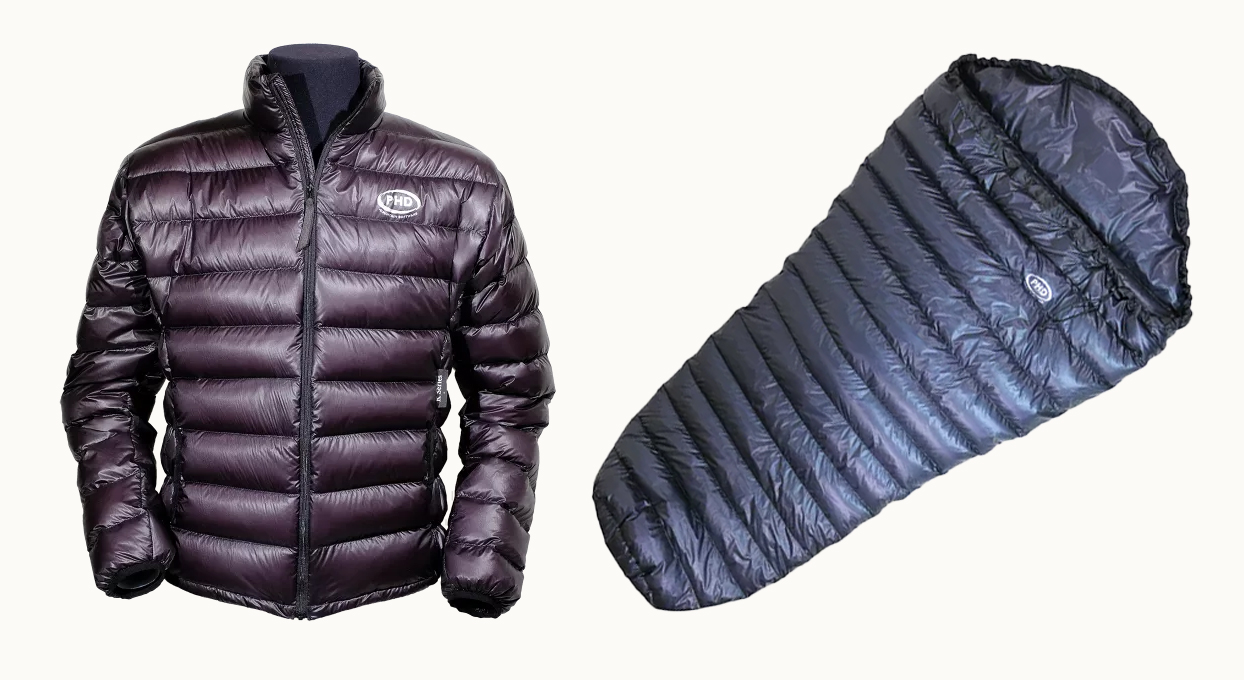
The ULTRA JACKET is super light at 200g and is filled with 1000 fillpower down, good for temperatures as low as -5 deg.

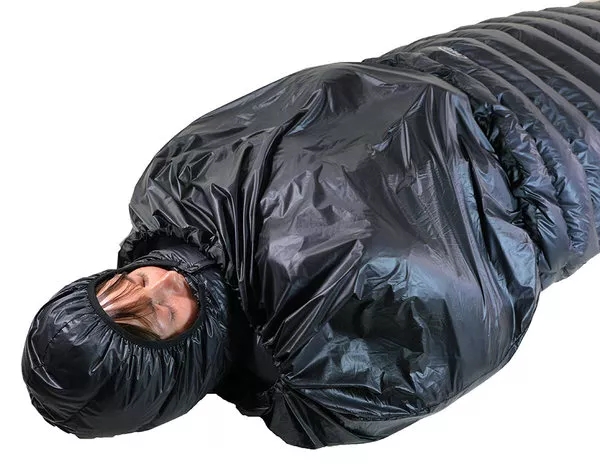
The DESERT RACE HALFBAG is a half size sleeping bag weighing 240g. This bag stops at the waist is filled with high-quality 950 fillpower down and is designed to keep legs and feet warm. However, the technology does not stop there. Understanding that deserts can be windy, they have added a neck-length sand cover or  extender to cocoon your body, arms and hands to cut out air movement. This allows the user to regulate warmth and comfort.

If it is cold, you quite simply add the ULTRA JACKET and then pull the neck-length sand cover over.

This combination provides a sleep/ warm system for well under 500g that packs very, very small. Effectively, with this combination of products, not only do you save weight, but you increase flexibility and options.

THE JACKET

The Ultra Jacket weighing 200g for a men’s medium is a high quality product filled with 1000 fillpower down giving warmth to -5 degrees. It is a simple, no frills product designed to be as warm as possible and as light as possible. The outer fabric is windproof which adds to the warmth. It does have hand pockets with no zips, again to save weight. There is a zippered inner chest pocket. Standard colour is black but it is possible to choose red and as with all PHD products you can have a custom make with Hypershell or you can add a hood. You can also have a custom fit, specifying body width, body length and arm length.

Prices start at 498.00 UK pounds / 582 euros.

PHD say, “Our lightest sub-zero down jacket. A ‘K Series’ product. Warmth to weight at the limit of possibilities for extra-keen lightweight backpackers and mountain racers. Now also available in custom sizes.”

THE BAG

The Desert Race Halfbag is a simple, lightweight and effective solution for those looking to save weight, increase flexibility and still keep warm, it comes in a standard length.

The neck-length sand cover is a brilliant addition.

The addition of the neck-length sand cover increases warmth and flexibility on windy and cooler nights. Using top-quality 950 fillpower down, this half bag is incredibly light and packs small. It has stitch through construction ensuring down stays evenly spread with no cold spots. As with all PHD products, it is possible to have a custom make, for example add a zip, have it made short or long, choose a colour (green, red, black or white) or you can add Dri-LX outer fabric.

Prices start at 342.00 UK pounds / 400 euros.

PHD say, “Designed specifically for desert racing. From the legendary Saharan Marathon des Sables to the Kalahari’s KAEM, and the growing number of events in the Gobi, the Atacama, the Australian interior and all around the world, these events have their own particular set of challenges to overcome. Sweltering 40 degree (C) race days can give way to 4 degree (C) nights – that’s cold enough for frost – in which warmth, sleep and recovery play a vital part in preparation for the next day’s challenge.”

Read about the down HERE

  • 950. A newcomer to our range. European goose of rare quality. A high value alternative at the top levels of performance. We have introduced a wide range of options in 950 in response to the soaring cost of 1000.
  • 1000. European goose down of unique quality with exceptionally large lively clusters. 1000 provides the highest warmth-for-weight performance possible from down and has been used in PHD products since 2008. Unfortunately, scarcity (and the fashion industry) continue to push up the price steeply every year. This rarest of all downs we reserve for the K Series, our lightest products right through the range from marathon ultralights to alpine kit and on into high mountain gear.

IN USE

Desert Race Halfbag with neck-length sand cover and ultra jacket with hood

The system is absolutely brilliant and I have fallen in love with the weight of the two items, the flexibility to adjust my sleep comfort temperature and when it has been cold, the down jacket really gives a massive boost and pulling up the neck-length sand cover encapsulates me so that I feel I have a full sleeping bag.

There are some important points to consider, the effectiveness (warmth) of the jacket and half bag is improved by using a sleeping mat which adds comfort and insulation from the ground. Also, I intentionally chose a jacket with no hood as I preferred the lighter jacket weight and the option to add a hat or beanie to increase warmth. It’s really simple, want a jacket or sleeping bag to be warmer, cover your head.

CONCLUSION

The combo of jacket and halfbag is now, without doubt, going to be chosen fast-packing/ multi-day option. It just makes sense. I have a really warm jacket for sitting around. I have a really warm halfbag and when the two are combined, I have a really excellent and adaptable system for sleeping. The light and storable sand cover is really simple, use it or don’t use it, no worries, but the extra security and protection this gives is brilliant. PHD are really on to something here.

With high quality down products and lightweight fabrics, they compress and adapt when packing, so, adding these to a race bag after packing they will take up little or no space. As an example, I used two small dry bags (3L) by Osprey and Sea-to-Summit and packed the jacket and bag away to see how small I could compress them.

Are there any downsides? Yes, the price. The jacket and halfbag in standard configuration will cost you 840.00 UK pounds/ 982 euros. That is a hefty price tag. However, if you look at the cost of a down jacket and full sleeping bag, the prices are comparable, +/-.

This offer by PHD does not come cheap and yes, you can shop around and find options that are considerably cheaper. I guess I look at this a little like buying a car, any car providing it has fuel and it is in working order, will take you for A to B. However, based on desires, budget and the desire for the best, you can do that A to B ride in a small Fiat or a Ferrari. PHD are coming at the Ferrari end offering a luxury bespoke product that is extremely light, packs really small, is perfect for the task that is required and for that, you pay a price! 

Only you can decide if it is worth it!

I have been using PHD for over 10-years, I have used their Minim bags in the Sahara and the Hispar bags in the Himalayas. The ability to have custom features has been, at times, a luxury. My original Sahara bag had no zip to save weight, however, my next bag had a full-zip which allowed me the option to use it as a blanket/ duvet. The Ultra Jacket and the Desert Race Halfbag has taken things to a next level and in doing so, they have provided me multiple options for temperature regulation in varying climate conditions and I love this. Should I go to a very cold climate in the future, I could now use this jacket and halfbag in combination with my Hispar bag to give me excellent sleep comfort below -20degs, that is awesome.

Go to PHD HERE

Read about the PHD sleep system HERE

PHD have always made a superb product, it is made in the UK with the highest quality products and importantly, ethically sourced down, which comes at a price. They may be expensive, but you get a top-quality product and excellent after service and care.

Reviews:

“It worked exactly as described. I consider the temperature ratings accurate. We had a couple of nights when the wind picked up and the sand blew. When this happened I was grateful for being able to pull the sand sheet on the half bag up over my head and use the drawstring to keep the sand out” – Gareth Scobie (Marathon des Sables competitor).

“The sensation of immediate warmth in the Ultra Jacket is unsurpassed. The 1000-fill is so high-lofting, it puffs up as if a pump has been attached. Rare and wonderful.” – Judy Armstrong in TGO Magazine.

“For me the half bag and pullover was perfect, probably the best bit of kit I bought. To be wearing the top half as a jacket in the evening, then slip into the lower half was simplicity itself. It was plenty warm enough…” – Dain Jensen (Marathon des Sables competitor).

Follow on:

Instagram – @iancorlessphotography

Twitter – @talkultra

facebook.com/iancorlessphotography

Web – www.iancorless.com
Web – www.iancorlessphotography.com

Image sales –www.iancorless.photoshelter.com