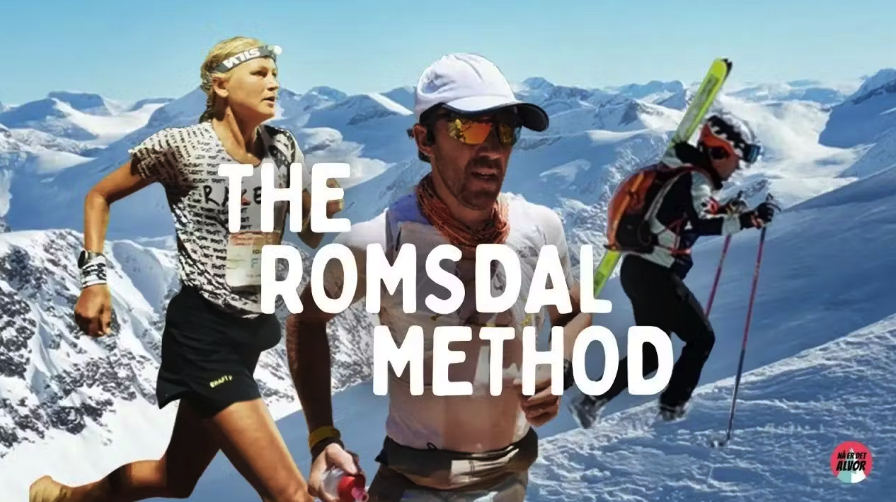
The Romsdal Method, directed by Hans Kristian Smedsrød, is a raw, immersive journey into the rugged training ethos of Romsdal, a Norwegian valley transformed into a living, breathing performance lab. Inspired by Kilian Jornet and Emelie Forsberg, three elite/ultra athletes: Ida Nilsson (Sweden), Jon Albon (Britain), and Petter Engdahl (Sweden) join this hub to progress their careers. What begins as a quiet exploration soon morphs into a testament to friendship, mutual respect, and the transformative power of place-based training.
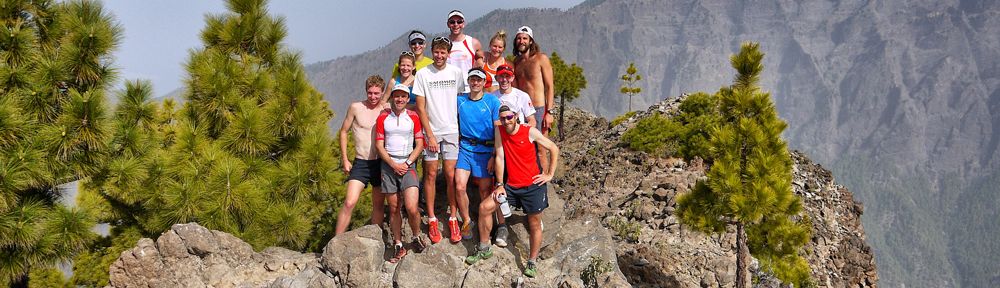
Group training
There are no egos here, on the contrary, there is a calm, understated respect of experience and knowledge. At the helm, the inspiration for Jon, Petter and Ida comes from Kilian who has pioneered the way for training in Romsdal.
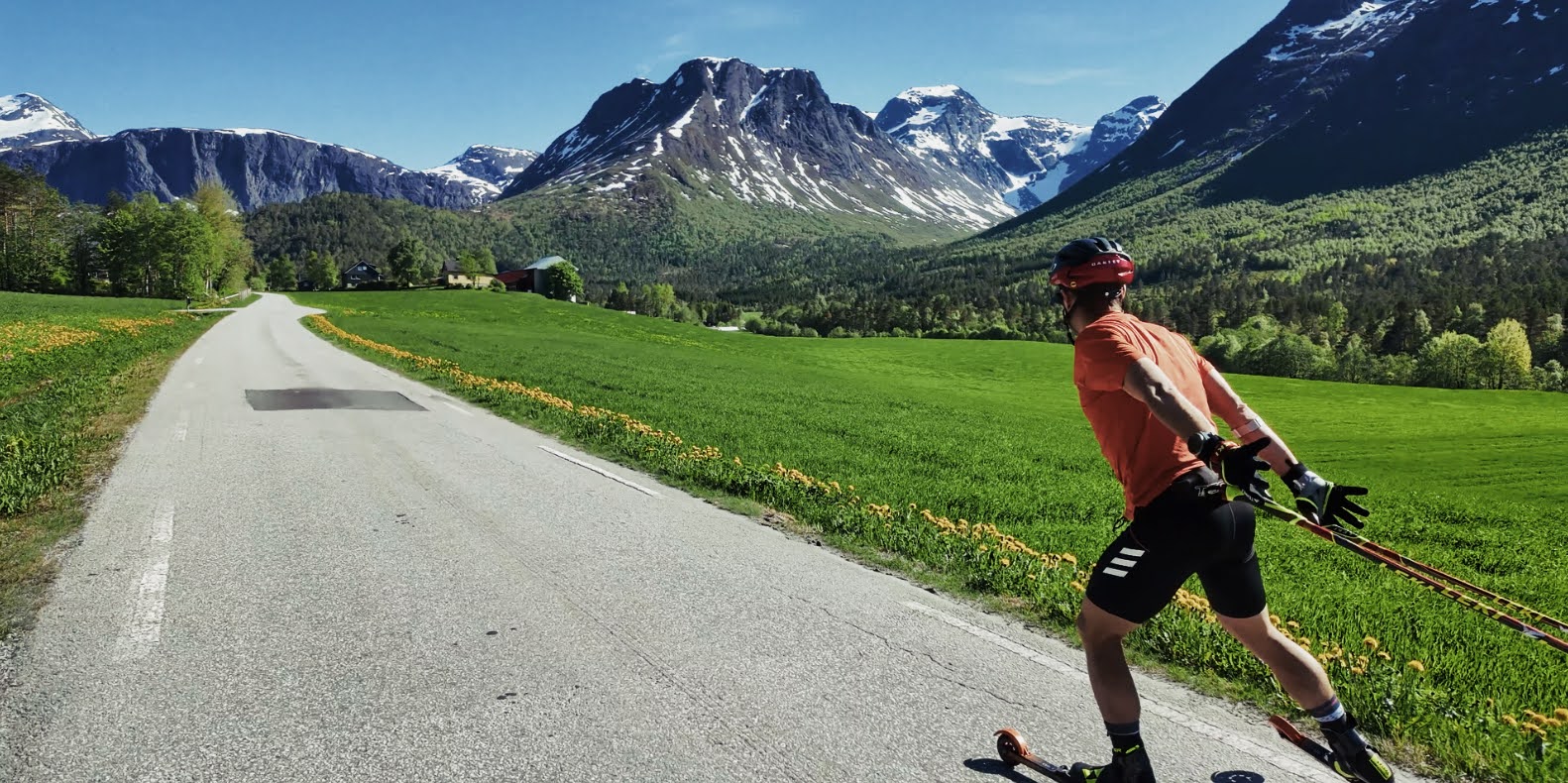
Petter on roller skis
Petter sums it up in a moment of reflection:
“Being the best in Romsdal and being the best in the world is kinda the same thing, it’s what makes this valley so insane.”
Jon, the Brit, is very much the scientist, the thinker, the analyst. He has a dry British humour that even Kilian acknowledges. Jon is a legend of the sport, a powerhouse athlete and he is the calming element that binds the group of three. Training sessions for Jon need to make sense, they need to be specific. His unassuming presence and measured discipline highlight the balance between elite drive and heartfelt connection with place and people.
Jon being specific with training
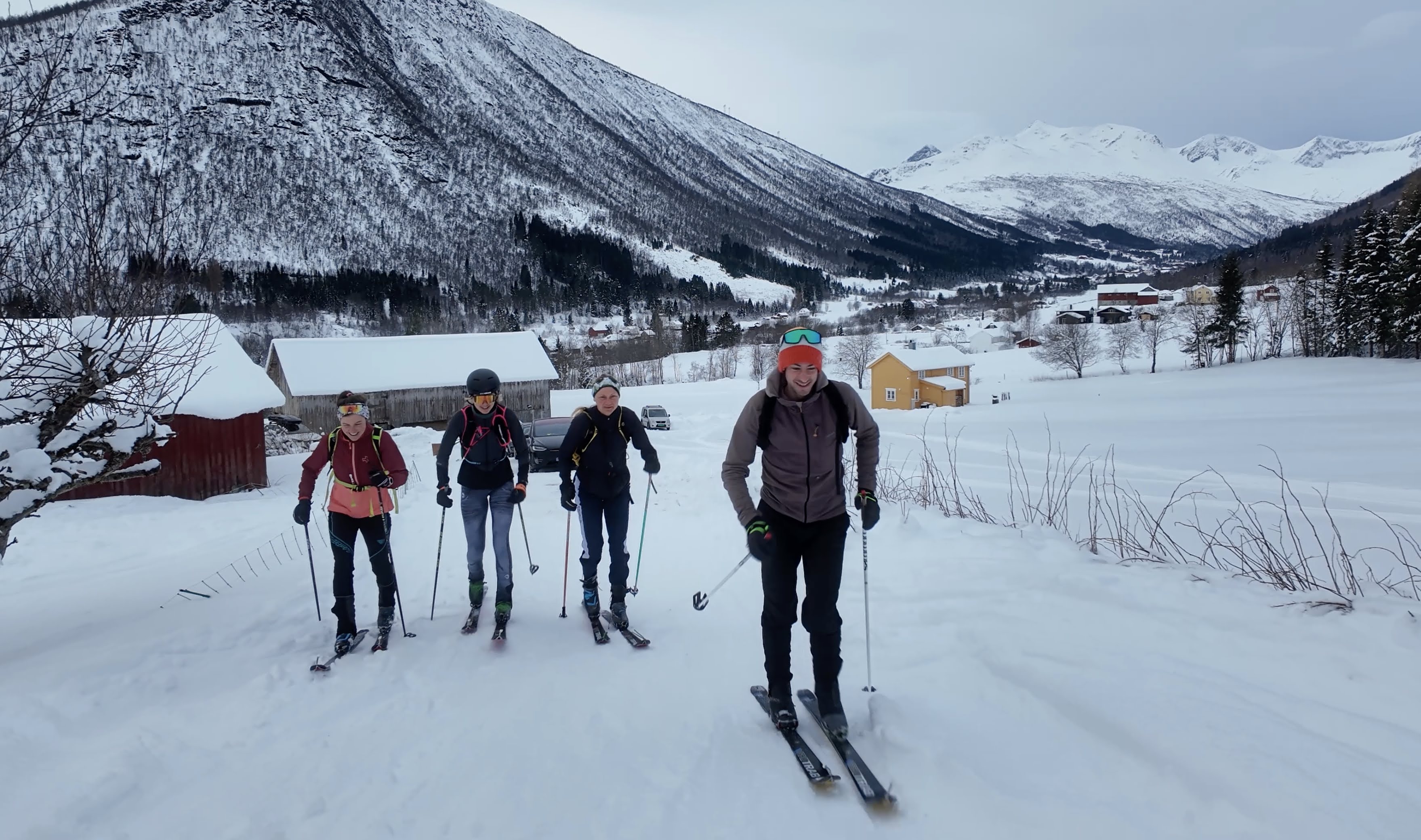
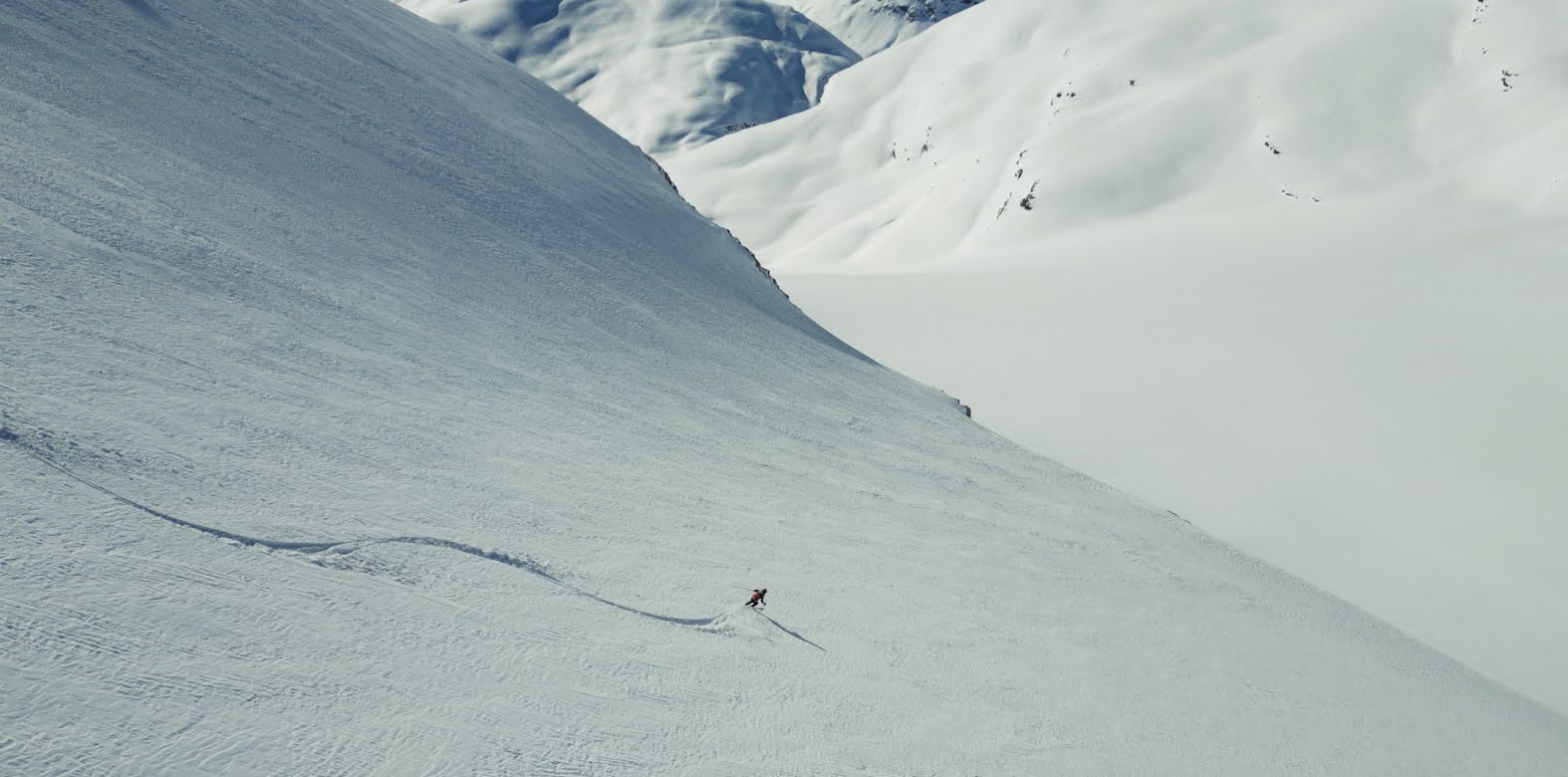
Ida, with a career that stems back to track running is an introspective, warm, and has a complete dedication and passion for sport. Sincere, sometimes quietly exuberant, Ida is motivated to perform, she’s looking for performance gains but at the same time, as shown on a ski mountaineering trip on a beautiful day, just being in the mountains for hours is what makes this life tick.
Ida in the best playground pointing to which peak she will climb
Petter, is calm, quiet, solid. He’s about grit and focus. He’s the silent undertow who likes his actions to speak louder than words, providing testament to a man pursuing the edge. He moved to Romsdal to be with and train with the best; Jon and Kilian. He acknowledges, that sometimes, particularly in his first year, that this ‘training’ in itself can be too much.
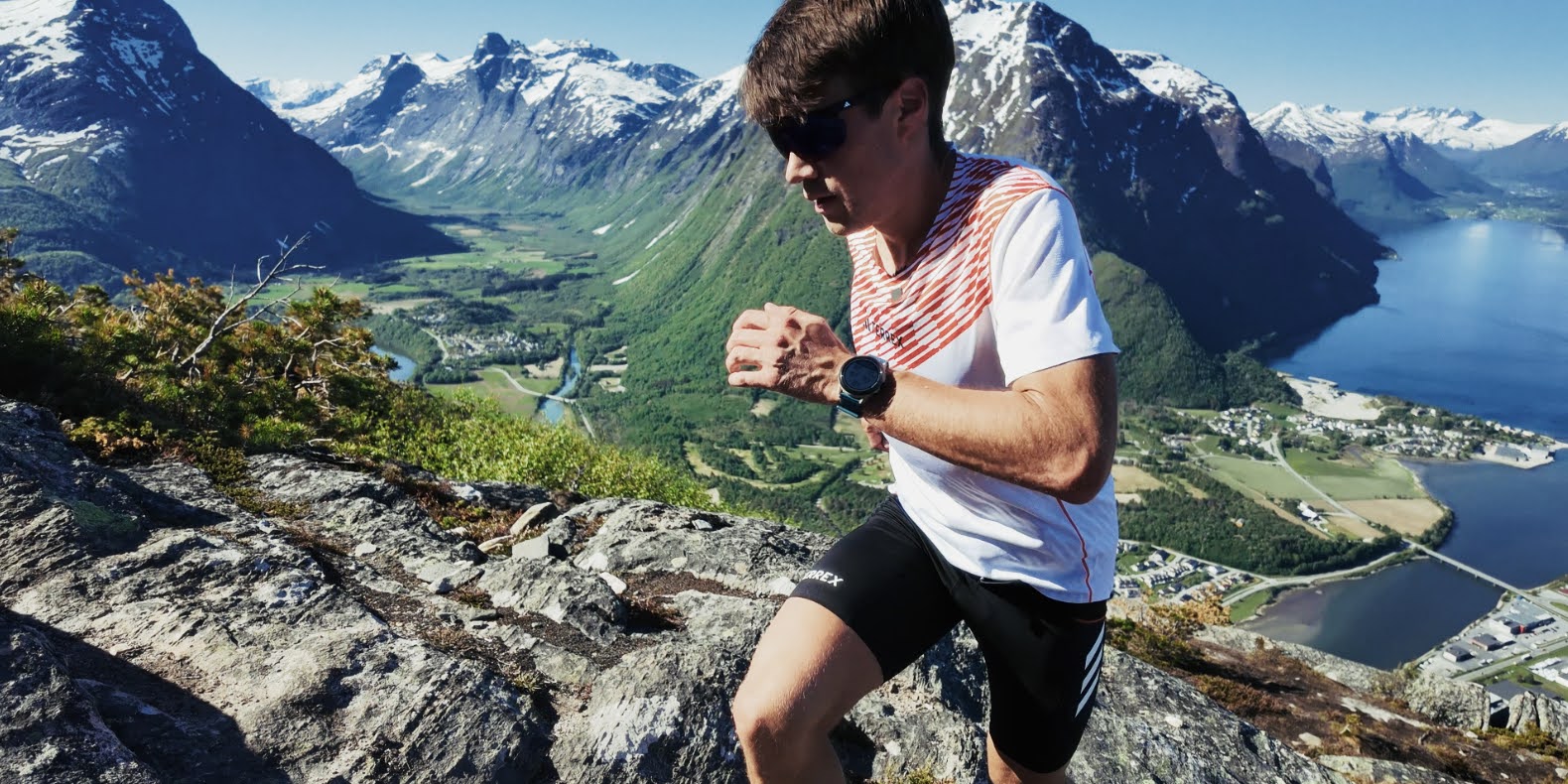
Petter at the top of Nesaksla
In many ways it can be summed up with a sound bite from Kilian Jornet:
“And many of the routes where we are training, if you do a mistake, if you slide, it’s not that you will break your ankle or hurt yourself, it’s that you will die!”
Romsdal isn’t just a backdrop or place, it’s arguably the key protagonist of what shapes the story, the experiences, the life and the training of those who live there.
Towering granite, unpredictable weather, rivers through valleys, every scene in the film places Romsdal as central, it plays as a coach, mentor, and even antagonist. Ascending steep slopes, scrambling or racing up and down ski-mountaineering routes; the mountains demand creativity, humility and respect. As Jon says at the end of the film, this is maybe not the best place to live to train for many races that I do, but, I wouldn’t want to live anywhere else. Romsdal forces adaptation: intelligent, situational, and deeply rooted in respect for nature. A prime example coming from the Nesaksla session, which Petter admits, has been copied by athletes around the world.
Kilian Jornet
Kilian, the legendary Catalan mountain athlete, appears less as a star and more as a guiding spirit. His cameo moments, on screen and in conversation, provide quiet counsel: pushing boundaries, listening to one’s body, respect for the mountains, he embraces why we move and he has an immense respect for his peers. Kilian has pioneered the way; his deep bond with the mountains humbles the athletes. He is arguably the spiritual north of Romsdal.
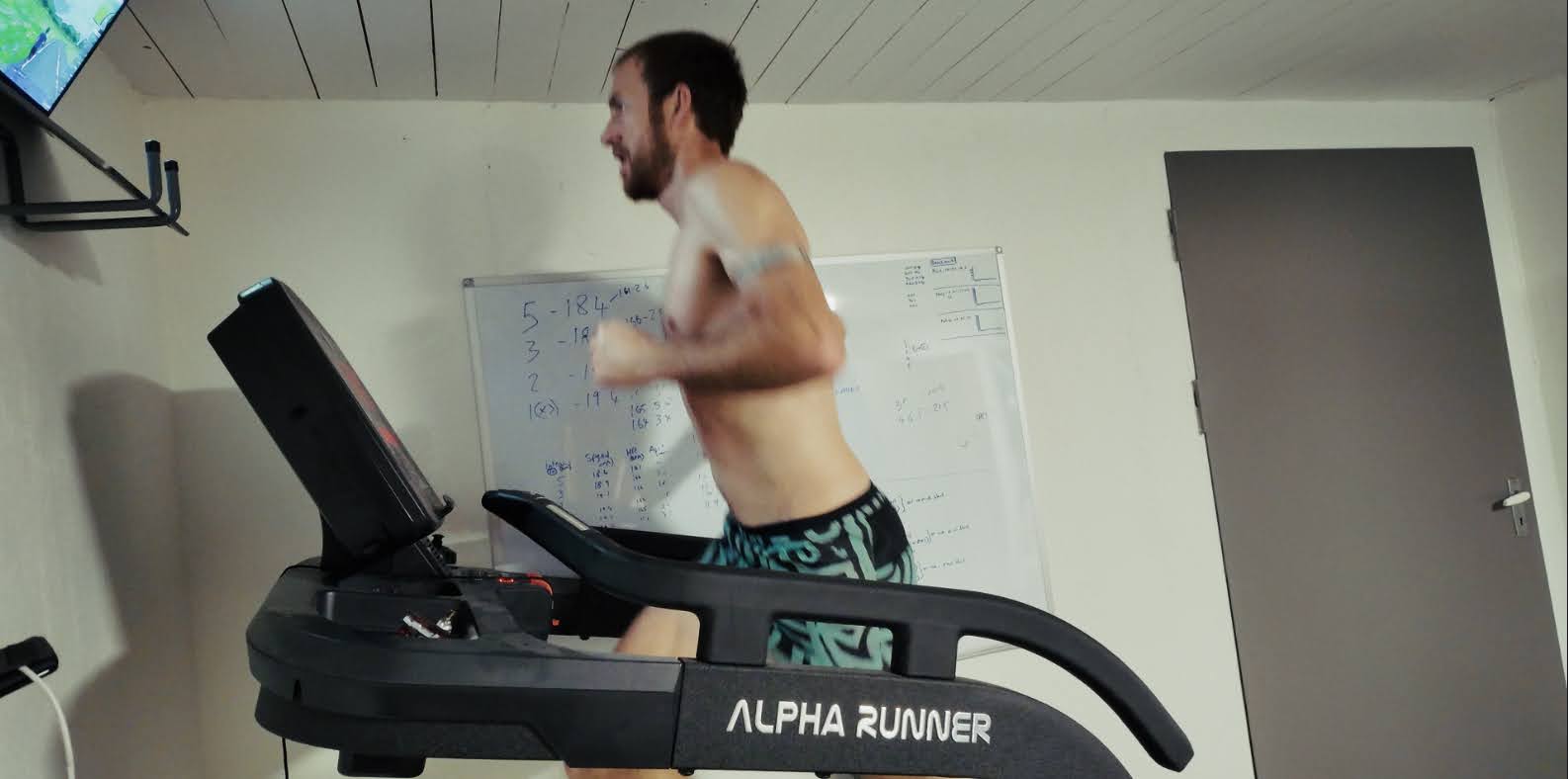
The film is called The Romsdal Method but there is no one answer here and Hans Kristian does a nice job of letting the location, the athletes and yes the weather, do a job of explaining that Romsdal requires creativity; multi-disciplinary skills, and community-driven training. A series of vignettes that show this, from epic ski mountaineering scenes, scrambling and climbing, cycling and yes, even the use of indoor sessions such as the treadmill.
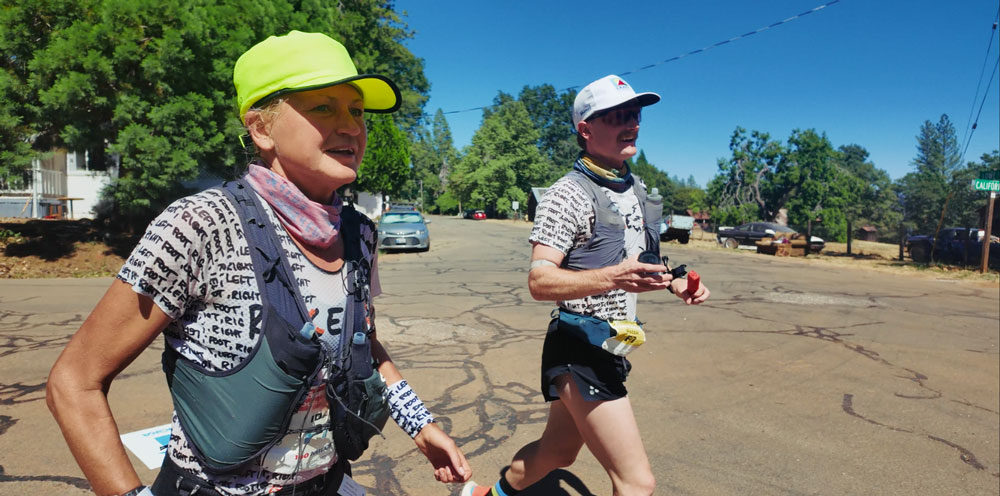
Screenshot
It’s this layering of elements, skimo, run, scramble, climb, gym, cycle, heat work that defines the “method.” It’s adaptive, multi-modal, and very creative. It’s as much mental and communal than physical. And it’s deeply place-based: Romsdal is a training partner.
The first hour of the film lays the foundations for the Western States story, what sets The Romsdal Method apart is its emphasis on the collective group and how they each influence and help each others process.
These athletes didn’t relocate to Romsdal for solitude, they came to live and breathe together. From group runs, scrambling trips, skimo adventures and the sharing of knowledge indoors while next to a treadmill. Egos are not present, just respect: they challenge each other and they all listen and learn.
Hans Kristian made this a passion project. He spends the first 6-minutes of the film looking at a camera providing some history and outlining why the film came about. He’d be the first to admit that he came to this with little filmmaking experience and dare I say, this is arguably what makes The Romsdal Method appealing. Like the athletes, Jon, Petter, Ida and Kilian, Hans Kristian keeps the film raw and simple. There are some epic drone shots, wide angle shots of ridges, tight head-cams but ultimately, this is one man and a camera.
At its core, The Romsdal Method is about belonging through movement. Each athlete finds clarity and authenticity through their pursuits and Hans Kristian manages to capture this through simple conversation.
A bigger budget could have added more effects, more cameras, extra editing time and countless other transformations, but, would it have made the film better? In a world chasing flashy results, screen time, and metrics, this film says: slow down, surround yourself with people who respect the story and let the athletes and the story do its job.
When we get to Western States, we are of course interested in the outcome, but, in many ways it almost seems secondary. Each athlete, of course, has a story to tell and each athlete performs at the highest level. Each viewer, I am sure, felt the pain of Petter’s fall and the potential disaster that this could create, his turnaround was phenomenal. We relish seeing Jon put the ice plan to use and make a top-10 debut in his first 100-mile race. We see Ida push with grit and determination and despite not feeling great, once again makes the top-10 and smashes the masters record. The Western States story is told both visually and with a series of post-race interview soundbites. The stories here just confirm that The Romsdal Method worked.
In conclusion, The Romsdal Method is not just a training film; it’s a journey into how place, community, and friendship can redefine performance. There are no shortcuts, it explains that a love for the sport, sweat, raw practice, and the joy of connection with others is what brings results. You, as a viewer are invited to reimagine your own training and ask simple questions of, ‘how do I train, where do I do it, who do I do it with and why?’
If you crave friendship, mountains, and the satisfaction of honest hard work, Hans Kristian’s film is essential. It may not be slick, but it has a genuine soul. And in a world drowning in disconnect, The Romsdal Method is a reminder that the deepest gains come not from gadgets, but from dedication, grit, passion all under taken under open skies that blanket Romsdal.
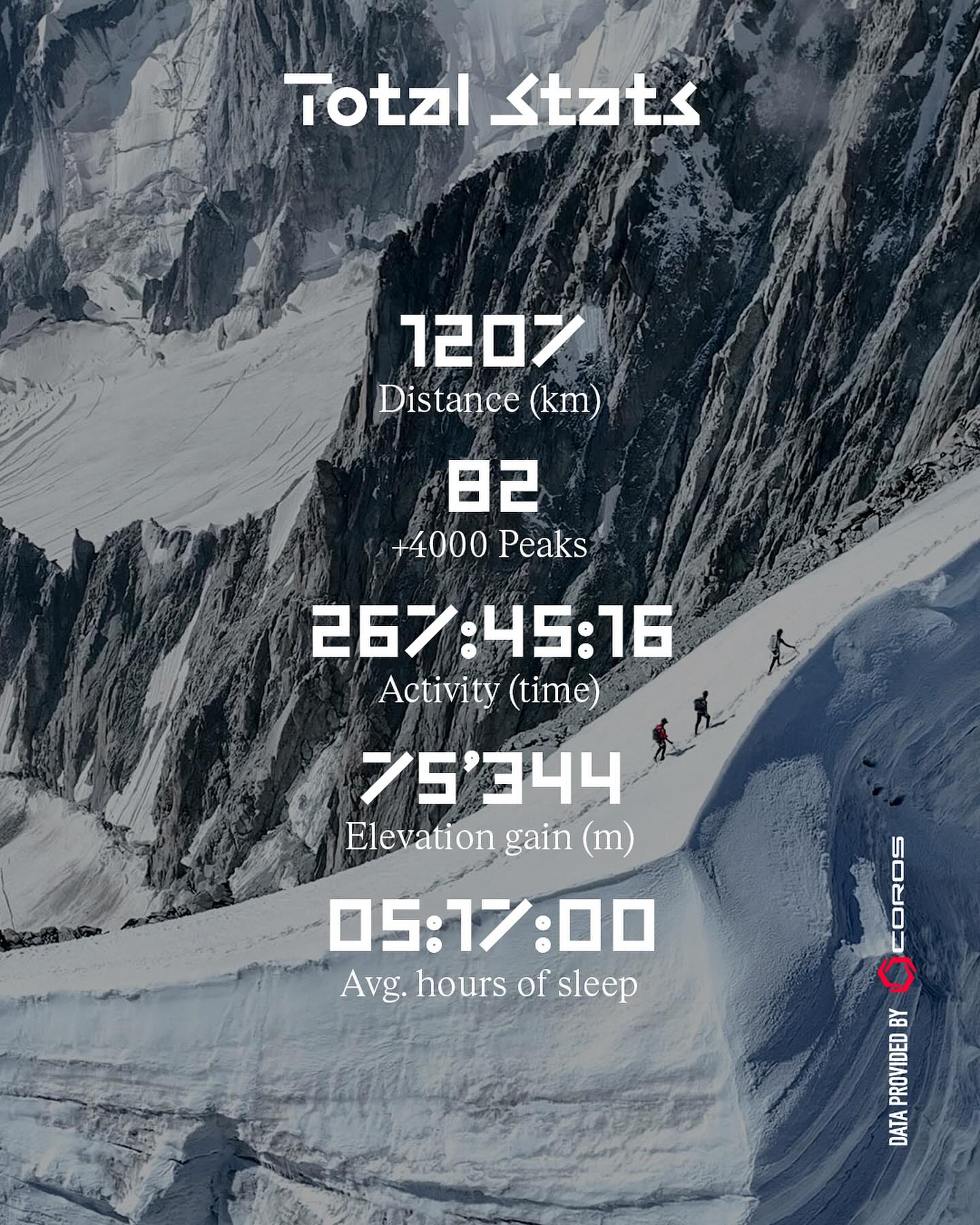
As projects go, Alpine Connections is so grand in scale, that it is hard to fully understand. Imagine connecting 82-peaks over 4000m, covering 1207km’s by human power (run, cycle, climb or walk), accumulating 75,344m+ all within 19-days and just with an average sleep of 5h 17m.
As physical and sporting achievements go, this project by Kilian Jornet, for me, is one of THE greatest sporting achievements of all time and quite correctly, it is one that will be cemented quite firmly in the legendary annals of alpinism.
“This project has been incredible; I think it’s one of the most challenging things I’ve ever done, both physically, technically, as well as mentally. Having to stay in a state of total concentration for 20 days requires a lot of energy, but it has been amazing. I remember all the sunrises and sunsets and all the friends who accompanied me in the mountains, and I am very happy and proud of what we have achieved in the last three weeks. Now it’s time to rest and process everything that has happened, because I think it will take me some time to fully appreciate it.” explained Kilian Jornet.
There is history with the 82 peaks, and many may well look at what Ueli Steck achieved in 62-days as the ‘template’ for such a challenge, his project concluded in 2015. However, in 1993 Martin Moran and Simon Jenkins did all (principal) summits in the Alps in 52 days. In 2008, Franz Nicolini and Diego Giovannini did the peaks in 60 days and just recently, Chrigel Maurer and Peter von Kanel, both from Switzerland, climbed all 82 of the 4,000m peaks in the Alps in 51 days using paraglider and foot, article here.
It may well come as no surprise that Kilian, one day, would take on this ultimate feat of alpinism, especially after his ‘Rediscovering Pyrenees’ project when he summited 177-peaks in just 8-days!
However, there was no warning or build up to this Alpine Connections project. A stunning victory at Sierre-Zinal and then Kilian announced on August 13th via social media:
“Hi everyone, I’m feeling pretty good after Sierre-Zinal, so, I’ve decided not to go home yet and enjoy the good conditions in the Alps…”
Little did we know what would follow!
Many thought a surprise UTMB start may be on the cards, I personally expected him to toe the line at Trofeo Kima… Then on August 14th, all was revealed, ‘One mountain range. One journey. This is Alpine Connections.’
At first, the 82 peaks were not announced. Quite simply, the project was described as a quest to connect as many 4000m peaks as possible relying solely on human-powered means and local resources.
I wondered, would he go for all 82 and in all honesty, we were left wondering this as each day passed until it became completely obvious that all 82 peaks were not only an objective but the timeline for this achievement would set the bar so high, that if achieved, this record would be history making.
• Alpine connections – A project by mountain athlete Kilian Jornet where he aims to connect as many 4,000-meter summits in the Alps as possible by linking peaks through ridges using only human-powered means.
• This project is a way for Kilian to explore his human limits and understand how far he can push his body both physically and mentally. For this, he will be testing himself during the activity, and the data collected will be used in scientific studies.
• The project is divided into stages that can go up to 34 hours where he combines climbing, running and cycling. Friends and family members have joined him throughout the challenge as well as a small team of filmmakers and a crew that helps with logistics.
In essence, the project is all about the constant pursuit of new goals, the creativity in approaching them and the exploration of Kilian’s own limits.
Kilian took an early start with Philipp Brugger to climb Piz Bernina (4048m), the easternmost 4000-meter peak in the Alps, located in the Swiss Engadine valley. They ran and climbed 29km with 2573m of elevation to the summit round-trip, in great conditions, before getting to the start of the first bike link-up of the adventure. Kilian then cycled more than 210km solo with almost 4000m of elevation through some iconic mountain passes, to reach the next stage of the adventure. Kilian said;
“After dreaming about this project for a while, it feels so exciting to be on the move!”
Interesting fact: Kilian will have a scientific team following him at certain points, collecting various samples and analyzing aspects like his sleep patterns.
Kilian arrived in the Bernese Oberland for the next part of the project. The day started a bit later than expected because of the bad weather. Even though the conditions weren’t perfect, Kilian set off for Lauteraarhorn (4042m) and Schreckhorn (4078m), two summits linked by a ridge, then pushing to Finsteraarhorn (4274m), the highest peak of the Bernese Alps region. Overall, it was not an easy stage with challenging weather. Fortunately, Kilian was able to shelter in a hut and get a few hours of sleep before continuing. Four 4000m peaks are now done.
Interesting facts: It was a rough day out there, with the weather forcing Kilian to change his game plan. He adjusted his route to steer clear of exposed areas, tackling wet rocks, snow, and storms as he went.
One of the toughest stages yet, with the longest continuous climb of the project so far. Kilian started from Finsteraarhorn Hut after just a few hours of sleep and managed to traverse six 4000-meter peaks. It was a long 99 kilometers with 7890 meters of elevation gain, summiting Gross Grünhorn, Hinter Fiescherhorn, Gross Fiescherhorn, Mönch, Jungfrau, and finally, a long stretch to Aletschhorn. The whole push took Kilian 32 hours and 30 minutes.
“I had to be careful since the conditions weren’t always on my side. I even had to change my route to Aletschhorn three times—once because of the rain and twice due to tricky glacier conditions. Descending from Aletschhorn, I finally reunited with the team.”
After a quick 15-minute nap, Kilian cycled 40 kilometers to link up with the next part of this adventure.
Interesting facts: Kilian has now earned 3 KOMs on Strava and completed his longest ride ever during Stage 1, covering 213.06 km with an elevation gain of 3,984 meters in just 8 hours and 50 minutes of activity.
After a good night of rest, Kilian was super happy to share this climb with my friend and talented mountaineer, Matheo Jacquemond. The duo has great history, and Matheo was part of Kilian’s ‘Summits of my Life’ project. The duo set off at 3:30 in the morning to summit Lagginhorn (4010m) through its South Ridge, and Weissmies (4017m), in a 8-hours push covering 30 kilometers and 3381 meters of elevation.
“In these moments, I feel so grateful to be surrounded by a team helping me with all the logistics of the project, and experienced friends I can count on for long outings above 4000 meters in not-so perfect weather.”
After the climb, Kilian took a short bike ride to get to the end of the stage and a new afternoon of rest as the weather deteriorated again. After stage 4, Kilian had climbed twelve 4000-meter peaks.
Interesting facts: After climbing Lagginhorn and on the way back, Matheo decided to call it a day and take the gondola back, while Kilian carried out running to arrive down the valley.
“As it had been raining (and snowing on the summits) the entire afternoon and night before, I left solo at 6:15 in the morning and had another relatively “short” (8:40) day of climbing to make the most out of the conditions. Still, I am used to this “Norwegian” weather that feels just like home, so I managed to summit Dürrenhorn (4034m), Hohberghorn (4218m), Stecknadelhorn (4239m) and Nadelhorn (4327m). On the way down, I stopped to get some food at the Mischabelhütte and ran down to the valley.”
In total, 23 kilometers and 3246 meters of climbing for 4 more summits and a total of 16 4000 meters since starting the adventure.
Interesting facts: During his last adventure in the Pyrenees, Kilian lost his phone during one stage. This year, he has incorporated a phone case (and a new phone of course!) with a small string that he then attaches with a carabiner to his backpack.
“Stage 6 of the Alpine Connections project, aiming to link as many 4000 meter peaks of the Alps as I can, got under way at 6:20 in the morning from Saas-Fe. I started climbing with Matheoconnecting the beautiful peaks of the Mischabel group: Lenzspitze (4294m), Dom (4545m) and Täschhorn (4491m), before being joined at midday by mountain guide, Genis Zapaterfor Alphubel (4206m), Allalinhorn (4027m), Rimpfischhorn (4199m) and finally Stalhhorn (4190m), ending the long day in the Monte Rosa hut for some well needed rest. It felt great to see the sun, be in good company, and to add a big day in the mountains to the adventure after dealing with uncertain weather for a bit.”
In total, Stage 6 lasted more than 21 hours, with almost 48 kilometers and more than 6000 meters of elevation, adding 7 summits to the project, for a total of 23 peaks of 4000 climbed so far.
“After 3 hours of rest in the Monte Rosa hut, I left, solo this time, at 7 in the morning for one of the big days of the project, with 18 summits of 4000 meters and above climbed in a single day.”
This traverse is known as the Spaghetti Tour, and took Kilian through Nordend, Dufourspitze, Zumsteinspitze, Signalkuppe, Pointe Parrot, Ludswighöhe, Corno Nero, Pyramide Vincent, Punta Giordani, Lyskamm E, Lyskamm W, Castor, Pollux, Roccia Nera, Breithorn (pointe 4106), Breithorn E, Breithorn central and finally Breithorn W.
The weather was good during the day, but the warm and soft snow conditions made Kilian slower than he had originally thought, which in turn made him struggle with adequate water and food intake. The smoke from the North American fires was clearly visible up in the sky and made for a strange atmosphere at times. Fortunately, the super moon made for good visibility at night, and Kilian managed to finish the stage in 17:45, ending up at the Hörnlihütte at around 1 in the morning for a feast of eggs, soup, quinoa, tortilla, broccoli, peas and cake before crashing down.
In just 6 stages, Kilian had accumulated 41 peaks of 4000 meters since the beginning of the Alpine Connections project, crazy!
Interesting fact: At the end of Stage 7, Kilian reached Hörnlihütte. His mother, Nuria, who knew the Hörnlihütte since she had submitted the Matterhorn 46 years ago, was waiting there to meet him.
“After some rest in the Hörnlihütte, this new stage started right away with an iconic climb, Matterhorn (4478m) , which I had climbed by its North Face the last time I came here (but of course that wasn’t on the menu today!), and in 2:52:02 from the Italian side in 2013.”
Departing at 7am, Kilian was treated with a beautiful sunrise. Once again, Kilian was joined by Matheo for Dent d’Hérens (4173m) then Genis for the long walk to Dent Blanche (4358m) and the descent to Schönbielhütte.
Another long day of more than 18 hours and 3 more peaks.
Interesting fact: In 2013, Kilian did his fastest time on the Matterhorn route, ascending it from the Italian side with a time of 2:52:02.
“We stayed only two hours at the Schönbielhütte, and left towards Zinal withMatheo at 5:30 in the morning, for what was maybe the most special stage of the project for me.”
After 4 days of an average of 19 hours of activity, Kilian arrived back in Zinal, two weeks after winning the mythical Sierre-Zinal mountain race. For this last day, Kilian recorded 4 new +4000m peaks in the Alps: Ober Gabelhorn (4064m), Zinalrothorn (4221m), Bishorn (4151m) and Weisshorn (4506m), a summit that he was looking forward to at the beginning of this project.
As he explained when he arrived back to Zinal:
“To me, this was the most special stage, and I was really looking forward to it. It was the end of a five-day stage in Valais: I was very tired, and it was the most technical section in a very wild region with a lot of decision making and navigation difficulties. To me, Weisshorn is one of the most beautiful mountains here in the Alps. Catching the sun to climb the south ridge of Weisshorn was special as I was quite afraid of entering the face in the dark as it’s a big climb, very technical and very long and I needed to run all the ridges before with very poor rock and very demanding. But then, the climb to Weisshorn was one of the best moments of my life! Climbing there with this rock that is beautiful and just seeing the sunset and the broken spectrum. I was flowing, I didn’t feel any tiredness, anything. It was super, super special. And then going to Zinal that is a special place for all the races that I have done here, it was a very special day”
In Zinal, his team and his mother were waiting for him before departing for a new bike link-up. To this day, Kilian has climbed 48 peaks on the Alps, with an elevation of more than 46.203m.
Interesting fact: Kilian’s last project in the Pyrenees concluded after 8 days, 155 hours of activity, 177 +3000 peaks and 485,65 Km. Alpine Connections has already reached 9 stages, 160 hours of activity and 48 +4000 peaks. The projects are unique and not directly comparable, but it’s something remarkable!
“I started the day by a 110 kilometers bike ride from Zinal to Bourg Saint-Pierre, which took me most of the morning. I was happy to meet with Alan Tissieres for the climb to Grand Combins. We were racing together in ski mountaineering a long, long time ago. Now, he is a mountain guide, and it was nice to share a few summits with him! Grand Combins was more technical than I expected. It was a very nice climb, but it is a dangerous mountain because there’s a lot of rockfall and it’s not always easy to navigate, so I was glad not to be solo. We started towards Combin de Valsorey at sunset and climbed through the night on the glacier to Grand Combin and Combin de la Tsessette, the 49th, 50th and 51st summits of my Alpine Connections project. After a bit more than 9 hours of climbing, we were back to Bourg Saint-Pierre at around 2:30am.”
The next stage should be a stage of transition, as Kilian exits Switzerland towards the next part of the journey.
“After the Combins traverse, I arrived at 2 in the morning back to Bourg-Saint-Pierre, had a 4 hour sleep and left for an easy day, first cycling about 30k to La Fouly. On the way, I met Jules Henrigabioud, someone I’ve known from racing and ski mountaineering, who joined me on the ride and told me about a shortcut to go to Val Ferret. The Alps are a big place, but somehow, I keep running into people I know! I did a nice, easy run in the heat to Val Ferret. Over there, the weather was bad, so I took the first actual full rest day of the project. I tried to eat, drink a lot, heal the skin my hands and feet and prepare for the next long and technical push of the Alpine Connections project.”
Interesting fact: For the bike part, Kilian bumped into Jules Henri, an old friend who had competed in trail and ski mountaineering with him. After chatting for a bit, they realized they were going to the same place so decided to ride together, using a shortcut that Henri knew
“I left at midnight from our camping ground in Courmayeur, feeling good and rested, to start the climb to Grandes Jorasses with a great team: Matheo, Michel Lanne and Bastien Lardat. Even though it was the middle of the night, everyone was super happy to be here and to kick off the day in good company! All of them know the area well and I was glad to have them for the more technical climbs of the day, as the conditions can get a bit tricky in this part of the Alps.”
Kilian and the team summited the Grandes Jorasses ridge (Pointe Walker, Pointe Whymper, Pointe Croz, Pointe Elena, Pointe Margherita), then Dôme de Rochefort, Aiguille de Rochefort and finally Dent du Géant, before stopping for a break at Rifugio Torino.
After that, Kilian left the team to go solo to the Refuge du Couvercle where he arrived after an elapsed time of 18:22 hours. With 28 kilometers and 4200 meters of elevation for today, Kilian climbed 8 more 4000-meter peaks, bringing the total to 59.
Interesting fact: After passing through Rifugio Torino, Matheo, Michel and Bastien decided to stop and let Kilian continue solo to Refuge Couvercle, amazed at how hard it was to follow Kilian even after 12 stages.
“Departing at 4am from Refuge du Couvercle, I summited Aiguille Verte, Grande Rocheuse, Aiguille du Jardin and Les Droites in a 17 hours push for 24 kilometers and 3470 meters of elevation in quite technical climbing. I was glad to join the team, friends and family at Rifugio Torino to debrief such a big day and start planning the rest of the adventure”.
This brings the total to 63 summits so far. Today, Kilian He was joined by Spanish alpinist Jordi Tosas, an old friend and climbing partner, with whom Kilian did his first expedition in the Himalayas.
Interesting fact: Proof of how technical the terrain is? Kilian has already worn out two pairs of leather gloves!
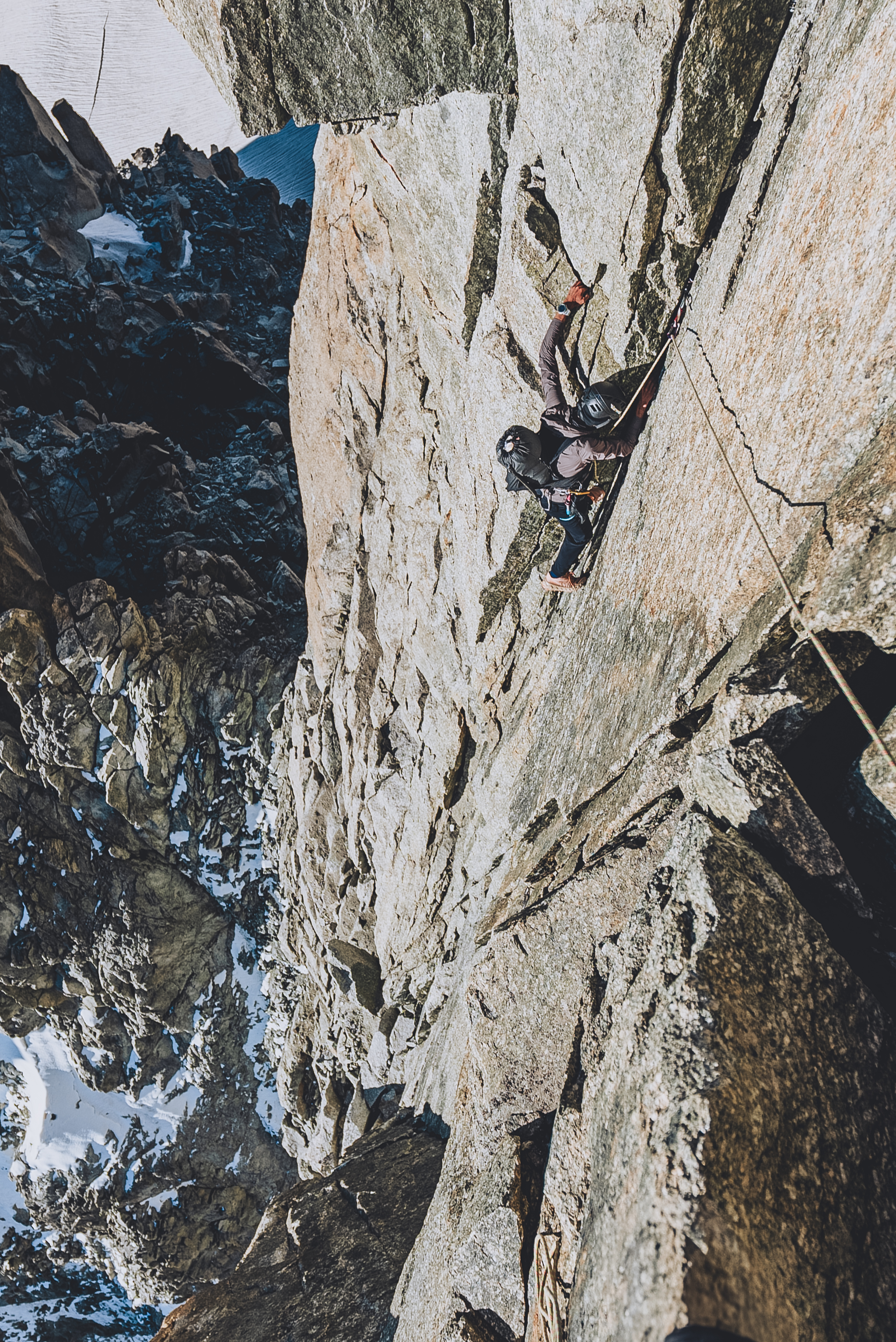
“We started the day at 4:45 with Matheo and Noa Barau on the Diable ridge, one of the most beautiful rock climbs I’ve ever done, both very technical and aesthetic. This took us through Corne du Diable, Pointe Chaubert, Pointe Médiane, Pointe Carmen and L’Isolée. We pushed on towards Mont Blanc with the summits of Mont Blanc du Tacul, Mont Maudit, Mont Blanc, Dôme du Goûter and Aiguille de Bionassay, where Matheo and Noa left.”
Kilian continued solo, went back to the summit of Mont Blanc for a second time on my way back, then down on the Brouillard ridge (Monte Bianco de Courmayeur, Picco Luigi Amadeo, Mont Brouillard and Punta Baretti) accompanied with amazing sunset in the background:
“A moment that I will remember forever.”
Taking Kilian around 20 hours in total, he stopped at the bivouac Eccles for around 4 hours and waited for better conditions, before climbing some technical sections at Grand Pilier d’Angle and Aiguille Blanche de Peuterey.
One very big day in the books, with 16 new 4000-meter summits, almost 41 kilometers with 5000 meters of climb, in 29 hours and 25 minutes (not including the 4 hours sleeping at Eccles).
Interesting fact: One of Kilian’s goals for this project was to connect summits using ridges or the most logical routes. In Stage 14, for example, he faced sections that had rarely been attempted, so there wasn’t much information available. Kilian used various resources—maps, advice from friends, and input from fellow alpinists—to understand these routes before tackling them. This shows the significant time and effort he put into planning this project, which took several months. Once on the mountain, he had to constantly adapt his plan based on weather, conditions, and how he was feeling. The support of friends, guides, hut owners, and people he met along the way was crucial in these moments.
Kilian reached the summit of Gran Paradiso (4,061 m) with Mathéo and Vivien Bruchez, a long-time friend with whom he has shared numerous expeditions and steep-skied some iconic couloirs in the mountains he is now crossing in his project. After the bike section, Vivien, recovering from an injury, departed, and the group was joined by trail runner Henry Aymond and ski mountaineering world champion Emily Harrop. Together, they set up to climb the summit number 80 of this journey, which they summited in only 4 hours. This summit was less technical than the sections Kilian encountered in the Mont Blanc massif a few days ago, which allowed for a quick ascent and descent. Back from the climb, Kilian ran 21 km to cross back into France. Once in Val d’Isère, he rested for 7 hours.
Interesting fact: It took Kilian only 4h to climb Gran Paradiso, compared to the long hours spent on the Mont Blanc ridge the days before, which is a real proof of how technical the Mont Blanc is.
Stage 16 Completion
After completing stage 16 in the Ecrins massif, Kilian connected all 82 of the Alps’ 4,000-meter peaks in 19 days using only human-powered means. A mind-blowing project and a colossal challenge due to the exposure, technical difficulty, and focus it requires.
Interesting fact: Kilian set up his first FKT in Dôme des Neiges when he was 16, so finishing here feels almost like closing the circle.
In a hybrid combination of trail running, mountaineering, climbing, and cycling, Kilian Jornet has brought together everything he is passionate about in this project: the majesty of the mountains, facing the unknown, honouring alpinism and his mentors, physiological research, and the pursuit of physical and mental limits, all shared with friends and the community.
“19 days after getting started on Piz Bernina, my dream of climbing all 82 4000-meter peaks of the Alps using only human power to link them together came true on Dôme and Barre des Écrins, the westernmost of them all. This was, without any doubt, the most challenging thing I’ve ever done in my life, mentally, physically, and technically, but also maybe the most beautiful. It’s difficult to process all my emotions just now, but this is a journey that I will never forget. I want to thank again all the people who supported me or climbed with me throughout this project. It’s time to rest for a bit now!”
SUMMARY
It’s very, very difficult to summarise this achievement. In all honesty, I am not able to fully understand what Kilian has achieved. We can look at images and videos, they give a hint of the danger, the complexity, the skills required, but ultimately, we can only imagine… What I do know is, this is one of THE greatest sporting achievements of all time.
Michel Lanne, a grand star of the sport, a mountain guide and employed by the PGHM (Peloton de Gendarmerie de Haute Montagne) who joined Kilian sums it up well:
“This is the story of a friend, who decides to go on a ‘little alpine ride,’ as he calls it! Except that this spring, when he explained to me the details of this project, I am both conquered by the idea, but quite puzzled about the feasibility of such a feat! Except this old buddy had it all planned, absolutely everything! He then sends me the routes, timings, summits, planned equipment, and even his nutrition plan for a little over 2 weeks… Knowing the animal, I understand that his determination is complete, that this Titan project matches him completely, and that he is the only one capable of achieving such a feat. In the middle, we often talk about hunting the 4000! As far as Kiki is concerned, this line-up seemed so logical and natural, I’d call this a pick of 4000! Perhaps the numbers can help you understand the extent of what he just accomplished… but beyond the colossal physical performance, it is the mental and psychological aspect that struck me the most. Despite the monstrously long and challenging days, despite the fatigue and little sleep, he was able to exhibit vigilance at every moment, managed to manage nervous tension, risk and effort, constantly maintaining clarity, anticipation and vigilance beyond the norm. And leave each night with a smile, happy and eager to enjoy the mountain. Kiki, thank you for inviting me to share a small piece of your amazing adventure, with the phenomenal Matheo Jacquemond and Bastien Lardat. I have often remained silent, discreet observer of your gesture, fluid, elegant, easy, applied and mastered.”
Michel’s words mean so much, not because Kilian is a friend BUT because you fully understand the enormity of the challenge. The difficulty. The danger. The audacity of even considering this project deserves respect, to complete it in 19-days is beyond any comprehension.
Who would have thought that Kilian Jornet would leave his sponsor, Salomon?
The duo seemed in perfect synergy:
Salomon is Kilian.
Kilian is Salomon.
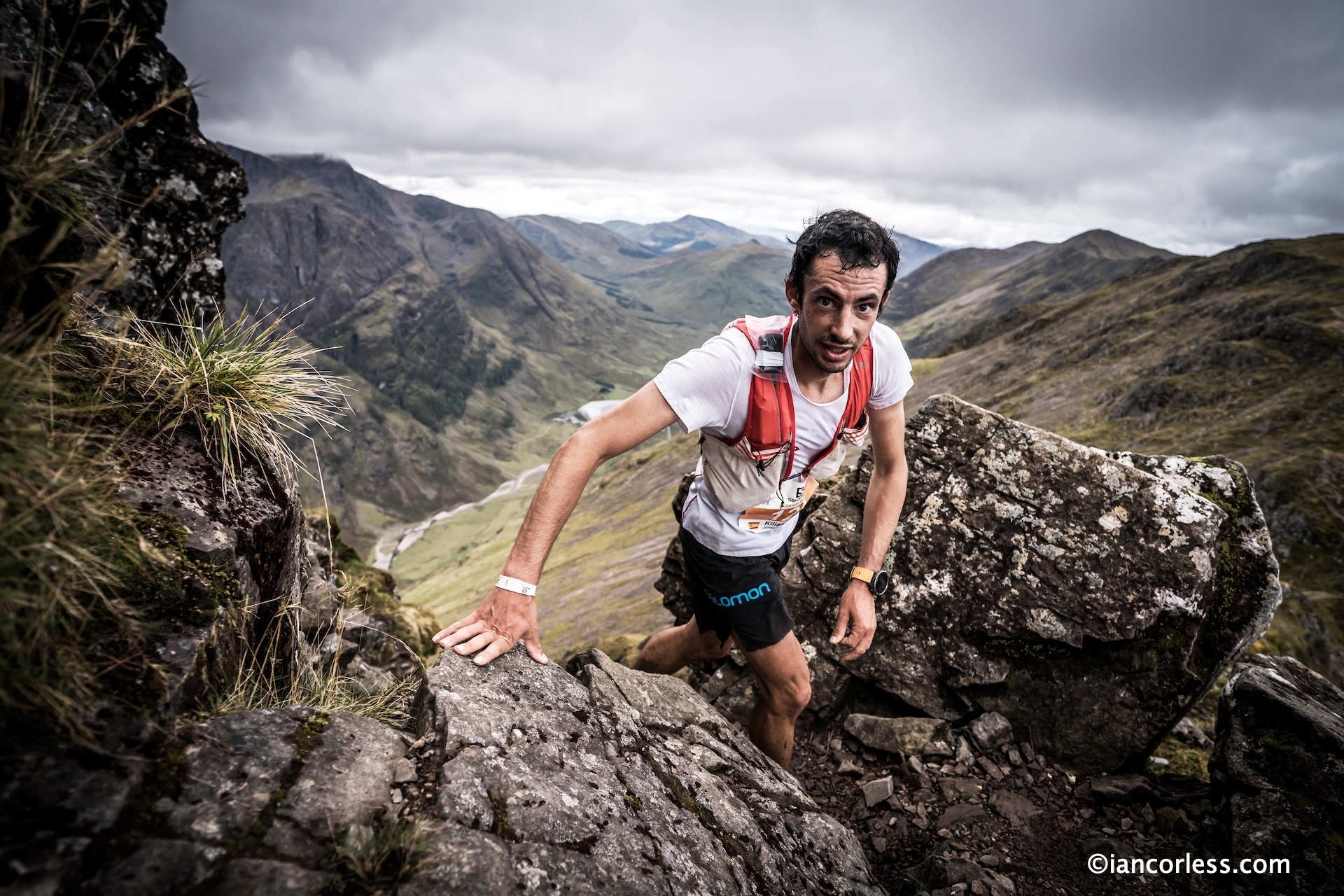
Kilian skyrunning in Scotland.
As Kilian said on the 30th November 2021, ‘I remember like it was yesterday in the summer of 2003, a friend of a friend gave me a few pairs of trail running shoes. This guy was the director of marketing for Salomon Spain. From that moment on, Salomon not only came a sponsor but a life partner…’
Together, Salomon and Kilian dreamed big… ‘From winning trail and skimo races to climbing high mountains. I was able to make dreams come true that I didn’t even believe possible, and it was in large part thanks to this team.’
Kilian at the iconic Trofeo Kima – a skyruning classic.
For many of us, me included my journey in trail, mountain, ultra and skyrunning coincides with Kilian’s meteoric rise to be the ‘GOAT’ – Greatest Of All Time. We have absorbed his journey, jaws have dropped at his ability, we have had our minds blown by his escapades but now, a new period of history will be made.
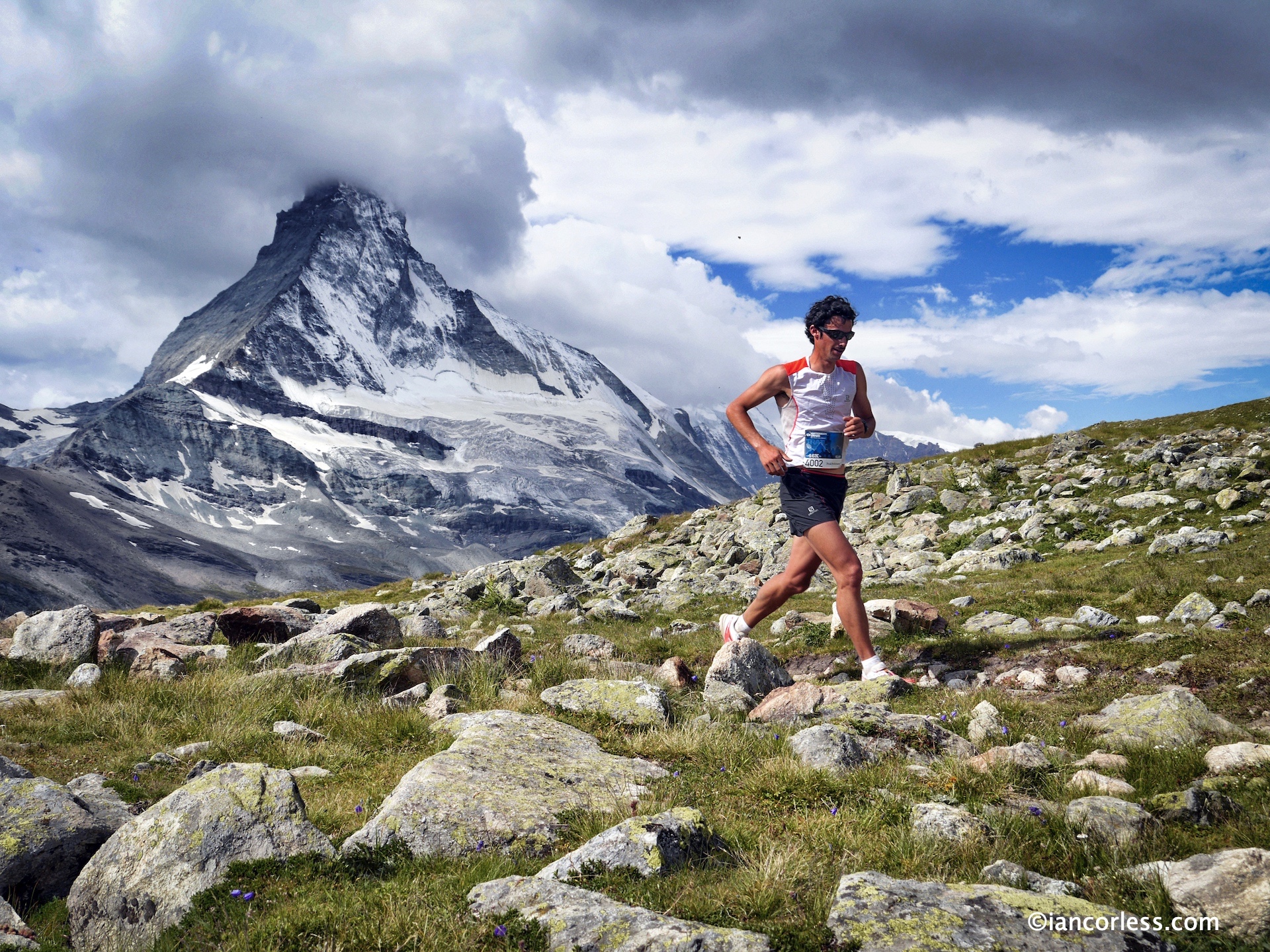
I first met Kilian in 2012 and I feel lucky to have shared his journey, notably in skyrunning which Kilian holds very close to his heart. Ask Kilian who provided him the motivation to pursue his dreams and set goals and he will respond with, ‘Bruno Brunod, Fabio Meraldi, Marino Giacometti and Marco De Gasperi.’ This was reflected in his ‘Summits of my Life’ project and particularly his record on the Matterhorn.
Kilian and the Matterhorn.
Since November, we have all looked back and remembered our journey with Kilian and wonder what is next?
Notably, there have been significant changes for Kilian in recent years. His relationship with Emelie Forsberg, his life in Norway and the arrival of two children most certainly would make one assess and look ahead to a different future. But importantly, the planet, environment and going ‘Green’ has been a very important part of the ‘new’ Kilian. So, it is or was fair to assume that any new project would have ecology at its core.
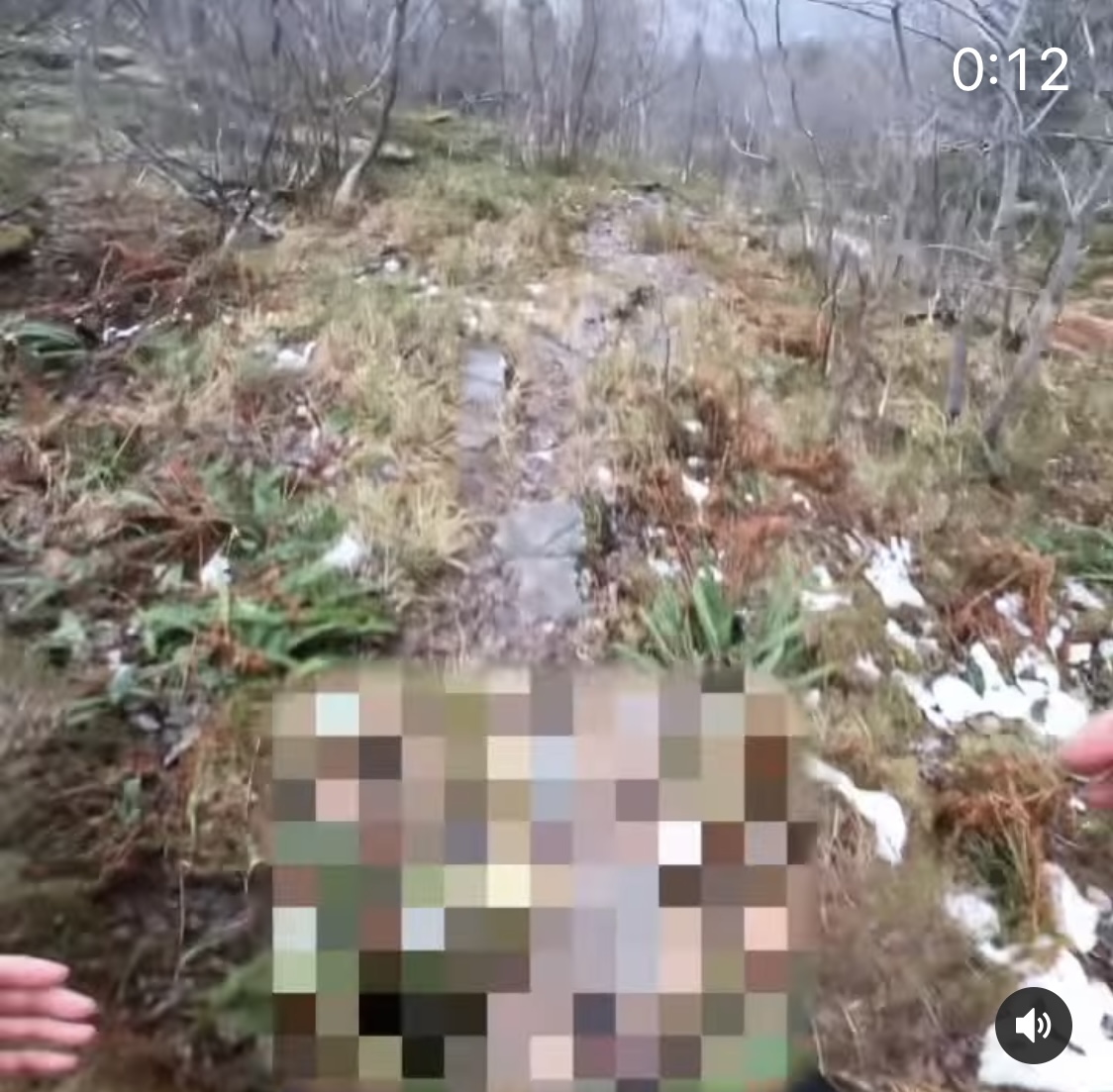
We have been teased. On the 2nd of February Kilian posted a video of him running with his shoes blurred. He called it, ‘Testing.’
On February 14th he ran a 100-mile race, the Tjörnarparsen Ultra in Skåne, much of the attention was about what was on his feet.
February 23rd he announced his 2022 calendar: Pierra Menta, Zegama, Hardrock 100, Sierre Zinal and UTMB. It was a classic KJ year starting with skimo, a return to the iconic Zegama, Hardrock 100 which is maybe Kilian’s favourite race, the fast and athletic Sierre Zinal and the surprise, UTMB.
On March 5th, Kilian announced he would no longer partner with Suunto, a significant departure as Suunto and Salomon go hand-in-hand. On March 7th, he announced he had joined Coros.
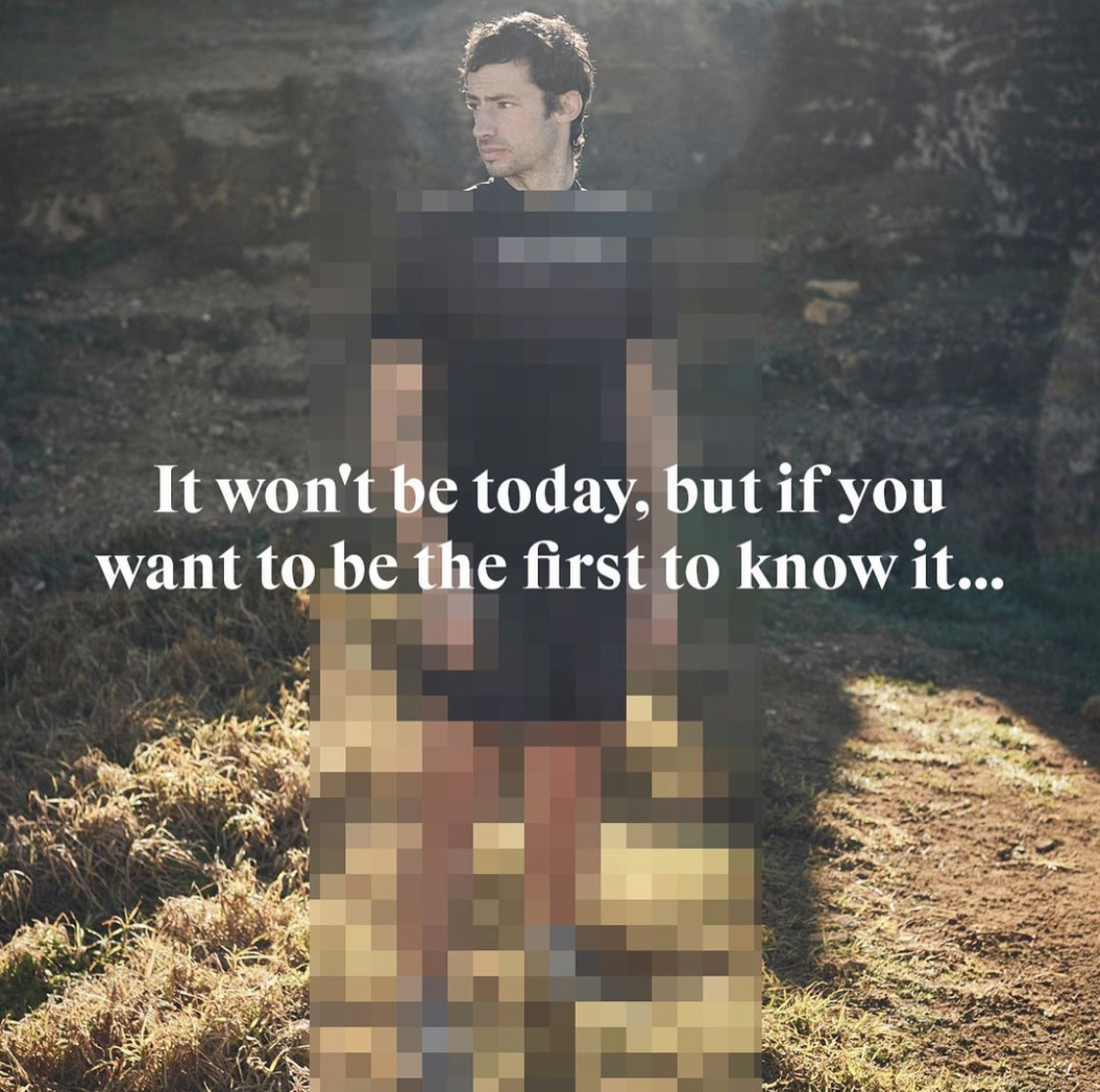
Finally, March 21st we are teased with, ‘Want to find out what’s behind the pixels of the last few months?’ There were some clues in the post, notably the sign-up details linking to The Normal Company, S.L. Which in turn links to Mountainlife SL and again links to Lymbus who manage Kilian. One thing was for sure, links to Mallorca and the brand ‘Camper.’
Well now, that future is disclosed.
It seems a lifetime since November 30th but today, March 2022, Kilian announces his project.
NNormal – Kilian Jornet and Camper will blaze a new trail with NNormal.
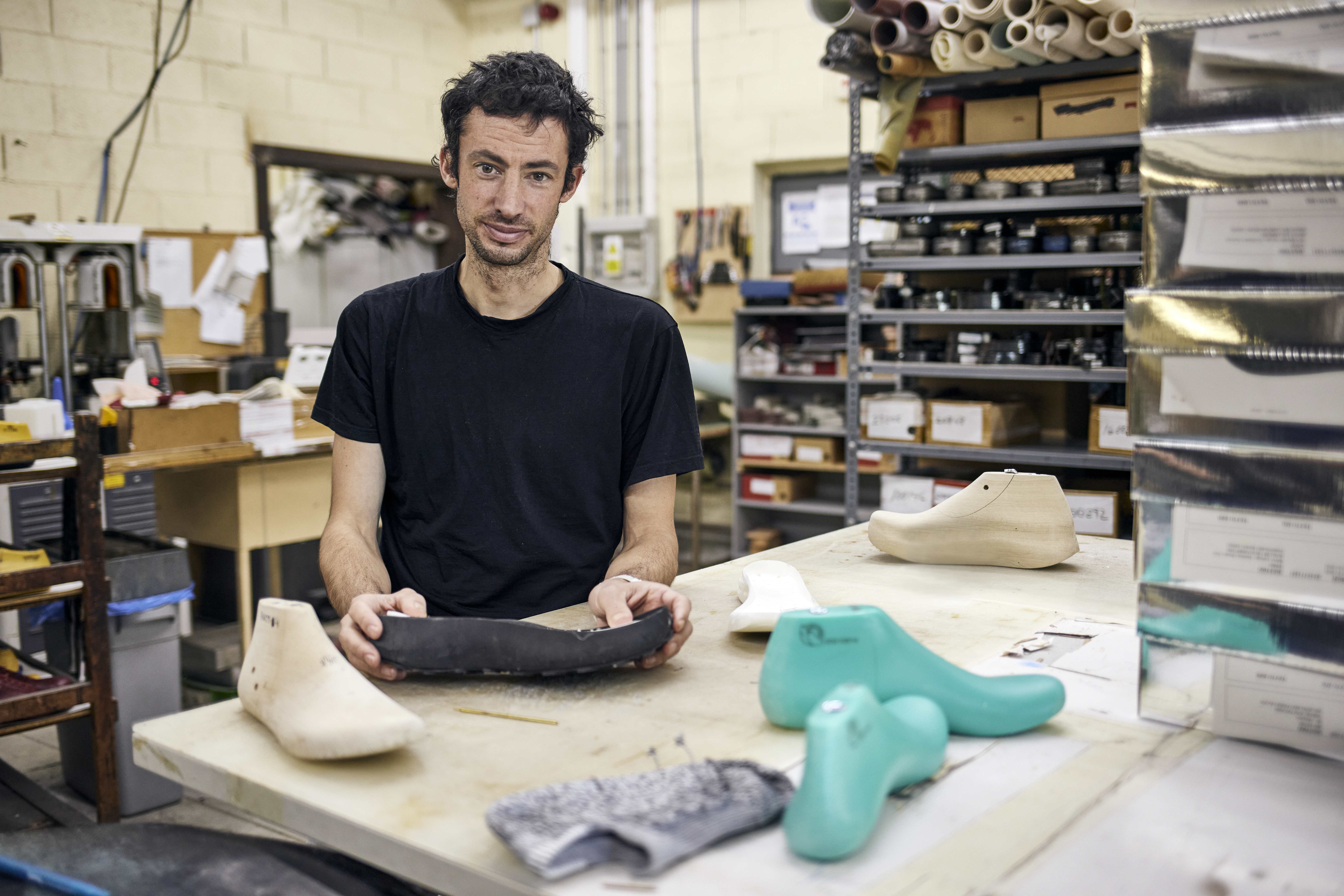
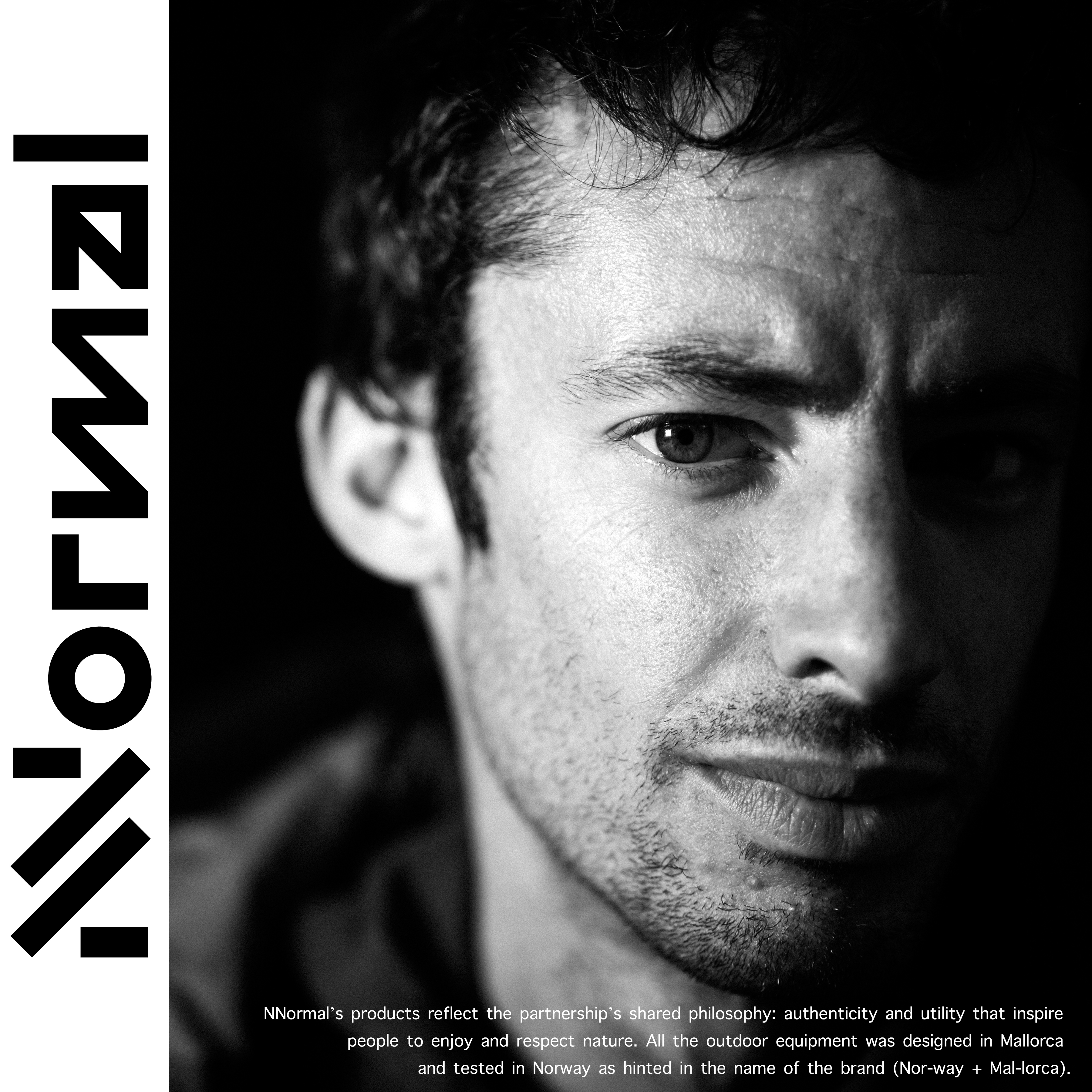
A new outdoor sportswear brand, designed and tested between the coasts of Mallorca and the fjords of Norway. The brand’s first products will be launched this Fall. The name reflects the Norway/ Mallorca (Nor-way + Mal-lorca) – designed in Mallorca and tested in Norway.
Kilian speaks on the new project:
“Sharing the same values was a strong motivation to start this project. We agreed that we need a new way of thinking and acting in relation to our environment and outdoor activities… We want to be very honest on how we produce the equipment and on the role the company wants to play for the society and the environment. This means transparency and working to avoid overconsumption by building products that are durable.”
“Building a new brand is always a very exciting adventure, although we are aware of the challenges involved… We are complementary partners of NNormal. Having the opportunity to conceive it with someone like Kilian is unique: to combine performance with personal responsibility strongly resonates with our DNA. He brings his strong product development expertise and unique vision of the outdoor world, while Camper brings innovation, shoemaking, and design know-how.”
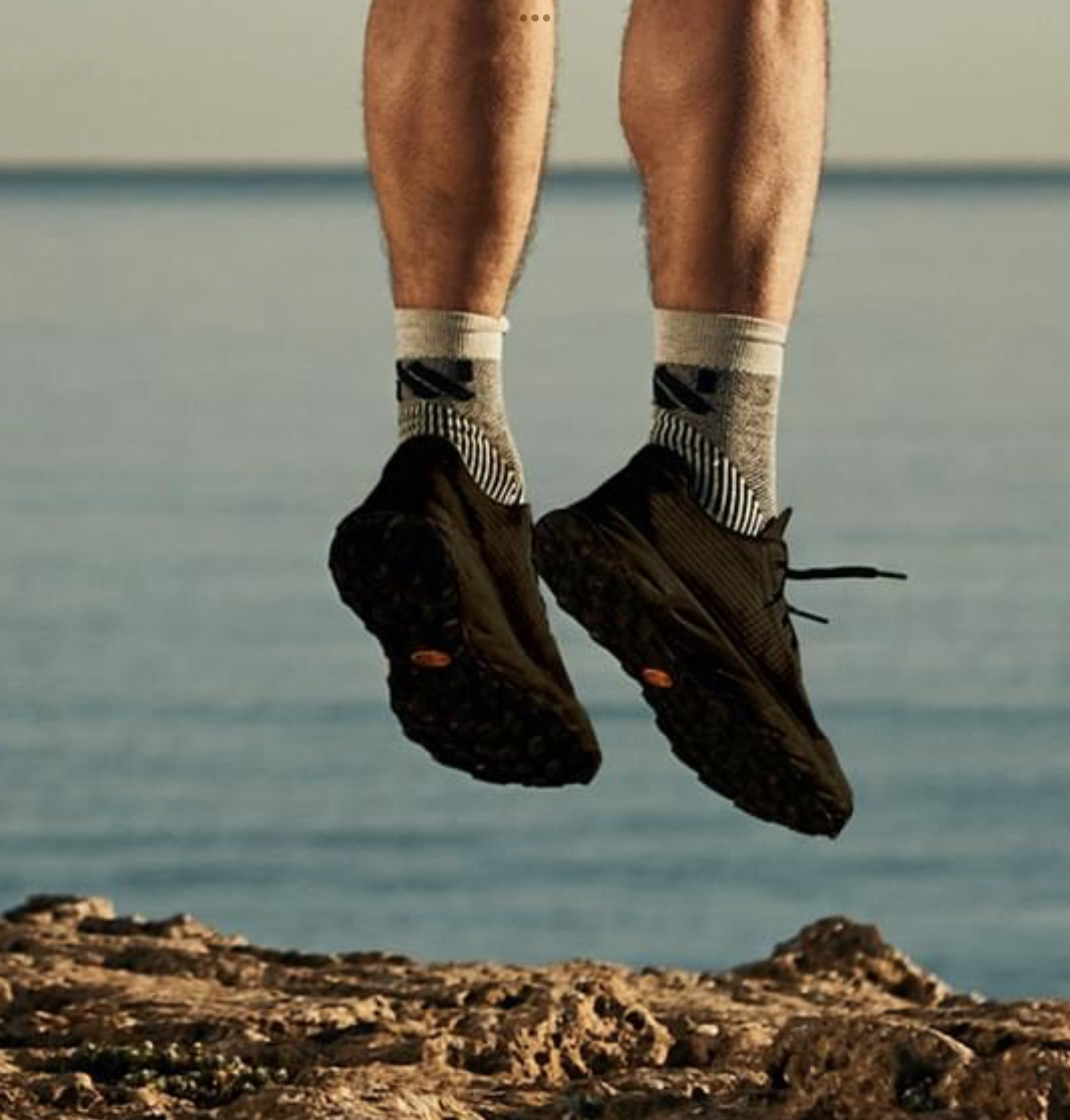
The NNormal assortment will be launched in FW22 in Europe & North America via nnormal.com and specialist outdoor and running stores. The first drop will be limited, focusing on footwear, apparel and accessories for trail running and hiking. Kilian Jornet—the first ambassador of the NNormal team which will be revealed in the coming weeks—will wear them during this year’s race season.
Welcome to NNormal. Your Path, No Trace.
THOUGHTS
As mentioned above, until early March, Kilian’s new project was a ?. However, with research, it was possible to find out certain things and all my research led to Mallorca and Camper, so, it’s interesting to see that confirmed. Tofol Castanyer is ex Salomon and lives on Mallorca – no doubt instrumental in helping Kilian. As for the new team, it goes without saying Emelie Forsberg will join NNormal but it is not confirmed. There are also some other key names linked if you know where to look… For now, I will hold those names for fear of upsetting any future announcement. However, they can be seen here: https://www.nnormal.com/en/community/
As expected, a strong reference to respecting nature and ecology is paramount and the mission statement includes a reference to products that should be repairable, reusable, or repurposed or recyclable. Camper have already pioneered this with several projects. https://www.camper.com/en_GB/content/social_responsibility
The brand wishes to explore new ways to do things with product, sustainability, business, and social responsibility.
Of course, Kilian and his team will be able to pave a new way and lead by example. That will be relatively easy with Camper backing the project. Of course, the question mark will come how paving a new way still makes the business profitable and viable.
One thing is for sure, this new project will raise a few eyebrows. Camper and run shoes are not the obvious synergy. But Camper has the money and experience and no doubt, this partnership with Kilian must go back many months if not years. A shoe takes a long time to develop, especially a shoe that Kilian will endorse.
“All talk and no action equate to nothing. We know it’s not what we say, but what we do, that defines who we are.”
To conclude, the NNormal manifesto
We run for simple reasons and with a clear mind.
1. We blaze our own trail
Someone once said, we are our dreams… and if we don’t dream, we are no longer
alive. Our unique creative path drives us to give back to people and the planet.
2. Our home is outdoors
We’re passionate about outdoor sports—but above all we’re people. Reaching
the summit is also about the emotions and memories of everyone who’s come
with us on our journey.
3. We empower simplicity
Simplicity means that with less, we can do more. The simplest solution will be
the most efficient, but also the most difficult to imagine.
4. We take responsibility
In the outdoors, just as in life, you rely on the strength of your partners. We won’t
lose our way because there is no set way. We’re responsible for all our actions,
good or bad.
5. We act louder than we speak
All talk and no action equate to nothing. We know it’s not what we say, but what
Kilian Jornet today confirmed he is back in Nepal with David Goettler – the plan still remains a mystery?
“A simple idea and a high possibility of failure summarises perfectly what we are searching for in the next weeks in the Khumbu region.”
– Kilian Jornet
David on his own IG just today posted an image from his last rotation at 6800m on the #Lhotse face between C2 and C3.
“One more from my last rotation up to 6800meter on the Lhotse face between C2 and C3. The face itself was super dry. I hope with the recent small snowfalls it changes to a bit better and safer conditions.“
@David_goettler
It begs the question, are the duo planning to resurrect the project of Ueli Steck. Maybe the Hornbein route on the west ridge of Everest… Climb the Hornbein Couloir then traverse to the peak of Lhotse? Steck unfortunately died before he had the opportunity…
“Steck had originally planned to attempt it after completing an audacious Everest-Lhotse traverse—summiting the world’s tallest and fourth-tallest peaks in one push without supplemental oxygen.”
Outsideonline
Time will tell what the duo plan, one thing is for sure, they may will need to be flexible and adaptable, particularly with the ever-changing Covid situation. In theory, they will have 4-weeks to attempt anything and then the monsoon will come.
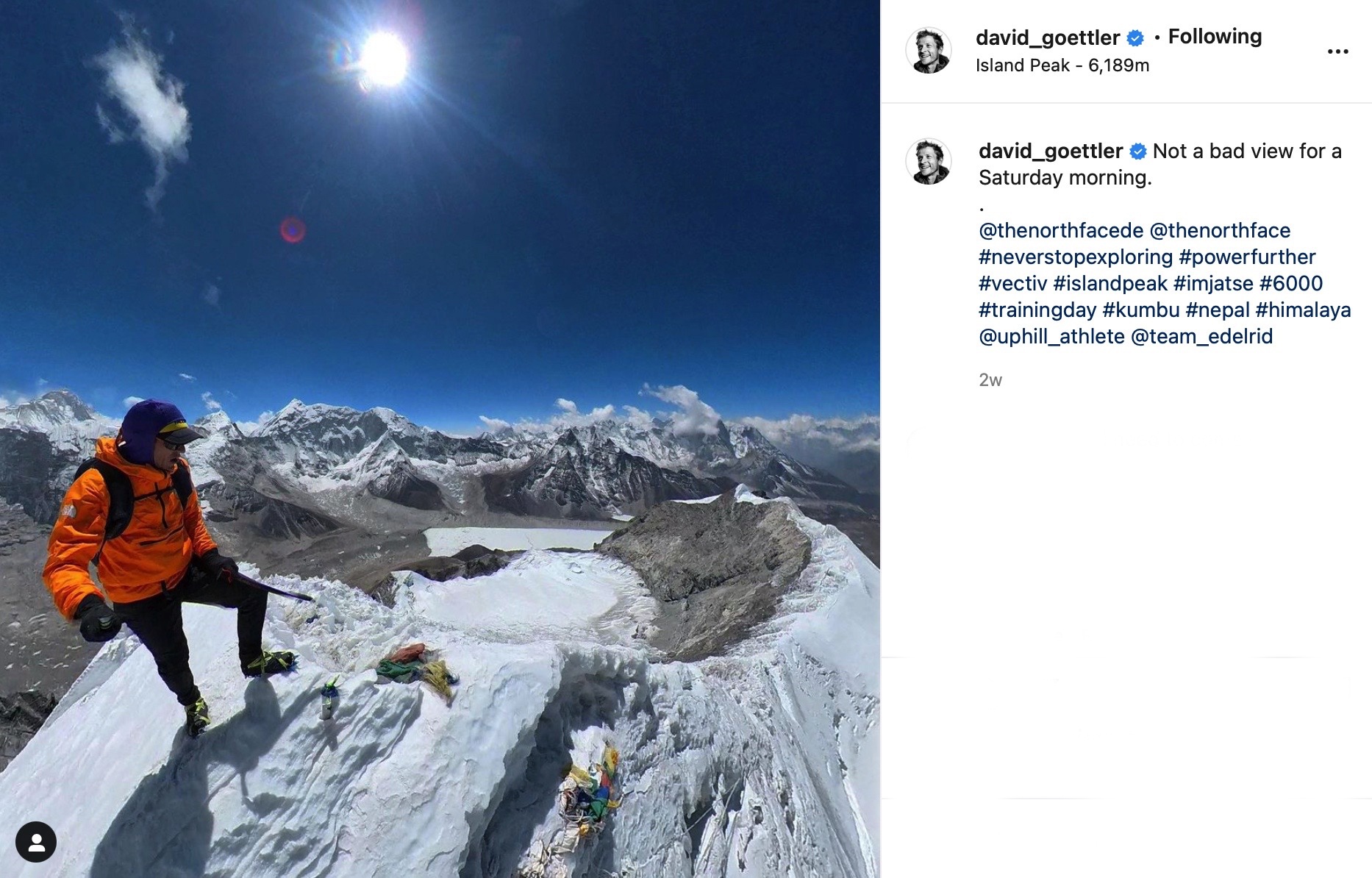
It would appear that David has been training and getting acclimated for some time in the area, at least 3-weeks. David summited Island Peak just 2-weeks ago.
Whereas Kilian has been training in Norway. While Norway is a perfect training ground, it lacks altitude and Kilian will need to play catch up when in Khumbu. One thing is for sure, Kilian adapts quickly but as we all know, altitude and the mountains are the boss!
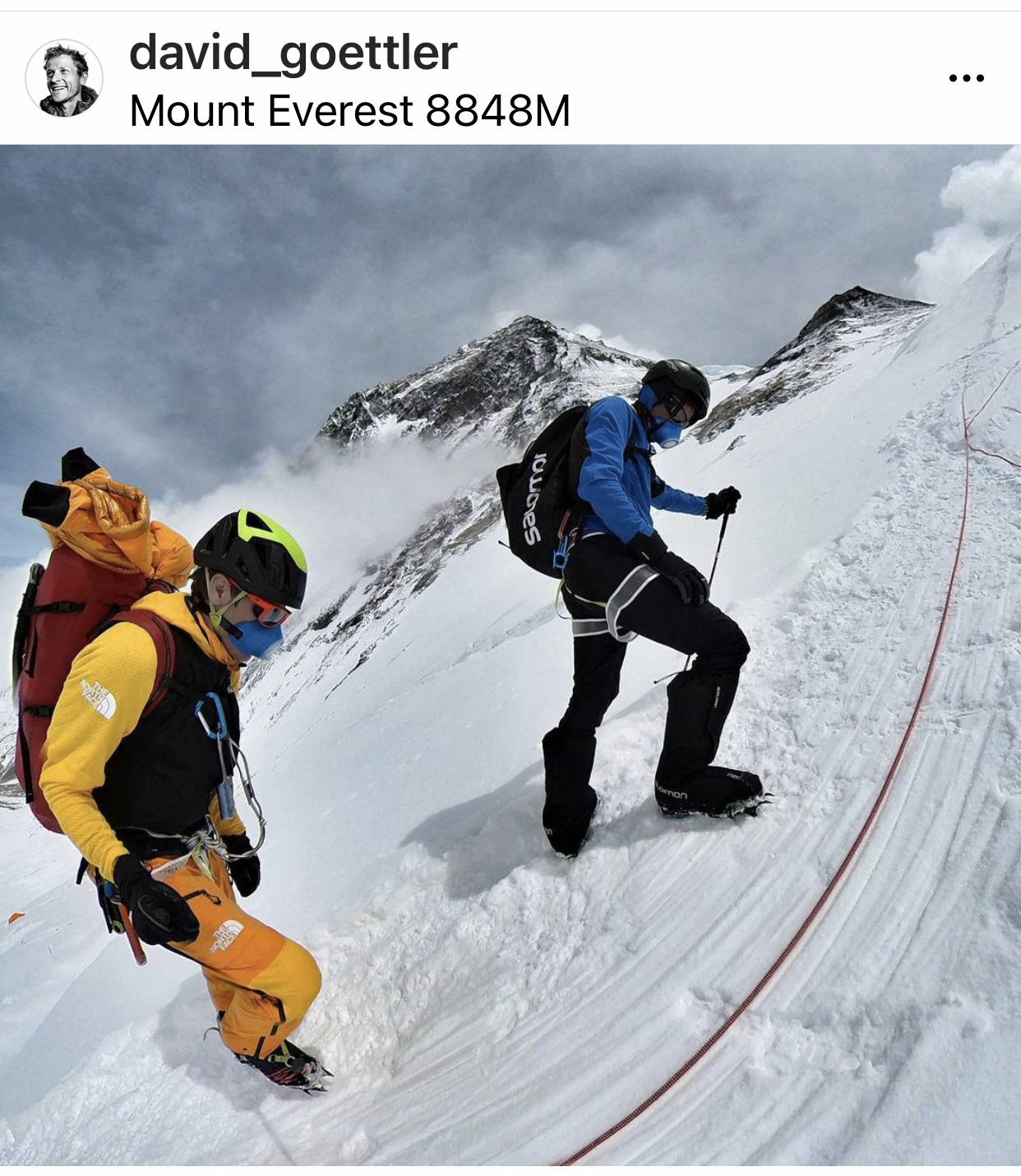
Update May 5th 2021: Both Kilian and David have been acclimating above 7000m on Everest,
We wish them well and safe passage on the journey.
One thing is for sure, Kilian will be looking for fun and adventure.
Please support this website. I believe everyone deserves to read quality, independent and factual articles – that’s why this website is open to all. Free press has never been so vital. I hope I can keep providing independent articles with your help. Any contribution, however big or small, is so valuable to help finance regular content. Please support me on Patreon HERE.
Episode 201 of Talk Ultra has a chat with #phantamsm24h runner, Simen Holvik and we discuss his 2021 July FKT plans in Norway.
Talk Ultra needs your help! We have set up a Patreon page and we are offering some great benefits for Patrons… you can even join us on the show! This is the easiest way to support Talk Ultra and help us continue to create! Many thanks to our Patrons who have helped via PATREON Donate HERE
Importantly, go to iTunes and subscribe so that you automatically get our show when it’s released we are also available on Stitcher for iOS, Android and Web Player and now Tunein. We are also on Spotify too.
Our web page at www.iancorless.com has all our links and back catalogue. Please support Talk Ultra by becoming a Patreon at www.patreon.com/talkultra and THANKS to all our Patrons who support us.
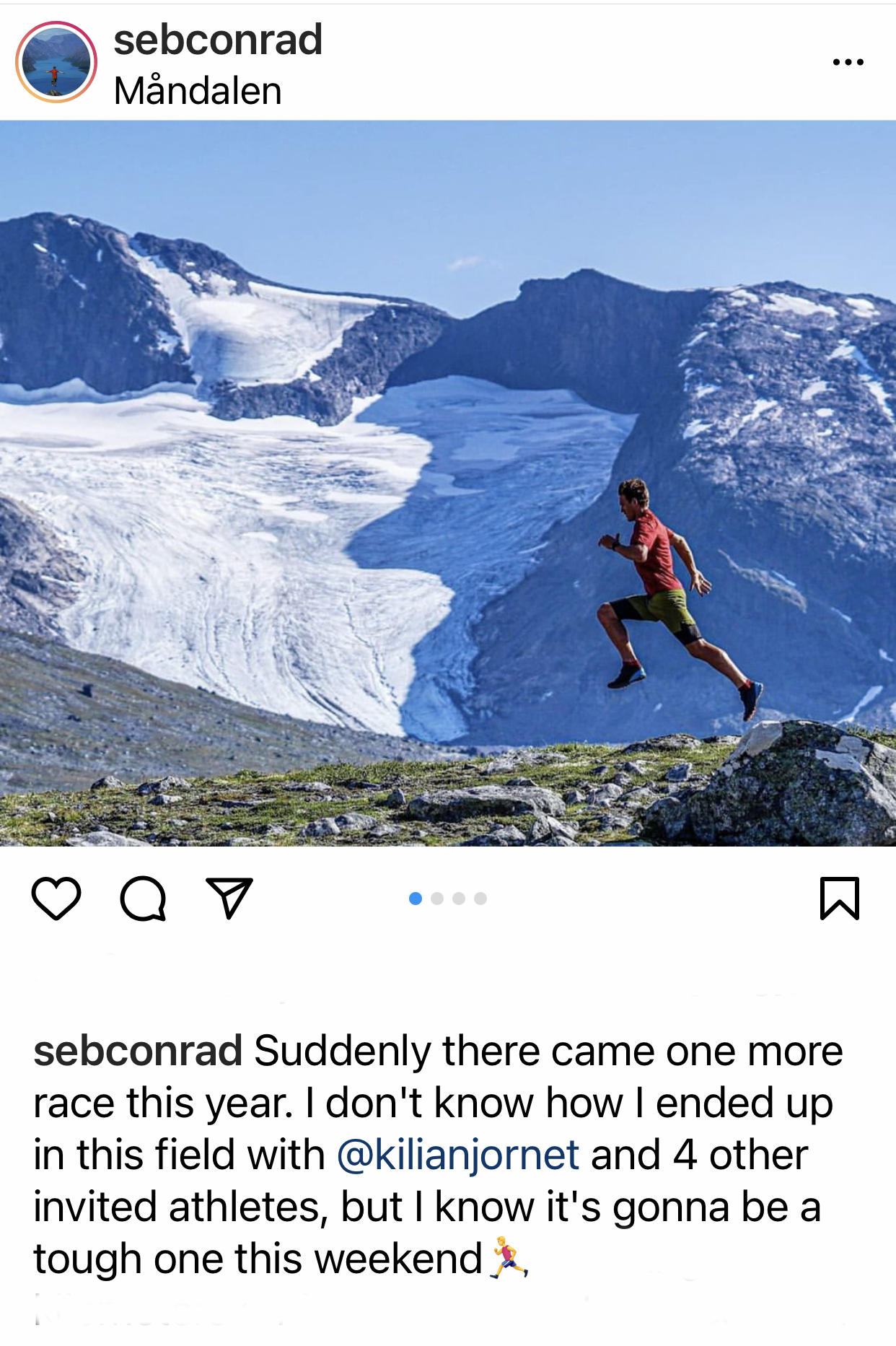
Episode 200 of Talk Ultra has a chat with #phantamsm24h runner, Seb Conrad who joined Kilian Jornet on the track setting a great distance for 12-hours and an incredible time for 100-miles. We also chat in-depth with Jill Wheatley who’s life changed after a brain injury and loss of vision.
Talk Ultra is now on Tunein – just another way to make the show available for those who prefer not to use iTunes – HERE You can download the Tunein APP HERE Talk Ultra needs your help!
We have set up a Patreon page and we are offering some great benefits for Patrons… you can even join us on the show! This is the easiest way to support Talk Ultra and help us continue to create! Many thanks to our Patrons who have helped via PATREON Donate HERE
Importantly, go to iTunes and subscribe so that you automatically get our show when it’s released we are also available on Stitcher for iOS, Android and Web Player and now Tunein. We are also on Spotify too.
On October 26th 2020 I released via this website that Kilian Jornet would take on a 24-hour run at the Måndalen Stadium in Norway on November 8th.
This post was news to the ultra running world and it created a stir. It was BIG news. Just the thought that mountain man, climber, skier, alpinist, explorer and adventurer, Kilian Jornet, would contemplate running around a 400m loop was, well, crazy!
Kilian ‘Skyrunning’ at the iconic Trofeo Kima.
My news was copied, posted, re-quoted, shared and many media took my content, provided no credit and then shared the story.
Ironically, the news was short lived. Kilian direct messaged me to say he was too injured to contemplate this and then said via social media:
“Wow! I was all the day out and saw this just now 😅 Thanks for the idea guys!! At the moment I’m trying to get back from a injury (literally did my first run since last weekend) but why not to try to run something that long in the future..”
Suddenly, all the media who had posted were left perplexed and while many supported my news, I received countless negative comments, questions and basically nasty comments. I think the assumption was I had posted fake news, to coin a phrase.
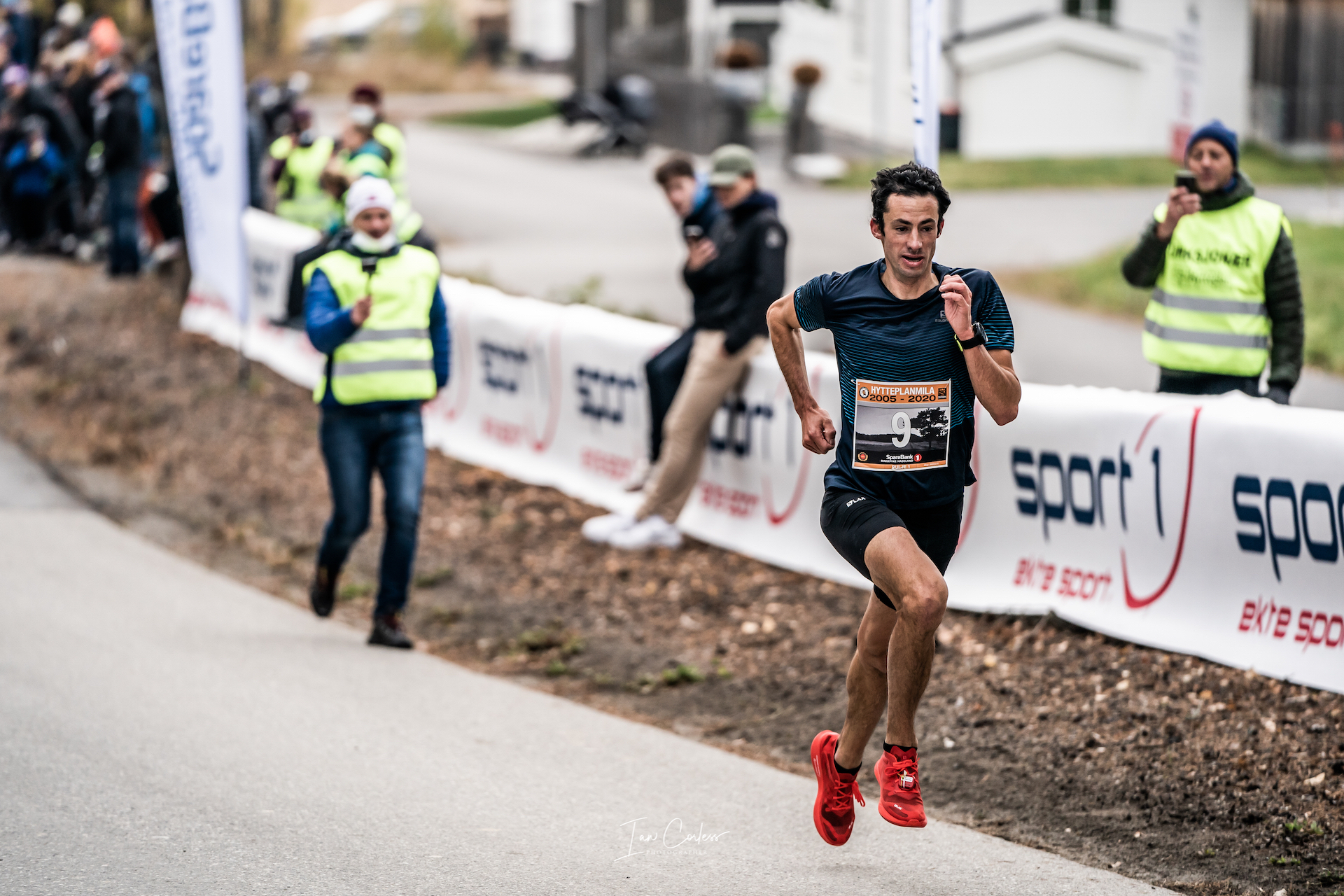
I had been with Kilian at Hytteplanmila 10km Road Race (HERE) where he ran 29:59 in his first ‘official’ road race. He told me of a niggling injury and that he would take a week off. In the following days (w/c Oct 19th), I heard news of the 24-hour attempt. This came from multiple sources, primarily athletes who were being invited to join Kilian on November 8th at Måndalen Stadium.
“In fact, the assault on the 24-hour challenge was scheduled for the first week of November, but Kilian was forced to delay it due to the discomfort that appeared after running his first 10 km race on asphalt, the Hytteplanmila, in 29 ‘ 59 ” in mid-October.” – Albert Jorquera writing for Runedia
It was difficult to confirm the story. That is until Sunday October 25th when a post on Norsk Ultra was made public. It was only a matter of time before this news became available for all.
I wrote my article HEREand reached out for quotes. The post once live went viral. I guess the rest is history… The announcement today by Salomon and Kilian is vindication, albeit the date of the event was wrong (injury doesn’t work to dates), of my original post.
*****
November 15th,Salomon and Kilian Jornet released simultaneously.
kilianphantasm24 announcement.
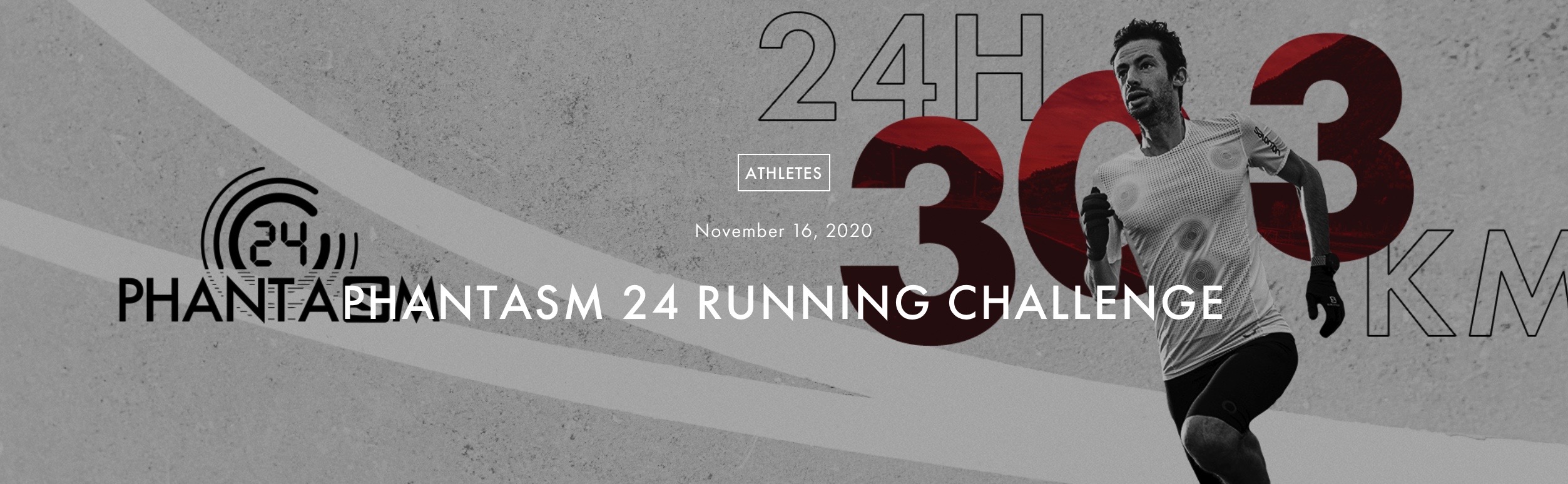
The date may have changed (due to injury) but the location and the concept remain the same. Kilian Jornet will run 24-hours on a track.
The release of the news by Salomon is extremely welcome and it so wonderful to hear the Kilian will push himself on a new stage. The original concept was an attempt to break the record of ultrarunnning legend Yiannis Kouros. The reality is 756 laps of a 400m track. Yiannis set the world record at 188.590-mile.
The event will take place at *Måndalen Stadium, and should have happened on the weekend of November 21/22 and as per my original post, the provision of +/- 2-days may need to be considered for weather. (*Lymbus who manage Kilian confirm the location to be Måndalen.)
Kilian writing on Facebook
The attempt has now been pencilled for Friday 27th November with a 1030 am start – to be confirmed! Weather looks cloudy with some sun but temperatures could drop to -7 if long term forecasts are to be relied on.
Salomon say, “The start time of Kilian’s Phantasm24 challenge is slightly weather dependent…”
Currently, weather forecasts are very poor with 70/80% chance of snow and temperatures between -1 and -3 during the day, they would be much colder at night. The stadium Måndalen Stadium is outdoor and this in itself brings a whole new dynamic to any 24-hour should this be the confirmed location. Norway in November, minimal daylight and cold temperatures, this will be a tough 24-hour.
To follow all the health prevention measures against the Covid pandemic, the challenge will be closed to the public. But it will be possible to watch live HERE
Phantasm shoe – Kilian used this for the 10km road race.
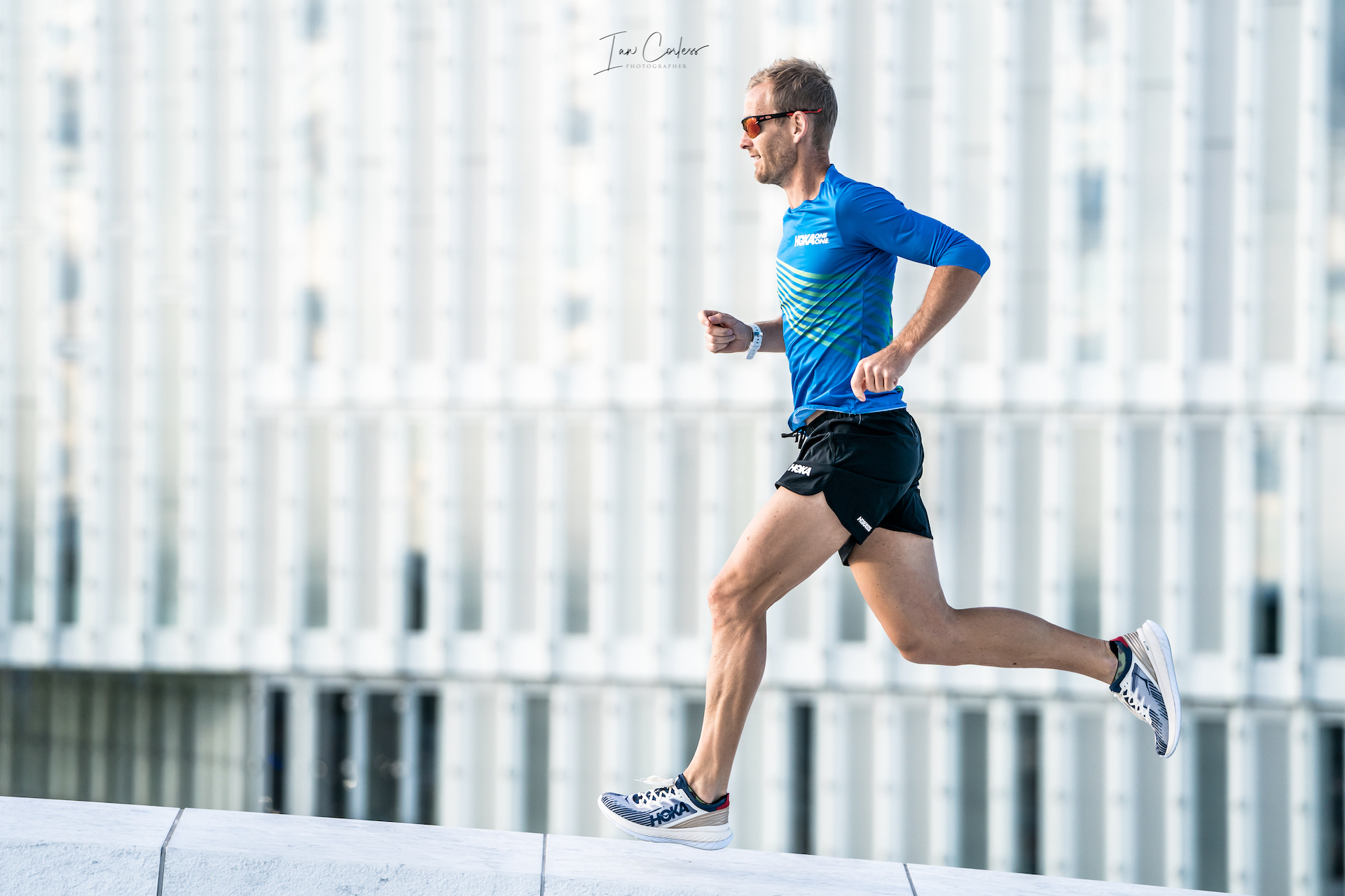
Titled #kilianphantasm24 – the project will see Kilian push new personal boundaries and at the same time, provide exposure for the Phantasm shoe. I am currently aware (tbc) of several other high-profile athletes who ‘may’ join Kilian on the track, Didrik Hermansen, Simen Holvik, Sebastian Conrad and two more, Harald Bjerke and Jo Inge Norum I believe.
“My hopes are to set a new national record and to have the honor to run 24 hours with these fantastic people.” – Simen Holvik
Didrik Hermansen Oslo 2020.
“So, now we all know! Going to be exiting. I will do the 24h, zero degrees.. hopefully no wind!” – Didrik Hermansen.
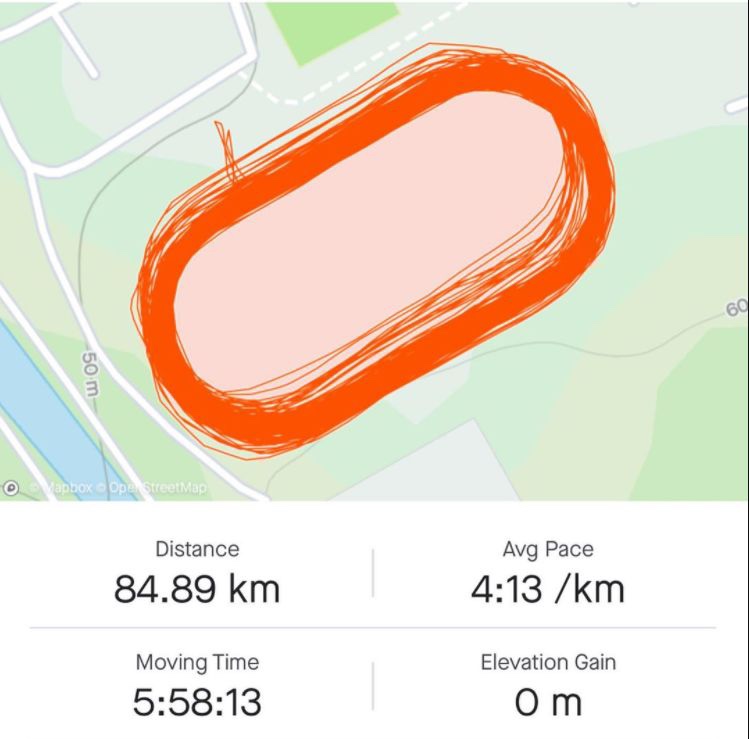
For perspective, to break the Yiannis Kouros world record, any runner would need to be able to cover an incredible 7.875-miles per hour. Statistics show that from the ‘test’ run by Kilian earlier in August 2020 that this objective may be possible? He ran 84.89km in 5:58:13 with an average 4:13/km pace. The numbers speak for themselves, it’s a huge undertaking, especially on an outdoor tack. However, it is going to be fascinating to see what happens with each journey of the 400m.
“…and now I am super excited to test myself doing something that long (and far from what I like) but where I will learn so much and grow as an athlete. (And probably doing this 24h in a track because I love that pain feeling.)”
Kilian Jornet, Twitter
Please support this website. I believe everyone deserves to read quality, independent and factual articles – that’s why this website is open to all. Free press has never been so vital. I hope I can keep providing independent articles with your help. Any contribution, however big or small, is so valuable to help finance regular content. Please support me on Patreon HERE.
Kilian running his first official 10km on the road.
Kilian Jornet to attempt the 24-hour track record at the Moonvalley 24-Hour, Norway, on November, 8th – Måndalen Stadium.
Important update: 26th October PM:
“Right now I’m pretty injured, trying to start running ok again in a week or so. I had plan to do different road distances during this year but for the moment I need to recover well 😦 Maybe in the future, if injures allow would be fun to try to run that far… :)” – Kilian Jornet via whatsapp
Kilian goes on to say… “No problem! This running roads thing is so hard to manage on staying injury free! Looking forward for next year climbing more again 😅”
2020 has been a stange year, races have been cancelled, the FKT scene is booming and mountain running star, Kilian Jornet ran his first official 10km on the road clocking a 29:59 – report HERE.
All images copyright iancorless.com – all rights reserved
Warming up.
For many, Kilian running on the road was a surprise, only a couple of year’s ago, the thought of this was but a dream. Even Kilian himself thought a road race to be highly unlikely.
Coronavirus, restricted travel, no races and embracing new challenges seem to be the new normal. And Kilian is no exception…
Yiannis Kouros, the legend of ultra running has always been treated as a god in long-distance running, his stats speak for themselves. In 1984 he won Spartathlon in a record time. What followed set the benchmark for road and track running. His ability to run remarkabkle distances and times over 100-miles. 1000km, 1000-miles, 12hr, 24hr, 48hr and 6-days are incredible.
“When other people get tired, they stop. I don’t. I take over my body with my mind. I tell it that it is not tired and it listens.”
Yiannis Kouros stats : Image wikipedia
In 24-hours, he has run 180.335 on the road and 188.590 (1997) on the track. He has a 100-mile personal best of 11:46:37.
Camille Herron holds the women’s record 167.842 miles from the 2019 worlds in Albi. For perspective, Camille believes the record is possible and she has great ambitions for over 170-miles personally.
Scott Jurek, the ultra-running legend mixed road and trail, he ran 165.7-miles in 2010 for 24-hours. But many have come along and mixed disciplines, Mike Morton and Zach Bitter to name just two. Anatoliy Kruglikov ran 171.48-miles in 1995, besides Yiannis Kourus, he is the only one to come close on a track.
“I think 24 is unique enough and Yannis’ mark stout enough that it will likely take anyone more than one try. If anyone can get it on round one though, it’s Kilian. Norway did seem a bit strange with weather, but I suppose he is staying true to limited travel. That would be a bit cooler than I would like even with warmer clothes. Rather have that than too warm, but still not ideal.” – Zach Bitter
The news that Kilian will run a 24-hour race on a track is a real surprise. The additional news that he will attempt the 188.590-mile distance set by Yiannis Kouros is mind-blowing. To be held at the Måndalen Stadium, the race will potentially happen on November 8th with the provision of +/- 2-days to allow for weather. The stadium is outdoor and this in itself brings a whole new dynamic to any 24-hour, especially in Norway during November. Daylight will be minimal, temperatures will fluctuate greatly and the evening has the potential to be very cold.
For a any performance to stand in regards to records, certain criteria must be met and Måndalen IL and Salomon will guarantee that the necessary protocols are in place. Of course, situations my arise that make the attempt not possible.
For perspective, to break the Yiannis Kouros world record, any runner would need to be abale to cover an incredible 7.875-miles per hour. Statistics show that from the ‘test’ run by Kilian earlier in August 2020 that this objective may be possible. He ran 84.89km in 5:58:13 with an average 4:13/km pace. Many looked on and wondered, why would Kilian run on a track….? It would appear we have an answer.
Image Kilian Jornet Strava
“Progression comes from adaptations, adaptations come from training and resting. Training comes from knowledge and knowledge comes from testing. Yesterday I did a nutrition test. On a stable environment (a track) and an easy but steady effort I was testing different fueling and hydration protocols that I hope can help me to improve the energy levels during different goals….”
“…From a race where we can have access to fluid and food (almost) when we want, or, to a high climb where we have very limited food and fuel since we need to carry all. I believe testing is important to have better knowledge of oneself and to apply knowledge in training, racing or projects.”
This challenge is something I thought I would never see. I would imagine it’s a challenge Kilian never imagined he would undertake. But, here we are discussing the possibility of what may happen come early November…
The numbers speak for themselves, it’s a huge undertaking, especially on an outdoor tack. However, it is going to be fascinating to see what happens with each journey of the 400m loop at Måndalen Stadium.
Before the 10km road race in Norway, Kilian had a slight injury and that did impact on his race. However, post-race he took time off to recover. I guess the big question mark will be how that recovery has gone and what impact that will have over a 24-hour period. Maybe the injury will require to delay or cancel the attempt?
“I don’t think the injury is a real problem but I need to rest a little and get rid of it. When I run a VK the effort is typically 30-minutes but this is different. In terms of cardio, for me it was kind of easy all the time. It’s the legs, you need to feel light and keep the speed. It’s very different. The first 4 to 5km with more people was a challenge as you are almost cm’s from the other runners. I need to get used to that. I learned a great deal. I will try again, at least in the short term, but next year I want to climb… I have some specific goals. I just need more experience.”
The reality is 756 laps of a 400m track – we wish Kilian well with his new undertaking!
Please support this website. I believe everyone deserves to read quality, independent and factual articles – that’s why this website is open to all. Free press has never been so vital. I hope I can keep providing independent articles with your help. Any contribution, however big or small, is so valuable to help finance regular content. Please support me on Patreon HERE.
Episode 197 of Talk Ultra brings an interview with Finlay Wild. Speedgoat discusses his 19-years of 100-mile victories. We have a sound bite from Kilian Jornet after his road 10km. Stephen Goldstein talks Covid-19 and we bring you Clay Williams, Ian Radmore, Richard McChesney and Miriam Gilbert with their Covid stories.
Talk Ultra is now on Tunein – just another way to make the show available for those who prefer not to use iTunes – HERE You can download the Tunein APP HERE
Talk Ultra needs your help! We have set up a Patreon page and we are offering some great benefits for Patrons… you can even join us on the show! This is the easiest way to support Talk Ultra and help us continue to create! Many thanks to our Patrons who have helped via PATREON Donate HERE
NEWS
Speedgoat Karl wins his 43rd 100-mile race and completes 19-years, consecutive, of winning a 100!
Kilian Jornet runs 10km on the road in 29:59 read HERE
00:38:50CLAY WILLIAMS – In 2017 I was one of the runners in Canada’s first 200 mile trail race. Unfortunately I didn’t finish and was only able to run 150 miles in that event (long story). That DNF planted a seed, and I have had this need to finish a 200 miler ever since. So I registered to run Three Days at the Fair in New Jersey in May. Of course it was deferred from May until September due to Covid. And then I couldn’t cross the border to get there. I’m 60 years old so I can’t keep putting this off, so I made my own arrangements. With local crew support I ran “Three Days in the Park” starting at 9am October 1st. My raced director friend Tony Martin plotted out a one mile course for me, and I ran it at 200 times. It took me 75:46 to finish, and I’m happy with that As always, I’ll be carrying The Flag (ask me about The Flag), and dedicated the run to the Mood Disorders Society of Canada’s Defeat Depression campaign.
01:02:50IAN RADMORE – Going into lockdown back in March had the idea that we should & would support each other, along with building a training program that involved running as well as various workout activities. We looked to do something different every other day so to keep our minds & bodies active. It’s about having the correct attitude & not allowing the four walls of our home to take over. Inspiration was also taken from Captain Sir Tom Moore who before his 100th birthday decided to raise money for the NHS by walking around his garden. If that’s not inspiring I don’t know what is!!Damian Hall who broke the long time standing Pennine Way set by John Kelly. With these in mind they motivated me & drove me on the complete my half marathon training. This I ran on Sunday 4th October 2020 finishing in a respectable time 2hours 44minutes & 58seconds. Then the very next day entered the Inverness/Lockness marathon next October 2021 fingers crossed.
01:19:40RICHARD MCCHESNEY – In September, inspired by the recent FTK’s for the Wainwrights, I decided to see how long it would take me to visit all 270 London tube stations on foot. I’m a walker rather than a runner due to a long term impact related injury, but I managed to complete the 325 mile journey in 5 days and 20 hours. This has now been recognised by FastestKnownTime.com as the fastest self-supported time for this adventure and sets the bar for someone to try and beat it. Like the people doing the Wainwrights and similar FKT’s, I spent plenty of time mapping out what I thought would be the most efficient/shortest route but I think there is probably still some improvement that can be made here. I also did about 15-20 bonus miles due to some getting lost and also a tunnel closure.
01:47:20MIRIAM GILBERT – My experience as a cancer caregiver to my husband Jon after he was diagnosed with stage 4 cancer in March 2018 inspired me to create Ultra Care for Cancer Caregivers, a GoFundMe campaign to benefit cancer caregivers and provide them some joy and respite during their difficult journey as a caregiver. I named my GoFundMe campaign Ultra Care for Cancer Caregivers because I am also an ultra runner. I combined my running ultra miles and fundraising to raise money for cancer caregivers. I kickstarted my fundraising by running the Dawn to Dusk to Dawn 24hr 50K+ Solo Challenge in my neighborhood in May. Then on June 1 I began running the Tip to Tip Great Florida Traverse 128 miler. And I have 161.5 miles to go at the All the Way 901 mile. I am happy to say my husband Jon was declared in remission in May. He joins me on my virtual miles on his ElliptiGo.

















 IAN CORLESS