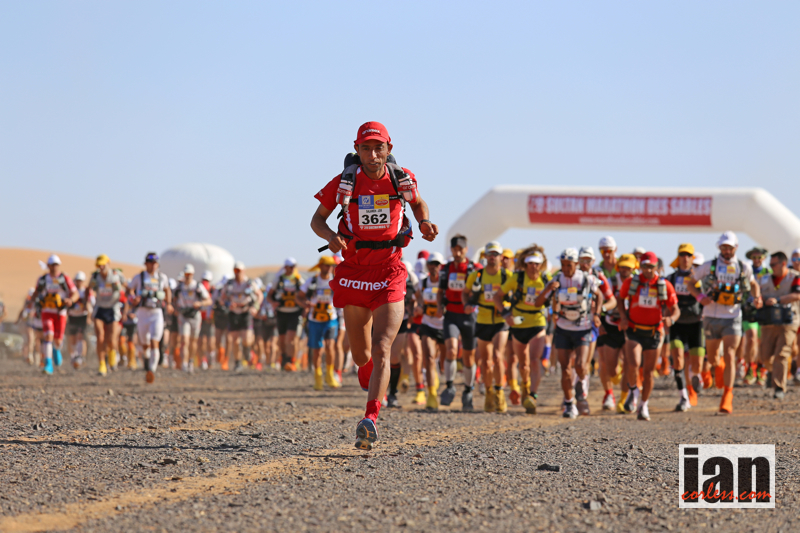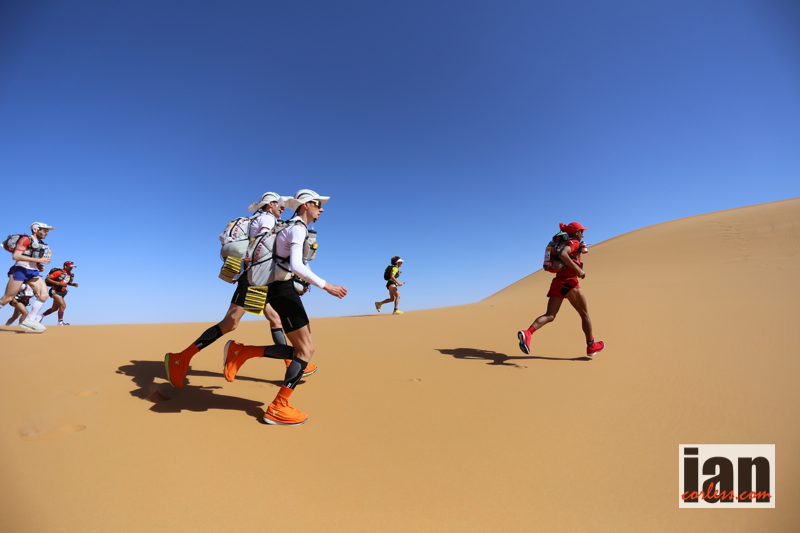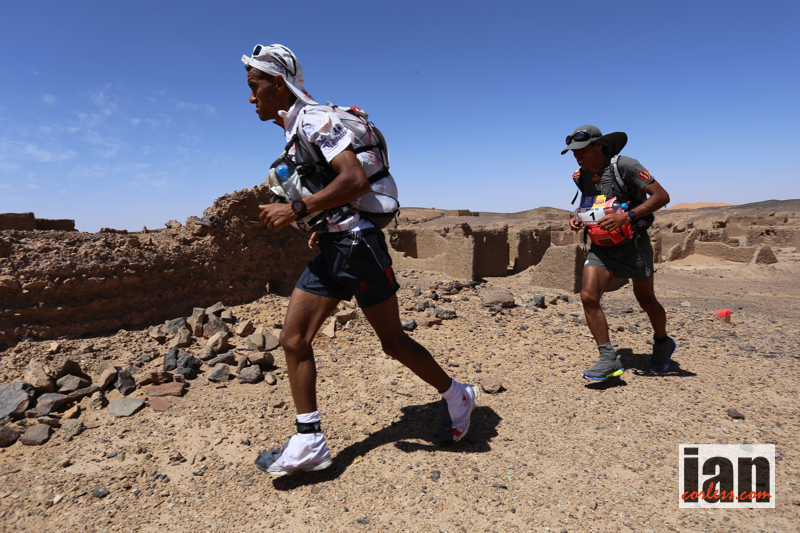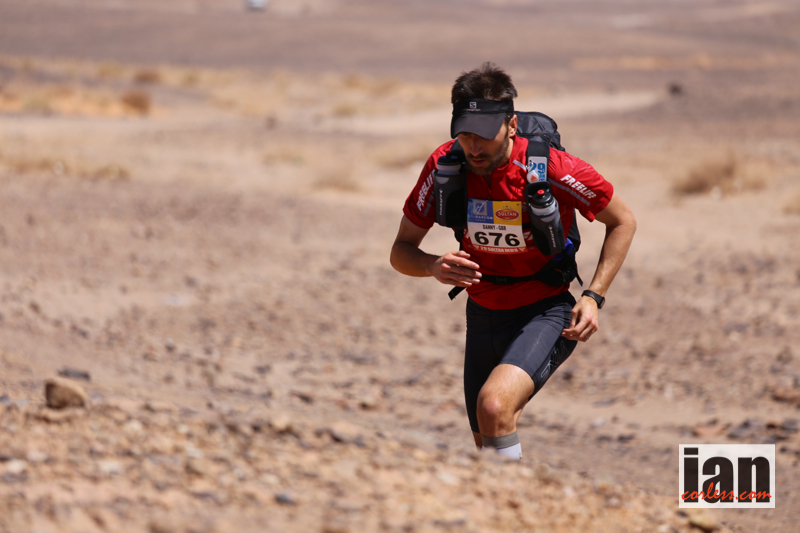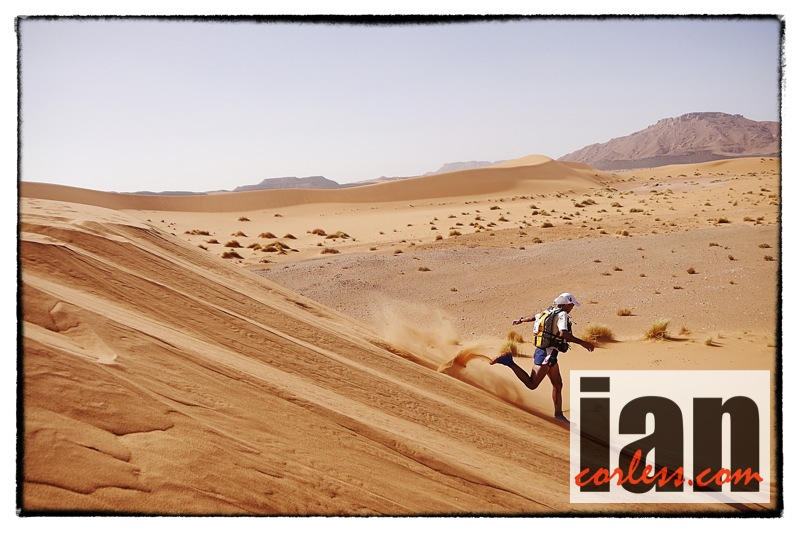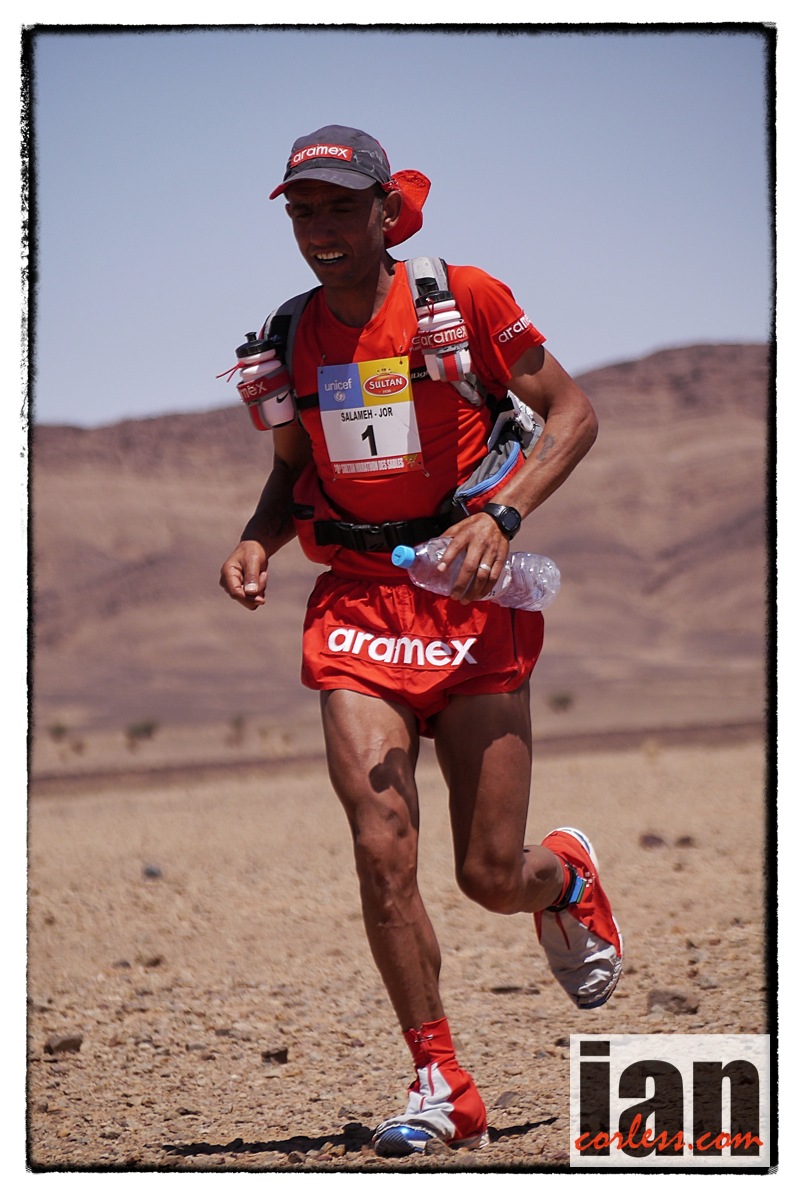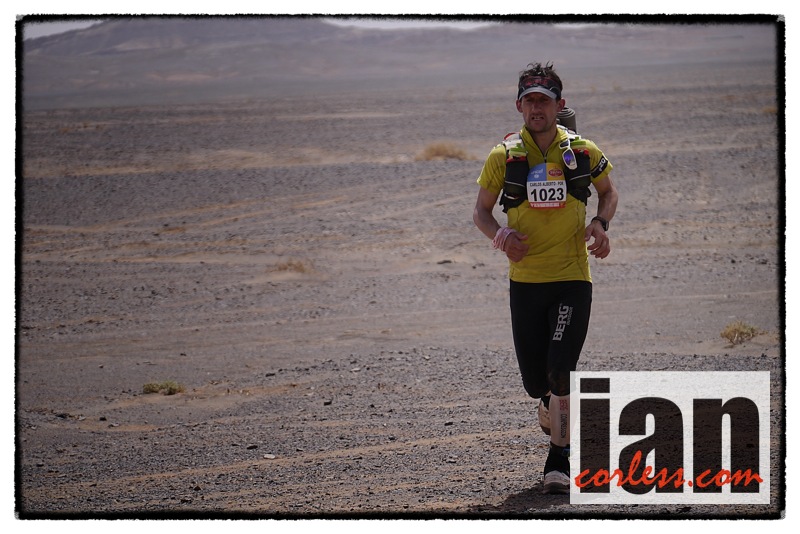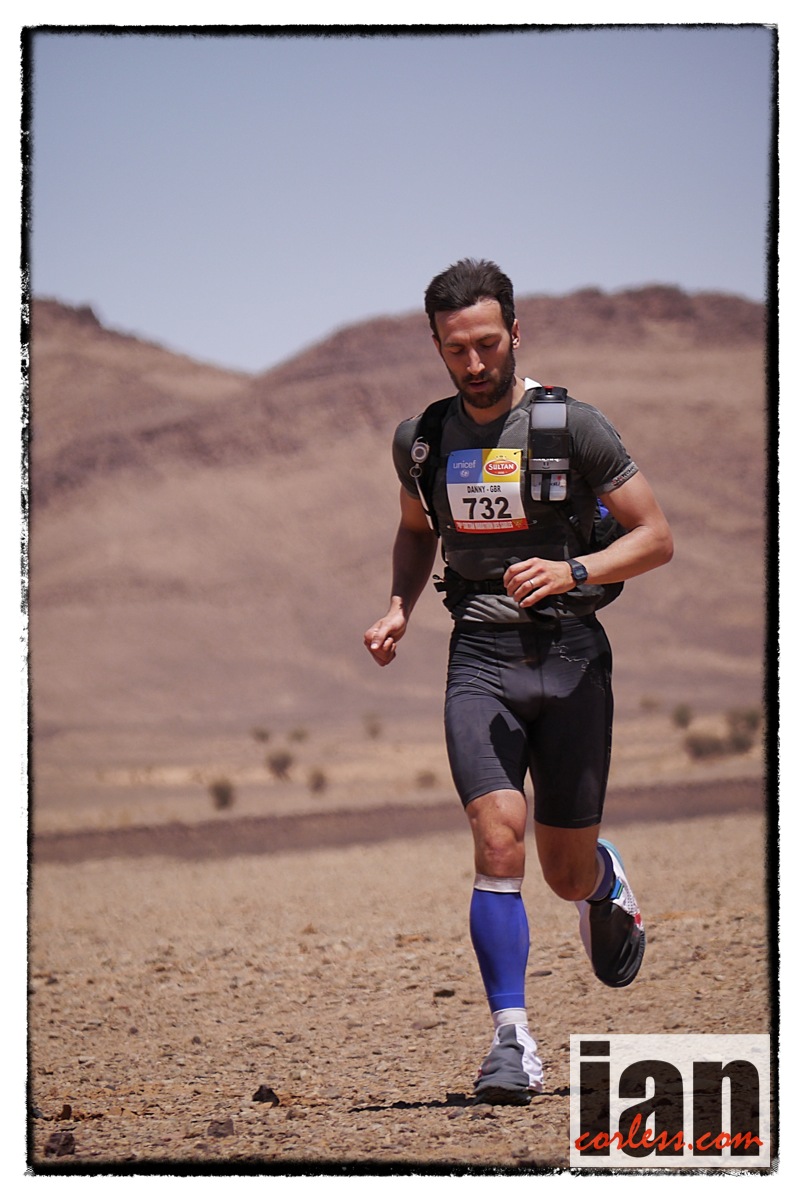
Marathon des Sables 2014 Stage 2

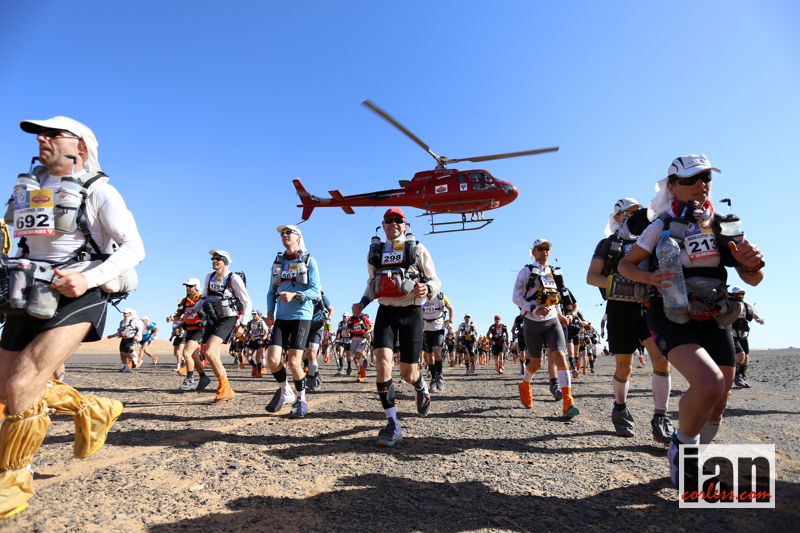
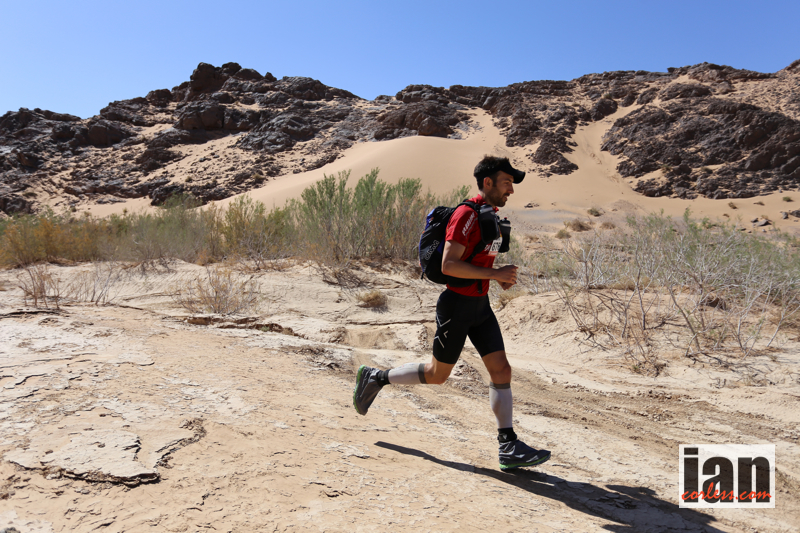
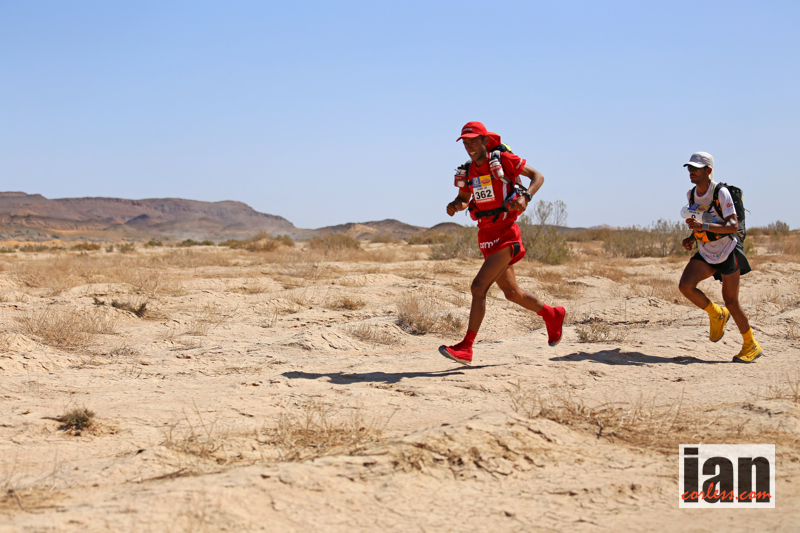
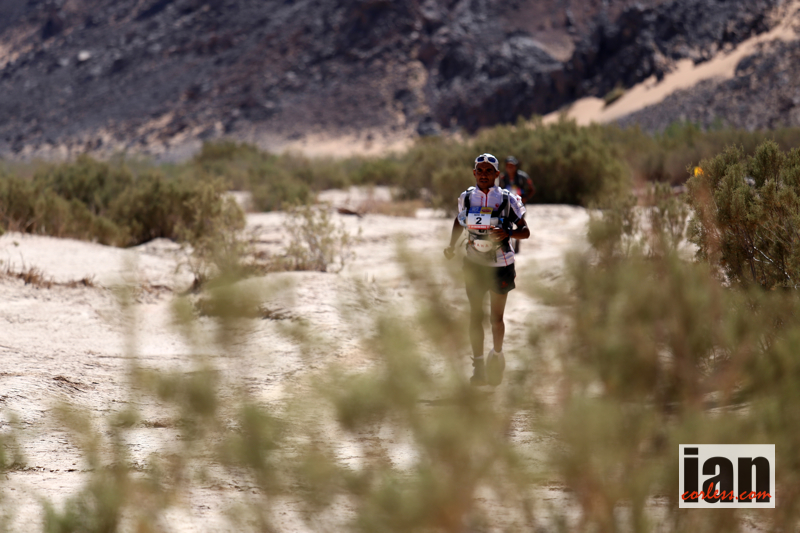
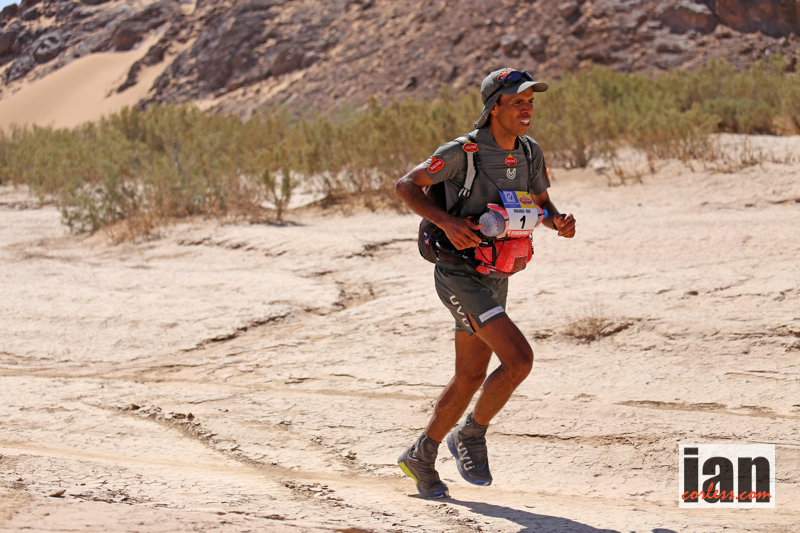
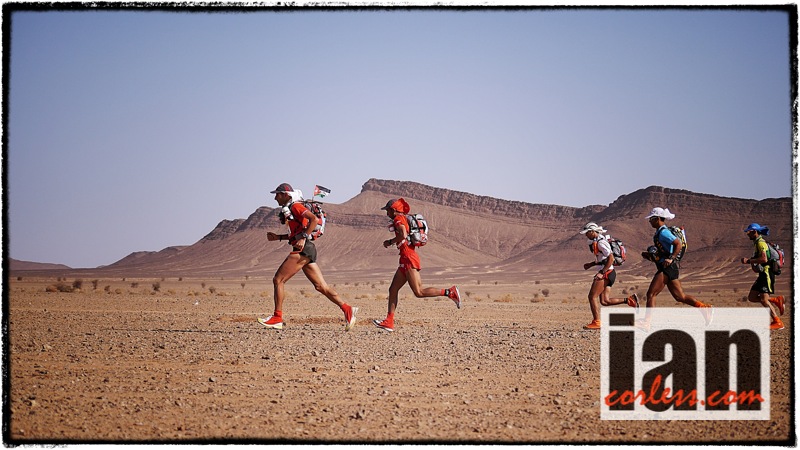
Al Aqra (previous MDS winner) went from the gun the morning and set a relentless pace that only El Moriaty could match. A third of the way into the stage they ran side by side but the pace took its toll, Al Aqra faded allowing a repeat victory in 3:13:43 for El Moriaty. Fast man, Elmouaziz but his 2:06 pace to good use and finished just over 1min back with Al Aqra taking 3rd in 3:21:11.
Ahansall could not take the pace today and finished 4th just 30 secs ahead of Brit, Danny Kendall in 3:23:05.
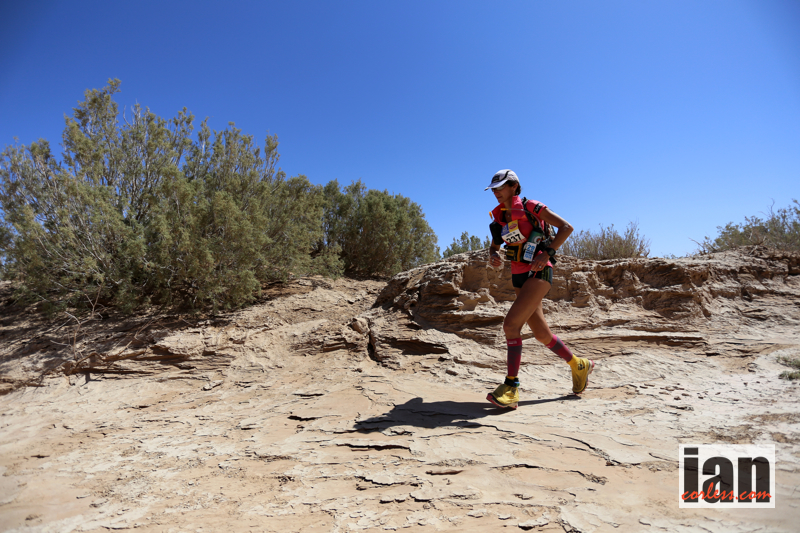
Klein once again provided a very familiar pattern for the ladies race with a solid stage win just 11min clear of Kimball in 4:30:08. Roux from France placed 3rd in 5:03 and Brit, Donovan placed 4th, 5:15:33.
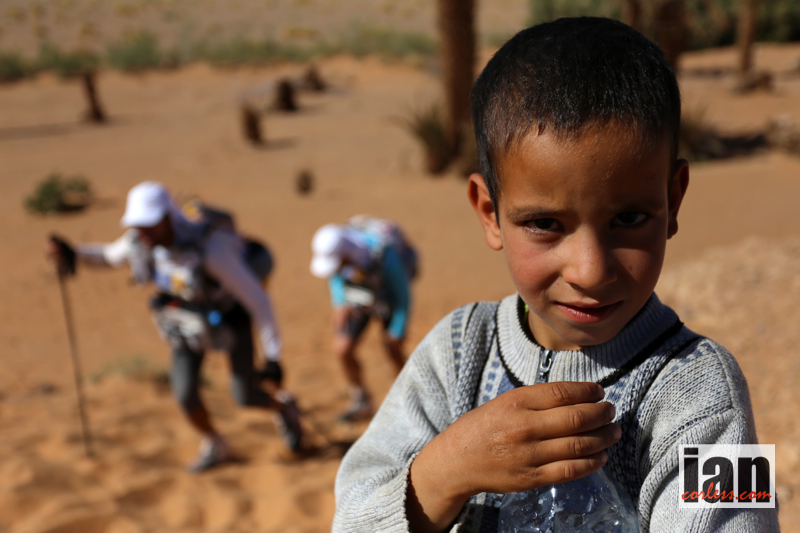
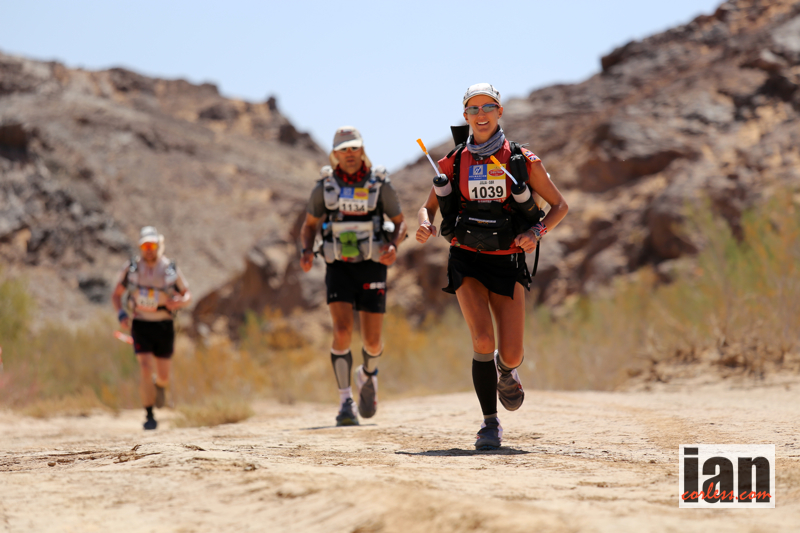
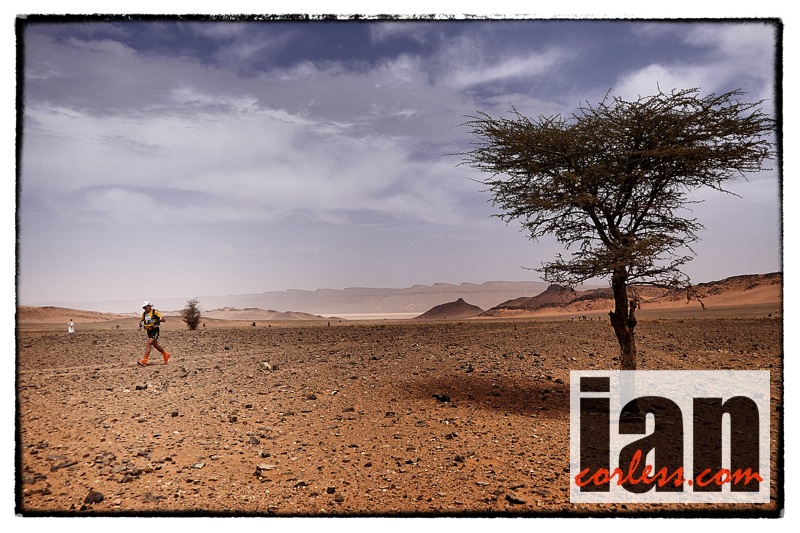
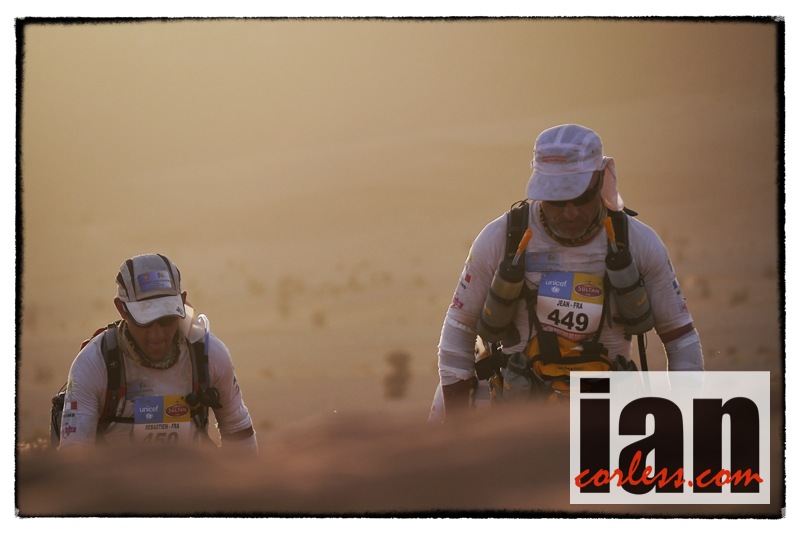
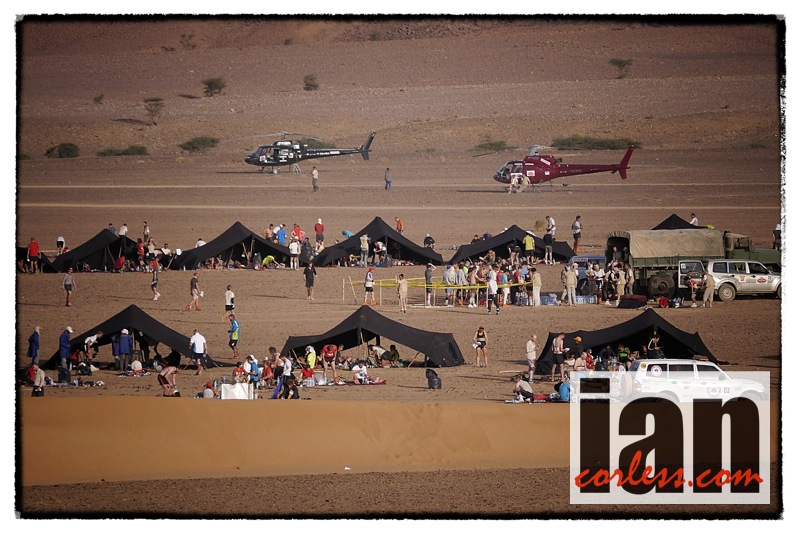
The heat once again was relentless today with apparently 50deg recorded. The tough course and extreme temperqtures are impacting on all the racers with over 20 drop outs yesterday and more today. Stage 3 continues the format with high temperatures forecast and almost 30km of dunes….

Image

Image

Image

Image

Image

Image

Image

Image

Image


Marathon des Sables 2014 Stage 1

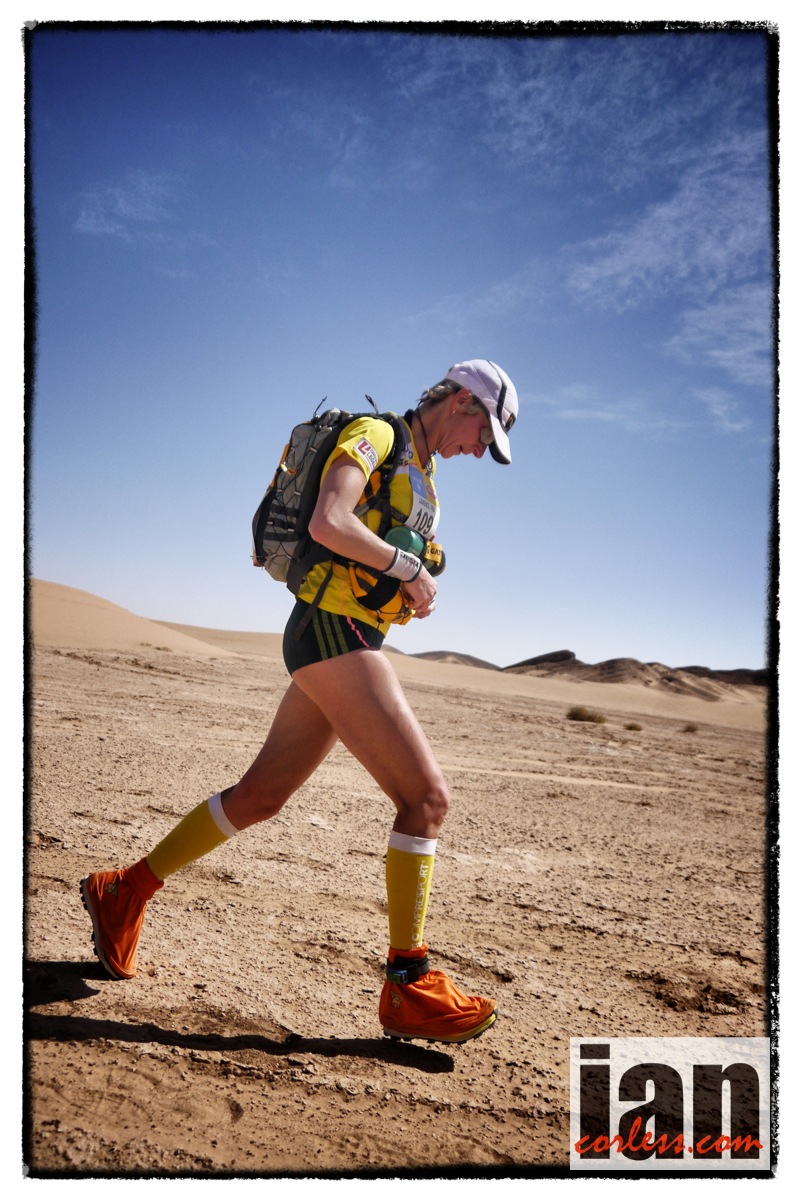
Day 1 was a tough and exciting day in the dunes of the Sahara. Arguably one of the toughest first days on record. The sand was relentless as was the heat… mid 40s.
Rachid El Moriaty and Mohamad Ahansal used local knowledge to advantage and placed 1 and 2 on the day, 3:04:06 and 3:05:08 respectively.
2:06 marathon runner Elhouaziz used his speed to make up for navigation errors to place 3rd, 3:12:26.
Top Brit Danny Kendall, 10th in 2013 placed 5th in 3:19:40.
Laurence Klein used her experience and speed for a convincing stage victory over Nikki Kimball from the USA. However, Laurence does not look as relaxed as previous years, 4:05:37 and 4:16:33 respectively.
Julie Bryan from the USA was third 35min back and top Brit was Julie Donovan in 5th.

Image

Image

Image

Image


Marathon des Sables, 29th Edition, Race Preview

MDS Logo

It begins again, the Marathon des Sables! Now in its 29th year, the epic multiday race in the Sahara is considered by many the Father of stage racing. Often called ‘The Toughest Race on Earth’ we all know that it isn’t but one thing is for sure… it’s no walk in the park.

all images ©iancorless.com – all rights reserved

iancorless.comP1030603Heat, sand, survival, reduced calories and self sufficiency pushed to the limits will test each and everyone of the 1079 participants who will toe the line in South Morocco.

iancorless.comP1080964

 Participants from France will represent 30% of the field and over 45 other nations make up the remaining 70% with the UK providing the largest contingent. The provinces of Errachidia and Tinghrir will host the 2014 Marathon des Sables over 6-stages with a total distance of 250km’s. An easy day will be 30km and the longest day, 75km. It’s a wonderful way, albeit a tough and challenging way to embrace the Moroccan dessert.

iancorless.com_1090422

The 2013 edition of the race was noted as ‘one of the toughest’ in the races prestigious history, 2014 will be no different; traversing ergs, djebels, stony plateaus, dried-up lakes (wadis) and of course lush oasis. Occasional passing traditional villages and encampments of nomads, the 29th edition of the Marathon des Sables promises to be a ‘secret garden’ of the Sahara.

iancorless.comP1090053

Described by race founder, Patrick Bauer as ‘the greatest show on earth’, his comparisons to a circus are apt. The Marathon des Sables really is a large circus like operation on a scale that is second to none. Volunteers number 130 to supervise the race, 430-general staff support the race and 300-local Berbers man the bivouac. All-terrain vehicles number 120, 8 ‘MDS’ planes, 25-buses, 4-dromederies, 1-incinerator lorry, 5-quad bikes and 2-helicopters keep the show on the road. Add to this 52-medical staff, journalists, photographers and you really have what I have come to call, the ‘Cirque de Sahara’, it’s quite special.

 iancorless.com_1090777

A race with a history, the Marathon des Sables dates back to 1984 when Patrick Bauer, aged 28, ventured into the Sahara to traverse solo a 350km journey with a pack weighing 35kg. It was an ultimate self-sufficient expedition that lasted 12-days.

 iancorless.com_1090790

Inspired by the experience, in 1986 the first edition was created, just 23-pioneers embarked on what must have been ‘the ultimate’ expedition. Who would have thought those formative years would have laid the foundations for what is, without question, the father of multiple day racing. The race has had memorable moments; in ‘1991’ the Gulf drama had an impact on the race, ‘1994’ the arrival of Doc Trotters, ‘1995’ the 10th anniversary, ‘1996’ Mohamed Ahansal participates for the first time, ‘1997’ Lahcen Ahansal wins his first MDS one of many),  ‘2000’ internet arrives in the Sahara, ‘2001’ the ‘long’ day exceeds 70km, ‘2002’ a week of sandstorms and wind, ‘2009’ flooding at the MDS, ‘2010’ the 25th edition and finally, in ‘2013’, solar energy arrives in bivouac. What does ‘2014’ hold for us…?

iancorless.com_1090603

Results recap

2013

  1. 1. Mohamad Ahansal (MAR) 18:59:35
  2. 2. Salameh Al Aqra (JOR) 00:41:40 deficit
  3. 3. Miguel Capo Soler (ESP) 1:19:56 deficit
  1. 4. Meghan Hicks (USA) 24:42:01
  2. 5. Joanna Meek (UK) 00:00:59 deficit
  3. 6. Zoe Salt (UK) 02:21:57 deficit

iancorless.com_1090587

2014 Preview

Ladies

2013 female winner, Meghan Hicks unfortunately will not return to the Sahara this year. Meghan would have loved nothing more than to defend her title, however, Meghan has received an injury and has had no other option but to retire; a real shame.

Laurence Klein

Laurence Klein

Jo Meek and Zoe Salt will not return, this leaves the floodgates open for 2011 and 2012 champion, Laurence Klein (Fra) to return and dominate the race. Laurence dropped from the 2013 edition of the race with dehydration whilst in the lead. I have no doubts, Laurence will return, 1-year wiser, 1-MDS wiser and with lessons learnt. Laurence raced at Gruissan Phoebus Taril 50km in February this year and won, in the process, she also placed 20th overall. She’s in form!

Nikki Kimball

Nikki Kimball

Nikki Kimball (USA) looks to be the hot US replacement for Meghan Hicks and I have no doubt that this formidable lady can push Laurence all the way to the line. It’s a showdown that I am really looking forward to watching unfold. Nikki returned to Western States in 2013 and placed 2nd, she was also 2nd at Run Rabbit Run 100-miler… would you like to bet against her? *UTWT entrant

Simone Kayser from Luxemburg has 3-MDS (2002, 2004 and 2005) victories and returns in 2014. With past experience, knowledge of multi-day racing and an understanding of the Sahara, Simone will also test the podium positions. However, her current form is unknown.

Men

iancorless.comP1080345

Salameh Al Aqra and Mohamad Ahansal have battled ‘royal’ in the dunes of the Sahara for years. In 2009, Ahansal won, Al Aqra was 3rd, in 2010 it was Ahansal 1st, Al Aqra 2nd, 2011 Ahansal placed 2nd and Al Aqra 3rd, 2012 Al Aqra took honours relegating Ahansal to bridesmaid, however, last year, Ahansal once again regained his crown with Al Aqra chasing the locals heals. Both return in 2014 and based on past records you have to tip Ahansal with his 5-victories and 9-second places to dominate once again.

Mohammed Ahansal

Mohamad Ahansal

iancorless.comP1080264

Salameh Al Aqra

Rachid El Moriaty won in the race in 2011 and in doing so placed Ahansal in 2nd by just 7-minutes. He’d do well to repeat that performance.

Miguel Capo Soler is arguably the hot prospect to place Mohammed and Salameh under pressure, his 2013 3rd place will without doubt have ignited a fire and a desire within him to take his performance one step further and move up one notch on the podium and if all goes well, two notches to reign supreme.

Carlos sa

Carlos sa

Carlos Sa, 4th in the 2013 edition will do all he can to infiltrate the podium and if his form is good, he may very well upset the front of the race. His 2013 season was quite spectacular, in particular, his win at Badwater a highlight and his 4th at the 2012 TNFUTMB establishes him as ‘hot’ for the podium at the 29th edition. *UTWT entrant

Miguel Heras certainly is a surprise entrant for MDS and I guess this is a significance of the *UTWT flexing its muscle and introducing runners who we would not normally see at a multi-day race. This is a good thing! However, Miguel had to withdraw from Transgrancanaria with injury issues and I am not sure currently his status? Should he race he will without doubt bring an interesting dynamic to the race. When in form, he is world class and one of the best ultra runners in the world, Miguel has proved this time and time again and is 2nd place at the 2013 TNFUTMB proves this. I hope he’s fit, firing on all cylinders and ready to bring his ‘A’ race to the Sahara.

Danny Kendall

Danny Kendall

UK hopes are in the legs and lungs of Danny Kendall. A ‘regular’ at the MDS, Danny has consistently worked hard on his training, racing strategy and in in 2013 he placed 10th overall, the best ever performance by a Brit. The podium may well be out of reach but anything higher than 9th will be something to celebrate and embrace.

Cyril Cointre also takes a *UTWT place and will be a potential force at the front of the race. Cyril placed 8th at Transgrancanaria and 11th and HK100 in the last 2-months. Will he be recovered.

Wild card may well be Abdelkader El Mouaziz who has 13 sub 2:10 marathons! He hasn’t run the MDS before and that speed may well transfer well to the dunes and terrain of the Sahara, however, one has to wonder what if? Mouaziz won London Marathon in 1999 and 2001; in addition, he also won New York in 2000 and Madrid in 1994. He may well be nowhere near his glory days but Mouaziz is an exciting addition to the 29th edition.

Who else to watch:

Christophe Le eaux

Christophe Le Seaux

Marco Olmo

Marco Olmo

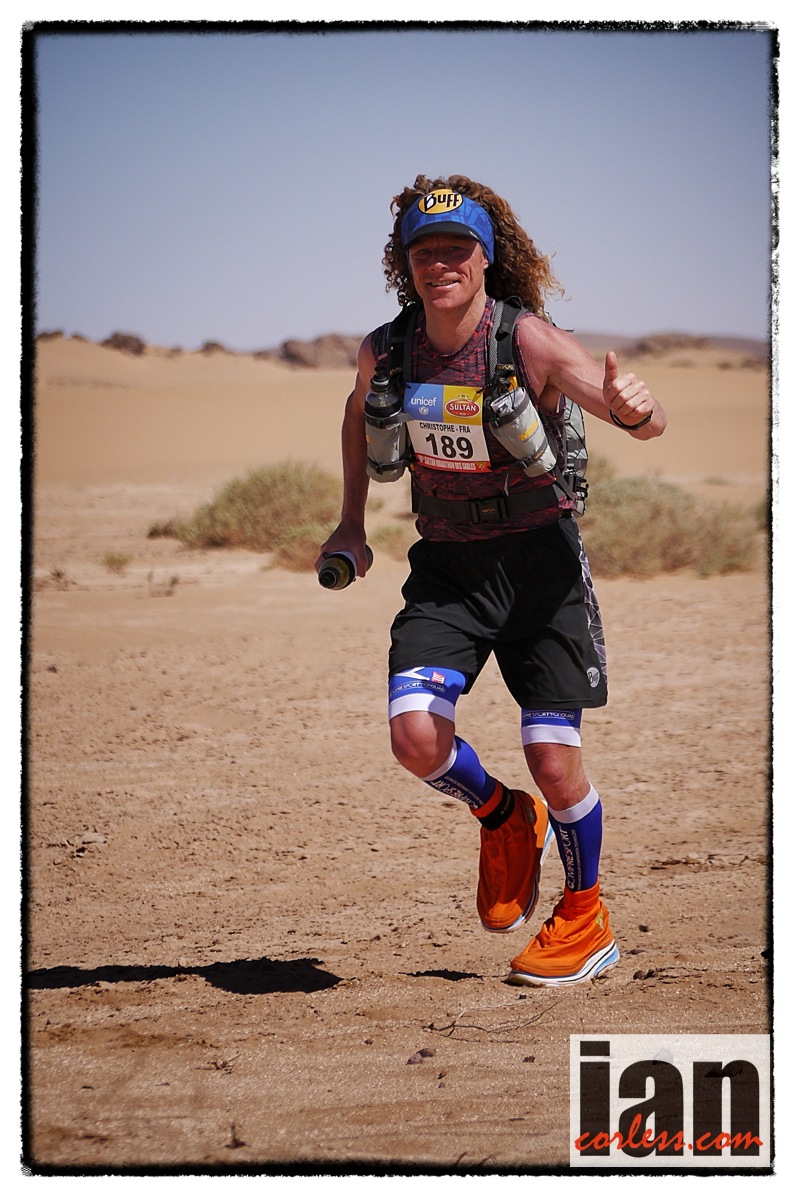
Christophe Le Saux – 9th at MDS 2013

Marco Olmo – 13th at MDS 2013

Anything can happen and without doubt, 2014 will throw up some surprises and names that we have never heard of before. 2013 was no different and that is what makes this sport so exciting and exhilarating.

What does the 2014 course look like?

Leg No.1 – Sunday 6 April

We get straight to the point and attack hard with a good fifteen kilometers or so of dunes in total on this first leg. Our imagination transports us into the shoes of British explorer, Sir Wilfred Thesiger, or to the very core of superb cinema, which were a wonder to us all!

Leg No.2 – Monday 7 April

This is coloured by fields of dunettes on the mountainside and a vast reg plateau, where the marathon runners will be able to really show what they’re made of at over 16km/hr. An abandoned adobe village, a dried-up lake crossing, a small erg with some beautiful dunes, an extensive plateau of black rock, the negotiation of a remote village and a djebel climb will make up the varied menu of this long second leg, where managing ones effort will take on its full meaning.

Leg No.3 – Tuesday 8 April

After 8km of running on fair terrain, the sand will put in an appearance again prior to a djebel ascent where a fabulous erg can be perceived at the bottom of the valley. There the runners will again negotiate some high dunes to make CP2, from where they will discover an ancient town, in ruins and perched on a hill, before making the night’s bivouac.

Leg No.4 (referred to as the long leg or the 80) – Wednesday 9 / Thursday 10 April

An ultra flat plateau running along a series of dunettes will form today’s backdrop before the runners traverse a wadi and hopefully get a bird’s eye view of the desert from up high after a tough little climb of around thirty-minutes. The landscape is truly breathtaking! Once you make it to the valley, you can make out a fabulous little erg followed by vast plateaus and a succession of djebels. The images here are strikingly beautiful and herald the discovery of an impressive sandy valley. Here, a laser beam will guide runners surprised by the cover of darkness. Participants will then link onto terrain dotted with crevasses before traversing a long, winding, sandy wadi and finally the bivouac. It will be important to follow the markers!

Leg No.5 (Marathon leg) – Friday 11 April

A long plateau of black reg will lead the runners into the ‘Out of Africa’ valley before they link onto a mountainous path, which will guide them to the bottom of a deep wadi. It’s a place where a number of villagers have taken up residence along this dried up river in which the palm trees are kings and agriculture is the only resource. A vast plateau peppered with dunes and dunettes will lead the competitor to the bivouac in this final timed leg.

Leg No.6 (the solidarity leg) – Saturday 12 April

As they make for the small village that will play host to the final finish destination, the competitors, sponsors and families that form the caravan will be able to appreciate the beauty and softness of the landscape in the ambience of closeness and sharing that is synonymous with this UNICEF leg (which supports projects benefiting disadvantaged children). For the majority of participants, this walk gives them time to reflect on this beautiful human adventure and collectively realize their accomplishments before getting back to civilization.

Links:

Follow the 2014 Marathon des Sables on www.iancorless.com and on Facebook at https://www.facebook.com/talkultra and on Twitter @talkultra

Updates will be posted daily as and when possible based on wifi connection and gps. Please be patient. I will do all I can to upload images and daily reports.

Info:

*UTWTIn 2013, the event became part of the Ultra-Trail World Tour Series, which groups together the major Ultra Trail races across all the different continents. The MARATHON DES SABLES will represent Africa in this circuit, where the distance (at least 100km), the site, the participation (at least 500 at the start), the internationality (at least 20 nations) and the length of existence (at least two editions) determines which events are selected. Beyond these sporting criteria, moral and ethical values, sporting equity, respect for oneself and others, as well as a respect for the environment, must be brought to the fore. Such values have always been conveyed by the MARATHON DES SABLES. 10 races, 5 continents, 150 global elite athletes… the Ultra-Trail® World Tour 2014 draws together the superlatives to provide the biggest number of runners with a world tour of the most prestigious races off the beaten track. Indeed, through their specific features, the #UTWT races illustrate the true diversity of the trail. Their sporting formats call for participants to have a real ability to adapt. As such you need a range of very different qualities to be a contender for victory! The MARATHON DES SABLES, the 4th leg of the 2014 tour, ranks among the ‘series’ races. As such, the number of points won in this event is increased, which makes it a decisive race in the bid for the #UTWT 2014 champion’s title. Participating in the Ultra-Trail® World Tour gives everyone a chance to discover unique cultural and sporting features. All the continents will be visited: Africa, America, Asia, Europe and Oceania. So many opportunities to enrich one’s sporting culture, to create new friendships and to feed on emotions and perhaps, one day, be a ‘finisher’ in every one of the events!


Marathon des Sables nutrition tips w/ Rinn Cobb

MDS Logo


Rin started PND Consulting in 2012 after working in the NHS as a dietician for several years. She has covered a variety of clinical areas from nutrition support on hospital ward and intensive care to diabetes and weight management in clinic settings.

Rin has also specialised in managing kidney disease and childhood nutrition and more recently eating disorders.
iancorless.comP1010591
During her career, Rin has identified key clinical areas of improvement which has led to undertaking nutritional audits, implementing training programmes and developing evidence based nutritional guidelines and protocols.
Rin has a passion for sports nutrition and challenging the human body (including her own). Leading further studies in Sports and Exercise Nutrition, Rin now is able to assess and provide valuable nutritional advise to all athletes from all sporting backgrounds.
iancorless.comP1020320
Having explored the Arctic, Jungle and Himalaya’s both as an explorer and leader, Rin challenged herself to the ‘Marathon des Sables’. Irrespective of her experience, Rin still made nutritional mistakes whilst in the desert. Hindsight is a wonderful thing and in this brief interview, Rin provides an insight into what she learnt and how provides some key nutritional information to help each and everyone of you on your journey into the unknown.
Listen to the audio interview HERE
podcast logo
PND Consulting HERE
iancorless.comP1020051
iancorless.comP1010970

Episode 56 – Sandes, Jurek, Morgan, Chaigneau, Maciel, Kendall

Ep56


Episode 56 of Talk Ultra and on this weeks show we have a Transgrancanaria special with a whole series of interviews. We speak with Scott Jurek, Sebastien Chaigneau, Casey Morgan, 3rd place lady, Fernanda Maciel and we have an in-depth chat with race winner, Ryan Sandes. In addition, we have a chat with top Brit at the MDS, Danny Kendall who returns this year to hopefully move higher up the field. The news, a blog and of this week only, a new co-host, Niandi Carmont.

What we have both been up to?

NEWS

AUDIO with SCOTT JUREK 
 
Transgrancanaria
  1. Ryan Sandes Salomon/Red Bull : 14:27:42
  2. Julien Chorier  Hoka One One/ Compressport “14:36:28
  3. Timothy Olson The North Face : 14:39:03
  4. Yeray Duran : 15:06:54
  5. Antoine Guillon WAA : 15:17:30
  6. Sondre Amdahl : 15:28:35
  7. Javier Dominguez Vibram : 15:46:06
  8. Cyril Cointre WAA : 15:47:08
  9. Dylan Bowman Peral Izumi : 15:59:13
  10. Casey Morgan Salomon 16:00:31
AUDIO with CASEY MORGAN
 
AUDIO with SEBASTIEN CHAIGNEAU
  1. Nuria Picas Buff : 16:44:55
  2. Francesca Canepa Montura : 17:29:18
  3. Fernanda Maciel 17:31:57
  4. Ildko Wermescher Mammut :18:50:45
  5. Uxue Fraile Vibram 19:21:00
  6. Nerea Martinez Salomon 19:21:00
  7. Magdalena Ostrowska-Dolegowska : 20:27:02
  8. Ester Alves : 23:03:10
  9. Laureda Tirepied : 23:10:44
  10. Helen Allison : 23:40:48
AUDIO with FERNANDA MACIEL
ITI350 and ITI1000
David Johnton was on the last show and after smashing the Susitna 100 record just 7-days later took on the ITI350. He was on the last show if you need and insight and he will be on our next show! Amazingly, he smashed the CR thought by many to be unbeatable by an incredible, 4d 1h 38m – broke record by 13h 22m set by Steve Refenstuhl
Jeff Oatley gonna smash the 1000m in around 10-days
MSIG Sai Kung 50
 
  1. Rudy Gilman 4:51
  2. Siu Keung Tsang 5:05
  3. Brendan Davies 5:15
Brit Stu Air – 8th
  1. Cassie Scallon 6:00
  2. Allesandra Carlini 6:05
  3. Joe Joe SuiPing Fan 6:11
St Peters Way Ultra
  1. Richard Ashton – new CR 5:34
  2. Christopher Howe 5:59
  3. Keith Moule 7:03
  1. Naomi Newton Fisher 8:20
  2. Fiona McNeils 9:58
  3. Nicki Edwards 10:13
4 Refugios non-stop Argentina – 70k
  1. Dakota Jone 7:18
  2. Sergio Jesus Trecaman 7:51
  3. Carlos Galosi 8:12
  1. Laura Lucero 9:40
  2. Sonia Beartriz 10:32
  3. Yanet Guzman 11:18
 
ADDO Elephant 76km
  1. Quintin Honey 8:05
  2. Mike Els 8:45
  3. Miema Murray (lady) 9:22

INTERVIEW with DANNY KENDALL


BLOG

Zach Bitter

Big Fat Theory

Lately, I have been thinking a lot about the ratio of fat and carbohydrate expenditure while running at varying paces.”

INTERVIEW with RYAN SANDES

 
UP & COMING RACES

Australia

Victoria

Maroondah Dam 50K Trail Run | 50 kilometers | March 16, 2014 | website

Razorback 58K Run | 58 kilometers | March 15, 2014 | website

Razorback 58K Run (March) | 58 kilometers | March 15, 2014 | website

Razorback 64K Run | 64 kilometers | March 15, 2014 | website

Razorback 64K Run (March) | 64 kilometers | March 15, 2014 | website

Razorback 68K Run (March) | 68 kilometers | March 15, 2014 | website

Canada

British Columbia

Dirty Duo 50 km Ultra | 50 kilometers | March 08, 2014 | website

Yukon

6633 Extreme Winter Ultra Marathon – 120 mile | 120 miles | March 14, 2014 | website

6633 Extreme Winter Ultra Marathon – 350 mile | 350 miles | March 14, 2014 | website

France

Pas-de-Calais

Trail Bullygeois des Poilus – 55 km | 55 kilometers | March 09, 2014 | website

Hong-Kong

Translantau 100 km | 100 kilometers | March 15, 2014 | website

Translantau 50 km | 50 kilometers | March 15, 2014 | website

Hungary

BSI Lake Balaton Marathon+ Fonyód – Szigliget | 52 kilometers | March 21, 2014 | website

BSI Lake Balaton Supermarathon | 195 kilometers | March 20, 2014 | website

India

The Great White Rann – Run of Kutch – 135 Miles | 135 miles | March 14, 2014 | website

The Great White Rann – Run of Kutch – 160 km | 160 kilometers | March 14, 2014 | website

The Great White Rann – Run of Kutch – 50 km | 50 kilometers | March 14, 2014 | website

The Great White Rann – Run of Kutch – 80 km | 80 kilometers | March 14, 2014 | website

Italy

Umbria

Trasimeno Lake Ultramarathon | 58 kilometers | March 09, 2014 | website

Veneto

Ultrabericus | 65 kilometers | March 15, 2014 | website

Madagascar

Nosy Be Trail – 65 km | 65 kilometers | March 09, 2014 | website

New Zealand

Tarawera 100K Ultramarathon | 100 kilometers | March 15, 2014 | website

Tarawera 60K Ultramarathon | 60 kilometers | March 15, 2014 | website

Tarawera 85K Ultramarathon | 85 kilometers | March 15, 2014 | website

Te Houtaewa Challenge 60 km Open Ultra Marathon | 60 kilometers | March 15, 2014 | website

Triple Peaks Challenge | 50 kilometers | March 15, 2014 | website

Philippines

TRD80 Ultramarathon | 80 kilometers | March 15, 2014 | website

Portugal

Território Circuito Centro 3a Etapa – Vila de Rei – K67 – Ultra Trail | 67 kilometers | March 08, 2014 | website

Território Circuito Centro 3a Etapa – Vila de Rei – Trail Ultra | 50 kilometers | March 08, 2014 | website

Senegal

Raid Téranga 250 | 250 kilometers | March 08, 2014 | website

Slovakia

Kysucká Stovka | 120 kilometers | March 07, 2014 | website

South Africa

Om Die Dam 50 km Marathon | 50 kilometers | March 15, 2014 | website

Spain

Andalusia

Ultra Trail Sierras del Bandolero | 150 kilometers | March 07, 2014 | website

Catalonia

Marxa dels Castells PLUS | 81 kilometers | March 09, 2014 | website

UT les Fonts | 120 kilometers | March 14, 2014 | website

UT les Fonts – Trail de les Fonts | 70 kilometers | March 15, 2014 | website

Taiwan

Southern Cross-Island Road Ultra Marathon – 100 km | 100 kilometers | March 08, 2014 | website

Southern Cross-Island Road Ultra Marathon – 50 km | 50 kilometers | March 08, 2014 | website

Tunisia

100 Miles Camelus | 100 miles | March 15, 2014 | website

45 Miles Camelus | 45 miles | March 15, 2014 | website

United Kingdom

Aberdeen City

D33 Ultra | 33 miles | March 15, 2014 | website

Deeside Way Ultra | 33 miles | March 15, 2014 | website

Bradford

Haworth Hobble | 32 miles | March 15, 2014 | website

Dorset

Jurassic Coast Challenge | 78 miles | March 21, 2014 | website

Somerset

Exmoor Ultra – 40 Miles | 40 miles | March 15, 2014 | website

Wiltshire

Imber Ultra Marathon | 33 miles | March 09, 2014 | website

USA

Alabama

Delano Park 50 Mile Solo | 50 miles | March 08, 2014 | website

Alaska

Chena River to Ridge Endurance Race 45 Mile | 45 miles | March 08, 2014 | website

Arizona

Monument Valley 50K | 50 kilometers | March 15, 2014 | website

Monument Valley 50 Mile | 50 miles | March 15, 2014 | website

Old Man 52K | 52 kilometers | March 15, 2014 | website

Arkansas

3 days of Syllamo | 150 kilometers | March 14, 2014 | website

California

Coyote Cohorts Backbone Trail Ultra | 68 miles | March 15, 2014 | website

Lake Natoma 50K | 50 kilometers | March 09, 2014 | website

Marin Ultra Challenge 50K | 50 kilometers | March 15, 2014 | website

Marin Ultra Challenge 50 Mile | 50 miles | March 15, 2014 | website

Old West Trails 50K Ultra | 50 kilometers | March 15, 2014 | website

Rodeo Valley Trail Run Spring 50K | 50 kilometers | March 15, 2014 | website

Way Too Cool 50k | 50 kilometers | March 08, 2014 | website

Whoos in El Moro 50k – Race #2 | 50 kilometers | March 08, 2014 | website

Colorado

High Line Canal 100K | 100 kilometers | March 15, 2014 | website

Florida

DWD Green Swamp 50K | 50 kilometers | March 08, 2014 | website

DWD Green Swamp 50M | 50 miles | March 08, 2014 | website

Lost 118 | 118 miles | March 15, 2014 | website

Georgia

Georgia Death Race | 60 miles | March 15, 2014 | website

Kentucky

Land Between The Lakes 50 mile run | 50 miles | March 08, 2014 | website

Land Between The Lakes 60k | 60 kilometers | March 08, 2014 | website

Louisiana

Q50 50M Ultra | 50 miles | March 08, 2014 | website

Maryland

Seneca Creek Greenway Trail 50K | 50 kilometers | March 08, 2014 | website

North Carolina

Graveyard 100K Ultramarathon | 100 kilometers | March 08, 2014 | website

Graveyard 100 Mile Ultramarathon | 100 miles | March 08, 2014 | website

Reservoir Park 50K | 50 kilometers | March 08, 2014 | website

Ohio

Buzzard Day 50k | 50 kilometers | March 15, 2014 | website

Green Jewel 50K Fun Run | 50 kilometers | March 08, 2014 | website

Tennessee

Fall Creek Falls 50K Trail Run | 50 kilometers | March 16, 2014 | website

Music City Trail Ultra 50K | 50 kilometers | March 15, 2014 | website

Texas

Prickly Pear 50K Trail Run | 50 kilometers | March 08, 2014 | website

Utah

Antelope Island 100 Mile | 100 miles | March 21, 2014 | website

Virginia

Elizabeth’s Furnace Fat Ass 50K | 50 kilometers | March 15, 2014 | website

Washington

Centennial Trail Run | 37 miles | March 08, 2014 | website
CLOSE
We say this every show, but Talk Ultra is nothing without downloads and listeners so please help us spread the word.
Share us on Facebook
Tweet us on Twitter
And use good old word mouth.
Importantly, go to iTunes and subscribe so that you automatically get our show when it’s released.
Our web page at www.talkutra.com has all our links, back catalogue and it also provides access to additional downloads such as Talk Training.
He is Karl Meltzer and I’m Ian Corless
Keep Running !
LINKS

MEEK and mild – The Jo Meek interview

©iancorless.com_1120572all images ©iancorless.com – all rights reserved

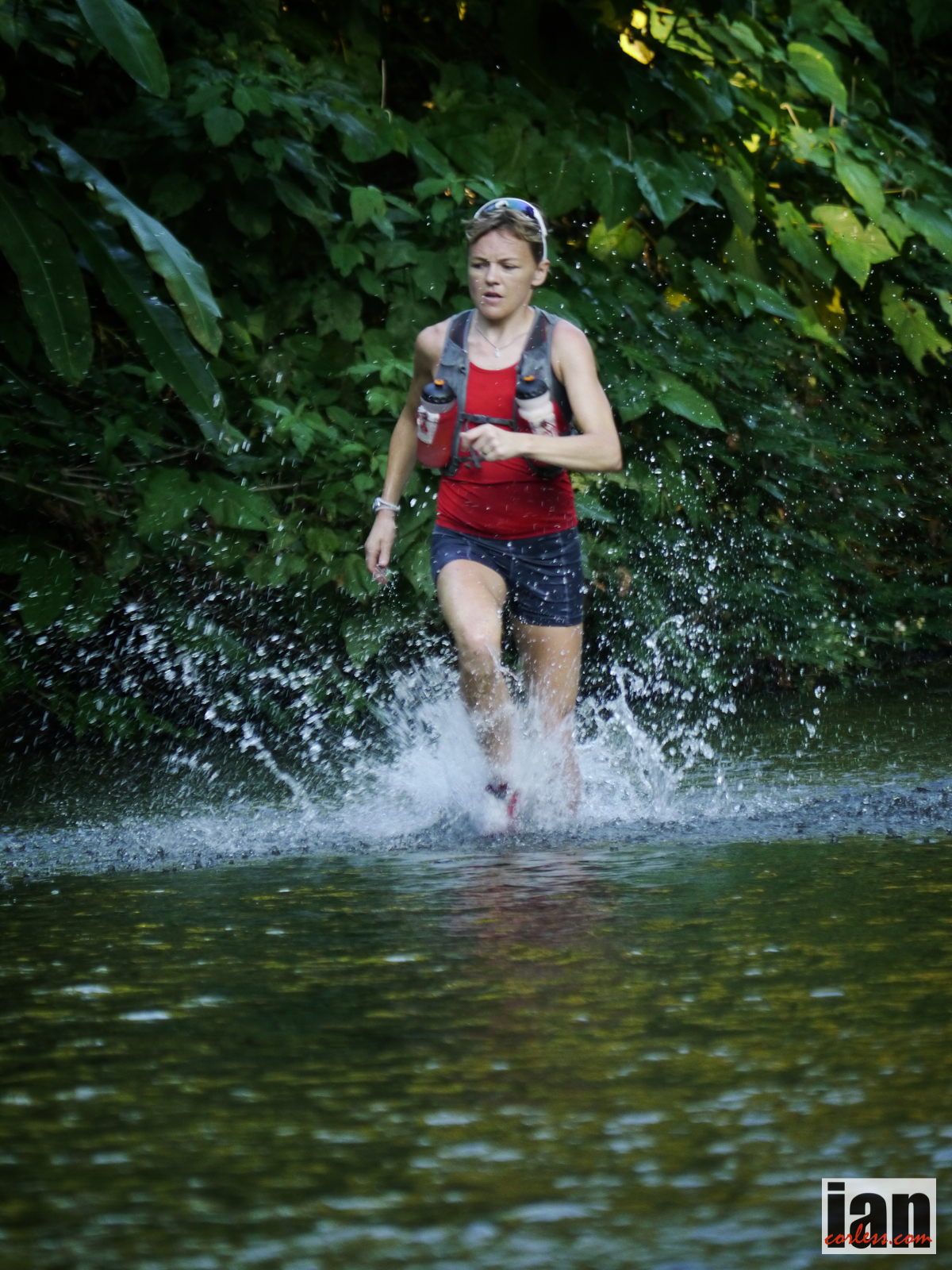
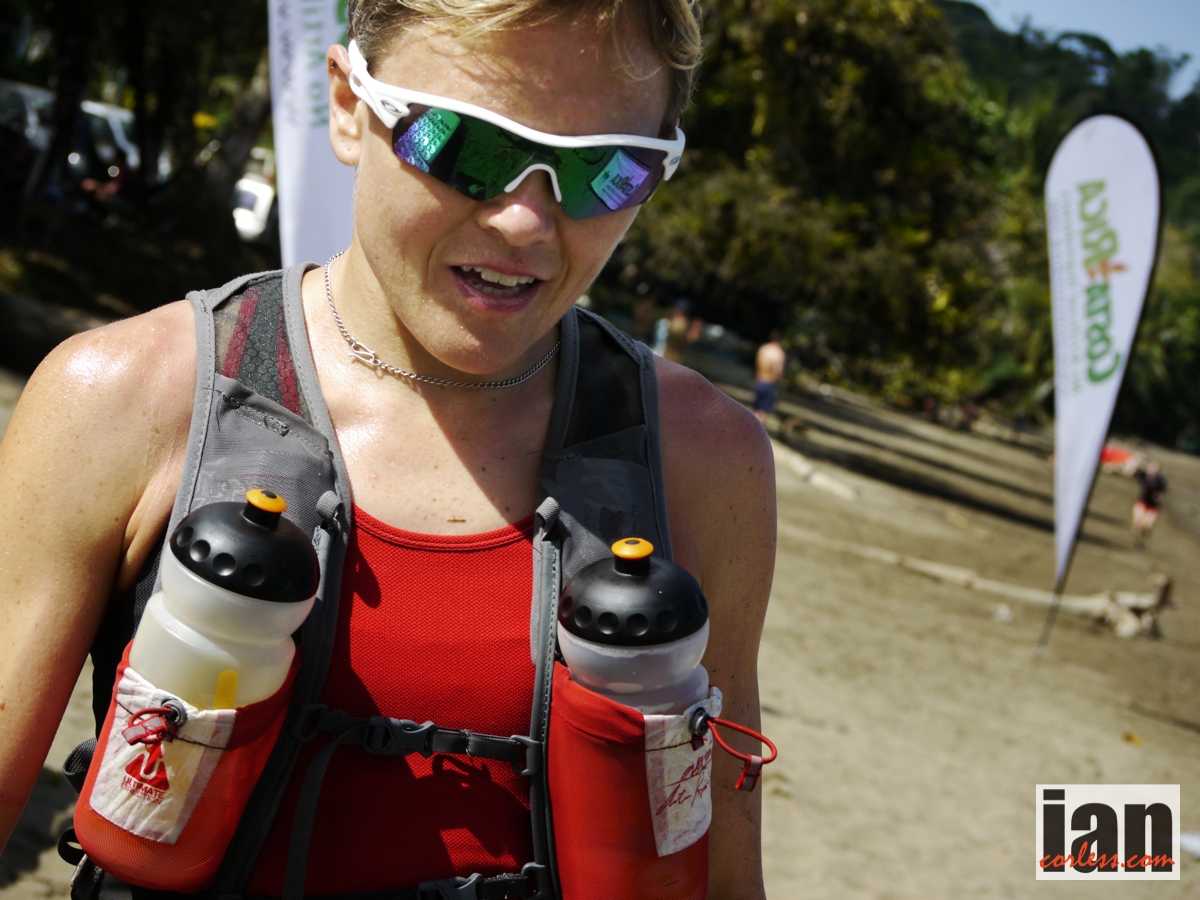
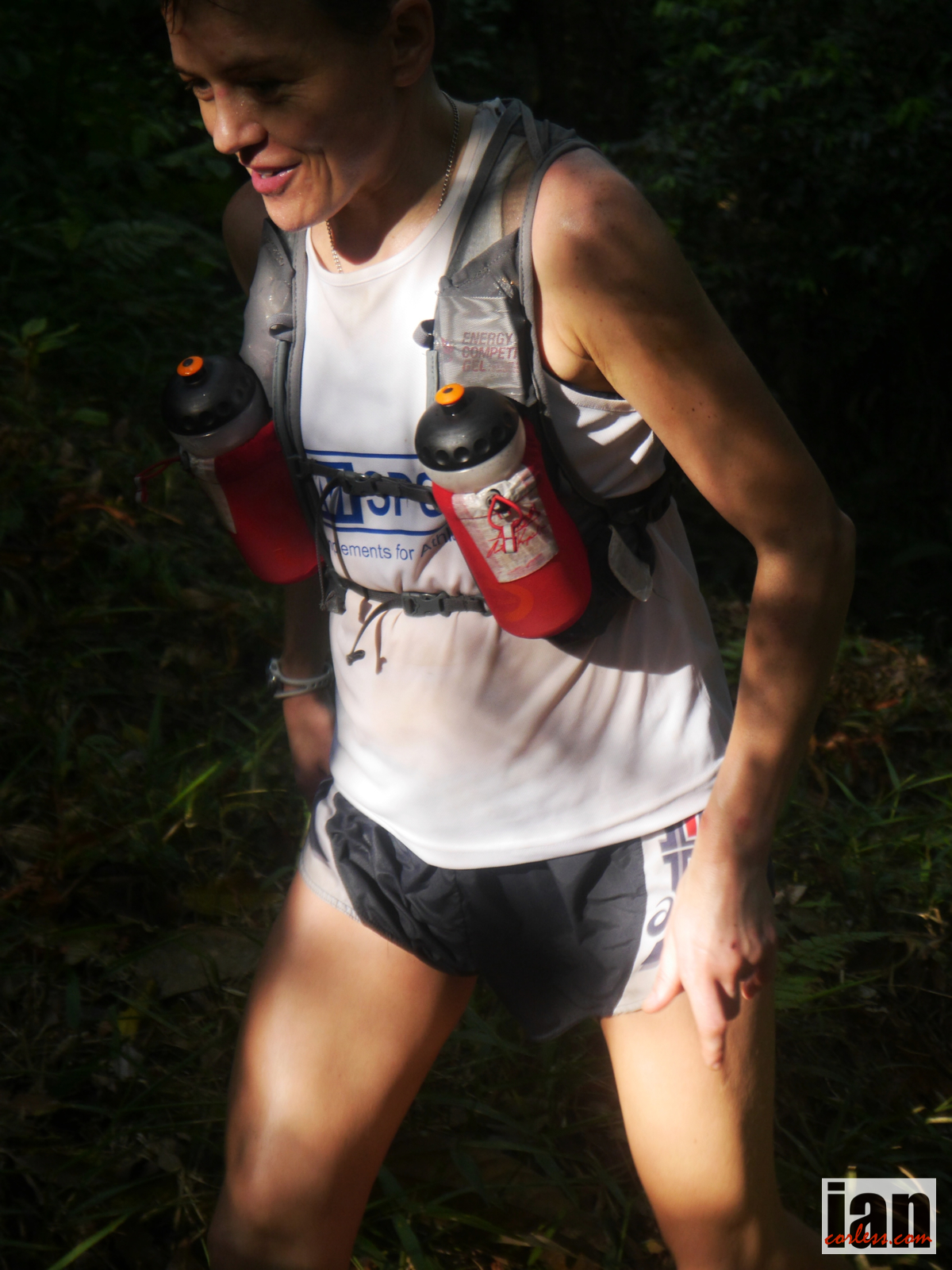
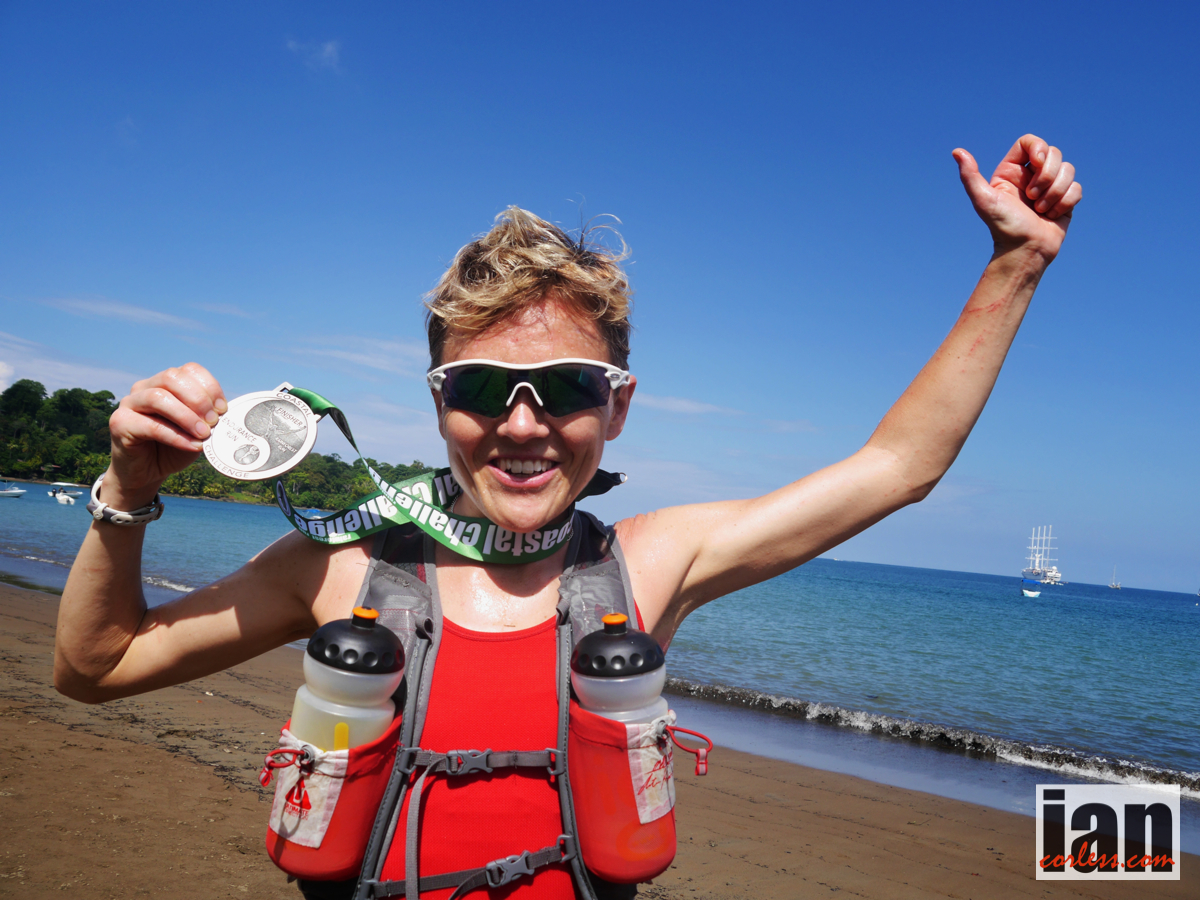
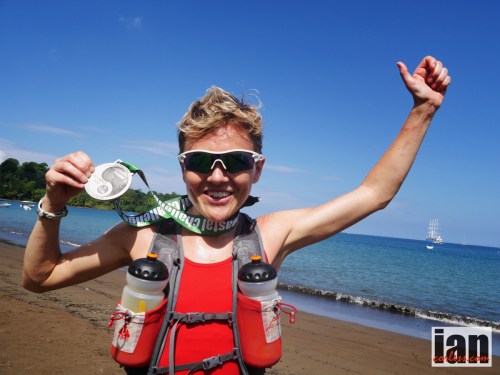
The eyes tell the story… they look through you. Deep in focus, almost blinkered like a horse, Jo Meek has only one purpose. To run as fast and as efficiently as possible over 6-days and when crossing the final finish tape, be crowned winner of the 10th edition of the 2014 The Costal Challenge in Costa Rica.

I had seen this look once before, at the end of stage-1 of the 2013 Marathon des Sables. Sitting in a bivouac, Jo Meek had just excelled on the first day of the race. I like others looked around in wonder and asked the question, ‘who is Jo Meek?’

No more questions needed to be asked, at the end of the 28th Marathon des Sables, we all were well aware who Jo was, she was the lady who had just placed 2nd overall behind Meghan Hicks at her first Marathon des Sables.

When you excel at one race it’s easy for many to look on and say, ‘It was first time luck.’ Not that Jo needed to prove anything, certainly not to me! I had seen her race; I had witnessed the dedication and focus as Jo pushed herself daily to get the best she could out of her body.

Switching from the dunes of the Sahara to the beaches and rainforest of Costa Rica was always going to be a cathartic moment for Jo, particularly when one considered the competition she would be up against; Julia Bottger (Salomon), Veronica Bravo (Adventure Racer from Chile) and Anna Frost (Salomon). Unfortunately, ‘Frosty’ had to withdraw from the race just days before the start in Quepos on doctor’s orders. Disappointed at not having the opportunity to test herself against one of the best female mountain/ ultra runners in the world, Jo focused and said, ‘It changes nothing. I am here to race and race hard. I would have loved to have Anna push me but you know what, I can push myself pretty hard.’

As we all found out, Jo can push herself pretty hard; maybe too hard at times? On day-1 of the TCC, Jo raced like a demon. Unaffected by the Costa Rican heat and humidity, she put 45-minutes into the female competition and set the platform on which to build for an incredible victory at the 10th edition of the race.

Back in the UK after a recovery week in Costa Rica, I caught up with Jo as she attempted to move house… a house that she had purchased without seeing! Yes, Jo had purchased a house she hadn’t seen. When I asked her in Costa Rica about this, Jo replied, ‘I was too involved in my training, I had one focus, to be in the best shape for the TCC. I just didn’t have time to go and look at it. I convinced myself it would be okay…’
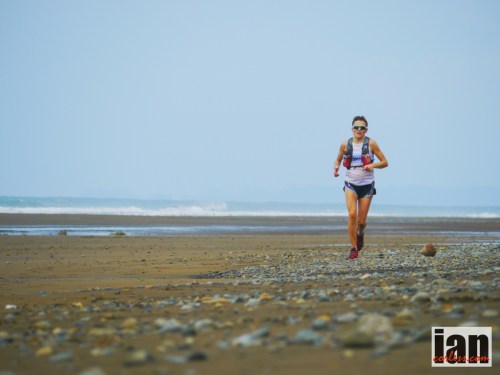
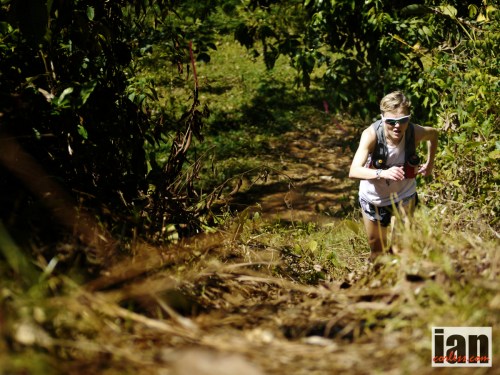
©iancorless.com_1130144

IC: A year ago I was talking to you at your surprise 2nd place at MDS. You have now been out to Costa Rica, a very different environment in comparison to the Sahara, raced against stronger competition? And you have won an incredible victory over 6 –tough days of racing. How do you feel?

JM: I feel really pleased. I have complete satisfaction from the race. It’s possible to sometimes come away with question marks but I have none. I feel that the effort I put in was rewarded appropriately. I put a great amount of dedication into this race and sacrificed lots.

IC: Yes, you had that steely MDS look in your eyes. Like blinkers. You dedicate yourself to the task and I guess knowing in advance what the competition was going to be like at TCC and having the MDS experience inside you, you were able to be far more specific in training. I know post MDS that you thought you had maybe been a little over cautious. You could have run quicker? So, did you go to TCC with all guns blazing and take each day as a race?

JM: Yes I did. I remember listening to Ryan Sandes on Talk Ultra and he said it was amazing how quickly one recovers. I thought, I do recover well and I had nothing to loose. I know from MDS that I had been cautious, for example on the last day I pushed hard. Had I done that everyday the result may have been different but it’s difficult to say. So, at TCC I wanted to give it everything. I had prepared for the heat and my training was good.
 ©iancorless.com_1150601

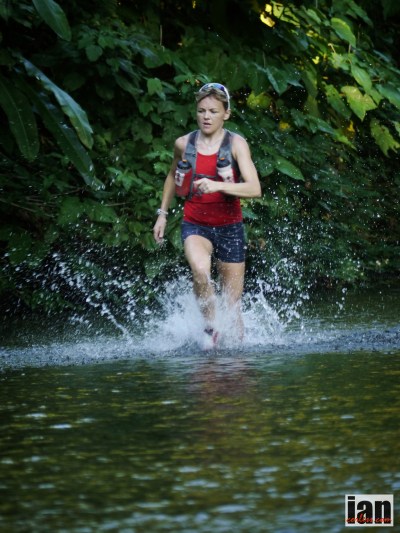
IC: You have just mentioned that you committed yourself from day-1. Needless to say, TCC day-1 was impressive. You put 45-mins into the competition, impressive, particularly when we look at the ladies who you were racing against. Of course it gave you a real buffer. A safety net. The biggest issue on day-1 for everyone (except you) was the massive contrast in European weather and Costa Rican weather. Even in Costa Rica itself, the temperatures between San Jose and the coast were remarkable. As you approach the coast the heat goes up along with the humidity. Day-1 has a later start so you are straight into the heat… mid 30’s and closer to 40 at the height of the day. But it did not affect you and the main reason for this was 10-days training in a heat chamber.

JM: Yes. I was prepared. I gave everything on that first day. I had assumed that the competition would have done the same? Using a heat chamber is only a case of contacting Universities and they are usually willing to help. I assumed some heat work would put me on a par. As it turned out it wasn’t the heat that struck me but the pace! We were running slower than I expected so I ran at what was comfortable for me and nobody ran with me. I then ran scared thinking I had made a mistake that I was going to pay for.

IC: Now you have had an opportunity to reflect on TCC can you tell us about the heat chamber, how did it benefit you, are there any crossovers between MDS and TCC prep?

JM: I did the same sort of training. I followed a marathon program but I did more back-to-back runs. Essentially you are training for the same thing. In the heat chamber I was under the guidance of the team. I told them I would do whatever I needed to do… They told me I needed 10-days. You actually don’t need to exercise in the heat chamber, you can just sit inside but it takes longer. I could sit for 3-hours or run for 1-hour. I am dedicated, I am focused, and that’s a really big thing.

IC: Lets talk about the training. When you say a classic marathon program, I guess you are talking about a speed session, hill session and then long runs. Of course, you were training for multi-day so you built from 1-long run to back-to-back long runs. What did a peak week look like; I guess this was 3-4 weeks out from the TCC?
 ©iancorless.comP1130161

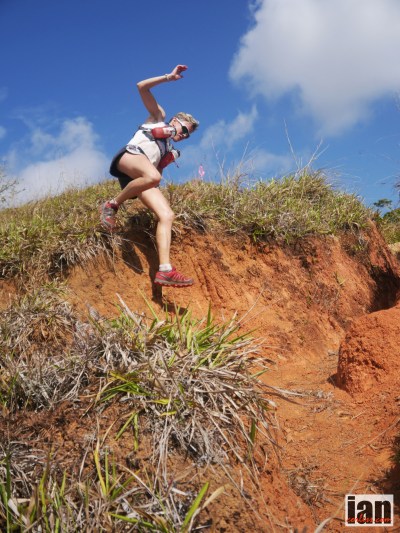
JM: Yes, 4-weeks out and then I would taper. You are right; I would do a speed session, a threshold run, a hill session and then long runs that would build to back-to-back runs. What you can’t afford to do is not let yourself recover in terms of, if you have done a long run and made it fast, you need to recover. It was all about balance. You need to be sensible and listen to your body. I would do 2.5-3-hours normally for a normal long session, whereas my long run for TCC was 4-hours; but at a slower pace. I wanted to make sure I could incorporate hills to prepare me for the hills of TCC.

IC: Back-to-back sessions, was that 2 x 4-hour runs?

JM: No, I did 3 back-to-back 3-hour runs.

IC: So, 9-hours split over 3-days; I presume when you did this you eased back of speed and hill work?

JM: I actually kept the sessions. In actual fact, that week I did a race. You have to remember, the long runs were really slow. It was just a case of recovering from a food and nutrition perspective. The runs actually didn’t damage my muscles. I am sensible after each run. I rest. For the 3 back-to-backs I took a day off work to make sure I had the best platform from which to build.

IC: So you planned this into work. You took a day off work and you treated this very much from a professional perspective. Feet up after the run, concentrate of food and hydration and make sure you are in the best place.

JM: Yes it was like being a full time athlete. Of course day-to-day life gets in the way; cook dinner and walk the dog for example. I just took this relaxed and in my own time.

IC: How did you break speed sessions down? Many ultra runners look at speed sessions as something that they don’t need to do. But that is not the case, you actually need endurance and speed, so, how do you work this to your benefit, how did you go about speed sessions?

JM: It is difficult to answer as we are all individual and it depends on your race. You need to target your sessions at the pace you want to achieve and then sometimes faster. I would do some track work running 400’s or I would do 1-mile reps. I guess you need to vary what you do… try to enjoy it! We all think, speed; it’s going to hurt. But if you find sessions you enjoy it makes a big difference. Also try training with others.
 ©iancorless.com_1160267

IC: So you had your plan, you did speed, you did strength, you did hills, you did back-to-backs but you realized that to give you an edge or in your terms an equal playing field was that you needed to adapt to the heat. It was a variable. It was one thing you couldn’t account for. You did 10-days consecutive in a heat chamber?

JM: Yes, 10-days.

IC: What is day-1 like?

JM: Oh you think I will never be able to run in this? I went in thinking that I would run at ‘pace’ but actually you run at a slow pace as they don’t want your temperature to rise too quickly. It feels bearable at the start. They monitor the core temperature and mine went too high after 30-min so then I had to walk and rest to keep it under control. It’s not as physically as hard as you may think. It’s all about core temperature.

IC: What is important is the lesson that we can all learn. You trained in the UK; you did the heat sessions, which gave you massive temperature and humidity fluctuations. You got that process over with before arriving in Costa Rica. By contrast, nearly all the runners had to go through that process on day-1 of the race… for example; Philipp Reiter had a really tough 1st day. He was overheating and red, he was trying to control himself but to no avail. However his recovery was phenomenal. He recovered so well to come back strong on day-2.

JM: That is the benefit of being 20!

IC: Yes, for sure that helped. However, had Philipp and the others got day-1 over with in a heat chamber it would have made a massive difference. It could have been the difference between top-3 and a win.

When you went back to the heat chamber how was the adaptation?

JM: Mentally I was more prepared. On day-1 I felt nauseous and tired but I guess it just gets easier. By day-3 my resting core had reduced dramatically. It gets easier and easier unless you are a moron like me and fall off the treadmill.

(Laughter)

IC: Mmmm yes, you did make a mess of your face. Not the best thing to land on in the final days of prep in the build up to an important race!

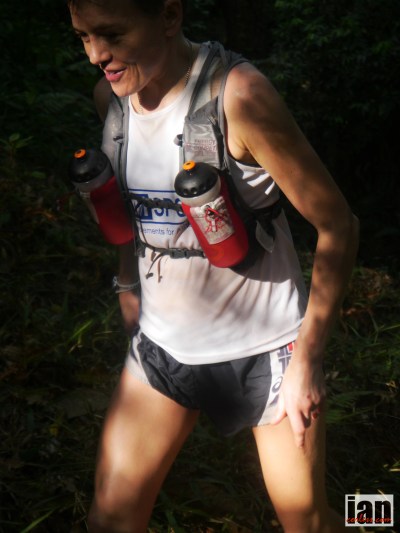
So, you adapted in the heat chamber. The process went exceptionally well and pretty much after the last session you made your way to Costa Rica. It’s a shock, isn’t it? Time changes, a day of registration, logistics and presswork, an early bed and then a very early start the following day that starts at 3am. A transfer by bus to the coast and before you know it, day-1 starts at 0930 just as the heat of the day is beating down. It’s hot, really hot, however it caused you no problems. You had that amazing first day. Post day-1 you said you felt great. You had taken the race on, you had pushed yourself and you had stamped your authority on the race. How did the rest of the race unfold for you? You had a couple of key moments; day-3 in the river section start when you struggled with the technicality, ironically, very similar to the male winner; Mike Wardian. You and he are very similar runners, you both run well on fast terrain but less so on technical terrain.  However, as the race progressed you both adapted and became far more efficient.
©iancorless.comP1120273

JM: Yes, without doubt.

IC: Moving up hill and covering technical ground became so much better for both of you.

Lets go back to that day-3 start when you had Veronica Bravo and Julia Bottger ahead of you, did you think you were loosing the race?

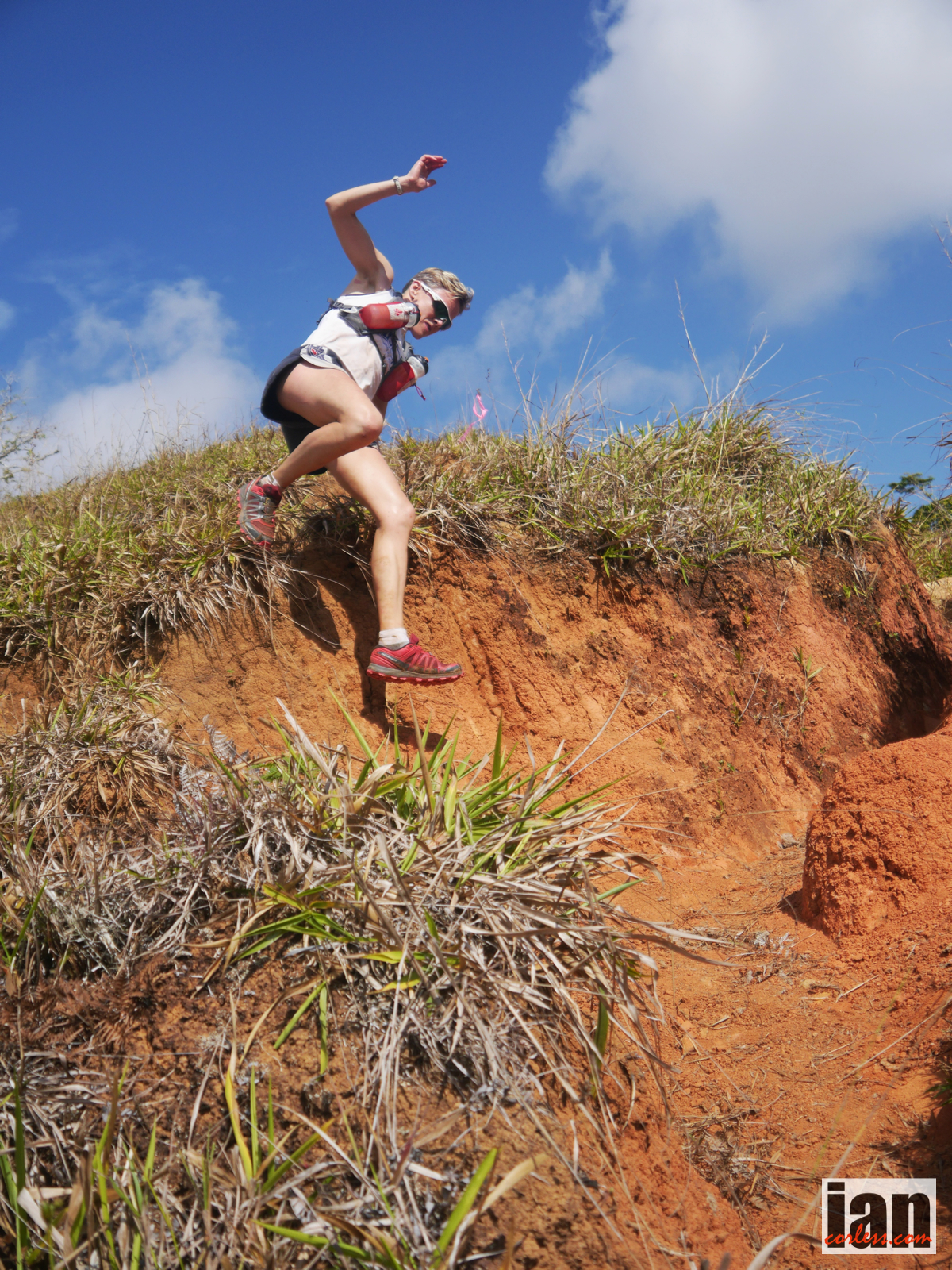
JM: When you can’t see runners you immediately think you are loosing 45-mins. It’s funny. However, when it is so technical you can’t think about anything other than what is below your feet and what is ahead. I just had to follow the course markers and cover the ground as best as I could. All the time I was thinking, I just need to get on the flat or get on a good hill and start chasing and pulling time back.

IC: You got through the section and you started to chase. You clawed back the time, you caught Julia and Veronica and then on the final beach section in 40-deg heat you pulled away and got another stage win. You re-established your dominance of the race. It must have been a great day and a great boost?

JM: The 3rd day was the longest and most emotional day. It almost felt like the end of the race. I was very emotional. Had someone been waiting for me at the end I would have cried. Even though I still had 3-days of racing ahead I had concentrated so much it had exhausted me. Having got through that it was a case of maintaining it. But as you very well know, I like to race and continued that way. I didn’t want to take anything for granted. I could have fallen and hurt myself and with Veronica and Julia chasing, I couldn’t be complacent. I raced hard to the end.

IC: Post race you said one day in particular is the day that you got things wrong that impacted on the final 2-days, was that day-4?

JM: I gave everything on day-3 and then I continued to race on day-4 when I didn’t need to?

IC: Yes, we had that conversation when I said to you, ‘you know what, you have a 60-min lead so be sensible. You have no need to put yourself in the ground. Consolidate what you have and be sensible.’ But in true Jo Meek fashion you continued to push…

Day-5 was significant. You had been in the lead and then Julia came back to you with about 10-km to go. It was the final feed station. You had a 60-min lead, so, overall victory was secure.
 ©iancorless.comP1130916

JM: I was at the feed and Julia arrived and I thought, ‘Oh my goodness, I thought I have to go.’ I ran, ran hard and closed out the final 10-km like a stand-alone session. I finished out of breath with hands on knees.

IC: Funny, when I saw you, you said, ‘I am an idiot.’

JM: I did.

IC: When I asked why, you explained the situation. Of course you have now reflected and I hope you realize that it wasn’t clever racing? You could have still had a bad moment on the last day and needed the reserves.

JM: Oh yes. I am well aware. What hurt me on the last day were sore quads. It was all the descending from the previous days. So I ran the last day within myself, however, had I thought Julia would have really pushed I would have found something, some extra energy.

IC: You have 2-great experiences under your belt. Marathon des Sables provided an introduction into multi-day racing and you performed maybe beyond our expectations but not beyond your own and now you have the victory at The Coastal Challenge. You have confirmed yourself as someone who can race hard, day-after-day, so, what are the hints ‘n’ tips you can provide for multi-day racing?

JM: Assess what you as an individual want from the race and then train accordingly. You must have a goal. Do you want to compete or complete? It makes a big difference. If you get your mind it the right place it is half of the battle. Prepare mentally, don’t be scared of the environment. Do what you can do and make sure that is clear. Have a great understanding of your body and how it recovers. Give yourself what you need. Without doubt eating after exercise within an hour is key, especially for multi-day racing or training. Rest when you get an opportunity; elevate your legs. For sure your feet and ankles will get tired. Relax, eat, drink and let everything settle. If you can sleep, do so. It provides great recovery. Ultimately, common sense prevails and the body is an amazing thing.

IC: TCC and MDS are very different. At MDS you had to be self-sufficient and carry a pack whereas at TCC tents and food were provided so you could run light, you just needed a hydration pack. Of course it’s a level playing field as everyone must do the same but from your perspective what are the pros and cons from both races and which did you prefer?

JM: That is very tricky. At TCC having food in abundance is obviously great. You can eat when you want and as much as you want so that makes recovery easy. However, everyone has that option so it’s not a personal advantage it’s just a different scenario. At MDS you can use this to your advantage, if you have planned well and your nutrition is optimum for your own personal needs then of course your competition may have not, so this can be something you work into a positive. It requires more planning. It’s a game of calories v weight. I like the challenge of the MDS scenario but equally your running style changes; your speed changes and you are carrying the burden of the pack.  I guess it depends if you prefer faster racing or a more expedition type of approach.

IC: It’s a crazy question but MDS compared to TCC, which race, all things considered was the hardest race?
 ©iancorless.comP1140703

JM: The Coastal Challenge course. It has everything, ascending and descending, the damage the course did to my legs was far greater than the MDS. I found the MDS was harder from a food perspective, it took me 4-5 weeks post MDS to put the weight back on. The Coastal Challenge course tests the body and mind and the continual changes of terrain keep you guessing and working hard.

IC: So what is next, recovery is first and foremost I guess?

JM: I want to prove myself as an ultra runner. I want to run in a GB vest. I will try to qualify for GB in a trail race. I’d like to do more stage races and I have entered Comrades in June. That will be an interesting test and very different to what I have currently achieved.

IC: Finally, Costa Rica, what was the experience like for you, can you sum it up?

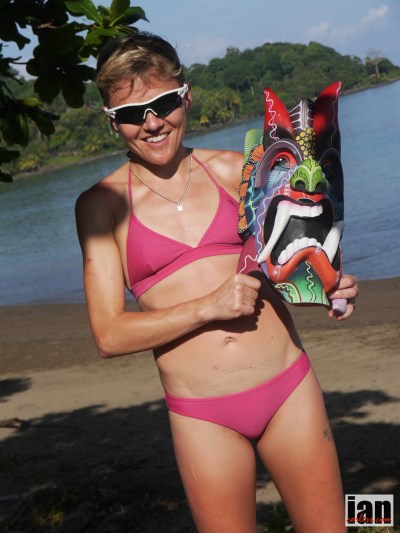
JM: The race is incredible. Where else can you run (or walk) in such an amazing place! The organizers have created a race and a route that often is inaccessible to most; riverbeds, jungle and plains. I probably didn’t look around too much while racing but I stayed for 1-week afterwards and I had a holiday. I went diving, saw a whale, I walked, went white water rafting and saw plenty of wildlife. It’s just an incredible and exciting place. Even if you did just the race you would come away with a whole new outlook. It really is incredible.

LINKS:

TCC 2014 race images – HERE

The 2015 The Coastal Challenge is now available to book. Want a discount? Use the form below for early bird booking.

Race Website – HERE
← Back

Thank you for your response. ✨

Episode 34 – Hollon, Hicks, Davies & Stephenson

TU34

On this weeks show we speak to 22 year old Nick Hollon who just recently finished the infamous Barkley Marathon. We catch up with Natalie White who tells us all about the future plans for UK based Inov-8 who are 10 years old in June. We have chat with Ozzies Brendan Davies and Shona Stepehenson who placed 5th and 2nd respectively at UTMF in Japan. In Talk Training we speak to Mitch from Stride UK. We also speak to Chris Mills in 15 mins of fame. We have a blog, the news, up and coming races and of course, Speedgoat.

00:00:00

00:00:45 Start

00:09:50 News

Evesham Ultra

Robbie Britton 6:47:17, Mark Davies 07:11:58, Mark Denby 07:12:04

Hayley Stockwell 8:47:51, Joan Clarke 8:57:08, Sandra Goldsack 9:12:54

Lizzy Hawker

once again continues to inspire, she recently broke her own speed record from running Everest Base Camp to Kathmandu – 319km in 63hr 8min.

She is now pack in Nepal to do the Mustang Mountain Trail Race – multi stage 277k in 8 days

Iznik Ultra

130km

1  Mahmut Yavuz 13:52 2 .Aykut Çelikbas 14:15 3 . Mustafa Poyraz 15:14

1. Elena Polyakova 15:00 2. Muazzez Özçelik 19:53 3. Bakiye Duran 22:55

80km

1. Tanzer Dursun 8:13 2  Ahmet Zeren 8:19 3  Özgür Tetik 8:2

1.Amy Sproston 7:12 2.  Alessia De Matteis 9:29 3  Sirin Mine Kiliç 9:55

Leona Divide

50k

Yassine Diboun 4:03:33, Jeremy Humphrey 4:09:59 and Aaron Keller 4:33:19

Rachel Lipman 5:21:56, Gwendolyn Ostrosky 5:30:59 and Ruth McCoy 5:41:43

50m

Robert Krar 5:53:51, Jason Wolfe 6:43:10 and Jason Schlarb 6:44:54

Melanie Peters 7:30:47, Jenny Capel 7:59:23 and Kristina Folcik 8:31:05

UTMF 

1. Hara 19:39 2. Chorier 19:48 3.Chaigneau 19:50 4. Gary Robbins 20:20 5. Brendan Davies 20:38

1. Krissy Moehl 24:35:45 2. Shona Stephenson 25:56:52 3. Hitomi Ogawa 26:15:25

IAU – 100km European Championships on April 27th

Asier CUEVAS 6:53:14 Michaël BOCH 6:56:49 José Antonio REQUEJO 6:57:02

Irina ANTROPOVA 7:42:52, Sue HARRISON 7:48:12 and Sophia SUNDBERG 7:53:21

http://www.5000mileproject.org – British couple, David and Katherine are  running 5000m across South America in 1 year! They started on July 28th. I have had some email chats with David and we hope to hook up within the next month or so.

Zion 100

Pierre Loic Deragne 17:52:10, Andy Pearson 17:55:12, Matt Cecill 18:42:22

Jennifer Benna (and 5th overall) 19:01, Larisa Dannis 20:22:23, Pam Reed 24:09:23

Hoka Highland Fling

Lee Kemp 7:02:50 (new CR), Ricky Lightfoot 7:09:30 and Matt Williamson 7:21:51

Tracy Dean had a real battle to the line with a calf injury but held on to win by just over 1 min ahead of Fionna Cameron 9:12:21. Third was Sandra Bowers in 9:17:02

00:2415 Brendan Davies – Brendan recently raced at Tarawera ultra in New Zealand. Part of the Inov-8 international team, he recently raced at the Ultra Trail Mt Fuji in Japan. He says it is the hardest race he has ever done… he was 5th. We caught up with Brendan just days after the race. Website HERE

00:36:37 Back to News

00:38:30 Shona Stephenson – Shona, a personal trainer and mum of two girls also raced at the Ultra Trail Mt Fuji. Like Brendan, she is also part of the Inov-8 international team. Shona secured an impressive second place behind US based Krissy Moehl, we caught up with Shona when she arrived back home in Australia. Website HERE

00:56:08 Back to News

01:05:10 Meghan Hicks – has raced at Marathon des Sables several times before. However, in 2013 she returned with several objectives. Her main priority was to make the podium but her ultimate goal was to win the race…. we caught up with Meghan at her home in Utah, less than 14 days after the iconic 28th edition of the MDS. Website HERE
01:43:10 Blog – Anton Krupicka is back…. he always writes a very detailed daily post. Here is a highlight:

Sat-AM: 6:59, 11,500′ ~ Grand Canyon Double Crossing

Used the standard South-North Kaibab route and clocked a 6:59:24 roundtrip, which was a 17min PR for me and I think ~30sec under Mackey’s previously 2nd-fastest time (but still 6min short of Dakota’s FKT). I didn’t know if I was going to go particularly quick today, but thought I’d just see how the legs were feeling. After getting down to the river pretty quickly (despite being slowed a minute or two by a descending mule train), I decided to keep going steady and see how things shook out. Felt pretty solid all the way to the North Rim, hiking a fair bit above the Supai Tunnel, but then on the way back down I was definitely already getting pretty tired by time I made it back to the residence water spigot. Things got progressively worse on the run back to Phantom Ranch (stiff, achey, tired legs), but I pounded three bottles of water there (spending 4min at the spigot) and then climbed quite strongly all the way to Tip-Off, but above there things got pretty weak/queasy as I ran out of water about half-way up. At Tip-Off I thought there was a really good chance I could still get Dakota’s record–even take 5min or so off of it–but in the end I was just psyched to sneak in under 7hr. Great run, and a good confidence boost going into TV, as I know I still have a lot of running fitness to gain. Had another 12min of running on the day, getting to and from the South Rim. Splits: River, :46; Phantom Ranch, :53-54; Cottonwood, 1:54; Residence, 2:09-10; Bridge, 2:42; Supai Tunnel, 2:56; North Rim, 3:22; Supai Tunnel, 3:35; Bridge, 3:43?; Residence, 4:04-6; Cottonwood, 4:16; Phantom, 5:08-12; River, 5:19; Tip-Off, 5:49; Skeleton Pt, 6:14; Cedar Ridge, 6:37; South Rim, 6:59:24.

01:45:10 Talk Training – this week we introduce Mitch to Talk Training. Mitch is based in the UK and has a practice called STRIDE UK (http://www.strideuk.com). In our first episode we touch on the importance of flexibility and stretching.

01:59:45 Natalie White Inov-8 – UK based company Inov-8 have a reputation for making some of the best running shoes available. They have made some iconic products such as the famous ‘Mud Claw’. In 2013 they are introducing a new clothing range to the brand, they have created an inter nation racing team and they also celebrate a 10th birthday in June. Website HERE
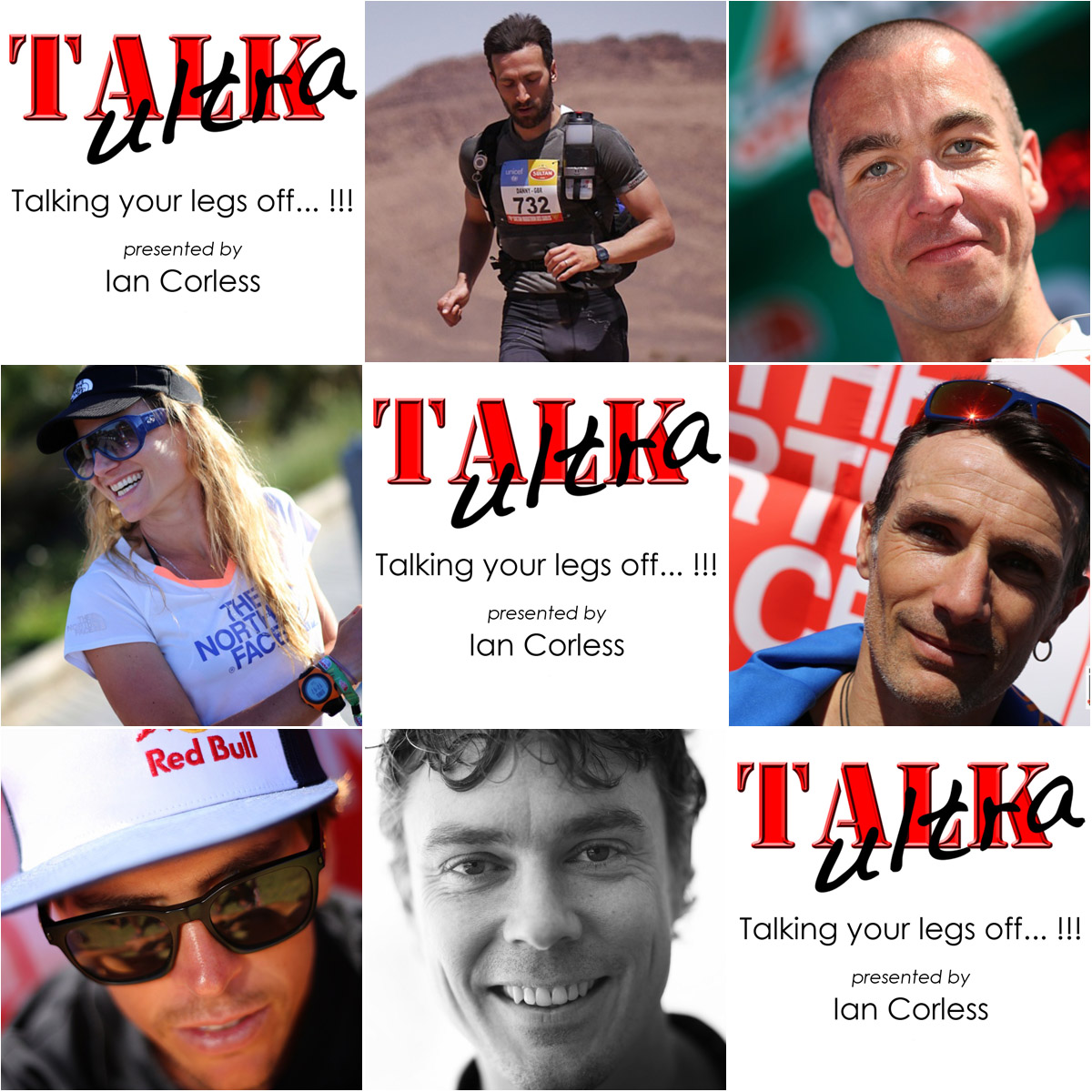
02:17:45 Nickademus Holllon – Barkley ultra marathon is infamous. It strikes fear into any runner. So difficult is this iconic ultra that finishers are few and far between, Nick Hollon not only completed the race in 2013 but at the age of 22 he also became the youngest ever winner. We caught up with Nick to hear all about how he achieved a finish and also to find out how started in running… he has a great story. Believe me, he doesn’t like to make things easy! Website HERE
03:09:45 Back to Karl

03:14:00 Meltzer Moment – Speedgoat gives us his Good, Bad and Ugly.

03:18:40 15 min of fame – this week we speak to Chris Mills (24fifty.com). Chris is just an ordinary guy. He actually hasn’t run an ultra…. yet! But I am sure when you listen to him, you will find his story inspiring.

03:3210 Races – the up and coming races for the next two weeks.

03:40:05

Links

Protected: Darkness to light – Marathon des Sables

This content is password-protected. To view it, please enter the password below.

Pictures tell stories…

I love what I do! I really do.

To work in a race environment and capture the action in words or audio is a real pleasure. I have played with video and although I enjoy the medium, I do prefer a ‘still’ image. It is a moment captured.

These two images really capture everything that combines to make a great image.

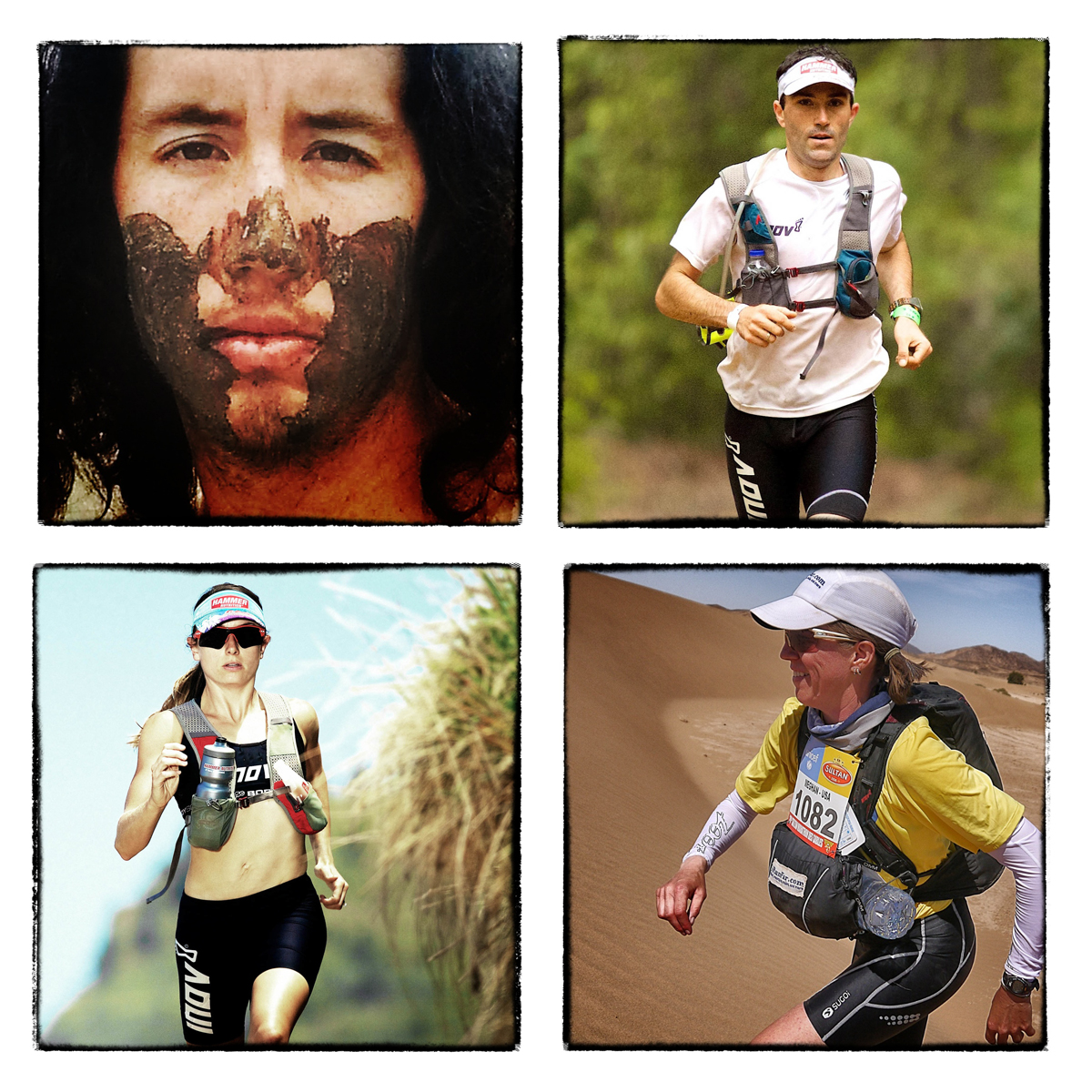
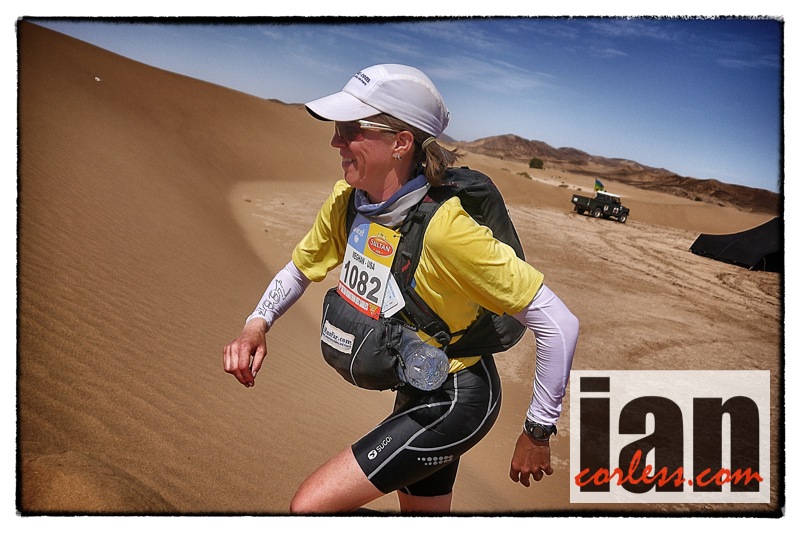
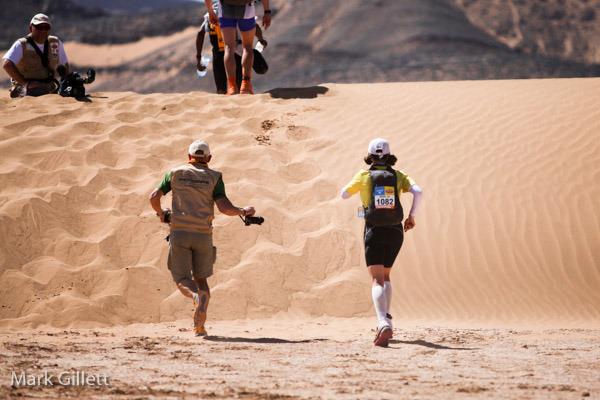
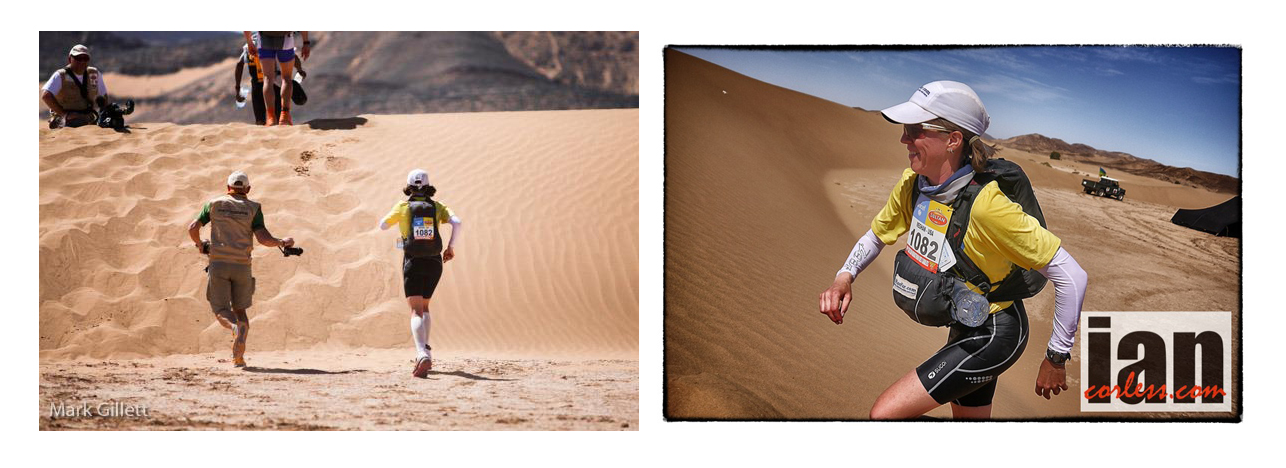
Meghan Hicks on the first stage of the 2013 Marathon des Sables (which she went on to win) running up a dune on the first day. I captured the image by running alongside her.

iancorless.comP1020570From behind, my fellow photographer, Mark Gillett captures the process involved. Story making at its best, running at its best and the use of imagery at its best. I have often been asked HOW? I manage to capture images that make the viewer feel like they are in the moment… well here is how.

Copyright Mark Gillett

Copyright Mark Gillett

Pictures tell stories… thanks for the inspiration Meghan and thanks for capturing Mark.

Pictures tell stories...iancorless.photoshelter.com


The Brits are coming…! Marathon des Sables 2013

You can read the full article and see images of Danny and Jo on RUN247 HERE