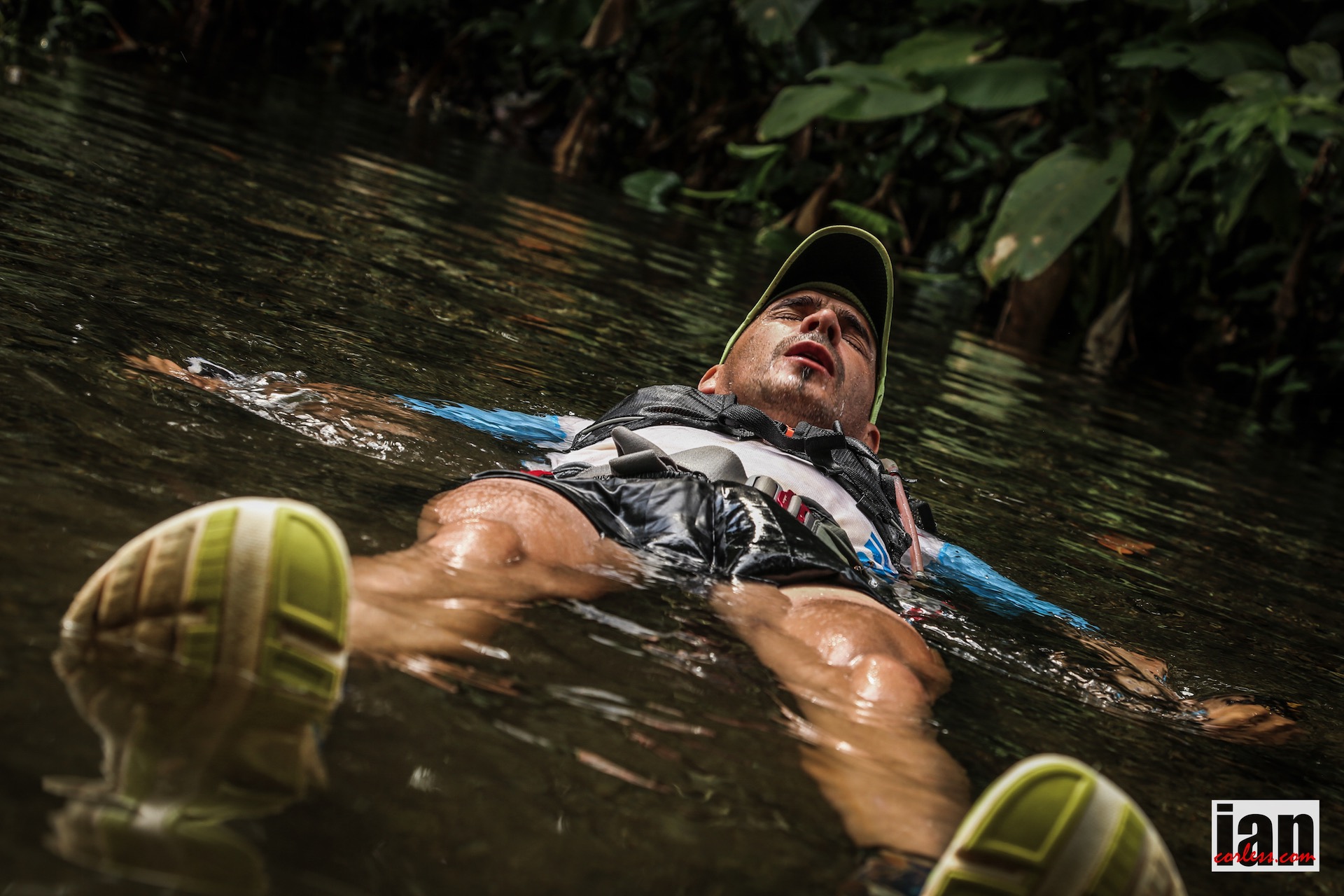
Beat The Heat ( Part One) – Marc Laithwaite

©iancorless.com_TCC2015_Day5-2508

This week we’re starting a series of articles titled ‘environmental physiology’. We’re going to open with a 2 part series relating to exercise in the heat (I say 2 parts, but who knows what could happen by next week). Following that, we’ll take a look at altitude training and potential benefits.

But before we go on, why not catch up on our seven part series of posts on RACE DAY NUTRITION HERE

Too Hot? Call The Police & Fireman…

Exercise in the heat can place a lot of strain upon your body, if you’re used to cooler climates. For this reason, many elite athletes will spend time acclimatising to the higher temperature. Acclimatisation can require up to 14 days, so what if you’re an amateur athlete travelling abroad for an endurance event, who can’t afford to travel 3 weeks before the event? Well this blog is quite timely for me, as I’m off to Lanzarote in less than 4 weeks for the Ironman triathlon and potentially, it could be very hot. There’s probably quite a few people reading this blog who are traveling abroad this year to take part in triathlon or running events in hot places. The purpose of this blog is to explain simple ways, which you can acclimate your body beforehand and explain the physiological changes, which take place to improve your performance.

Too hot? You Make A Dragon Want To Retire Man…

In a nutshell, when you exercise in hot climates, your core temperature rises and your performance suffers. If your core temperature rises too much, it could potentially be lethal, so your brain is pretty quick to try and stop that happening, by persuading you to stop!

How do we reduce core temperature?

There 2 main ways, the first is ‘convection’ and the second is ‘sweat evaporation’.

Convection

Think about a car radiator, it’s positioned right at the front of the car as that’s where the wind hits it when you’re driving. Heat is generated in the engine, this in turn heats the water which is then pumped to the radiator. The wind hits the radiator, cools the water and the cool water goes back into the engine to pick up more heat. This cycle continues, to keep removing heat from the engine, which is why it’s important to keep the fluid topped up or your car will overheat! The human body works the same way, heat is generated in the engine and your blood then picks up the heat. The blood is pumped to the coolest part of the body (the skin), where the wind hits it and cools the blood. It then returns back into the engine to pick up more heat and the cycle continues.

If the wind is blowing against your skin whilst you exercise, convection may well be enough to keep you cool and maintain a normal body temperature. It’s easier to do this when cycling, compared to running, as your speed is generally higher, so the wind chill is greater. Runners will notice that treadmill running leads to more sweating than running outside as the air temperature is generally warmer, but also you’re not moving, so there’s no air flow past the skin and therefore no wind chill or convection. The same can be said about indoor cycling or using a turbo trainer, especially if you don’t have a fan blowing.

Let’s use the treadmill running or turbo cycling scenarios as an example. If there’s no air flow past your skin to cool the blood, then in effect, you pump hot blood to the skin surface, it doesn’t get cooled, so the hot blood goes back into the engine / core. That’s a sure fire way to overheat. This is the same as leaving your car engine running on a hot day, whilst stuck in a traffic jam. If you’re not moving, there’s no wind hitting the radiator, so convection cooling can’t happen.

Sweating

Sweating is based on ‘evaporation’. Water from your body cells makes it’s way to the skin and as the hot blood arrives, the heat is passed from the blood into the water droplets (leaving the blood cool). The heated water on your skin, evaporates into the air like water from a boiling pan and takes the heat with it. If you’re running on a treadmill and there’s no convection, you need another method of getting rid of heat, so the sweating and evaporation will kick in.

It’s important to recognise that ‘evaporation’ removes the heat, so any sweat on your skin, clothing or floor, serves no purpose other than to lead to dehydration. 

Convection and sweating don’t compliment each other too well

If you’re racing in hot weather, convection isn’t enough so you’ll also sweat to keep your temperature down. As you sweat, you lose fluid from your body and this leads to a drop in blood plasma (plasma is the fluid/water component of blood). The problem is that you need a lot of blood for convection to work well. When you’re exercising, blood is pumped to the exercising muscles and what’s left is pumped to the vital organs. So what happens when you then need to pump extra blood to the skin to cool down? Do you reduce blood flow to the muscles and vital organs? It sounds like a great idea to keep you cool, but where is this extra blood coming from? As if that wasn’t bad enough, you’re now sweating and the amount of blood you have is dropping. So not only do you have to supply muscles, organs and the skin, you’ve got less and less blood available as sweating continues.

Blood is made up of plasma (fluid) and cells (red/white/platelets). When you sweat, you lose plasma, but not cells. This means that the total amount of blood is reduced and it also gets thicker (same number of cells but less fluid). 

What does this mean in terms of performance?

As you’ve probably guessed already, this isn’t good for performance. Heart rate is generally higher for any level of exercise. This is due to the fact that you’re trying to pump blood to all areas of your body and your total blood volume is dropping. Your cardiovascular system is therefore working overtime, trying to match the demand with a struggling supply. Due to fluid and salt losses, your body becomes dehydrated and cells cannot function correctly. We’ve mentioned previously that salt is required for transporting fluid throughout the body and as high amount of salt can be lost in sweating, this mechanism is impaired.

Something of great importance, which is less frequently discussed, is the change in substrate utilisation. Whilst the exact mechanism is still under question, it’s pretty clear that you use more carbohydrates and therefore empty your glycogen stores more quickly when exercising in the heat. The simple explanation is that that there’s a lack of ‘spare blood’ going to the muscles, due to the fact it’s going to the skin for cooling. Fat metabolism requires more oxygen than carbohydrate metabolism so there’s a switch from fat to carbohydrate. This may also be explained by a switch from ‘slow twitch’ to ‘fast twitch’ fibres, which use less oxygen.

All in all, this isn’t looking too good. We’ve got an ever-decreasing blood volume, which is being pulled in several different directions. We’ve got decreasing salt levels and an onset of dehydration. We’ve got a heart rate which is significantly higher than it should be for the intensity we’re exercising at and to cap it all off, we’re running out of carbohydrates at a faster rate than normal.

Don’t worry help is at hand. Next week we’ll discuss how acclimatisation helps you to deal with the issues and explain the physiological changes responsible.

Until then, stay cool.

– Marc

About Marc:

Sports Science lecturer for 10 years at St Helens HE College.

2004 established The Endurance Coach LTD sports science and coaching business. Worked with British Cycling as physiology support 2008-2008. Previous Triathlon England Regional Academy Head Coach, North West.

In 2006 established Epic Events Management LTD. Now one of the largest event companies in the NW, organising a range of triathlon, swimming and cycling events. EPIC EVENTS also encompasses Montane Trail 26 and Petzl Night Runner events.

In 2010 established Montane Lakeland 50 & 100 LTD. This has now become the UKs leading ultra distance trail running event.

In 2010 established The Endurance Store triathlon, trail running and open water swimming store. Based in Appley Bridge, Wigan, we are the North West’s community store, organising and supporting local athletes and local events.

Check out the endurance store HERE

Endurance Store Logo

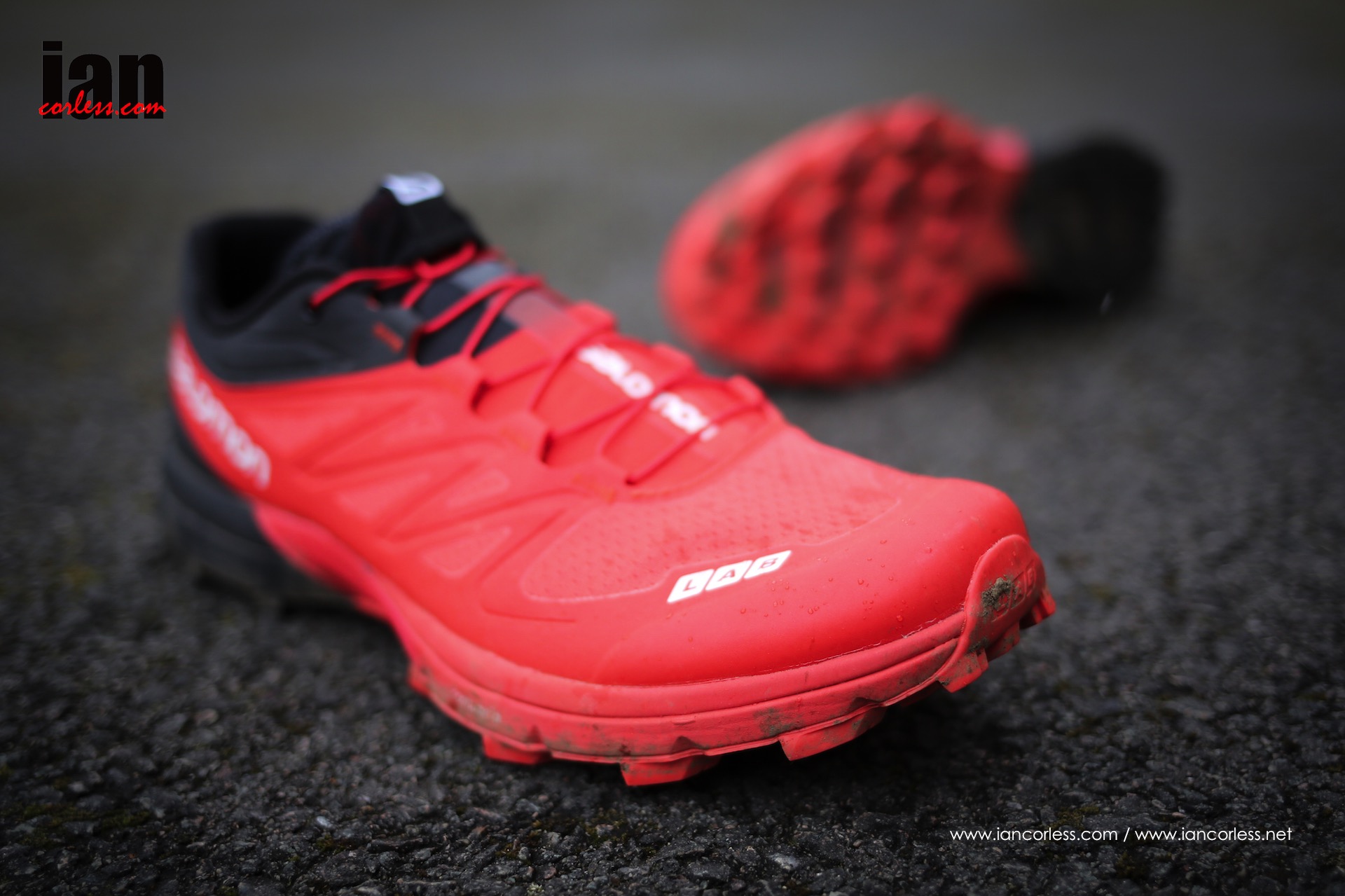
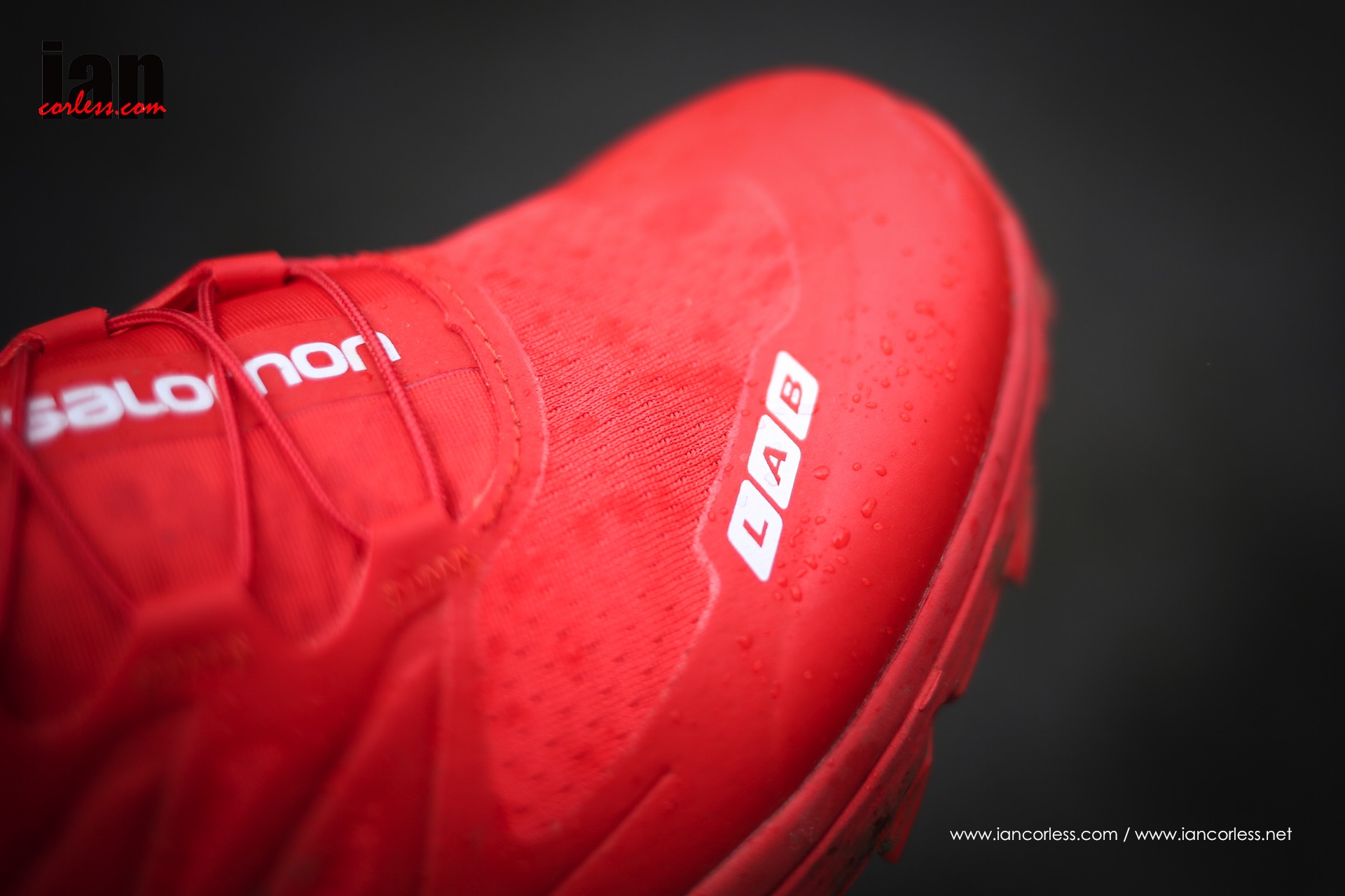
Salomon S-Lab Sense 4 Ultra SG (Soft Ground) – Review

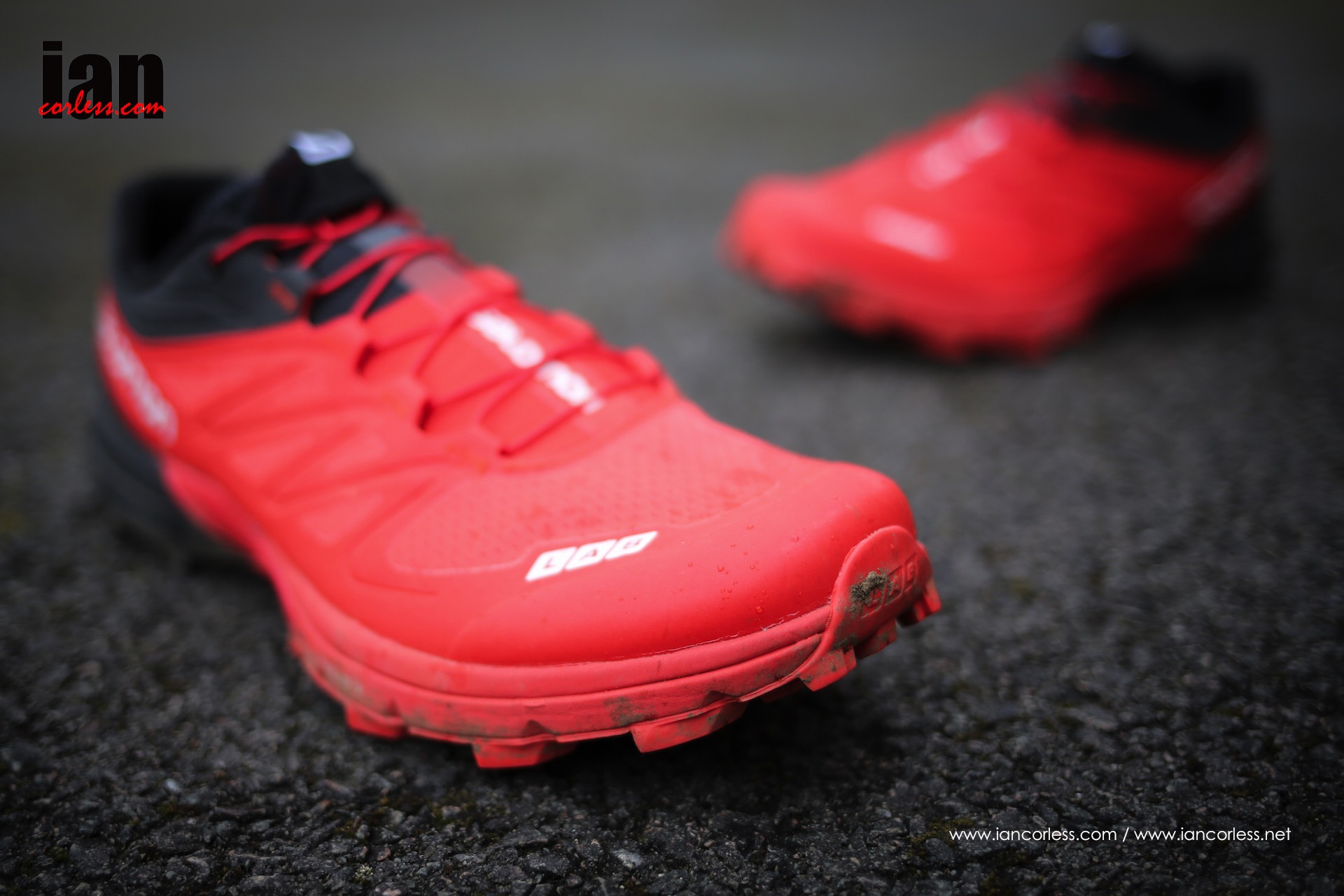
©iancorless.com_Sense4SG-9063

C’mon, GET A GRIP!

Oooooh grip! I love grip…. before you read anymore, I strongly suggest that you read my very recent review of the new Salomon S-Lab Sense 4 Ultra HERE

I loved the Sense 4 Ultra but I did say that due to the precision fit, 4mm drop and relatively tight toe box, it would not be a shoe for everyone! I suppose the same should apply here… it does BUT I do think that other factors come into play for the ‘SG’ version.

First and foremost, when running off road and when running in muddy, sloppy or technical terrain you most definitely need a shoe that is going to hold your foot, allow little or preferably no movement and of course be precise. That is the Sense 4 Ultra SG. So you see, although normally I wouldn’t say squeezing your foot into a shoe is a good idea, with a SG version it is acceptable based on two key principles:

  1. The shoe is not ‘too’ tight and in anyway causes discomfort, pain or unnecessary stress.
  2. You are not running for hours and hours.

If you fall into the above two options and you are thinking that the SG maybe or maybe not for you; it may well be worth a risk for the supreme fit, comfort and grip.

As with the Sense 4 Ultra (non SG) the new shoe has had thorough reworking taking into consideration much of the feedback not only from everyday runners like you and I but also the elite Salomon runners such as Kilian Jornet.

©iancorless.com_Sense4SG-9068

SG stands for Soft Ground and as such, this shoe is all about grip when it’s needed. So, for many, the Sense 4 Ultra and Sense 4 Ultra SG go hand-in-hand and I think it’s fair to say that many will have (or at least wish for) both pairs of shoes.

©iancorless.com_Sense4SG-9072 The new shoe has been left alone in certain areas and tweaked and improved in other areas. Lets be clear, although it’s called SG it does make a perfect trail shoe for all conditions in my opinion. Admittedly, I wouldn’t want to run a pure hard trail in them but if I was mixing up dry trail, rocks, gravel, water, mud and a whole multitude of other surfaces, this is and would be my shoe of choice.

The Salomon S-Lab range very much follows the ethos of FAST and LIGHT but as the ‘Ultra’ name suggests, the shoe has a little more added to increase longevity and comfort. As with the Sense 4 Ultra, cushioning is 9mm and 13mm with a 4mm drop. I keep saying it but 4mm drop is not for everyone so don’t be tempted to use this shoe just because Kilian and the rest of the team use it… be sensible with shoe drop! The Fellraiser or Speedcross may be better options for you?
©iancorless.com_Sense4SG-9081

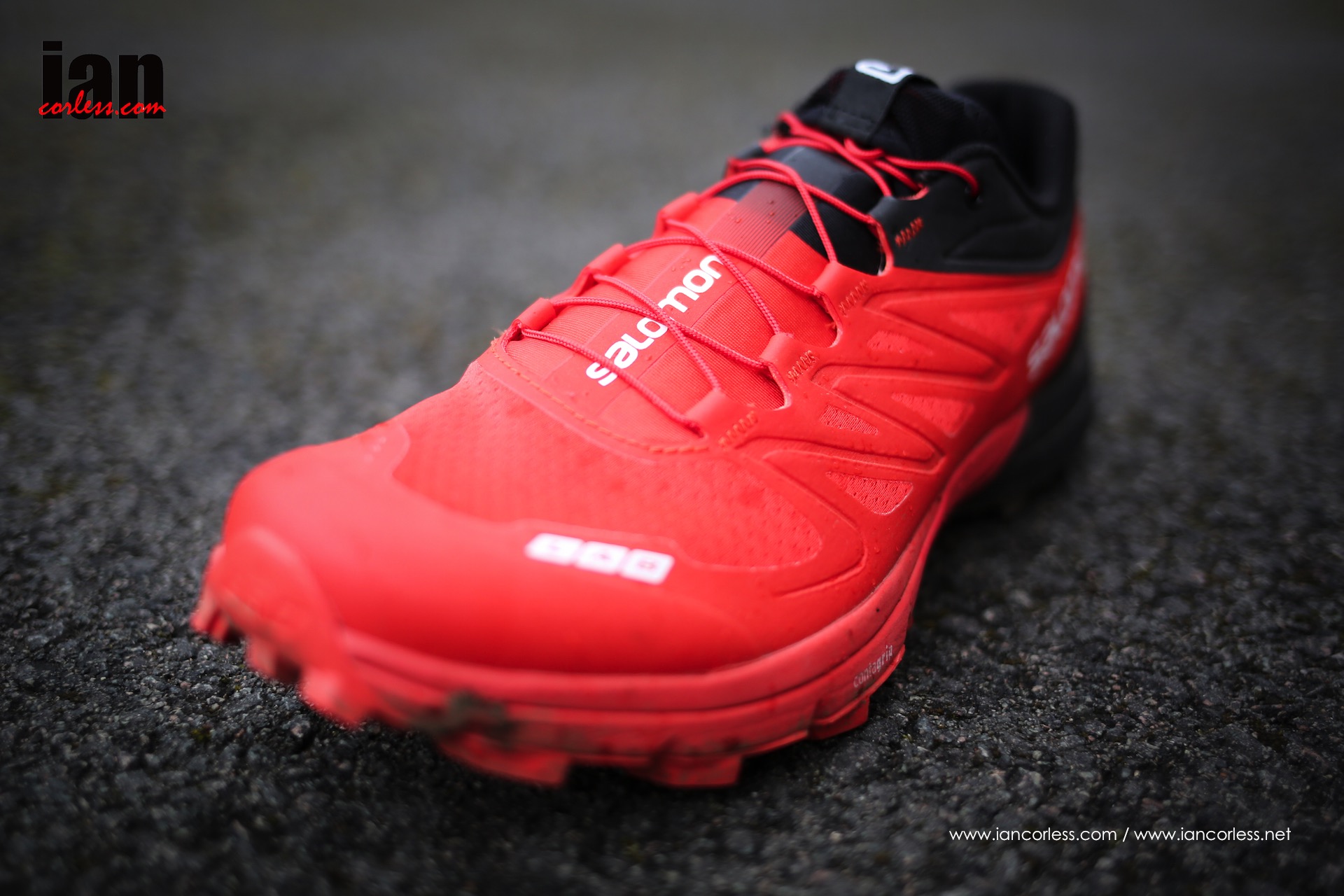
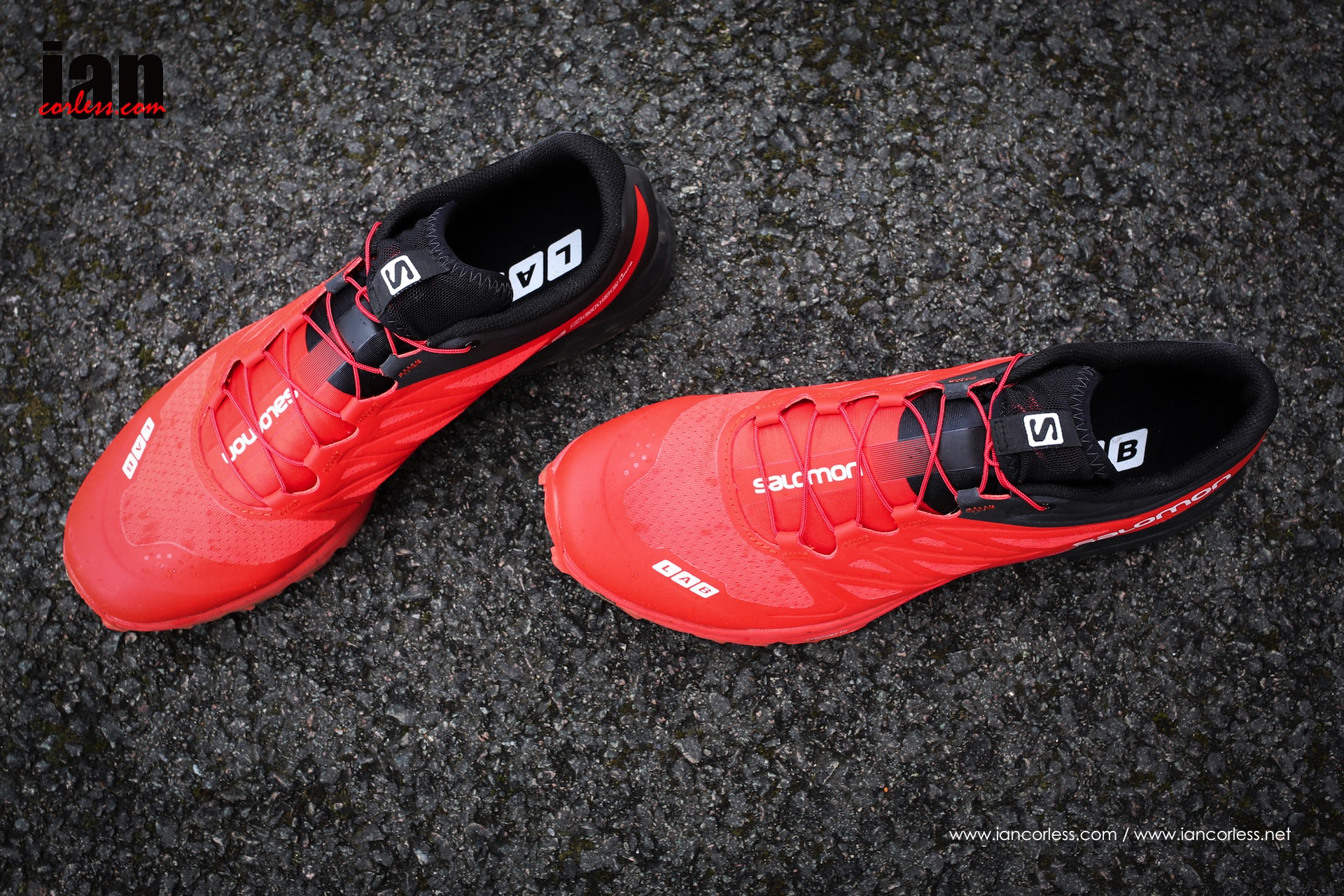
The SG upper, like the Sense 4 Ultra has been revised. The fit has been tweaked with additional support added to the mid foot. Additional room has been added to the toe box but it’s marginal in my opinion. Sensifit has also been tweaked and the mapping on the upper is now different and holds the foot more secure.

©iancorless.com_Sense4SG-9088

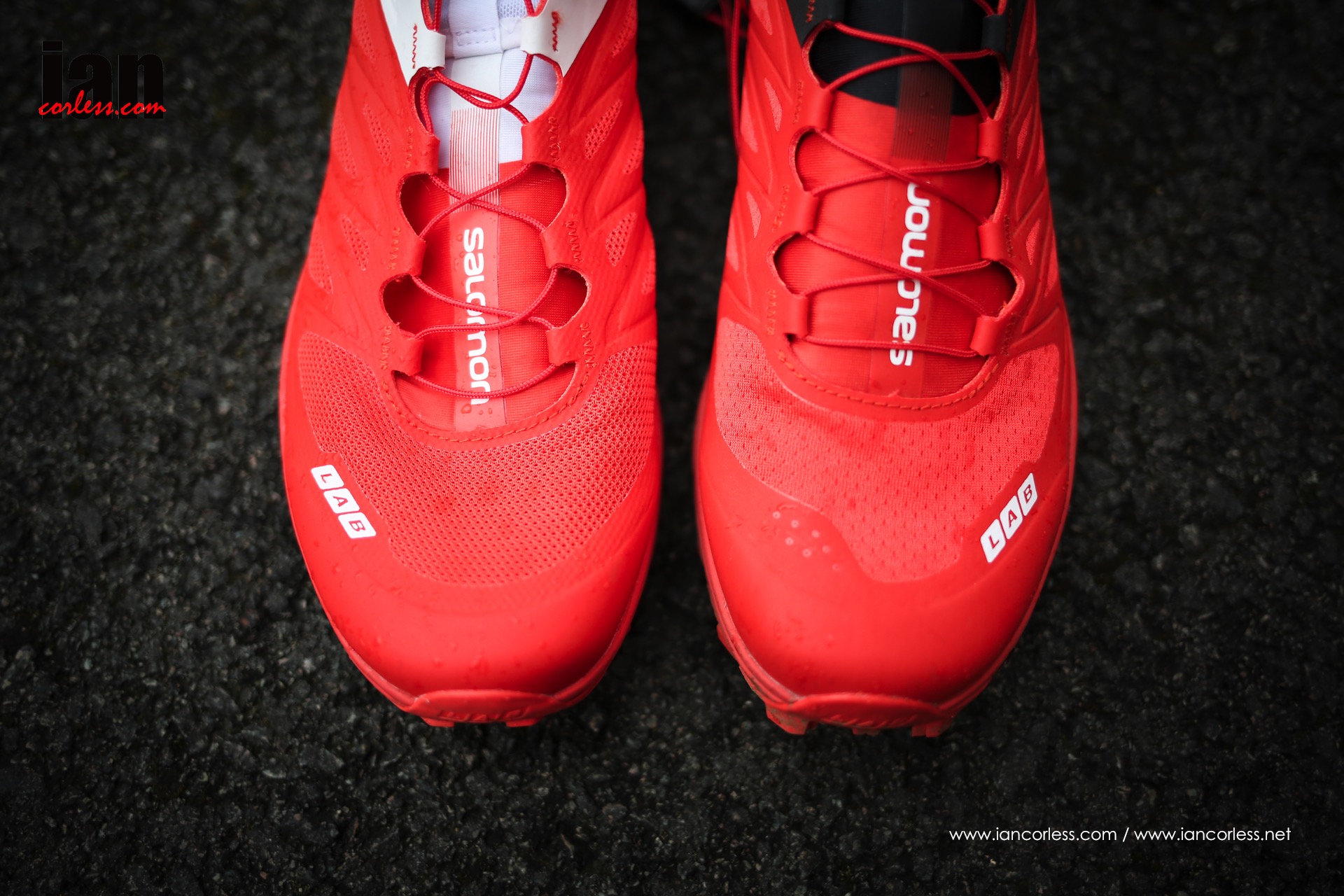
Sense 4 ULTRA on the left and the Sense 4 ULTRA SG on the right

Materials on the upper vary between the Sense 4 Ultra and the SG, the SG is more durable and arguably less breathable. The Sense 4 Ultra had additional toe box protection and the SG has even more added wich makes complete sense considering the shoe will be used in tougher terrain. If you read my Sense 4 Ultra review you will know how much I love Sensfit, Endofit and all the usual Salomon buzzwords. In a nutshell, for me, no shoe on the market fits as well as a Salomon Sense and I am inclusive in that statement; the Sense Pro, Sense Mantra 3 and so on all have that wonderful precise and secure hold. It’s the best! (If the shoe fits you)

©iancorless.com_Sense4SG-9094

The SG is obviously a shoe for the rough and tough and the tongue has been changed to provide added protection and security. The fit between the upper and the tongue has been re-designed to reduce any possibility of debris entering. The lacing system and lace pocket again make the Salomon Sense stand head and shoulders above other shoes. It’s reliable, logical, provides great overall tension and of course, what you don’t need is stored away. The obvious downside is that adjusting tension is very difficult. So you’d have to make a call if that works for you! Many have said to me, ‘what if the lace breaks?’ In all honesty, I have never had a lace break and I don’t know anyone else who has.

©iancorless.com_Sense4SG-9078

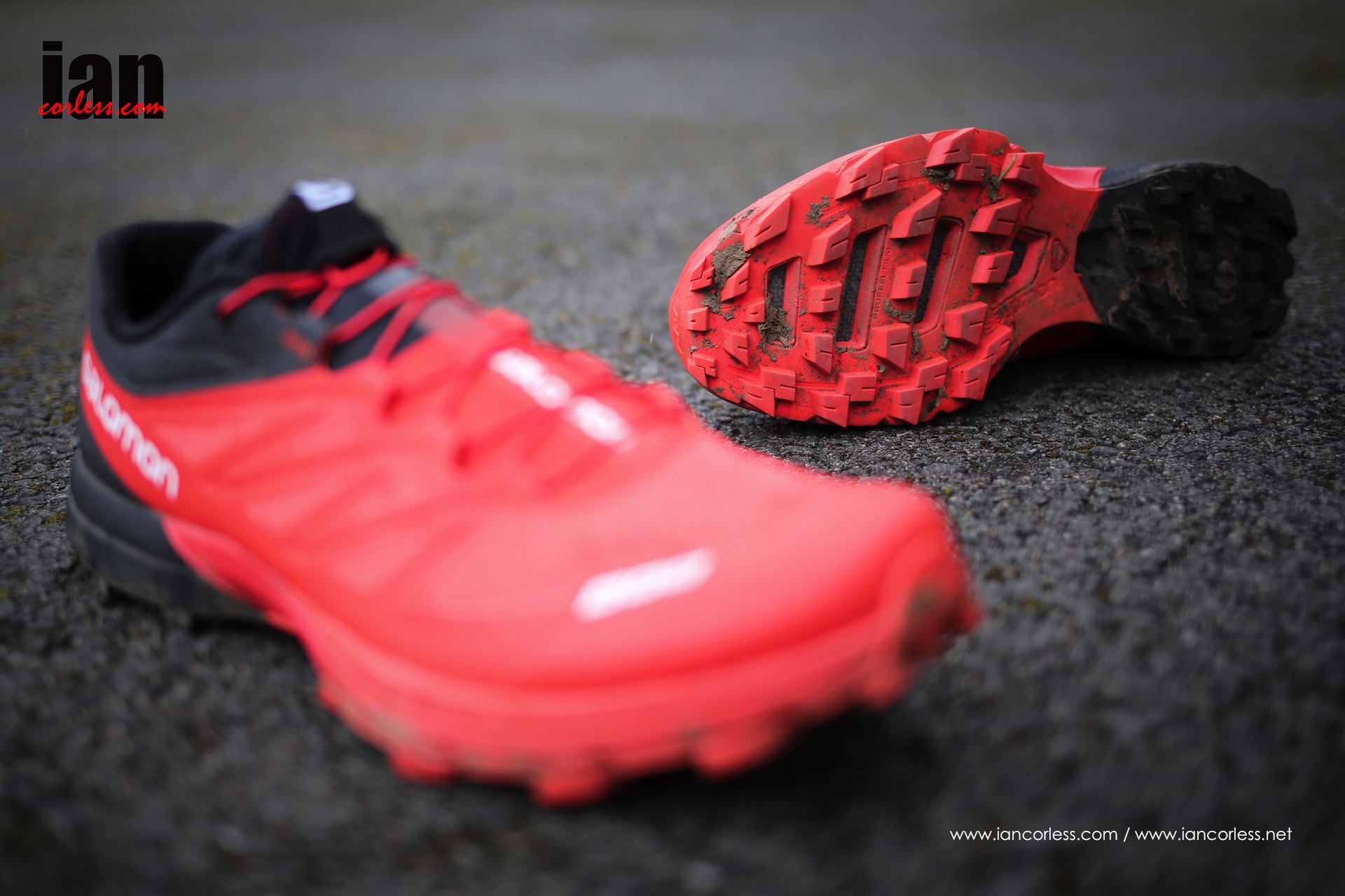
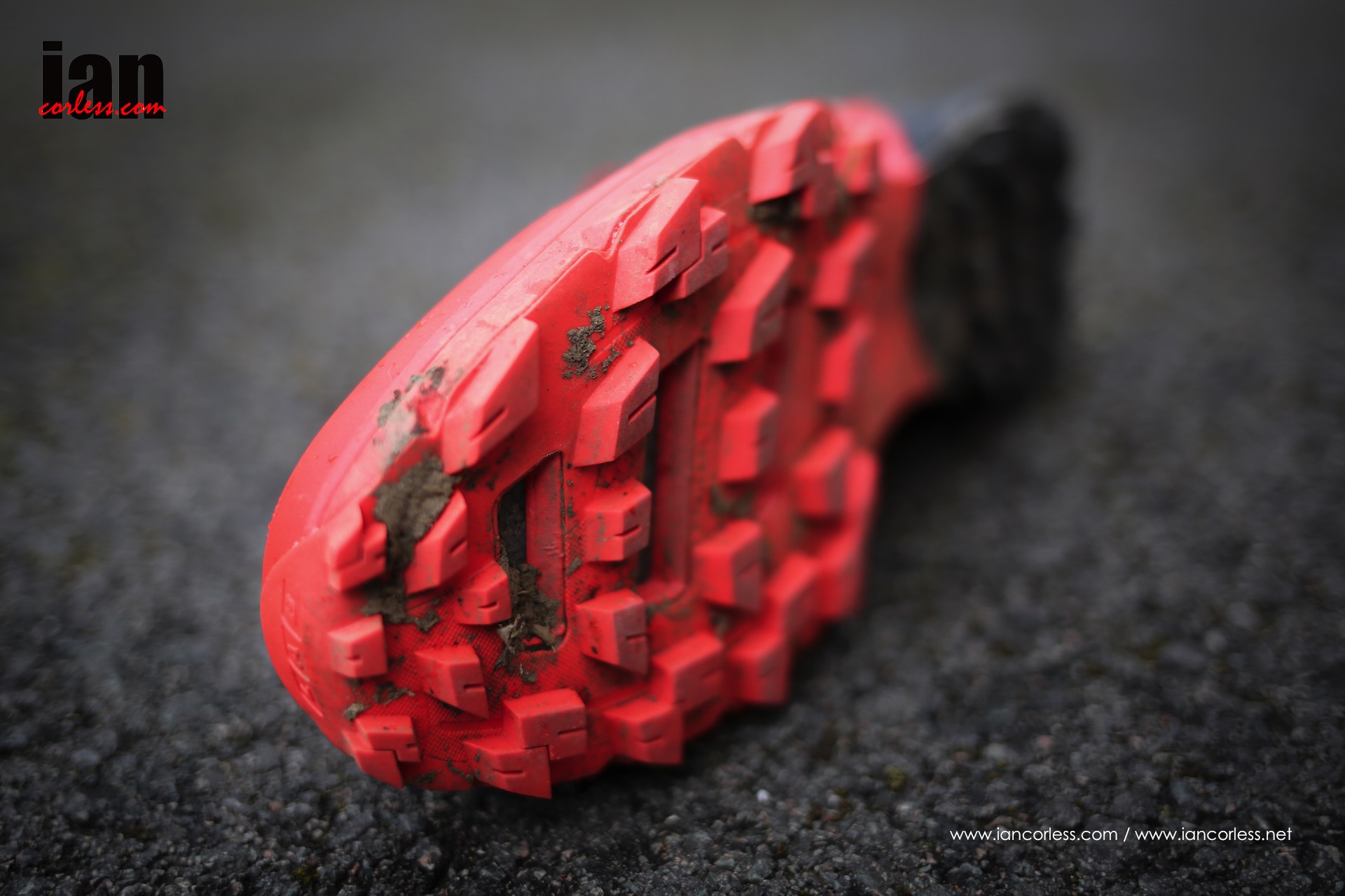
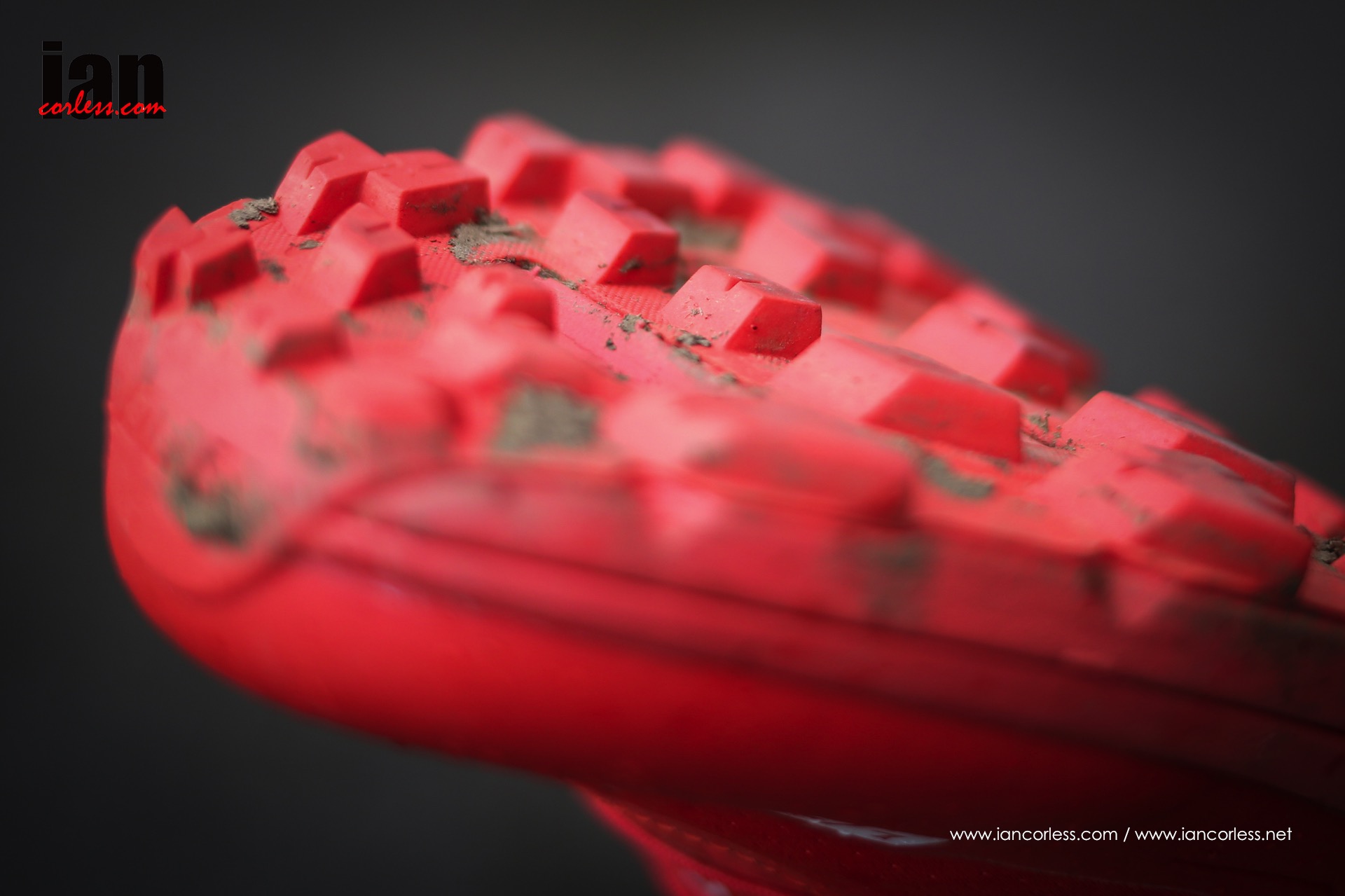
As with the Sense 4 Ultra, the SG has a complete overhaul of the outsole. The Contragrip lug pattern has been changed and the lugs are deeper to provide additional grip when the ground is soft and muddy but not so much grip that you cannot run on dry, hard or rocky trail. The compound has been revised and I noticed a difference on wet rock. The shoes have better bite. I said in my Sense 3 Ultra SG review (HERE) that although the shoe is called SG I wouldn’t necessarily say it would be my out-and-out soft ground shoe. The same applies here! I think the Sense 4 Ultra SG is an improvement on the previous model but if I just wanted a shoe for mud, I would potentially look at another option. Don’t get me wrong; this is not a negative comment. For example, Salomon make the S-Lab Fellcross and that would be ideal… the Sense 4 Ultra SG is designed for multiple surfaces, including soft ground and in those uses, they excel!

©iancorless.com_Sense4SG-9101

In Use

What can I say, the SG runs as well if not better than the Sense 4 Ultra. They do feel a little different and this is primarily down to the lugs on the bottom of the shoe. With the extra lug height, it does make the SG feel a little more cushioned, it may be placebo but I don’t think so.

Fit between the Sense 4 Ultra and SG is almost the same. No, it is the same. The only difference comes in the material used on the uppers. The ‘Ultra’ has a more breathable and lighter upper in comparison to the SG which is a great call by Salomon. One could almost say that the shoes are Summer (Sense 4 Ultra) and Winter (SG). Of course it’s not that simple, particularly if you run in the UK! We don’t have summers, so, they are both winter shoes ;-).

The toe box of the SG feels the same as the Sense 4 Ultra in use but does have more protection..

Running in the shoe is a dream. Foothold and protection is awesome. The shoe has plenty of flex and suppleness (especially after 3-4 runs) and the Endofit, Sensifit and Quicklace make the precision feel of the shoe shine. I really struggle to find any negatives. Grip in the heal area is brilliant and once on and laced up, you have no foot movement. Just whaT I want from a shoe that would tackle technical terrain.

The grip is definitely improved over the Sense 3. On my local trails I noticed improved grip on softer ground and transitioning between surfaces is seamless. Ironically, the SG does feel nice on the road but I don’t recommend too much, particularly if you want the sole to last! On wet rocks, pavement and tarmac the outsole noticeably provided a more secure and reassuring contact with the ground. Is it the best out there? No, probably not. But this outsole is designed for ultra and mixed terrain, soft ground just being one aspect. I’d have no problems with the SG being my ‘go to’ trail shoe for any race or training run.

On that note, is it really an ultra shoe, by that I mean could I run for hours and hours in it? No I couldn’t. I love the 4mm drop but for me, I think I’d need something a little more relaxed for real long stuff, a 6mm or 8mm drop version would be sweet. Lets be clear though, that is me being greedy. The Sense 4 is an S-Lab shoe and as such, it’s all about speed and efficiency. On the right feet, these shoes will fly!

PROS:

  • Light
  • Responsive
  • Grip
  • Fit
  • Black and red (my fave colours)

CONS:

  • Too tight for some
  • Expensive
  • I struggle for cons!

It’s always difficult reviewing a Salomon S-Lab shoe as to be honest; I find it very hard to find negatives. The negatives are more often than not based around the shoe not being suitable for some people because of width, drop and so on.

The same applies here! The Sense 3 Ultra and Sense 3 Ultra SG were both brilliant shoes and the Sense 4 incarnations of both shoes are better! It’s hard to believe but they are.

Weighing in at 260g for a UK 8.5 (true to size fit), the Sense 4 Ultra SG is without doubt one of the best ‘grip’ trail shoes I have used. I do wish that Salomon would make this ‘exact’ shoe with a 6mm or maybe even a 8mm drop.

©iancorless.com_Sense4SG-9060

As with the Sense 4 Ultra: the Sense 4 Ultra SG has OS Tendon, Profeet Film, dual density EVA, racing last, Quicklace, Sensifit, Endofit and a series of other notable technologies making this shoe the best 4mm drop shoe on the market… should the precise fit work for you!

Recent changes in the Salomon Sense range now make the Sense 4 Ultra (dry fast trail), Sense 4 Ultra SG (mixed trail) and the Sense Mantra 3 (road and trail) my shoes of choice. I keep going on about the Sense Mantra 3 (Here) but I think this is a great everyday shoe.

My final question is, will we see a new Sense Pro?


Specs for the Sense 4 Ultra SG

  • Sensifit
  • Quicklace
  • Racing Last
  • EndoFit
  • Lace Pocket
  • Quick Dry Mesh
  • OS Tendon
  • Profeet Film
  • Dynamic Traction
  • Contragrip Aggressive Outsole
  • Midsole Dual Density EVA
  • Cushioning Front – 9mm
  • Cushioning Rear – 13mm
  • Drop 4mm
  • Weight 260g / UK8.5

Check out the Salomon S-Lab range HERE

Salomon Logo


Race Day Nutrition (Part One) – Marc Laithwaite

©iancorless.com_TCC2015_Day5-2539

In recent articles, we’ve discussed the 2 main fuel sources for endurance exercise (fat and carbohydrate) and how you should optimise your body to burn fat, thereby allowing you to save precious carbohydrate stores. When it comes to race day then the game and the rules change completely. As a recap, when training you should:

1. Ride or run at the correct intensity or follow a specific protocol such as Maffetone
2. Avoid fluctuations in intensity, remember that average heart rate or power output are NOT the critical figures, it’s TIME IN ZONE that counts
3. Eat foods which are balanced with low GI carbohydrates and fats to encourage fat usage and avoid sugar spikes
4. Avoid gels and sugar products based on point 3 above

If you follow the above guidance, over a 12-16 week training period, you can teach your body to utilise a greater amount of fat as fuel and also to use less calories overall, making you more economical. The important thing to remember is that ‘training’ and ‘racing’ are 2 separate things and your fuelling approach should reflect this.

What happens during the race?

Okay, let’s presume that you have trained correctly and maximised your fat burning potential and fuel economy. You reach the first event of the year and when riding or running at race pace you are using 700kcal per hour, 50% of which comes from carbohydrate and 50% of which comes from fat. You only need to worry about the carbohydrate loss as that’s the one which is critical, so let’s focus on the 350kcal of carbohydrate which equates to 88 grams of carbohydrate (4 kcal per gram).

The limitation of carbohydrate intake

Here’s the big problem, you can only absorb approximately 60g of carbohydrate per hour. Imagine that there are small boats, which ‘ferry’ carbohydrate across the intestine wall into your blood stream. Unfortunately you only have so many ‘ferry boats’ so no matter how much carbohydrate you throw in there, the amount which can be ferried is limited to a pretty standard 60g. For our example above, that means that you’re going to fall short. You’re using 88 grams per hour and you can only replace 60 grams per hour. That’s a 28 gram / 112 kcal per hour deficit.

So I can’t just eat more?

Unfortunately not. If you eat more, it’s unlikely to be digested and will simply sit in your stomach or intestines without providing energy. There are a lot of people who suffer from gastric problems during long distance events and this is generally caused by eating too much food which they are unable to digest. It’s really important that you understand, eating more food doesn’t mean you’ll have more energy and it may well mean that you’ll face stomach upsets. I stress this point knowing how obsessed Ironman athletes in particular become with regards to feeding on the bike.

A deficit of 112 Kcal per hour doesn’t sound too bad

No, it doesn’t. But that is based on the presumption that you are only using 700kcal per hour, bigger people and less efficient people may be using more. It’s also based on the assumption that 50% is coming from fat and that may not be the case at all, in fact, as much as 80-100% may be coming from carbohydrate. What makes this worse is that bigger people can’t necessarily take on board more fuel, the 60g limit still pretty much applies. It’s a gut issue, it’s not about how big your muscles are and how much you can store in there.

So the 3 things you might want to know are:

1. How many calories do I burn per hour?
2. How many of them come from fat and carbohydrate?
3. How much should I be taking in as a consequence?

As a start point, you can probably work out your calorie usage by using a heart rate monitor or power meter. Run or ride at race pace and it’ll do the calculation for you, although the power meter is a lot more accurate than the heart rate monitor, it’s still a start point. Warm up, then do an hour at your ‘race pace’ and work out the figures. It’s amazing how many people who consider their training and racing to be ‘serious’, still have no clue how many kcal they use when racing. How can you have any grasp of nutrition requirements without knowing this figure? Once you’ve calculated that figure, apply the following rule:

80/20: If you are struggling to ride 50 miles / run 15 miles even when fuelling yourself throughout, then apply the 80/20 rule. That means 80% of your fuel is carbohydrate and 20% is fat.

65/35: If you can ride 50 miles / run 15 miles comfortably using fuel, then apply the 65/35 rule. That means 65% of your fuel is carbohydrate and 20% is fat.

50/50: If you can ride 50 miles / run 15 miles comfortably without using any fuel whatsoever, then apply the 50/50 rule. That means 50% of your fuel is carbohydrate and 50% is fat.

Are those figures accurate?

Absolutely not, I just made them up. They are by no means 100% accurate but they will give you a good start point and will allow you to calculate an approximate figure. The running figures are less ‘straight forwards’ than the cycling, as the impact of running can really fatigue your legs, so you may find 15 miles difficult, even if your fat burning and fuel economy is good. for cycling, the impact is low, so it’s more likely governed by metabolism and fuel.

Ok, so what’s the next step?

Here’s what we’re going to do. Prior to next week you are going to do a 1 hour ride or run at your ‘race pace’ and then using your cycle power meter, GPS or heart rate monitor, calculate how many calories per hour you are using when exercising at that intensity. I feel this is a pretty important thing for you to understand if you are to race successfully. It’s easy with a power meter for cycling, it does the maths for you. Most heart rate monitors will use your age and weight to work out kcal per hour. There are some tools on the internet such as: http://www.braydenwm.com/calburn.htm which can help to give you a basic idea.

Go forwards my endurance friends and do the maths, next week, we will be looking at planning your intake.

Until then, stay healthy.

– Marc Laithwaite

About Marc:

Sports Science lecturer for 10 years at St Helens HE College.

2004 established The Endurance Coach LTD sports science and coaching business. Worked with British Cycling as physiology support 2008-2008. Previous Triathlon England Regional Academy Head Coach, North West.

In 2006 established Epic Events Management LTD. Now one of the largest event companies in the NW, organising a range of triathlon, swimming and cycling events. EPIC EVENTS also encompasses Montane Trail 26 and Petzl Night Runner events.

In 2010 established Montane Lakeland 50 & 100 LTD. This has now become the UKs leading ultra distance trail running event.

In 2010 established The Endurance Store triathlon, trail running and open water swimming store. Based in Appley Bridge, Wigan, we are the North West’s community store, organising and supporting local athletes and local events.

Check out the endurance store HERE
Endurance Store Logo

Glen Coe Skyline™ – Skyrunning comes to Scotland

Glencoe-Skyline

Skyrunning will be coming to Scotland in 2015 with a world-class course based around Glen Coe. Aptly named the ‘Glen Coe Skyline™’ this race has already caused a storm of speculation as rumours of its launch swept through the mountain running community earlier this year.

The provisional route starts at the Glencoe Mountain Resort and, via the West Highland Way, reaches and ascends Buachaille. A full traverse of Bidean nam Bian ensues before dropping down into Glen Coe to then climb up to Sgorr nam Fiannaidh. There is then an extended traverse of the entire Aonach Eagach ridge, before rejoining the West Highland Way and descending into Glen Coe Pass via the Devil’s Staircase and returning to Glencoe Mountain Resort. The provisional route statistics are approximately 45km with 4500m of ascent.

As many experienced hill walkers and climbers have pointed out, this route covers some of the most challenging mountain terrain in the UK with long sections of exposed and serious Moderate standard rock climbing. 

1-ShaneOhly-Photo-IanCorless.com_MDM2015-8268

Shane Ohly

Race Director Shane Ohly explained:

 “I am not trying to create another fell or trail race, but bring to the UK World class Skyrunning and a course that has World class challenges. It is not meant to be easy, and a course of this caliber has inherent risk. We are not creating another mass participation running event, rather, a world-class course for experienced and competent participants. The Glen Coe Skyline™ is a fusion of mountain running and alpinism where competitors need to be skilled at both disciplines to negotiate the course.” 

Indeed, there has been a hotly debated forum thread about the Glen Coe Skyline™ on the popular UKClimbing / UKHillWalking website, and in response, Ohly has provided a detailed Q&A about the race, which is available HERE.

http://www.ukhillwalking.com/articles/page.php?id=7189

Leading British Skyrunners were quick to endorse the route with Tom Owens from the Salomon International Team saying,

 “Wow – This will be a seriously brilliant and challenging route,” whilst teammate Any Symonds said, “Excellent! Glen Coe Skyline. Couldn’t get much of a better setting and route for a Sky Race in the UK.”

Ohly continued, “The Glen Coe Skyline™ follows in the finest tradition of the most prestigious Skyrunning races and competing on such challenging and technical terrain is not without precedent.” 

For an event that has not even happened, the Glen Coe Skyline™ is already one the most talked about races on the UK calendar and it is clearly challenging many observers’ perceptions of what mountain running is.

Ian Corless from Skyrunning UK provided further context to the race, “The UK may lack high mountains but we have unique terrain and what we lack in altitude can be compensated for with challenging routes as we have seen at the V3K and the Mourne Skyline MTR. The Glen Coe Skyline™ however takes Skyrunning UK to the next level! Having experienced the iconic Trofeo Kimain Italy in 2012 and 2014, I was inspired to extend that experience to a UK and worldwide audience but on UK soil. Shane Ohly and his team have put my dream into reality. The Glen CoeSkyline™ will arguably be the toughest race in the UK and takes it inspiration from the Skyrunner World Series races such as the Dolomites, Zegama-Aizkorri and Tromso SkyRace’s®. The Glen Coe Skyline™ will not be for everyone though; it is a challenging race over a tough and technical course. It harks back to Marino Giacometti’s vision of Skyrunning that was created on the slopes of Monte Rosa in the late 80’s.” 

The organisers have been careful to consider the impact the race may have on other recreational users of Glen Coe and have been working with the National Trust for Scotland who are the major landowner.

3-GaryTompsett-Summit

Gary Tompsett

Rebecca Amiel, Individual Giving Manager, from the National Trust for Scotland said “We are delighted to be involved in Scotland’s first skyrunning event at Glencoe.  We look forward to welcoming participants who may never have visited Glencoe to take in its beauty as they complete this challenging event. The National Trust for Scotland is Scotland’s largest conservation charity and relies on membership and donations to care for these wonderful places.  The magnificent landscape of Glencoe is loved by so many, yet cared for by so few which is why it’s so important to raise the profile of our conservation work. Find out more about the Footpath Fund and mountain conservation at www.footpathfund.org.uk

Ohly added, “Each year Ourea Events™ (the company organising the Glen Coe Skyline™) donates 1% of its total income to charitable environmental organisations at the forefront of the protection of the mountain environment. The business has been a member of 1% of the Planet since day one because, whilst we always seek to mitigate our environmental impact, we understand that we do still have some form of impact, but our policies over the years have given some very attributable payback”.

OureaEventsLogo(500x500-cropped) copy

Entries will open at 9pm on Monday 13th April 2015


For further Information about:

Ourea Events visit www.OureaEvents.com or contact Shane Ohly on 07771516962 or ShaneOhly@OureaEvents.com

Glen Coe Skyline visit www.GlenCoeSkyline.com

SkyrunningUK visit http://skyrunninguk.com or contact Ian Corless on 07725813457 or iancorless@mac.com


Key Event Information

Website: www.GlenCoeSkyline.com

Date: Saturday 22nd August 2015

Venue: Glencoe Mountain Resort, Scotland

Entries Open: Monday 13th April 2015

Courses: 45km with 4,500m ascent (TBC)

SCOTT KINABALU SUPERTRAC – First Impressions

©iancorless.com_ScottSupertrac-5082

Spring is here and new run shoes are a plenty. Christmas takes place in December but I have to say, if you are a runner, February is stepping up to be a great month for a few surprise presents. Recently I have had new shoes from The North Face (Ultra MT, Cardiac and TR2, the Salomon S-Lab Sense 4 is due to arrive any day and several weeks back I looked at the Scott Trail Rocket and mentioned the Kinabalu.

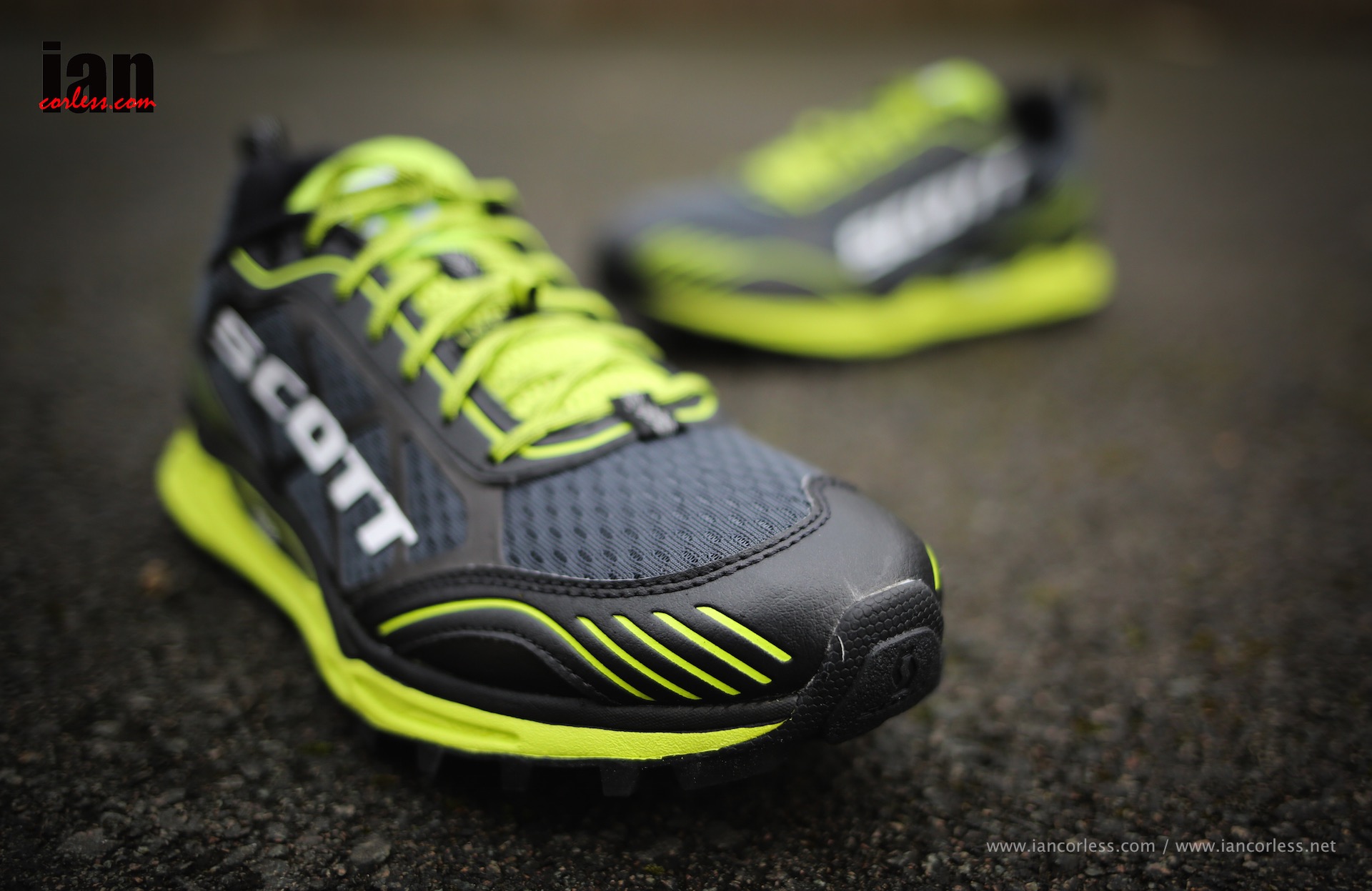
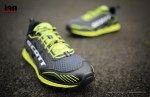
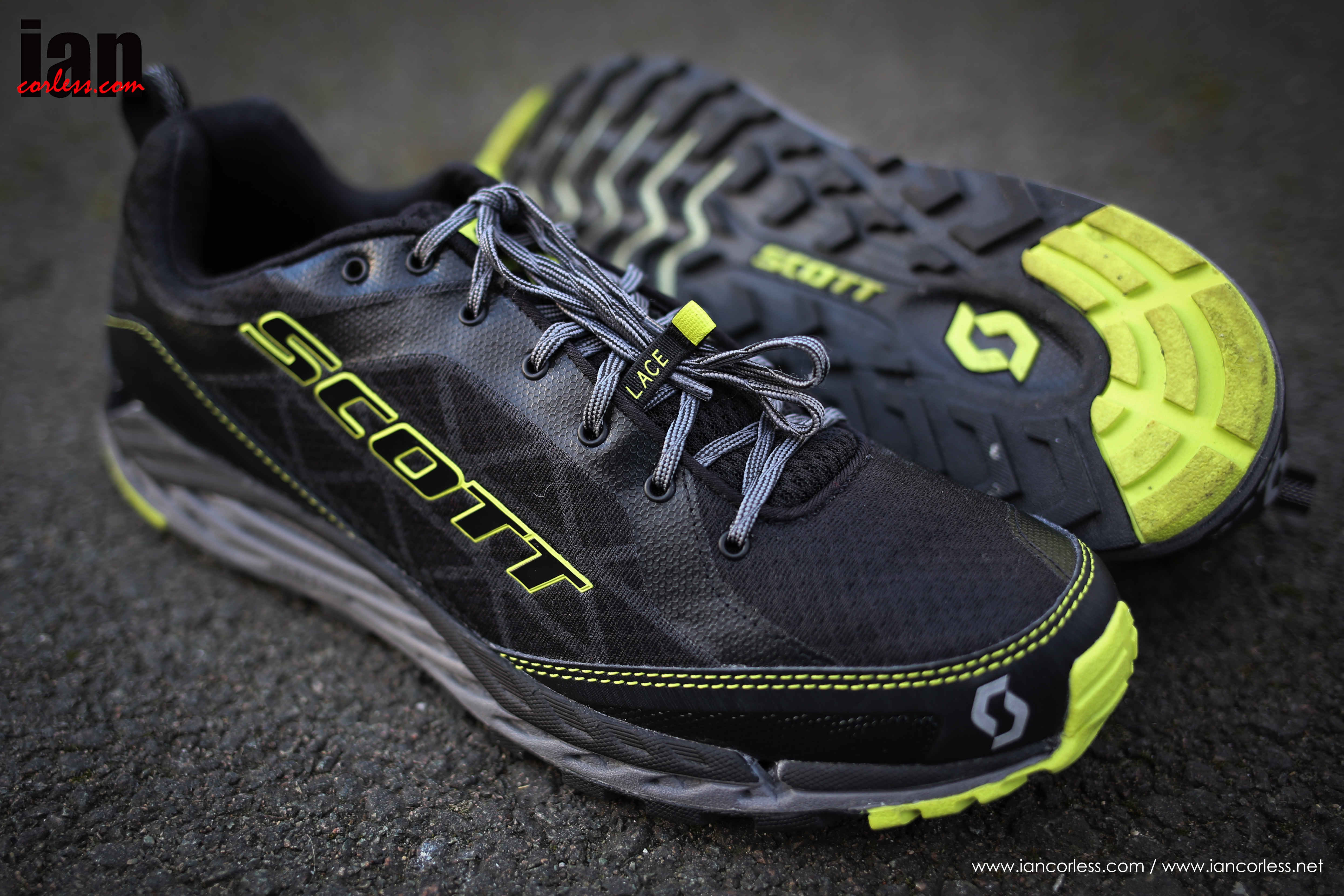
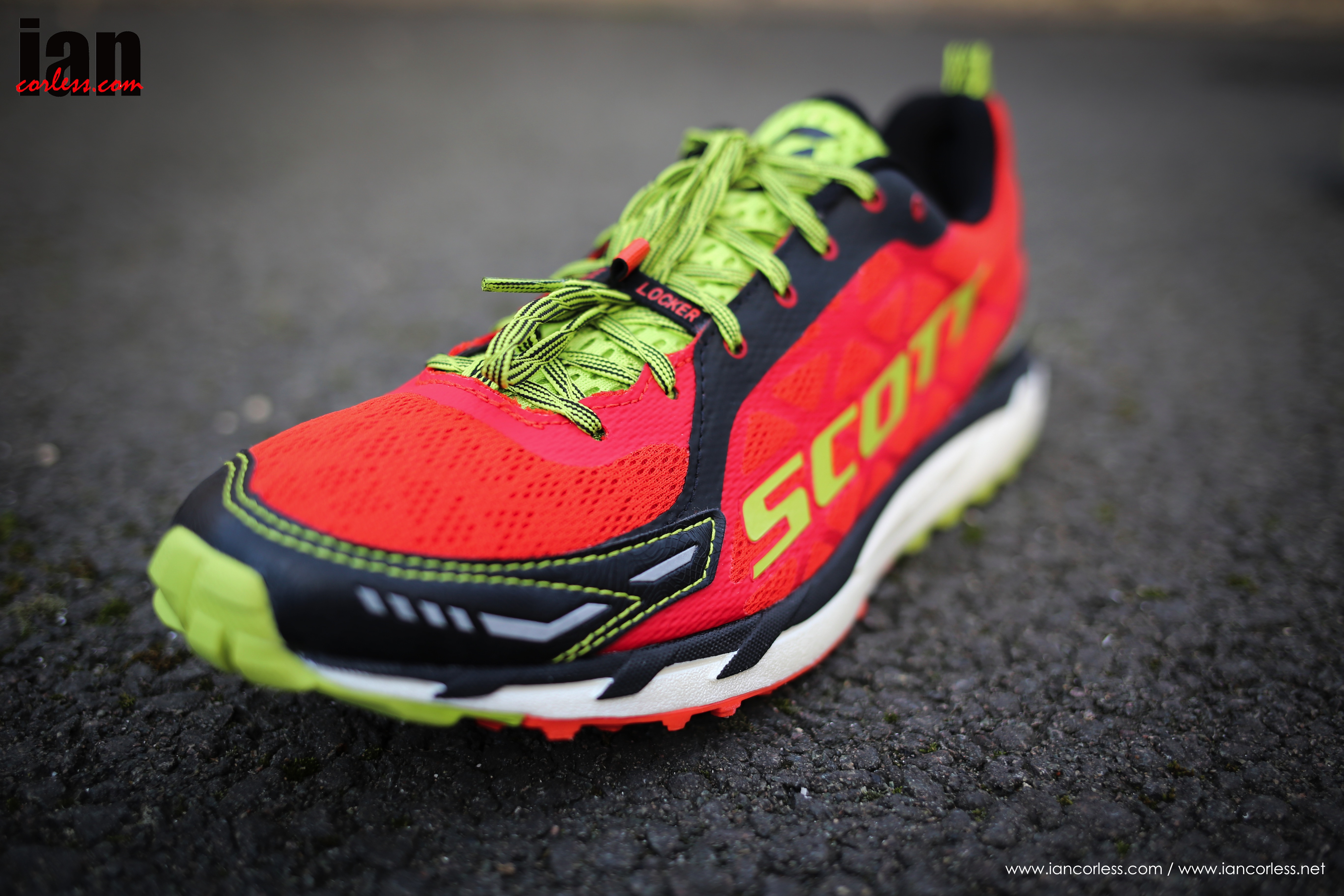
Today we are taking a look at a new shoe from SCOTT, the KINABALU SUPERTRAC.

This is a shoe I asked Scott to make some 12-18 months ago! Having used and loved the Kinabalu (Here) I pleaded with them to come up with an 8mm drop shoe with a more aggressive sole. They have only gone and done it!

©iancorless.com_ScottSupertrac-5043

This shoe is a winner!

Looking at current shoe trends, Scott like The North Face, Salomon and other key brands have realised that a lower drop is the way forward. For many companies, 8mm provides that sweet middle ground. New Balance, TNF and now Scott have confirmed this while Salomon pave a way with 4mm and 6mm drop shoes.

As mentioned previously, if you are after a fast trail shoe (for dry conditions) and with a lower drop (5mm), you can’t go far wrong with the Scott Trail Rocket. But if you are after a shoe that can handle mud and a multitude of different conditions then the 8mm drop, Kinabalu Supertrac may be for you!

©iancorless.com_ScottSupertrac-5053

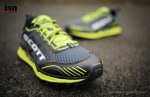
Carrying over many of the characteristics of the Kinabalu, the Kinabalu Supertrac in summary :

Fits like a glove, laces up nice and tight, hugs the heel without rubbing, the toe box provides a secure hold of your foot with a precise feel and grip is AGGRESSIVE!

©iancorless.com_ScottSupertrac-5061

In Detail

The Kinabalu Supertrac introduces a new level of technical shoe and a completely new concept of superior grip. The shoes are designed to match the needs of trail and mountain runners in the most extreme conditions : mud, snow, rock and mountain! Delivering great traction on soft and rough surfaces and all within a shoe that provides great comfort, cushioning and with an 8mm drop.

It comes as no surprise to me really. As I said previously, I loved the Kinabalu. I just wanted more grip and lower drop. Scott have that now provided me with that, so this can only mean one thing: happy runner!

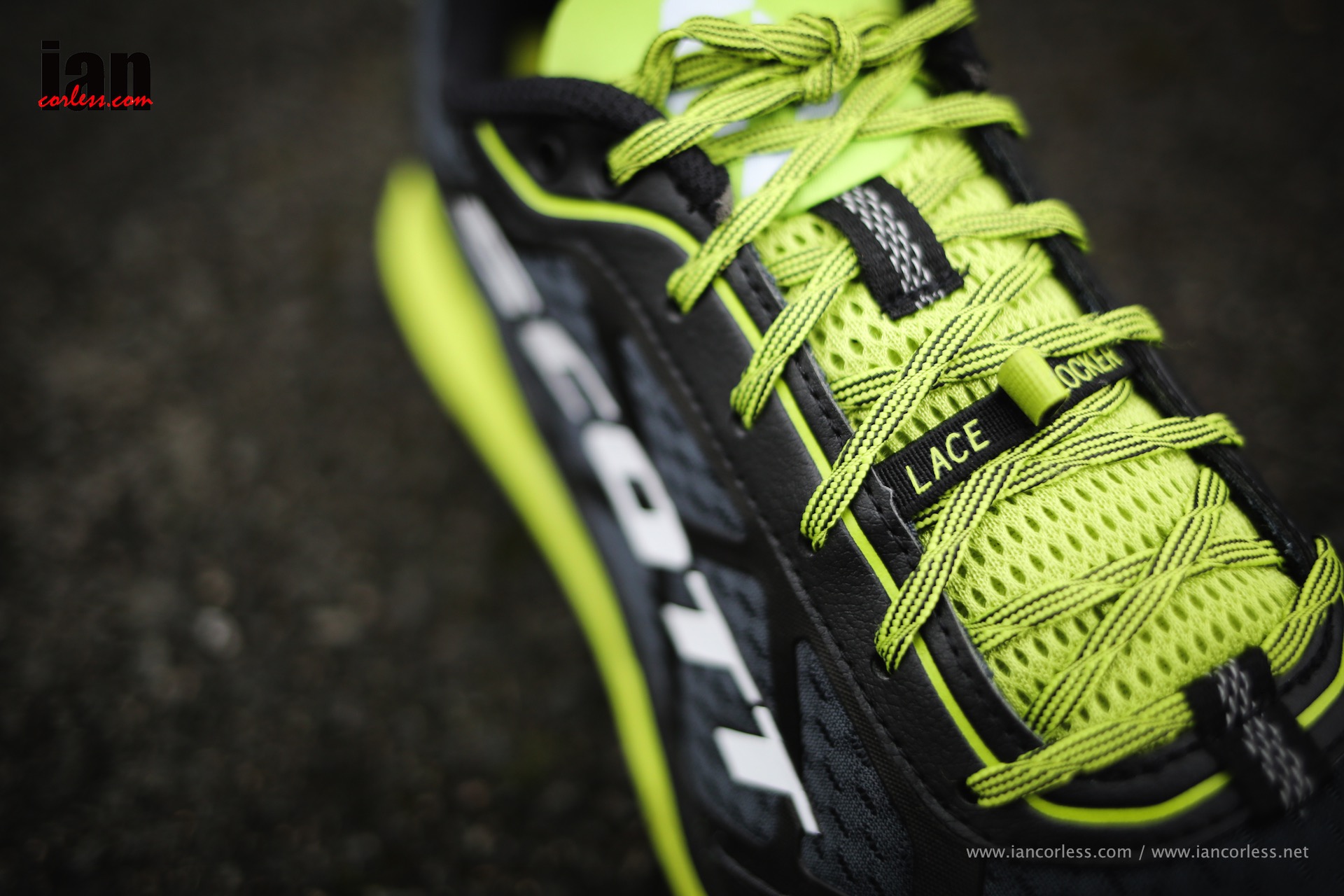
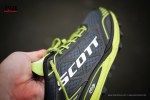
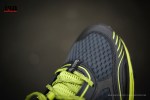
If you are familiar with the Kinabalu, this ‘Supertrac‘ version will feel familiar. The tongue is padded, extremely comfortable and the laces are thin and textured. Importantly, the laces stay tight when tied. Scott’s ‘Lace Locker‘ is present and this provides a no nonsense simple solution to store loose laces.

©iancorless.com_ScottSupertrac-5070

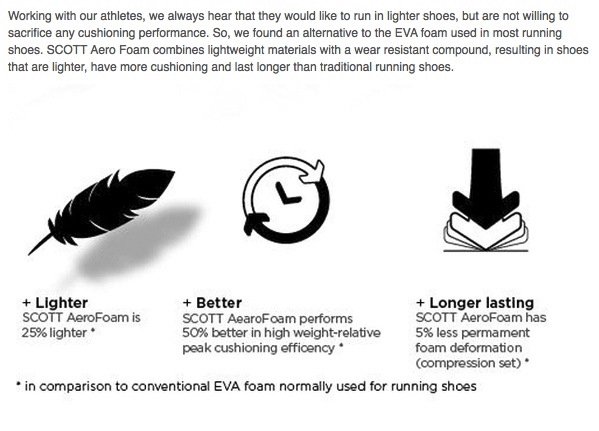
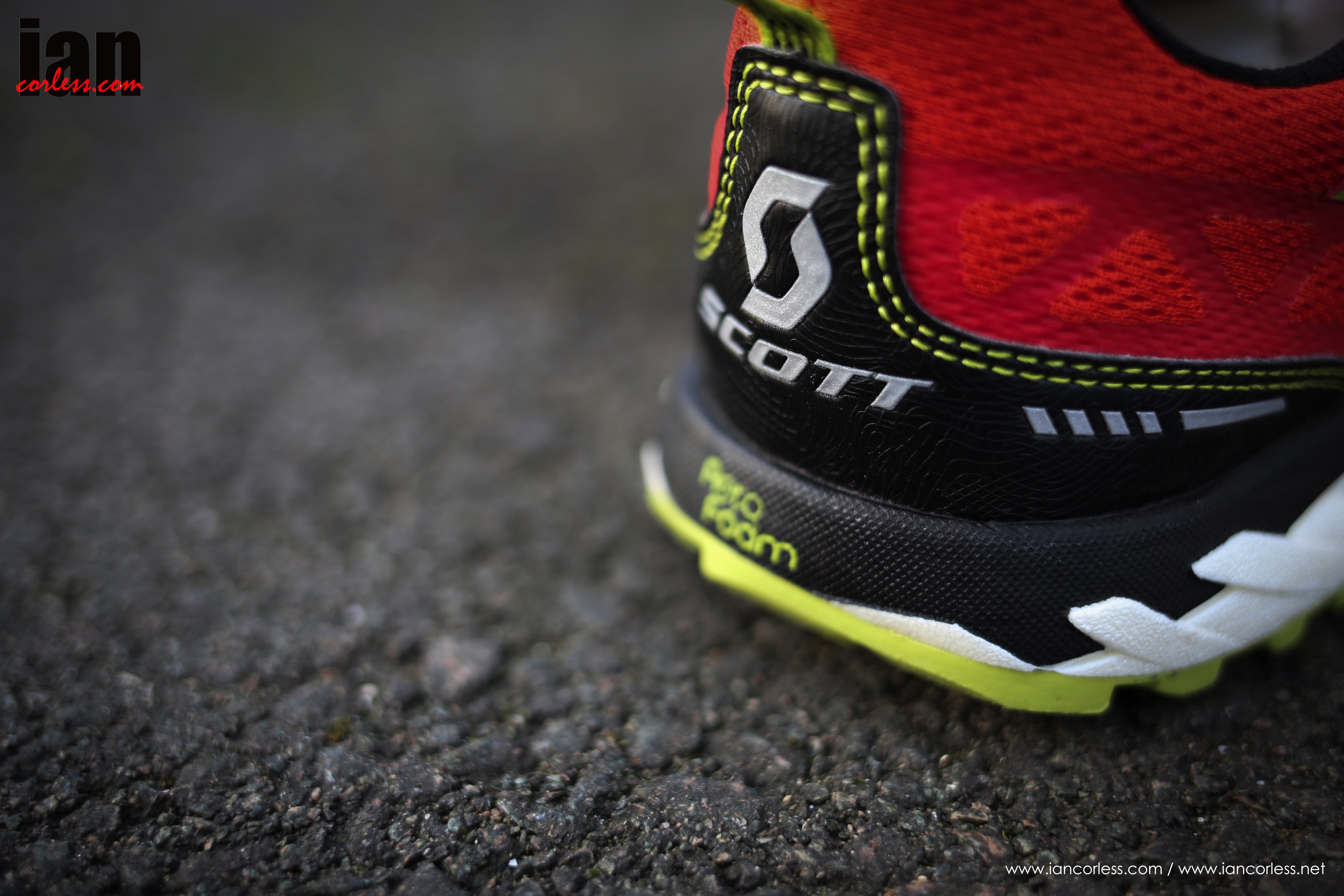
The shoes are neutral fitting and cushioned using AeroFoam+ which provides additional cushioning, increased durability and great rebound. The upper is breathable mesh with synthetic overlays and the lower part of the shoe is constructed from EVA and rubber.

©iancorless.com_ScottSupertrac-5088

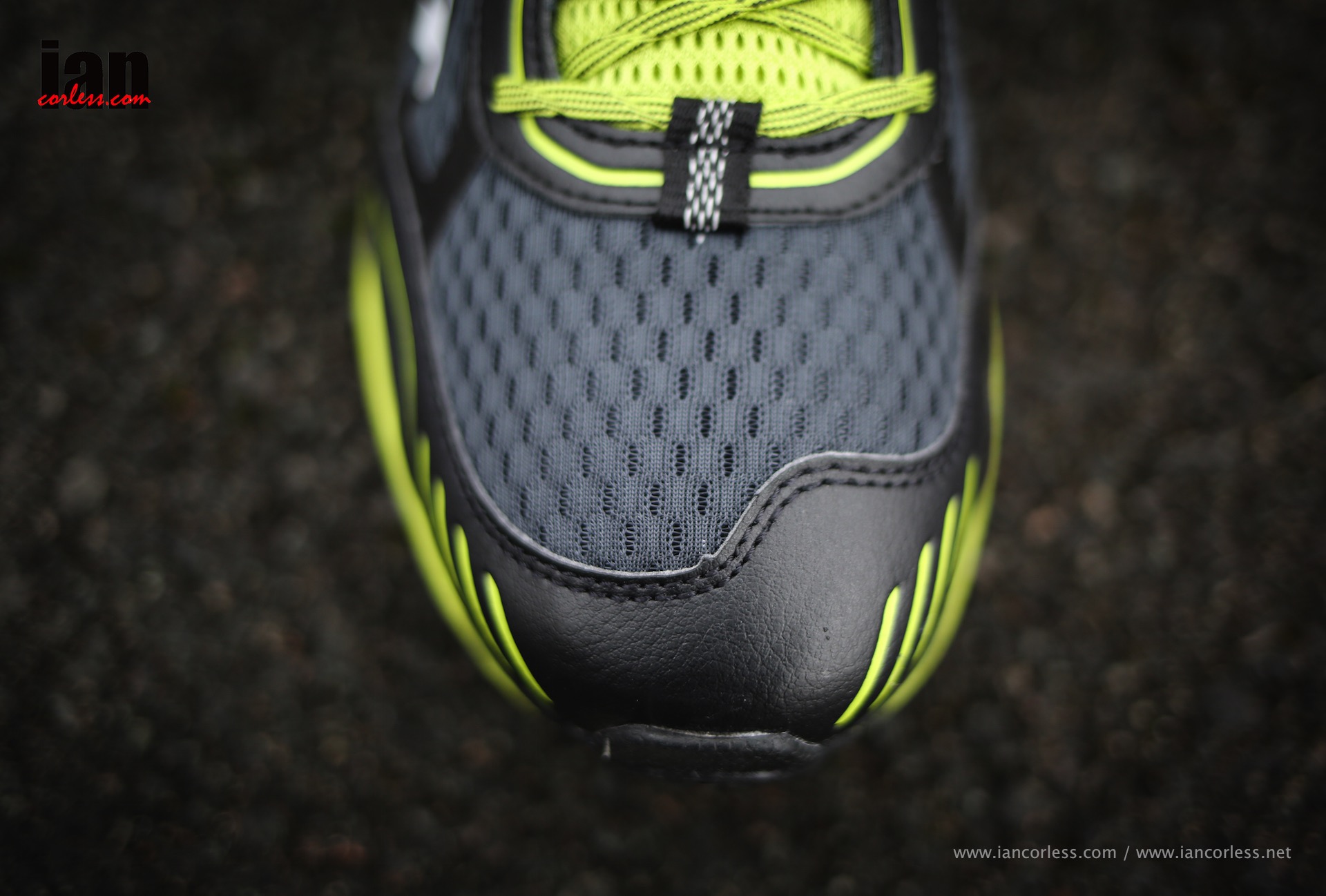
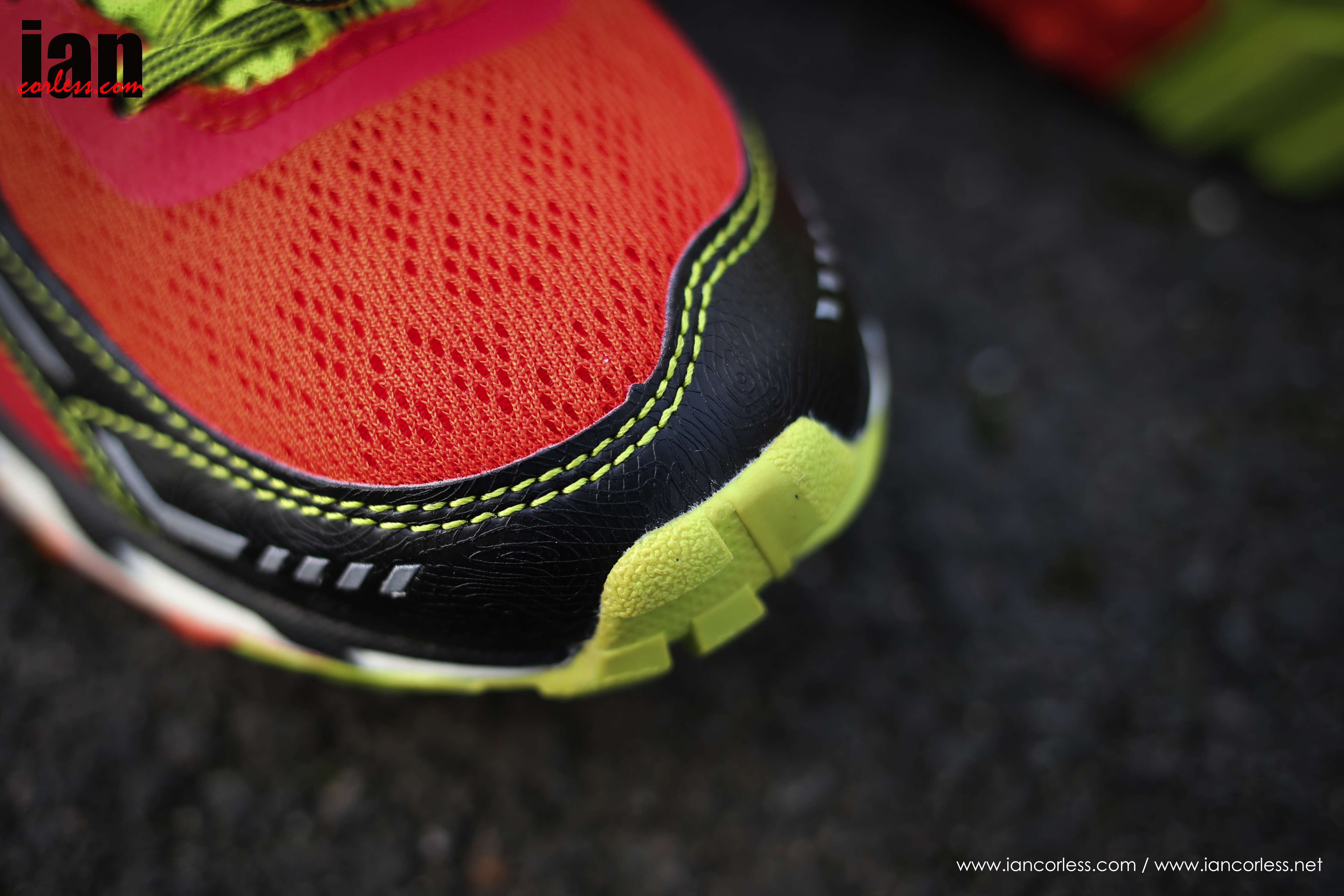
The toe box is reinforced extremely well and will withstand some serious contact with rocks or unwanted obstacles. I usually prefer a wider shoe and the Supertrac allows for this but still holds my forefoot firm and without hot spots.

©iancorless.com_ScottSupertrac-5073

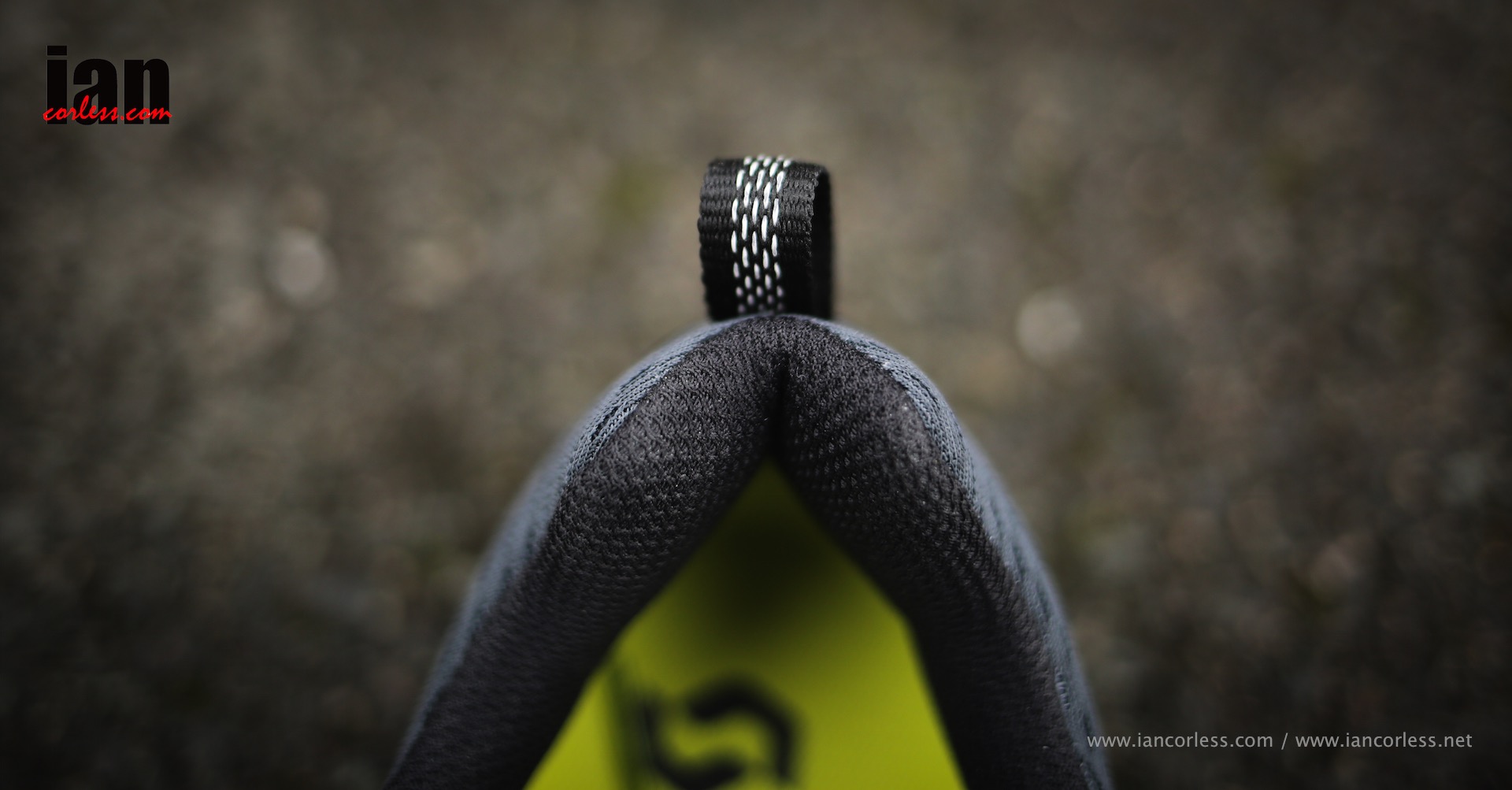
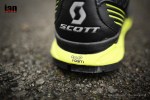
The heel is injection moulded, plush, soft has no harsh contact points and provides a secure firm grip irrespective of when running on the flat, descending or going uphill. I had no movement at all.

©iancorless.com_ScottSupertrac-5075

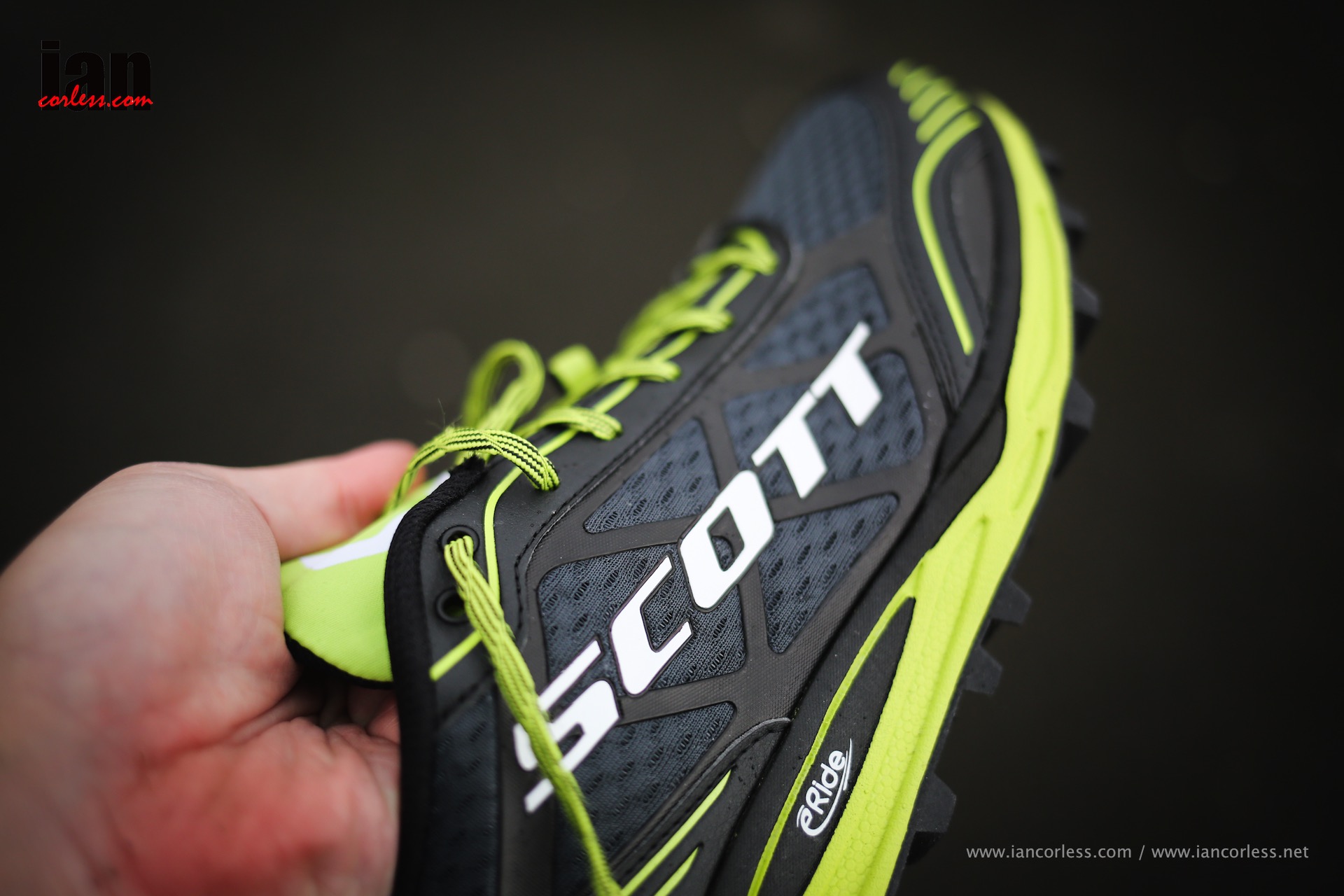
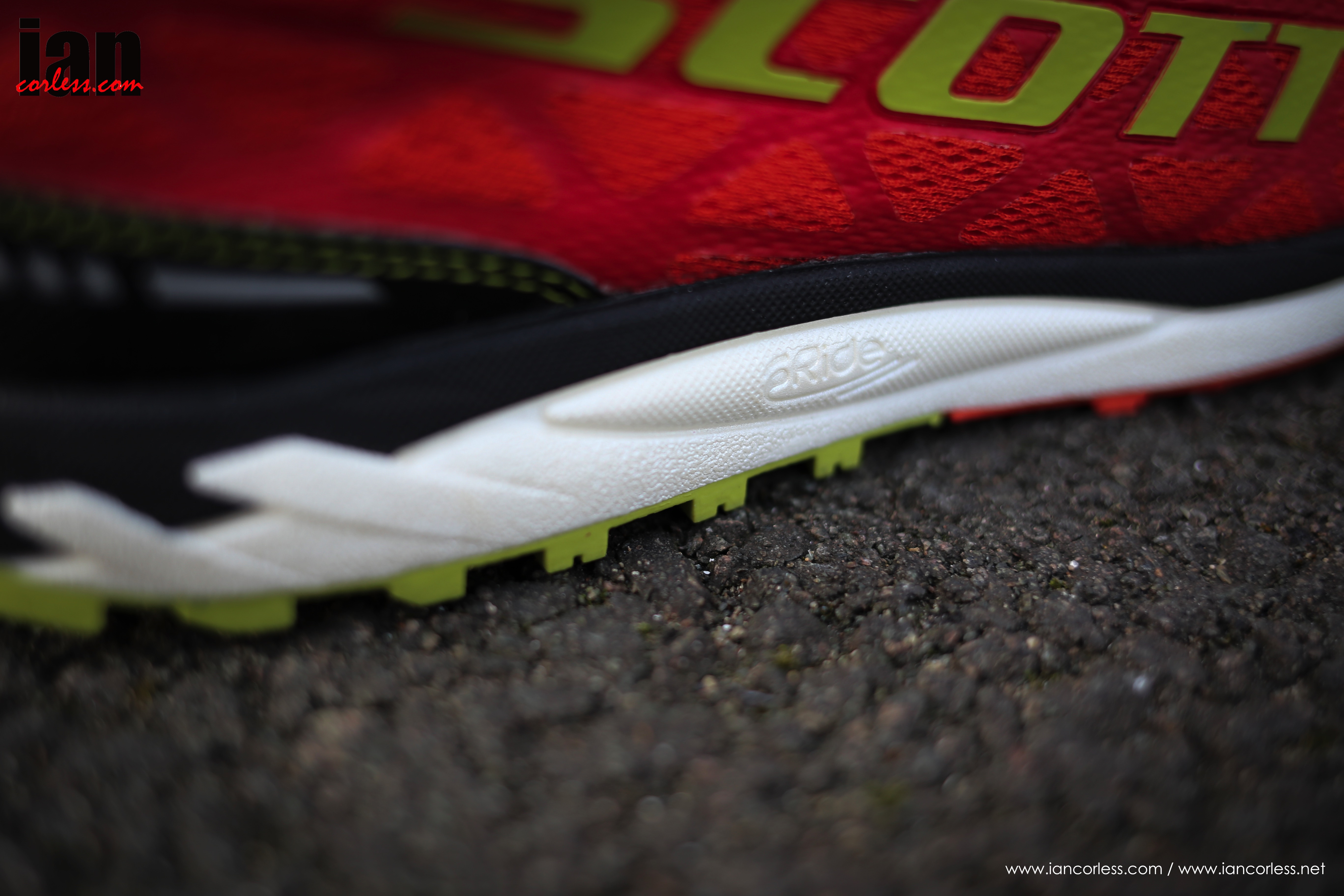
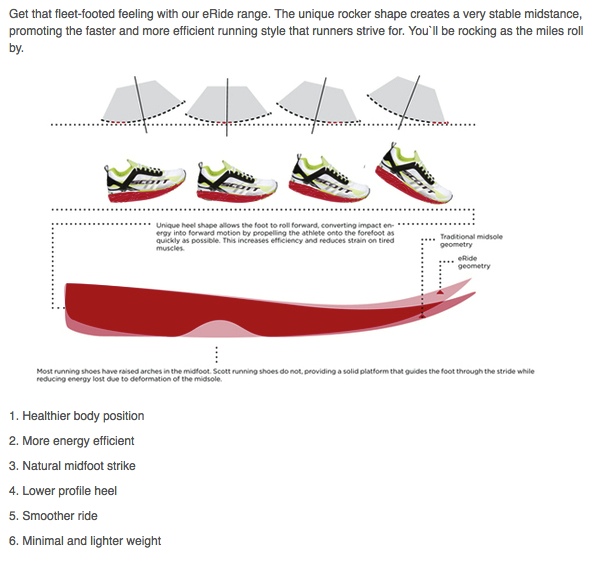
As one would expect, Scott carry over many features that we have seen on other shoes in the range. The eRIDE is a ‘rocker’ platform that is designed to guarantee a more efficient foot strike. If you already strike mid to forefoot, this may be less noticeable. However, if you are heel striking, the rocker really does roll you forward on to your toes.

©iancorless.com_ScottSupertrac-5094


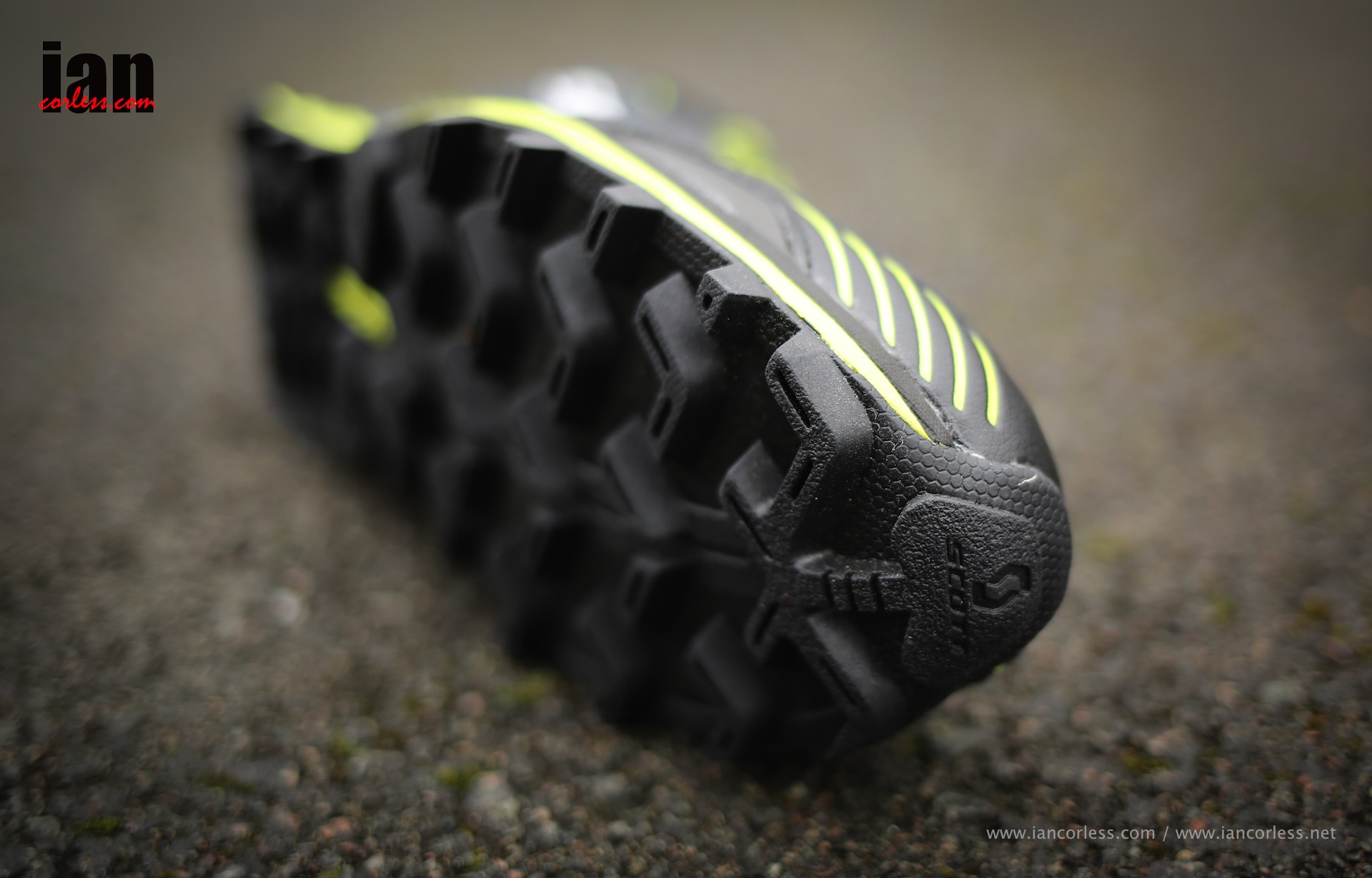
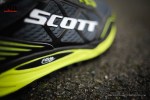
The most noticeable aspect of the shoe is the GRIP! I can’t write about the GRIP without putting it in capital letters. Boy do they GRIP…

©iancorless.com_ScottSupertrac-5061

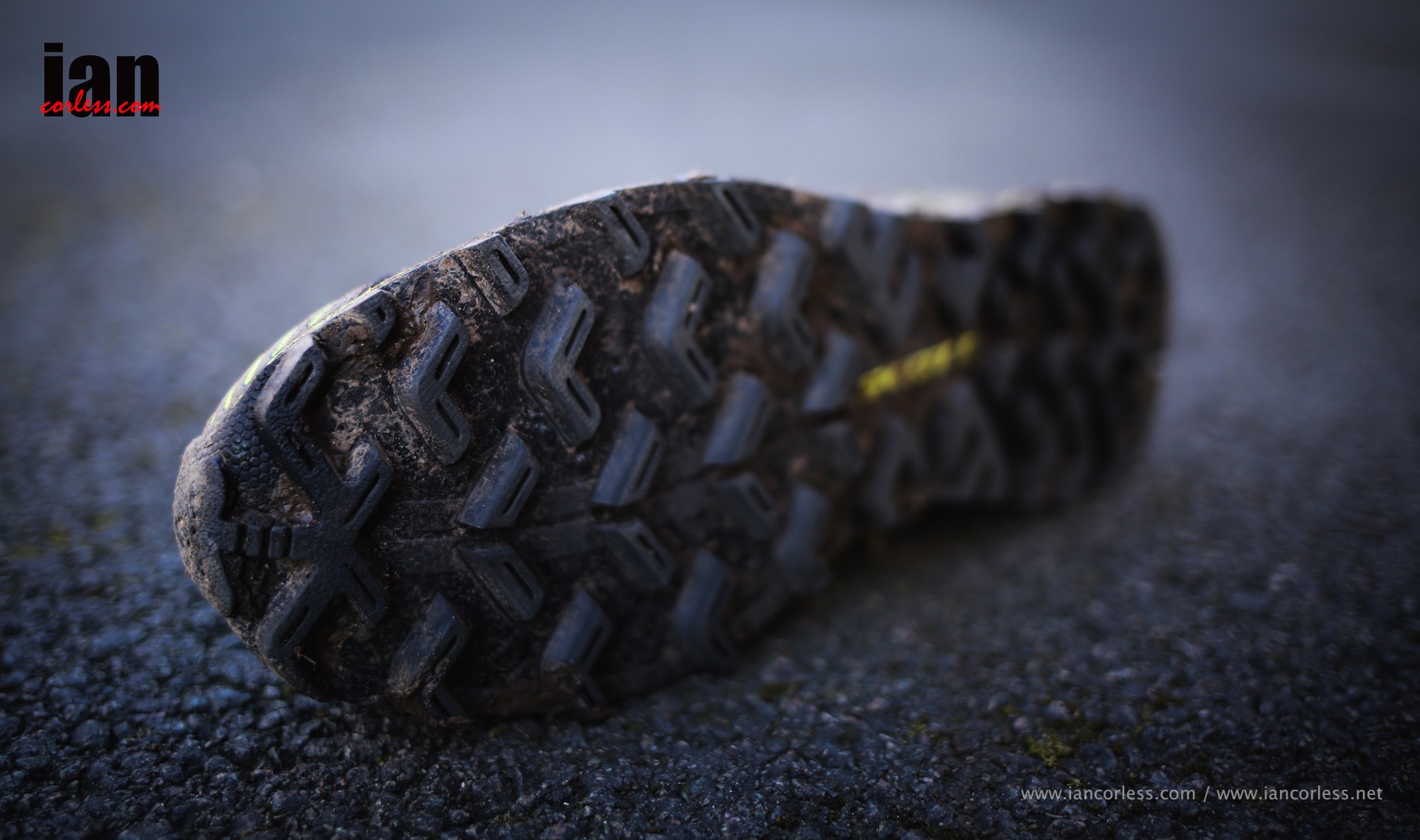
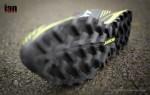
Think JCB meets running shoe. The outsole is extreme and made from a superior wet traction rubber compound that works really well on a multitude of surfaces. I am really impressed with just three to four runs*.

Conclusion

If you are looking for an out-and-out trail beast with great cushioning, 8mm drop and a comfort rating that will least all day, the Kinabalu Supertrac is going to be a serious contender. It has very quickly become my ‘go to’ when heading out on my local muddy trails.

Expect to see Marco De Gasperi, Elisa Desco and Joe Gray using this on the trails and mountains of Europe and the USA.

Pros:

  • GRIP
  • Cushioned
  • Spacious toe box with protection
  • True to size fit

Cons:

  • Not the lightest shoe

Details:

RRP £105

Available SS2015

Technology:

  • Lace bungee
  • Wet traction rubber
  • eRIDE Platform
  • AerFoam+
  • Self cleaning lugs
  • Upper: Mesh/ synthetic overlay
  • Lower: EVA/ Runner
  • Drop: 8mm
  • Weight: 340g (UK8)
  • Sizes: US7-14

#noshortcuts

©iancorless.com_ScottSupertrac-5096

©iancorless.com_ScottSupertrac-5104

©iancorless.com_ScottSupertrac-5107

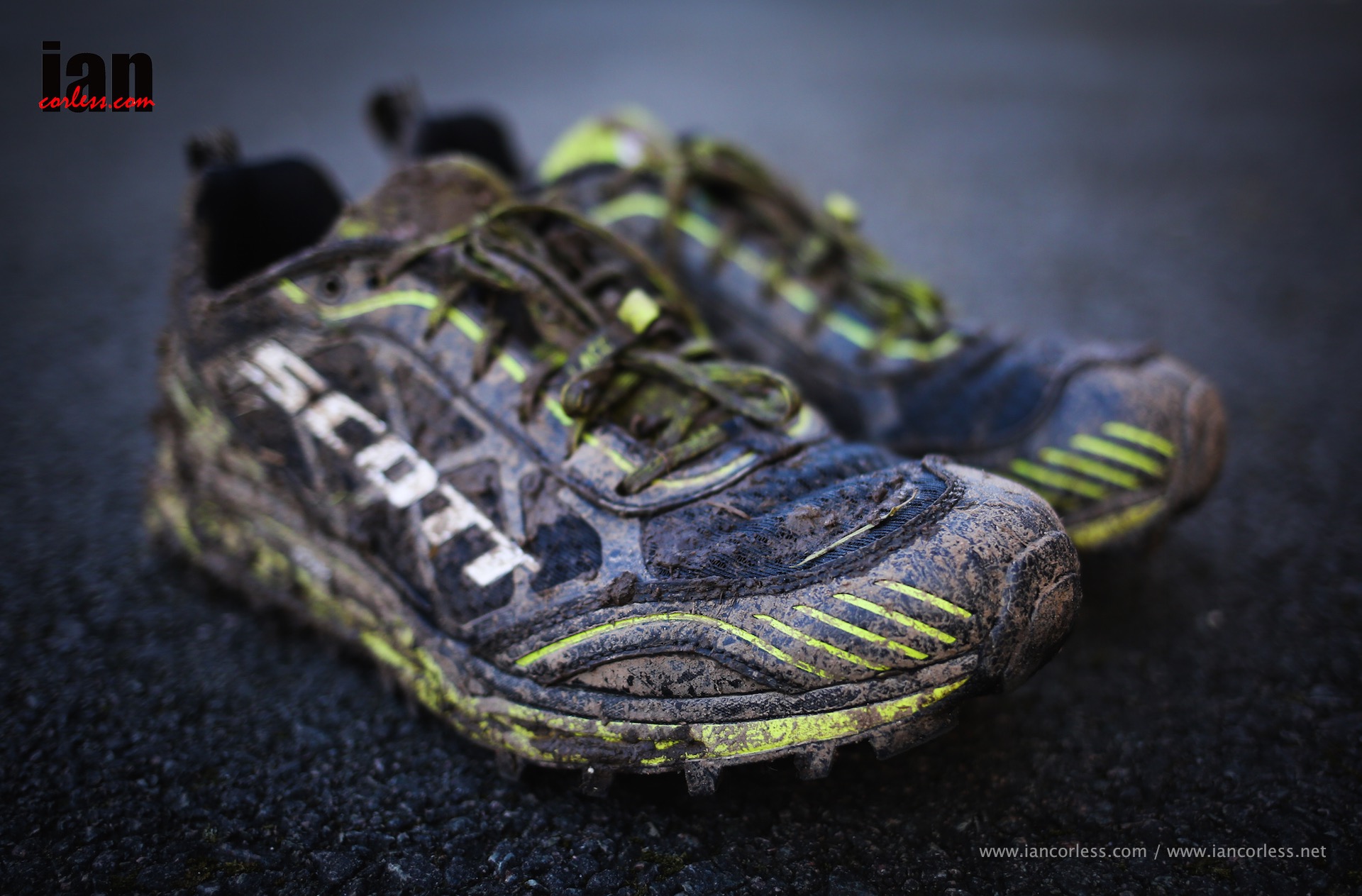
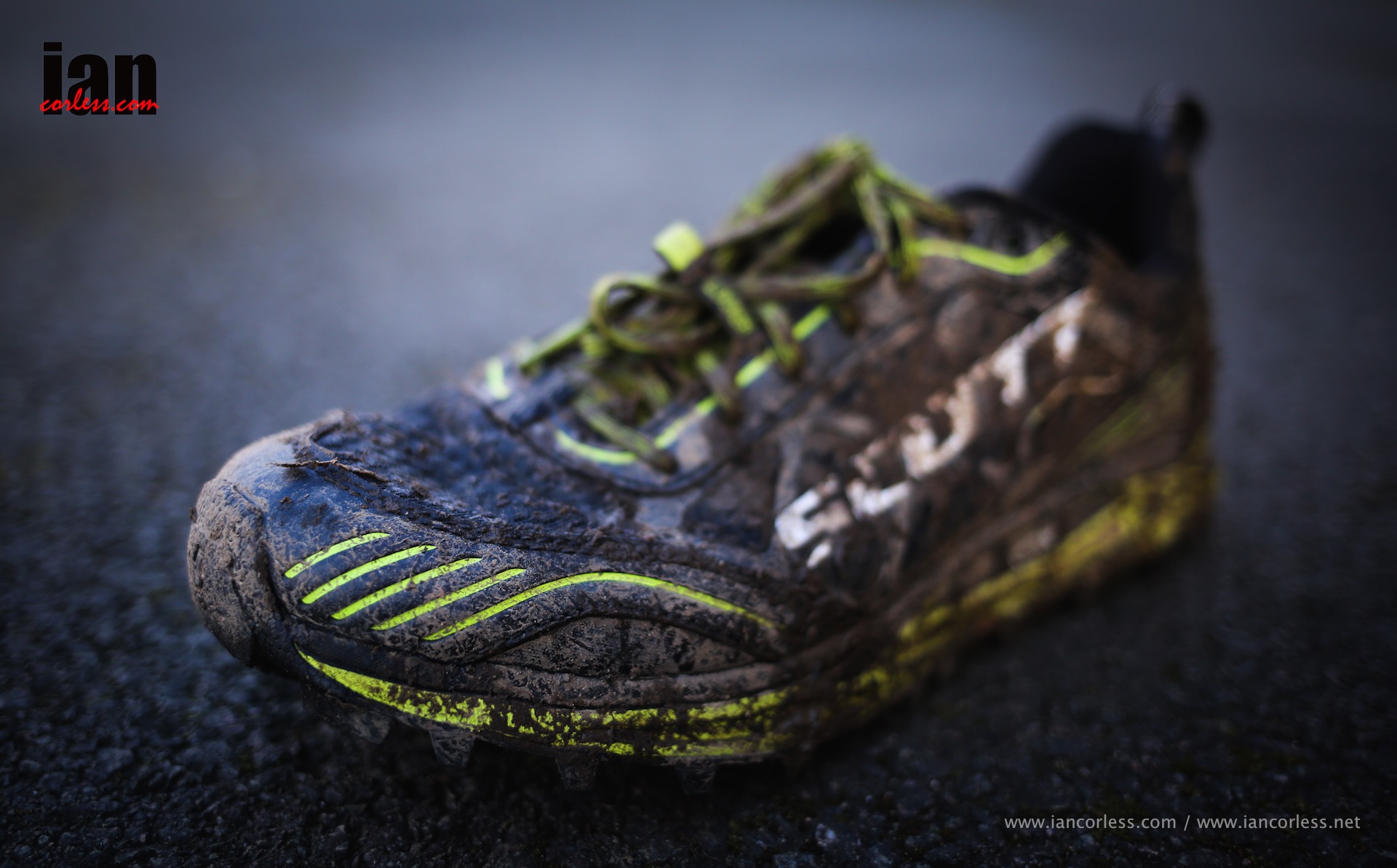
*I will provide an updated review after 1-month and plenty of nice muddy shots to show the shoe’s durability in the upper and outsole

Don’t worry, we will give you a credit!

©iancorless.com_P1060017

I am lucky, very lucky! I have a life and business that allows me to travel to amazing places documenting a sport that I love. It’s a dream job and one that I throw myself into 100% each minute, of each hour of everyday.

It’s a job that not many can do. It requires long hours, an ability to handle stress and you need to be fit. Well, you need to be fit if you do the job in the way that I do it!

I have built a business out of hard graft and my commitment has been rewarded. For example, in 2014 I travelled and worked on over thirty races. In 2015, I will work on a similar quantity.

I do have a ‘USP.’ I am not only a photographer. I offer a one stop package for a race with writing, podcast and a website that generates thousands of hits on a daily basis.

But don’t be mislead. If I was doing any other job, I would arguably be wealthy. But working in a niche sport does limit what is available in regards to re-numeration. I accept that!

However, I don’t like having the piss taken!

Let me give you a scenario:

Imagine you work for a magazine. You go to the office on Monday and you start work at 0900. You take a lunch break at 1300, return to work at 1400 and then work to 1800. You do this day after day… At the end of the week, the magazine you have toiled on is ready. You have dedicated forty hours minimum to its success. Your boss comes in, congratulates you on an awesome job and says how great your work is! You feel proud. You feel happy and you pat yourself on the back.

“We have decided not to pay you for your work this week. We have no budget! But don’t worry, we will give you a credit in the magazine. It’s a real plus for you, your name will be associated to the incredible body of work you have created. What more could you want?”

I am well aware that belts are being tightened in the world of running magazines. Lets face it, It’s no surprise… magazines print old news that will have appeared on websites like mine weeks and more than likely months before. However, it’s always nice to have something in print both from a consumer perspective and a contributor’s perspective. But lets not be fooled, somebody somewhere is making money.

Let’s just look at a potential scenario:

  • A magazine sells at £4.99 per issue.
  • They sell 28,000 copies.
  • That is £130,000+ of sales.

“It will be great advertising for your work and getting published by us will help you professionally.”

****

So does this argument have any merit?

Who doesn’t like seeing their work in a magazine? It’s a great showcase and of course as a photographer, it’s a confirmation of my ability.

However, readers of magazines are not the people who are going to commission future work from me, so, other than an ego boost; little gains come from a ‘credit.’

But, I do get a tear sheet and I can add it to my website HERE to show that I am credible and trustworthy! My photography is so credible that the magazine editor didn’t respect me, or my work enough to pay me for my time, skills and professionalism?
“Yes, but other magazine professionals and people in the industry will see how good you are, phone you up and commission something from you.”

No! Potential clients think, aaagh, you worked for ‘X’ magazine, they have a reputation for not paying, so you probably did the work for free.

Without wishing to blow my own trumpet. I am well established in the trail, mountain, sky and ultra world. My work is known and I get the job done. That is a USP and it is a bonus for any commissioning editor or client.

I can overcome obstacles and always come up with the goods. These things all mean far more than if I have been published. As a photographer, the best way to help me (and those like me) is to do what professionals do — treat us with respect and pay us for the work we do!

I work on races all the time. I provide a service and I get paid for that service. So, when an  editor of a magazine emailed recently asking me to use my photos of a particular race I asked, “what budget is available” and I was clear. “I can be flexible.”

“We don’t have a budget for photography,” the editor said in a way that was almost saying; “how dare you request a fee.”

I replied and I used my scenario of going to the office, working all week and then getting a ‘credit’ instead of getting paid.

“Ah, but that is different,” they said, “You were paid by the race to cover the event and therefore you should provide images for free to help promote the race, that is normal!”

Errr no! Some races ‘may’ well have a photographer that ‘may’ be contacted in who ‘may’ have signed a deal where all images are available post race and then the images ‘may’ be used in multiple media outlets? In theory, the photographer will have been paid ‘extra’ to allow this.

I don’t do this!

For one, it devalues my work.

I provide a quality service and any fee I receive covers my time and not the images I take. My images are mine and they are unique to me. They have my style, my fingerprint and that is the value. They are a piece of art with intrinsic value and they are protected under copyright.

Of course, I also provide considerably more! My website can get over 40,000 hits per day when I post images from a race. I also write race reports and I promote a race through my reach… social media has a huge benefit and you will see ‘branded’ low resolution images of my work everywhere. It’s a package that I provide and one that works.

It is time to stand firm

Photographers please stand firm. Don’t let publications walk all over us.

I, just like you am a professional. I have done five years at university; I have been in the business for twenty-five plus years and I have served my apprenticeship.

My work is unique, valuable and worth a fee.

If we are not getting paid, how are we different from the millions of budding photographers who do this as a hobby while still making money in another profession? How do we pay the rent, how do we put food on the table if we don’t charge for our services?

It is time to stick to our guns and not give away our work and make the magazines (or other businesses) pay us our due rewards for the work that we provide.

What other profession would be expected to work for free?

Clients have the money, they just play the game and far too many times, they win through pressure. If we have photos that are good enough to be published, they are good enough to be paid for!

Magazines will always continue to get ‘free’ content from enthusiasts but in time, the quality will soon drop and with it, the life of the magazine.

****

Note: This post has been generated through a frustration from those in the industry who continue to use bullying tactics in a hope that I will succumb to providing content for magazines and other similar publications without payment.

This post is not a reflection on races, race directors and brands who I work with on a professional basis, day-in and day-out and who I have an excellent working relationship with. To all those, I thank you for your continued loyalty.

Please look at my photography website HERE
Image sales available HERE

Tromsö Skyrace, soul skyrunning between the sea and the sky

IMG_4252
The second edition of the Tromsö Skyrace to be held the first weekend of August in northern Norway was presented today. This year’s event will include a vertical kilometre race but will still keep the essence of the first edition: technical routes for lovers of skyrunning and a family atmosphere.

There will be a Skyrace, 45 km and 4,600m climb and a Miniskyrace, 21km and 1,600m D+. In addition, a new circuit has been added: a Vertical Skyrace of 2’6km and 1,044m D+. All of them are ‘very technical circuits designed for experienced runners who enjoy the wilderness’ declared athletes Emelie Forsberg and Kilian Jornet who, once again, will be ambassadors of the event. This year the Skyrace and the Vertical Kilometre will score towards the Skyrunner® World Series, and some of the best athletes in the world will take part in it.

After the excellent reception last year, in which inscriptions were sold out within hours, the number of runners has been increased by 600 -200 per race- but not too many to crowd the race with runners, and always with the mountains taking centre stage.

Like last year, athletes will enjoy a route with the Norwegian fjords in the background as well as wild paths, technical trails and glaciers. A unique landscape in a race that remains very respectful of the environment and very familiar. The bond between the sea and the mountains, with participants from all over the world. Last year there were up to 25 nationalities present, and this number is expected to increase this year.

The event will have two star athletes: world champions Emelie Forsberg and Kilian Jornet, who are very excited about this second edition ‘we are looking forward to returning to share those circuits, at a very special time when it never gets dark.’

Emelie and Kilian are actively involved in the Tromsö Skyrace by helping out the organizers, designing the circuit and in a rather curious and original way: by cooking cinnamon pastries for all participants. Emelie explained: ‘We want this to be a race where all runners feel looked after. Last year I had a great time cooking and sharing moments with the participants. The race is growing but we still want to maintain this spirit.’

Nature is the most important thing in the Tromsö Skyrace and, therefore, the environment is taken care of by marking the circuits with biodegradable tape, setting up the checkpoints in shelters and crossroads and avoiding paper notices.

Registration for this event, which is the dream of every Skyrunner, is now open.

The event will take place on July 31st, 1st and 2nd August 2015 and will be part of the Skyrunner World Series.

Registration for 600 places opens today and the event hopes to be as successful as last year.

A technical route in a unique setting with Norwegian fjords.

Images copyright Jordi Saragossa

IMG_4252

IMG_4254

Marmot Dark Mountains 2015 – Provisional results and Images

©iancorless.com_MDM2015-0511

The heavens opened the day before the Marmot Dark Mountains and the promise of a snowy course disappeared with each rain drop.

In many respects it was a shame. Many, including me, was excited by the prospect of a night time race with cold chilly temperatures, a clear sky and a layer of the white stuff. However, it was not to be!

More importantly, the 2015 Marmot Dark Mountains took place with no rain… yes, no rain! Conditions were less than perfect though. The ground was sodden with the previous days torrential rain and melted snow and although the evening started relatively calm the wind increased hour-by-hour and by the early hours of the morning, the wind and wind chill was having an impact on everyone.

Taking place in the Howgills, runners started to race at 1900-hours with elite duo Alex Pilkington and Tim Higginbottom first off! Kim Collison and Adam Perry departed at1940-hours and it was immediately apparent that they were on a mission!. Completing the top trio, Steve Birkinshaw partnered with Jim Mann and they departed at 2000-hours chasing the other runners down.

What followed was a masterclass of navigation and speedy running from Collison and Perry. They blazed a trail around the Howgills and the ‘projected’ best case scenario finish time of 11-hours was blown out the fells when the finish line dibber confirmed a time of 8-hours and 34-minutes. Quite incredible.

Higginbottom and Pilkington had had some problems early on finding a control. Equally, Birkinshaw and Mann had also had a  problem. However, Birkinshaw said after the race that his form was just not up to running at the required pace. Hardly surprising after his Wainwrights record.

There were four linear courses that follow the standard Elite, A, B and C format of ordinary mountain marathons and two score format courses. Feedback post race was excellent and a dry night on the fells was extremely welcome.

Results below are provisional and will be confirmed by Ourea Events asap.

Elite

1st Kim Collison / Adam Perry 08:34:54

2nd Steve Birkinshaw / Jim Mann 10:41:46

A

1st and 1st Mix Catherine Litherland / Ross Litherland 09:49:54

2nd Andy Thompson / Rob Brown 10:10:35

3rd Chris Baynham-Hughes / Max Wainwright 10:51:05

1st Women and 4th Steph Jones / Sally Ozanne 11:26:51

1st and 1st Vet Bryan Stadden / Andy Creber 09:15:33

2nd and 2nd Vet Tim Martland / Jim Allen 09:51.35

3rd Jamie Rennie / David Rennie 10:02:02

C

1st Greg Weatherhead / Kevin Drew 07:55:21

2nd James Parratt / Neil Garrido 09:21:14

3rd and 1st Mix Emma Van Der Gucht / James Pawson 09:34:30

Long Score

1st David Adcock / Ben Turner 404 in 10:00:33

2nd and 1st Mix Digby Harris / Kirsty Hewitson 295 in 09:55:28

3rd and 1st Female Jo Gillyon / Catherine Evans

4th and 1st Vet Simon Caldwell / Carmen Elphick

Short Score

1st, 1st Mix, 1st Vet Jonathan Aylward / Kate Boobyer 235 in 07:38:37

2nd and 2nd Mix Scott Collier / Anne Edwards 235 in 07:42:15

3rd Darryl Watton and Andy Bell

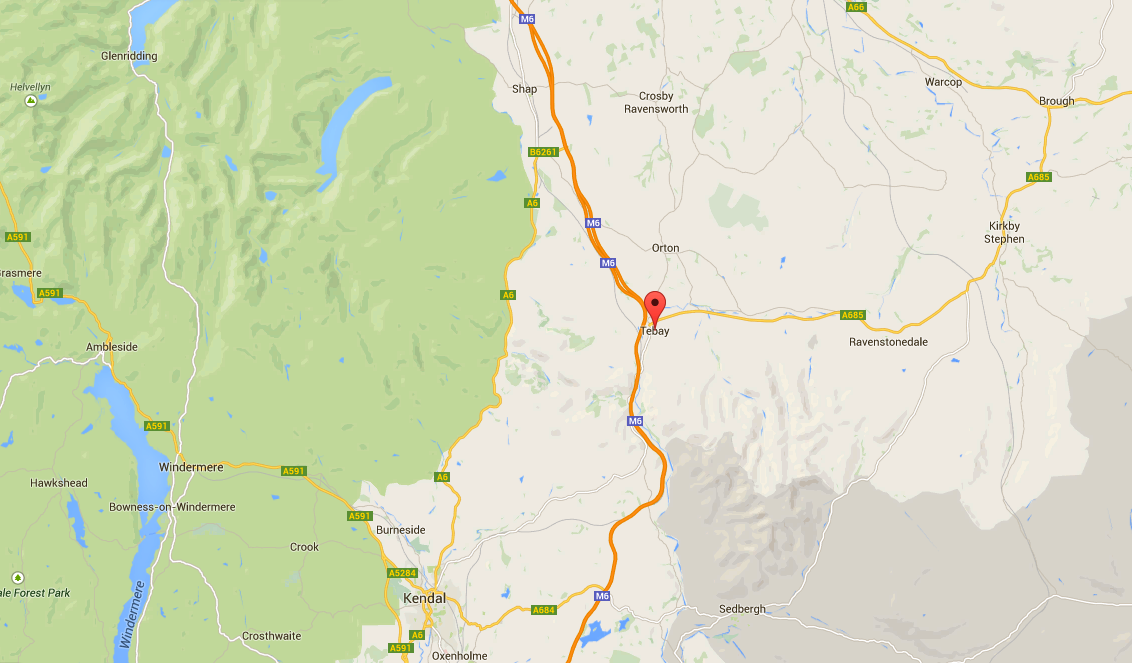
The Howgill Fells are hills in Northern England between the Lake District and the Yorkshire Dales. The fells are bounded by the River Lune to the north by upper reaches of the River Lune and to the east by the River Rawthey. The Howgill Fells include two Marilyns: The Calf – 2,218 ft (676 m) and Yarlside – 2,096 ft (639 m) and a number of smaller peaks, including five Hewitts. Parts of the southern Howgill Fells lie within the Yorkshire Dales National Park, though they have been within the modern county of Cumbria since the county boundary changes in 1974. They were originally shared by the West Riding of Yorkshire and WestmorlandThe name Howgill derives from the Old Norse word haugr meaning a hill or barrow, plus gil meaning a narrow valley. – wikepedia

Ourea_Events_Logo(600)

Marmot Dark Mountains™ Howgills 2015 – Race Preview

Marmot Dark Mountain - FINAL (BLACK)

Marmot Dark Mountains™ is the only overnight winter mountain marathon and the 3rd edition of the race will take place on Saturday 24th January in the Howgills.

The Howgill Fells are hills in Northern England between the Lake District and the Yorkshire Dales. The fells are bounded by the River Lune to the north by upper reaches of the River Lune and to the east by the River Rawthey. The Howgill Fells include two Marilyns: The Calf – 2,218 ft (676 m) and Yarlside – 2,096 ft (639 m) and a number of smaller peaks, including five Hewitts. Parts of the southern Howgill Fells lie within the Yorkshire Dales National Park, though they have been within the modern county of Cumbria since the county boundary changes in 1974. They were originally shared by the West Riding of Yorkshire and WestmorlandThe name Howgill derives from the Old Norse word haugr meaning a hill or barrow, plus gil meaning a narrow valley. – wikepedia

screenshot_468

This year’s elite course is a tough one, with a potential 3000m of elevation gain and an optimum distance of 53km. Famous for their steep rounded hills, the Howgills will be a tough challenge. Having viewed weather forecasts the organisers have issued a stern warning to all the competitors about the challenging nature of the terrain and event.

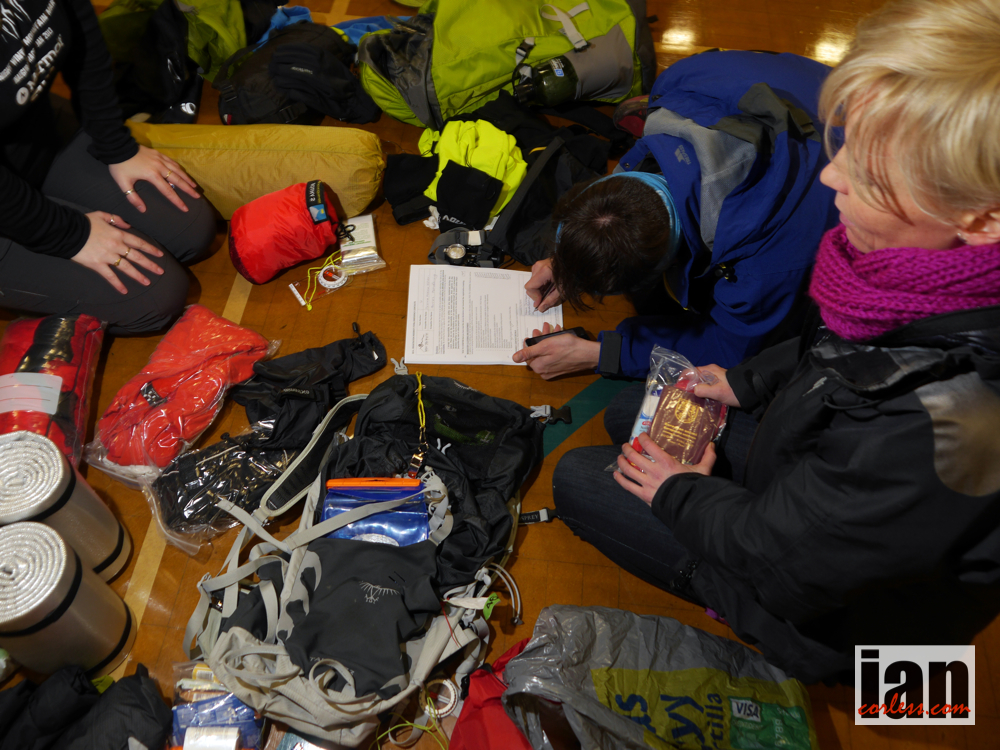
Needless to say, mandatory kit will be checked prior to the event.

©iancorless.com.©iancorless.com.P1100141

Marmot Dark Mountains™ is a true test of mountain craft for experienced mountain runners. Challenging terrain, night navigation and a wintery environment will test each runner over the variety of courses available: Elite, A, B, C, Short Score and Long Score.

©iancorless.com_IMG_5450Marmot24_2014_

“Marmot Dark Mountains™ takes the classic two-day mountain marathon format and gives it a new… darker twist.” said Race Director, Shane Ohly. “Rather than two days of running with an overnight camp in between, Marmot Dark Mountains™ packs everything into one winter’s night!”

Steve Birkinshaw

Three of the UK’s leading teams are of particular interest in the 2015 event: Steve Birkinshaw and Jim Mann, Chris Near and Tim Higginbottom and Kim Collison and Adam Perry.

Kim Collison at Mourne Skyline MTR

Kim Collison at Mourne Skyline MTR

Runners will start to race at 1900-hours and  Chris Near and Tim Higginbottom will be first off! The dynamic duo have won practically every elite mountain marathon and they have held various long distance mountain running records. In 2014, Near and Higginbottom missed the race due to last minute illness, they will be looking for victory in 2015.

Steve Birkinshaw needs no introduction. His incredible Wainwrights record in 2014 was a highlight of the year for many a trail, mountain, fell and ultra runner. Steve’s partnership with Jim Mann is fitting as Mann holds the record for the winter Bob Graham Round. Birkinshaw won the 2014 event when partnered with Tom Gibbs, so the pressure will be on! Birkinshaw and Mann start at 2000-hours chasing the other runners down.

Kim Collison and Adam Perry will be a tough pair to beat and setting off at 1940-hours. Collison won the first Marmot Dark Mountains in 2013 (running with Alex Pilkington) and finished the 98km Fellsman with Perry in first place last year. The duo are evenly matched and are considered favourites by many!

©iancorless.com.©iancorless.com.P1100347

Offering a range courses to suit a range of abilities, every year there has been a small but steady increase in the number of participants.

“The event kicks-off on the Saturday evening with the longest classes setting off first for dusk-to-dawn racing. The shorter classes will set off later in the evening with the aim of most competitors finishing within an hour or so of each other the following Sunday morning. This makes for an exciting finale as all the courses and most of the competitors converge on the finish as dawn breaks.”

There are four linear courses that follow the standard Elite, A, B and C format of ordinary mountain marathons and two score format courses.

This year there will be two manned checkpoints in the Howgills that competitors on the various courses may visit and the organisers intend to post updates to the event website as the night of racing unfolds.

©iancorless.com.©iancorless.com.P1100383

Follow the race at Ourea Events HERE
Marmot Dark Mountains HERE
OureaEventsLogo(500x500-cropped) copy

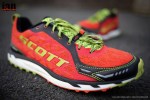
SCOTT Trail Rocket 2.0 (2015) Shoe Review

©iancorless.com_Scott-8036


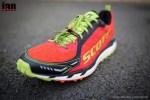
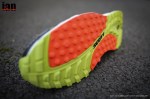
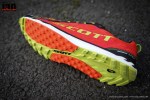
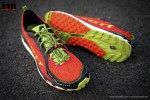
Following on from the extremely successful and popular T2 Kinabalu (review HERE and ladies review HERE) Scott have produced an out and out trail running race shoe aptly named the Trail Rocket. The original Trail Rocket (Feb 2014) when released gained plenty of initial praise. I praised them! However, it soon became apparent that the sole had some serious issues. The black nodules as seen on the image below literally would just come off. For me, my shoes did last a while before I had issues, however, some runners had problems within 50-miles.
Scott Trail Rocket Sole

The new 2015 shoe has addressed this issue and the sole is now far more resilient and long lasting.

©iancorless.com_Scott-8046

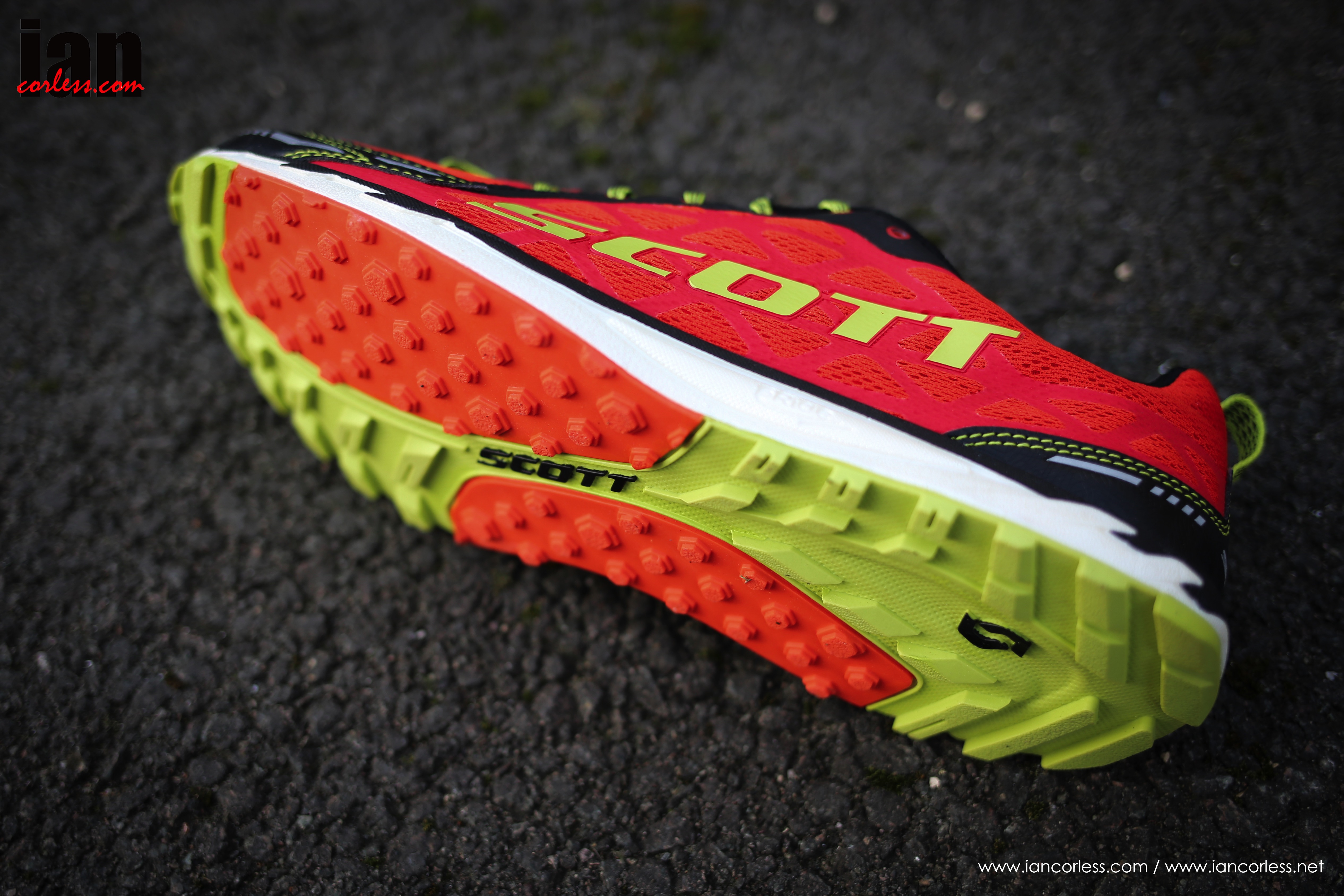
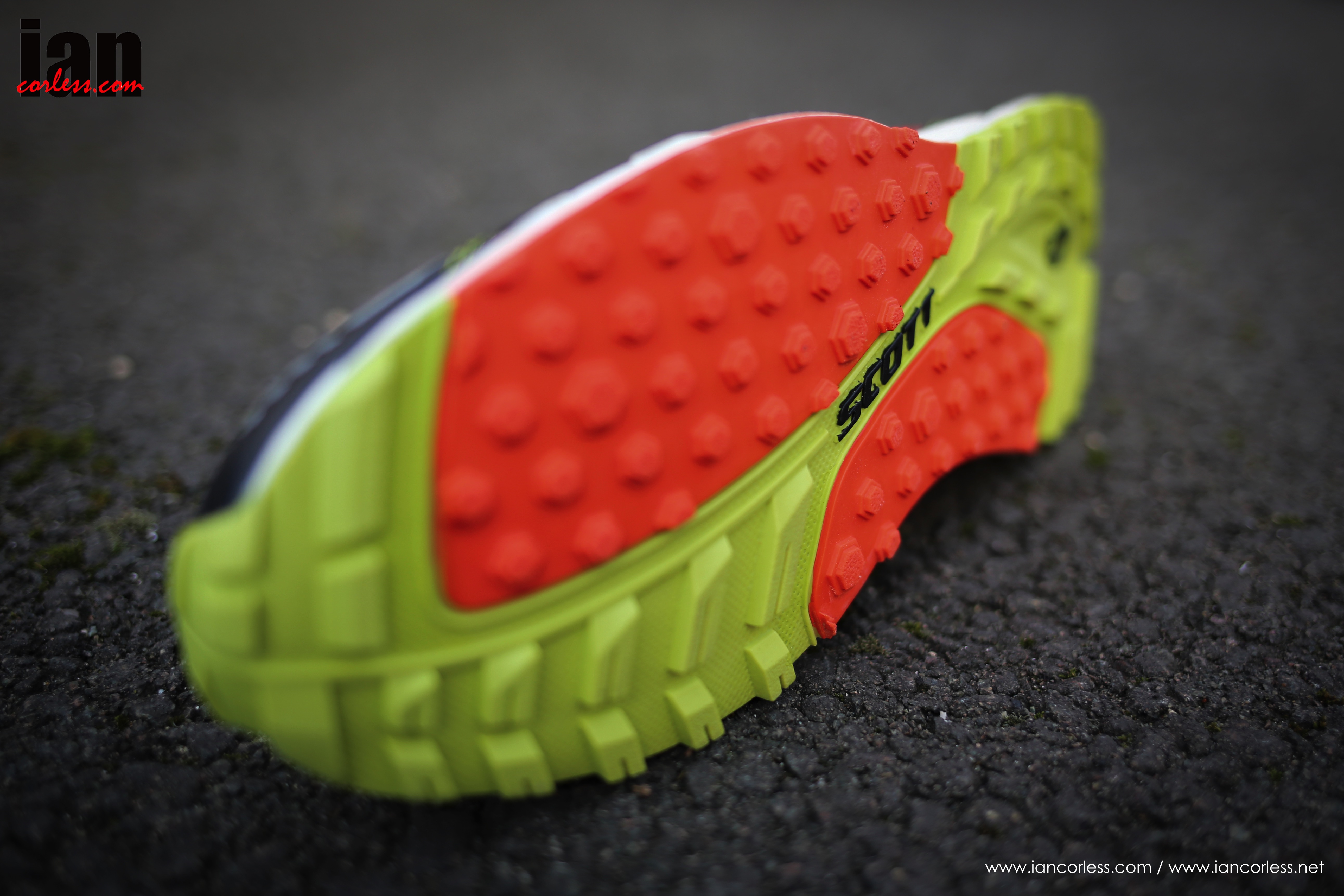
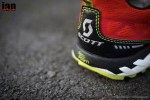
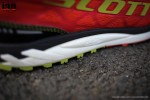
The orange section of the sole is now a moulded compound and the grip is not ‘added’ as in the previous model. So if you have used the Trail Rocket in the past, like them but refused to go near them again because of longevity issues, don’t worry, Scott have addressed this!

If mud is your thing the Trail Rocket is not for you. The Trail Rocket 2.0 is for fast running on hard pack trails, rocks, gravel and so on. They can withstand a little mud but not too much. They perform well on wet ground but the compound used in the orange section of the sole is relatively hard and on occasion I have felt the shoe slip. It’s only a minor slip but nonetheless it does make you take a breath and then you question what will grip be like later in the run?

©iancorless.com_Scott-8044

Following the trend for low drop shoes, the Trail Rocket 2.0 has a 5mm heel to toe drop in comparison to the 11mm drop of the T2 Kinabalu. The T2 Kinabalu is still a favourite shoe of mine even though it has an 11mm drop. This is mostly due to the ‘rocker’ sole which makes the shoe feel lower than it actually is. You can see one of the 2015 T2 Kinabalu 3.0 colour ways below.

Scott T2 Kinabalu 2015

Scott T2 Kinabalu 2015

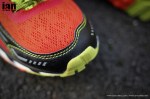
The upper of the Trail Rocket 2.0 is very breathable with a slightly narrow toe box (precision) and a snug heel compartment that provides a solid and secure fit. Toe protection is okay but not great.

©iancorless.com_Scott-8052

Sizing is true to size, however, if you are going without socks you may want to check what works for you. Lacing is solid and depending on your preferred lacing method the shoe holds firm to the foot and is extremely comfortable.

©iancorless.com_Scott-8051

The laces provide a real secure and tight hold and once tied they hold firm and don’t come loose. An elastic bungee (Lace Locker) holds and retains any  excess lace.It’s a really practical solution that was missing on the original Trail Rocket. It’s a simplistic solution to a problem that exists for all runners unless you use Salomon!


The Trail Rocket 2.0 is lightweight and versatile and designed for maximum performance for racing and fast training. The minimalistic design in combination with the eRide™ Technology promotes an efficient, natural and fast running style.

©iancorless.com_Scott-8057

Arguably, the eRide™ (rocker) may not required for this model of shoe as a 5mm drop will almost certainly mean that your run form should already be good and mid to forefoot landing is normal. However, should you be transitioning to lower drop shoe (say from 8mm) the eRide™ will help guide you on your way.

eRide

As you would expect, the shoes weigh in at a light 260g (UK9) which is obviously due to the minimalist design and Aerofoam.

Aerofoam

Forefoot cushioning is 17.5 and rear cushioning 22.5 providing a shoe that still provides good cushioning and protection. How far can you run in them? Well it very much depends on your form, adaptation and technique. Without doubt I think we will see many efficient runners covering 100-miles in this shoe, however, for many the Trail Rocket 2.0 will be ideally suited for fast running on trail races up to 50-miles.

©iancorless.com_Scott-8040


The Trail Rocket 2.0 has a ‘Rock-Protection-Plate’ too reduce any impact from obstacles on the ground and cushioning is good. I have had few issues with ‘feeling’ the ground beneath me.

Slipping the shoe on you have that confirmed comfort feeling inherited from the T2 Kinabalu, so, it’s fair to say that if you are a fan of its beefier brother you are going to like the Trail Rocket.

Overall comfort is great and you zip along feeling very light and fast. The shoe has great flexibility. They encourage you to move quicker, lighter and faster with increased cadence.

A real bonus is how good the shoe feels on road and/ or tarmac. Many of us need to transition to trail either by connecting roads or maybe you need to access trail with a jog to and from home? The Trail Rocket handles this well. It’s too early to say in testing what impact this will have on the wear and longevity of the sole.

The Trail Rocket is definitely a shoe for faster training sessions. Certainly if you are new to ultra racing or looking to complete rather than compete, the Trail Rocket may not be the shoe for you.

I really like the Trail Rocket. I enjoyed the first incarnation and had the sole not let me down I would have continued to use them. SCOTT may have an uphill battle convincing previous Trail Rocket owners back… that would be a shame! The 2015 edition of the shoe is exactly as before but now the shoe has a sole that can keep pace with your running.

Read about eRide HERE

©iancorless.com_Scott-8055

Read about Aerofoam HERE

Pros

  1. Light.
  2. Low drop (5mm).
  3. Breathable.
  4. Great lacing and ‘Lace Locker’.
  5. eRide and Aeroform and buzz words but they work.

Cons

  1. Maybe too light for some runners.
  2. Potentially too narrow in the toe box, so, if you like roomy shoes make sure you try these first.
  3. Previous model sole had real issues so runners are going to need to be convinced.

Specs:

  • Drop 5mm
  • Upper – mesh with synthetic overlays
  • Lower – eva/ rubber

Scott Running website HERE

logo