Results top-3 stage 4
- Samir Temsang 3:53:35
- Phudorje Lama Sherpa 2:53:38
- Zigor Iturrieta 4:09:41
- Anna Comet 4:28:18
- Kerry Sutton 5:06:09
- Yangdi Lama Sherpa 5:35:47
Results top-3 stage 4


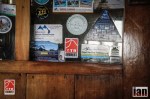


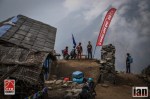
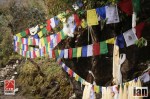
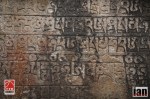
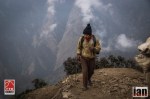
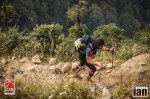
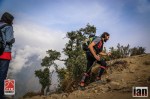
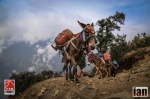
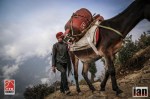

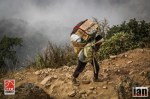

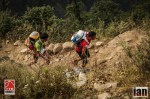
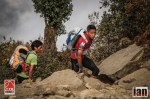
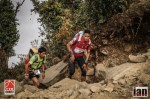
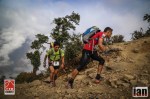
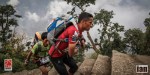
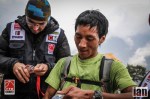
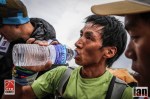
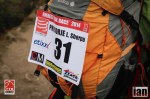
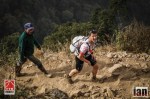
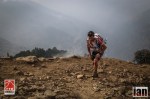
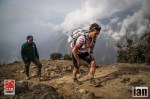
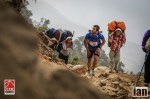
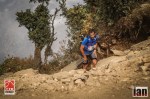
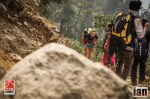

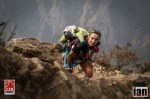

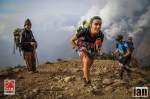
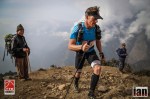
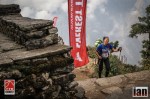
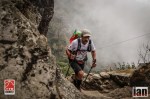
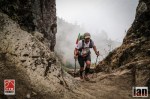


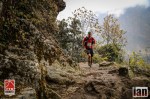

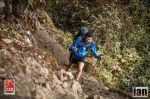
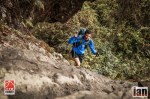
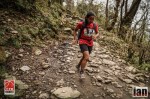
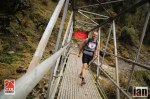



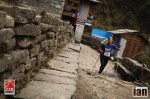



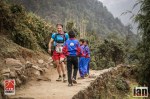
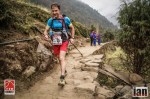
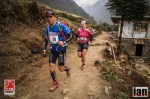


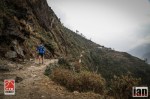
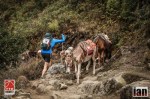
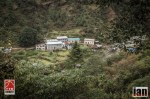
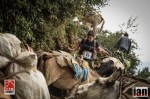
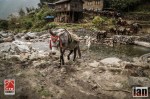
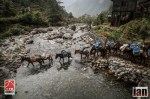
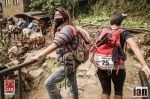


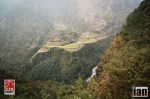
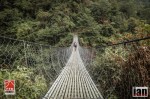
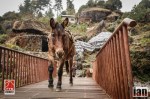

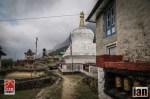


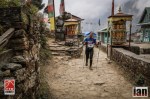


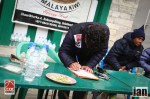
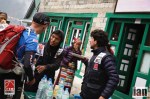

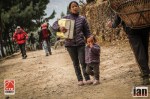
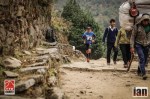
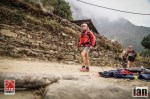

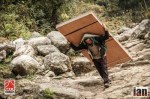
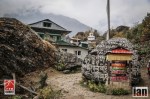
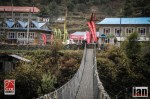
Departing in five 16-seater mini buses, participants of the Everest Trail Race made the long, twisty and at times stressful journey from Kathmandu to Jiri for the start of the 2014 edition. It’s a rollercoaster journey up single -rack roads, a frenetic and constant beeping of horns and a multitude of bends that would leave the most hardened rollercoaster freak with a turning tummy.
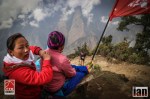
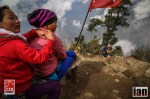
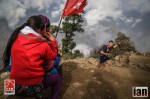
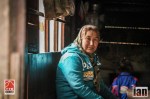
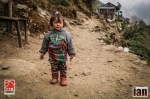
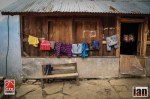
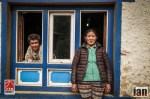
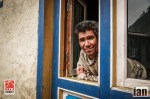
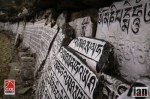
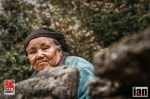
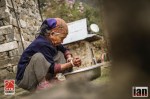
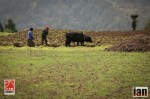
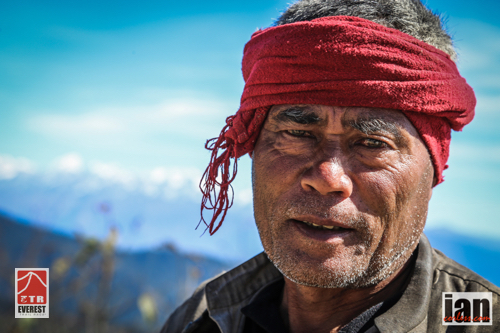
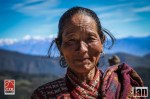
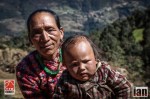
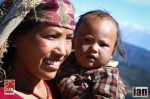
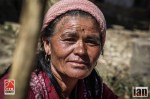
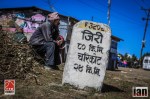
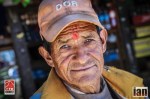
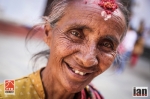
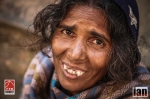
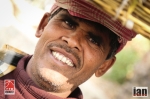
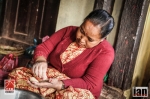
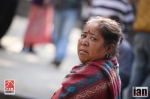
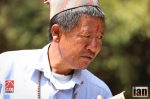
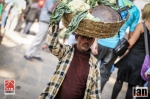
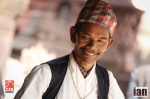
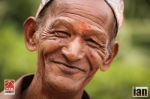
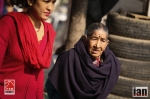
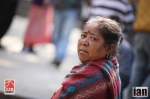
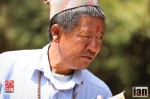
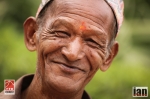
Our lunch stop at Karidunga was a welcome break from the journey. While runners found a space and enjoyed the view of the Himalayas, off into the distance I walked looking for some local colour. You never have to go far, Ladies working in fields, men weaving basket wear and children playing; all have wonderful smiles.
They seem to embrace tourists and actually seem to enjoy the process of having a photo taken. Off course it’s all the more appealing if they receive a ‘token’ for their efforts…
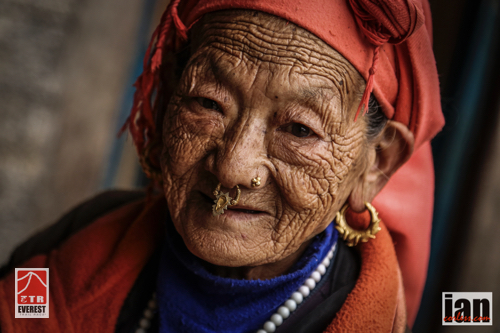
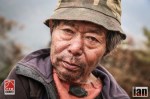
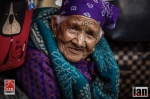
Weathered faces show the lines from years of toil from harvesting crops. Children have round faces, wonderful colour and piercing eyes and a cheeky smile. In all honesty, I could photograph these people all day. They fascinate me.
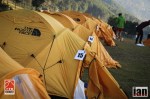
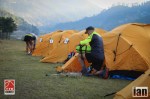
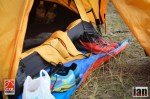
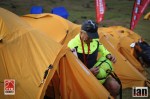
Back on the buss the toing and froing continued and finally our arrival at Jiri came. We had been on the road 8-hours and the glow of our yellow TNF tents glowing as the day began to loose its light was more than a welcome sight.
Water collection, tent allocation and final preparations underway for tomorrows race day. A mug of hot tea warms as the departing of the sun takes the heat away and the temperature slowly drops… little by little venturing to zero and then suddenly it drops below. ‘Don’t worry’ Pasang Sherpa says, ‘it will only be -3 tonight.’
Day 1 commences at 0900 Thursday 13th November.
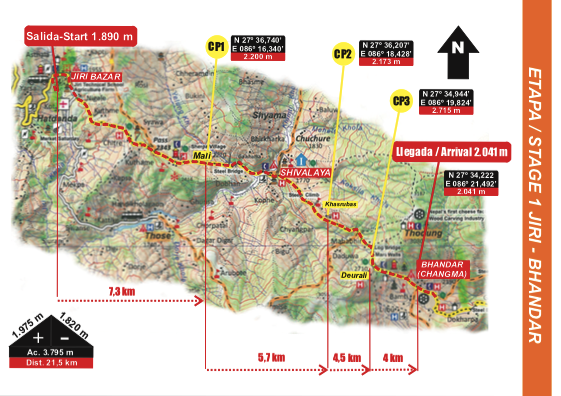
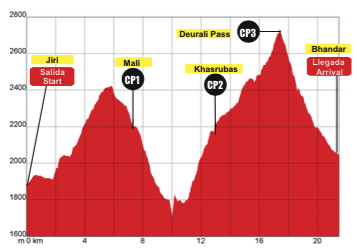
Jiri (1850m) to Bhandar (2050m) – 21.5km 3795m+
The stage has two summits, one at 2400m and the high point of the day at Deurali Pass 2700m before descending to the finish at Bhandar.
Day 2 Preview:






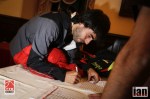

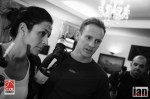
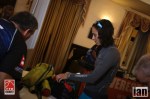
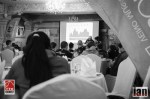


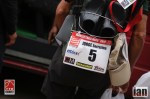
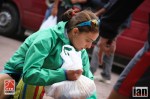

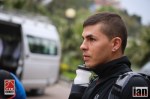
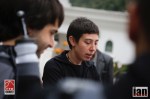
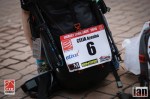
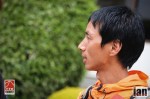
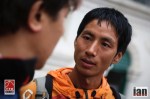
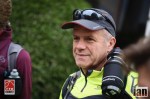
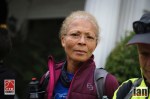
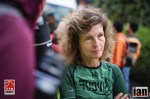

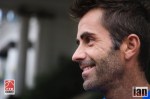
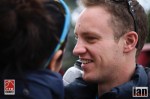

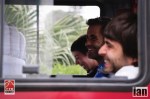
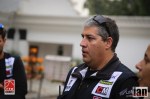
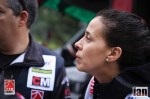

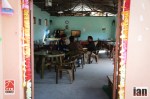


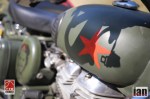
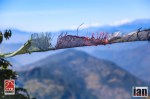
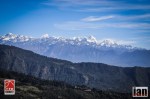

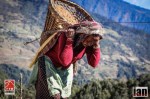
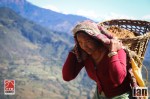
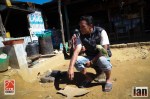
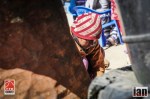


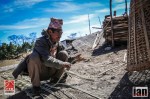
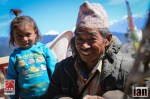
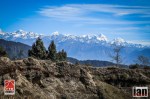
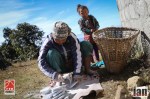

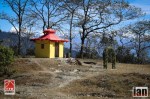
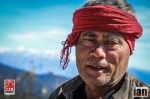
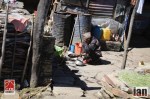





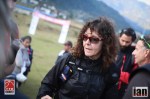
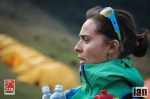
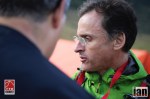

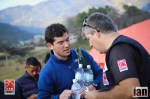
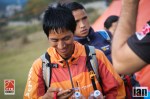
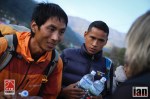

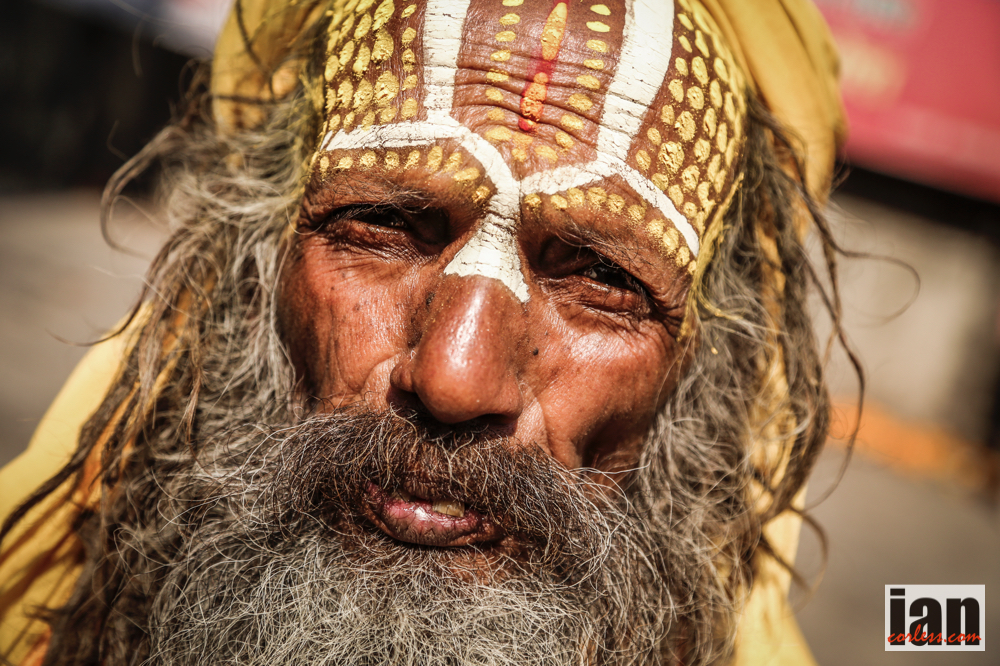
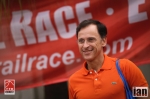
An incredible day exploring the sights, sounds, colours and meeting the people of Kathmandu. What an incredible place.
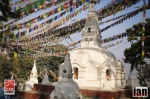
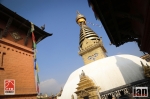
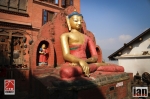
Located at the top of a hill, our day started with a visit to Swayambhunath (affectionately known as the Monkey Temple).
Swayambhunath (Devanagari: स्वयम्भूनाथ स्तुप; sometimes romanized Swoyambhunath) is an ancient religious complex atop a hill in the Kathmandu Valley, west of Kathmandu city. The Tibetan name for the site means ‘Sublime Trees’ (Wylie:Phags.pa Shing.kun), for the many varieties of trees found on the hill. However, Shing.kun may be a corruption of the local Nepal Bhasa name for the complex, Singgu, meaning ‘self-sprung’. For the Buddhist Newars in whose mythological history and origin myth as well as day-to-day religious practice, Swayambhunath occupies a central position, it is probably the most sacred among Buddhist pilgrimage sites. For Tibetans and followers of Tibetan Buddhism, it is second only to Boudhanath.
The Swayambhunath complex consists of a stupa, a variety of shrines and temples, some dating back to the Licchavi period. A Tibetan monastery, museum and library are more recent additions. The stupa has Buddha’s eyes and eyebrows painted on. Between them, the number one (in Devanagari script) is painted in the fashion of a nose. There are also shops, restaurants and hostels. The site has two access points: a long stairway with 365 steps, leading directly to the main platform of the temple, which is from the top of the hill to the east; and a car road around the hill from the south leading to the southwest entrance. The first sight on reaching the top of the stairway is the Vajra. Tsultrim Allione describes the experience:
We were breathless and sweating as we stumbled up the last steep steps and practically fell upon the biggest vajra (thunder-bolt scepter) that I have ever seen. Behind this vajra was the vast, round, white dome of the stupa, like a full solid skirt, at the top of which were two giant Buddha eyes wisely looking out over the peaceful valley which was just beginning to come alive.[2]
Much of Swayambhunath’s iconography comes from the Vajrayana tradition of Newar Buddhism. However, the complex is also an important site for Buddhists of many schools, and is also revered by Hindus.
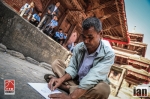
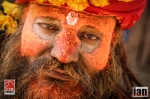
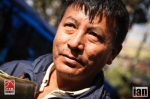
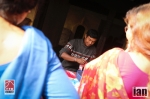
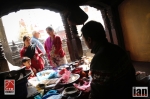
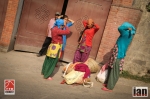
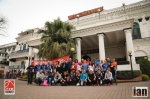
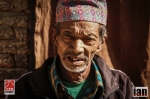
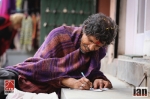
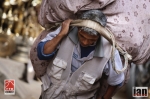
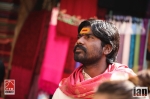
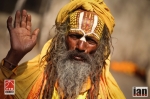
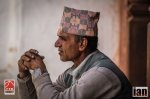
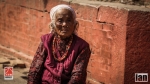
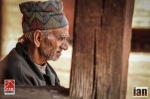
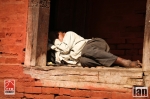
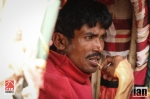
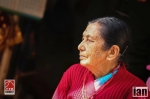
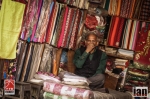
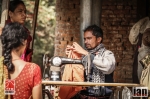
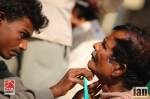
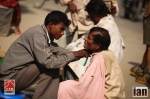
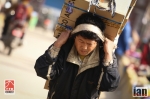
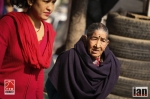
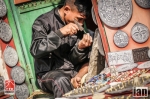
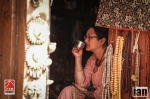
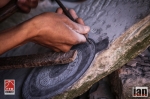
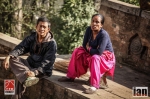
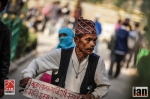
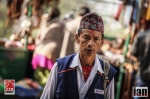
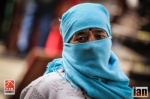
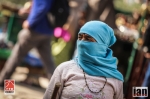
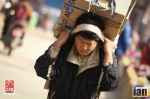
From Swayambhunath we took a short bus ride and then walked around the vibrant streets of Kathmandu. It’s a cacophany of noise mixed with people, cars and colour. The people are warm, welcoming, happy and friendly despite obvious poverty that is on display no matter where you look.
Kathmandu (Nepali: काठमाडौं [kɑʈʰmɑɳɖu]; Nepal Bhasa: येँ देय्) is the capital and largest municipality of Nepal. It is the only city of Nepal with the administrative status of Mahanagarpalika (Metropolitan City), as compared to Up-Mahanagarpalika (Sub-Metropolitan City) or Nagarpalika (Municipality). Kathmandu is the core of Nepal’s largest urban agglomeration located in the Kathmandu valley consisting of Lalitpur, Kirtipur, Madhyapur Thimi, Bhaktapur and a number of smaller communities. Kathmandu is also known informally as “KTM” or the “tri-city”. According to the 2011 census, Kathmandu has a population of close to 1 million people. The municipal area is 50.67 square kilometres (19.56 sq mi) and has a population density of 3000per km² and 17000 per km square in city.
The city stands at an elevation of approximately 1,400 metres (4,600 ft) in the bowl-shaped Kathmandu Valley of central Nepal.[6] It is surrounded by four major mountains: Shivapuri, Phulchoki, Nagarjun, and Chandragiri. Kathmandu Valley is part of three districts (Kathmandu, Lalitpur, and Bhaktapur), has the highest population density in the country, and is home to about a twelfth of Nepal’s population.
Historically, the Kathmandu Valley and adjoining areas were known as Nepal Mandala. Until the 15th century, Bhaktapur was its capital when two other capitals, Kathmandu and Lalitpur, were established. During the Rana and Shah eras, British historians called the valley itself “Nepal Proper”. Today, Kathmandu is not only the capital of the Federal Democratic Republic of Nepal, but also the headquarters of the Bagmati Zone and the Central Development Region of Nepal.
Kathmandu is the gateway to tourism in Nepal. It is also the hub of the country’s economy. It has the most advanced infrastructure of any urban area in Nepal, and its economy is focused on tourism, which accounted for 3.8% of Nepal’s GDP in 1995–96. Tourism in Kathmandu declined thereafter during a period of political unrest, but since then has improved. In 2013, Kathmandu was ranked third among the top 10 travel destinations on the rise in the world by TripAdvisor, and ranked first in Asia.
The city has a rich history, spanning nearly 2000 years, as inferred from inscriptions found in the valley. Religious and cultural festivities form a major part of the lives of people residing in Kathmandu. Most of Kathmandu’s people follow Hinduism and many others follow Buddhism. There are people of other religious beliefs as well, giving Kathmandu a cosmopolitan culture. Nepali is the most commonly spoken language in the city. English is understood by Kathmandu’s educated residents. Content ©wikipedia
Tomorrow, Tuesday 12th is an early start as we all leave Kathmandu and head to Jiri for an overnight camp and then the race starts Wednesday.
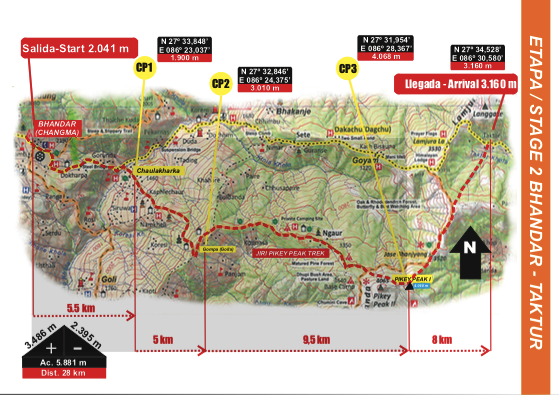
Stage 1 – Preview
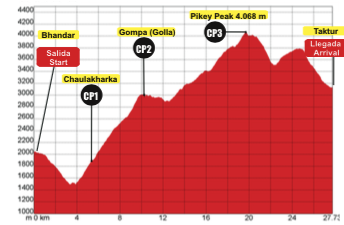
Km 0. Departure from campsite with initial direction 150o. Follow main pathway that crosses Bhandar. At the end of the village, cross the wooden covered bridge, turn left immediately and followmainpathwayparalleltotheriver (maintaineddescenttillKm3,7).
Km 1,04. Take footpath on the right and go down crossing several times the main pathway. Km 3,7 (1.523 m). Turn right crossing the bridge (maintained ascent till Km 9,8).
Km 9,8. Arrival to the pass that leads to the Golla village (Gompa). Take the footpath on the left that leads to the village exit and to the CP2.
Km 10 CP2 . Come out following the path on the right. Terrain combining flat sections and slight ups and downs till Km 12.
Km 12. Take the detour on the left and follow the marked path. Maintained climbing inside the forest till Km 13,5 where we reach a hill with flags. Follow marked pathway inside the forest.
Km 16,9 (3625 m.). Find a clearing and enter again the forest with direction 170o. Follow marked pathway.
Km17. Anewclearing. Initialdirection150otillenteragaintheforest.
Km17,5(3.772m.).Comeout oftheforest.Followmarkedpathandturnleftafterfewmeters to start climb to the Pike Peak (4.065 m). Follow marked path. We will identify the summit because of the prayer flags.
Km 19,5 CP3. Reach the Pike Peak summit. Go down the marked path till a Many Wall (3.989 m). Take marked path on the left. Go down along a technical zone. CAUTION!.
Km 21,5. (3.950 m). Clearing. Turn left and go on till pass with Mani Wall (3.500 m). Km 23,7 (3.783 m). Pass by a group of 3 chorten and follow pathway. Km26,5(3.265m).Turnleft crossingtheriver.Followmarks.Km 28. Taktur.
STAGE ARRIVAL.
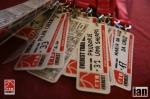
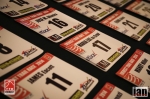
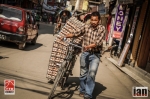
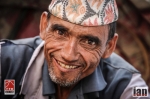
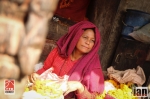
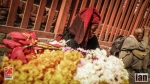
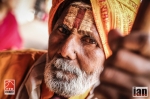
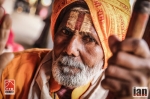
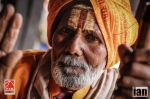
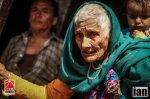
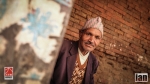
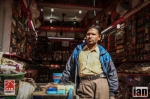
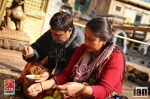
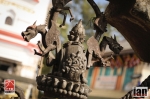
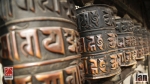
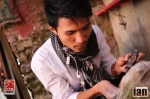
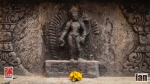
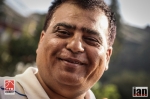
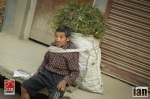
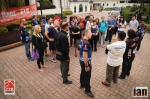
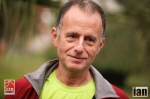
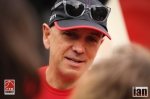
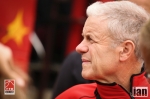
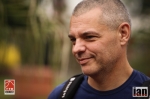
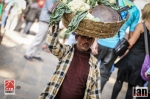
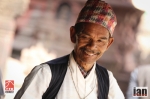
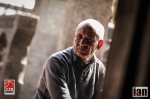
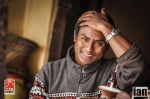
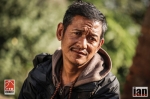
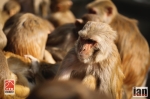
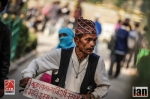
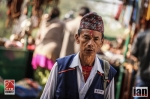
KATHMANDU IMAGES:




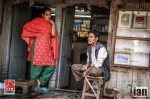


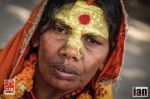

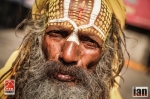
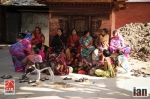


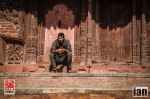
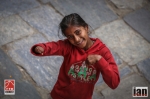
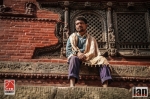
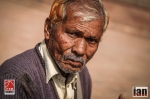









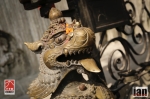
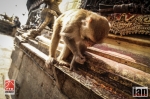
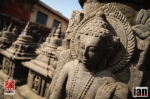
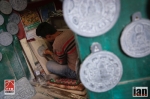

















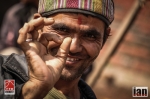

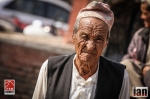
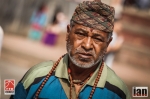
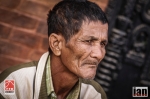
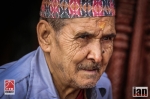
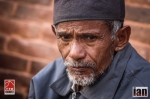
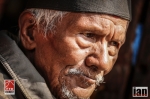

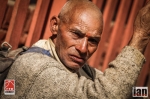
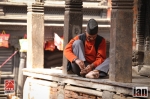
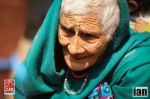
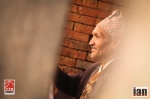



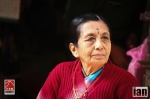










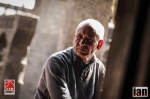

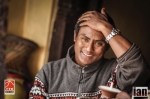
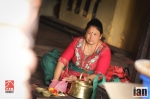
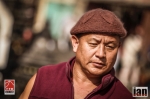




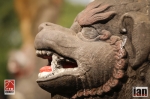
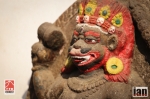

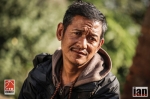

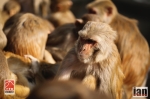
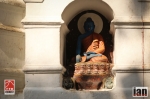
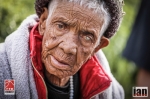


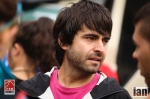
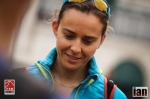









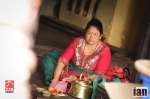
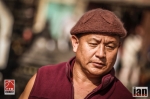



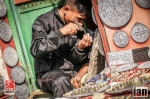
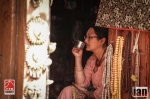

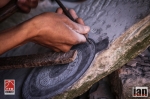
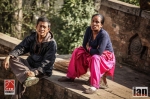
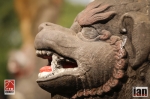
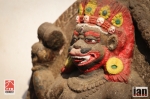


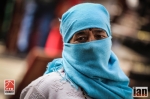
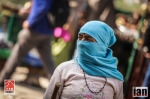
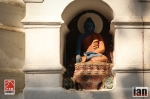


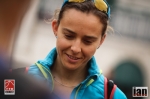
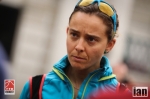
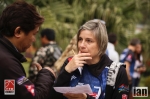
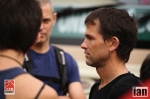

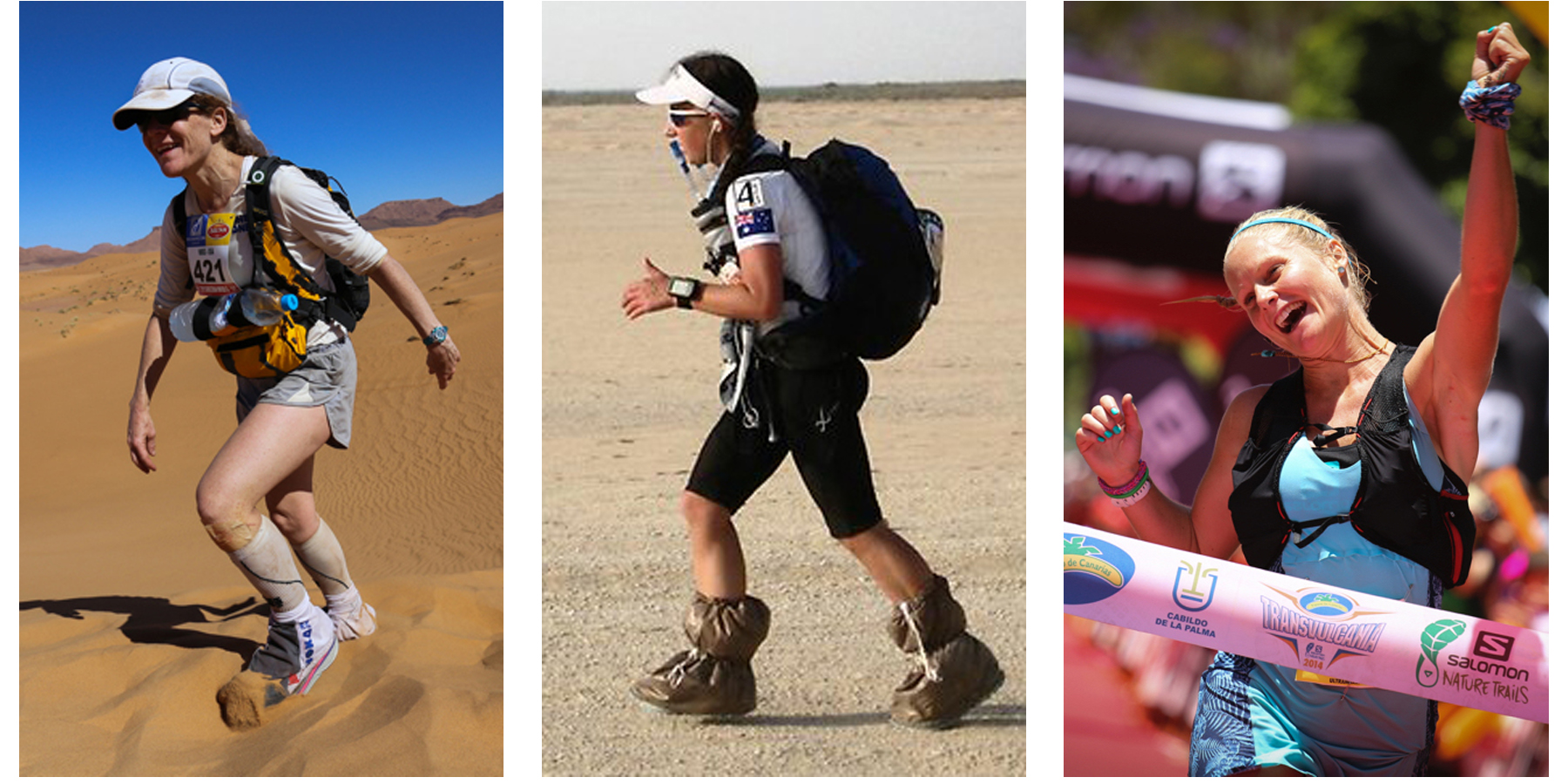
The 2015 multi-day The Coastal Challenge gets underway in less than 3-months. Runners from all over the world will arrive in San Jose in preparation for the journey down to the coast to Quepos and the 11th edition of the “TCC.”
After a stellar line-up for the 10th edition, Rodrigo Carazo and the TCC team have once again excelled in providing a top quality elite line up making TCC arguably one of the ‘must-do’ multiple day stage races in the world.
Come race day, elite runners will toe the line in Quepos with everyday runners, with one purpose in mind, to embrace an ultimate challenge in the remarkable Talamancas.
Unlike other multi day races, the TCC is supported. Each day camp is moved ahead and awaits the runner’s arrival at the finish. Running light and fast, runners are able to keep equipment to a minimum and as such, racing is extremely competitive. The 2015 edition of the race is proving to be extremely exciting, particularly when one looks at the line up of runners.
Heading up the ladies field is a trio of hot talent that will without doubt make the race one to remember.
NIKKI KIMBALL
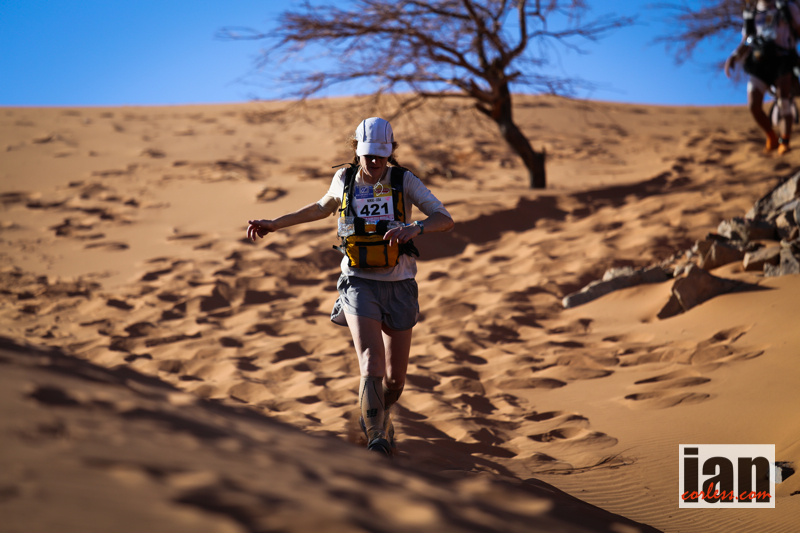
Nikki Kimball on her way to victory in the 2014 MDS.
Nikki Kimball is a legend of female ultra running. A multiple winner of the iconic Western States her palmares are longer than my arm… just this year, Nikki won Run Rabbit Run 100 and the 29th Marathon des Sables. Nikki’s presence in Costa Rica is a defining moment for the TCC. It is a confirmation of the credibility of the race and Nikki’s years of experience will be something to embrace, not only for the other runners but all those involved in the experience.
‘I loved MDS and am excited to add TCC to my stage racing experience. I’ve run MDS, Transrockies (3 times), Jungle Marathon and each was very special in its own way. Each experience will help me in my preparation for TCC. Transrockies, like TCC, transported runner gear and set up their tents, which gives me a sense of racing daily with the speed allowed by running without gear. The Jungle Marathon exposed me to rain forest and the accompanying heat and humidity. And MDS gives me a more recent experience of racing in extreme conditions against great competition. I absolutely loved, though occasionally hated, each event. As for direct comparison with MDS, a few points are obvious: I will be exchanging dry oppressive heat, for humid oppressive heat; varied types of sandy surfaces for wet and rocky footing; desert vistas for close forests and ocean views; and nearly full self sufficiency for the relative luxury of camps with food and sleeping supplies I do not need to carry. I recommend MDS very highly to fellow runners, and believe I will finish TCC similarly impressed.’
Running without a pack and all the weight, do you think it will be a fast race?
‘I actually love the challenge of carrying my entire kit for MDS, but am looking forward to the freedom from gear that TCC will give. Yes, the running is much faster without a heavy pack, and TCC will be very fast in places. Hopefully the technical elements will slow the pace down a bit, as I run more on strength, endurance and technical skill than speed. This is particularly true in the winter when nearly all my training is done on skis. I think anyone peaking her running training for TCC will be running quickly.’
How excited are you to race in Costa Rica?
‘As we said growing up in Vermont, I’m wicked psyched! Seriously, running has given me access to parts of the world I would never otherwise see. And I’ve run in Mexico and South America, but never run between the two. I feel I gain so much from playing with other languages, exploring other cultures and environments, and bonding with runners throughout the world. I cannot wait, not only to run in Costa Rica, but to spend a few days before the event picking up a few more Spanish phrases, meeting local people and splashing in the water while knowing that my friends at home are playing on top of a much colder form of water.’
You will be racing against Anna Frost and Samantha Gash amongst others…. does this excite you?
‘I do not know Samantha, but I very much look forward to meeting her. And, like anyone who has spent time with Anna, I absolutely adore her. I love racing with/against anyone, and Anna is certainly a great talent. But more than that, she is a fantastic person with a depth of character that far exceeds her running achievements. I get to hang with Anna for a week, and that is always great. For that matter, every stage and ultra race I’ve been in (and over 16 years there have been many) attracts great people. From volunteers to elite athletes to less experienced racers looking to see what’s possible, the people of this sport keep me doing it. I’m excited by the top end competition and just as excited to hear stories from TCC participants I have yet to meet.’
ANNA FROST

Anna Frost Skyrunning World Championships 2014 – Chamonix
Anna Frost arrived in Costa Rica for the 10th edition but unfortunately couldn’t race due to an injury set back which was really disappointing for the New Zealander. However, Costa Rica was a cathartic process… Frosty followed up her TCC experience with victory and a course record at Transvulcania La Palma, Speedgoat 50k and Bear 100.
‘I gained so much energy and pleasure out of just being in Costa Rica that I came home almost injury free. I cant wait to get back to explore further and see all of the course. The atmosphere is so much fun, great food, wonderful campsites, beautiful beaches and rain forests and HOT weather! IM SO EXCITED!’
The Coastal Challenge is a supported multi-day race and therefore allows runners to run fast and free. Looking at the quality of the ladies field, I asked Frosty about the 2015 race and if she expected it to be fast?
‘There are a lot of fast trails and dirt roads, long flat beach sections and smooth trails. But in between that there is hard, steep, trail-less, muddy, rain forest covered dirt, spiders, noises? and more to keep the challenge high. But luckily the race has many aid stations so you don’t need to carry too much which means you can move as fast as possible through all of that!’
Nikki Kimball has won MDS and WSER and Sam Gash has just run for 1-month all over South Africa, two real solid runners. How excited are you to test yourself over the multi-day format against these ladies?
‘It will be fantastic to share this race with them. They are both super strong girls and also great friends, so it is going to be so much FUN!’
You ran your first 100-miler recently, do you think that will be a benefit in Costa Rica?
‘Definitely. With each race I undertake I am beginning to understand more about myself, my limits, and what challenges me. This process allows me new ways to overcome obstacles. It will be good to put what I have learnt in practice.’
‘Visiting Costa Rica again. The people and places we see along the way are wonderful! And being able to share that with all the other runners in the Coastal Challenge is so awesome!’
SAMANTHA GASH
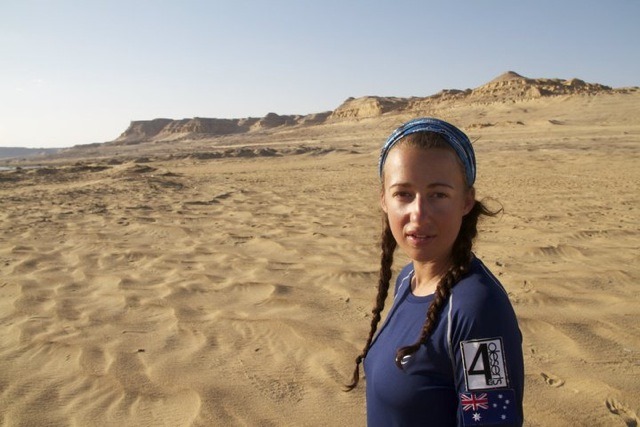
Samanha Gash ©samanthagash
Samantha Gash is the youngest lady to ever complete ‘The Four Deserts’ and was one of the featured runners in the film, ‘The Desert Runners.’ Just last week, Sam has completed an epic journey…
‘Oh boy I have just been on an adventure of a lifetime, one that took me close to 2 years to prepare for. I ran with Mimi Anderson from the UK and side-by-side we ran an ultra every day for 32-days through some pretty challenging terrain. Our run focused on supporting a South African based initiative, so it was pretty special to run through some incredibly remote & rural locations.’
‘It was great preparation for Costa Rica in the sense that a multi day format suits me. However my run along South Africa was an expedition not a race, so the pace was very different. It’s been less than a week since I’ve finished the biggest physical & mental challenge of my life so I’m looking forward to letting both recover for the month of November. Come December I will evaluate how my body is going & hopefully begin to train for the Coastal Challenge. Once I start training again I will need to put my legs through some serious speed work.’
Kimball and Frost need no introduction. Are you looking forward to racing them?
‘Geez these ladies are of a different caliber to me and I predict they will place at the top of field outright. I’ve met Anna a couple of times so I’m looking forward to catching up again & meeting Nikki too. Just to race with them both will be an absolute pleasure; they have had incredible years. Great to see Anna dominate in her first 100-miler; I had no doubt she would also excel over that distance.’
I recently watched ‘The Desert Runners’ again and I must say I love the film and the experiences that you all had, how significant was that process for you?
‘When I did the 4 deserts it was my first experience to ultra running. I fondly look back on that year (2010) as it started my passion into a sport & lifestyle I never really knew existed. What I love about multi stage racing is the relationships you develop with other competitors & volunteers over the duration. Of course there are moments when you are intensely racing but then there are other moments where you are relaxed and are enjoying banter with people you’ve just met. Some of the closest people in my life are people I’ve met in these types of races. I also like the build up you can have over the days. I tend to start a touch more conservatively to let my body adapt and then work into the longer stages.’
You have been fortunate to travel with racing. Costa Rica will be a new experience for you, are you excited?
‘The setting for the race looks spectacular and Rodrigo seems like a top-notch race director. I am also drawn to the race because it offers variety in terrain – mountains, river crossing, single track, rock and glorious beaches.’
Would you like to join these incredible ladies in Costa Rica?
Entries are open in the UK HERE
or HERE for outside the UK.
Links
Official race website HERE and Facebook HERE
You can view images from previous editions HERE
And race day reports from 2014 and 2013 HERE
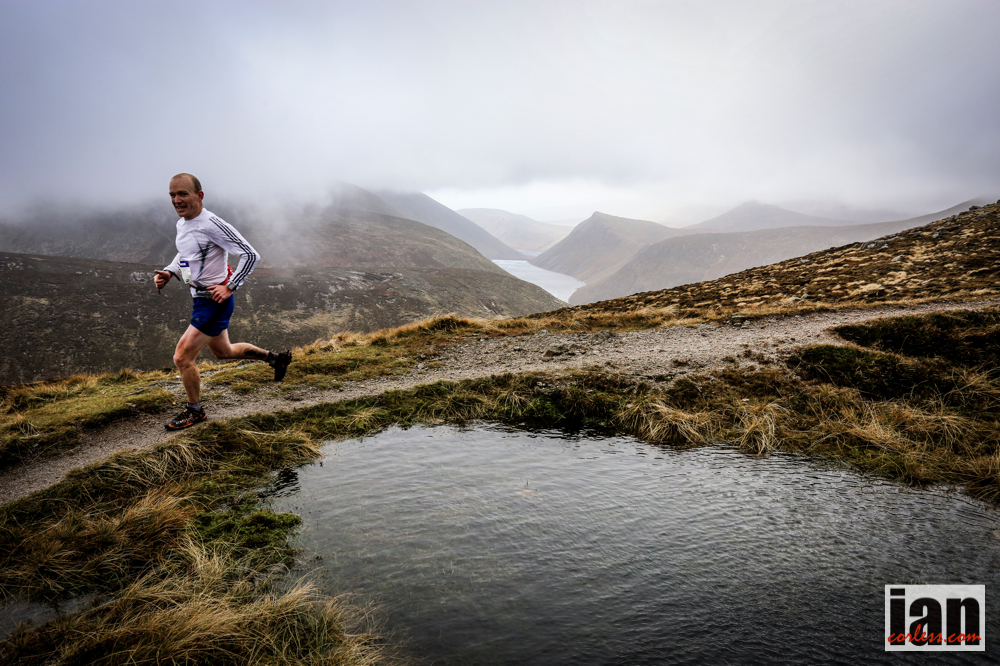
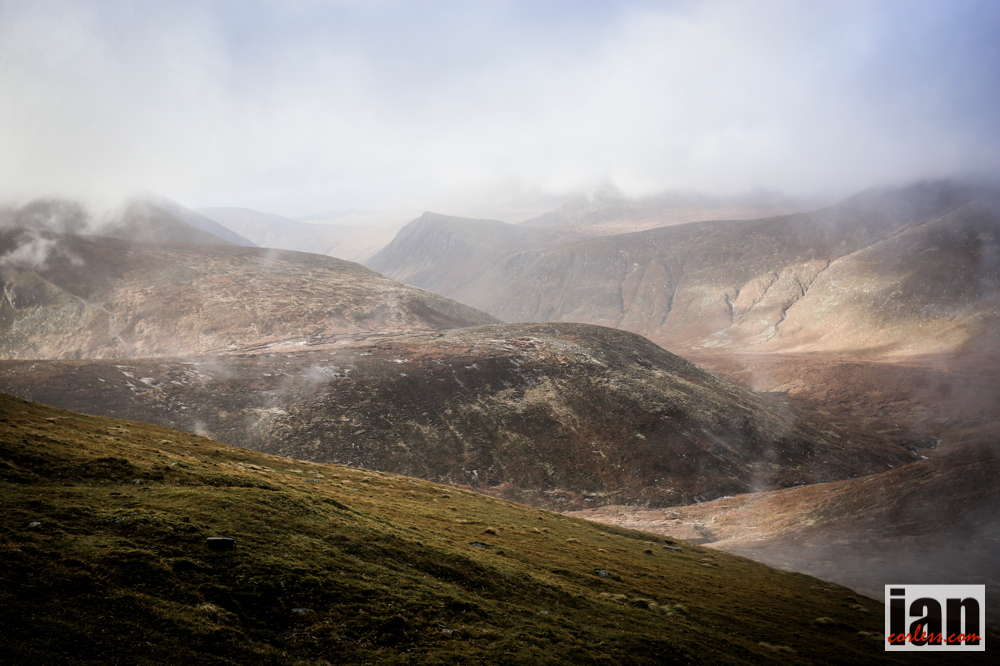
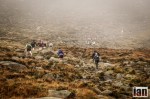
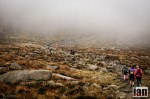
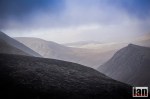
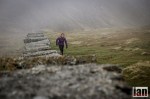
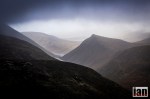
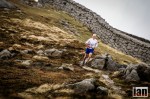
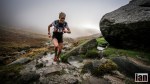
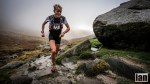
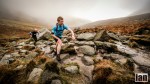
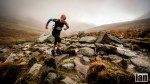
Misty skies, gale force winds, relentless climbing, technical terrain and an incredible field of runners made the inaugural Mourne Skyline MTR a day to remember.
Concluding Skyrunning UK’s first year, the Mourne Skyline MTR really was a fitting end to what has been an incredible year. The course, organisation and the field of runners made this a special and unforgettable day in the mountains.
 The addition of Skyrunner® World Series champion (2013 and 2014) Stevie Kremer did provide some icing on the Mourne cake. However, ‘Pocket Rocket’ was not isolated… Jo Meek, British Ultra Trail Champion, provided more than enough pressure on the Colorado based Skyrunner on what proved to be one of the most exciting ladies mountain races I have followed for some time. Sharon Trimble, Diane Wilson and Shileen O’Kane would bring local knowledge and fell experience to the mix making this a classic in the making.
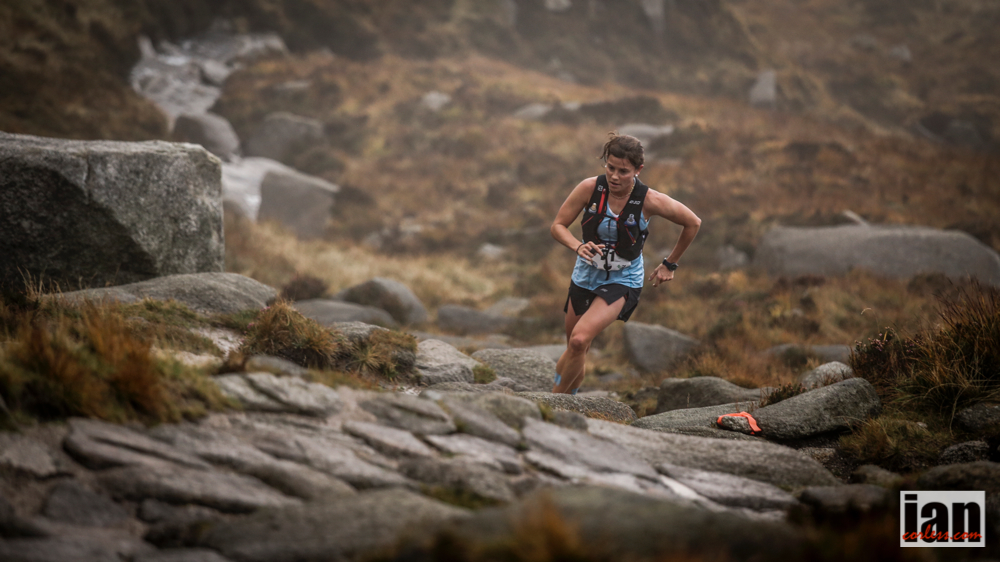
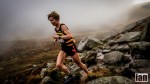
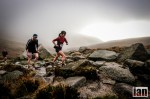
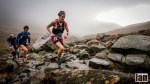
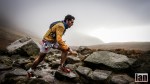
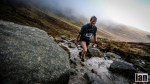
As expected, Kremer pushed hard from the off and after leaving the Donard Forest the trail became steeper and more technical playing to the Colorado runners strength. Although a gap opened up, it was nothing substantial and Meek maintained a gap keeping Kremer in sight. After passing over the saddle, runners were hit by gale force winds and low cloud as they headed out to Slieve Bearnagh, Slieve Meelmore and then an anticlockwise loop that would eventually return them to Slieve Meelmore and then run back to the finish. Conditions were brutal… thankfully the previous nights torrential rain had disappeared. Had it not, runners and marshals would have had a very testing day!
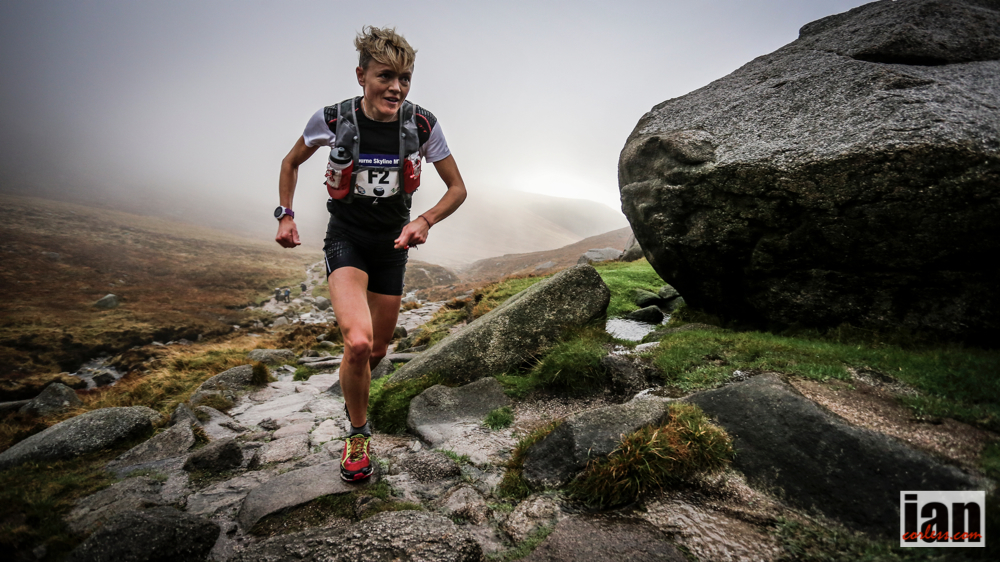
Wilson, Trimble and O’Kane in many respects were running for third such was the pace of the front two ladies. On the flat, Meek would catch Kremer and then pull away. The relentless and rollercoaster nature of the terrain and mountains would then allow Kremer to pull back and pass on the climbs. This to and froing made for an exhilarating competition of willpower, mental strength and endurance. The latter half of the course, on paper, looked made for Kremer as climb and after climb would allow her to open a gap. However, Meek was having none of it. Running with blinkered vision, Meek fought the technical terrain and chased. ‘I was swearing at the terrain and my own frustrations in managing my technical ability,’ said Meek. Kremer was having no easy ride too, ‘that is the hardest race I have ever done! Harder than Zegama Aizkorri it was just brutal. Relentless climbing, technical and with the wind it was just soooo hard!’

After CP4, Kremer opened up a gap and extended this on the steep ascent to Slieve Commedagh. Battered by the winds, Kremer put her head down and now pushed hard to the highest point of the course, Slieve Donard. Turning at the summit and descending down the lead extended and on the final technical descent to Newcastle the gap really opened up eventually providing Kremer a winning time of 4:24.2 to Meek’s 4:30.3. The time gaps don’t reflect how close this race was! Post race, Meek was very philosophical, ‘I really did push and race hard but the relentless ankle twisting and gnarly terrain beat me down and in the latter stages as Kremer pulled away I eased off a little knowing that 2nd place was secure.’ Diane Wilson placed 3rd producing a great run on home soil in a time of 4:45.4.
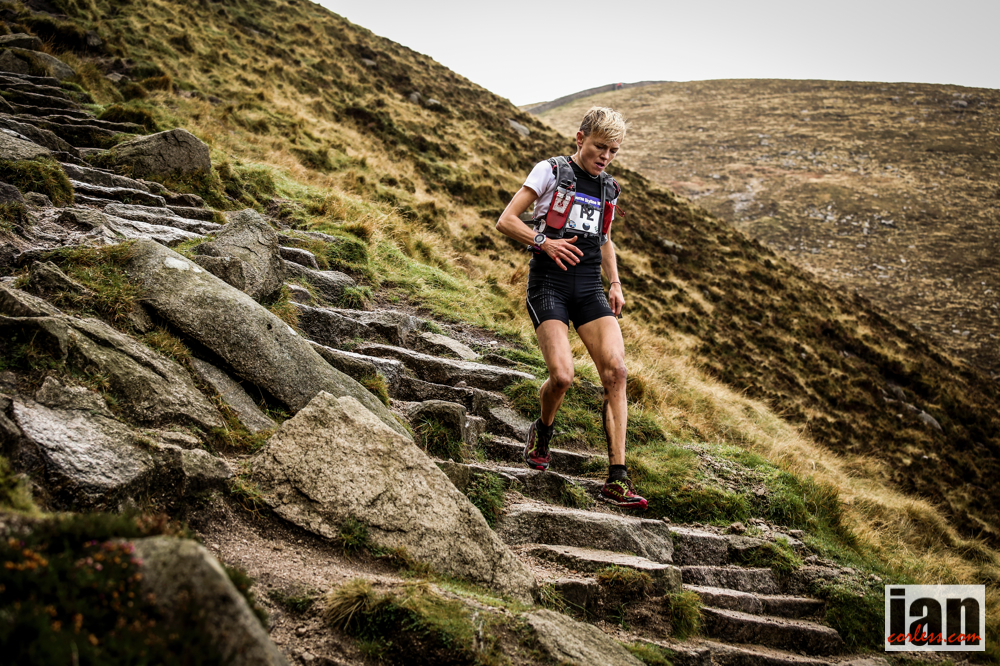 In the men’s race, local man, Allan Bogle pushed hard in the early stages closely followed by Kim Collison, Eoin Lennon and just 5 seconds back, J Marshall Thomson. It was close, and unlike the ladies race a winner looked likely to come from any of the front contenders. Particularly when one looked at the contenders looking for honours. Ally Beaven, David Steele and Paul Navesy all showed previous results that would mean they could never be ruled out of a podium place.
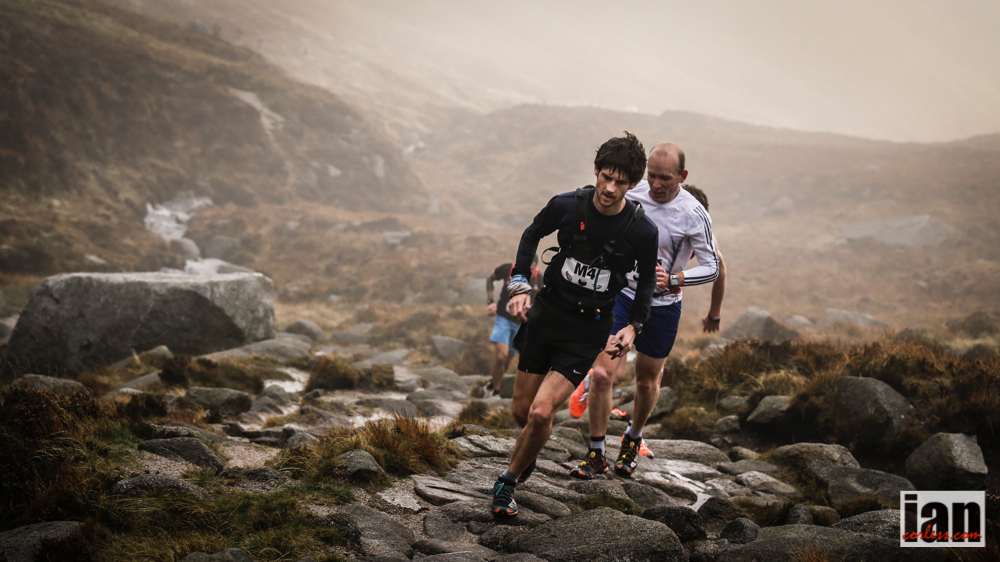
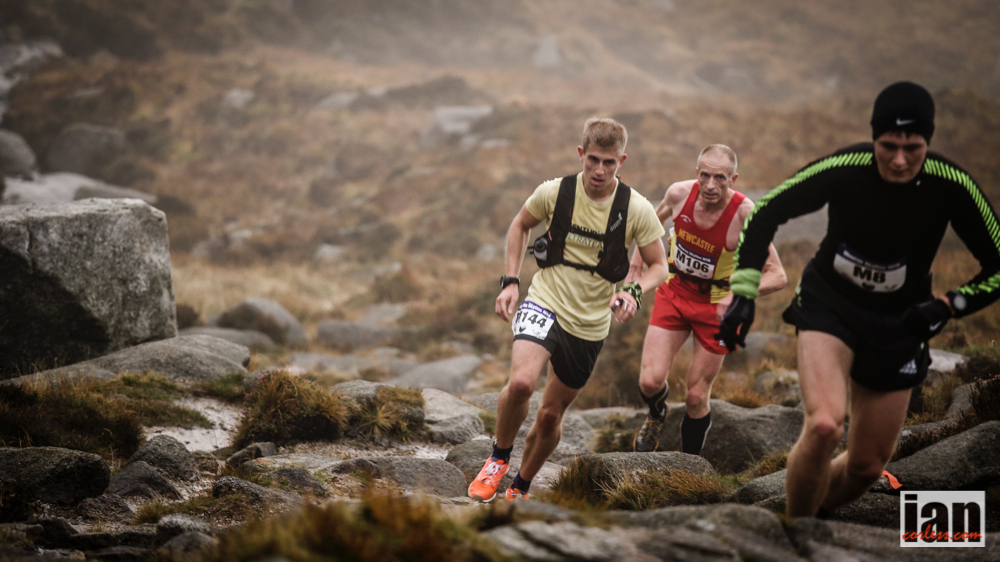 British Ultra Trail Champion, Collison showed his class at descending and moved away from the other men but Lennon was never going to relinquish the lead without a fight. These two fought a hard battle all day and Lennon showed the wounds of war as blood tricked down his leg.
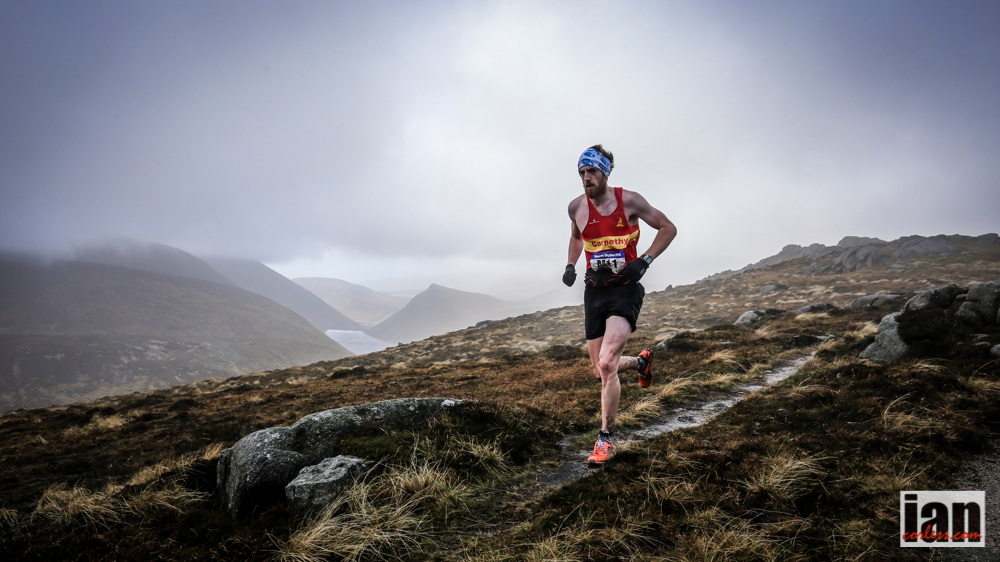
Revelation of the race, was Colorado based J Marshall Thomson (Stevie’s fiancé) who raced in the top-5 all day and despite having never raced on ‘typical’ UK terrain pulled out a top-drawer run to place 3rd. ‘That was some of the most crazy terrain I have ever run. It was relentless. The terrain was beyond technical. You had no idea where to put your feet and I can’t tell you how many times I fell over… I loved it!’ said Thomson.
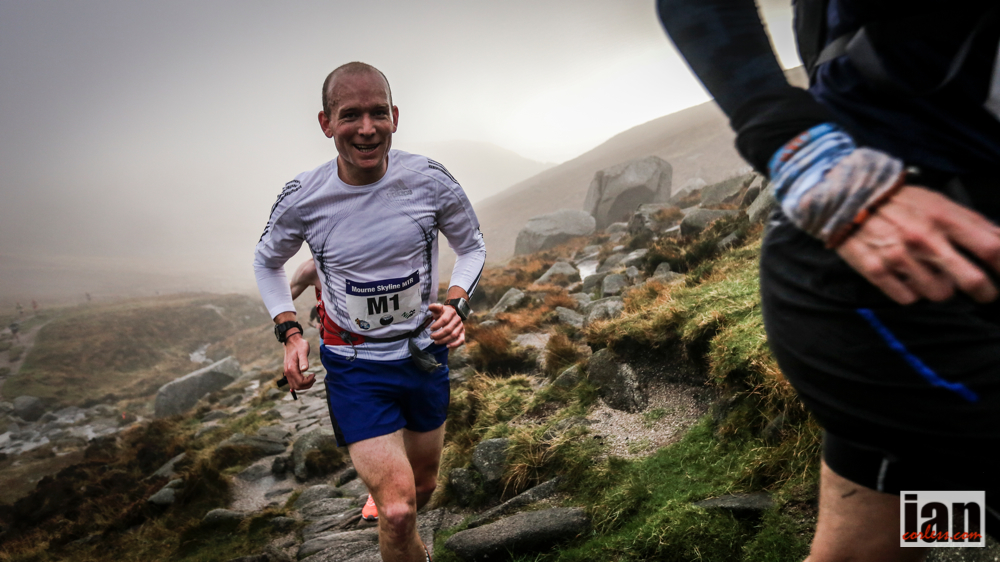 Collison won the race in 3:57.0 an incredible time in very tough conditions. Ryan Maxwell, race director for the Mourne Skyline MTR had predicted a win time of 4-hours, however, with conditions on the day, we expected this to be optimistic. For Collison and Lennon to both run sub-4 is a real testament to the competition between the two front men.
Thomson moved up into 3rd place and brought a truly international flavour to the men’s podium, his time of 4:08.3 reflecting his ability.
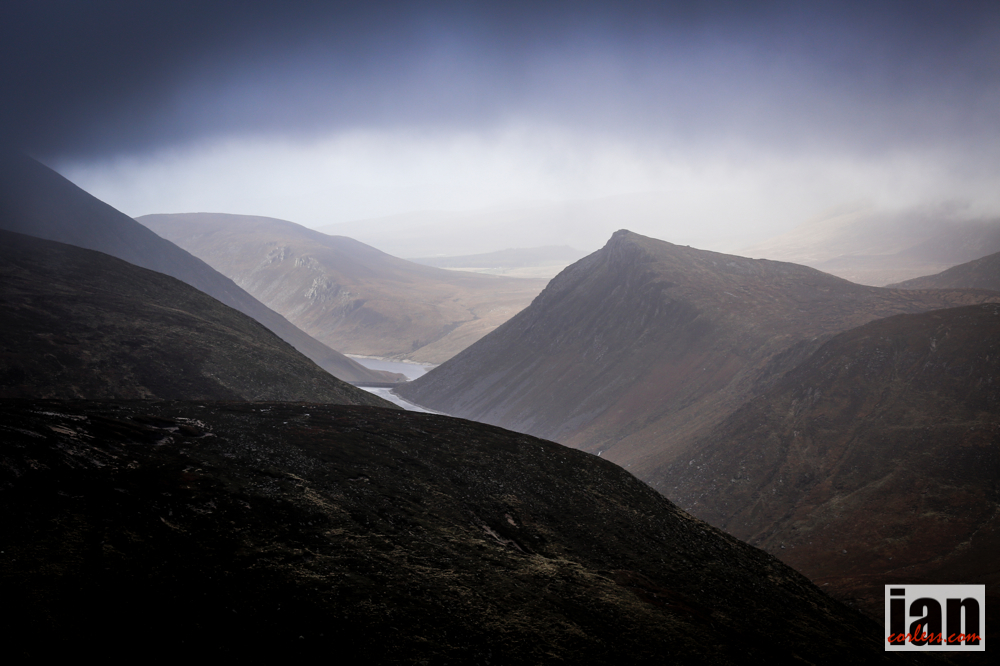 The 2014 Mourne Skyline MTR has firmly established itself as a must-do race after just one edition. The combination of location, local infrastructure, great organisation, enthusiastic locals and a brutal course will guarantee that demand will be high for the 2015 edition.
Covering 35km and a total elevation gain of 3370m, the Mourne Skyline MTR is everything a Skyrunning race should be. I for one can’t wait for 2015.
RACE IMAGES HERE
You can purchase race images HERE
RESULTS WOMEN Mourne Skyline Mountain-Trail Race
Stevie Kremer 4:24.2 (10th overall)
Jo Meek 4:30.3
Diane Wilson 4:45.4
Sharon Trimble 5:02.1
Shileen O’Kane 5:03.1
RESULTS MEN Mourne Skyline Mountain-Trail Race
Kim Collison 3:57.0
Eoin Lennon 3:59.4
J Marshall Thomson 4:08.3
Ally Beaven 4:12.0
David Steele 4:15.0
Misty skies, gale force winds, relentless climbing, technical terrain and an incredible field of runners made the inaugural Mourne Skyline MTR a day to remember.
Congratulations to Stevie Kremer and Kim Collison on two great performances.
Stevie said post race, ‘that is the hardest race I have ever done! Harder than Zegama Aizkorri it was just brutal. Relentless climbing, technical and with the wind it was just soooo hard. Kilian Jornet would love it!’
A full race report will follow.
RESULTS WOMEN Mourne Skyline Mountain-Trail Race
Stevie Kremer 4:24.2 (10th overall)
Jo Meek 4:30.3
Diane Wilson 4:45.4
Sharon Trimble 5:02.1
Shileen O’Kane 5:03.1
RESULTS MEN Mourne Skyline Mountain-Trail Race
Kim Collinson 3:57.0
Eoin Lennon 3:59.4
J Marshall Thomson 4:08.3
Ally Beaven 4:12.0
David Steele 4:15.0

Limone Extreme SKY results:
2010 Skyrunner® World Series titles:
Men
Women











Welcome to CYCLING for RUNNERS in conjunction with Scott Sports
Over the coming months and year, Ian Corless and Niandi Carmont in conjunction with SCOTT SPORTS will bring you CYCLING FOR RUNNERS.
Ian, Niandi and a series of special guests will provide you with a series of articles from a male and female perspective on how cycling can benefit you as a runner.
Providing simple and clear information, we will write about our experiences, we will tell you about equipment, provide hints and tips and most importantly, we will provide you with a series of training plans that you can incorporate week by week, month by month to make you a better runner through cycling.
We know 3-types of runner:
Of course, we joke, but many of you will agree there is some real truth in the joke. Running is not bad for you, however, taken to extremes or if rushed, the impact of repetition can damage and break us. Sometimes a couple of easy days are all we need and then we are able to resume full training. But as often happens, a couple of easy days may not be enough and our eagerness to push and get back to full training causes us to take risks and then the inevitable happens, we break!
Don’t get us wrong. If you want to be a good runner, you need to run. However, we don’t always thing big miles, double day runs or running everyday is necessary. It’s all about balance and ultimately what level we are running at and what our objectives are. As we see it, runners fall into four distinct groups:
We could break the groups down again but ultimately, for the purposes of explanation, these four groups will suffice.
Group 1 runner’s will run typically three times a week (maybe four) and they will run twice in the week and once at weekend. During the week they will train from 20-60min and at the weekend they will extend their running beyond an hour. Mileage will be 30-50 miles per week.
Group 2 are pretty dedicated and savvy accumulating three to four runs during the week and running once or twice at the weekend. Sunday will typically be a long run of 90+ min and on Tuesday and maybe Thursday they will add some speed or strength running. Mileage will be 50-75 miles per week.
Group 3 runner’s are very similar to group 2, however, they are running six days a week, they double up runs on a couple of days and at weekend they may do back-to-back longer runs. Mileage will hover around 80-miles per week.
Group 4 are pushing the envelope, they run twice a day, four to five days a week and run long, fast and high during the weekend. They typically hover around 100-miles per week.
We generalise above and of course we will be able to find extremes in all the scenarios. However, the four groups provide a picture. We think the risk of injury is high for all the groups and relatively equal. Why?
Well, group 1 for example will be less experienced (typically) and will have less run history and therefore although the time on feet is less, the percentage risk is high based on experience.
Group 4 by contrast will have loads of experience, they have been involved in sports for years and they are knowledgeable. Risk comes for them from volume and because they are often on the edge looking for small performance gains.
For us, this is where cycling for runners can come in!
Cycling provides a great low impact exercise that can be done in or outdoors, it can be very controlled and importantly it can be as easy or as hard as you like.
Yes, if you want to be a great runner, you need to run. BUT cycling can add to your running and not take away from it…
Just think, how many of you have said, ‘I am just popping out for an easy run!’
Is there such a thing as an ‘easy run?’
In terms of effort, yes! For sure, you can run slow, easy and controlled keeping your heart rate down, keeping your cadence light and just tick-over. But, you are still in contact with the ground. You are still ‘impacting’ with the surface beneath you and you are still passing your body weight through all your muscles, tendons and joints. Recovery runs are not about fitness, they are about loosening off and in many cases, we use recovery runs just to make us feel better. So, why not incorporate some cycling as active recovery?
Long runs can really impact on your body. Hours of running adapt you to the demands that will be placed on you when you race but sometimes we will run the risk of pushing too far and risking injury. Long bike rides on hilly terrain for example can be used to provide multiple hours of low impact exercise. Hours where you can push harder than running without the risk of damaging knees, muscles and ligaments. If incorporated with long runs, you have a great way to do back-to-back sessions while reducing impact injury risk.
Speed can damage our fragile bodies, particularly our muscles and tendons. However, run speed work incorporated with cycling speed work can stress the aerobic system and it will stretch us physically and mentally in new ways.
Hill reps provide great aerobic stress pushing us to our threshold limits, however, what goes up, must come down. Often, it is the running downhill that causes damage. Of course, we need to train for this in running, it’s important. However, cycling hill reps incorporated into a structured training plan can provide a great stimulus that will progress your fitness level and once again, the impact implications are low.
Finally, cycling can just be a blast. It’s a great way to head out and see a new place; arguably, we can cover more distance in less time on a bike. If nothing else, cycling may well just provide you with a well-earned break from running. Cycling will freshen your mind, it will freshen your body and I guarantee, your running will improve.
Part one of cycling for runners will be released on Wednesday October 1st and we will look at the basics to get you started:
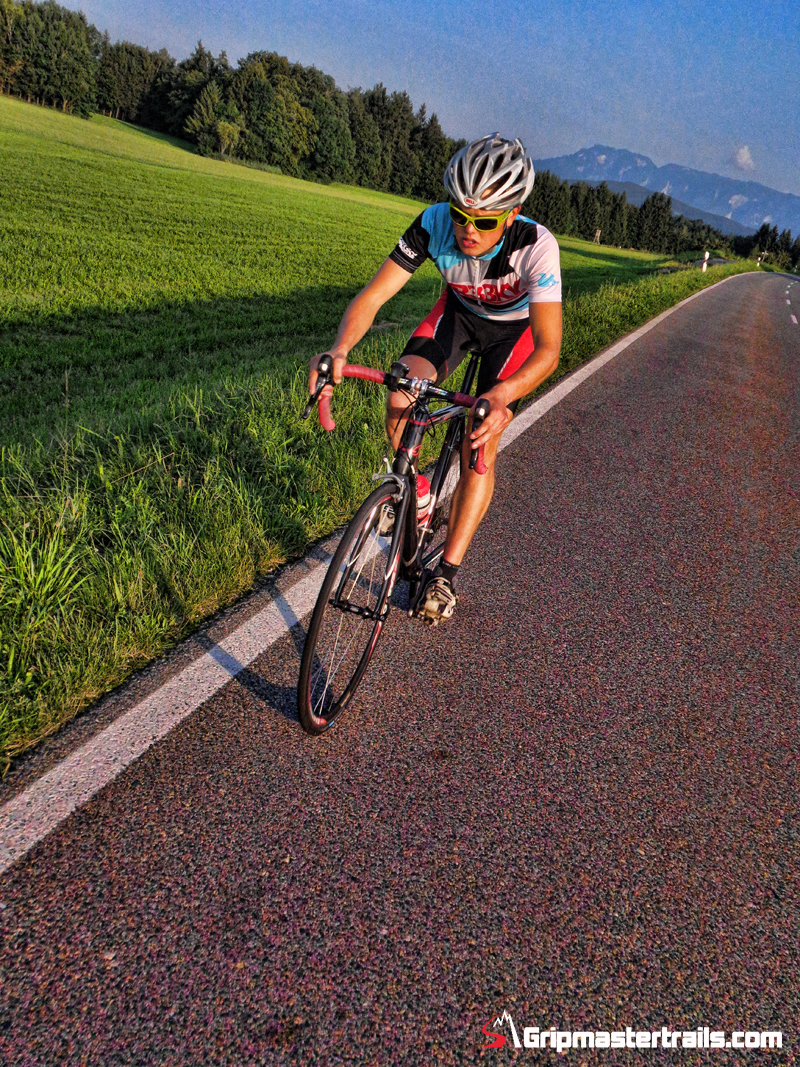
Philipp Reiter Cycling
To kick things off, Salomon International athlete, Philipp Reiter will also give us his thoughts on why cycling works for him as a trail, mountain and ultra runner.
Stay tuned.
Join us on STRAVA
Thanks to SCOTT SPORTS for the support and backing

Check out SCOTT HERE
CYCLING for RUNNERS PAGE HERE

The 2013 incarnation of the inov-8 Race Vest was a revelation. It was arguably the most simple and minimalist pack on the market that fit and functioned perfectly for the task at hand. It had a unique design, the ability to carry 2-bottles and/ or bladder and in addition it had a series of really useful and importantly, ‘usable’ pockets. No pack is perfect, however, I did say the Race Vest was close.
Many agreed. The pack sold incredibly well and it won awards.
However, it did have some restrictions. In reality, the pack was perfect for 1-day races when minimal mandatory kit was required. But if you where doing a longer event such as UTMB then the original pack had limited space. I actually was able to put all my mandatory kit in the pack but I had to be creative and yes, I had to have the smallest and lightest kit available.
 I personally don’t think this is a fault of the pack! The original Race Vest had a use and if used in the scenario for which it was intended, then it was arguably one of the best packs available.
When the product became available to purchase (early 2014), a few tweaks had been made from the original prototype, which I was using. The key change was in the upper. My pack would allow the 2-bottles to fit low (near the rib cage) or high on the shoulder straps. After testing, many people commented that the shoulder straps rubbed around the neck, so, Matt Brown, the designer, reworked the design, narrowed the straps (which did provide a better fit) but unfortunately this meant you couldn’t fit the bottles in the upper position. A real shame in my opinion! More importantly, original retail samples had a couple of question marks on durability. Many runners complained of some less than perfect construction. This was soon nipped in the bud but as we all know, this is never a good thing.
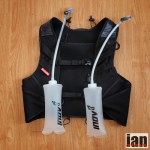
Below, the original Race Ultra Vest with bottles:

Jump to the inov-8 athlete retreat in the English Lakes, spring 2014. A weekend of running: looking at new shoes, apparel and accessories for the coming year (2015). Needless to say, as a running aficionado, I love this. I love to see how a brand takes past and current ideas, develops them and comes up with something new. The new apparel looked incredible, new shoes were promising; particularly the new Ultra 290 shoe and then we saw the packs… the new Race Vest.
Similarities could be drawn to the original 2013/2014 model but boy oh boy. This was a complete overhaul taking all the features from the original, adding tweaks and then coming up with something new. inov-8, Matt Brown and the rest of the team had pimped their packs!
No longer was one pack available but three: 5ltr, 10ltr in this style and a larger 24ltr for mountain marathon or multi-day events. Using the ‘vest’ fitting system, these new packs in one word are awesome.
I said in my original Race Vest review back in 2013 that ‘This new product from UK company; inov-8 may very well be the next key moment in pack design stripping away complication and providing a pack that would almost make a perfect accessory for Batman.’
It was a bold statement and one that I still hold. However, that unique innovation has moved up a step and lessons have been learnt.

So, what is new?
I have 2-packs for testing, the 5ltr and 10ltr. They are exactly the same, obviously the only difference being capacity. For the purpose of this review, I have tested and photographed the 10ltr as I feel this will be the most popular option. However, I will say that the 5ltr does have far more capacity than the original Race Vest despite them being arguably, on paper, the same size!
My test product is a prototype and I am aware of some tweaks that will be made based on my review and the feedback I provide. So please refer to this review and I will update with any key changes and revisions that may happen over the coming weeks/ months.
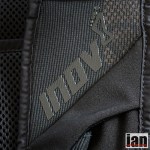
The vest fits like a glove. I never expected anything else. You put it on and immediately it is like adding another piece of well fitting clothing. Unlike the original Race Vest, this pack will not have adjustment straps on the side. Therefore, the pack will come in a variety of sizes so that you can get the product that fits you! I believe this will be S/M and M/L and fit has been tweaked under the arm to a better fit under the arm from my prototype.
Why no side straps?
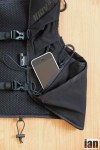
Well, two large ‘dump pockets’ have been added to the pack. It made sense. This was an area not utilised in the original design and now you have 2-easy access pockets for food, clothing or any other item you may need.
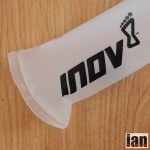
For me though, these dump pockets make the ideal location for storing the new soft flasks. This wasn’t the original idea of designer, Matt Brown. However, after 1-week of testing, I contacted Matt and told him of the way I was using the pack. It made perfect sense to me. It had the bottles in an easy access and comfortable place, the new ‘extended straws’ meant that I could feed as and when I wanted without removing them and if I needed to refill, I could just pull them out, take off the top, fill and replace. In addition, you could still use the dump pockets for additional storage either under or over the soft flasks. I typically put my gloves, Buff or other essential items in this area. Being a photographer, I have often replaced one soft flask with a camera. Yes, they are that adaptable.

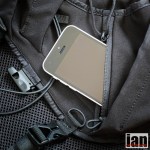
On the front of the pack, you have zip pocket on either side. These pockets are for the soft flasks, however on my prototype they were a little too small and tight. For me, they are perfect for valuable items such as phone/ money/ credit card or similar. Matt Brown has confirmed for me that the zipper pockets have been re-designed and made larger accommodating the flasks with ease and comfort, ‘I used the updated sample at CCC and kept the bottles in the zipper pockets, a lot easier to remove and get back in again,’ said Matt. So, the choice will be yours? I do recommend you try options and see what works for you.
Several other stretch pockets are available that work well for keys, food and or gels.
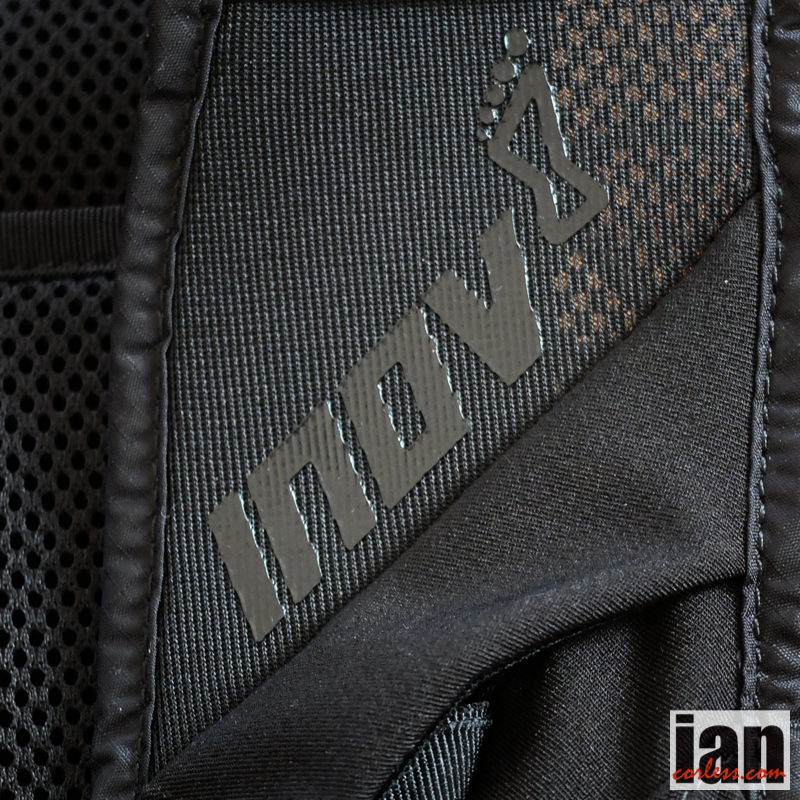
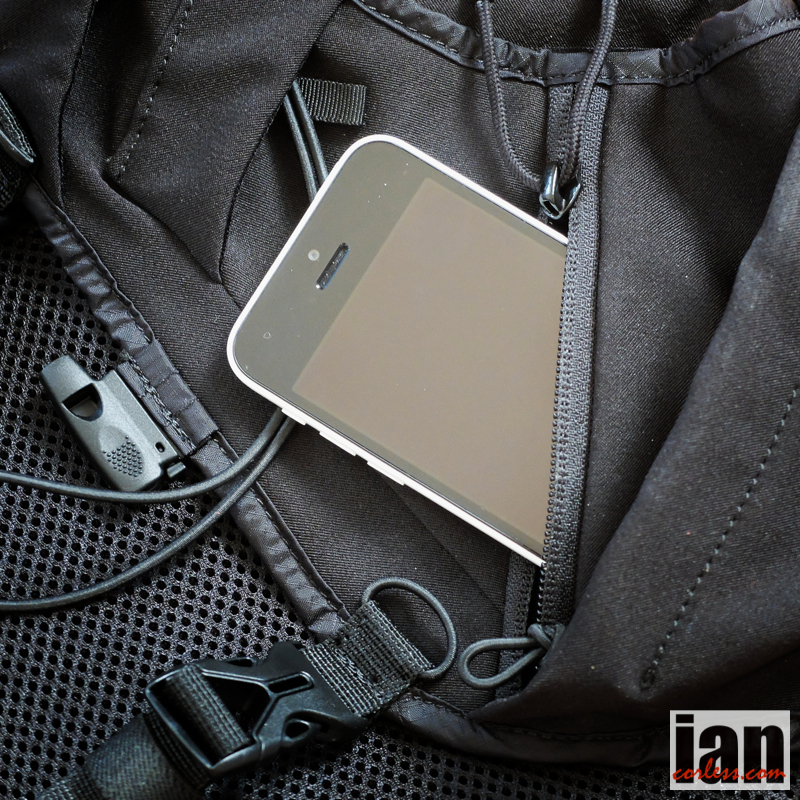
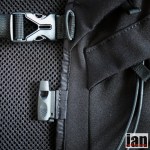
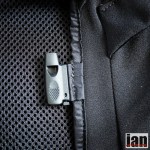
The front fastening system has also changed from the original. This pack no longer uses the quick release system that some found fiddly on the previous vest (I didn’t). Now it has 2-fixed straps, upper and lower and both use the classic male/ female quick release fastening system.
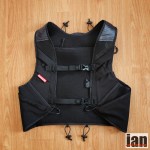
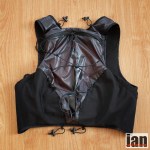
The rear of the pack has 2-zippers: one on the outside of the pack that allows access to an uncluttered open pocket.
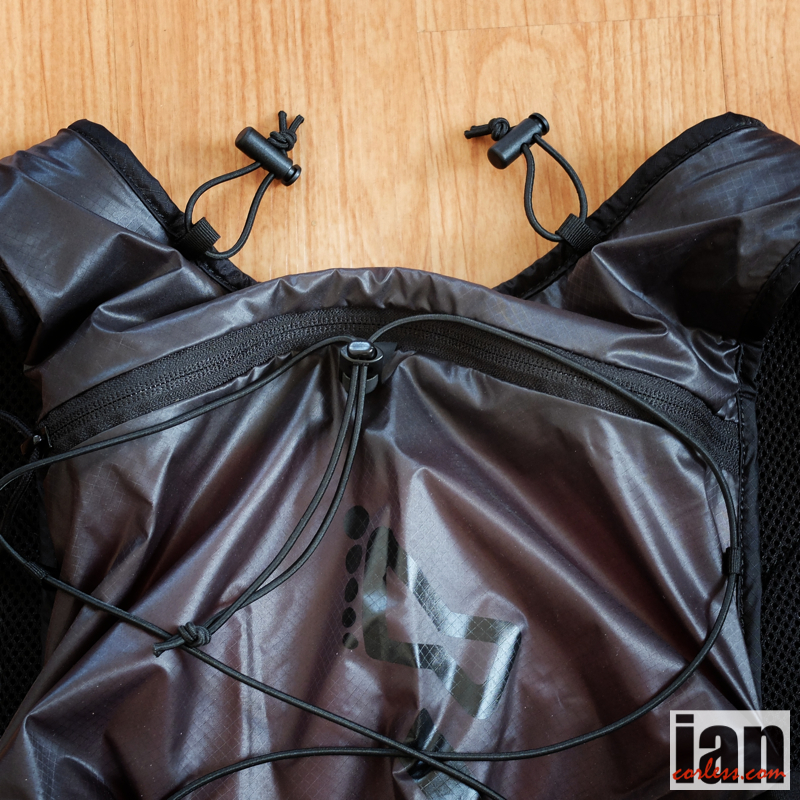
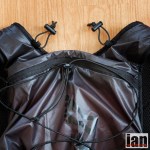
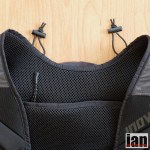
On the reverse, the part of the pack that would sit against your back, has a zipper that would allow direct access to a bladder should you wish to use one.
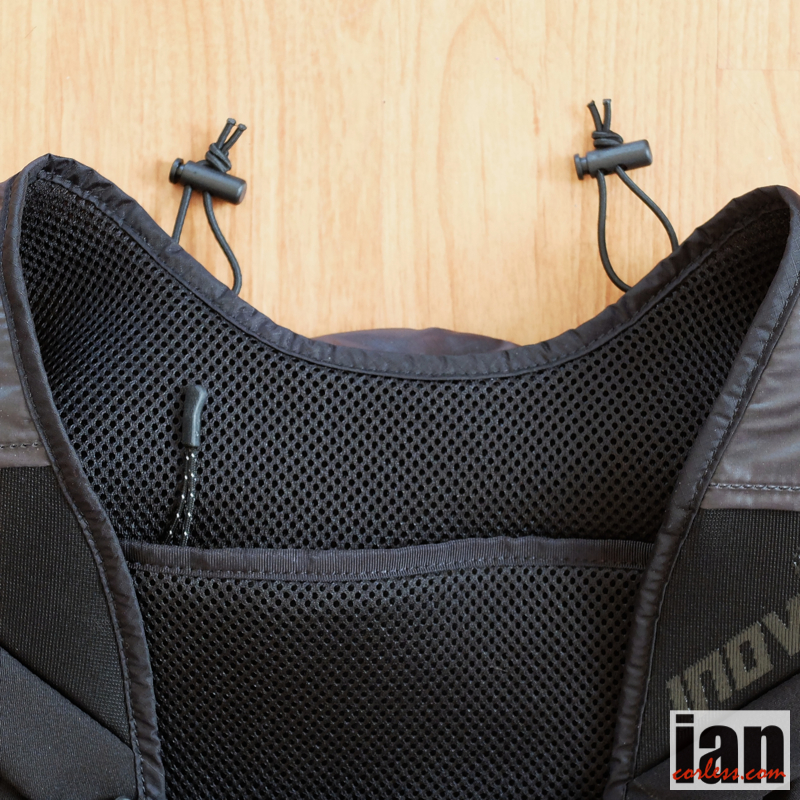
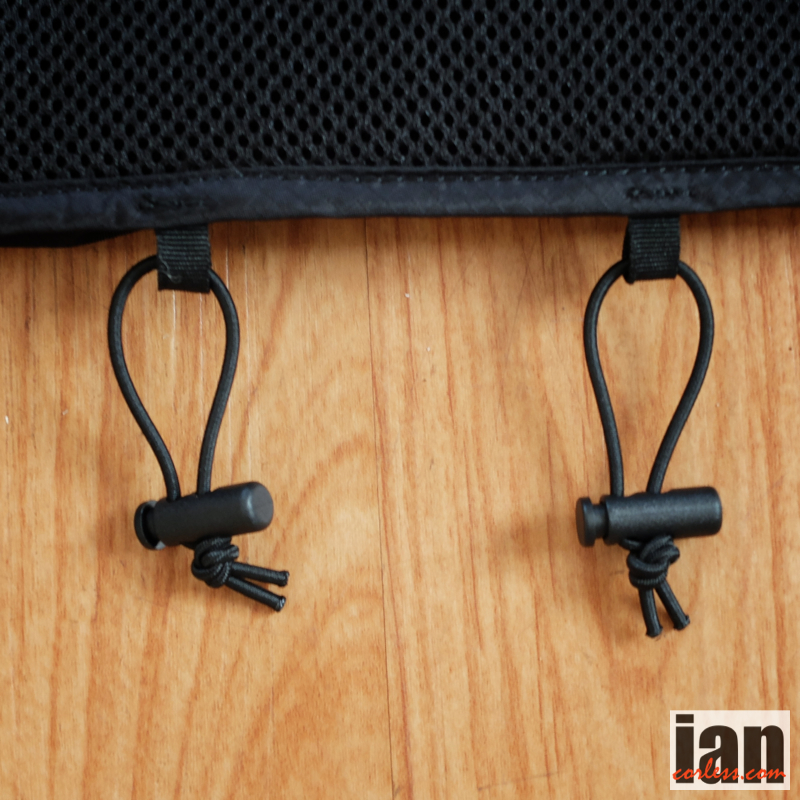
Of course, this is perfect, especially in long events when you are carrying mandatory kit. You don’t want to be pulling kit out to get to a bladder. In addition, elastic cords have been added to the top and bottom to attach poles.
The large open pocket (10ltr version) held with ease:
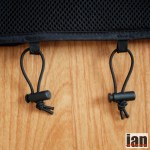
And I still had space to squeeze other items in. No question, it’s perfect for a UTMB style event or similar. Should you carry fewer items, the adjustable bungee drawstring on the pack will allow you to compress unwanted space.
The pack has an optional (purchase extra) 2ltr bladder that sits within a temperature control sleeve and this easily slides into the rear zipper pocket. The feed pipe is insulated and can be used on the left or right hand side of the vest. Ideal should you require the option to carry 3ltrs of liquid: 2ltrs in the rear and 1ltr at the front two soft flasks.
IN USE
It may come as no surprise that I find the pack perfect. I have yet to find an issue with any aspect of the design.
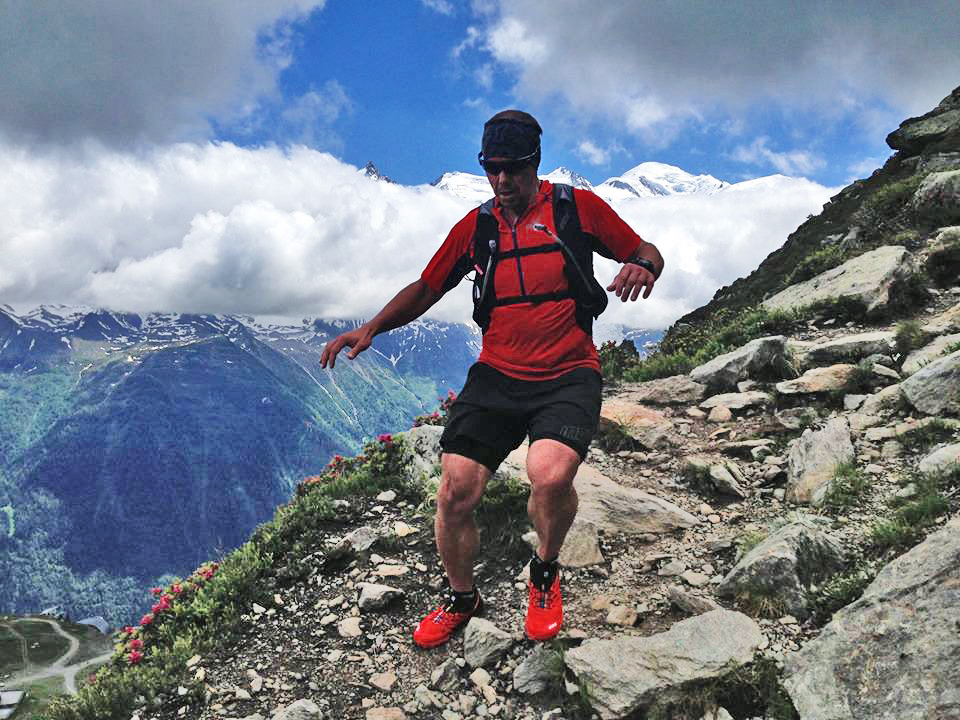
The soft flasks with extended straws are a revelation and make ‘on the go’ drinking a breeze. It also makes refilling very easy.
The vest fits like a glove, does not bounce and is extremely comfortable even when filled to capacity.
Fabrics are light and breathable as the original. Of course with any vest, you are going to get a hot spot on your back. You can’t avoid that with this style of product. Having said that, I have yet to find a pack that doesn’t do this…
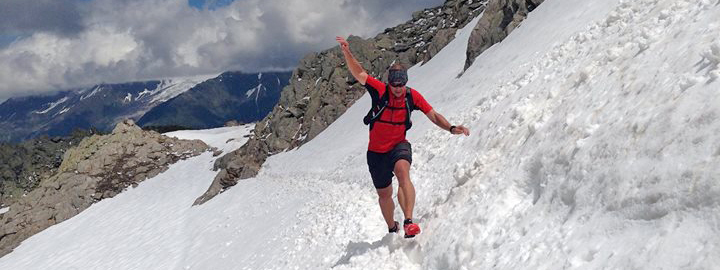 The rear large zippered pocket requires some thinking when packing, as it is just an open space. You push things in and keep pushing. I recommend if using a bladder, add this first and then pack. Place the items you are likely to need less at the bottom and then work your way up leaving the most essential items at the top. It’s not rocket science but good to think ahead. Once the bladder is in place, you don’t need to remove it as it has a separate zipper access thus allowing refilling as and when required. It works really well. As mentioned previously, you can fit all mandatory kit (UTMB requirement) in the spacious pocket.
You can attach poles to the rear. I tried but didn’t find this to be a good option for me. More often than not, the new folding poles such as Black Diamond or Leki are shorter in length. This makes fastening more awkward and problematic. To resolve this, I attached two adjustable bungees to the shoulder straps and I store my poles folded across my chest; works for me and makes storing and access to the poles easier. It’s a personal thing.
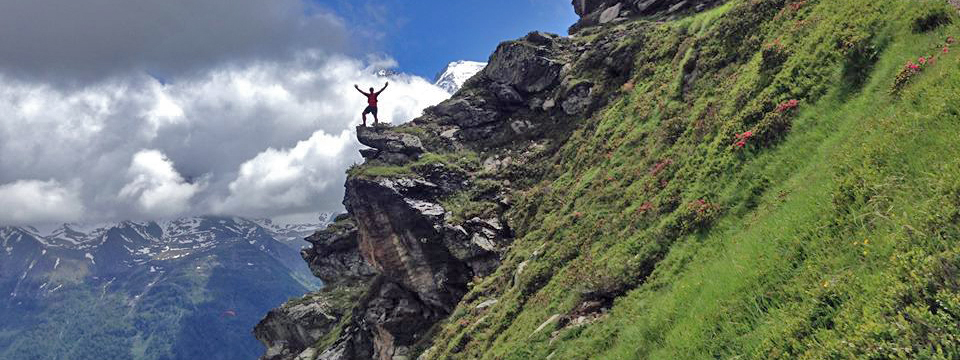
The multiple front packets provide immediate access to anything I needed whilst running. I had a phone, camera, bars, gels, keys and money all at hand. Perfect. The front zipper pockets add extra security if not used for the soft flasks.
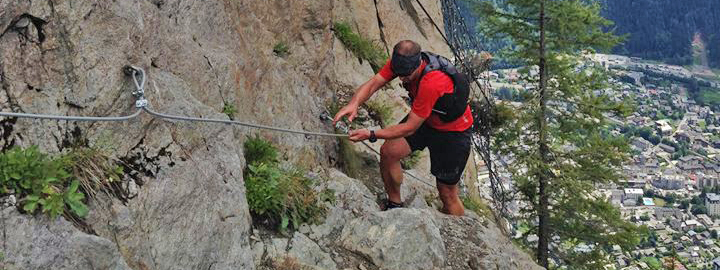
I used the two large dump pockets for my soft flasks and then placed gloves, buff and some snack items on top. This works great but you need to think when coming into an aid station… if you just pull out the soft flask, what is on top will hit the deck!
action photos ©marcuswarner
Conclusion
I raved about the original Race Vest (2013/14 model) and hailed it as arguably the ‘perfect’ pack. In refection, I was wrong. It was perfect to a point. The new range of packs (in 3-sizes) have addressed the issue of storage (or lack of) and with the addition of soft flasks with straws, these packs offer everyone the opportunity not only to get the right size to fit them but also the correct capacity for your needs. For me, if you were only going to purchase one pack, the 10ltr would be the most logical option.
Although we haven’t done a full test from a female perspective, initial feedback has been good. As I am sure you can imagine, this very much depends on the lady and the chest size.
We will update this review with a female viewpoint ASAP.
Finally, inov-8 has come up with another winner. I’d recommend this pack to anyone and everyone. The 10ltr does have some strong competition from many other key brands so ultimately it will all come down to personal taste. But if you are ordering online without seeing the product have confidence, you won’t be disappointed.
Check out inov-8 HERE
Availability? This pack is a 2015 model and as such will retail in early 2015. Pre orders and enquiries should be sent to inov-8
Price? 5L £110 / 10L £120 inc bottles
Note: I was asked on Facebook about a lack of negative comments. It’s simple really, I don’t have any. My comments re the zipper pockets being too small and tight was my big gripe which ironically made me look at storing the soft flasks in the dump pockets. Matt Brown, the designer has reworked these pockets and as he says, he personally used the pack for CCC with no issues. I do hope to get a couple of images from Matt to show this tweak to the design.
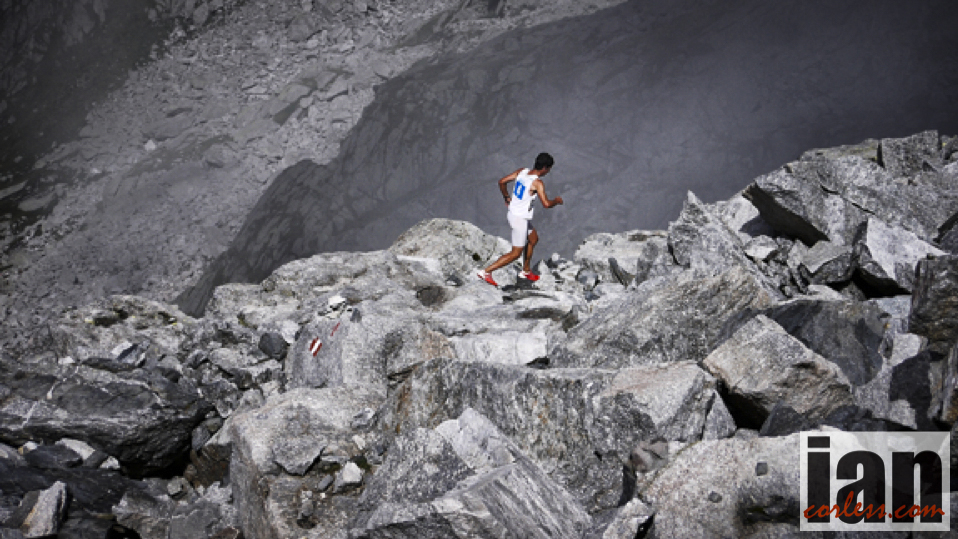
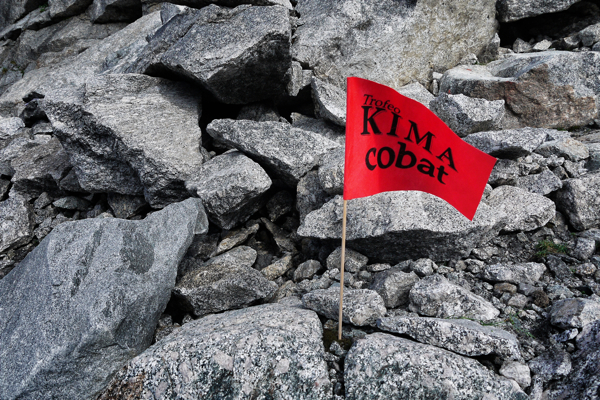
Don your gloves, find your helmet and prepare for the jewel in the Skyrunning crown. Trofeo Kima is here! This is THE all-out, kick ass event that Skyrunning put on and as such it is often the most anticipated. You can’t just do Kima. As Kilian Jornet said in a recent interview, ‘It’s not about being strong or fast it’s about how you climb! You need confidence and you need self-awareness. It’s another level. It’s not about kilometres it’s about mountain experience.’
Famous throughout the mountain running world, Kima is run over seven mountain passes with 8400m of ascent/decent over the 52km course. It is an all out white-knuckle ride and not for the feint hearted. Biennial, the race has a capped field of just 250 and embraces the true spirit of Skyrunning created way back in ‘89’ when Giacometti (ISF President) first ascended and descended Monte Rosa. The fourth race in the 2014 Ultra Skyrunner® World Series, KIMA will provide, once again, a showcase for earth meeting sky – Skyrunning!
MEN
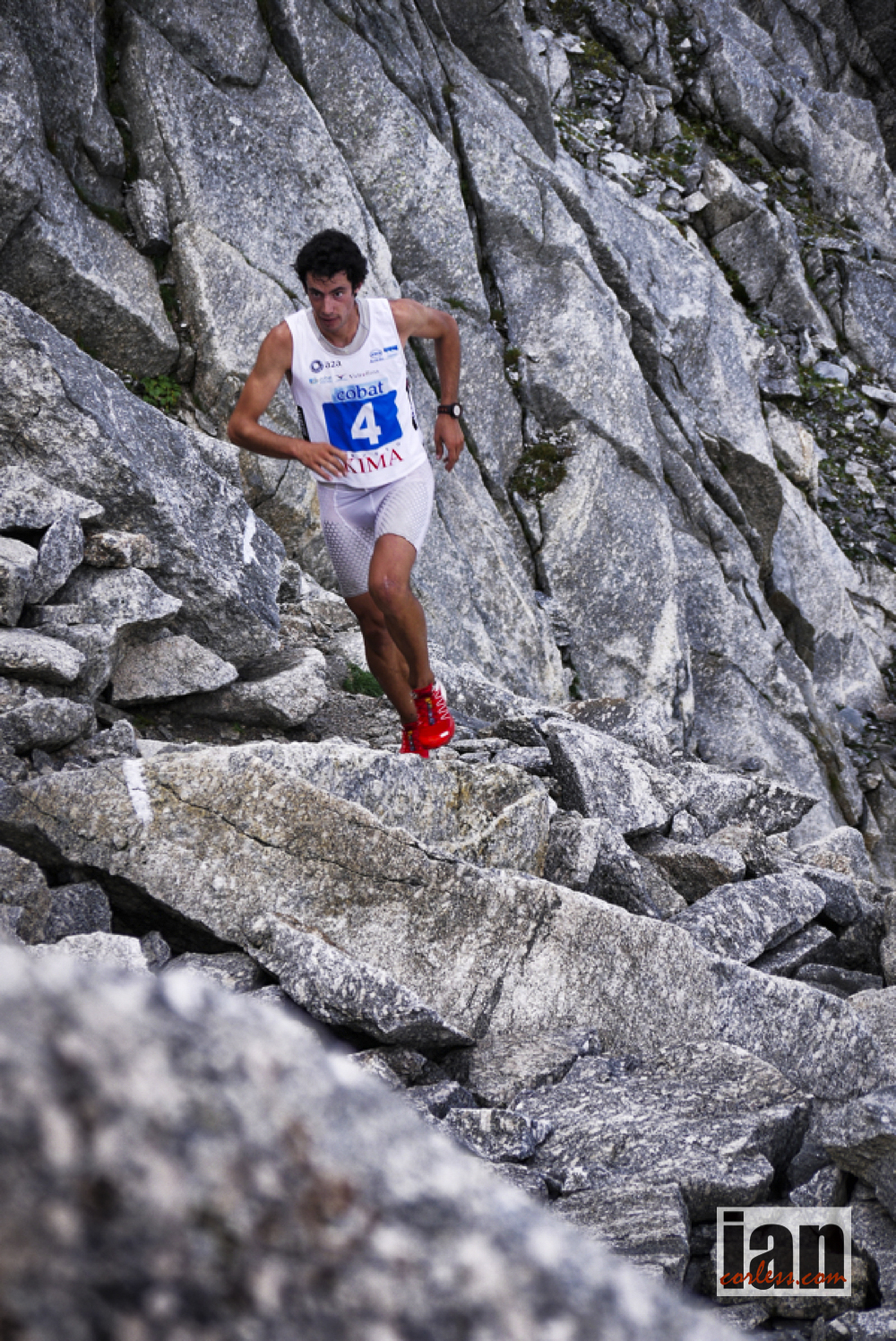
It may come as no surprise that man on fire and 2012 winner, Kilian Jornet is the one to beat on this course. In reality, Kima is one of the most perfect courses for the Catalan. His advantage over the rest of the competition is marked and other than a disaster on race day, I think we will see Kilian top the podium and should conditions be favourable, a course record may well be on the cards! To put the severity of this course into perspective, it took Kilian 6:28:52 in 2012 to cover the 52km course. (The record stands at 6:19:03 also set by Kilian.)

Tom Owens ‘running’ at Trofeo Kima copyright Ian Corless
Brit, Tom Owens had an incredible 2012 and pushed Kilian at many races. With over a year out of the sport, Tom is back in 2014 and although he has had a few blips, he is showing some of the fire and all out natural ability that saw him place 2nd at Kima at the last edition in a time of 6:39:28. Feeling tired at Sierre-Zinal Tom missed Matterhorn Ultraks and I can’t help but think that will pay dividends here. The last time he toed the line at Kima, he had this to say, ‘It’s the definition of Skyrunning. Racing here is like being a kid, jumping nimbly from rock to rock and feeling full of energy.’
Paolo Gotti placed 8th in 2012 and was the winner in 2008 and 4th in 2010. It’s difficult to predict how Gotti will perform but he knows this course like the back of his hand and that is a huge advantage.
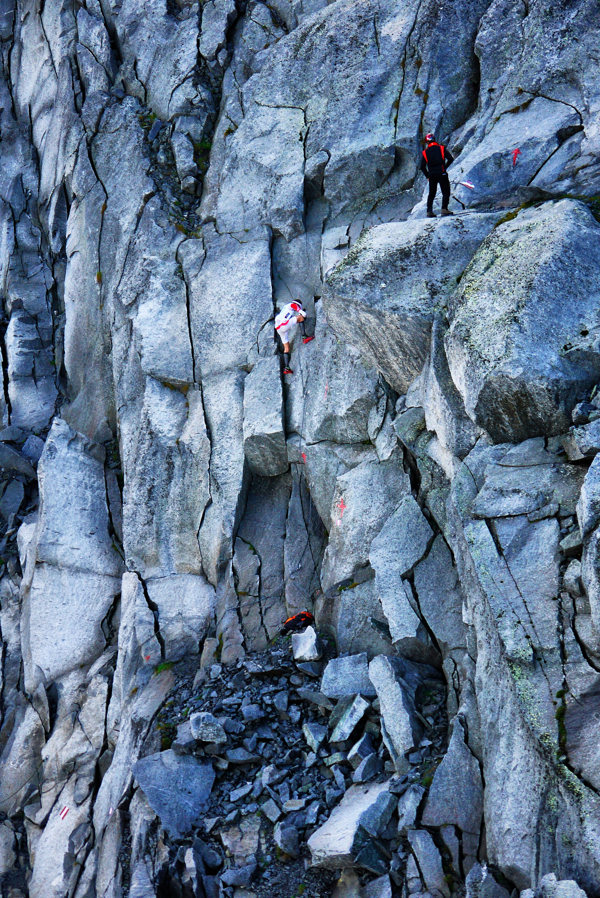
Both Philipp Reiter and Michel Lanne placed 5th and 6th at the last edition of Kima. Philipp has been a little quiet recently with injury and although he is back running, he told me he is not in the best shape for Kima, so, he will have to miss it. Needless to say he is very disappointed. By contrast, Michel was runner up to Kilian at the Skyrunning World Championships and last weekend raced Matterhorn Ultraks and was having a great race until going off course. He dropped, saved his legs and we may well see him looking for pay back in Kima.
Nicola Golinelli effectively retired drop top level racing last year. However, he is still a highly competitive athlete and on this course, if in great shape, we can expect a top-5 performance. When you are racing fun with the pressure off a whole new experience can be enjoyed. One to watch!
Fulvio Dapit knows how to run in the mountains and has speed, experience and technical ability in abundance. Without doubt a contender for the podium should all things align. His recent victory at Dolomiti Extreme Trail can only be a good sign of things to come.

Manuel Merillos is the new kid on the block and a hot talent. His recent 4th place at Dolomites Skyrace shows that he can trade blows with the best on a pure Skyrunning course. A definite contender for the podium!
Es Tressider is an interesting inclusion in to the line-up for this race and a runner that many of the other competitors will not be familiar with. In 2007 he set a record for the Cullin Ridge on the Isle of Skye in 3:17:28. The ridge is Britain’s premier mountain traverse and is usually attempted by 2-people in one or two days. Crossing multiple peaks over 3000ft it’s the perfect training ground for Kima.
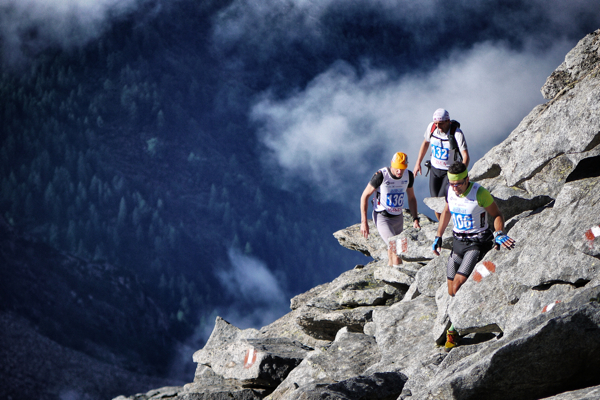
Jordi Bes Ginesta on his day can trade blows with the best in the world. Hailing from a ski mountaineering background he as all the skill levels required for this tough and challenging course, Top-10 potential?
Greg Vollet team manager for Salomon can never be ruled out of the mix in a race like this. He won’t win it but top-10 is always a distinct possibility. The true global appeal of Skyrunning and Kima is reflected by the inclusion of Matt Cooper and Clarke McClymont. Matt had a great run at Ronda dels Cims in 2013 and Clarke has been dreaming of Kima every since he watched the race 2-years ago.
Ones to watch:
Ricky Lighfoot is listed on the start sheet but may not be racing (tbc)
LADIES
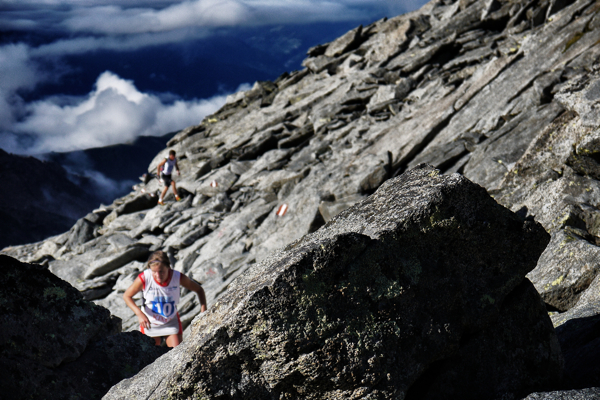
Emelie Forsberg placed 2nd in 2012 and at the time it was her longest ever run. Leading the race to halfway, Emelie finally relinquished to Nuria Picas who went on to set a course record 7:36:21. Two years on and Emelie is a very different runner. Like Kilian, Kima will suit Emelie’s skill set and she is the outright favourite.
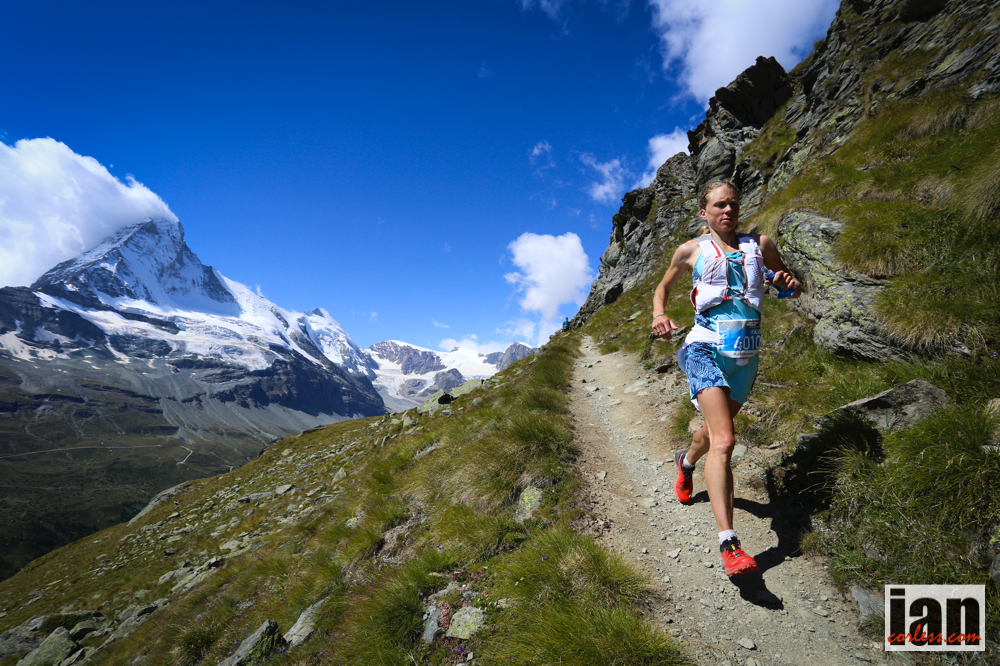
Kasie Enman is currently on a European tour of Skyrunning races and Kima brings a conclusion to the trip. The technical aspects of the course, will not allow Kasie to use her outright speed. However, she is always in the mix and a podium place is a distinct possibility.
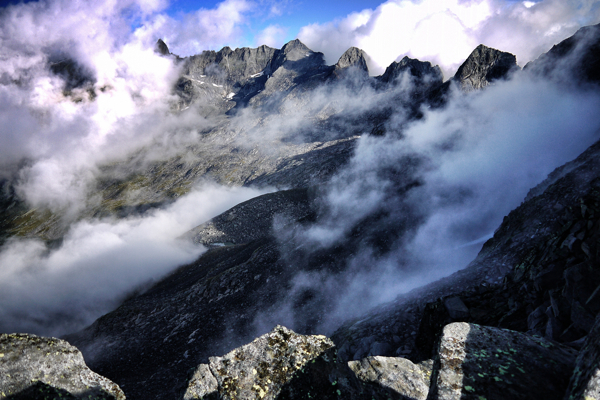
Nuria Dominguez is a regular and consistent performer in the Skyrunner® World Series. In 2013 she had a string of top results: 3rd Dolomites Skyrace, 4th Trans D’Havet, 3rd at Matterhorn Ultraks and was ranked 4th in The Skyrunning World Championships. Nuria may well lack the speed of Emelie and Kasie but can more than compensate with experience of the montains.
Alessandra Carlini has had a sold 2014 and her recent 2nd at Ice Trail Tarentaise elevates the Italian to ‘one-to-watch’ at Kima. Living on the Italian coast she has very little opportunity to terrain on a mountainous course, however, this hasn’t proven to be too much of a disadvantage so far.
Emanuela Brizio past winner and course record holder and placed 3rd behind Picas and Forsberg in 2012. I doubt that Emanuela can win the race this year but 2nd place is up for grapes and if she has a great day, who knows. Forsberg only beat Brizio by 15-seconds last time!
Skyrunning legend Corinne Favre will also toe the line. Apparently she won’t be ‘racing’ but we must definitely tip a hat to the first lady of Skyrunning. She was the first world champion in 1998 and although the sport is very different today, Corinne can still hold her own. Don’t rule her out!
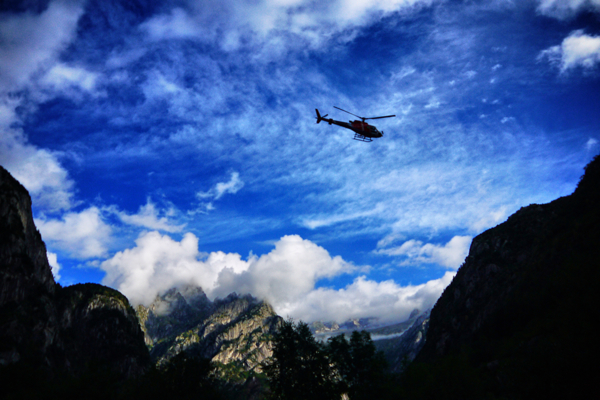
Ladies to watch:
Needless to say, Kima will have a plethora of Italian talent toeing the line who will without doubt have an impact on the top-10 results for the men and in particular the ladies.
Past racers who have excelled:
Franco Sancassani 3rd in 2012
Rodrigues Bodas 7th in 2012
Links:
Skyrunning HERE
 IAN CORLESS