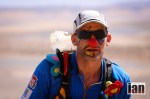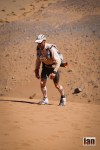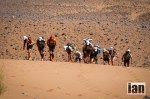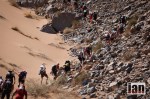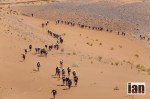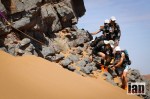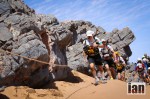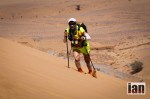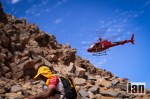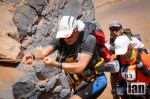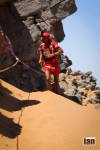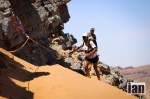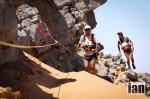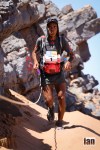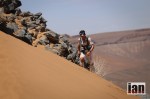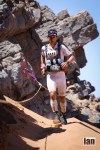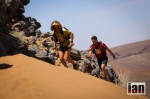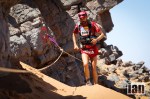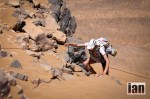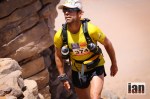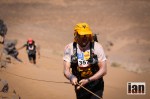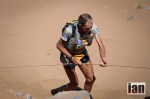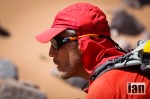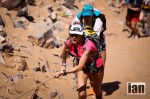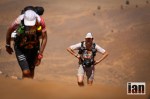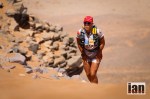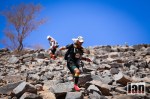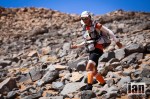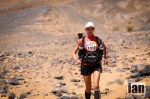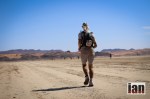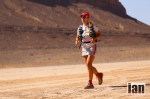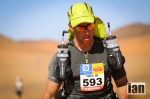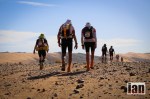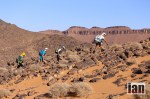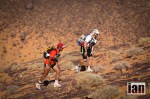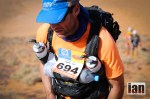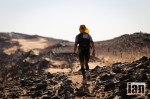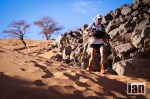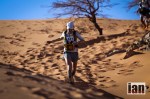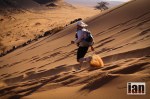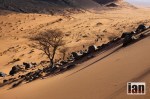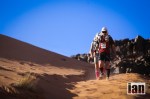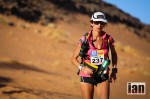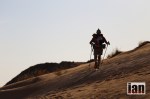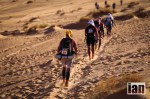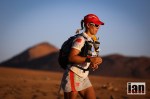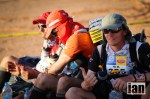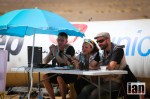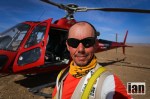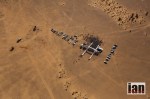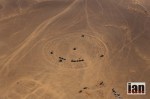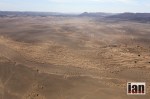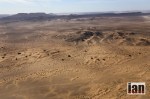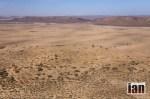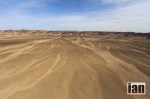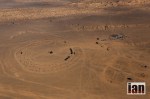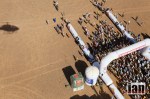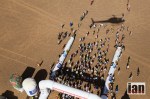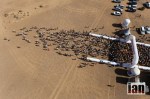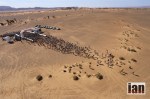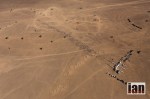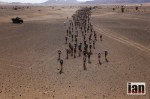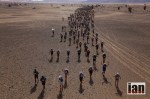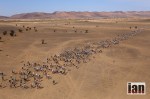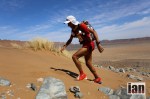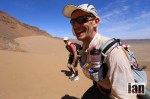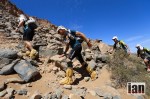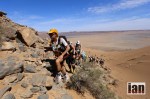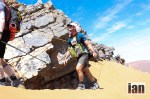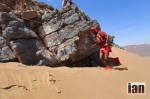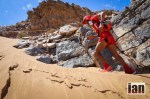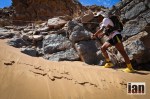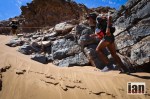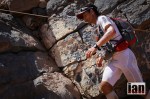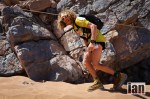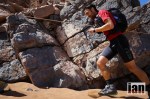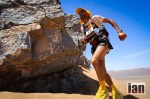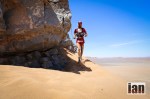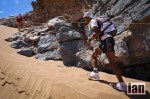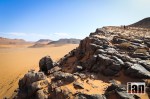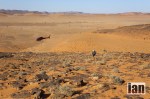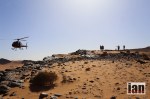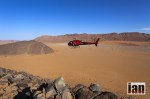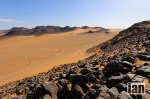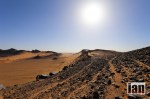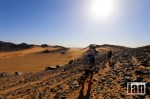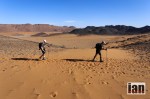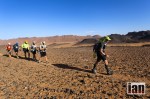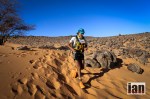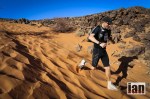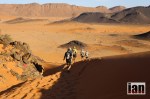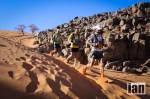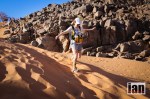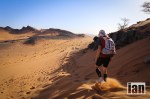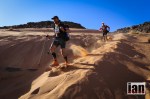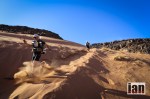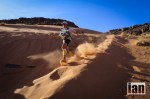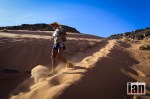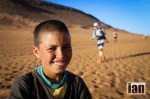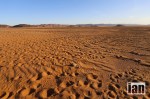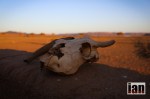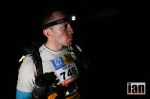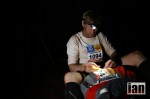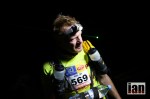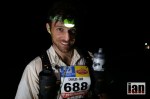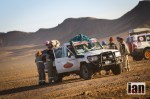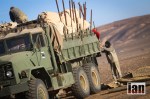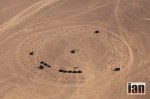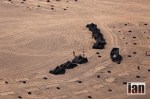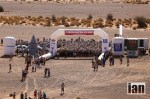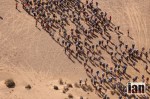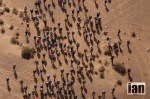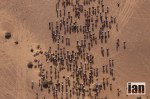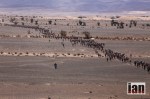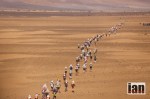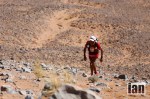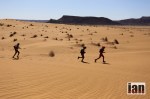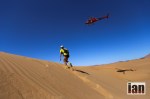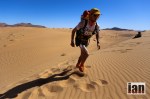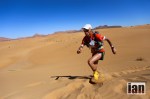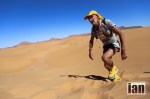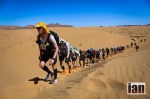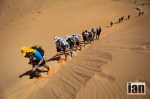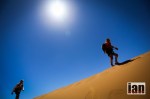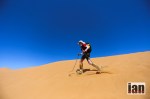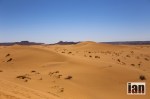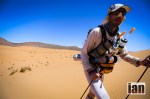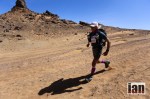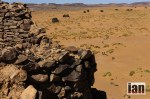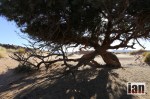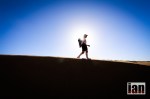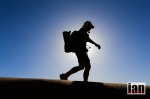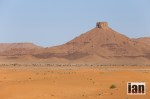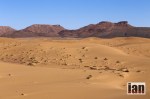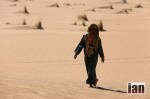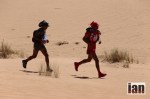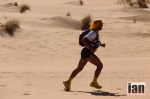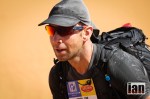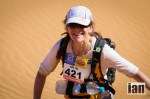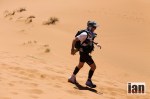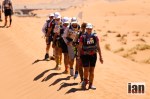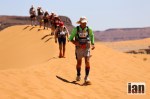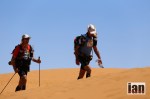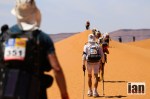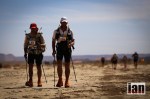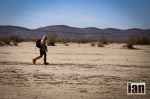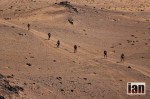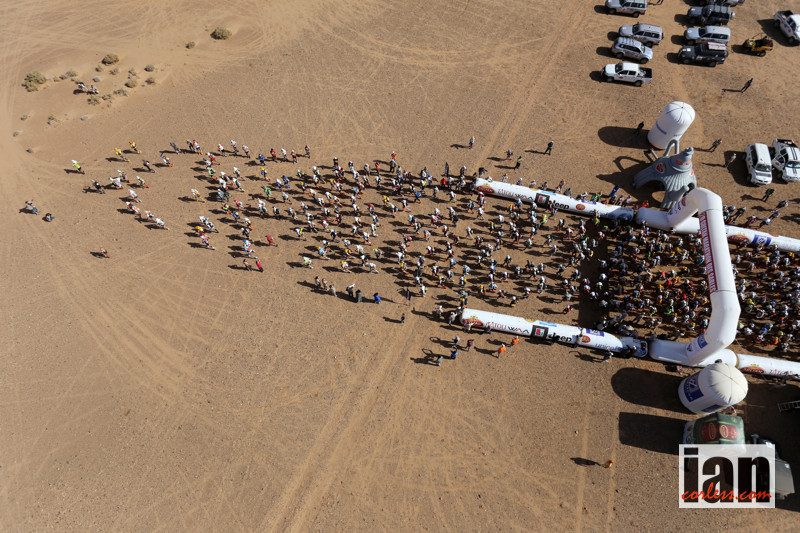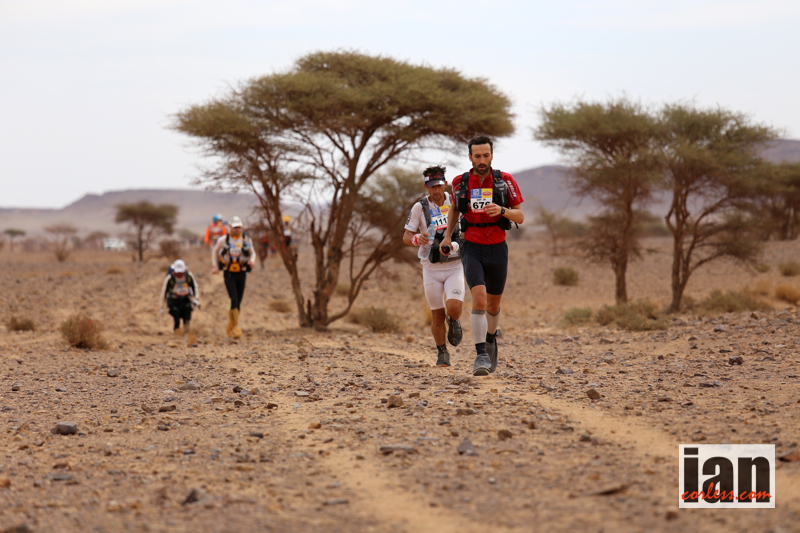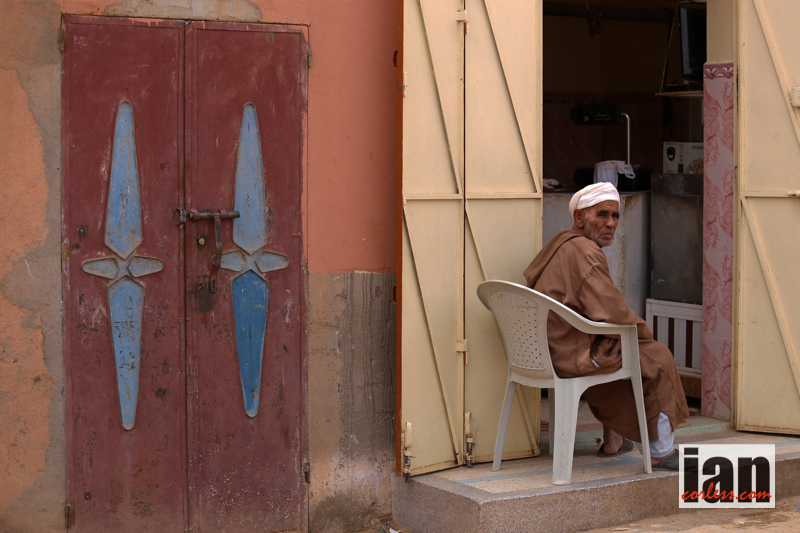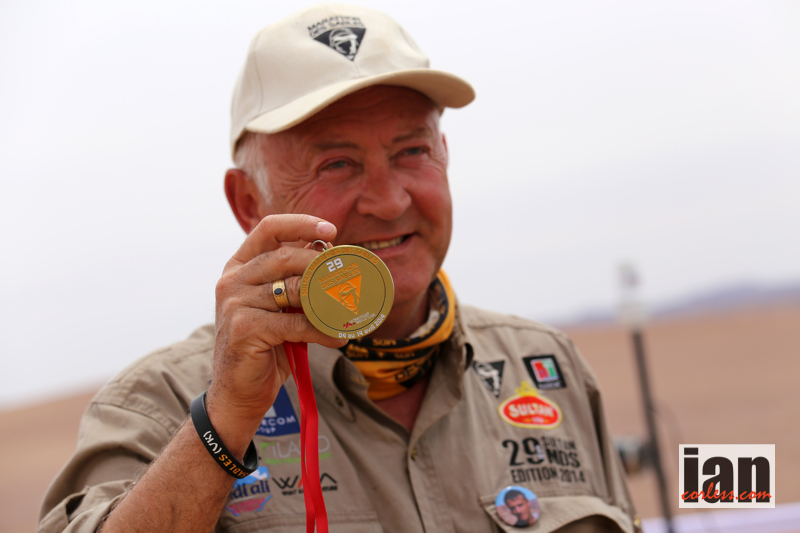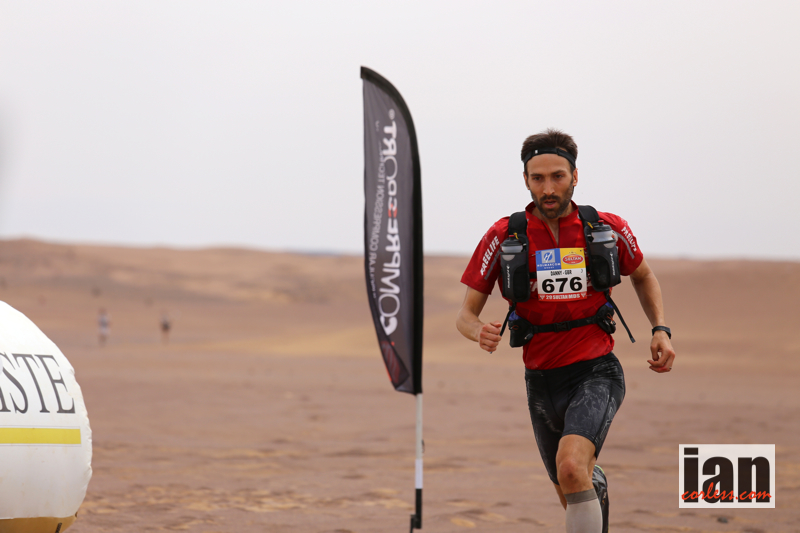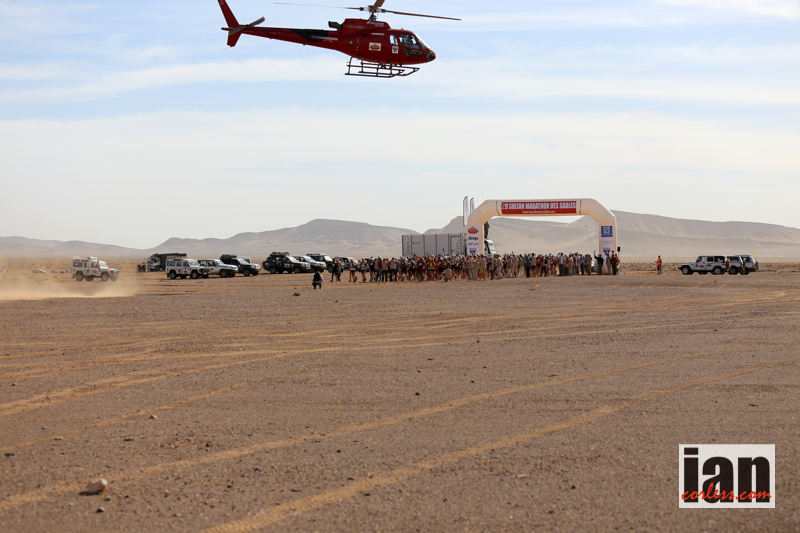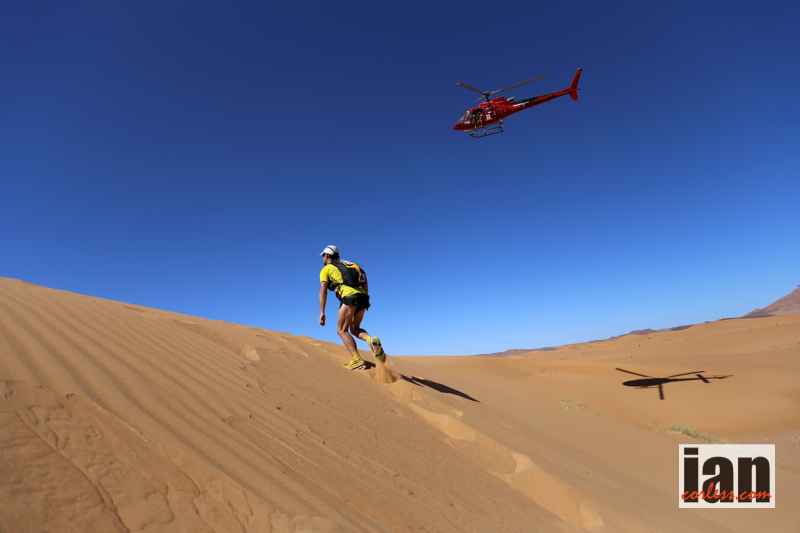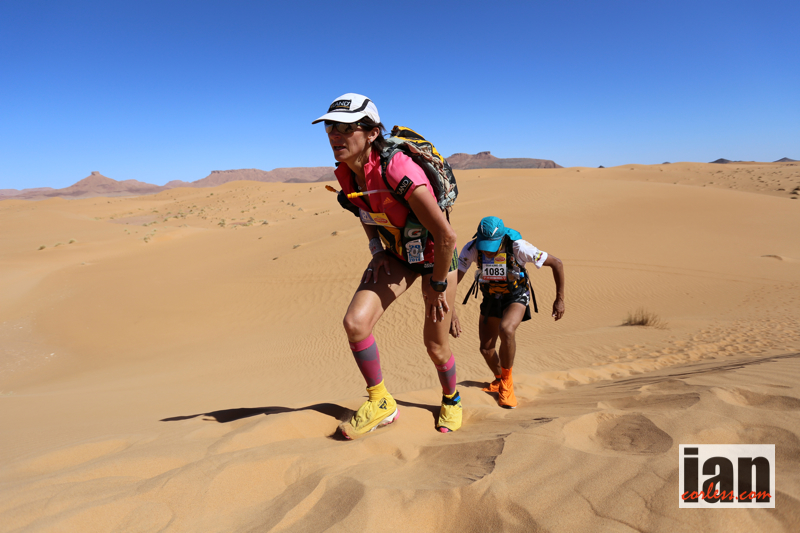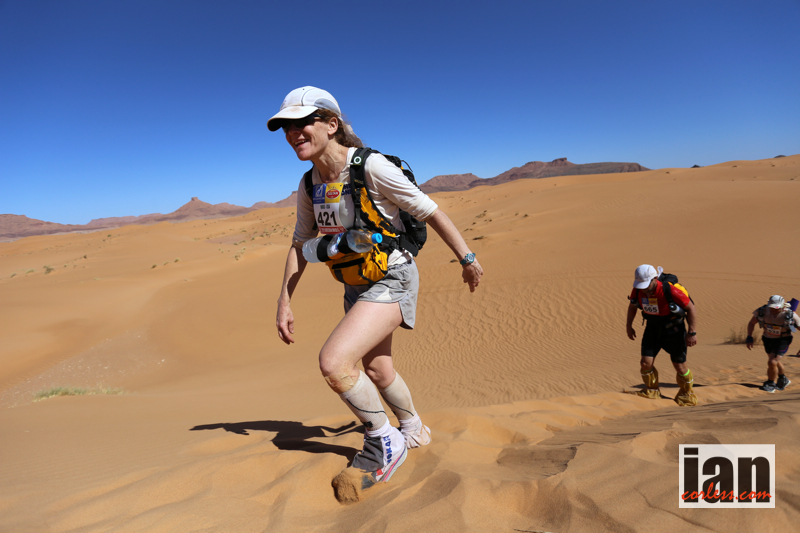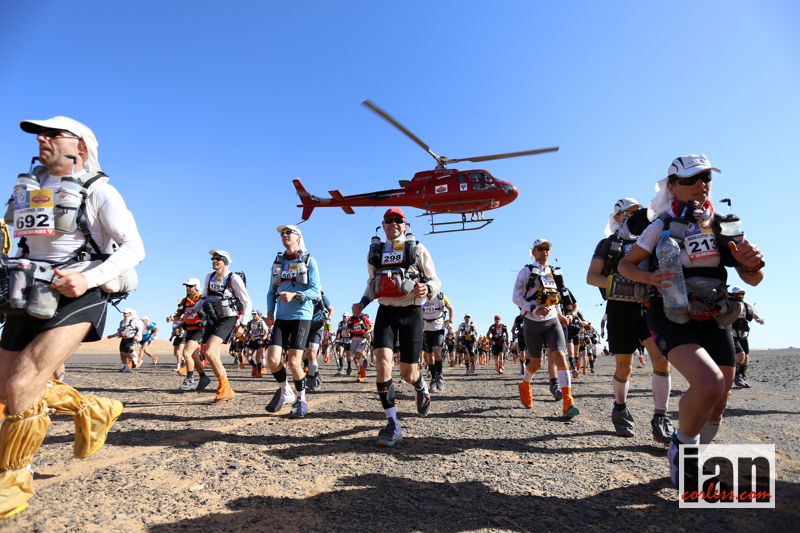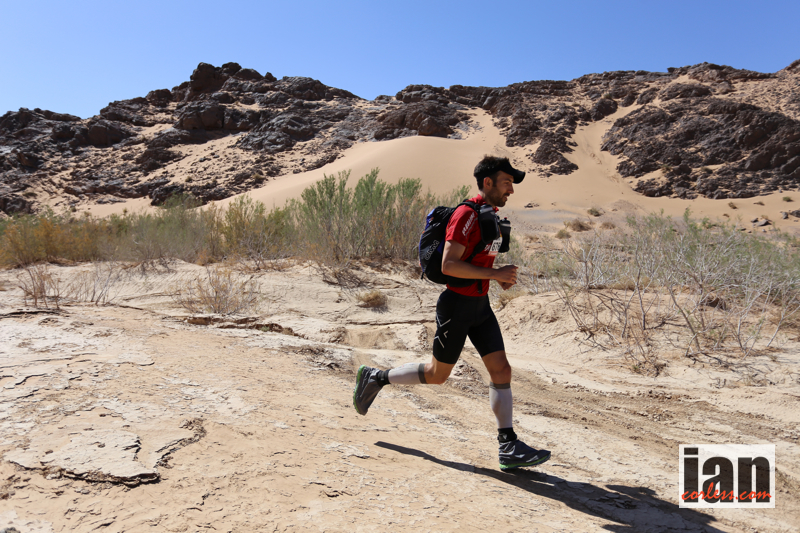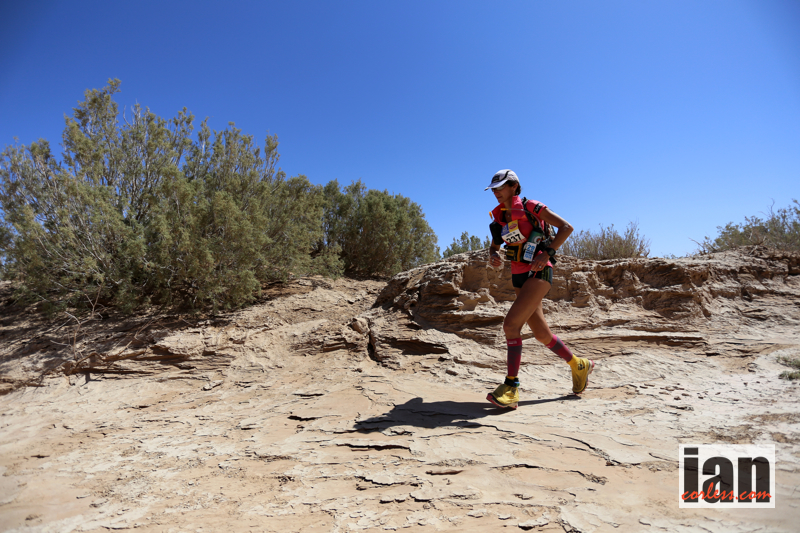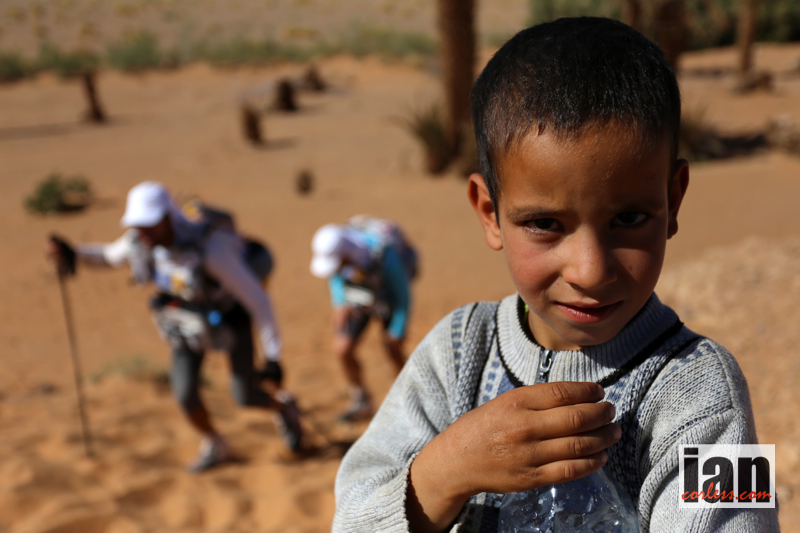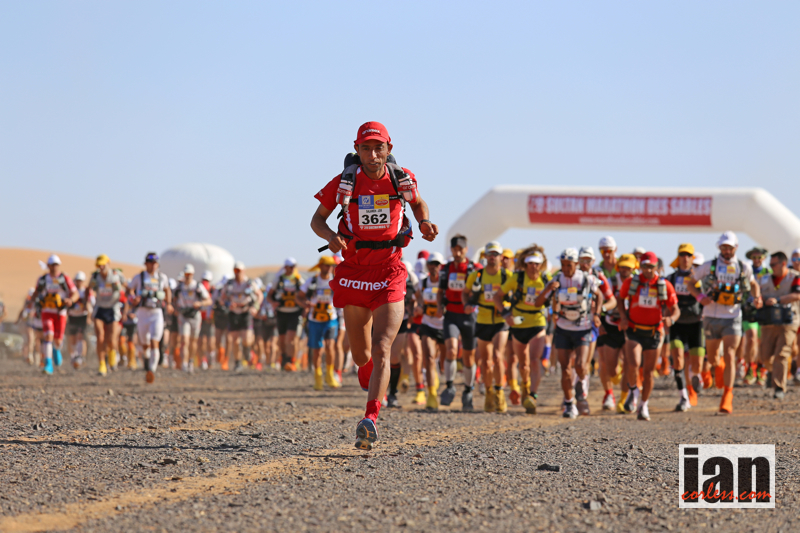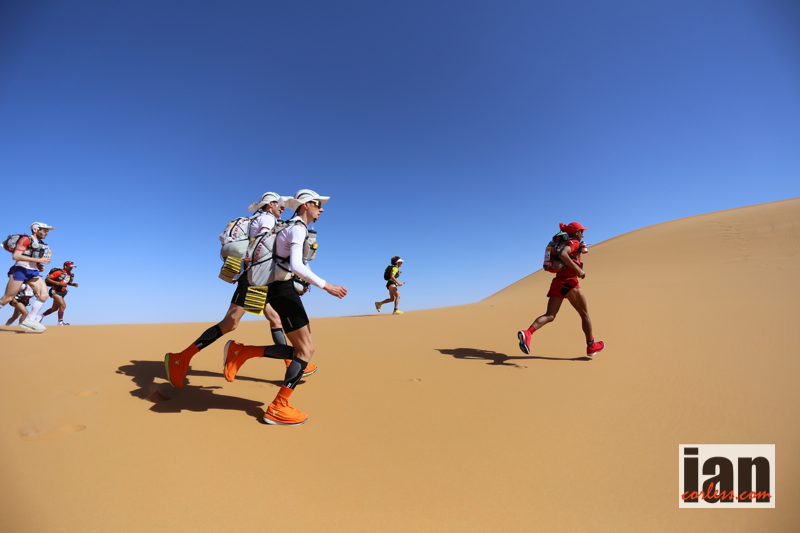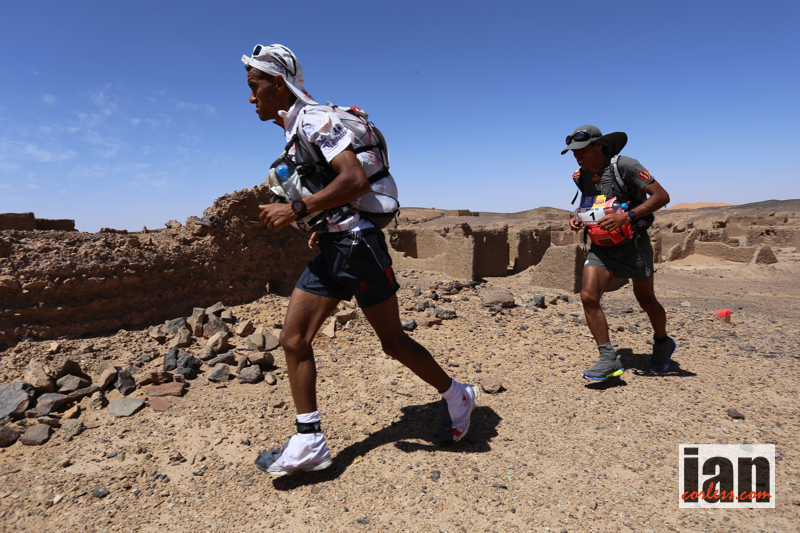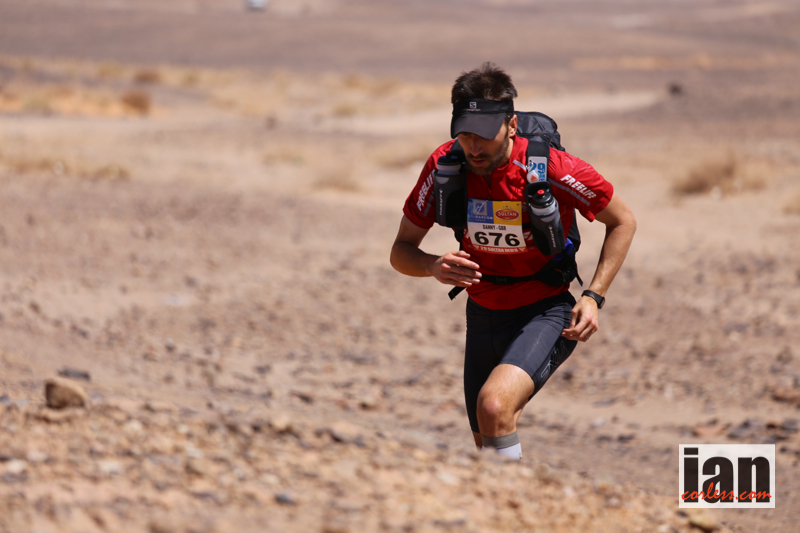
Marathon des Sables 2014 Stage 2

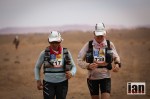
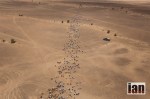
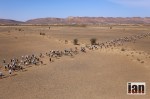
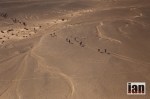
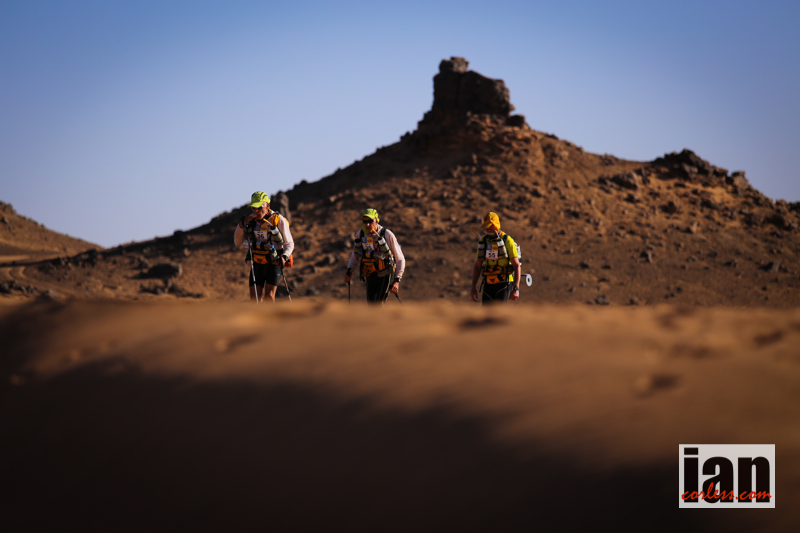
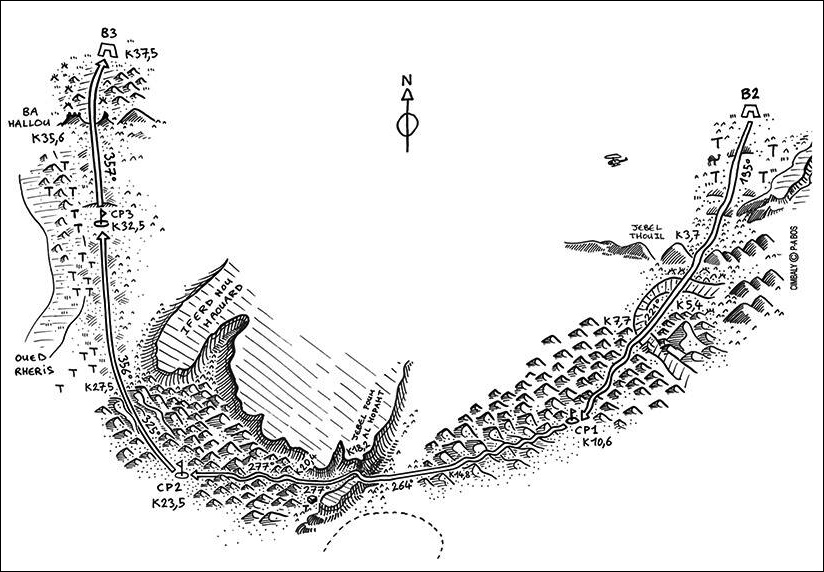
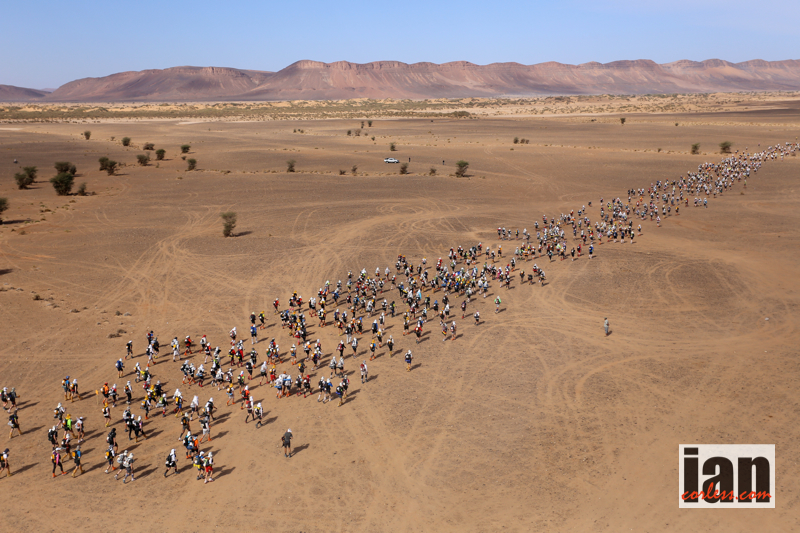
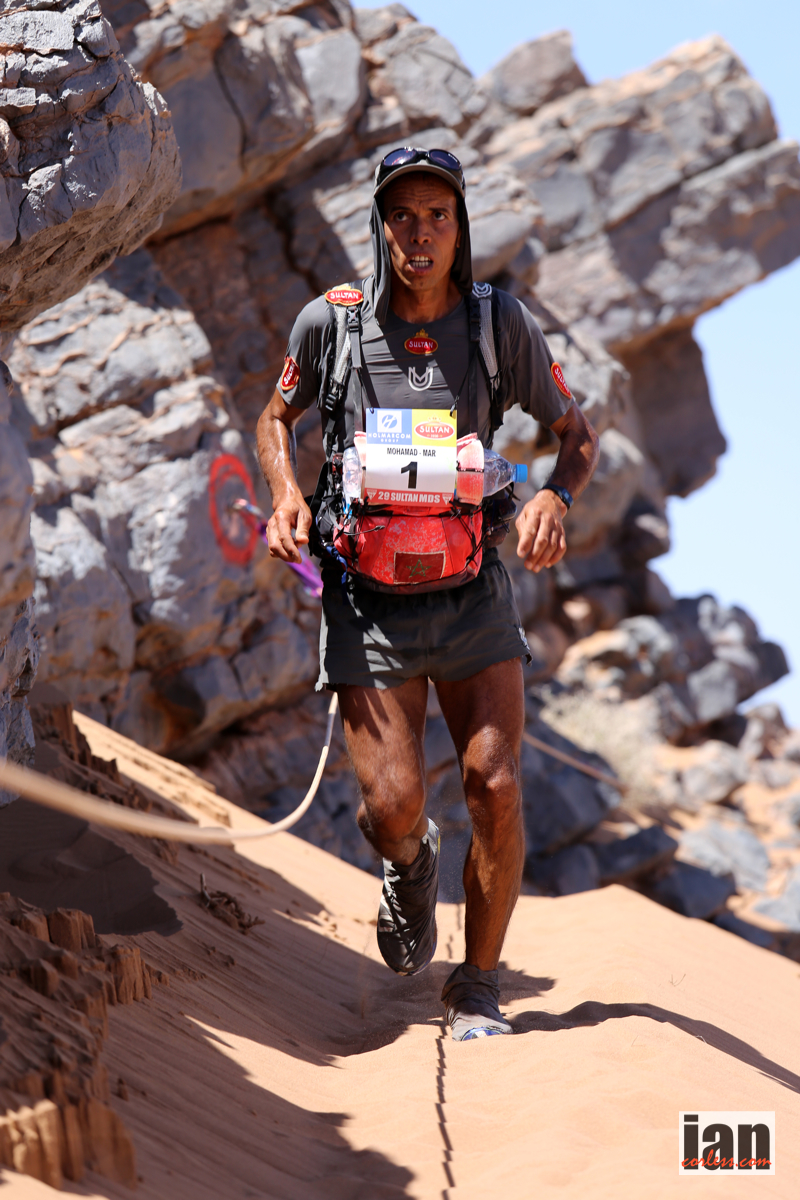
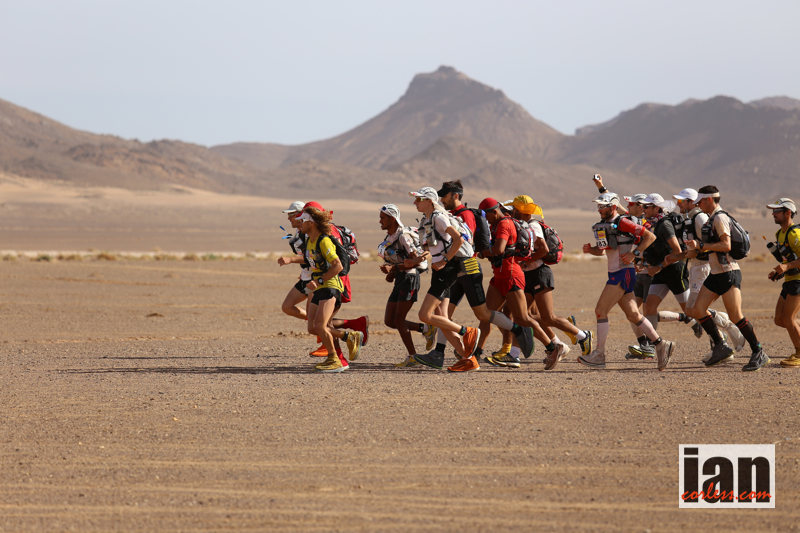
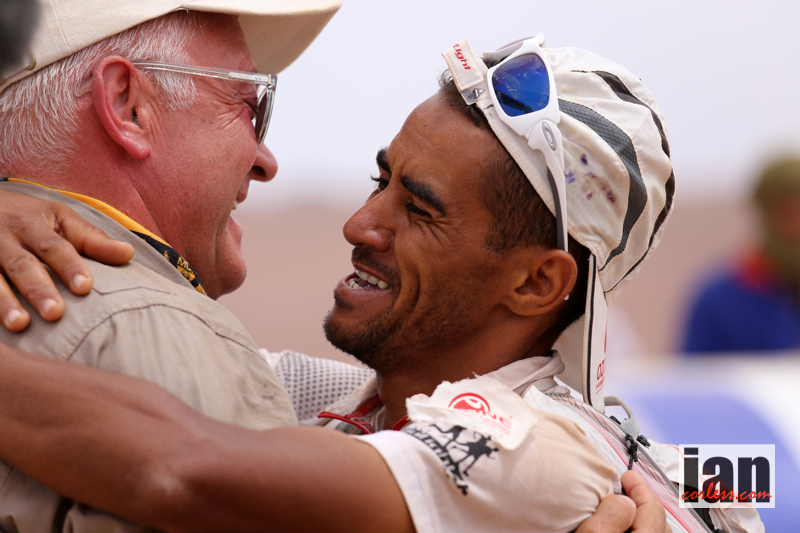
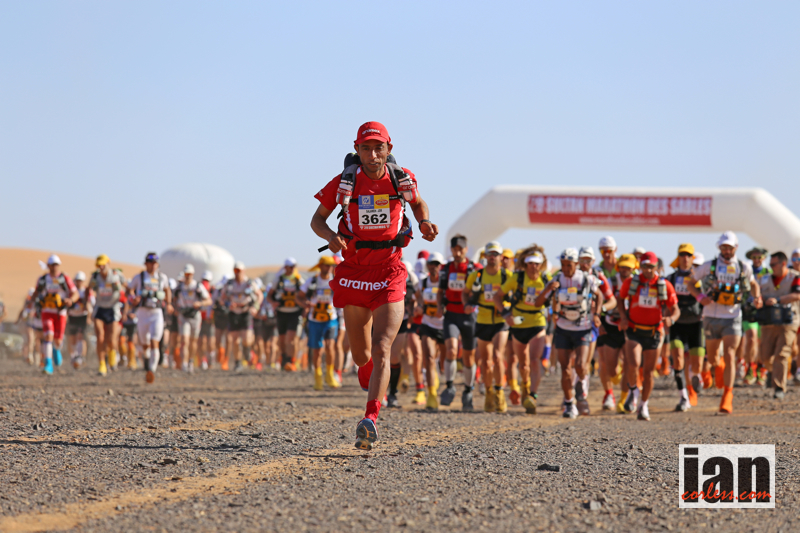
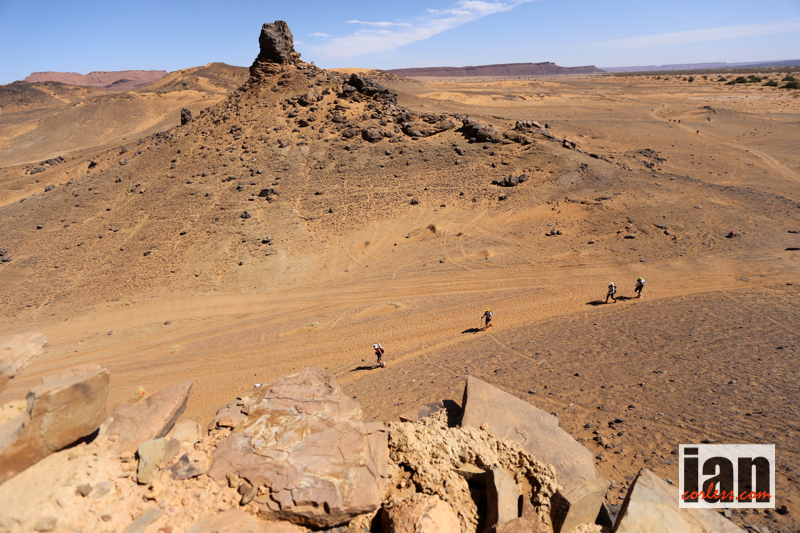
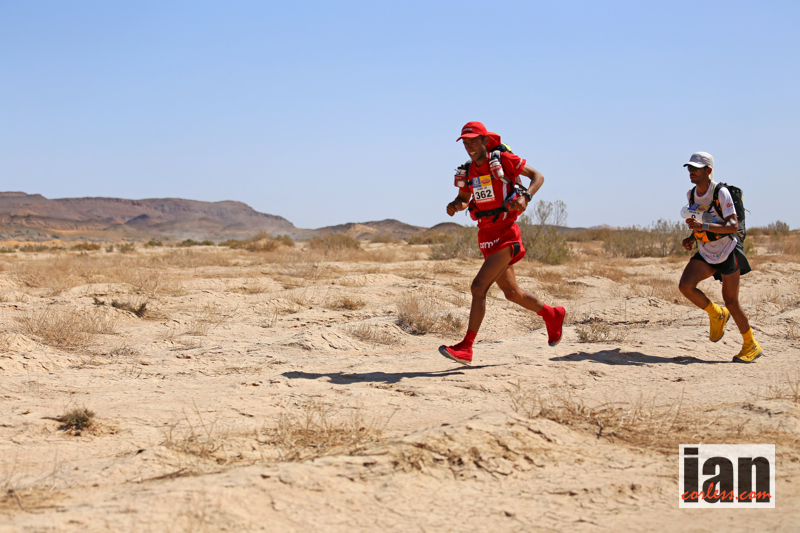
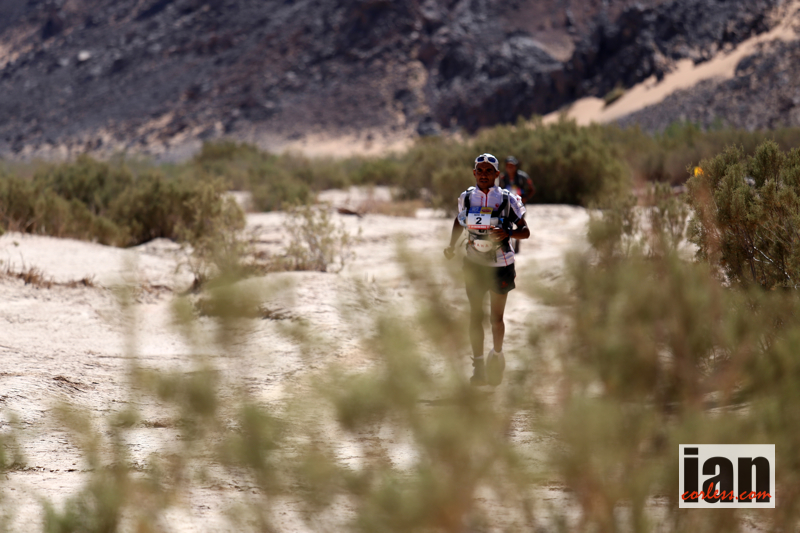
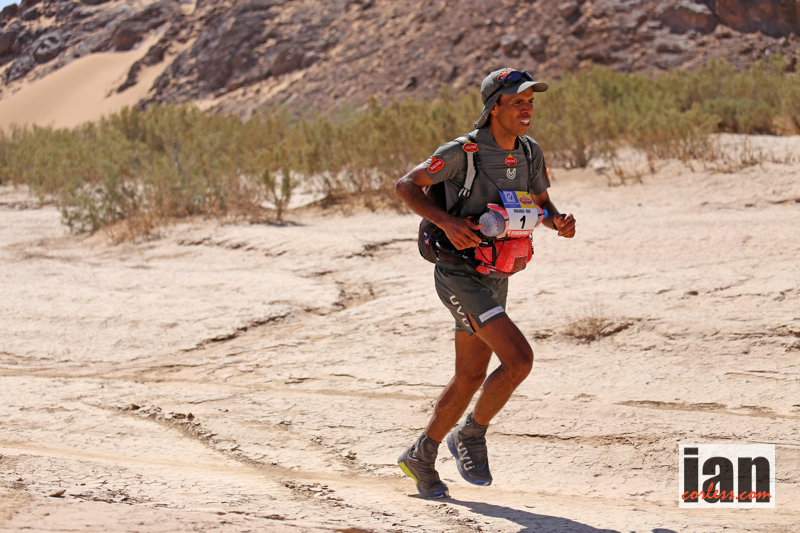
Al Aqra (previous MDS winner) went from the gun the morning and set a relentless pace that only El Moriaty could match. A third of the way into the stage they ran side by side but the pace took its toll, Al Aqra faded allowing a repeat victory in 3:13:43 for El Moriaty. Fast man, Elmouaziz but his 2:06 pace to good use and finished just over 1min back with Al Aqra taking 3rd in 3:21:11.
Ahansall could not take the pace today and finished 4th just 30 secs ahead of Brit, Danny Kendall in 3:23:05.
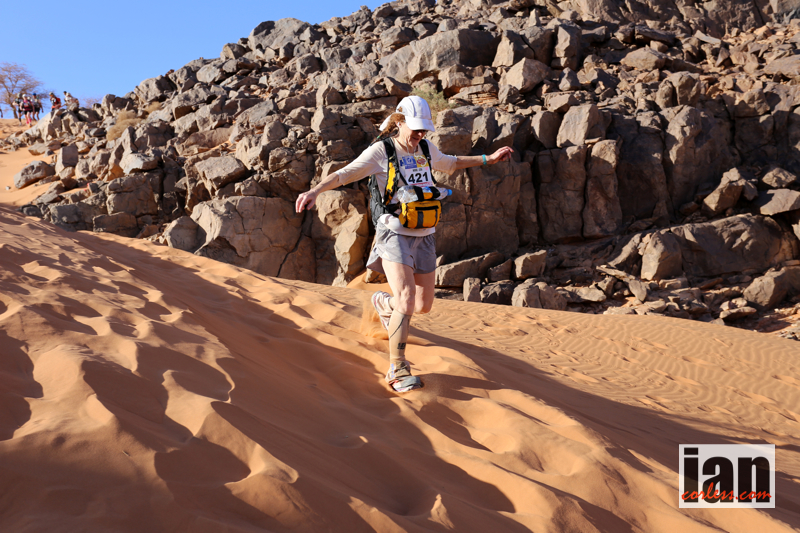
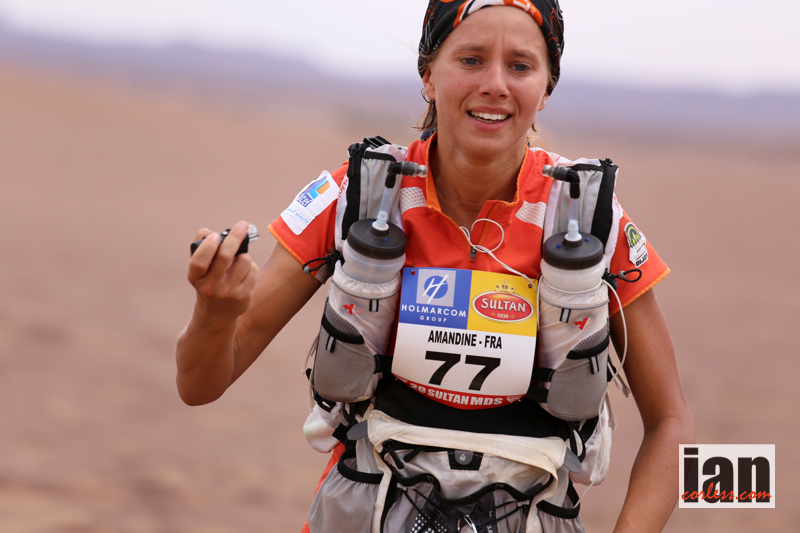
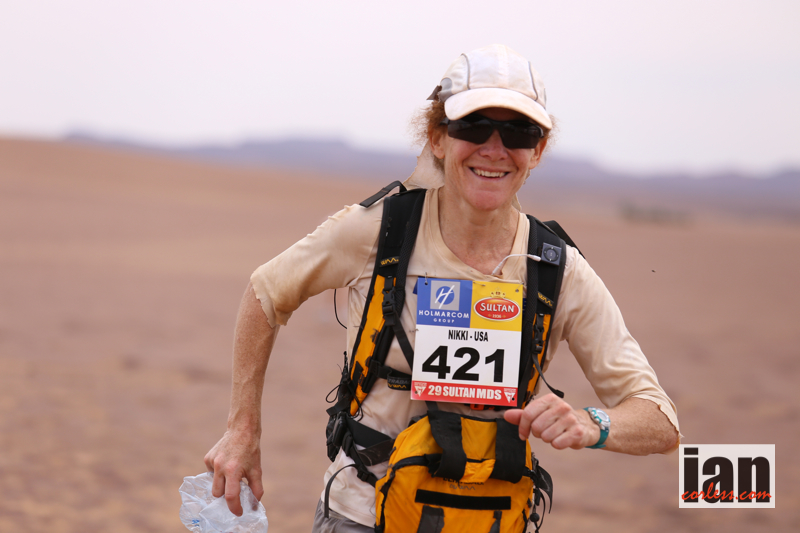
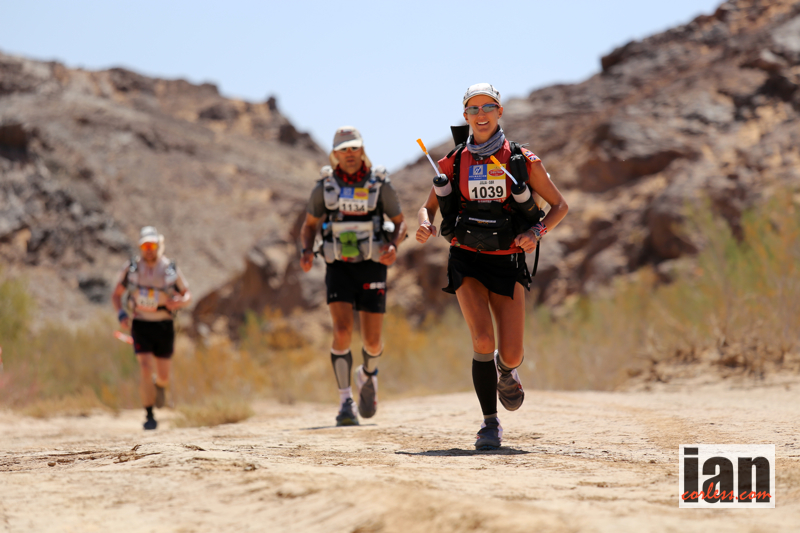
Klein once again provided a very familiar pattern for the ladies race with a solid stage win just 11min clear of Kimball in 4:30:08. Roux from France placed 3rd in 5:03 and Brit, Donovan placed 4th, 5:15:33.
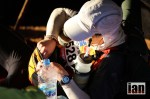
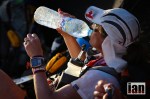
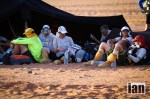
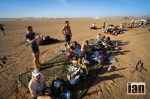
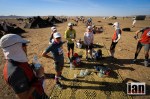
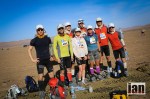
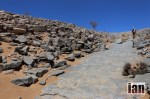
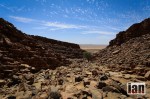
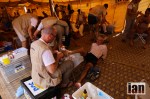
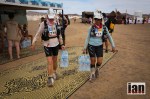
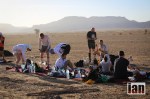
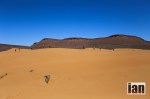
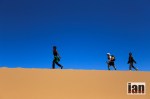
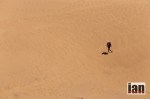
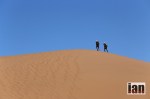
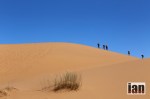
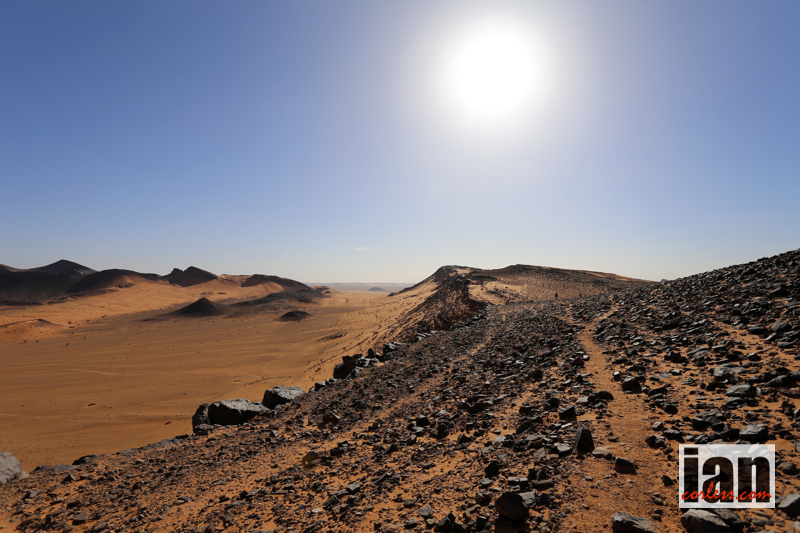
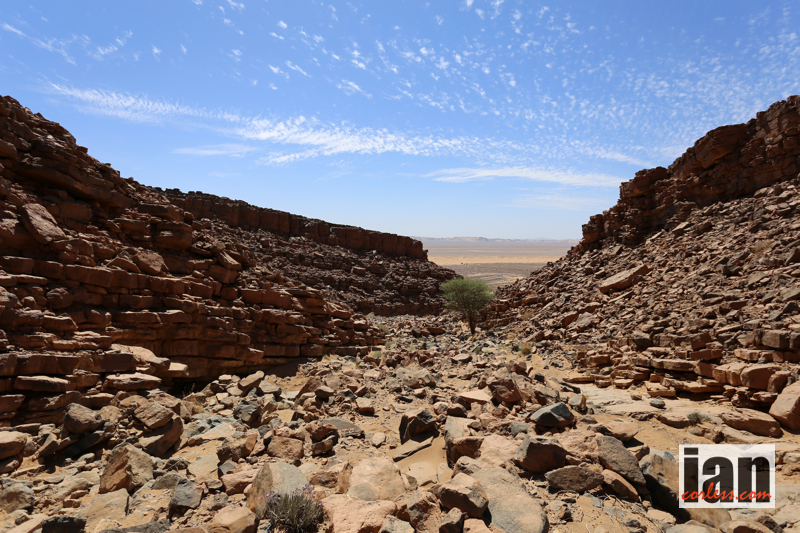
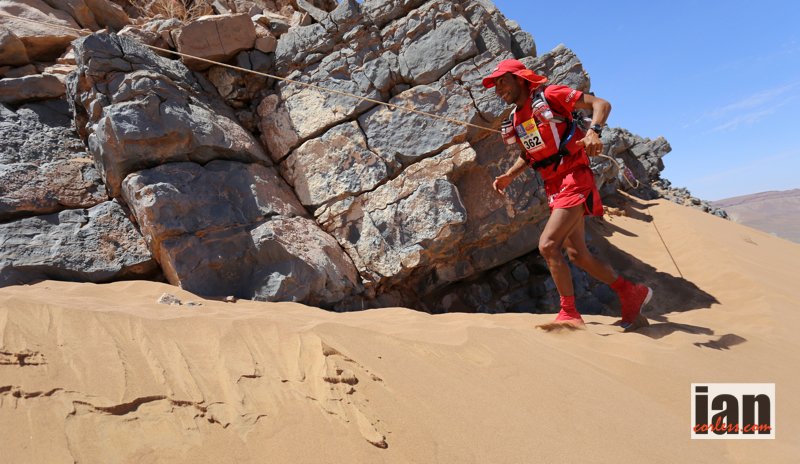
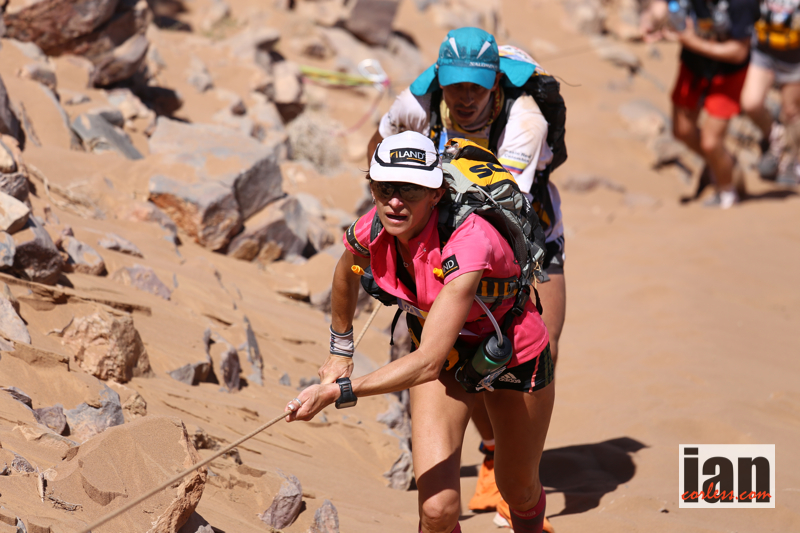
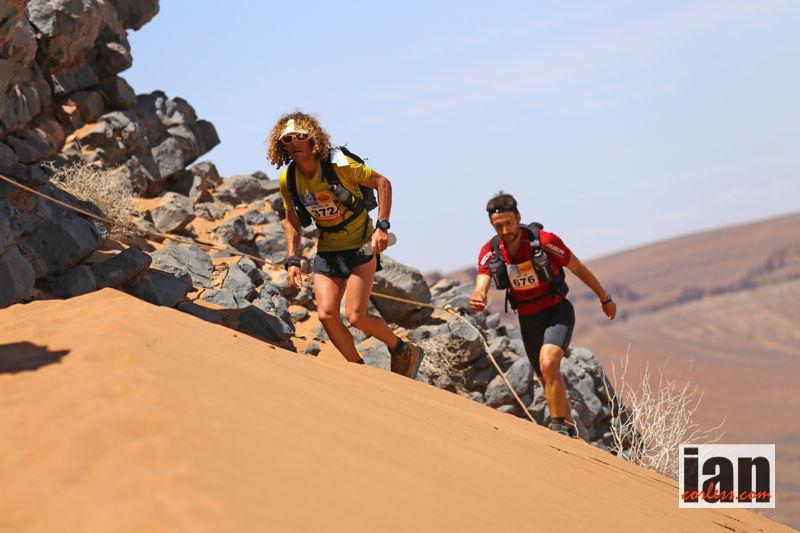
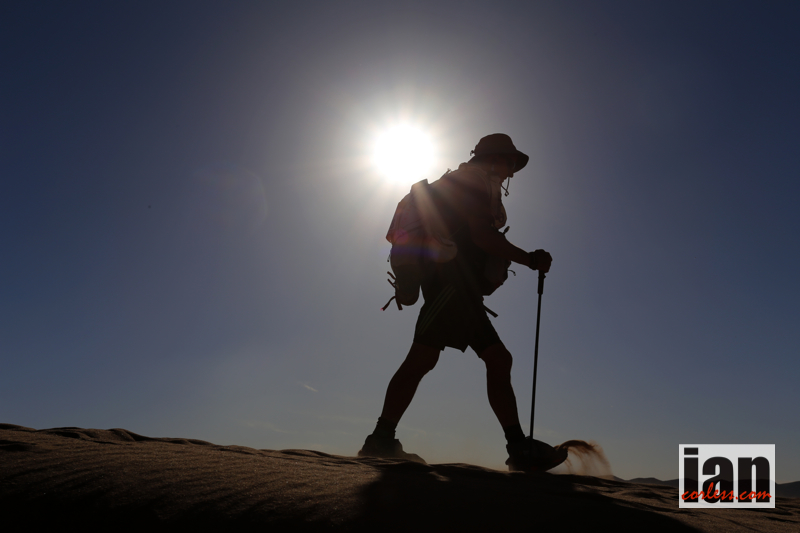
The heat once again was relentless today with apparently 50deg recorded. The tough course and extreme temperqtures are impacting on all the racers with over 20 drop outs yesterday and more today. Stage 3 continues the format with high temperatures forecast and almost 30km of dunes….

Image

Image

Image

Image

Image

Image

Image

Image

Image


Marathon des Sables 2014 Stage 1

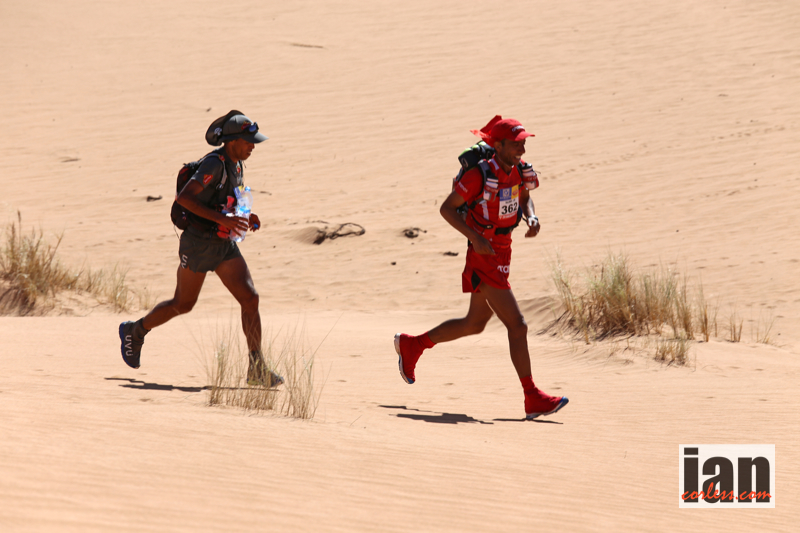
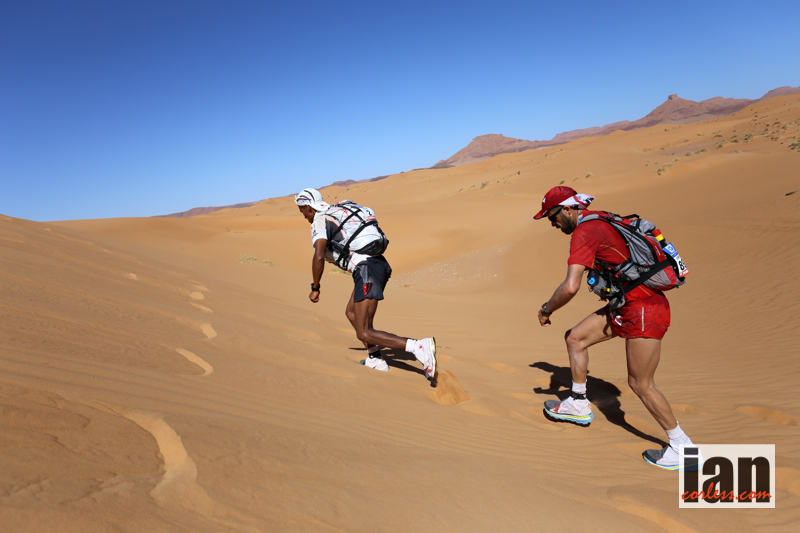
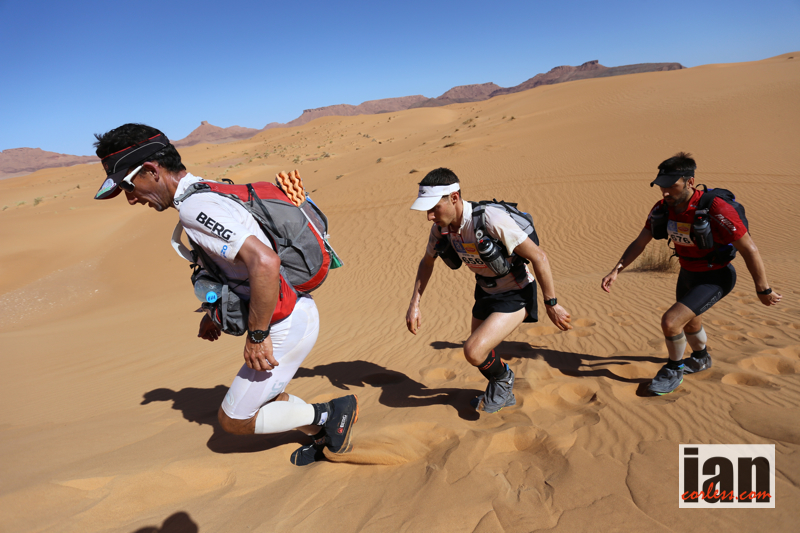
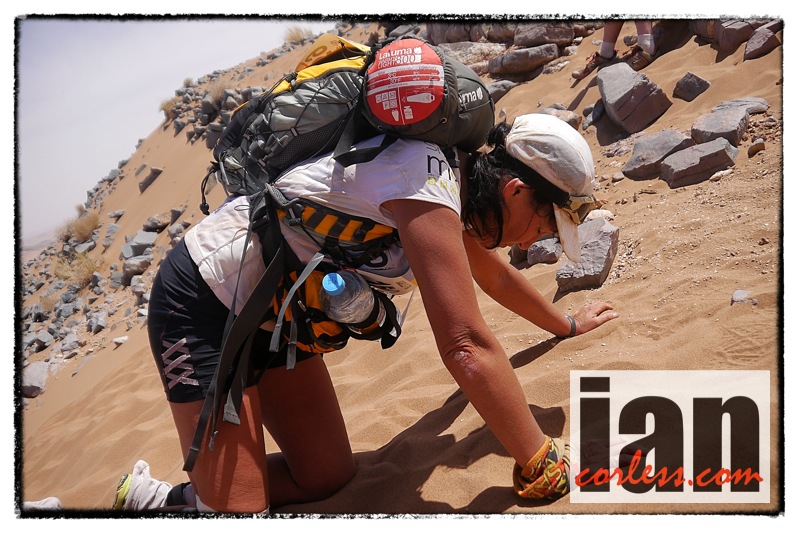
Day 1 was a tough and exciting day in the dunes of the Sahara. Arguably one of the toughest first days on record. The sand was relentless as was the heat… mid 40s.
Rachid El Moriaty and Mohamad Ahansal used local knowledge to advantage and placed 1 and 2 on the day, 3:04:06 and 3:05:08 respectively.
2:06 marathon runner Elhouaziz used his speed to make up for navigation errors to place 3rd, 3:12:26.
Top Brit Danny Kendall, 10th in 2013 placed 5th in 3:19:40.
Laurence Klein used her experience and speed for a convincing stage victory over Nikki Kimball from the USA. However, Laurence does not look as relaxed as previous years, 4:05:37 and 4:16:33 respectively.
Julie Bryan from the USA was third 35min back and top Brit was Julie Donovan in 5th.

Image

Image

Image

Image


FAILURE! Isn’t an option – Robert Portal attempts the 29th Marathon des Sables

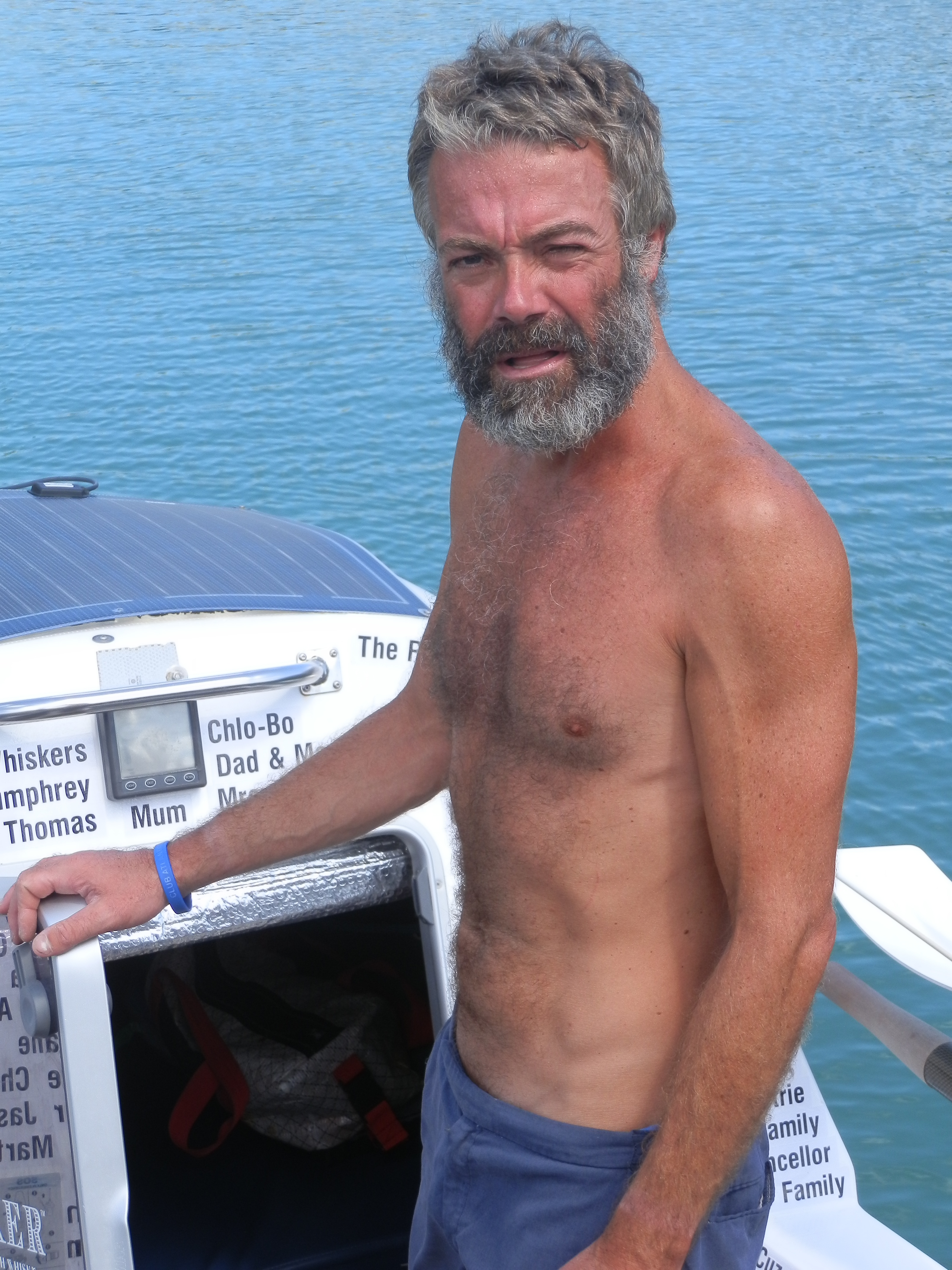
OLYMPUS DIGITAL CAMERA It doesn’t happen everyday does it… an actor with a career spanning back to 1992 taking on the challenge of the Marathon des Sables; arguably one of the most iconic multiday races in the world.

Bertie (Robert) Portal however is not shy of a challenge or putting himself way out of his comfort zone. In 2012, along with James Cash, Bertie crossed the Atlantic in 63-days and in doing so raised £350,000 for ‘Facing the World Association.’

‘…the idea of setting foot again on another waterborne vessel, let alone our boat, Patience, fills me with dread and horror.’ Bertie explained in a Telegraph interview (Feb 2012).

Swapping water for sand, Bertie will attempt the 29th edition of the iconic ‘MDS’ and his journey begins on April 3rd. I was intrigued; what had attracted an actor who has appeared in some modern day blockbusters such as, The Iron Lady, My week with Marilyn and The Kings Speech to leave the comfort of ‘Blighty’ behind for a week of self-sufficiency in the Sahara? After all, reduced food and water rations, sharing a bivouac with 7-others, oh, and the small matter of running approximately 250 km’s wouldn’t appeal to everyone?

I caught up with Bertie in the final days before his departure for Morocco, for the first of several interviews that will help document Bertie’s journey into the unknown.

MDS Logo

IC Bertie, you are renowned for your acting career, what has attracted you to the Marathon des Sables, it’s going to be a little different to what you are used to!

BP People ask me this all the time and I often give different answers, however, as an actor I spend my professional life in someone else’s clothes, speaking someone else’s lines and being told where to stand and what to do… these events are me being me! Facing a challenge, it’s what I enjoy. I also enjoy facing the elements, be that the Atlantic of the Sahara on its own terms to see what it has to offer.

IC Is this something that has come to you later in life or have you always been interested in testing yourself in sport?

BP Fair to say I have pushed the envelope recently! However, I have done marathons, triathlons and swum to keep fit. I found that when I did the Atlantic, we were halfway across in a storm and I thought if I get out of this, I will do something land based. The Sahara fits the bill!

IC MDS has a reputation. It’s one of the oldest, if not THE oldest multiday races. It’s on many a runners bucket list, for you, the contrasts between the Atlantic and the Sahara will be extreme. When did you start preparing?

BP I have been training for about 18-months specifically. Ultra marathons are very different from doing a ‘normal’ marathon of 26.2-miles, so, doing longer runs of 30 or 40-miles have been a great eye opener. The thought of doing them back-to-back is very different; running on tired legs is something you need to adapt to. I have done lots of that; I don’t take this lightly! I think the MDS will be more painful physically than the Atlantic as it is more compacted in terms of time.

IC I guess 18-months ago you were just getting consistency in running. When did you start being very specific; placing an emphasis on MDS and doing specifics that will allow you to run in the Sahara?

BP I have been training with a pack for quite a long time. I availed myself of the services of Rory Coleman, he has done MDS 10-times and he helps out people with coaching. He set me a program and I have followed it. I went to Wales a month ago, we had a weekend program of running in dunes. It was a nightmare! I hated it… it’s grueling, debilitating, energy sapping, exhausting and depressing to be honest. It was a big eye opener and I found it incredibly hard. I am under no illusions of what to expect. Recently I have been in a heat chamber and I have 2-more sessions to do before we depart. That was horrible too!

IC Aaagh, you are really looking forward to the MDS then? (Laughs)

BP The heat chamber was just a small room. Quite claustrophobic, so it’s not ideal, however, it serves a purpose. You just want to get out of the room but you can’t. Lots of people are watching so you can’t ‘wuss’ out.

IC You will learn from anyone that has done MDS that heat sessions in the final days before departure are a great thing to do. It can be a savior to have that adjustment done before arriving in Morocco. Let’s go back a month ago if I may… the dunes, I guess you wanted experience and also a confidence boost. Do you now have a sense of dread of what the MDS holds?

BP The weekend was 2-days; Saturday was dunes and Sunday was a little different. I felt a little down after the first day but running up a mountain on day-2 was much better. I have also been told that dunes only make a small part of the MDS. The terrain is quite compact, hard, and rocky at times and we have salt flats to cover so that is good, we have a bit of everything! Dune day sounds like it will be day-1 so I shall grit my teeth and push through it.

IC Yes, you are correct. Dunes only usually make about 20% of the race route. However, the dunes take longer to get through because of the difficulty. What are you most fearful of?

BP Not finishing! It’s a fear of failure… far more than the heat, dehydration and so on. I think I can control those things. I need to look after myself. Personal admin is important. If I have my head screwed on that will be okay. However, I will have unknowns, maybe the medical team could pull me out of the race. I would hate that. All I can do is look after myself as best I can and don’t start too quickly. I need to enjoy the experience. I am so looking forward to it.

IC If you look at the race objectively; completion over competition, It is a great attitude to have. Cut-off times are very generous so you can slow down and still finish. Have you thought about this?

BP Well I set myself goals and I like to do things to the best of my ability otherwise I don’t see much point in doing them! I want to be the best that I can be. I’m in the middle I think; I won’t win but I want to give the best account of myself.

IC With a couple of days over and once familiarized, you will then be able to asses and decide if you can test yourself. You will know at that point how you feel and how you are reacting.

Bivouac will be interesting; an open tent with 7-other people. For me, it’s an attraction. You do have a celebrity status do you think at MDS you will be recognized?

BP I’m always ‘another’ person! I love these events because I can get away… no e-mail, no phones, I am away from all the humdrum day-to-day routine and I love that.

IC You have appeared in The Kings Speech, My week with Marilyn, The Iron Lady; they are all films about strong individuals. They are all characters that have overcome diversity, pressures and so on that have used strength of character to survive. Can you take anything away from the real life situations and apply that to the MDS?

BP Gosh! I don’t think so… my film life and my adventure life are so different. My actor mates and directors just don’t understand what I do. I was about to row the Atlantic when I did ‘Marilyn,’ my peers just didn’t get it. So, I don’t intertwine the two things at all. You are correct though; the films were about strong people. It’s the first time I have ever thought of it… it’s a great question. I will need to go away and think about it! Ask me on day-3 of the race.

IC How has training gone for you, are you confident, can you maybe give us an idea what a training week has looked like?

BP If I am honest, I was at my fittest in October last year. I was doing 3-day ultra runs. A normal week would be as follows: Monday, power hour on a treadmill – this is 4mins at pace and then sprint for 1-min and repeat. It’s horrible but gets your speed up. I may run a 5km the next day, 10km the day after and then on Thursday I would do a long run in the park. Richmond Park is my ‘killing ground’ and this is where I do my entire running. It has some nice hills! Then I would race at the weekend, a marathon or an ultra.

IC Okay, so how many races have you done in the build up?

BP Lots! I must have done somewhere in the region of 20 marathons in the last 11-months.

IC Wow, that is great. That’s lots of racing.

BP I have always ticked over. A typical year for me would include what I call the ‘Big-5.’ That would be 2-half marathons before London, London marathon and then another couple of other events. I am also a swimmer; I do that throughout the year. So I have a good base.

IC Tell us about your equipment. I am sure you have been through everything, weighing it and looking at options. Are you taking any luxuries?

BP I am looking at my bag now. I had problems with packs. I was going to use one pack but I found it too small, I just couldn’t fit everything in so I have changed it recently to something a little larger. I can’t run on nuts and air! (Laughter). My luxuries are ‘sweeties’ such as jellybeans, cola bottles and so on. I have a few gels but they can make me run to the bushes… not many of those in the Sahara! I have kept luxuries to a minimum; I see this as 7-days and 7-days only, I can get through that!

IC What is your pack weight?

BP About 9kg I believe.

IC You will need to add water to that?

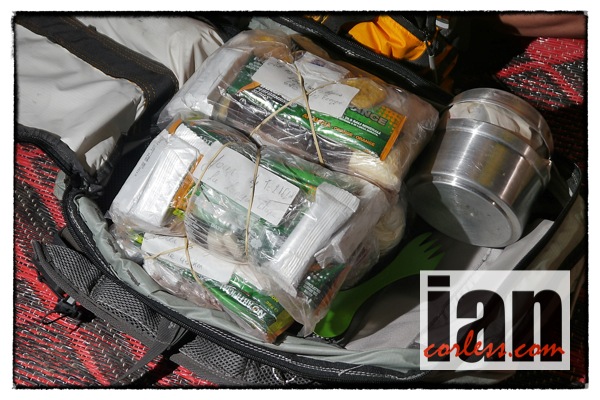
BP Yes, I will add water and that is provided. I have packed food that I had left over from the Atlantic and I have trimmed packets, cords, and other items to reduce any weight. The food packets are useful as I can eat out of them.

IC You will take a stove then?

BP Yes.

IC Do you have any words of wisdom or is that only something you can pass on after the experience?

BP I think there is only so much you can do. You can train, you can prepare and you can plan but you can’t actually prepare for running in 45 degrees other than doing it. It’s no sprint; it’s what I call the Sahara shuffle.

IC You have the physical and mental strength to last 63-days in the Atlantic. I am sure you will be able to draw from that experience and apply it in the Sahara.

BP Yes, I do have lots to call on and I am grateful for that experience. I had some horrible moments. When things get tough, I will think to myself, it’s only 7-days. My father said, ‘you can doing anything for 7-days.’ However, I don’t think my dad has done MDS! (Laughter)

IC In the Atlantic you broke your oars and you bobbed around in the water for 7-days unable to move… ironically you could have run MDS in those 7-days.

BP Absolutely! Thank you for that. I will think on that whilst I am in the Sahara.

(Laughter)

See you in the Sahara!

MV5BMTYxMzc5ODkyOV5BMl5BanBnXkFtZTgwMjIwOTczMDE@._V1_SY317_CR2,0,214,317_

Information

 A race preview of the 29th edition of the MDS is available HERE

MDS hints ‘n’ tips from 3x ladies winner, Laurence Klein HERE


Links:

Bertie will be raising money for Rainbow Trust Children’s Charity (Facebook Here)

To make an individual donation, please visit: uk.virginmoneygiving.com/Blazing-a-Trail
Or send cheques payable to Rainbow Trust Children’s Charity to: 
6 Cleeve Court, Cleeve Road, Leatherhead, Surrey, KT22 7UD

Rainbow Trust Children’s Charity website – HERE

Go to ‘Blazing a Trail’ on Facebook – HERE

Follow Bertie’s MDS experience on www.iancorless.com and on Twitter @talkultra

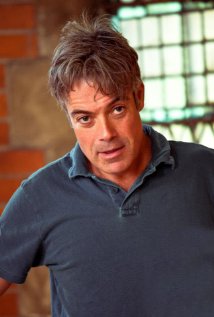
Images from ©IMDB

Atlantic Crossing in The Telegraph – Here

Laurence Klein, top-10 tips for the Marathon des Sables

iancorless.comP1080213

Laurence Klein (FRA) is a triple winner of the Marathon des Sables; 2007, 2011 and 2012. In 2013, Laurence returned to the Sahara looking for a 4th crown. Running a strong and dominant race, Laurence looked invincible, however, on the long-day she suffered from the heat and was forced to withdraw from the race with dehydration opening the door for Meghan Hicks (USA) to take the lead and win the 28th edition of the race.

We can all learn and here, Laurence provides her top-10 tips for the MDS.

iancorless.comP1030256

1/ RUNNING IN THE SAND

“Though sand is omnipresent along the Marathon des Sables course, you don’t just run in dunes. You also traverse stony zones, lunar landscapes and djebels. It’s important not to forget that detail in your preparation… To avoid getting tired, it’s also important to read the terrain you’re not used to. On large dunes for example, it’s best to run along the ridges and try to carve out your own wake so that you don’t sink into the sand as much. On the dunettes however, it’s easier to run in the tracks left by other competitors so as to use their footsteps like stairs. Finally, in the “fesh-fesh” (fine sand that looks like solid ground but behaves like soft mud), you really have to try to be as light on your feet as possible when you run.”

iancorless.comP1040857

2/ AVOIDING BLISTERS

“Gaiters are essential in preventing sand from filtering through into your socks too much and causing large blisters. Those who are sensitive to them can also prepare their feet in the run- up to the event, by hardening them with special products or citric acid. On a personal level, I recommend choosing a suitable trail shoe, one or two sizes bigger than your usual town shoe, because feet tend to swell with the heat. Added to that, it goes without saying that when you have blisters, it immediately becomes a lot more painful to put your shoes back on with an additional layer of bandages if you’re already bordering on the limit of your shoe size.”

iancorless.comP1040109

3 / HYDRATE REGULARLY

“Dehydration is one of the biggest risks in the desert. It’s imperative you don’t forget this and force yourself to systematically drink the water offered by the organisation, taking small, regular sips during the race and in the evening when you get into the bivouac. During this event, you also loose a lot of salt. As such it’s essential you remember to take the salt tablets supplied by the organisation and plan a diet rich in mineral salts.”

iancorless.comP1020957

4/ PROTECT YOURSELF FROM THE SUN

“Avoid wearing dark clothing in the desert as it tends to retain heat. Instead, opt for light clothing and white caps, which reflect the light. It can also be very useful to keep a buff around the neck or the wrist, which you can moisten from time to time to freshen up and bring down your core temperature. The best thing is not to remove too much clothing, but not to wear too much either… and to protect oneself from the sun’s rays using a very good suncream.”

iancorless.comP1020051

5/ A LIGHT, BALANCED BAG

“When you pack your bag, don’t forget that you have to add to it the litre and a half of extra water supplied by the organisation throughout the event… As such a bag weighing around 7 kilos is ideal. You also need to think about correctly distributing the weight between the front pack and the backpack, so as to remain balanced and avoid placing all the bag’s weight on your kidneys. Personally, I recommend putting everything at the front that will be of use to you during the day, energy bars, water, roadmap, compass, salt tablets, etc. That way you don’t have to unpack your bag to retrieve something that’s located at the back.”

iancorless.comP1010675

6 / GET SOME REST

“It’s very important to get some good rest and sleep well. For this, don’t disregard the comfort of your sleeping bag and opt for a sleeping bag suited to temperatures of around zero. Indeed, even though it rarely gets cooler than that, the temperature range between day and night remains pretty significant and you can soon get cold. For the evening, the majority of runners use painters’ overalls, which keep out the cold and the wind, but you can also get very fine, very light technical clothing with long sleeves.”

iancorless.comP1010591

7/ EAT PROPERLY

“Whether you opt for freeze-dried meals or simpler food with a rice, pasta, couscous or mashed potato base, the most important thing is to have a good distribution between protein, which are used to repair the muscles that are in such heavy demand during exertion, carbohydrates, which enable you to quickly restore your energy and speed up the body, and fats, which are essential for the body to work efficiently; especially with this type of exertion where you dig deep into your store of fat. Similarly, don’t think twice about stepping up a little on the organisation’s requisite minimum daily dose of 2,000 calories a day.”

iancorless.comP1030537

8/ FINDING ONE’S BEARINGS

“Aside from some of the dunes, where you do need to know how to use a compass to keep on course, the risks of getting lost are virtually non-existent. Indeed the marking is very well done by the organisation throughout the course and there’s substantial monitoring of the runners by the race stewards. However that’s no reason not to learn to use a compass before taking off for Morocco!”

iancorless.comP1030059

9/ MANAGING ONE’S EFFORT

“The Marathon des Sables is a long race. As such you need to spread out your effort with the passing days and, most importantly, you mustn’t set off too quickly on the first leg. Instead take the time to adapt to the different terrains you will encounter. You should also think about saving your energy so that you aren’t too tired when it comes to the long stage on the 4th day. To do this, think about getting some good rest in the evening as soon as you return to the bivouac.”

iancorless.comP1010583

10/ LIFE IN THE BIVOUAC

“Life in the bivouac is very important. To really make the most of it, I advise you not to bring along your mobile phone so you can fully benefit from each and every moment. Indeed, a whole life and sense of solidarity takes shape within it… The runners are divided up into tents of eight people and they very quickly encourage and support one another and eat together… You have to learn to be generous within it and not get annoyed, remaining open to others. The MDS is a large family. There’s a big communion between the runners and you have to know how to respect that.”

 Read a preview of the 2014, 29th Marathon des Sables HERE

Follow the race at http://www.iancorless.com and on Facebook HERE and Twitter HERE

Content ©marathondessables
All images ©iancorless.com – all rights reserved

Episode 57 – Johnston, Greenwood, Desert Runners Movie, Team inov-8

Ep57

Episode 57 of Talk Ultra is available – David Johnston gives us a blow-by-blow account of his record breaking run at the ITI350 (Iditarod Trail Invitational), Ellie Greenwood talks about her comeback run and win at Chuckanut 50 and her plans for 2014. We speak with Jennifer Steinman, Director of the Desert Runners Movie and Samantha Gash who appeared in the film. Team inov-8 provide some chat from the 2014 athlete retreat and Emelie Forsberg brings us smilesandmiles, a Blog, the News, Up and Coming Races and of course Speedgoat Karl Meltzer! It’s a stacked show.

I was at an inov-8 athlete retreat in the English Lakes testing products such as new apparel and shoes and then capturing images.
I caught up with some of the Team Members…
  • Tracy Dean
  • David Schneider
  • Ben Abdelnoor
 
NEWS
Tarawera 100k (65k) – Hit by bad weather so reduced

Men

  1. Sage Canaday – Hoka One One  5:33:38
  2. Yun Yan Qiao – The North Face  5:52:30
  3. Vajin Armstrong – MacPac 5:59:49
  4. Mike Aish – Mizuno 5:58:37
  5. Scott Hawker – Hoka One One 6:06:32
  6. Martin Gaffuri – New Balance 6:21:31
  7. Moritz Auf De Heidi 6:22:21
  8. Mike Wardian – Hoka One One 6:28:46
  9. Matt Murphy 6:36:27
  10. Manuel Lago 6:37:30

Ladies

  1. Jo Johansen 7:02:43
  2. Claire Walton 7:11:48
  3. Dawn Tuffery 7:16:16
  4. Beth Cardelli – Salomon 7:18:54
  5. Meghan Arbogast – Scott Running 7:26:24
  6. Shona Stephenson – inov-8  7:26:24
  7. Fiona Hayvice 7:40:54
  8. Katrin Gottschalk 7:44:33
  9. Katherine Macmillan 7:44:33
  10. Sandy Nyper – Ink n Burn 7:57:24
 
Chuckanut 50k
 
Men
  1. Max King 3:35:42 with new CR
  2. David Laney 3:38:37
  3. Daniel Kraft 3:41:05
 
3 of first 4 men are Nike sponsored !
 
Ladies
  1. Ellie Greenwood 4:11:51
  2. Jodee Adams Moore 4:20:37
  3. Melanie Bos 4:38:20
I caught up with Ellie Greenwood to discuss this comeback run and find out all about her difficult 12-months.
 
AUDIO with Ellie Greenwood
 
South Carolina 24-hour Race
  1. 154.590 Harvey Lewis
  2. 133.470 Katalin Nagy
  3. 127.043 Chris Roman
  4. 125.019 Zach Bitter – dropped from race but with a new 200km record
  5. 123.134 Shannon Johnstone
Translantau 100km (Hong Kong)
  1. Jeremy Ritcey 13:04:13
  2. Chin Keung Leung 14:24:35
  3. John Ellis 14:38:24
  1. Kar Bik Tam 17:44:55
  2. Katja Fink 20:12:01
  3. Marcia Zhou 21:04:20
 
Desert Runners Film
New film has just come out charting the journey of the 2010 Racing the Planet four deserts and four people who attempted the Grand Slam; running all four in one year! I had an opportunity to speak with the director, Jennifer Steinman on the film and the undertaking of such a difficult project
 
AUDIO with Jennifer Steinman
 
Samantha Gash way back in 2010 was one of the ‘unknown’ runners who completed the Four Deserts in 2010. She became the youngest female ever to complete all four in one year and many of you will remember Samantha was on a previous show of Talk Ultra, however, I thought it prudent to have a catch up now this film is out.
DESERT RUNNERS MOVIE DISCOUNT: Listeners can enter the code ‘runners’ for 10% off the film at desertrunnersmovie.com.
 
AUDIO with Samantha Gash
BLOG – Lizzy Hawker http://lizzyhawker.com/ke-garne/
Ke garne? What to do?
“I thought I’d been smart this time. I took time (2 months) not running after the femural stress facture that prevented me racing the 2013 UTMB. I tried to be patient. I mixed up the walking and running during the Manaslu Mountain Trail and ran a bit more during the Mustang Trail Race. I allowed myself to take it slowly. I soaked up just being in those awesome places and sharing the experiences. I was gradually working back to some kind of race fitness. I raced 50km on the rim of the Kathmandu valley, slowly, not full out. So what happened?”
INTERVIEW 
David Johnston was on our show just two episodes ago discussing his epic win and new CR at Susitna 100. Just 7-days later he took on the Iditarod Trail Invitational 350-mile race. Against all logic, he not only won but smashed what many considered to be an unbreakable record… here is his story!
 
AUDIO with David Johnston
 
MELTZER MOMENT with Speedgoat
 
SMILESANDMILES with Emelie Forsberg
 
UP AND COMING RACES

Algeria

Ultramarathon des Ziban | 100 kilometers | March 27, 2014 | website

Argentina

The North Face® Endurance Challenge Argentina – 50 km | 50 kilometers | March 23, 2014 | website

The North Face® Endurance Challenge Argentina – 80 km | 80 kilometers | March 23, 2014 | website

Croatia

Istratrek Trail Race | 60 kilometers | March 29, 2014 | website

France

Yvelines

Eco Trail de Paris IDF – 50 km | 50 kilometers | March 29, 2014 | website

Eco Trail de Paris IDF – 80 km | 80 kilometers | March 29, 2014 | website

Germany

Bavaria

Chiemsee-Ultramarathon März | 108 kilometers | March 22, 2014 | website

Hesse

Eschollbrücker Ultra-Marathon 50 km | 50 kilometers | March 30, 2014 | website

Greece

Antiparos Ultra 100 | 100 kilometers | March 23, 2014 | website

Hungary

BSI Half Lake Balaton Supermarathon | 95 kilometers | March 22, 2014 | website

BSI Lake Balaton Marathon+ Balatonfüred – Siófok | 51 kilometers | March 23, 2014 | website

BSI Lake Balaton Marathon+ Fonyód – Szigliget | 52 kilometers | March 21, 2014 | website

India

Sandakphu 70 Mile Himalayan Race | 70 miles | March 23, 2014 | website

Ireland

Leinster

Wicklow Way Ultra | 51 kilometers | March 22, 2014 | website

Italy

Lombardy

100 km di Seregno | 100 kilometers | March 30, 2014 | website

60 km di Seregno | 60 kilometers | March 30, 2014 | website

UMS Ultramaratona Milano Sanremo | 280 kilometers | March 29, 2014 | website

Luxembourg

La GranDucale – 55 km | 55 kilometers | March 30, 2014 | website

Montenegro

Ultra-Maraton Montenegro | 100 kilometers | March 29, 2014 | website

Morocco

Ecotrail de Ouarzazate | 111 kilometers | March 27, 2014 | website

Marathon des Sables | 250 kilometers | April 04, 2014 | website

New Zealand

Northburn Station 100 km Mountain Run | 100 kilometers | March 22, 2014 | website

Northburn Station 50 km Mountain Run | 50 kilometers | March 22, 2014 | website

Portugal

Inatel Piódão Trail Running – 50 km | 50 kilometers | March 29, 2014 | website

Spain

Andalusia

TrailRunning BRIMZ “Guzmán el Bueno” X Sierra Morena – 60 km | 60 kilometers | March 22, 2014 | website

Extremadura

LXVII Milhas Romanas | 100 kilometers | April 04, 2014 | website

Valencian Community

La Perimetral | 65 kilometers | March 29, 2014 | website

United Kingdom

Cornwall

Wreckers Challenge | 50 miles | March 23, 2014 | website

Dorset

Jurassic Coast Challenge | 78 miles | March 21, 2014 | website

East Sussex

Coastal Trail Series – Sussex – Ultra | 34 miles | March 22, 2014 | website

North Yorkshire

Hardmoors 55 Ultramarathon | 55 miles | March 22, 2014 | website

USA

Alabama

Lake Martin 100 Mile Trail Race | 100 miles | March 29, 2014 | website

Lake Martin 50 Mile Trail Race | 50 miles | March 29, 2014 | website

Oak Moutain 50+ | 50 kilometers | March 22, 2014 | website

Arizona

Mesquite Canyon 50K | 50 kilometers | March 22, 2014 | website

California

Beyond Limits Ultra and BLU Relentless 100 Miler | 100 miles | March 29, 2014 | website

Beyond Limits Ultra and BLU Relentless 50K | 50 kilometers | March 29, 2014 | website

Beyond Limits Ultra and BLU Relentless 50 Miler | 50 miles | March 29, 2014 | website

Canyon Meadow 50 Km Trail Run (March) | 50 kilometers | March 22, 2014 | website

Old Goats 50K Trail Race | 50 kilometers | March 22, 2014 | website

Old Goats 50 Mile Trail Race | 50 miles | March 22, 2014 | website

Ragnar Relay So Cal | 200 miles | April 04, 2014 | website

Florida

Croom Trail 50K Fools Run | 50 kilometers | March 29, 2014 | website

Croom Trail 50M Fools Run | 50 miles | March 29, 2014 | website

Georgia

DoubleTop 100 100k | 100 kilometers | March 22, 2014 | website

DoubleTop 100 100M | 100 miles | March 22, 2014 | website

Idaho

Pickled Feet 100 Mile Run | 100 miles | March 28, 2014 | website

Illinois

Potawatomi 150 Mile Trail Run | 150 miles | April 04, 2014 | website

Kansas

Prairie Spirit Trail 100 Mile Ultra Race | 100 miles | March 29, 2014 | website

Prairie Spirit Trail 50 Mile Ultra Race | 50 miles | March 29, 2014 | website

Maryland

50K HAT Run | 50 kilometers | March 22, 2014 | website

Hat Trail Run 50K | 50 kilometers | March 22, 2014 | website

Mississippi

Gulf Coast Interstate Relay – Ride or Run | 263 miles | April 04, 2014 | website

Missouri

Forrest Gump Challenge 50 Mile Ultra-marathon | 50 miles | March 29, 2014 | website

New Jersey

NJ Ultra Festival – 100K Trail Race | 100 kilometers | March 22, 2014 | website

NJ Ultra Festival – 100M Trail Race | 100 miles | March 22, 2014 | website

NJ Ultra Festival – 50K Trail Race | 50 kilometers | March 22, 2014 | website

NJ Ultra Festival – 50M Trail Race | 50 miles | March 22, 2014 | website

Ohio

Fools 50K Trail Run | 50 kilometers | March 30, 2014 | website

Oklahoma

Tulsa Running Club Post Oak Lodge 50K Trail Run | 50 kilometers | March 22, 2014 | website

Oregon

Gorge Waterfalls 100k | 100 kilometers | March 30, 2014 | website

Gorge Waterfalls 50k | 50 kilometers | March 29, 2014 | website

Pennsylvania

Lt. J. C. Stone 50K UltraMarathon | 50 kilometers | March 22, 2014 | website

Texas

The Grasslands 50-Mile | 50 miles | March 22, 2014 | website

Utah

Antelope Island 100 Mile | 100 miles | March 21, 2014 | website

Antelope Island 50K | 50 kilometers | March 22, 2014 | website

Antelope Island 50 Mile | 50 miles | March 22, 2014 | website

Moab 100K | 100 kilometers | March 22, 2014 | website

Moab 100 Mile | 100 miles | March 22, 2014 | website

Moab 50K | 50 kilometers | March 22, 2014 | website

Zion 100k | 100 kilometers | April 04, 2014 | website

Zion 100 Mile | 100 miles | April 04, 2014 | website

Virginia

Terrapin Mountain 50km | 50 kilometers | March 22, 2014 | website

Washington

Badger Mountain Challenge 100 Mile Endurance Run | 100 miles | March 28, 2014 | website

Badger Mountain Challenge 50k Ultramarathon | 50 kilometers | March 29, 2014 | website

Chuckanut 50 K | 50 kilometers | March 29, 2014 | website

Dizzy Daze 100K | 100 kilometers | March 22, 2014 | website

Dizzy Daze 50K | 50 kilometers | March 22, 2014 | website

WSU 100K Relay & Solo Race | 100 kilometers | March 30, 2014 | website

West Virginia

Haulin’ in the Holler 50K Trail Race | 50 kilometers | March 22, 2014 | website
CLOSE

100km del Sahara, April 2014

Logo

An adventure, an experience, a stepping stone to something else… the 100km Sahara is multi-day race that will introduce you to a whole new world. Join the journey in April, 2014. 

©copyright.iancorless.com._BEN2717

Irrespective of your experience, the 100km of the Sahara will provide every participant a definitive sporting accomplishment. For some it may well provide the ultimate challenge, while for others, it may become a launching pad for continued participation in highly demanding extreme running races. The spirit of the race combines many elements; travel, adventure, excitement and ultimately a challenge.
 Pursue your dreams, pursue your passions and let the 100km of the Sahara provide you with a gateway to a new world.

©copyright.iancorless.com._MC23589

An annual race taking place over multiple days, participants test themselves against the challenge of running against the desert, while accepting the minimal assistance that is needed. The Sahara is fascinating, however it is one of the least suitable environments for running. If it was easy, anyone would do it… take yourself to a new level, add a new stimulus to your running. The Sahara will not only test your physical parameters but your capacity to control your mind.

Achieve your finish line!

©copyright.iancorless.com._BEN5048

DETAILS:
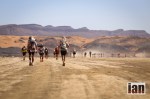
The “100 km of Sahara” maintains a departure from the oasis of Ksar Ghilane, in the great Eastern Erg for the 2014, 16th edition of the race. The arrival; the mythical oasis of Douz will be achieved after travelling 100 km’s in 4-stages with 3-nights undertaken in a tented camp.

©copyright.iancorless.com._MCA2074

The race itinerary is 7 days 6 nights. This competition is designed to bring out the spirit of challenge for those who create their own adventure. The race will have all the necessary ingredients of the extreme, but provides a race structure and format that is accessible to all. It’s a tough race but a race that is possible for all levels of ability!

©copyright.iancorless.com._BEN2939

The 100 km of Sahara is a qualifying race for the UTMB Race and will count for 2 points.

CourseQualificative2014_EN

Capacity, 150-people.

  • Program flight included € 1.840 Milan or Rome
  • Program without flight € 1.640 
  • Single supplement (3 nights in hotel) € 100

The participation fee includes:
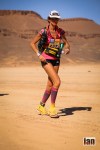
  • Flight to and from Djerba from Italy (only in the program with flight),
  • Transfers by bus and by 4×4 cars,
  • Full board for the whole week,
  • 3 nights in hotel and 3 nights in tents (6 people each),
  • Medical assistance during the race,
  • Tourist assistance,
  • Insurance.

During the race, a catering service provides food for all participants. All produce comes from Italy with the exception of fresh fruits and vegetables; they will be sourced locally in Tunisia. The menu will be balanced and based around runner’s needs and requirements.

©copyright.iancorless.com._MC22832

  • Breakfast: 
Coffee, tea, milk, cookies, cakes, fresh bread, jam, honey, muesli, cereals, eggs, cooked ham, cheese, fruits
  • Light lunch: 
Pasta or rice, hot or cold dish of meet, hot or cold side dish, salami and cold pork meat, Parmesan cheese, tuna, tomato salad, fruits
  • Dinner: 
Appetizers, pasta, rice, vegetable soup and broth, hot dishes of meet, hot or cold side dishes, tomato salad, Parmesan cheese, fruits, dessert, wine on the table.

What is not included?

  • Drinks and beverages at the hotel and in the oasis of Ksar Ghilane.
  • Airport tax.

WALKERS

©copyright.iancorless.com._BEN2769

Max number of participants: 20

A new addition to the race is a walking category. Just 20-places are available, allowing an opportunity to explore the emotions and landscape of the Sahara in a more relaxed way. A special program has been arranged and will be independent of the running race but will run in parallel.

Walkers will be accompanied with a guide, dromedaries and 4×4 vehicles. Dromedaries will carry small personal luggage and the vehicles will provide security and reassurance for all walkers.

©copyright.iancorless.com._MC22935

The treatment for walkers will be the same as for the runners; night accommodation will be nomadic tents with personal sleeping bags; breakfast, lunch and dinner will be provided in the camp with the entire group of participants.

©copyright.iancorless.com._MCA9737

ITINERARY

Sunday, April 27th, 2014

  • Flight Milan or Rome-Djerba
  • Transfer to the Hotel ****, dinner and overnight in hotel
  • It will be possible to leave the extra baggage in the hotel; it’s MANDATORY for all the participants to put everything you need in just one bag. Exceptions will not be allowed.

Monday, April 28th, 2014

  • Wake up at 7.30 am, breakfast in the Hotel and transfer to Ksar Ghilane by bus for the opening ceremony
  • Arrival in the oasis, accommodation in the tent camp equipped with common
  • Rest rooms and showers
  • Lunch at the camp with local food specialties
  • 3.00 pm opening of the shop “merchandising 100 km del Sahara”
  • 5.00 pm designation of race bib numbers and assignment of tent
  • groups.
  • 6 people per tent
  • Dinner made by the Zitoway staff and overnight stay in the tent of the oasis

Wednesday, April 30th, 2014 – 2nd and 3rd stage 26km + 9km (night stage)

  • 7.00 am breakfast and baggage delivery
  • 7.30 am start of walkers
  • 8.30 am start of the 2nd leg
  • Arrival at the camp, open lunch, relax in the afternoon
  • 7.00 pm dinner at the camp
  • 9.00 pm start of the night leg
  • Overnight at the camp

Thursday, May 1, 2014 – 4th stage marathon 42km

  • 6.00 am breakfast and baggage delivery
  • 6.30 am start of walkers
  • 7.00 am start of the 1st group
  • 8.00 am start of the 2nd group
  • 9.00 am start of the 3rd group
  • Arrival at the Hotel****Sahara Douz, end of the race
  • Lunch by the hotel restaurant
  • Relax in the afternoon

Friday, May 2, 2014

  • Wake up and breakfast
  • Transfer to Djerba, lunch at the hotel
  • Afternoon in relax by the pool
  • 8.00 pm dinner in the hotel and slide show of the race/li>
  • Overnight in hotel

Saturday, May 3, 2014

  • Wake up and breakfast
  • Transfer to the Airport of Djerba, on the way free lunch
  • After lunch transfer in airport for the flight back
THE FOLLOWING PROGRAM MAY CHANGE AND IS SUBJECT TO FINAL CONFIRMATION

PRACTICALITIES:
BAGGAGE

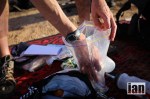
The backpack will be the only hand luggage on the plane, which should contain just what is necessary for the race – running shoes, shorts, t-shirt, and survival kitWe have already had an incident where someone’s personal luggage was in delay and they were at risk for not being able to participate in the race. If you have the necessary items in your backpack, you can run with no problem until your baggage arrives.

REQUIRED DOCUMENTS

  • I.D. is required to go in Tunisia for Italian people.
  • A valid passport is required and no vaccinations are needed at this time. It’s always recommended to check with your Embassy for any travel advisories.
  • A medical certificate issued by a sports medical center facility with a test of physical efforts confirming that the athlete is physically fit for this race is absolutely MANDATORY. Without this certificate, you will not be allowed to participate.
  • No certificate is required for walkers.

RACE CLOTHES

  • Shoes should be suitable for off road running, and should be a little oversized to allow for sore and swollen feet.
  • It is advisable to use gaiters for the sand, but make sure they are good quality and don’t impede performance.
  • If you tend to burn easily in the sun, it is not advisable to wear a singlet or tank top during the race.
  • T-shirts should be made of a suitable anti-sweat material like dryfit, etc.
  • It’s strongly recommended  to bring a Saharan scarf, called a “cechès”, that can be useful to protect nose and mouth in case of wind or sand storm as well as motorcycle glasses.

RACE BACKPACK

For safety reasons it is MANDATORY that participants have a race backpack that contains the following items:
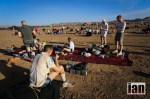
  • A minimum of 1-litre of water (inside the backpack or in flasks around the waist), salt tablets, survival blanket, whistle, lighter and chemical light .
  • A hat, sunglasses, protective sun lotion, a small knife and some Compeed plasters are also recommended.
  • The mandatory equipment may be verified at any moment and if an item is missing a penalty will be immediately applied per regulations.
  • The survival kit can be purchased from the Organisation.

MEDICAL CERTIFICATE

  • A medical certificate issued by a sports medical center facility with a test on physical efforts confirming that the athlete is physically fit for this race is absolutely MANDATORY.
  • No certificate is required for walkers.

SAFETY KIT

For safety reasons it is MANDATORY that participants have a race backpack

that must contain the following items:

  • A minimum of 1-litre of water
  • Salt tablets
  • Survival blanket
  • Whistle and lighter
  • Chemical light
  • Hat
  • Sunglasses
  • Protective sun lotion
  • Small knife
  • Compeed plasters

The mandatory equipment may be verified at any moment and if an item is missing a penalty will be immediately applied per regulations.

Test yourself!

If it was easy, anyone would do it… take yourself to a new level, add a new stimulus to your running. The Sahara will not only test your physical parameters but your capacity to control your mind.

Achieve your finish line!

More information or booking here:

← Back

Thank you for your response. ✨

GALLERY:

Organisation:

ZITOWAY Sport & Adventure
P.I. 02510760362
Tel. +39 059 359813
Fax +39 059 2920013
Port. + 39 337 573662
Skype: Adrizito

UTWT – Ultra Trail World Tour analysis

“We could make runners stash their own gatorade bottles (glass) and run with the horses, but it’s not 1974.” Craig Thornley, Western States race director.

It’s a good place to start. The world of trail, mountain, road ultra running is changing. In recent years we have seen rapid growth. Runners, elite and non elite want to test themselves on ever demanding courses and ultimately test themselves against each other and see who comes out on top.

However, ultra running is not quite like any other sport. It places extreme demands on the body. Pushed too hard and the body breaks… ask Geoff Roes what he thinks.

So, although an Ultra Trail World Tour sounds attractive caution is needed. But before we worry about those aspects, we first need to look at what this UTWT entails.

The UTWT was launched on September 1st amidst the Ultra-Tour du Mont-Blanc. The fact that the race was not over and that many runners were still trying to get to the finish line may well have been a touch of bad timing. Admittedly though, many press leave immediately after the event so this may very well have been a logistical issue.

One by one, the initial races were announced and with them a representative from each race came to the stage.

2014 confirmed races are as follows:

  • January 18th Vibram Hing Kong 100
  • March 1st The North Face Transgrancanaria
  • March 15th Vibram Tarawera 100km
  • April 4th to 14th Marathon des Sables
  • April 25th Ultra Trail Mt Fuji
  • June 27th The North Face Lavaredo Trail
  • June 29th Western States
  • August 29th The North Face Ultra-Trail du Mont-Blanc

So, this takes us up to August and apparently other races have been asked to participate and we can expect confirmation of these, on or before September 15th.

Of course, alarm bells initially ring at the presence of Western States. Secondary alarm bells ring at the presence on Marathon des Sables but I will come onto that later.

How does it work?

The UTWT will propose an international competitive circuit in partnership with the International Trail Running Association. The events should already be open to the widest public and will offer ‘everyone’ a unique chance, throughout each year, to participate. Question: How does that relate to Western States with limited capacity and demand far outweighing places available? Also, Marathon des Sables… UK entrants for example are on a three year waiting list.

In each race points are awarded to every runner and therefore at the end of the year, a male and female UTWT world champion will be announced. To attract elite athletes, certain events will have Ultra Trail Series status and these will offer more important weighting in the ranking. (I assume this will be for races like Western States?)

Runners will be presented with a Passport. This can be ordered online before the end of the year, it was not made clear if these passports need to be paid for? When you complete a race, you are awarded a visa, this is added to your passport and shows your completion.

The minimum race distance will be 100km, races must have had two previous editions to qualify and already have 500 minimum participants (again, Western States has less than 400). A minimum of twenty countries will be represented and be emblematic venues.

So, how do you become World Champ?

All finishers in every race will be awarded points according to his performance. These points will be added to the International ranking and updated after each race. This ranking will be available on line at the UTWT website. The circuit will be an International competitive circuit in partnership with the ITRA (International Trail Running Association).

As mentioned, a limited number of races will be called Ultra Trail Series and you may only use two best performances from these races in building up points for the world title. In total, three races score, so, you could have two UTS races and one other.

A world champion lady and male will be announced each year.

ANALYSIS

Okay, first and foremost, we don’t have the complete picture, so, you will need to be patient.

The press conference was slick, enticing and all was going well until a call for questions came. I jumped in and asked about Western States…

It’s not just ‘any’ race, it has a limited field, it’s a desirable race, what is the impact and so on a and so on.

The answer was vague and very unconvincing. In actual fact it was embarrassing. One comment that came from the stage was, “it’s early days and we haven’t worked these things out yet”. Not a good start.

One journalist asked several questions:

Will you have doping control? YES

Will you have prize money? EACH INDIVIDUAL RACE CAN HAVE PRIZE MONEY, IT’S UP TO THE RACE. We did not have clarification though if the world title had a prize, other than the ‘title’ of world champ.

What will the elites get? ELITE 1 RUNNERS WILL GET TRAVEL AND HOTELS PAID FOR. But they never clarified if that is open to all elite 1. Lets say 50 want to do Western States, will they all get hotels and travel?

The series very much seems like the Skyrunning concept, is this competition or are you offering something different?. THE RACES WILL BE 100km OR MORE AND ON VARIED TERRAIN, SKYRUNNING WORK TO A SPECIFIC FORMAT AND WITH THE ODD EXCEPTION, ALL RACES ARE UNDER 100k. I agree, the UTWT is very different to Skyrunning, it is taking some principles from the Skyrunning ethos, for example, a series of races, three qualify out of five and the winner is world Skyrunner champion but the terrain is varied. Skyrunning look at altitude and technical.

At this point, the stage participants could feel more and more questions were coming and the conference was drawn to a close quite quickly.

Overall, it started well and ended badly. It certainly appears that the UTWT team wanted to maximise the UTMB as a platform to launch but they had far too many question marks and lack of answers to leave me feeling reassured or convinced.

POINTS TO CONSIDER

I have to say, I like a championship that includes mixed terrains and distances. That will provide a true rounded athlete. However, the UTWT never specified how runners enter, so, for example, to qualify, do you have to do one 100k, one 100m and one stage race? Do you have to do one on sand, one in the mountains and one jungle for example? Without this specified, I could maybe do three 100k races on fast trail and get maximum points if that is what I was best at? We need clarification.

World destinations, iconic races are great. I can see the beauty and excitement of going to New Zealand, Hong Kong and so on, BUT these races already exist and to be honest, if I went to one it would be highly unlikely I would go to another. Far too expensive for the average pocket.

Travel and hotels for elites are all well and good but who is paying? Surely that is what sponsorship from a team is about. I am we’ll aware that places are offered and expenses paid already exists but this is very much in conjunction with a race, the RD and the athlete. Blanket travel and hotels need to be paid for and by someone and that will come down to the everyday runners and the races themselves who I am assuming are paying a yearly fee to be part of the UTWT. Transparency is needed here. Many figures have been mentioned that ravces are paying 15,000 to 30,000 euro to be part of UTWT. I believe this to be speculation.

The UTWT title needs additional incentives. Prize money! However, that has no bearing on all the other runners. I can’t help but think that only a small few (who are rich enough) will travel to several continents to experience the world tour.

What will the races get out of it? Well, recognition and exposure for one. But, I know I go back to Western States, does that race need more exposure… Does it need more entries, does it need more PR? Same applies for UTMB, you already have to get points and enter a lottery, so, if you get a ‘Passport’ does it mean you get automatic entry in a UTWT event? Confusing!

MDS is a completely different race to all the others, to have just one stage race and no others would be long term problematic. In addition, I am not even sure it should be in this series. A great race but is a unique race.

We also need to think about the runners, all the runners. The calendar is increasingly becoming larger with more and more choice. Do we really need to insist that participants run three races over 100k to be a world champion? In addition, for this to be a true championship, one of those three races would need to be a 100-miles.

Ultra is not always better when longer. I wonder if some races under 100k should be allowed?

Why not have an Ultra World Tour and include road? Comrades is an iconic race for example and surely a true ultra world champ should be able to run road too?

Are we seeing the creation of an ‘Ironman’ for trail or is this ‘just’ a series of races with quite simply a world title?

I’d like to know who is beyond this with clear transparency. I have experienced many things in the last twelve months that I have questioned and now suddenly they all add up. For example, late 2012 WAA (What an Adventure) became the official pack for MDS. At the 2013 MDS, Catherine Poletti was present at the finish in the Sahara and then WAA became the official supplier of the blue UTMB bag. Also, I believe that Catherine Poletti visited Western States to view the event… So, is the UTWT an extension of the UTMB organisation and what does it mean? Is this good or bad? I merely ask the question.

At this stage we do not have any answers. Paul Charteris from Tarawera ultra was prepared on Sunday at the press conference, although he did not attend he was online and responded to my tweets. He also had a press release ready and he has been open and transparent. Equally, Transgrancaria have been proactive and the team at Lavaredo I spoke with personally. They all want the races to be valued, increase in size and stature and be part of something bigger. I think Craig Thornley and team are having a harder time. Western States is the holy grail and change here will be difficult and in many cases not welcome. The sport must move on and grow and that means all the sport, Craig in many ways is correct when he tweeted, “We could make runners stash their own gatorade bottles (glass) and run with the horses, but it’s not 1974.”

So what do YOU think?

I don’t have the answers and I will have missed many points. Please provide some input.

*Please note, for reasons of clarity, I do work alongside the ISF Skyrunning Federation and my thoughts and comments in this posting are impartial and with the pure objective of what is the best for our sport.

Marathon des Sables – Trail Magazin

Really pleased to have a six page photo article on the 28th edition of the Sultan Marathon des Sables in Trail Magazin.

http://www.trail-magazin.de

The magazine is available for download for just 4 euros from this link: HERE

Trail Magazin - Marathon des Sables. iancorless.com

Trail Magazin – Marathon des Sables. iancorless.com

MDS ‘Snapped’ Running Fitness

NO OVERTAKING ALLOWED!

MDS snapped RF 0713Running Fitness ‘Snapped’ July 2013.

Sometimes the nature of running courses mean that, despite our best efforts, overtaking the competitor in front is simply not possible. It might be too narrow, it might be too boggy, but it’s not often that overtaking is precluded by the mother of all sand dunes!

This striking images taken by our man on the ground (or in the desert) Ian Corless shows competitors in this year’s Marathon des Sables doing battle with the course – rather than each other!

The 28th running of the epic multi-day race in the Moroccan Sahara, this year’s race added a killer wind into the equation – as if it wasn’t hard enough already. We’ll be bringing you the full report in the August issue of Running Fitness.

Links:

  • Order the magazine and subscribe HERE
  • Images from the Marathon des Sables are available to purchase for personal use HERE


Protected: Darkness to light – Marathon des Sables

This content is password-protected. To view it, please enter the password below.