Joyline Chepngeno’s Ban: The Complex Web of Doping, Management, and Responsibility

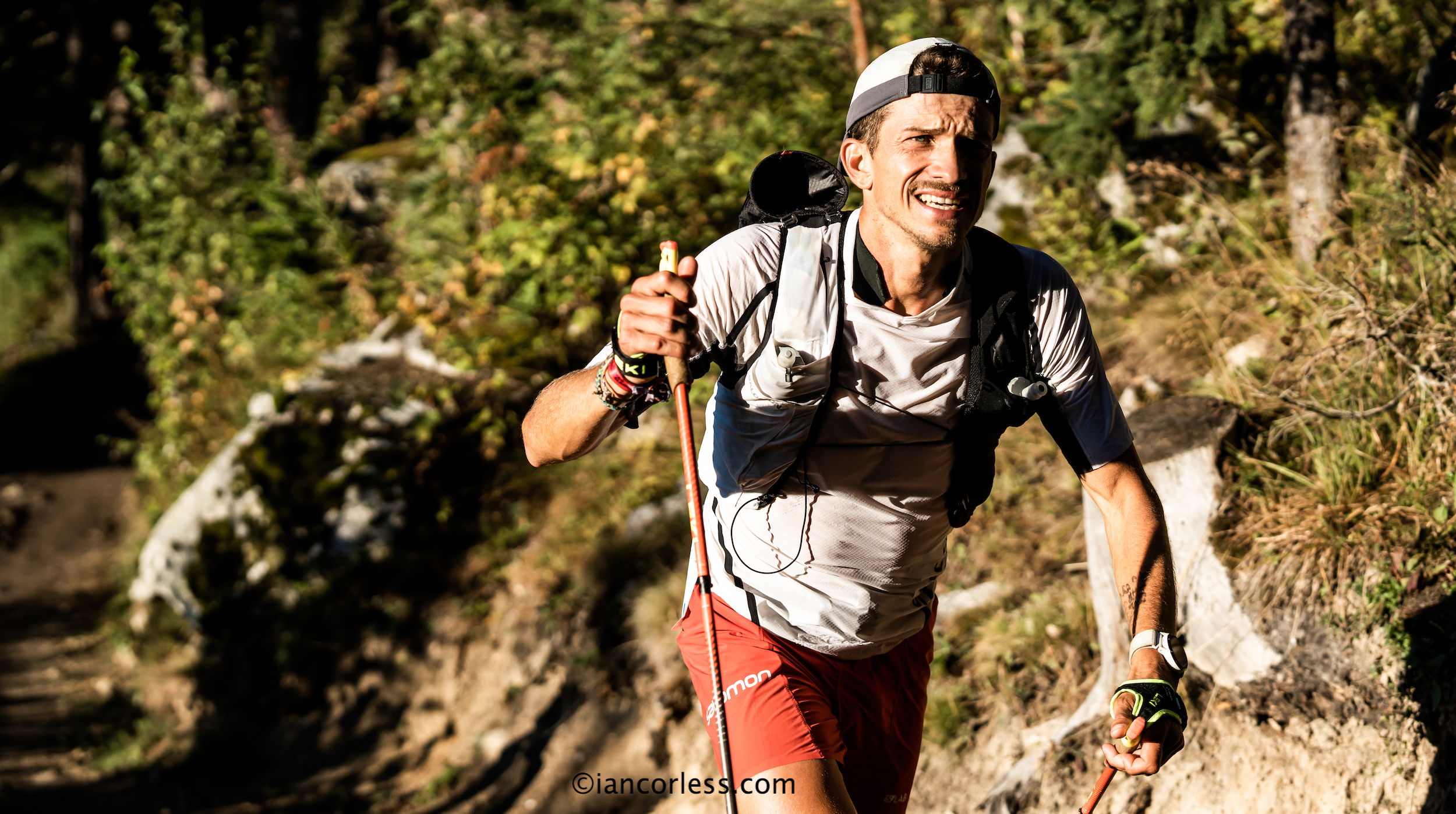
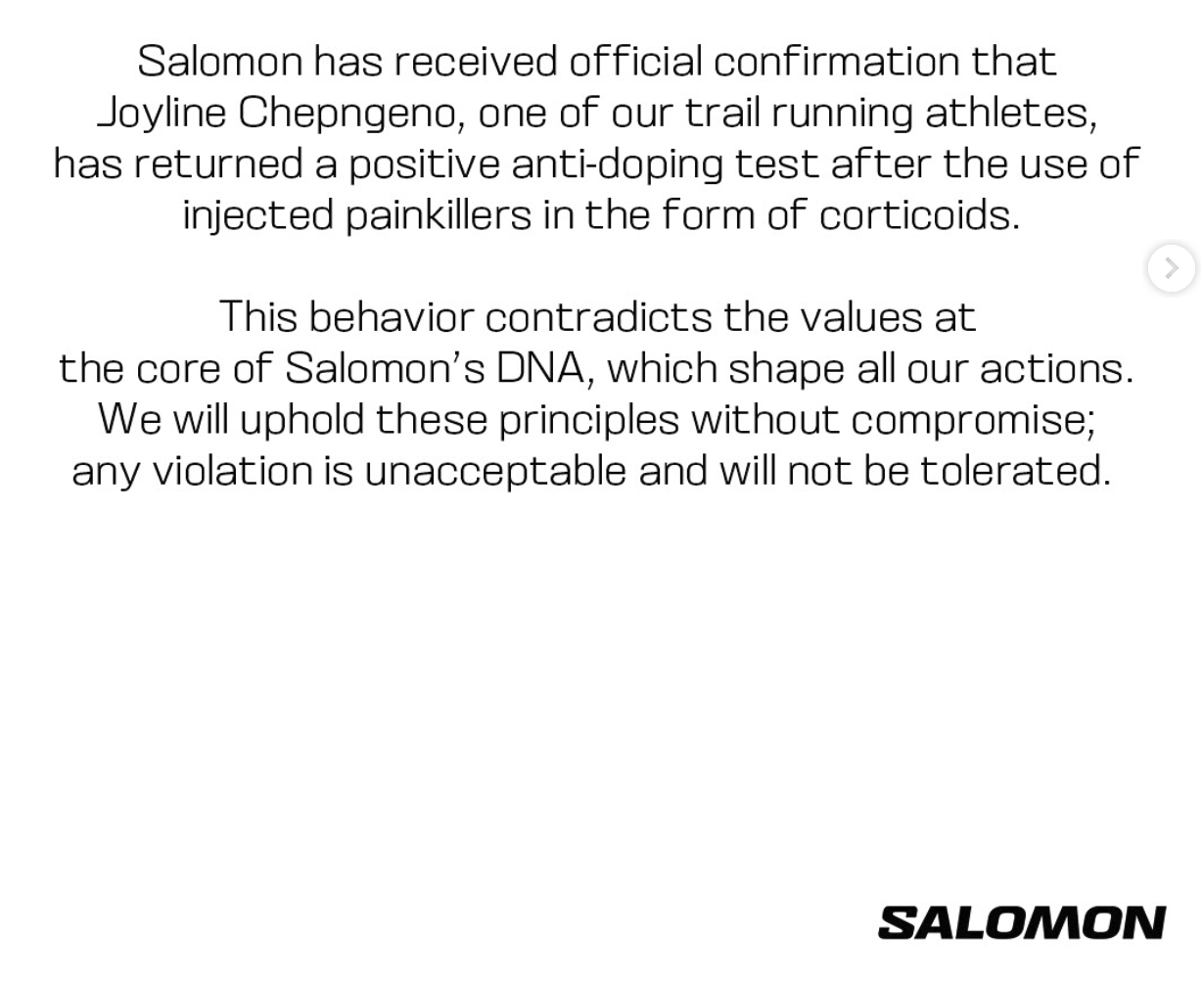
Copyright Salomonrunning via Instagram

When news broke that Kenyan trail running champion Joyline Chepngeno had been banned for two years after testing positive for triamcinolone acetonide, the reactions were swift and polarised. On one side: condemnation and disbelief. On the other: questions about fairness, context, and whether the system designed to protect clean sport actually confuses athletes into mistakes.

Let me be clear, there is no place for doping in any sport, however, the Chepngeno and Angermund cases should and must make us think deeper.

Chepngeno admitted she received an injection in July, and the drug in question – a corticosteroid widely used for inflammation – sits in one of the sport’s murkiest regulatory zones. Under the World Anti-Doping Agency (WADA) code, triamcinolone is banned in-competition, unless the athlete secures a Therapeutic Use Exemption (TUE). Sounds simple enough, but in practice the rules are anything but. The case raises bigger questions: Was she naive? Did her team fail her? Was Salomon right to sever ties so quickly? And is WADA’s own ambiguity part of the problem?

“Chepngeno may have taken the injection for a genuine medical issue – inflammation, pain, or recovery – but without the right paperwork, timing, and guidance, it became a career-altering violation.”

Kenya’s Reputation and the Weight of History

Kenya has long been under the microscope for doping violations. In recent years, its athletes have faced increasing scrutiny, with dozens of cases making international headlines. This history frames Chepngeno’s case: even a whiff of doping from a Kenyan runner is quickly interpreted through the lens of systemic abuse, rather than individual misjudgment.

But this framing risks oversimplifying. Many Kenyan athletes operate in environments with limited medical oversight, inconsistent education about anti-doping rules, and managerial structures that prioritize racing and prize money over compliance. Chepngeno may have taken the injection for a genuine medical issue – inflammation, pain, or recovery – but without the right paperwork, timing, and guidance, it became a career-altering violation.

Takon from Instagram Sierre-Zinal offical feed ✍️ Ludovic Medwed 📸 Keystone

The Role of the Manager/ Coach: Protection or Neglect?

A professional runner’s manager/ coach, in this case, Julien Lyon, is more than just a race scheduler. They are, or should be, a gatekeeper for the athlete’s career:

Pros of strong management:

  • Ensures the athlete understands what substances are permitted.
  • Helps navigate the dense bureaucracy of WADA codes, TUE applications, and medical clearances.
  • Provides financial and legal protection when mistakes happen.
  • Balances competitive demands with athlete health and long-term career viability.

Cons or failures of management:

  • When managers are absentee or focused solely on performance, athletes are left vulnerable.
  • In many Kenyan cases, managers are foreign-based agents whose primary incentive is to get athletes on the start line, not to invest in their education.
  • A lack of day-to-day oversight means athletes may trust local doctors, clinics, or informal advice without realizing the implications.

Chepngeno’s admission that she did take the injection suggests honesty, not deception. But it also signals that no one around her flagged the risk. A competent manager should have either prevented it or ensured the correct exemptions were in place. If the manager’s job is athlete protection, this could look like a potential failure? **

“The Sierre-Zinal race organisation has announced that it has banned Chepngeno’s coach Julien Lyon and his Milimani Runners team from future competitions. It has also, according to the statement, ordered Lyon to ‘fully reimburse prize money, accommodation costs and administrative fees arising from the case – including reputational harm – owed to the Sierre-Zinal Association’.” – (c) Runner’s World

Lyon also coached the 2022 Sierre-Zinal men’s and women’s champions, Kangogo and Chesang, both of whom were later suspended and stripped of their titles for doping.

In response to Sierre-Zinal, Julien Lyon via Instagram stated: “Finally, I must respond to the serious and defamatory accusations published by the Sierre-Zinal organization. These statements are completely unacceptable. I am already devoting significant energy to restoring the facts and I have no intention of giving up.” **

Update September 13th: **

Julien Lyon has responded with a clear statement on Instagram, read HERE.

Let me be absolutely clear:
• I had no knowledge whatsoever of the use of this substance.
• I have never, in any way, encouraged or tolerated such an act.
• I have always fought against doping and I will continue to do so.
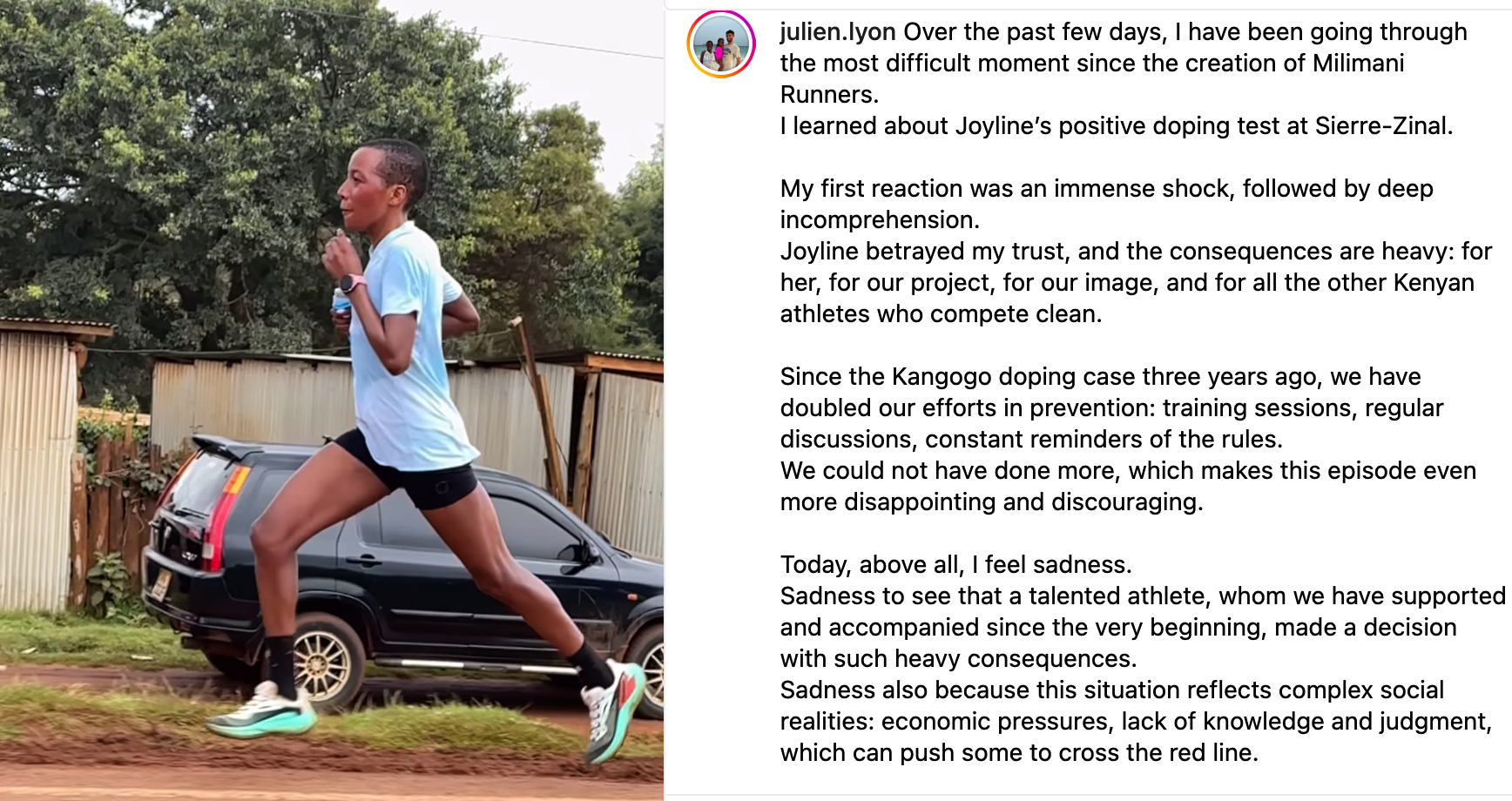
From now on, I am already reflecting on concrete solutions: implementing more regular out-of-competition testing, even if it represents a significant cost that must be discussed with our partners, and developing closer, culturally adapted medical support in Kenya. I deeply regret that Joyline may have felt left alone with her pain and doubts. She had my full support, and I regret not being even more present for her during this difficult time. I want to ensure that Milimani Runners athletes feel supported not only in their sporting careers, but also in their health, their choices, and their education. – Julien Lyon via Instagram

The Sponsor’s Role: Salomon’s Swift Rejection

Salomon, Chepngeno’s sponsor, moved quickly to cut ties. On one level, this is understandable: brands cannot afford reputational damage in a sport that already battles questions of integrity. Corporate zero-tolerance policies are often blunt but clear: fail a doping test, and the contract ends.

View the Instagram post HERE

But here lies the ethical dilemma. Was Salomon protecting the sport, or protecting its image? By severing ties without nuance, the brand effectively punished Chepngeno twice: once through lost income and again through public rejection. A more responsible approach might have been suspension pending investigation, or supporting her with legal and educational resources.

Sponsorship is not just about exposure and winning; it’s also about athlete welfare. When brands abandon athletes at the first sign of trouble, it signals that their investment was never truly in the human being, only in the results.

A Contrast: The Case of Stian Angermund
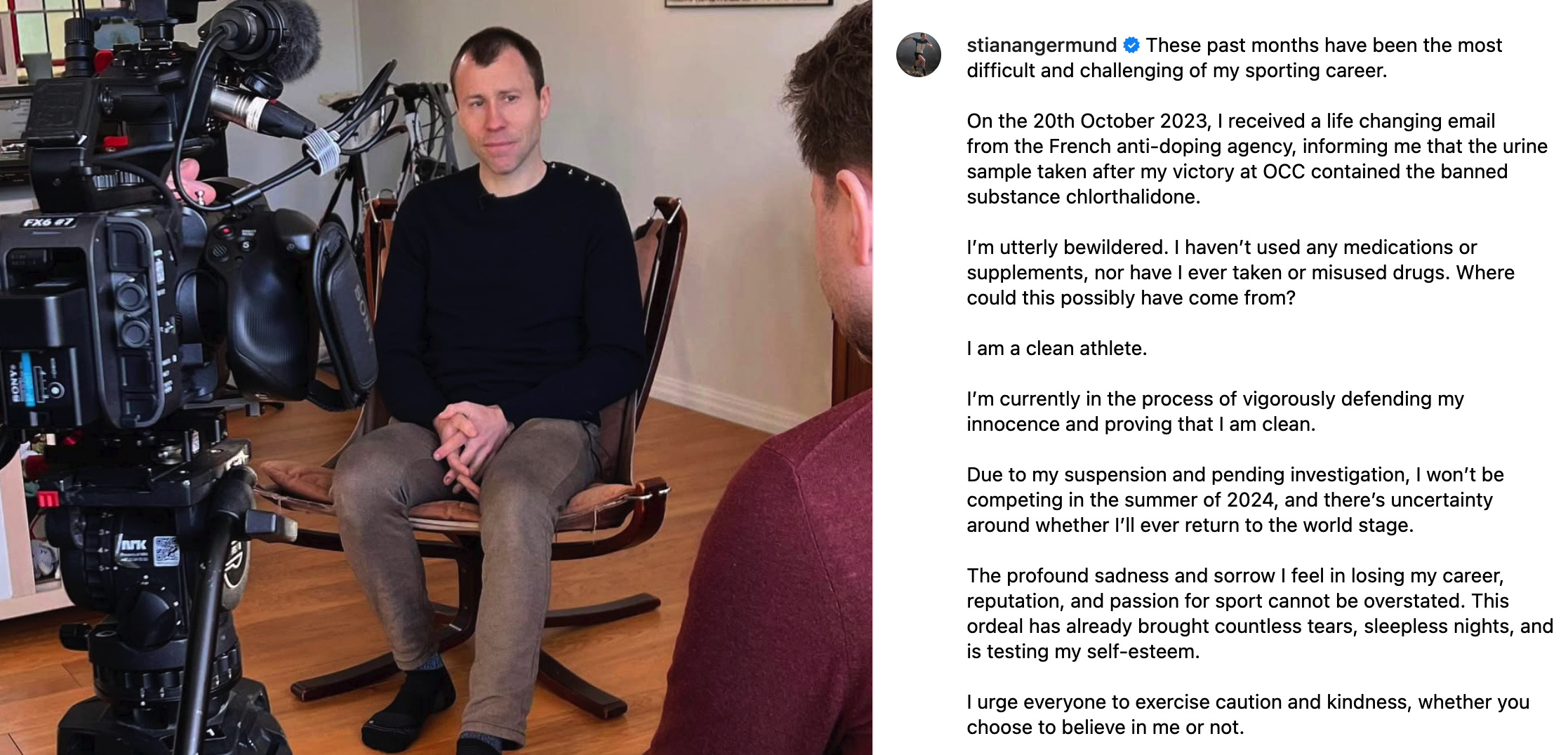
The difference in how Chepngeno’s case was received becomes starker when compared with that of Stian Angermund, one of Norway’s most successful trail runners. Angermund also tested positive in 2023 for the diuretic chlorthalidone.*

  • *corrected for original post

Read on Instagram HERE

Yet the public response to Angermund was notably softer. Many in the trail running community rallied around him, framing him as a victim of circumstance, a clean athlete caught in an unfortunate situation. His protestations of innocence gained traction, with commentators and peers stressing his reputation, personality, and history as evidence of credibility.

On February 10th, 2024, the trail running world was rocked by news out of Norway – the two-time World Champion, Stian Angermund, had tested positive for the diuretic chlorthalidone. via Freetrail here.

Chepngeno, by contrast, has not been afforded the same sympathy. Instead, her case was quickly folded into the broader narrative of Kenya’s doping crisis, with far fewer voices offering the benefit of the doubt. This disparity speaks volumes about how nationality, reputation, and public image shape perception. Where Angermund’s case was seen as an anomaly in a clean career, Chepngeno’s was framed as part of a pattern – even though the substance she took is far more medically common, and her admission suggested transparency, not deception.

Sponsors and Double Standards

The sponsorship response reveals this double standard even more starkly. Salomon cut ties with Chepngeno almost immediately, distancing itself without nuance. In contrast, sponsors and partners in Angermund’s case were slower to act, with ‘some’ showing signs of support while the investigation unfolded. The messaging was different too: in Angermund’s case, words like uncertain, unfortunate, and out of character dominated coverage; in Chepngeno’s, the language leaned toward guilty, systemic, and Kenyan problem.

This isn’t just about corporate crisis management – it reflects deeper biases. Western athletes with strong reputations are given space to argue their case, while Kenyan athletes are too often treated as disposable. If sponsors only invest in results but not in athlete welfare, the sport risks reinforcing inequities that mirror global power imbalances.

WADA’s Ambiguity: Is Triamcinolone Doping or Not?

Here lies the central confusion. Triamcinolone is not an anabolic steroid. It is a corticosteroid — widely prescribed to treat inflammation and injury. In many medical contexts, it is routine and even necessary.
WADA bans it only in-competition, unless a TUE is granted. Out-of-competition, it is allowed. The catch? Athletes often receive injections or treatments without realizing where the “competition window” starts or ends. Did Chepngeno’s injection fall within the banned period? Did she even know the timing mattered?

And yes, I understand that the athlete has a responsibility to know and understand WADA rules.

The World Anti-Doping Code states the roles and responsibilities that athletes have in relation to anti-doping. So, athletes must: know and abide by the Anti-Doping Rules, policies and practices. be available for testing at all times.

The ambiguity sends mixed messages: if a substance is dangerous or performance-enhancing, why is it allowed out-of-competition at all? And if it is medically justifiable, why is the TUE process so opaque and burdensome, especially for athletes in countries with limited infrastructure?

Instead of clarity, WADA’s rules create traps. Athletes are told they are responsible for every substance in their body, but the system seems designed to catch technical errors as much as intentional cheats.

Was Chepngeno Naive?

The answer is complicated. On the surface, yes: admitting to an injection without checking WADA guidelines suggests a lack of awareness. But deeper down, her admission looks less like naivety and more like honesty. She did not hide the treatment, nor attempt to deny it. She took what may have been a routine medical step, unaware that it carried career-ending consequences.

The real naivety may not be hers but the system’s – assuming athletes across all geographies, languages, and economic realities can navigate a code written for those with legal teams and medical advisors.

Does Julien Lyon and Salomon have a responsibility? **

Financial and Moral Implications

For Chepngeno, the fallout is severe and many of you will say, good, that is how it should be.

  • Financial: Two years off the circuit means lost race earnings, lost sponsorship income, and a gap in her career at what should be her peak. For athletes from Kenya, whose entire family and community may rely on those earnings, the consequences are devastating.
  • Moral: Her reputation is damaged, regardless of intent. Once branded a “doper,” the stigma rarely fades, even if the violation was technical rather than malicious.
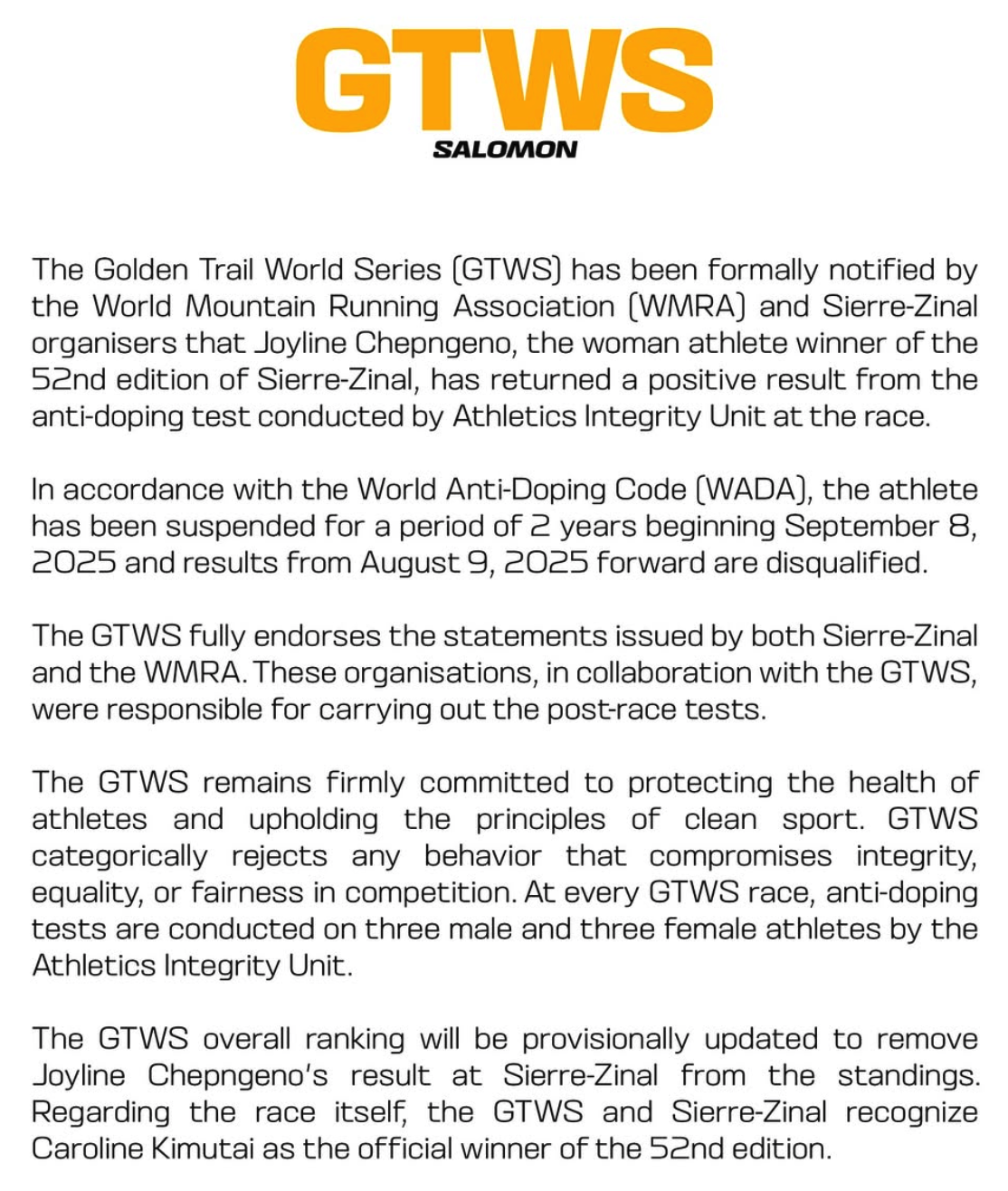
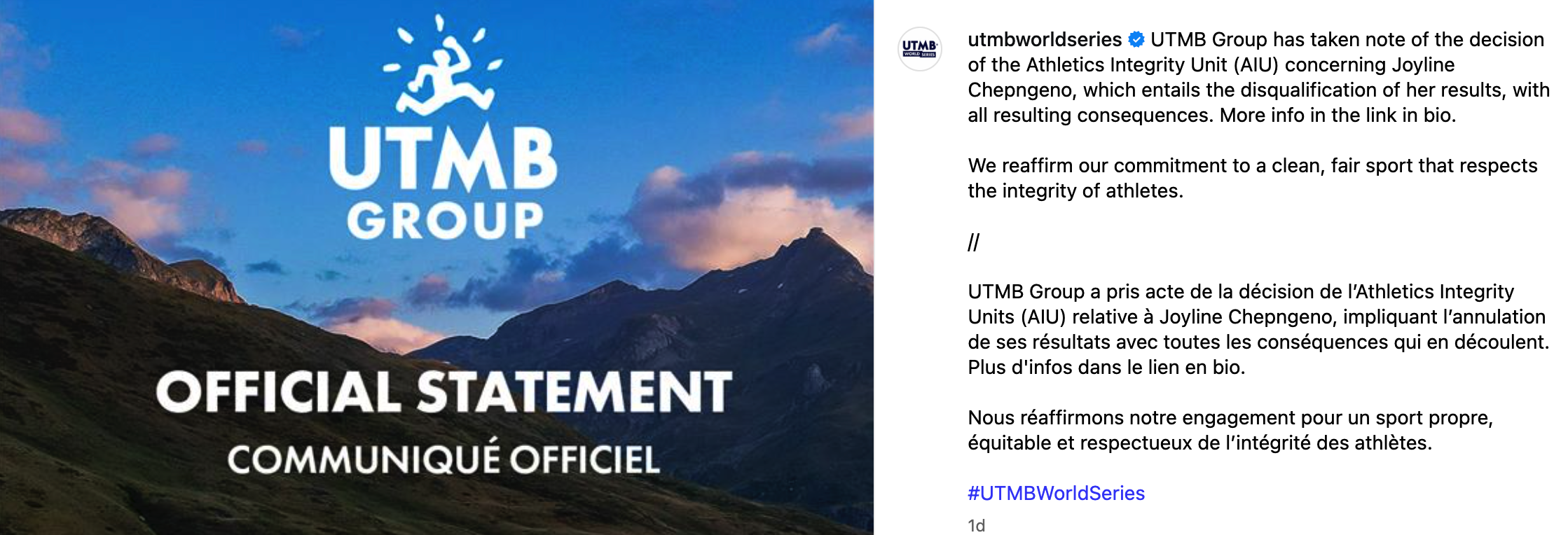
Copyright GTWS via Instagram – https://www.instagram.com/goldentrailseries/

For the sport, cases like this erode public trust. Fans are left asking: was she cheating or simply careless? For sponsors, the financial risk increases – which in turn makes them more likely to cut ties at the first sign of trouble. And for Kenya, each case deepens the perception of systemic doping, even if the reality is far more complex.

What can be learned from this?

Contextual Justice: Not all violations are equal. Intent should matter as much as presence. Athletes like Chepngeno, who admit to treatment rather than hide it, deserve proportionate, not punitive, responses.

Clearer Rules from WADA: The line between therapeutic and prohibited must be made clearer. If triamcinolone is truly performance-enhancing, ban it outright. If it is a legitimate medical treatment, streamline TUEs and ensure athletes understand the timelines.

Better Athlete Education: Federations, sponsors, and managers need to invest in training athletes on what substances mean, how to apply for exemptions, and what to do before accepting treatment.

Stronger Manager Accountability: Managers should be held to professional standards. If their athlete tests positive due to negligence in guidance, they too should face consequences.

More Responsible Sponsors: Brands like Salomon should balance integrity with support. Cutting ties instantly might protect the logo, but it abandons the athlete. Support through due process would show real leadership.

Conclusion

Joyline Chepngeno’s ban is not just the story of one Kenyan athlete caught out. It is a case study in the tangled web of responsibility in modern sport: the athlete trying to heal, the manager who should have protected her, the sponsor that walked away, and the global regulator that still speaks in gray areas.

Was she naive? Perhaps. But more importantly, she was failed by a system that claims to protect athletes but too often punishes them for being human. Until WADA, managers, and sponsors share the burden of responsibility, athletes – especially those from vulnerable contexts like Kenya – will keep paying the highest price.

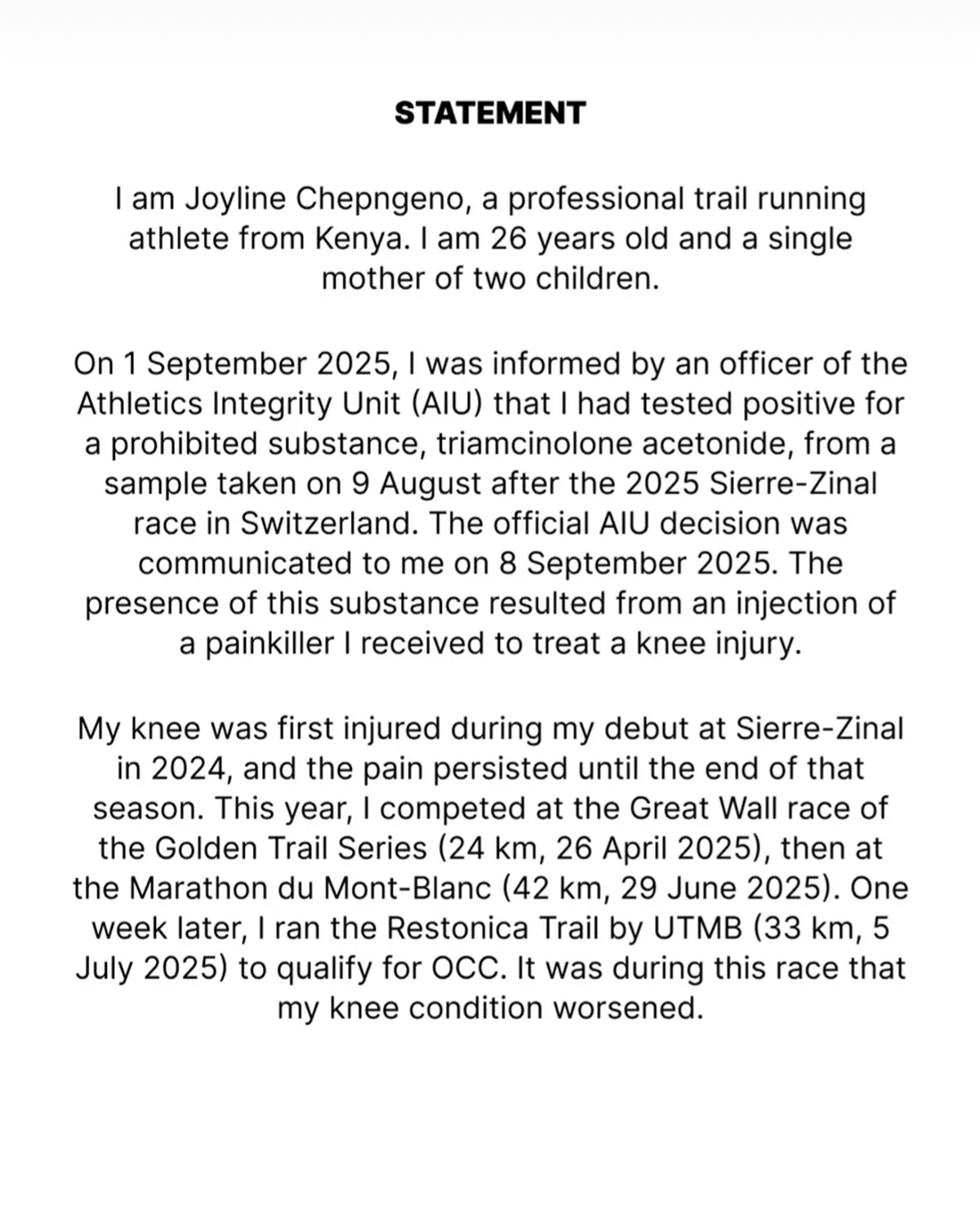
Update 12th September, Joyline Chepgneno posted on Instagram the following:
Final Note:

This article and post is designed to give a perspective to make the reader ask questions. To be clear, I am completely against doping, there is no place for doping in sport. I am well aware, for some, this article and words may make you angry – that is okay. Feel free to respond and counter with good debate and argument and be polite and professional.

** edits September 13th.

**Julien Lyon has taken exception to certain points raised in this article. Quoted below.) I stress that as a journalist, I am entitled to the right to freedom of opinion and expression, including the freedom to hold opinions without interference and to seek, receive, and impart information and ideas through any media, regardless of borders. As stipulated in article 19 in the Universal Declaration of Human Rights. However, it is important to be fair and allow all viewpoints to be considered.

“Several passages mention my name and attribute facts and responsibilities to me that are inaccurate and damaging to my professional reputation. For example: – You state that “the Sierre-Zinal organisation has announced that it has banned Julien Lyon and his team” – however, I have not received any official notification of such a decision, and no sanction has legal standing at this time. – You write “this looks like a clear failure,” implying that I failed in my duty to protect the athlete – this value judgment is not based on any objective evidence and constitutes a serious attack on my professional integrity. – The phrase “Lyon has history” suggests I have a track record of misconduct, which is defamatory. I therefore request that you either: – immediately remove these passages, or – publish a right of reply that sets the record straight.”

Of course, Julien Lyon, like anyone who reads this article, has a right to reply and the comment section is open for this.

Follow Ian Corless

Instagram – @iancorlessphotography

Twitter – @talkultra

facebook.com/iancorlessphotography

Web – www.iancorless.com
Web – www.iancorlessphotography.com

Salomon S/Lab Ultra Dust Shoe Review

Photo by Ian Corless

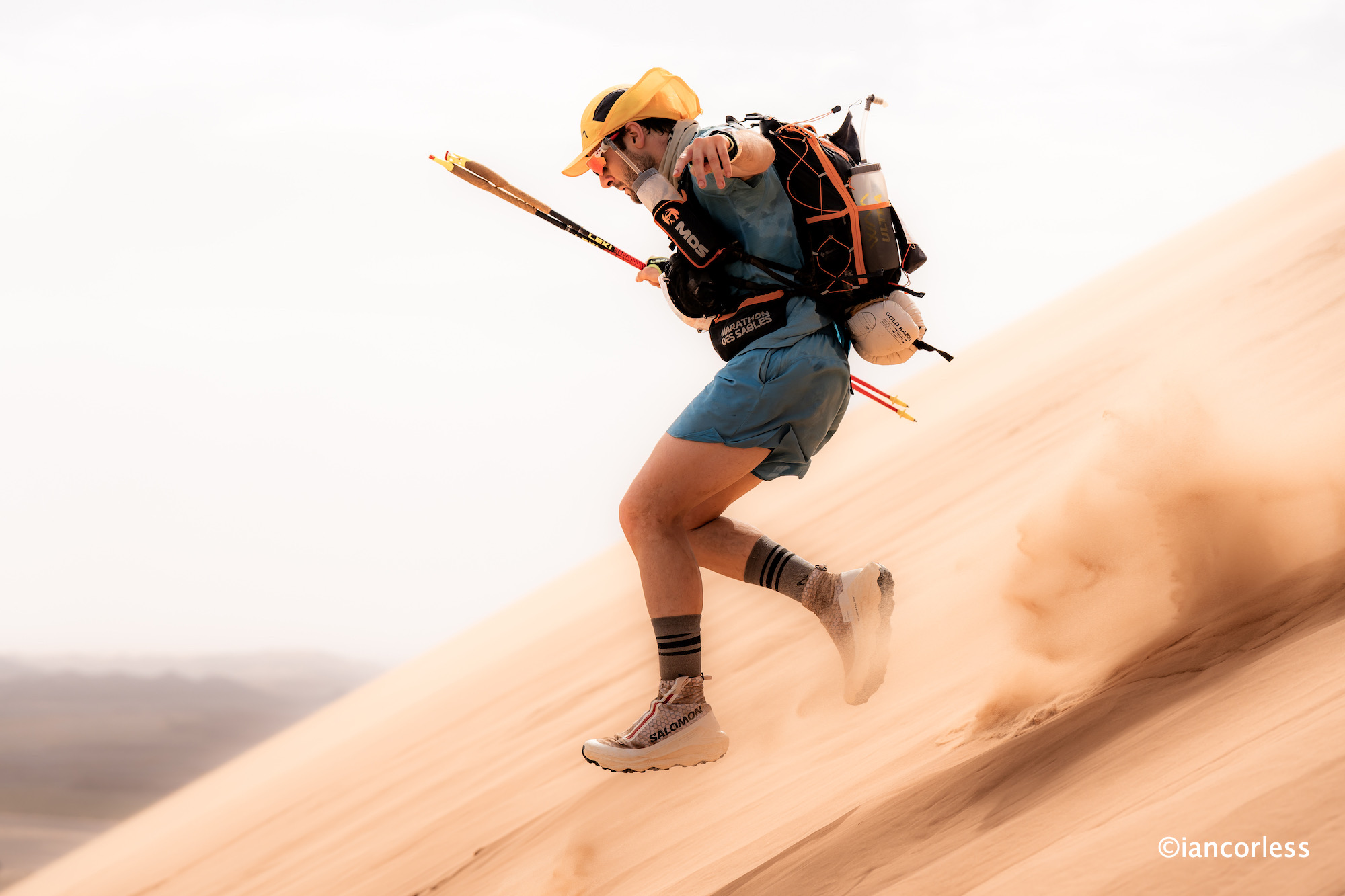
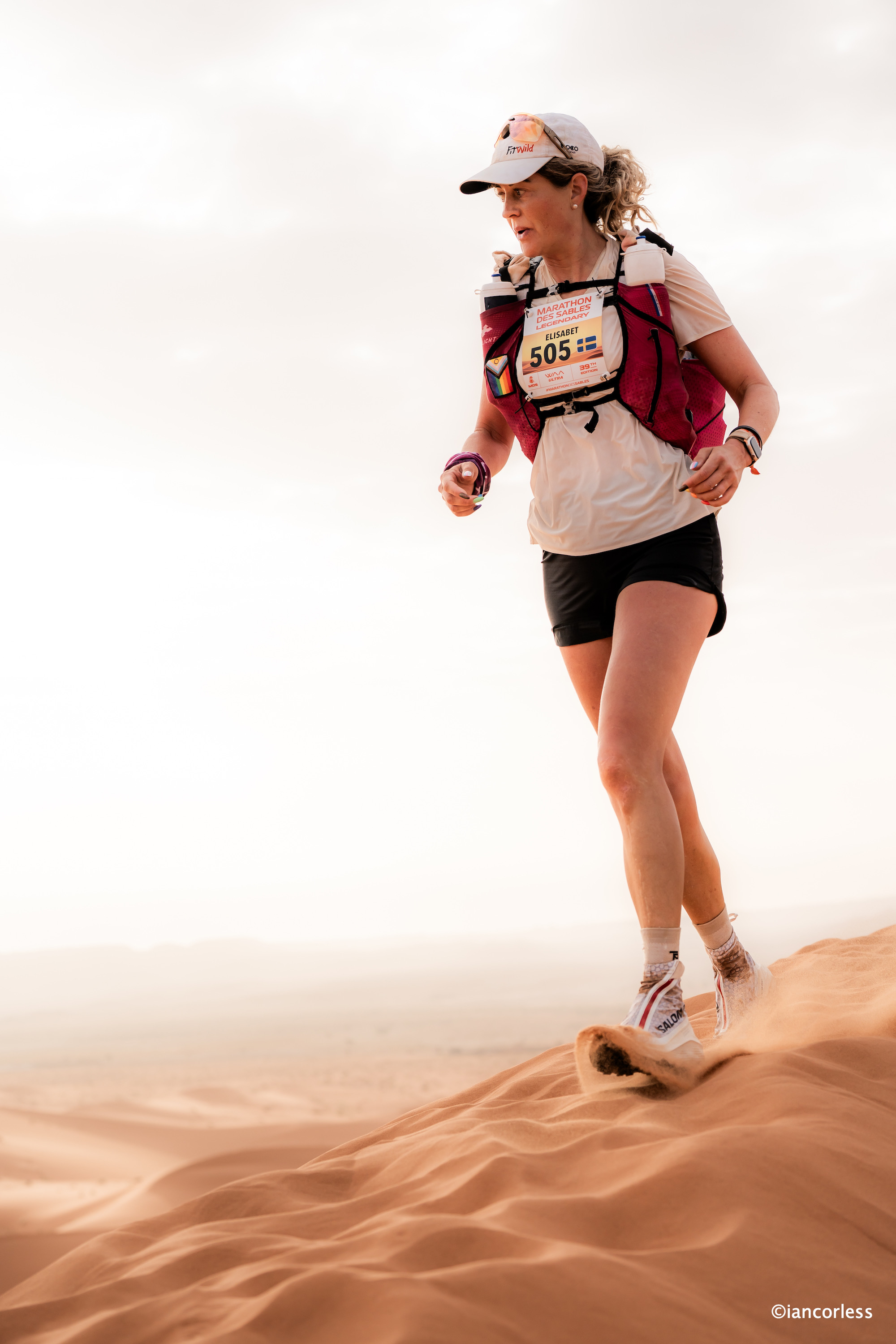
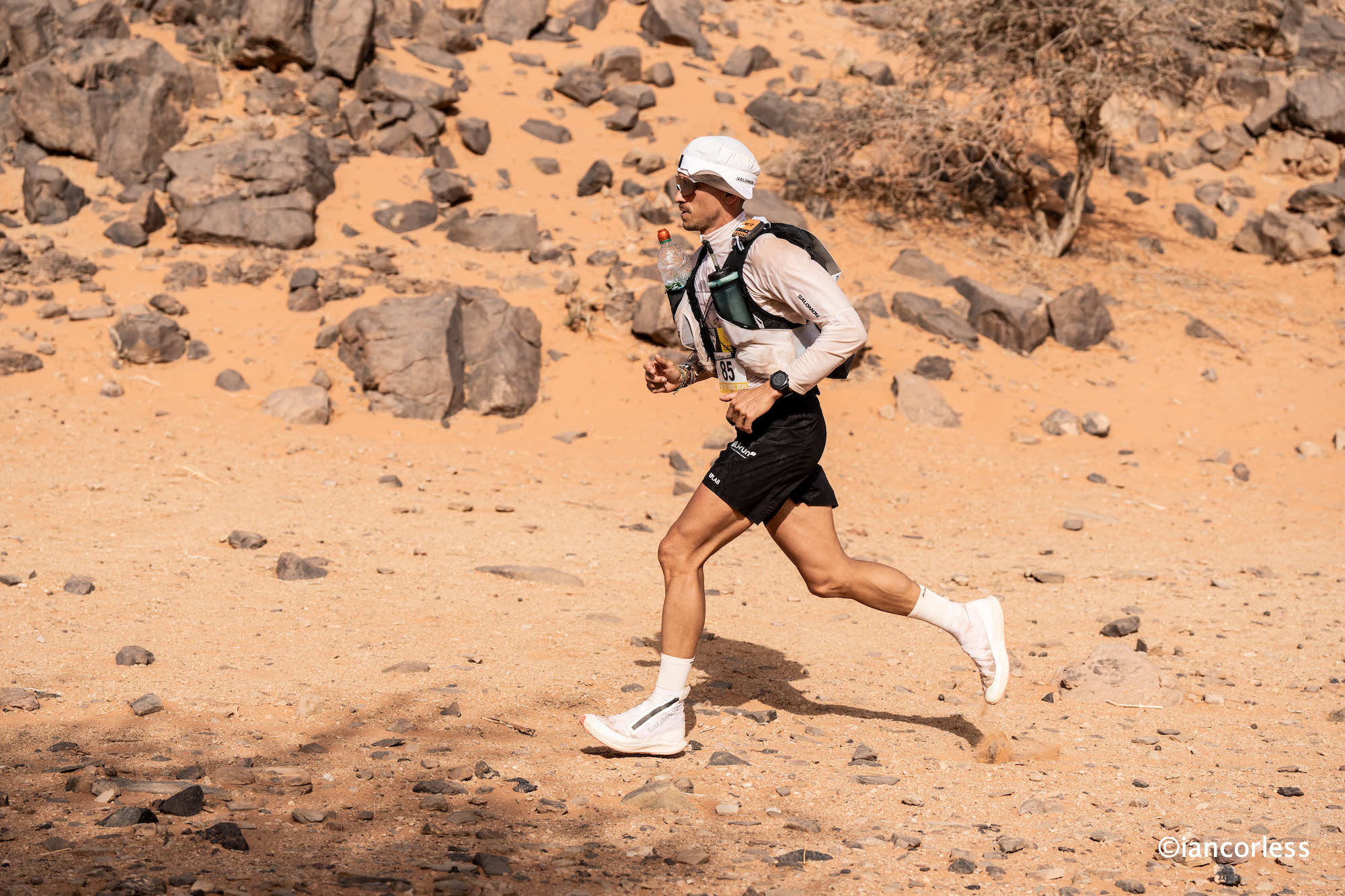
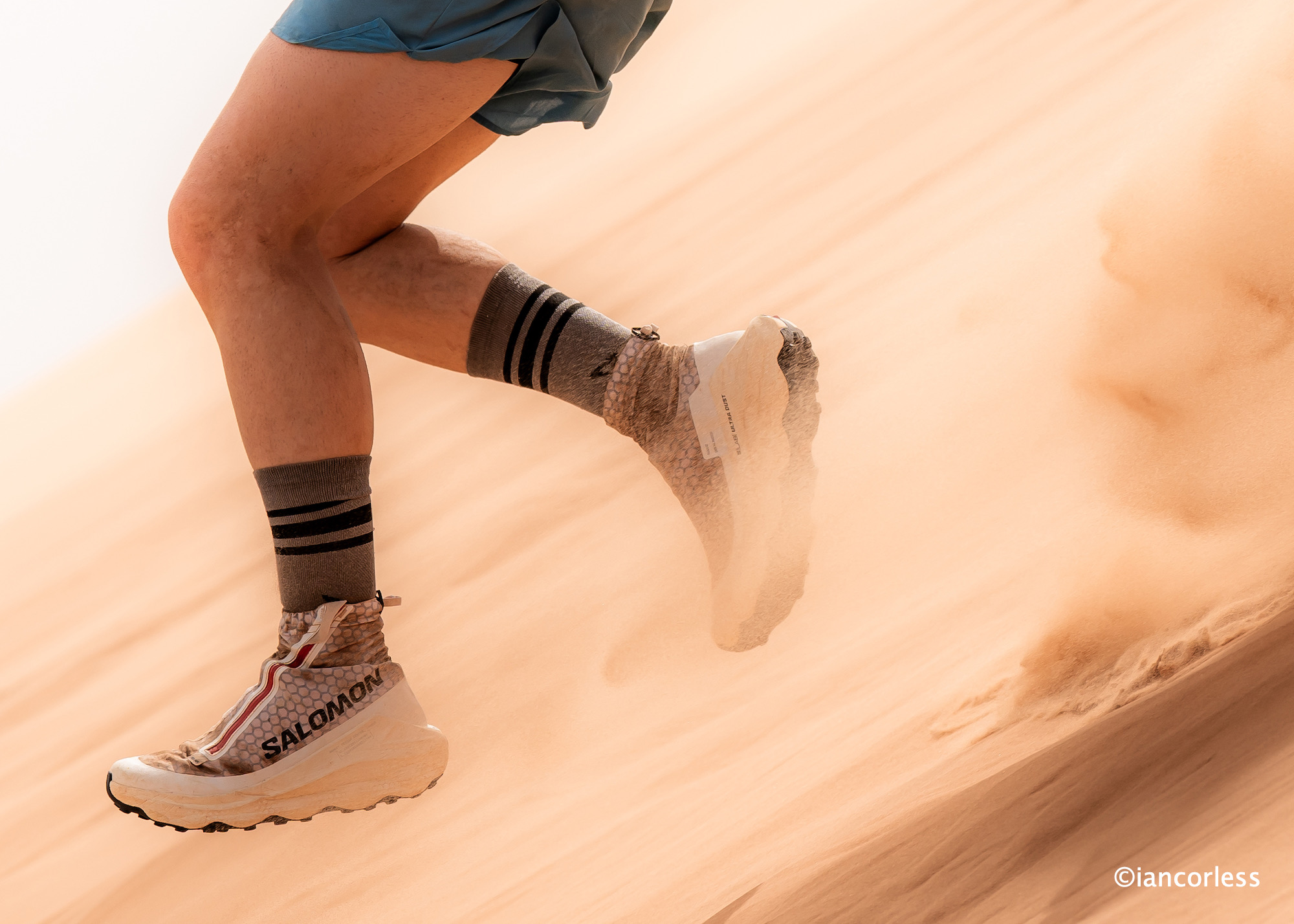
The Salomon S/LAB Ultra Dust isn’t just a rehash of the S/LAB Ultra Glide with a new colour way, no, this shoe is a purpose-built shoe designed specifically for desert ultra racing, developed on the feet of Mathieu Blanchard at Marathon des Sables in 2023.

©iancorless

The original incarnation used a different integral shoe, with feedback from Mathieu and others, it was decided a more cushioned shoe was required; step in the new Ultra Glide. The Ultra Dust not for everyone, and it’s not trying to appeal to everyone. This shoe is a specialist product, and like any anything that’s made for one task, it excels in that arena, but has trade-offs elsewhere.

Sizing is true to size. Due to the style of the shoe, you definitely do not want them too big. They need to fit correctly for good foot hold. For a Salomon shoe, the toe box is wider than most other Salomon shoes. Is it wide enough? Only you can answer this based on your own needs.

Photo by Ian Corless – From MDS The Legendary 2025

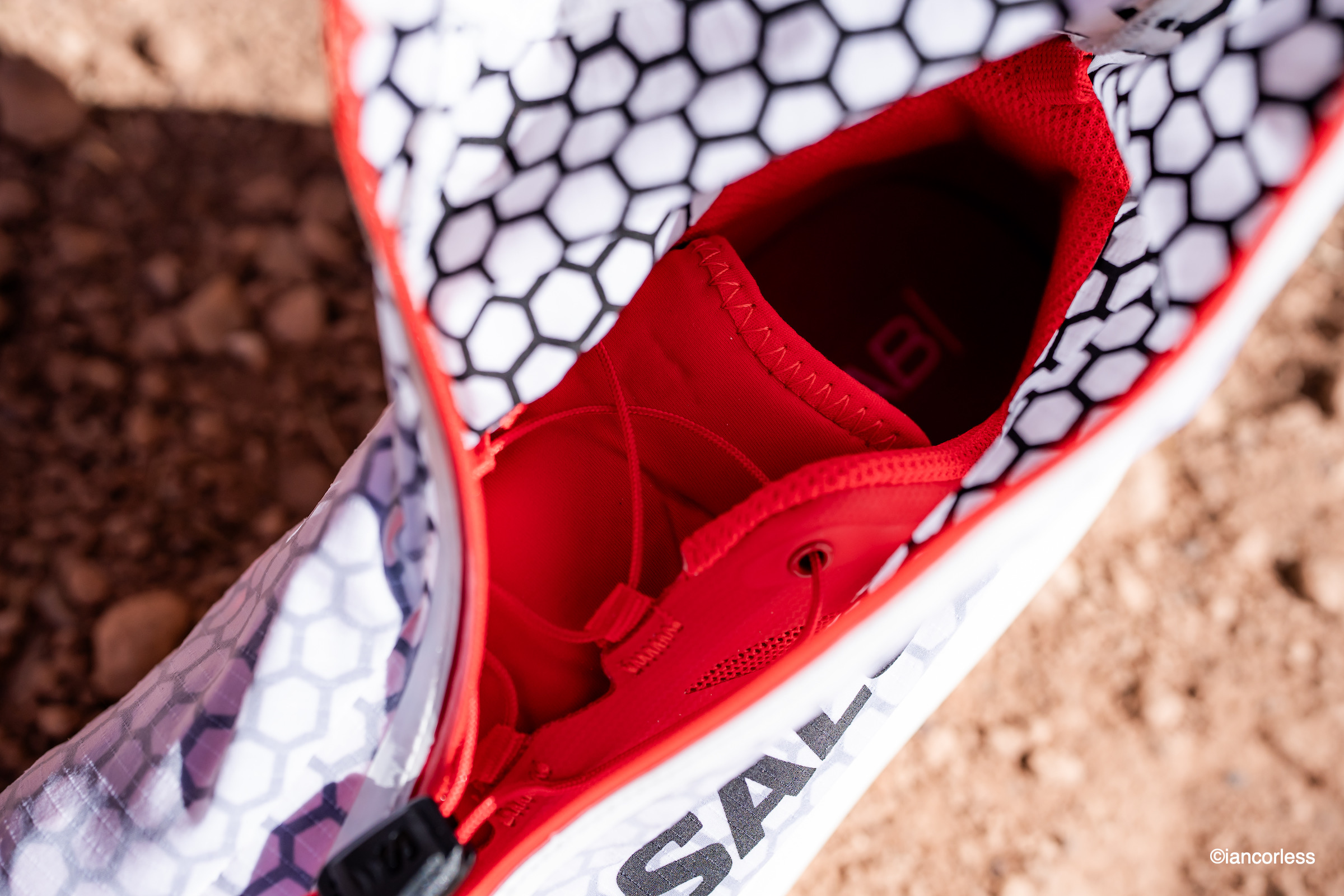
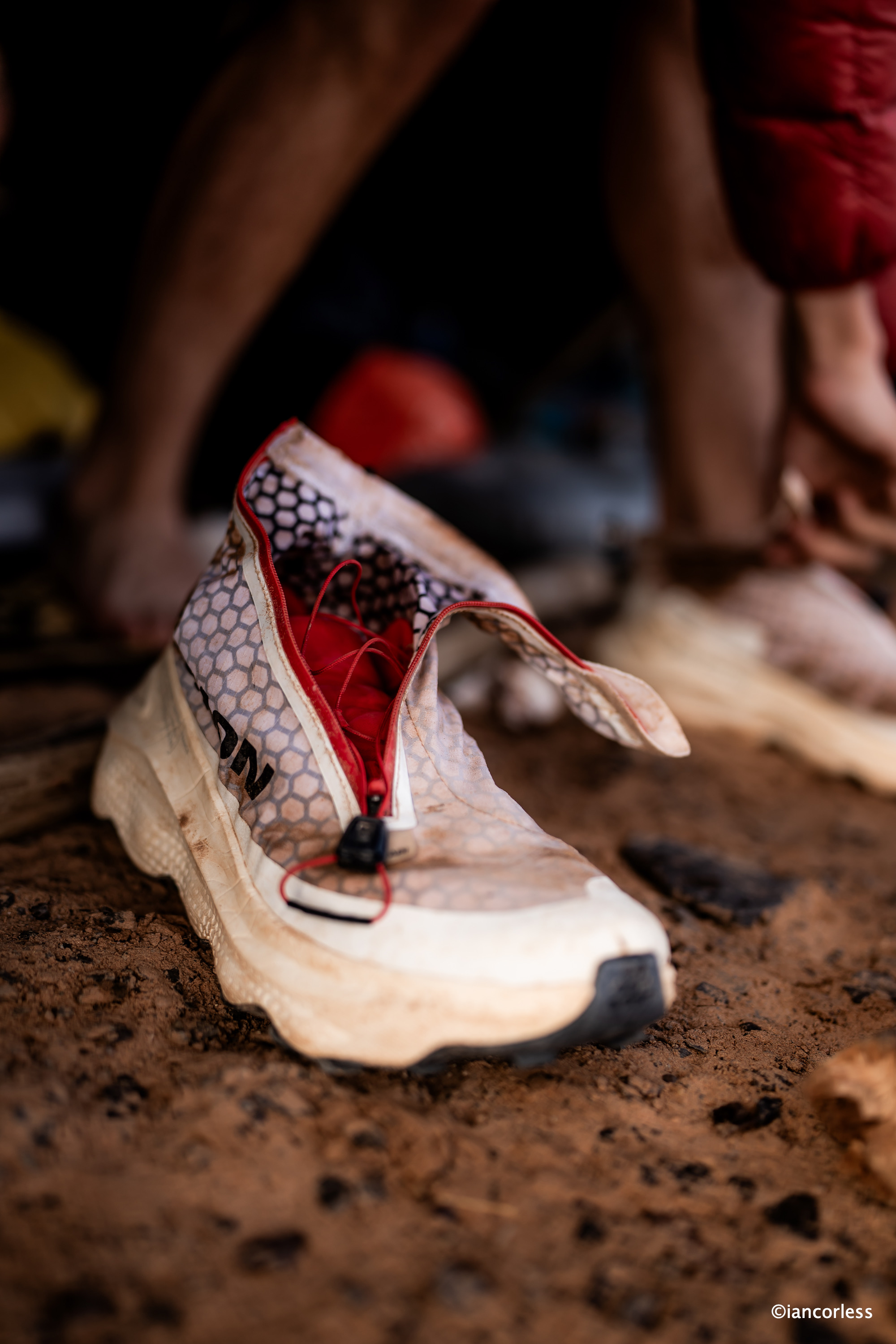
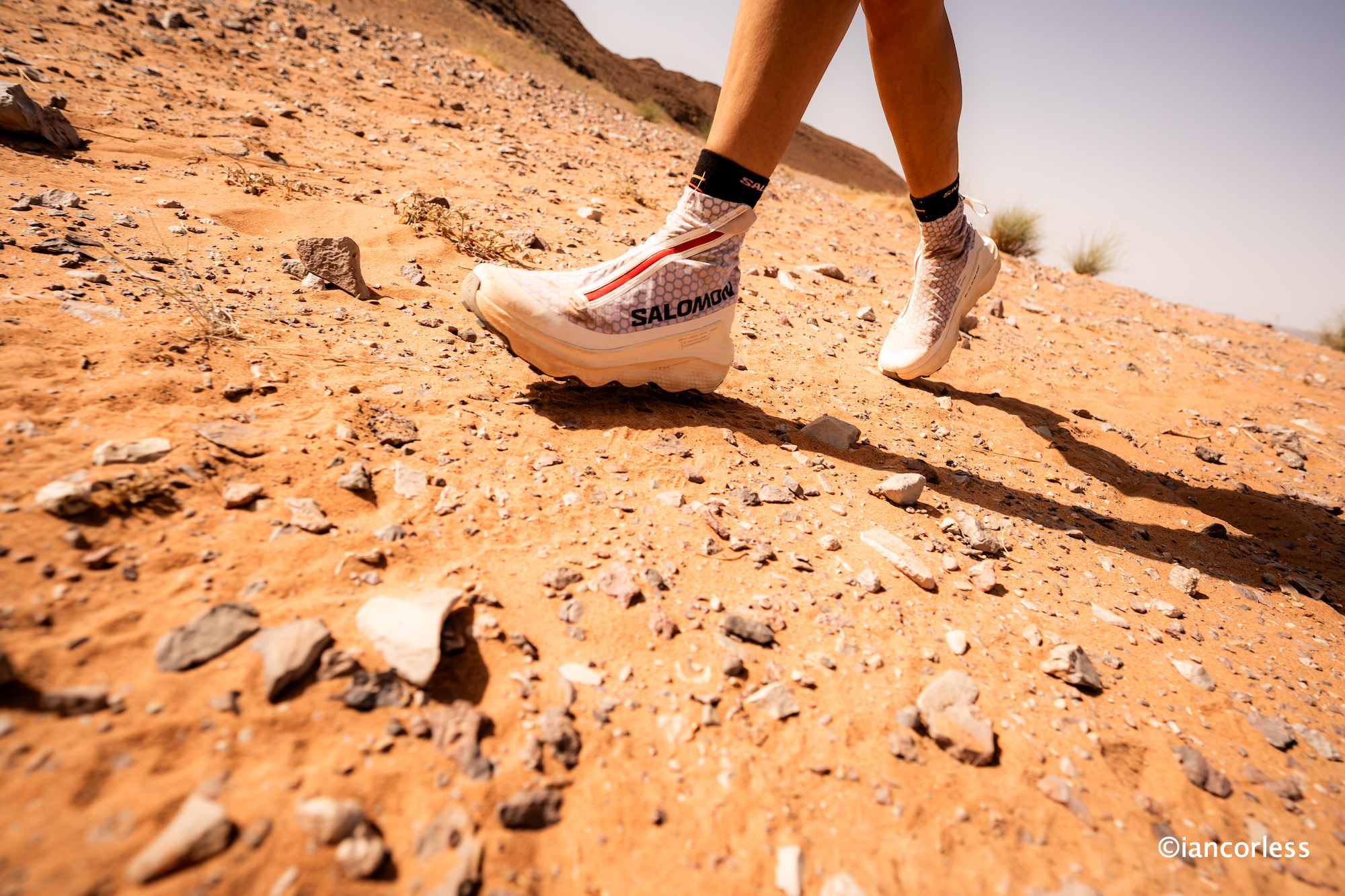
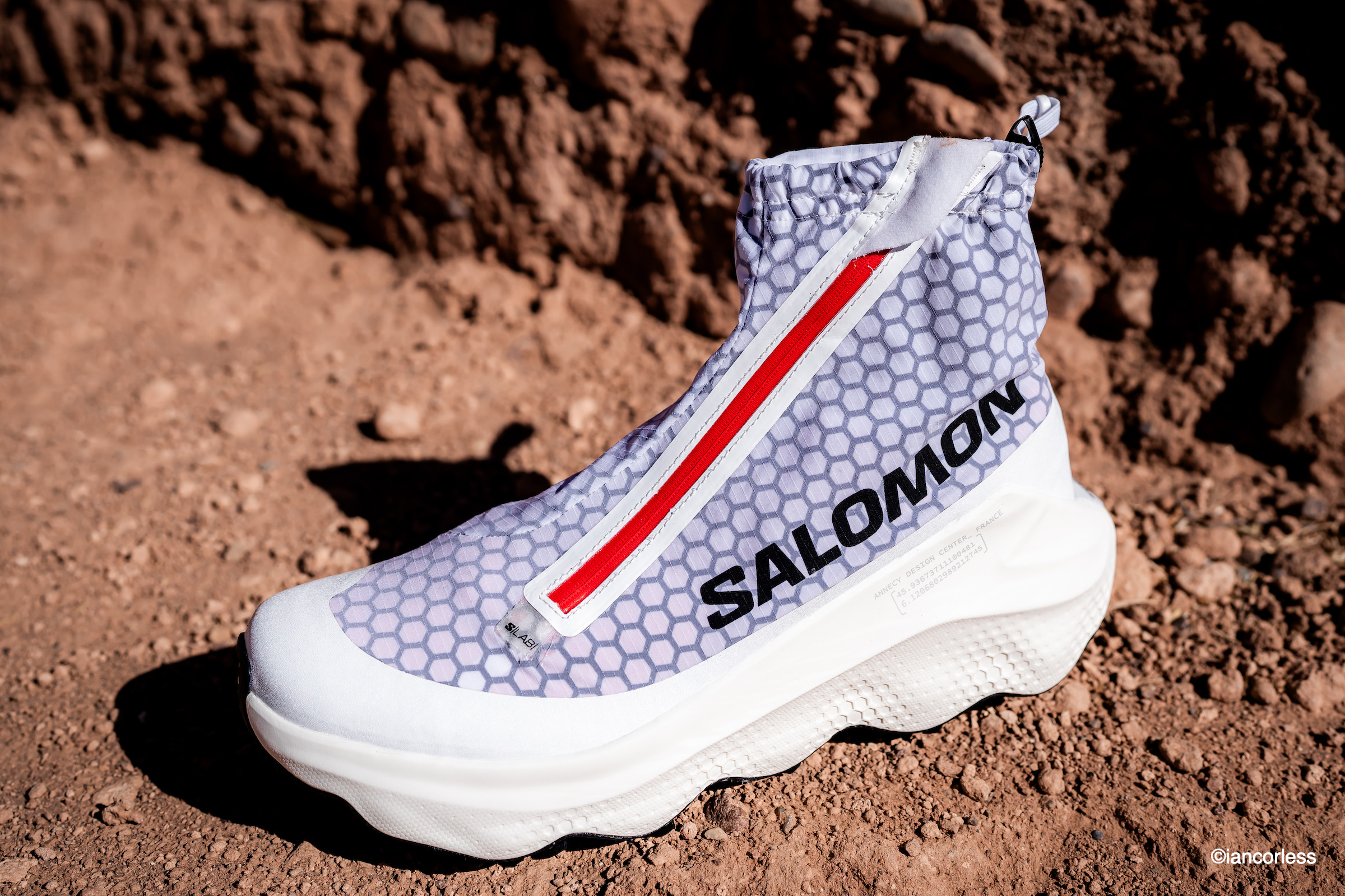
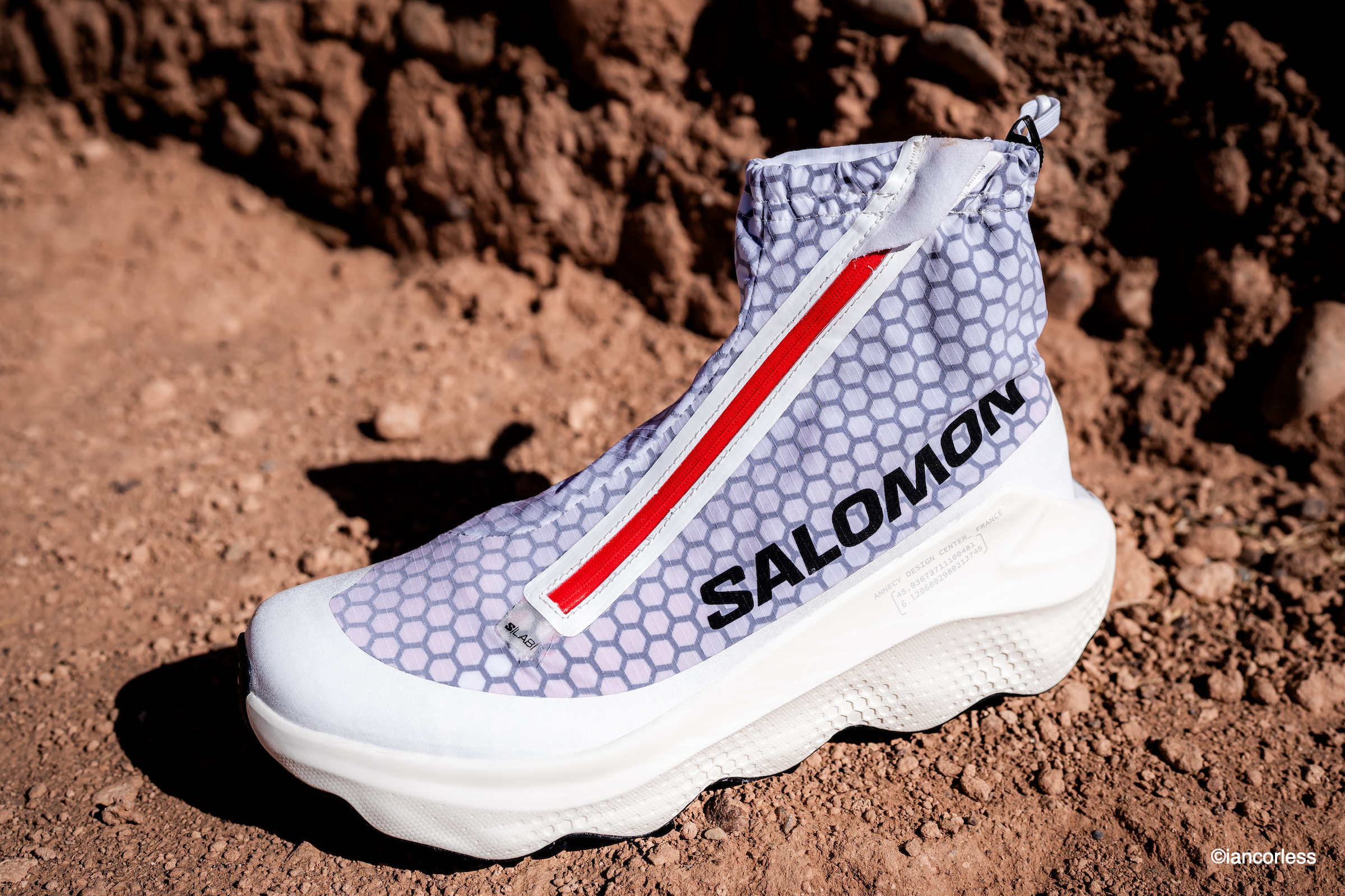
It may look like a mountaineering boot at first glance, but the S/Lab Ultra Dust has a stand alone Salomon shoe (Ultra Glide) fitted inside a bespoke gaiter, making an all in one shoe.

Photo by Ian Corless

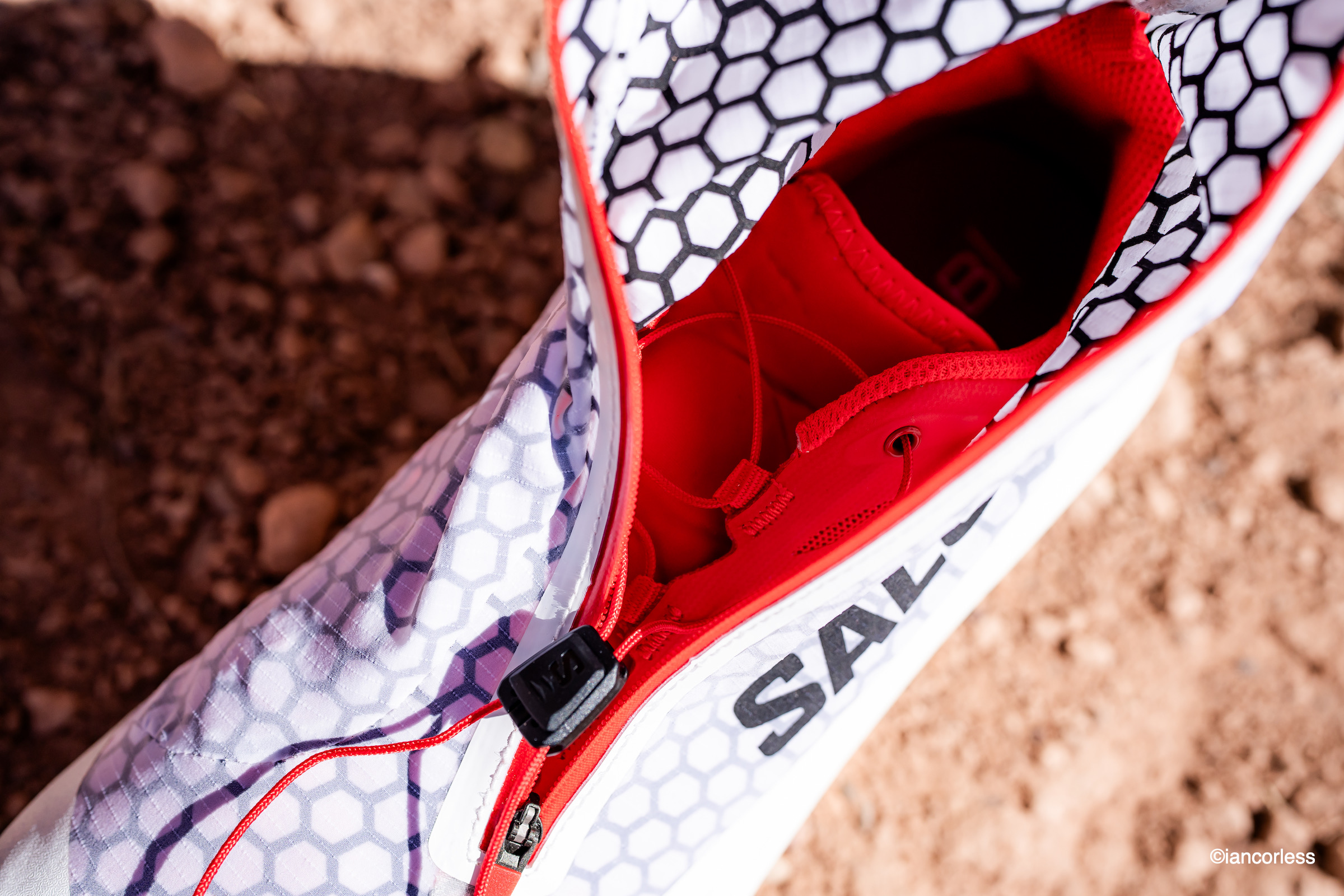
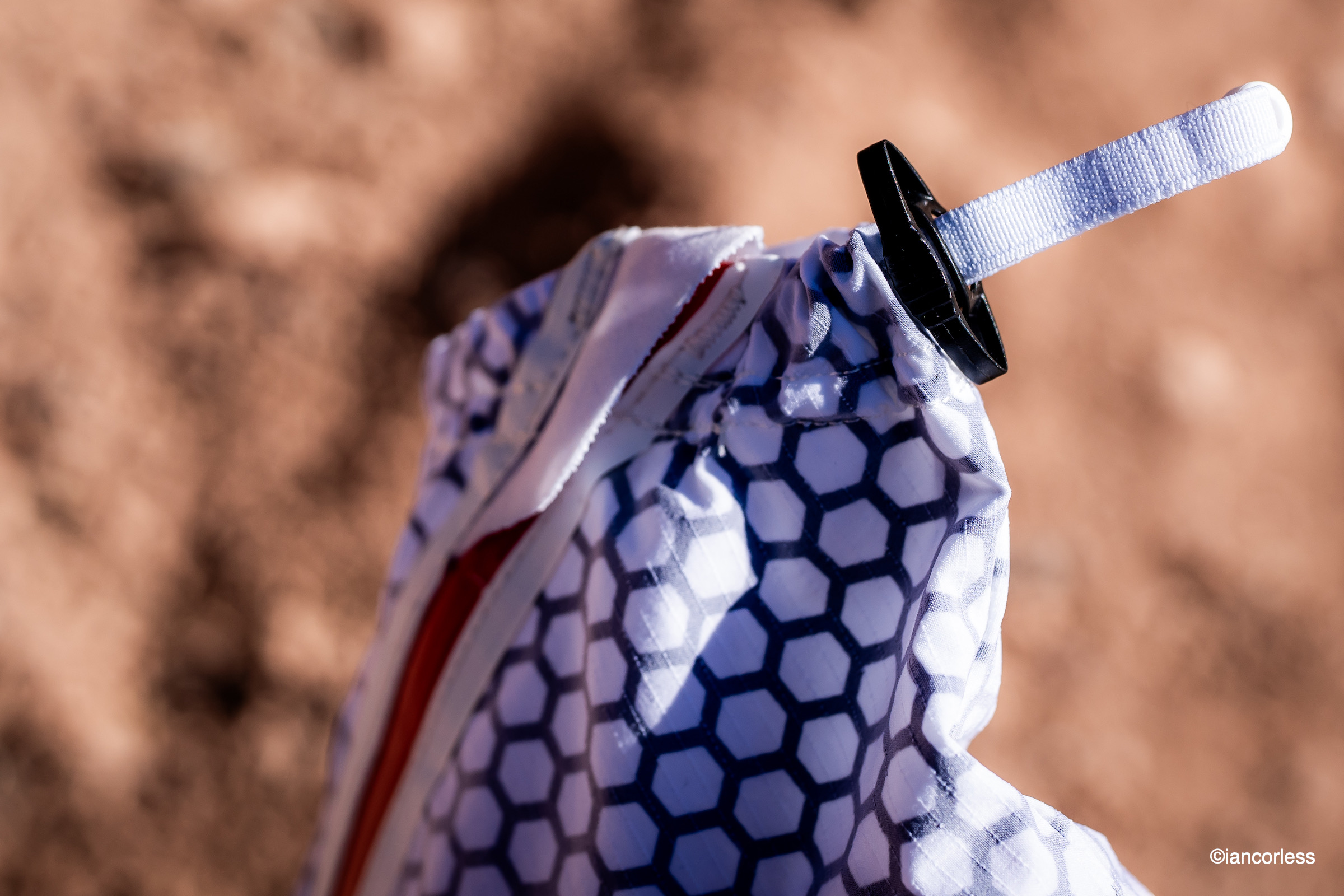
The integrated gaiter is the standout feature of the Ultra Dust. It’s integral into the design, forming a full ankle-wrap mesh sleeve that stretches snugly over the ankle and top of the shoe.

Photo by Ian Corless

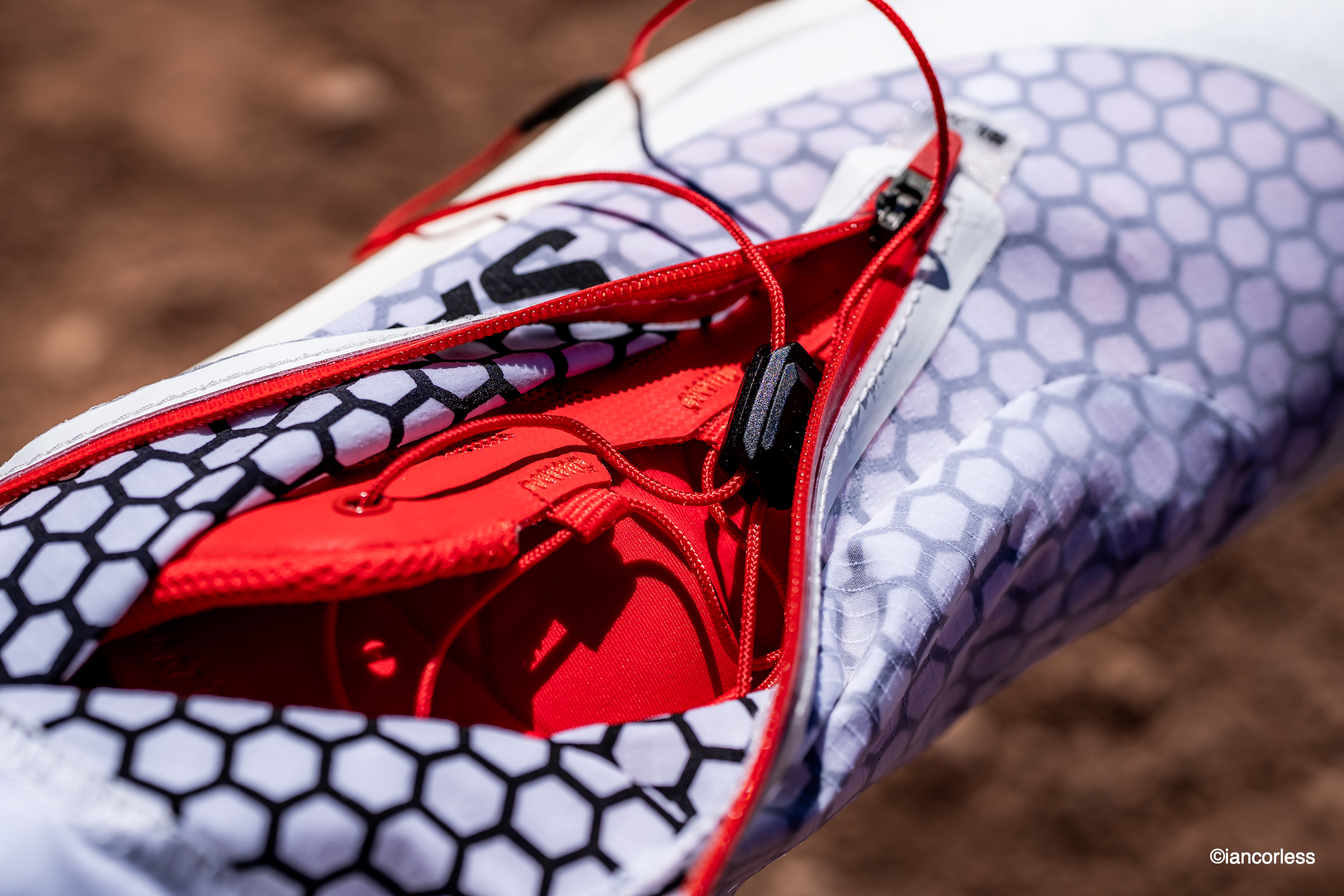
There’s one zipper, no velcro, no gaps, an elastic seal at the top can be pulled tight and that keeps out sand, just like a dry bag keeps out water.

Photo by Ian Corless

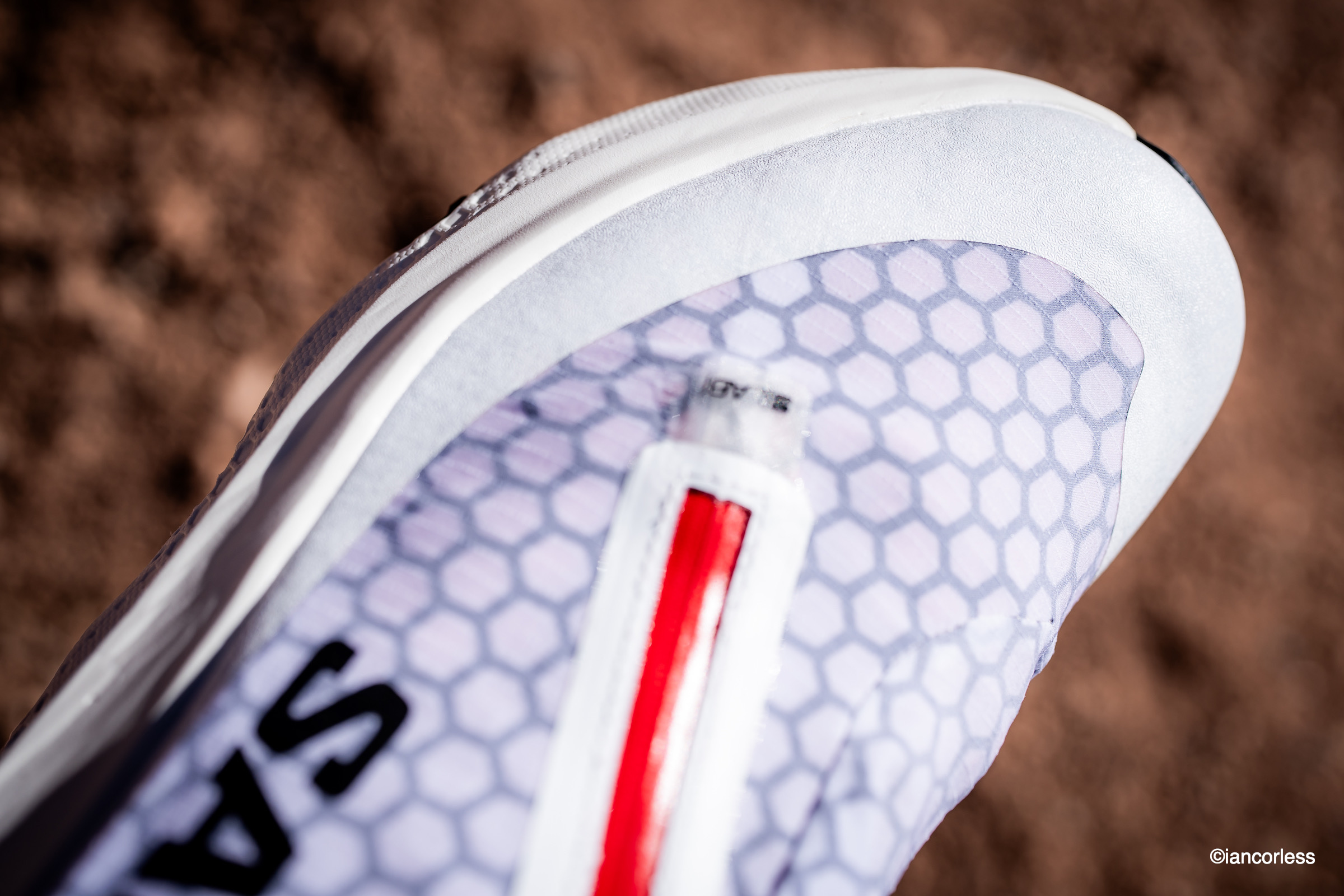
There is also a superb toe bumper.

Photo by Ian Corless

This isn’t your standard trail gaiter that slides around or traps heat. The mesh is thin, highly breathable, and stretchy, giving you ankle mobility without debris ingress. It works 100%, in countless test scenarios – Morocco, Namibia, Lanzarote, La Palma and even South Africa, this shoes gaiters performs perfectly with no debris entering the shoe.

Photo by Ian Corless

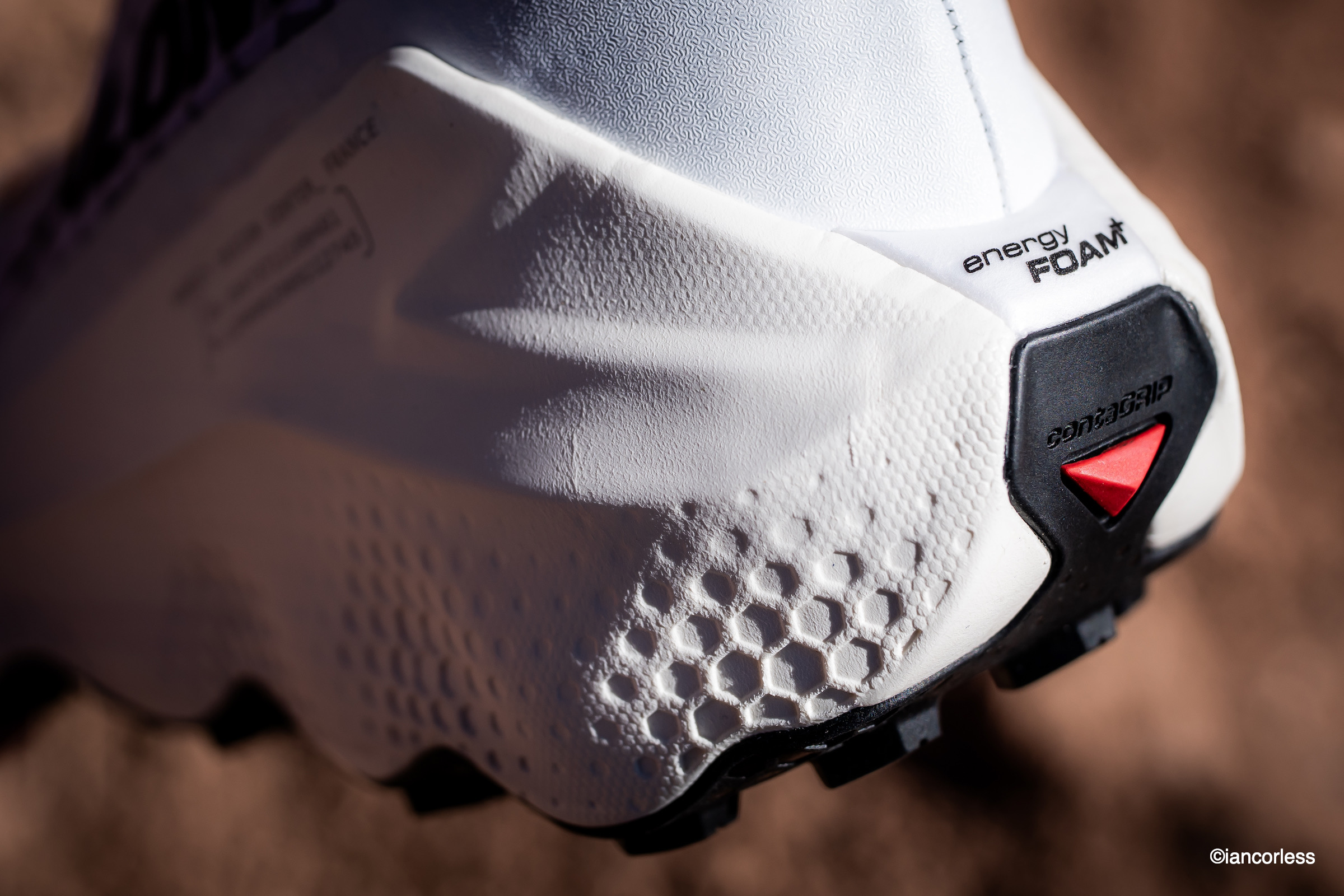
The Ultra Dust has huge cushioning, energyFOAM+) : 35mm at the front and 41mm in the rear giving a middle of the ground 6mm drop. Despite the stack height, the shoe has great feel for the ground.

Photo by Ian Corless

The cushioning is bouncy but not squidgy, they are surprisingly stable. In desert scenarios, the cushioning transitions superbly from soft-sand, hard/ stony ground and on technical sections they are extremely comfortable, however, here the stack height can produce less stability, it’s not horrendous, but worth noting.

Photo by Ian Corless

The 6mm drop puts you in a slightly forward-leaning stance, perfect for driving through long, runnable flats and moderate inclines. It can help keep cadence high and your form efficient. By contrast, they are extremely comfortable to walk in. While zero-drop loyalists might not love it, this drop caters well to endurance racers who don’t want achilles/ calf strain late in a race. It’s a great middle ground. This higher drop provides a bit more heel support, especially helpful when fatigue sets in and your form deteriorates. That extra buffer can reduce calf strain in multi-day stage races.

Photo by Ian Corless

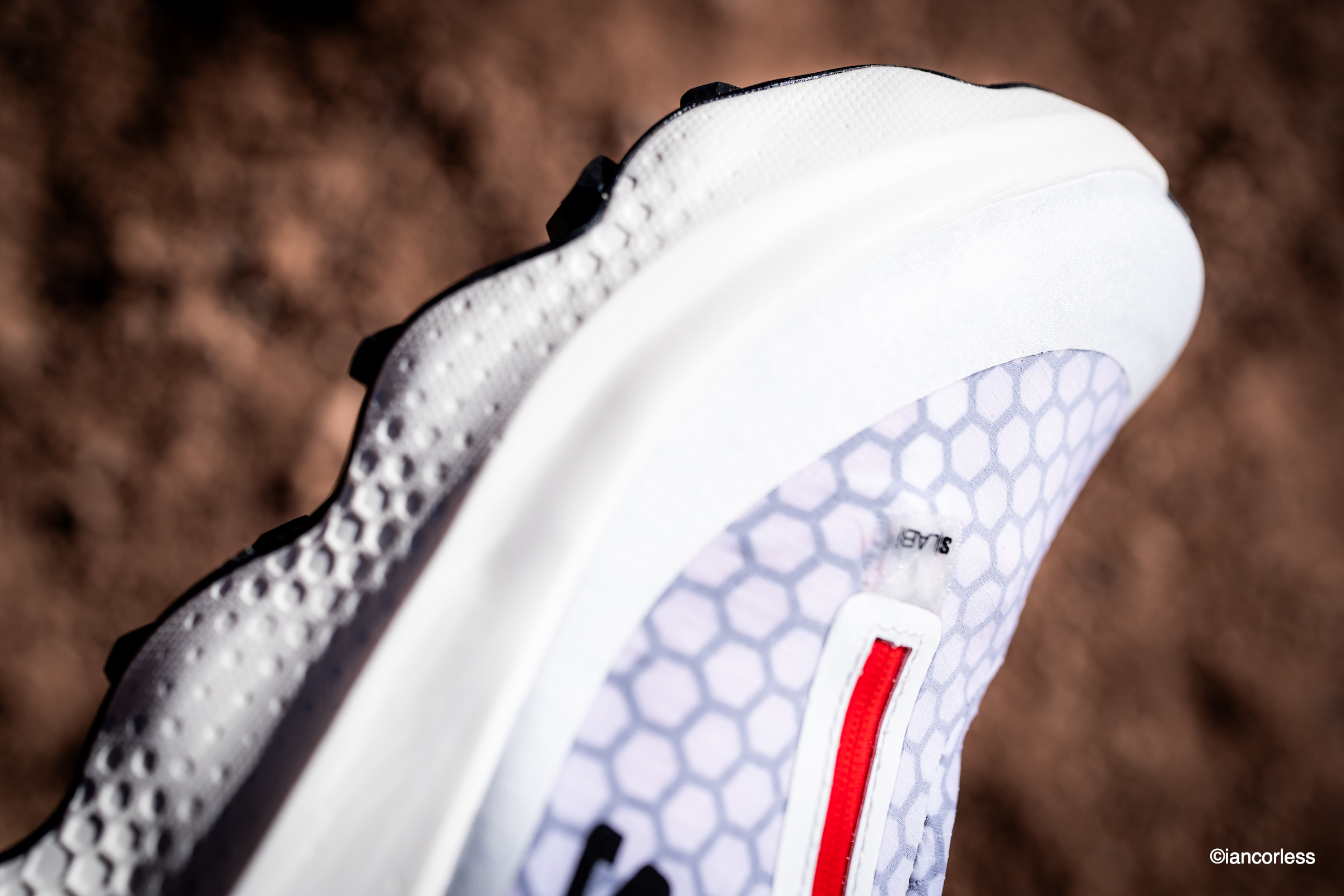
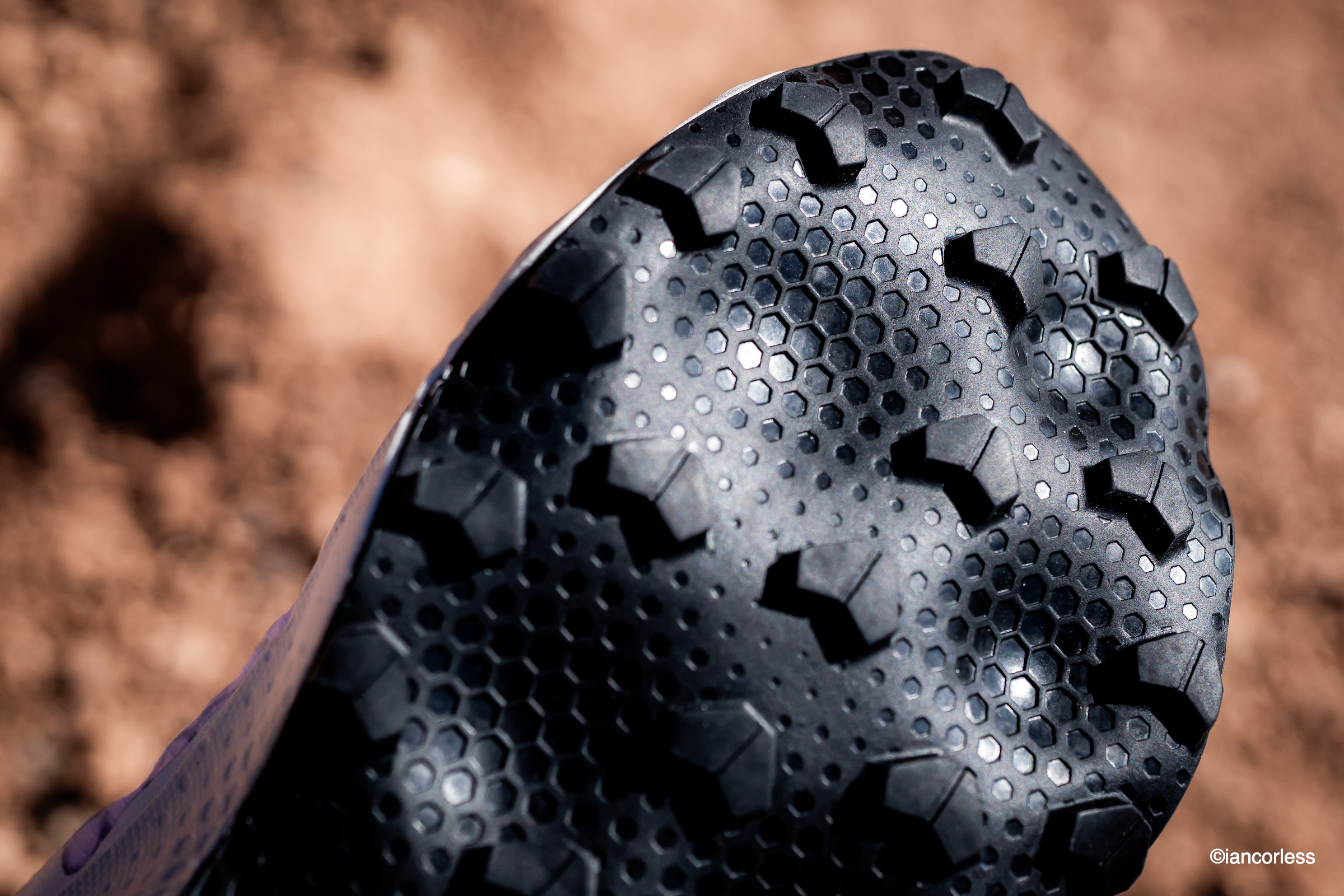
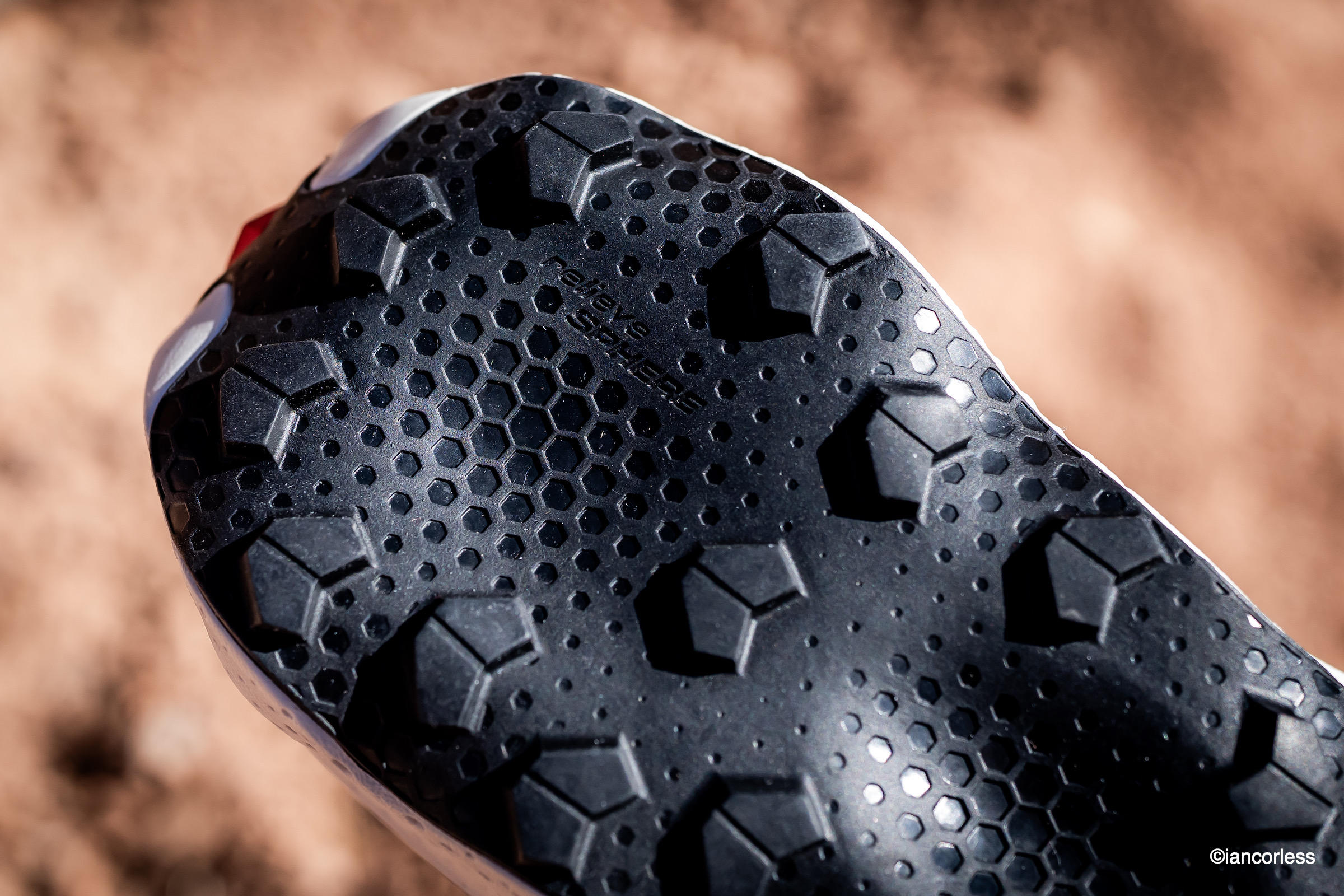
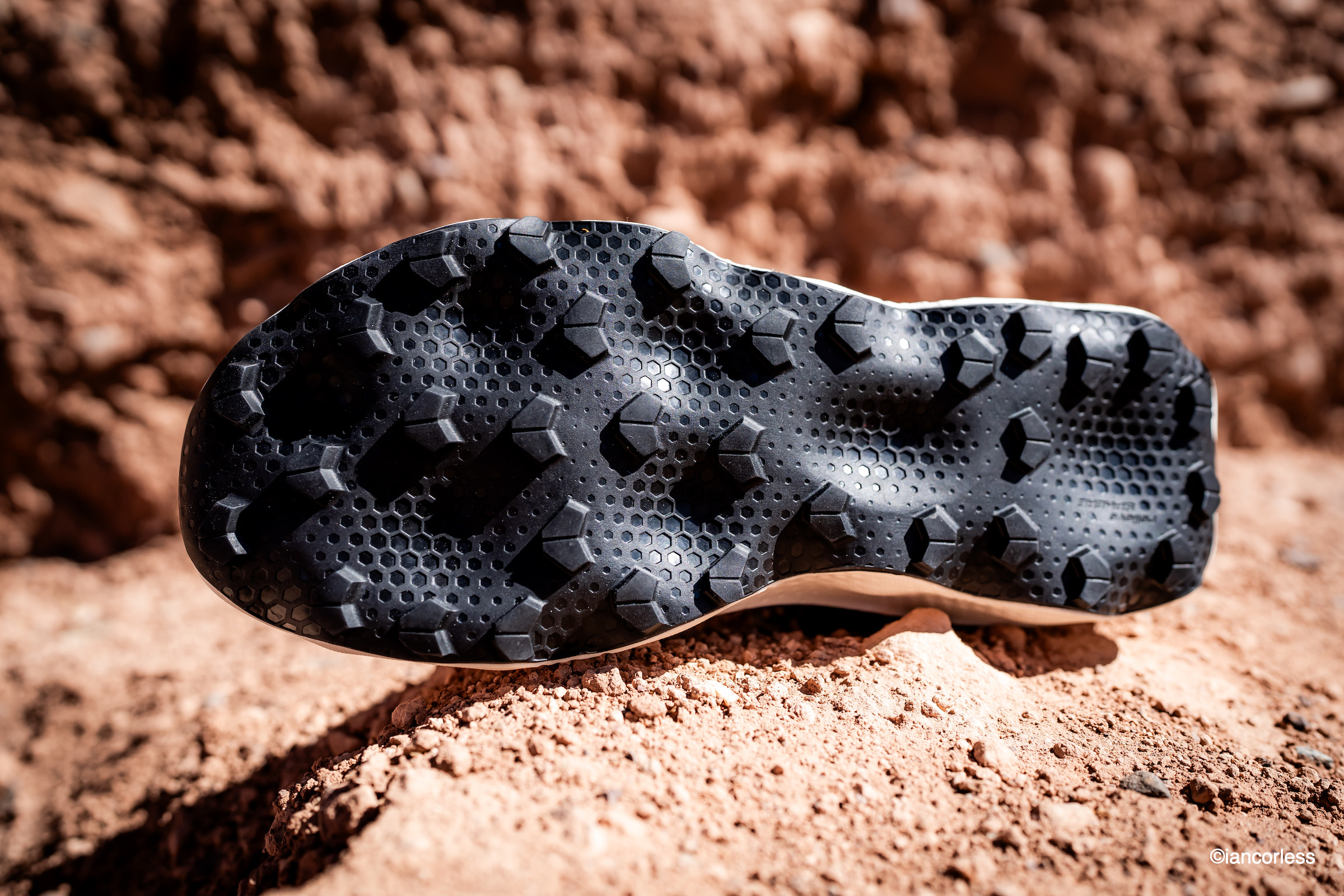
This is where the Ultra Dust makes its biggest departure from typical trail shoes. Instead of deep, aggressive lugs, it uses low-profile 4mm, wide-surface lugs designed to float over sand rather than bite into mud or rocky terrain.

The Contagrip outsole (All Terrain Contagrip) has shallow lugs that are evenly distributed across the sole. They provide surface area rather than penetration. This minimises drag and helps prevent you from sinking into soft terrain. On packed trail, they still provide enough grip to stay stable, though this shoe isn’t made for slick rock or alpine conditions.

Photo by Ian Corless

Durability is strong thanks to the full-length rubber coverage, but note that softer lug compounds wear faster on pavement or rocky trail. In desert conditions, though? This outsole will go the distance.

Photo by Ian Corless

The Ultra Dust is unapologetically specialised with gaiter integration, a breathable upper, a sand-optimised outsole; everything is geared toward one thing, surviving and thriving in desert ultras with no sand ingress, comfort and blister free feet.

Photo by Ian Corless

The upper is thin, synthetic mesh that breathes extremely well, doesn’t absorb moisture, and dries fast. You won’t find overlays or extra structure. It’s minimal to the core, saving weight and shedding heat. It’s a good looking shoe, for sure they stand out in white and red.

This shoe isn’t built for rocky single-track or alpine descents, however, it does perform in these scenarios. The Ultra Dust is built for wide-open flats, dunes, and heat-soaked multi-day endurance events. It’s the kind of shoe you pack for the Marathon des Sables or similar.

Salomon say, the upper is designed to keep out : dust, sand, snow and water. They do do that. As an example, I used the Ultra Dust at a very, very wet Transvulcania and they performed exceptionally. I am equally sure they will work well in snow.

When one considers that more events such as Marathon des Sables, the usual protocol has been to select a shoe, have velcro sewn on and then add a gaiter, the S7Lab Ultra Dust in price comparison fares very well. They are an expensive shoe, BUT, the cost of shoe, gaiter and sewing velcro on is almost the same. However, there is maybe one advantage of a shoe with velcro? If you tear the gaiter, you can cheaply replace it with a pair of new ones. Tear the gaiter on the S/Lab Ultra Dust and you have a problem….

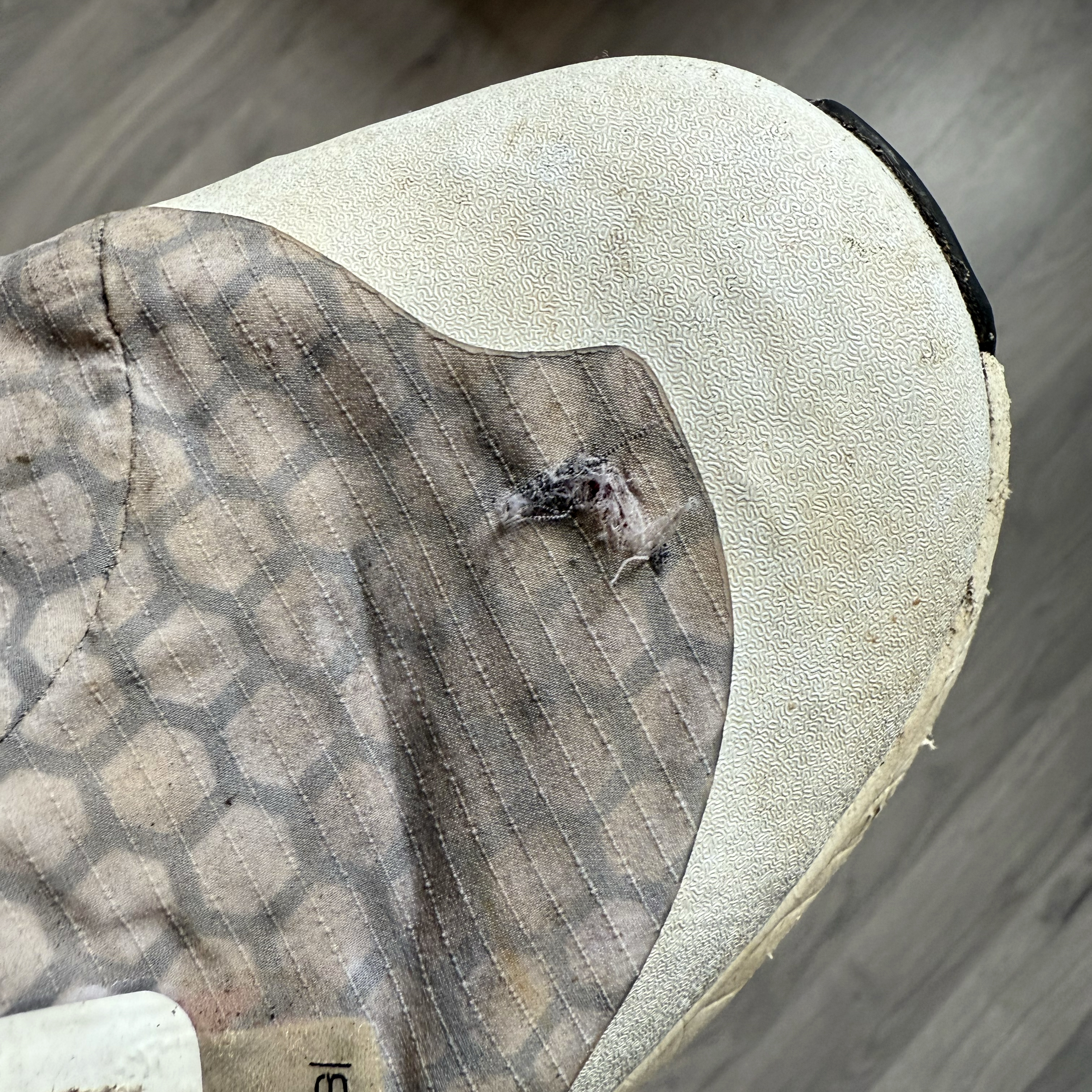
Mine, after 5-months of abuse now have two small tears, they cause no issues currently, but maybe in the future they will? However, in experience, shoes for a race such as MDS ‘just’ need to last the event….

Photo by Ian Corless

Features:

  • Contragrip outsole
  • energyFOAM+
  • Endofit
  • quickLACE
Elisabet Barnes using the S/Lab Ultra Dust MDS Legendary 2025 – Photo by Ian Corless

“Developed as a prototype for our athletes, the S/LAB Ultra Dust delivers comfort in extreme conditions no matter how fast you run. Dust, sand and everything else nature throws at your feet are kept out by the fully integrated gaiter with filtering properties. A lightweight, breathable and soft dream shoe for long distances.”

Final Thoughts: Who Should Buy This Shoe?

Photo by Ian Corless

If you’re training for, or racing a desert ultra, the Salomon S/LAB Ultra Dust is a top-tier option, arguably the best in its class. A brilliant shoe that is finely tuned for a specific environment. If you are signing up for MDS or similar, this shoe should be top of the list for testing. They are comfortable, cushioned, have excellent grip, excellent protection and importantly, they keep out sand and debris. The Ultra Dust was clearly designed with direct input from elite ultra runners who know the pain of sand-filled shoes, melted midsoles, and overheating feet.

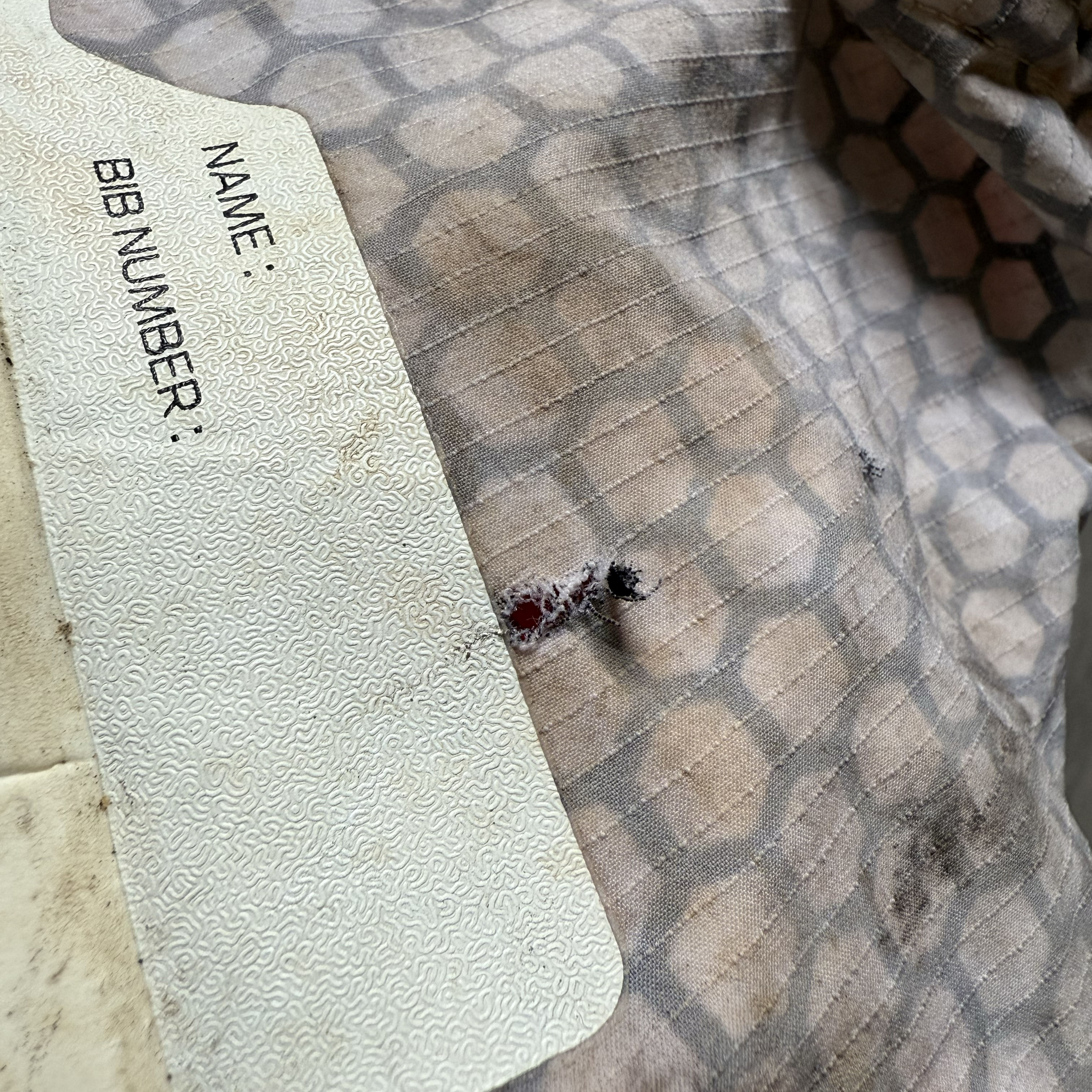
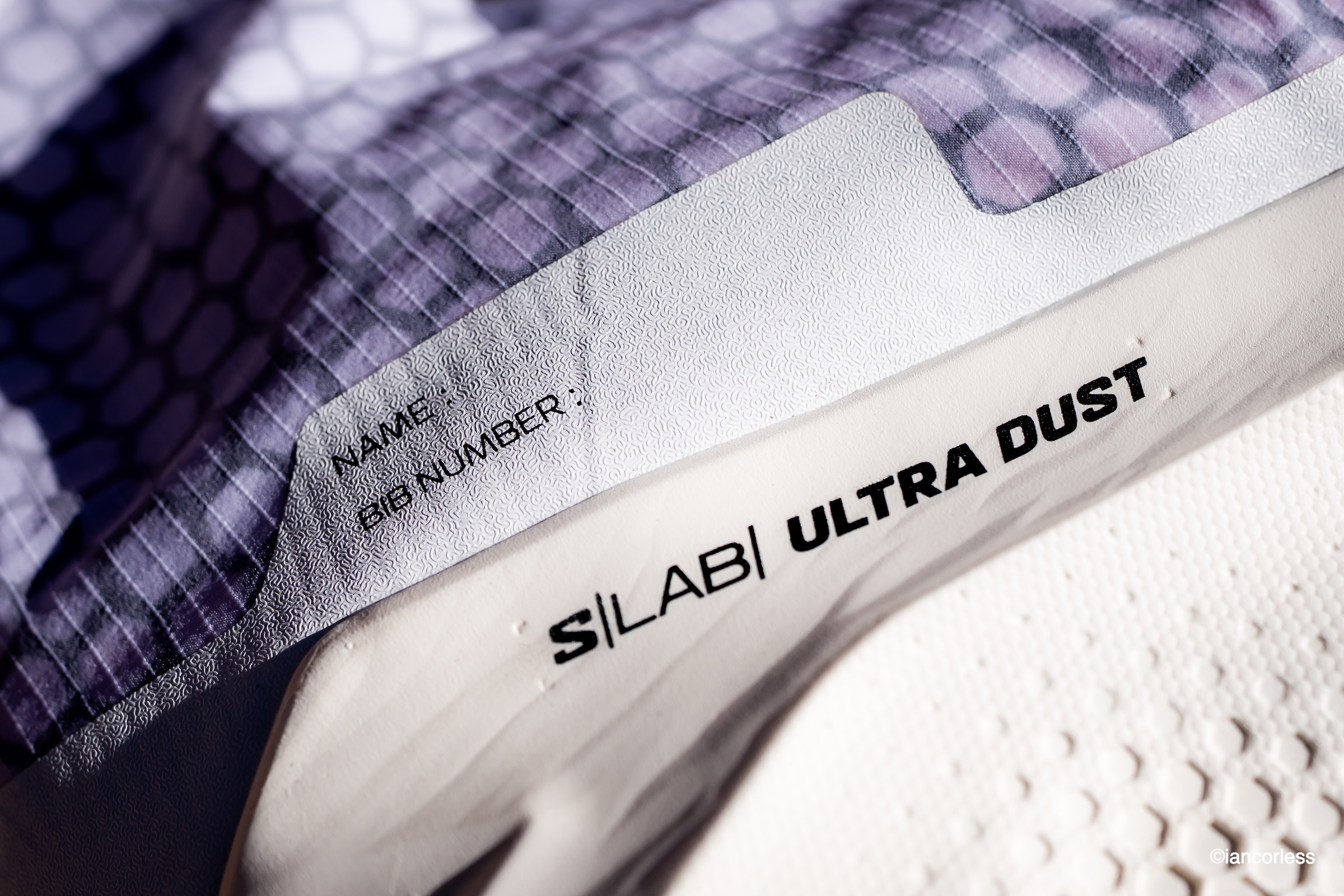
And a final nice touch? There is a place for NAME and BIB NUMBER on each shoe.

Photo by Ian Corless

Website: S/Lab Ultra Dust HERE

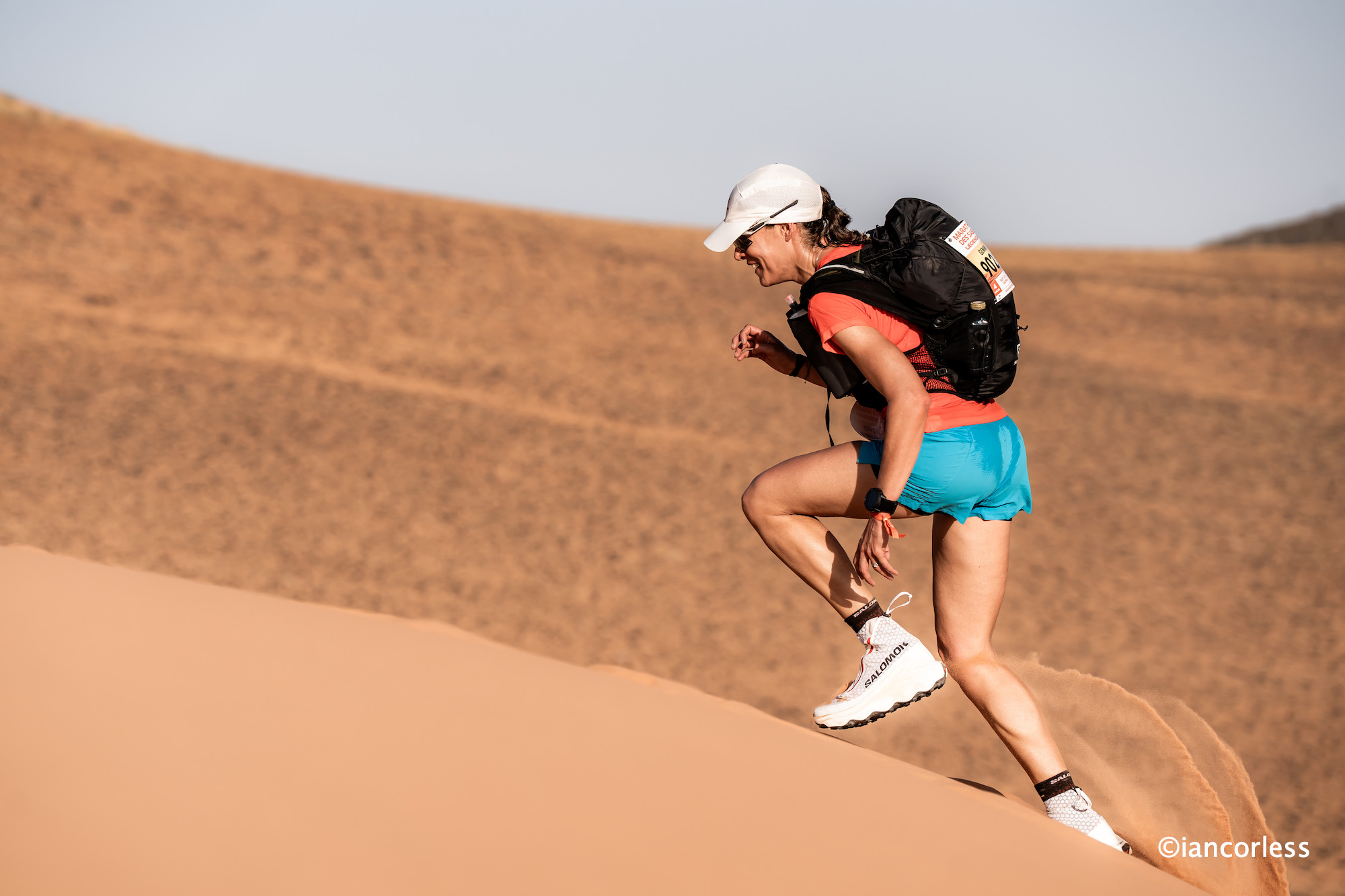
Gemma Game using the S/Lab Ultra Dust MDS Legendary 2025 – Photo by Ian Corless

Follow Ian Corless

Instagram – @iancorlessphotography

Twitter – @talkultra

facebook.com/iancorlessphotography

Web – www.iancorless.com
Web – www.iancorlessphotography.com

What Pack for Stage Racing, Multi-Day or Fastpacking

Stage racing, multi-day running and fastpacking all require a very specific pack. With the growth of multi-day running, many major brands now produce a pack or packs that are specifically designed for the task at hand. However, choosing a pack can be a daunting process due to many variables.

First and foremost, spend some time and sit down with a piece of paper and make notes of all the equipment that you need to carry. This may sound obvious, but there is a great difference in needs and demands.

For example:

  • Are you running in a hot or cold environment?
  • Do you need to carry food for the adventure or will you be able to get food on the route?
  • What spare clothing do you need?
  • What safety equipment do you need to carry?
  • Do you need a tent?
  • Do you need a sleeping bag and sleeping mat?
  • How much liquid do you need to carry and do you need immediate access to that liquid?

And the list goes on, so, take time to sit down and plan. This also helps you look at weight.

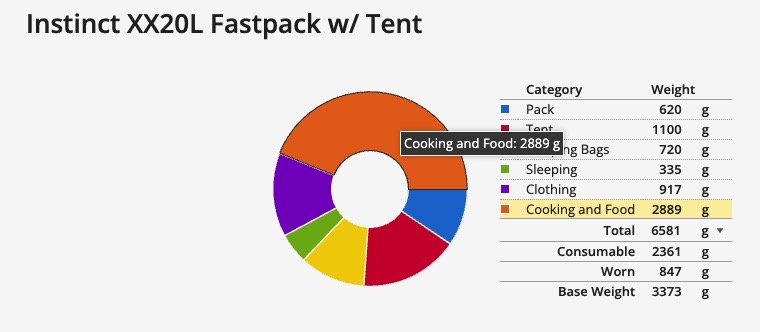
An excellent website to help facilitate this is Lighterpack – You can see an example HERE of all the contents I used when testing the Instinct XX20L when I went fastpacking with a tent.

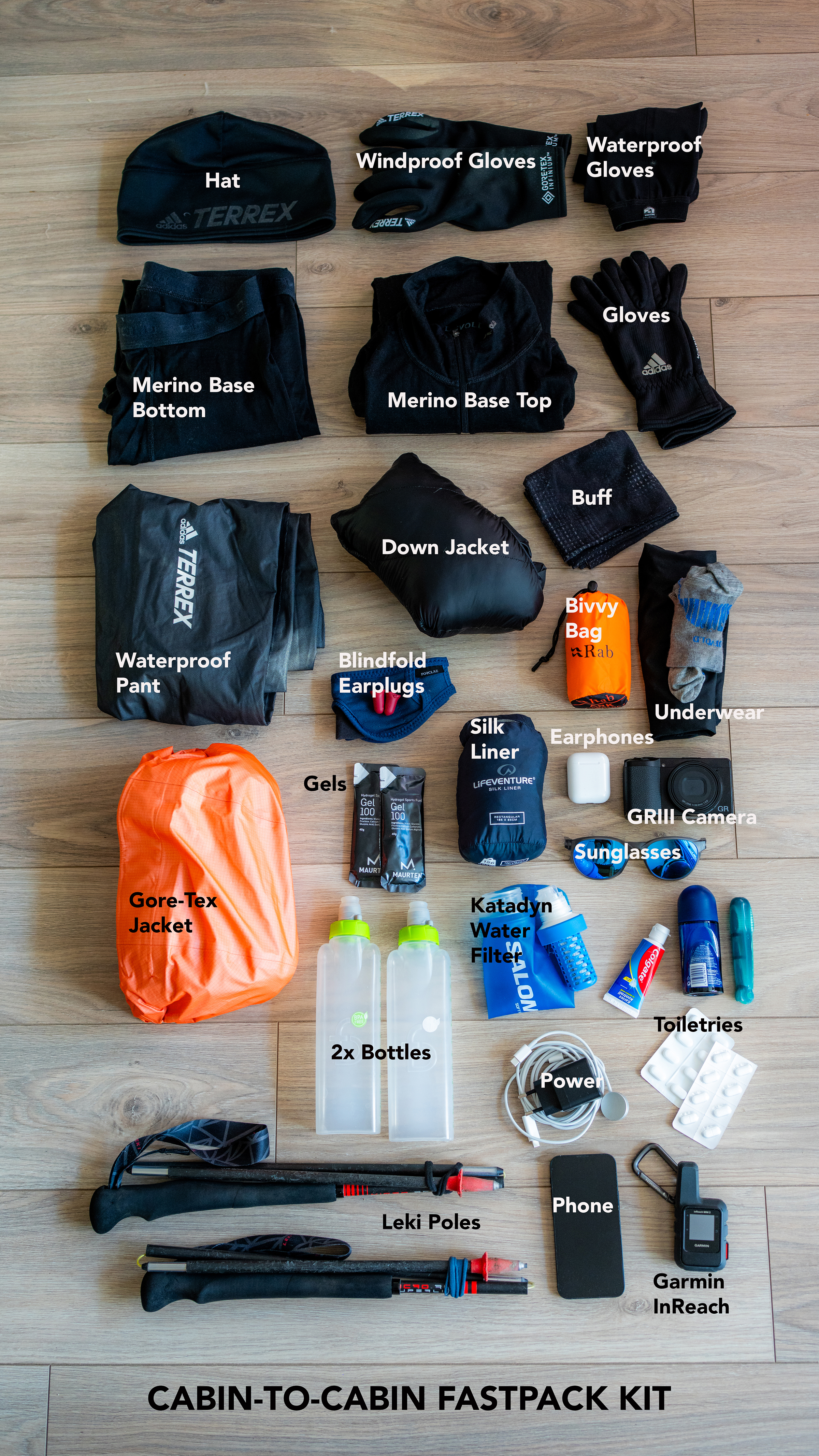
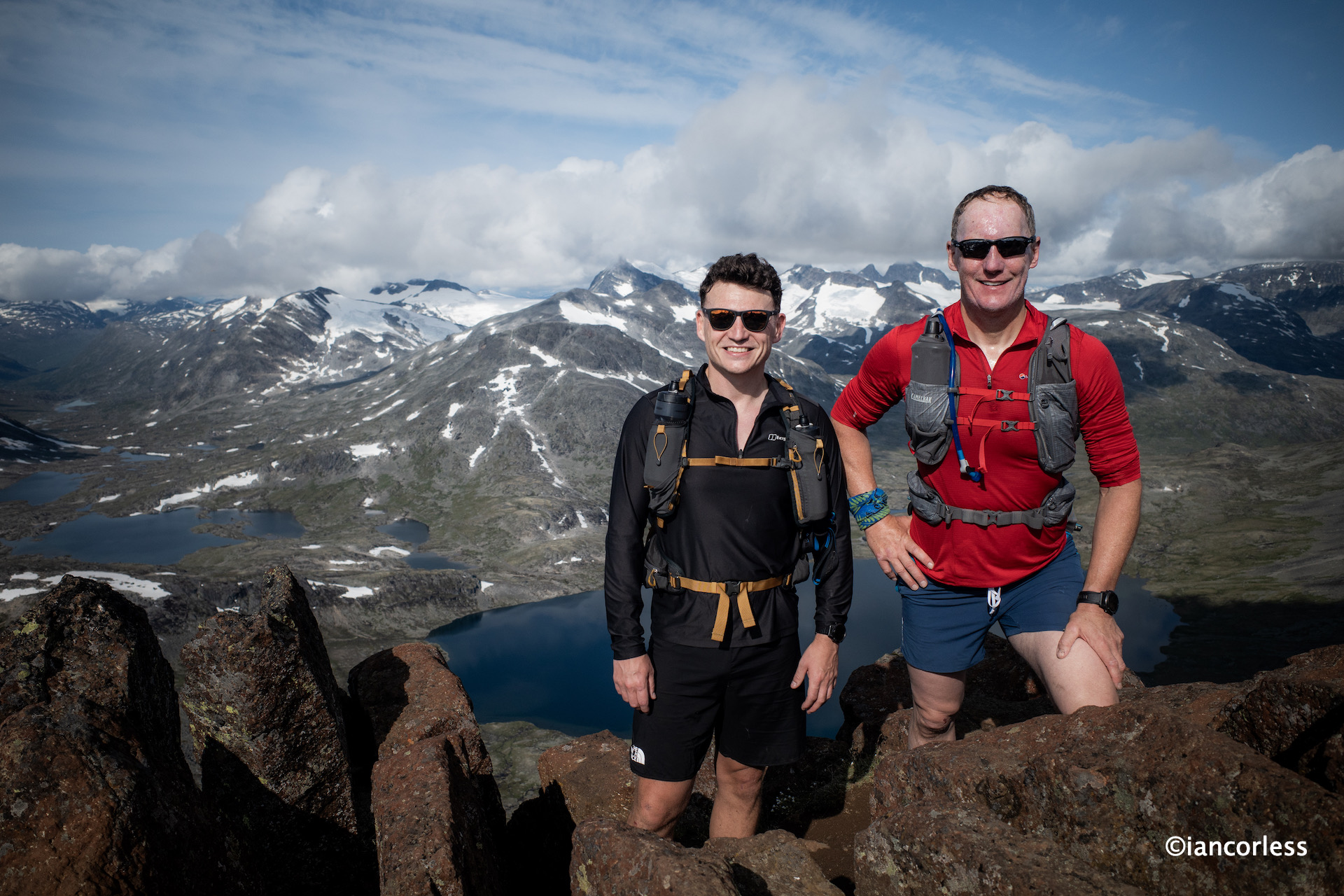
Recently I went fastpacking in Norway running from cabin-to-cabin. I did not need food (other than run snacks,) did not need a sleeping bag, just a sleeping bag liner and I could be minimal on clothing. I used the Camelbak Octane pack and the contents were as listed below:

You can see an example of my pack below and the details are as follows:

  • Camelbak Octane Pack 600g
  • adidas hat 32g
  • adidas gloves Infinitum 52g
  • Hestra waterproof gloves 53g
  • adidas gloves 41g
  • Devold merino base top 193g
  • Devold merino base bottom 166g
  • Buff 43g
  • Haglofs down jacket 163g
  • adidas waterproof pant 125g
  • adidas Gore-Tex jacket 272g
  • Rab bivvy bag 110g
  • Underwear 98g
  • Gels 81g (for emergency)
  • Silk liner 126g
  • Blindfold/ earplugs 22g
  • Earphones 44g
  • Ricoh GRIII camera 251g (a luxury)
  • Sunglasses 18g
  • Bottles x2 90g
  • Katadyn water filter 52g
  • Toiletries 196g
  • Power supply 138g
  • Phone 136g
  • Garmin InReach 108g
  • Leki poles 250g

3379g 

As you can see, my pack weight was low. This allowed me to move faster and lighter for less effort.

KEY CONSIDERATIONS FOR CHOOSING A PACK

Once you have worked out what you need to carry, you can then decide what size pack you need. The best recommendation here is that it is better to have a pack that is maybe just too small. That way you will be strict on what you take and what you do not take. Of course, this decision should never be at the compromise of safety. Simply, if you have more room, you tend to take more because you can.

When doing a stage race, multi-day or fastpack, weight is the enemy, so, you need to be as light as possible.

WAA has a waist belt and optional front pocket for food/snacks and water bottle.

Comfort is obviously hugely important and just like shoes, packs need to fit you, cause no rubbing or irritation and feel like a piece of clothing. What works for one person will not work for another. A great example being, the needs and requirements for 152cm tall woman weighing 55kg is very different than a 182cm tall male weighing 85kg. It’s great to ask and take advice BUT you need to try packs, see how they fit and importantly when trying, add weight so you can feel how it sits on your body. Many brands do different sizes now such as S/M or L/XL and one or two brands do male/ female versions: Ultimate Direction, Osprey and Oxitis being good examples.

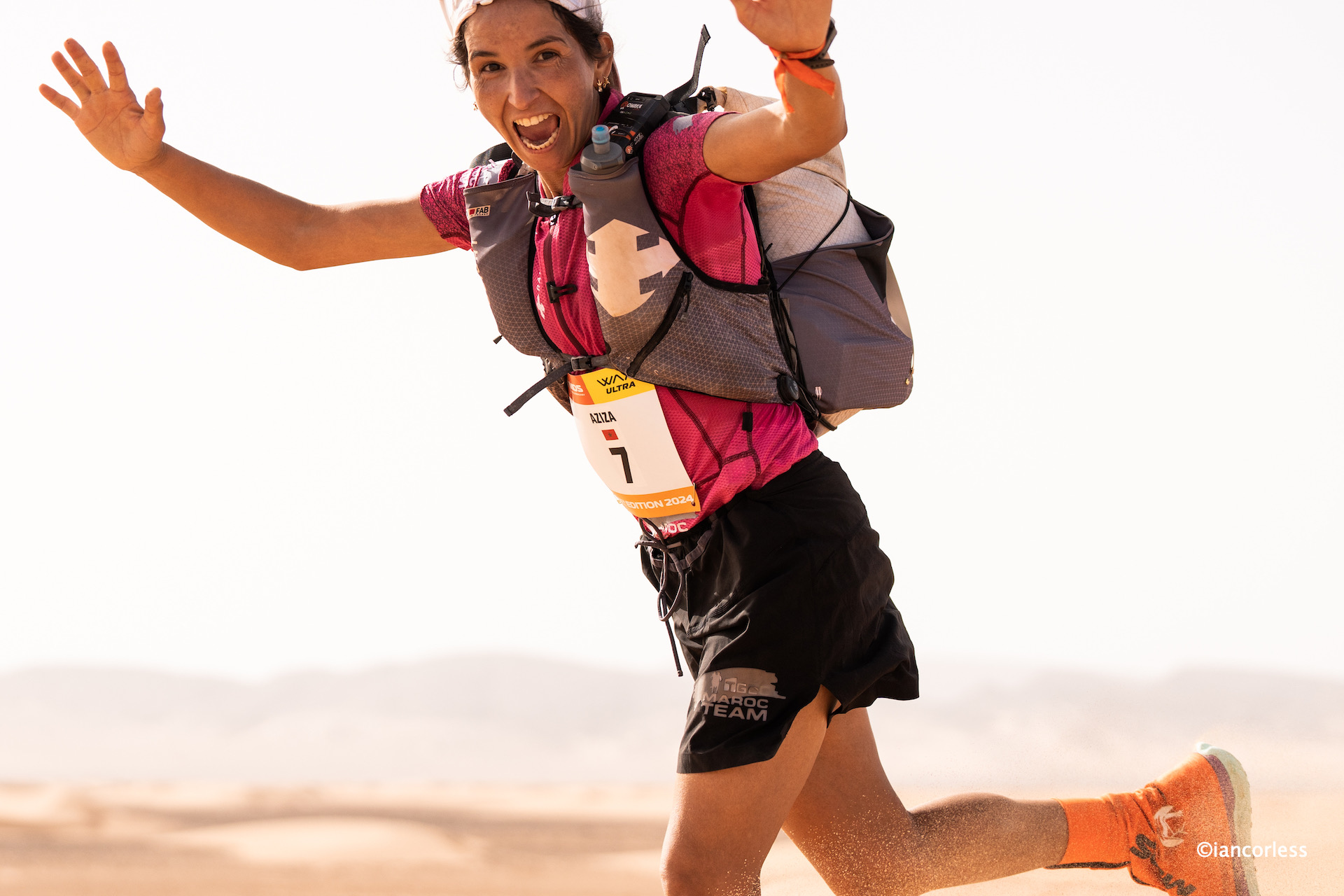
Aiziza El Amrany winner of the 2024 MDS with a Raidlight pack.

Many packs now use a ‘vest’ like system, however, when you have 8kg in the pack, does that fit and feel good? You need to know this. Look at pressure points, such as on top of the shoulders, this area can get very sore if you do not have enough padding. Also feel how it sits on your bag and check for bounce/ movement. A pack that moves too much causes friction, friction equals irritation and blisters.

A waist belt is often a great addition to help secure a pack to your body and distribute the weight load. Some love waist belts, others dislike them. I personally am a fan.

You must choose what is correct for you and don’t be afraid to go against the norm to use what is correct for you. A prime example being that a hiking pack may be the best solution for YOU. Trust this and ignore what others say. The only key things to consider: Be careful of the pack weight and make sure it is not too large in capacity.

Instinct pack in action at MDS

Access to water is important, many packs now have the capacity and option to carry bottles up front. This makes drinking and refilling easy. However, this may not work for you. If that is the case, do what is right for you, if that means using a bladder, do so. The only consideration with soft flasks and bladders are the risk of puncture, but, I have used a bladder on countless adventures with no issue. Good admin is key.

Osprey Talon Velocity and Camelbak Octane fastpacking in Norway.

If doing an adventure that is self-sufficient (such as MDS,) remember that as days pass, pack contents will become less due to eating food. So, the option to tighten, compress and make the pack smaller is a potential key consideration to stop or reduce bounce.

Finally, pack weight is important, BUT, do not go for the lightest pack if it has no durability. You need the pack to be strong, durable and reliable.

BRANDS TO CONSIDER

As mentioned, many brands now make packs or packs suitable for stage racing, multi-day or fastpacking.

If you have a brand missing from the list that you feel needs to be added, please make a comment below.

WHAT ARE THE BEST PACK OPTIONS TO CONSIDER

Remember, we are all individual. Every pack on the list below I have looked at, played with and tested in some capacity.

They are ALL applicable for stage racing, multi-day or fastpacking.

You may well be asking, but which do I prefer? Well, I could answer that, but if I do, am I then influencing your decision and thought process? So, for now, I will refrain from giving an opinion.

WAA Ultrabag 20L https://www.waa-ultra.com/en/mds-ultra-bag-20l.html

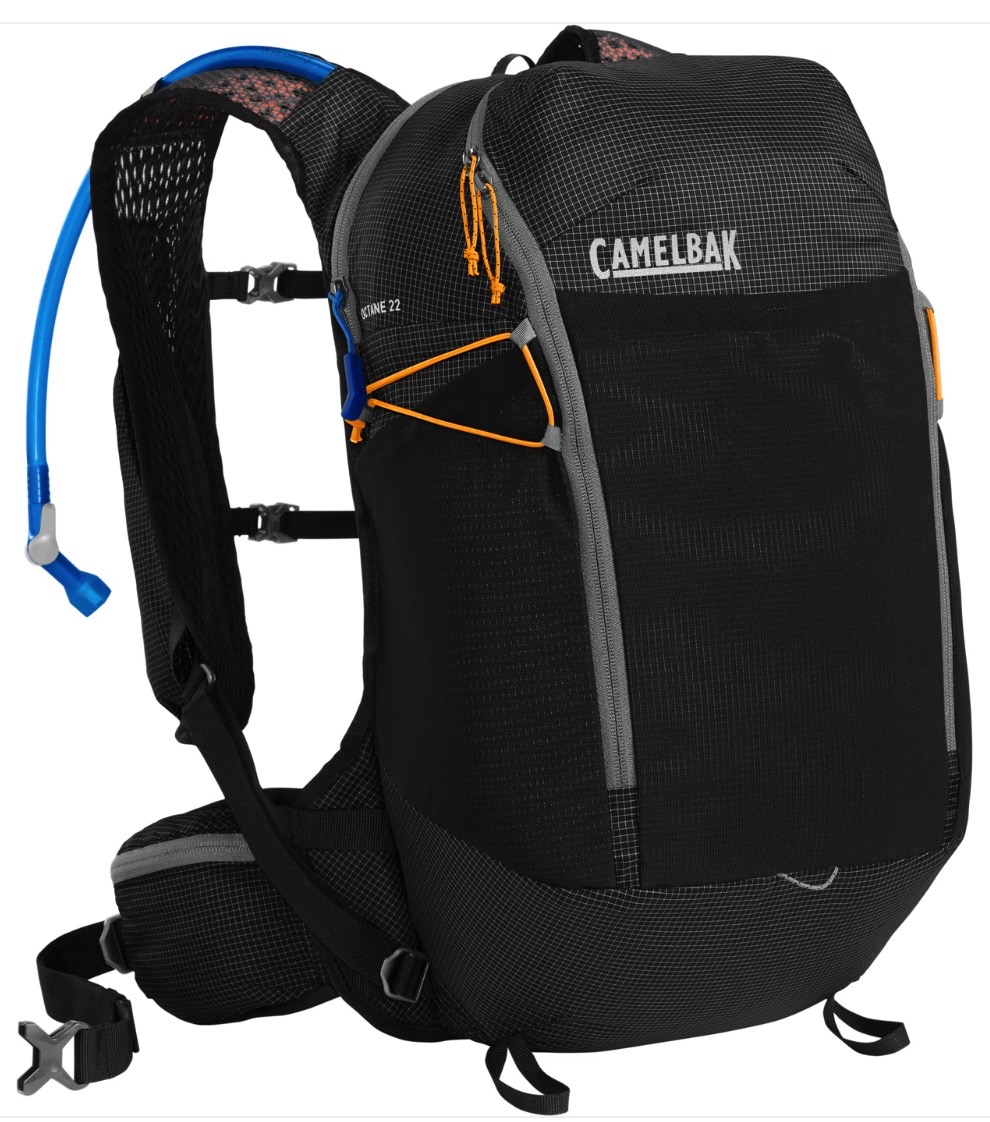
Camelbak Octane 22l https://www.camelbak.co.uk/products/octane-22-hydration-hiking-pack-22l-with-2l-reservoir?_pos=3&_psq=octane&_ss=e&_v=1.0

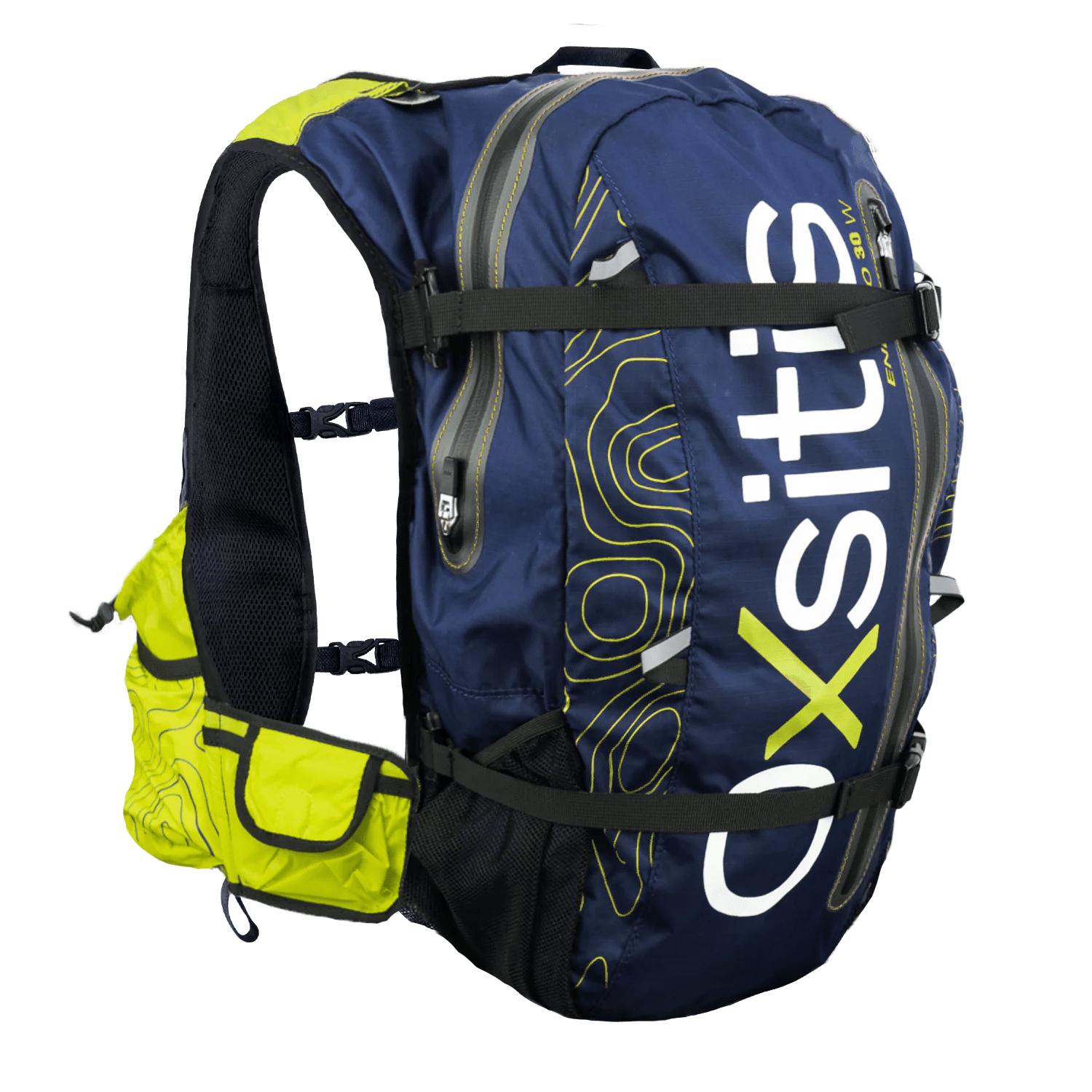
Oxitis Enduro 30 Ultra (male and female specific) https://www.oxsitis.com/en/product/sac-enduro-30-ultra/

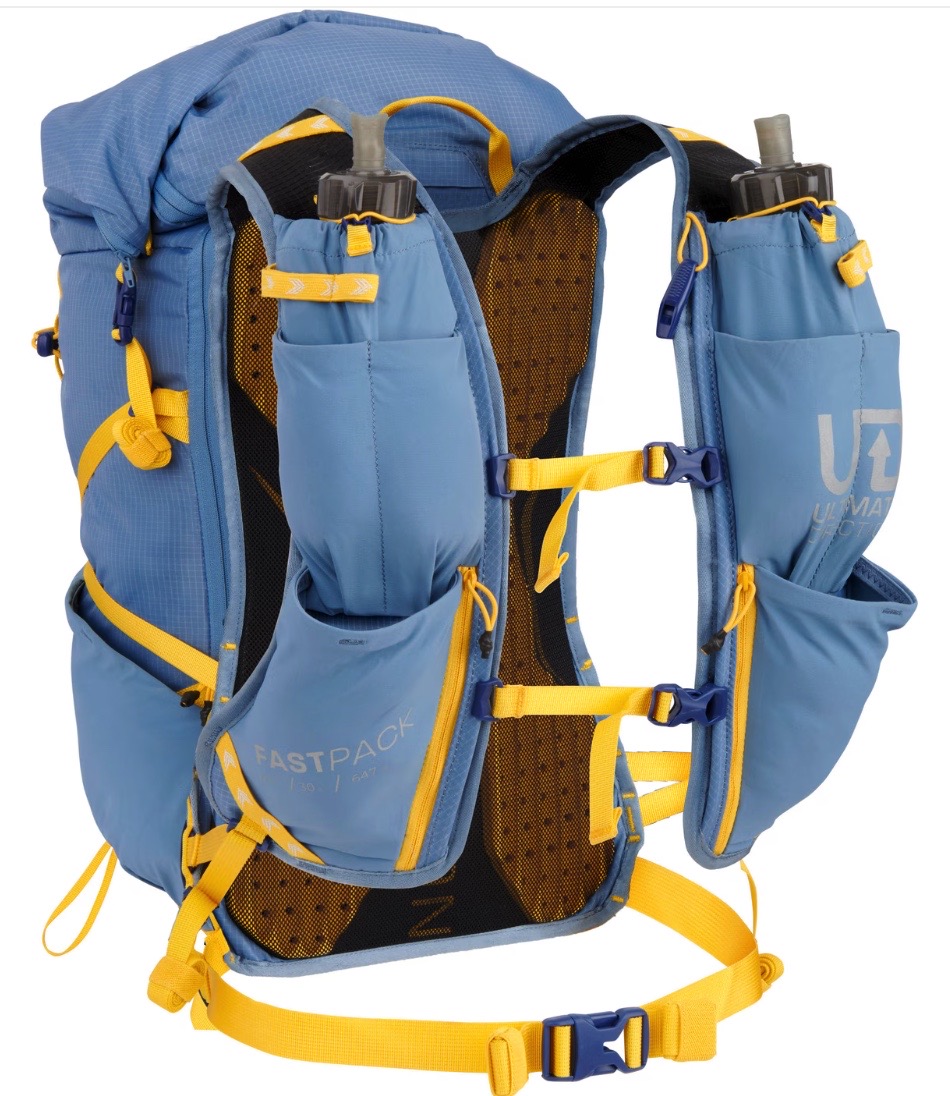
Ultimate Direction Fastpack available in 20L and 30L also male and female specific https://ultimatedirection.com/fastpack-20/

UltrAspire Epic  XT 20L https://ultraspire.com/products/epic-xt-20-hydration-pack/

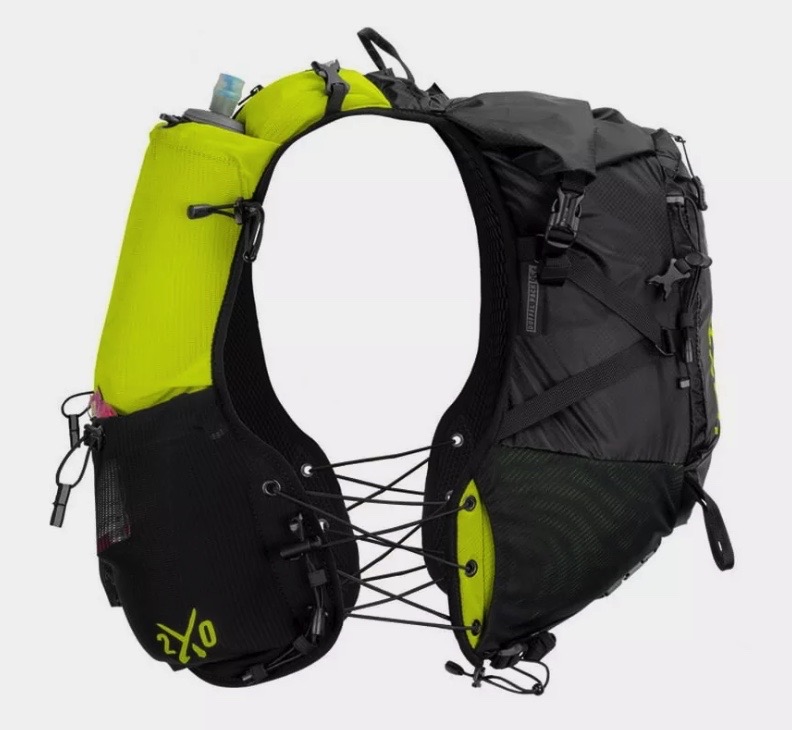
Instinct XX 20-24L https://www.instincttrail.com/product/xx-20l/

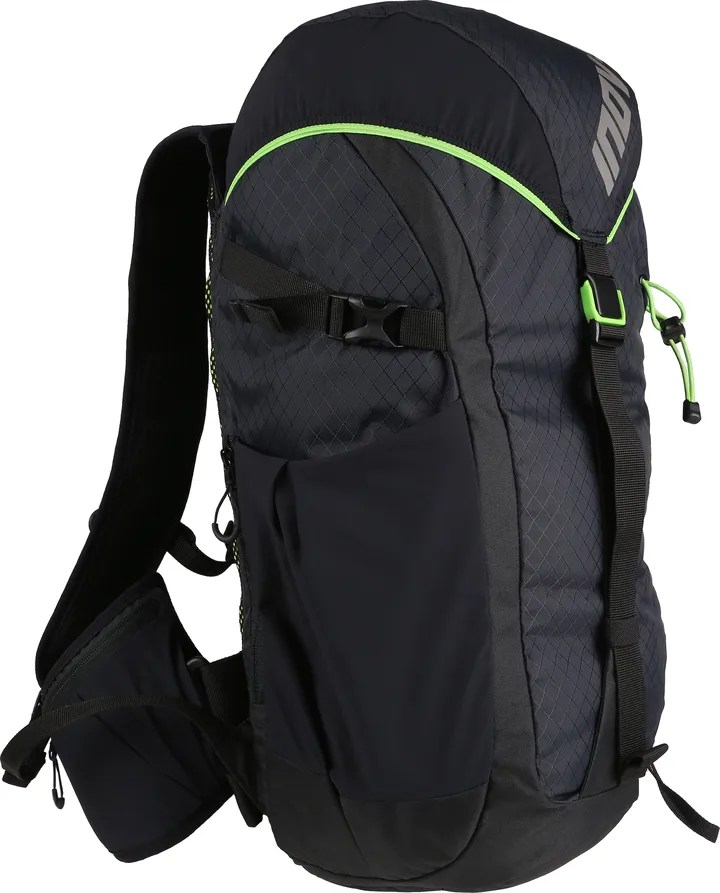
Inov-8 Venturelite 25 https://www.inov8.com/venturelite-25l-hiking-pack?colours=3120

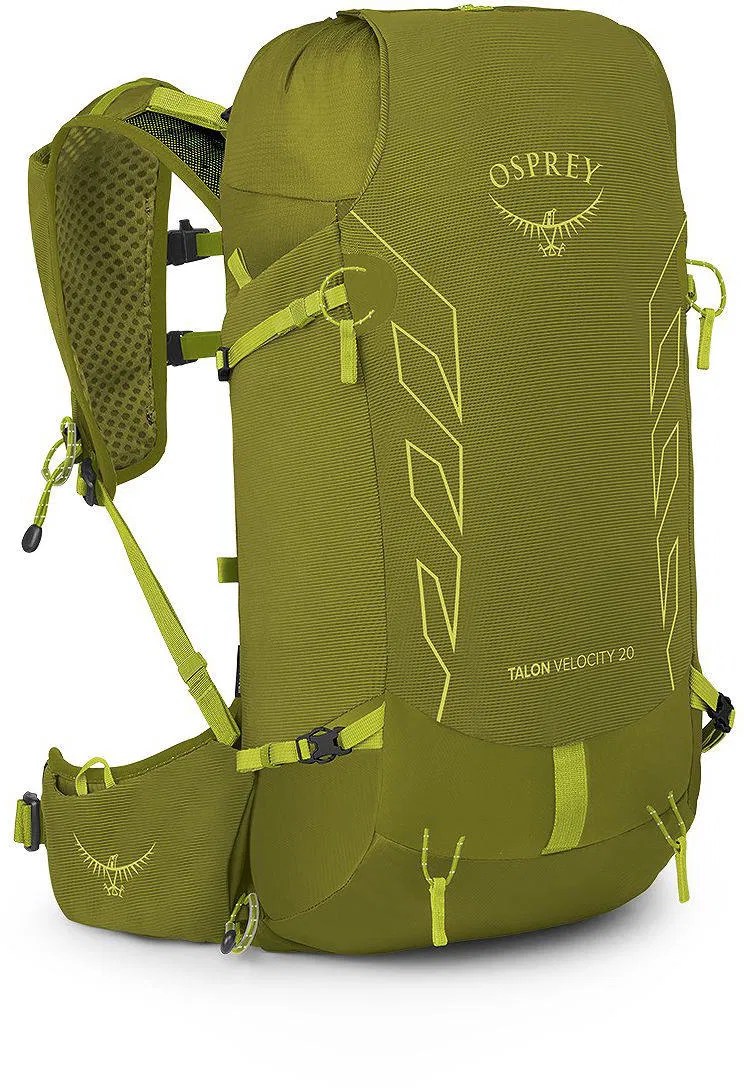
Osprey Talon Velocity in 20l and 30l (male and female fit) https://www.osprey.com/talontm-velocity-20?color=White

Raidlight Ultralight 24-30l (maybe the lightest pack available?) https://raidlight.com/en/products/sac-a-dos-trail-ultralight-24-30-made-in-france

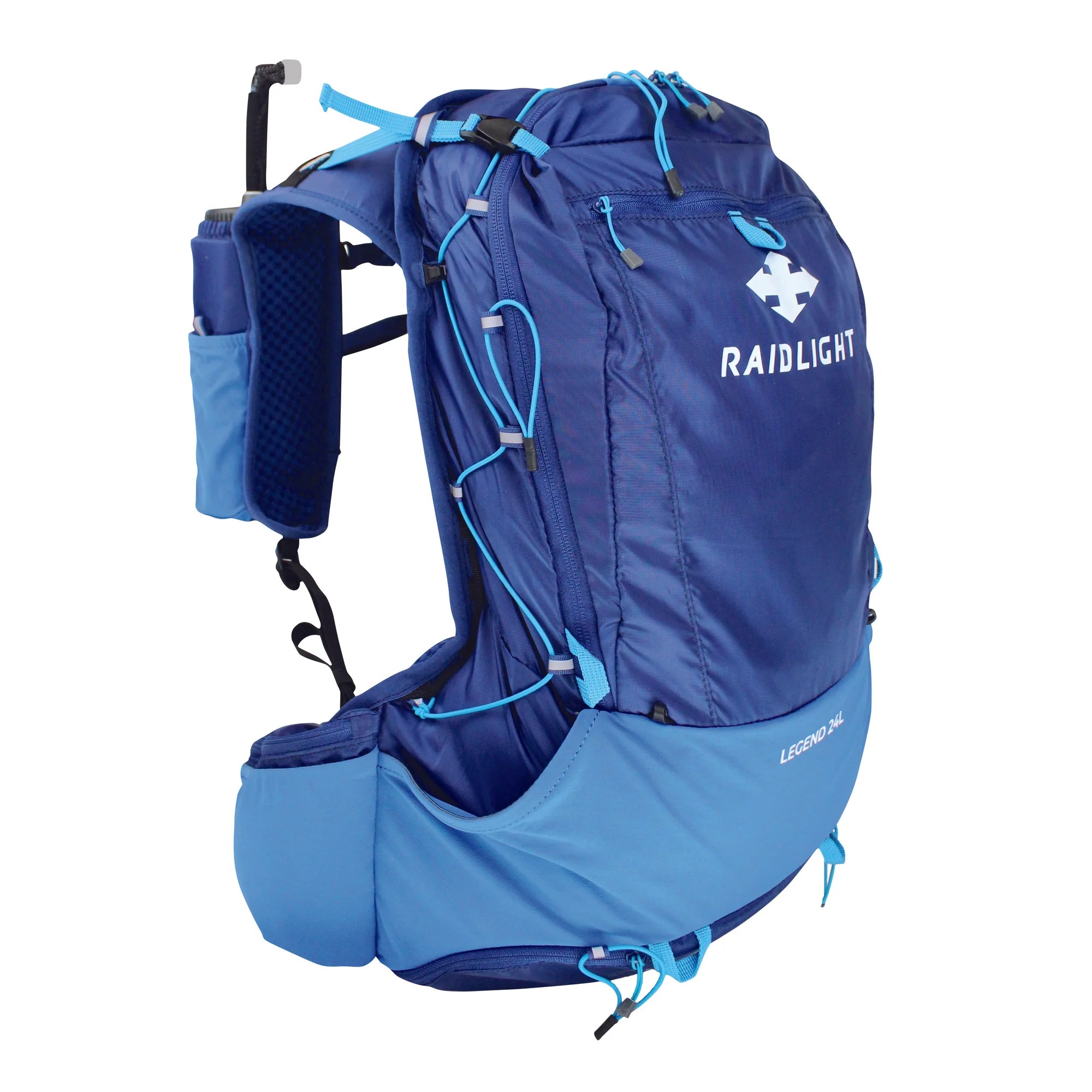
Raidlight Raid Legend 25l https://raidlight.com/en/products/sac-a-dos-de-trail-activ-legend-24l

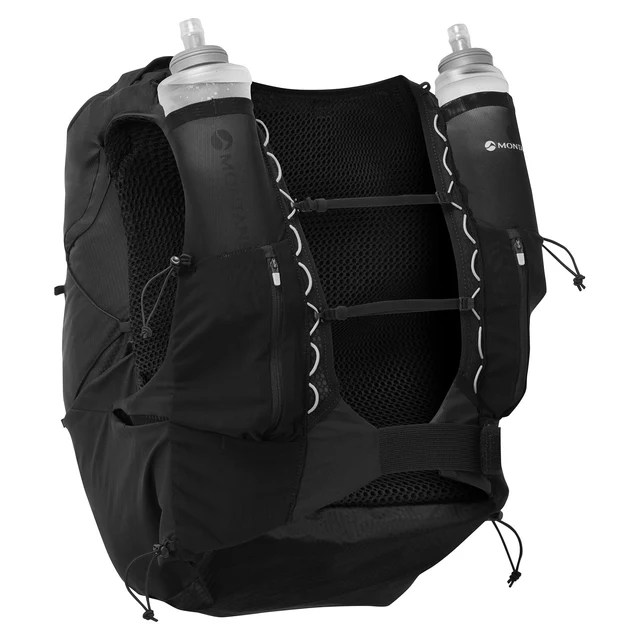
Montane Gecko VP 20l https://montane.com/products/montane-gecko-vp-20

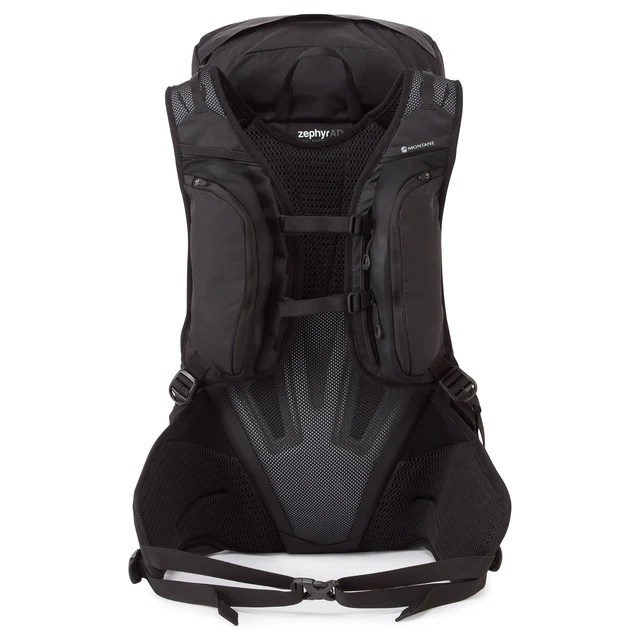
Montane Trailblazer 25l https://montane.com/products/montane-trailblazer-25l-backpack

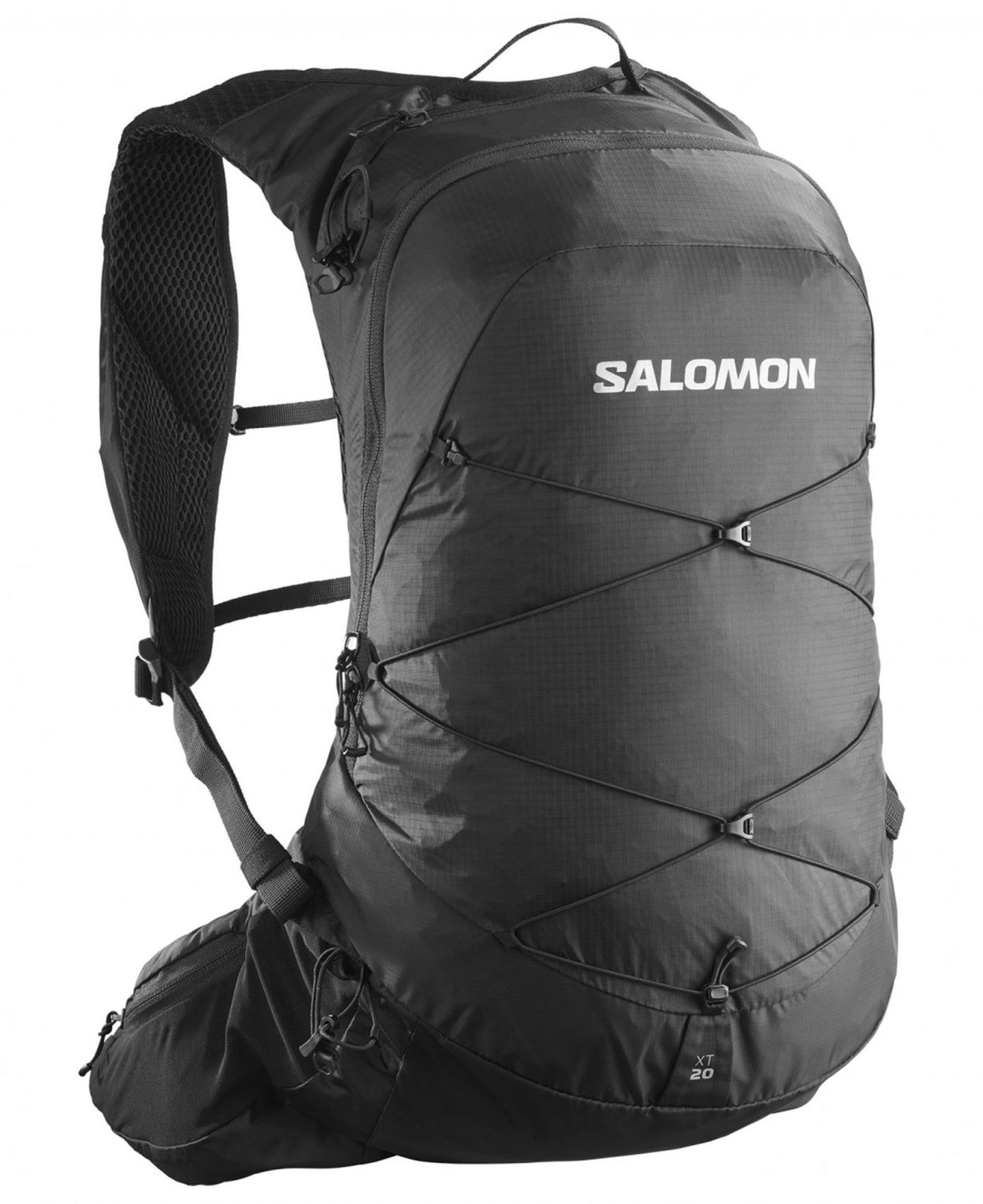
Salomon XT 20 https://www.salomon.com/en-us/shop/product/xt-20-lc12756.html#color=87687&size=27106

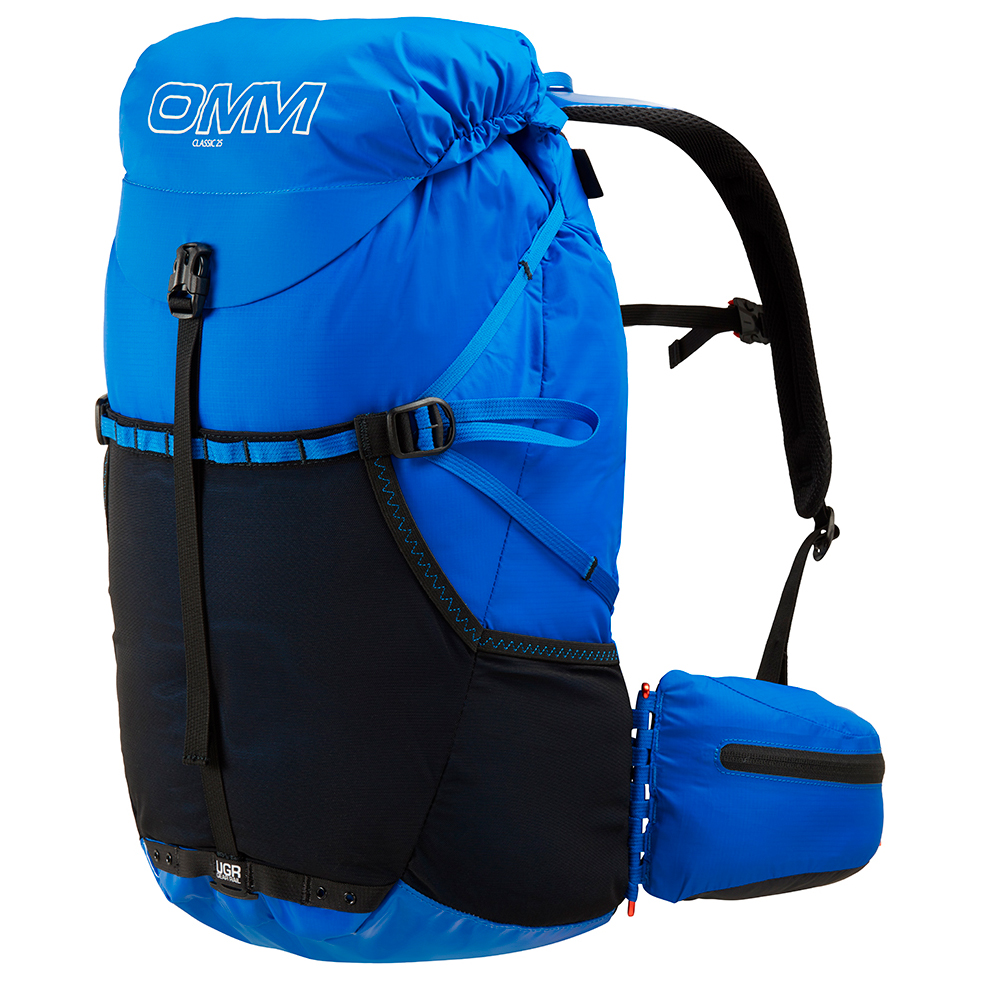
OMM Classic 25 https://theomm.com/product/classic-25/

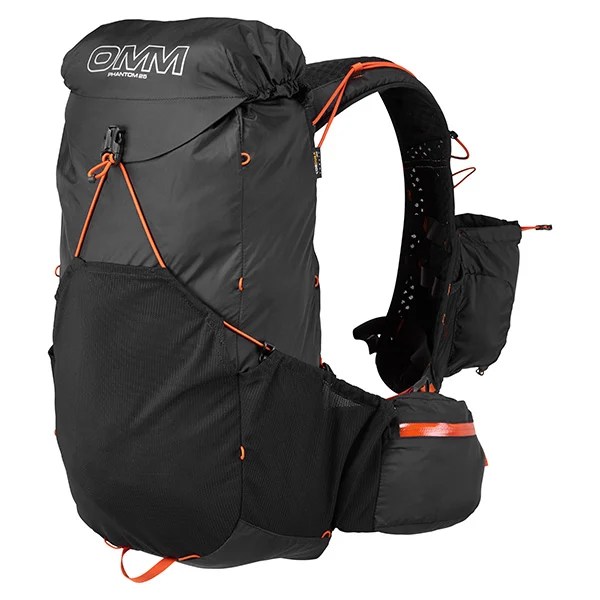
OMM Phantom 25 https://theomm.com/product/phantom-25/

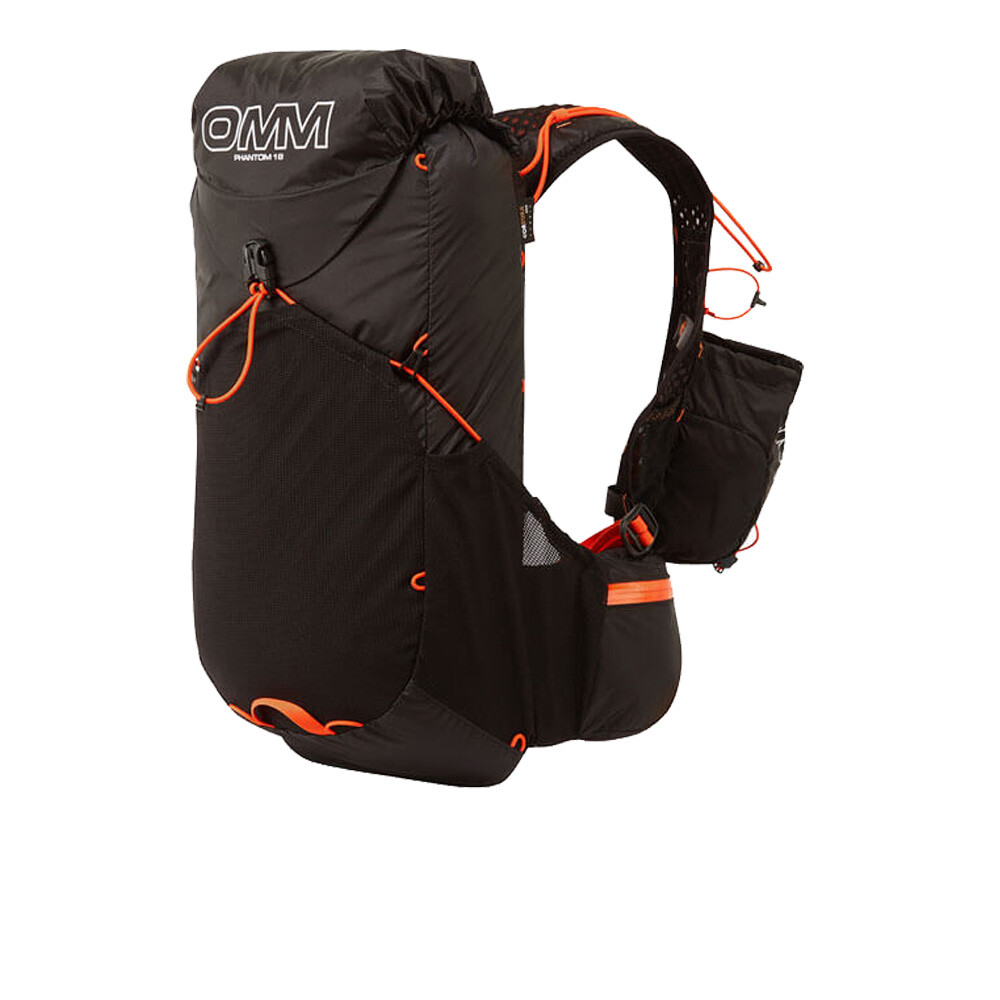
OMM Phantom 18 https://theomm.com/product/phantom-18/

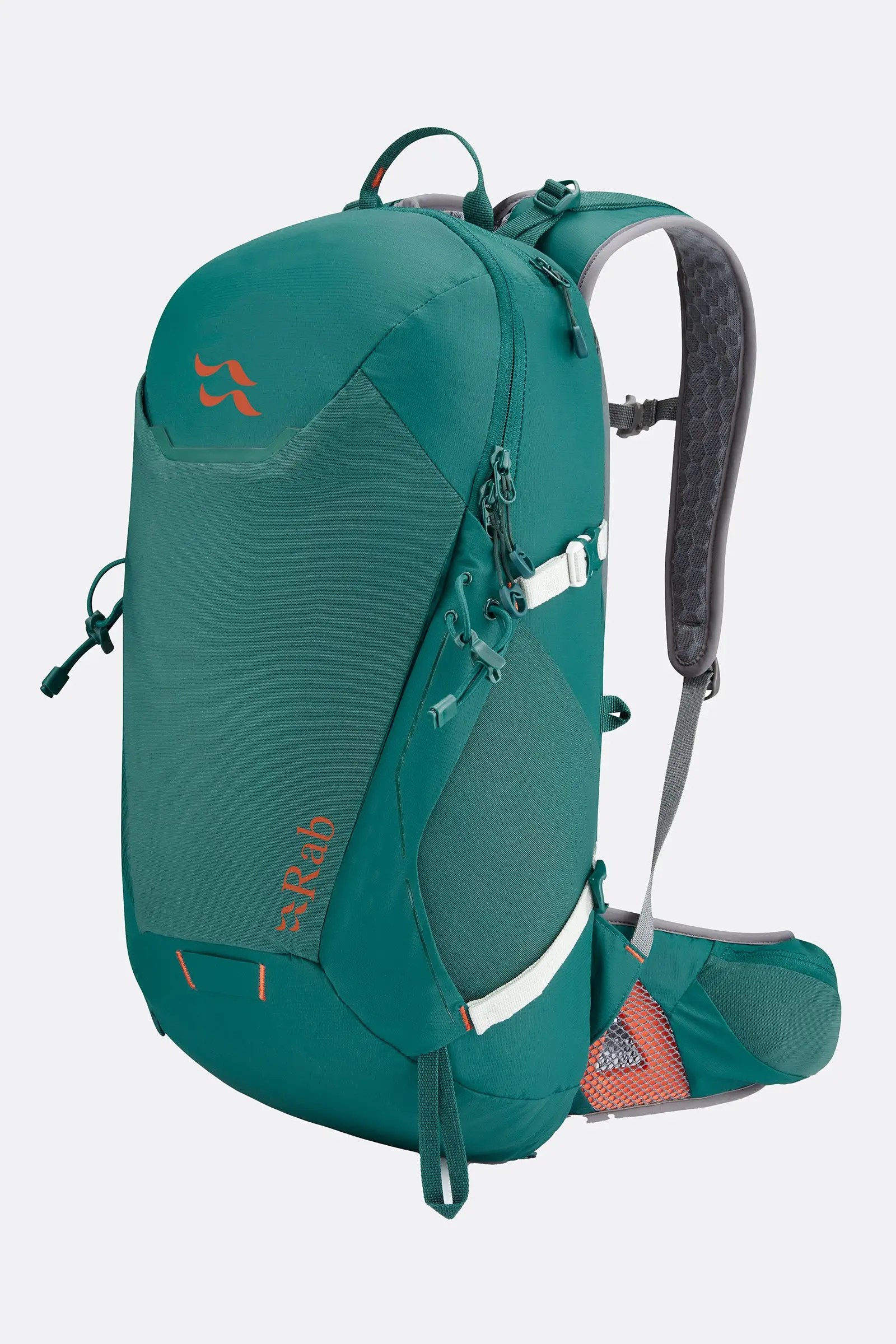
RAB Aeon (18 and 28l) https://rab.equipment/uk/rab-aeon-ultra-28-lightweight-pack

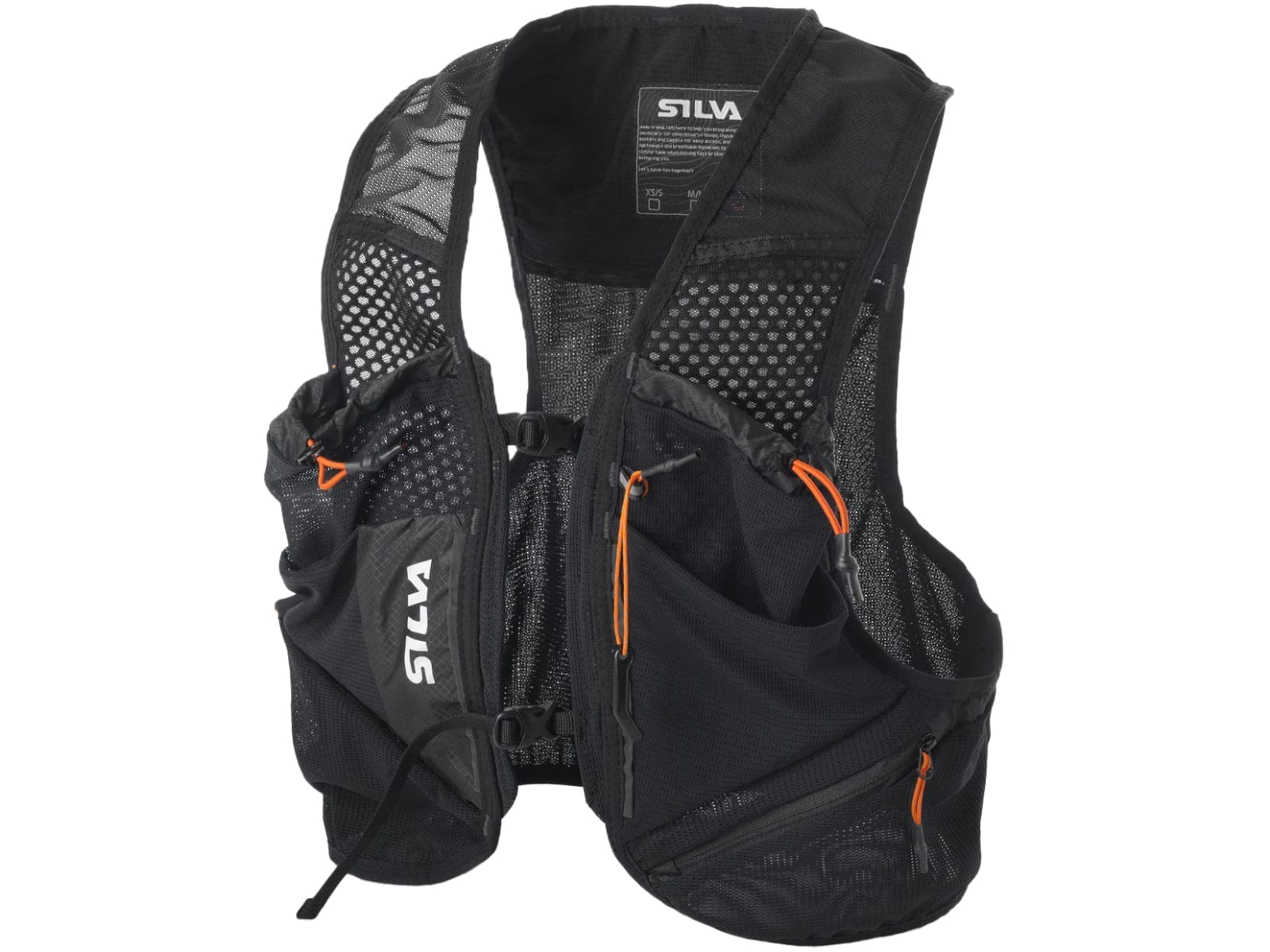
SILVA Strive available 17+3l or 23+3l https://silvasweden.uk/collections/backpacks/products/strive-mountain-pack-17-3

Large Capacity Packs:

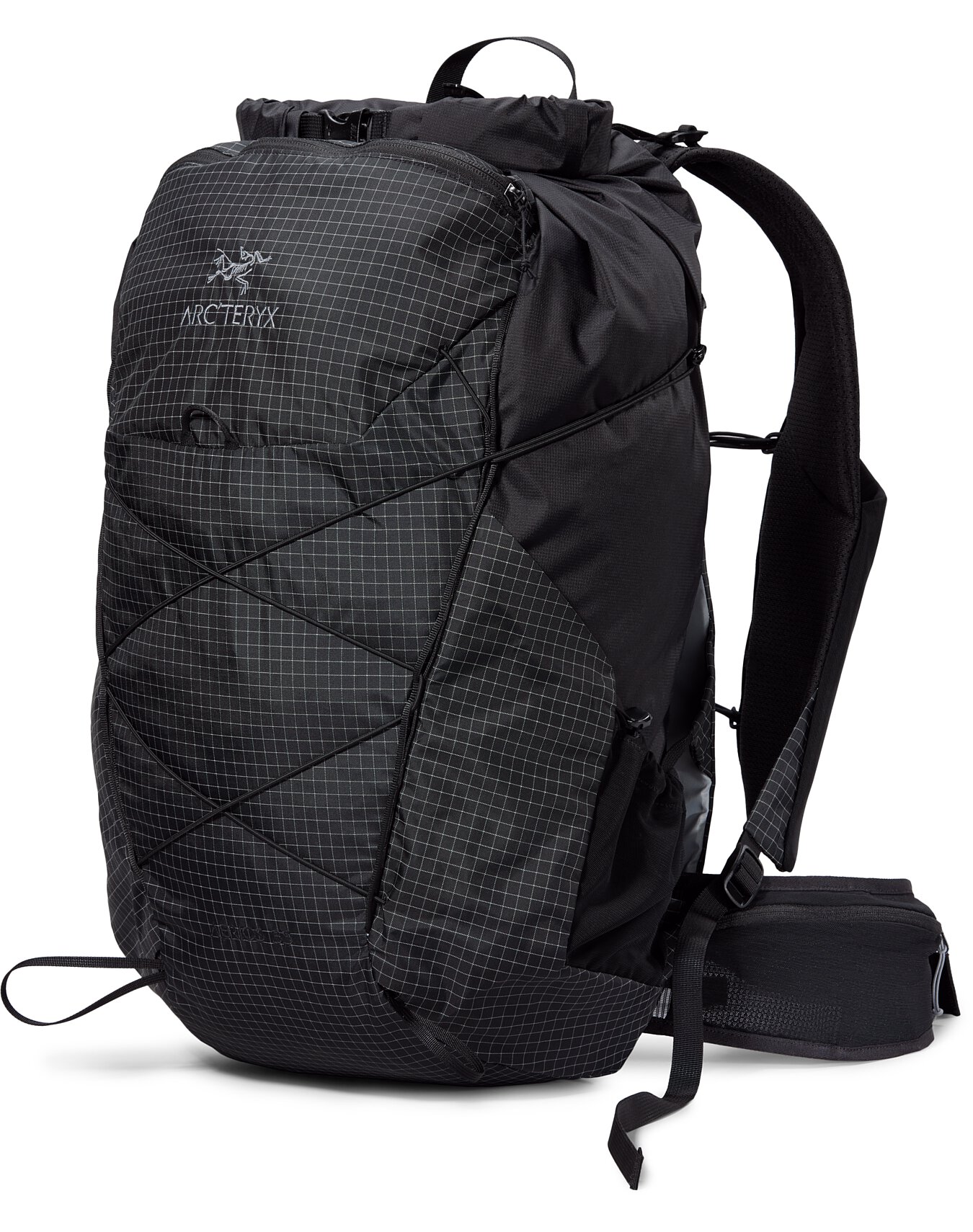
Arc’teryx Aerios 35 https://arcteryx.com/no/en/shop/aerios-35-backpack?sub-cat=multi-day&sub_categories=Multi-Day

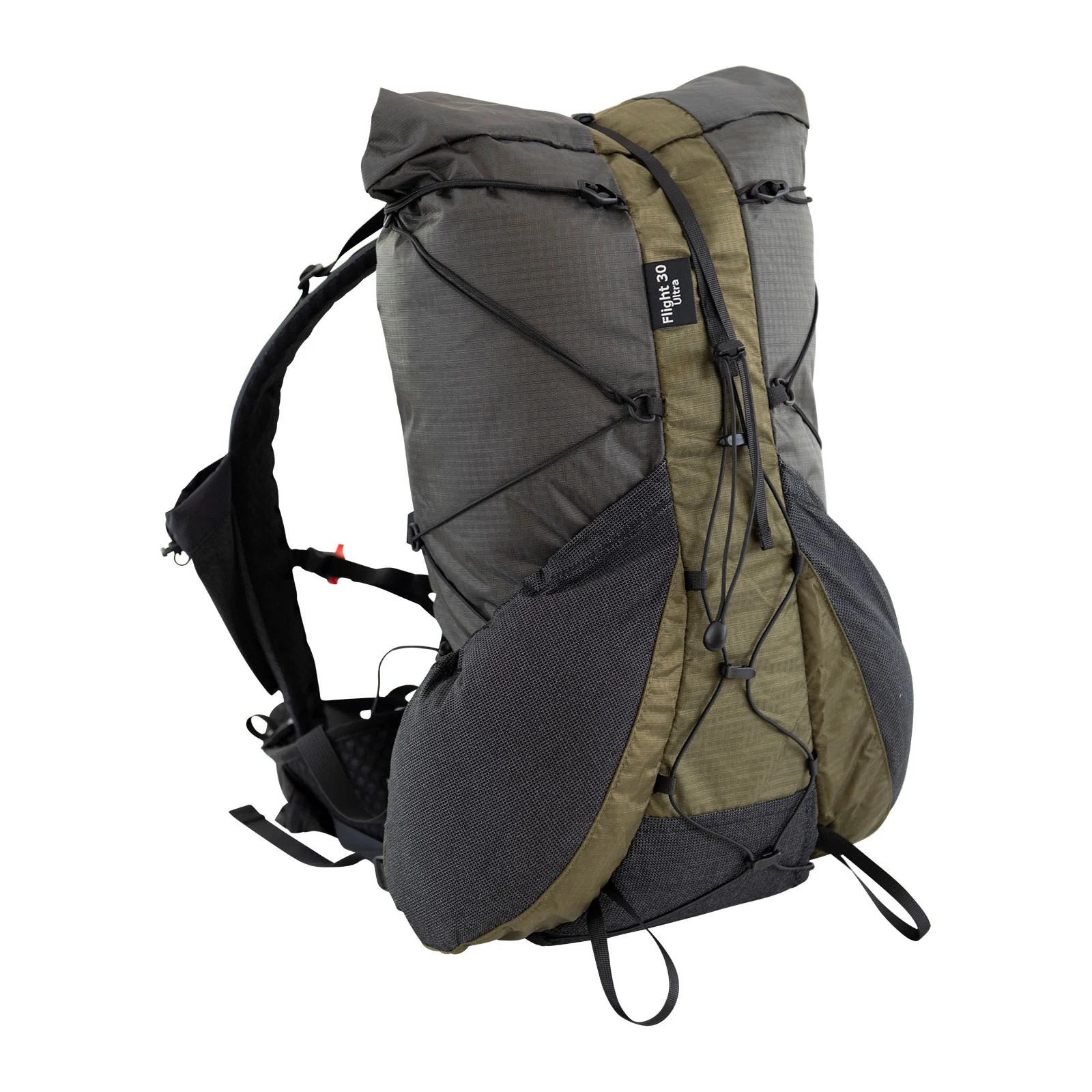
Six Moon Designs Flight 30 https://www.sixmoondesigns.com/

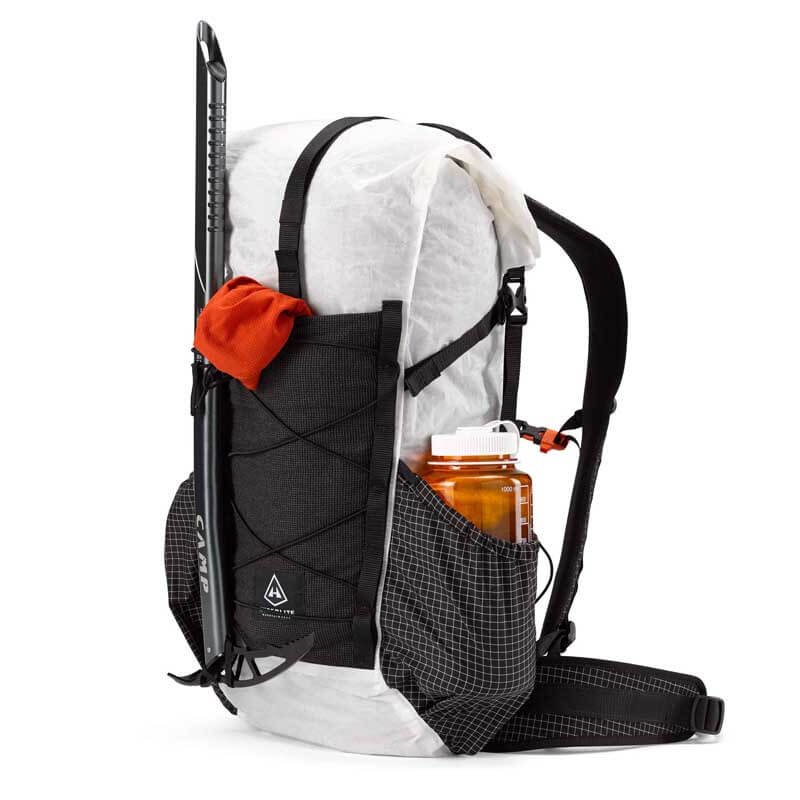
Hyperlite Mountain Gear Elevate 22 https://www.hyperlitemountaingear.com/products/elevate-22

CONCLUSION

Ultimate Direction pack at MDS

As you can see above, there is no shortage of options for packs. The main problem is testing and trying packs. Today, the internet and online purchasing provides us all great options and ease for shopping, but, I cannot emphasise enough, with a pack, go to a store, try them on, add weight and play around. Ideally, go to a store that sells many options so you can compare.

The right pack is the one that works for you

Follow on:

Instagram – @iancorlessphotography

Twitter – @talkultra

facebook.com/iancorlessphotography

Web – www.iancorless.com
Web – www.iancorlessphotography.com

Image sales –www.iancorless.photoshelter.com

Cappadocia Ultra Trail 2023 Summary

Kim Schreiber victory and 3rd overall in the CMT

Quite simply, Cappadocia is unique. If you haven’t experienced the place, you need to add a trip very close to the top of your ‘to-go’ list now.

IMAGE GALLERY HERE

Iconic balloons, landscape and early morning light.

You’ll have seen the images, two in particular appear everywhere when you do a search on the internet, one will be the unique fairy towers and the other, hot air balloons gliding over the aforementioned landscape with the glow of early morning light.

Running and racing is a wonderful double edged sword, we look for new destinations to practice our sport and then when in these locations, we get to explore them in the best way possible, by foot!

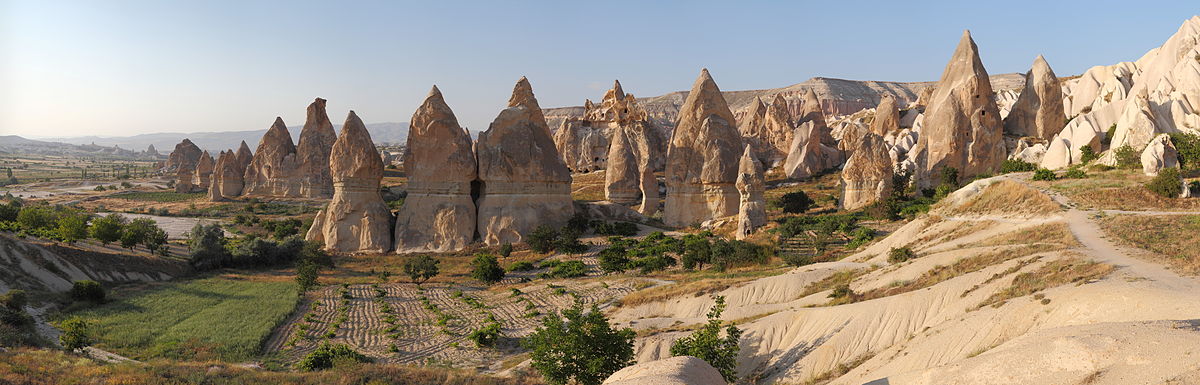
Hoodoo – an epic backdrop

Salomon Cappadocia Ultra Trail, now in it’s 10th edition provides the opportunity to mix the best of both worlds.

The races start and conclude in Ürgüp (closest airport Kayseri) in Nevşehir province. It’s the perfect hub for exploration. Located at 1044m, access to key tourist attractions and hot air balloon flights, are just a phone call away, particularly if you communicate with Argeus Travel, who also happen to be the team behind Cappadocia Ultra Trail.

Other than say Montserrat, Colorado and north America, the landscape of Cappadocia is unique. The ‘Hoodoo’ (fairy chimney) actually translates to tent rock or earth pyramid is in abundance and a key feature of the landscape here. Created by earth erosion, they typically consist of soft rock topped by harder rock. These Hoodoos became home to Troglodytes (cave dweller) who carved into the formations to create a place to live. Varying in size, Hoodoo can be up to 10 storeys high and they are unique with a conical shape. Today, there are no permanent settlements but Persians, Ottomans, Romans, Byzantines and others, over time, have used these Hoodoo as shelter. Notably, Christians fleeing persecution made their homes in Cappadocia and they built churches. This was a key phase in the development of the Hoodoo, they ‘added’ to the natural structure and also built a network of underground cities and caves.

And so, Salomon Cappadocia Ultra Trail offers a unique opportunity to run through history.

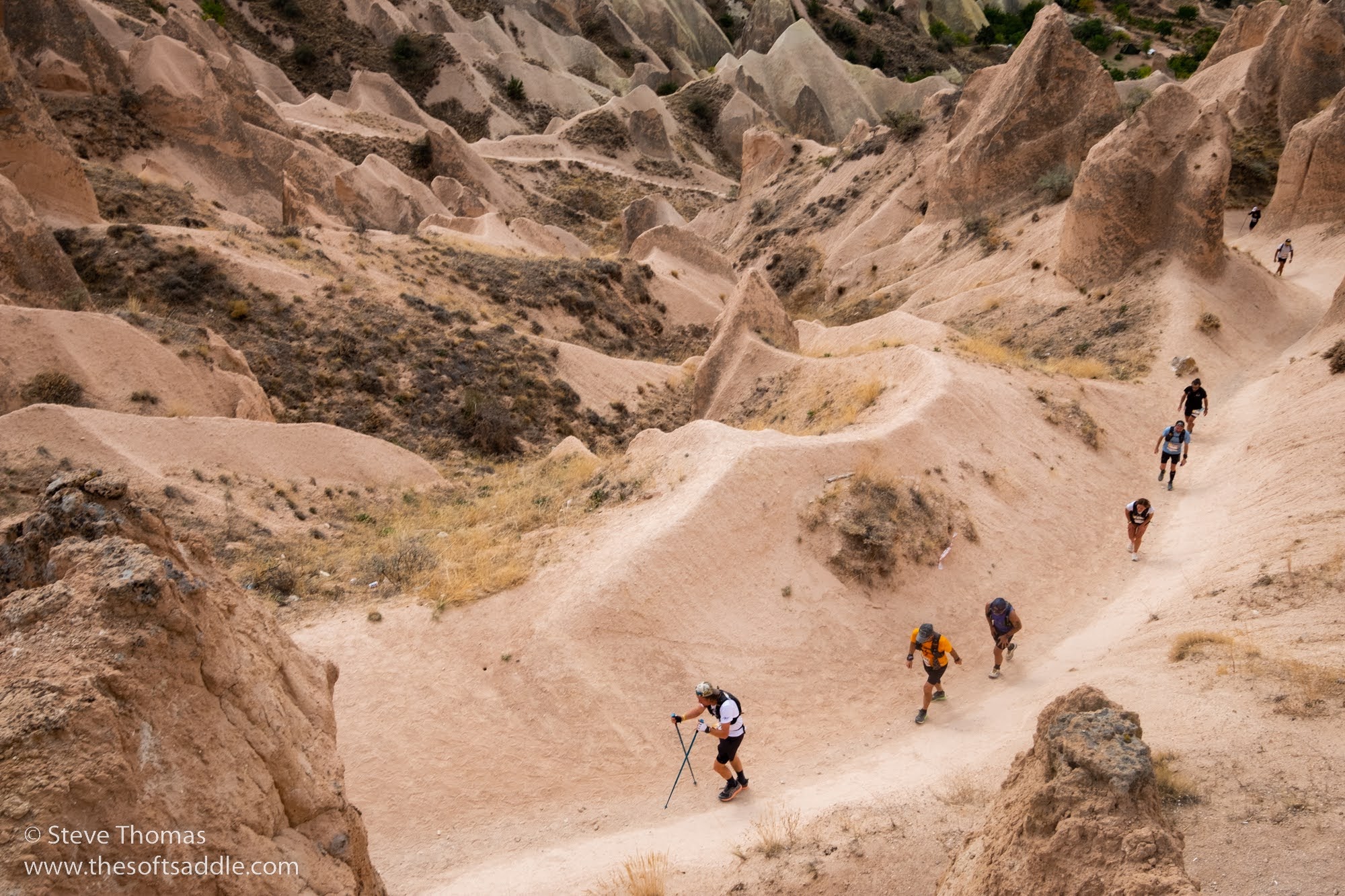
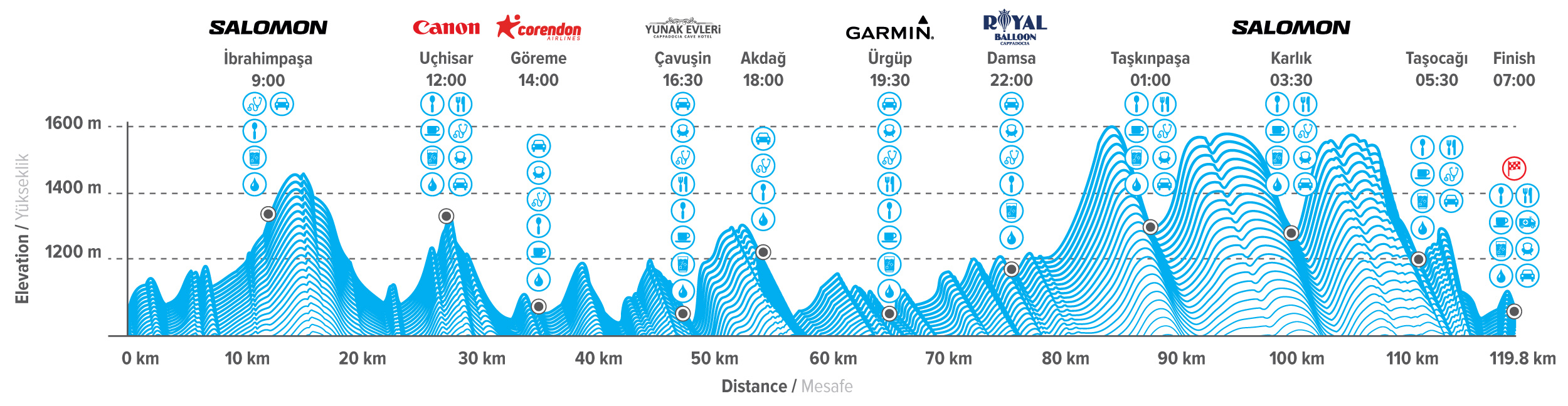
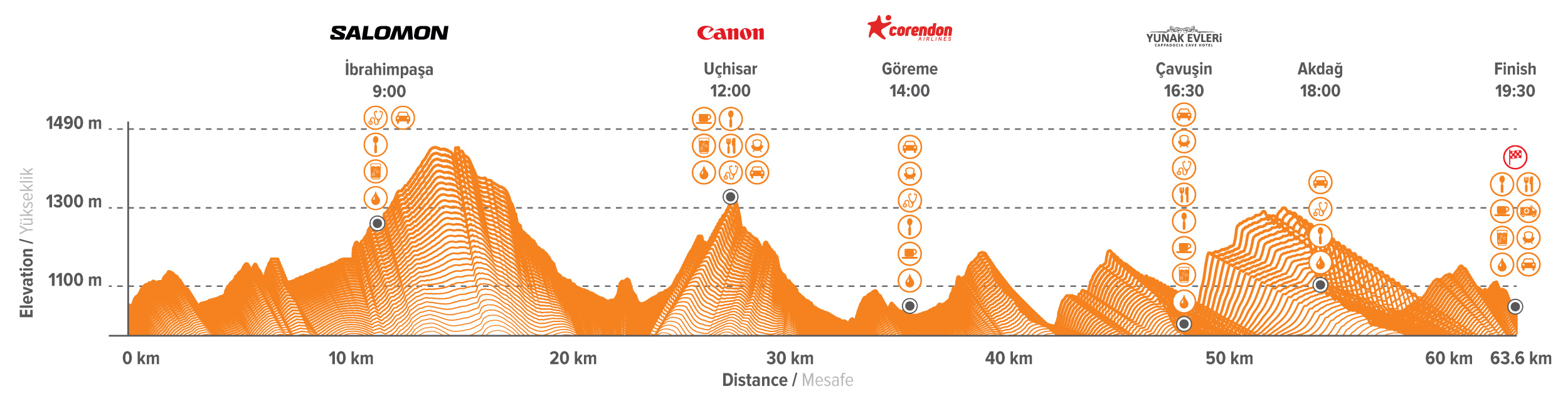
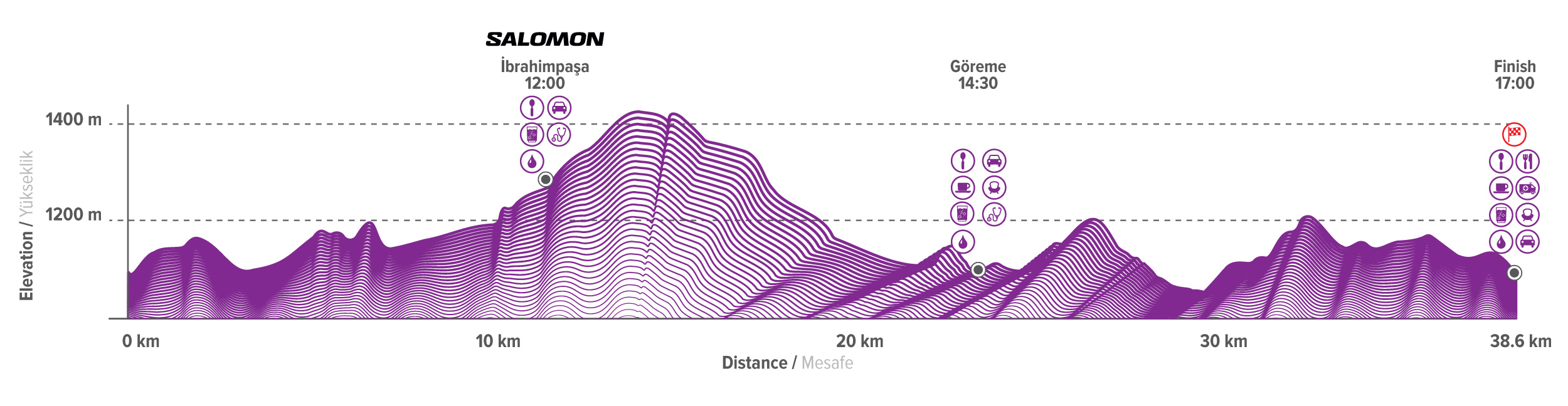
With three key races, CUT at 119k,, CMT at 63km and CST at 38km, there is a race distance for all. While CUT provides the full and immersive 360 experience, the CMT arguably provides the most spectacular and concise journey. The CUT and CMT cover the same trails starting in Ürgüp and passing on a circular route through key locations such as Ortahisar, Ibrahimpasa, Göreme and the Rose and Red valley, where surreal rock formations, pinkish-red colours, and ancient cave churches make this a highlight. Ürgüp follows and the CMT concludes, for the CUT they continue on for a tough and arduous loop passing through Mustafapasa, Damsa Dam, Cemil, Taskinpasa, Karlik, Egrim Tepesi and finally Ürgüp for the finish.

The CST passes through Ibrahimpasa, Göreme and concludes in Ürgüp and while the route has its moments, it’s less spectacular than the CMT.

With over 2400 runners from over 70 nations, Cappadocia Ultra Trail has become Turkey’s key trail running event. It sets the bar for how an event should be. Talking with the team at Argeus, they have a simple philosophy, they wanted to create an event for Turkish people that was of the highest standard and importantly, affordable. The growth of the event and the landscape on offer has made this one of the key events in the world to travel to and it’s easy to see why. Ürgüp in itself has grown through the tourism generated and as such, accommodation is in abundance and much of it with a boutique style, I for example stayed inside a cave at Deer Suites.

Racing was fast and furious and the presence of the Adidas Terrex Team certainly provided a new impetus to the racing with Dmitry Mityaev and Ekaterina Mityaeva winning the CUT, Ekaterina also 3rd overall. Kim Schreiber winning the CMT and placing 3rd overall! Martin Dematteis and Dion Gorla both placing 2nd in the CST. Full results HERE.

Dmitry Mityaev

CUT – Dmitry Mityaev completed the 360 degree journey of Cappadocia in a course record time of 10:59:32 with Farkhad Isakov and Mohammadreza Jelodar placing 2nd and 3rd, 12:14:25 and 13:12:15 respectively. Ekaterina Mityaeva also set a course record 13:00:23 and placed 3rd overall, a stunning run. Ksenila Avdeeva was 2nd in 14:23:45 and Sergio Baysal 3rd in 15:24:41.

Ekaterina Mityaeva

CMT – Kim Schreiber was the star completing the 63km in 05:38:39 and placing 3rd overall. Behind, the Terrex athlete was followed by Varvara Shikanova and Aysel Yalac Dolay. 06:02:58 and 06:24:50 respectively. Mestan Turban set a blistering pace for the men and set a convincing victory in 05:03:49 followed by Irem Can Ayaz in 05:17:40 and Ryan Farrugia in 05:42:15.

Mestan Turban passing through Ibrahimpasa

CST – Alejandro Forcades and Martin Dematteis had a hard fought battle for victory, Alejandro finally crossing first in 02:39:40 to Martin’s 02:41:34. Yury Shtankov rounded the podium in 02:48:29. The women’s race also had a tight battle for victory with Simone Brick edging out Dioni Gorla, 03:25:53 to 03:26:35. Tugce Karakaya placed 3rd in 03:31:24.

Hidden caves

In addition to the stand-alone races, the CUT, CMT and CST were also done in relay format. Results CUT, CMT and CST.

Ürgüp was a stunning location and hub for the 2023 Cappadocia Ultra Trail, in conjunction with excellent organisation from Argeus, many are now already looking ahead to 2024. See you there I hope!

Magical and unique landscape.

Follow on:

Instagram – @iancorlessphotography

Twitter – @talkultra

facebook.com/iancorlessphotography

Web – www.iancorless.com
Web – www.iancorlessphotography.com

Image sales –www.iancorless.photoshelter.com

Salomon Cappadocia Ultra Trail 2023 Preview

copyright cappadocia ultra

Over 1500 runners are celebrating 10-years of the Salomon Cappadocia Ultra Trail in 2023, the stage is set for it to be the best one yet. Offering three distances, 119km, 63km and 38km, what better way is there to experience the hills and valleys of this UNESCO world heritage site? A place of exceptional natural wonders and a peerless historical heritage!

Cappadocia is a semi-arid region in central Turkey, is known for its distinctive “fairy chimneys,” tall, cone-shaped rock formations clustered in Monks Valley, Göreme and elsewhere. Other notables sites include Bronze Age homes carved into valley walls by troglodytes (cave dwellers) and later used as refuges by early Christians. The 100m-deep Ihlara Canyon houses numerous rock-face churches. This unique cultural and morphological heritage site was included in the UNESCO World Heritage List in 1985 and today is one of the most visited regions of Turkey.

Three events and one unique experience.

CUT 119km 3730m+ (200 participants)

with Aleksi Tolstenko, Dmitry Mityaev, Ekaterina Mityaeva, Alper Dalkilic, and Elena Polyakova.

CMT 63km 20230m+ (552 participants)

with Tofol Castanyer, Erik La Puma, Dioni Gorla, Janosh Kowalczyk and Kim Schreiber.

CST 38km 1120m+ (833 participants)

with Martin Dematteis, Martin Anthamatten, Jeshrun Small, and Sven Koch.

Routes available on FATMAP:COM

Programme Outline:

12th October 

  • Expo and Registration

13th October

  • Expo and Registration
  • Meet elite athletes
  • Technical briefing
  • Opening buffet

14th October 

  • 0700 race starts for CUT, TCUT, CMT and TCMT.
  • 1000 CST and TCST Start Urgup city centre
  • 1215 CST first finisher
  • 1315 CMT finisher
  • 1800 CUT finisher

15th October

  • 0700 Cut-off for CUT 
  • 1100 Awards

Race Registrations HERE

Follow on:

Instagram – @iancorlessphotography

Twitter – @talkultra

facebook.com/iancorlessphotography

Web – www.iancorless.com
Web – www.iancorlessphotography.com

Image sales –www.iancorless.photoshelter.com

Transgrancanaria 2023 Summary

Courtney Dauwalter #goat ©iancorless

Transgrancanaria, year-on-year, the race continues to grow and expand and in 2023, once again, a new level has been reached! For ’23,’ Instead of gathering all races in one weekend, this edition was extended to five days. Overall, more than 3,600 runners from more than 60 different nationalities took part in any of the eight races, the most important change for 2023 was to increase the number of race days to five. Shorter races, were moved to Wednesday, Thursday and Friday morning including the KV El Gigante, Starter, Promo, Youth, Family, a non-competitive kids race and the marathon.

Epic landscape ©iancorless

The ‘Classic’ and ‘Marathon’ races were broadcast, worldwide, with more than 17 hours of live streaming. In total, 16 cameras offered full coverage during the two days of broadcasting with English and Spanish ‘live’ commentary. In addition, journalists, photographers and related media provided global exposure of one of ‘the’ key trail running events in the world.

Transgrancanaria, at the sharp edge of trail running ©iancorless

Transgrancanaria is part of the Spartan Trail World Championship circuit and four races of the TGC week are awarded with ITRA points. As a result, this recognition translated into better prizes for the winners. The Spartan Trail World Championship has awarded $30,000 to the top three finishers of Transgrancanaria 2023.

Gemma Arenas on her way to victory in the Advanced race ©iancorless

A CLASSIC EDITION

From the short and sharp KV to the long and arduous Classic, Transgrancanaria has something for all. However, the pinnacle race of the week is the 128km ‘Classic’ with 7060m of vertical gain. All who toe the line to undertake the challenge are heroes, however, in 2023 a special mention must go to the GOAT (Greatest Of All Time) Courtney Dauwalter who not only placed 7th overall on GC but ran under 15 hours to stop the clock in 14:40:39. Courtney, over the years, has slowly but surely ticked off victories in the worlds biggest ultras and in the process, along with course records, has set a new level in this crazy sport of ultra running. Now she has a Transgrancanaria course record to add to the list.

©iancorless

Canada’s Jasmine Lowther and Catalonia’s Claudia Tremps placed 2nd and 3rd, for perspective, they were almost 2-hours behind the trailblazing ‘Court!’ One has to ask the question, what is next for this amazing athlete.

Claudia Tremps 3rd place ©iancorless

In the men’s category, Andreu Simón was the fastest of all in 13:29:33 with an impressive run from the front, his victory never looked in question. A previous winner in Transgrancanari,, 2020 and 2021 in the Marathon distance.

Andreu Simón on his way to victory ©iancorless

Miguel Arsénio from Portugal and Tyler Green (America) completed the podium, 2nd and 3rd respectively.

Tyler Green ©iancorless

OTHER RESULTS

George Foster and Azara García won the Advanced, while the Marathon went to Kenyan Robert Pkemoi, and Catalan Nuria Gil. Poland’s Bart Przedwojewski did a double win with Starter and KV El Gigante, while Switzerland’s Rea Iseli won Starter women’s category. Poland’s Katarzyna Solińska joined her countryman Przedwojewski as winner of the KV El Gigante.

France’s Enzo Rati and Italy’s Cecilia Basso Promo finished on top of the podium in the Promo category. In the Youth category, a French double win for Camille Cucherousset and Lili Perignon.

Magical Gran Canaria ©iancorless

CLASSIFICATION

Classic 128 Km

General Men

  • Andreu Simón (SPA) 13:29:33
  • Miguel Arsénio (POR) 13:44:37
  • Tyler Green (USA) 14:06:46

General Women

  • Courtney Dauwalter (USA) 14:40:39
  • Jazmine Lowther (CAN) 16:26:41
  • Claudia Tremps (SPA) 16:33:34

Advanced 84 Km

General Men

  • George Foster (GBR) 08:29:14
  • Alexander Hutter (AUT) 08:45:15
  • Tom Joly (GBR) 08:49:19

General Women

  • Azara García de los Salmones (SPA)09:45:54
  • Johanna Antila (FIN) 09:55:48
  • Giulia Vinco (ITA) 10:20:38

Marathon 45 Km

General Men

  • Robert Pkemoi (KEN) 03:25:30
  • Roberto Delorenzi (SWI) 03:33:20
  • Juho Ylinen (FIN) 03:34:19

General Women

  • Nuria Gil (SPA) 04:08:00
  • Johanna Amström (SWE) 04:18:11
  • Gemma Arenas (SPA) 04:21:32

Starter 24 Km

General Men

  • Bart Przedwojewski (POL) 02:02:48.500
  • Alex García (SPA) 02:02:48.940
  • Christopher Richards (GBR) 02:04:50

General Women

  • Rea Iseli (SWI) 02:35:33
  • Mireia Pons (SPA) 02:40:54
  • Noemie Vachon (FRA) 02:44:04

Promo

General Men

  • Enzo Rati (FRA) 00:59:47
  • Wilson Cardoso (CPV) 01:00:34
  • Damián Ramis (SPA) 01:02:56

General Women

  • Cecilia Basso (ITA) 01:09:13
  • Ainara Uribarri (SPA) 01:11:51
  • Saida Martín (SPA) 01:30:59

Youth

General Men

  • Camille Cucherousset (FRA) 00:58:12
  • Javier Moreno (SPA) 01:07:06
  • Jiri Vemola (CZE) 01:44:00

General Women

  • Lili Perignon (FRA) 01:53:18
  • Sohvi Vapaaoksa (FIN) 01:56:10
  • Noelia Santana (SPA) 02:26:31

KV El Gigante

General Men

  • Bart Przedwojewski (POL) 00:39:46
  • Yoel de Paz (SPA) 00:40:12
  • Henri Aymonod (ITA) 00:40:47

General Women

  • Katarzyna Solińska (POL) 00:50:32
  • Marie Dessart (BEL) 00:51:18
  • Sophie Horrocks (GBR) 00:57:07
Past winner, Pau Capell missed the podium this year ©iancorless

Follow on:

Instagram – @iancorlessphotography

Twitter – @talkultra

facebook.com/iancorlessphotography

Web – www.iancorless.com
Web – www.iancorlessphotography.com

Image sales –www.iancorless.photoshelter.com

Mathieu Blanchard to join The Coastal Challenge 2023 – #TCC2023

©iancorless

The Coastal Challenge, Costa Rica, is excited to announce that Mathieu Blanchard will join the line-up for the 2023 edition.

UTMB 2022 ©iancorless

Mathieu shot to fame after the 2022 UTMB when he traded blows with Kilian Jornet, finally placing 2nd. However, Mathieu is not the new kid on the block… His results go back to 2016 with podium placings in his home of Canada at Quebec Mega Trail and Ultra Trail Harricana de Charlevoix.

The rise in the sport has been steady and planned, in 2018 for example, Mathieu placed 13th at UTMB, in 2019 10th at CCC, and in 2021 he showed the promise of victory with 3rd at UTMB.

Mathieu leading 9x MDS champion, Rachid el Morabity

While he may be considered a single-day specialist, Mathieu dipped his toes in stage racing with participation in the 2021 Marathon des Sables – an edition that has now become infamous due to the heat and sickness bug that swept through the race. Mathieu was primed to stir the race up on the long day, sadly, the sickness hit him and he went in to survival mode. He still managed 5th overall.

Now The Coastal Challenge awaits; heat, humidity and the prospect of running along the coast and in and out of the mountains for a week.

The view from camp 3

TCC is the ultimate Costa Rican multi-day adventure. Hugging the coastline of the tropical Pacific, the route weaves in and out of the Talamancas; a coastal mountain range in the Southwest corner of this Central American country. Ever-changing terrain challenges each participant, from wide, dusty and runnable fire trails to dense and muddy mountain trails. River crossings, boulders, swimming through rivers, passing under waterfalls, surviving long and relentless beaches. Finally, the finish in the incredible Corcovado National Park, a Unesco World Heritage site, with a stunning final loop around Drake Bay before departing for their journeys home via speedboat.

THE RACE

  • Stage 1 34.6km 1018m of vert and 886m of descent
  • Stage 2 39.1km 1898m of vert and 1984m of descent
  • Stage 3 47.4km 1781m of vert and 1736m of descent
  • Stage 4 37.1km 2466m of vert and 2424m of descent
  • Stage 5 49.8km 1767m of vert and 1770m of descent
  • Stage 6 22.5km 613m of vert and 613m of descent

Total 230.5km

Vertical 9543m

Descent 9413m

#tcc2023

Facebook – https://www.facebook.com/thecoastalchallenge

Instagram @thecoastalchallenge

2nd at the 2022 UTMB ©iancorless

Follow on:

Instagram – @iancorlessphotography

Twitter – @talkultra

facebook.com/iancorlessphotography

Web – www.iancorless.com
Web – www.iancorlessphotography.com

Image sales –www.iancorless.photoshelter.com

Episode 222 – Tom Evans, Ryan Sandes and Ryno Griesel

WE ARE BACK!

Episode 222 brings you and in-depth chat with adidas Terrex athlete Tom Evans about his comeback to racing and victory after surgery and rehabilitation. We also talk to to Ryan Sandes and Ryno Griesel about an epic journey around Lesotho.

It almost feels like a new beginning for Talk Ultra and in a way, I suppose it is. We have just had the longest period ever without producing a show, but we are now back with some new fire.

Importantly, Karl and myself THANK YOU all for the support, messages and encouragement. It really does make producing the show worthwhile.

I personally had questioned if Talk Ultra should stop in this downtime period. It’s been a great run, 12-years, hours, hours and hours of audio and it was actually only when I looked back and realised that we have created and documented the history of the sport since 2010 that I can’t let that stop… Your support and encouragement and very kind words also was significant.

So, here we are, Episode 222 – Enjoy!

Share us on Facebook – Talk Ultra FB HERE

Tweet us on Twitter – Talk Ultra on Twitter HERE

Instagram – HERE

And use good old word mouth. 

Importantly, go to iTunes and subscribe so that you automatically get our show when it’s released we are also available on Stitcher for iOS, Android and Web Player and now Tunein. We are also on Spotify too. 

Our web page at www.iancorless.com has all our links and back catalogue. 

Please support Talk Ultra by becoming a Patreon at www.patreon.com/talkultra and THANKS to all our Patrons who support us. Rand Haley and Simon Darmody get a mention on the show here for ‘Becoming 100k Runners’ with a high-tier Patronage. 

I’m Ian Corless and he is Speedgoat Karl

Keep running

Spotify HERE

ITunes HERE

Stitcher You can listen on iOS HERE, Android HERE or via a web player HERE

Libsyn – HERE 

Tunein – HERE 

Website – talkultra.com

Kilian Jornet and Camper create a new brand NNormal

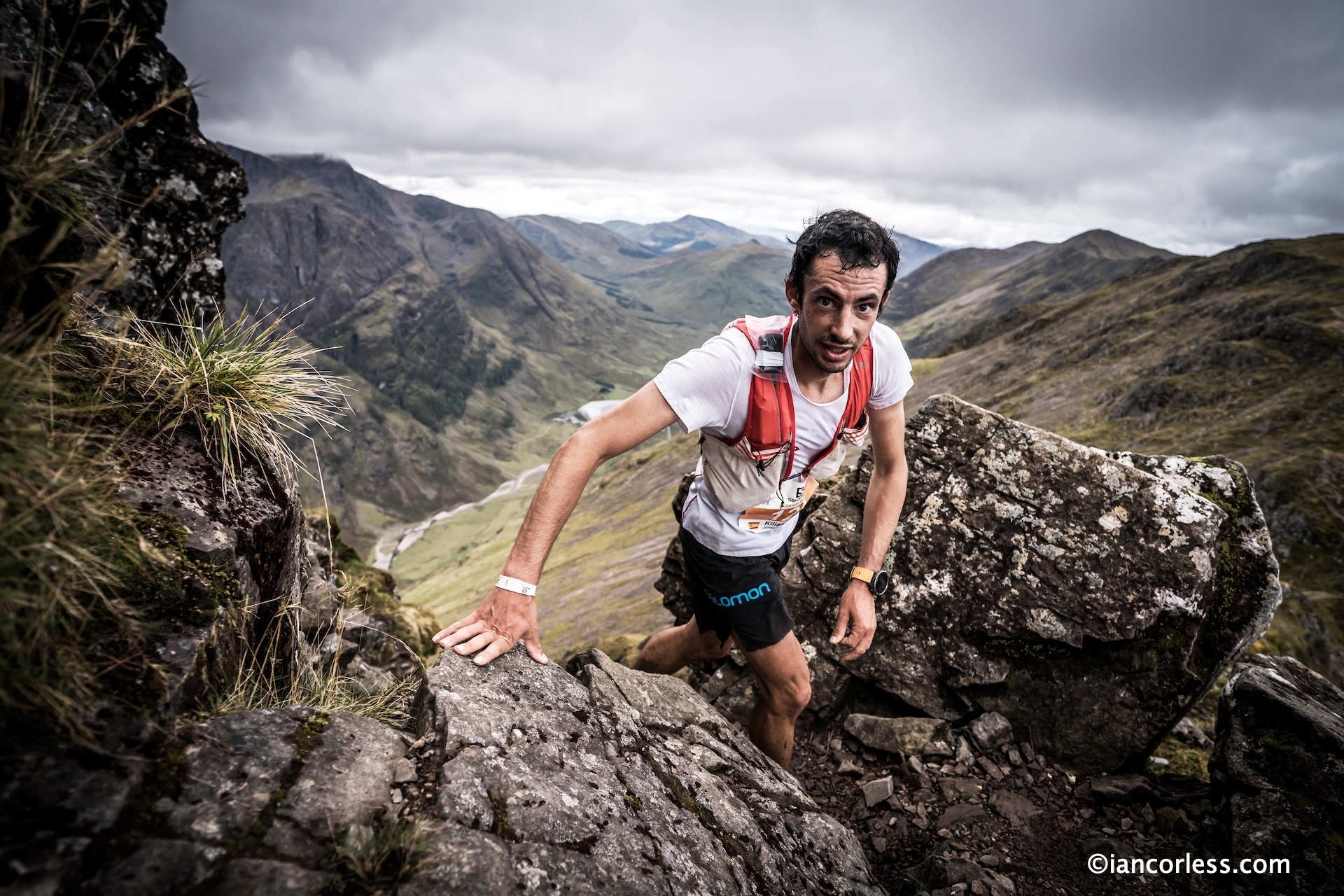
Kilian at Glen Coe Skyline

Who would have thought that Kilian Jornet would leave his sponsor, Salomon?

The duo seemed in perfect synergy:

Salomon is Kilian.

Kilian is Salomon.

Kilian skyrunning in Scotland.

As Kilian said on the 30th November 2021, ‘I remember like it was yesterday in the summer of 2003, a friend of a friend gave me a few pairs of trail running shoes. This guy was the director of marketing for Salomon Spain. From that moment on, Salomon not only came a sponsor but a life partner…’

Together, Salomon and Kilian dreamed big… ‘From winning trail and skimo races to climbing high mountains. I was able to make dreams come true that I didn’t even believe possible, and it was in large part thanks to this team.’

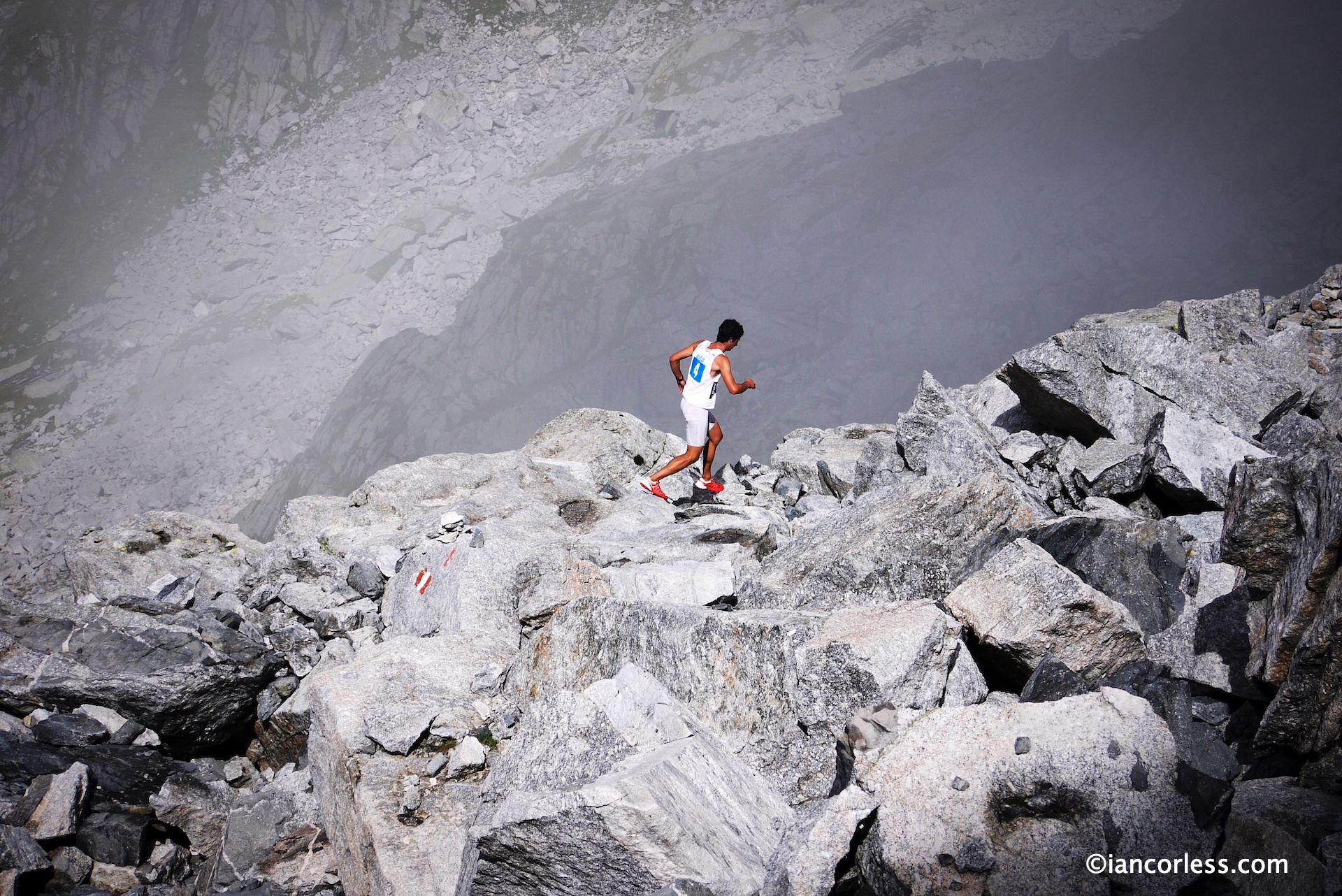
Kilian at the iconic Trofeo Kima – a skyruning classic.

For many of us, me included my journey in trail, mountain, ultra and skyrunning coincides with Kilian’s meteoric rise to be the ‘GOAT’ – Greatest Of All Time. We have absorbed his journey, jaws have dropped at his ability, we have had our minds blown by his escapades but now, a new period of history will be made.

I first met Kilian in 2012 and I feel lucky to have shared his journey, notably in skyrunning which Kilian holds very close to his heart. Ask Kilian who provided him the motivation to pursue his dreams and set goals and he will respond with, ‘Bruno Brunod, Fabio Meraldi, Marino Giacometti and Marco De Gasperi.’ This was reflected in his ‘Summits of my Life’ project and particularly his record on the Matterhorn.

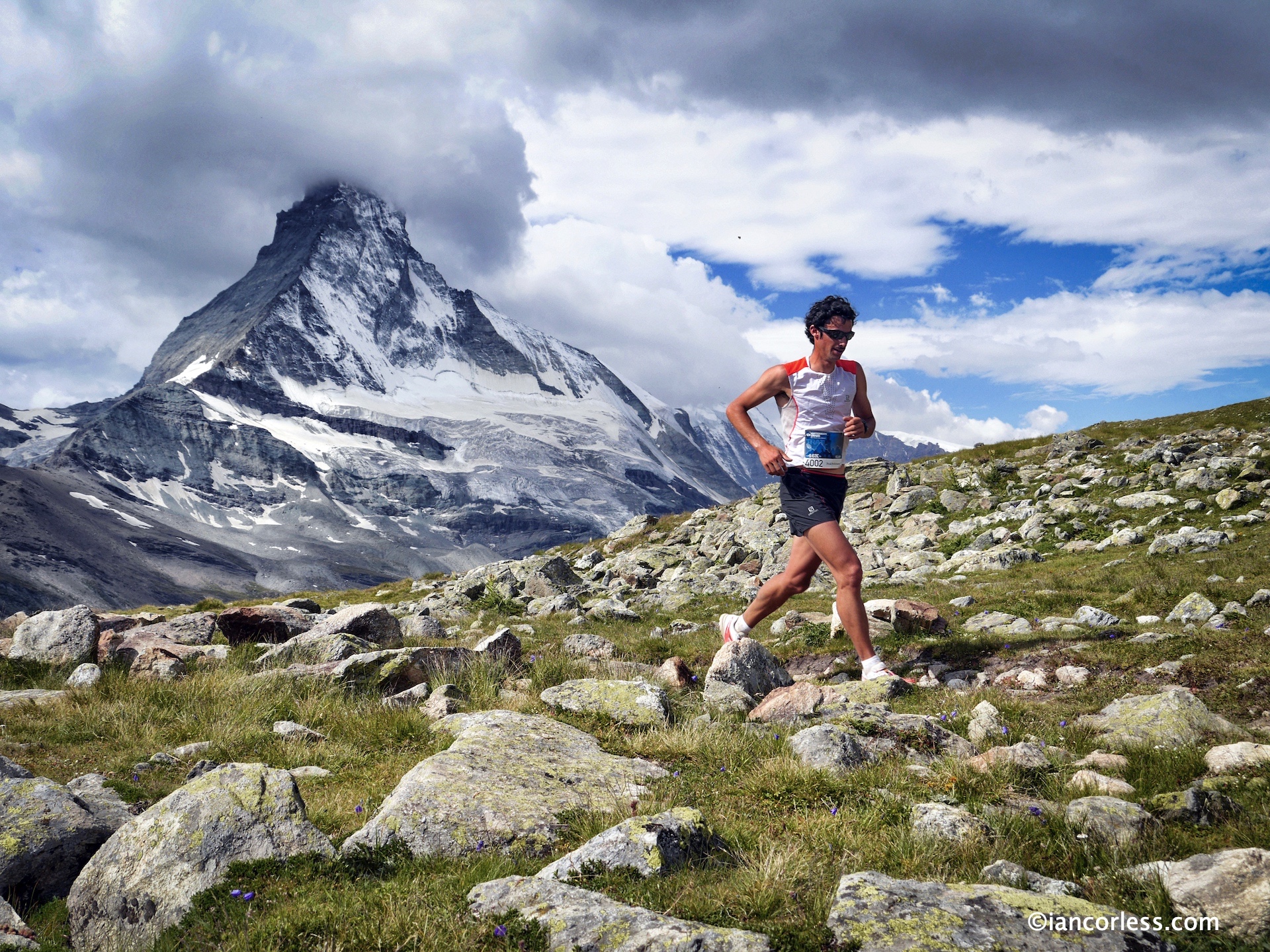
Kilian and the Matterhorn.

Since November, we have all looked back and remembered our journey with Kilian and wonder what is next?

Notably, there have been significant changes for Kilian in recent years. His relationship with Emelie Forsberg, his life in Norway and the arrival of two children most certainly would make one assess and look ahead to a different future. But importantly, the planet, environment and going ‘Green’ has been a very important part of the ‘new’ Kilian. So, it is or was fair to assume that any new project would have ecology at its core.

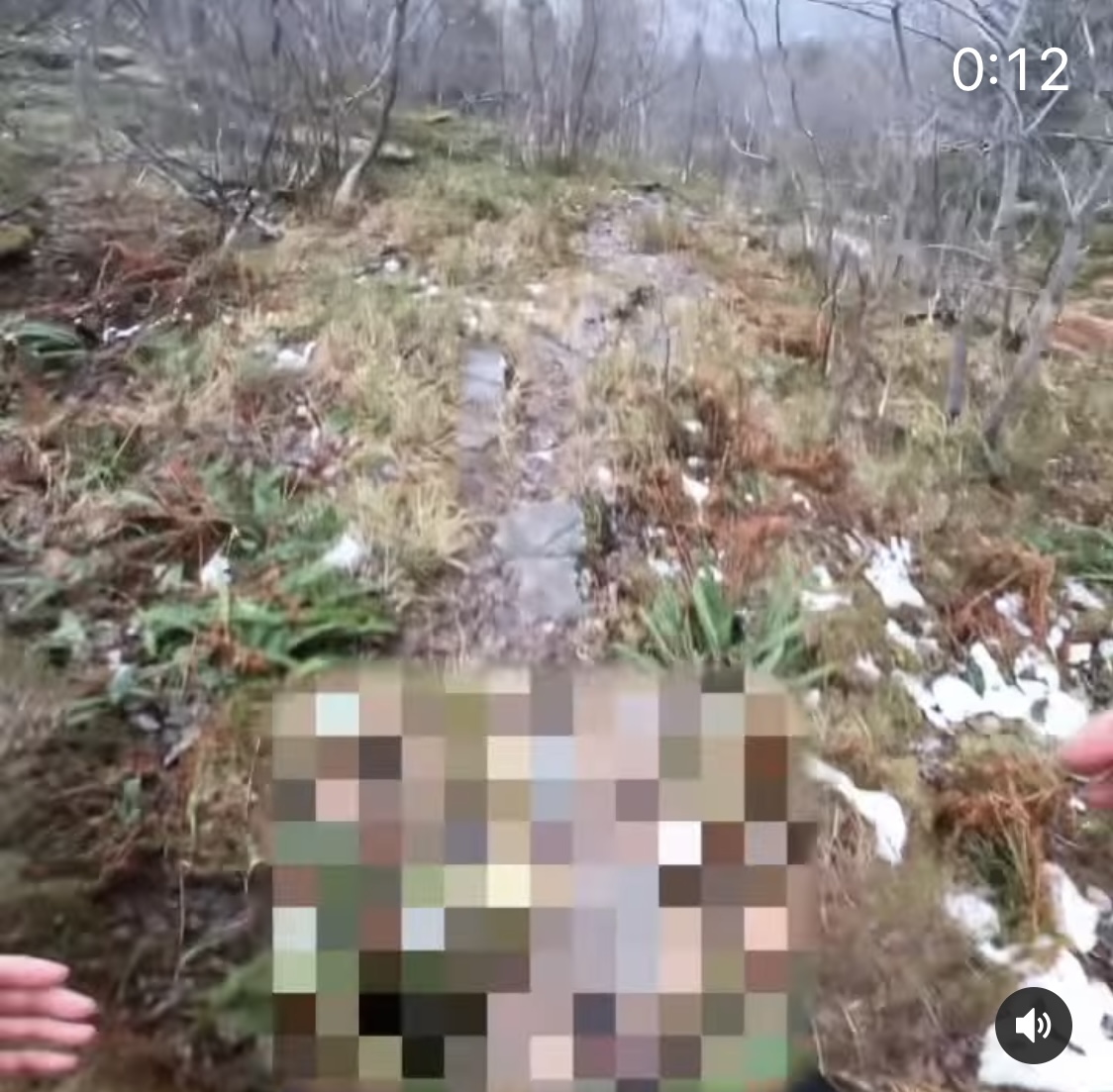
Image ©kilianjornet from IG

We have been teased. On the 2nd of February Kilian posted a video of him running with his shoes blurred. He called it, ‘Testing.’

On February 14th he ran a 100-mile race, the Tjörnarparsen Ultra in Skåne, much of the attention was about what was on his feet.

February 23rd he announced his 2022 calendar: Pierra Menta, Zegama, Hardrock 100, Sierre Zinal and UTMB. It was a classic KJ year starting with skimo, a return to the iconic Zegama, Hardrock 100 which is maybe Kilian’s favourite race, the fast and athletic Sierre Zinal and the surprise, UTMB.

On March 5th, Kilian announced he would no longer partner with Suunto, a significant departure as Suunto and Salomon go hand-in-hand. On March 7th, he announced he had joined Coros.

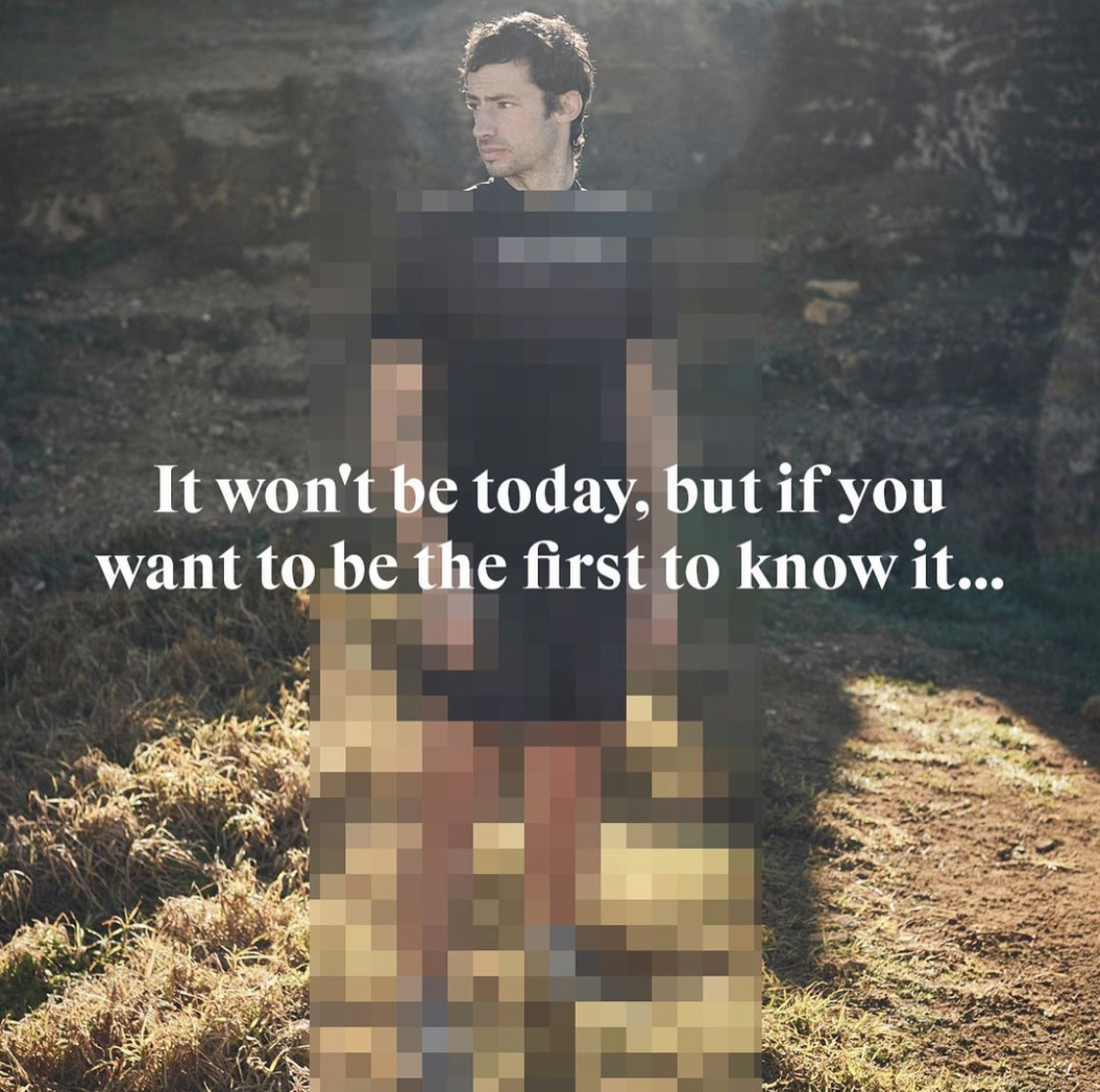
IG teaser ©kilanjornet

Finally, March 21st we are teased with, ‘Want to find out what’s behind the pixels of the last few months?’ There were some clues in the post, notably the sign-up details linking to The Normal Company, S.L. Which in turn links to Mountainlife SL and again links to Lymbus who manage Kilian. One thing was for sure, links to Mallorca and the brand ‘Camper.’

Well now, that future is disclosed.

It seems a lifetime since November 30th but today, March 2022, Kilian announces his project.

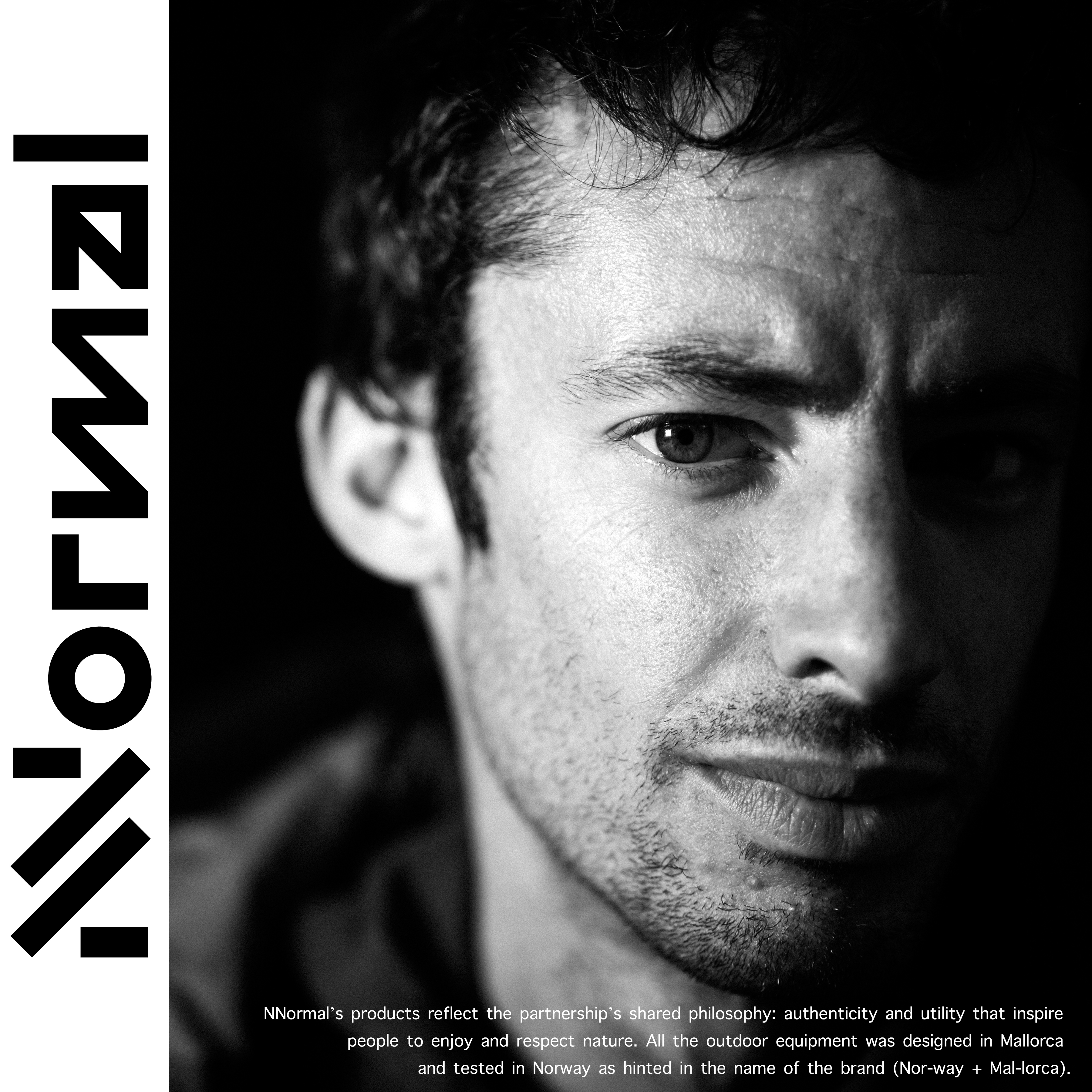
NNormal – Kilian Jornet and Camper will blaze a new trail with NNormal.

A new outdoor sportswear brand, designed and tested between the coasts of Mallorca and the fjords of Norway. The brand’s first products will be launched this Fall. The name reflects the Norway/ Mallorca (Nor-way + Mal-lorca) – designed in Mallorca and tested in Norway.

Kilian speaks on the new project:

“Sharing the same values was a strong motivation to start this project. We agreed that we need a new way of thinking and acting in relation to our environment and outdoor activities… We want to be very honest on how we produce the equipment and on the role the company wants to play for the society and the environment. This means transparency and working to avoid overconsumption by building products that are durable.”

©jaime de diego

Notably, CEO of Camper, Miguel Fluxà commented:

“Building a new brand is always a very exciting adventure, although we are aware of the challenges involved… We are complementary partners of NNormal. Having the opportunity to conceive it with someone like Kilian is unique: to combine performance with personal responsibility strongly resonates with our DNA. He brings his strong product development expertise and unique vision of the outdoor world, while Camper brings innovation, shoemaking, and design know-how.”

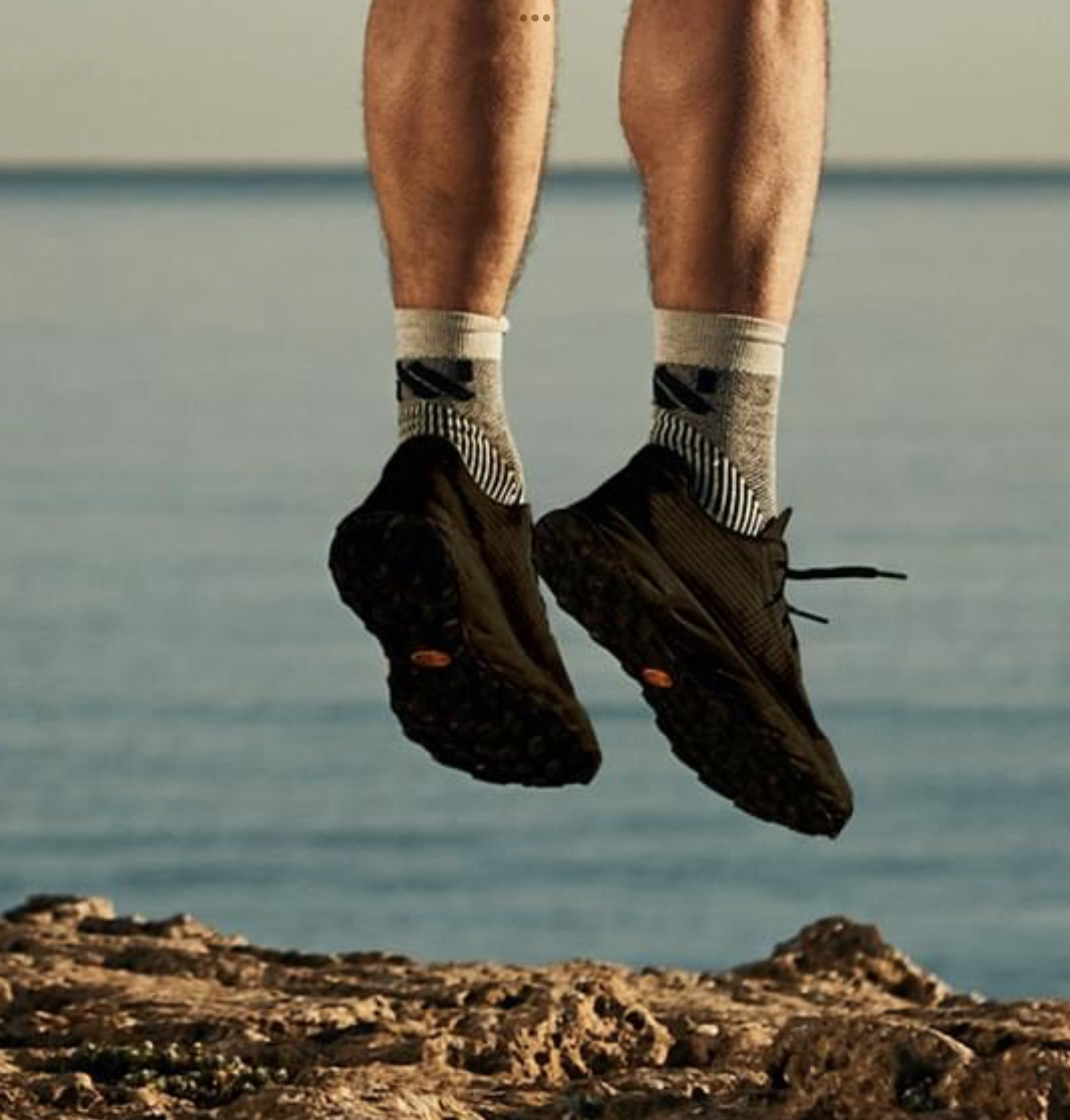
The NNormal assortment will be launched in FW22 in Europe & North America via nnormal.com and specialist outdoor and running stores. The first drop will be limited, focusing on footwear, apparel and accessories for trail running and hiking. Kilian Jornet—the first ambassador of the NNormal team which will be revealed in the coming weeks—will wear them during this year’s race season.

Welcome to NNormal. Your Path, No Trace.

THOUGHTS

As mentioned above, until early March, Kilian’s new project was a ?. However, with research, it was possible to find out certain things and all my research led to Mallorca and Camper, so, it’s interesting to see that confirmed. Tofol Castanyer is ex Salomon and lives on Mallorca – no doubt instrumental in helping Kilian. As for the new team, it goes without saying Emelie Forsberg will join NNormal but it is not confirmed. There are also some other key names linked if you know where to look… For now, I will hold those names for fear of upsetting any future announcement. However, they can be seen here: https://www.nnormal.com/en/community/

As expected, a strong reference to respecting nature and ecology is paramount and the mission statement includes a reference to products that should be repairable, reusable, or repurposed or recyclable. Camper have already pioneered this with several projects. https://www.camper.com/en_GB/content/social_responsibility

The brand wishes to explore new ways to do things with product, sustainability, business, and social responsibility.

Of course, Kilian and his team will be able to pave a new way and lead by example. That will be relatively easy with Camper backing the project. Of course, the question mark will come how paving a new way still makes the business profitable and viable.

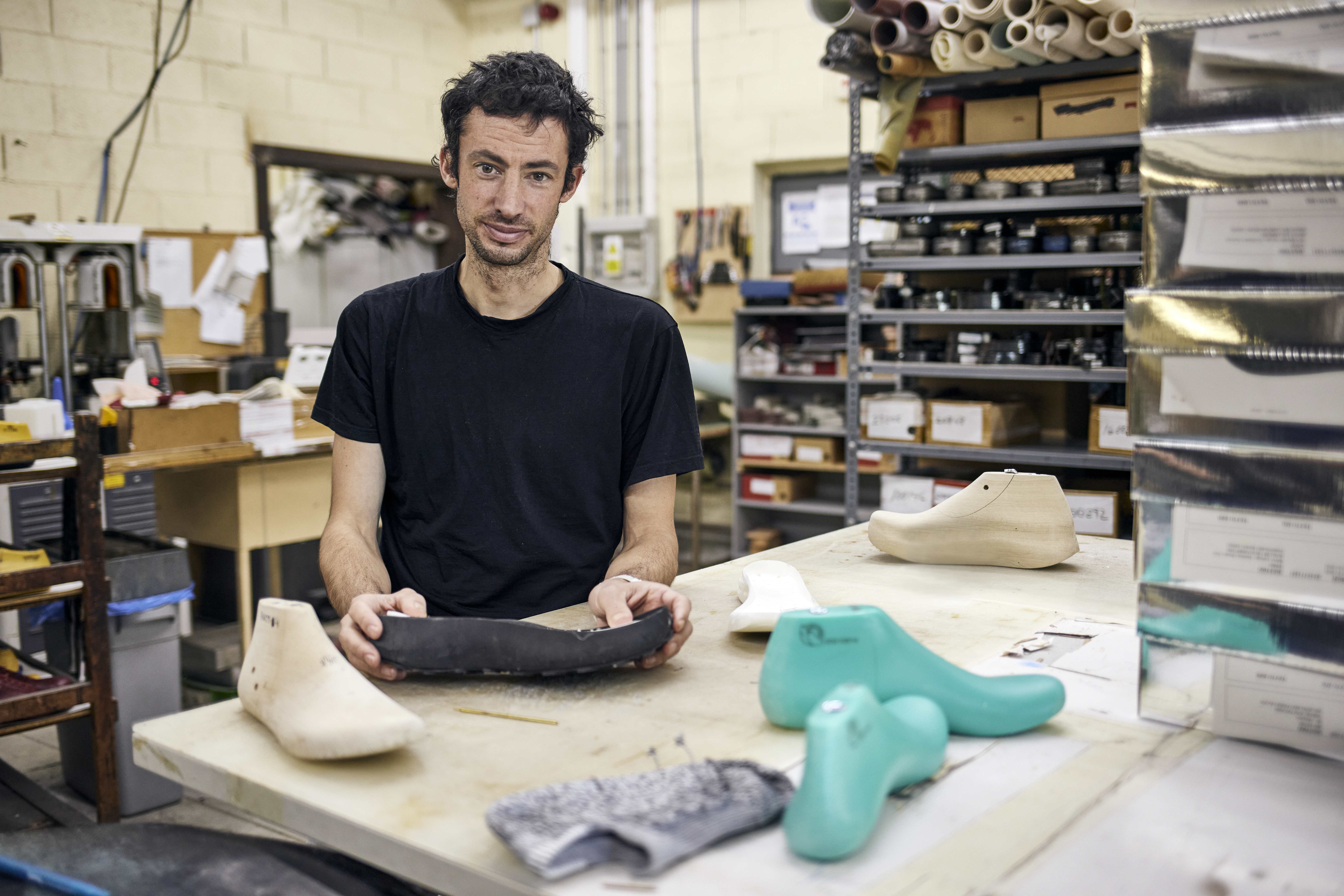
One thing is for sure, this new project will raise a few eyebrows. Camper and run shoes are not the obvious synergy. But Camper has the money and experience and no doubt, this partnership with Kilian must go back many months if not years. A shoe takes a long time to develop, especially a shoe that Kilian will endorse.

“All talk and no action equate to nothing. We know it’s not what we say, but what we do, that defines who we are.”

To conclude, the NNormal manifesto

We run for simple reasons and with a clear mind.

1. We blaze our own trail

Someone once said, we are our dreams… and if we don’t dream, we are no longer

alive. Our unique creative path drives us to give back to people and the planet.

2. Our home is outdoors

We’re passionate about outdoor sports—but above all we’re people. Reaching

the summit is also about the emotions and memories of everyone who’s come

with us on our journey.

3. We empower simplicity

Simplicity means that with less, we can do more. The simplest solution will be

the most efficient, but also the most difficult to imagine.

4. We take responsibility

In the outdoors, just as in life, you rely on the strength of your partners. We won’t

lose our way because there is no set way. We’re responsible for all our actions,

good or bad.

5. We act louder than we speak

All talk and no action equate to nothing. We know it’s not what we say, but what

we do, that defines who we are.

©jaime de diego

Follow on:

Instagram – @iancorlessphotography

Twitter – @talkultra

facebook.com/iancorlessphotography

Web – www.iancorless.com
Web – www.iancorlessphotography.com

Image sales –www.iancorless.photoshelter.com

The Best and Worst Trail Shoes of 2021

adidas Speed Ultra

I get to review and test a great deal of shoes and 2021 has been no different. Some shoes really stand out and get used all the time and others fade to a dark and lonely place in my shoe cupboard.

So, what has been the highlights and low points of 2021?

First and foremost, I need to clarify that I haven’t tested ‘every’ shoe that is out there to be tested, so, this is very much an opinion post. Importantly, what I have done is tested shoes from zero drop to 10mm drop and shoes with minimal to maximal cushioning.

For perspective, I am happy to run in shoes with varying drop as I really believe that not only is it good for the body, but I also believe that certain drops and better for certain distances and terrain. A good example being, if I were to be running longer, I’d prefer a higher drop, say 8mm. But if running shorter and faster, I’d be more than happy to be in a lower drop, say 4mm. The same applies for cushioning, I am happy with les cushioning for shorter distances and a little more cushioning for longer distances.

Outsole varies considerably and therefore when considering ‘the best’ one must caveat that the shoe is the best for a typical type of terrain and conditions. However, some shoes can be a ‘jack-of-all-trades’ and manage to do a little bit of everything.

I am a neutral runner, so, the shoes listed fit in that category. Regarding shoe width, I am fortunate that I can squeeze my feet in most shoes and I accept and am happy to have my toes a little cramped for a very specific shoe that needs to excel on technical terrain. I appreciate that for some people, that is not an option or a choice, so keep that in mind.

Read an in-depth article about How to Find Your Running Shoe Size and Fit.

Finally, you may well agree and disagree with my shoe choices below. Perfectly normal, gladly there are many, many shoes out in the marketplace with different drops, cushioning, fit, outsoles and so on.

THE BEST TRAIL SHOES

adidas Speed Ultra

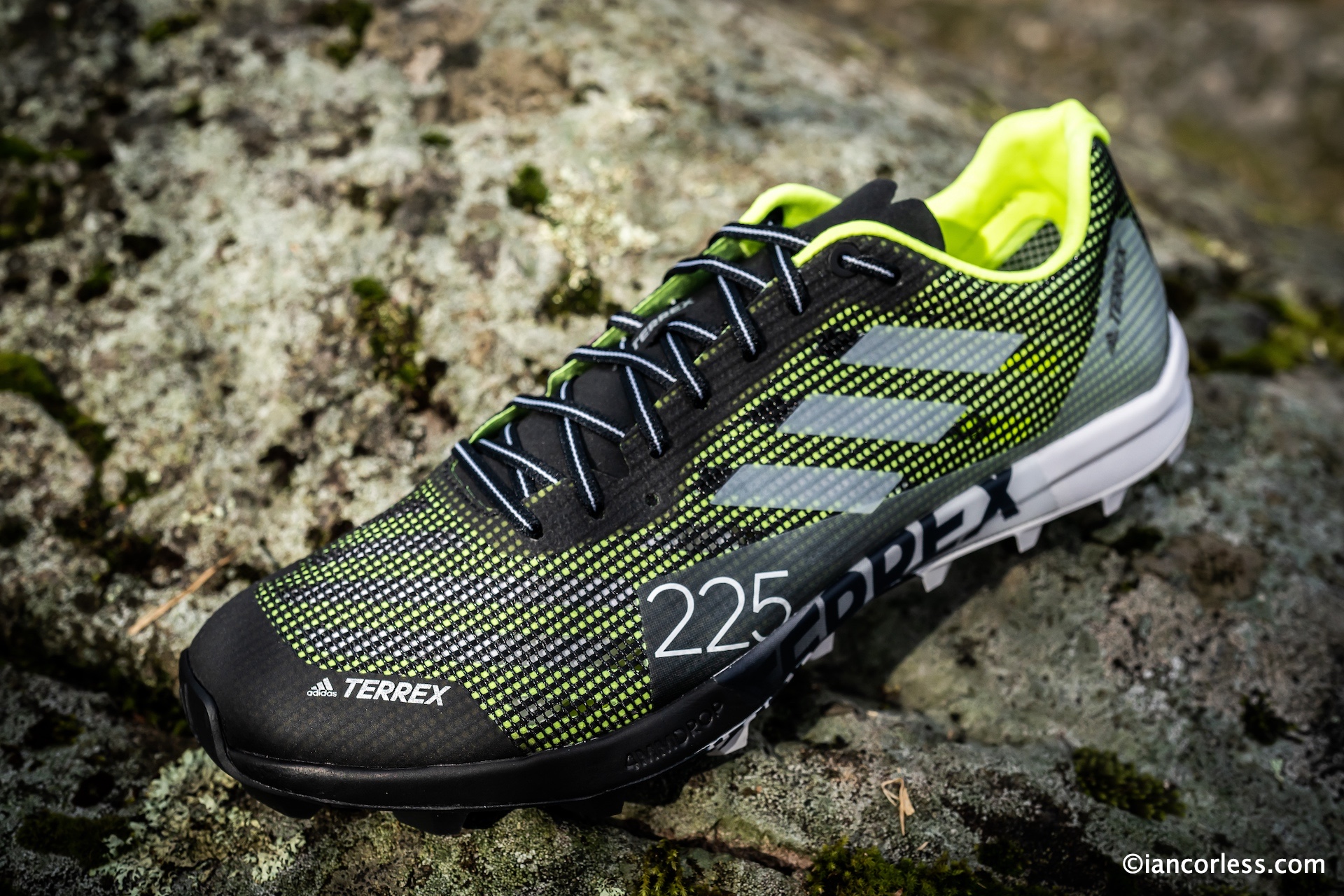
This shoe has been a revelation in 2021. It has managed to encompass so many key elements that make a shoe stand out. They are light, responsive, fun to run in, offer a great fit, have a wider toe box and are cushioned. Designed in conjunction with Tom Evans, Adidas and Tom wanted a shoe that could excel at Western States. So, the shoe had to be good for 100-miles but did not require an aggressive outsole. The Continental outsole is almost road like and for some, potentially too minimal. However, the grip is superb and for trail running; superb. On dry and wet rock, the grip has never faltered, in mud grip is compromised. The Speed Ultra has been my ‘go-to’ shoe of 2021 and has been on many varied terrains and always provided a superb ride. They have even been an excellent road shoe. There are few downsides to the Speed Ultra, but the lack of a rock plate does mean that occasionally you can feel the ground beneath you a little more than desirable. Read the full review HERE.

Hoka One One Torrent 2

I was the first person to bring Hoka in to the uk, way back in 2009. I used them constantly for many years but in 2012 I defected. It has taken almost 10-years for me to lace up a pair of Hoka’s again and it was actually the adidas Speed Ultra that tempted me to try the Torrent 2. I was told by many that the Torrent 2 was the least cushioned and potentially most ‘normal’ type trail shoe that Hoka made. They were right. Out of the box the Torrent 2 has excelled, and they have been in a constant rotation with my Speed Ultra. The outsole is more aggressive than the Speed Ultra and therefore open a few more options when it comes to varied terrain. However, I will say that on wet rock the grip is bad. I wished Hoka had used Vibram MegaGrip instead of their own outsole. But if you stick with dry trail or even muddy trail, the Torrent 2 performs exceptionally well. Despite the stack height (still low for a Hoka) they give great ground feel and stability. The toe box has good space and the foot hold is superb. Read the full review HERE. I will make a note here that the Zinal was also a consideration. It has many Torrent 2 features but for me a firmer and harder ride. I preferred the Torrent 2 but you may well think the Zinal preferable.

THE BEST MOUNTAIN/ AGGRESSIVE SHOES

VJ Sport ULTRA

When you need grip, no other brand offers an outsole like VJ Sport. The soft and grippy butyl is just superb. Over the years I have constantly raved about their shoes, be them the iRock, XTRM or the MAXx. However, the one downside (for many) was a fit that was too narrow and not enough cushioning. Enter the Ultra. VJ listened and came up with a light mountain shoe that instantly felt like a VJ but with that wider toe box and additional cushioning. Many would never consider running UTMB or similar in a VJ MAXx but the Ultra now gives that option. You get the best of both worlds, cushioning and the best grip on the planet. I will say that the cushioning is not as plush as I would have maybe liked, however, they do bed in a become a little softer with use. Read the review HERE.

adidas Speed Pro SG

The soft-ground terrain that inov-8 excelled and dominated in has now been impacted upon by many brands offering their own incarnations of grippy and aggressive outsoles to tackle sloppy terrain. The VJ Sport iRock is without doubt a consideration when looking for an SG shoe. Constantly, one of the biggest complaints from many runners is that most SG shoes have narrow toe boxes. Step in the adidas Speed Pro SG. This shoe has a wide toe box, lightweight upper, cushioning and 7mm lugs for the muddiest and gnarliest terrain. The fit and feel is excellent and the grip superb. It’s not a shoe you’d want to spend all day in but if moving fast over technical, muddy and challenging terrain is your thing, this shoe is a great addition. Read the review HERE.

THE BEST RUNNING BOOTS

La Sportiva Cyklon

The La Sportiva Mutant has been a long-time favourite for many a trail runner and the Cyklon is very much a development of this shoe. It manages to combine many elements of classic La Sportiva and then push new ground with the addition of BOA. Designed to excel in mountain terrain, they are more than a shoe but not as much as boot. They fit this wonderful middle ground of combining shoe like feel and comfort but boot-like security. It has an aggressive outsole and some stability (not too much) to ensure mountain days pass without problem. The sock-liner fit, and the new BOA dynamic cage has provided me with arguably the greatest foot hold of any shoe I have ever tried. It is superb. All these plus points do come with a couple of downsides: A little extra weight and they retain warmth/ heat. The latter a good point in winter but less so in summer. Read the review HERE.

adidas Terrex Tech Pro

This is a late addition to my 2021 shoe line-up and what an addition! For many, this would just be too much and too specific, but for me with Norwegian winters, it’s a boot to put a smile on my face. It’s almost two shoes as there is an inner Agravic shoe inside the Tech Pro outer all fastened together by a zip and BOA fastening system. Comfort is superb, warmth is excellent, and the outsole has wonderful grip. There is a downside (for me) though… I really wish adidas had added winter studs to this boot so that they could handle ice. Had they done this, it would be the perfect winter boot. However, I do understand why they haven’t, usage becomes very restrictive with studs. As it stands, you have a boot that you can use all year and if required, add a micro crampon to tackle ice. Read the review HERE.

THE BEST WINTER SHOE

Asics Gel Fujisetsu 3 G-TX

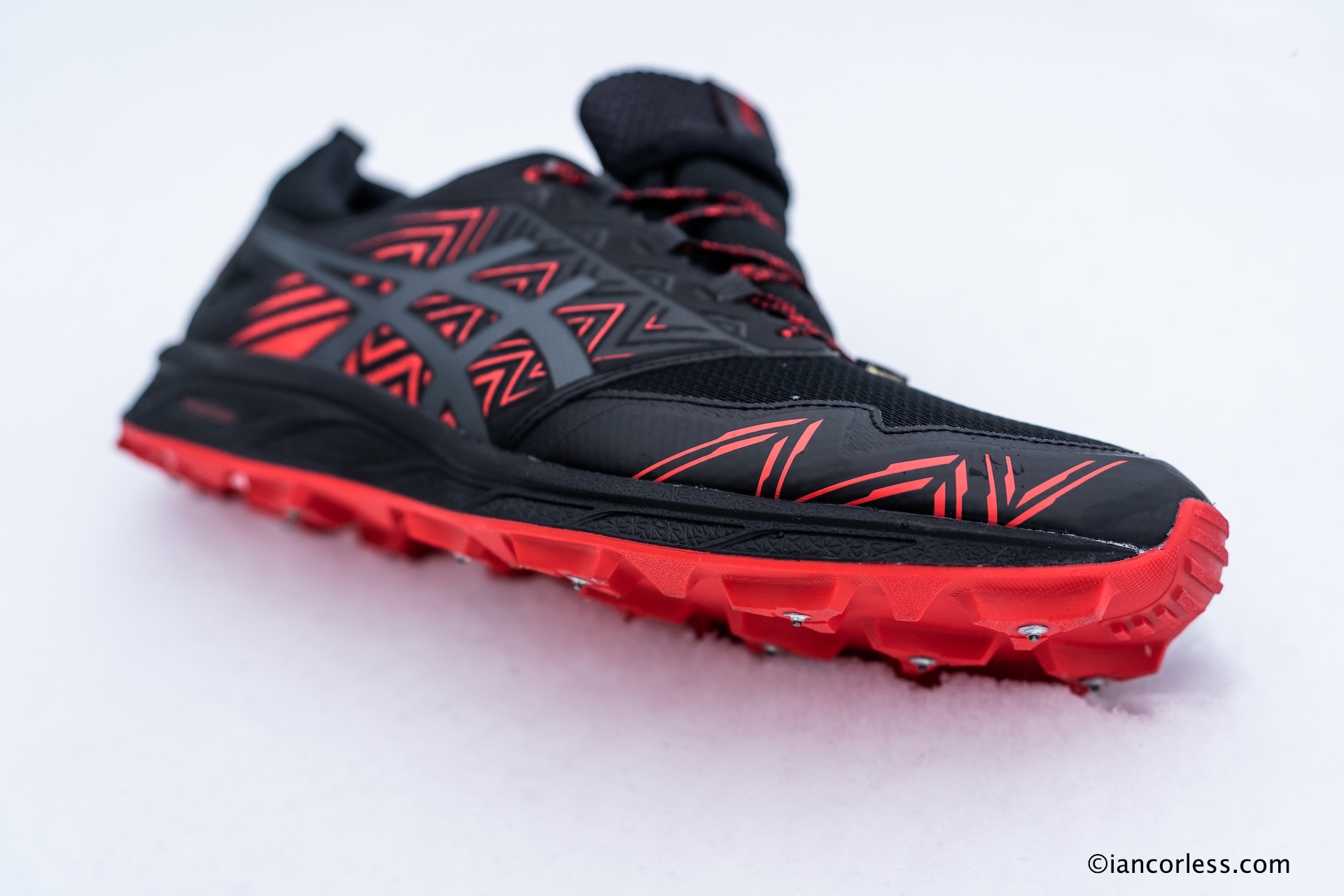
I have tested a great deal of winter studded shoes in the last couple of years and VJ and Icebug have provided me with many great runs with excellent grip. However, there was always a compromise to be made until I got hold of the Asics Gel Fujisetsu 3 G-TX. This shoe has been a revelation… A Gore-Tex upper, wider toe box, cushioning and 14 studs in aggressive outsole to handle snow and more importantly ice with aplomb. They have been superb over short distance runs and recently a 6-hour outing in -10. Read the review HERE.

MY WORST SHOE OF 2021

inov-8 Trailfly G300 Max

Normally I would find it hard to pick a shoe to go here as today, shoe technology and development means that most brands make good shoes. It’s fair to say that me adding the Trailfly as the worst shoe will cause controversy as for some it has been hailed a revelation…! Not so for me. It’s a Frankenstein shoe that is a pure horror. They are heavy (mine over 380g!), lifeless, clumsy, and well, just plain awful. There are some positives which I tried to give credit to in my initial review, but the more I have used them, the more I dislike them. This shoe had the potential to be a more cushioned G270 with a higher drop. They are not even close! Even the Graphene outsole doesn’t feel as good? But one of my coaching clients uses them and loves them. I said in my review they would be a Marmite shoe and I don’t like Marmite. In fairness, if you are a bigger and heavier runner, the Trailfly may well offer a level of protection not found before. Read the review HERE.

CONCLUSION

The best and the worst? Fully accept that they are ‘my’ best and worst and you may well agree and completely disagree with my thoughts. Ultimately though, it may well introduce you to a potential new favourite shoe that you hadn’t considered before.

I have seen some brands stand still in the most recent 12-18 months, arguably over 2+ years when you consider how long it takes to develop a shoe. But adidas (never a leader in the trail world) has grabbed trail and mountain running by the horns and pushed forward with some great development and shoes with their Terrex brand.

Scarpa Spin 2

Another stand out has been Scarpa, a well-established mountain brand who with the influence of Marco De Gasperi has started to make some excellent trail/ mountain shoes, the Spin 2 almost making this list. I need to test the Ribelle!

Hoka One One have diversified from the max cushioning and while the Zinal didn’t make my list, it very nearly did and for those who do prefer more ‘cush’ between them and the ground, the Speedgoat (now 4) always gets rave reviews.

But what about Altra, Brooks, Salomon, Nike, Topo and more…

Well, the Nike Pegasus has been a favourite of mine in past years and it’s still a great shoe with a plethora of great features, especially comfort for long trail days. However, my choice was always the Wildhorse. But Nike always had to tweak and change it, we are now on version 7 I think?

Altra unfortunately just don’t do it for me. I know, I know… Some of you will be holding your head in your hands. But the zero drop and super-wide toe box is a no for me. However, I have many friends telling me I need to try the Olympus 4 or the Lone Peak 5.

Salomon have not been on my radar in 2021, I very much feel that as brand they stood still. They released a Speedcross 5 but it’s a Marmite shoe (for me) and the grip although aggressive has always been horrendous on wet rock. The previous incarnations also had arch support which I didn’t like. The Sense Ride 4 with 8mm drop is maybe worth a look?

All shoes were provided for free as test samples. The exception being Asics which were purchased. In addition, many shoes in 2021 were provided for testing that do not appear here.

adidas Terrex Speed Ultra

Please support this website. I believe everyone deserves to read quality, independent and factual articles – that’s why this website is open to all. Free press has never been so vital. I hope I can keep providing independent articles with your help. Any contribution, however big or small, is so valuable to help finance regular content. Please support me on Patreon HERE.

Follow on:

Instagram – @iancorlessphotography

Twitter – @talkultra

facebook.com/iancorlessphotography

Web – www.iancorless.com
Web – www.iancorlessphotography.com
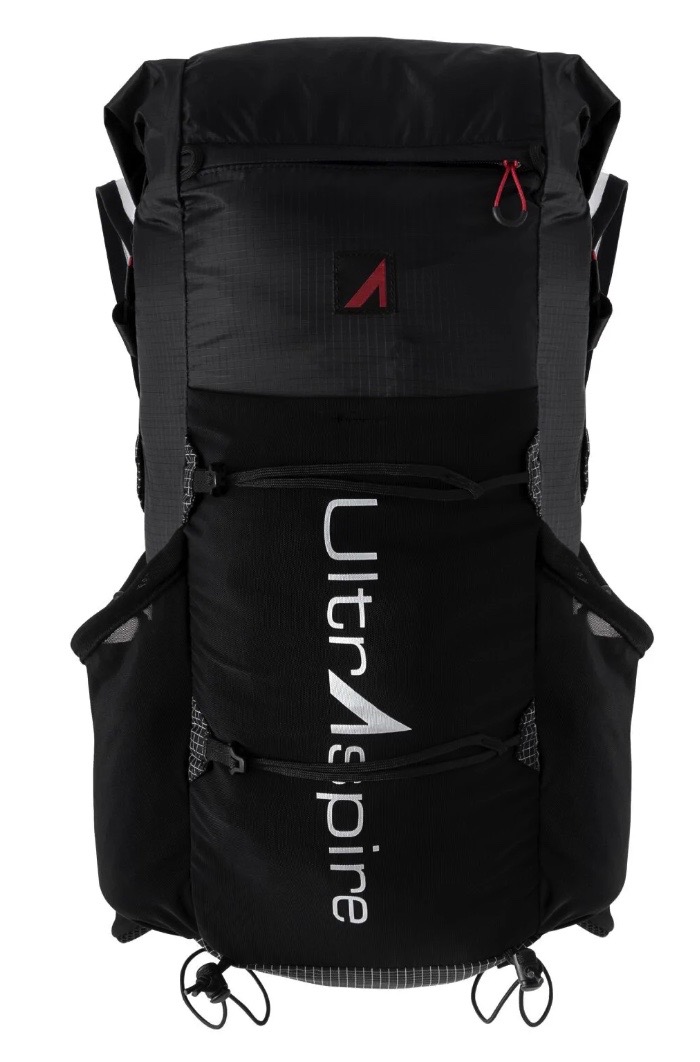
Image sales –www.iancorless.photoshelter.com