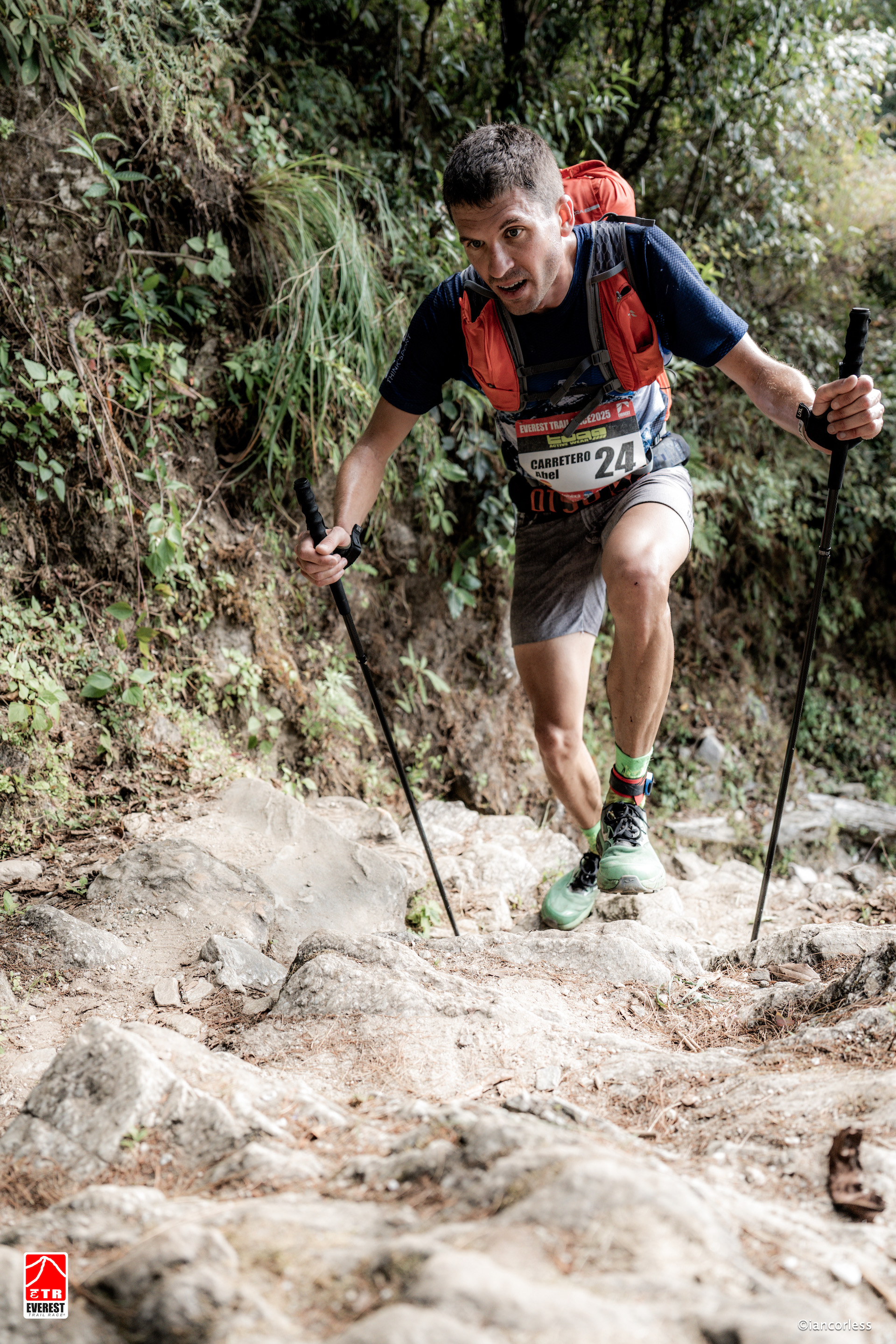
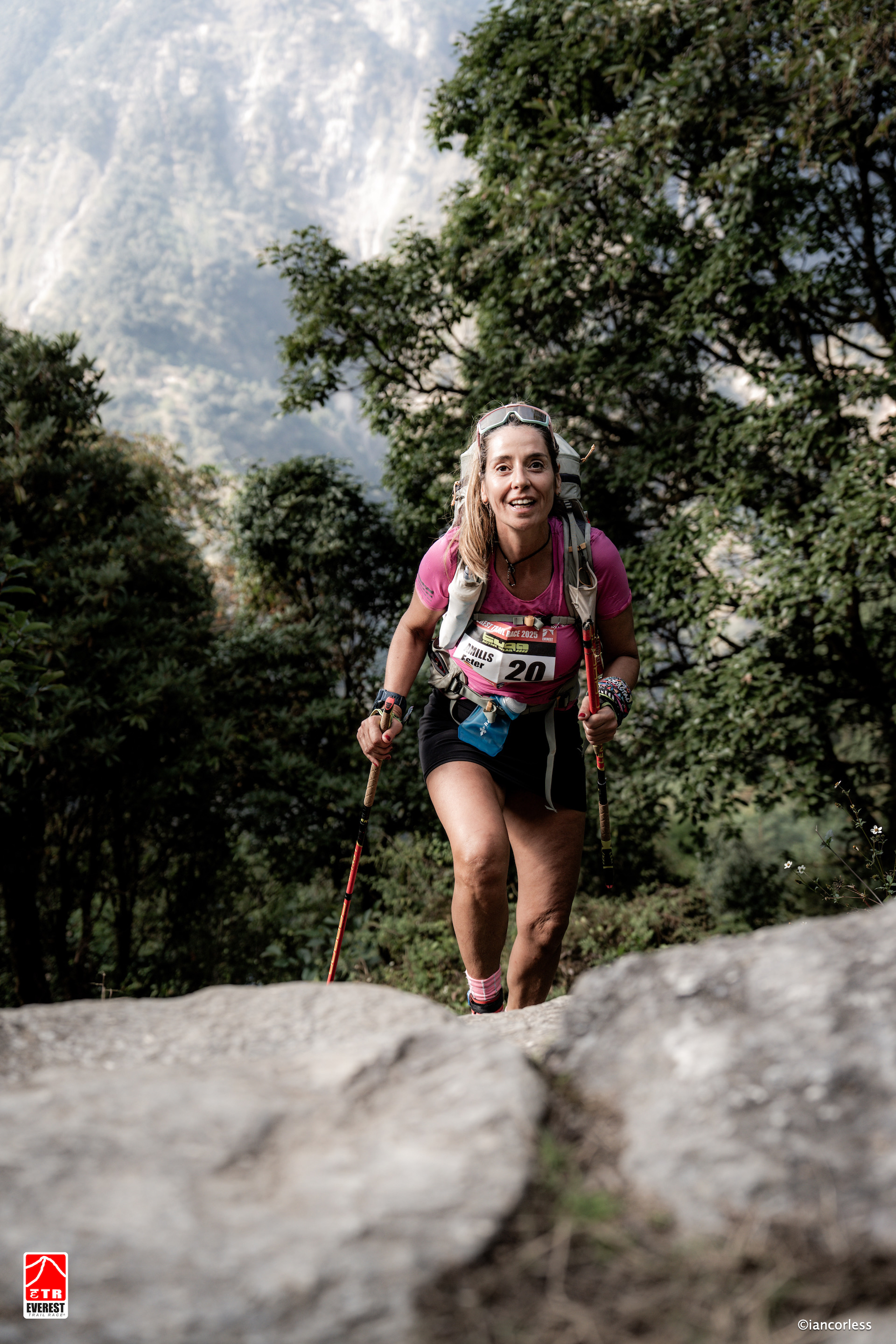
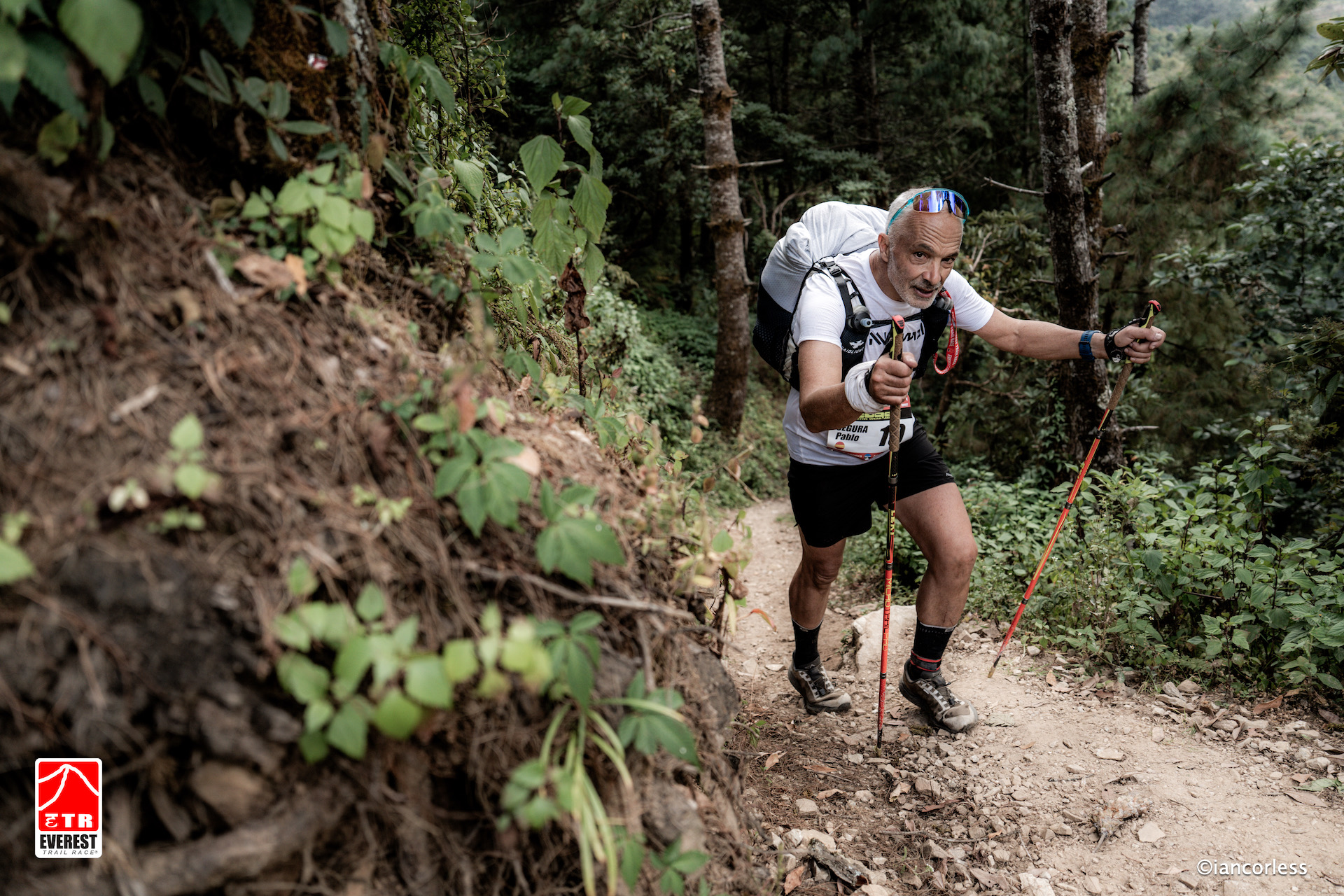
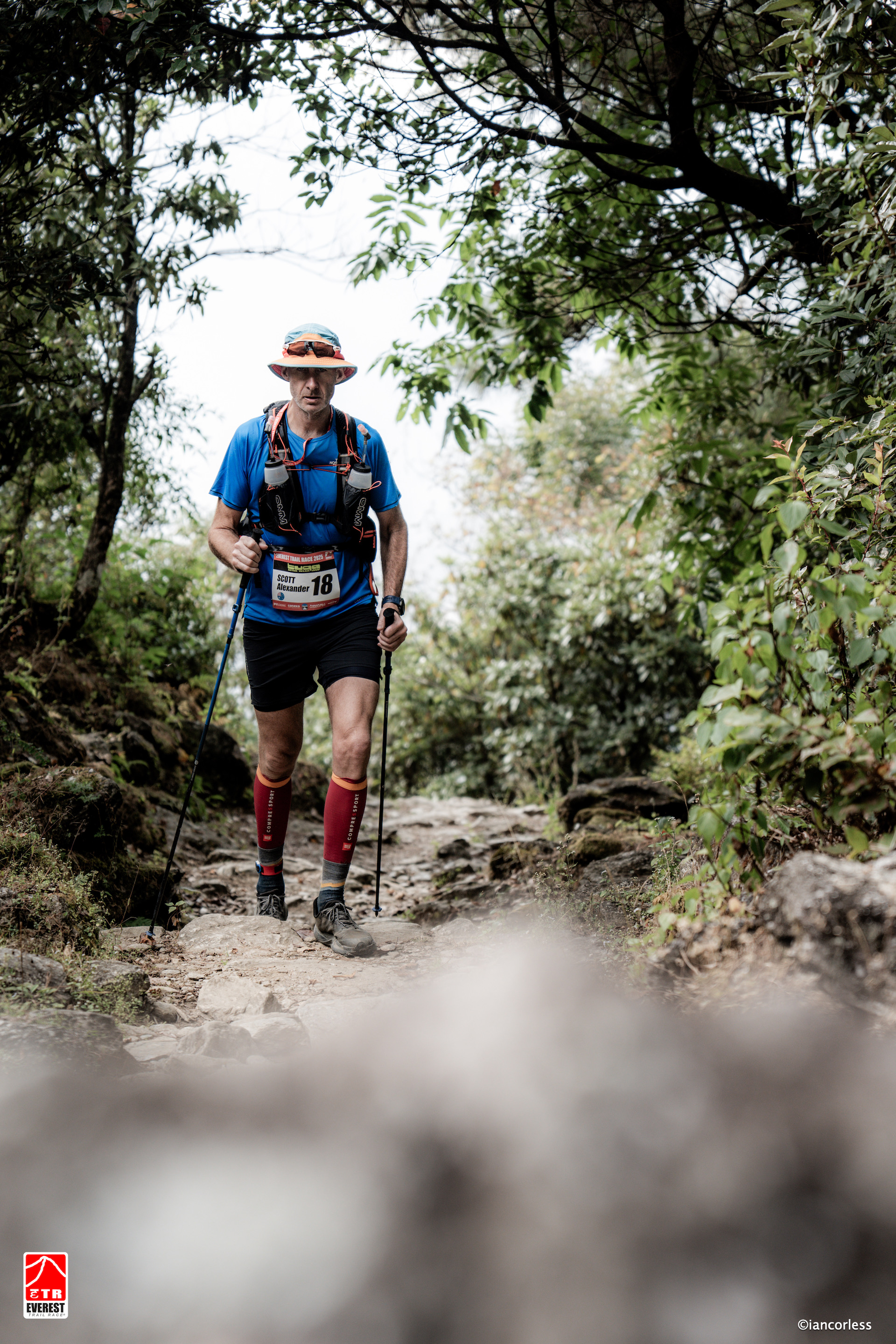
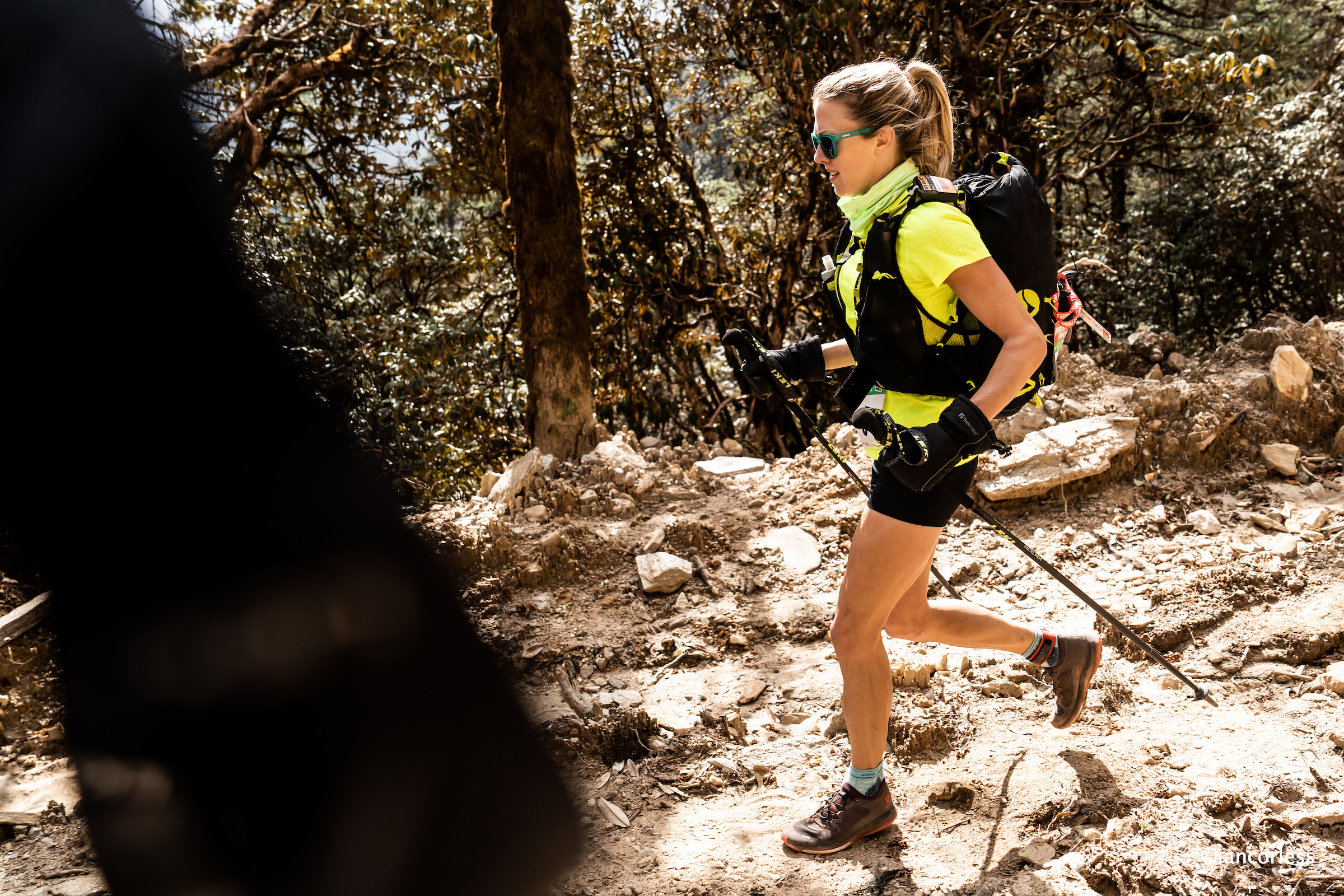
Stage 5 of the Everest Trail Race pulls no punches. At 24km with a punishing 2,483 meters of ascent, this is the stage that earns its reputation as the toughest of them all. The numbers alone are intimidating, but it’s the relentless terrain and shifting altitude that test runners on every level – physical, mental, emotional.
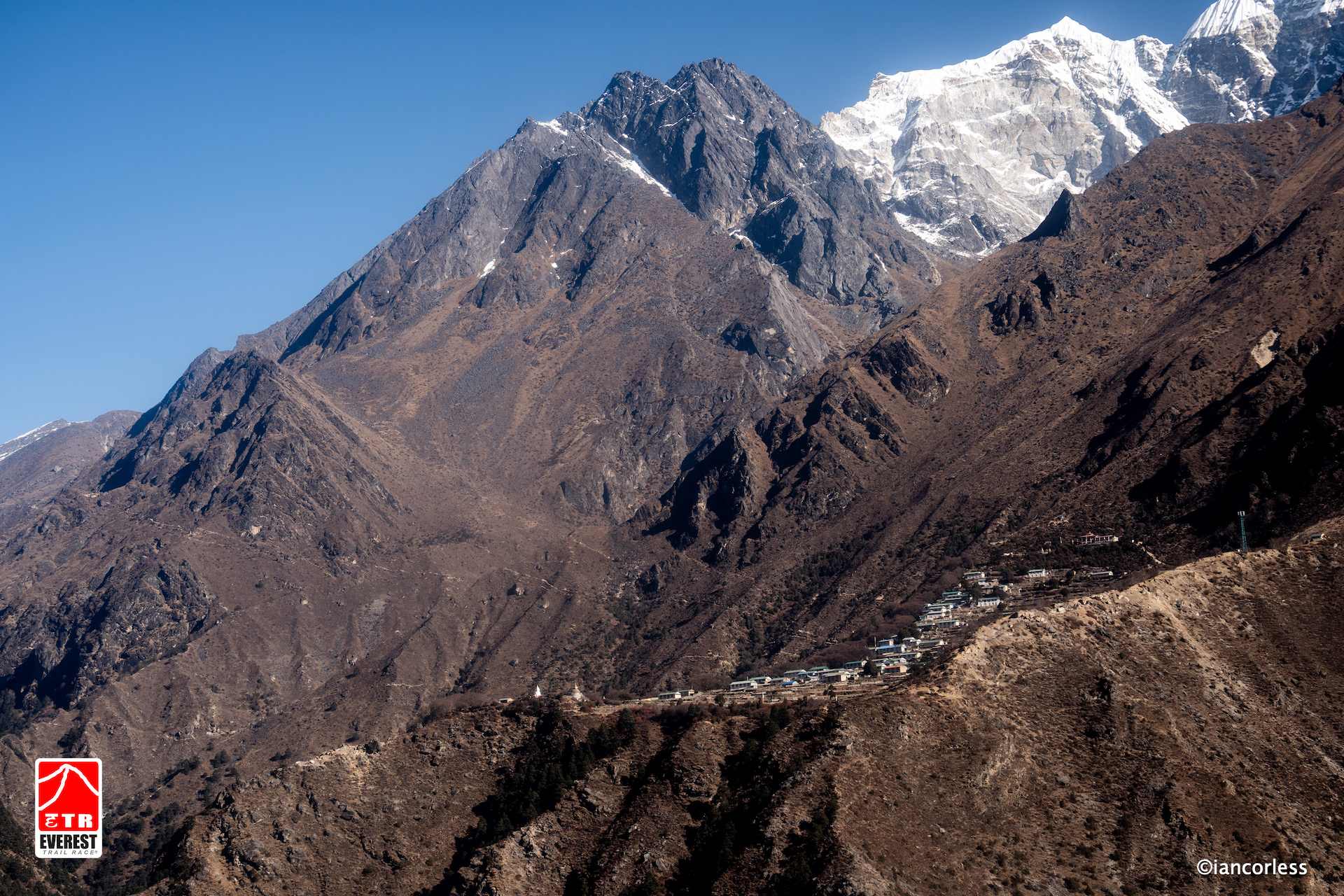
This year’s route sees a change from previous editions, adding new layers of challenge and beauty. Starting in the shadow of Sagarmatha National Park’s giants, the trail weaves through the quiet village of Chumoa before rising into the bustling trails of Namche Bazaar, where the first checkpoint offers a brief reprieve. But this is only the beginning.
From Namche, the course climbs to Syangboche, skirting airstrips and yak paths, before pressing on to Kumjung, a Sherpa village set high beneath the peaks. Then comes Mong La – Checkpoint 2 – perched like a balcony above the valleys below. From there, it’s a steep descent to Phortse Tenga, followed by a lung-busting climb to Phortse, a village known for its mountaineering legacy.
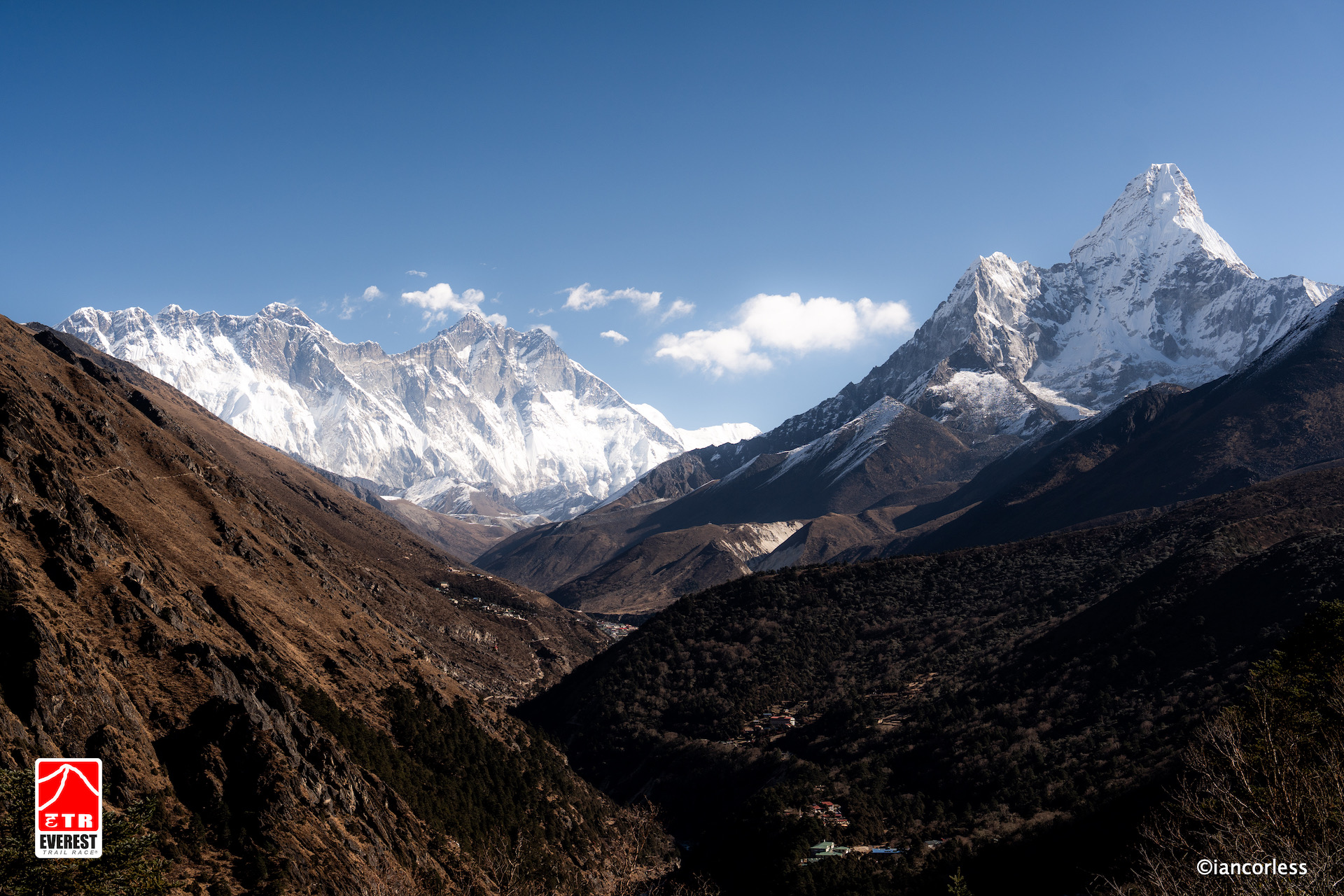
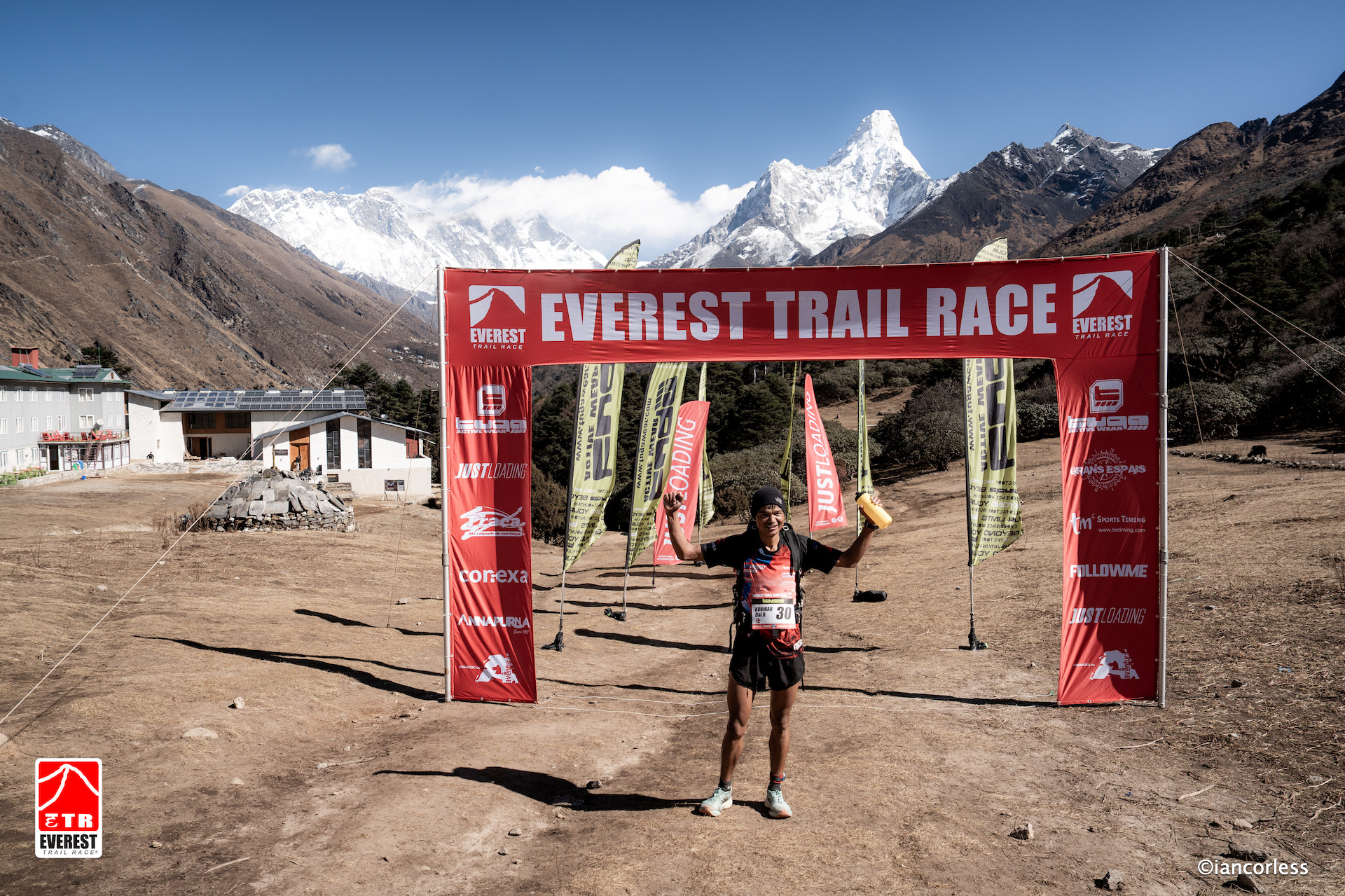
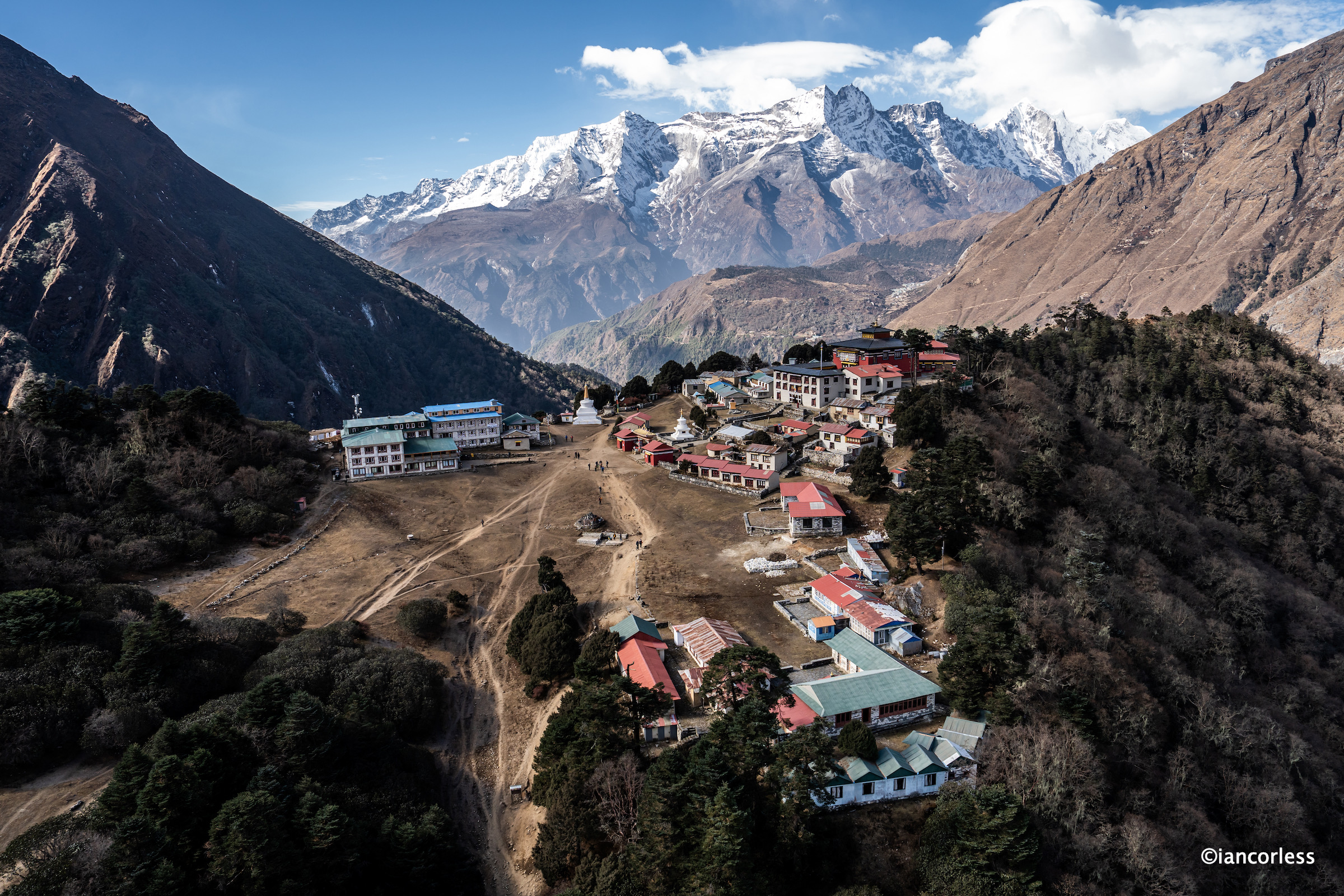
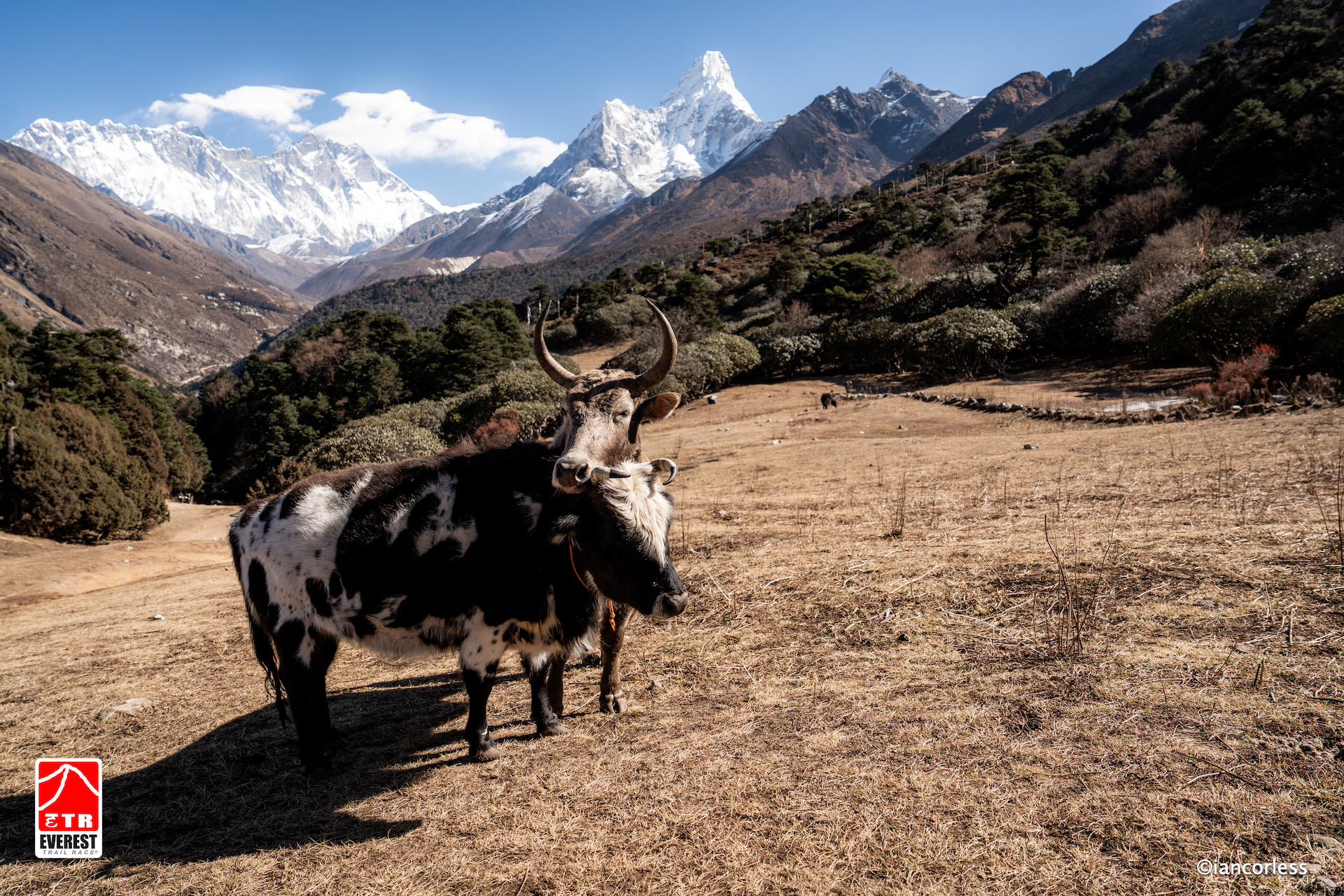
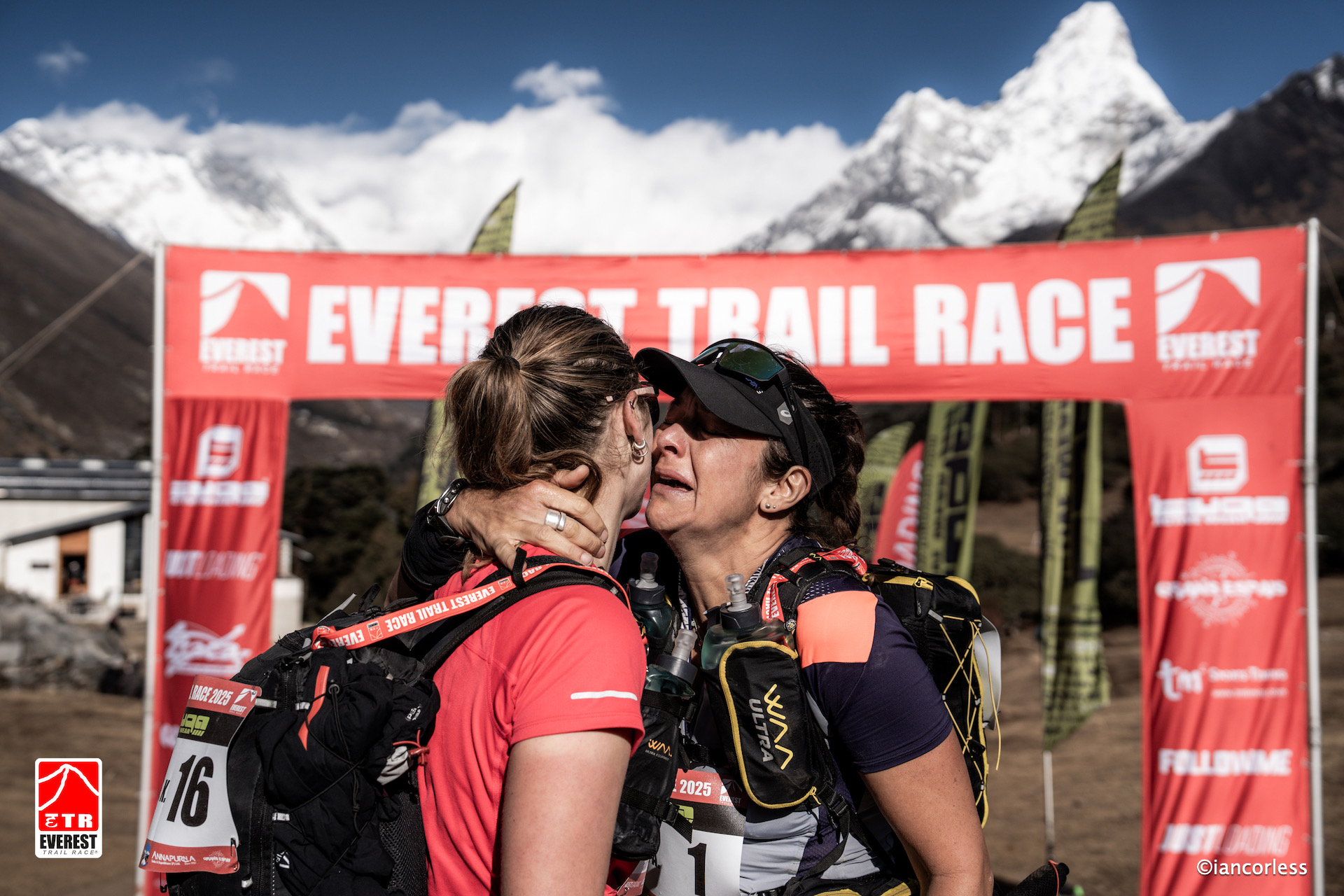
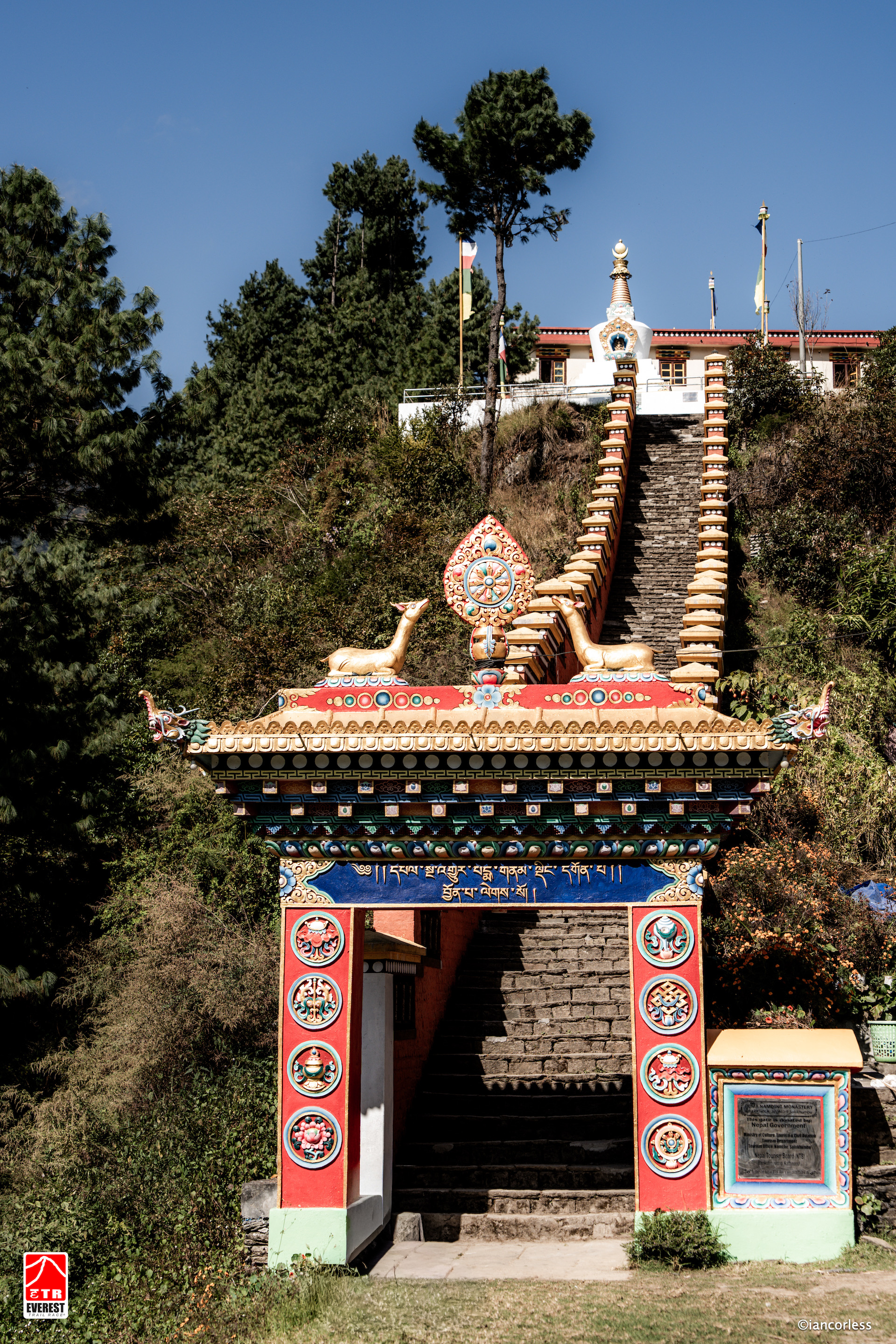
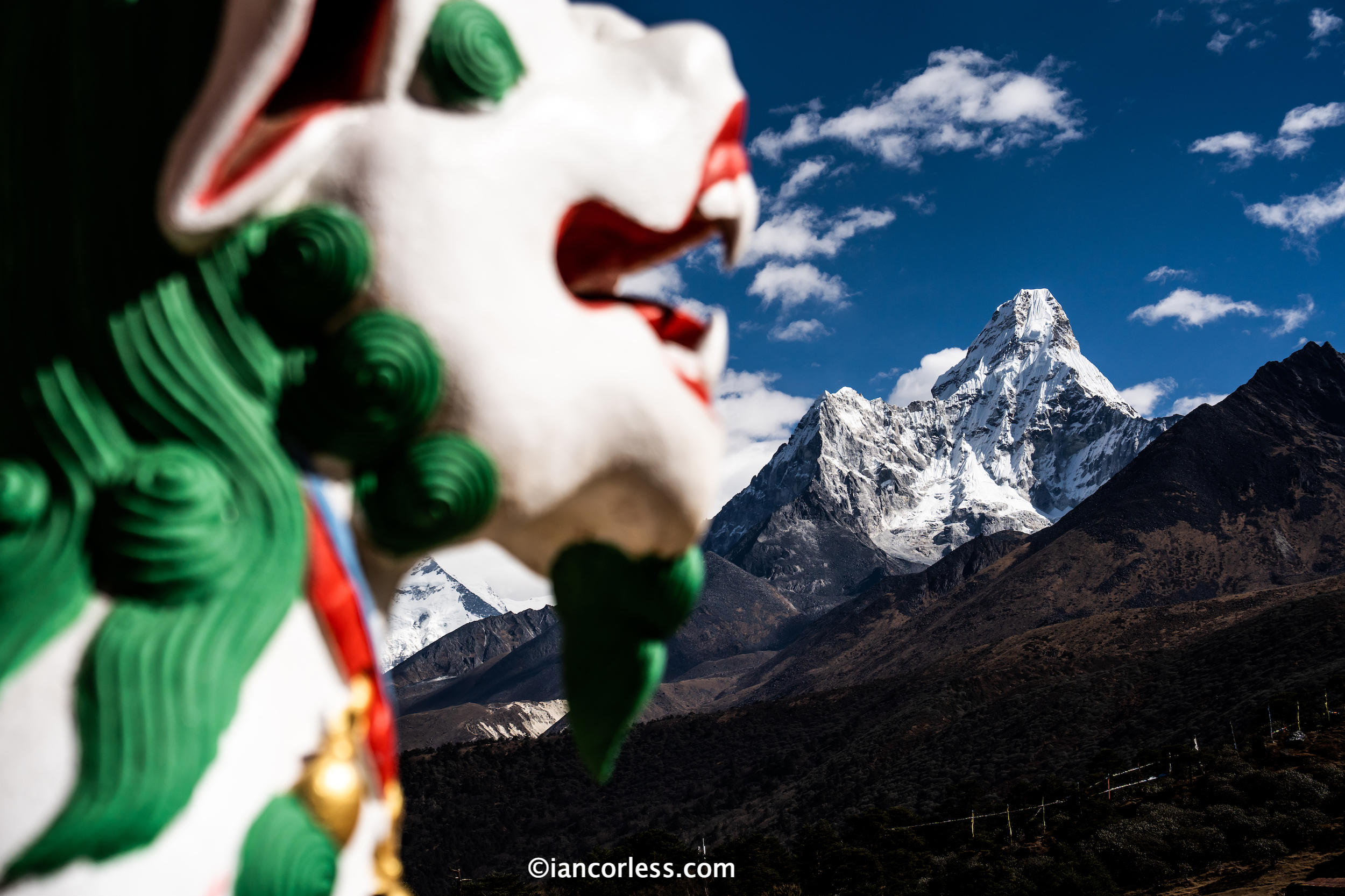
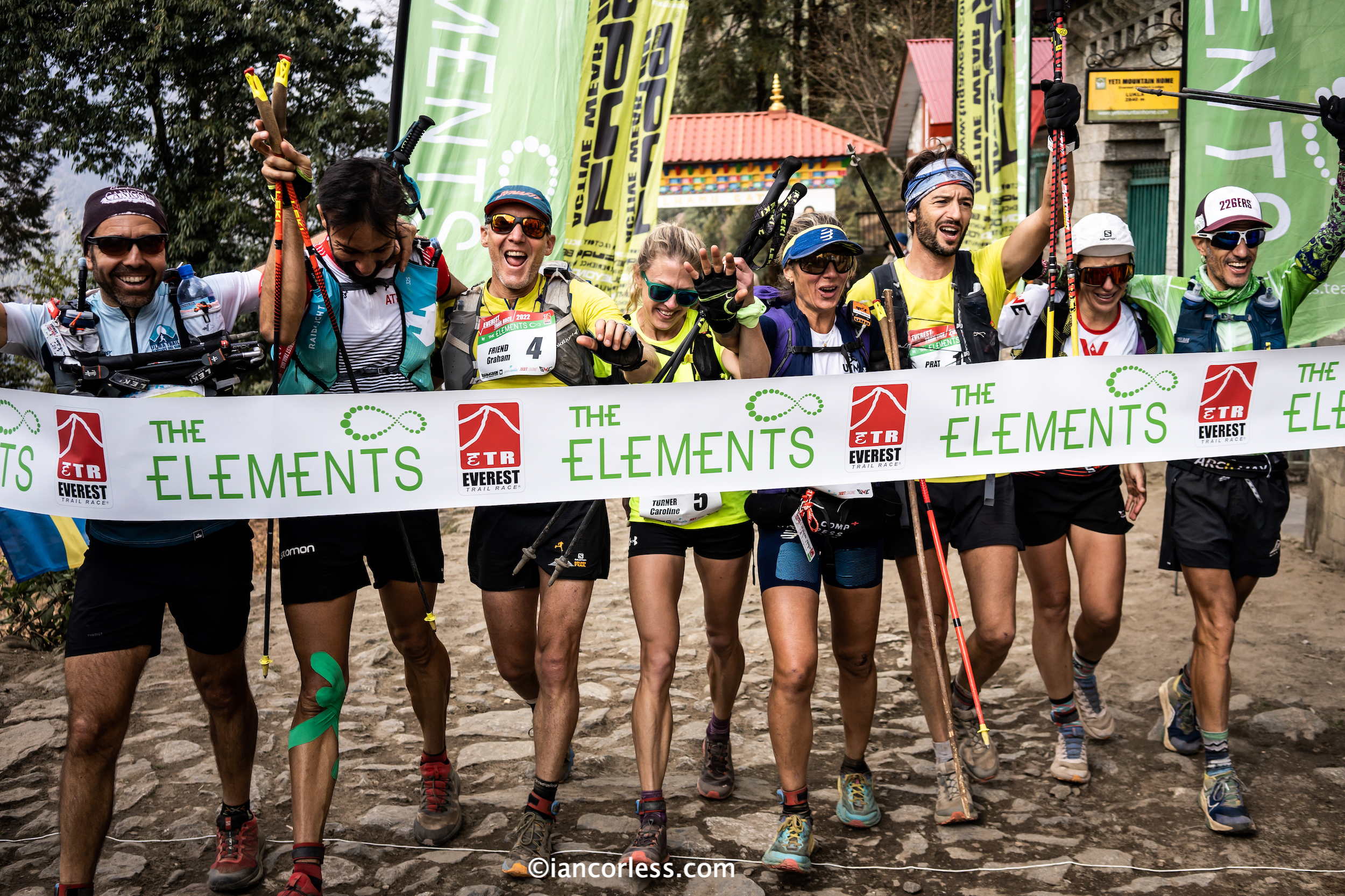
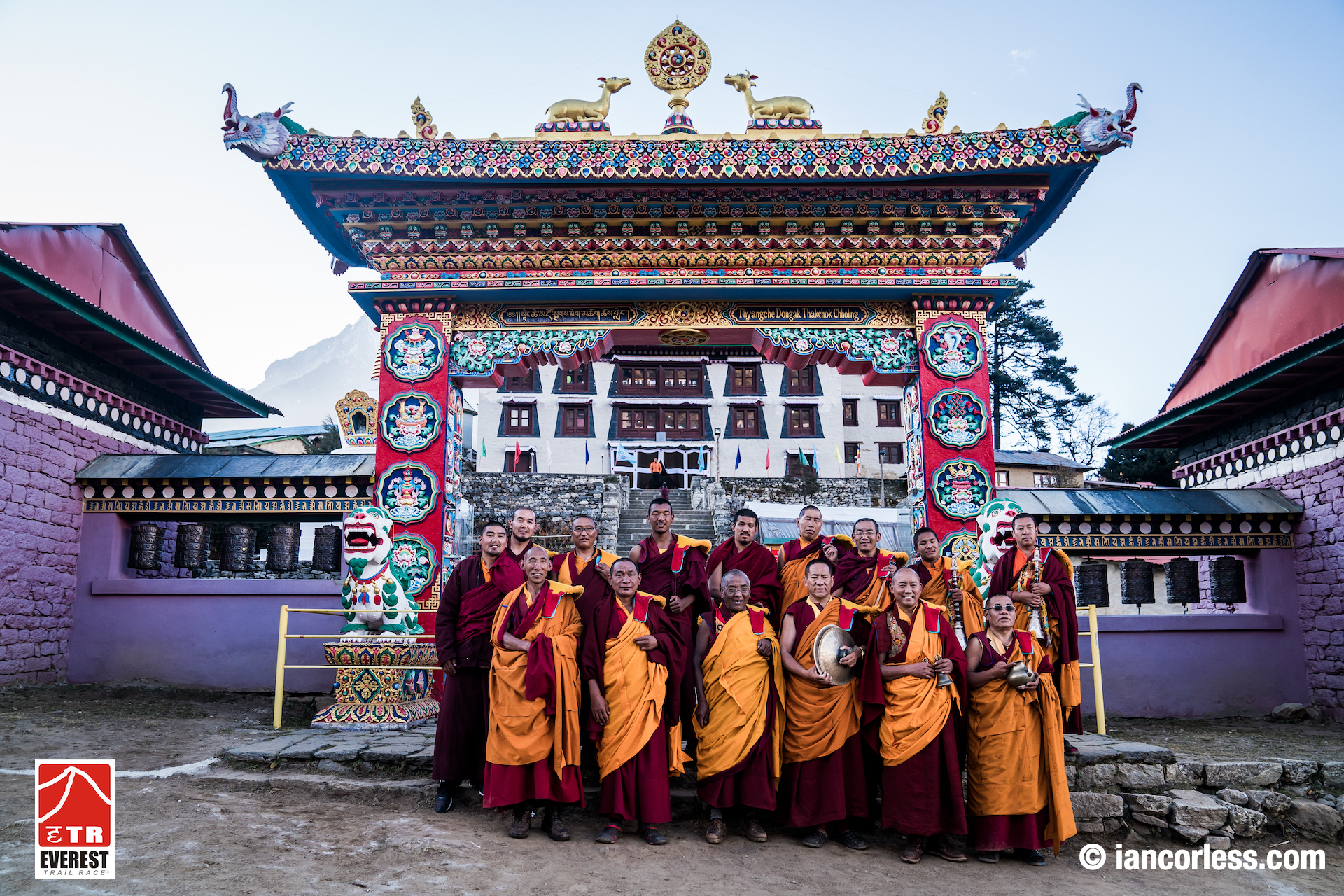
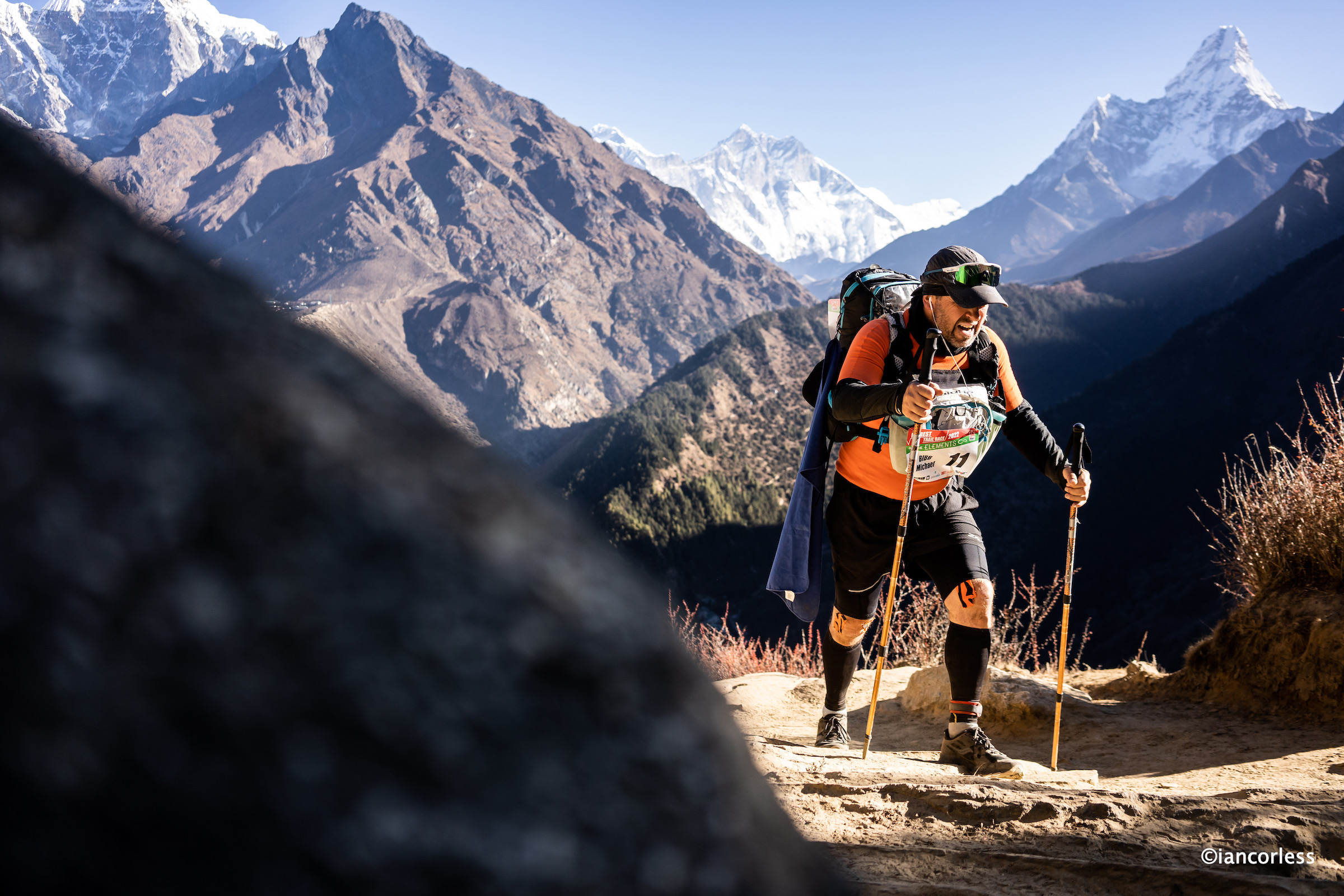
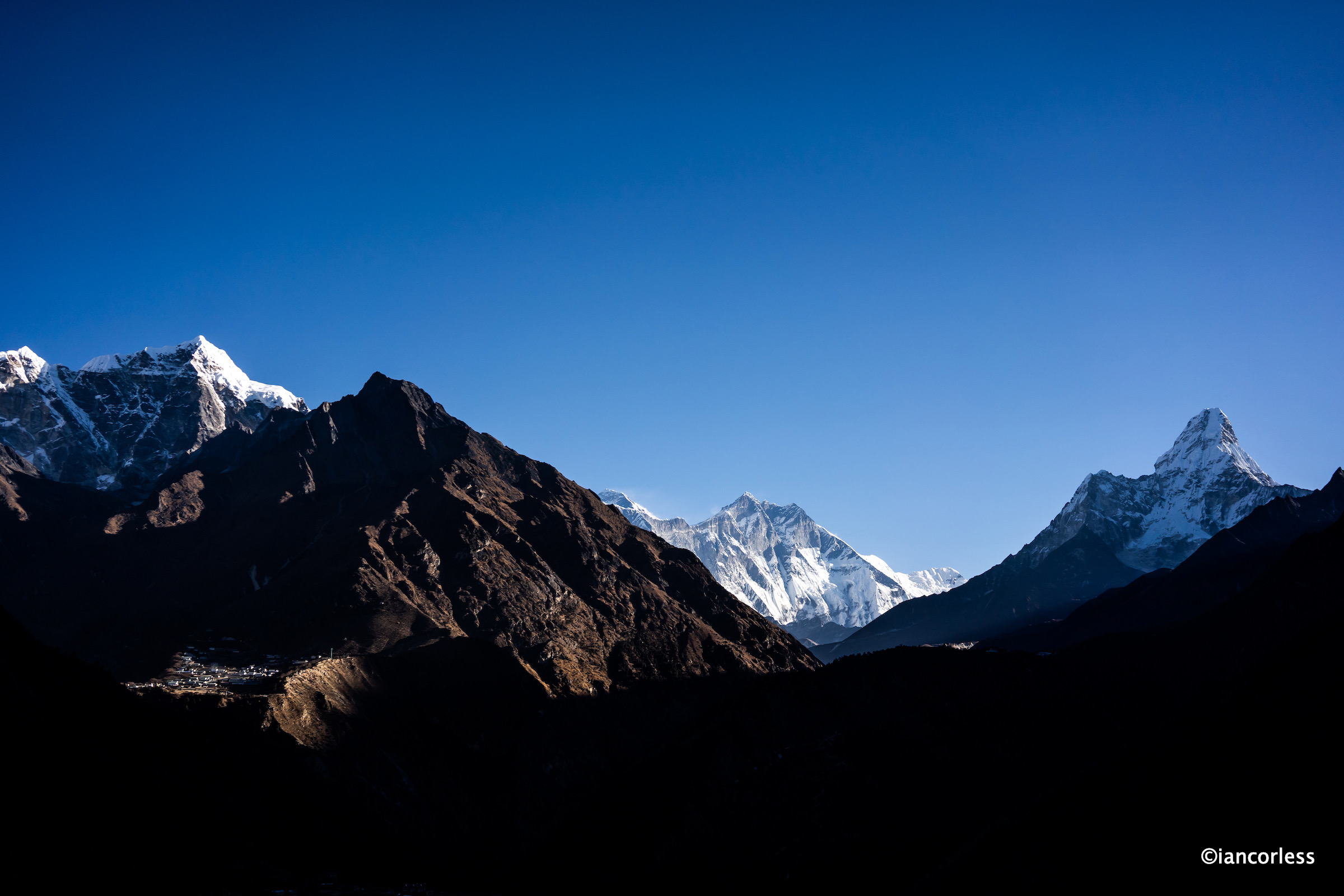
But the final ascent is where Stage 5 seals its legacy. The climb to Tyangboche Monastery, sitting at 3,860m, is a final test of grit. Legs scream, lungs burn, but the reward is immense. As runners crest the trail, they’re greeted by one of the world’s most iconic alpine views: Ama Dablam, Everest, Nuptse, and a horizon lined with Himalayan giants. Arguably, one of THE greatest finish lines in the world.
The pain is real, but so is the pride. After this brutal day, there’s relief in knowing only one stage remains. For those who made it to Tyangboche, it’s not just another finish line – it’s a summit of spirit, dedication, tenacity and perseverance.
After three gruelling stages through remote and rugged terrain, Stage 4 of the Everest Trail Race turns the page. Today, the athletes trade solitude for the storied footpaths of Nepal’s most iconic trekking corridor. This is the gateway to Everest.
A warmer night, lower altitude and this morning, the runner’s may have felt a little more rested, however, stage 4 was intimidating.
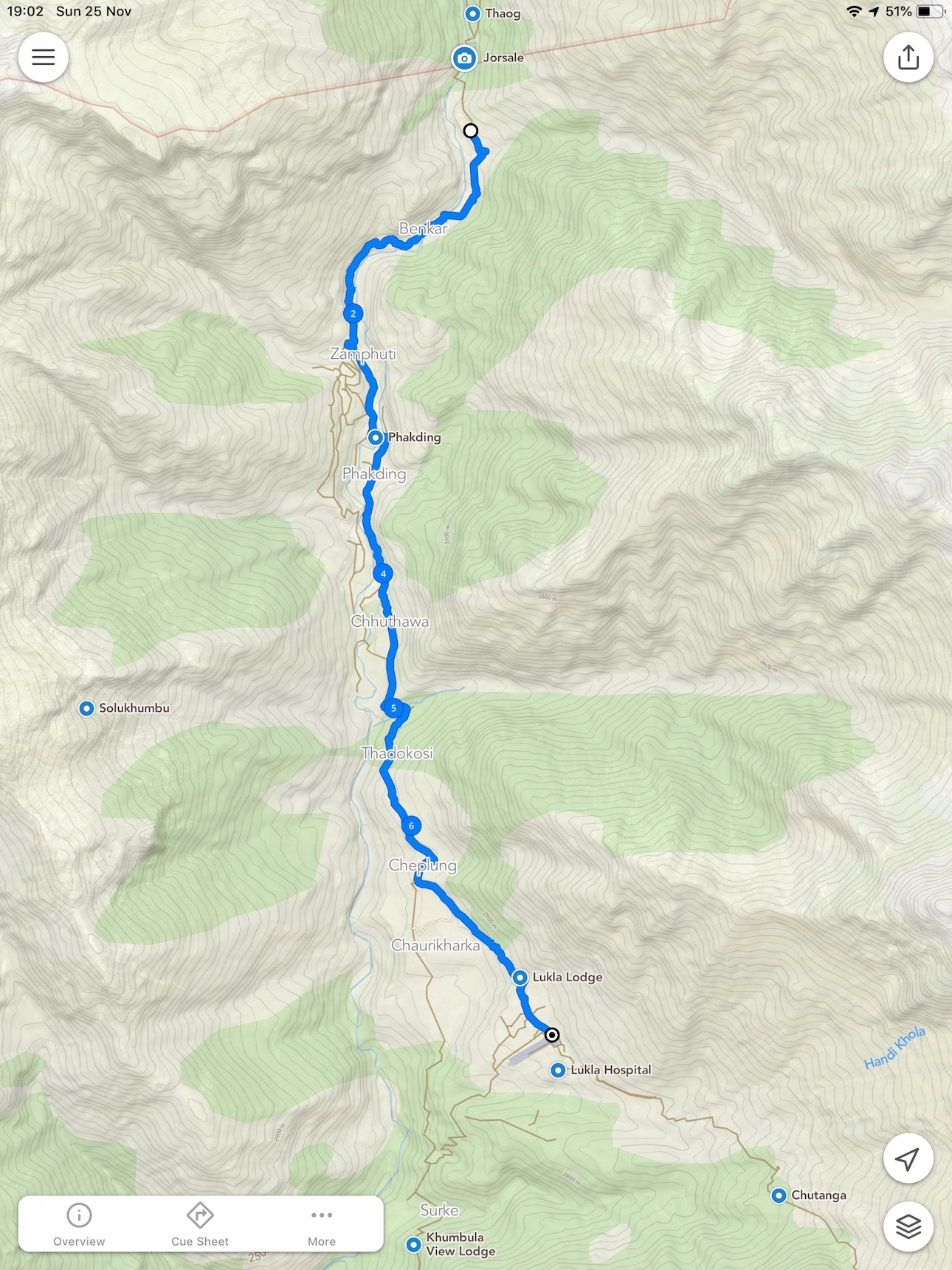
Covering 27.36 kilometers with 2,170 meters of elevation gain, Stage 4 is no break in the action. It’s a demanding route with steep climbs, quad-burning descents, and a new cast of characters on the trail: trekkers, porters, yaks, and teahouses buzzing with the hum of expedition life.
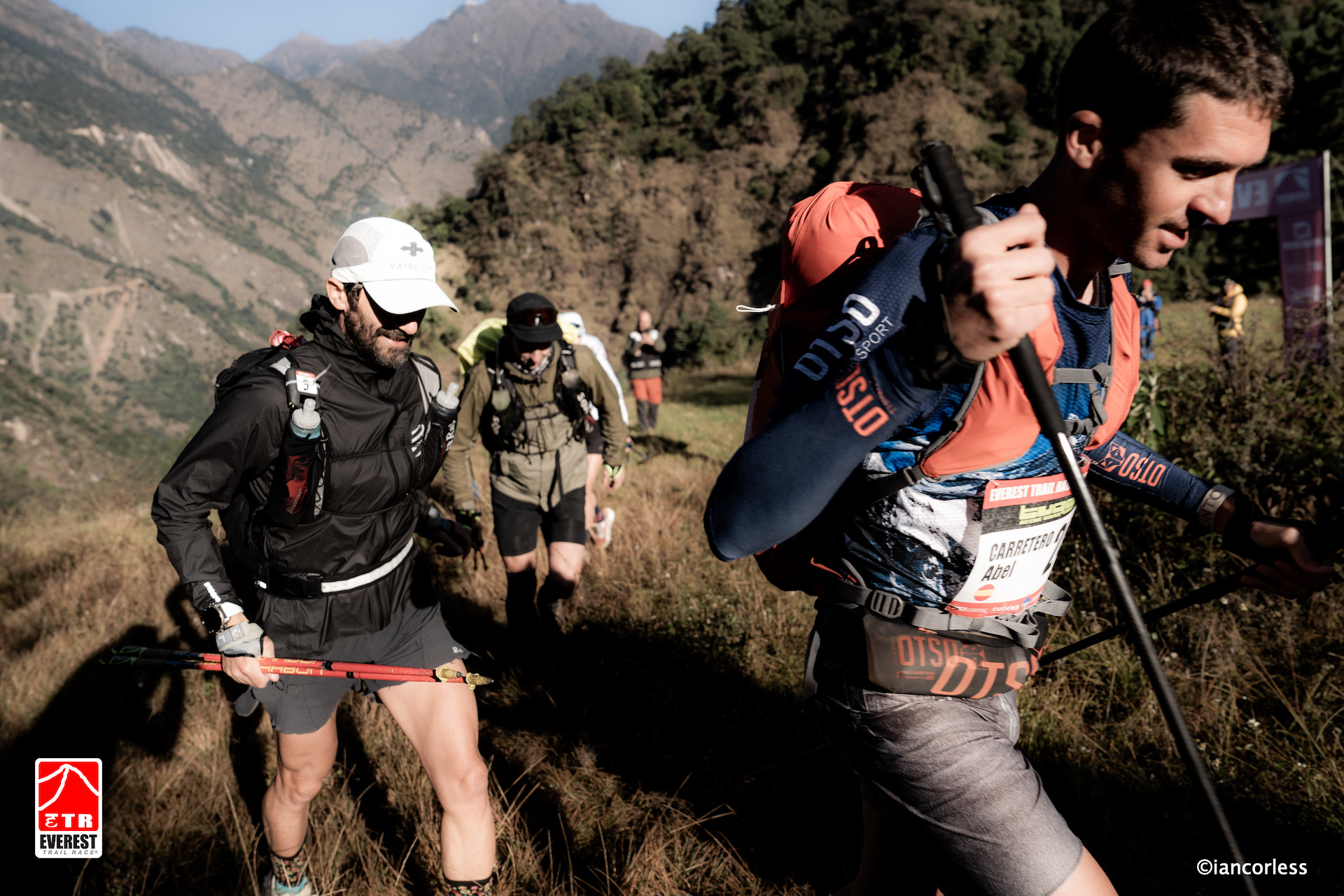
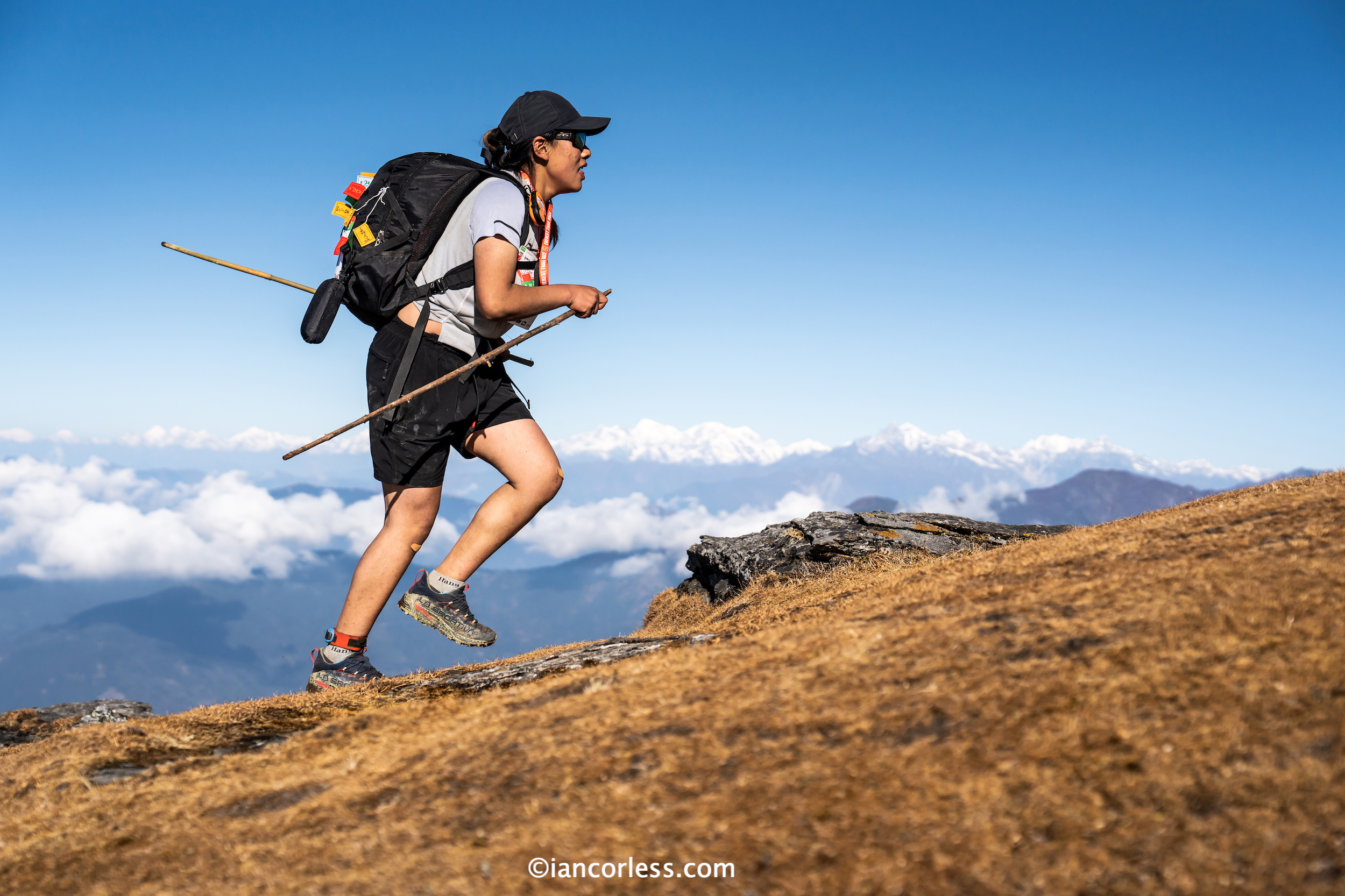
From the gun, it’s all uphill. The stage opens with a brutal 1,000-meter climb in just over 6 kilometres. The goal? Kari La, perched at 3,080 meters. This is the kind of climb that shows no mercy. Legs burn, lungs strain, and the views remind runners they’re racing through giants.
Checkpoint 1 at Paia arrives as a welcome relief. It’s a place to regroup, rehydrate, and reset. But the descent to Surke at 2,750 meters is no victory lap. Fast, technical, and relentless, it punishes tired legs before the next climb begins.
From Surke, runners face another grind: the climb to Chaurikharka (Checkpoint 2) at 2,621 meters. It’s lower in altitude but still a fight, especially coming late in the stage. From there, the course becomes unpredictable: a rollercoaster of ups and downs, testing whatever reserves are left.
The final push into Phakding at 2,620 meters marks more than the end of the stage. It’s a symbolic arrival.
The runners are now on sacred ground, part of the ancient route to Everest Base Camp. The trails are busier, the lodges more frequent, and the landscape unmistakably Himalayan.
Stage 4 isn’t just a physical battle, it’s a transition. The isolation of the early stages gives way to the buzz of one of the world’s most legendary trekking routes. But don’t let the crowds fool you. With over 2,000 meters of climbing and the fatigue of three hard days behind them, today was a war of attrition.
The finish line at Phakding means rest, food, and maybe even a little comfort, tents are traded for a lodge. Everest still looms. And the toughest stage lies ahead – stage 5 the ultimate test.
Stage 3 of the Everest Trail Race is where the real punishment begins. With 28.3 kilometres of unrelenting terrain and a leg-wrecking descent from the high-altitude village of Kamo (3855m) down to the valley floor at Jubing (1600m), this stage isn’t just tough, it’s a full-body assault.
Runners start high, where the air is thin and every step feels like a negotiation with your lungs. The early climb up to Checkpoint 1 at Kamo is already a grind, but what follows is what defines this stage: a relentless plunge that feels like it goes on forever.
The descent from Kamo to Jubing is not gentle. It’s steep, technical, and unforgiving. The views are spectacular, sure, but most runners will be too focused on staying upright to take much of it in. The drop of over 2200 meters smashes quads and shreds knees. Every rock, step, and switchback becomes part of the battle. If the climbs test your endurance, the downhills here test your durability.
Fortunately, the support is solid. CP1 at Kamo, CP2 at Hewa, and CP3 at Jubing are well-stocked and strategically placed. Runners have every opportunity to refuel and regroup, though few will find much comfort in the knowledge that the real sting comes right at the end.
Just when you think you’ve done enough, the trail throws in a final climb up to the iconic village of Kharikola. It’s a steep, grinding ascent that comes after hours of muscular destruction.
This is where mental strength counts just as much as physical preparation. After hammering down thousands of vertical meters, your legs are begging for mercy, and yet, up you go again.
Kharikola, perched proudly in the hills, is a reward in itself. Not just for the views, but for what it represents: survival. Conquering Stage 3 is a badge of toughness. It’s where the Everest Trail Race shakes out the pretenders from the contenders.
Stage 3 doesn’t just test you, you feel it in your legs for days. You carry it in your mind for longer. It’s beautiful, brutal, and unforgettable. And for every runner who arrives in Kharikola, it’s a hard-earned victory etched into the heart of the Himalayas.
There are stages that challenge you, stages that move you, and then there are stages like Stage 3 of MDS TREK Morocco, the kind that embeds itself deep in your memory and never lets go.
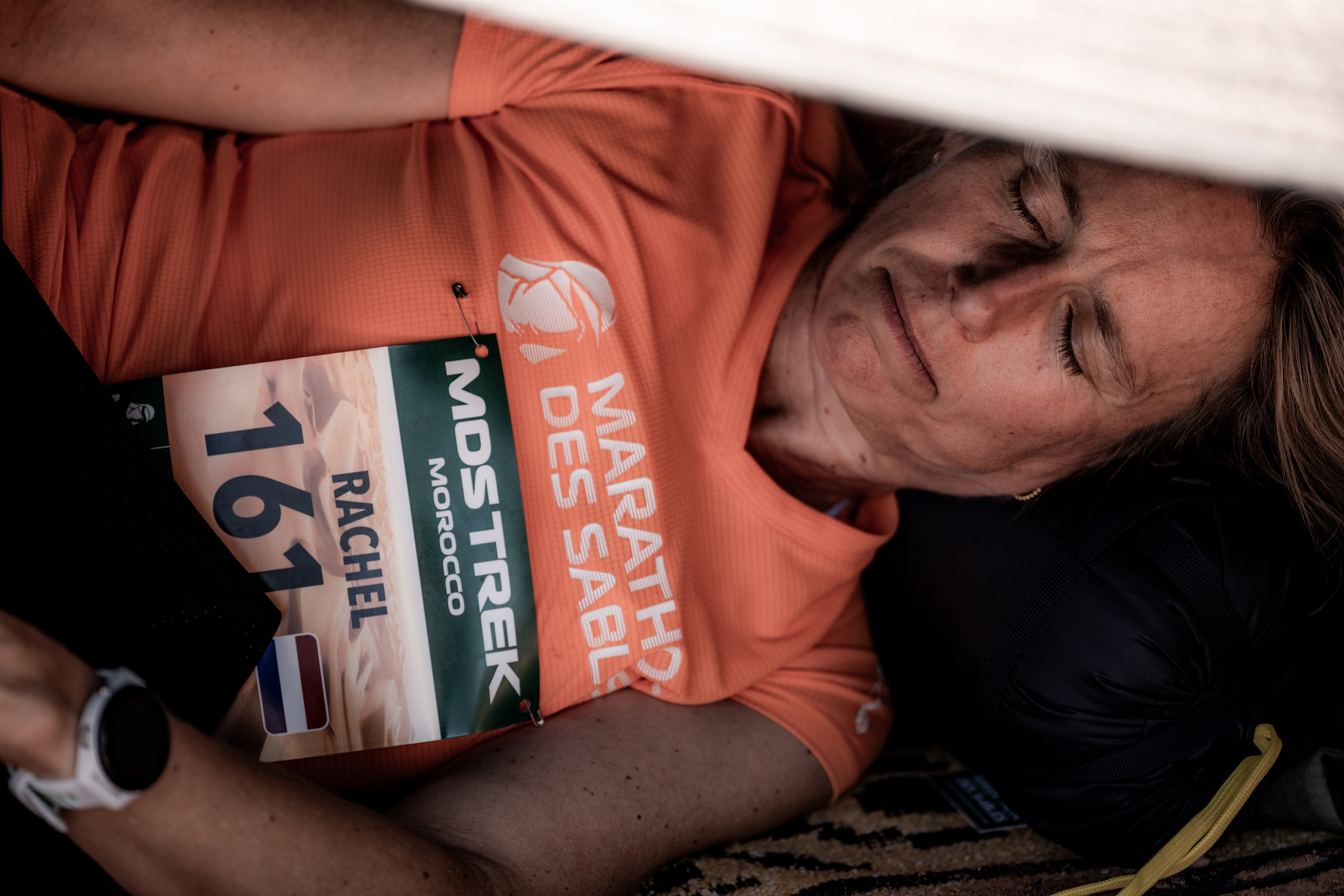
This wasn’t just another section of the trek. It was the spiritual centre of the entire experience. A 48-hour symphony of sweat, sand, starlight and self-discovery, this was the Sahara in its rawest, most breathtaking form.
Part One – Into the Desert Before Dawn
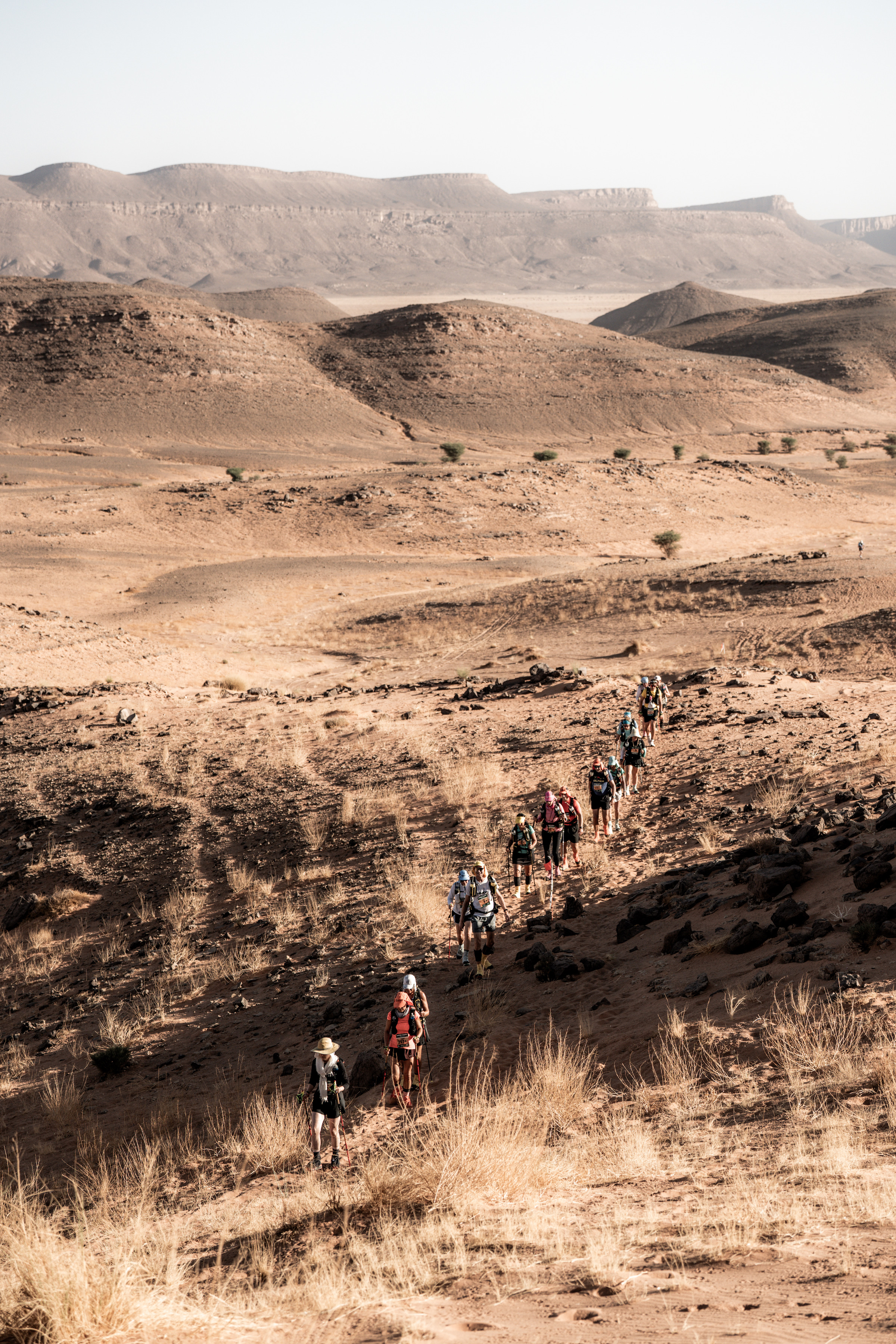
It began in the dark, well before sunrise. Head torches flickered to life across the bivouac like constellations on the move. The air was still, cool with the promise of what was to come. This was no ordinary start. There was a choice, two routes: the shorter 17.3km or the longer 30.6km. Two paths leading into the vast unknown, with each step breaking the silence of the Moroccan morning.
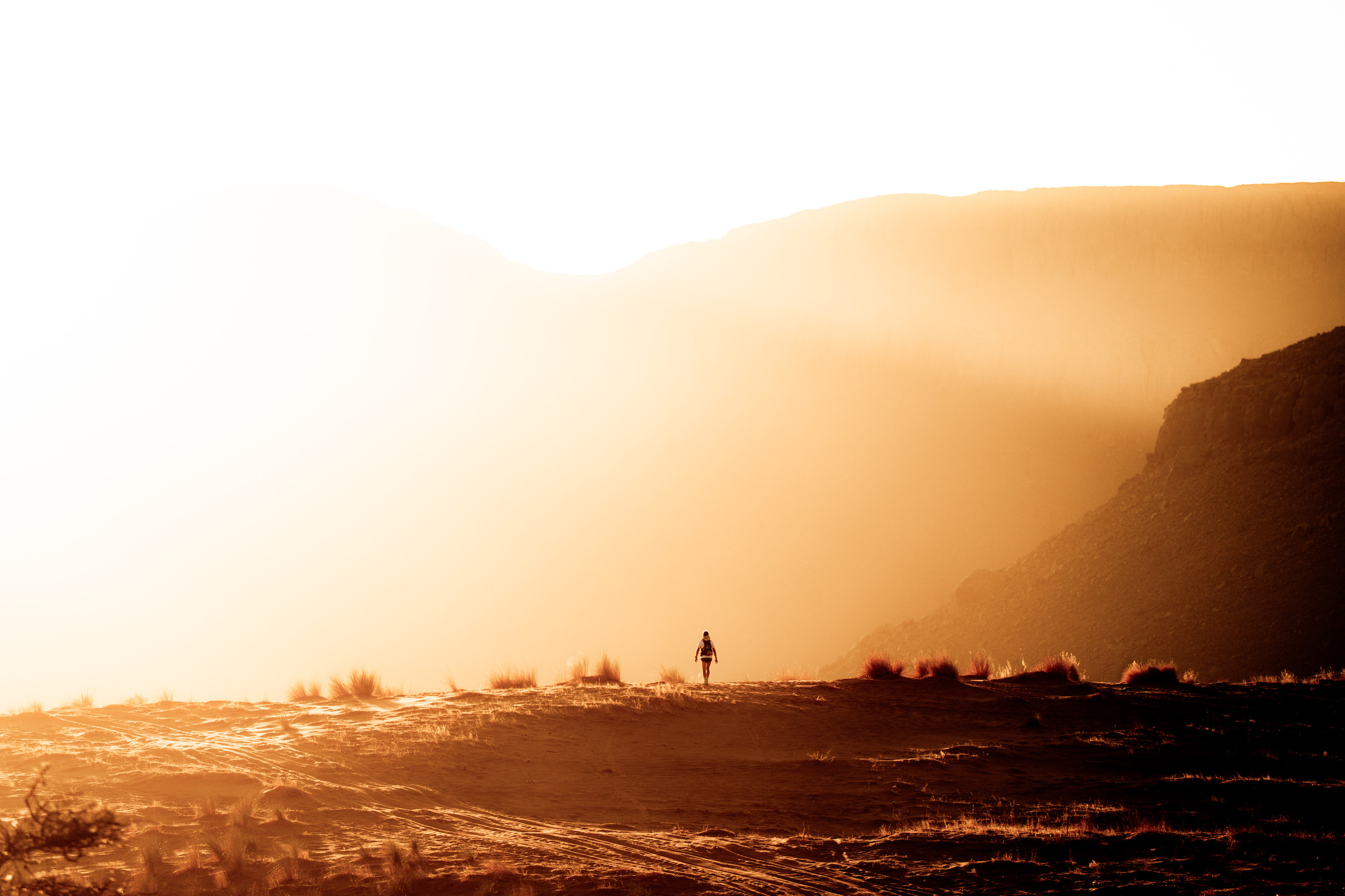
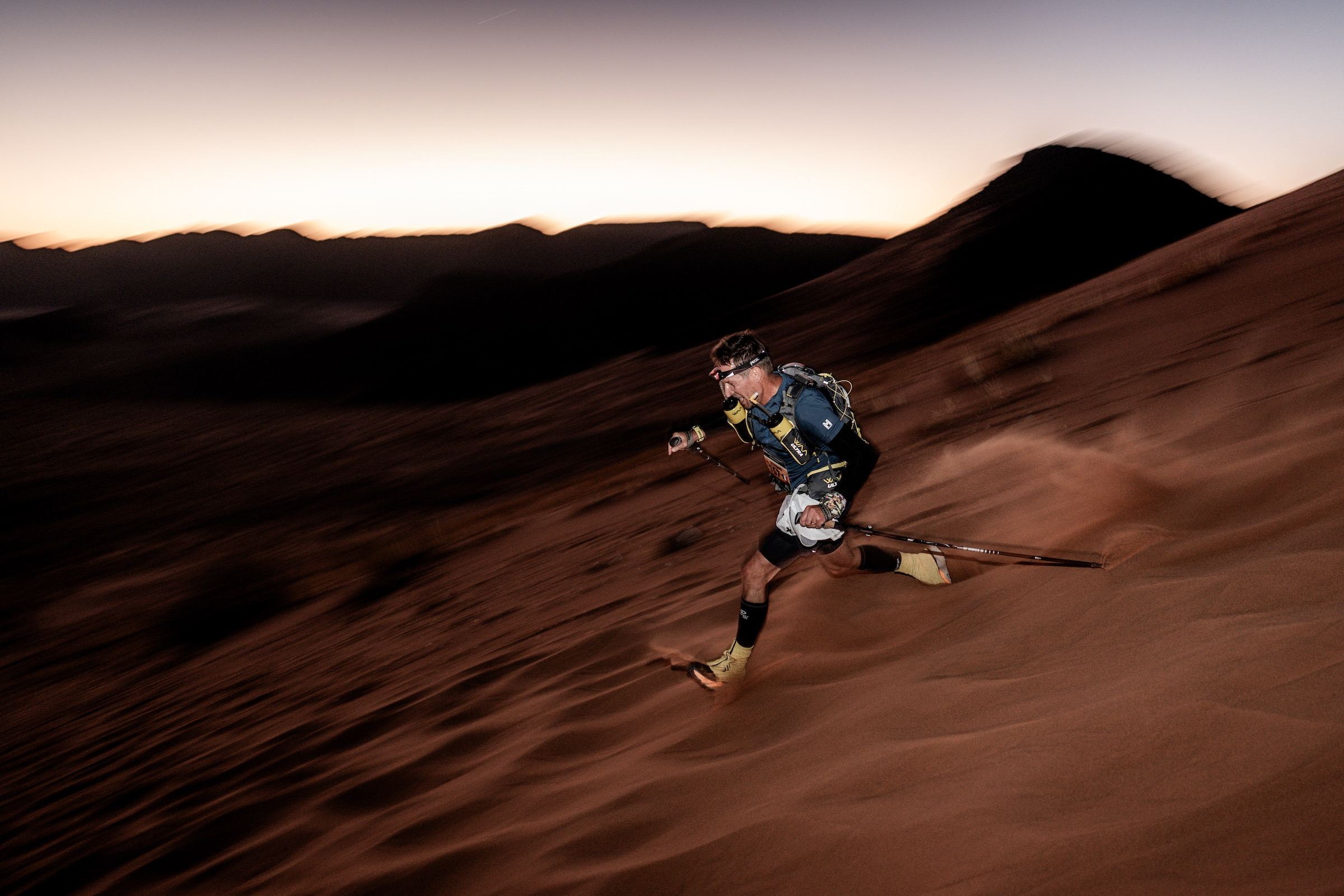
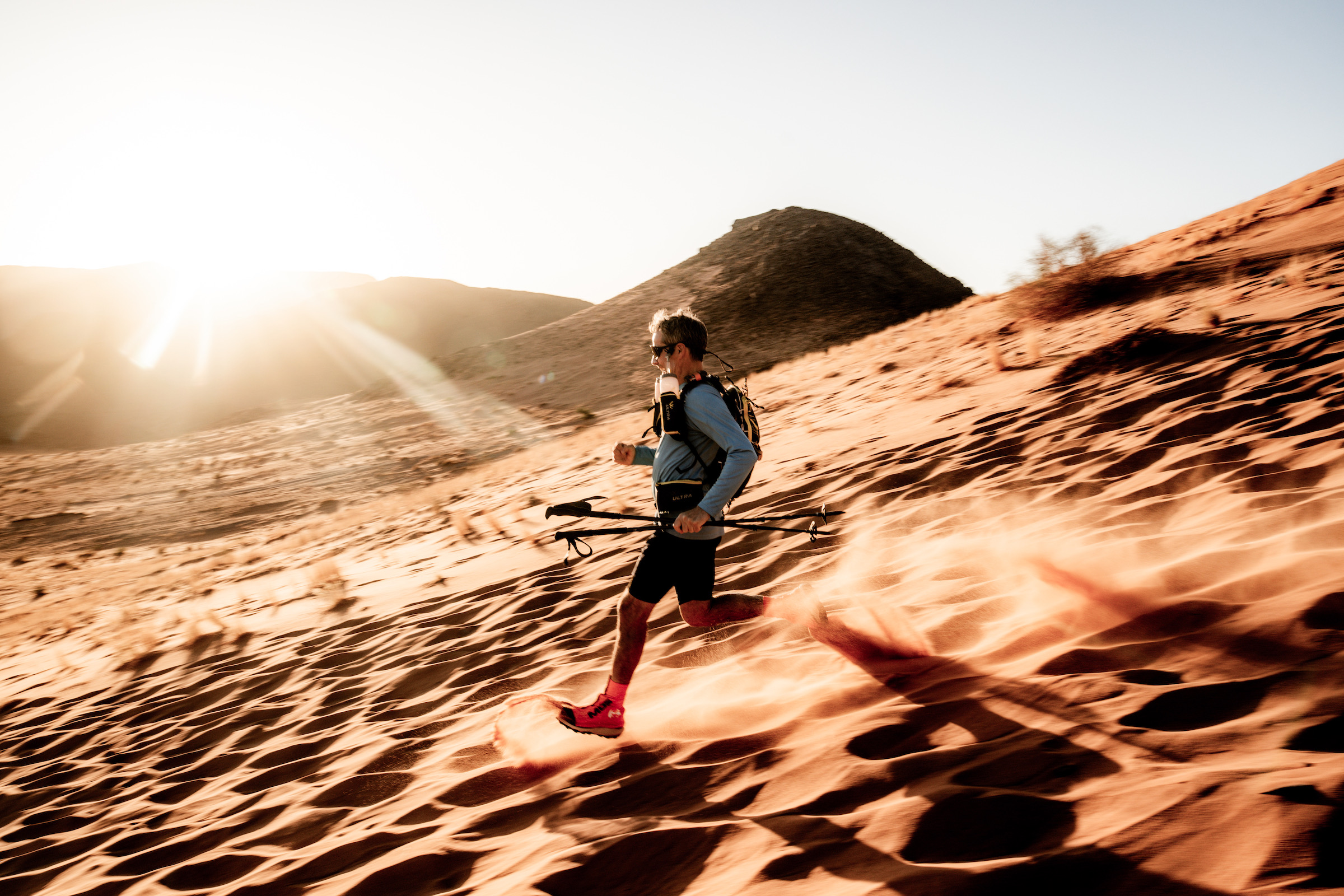
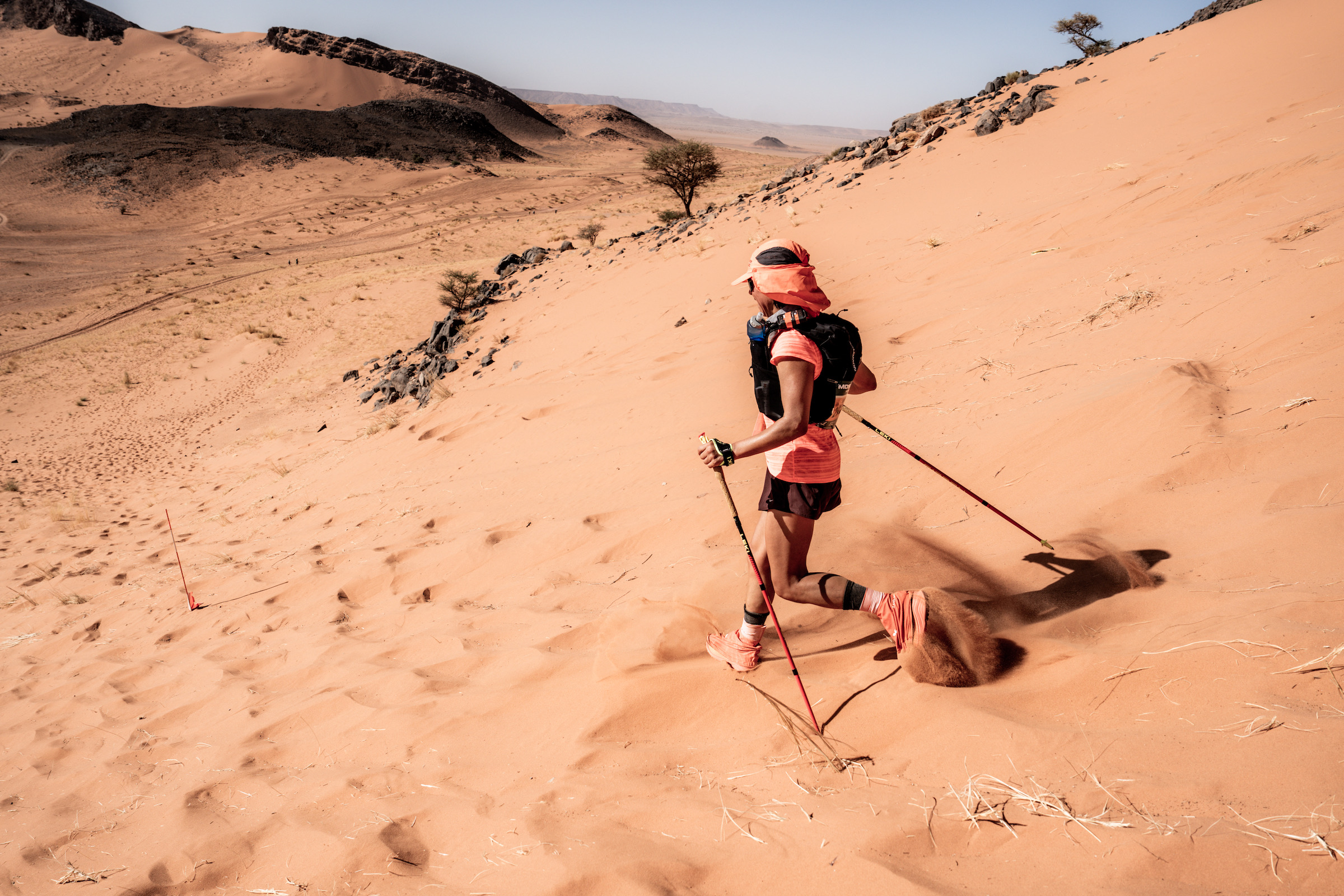
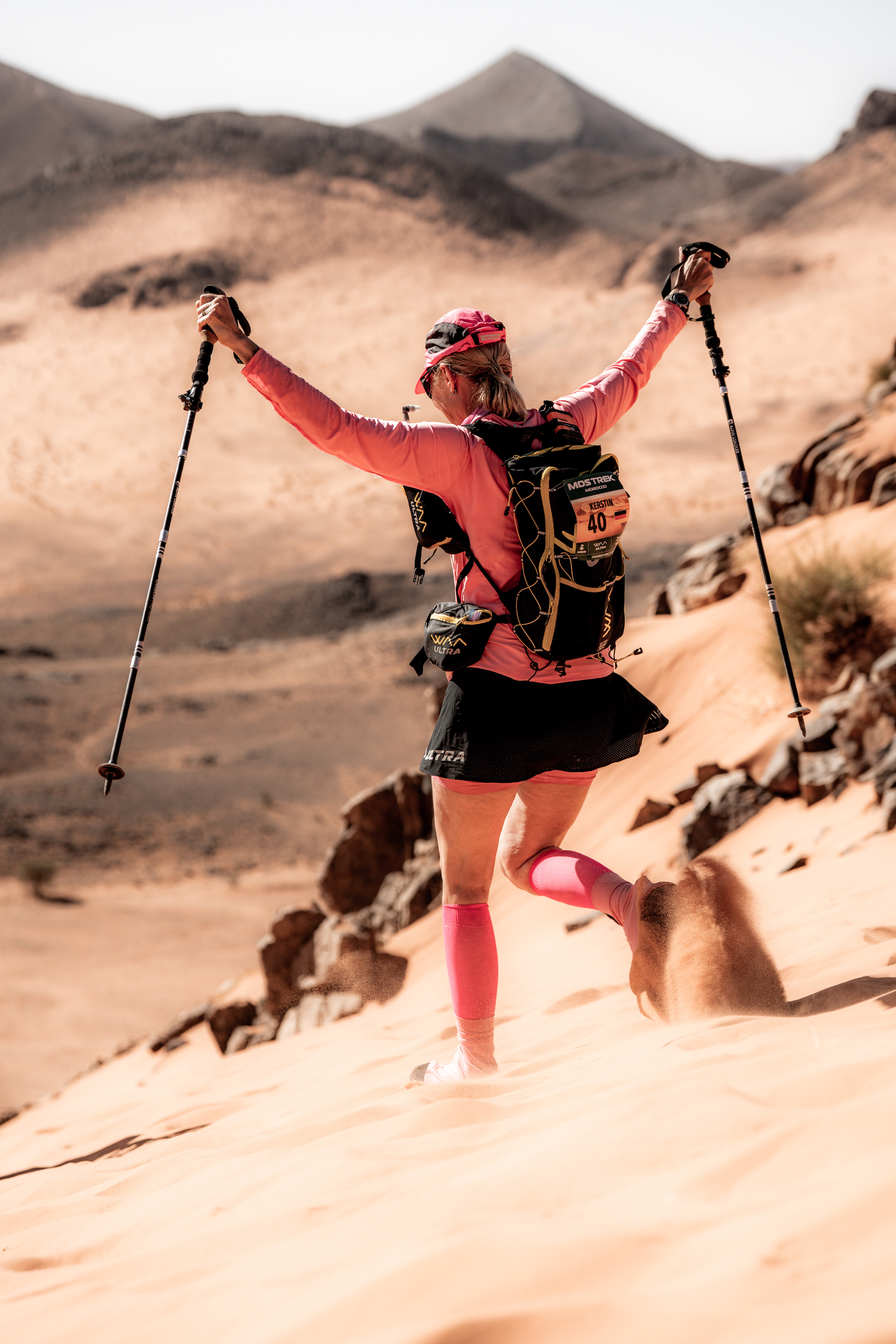
And then came the sand, golden even in the first light. There’s nothing quite like descending those soft sandy giants as the world slowly glows around you.
Laughter echoed, legs burned, hearts raced. The sand gave way to rocky outcrops, and then again to long stretches of sunlit solitude.
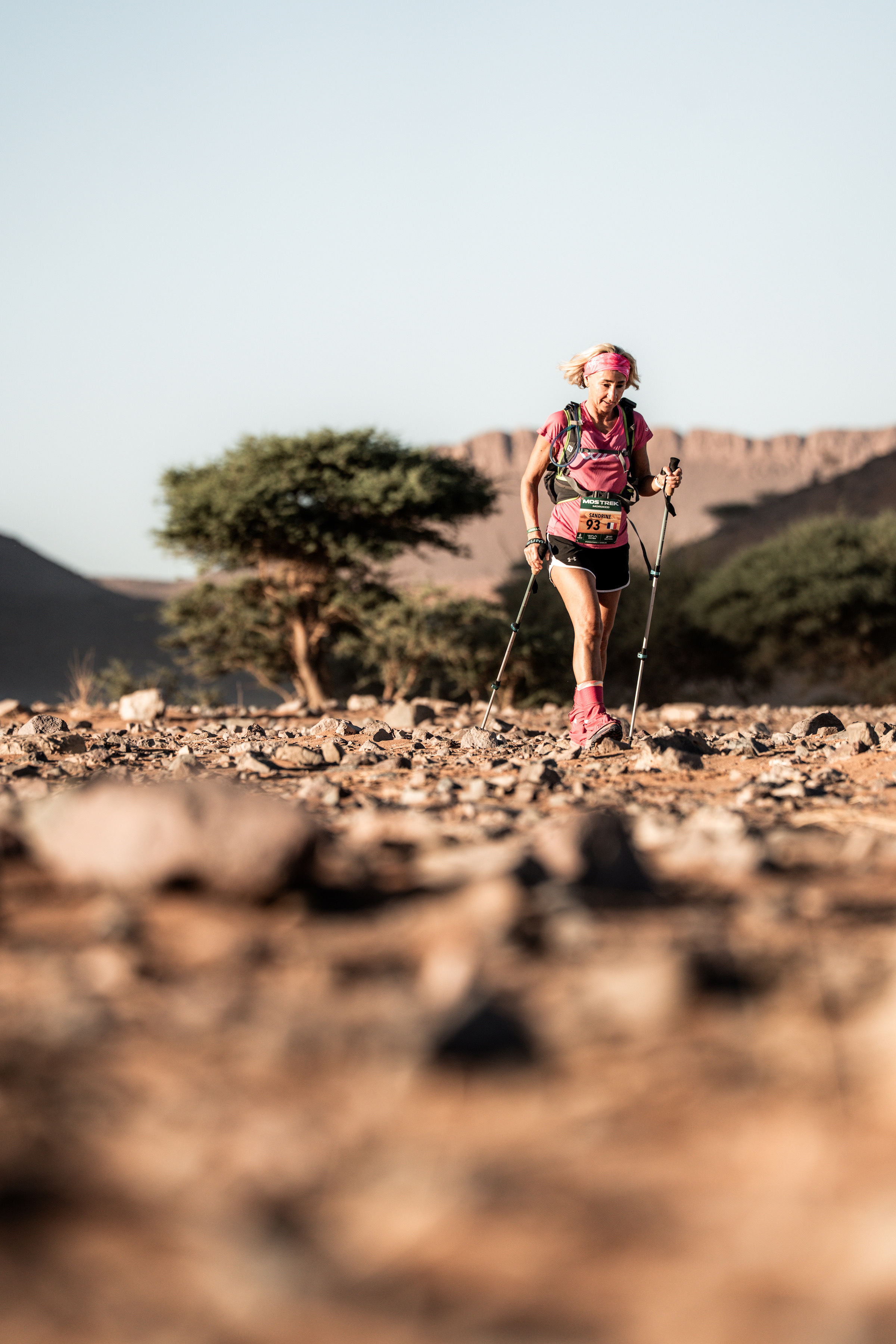
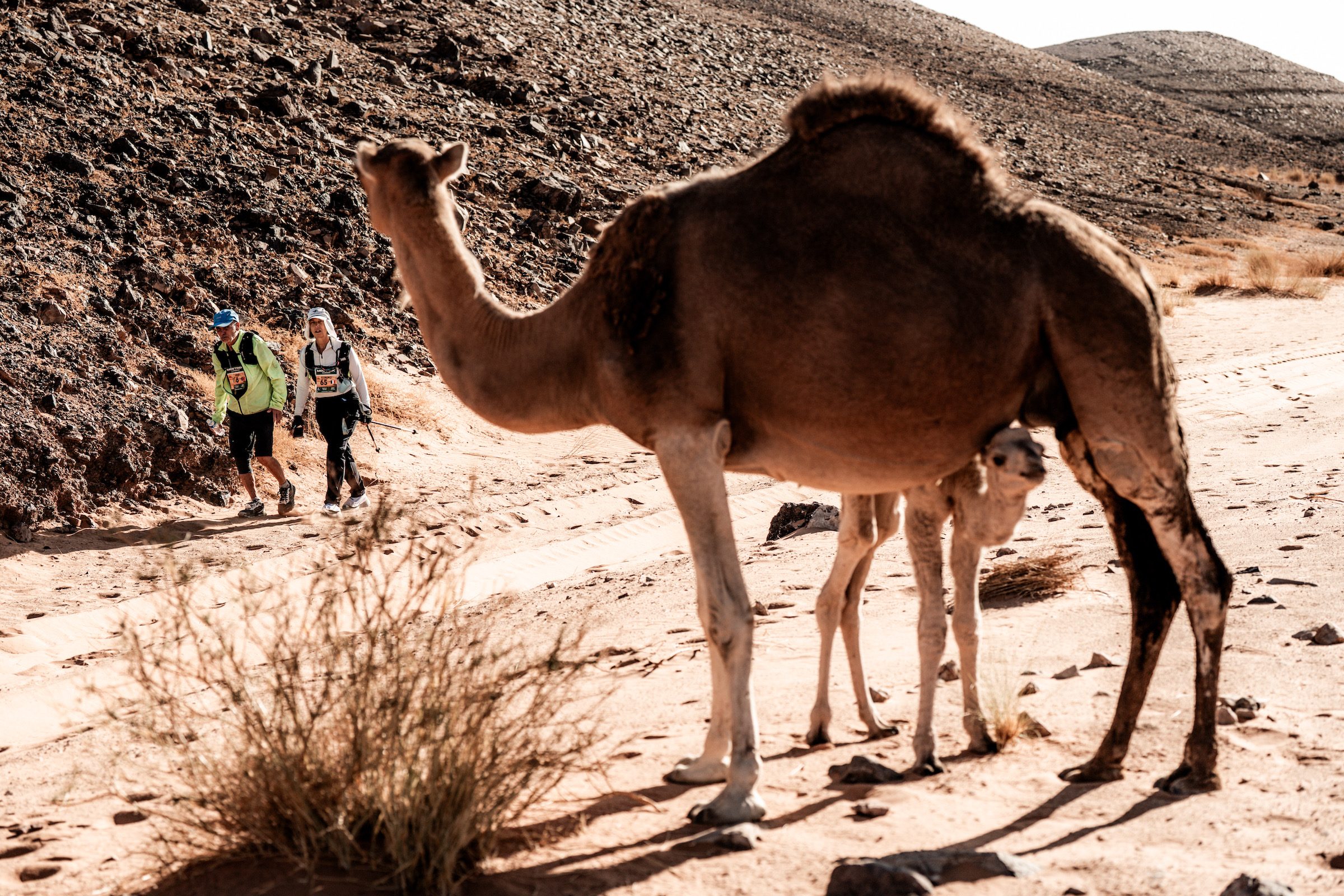
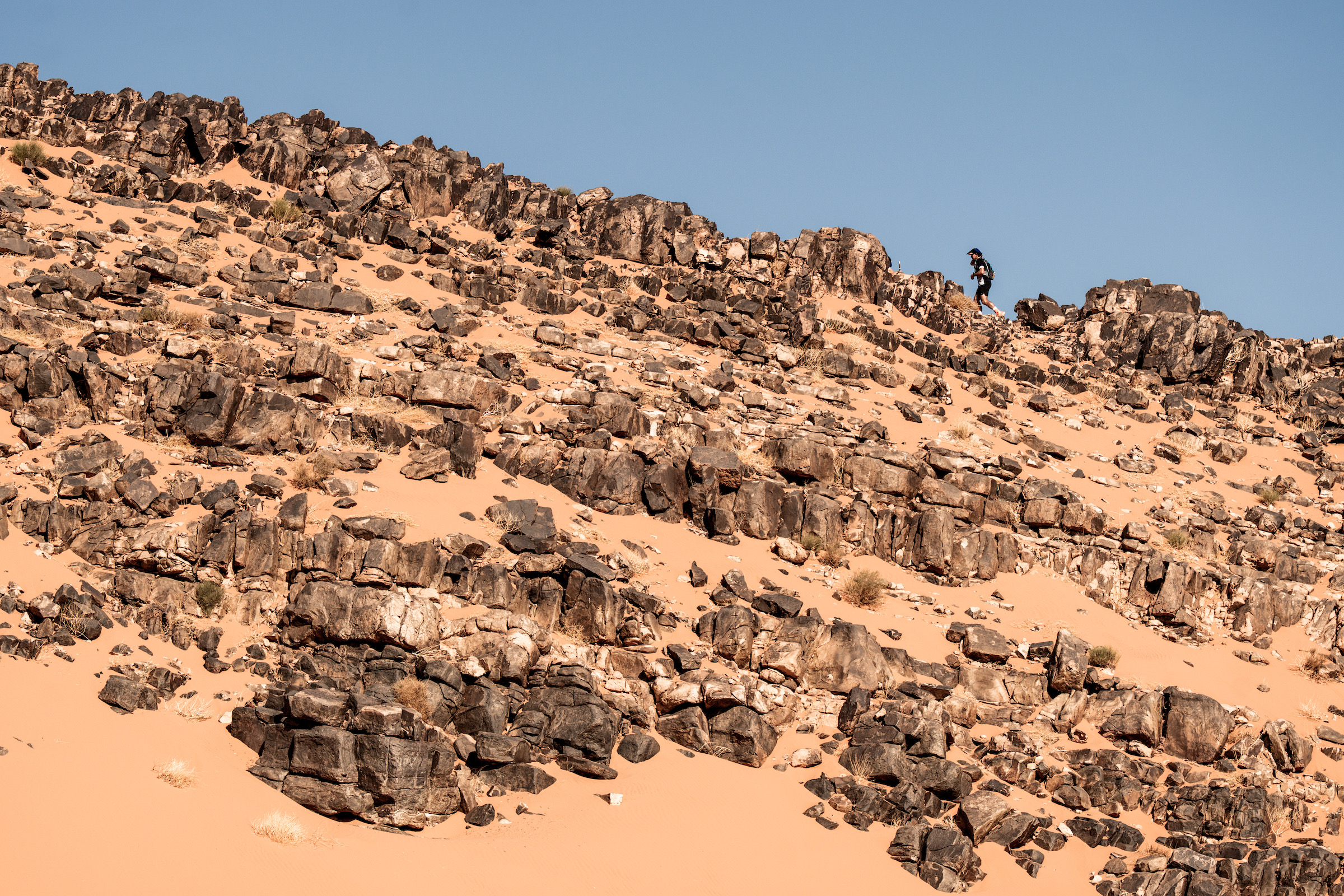
It was terrain that demanded focus: shifting sands, jagged stones, climbs that tested lungs, and descents that punished quads. And moments of pure magic, a Camel with a calf just days old.
As the sun climbed, so did the temperature, creeping past 40°C, pushing toward the high 40s by midday. Every kilometre was earned. The trek moved through narrow mountain passes, broad empty plains, and wind-rippled dunes that swallowed sound and offered only the rhythm of your own breath in return.
This wasn’t just physical endurance. It was mental stamina. This was the Sahara asking, “How much do you want this?” And the answer was in every footstep forward.
Star Night – A Sahara Festival Beneath the Milky Way
Then came the magic.
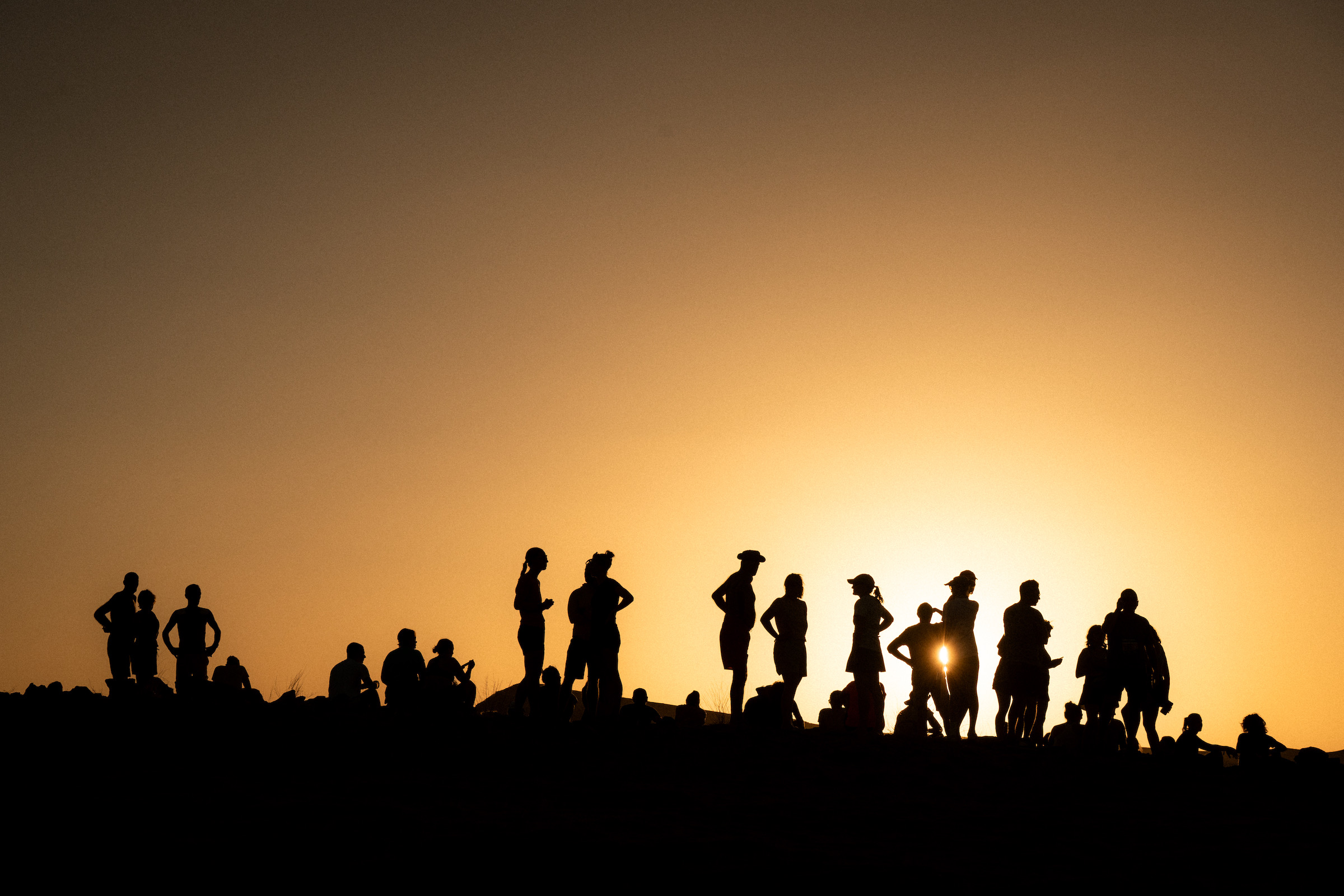
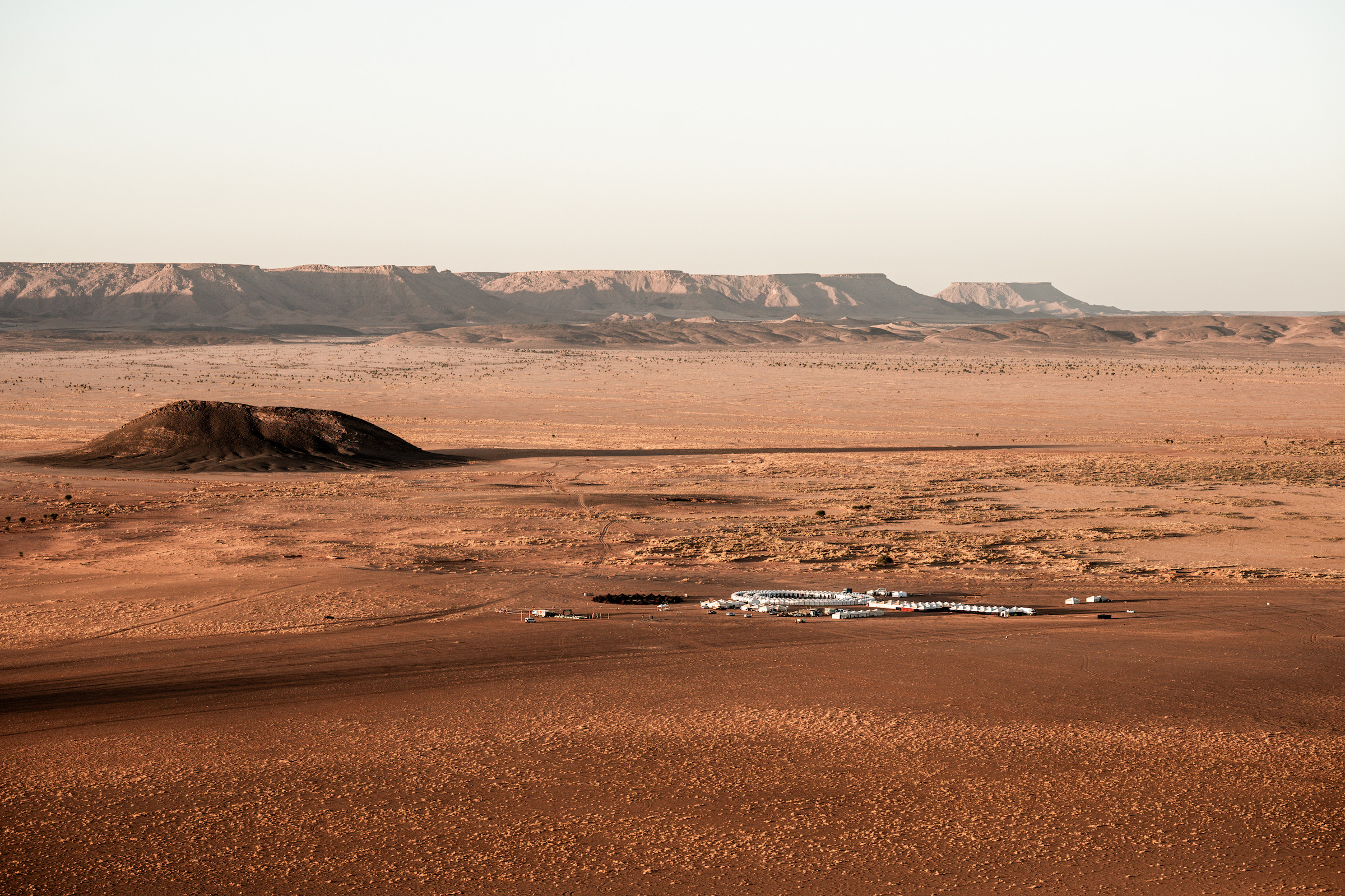
As the heat softened and the sky turned amber, the group reached the remote desert bivouac, a temporary outpost far from civilisation, wrapped in silence, surrounded by dunes like a protective embrace.
Tents were set up quickly, offering some shelter from the still-warm evening, but it was clear that tonight, few would sleep indoors.
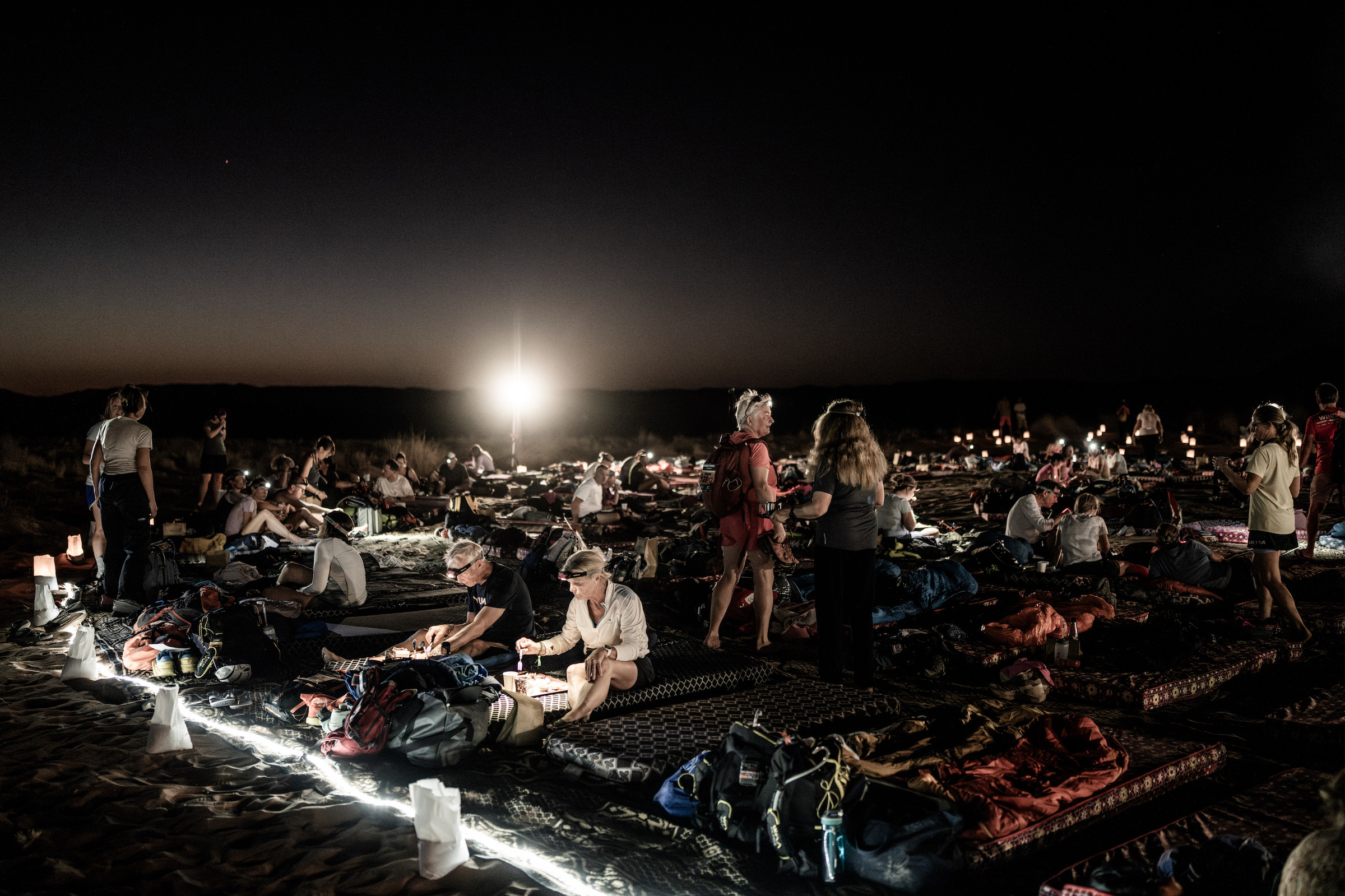
Dinner was served under open skies, a catered desert banquet with the kind of flavour that only comes after a day like that.
Music played. Conversations sparked. Laughter carried on the breeze. And as the sun finally slipped away, the desert lit up in a way that defied belief.
This was no ordinary night.
This was Star Night.
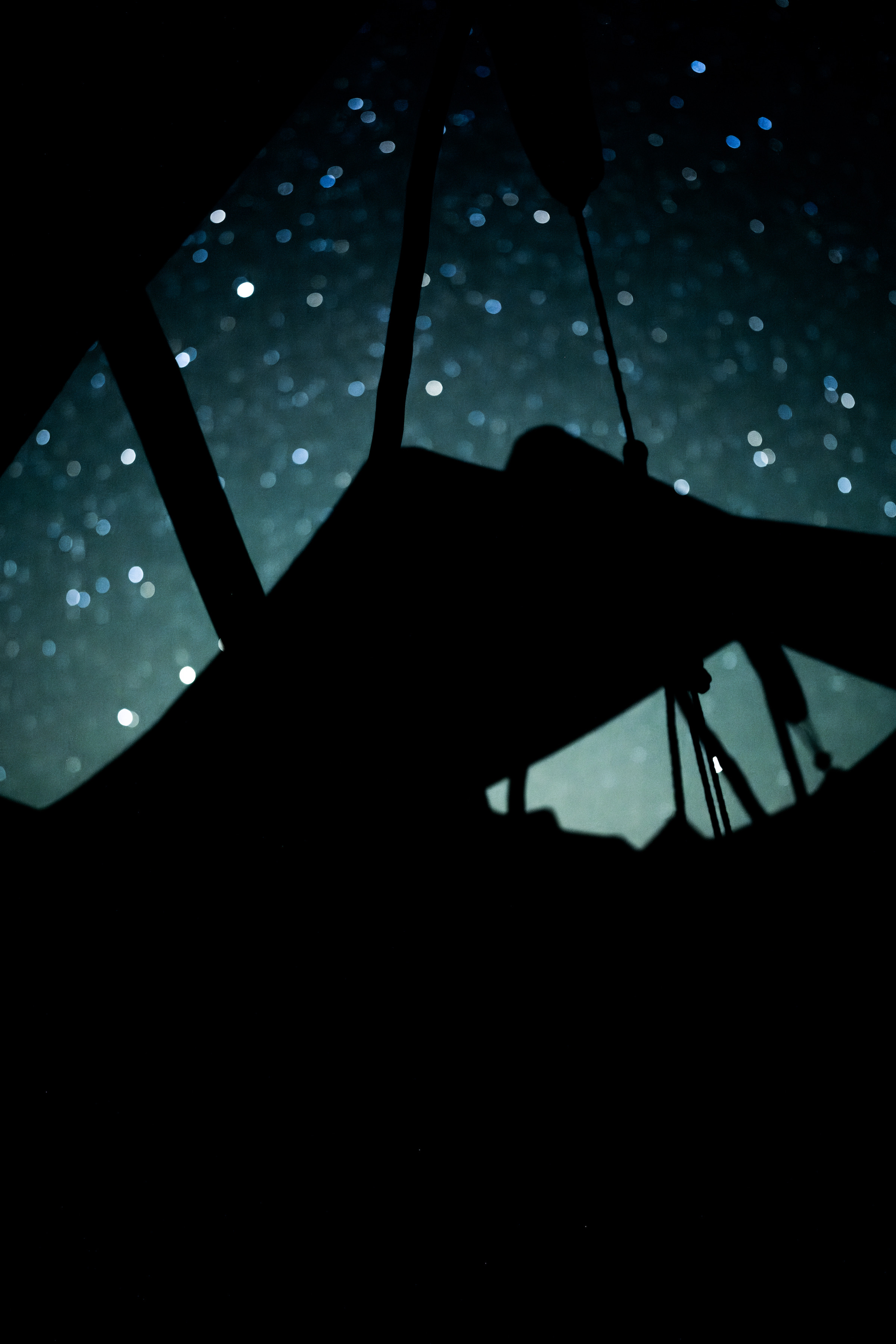
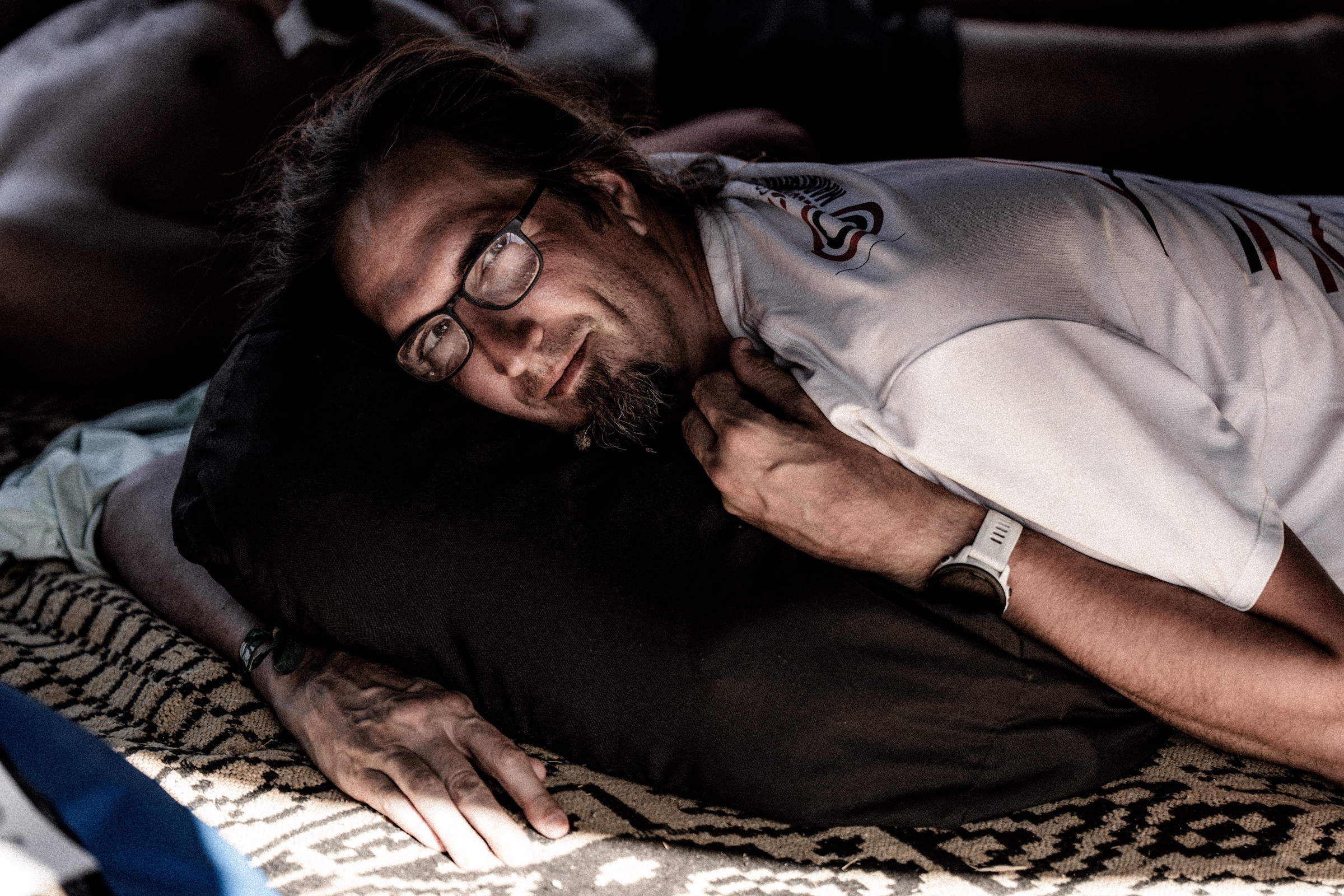
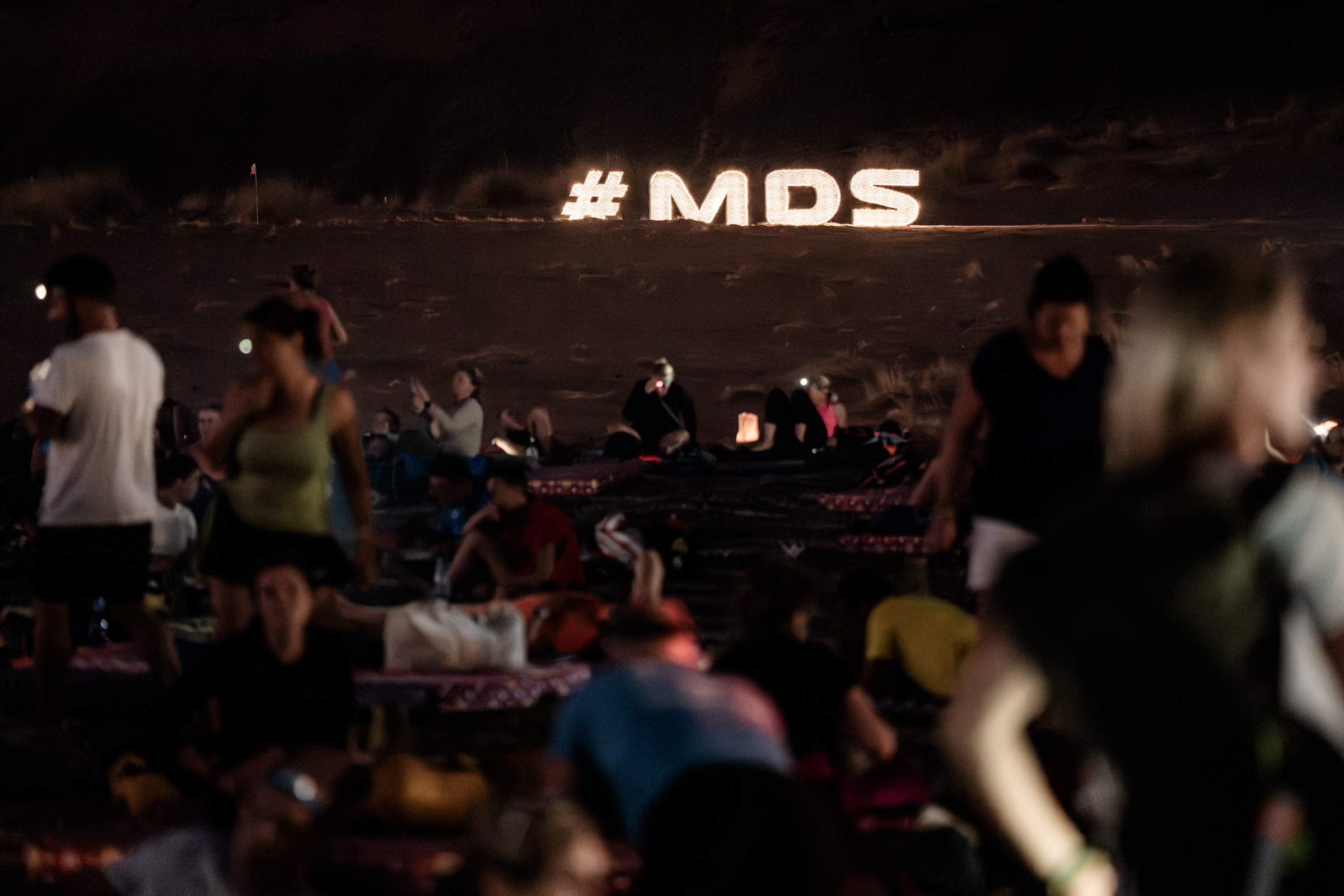
The sky ignited with stars, sharp, bright, infinite. The Milky Way stretched across the sky like a brushstroke of light. It was cinematic. Surreal. And yet, utterly real. Most didn’t even bother with sleeping bags; the night air was warm, comfortable, and inviting. Mats were laid out in the sand, and people lay back, letting the stillness of the Sahara soak in.
This wasn’t just a rest stop. It was a memory being etched in real time. A Saharan festival of connection, nature, and awe. And despite the fatigue, few slept early. Why would you? Nights like that are rare, even in dreams.
Day Two – Sunrise, Sand, and the Final Push
As dawn crept in, the desert glowed again. Another split route awaited, this time 17.5km or 22.5km. But legs were lighter. Spirits were high. The starlit night had done its work. The air still held a bit of cool, and the sun rose gently, casting long shadows over the rippling sands.
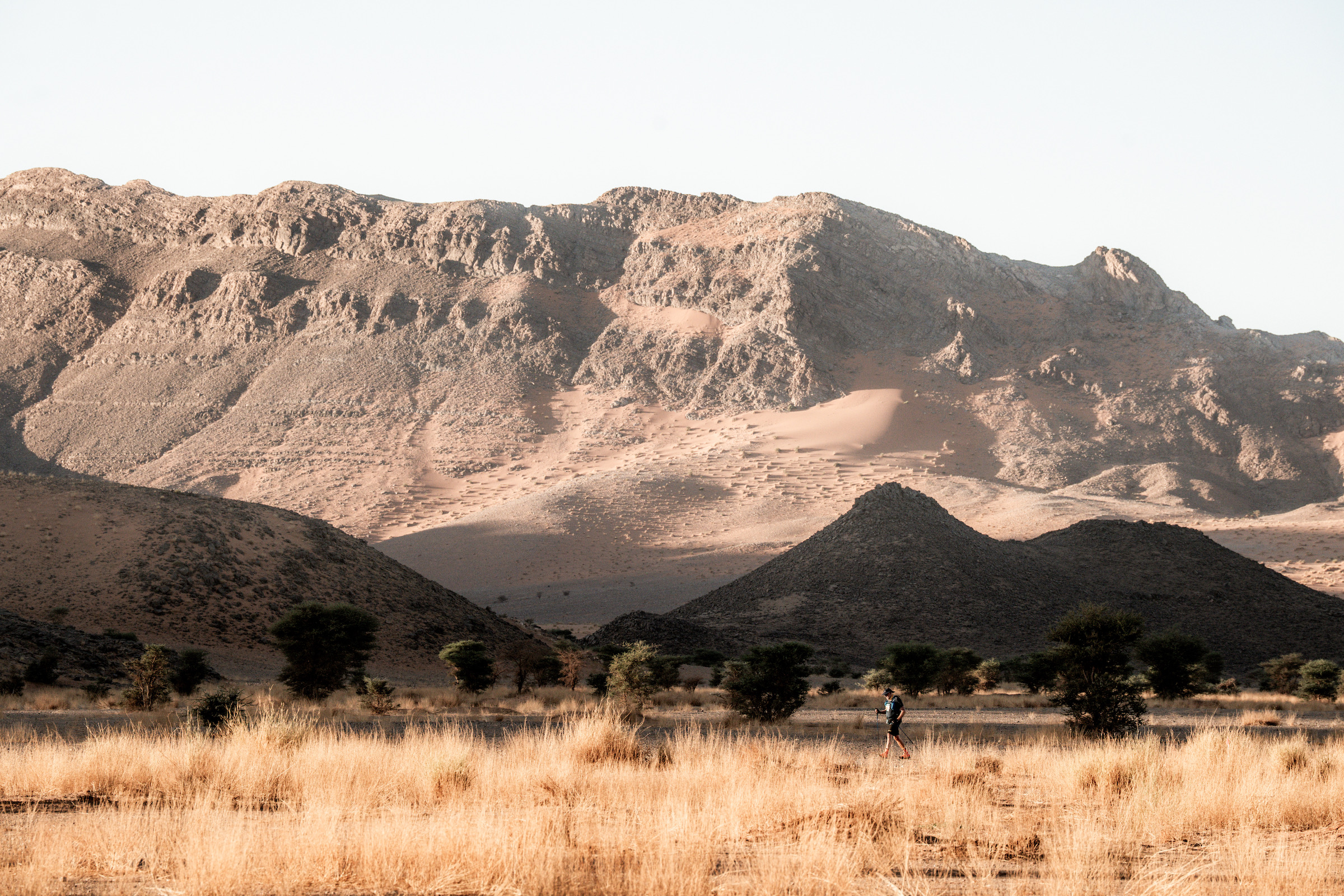
The trail wound through more epic Saharan landscapes, twisting through low valleys, across ancient dry riverbeds, and up onto ridges with views that stole the breath before the heat could.
By late morning the thermometer climbed past 48°C. Brutal, yes. But somehow also beautiful. Because every drop of sweat, every pause in the shade, every step forward became part of something larger.
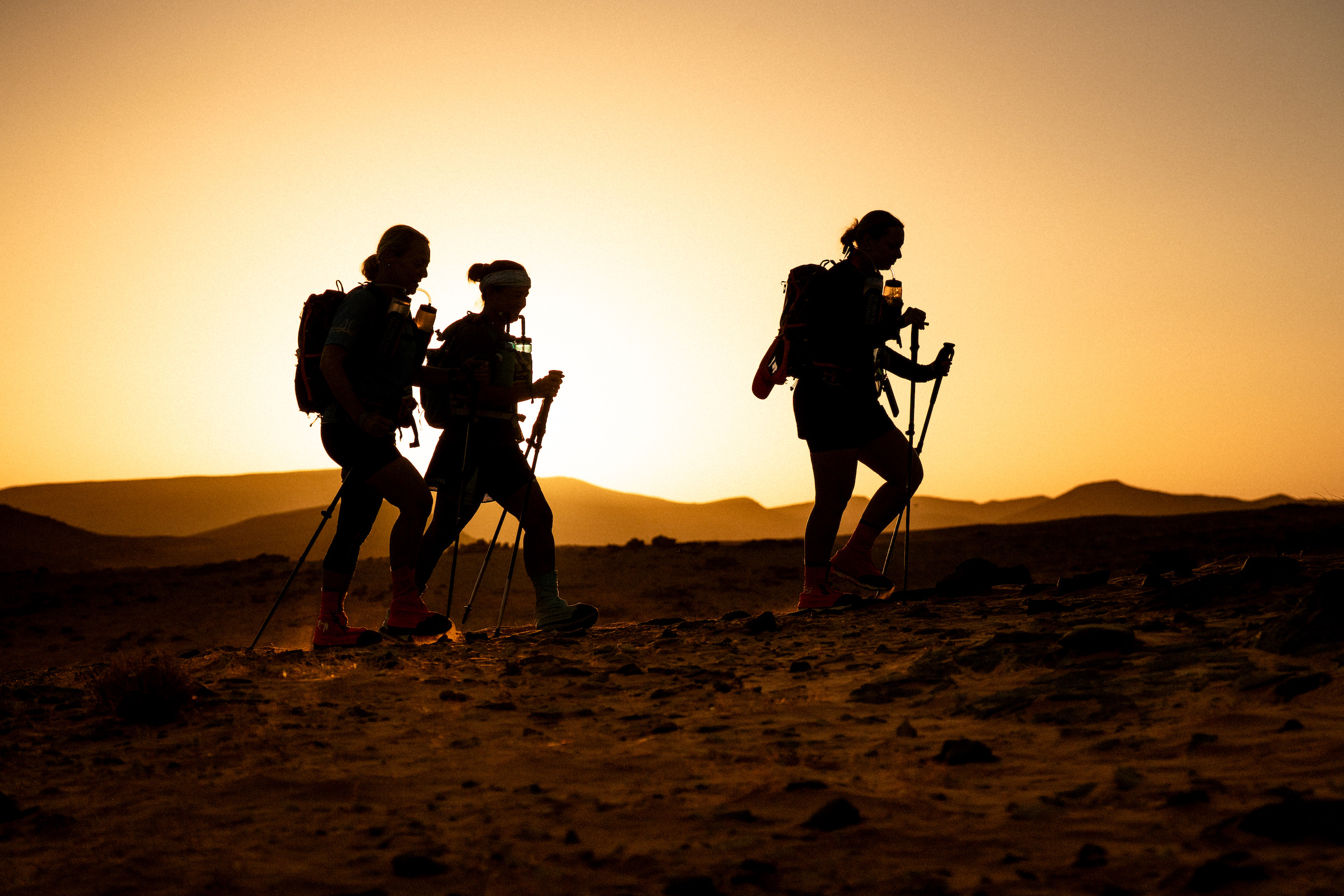
There was camaraderie. People encouraging one another. Sharing sips of water. Pointing out landmarks. Moving as individuals, yes, but always part of a bigger whole.
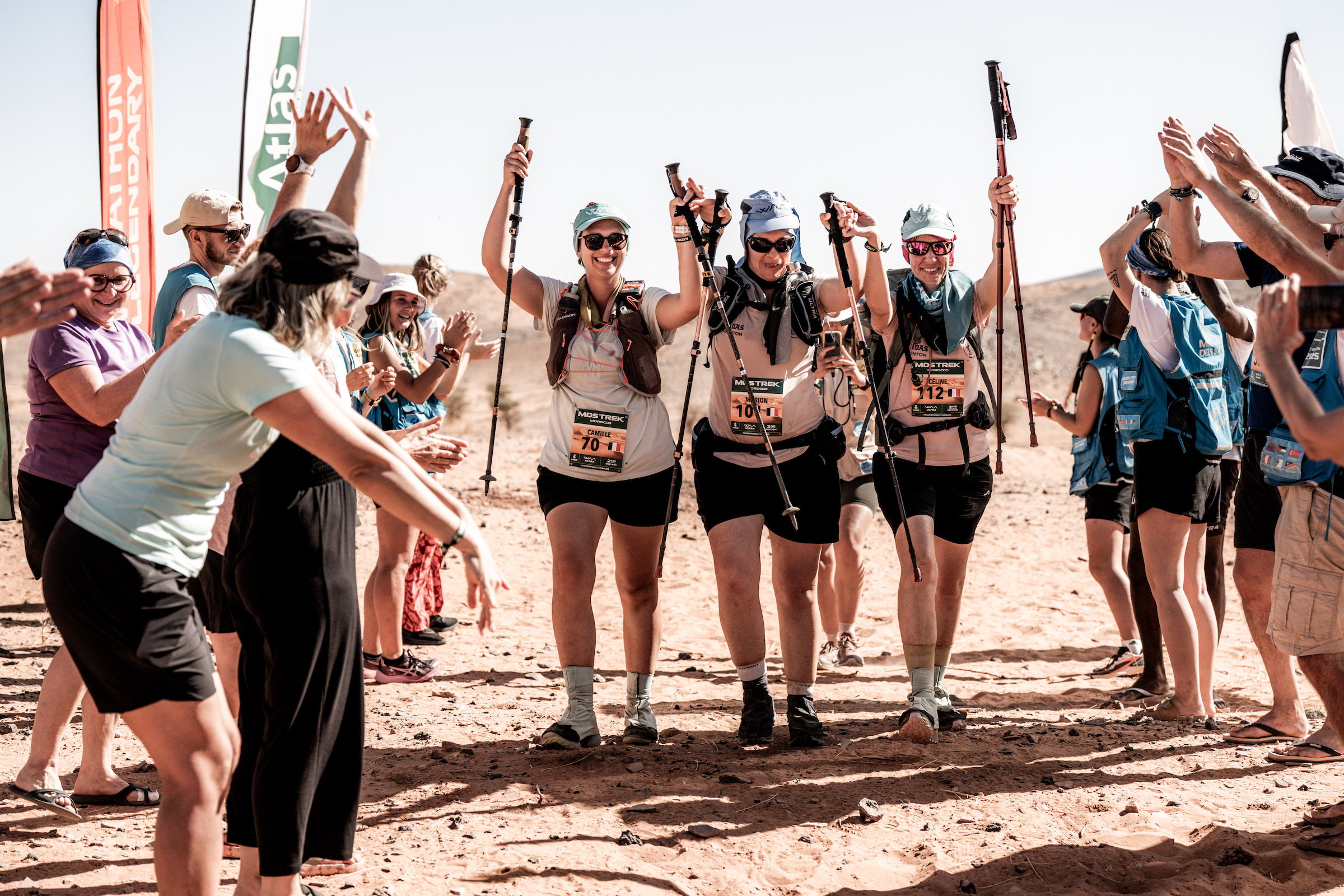
And then, after hours of pushing through shimmering heat and relentless terrain, the finish line of Stage 3 appeared, home bivouac, familiar now, yet somehow different. Changed. Just like every person who crossed into it.
Why Stage 3 Can’t Be Missed
Stage 3 isn’t just a segment of MDS TREK Morocco. It’s a story within the story. It captures everything the trek stands for: resilience, beauty, challenge, community, and wonder.
This was the essence of the MDS spirit : raw, bold, unforgettable. It tested bodies, ignited minds, and opened hearts. Trekkers will not just remember Stage 3, it will forever be that stage.
If you’ve ever dreamed of running in a place that feels otherworldly, where every breath reminds you you’re alive, and every step tests your limits, the 2025 Everest Trail Race is your chance. Happening this November, 10th to 22nd, 2025.
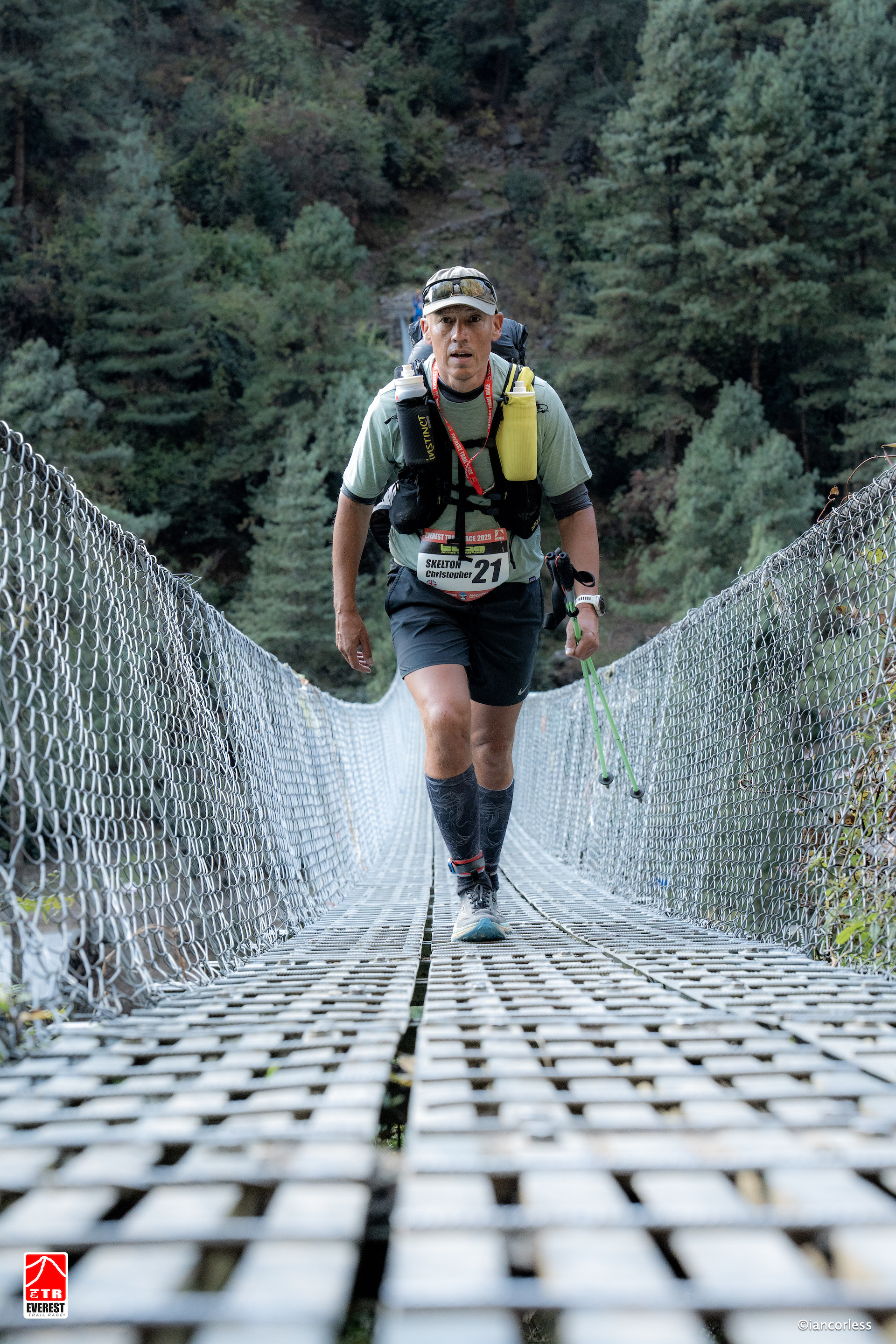
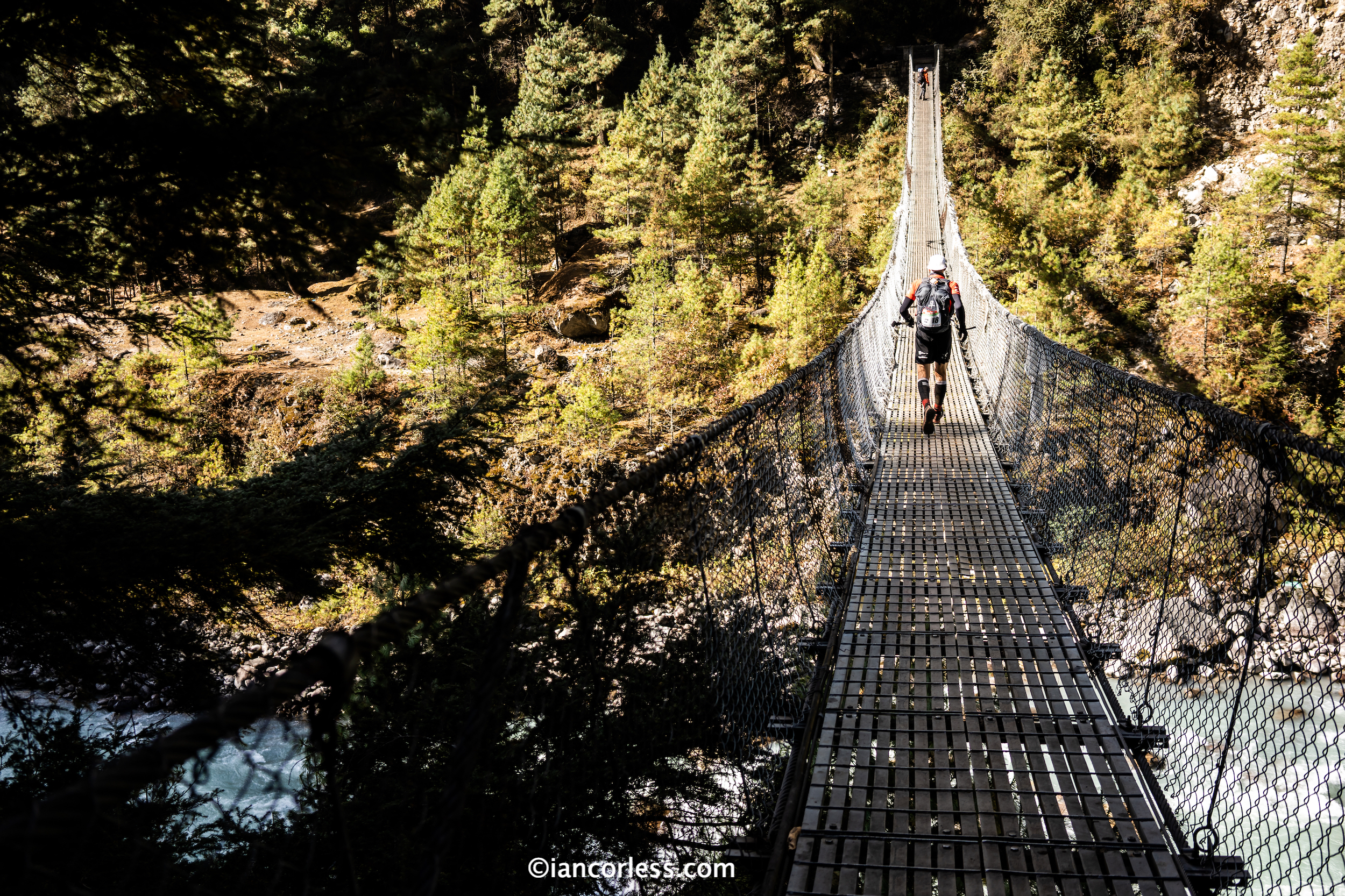
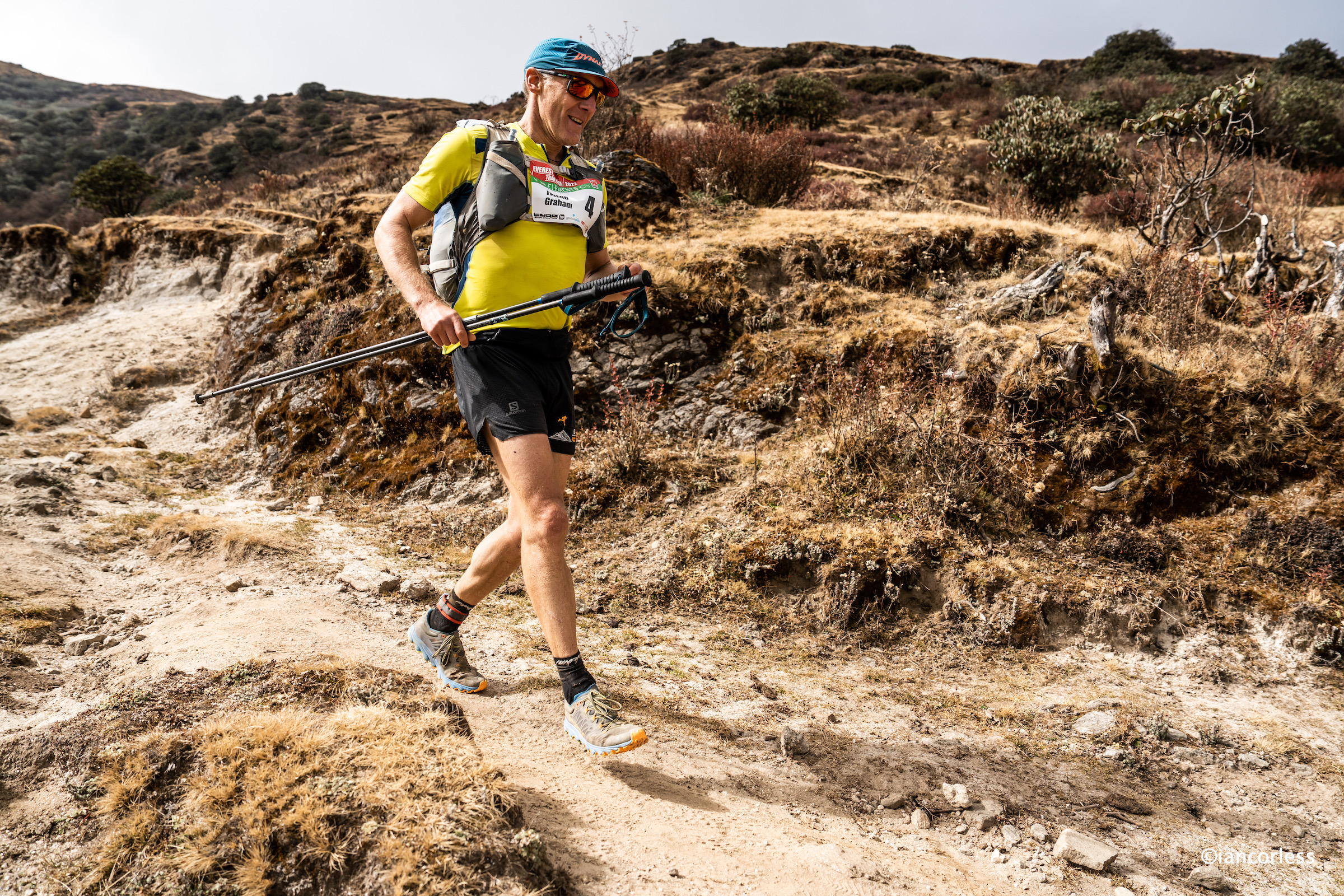
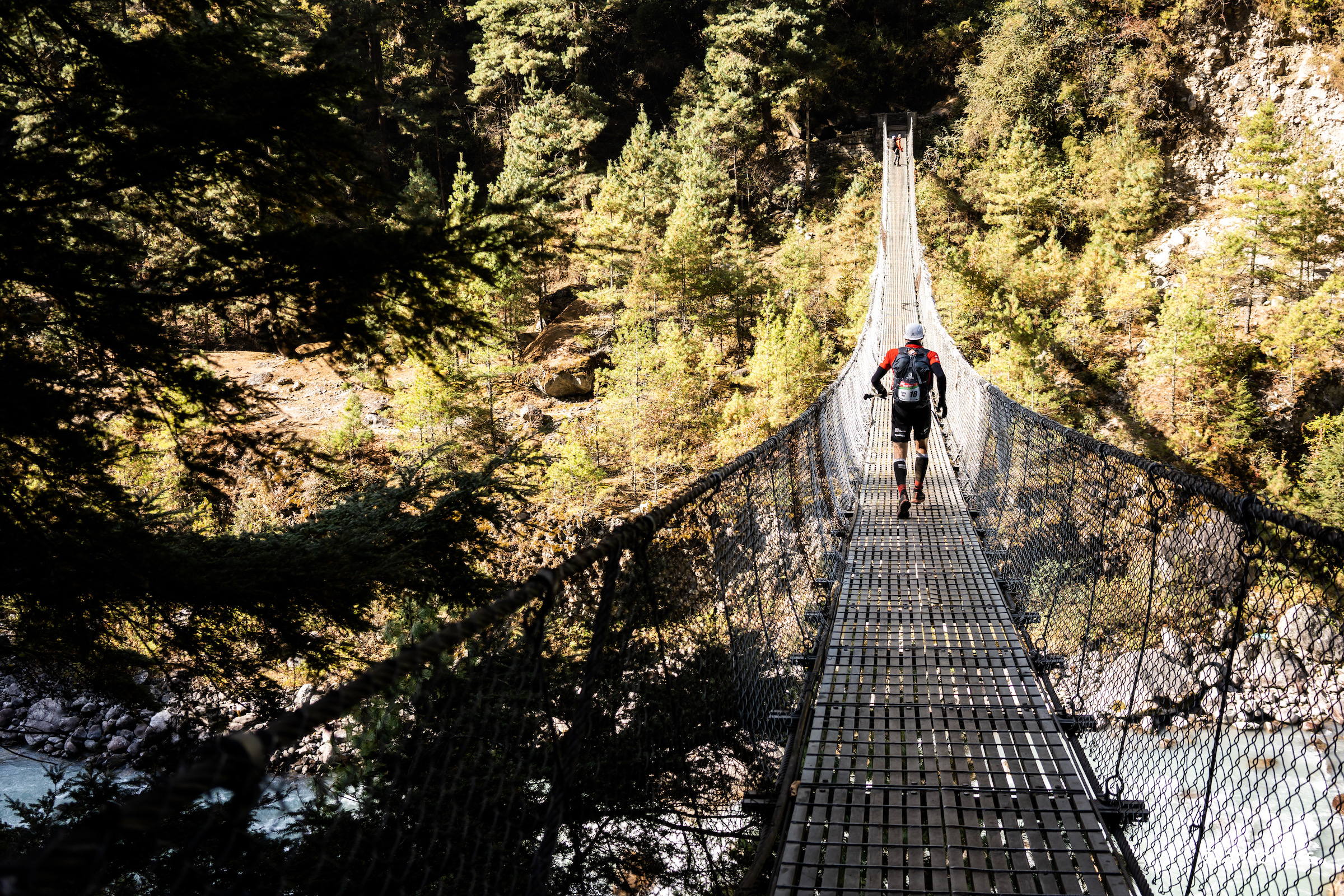
You carry your own gear. You fuel yourself. You keep going. Over six days, you’ll face steep ascents, grinding descents, suspension bridges, narrow trails, and thin air all at altitudes between 2,000 and 4,100 meters.
This is not a race for comfort. It’s a race for people who crave discomfort, who see sweat and struggle as part of something bigger.
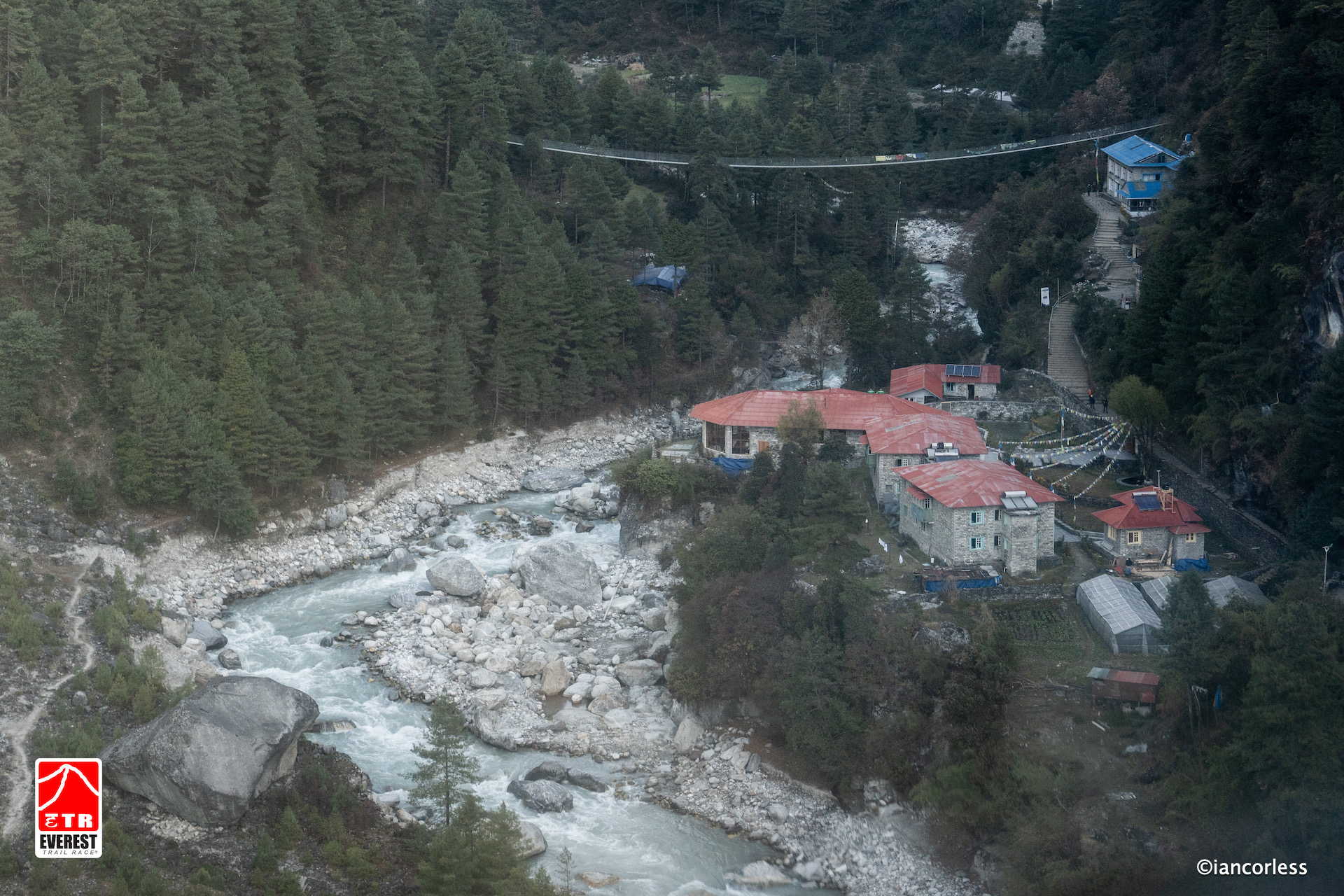
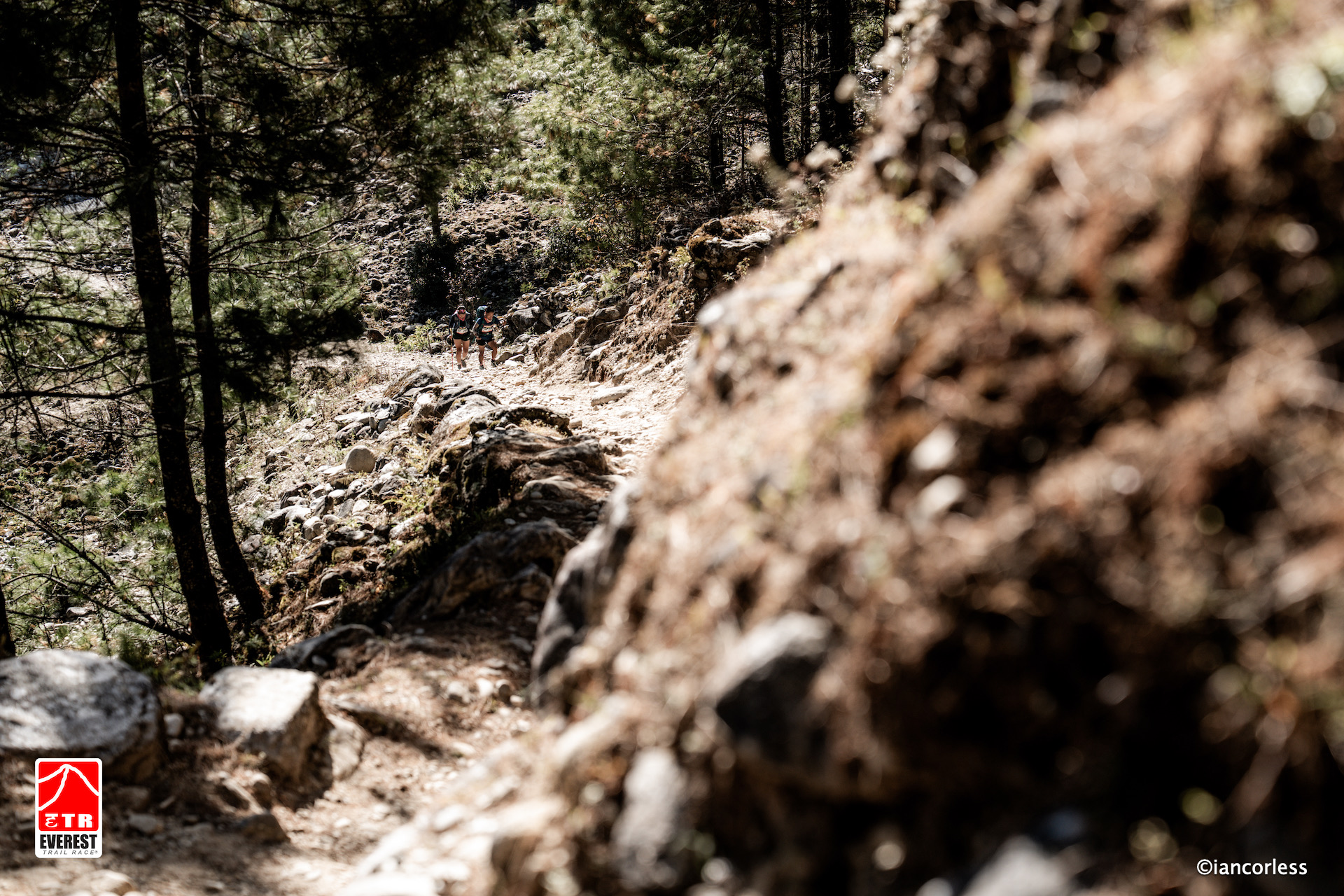
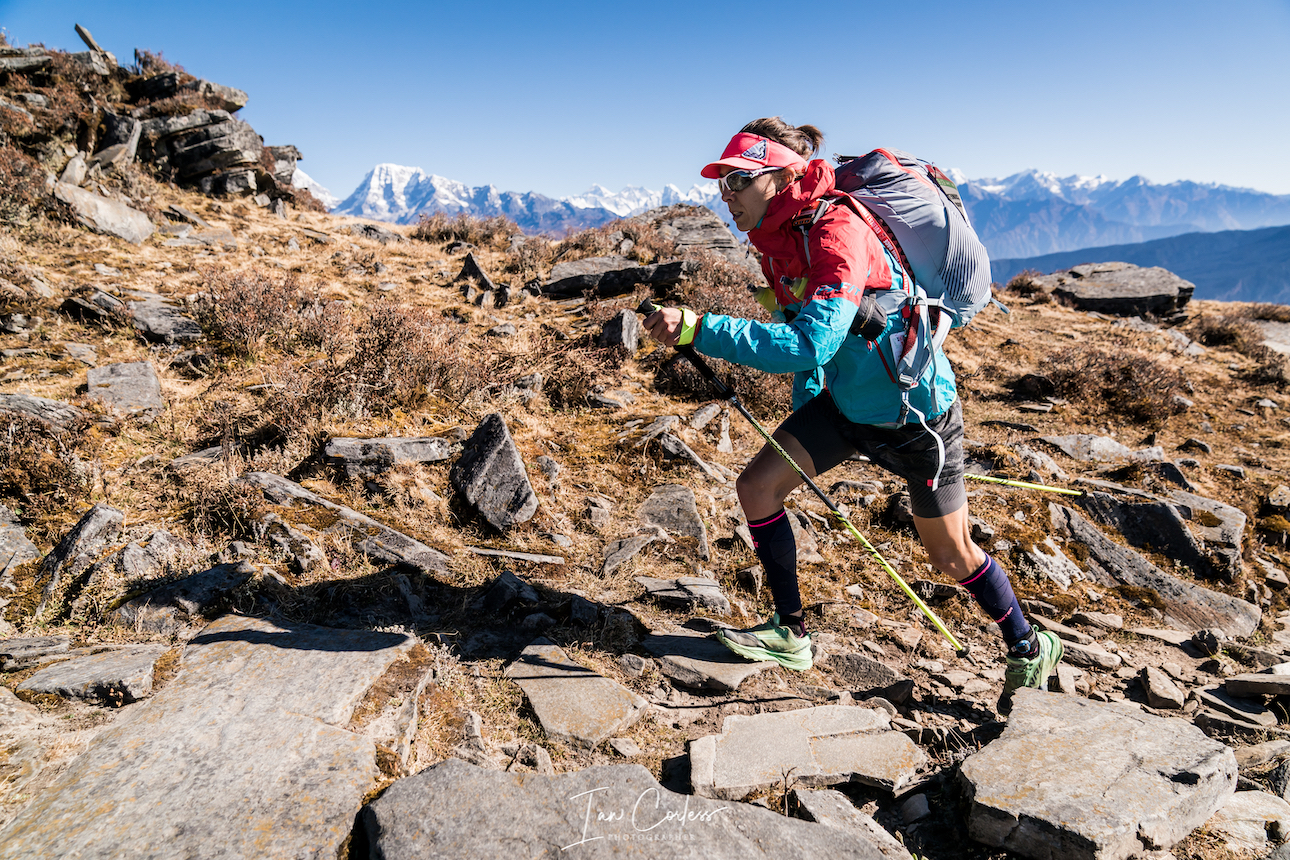
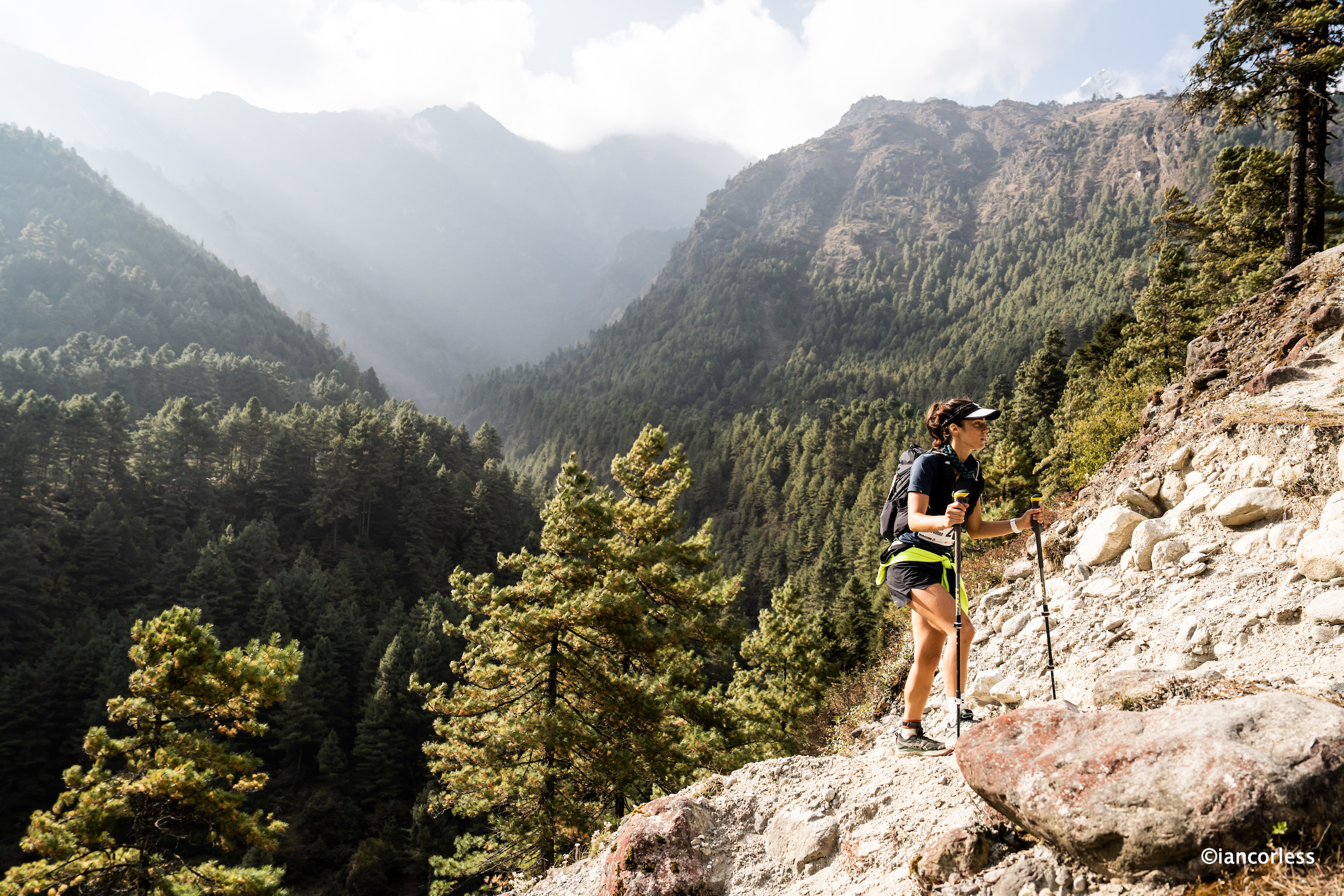
This is trail running in its purest form. Technical sections, single tracks carved into mountainsides, ancient stone paths connecting remote villages. One moment you’re running through a pine forest; the next, you’re skirting a cliff with views that stop you in your tracks.
The race route threads through the Solukhumbu region, home to the legendary Sherpa people, along the same trails used by mountaineers heading to Everest Base Camp.
November in the Himalayas is cool, crisp, and clear, perfect for trail running. Daytime temps are mild, with intense sunshine at altitude.
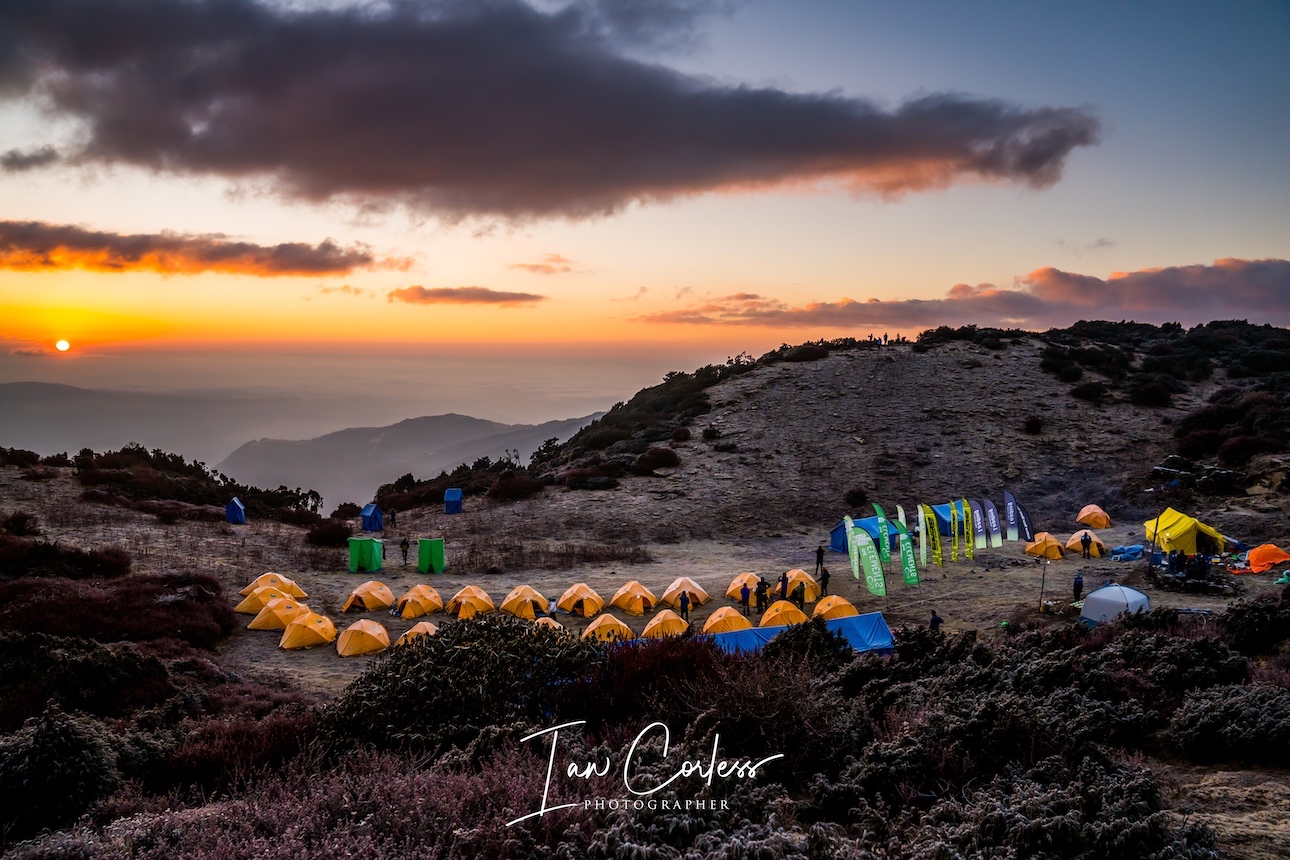
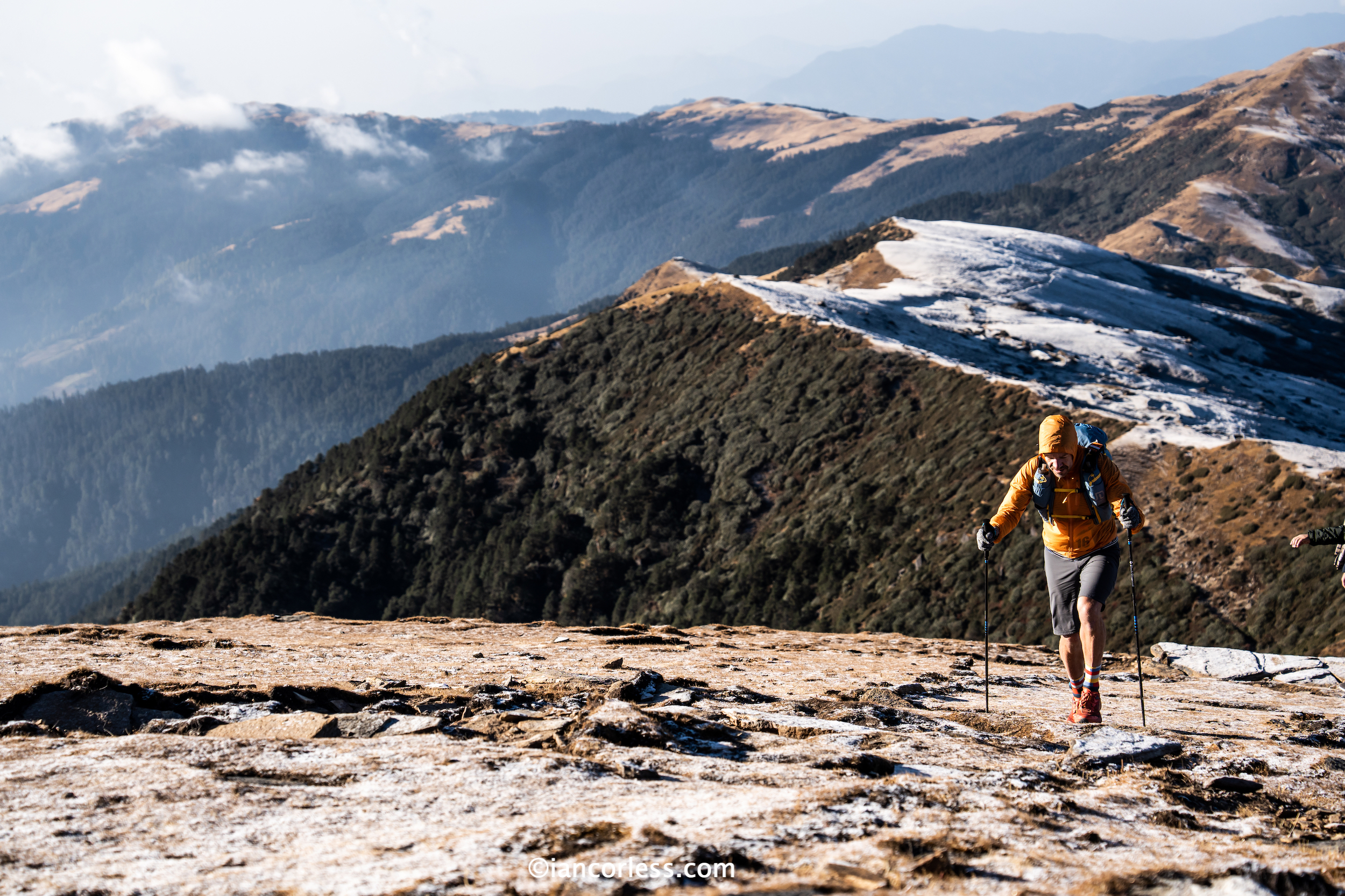
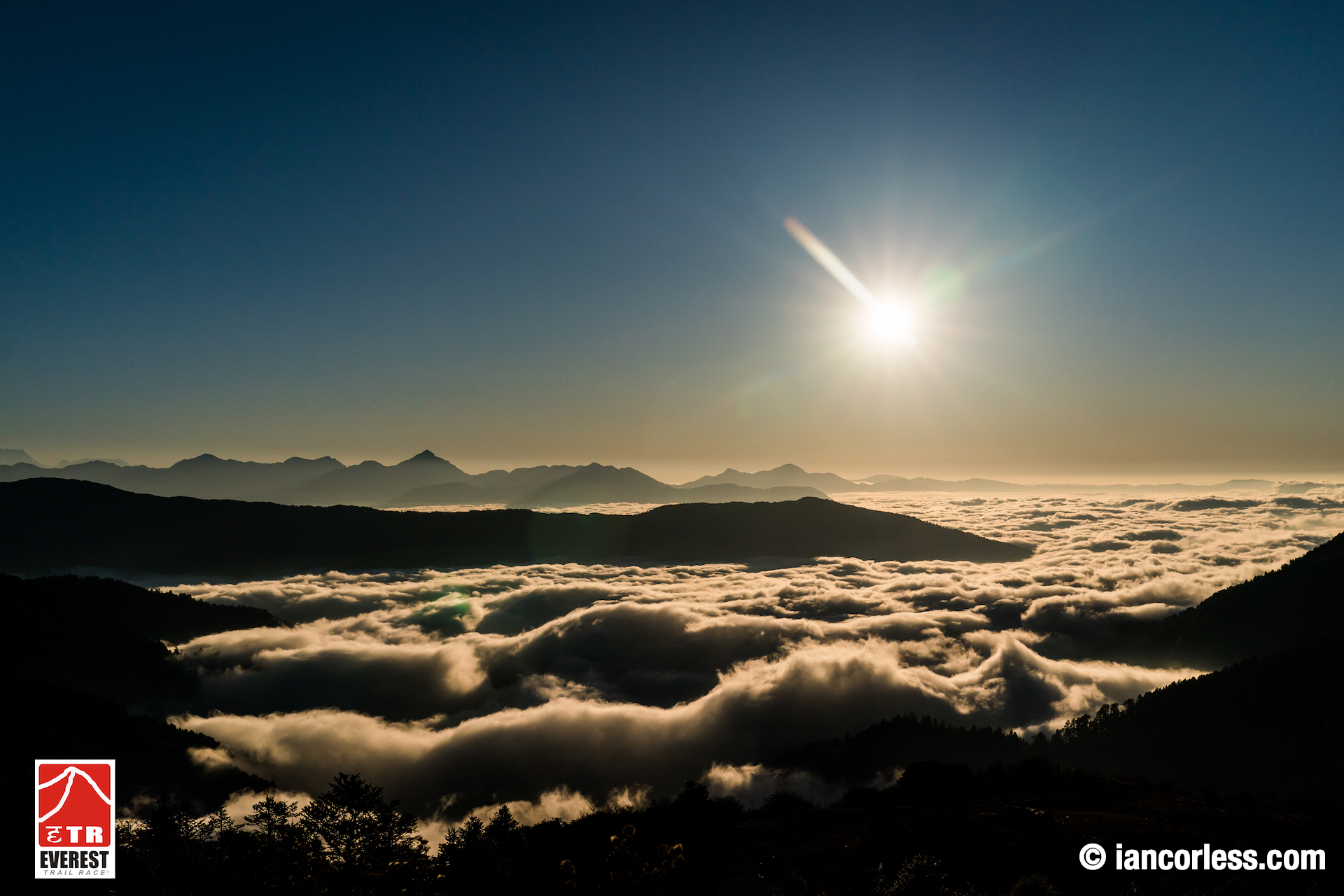
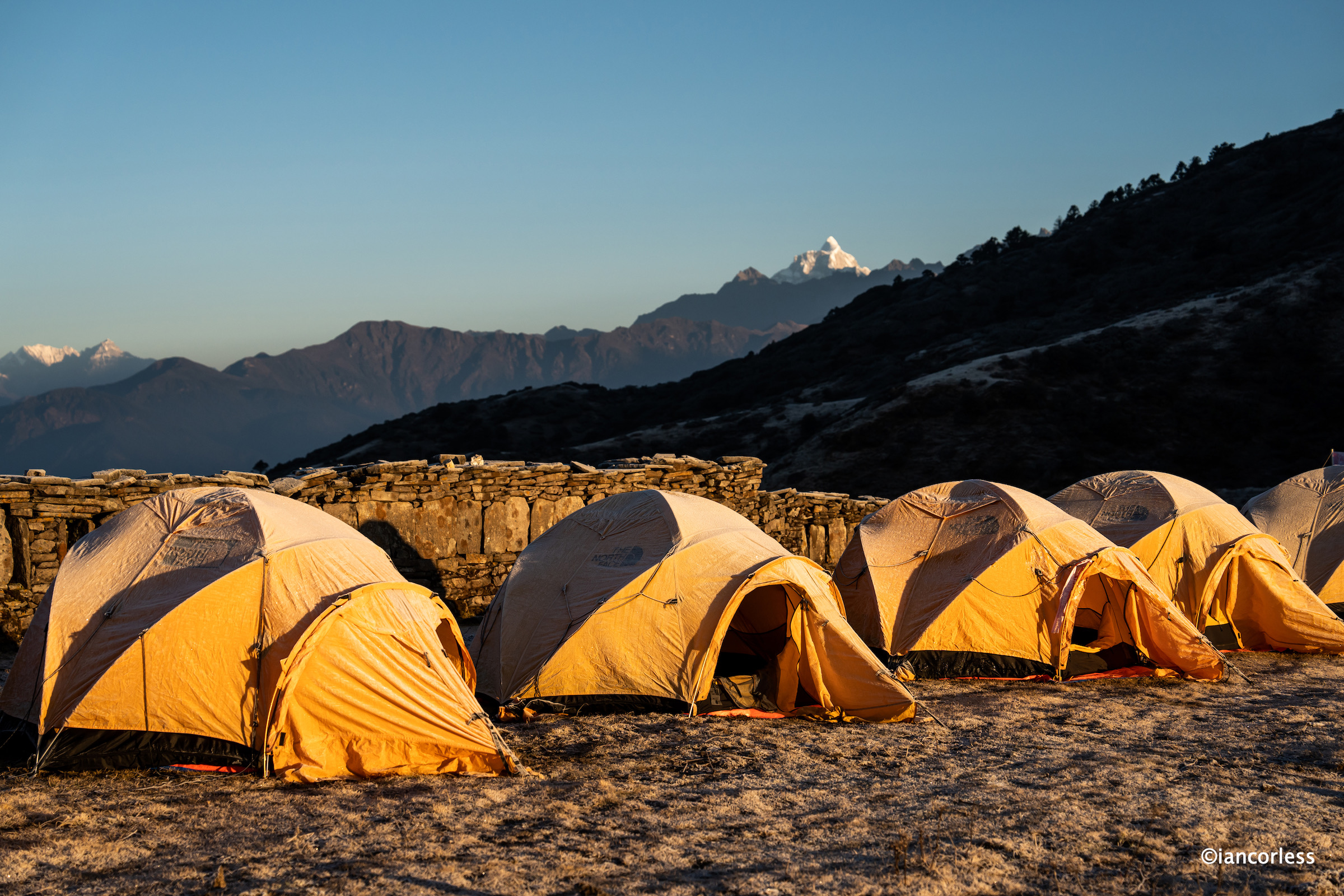
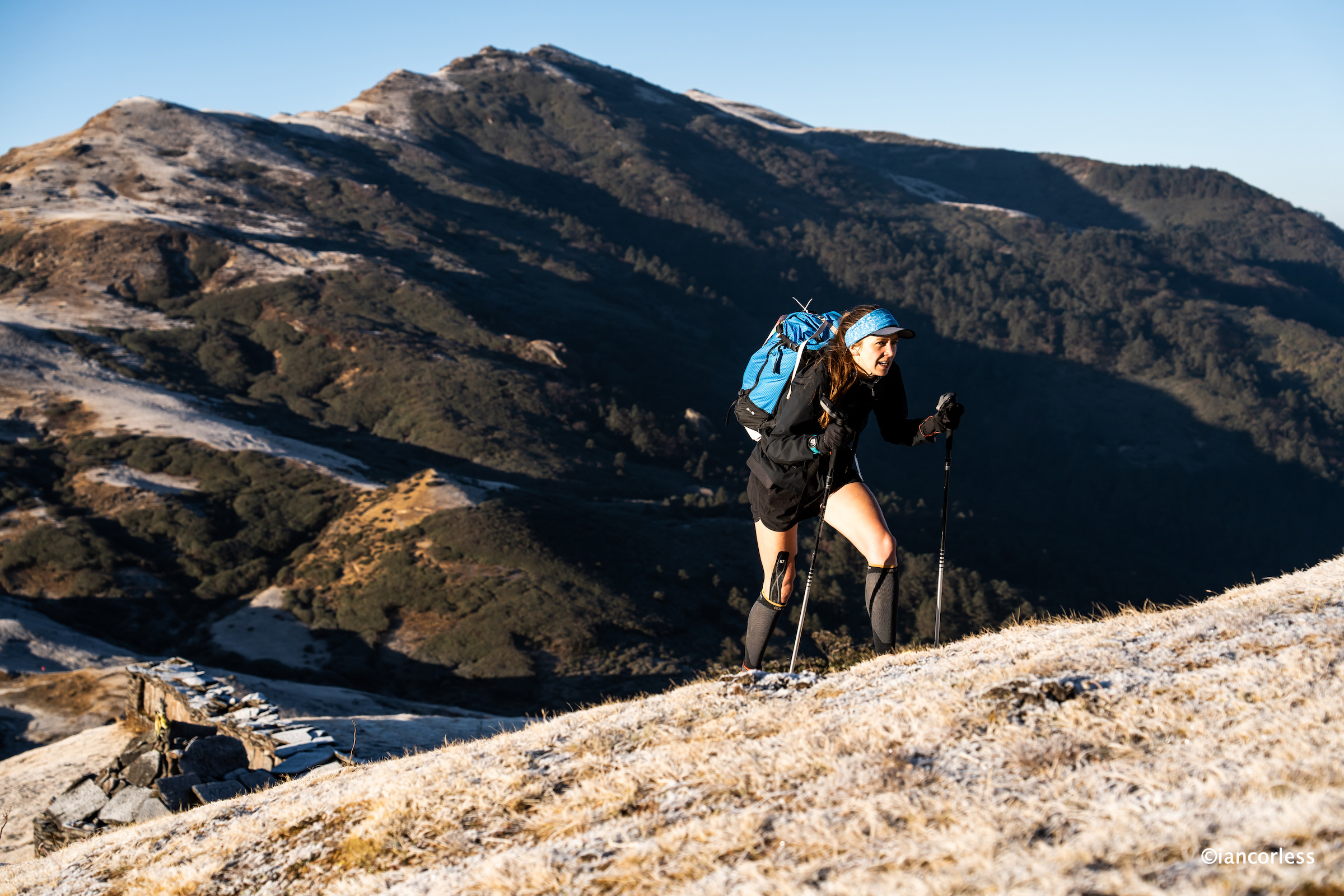
But the nights get cold. You’ll wake up to frosty mornings, and every breath will be visible. It’s the dry season, so the skies are often brilliantly blue, framing the snowcapped peaks like a postcard that never ends.
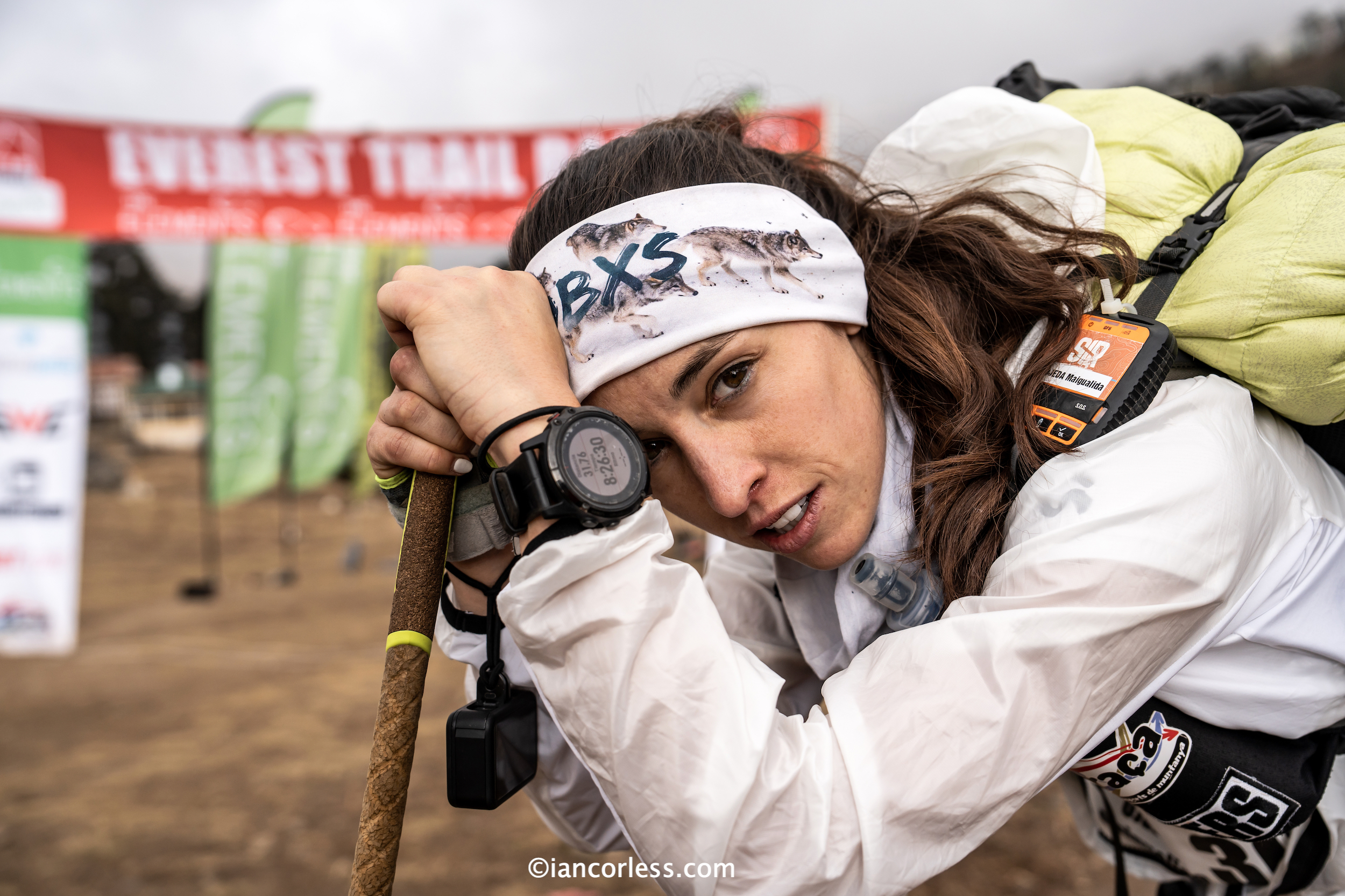
This is the kind of race where you learn to respect the air. The oxygen gets thinner, and your body feels it. It’s a slow grind uphill, and then a fast, careful descent. Pacing becomes survival. Acclimatisation is your secret weapon. But when you’re out there, breathing hard, moving slow, you realise something: you don’t need speed. You just need grit and determination.
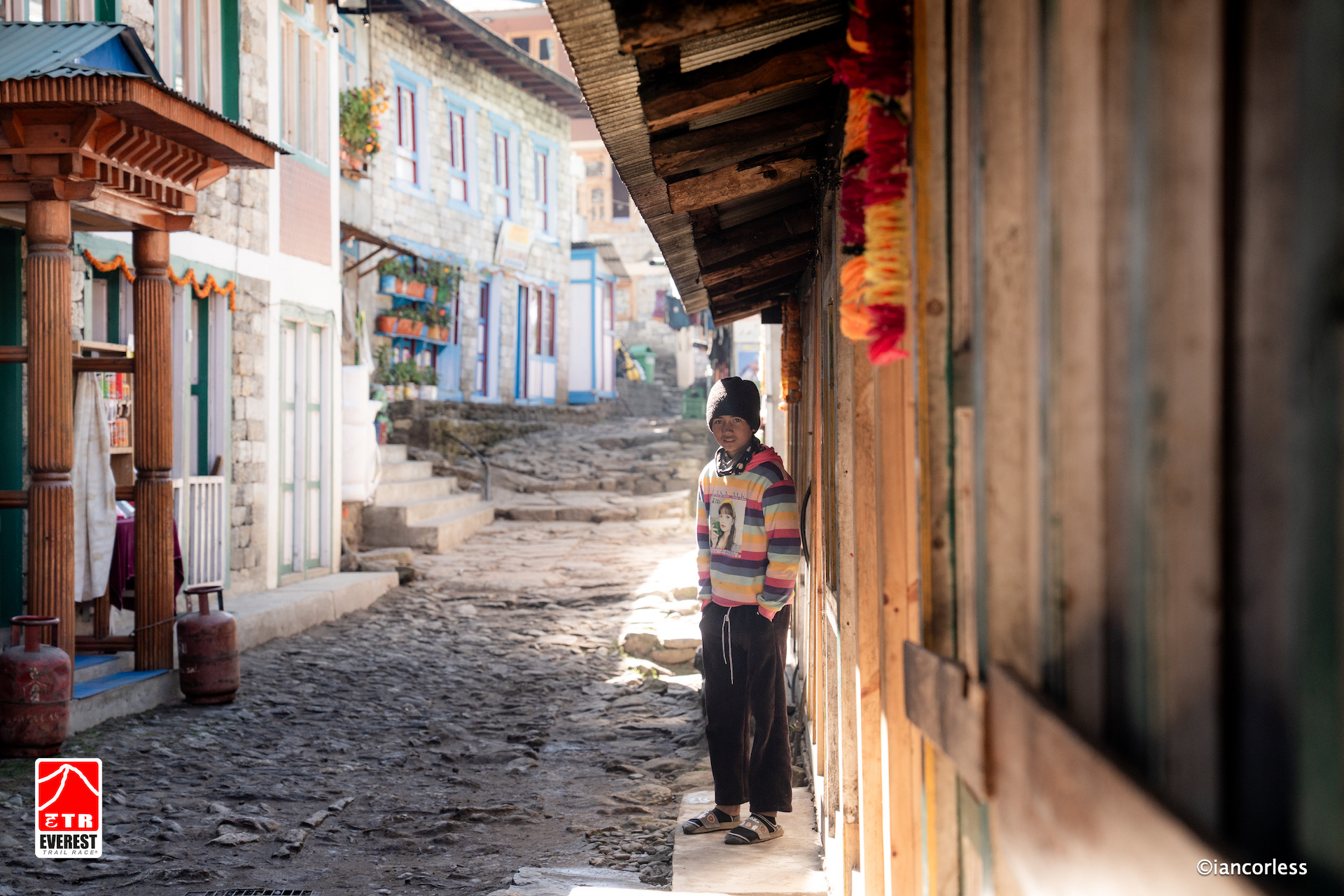
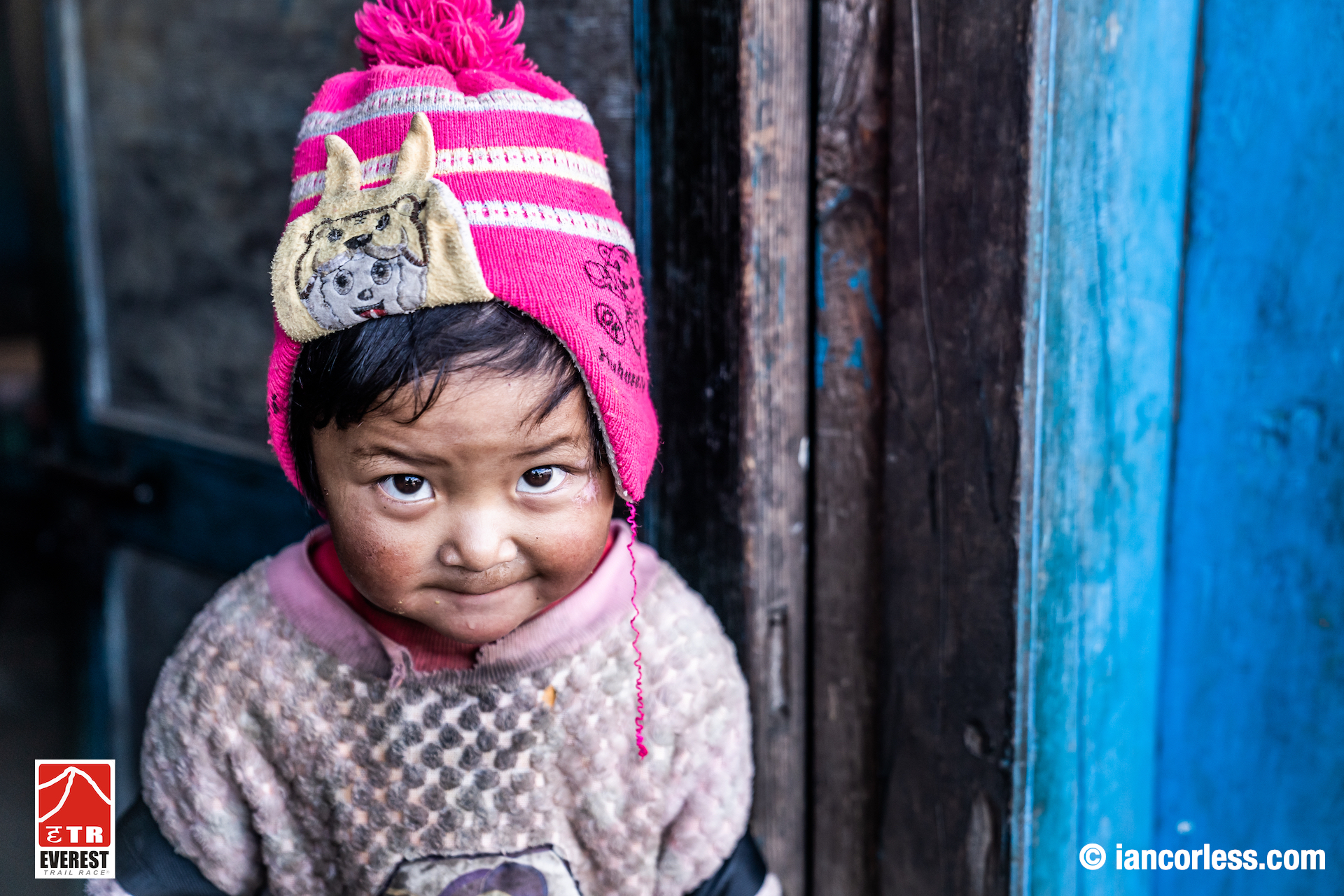
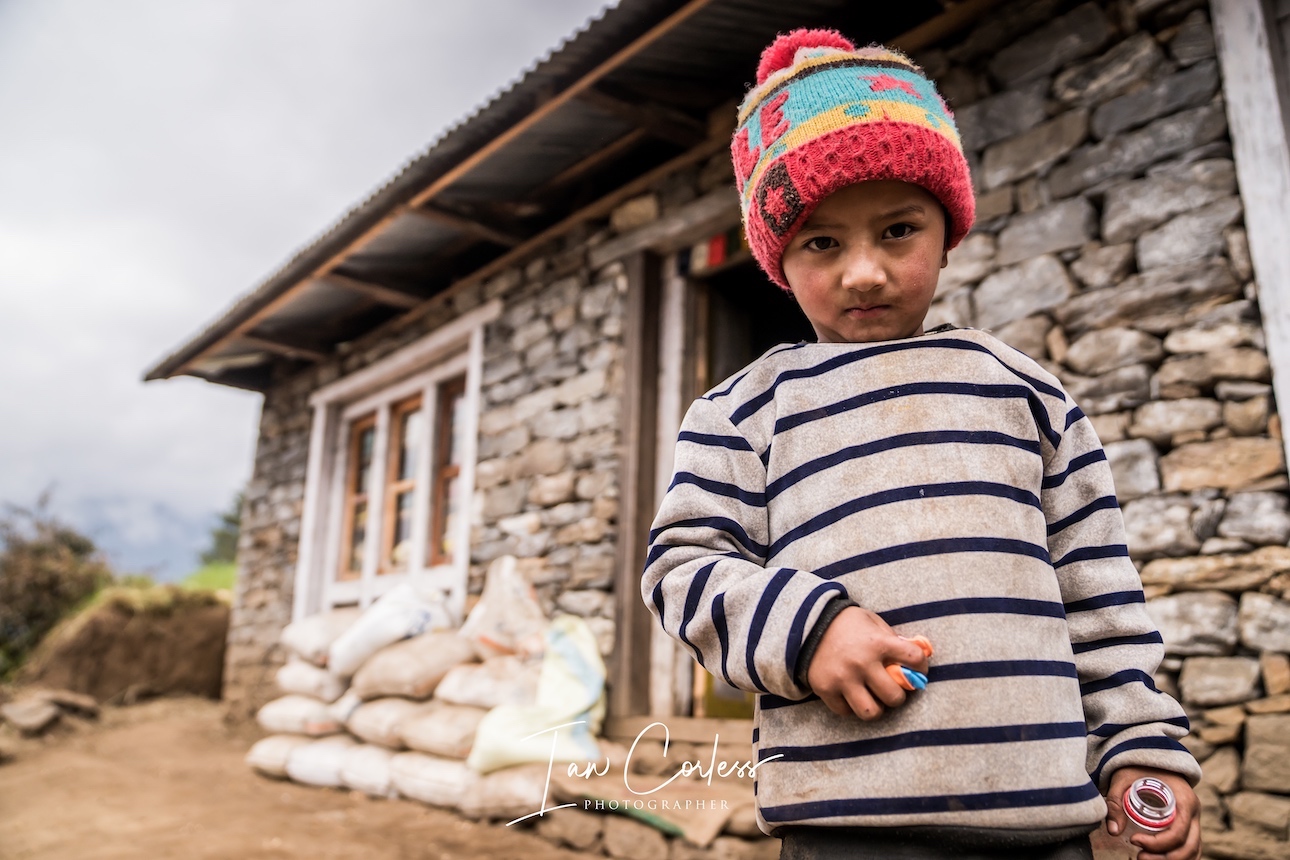
You’ll meet Sherpa families offering you tea from tin cups in smoky kitchens. Kids will run beside you, barefoot and beaming.
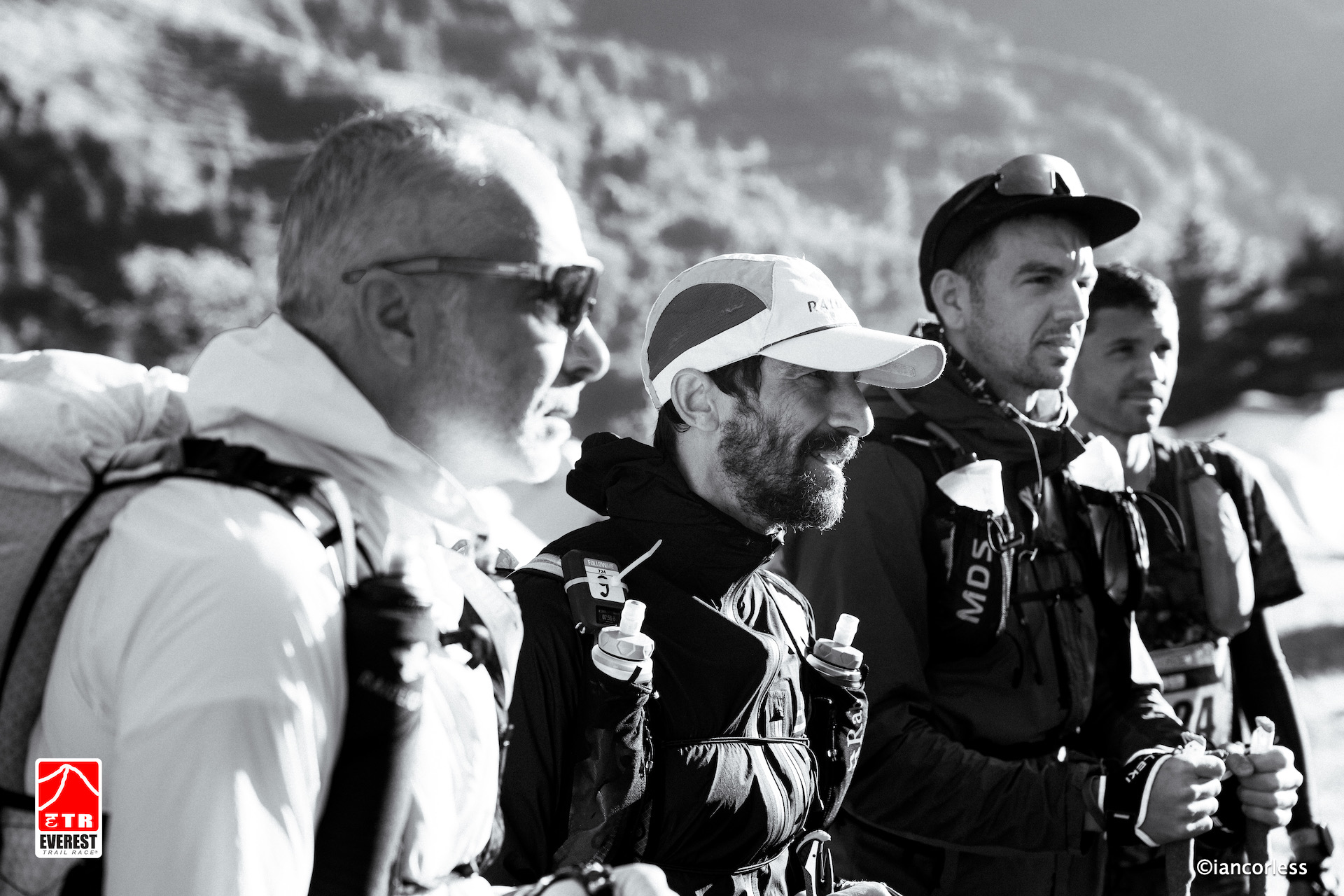
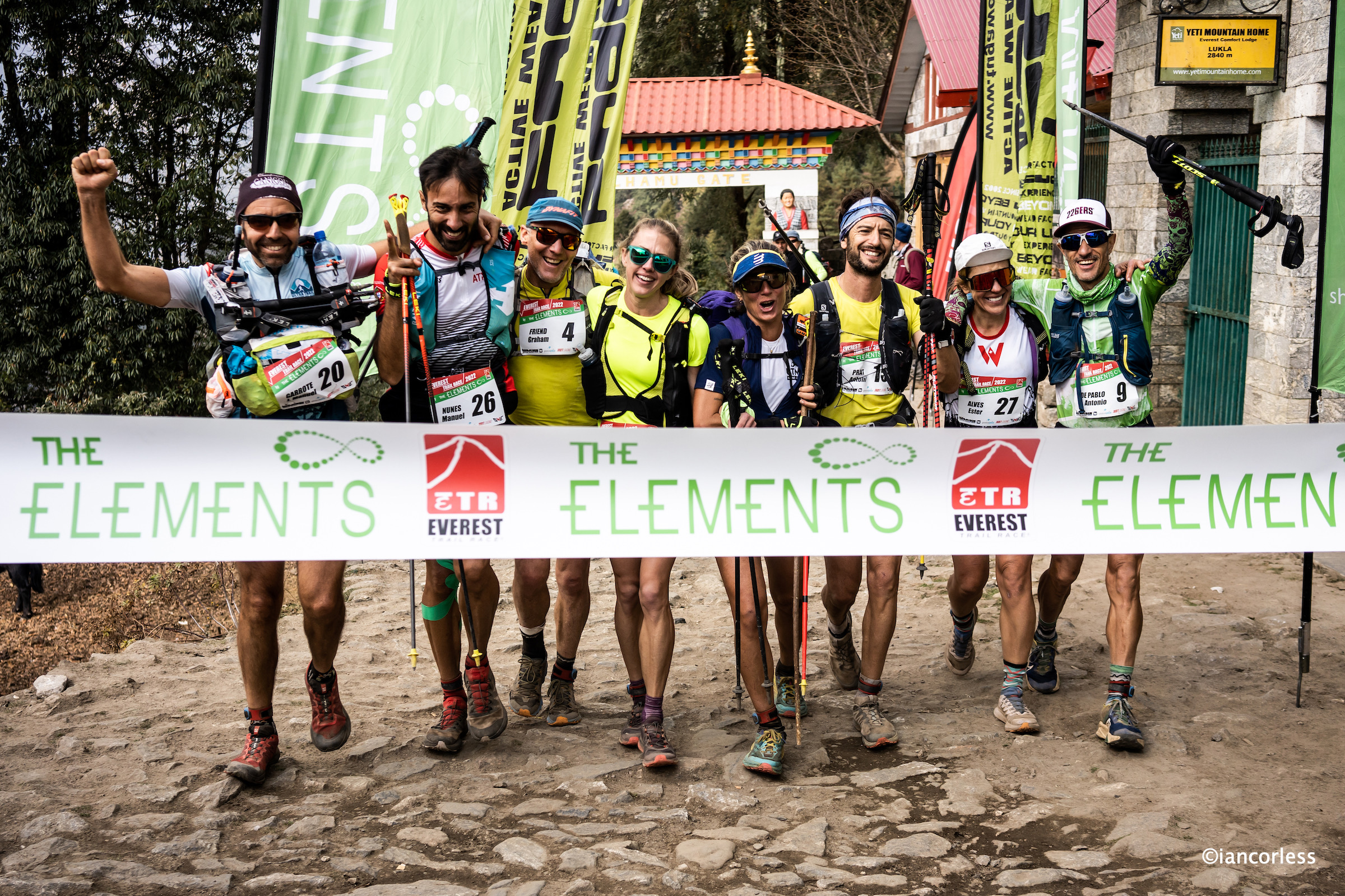
The camaraderie among runners is real, forged in pain, sweat, and shared awe. You’ll finish each stage beside people who were strangers, now teammates.
The Everest Trail Race is small and personal. It’s not about crowds. It’s about connection — to the land, to each other, and to something deeper inside yourself.
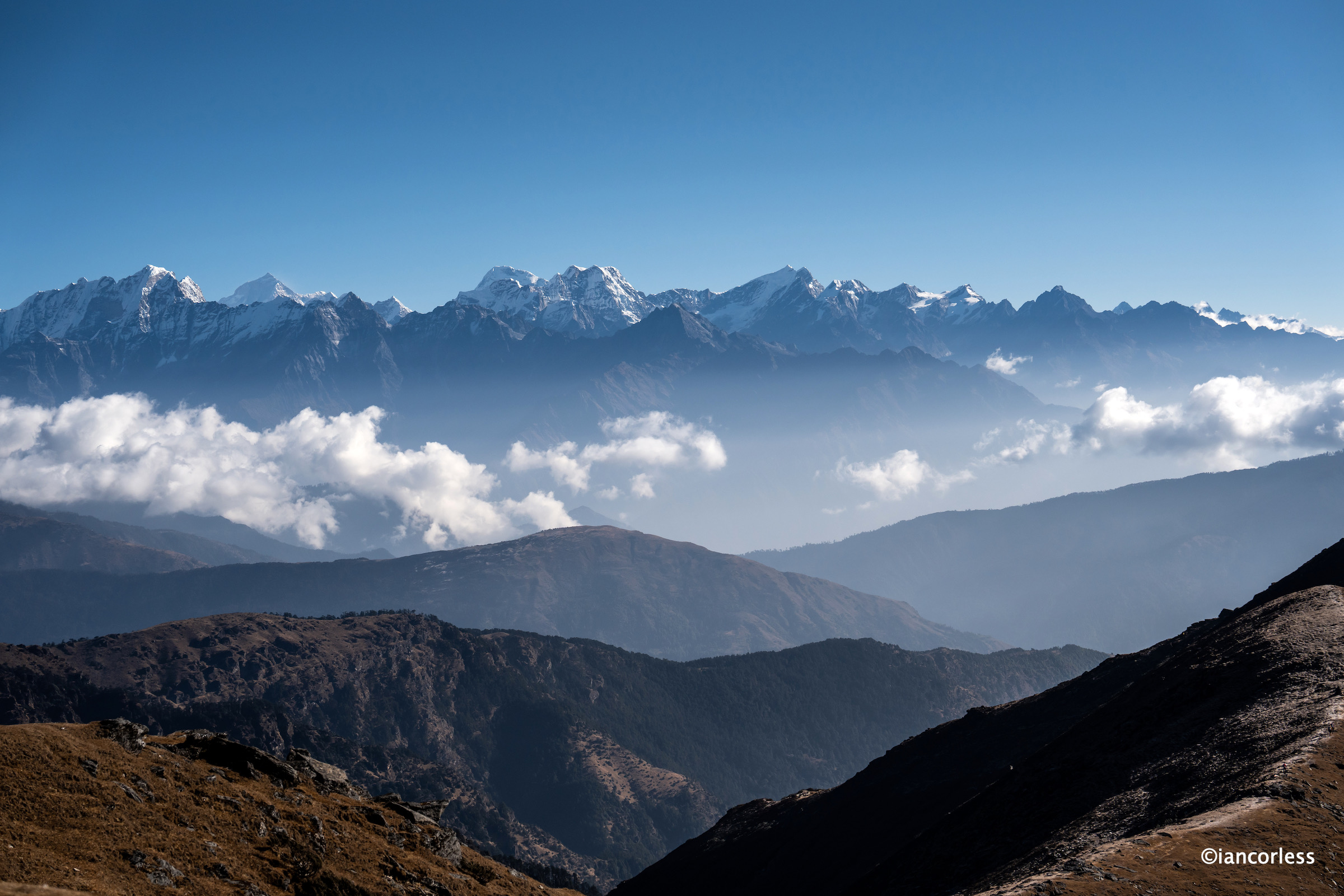
You’ll see Everest, Lhotse, Ama Dablam, and other giants of the Khumbu up close. But it’s not just the mountains — it’s the prayer flags flapping in the wind, the monasteries perched on hillsides, the layers of ridge upon ridge fading into the horizon. Every day looks like a screensaver. Every sunrise feels earned.
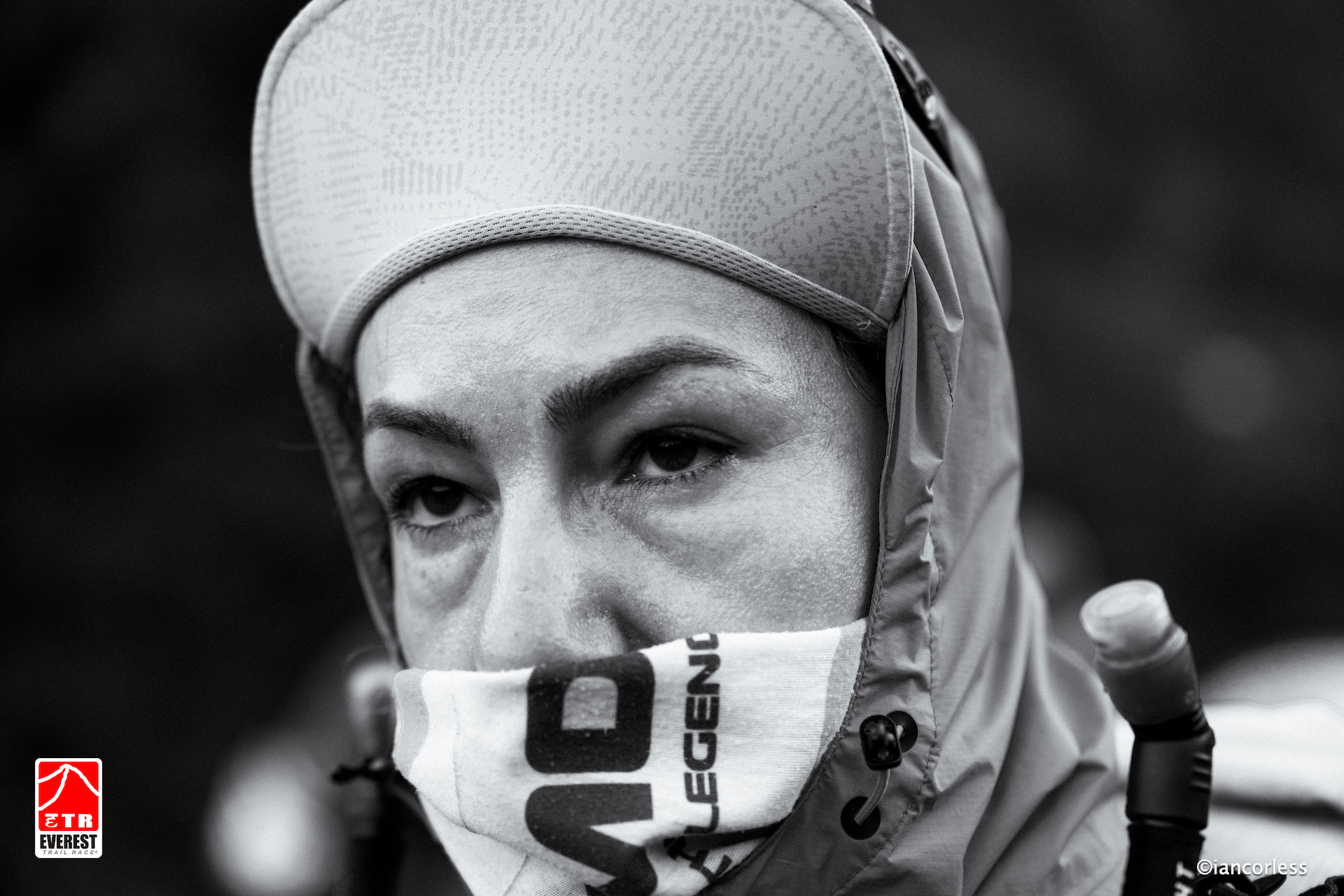
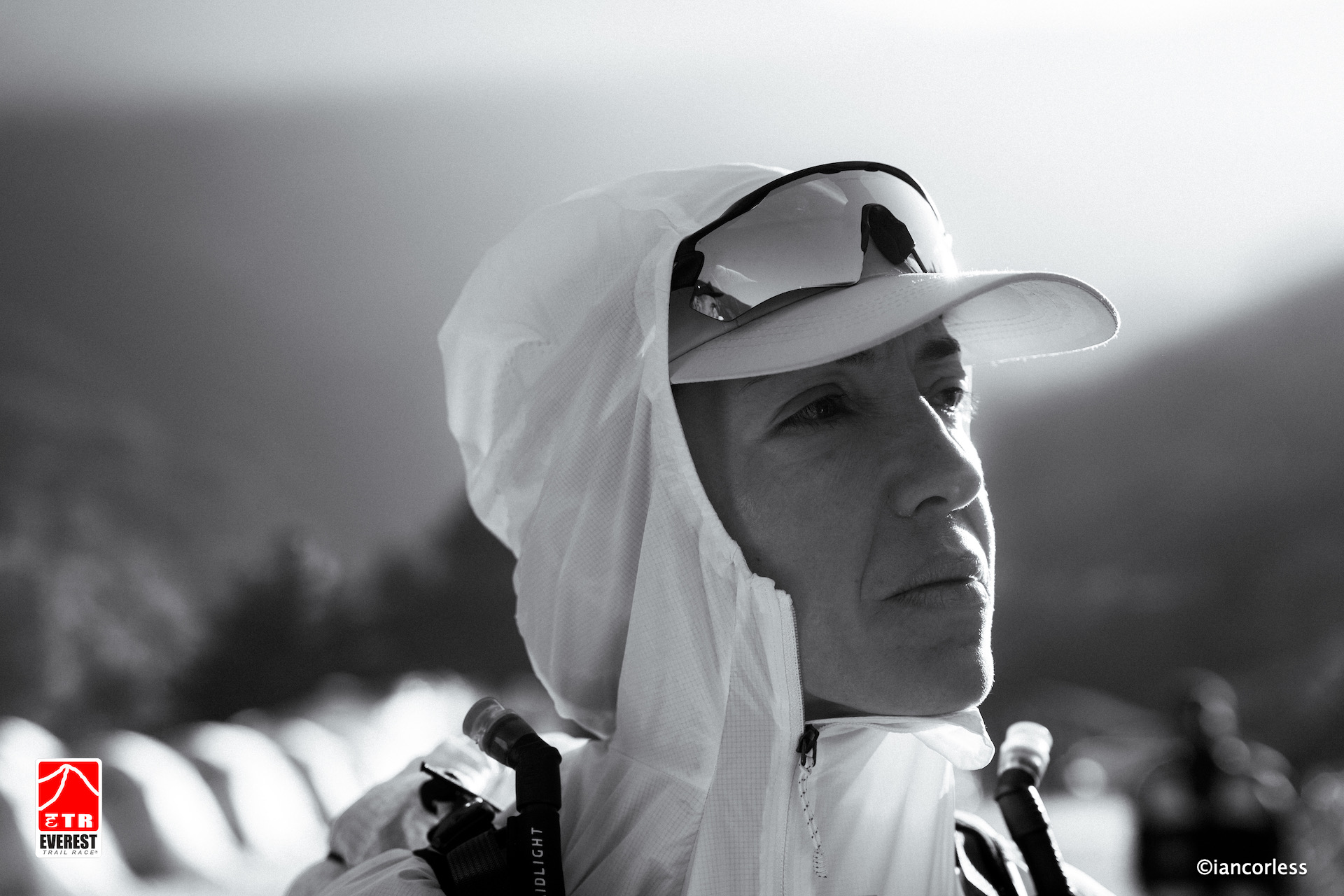
If you’re waiting for the “perfect moment,” this is it. You don’t need to be the fastest or the strongest. You just need to show up ready to push, adapt, and feel everything this place throws at you. The Everest Trail Race is not about conquering the mountain. It’s about discovering who you are when the mountain pushes back.
Nepal, the magic of Nepal. If you haven’t experienced it, you need to experience it! If you have experienced it before, you already know that you need to experience it again.
The ETR – Everest Trail Race, provides an opportunity to immerse yourself, to experience on foot, a journey through the heart of this magical place. The race takes place over 6-stages, a total of 170km’s with a combined elevation gain/ loss of 26,000m. A self-propelled adventure through the Himalayas reaching a maximum altitude of 4104m.
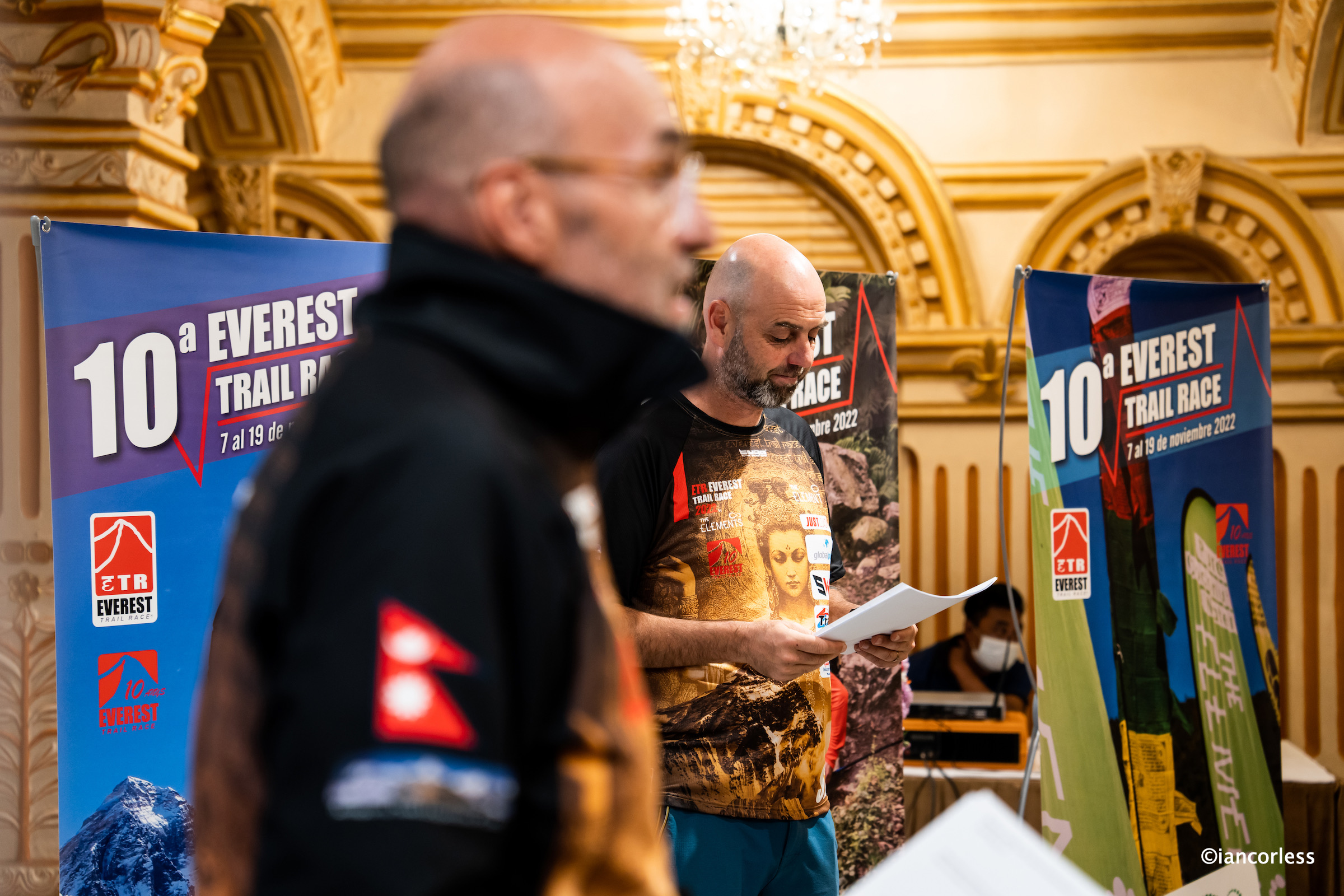
Now in its 11th year, ETR, taking place November 10th to 22nd, has become a bucket list adventure for those looking to combine travel, tourism and adventure in a package designed to provide the maximum return on the shortest amount of time.
The noise, the bustle, the chaos of Kathmandu, it needs to be experienced. It’s a cacophony of explosive elements. The transfer from the airport to the hotel gives an indication of what is to come.
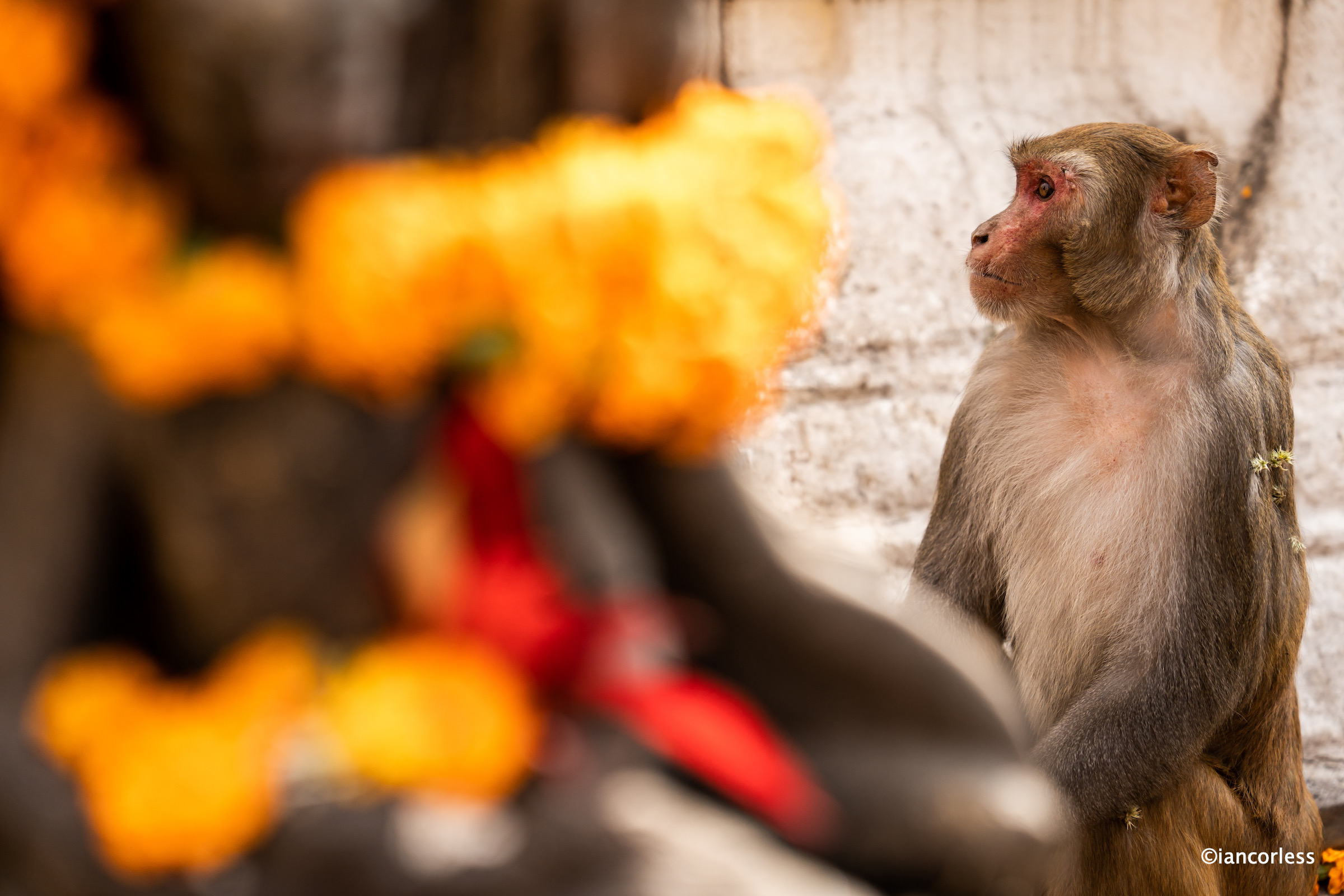
Before the admin protocols begin, a day of leisure in and around Kathmandu allows for key visits to the Monkey Temple and Patan. It’s always a shock to the senses, an assault of noise and colour and yes, poverty and hardship.
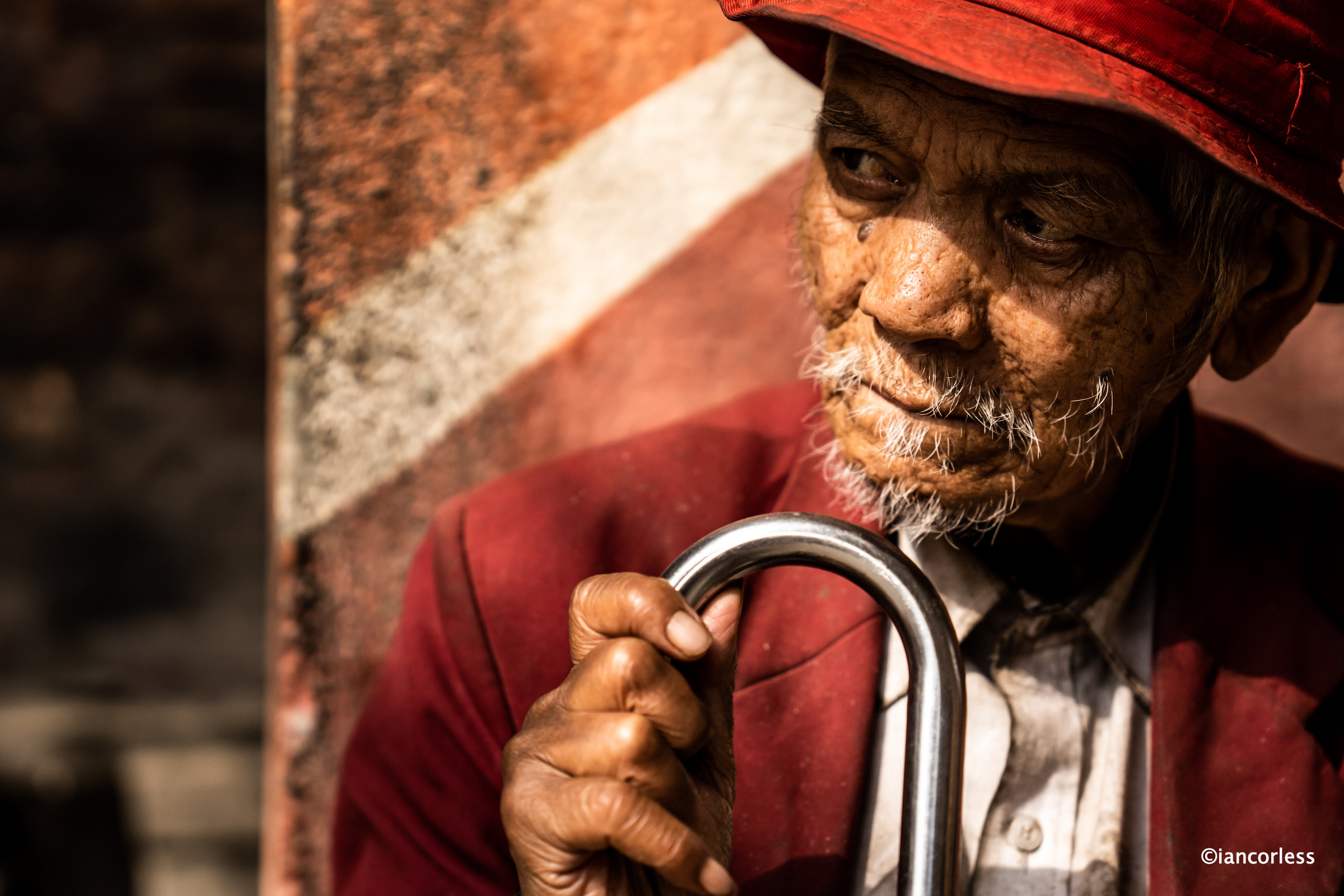
The Nepali people have hard and tough lives, and in Kathmandu you get to fully appreciate the highs and lows of this. One thing is for sure though, you will soon fall in love with the Nepali people, they are the salt of the earth.
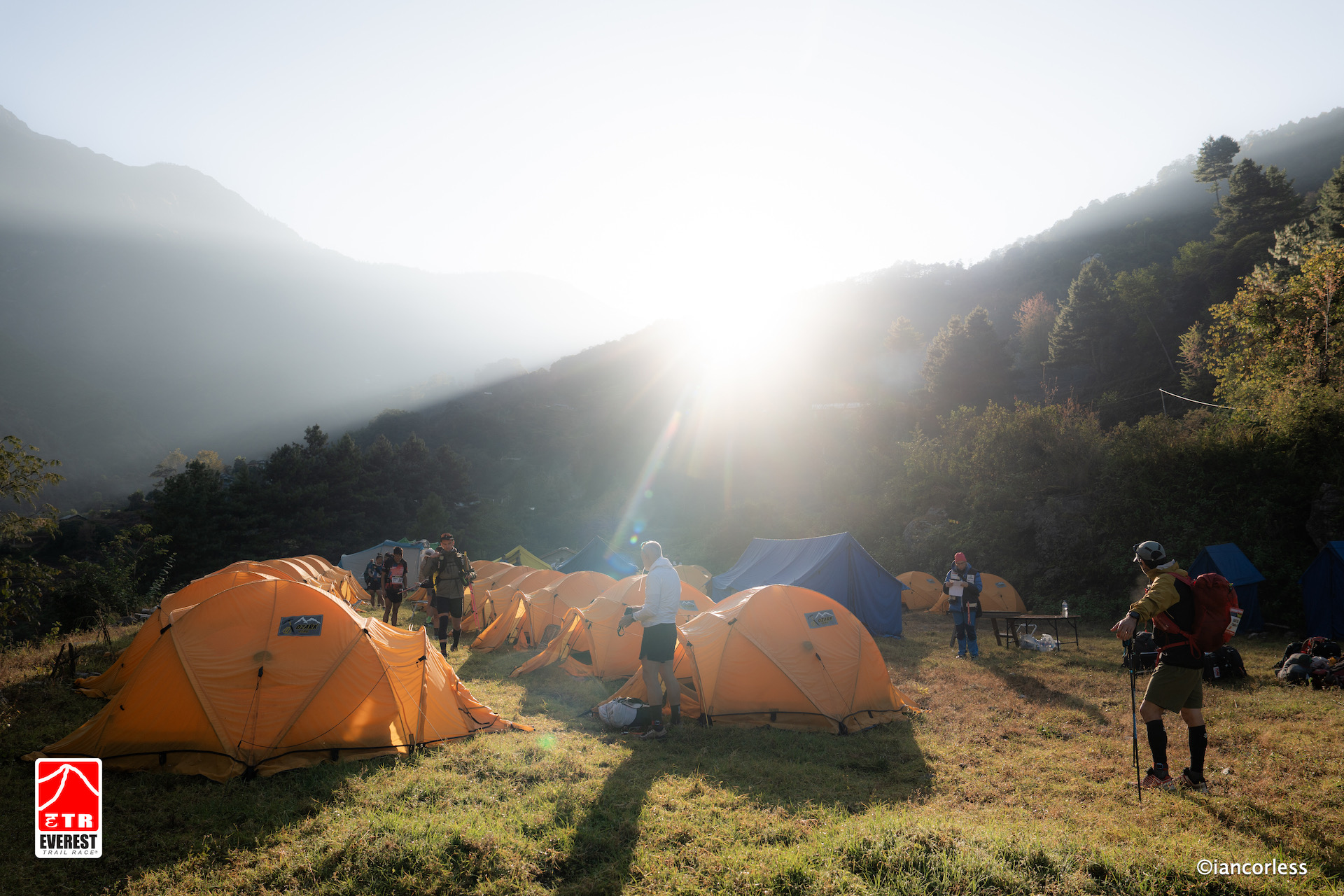
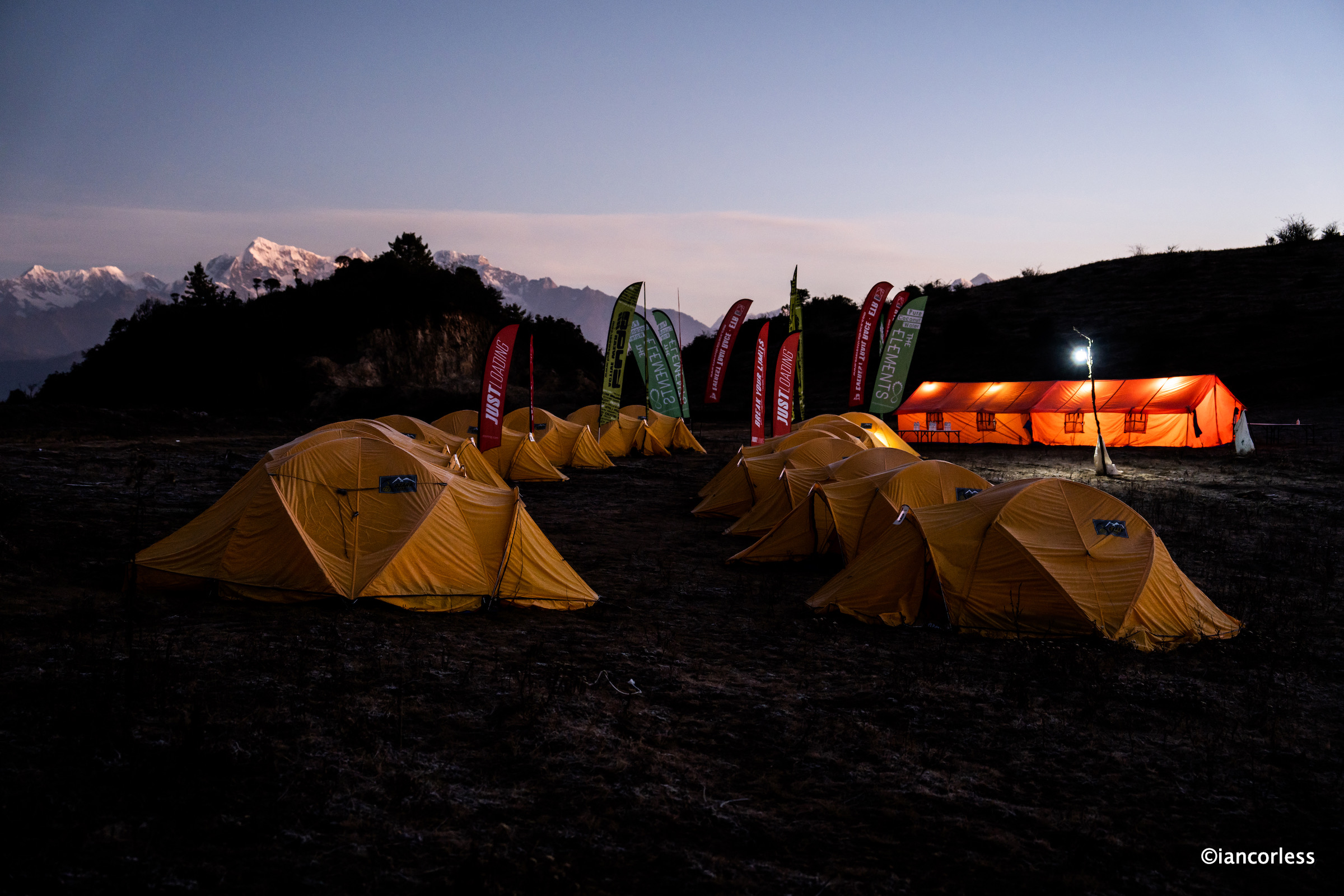
The following day, the journey to camp 1 begins, a bus drive from the noise and bustle of the city to the wild remote landscape of the Himalayas. The views for ever changing, you get to see the variety that this region brings before arriving at camp, tent allocation and a first night under canvas. The next day, the adventure begins with stage 1.
The following 6 days takes you on a journey of both physical and mental as you leave the remote and wild farmlands heading toward the majestic beasts of Lhotse, Ama Dablam, Nuptse and of course, Everest.
The early stages avoid the classic trekking routes as the participants make their way towards Lukla. Remote, isolated and free from tourism, stages 1-4 show the ‘real’ Nepal, the difficulty of life here and the harshness of weather and land. Days are warm, nights are cold.
Traveling in a semi self-sufficient manner, participants carry all they need for the journey – sleeping bag and clothes. The race organization provides a place to sleep, breakfast and dinner and en-route, there are sporadic aid stations to provide essential calories and replenish water.
Stage 5 provides a magical journey passing through Namche Bazaar, up and onwards to the eventual finish line at Tengboche Monastery, the backdrop of the key Himalayan peaks making this, arguably, the greatest finish line on the world. Ama Dablam to the right, Everest in the middle, finish lines get no better than this.
Stage 6 returns to Lukla, the ETR finish line and a night in a lodge. The following day, a return flight to Manthali and then bus back to Kathmandu and hot showers, hotel luxury and a night in a real bed with crisp white sheets.
The following day is free, allowing for relaxation, recovery and of course, a compulsory trip in to Tamil to by souvenirs before the final night awards and gala dinner.
The Everest Trail Race is a special race, one that introduces participants to a very magical place with the safety, back up and organization to make sure the journey is a special one.
Due to the nature of the challenge, an understanding and comfort with mountain terrain is required, in addition, this is a race that takes place at altitude and reaches a high point of over 4000m. Do not underestimate the difficulty this terrain and altitude brings. Daily distances, on paper, may seem very short and achievable, but they are a challenge. But hey, that is why we sign up for these things, no? If it was easy, anyone would do it.
January 15th 2025 12:00pm (cet)three MDS events go on sale for the 2025 calendar.
MDS Fuerteventura – September 20the to September 27th.
MDS Morocco – October 10th to October 18th.
MDS Trek Morocco – October 19th to October 28th.
FUERTEVENTURA – September 20th to September 27th.
2024 was a significant year for the MDS, it saw the return of MDS Fuerteventura exploring a new part of the island and with a capped entrant list it was not only a sell out but a huge success.
You can read daily summaries of the 2024 edition and explore the route via images:
With an isolated bivouac close to the ocean, Fuerteventura brings something very special to the MDS portfolio. In many respects it can draw comparisons to MDS Peru, however, it does not have the epic dunes that the Ica desert provides. With stunning cliffs, runnable terrain and epic views, this is one race that must be experienced.
MDS Morocco follows in the footsteps and the history of The Legendary. Taking place in the same area of the Sahara, this race is ultimately a mini Legendary and as such holds a special place for all participants. The 2024 edition was notable for two reasons… Freak weather – believe it or not, rain and flooding in the Sahara! It made for a unique and special edition with some unforgettable visual stories. Secondly, the Handi category which saw wheelchair athletes take on the Sahara with the help of a team.
The 2025 edition of the race will once again pave the way for the MDS brand and the history of the race.
TREK – October 19th to October 28th.
MDS Trek was new for 2024. Combining much of what we see and experience in a normal MDS event, the TREK format added more comfort (2-person tents with mats,) no self-sufficiency (in regard to food,) showers, and after the stages, you will have the opportunity to relax with a daily massage* for better recovery, enjoy cold drinks* from the available bar, and share convivial moments in the social areas.
*extra charge locally
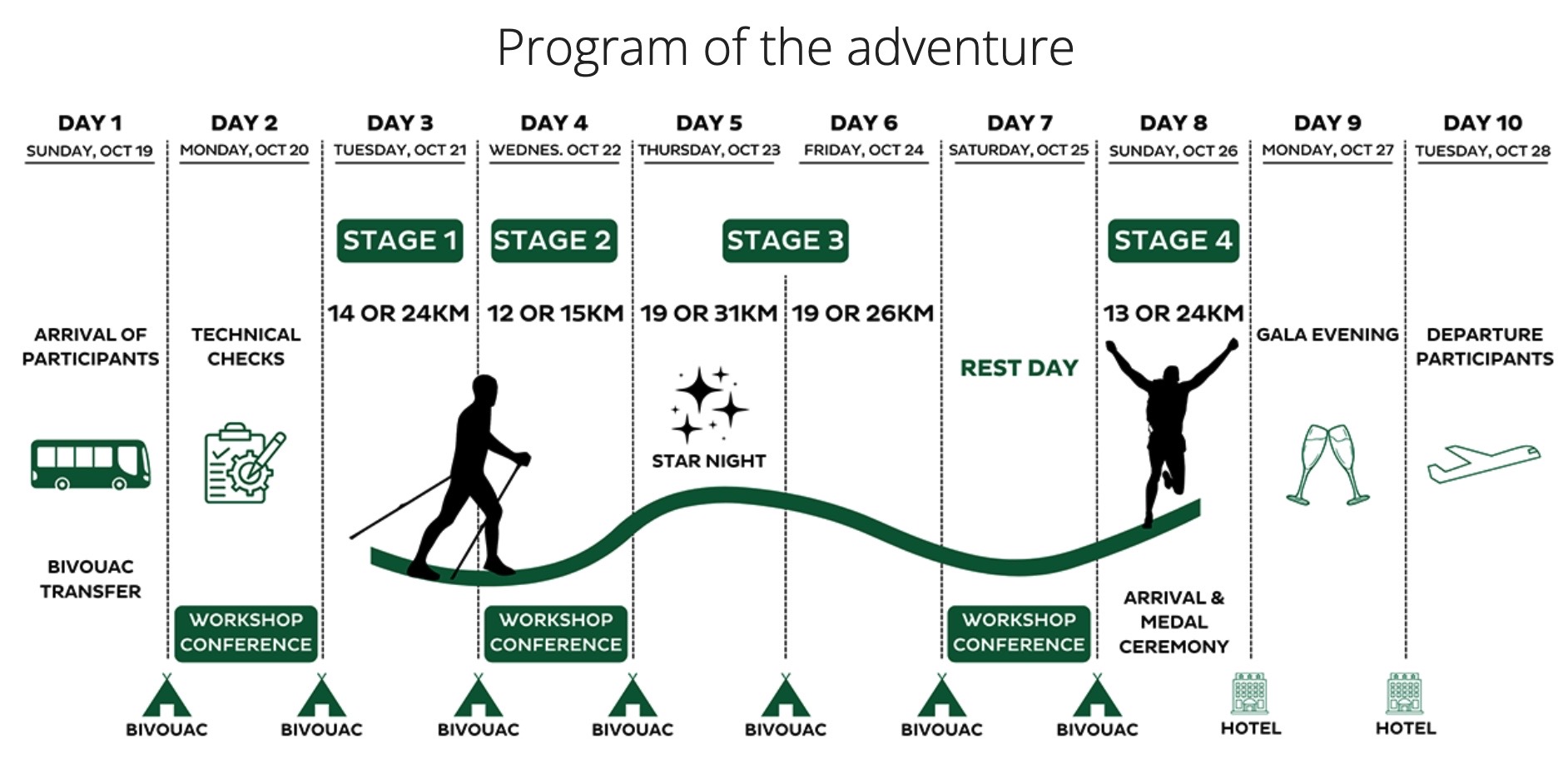
Combining mental enrichment with workshop conferences, the TREK still offers the classic MDS distances of 70-120km but at a more relaxed pace and a slightly different format due to the very special ‘star night!’
Here’s the approximate breakdown of distances:
Stage 1: 14 or 24km
Stage 2: 12 or 15km
Stage 3 – day 1: 19 or 31km
Stage 3 – day 2: 19 or 26km
Stage 4: 13 or 24km
A perfect event for those looking for an introduction to stage racing, an active holiday or just an escape with a loved one or friend. An opportunity to experience the DNA of the MDS, the 2024 edition was a huge success and returns for 2025, bigger and better! Accessible to everyone, this format is perfect for those who want to explore the desert, make new connections, push their physical limits, and all while maintaining a level of comfort.
To differentiate the full distance race of 250km’s, Marathon des Sables will now be known as MDS The Legendary, reflecting the legendary status of this iconic event and its long history as a pioneer of the stage racing and multi-day format.
The ‘HMDS’ format will still follow the same protocols as before but has now dropped the ‘half’ title and moving forward, events will be called MDS Jordan, MDS Morocco, MDS Cappadocia and so on.
The MDS events are a one-week sporting adventure that combines discovery, travel, meeting new people and physically challenging yourself in a self-sufficient manner.
MDS TREK was introduced in 2024 and is a 10-day adventure at a more relaxed pace with extra comfort, perfect for an active holiday, training or as an introduction to desert stage racing.
Since 1986, the MARATHON DES SABLES has crossed the world’s most stunning deserts with several unique concepts: the MARATHON DES SABLES THE LEGENDARY (252 km in the Sahara Desert in Morocco), the MARATHON DES SABLES (70, 100, or 120 km spread over 3 stages), and the new 2024 concept, the MDS TREK (4 stages with a total distance of up to 120 km), offering an accessible adventure with optimal comfort. These international events have seen over 50 editions in various countries such as Morocco, Fuerteventura Island, Peru, Jordan, Turkey, and offer adventures that combine running/hiking in the desert with tourism.
Marathon des Sables, today, announce MDS TREK MOROCCO which will take place from October 20th – 29th 2024.
Registration opens June 12th.
Building on the format of MDS – The Legendary, the MDS Trek brings a new concept to the desert with 10-days of disconnection from the noise, clutter and chaos of the modern world.
A 10-day adventure, spending 7-nights in the desert, the trek course will cover between 70 and 120km’s divided into several stages. The distance will be for you to decide based on your personal desires and ability. Unlike MDS – The Legendary, this is not a self-sufficient experience, therefore, participants will only need to carry a light pack with essential items.
But this experience is more than just a trek, it’s 360 experience of escape that will include workshops in the evening on physical and mental well-being in sport, for example, “Athletic Fasting – Its Strengths and Weaknesses”, “Glucose and Blood Sugar Management” or “The Power of Breathing”.
Staying in double tents with mattresses provided, at the end of each stage you will be able to have a Berber shower and buffet dinner. For a small extra charge, massages will be available and in the evening, the option to purchase cold drinks to relax, share experiences and unwind in social areas.
Following the route of the Marathon des Sables, the MDS Trek Morocco will have 4 timed stages, as previously mentioned, you choose the distance. There are no cut-offs, so, pace can be relaxed and should you have any difficulty, you can be repatriated to camp and still able to start the following day.
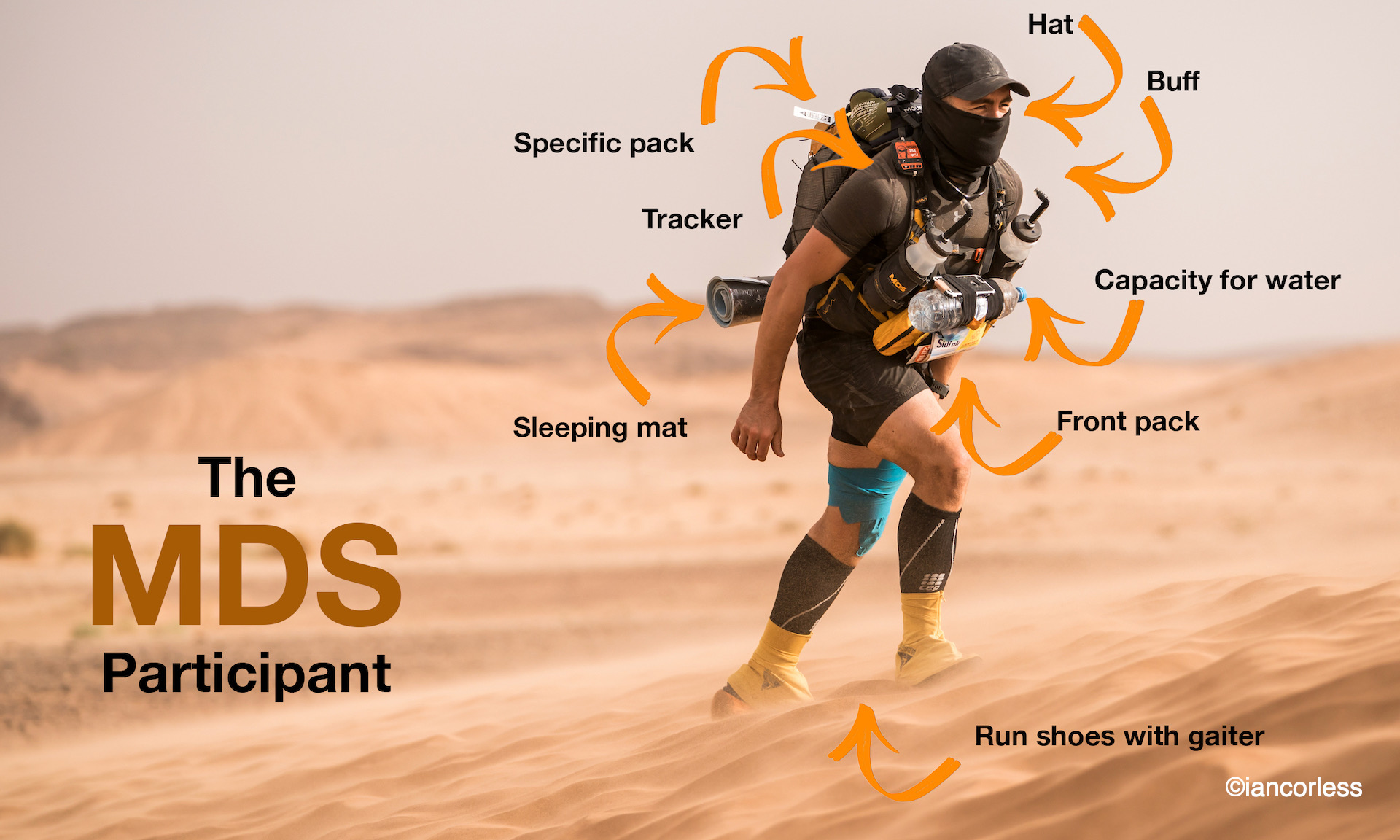
Water stations will be available along the route, and you will need capacity to carry 1.5 ltr of water, some food/ snacks and nothing more. The rest of your equipment will stay in bivouac.
There is an exception, the **long day, split over 2-days will require a sleeping bag as you will spend a night under the stars in a Nomad camp with a buffet dinner.
This new format offers an opportunity to be active both in mind and body, without the stresses of a more demanding self-sufficient race. It’s a trekking holiday that can be used as a unique stand alone experience or as a stepping stone to another MDS event.
Day 1 – The experience will last 10-days with the need to meet in Ouarzazate on day-1 for transfer to the desert.
Day 2 – Will have technical checks, workshop and a night in bivouac.
Day 3 – Stage 1
Day 4 – Stage 2 and in the evening, workshop.
Day 5 – Stage 3 part 1 with Nomad star night and buffet.
Day 6 – Stage 3 part 2 with return to bivouac and completion of the ‘long day.’
Day 7 – Rest day with workshop.
Day 8 – Stage 4 followed by night at a hotel.
Day 9 – Relaxation day, gala dinner, night at hotel.
Day 10 – Onward travel.
FEES
It will be possible to sign up for this experience from June 12thand the price will be 1950 euro for the first 100 participants and then increasing to 2050 euro.
Done MDS before? Maybe you’d like to return to the Sahara with a loved one or with friends and enjoy a more relaxed trek holiday? The price will be 1750 euro for the first 100 and then increasing to 1850 euro.
The meeting point will be in Ouarzazate on Sunday morning, October 20th, 2024, to join the organisation and take transfers to the desert.
To get to Morocco and Ouarzazate, you can arrive at different airports:
Ouarzazate airport Take a flight for Ouarzazate before the adventure and spend one or more nights at the hotel (at your own expense) then come to the meeting point on the morning of October 20th. We recommend that you arrive before October 19th so as not to miss the shuttles in case of a delay at the airport on Sunday, October 20th.
Marrakech airport Shuttles will be organised on Saturday April 19th in the morning, between Marrakech and Ouarzazate (5 hours journey). You can either: • Book a flight for Marrakech airport and on arrival, take one of our shuttles directly to Ouarzazate. • Spend one or more nights in Marrakech and take a shuttle on April 19th to Ouarzazate.
The return journey at the end of the MDS Trek follows the same logic.
If you wish, you can take advantage of the bus organized between Ouarzazate and Marrakech. These buses will leave Ouarzazate on the morning of October 29th, therefore you’ll need to book a return flight from Marrakech in the afternoon.
If you take a return flight from Ouarzazate, in this case you are free in the hotel-airport transfer and you can book a flight whenever you prefer.
Recently I have produced several articles that have been created to help runners formulate a plan for a new year of racing and training. The articles have been as follows:
Recently I was involved in a series of discussions about the Marathon des Sables. One thing that became very clear is the panic and apprehension many runners feel about a goal that may well be a ‘one-off’ or lifetime goal.
Experienced runners will know how to goal set, they will know how to periodise and plan their training so that they hopefully arrive at a target event in peak form. This was discussed in Planning a Running and Racing Year (HERE). However, goals that go beyond one macrocycle (one year) require a much greater perspective and overview. If you are new to running, well, it can be just terrifying.
A great deal of advice can be extremely counter productive as it makes many runners feel inadequate, inexperienced, lacking confidence and in the worse scenarios even questioning if they should even go ahead with the race.
Let’s be clear. Everyone is an individual, I have yet to find two runners who need the same training plan or structure. However, certain scenarios work for all and it is with this in mind that I am writing this post.
Long term goals provide incredible motivation to step out of the door and to train. You will have heard the saying, ‘if it was easy, everyone would do it!’
To that end, iconic races such as UTMB and Marathon des Sables, are races that for many are the ultimate race, they are races to be built up to and therefore a macrocycle is not enough time to prepare; hence long term goal setting.
Irrespective of experience, two key words come in to play when setting a long term plan: Structured and Progressive.
In this scenario, I am using goal setting for Marathon des Sables.
STRUCTURE
A macrocycle is one training year and this is broken down into mesocycles. It may sound like a fancy word but a mesocycle is a series of blocks of training that make up one macrocycle. For purposes of explanation, let’s assume that you are running the Marathon des Sables which takes place in April 2020.
I always recommend getting a year planner so that you get a big picture of what lies ahead. Fourteen months may seem like a long way off, it is, no need to panic, but also don’t become complacent. What’s important here is experience. I am therefore going to have two runners.
Please Note – This guide below is geared towards someone who aims to run as much as possible at MDS. Very few run all of MDS and most walk considerably more than they think. For me, walking is a key element to a very successful training plan. The structure below still applies, the sessions would adjust accordingly.
Runner A has run a marathon, runs to keep fit and has set the lifetime goal of Marathon des Sables. Priority is completion.
Runner B has been running for years, eats marathons for breakfast, races ultra races regularly and is going to Marathon des Sables as a challenge, to test him or herself and plans to compete over complete.
You don’t need to be a rocket scientist to work out that runner A and runner B need completely different training plans and strategies. Keeping in mind that A has less experience, more insecurities and a great deal of anxiety about the big target, I will talk through the possible planning cycle for A.
Let’s break down the macrocycle. As I said, we have twelve months (+/-) to play with, so a schedule may look like this:
Phase 1: Apr, May with C race objective (half-marathon).
Phase 2: June, July, Aug with B race objective (marathon to 50km).
Phase 3: Sep, Oct, Nov with A race objective (multi-day race)
Phase 4: Dec, Jan with B race objective and/ or specific warm weather training camp.
Phase 5: Feb, Mar.
Phase 6: Apr – A race.
Phase 1
Is all about consistent and regular running based on available time, ability and commitments. Set yourself a C race target for the end of this period. It could be a half marathon. It’s always good to have intermediate targets to work to and we often use C and B races as stepping stones to an A race, in this scenario, Marathon des Sables.
Be realistic here, it’s important. Ask yourself a couple of key questions:
How many days can I train?
How many hours a week can I train?
We are going to assume that running three/four days is possible every week with a fourth/ fifth day for cross training and strength work. A microcycle (week) in phase 1 may well look like:
Tuesday – key day
Thursday – key day
Saturday – Cross training
Sunday – key day
In phase 1 we want to just walk, run or walk/ run and build a base of fitness from which to build. No need to rush in and panic. Be sensible and progressive. A safe way to do this is build for three weeks and on the fourth week rest and recover, Yes, rest and recovery is just as important as running.
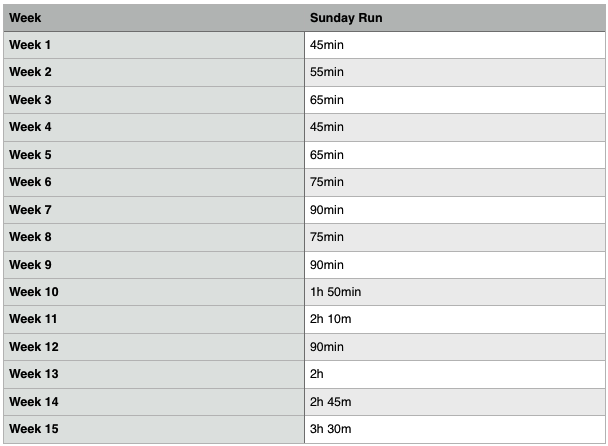
Use the 10-20% rule and never add more time than this to each run. An example for the first month may look like:
Over this phase, you would eventually cap the length of time for the Tuesday and Thursday runs at 60 to 90-minutes and the Sunday run would progress to 3-hours 30-minutes as follows:
Use this system in phase 1 building week on week over four months to lay a great foundation of progressive miles and time on feet. If you have built progressively, your Sunday long run will have progressed to over three hours which puts you in a great place for a C run target.
A marathon would be a good C target at the end of phase 1. You wouldn’t taper for a race like this, it would be a training run that would be added to your plan.
Phase 2
You have phase 1 under your belt and the confidence of completing a C target. Phase 2 now builds and at the end of this phase you will have a B race target as a goal. This race should be challenging but not so challenging that it becomes intimidating or breaks you. If you ran a half marathon as a C race, then your B race could be a marathon. If your C race was a marathon, then your B race may be a marathon or 50km race if you feel that training is going very well?
It’s also important now to think ahead to Phase 3 and an intermediate A race target that will motivate you and boost your confidence for phase 4, 5 and 6.
Also think about planning and booking heat chamber sessions or equivalent for the final build up phase just before the race; this usually takes place in the final 2-3 weeks and sessions go quickly.
In the UK, a race takes place in November called the Druids. It’s a three day race where runners take on a marathon for three consecutive days. It’s a perfect ‘mini’ Marathon des Sables scenario and a great opportunity to test clothing, pack, fitness and build confidence.
Assuming that four days training are still possible and that you have had no injury issues or problems, we can now progress training building on endurance in the long runs and adding some faster/ strength sessions during the week.
A week may look like this:
Tuesday – Hills.
Thursday – Speed
Saturday – Cross training and strength.
Sunday – Long run.
As in phase 1, progression is really important and the plan would actually change and evolve over this period with each month looking different.
The above plan is a guide and this is where a run coach can step in and provide structure and remove the guess work away from how the plan is put together. It’s all about placing the right emphasis at the right place and at the right time.
You will see how month 3 changes from months 1 and 2 so that it is specific to the B target at the end of this mesocycle.
Phase 3
You have just completed your longest run in a B race, be that 50k, 50m or somewhere in-between and your confidence is sky high. You now have an A race on the horizon (November) that involves three back-to back marathons and suddenly your appreciation of what is required is much clearer. You respect the Marathon des Sables target but now it is less intimidating as you have moved your way up through logical and incremental steps.
Another three month phase of training that allows is to fine tune and hone in on the racing skills required.
As you may expect, phase 3 starts with recovery from your B race target. You will need to cross train or just run easy for 3-4 days. By the time the weekend comes around, you will feel as though recovery is well on the way, don’t rush. Take your time and the following week run easy Tuesday and Thursday for up to 60-minutes and then do 60 and a 90-minute run on Saturday and build on the Sunday run. An example of phase 3 is below. Please remember, YOU are an individual with specific needs and what I provide below is a possible structure leading to an A race in November.
The A race at the end of November provides a significant marker in your training. The experience will allow you an opportunity to find out what worked, what didn’t work, how your kit worked, what was good, what was bad and so on.
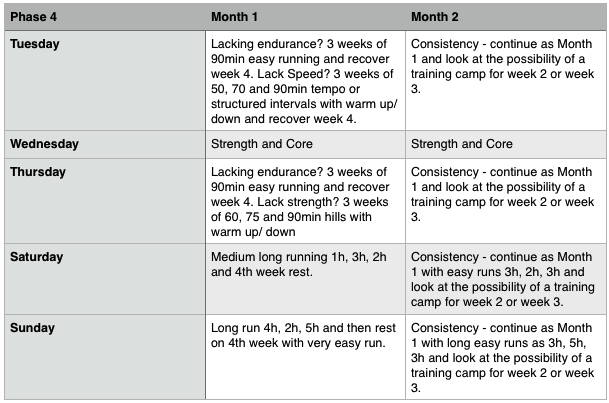
December is now upon you and Phase 4 is an opportunity to look at weaknesses and work on them so that you are in great shape to take on Phase 5 which is the final period before your key race.
1. If you lacked endurance in your November A race, keep working on consistency and build endurance with time on feet.
2. If you lacked speed and want to run faster, December is a perfect opportunity to cut back on distance and long runs and add some speed work.
3. Due to the demands of running with a pack, running long and all the associated fatigue, make sure that you incorporate a strength and core routine to make you a stronger runner. It’s easy to say here, ‘I don’t have the time!” You do, cut down your run time on a Tuesday and Thursday and free up time for strength and core. Maybe you can even find an extra day in your week (Wednesday) to allow you to work on this. Alternatively, work on strength and core at home maybe while watching television? The time is there, you just need to find it and be creative.
4. Practice walking. Effective and fast walking is a key weapon to a successful race in any long ultra or multi-day race.
With a new year coming, April and the heat of the Sahara looms on the horizon. January provides a perfect opportunity for a warm weather training camp just as the weather is wet, miserable and cold in Europe.
Fancy a Training Camp?
I run a week long camp in Lanzarote that provides the perfect opportunity to test everything in a real situation. We even provide a bivouac experience. You can listen to client feedback below and info HERE.
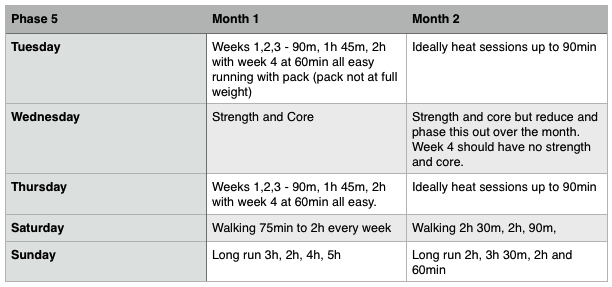
Phase 5 is the last phase and ultimately you have 6 weeks to get prepared and ready for your key race. If you attended a training camp you will now have a full appreciation of everything that you need to do. That may be changing kit, more time on feet, looking at nutrition or even a combination of all elements
Now is the time to make sure you have all your admin sorted – insurance, medical, compulsory kit and so on.
Don’t leave anything to chance now. If in doubt about equipment, contact MyRaceKit, they are able to provide expert advice in regard to everything that you will need.
Think about heat and how you will adapt. With luck, back in phase 2 or 3 you will have thought ahead and booked time in a heat chamber. Ideally this will take place in the final 2-3 weeks before the race. No sessions booked? Train in a gym with additional layers, take a sauna, do Bikram Yoga etc
Again, consistency is key here. You have been training for this long term goal for sometime, don’t do anything silly, don’t do a long run that is really long; you up your chances of injury risk. Remember, training is about ALL the sessions you have done and not just one session
Pack weight is a consideration and get it as close to 6.5kg as possible. On day-1, when you add water it will be 8kg. BE CAREFUL training with too much weight, it is a guaranteed route to injury. For sure, do some sessions with weight, be progressive and slowly build up. Just do one session per week in the final phase and only do 1 or 2 sessions with pack at 8kg and do not go too long.
Phase 6 is race time.
Be organised, be prepared, think of everything and have the race of your life.
It’s in this final phase when you are so close that little things can go wrong. Be prepared as best as you can. You can’t account for the unexpected but reduce chances of anything going wrong by taking no risks.
The information provided above is designed to provide an outline and a guide on how to plan for a long term goal. Although you may be able to take this plan away and use it, please be sensible and assess your own experience, fitness and goals. Importantly, the scenario provided is with a multi-day race in mind, you would need to tweak and adjust this for a single stage race or a mountain ultra for example.
I can’t emphasise enough that we are all individual, so you need to find out what works for you.
Good luck.
If you enjoyed this article, think about becoming a Patron and supporting Talk Ultra podcast and this website on Patreon HERE
Nepal, the magic of Nepal! It truly is a remarkable place and if you are a trekker, fastpacker, runner or mountaineer, it is arguably THE best place in the world. Nepal changes people, it really does. I experienced the change on my first visit 7-years ago and I have been going back ever since. It’s not just the trails, the Himalayas or the stunning vistas; It is so much more! It’s the combination of all those elements for sure, but it is the Nepali people that often lure me back. They truly are the salt of the earth.
I have just returned from once again working on the ‘ETR’ – Everest Trail Race. It’s a 6-day running journey of 160km’s that starts at Jiri and traces a route that Hillary and Tenzing took when they first made their way to summit Everest. It’s a magical race and the structured format is a wonderful way to experience Nepal for the first time.
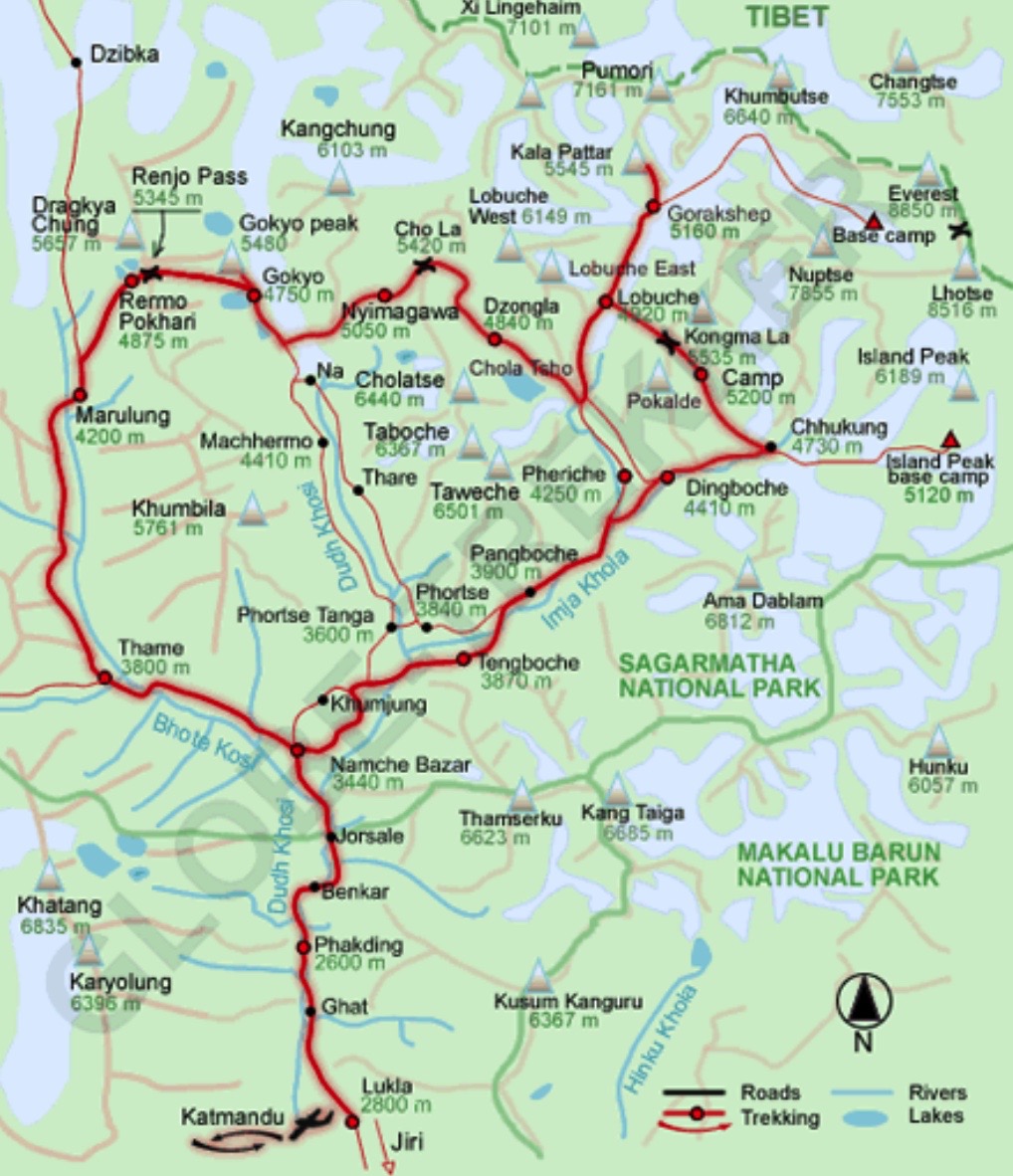
Home for 2-days and I was already missing the trails, views and the people, however, a stinking cold I picked up on the journey home was keeping me from sleeping. In the middle of the night, I laid a Nepal map on the floor and started to plan a journey that would take in the ‘Three High Passes’ on a circular route from Lukla.
It was as I stared at the map, I began to realise the options open and the possibility to do out and backs and add some serious additions to what is, an already very popular trek.
The high passes are:
Renjo La 5338m
Cho La 5380m
Kongma La 5535m
Now of course, before undertaking any route like this you have to ask yourself some really sound questions and gain an understanding of trekking or running at altitude – you don’t just do it. You have to ease yourself in and acclimate to the demands.
For me, I am not overly worried at being circa 5500m. My job regularly takes me to high altitudes, for example this year alone I have been over 5000m in China, been at 4000m in Turkey, been at the summit of Mt. Teide in Tenerife, been at the summit of Monte Rosa and of course, just recently I have done Everest Trail Race. So, I am pretty well prepared to go to 5500m or higher. The big question is usually, can one stay there?
See the map below:
My route would follow the very clearly defined high pass trek, clockwise, finishing with the higher Kongma La at 5535m. For example, this is usually done in 16-18 days and often 21-days are recommended to allow for any issues or problems.
My idea, once again (I did a trek last December) was to avoid the noise and the frenzy of Christmas and travel to Nepal for an adventure.
Rough plan was to leave the UK for Dubai Dec 13th, arrive in Kathmandu on the 16th. Start my trek on the 18th and finish on the 30th. Return to Kathmandu on the 31st and then have some RnR time before returning to the UK.
That allowed me 13-days.
However, I know from experience that I can move considerably faster and cover more ground than a normal trek, so, it got me looking – what could I add?
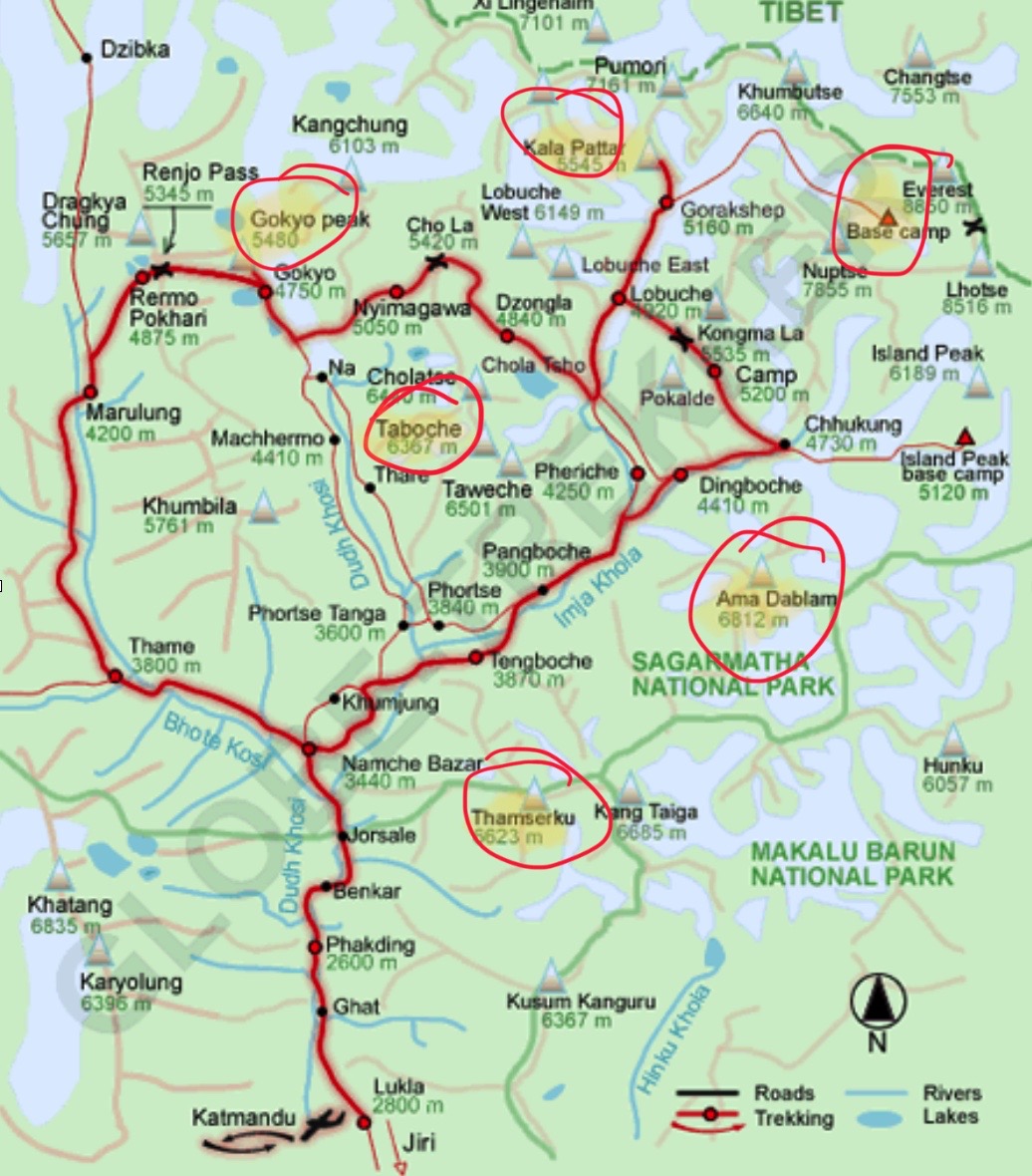
The plan is to add ‘out and backs’ to my route that would add some spice and challenge:
Gokyo RI
Kala Pattar?
Everest Base Camp
Ama Dablam Base Camp
Taboche
Thamersku Base Camp
I am well connected with the guide / Sherpa community in Kathmandu and so I asked Pasang Sherpa and Lhakpa Rangdu (both who have summited Everest multiple times, Lkakpa, 11 times!) Was my schedule feasible? Pasang knows me well and he immediately said yes! He confirmed that I usually cover double what most trekkers do in a day, also, mt time on the ETR confirms this. So, the plan was turned into a reality.
Initially I was going to go alone, but December in Nepal is very cold and relatively quiet. Pasang did not insist, but highly recommended a fast Sherpa to join me. I didn’t need much persuading and I agreed. I was adamant though – no porter, we carry our own equipment for the duration moving fast and light.
Another factor to consider was the crossing of glaciers. I had already made the decision to carry mini-spikes and a light ice axe.
THE PLAN:
13th Dec leave UK
17th KTM
18th Depart for Lukla (early flight I guess) and then we hike to Namche.
19th Lumde
20th RENJO PASS to Gokyo to include Gokyo RI
21st CHO LA PASS to Dzongla
22nd Gorak Shep w/ Kala Pattar?
23rd EBC and back to Lobuche
24th KONGMA LA PASS to Somare
25th Ama Dablam BC and back to Pangboche
26th Tabuche Peak and back to Pangboche
27th Monjo
28th Thamersku BC
29th Lukla
30th Spare day
31st Back to KTM
1st KTM
2nd Onward travel
It is very easy to look at a fastpack like this and lose perspective. Daily distances mean very little when climbing and descending at altitude and particularly in this environment – it is going to be very cold too, especially at night.
Pasang Sherpa – the main man and my Mr Fixer.
EQUIPMENT:
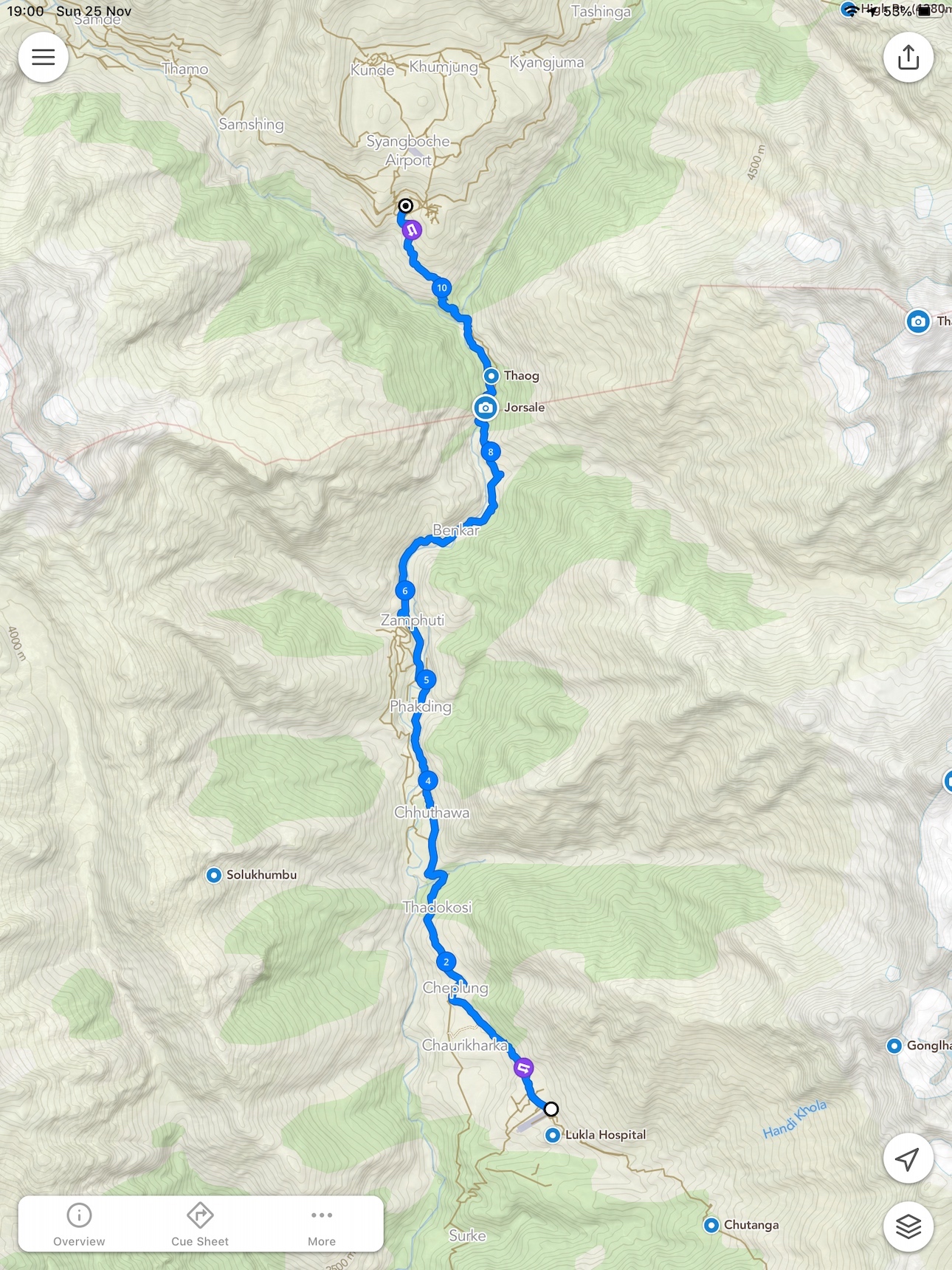
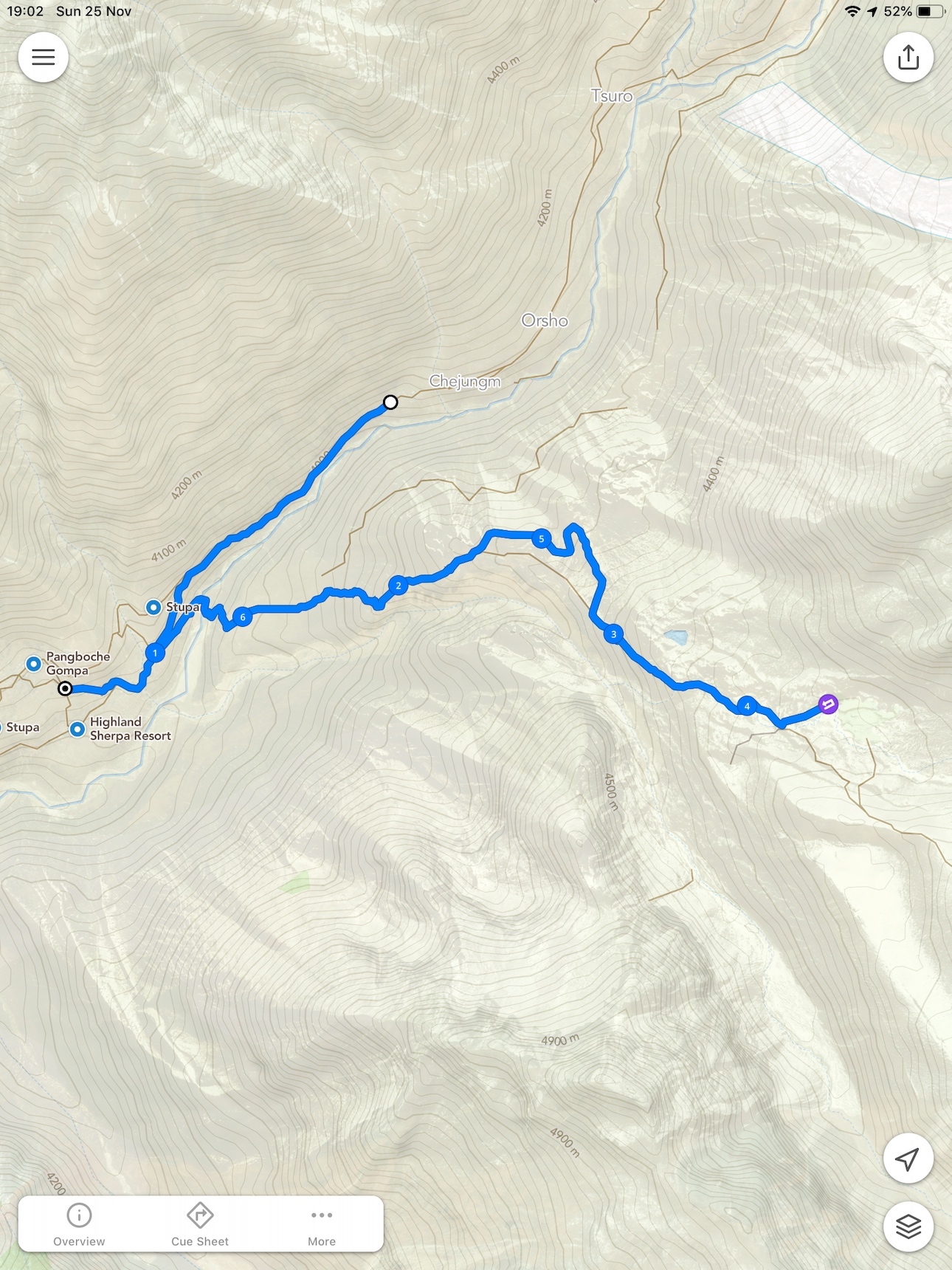
I recently wrote an article on equipment for fastpacking in Nepal, HERE. While much of what is in this article is correct, I am making some changes for December. First and foremost I am replacing my SPOT with a Garmin inReach MINI. I asked friends was the difference worth it and I have to say I am currently blown away with the device. User friendly, small, great battery life and perfect sync with the EARTHMATE App on iPhone. The map below is what I imported into the inReach as a ‘just in case’ scenario is needed.
However, the primary use for the inReach will be safety. It has a SOS button and that in a remote environment can be the difference between life and death. Also, I can send and receive messages – not essential but really great for letting the important people in my life know that I am ok. The other function will also allow anyone to follow me by using this link HERE – I must stress, I am going for no FKT’s, not looking to set records or do anything out of the ordinary, however, you may like to see where I am? I haven’t decided yet if I will turn the inReach on each morning and off each evening or leave it permanently on. The battery will last 20-days on 30-min tracking.
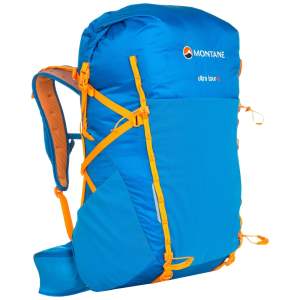
I am going to use the Montane Ultra Tour 40 backpack. It is light, super comfy and will allow me to carry all I need.
I have purchased a pair of RAB Endurance Down Gloves which are maybe overkill, but, I have had friends at EBC and in that area in December and it has been -25, so, I don’t wantcold hands!
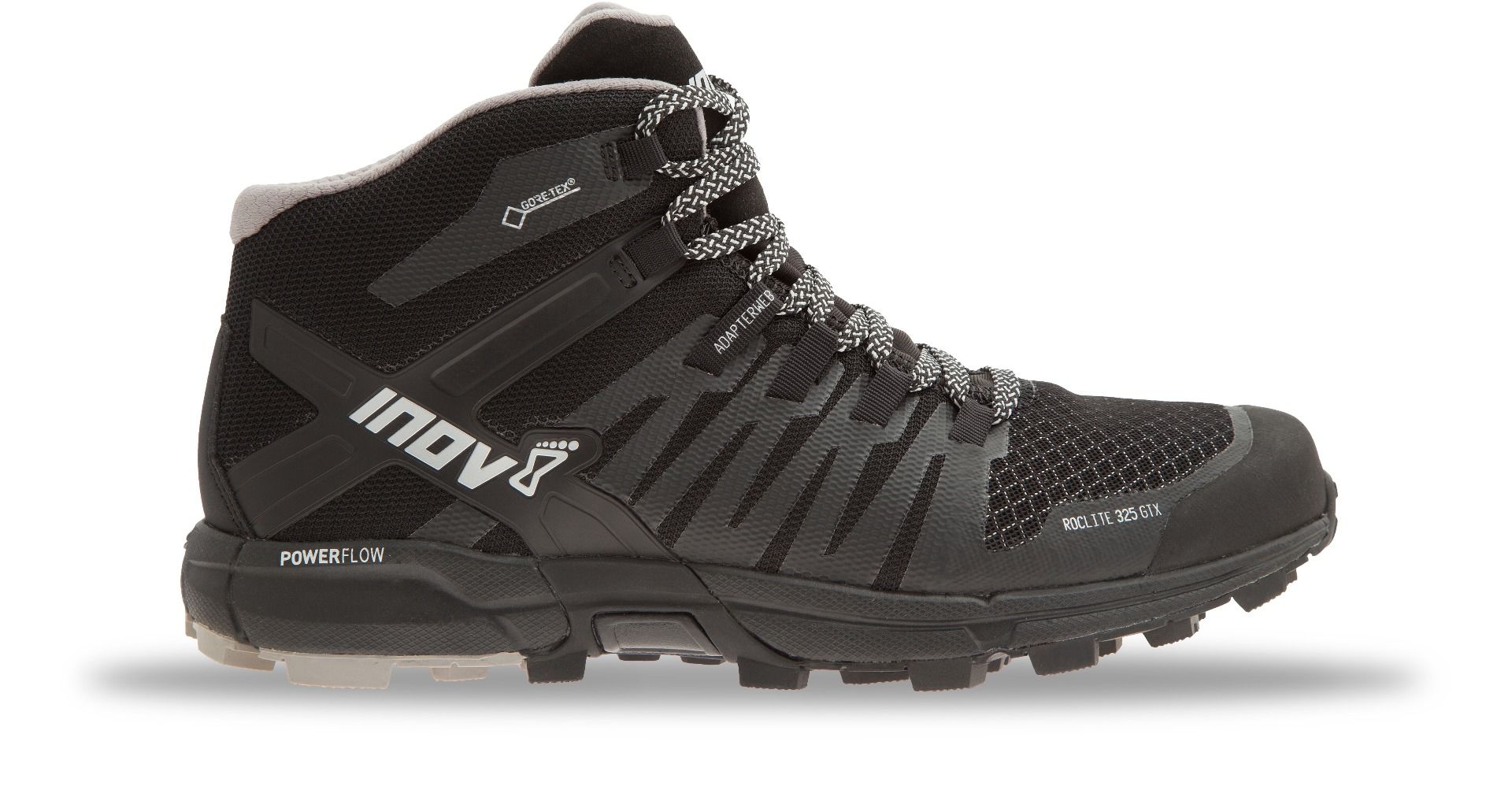
I am using the inov-8 ROCLITE 325 Gore-Tex fastpack boot.
I normally do not take waterproof clothing but I have decided to take the inov-8 AT/C Race Pant (170g) and AT/C Stormshell Jacket (175g).
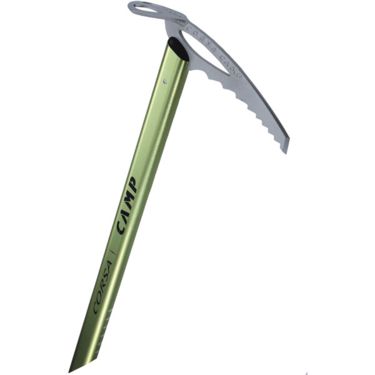
Ice Axe – I am taking the amazingly super-light CAMP Corsa which is just 200g
YakTrax XTR cramp ons
The rest of my equipment will be as follows:
Day:
inov-8 3/4 tights.
inov-8 AT/C Merino Top
inov-8 AT/C soft-shell Pro Top
Plus inov-8 ROCLITE 325 Gore-Tex, inov-8 AT/C Race Pant (170g) and AT/C Stormshell Jacket
Night:
RAB INFINITY 500 sleeping bag
RAB NEUTRINO PRO Jacket
RAB MICROLIGHT Jacket
RAB SUPERFLUX HOODY
RAB 120 long sleeve base layer
RAB 120 pant
PHD down socks
RAB PROTON PANTS
RAB gloves, hat and neck rolls
Extras:
Basic toiletries
Headtorch and spare batteries
Earphones
Phone
Pen
Passport
Black Diamond Z Poles
Waterproof bags
Camera:
Sony A7RIII with 35mm f2.8 prime lens and 4 batteries/ 2 spare SD cards.
*****
Departure form the UK is Dec 13th and you can follow my tracker HERE
I will do iPhone posts during the trek, mainly on Facebook and Instagram Story. All the good images will come post the trek when I can download and edit.

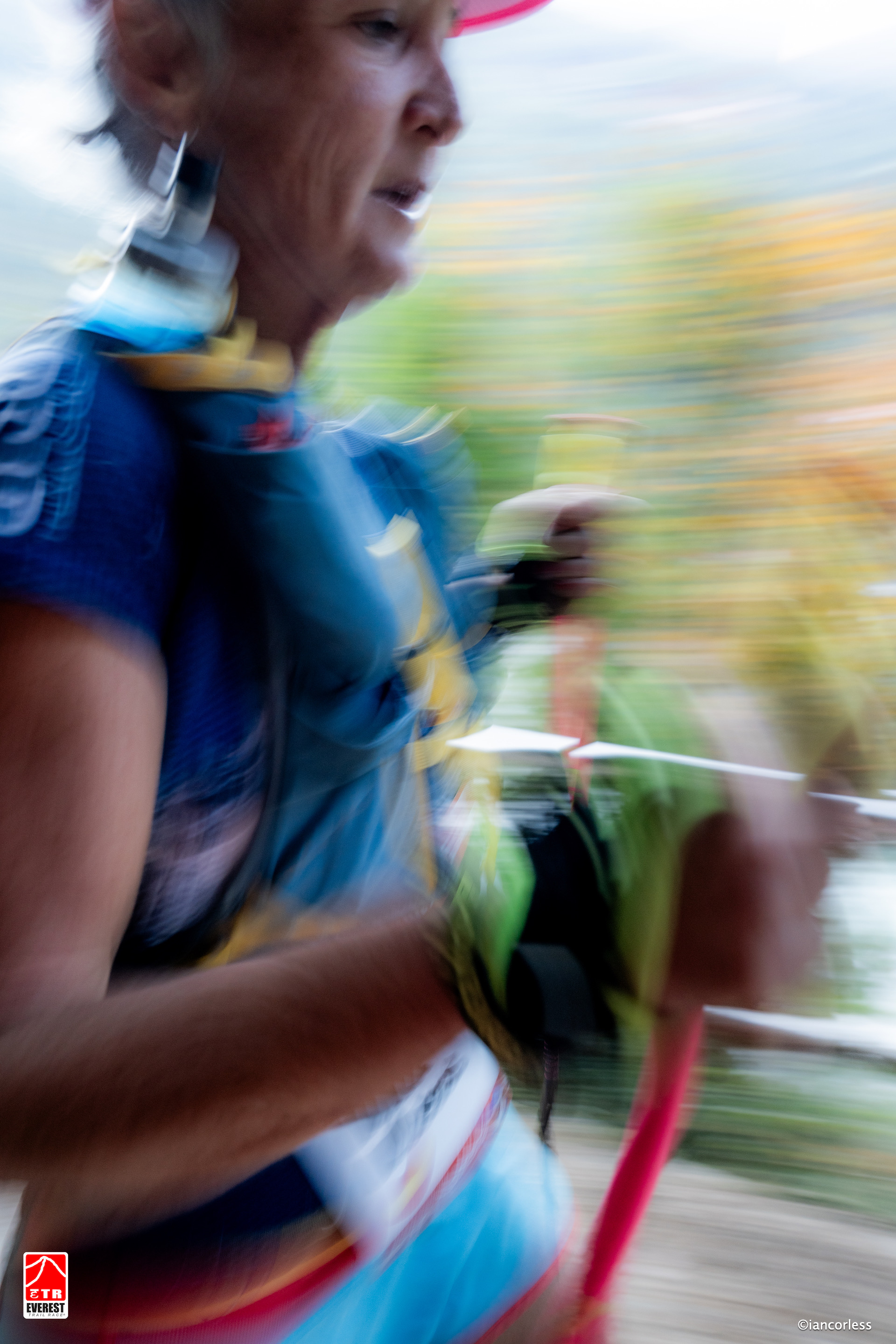
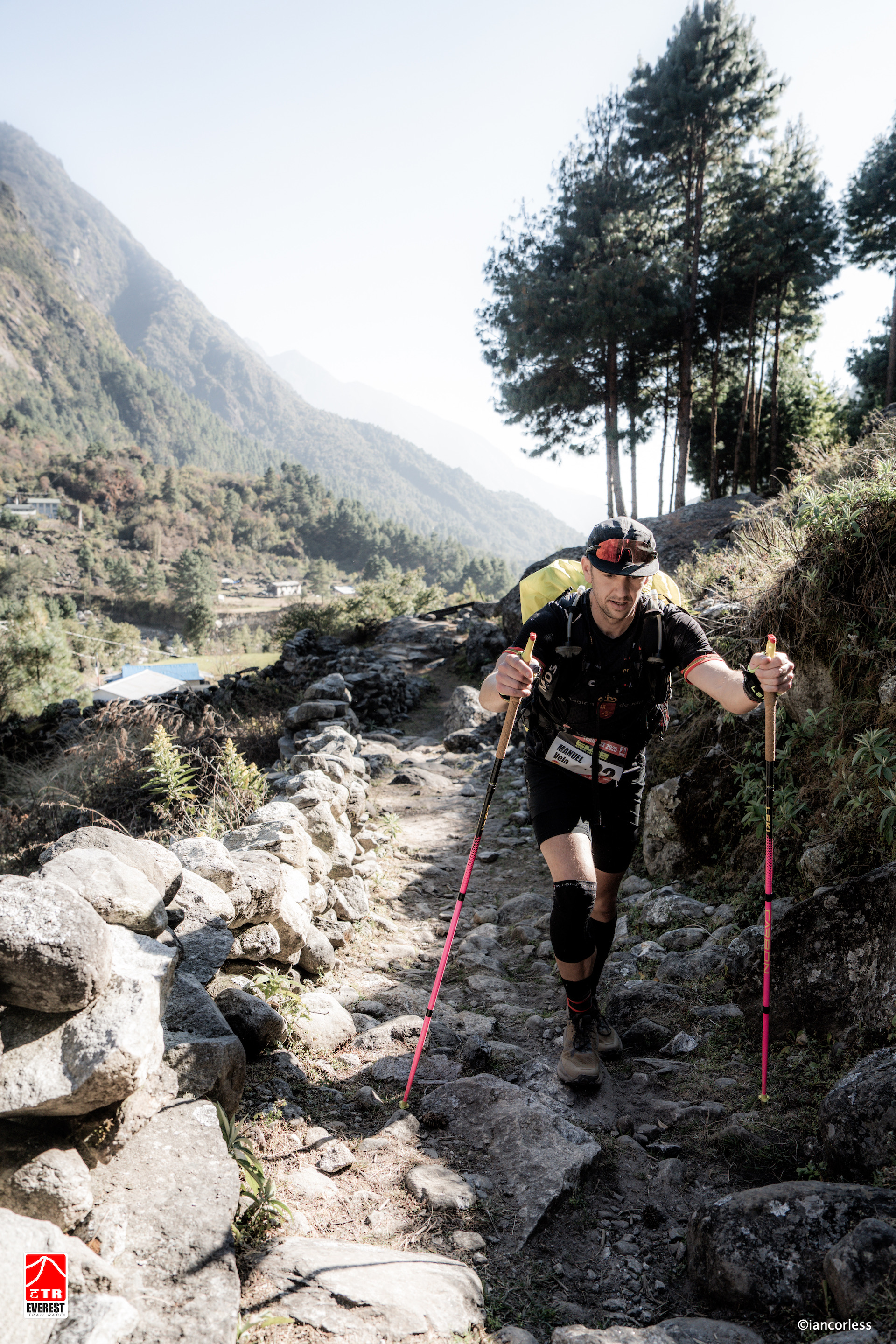
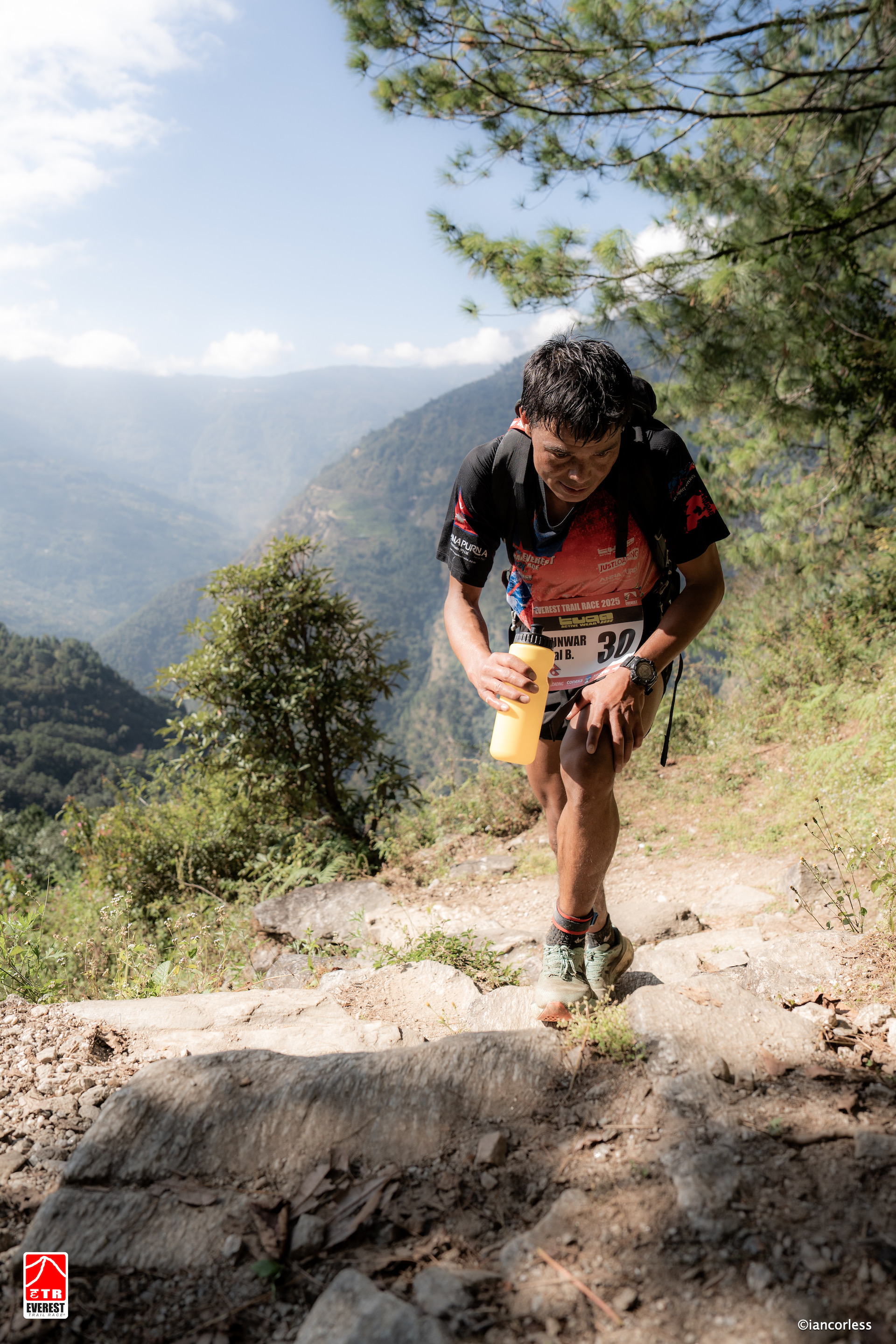

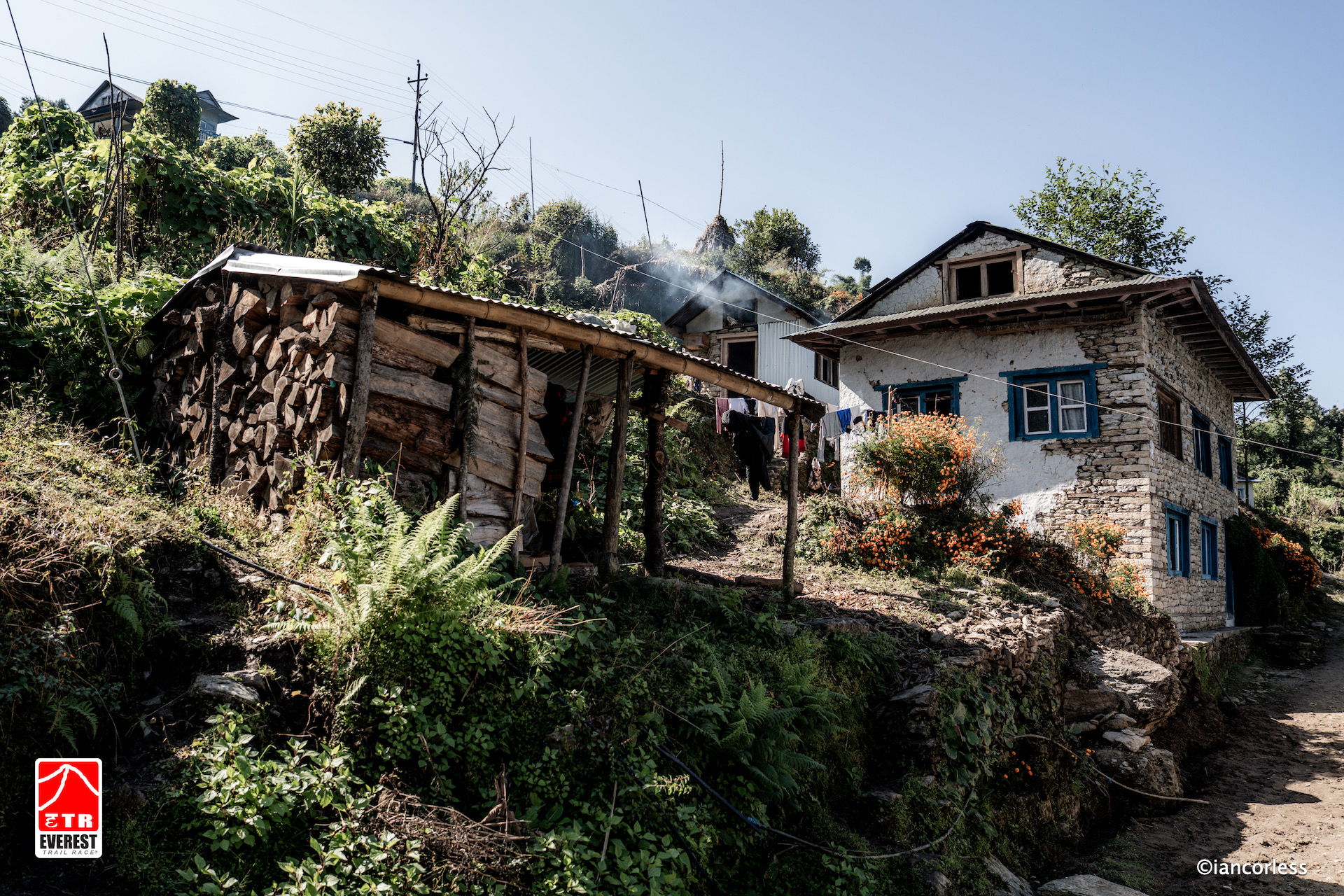
































 IAN CORLESS