The silence was deafening. The darkness was black, oh so black and the stars glowed in abundance in the sky. It was the first morning of the 2016 Richtersveld Transfrontier Wildrun and anticipation was high.
There was a high level of anticipation, nerves and worry – particularly in regard to the route and the provided GPX files that had been uploaded to GPS units, or not, as was the case in some scenarios.
Buttons were being pressed, beeps could be heard and chins were being rubbed as rapid navigation 101 was undertaken just 30-minutes before the 0800 start.
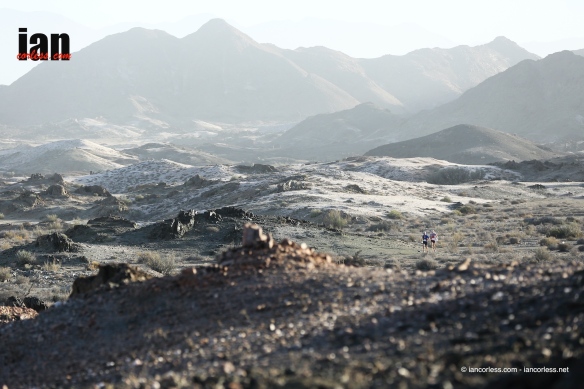
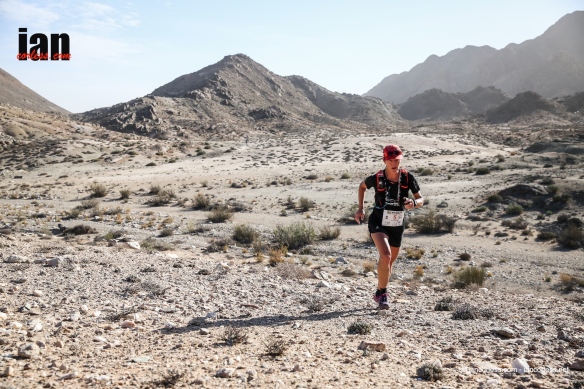
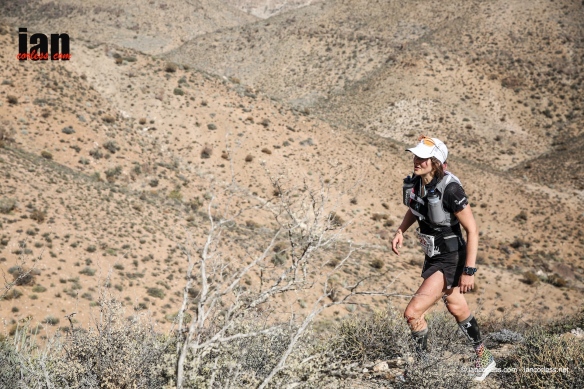
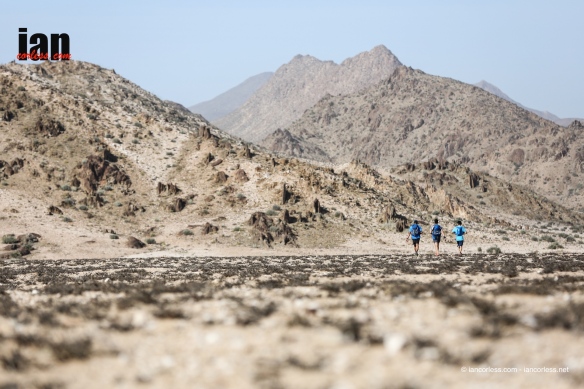
Suddenly they were off and what followed was a stunning warm and sunny day in the Ai-Ais Richtersveld Transfrontier Park.
At the first control point, backed by an amphitheater of rock, it was soon apparent that despite a gps route, many runners were using navigation knowledge to cover ground as quickly as possible. The rule of the race confirms that between controls, the gpx route is a guide and that providing access to the control is from the correct direction, then a free route choice was allowed.
Tobias Mews and Jo Williams were the first to arrive at the first control but not via the direction the gps route indicated – was this a tactactical navigation move to gain time?
It looked like it as Linda Doke and Stephen Cunliffe arrived via the same route option. Slowly but surely runners arrived but a lack of Elisabet Barnes raised a few alarm bells. Elisabet arrived approximately 30-minutes later have followed the gps route, mark-by-mark. The 2015 Marathon des Sables champion was now on the back foot with a tough chase on her hands.
At control 2, Linda Doke and Stephen Cunliffe arrived and then a string of runners
and then Tobias Mews and Jo Williams – it was a little confusing, how had so many other runners gained so much time and what had been the leading duo?
Tobias Mews explained post race, “We made a navigational error and had to backtrack obviously loosing time and allowing Linda and Stephen to take the lead, however, we were surprised to then find other runners infront of us when we chased – we later found out that these runners had missed control one!”
The savvy navigational shortcut early in the race had unfortunately caused a problem for 5 competitors and due to missing the control, a 1-hour time penalty was applied.
What followed was a strong effort by Tobias and Jo, they reeled in the other runners, pursued Linda and Stephen and then pushed on. It was a brave move so early in a five stage race however it payed off.
Jo Williams and Dawid Kaswarie finally made a break from Tobias and Stephen and they crossed the line joint first in 4:27:43, only for Dawid Kaswarie to loose all his hard work with a time penalty. Stephen Cunliffe and Tobias Mews ran together to finish joint 2nd in 4:46:49 and Linda Doke finished 3rd in 5:00:42.
Way back in the race, ladies pre-race favourite was having a bad day – she had taken a tumble and was running with open wounds to her left knee and unfortunately another minor navigation error resulted in some additional lost time. Something was right though, Elisabet fell a further four times and once back in camp she relayed her story, “I saw Tobias and others taken an alternative route and I decided to follow the gps route as I was under the impression that was the correct thing to do. I lost time and sometimes you just have to accept that these things happen. However, I was feeling light-headed, lacking focus and after falling once, I fell a further three times. I feel a little banged up – it was a tough day!”
Elisabet was not the only runner to make errors with navigation, in nearly all cases it was the error of the runner to solely rely on the gps as a form of navigation and not use the provided map as a reference and counter reference. For some it was a tough lesson.
Day 1 at any multi-stage race can be a tough one and here in the Richtersveld, the 2016 Richtersveld Transfrontier Wildrun has provided a greater test than some expected.
Despite difficulties, the unanimous decision about the route and the scenery has been glowing – “This is like running in heaven,” said
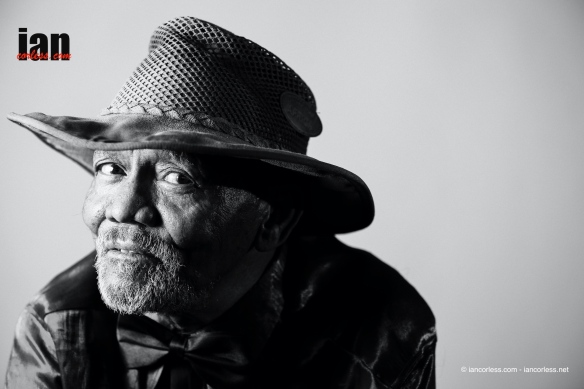
One of the real advantages of travel and race coverage is meeting a new culture and gaining a new experience. Today I came face-to-face with the Nama people who came to greet us and welcome us at the 2016 Richtersveld Transfrontier Wildrun.
Nama (in older sources also called Namaqua) are an African ethnic group of South Africa, Namibia and Botswana. They traditionally speak the Nama language of the Khoe-Kwadi language family, although many Nama also speak Afrikaans. The Nama are the largest group of the Khoikhoi people, most of whom have largely disappeared as a group, except for the Namas. Many of the Nama clans live in Central Namibia and the other smaller groups live in Namaqualand, which today straddles the Namibian border with South Africa.
For thousands of years, the Khoisan peoples of South Africa and southern Namibia maintained a nomadic life, the Khoikhoi as pastoralists and the San people as hunter-gatherers. The Nama are a Khoikhoi group.
From 1904 to 1907, the Germans, who had colonised present-day Namibia waged war against the Nama and the Herero (a group of Bantu pastoralists), leading to the Herero and Namaqua Genocide in which they killed at least 80% of the Nama and Herero populations.[2] This was motivated by the German desire to establish a prosperous colony which required displacing the indigenous people from their agricultural land. Large herds of cattle were confiscated and Nama and Herero people were driven into the desert and in some cases interned in concentration camps on the coast, for example at Shark Island. Additionally, the Nama and Herero were forced into slave labour to build railways and to dig for diamonds during the diamond rush.
In the 1920s diamonds were discovered at the mouth of the Orange River, and prospectors began moving there, establishing towns at Alexander Bay and Port Nolloth. This accelerated the appropriation of traditional lands that had begun early in the colonial period. Under apartheid, remaining pastoralists were encouraged to abandon their traditional lifestyle in favour of village life.
The Nama originally lived around the Orange River in southern Namibia and northern South Africa. The early colonialists referred to them as Hottentots. Their alternative historical name, “Namaqua”, simply stems from the addition of the Khoekhoe language suffix “-qua/khwa”, meaning “people” (found in the names of other Southern African nations like the Griqua)
In 1991, a part of Namaqualand (home of the Nama and one of the last true wilderness areas of South Africa) was named the Richtersveld National Park. In December 2002, ancestral lands, including the park, were returned to community ownership and the governments of South Africa and Namibia began creating a trans-frontier park from the west coast of southern Africa to the desert interior, absorbing the Richtersveld National Park. Today, the Richtersveld National Park is one of the few places where the original Nama traditions survive. Here, the Nama move with the seasons and speak their language. The traditional Nama dwelling – the |haru oms, or portable rush-mat covered domed hut – protects against the blistering sun, and is easy to move when grazing becomes scarce.
At the dawn of the 19th century, Oorlam people encroached into Namaqualand and Damaraland. They likewise descended from indigenousKhoikhoi but are a group who mixed with Europeans and with slaves from Madagascar, India, and Indonesia.[3] After two centuries of assimilation into the Nama culture, many Oorlams today regard Khoikhoigowab (Damara/Nama) as their mother tongue, though others speak Afrikaans. The distinction between Namas and Oorlams has gradually disappeared over time to an extent where they are today regarded as one ethnic group, despite their different backgrounds.
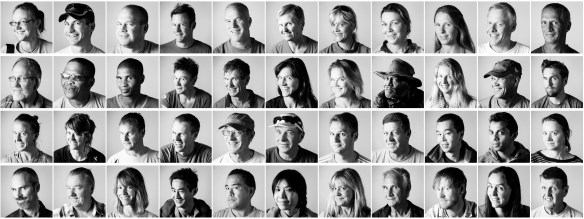
Meet the runners who will take part in the 2016 Richtersveld Transfrontier Wildrun® HERE
Daily race images and reports will follow on the race day-by-day as the action unfolds via
The 2016 Richtersveld Transfrontier Wildrun® became a reality today… runners from all over the world have assembled in the |Ai-|Ais/Richtersveld Transfrontier Park.
A 200km, five-day foot race from South Africa to Namibia through the ancient arid landscape of the /Ai/Ais-Richtersveld Transfrontier Park. From the crystal fields of Sendelingsdrif in South Africa to the infamous giant boulders of Tatasberg deep in the /Ai/Ais-Richtersveld Transfrontier Park; this unparalleled journey then crosses the Orange River into Namibia and the wild lands of the Fish River Canyon. This is the running experience of a lifetime; this is the Richtersveld Transfrontier Wildrun®.
Day 1 starts tomorrow, Monday June 13th at 0800. Before the race gets underway, we feel it’s important you get to see the faces of those taking part.
Day 1
43.64km
Sendelingsdrif to ‘De Koei’
Day 2
32.13km
‘De Koei’ to Hakkiesdoring
Day 3
39.78km
Hakkiesdoring to De Hoop
Day 4
48.32km
De Hoop to Wilderness Hot Springs
Day 5
21.3km
Wilderness Hot Springs to Ai-Ais Hot Springs Resort
Early archaeological evidence tells us that the San inhabited the Richtersveld area thousands of years ago. They hunted game (mountain zebra and klipspringer) and gathered berries and herbs. The first Khoekhoen or pastoral people moved to these regions from Botswana some 2000 years ago. Like the San, they were hunter-gatherers, and only slaughtered animals on rare ceremonial occasions.
In tune with the harsh environment, many of the Richtersvelders today are transhumant pastoralists, moving their livestock between stock posts with the changing of seasons. The rotation of pastures has helped to preserve the land from overuse. This is the last place in South Africa where pastoral people live on communal lands and one of the last remaining examples of the transhumant Nama way of living.
The harsh environment of the Richtersveld has through the years witnessed a story of determined peoples with a strong attachment to the land. Early last century declared a “Coloured Rural Reserve”, the land’s ownership moved in 2002 to the peoples of the Richtersveld. In this pristine land, devoid of mining scars and in harmony with transhumant pastoralists, an area of more than 160 000 ha has been put aside – first to create a Community Conservancy, now proclaimed a World Heritage Site.
From a distance you can see rugged mountains, sweeping deserts, a giant blue sky and glimpses of the might Orange River creeping along to the sea. On closer investigation you realise that you are standing in one of Africa’s most diverse and rich ecosystems.
The Richtersveld World Heritage Site sits in the heart of what is called the Succulent Karoo Biodiversity Hotspot – an ecosystem with an astounding 4 849 succulent plants, 40% of which are found nowhere else.
To be declared a hotspot, an area must have incredibly high species diversity and a high percentage of endemism. It is quite a unique distinction, as there are only 25 hotspots in the world. Even more unusual is that the Succulent Karoo is a desert and is the only arid biodiversity hotspot on Earth.
Conjure up a desolate and forbidding landscape, seemingly devoid of life, except for some people dotting along the horizon. Make a startling discovery upon closer inspection when the mirage dissolves into the human-like half-mens (half person) and the harsh environment prove to be a treasure-chest containing the world’s richest desert flora. Miniature rock gardens, perfectly designed by nature, cling precariously to cliff faces. Tiny succulents, mere pinpoints against a backdrop of surreal rock formations, revel in the moisture brought by the early morning fog rolling in from the cold Atlantic Ocean.
Rugged kloofs, high mountains and dramatic landscapes that sweep away inland from the Orange River divulge the fact that you are now in the vast mountain desert that is the /Ai-/Ais-Richtersveld Transfrontier Park, an area managed jointly by the local Nama people, SANParks and Namibia Parks and Wildlife. This is a harsh and unpredictable land where water is scarce and life-sustaining moisture comes in the form of early morning fog – called ‘Ihuries’ or ‘Malmokkies’ by the local people – which rolls in from the cold waters of the Atlantic Ocean, sustaining a remarkable range of small reptiles, birds and mammals. A staggering assortment of plant life, some species occurring nowhere else, is to be found here, with gnarled quiver trees, tall aloes and quaint ‘half-mens’ keeping vigil over this inscrutable landscape.The Fish River Canyon is the largest canyon in the southern hemisphere, and second only to Arizona’s Grand Canyon in terms of size. 161km long, up to 27km wide and almost 550m at its deepest, the southern part of this canyon is largely untouched by tourists and remains one of the wildest and most remote corners of the world.
The /Ai/Ais-Richtersveld Transfrontier Park is only accessible by means of a 4×4 vehicle, but vehicles with high clearances such as combi’s and LDV’s do travel in the park. Sedan vehicles are not permitted.
June temperatures are likely to be cool at night and comfortable during the day. However, it can get as low as 4-5 degrees Celcius during the night and as high as 35 degrees Celcius during the day.
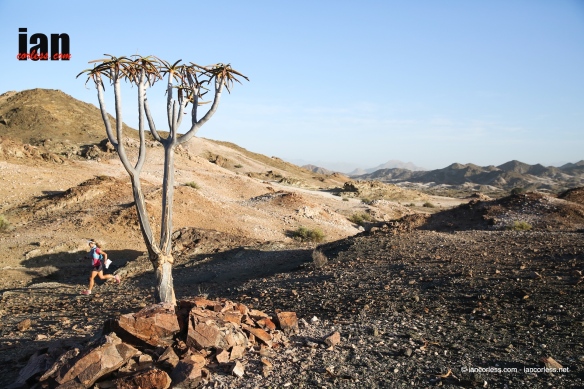
Each day of this 200km, five-day journey will take you on a rollercoaster ride of geological splendour. From the crystal fields of Sendelingsdrif in South Africa, to the infamous giant boulders of Tatasberg, across the green swathe of the Orange River, and into the wild lands of the Fish River Canyon in Namibia – every kilometer is an experience within itself and will leave you stumped for words to describe your journey.
Skyrunning UK is set to reach new heights in 2016 for what will be the biggest year yet. Now in its third year, the calendar has grown and with it, so have the races. The V3K kicks off the 2016 calendar and like many races in the series, it’s a sell out!
Niandi CARMONT writes on behalf of iancorless.com and Skyrunning UK to provide a preview of this years race.
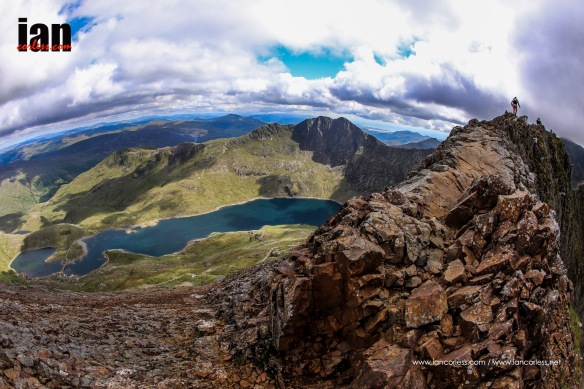
Ehed amser : time flies. It’s hard to believe that it’s once again time for the first race in the year in the UK Skyrunning Series. This is the third consecutive year that Skyrunning UK kicks off with the V3K. The race celebrates its 5th edition and there is no better way for the local Skyrunning aficionados to test their training and form than on this challenging and stunning course. What lies in store for the 234 entrants on June 18th? Well hopefully some clement spring weather although weather conditions can be very changeable. One thing is for sure, the course will take competitors over 53km of grassy fells, rocky mountainous terrain and up and down the Welsh 3000s – in all 15 (or 14) peaks over 3000ft. A Welsh roller-coaster ride across the Snowdon Massive, Glyderau and Carneddau taking in some of the most scenic and picturesque landscapes of the British Isles. The Race Director Kirsch Bowkler adds “If weather conditions dictate we will divert away from Crib Goch”. The latter is probably the most technical part of the course, a knife-edged arête in the Snowdonia National Park in Gwynedd. The name means “red ridge” in the Welsh language.
So what times are this year’s contenders looking to beat? Gareth Hughes won the 2015 edition in 7:34:11 and Sarah Ridgeway won the ladies’ race in 9:22:13. And by the looks of it, these year’s podium contenders look very promising.
In the male field, Shane OHLY is well-known in local Skyrunning circles. Shane, an elite and experienced navigator and climber but also race director of UK Skyrunning events, will be running on very familiar terrain. Based in the Lake District, Shane’s training has been very race-specific although in terms of volume he feels he could have done more “The sad reality is that I’ve been spending potential training time organizing events! Honestly, I am going for the experience”. We’ll see …
Charles SPROSON is another experienced fell-runner and navigator to look out for. Charlie also lives in the Lake District and organizes events. He is very familiar with the terrain and like Shane will do well on technical sections of the course. As a navigatorw and LSU coach he has plenty of opportunities to put his mountaineering and fell-running skills into practice in the Lakes. “I’ve been running over Striding Edge on a regular basis throughout the winter and into the spring, steadily bashing away at going up and down mountains and ascending Pinnacle Ridge with clients”. With the amount of time he spends on the fells, Charlie is definitely a podium contender next week.
Defending champion Oli JOHNSON from the Dark Peak Fell Runners and a member of Team Inov8 UK is not new to the V3K. Last year in 2015 he finished first in ex aequo with Gareth Hughes in a winning time of 7:34:11. He will be back to better that record no doubt and keep the male field on their toes. Like Shane and Charlie, he is an experienced and talented fell runner and orienteer. Oli COMPLETED THE Goretex Transalpine-Run in 2015, a multi-stage event covering 293km over 8 days in a time of 31:17:28 finishing 11th overall and 4th in his category. He has thus proven that he can stand his own against international competition on hard technical terrain.
Kim COLLISON
Kim placed 20TH in the IAU Trail World Championships in Annecy in 2015 over 85km and 1st in the Lakeland 50 in 2014 with a time of 7:48. Victory at the Mourne Skyline MTR and a string of other high profile results arguably elevates Kim as the hot favourite of the 2016 V3K.
Richard ASHTON
Richard has completed a few Skyrunning events and long-distance events– amongst other Transvulcania, Lavaredo Ultra Trail and the Peak Skyrace (3rd in 2015). Richard is also a keen mountaineer and ice-climber.
In the Ladies’ race local defending champion Sarah RIDGEWAY will be back after her victory last year in 9:22:13 where she placed 9th overall. Sarah will be looking to defend her title. This Welsh runner is based in Snowdonia, her back garden so to speak and will be running on home ground. Sarah has performed well in shorter local races and gets plenty of training preparing and coaching athletes for Skyrunning events. Sarah excels on technical terrain and placed third in the grueling and gnarly Glencoe Skyline last year behind Emilie Forsberg and Jasmin Paris in a time of 9:21:44.
Beth PASCAL is a challenger Sarah Ridgeway will need to look out for. Beth has been doing very well in ultra and extreme multi-stage events, Beth was 1st lady and 4th overall in the Montane Spine Race in 2015, 2ND in the Lakeland 100 in 2014. Beth certainly has the stamina and gutsiness required to aim for a top podium place in the V3K and potentially set a new course record. Beth will be attempting a podium after her recent victories over 50km at the Keswick Mountain Festival where she literally smashed the course record to finish in a winning time of 5:21, thus finishing 7th overall and at the Highland Fling in May, a 53-mile trail race following the West Highland Way set to be the British Trail Championships 2016. Although it was a much flatter and faster race than what Beth is used to, her speed work and tempo runs paid off and she finished well ahead of her rivals in 7:52:55. With her natural ability and stamina to perform well on mountainous, rocky terrain and over very long distances as well as her regular training in Snowdonia and the Peaks, she stands a good chance of setting a new course record and claiming victory next weekend.
Ciara DOWNES is relatively new to Skyrunning but this lady coached by Robbie Britton placed well in Marathon des Sables 2016 with a ranking of 243 overall in a field of 1200 participants and will be testing her fell-running skills on the V3K course. Ciara has had more experience of flatter and faster trail running on less technical terrain but who knows?
And so the countdown begins to the first of the Skyrunning UK events as the competitors taper towards what promises to be a very exciting race weekend
Pob Iwc! Or for those who don’t speak Welsh, Good Luck and may there be Less Cloud, More Sky!
This is Episode 113 of Talk Ultra and We have a show with a selection of audio from participants who took part in the 8-day, 400km Cape Wrath Ultra (Ita Marzotto, Jenny Davis, Louise Watson, Luke Robertson, Richard Beard and Ted Kristensson)and the 190-mile, single stage, Northern Traverse (Angela White, Clare Turton and Eoin Keith). We have the news and Niandi Carmont co-hosts.
NEWS
COMRADES
Men
David Gatebe 5:18:18 new record
Ludic Mamabolo 5:24:05
Bongmusa Mthembu 5:26:39
notable 8th – Max King 5:37:27
Charge Bosman 6:25:55
Caroline Wostmann 6:30:44
Kajsa Berg 6:39:04
2 Americans in the top-10, Sarah Bard 4th in 6:42 and Colleen De Reuck (aged 50) 7th 6:50:21
Andy Jordan 25:49 ahead of Barry Miller 27:22 and Ian Thomas 27:43
Cass Chisolh, 1st lady and 4th overall 29:25, Katherine Ganly 31:49 and Georgina Harrison 32:05
Rob Young – marathonmanUK has started his Transcontinental run record (2766 miles) on May 14th. He started with an 81 mile day 1…. He is now in Missouri HERE
Damian Hall set a FKT for the South West Coast Path in the uk – 10 days, 15 hours and 18 minutes
Francois d’Haene set a new FKT on the GR20 in Corsica, breaking the old record by 1 hour – 31 hours 6 minutes
Cape Wrath Ultra HERE
Marcu Scotney 41:40:50
Thomas Adams 45:59:20
Pavel Paloncy 52:22:38
Ita Marzotto 66:53:12
Louise Staples 68:02:02
Laura Watson 68:42:11
INTERVIEW audio from Cape Wrath Ultra
Northern Traverse HERE
Eoin Keith 51:38:15
John Knapp 57:08:29
Tim Laney 58:41:00
Anne Greeen 86:34:31
Hisayo Kalahari 87:57:54
Angela White 88:27:07
Angela’s charity:
Follow at: http://pushboundaries.co.uk/
Donate at https://www.justgiving.com/PushingBoundaries/
Suunto introduces its next generation multisport solution with a new family of GPS watches and a renewed Suunto Movescount.com
Press Release by Suunto
The long-awaited next generation of Suunto multisport watches is soon here. Today, Suunto introduces Suunto Spartan Ultra, a premium multisport GPS watch for athletes and adventurers. At the same time, Suunto is renewing its online sports service Suunto Movescount with a range of new features and improvements.
“People have been asking about what’s next after Ambit3 for quite some time now,” notes Sami Arhomaa, Performance business unit director at Suunto. “So it’s a great pleasure to announce our next generation Suunto Spartan solution for athletic and adventure multisport.” The solution comprises of the Suunto Spartan Ultra watches, a renewed Suunto Movescount service and mobile applications for both iPhone and Android.
“In a fast-paced world with an overwhelming flood of information, athletes need better tools to determine how to efficiently achieve their goals,” explains Arhomaa. “People who are driven by the passion to progress want to know if they are doing things right. More and more people are reaching out to communities of like-minded people for guidance and inspiration. With the Spartan solution, we are building on the insights we’ve gained through our constant dialogue with athletes and coaches around the world. The new Suunto Spartan multisport solution will offer customers new community powered tools to progress. We are convinced these tools will help them progress beyond their expectations.”
Suunto Spartan Ultra – the GPS watch for athletic and adventure multisport
Adventure proof
Suunto Spartan Ultra watches are hand-made in Finland and built to last in any conditions. Water resistant to 100 meters, the watches sport an extremely durable color touch screen with a wide viewing angle and great visibility in bright sunlight. The watch is built with a glass fiber reinforced polyamide casing, sapphire crystal glass and a grade5 titanium or stainless steel bezel. For your multisport adventures, Suunto Spartan Ultra offers guided route navigation, barometric altitude with FusedAlti™, a digital compass, as well as a competitive battery life.
Sports expertise and insights
The Suunto Spartan Ultra is a true multisport watch. With GPS, FusedSpeedTM, heart rate measurement and in-built accelerometer, it accurately tracks your training and provides versatile insights on your progress for a multitude of sports. It offers dozens of preset sport modes, e.g. for triathlon, swimming, cycling, running, adventure racing, and snow sports – including modes for specific types of training, racing and activities. If you are a runner, for example, you can choose a basic running mode that offers the essential information for running, or an interval running mode, a trail running mode, and more. The Suunto Spartan Ultra also provides you visual overviews on your training load, rest&recovery status and your progress to help you plan your training. With the watch you can also track your feeling after each workout.
In addition, Suunto Spartan Ultra monitors your overall activity 24/7 with daily and weekly steps, calories and active time. Pair the watch with Suunto Movescount App to get smart mobile notifications. The watch will also keep you up to date on your personal bests by sport.
Community powered progress
In connection with the launch of the Spartan solution, Suunto deploys big data methods for turning the community generated sports data into valuable training insights. Suunto has been analyzing tens of millions of endurance sport sessions to provide both existing and new consumers with answers to the questions like where should you train and how are you progressing. The first tool utilizing this data are sports-specific heatmaps, available from today in Suunto Movescount. Later, the toolset using the data will grow with tools for peer group comparison and insights.
The Suunto Spartan Ultra collection includes four models: Suunto Spartan Ultra All Black Titanium, Suunto Spartan Ultra Stealth Titanium, Suunto Spartan Ultra White and Suunto Spartan Ultra Black – each available with or without Suunto Smart Sensor for heart rate monitoring. The RRP price of the Suunto Spartan Ultra Titanium will be £585 and Suunto Spartan Ultra £545. Prices with a HR sensor are £40 higher.
Further details of the product will be released in July 2016. The watches become available in August, and the solution will continue to grow in functionality via SW, service and application updates during the remaining year.
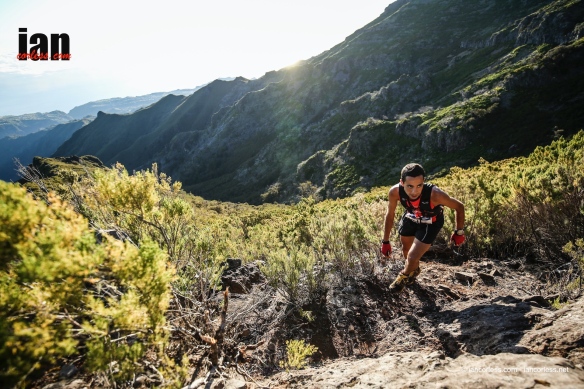
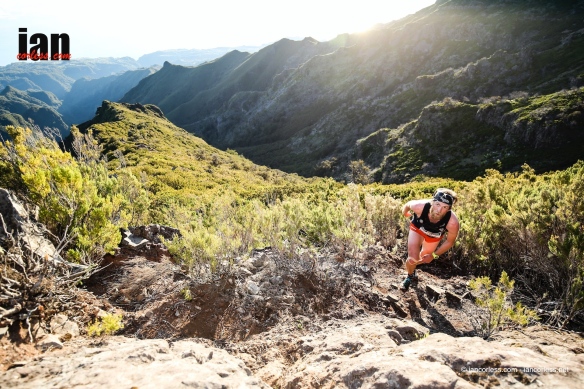
The 2016 Skyrunner® World Series arrived in Madeira, Portugal for the Ultra Skymarathon Madeira (USM) – a tough and challenging 55km ultra with 4000m of vertical gain. The 2016 edition had a minor change to 2015, an extra section that added more technicality and potentially more time… could the times of Ricky Lightfoot and Stevie Kremer be beaten?
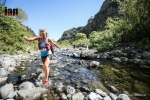
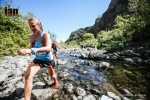
The USM course is a unique one. Weaving up and down mountains, around beaches, through dense undergrowth, up a riverbed and of course plenty of climbing and descending. It’s not your ordinary Skyrunning course!
Departing the start line at 0600 on the dot, the runners disappeared down a darkened lane with only head torches for company, it was going to be a great day – the sky was clear and the stars were sparkling in the sky. Just 1km to warm up and then a climb of 1400m straight up to the highest point of the island – pure Skyrunning.
The runners climbed and a section of via ferreta was the prelude to the new course addition, instead of following the stone steps to the off-path climb to the summit, runners dropped down once again to take in a technical descent and ridge climb. A final push to the summit; It wasn’t easy going. The sky was blue, the sun was beating down but despite the picture postcard, it was hard graft.
Andre Jonsson (Sweden) and Dimitrios Theodorakakos (Greece) were the first to appear. The contrast between the two striking, Andre is tall and with an ultra runner beard. Dimitrios is stocky, well built and all power.
They matched each other step-by-step. A string of runners appeared all looking relatively calm and relaxed considering the severity of the course – it was early days!. At the summit of Pico Ruivo the ladies arrived, first was Anna Frost, closely followed by Gemma Arenas.
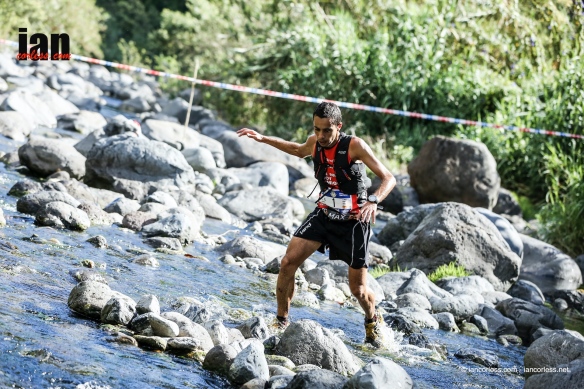
Running the ridges and several more climbing sections, the front of the race didn’t change until a decisive phase around the 36km mark. Climbing from the sea and beach, Andre Jonsson continued to lead looking strong. However, Dimitrios looked to be struggling a little and Cristofer Clemente was closing. After 5km of ridge running and a technical descent, a riverbed with boulder hopping awaited. Cristofer made his move and passed Dimitrios and went in pursuit of Andre.
The final long climb needed to be ascended and descended before the finish line and here the podium changed. Andre crumbled after leading the race all day:
“I had felt great, running within myself and in the riverbed I cooled down but then in the early section of the final climb I just had no energy, the heat hit and that was it!
Cristofer took the lead, opened a gap and won the race by a clear margin. Dimitrios held on for 2nd and local runner, Luis Fernandes went past Andre to take 3rd.
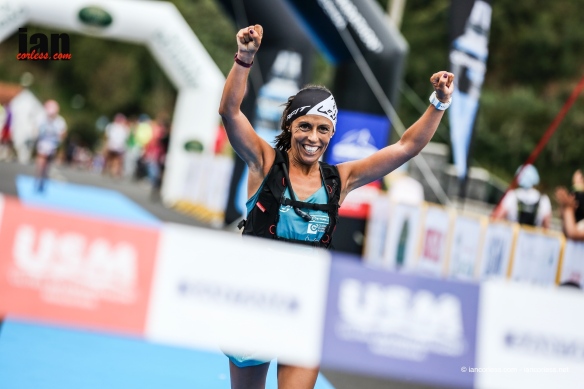
Gemma Arenas was almost in another race by the time the riverbed came and the final climb she held that margin to take a convincing victory. Anna Frost who had lead the race for much of the day was relegated to 2nd by Gemma but then faded to 3rd – a strong performance from US based Hillary Allen reeled ‘Frosty’ in and she sealed 2nd. Frosty said post race:
“I really gave it everything today, on the ups and the downs, I just didn’t have that extra oomph but what a great (and tough) course!”
The 3rd edition of the Ultra Skymarathon Madeira has been a great success. Despite a potentially more difficult course, both the men’s and ladies records were broken! The top 2 men and top 5 ladies all broke the previous records. This is extremely significant and reflects the quality of the male and female line-up – world-class runners pushing hard for victory and resulting in fast times. João Canning Clode, USM co-director and PR commented, “We didn’t expect to break the standing records but given the good weather this year and the strong competition, it was a welcome surprise.
Madeira is an amazing island with a tough and challenging course. The future looks bright for this new addition to the Skyrunner® World Series.
Results: (official times to follow)
Cristofer Clemente 6:00:28
Dimitrios Theodorakakos 6:09:06
Luis Fernandes 6:11:34
Gemma Arenas 6:59:51
Hillary Allen 7:13:12
Anna Frost 7:17:00
Cristofer Clemente now takes over the Ultra Series ranking lead for the men and Gemma Arenas for the women. Look out for the next Ultra Series race with the new High Trail Vanoise in the renowned ski resort of Val d’Isère, France on July 10.
Later this month the Skyrunner® World Series will head for North Eastern Italy with the Santa Caterina VK and the Livigno SkyMarathon® on June 24 & 26.
Skyrunner® World Series is supported by Migu Xempower, Alpina Watches, Compressport, Salomon and Scott Sports.
iancorless.com is the official photographer and media partner for the Skyrunner®World Series Follow on:
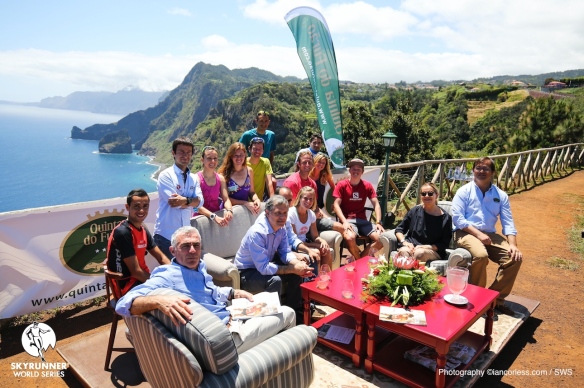
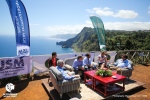
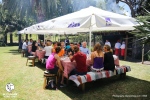
The Ultra SkyMarathon Madeira #USM2016 athlete presentations took place today at the stunning hotel of Quinta do Furão followed with a traditional lunch in the gardens of the restaurant.
Importantly, 16 athletes have been selected for trackers during the race and you will be able to follow LIVE as the race unfolds using this link HERE.
The selected athletes are as follows:
Anna Frost, Ester Sofia Alves, Gemma Arenas, Kristina Pattison, Cometi Anna, Francesc Sole, Remigio Huamán, André Jonsson, Luís Fernandes, Nuno Silva, DimitriosTheodorakakos, Philipp Reiter and Cristofer Clemente Mora.
You can read a pre-race report HERE and find out more information on the official Skyrunning World Series website HERE.
Skyrunner® World Series 2016
Skyrunner® World Series is supported by Migu Xempower, Alpina Watches, Compressport, Salomon and Scott Sports.
iancorless.com is the official photographer and media partner for the Skyrunner®World Series Follow on:
A runner loses heat via sweating. This sweat evaporates on the skin which dissipates heat by convection, assuming that humidity is low enough. Heat stroke will occur when the bodies thermoregulation is overwhelmed.
Overwhelming the body (in simplistic terms) may come from excessive environmental heat (running in a hot climate), running too fast or too hard, being dehydrated, a lack of free flowing air that will help cool the body or a lack of water to splash on the body to cool down.
Running and ultra running really is booming in Portugal. Carlos Sa and Ester Alves amongst others are paving the way. Madeira, an island in the Atlantic Ocean lies west and slightly south of mainland Portugal and it is an incredible natural landscape that cries out for challenging races. Madeira is of volcanic origin with extremely rugged topography, as such, it’s the perfect location for a Skyrunning race.
The USM is a technical mountain race which consists of steep slopes and trails covering a distance of 55km and 4000m of vertical gain. It is no ordinary race and one that combines mixed elements in a wonderful natural playground for the adventurous runner. Comprised of passages which require technical climbing expertise of grade 2, stunning mountain scenery, mountains, sea cliff landscape plus the addition of an up river boulder hopping scramble; yes, the Ultra SkyMarathon Madeira is a unique race.
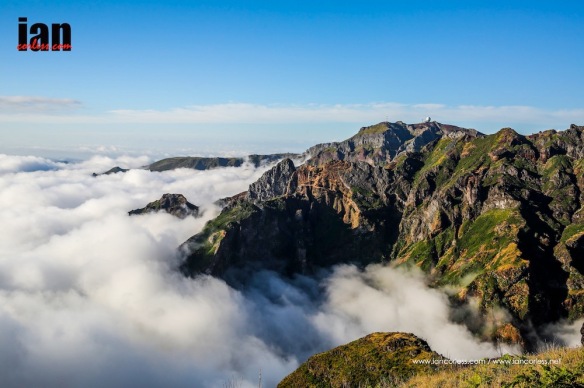
Starting in the town of Santana, a northern municipality of Madeira Island,the runners soon head up a climb of 1400m to Encumeada Alta (1750m). Cloud inversion happens often here and suddenly runners can feel as though they are floating. In the distance as altitude changes, islands appear in and out amongst a sea of clouds.
“The views when the mist lifted were incredible,” said Ricky Lightfoot, 2015 champion. “It was almost as though I was running in another race.”
“‘USM is one of, if not the hardest race I have ever done,” said US based mountain runner Stevie Kremer. “The terrain is relentless and conditions underfoot just make it so much harder than others.”
For the first time, the island of Madeira, Portugal, will feature on the Skyrunner® World Series. The 55 km course with a brutal 4,000m vertical climb will welcome runners from across the globe up for the challenge.
Anna Frost, fresh from a 7th place at Transvulcania is just one of the competitors who loves skyrunning and island-hopping. Speaking to Lauri van Houten she says:
“This place is incredible. The diversity of nature, the amount of vertical that you get immediately from the sea is breath-taking. The colour of the water is like nothing I have ever seen. I have stopped so many times to say “wow”! The organisers and community runners have made me feel at home already. I don’t want to ever leave…”
Frosty will be joined by Americans Hillary Allen, who is looking strong after her 5th place in Transvulcania and Kristina Pattison who is now fit and fired up to compete in Madeira after a recent illness and a a late withdrawal from Transvulcania.
Strong competition will come from Spaniards Gemma Arenas (6th) and Anna Comet, who placed third overall last year in the SWS.
Cristofer Clemente from Spain, second on the 2015 SWS Ultra ranking and in last year’s race, is among the men’s favourites with new-entry Remigio Huaman from Peru who finished 7th at Transvulcania. The line-up includes Philipp Reiter from Germany who has been missing from racing for some time, Jan Bartas from the Czech Republic, Dimitrios Theodorakakos from Greece, Pau Bartolo as well as competitors from Japan Skyrunning.
Nuno Silva and Ester Alves, 2015 Portugal National Champions, will no doubt perform well on home ground after placing respectively 3rd and 2nd last year.
Notable absentees include Mira Rai with a stress fracture and Paul Hamilton who will sadly miss the whole season. Also, Alicia Shay and Chris Vargo are unable to race (they have had to return to the USA) even though they travelled to Madeira directly after two great runs in La Palma at Transvulcania Ultramarathon.
Other runners to watch out for:
Elisabet Bertran
Anna Strakova
Luis Fernandes
Martina Valmassoi
Franch Pons
André Jonsson
Rick Floyd
André Rodrigues
Hidenori Fukuda
Lucia Franco
Santiago Soria
Zuzana Urbancova
Tiago Silva
Hana Krajnik
Ron Braz
Sachiko Kotani
Albert Herrero
Yukari Fukuda
Mindaugas Grigas
The Madeira Ultra SkyMarathon®, now in its third year, perfectly embodies the sea-to sky concept pioneered by skyrunning – with some very technical stretches up to Grade II, and a via ferrata sections just below the island’s highest point at 1,861m altitude.
The 2016 Skyrunner® World Series is brought to you with a new management company, Geneva based SkyMan SA
SkyMan SA is pleased to present a new Main Partner, Migu Xempower, a Chinese exercise and health management platform which also counts a rich experience in organising marathons, city and mountain races for millions of runners.
The well-established, Sky, Ultra and Vertical format is joined by the Extreme Seriespresented by Alpina Watches, which more than ever expresses the true spirit of skyrunning defined not only by distance, but vertical climb and technical difficulty.
Skyrunner® World Series is supported by Migu Xempower, Alpina Watches, Compressport, Salomon and Scott Sports.
iancorless.com is the official photographer and media partner for the Skyrunner®World Series Follow on:















































 Skyrunning UK is set to reach new heights in 2016 for what will be the biggest year yet. Now in its third year, the calendar has grown and with it, so have the races. The V3K kicks off the 2016 calendar and like many races in the series, it’s a sell out!





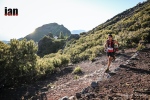
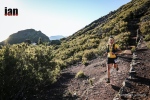
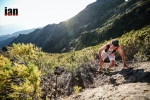
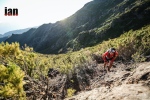
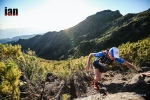
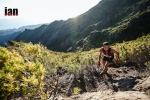
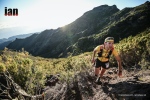
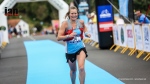
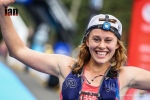
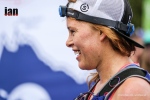

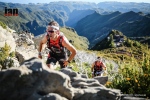
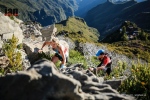
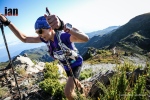
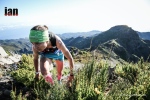
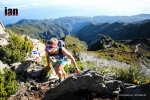
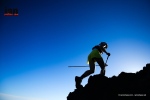
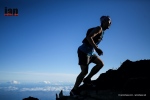
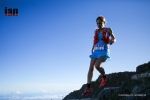
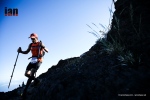
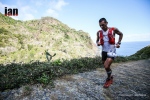
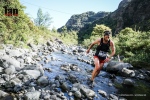
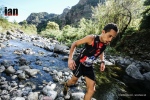




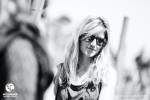

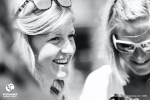













 Frosty will be joined by Americans Hillary Allen, who is looking strong after her 5th place in Transvulcania and Kristina Pattison who is now fit and fired up to compete in Madeira after a recent illness and a a late withdrawal from Transvulcania.
 Strong competition will come from Spaniards Gemma Arenas (6th) and Anna Comet, who placed third overall last year in the SWS.
 IAN CORLESS