Early in 2026, Shane Ohly made an announcement that Ourea Events would cease trading.
With events such as The Dragons Back Race, Cape Wrath Ultra, Northern Traverse and Skyline Scotland, this news was a bombshell to the UK and worldwide run scene.
The dust has settled and while Ourea Events will not emerge from the ashes, the future of Dragons Back and Northern Traverse has been secured by Ultra-X, and Skyline Scotland will be saved by UTMB. The Cape Wrath Ultra will disappear, but a new event, WRATH (by the SPINE team) will see a non-stop race in 2027.
I catch up with Shane and discuss what has been a very difficult time.
The statement from Shane Ohly announcing that Ourea Events has ceased trading reads, on the surface, like a simple apology paired with an explanation. But underneath that, it reveals something more complex. It is the end of a business in its current form, the exposure of a fragile economic model, and a moment of uncertainty for everyone tied to these events.
For Shane and the company, this marks a decisive turning point. Ceasing to trade is not a pause or a scaling back. It is an acknowledgment that continuing would likely make the financial situation worse.
Regrettably, the current trend in entries for 2026 clearly indicates that the financial situation will only gradually deteriorate further this year. Therefore, it has become evident that continuing to trade is neither fair nor reasonable, as it risks increasing the overall debt owed to creditors, participants, and suppliers.
The reference to “professional advisors” strongly suggests that some form of insolvency process is underway, where financial and legal priorities begin to outweigh personal control. At that stage, decisions are no longer entirely in the hands of Shane, the founder. They are guided by what is fair and lawful for creditors as a whole.
Ourea Events was not a faceless operation. On the contrary. Ourea was built over fifteen years, with a strong reputation in the trail running world and a loyal international following. When something like this ends, it is not just a balance sheet that collapses. The tone of the statement reflects that. It does not read like a defensive corporate message. It reads like someone who knows people have trusted them, financially and emotionally, and feels the impact of that trust being broken. It is identity, relationships, and a sense of responsibility. You only need to turn to social media, you will see the support for Shane and Ourea. Equally, one has to acknowledge, those who have potentially lost money, are far more questioning and scathing.
At the same time, this is not necessarily the end of the events themselves. There is a careful but important distinction in the wording. The company is ceasing to trade, but there is hope that the events may continue “under a different structure or ownership.” That suggests that what Ourea created still has value. Races like the Dragon’s Back Race or Cape Wrath Ultra are not easy to replicate. They carry brand recognition, proven demand, and a distinct identity. In practical terms, that means they could be sold, licensed, or revived by another organiser. If that happens, what survives is the idea and the experience, even if the original company does not.
HARD TRUTHS
For participants, however, the situation is far more immediate and uncertain. The key issue is money already paid. Entry fees for these kinds of events are often substantial and are usually paid long in advance. When a company ceases trading under financial distress, those participants effectively become unsecured creditors. That is a technical term, but the implication is simple. They are in line behind any secured lenders, and there is no guarantee of getting their money back. However, if participants have payed by credit or debit card with fees over 100.00 UK pounds, there may be a possibility to recoup payments via “Section 75 of the Consumer Credit Act 1974: This makes the credit card provider jointly liable with the retailer if a purchase goes wrong (e.g., goods not received, faulty, or company goes bust).”
The wording of the statement reflects this reality. It avoids promising refunds and instead speaks about trying to “deliver value.” That choice of language matters. It leaves open a range of outcomes, from partial refunds to the possibility of entries being honoured by a new organiser, or credits toward future events. It also signals that a full refund for everyone is unlikely. Even in the best case, any resolution will take time. These processes do not move quickly, and participants are left in a difficult position, waiting without clear answers.
If another company steps in, there is a chance that existing entries could be recognized in some form. That might mean a transfer, a discount, or priority access. But it depends entirely on whether a deal is reached and what a new organiser is willing to take on. There is no certainty in that outcome.
Stepping back, the situation says a great deal about the wider endurance event industry. Ourea’s explanation outlines a sequence of pressures that, taken together, became unsustainable. Before the pandemic, the business was profitable, even if modestly so. Then COVID-19 removed revenue entirely for an extended period while costs and obligations remained. That alone would have been difficult to recover from. But it was followed by Brexit, which significantly reduced international participation, a key part of the customer base. At its peak, half of some events’ participants came from abroad. Losing a large portion of that audience is not a temporary dip. It is a structural change.
On top of that came inflation and the cost-of-living crisis. Event budgets are set far in advance, and prices cannot always be adjusted quickly. When costs rise by around 20 percent but entry fees lag behind, margins disappear. What emerges from all of this is a business model that depends heavily on stability. It relies on predictable demand, steady costs, and a continuous flow of advance payments. When those conditions break, the model struggles to adapt.
The decision to cease trading now, rather than continue and risk accumulating further debt, is significant. It limits the damage, even if it does not prevent it. Continuing in the hope that things might improve can sometimes make the eventual outcome worse for everyone involved, Shane certainly eludes to this in his wording. In that sense, this is a controlled stop rather than a collapse at the last possible moment.
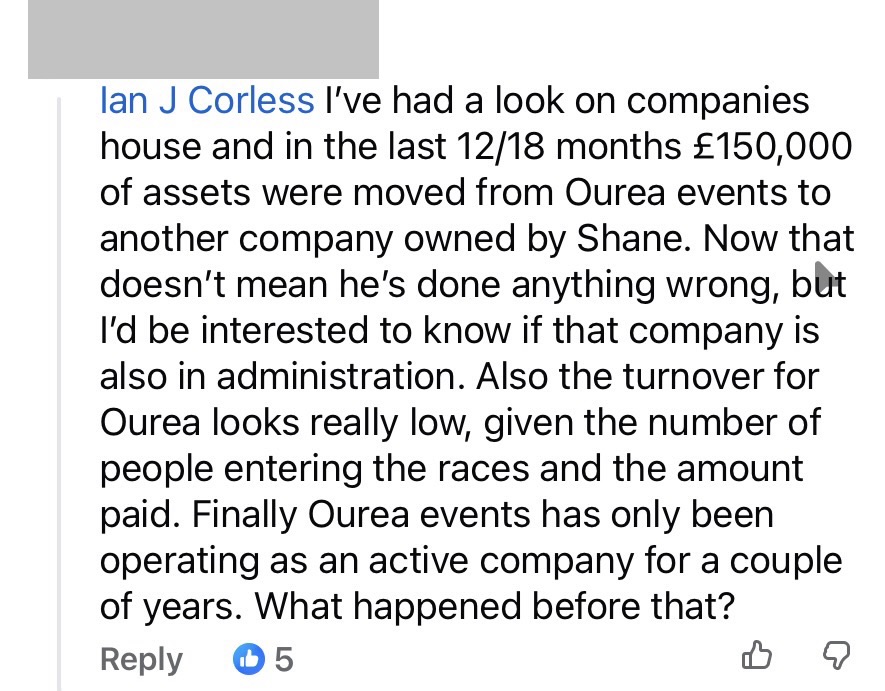
There is also value in the transparency of the explanation, however, for those who have paid money, there is still a great deal to be clarified and there are many questions, particularly when several have referenced a second company – OUREA EVENTS HOLDINGS LIMITED – which has Shane Ohly as Director – eager participants have researched this company, and on appearance, has a balance of 150,000 UK pounds, 31st Dec 2024. Now of course, there is no context here and I have no understanding of the implications of this.
Shane does not shift blame in his statement onto a single factor or avoid the financial reality. Instead, he lays out the combination of events that led here. For participants, that does not replace lost money or cancelled plans, but it does provide context. It makes clear that this was not a sudden failure or a single bad decision, but a gradual tightening of pressure over several years.
Still, the negatives are real and immediate. Participants may lose money, and even if they do not, they lose certainty. Training plans, travel arrangements, and personal goals built around these events disappear overnight. Trust is also affected. Endurance events often depend on participants committing early, sometimes a year or more in advance. Situations like this make people more cautious, which in turn makes the business model even harder to sustain.
There are also ripple effects beyond the runners themselves. Suppliers, local communities, and small partners who depend on these events lose income. Volunteers and staff lose opportunities. What looks like a single company closing is, in reality, a small network being disrupted.
We are especially aware of participants who have already paid race entry fees for our events. By opting to cease trading at this stage, our goal is to maximise the likelihood that the events will continue under a differentstructure or ownership.
Looking ahead, the most likely outcome is not a simple disappearance, but a reshaping. Could Ourea reappear in 1-year using Phoenixing? – the same business or directors trade successively through a series of companies which liquidate or dissolve leaving debts unpaid – Basically, Shane and Ourea could rise from the ashes – “…cease trading and allow the business to undergo a reorganisation” If that is a plan, it better be handled very, very delicately. “The law allows owners, directors and employees of insolvent or dissolved companies to set up new companies to carry on a similar business. This is as long as the individuals involved are not personally bankrupt or disqualified from acting in the management of a limited company.” – GOV.UK
Some of these events may return under new ownership, potentially at higher prices and with more conservative structures. Others may not come back at all if they are too complex or costly to run sustainably. Across the industry, there may be a shift toward more cautious growth, more realistic pricing, and perhaps a reconsideration of how much risk is placed on participants paying far in advance.
Ourea Events, as it has existed, is likely finished. In the end, this moment sits somewhere between an ending and a transition. But what Shane and Ourea created still has value, and there is a real possibility that parts of it will continue in a different form. For now, though, the dominant reality is uncertainty.
For Shane, it is the closing of a long chapter. For participants, it is a waiting game with no guaranteed outcome. And for the wider community, it is a reminder that even well-loved and well-run events are not immune to broader economic forces.
This is Episode 113 of Talk Ultra and We have a show with a selection of audio from participants who took part in the 8-day, 400km Cape Wrath Ultra (Ita Marzotto, Jenny Davis, Louise Watson, Luke Robertson, Richard Beard and Ted Kristensson)and the 190-mile, single stage, Northern Traverse (Angela White, Clare Turton and Eoin Keith). We have the news and Niandi Carmont co-hosts.
NEWS
COMRADES
Men
David Gatebe 5:18:18 new record
Ludic Mamabolo 5:24:05
Bongmusa Mthembu 5:26:39
notable 8th – Max King 5:37:27
Charge Bosman 6:25:55
Caroline Wostmann 6:30:44
Kajsa Berg 6:39:04
2 Americans in the top-10, Sarah Bard 4th in 6:42 and Colleen De Reuck (aged 50) 7th 6:50:21
Andy Jordan 25:49 ahead of Barry Miller 27:22 and Ian Thomas 27:43
Cass Chisolh, 1st lady and 4th overall 29:25, Katherine Ganly 31:49 and Georgina Harrison 32:05
Rob Young – marathonmanUK has started his Transcontinental run record (2766 miles) on May 14th. He started with an 81 mile day 1…. He is now in Missouri HERE
Damian Hall set a FKT for the South West Coast Path in the uk – 10 days, 15 hours and 18 minutes
Francois d’Haene set a new FKT on the GR20 in Corsica, breaking the old record by 1 hour – 31 hours 6 minutes
Cape Wrath Ultra HERE
Marcu Scotney 41:40:50
Thomas Adams 45:59:20
Pavel Paloncy 52:22:38
Ita Marzotto 66:53:12
Louise Staples 68:02:02
Laura Watson 68:42:11
INTERVIEW audio from Cape Wrath Ultra
Northern Traverse HERE
Eoin Keith 51:38:15
John Knapp 57:08:29
Tim Laney 58:41:00
Anne Greeen 86:34:31
Hisayo Kalahari 87:57:54
Angela White 88:27:07
Angela’s charity:
Follow at: http://pushboundaries.co.uk/
Donate at https://www.justgiving.com/PushingBoundaries/
The rain came in through the night, the wind blew and blew. The mist dropped and it would have been easy for Eoin Keith to stay in the back of the van at the Lion Hotel and not attempt the final push for the line… but races of this length are won in the mind.
Eoin Keith is a remarkable athlete (as are all those who participate in this 190 mile journey) but his mind and his strength of will and tenacity are maybe what sets him apart from his peers, he has a capacity to keep going, even when the legs say no.
At one point, it did look as though Eoin may come in in just under 2 days for the 190 miles. Early on day 3 though when about 22 miles from the line, one could see the fatigue.
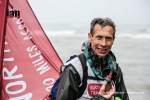
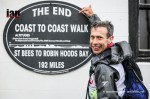
Over the final 10km he really slowed, of course it is to be completely expected. However, as he entered Robin Hood Bay he smiled and ran to the line – job done.
We have an unofficial time of 2 days, 3 hours and 38 minutes – tbc
It’s an incredible, awe-inspiring run. The distance alone is jaw dropping but the weather conditions, terrain and total elevation gain make this a true beast. Attention now turns to all the other runners who are still out on the course and have till 0800 on Saturday to complete the journey.
For now, enjoy Eoin’s finish and I feel a little sad that I can’t be around for the coming days to document the remaining journey; another race beckons…
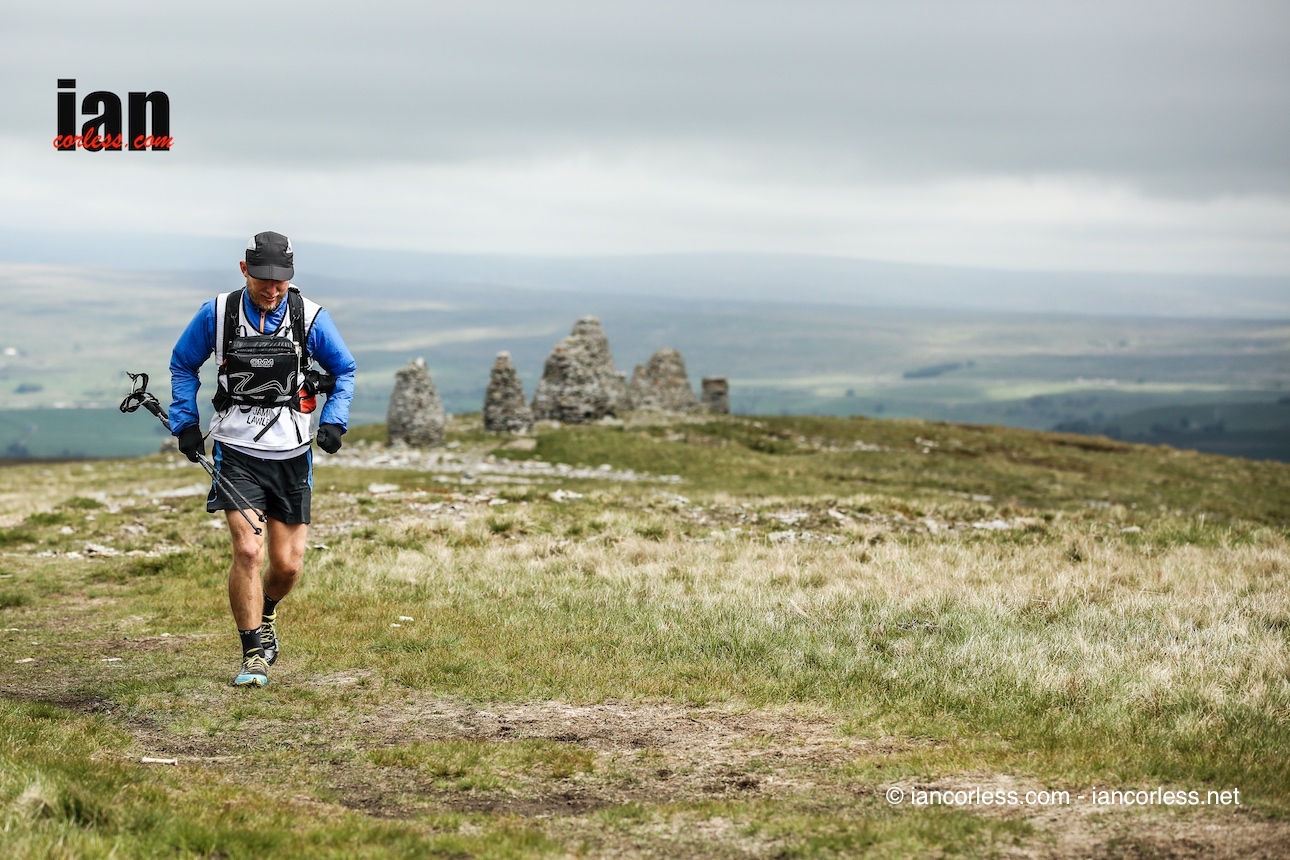
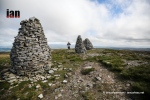
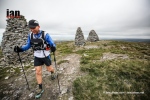
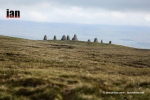
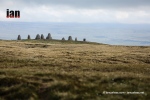
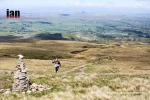
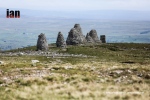
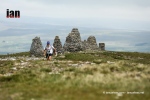
Eoin Keith is on fire, he is blasting through checkpoints and burning up the trail. I tried to catch him this morning and missed by about 10-minutes at Nine Stands. I even expected a faster pace and navigated ahead on the trail so that I could run towards him…. a lack of 3G failed me and when I finally goy an update on my tracker it told me the bad news. Eoin had passed but by the narrowest of margins.
I remained on the higher ground and was blasted by the strong icy winds to John Knapp and Matt Neale come through. The front three are relatively equally spaced at the time of writing (1400 Tuesday), Eoin is probably getting close to Richmond? If only I could get 3G.
The 190 mile journey is taking its toll and runners are now spread over a large area, the last runner is David Taylor (I believe) and he is climbing out of Patterdale – puts Eoin Keith’s pace into perspective.
Day 2 conditions are good with great visibility, just a strong, cold wind to contend with.
Ship will be a key aid station in the coming hours and evening for the back markers, equally, Richmond important for the from markers.
How long will Eoin Keith stay in Richmond? My guess, not long… Robin Hood Bay is starting to appear quite close
St Bees on the west coast of the UK witnessed the start of the 2016 Northern Traverse – a 190km route that crosses the north of England through three National Parks finishing in Robin Hood’s Bay on the east coast. Taking in iconic mountains, valleys, moors and over 16,000 feet of ascent, the Northern Traverse is a truly spectacular and challenging event.
Starting 1000 today, the race has now been going for 12-hours and pre-reace favourite and SPINE winner, Eoin Keith is charging away into the night. It’s been an incredible first day with wall-to-wall sunshine.
As darkness envelopes the fells, it’s head-torch time or sleep time. However, you can follow ‘live’ on trackers and watch the action unfold HERE.
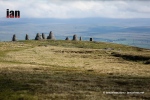
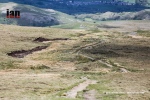
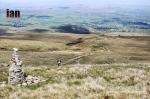
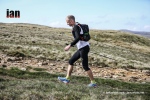
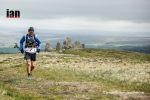
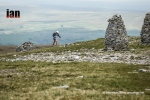
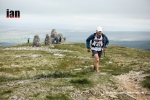
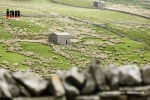
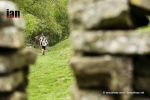
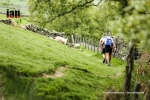
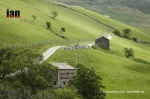
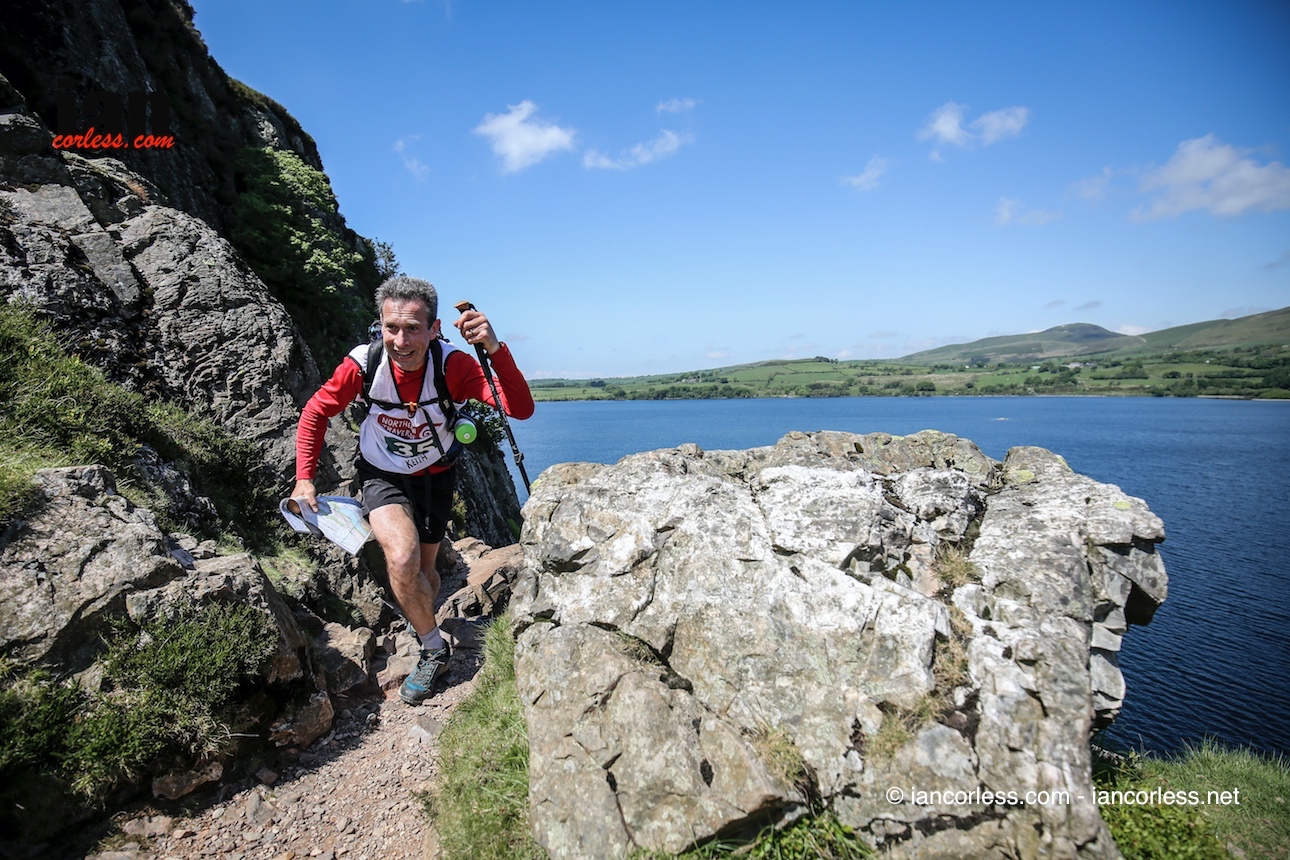
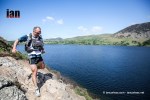
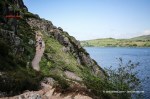
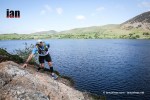
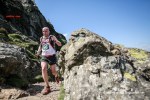
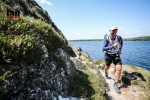
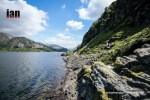
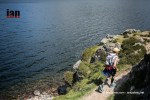
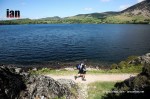
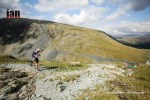
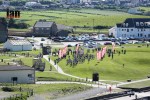
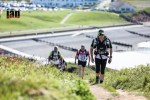
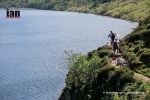
Here are a selection of images from day 1 primary the start in St Bees, Ennerdale, Honister Pass and Patterdale.