Episode 39 – Nikki Kimball, Nick Clark, Alex Nichols, Florian Reichert

TU39

Nick Clark returns for Clarky’s Corner with an update on his Western States and a look ahead to his next 100 in the Grand Slam. We have an interview with Ultra Running legend, Nikki Kimball about her running career and another podium finish at Western States. Alex Nichols talks Mont Blanc Marathon and in Talk Training we speak with Florian Reichert about the transition from road running to trail and mountains.

00:00:00

00:00:45 INTRO 

00:09:21 NEWS

Western States

  1. Pam Smith (La Sportiva) – 18:37:21
  2. Nikki Kimball (The North Face) – 19:21:43
  3. Amy Sproston (Montrail) – 19:25:11
  4. Meghan Arbogast (SCOTT Sports) – 19:30:50
  5. Rory Bosio (The North Face) – 19:52:09
  6. Aliza Lapierre (Salomon) – 20:04:46
  7. Emily Harrison (AdiUltra) – 20:28:40
  8. Denise Bourassa (Patagonia) – 21:44:37
  9. Leila Degrave (Inov-8) – 21:59:26
  10. Abby McQueeney Penamonte – 22:36:29


  1. Timothy Olson (The North Face) – 15:17:27
  2. Rob Krar – 15:22:05
  3. Mike Morton (Allied Van Lines) – 15:45:21
  4. Ian Sharman (SCOTT Sports) – 16:20:25
  5. Dylan Bowman (Pearl Izumi) – 16:32:18
  6. Nick Clark (Pearl Izumi) – 16:56:23
  7. Jesse Haynes (INKnBURN) – 17:44:36
  8. Paul Terranova – 17:56:29
  9. Yassine Diboun (Inov-8) – 18:44:02
  10. Karl Meltzer (Hoka One One) – 18:51:55

00:21:27 CLARKEYS CORNER –Nick Clark ran the 2013 Western States and now lines up for his second 100 in the Grand Slam just a few weeks later. 

Mont Blanc Marathon

Men

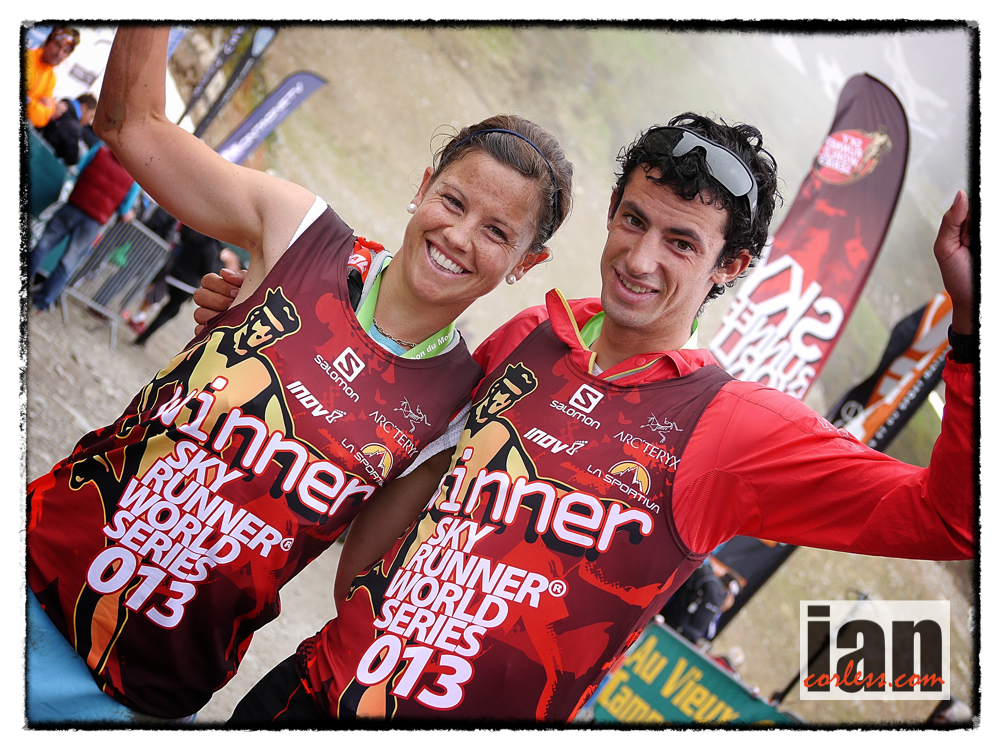
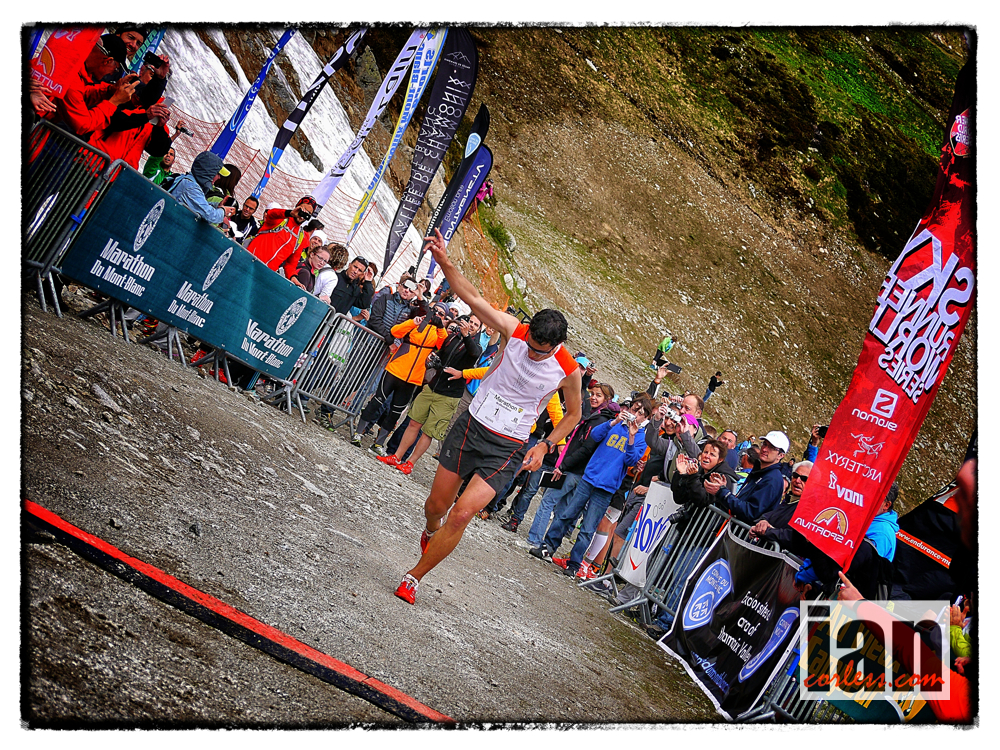
1° Kilian Jornet 3h30’41 NEW COURSE RECORD

2° Marco De Gasperi 3h31’42

3° Luis-Alberto Hernando-Alzaga 3h36’14

Ladies

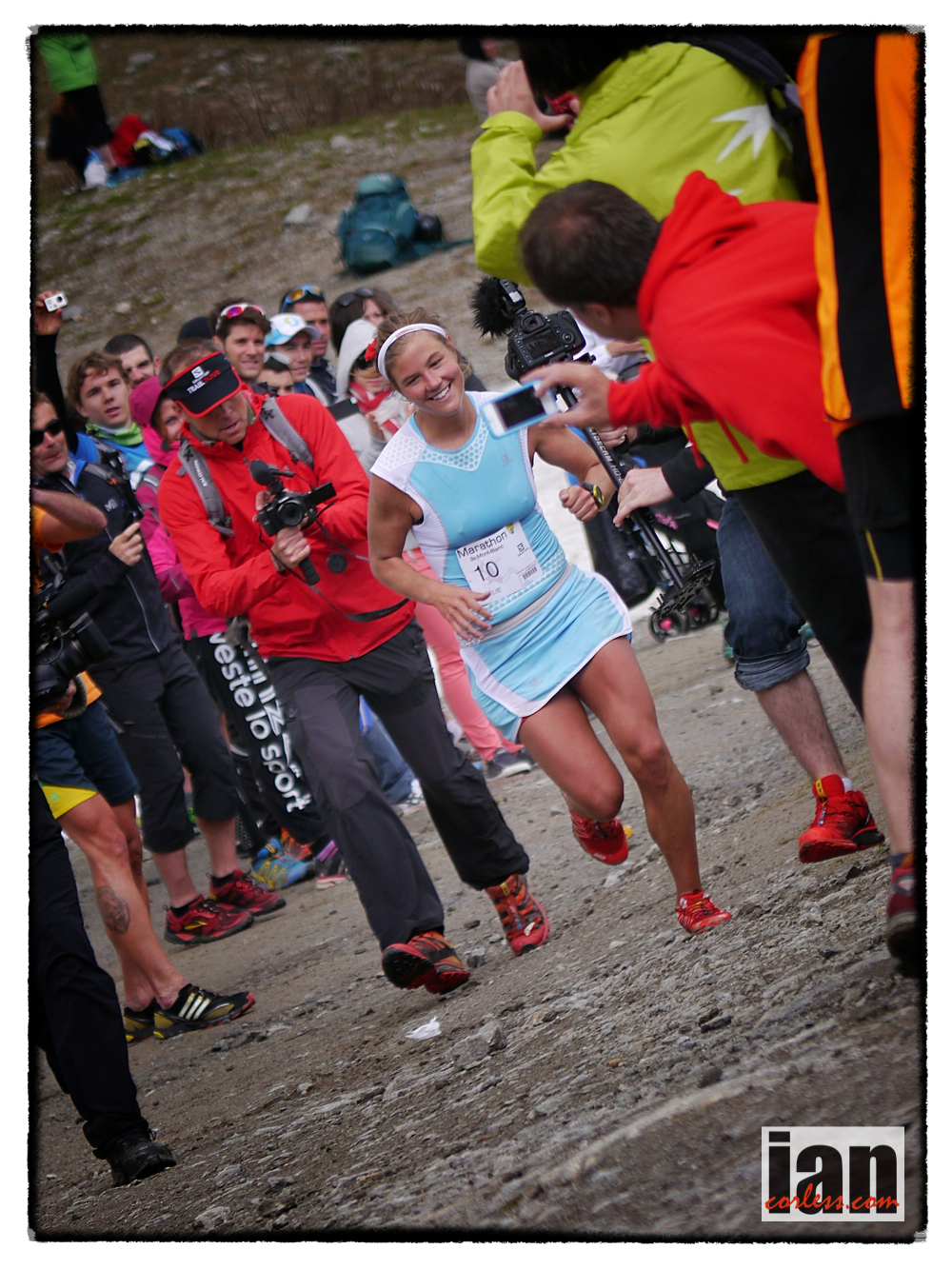
1° Stevie Kremer 4h03’16 NEW COURSE RECORD

2° Emelie Forsberg 4h25’10

3° Céline Lafaye 4h35

00:40:37 INTERVIEW with Alex Nichols

Vetical Kilometer

Men

1. Saul Antonio Padua (COL) – 34’34”

2. Kilian Jornet (ESP) – Salomon – 34’53”

3. Erik-Dagssøn Haugsnes (NOR) – Il Pioner – 35’02”

4. Alexy Sevennec-Verdier (FRA) – Crazyonisag – 35’10”

5. Urban Zemmer (ITA) – La Sportiva – 35’40”

Women

1. Christel Dewalle (FRA) – Team Terre de Running – 41’33”

2. Laura Orgué (ESP) – Salomon Santiveri – 42’53”

3. Antonella Confortola (ITA) – Salomon – 42’55”

4. Emelie Forsberg (SWE) – Salomon – 44’55”

5. Tessa Hill (GBR) – Arc’teryx – 45’39”


Lavaredo Ultra Trail

Mens:

1.         Spehler Sebastien            07:39:35

2.         Wolfe Mike  08:13:47

3.         Geronazzo Ivan     08:14:15


Ladies:

1.         Cheryl Beatty          09.31.09

2.         Federica Boifava  09.54.56

3.         Lizzie Wraith            09.57.14

World Trail Championships

  • Gold – Ricky Lightfoot (Great Britain and NI) 5:36:03
  • Silver – Florian Neuschwander (Germany) 5:45:16
  • Bronze – Julien Rancon (France) 5:54:21


  • Gold – Nathalie Mauclair (France) 6:38:45
  • Silver – Aurelia Truel (France) 6:55:51
  • Bronze – Maria Chiara Parigi (Italy) 7:00:30


Dodo Trail 50k in Mauritius

  1. Rene Paul Vitry 5:39:30
  2. Vishal Ittoo 5:46:36
  3. Fabrice Armand 5:48:06


  1. Cecile Ciman 7:15:03
  2. Marie Noelle Bourgeois 7:23:46
  3. Helene Haegel 7:39:40

01:15:51 BLOGS – Dylan Bowman – Western States http://dylanbowman.com/2013/07/western-states-100/

‘My race was playing out perfectly.  The early morning miles were appropriately subdued and I had the pleasure of sharing time with many men whom I idolize and consider to be good friends.  Shortly after Red Star Ridge, Rob Krar and I fell into a similar pace and remained together for virtually all of the ensuing 45 miles.  In my mind, we were executing things perfectly – sitting behind the lead pack early before methodically and intentionally moving through the field in the middle third of the race.’

01:17:00 TALK TRAINING –On this weeks talk training we speak with Arc’teryx and inov-8 athlete Florian Reichert about his transition from middle distance and road running to trail/ mountain running and his participation on the Skyrunning World Series

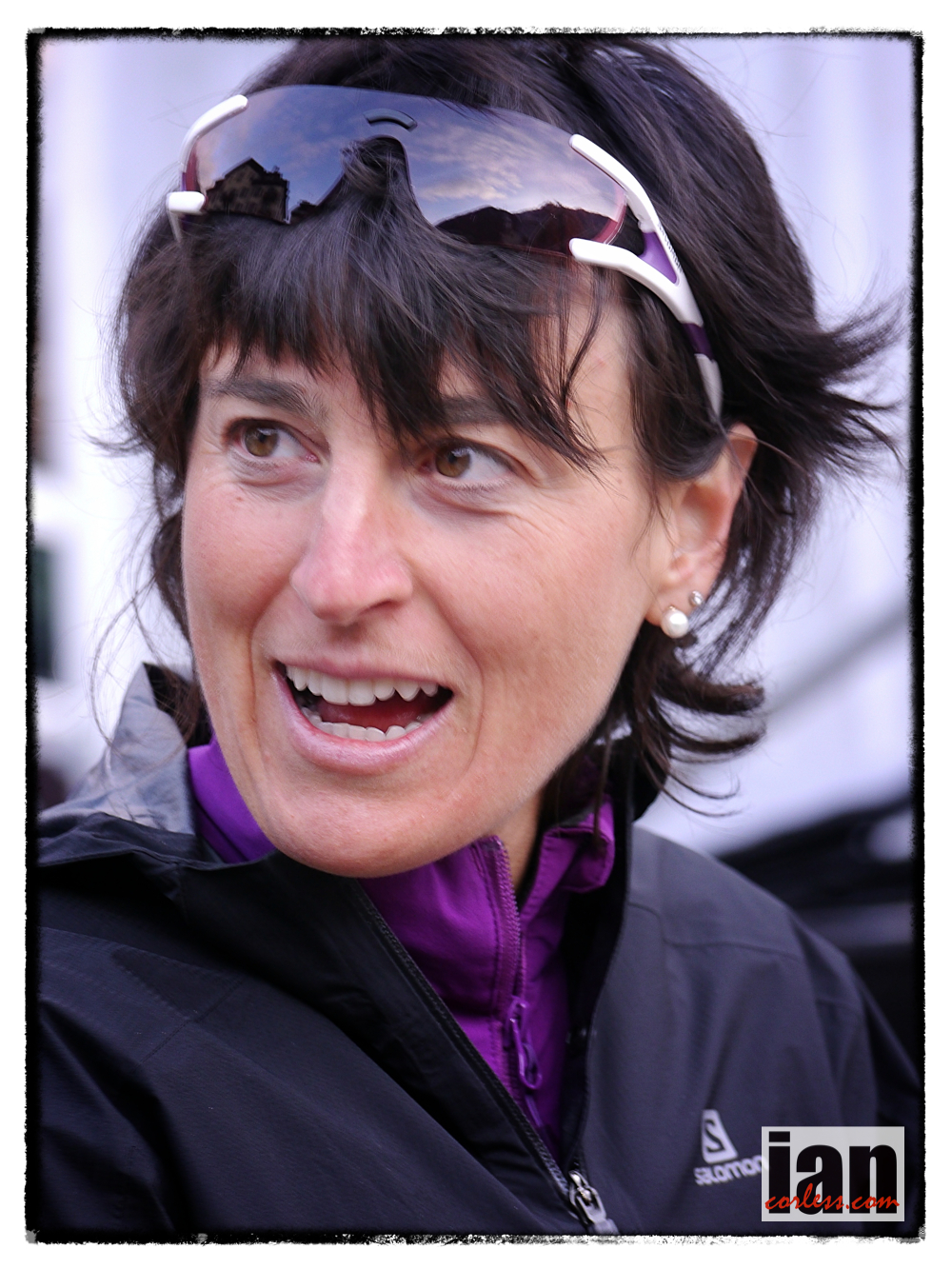
01:46:25 INTERVIEW –This week we speak to a legend of female ultra running, her Western States history alone sets her apart,  she won the race in 2004, 2006 and 2007 and she was 4th in 2009, 3rd in 2010 and 2011, 5th in 2012 and just this year placed 2nd.– Nikki Kimball

02:34:10 MELTZER MOMENT with Speedgoat Karl

02:37:37 RACES – Up and coming races for the next two weeks worldwide

Australia

Queensland

Kokoda Challenge | 96 kilometers | July 13, 2013 | website


Costa Rica

Maratón Internacional Challenge IRAZU – 62 km | 62 kilometers | July 21, 2013 | website


France

Aveyron

Tripou-Trail – 50 km | 50 kilometers | July 20, 2013 | website

Bas-Rhin

Trail du Pays Welche | 50 kilometers | July 14, 2013 | website

Corrèze

L’EDFi du Lac | 100 kilometers | July 13, 2013 | website

Le Tour du Cardant | 65 kilometers | July 13, 2013 | website

Finistère

100 km de Cléder | 100 kilometers | July 21, 2013 | website

Haute-Loire

Grand trail Stevenson – Course Individuels | 165 kilometers | July 12, 2013 | website

Grand trail Stevenson – Relais | 167 kilometers | July 12, 2013 | website

La Loire Integrale | 1025 kilometers | July 17, 2013 | website

Savoie

Ice Trail Tarentaise Val d’Isère | 65 kilometers | July 14, 2013 | website

la 6D Treck | 100 kilometers | July 24, 2013 | website

Ultra Trail du Beaufortain | 103 kilometers | July 20, 2013 | website


Germany

Rhineland-Palatinate

Bärenfels Ultra Trail | 64 kilometers | July 13, 2013 | website


India

La Ultra – The High | 222 kilometers | July 23, 2013 | website

La Ultra – The High 111 | 111 kilometers | July 23, 2013 | website

ZENchallenge Ladakh – 100K | 100 kilometers | July 21, 2013 | website


Mongolia

Mongolia Action Asia 3 day ultra 100km | 100 kilometers | July 20, 2013 | website

Mongolia Action Asia 3 day ultra marathons 60k | 60 kilometers | July 20, 2013 | website


South Africa

Griffin 50 Mile | 50 miles | July 20, 2013 | website

Washie 100 | 100 miles | July 19, 2013 | website


Spain

Basque Country

Ehunmilak | 168 kilometers | July 12, 2013 | website

G2handiak | 82 kilometers | July 12, 2013 | website


Turkey

RunFire Cappadocia Ultra Marathon | 220 kilometers | July 20, 2013 | website


United Kingdom

England

Fairlands Valley Challenge – 50km | 50 kilometers | July 21, 2013 | website

Lyke Wake Race | 42 miles | July 13, 2013 | website

The 50 Mile Challenge | 52 miles | July 26, 2013 | website

The Montane Lakeland 100 | 100 miles | July 26, 2013 | website

Scotland

Clyde Stride Ultra Marathon | 40 miles | July 13, 2013 | website


USA

Arkansas

Midnight 50K | 50 kilometers | July 20, 2013 | website

California

Badwater Ultramarathon | 135 miles | July 15, 2013 | website

Cuyamaca 3 Peaks 50K | 50 kilometers | July 13, 2013 | website

Colorado

Hardrock 100 Endurance Run | 100 miles | July 12, 2013 | website

Leadville Silver Rush 50 | 50 miles | July 14, 2013 | website

Kansas

Psycho Psummer 50K | 50 kilometers | July 13, 2013 | website

Montana

Devil’s Backbone 50 Miles | 50 miles | July 13, 2013 | website

Nevada

Tahoe Rim Trail 100M | 100 miles | July 20, 2013 | website

Tahoe Rim Trail 50K | 50 kilometers | July 20, 2013 | website

Tahoe Rim Trail 50M | 50 miles | July 20, 2013 | website

Oregon

Mt Hood Pacific Crest Trail Ultramarathon | 50 miles | July 13, 2013 | website

Pennsylvania

Viaduct Trail 150 Mile Ultramarathon | 150 miles | July 26, 2013 | website

South Carolina

Cremator 50 Mile Endurance Run | 50 miles | July 20, 2013 | website

Texas

El Scorcho | 50 kilometers | July 21, 2013 | website

‘The Shoe’ at Muleshoe Bend LCRA Park – 60k | 60 kilometers | July 13, 2013 | website

Vermont

Vermont 100k Endurance Race | 100 kilometers | July 20, 2013 | website

Vermont 100 Mile Endurance Race | 100 miles | July 20, 2013 | website

Washington

Ragnar Relay Northwest Passage | 190 miles | July 19, 2013 | website

Wisconsin

DWD Devil’s Lake 50K | 50 kilometers | July 13, 2013 | website

DWD Devil’s Lake 50M | 50 miles | July 13, 2013 | website

Wyoming

Happy Jack Endurance Races 100 Mile | 100 miles | July 13, 2013 | website

02:39:35 SHOW CLOSE

02:46:20 END

LINKS and DOWNLOADS:

ITunes http://itunes.apple.com/gb/podcast/talk-ultra/id497318073

Website – talkultra.com

European Skyrunning Championships 2013

©copyright .iancorless.com.P1140679

Italy will host the third edition of the biennial championships. The Vertical and Sky disciplines will take place in Canazei, Trento, on July 19 & 21. The Ultra distance, for the first a championship discipline – will be celebrated in Vicenza, on July 27. The skyrunning “hall of fame” is unveiled

The third edition of the European Skyrunning Championships kicks off in Italy with not just Europe’s best, but no less than seven world championsrepresenting sixteen nations.  The events will mark the first European Ultra title, as well as the Vertical and Sky distances.

©copyright .iancorless.com.P1140305

Taking on all three disciplines will be super-champs Kilian Jornet and Emelie Forsberg, for whom only the sky is the limit.  A number of other athletes will take on the three-race challenge but mostly the specialists are aiming for medals in their preferred categories.

©copyright .iancorless.com.P1140704

The strong Spanish team includes 2011 Skyrunning World Champion Luis Alberto Hernando who will take on the Ultra with 2012 Ultra Champion Nuria Picas.

Luis Alberto Hernando copyright iancorless.com


Nuria Picas copyright iancorless.com

The twelve team members also include three-time World Champion, Agustì Roc and Vertical Champion Laura Orguè

Silvia Serafini copyright iancorless.com

Italy will be aiming at the Vertical and Sky distances with a robust line-up headed by Vertical World Champion Urban Zemmer and Antonella Confortola who took third at the recent KM Vertical in Chamonix. The Italian squad is supported by Nicola Golinelli (4th Mont-Blanc Marathon), Marco Facchinelli currently heading the SWS Vertical Series together with Marco Moletto (ranked 4th).  Silvia Serafini (4th in Mont-Blanc Marathon), will race both distances while Stephanie Jimenez will take on the SkyMarathon®.  

Many more world-class names have signed up to represent their county in the European Championships.  Among them, the strong French team: Michel Lanne, Emilie Lecomte, Matheo Jacquemoud, Didier Zago, Celine Lafaye and Corrine FavrePhilipp Reiter and promising “new” skyrunner Florian Reichert (Germany); Ferran Teixido and Oscar Casal Mir (Andorra); Zhanna Vokueva (Russia); Csaba Nemeth (Hungary); Ionut Zinca (Rumania); Tessa Hill(Great Britain).  

Emilie Lecomte copyright iancorless.com

The Netherlands are not new to skyrunning after their first experience at the 2012 SkyGames®.  They are led by Ragna Debats, 5th at Mont-Blanc Marathon. New entries include a very strong representation from the Czech Republic with no less than thirteen team members they are determined to make an impression on the international skyrunning scene.

To date, the sixteen countries entered are: Andorra, Austria, Bulgaria, Czech Republic, France, Great Britain, Germany, Greece, Hungary, Italy, Netherlands, Rumenia, Russia, Spain, Switzerland, Sweden.

The events kick off on July 19 in Canazei, Trento, Italy with the Vertical Kilometer®, followed by the Dolomites SkyRace® on July 21.  The Ultra distance will be disputed at the Trans d’Havet just six days later in the nearby Veneto Region on July 27.

With such a deep field in every category, records are likely to tumble.

The record on the unforgiving Vertical Kilometer® course, just 2,1 km long, stands at 33’16” by Urban Zemmer and Antonella Confortola39’13”, back in 2008 when the course was inaugurated at the SkyGames® .

Antonella copyright iancorless.com

The Dolomites SkyRace® favoured by the world’s top runners offers a new challenge after record-breaking performances last year by Kilian Jornet in2h01’52 and Emelie Forsberg, in 2h26’00. The challenging and often technical course represents one of the toughest proving grounds for the relatively short distance:  22 km but with 1,750m climb to the summit of the Piz Boè which, at 3,152m altitude, towers majestically above the start and finish of the race in Canazei.

Moving on to the much anticipated Ultra, the Trans d’Havet is an 80 km point to point with 5,500m vertical climb traversing the Piccole Dolomiti in the Veneto Region.  The route, technical in stretches, includes 6 km of tunnels. 

Course records at last year’s launch were: 10h58’44” by Daniele Palladino (ITA) and Francesca Canepa (ITA) 11h44’45’’.

The winning formula?  Easy: the European Skyrunning Championships are open with individual titles at stake in each discipline. Ranking is based on the sum of the highest points scored in two out of three events.  The national title is based on the score of the first three men and one woman in all three events.

Vertical

Dolomites Vertical Kilometer®, Canazei, Trento, July 19

Sky

Dolomites SkyRace®, Canazei, Trento, July 21

Ultra

Trans d’Havet, 80k, Piovene R, Piccole Dolomiti, Vicenza – July 27

image001


Skyrunning Website HERE

Kilian Jornet sets new record for Chamonix-Mont Blanc-Chamonix

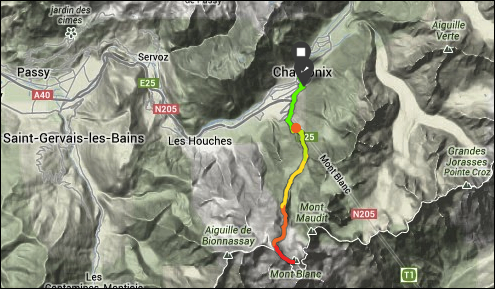
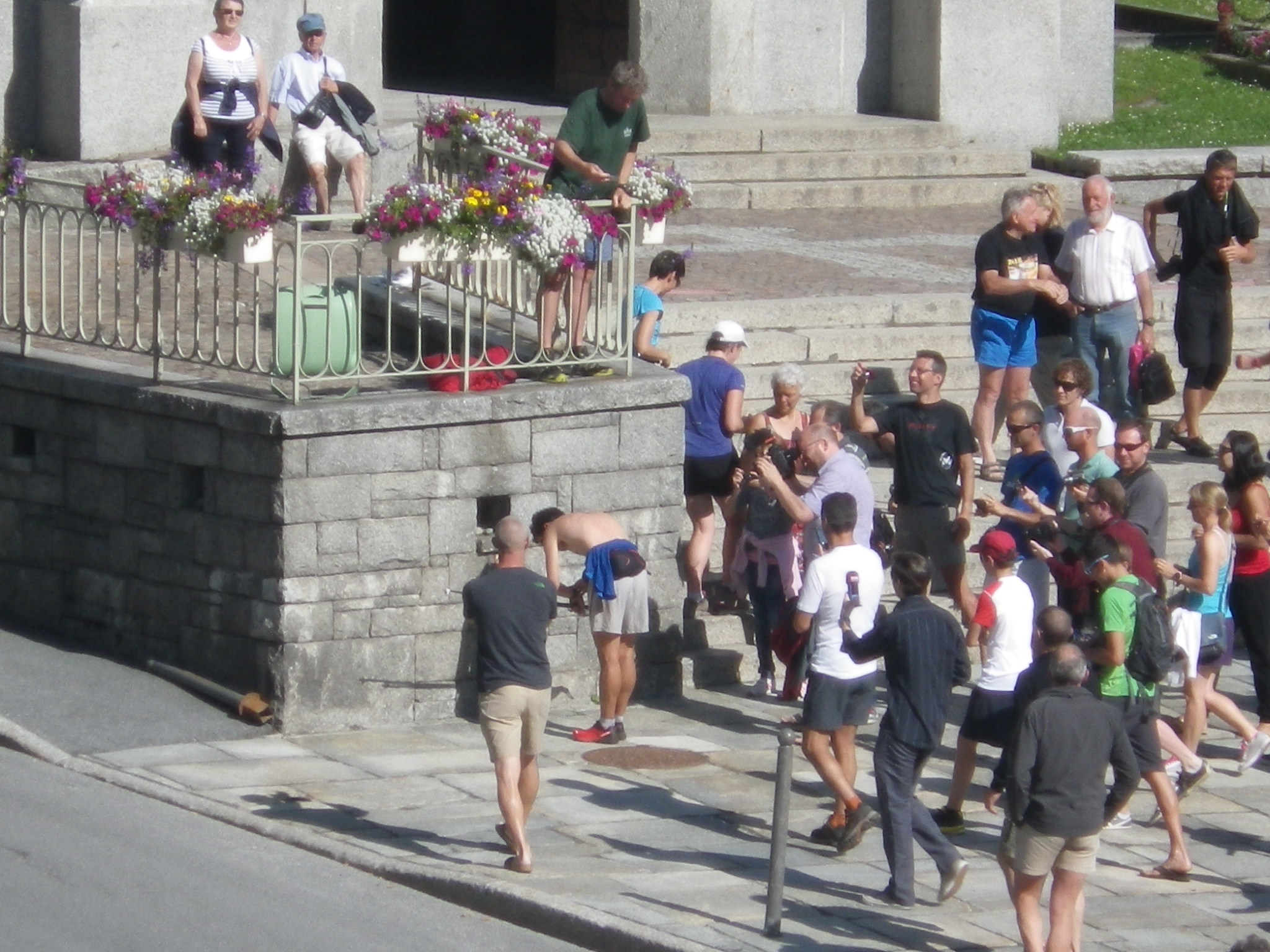
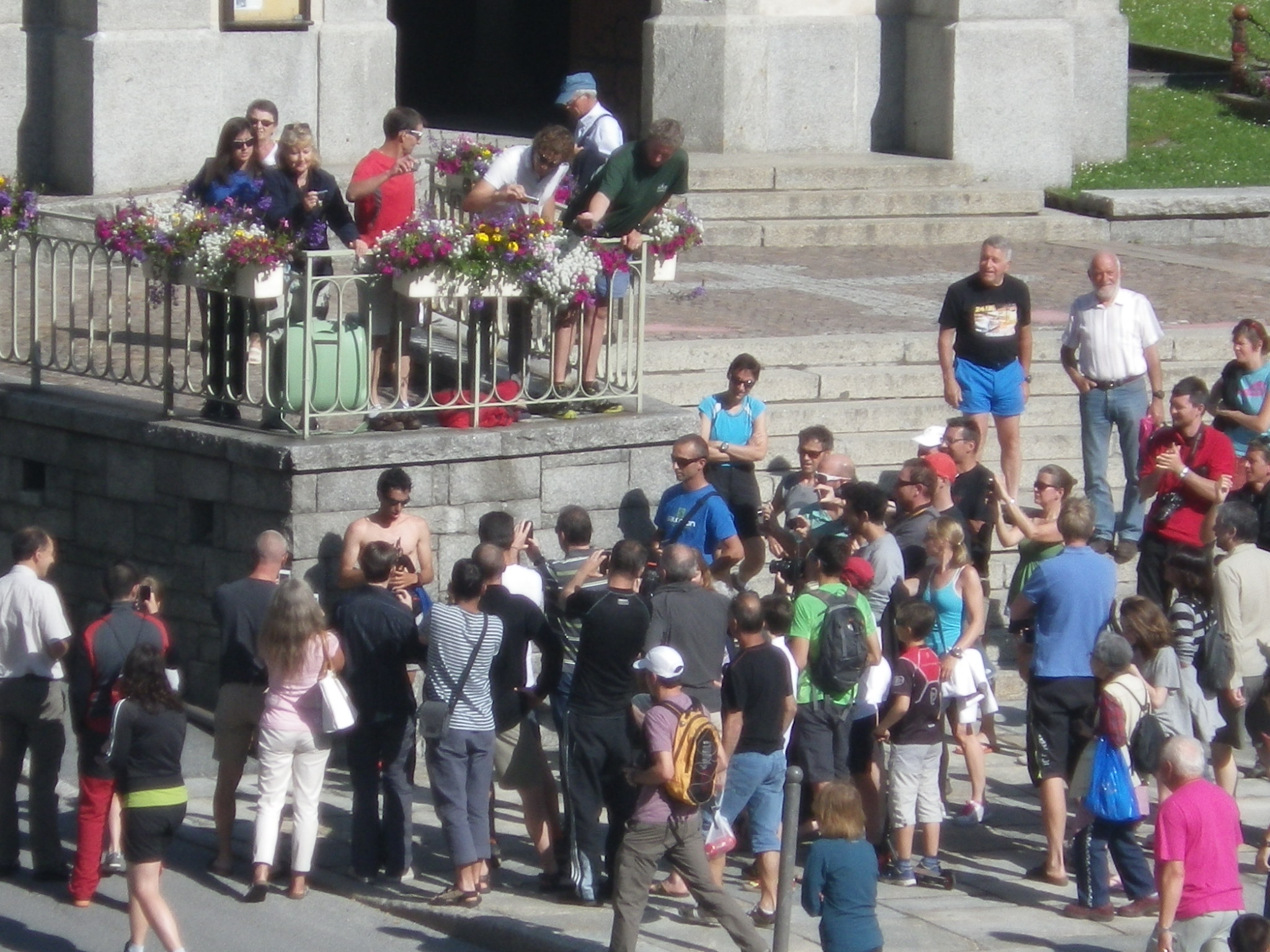
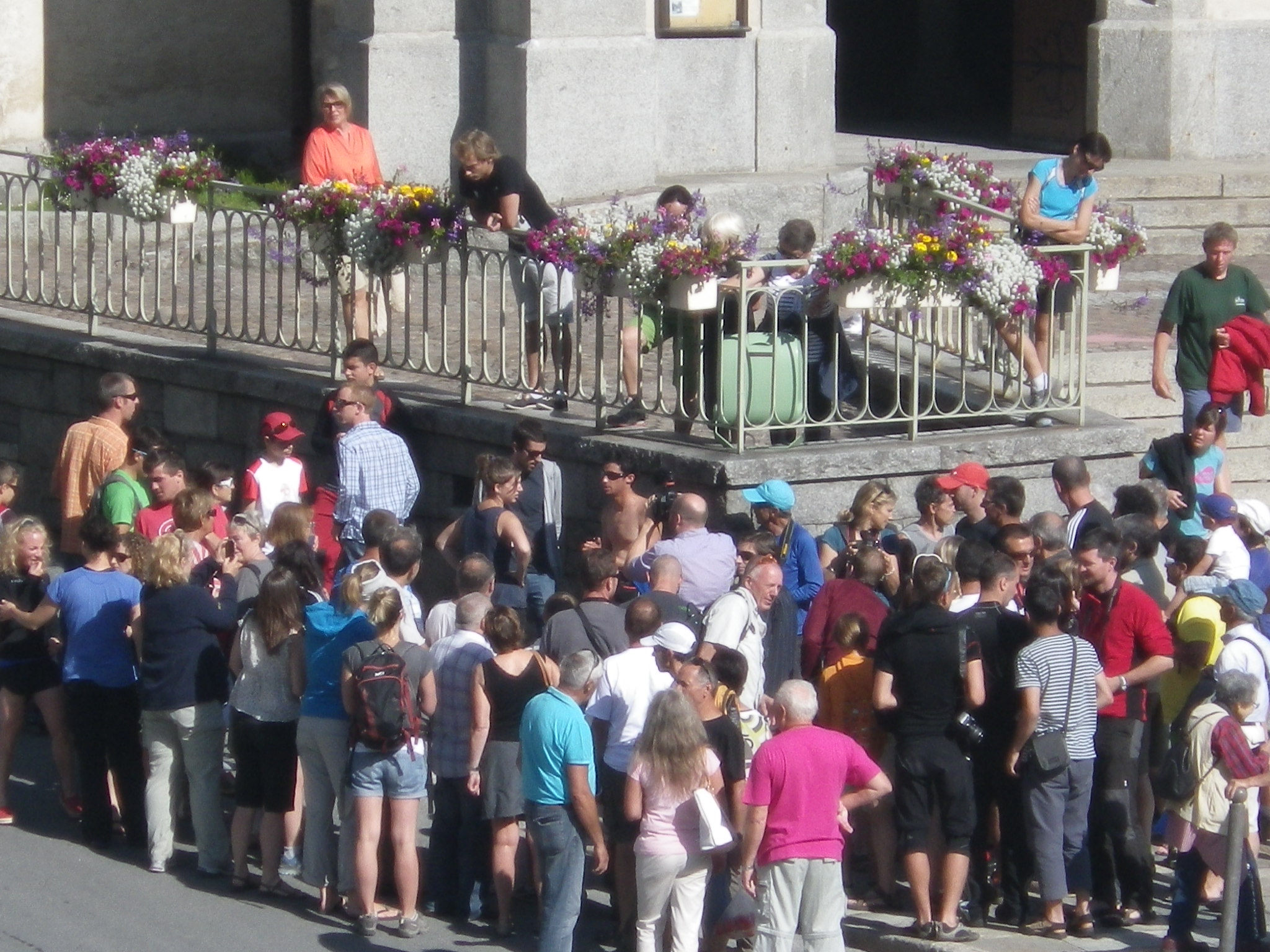
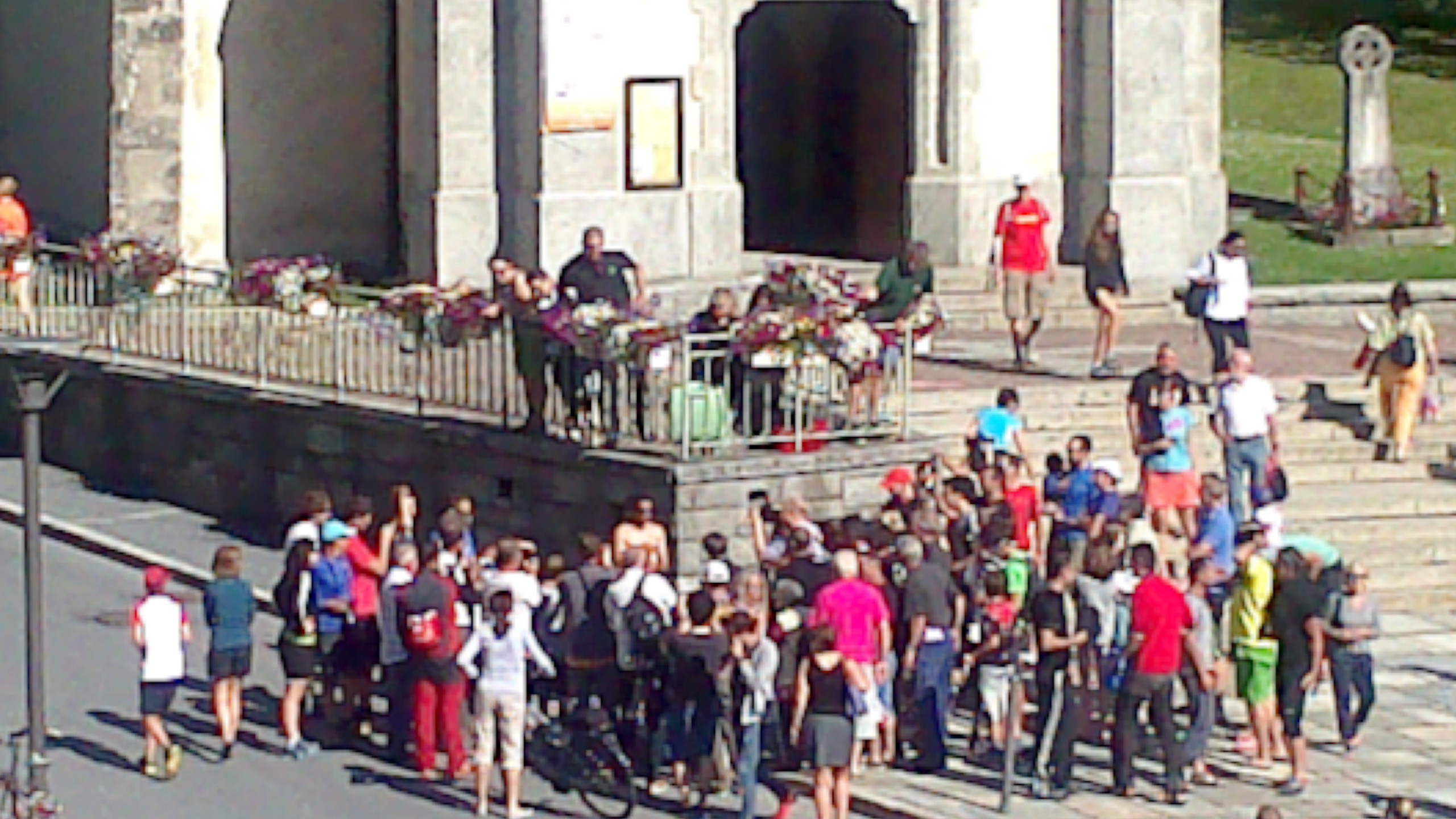
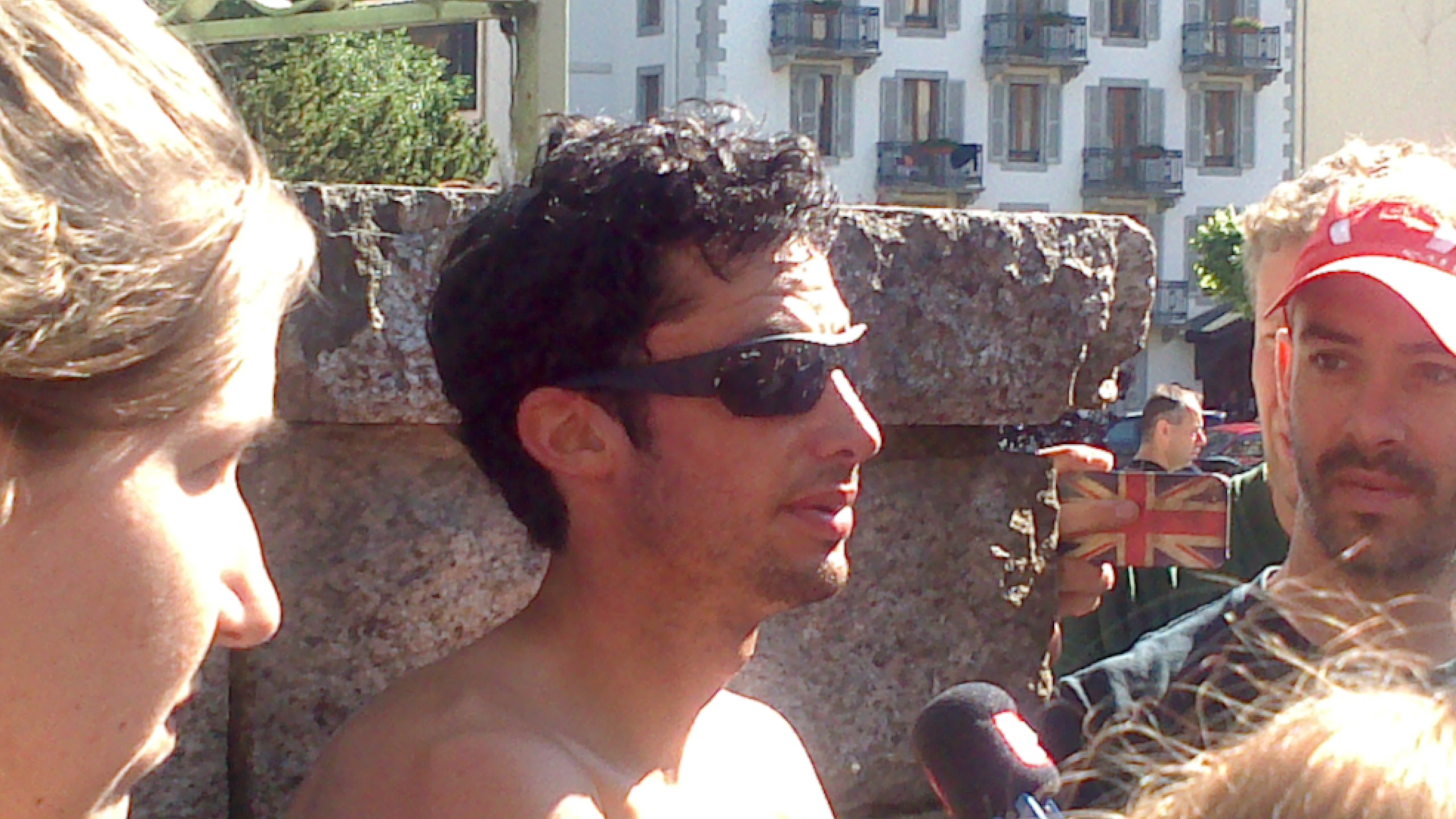
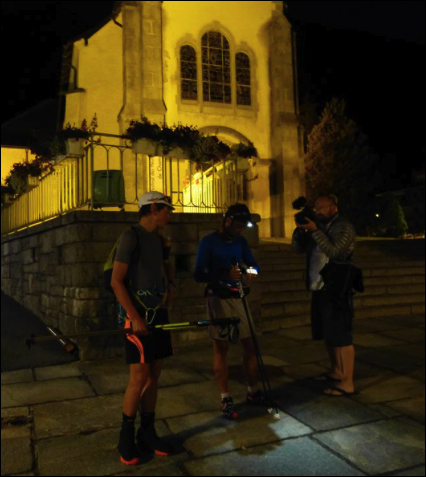
IMGP0875At 04:46 on July 11th, Kilian Jornet and Mathéo Jacquemoud left the church in Chamonix to set a new record for CHAMONIX-MONT BLANC-CHAMONIX.
You will see from the images provided by Tiffany Sabil that Kilian arrived in Chamonix beating the old record of 5:10.

Update: Matheo did not break the record. Apparently he took a fall.

The time has been confirmed at 4:57.

screenshot_285

Congratulations to both Kilian and Mathéo. This record has lasted since 1990. Quite an incredible by Kilian Jornet and Mathéo for the support.

Many thanks to Tiffany Sabil for being in Chamonix and providing these images.   IMGP0876 IMGP0877 IMGP0879 DSC_0375 DSC_0378 DSC_0379 DSC_0380 DSC_0384

Kilian & Mathéo attempt Chamonix-Mont Blanc-Chamonix

Image James Stewart - Kilian and Mathéo depart Chamonix 04:46am Thurs 11th July

Image James Stewart – Kilian and Mathéo depart Chamonix 04:46am Thurs 11th July

Kilian Jornet and Matheo Jacquemoud will attempt to take the record for the fastest return ascent of the Mont Blanc on foot.

The current record is an incredible 5h11m, set by the Swiss Pierre-André Gobet, on 21 July 1990.

Departure is at 04:30 from the main Church in the centre of Chamonix 1042m.

The two athletes shall follow the road to the entrance of the Mont Blanc Tunnel, then take a right onto the track that leads to the Grands Mulet refuge.

From there, they will ascend through the Petit Plateau and the Grand Plateau, then onto the Bosses Ridge, past the Vallot refuge, followed by a final push to the summit of Mont Blanc 4810m.

On reaching the summit, Jornet and Jacquemoud are half way there. The dangerous, high speed descent, by the same route, should see them back in Chamonix, at the Church, for about 09:30am, to claim a new record time.

Be there, to witness something special.

Taken from: http://www.chamonix.net

Trans D’Havet 2013

OLYMPUS DIGITAL CAMERA

The 80 km race with 5,500 m+  will take place on the border between the Veneto and the Trentino and will see the best “runners of the sky” try to win the European Skyrunning® Championship 2013. 


“Entries are going very well both for the main 80 km race, and for the 40 km half race (2,500 D+),” began the president of the organizing committee Enrico Pollini. “We have well over 500 registrations. They are going so well that we have decided to make the deadline for accreditation Monday, 15 July at midnight.” After that date, the organizing committee’s attention will be entirely focused on logistical and organizational aspects. “Together with our main sponsor Montura, who shares our passion and mission to spread the word about this sport, we are organizing three evenings at the Alpstation shops in Isera and Schio in which athletes, organizers and journalists will take part. It will be a good opportunity to talk about trail, understand its spirit and have fun together while waiting for the big event scheduled for Friday 26 and Saturday 27 July.” In the meantime, going by the hits on the website and social networks and from the numerous requests that the secretariat is receiving, adrenaline is on the increase. The organization is going smoothly and everything is underway for what looks like being a great event.
A quick look through the list of participants reveals important names such as:

Kilian Jornet, Luis Alberto Hernando, Manuel Diez, Julien Chorier, Philipp Reiter, Emelie Forsberg, Nuria Picas, Nuria Dominguez…

There is also, of course, a large number of Italians, including:

Filippo Canetta, Stefano Ruzza, Matteo Pigoni, Ivan Geronazzo, Stefano Trisconi, Chiara Colonnello and the novice Laura Besseghini.

A FULL RACE PREVIEW WILL BE POSTED ON THIS WEBSITE W/C 15TH JULY.

Detailed Programme of the Event:

Thursday, 18 July 
Schio Alpstation
8:30 pm the “Montura & Trail” evening

Tuesday, 23 July 
Isera Alpstation
8:30 pm the “Montura & Trail” evening

From 23 to 25 July 
Training and reconnaissance of the route

Thursday, 25 July 
The Gino Soldà Room – Campogrosso
3:00 pm International Skyrunning Federation Technical Seminar
Schio Alpstation
8.30 pm Trans d’Havet presentation, followed by a party for the athletes and race staff

Friday, 26 July 
The Gino Soldà Room – Campogrosso
3:00 pm International Skyrunning Federation Technical Seminar
Piovene Rocchette – Piazzale Vittoria
5:00 pm zero edition Grand Raid start

Saturday, 27 July 
Piovene Rocchette – Piazzale Vittoria
0:00 am race check-in
1:00 am Ultra Trail start
Pian delle Fugazze – Ristoro Magna e Bevi
9:00 am Trail Marathon start
Valdagno historic centre – Piazza Garibaldi
10:00 am arrival of first Ultra Trail competitors foreseen
1:00 pm arrival of first Trail Marathon competitors foreseen
6:00 pm prize-giving

Sunday, 28 July 
Downhill Race
Montefalcone sella Campetto 11:00 am start
Recoaro Mille 11:10 am first competitors pass through
Recoaro Terme – Via Lelia, 11:30 am arrival of first competitors
Recoaro Terme – Piazza Amedeo di Savoia, 1:00 pm prize-giving

Programme, enrolments, side events, logistics and further information:www.transdhavet.it

SKYRUNNING HERE

Transgrancanaria 2014 – new changes

The North Face ® Transgrancanaria will be held on March 1st 2014, with radical format changes. The Transgrancanaria will be different in terms of routes and distances. The most significant change will be the arrival of the runners to the south of the island, a twist which aims to raise the profile of Gran Canaria and promote it’s strengths outside of the island.

The distances of some races also vary with respect to the last edition. In 2014 the route of the main event will consist of 125km and 7600 meters of positive elevation. The Advanced and Transmarathon races will keep the same distances of 83km and 42km respectively, while the Starter race will extend from 24km to 30km. A new race will be added as a new feature, the Promo race of 15km, aimed specifically at those people who wish to play a part in this epic adventure.

What does not vary from the Transgrancanaria and Advanced races will be the place of departure, which will be held for one more year at the Agaete port. The Transgrancanaria Marathon also will repeat the departure place at Garañón, but the end in the next edition will be at “Faro de Maspalomas”, after a tour that runs through “Pico de las Nieves” mountain, the road of “La Plata”, Tunte and Arteara villages. The Transgrancanaria Starter event is the race that will see the most changes, increasing in kilometers and showcasing the new departure from Tunte to Faro de Maspalomas.

In the press conference, the presentation of a new website with new content, better interface and more user friendly features was unveiled. With the launch of the new site, the registrations for next year was opened. For the third consecutive year, the price for race entires has been frozen. You can find more information about the new routes and registration on the following:

http://www.transgrancanaria.net/

Florian Reichert: From earth to sky – the interview

 ©copyright .iancorless.com._1130939

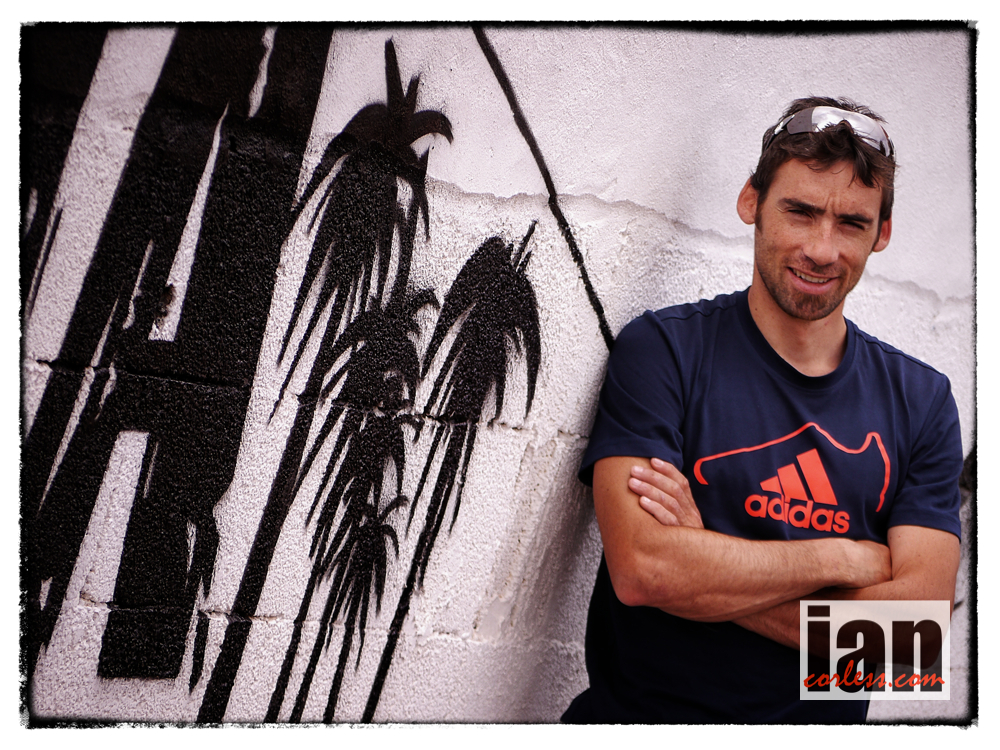
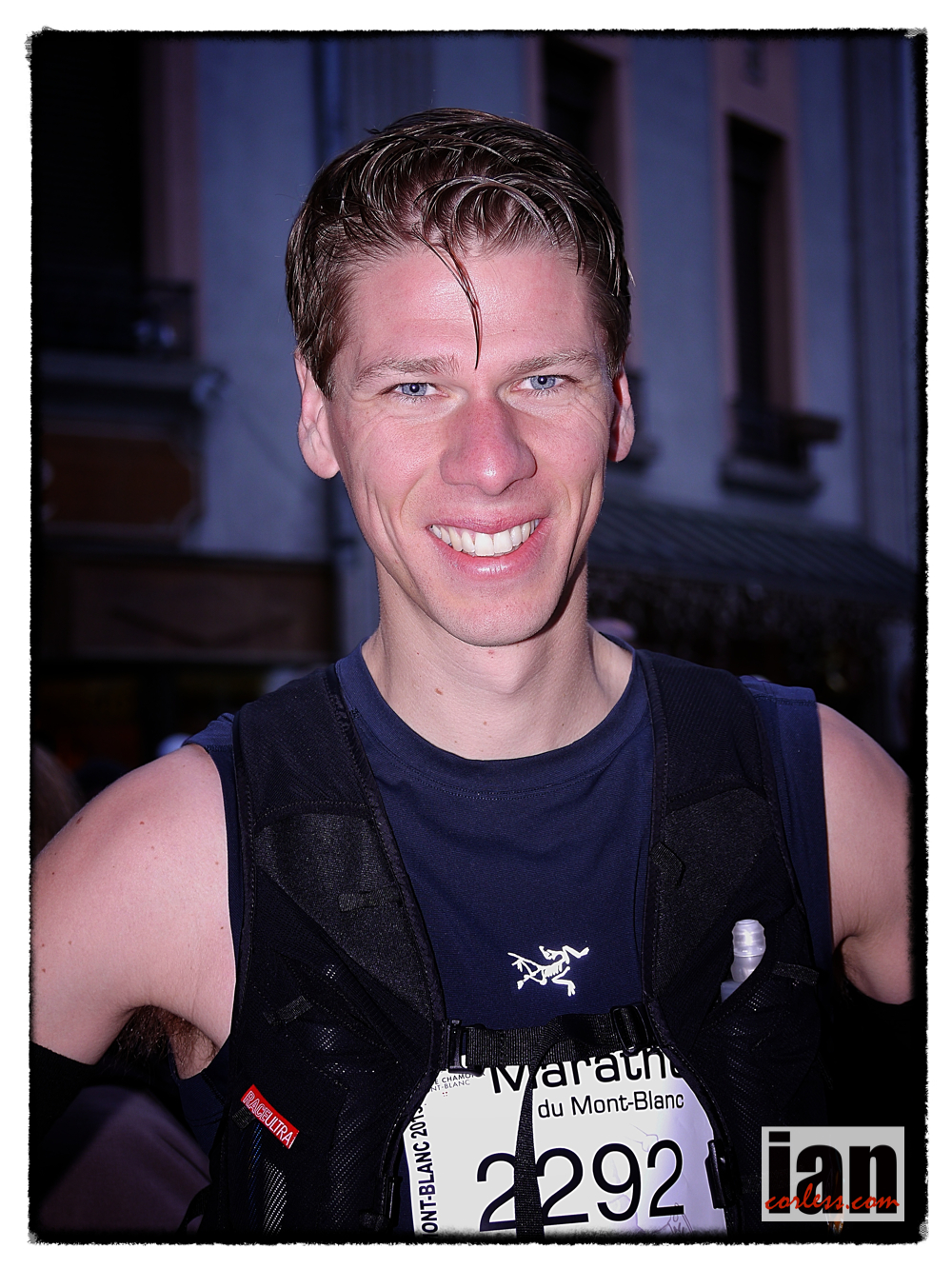
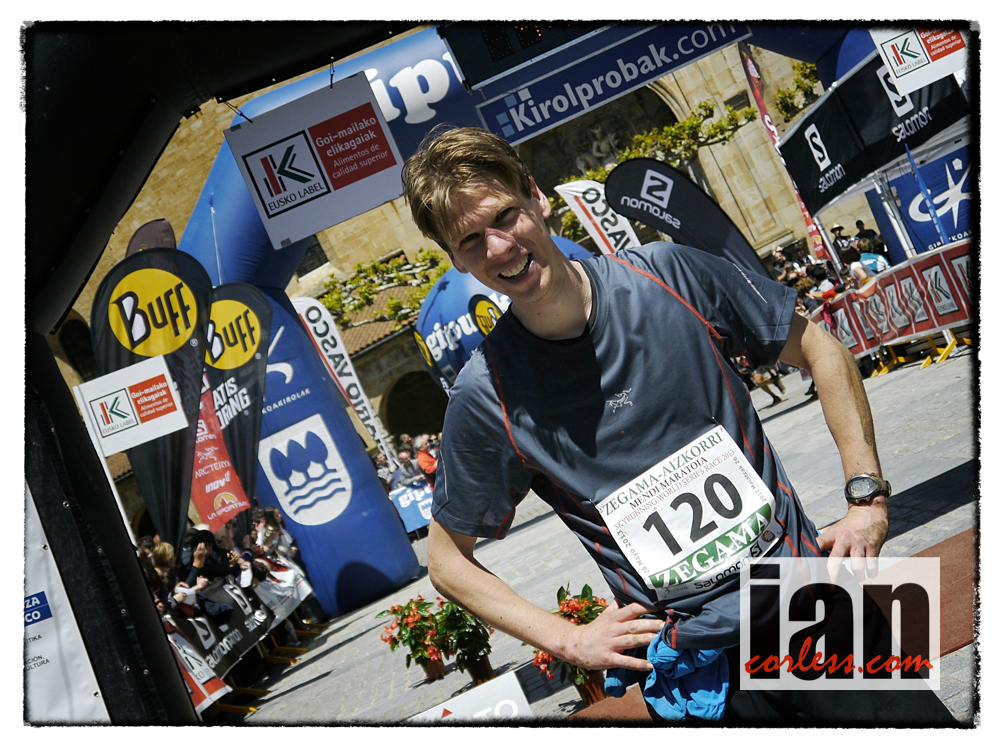
Florian Reichert is a fast roadrunner! With a track and field background and a specialty at middle distance, his first marathon was an impressive sub 2:30. However, he has only run one road marathon and that was just last year. In 2013 with sponsorship from Arc’teryx and inov-8, Florian has progressed to trail and mountain running. Always seeking a new challenge, he didn’t start the easy way and ease himself in, no; anything but… he threw himself in at the deep end with possibly one of the most iconic and competitive mountain marathons on the calendar, the ISF Skyrunning Zegama-Aizkorri. I catch up with Florian in a wonderful chalet in the shadow of Mont Blanc. We are on an inov-8 athlete retreat and just a couple of days previous; Florian placed top 10 in his second Skyrunning event, the Mont Blanc Marathon

IC: Welcome Florian it’s great to find some quiet time and have this chat.

FR: Thanks Ian, it’s great to be here and having this opportunity to talk. 

IC: Florian you come from a very quack road running background. You started in 1996/97. You have some very impressive and fast times. What is it that got you into running?

 ©copyright .iancorless.com.P1140170

FR: I have always enjoyed pushing myself to the limit. I used to play soccer as many Germans boys do, but I was looking for a sport that would allow me some independence. I wanted the success to come from myself and it was natural that I found running. From early on I enjoyed being alone and running long distances. It was actually my Physical Education teacher that spotted my potential and I was introduced to track and field.

IC: You specialized in middle distance running?

FR: Yes I was a middle distance guy running the 800m and 1500m. I barely broke the 4min barrier but I noticed that I didn’t have the ability to go faster, so I transitioned to 5k and then 10k. My PR is 14:50 for 5k and 30:50 for 10k. Gradually the distances I ran became longer, it seemed to suit my abilities better. I eventually ended up running my first marathon in 2012.

IC: You have made the transition from middle distances to half and marathon distance but as you say, you actually only ran your first marathon last year and you went sub 2:30. Impressive by any standards what was your actual time?

FR: I ran 2:26 and placed 8th at the German championships. It was lots of work, three to four months of solid preparation. I enjoyed training for the marathon but I felt at the end I was getting very stressed and almost bored. I was fed up of checking time, kilometers, laps etc. I was obsessed by time. This year I wanted a different challenge. I needed some freedom.

 ©copyright .iancorless.com.P1090840

IC: You mentioned that you were getting bored and that stress was building. Irrespective of the distance you race, if you are competitive that stress level can come with any distance. If you looked at your marathon, a 2:26 debut is impressive but did you think to yourself even if I train even harder my potential maybe 2:20, maybe a 2:15 and therefore, no disrespect, but in marathon terms that is quite pedestrian. We have seen with Sage Canaday and Max King, both who run around 2:15 that they have made the choice to move from marathon to trail and ultra. Therefore, did you think; I will move to a smaller pond and become a faster person?


FR: Yes, partly correct.  With a great deal of effort I may have run a 2:20 marathon but realistically it may have been a 2:22, so, even as you say, if I had run a 2:15 that would still get me nowhere. Particularly with the quality of African runners in marathon fields. I have always loved being in the mountains and nature so the bigger aspect of my transition is that I wanted to get away from the track, the road, the clock and hit the trails and mountains.

IC: So this year you have moved to trails and to mountain running. You have been fortunate to get sponsorship with Arc’teryx and inov-8. You have clothing and shoes covered. Of course both are involved in Skyrunning. However you are racing at all Skyrunning events for Arc’teryx. You have been thrown in at the deep end particularly with Zegama-Aizkorri. It’s all very well being quick but that doesn’t mean a good performance in a Skyrunning race. So many different aspects are required, yes you will need strong legs, yes you will need big lungs… but Skyrunning is about technique, skills, descending and ability to adapt to terrain. Zegama was a great outing for you. You had a great performance. You were at the front on the climbs early on but the big thing for you was the descents and the technical attributes that are needed to descend. What was it like?

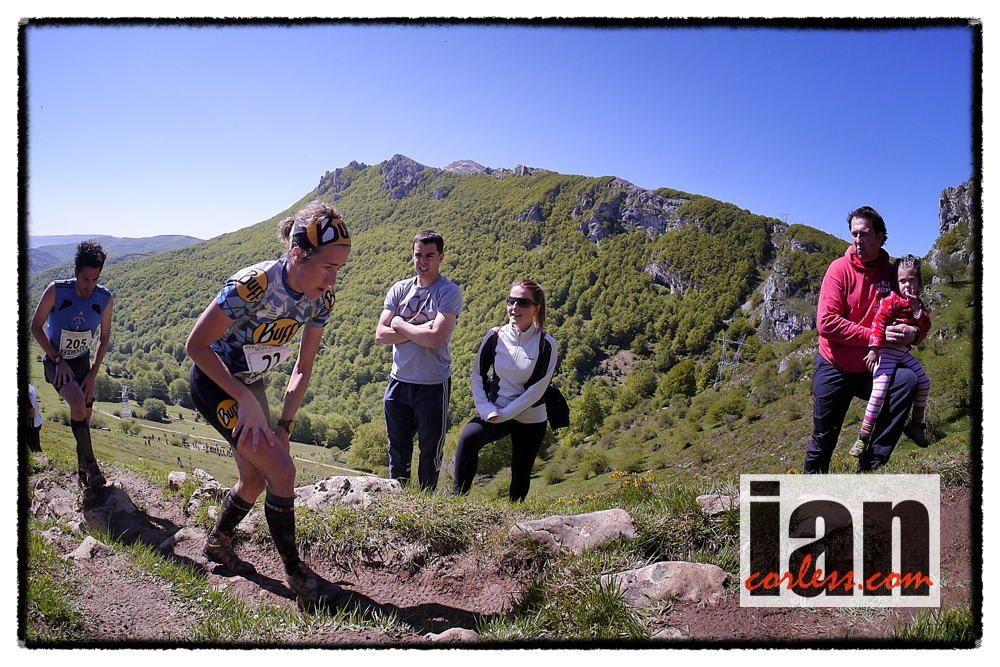
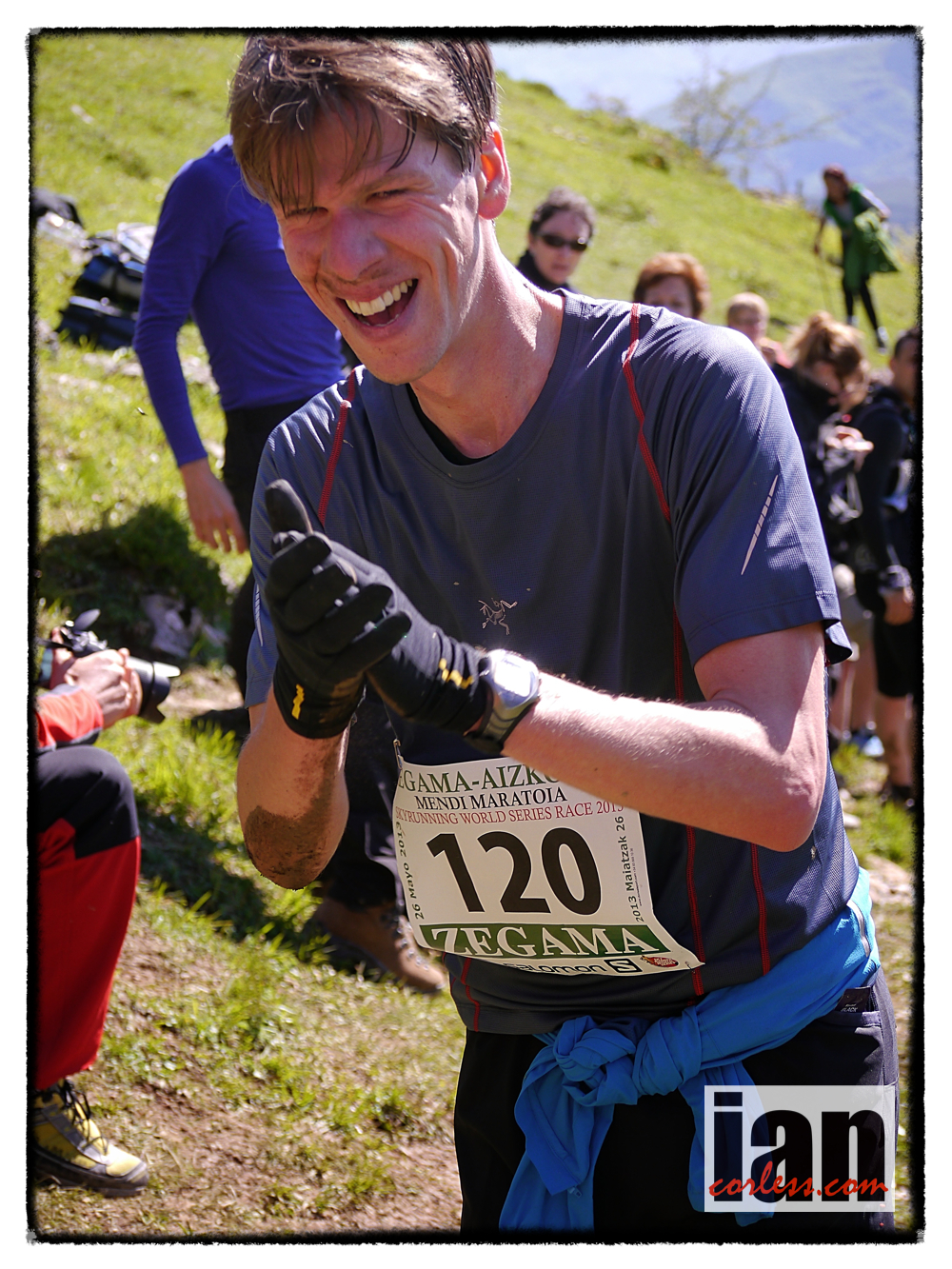
FR: Zegama was such a special experience for me. I was very nervous before the race because I had no idea what was coming up. I knew that the distance was a marathon but the time would be long. As I said, I ran my first marathon last year in just under 2:30; this race took Kilian nearly four hours in 2012. I had never run for that long before, not even in training. I was anxious of what would lie ahead. In the end I was 33rd but in the early stages and particularly the halfway point I was in the top ten. I felt really good but the descending was my nemesis. You are right; I had a big learning curve when going downhill. I really need to work on that. Technical sections in races will require big improvements and commitment from myself. I have a long way to go. For example, the Mont Blanc Marathon was less technical and therefore I had a far more comfortable race. It suited my abilities better, but hey, Zegama was a great start.

 ©copyright .iancorless.com._1030354

IC: Coming from a middle distance road background what was your training like pre Zegama and from what you learnt at Zegama, what changes have you made between races?

FR: I come from a region in Germany that is flat. I have some mountains close by but it only has a peak of 1000m, so, my longest ascent maybe is 600-700m, no more. That makes it difficult to train for Skyrunning. But one of my favorite all time workouts are repetitions like hills, intervals and fartlek. I have beautiful woods all around me where I live. It’s great for speed work. I do repetitions of 1k with ascents of 250-300m and if I do that five or six times then it works well. I can get a 1000m of ascent. I have definitely changed my regime. I don’t go on the track much anymore, maybe once a week. Prior to 2013 I would have been on the track three or four times a week. I run long, I run up to thirty six to thirty eight kilometers now but before it was low twenties. So, yes, I have made some big changes.

IC: In terms of the terrain that you now train on, are you doing fewer roads?

FR: For sure, for the road marathon I always trained on the road. Now I hardly go on the road. I only go on trail. I go on forest paths, fire trail but I try to do single track whenever possible.

IC: Many will read this who are coming from a road background or maybe they are trail runners who have no experience of Skyrunning. They may think, I would really like to try a Skyrunning race but think it is beyond them. What advice would you give to make the transition?

 ©copyright .iancorless.com.P1140520

FR: Most importantly they need to find a rhythm. You must find it in training but you must also find it in racing. When preparing for a Skyrunning race of course you need to run hills, you need to work on technique, if possible you need to be in the mountains. Get as much vertical as possible but also work on descents. It is important not to be stressed. Don’t worry about time. It means nothing in these tough and technical races. Rhythm is so important, keep to a pace that you can maintain.


IC: Yes, you mentioned that your home has no mountains. We are currently in Chamonix surrounded by trails and wonderful peaks everywhere, however, for most of us; mountains like this are just possible in training. If your home does not have these options, as you say, it is important to be creative. You mentioned a climb and doing repeats. It is such an important element, you can go up for a few hundred meters ascent, come down and repeat.


FR: Yes, it is all about working with what you have. Be creative as possible. Running offers so many possibilities. We mentioned fartlek; it is a great training method. You don’t need to be high if you have a hilly or undulating course that you can do repeats on. Of course you have to take into account speed, I need to train at a higher speed at home than say here in Chamonix. This morning I climbed six or 700 meters but I was going pretty slowly because of the gradient. At home I can go so much quicker. It has worked out okay for me.


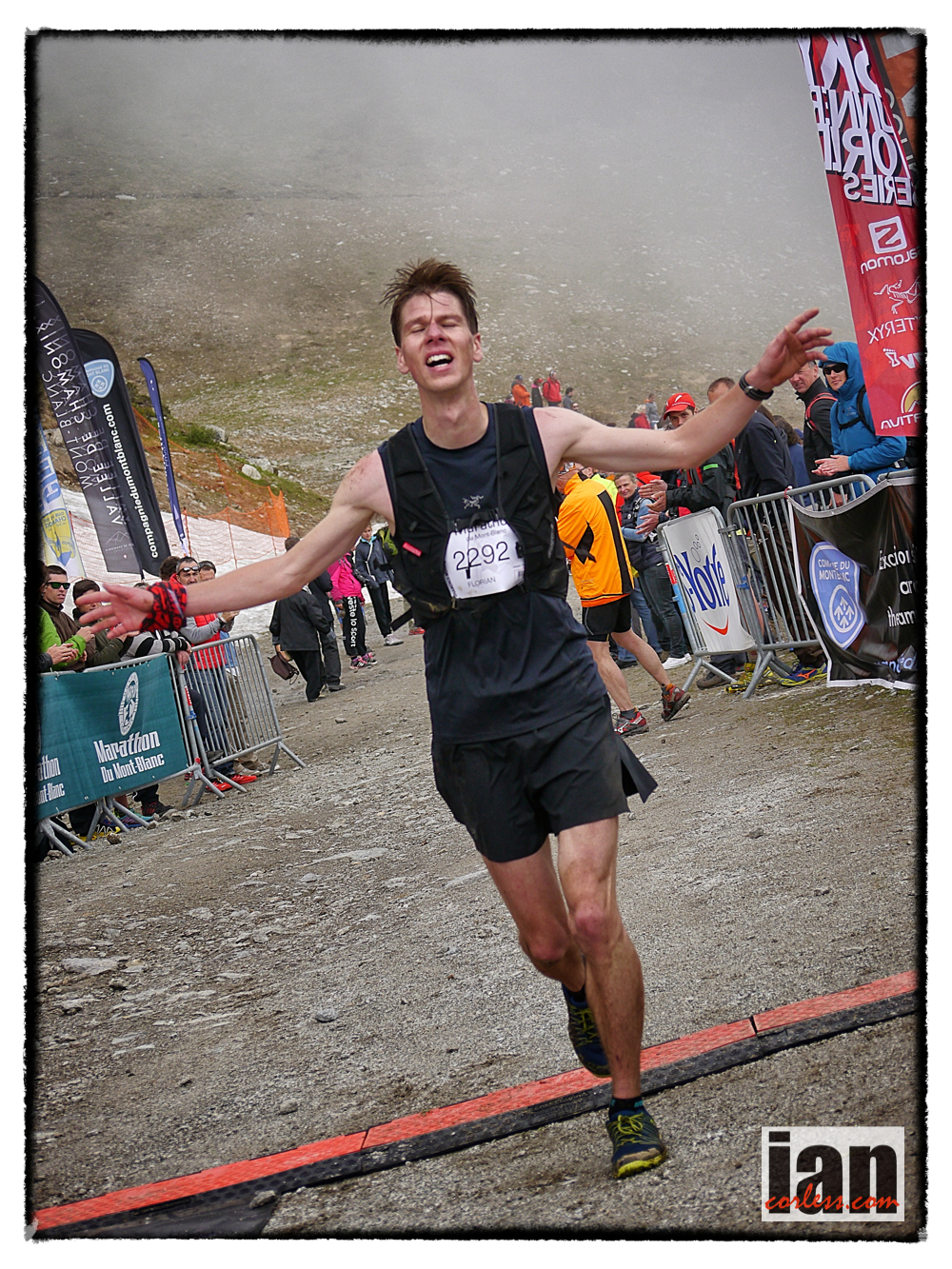
IC: Distance means nothing in the mountains, you can be on a trail for two hours but you may only cover five or six miles. The transition you have made post Zegama has been impressive. Admittedly I think the Mont Blanc course suited you much more than Zegama. However, it still had some serious climbs and descents and in the latter half it just went up, up and up with a summit finish. Mont Blanc Marathon was a proper Skyrunning race, you placed in the top ten and that is significant. Not only do you have ability but also you have learnt so much in a short space of time. What goes through your mind when you stand on a start line with Kilian Jornet, Marco De Gasperi and Luis Alberto Hernando? 

FR: Actually I was in the second row just behind Kilian and Marco on the start line. I admire these guys so much, fantastic runners but more importantly fantastic people. Friendly, generous and a pleasure to know, the opportunity I have been given is incredible, I must thank Arc’teryx. Without them I would not be racing. They took a risk, they had a fast roadrunner that had some reasonable times and they accepted my proposal to race on the Skyrunning calendar. Although I suffered in both races, I don’t think I have ever been so exhausted before but I enjoyed every step.

IC: You also had two teammates in the top ten at Mont Blanc, Nicola Golinelli who placed fourth and Didier Zago who placed sixth. You placed ninth which is an excellent result for Arc’teryx… three men in the top ten!

FR: Yes, correct. I only met Nicola and Didier here in Chamonix for the first time. They are great guys; they have already passed on so much knowledge to me. It was Nicola that instilled the ‘rhythm’ thought process in me. He told me not to be stressed and to run my own race. We have a great team and it’s great to be part of it. Of course I must mention inov-8 too as they provide my shoes. The inov-8 team had great results also at Mont Blanc Marathon.

©copyright .iancorless.com.P1140540

IC: The Mont Blanc weekend has been incredible; so many races too choose from. An 80km and a 10km but importantly you ran the VK (Vertical Kilometer). The VK is such an incredible event, 1000m vertical gain in 3.8km. VK’s are simple; you go up as quickly as you can. According to Skyrunning rules the gradient will always be around 30-35%. VK’s are a great way to start in mountain running. Anyone in theory can take part providing you show some basic experience. VK’s are about walking and running. It requires a technique, I am sure if I did a VK everyday I would get fit very quickly. You did your first VK here in Chamonix, once again thrown in at the deep end, what was it like?

FR: First of all the VK is a great addition to the Skyrunning format. I ran about 38 minutes, if I compare that to my 10k PR which is 30:50 then I ran 8min longer for less than half the distance… so you can appreciate the severity. However, if you look at that objectively, many people can run a 10k so I think a VK is a great starting point if you want to make the transition from road to mountain. I was actually surprised after the VK that I didn’t feel as tired or as battered as if I had run a road10k. Going up creates less impact, it’s tough on the lungs and heart but the muscles don’t get too beaten up. That would not happen if I had run road race.

©copyright .iancorless.com.P1130736

IC: Yes, great point. Relatively no impact in a VK, you start at the bottom and go up. Even when running you are going slow, it’s controlled, the moment you get that control wrong you blow up and you are forced to walk. If you are not adapted though it does work the achilles, hamstrings and lower back so that can cause some knock on effects. Funny you equated it to a 10k, to put it in perspective it took you 8 mins longer to run 6k less than your 10k PB. Doesn’t take much working out does it, tough race! What is next for you, I know you are concentrating on the ‘Sky’ distance, which is usually around a marathon; do you have any plans to move to the ultra distance?

FR: Yes, ultra distance will tempt me; Transvulcania seriously tempts me, I love the look of that race and the incredible field that it attracts. It seems like such an incredible race, I have to say that for at least the next twelve months I am going to stick with the Sky distance, it works to my abilities and it will suit my speed. But a natural progression will take place, I am sure ultra will make its way on my calendar.

IC: It has been great to catch up with you Florian. I am looking forward to following your progress over the rest of 2013, I wish you the very best of luck.

FR: Many thanks Ian and many thanks to the sponsors and Skyrunning.

Links:

Florian on Facebook – HERE

Skyrunning – HERE

Arc’teryx – HERE

inov-8 – HERE

What is Trail Running – ITRA conclusions

screenshot_281

Press release n° 2 July 9th 2013

First conclusions from the ITRA’s five working groups

After the first International Trail-running conference (September 3rd 2012 – Courmayeur – Italy) five working groups were set up to study the five key themes, with the aim of trying to determine, in the long or short term, the convergent lines of conduct between the players of trail-running. Fifty volunteers, manufacturers, race organisers, journalists, trainers, athletes, federations… from thirteen countries and five continents answered present and positioned themselves around the virtual internet table.

After working for two months, each group, uniting their cultures and their points of view to accompany this discipline in full evolution, drafted the first conclusions of their exchanges. The first fundamental points were based of an ethics of the practice of the trail-running with the objective of federating the players
The comprehensive texts are posted on the ITRA web-site: http://www.trail-running-association.org/focus-groups/

• A definition of trail-running: above all « an open country race »

At the end of long discussions where the diversity of points of view of the different countries were expressed, all the members of the working group formed a definition of trail-running and its categories. The Trail-running is defined as a running race, open to everybody, in a natural environment (mountains, desert, forest, on the plain…). Ideally but not necessarily, it takes place on a minimum of tarred roads (20% of the race) and in semi or total autonomy. It must be correctly way-marked and organised respecting the rules of sport: ethics, loyalty, solidarity and conservation of the environment.

A classification of trail-running races is given:

• Less than 42 kilometres: Trail
• Above 42 kilometres: Trail Ultra

Trail Ultra Medium (M): 42 km to 69 km
Trail Ultra Long (L): 70 km to 99 km
Trail Ultra XLong (XL): superior or equal to 100 km

• An ethical charter based on simple and powerful rules

This group is committed to forming the values common to all the players of a same discipline. On no account is this a call to uniformity, this charter leaves everybody the freedom to express their attachment to the spirit of trail-running in agreement with their culture and their sensibilities and it proposes:
« Surpassing oneself and investigating one’s physical and mental abilities in contact with a beautiful and sometimes rough nature.

The pleasure of running, without necessarily focussing on the search for performance, even if this does not prevent one being proud of one’s final position.
To share one’s passion and emotions with runners and volunteers.
To experience the pride of being a finisher.

Mutual aid to finish, and to share the emotion of crossing the finish line together at the end of several hours of effort.
Sharing a great moment of conviviality with all the players of an event.
Feeling united…

To hear the great champions’ testimonies of respect for the performances of the anonymous runners… » This charter identifies five fundamental values which are authenticity, humility, fair-play, equity and respect: it specifies their sense in the context of trail-running and the rules which ensue from them for all the players.

• A balanced relationship to be protected for the Management of the top athletes

This group worked on the framework of the relationship between organisers, high level athletes and equipment manufacturers regarding commitment premiums, payment of expenses, podium premiums and their parity and the services offered to the runners. If trail-running attracts an increasingly important economy, it defends a spirit of humility, fraternity and equity, an ethic far from the excesses seen in certain sports, which must be maintained.

So, even if the debate is still open, a number of recommendations were developed and proposed:
– The race revenue must in priority be invested in the improvement of the race organisation from the point of view of security and first-aid/rescue, the routes and way-marking, refreshments…
Additional funds have to allow for the development of other services connected to communication and possibly to assigning a budget to the reception of and rewarding the best runners.
– Commitment premiums met with opposition from the members of this group.
– The wish, was aired, to limit the podium premiums and the bearing of travel and lodging costs to 10% of the registration budget without exceeding the sum of 15 000 €. It does not however seem possible to propose such a rule because, due to its character, it is difficult to control.
– On the other hand the group is in agreement on the strict respect of parity of the amount of the premiums men/women while admitting that a different number of men and women may be rewarded according to their relative representation in the race.
– It is proposed that the agreement of a premium is correlated to performance and is given to the athletes having a difference in time less than 10 % of that of the winner.
– In the assistance zones, the conditions must be the same for all, elite and non-elite.
– As for authorisation of « pacers* », it is left to the decision of the organisers depending on their culture and particular difficulties of the terrain, notably if this helps to improve security.
* Person who accompanies the runner on part of the race.

• Common interior rules for better health policy and anti-doping fight

With the objective of proposing a «Health Policy» for the main part to guarantee the good physical health of the participants in trail-running events, the members of this group suggest to event organisers who are members of the ITRA, an interior regulation of twelve points which, in the view of transparency in the transmission of information, has the ambition of reinforcing the existent medical supervision.

This text plans, on behalf of the organisers, the commitment to inform the participants about the current national and international regulations regarding health matters and regarding the anti-doping fight, to establish a medical Counsel and to make it compulsory for the competitors to declare, to the medical Counsel, all prescriptions which are subject to a TUE* and to agree to accept to give any urinary, blood or capillary samples and associated analyses requested by the medical counsel. The latter can summon an athlete to discuss with them their ability, or not, to participate in the competition, and may after the interview, propose that the race jury exclude them from the competition.
One point suggests the creation of a personal page for runners who are referenced by the ITRA where they invited to post their TUEs and analysis results
The ITRA makes a commitment to put at organisers’ disposal the technical assistance and the necessary know-how to apply this regulation, with financial coverage.
* Therapeutic usage exemption.

• An international ITRA ranking in trial phase

It will not be until the International Trail-Running Association and its board are formed, that a commission responsible for international ranking is created to define the precise rules. In the mean time, the working group has compiled an annual international ranking based, at present, on more than 2 500 races and around 300 000 runners world-wide. In the internal trial phase, this ranking has been established for each of the 4 categories

defined (Trail, Trail Ultra M, L, XL) and is available by gender and/or country.

The principal of the ranking

A calculation of points for each race is established according to time taken compared with the distance and to the height gain, with the possibility of a coefficient for difficulty.
This calculation Time-Distance-Height gain, called Maximum Theoretic Performance (MTP), has a maximal value of 1000 points.

According to their results the runner will be attributed a proportion of the 1000. So their best results of the year are retained and added, for each of the trail categories, and give a championship style ranking.
For each runner, a performance index is also calculated from the results of their best 5 races, by category or all distances together, with the results of the current year and the two previous years. In the case where there are not a sufficient number of races, a statistical calculation is then made from the known results to estimate their value.

This performance index reflects the value of a runner over the last 36 months and it has already been published.

• The next stage: creation of the International Trail-Running Association

The International Trail-Running Association is at present pursuing the study and the establishment of its statutes and will be officially created by the end of July.
Open to all players in the field of trail-running it aims:

  • –  to develop and promote trail-running as a complete sport, accessible to all;
  • –  to promote its sporting ethic;
  • –  to represent its members at an international level;
  • –  to maintain constructive relationships and to collaborate with national trail-running associations, and

    national and international federations;

  • –  to promote the organisation of continental or world trail-running championships;
  • –  to contribute to the improvement of security and the health of the participants.


page3image20760 page3image20920