The end is in sight. After five brutal, beautiful days in the high Himalayas, Stage 6 of the 2025 Everest Trail Race delivers the final blow and the final reward. It’s 28.5 kilometres fo Lukla, a day marked by more descent than ascent: 2612 meters down, 1578 meters up, and every single step earned.
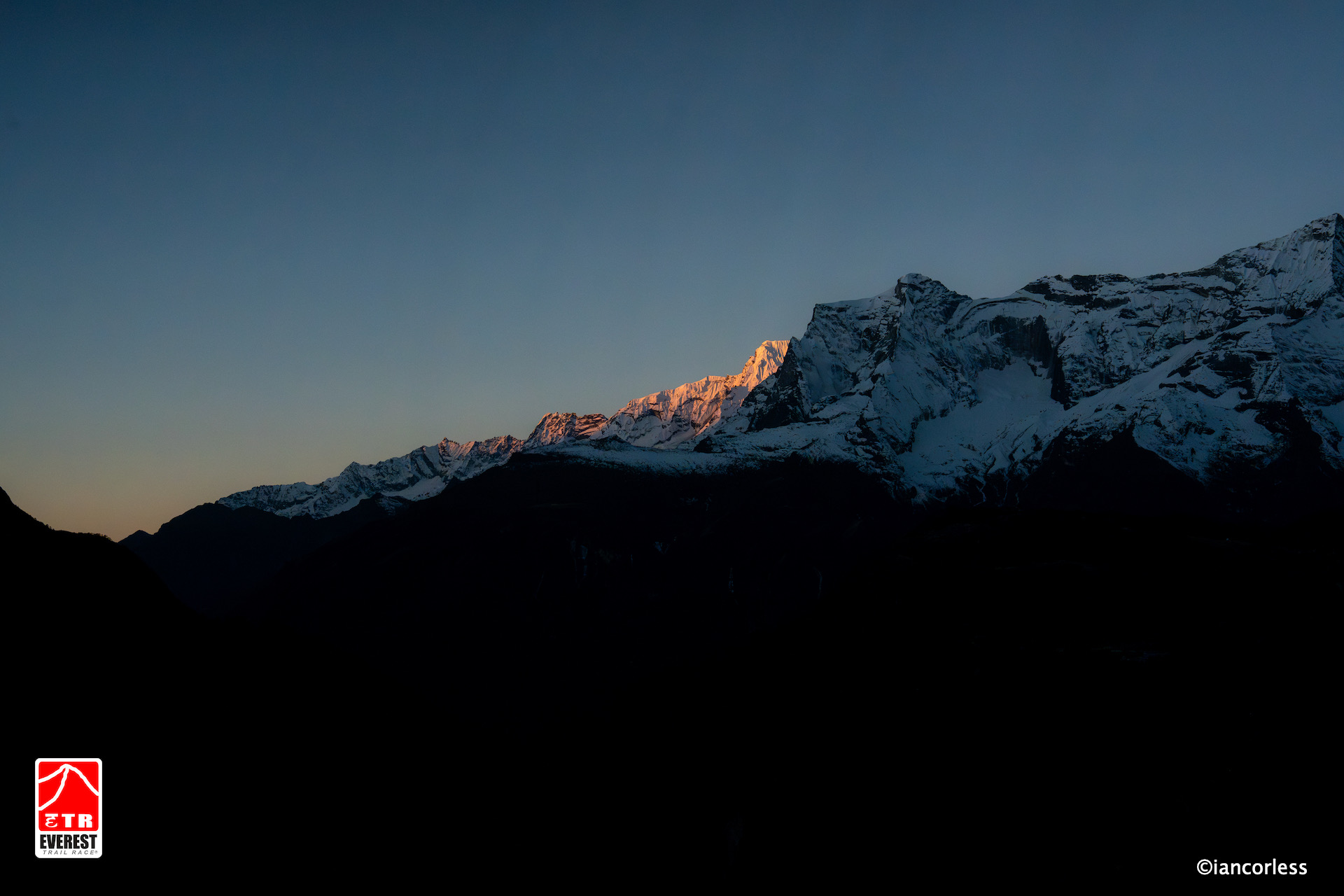
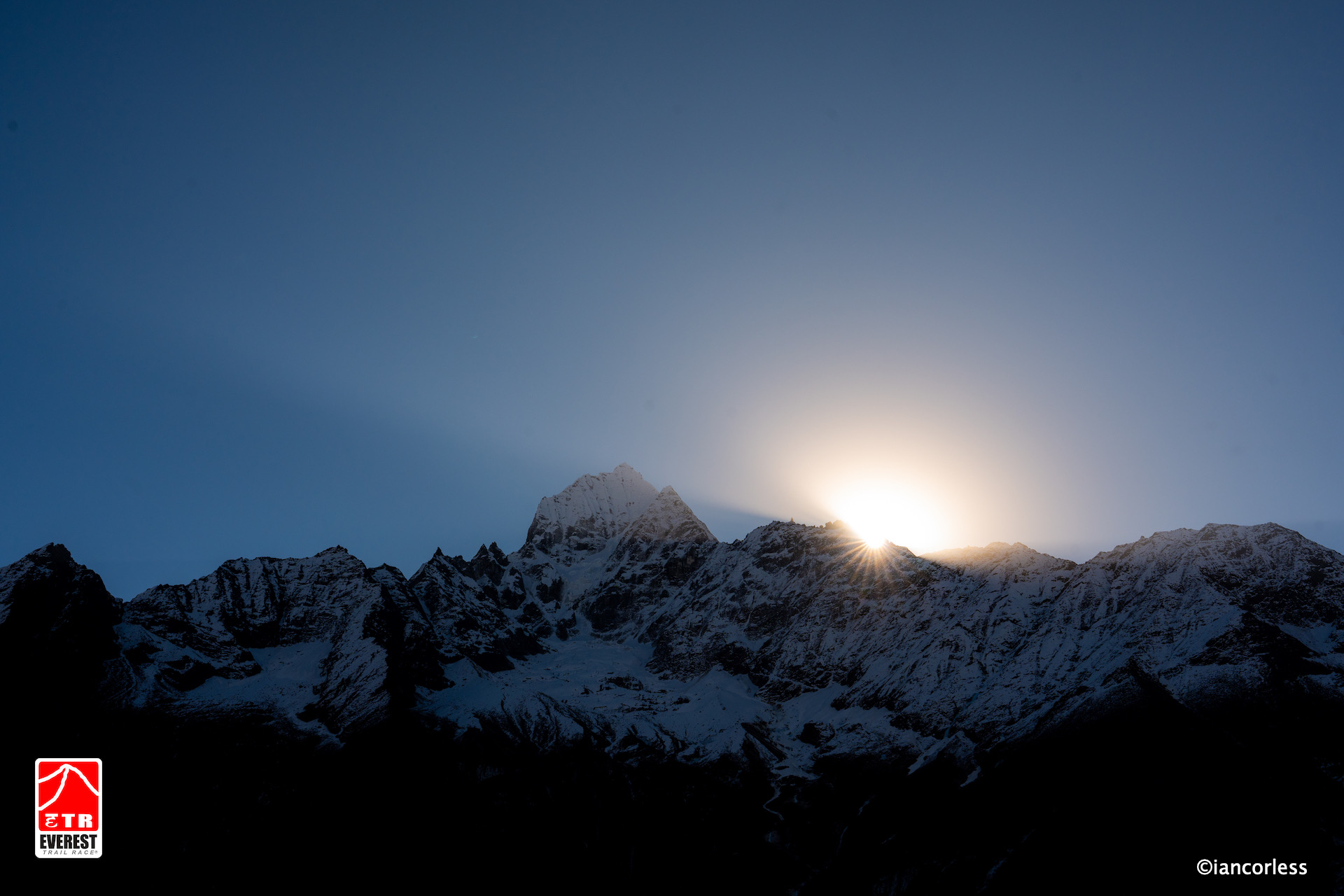
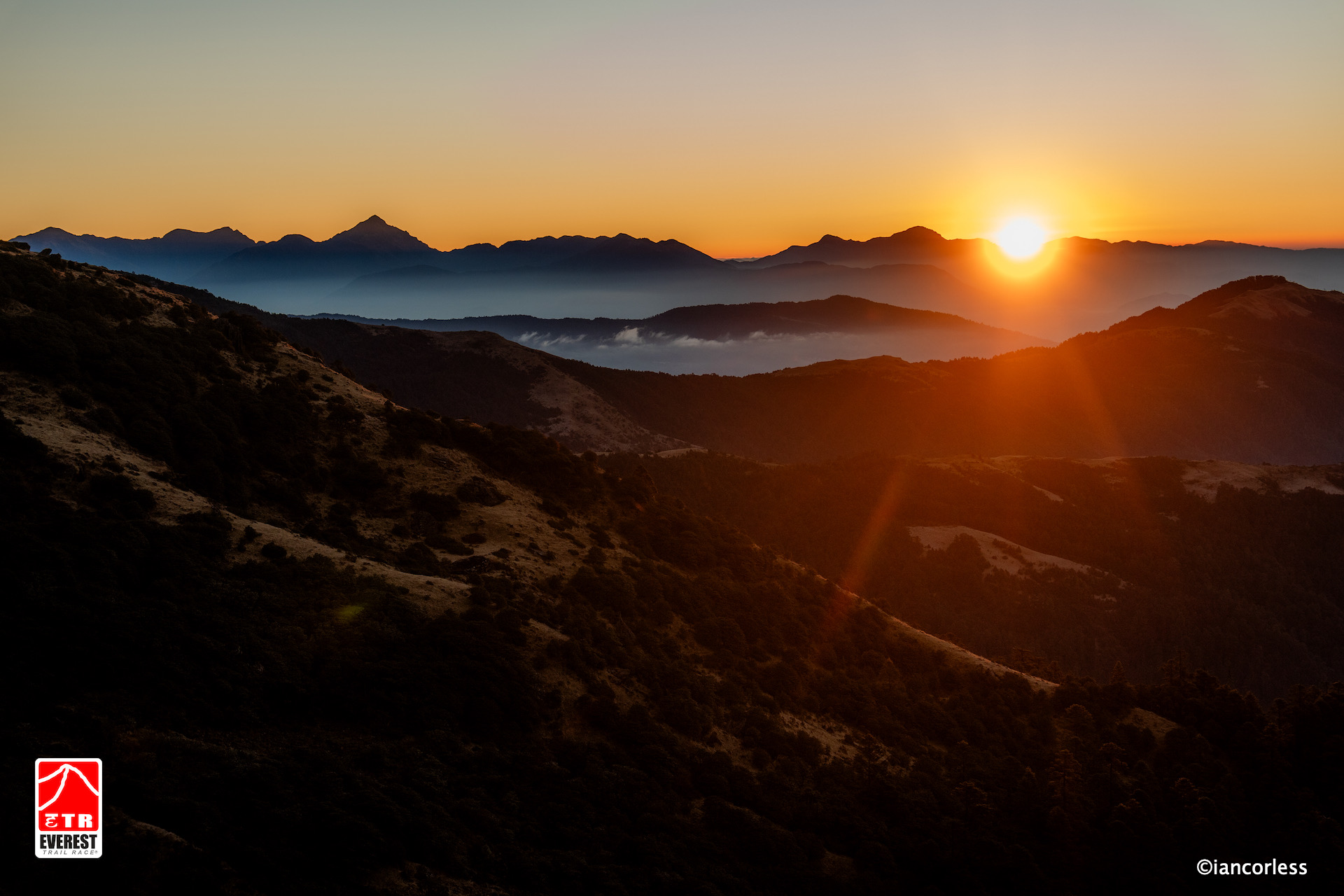
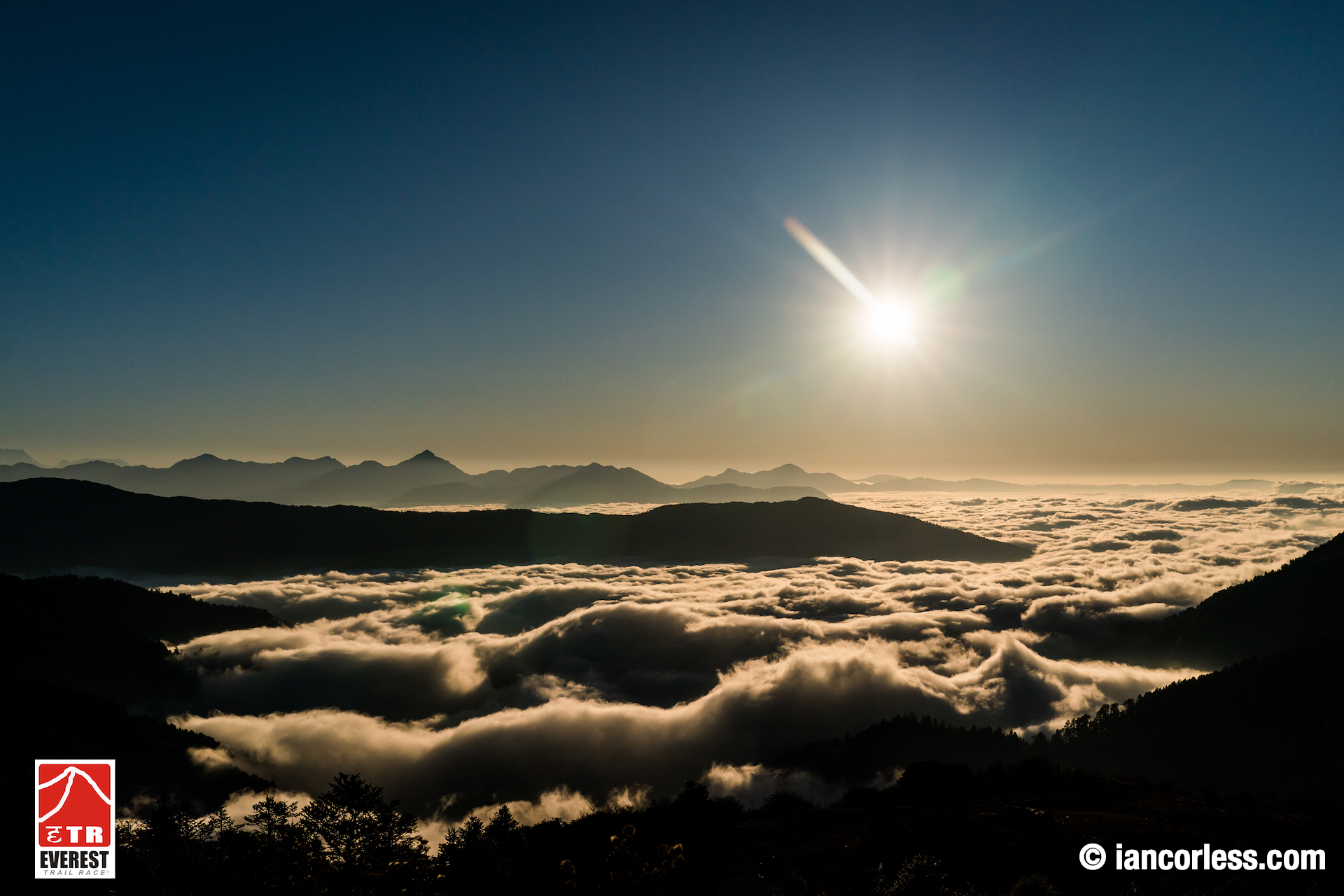
An early start, the arrival of the sun and soon, the heat will come – not only in the sky but with the bodies of each participant.
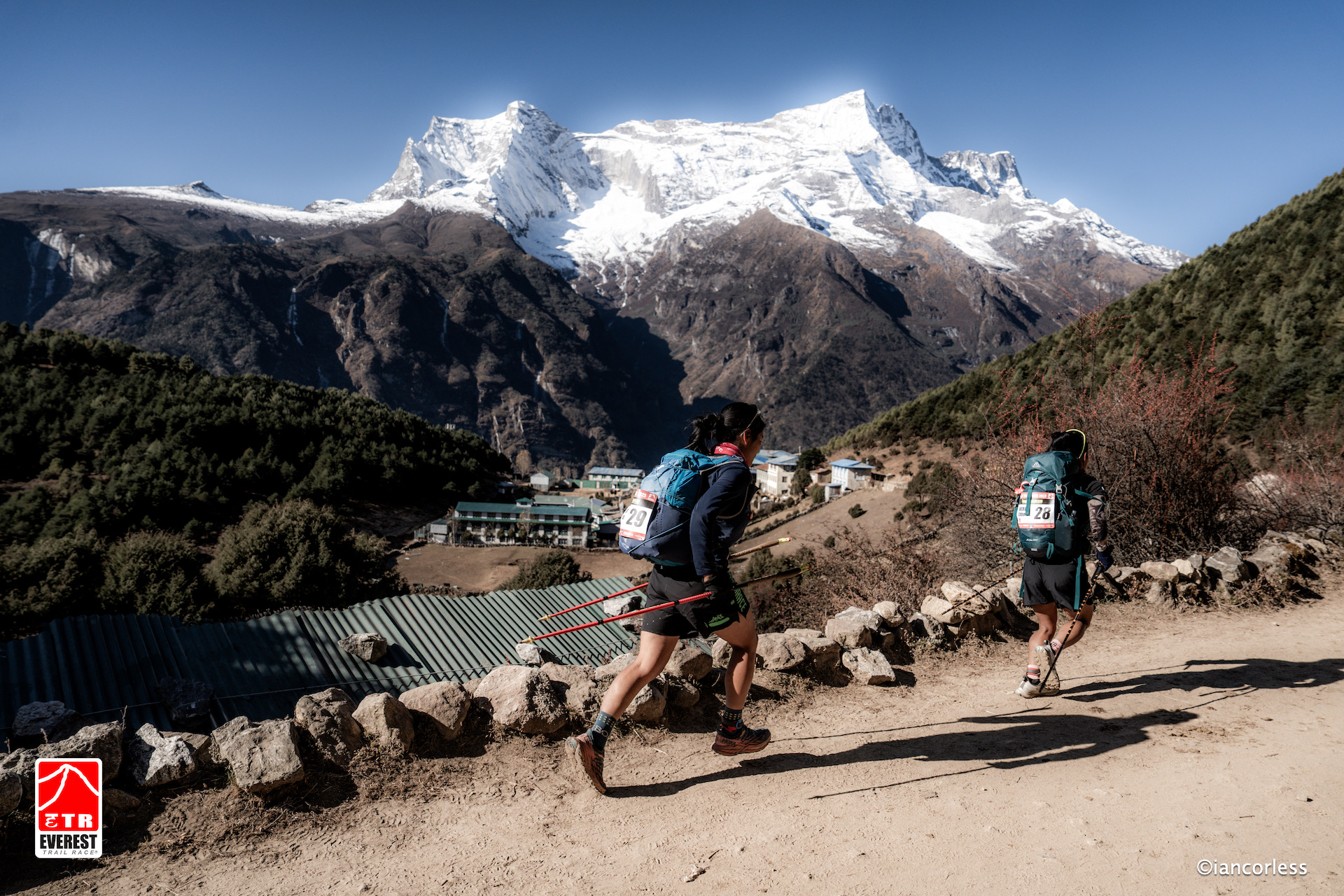
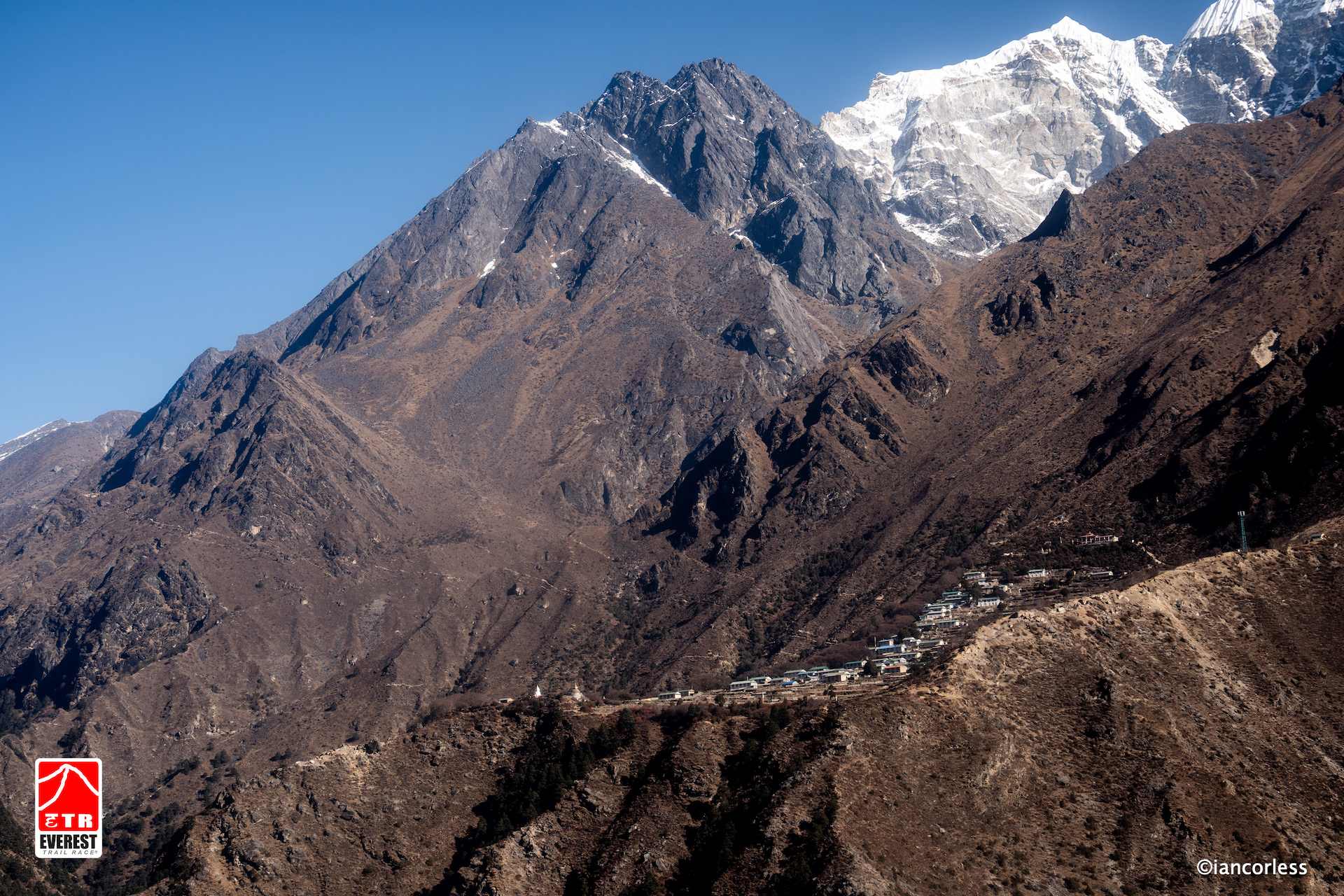
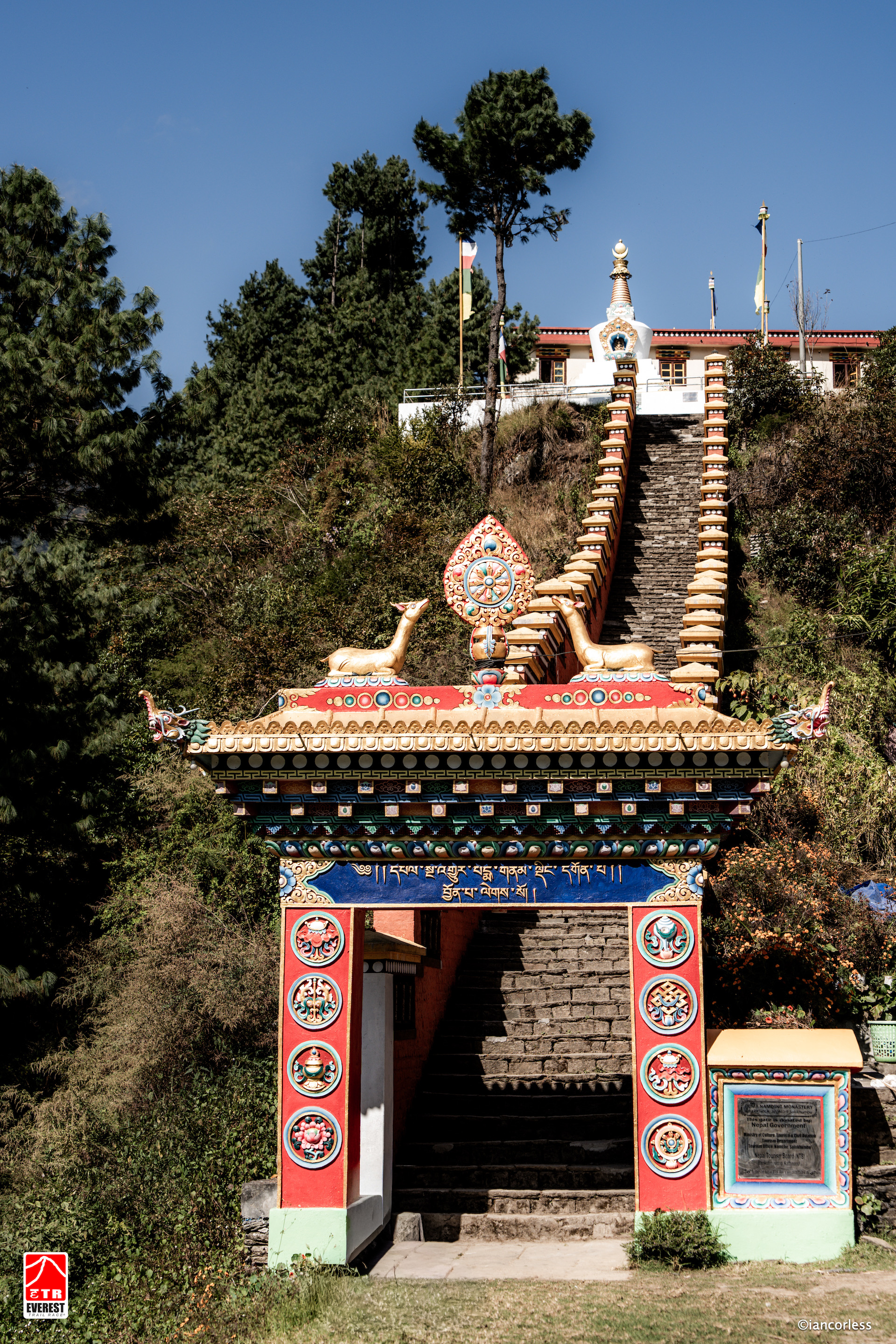
The day kicks off with iconic trails that weave from Stupa to Stupa to Namche Bazaar, the buzzing Sherpa hub perched on the mountainside like a fortress.
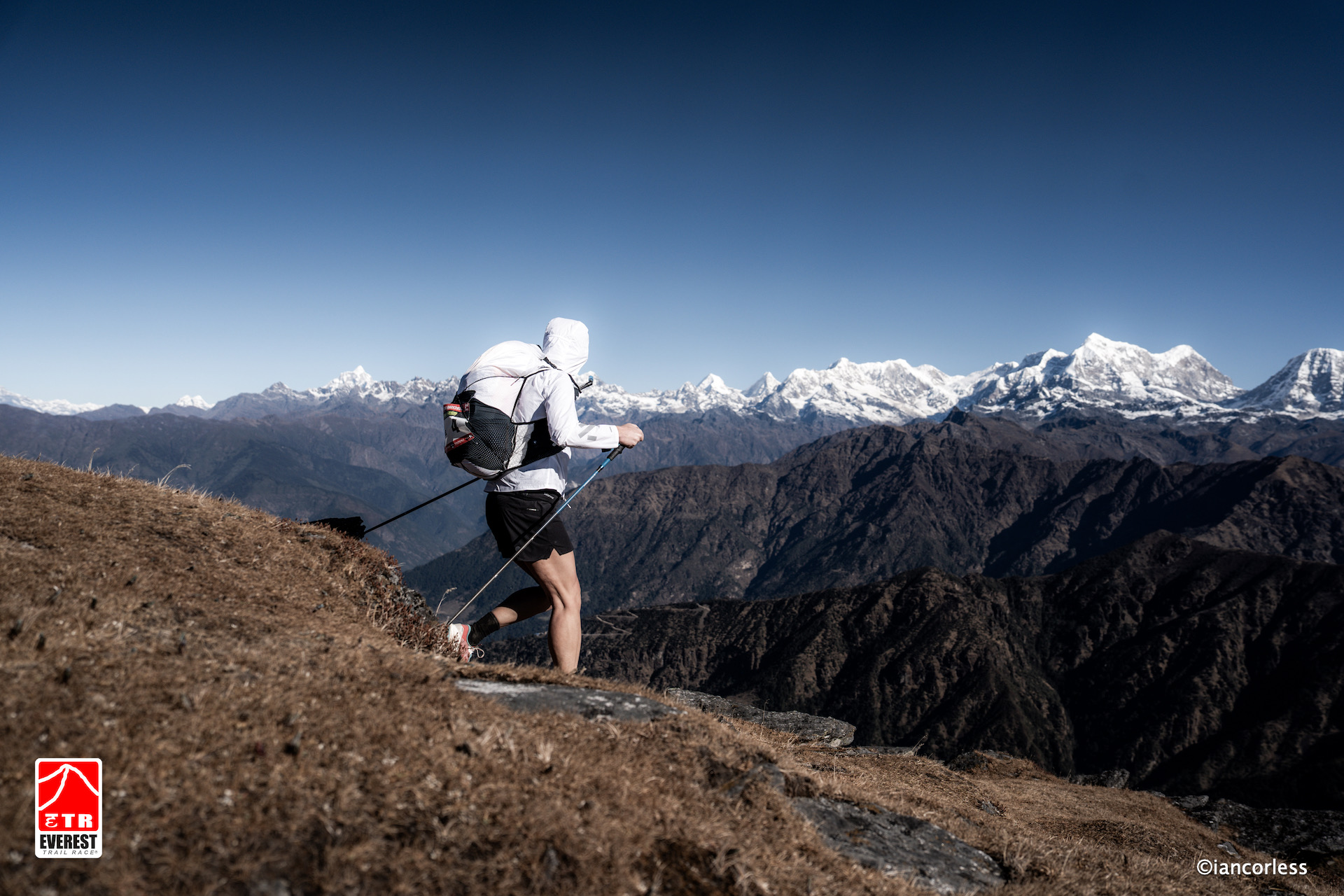
The backdrop behind, stunning, but the participants don’t get a chance to see it…
Namche brings checkpoint 1, it’s welcome, the early kilometres had worked the body hard with a steep descent, followed by a gentle climb and then an ‘easy’ run to the refreshment.
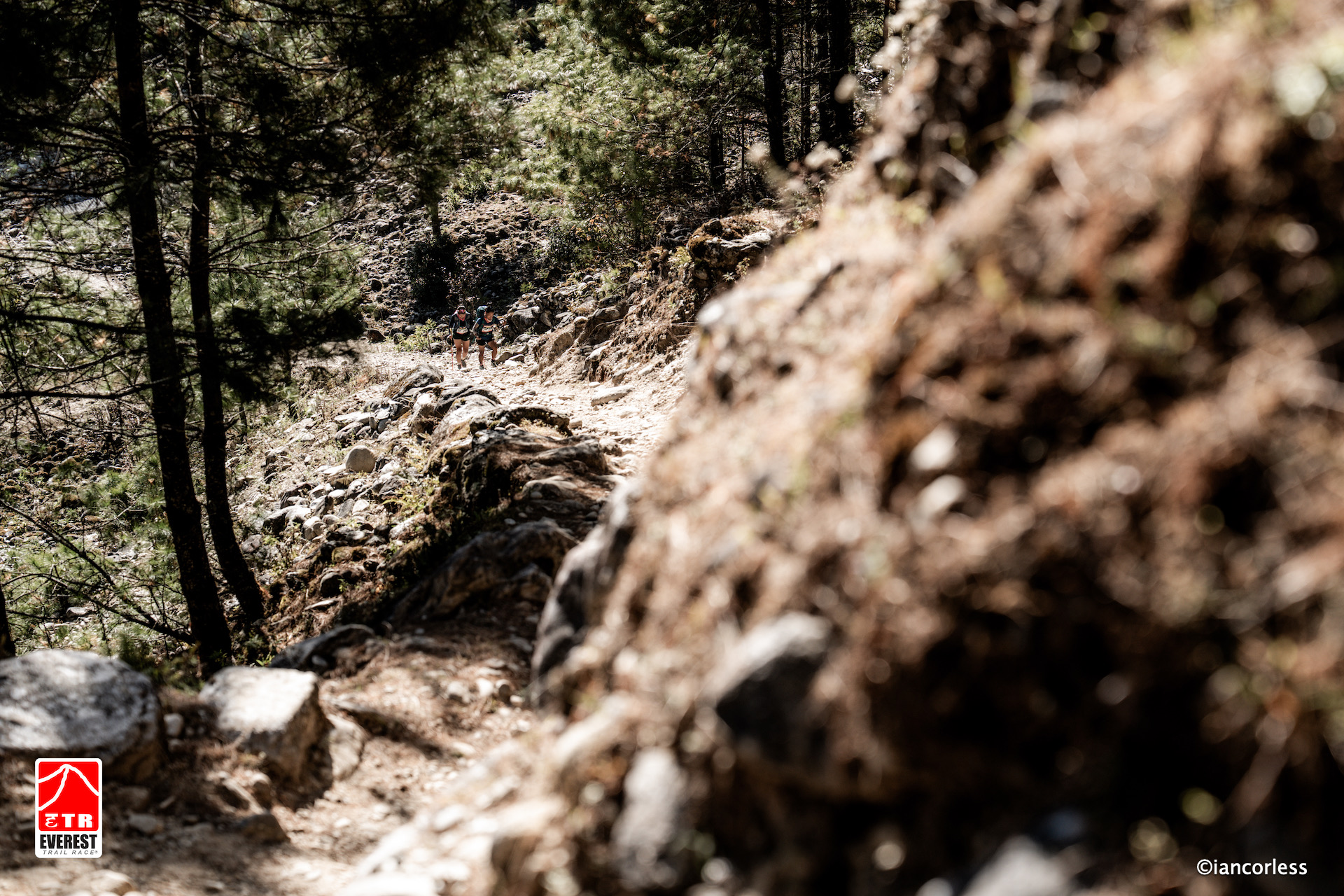
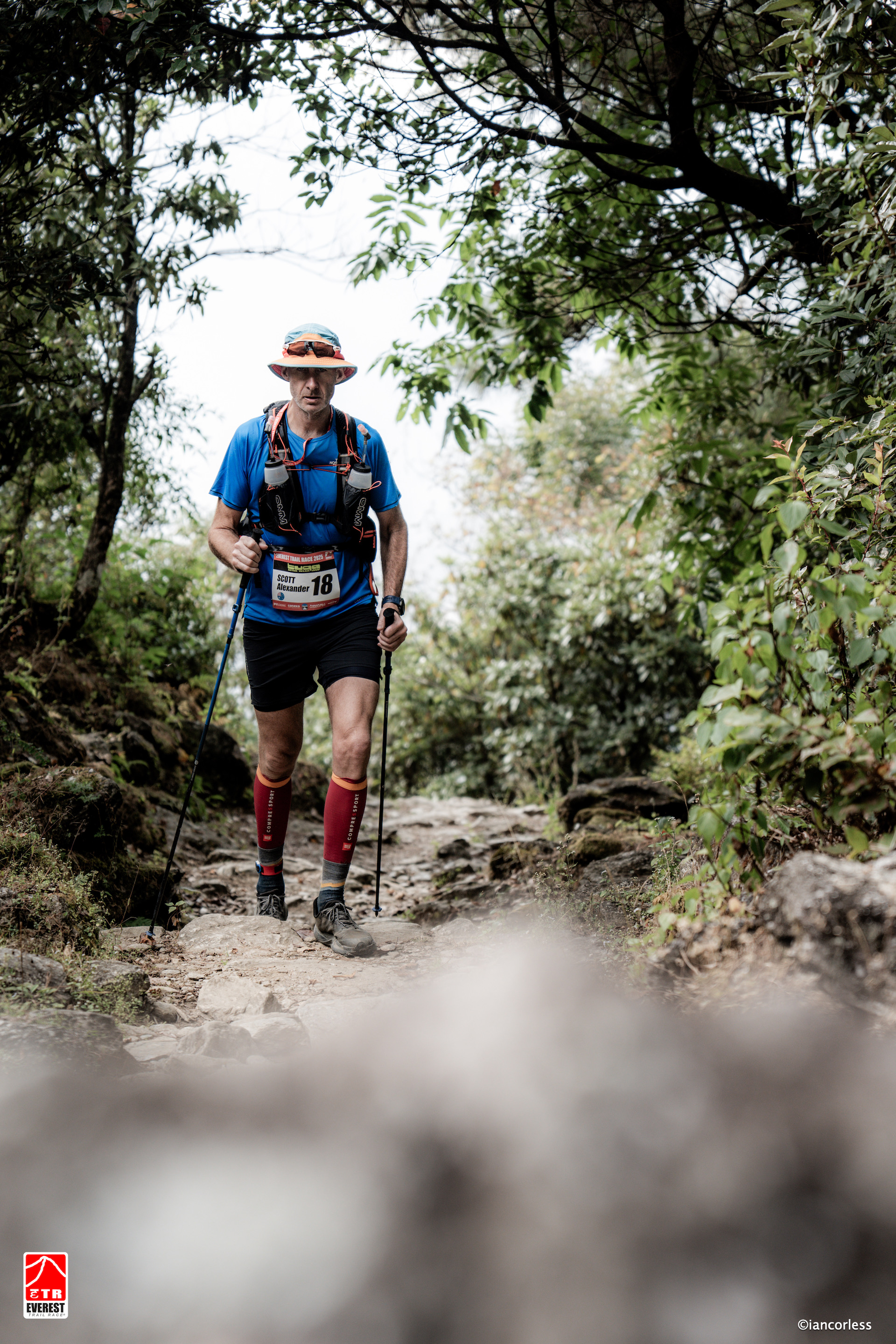
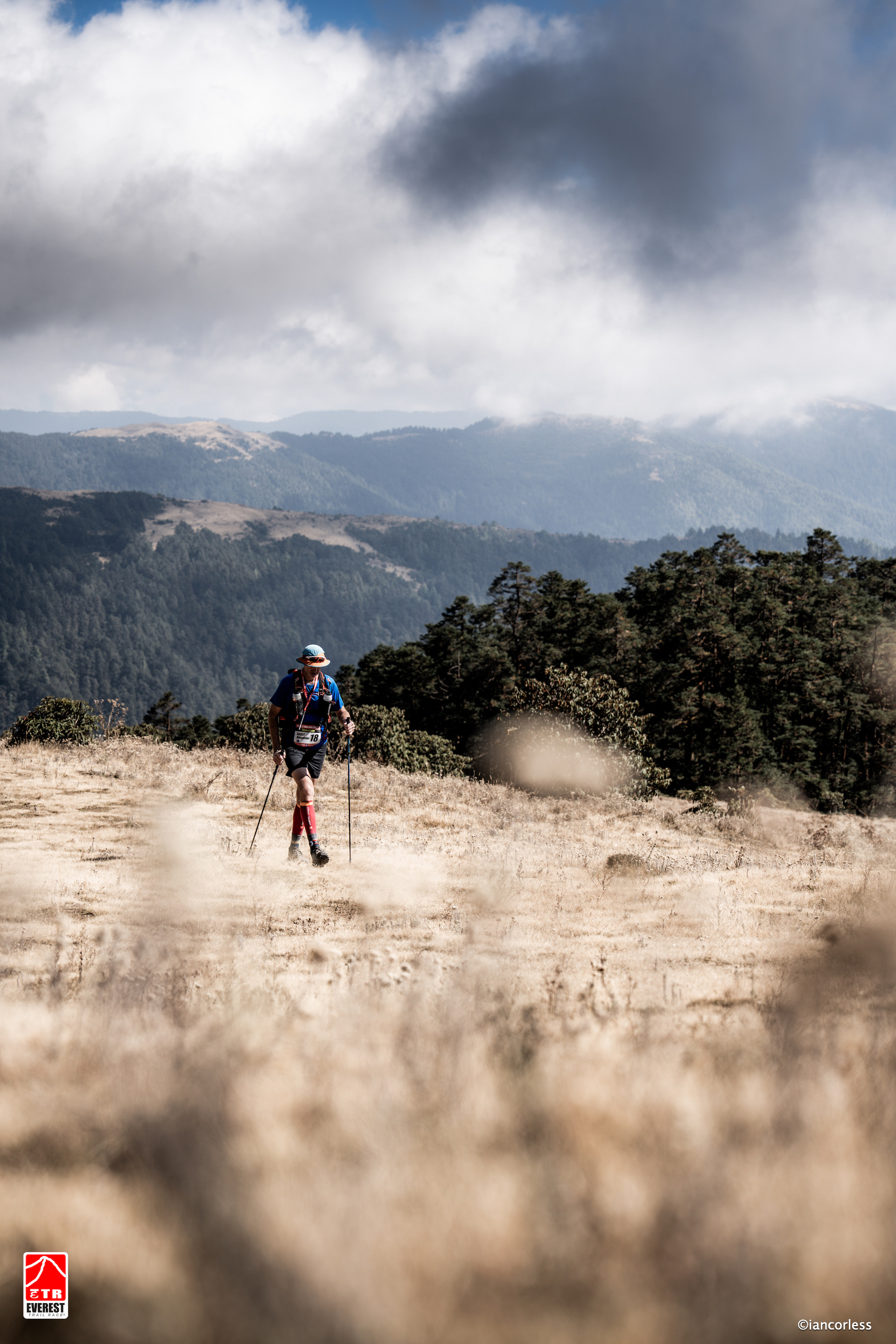
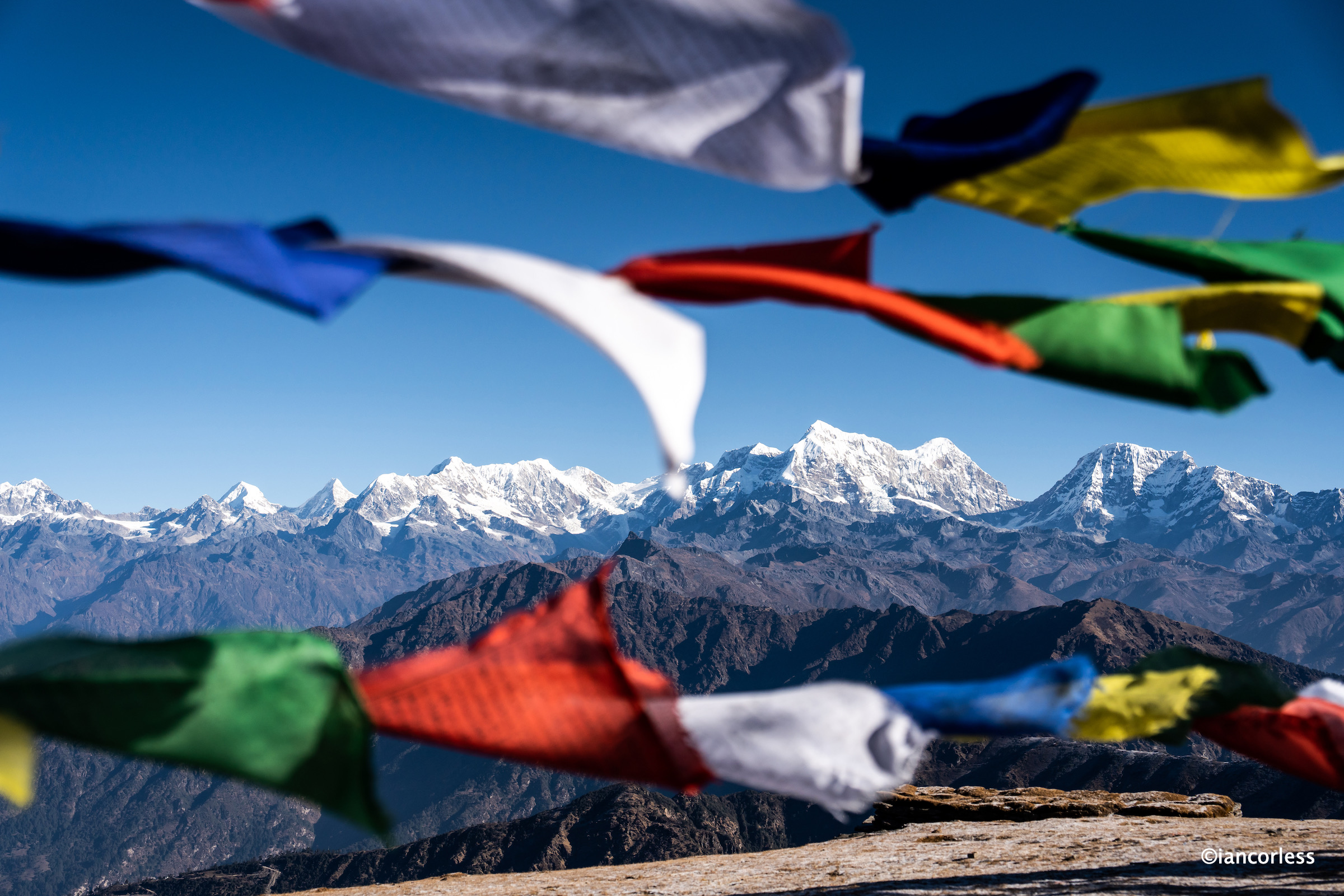
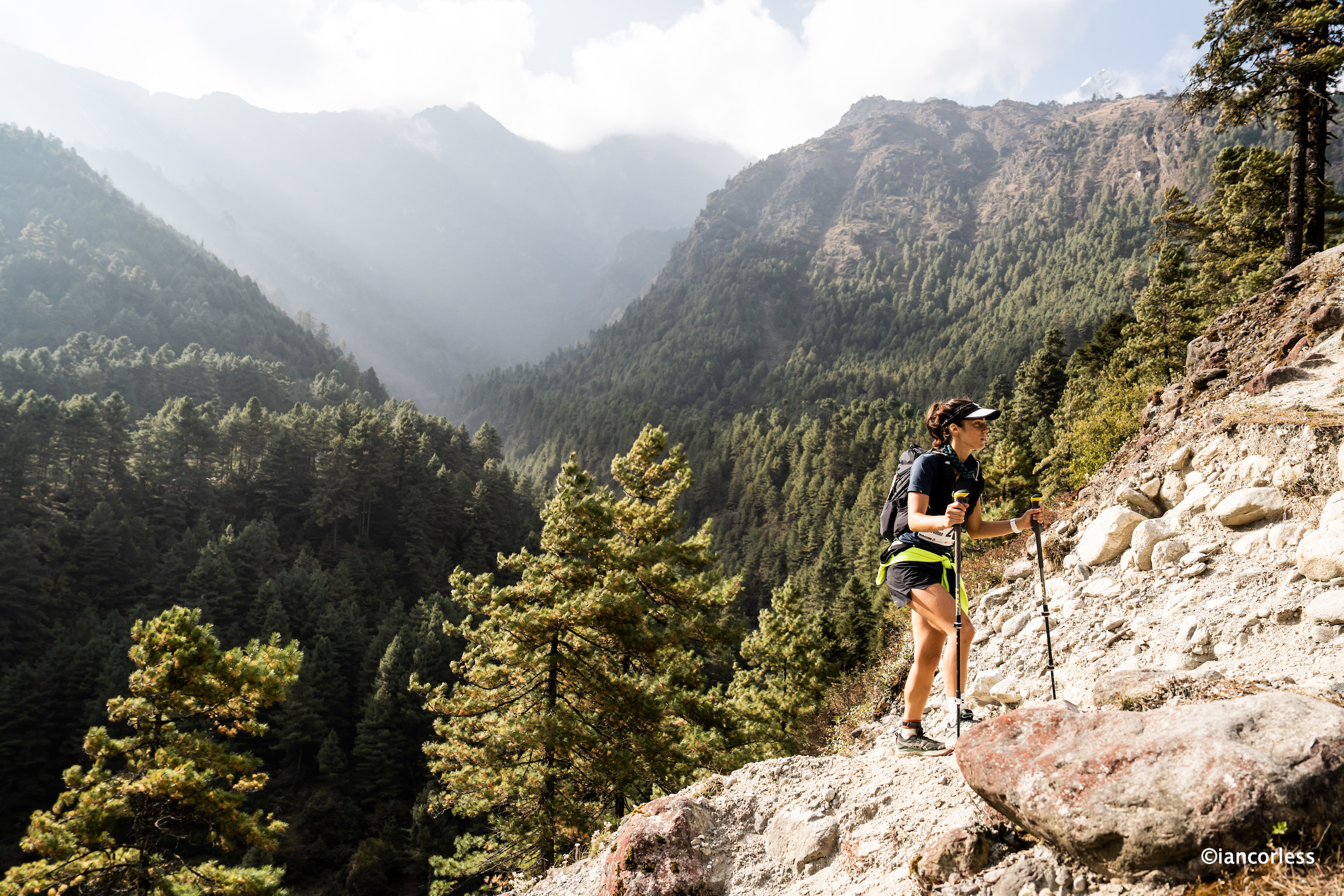
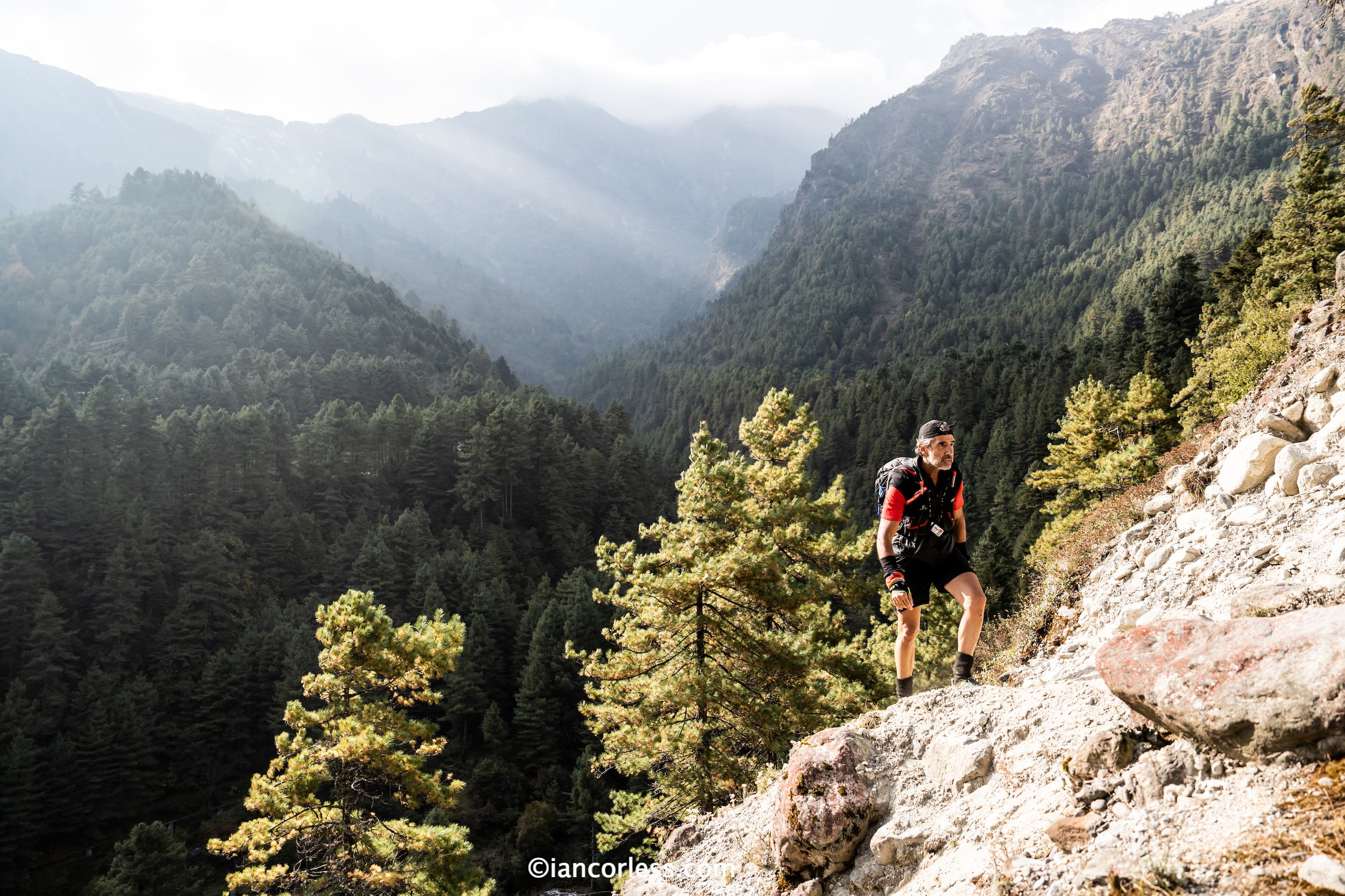
The early kilometers retrace some familiar ground – Sanasa, Phunki Tenga, and trails edged with mani stones and prayer flags, twisting through pine forests and clinging to cliffs. But don’t call it a repeat. The fatigue, the altitude, and the stakes make every step feel different.
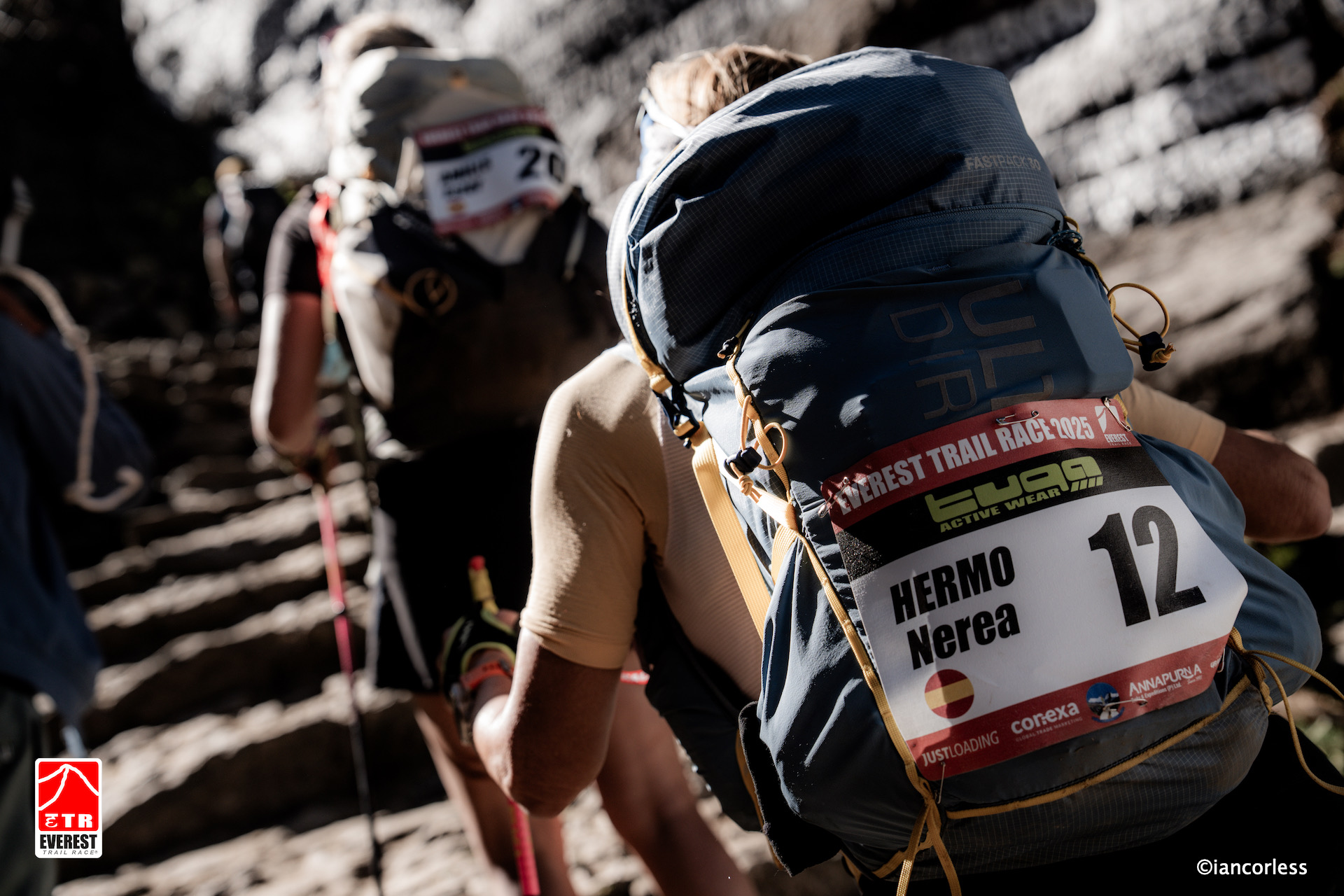
This stage is less about vertical brutality and more about holding form, keeping control as the trail drops fast and hard. Quads burn, knees scream, but momentum is everything.
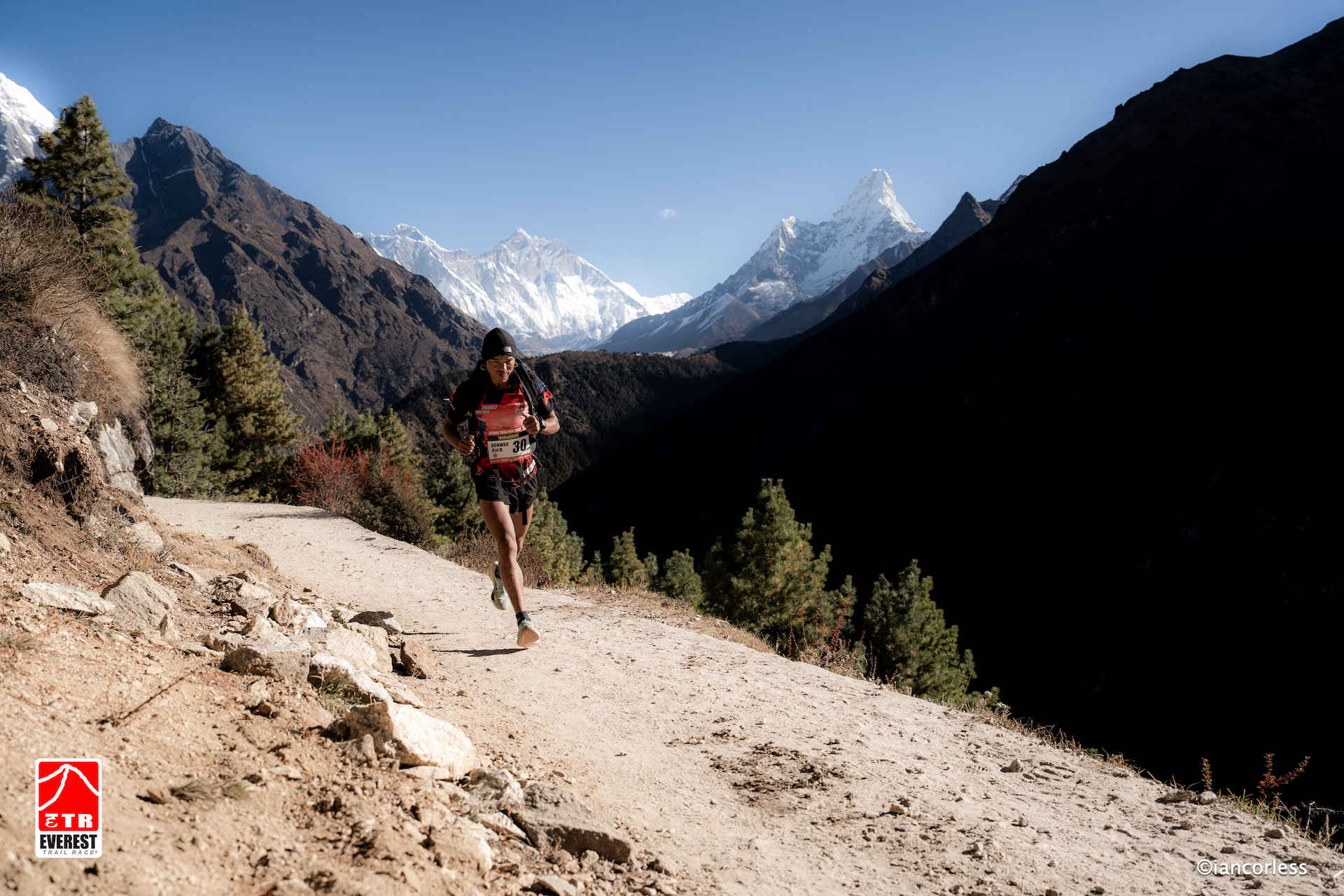
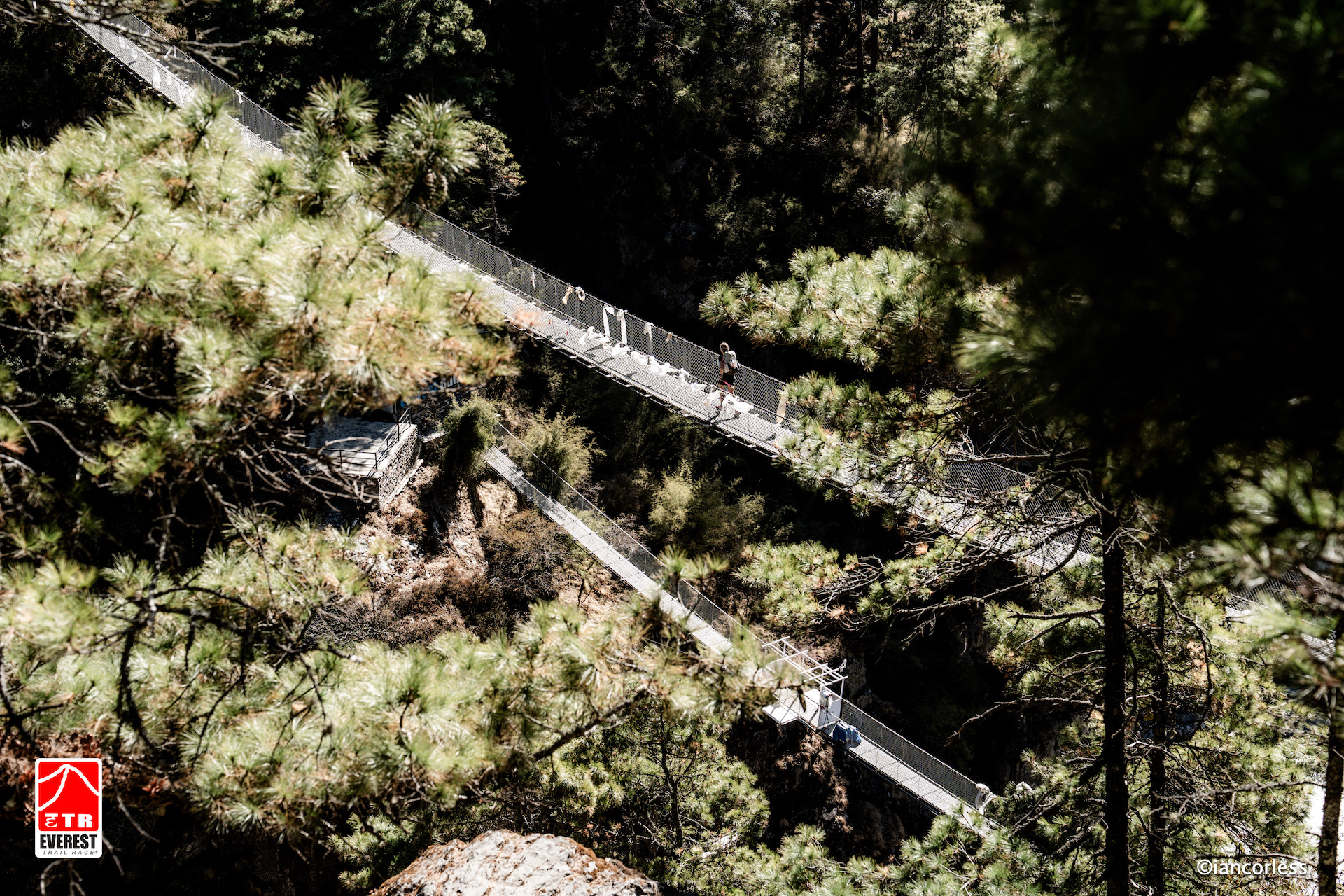
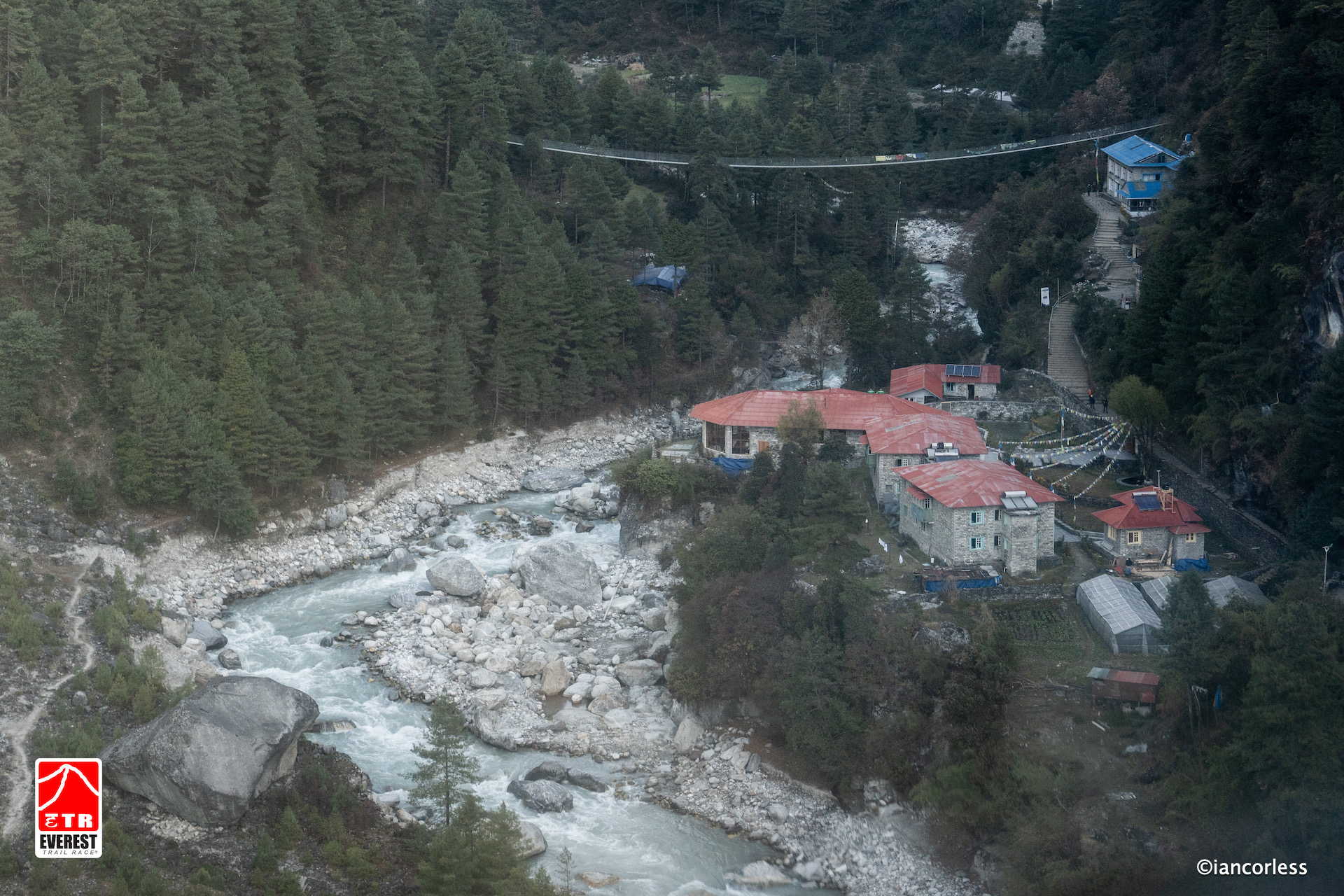
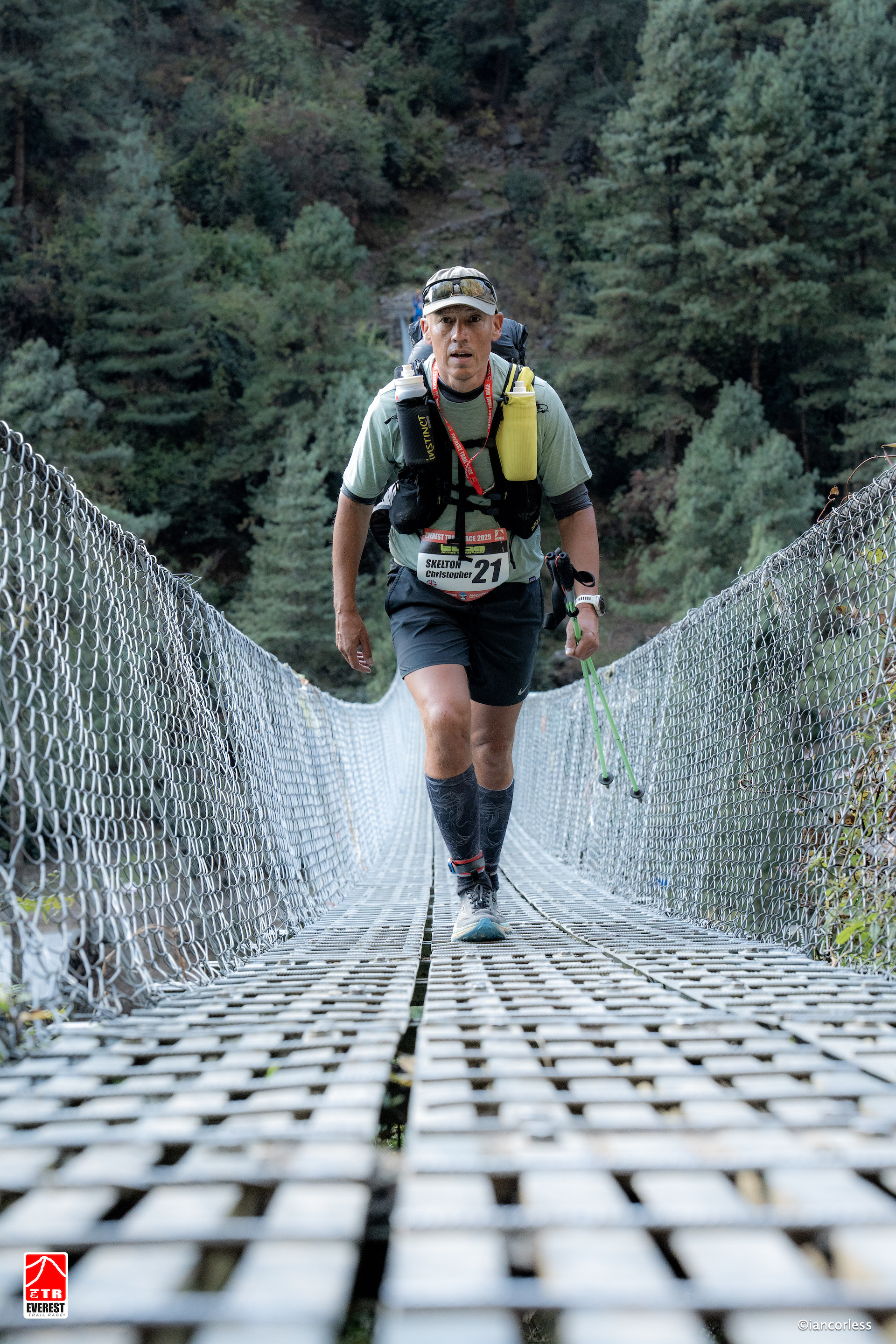
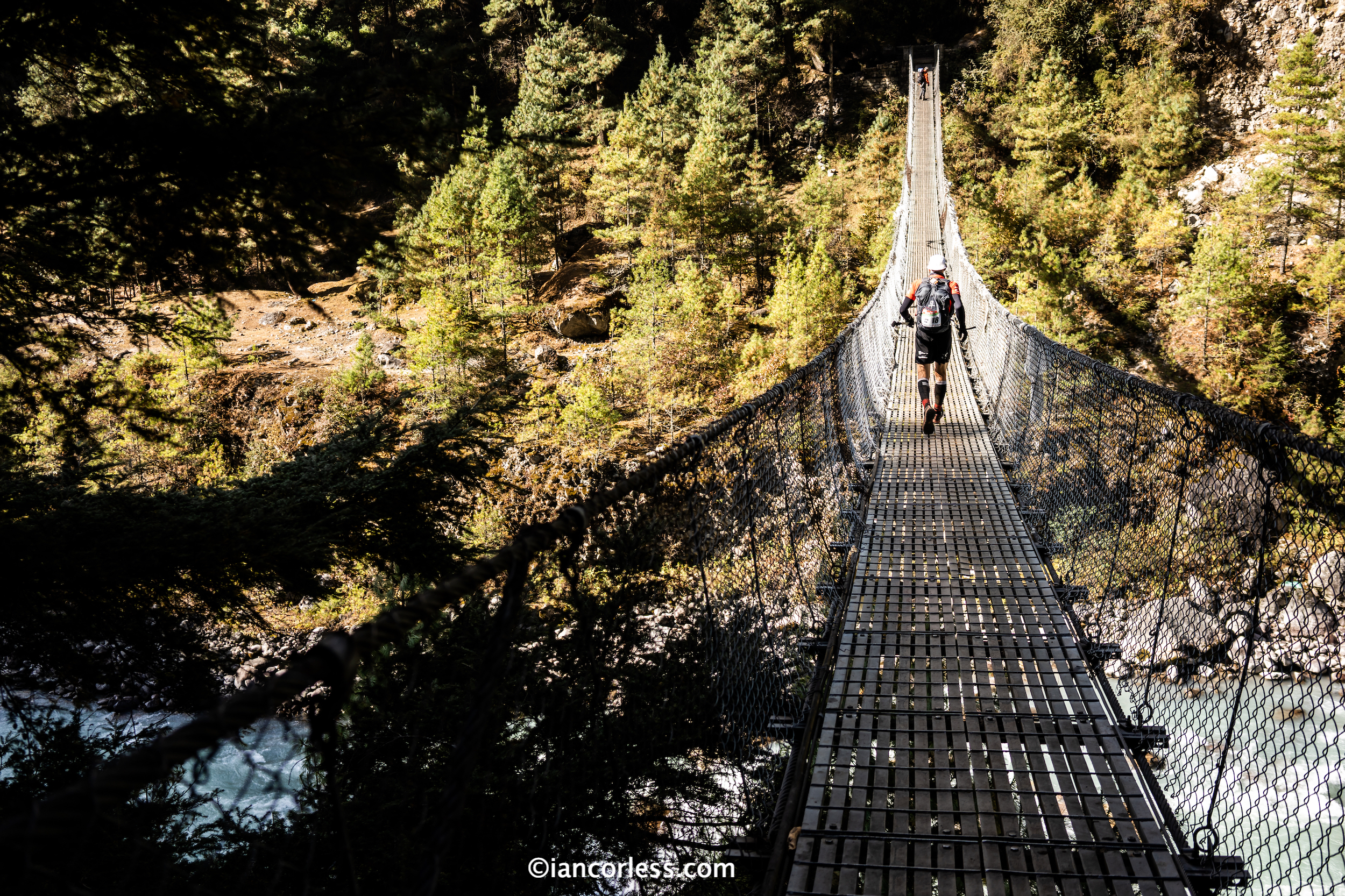
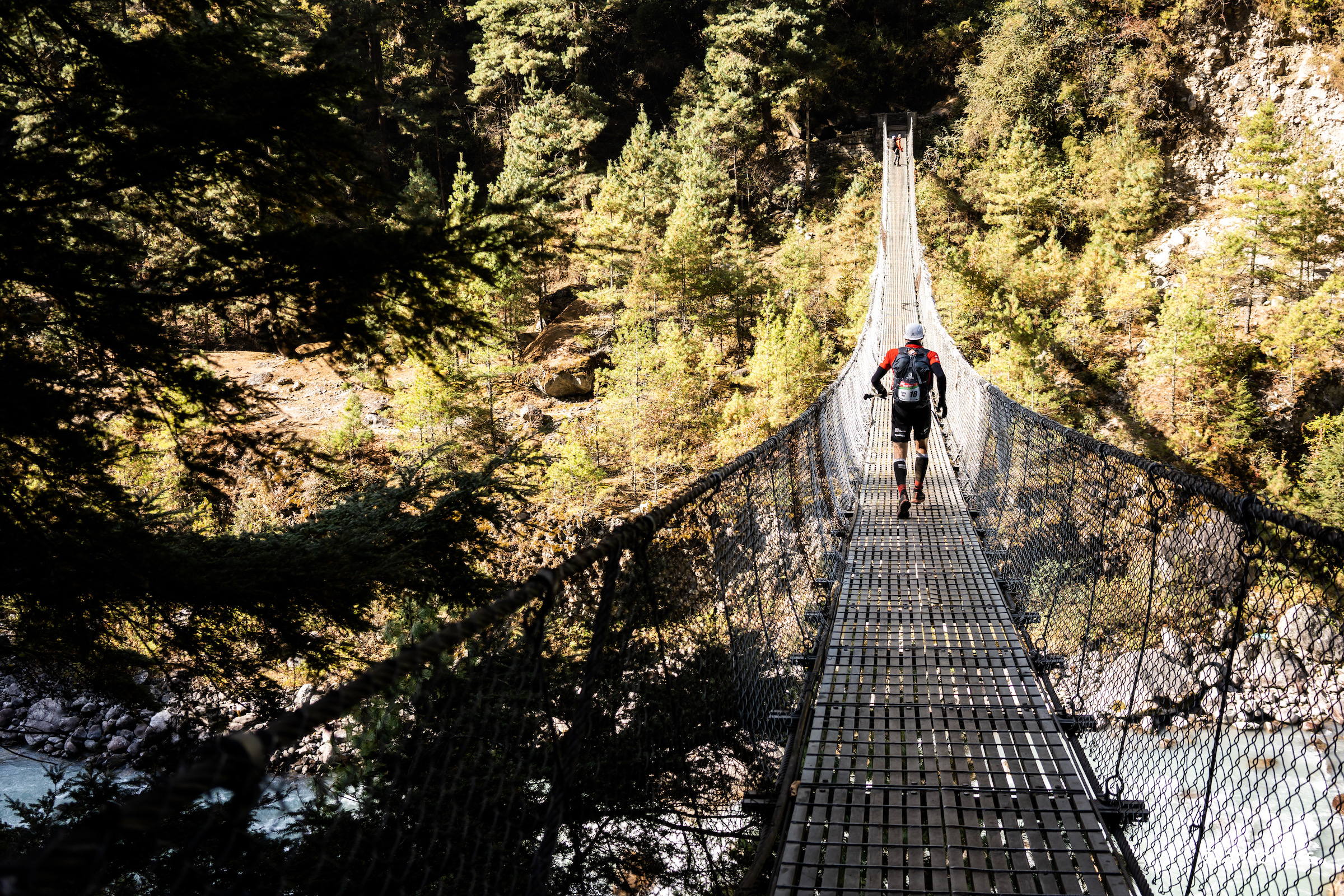
Soon, the trail funnels runners toward the legendary new Hillary Bridge – a sweeping, high-tension crossing that swings over the Dudh Kosi with views that could stop you in your tracks, if the clock wasn’t ticking.
Past the bridge, it’s Jorsale, where the race starts to feel like it’s dragging runners home. The Phakding checkpoint (CP2) marks another milestone, each bib scanned there is one step closer to Everest Trail Race glory.
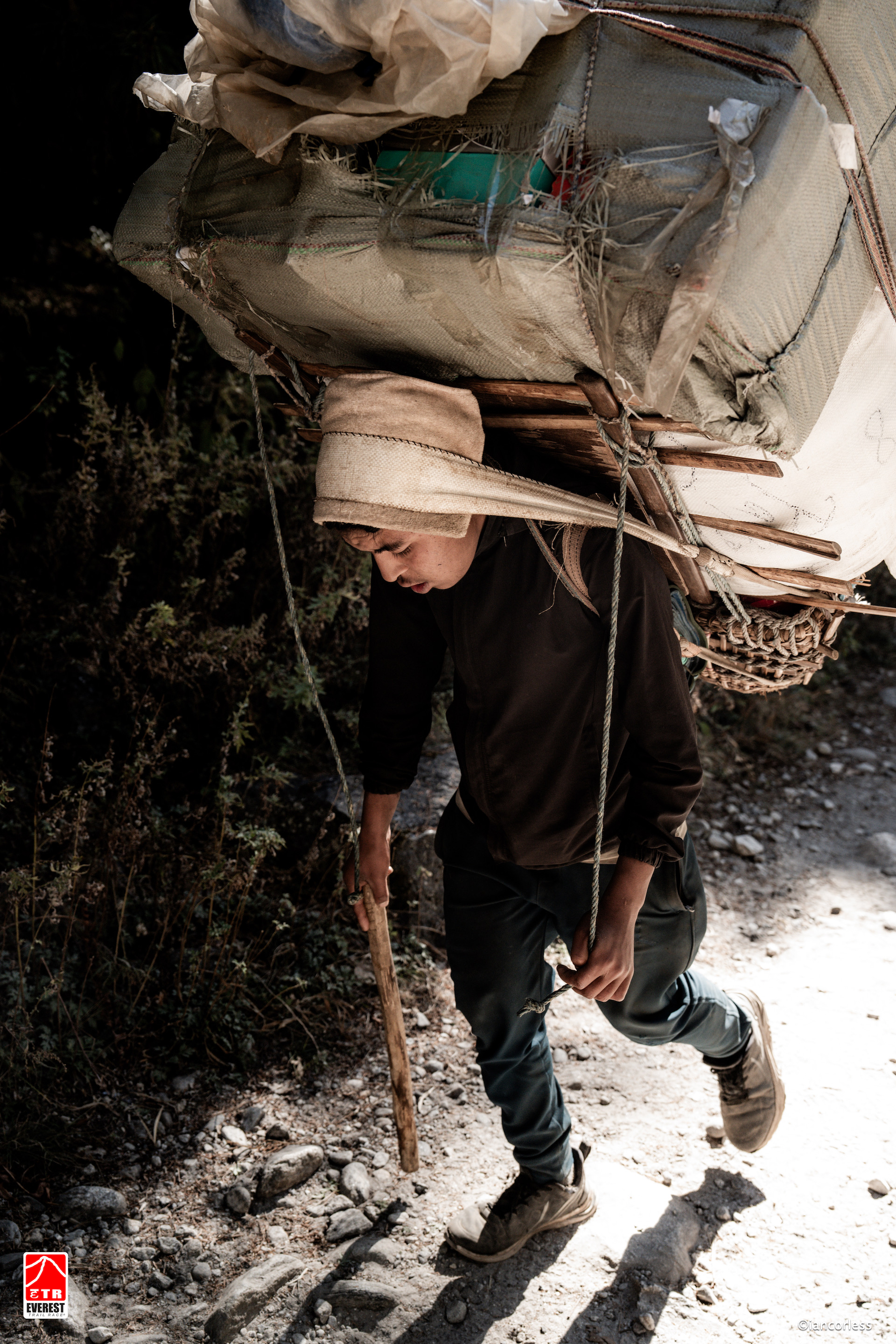
By the time runners hit Cheplung, it’s all on the table. Here, a sharp left turn signals the endgame: the final climb to Lukla and oce again, Nepal and the Porters remind us, how lucky we are!
It’s not long, but it bites. After the day’s long descent, this uphill kick demands whatever strength is left in the tank. Runners grit teeth, dig deep, and push toward the town that marks the start of most Everest dreams, and now, the finish of this one.
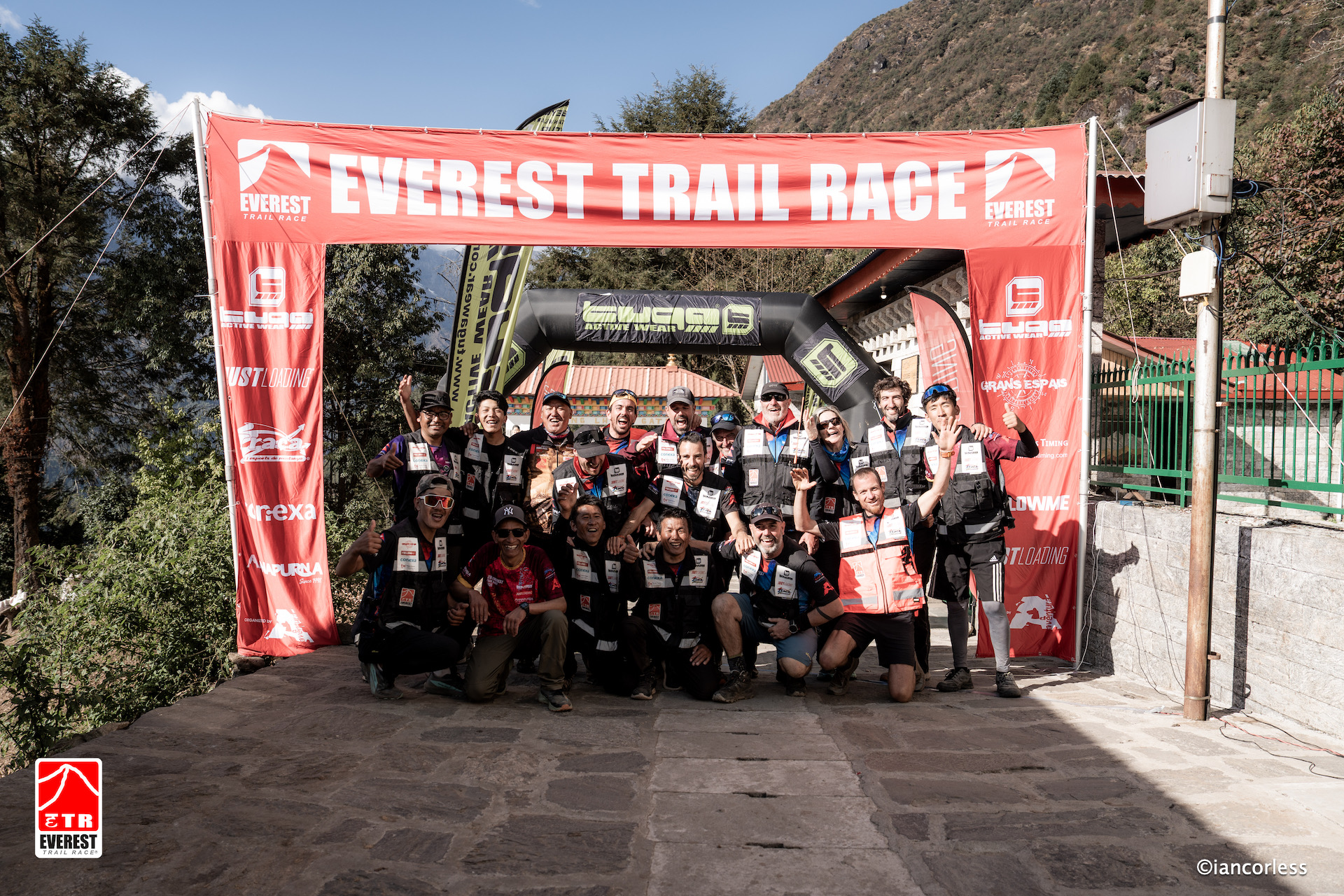
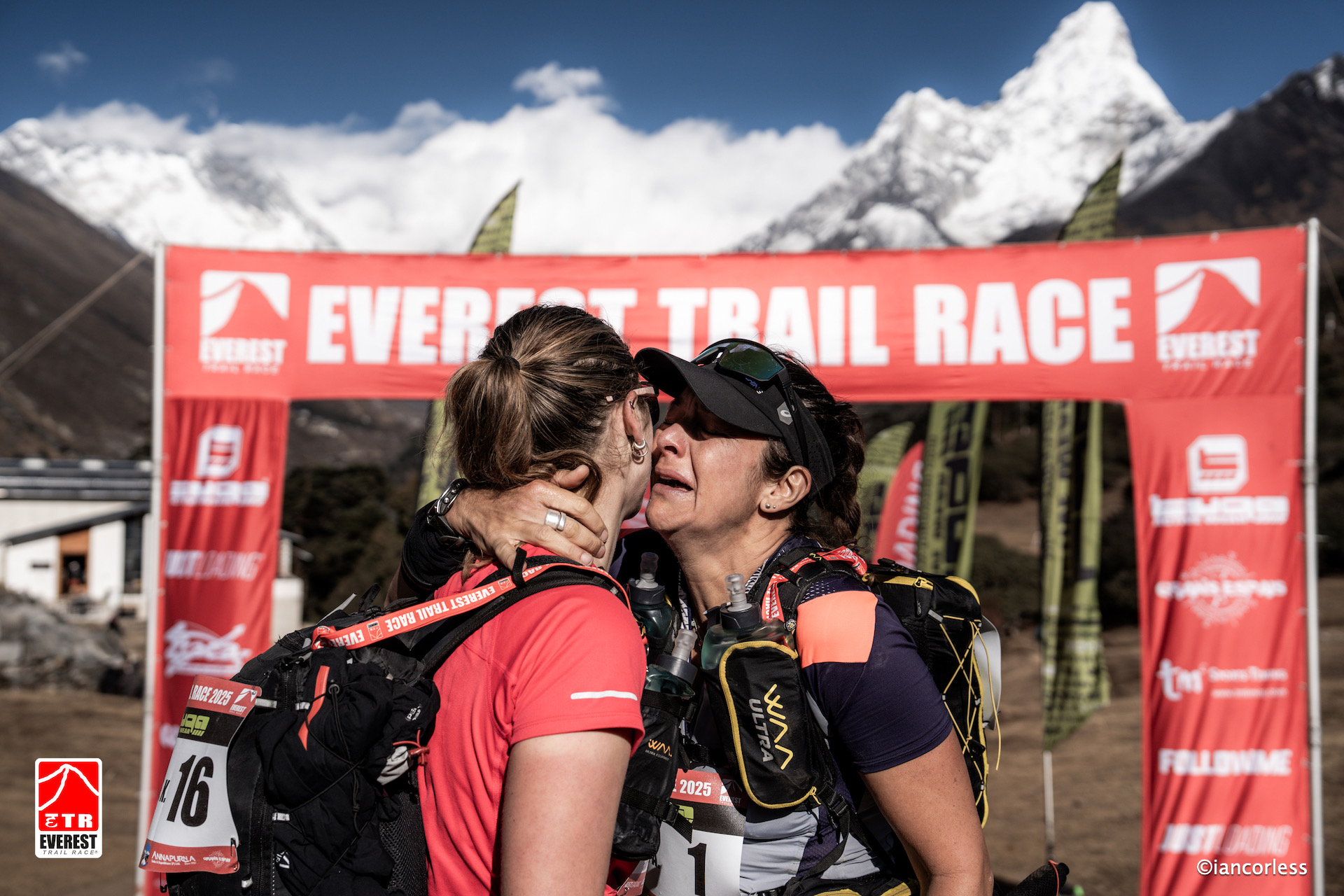
Crossing into Lukla is like breaking through into another world. Crowds, bells, cheers, and tears—this is where it all ends. For some, it’s a triumphant sprint. For others, a silent, emotional walk over the line. But for everyone, it’s the culmination of six days of relentless racing through some of the world’s toughest terrain.
The 2025 Everest Trail Race is done, everyone earned more than a medal, they earned the mountain’s respect.
Stage 5 of the Everest Trail Race pulls no punches. At 24km with a punishing 2,483 meters of ascent, this is the stage that earns its reputation as the toughest of them all. The numbers alone are intimidating, but it’s the relentless terrain and shifting altitude that test runners on every level – physical, mental, emotional.
This year’s route sees a change from previous editions, adding new layers of challenge and beauty. Starting in the shadow of Sagarmatha National Park’s giants, the trail weaves through the quiet village of Chumoa before rising into the bustling trails of Namche Bazaar, where the first checkpoint offers a brief reprieve. But this is only the beginning.
From Namche, the course climbs to Syangboche, skirting airstrips and yak paths, before pressing on to Kumjung, a Sherpa village set high beneath the peaks. Then comes Mong La – Checkpoint 2 – perched like a balcony above the valleys below. From there, it’s a steep descent to Phortse Tenga, followed by a lung-busting climb to Phortse, a village known for its mountaineering legacy.
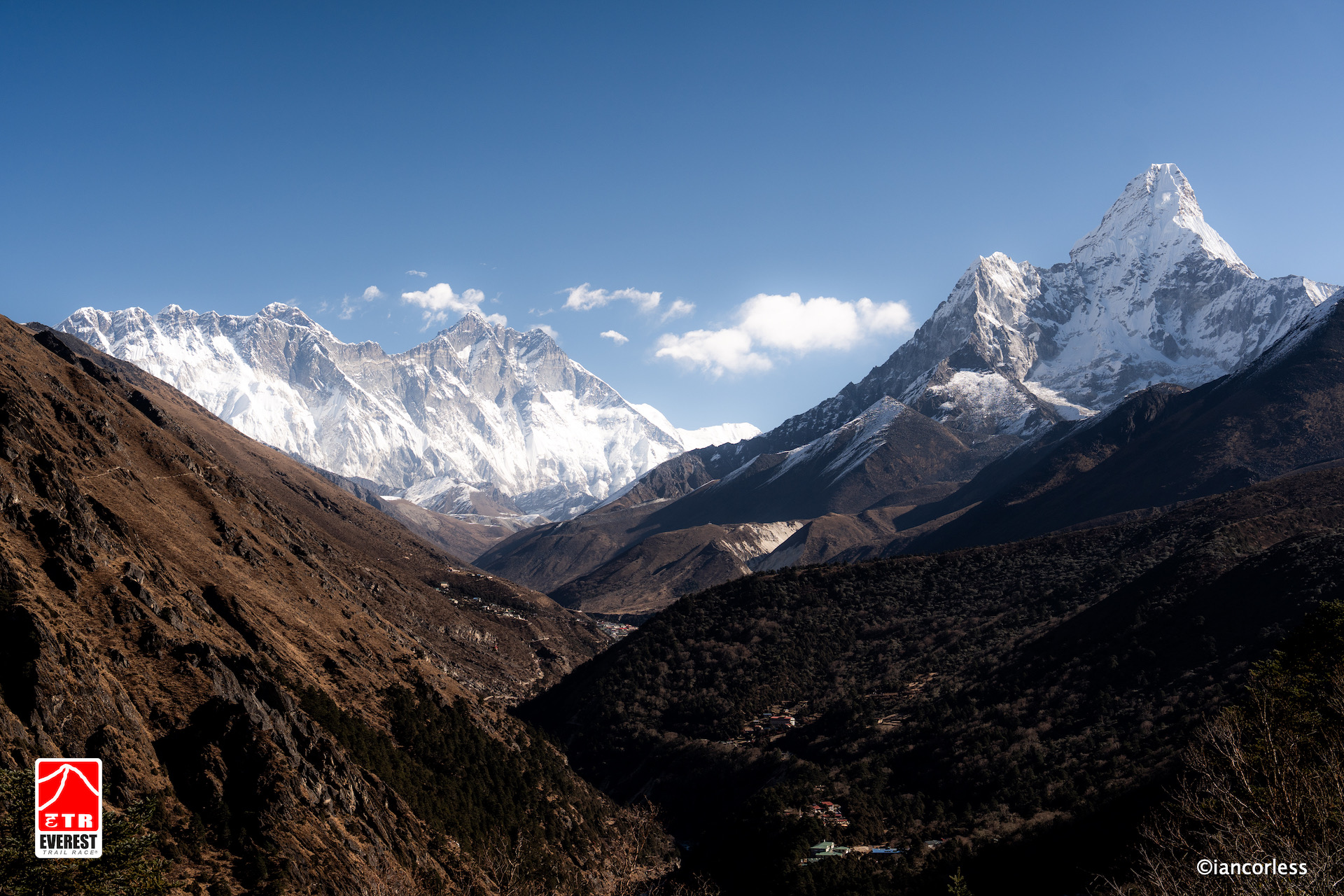
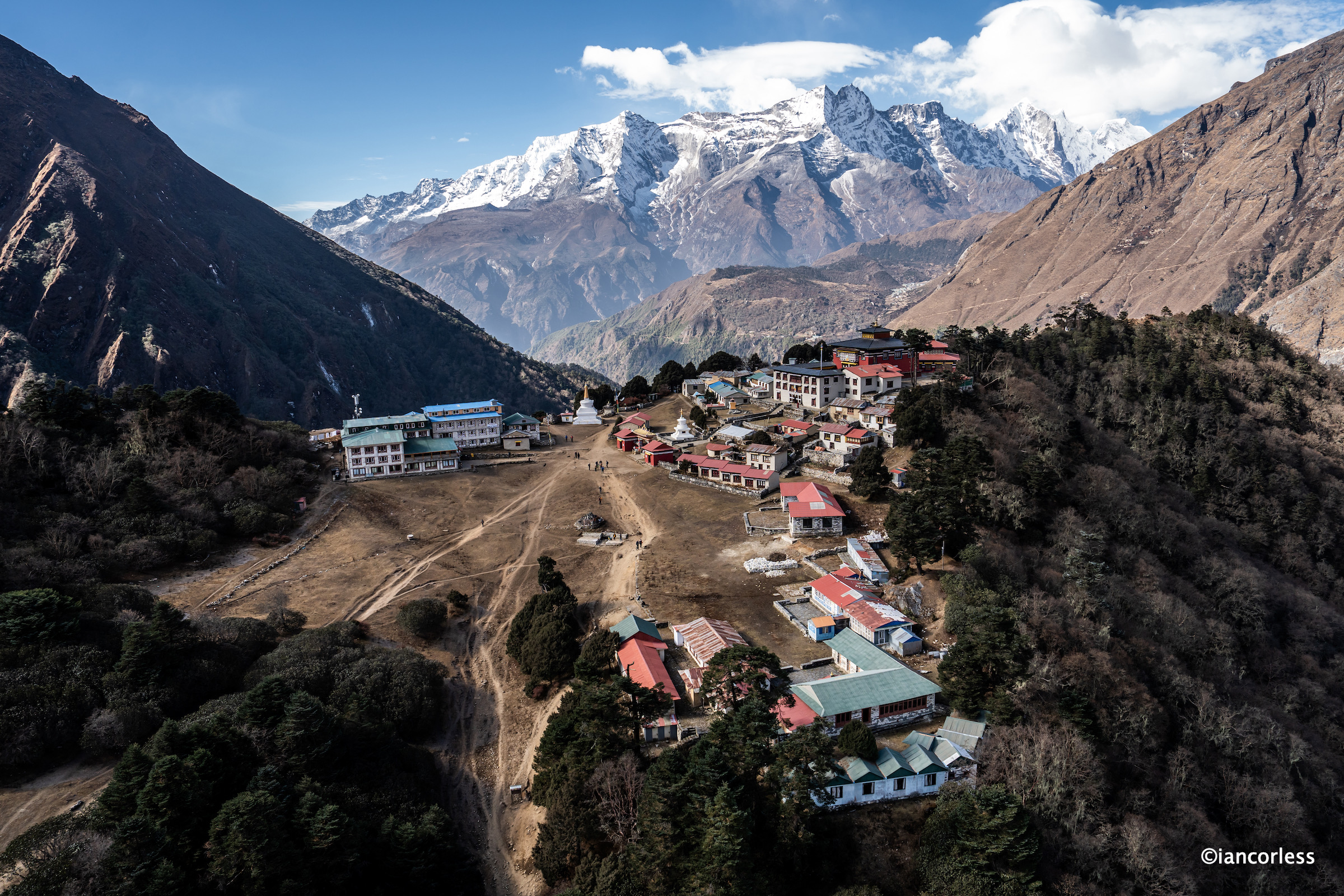
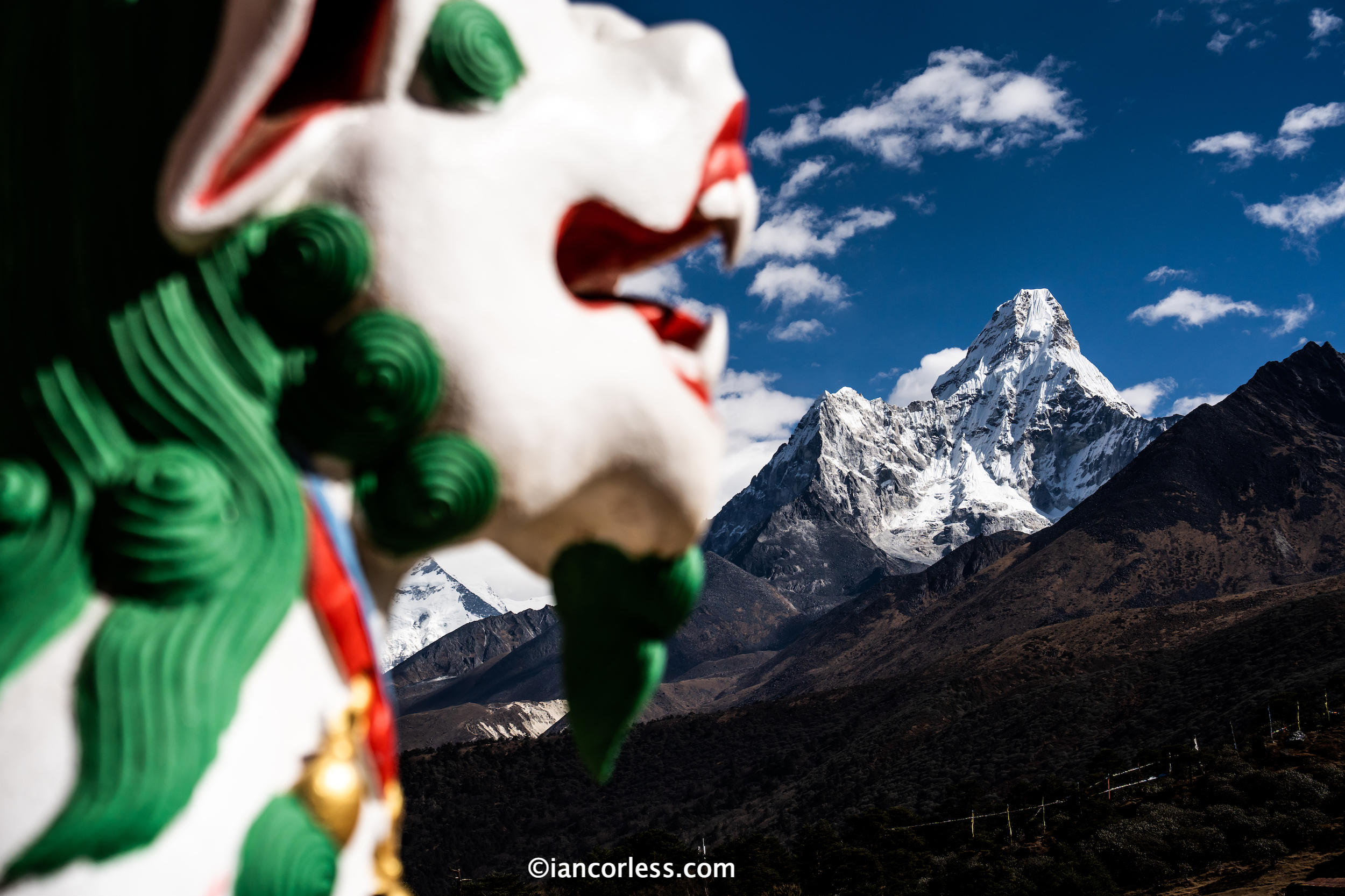
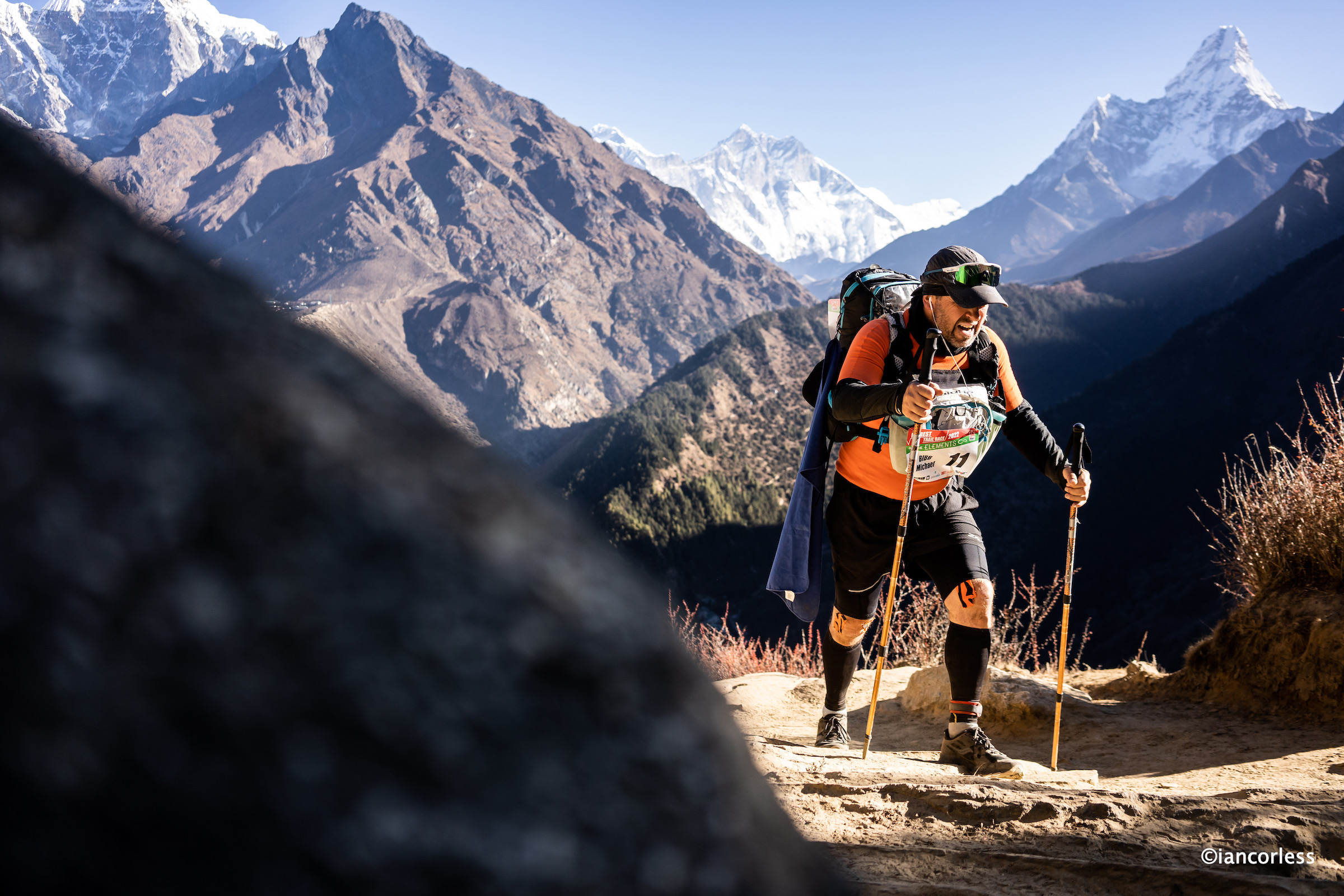
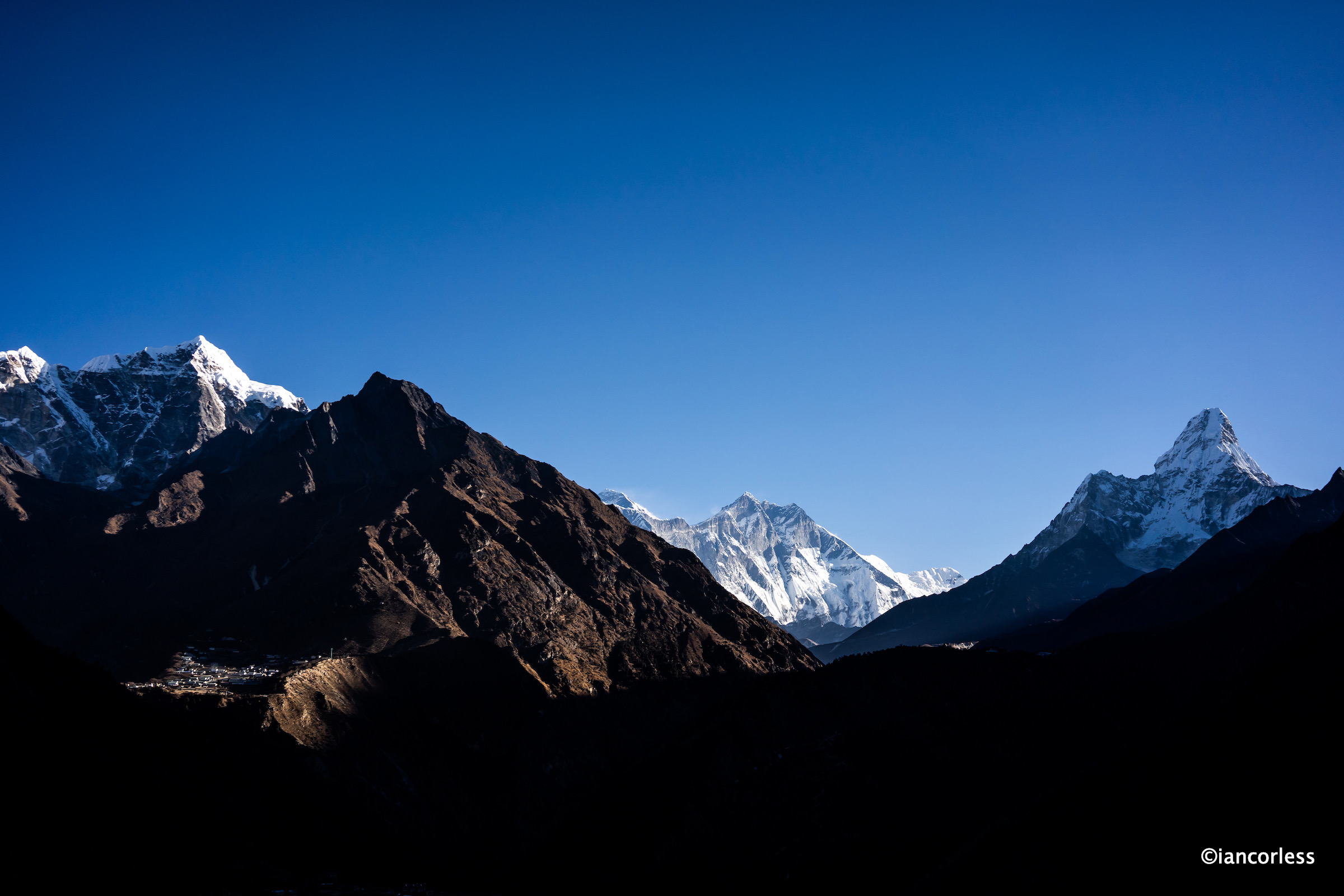
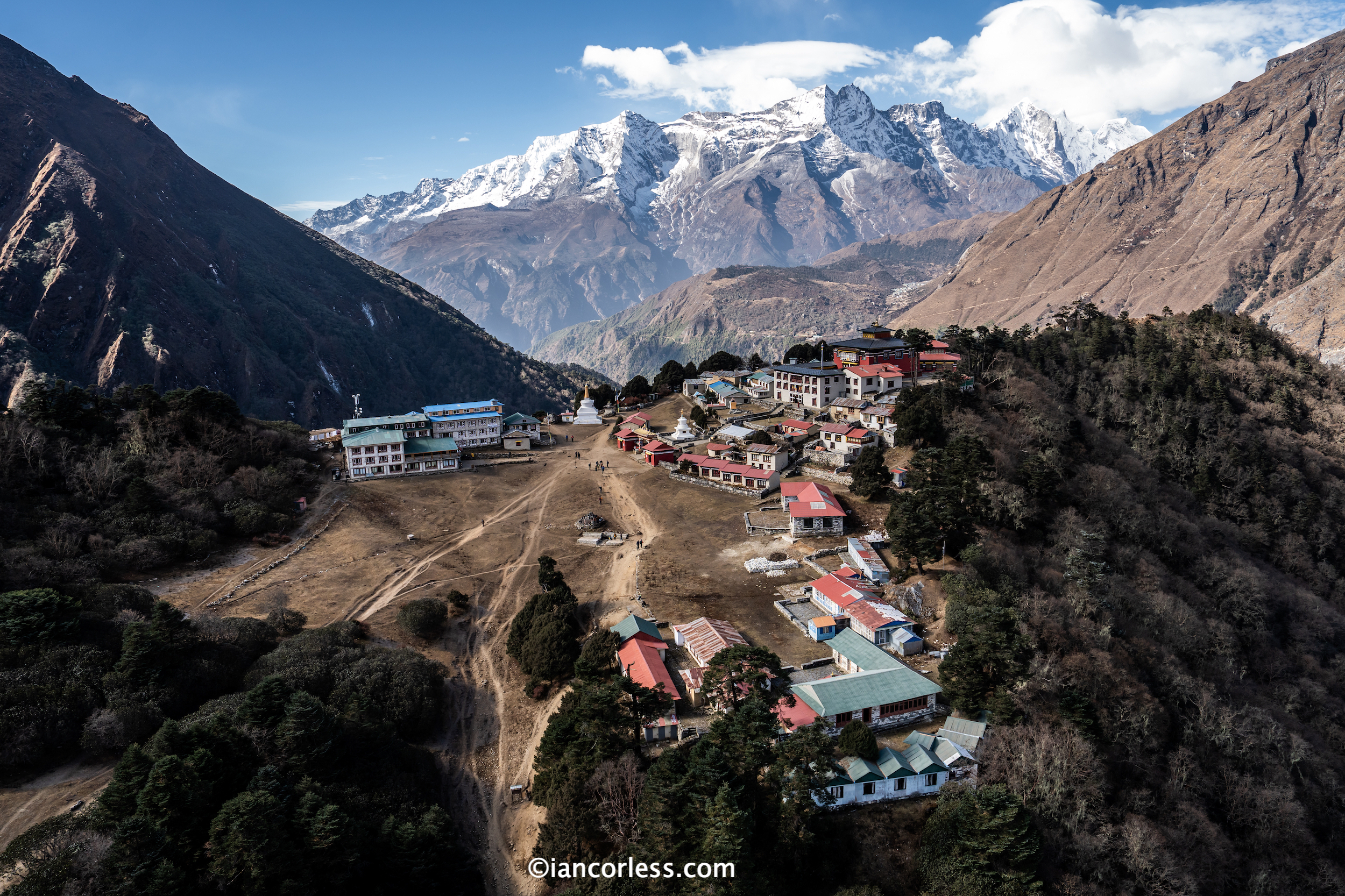
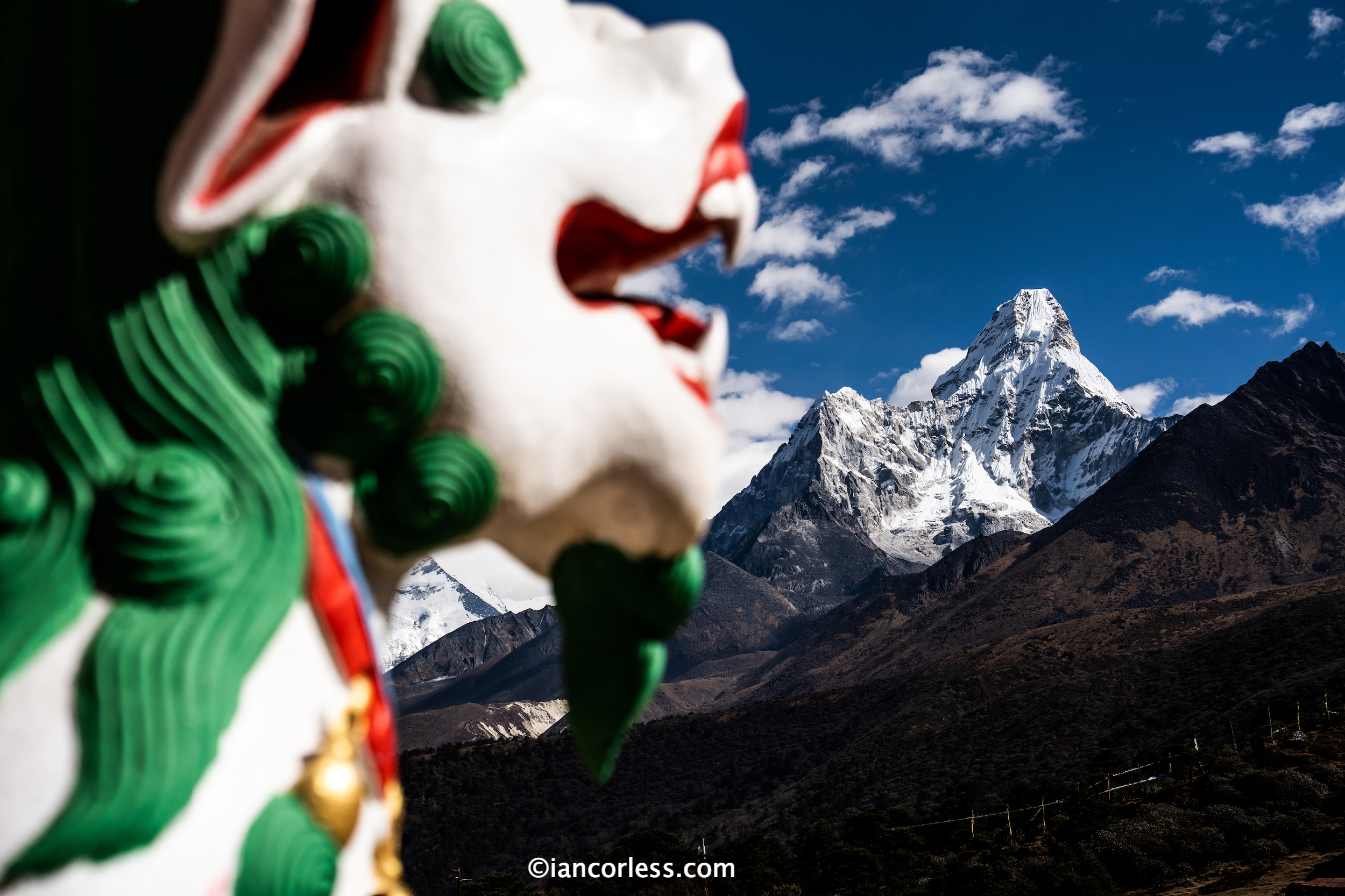
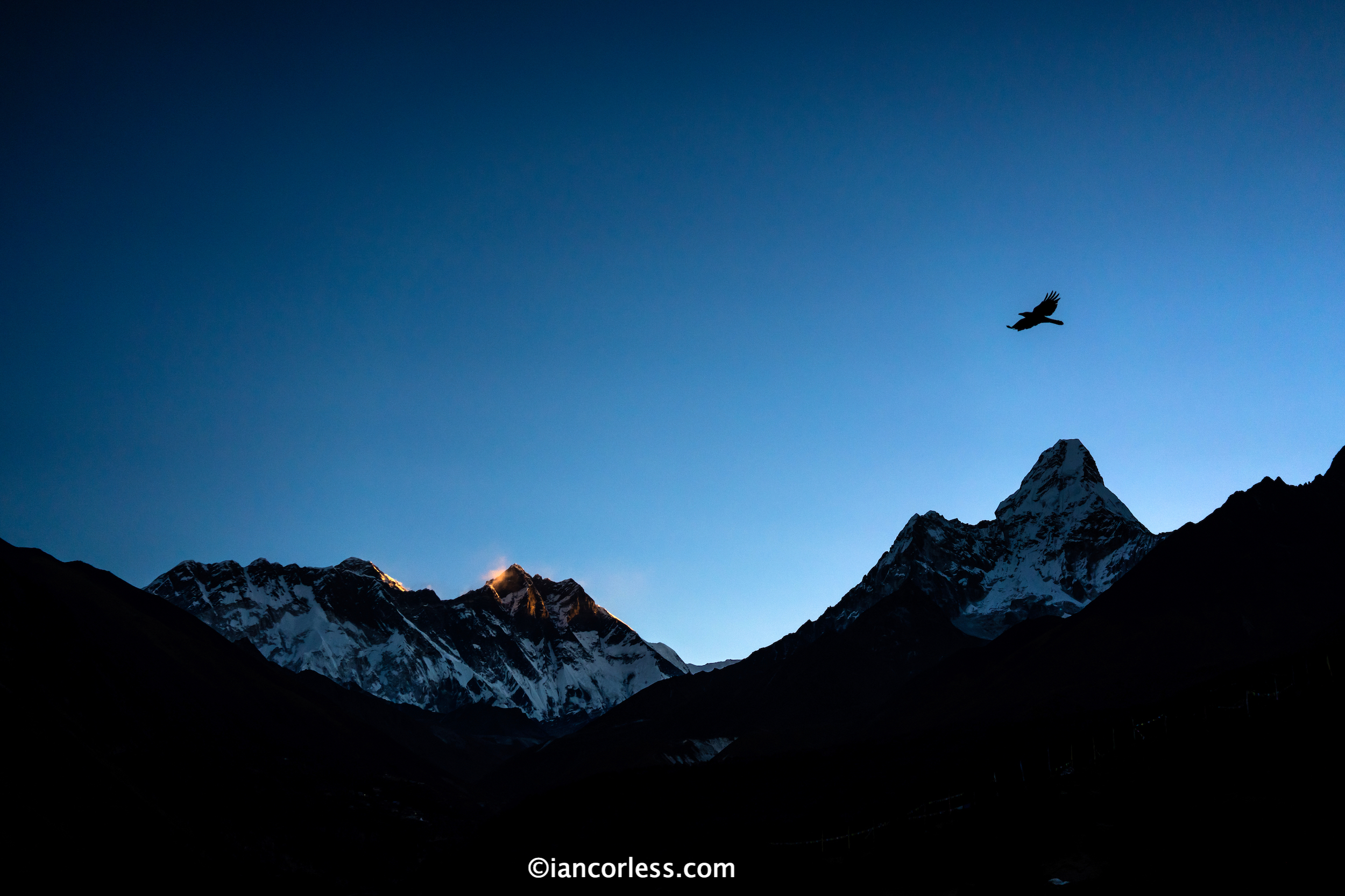
But the final ascent is where Stage 5 seals its legacy. The climb to Tyangboche Monastery, sitting at 3,860m, is a final test of grit. Legs scream, lungs burn, but the reward is immense. As runners crest the trail, they’re greeted by one of the world’s most iconic alpine views: Ama Dablam, Everest, Nuptse, and a horizon lined with Himalayan giants. Arguably, one of THE greatest finish lines in the world.
The pain is real, but so is the pride. After this brutal day, there’s relief in knowing only one stage remains. For those who made it to Tyangboche, it’s not just another finish line – it’s a summit of spirit, dedication, tenacity and perseverance.
After three gruelling stages through remote and rugged terrain, Stage 4 of the Everest Trail Race turns the page. Today, the athletes trade solitude for the storied footpaths of Nepal’s most iconic trekking corridor. This is the gateway to Everest.
A warmer night, lower altitude and this morning, the runner’s may have felt a little more rested, however, stage 4 was intimidating.
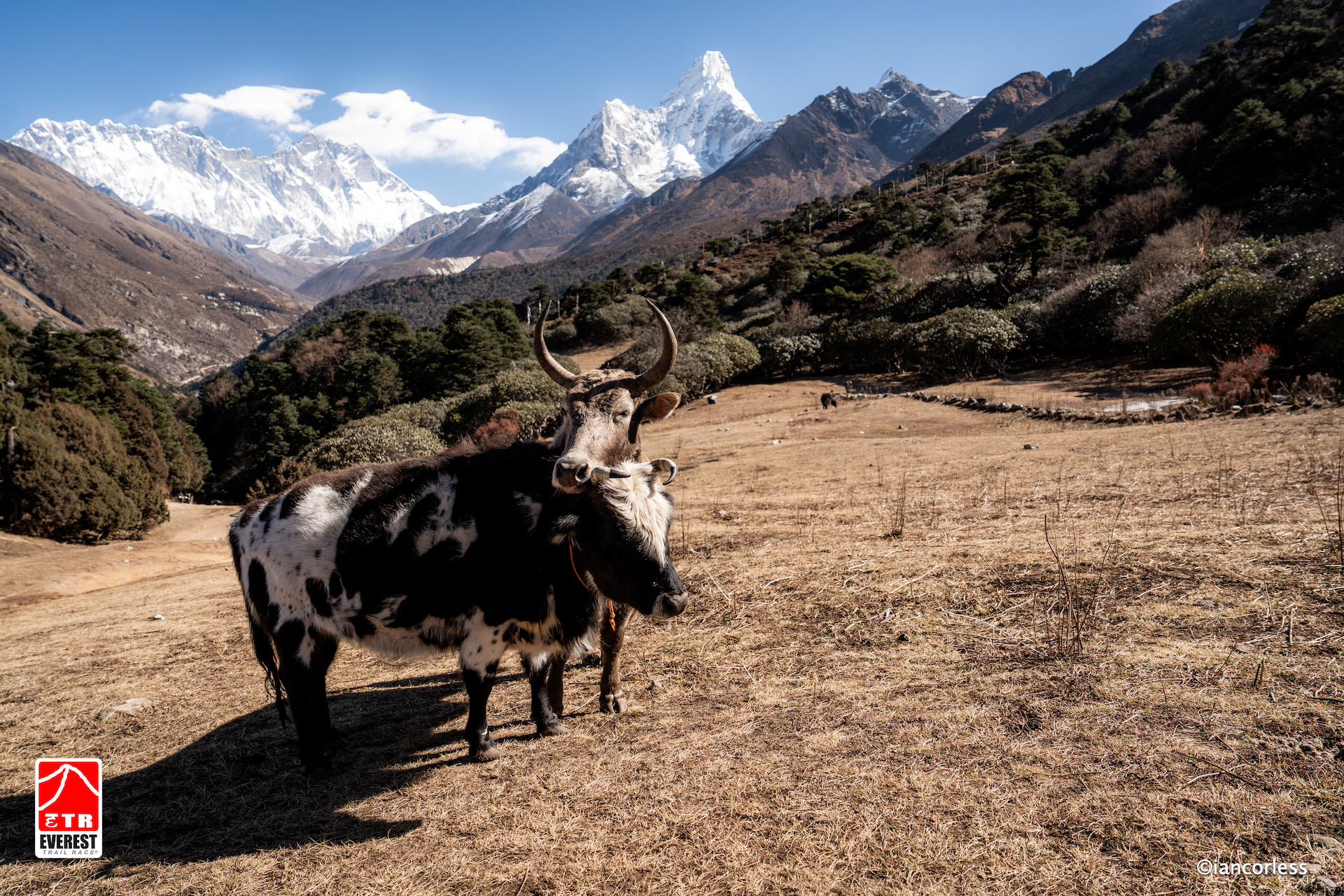
Covering 27.36 kilometers with 2,170 meters of elevation gain, Stage 4 is no break in the action. It’s a demanding route with steep climbs, quad-burning descents, and a new cast of characters on the trail: trekkers, porters, yaks, and teahouses buzzing with the hum of expedition life.
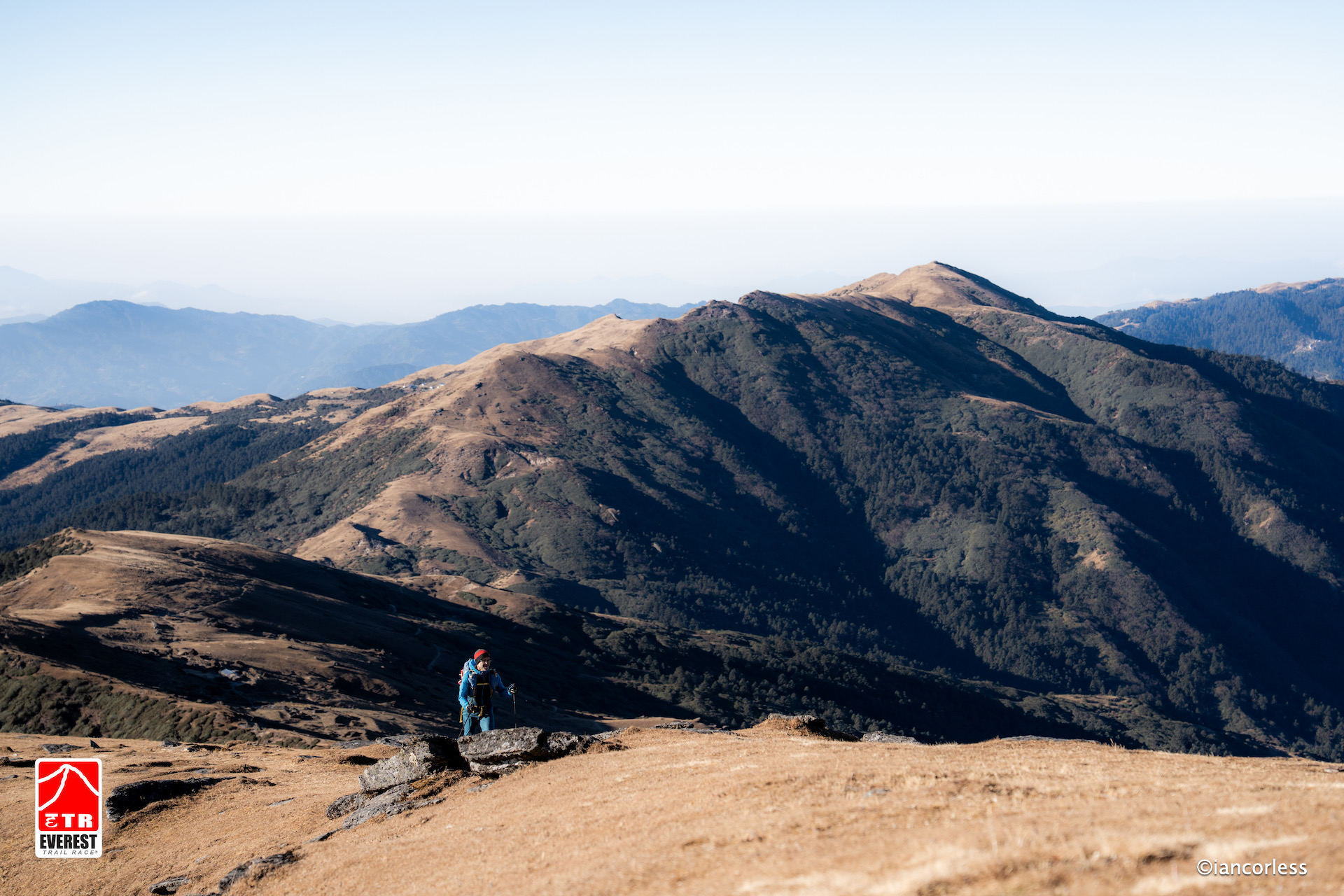
From the gun, it’s all uphill. The stage opens with a brutal 1,000-meter climb in just over 6 kilometres. The goal? Kari La, perched at 3,080 meters. This is the kind of climb that shows no mercy. Legs burn, lungs strain, and the views remind runners they’re racing through giants.
Checkpoint 1 at Paia arrives as a welcome relief. It’s a place to regroup, rehydrate, and reset. But the descent to Surke at 2,750 meters is no victory lap. Fast, technical, and relentless, it punishes tired legs before the next climb begins.
From Surke, runners face another grind: the climb to Chaurikharka (Checkpoint 2) at 2,621 meters. It’s lower in altitude but still a fight, especially coming late in the stage. From there, the course becomes unpredictable: a rollercoaster of ups and downs, testing whatever reserves are left.
The final push into Phakding at 2,620 meters marks more than the end of the stage. It’s a symbolic arrival.
The runners are now on sacred ground, part of the ancient route to Everest Base Camp. The trails are busier, the lodges more frequent, and the landscape unmistakably Himalayan.
Stage 4 isn’t just a physical battle, it’s a transition. The isolation of the early stages gives way to the buzz of one of the world’s most legendary trekking routes. But don’t let the crowds fool you. With over 2,000 meters of climbing and the fatigue of three hard days behind them, today was a war of attrition.
The finish line at Phakding means rest, food, and maybe even a little comfort, tents are traded for a lodge. Everest still looms. And the toughest stage lies ahead – stage 5 the ultimate test.
Stage 3 of the Everest Trail Race is where the real punishment begins. With 28.3 kilometres of unrelenting terrain and a leg-wrecking descent from the high-altitude village of Kamo (3855m) down to the valley floor at Jubing (1600m), this stage isn’t just tough, it’s a full-body assault.
Runners start high, where the air is thin and every step feels like a negotiation with your lungs. The early climb up to Checkpoint 1 at Kamo is already a grind, but what follows is what defines this stage: a relentless plunge that feels like it goes on forever.
The descent from Kamo to Jubing is not gentle. It’s steep, technical, and unforgiving. The views are spectacular, sure, but most runners will be too focused on staying upright to take much of it in. The drop of over 2200 meters smashes quads and shreds knees. Every rock, step, and switchback becomes part of the battle. If the climbs test your endurance, the downhills here test your durability.
Fortunately, the support is solid. CP1 at Kamo, CP2 at Hewa, and CP3 at Jubing are well-stocked and strategically placed. Runners have every opportunity to refuel and regroup, though few will find much comfort in the knowledge that the real sting comes right at the end.
Just when you think you’ve done enough, the trail throws in a final climb up to the iconic village of Kharikola. It’s a steep, grinding ascent that comes after hours of muscular destruction.
This is where mental strength counts just as much as physical preparation. After hammering down thousands of vertical meters, your legs are begging for mercy, and yet, up you go again.
Kharikola, perched proudly in the hills, is a reward in itself. Not just for the views, but for what it represents: survival. Conquering Stage 3 is a badge of toughness. It’s where the Everest Trail Race shakes out the pretenders from the contenders.
Stage 3 doesn’t just test you, you feel it in your legs for days. You carry it in your mind for longer. It’s beautiful, brutal, and unforgettable. And for every runner who arrives in Kharikola, it’s a hard-earned victory etched into the heart of the Himalayas.
Stage 2 of the Everest Trail Race doesn’t waste time. The gun goes off, and it hits hard, right into a beast of a climb that defines the day. The route is 26.6 kilometers with 1,483 meters of vertical gain, but ask anyone who ran it: it feels like double that.
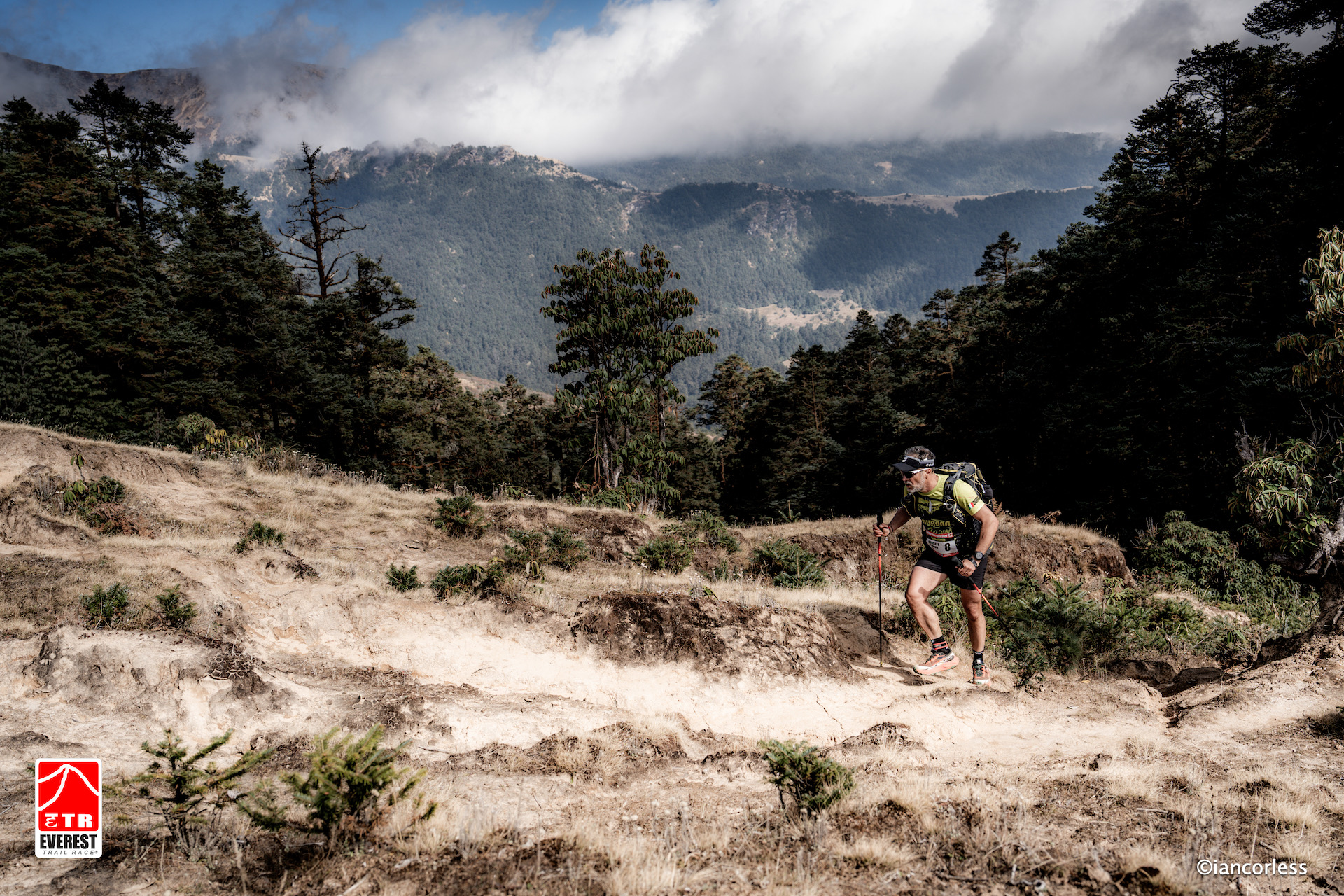
The stage opens with arguably the most iconic stretch of the entire race, a 4km climb straight out of the start gate, topping out at the summit of Pike Peak at 4,046 meters. There’s no easing into it. You’re immediately lunging skyward, legs burning, lungs gasping, every step on loose rock and narrow trail.
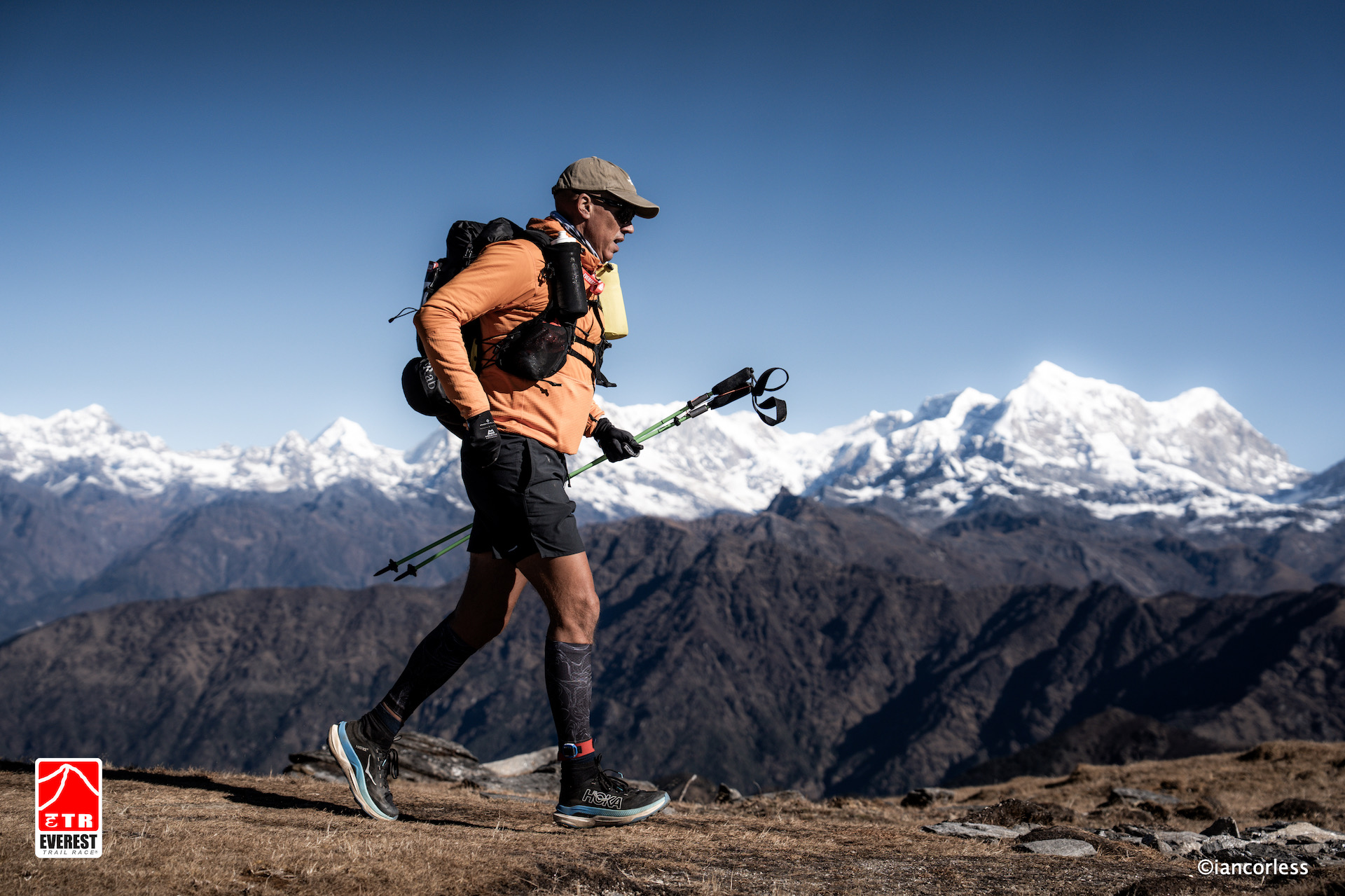
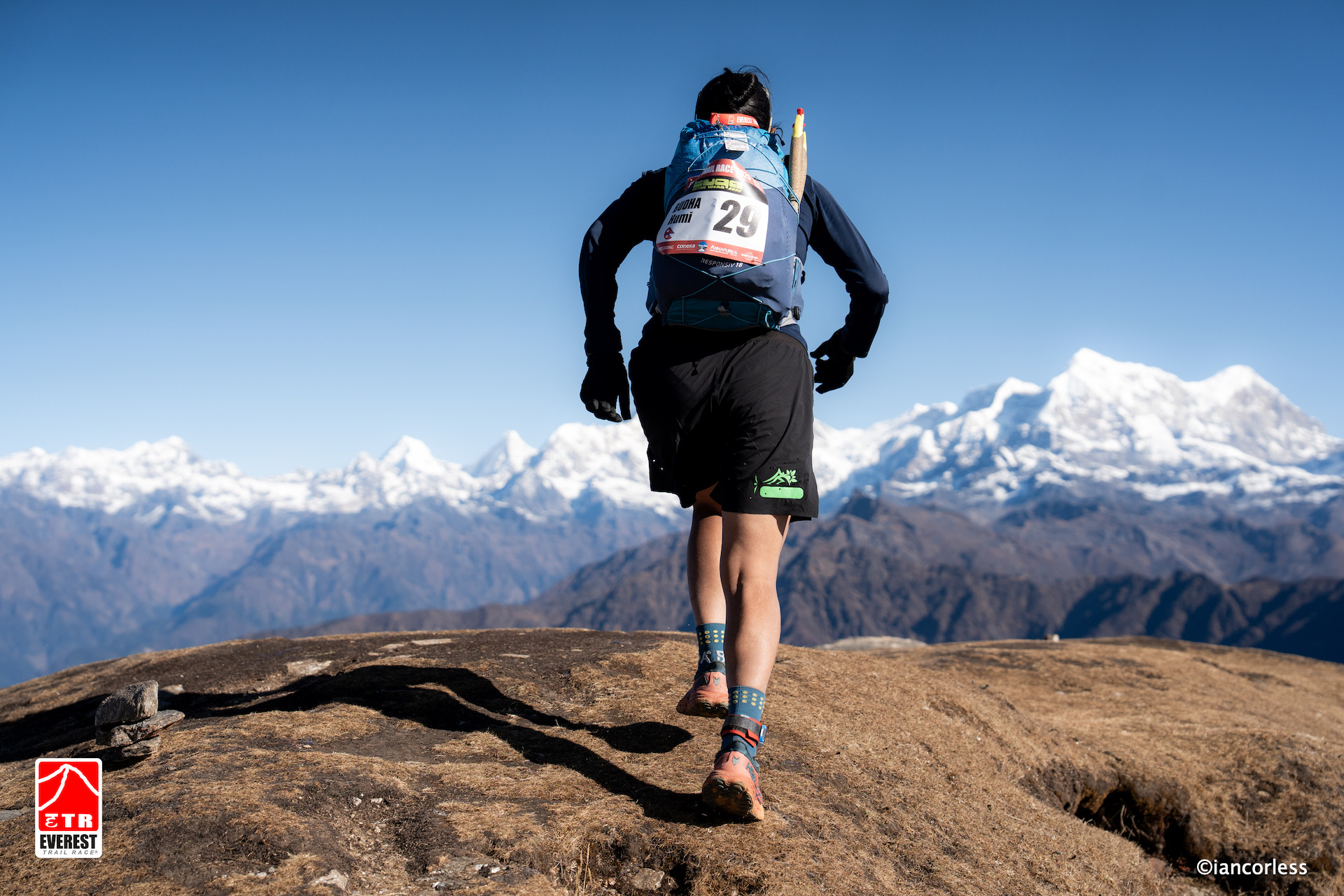
But what a reward. The views from Pike Peak are the kind you earn. Everest, Thamserku, and the distant giants of the Himalayas tower on the horizon.
There’s a strange serenity up there—above the tree line, above the chaos, if only your quads weren’t screaming so loudly.
From the summit, runners are thrown into a tricky descent, technical, steep, and demanding full attention. This is no cruise; it’s controlled aggression. The terrain underfoot is a mix of loose stone and rutted trail, constantly shifting. Jase Bhanjyang appears below like a mirage, a short-lived reprieve at 3,510m before the next test.
After a quick breath, it’s back uphill, another climb, this time to 3,800m. It’s less brutal than the first, but by now the fatigue is setting in. The altitude, the sun, the effort, they add up. This section wears on you slowly, sapping strength before delivering a massive release:
This is the stage’s exhale. A long, fast descent winds down to Jumbesi, where Checkpoint 2 awaits. The descent is runnable FOR SOME but relentless. It’s a test of patience, footwork, and knowing how much to push without blowing up. At CP2, some collapse into chairs, others refuel and move quickly, no time to waste.
From Jumbesi, the route shifts gears. A more gradual climb takes runners to Phurteng at 3,000m, a steady push that gnaws at tired legs. Then, a rolling descent gives a hint of relief, but it’s a trap.
Because this stage has a final sting: the kick to Ringmo. Just when you think you’ve made it, the trail juts upward again before finally dropping into the finish at 2,740m. It’s psychological warfare. You can see Ringmo before you reach it – but the trail makes you fight for it.
Stage 2 is a monster. On paper, it doesn’t look like the toughest, less gain than Stage 1, more downhill, but the terrain, altitude, and sequence of climbs make it punishing. The raw elevation loss (2,203m) sounds helpful, but it hammers your legs in a different way. Many finish looking shell-shocked. Others, oddly exhilarated.
This is the Everest Trail Race offers up some of the most staggering views you’ll ever see on a race course, and today, in the shadow of Pike Peak, the price of admission was steep but worth it.
Brutal and Beautiful: Stage 1 of the 2025 Everest Trail Race Sets the Tone
The 2025 Everest Trail Race exploded out of the gates with a punishing Stage 1—23.10 kilometres of raw Himalayan grit, climbing 1,551 meters and descending 1,012 meters across technical trails and high-altitude terrain. From the start line in Dhap (2,950m) to the finish at Chyangsyngma (3,490m), runners were thrown straight into the deep end of this six-stage ETR test of endurance, mindset, and mountain resilience.
There’s no easing into the ETR. Stage 1 wastes no time in reminding runners exactly where they are, high in Nepal, breathing thin air, legs already burning. Early highlights at Sigane and Chyangba delivered sweeping views and traditional village life, but the serenity masked the effort required to get there.
The route dipped and climbed through Khamding, home of the first checkpoint and a welcome chance to refuel with fluids and snacks. But nothing about this stage was easy. The technical nature of the terrain demanded constant focus, one misstep could spell disaster. Warm daytime sun gave runners a psychological lift, but cold nights and the ever-present altitude ensured no one felt too comfortable.
The trail pressed on to Juke, the second checkpoint, offering another chance to grab supplies before the day’s most brutal truth set in, the final 5 kilometres were going to hurt. With around 800 meters of elevation gain packed into that last stretch, the finish at Chyangsyngma felt like a slow-motion battle uphill, but the views help with compensation.
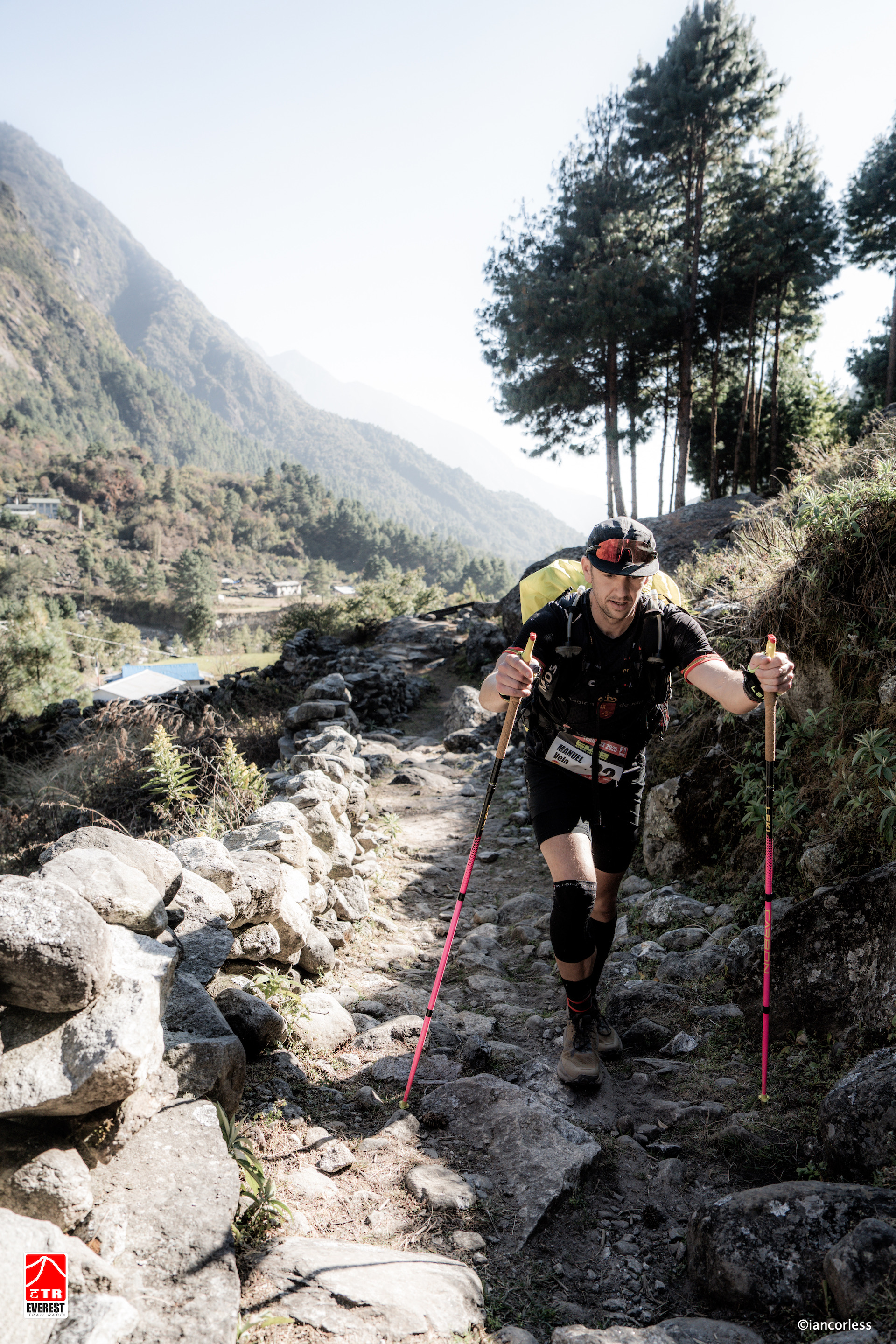
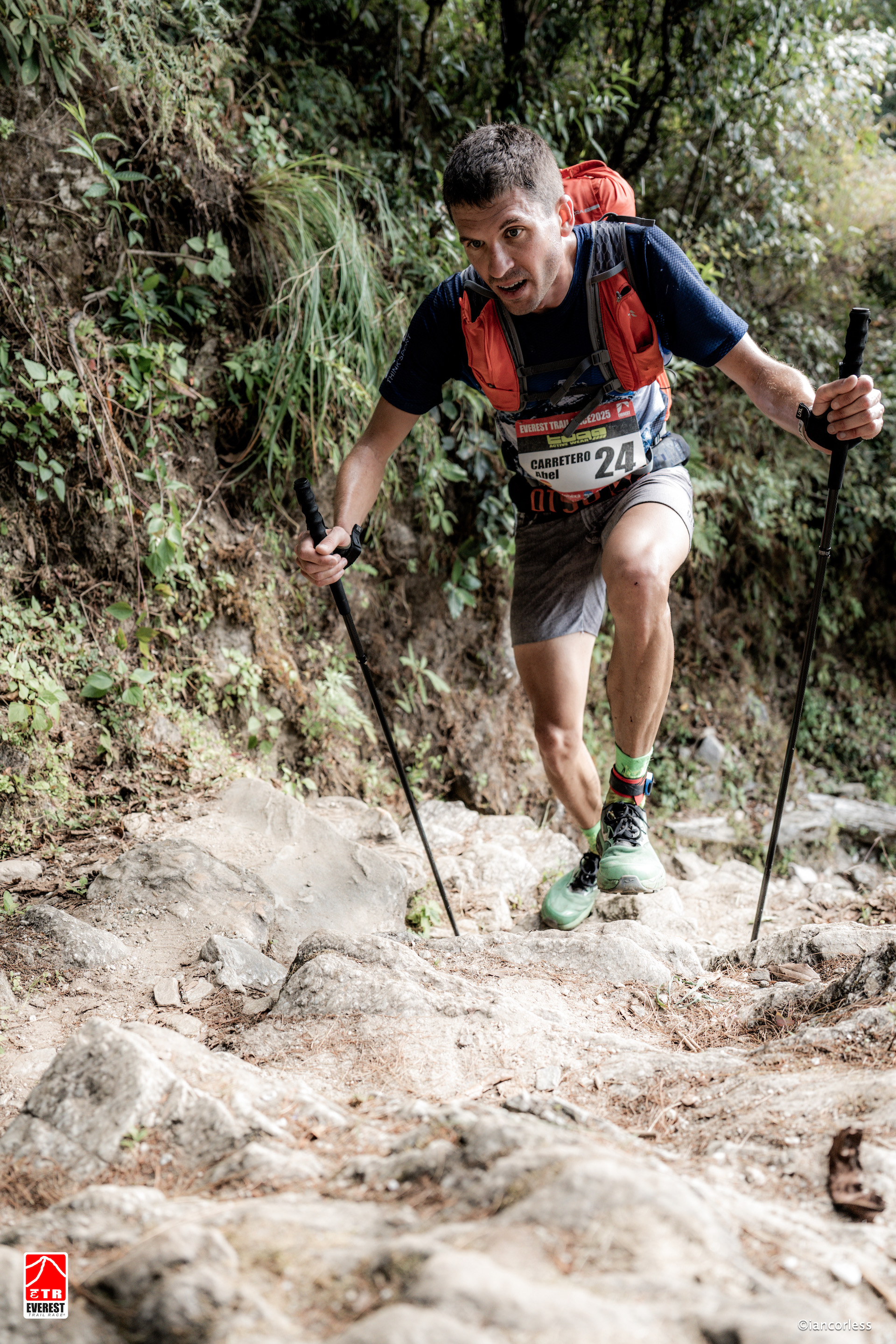
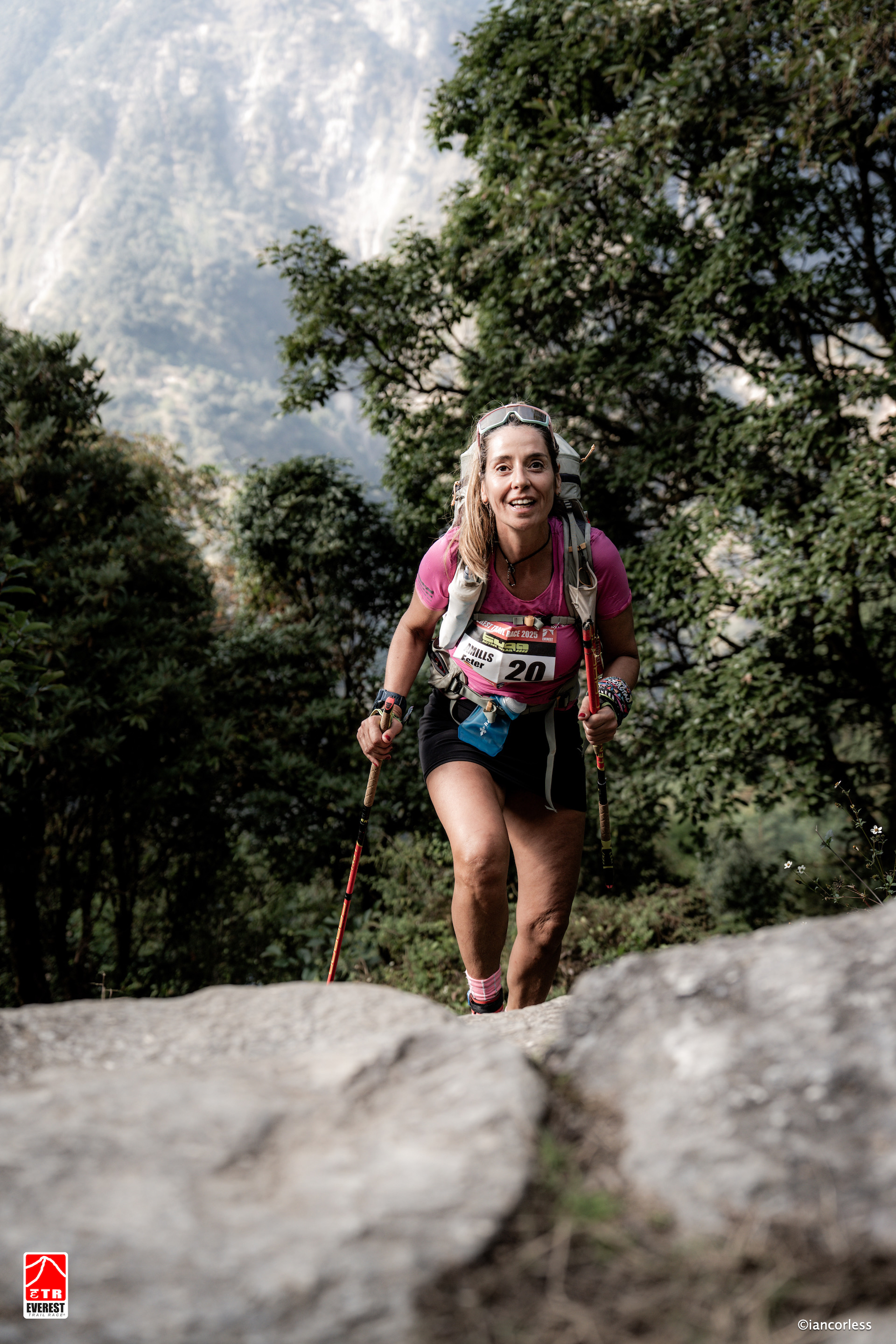
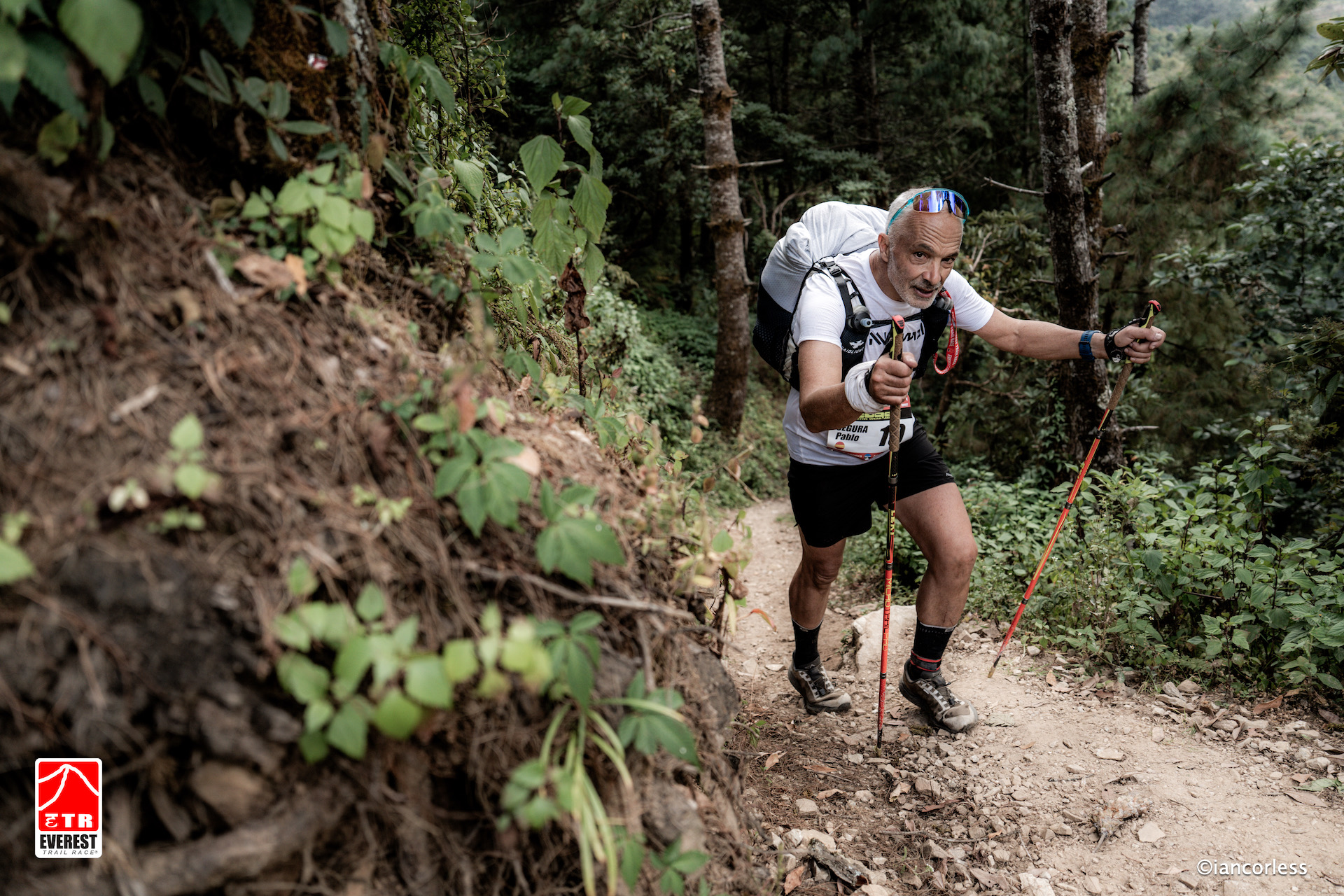
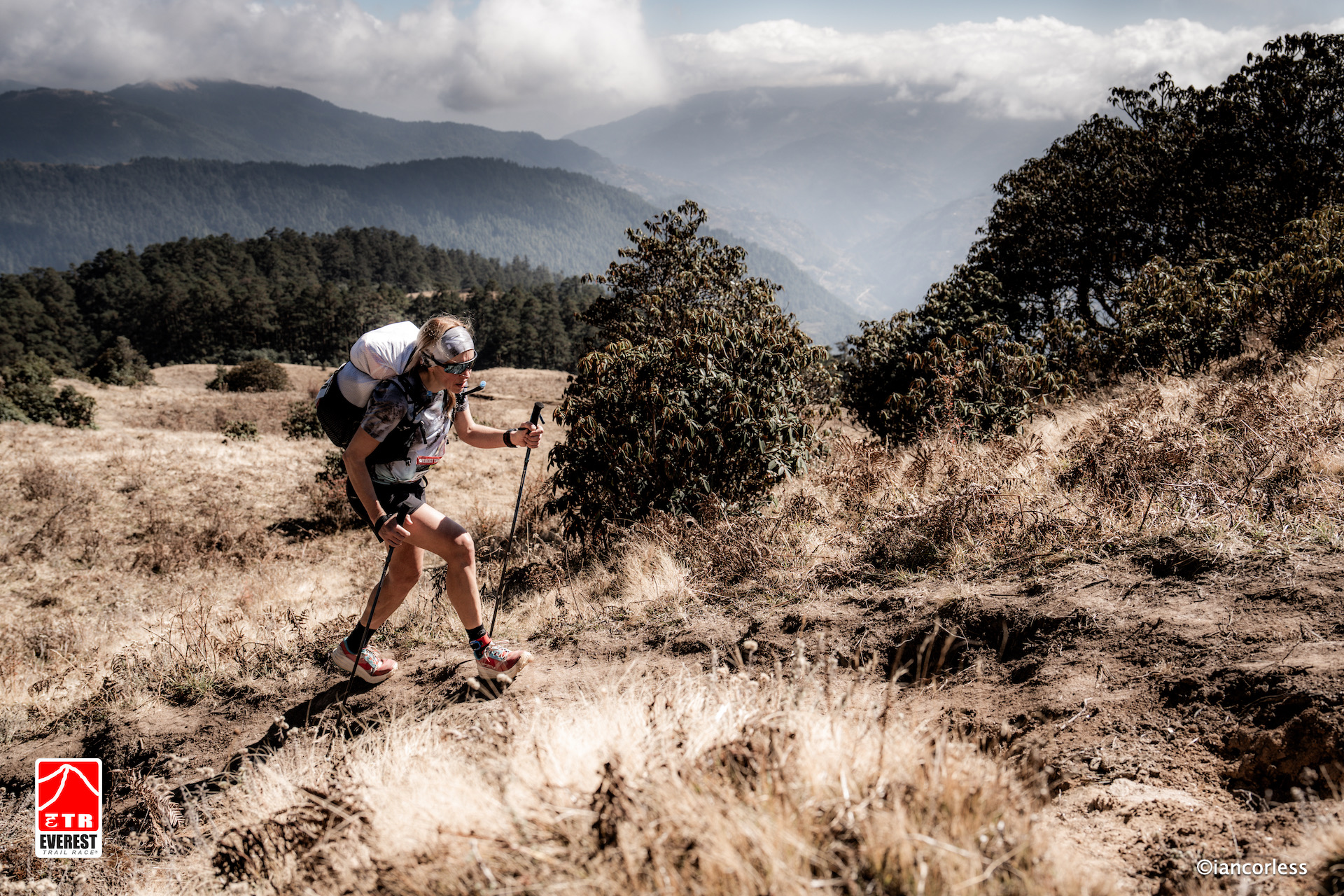
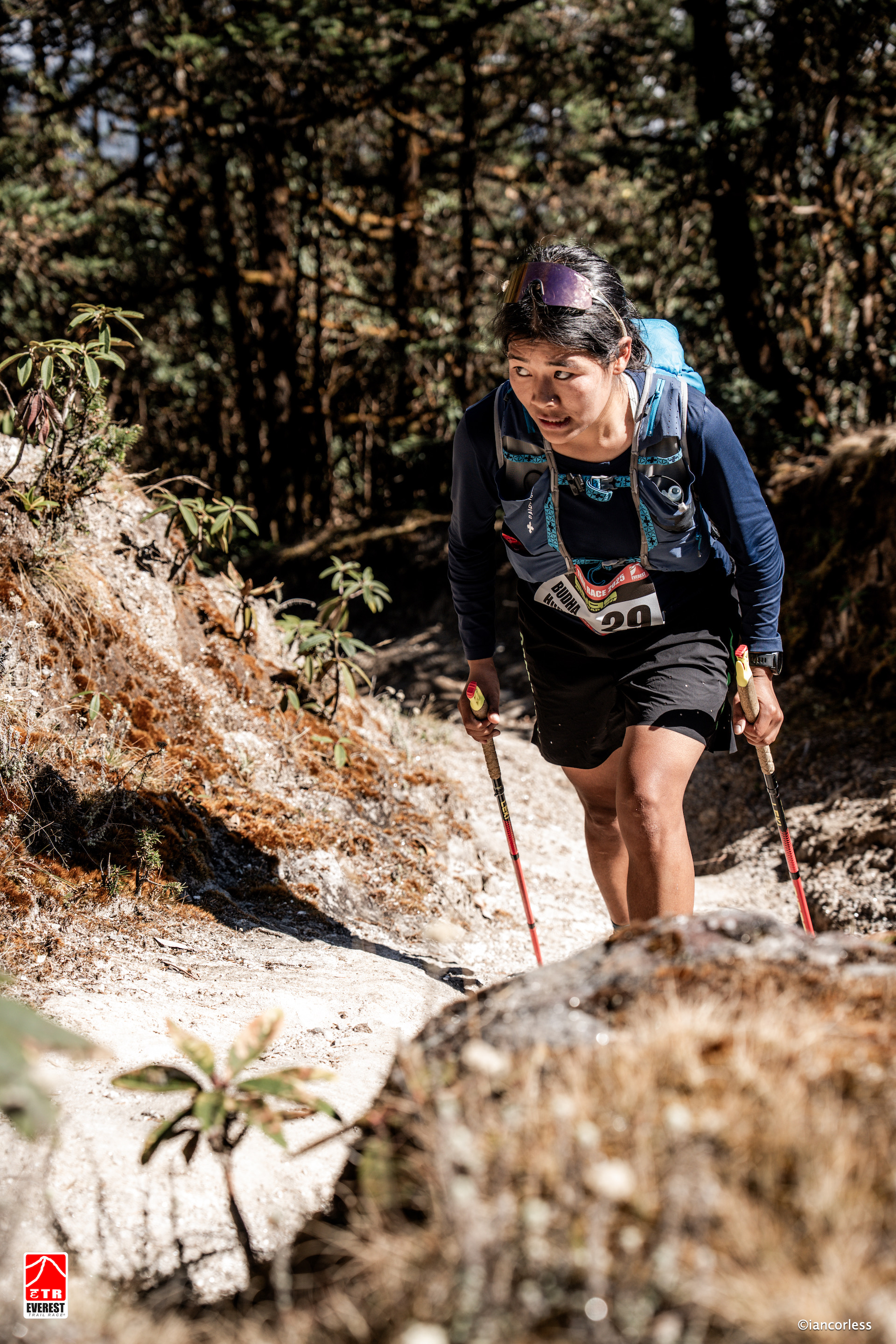
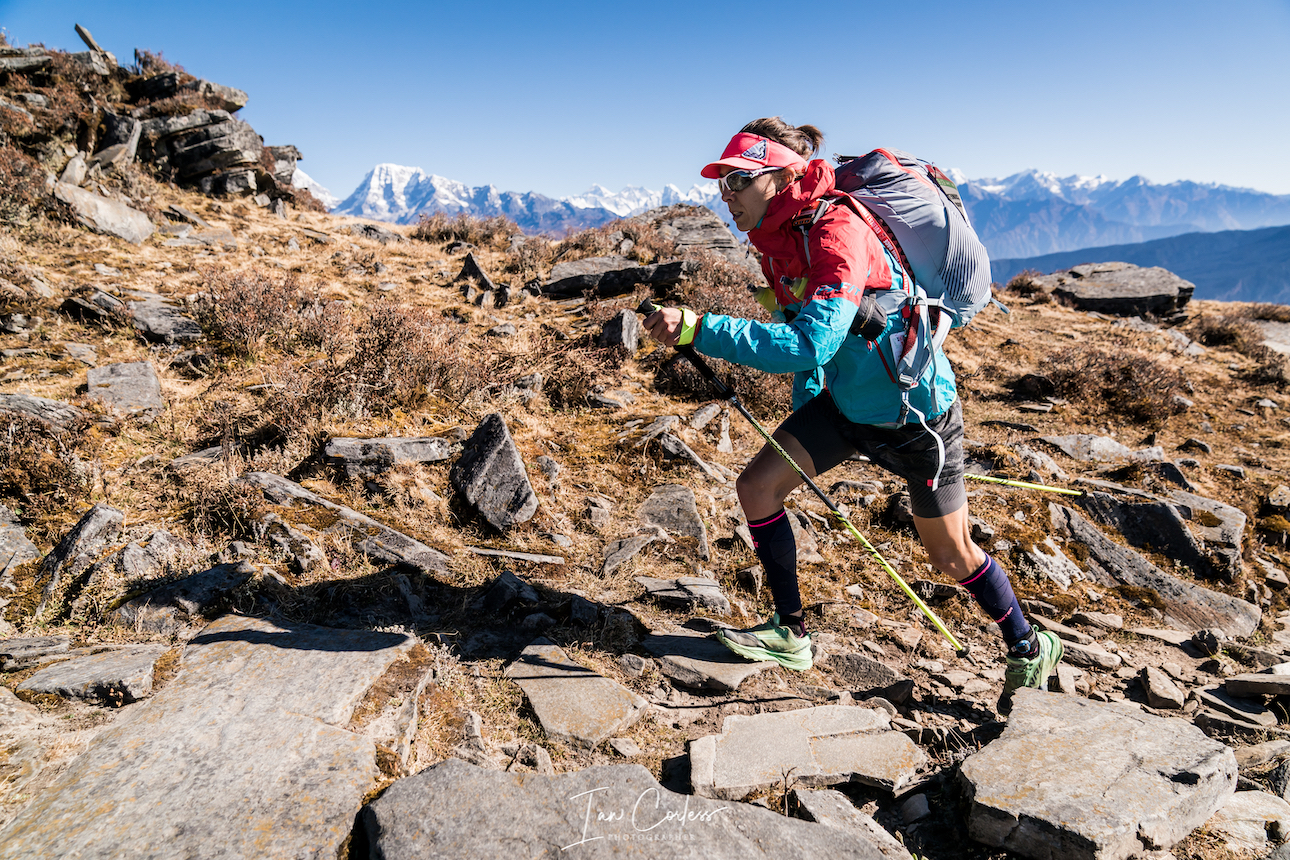
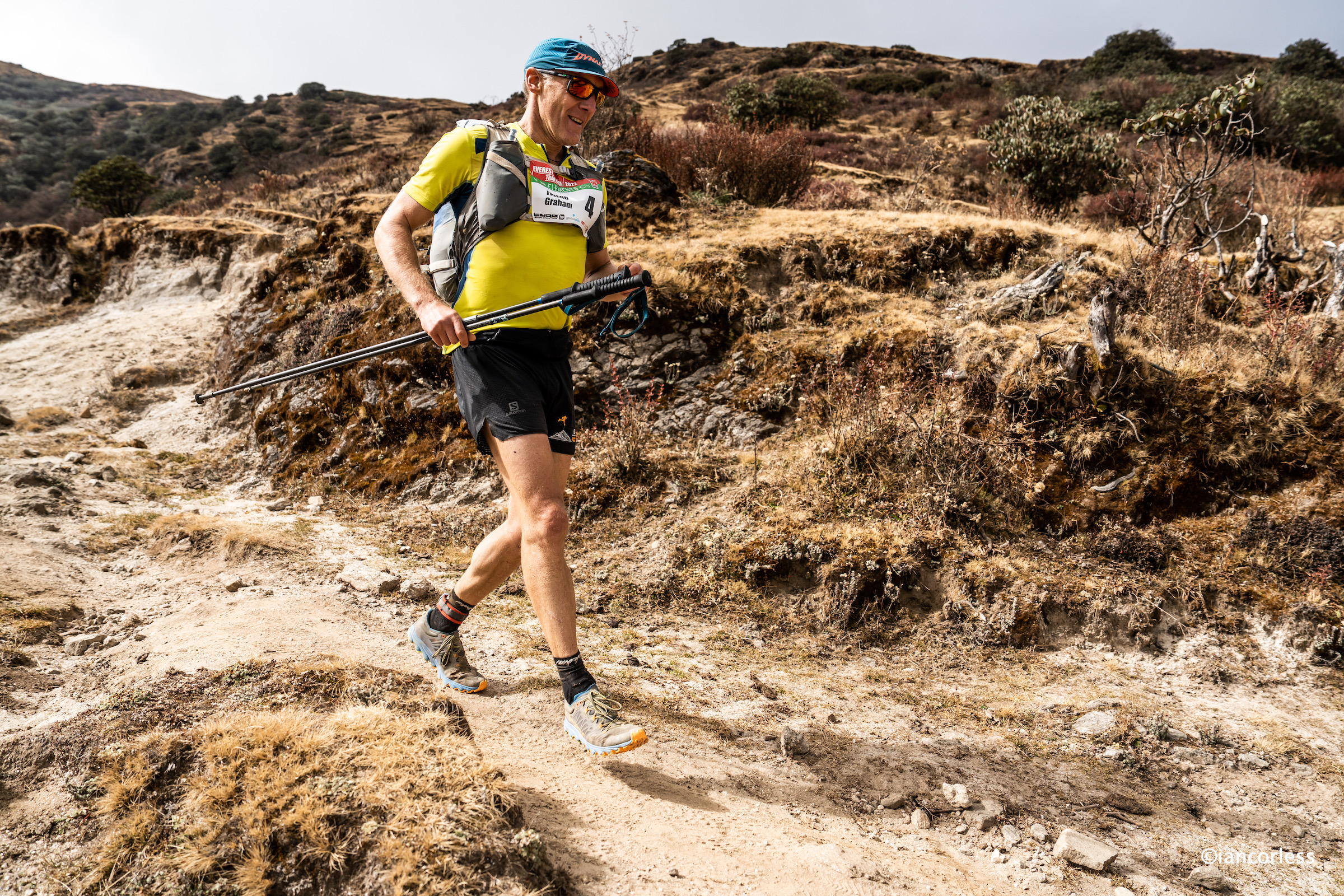
There was no room for rhythm here, just grind, grit, and survival. Poles an essential accessory. Every switchback stung. Every false summit tested patience. But that’s the Everest Trail Race. It’s not just a run; it’s a confrontation with the terrain, and Stage 1 made that clear from the outset what lies ahead.
With five stages still to come, the 2025 ETR has already thrown down the gauntlet. Those who made it through Stage 1 know what’s coming: long days, steep ascents, dizzying descents, and no shortage of mental warfare. But for now, reaching Chyangsyngma was a victory in itself and proof that this race is not for the faint-hearted.
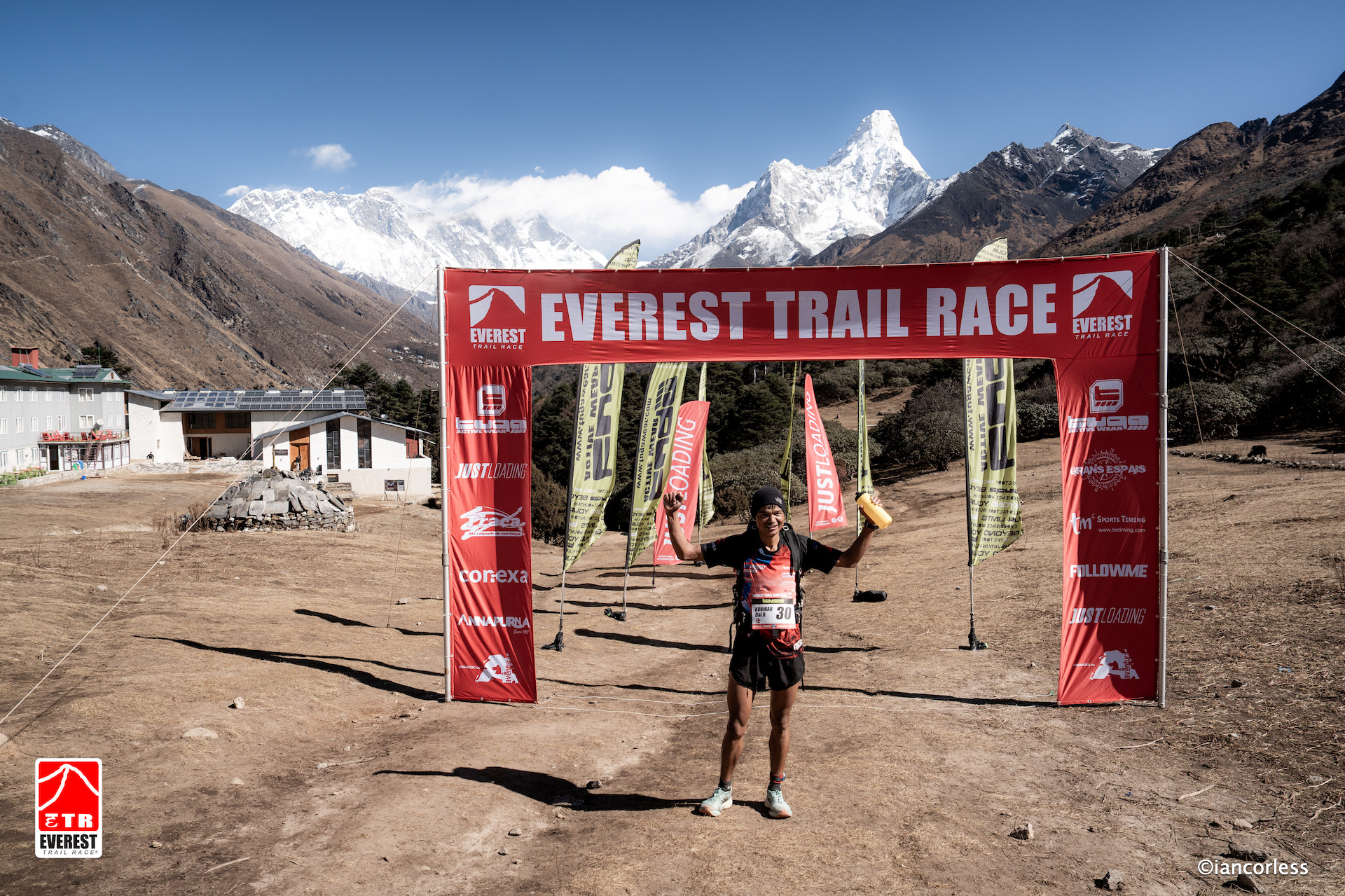
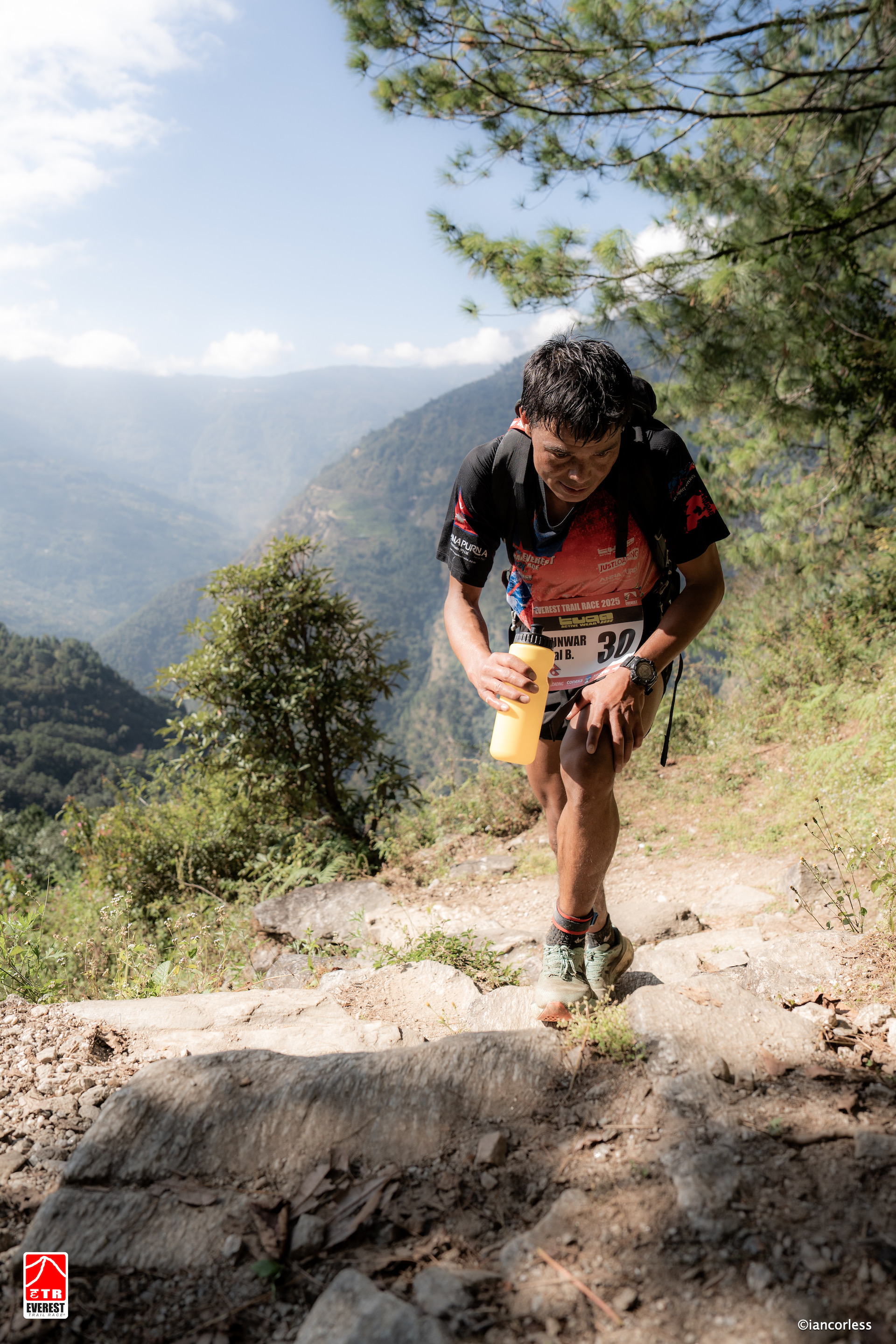
The race start time was a leisurely 0830 after an 0600 wake-up, hot tea delivered to each tent. Remarkably, Nepalee runner, Dal B Kunwar completed the stage in rapid, 2h 40min – there is a great deal to be said for being on ‘home’ turf. The first woman, Nepalee Chhoki Sherpa placed 3rd on the stage in a time of *h *m – full results can be viewed post-race at the ETR website HERE.
The Everest Trail Race is on. And it’s already living up to its legend.
If you’ve ever dreamed of running in a place that feels otherworldly, where every breath reminds you you’re alive, and every step tests your limits, the 2025 Everest Trail Race is your chance. Happening this November, 10th to 22nd, 2025.
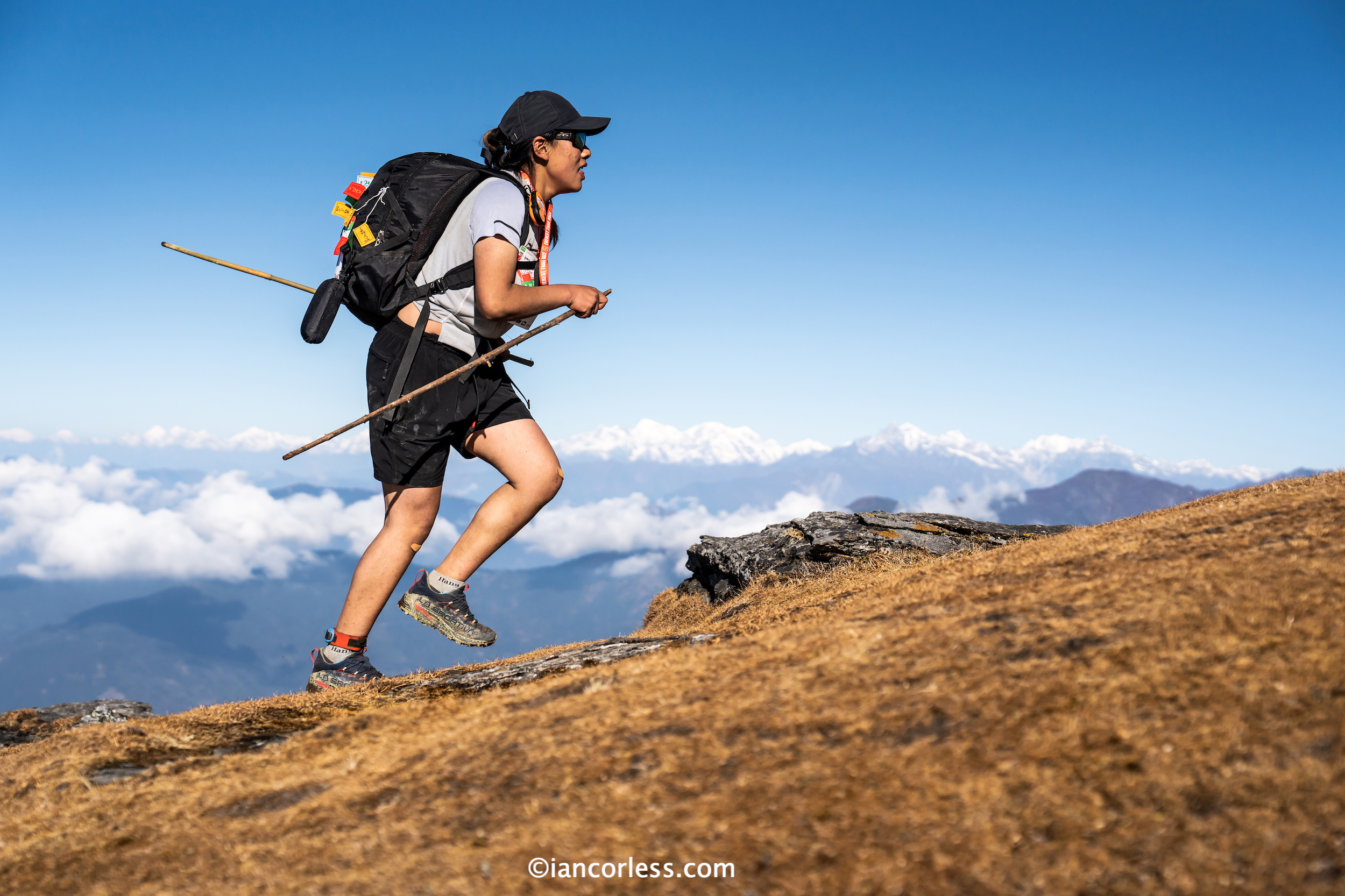
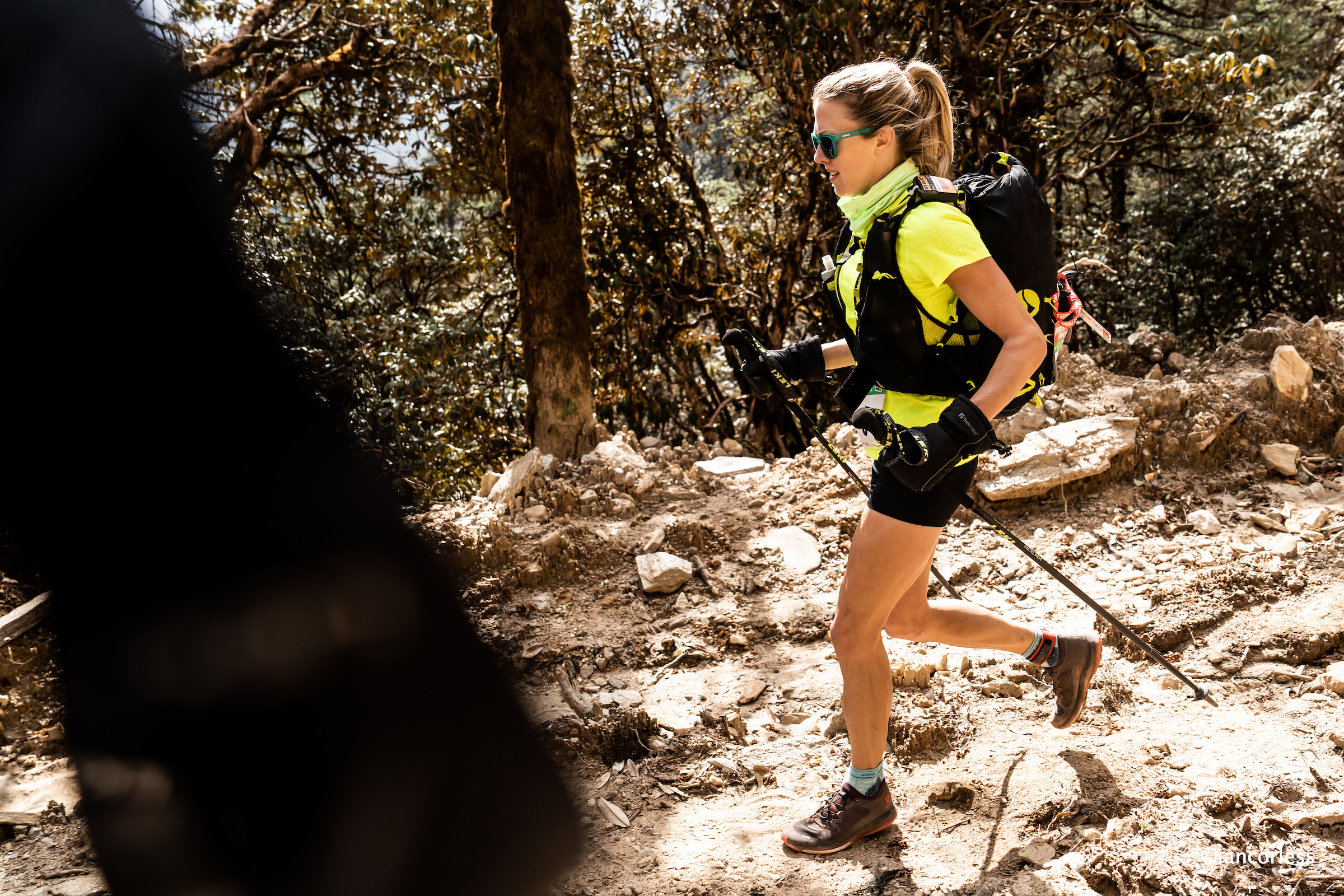
You carry your own gear. You fuel yourself. You keep going. Over six days, you’ll face steep ascents, grinding descents, suspension bridges, narrow trails, and thin air all at altitudes between 2,000 and 4,100 meters.
This is not a race for comfort. It’s a race for people who crave discomfort, who see sweat and struggle as part of something bigger.
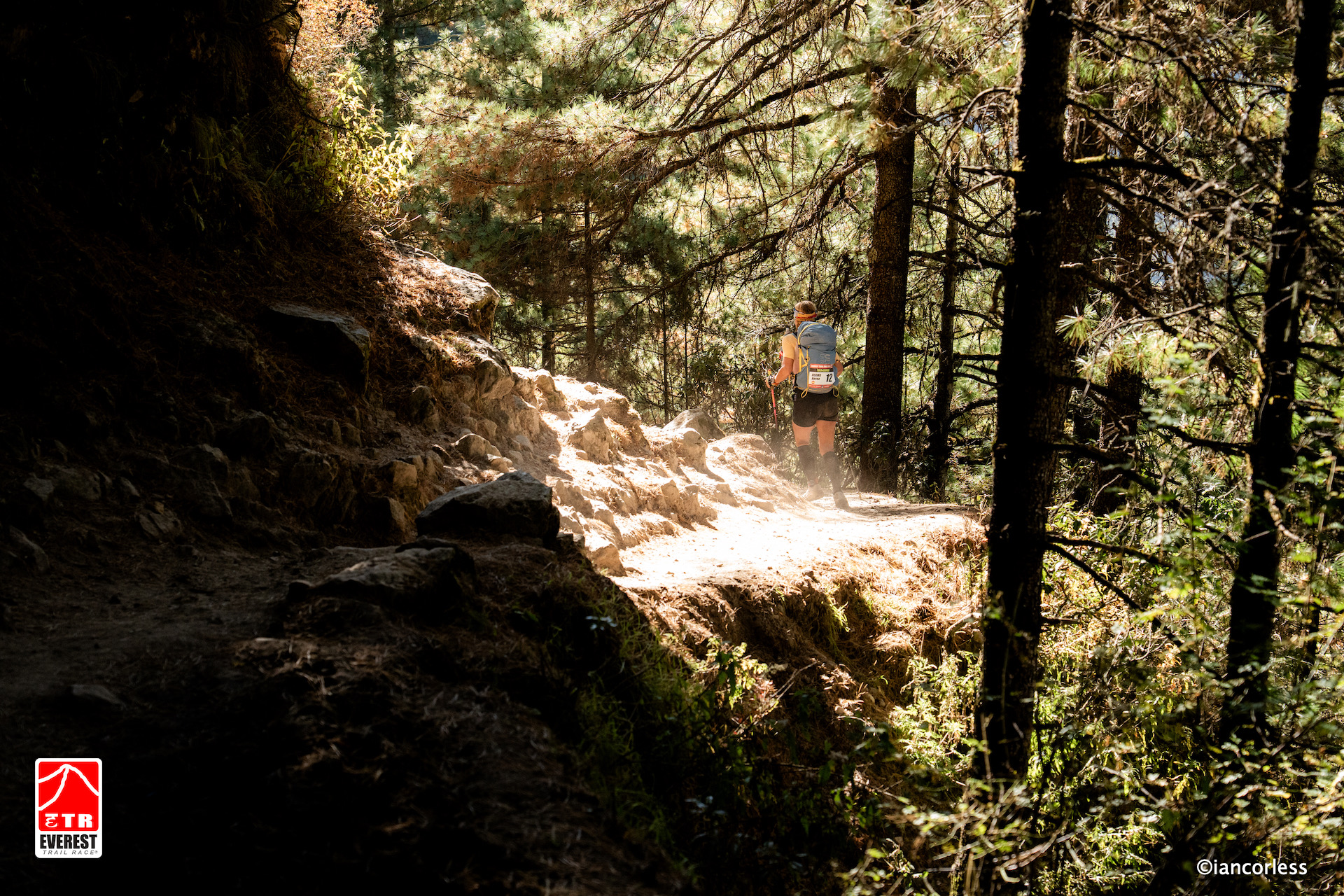
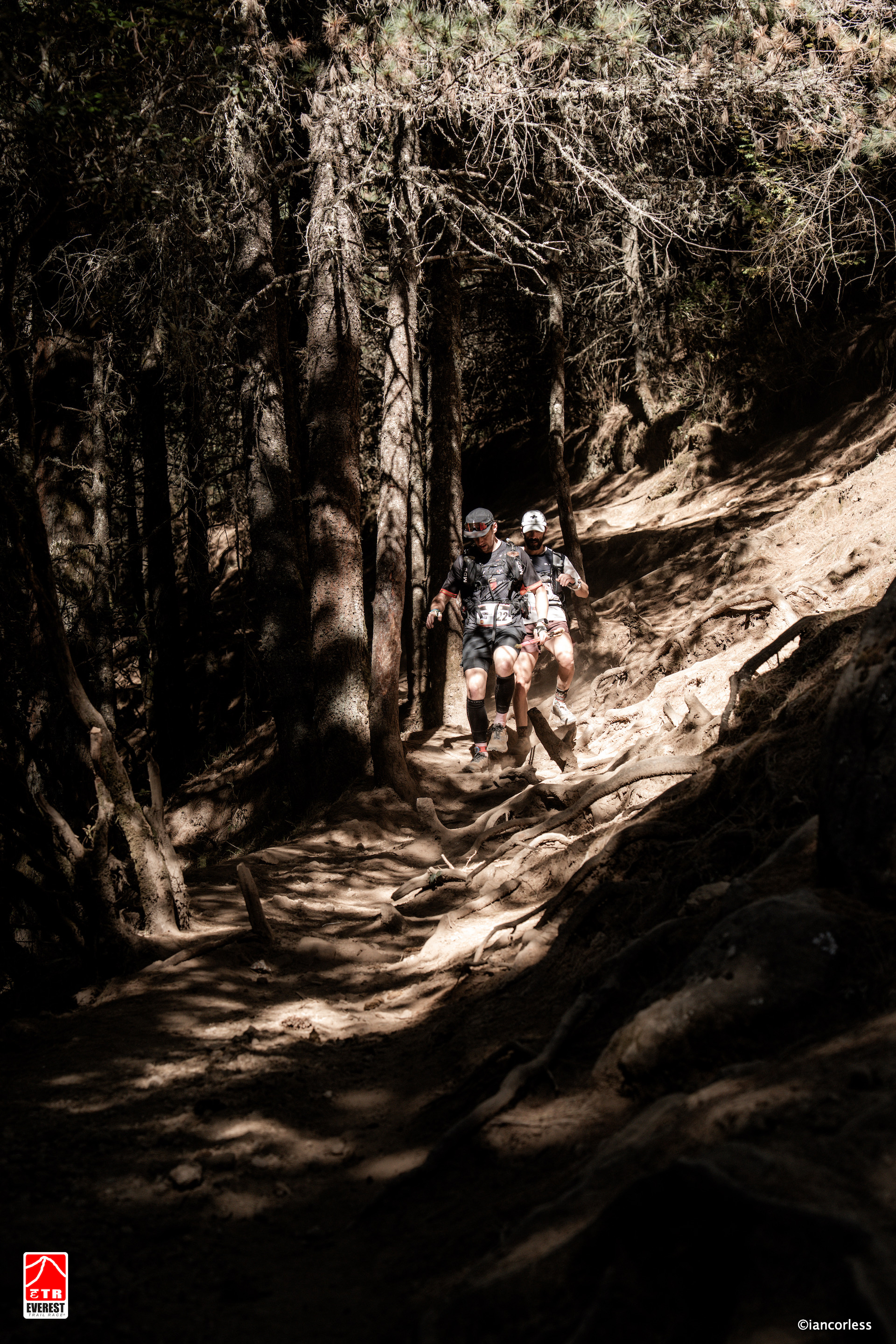
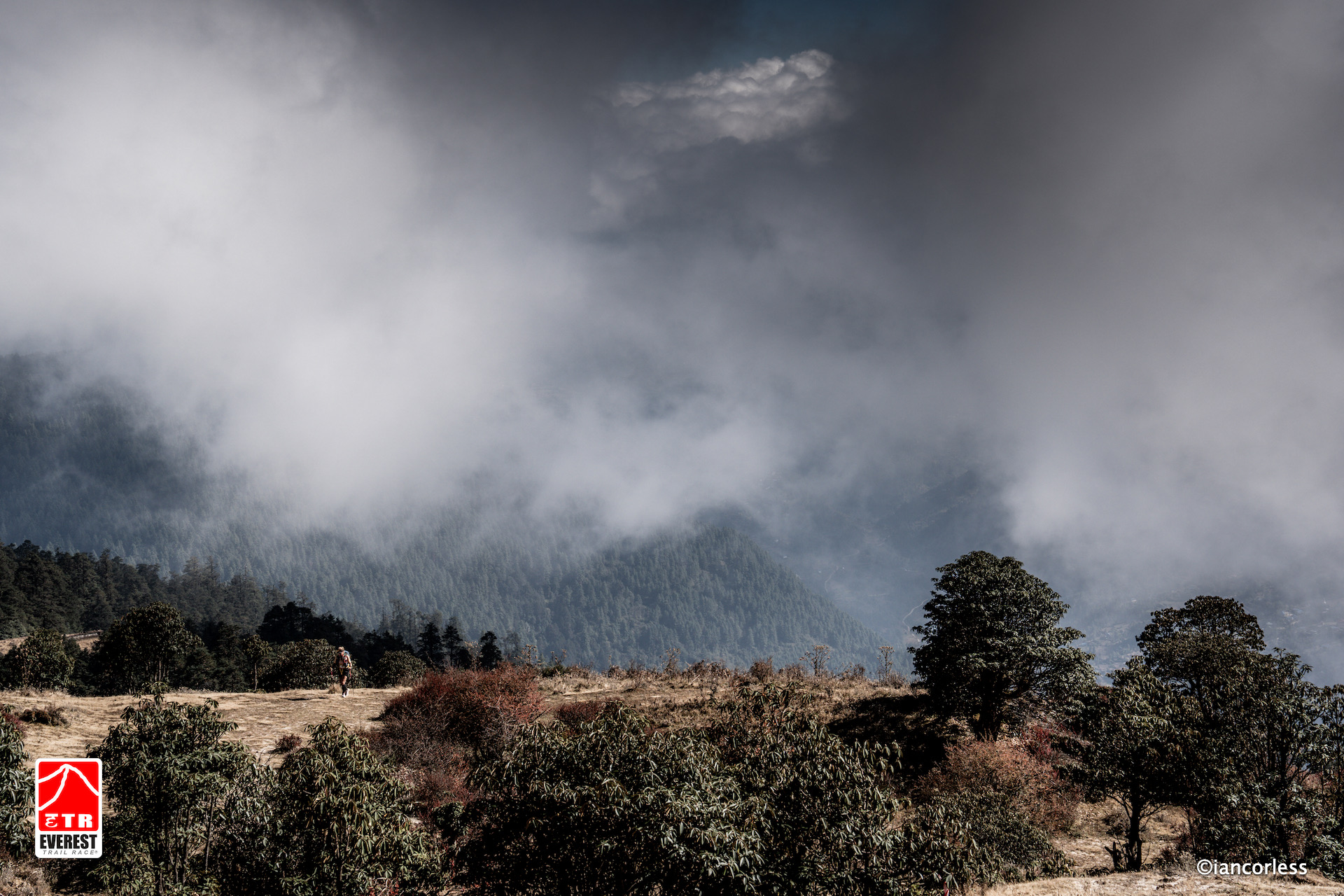
This is trail running in its purest form. Technical sections, single tracks carved into mountainsides, ancient stone paths connecting remote villages. One moment you’re running through a pine forest; the next, you’re skirting a cliff with views that stop you in your tracks.
The race route threads through the Solukhumbu region, home to the legendary Sherpa people, along the same trails used by mountaineers heading to Everest Base Camp.
November in the Himalayas is cool, crisp, and clear, perfect for trail running. Daytime temps are mild, with intense sunshine at altitude.
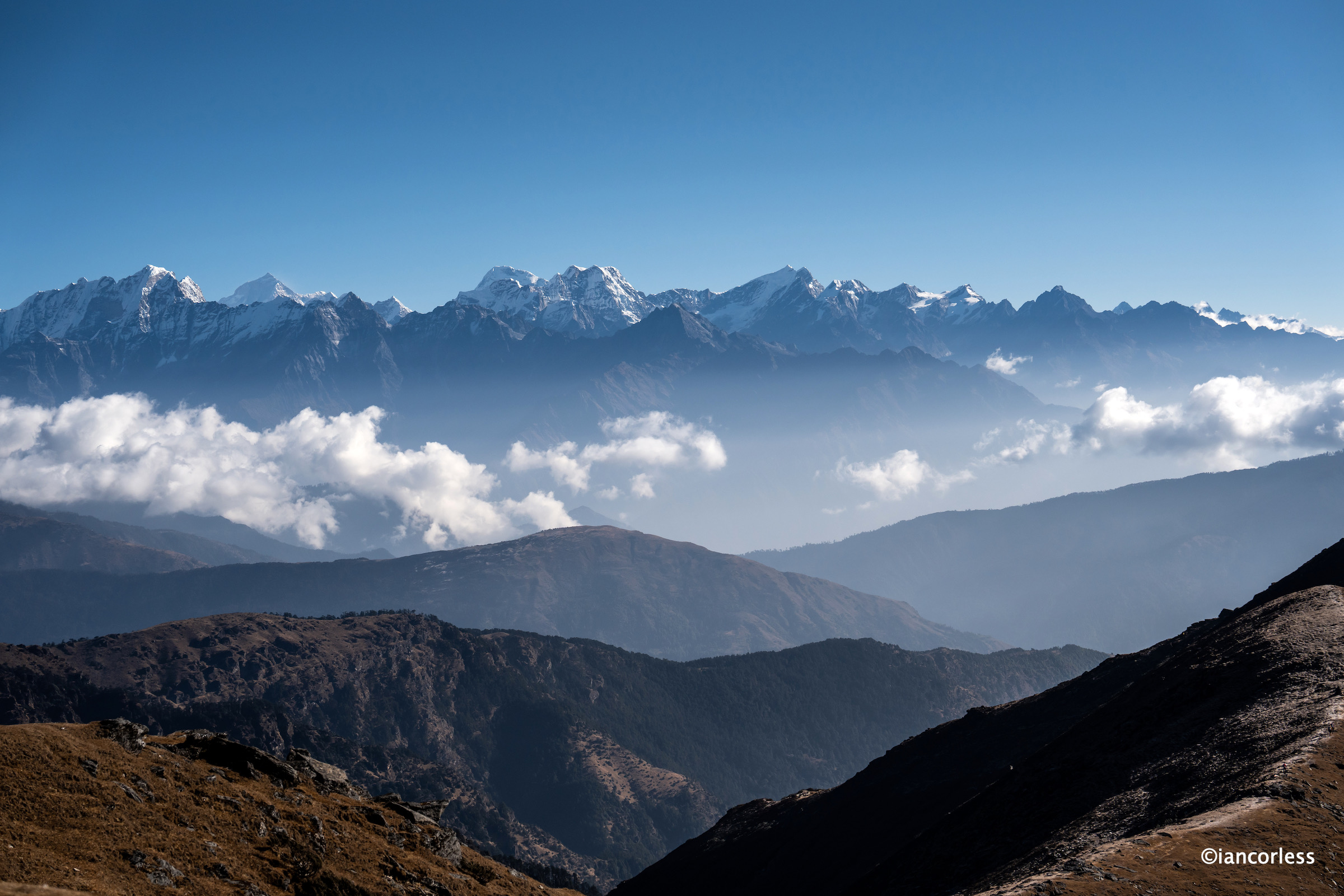
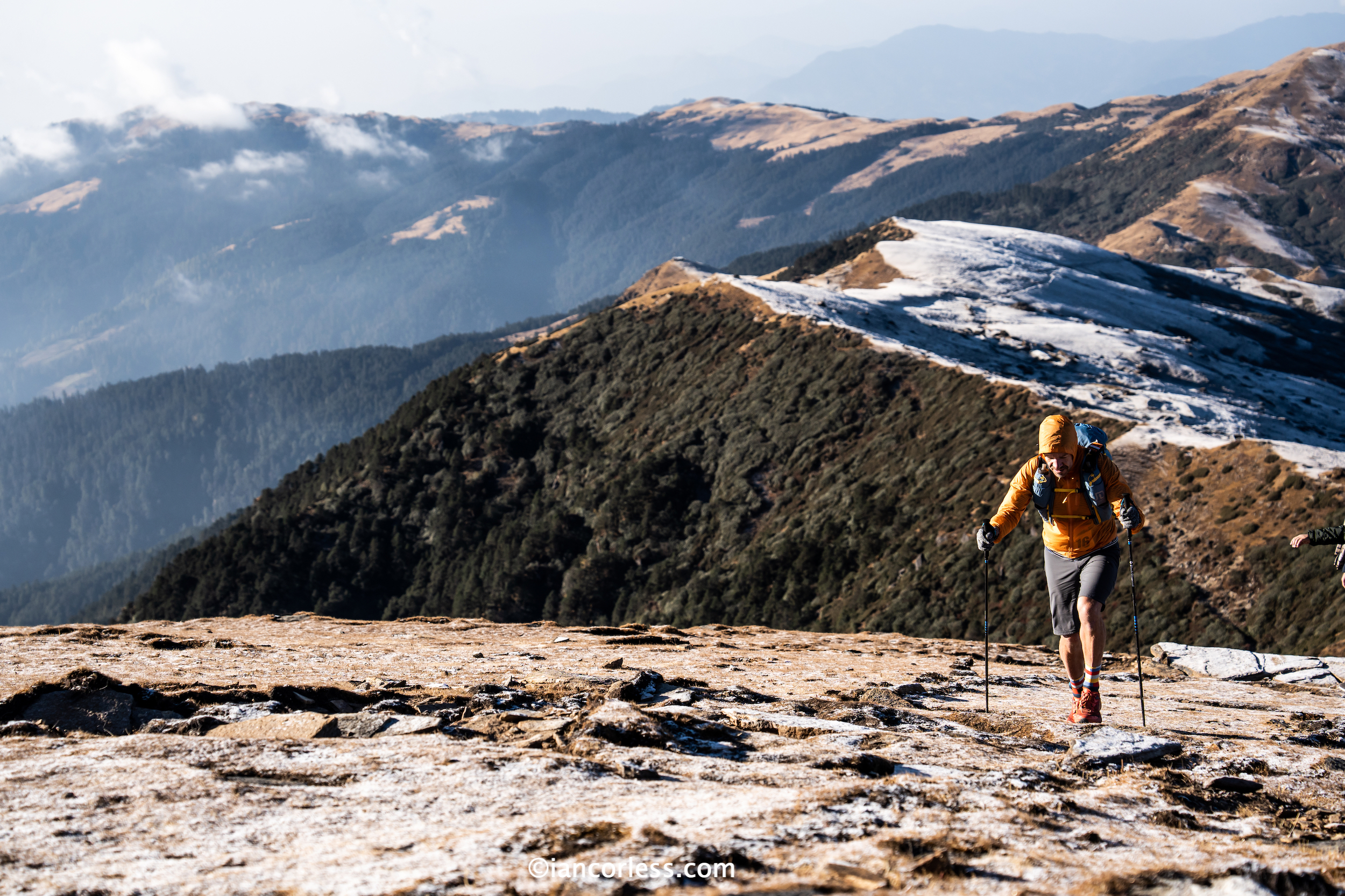
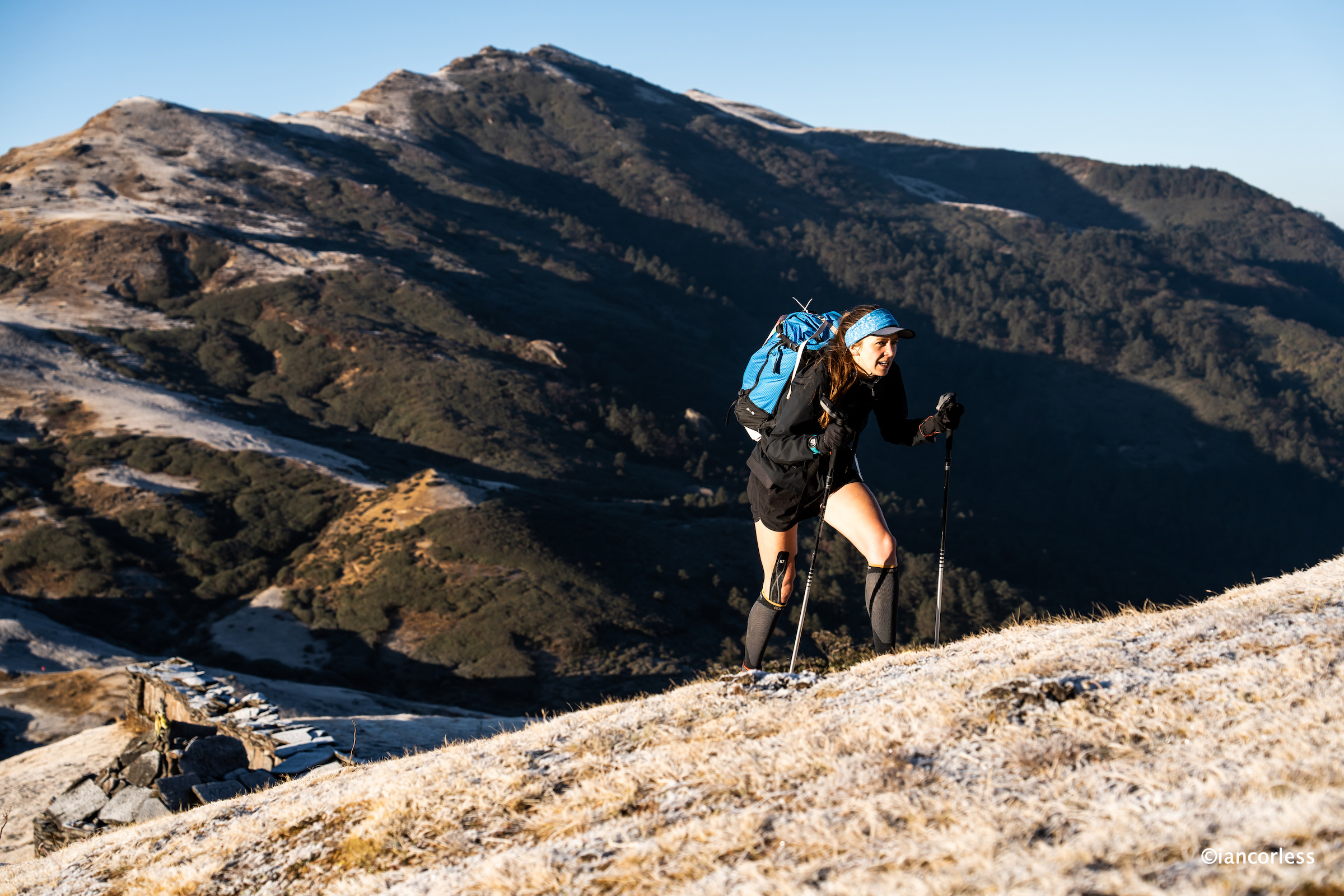
But the nights get cold. You’ll wake up to frosty mornings, and every breath will be visible. It’s the dry season, so the skies are often brilliantly blue, framing the snowcapped peaks like a postcard that never ends.
This is the kind of race where you learn to respect the air. The oxygen gets thinner, and your body feels it. It’s a slow grind uphill, and then a fast, careful descent. Pacing becomes survival. Acclimatisation is your secret weapon. But when you’re out there, breathing hard, moving slow, you realise something: you don’t need speed. You just need grit and determination.
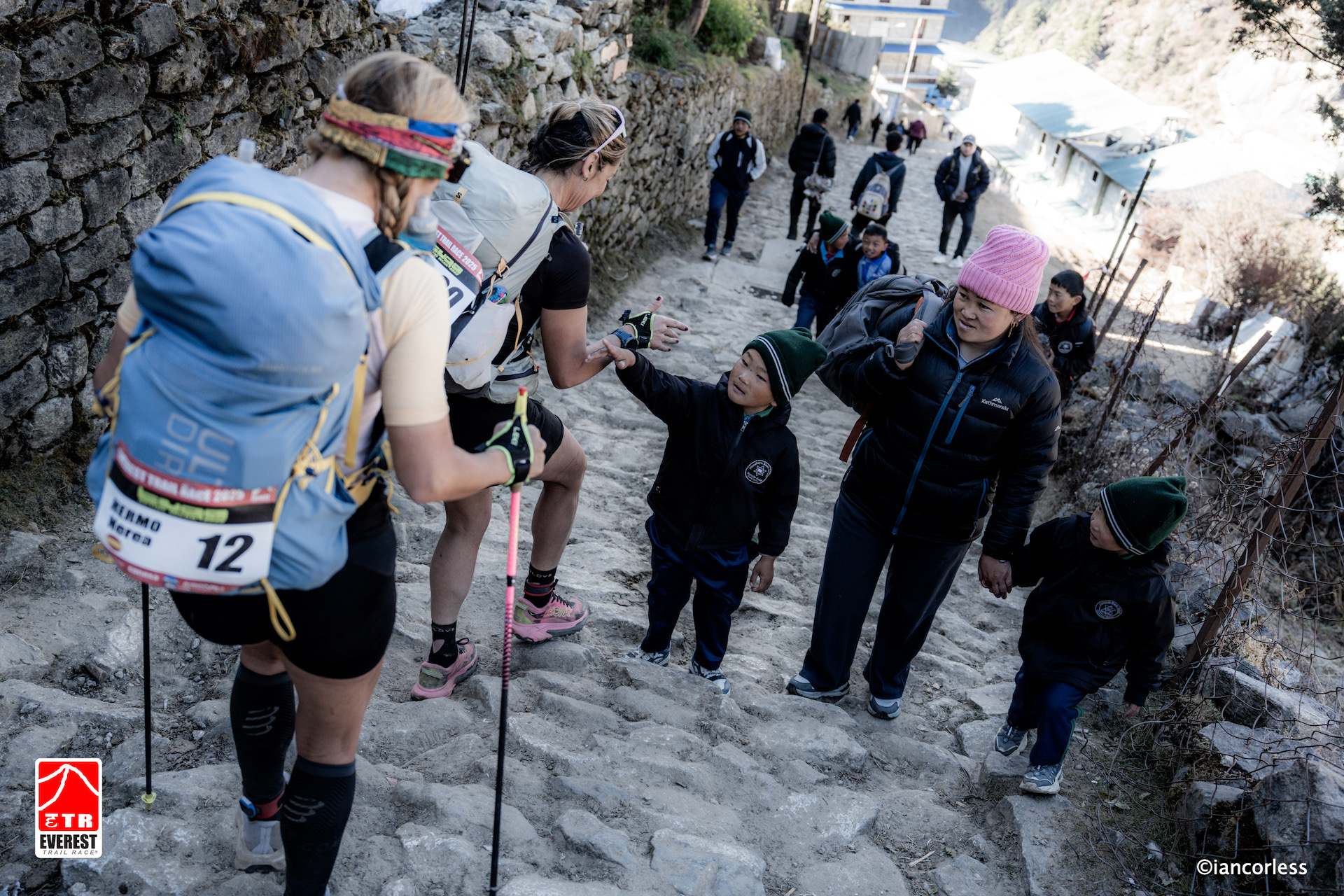
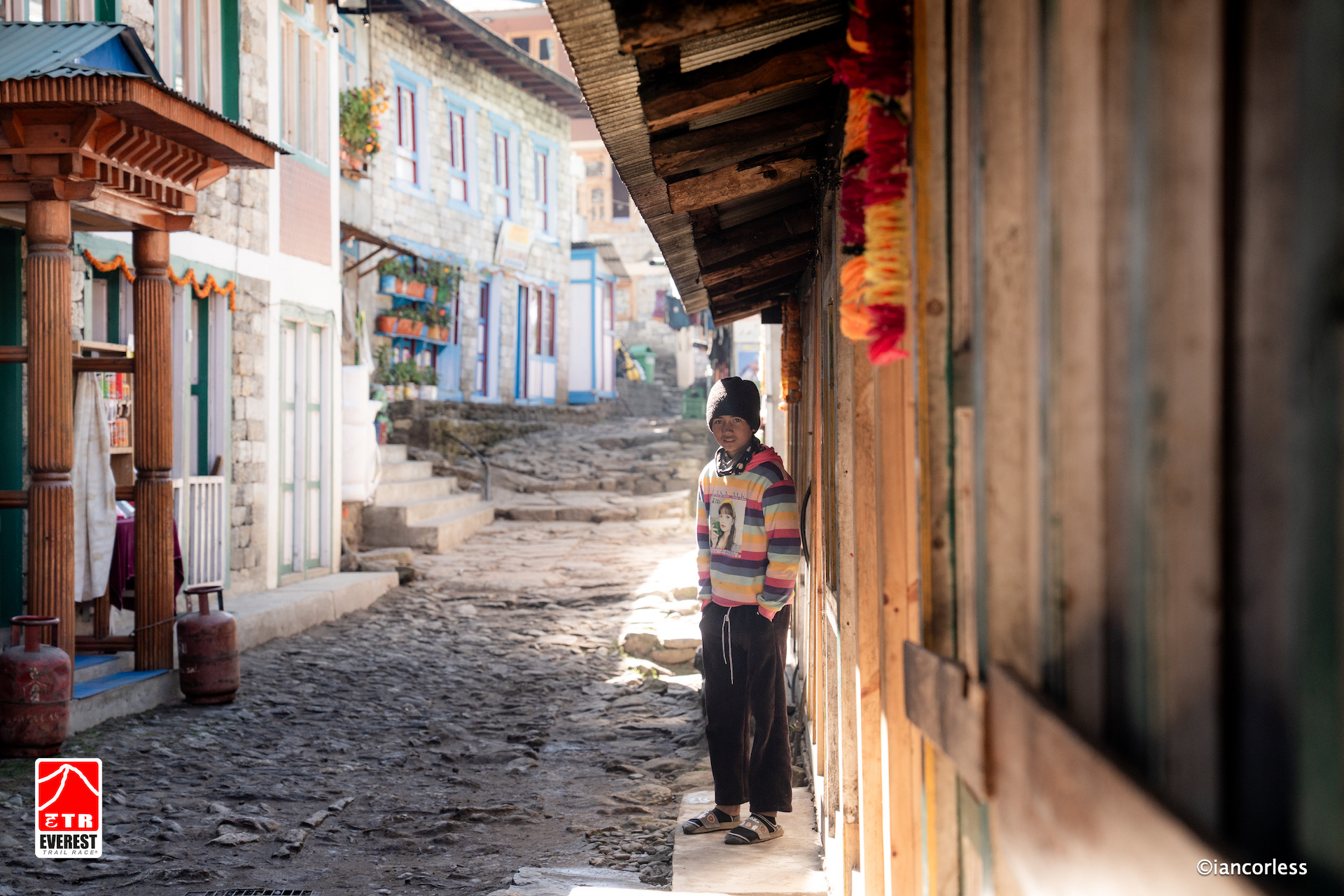
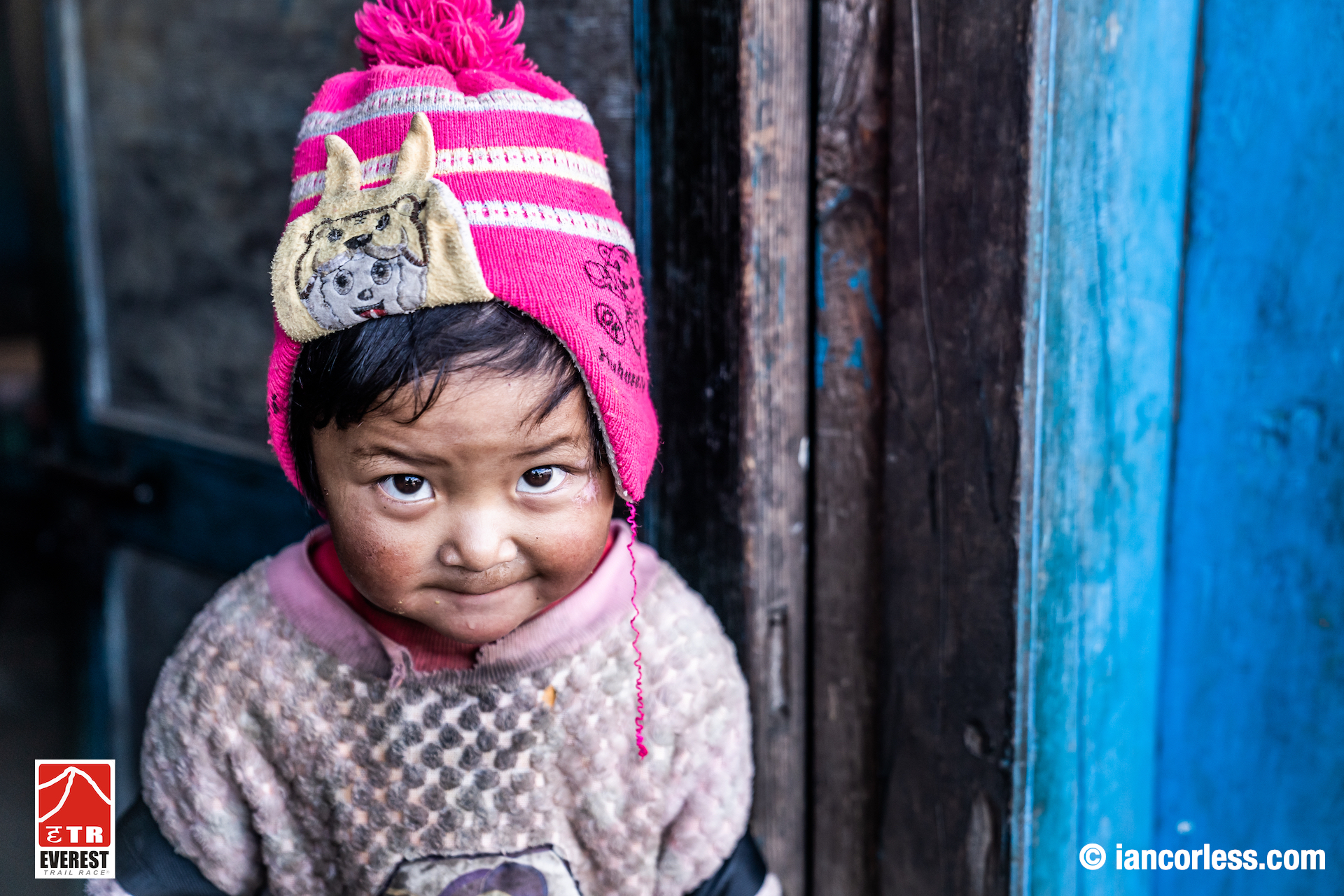
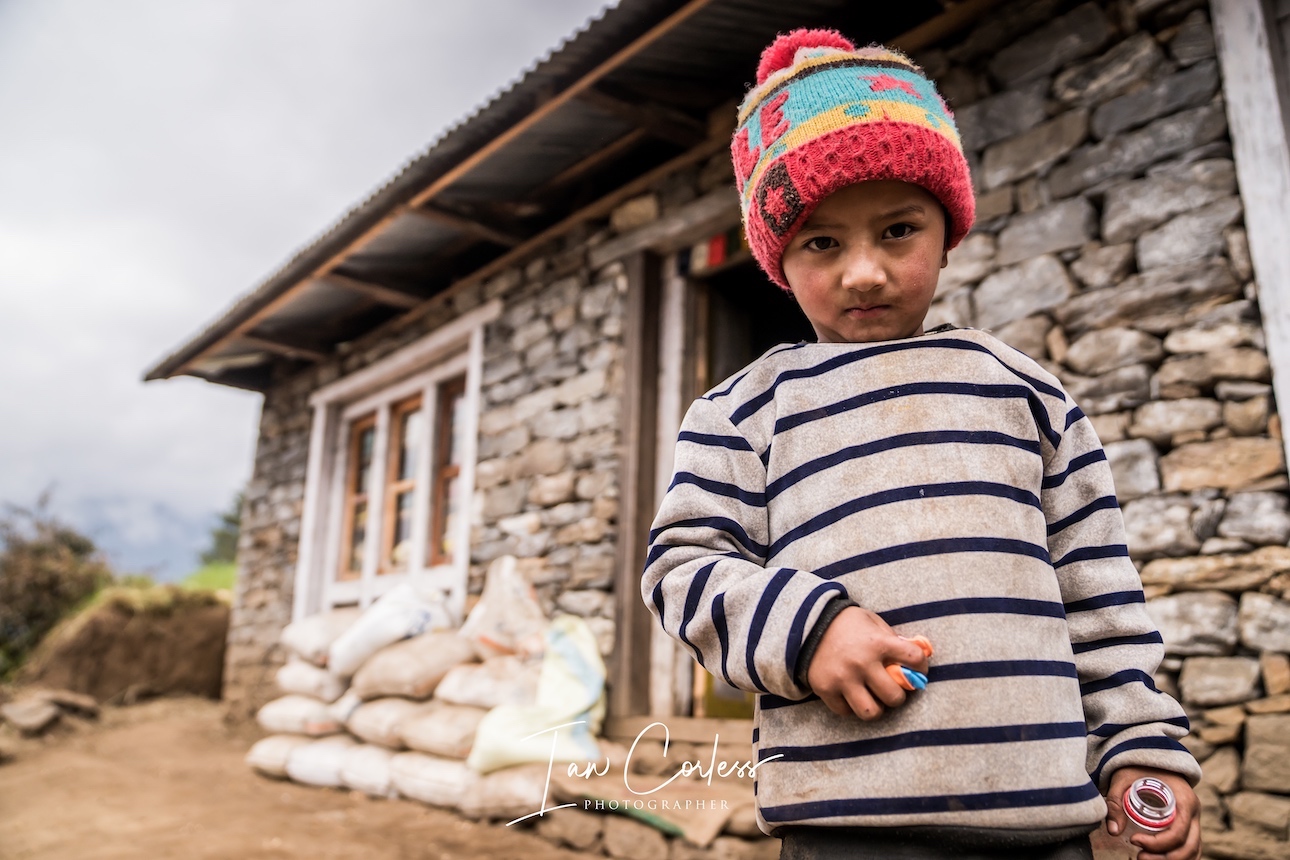
You’ll meet Sherpa families offering you tea from tin cups in smoky kitchens. Kids will run beside you, barefoot and beaming.
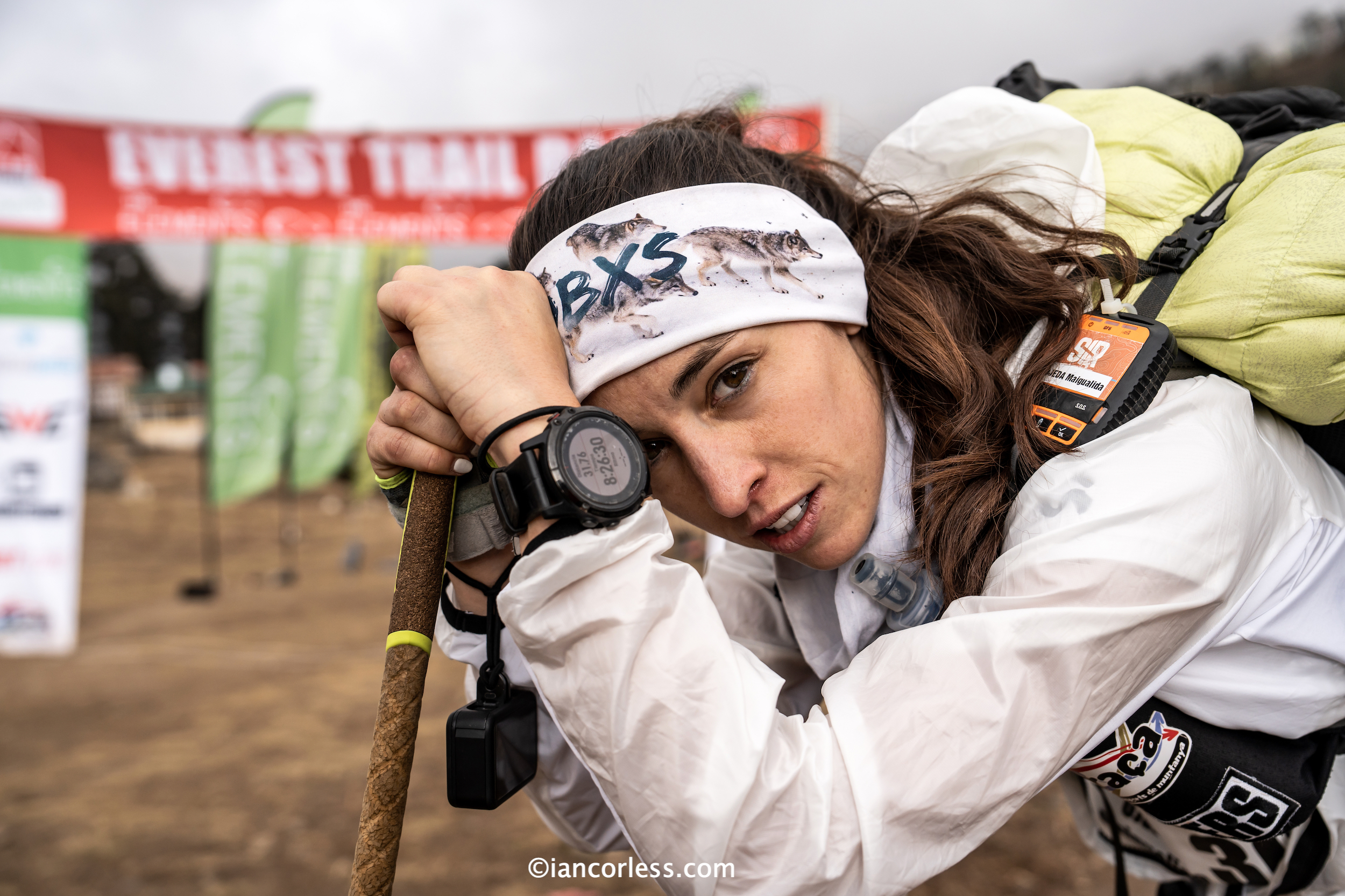
The camaraderie among runners is real, forged in pain, sweat, and shared awe. You’ll finish each stage beside people who were strangers, now teammates.
The Everest Trail Race is small and personal. It’s not about crowds. It’s about connection — to the land, to each other, and to something deeper inside yourself.
You’ll see Everest, Lhotse, Ama Dablam, and other giants of the Khumbu up close. But it’s not just the mountains — it’s the prayer flags flapping in the wind, the monasteries perched on hillsides, the layers of ridge upon ridge fading into the horizon. Every day looks like a screensaver. Every sunrise feels earned.
If you’re waiting for the “perfect moment,” this is it. You don’t need to be the fastest or the strongest. You just need to show up ready to push, adapt, and feel everything this place throws at you. The Everest Trail Race is not about conquering the mountain. It’s about discovering who you are when the mountain pushes back.
Nepal, the magic of Nepal. If you haven’t experienced it, you need to experience it! If you have experienced it before, you already know that you need to experience it again.
The ETR – Everest Trail Race, provides an opportunity to immerse yourself, to experience on foot, a journey through the heart of this magical place. The race takes place over 6-stages, a total of 170km’s with a combined elevation gain/ loss of 26,000m. A self-propelled adventure through the Himalayas reaching a maximum altitude of 4104m.
Now in its 11th year, ETR, taking place November 10th to 22nd, has become a bucket list adventure for those looking to combine travel, tourism and adventure in a package designed to provide the maximum return on the shortest amount of time.
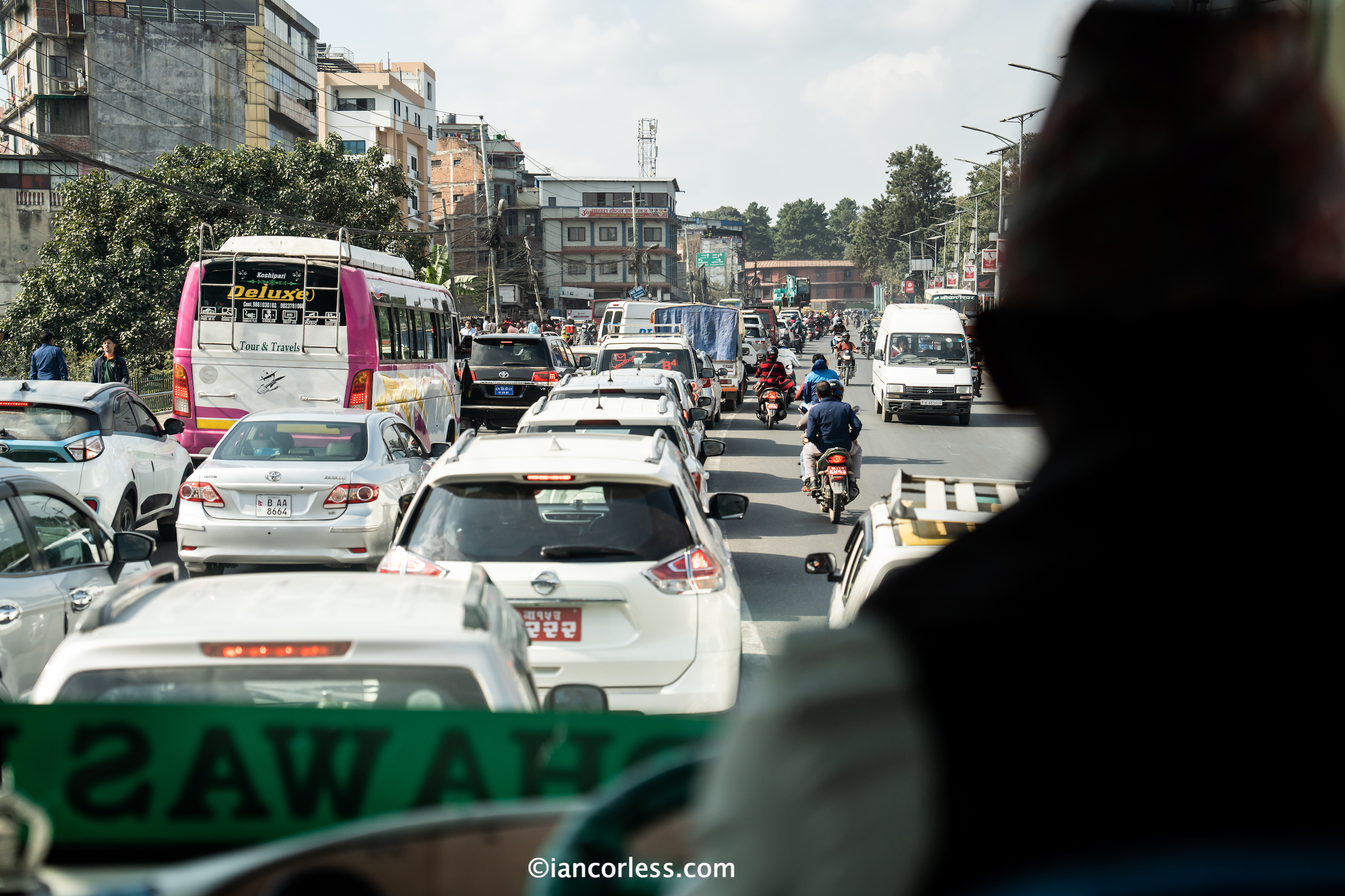
The noise, the bustle, the chaos of Kathmandu, it needs to be experienced. It’s a cacophony of explosive elements. The transfer from the airport to the hotel gives an indication of what is to come.
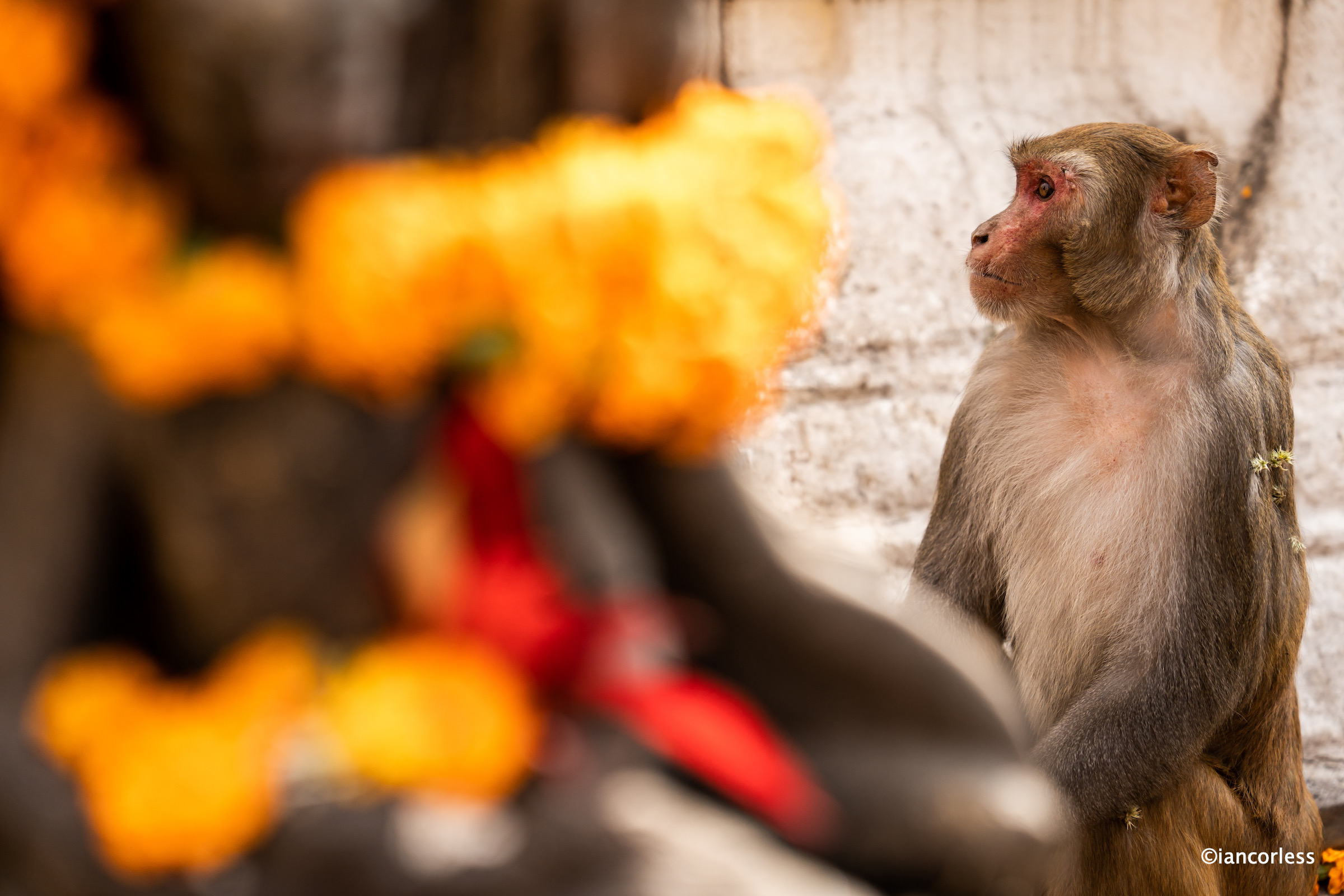
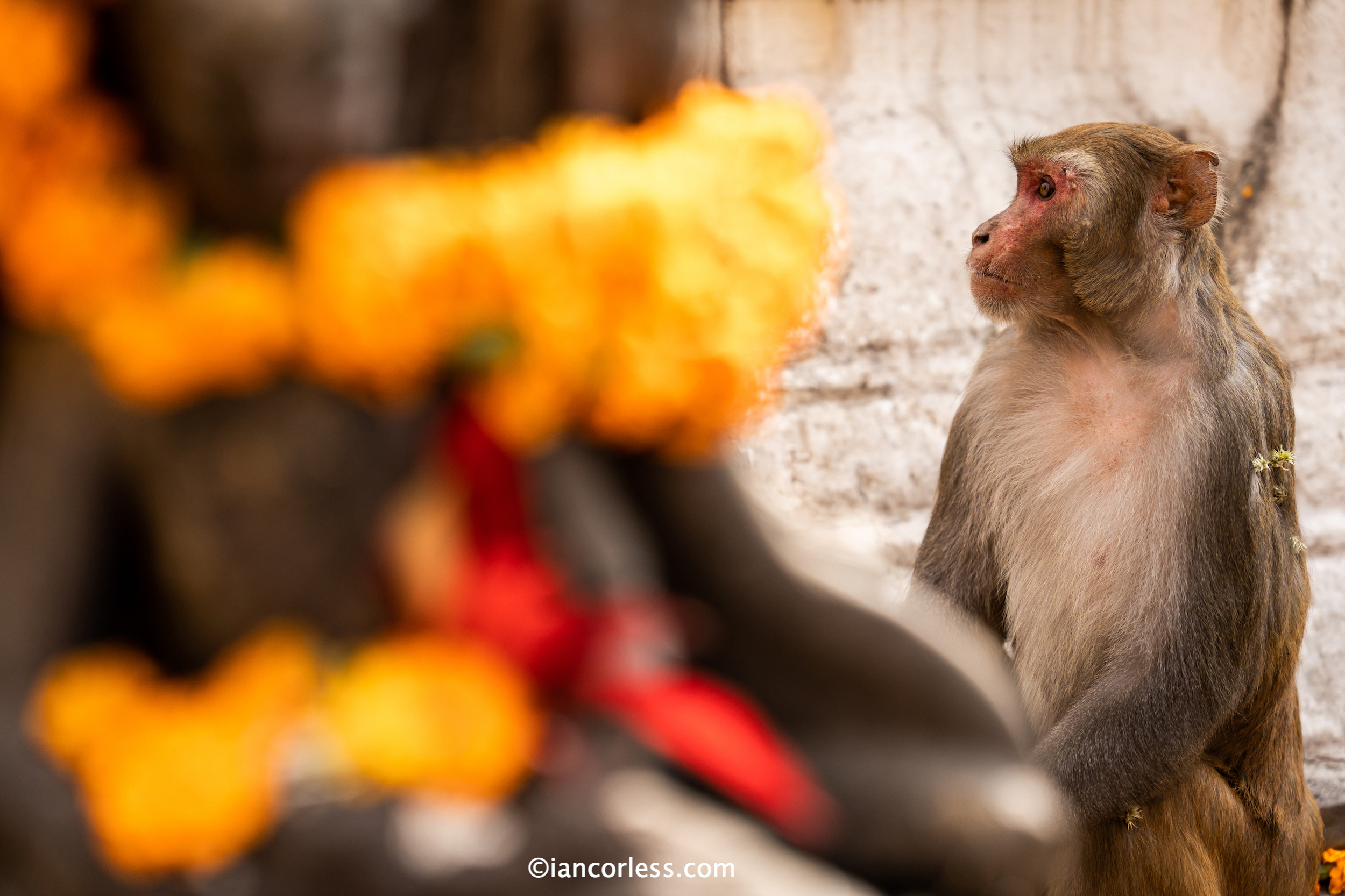
Before the admin protocols begin, a day of leisure in and around Kathmandu allows for key visits to the Monkey Temple and Patan. It’s always a shock to the senses, an assault of noise and colour and yes, poverty and hardship.
The Nepali people have hard and tough lives, and in Kathmandu you get to fully appreciate the highs and lows of this. One thing is for sure though, you will soon fall in love with the Nepali people, they are the salt of the earth.
The following day, the journey to camp 1 begins, a bus drive from the noise and bustle of the city to the wild remote landscape of the Himalayas. The views for ever changing, you get to see the variety that this region brings before arriving at camp, tent allocation and a first night under canvas. The next day, the adventure begins with stage 1.
The following 6 days takes you on a journey of both physical and mental as you leave the remote and wild farmlands heading toward the majestic beasts of Lhotse, Ama Dablam, Nuptse and of course, Everest.
The early stages avoid the classic trekking routes as the participants make their way towards Lukla. Remote, isolated and free from tourism, stages 1-4 show the ‘real’ Nepal, the difficulty of life here and the harshness of weather and land. Days are warm, nights are cold.
Traveling in a semi self-sufficient manner, participants carry all they need for the journey – sleeping bag and clothes. The race organization provides a place to sleep, breakfast and dinner and en-route, there are sporadic aid stations to provide essential calories and replenish water.
Stage 5 provides a magical journey passing through Namche Bazaar, up and onwards to the eventual finish line at Tengboche Monastery, the backdrop of the key Himalayan peaks making this, arguably, the greatest finish line on the world. Ama Dablam to the right, Everest in the middle, finish lines get no better than this.
Stage 6 returns to Lukla, the ETR finish line and a night in a lodge. The following day, a return flight to Manthali and then bus back to Kathmandu and hot showers, hotel luxury and a night in a real bed with crisp white sheets.
The following day is free, allowing for relaxation, recovery and of course, a compulsory trip in to Tamil to by souvenirs before the final night awards and gala dinner.
The Everest Trail Race is a special race, one that introduces participants to a very magical place with the safety, back up and organization to make sure the journey is a special one.
Due to the nature of the challenge, an understanding and comfort with mountain terrain is required, in addition, this is a race that takes place at altitude and reaches a high point of over 4000m. Do not underestimate the difficulty this terrain and altitude brings. Daily distances, on paper, may seem very short and achievable, but they are a challenge. But hey, that is why we sign up for these things, no? If it was easy, anyone would do it.
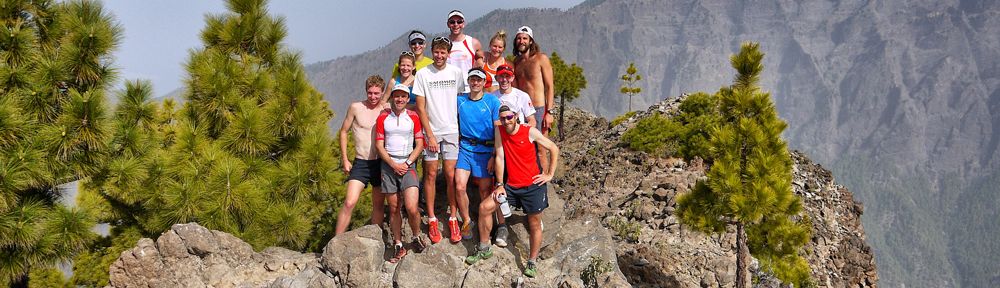
Located at the iconic Club La Santa resort, our training camp will provide you with all the knowledge, experience and practical training you need to make your next trail, ultra and multi-day adventure a success.
Hosted by IAN CORLESS, the training camp is the perfect place to hone your skills for multi-day, fast packing and running in general.
With
2024 LINE UP
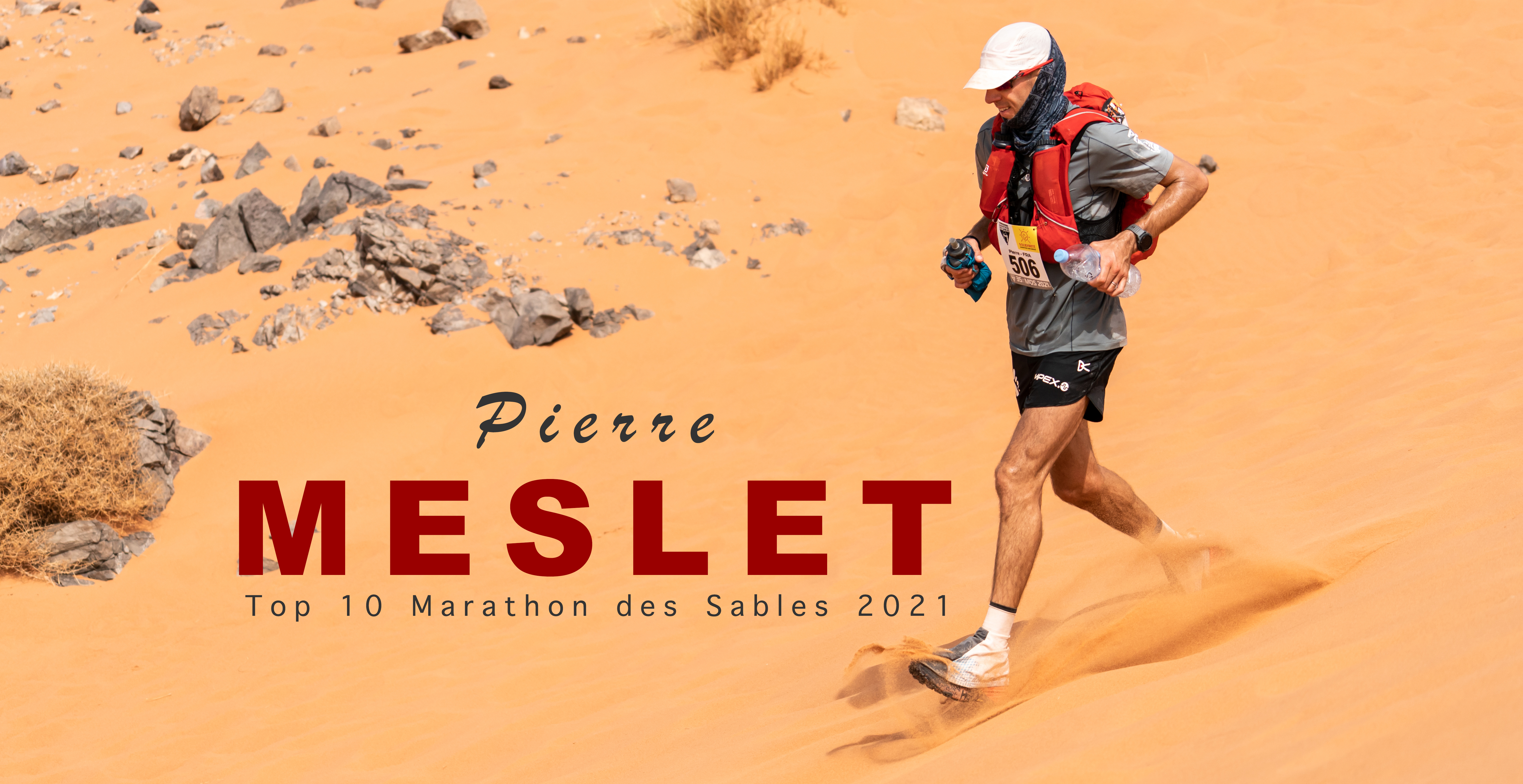
ANNA COMET PASCUA, PIERRE MESLET,
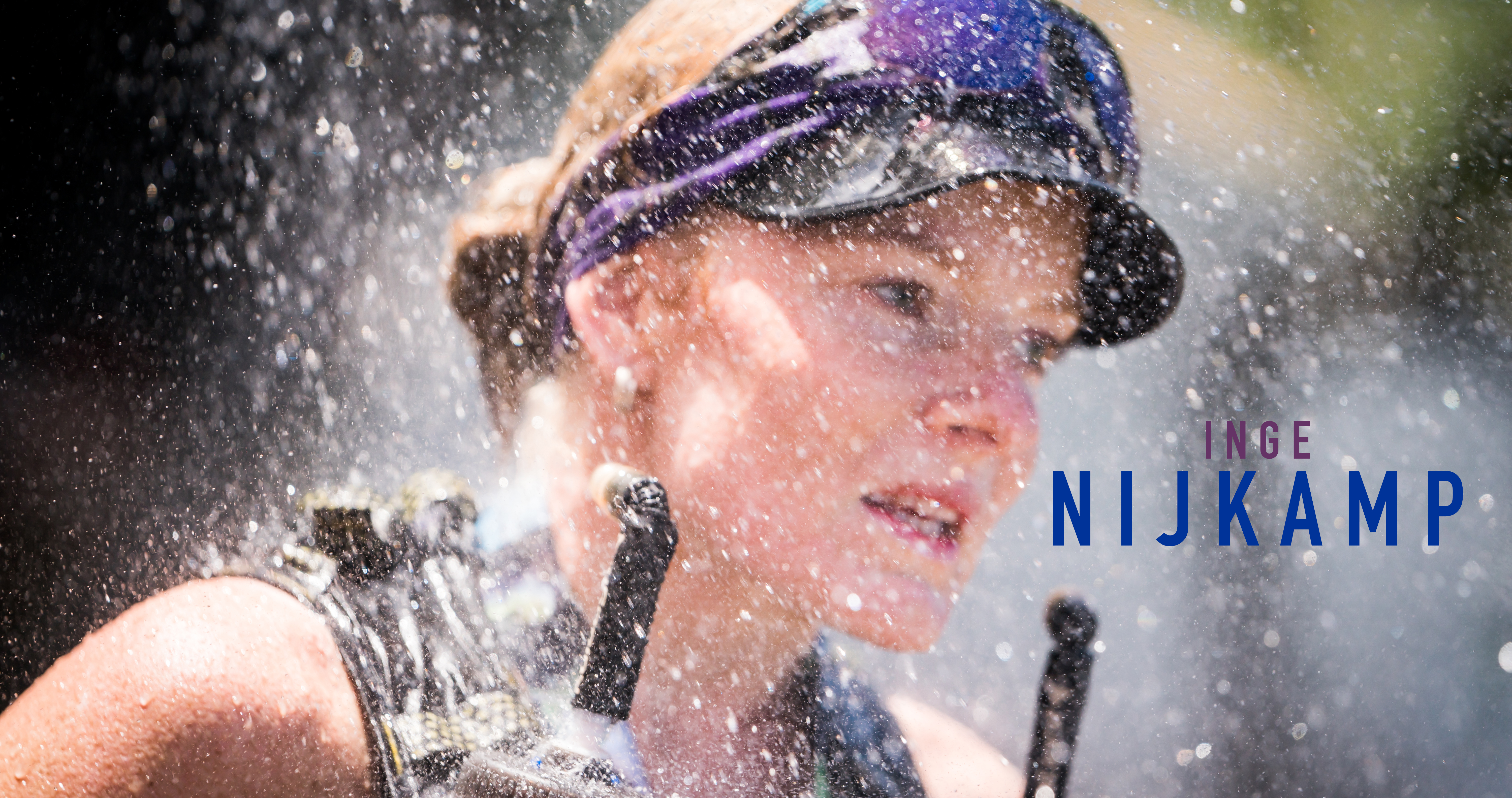
LAUREN GREGORY and INGE NIJKAMP.
GUESTS – KEVIN WEBBER and STEVE DIEDERICH.
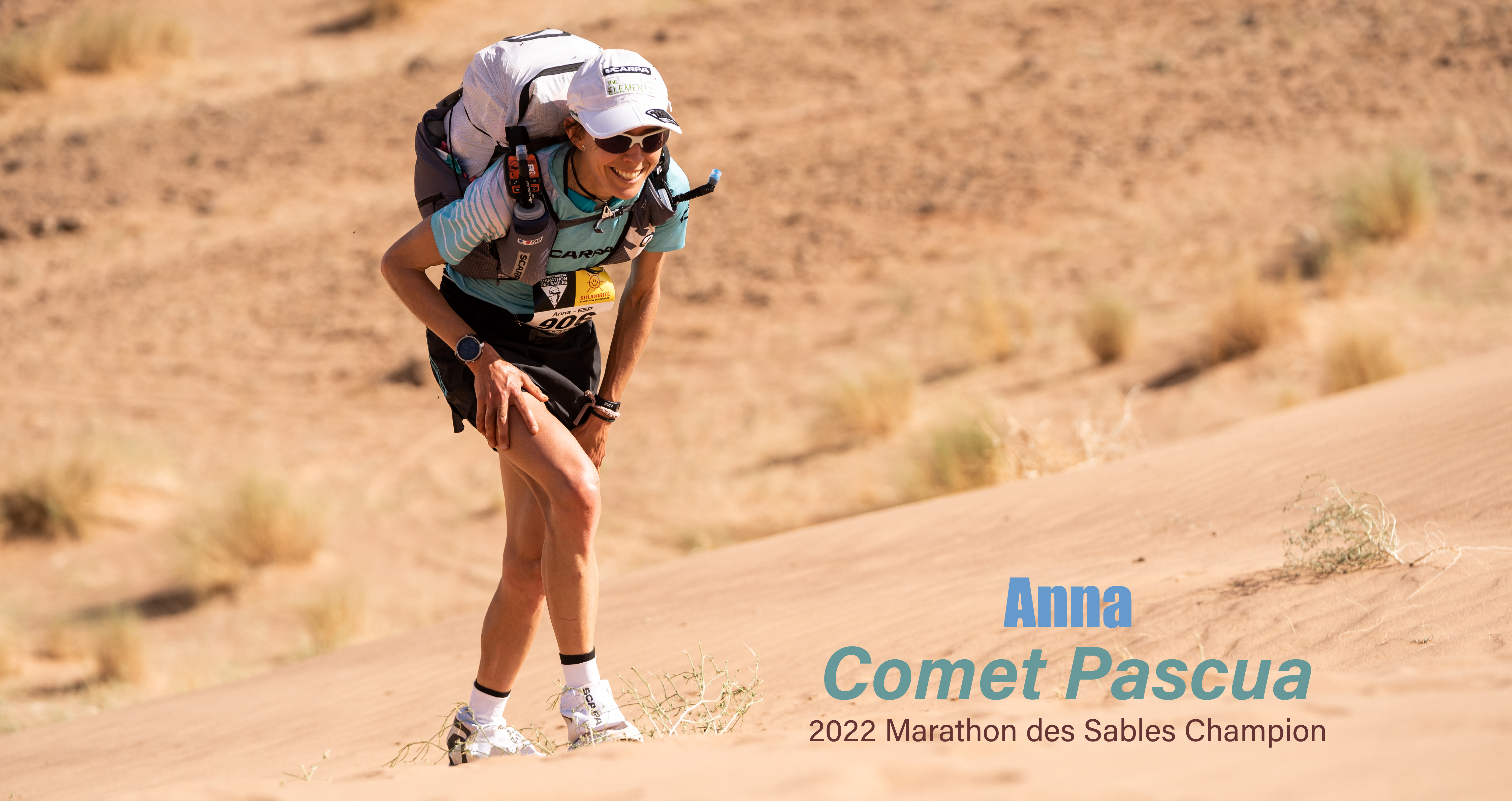
Anna Comet Pascua won the 2022 Marathon des Sables in a dominant performance. An experienced sky, mountain and ultra-runner, Anna is also a multi-day specialist with victories at The Coastal Challenge in Costa Rica and the Everest Trail Race in Nepal. A runner for the Scarpa Team, it’s a pleasure to have Anna join us in Lanzarote.
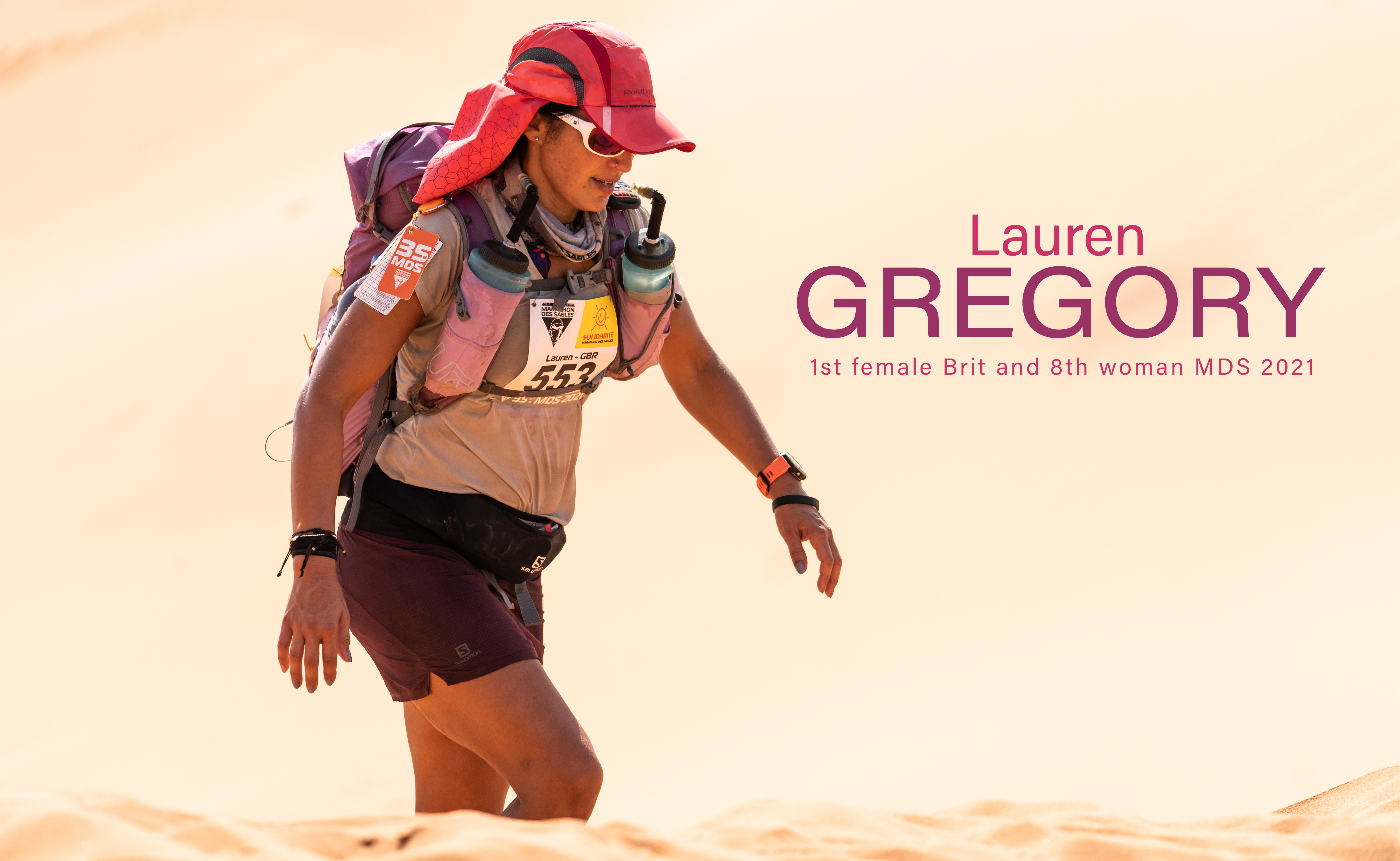
Lauren Gregory ran the 2021 (toughest) Marathon des Sables and was first British woman and 8th in the women category. A personal trainer, Lauren will guide a run group, host yoga sessions will provide a talk.
Pierre Meslet joined the Lanzarote Multi-Day Training Camp in 2022 after placing 9th at the 2020 Marathon des Sables. His attendance was a success, not only from the perspective of leading a run group but also his profession as a physio – He was able to provide ‘on-site’ treatment for our training camp. Pierre is back in 2023!
Inge Nijkamp has been top-10 at Marathon des Sables and The Coastal Challenge. A qualified nutritionist, she will guide a group, provide a nutrition talk specific to multi-day running and be on-hand for one-to-one nutritional consultations.
Kevin Webber after a successful 2023 camp has requested that he come back in 2024 for more… In his words, “I just loved this, great location, great people, great running, what’s not to like?” He will once again guide a group, provide an inspiration and moving talk about running with a terminal cancer diagnosis. He has many stories to tell.
Steve Diederich is the UK agent for Marathon des Sables, The Coastal Challenge and Everest Trail Race, he will be on-hand to provide advice about all three races and answer any questions. Currently studying Sports Psychology and come Lanza 24 he will be qualified and on-hand to discuss the mental side of sport and running.
“I wanted to say a big thank you for this week – I’ve left so energised and inspired after the week… I thought the camaraderie from other runners was incredible. If felt as if everyone had left their ego at home which really made for such open and honest sessions. I hope you have the opportunity to reflect on how impactful and enjoyable the camp was. The fact that the organisation was seamless doesn’t just happen and I know the layers of detail and spreadsheets that go into an event like this. I’ll be back I’m sure and when I do get to the start line of MDS I will be much more likely to succeed based on all the advice.” – EB
The purpose of any training camp is to provide you with specific information and training designed specifically to help you with your future objectives. Although you may run (train) more in this condensed week, it’s not designed to break you! Therefore, all training sessions are flexible and you can dip-in and dip-out as required. Most importantly, just as in any race, we will have a very mixed ability base. You will therefore train at your appropriate pace with like minded people.
Each day will be broken down into one or two specific training sessions, one workshop and leisure time.
Lanzarote offers a variety of terrain that can be found in many desert races and therefore it’s the ideal training ground to prepare and acclimatise for an up and coming challenge. Club La Santa as a resort offers a great base and all facilities are included. This is great for relaxation, an opportunity to cross train or more importantly it’s perfect for friends and family to join you as a plethora of opportunities are available.
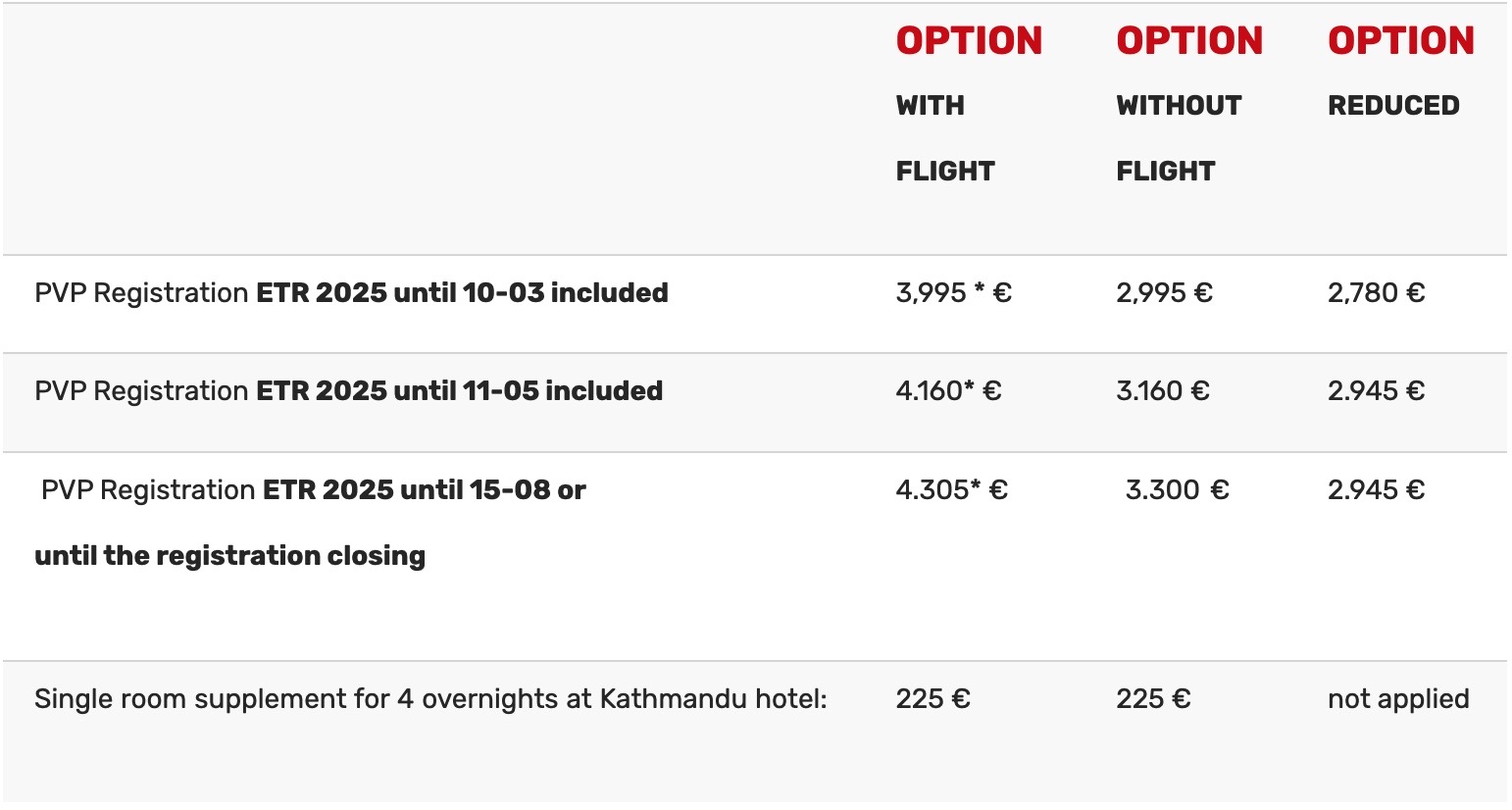
£1095 pp* shared occupancy / Solo Occupancy apartment £1695*
A £300 deposit secures a place for shared occupancy, £600 for solo-occupancy. Deposits are non-refundable in any circumstance and cannot be carried forward to a following year.
This includes a self-catering apartment on a share basis. Inclusion in the above schedule and access to all facilities within the Club La Santa complex.
A non-training partner is welcome to join a training partner for a cost of £975 pp* and they are able to use all the facilities at Club La Santa.
The Everest Trail Race (ETR) finally was all systems go after an extended break due to the Coronavirus situation. Needless to say, the return was welcome, not only by ETR staff but all the runner’s, many who had postponed entries for 12 or even 24-months.
Nepal is a magical place and to be back in the magic was special.
ETR organisation had not been dormant between 2020 and 2022, the opposite. With the ever expansio of gravel roads leading toward Lukla, it was important to return ETR to more isolated and raw trails, so, in comparison to pre-2020, the 2022 race would be a new experience, particularly over stages one to four with stages five and six remaining roughly the same to 2019.
Travel is coordinated so all participants meet in Istanbul for an onward red-eye flight through the night to arrive in Kathmandu mid morning. During the Covid period, Kathamandu has not stood still either. There have been major improvements to the airport and what was a very painful arrival and immigration procedure is now considerably less painful if you have the relevant documents, photos and cash to pay for an entry visa.
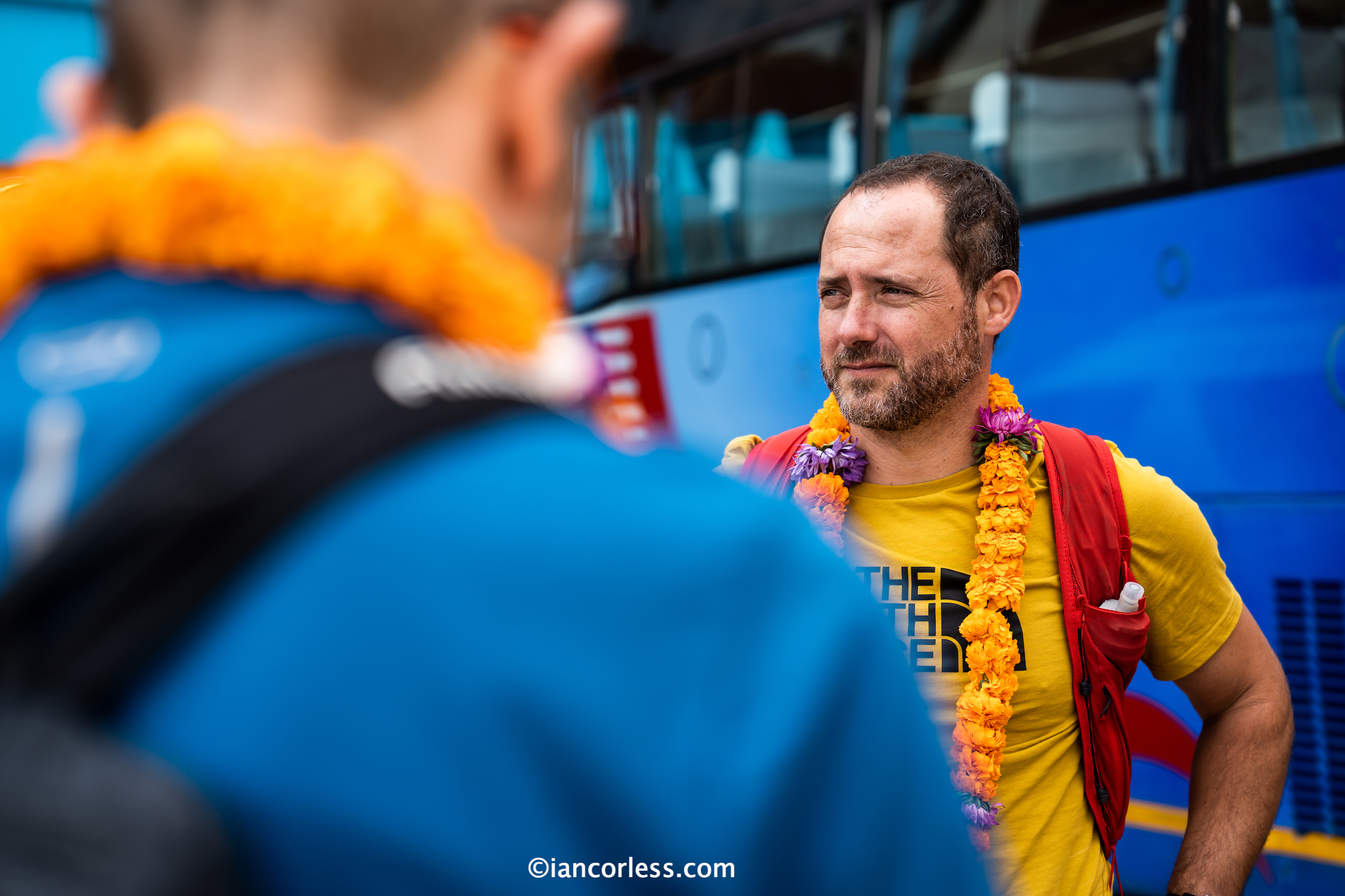
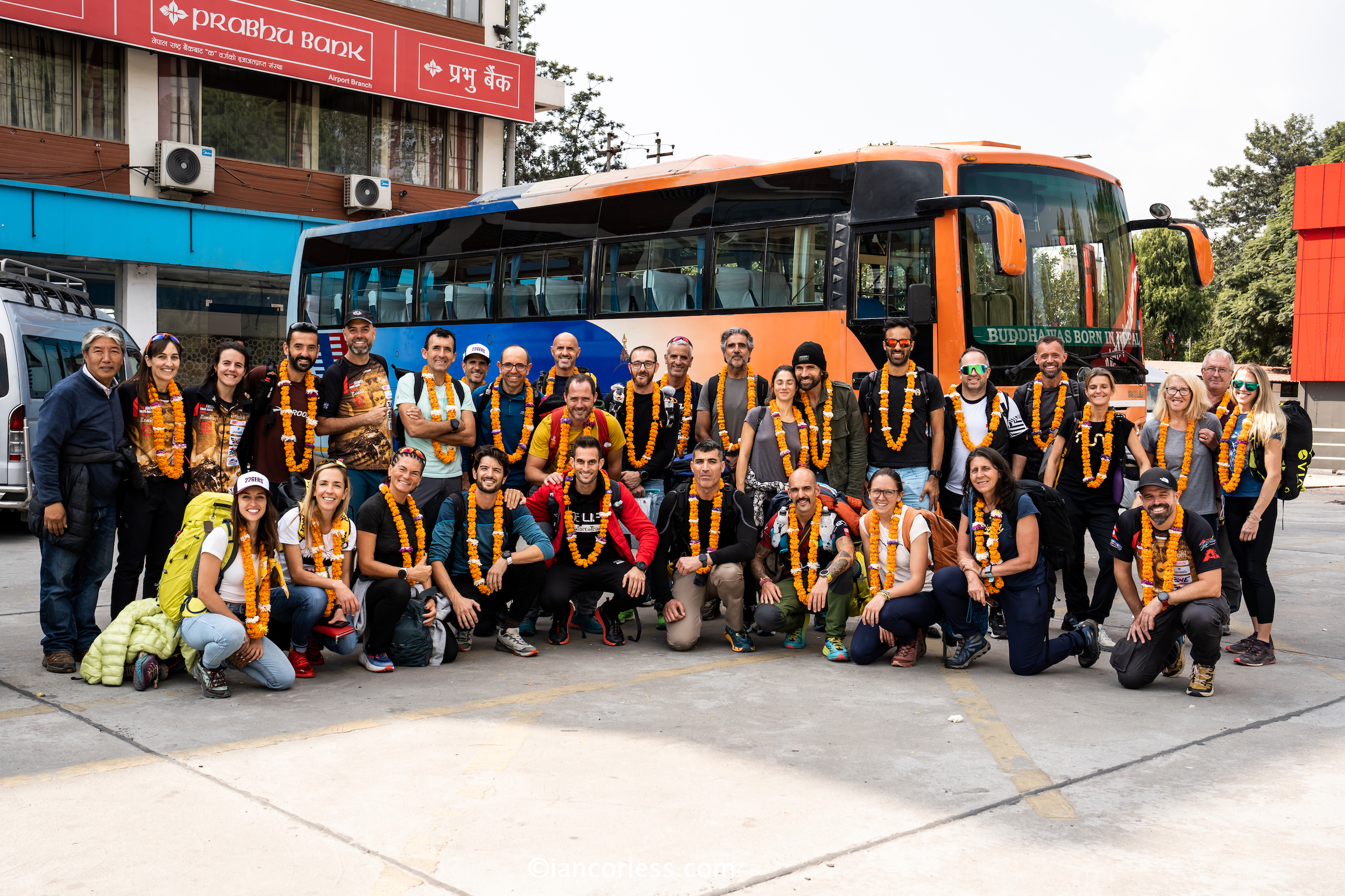
Everyone is welcomed at the airport with a traditional garland and then it’s transfer time to the hotel which will be home for the next two days. For those who have not been to Kathmandu before, the driving is always somewhat of a shock. Organised chaos is the easiest way to explain it.
Arrival at Hotel Shanker, a calm and hidden oasis in noise and craziness of Kathmandu is welcome. Everyone is greeted and then it’s straight into initial race admin before relaxation time after long travel.
Day 1 morning is a group excursion to the Monkey Temple and Patan. The Monkey Temple for 2022 was considerably busier than other years due to timing of an important religious festival. It was rammed with people but that only added to the atmosphere.
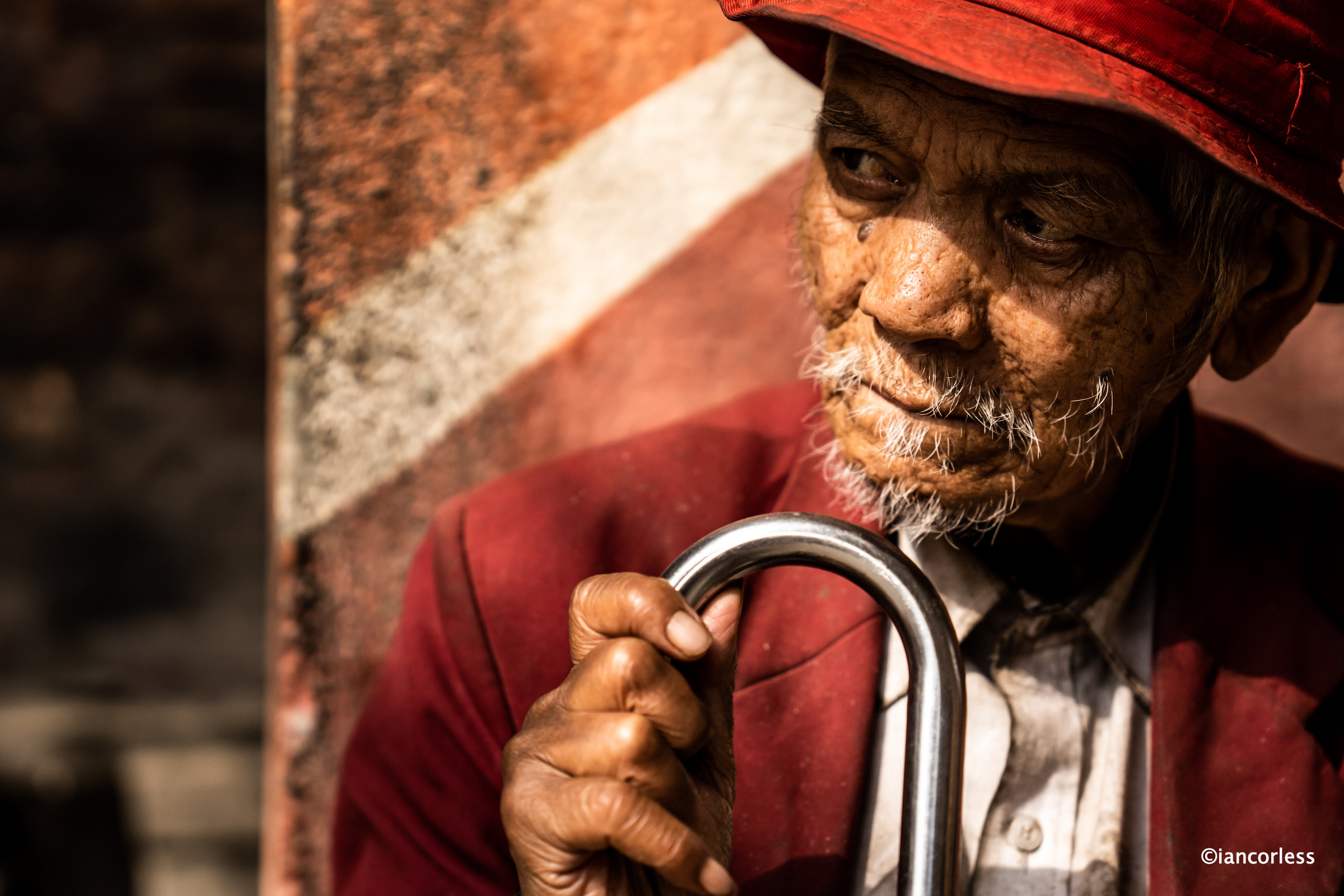
Of course, it’s always an eye-opener to experience a place like this. No matter how many times you visit, there is always something new and of course, it’s a popular place for beggars who hope to monetise the charity of the visitors.
From the Monkey Temple to historical Patan. *Patan, also known as ‘Lalitpur’, the city of artisans, lies 5 km southeast of Kathmandu, and is home to the valley’s finest craftsmen who have preserved such ancient techniques as the repoussé and lost wax process used to produce exquisite sculptures. The city retains much of the old charm with its narrow streets, brick houses and multitude of well-preserved Hindu temples, Buddhist monasteries (vihars) and monuments. (*https://ntb.gov.np/patan).
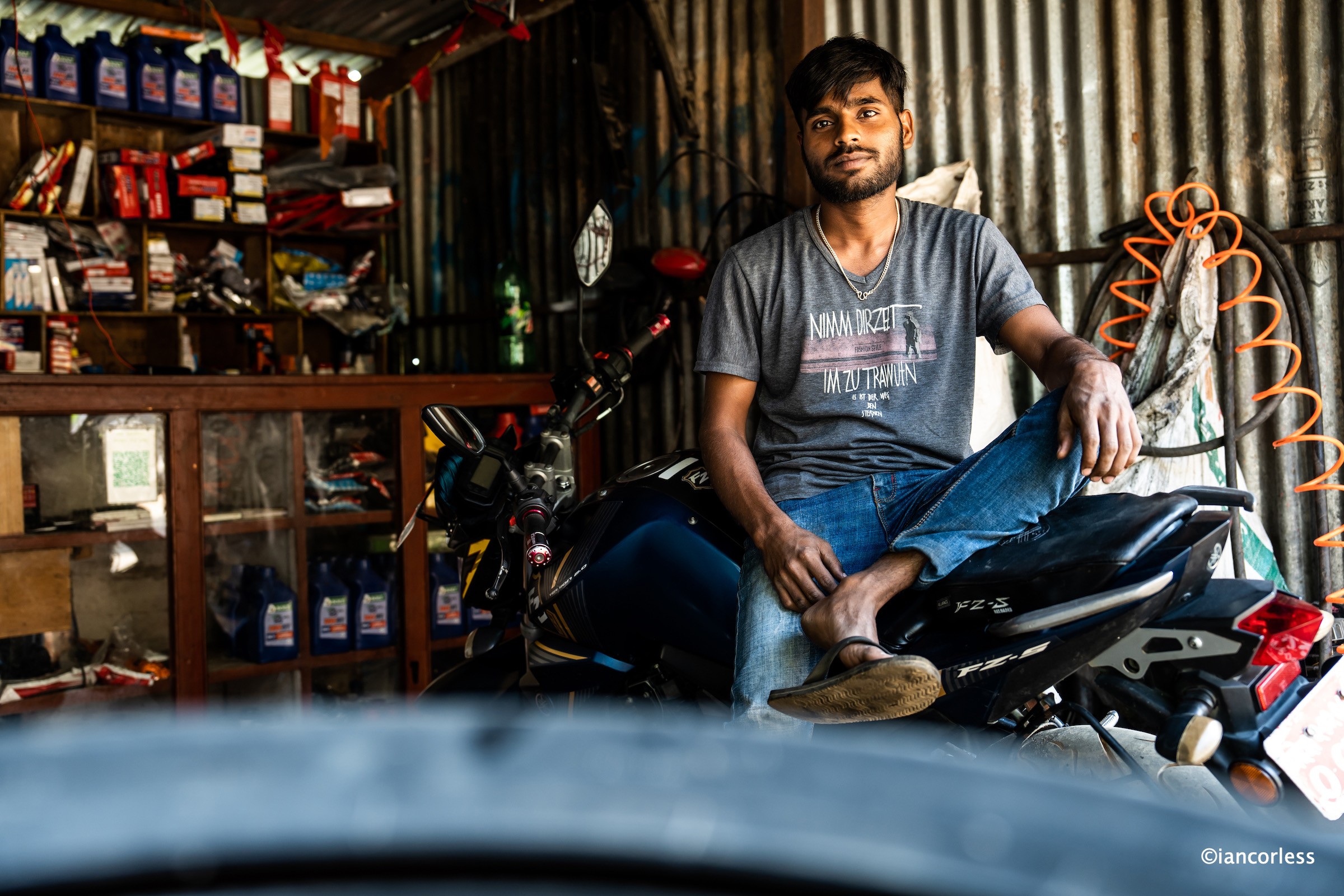
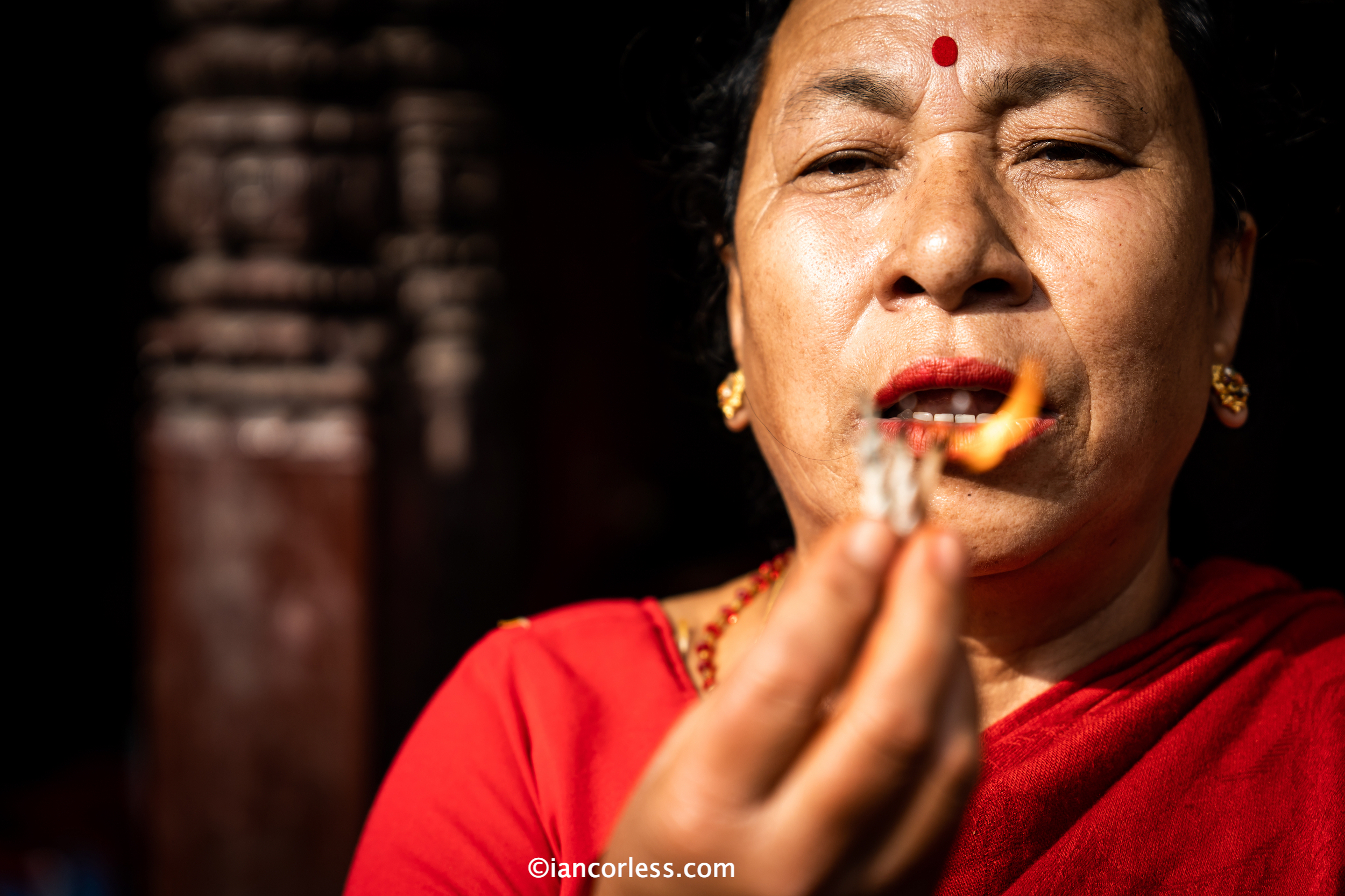
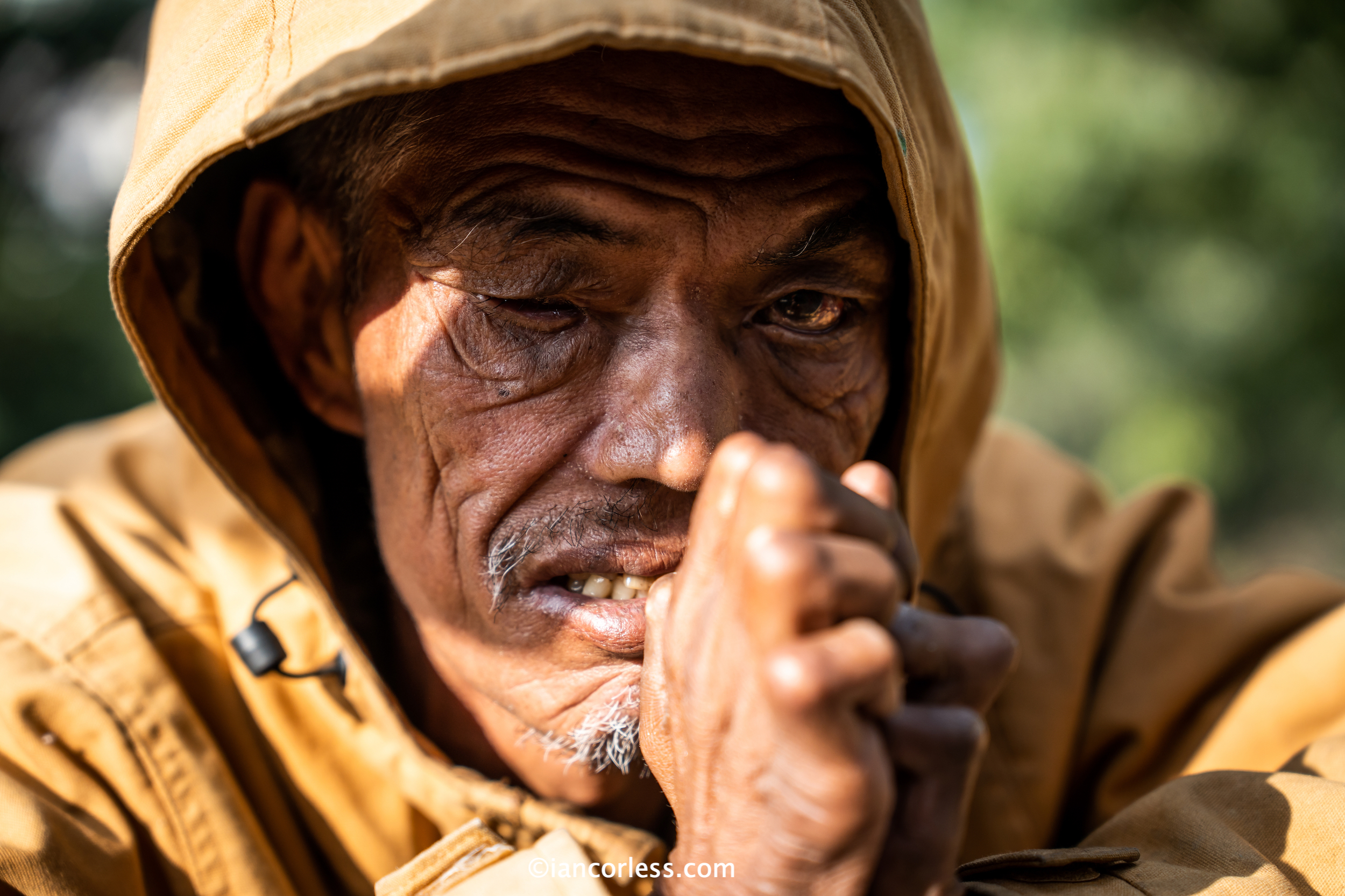
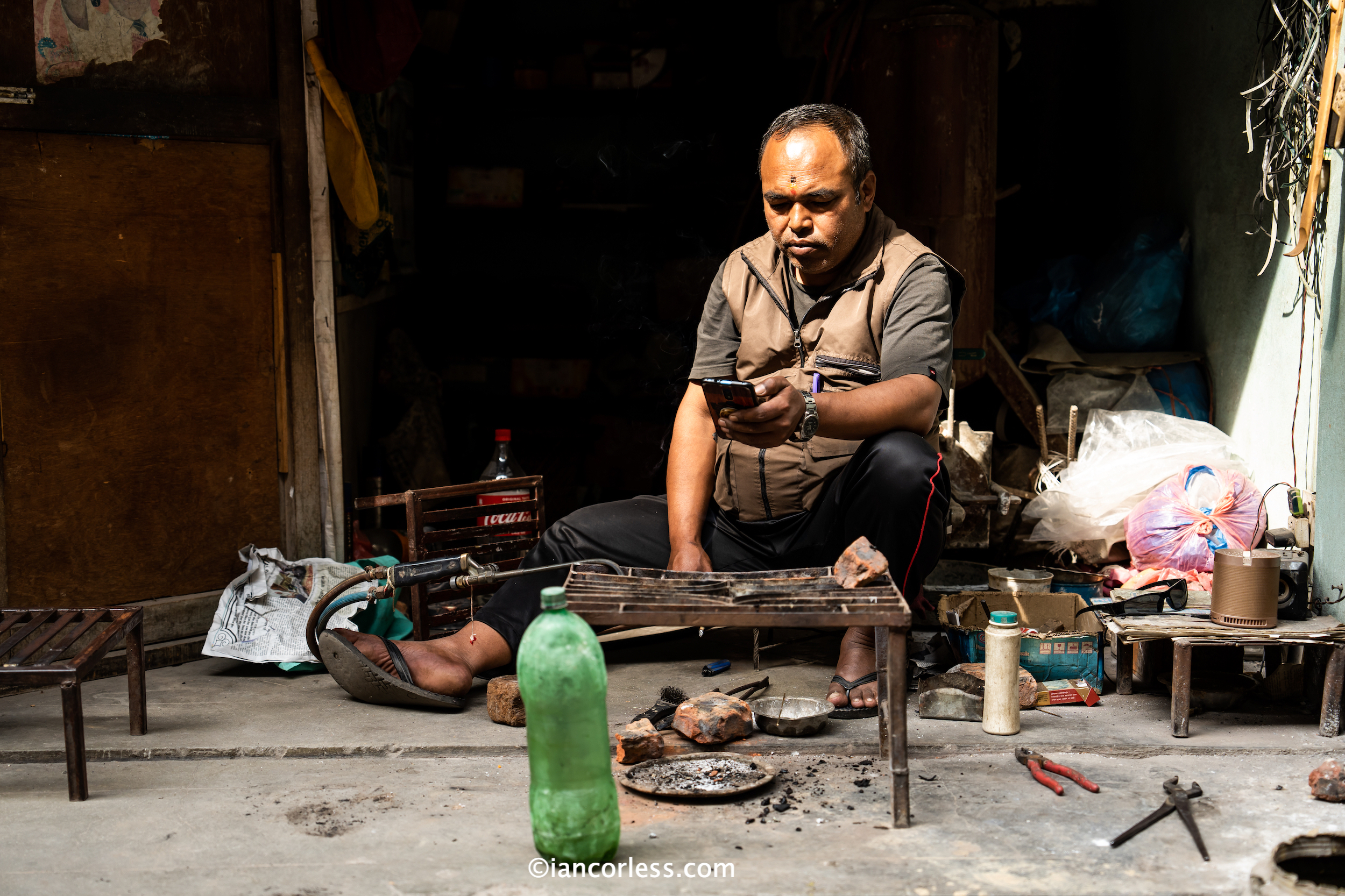
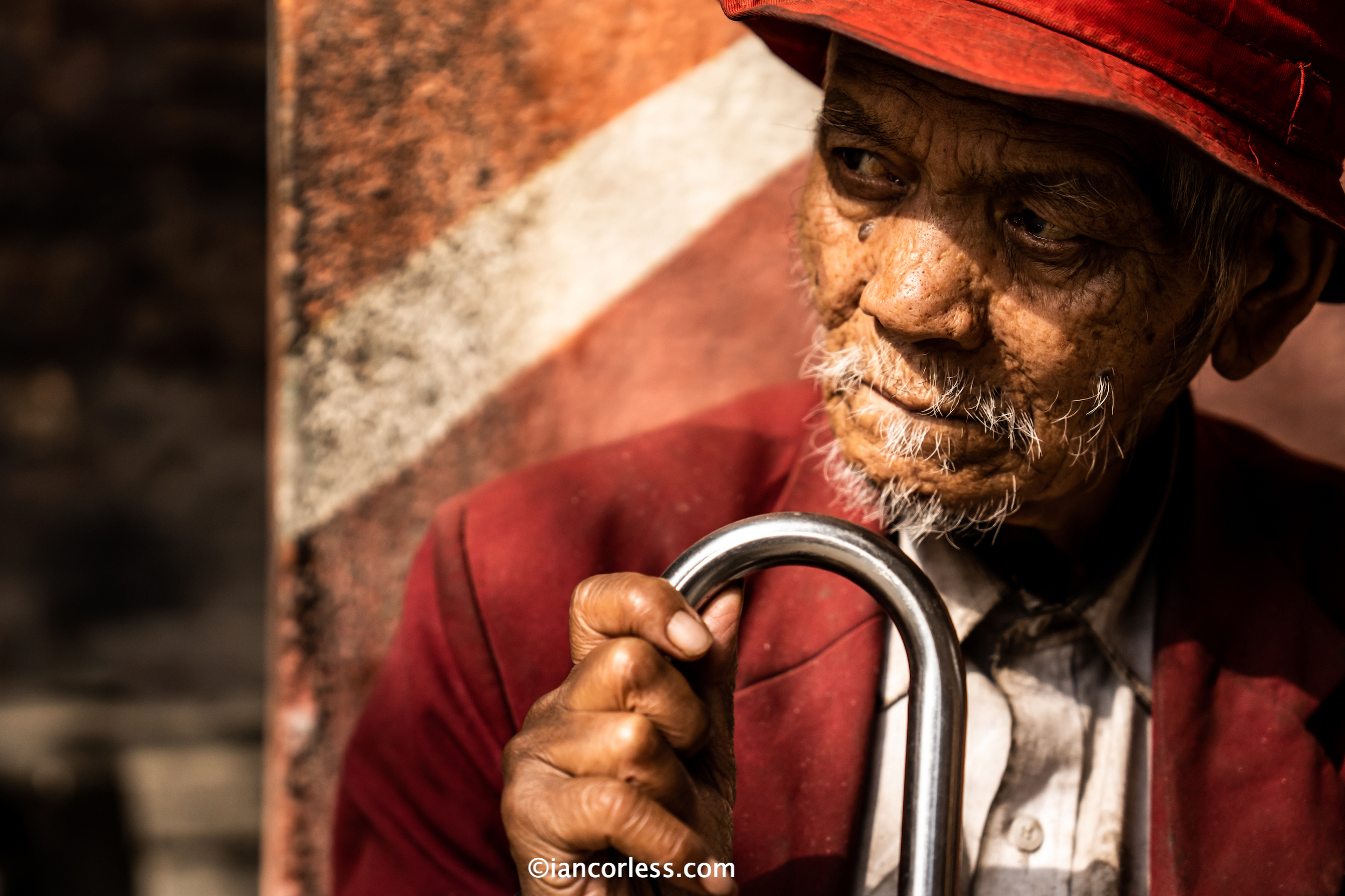
The buildings, the winding streets, the noise and colour – always special. But for many, the people are what is interesting… So many characters full of life, history and colour.
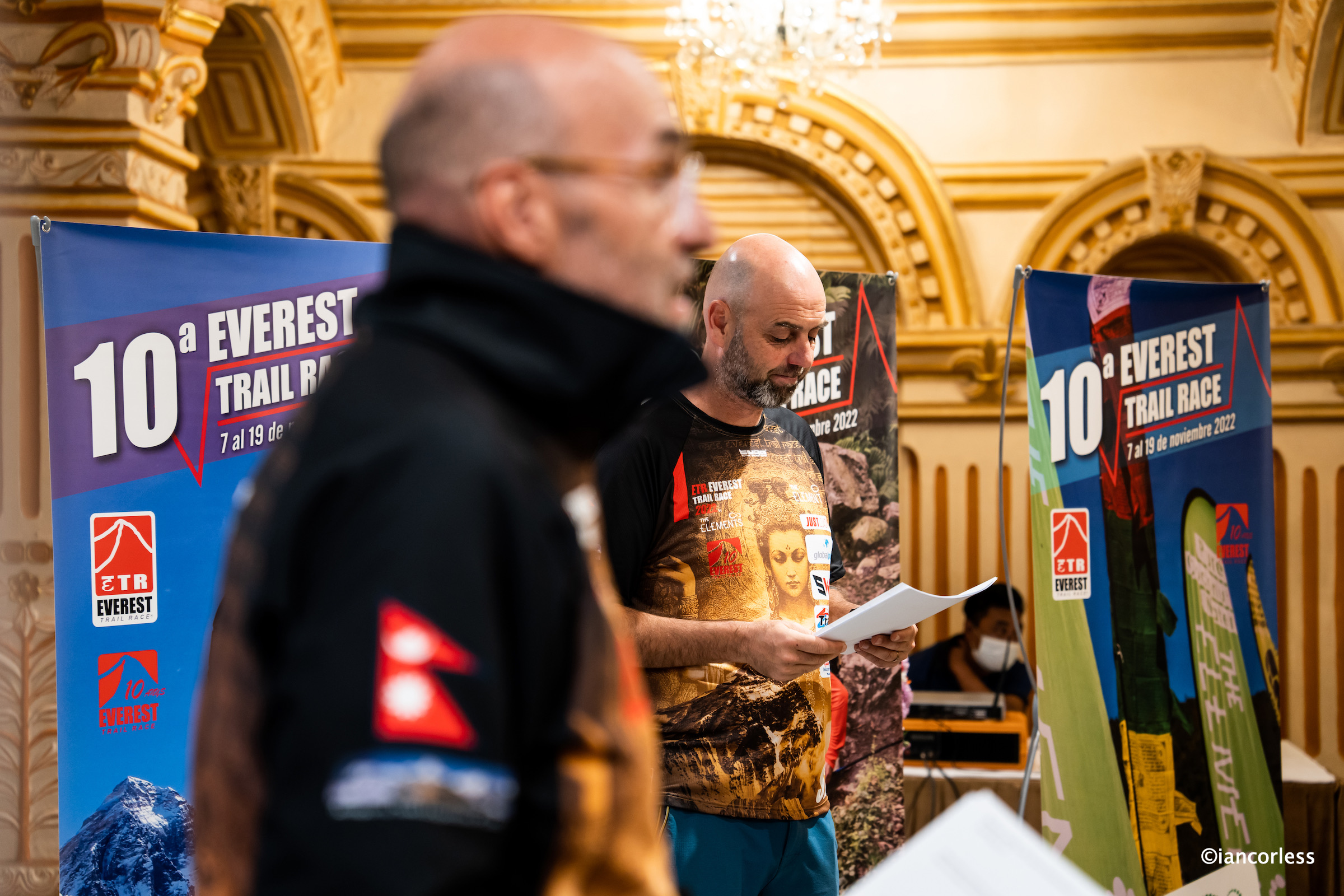
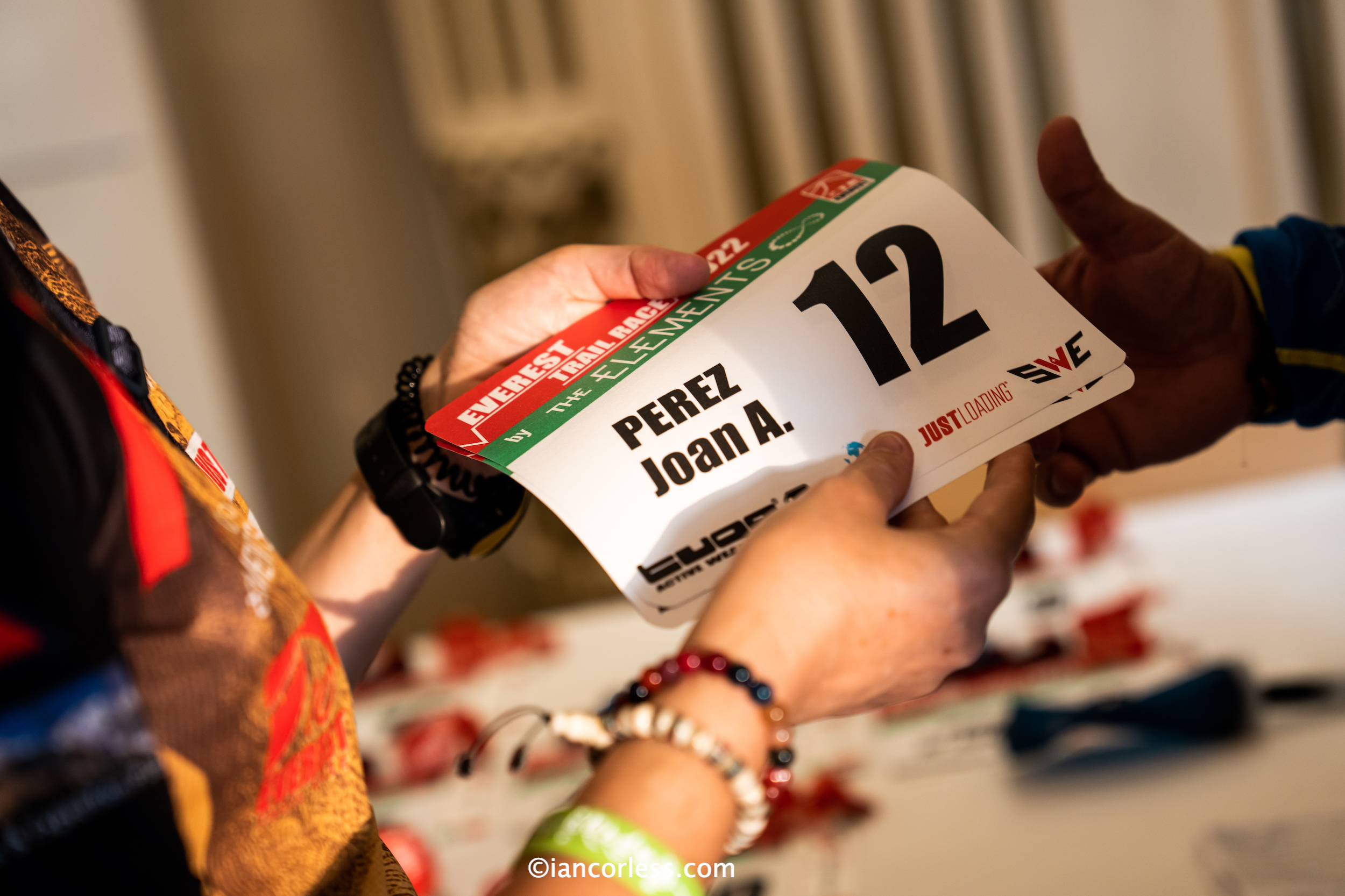
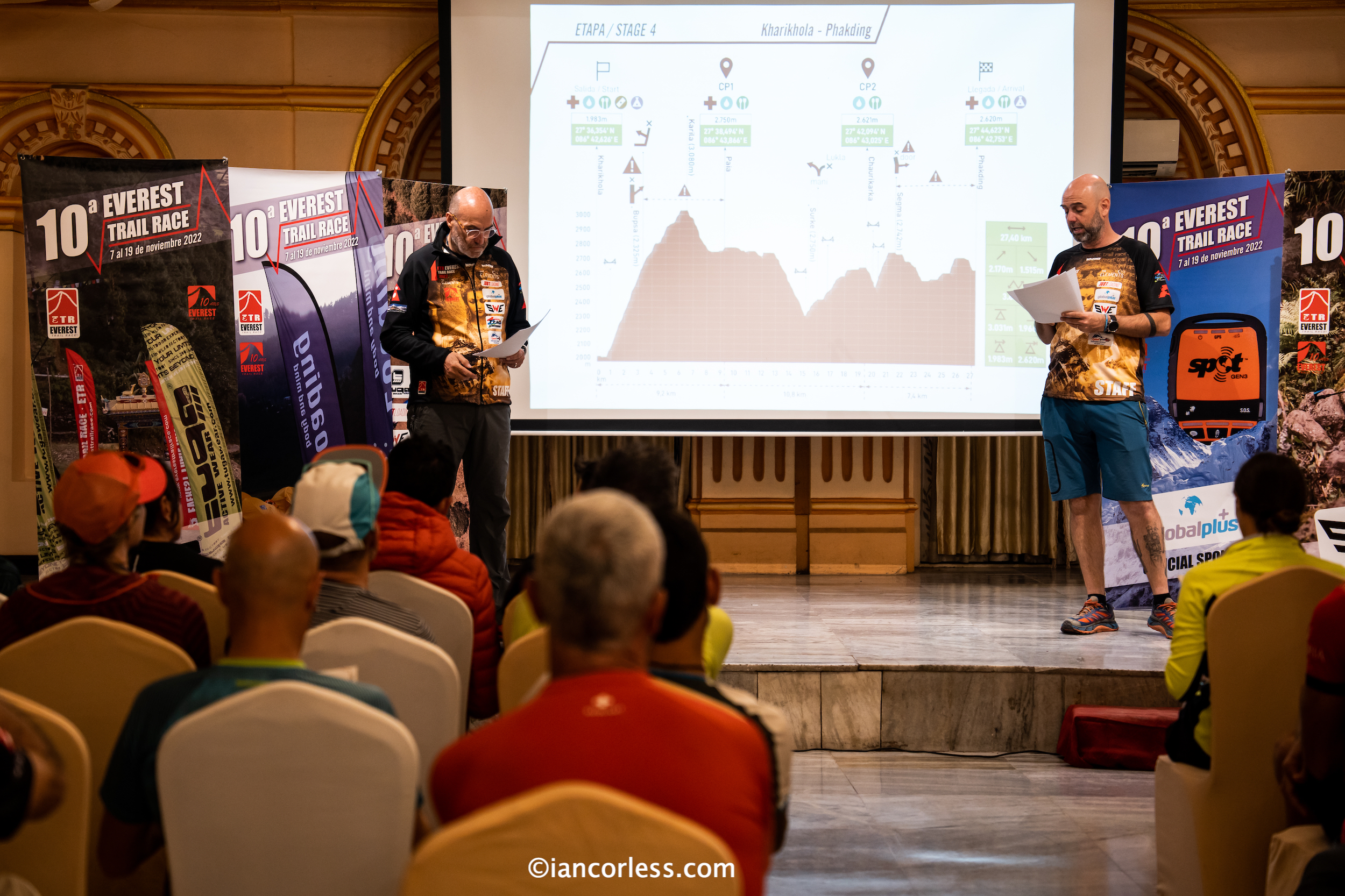
After a morning of relaxation and sightseeing, late afternoon is taken up with pre-race admin checks, number collection, medical checks and onwards to the evenings welcome dinner and race briefing.
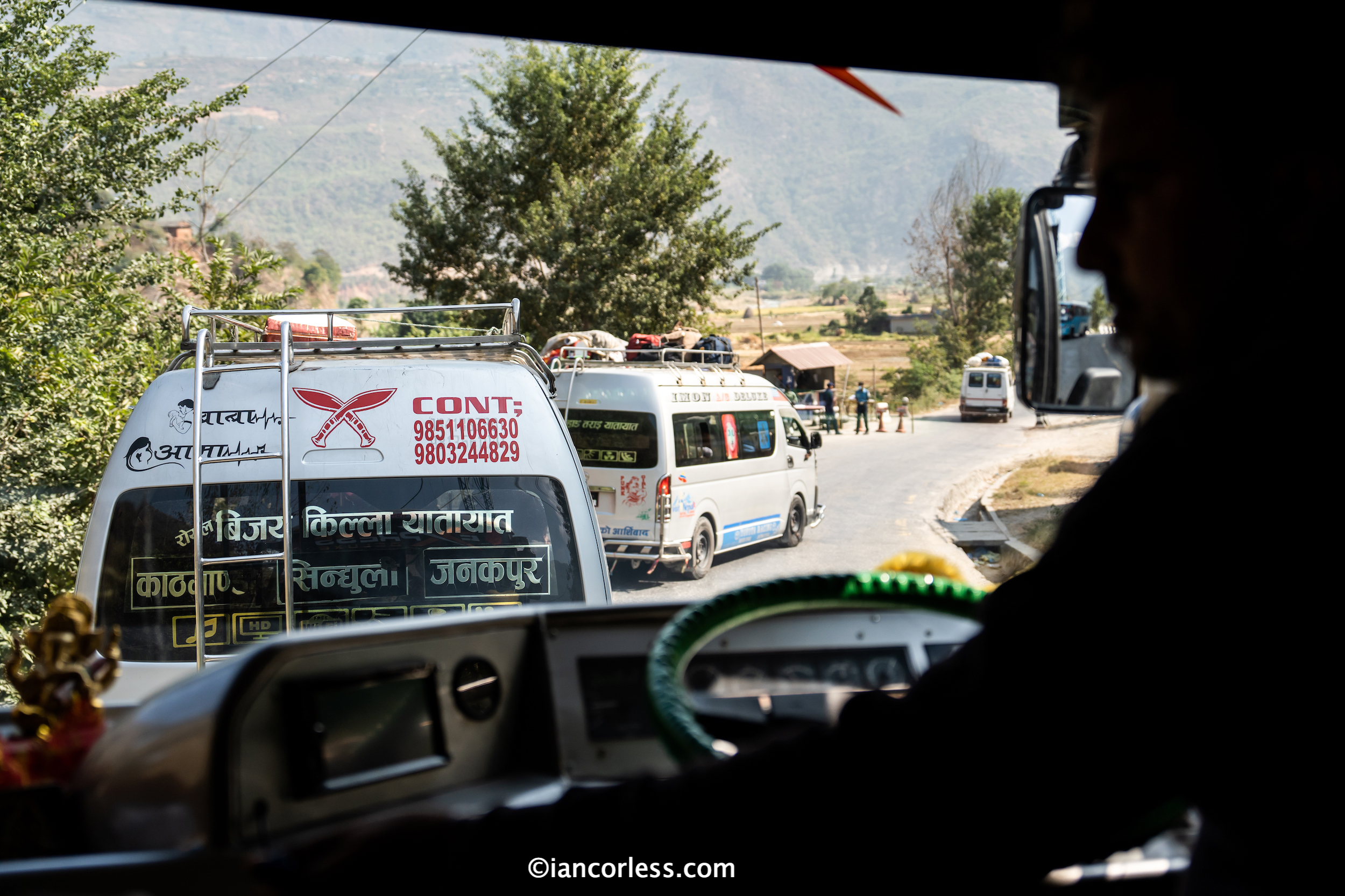
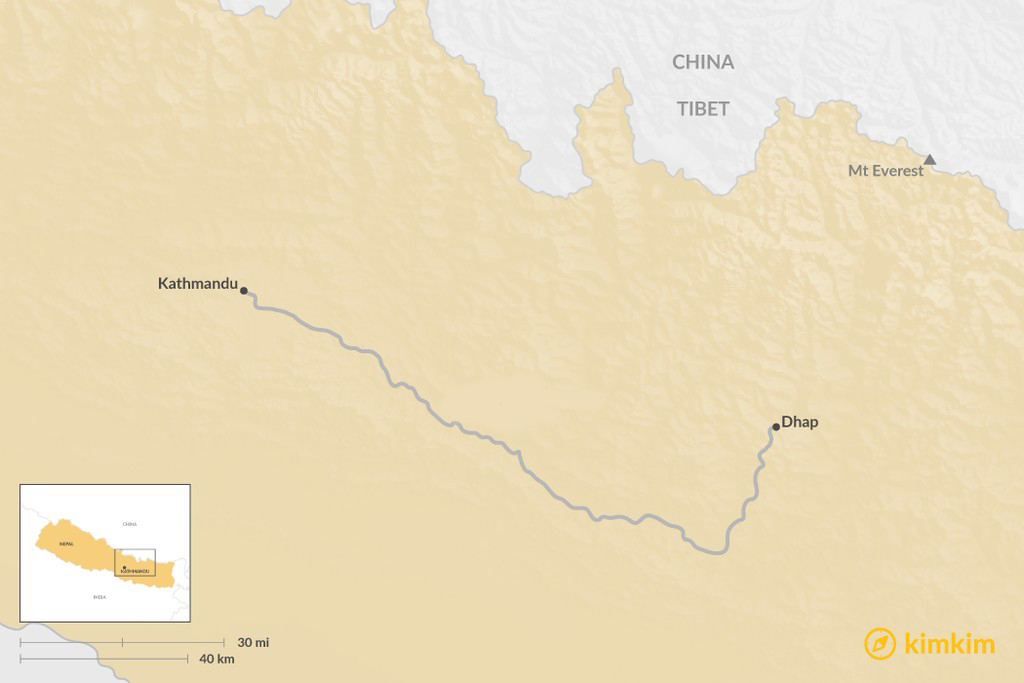
Travel to camp 1 in Dhap is via bus and it’s a long and lengthy journey of 8 to 12-hours.
Of course regular stops break up the journey and there is an opportunity to see local colour and character on the way, one of the real benefits of travel via road in comparison to taking internal flights.
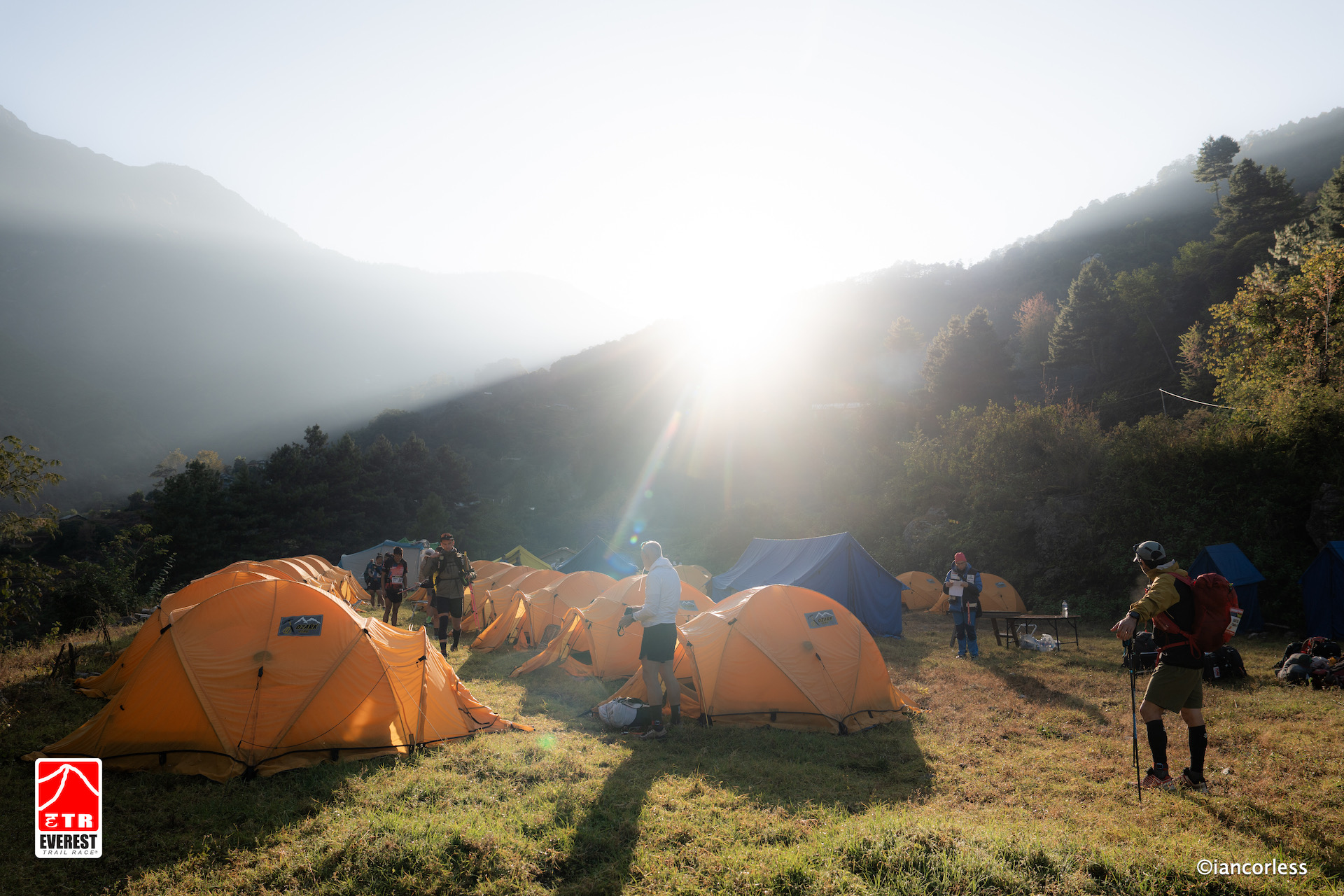
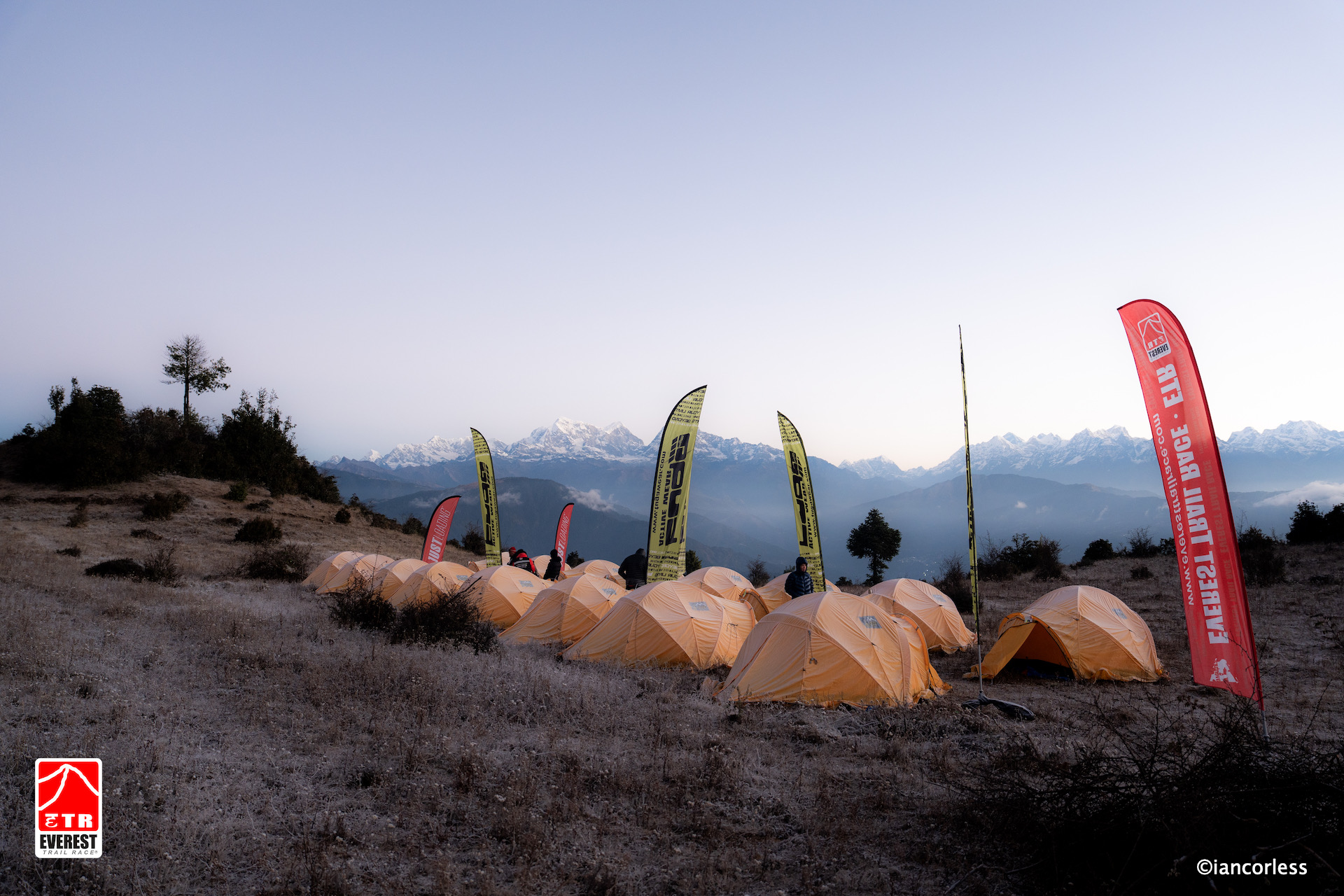
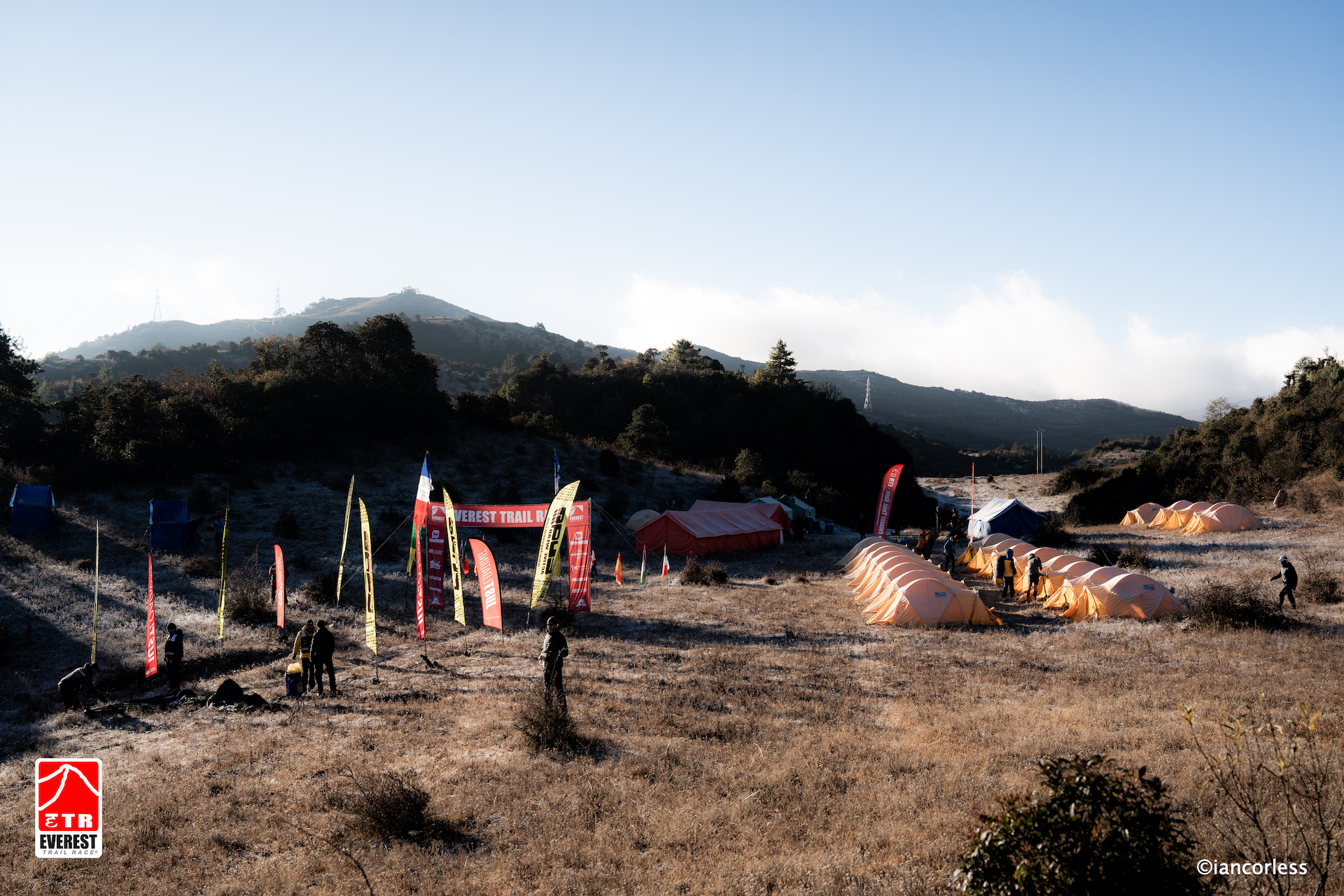
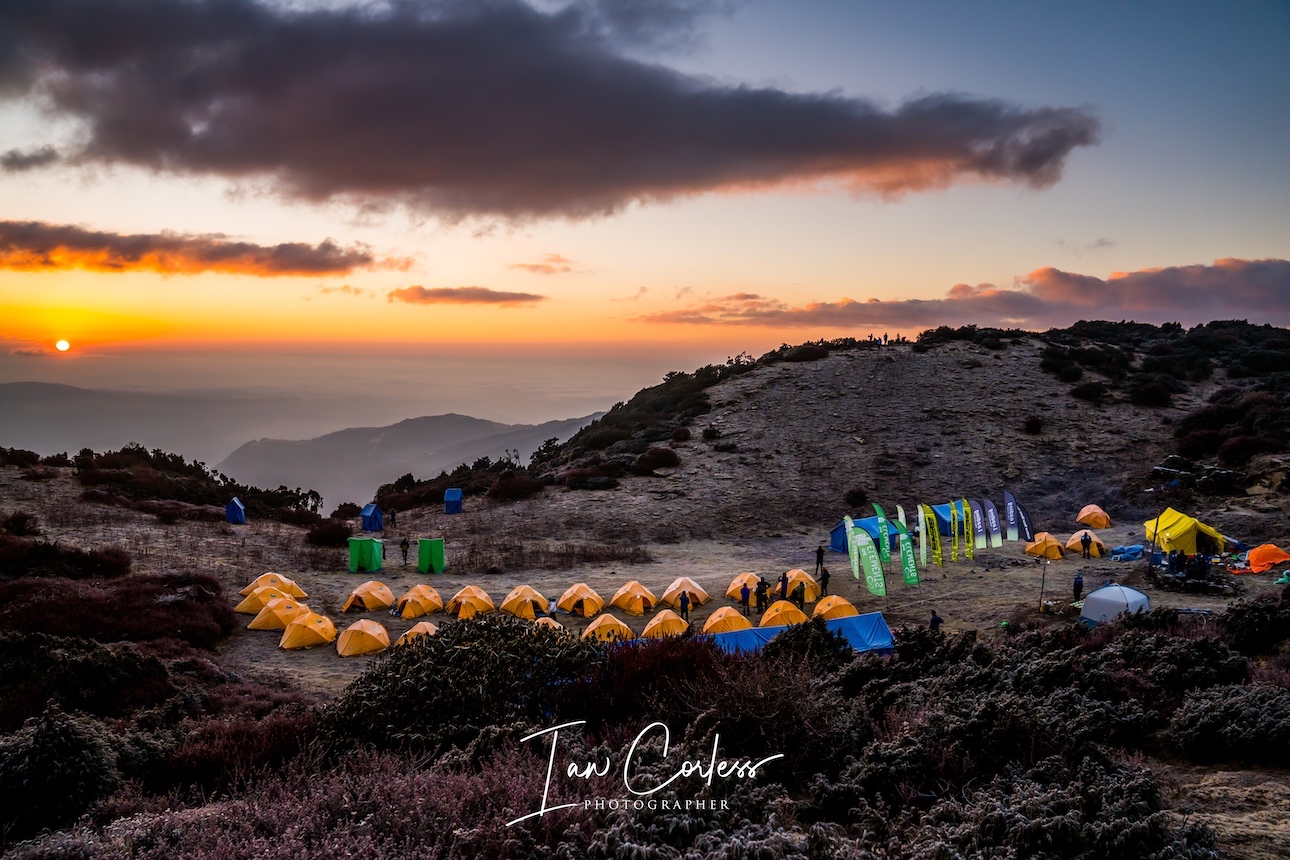
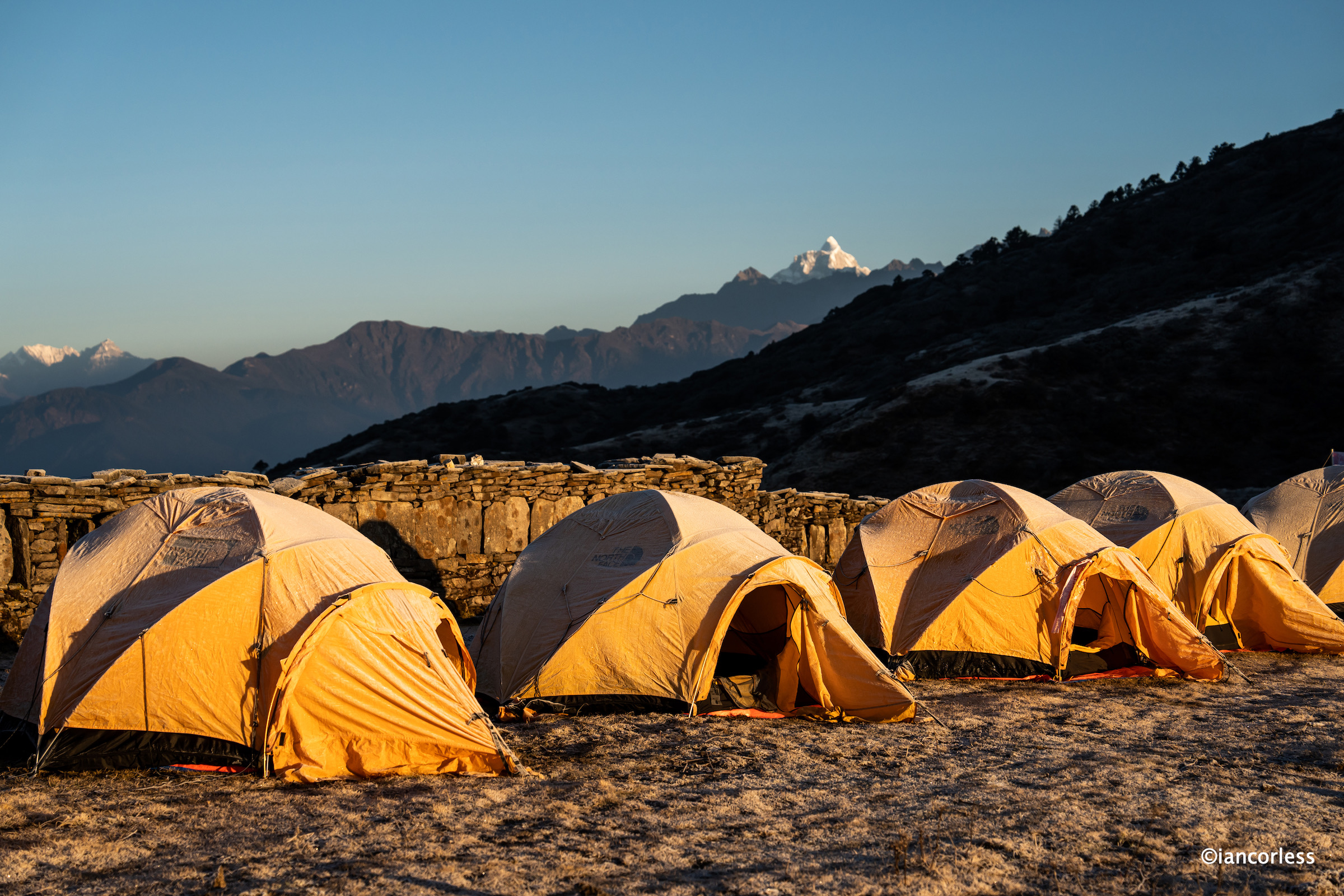
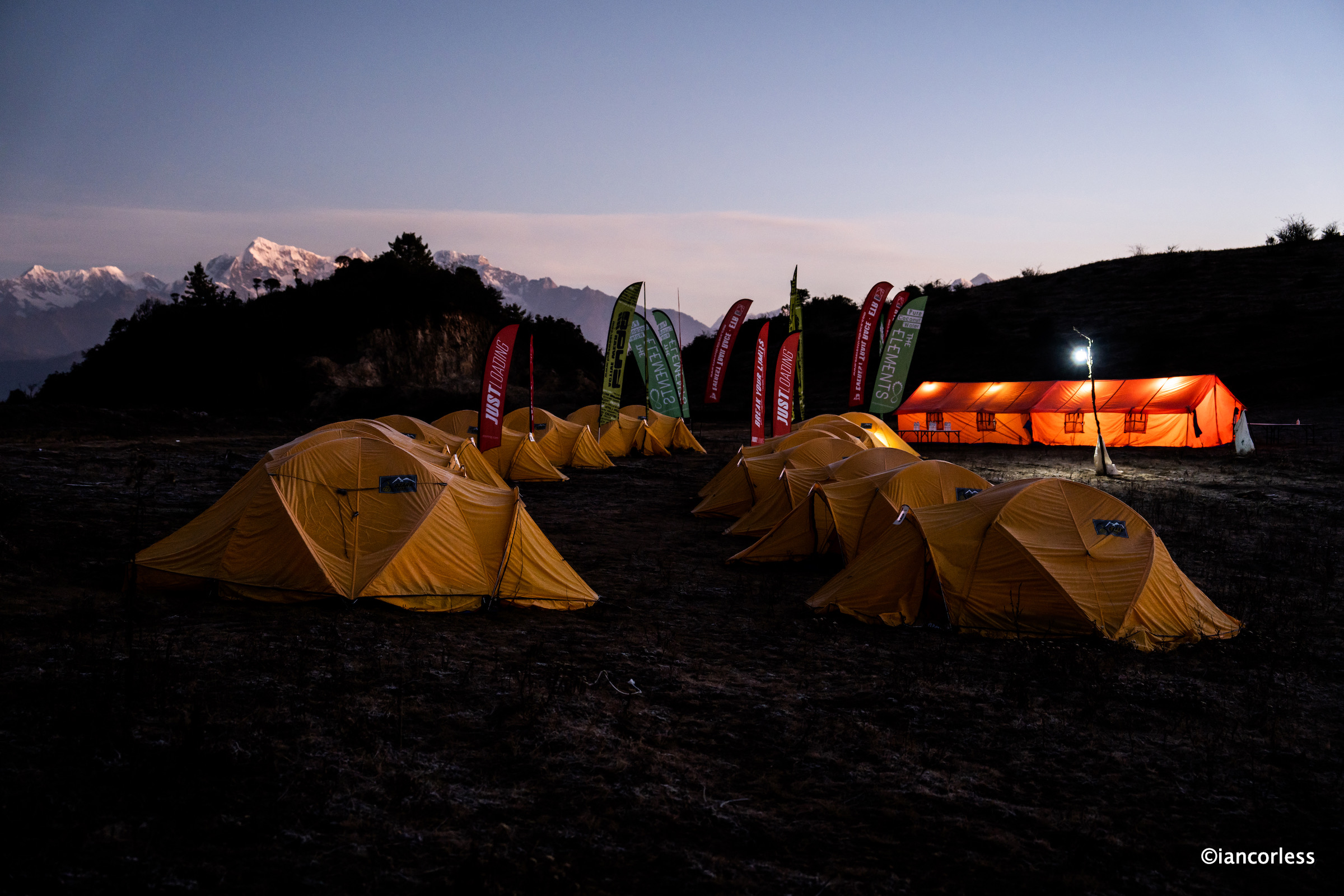
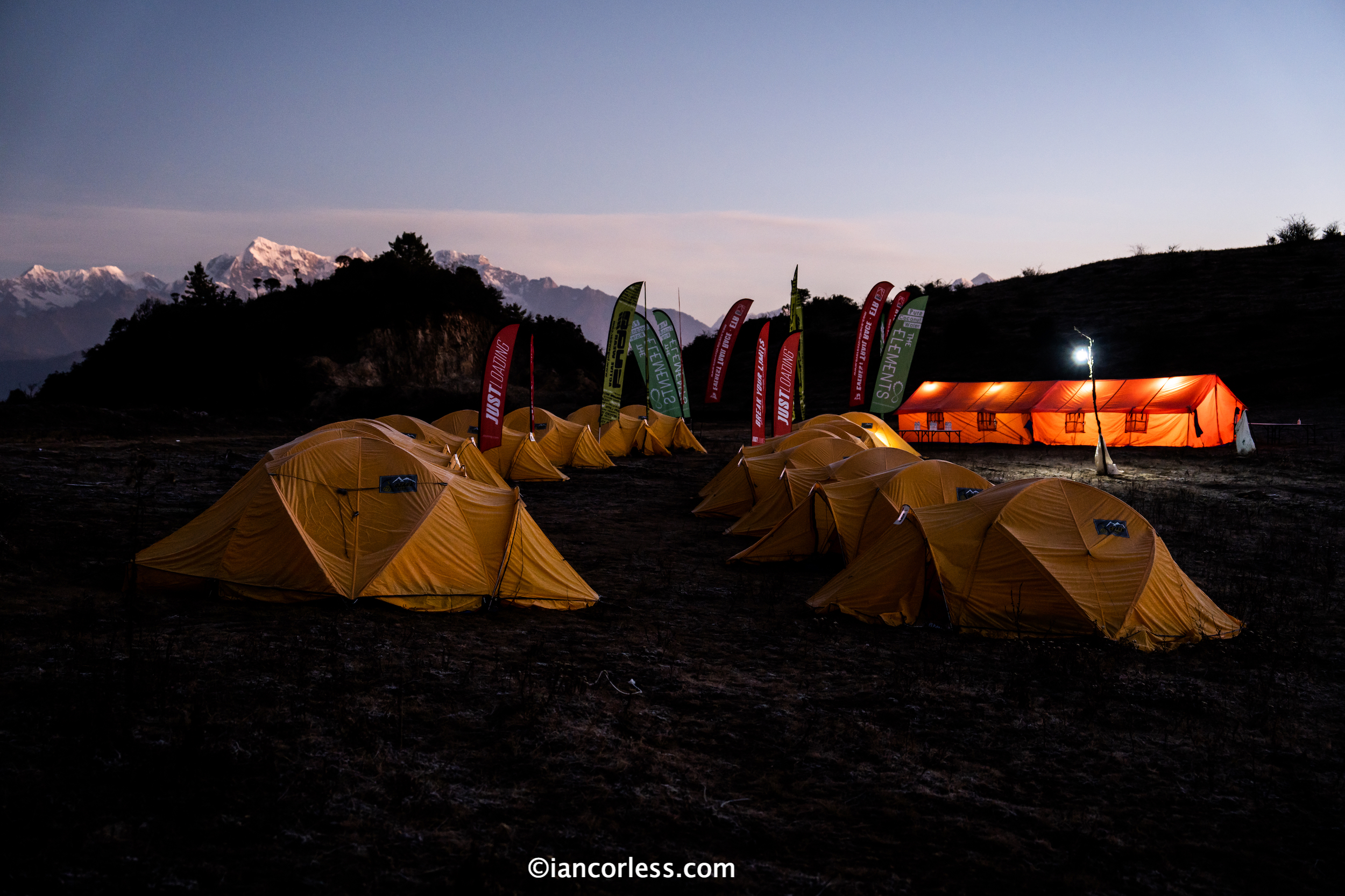
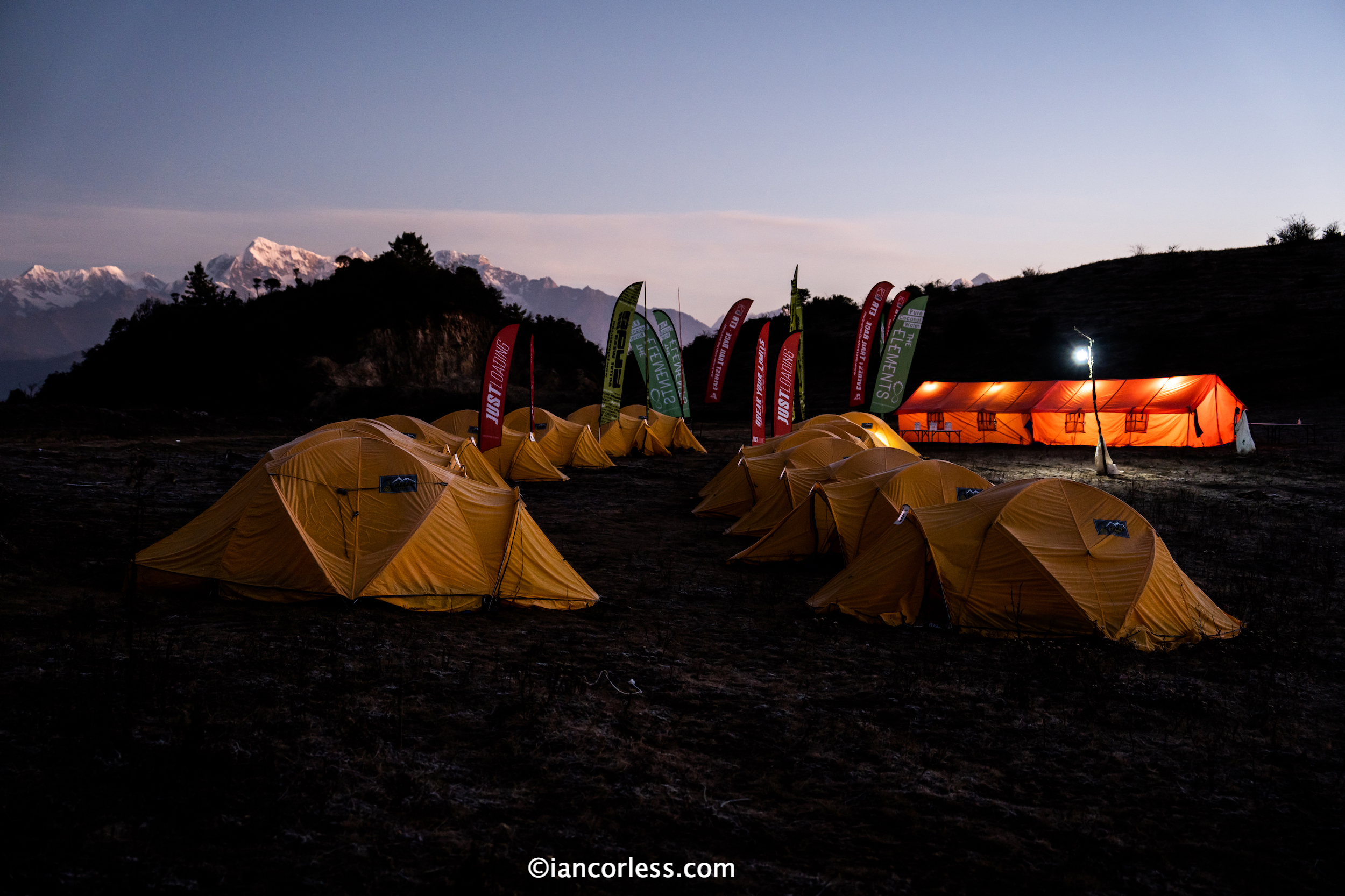
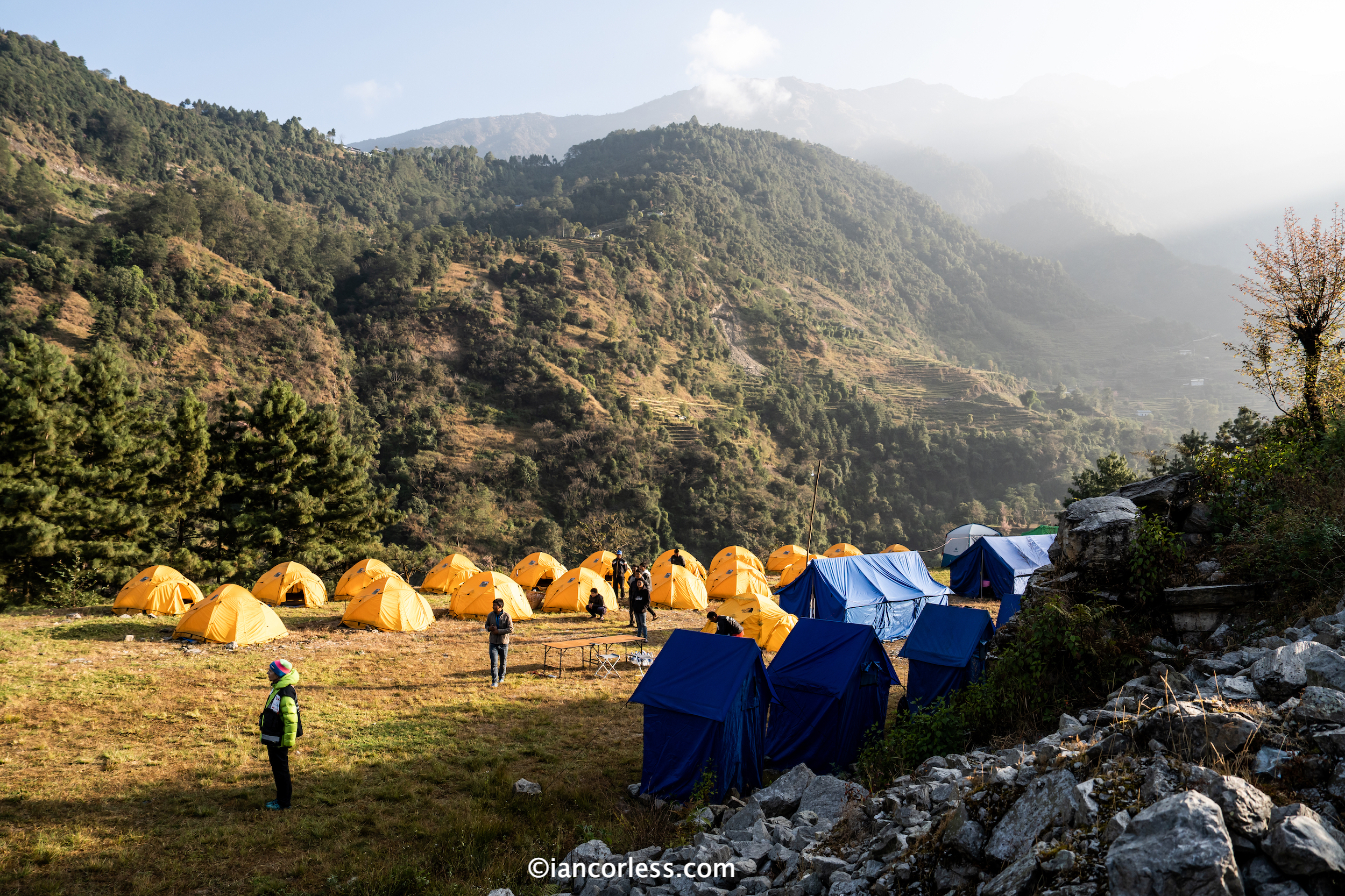
Arrival at camp 1 eventually comes. Camp is set up in advance and the glow of lights and yellow tents suddenly makes the whole experience come to life. Now, the ETR finally begins and everyone spends a first night in a tent.
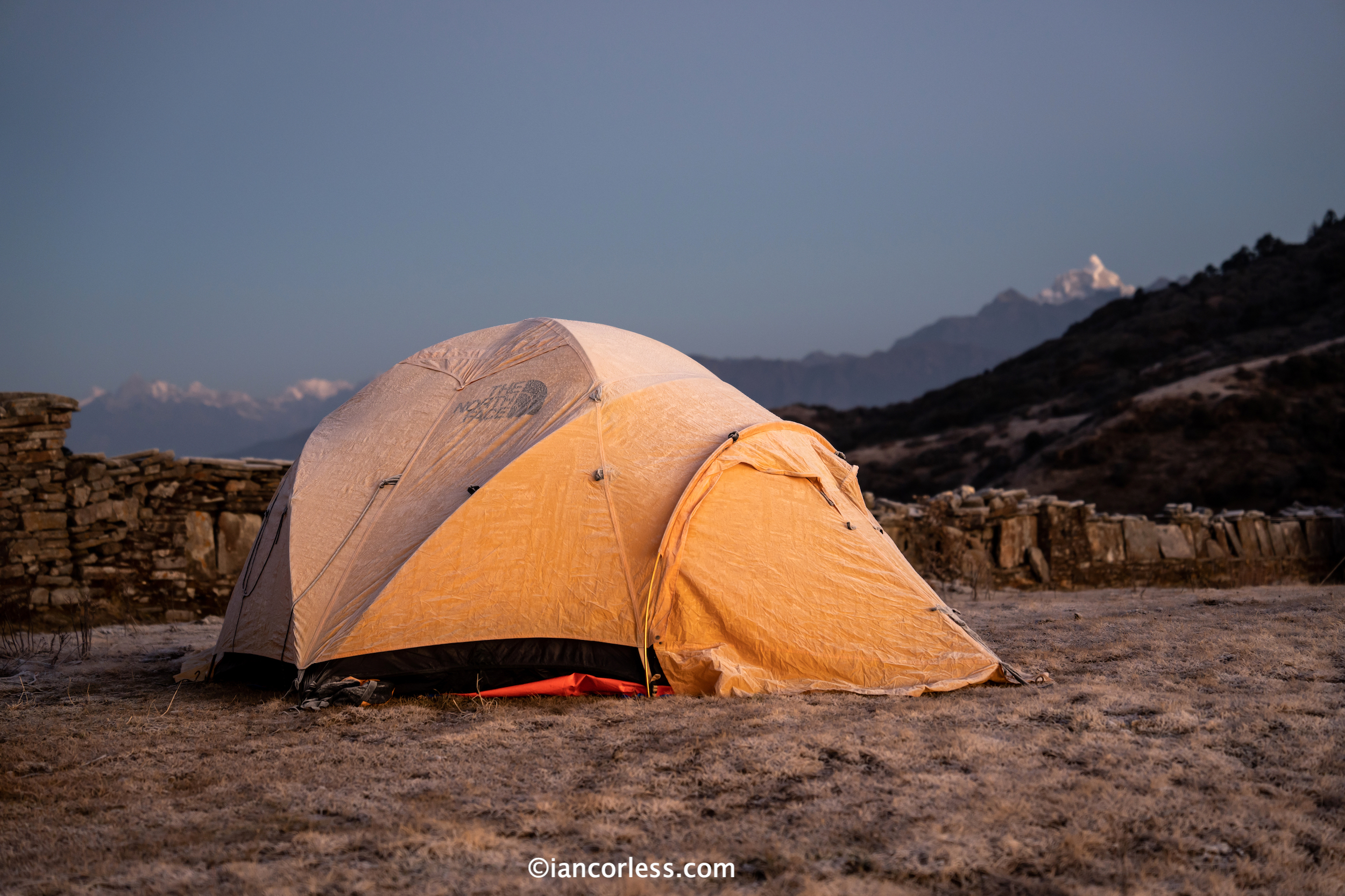
A first night under the stars and by Nepal standards in November, it was a relatively mild despite the layer of frost on all the tents and on the ground.
Participants were undecided if it had been cold or not, basically this came down to how good and warm their sleeping bags were. If a runner felt cold last night, the omens are not good for how well they will sleep in the coming days.
Warm sweet tea is a great way to start a day, especially while relaxing in a sleeping bag. But despite that luxury, breakfast called and the need to add layers and absorb calories for the day ahead was an immediate priority.
The sun came and with it warmth. The glow of head torches replaced, bags were packed and racing apparel was made ready.
Rationed water, gels and bars were provided and at the stroke of 0830 the runner’s departed for Stage 1 of the 2022 Everest Trail Race.
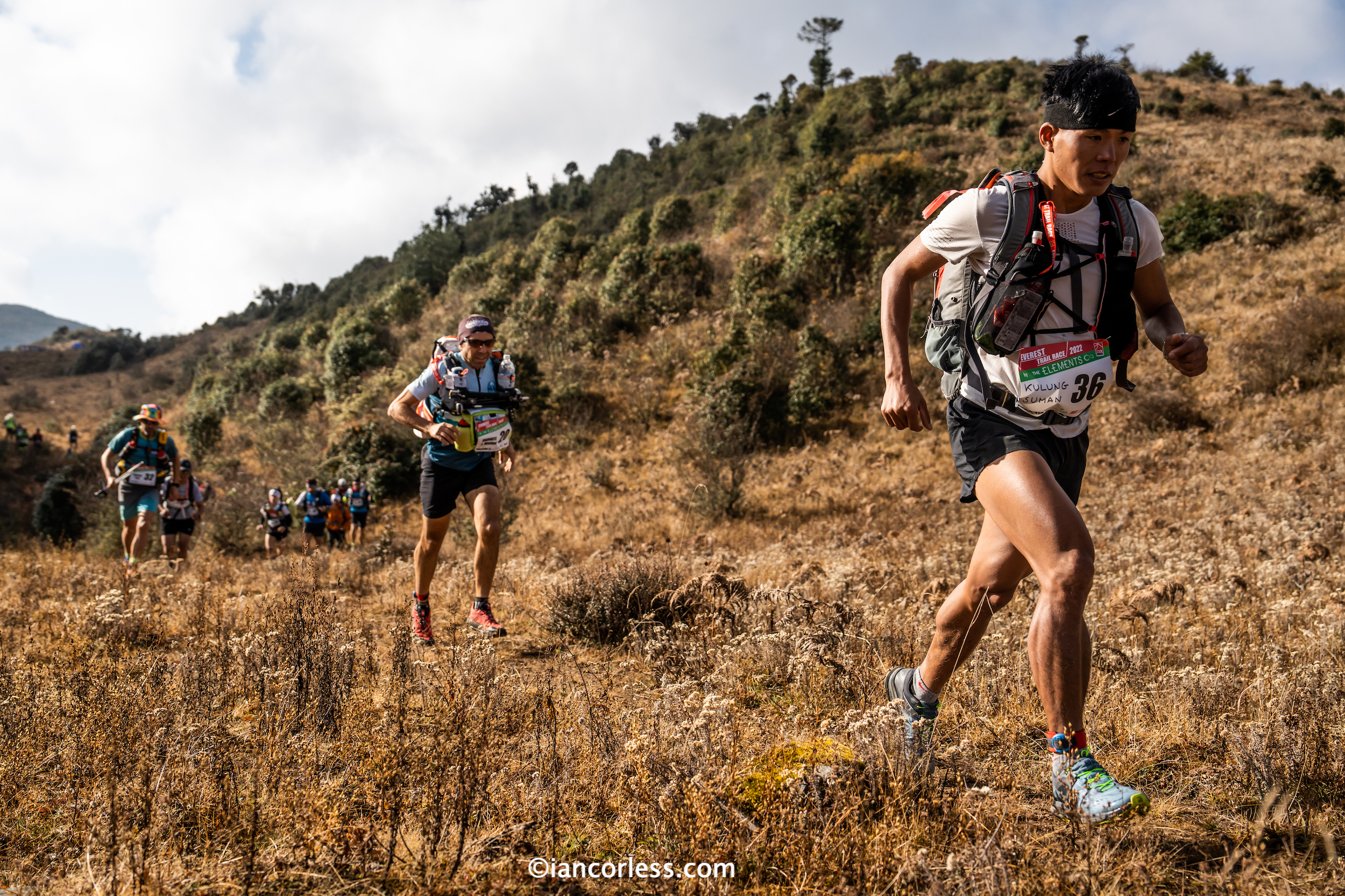
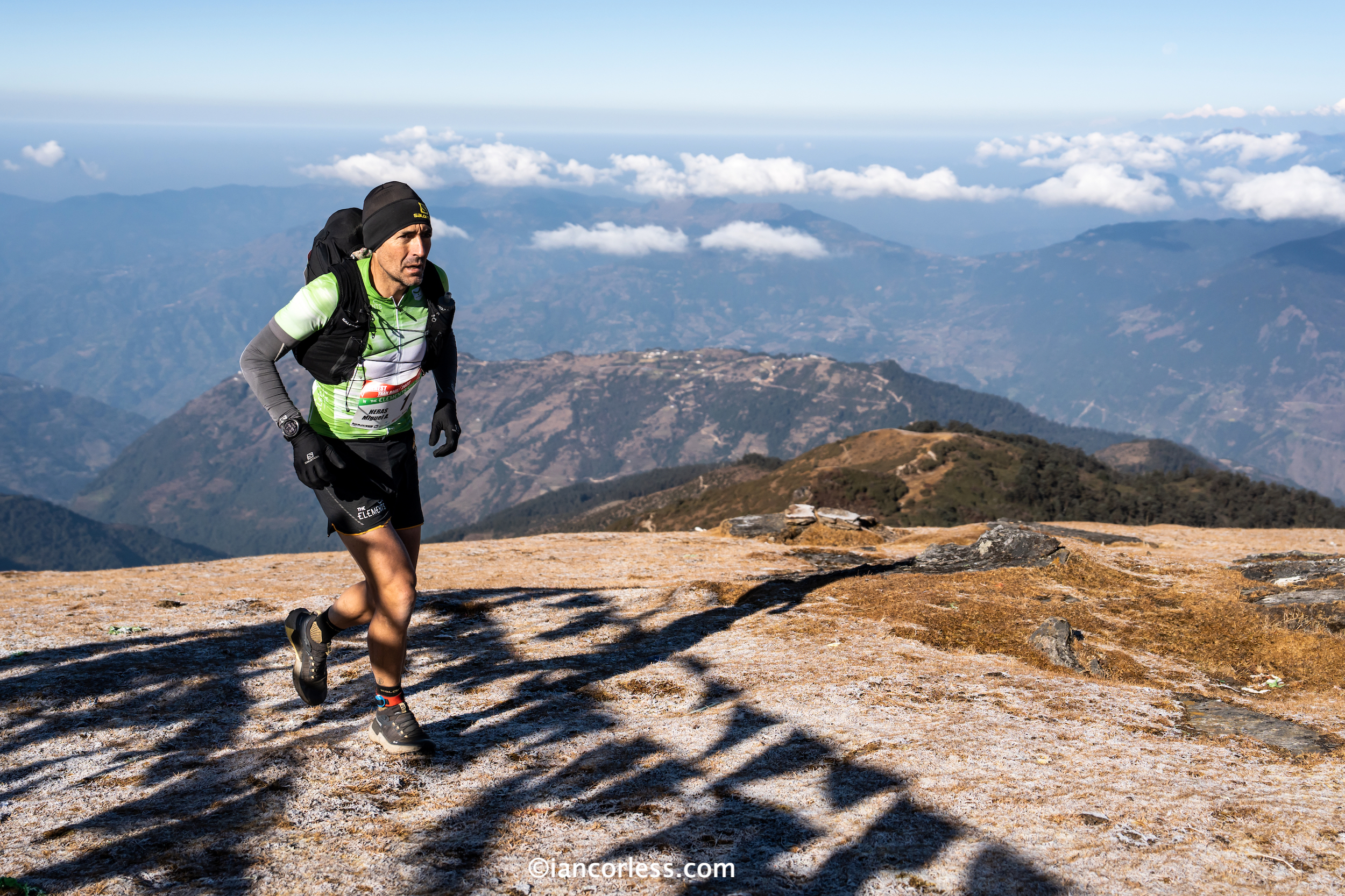
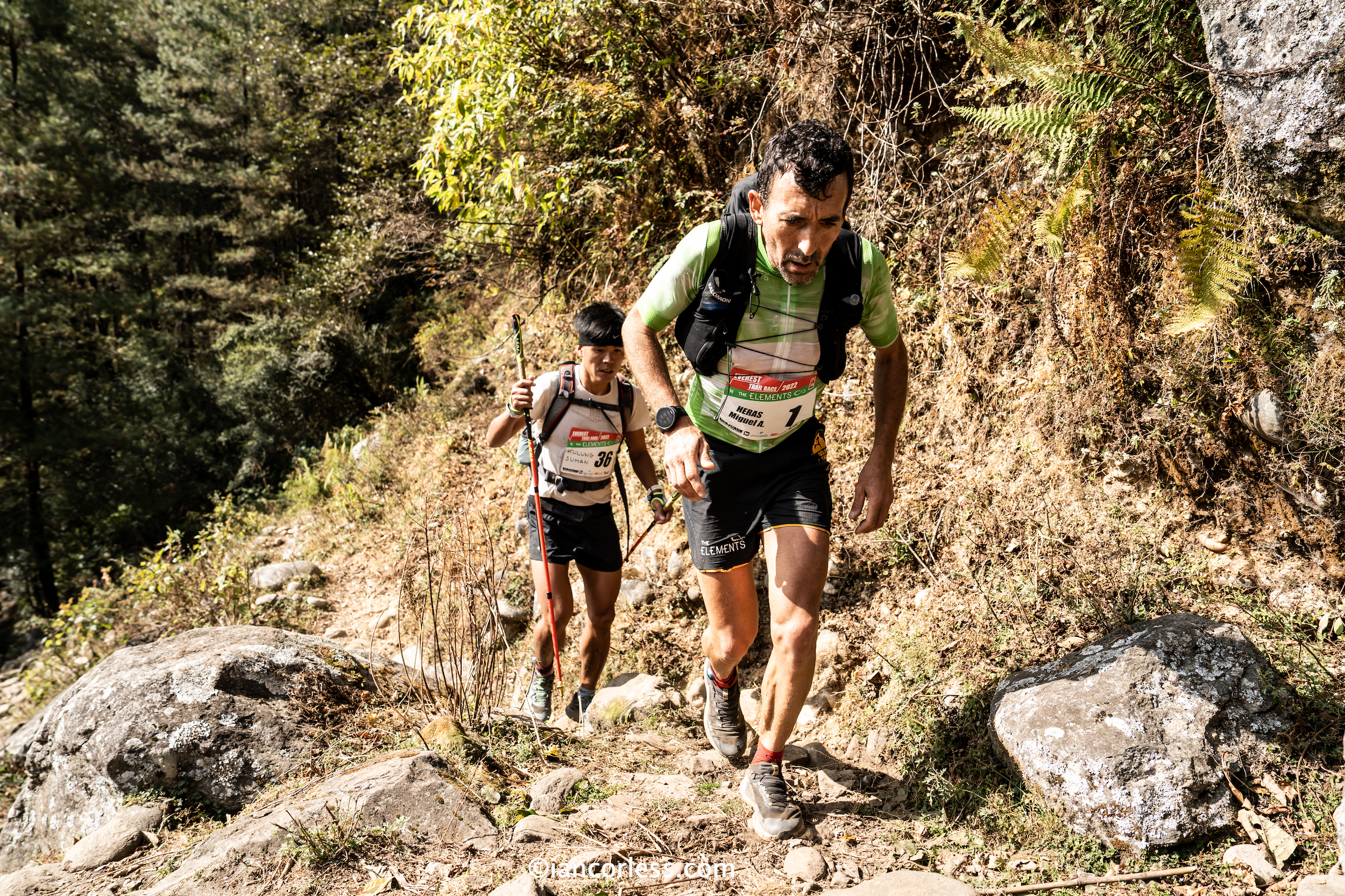
At 23.08km with 1551m+/ 1012m- the day was expected to be completed quickly by the front-runners. Miguel Heras did not disappoint crossing the line at exactly 1100am, behind, the 2019 ETR Suman Kulung finished just a couple of minutes later with the 2018 ETR champion, Jordi Gamito, finishing 3rd off the pace.
Miguel explained how he had made a silly mistake immediately after Cp2 whilst eating at not concentrating, he missed a marker and went off course. The mistake cost him first place and many minutes… He chased, caught Suman, and still obtained victory; a great run. However, he did say, “There are 5-days to go, anything can happen!”
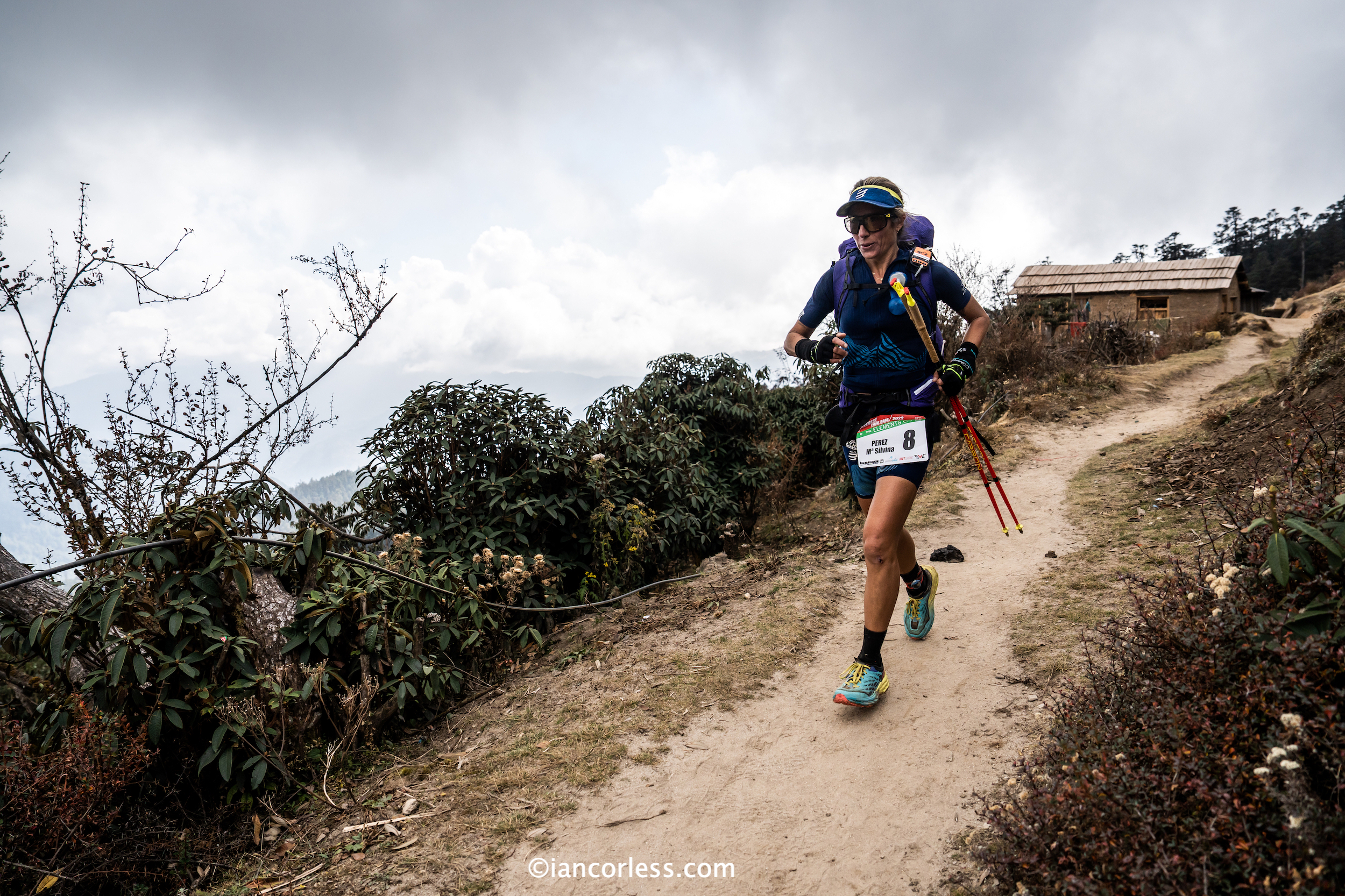
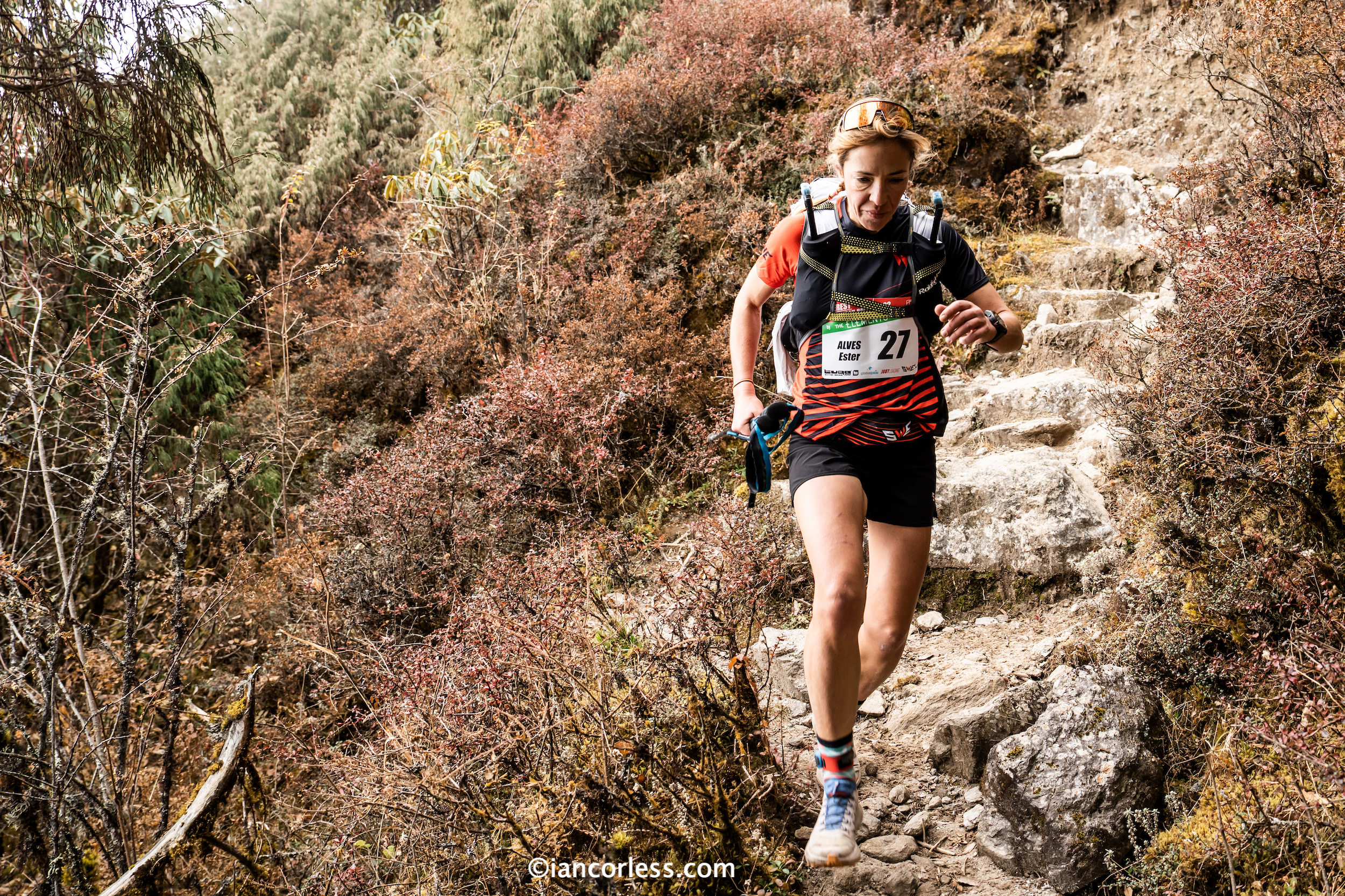
For the women, Silvina Perez ran a strong stage ahead of Nepali, Ang Furba Sherpa. Ester Alves from Portugal finished 3rd ahead of pre-race favourite, Caroline Turner, who summed her day up with a simple summary, “The altitude and the last climb kicked my ass!”
It was a successful day-1 with all participants completing the course before 1700hrs.
It was a cold night at 3500m. The wind and cloud adding to the chilly temperatures. For those who have raced light, today is the day that they understand the importance of layers and a warm sleeping bag. A lack of sleep with a tired body is not pleasant, even warm tea and a hot breakfast could not lighten the mood of some. After day-1, based on finish times, ETR operates two starts for stage, 0700 and 0800, thus allowing slower competitors additional time to complete the stage.
The day started with a 500m climb to the summit of Pikey Peak at 4041m. From here a twisting and technical descent to Jase Bhanjyang (3510m) and the Lamjura Pass towards Langate Peak and onward to Pungmuche and Thumptencholing. From 20.5km another climb to 24.5km, and then a tough finish with a long climb, descent and then a final short climb to the camp at Rinmo.
Everyone was unanimous, it was a seriously tough day and although we missed a peak due to landslide, it added distance, many recording between 34-36km.
The race at the front was intense and today, with so much altitude and added distance, Nepali Suman had the advantage over Miguel Hera, Jordi Gamito once again placing 3rd.
Nothing better than starting a 30km day with a 1200m climb to just under 4000m through forest trails. The downside, depending on viewpoint and preferences, was the 2700m of descent that followed via steep, technical, challenging and rocky trails. And then just when you think it’s all over, you finish the day with 500m of vert followed by another short decent to camp. It was a tough day!
The action started early with Miguel Heras and Sumun Kulung setting a harsh pace up the first climb, they were inseparable. Event the relentless descent could not break them. It was at the last checkpoint, with approximately 5km to go, 500m of vert, that Miguel put the hammer down and opened up an 11min gap over the Nepali. Quite incredible.
Purwha Lhamu Sherpa certainly has settled in to women’s race and once again took victory. Ester Alves, equally has found her comfort on the Nepal trails and today relished the relentless downhill trails to finish second. Day 1 victor, Silvina Perez, finished third.
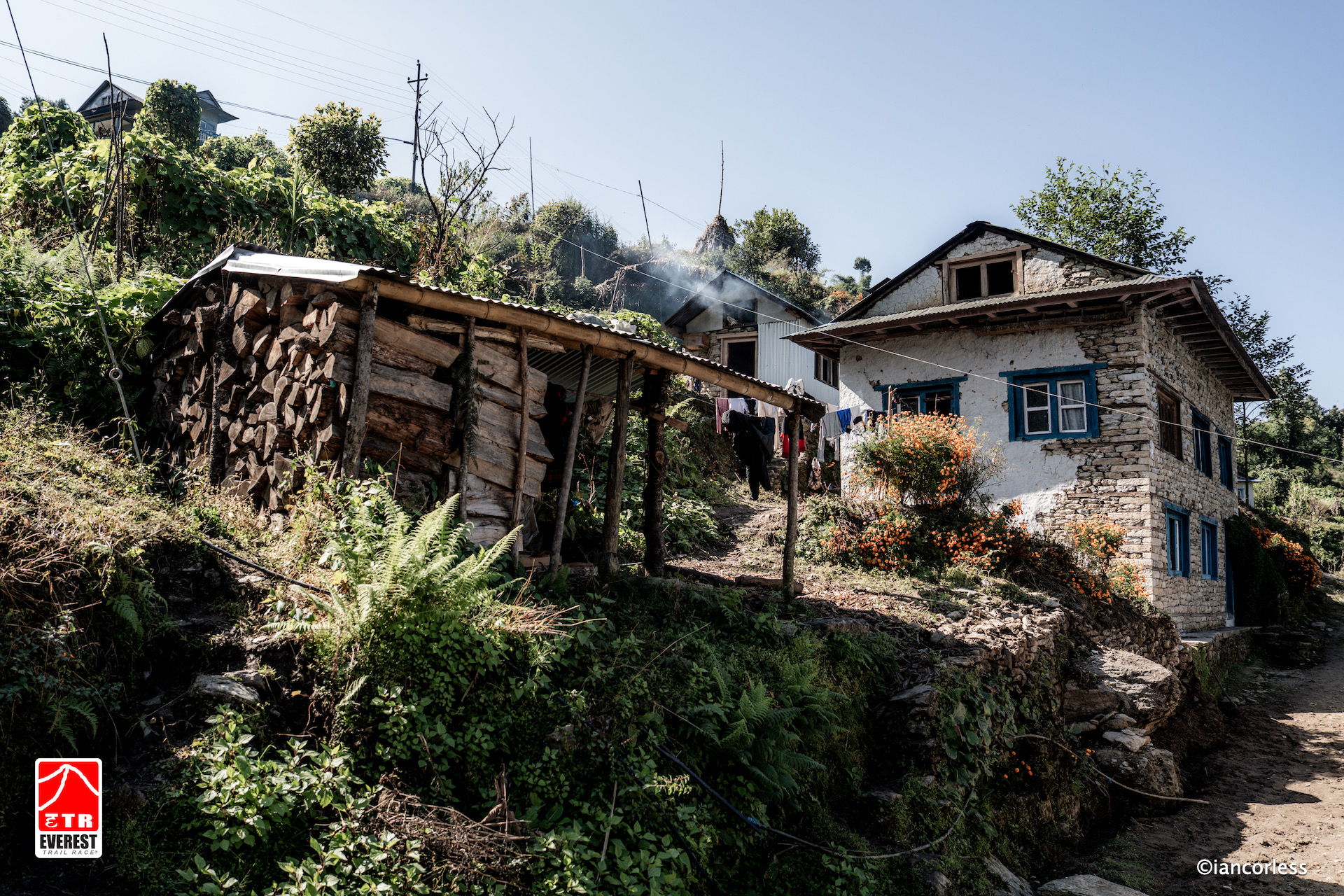
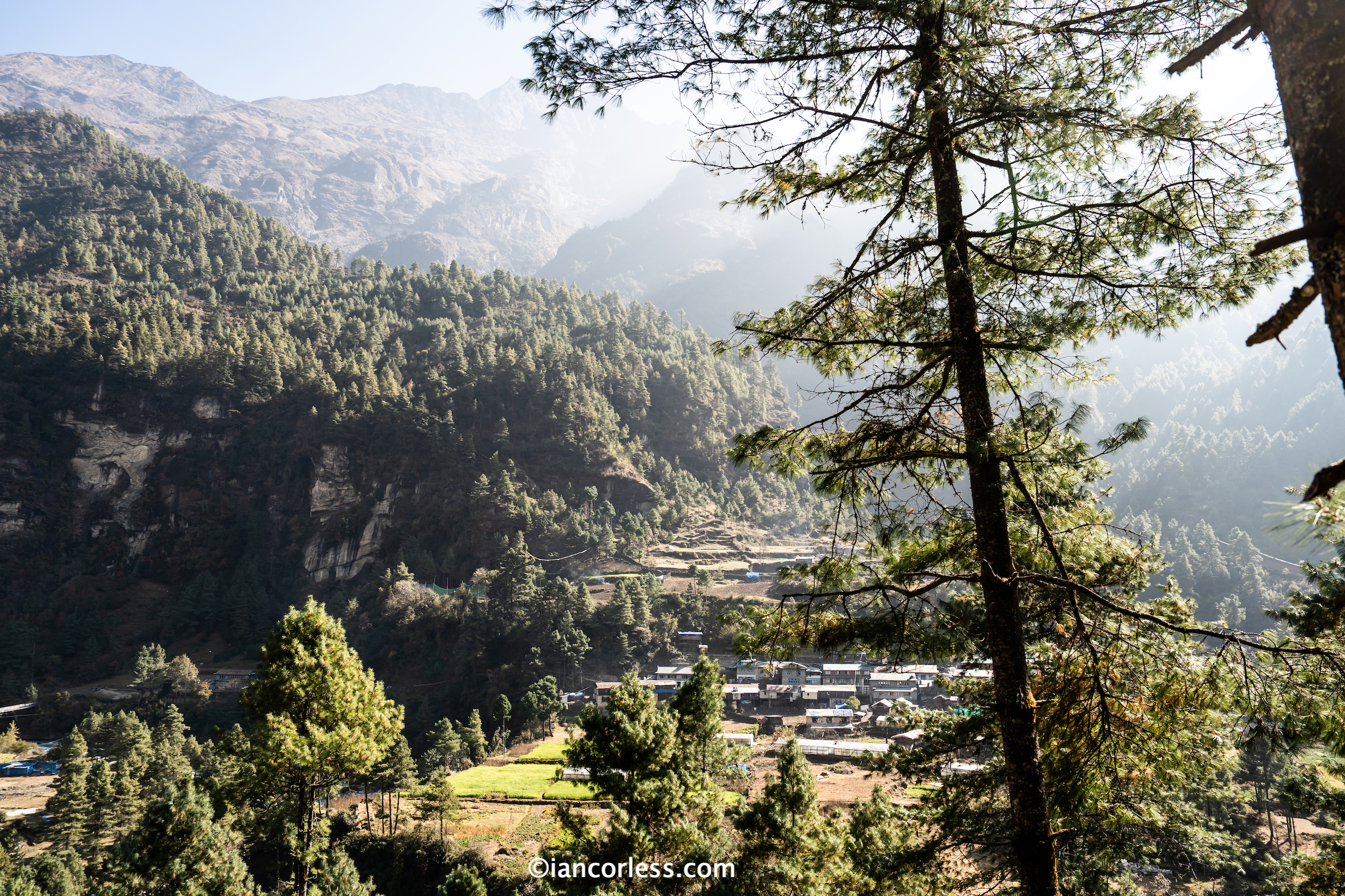
Mood in the camp was positive after the stage, these trails are quiet and remote. It was only in the final 5km, the climb to Kharikola, that it was possible to see homes and locals working the fields.
KhariKola has been the stage 3 camp, day 4 start for many years. However, for 2022, the ETR no longer camped at the monastery but a little lower down in an isolated spot. Temperatures were mild for the night, just dipping below zero. So, runner’s were refreshed for the start of day 4 with a good nights sleep.
A tough 1000m climb kicked off the day to Karila at 3080m and then technical rocky trails to the lowest point of the day, Surke at 2300m. From here, a climb to Chaurikara (2621m) a steep descent and then a steep climb to Segma at 2742m. The ETR is now on new trails on the opposite side of the river all the way to the Phakding finish.
Once again it was the Miguel and Suman show at the front, the duo running together, again at a relentless pace. With the longest and arguably the toughest day of the race tomorrow, they crossed the line together, just a 1-second apart, no doubt saving some reserves.
Jordi Gamito finished third, quite a long way behind the leading two, his overall position is safe and he is no doubt just running a smart race now.
The women’s race was different today, with all three women running extremely close together, separated by just minutes. Today, the glory went to Ester Alves who gets better with each day, In the final km’s, Silvina Perez caught a fading Purwha Lhamu Sherpa to place second.
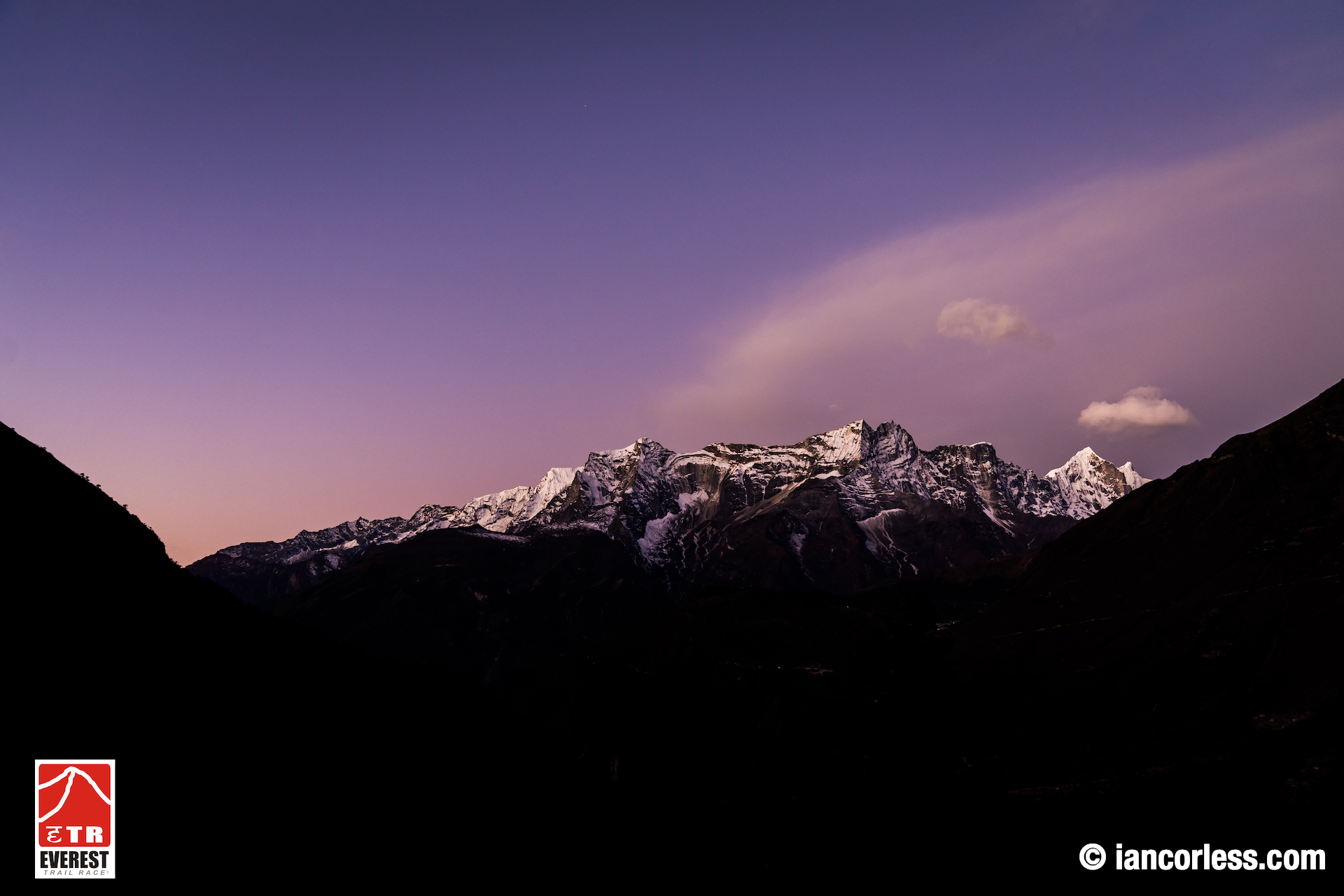
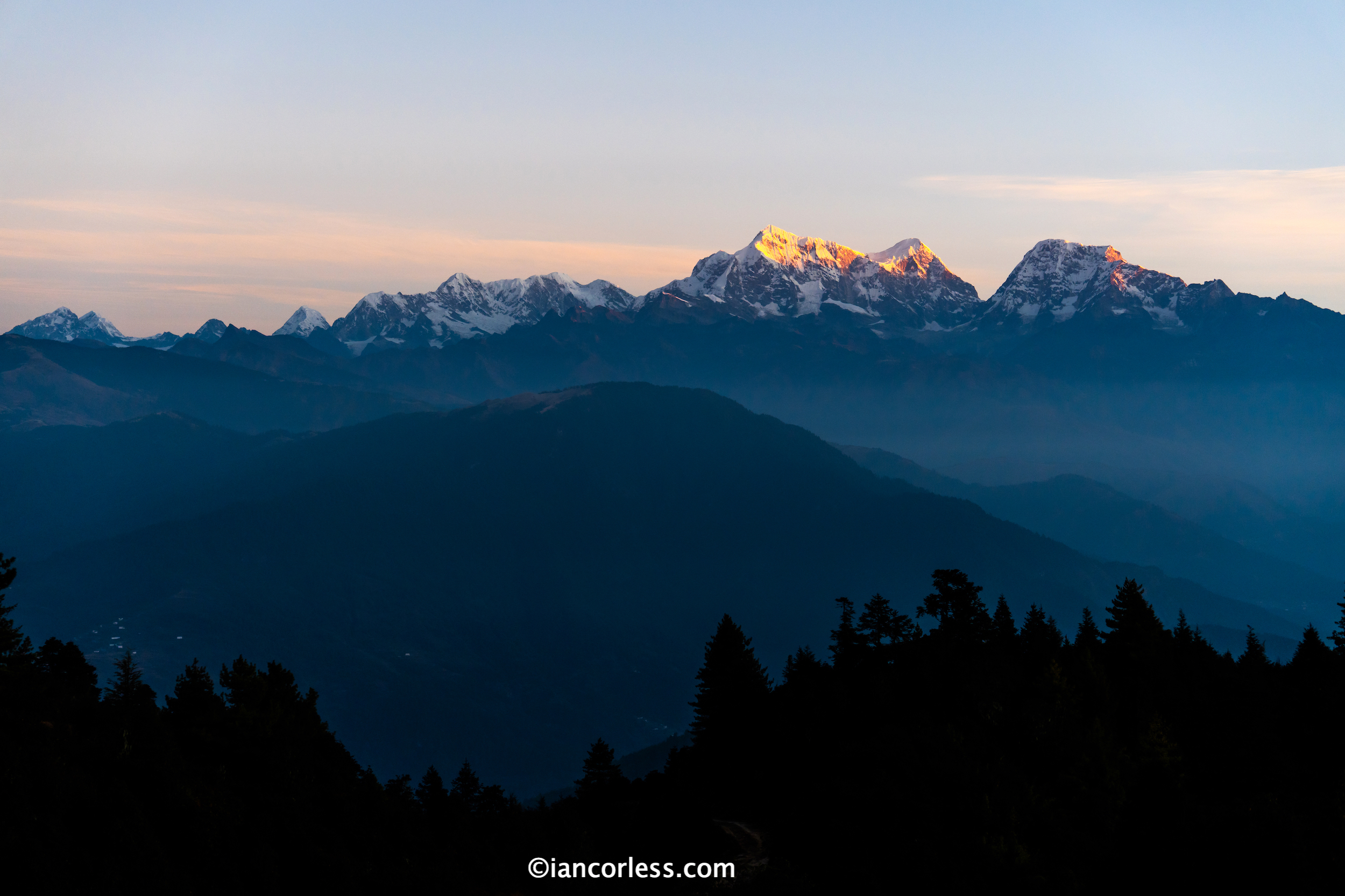
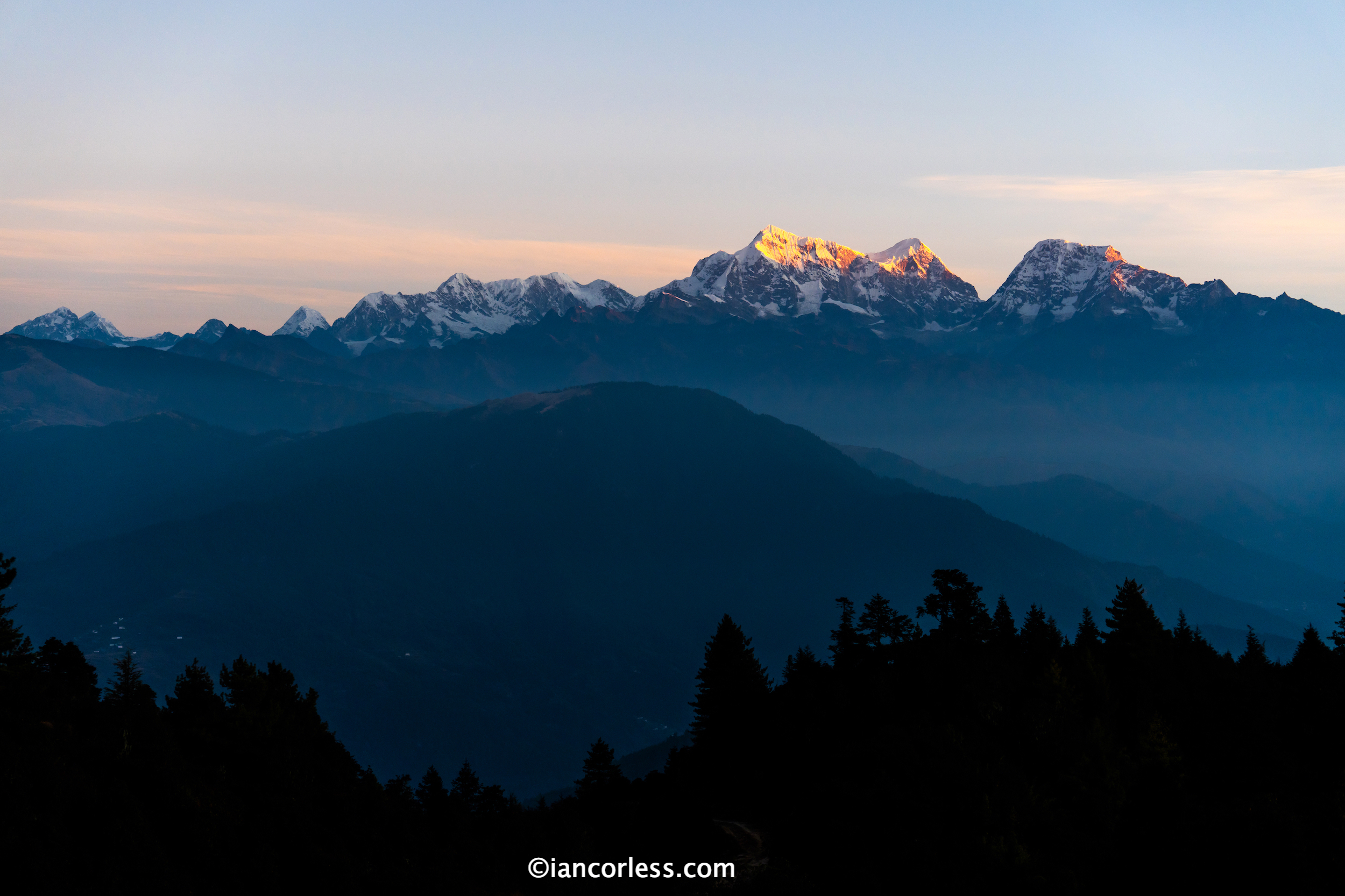
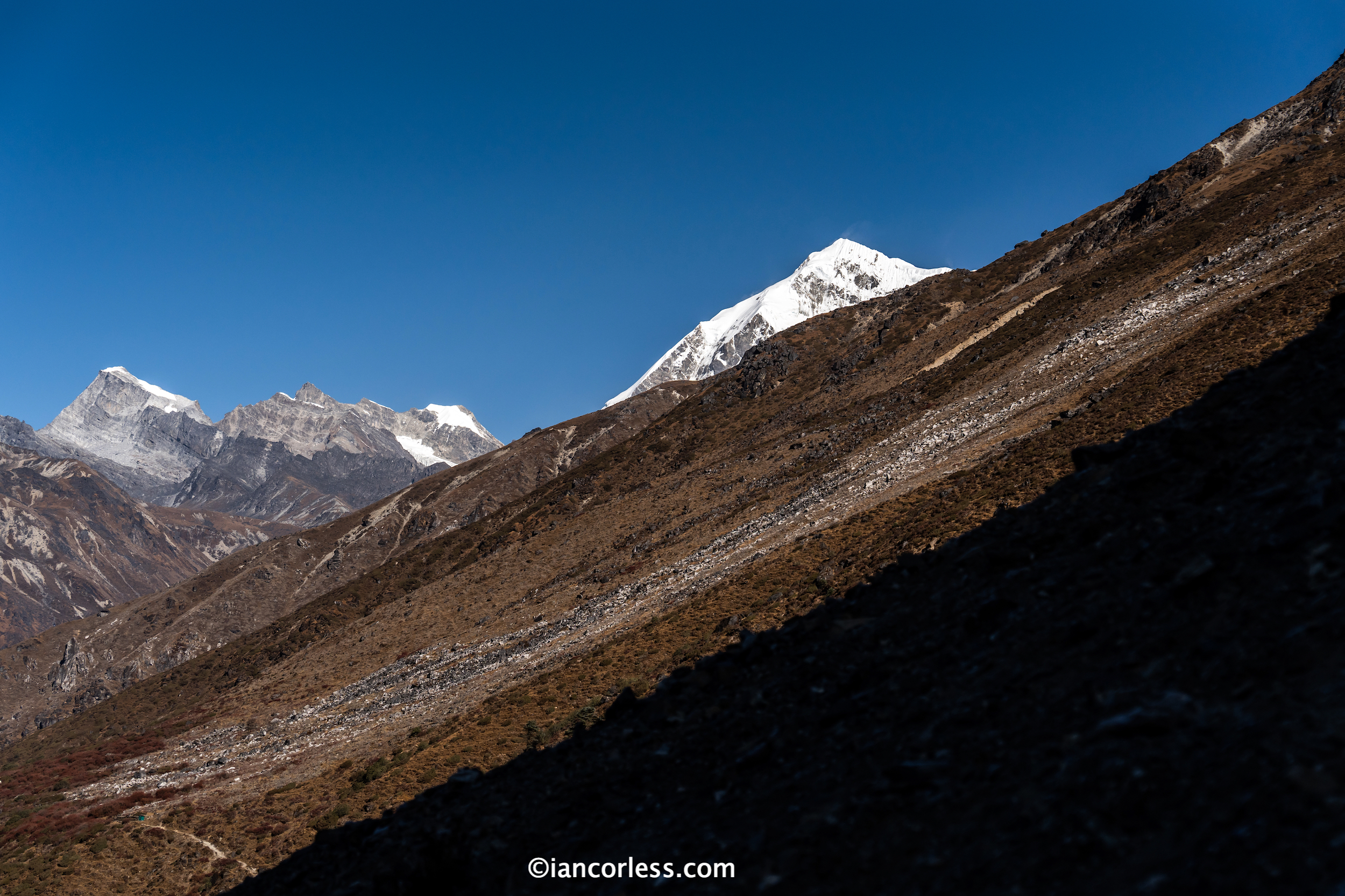
With much of the day above 3800m, it’s a brute, but the compensation is the magnificent backdrop of Everest, Lohtse, Nuptse and the stunning and iconic Ama Dablam.
Starting in Phakding, it’s up, up and up to Namche and then onwards to Syangboche at 3760m. From here, a descent to Kumjung and then a climb to Mong La, 3973m. Phortse and a stunning single-track trail to Pangboche with amazing views is the cream on the Himalayan cake as the route travels at 4000m. Finally a descent to Debuche, 3741m, and then the climb to the finish at Tyangboche at 3875m.
The day held no surprises with Miguel and Suman running together and at tge line it was red-line effort from the Spaniard to take the stage win. Jordi Gamito once again placing third.
Purwha Lhamu Sherpa for the women took the stage with a truly gritty performance. With one ankle heavily taped and carrying an injury, she still managed a stellar performance, the altitude no doubt being an advantage. Ester Alves finished second, exhausted, expressing, “One of the hardest things I have ever done!’ Once again, Silvina Perez placed 3rd.
The final stage back to Lukla. At 29km with 1770m+/ 2802m- it is by no means and easy day or chilled day and that was reflected in Miguel and Suman pushing hard all the way to the line finishing well under 3-hours and in course record for the stage. Miguel Heras was the 2022 ETR champion.
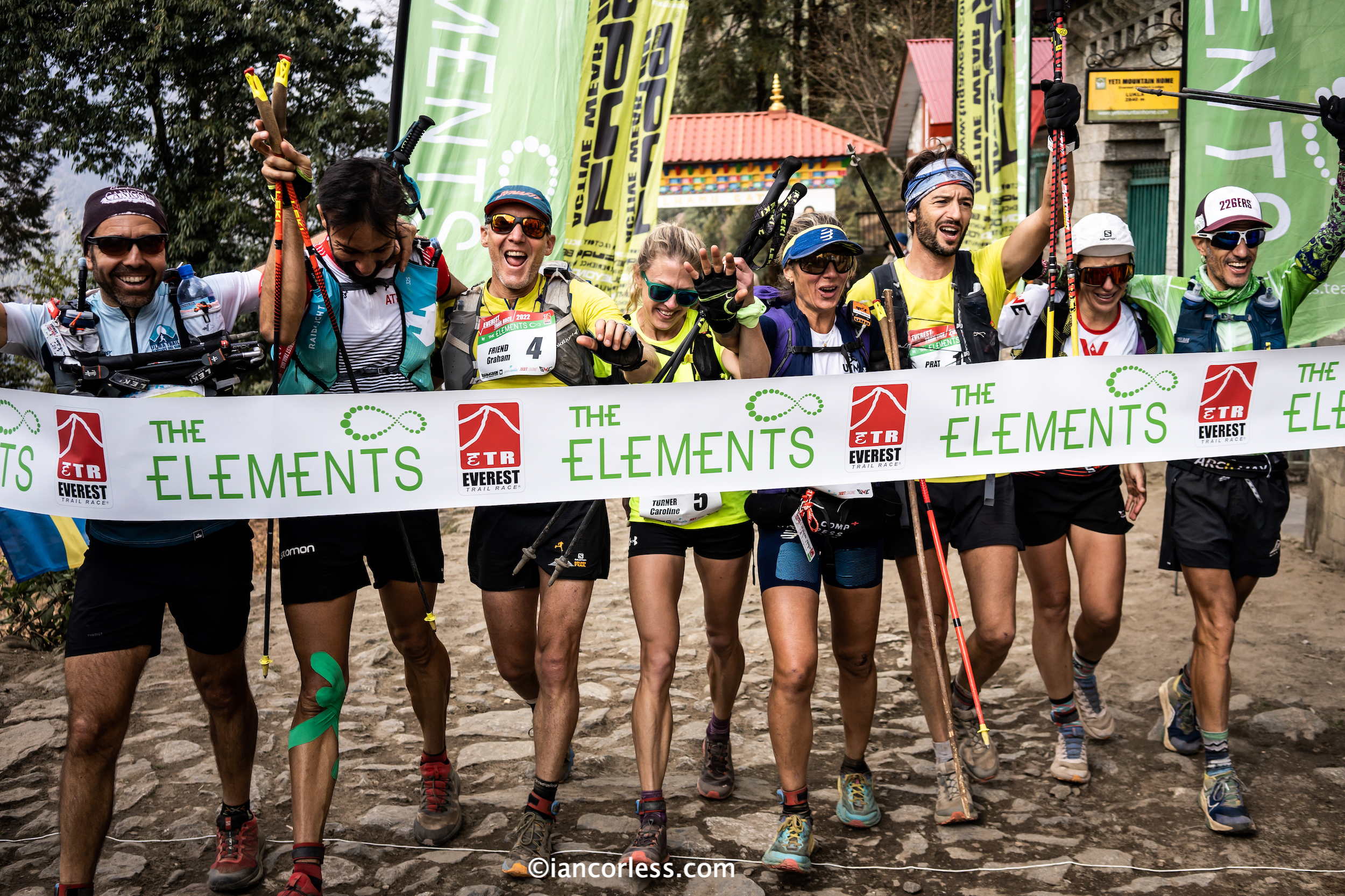
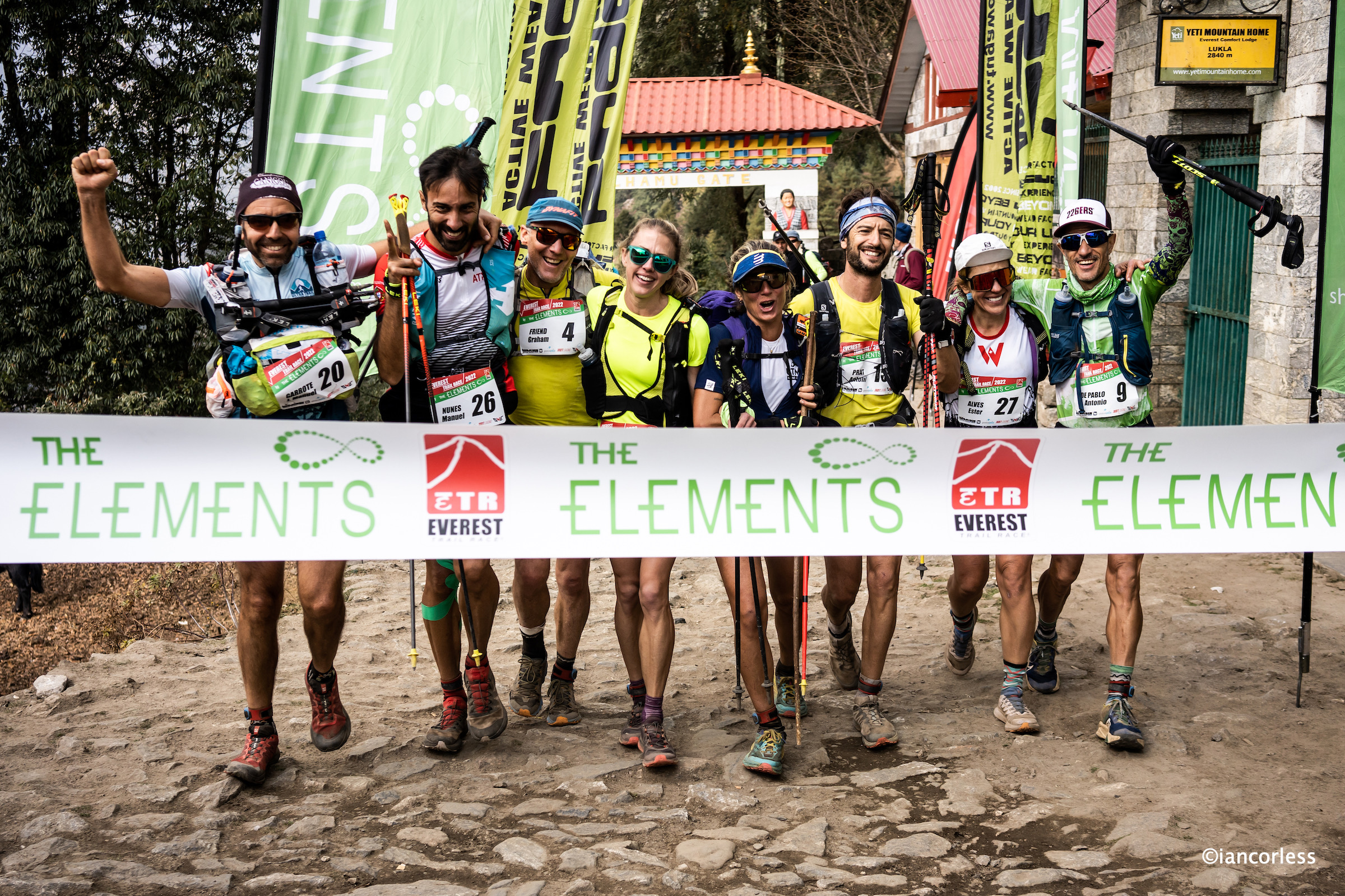
For the rest of the participants, the day was one of victory, the finish line providing the completion of an epic journey. The top women and a group of others, decided to enjoy the day and they all finished together.
Lukla provided an end to the 2022 ETR and the mood was high. For many, the experience had been a tough one. The altitude, climbing and descending providing a much harder and more challenging experience than other multi-day adventures.
“MDS is a walk in the park in comparison to the ETR. MDS may well be self-sufficient, but the terrain here is so much harder, add the altitude and cold nights, the challenge is considerably harder.”
Now attention turn to 2023 and the next edition of the ETR. It really is one of the ‘must-do’ races not only for the challenge but for the immersive beauty and experience that Nepal brings.


















 IAN CORLESS