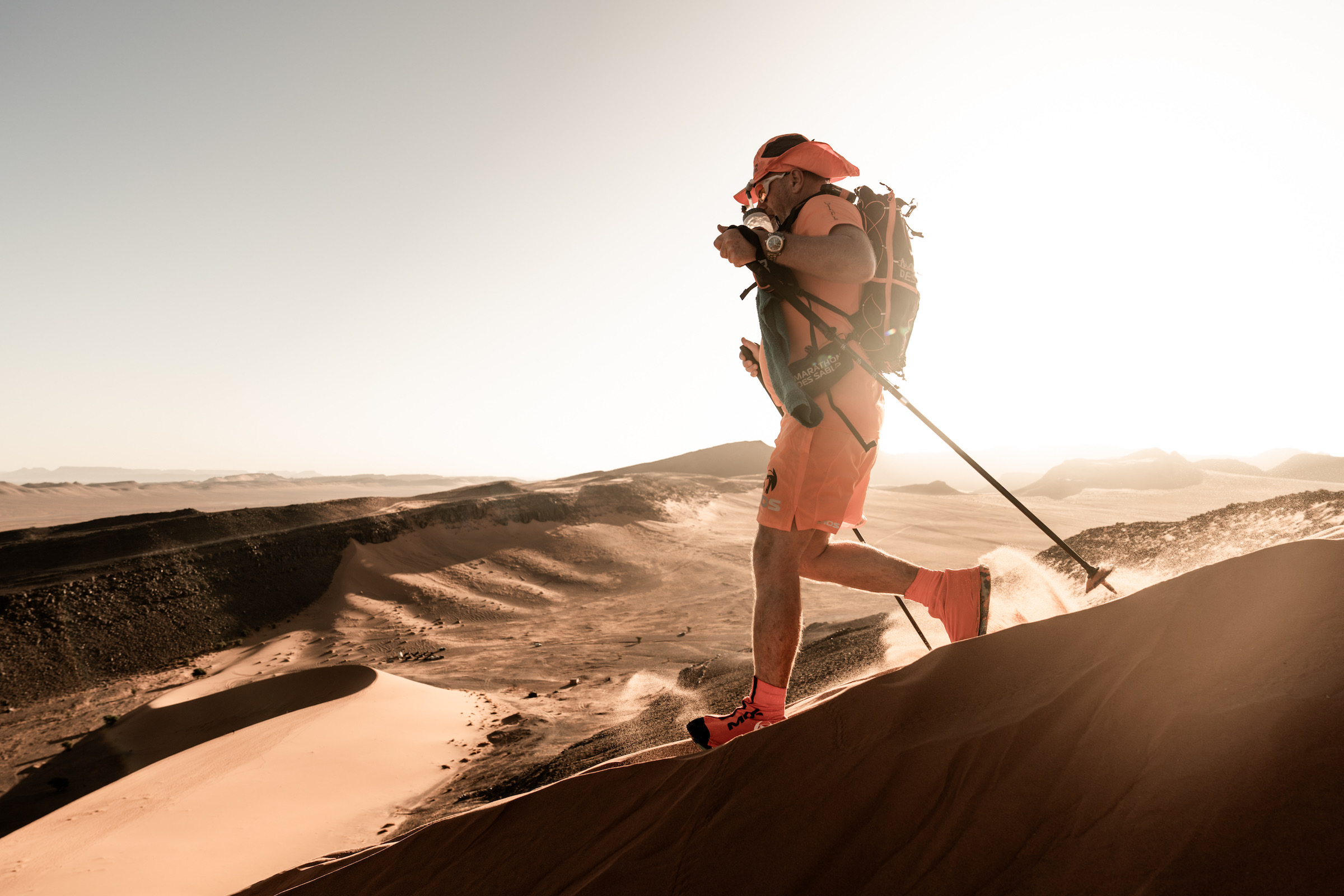
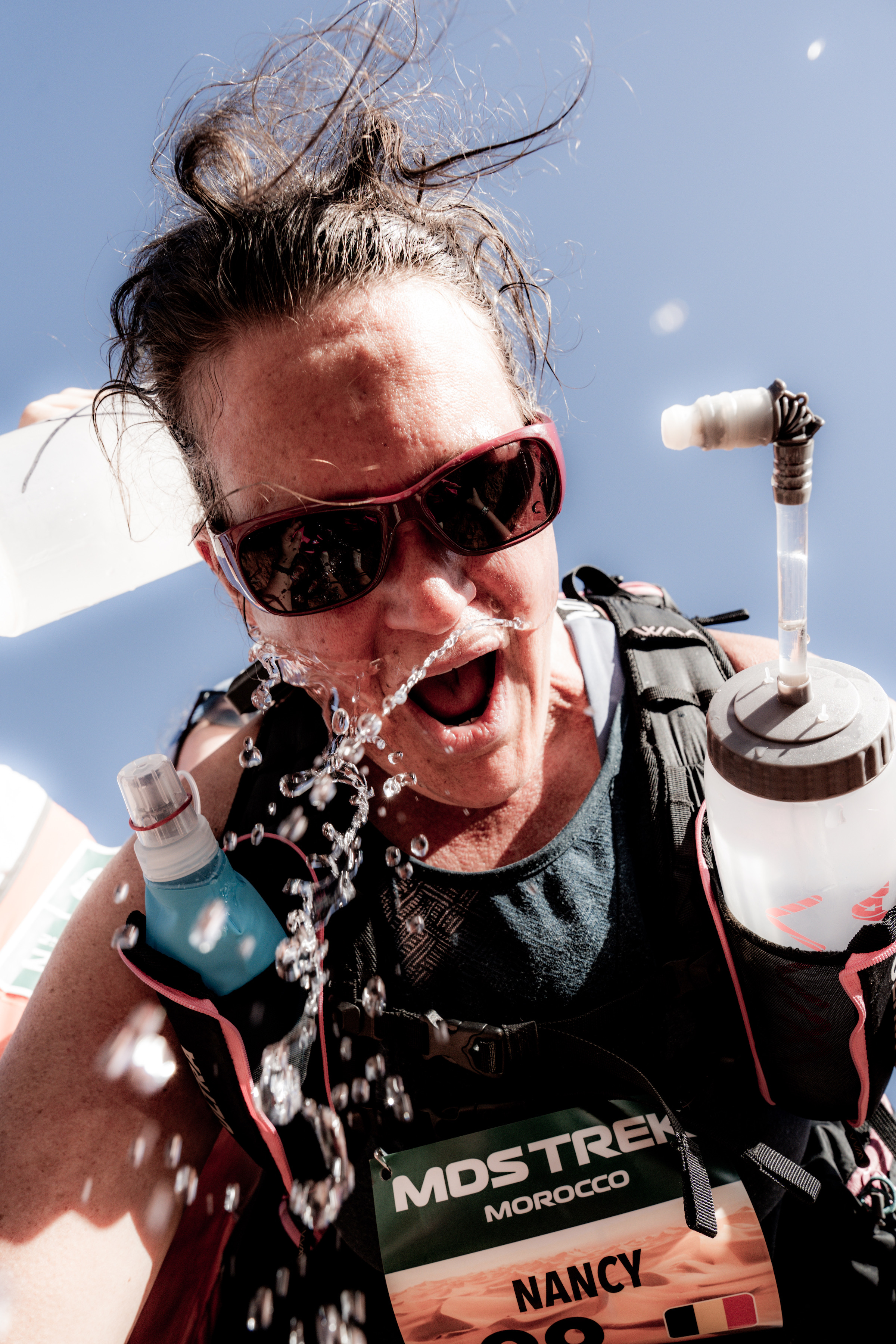
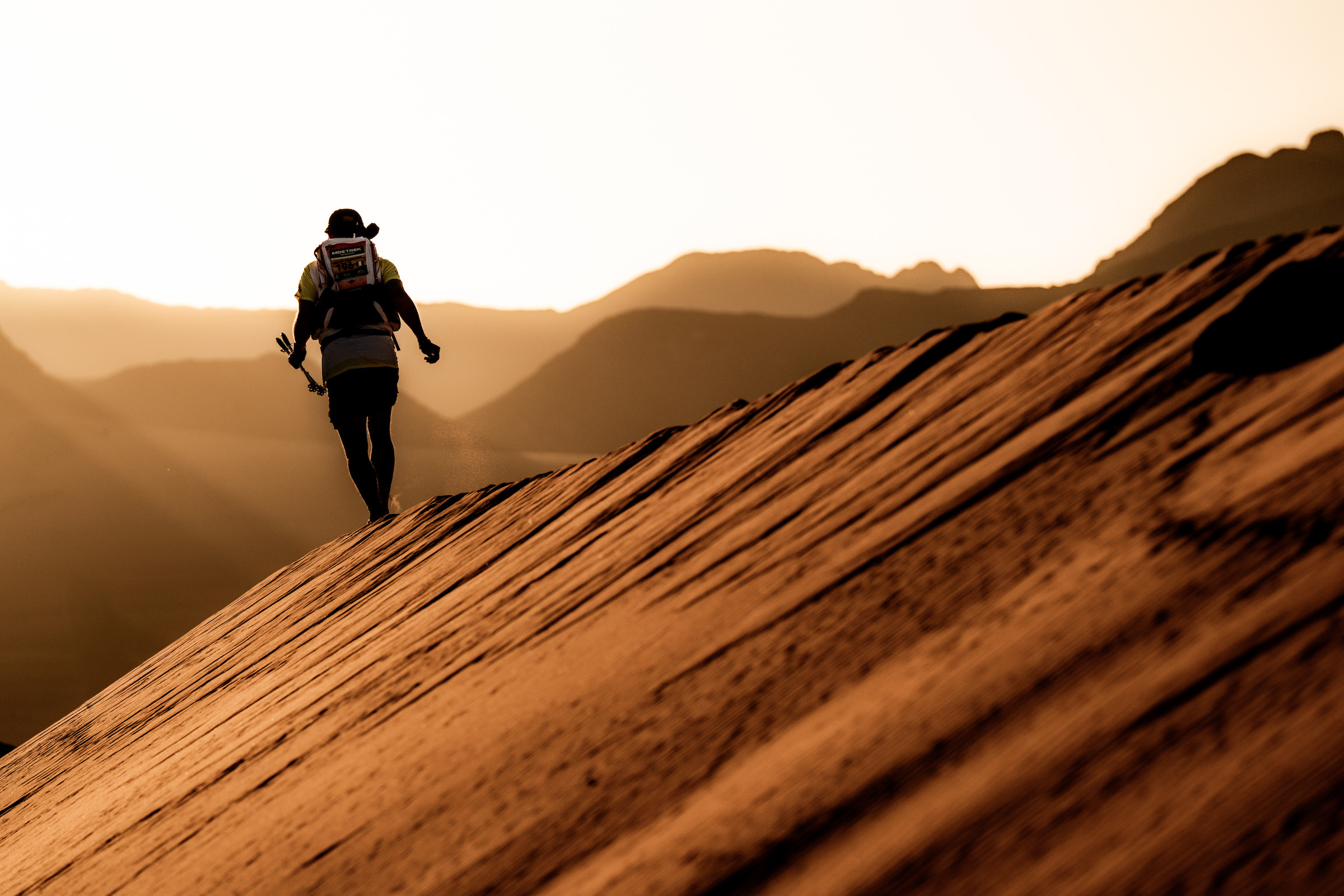
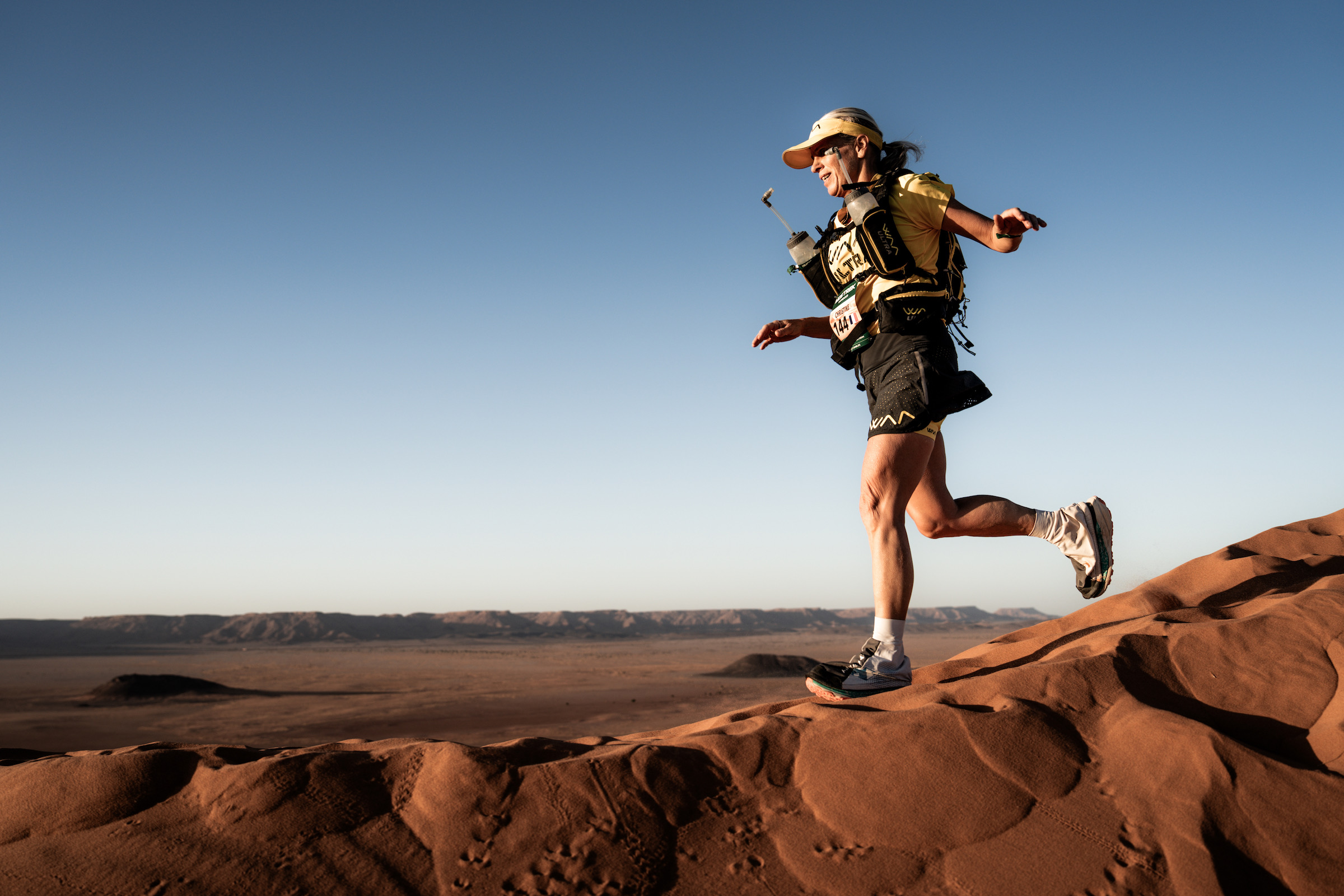
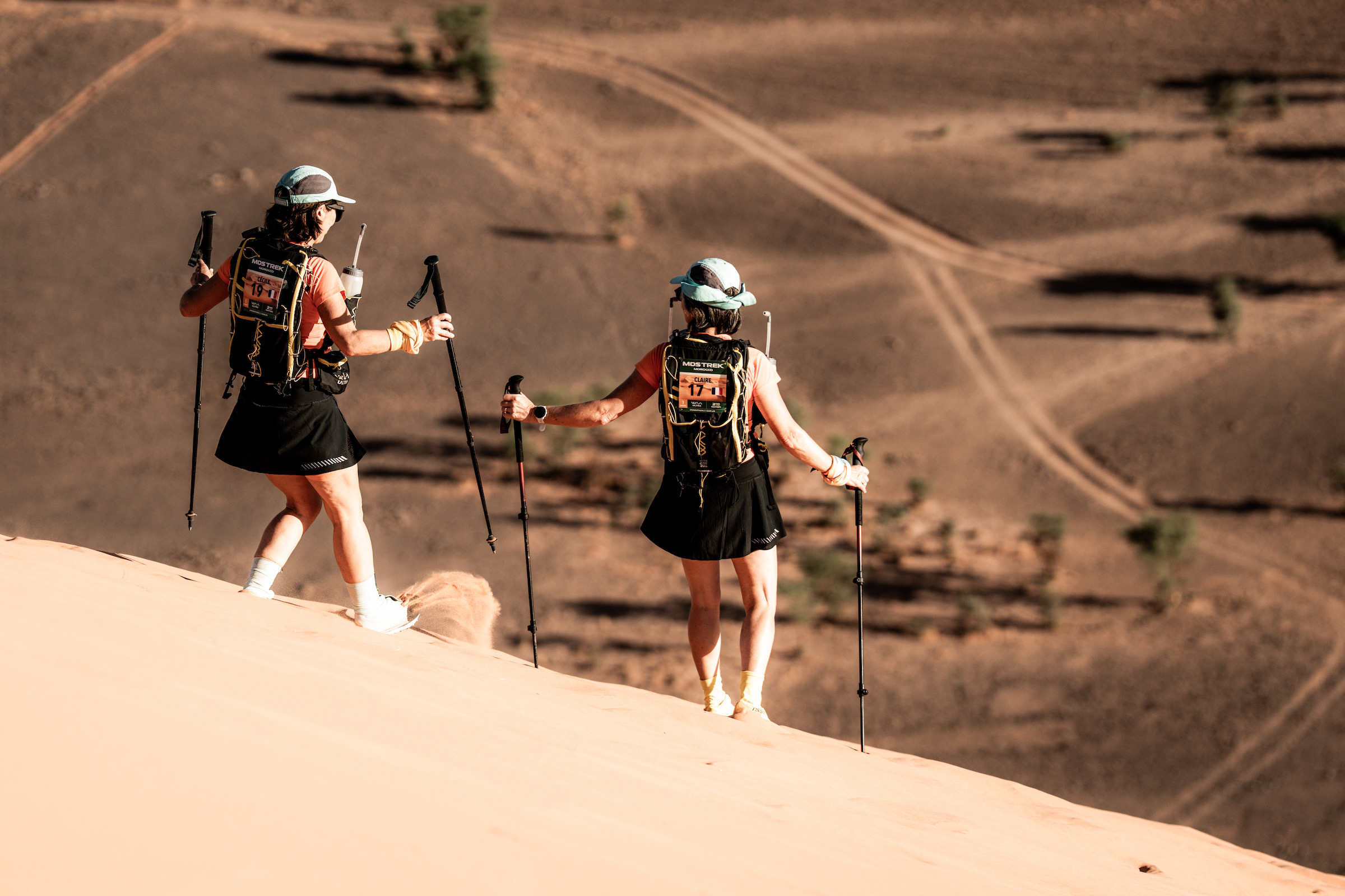
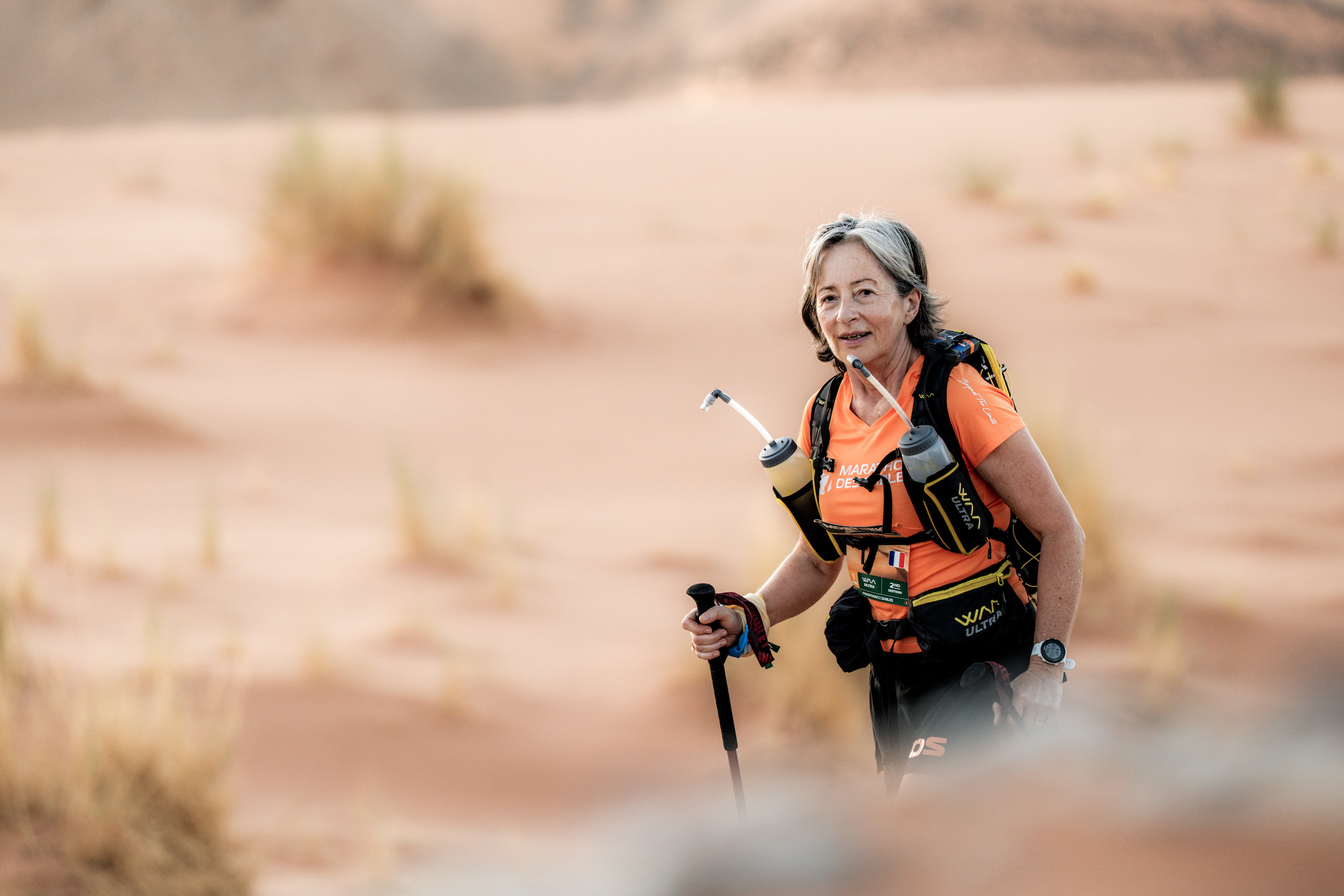
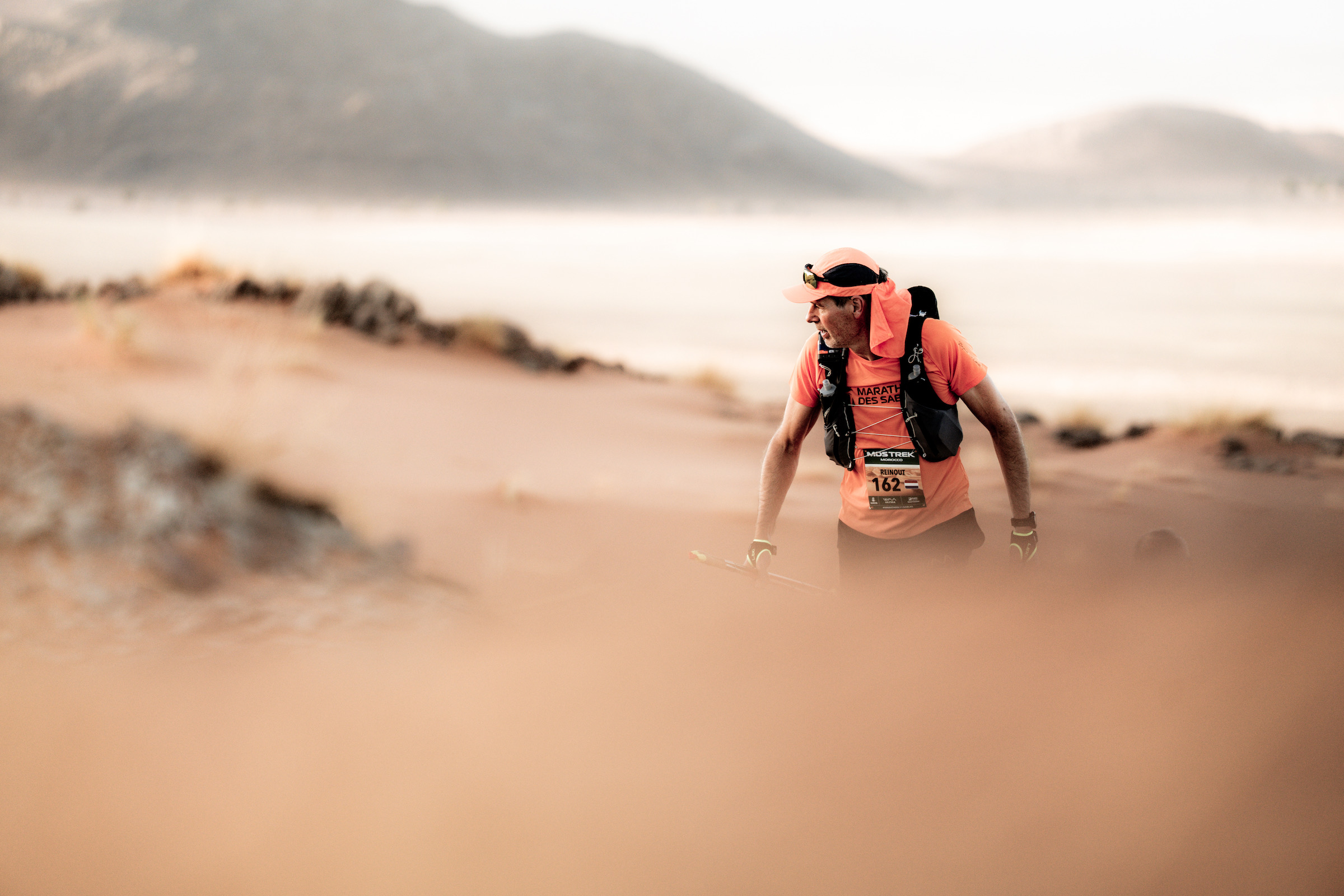
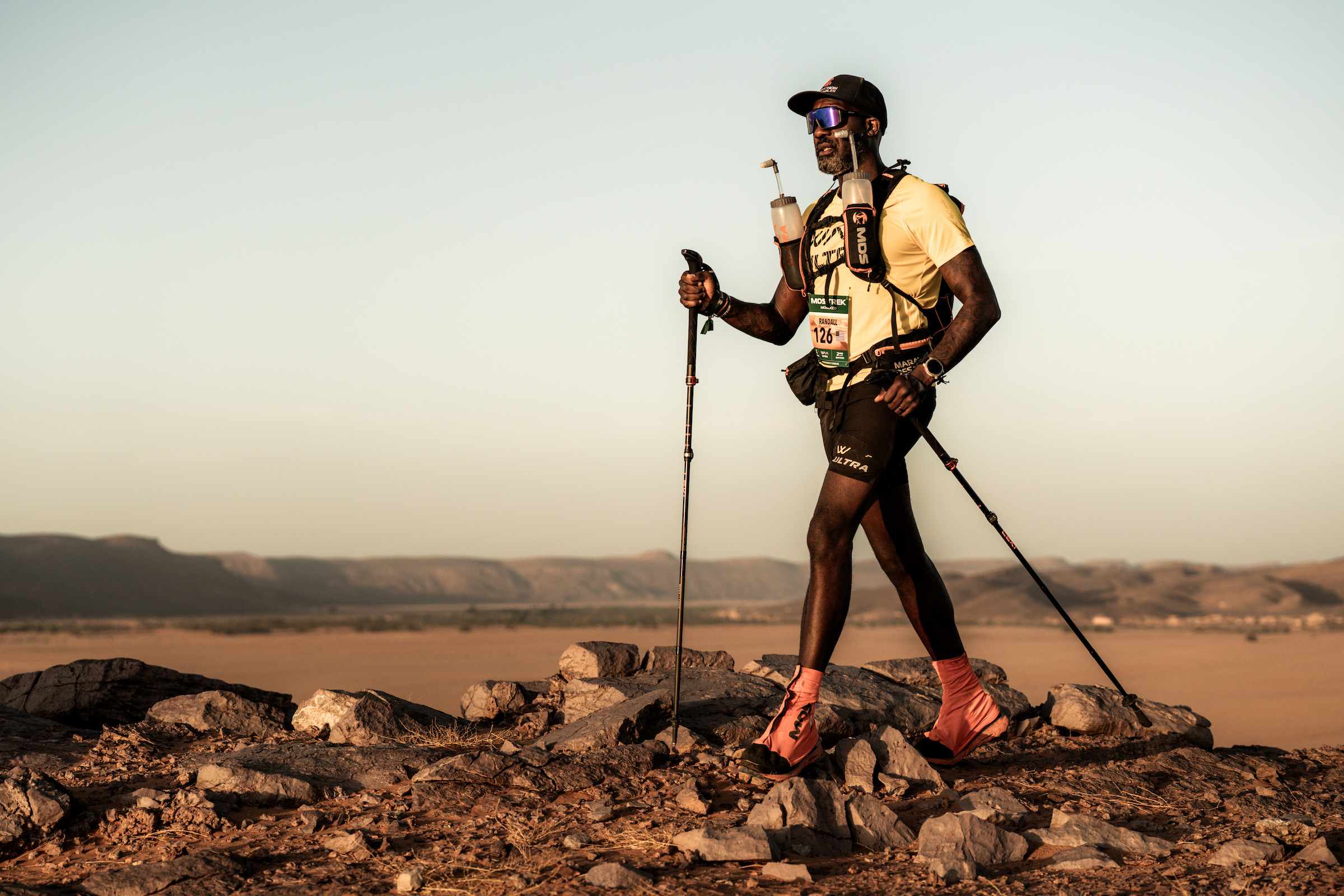
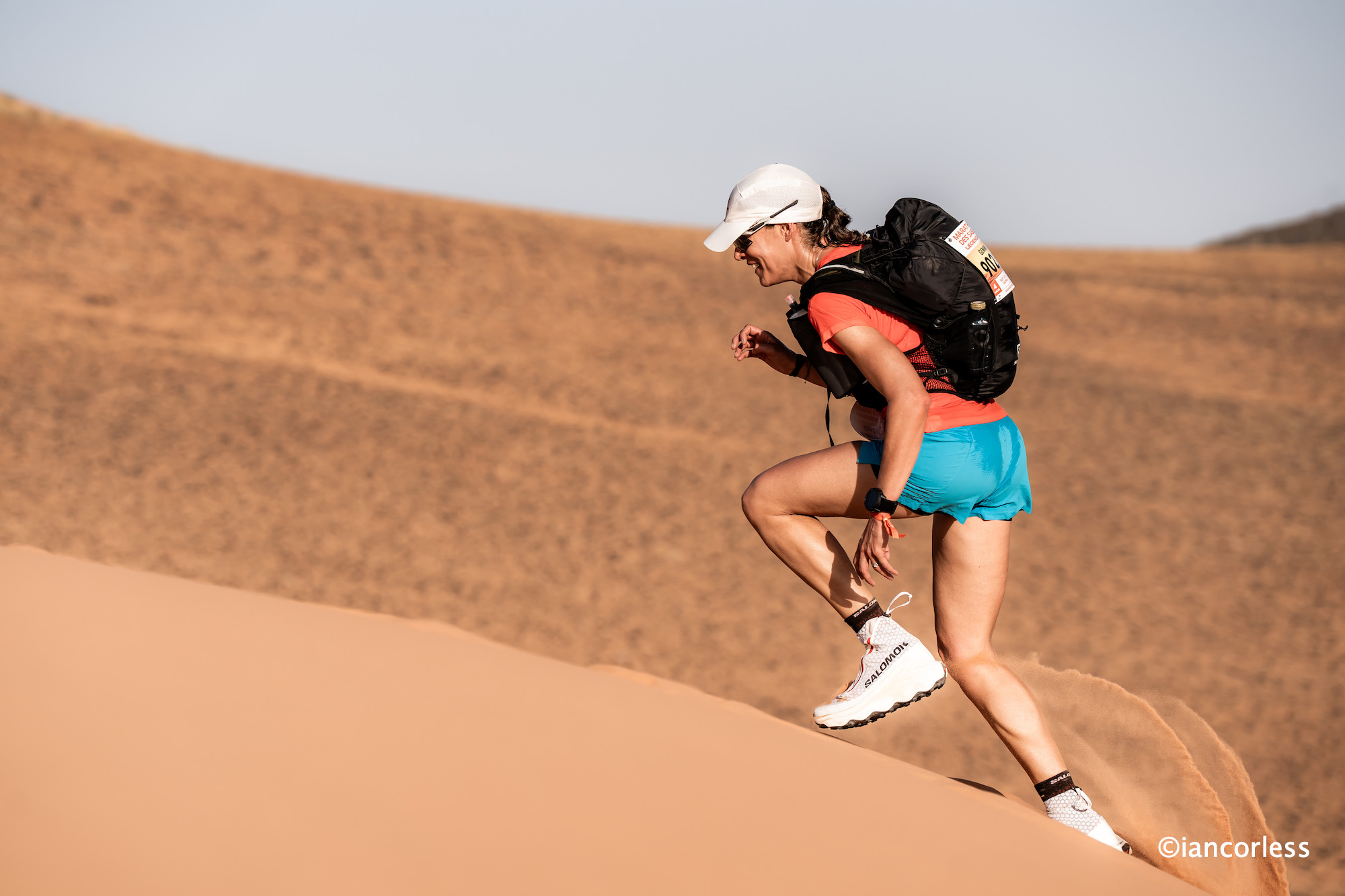
Stage 2 of MDS TREK Morocco was short on distance, 11.7km or 15km, but packed with everything that makes this trek unforgettable: surreal landscapes, emotional highs, and the raw beauty of the desert revealed under first light.
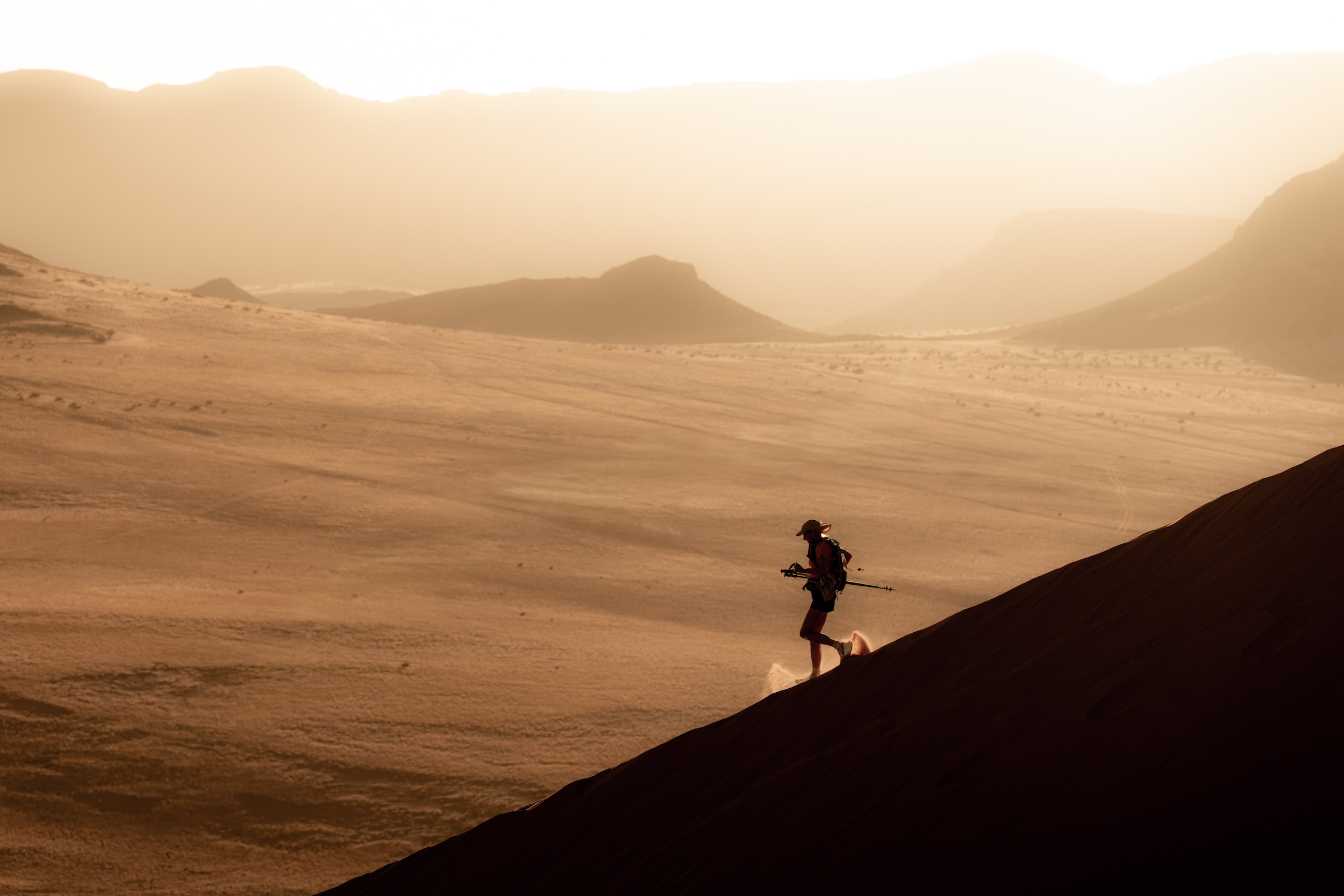
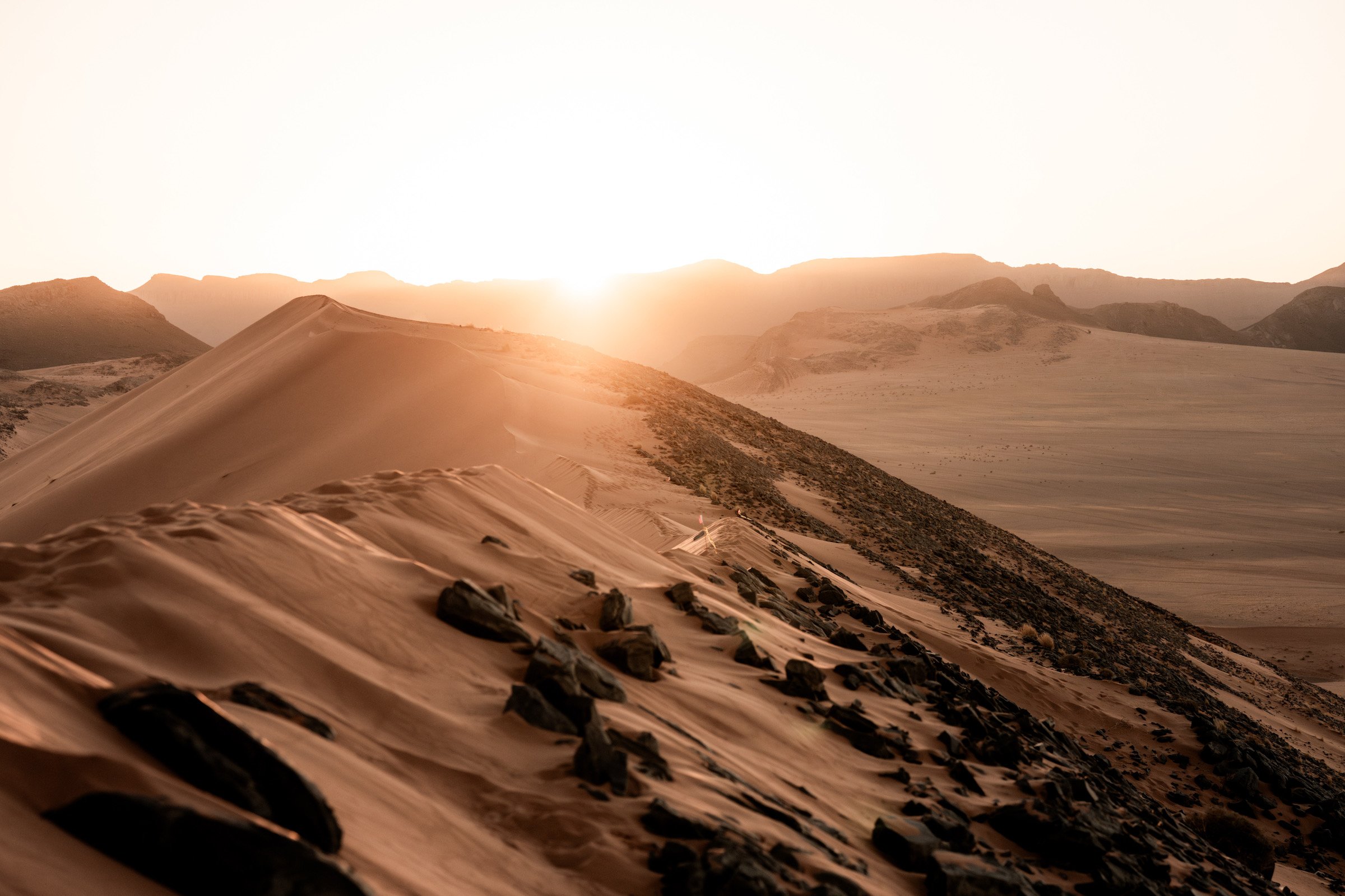
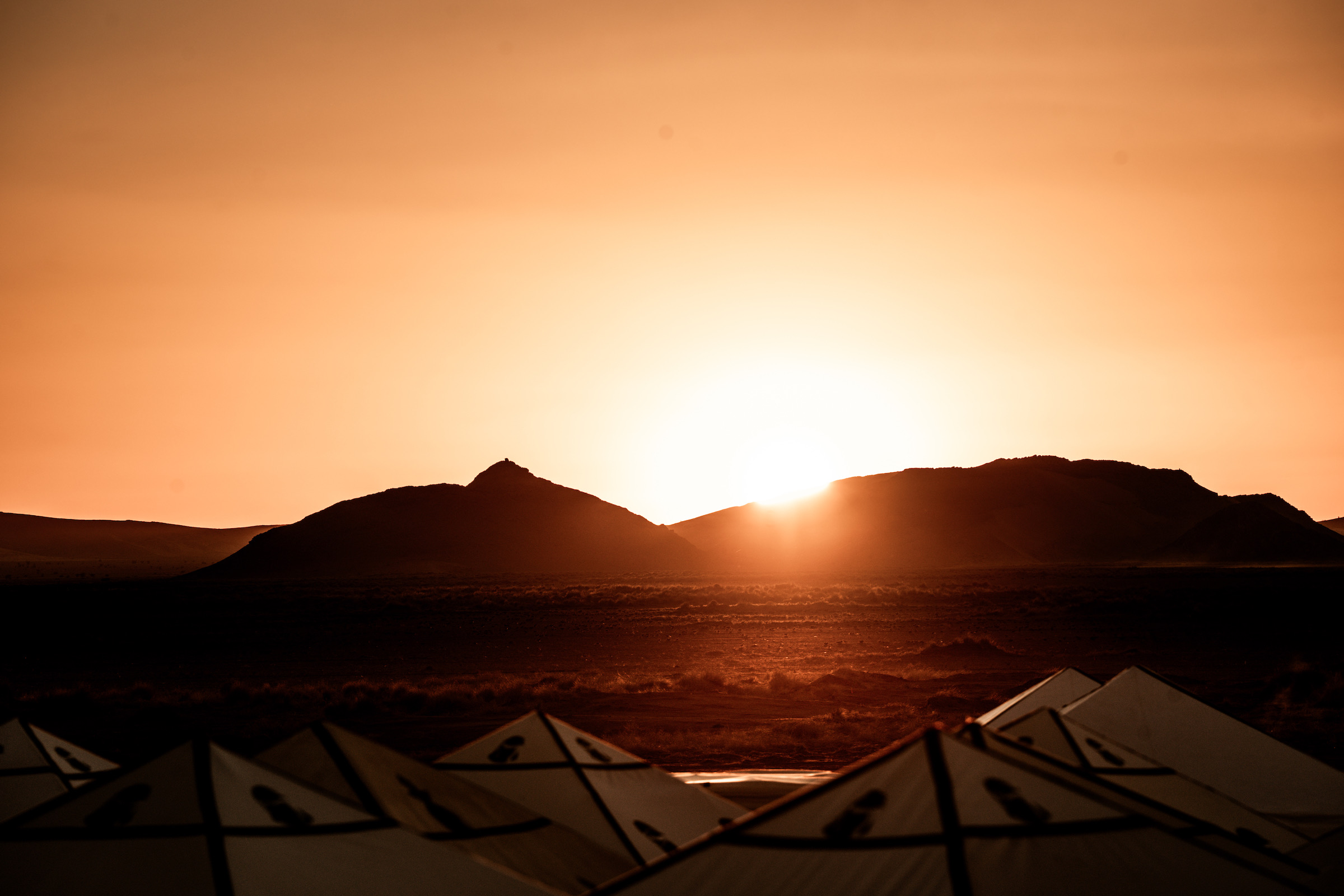
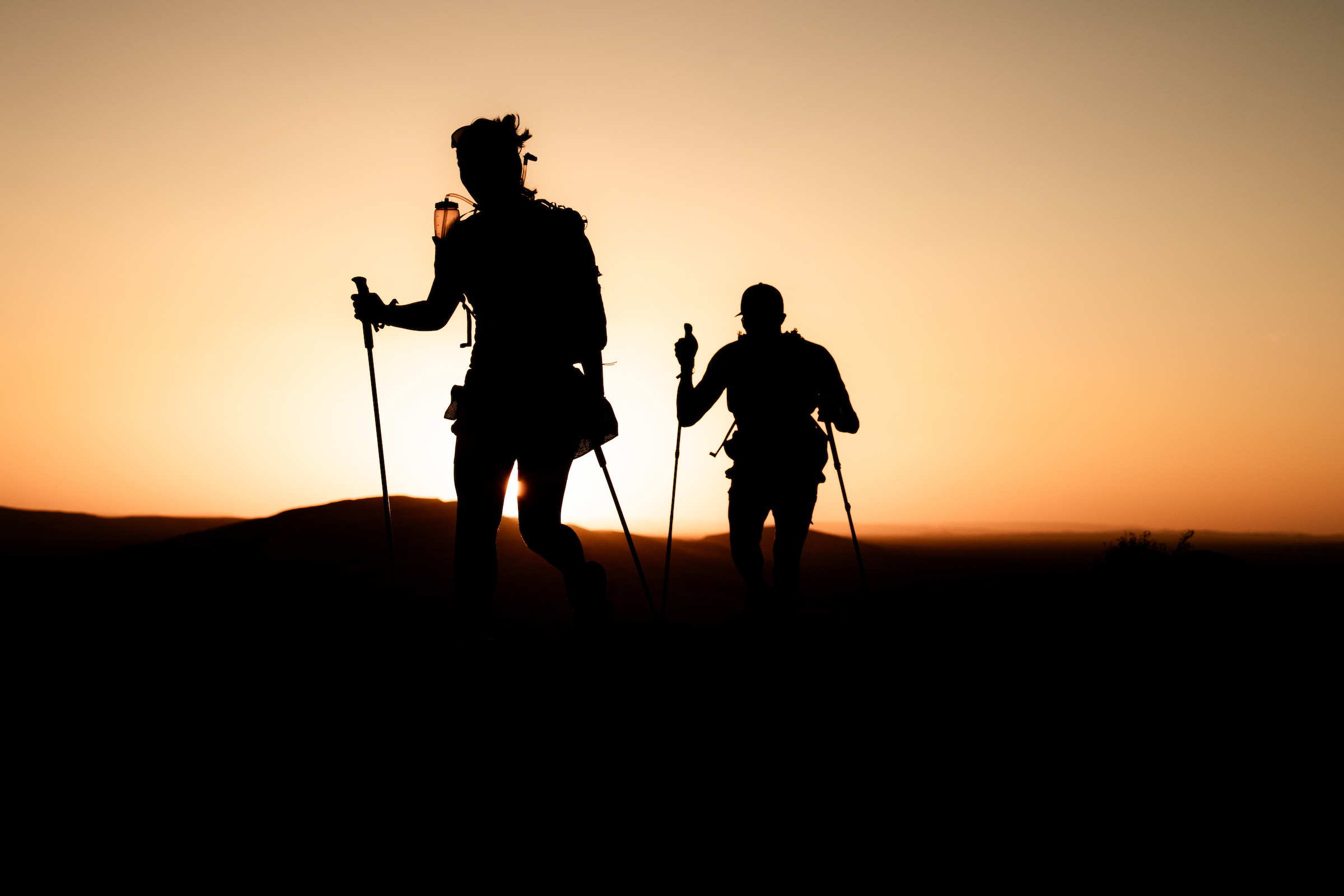
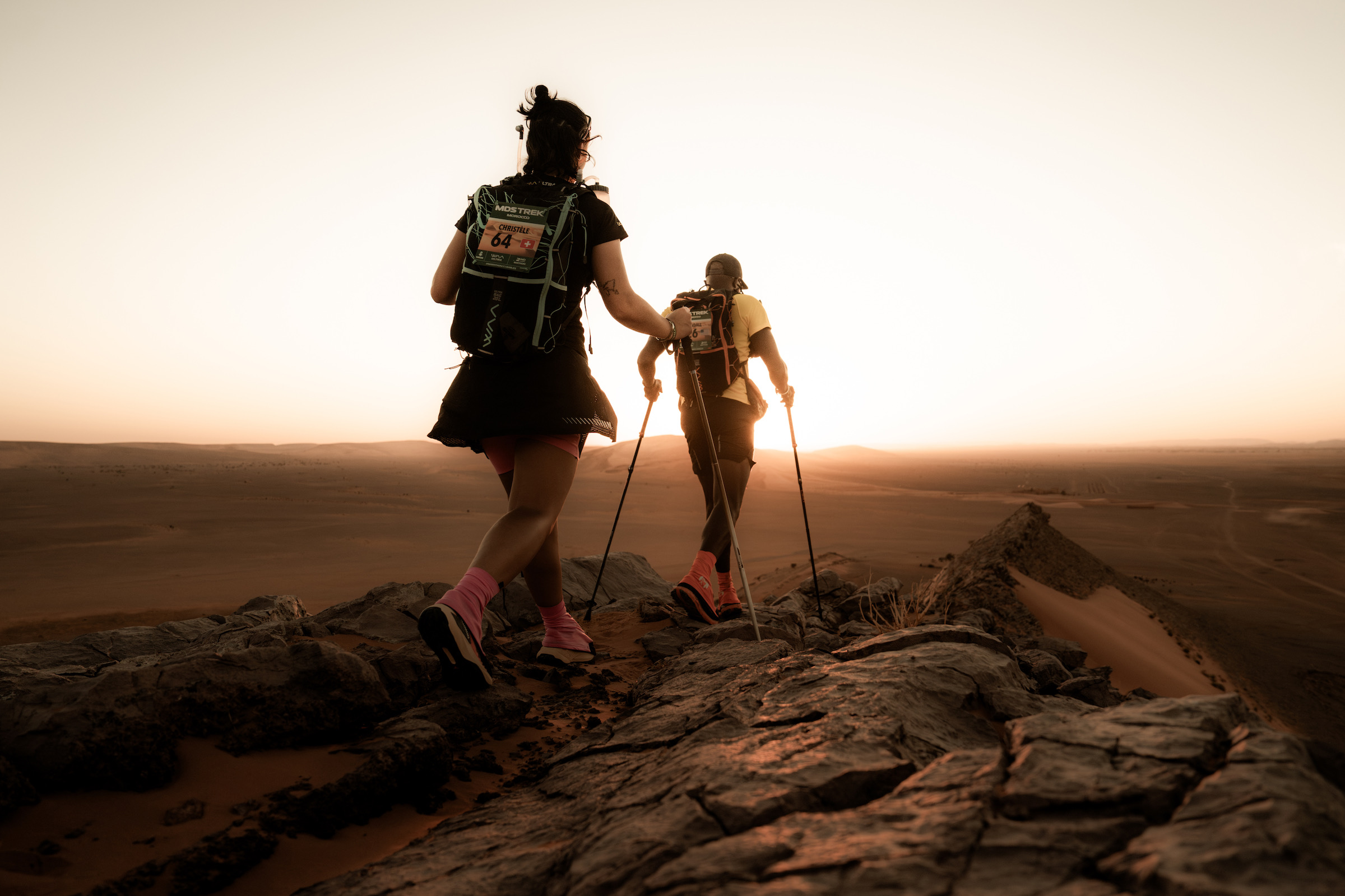
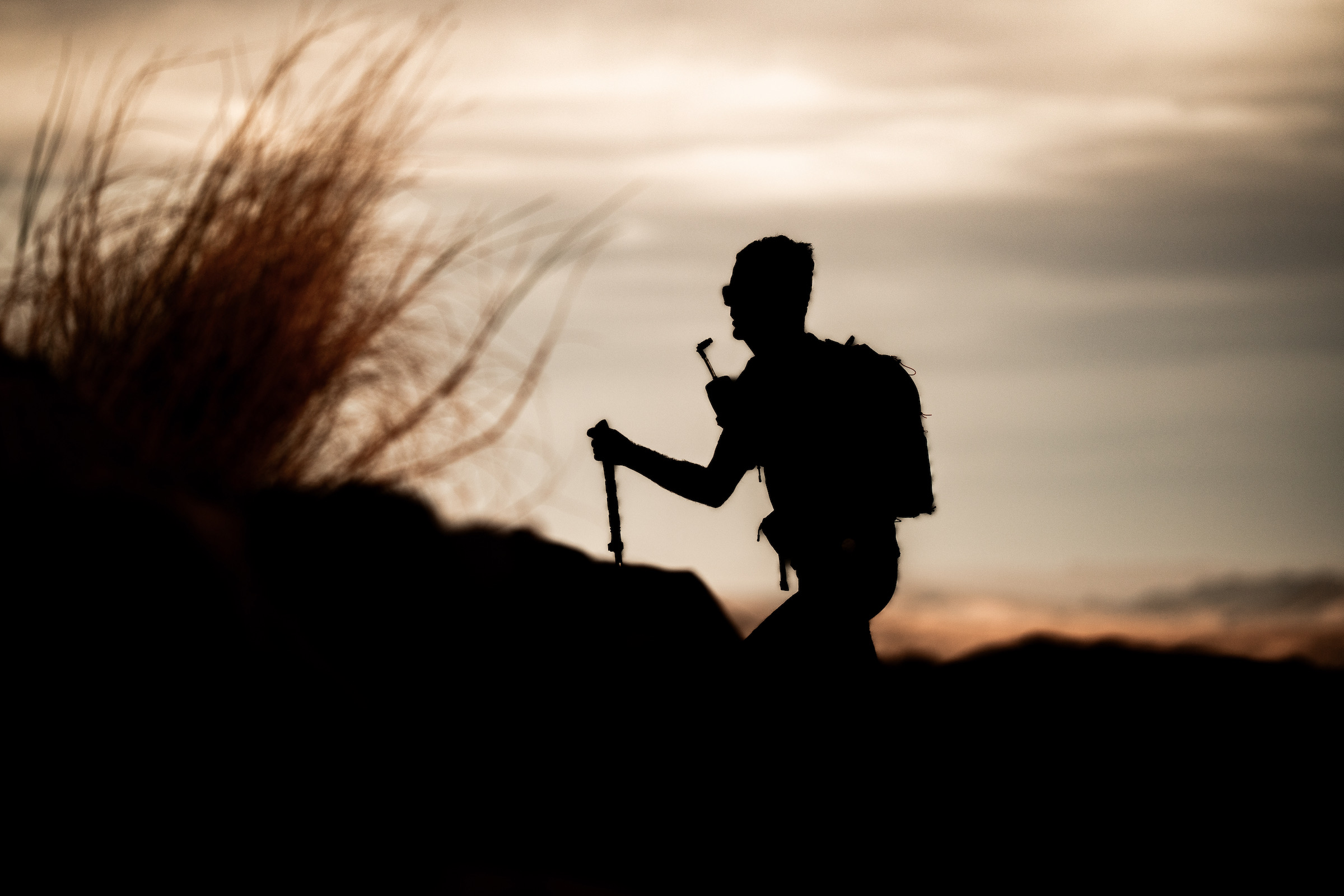
The day began with the kind of sunrise that stops you in your tracks. As the first rays hit the dunes, the Sahara shifted from cool blue shadows to warm, golden brilliance.
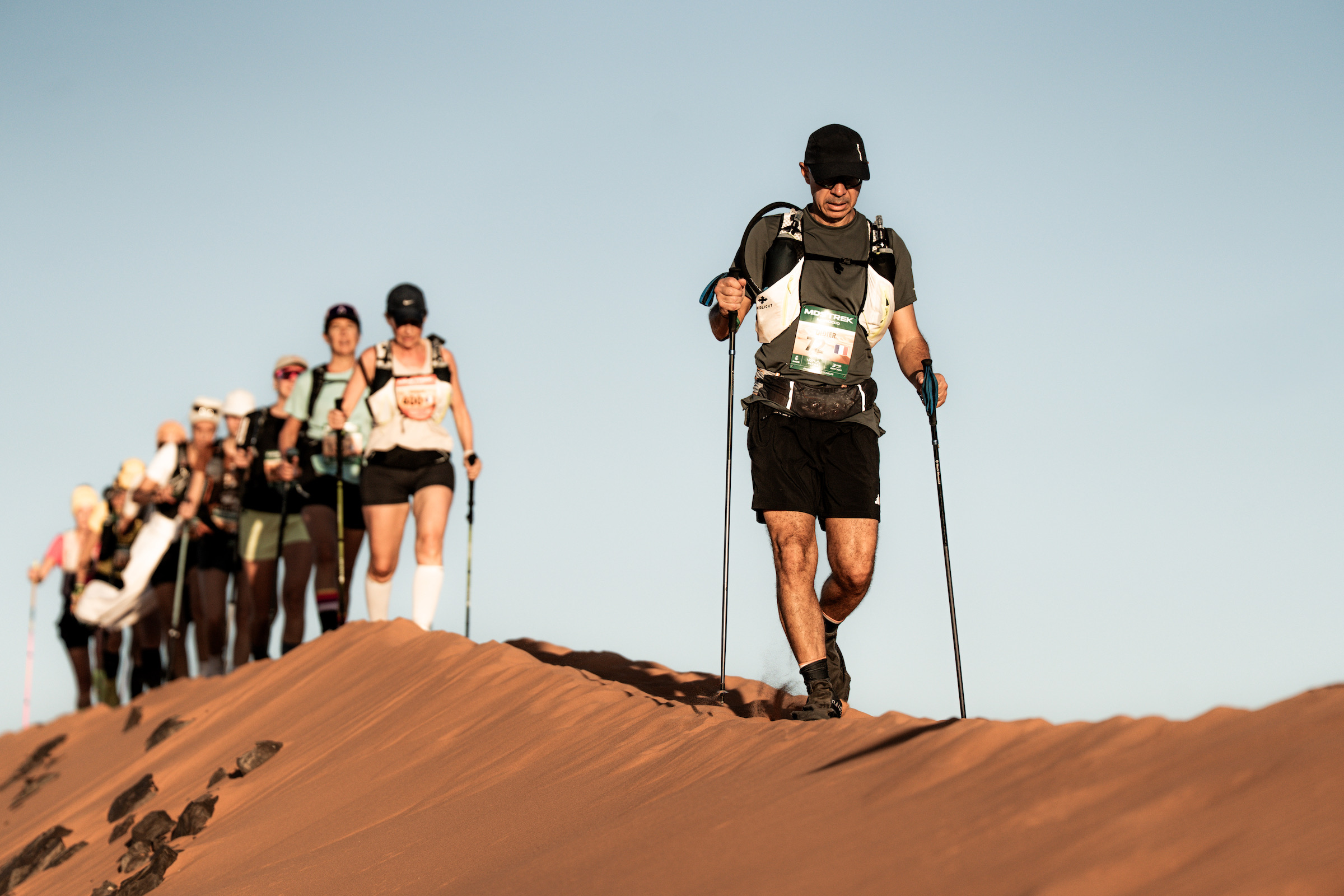
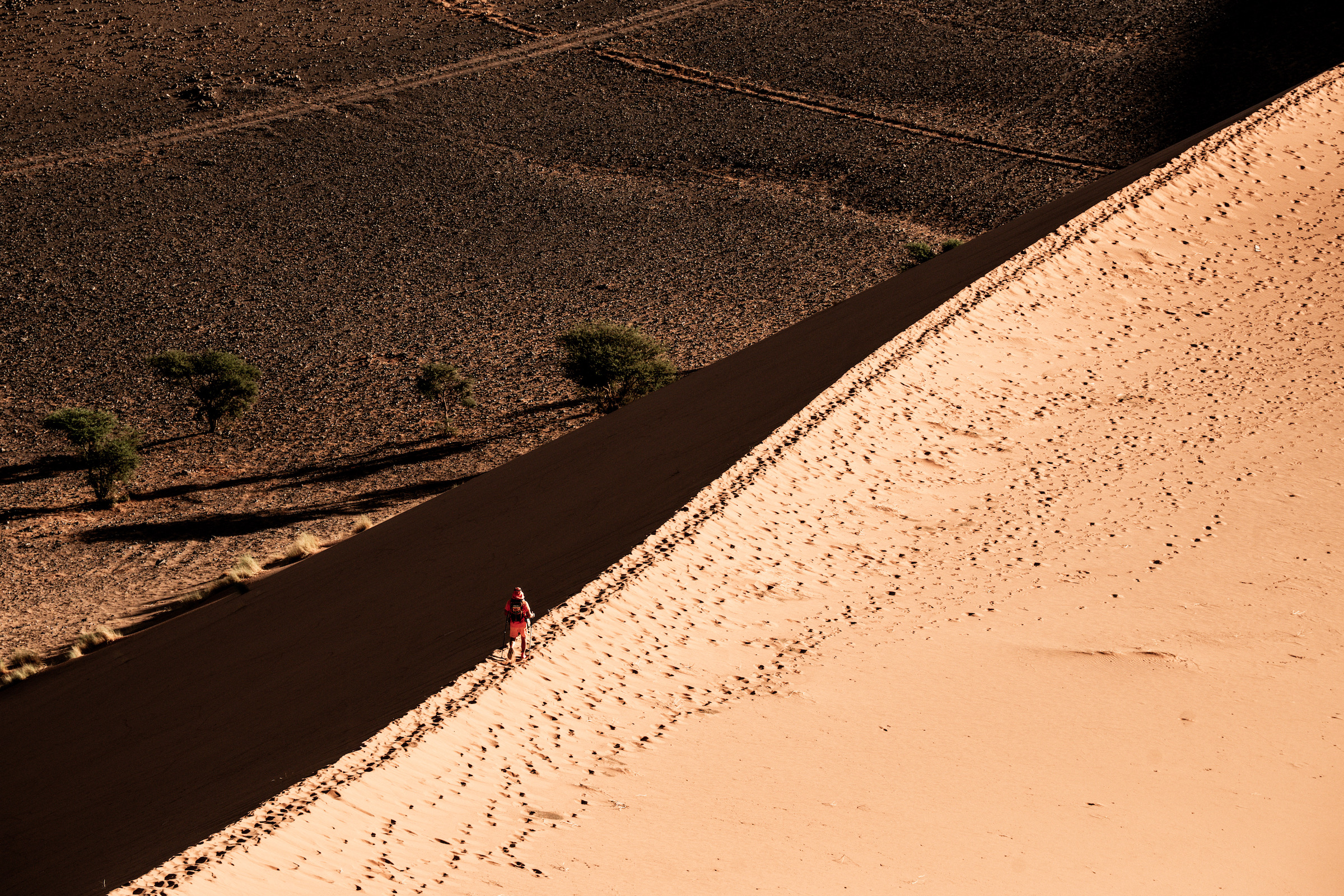
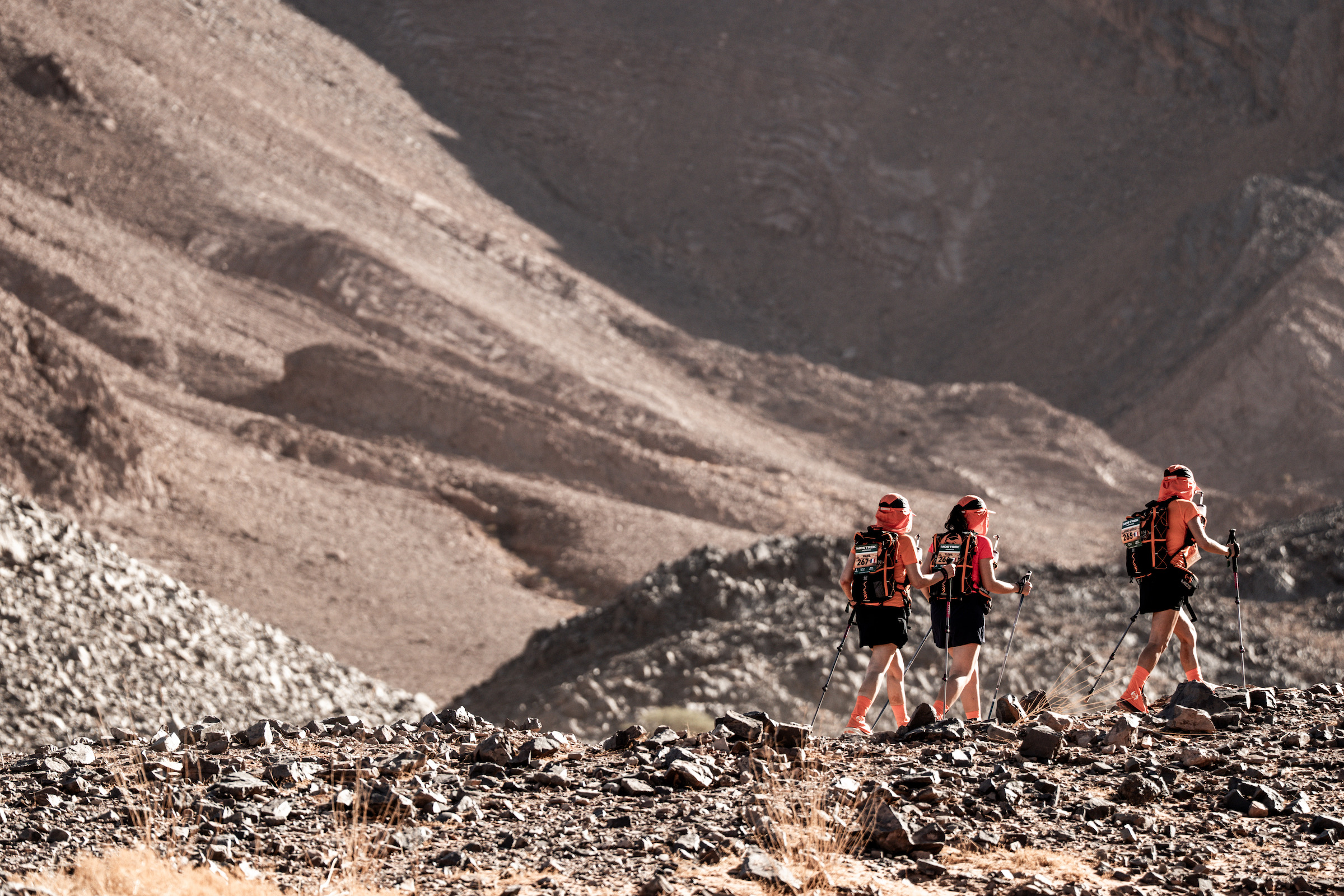
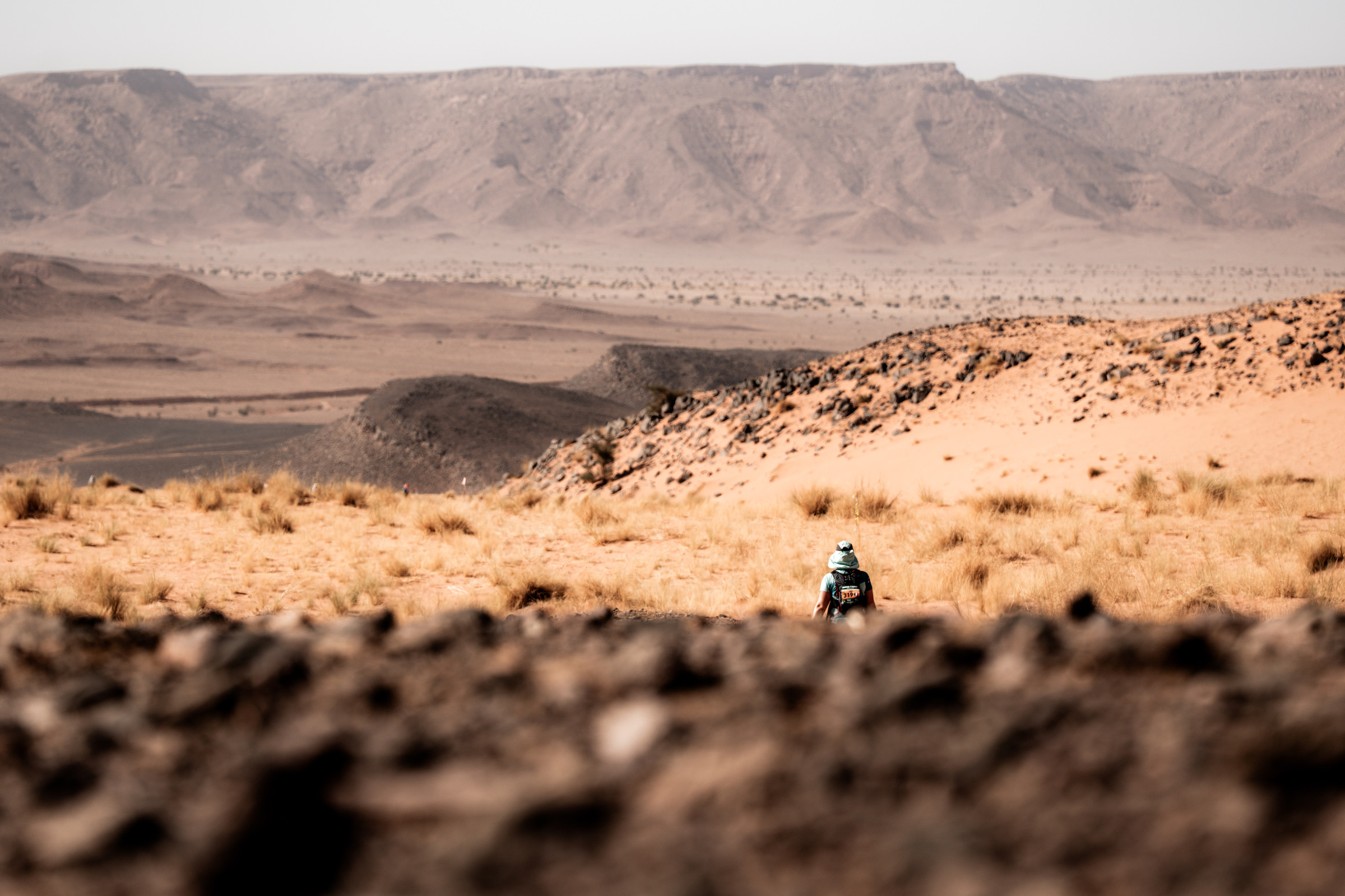
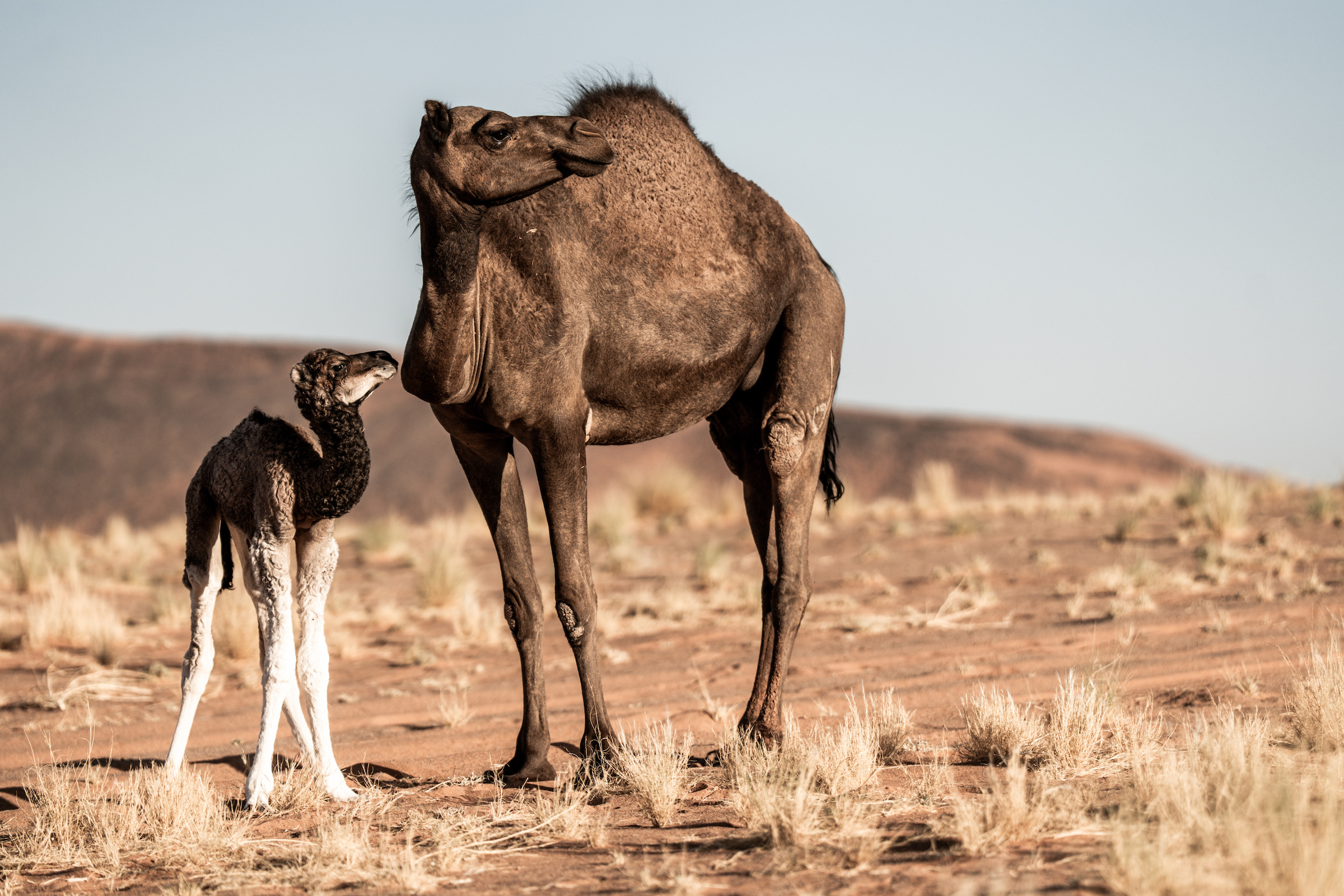
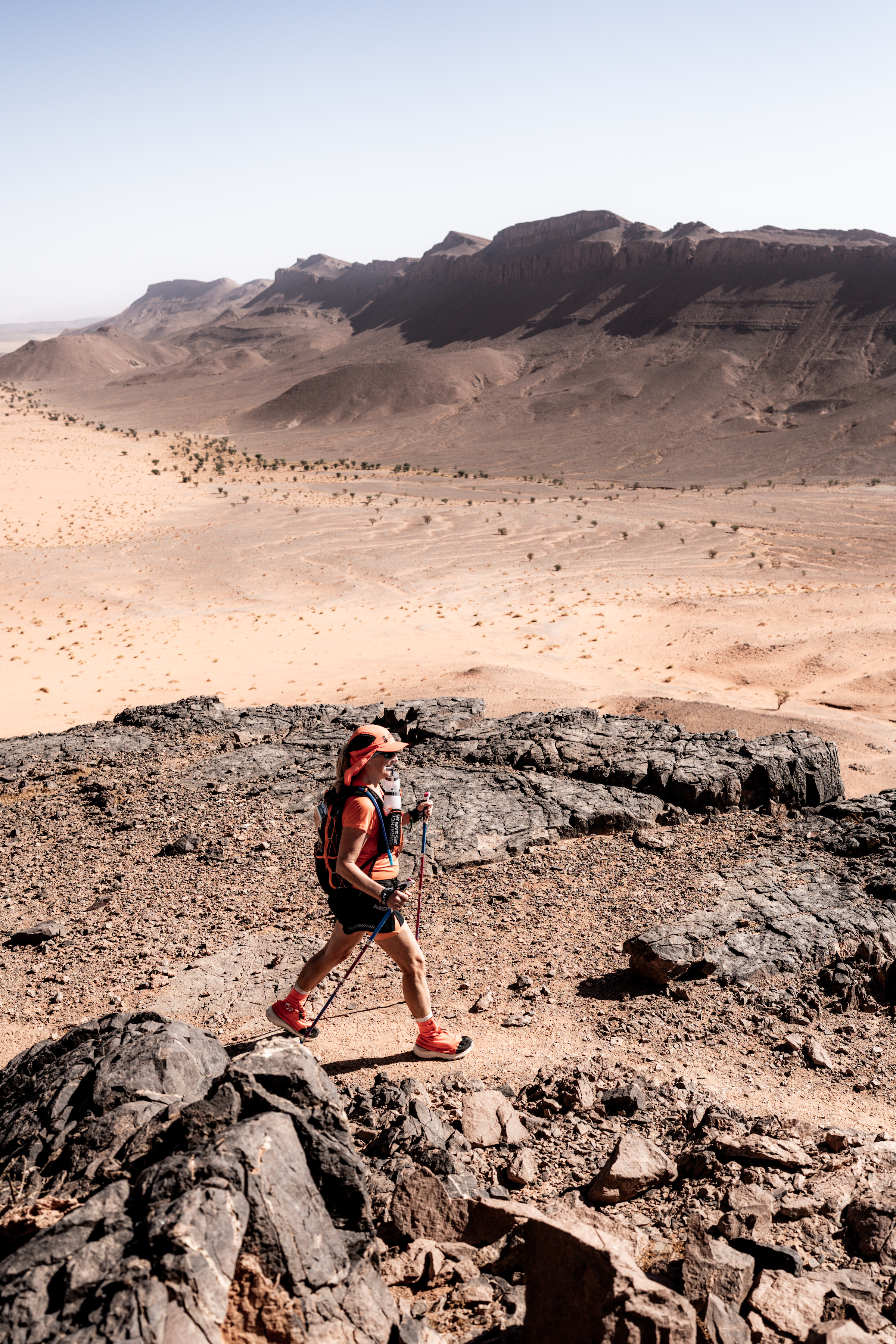
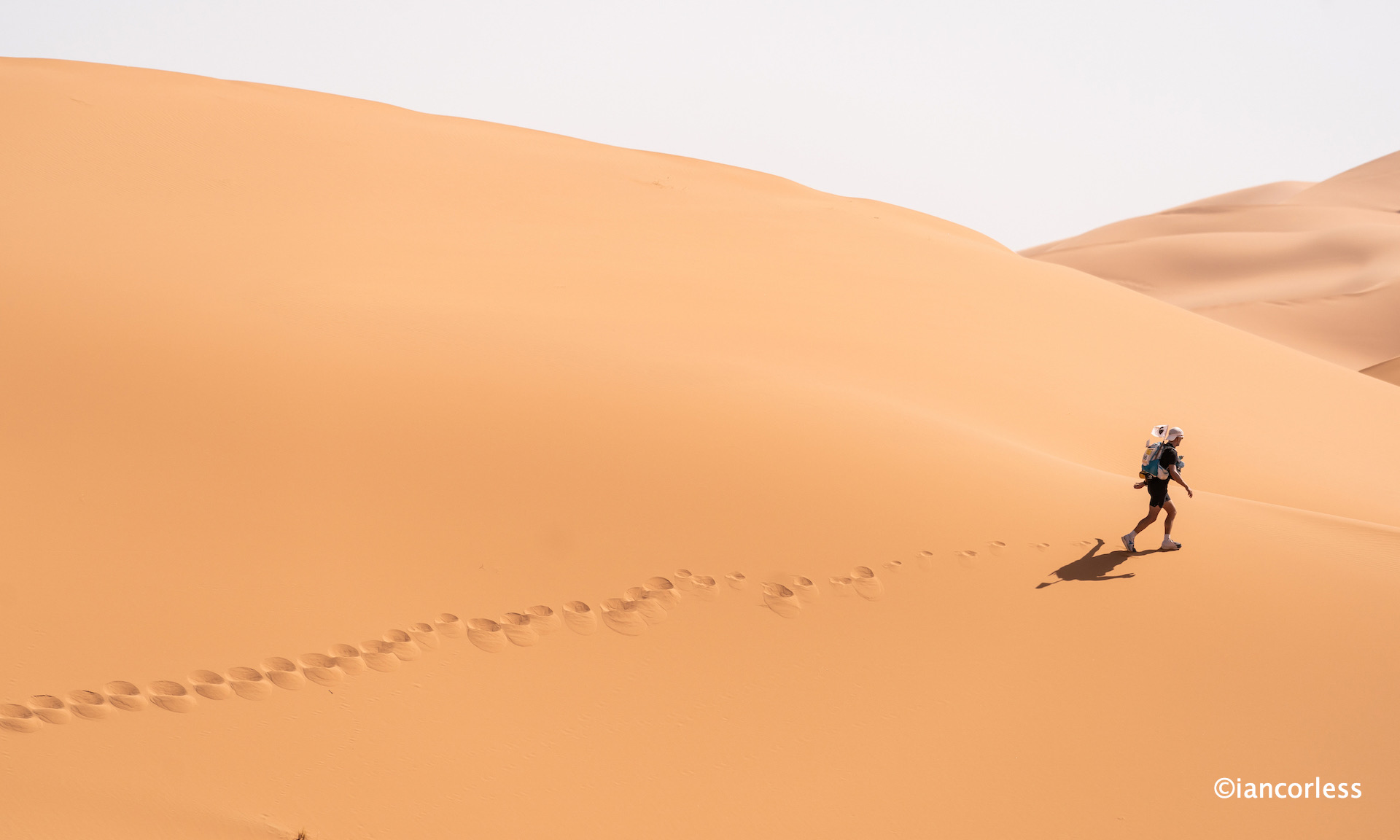
The route kicked off along a dramatic ridge, a high line with sweeping views in every direction, one of the most stunning stretches in MDS history. Sand seas rolled endlessly below, broken only by the occasional rocky outcrop or camel track winding off into nowhere.
This was not a stage to rush. With no time pressure, participants could move at their own pace, soaking in the magic of the moment.
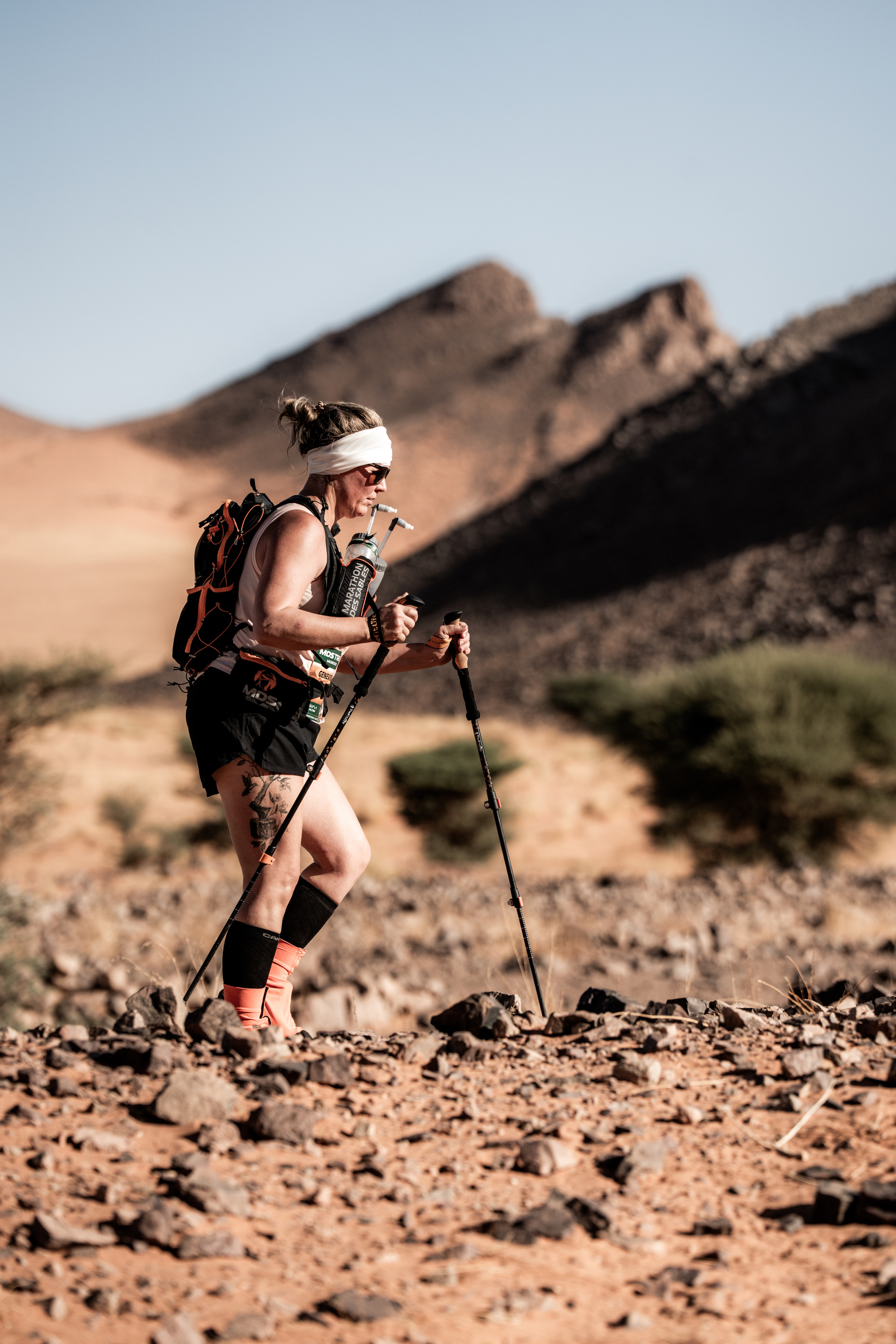
The terrain was varied, soft dune underfoot in some places, firmer ground in others, but the challenge was consistent: the heat. Even early in the day, the sun hit hard. It was a reminder that, out here, progress is earned.
At Checkpoint 2, the route split. Those craving a longer push could opt for the 15km course, while others stuck with the shorter 11.7km track. It didn’t matter which option they chose, both offered the same sense of accomplishment and wonder.
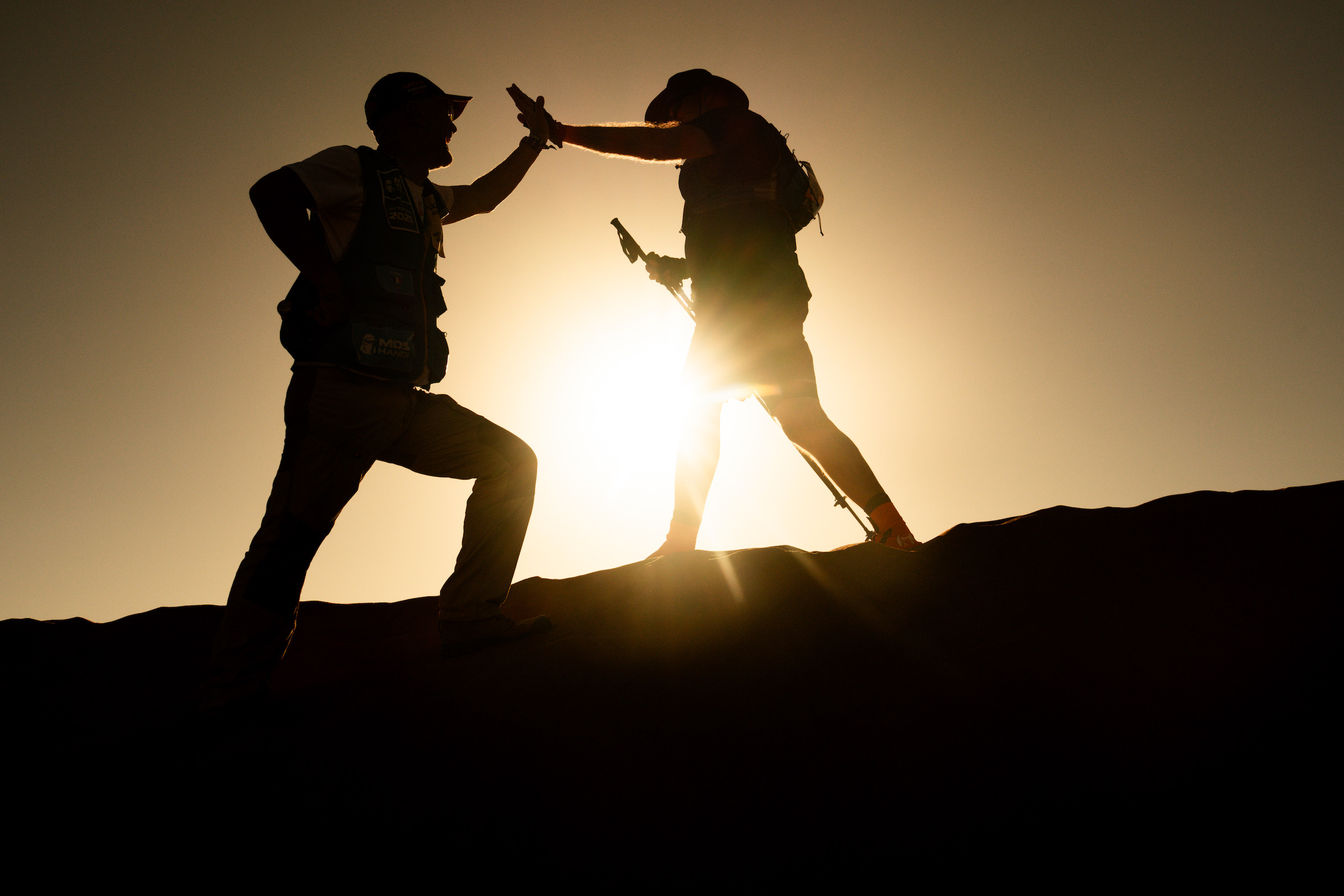
Whether climbing another dune or resting in the shade at the finish, there were smiles all around.
Stage 2 wasn’t about distance or pace. It was about presence, being fully alive in one of the most remote, beautiful places on Earth.
It was about the silence, the sweat, the sunrise. And for many, it was the moment they truly felt the spirit of MDS: the freedom, the challenge, and the deep, personal joy of moving through the Sahara under their own power.
A very special day and one that will stay etched in memory long after the sand is shaken from their shoes.
There’s a certain image that comes to mind when you hear “MDS” – blistered feet, rationed calories, endless dunes, and the punishing solitude of the Sahara. But the second edition of MDS TREK Morocco flips that narrative. It’s still tough, still raw, still proudly Saharan, but this isn’t the Marathon des Sables you’ve heard whispered about in ultra circles. This is MDS with a difference.
This is adventure, elevated.
A New Kind of Desert Challenge
Set across seven nights deep in the Moroccan desert, MDS TREK isn’t about suffering. It’s about connection – to the land, to others, and to yourself. Designed for trekkers who crave the thrill of the Sahara without the demands of full self-sufficiency, this edition delivers a rich, physically challenging, and surprisingly comfortable desert experience.
Forget dehydrated meals eaten crouched in the sand. Here, you’re fed three real meals a day. Forget sleeping shoulder-to-shoulder under a makeshift tarp, you’ll rest in spacious, tents, roomy enough to stretch and breathe. Need a shower? There are actual showers. Want a drink? There’s a desert bar. And after a long day on your feet, you can stretch out with sunset yoga or sink into a post-stage massage.
A Race for Every Level
What sets MDS TREK apart isn’t just the comfort – it’s the accessibility. You don’t need to be an ultra-runner or a desert-hardened veteran to take part. This is a multi-stage trek, not a race to the death.
Each of the four stages is offered with two distance options, allowing participants to challenge themselves at their own pace. Want a longer push? Go for the full route. Need a bit less? Opt for the shorter version. The emphasis isn’t on beating the clock; it’s about the experience.
But make no mistake, this is still the Sahara. The terrain is rugged, the climbs are real, and the heat is relentless. The environment demands respect. But it also rewards you with something almost spiritual in return.
Stage 1: Into the Furnace
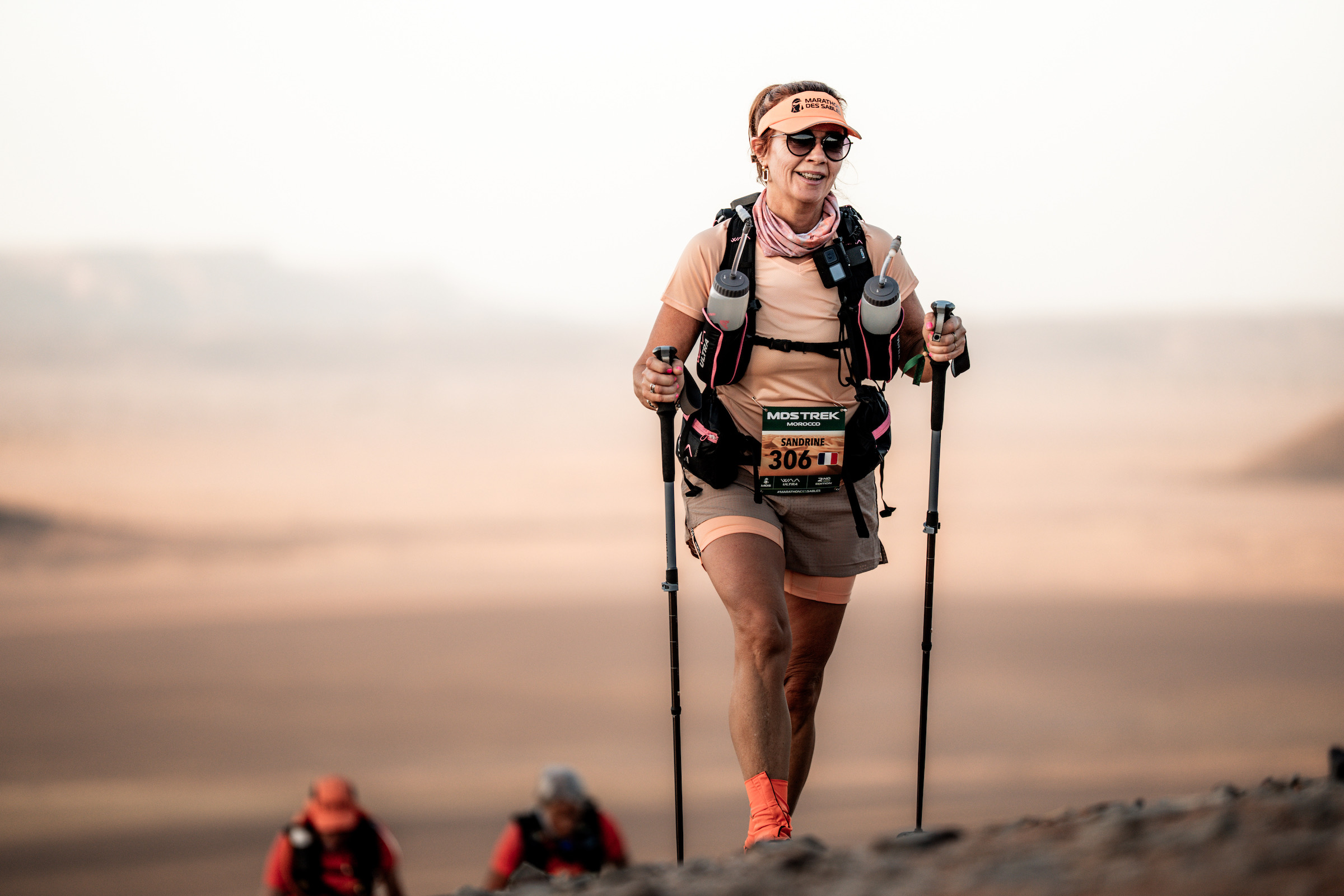
The adventure began under a blazing sun. Temperatures soared as 350 trekkers laced up for the first leg of the journey. The day’s route offered a choice: 15.6 km or 22.7 km, with both options weaving through a landscape as brutal as it was breathtaking.
Soft, shifting sands made even the flat sections a test of will. Then came the tough climbs, sandy ascents that drained the legs and quickened the pulse.
There were sections of technical rock and loose scree, keeping everyone alert. But in between the hardship came moments of wonder: endless panoramas, wind-sculpted dunes, towering jebels casting long shadows across the desert floor.
It wasn’t easy. But that wasn’t the point. This was beauty wrapped in brutality – a reminder of how the desert strips you down, and in doing so, shows you something pure.
And perhaps the most defining feature of the field? More than 60% of participants were women. This wasn’t just an event—it was a movement.
Evenings of Contrast
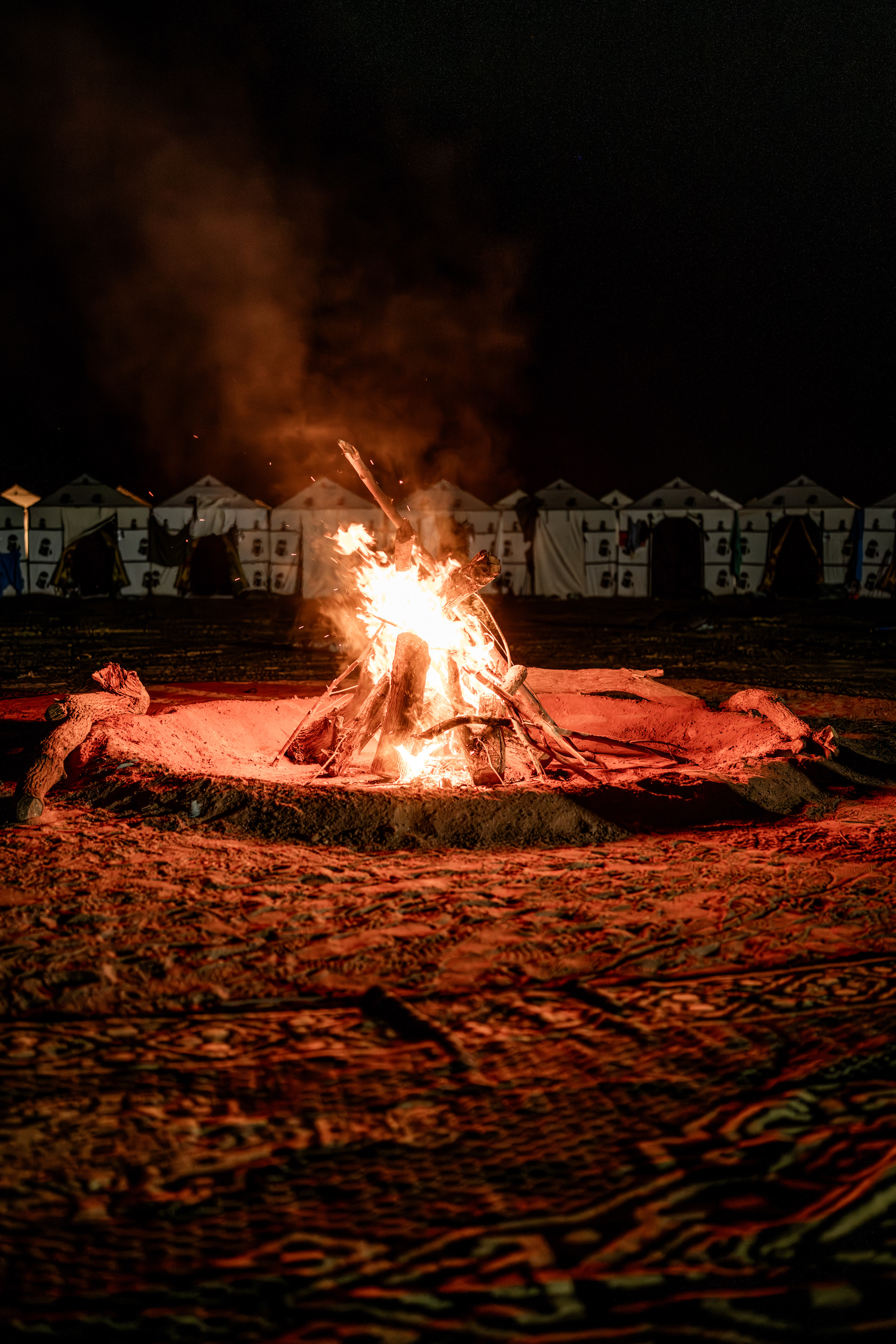
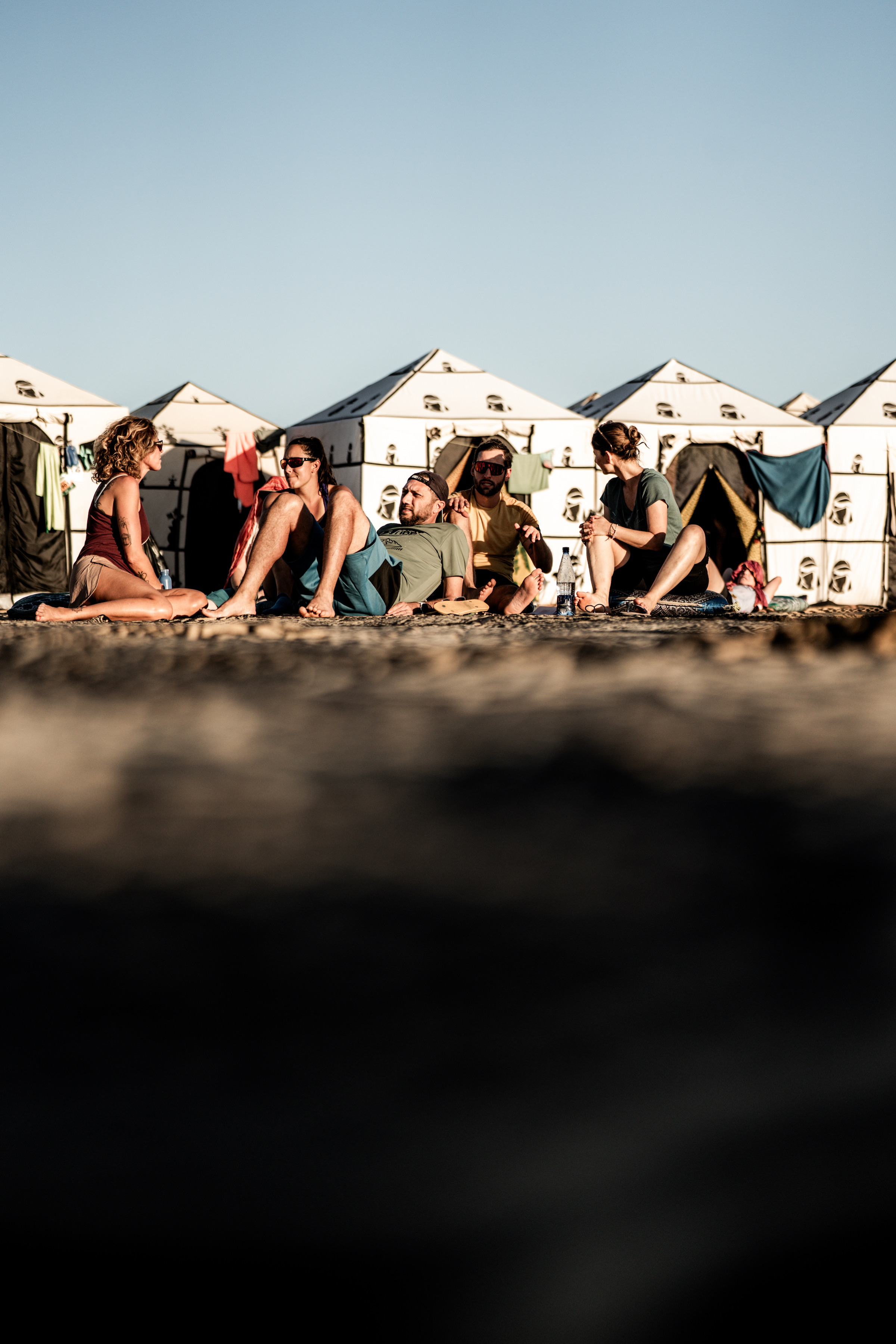
Post-stage life in MDS TREK is where the magic deepens. After pushing their limits under the sun, participants returned to a camp that was more oasis than outpost.
There’s shade. There’s cool water. There’s time to kick off the boots, breathe, and reset.
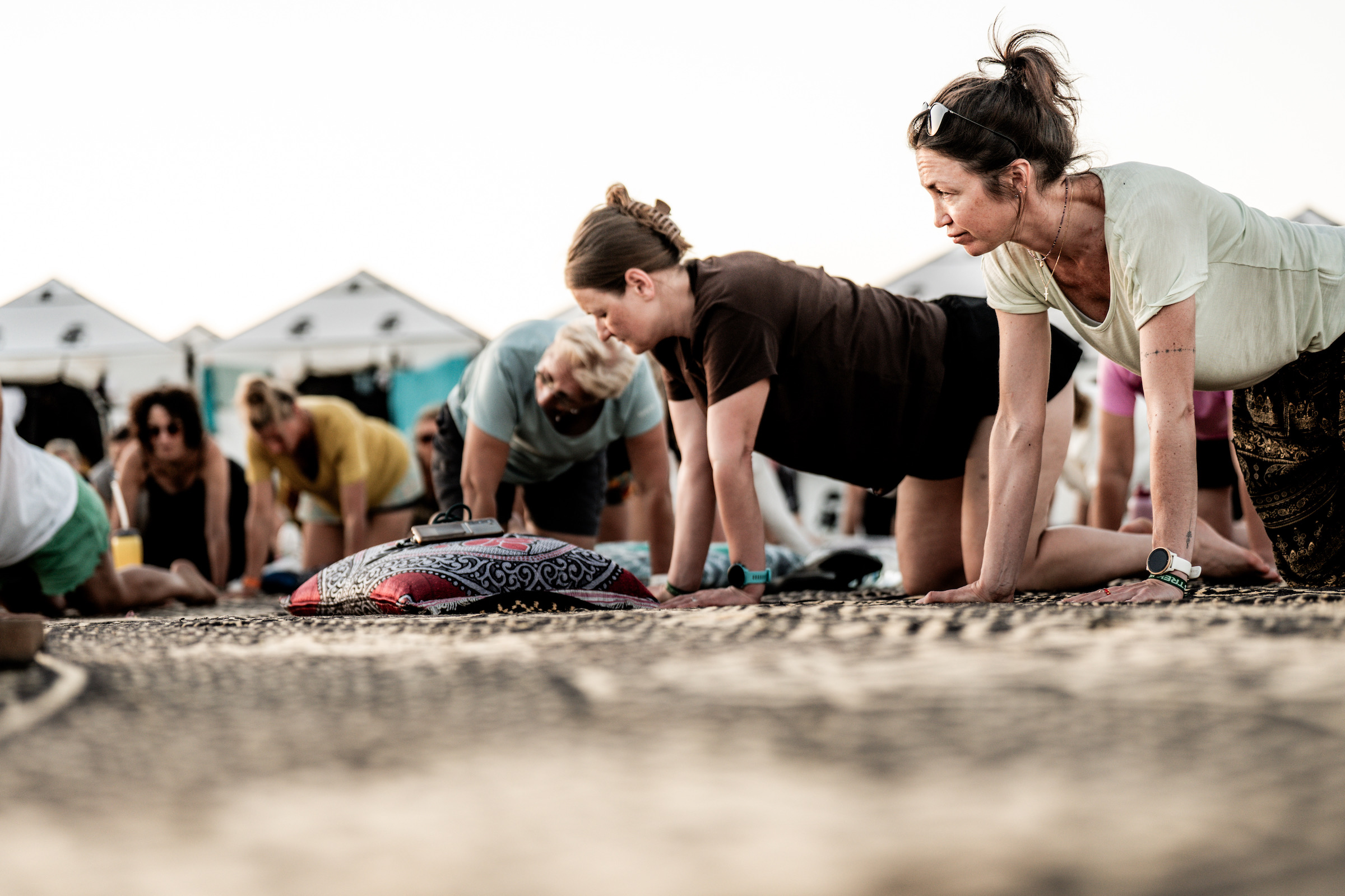
Then, as the desert begins to exhale and the day gives way to dusk, trekkers gather for sunset yoga – a quiet, grounding practice led against the backdrop of endless sky. Others opt for a massage under canvas, loosening the knots earned over each step.
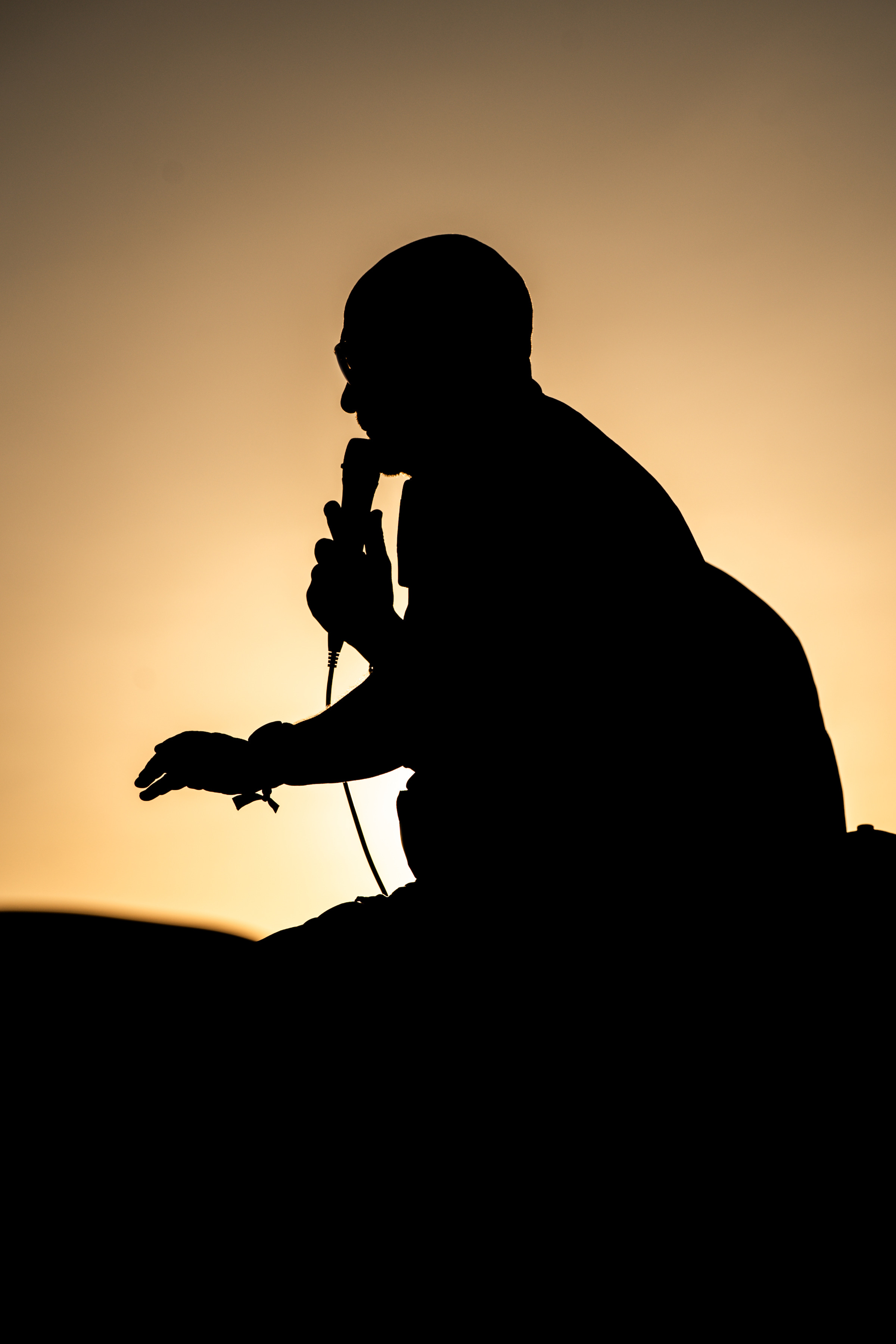
And later, with dinner shared and bellies full, the real depth of the event reveals itself: evening talks and lectures that inspire, educate, and connect. Whether it’s stories from desert veterans, lessons on resilience, or reflections on personal growth, these sessions remind everyone that MDS TREK isn’t just about distance. It’s about transformation.
A Community Like No Other
The mix of people is part of what makes MDS TREK so powerful. Solo adventurers. Groups of friends. Veterans of the classic MDS alongside first-time desert explorers. Young and old. Every background. Every story. This is a space where no one is left behind, and every victory, every climb, every kilometre is cheered like a medal.
MDS TREK Morocco isn’t about breaking records. It’s about breaking through.
To comfort.
To challenge.
To something unforgettable.
Whether you’re a seasoned adventurer or simply someone looking for your next big reset, this is the one.
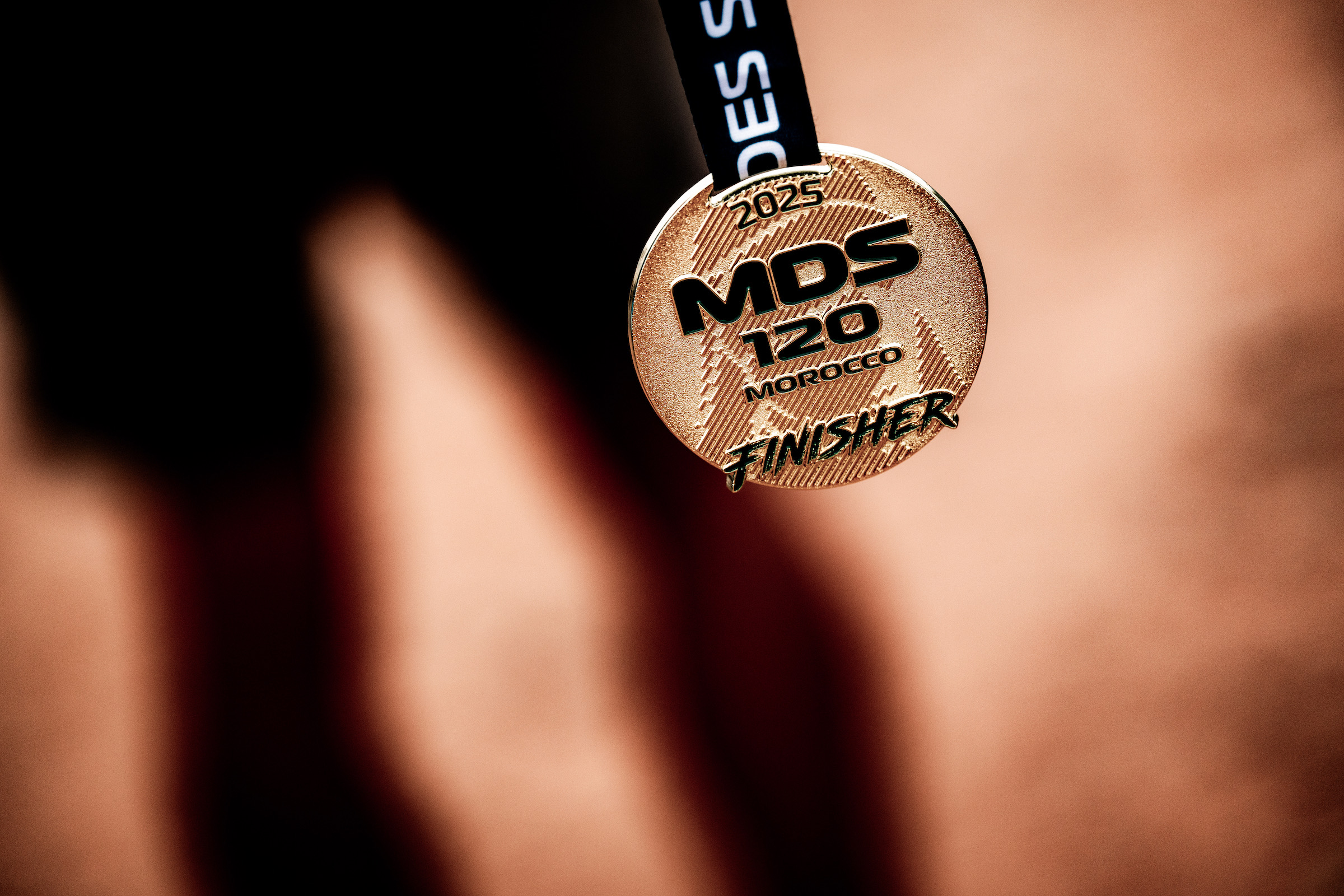
There are moments in life that will etch themselves into your memory with brutal clarity, the sting of the sun, the whip of the wind, the bite of fatigue. And then there are moments that transcend all that. Moments that shine because of what it took to get there. Today, that moment came. MDS 120 Morocco 2025 is complete. But this finish line didn’t come easy.
The Rest Day That Wasn’t
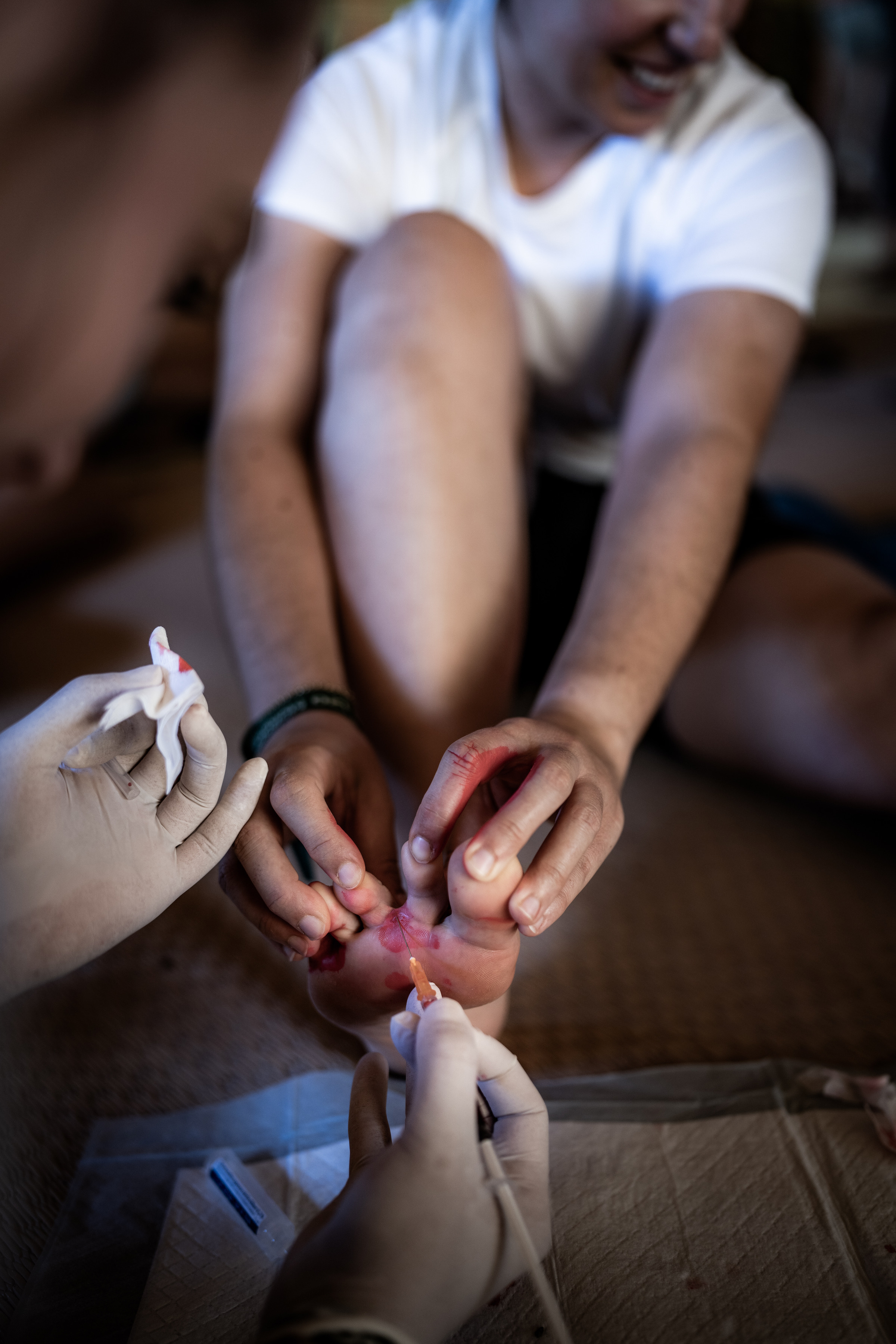
After the double blow of Stage 1 and 2 under an unforgiving sun, participants staggered into the bivouac with blistered feet and salt-crusted skin, ready for a day of rest.
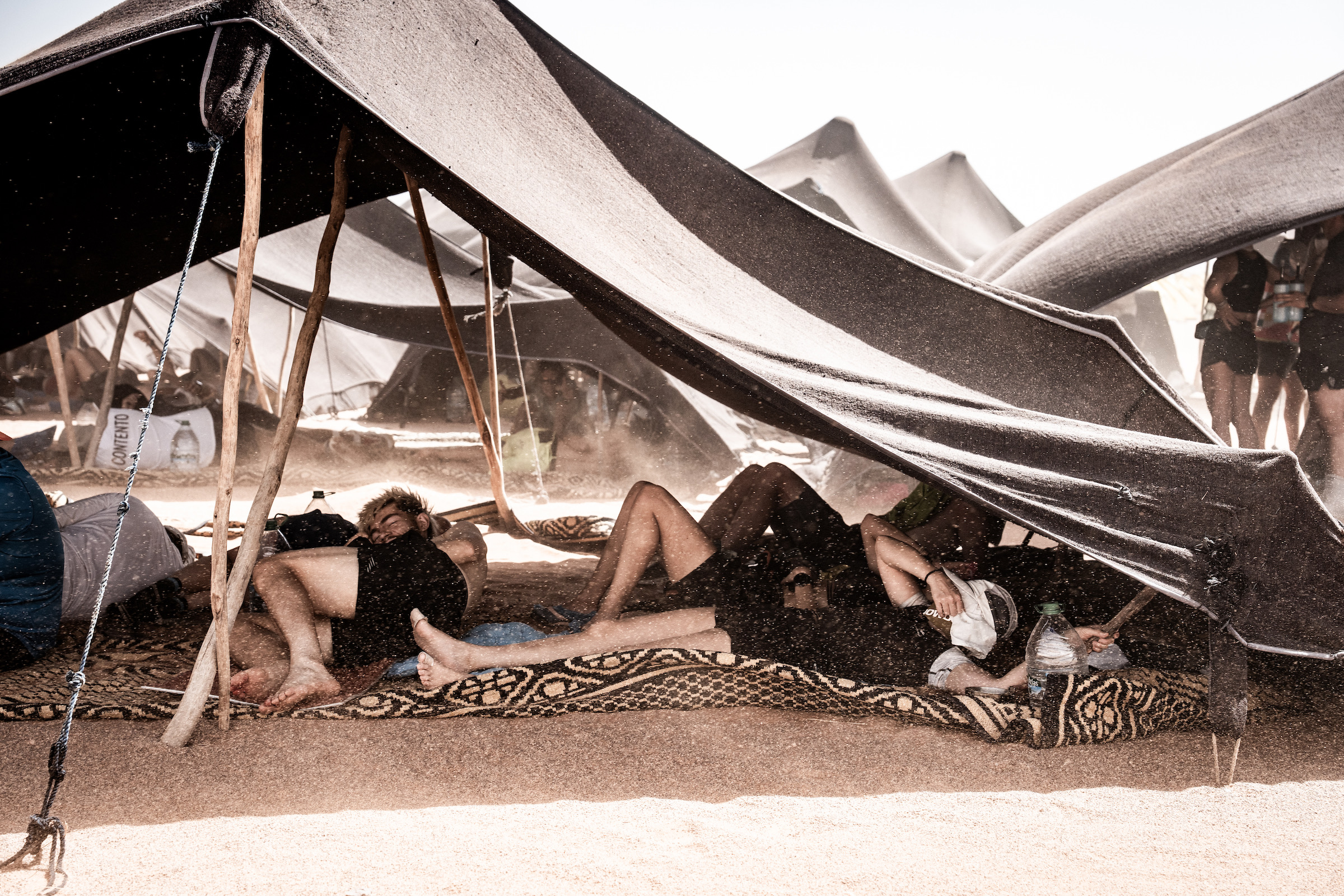
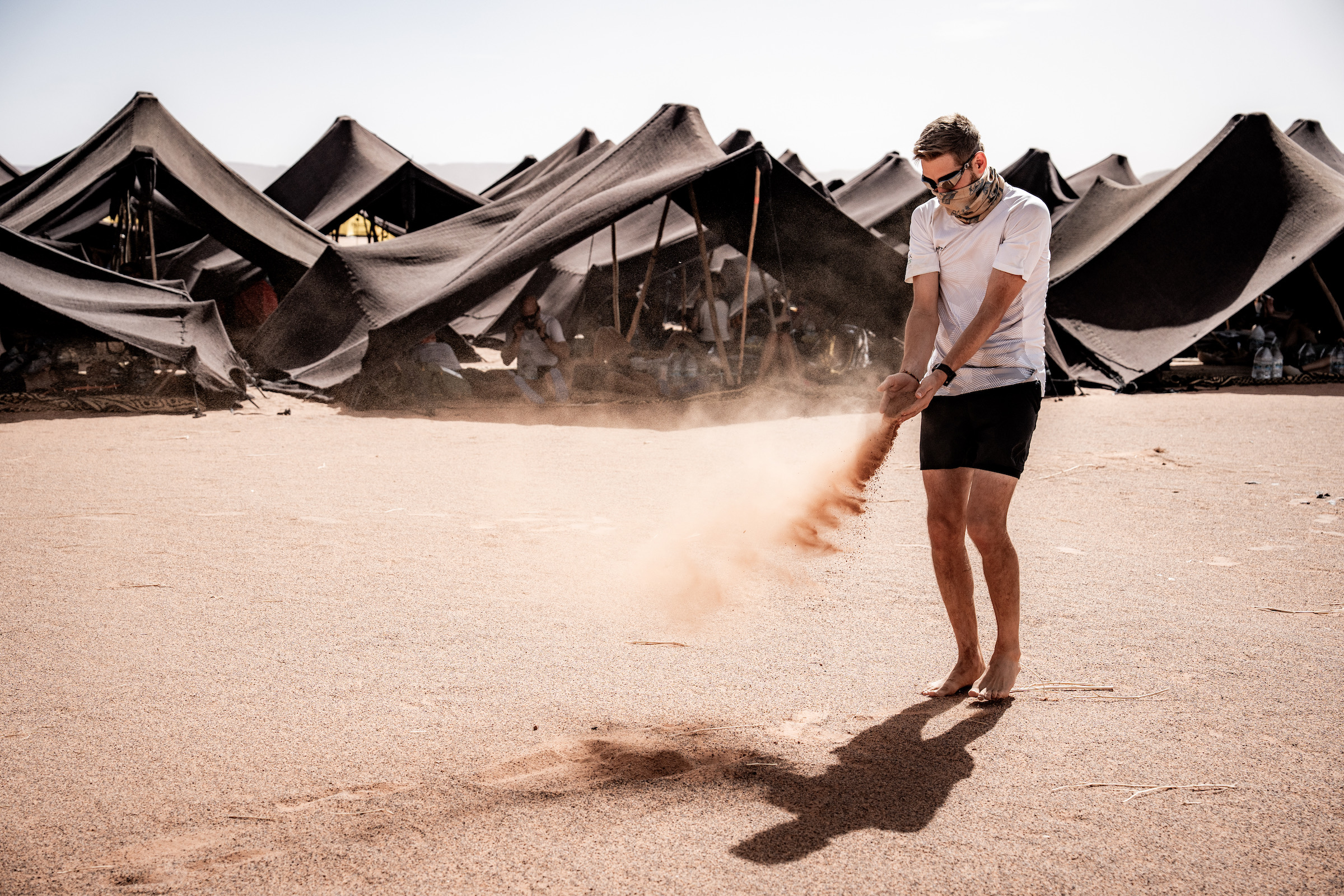
But the Sahara had other plans. Instead of recovery, they got afternoon chaos: a wild sandstorm that tore across camp like a runaway train. The sky turned thick and orange. Tents collapsed. Gear went flying. People huddled in whatever shelter they could find, eyes wrapped in buffs, trying to breathe through the dust. It lasted for hours. When it finally passed, silence hung in the air, but it wasn’t peace. It was exhaustion.
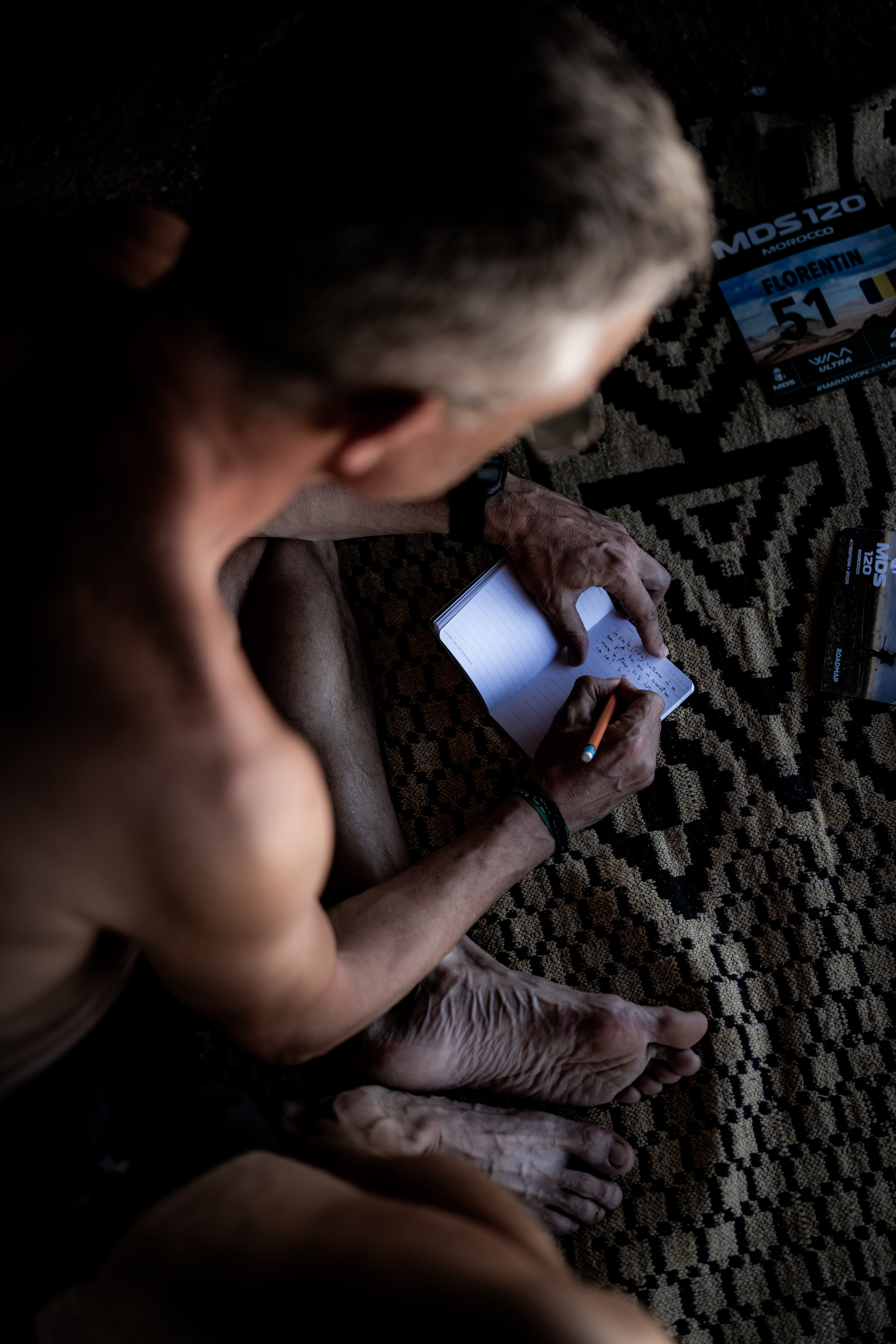
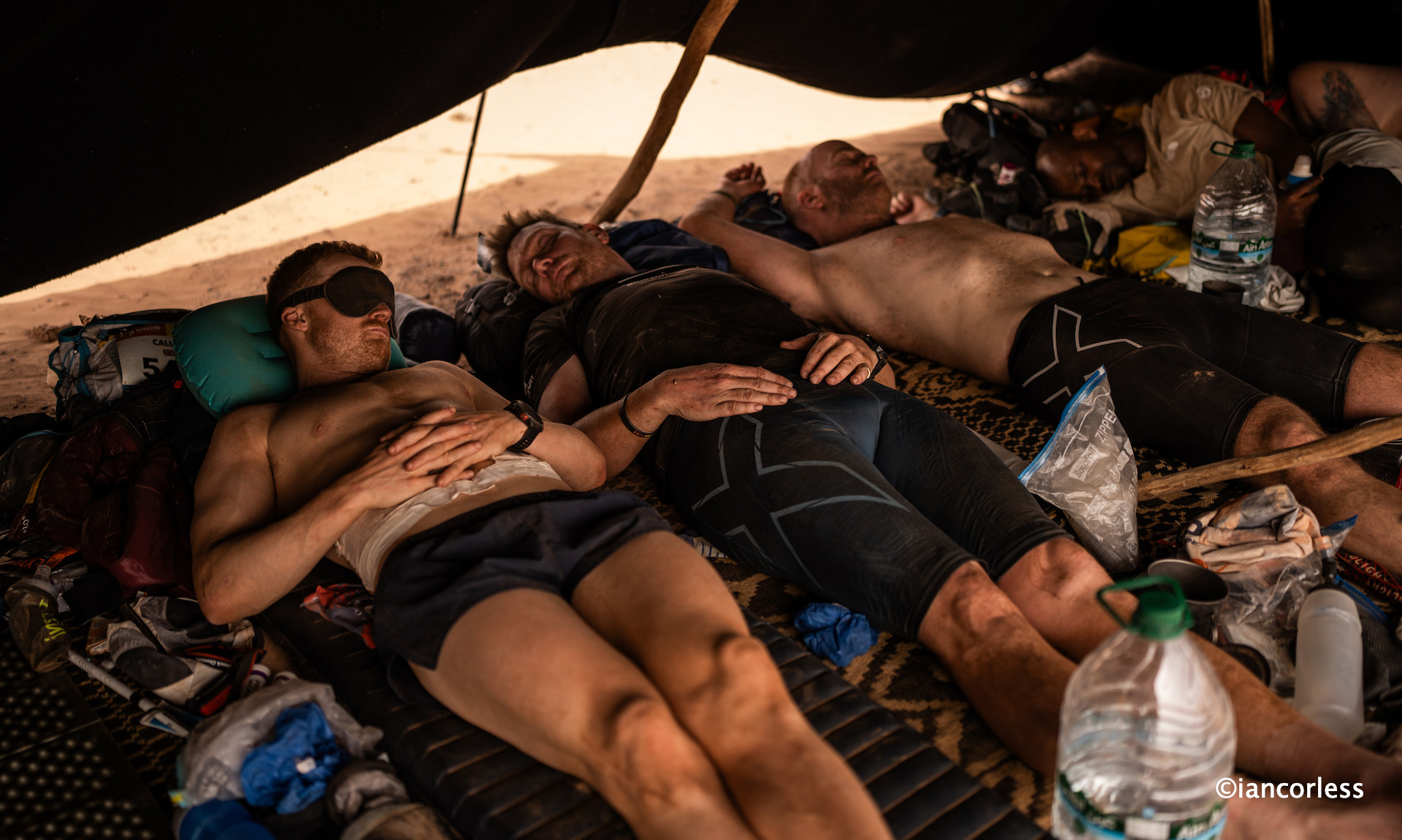
This was not the rest day anyone hoped for. But there were plenty of moment of relaxation before the chaos – lots of sleeping, adding entries in journals.
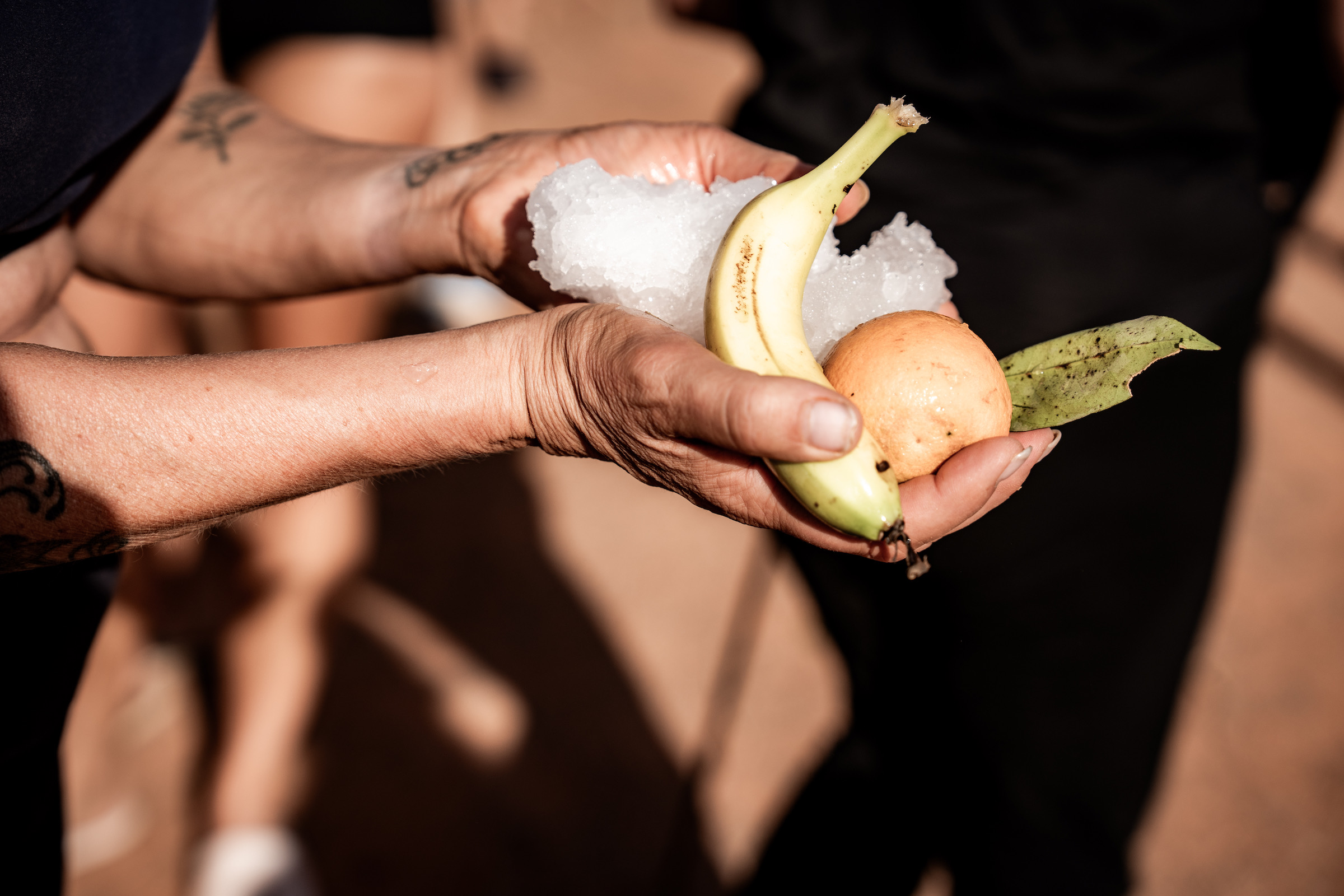
and towards the end of the day, as the wind calmed, MDS organisation offered a treat – no longer a cold can of Coke – today, fresh fruit and ice.
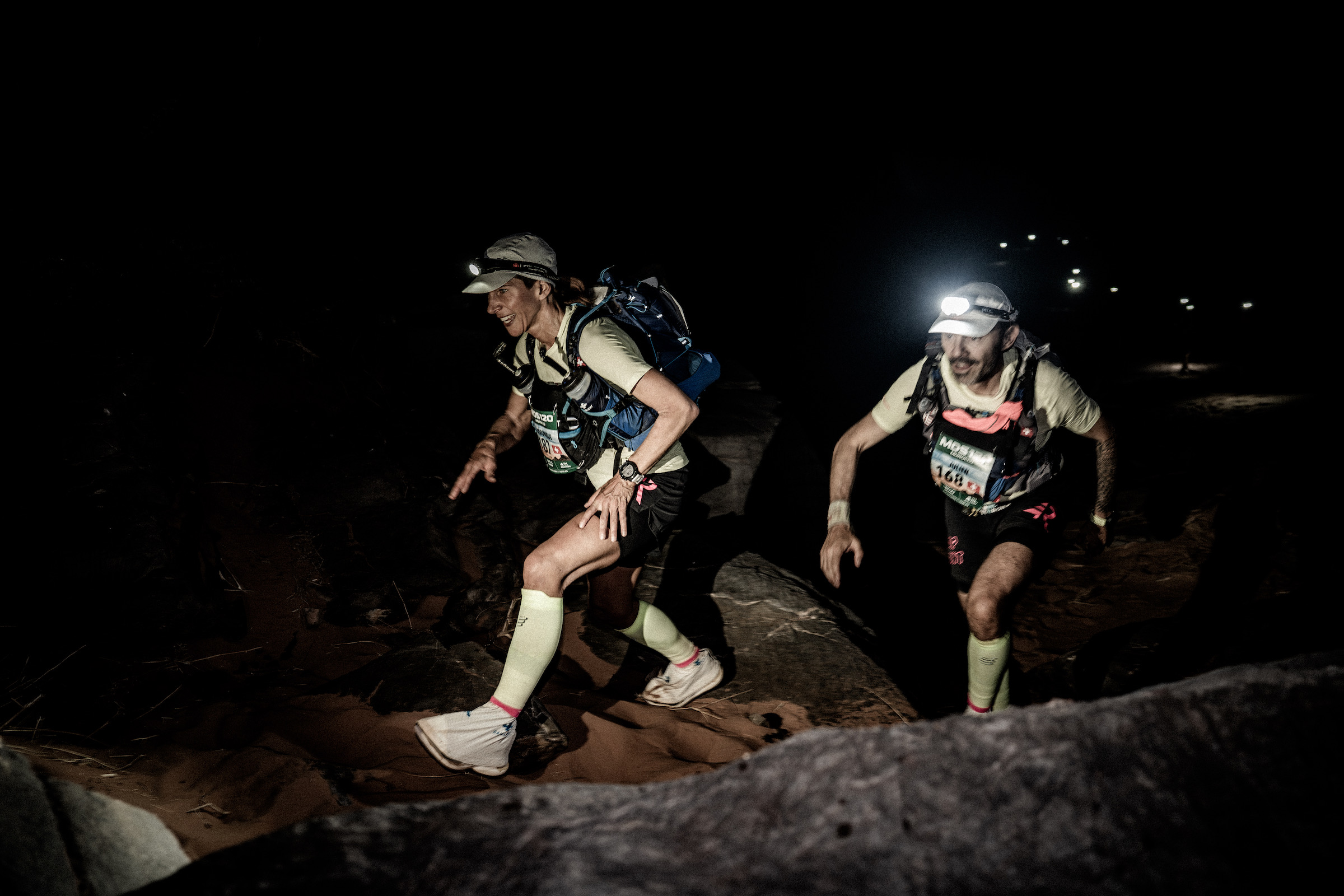
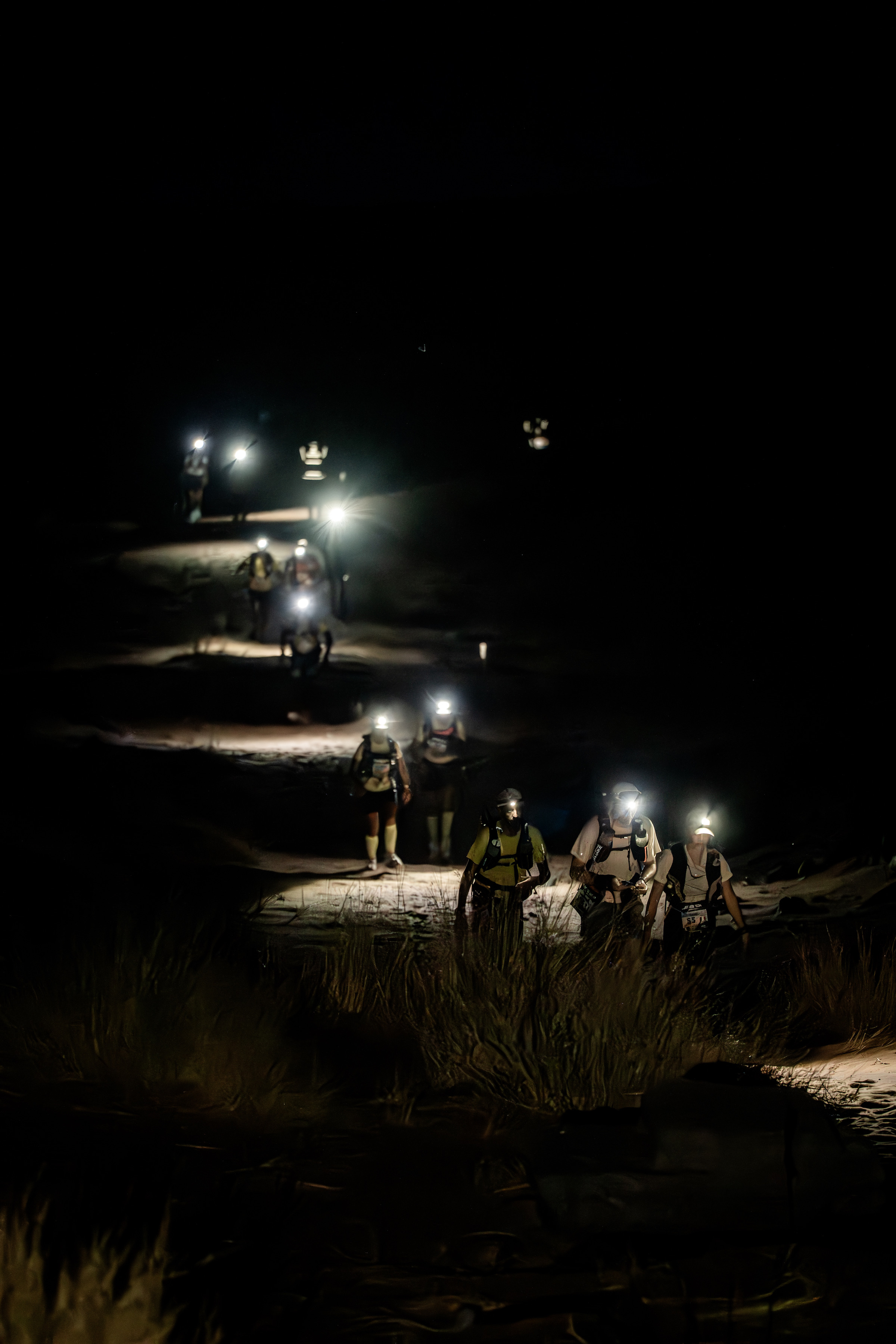
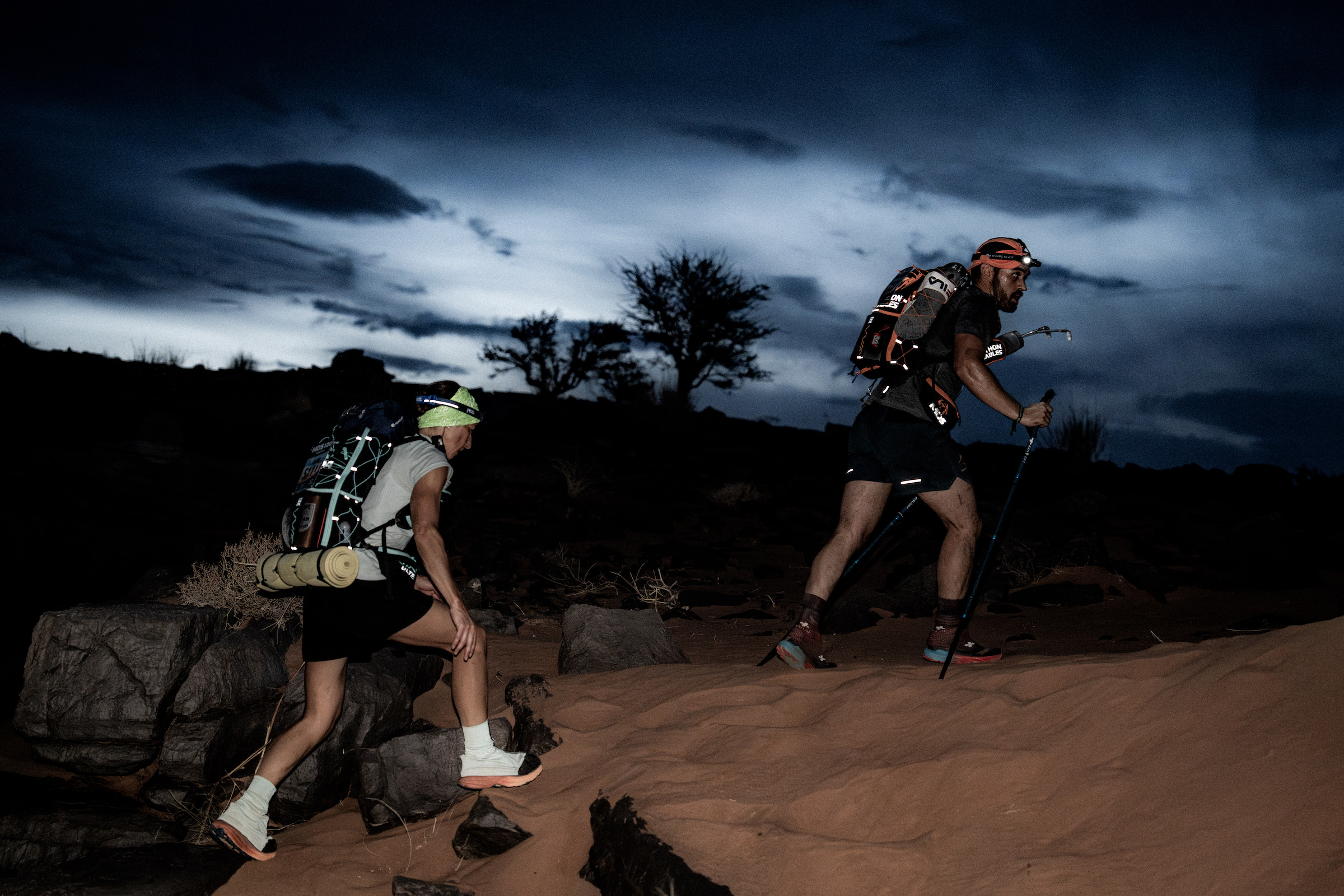
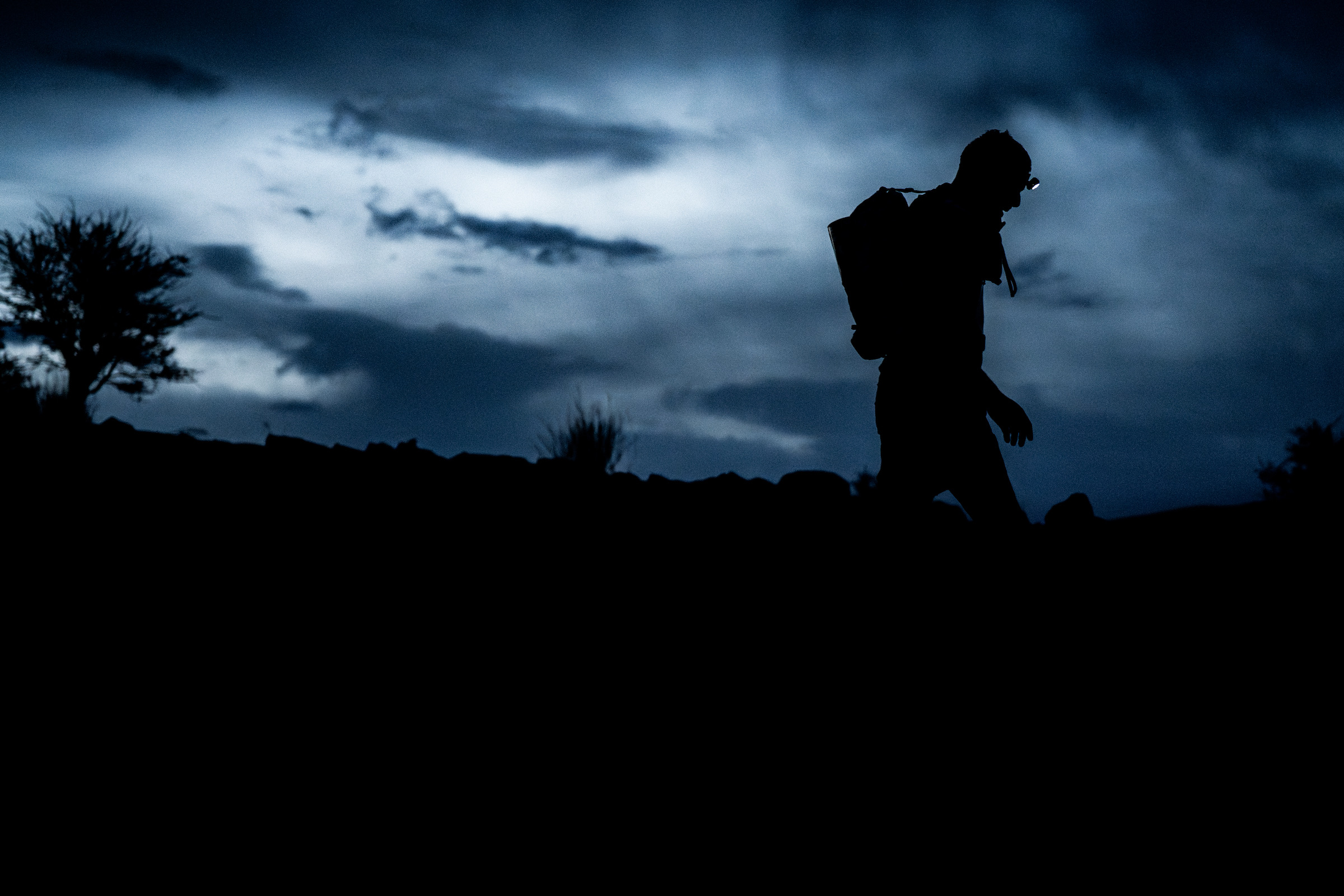
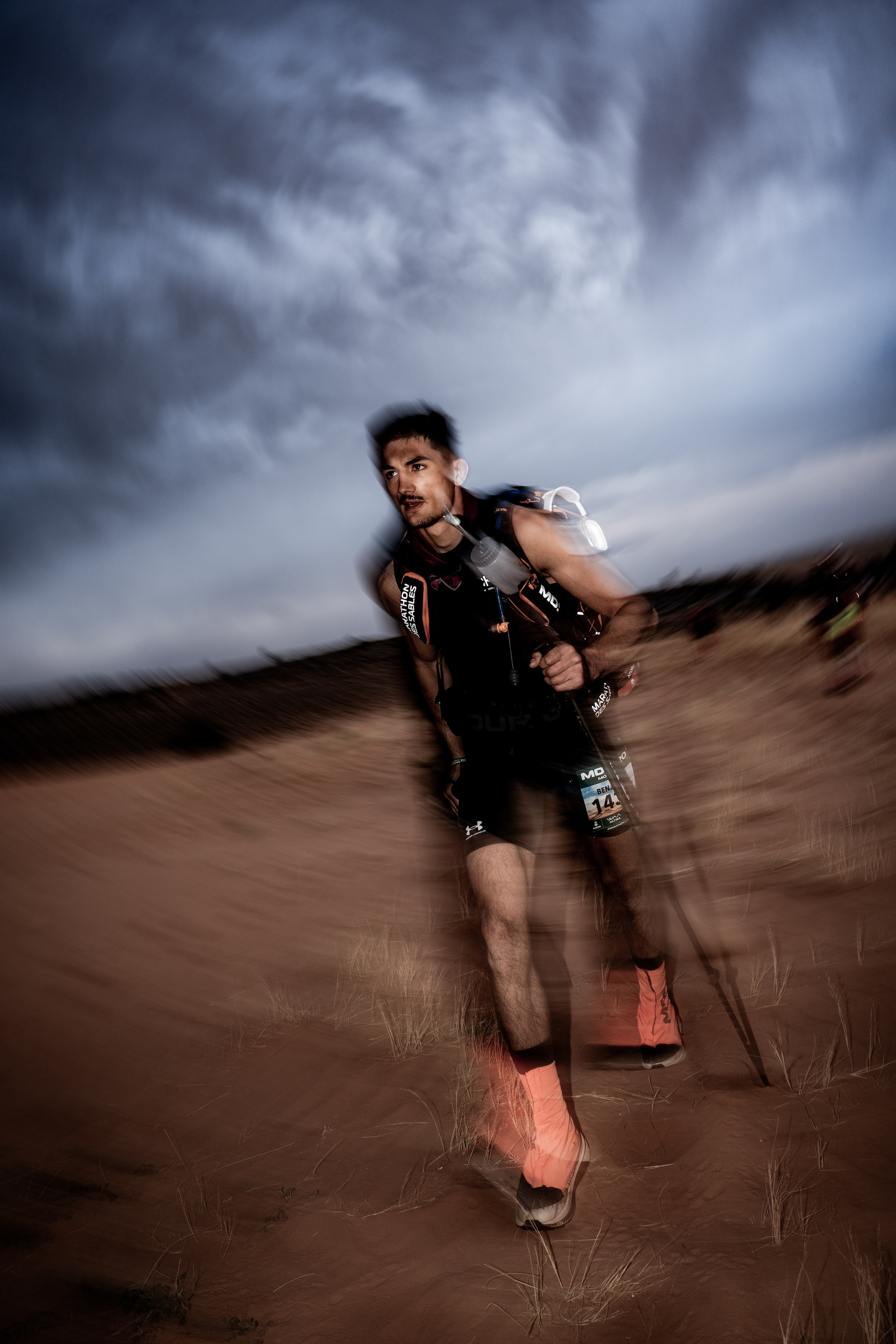
At 0400, camp began to stir. Bleary-eyed runners rose in darkness, fumbling with head torches and gear. The temperature hadn’t dropped. The air felt thick and warm, like the desert was still holding onto yesterday’s rage.
By 0530, the first runners were off. Headlamps cut through the pitch, bobbing along as the desert slowly took shape in the dim light. At 0630, the top-10 runners launched like arrows, chasing the dark down.
Then, something no one expected happened. It started softly. A few drops. Then more. Rain. Actual rain falling from a sky that hadn’t offered a single kindness in days. No one ducked. No one cursed. No one complained. Smiles broke out, quiet and stunned at first, then wide and wild. Some raised their faces to the sky. This was a blessing. A strange, surreal gift. The desert, finally, exhaled.
Stage 3 unfolded under gentler skies. The sun eventually returned, but not with the same vengeance. The course was still brutal – sand, rocks, one climbs that never seemed to end, but the worst of the heat was gone. Spirits rose with every kilometre. Runners, ragged but relentless, began to believe the finish was real.
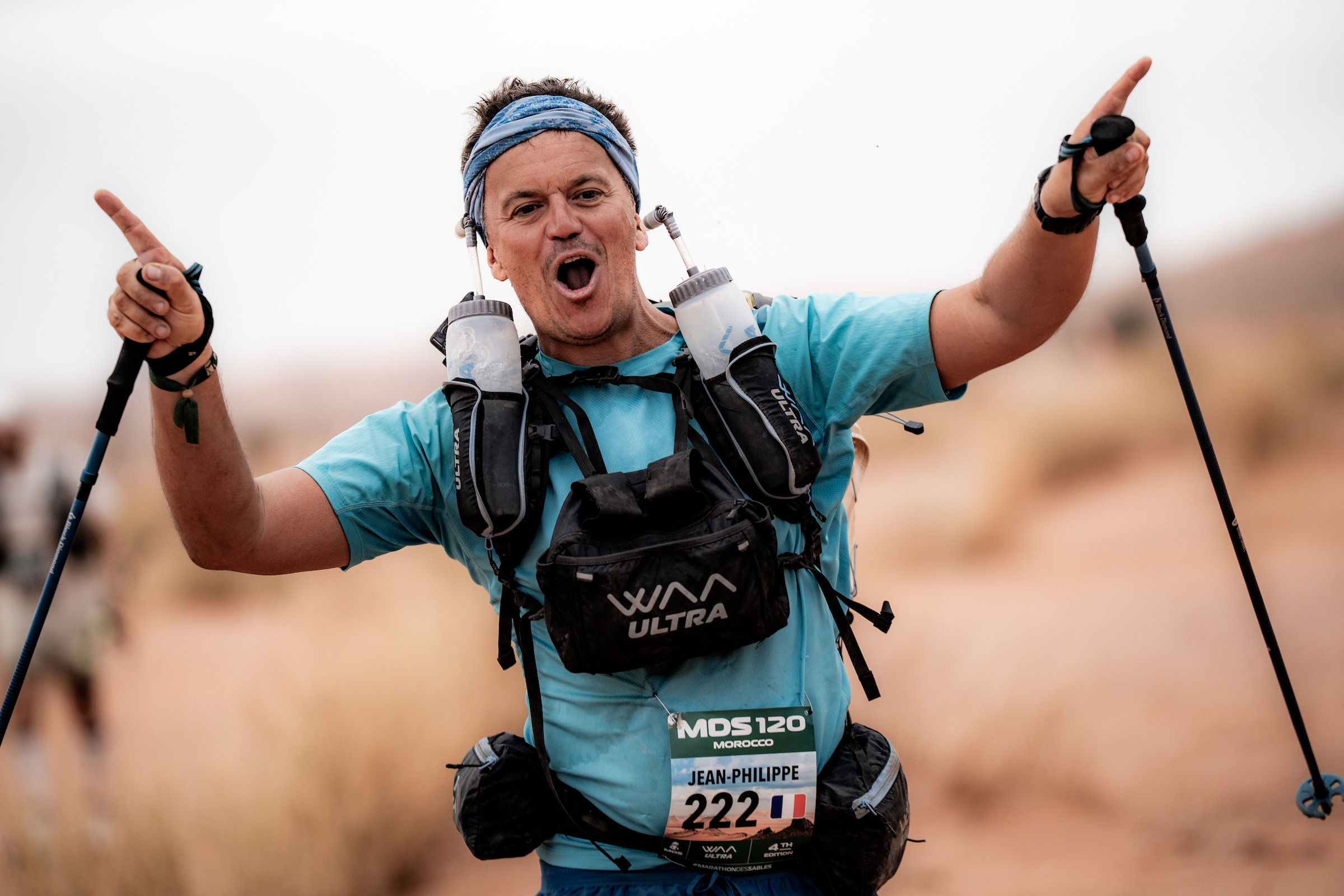
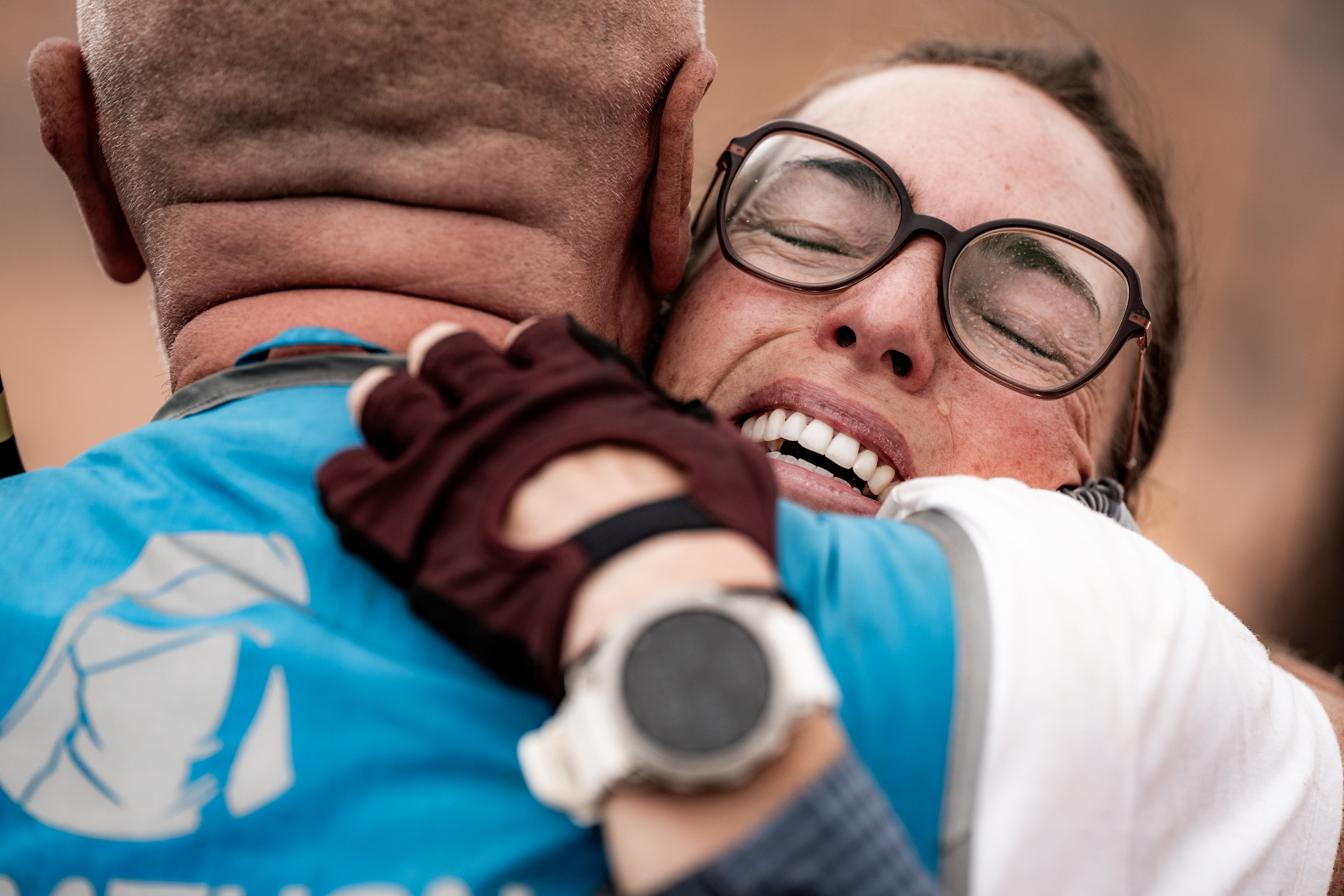
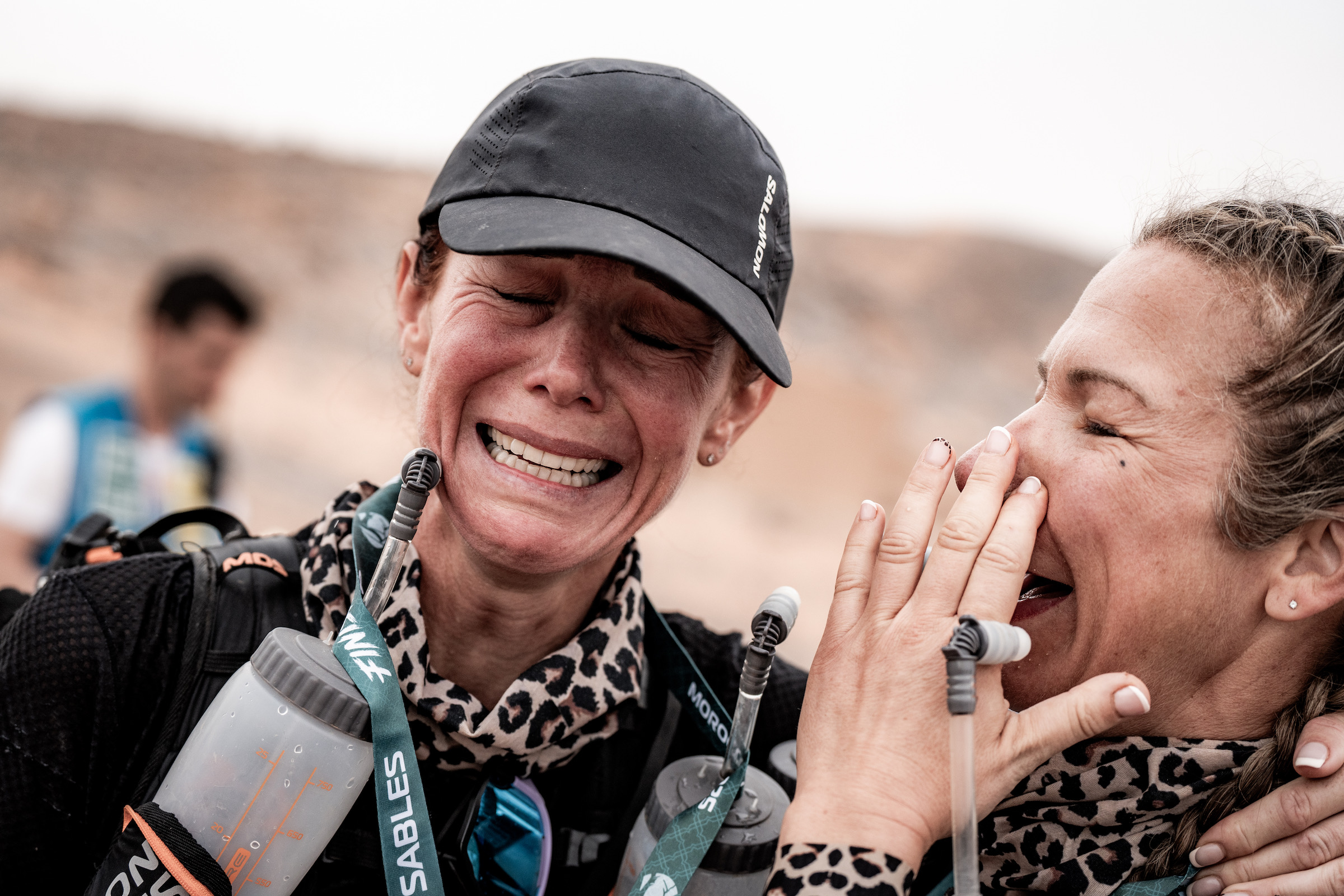
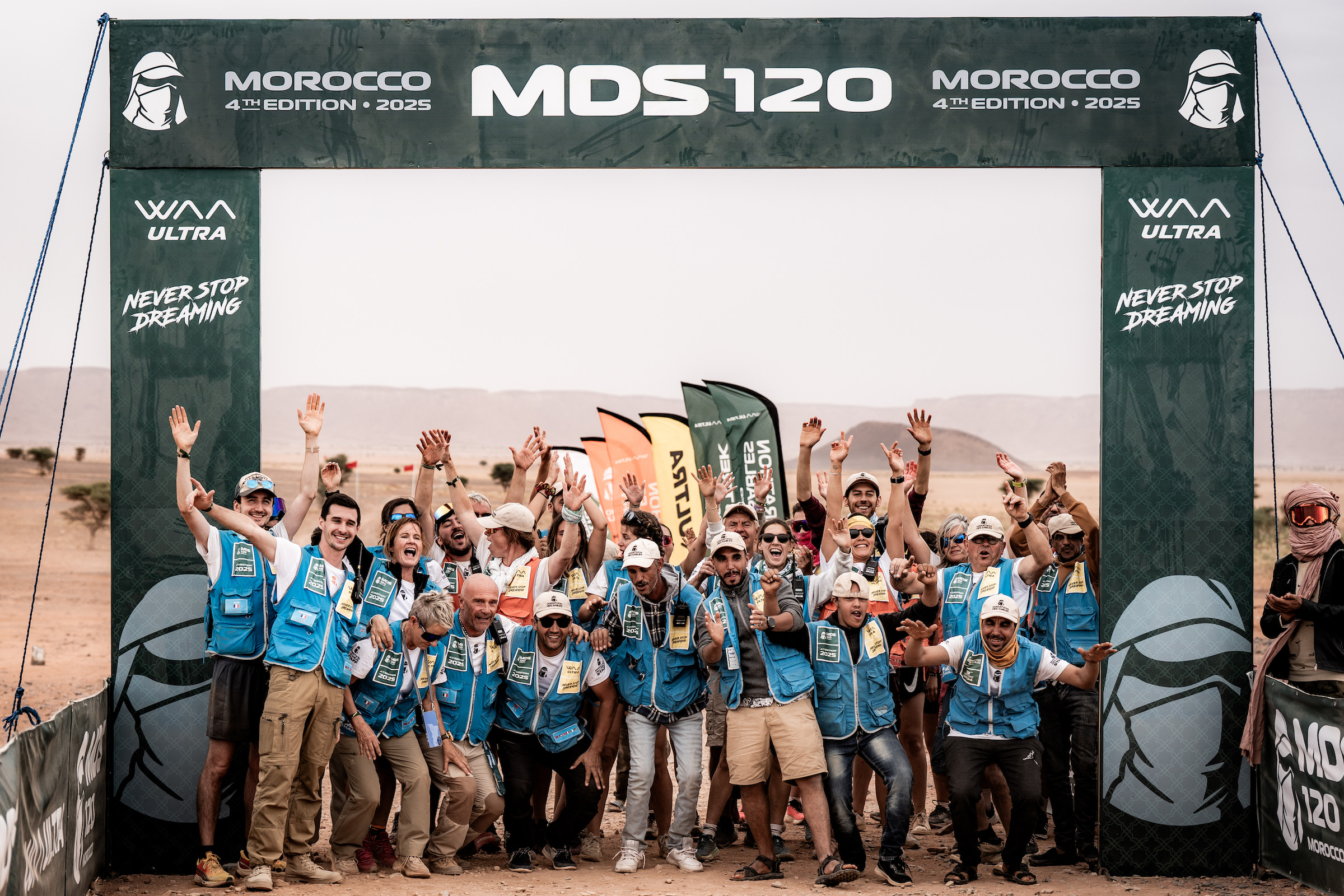
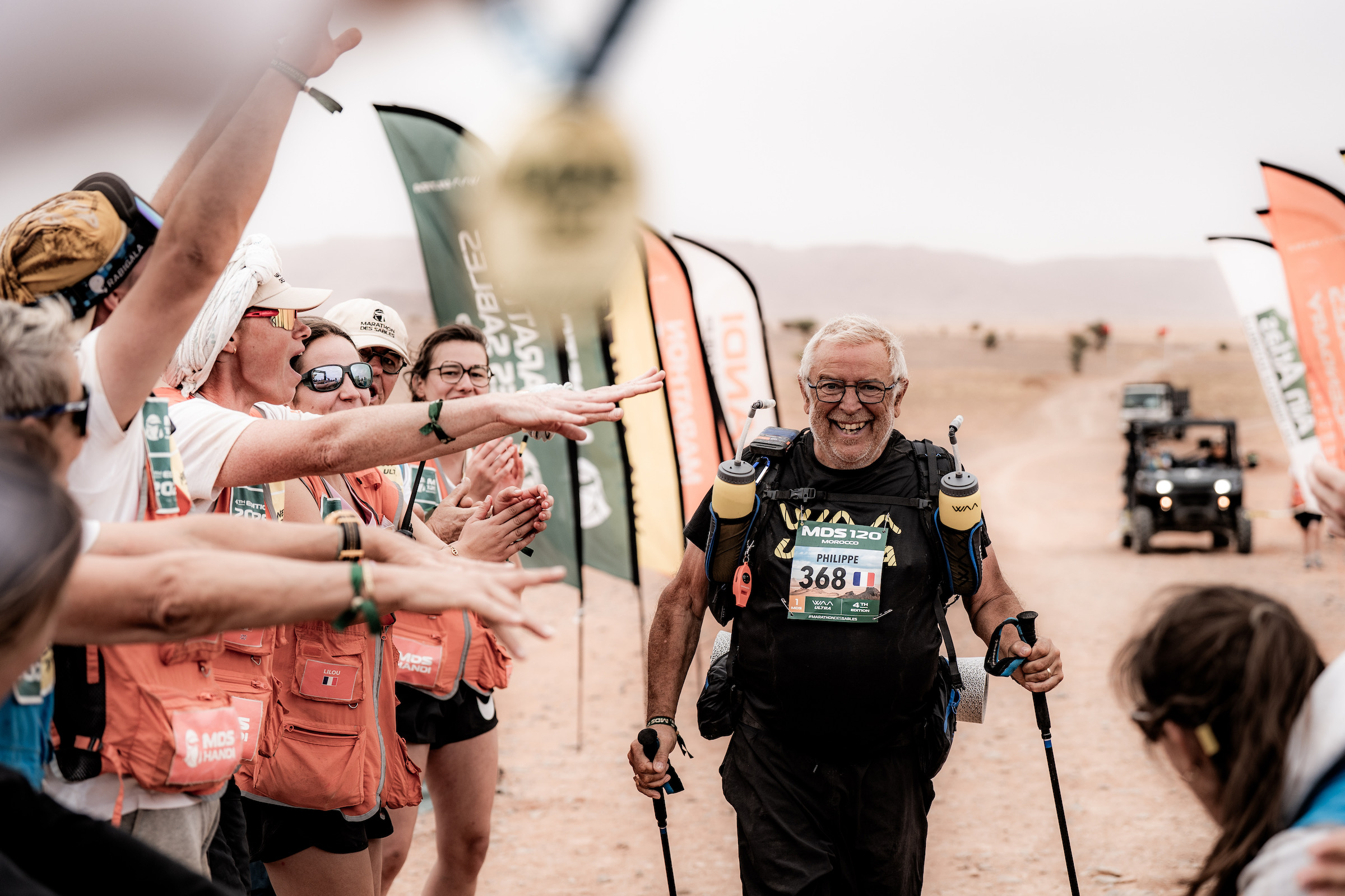
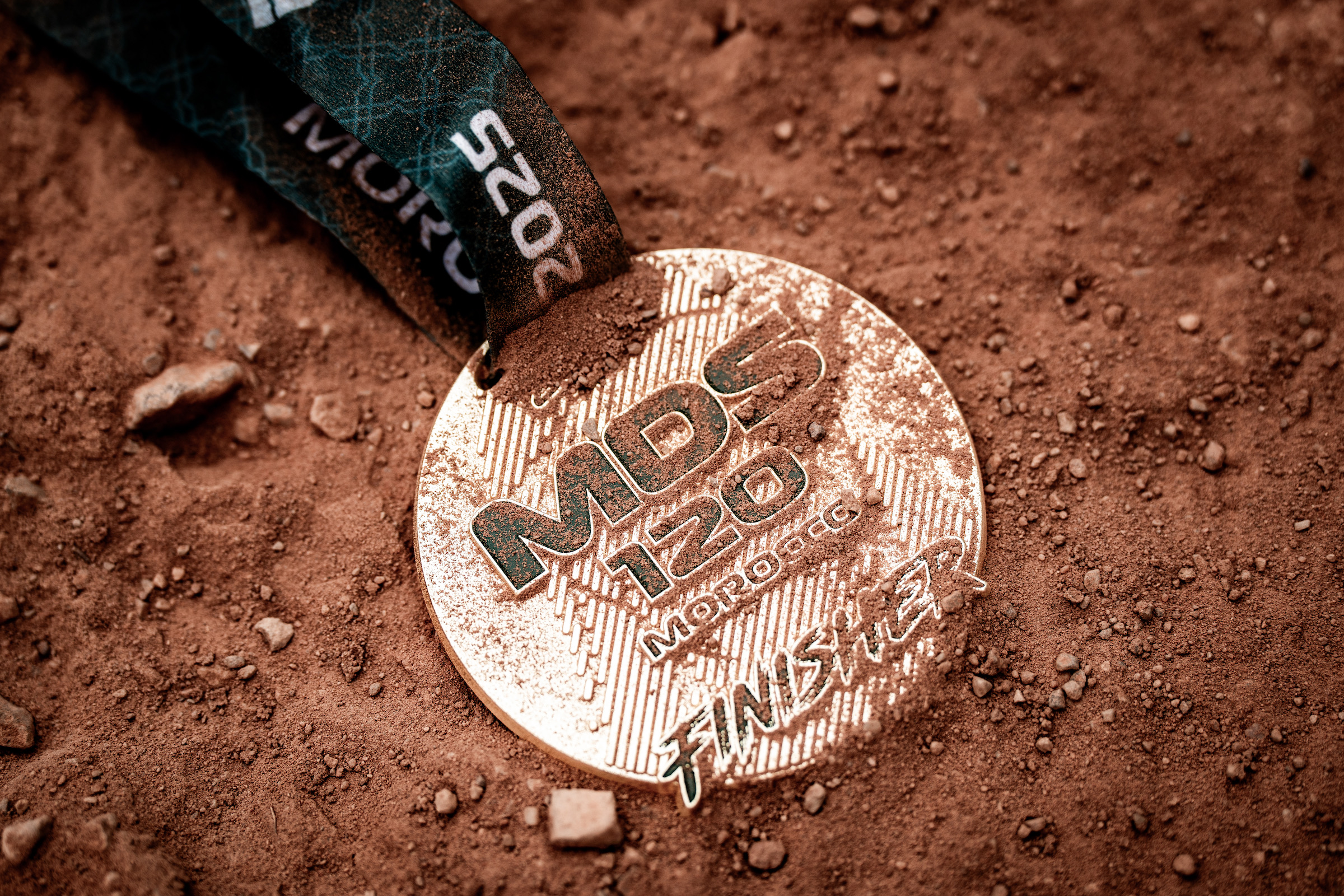
One by one, they crossed the line. Some ran with everything left in their legs. Some limped, leaning on poles. Some clutched hands with teammates or strangers who’d become family over theirshared suffering. And when that medal was placed around their necks, the tears came freely. No shame in them, only pride, release, and the overwhelming relief of completion.
There were cheers. Applause. Laughter. People hugging like they never wanted to let go. Cameras flashed. Medals clinked. Bodies that had been pushed to the limit stood a little taller.
Behind every finish was an army in blue and orange.
The MDS team, the volunteers, medics, logistics crew, water distributors, checkpoint staff, tent builders, camp runners, sweepers, and everyone else in between—made this journey possible.
They were the quiet hands who carried everyone forward. The steady voices in the storm. The ones who handed out water in 47°C heat, packed and re-packed tents, tended to blisters, and kept this chaotic caravan moving across an unforgiving land. Their work wasn’t glamorous. It was relentless. And it matters more than words can say.
MDS 120 Morocco is more than numbers. More than distance. It’s more than the desert.
It’s about finding out what lives under your skin when the comfort is stripped away. It’s about running into the teeth of the wind and not turning back. It’s about community, people who arrive as strangers and leave as family. It’s about believing you can, even when everything hurts, and then proving it.
No one who stood on that start line is the same at the finish. And that’s the point.
So to every runner who dared to take this on: you are fierce, you are strong, and you’ve earned every second of this glory. This medal means more because you fought for it.
MDS 120 Morocco is complete. The desert tried to break us. But we endured. And that’s the story you’ll tell forever.
On Wednesday, September 10 at 12:00 PM UTC+2, registration opens for three unforgettable endurance adventures:
MDS 120 Morocco – October 2–10, 2026
MDS Trek Morocco – October 11–20, 2026
MDS 120 Jordan – October 31–November 7, 2026
For runners, trekkers, and anyone who dreams of testing their limits in the most breathtaking landscapes on Earth, these dates mark the beginning of a once-in-a-lifetime journey.
What is the MDS?
The Marathon des Sables (MDS) is not just a race. It’s a legend. Born in Morocco in the 1980s, the event has earned a reputation as “the toughest footrace on Earth.” Participants cross vast stretches of desert on foot, carrying their own food and gear, with only water and tents supplied. It’s as much a mental battle as it is a physical one – a journey into resilience, camaraderie, and discovery.
But MDS isn’t just about the ultra-hardcore. Over the years, the family has grown to include formats that open the experience to more people while retaining its wild, adventurous spirit. That’s where MDS 120 and MDS Trek come in.
MDS 120 vs. MDS Trek: What’s the Difference?
Both are designed to immerse you in the magic of the desert, but the style of challenge is different.
MDS 120
A shorter, yet still demanding, version of the iconic Marathon des Sables.
120 kilometers spread across three stages.
Self-sufficient format: you carry your food and equipment.
Runners and fast hikers alike join in, moving between marked checkpoints across some of the most beautiful, wild landscapes imaginable.
Nights are spent in camp, bonding with fellow adventurers under desert skies.
MDS TREK
Designed for those who want the MDS atmosphere without the clock.
Roughly the same length as the 120, but completed at a trekking pace over five stages.
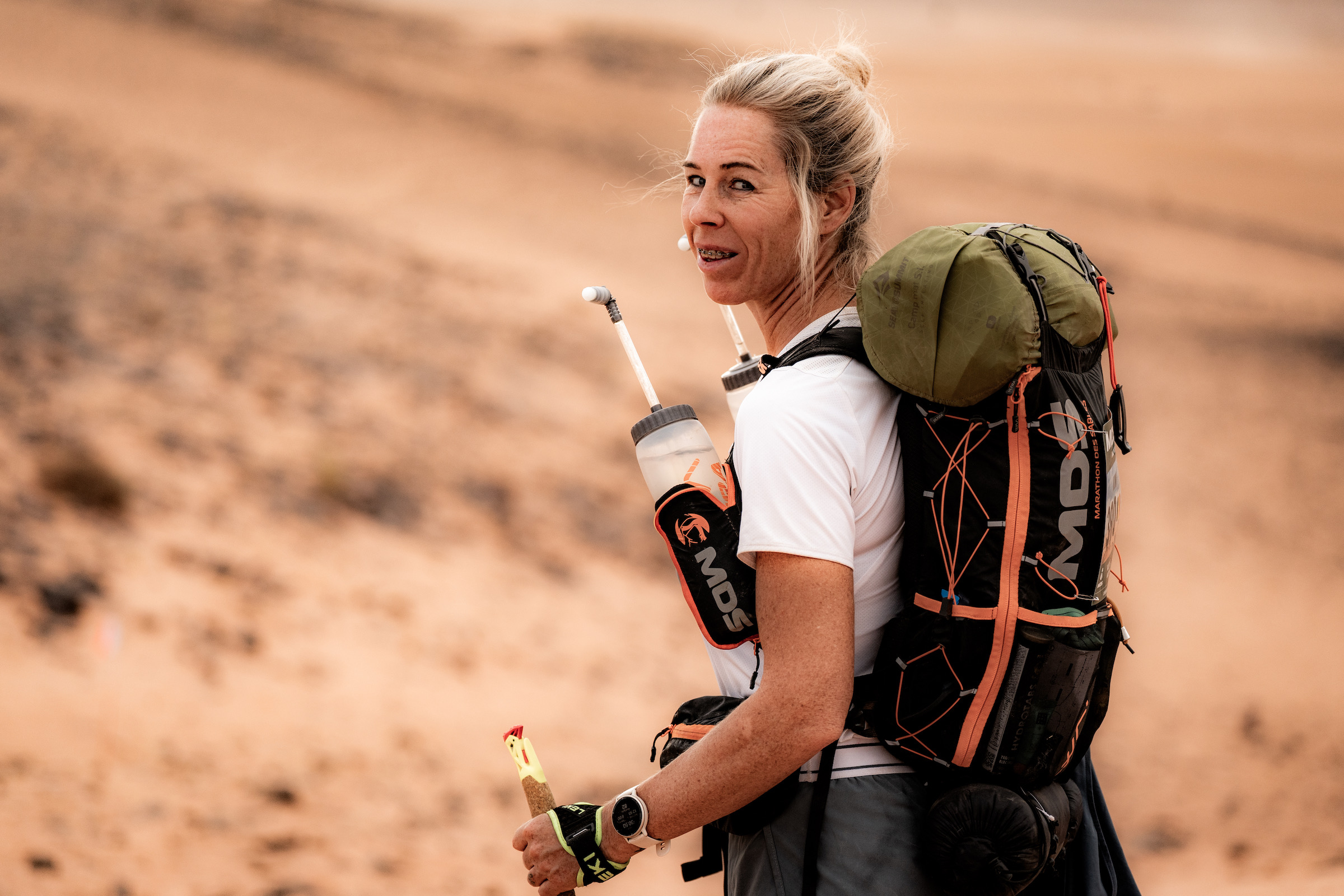
Guided and supported: you carry a daypack, while larger bags are stored in bivouac.
Perfect for walkers, adventurers, and anyone who prefers to savour the desert at a slower rhythm.
In short: MDS 120 is a race. MDS Trek is an adventure. Both give you the thrill of the desert, the community spirit, and the sense of achievement that comes from stepping far outside your comfort zone.
Photo by Ian Corless
Morocco: The Heart of MDS
It’s no accident that MDS was born in Morocco. The Sahara here is everything you imagine when you hear the word “desert”: towering golden dunes, dry salt lakes, endless rocky plains, and distant mountains shimmering in the heat.
During the MDS 120 Morocco (Oct 2–10, 2026), participants will move through terrain that feels ancient and otherworldly. Running or trekking across sand seas lor along fossil-studded plateaus, you’ll witness landscapes that seem unchanged for millennia.
If you prefer a slower, more contemplative journey, MDS Trek Morocco (Oct 11–20, 2026) is your chance to follow in the footsteps of nomadic caravans. Expect strong mint tea at camp, Berber hospitality, and sunrises that wash the dunes in pink and gold.
Jordan: A Desert of Myths and Monuments
After Morocco, MDS 2026 turns east to another jewel of the desert world: Jordan.
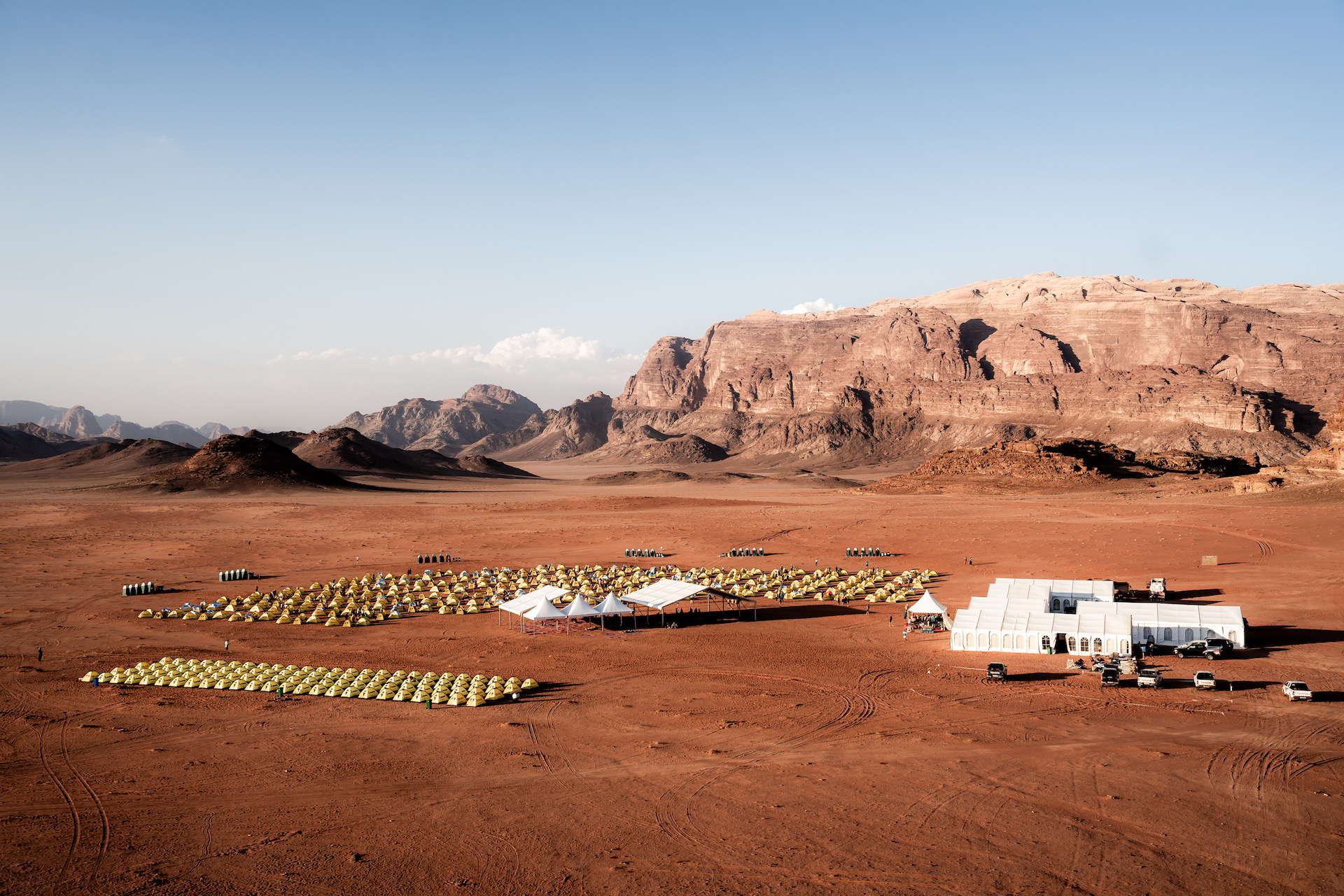
From October 31 to November 7, 2026, MDS 120 Jordan takes place in Wadi Rum, a place so breathtaking it has been called “the Valley of the Moon.” Red sandstone cliffs, natural arches, and wide sandy valleys create a setting that feels almost Martian—no wonder so many films have been shot here.
Photo by Ian Corless
The terrain is ideal for running and trekking: firm sand flats, winding canyons, and rocky ridges that offer sweeping views. And the cultural backdrop is equally unforgettable. This is the land of Lawrence of Arabia, Nabataean traders, and Bedouin camps where hospitality is still sacred.
Photo by Ian Corless
Add in the chance to visit Petra – the rose-red city carved into cliffs – and float in the Dead Sea, and you’ve got a trip that balances physical challenge with world-class cultural exploration.
Why These Events Sell Out
Every MDS event is capped to maintain its unique atmosphere: a balance of challenge, safety, and community. That’s why when registration opens, places vanish fast.
Here’s what draws people back year after year:
The Challenge: 120 kilometers may sound daunting, but it’s achievable for anyone willing to train. Past participants range from elite athletes to everyday adventurers.
The Camaraderie: Camps become villages of shared struggle and shared joy. By the end, strangers become family.
The Scenery: Whether it’s sunrise over Moroccan dunes or starlight over Jordan’s cliffs, the landscapes will etch themselves into memory.
The Transformation: You leave with more than a medal. You leave knowing you can do hard things—and that realization follows you into every part of life.
Photo by Ian Corless
Preparing for MDS
MDS is not something you show up to on a whim. But it’s also not as unreachable as it may seem. With six to twelve months of structured training – mixing endurance, strength, and practice carrying a pack – most people can get ready.
What both demand is an open mindset: ready for sand in your shoes, dust on your face, and joy in small things like shade, water, and shared laughter.
The post-pandemic years have sparked a surge of people craving real experiences – not just vacations, but adventures with meaning. MDS embodies that perfectly. It’s travel, sport, culture, and self-discovery all wrapped into one.
If you’ve ever dreamed of running across the Sahara or walking through Wadi Rum, 2026 is your chance. Spots are limited, and once they’re gone, you’ll be waiting another year.
Photo by Ian Corless
Think about it: ten days where your only job is to put one foot in front of the other. No emails, no deadlines, no noise – just the sound of your breath, the crunch of sand, the laughter of fellow adventurers, and the vast silence of the desert.
That’s what awaits you at MDS 120 Morocco, MDS Trek Morocco and MDS 120 Jordan 2026.
On September 10, 2025 at noon (UTC+2), the door opens.
The MARATHON DES SABLES is a unique adventure of 250km’s spread over 6-stages of self-sufficiency, shared by thousands of enthusiasts, in 2026 it celebrates 40-years. In 2017, another format, HMDS was born with 70 to 120km distances, spread over 3-stages and 4-days.
Since 2024 there has been a significant changes for the MDS brand. The ‘HMDS’ format while still following the same protocols and format has now dropped the ‘half’ title and moving forward, events will be called MDS 120 Jordan, MDS 120 Morocco, MDS 120 Cappadocia and so on.
To differentiate the full distance race of 250km’s, Marathon des Sables will now be known at MDS Legendary, reflecting the legendary status of this iconic event and its long history as a pioneer of the stage racing and multi-day format.
All the races are now owned by the same team and while many may be familiar with the format and protocols for the shorter distance races, MDS Legendary since 2024 has had some significant changes.
Since 2024, MDS has expanded beyond its roots with MDS 120, the exploratory MDS TREK, the demanding MDS RAID, the mind-bending MDS Crazy Loops. and MDS ULTRA – Morocco. And the inspiring, MDS HANDI. Each one a new take on the same promise, to push the limits of what a runner can handle.
MDS EVENTS
MDS The Legendary
MDS 120 Atlantic Coast Morocco
MDS RAID Namibia
MDS 120 Cappadocia
MDS Crazy Loops – currently 2 locations in France.
MDS 120 Fuerteventura
MDS 120 Morocco
MDS Trek Morocco
MDS Handi Morocco
MDS 120 Jordan
MDS 120 Peru*
MDS ULTRA – Morocco
* Every 3-years.
WHAT IS MDS?
MDS is a self-sufficient race taking place over 3 to 6-stages.
Bivouac life.
MDS Legendary is the iconic 6-stage race (over 7-days) with a distance of 250km (+/-) based on the route, terrain and difficulty. There are no options available on distance and participants are self-sufficient for the entire race, the only exception is the provision of water and a shared tent (bivouac) with 7 other participants. An example of 2024 distances:
Stage 1 : 31.1 km
Stage 2 : 40.8 km
Stage 3 : 85.3 km (over 2 days)
Stage 4 : 43.1 km
Stage 5 : 31.4 km
Stage 6 : 21.1 km
MDS120 events start at 70, 100 and 120km for the shorter race format, depending on the race destination, there are 2 or 3 distances available. To clarify, this is not 2 or 3 different races, but the same race with the option to choose what distance you run or walk. As an example, the route is divided into 3 stages (4-days), to be completed at your own pace: walking or running.
– 70 km
– 100 km
– 120 km
Here is a breakdown of each stage:
– Stage 1: 25km – 30km
– Stage 2: 20, 40 or 60km
– Stage 3: 25km – 30km
The choice of the format is made at the registration. However, you can adjust it until the time of MDS.
MDS RAID follows a similar format to MDS 120.
MDS TREK is not self-sufficient and while similar to other MDS events, the format is much more a holiday experience, ideal for first timers or those who are looking for an active travel/ relax experience. Read more HERE.
THE MDS FORMAT
MDS The Legendary and MDS 120 events follow a similar format, however, there are key differences:
MDS The Legendary is a 10-day experience
MDS 120 a 7-day experience
In both scenarios you arrange travel to the relevant destination, arriving with adequate time to meet the MDS team at a designated meeting point and time. This may mean you need to arrive one day in advance to ensure you are able to meet the schedule as stipulated. From here, the MDS team then transport you to the start of the race.
For MDS Legendary this will be a flight to Marrakech and free transport is offered to Ouarzazate.
For MDS120 / TREK / RAID and ULTRA events, the meeting point will be a specific airport for transfer to hotel.
MDS The Legendary use classic Nomad tents that hold 8-participants. By contrast, MDS120 events use individual tents organised in cells of 6. TREK has upgraded tents, RAID combines solo tents and a star night, MDS ULTRA will be hotels except when racing.
Post-race you will be transported to a hotel and an awards ceremony and gala dinner will take place.
EVENTS
MDSLEGENDARY the iconic 6-stage, 250km race celebrating 40-years in 2026.
MDS 120 (used to be HMDS) this is 3-stages over 4-days with distance options of 70/ 100 or 120km.
MDS TREK this is similar to the MDS 120 format, however, there is no self-sufficiency, more comfortable accommodation and additional facilities, an excellent introduction to the MDS.
MDS RAID an event for more experienced athletes that is undertaken in teams of two, over approximately 90-120km’s, typically, two distance options are provided. The format is similar to MDS 120 with 3-stages over 4-days. One night will be undertaken under the stars with no bivouac.
MDS ULTRA new for 2025, a 100-mile or 100km single stage race with a 40-hour cut off.
MDS CRAZY LOOPS three new events for 2025 undertaken in ski resorts, the format is to run as many loops as possible in 24-hours. The loops will be typically, 3-5km’s in length.
MDS HANDI an inspiring inclusive event to provide wheel chair athletes an opportunity to participate with team members.
Both race formats, MDS Legendary, MDS120, MDS RAID and MDS ULTRA require participants to be self-sufficient for the whole race.
What does this mean?
Quite simply, you must wear and carry all you need for your race experience with the exception of the tent / bivouac. MDS ULTRA will not require a bivouac or same kit requirements as MDS Legendary, Raid or 120.
It may sound daunting but it is not, it’s actually quite simple. You need to address the following points:
What you wear.
Equipment you need to participate.
Sleeping.
Food.
Cooking equipment. (You can purchase fuel blocks in bivouac)
Water.
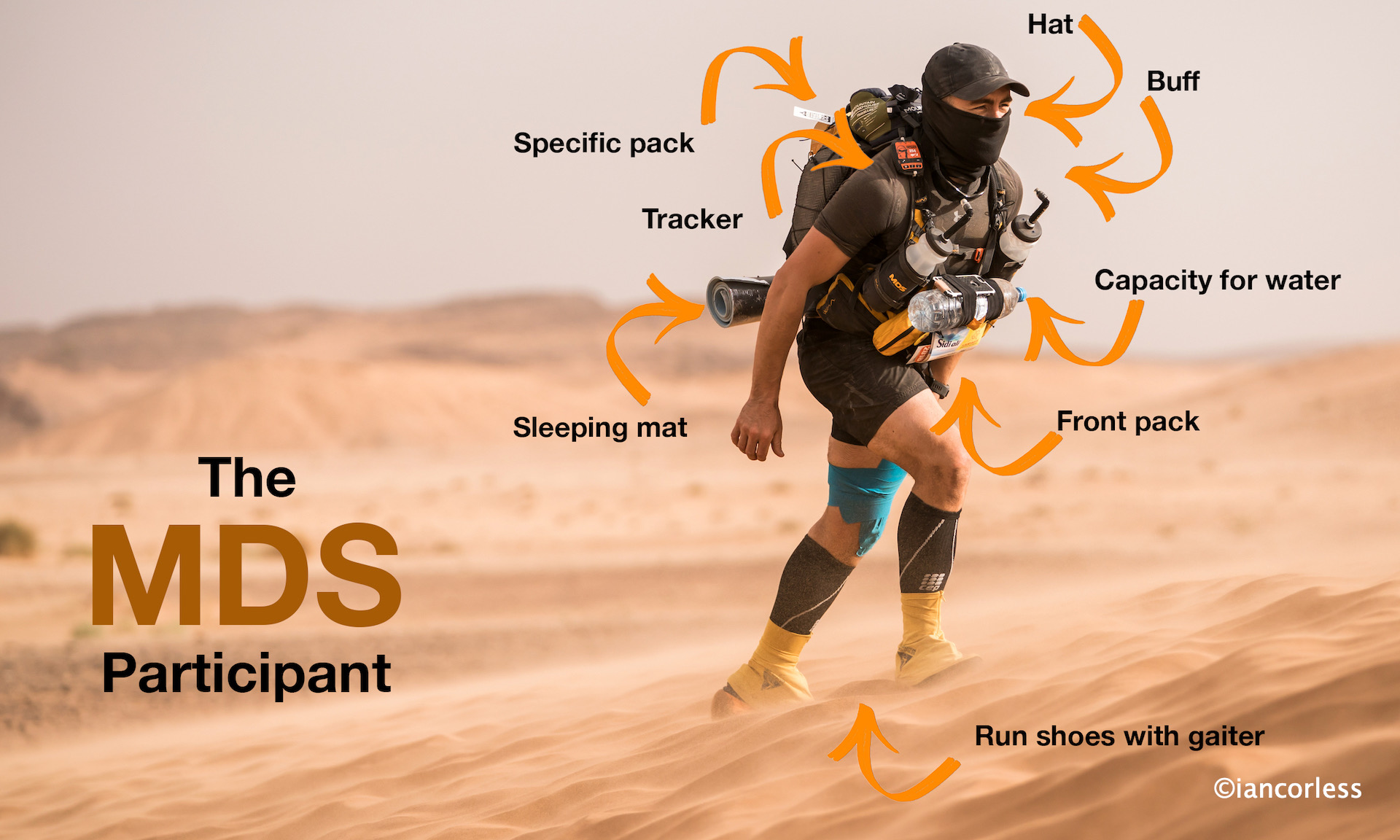
WHAT TO WEAR
Hat to protect from the sun with optional neck protection.
Shirt (short or long sleeve) with adequate protection from the sun.
Shorts, skort or similar.
Socks.
Shoes with appropriate protection and durability for a desert environment with a gaiter (typically sewn on) to keep sand out of the shoe.
WAA is a partner for MDS have specific equipment for desert/ stage-racing.
Because you have entered a MDS event, there is no need to buy new apparel and shoes. Quite simply, if you have items that work, are comfortable, cause no problems or irritation, there is no need to change them. If it aint broke, don’t break it. Shoes always create a huge debate and please find what works for you. If you ask on any forum, you will get countless recommendations but none of those recommendations are specific to you and your needs. Read an article HERE and HERE.
Always remember that with MDS events you are either wearing or carrying everything you need for the race duration. Therefore, it is imperative that you purchase the lightest options available (based on budget) and you keep luxuries to a minimum.
Keep it simple!
MDS specify ‘mandatory’ equipment for participation as specified below:
A sleeping mat is highly recommended to protect from the ground, insulate and provide comfort.
A jacket is highly recommended (lightweight down) for cold morning and chilly nights. Many products exist. An excellent combination item is offered by PHD but it does come at a price – HERE.
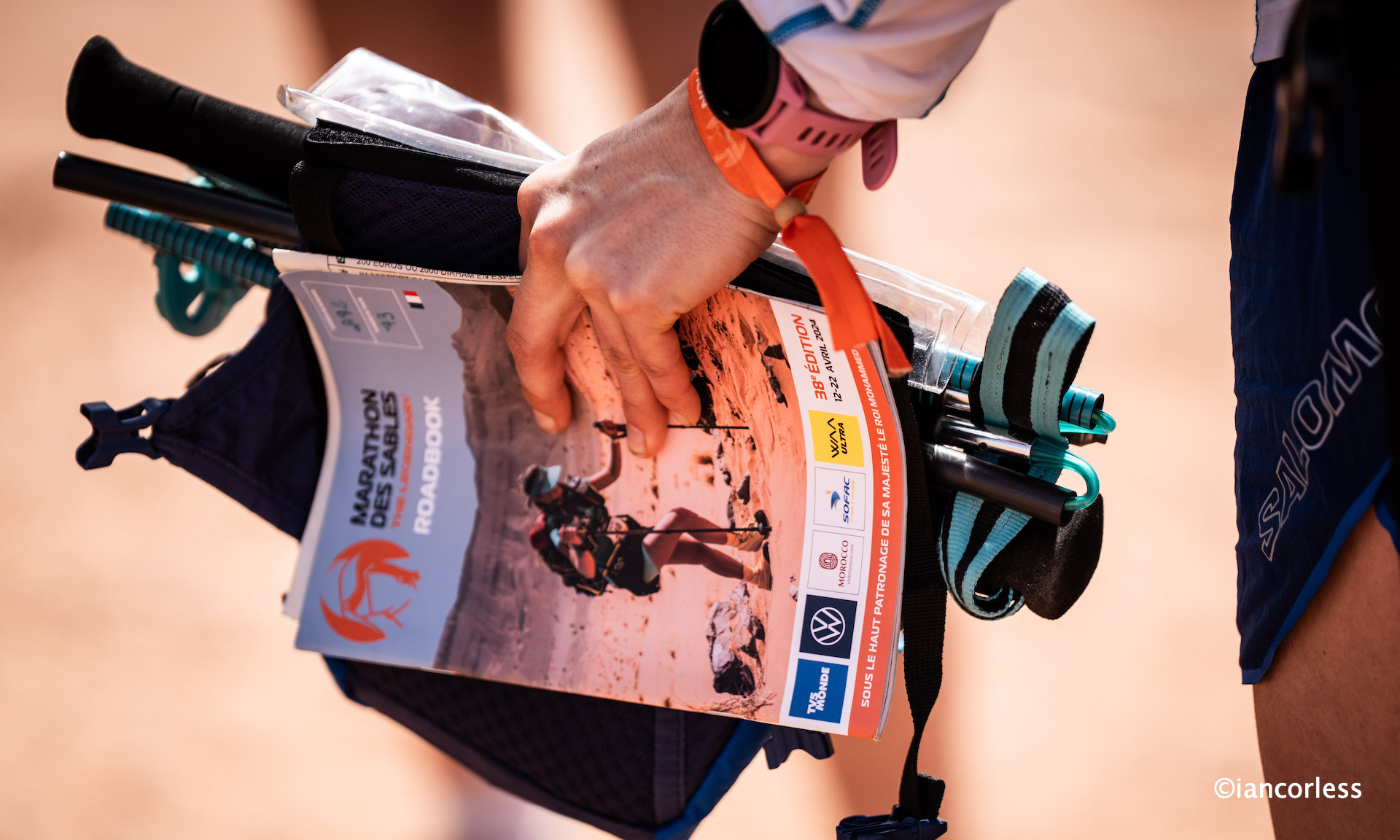
Poles are for many 4-wheel drive in stage races, Leki are highly recommended.
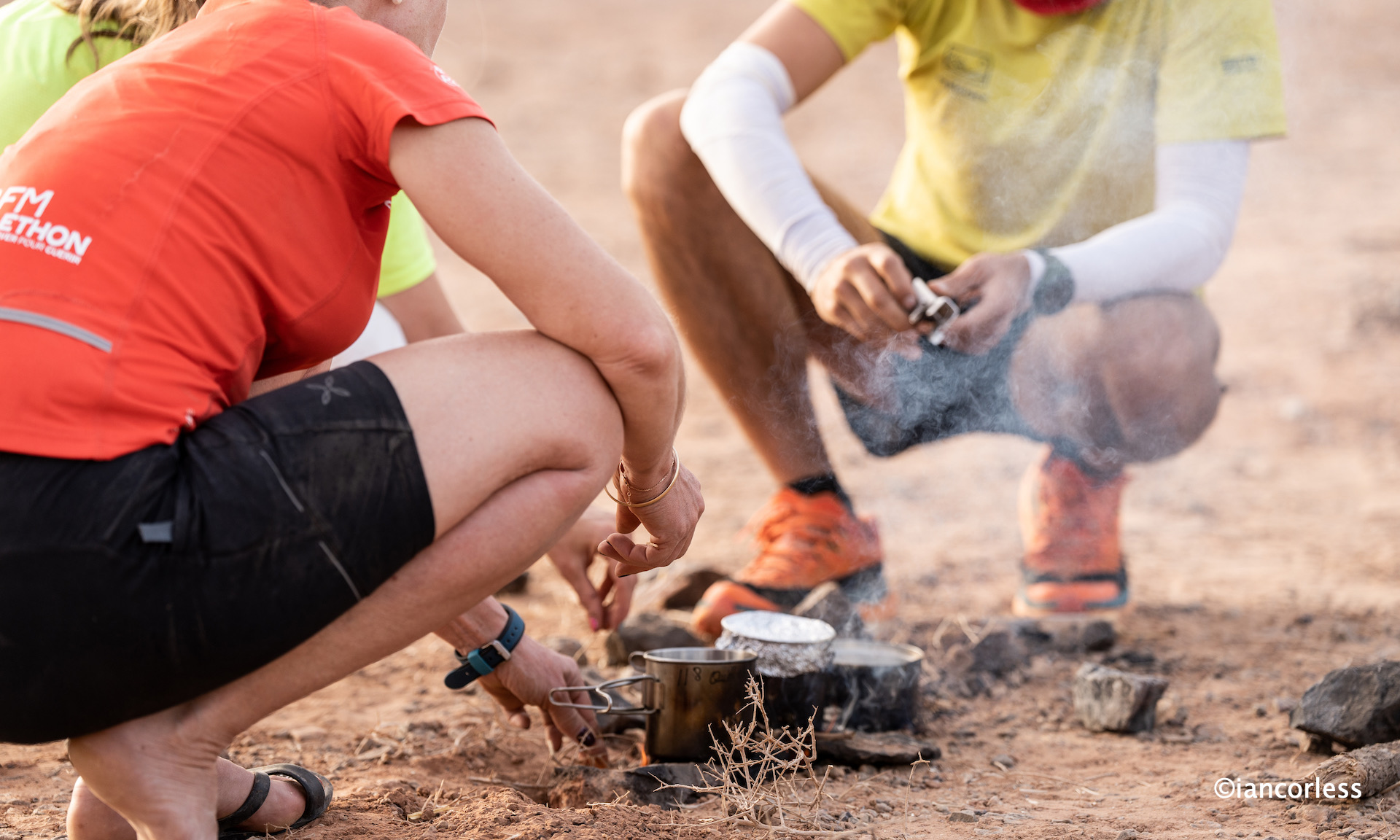
Stove – if you plan to have hot water, you will need a cooking system like those provided by Esbit. Please note, you cannot use any gas stoves in the desert, you must use fire bricks which you can purchase at bivouac.
Pot – if you are using a stove, you will need a pot/ mug.
Spoon with long handle for eating. Such as a Spork.
Buff or neck roll.
Sunglasses are essential and think about protection in sand storms, goggles may be required.
Flip flops or similar. Many use the weight free slippers from hotels, however, they rarely withstand the desert.
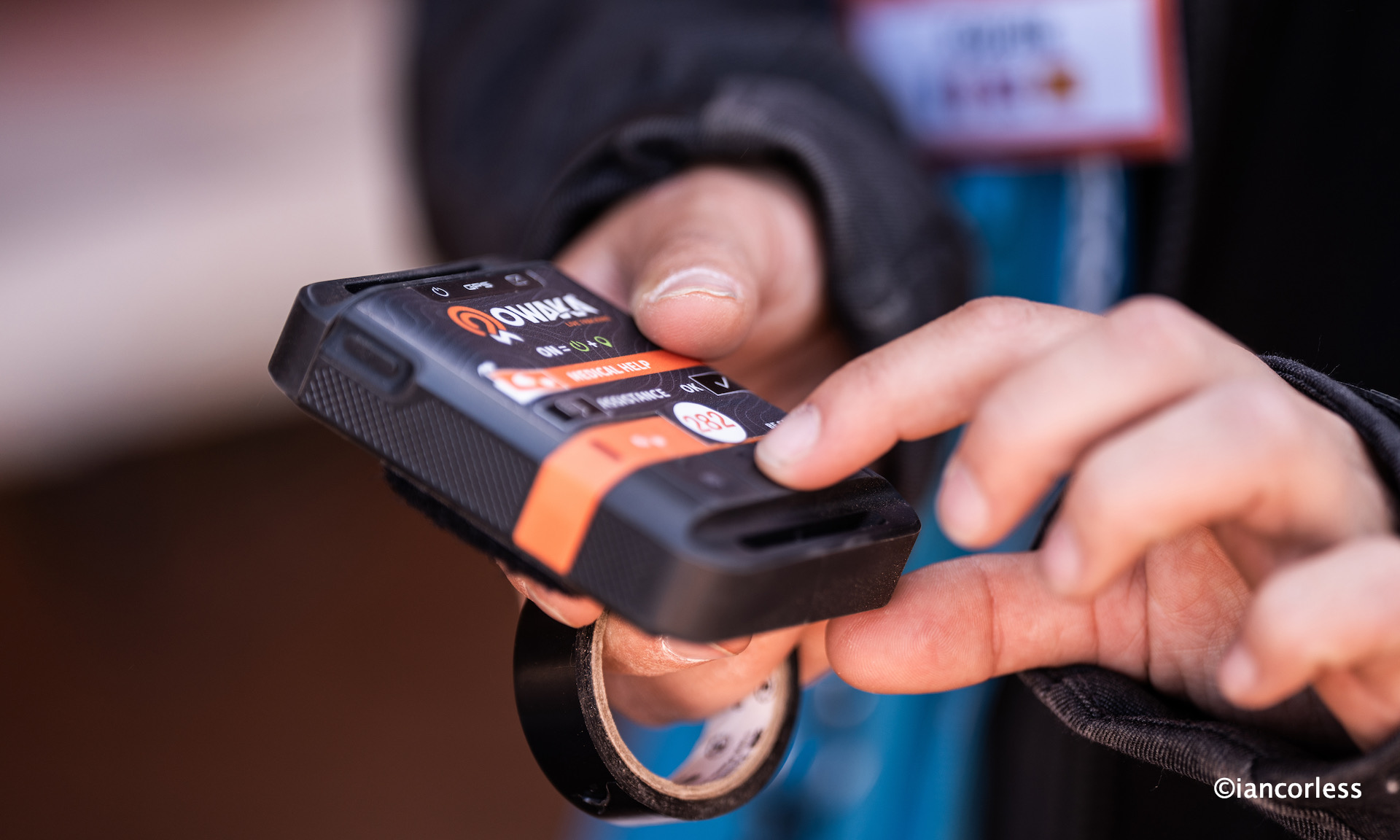
Watch / GPX
Personal items: Tooth brush, toothpaste, hand gel, wipes, toilet paper, ear plugs, blind fold etc.
Emergency – Things can happen during a race, so, be prepared with some essential items such as needle and thread, superglue, zip ties, monkey tape etc. If something rips or breaks, you need to repair it.
Luxuries
MDS is and should be simple in format. Remember, you must carry everything, so, keep luxuries to a minimum. Many consider a small MP3 player, look for something small, light and with great battery.
Phones are an essential part of our daily lives, do yourself a favour and leave it at home. The liberation is extremely rewarding. Please note, phones are allowed, however, it is prohibited to telephone on the bivouac or on the course. If you want to make a phone call, you will have to move away from these places so as not to disturb anyone.
SLEEPING
A sleeping bag is mandatory, so, there is no discussion here. The combined weight of your food is the heaviest and bulkiest item, however, a sleeping bag is next. These days there are many options available and quite simply you want the lightest possible, with the smallest packing size with required warmth at a price that you can afford. Not all sleeping bags are the same, so, consider this. Down is the best filling as it is the lightest, warmest and packs small. However, ‘fill power’ is a key element of down, fill power tells you how much volume a 30-gram, or one-ounce, sample of down will take up. So, the higher the fill power, the warmer the bag will be for less weight, because that one ounce of down has larger down clusters that provide more loft and have the ability to trap more heat. These bags will be more expensive.
Brands to look at: Nordisk, Seat to Summit, Rab, PHD, Western Mountaineering, Wilsa, Lightwave and so on.
Note here, that you will also probably be taking a down jacket for warmth. This can be used as extra warmth and insulation in a sleeping bag. So, it is possible to think about getting a lighter, less warm bag and supplementing warmth with a jacket.
UK brand PHD has come up with the perfect solution with an Ultra Jacket and Desert Race Half Bag but is does come at a price. However, it is comparable with the costs of jacket and bag by Nordisk.
Sleeping mat is highly recommended. When you are not running or walking, you are sitting or lying down, comfort is key. Two options exist, inflatable or not. Inflatable provides the greatest comfort but with poor admin does have the risk of puncture. Sea to Summit provide excellent inflatable options with low weight and pack size. Exped have excellent closed-cell foam.
The MDS 120 events (TREK not included) are self-sufficient adventures. You need to bring your own food and carry it in your bag for the duration of the race.There is a requirement that you must have 2000 calories minimum per day. Please remember that from 2024, catering is not provided at MDS The Legendary and therefore you must have enough food and calories before the race starts.
Food is the heaviest item you will carry and is essential. Don’t skimp on food. Lay food out per day addressing key items:
Breakfast (be careful they are not too sweet)
Snacks while running (bars, nuts, dried meat etc)
Post-run recovery (usually liquid form is ideal)
Lunch if applicable (this could be another meal such as cous cous)
Dinner (dehydrated meal)
Evening snack (a bar)
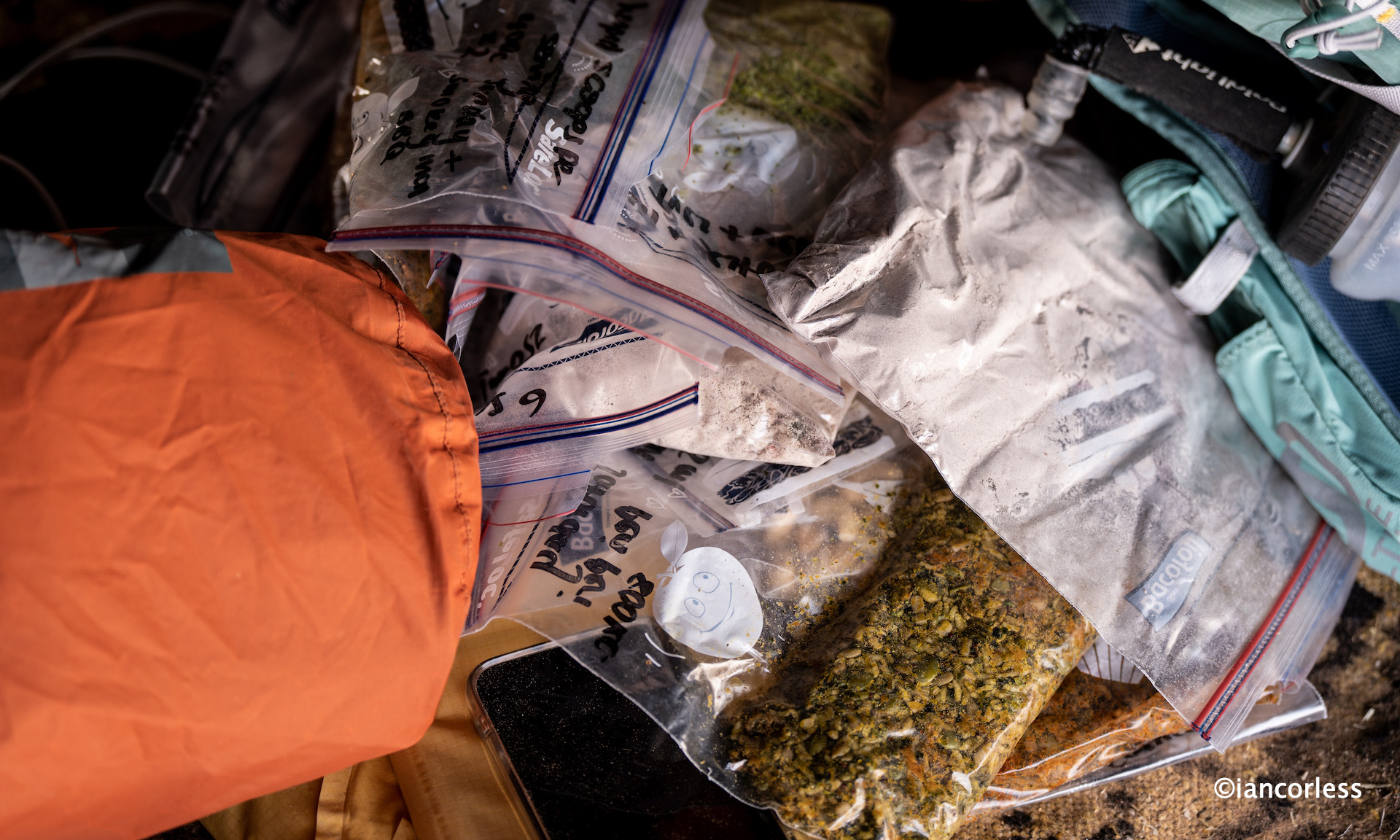
Where possible, repackage food to make them smaller and lighter. However, make sure you keep nutritional information for the admin day. Pack food in day bags, that way it is easy to know what you have and importantly, you don’t take food you need for the next days. Keep doing this and you will be short of food at the end of the week.
Food is personal and you must find out what works for you. Remember taste chances when fatigued and in hot environments, often, sweet becomes less palatable with a preference for savoury. Dehydrated meals will often be used for key meals such as breakfast and dinner, some hydrate well with just warm water, others need hot water. So, if you are not taking a stove, test this. Basecamp food is a good website that shows what options exist. After many tests, highly recommended products are Firepot, Lyo, Tentmeals and Adventure Menu. Personally speaking, Firepot produce the tastiest meals I have tried.
Make sure you add some treats to spice up your palette.
A food list for MDS The Legendary could look like this:
Water provision, particularly at MDS The Legendary and MDS 120 has changed. In past editions, water was rationed and provided at key checkpoints in bottles, typically, 10km’s apart.
In 2024, the new organisation changed this and arguably, water is now available, as required whilst racing. It is poured from jugs by MDS staff.
In addition, intermediate water stations are added when deemed necessary to ensure competitor safety.
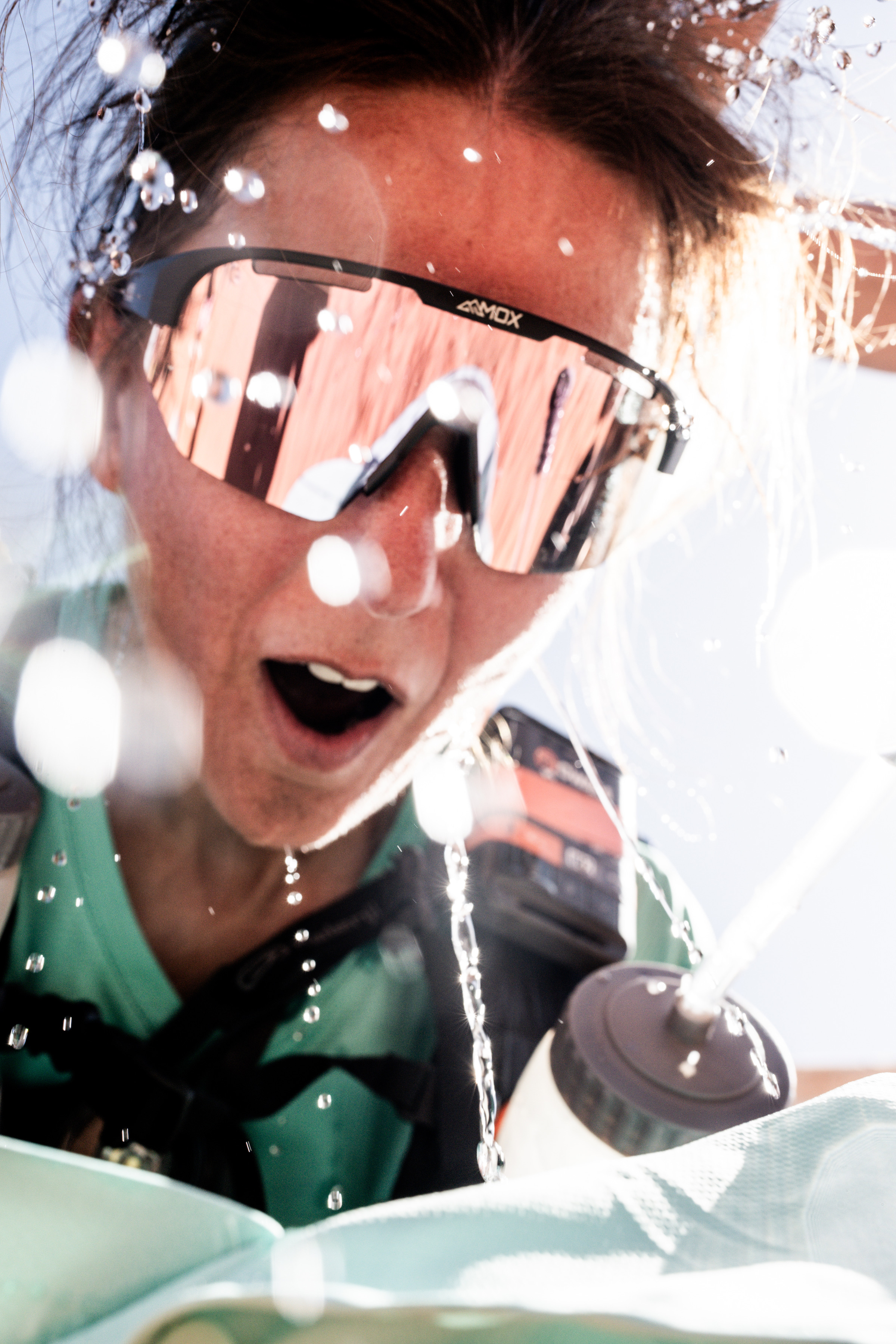
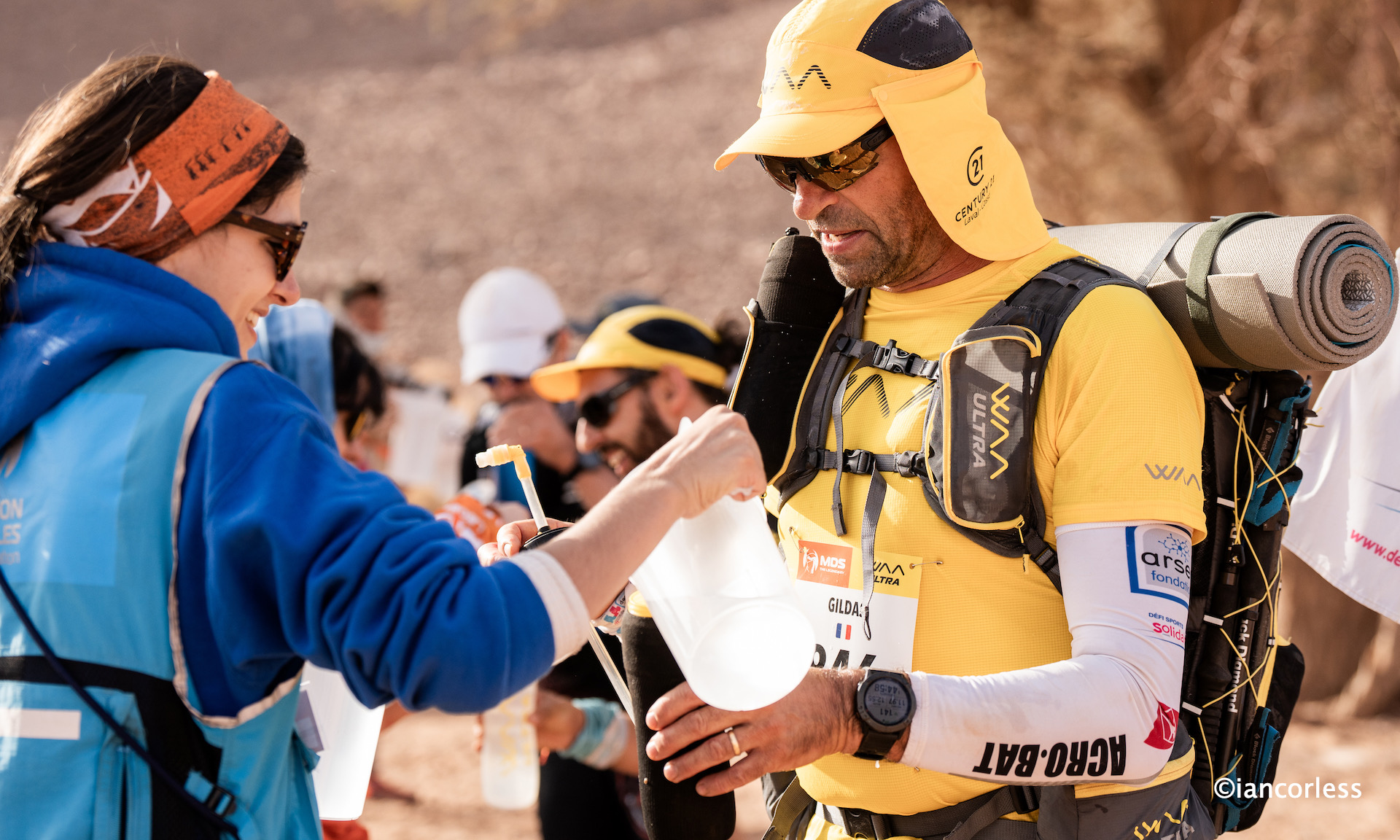
At key checkpoints, iced water is supplied and poured by MDS staff on the heads and neck to aid cooling.
Post-race, each runner is provided with a 5L bottle of water, this is used for evening cooking, breakfast and up to CP1 the next day. If you wish to wash or freshen up, this comes from the same water ration. So, prioritise food and drinking before washing.
THOUGHTS AND CONSIDERATION
MDS is available for all, be that racing snake or someone who is looking for the adventure of a lifetime. So, keep that in mind. A top runner will have his or her pack at the absolute minimum weight and will look to survive the week racing as fast as possible. They will spend the week hungry. You, for example, may wish to carry a little more weight and have some comfort during the week. Just don’t carry to much extra weight!
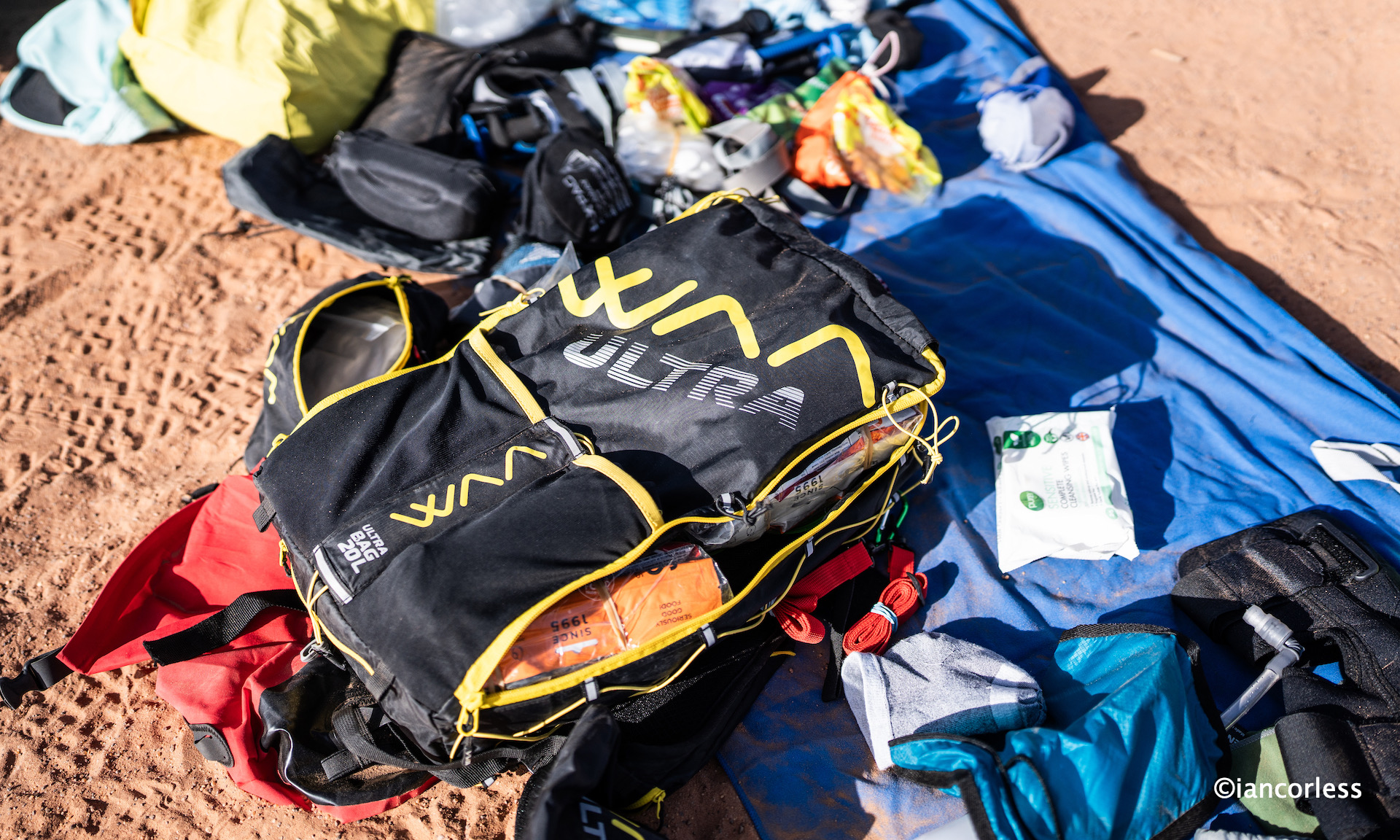
The pack you wear is a crucial item that not only must fit everything you need, but it must also be comfortable and allow easy access to drink. There is no one-stop solution here. We are all different sizes and have different body shapes, so, make sure you try options.Also remember, at the beginning of the race, your pack can be around 8kg, this adds extra pressure on the shoulders, so, make sure you have enough padding and comfort. Many packs now come with waist belts and this, for many, is a great solution not only for extra storage but weight distribution. WAA have the ultra bag which has been specifically designed for the job. Osprey have recently released the Talon Velocity 20 which in testing has been superb. Don’t be tempted to get a bag that is too large, remember, the more space you have, the more you may take.
Bottles are the obvious way to carry water, typically 2x 750ml on the chest straps. I personally really dislike this format, I find it uncomfortable and unpleasant. So, find your own solution. Bladders have always been considered a NO for MDS but I personally find the solution ideal for my multi-day adventures. If you are a ‘racer’ this is not the best solution, but for most, it is ideal. As always, bladders can puncture, so, think about this.
Shoes will always be a debate and point of discussion. Shoes are personal and must be suited to you, the individual. Consider your gait (neutral, supinate or pronate), consider time on feet, consider your weight, consider how much you will walk (and then double it) also consider shoe drop and how much cushioning you need. It’s impossible to recommend any one shoe because of these variables. You will see top runners using a lighter shoe, remember, these shoes only need to last 20-30 hours. However, you may well need a shoe for 40, 50 or 60-hours. Do you need a trail shoe? No, you don’t need a trail shoe but I would say that many trail shoes are more durable as they are designed for the rough and tumble of variable terrain. Do you need an aggressive outsole? No, you don’t, but I do think some grip is better than none and therefore I would use a trail shoe over road. Protection? Toe box protection is a good idea as deserts include lots or rocks, far more than you may think. Do I need a size bigger? Shoe sizing does depend on what is ‘normal’ for you. I always recommend a thumb nail of space above the big toe, you don’t need any more than this. Recommendations of going a size is bigger is bad advice in my opinion. A shoe that is too large allows your foot to move, a moving foot causes friction, friction causes blisters and the rest is the same old story that I see at desert races all over the world. However, I would recommend a shoe with a little more width in the toe box, this will allow for some comfort as the days progress. If you are prone to feet swelling, discomfort, blisters and so on, get a strategy sorted before you head out to your chosen race. You will need a gaiter and while not always the case, sewing velcro on a shoe can change its shape, so, consider this. There are specific desert racing shoes now available by Salomon and Raidlight.
Poles are a godsend, buy some and learn how to use them. They are 4-wheel drive.
Food is essential, make sure it works. Hot or cold water is a consideration and make sure if using meals that need rehydrating that they work with water at desert temperature. Never assume that water will always be warm because you are in the desert, just as we get hot years, we also get cool years.
Salt is needed to keep you in balance. Many foods contain salt so look to supplement that with the mandatory food cubes. Be careful here, for example, OXO works considerably better than Knorr. Do you need alt tablets? Do your research,, find out what you personally need and come up with a plan. Listen to a podcast HERE.
Feet – make sure you look after them. With the correct socks and correct shoes, there is no reason to get blisters and despite what some people say, the majority of people do not get blisters. Read Healthy for Running and Walking.
Heat is difficult and without doubt, it’s better to adapt to heat before the race. Read about Heat Acclimation by Dr Jodie Moss.
Hygiene is crucial and difficult when self-sufficient. But set up a protocol not only for your benefit but for those around you.
Luxuries keep them to a minimum.
Toilet paper is essential, make sure you have enough and compressed towels are brilliant to freshen up when you add a little water.
Take essentials on the plane and wear your run apparel and shoes. That way, should a baggage disaster happen your chances of racing improves.
Have additional items such as a base layer, sleeping bag liner and other items that may be on a ‘question’ list for the race. On night 1 and before you go to admin, you can make final decisions of what to and what not to take. Particularly important if you think you may be cold at night.
You signed up for the challenge, you wanted to be on the start line and therefore you are responsible for the outcome. Believe me, the ‘you’ that leaves the Sahara is not the same you that entered. Arguably, you change the moment you pay the deposit, the transformation process begins. Embrace the journey and apply yourself. Keep perspective, the MDS journey is an enhancement of you as a person. It’s easy to become obsessed, ultimately the majority of runners at MDS are enthusiasts, if you keep that in mind the journey will be a complete one.
Plan ahead, formulate a long term plan and don’t rush. The sooner you start this process, the greater your chance of success and the less chance of injury. Plan stepping stone races and don’t be fooled into thinking that you need to run marathons day-in and day-out. You don’t! Training is about ALL the training you do and not about anyone run.
If we exclude the top 50-100 runners (who will also walk sometimes) the majority of the MDS field spend a huge amount of time walking. Learn to walk! Believe me, it’s a huge tick in the MDS box and rest assured that if you are able to walk at a good consistent pace (barring injury or dehydration) you will finish MDS.
You are going to share bivouac with other people and you are going to have some serious highs and lows. These tent mates will pull you through and motivate you. They will become friends for life.
Legs, lungs, heart and feet will only get you so far. The mind is what will get you to the finish. Despite the hardships and pain, embrace the journey and mentally prepare for the challenge.
MDS is a magical and life changing journey, it really is a true challenge of mind and body to race over many days, irrespective if you complete or compete. It’s a hark back to a more primitive time, a time without clutter and modern technology. Embrace this. Embrace the silence of the surroundings and the simplicity of placing one foot in front of the other, eating, resting and sleeping and then doing it all again.
You can read a SUMMARY of the 2024 MDS The Legendary HERE
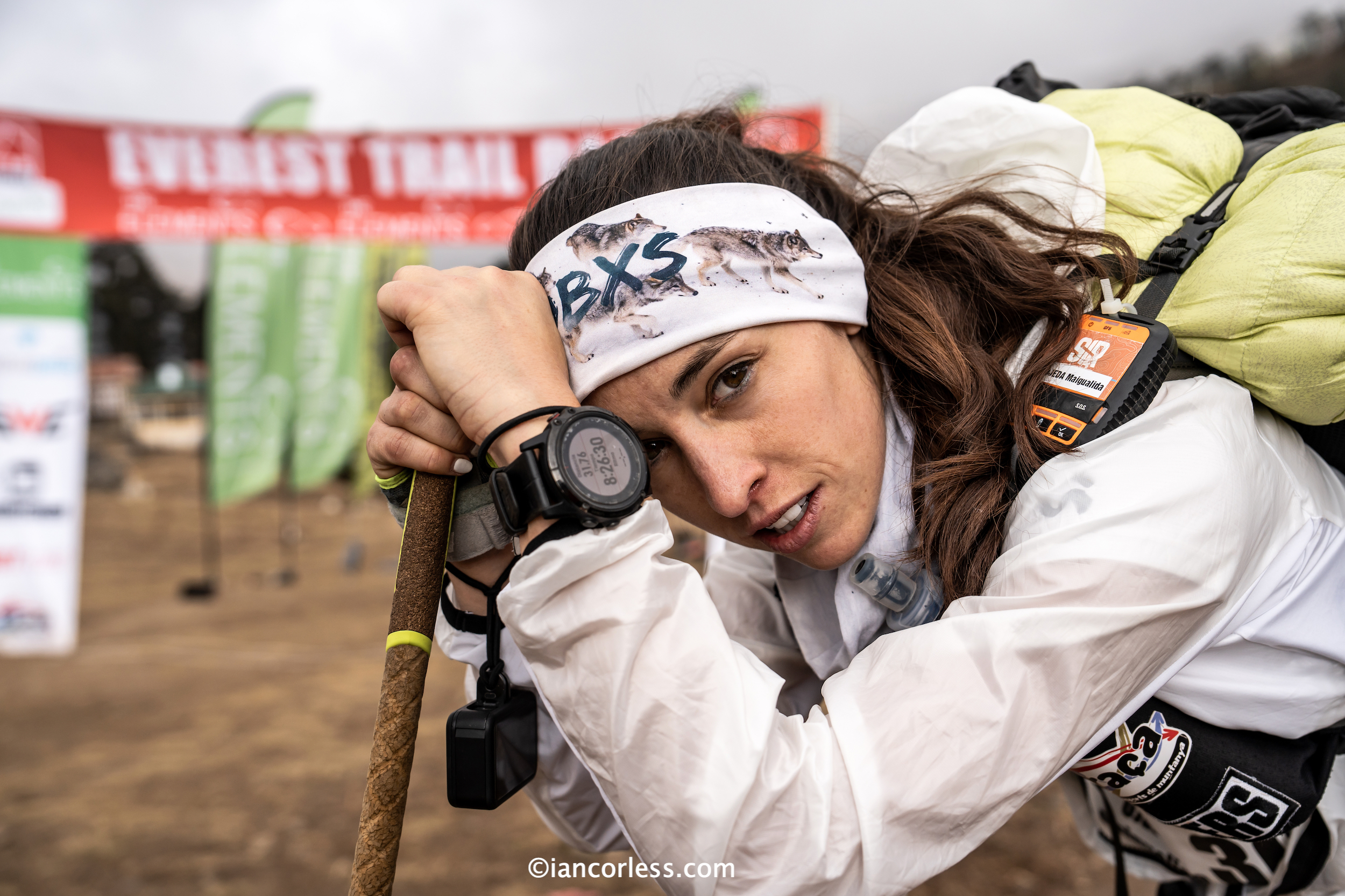
If you’ve ever dreamed of running in a place that feels otherworldly, where every breath reminds you you’re alive, and every step tests your limits, the 2025 Everest Trail Race is your chance. Happening this November, 10th to 22nd, 2025.
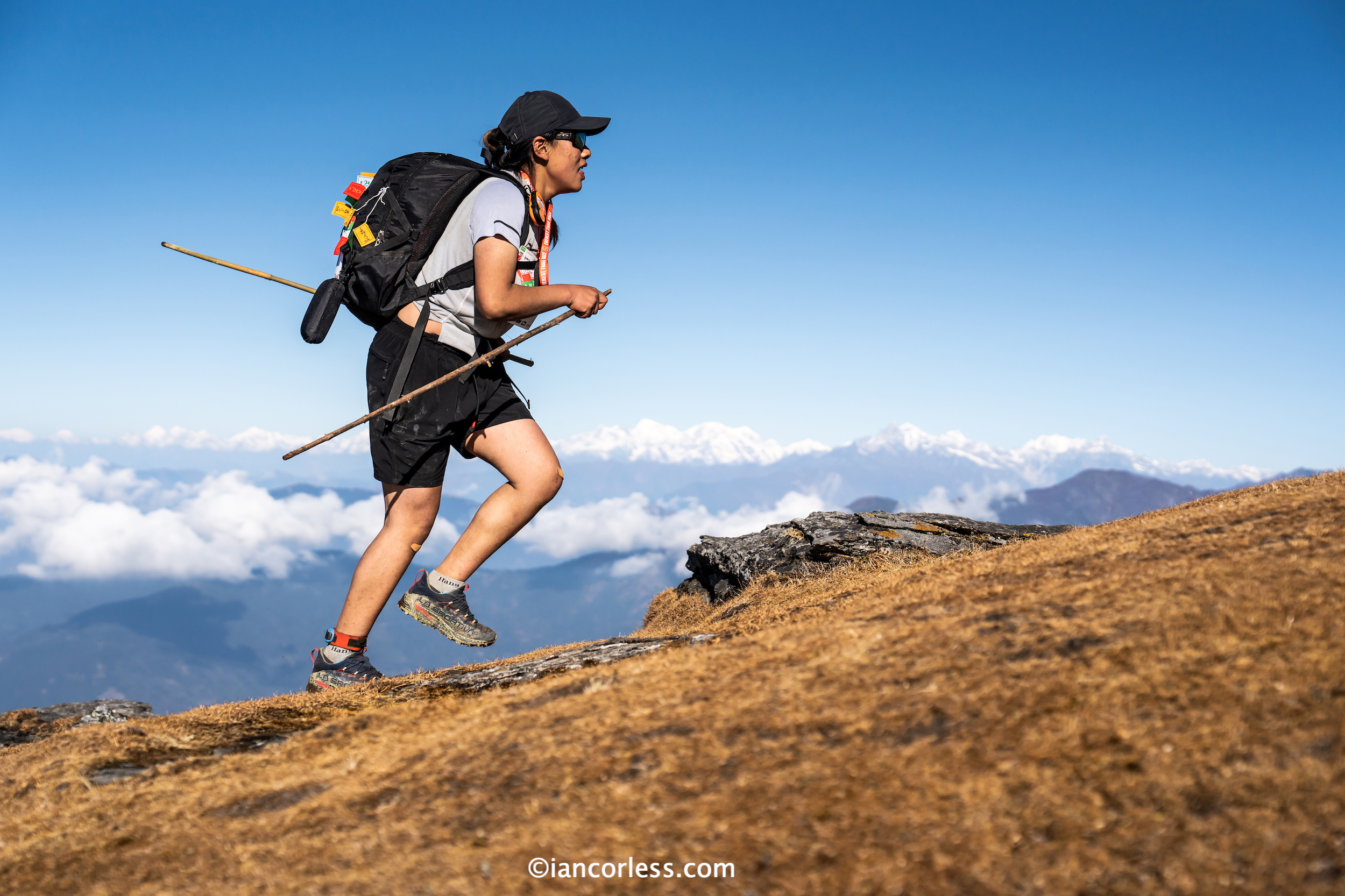
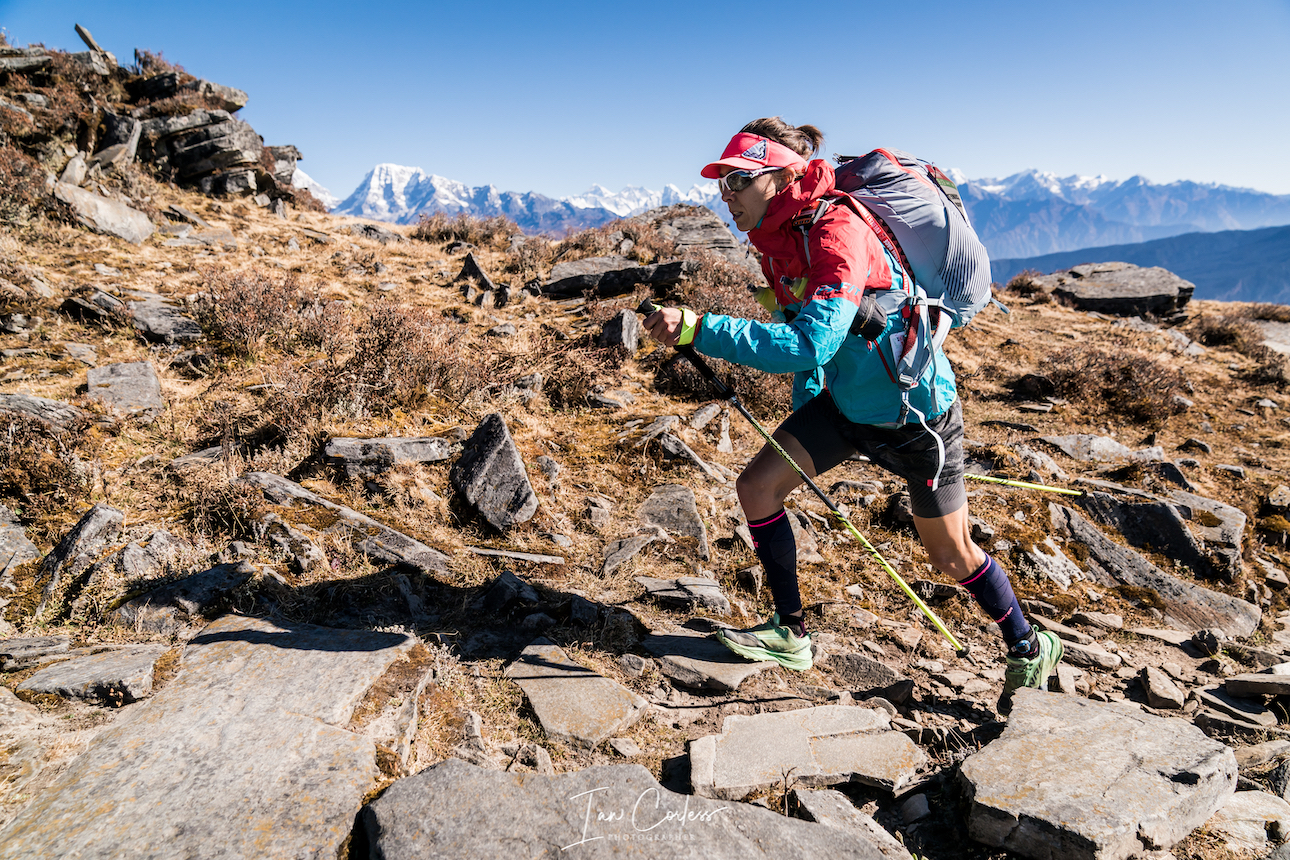
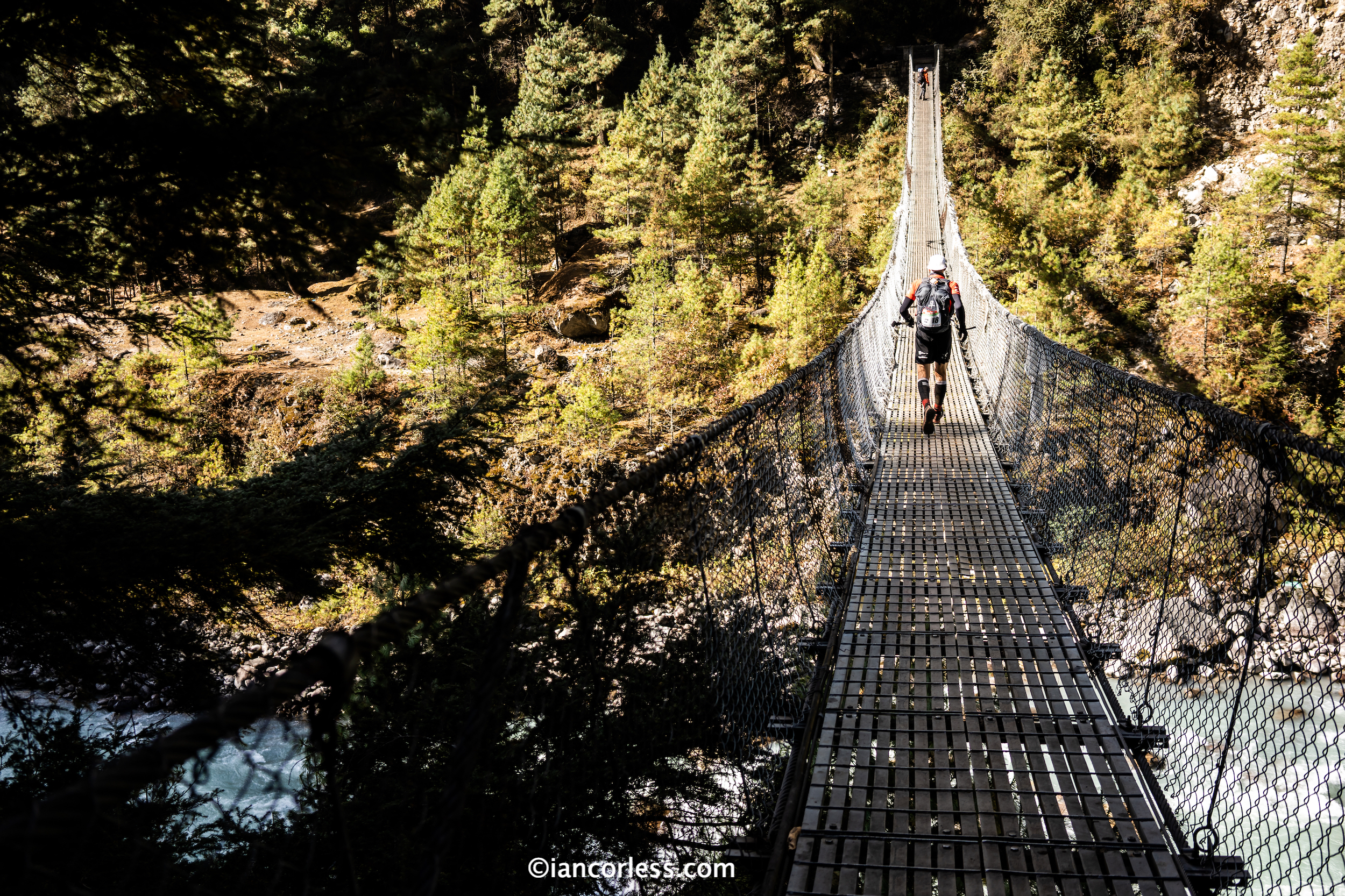
You carry your own gear. You fuel yourself. You keep going. Over six days, you’ll face steep ascents, grinding descents, suspension bridges, narrow trails, and thin air all at altitudes between 2,000 and 4,100 meters.
This is not a race for comfort. It’s a race for people who crave discomfort, who see sweat and struggle as part of something bigger.
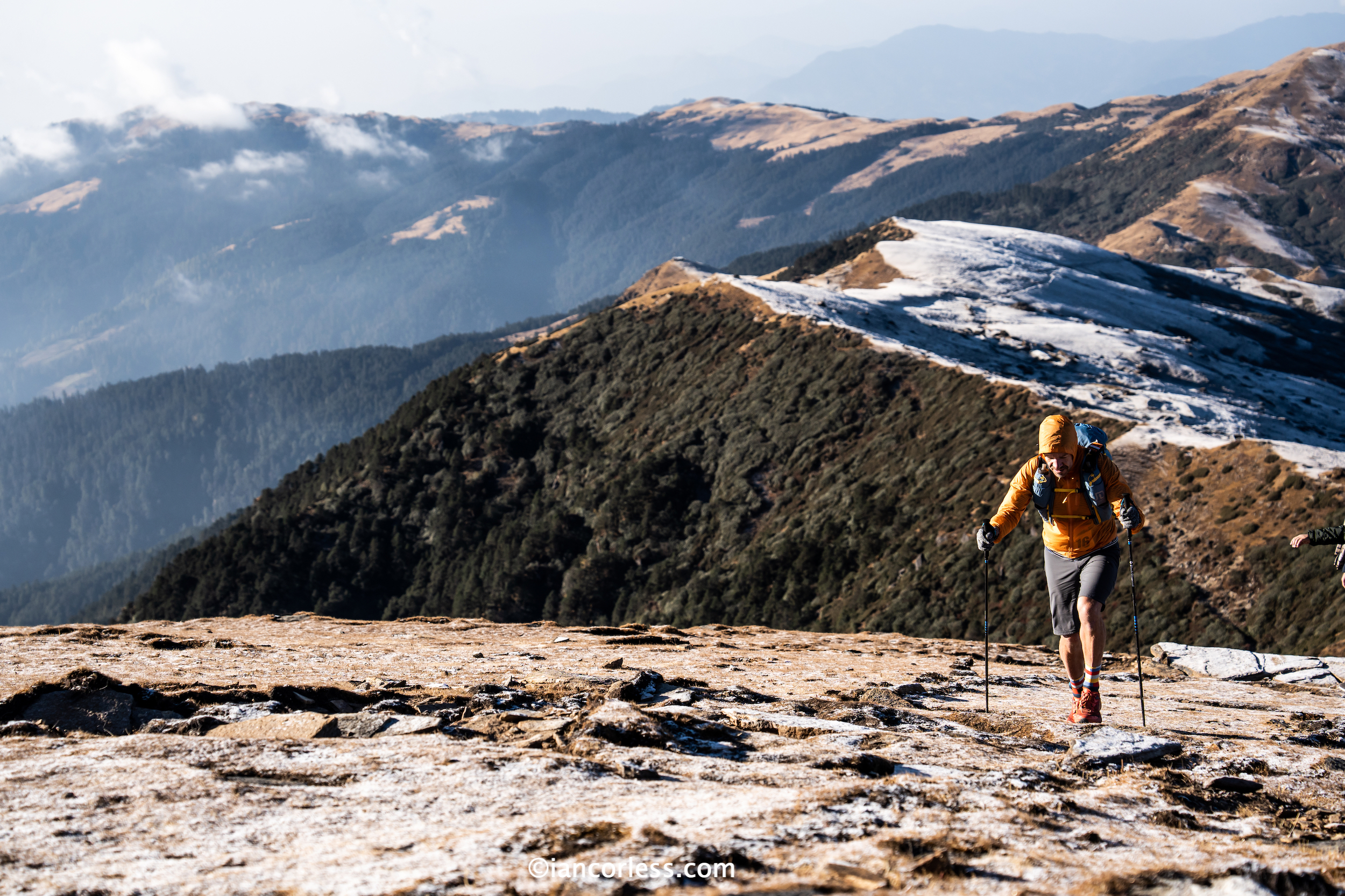
This is trail running in its purest form. Technical sections, single tracks carved into mountainsides, ancient stone paths connecting remote villages. One moment you’re running through a pine forest; the next, you’re skirting a cliff with views that stop you in your tracks.
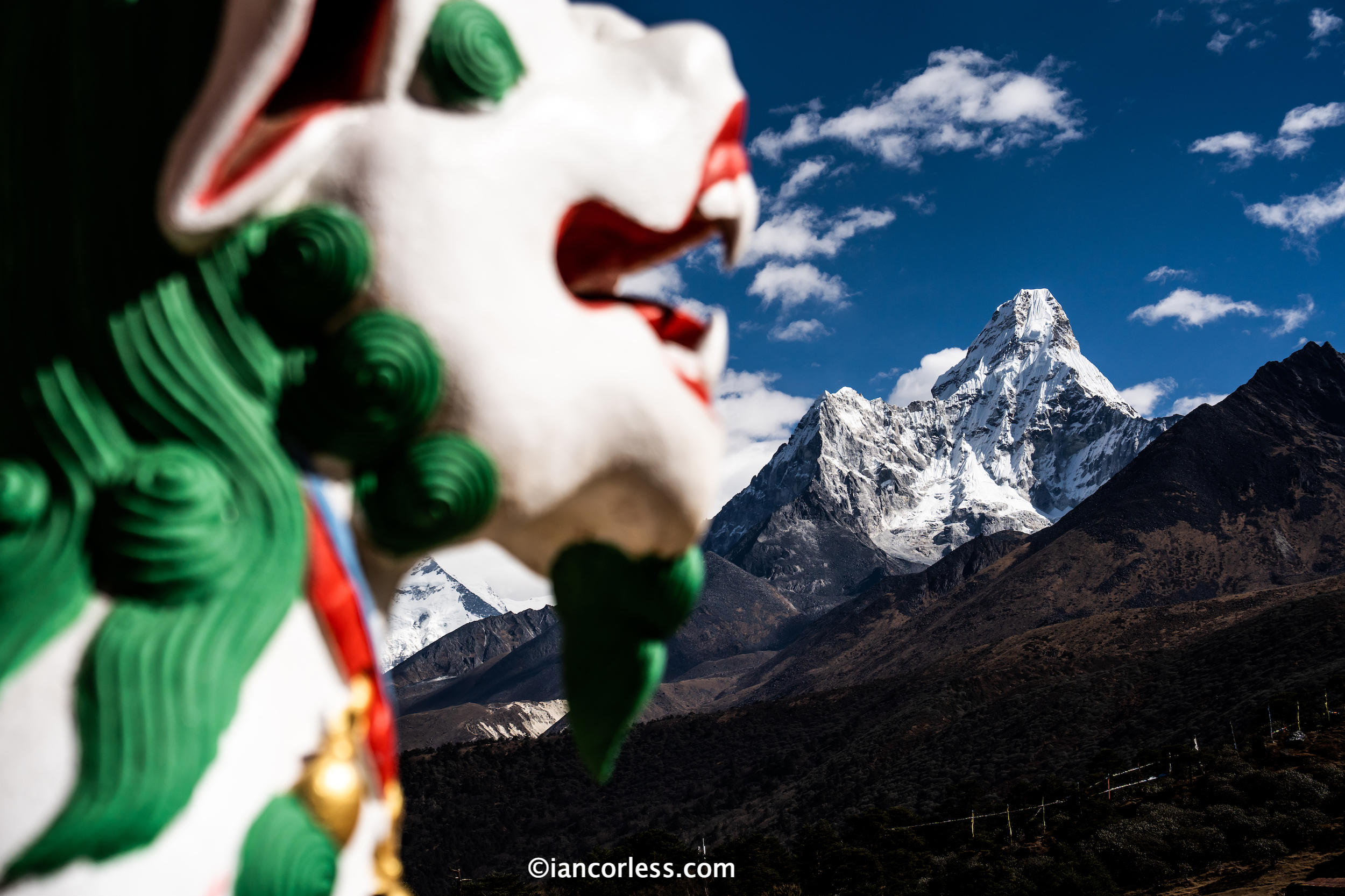
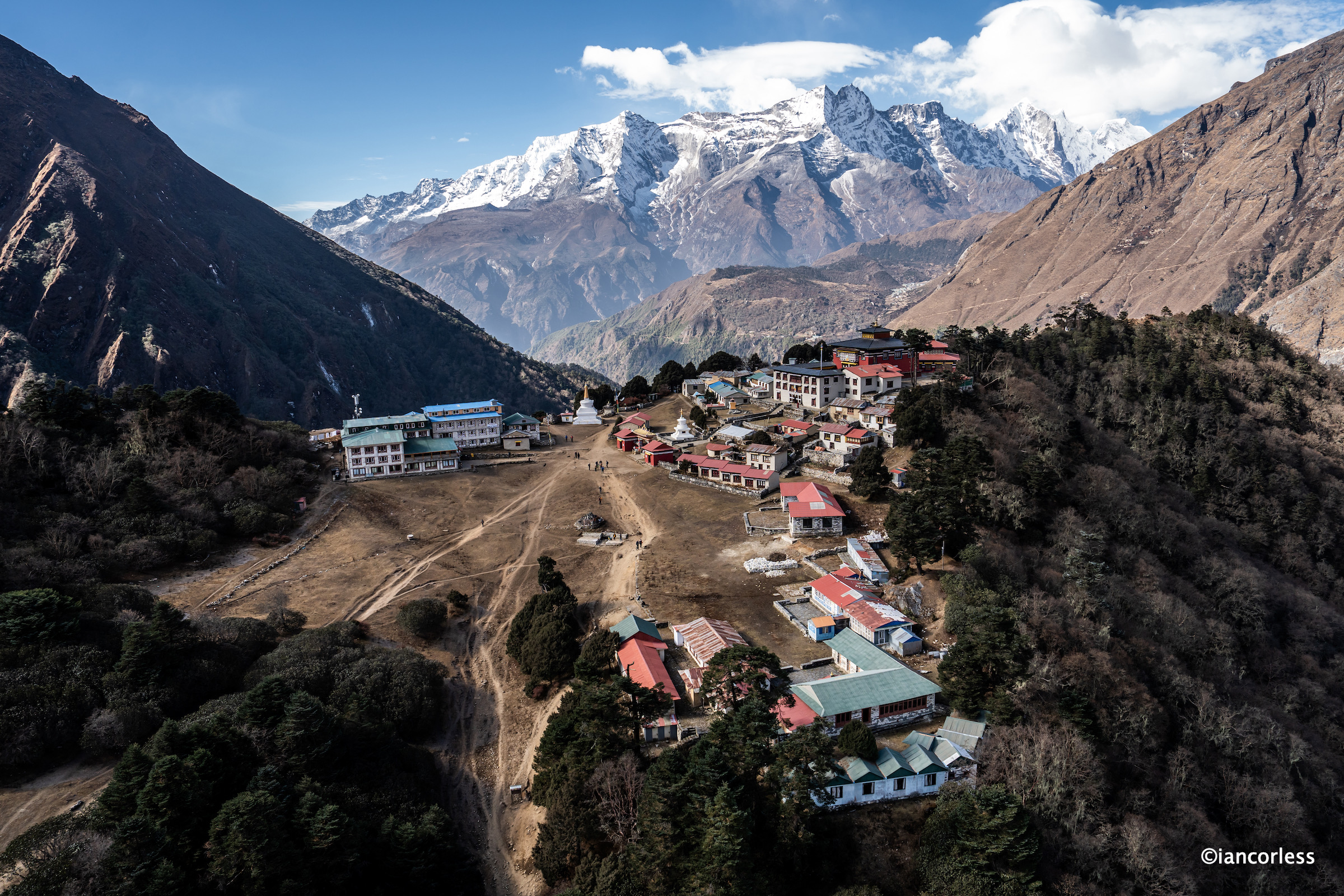
The race route threads through the Solukhumbu region, home to the legendary Sherpa people, along the same trails used by mountaineers heading to Everest Base Camp.
November in the Himalayas is cool, crisp, and clear, perfect for trail running. Daytime temps are mild, with intense sunshine at altitude.
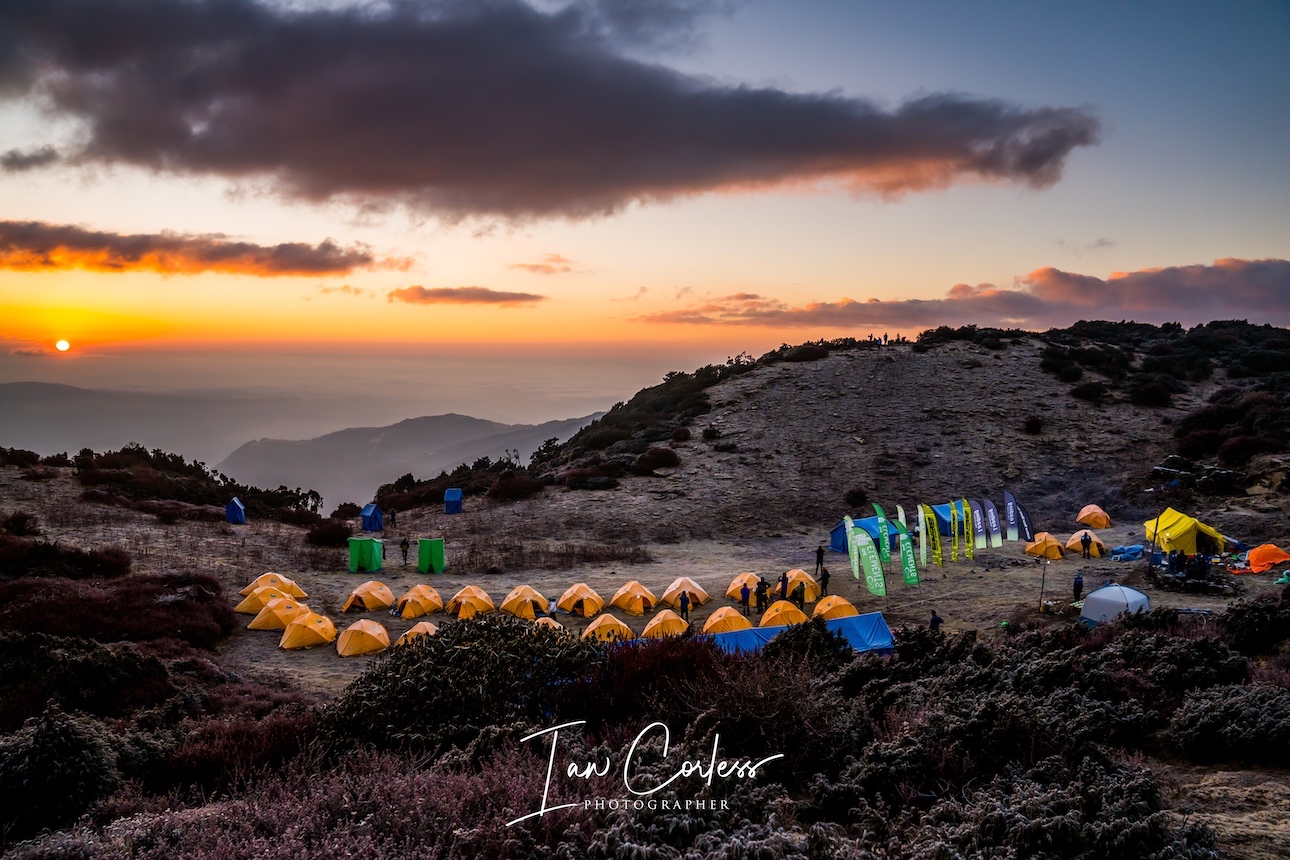
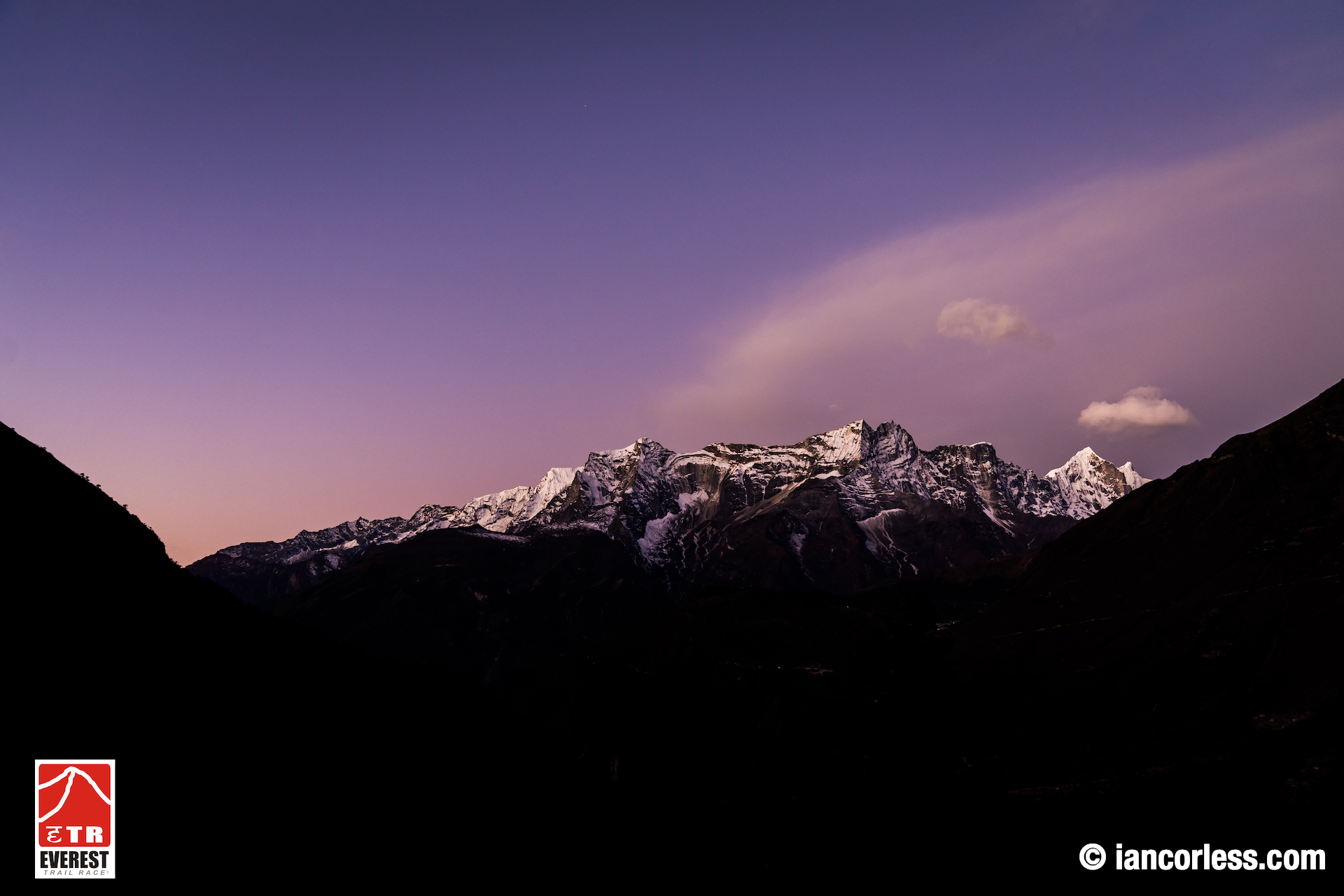
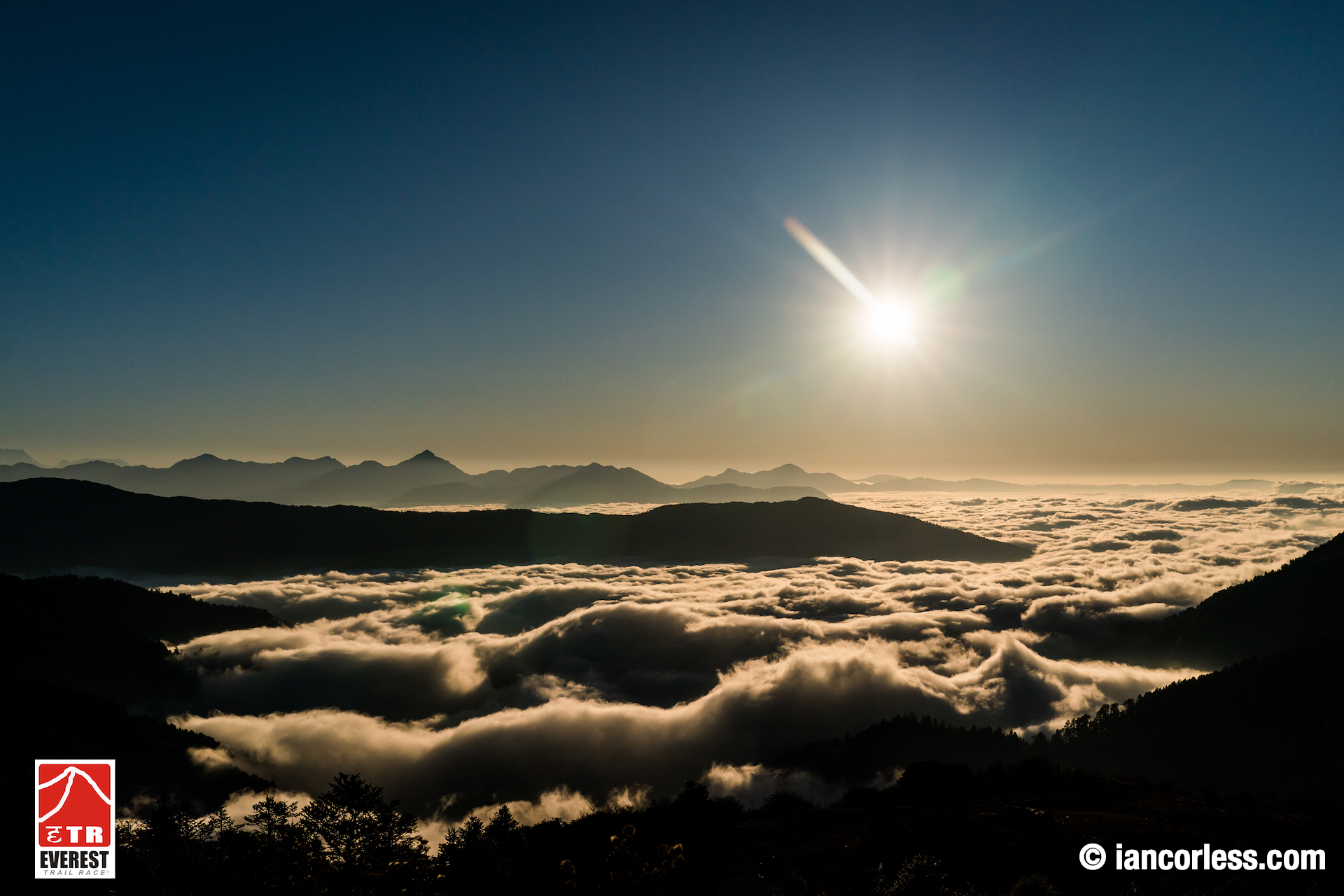
But the nights get cold. You’ll wake up to frosty mornings, and every breath will be visible. It’s the dry season, so the skies are often brilliantly blue, framing the snowcapped peaks like a postcard that never ends.
This is the kind of race where you learn to respect the air. The oxygen gets thinner, and your body feels it. It’s a slow grind uphill, and then a fast, careful descent. Pacing becomes survival. Acclimatisation is your secret weapon. But when you’re out there, breathing hard, moving slow, you realise something: you don’t need speed. You just need grit and determination.
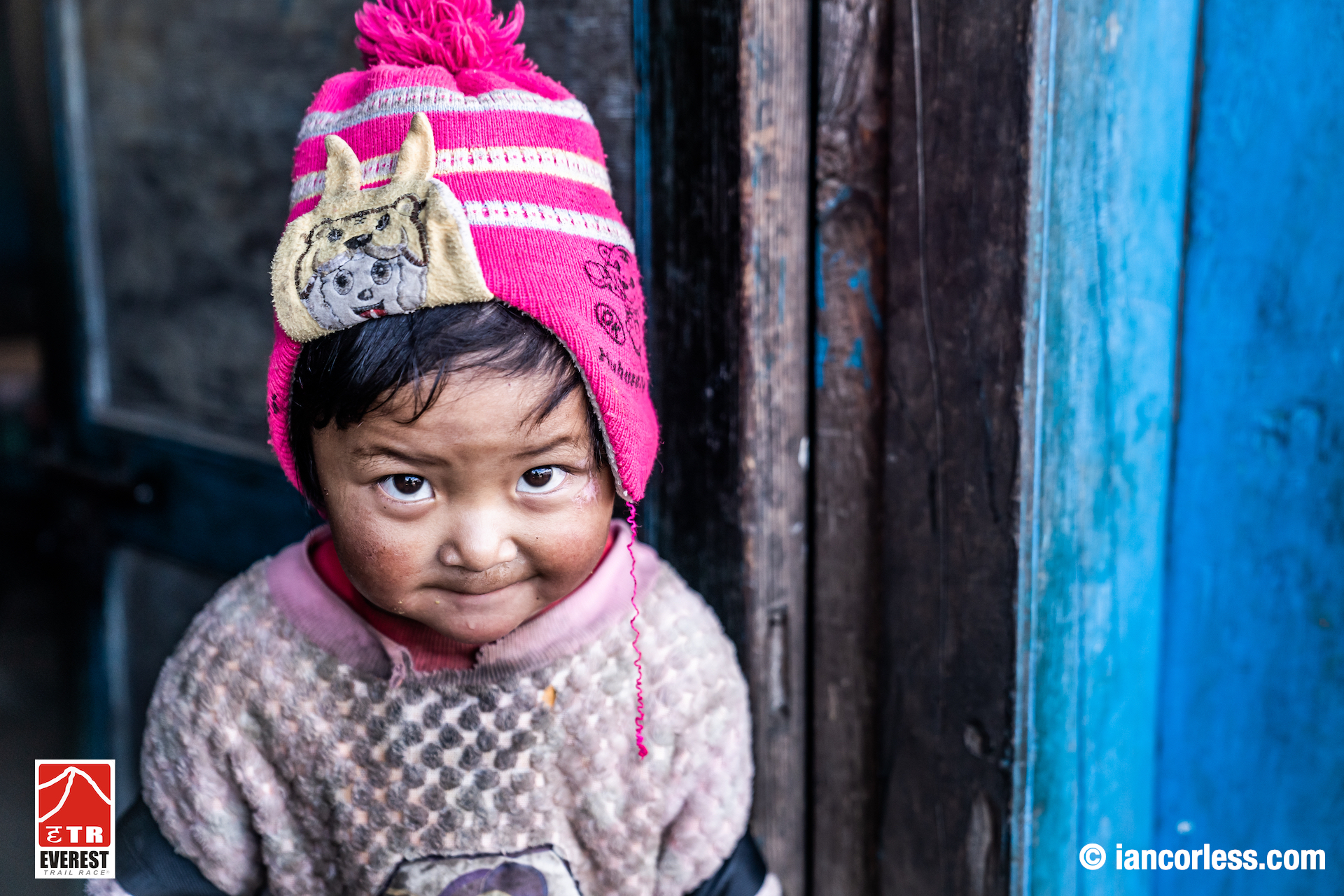
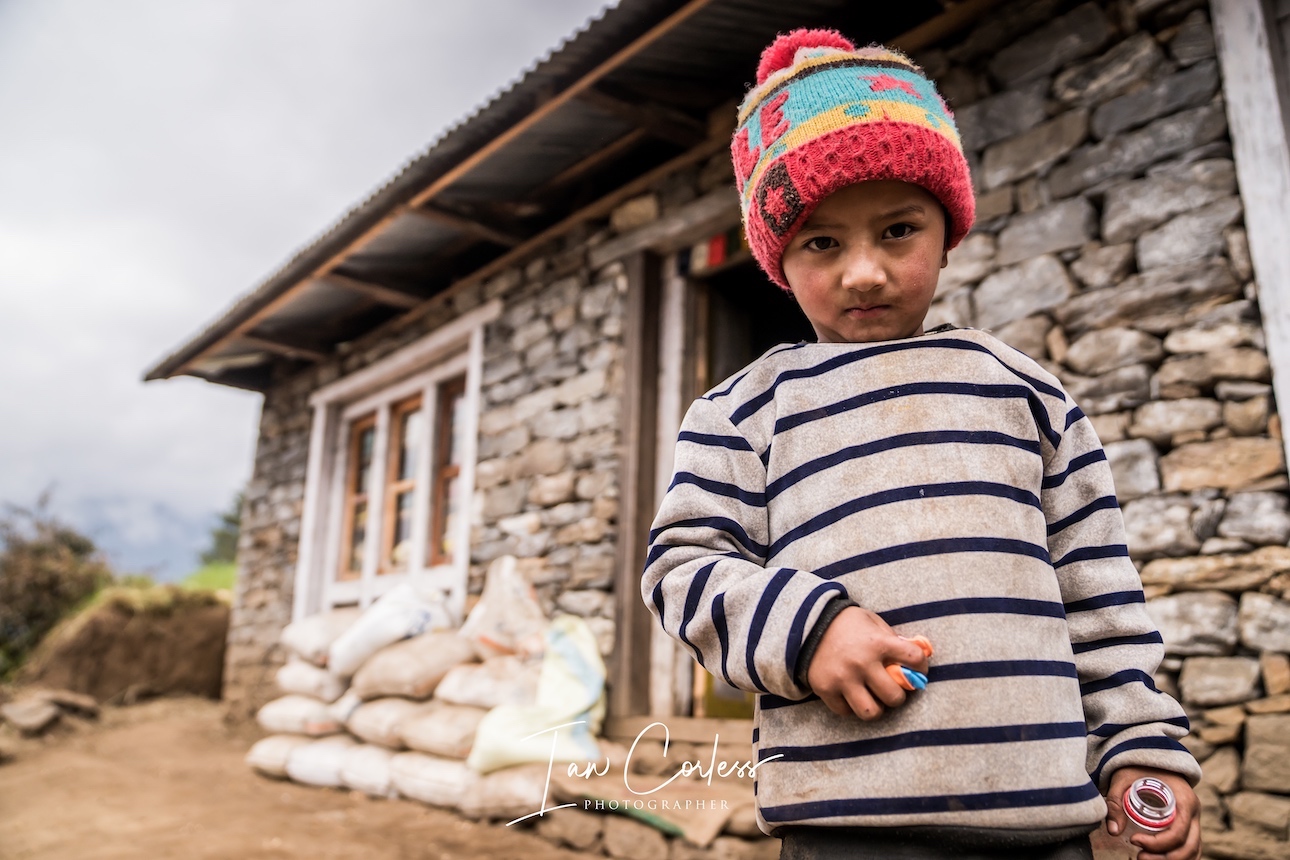
You’ll meet Sherpa families offering you tea from tin cups in smoky kitchens. Kids will run beside you, barefoot and beaming.
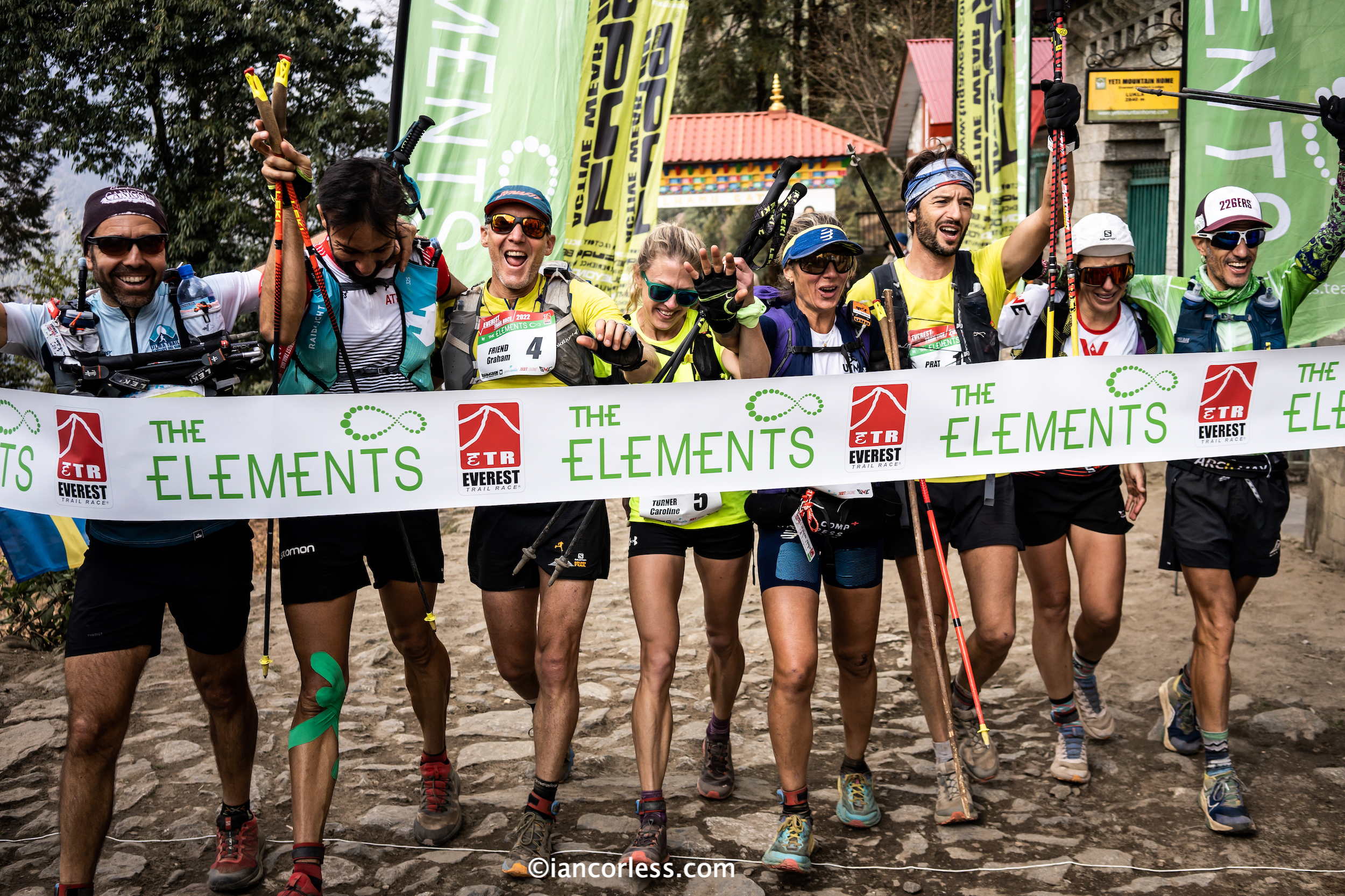
The camaraderie among runners is real, forged in pain, sweat, and shared awe. You’ll finish each stage beside people who were strangers, now teammates.
The Everest Trail Race is small and personal. It’s not about crowds. It’s about connection — to the land, to each other, and to something deeper inside yourself.
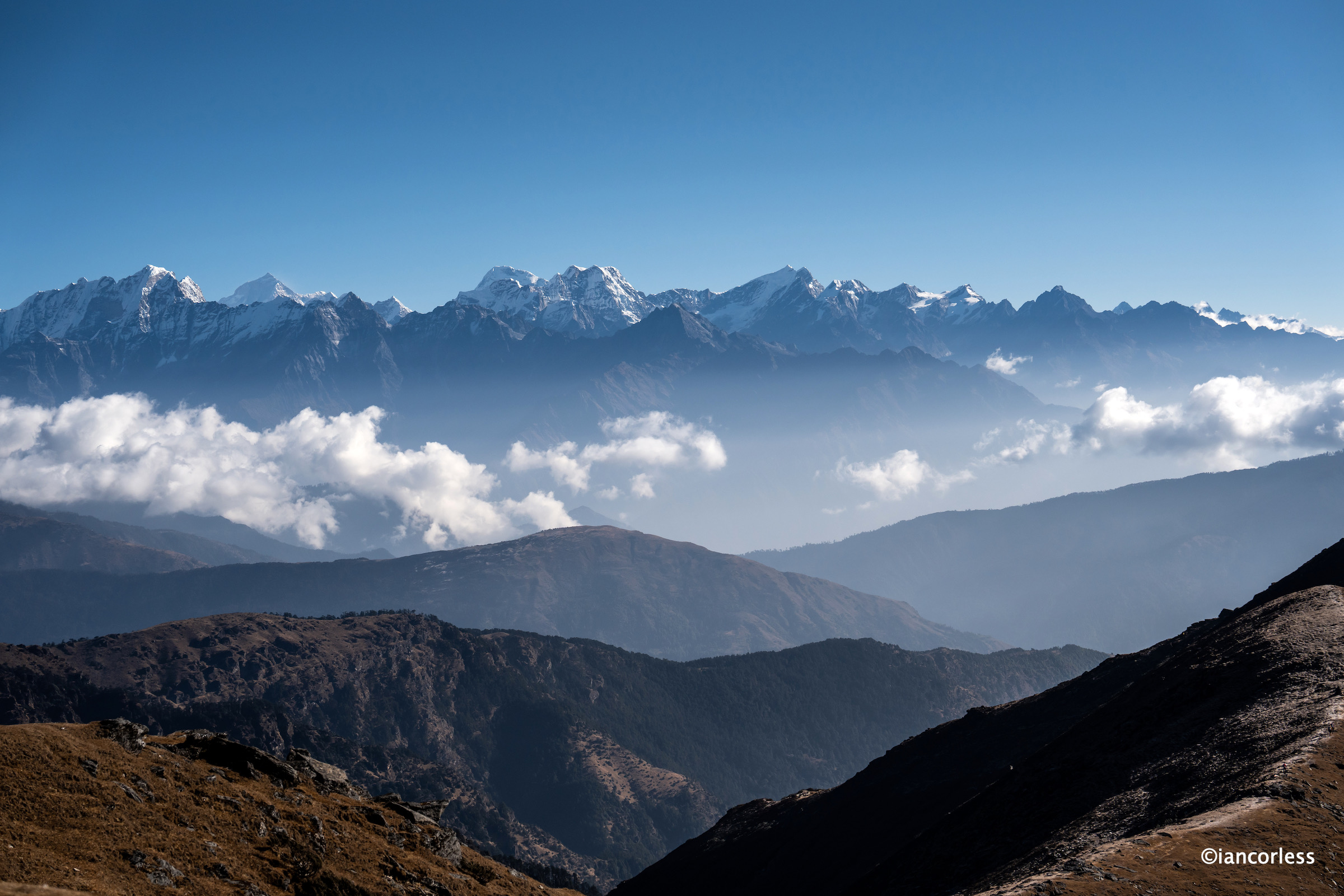
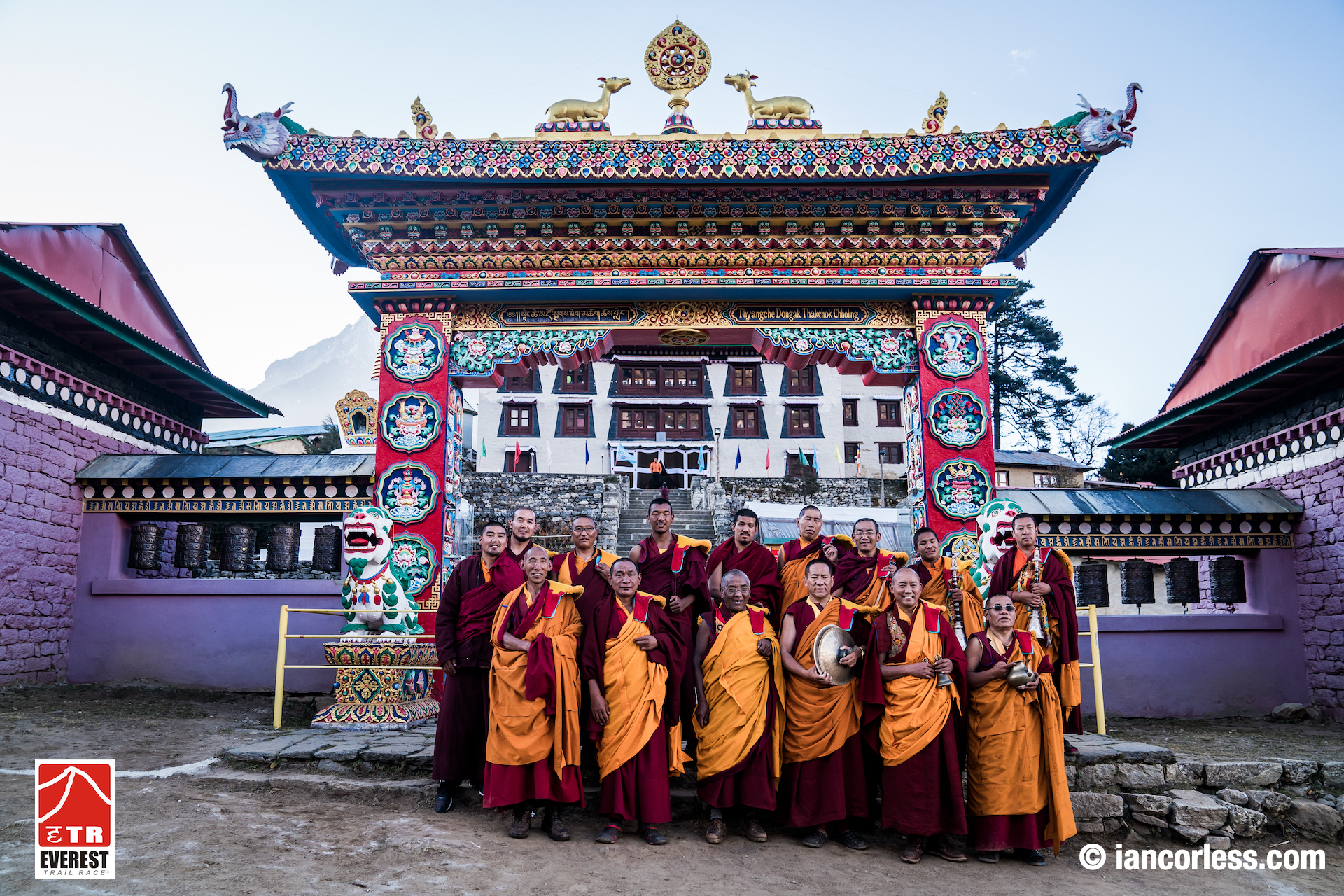
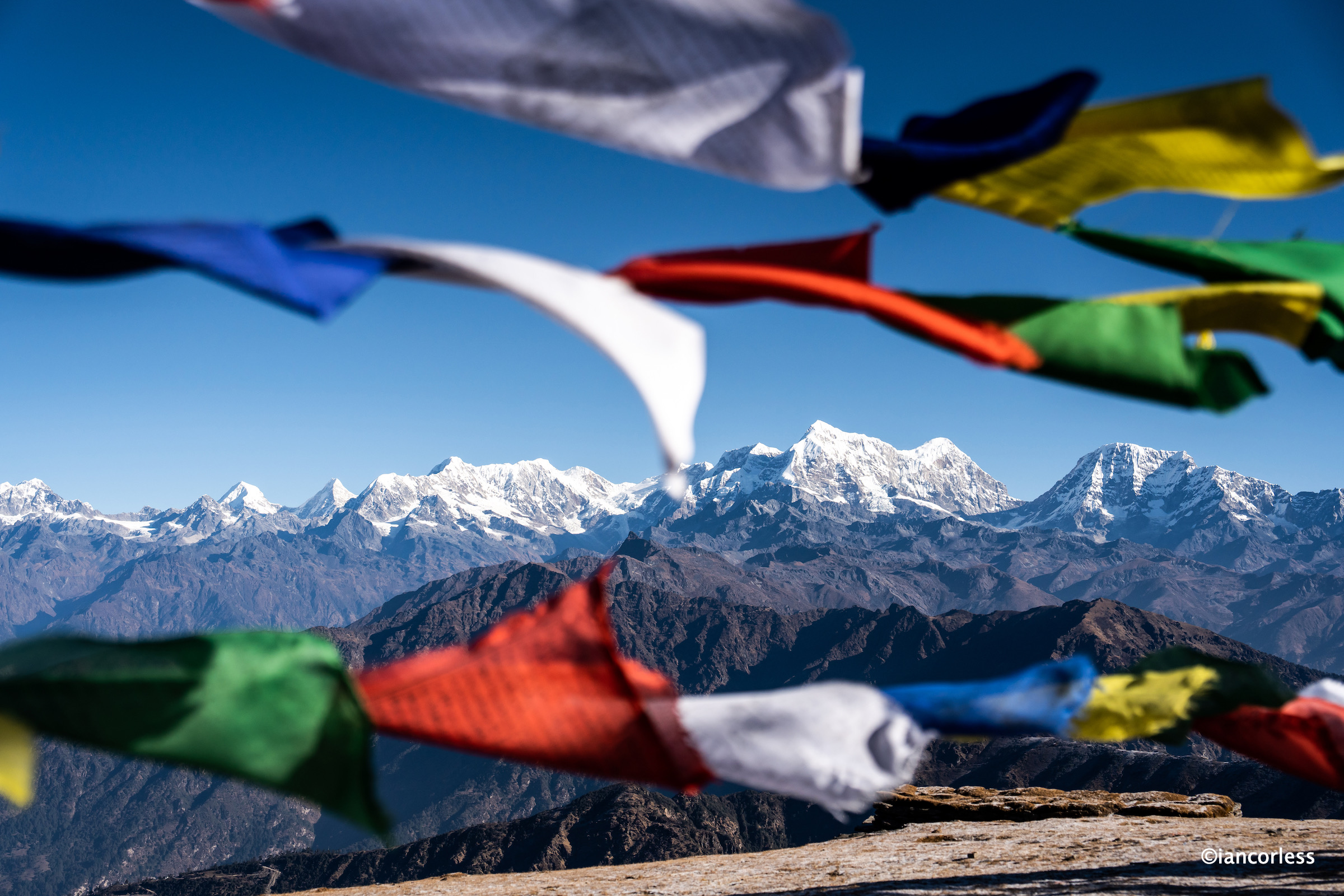
You’ll see Everest, Lhotse, Ama Dablam, and other giants of the Khumbu up close. But it’s not just the mountains — it’s the prayer flags flapping in the wind, the monasteries perched on hillsides, the layers of ridge upon ridge fading into the horizon. Every day looks like a screensaver. Every sunrise feels earned.
If you’re waiting for the “perfect moment,” this is it. You don’t need to be the fastest or the strongest. You just need to show up ready to push, adapt, and feel everything this place throws at you. The Everest Trail Race is not about conquering the mountain. It’s about discovering who you are when the mountain pushes back.
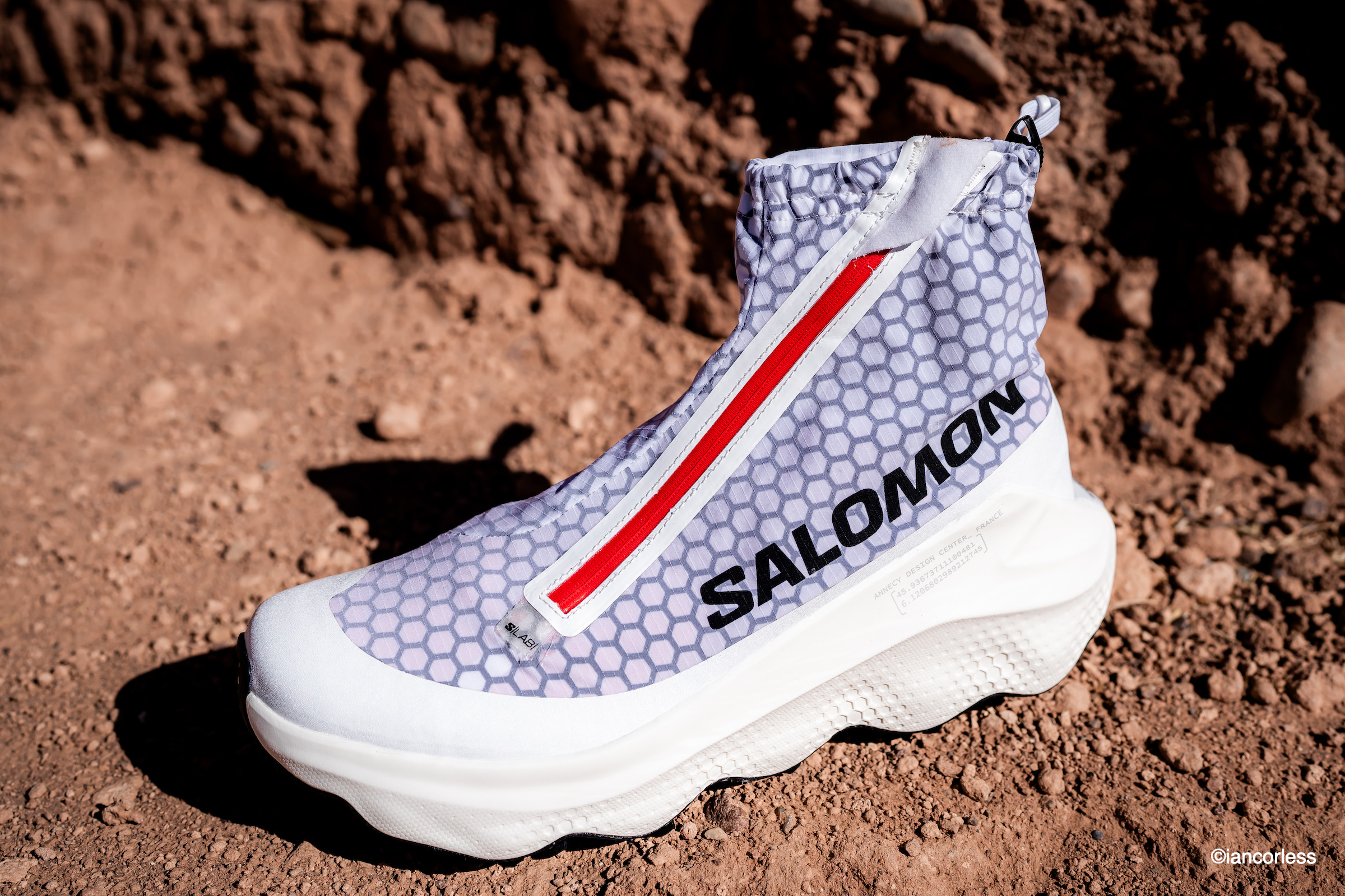
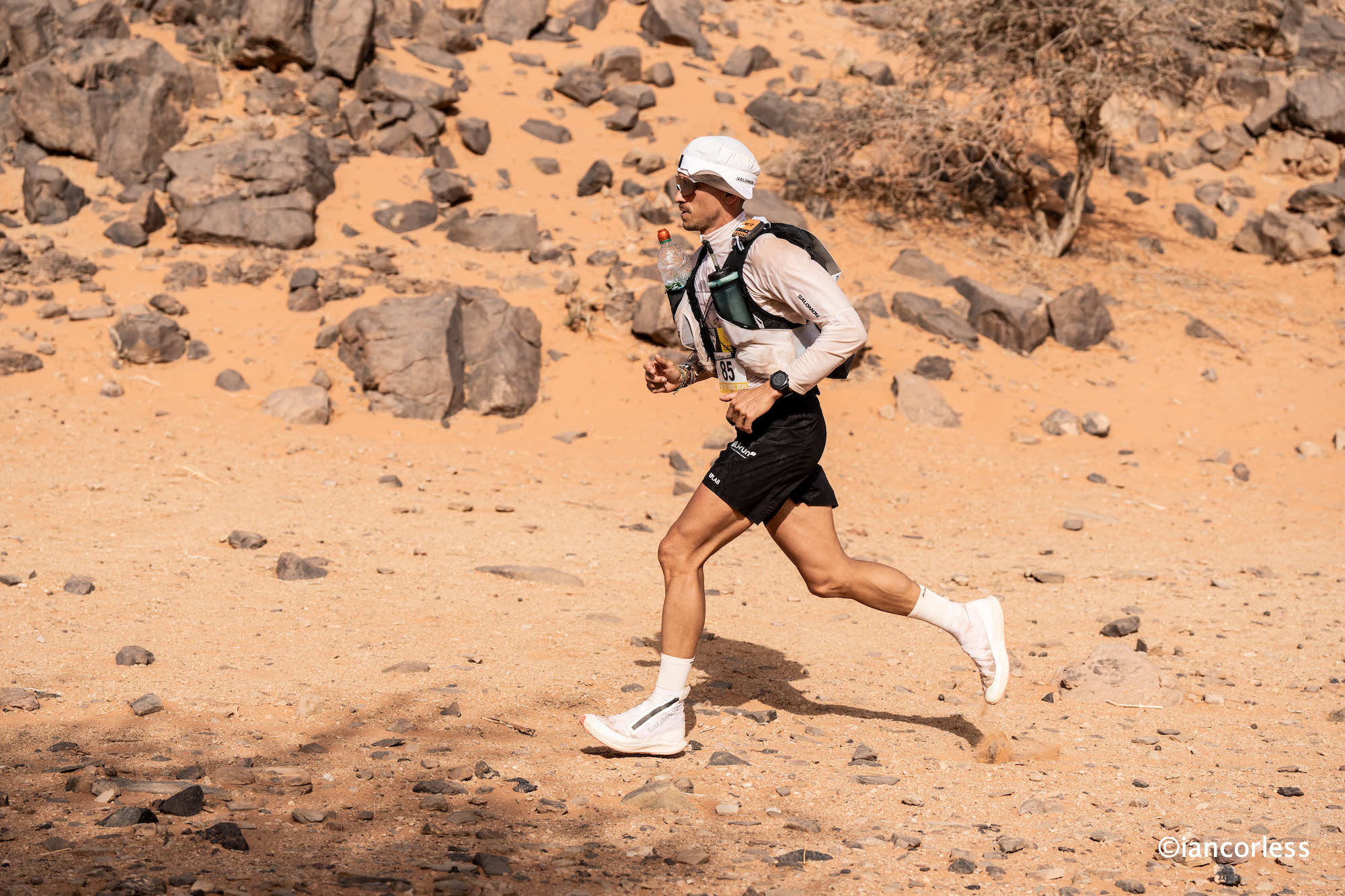
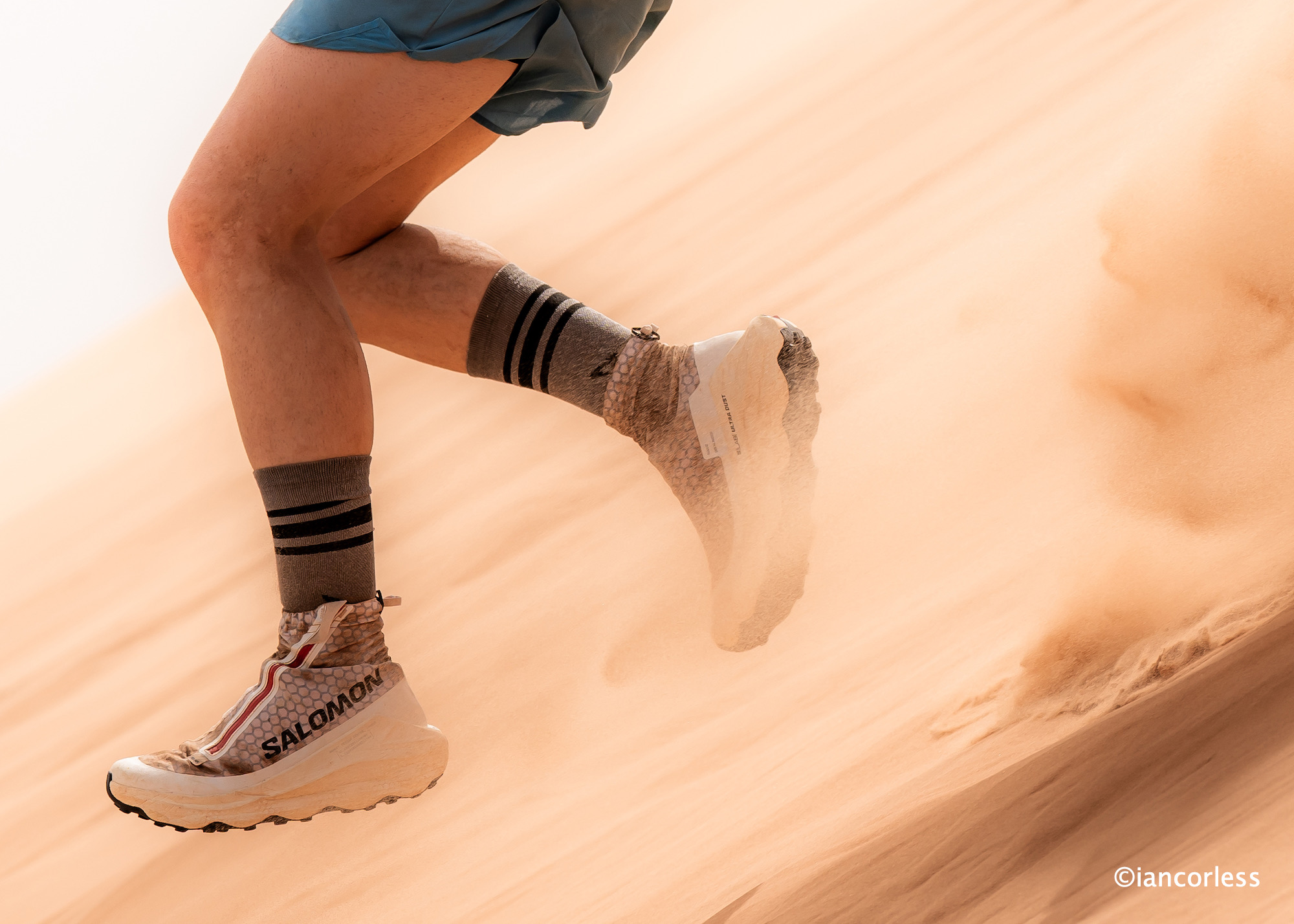
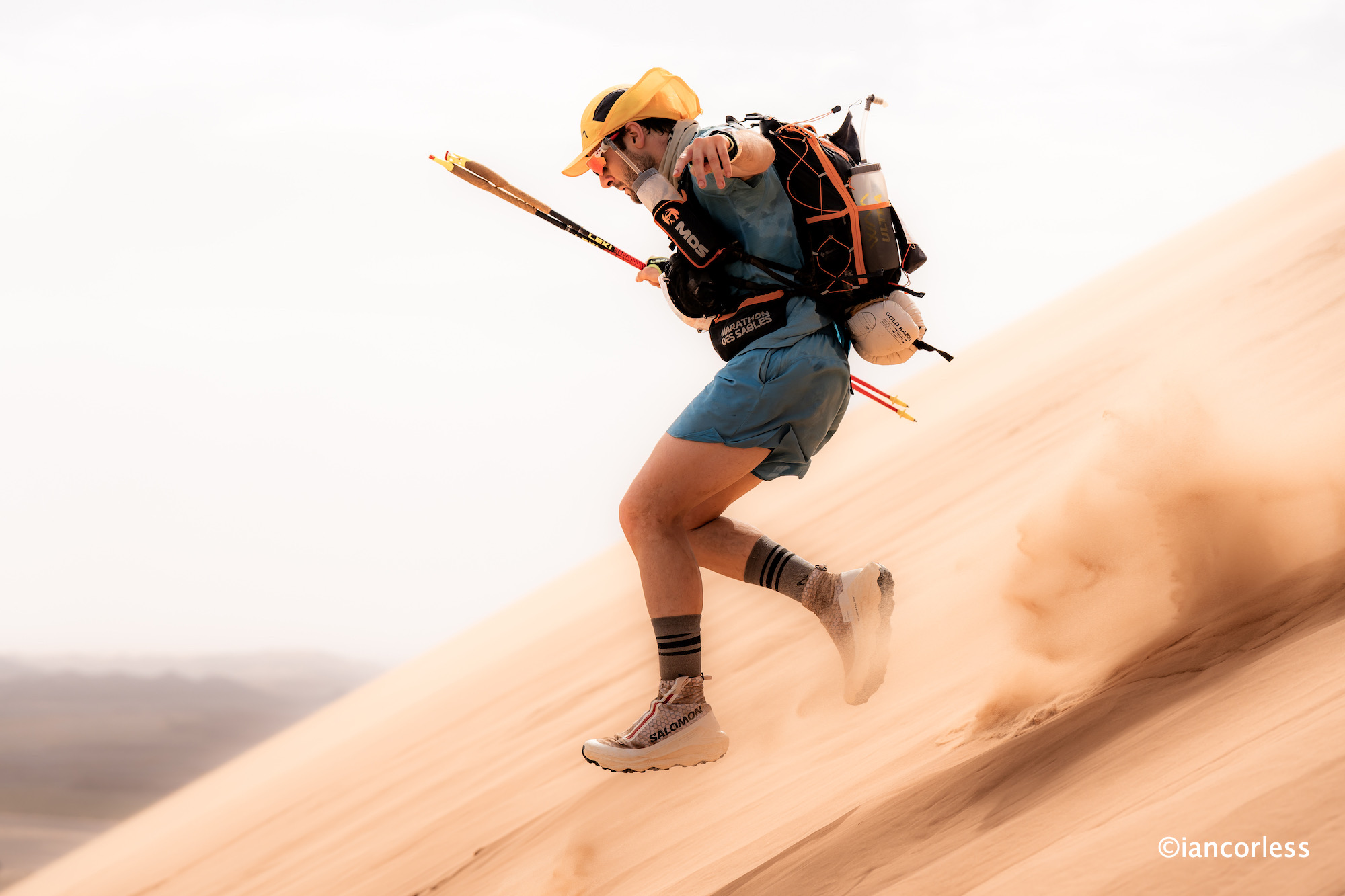
The Salomon S/LAB Ultra Dust isn’t just a rehash of the S/LAB Ultra Glide with a new colour way, no, this shoe is a purpose-built shoe designed specifically for desert ultra racing, developed on the feet of Mathieu Blanchard at Marathon des Sables in 2023.
The original incarnation used a different integral shoe, with feedback from Mathieu and others, it was decided a more cushioned shoe was required; step in the new Ultra Glide. The Ultra Dust not for everyone, and it’s not trying to appeal to everyone. This shoe is a specialist product, and like any anything that’s made for one task, it excels in that arena, but has trade-offs elsewhere.
Sizing is true to size. Due to the style of the shoe, you definitely do not want them too big. They need to fit correctly for good foot hold. For a Salomon shoe, the toe box is wider than most other Salomon shoes. Is it wide enough? Only you can answer this based on your own needs.
Photo by Ian Corless – From MDS The Legendary 2025
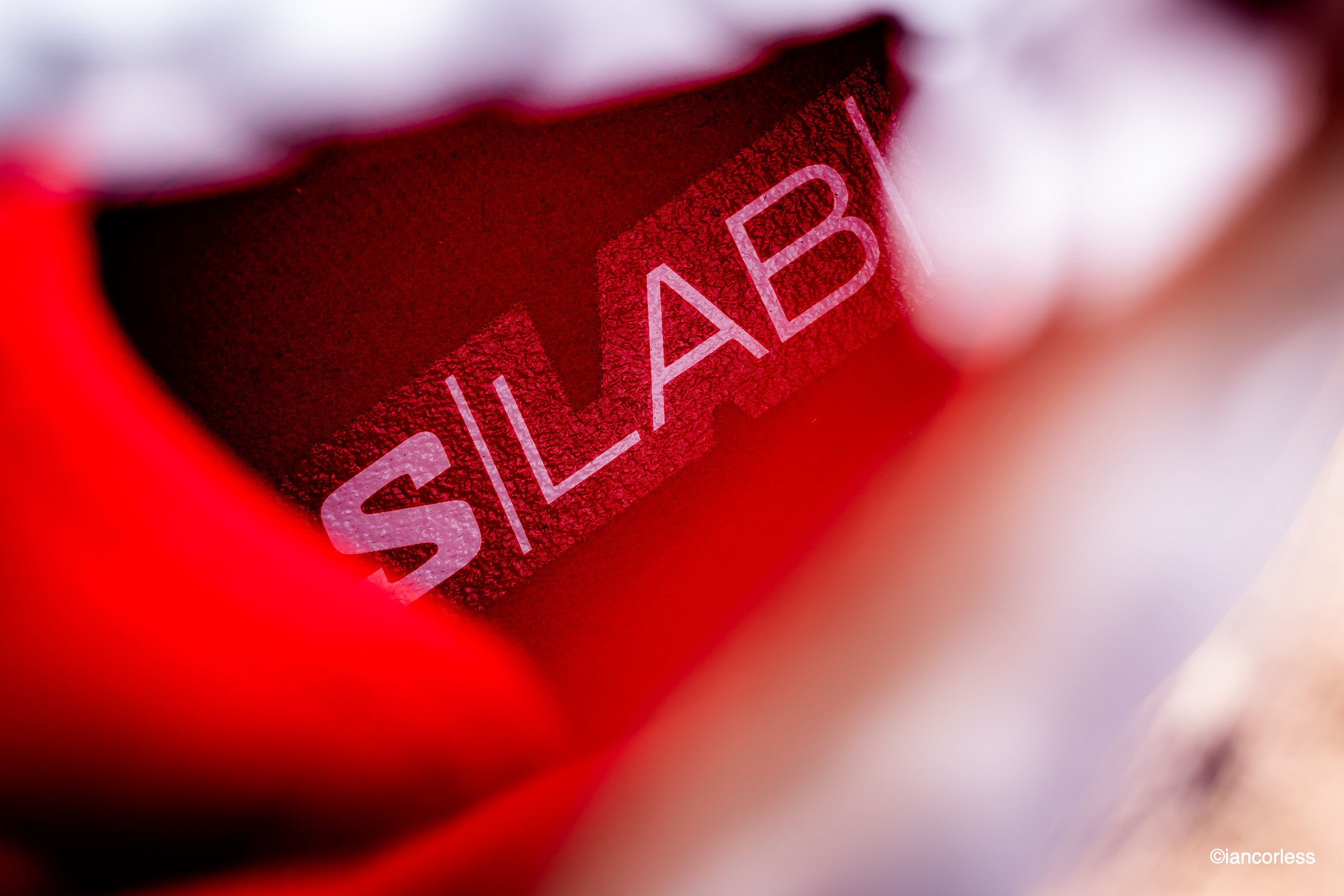
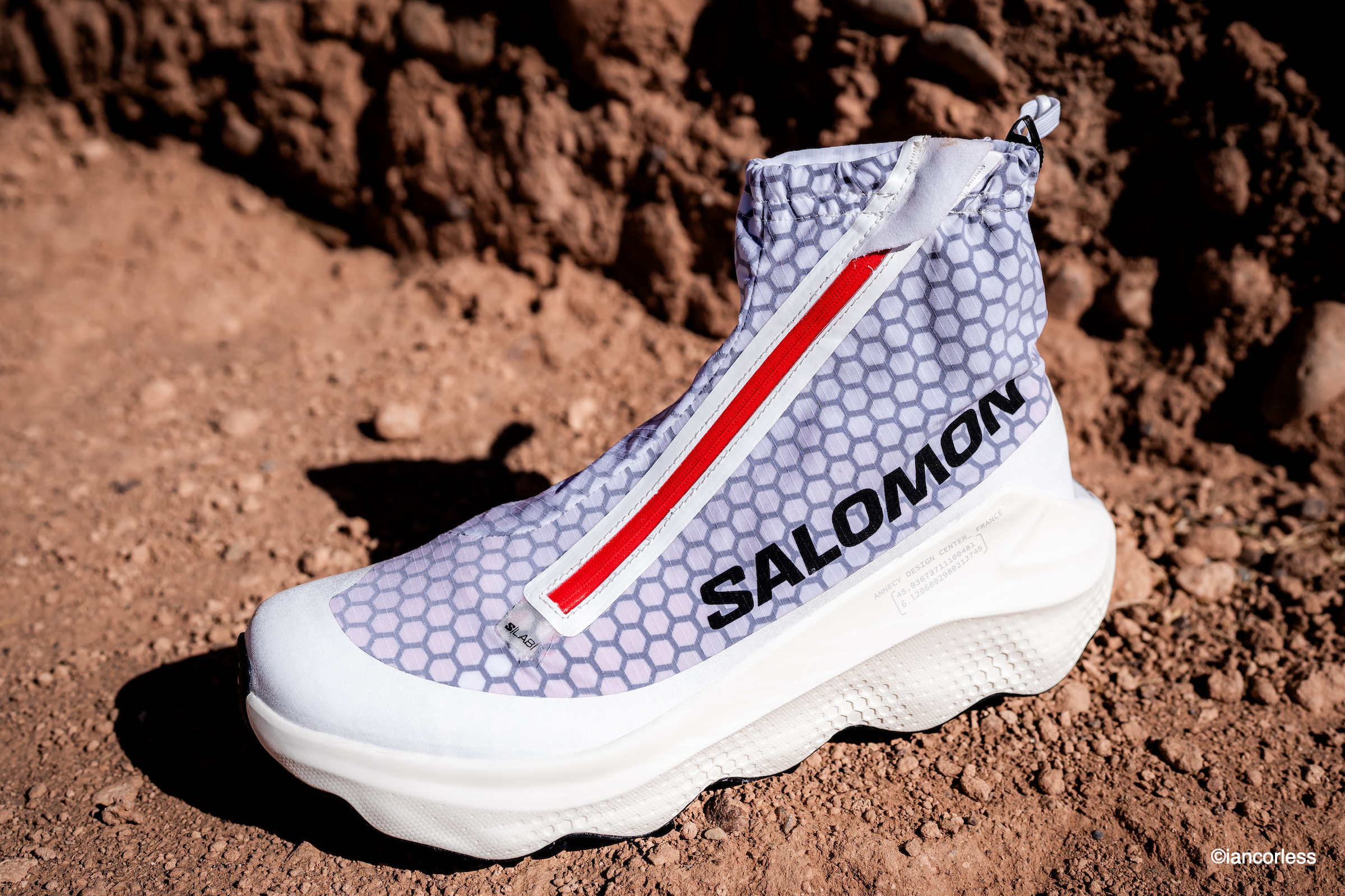
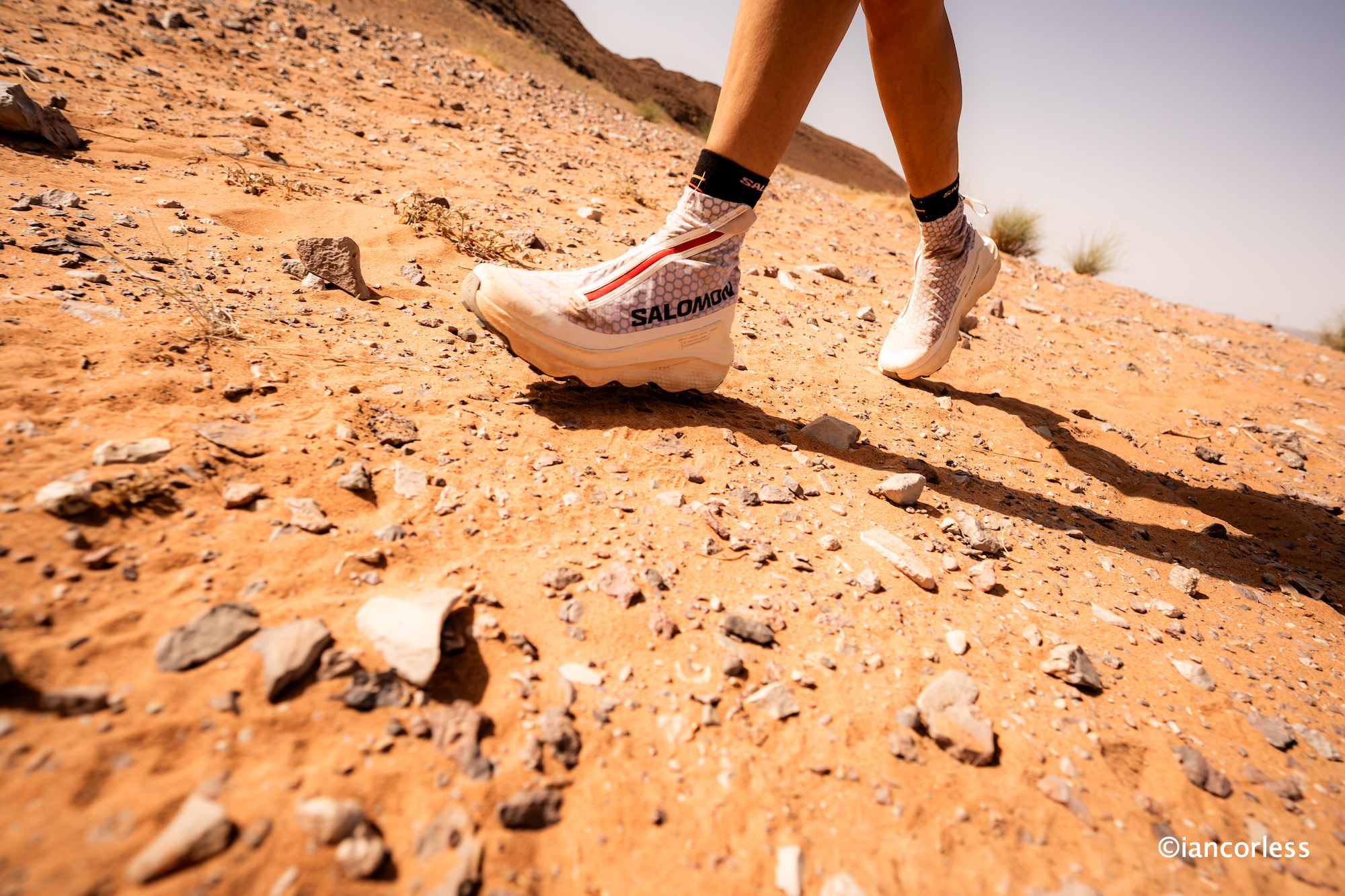
It may look like a mountaineering boot at first glance, but the S/Lab Ultra Dust has a stand alone Salomon shoe (Ultra Glide) fitted inside a bespoke gaiter, making an all in one shoe.
Photo by Ian CorlessPhoto by Ian CorlessPhoto by Ian Corless
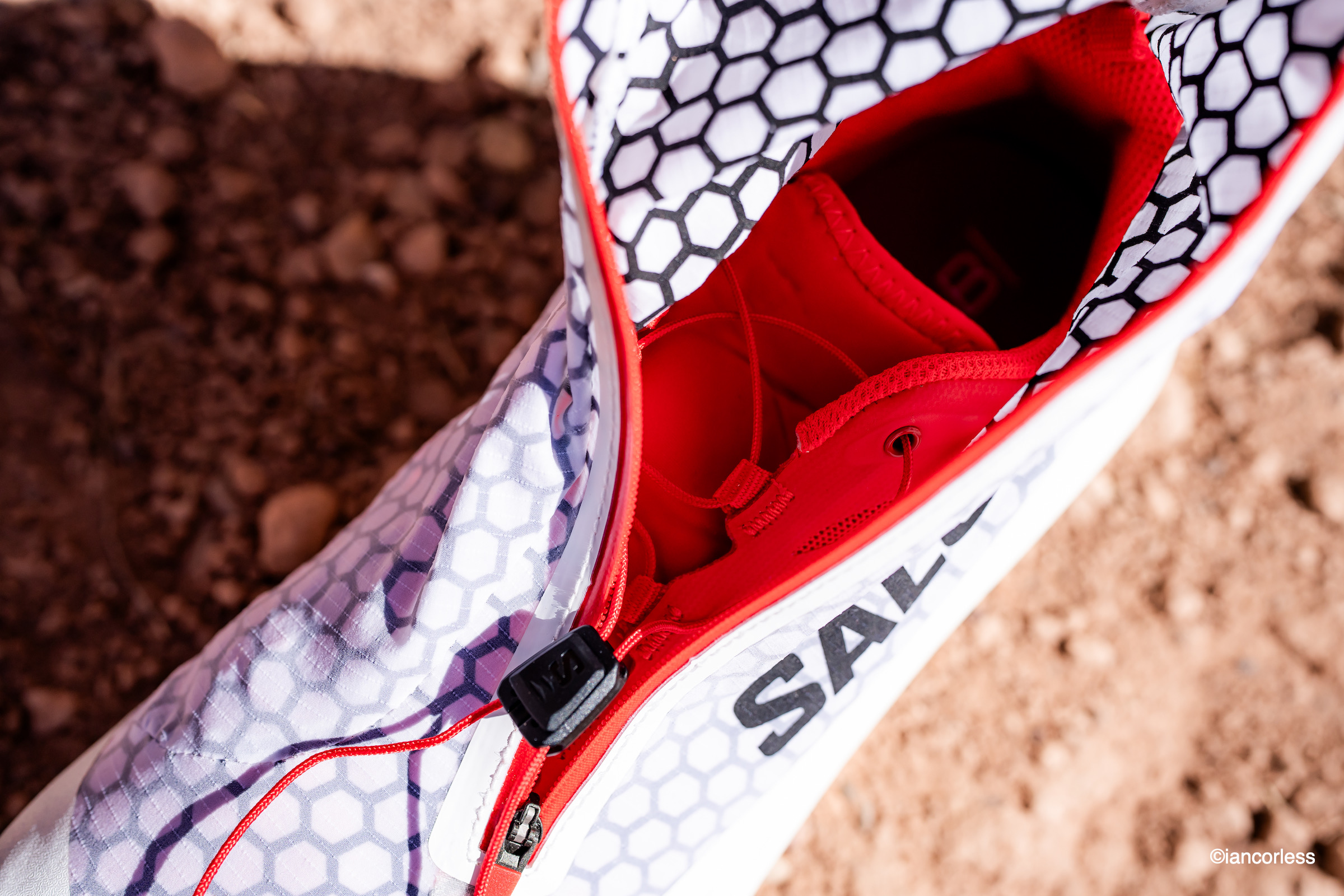
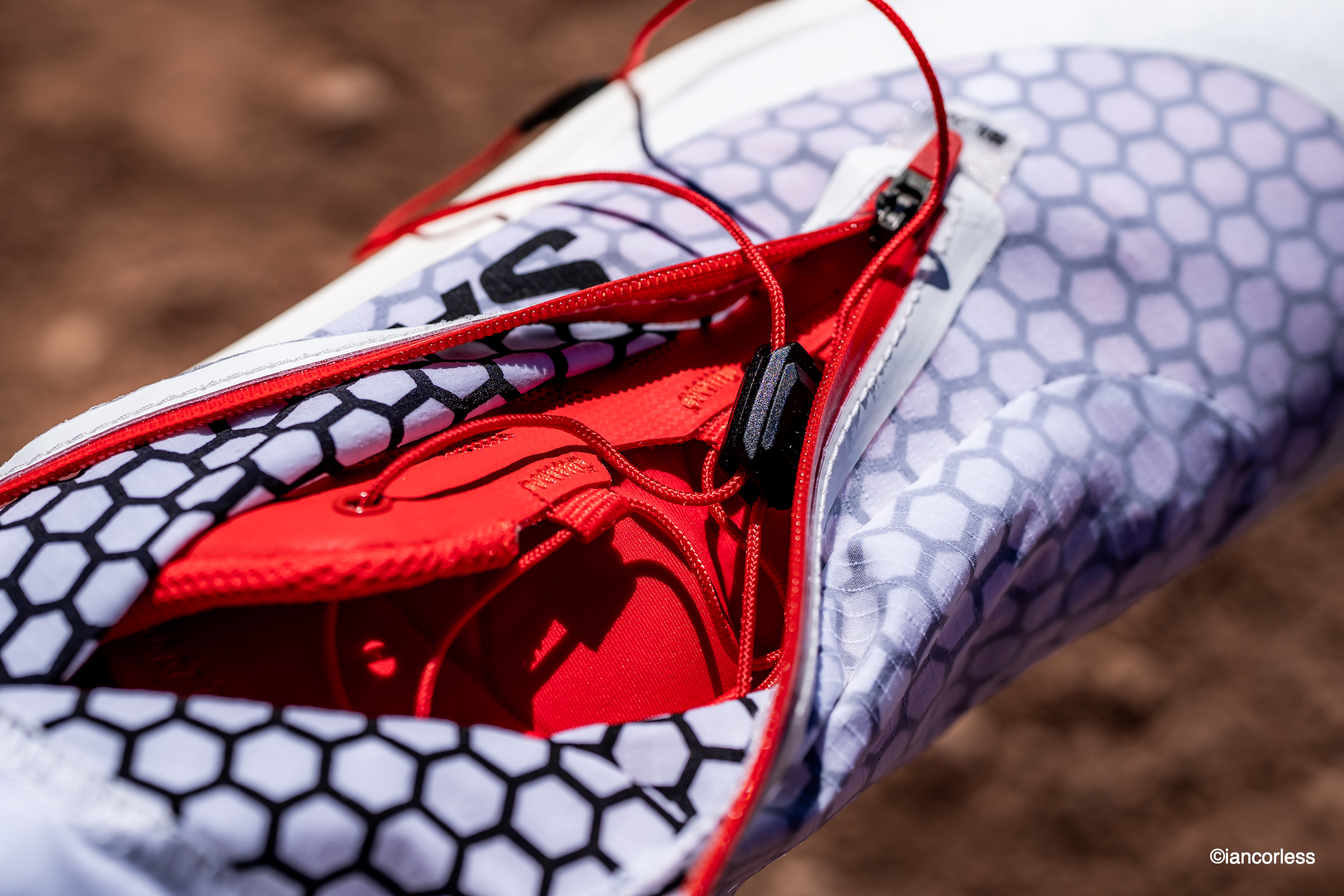
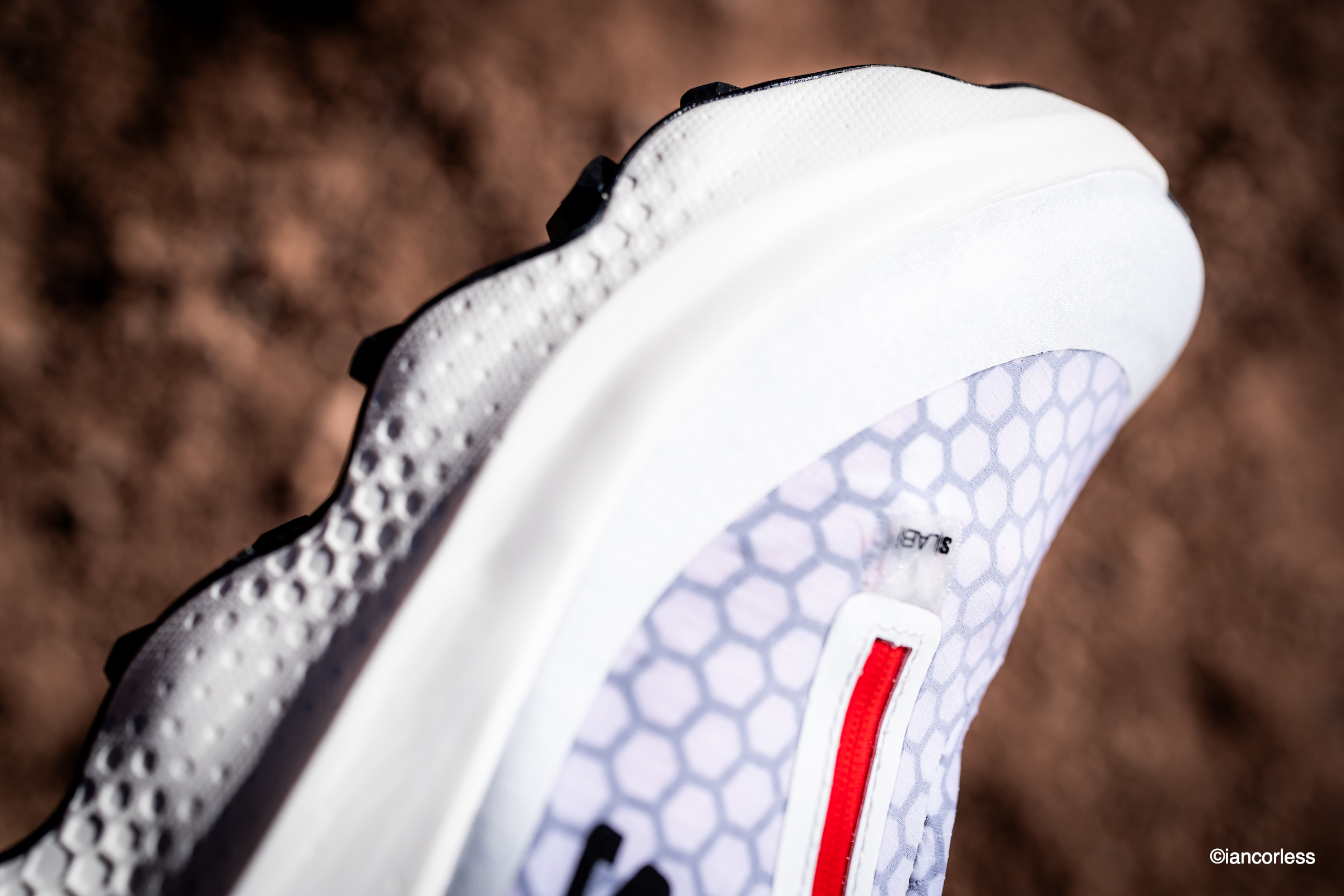
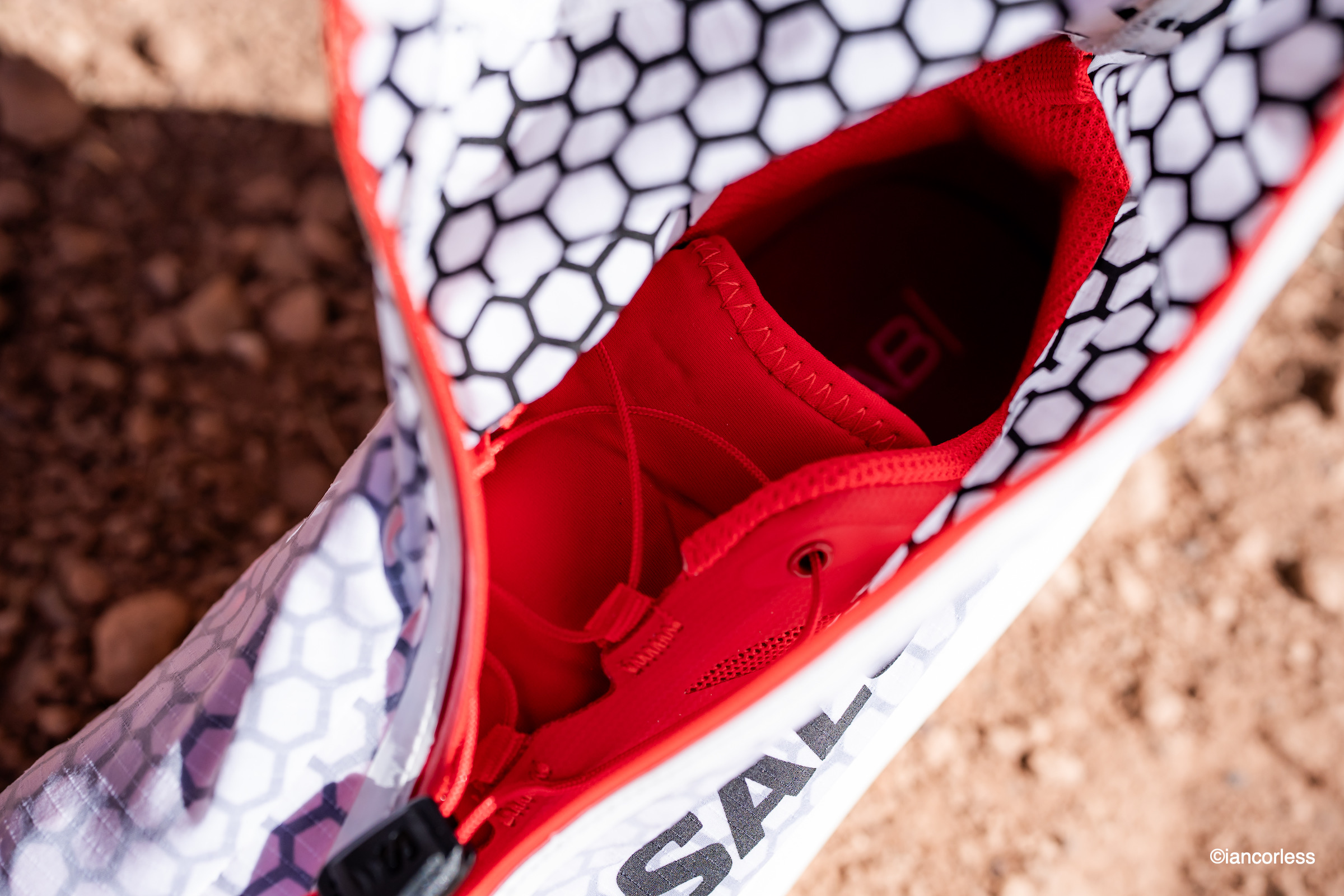
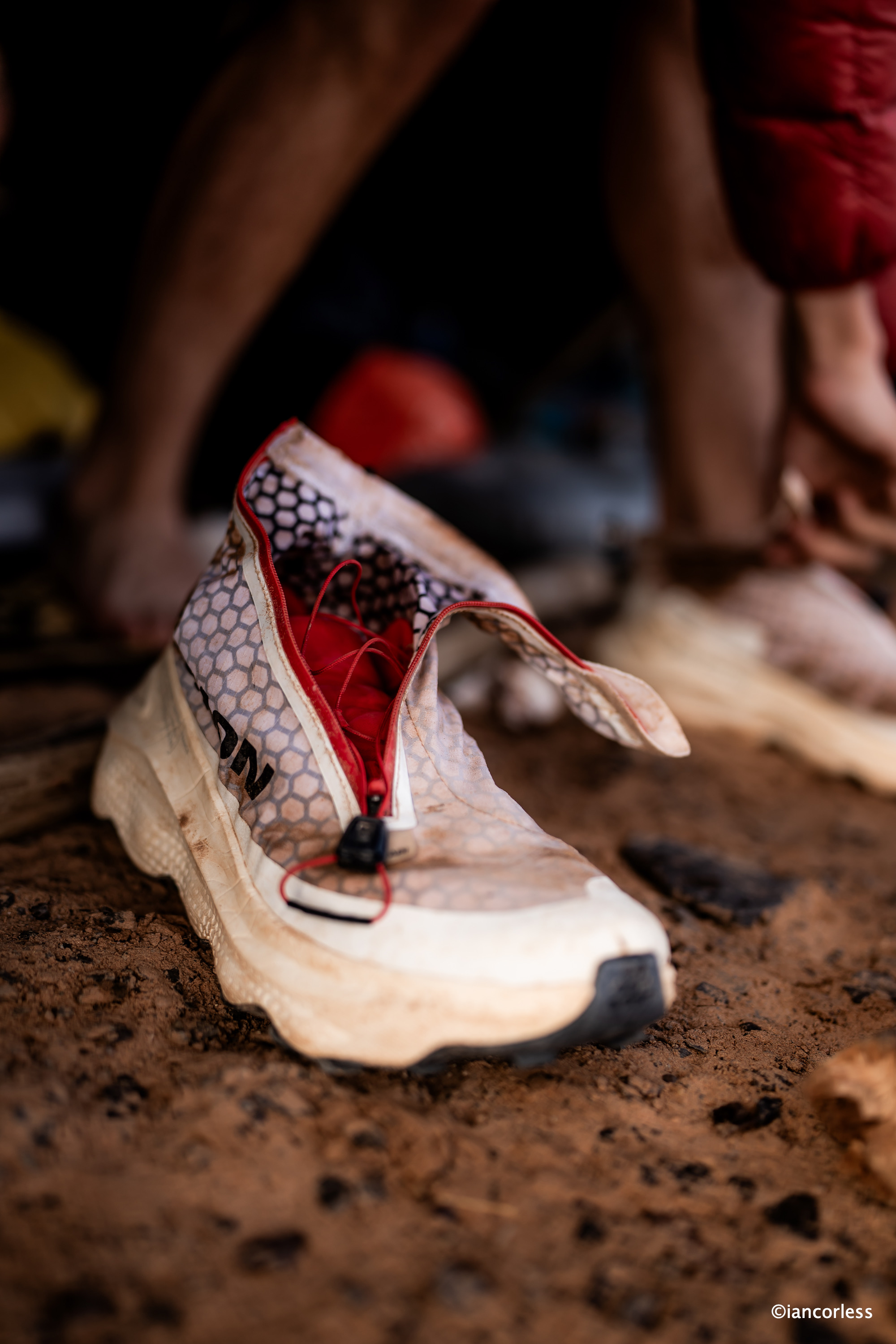
The integrated gaiter is the standout feature of the Ultra Dust. It’s integral into the design, forming a full ankle-wrap mesh sleeve that stretches snugly over the ankle and top of the shoe.
Photo by Ian Corless
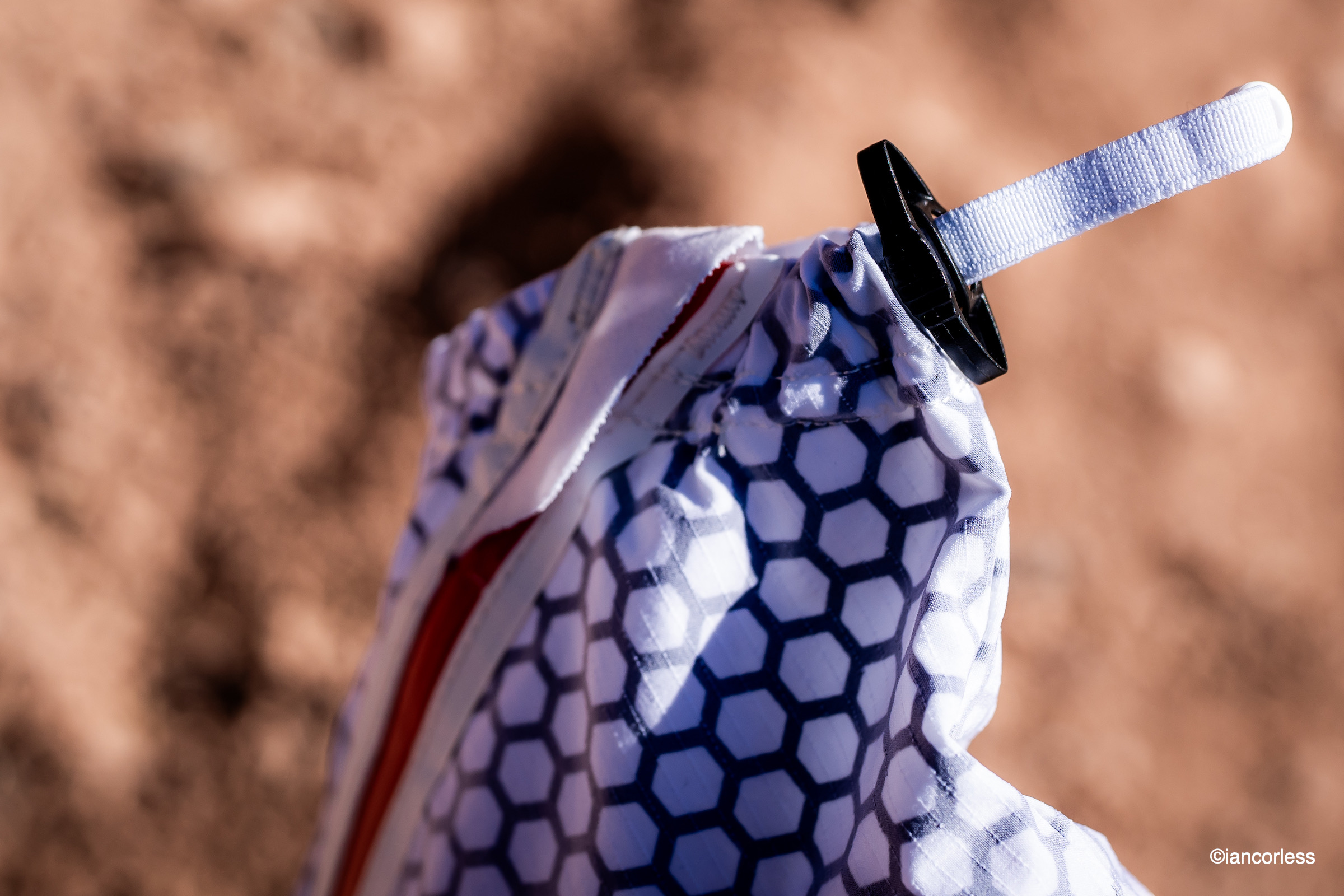
There’s one zipper, no velcro, no gaps, an elastic seal at the top can be pulled tight and that keeps out sand, just like a dry bag keeps out water.
Photo by Ian Corless
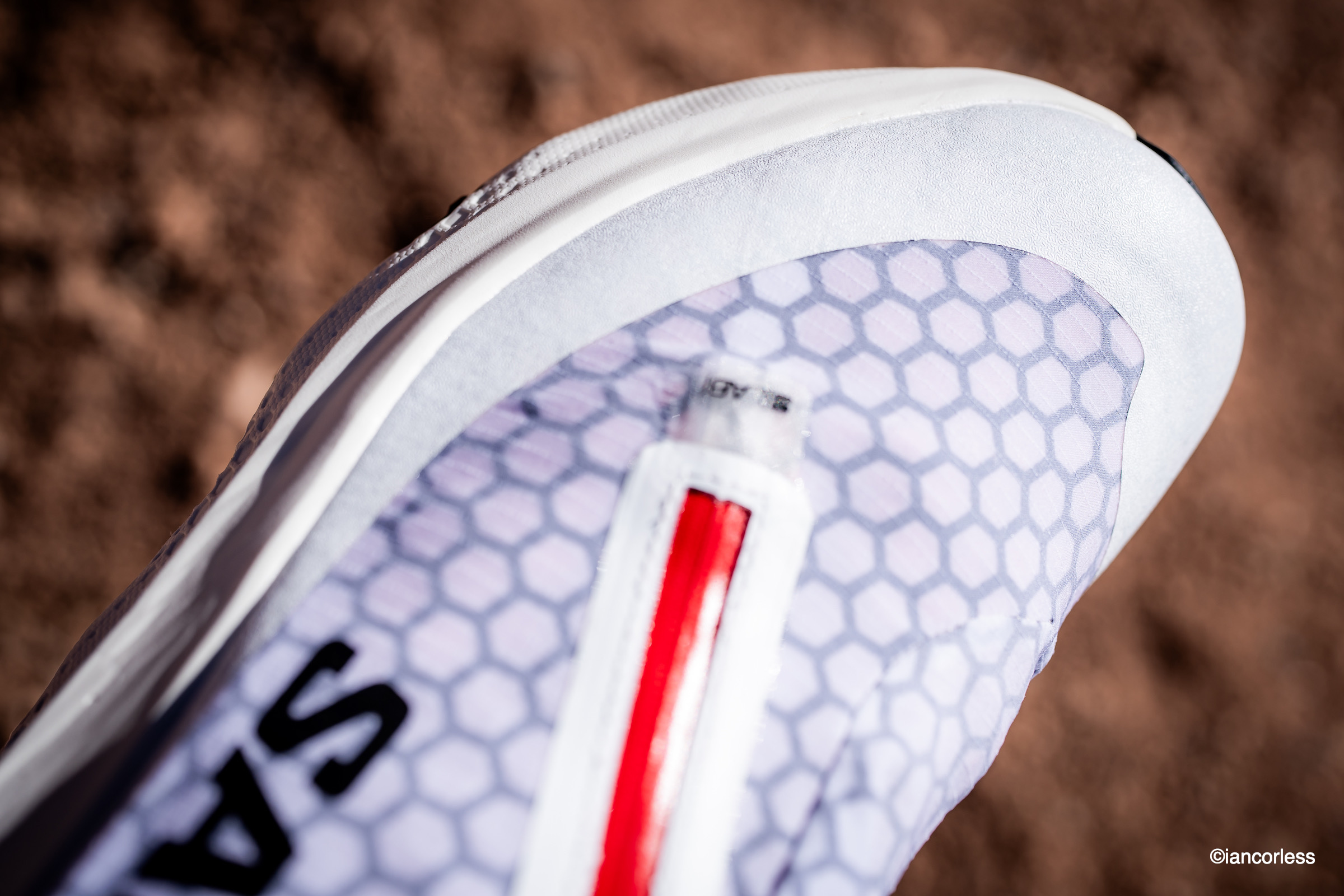
There is also a superb toe bumper.
Photo by Ian Corless
This isn’t your standard trail gaiter that slides around or traps heat. The mesh is thin, highly breathable, and stretchy, giving you ankle mobility without debris ingress. It works 100%, in countless test scenarios – Morocco, Namibia, Lanzarote, La Palma and even South Africa, this shoes gaiters performs perfectly with no debris entering the shoe.
Photo by Ian Corless
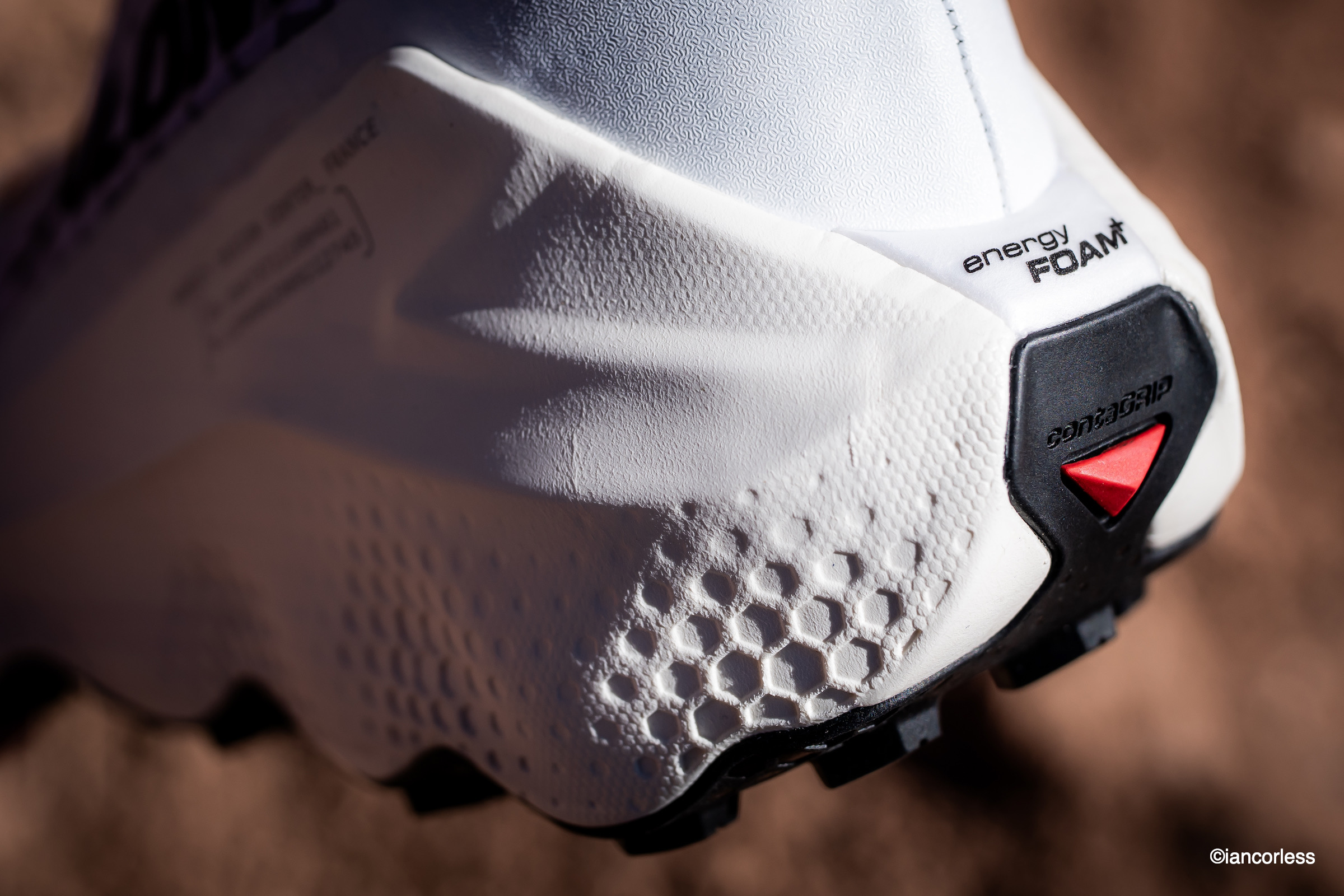
The Ultra Dust has huge cushioning, energyFOAM+) : 35mm at the front and 41mm in the rear giving a middle of the ground 6mm drop. Despite the stack height, the shoe has great feel for the ground.
Photo by Ian Corless
The cushioning is bouncy but not squidgy, they are surprisingly stable. In desert scenarios, the cushioning transitions superbly from soft-sand, hard/ stony ground and on technical sections they are extremely comfortable, however, here the stack height can produce less stability, it’s not horrendous, but worth noting.
Photo by Ian Corless
The 6mm drop puts you in a slightly forward-leaning stance, perfect for driving through long, runnable flats and moderate inclines. It can help keep cadence high and your form efficient. By contrast, they are extremely comfortable to walk in. While zero-drop loyalists might not love it, this drop caters well to endurance racers who don’t want achilles/ calf strain late in a race. It’s a great middle ground. This higher drop provides a bit more heel support, especially helpful when fatigue sets in and your form deteriorates. That extra buffer can reduce calf strain in multi-day stage races.
Photo by Ian Corless
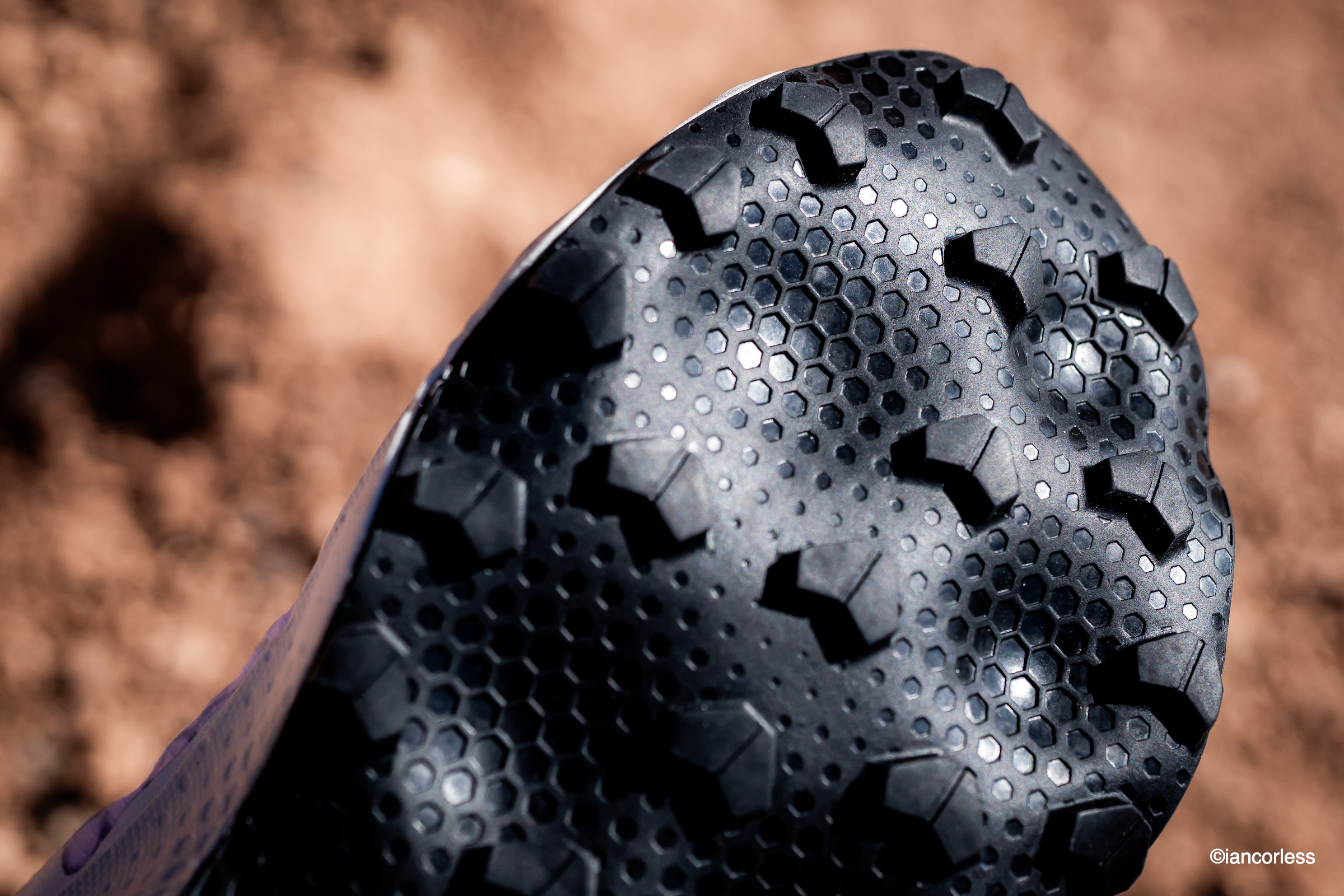
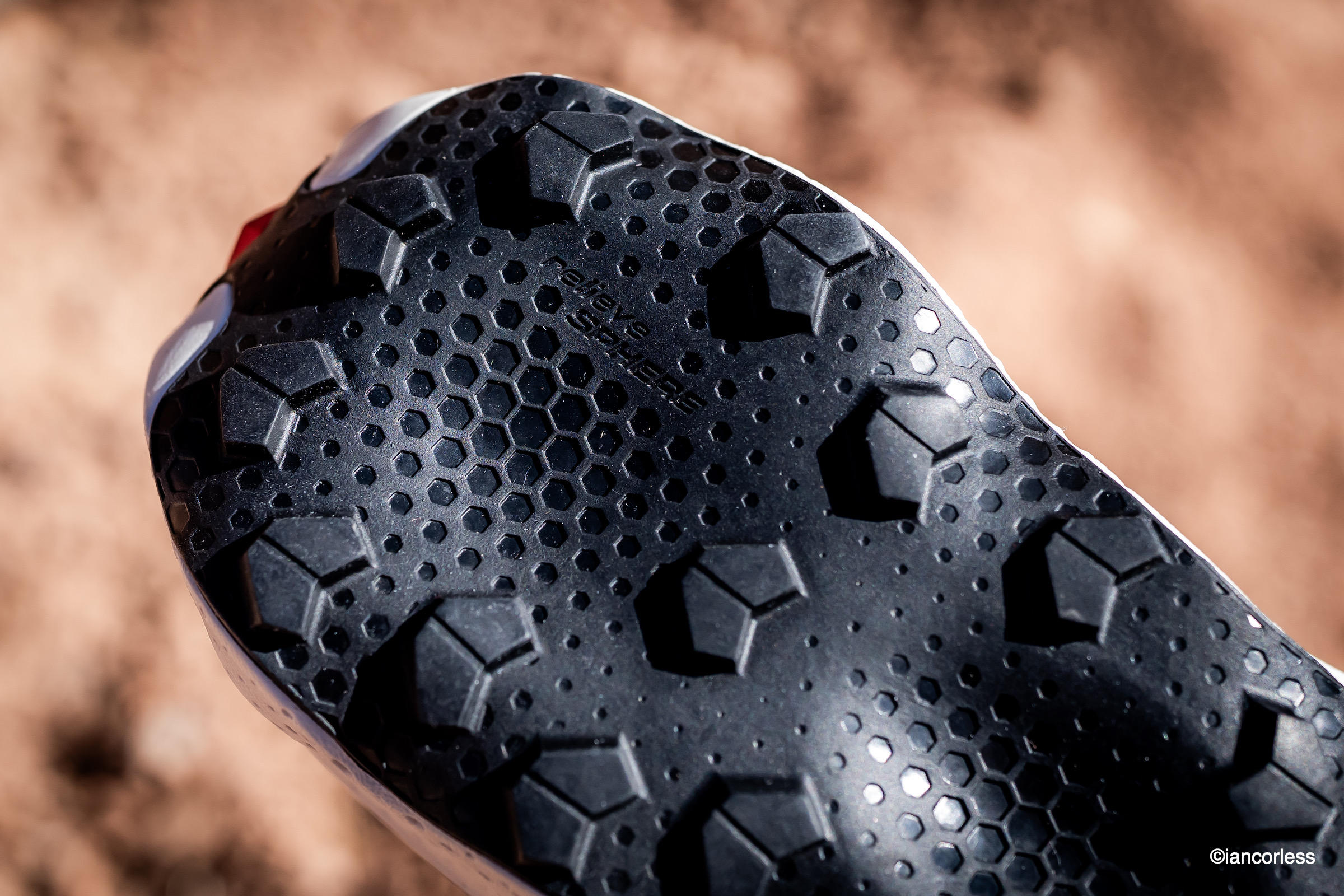
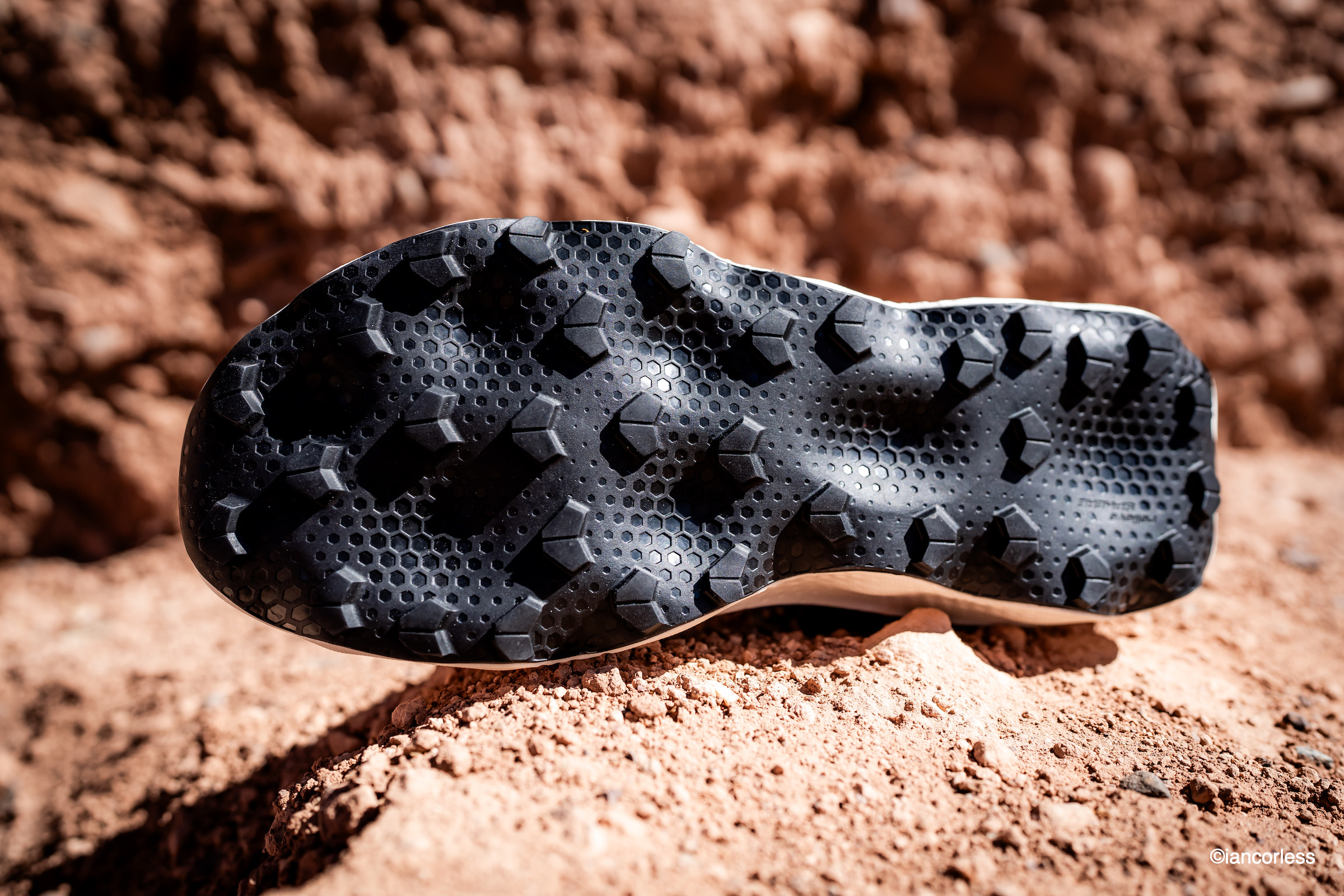
This is where the Ultra Dust makes its biggest departure from typical trail shoes. Instead of deep, aggressive lugs, it uses low-profile 4mm, wide-surface lugs designed to float over sand rather than bite into mud or rocky terrain.
The Contagrip outsole (All Terrain Contagrip) has shallow lugs that are evenly distributed across the sole. They provide surface area rather than penetration. This minimises drag and helps prevent you from sinking into soft terrain. On packed trail, they still provide enough grip to stay stable, though this shoe isn’t made for slick rock or alpine conditions.
Photo by Ian CorlessPhoto by Ian Corless
Durability is strong thanks to the full-length rubber coverage, but note that softer lug compounds wear faster on pavement or rocky trail. In desert conditions, though? This outsole will go the distance.
Photo by Ian Corless
The Ultra Dust is unapologetically specialised with gaiter integration, a breathable upper, a sand-optimised outsole; everything is geared toward one thing, surviving and thriving in desert ultras with no sand ingress, comfort and blister free feet.
Photo by Ian Corless
The upper is thin, synthetic mesh that breathes extremely well, doesn’t absorb moisture, and dries fast. You won’t find overlays or extra structure. It’s minimal to the core, saving weight and shedding heat. It’s a good looking shoe, for sure they stand out in white and red.
This shoe isn’t built for rocky single-track or alpine descents, however, it does perform in these scenarios. The Ultra Dust is built for wide-open flats, dunes, and heat-soaked multi-day endurance events. It’s the kind of shoe you pack for the Marathon des Sables or similar.
Salomon say, the upper is designed to keep out : dust, sand, snow and water. They do do that. As an example, I used the Ultra Dust at a very, very wet Transvulcania and they performed exceptionally. I am equally sure they will work well in snow.
When one considers that more events such as Marathon des Sables, the usual protocol has been to select a shoe, have velcro sewn on and then add a gaiter, the S7Lab Ultra Dust in price comparison fares very well. They are an expensive shoe, BUT, the cost of shoe, gaiter and sewing velcro on is almost the same. However, there is maybe one advantage of a shoe with velcro? If you tear the gaiter, you can cheaply replace it with a pair of new ones. Tear the gaiter on the S/Lab Ultra Dust and you have a problem….
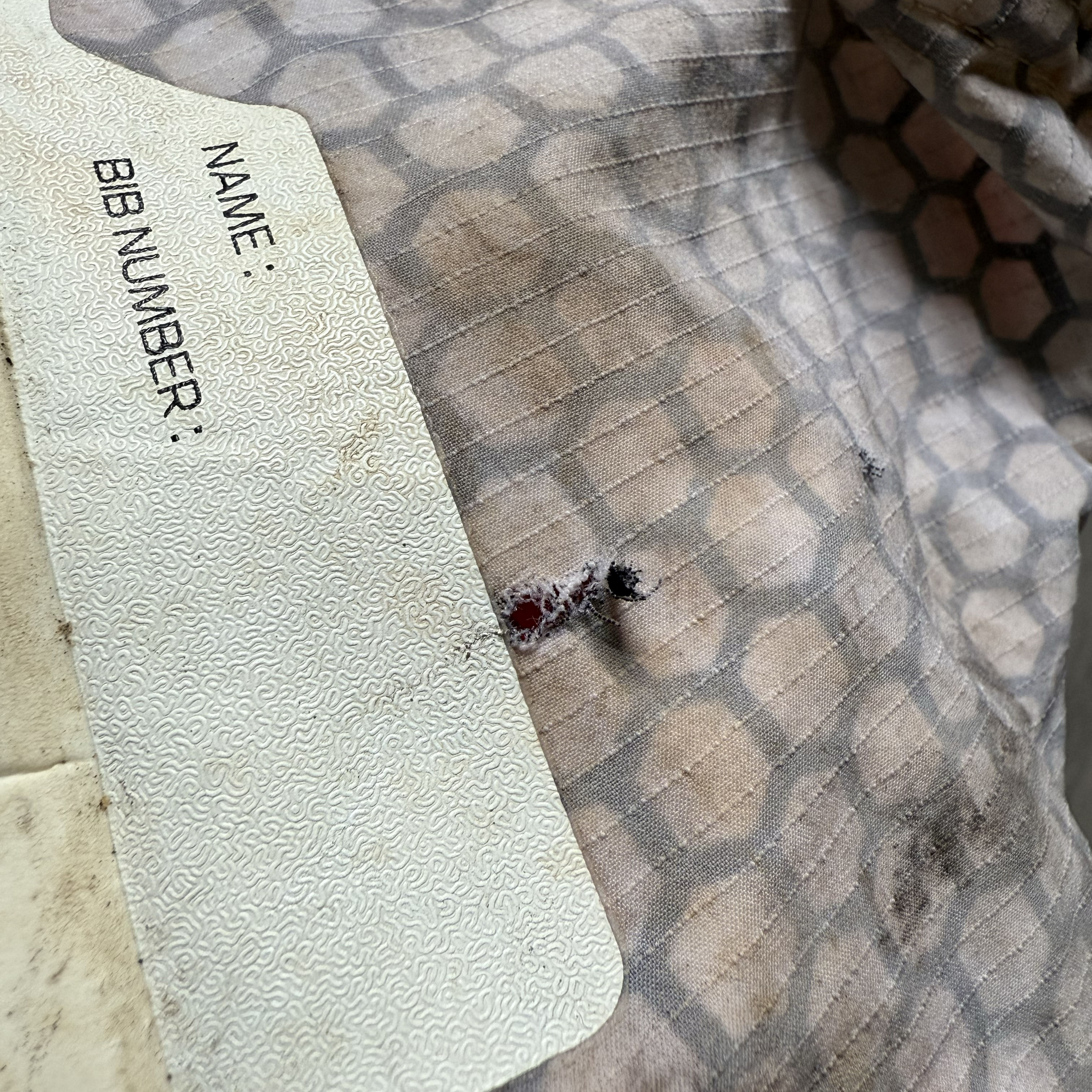
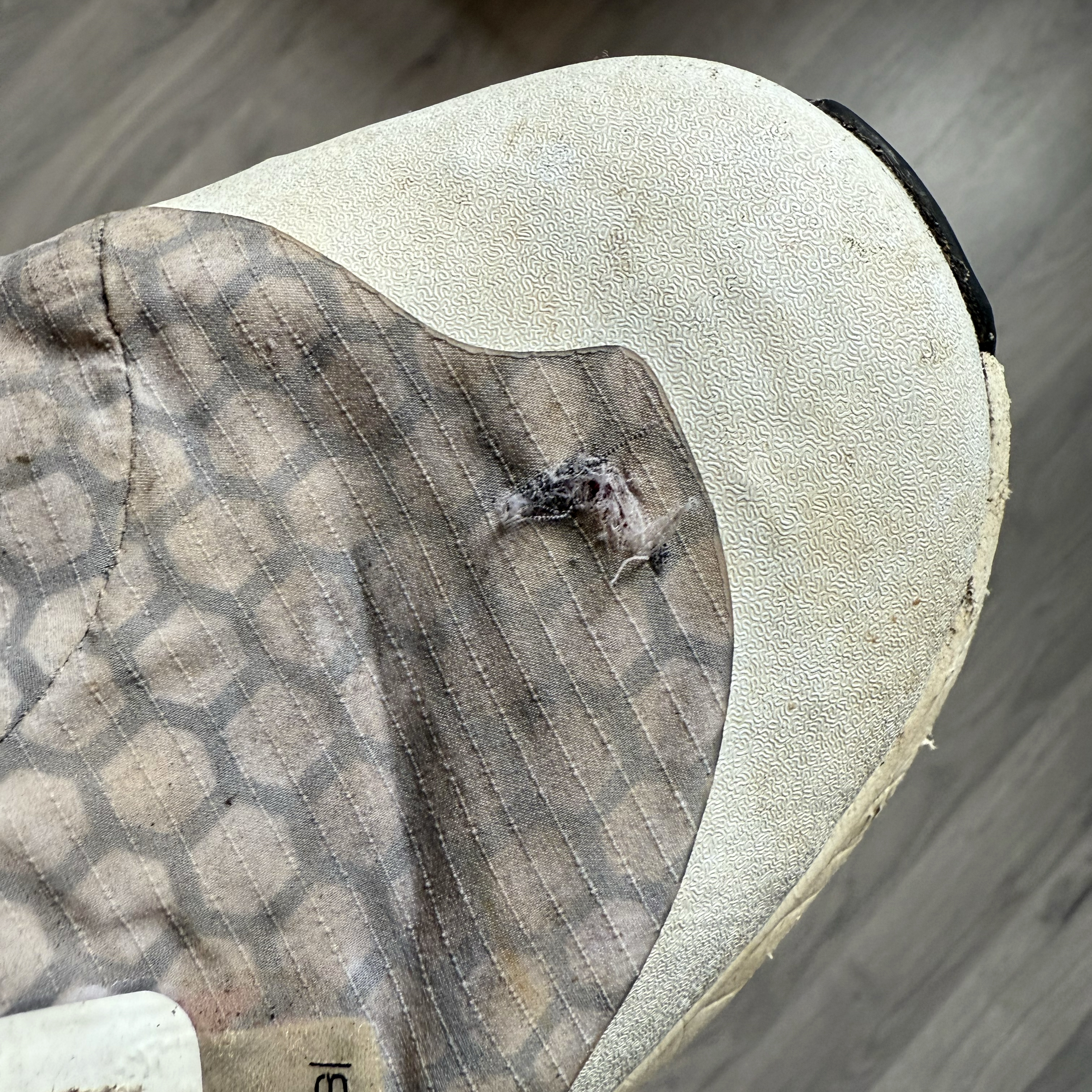
Mine, after 5-months of abuse now have two small tears, they cause no issues currently, but maybe in the future they will? However, in experience, shoes for a race such as MDS ‘just’ need to last the event….
Photo by Ian Corless
Features:
Contragrip outsole
energyFOAM+
Endofit
quickLACE
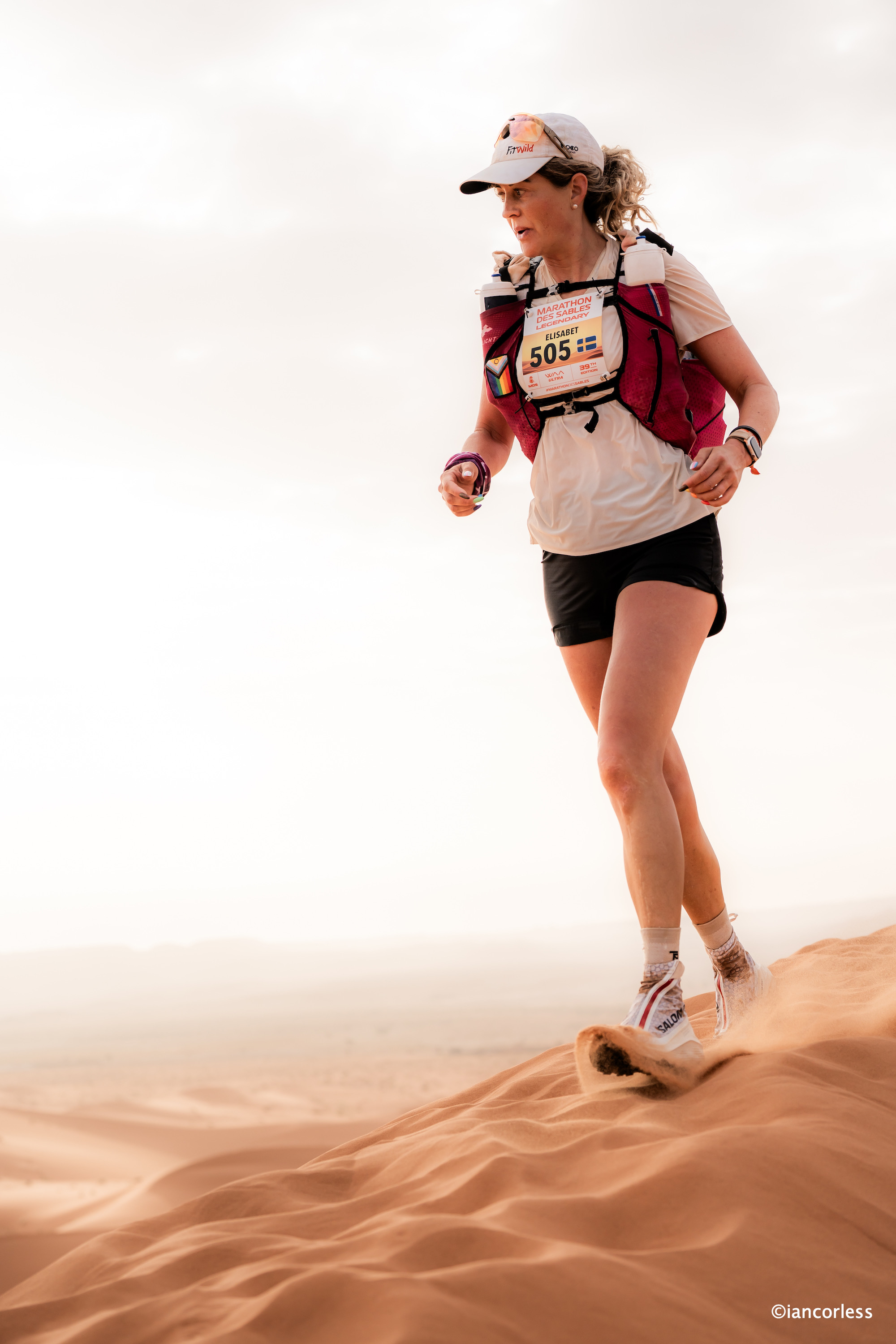
Elisabet Barnes using the S/Lab Ultra Dust MDS Legendary 2025 – Photo by Ian Corless
“Developed as a prototype for our athletes, the S/LAB Ultra Dust delivers comfort in extreme conditions no matter how fast you run. Dust, sand and everything else nature throws at your feet are kept out by the fully integrated gaiter with filtering properties. A lightweight, breathable and soft dream shoe for long distances.”
Final Thoughts: Who Should Buy This Shoe?
Photo by Ian Corless
If you’re training for, or racing a desert ultra, the Salomon S/LAB Ultra Dust is a top-tier option, arguably the best in its class. A brilliant shoe that is finely tuned for a specific environment. If you are signing up for MDS or similar, this shoe should be top of the list for testing. They are comfortable, cushioned, have excellent grip, excellent protection and importantly, they keep out sand and debris. The Ultra Dust was clearly designed with direct input from elite ultra runners who know the pain of sand-filled shoes, melted midsoles, and overheating feet.
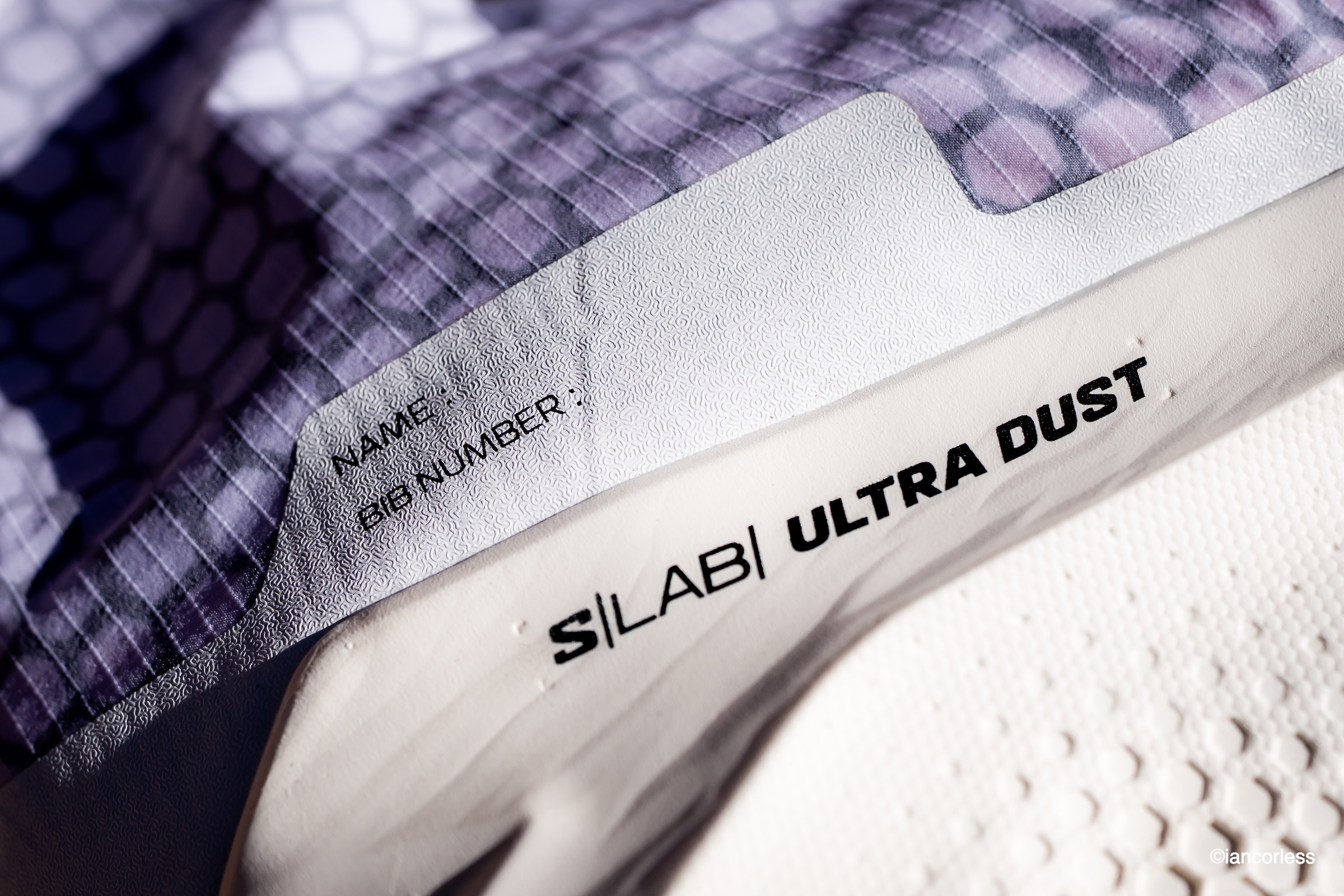
And a final nice touch? There is a place for NAME and BIB NUMBER on each shoe.
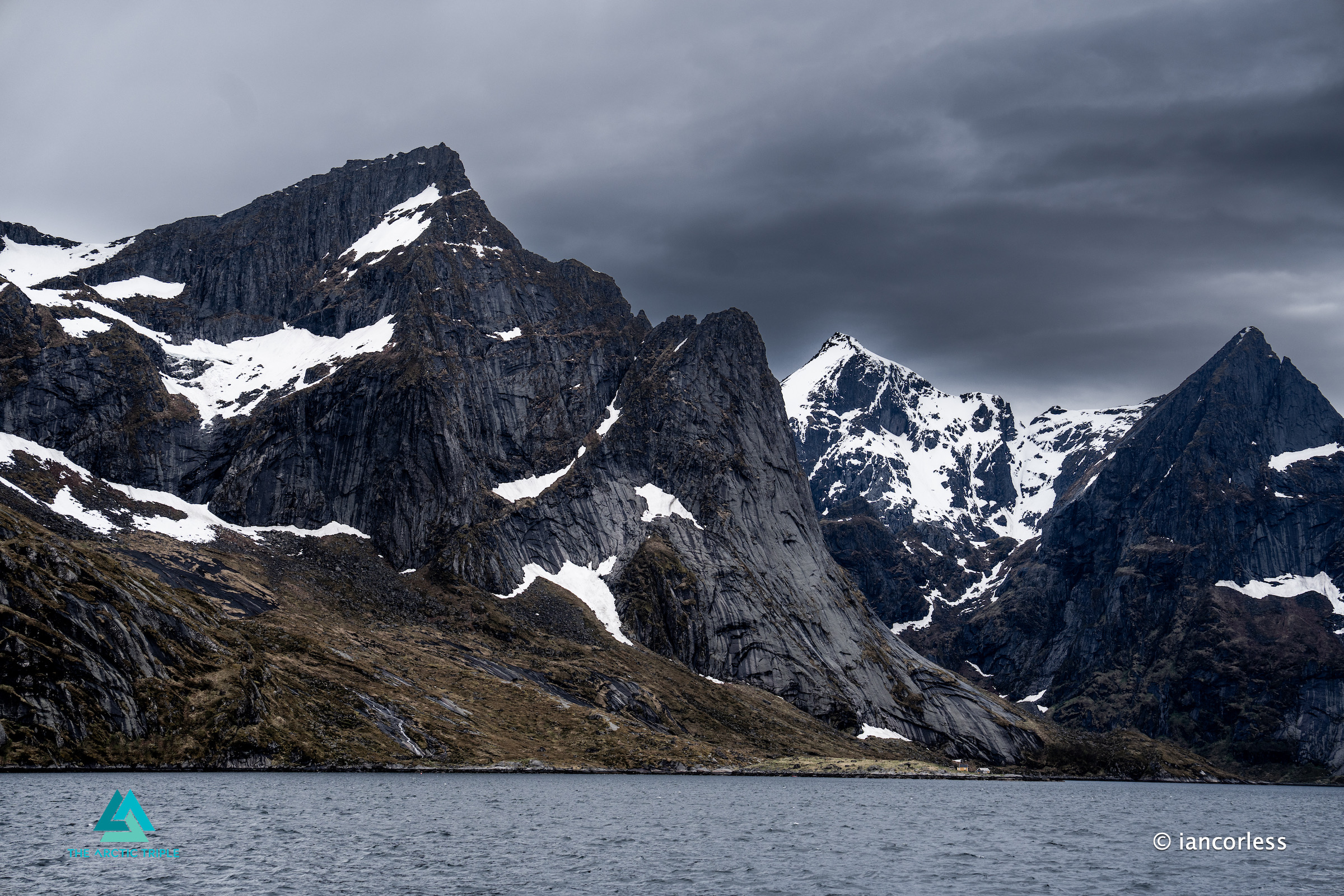
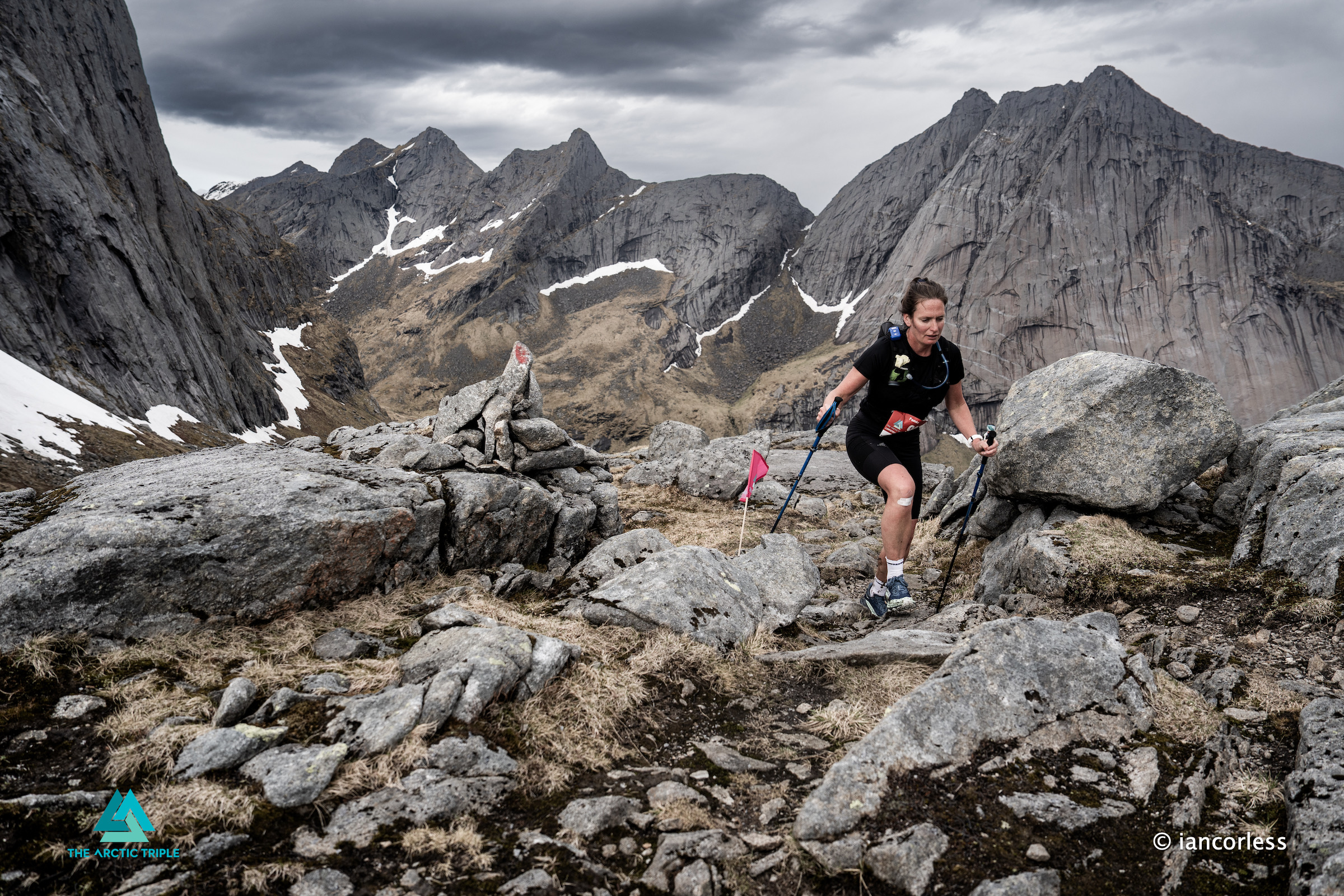
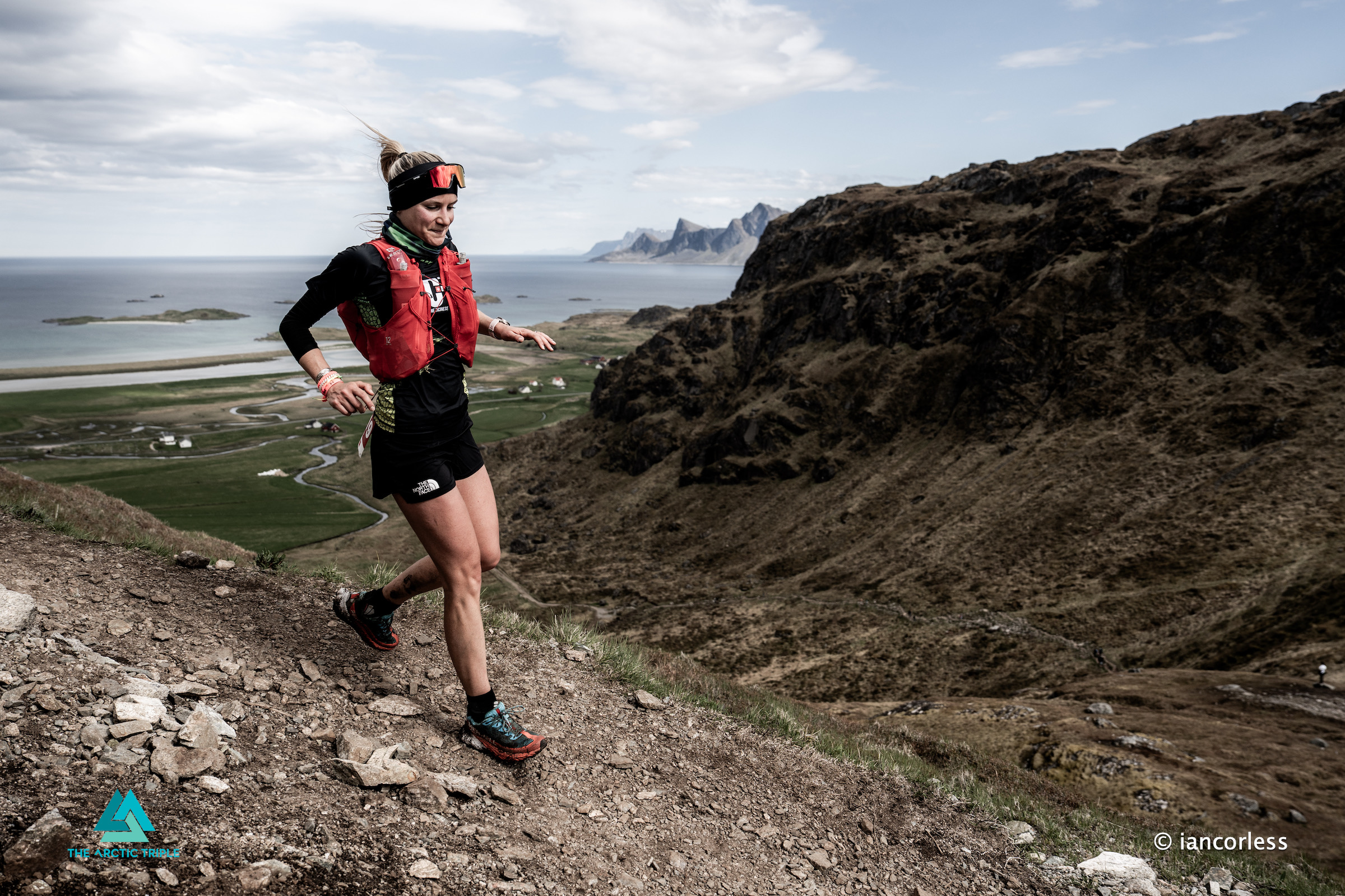
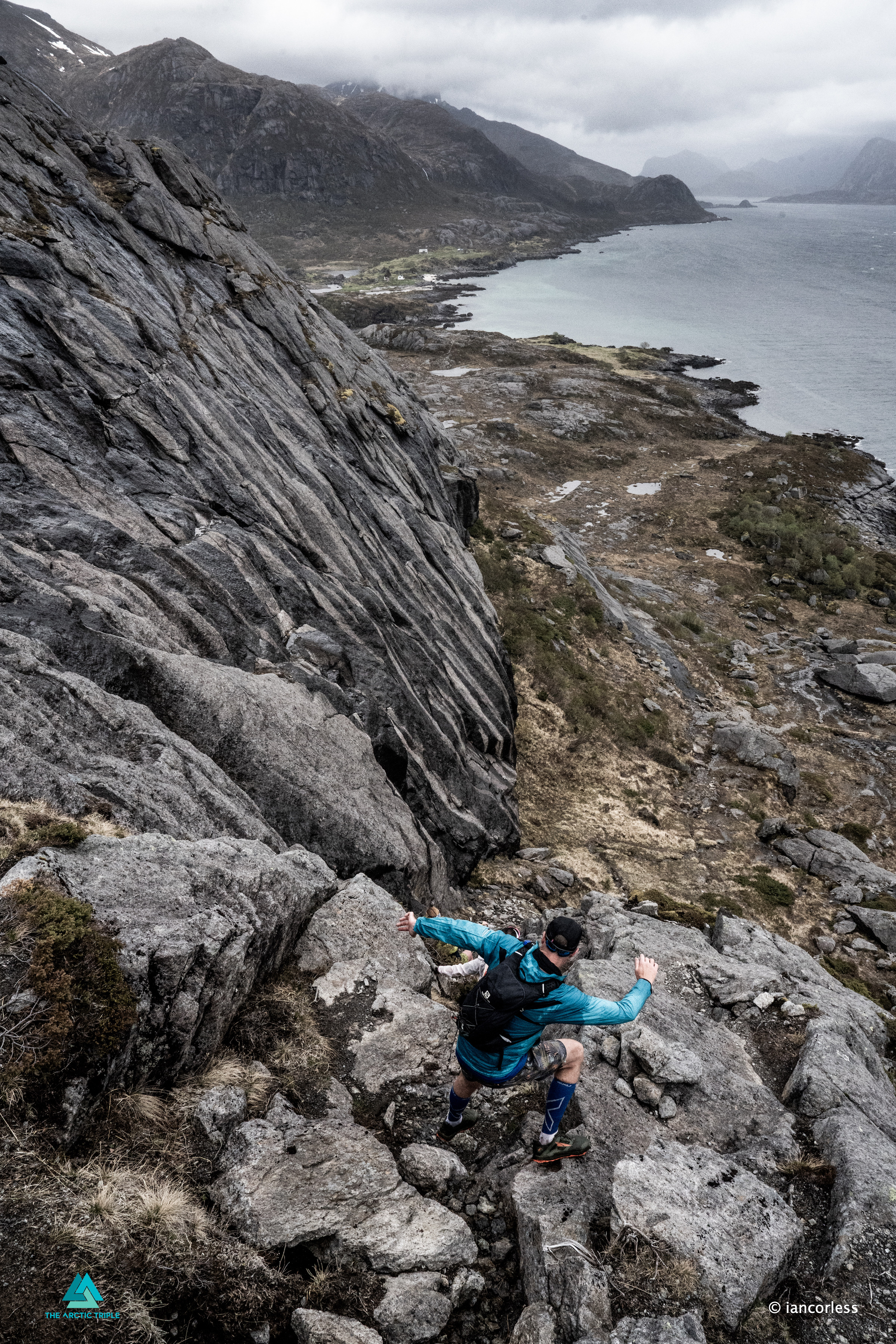
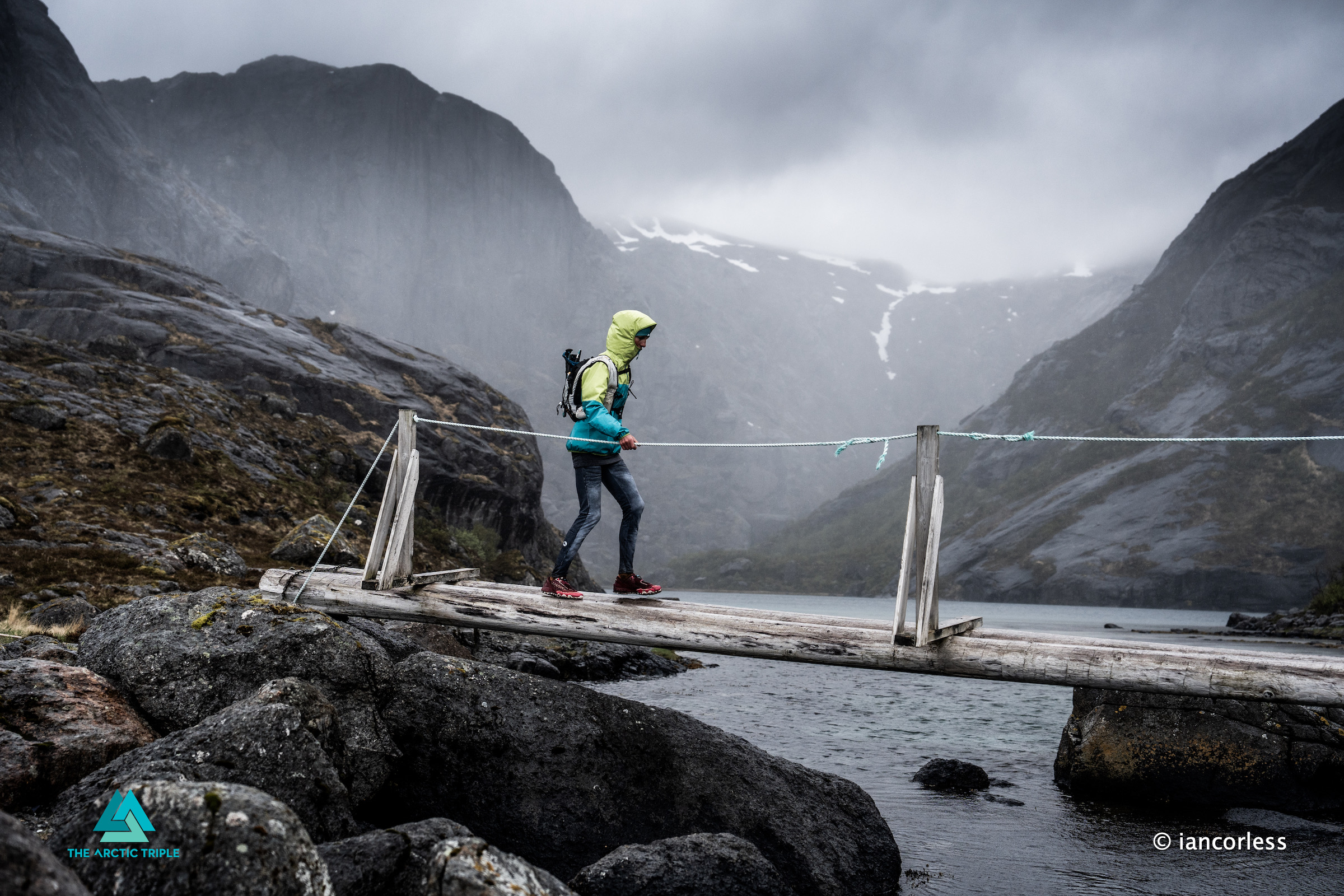
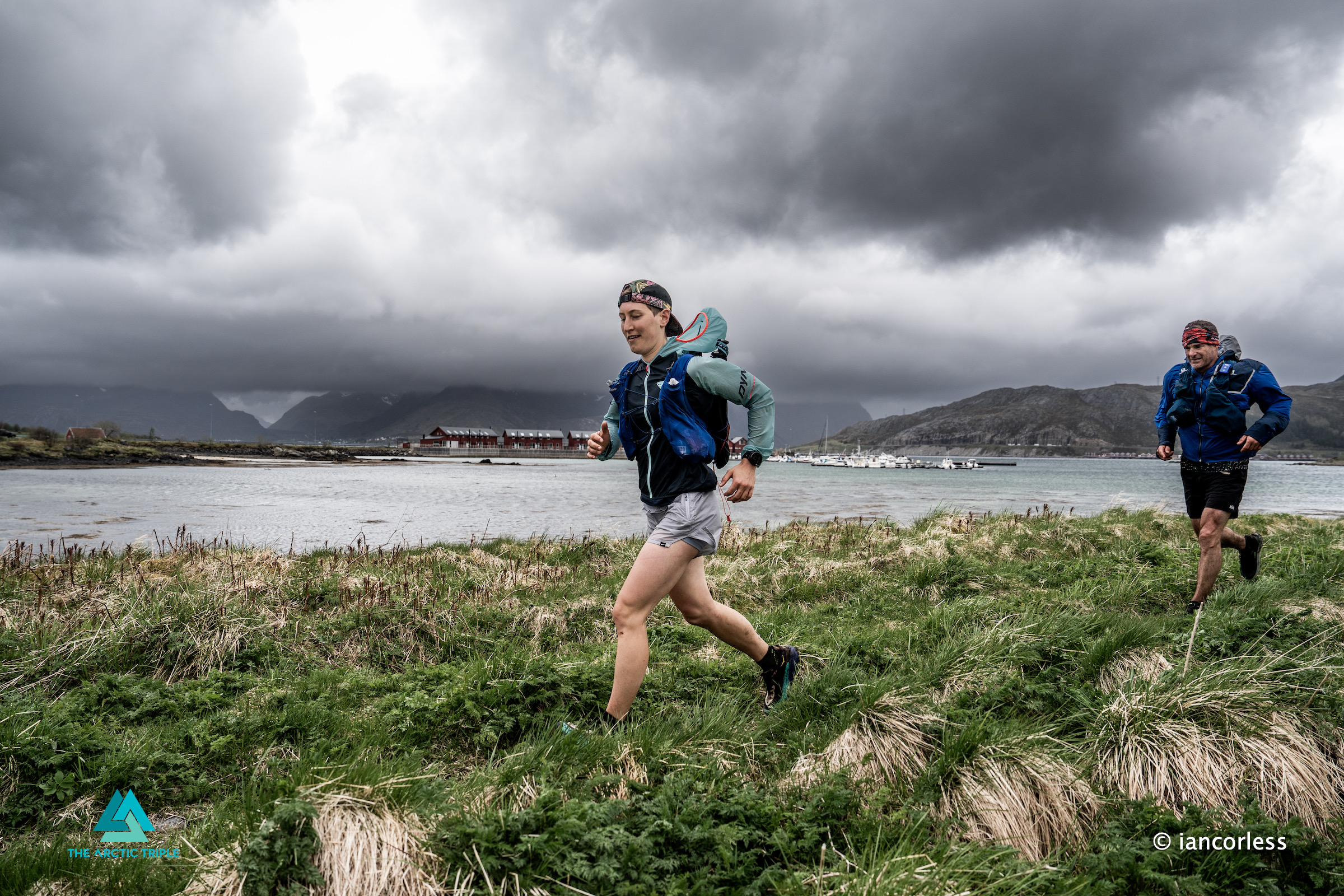
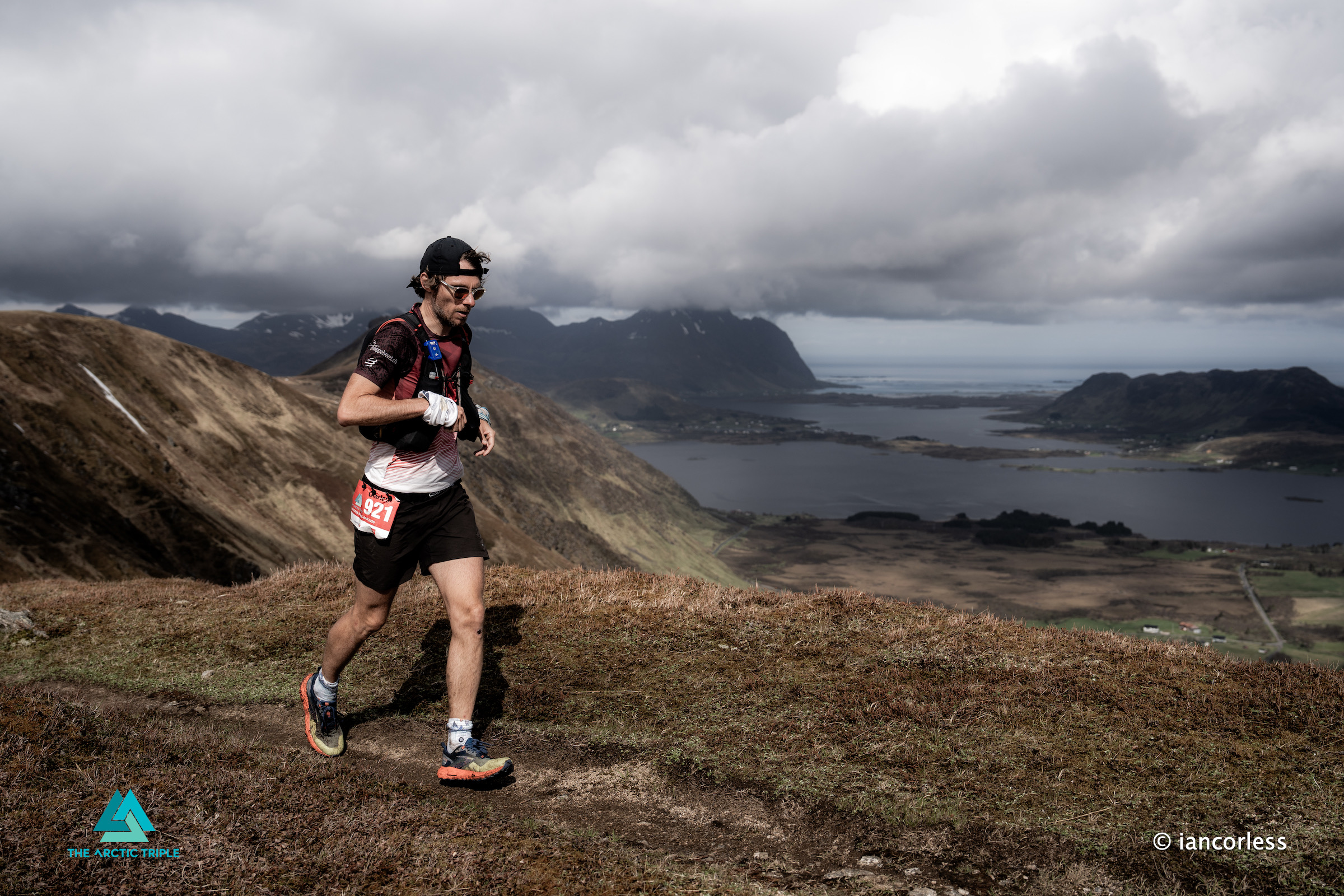
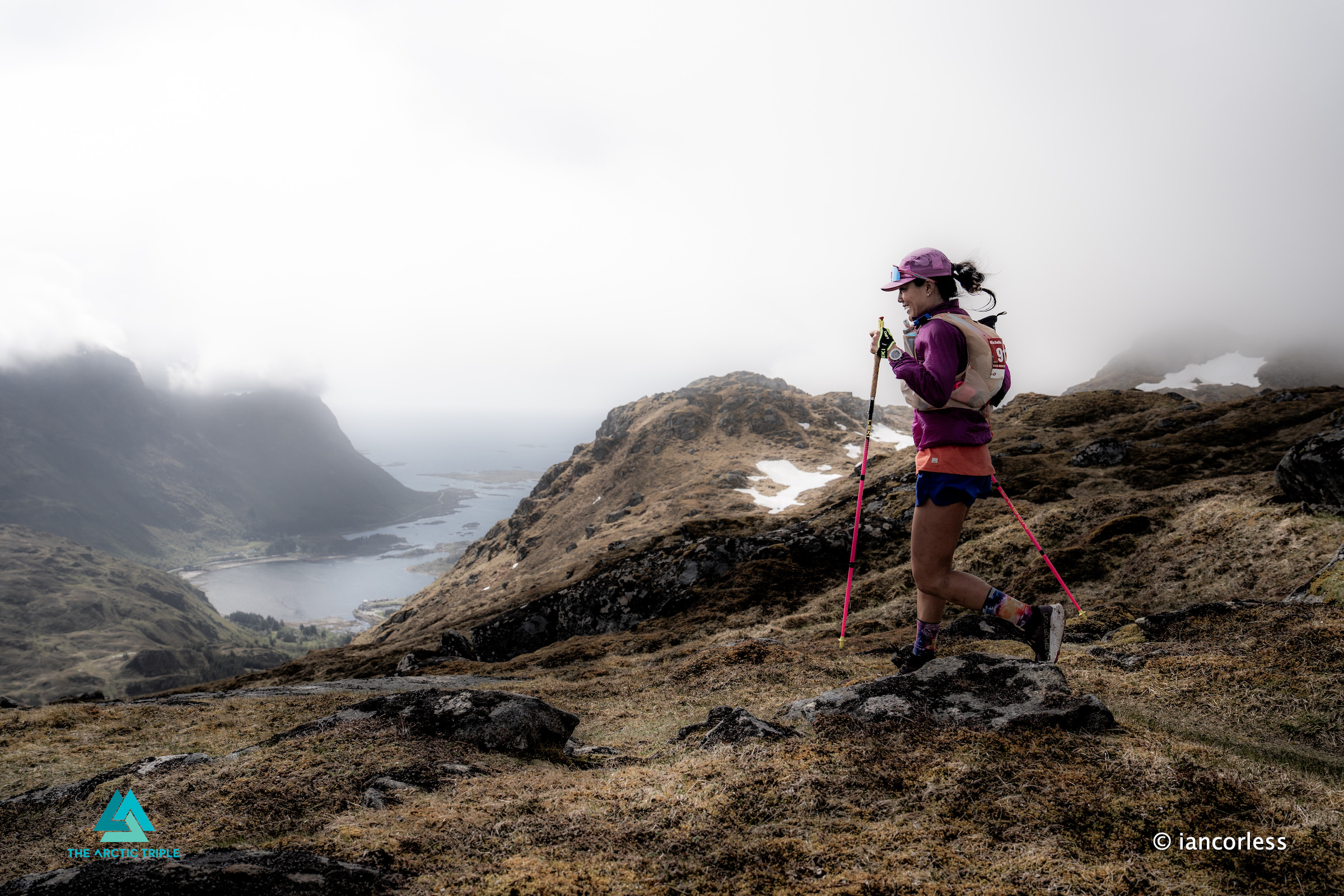
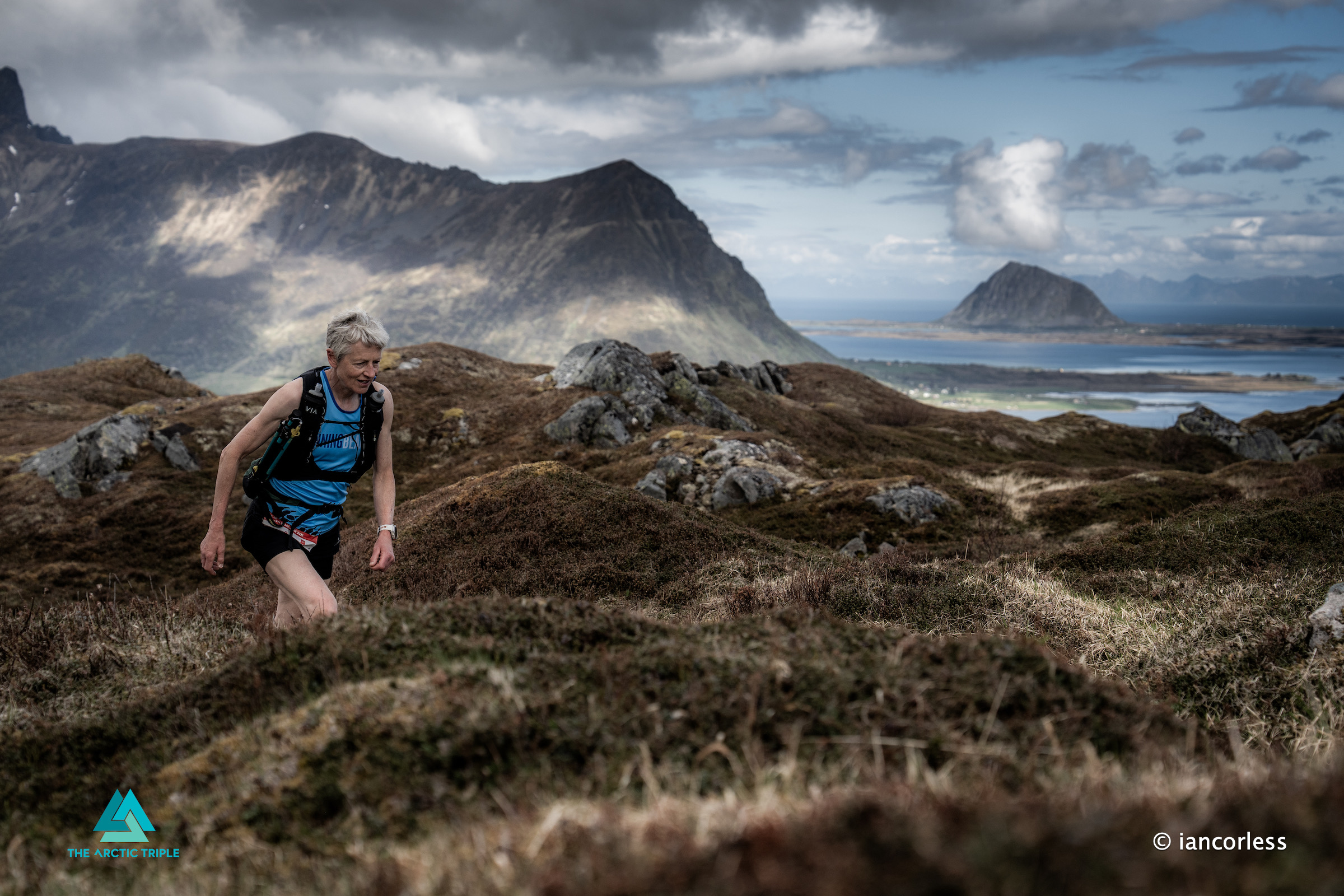
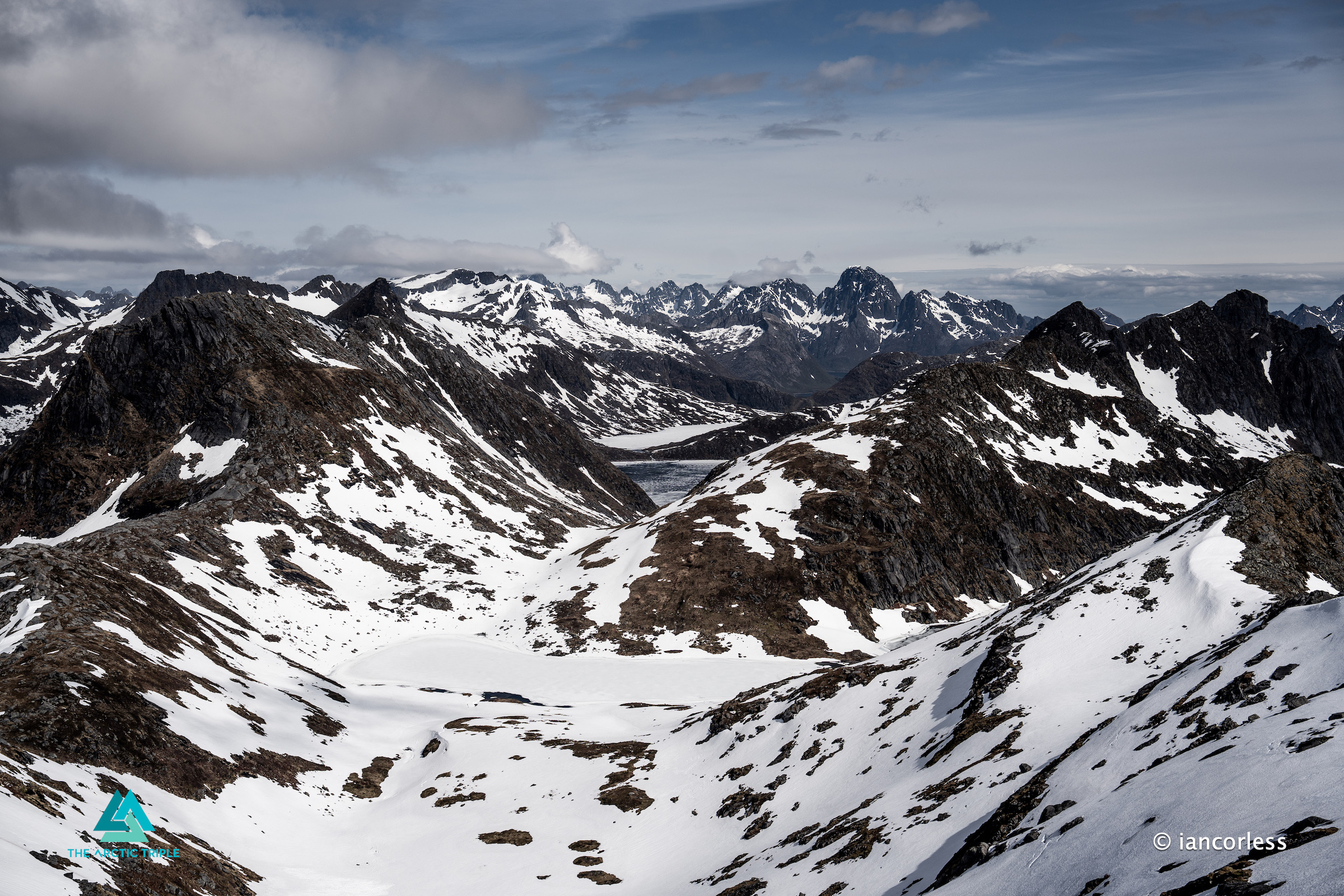
There are races, and then there’s the Lofoten Stage Run by The Arctic Triple team. What unfolded in May 2025 wasn’t just a footrace; it was a deep, soul-grinding, awe-inspiring journey through one of the world’s most arresting landscapes. Four stages. Two distances, 170 km and 100 km.
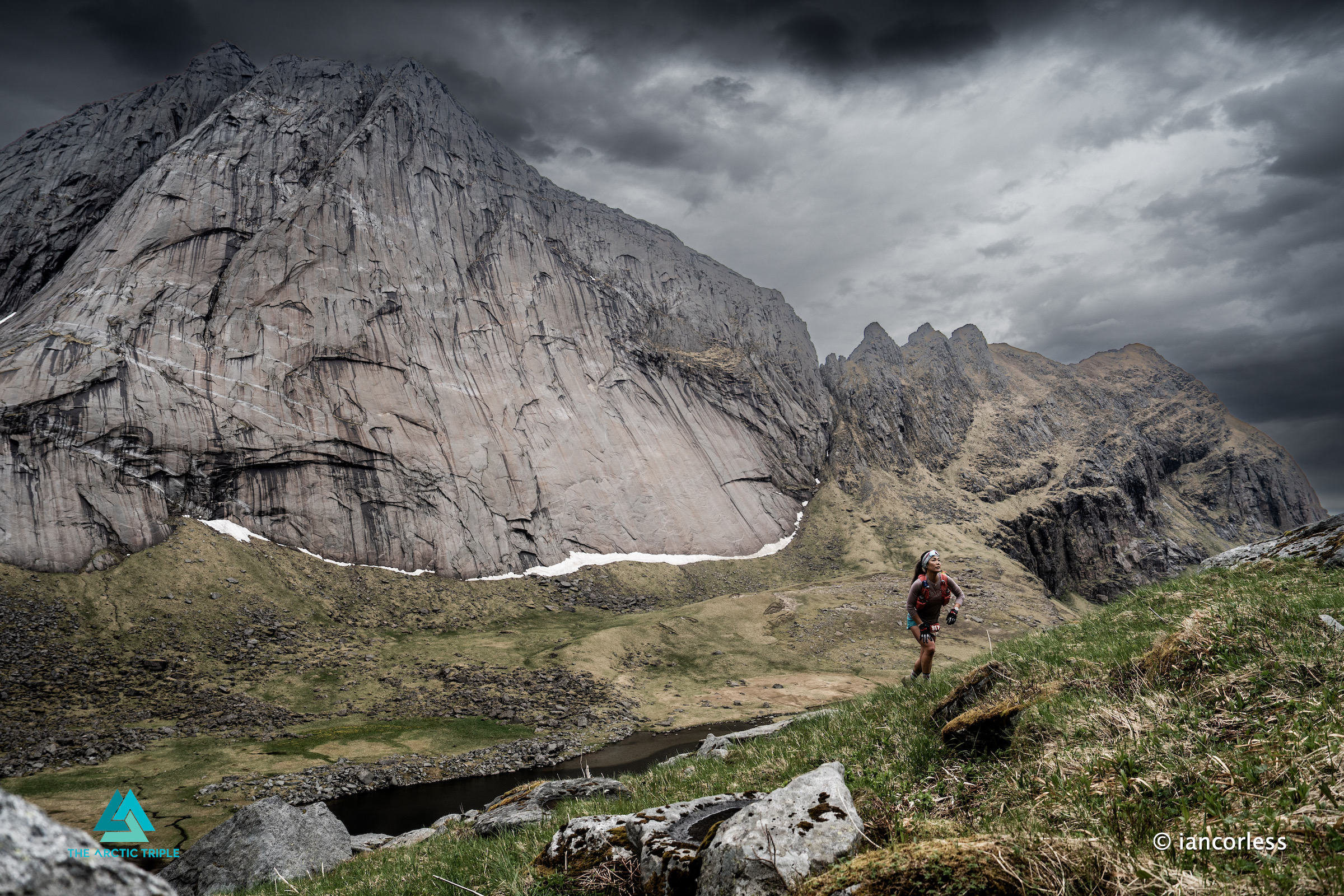
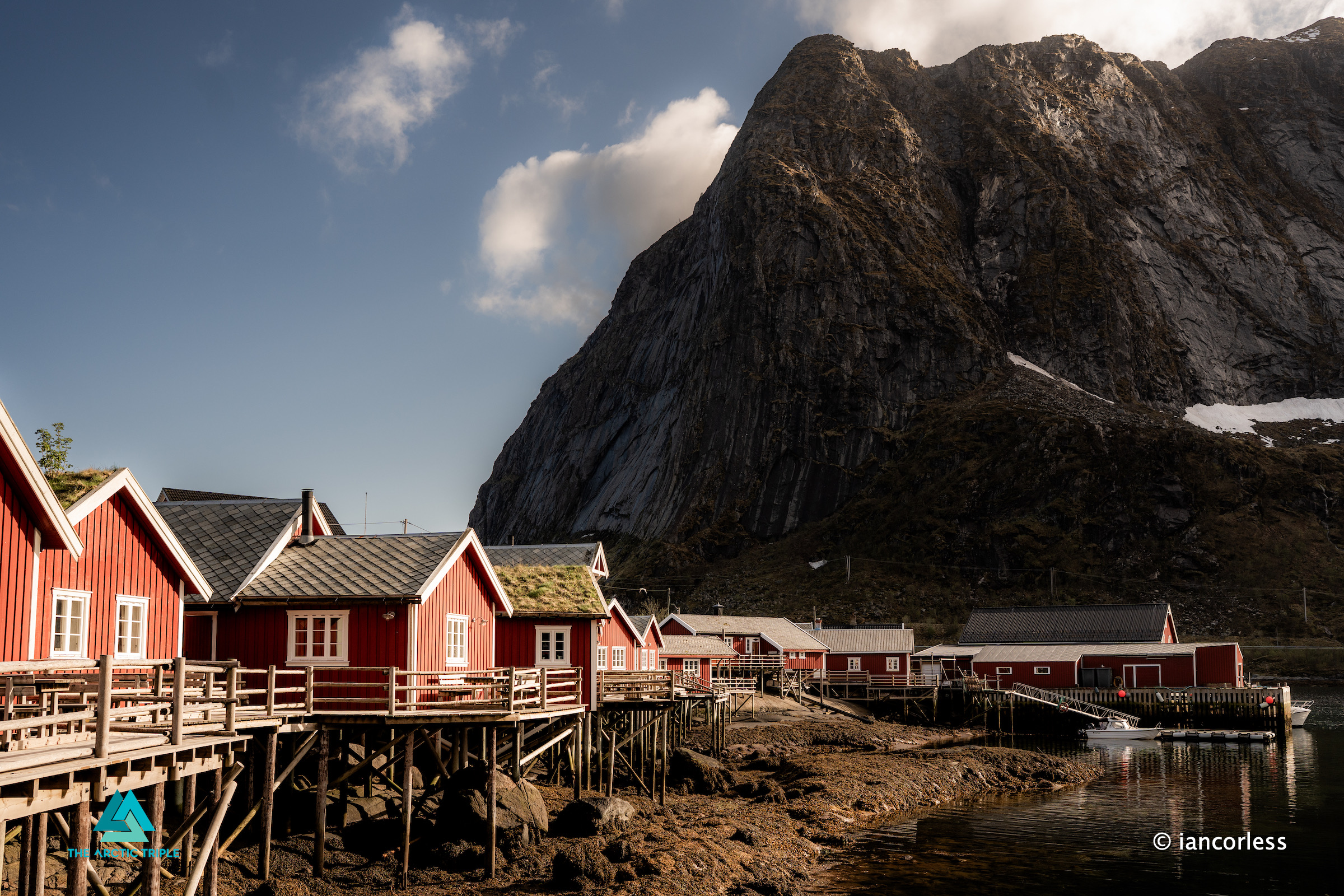
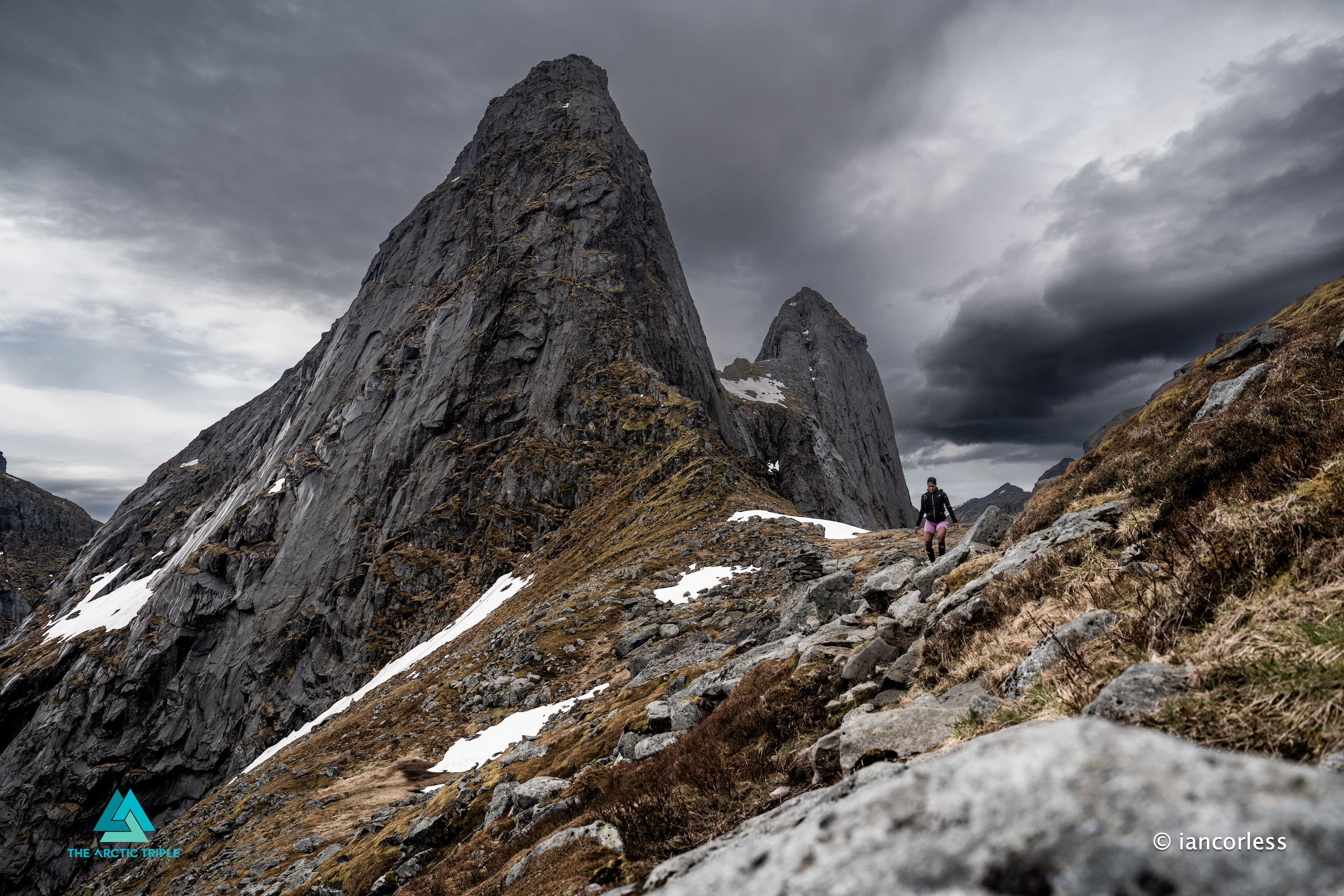
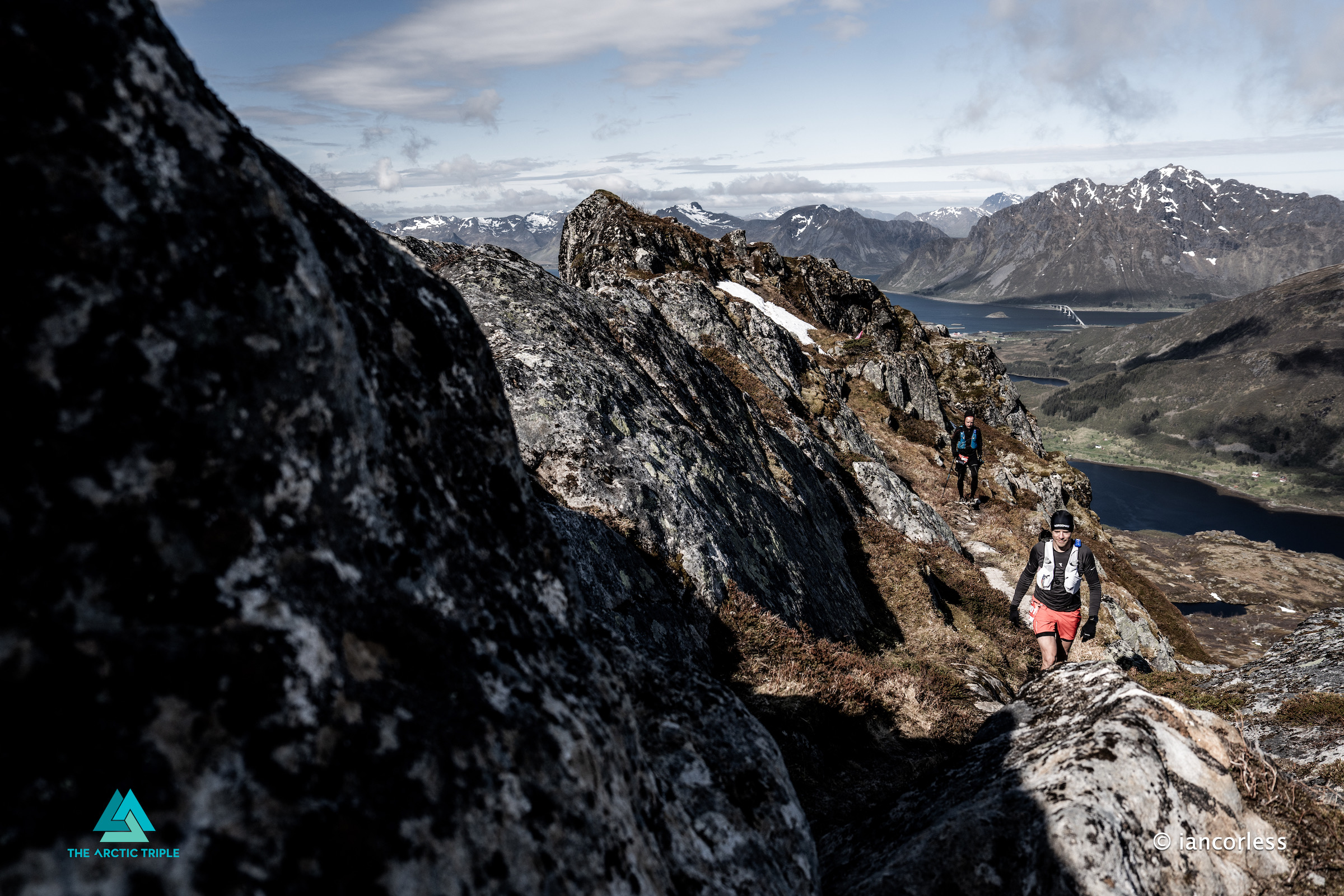
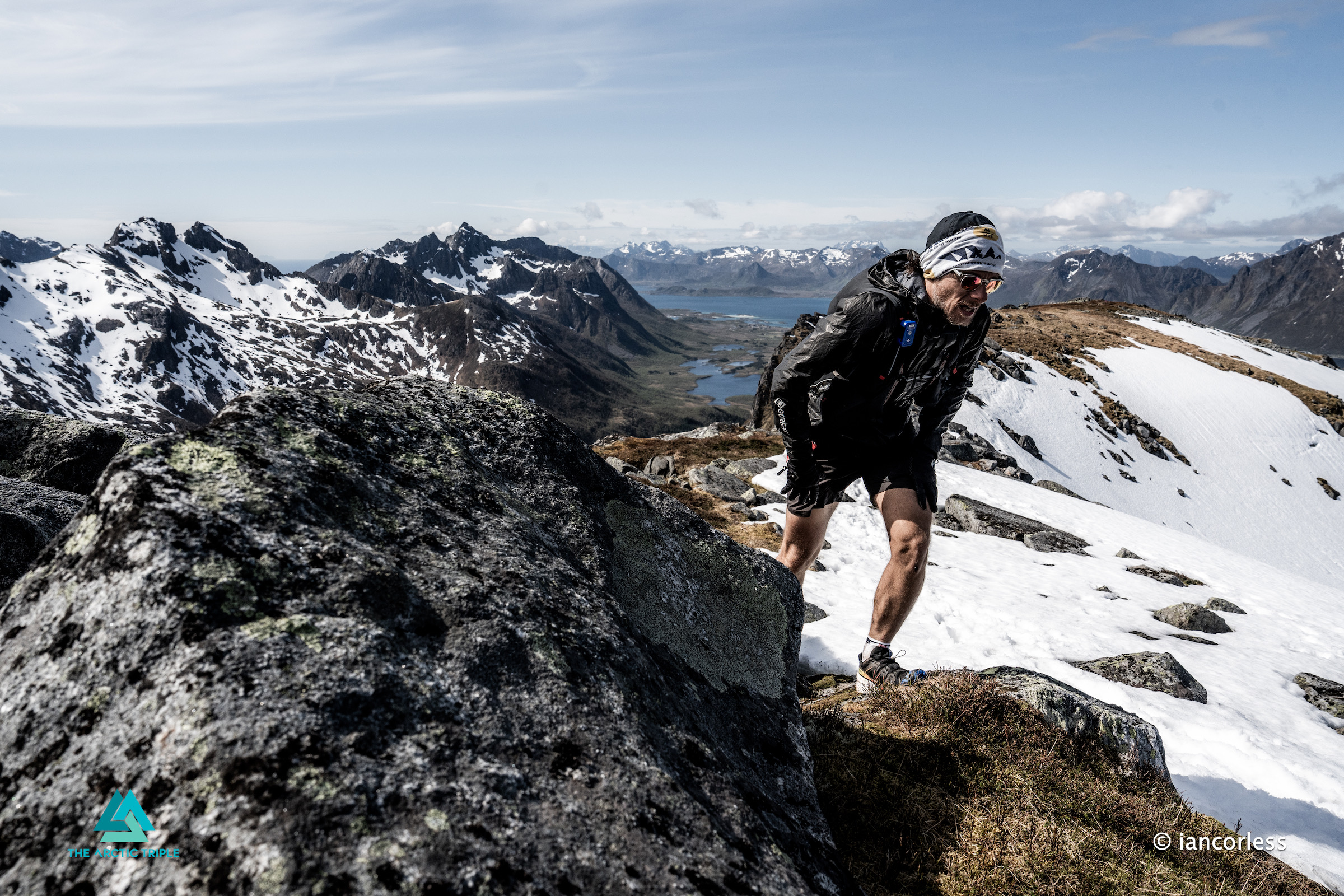
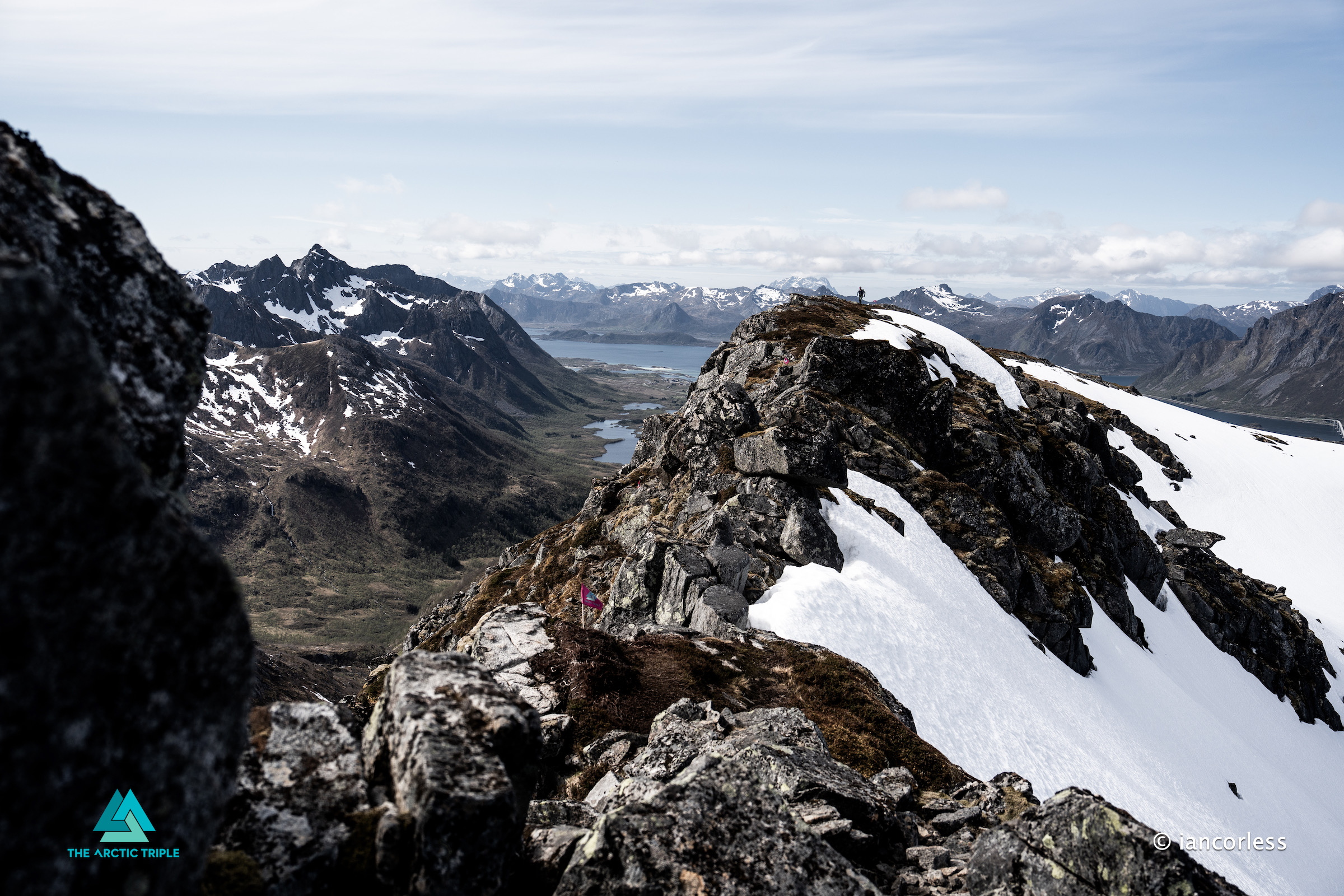
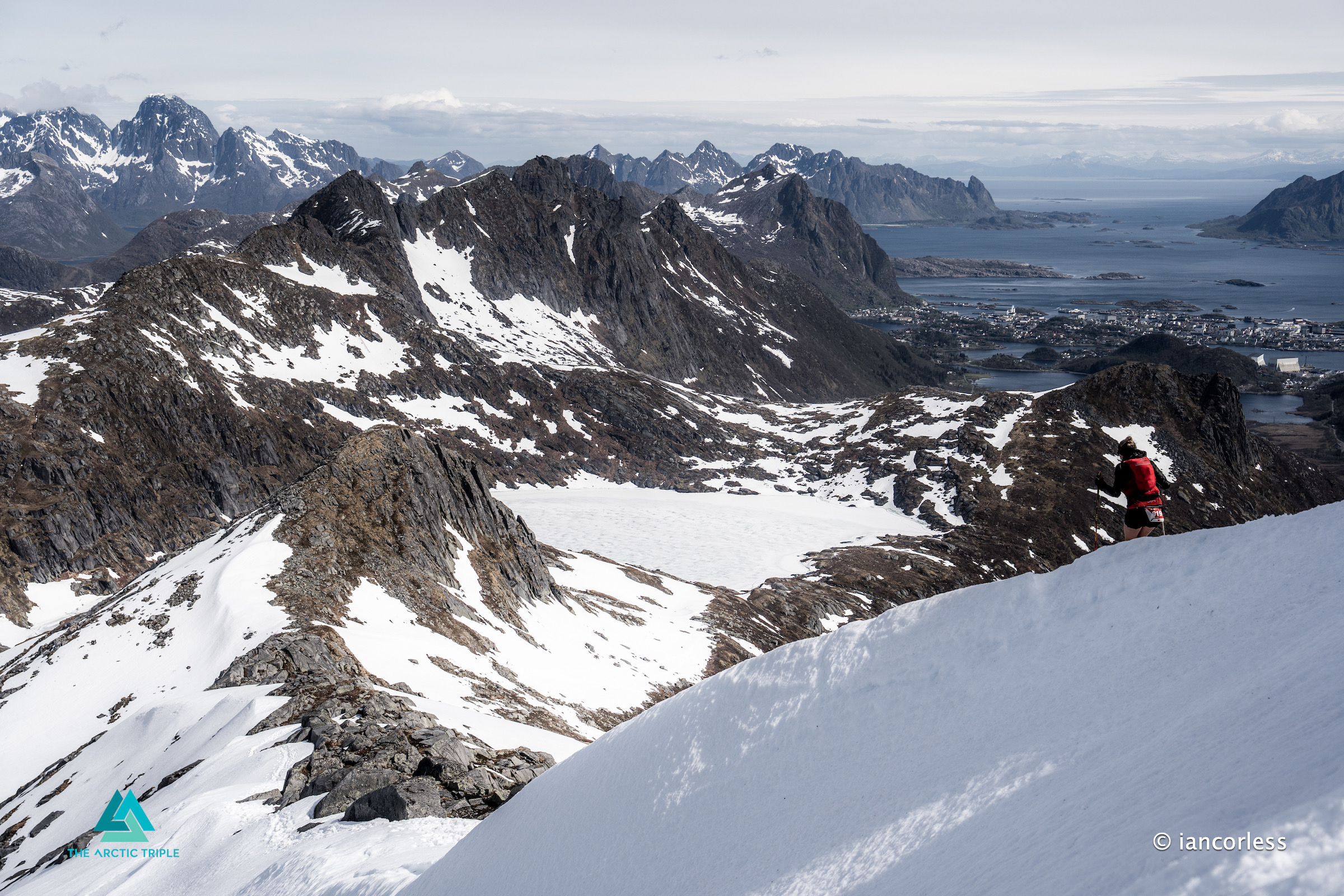
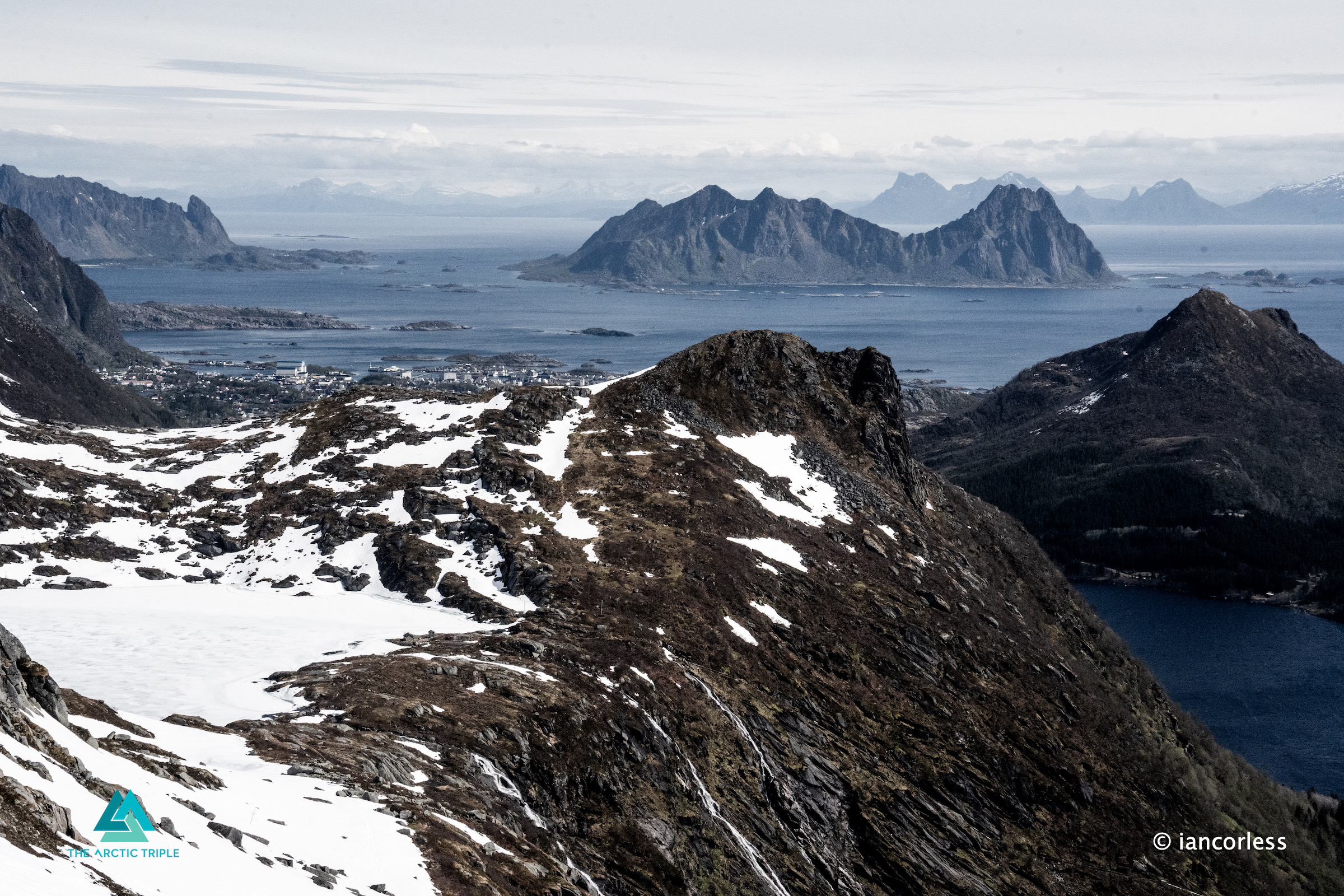
Across wild coasts, knife-edge ridges, fishing villages, and snow-streaked mountains, runners pushed their limits, and often redefined them, surrounded by the raw power and beauty of Norway’s Lofoten archipelago. Sleep came in hytte and seaside rorbuer; rest was fleeting, but memories were burned in.
Stage 1: Into the Wild – Kjerkfjorden to Nusfjord (39 km / 20 km)
The race began like a dream: a boat ride through cold, steel-blue fjords, cliffs rising on all sides like the jaws of some ancient creature. As runners disembarked at Kjerkfjorden, the silence was broken only by soft footsteps and shallow breaths, nerves on edge, anticipation sharp.
The terrain wasted no time. A steep climb out of the fjord led straight into deep snow patches and slick rock. Then came the surreal beauty of Kvalvika Beach, where sand met snow and the ocean roared its approval. For the 170 km runners, the day stretched long into the day, ending with a technical coastal section into the storybook village of Nusfjord. Legs screamed, but hearts were full.
Stage 2: Edge of the Earth – Nusfjord to Leknes (34 km / 17 km)
Day two was tougher. Tighter trails, more scrambling. The wind picked up, mist rolling in from the Norwegian Sea like smoke, rain fell, at times, hard and relentless. Between breaths, runners caught glimpses of jagged peaks piercing the sky and turquoise bays far below. This was Lofoten in full cinematic glory, wild, moody, and impossibly vast.
A tunnel under the sea added a surreal twist, legs burning as they climbed out of the darkness and back into the light. Offersøykammen offered panoramic views, but it demanded everything. As runners arrived in Leknes, drenched, scraped, and shivering, you could see it in their faces: wonder, pain, pride.
Stage 3: The Long Haul – Leknes to Rolvsfjorden (52 km / 35 km)
This was the crucible. The longest stage. Bodies were already breaking down, but the terrain opened up, longer runnable sections, smoother single track. The landscape changed too. From rugged coastline to sweeping highlands and serene lakes, this was Lofoten in its gentler form.
As the finish line at Brustranda Fjordcamping came into view, many had run out of words. “This is insane,” one runner muttered, grinning. “But it’s beautiful.”
Stage 4: The Final Push – Rolvsfjorden to Svolvær (45 km / 21 km)
The last day was emotional. Legs were dead weight. Ankles rolled. Minds fogged. But everyone knew what waited: the end, the reward, the moment of elation.
Jordtinden loomed: steep, snowy, relentless. At its summit, clouds lifted like curtains, revealing a 360-degree panorama that stopped runners in their tracks, the ridgeline ahead bringing a sense of awe and fear in equal measure.
This is the queen stage, the terrain bringing together all that makes Norway and Lofoten unique, marvellous and special.
You could see all the way back, mountains, inlets, the journey behind. Some cried. Some screamed. Some just stood there, stunned.
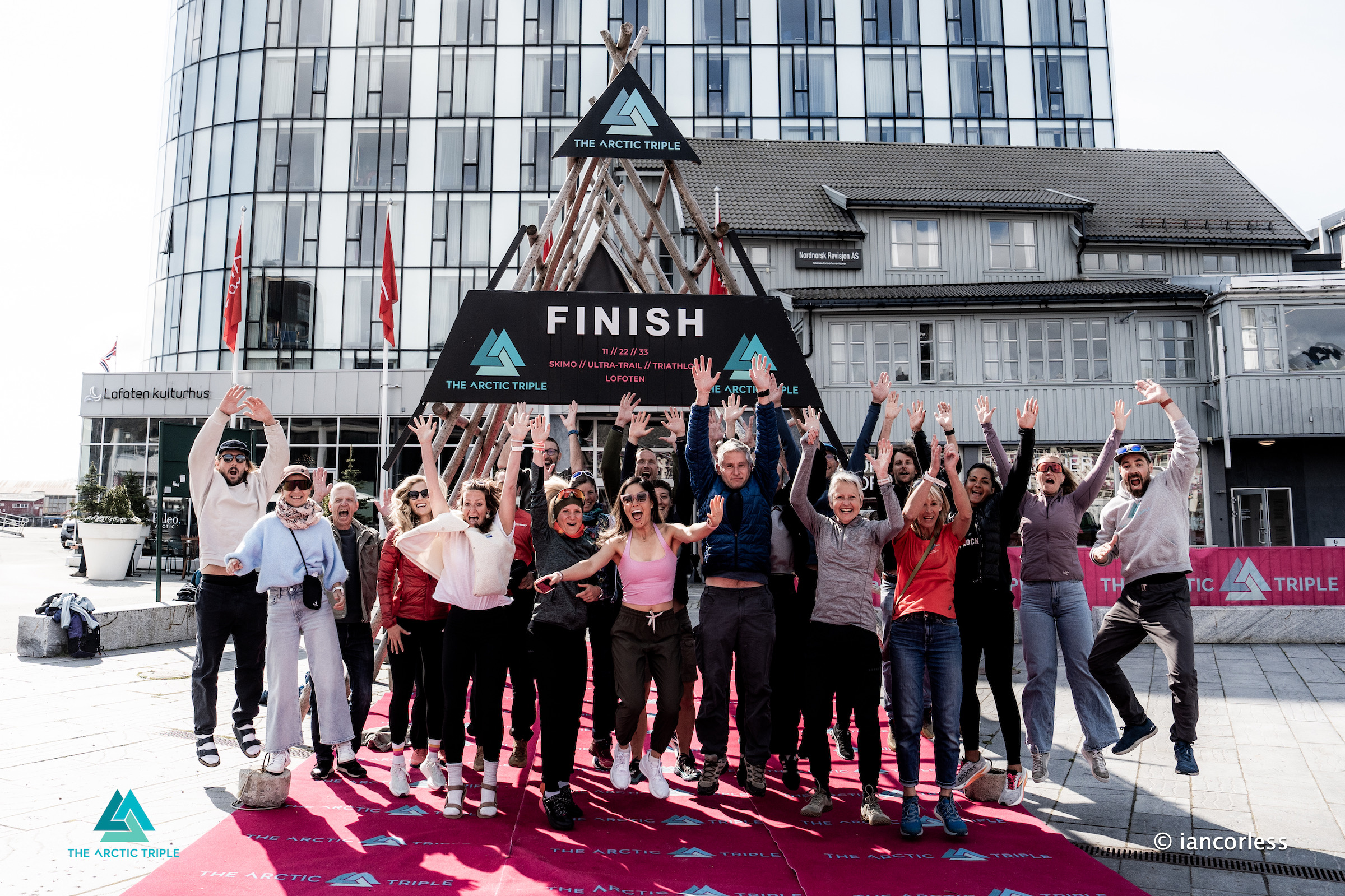
The descent into Svolvær was pure adrenaline, fuelled by joy and relief. The last stretch along the harbour felt like flying. Locals clapped. Teammates waited. People hugged. Some collapsed. Others danced.
More Than KM’s
But the Lofoten Stage Run wasn’t just about distance or finish times. It was about the strange intimacy of shared suffering, of strangers becoming friends over bowls of traditional Norwegian food and stories told in cabins. It was the moment you stepped outside at midnight, sun still hanging low over the sea, and realised how small we are.
It was the rawness of the terrain mirrored in every aching limb. It was the magic of Lofoten, weather that shifted like a mood, peaks that stabbed the sky, and a landscape that didn’t just surround you, it swallowed you whole.
In the end, it wasn’t a race, it never was, the Lofoten Stage Run is an experience, a 360 immersive journey that shocked the mind and the senses and revealed to each and every participant that this route, arguably, is one of the BEST in the world. It was a rite of passage. A storm-chased, mud-caked, heart-thumping reminder that the wild is still out there, and if you’re lucky, it might just let you in.
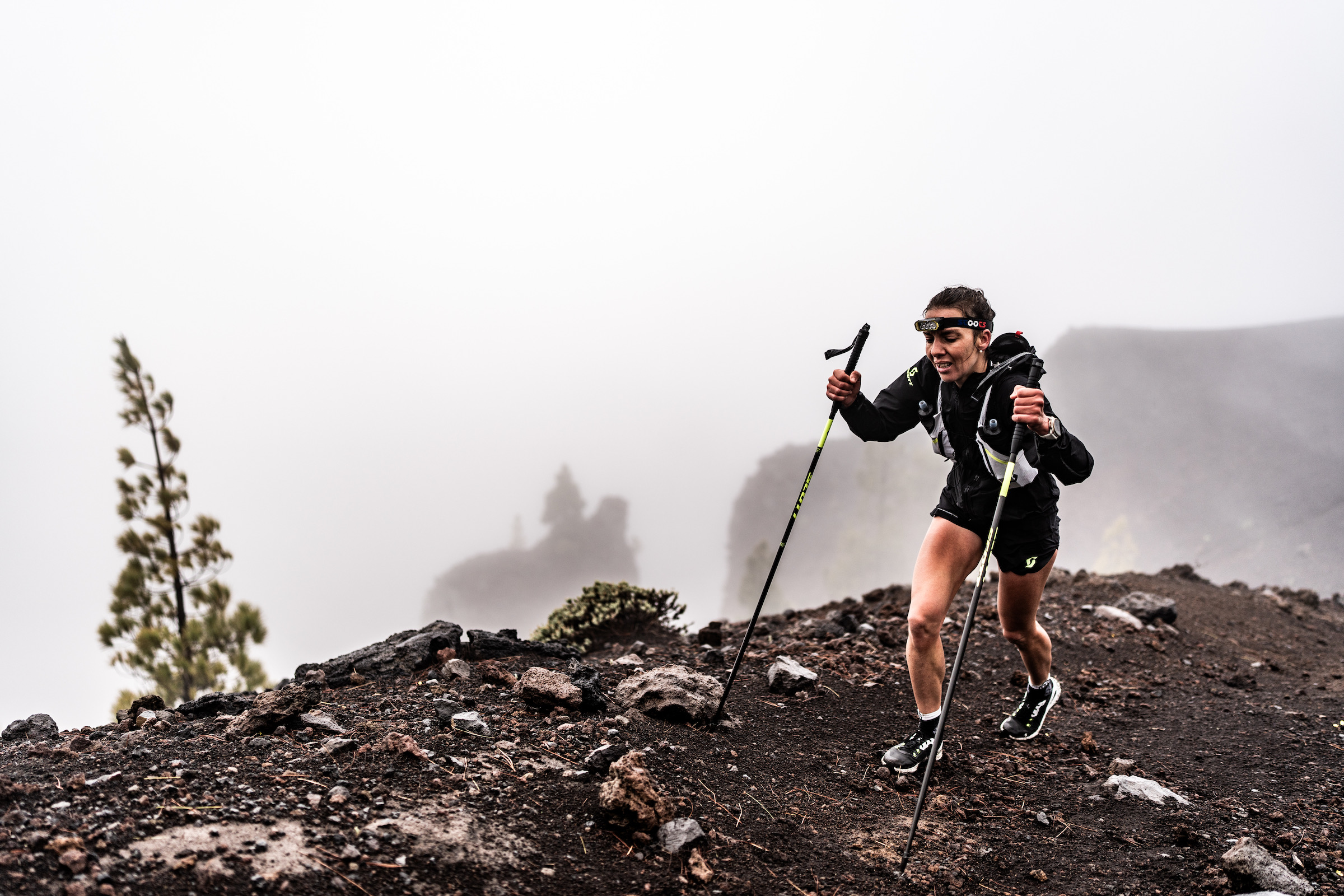
Transvulcania Ultra has always been a brutal race. Spanning 73.06 kilometers across the volcanic backbone of La Palma, with 4,350 meters of ascent and 4,057 meters of descent, it’s a journey from ocean to sky and back to ocean again. But in 2025, nature raised the stakes. This year, Transvulcania wasn’t just hard – it was survival.
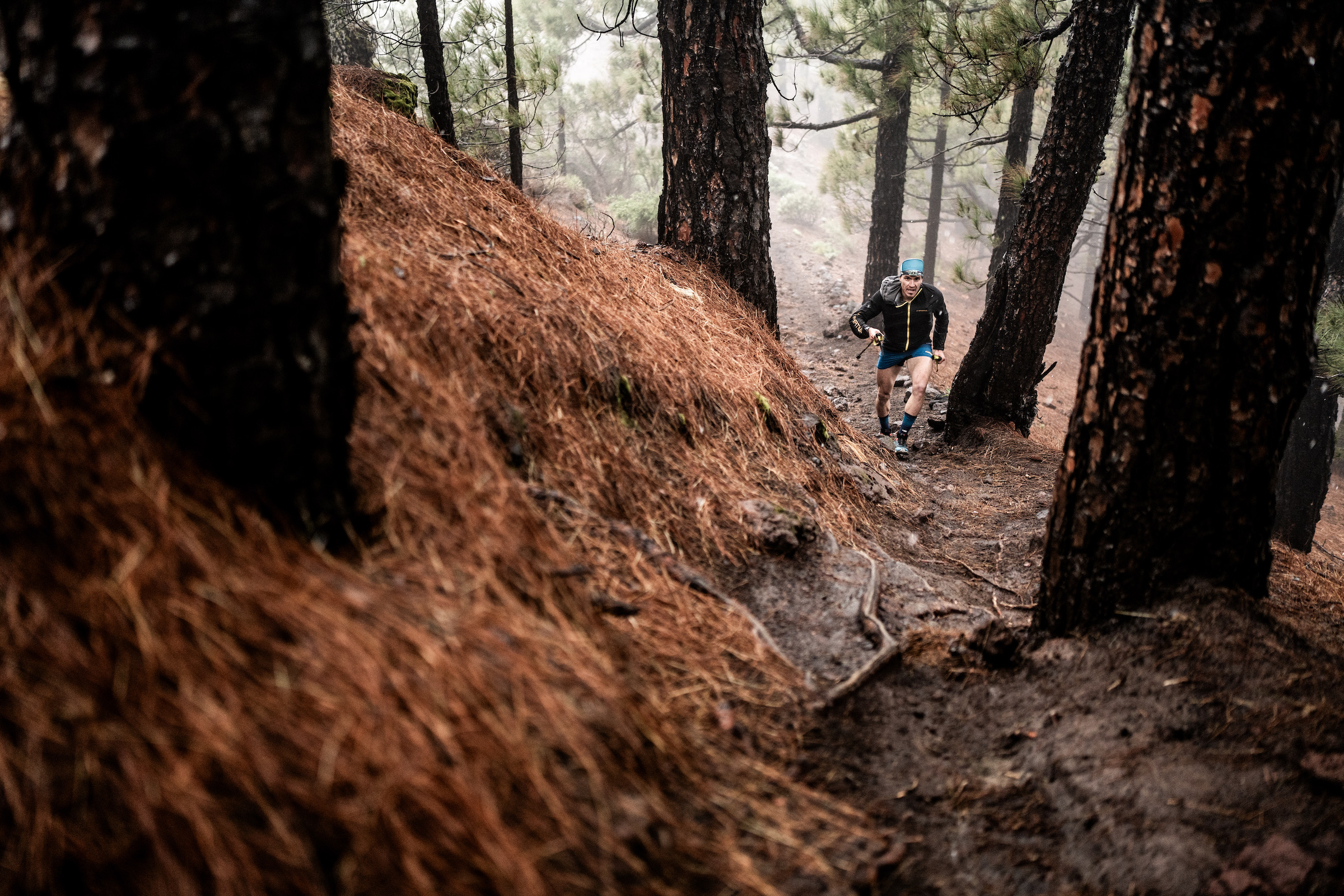
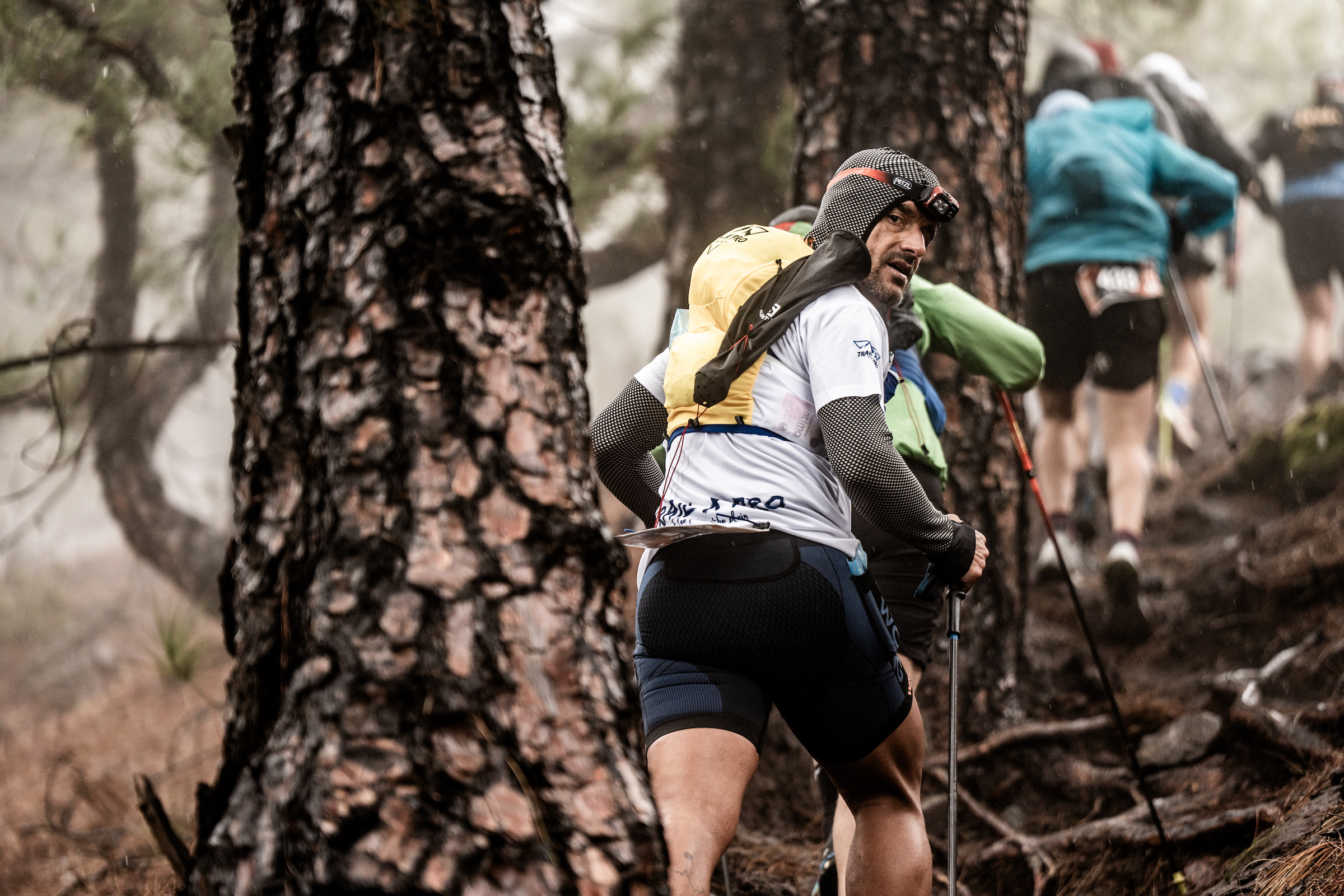
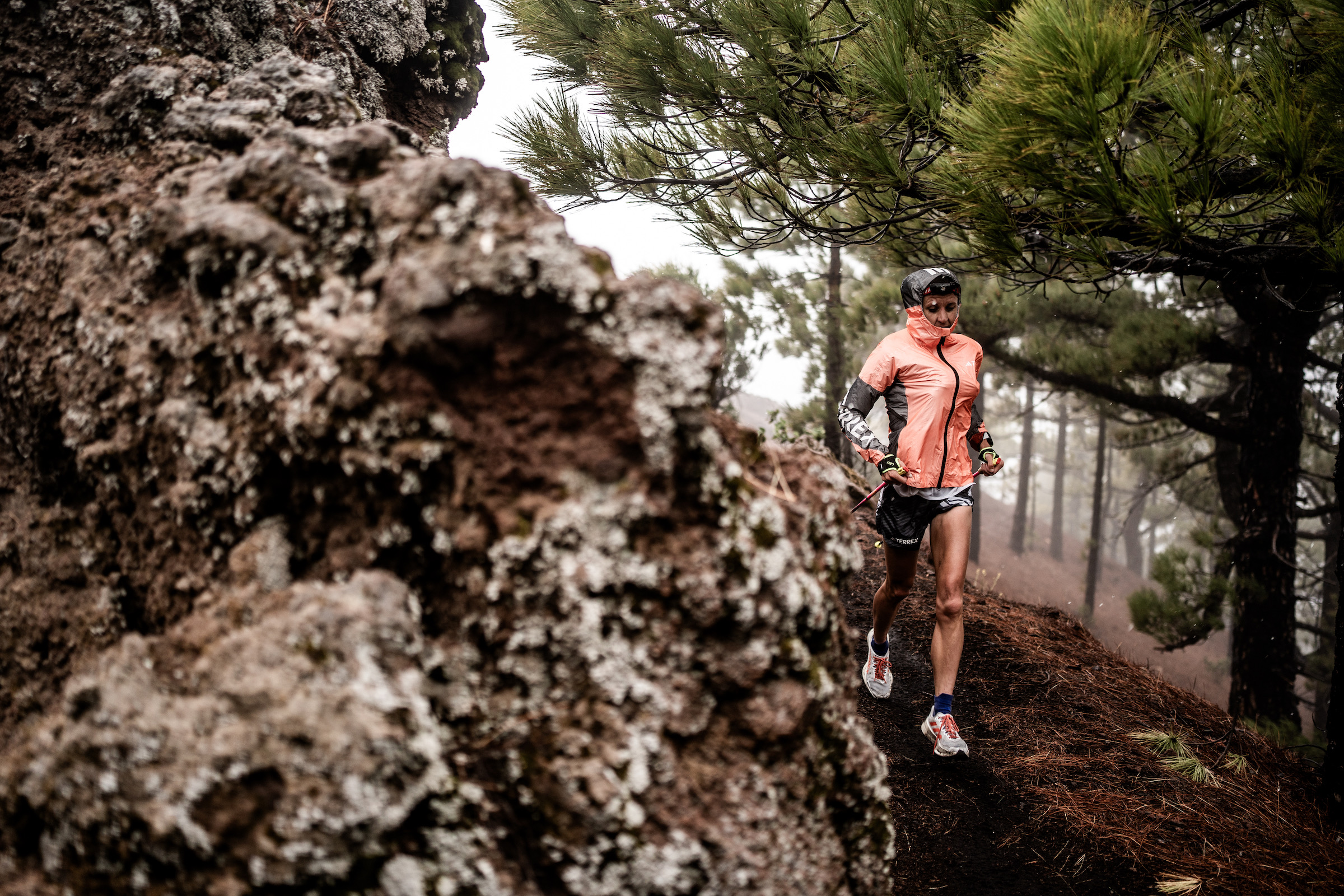
From the moment runners left the Fuencaliente lighthouse at sea level, the signs were there. Dark skies. Driving rain. And as the climb up the GR131 trail began, the weather only worsened. Wet volcanic gravel shifted underfoot. Winds battered the open and exposed sections. Every gain in elevation brought colder air, heavier rain, and stronger gusts.
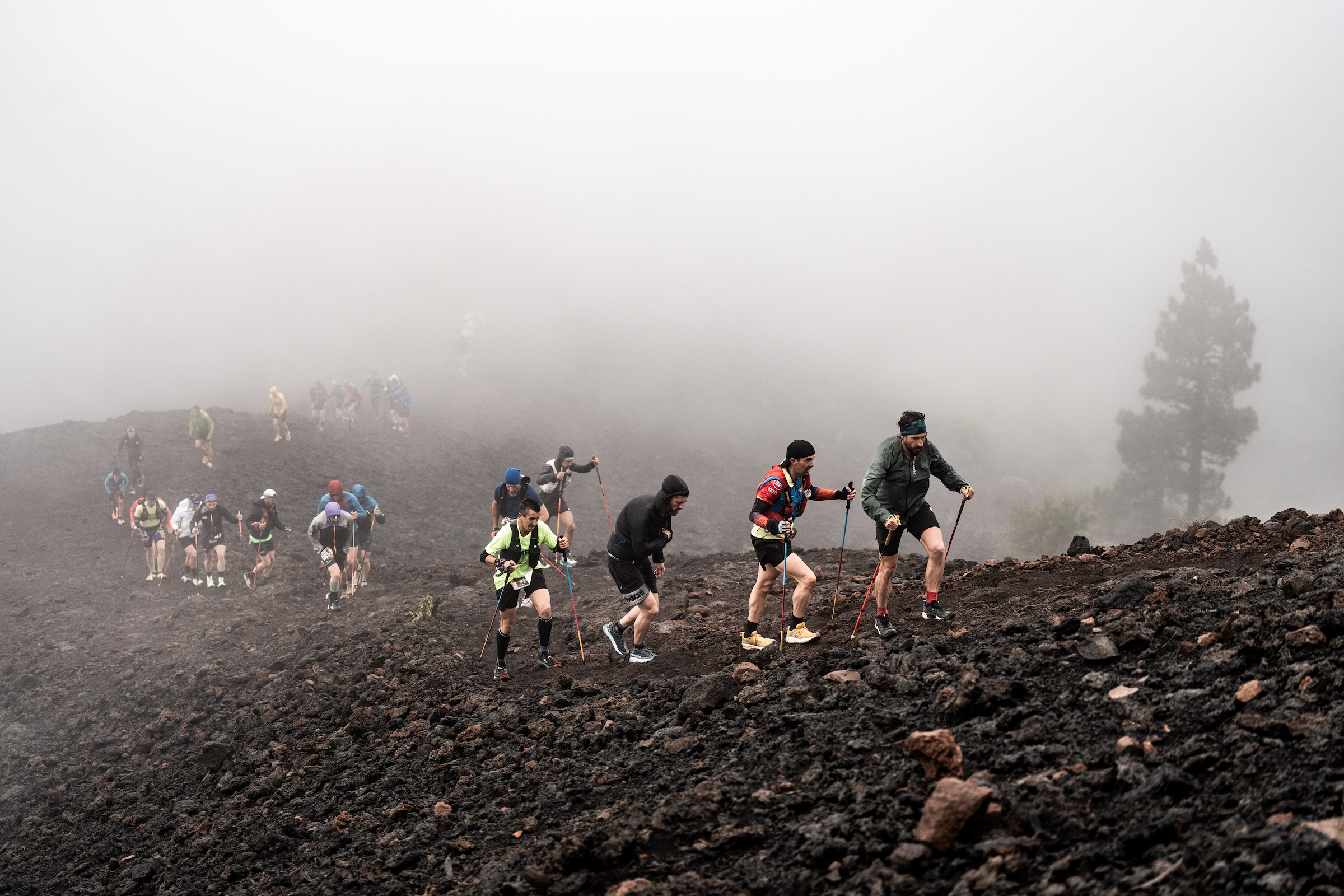
The early sections of the race, usually warmed by morning sun, were instead cold, and treacherous. Visibility dropped. Temperatures plummeted. Waterproofs were soaked through. The race had barely begun, but it was already a war of attrition.
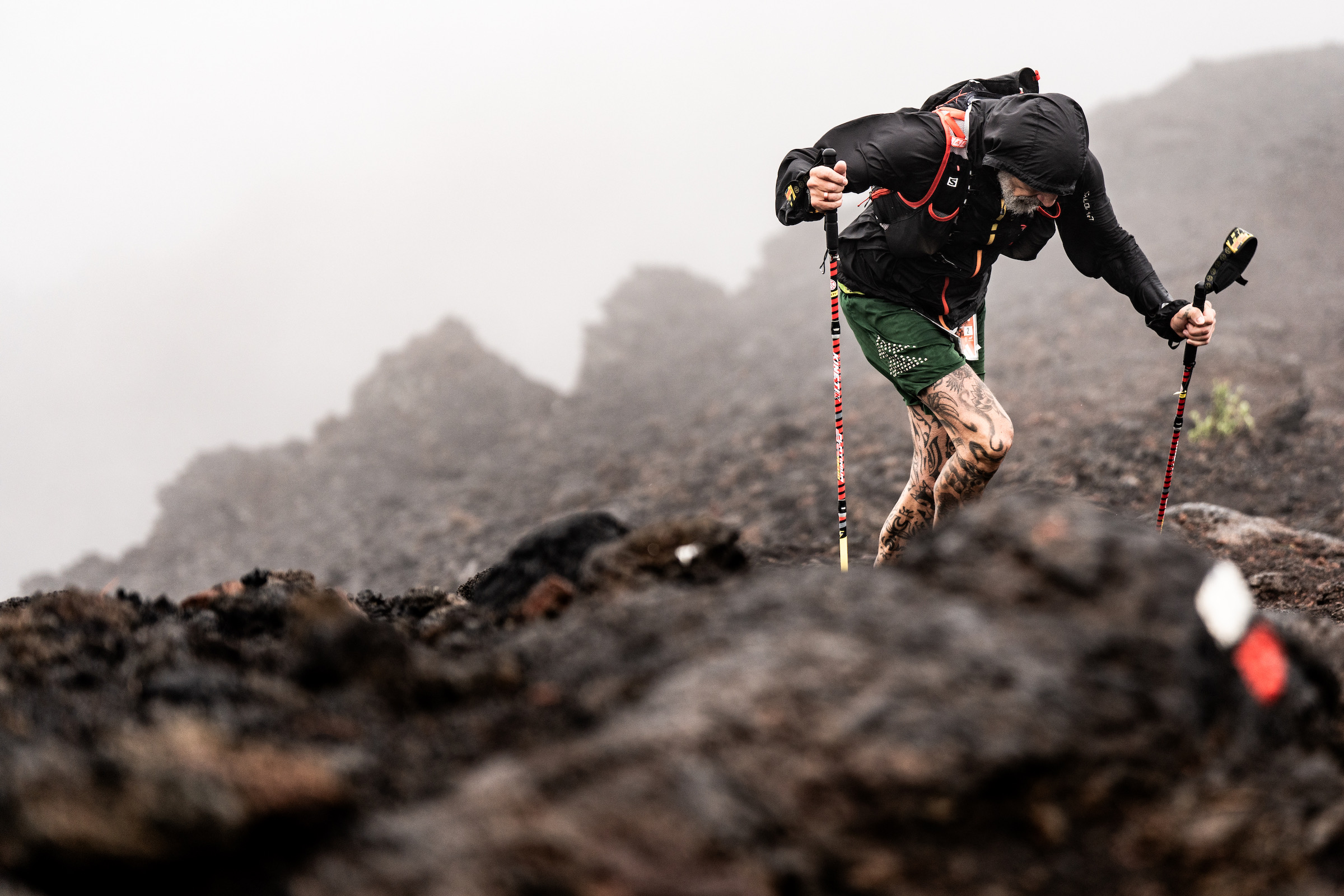
The route climbed steadily through pine forests and barren lava, snaking up toward the spine of the island. Normally breathtaking, the high sections offered little view, just fog, wind, and rain slapping sideways across the many exposed ridges. The climb, always demanding, turned into a freezing march, the only protection coming from the trees.
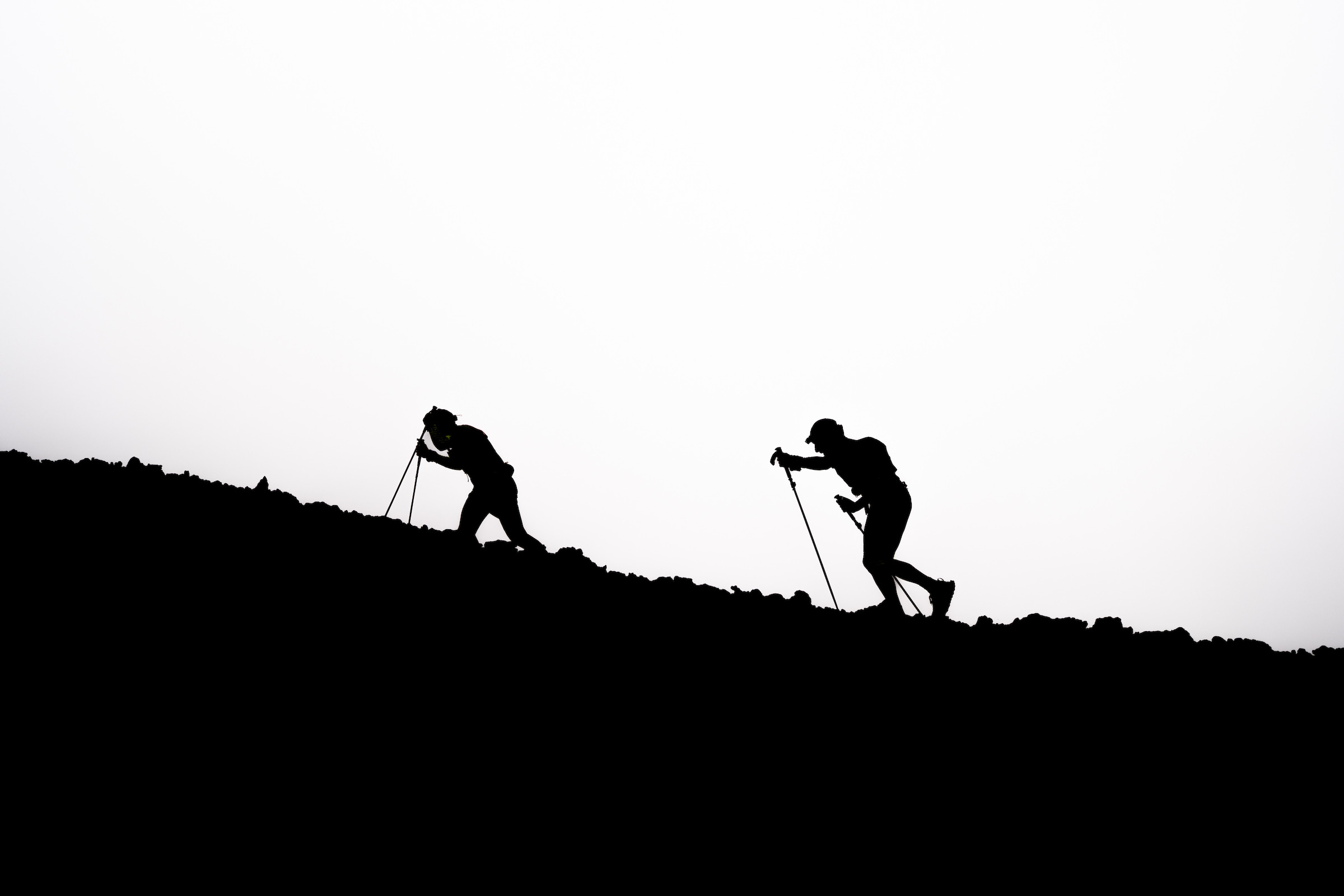
The temperature near Roque de los Muchachos, the island’s high point at 2,421 meters, hovered close to freezing. But it was the wind chill that changed everything. Gusts tore across the exposed ridge line, turning already cold air into biting, sub-zero blasts. Some runners were forced to stop and layer up; others pushed through shivering, teeth clenched. Many decided to call it quits.
Hypothermia wasn’t just possible, it was real. For many, this section became less about racing and more about making it through.
The long drop from the summit to Tazacorte Puerto – a descent of over 2,000 vertical meters is never easy. But in this weather, it became treacherous. Slick rocks and pine needles, water-logged switchbacks punished tired quads. Fatigue met fear. But a glimmer of better weather below the cloud gave runners hope.
Warmth arrived, the exhaustion of fighting the cold up high lingered with every step though, the reward of the finish line now spurred each and every runner to fight hard. From Tazacorte Puerto, the final climb, known as ‘The Wall,’ is short on paper but long for the legs and mind. Roughly 300 meters of vertical gain on steep switchbacks of rocky path. Normally a test of willpower, this year it became an act of survival. However, the removal of the rocky gorge at sea level – for safety reasons – did mean it was possible to cover more ground much quicker.
The streets of Los Llanos were lined with cheering locals offering the first real warmth of the day. Music cut through the chill and finally the best finish line in the world arrived, the medal this year feeling a little heavier but hard earned after the rain, wind, and freezing exposure of a mountain that showed no mercy.
What makes Transvulcania unique has always been its terrain and profile. Lava fields, pine forests, ridge lines, sun, and sea. But in 2025, the weather became the story. Torrential rain washed away comfort. The cold stripped away energy. And the wind exposed every weakness, both mental and physical.
The fastest still raced though. The elite still chased podiums. But deeper in the field, it was about finishing, about not quitting. About moving forward despite frozen hands, soaked shoes, and the urge to stop.
Transvulcania is about battling whatever the mountain throws at you, and this year, it threw everything.
Peter Frano and Anne-Lise Rousset were crowned as the winners of the ultra marathon. Frano made his move on the descent to Tazacorte Puerto passing Andreas Reiterer who would eventually finish 2nd ahead of Manu Anguita. The times were 6:55:36, 6:58:27 and 7:19:18 respectively.
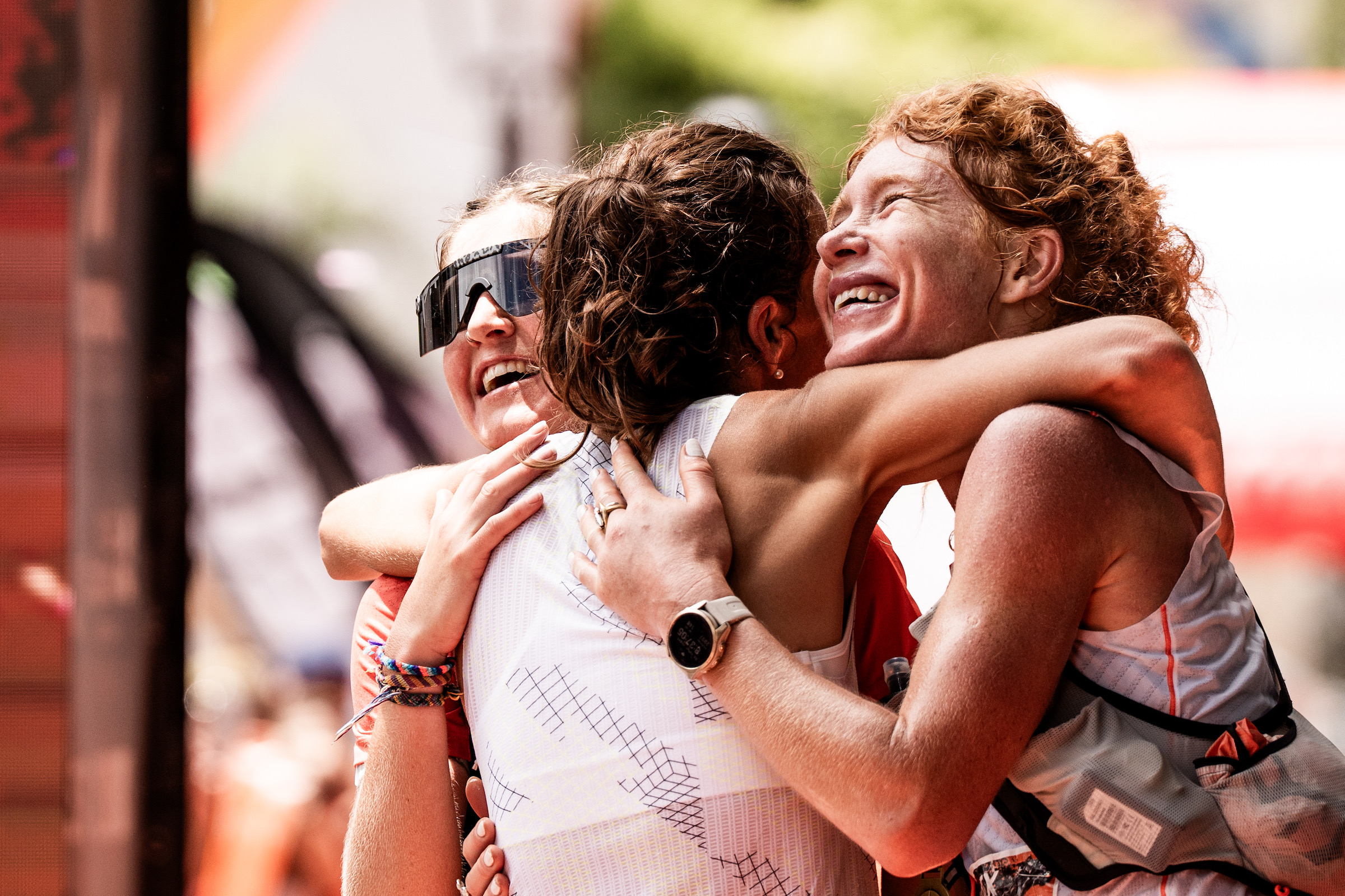
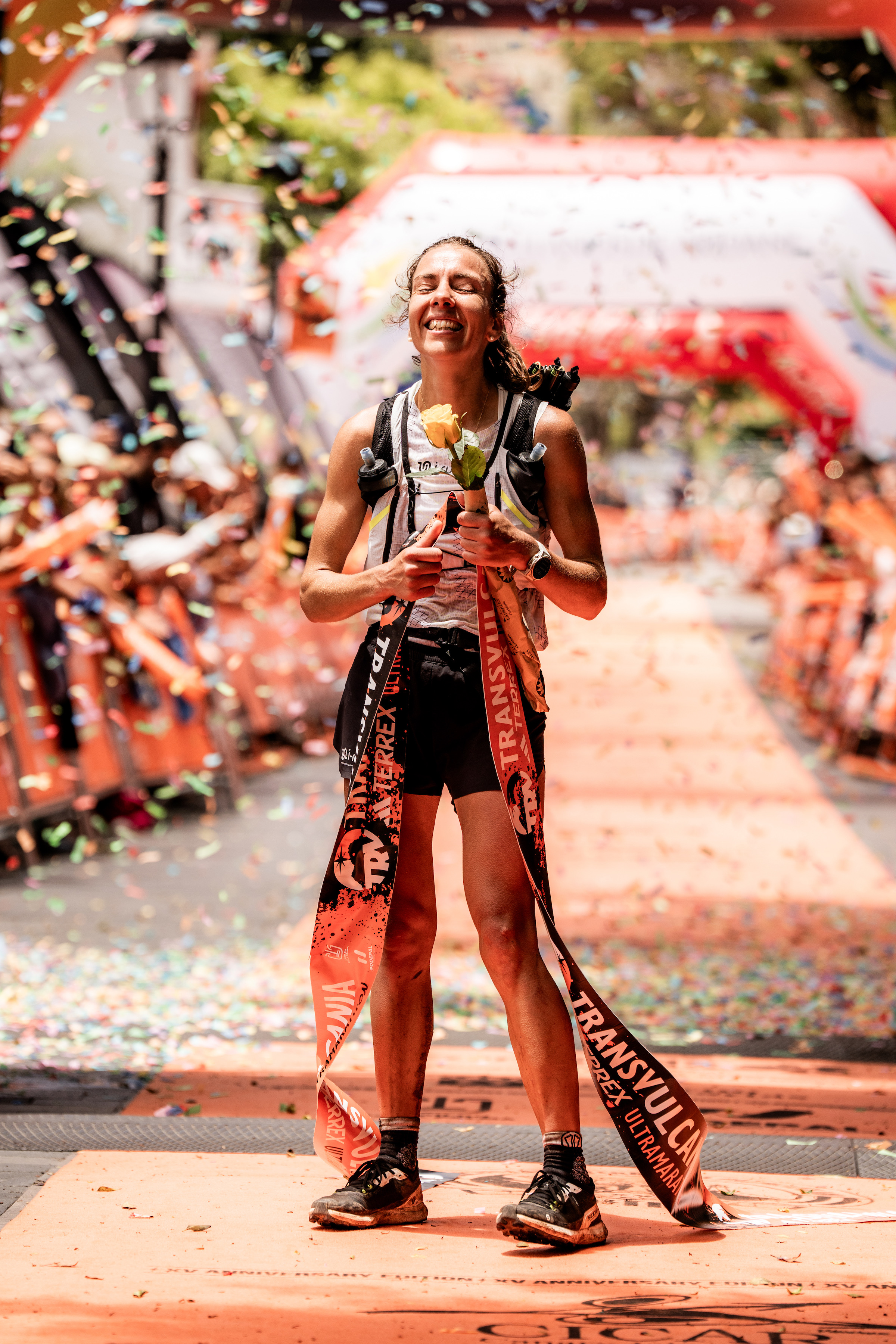
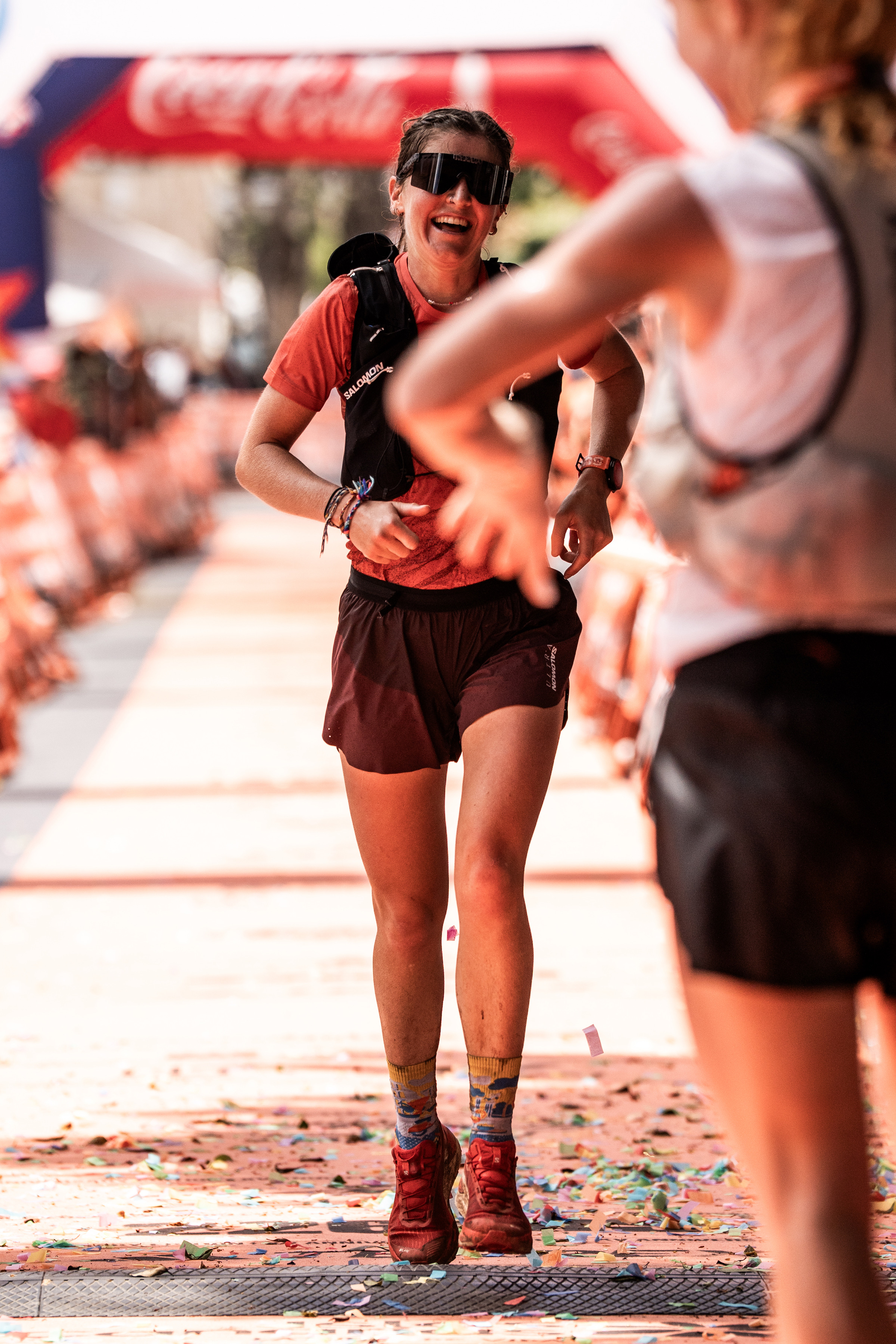
After three previous attempts, 2016, 2017 and 2019, Anne-Lise Rousset finally took the top honours in 8:18:17, a long way off the CR of 8:02:49 set by Ruth Croft in 2024. Ekaterina Mityaeva and Martina Valmassoi battled for 2nd and 3rd and were separated by just 27-seconds at the line, 8:36:58 and 8:37:25.
In the men’s race, hot favourites Dakota Jones and Dmitry Mityaev did not make the start, notably, Andreu Simon Aymerich, Matt Daniels, David Sinclair and Jordi Gamito (amongst many others) DNF’d.
For the women, Ruth Croft who lead the race for almost half of the distance finally succumbed to the weather and withdrew, along with Azara Garcia and Elisa Desco.
Even through fogged lenses and stormy skies, La Palma’s raw beauty still showed through. Runners moved through wild volcanic terrain, past black rock and misty forests. They crossed an island shaped by fire and storm, and this year, they did it while the island roared. And those who crossed the line in Los Llanos? They didn’t just finish a race, they survived an ultra through one of the wildest tests the island has ever delivered.
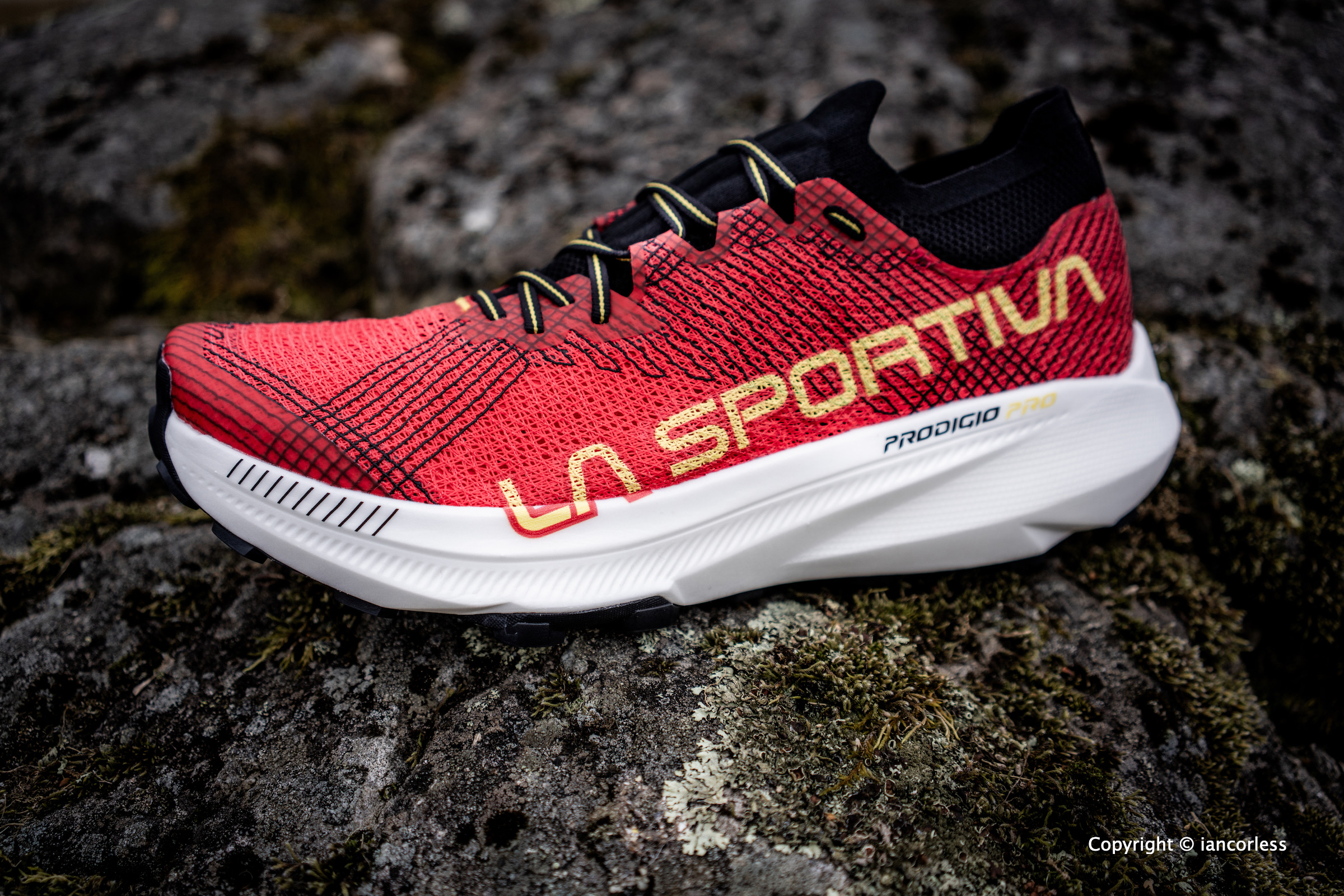
It has been a little like Christmas lately with the arrival of new shoes for testing and the La Sportiva Prodigio Pro was highly anticipated. I got my hands on a pair at UTMB in 2024, sadly though, they remained in my hands and not on my feet.
So, the arrival of the Prodigio Pro was welcome.
In all honesty, it’s a stand out shoe for La Sportiva. For perspective, I have been using La Sportiva for years, they offer bullet proof mountain running shoes and models such as the Mutant, Jackal and the Cyklon have been in my rotation for years. They are durable and trustworthy BUT not the lightest or even the fastest options available.
Not sure how, but I missed the original Prodigio and when it finally came around to getting a pair for test, the Prodigio Pro was available. So, I jumped straight to the Prodigio Pro, so, any comments here cannot be related to the Prodigio, which I think is maybe a good thing!
First point – this feels like La Sportiva have released a fast, lightweight and arguably a super shoe for trails. Hence my comment ‘a stand out shoe for La Sportiva.’
The Prodigio Pro, for a mountain centric company, is a new approach.
The addition of PRO name signifies that this shoe is for faster workouts, racing or if you are like me, you just love a bloody good run shoe.
With 28mm cushioning at the front, 34mm at the rear and a 6mm drop, the Prodigio Pro sits in this wonderful middle ground of cushioning and drop.
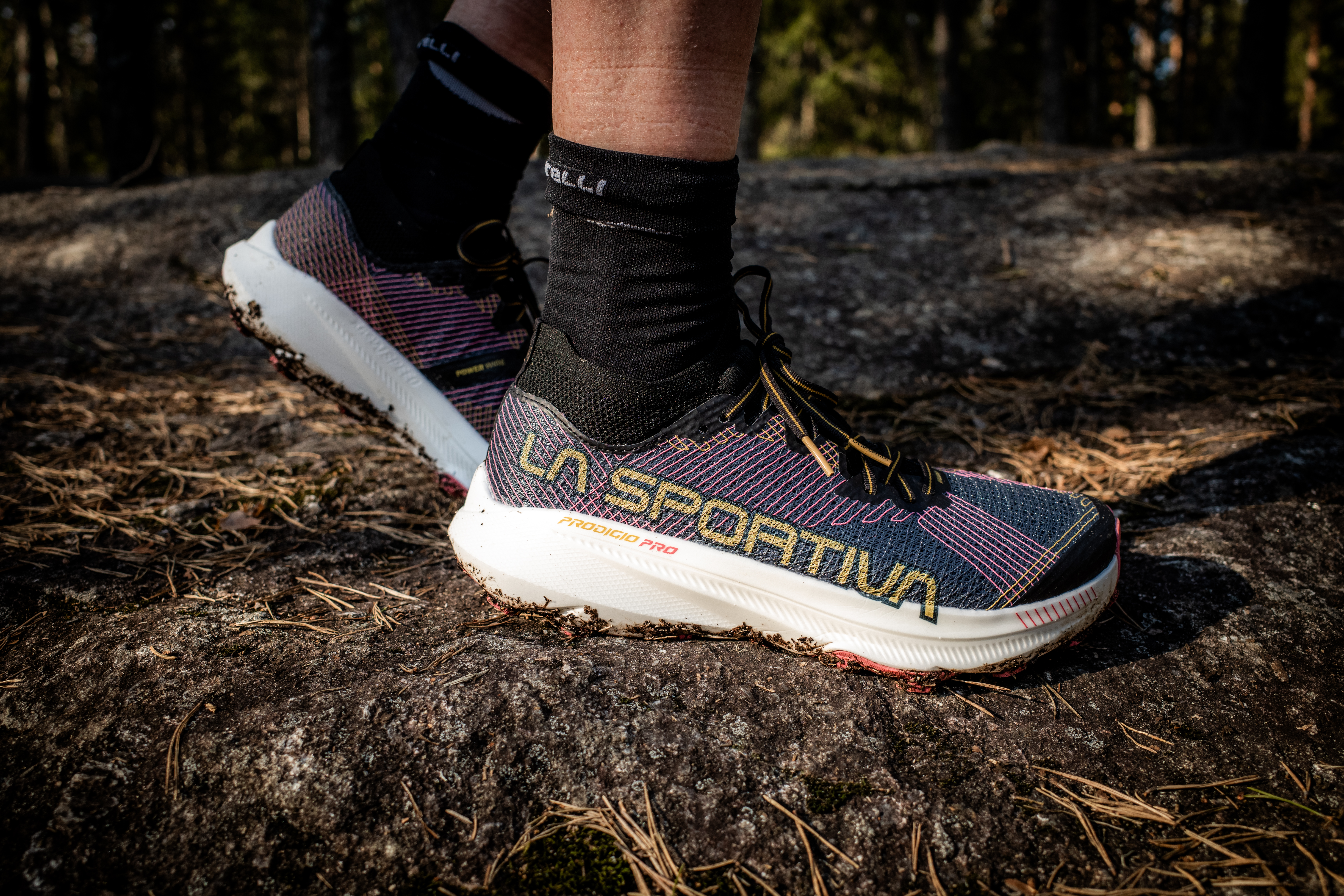
Female colourway
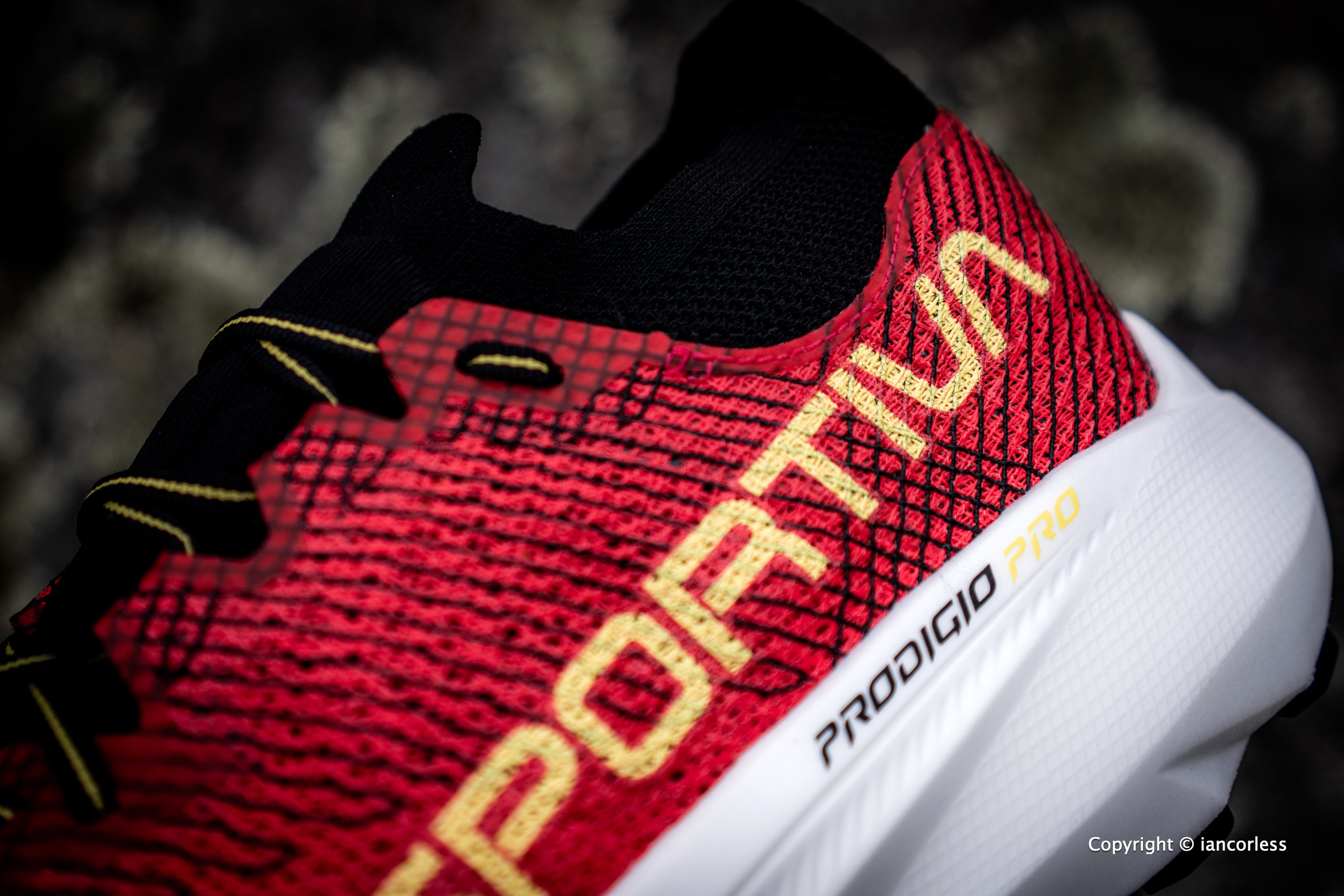
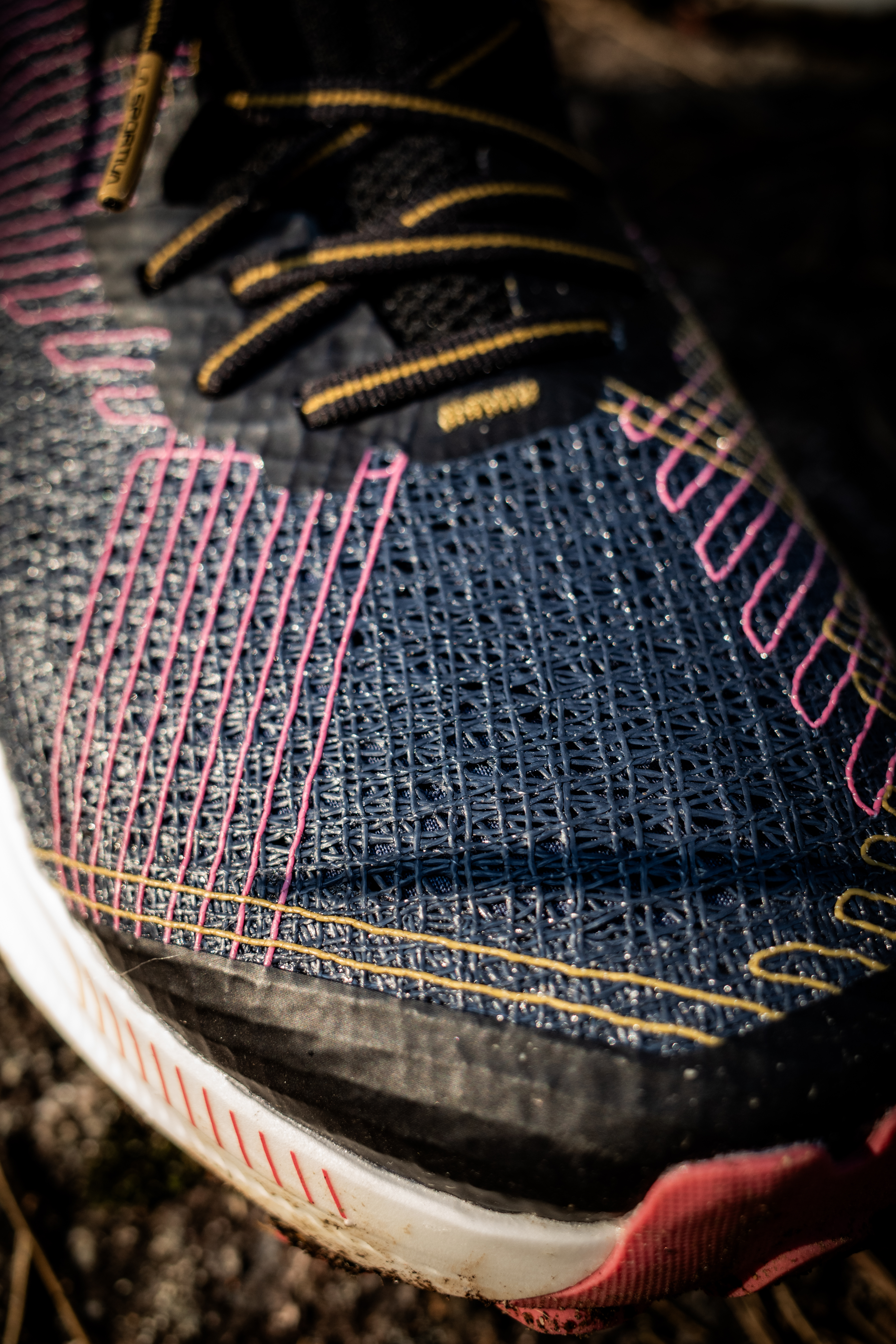
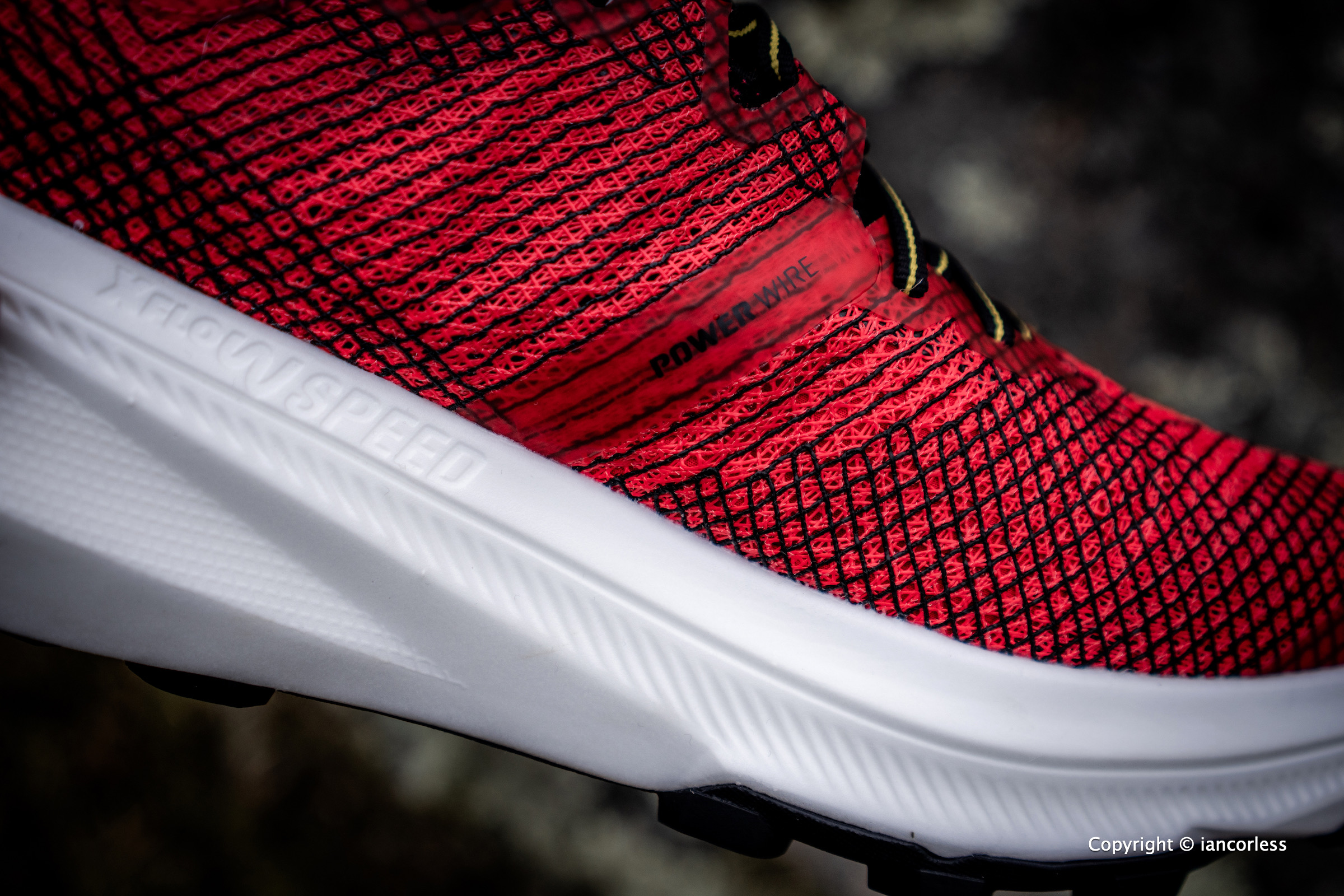
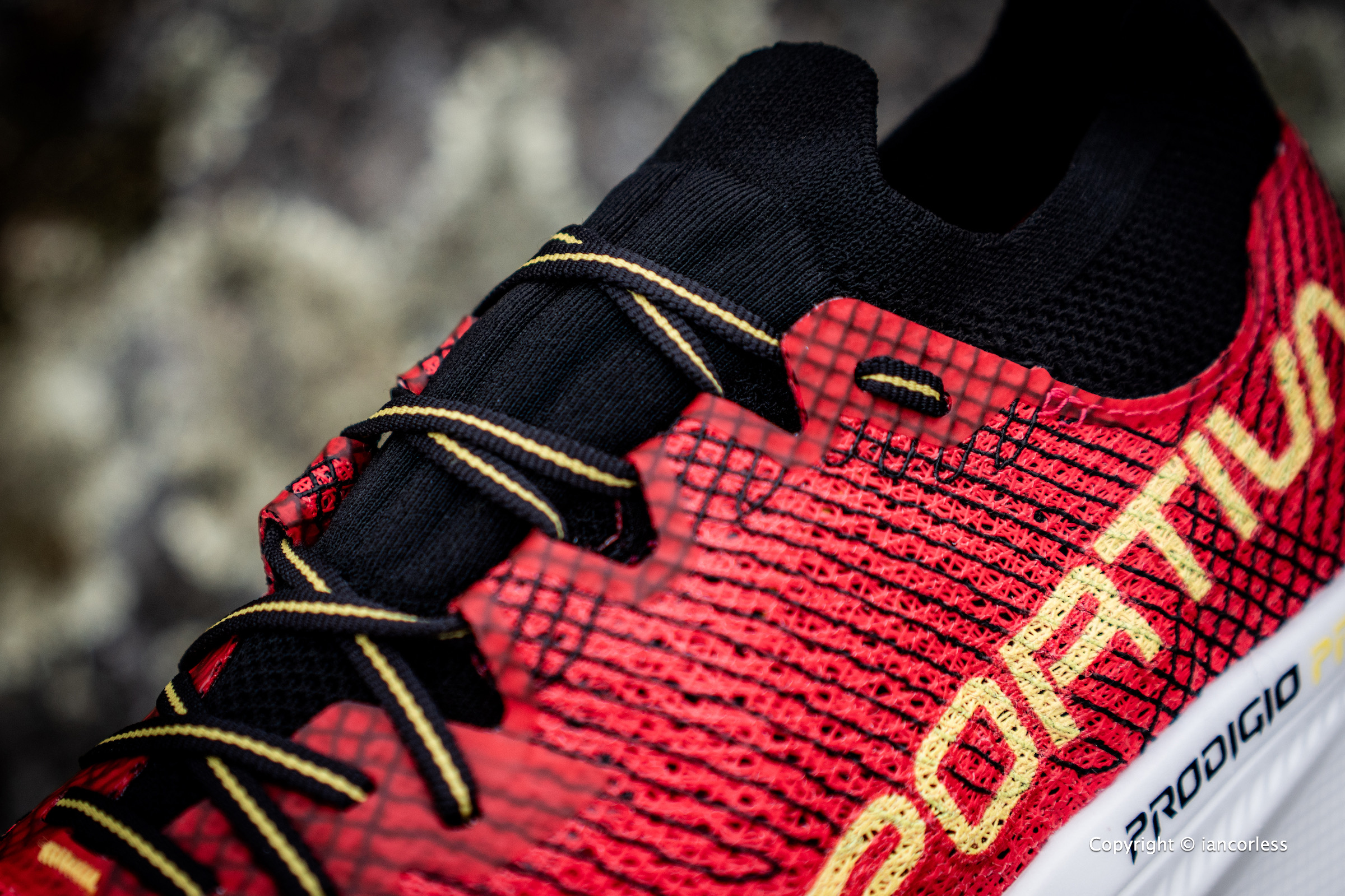
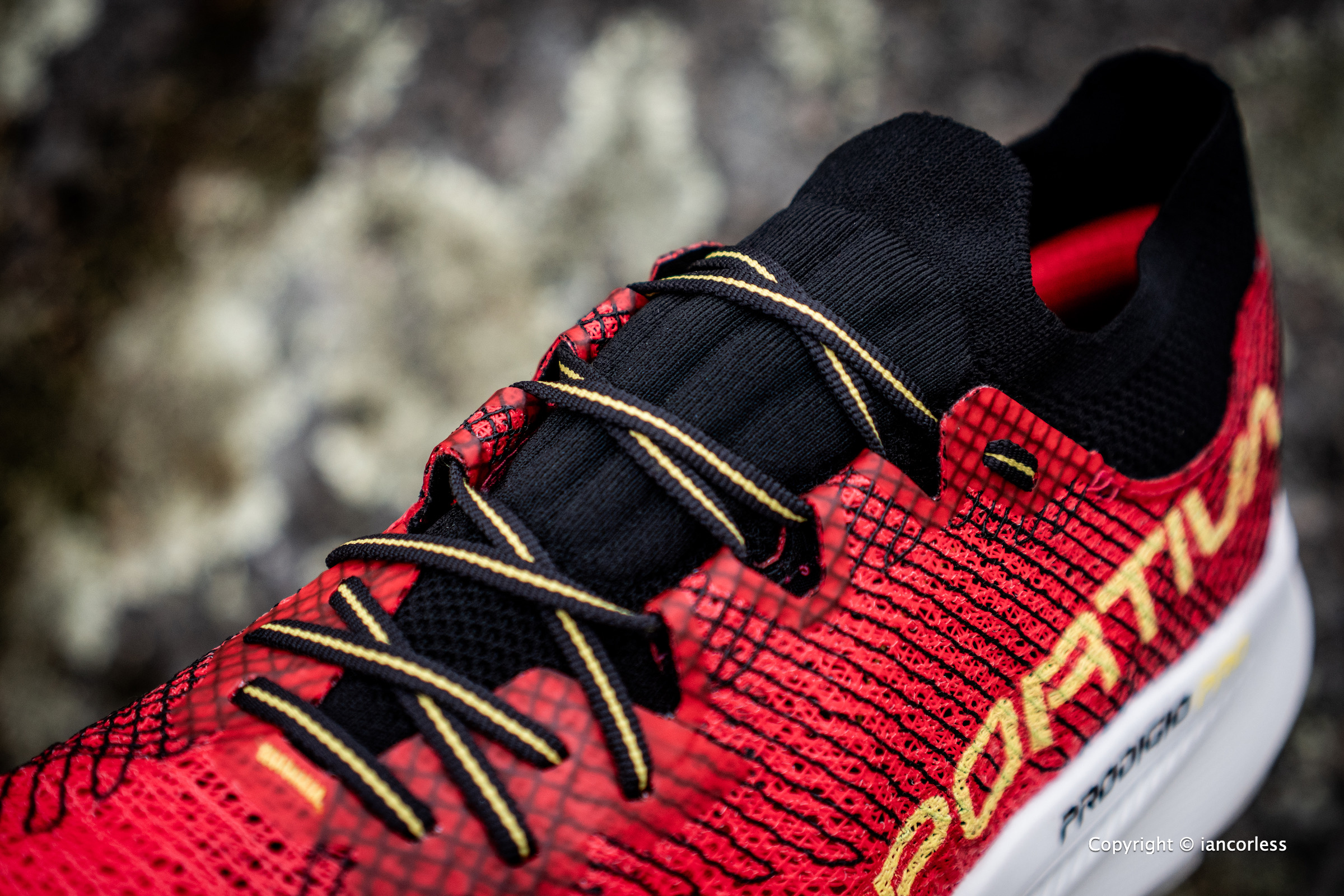
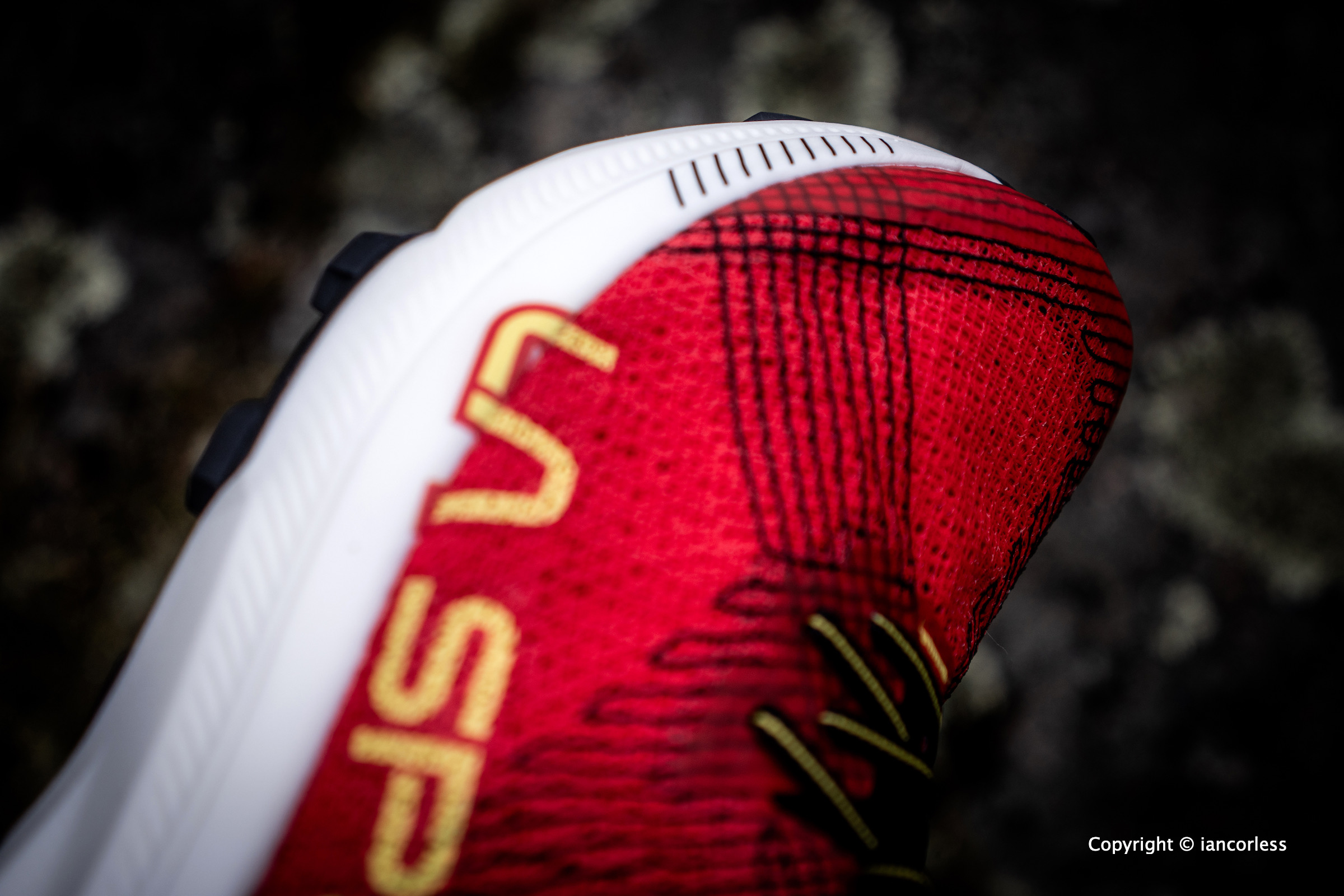
The upper is unique, Power Wire. This upper looks like it was created via computer and then woven in a lab by some marvellous magic.
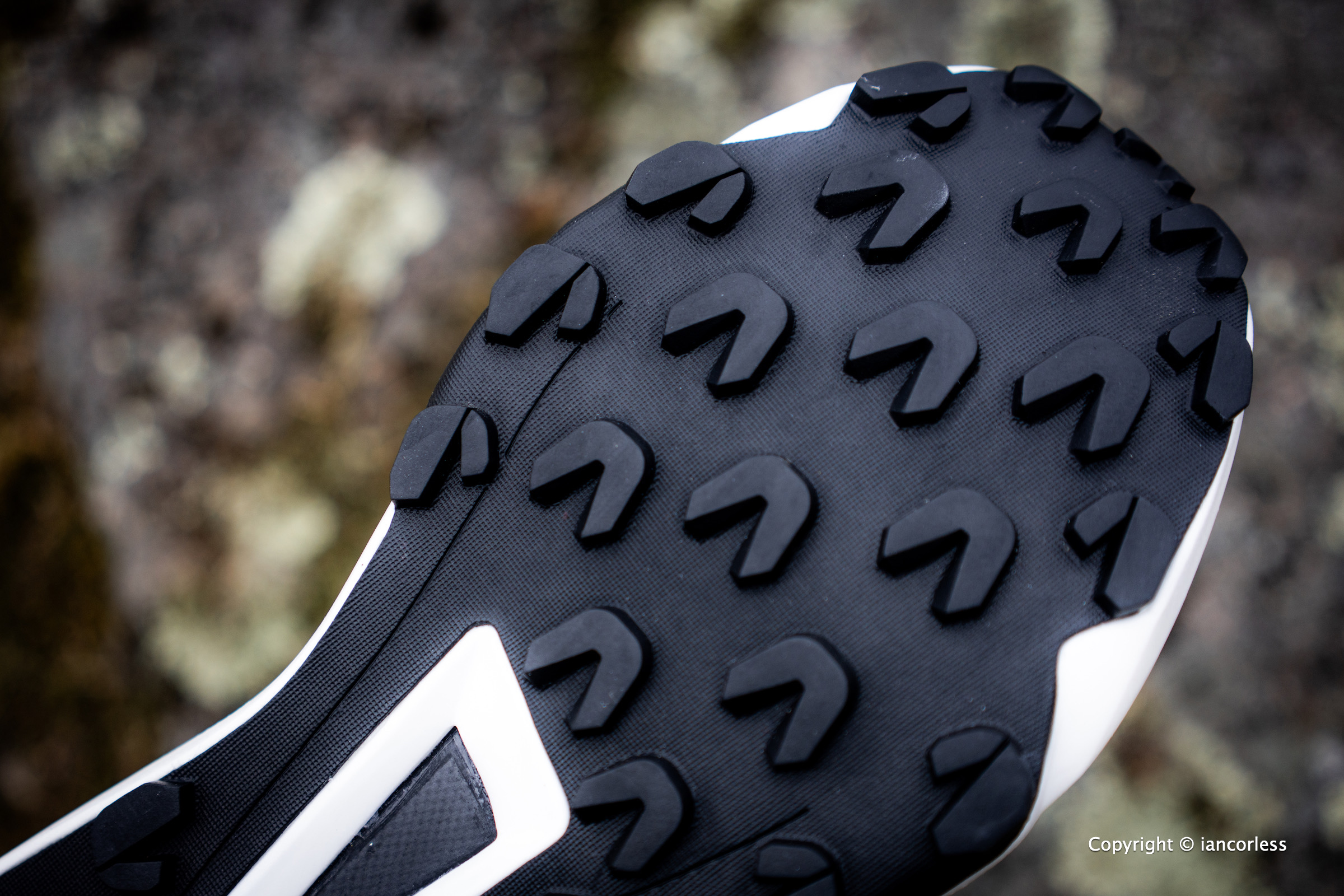
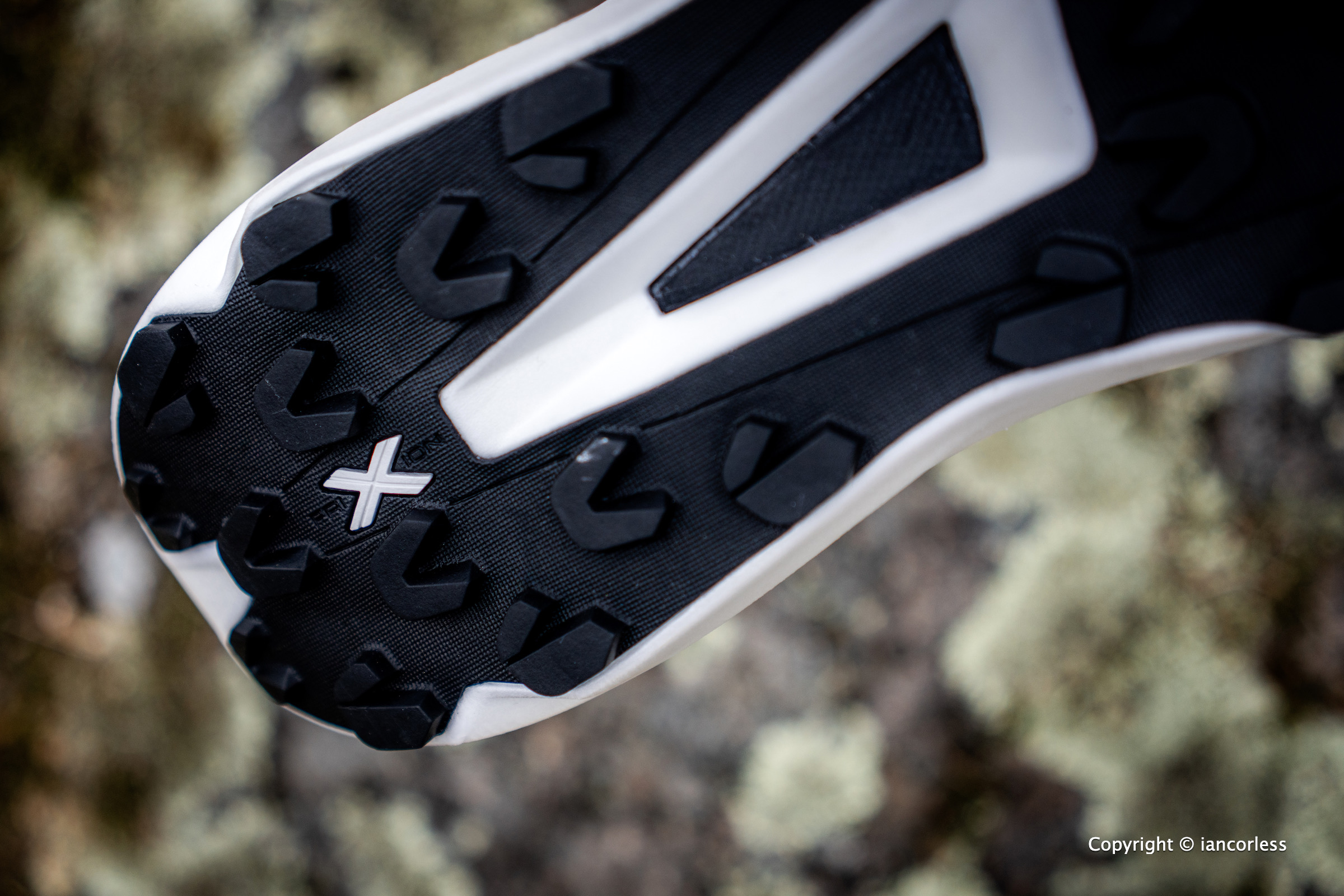
The outsole if La Sportiva’s own Friction White. I have to say, I love it hen brands make their own outsole. I am tired of Vibram being added to run shoes and frankly (hold your breath) it is not a good outsole when you are on wet rock or similar. I am amazed that NNormal could not come up with something better! And let’s face it, nobody can compete with VJ outsoles. But, La Sportiva do a good job.
The cushioning is nitro-infused which in all honesty I have no idea what it means BUT yes, it really works. The thing with cushioning is, and some shoe brands don’t seem to understand this, if you are going high with cushioning, you need to go wide with outsole/ footprint, otherwise you are running on an unstable double decker bus that is ready to roll at any moment – step in the horrendous adidas Terrex Agravic Speed Ultra which proves that you don’t take a road shoe, make some tweaks and then call it a trail shoe.
What this shoe does not have is a plate – yipee!!!! Don’t get me wrong here, some ‘plates’ work, the Hoka Tecton X3 a great example. But mostly, a plate in a trail running shoe has been less than a positive experience for me and many others.
THE SHOE
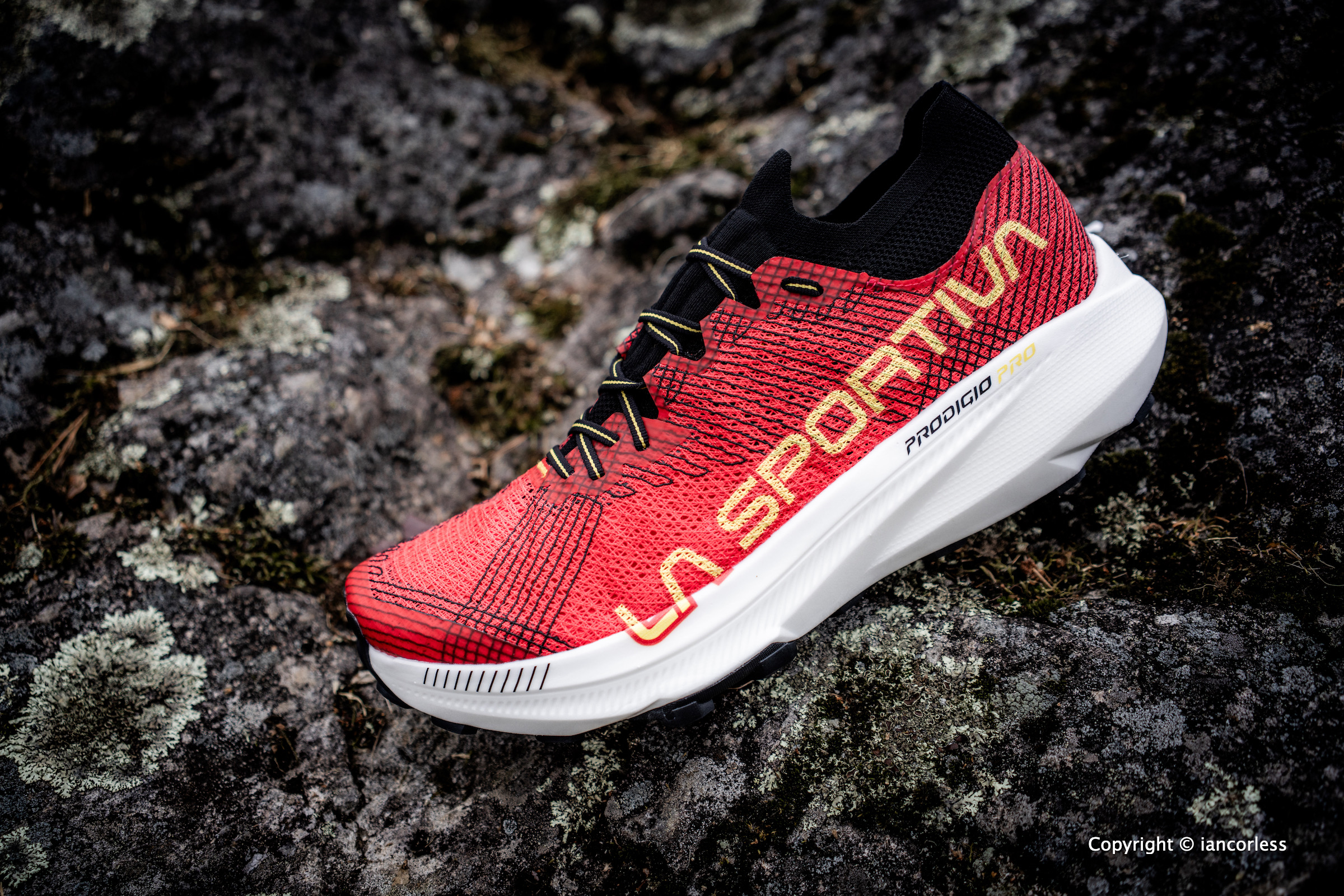
They look fantastic, simple!
I have the red colour with LA SPORTIVA in yellow. I have to say, when I opened the box I was really sad they were not the classic black/yellow with a hint of red colours that kinda signify La Sportiva, but the red is cool.
My eye immediately went to the tongue, the sock like fit and then the cushioning.
The upper is pretty darn special, especially when you zoom in close. It’s like thousands of fine threads woven together in varying thickness to add structure. It’s like Matryx which we are seeing on many shoes BUT it is completely different. As the name says, it is POWER WIRE which provides great fit, great comfort and excellent breathability – the shoe was a little cold running in winter! Toe protection is adeqaute, maybe a little minimal, but, for a trail shoe, perfectly fine.
Slipping the foot inside, the sock like fit and padded tongue are amazing. I got exactly the same feel from the Hoka Tecton X3, this put a big smile on my face. When tightening the laces, the padded tongue provides superior comfort on the navicular bone, a typical point of irritation.
As with all La Sportiva, you need to be careful with sizing, this shoe in particular will require you to have the correct size because of the way they fit. I would start by going a size larger as a start point. If you take a UK10, try a UK11.
Female colourway
First run and I had a big smile, the cushioning is bouncy and fast with a great propulsive phase. If you have the fitness, cadence and run form, this shoe will fly along. It’s without doubt an awesome trail racing shoe. If like me you move a little slower, there is considerable comfort and life here.
The footprint is good which provides stability. However, with the sock like fit and the cushioning, when moving on technical terrain, foot hold and security is compromised. I therefore see the Prodigio Pro as much more a trail running shoe and not a mountain running shoe. There is no rock plate, not a deal breaker, but I do wonder if this would benefit the shoe and help on more mountainous terrain?
The outsole is in line with the usage of the shoe, 4mm lugs certainly sit well with the intentions of trail running and faster running. It’s grippy, durable and gladly covers most of the outsole to provide grip in most scenarios. But, on wet rock, grip is not where I want it to be. Once I slip, my confidence goes and when I can no longer rely on an outsole to do it’s job, my speed drops.
CONCLUSION
I absolutely love the Prodigio Pro. You may think from my review that I am not sold on this new incarnation from La Sportiva, I am. It is an absolutely fantastic trail running shoe for single-track, dry conditions and trail. The Prodigio Pro really excels on rocks and boulders too. But, if the trail is very technical and particularly, if it is wet, then the Prodigio Pro is compromised. Quite simply, if I use this shoe is the right conditions, they are superb. They have a very similar feeling to the Hoka Tecton X3 which I also love. These shoes feel like they were made for racing in the USA, I know Anton Krupricka helped the development, and I would imagine at Leadville or Western States, these shoes would fly along.
The release of the Prodigio Pro coincided with the VJ Ultra 3, in testing I was actually alternating days, VJ one day, La Sportiva the next and this was ideal to asses both shoes. In a way, they are very similar but equally, they are very different. The VJ has more cushioning, 30/38 in comparison to 28/34, a higher drop, 8mm instead of 6mm, the outsoles, 4.5mm to 4mm for the La Sportiva.
I got many questions, ‘Which would I choose?’ I refused to answer initially as both put a huge smile on my face and my initial thought was, you know what, I would be happy with either.
But, I am in a lucky position to test and compare and with that in mind, if I was going out to buy a pair of shoes tomorrow I would choose the VJ Ultra 3. Why? Ultimately, the VJ has the grip for all conditions and that is really important for me. The foot hold is superior in the VJ particularly in mountain and technical terrain. I think in the long term, the VJ will be more bullet proof in the terrain and conditions I run in. Finally, I feel that I can use the VJ on ‘all’ terrain, whwereas, I feel the Prodigio Pro is compromised on more technical and mountain terrain.
BUT and wonderful final but, if I was going out for a faster trail run on groomed trail, the Prodigio Pro is hard to beat.
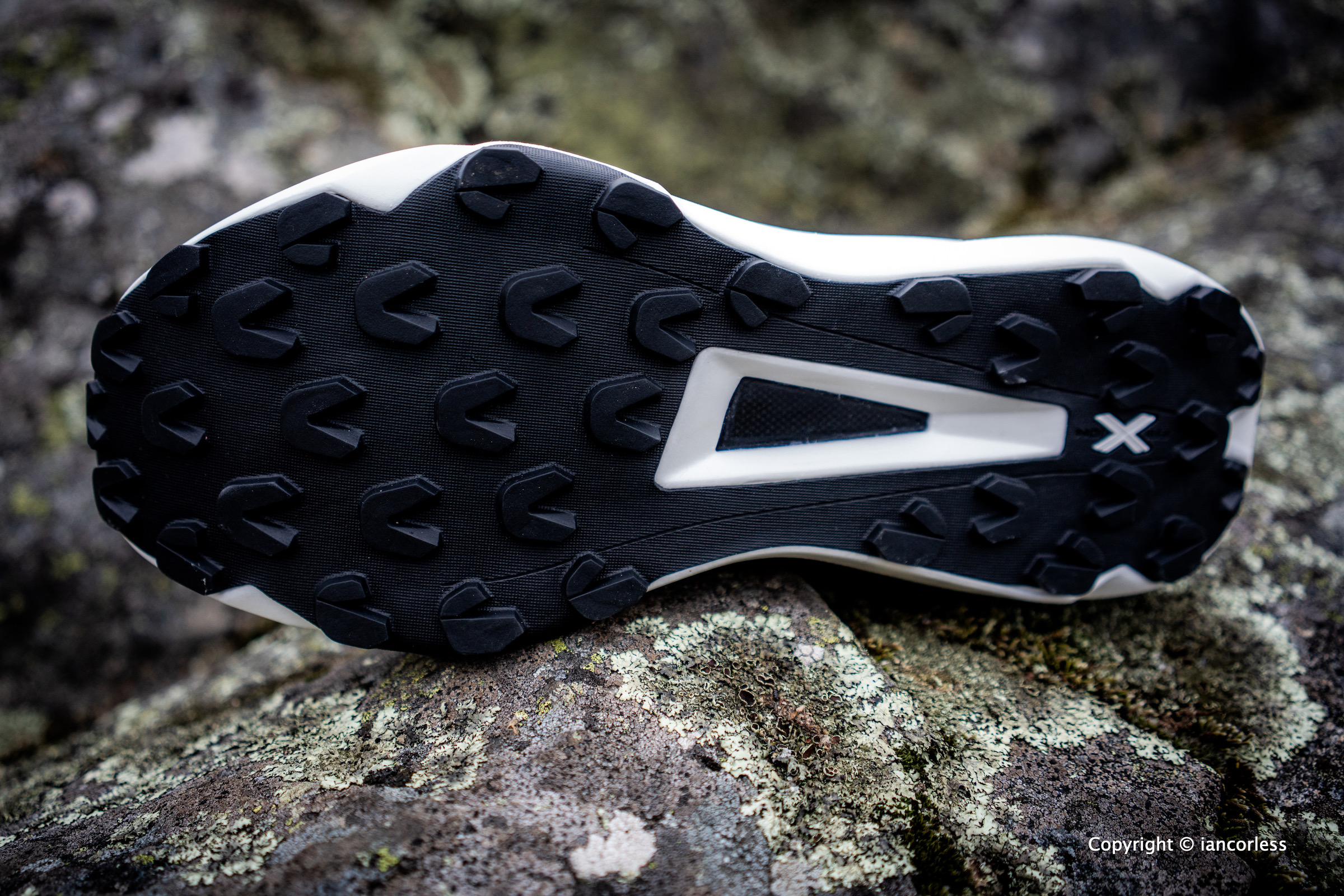
So finally, is the Prodigio Pro for you? I would think about where you are running, what conditions you are running in and what you need from a shoe. I am extremely happy with mine and I would have no issue slipping these on for ‘any’ run despite the reservations for some conditions – the Prodigio Pro is great looking, has incredible comfort, a lovely lively ride and on the right feet, they are fast.























 IAN CORLESS