Thanks to Marcus Warner from Ultra 168 for a great memory…
A little training run on the Zegama course. Mike Wolfe, 2nd at Western States explains the terrain – “Douche Grade’

Thanks to Marcus Warner from Ultra 168 for a great memory…
A little training run on the Zegama course. Mike Wolfe, 2nd at Western States explains the terrain – “Douche Grade’
Another wonderful film to come out of the island of La Palma and the Transvulcania race. This time by Salomon Running and featuring British runner and 2nd place in the race, Andy Symonds.
A hard and extreme Ultramarathon, proof that only men of iron and women of steel can overcome, many try, many want to, but only a few will achieve the goal. The body is pushed to extremes in a race that all who participate call spectacular, breathtaking, addictive, and challenging. The 2012 event included a stellar line up with athletes travelling from all over the world to take part. To reach the goal of the finish line is everybody’s dream but the reality is not an easy one… welcome to the fourth edition of the Salomon Transvulcania Nature Trail
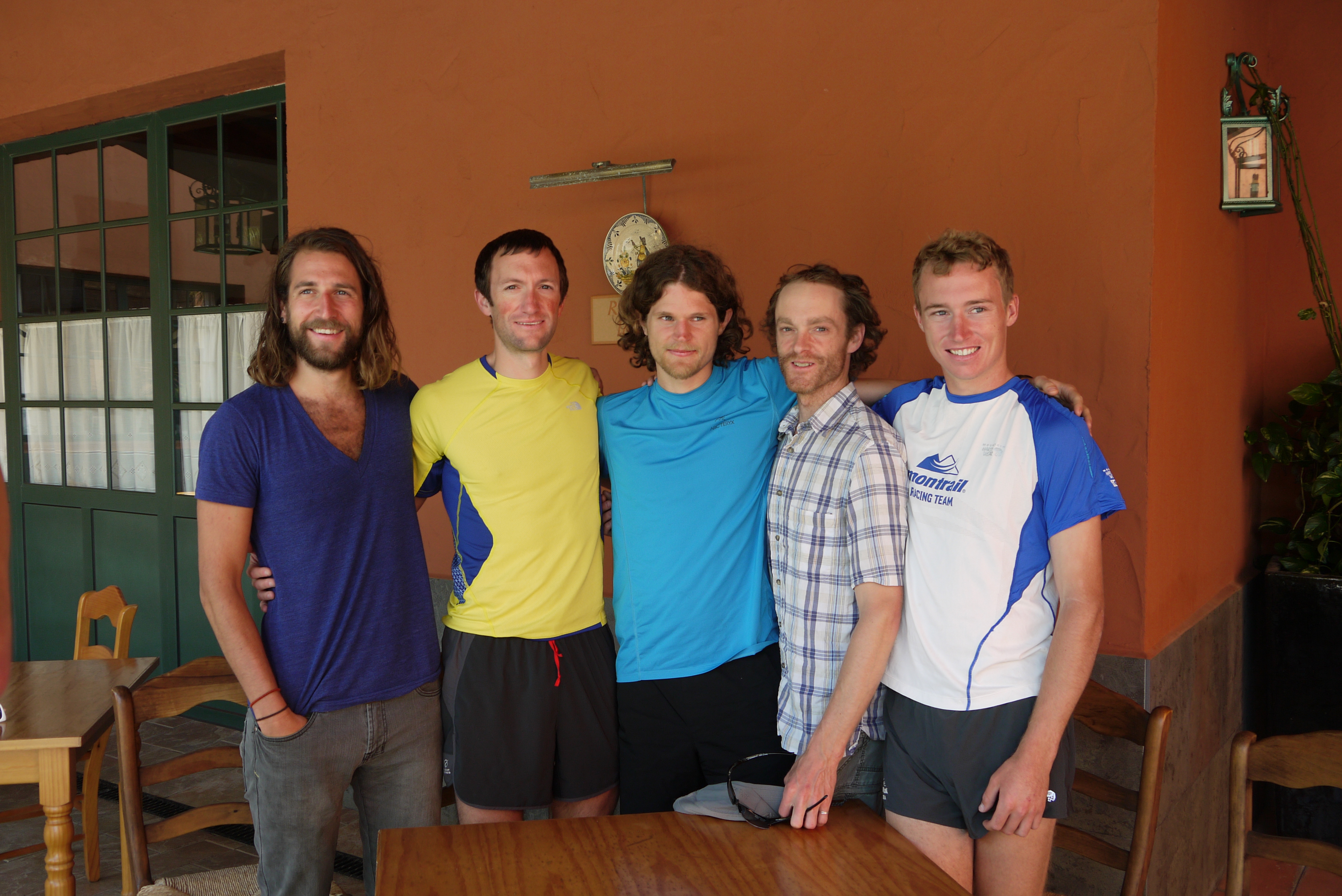
Last weekend I was standing around in the pouring 45F rain in the town square of Zegama in the Basque Country of northern Spain. Montana mountain runner Mike Wolfe had just crossed the finish threshold of the Zegama-Aizkorri SkyMarathon in 14th place as the top American and was still visibly amped up about the weather, the course, his race.
“I was passing people like crazy on the climbs, and I consider myself comfortable on technical trails, but these guys just go nuts on the downhills. I’ve never seen people run downhill like that before!”
Hearing that from such an accomplished mountain athlete as Mike helped me realize the true gap that currently exists between long distance mountain races in the U.S. versus those in Europe.
Read the great post in full by Anton Krupicka HERE
Great footage and story telling of one tough marathon at Zegama in the Pyrenees.
South African trail running takes to the Sky official press release – 24nd May, 2012
In 1991, an Italian man by the name of Marino Giacometti (pictured left) introduced the world to a brand new concept of running. Traversing some of Europe’s highest peaks including Monta Rosa in northern Italy and Mont Blanc in France, Giacometti’s dream was to create a series of unique and challenging mountain running events that encapsulated the true meaning of “running in the clouds”. A few years later, and with the first high altitude trial hosted on the slopes of Mount Everest, Skyrunning was born.
Twenty years on, and as the interest in Skyrunning continues to grow at a rapid rate in both Europe and in North America, as well as in Asia and New Zealand, South
Africa begins a new chapter in the development of off-road running as this dynamic sport makes its way to our country’s mountain ranges.
In August 2011, the South African Skyrunning Association (SASA) was founded, becoming a voting member of the International Skyrunning Federation (ISF). As part of its mandate, SASA’s goals and objectives include helping with the ISF’s vision of growing and promoting the sport of Skyrunning on a global basis, introducing local South African runners to the idea of competing on a national Skyrunning circuit, and international runners to the opportunity of competing on South African soil.
So what is Skyrunning you ask? The ISF have introduced a unique criteria that defines a Skyrunning event. From specific cumulative altitude gain across the race route profile, to minimum and maximum elevations above sea level, Skyrunning events encompass a wide variety of mountain terrain. Comprising of events such as the Skymarathon®, Skyrace® and Vertical Kilomoeter®, as well as the newly introduced Skytrail, some 35 000 athletes world-wide enjoy National, European and World Series events. The Skygames®, which takes place every four years in the same year as the Olympics, also offers Skyrunners from around the world the opportunity to represent their country in a multi-disciplined format of mountain races.
As one of the primary objectives of SASA, its mandate includes identifying existing trail and mountain running events in South Africa that will be interested in hosting a national Skyrunning circuit event. Coupled with these existing events, the opportunity also lies in the introduction of new mountain running races as part of this national circuit, events that will continue to pioneer this new chapter in the county’s mountain running scene, all gaining recognition as official Skyrunning races. “There are many quality South African races which already exist and qualify to host a national circuit event,” says James Hallett, founder of SASA. “With a landscape that boasts some exceptional mountainous terrain, I feel that South Africa has the potential to become a world class Skyrunning destination.”
For the local runners, it’s an opportunity to join SASA as a registered Skyrunner®, allowing them to enter and compete in these various national circuit events to accumulate points, much like a Formula 1 driver would throughout a racing season, in the hopes of being crowned national Skyrunning Champion.
“We feel that the idea of competing on a national circuit will appeal to both elite athletes and regular runners alike, allowing them to challenge themselves and others each year. This will not detract from them being a regular trail runner, however with the added opportunity of being selected to represent South Africa at a Skyrunning World Series event, or even a Skygames®, it’s something that we feel will encourage runners to join, opening up many avenues for aspiring athletes wanting to perform on the world mountain running stage.” says Hallett.
South African Skyrunning Assocoiation
As part of SASA’s launch campaign, thanks to the ISF and funding from the organisers of one of Europe’s longest standing European Skyrunning Series races, the Sierre-Zinal Skymarathon®, a top South African athlete will be heading to Switzerland in August to compete in the 2011 event.
Linda Doke is one of South Africa’s most accomplished trail athletes, having performed exceptionally well at some of South Africa’s premier trail running events over the past 8 months including the 2011 Salomon Skyrun and 2012 ADDO Elephant Trail Run (victory in the women’s category for both races). Having also recently competed in her 16th Two Oceans Ultra-marathon, as well as having a solid training base behind her as she prepares for her 10th Comrades Marathon in June, SASA has selected Linda not only for her ability as a runner but also as a fitting ambassador to represent South African Skyrunning.
“I’m incredibly excited to have been selected to represent SASA at the Sierre-Zinal in August,” says Doke. “I’m sure that being a part of the Skyrunning World Series, the race will be very tough, as will all the seasoned alpine speedsters I’ll be competing against, so it’s a real privilege
to be a part of it. With the Skyrunning concept having taken Europe by storm, and through the formation of SASA, South Africa has a fantastic opportunity to showcase its most technically challenging trail and mountain races to the world.”
SASA will be hoping to announce the 2013 national Skyrunning circuit later this year, with negotiations having already begun with interested event organisers. Runners wishing to sign up as registered Skyrunners should keep their eyes on the official SASA website for more details as and when they break, including information about the events hosting the national circuit.
Should you wish to find out more about Skyrunning, please visit the SASA website or folllow our social media channels on Facebook and Twitter
You can also contact SASA by emailing skyrunningsa@gmail.com
Ultrarunning, money and the future?
It’s a big question and one of the things that we spent three days discussing at the ISF Skyrunning Conference in La Palma, the Canaries.
Ultrarunning is without doubt is becoming more popular and more main stream. When you look at the crowds supporting and participating in many European ultras one can see that the sport has only one way to go; up!
By contrast, the sport in America is so much more niche. This was confirmed by the running elite that came over from America. As Dakota Jones said ‘You camp on the start line, roll out of bed and then go run’. Even Western States, the pinnacle 100 miler does not match the European races. Certainly the start has a buzz and of course the finish. But not much happens between the two.
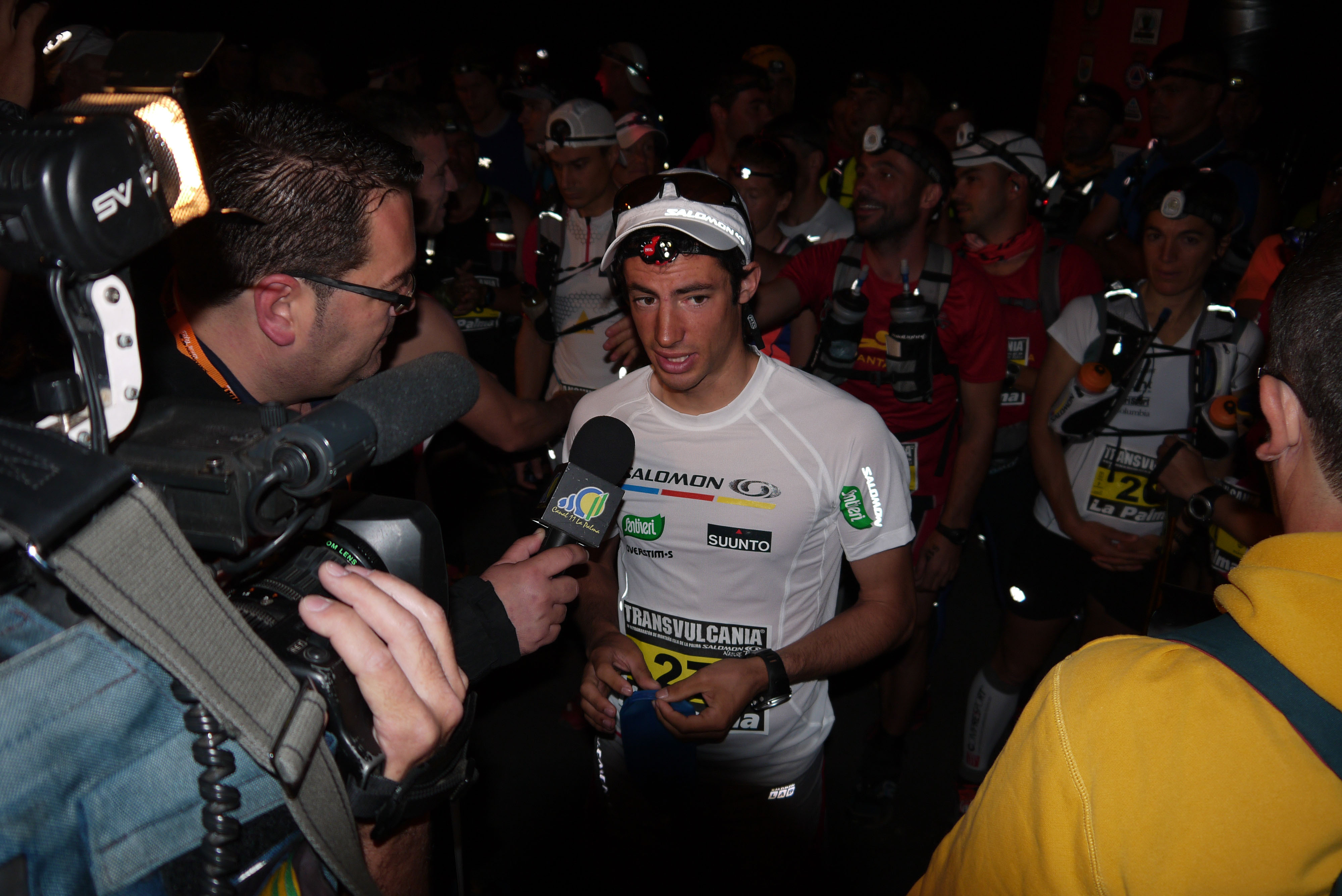
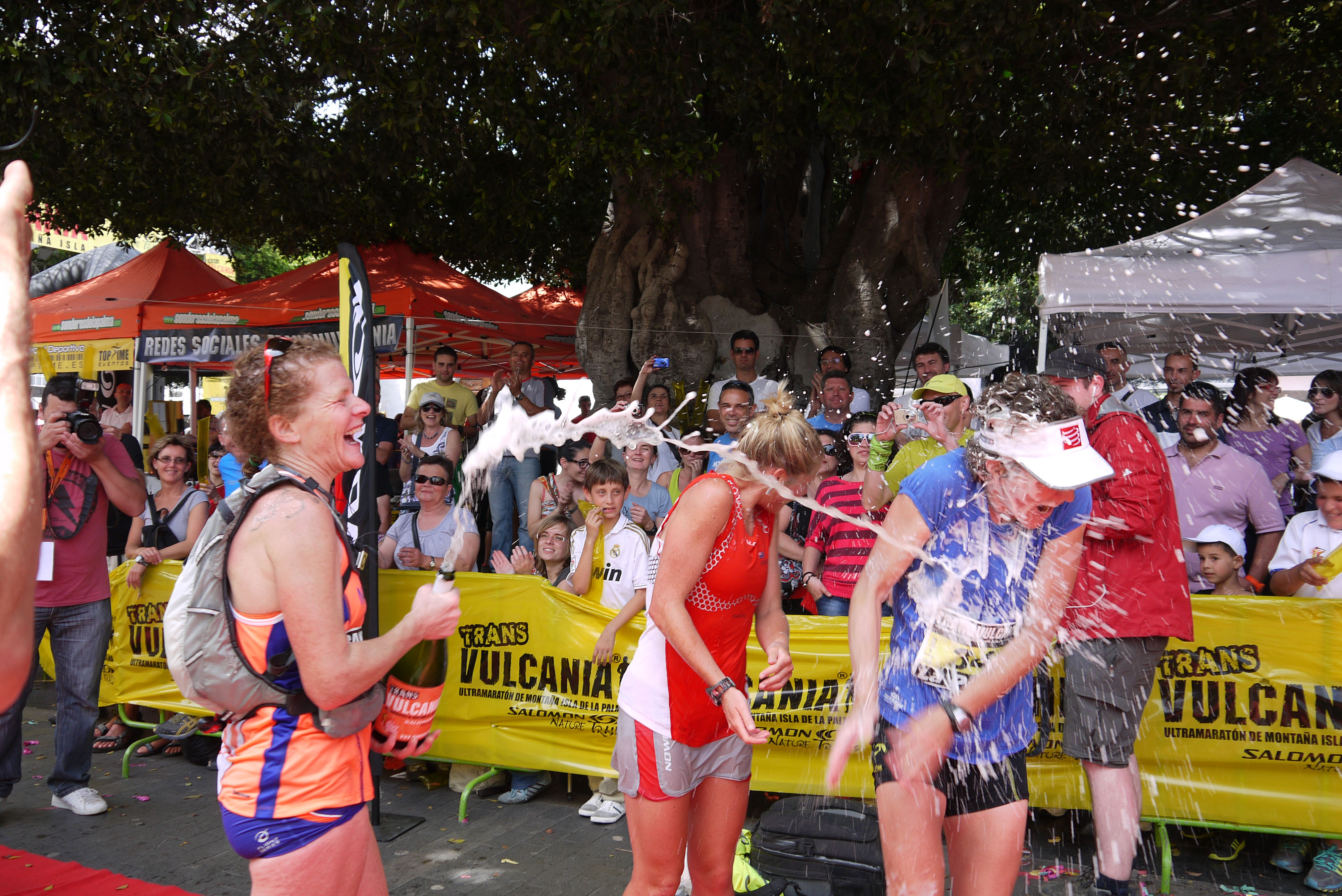
Transvulcania La Palma and Zegama over the last 10 days had thousands upon thousands of spectators, one would compare it to the Tour de France. They narrow the trail down, cheer and shout at the runners, ring cow bells, blow horns… it’s a party atmosphere and they love the runners.
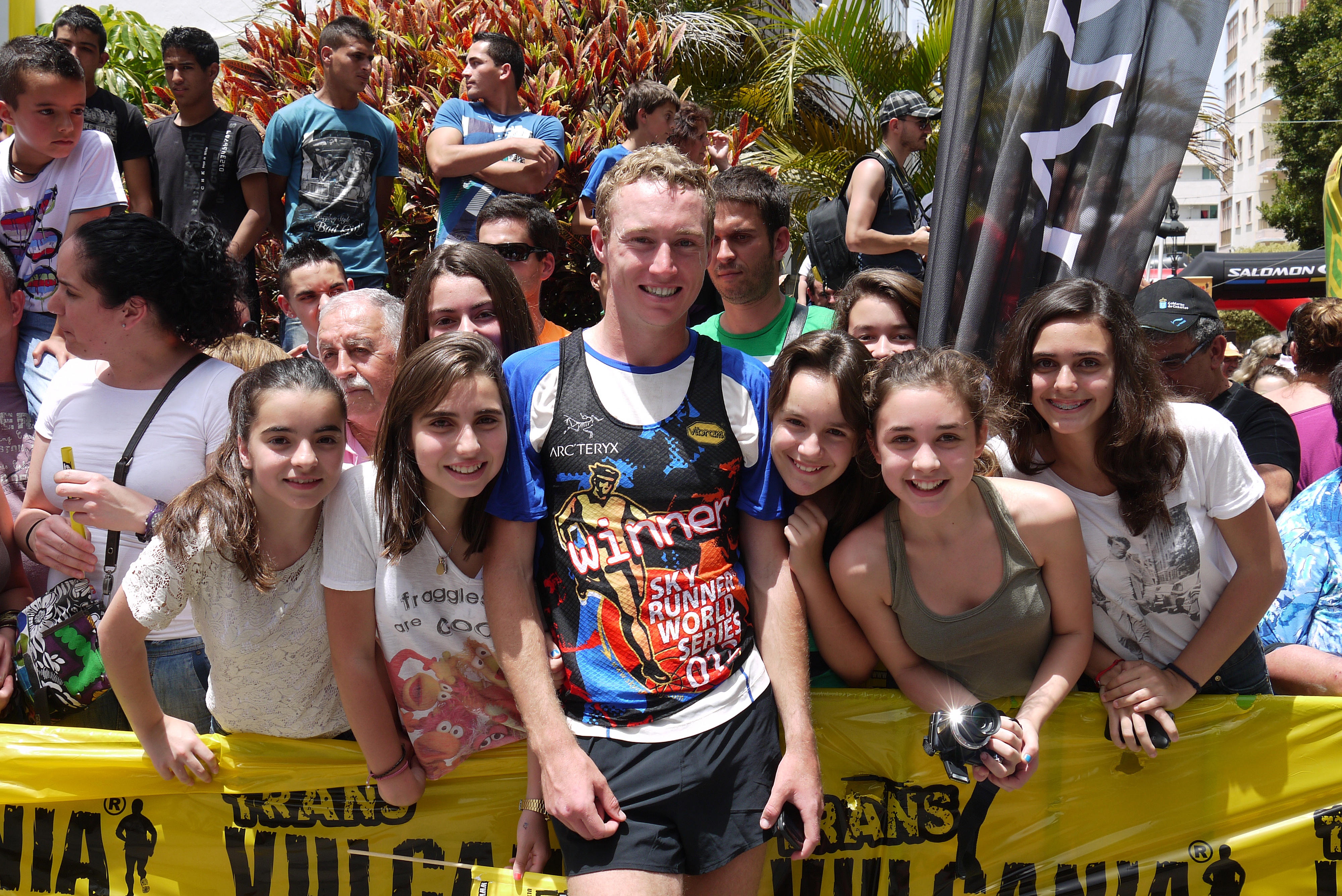
The sport will progress and the more spectators the races attract, the more the sponsors are likely to invest. Thousands screaming on a start line, all ages, from young girls to old men. Sport has no age criteria and when you get a good looking American finishing in first place you could almost imagine that you are at a rock concert and not an ultra.
We all love a quiet trail, we all love the isolation of running with one or two friends but the future of racing, particularly if we want more money, money, money will see bigger crowds, more buzz and I guess a sport that will become more media savvy.
What is important and this is one thing that we discussed in La Palma, is that we don’t want the sport to loose what is so good about it. The unity, the friendship and bonding that we all have.
By pure coincidence the Washington Post has had a related article on the subject. You may like to read it:
In the article, Karl Meltzer who has a regular spot on Talk Ultra says:
“Am I making money running races? No,” said Meltzer, who has consistently won some of the biggest trail races each year since 1996. “Even if you win them all, you would still only be making about $30,000 a year. . . . It’s sponsorships that make it possible for the elites to travel to the races and eke out a living at the sport.”
Of course he is right. However some new races are appearing in America such as UROC (Ultra Race of Champions) and Run Rabbit Run which are offering prize money. However, they still don’t have the buzz of European races. A sponsor needs a return!
One thing that is clear is that we live in a digital age. Social media is now imperative if you want to get a message across. Not only do the runners need to Tweet, Blog and Facebook but so do the teams, the sponsors and everyone related to the sport.
In Transvulcana La Palma and Zegama, I combined forces with iRunFar and ULTRA168 and we lit up Twitter and Facebook. We became the outlet and feed of the race. Not only updating the positions of the runners but importantly feeding back how the runners felt, how they looked and sending photos ‘live’ as it happened. It is the way forward.
Tony Krupicka said in the article:
“In just the last few years, there have been huge gains made in the media aspect of the sport, mainly via following races on Twitter, and in the production of various films”
It’s early days, the sport although well established is now just being born. It is an infant about to move up to a bigger school.
Let’s keep the bullies away and retain the integrity of the sport while at the same time allowing it to expand so that we can make a living but also still love it for what it is; running!
Ian
 IAN CORLESS