The 2024 and 38th edition of Marathon des Sables is here! MDS The Legendary, the longest edition in the history of the race, 252km’s over 6 timed stages.
Close to 900 participants will toe the line, exact numbers will be confirmed at bivouac 1. With 60 countries represented, France and the UK lead the with 267 and 178 participants respectively.
From the 900 starters, 27% are women; a record. The youngest participant will be Lionel Schneider (16) and the oldest, Harry Hunter who has just turned 75 on April 15th.
Runner’s will arrive in Morocco on April 12th for a transfer to the desert.
Saturday 13th is admin day and then the race schedule is as follows:
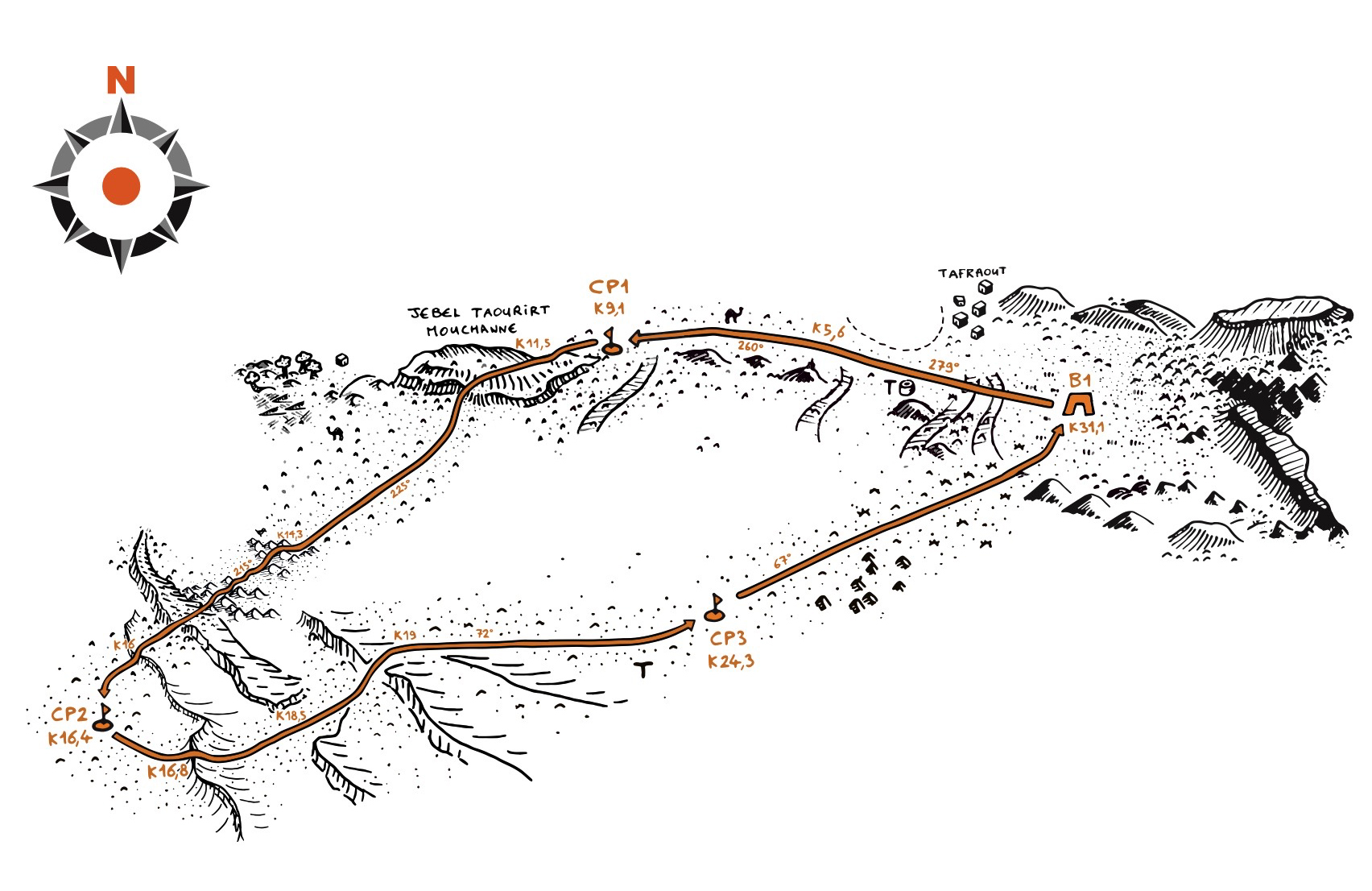
April 14 – STAGE 1 – Departure 0700 31.1km and 282m+
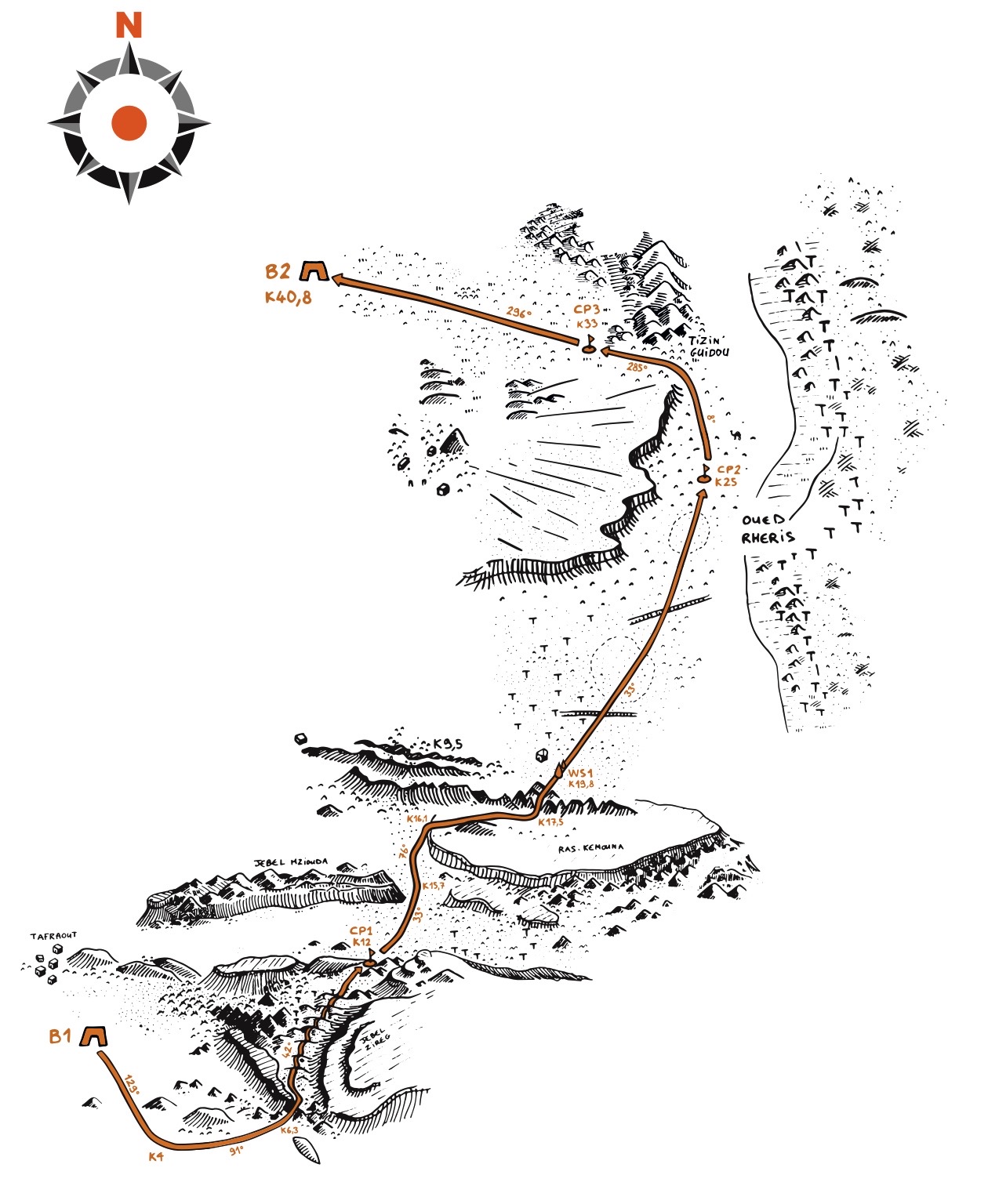
April 15 – STAGE 2 – Departure 0700 40.8km and 550m+
April 16 – STAGE 3 (The Long day which will go through to April 17) – Departure 0600 and 0730 for the top 50. 85.3km and 1154m+
April 18 – STAGE 4 – Departure 0630 and 0800 43.1km and 390m+
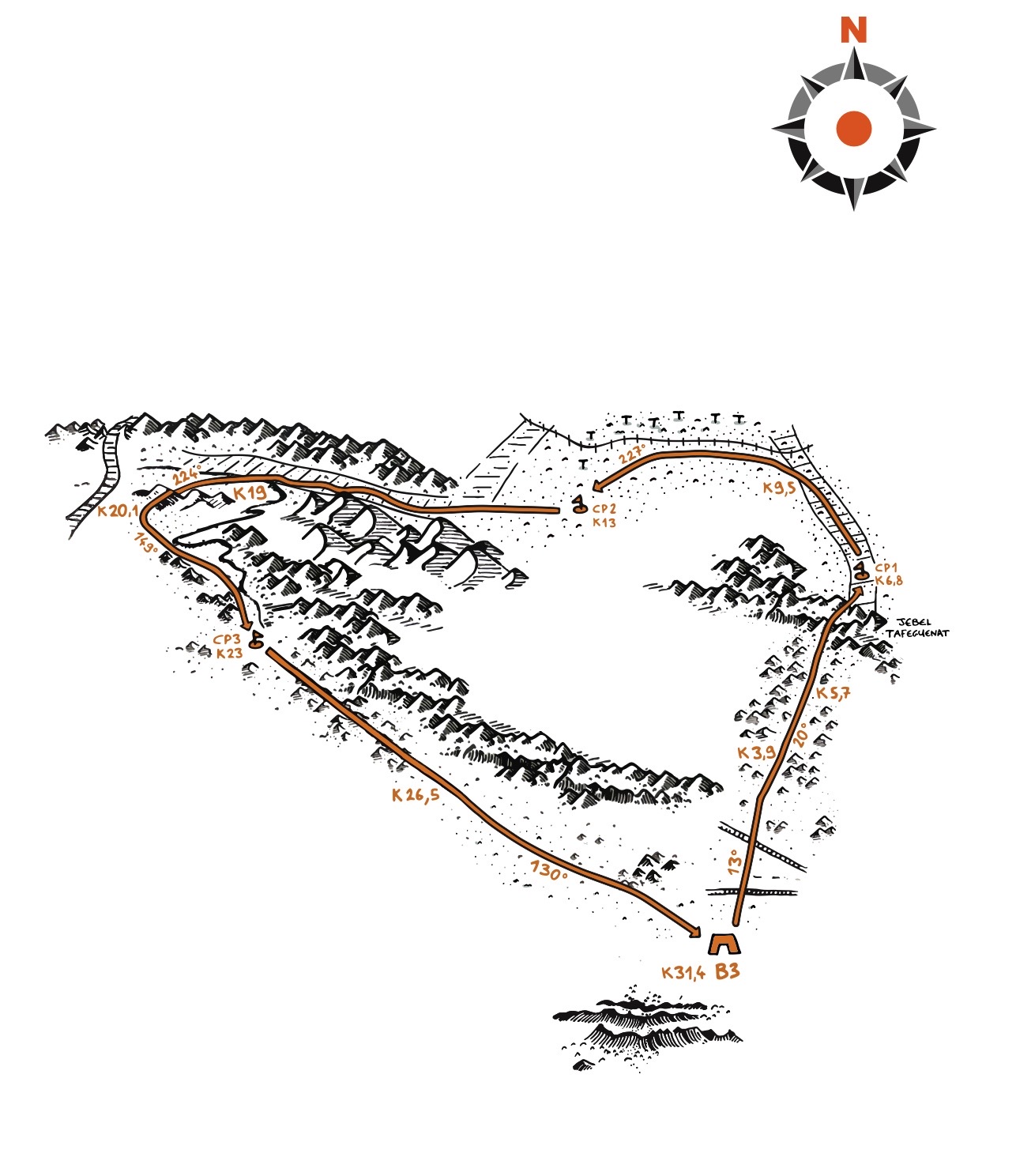
April 19 – STAGE 5 – Departure 0700 31.4km and 252m+
April 20 – STAGE 6 – Departure 0630 and then transfer back to Ouarzazate 21.1km and 160m+
April 21 – Ouarzazate
April 22 – Home travel
THE ROUTE
Unlike previous editions of MDS, the 2024 route will concentrate on one key area of the Sahara. It makes sense, it is the most beautiful. Therefore the race will not be a point-to-point but a series of journeys and participants will stay in the same bivouac on multiple occasions.
Importantly, Jebel El Otfal, Jebel Joha Baba Ali and the oasis of El Maharch will feature on the ‘long day’ however, there will be no Merzouga dunes during the race.
In summary:
Stage 1 B1 to B1 31.1km and 282m+
Stage 2 B1 to B2 40.8km and 550m+
Stage 3 Is an elaborate series of tracks, B2 back to B2 85.3km and 1154m+
Stage 4 B2 to B3 43.1km and 390m+
Stage 5 B3 to B3 a looped route that makes a heart shape 31.4km and 252m+
Stage 6 B3 to finish 21.1km and 160m+
ONES TO WATCH
MEN
MOHAMED EL MORABITY
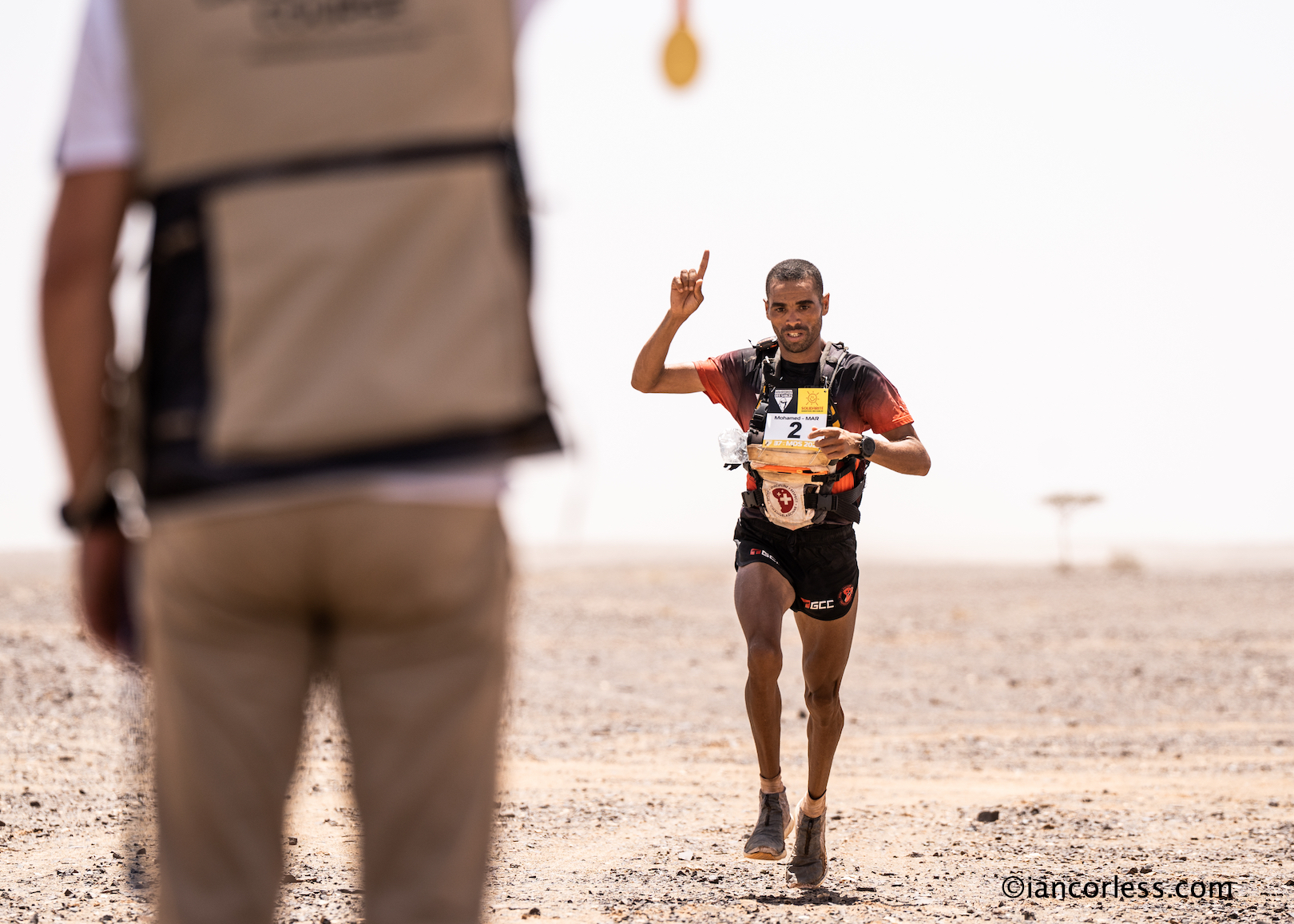
As in any MDS, there are the front contenders who will do battle for overall honours, in the men’s category, three obvious names are stand out: Mohamed El Morabity, Rachid El Morabity and Aziz Yachou. All eyes will be on Rachid, he is looking for a 10th MDS title and after the disaster in 2023 when he received a 2-hour time penalty, Rachid will be looking to make amends and make history. Mohamed, Rachids brother took the reigns in 2023 and won, but will this be allowed in 2024? Aziz Yachou gets stronger and stronger every year, he has a battle against the brothers though.
Petter Restrop, Yoann Stuck, Roberto Mastrotto, James Miller, Alessio Zambon, Ahmed Ouikhalfen, Stéphane Ricard,Mérile Robert, Hamid Yachou, Anthony Ginter, Romain Laguigner Abdelhadi Elmoustahli are also ranked as the top contenders, as always, there will be surprises.
WOMEN
AZIZA RAJI
Aziza Raji and Aziza El Amrany fly the Moroccan flag and are of course, top contenders for the podium. The UK’s Gemma Game is returning, she has placed 3rd twice in 2018 and 2019 – is this the year?
Lai King Chan, Adriana Moser, Saskia Plaucheur, Marie Houdusse, Amélie Ginter, Ninette Banoun, Magdalena Kalus, Alexandra Bailly, Annę Godefroy, Nina Stein and Katherine Beckingham are all in with a shout of top-10 and maybe the podium.
STORIES
AMY PALMIERO WINTERS
The MDS is always a place for stories, challenges, inspiration and adventure and the 38th edition will be no different. Often, these stories unfold as the race happens.
Mr MDS, Christian Ginter is back for his 36th edition, yes, his 36th! Rory Coleman from the UK return for his 16th and in and amongst these two highlight names, we will have new stories to follow and inspire us.
INTERESTING FACTS
In an effort to reduce the environmental impact of such a huge race, the MDS has taken some key measures.
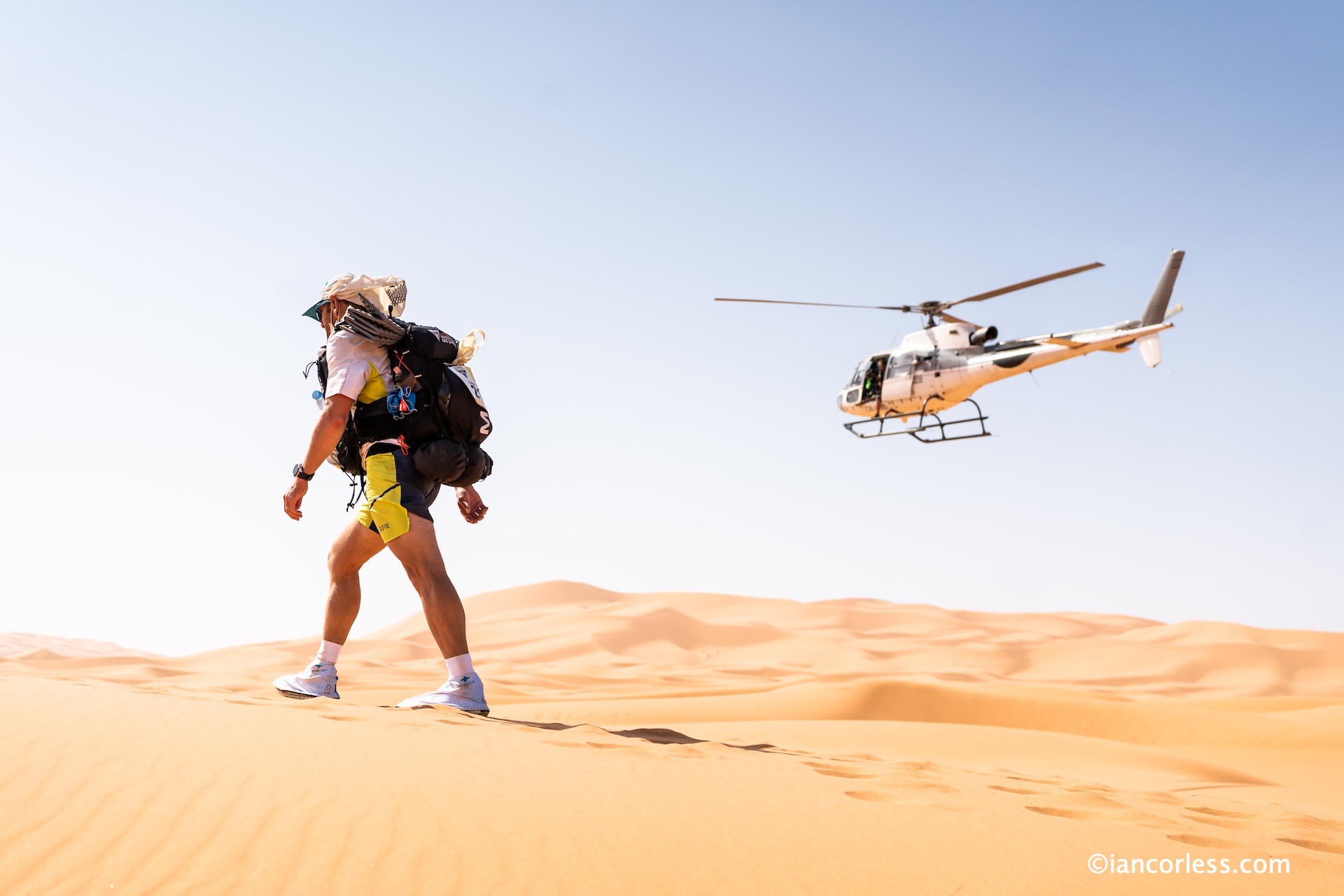
In 2023 50 lorries were used, for 2024 this will be 20. In 2023 157 4×4 vehicles have been reduced to 78. A helicopter as per usual will be available for emergency use only. This equates to a 47% reduction I carbon emissions.
In addition, chartered flights were reduced to just 3 planes with an encouragement for participants to choose commercial options.
The use of local services has been increased using local staff, vehicles, trophies made in Morocco, and the catering team for staff will be all Moroccan with 100% of produce local and a reduction in chicken and beef.
In addition, checkpoints will have solar power and all communication relays utilise solar too.
Waste management has been improved and a key move has been to eradicate 1.5ltr bottles and replace with 5ltr.
Safety has always been a key concern and for 2024 there is an increase in medical staff, 65 up from 56, there 9 SSV rapid response vehicles, up from 4 in 2023. There will be 9 4×4 vehicles and new for 2024, 3 MTB riders and 9 runner’s who will participate on the race route offering immediate medical response. A medical point will be in the centre of bivouac so that immediate attention can be given if required.
ADVENTURE AWAITS
The 38th edition is now waiting to unfold. It’s a new era for the race. Let the adventure begin, MDS The Legendary makes history.
You can receive daily updates and reports on this website. Follow on IG @iancorlessphotography and @mdslegendary
Episode 246 of Talk Ultra is with Nicki Marsh as we countdown to Marathon des Sables – The Legendary. With a 50th birthday looming in 2024 Nicki had been toying with lots of ideas of how to celebrate… The only thing that truly excited me (and could fit around work!) was MDS. Her husband had done it in 2017 and said never again. However, it took him all of 30 seconds to agree to do it again, with Nicki!
“I have degenerative disc disease and osteoarthritis, 4 foot surgeries on and another one on the cards I am determined to keep moving. My goal for the race when we entered was to get to the start line, then do the best I can to finish, the plan was to walk. I believe setting the right goals helps you develop the right mindset and avoid disappointment.”
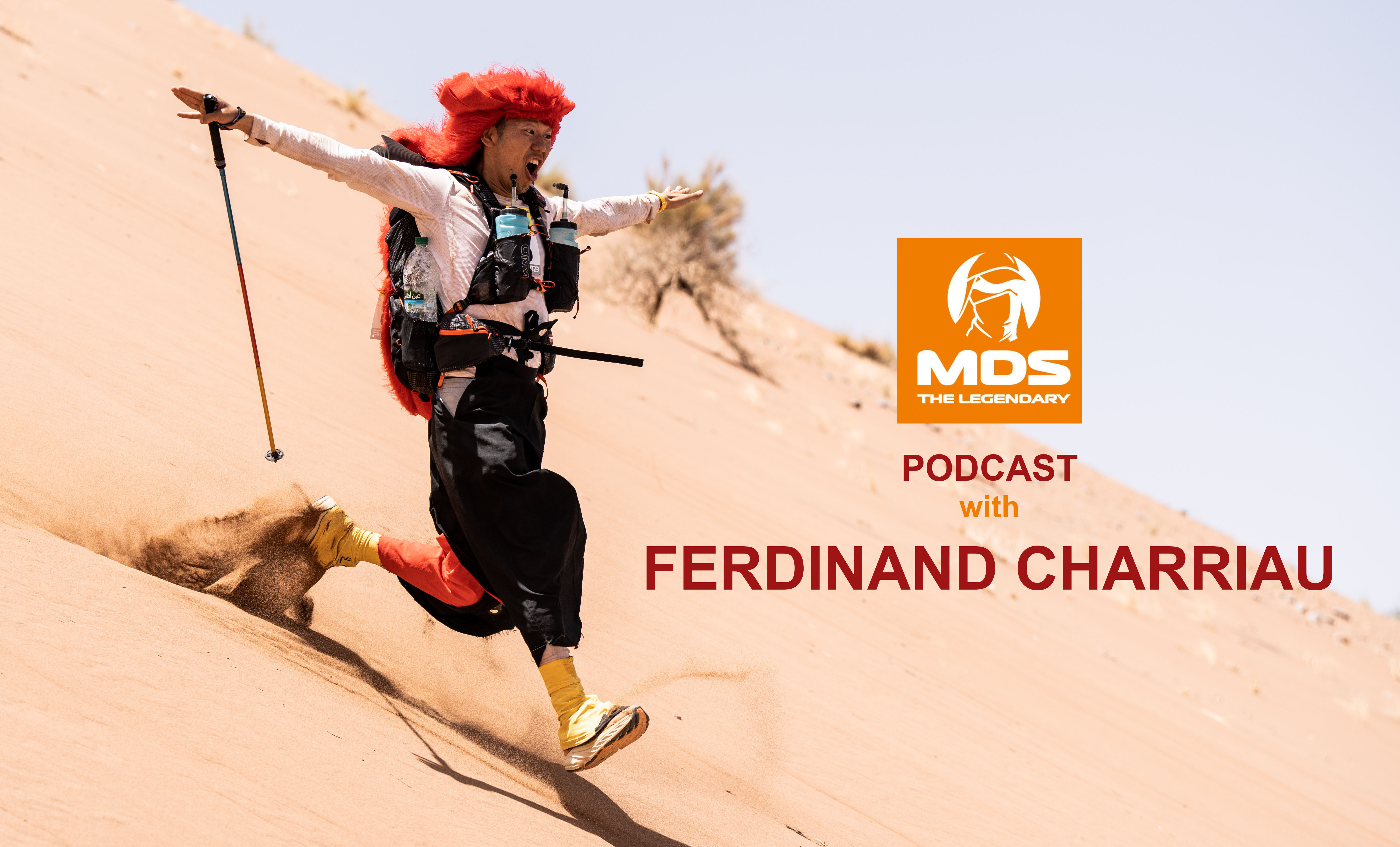
Episode 245 of Talk Ultra is with Ferdinand Charriau, head of communications for Marathon des Sable – The Legendary. In this podcast we discuss the final details as the 2024 edition is just weeks away.
The stock cubes provide a better and less aggressive provision of salt.
Water rations will not be as strict as in previous years, for example, at a CP, if you have 2 x 750ml bottles and a 500ml soft-flask, you can fill all three.
A 1.5ltr bottle will be issued at CP1 on the ‘long day’ so that it is possible to have a 3ltr capacity for the ‘long day!’
CP distances will be as usual 10 to 13km apart. HOWEVER, there will be intermediate water stations now, say at 6km +/- so you can access additional water.
There will be cold water at CP’s (not to drink) but the medical team will pour cold water to cool body temperature.
Stage starts will be between 0600 and 0730 depending on the stage and the length. For example, the ‘long-day’ will start at 0600. Most days will start around 0700 to 0730.
Email in printed format will not be provided. There will also be no email tent. However, there will be IP phones available for emergency use only. MDS ideally do not want you to use them, but, the option is there.
Mobile phones are allowed BUT you must not use them in bivouac – You must leave the camp in communicate in an isolated place. However, the MDS recommend being disconnected – be with yourself, and your tent mates.
Foot care will be as good if not better than before.
There will be fast response vehicles too – extra security en-route
There will also be medical runners – They will wear an orange bib and they will run the route for immediate response on the course.
There will be live tracking – access via the MDS website so people at home can follow.
Fuel blocks – If you have problems taking fuel. Fuel will be available in B1 and there will be enough for well over 200 people.
There will be a MDS shop in B1 selling all the mandatory kit – just in case!
Make sure you travel wearing your run apparel and carry you pack.
Meeting point is Ouarzazate airport on Friday 12th from 0800.
Be patient on arrival for passport control.
Bus transfer to B1 is approximately 6-hours. You will be given the road book. Also a lunch pack will be provided.
At B1 you will be provided a 5Ltr bottle of water, there will be a welcome briefing and then self-sufficiency starts.
There will be NO hot water provision in camp. If you want hot water, you provide it yourself.
Admin day will have a significant change and will be done via tents and not numbers as in the past, this will mean less wait time and more opportunity to sit in the shade.
Make sure you have original medical documents for admin day.
It’s important to have the minimum 2000 calories per day, but at admin, the team will not be very strict. Take personal responsibility. Have your food in bags for each day and then state the total calories in each bag.
There will be a medical emergency tent in the middle of bivouac. There will be more staff in the runner’s bivouac.
If there are any questions – email, contact on social media or call. The MDS team are available for you.
Wednesday 27th there will be an English and French broadcast.
There will be some new surprises, to be revealed in bivouac!
Episode 3 of the Marathon des Sables – The Legendary podcast is with Alexander Welch.
Alexander toed the line of the 2021 MDS but things did not go to plan… It was the year of excessive heat and Norovirus in bivouac. A year when 50% did not finish the race. However, the DNF for Alex raised some demons.
“I participated in the 2021 October edition of MDS and was medically removed at checkpoint 2 on day 3. Being only 25 years old at the time, and having never failed at anything prior, this was a massive mental blow for me.”
Falling into a downward spiral. Alexander’s life tumbled; as a coping mechanism, he turned to excessive drinking and substance abuse, this impacted on work, relationships and his own mental health.
“This went on until about November 2023 where I reached out for help of my former tent mates (4 of which are also returning in April 2024). I managed , with their support, to pull myself out of the degenerative cycle that had encapsulated my life for almost 12 months. This culminated in signing up for the MDS 2024.”
When I reached out for MDS stories, I knew I would find some remarkable people and MC is most definitely remarkable.
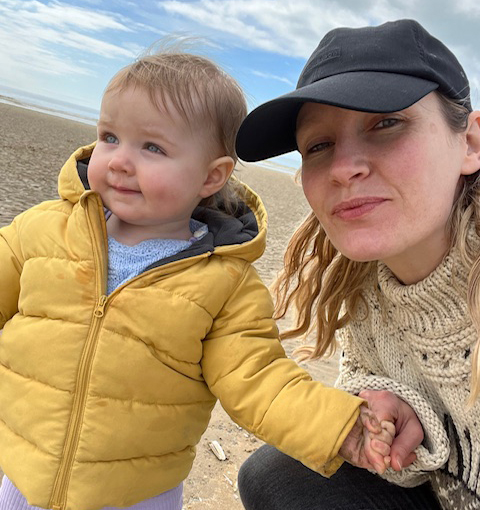
“I am MC, a 37-year old mum of two. I’m a terrible runner and not an athlete. I have never done a half-marathon until late 2023. But I am doing MDS in April.”
It was one of those introductions that had me asking, why?
“In 2015 my mum suffered a very sudden and horrific illness which left her paralysed from the neck down and reliant on a ventilator to breathe. My mum is locked in her body and has little outdoor space, so, I am doing MDS to raise funds for the Royal Hospital for Neuro-disability”
“I am running to raise money to build a new and safe garden, where residents can sit independently and share time with their families. You don’t need me to tell you that being outdoors, surrounded by nature is so incredibly important to our mental health. This new garden will change lives (my mum’s, her fellow residents’ and all the families’) and take a huge pressure off the staff who so lovingly dedicate their lives to caring for others.”
Now is the time to make all the final preparations for a goal that you have been building towards for 6-months, 1-year or maybe even years.
DON’T PANIC.
If you have got this far, you are in a great place.
There is time for one last key week of training, adding the final touches to make sure you are in the best shape possible, BUT, after this week you need to start easing things back, looking after yourself and allowing your body to recover, rest and get ready for what may be one of the biggest weeks of your life?
MEDICAL
Make sure you have all the medical requirements fulfilled and an up to date ECG as specified in MDS rules and regulations.
The organization’s medical certificate (to download from your online account from March 11th 2024) and the resting electrocardiogram (ECG) report plus graph, dated less than 30 days before the start of the race, i.e. from March 12th 2024, are to be presented during the administrative, technical and medical checks on 13th of April 2024. Only the original documents, dated and signed, will be accepted (unvalid photocopy). Failure to present these documents will incur penalties (see ART.27 et 28). The signature and the stamp of the doctor must be applied on them.
The electrocardiogram of effort is advised for participants over 40 years. It is not compulsory and does not replace the ECG at rest and its plan. This can be joined to the medical certificate and presented in Morocco.
TRAINING
From a training perspective, what may the next weeks looks like? Well, we are all individuals, we all have different abilities, we all have different goals, we all have different free time and the list could go on. However, I have found over the years that using a ‘percentage’ taper works across the board, irrespective of the person.
Race date: 14th April 2024
Taper schedule:
Week 4: 17th March
Week 3: 24th March
Week 2: 31st March
Week 1: 7th April
If we look at the weeks above, a taper to Marathon des Sables could look like as follows:
Week 4: 80%
Week 3: 60%
Week 2: 40%
Week 1: 20%
The percentages are based as a percentage of what would be week 5, starting 10th March. For simplicity, let’s assume that week 5 is your last big training week and it was 100km or 12-hours.
The Taper:
Week 4: 80km or 9.6 hours
Week 3: 60km or 7.2 hours
Week 2: 40km or 4.8 hours
Week 1: 20km or 2.4 hours
Importantly, keep the balance of training days the same. If you typically run 5-days a week, maintain those 5-days and reduce the volume/ intensity.
Your body needs to keep alert and active. So make sure you add some stimulus in this taper period, short periods of faster running and/ or hill work are ideal. However, do all this with the priority not to get injured. Now is not the time to get a niggle, a sprain or a problem.
ACCLIMATE
In the final two weeks of taper you need to hone in on acclimation to heat and prepare the body.
Don’t leave this to the last minute, plan ahead, especially if using a heat chamber. Heat chambers are limited and obviously, time slots are limited.
If you do not have access to a heat chamber think of other options: sauna, hot baths, bikram yoga, adding layers when running, or if you are lucky with time, arrive in Morocco early and taper in a real situation.
EQUIPMENT
You will have been mulling over equipment for months and you may well have tweaked and changed your choices. Now, with 4-weeks to go, this is the time to make sure you have everything you need and also understand what it all weighs.
Clothes must be comfortable and not rub.
Shoes fit perfectly, give no hot spots and are suitable for the desert environment and have gaiters.
Socks work for you.
Sleeping bag is light and warm.
Sleeping mat
Food
Mandatory kit
Top Tip –
Use LighterpackHERE to list all your equipment. You can see an example HERE that I used for a trip climbing in the Atlas Mountains. This is a great way to look at everything and make sure you have nothing missing.
Keep luxuries to an absolute minimum, they only add weight.
Pack and re-pack your pack to make sure you have the most comfortable solution and importantly, you have immediate access to essential items.
Read my Top 20 Tips HERE which provides a great overview of all the things you need to consider now in this final phase.
FOOD
You need a minimum of 2000 calories per day. Lay food out for each day and have a spreadsheet that itemises everything and shows the weight and calories.
Where possible, re-package food in smaller and lighter packaging. Particularly important with dehydrated meals. Read HERE
TRAVEL
Travel in your run clothing including your run shoes with the gaiters. Yes, you are going to look somewhat ‘special’ at the airport but trust me, luggage goes missing and you do not want to be the person standing in the Sahara watching your dream slip away because of lost luggage. Equally, take your run pack with all contents for the race as carry-on. You can take pretty much take everything: food, sleeping bag, essentials etc. However, check with your airline what can and cannot go on the plane.
Put your main luggage in the hold and here you can take spares, extras and options. MDS varies considerably in temperature, we get hot and cold years. Never assume it will be hot, it may not be. Before admin day you can fine tune your ‘race kit’ with more or less layers.
Purchase food and drinks at the airport to take on the plane. Also consider when you land in Morocco, you will have an approximate 6-hour bus journey to bivouac 1, take food and drink with you for this trip.
Have cash with you, depending on which airline you use, card payments are not always possible, also, in Morocco, cash is king.
ARRIVAL
You will arrive in Morocco from London or Paris on one of the arranged flights on Friday 12th April. If you are not on one of these flights, you need to be at Ouarzazate airport (typically for 0900) on the same day.
Runners will then fill buses, road books will be given and then you transfer to the desert. Expect 6-hours.
At bivouac you will find your tent and settle in.
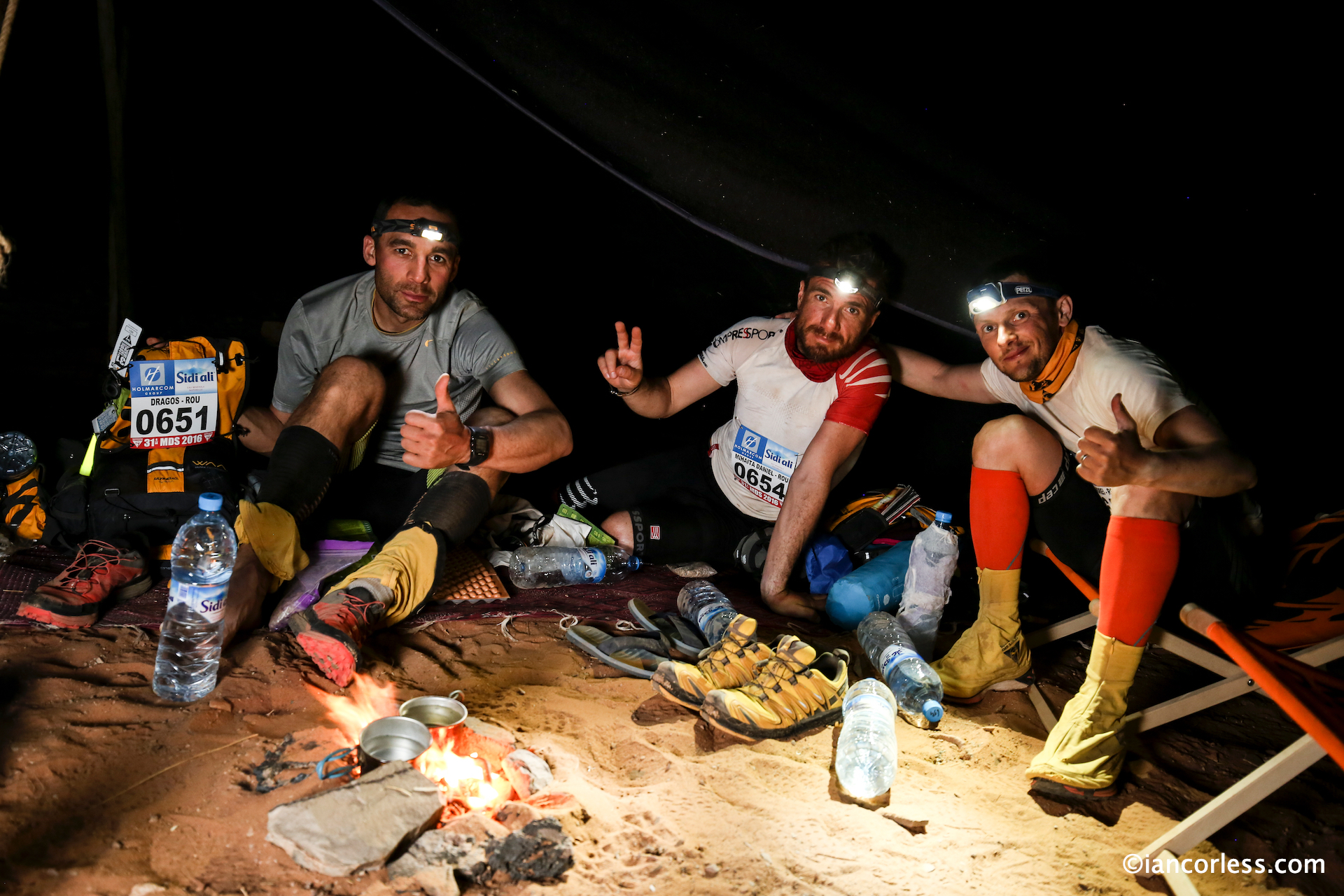
REMEMBER food is now NOT provided and you therefore need to feed yourself on arrival day and admin day. There are no restrictions on weight or calories here, so, take as much as you want and plenty of variety, this includes drinks. Only water will be in camp.
As mentioned above, until admin, you have your luggage with you, so, you can have more layers, a more comfortable inflatable bed and some luxuries – consider what will make these days more pleasurable and comfortable.
ADMIN DAY
On admin day, prepare all your kit and make sure you have everything prepared and ready. Also make sure you have all mandatory and essential kit. Once you have passed through admin, your luggage is taken away and you will not see it again until after the race.
Race self-sufficiency actually only starts the following day with stage 1.
Admin can take a while, so make sure you take liquid and snacks and my top-tip is take an umbrella to protect from standing in the direct heat.
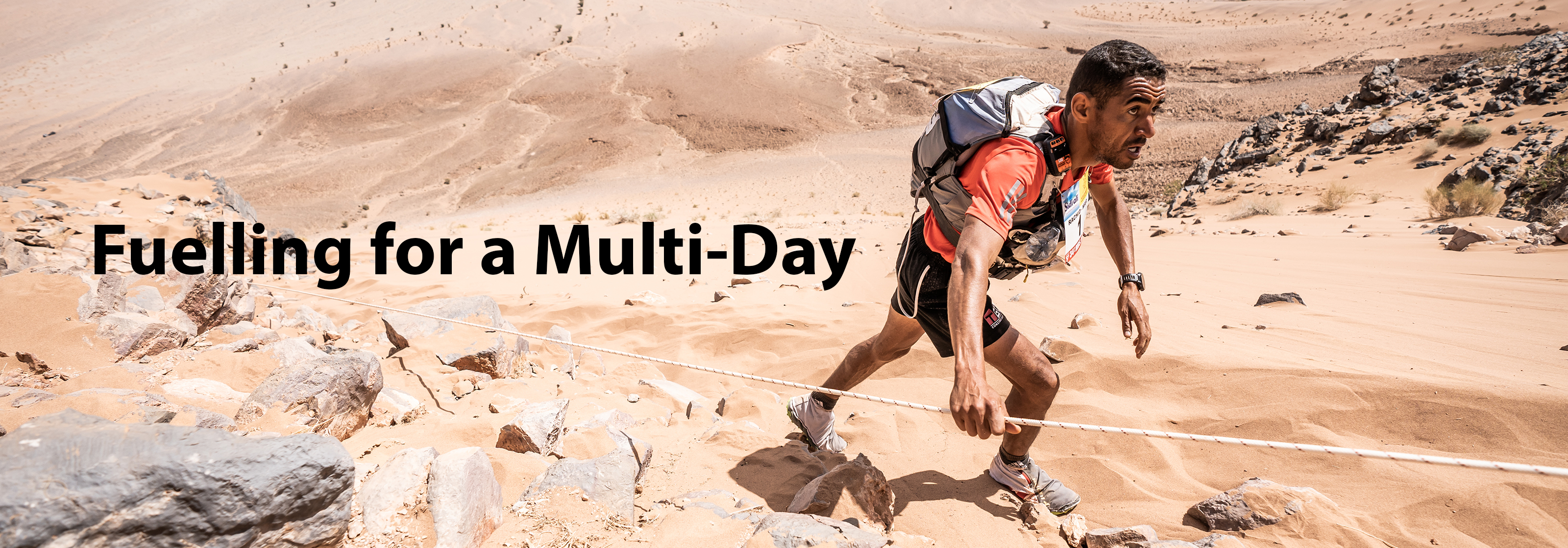
Fuelling for a Multi-Day – Marathon des Sables – The Legendary
Marathon des Sables pioneered the multi-day racing format and as such is often a key starting point when discussing a fuelling strategy for an adventure that lasts a week or longer.
Multi-day adventures require fuelling and how one obtains food can vary greatly. In principle, there are several keyways:
Self-sufficient
Semi-supported
Supported
For many, self-sufficiency poses the greater question marks and worries as there are multiple factors to consider:
How many days?
Weight?
Balance of nutrients and calories?
Hot or cold food (or both)?
Access to water?
Environment?
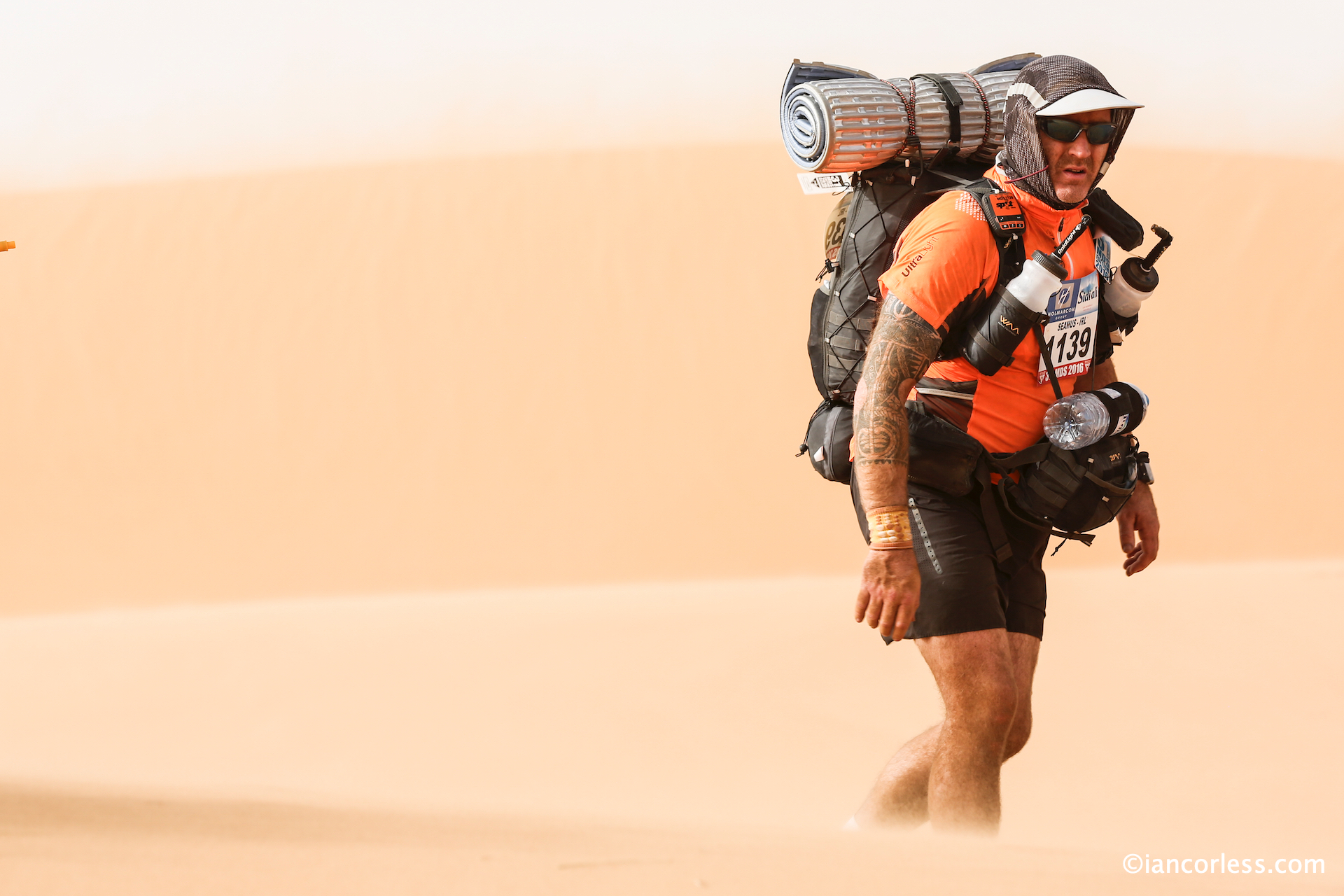
Loaded up for a week in the Sahara.
Runners are required to carry all they need to survive in a multi-day like MDS. Fuelling is essential to survive and the balance of calories v weight is a prime concern. The only things that are provided are a shelter (bivouac) which is shared with 7 other runners and water which is rationed. Since its creation in the mid 80’s, the MDS format has been copied and used as a template for other races all over the world.
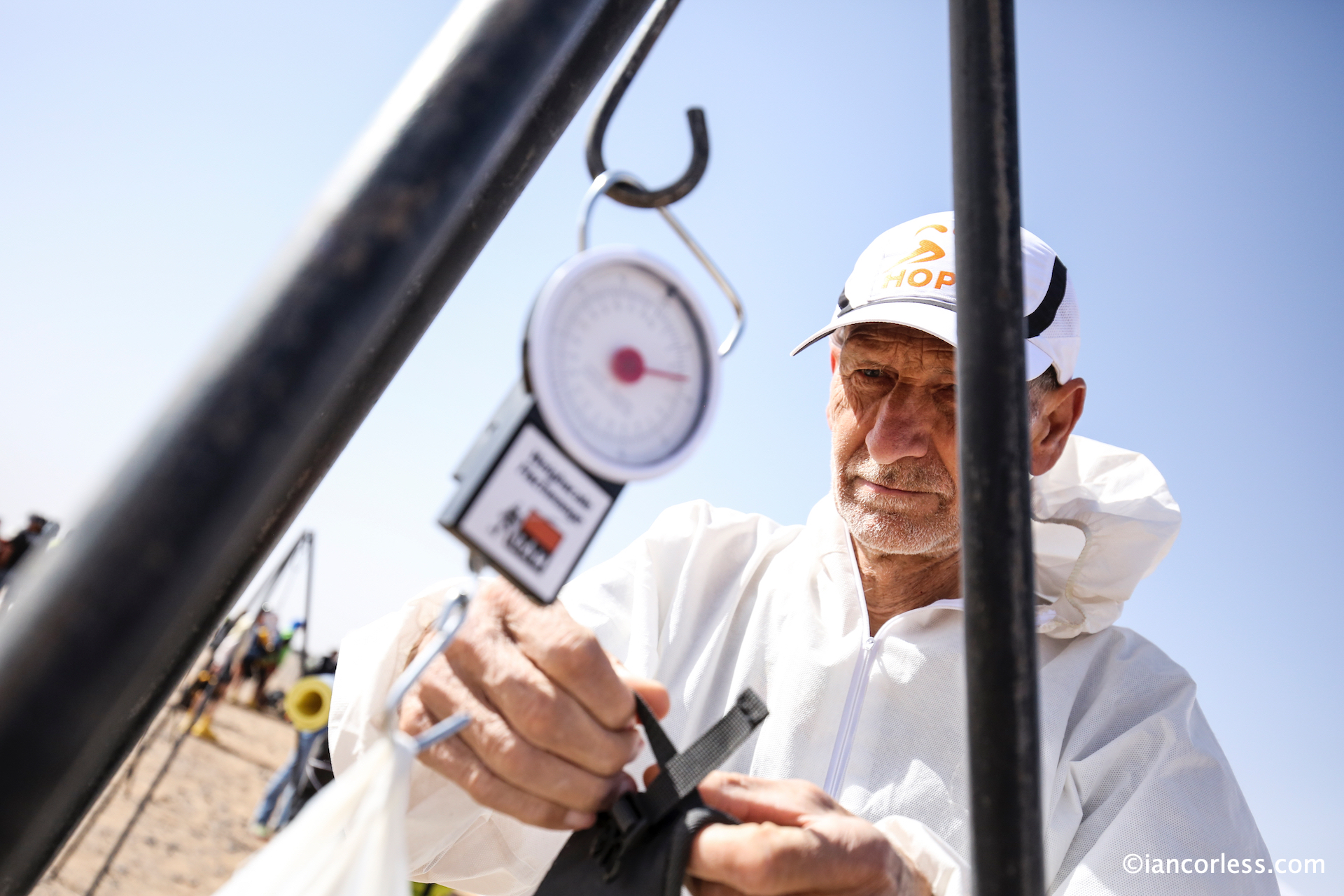
Get your pack as close to 6.5kg (plus water) as possible.
Weight is the enemy of a multi-day runner or fastpacker and therefore balancing equipment, food and water is an art form in itself. Read an article HERE about the equipment required for a race like MDS.
Food will take up most of the weight on any adventure when being self-sufficient. MDS, for example, has a minimum food requirement of 2000 calories per day, a minimum pack weight of 6.5kg and then one must add water, typically a minimum 1.5 litres (1.5kg) which makes the starting pack weight a minimum 8kg.
Food for multiple days will typically be around 4 to 5kg.
*****
Quite simply, running or walking, covering 250km over 7-days will leave the runner in a calorie deficit. Therefore, it is essential to optimise the food one takes.
FACTORS TO CONSIDER
How fast one goes does greatly impact on food choice and how calories are not only consumed but chosen. The macronutrient choices will change based on the balance of carbohydrate, protein and fat. In simple terms, a runner will burn more carbohydrates and a walker will burn more fat. Humans store enough fat to survive many days and even weeks. However, carbohydrate stores deplete quickly and need to be replenished.
Body weight, age, individual needs are important for all and males may well require more calories than a woman due size and muscle mass.
Main meals will usually come either freeze dried or dehydrated. Both processes involve removing the water from food to preserve it. Freeze-drying involves freezing the food to a very low temperature and drying it in a vacuum to remove moisture. Dehydration involves passing warm air over the surface of the food to remove moisture. Dehydration creates food that tastes like it should, with plenty of texture and flavour. It is an altogether slower and gentler process than freeze-drying. Please note though, that hydration times take considerably longer with cold water and taste can change. Test meals in advance using hot or cold water.
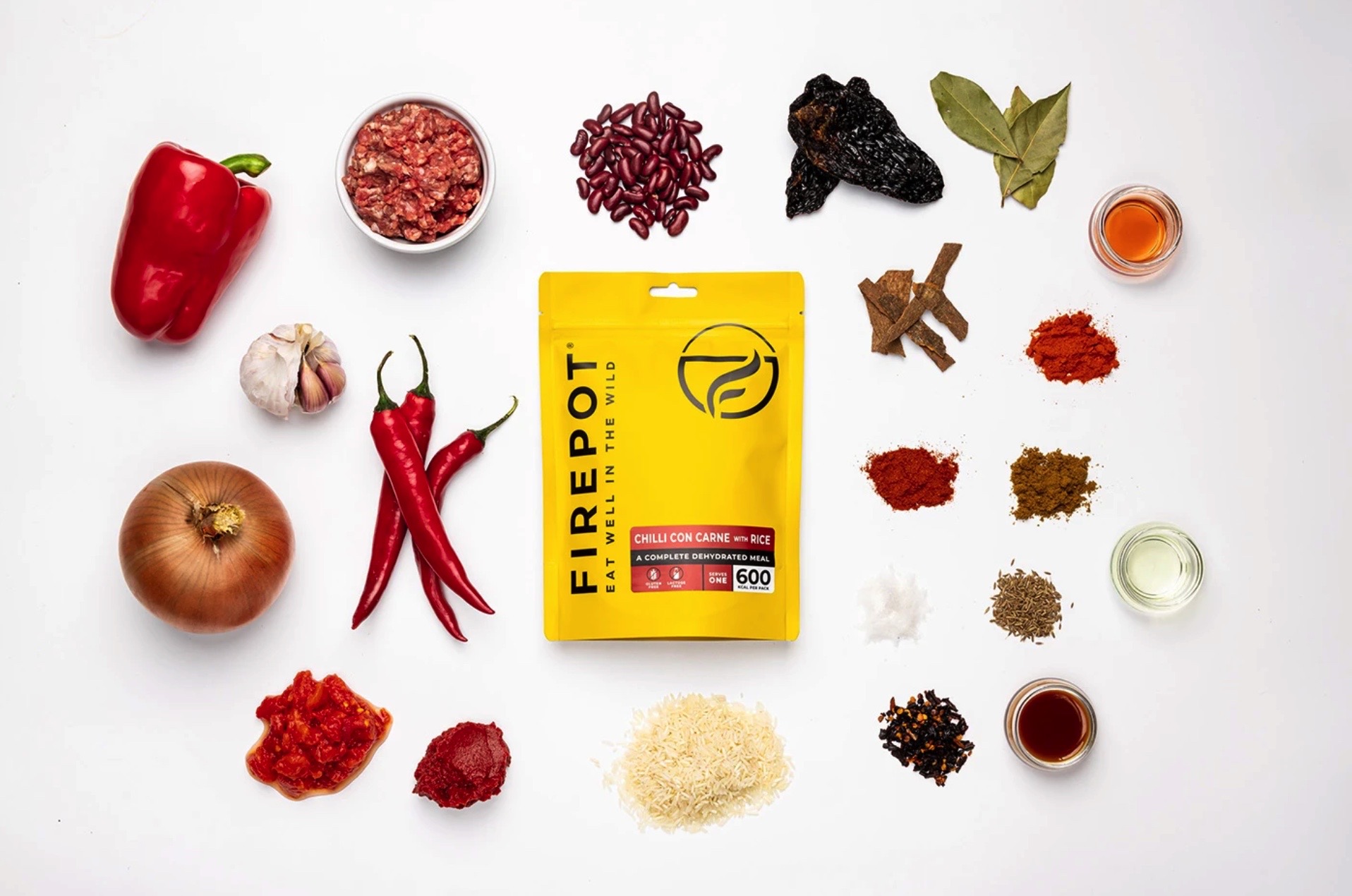
Firepot are a UK brand who create tasty meal by hand, using fresh ingredients and then dry each meal.
Carbohydrate, Fat and Protein are essential for balance and foods for an expedition are usually balanced specifically for the needs of an active individual. Typically, 55% carbs, 30% fats and 15% protein are considered balanced. As an indicator in regard to calories, carbohydrates have 4 calories for 1 gram, fat has 9 calories for 1 gram and protein 4 calories for 1 gram.
Remember, we are all individual and although any recommendations here provide a guide and a template, you the individual need to answer very specific questions and ultimately, you may need to seek the advice of a nutrition expert to fine tune a fuelling plan for a multi-day adventure.
As a rough guide, BMR is the number of calories a person burns in normal day-to-day activity.
Example for a 37-year-old, 6ft tall, 170-pound man.
(66+(6.2 x 170) + (12.7 x 72) – (6.76 x 37) x 1.55 = 2663 calories
How to use the equation: (66+(6.2 x weight) + (12.7 x height) – (6.76 x age) x 1.55 = 2663 calories
The ‘Harris-Benedict‘ formula takes into consideration daily activity.
Fat adapted athletes will have specific requirements and the nutritional plan will be different.
Answer the following questions:
Age?
Male or female?
Body weight?
Walker?
Walk/ runner?
Runner?
Vegetarian/ Vegan?
Am I typically a hungry person?
Am I more hungry or less hungry with exercise?
Food allergies?
Will I use hot water or cold water?
A TYPICAL DAY
Breakfast – Ideally slow-release carbohydrate, some fat and quality protein.
Starting the day with breakfast.
Running Food – This will vary on the length of the stage, up to 6-hours and you may prefer easily absorbed carbohydrates, bars and or energy in drink form. For longer stages, the addition of real food, savoury and some protein would be wise. For a very long day, for example, the long day at MDS, you may even need a meal?
Post run food (immediate) – A shake is a great way to start the recovery period as it is easily absorbed, and this should have carbohydrate and protein.
Dinner – A meal will form the basis for dinner and think about some small treats for each day, these will give you something to look forward to and help keep your palette fresh.
FOOD PLANNING AND IDEAS
Breakfast:
A freeze-dried breakfast is a good way to start the day. Top tip: Add the water to your breakfast at sleep time (especially if using cold water) as it will rehydrate during the night and be ready for eating in the morning. Of course, make sure it can’t be knocked over, get contaminated or damaged – that would be a disaster! Using a re-sealable plastic bag is a good idea. Example: Firepot Baked Apple Porridge is 125g with 500 calories.
Breakfast is essential to fuel the day ahead.
Muesli is popular and provides energy and fibre, it can easily be combined with a freeze-dried dairy product.
An energy bar for some works, but they often are heavy in proportion to the calories provided. However, for some, they are a perfect start to the day.
Top tip: Consider an evening meal as an alternative to breakfast. Sweet tasting food can become boring and sickly, the option to have something savoury with some spice can be a life saver.
During the run:
Runners will need typically more carbohydrate in an easy form so that they can maintain pace. By contrast, walkers will move slower, have more time to eat and easier time digesting, therefore real foods are possible. The balance is always weight v energy. Don’t rely completely on liquids, some solid food and chewing is good for the body and mind.
Some ‘typical’ run snacks.
Example: Gels are around 32g each. Let’s say you took 1 gel per hour. Rachid El Morabity won the 2019 MDS in 18:31. So, 19 gels would weigh 608 grams. By contrast, if the race takes you 60-hours, 60 gels would be 1920g! Not only is the weight not feasible but also the volume size would just not work.
Powders (energy drinks) that one can add to water are an easy way to get calories and nutrients. They are also considerably lighter.
Energy bars.
Beefy jerky.
Dried fruit.
Nuts such as almonds are rich in fat and calories.
Trail mix.
Dried meat.
Post run:
Back in bivouac, first priority is drink and food.
A recovery drink is the quickest way to get balanced calories immediately in the body to start replenishing the body. Have this shake as soon as possible. Then do personal admin such as feet, clothes, bed, etc. One hour post the run, consider a snack like tabbouleh as this is easily hydrated with cold water and add some protein to it – dried meat a good option.
Dinner:
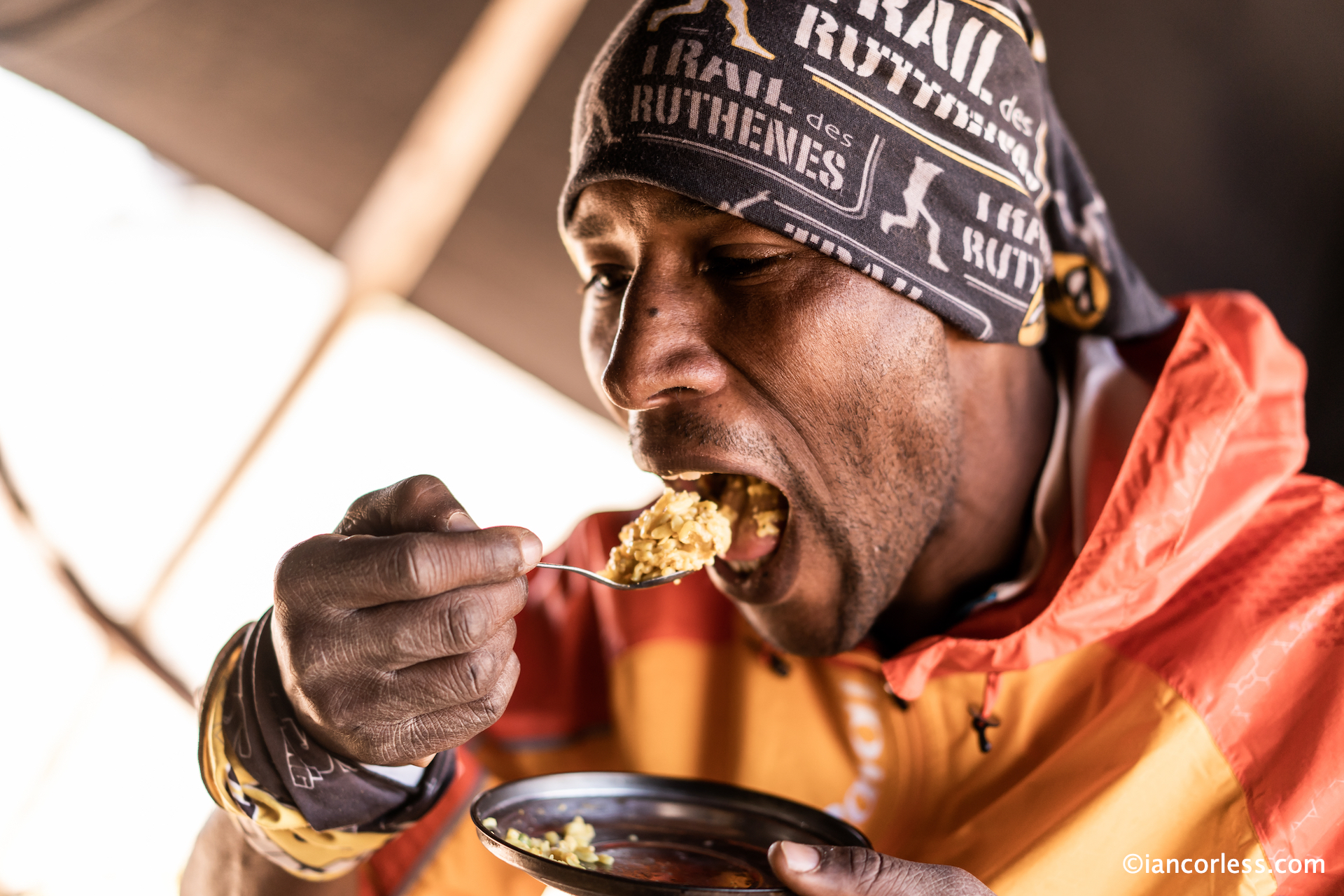
A dehydrated meal will make up the main calories. Depending on the person, the need for more or less calories will vary. Some companies, Firepot a good example, provide meals in two sizes: 135g with 485 calories or 200g with 730 calories for Vegan Chilli Non Carne and Rice.
A post-dinner treat is a good idea, this could be another freeze-dried option or a low-weight and high calorie option. A sweet such as a Lemon Sherbet is a simple way to add some freshness to your mouth and palette and although has little calories, it can be a nice treat.
Top tips:
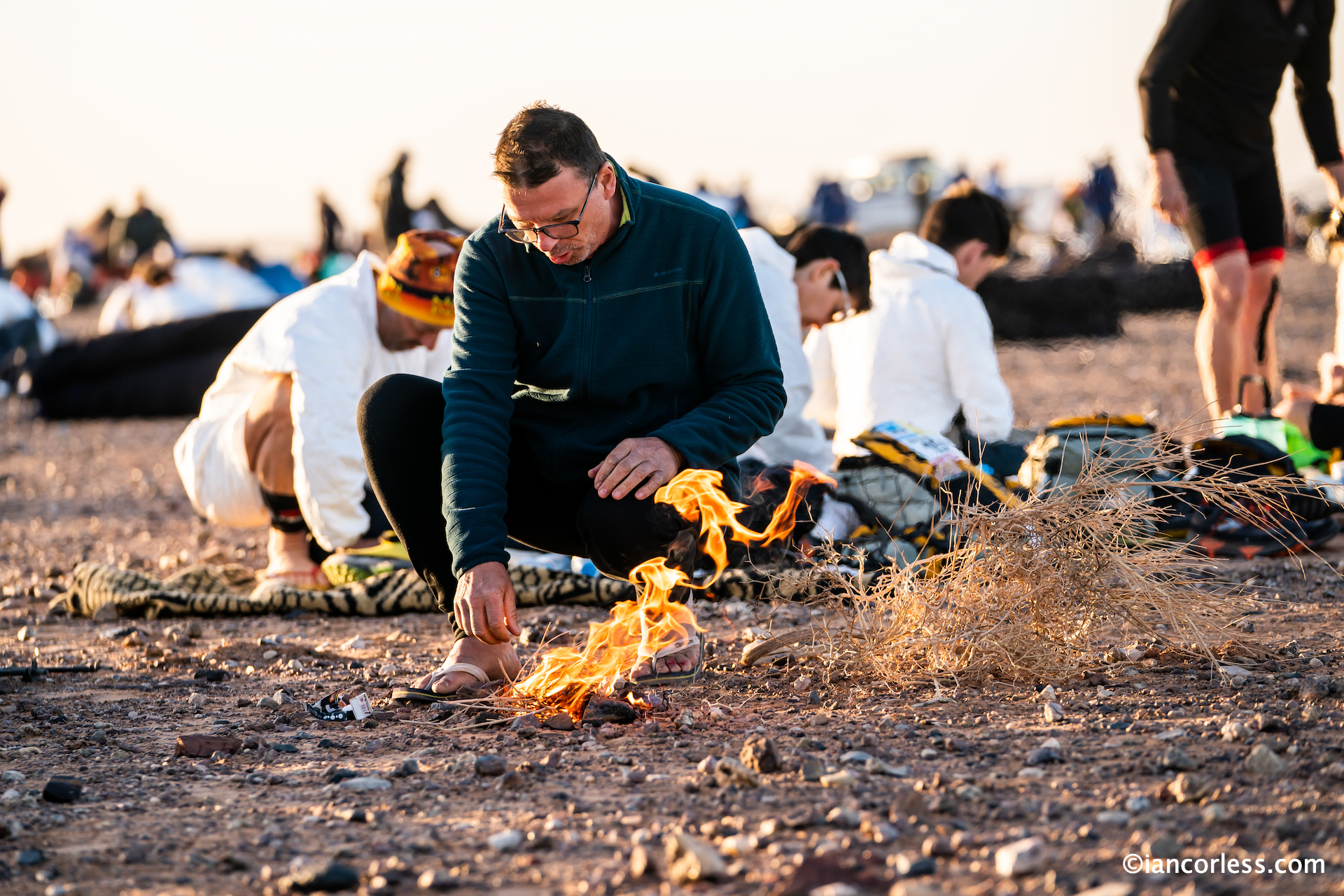
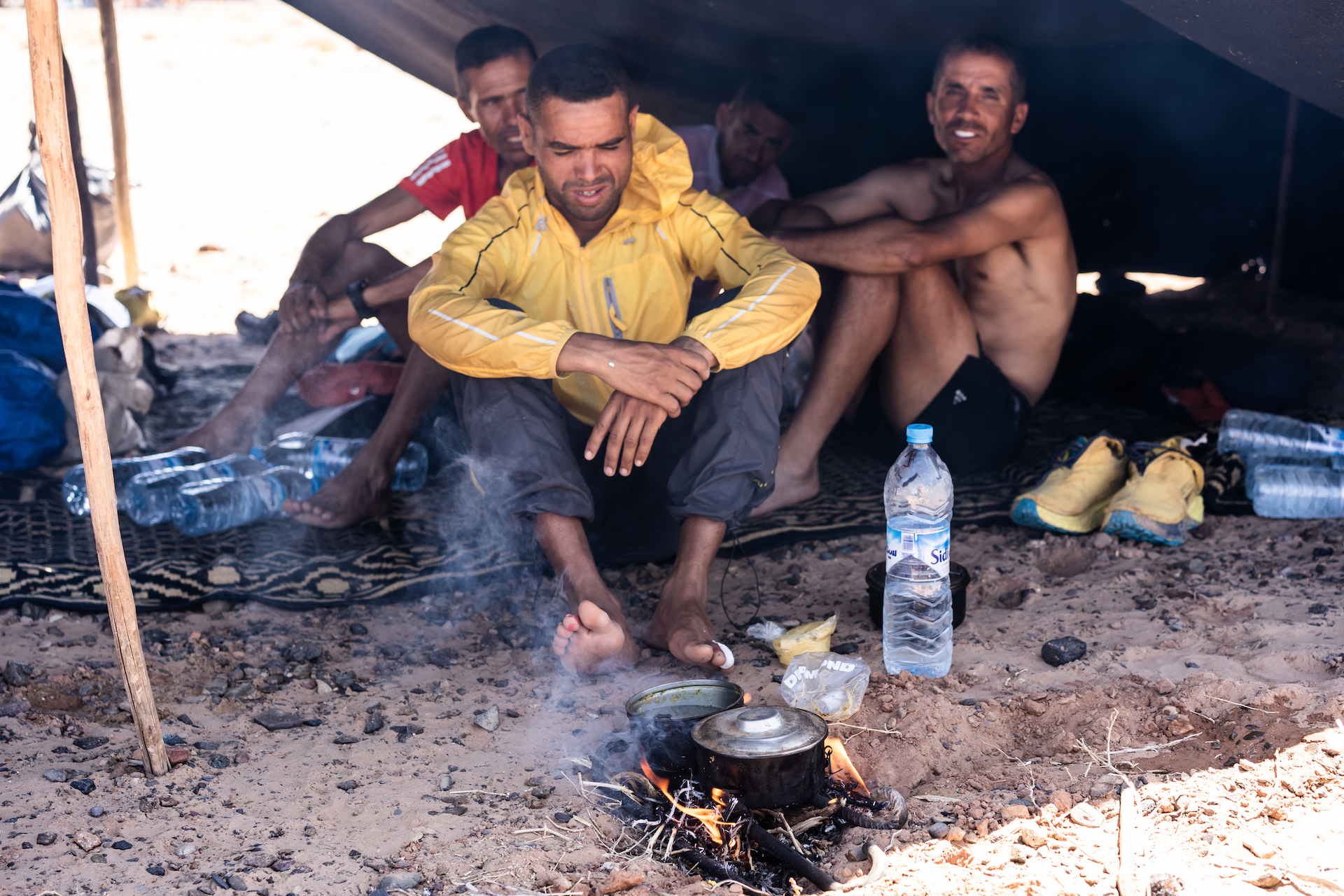
Experienced runners make a real fire to boil water.
Try everything out before any race or event. You need to know what works for you when tired and fatigued. Try to simulate race situations so you have a good understanding of your palette and your body. Test for taste, stomach and brain.
Just because you love Spaghetti Bolognese, don’t be tempted to take 7 for a 7-day race. You and your palette become bored quickly.
Be careful with spices and anything that may irritate or aggravate a digestive system that will already be under stress.
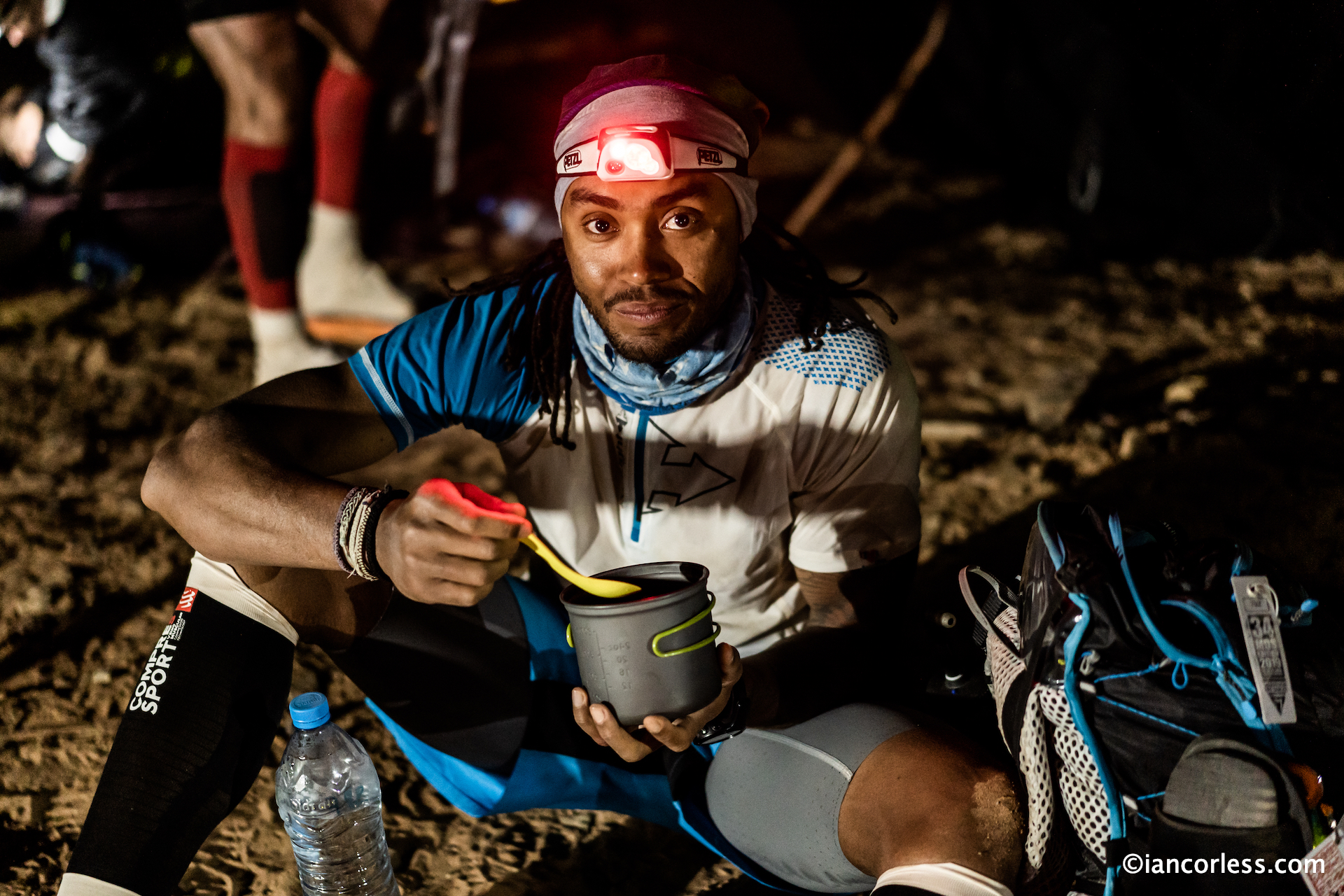
The choice of having hot water can be a deal breaker. For some, a hot coffee or tea is just essential! In addition, food is typically more pleasurable when hot and hydrates quicker with hot water. You cannot use any gas stoves at MDS so you must use fuel tablets and a small stove. However, here are some alternative ideas: 1. If you finish early in the day, leave a bottle in the sun and let it warm naturally. 2. Often, there are lots of shrubs, twigs and branches around bivouac, it is possible to make a fire, but you will still need a pot.
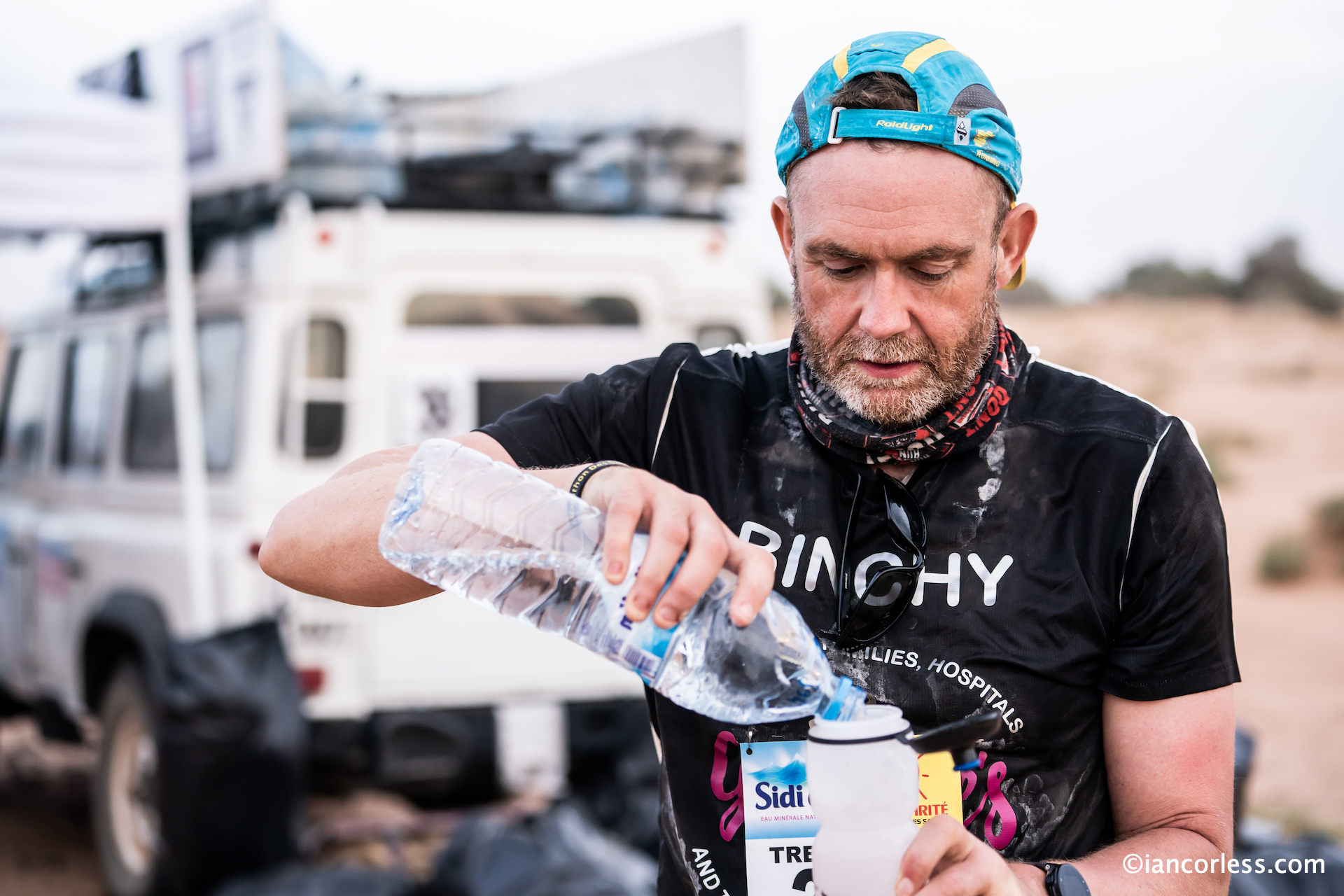
Water at the race is provided in 5Ltr bottle at the end of the stage this needs to last till Cp1 of the following day, so, plan water use.
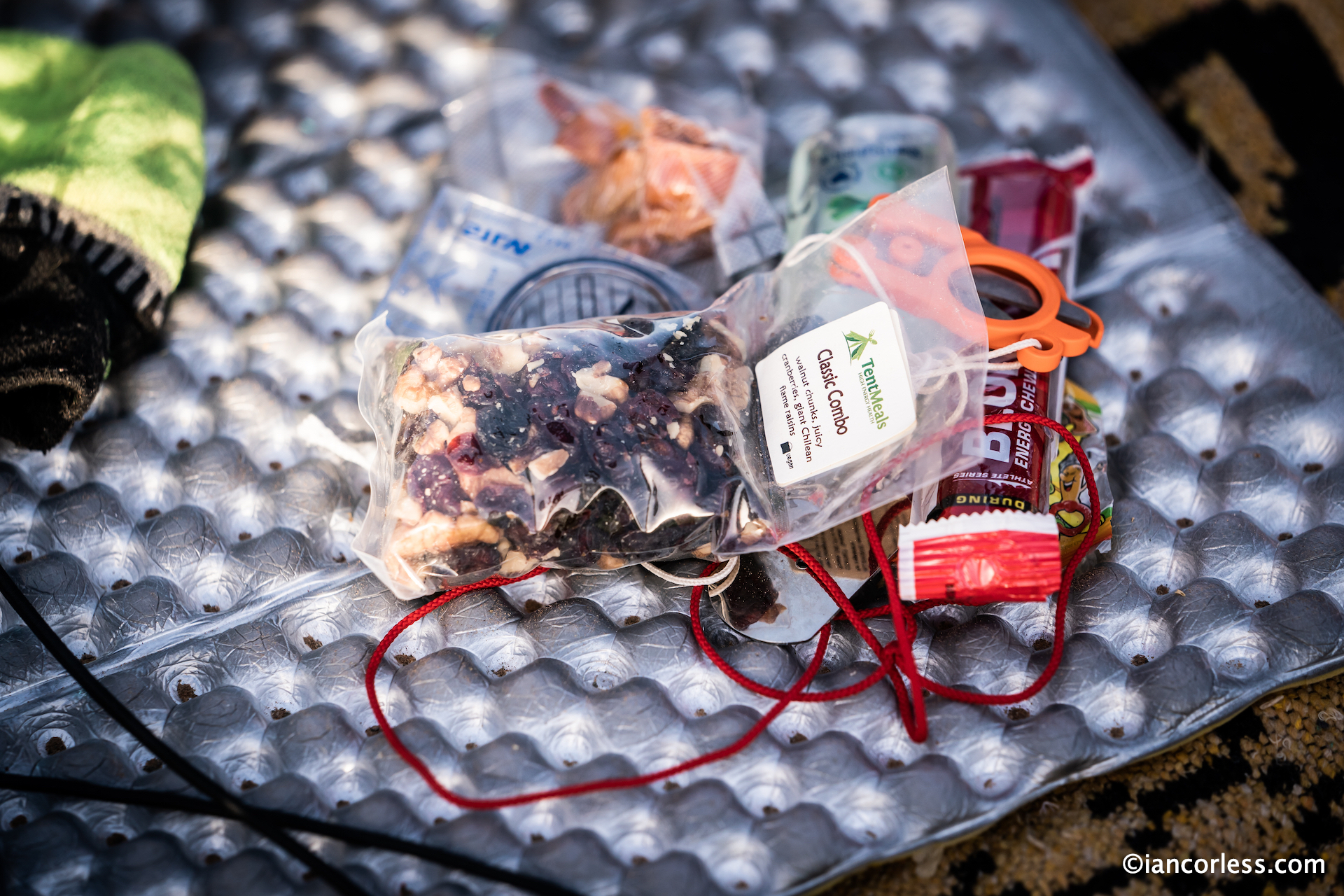
Consider repackaging all your food to make the volume and weight less, if you do this, be sure to include the nutrition label in your new packaging.
Take extra food and options. When in the Sahara, you can make some final food choices.
The ‘Long day’ and following ‘Rest Day’ will require different fuelling strategies, take this into consideration.
Rules – Race rules dictate you have a minimum 2000 calories per day, that you have nutrition labels for the food that you take and that on the morning of the last day that you have 2000 calories remaining.
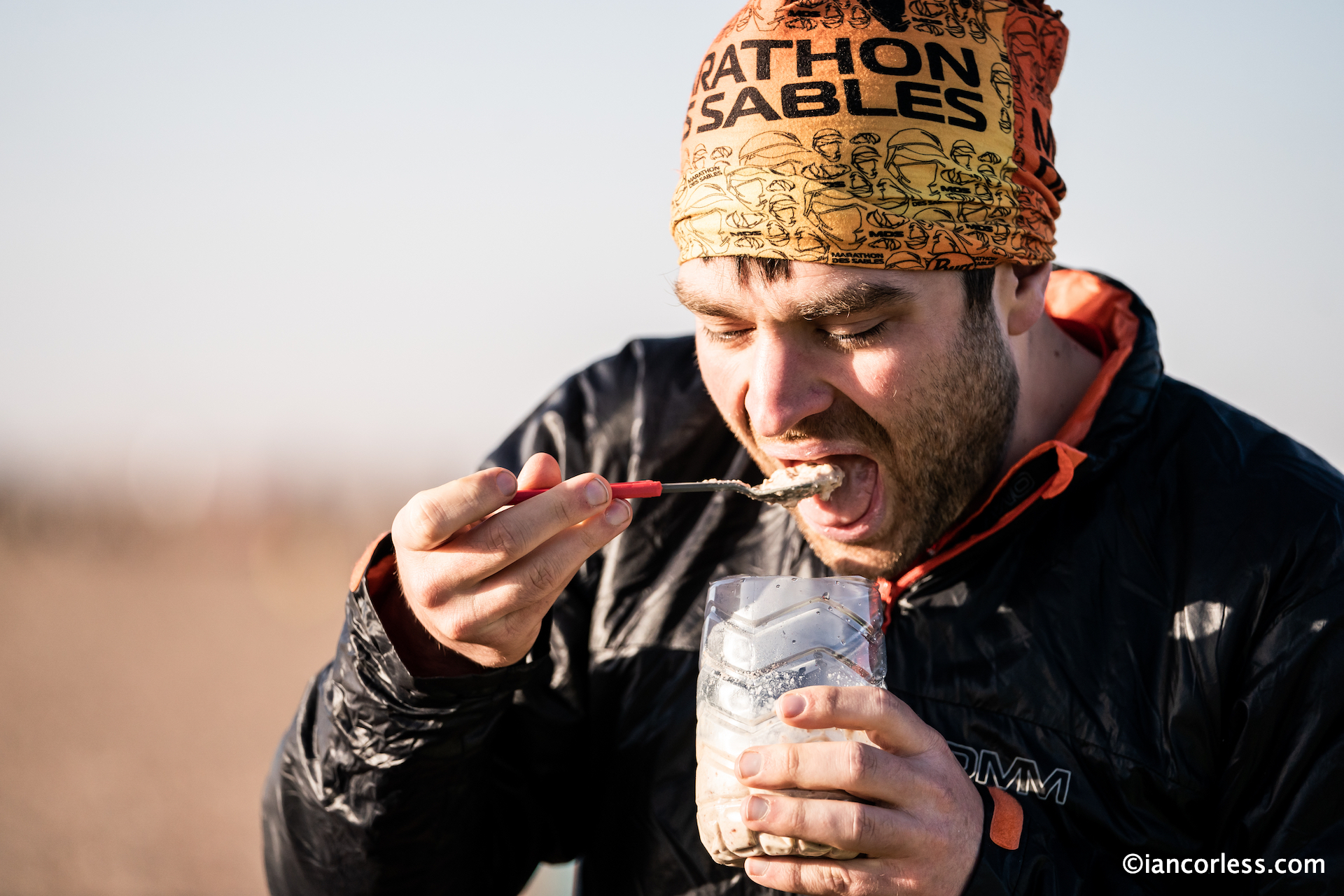
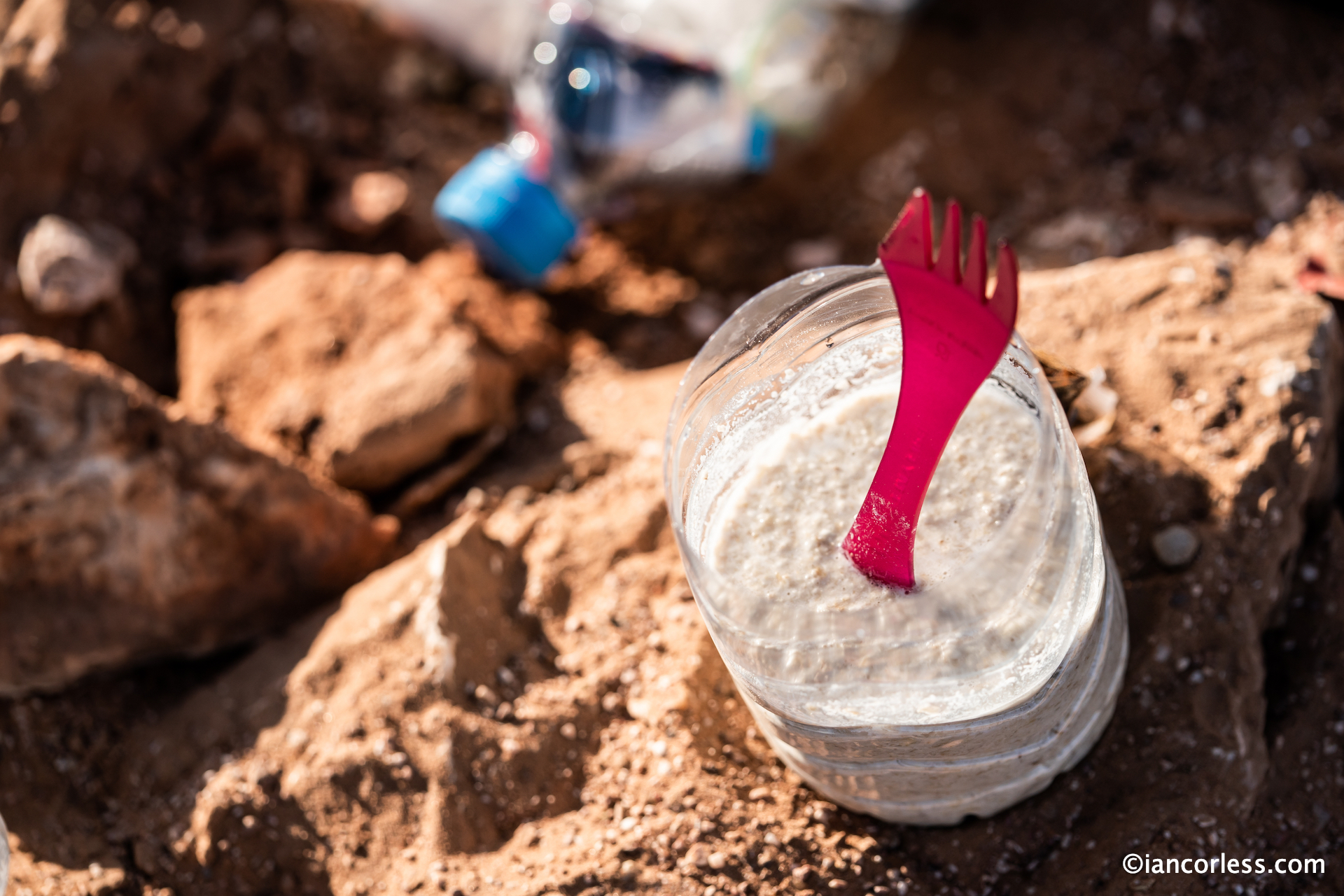
A cut down water bottle is a great food bowl.
WATER
Water is the only item provided at a race such as MDS and this is rationed. You are provided water for ‘in’ camp and then this is replenished while running at Cps which are typically 10 to 12km apart. When you finish the stage, you are then allocated water to last through the night and the following morning. NOTE: This water will need to last till CP1 on the next day’s stage, so make sure you leave enough to run with.
Water is rationed and supplied at every checkpoint on the route, typically every 10km.
Water is obviously used to hydrate but you also need it for your food and if you wish to wash.
Remember you need to replace salts that are lost through sweating. Have a strategy in place. The two main reasons for a DNF are feet and dehydration.
SPREADSHEET
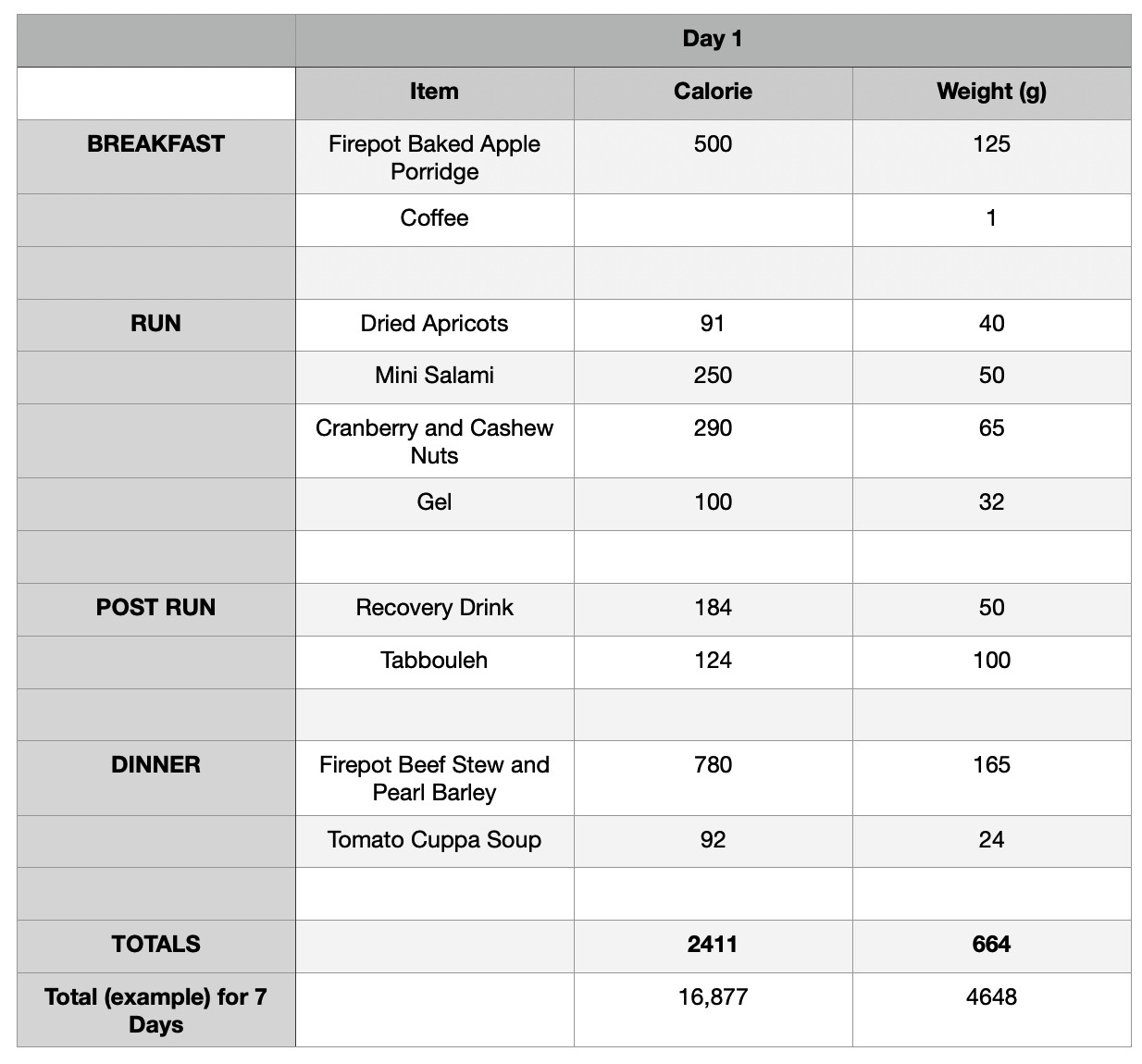
Create a spreadsheet so that you can see daily food items, how many calories and what the weight is. Not only is this invaluable for personal admin, but it is also a requirement for the race when at admin check.
Top Tip: Lay a day’s food out on the floor and look at it and analyse (visually) does this look enough for 1-day.
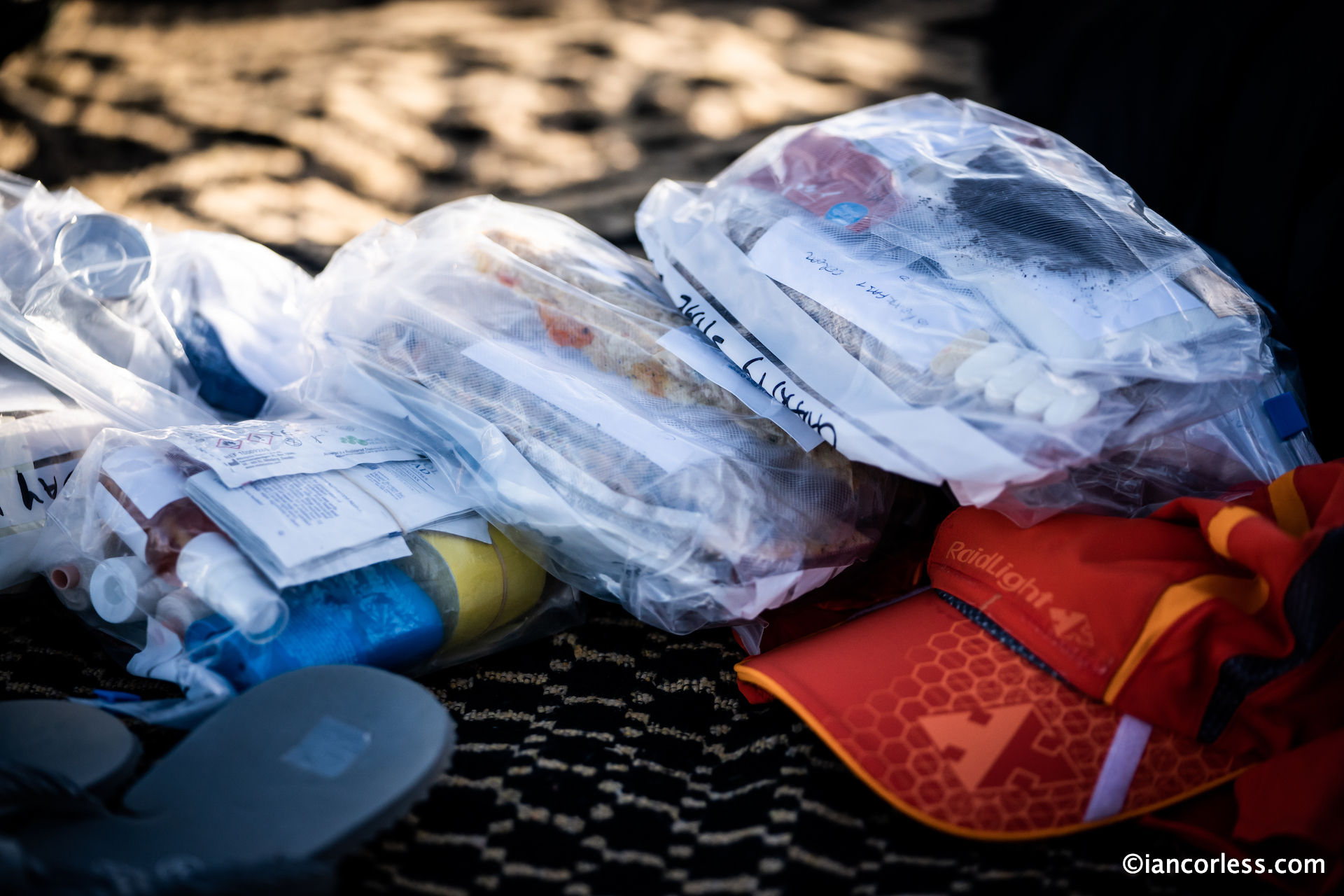
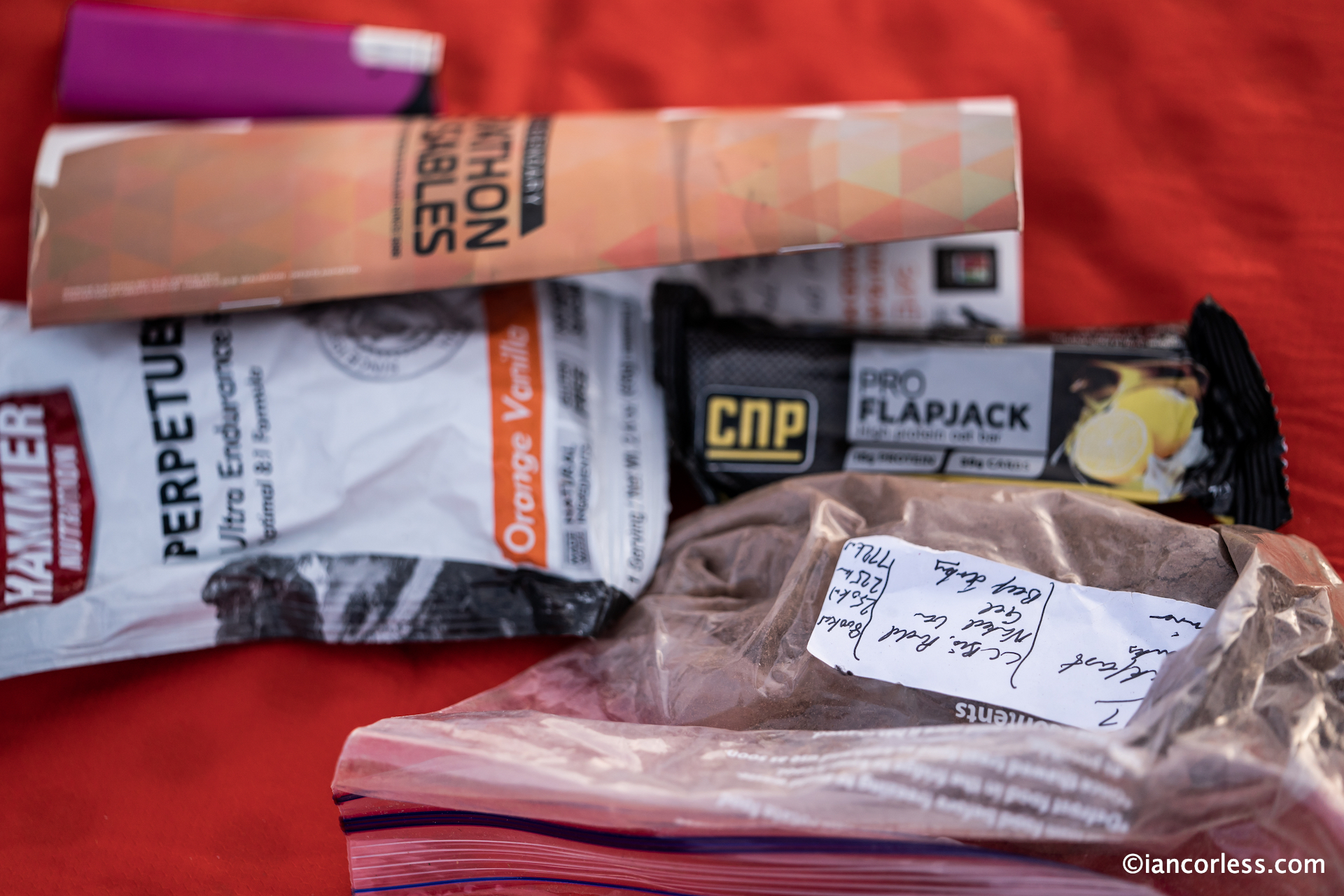
An example of fuelling for one day.Use a sealed bag for each day and then add a label showing contents and calories.
CONCLUSIONS
Getting fuelling right for any multi-day is really important, so, do the research and test everything. Have a contingency plan and anticipate the need for sweet v savoury will change.
If possible, repackage food to save weight and use clear packaging and relabel adding the name of the food, what day it is for and how many calories are inside.
Make sure you have some treats and something to look forward to.
Real food is good for the brain and the chewing motion helps satisfy our natural human desire to eat and be happy.
Remember, multi-days are only about three things: running/ walking, eating and sleeping, so, make sure you are prepared for each element accordingly.
The long day, many stop and cook a meal during the night to fuel the journey.
SUMMARY
In this article, we have looked at food for a typical desert race like Marathon des Sables that lasts for 7-days. many races follow the same format. However, different race conditions may well dictate food choices, for example, a race in snow/ ice with sub-zero temperatures will require a different strategy and the balance of carbohydrate, protein and fat can be different.
The top Moroccan runners boil water and eat hot food. Here Mohammed El Morabity.
Some races or multi-day are semi-supported, some are supported. In these scenarios, your own food may be carried for you or, it may even be provided for you? Think ahead and plan for what you may need so that you can perform as you wish with the calories you need. Especially important for vegan, vegetarian or those on specific diets. The big advantages of semi or fully supported is the not needing to carry additional weight and in most scenarios, there will be no restriction on quantity or calories. Everest Trail Race and The Coastal Challenge are two perfect examples of semi and fully-supported races,
There is not much shade in the Sahara, so, don’t rely on it.
Marathon des Sables – The Legendary will soon be here and now is the perfect time to make sure that you plan for a series of protocols to acclimate to heat and the stress of heat before arriving in Morocco.
In simple terms, you need to impose heat stress on the body that will simulate the conditions you will race in when in the Sahara.
Heat exhaustion brings you to a stop and may well mean a withdrawal from the race.
Acclimation to heat should be done close to competition, ideally sub 21-days and ideally in the final 14 and 7-days. Statistics show that 5-sessions (or more) offer a more fulfilled adaptation. The pseudo motor function (sweat rate) takes a little longer to occur, but all the other measurements, cardiovascular and lowering core body temp occurs quite rapidly. However, 5-10 sessions will allow even greater adaption, and provides better results in particular with sweat rate.
Now of course, if one is fortunate with time, the best scenario is to travel to the race location and adapt naturally in the environment of the race. Reality is though, few of us have this option and we must therefore simulate the stress of heat. The most obvious and effective protocols take place in an environmental heat chamber. Sessions could be performed every 2-days in a 14-day window. Adaptation from exposure diminishes rapidly, so, there is no need to do this too far away from the chosen event.
Expense can be an issue and therefore there are other possibilities. Keep training as planned and add layers of clothing while training. Post training, when already hot from the stresses of a run, you could then take a hot bath which will raise core temperature. One can also consider Bikram Yoga and use saunas. The reality is though, while some of these interventions will have some benefit, and most certainly, they are better than nothing, it is not something that can be recommended completely as it is harder to prescribe and measure.
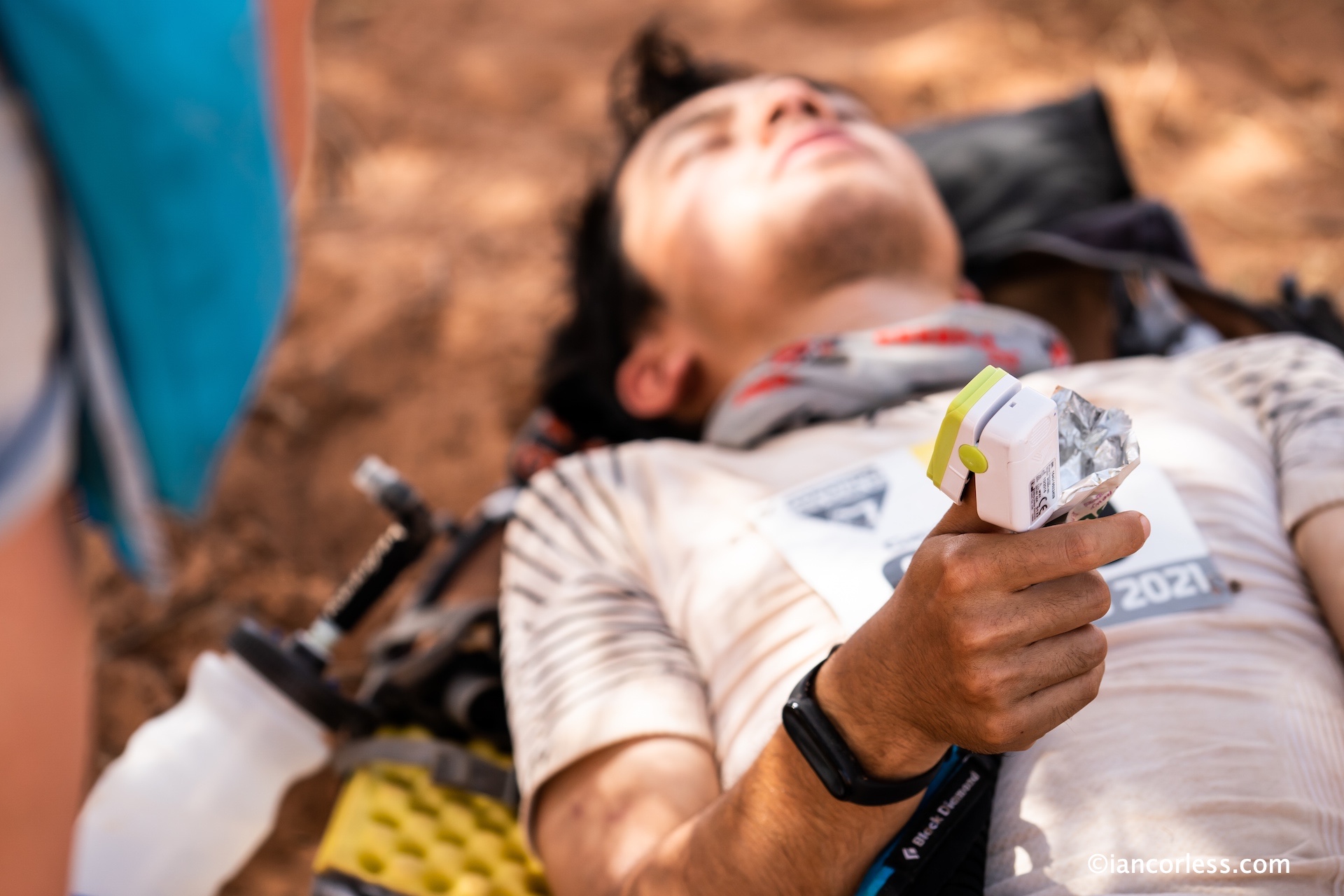
When it all goes wrong, shade and an IV drip may be required.
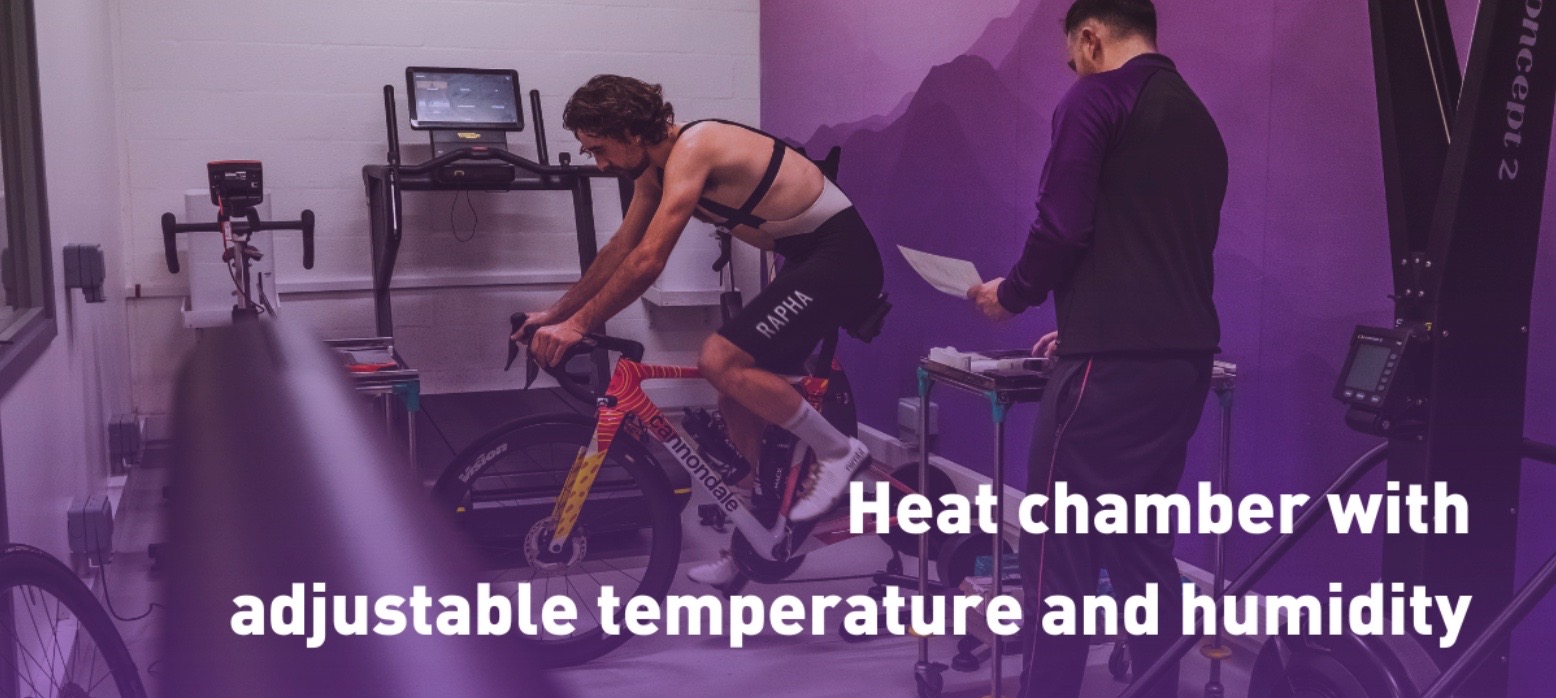
Environmental heat chamber
Environmental heat chamber is controlled and measured and in addition is monitored by a professional who gradually controls and analyses the stimulus to ensure maximum benefit and importantly, safety. In regard to session length, sub 60-minutes is usually adequate and this allows the body to get hot enough.
Image (c) Loughborough Sport
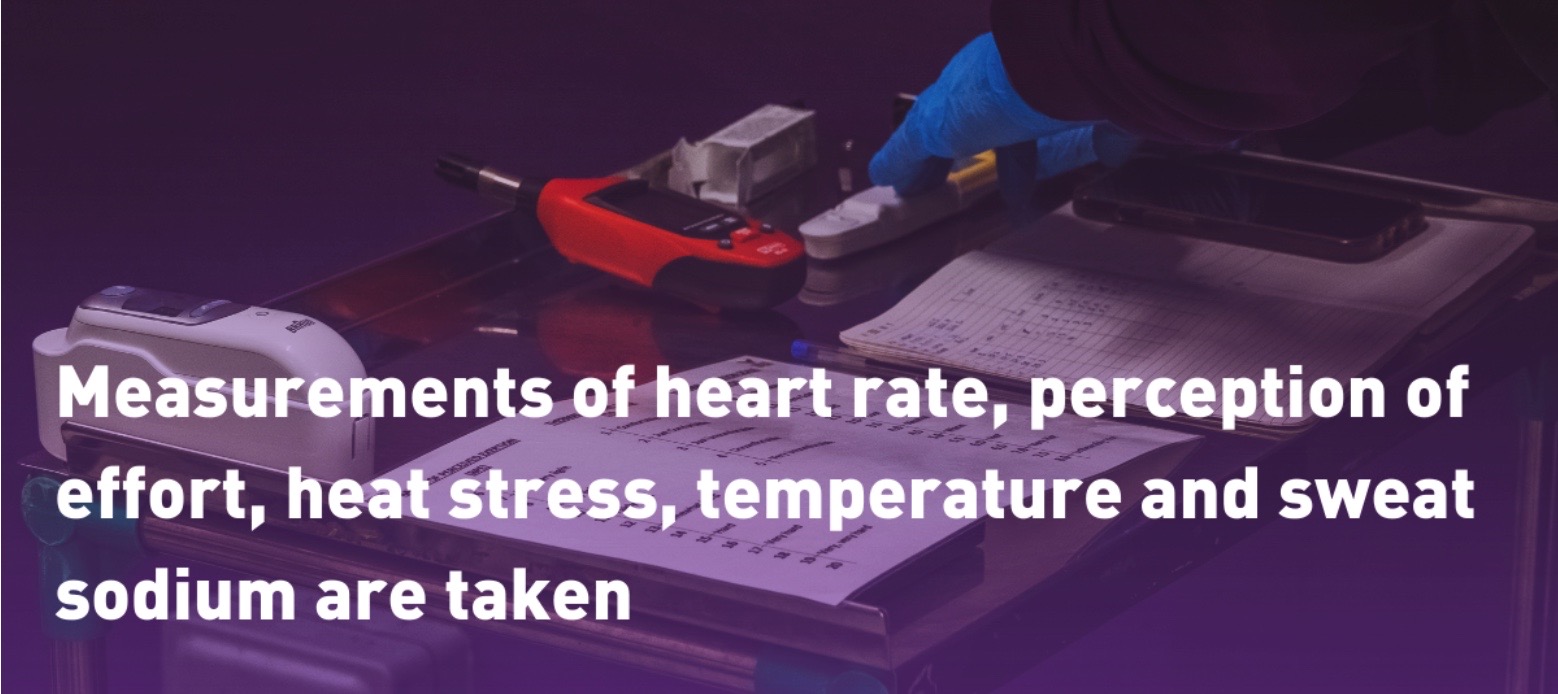
The use of a rectal thermometer is used to ensure that you reach the required thermal stimulus. Body weight is measured when naked and then this figure is used to measure fluid intake and sweat rate. Urine tests may be done to look at hydration status. It’s important that a client leaves re-hydrated after a session.
Image (c) Loughborough Sport
It’s important to remember, these sessions are about heat adaptation, they are not training sessions. A treadmill or bicycle is used and many testers prefer the bike as it adds less impact to the body and fatigue.
A 5-minute check will include heart rate, core temperature, skin temperature, perception of thermal environment, how hot does the client think it is? And finally, the tester usually asks how comfortable the client is. Then, the protocol will begin.
The target is a core temperature of 38.5 degrees in each session, which is ideal for pseudo motor and thermo functions to be maximised. Measuring the thermal strain is key. It usually takes about 30-minutes to get to 38.5 degrees depending on the individual. But external factors do have an impact. The session is about controlling and meeting a fixed criteria.
The first two sessions are often a challenge and then by session three, improvements can be noticed with the greatest improvement coming after day five with seven sessions being a great target to work towards. Total exposure is more important than days, so, if challenged for time, it is possible to do two tests per day, say AM and PM. As stressed above, the optimal time window is in the 14-days counting down to the event or race.
Loughborough Sport in the UK offer specific heat acclimation – book HERE
Do you need to acclimate to heat?
All runners in the Sahara will be faced with physical and perceptual challenges that will have negative effects on performance if not acclimated.
They will be slower, frustrated, dehydrated and have a potential of heat stroke and ultimately they may not finish the race.
Acclimating to heat pre-race prepares the body for the challenge to come!
Too hot? Cool down.
When in the race, if you experience negative effects of heat, is there anything that can be done?
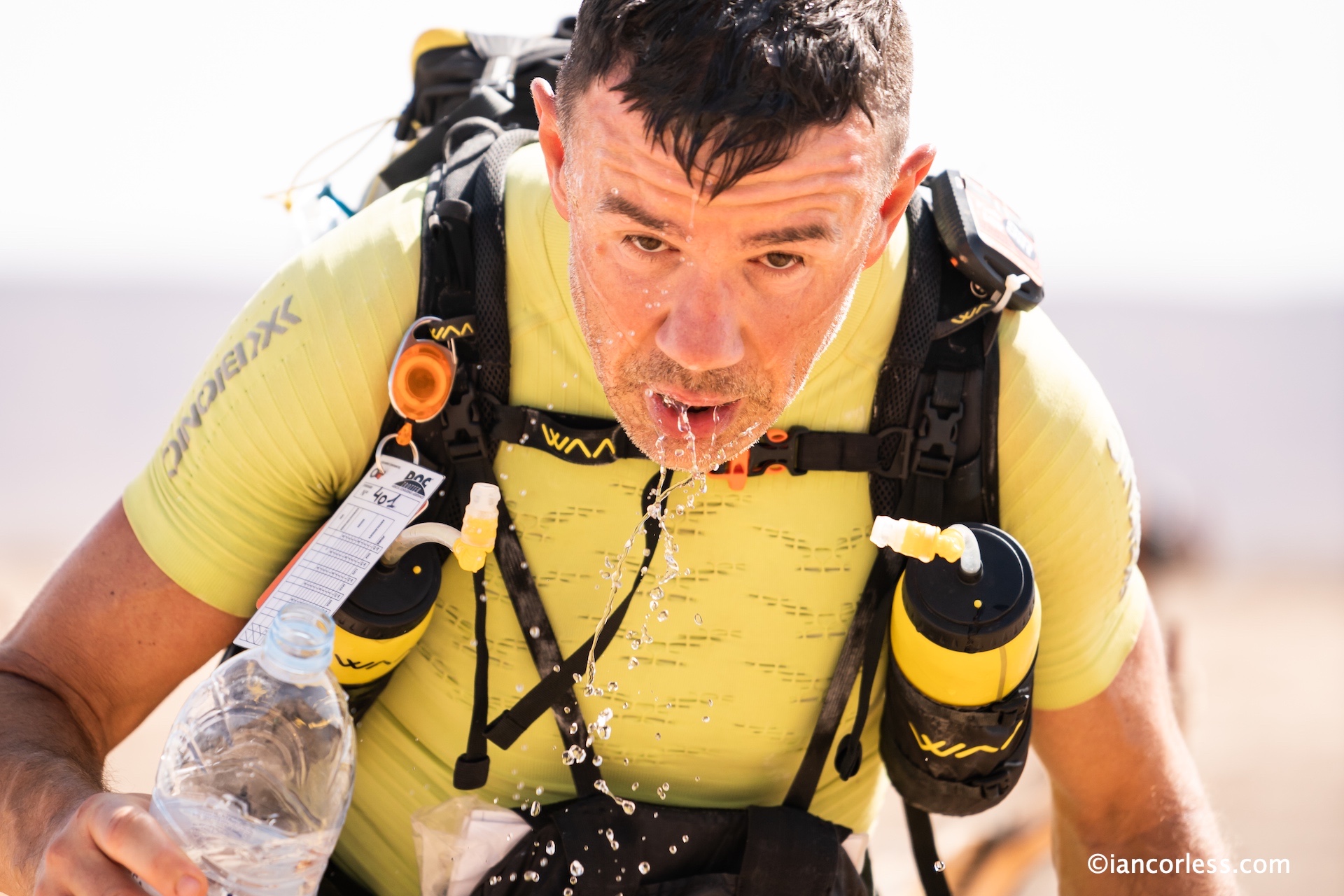
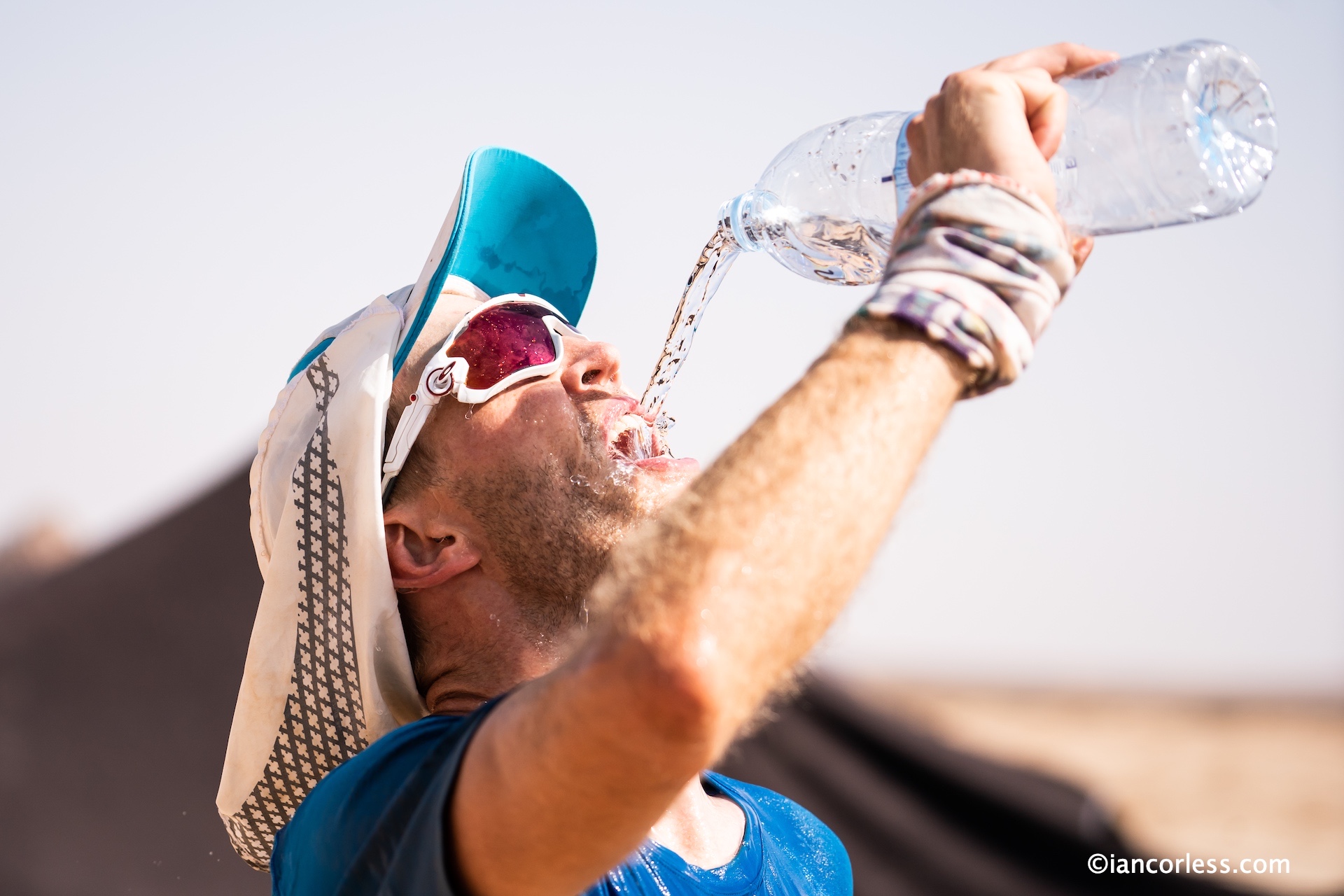
Yes, slow down, try to cool down as much as possible, seek shade at aid stations, rest and allow the core to lower. Hydrate and use spare water to provide a perceptual cooling: water on your face, head, forearms and neck will help a little with this.
Conclusion:
When one runs, you use muscle mass and this generates heat. When you then exercise in a hot environment, particularly if it is greater than skin temperature, then this makes it very difficult to get rid of heat. Humans are not the most efficient mechanically, so this energy from contracting muscles, potentially around 20 to 30% of the mechanical energy being made is converted to chemical energy, that means 70%, maybe even more, needs to be eradicated in the environment. If the environment is hot, for example, the Sahara, a challenge is imposed to eradicate the heat and what often happens is is that the heat is stored and one feels hotter and this then has a cascade effect of issues and problems, physiologically and perceptually.
Physiologically there is an increase in skin temperature as it is directly impacted upon by the environment. There will be an increased demand for blood flow that needs to go to muscle to provide it with oxygen/ energy to run, but also there is a competition for blood flow to the skin. In order to thermo regulate, blood is competing with muscles and skin and that creates an impact on one’s cardiovascular system. Typically, heart rate will increase due to the increased workload sending blood to muscles and skin. Body core temperature will increase. Sweet rate will also increase and therefore the percentage of water loss will increase and the consequence of this is dehydration – a deficit in body water with onward complications.
Trained individuals can gain thermal adaptations, irrespective of environment. For example, if you are training everyday, particularly at a high percentage of VO2max, one will create heat and this will require a higher sweat rate and therefore adaptation takes place. But, interventions should be in place both acute and chronic, to minimise the effect of environment on performance. Environment, will always have an impact on performance, no matter which athlete. So, make a plan now to adapt and acclimate in the final 14-days pre-race!
This article is based on a podcast (episode 191 of Talk Ultra) with Dr Jodie Moss PhD Sports Physiology, MSc Sports Nutrition.
Marathon des Sables is a simple race that often becomes over complicated by too much information. Take advice, look at websites, process the information but importantly find out what works for you. We are all individual, what works for one may well not work for another.
When you break the race down, here are my TOP 20 TIPS of what to focus on for Marathon des Sable – The Legendary.
Pack – Ideally needs to be as small as possible and as close to the minimum 6.5kg weight when packed. There are many packs out there and just like clothing, packs fit in different ways, so, it is important to try many to find the best for you. I size between 20-25 Ltr is ideal. Key things to look out for: easy access to water, easy access pockets for snacks etc, adjustable to get perfect fit, minimal bounce when loaded, flexibility to compress the pack and make smaller as you reduce the contents (food you eat) as the race progresses.
Sleeping bag – Needs to be lightweight, small when compressed and warm enough for you based on your warmth requirements – are you a cold or warm sleeper? Popular sleeping bags are PHD, Nordisk Y, OMM, Sea to Summit, Western Mountaineering, Rab etc. Take care on the ‘comfort’ rating and I have an in-depth article on choosing a sleeping bag HERE.
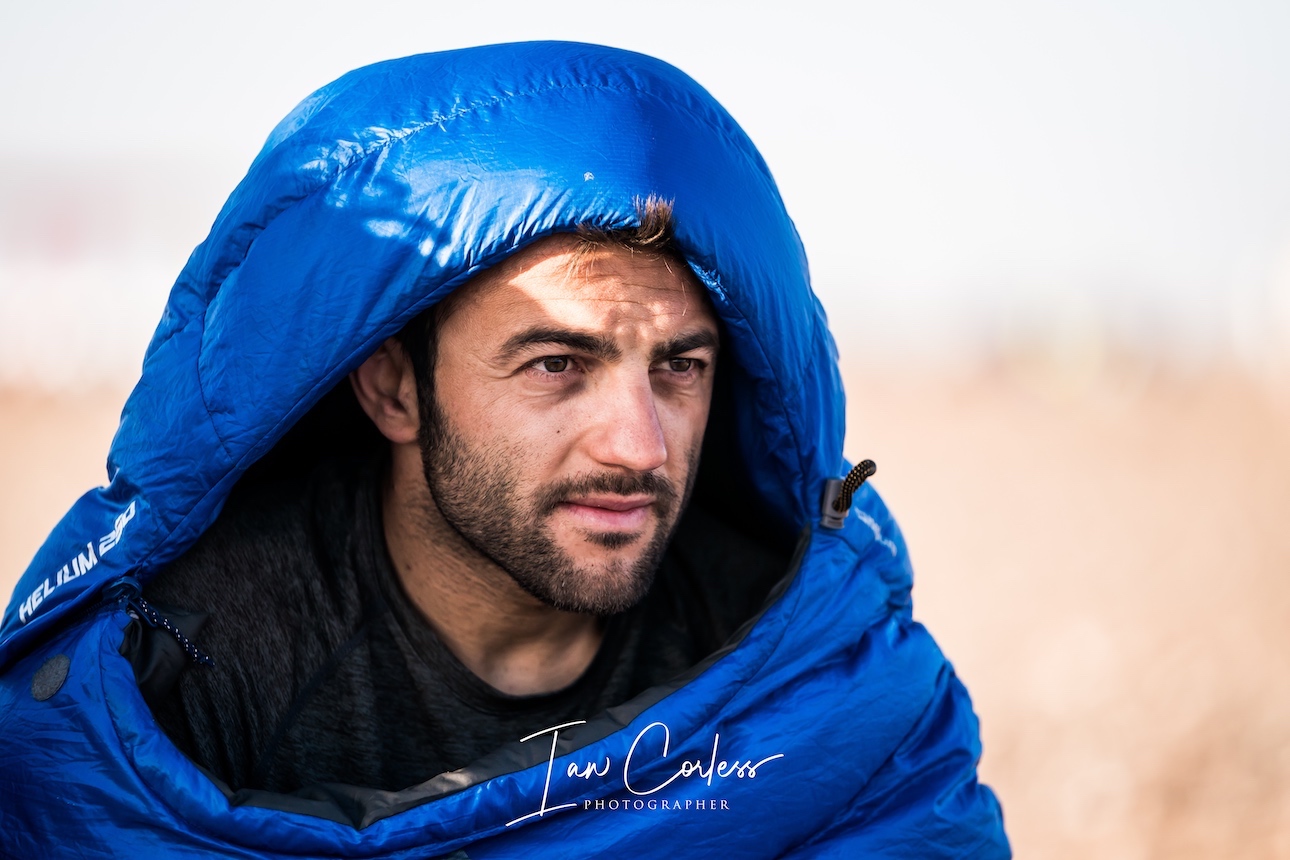
Jacket – I always recommend a sleeping bag and jacket as opposed to just taking a sleeping bag. MDS can have cooler editions, particularly early morning or evening and having the option of a jacket is great. It also means that you can potentially take a lighter and less warm sleeping bag as the jacket can add as an additional warm layer. As an example, a Sea to Summit SP1 bag and a Haglofs L.I.M Essens jacket weighs 510g! Many brands do sub 200g jackets, look at Haglofs, Mont Bell and Y by Nordisk.
Clothes – You just need what you will run in. However, a spare pair of socks is commonplace. No need to get new clothes and don’t worry about colours. The most important is that they are comfortable and they do not rub or chafe.
Sleeping Matt – Optional but a good nights sleep is important for recovery. There are only three things to do at MDS, run, eat and sleep. Make the sleep as comfortable as possible. Two options exist – inflatable and solid foam. The choice is yours. The inflatable ones offer more comfort, more flexibility in packing but with poor admin, you do run the risk of a puncture. Recommended Sea to Summit HERE
Shoes and Gaiters – Shoes are personal and if you already have shoes that are comfortable and cause no blisters, then you have the perfect MDS shoe. Things to consider, a wider toe box is good to allow toe splay, a thumb nail of space above your longest toe is adequate, no need for more, and make sure they have enough durability for you! I say ‘you’ because Rachid El Morabity will complete the whole race in 21-hours whereas most people won’t even do just the long day in that time – his shoe shoe choice will and can be very different to what most of us need! Get your Velcro sewn on your shoes and make sure that when you get the shoes back the fit has not been altered.
Food – You need a minimum amount of calories per day specified in the race rules (2000 per day) and how those calories are made up are up to you. This for many is a difficult one. It raises many questions and yes, it’s good to find out what other people do and use but ultimately, YOU have to eat it. Food is the heaviest item you will carry, but remember, your packs gets lighter each day as you eat the contents. Re-packing food can save weight and space. Think about the the balance between carb, protein and fat and importantly, what tastes good at home, may not taste good in the Sahara.
Stove – The decision to use a stove is another question mark but it would appear that most runners like that hot water option. Remember though, you can make a fire from twigs, shrub and branches that surround bivouac.
Pot – Many use a 1.5 ltr water bottle cut down as a food bowl. For the 2024 MDS, 1.5 ltr bottles will not be supplied, so, you will need a suitable pot. Esbit for example do a small titanium pot with lid.
Water – You must have the capacity to carry 1.5 ltr of water and for the long day, 3 ltrs. Water is provided by the race. For 2024, water will not be provided in 1.5 ltr bottles but will be distributed by staff at the cp’s using jugs to decant water from larger 5 ltr bottles. On the long day, an additional 1.5 ltr bottle will be provided either at the start or cp1.
Salt Tablets – Salt tablets will no longer be provided at the race and you now must have a mandatory 14 stock cubes. Of course, you are recommended to work out your electrolyte needs and plan accordingly. You are welcome to take your own salt tablets or similar product such as those provided by Precision Hydration.
Feet – Look after them, along with dehydration, blistered and damaged feet are a key reason for failure in any multi-day race. Prepare them before the race especially trimming nails back and knowing what socks work for you. After each day in the race, clean feet, allow them to breathe and look after them. Get any sore or hot points addressed immediately.
Mandatory kit – You are supplied with a mandatory kit list and you MUST have everything on that list. Please note, for 2024 the venom pump has been removed and you must have 14 cubes of broth.
You – You signed up for the challenge, you wanted to be on the start line and therefore you are responsible for the outcome. Believe me, the you that leaves the Sahara is not the same you that entered. Keep perspective, the MDS journey is an enhancement of you as a person. It’s easy to become obsessed, ultimately the majority of runners at MDS are enthusiasts, if you keep that in mind the journey will be a complete one. The legs, lungs, heart and feet will only get you so far, then the mind will take over. Mentally prepare for the challenge ahead and make mental plans for how to survive and motivate yourself when the going gets tough. Laugh when you hit rock bottom. Laugh when you are going the toilet in a brown plastic bag. Laugh with and at your tent mates and fellow runners. The comradeship of MDS is quite unique, embrace it.
Training – Plan ahead, formulate a long term plan and aim for consistency.
Walking – Learn to walk. Many think they will run 80% and walk 20%, if you are lucky, it’s the other way around. Make walking a positive, make walking fast, make walking productive.
Poles – For many, poles are a huge advantage. They are like 4-wheel drive and without doubt, they make you walk faster. But you must train with them and learn how to use them.
Shoes – NEVER take advice from anyone online that tells you that ‘X’ is the shoe to wear for MDS unless they know you and your run style. Forget the advice about going up a size or two sizes. It’s a recipe for disaster unless you know that your feet swell? A shoe that is too big will allow your foot to move, a moving foot causes friction, friction causes blisters and the rest of the story speaks for itself. General advice is that if you have a ‘thumb nail’ of room at the front of the shoe above the longest toe, this generally works. Notice I say ‘generally’ – there are exceptions. One thing that may happen, is your foot may get wider (rarely or never longer) with the heat and additional time on feet, therefore a shoe with a wider toe box often works well for many runners.
Equipment – Minimum pack weight is 6.5kg plus water, get as close to this as you can. Additional weight is additional stress and just makes the journey harder. Luxuries are ok if they improve the journey and make it easier, music is a good example of an additional extra. I can’t really think of anything else…
Friends – Tent mates will pull you through and motivate you. They will become friends for life. Ideally find tent mates before you head out to the Sahara and plan your tent group.
Admin and preparation that you may not think of:
Take essentials on the plane and wear your run apparel and shoes. That way, should a baggage disaster happen your chances of racing improve.
Take food with you for the travel and on the plane.
The journey from the airport to bivouac 1 can be lengthy be prepared with your own snacks and drinks. MDS do provide a packed lunch.
Night 1 and night 2 in bivouac are NOT self-sufficient so take extras such as an inflatable bed, food and luxuries that you are happy to give away to the berbers. May as well have 2 comfortable nights and a comfortable day before the racing starts.
Food before the race starts is now down to you. Be prepared to have plenty of variety and remeber, within reason, this can be anything!
Admin day can be lengthy multi-hour experience. Take water and snacks for when standing in line and maybe take an umbrella so you have shade.
Keep sun screen on and keep hydrated. No need to drink vast volumes – drink to thirst before the racing starts.
Have additional items such as a base layer, sleeping bag liner and other items that may be on a ‘question’ list for the race. On night 1 and before you go to admin, you can make final decisions of what to and what not to take. Particularly important if you think you may be cold at night.
Remember that after bag drop and check-in you have no access to any additional items, however, you only become completely self-sufficient when you start the race. With that in mind, you can have additional food and luxuries with you until day 1 kick-off, it’s a useful tip and does mean that you can have additional comfort for a good 12-hours.
Conclusions:
Marathon des Sables is a magical and life changing journey as are most if not all multi-day races. It really is a true challenge of mind and body to race over many days, irrespective if you complete the race in just over 20-hours or 60+ hours. It’s a hark back to a more primitive time, a time without clutter and modern technology. Embrace this. Embrace the silence of the surroundings and the simplicity of placing one foot in front of the other.
You arrive in Morocco, pass through passport control, wait for your luggage, leave the airport arrivals hall and find a seat on a coach.
The MDS journey is now in full swing.
Waiting in anticipation, the Road Book (the bible) for the next edition of the race is provided and immediately pages turn, running through the mind of each participant:
“How long is the long day?”
Well, the wait is over, I can tell you. For 2024, the long day will be 85.3 km’s.
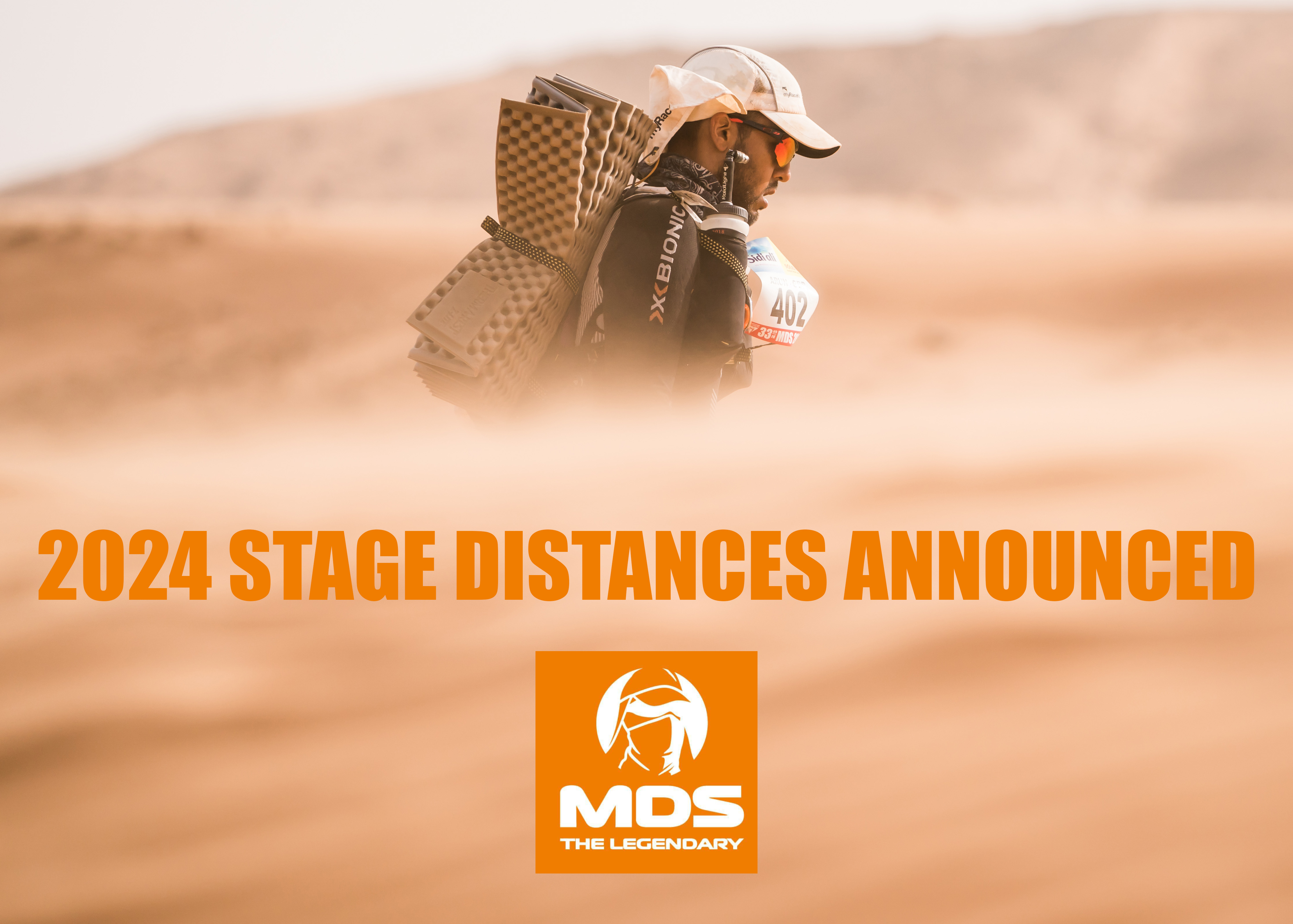
The MARATHON DES SABLES – The Legendary is breaking silence and today, we announce the daily stage distances for the 2024 edition.
Stage 1 : 31.1 km
Stage 2 : 40.8 km
Stage 3 : 85.3 km (over 2 days)
Stage 4 : 43.1 km
Stage 5 : 31.4 km
Stage 6 : 21.1 km
Total 252.8 km
Marathon des Sables typically takes place in this key area.
Taking place in the southern Moroccan Sahara since 1986; an extraordinary adventure will take place covering 252 km’s, the longest edition in the race history. Lasting 11-days with 9-days in the desert, divided into 6 stages over 7-days, a magical crossing of the Sahara walking or running.
The exact route, with maps, will once again be covered in detail in the road book, which as per usual, will be provided in Morocco whilst on the way to the bivouac one.
This is the first time that the daily distances have been disclosed before arrival in Morocco. Does this change anything? No, not really. I guess there is a reassurance knowing that the long day is not 90+ km’s.
However, with the 2024 edition being 252 km’s and over 6 timed stages, it was my prediction that this race would be a tougher challenge in contrast to those that have gone before. Therefore, to ease minds, the distances have been announced.
Previously, the long day would come on stage 4 (over 2 days) and it would be followed by the marathon stage. It was common thought, “Get the long day done and it’s just a marathon to go!” At the finish of the marathon, the medal would be received; job done.
Now, with the long day coming on stage 3, you still have 3-stages to run totaling 95.6 km’s. This will require a completely different mental and physical approach.






















 IAN CORLESS