Episode 219 of Talk Ultra is co-hosted by two times MDS champion, Elisabet Barnes. We discuss the 35th 2021 race with expert discussion on heat from Dr Jodie Moss. We also have eight interviews with 2021 participants: Emma Burton, Gower Tan, John Murray, Kim Hutt, Mags McHardy, Martina Taylor, Paul Been and Pierre Meslet.
Talk Ultra needs your help! We have set up a Patreon page, this is the easiest way to support Talk Ultra and help us continue to create! Many thanks to our Patrons who have helped via PATREON Donate HERE
Episode 219 is a Marathon des Sables special. After three postponements, the first in April 2020, a second cancellation late 2020 and then a 3rd cancellation in April 2021 finally saw the race take place in October 2021. October was selected due to climatic conditions typically being very similar to those of April. Little did we know that October would see freakish high temperatures that would impact on the race.
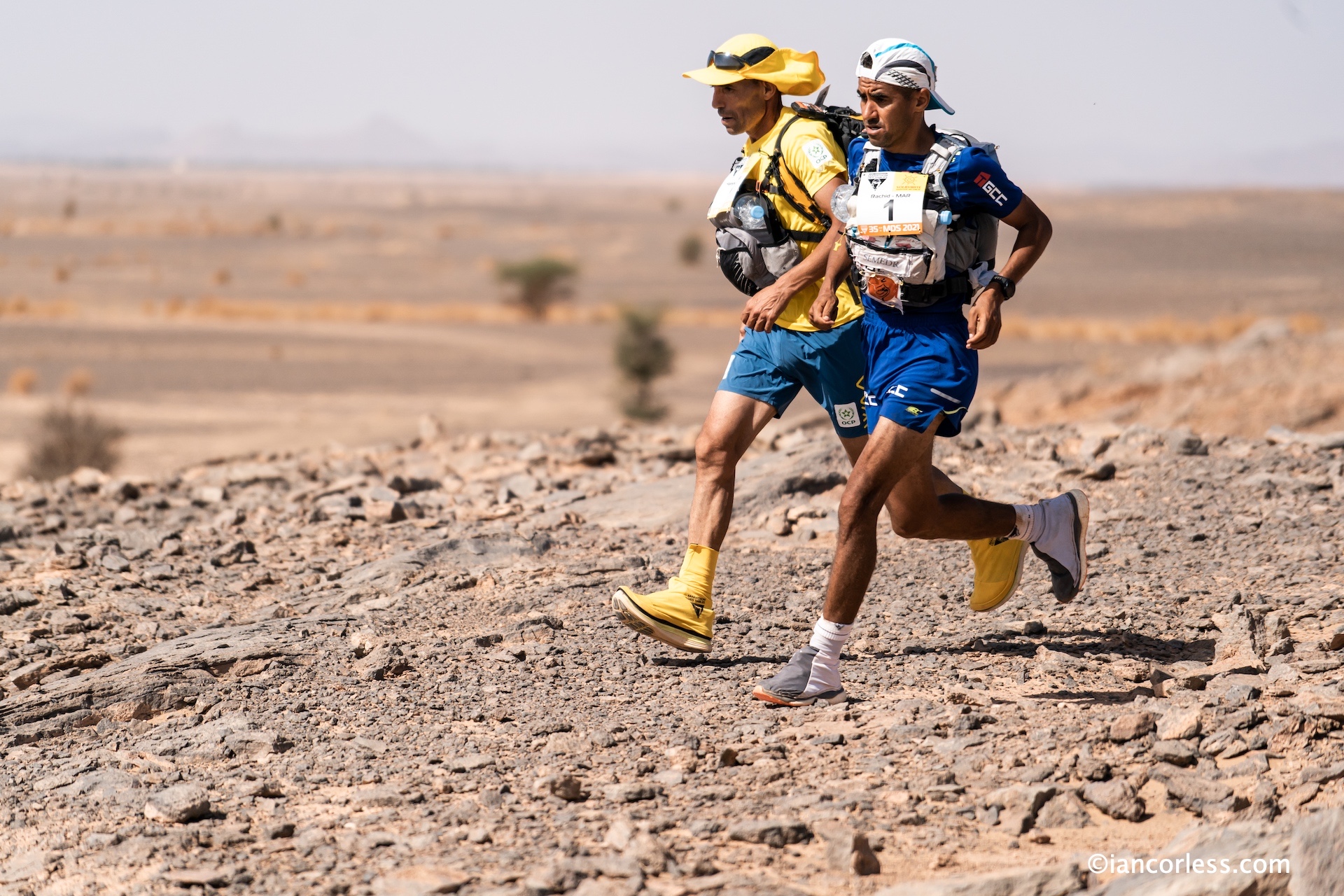
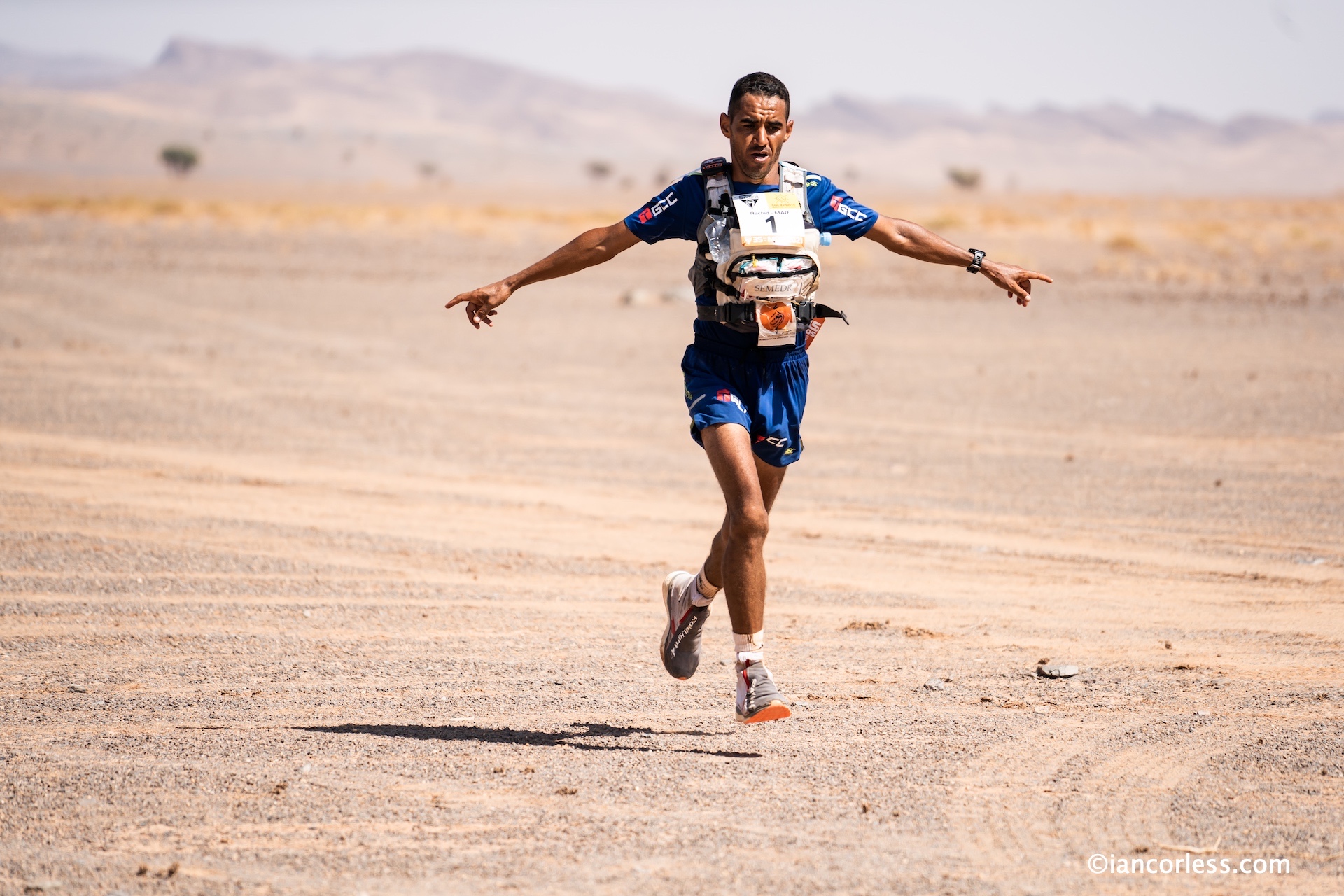
Stats show that 353 completed the event, Rachid El Morabity running the whole event in 21-hours, 17-minutes, and 32-seconds. Christine Taieb was 353rd in 72-hours, 41-minutes, 31-seconds.
From the 353 finishers, 91 were from the UK, Patrick Kennedy the fastest in 25:16:14 and placing in the top-10 with Martina Taylor the 91st in 44:06:16.
Below daily race summaries which were published from the Sahara during the 2021 race.
Importantly, go to iTunes and subscribe so that you automatically get our show when it’s released we are also available on Stitcher for iOS, Android and Web Player and now Tunein. We are also on Spotify too.
Our web page at www.iancorless.com has all our links and back catalogue.
The 2021, 35th edition of the Marathon des Sables concluded early October after a 2.5-year hiatus due to the ongoing Covid pandemic issues worldwide.
Three postponements, the first in April 2020, a second cancellation late 2020 and then a 3rd cancellation in April 2021 finally saw the race take place in October. October was selected due to climatic conditions typically being very similar to those of April. Little did we know that October would see freakish high temperatures that would impact on the race.
I have worked on 7 MDS, 2021 was special! I provide this summary as an assessment as I saw the race unfold and how I experienced the conditions in the Sahara.
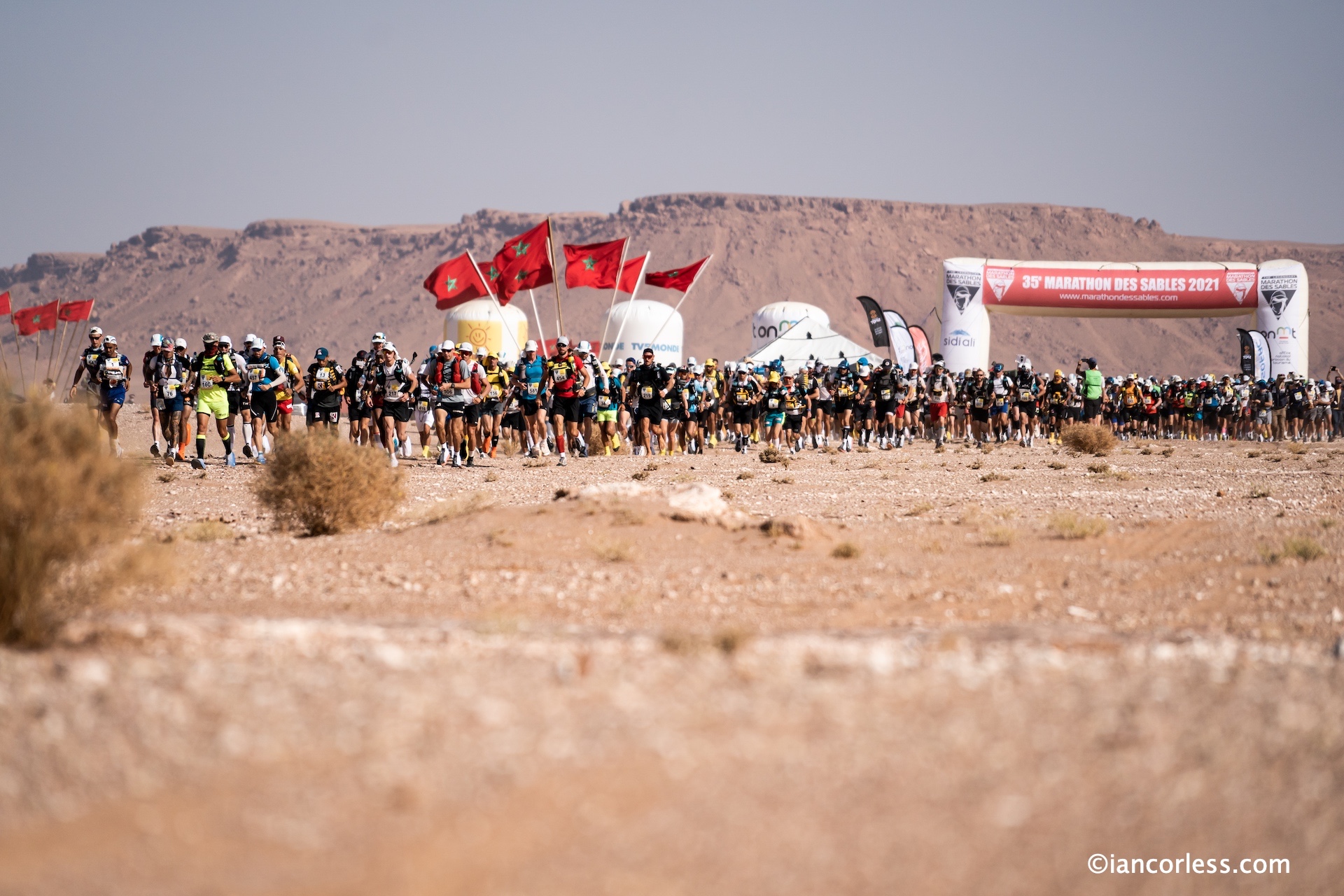
The 2021 race had relatively low start numbers, particularly in contrast to ‘normal’ MDS years, with approximately 700+/- toeing the line. It’s easy to understand why numbers would be low:
Repeated postponements caused apathy and a lack of focus and therefore refunds were requested.
The October 2021 date was the 4th scheduling of the event, and many wondered ‘if’ it would go ahead and therefore moved entries to a safer and more predictable MDS in April 2022.
Ongoing PCR requirements, Antigen tests and restricted border crossings and travel meant for many, October was just not possible.
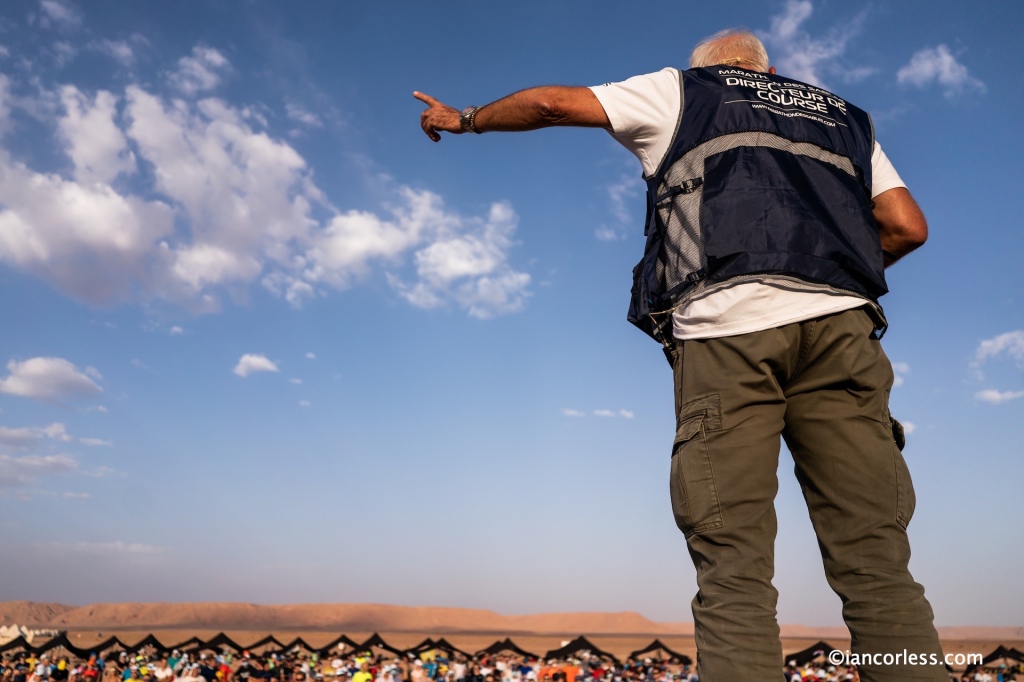
One thing is for sure, Patrick Bauer and the MDS team were excited and motivated to resume proceedings in the Sahara and of course, Patrick wanted the event to be memorable for multiple reasons… It was the 35th edition and the first event post Covid.
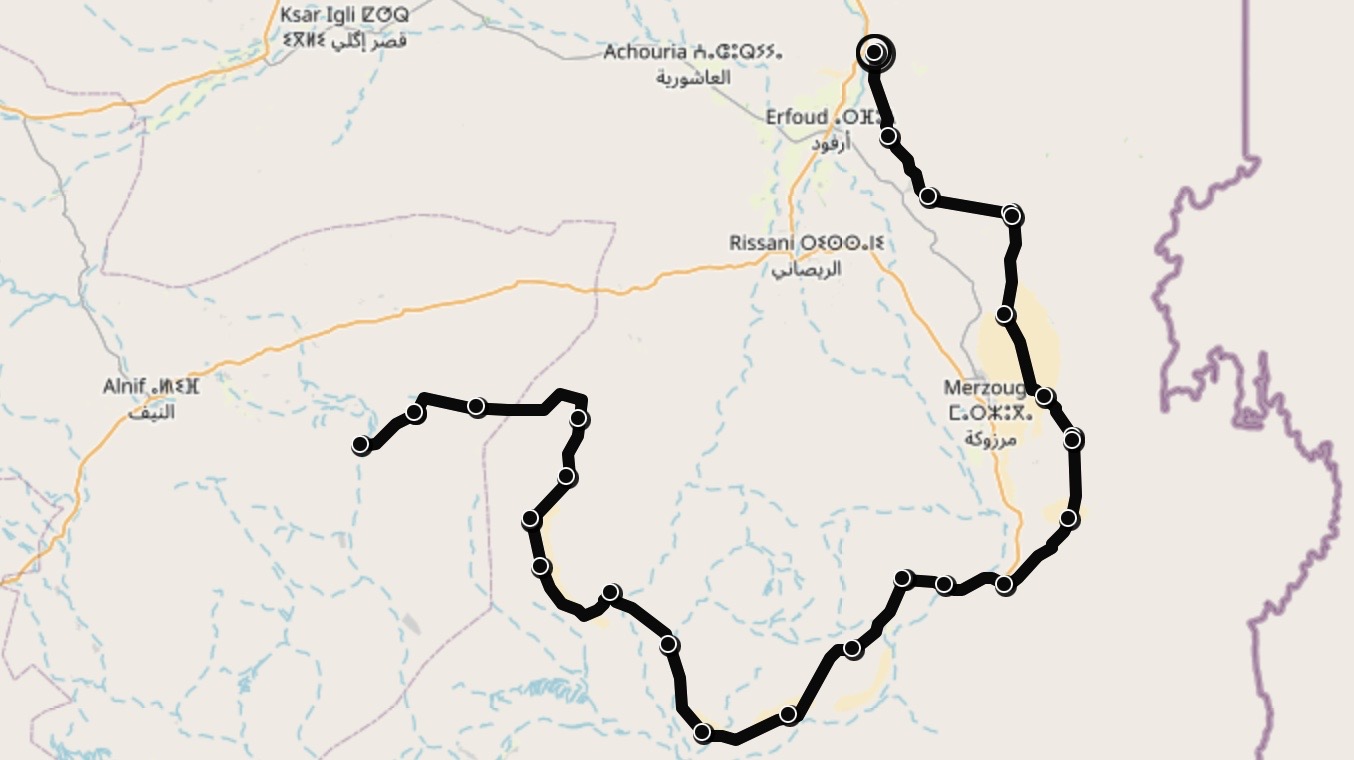
2021 ROUTE
Stats show that 353 completed the event, Rachid El Morabity running the whole event in 21-hours, 17-minutes, and 32-seconds. Christine Taieb was 353rd in 72-hours, 41-minutes, 31-seconds.
From the 353 finishers, 91 were from the UK, Patrick Kennedy the fastest in 25:16:14 and placing in the top-10 with Martina Taylor the 91st in 44:06:16.
HEAT
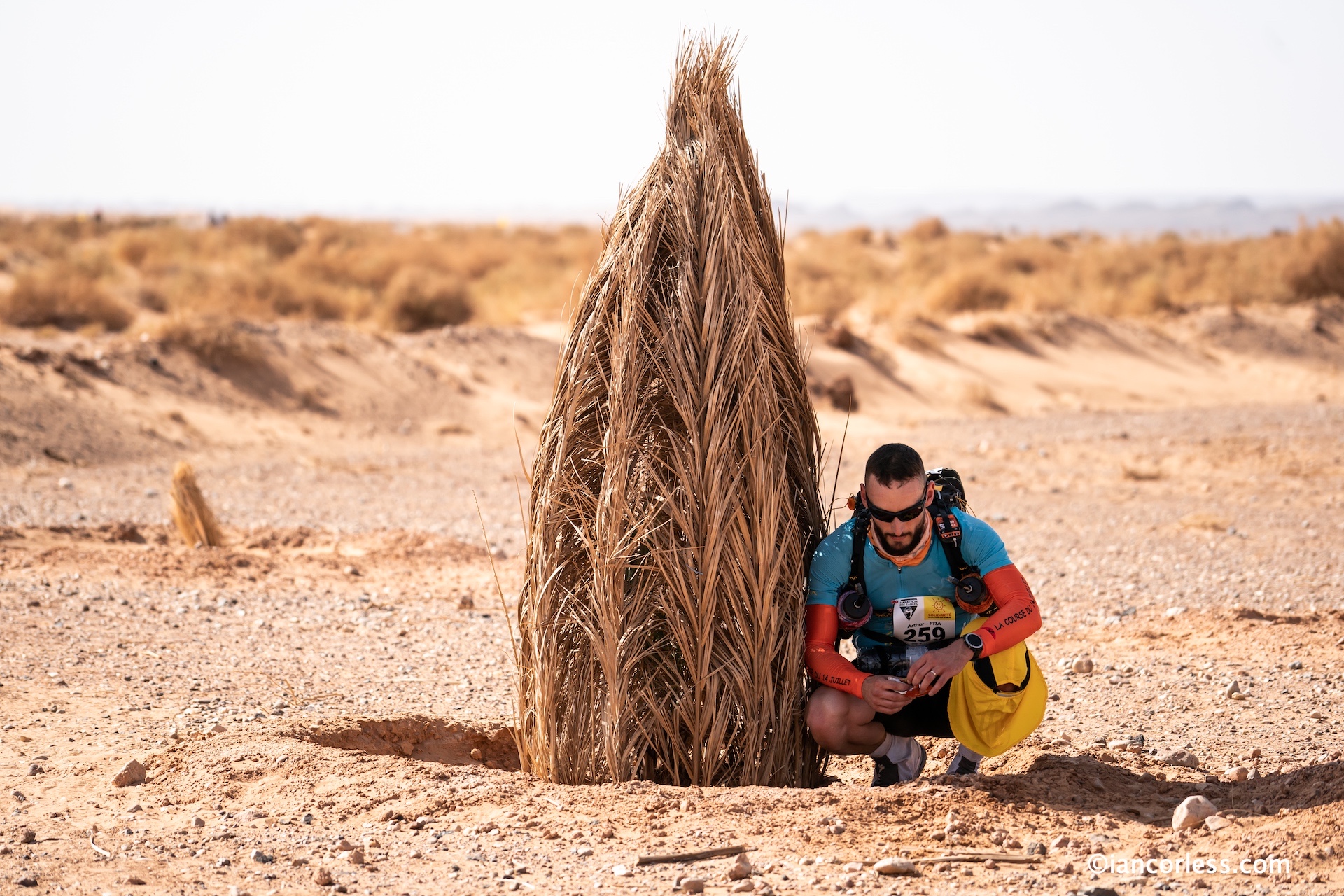
Arriving in Errachidia and Erfoud several days before the runners, it was soon very clear to me that temperatures were high. On the first day, I ran in the desert starting at 11am and temperatures were already over 40 degrees. In the evening, for a second run starting at 1800hrs, temperatures were 36 degrees. The following morning, a run starting at 0700 and temperatures were already 34 degrees. No doubt about it, the 35th MDS was going to be a hot one. Chatting with locals and my driver Said, they all confirmed, ‘These temperatures are not normal for October!’
On social media I provided a ‘heads-up’ to all those travelling to Morocco of the heat situation, and yes, I understand that with just a few days before the race, there is little people could do, however, they could re-think clothing, sleeping bags and make allowances in packing for the ‘option’ to race lighter than originally planned.
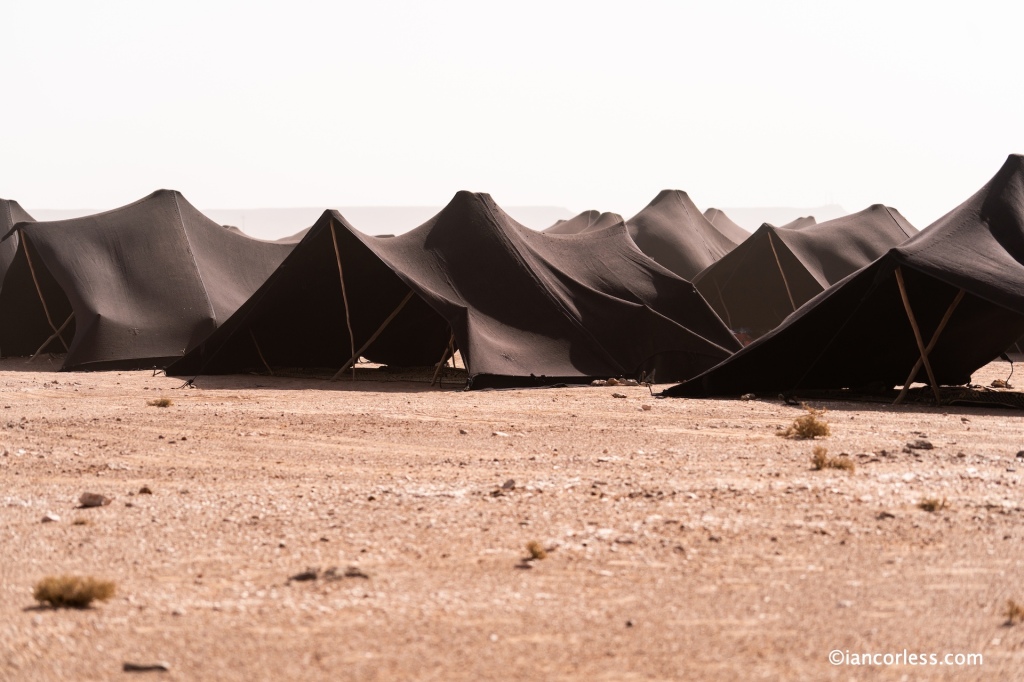
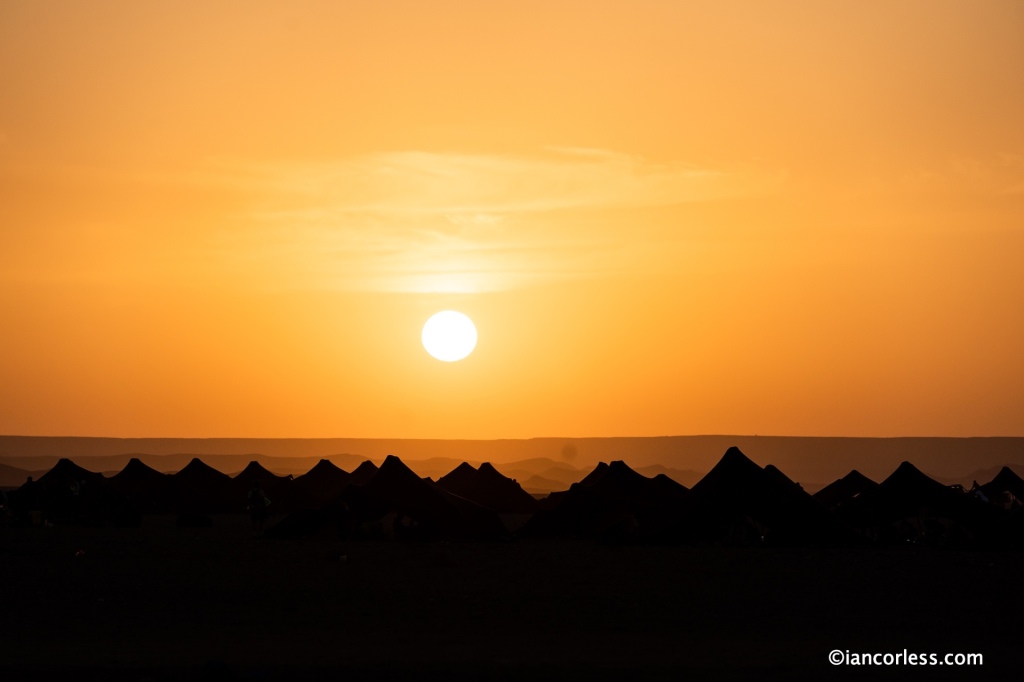
Arrival at bivouac 1 early afternoon and the heat inside the tents was stifling, shade protected from the direct sun but not the heat. It was impossible to escape that.
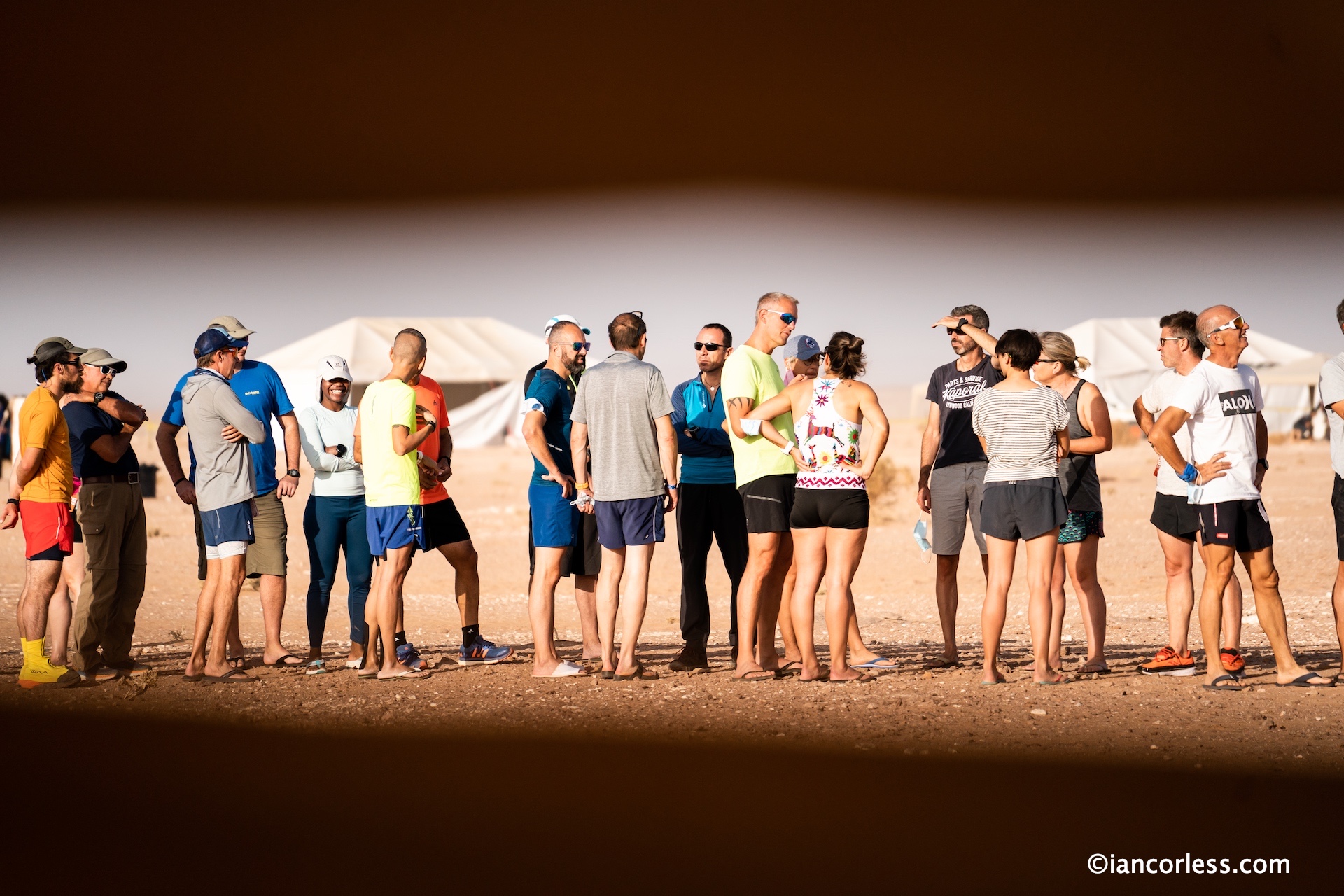
Admin day was extremely hot, and this is notably important, no matter how slick or fast admin day is, runners will almost certainly be standing out in direct sun with no shade for a prolonged time. Here is a first top tip – Take an umbrella in your luggage that you can use when standing in the admin line. It will protect you from the direct sun and keep you cooler. Also, make sure you have water and snacks. Admin can take 30-mins if lucky, but it is possible to be out there for 60/90 or even 120-minutes.
The race started in oppressive heat, on day 1 this was recorded at 42 degrees and the forecast for the week predicted temperatures would go cooler. Those cooler temperatures did come BUT they were still extremely high and hotter than a ‘typical’ MDS and a ‘typical’ April or October month.
In my opinion, the Marathon des Sables is an extreme event that takes place in the Sahara. The nature of the event is self-management both physically and mentally to endure the challenge, survive and reach the finish line. The weather (heat) is one of those variables and in the 35-years of MDS there have been many hot years and many cool years. Nothing is guaranteed and surviving the weather is integral to the nature of the event. In my editions of MDS, 2021 was the hottest event from beginning to end. However, I have experienced equally hot days in past years, they were more in isolation though.
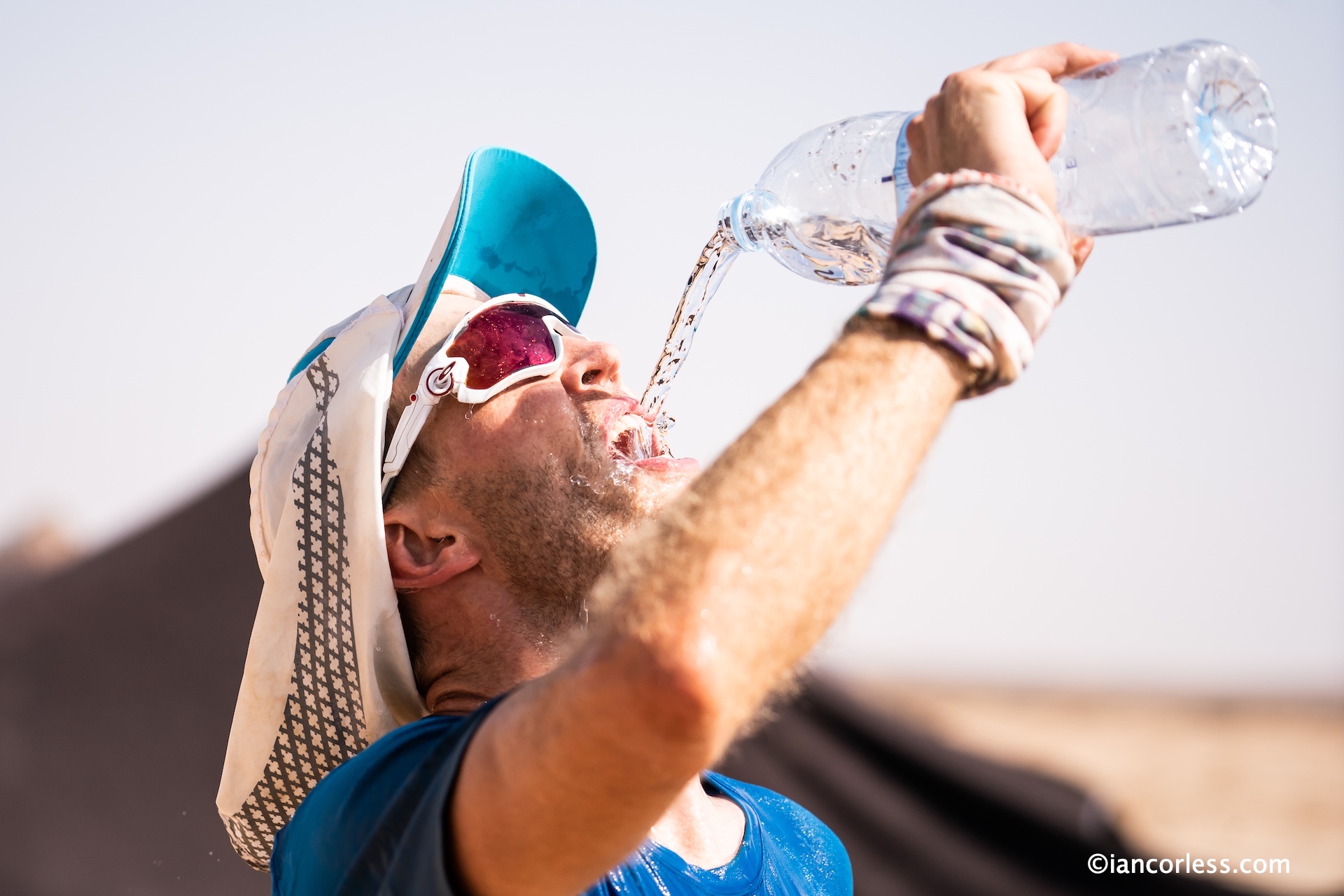
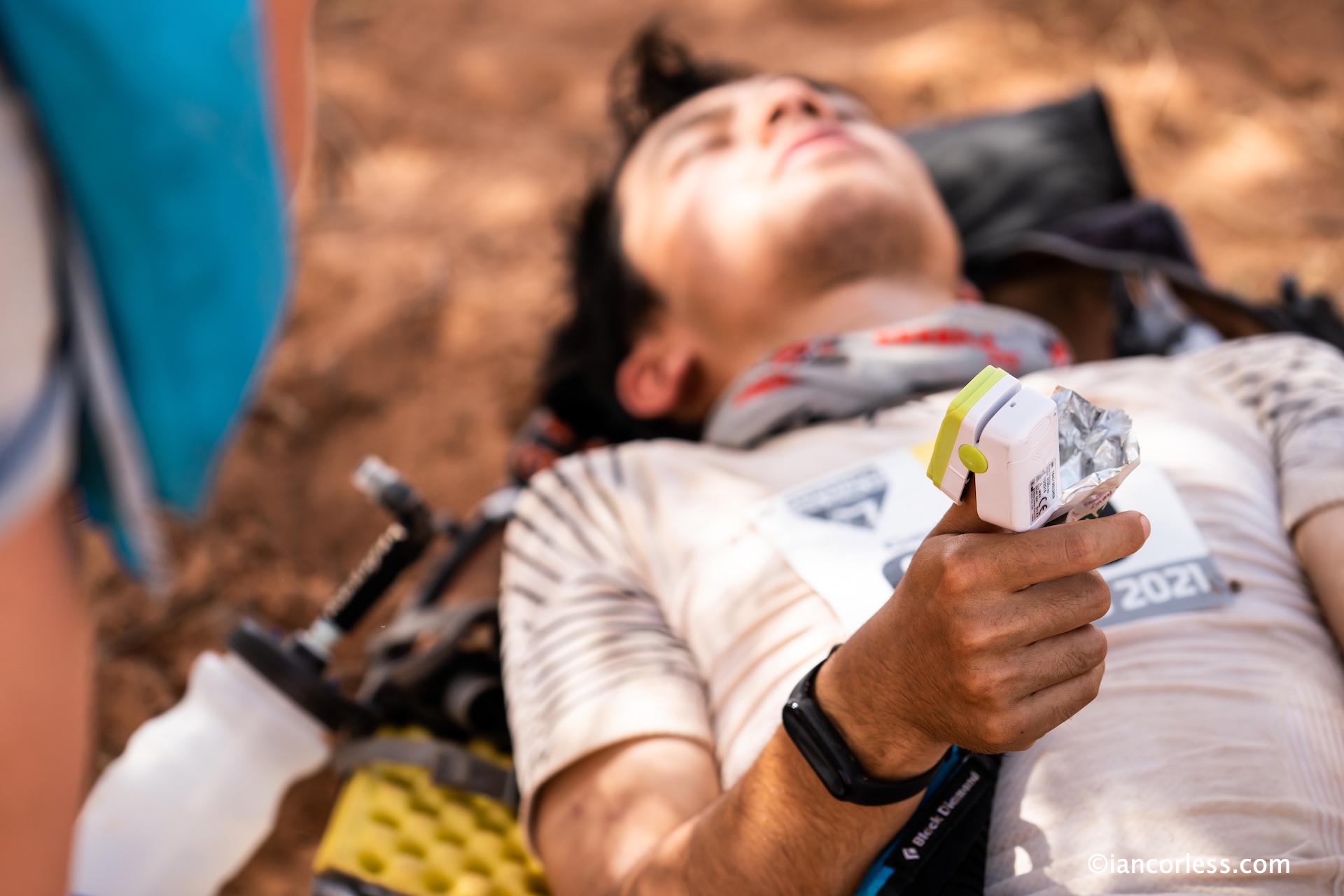
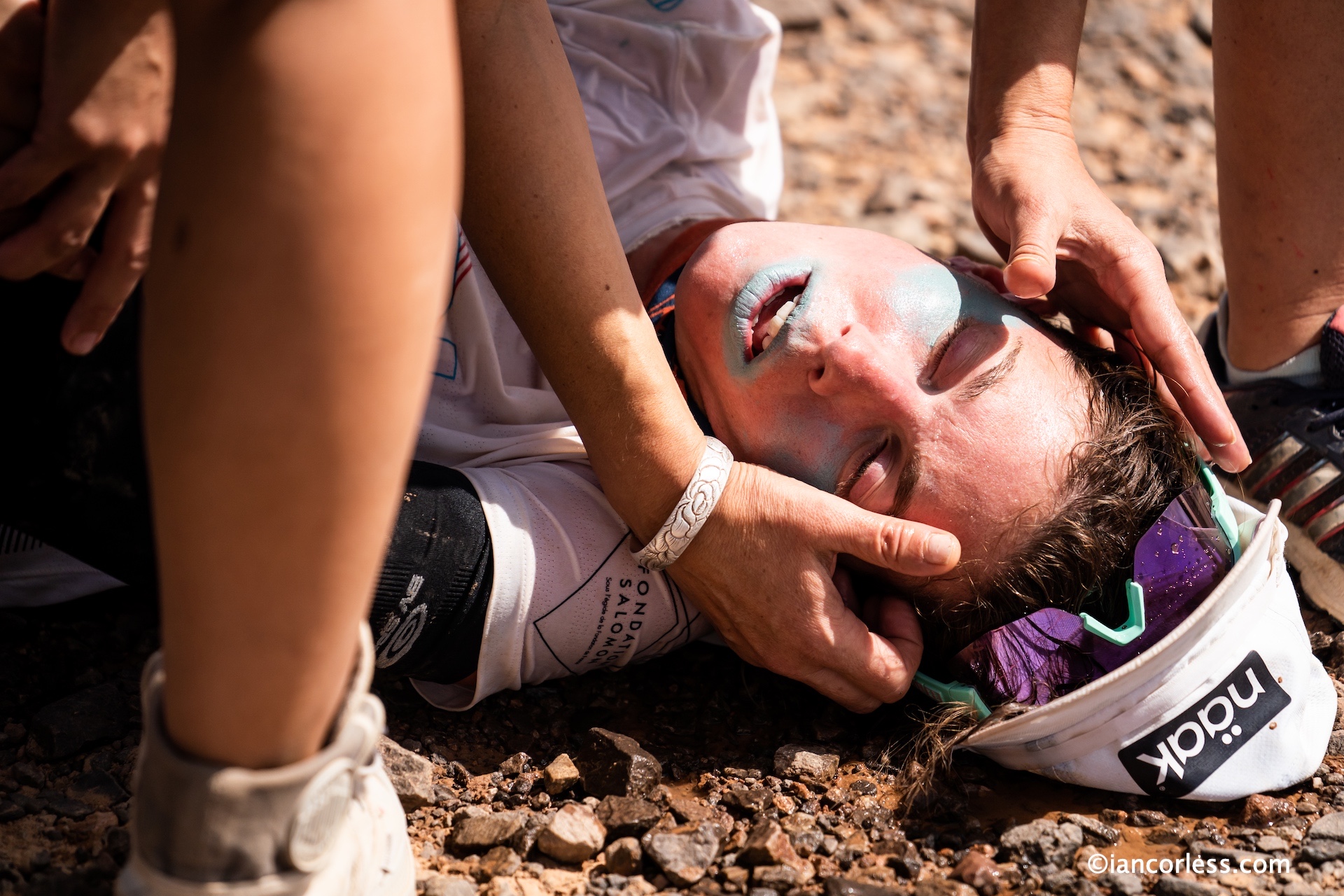
The impact of the heat for the 2021 race was substantial and hyperthermia was a very real risk and without question, countless runners succumbed to the rising mercury.
HEAT and SICKNESS
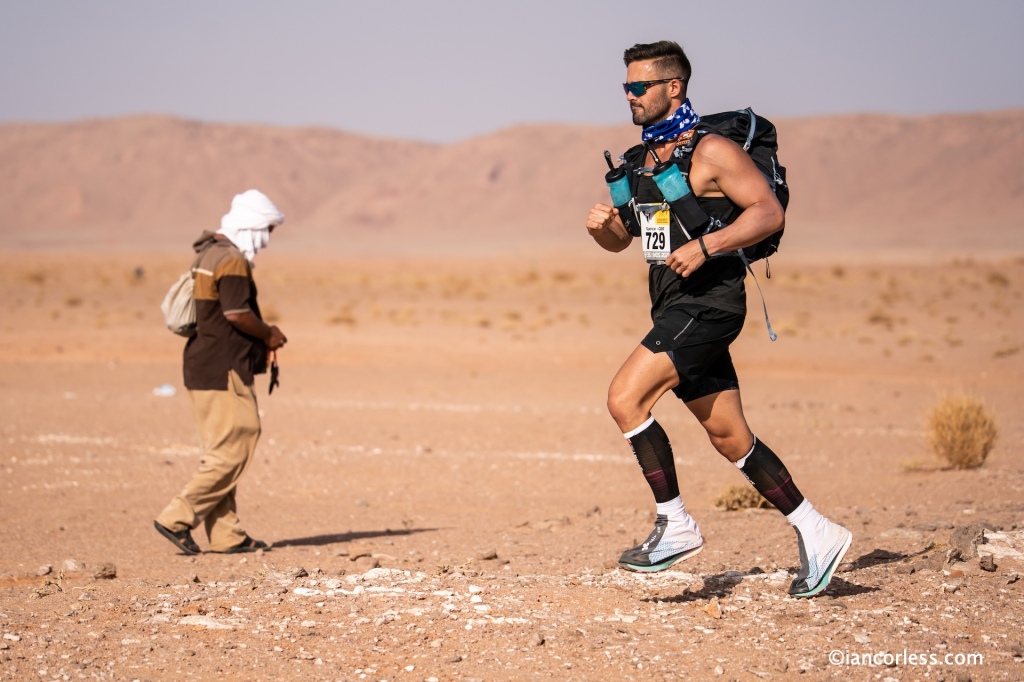
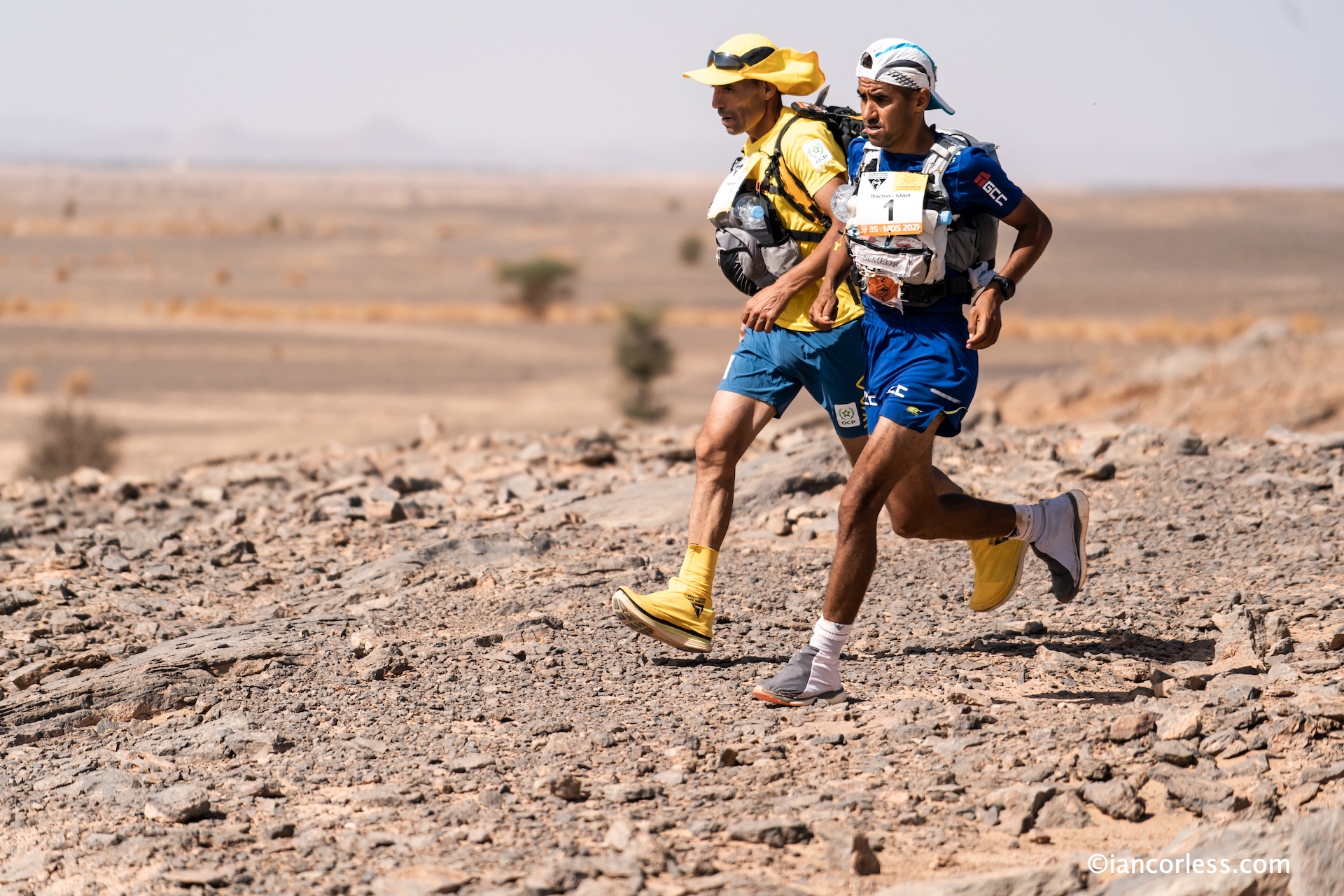
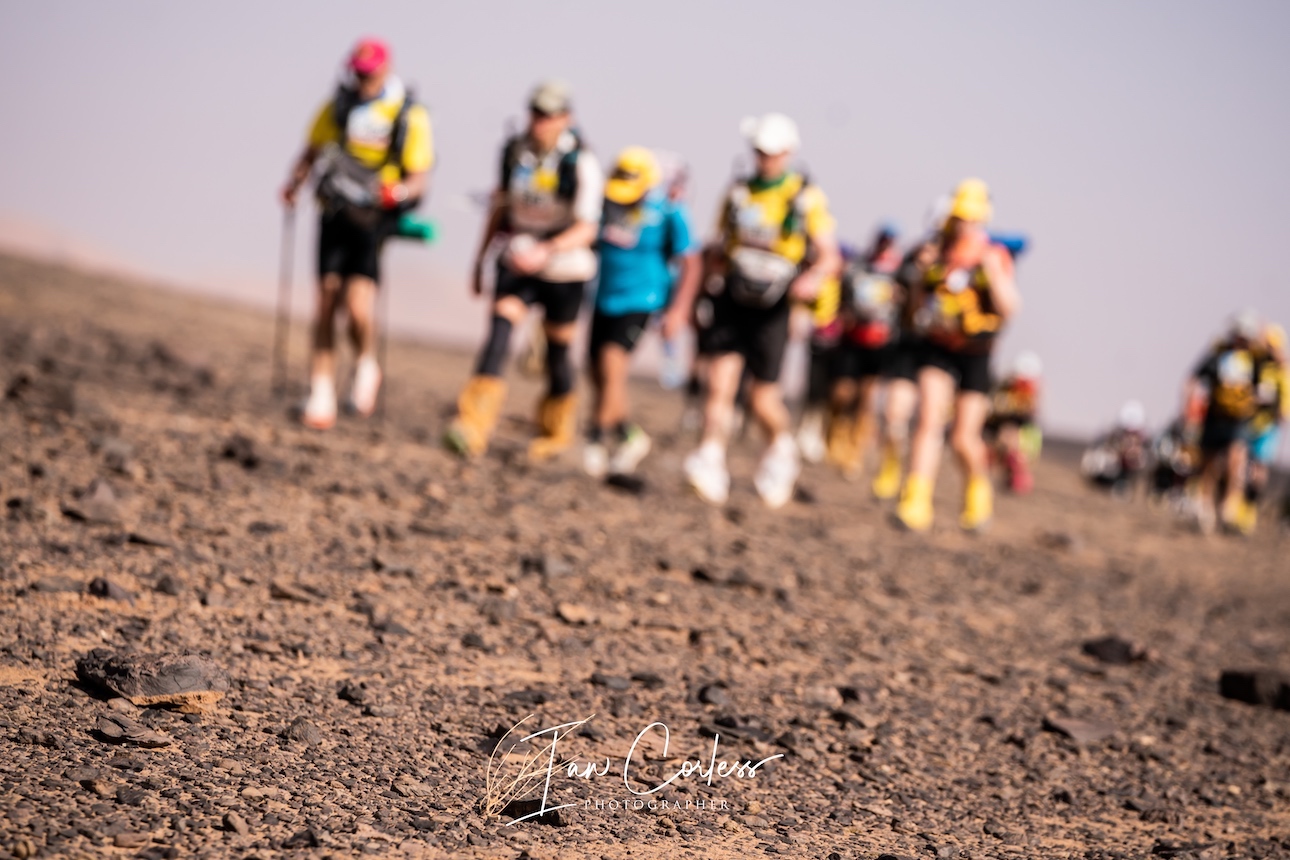
Heat is a brutal beast to manage and quite simply keeping core temperature lower, particularly when running can be difficult. It was very clear that many runners, maybe far more than usual were running considerably less and walking became the norm except for the front of the race, the top men and women were running as usual but at a reduced speed. It’s important to clarify here that walking is essential at MDS and many walk far more than they anticipate, even in a normal year. Heat and a pack add considerable strain and why many think pre-race they will run 80% and walk 20%, the reality is they will walk 80% and maybe run 20%. For 2021, walking was the norm.
MDS is a self-sufficient race with rationed water that echoes Patrick Bauer’s original journey. It was apparent after day 1 that water rations would need to be increased to compensate for the heat. An additional 1 x 1.5ltr bottle was added to each checkpoint (typically every 10km) for every runner and water allowance was increased at the end of the stage.
Additional water was required by all; however, this added an additional problem for many runners… Typically, runners use 2 x 750ml bottles on their chest or they use a 1.5ltr water bottle added on top of a front pack – the Moroccan runners prefer this method. The problem comes when you need to carry an additional 1.5ltr – there is nowhere to put it (typically) other than carry in one’s hand. Not only does this add another 1.5kg to overall weight but it can also alter running gait, and this can cause potential injury or stress.
In a normal year, the excessive heat would have without doubt impacted on the race and the number of runners who completed. However, I strongly believe that the DNF (did not finish) rates would probably have been more around the 10% mark or maybe 15%.
The main reason for DNF in 2021 was sickness (Diarrhoea and Vomiting) and the ongoing knock-on effects. The jury is out on the causes of this sickness and hopefully, in time, we may receive clarification of this from Doc Trotters and the MDS organisation. Of course, there are many rumours, however, here are a couple of my thoughts (I am no expert, so don’t shoot me down):
Food poisoning – The only shared food came on day 1 and 2 before the race got underway. If there was a problem with the food provided by the race, everyone would have been impacted immediately and not over multiple days and the 7-days of the race. During the race, everyone is self-sufficient, so, food poisoning on a mass scale is not possible.
Noro virus – A stomach bug that causes vomiting and diarrhoea which spreads rapidly and typically lasts no longer than 2-days. This sounds very similar to what MDS runners and staff experienced with most stating the ‘bug’ lasted just 24-hours.
Bacteria – One or two (maybe more) were sick before the race, therefore, a form of bacteria (equally Noro virus) could have been brought in to camp and quickly spread from person-to-person and tent-to-tent.
Hyperthermia – Increased heat and exposure to heat causes a failure to regulate mechanisms within the body that is extremely dangerous that can result in vomiting and diarrhoea and other symptoms.
Ultimately, the sickness at the 2021 MDS may well have been a combination of several of the above.
One thing is for sure, the sickness when it came was brutal and debilitating. I know, I had it! I got it on the evening of day 3 at 2000hrs and without going in to too much detail was losing fluids from both ends for 6-7 hours. By the following morning I was over the worst but struggled to drink and ate nothing for 24-hours. I had little to no energy for day 4 of MDS.
The above was a typical story for many a runner and quite simply, if you are losing fluids and energy as in the scenario above, combined with intense heat and trying to cover 32 to 82.5km’s a day, it is no wonder that so many DNF’d.
Many a runner proclaimed that they were fit, strong, well trained and prepared for the MDS only to have the race ‘robbed’ from them by a situation that was beyond their control. I fully understand this thought process and can only sympathise. I strongly believe that had it not been for the sickness, many more would have finished the race.
The impact of Covid and the Pandemic may well have impacted on every runner’s immunity and ability to fight bugs and bacteria? For most of us, we have isolated, social distanced and constantly washed our hands for 18+ months. Suddenly, we were all thrown in close proximity with less-than-ideal hygiene… I wonder if this resulted in some problems.
Multiple questions were asked by runners:
Race distances should be made shorter – As I have mentioned previously, the MDS is an extreme event that takes place in the Sahara. There are many variables of terrain and heat, and this is the challenge. The race is how runners manage this challenge and in 2021, 50% did this.
The race should be cancelled – Ask the 50% that finished should the race be cancelled; you would get a resounding no. I also spoke with many DNF runners who also confirmed that the race should have continued. Ultimately, MDS will assess the 2021 race and may well sit down and lay out a new set of protocols moving forward that make allowances for extreme conditions that are outside the normal extreme conditions of the race. For example, this could be early start times, longer cut-off times, the option to shorten stages or maybe a combination of elements. BUT would this take away from the ‘toughest foot-race’ tagline?
The race was compromised – The extreme heat and the sickness compromised the race experience for the runners and yes, it impacted on the MDS organisation with demand on 4×4 vehicles, doctors, helicopter rescues and so on at an all-time high. Typically, there are 400 staff on MDS, and in 2021 700 participants. Doc Trotters team was as large as usual, despite less competitors, therefore the ratio of doctors to runners was high. However, I described Doc Trotters as the NHS and the runners as Covid during the race. Quite simply, the 2021 MDS had a perfect storm of events that put all under pressure. It is important post-race that an assessment is done so lessons can be learnt. There are always lessons to be learnt.
DEATH
The death of a runner on day 2 due to cardiac arrest was announced to all the runners and MDS staff publicly by Patrick Bauer in bivouac on the evening of day 2. The situation was clearly explained to all. It was a sad day and first and foremost it is important to pass on our love and thoughts to all those concerned.
For many, the death was a wakeup call and it suddenly brought home the real risk and danger of participating in extreme event. It changed viewpoints and it may well have influenced 2021 participants to ‘play safe!’ afterwards. Prior to the incident, the urge to push on and fight for a finish was a priority, however, for the start of day 3 and moving forward, I personally encountered runners making decisions based around the day 2 death and their own personal assessment of risk and what risks, they personally were prepared to take. It does not matter if those ‘risks’ were real or perceived (from an outside perspective), from the individuals’ perspective they were real.
On a personal note, I have been involved in extreme events for many years and unfortunately, I have experienced multiple deaths, I have been involved in multiple rescues and I have had to make the decision of when and when not to carry on personally. Just this year at the TDS, part of the UTMB week of races, a runner died during the night – I was there. It may sound blasé, but extreme events are not without risk, danger or death. After all, for many, it is ‘the risk’ that makes the event desirable. MDS, as a prime example, has used the tag of ‘toughest foot-race in the world’ for many years and those who sign up, quote this as a reason for participation. Prior to 2021, the race had experienced 2 deaths. The MDS is not without risk and these risks exist despite rigorous health checks before toeing the line on day 1 and incredible medical support and a huge logistical team. As J K Rowling said, ‘It is impossible to live without failing at something, unless you live so cautiously that you might as well not have lived at all…’
Risk at MDS is actually very low. The medical team and support in conjunction with live Spot tracking, countless 4×4 vehicles and 2 helicopters means that should an incident take place, you will normally be looked after within 20-minutes.
With all the above considered, the death of a runner had an impact.
THE RACE
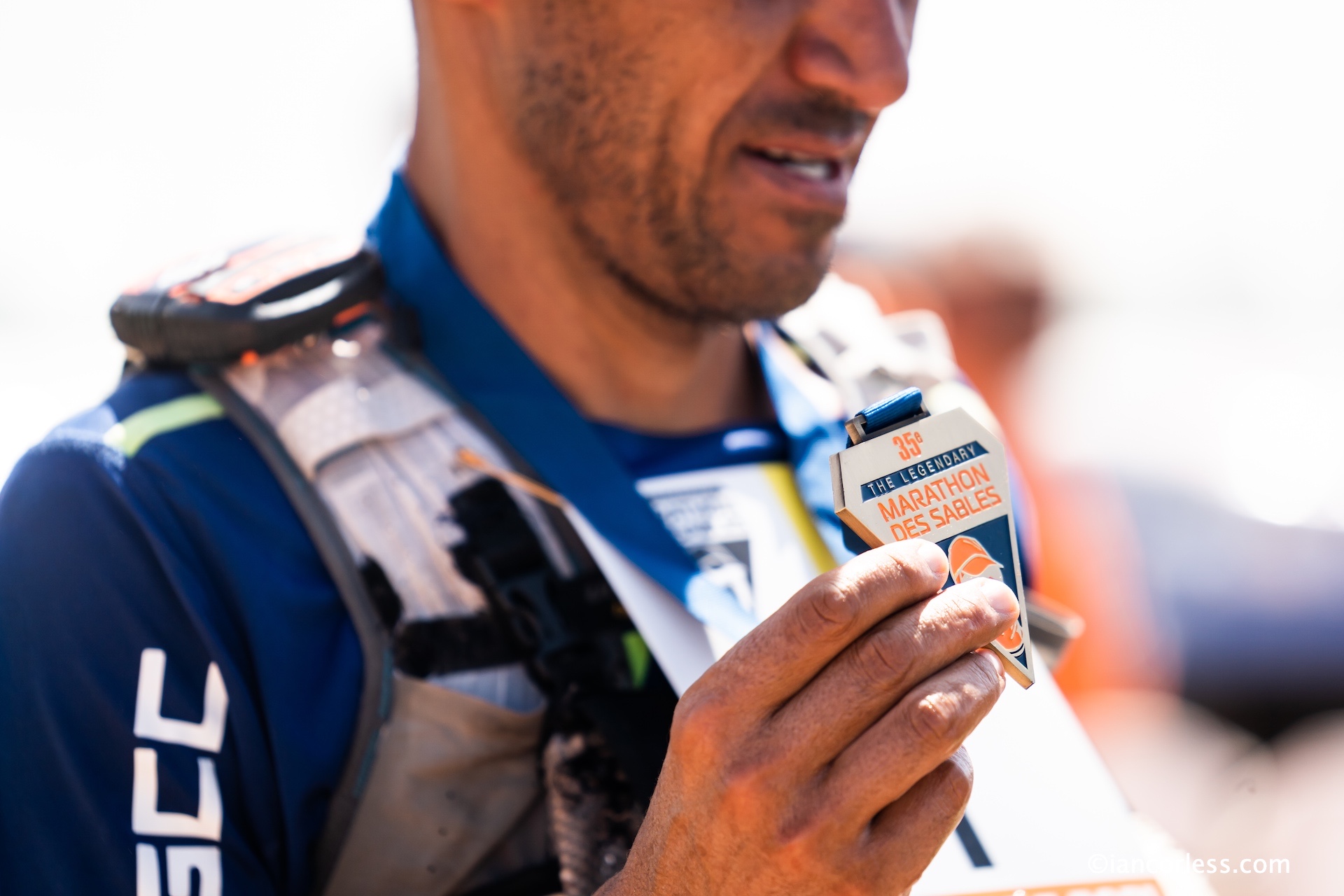
The 35th MDS took place over 7-days with 5 timed stages and 1 charity stage. Days 1, 2 and 3 were 32 – 38km. Day 4 and 5 was the long day with an allocated 32-hours to complete 82.5km. Day 6 was the classic marathon stage where medals were awarded at the end and officially, this was the conclusion of the timed race with overall ranking positions awarded. Day 7 was a compulsory charity stage of 8.5km and the timing was not taken into consideration.
Day 1, 32.2km race summary HERE – On paper, was an ‘easy’ day with little challenging terrain. However, the 46-degree temperatures in the shade changed that. It turned out to be a very tough day, especially with the race operating on ‘normal’ water rations. The DNF rate after day 1 was modest. I personally anticipated the numbers to be much higher. The organisation assessed the heat and feedback from the race route and increased water rations.
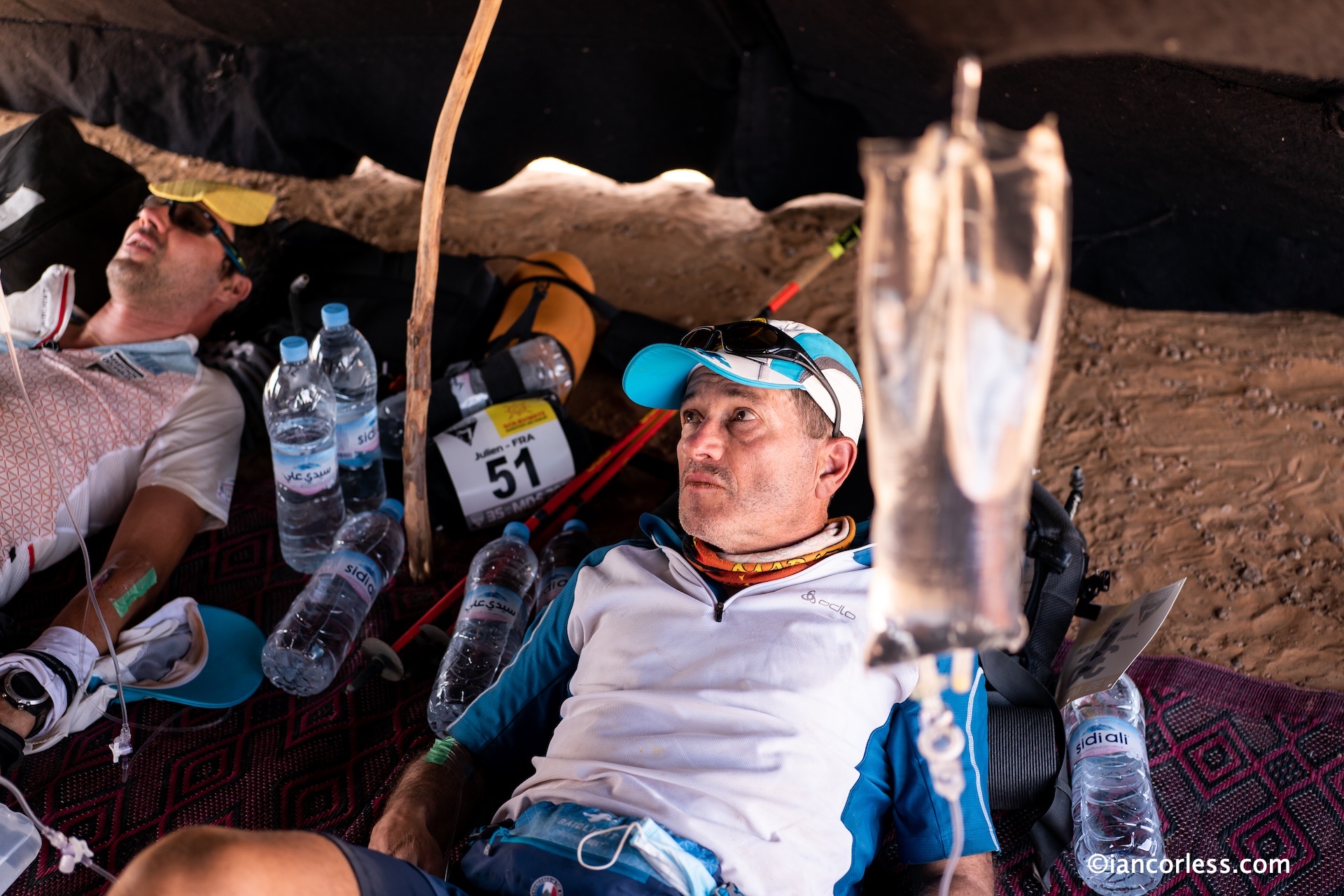
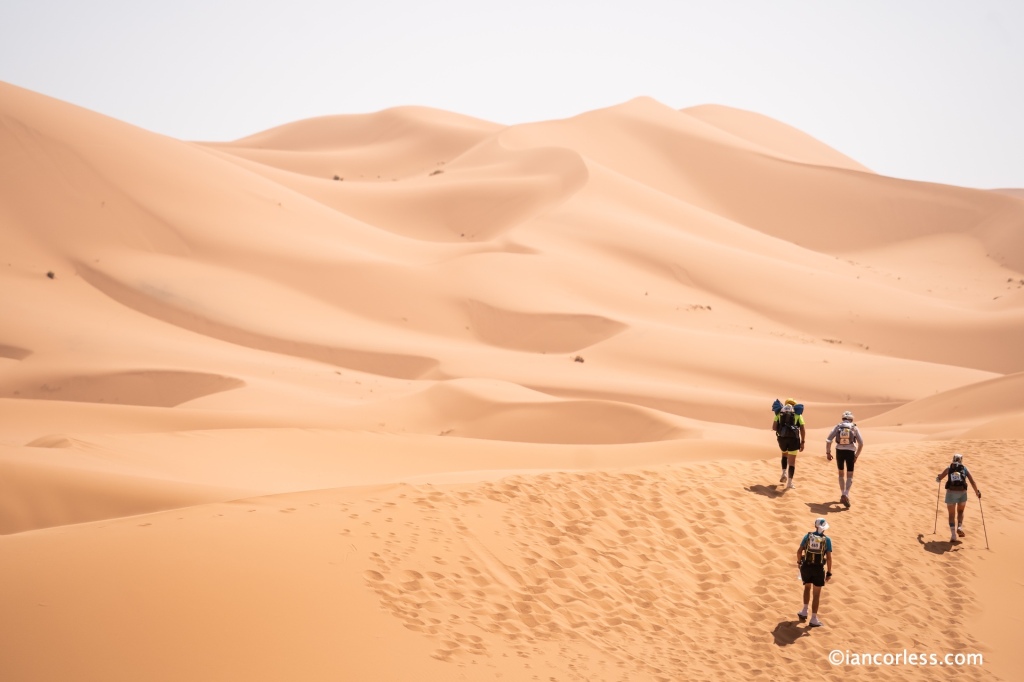
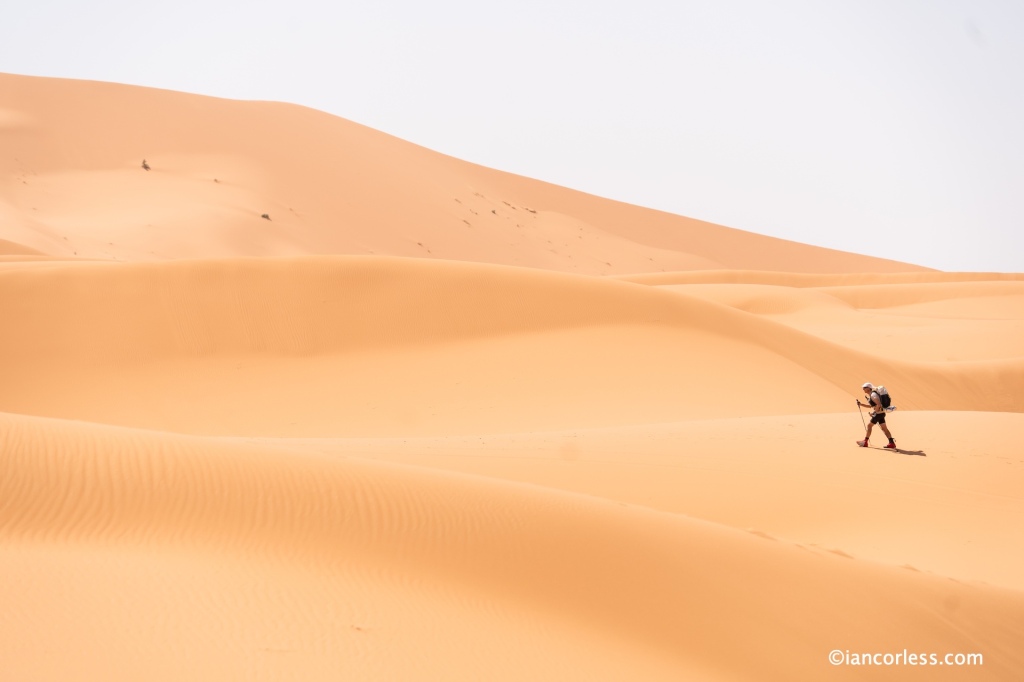
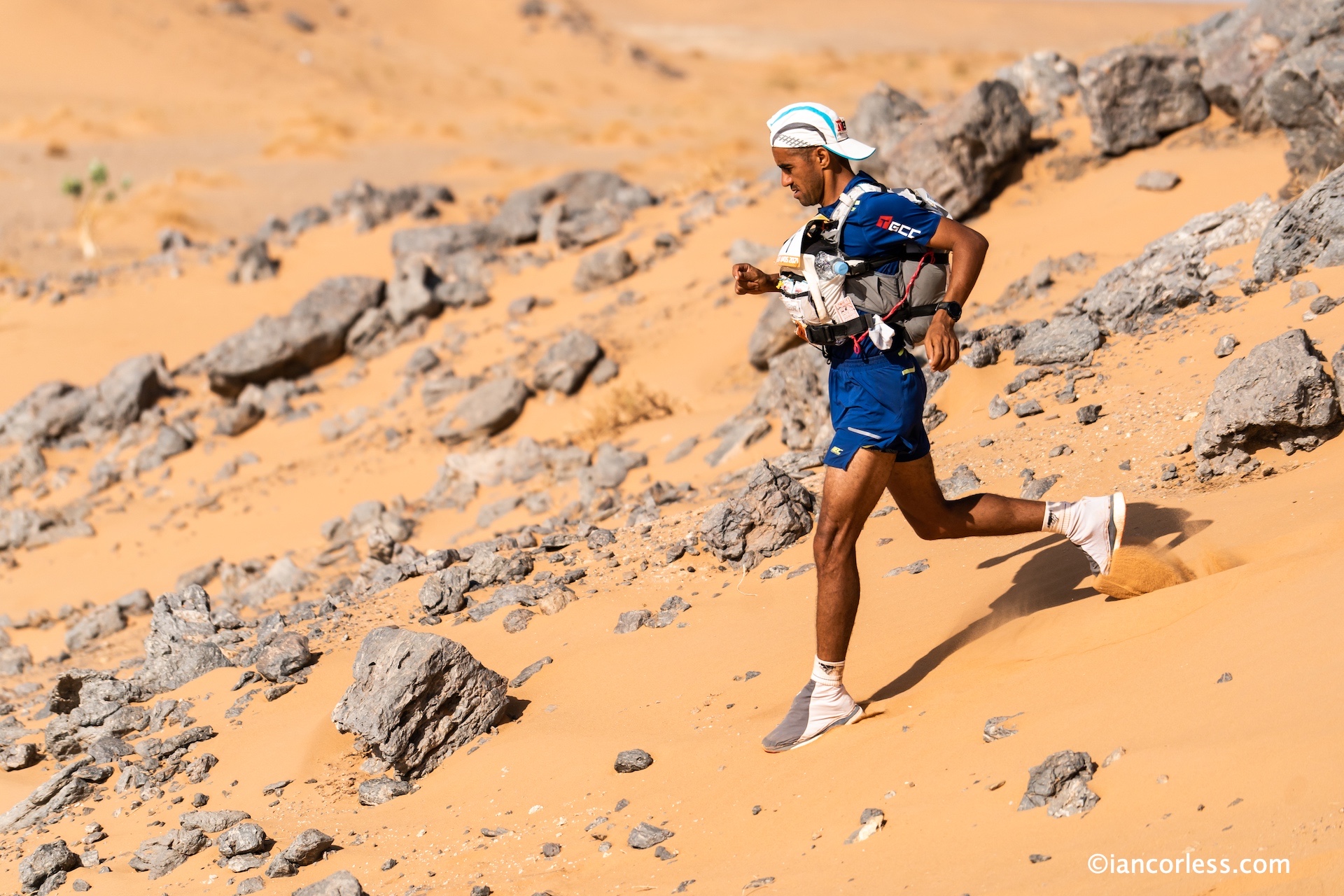
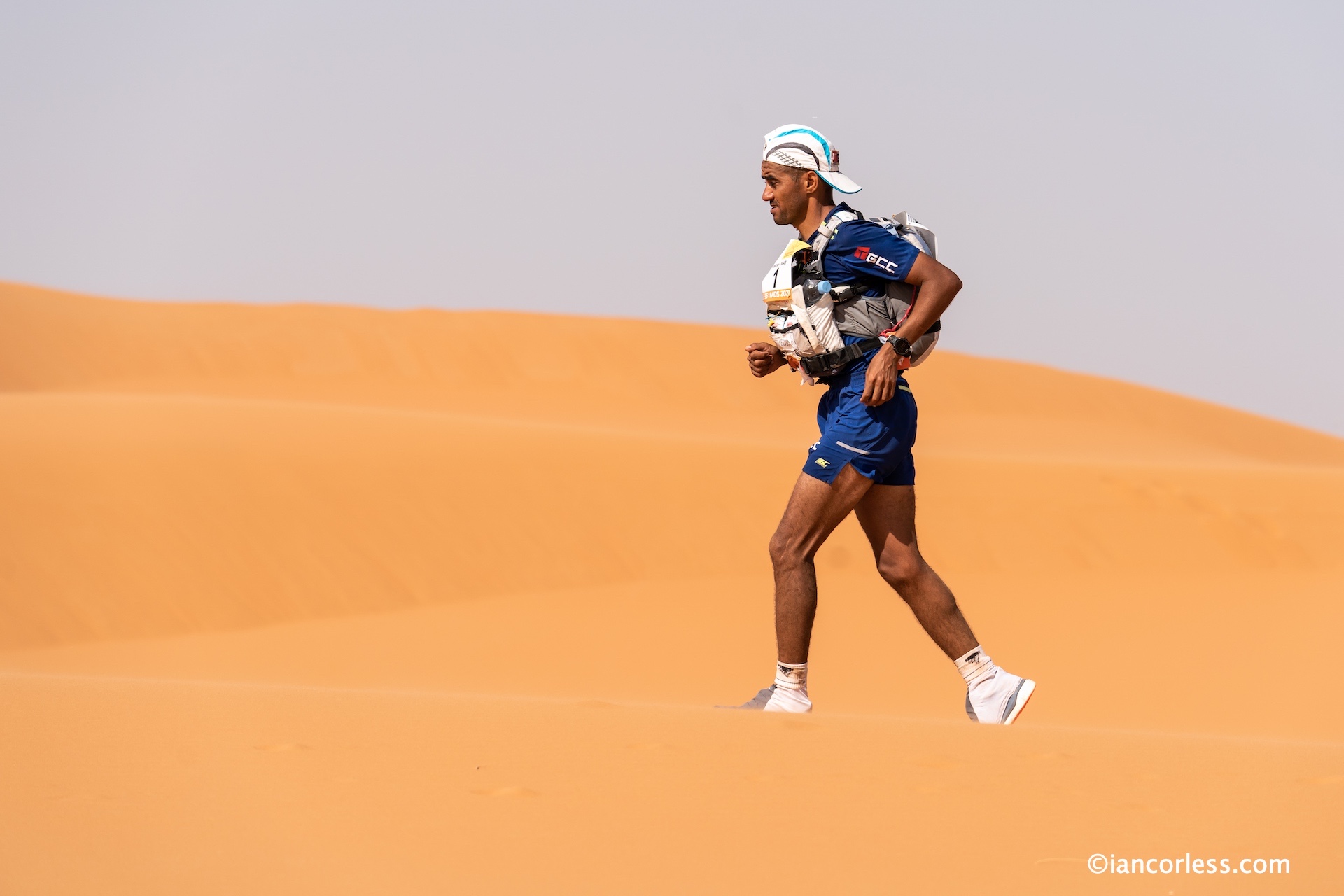
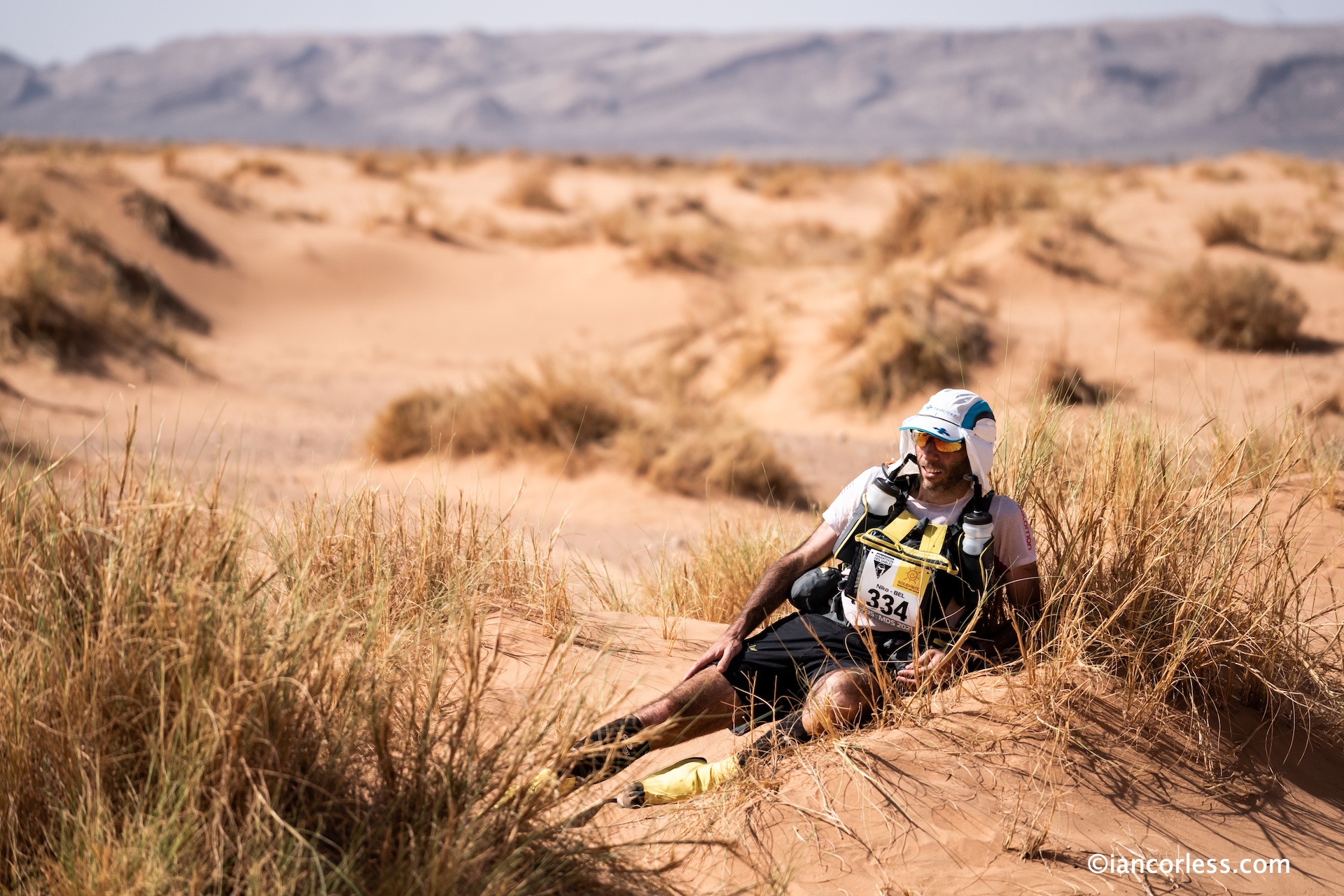
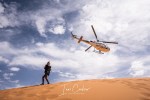
Day 2 32.5km race summary HERE – Was a similar distance to day 1 BUT included a long and lengthy stretch of the Merzouga (Erg Chebbi) dunes. These dunes last 13km +/- and ran from CP1 to CP2. They are the highest dunes in Morocco and would be feared in any ‘normal’ year. For 2021, they were a formidable challenge. Top runners could pass through them in less than 2-hours but for most, they could anticipate 3, 4, 5 or maybe even 6-hours to cross. This is without any shade or additional aid stations. CP1 resembled a medical tent from a war zone with countless runners taking shade and on IV drips. The severity of the heat was soon apparent to all and while some had the ‘sickness,’ it was probably fair to assume at this point in the race many were suffering from hyperthermia. It was the evening of day 2 when bivouac and the MDS staff ere notified en-mass of the death of a runner.
Day 3 37.1km race summary HERE – Had a sombre start with silence and the whole race departing with a walk and clapping. The distance ahead longer than the previous two days and the death from day 2 lingering on many people’s mind. The ‘sickness’ within camp was now considerably more obvious, with many runners complaining of D+V and I personally witnessed countless situations of runners vomiting before me. The route was generally easier but there was a considerable amount of soft sand. The day was tough one with many withdrawing, the heat, sickness, and the death all playing instrumental in how individuals assessed their own personal risk assessment of the challenge ahead.
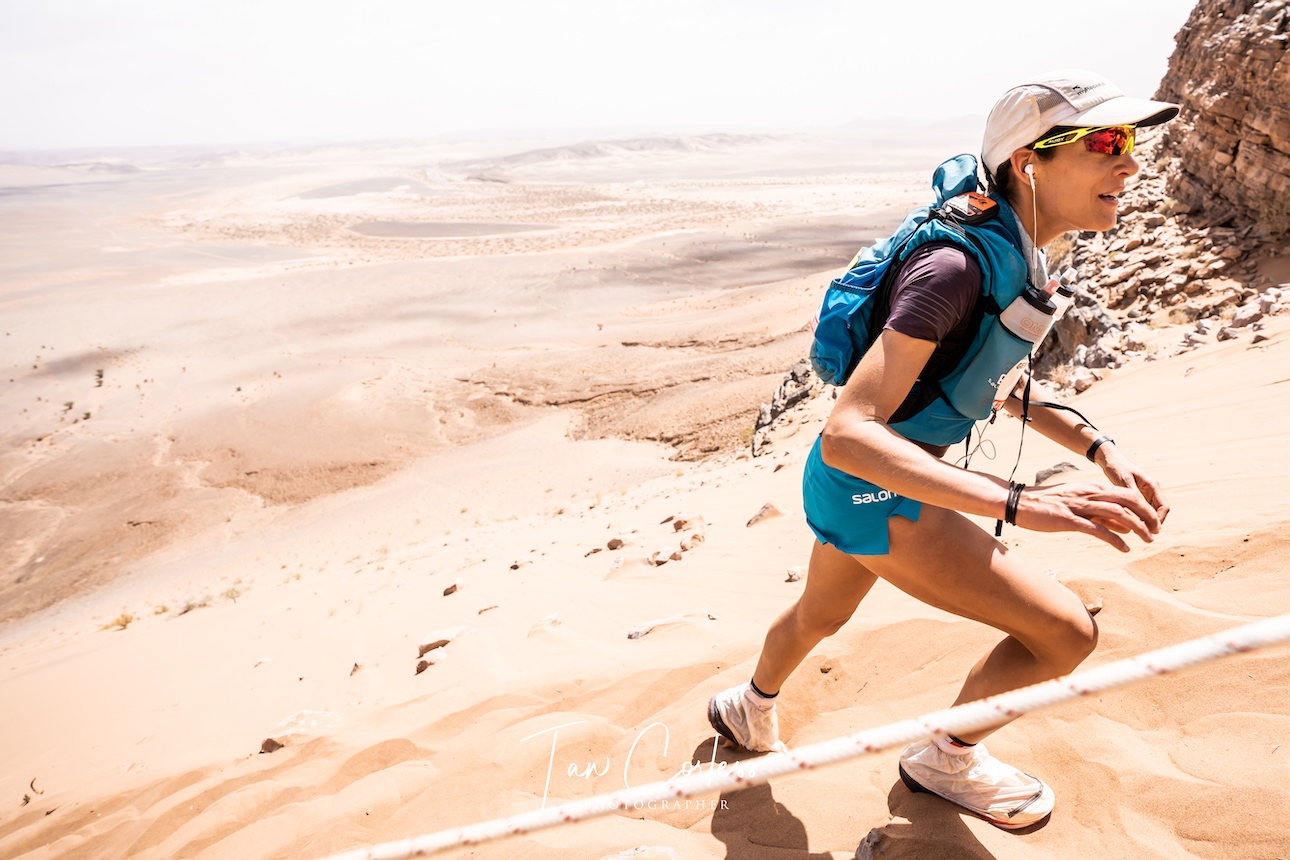
Day 4 82.5km race summary HERE – Was the long day with two starts, most of the race starting at 0800 and the top runners originally departing at 1100 but this time was brought forward. Importantly, the distance of the long day was not notified to the runners until the completion of day 3. This was one of the ‘surprises’ of the 35th edition. However, this no doubt contributed to the anxiety and worry for the 2021 participants. I know from experience, the first thing runners do when they receive the ‘road book’ for the edition in which they will participate, is that they look at what distance the long day will be. To not know this leaves question marks and worry. For the 2021 edition, with so much heat and sickness, this was one additional worry they did not need. As it turned out, the distance was normal 82.5km, however, it did include the infamous Jebel Oftal that for most, would be climbed at night. With less than 10km covered and before CP1, the long day was proving too much for many. I personally put 9 people in vehicles who were suffering from sickness, heat or a combination of both. CP1 was full of runners who would withdraw and who were already on IV drips. It was going to be a very long day, night and following day. Many headed advice taking the day as steady as possible looking to gain time during the cooler temperatures of the night.
Day 5 – Was the conclusion of the long day for those who needed it, or a great opportunity to sleep, relax, hydrate, eat and look after personal admin.
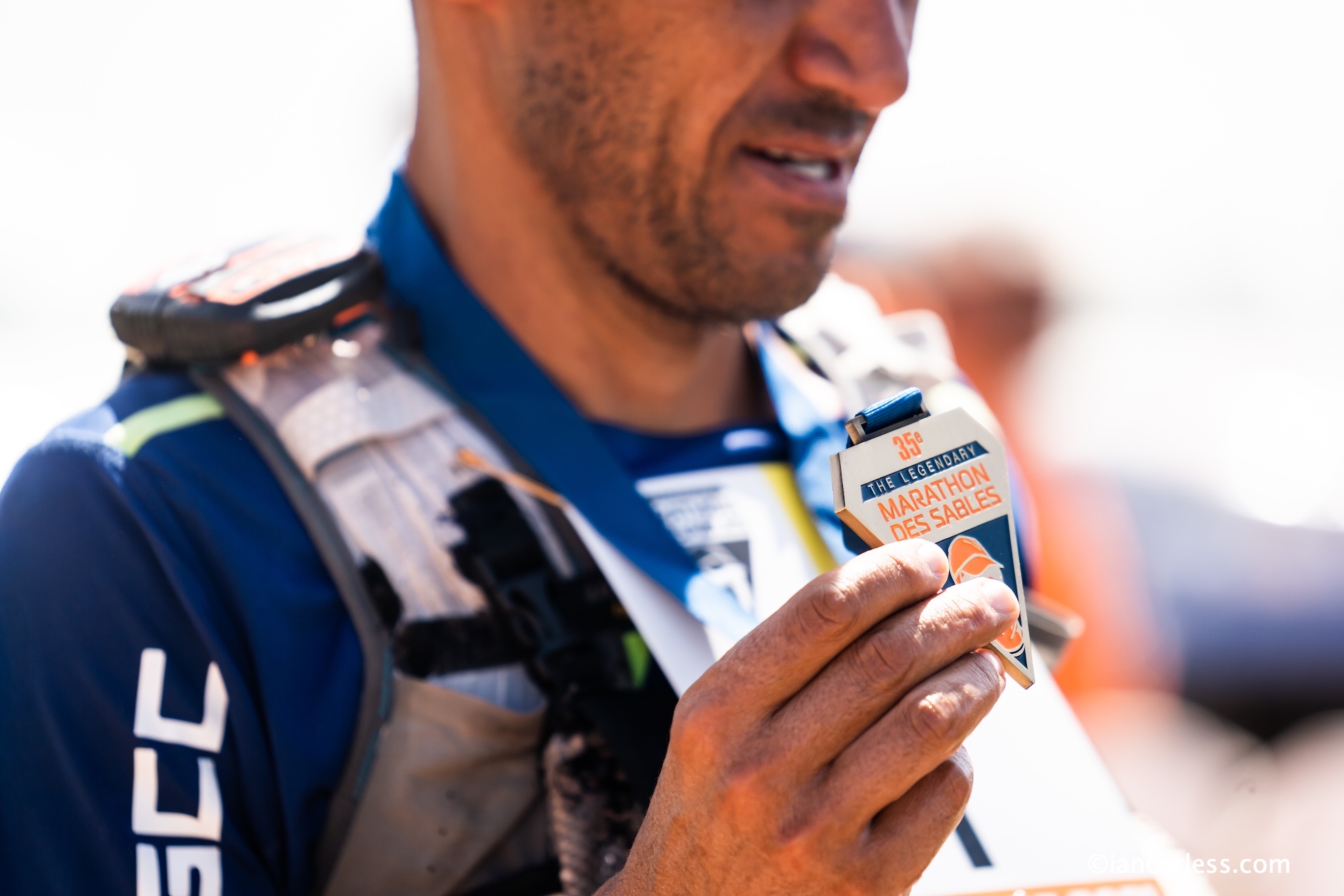
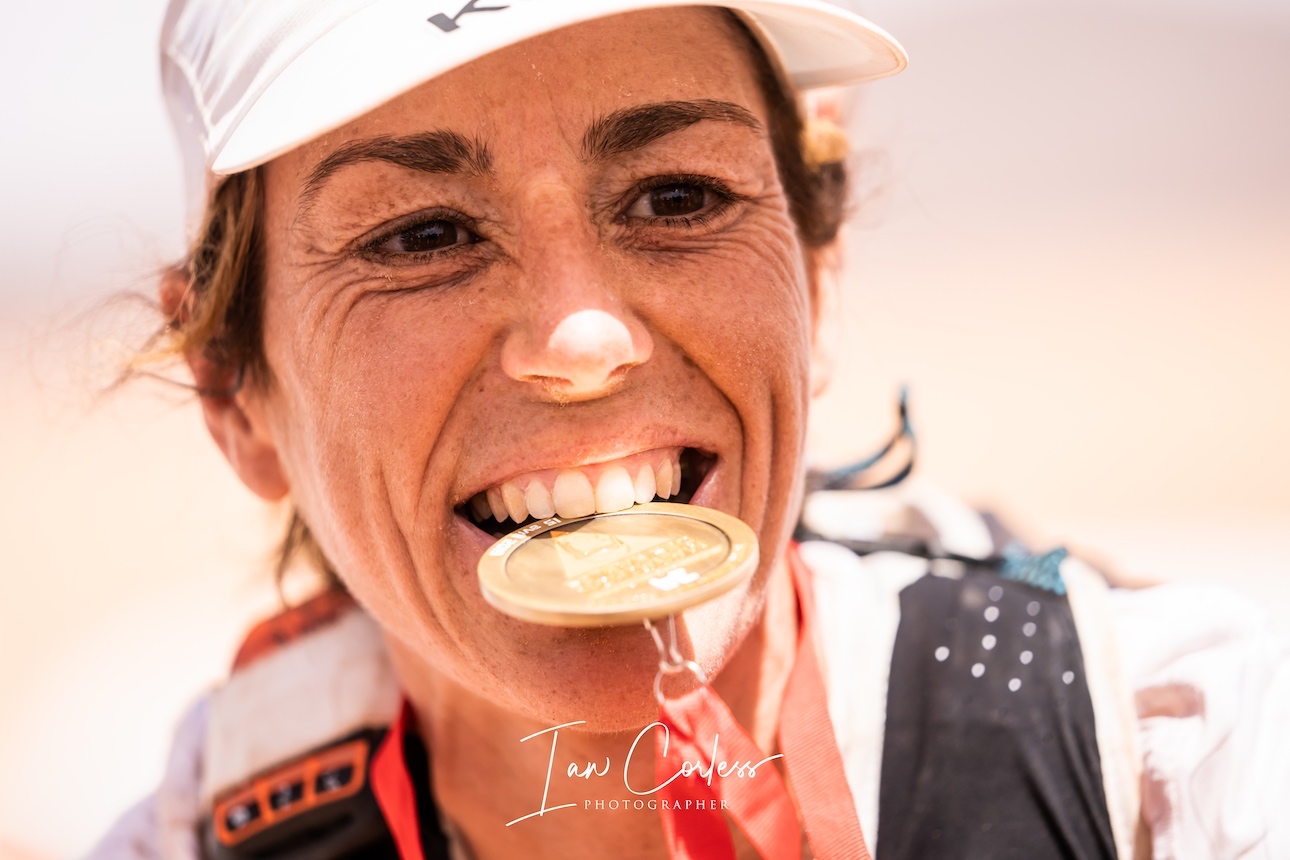
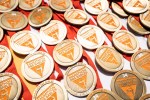
Day 6 42.2km race summary HERE – The marathon day and now approximately 50% of the race had DNF’d. For those who started the marathon day a medal waited at the end, and it was fair to assume that all those who started would run, walk and crawl to get that medal. All who started finished.
Day 7 was the charity stage, a compulsory 8.5km to help raise funds for charity and facilitate the departure from the desert and back to civilisation.
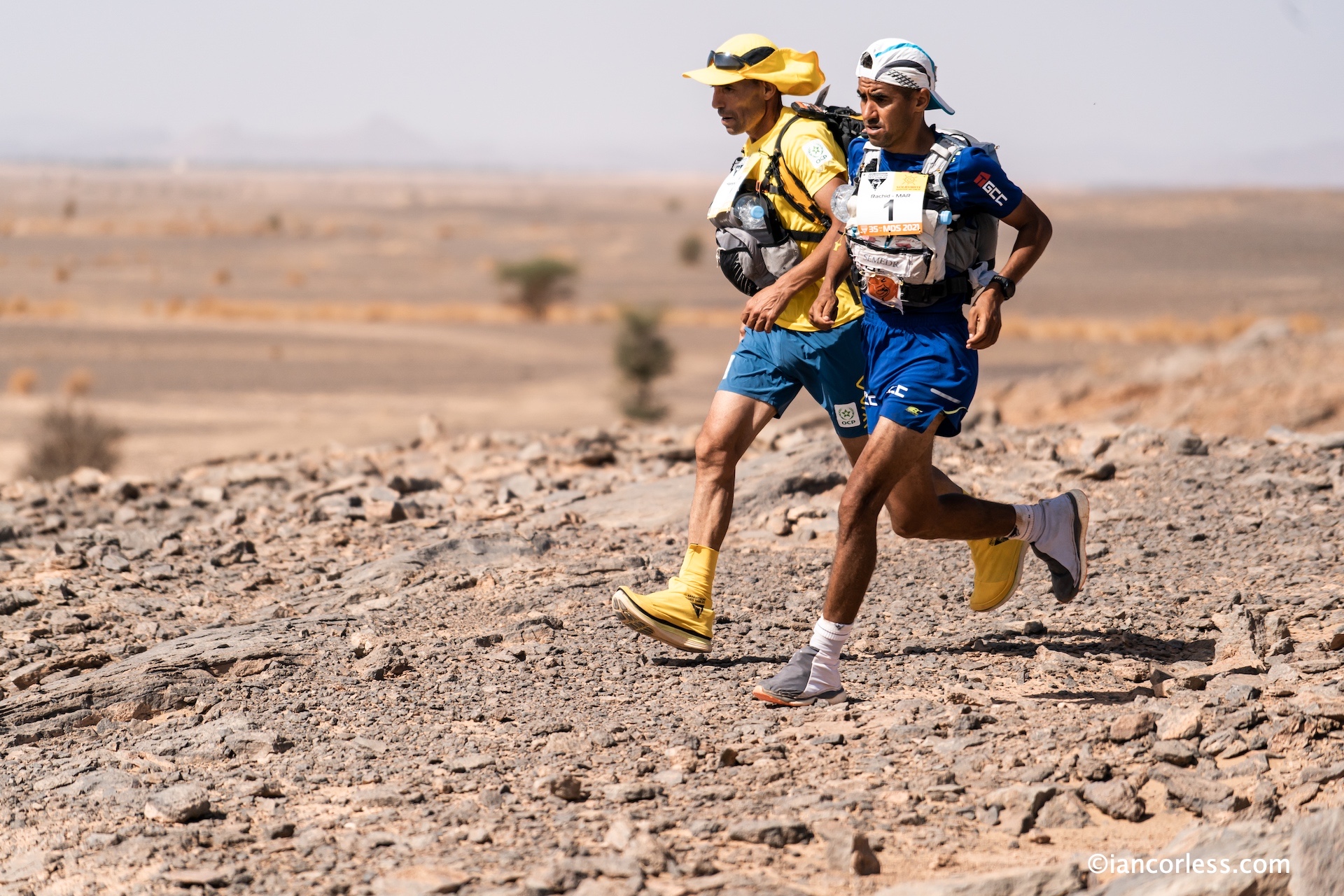
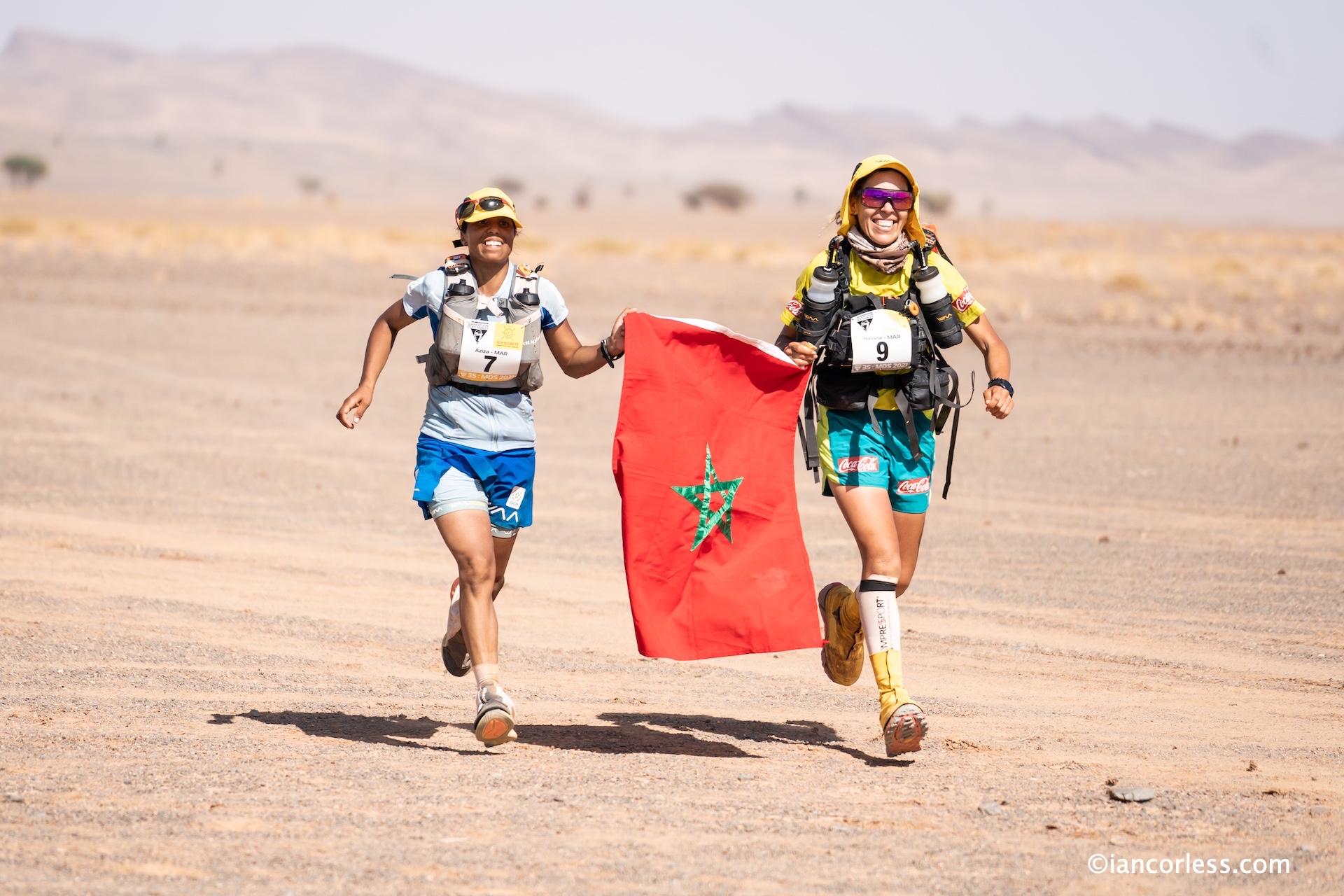
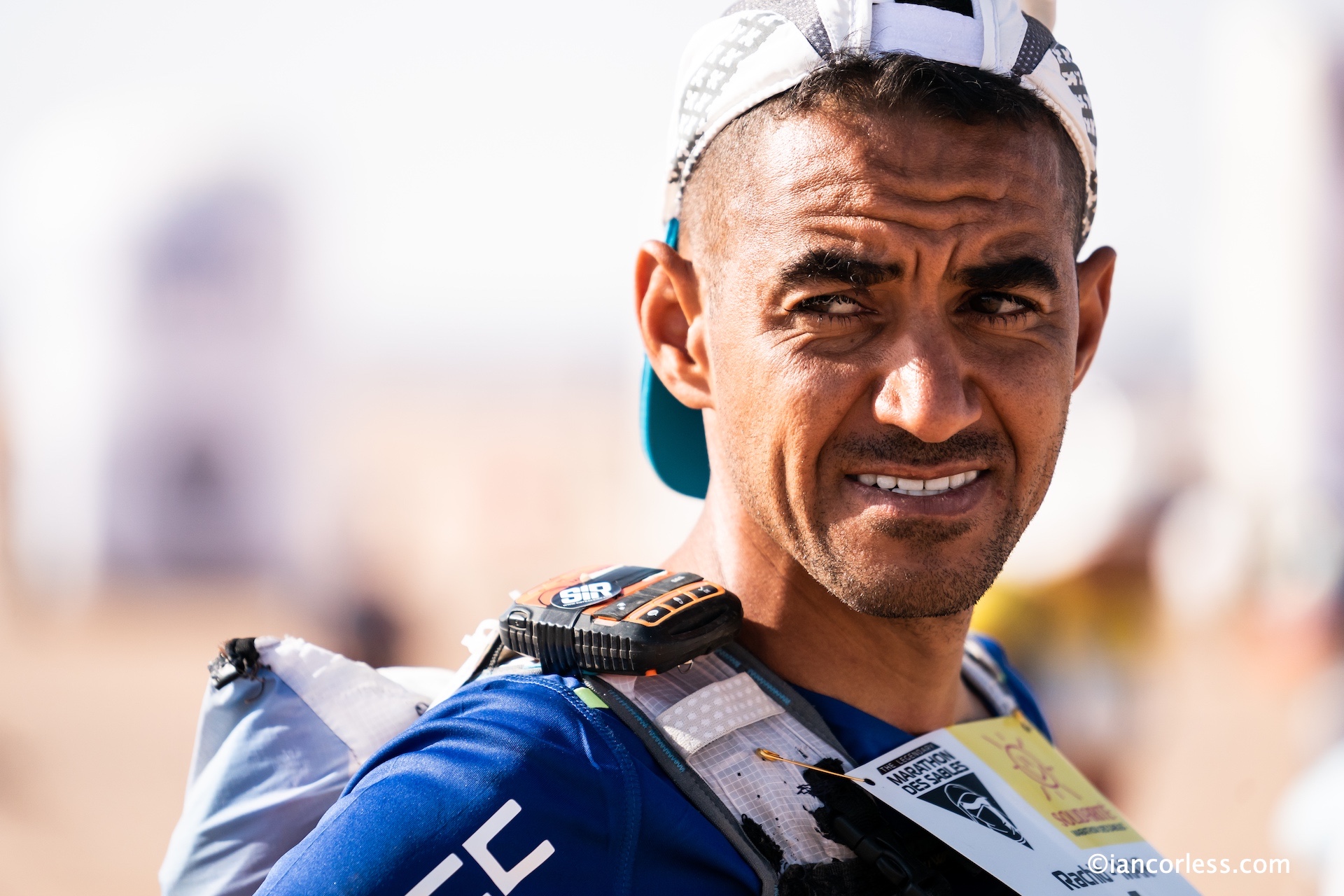
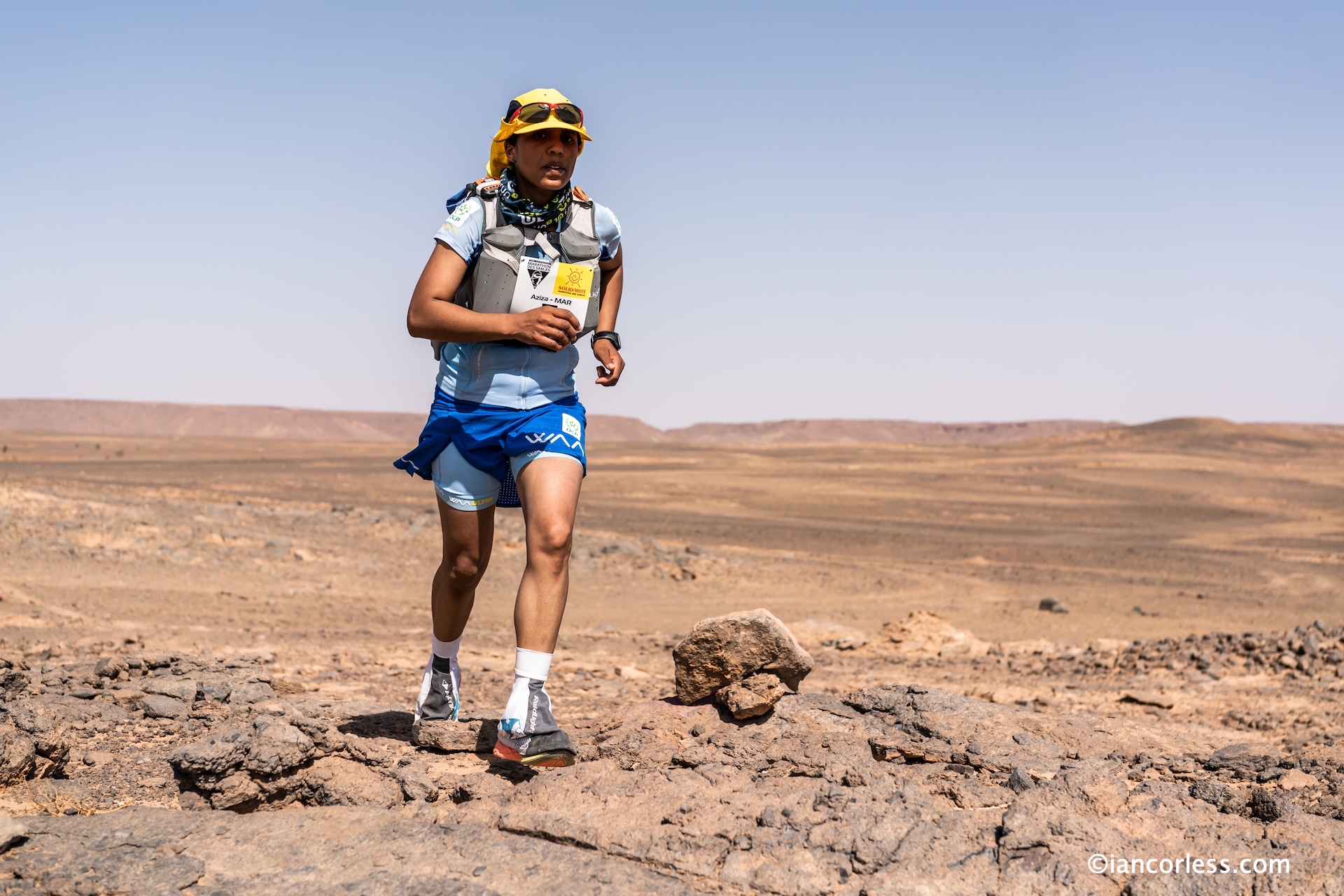
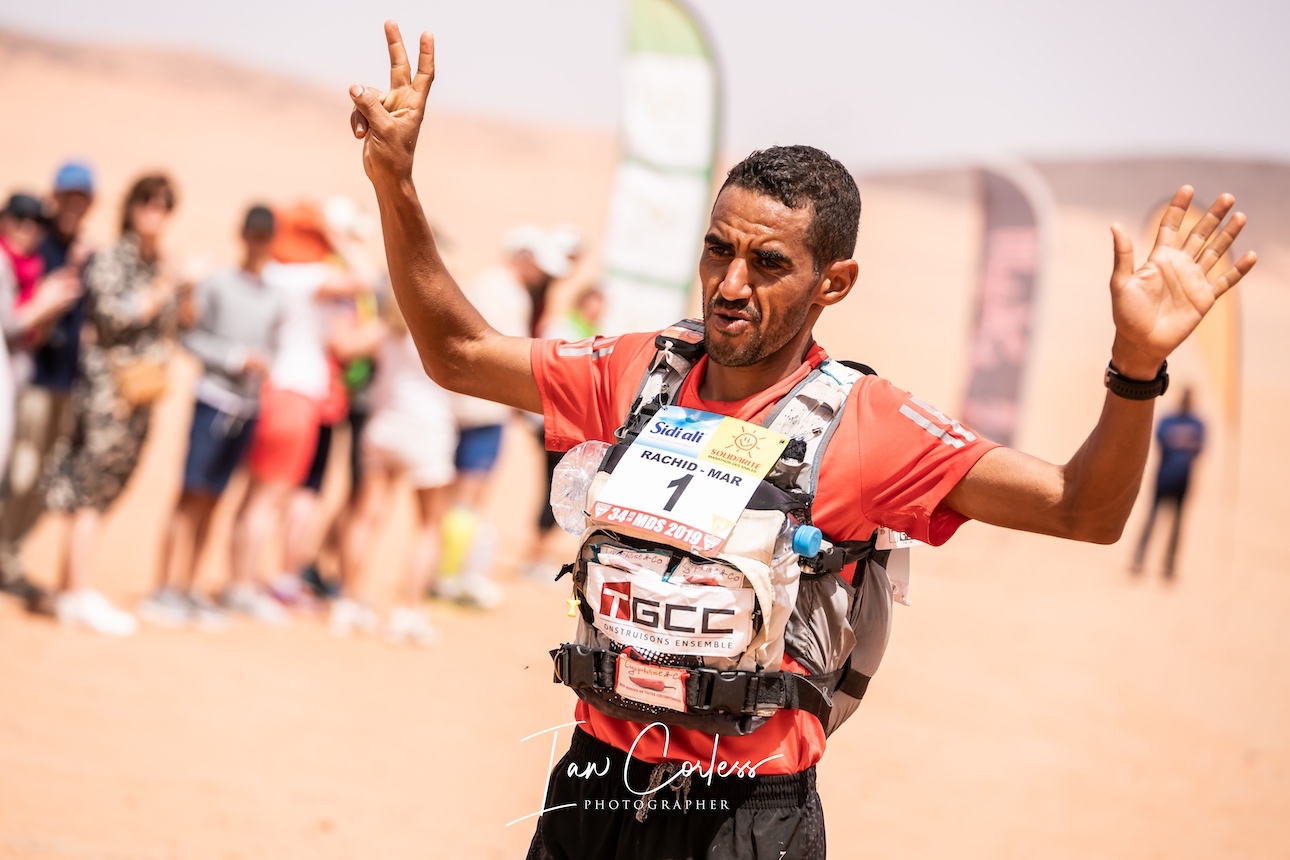
The race was won by Rachid El Morabity, his 8th victory and finally, Aziza Raji stood atop of the MDS podium for Morocco.
RESULTS
Rachid El Morabity 21:17:32
Mohamed El Morabity 21:32:12
Mérile Robert 22:39:02
Aziza Raji 30:30:24
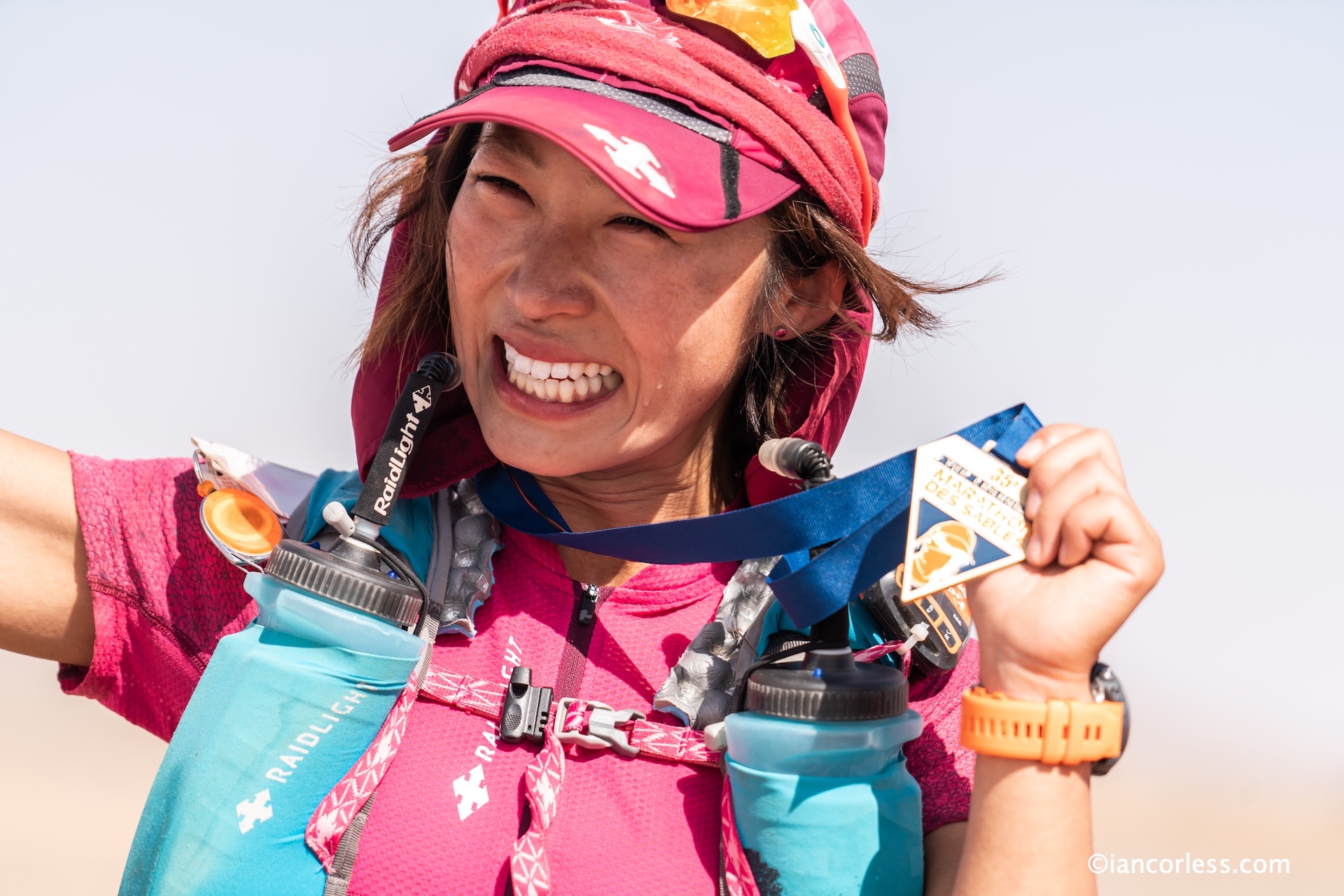
Tomomi Bitoh 34:39:17
Aicha Omrani 35:47:48
NOTES ON THE RACE
I said previously that in my opinion, MDS and races like MDS are about management of the physical, mental and equipment to achieve a goal. After all, it’s a self-sufficient race in the Sahara. THIS IS the challenge. The route changes year-on-year, the terrain changes year-on-year and the heat and other conditions are not guaranteed.
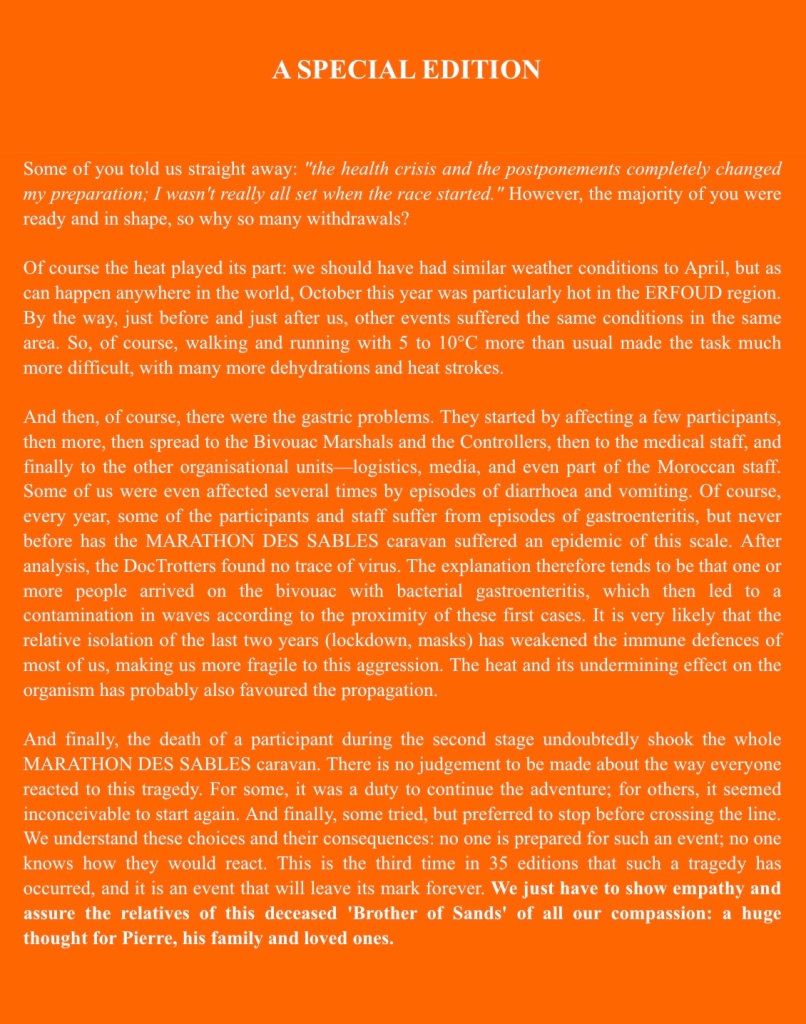
What sets 2021 apart is the sickness that ripped through bivouac, not only for runners but also staff.
Without doubt, why so many DNF’d.
A self-sufficient race is about personal management and I have always said to friends, participants and coaching clients, there are two things that cannot be controlled:
Injury.
2. Sickness.
The sickness the ripped through bivouac left runners drained, empty, void of calories and energy, despite the will and desire to push on, so many were left with empty shells that had to succumb to physical conditions. The physical conditions of course were only made worse by the oppressive and damaging heat.
2021 and the 35th MDS had a set of ‘perfect storm’ conditions that resulted in the highest DNF rate in the races long history.
It’s pointless to compare MDS to other races and state stats and figures. Some races have regularly few finishers due to the severity of route and the time allowance. Other races have a high DNF rate due to the terrain and weather. In most scenarios, runners when entering will research the race and understand the chances of completion. For MDS, stats show that typically less than 10% DNF. Therefore, any runner toeing the start line of the 35th edition will have had this in mind and will have hoped not to be in that relatively small percentage. The fact that 50% did DNF shows that the 2021 was an extreme race, but the major DNF factor was the sickness which cannot be planned for.
TOP TIPS
Understand the event, research it, train accordingly and prepare meticulously.
Heat acclimation pre the MDS will increase the chances of a successful completion, this should be done in the 7-10 days before the race. The best option is to travel to Morocco and be in the environment that the races take place in. Of course, this is not possible for most. Therefore, heat chambers, saunas, bikram yoga or even taking hot baths will all help.
Start slow and ease into the race.
The minimum requirement of a runners MDS pack is 6.5kg. You really need to get your pack as close to this weight as possible. Any additional weight is just a burden that adds to fatigue and stress. Test all your kit and fine tune it.
Prior to admin day, you have your luggage with you in the desert. Take options of kit so that you can fine tune kit selection based on climatic and other conditions. For example, 2021 was so hot a lighter sleeping bag was certainly possible and the need for a down jacket minimal.
When you arrive in bivouac you have dinner, breakfast, lunch, and dinner provided by the race before self-sufficiency begins. You could plan to be self-sufficient for food in this scenario and therefore reduce the risk of any potential stomach issues from unknown food.
Admin day as mentioned above can take a while, take an umbrella to provide shelter, take liquid and snacks.
Food options for the race are key, particularly when fatigue and heat take its toll. Look to eat well early in the race as food can become less appealing as the race progresses. Think high calorie and low weight. Balance sweet and savoury and understand that sweet is less inviting in intense heat and later in the race (for most people.)
Taping shoulders, lower back, and other potential friction points in advance of the race can be a great idea if you know from training this is a potential problem area. Tensoplast is perfect for this.
Get the correct shoes with the correct fit. A thumb nail of space above the longest toe is ideal. Do not go too big with shoes. A shoe that is too large allows the foot to move. A moving foot causes friction. Friction equals blisters. A shoe with a wider toe box can be a good idea as it allows toes to splay. Road shoes can work but the desert is harsh with lots of rocks, a trail shoe usually has better toe protection and an outsole that offers more durability.
Keep hydrated and take salt tablets as provided by the race.
Keep luxuries to a minimum. Always think about weight and ask, ‘can I eat it?’ MDS quite simply comes down to three simple things: Running, sleeping, and eating/drinking.
Take a mat, it provides comfort when relaxing and gives a better night’s sleep.
Personal hygiene is important – be careful. You will be in close proximity with many people with less-than-ideal hygiene conditions.
The long day is always feared but you have loads of time. Take the first day easy, controlling pace, reducing stress and if extremely hot, take more rest and shade. As the day comes to an end, look to maximise the night when cooler temperatures will facilitate a faster pace with less effort. If possible, look to get the long day done before the sunrise the next day… If you can avoid another day of heat, it is well worth it.
CONCLUSION
The oppressive heat of 2021 is a possibility that can appear in ‘any’ MDS and while the 35th edition was extreme, the heat has been experienced before, albeit not for a sustained period. One needs to be prepared to adapt and self-manage to achieve a finishers medal. This is Morocco. This is the Sahara and this is the nature of the event. With global warming and climatic conditions changing worldwide, hotter temperatures in the Sahara may well become the norm, plan accordingly.
The sickness that ripped through bivouac is an uncontrollable variable that cannot be mitigated against, and I can fully appreciate that many feel that a finishers medal was stolen from them. I would not disagree. However, this is nobody’s fault, just darn bad luck. Just like an injury, to coin a phrase, ‘shit happens!’
50% of runners managed to navigate the conditions, implement an effective race strategy, and finish the race. I am sure that many of the 50% avoided the sickness but not all did, I am aware of countless stories of runners who got ill, battled and somehow came out the other side.
The 2021 and 35th MDS was always going to be memorable, now the race is over, we can all confirm that it will never be forgotten. It will be talked about and discussed in many, many years to come.
The below was released by MDS on October 28th. Approximately two weeks after this post was written.
There are lessons to be learnt from the 2021 race, for runners and the MDS organisation.
I for one experienced first-hand, day-to-day, on the course the challenge that everyone undertook and I can hand on heart say that I saw runners fight to the bitter end to hopefully achieve a lifetime goal and I equally saw MDS staff work 16+ hour days helping to facilitate that.
If you are entered for 2022 or 2023, don’t be worried. Respect the event and look at the extreme 2021 event as an opportunity to learn and plan.
The 2022 event will take place 25th March to April 4th.
Please support this website. I believe everyone deserves to read quality, independent and factual articles – that’s why this website is open to all. Free press has never been so vital. I hope I can keep providing independent articles with your help. Any contribution, however big or small, is so valuable to help finance regular content. Please support me on Patreon HERE.
The 35th edition of the MARATHON DES SABLES will go down in the history of the race as one of, if not the toughest edition.
Due to the Covid pandemic, the April 2020 edition was postponed three times to finally take place in October 2021.
Heat and conditions in October for the Sahara and Morocco are usually very similar to April, however, this year, the race had intense heat from beginning to end. Add to the mix sickness, and only 50% of the race completed the 250km journey. Rachid El Morabity won his 8th edition and Aziza Raji her 1st. A final race day summary is here.
Please support this website. I believe everyone deserves to read quality, independent and factual articles – that’s why this website is open to all. Free press has never been so vital. I hope I can keep providing independent articles with your help. Any contribution, however big or small, is so valuable to help finance regular content. Please support me on Patreon HERE.
The 35th Marathon des Sables drew to a conclusion today with stage 5, the last official timed stage of the 2021 race. Tomorrow is the compulsory charity stage which is not taking in to consideration for overall ranking.
It’s a classic marathon stage and as such has become a tradition of the MDS. Just 351 runners started the day, 50% of the original line-up that started day-1.
The 35th edition was always going to be memorable after three postponements, and while many thought this edition would be about handling a safe race around Covid, the reality was far from this. Covid has arguably not been mentioned or discussed since the start of stage-1. Instead, intense heat has been a major consideration, the death of a runner on day 2 and diarrhea and vomiting spreading through camp like a fire. The combination of self-sufficiency, rationed water and food, heat and sickness has all been too much for many and this is reflected in the finishing numbers. People were exhausted. Currently the exact cause of sickness is unknown or confirmed, it could be hyperthermia, bacteria, a bug, virus or maybe a combination of elements?
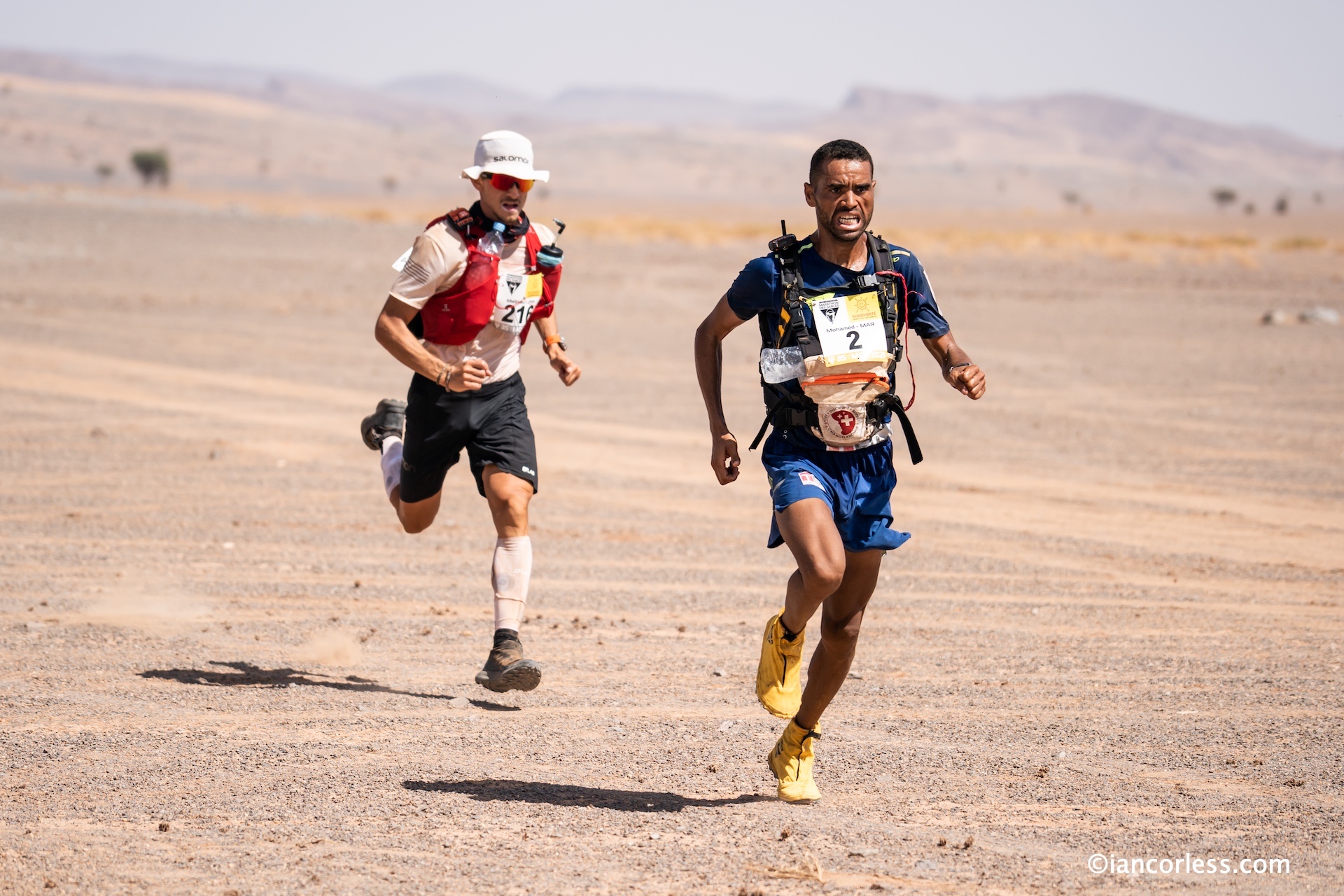
Starting in two waves, 0700 and 0830, runners had 12-hours to complete the course. The men’s race came down to a furious sprint with Mohamed El Morabity pipping a revived Mathieu Blanchard to the line.
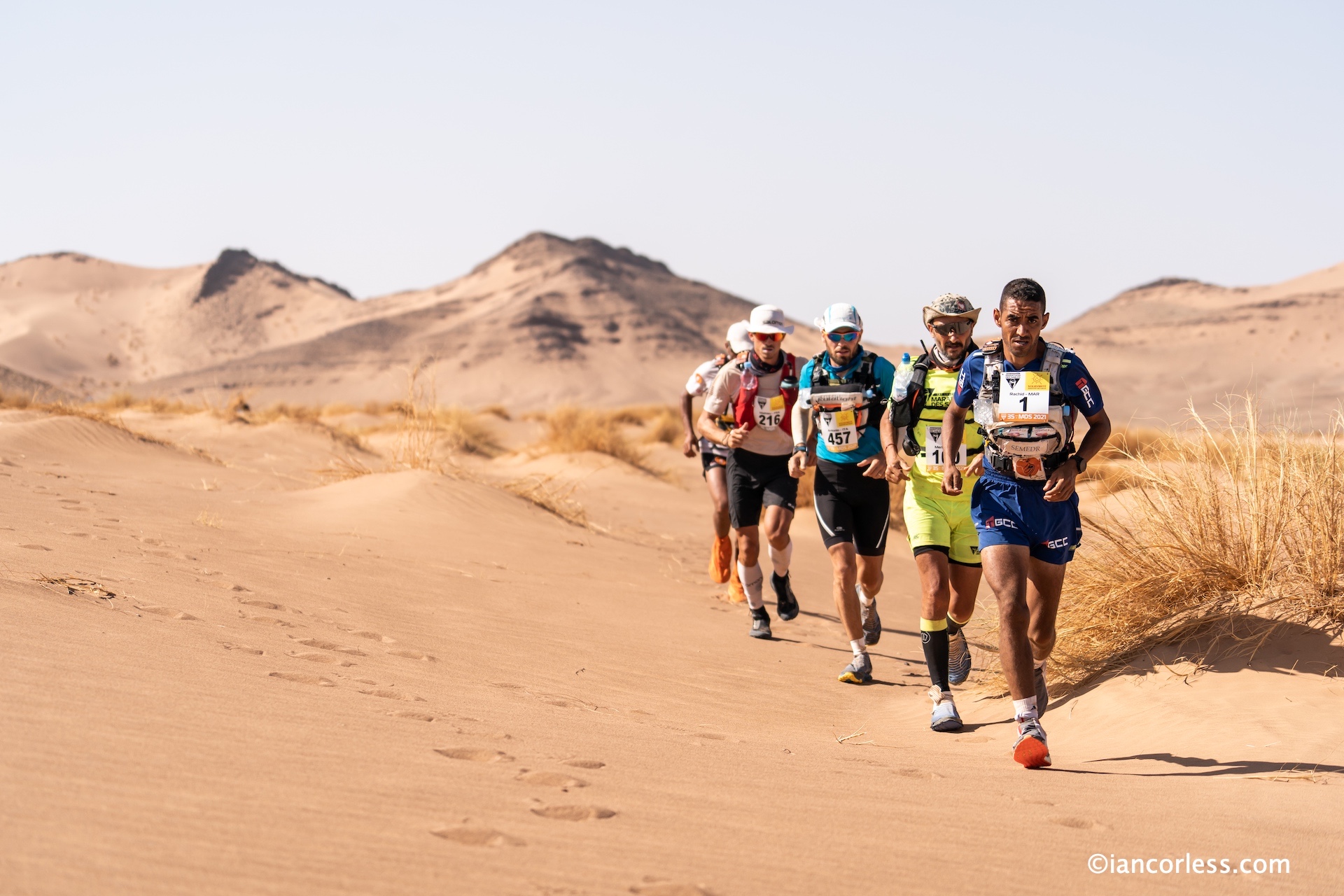
Young sensation, Aziz Yachou placed 3rd and the boss, Rachid El Morabity placed 4th and in the process won his 8th Marathon des Sables.
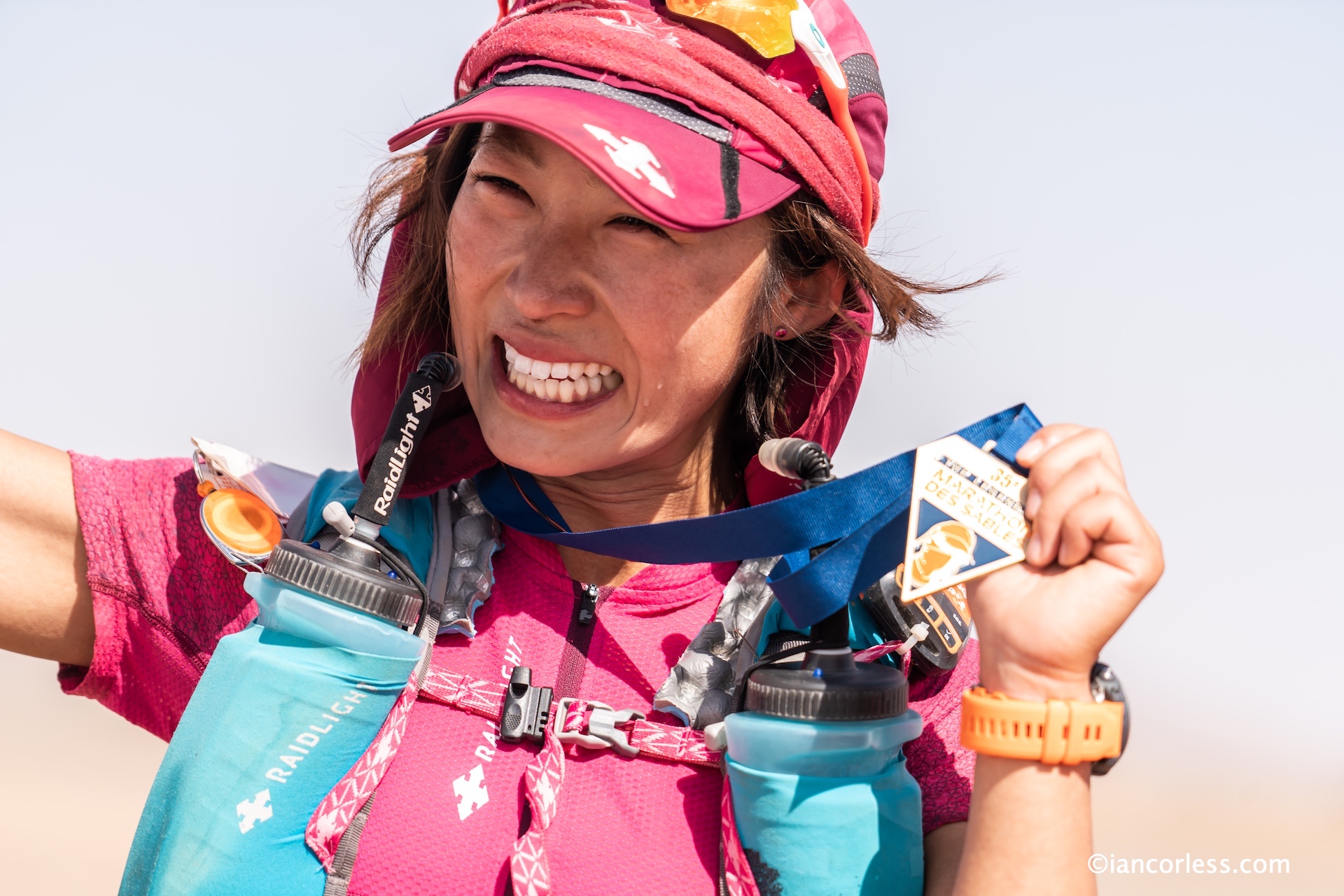
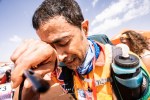
The ever smiling and happy Tomomi Bitoh won the ladies race with a strong run. She was full of emotion and tears at the finish. The realisation of an intense week coming to a dream ending.
Aziza Raji finished 17-minutes later but her overall victory was secure and finally, a Moroccan female top-slot on the podium was a reality, the last occasion being 2008/ 2009 with Touda Didi.
Aicha Omrani had a tough day finishing down the field and although she retained a podium place, the strong run bt Tomomi elevated her to 2nd and placed Aicha 3rd overall.
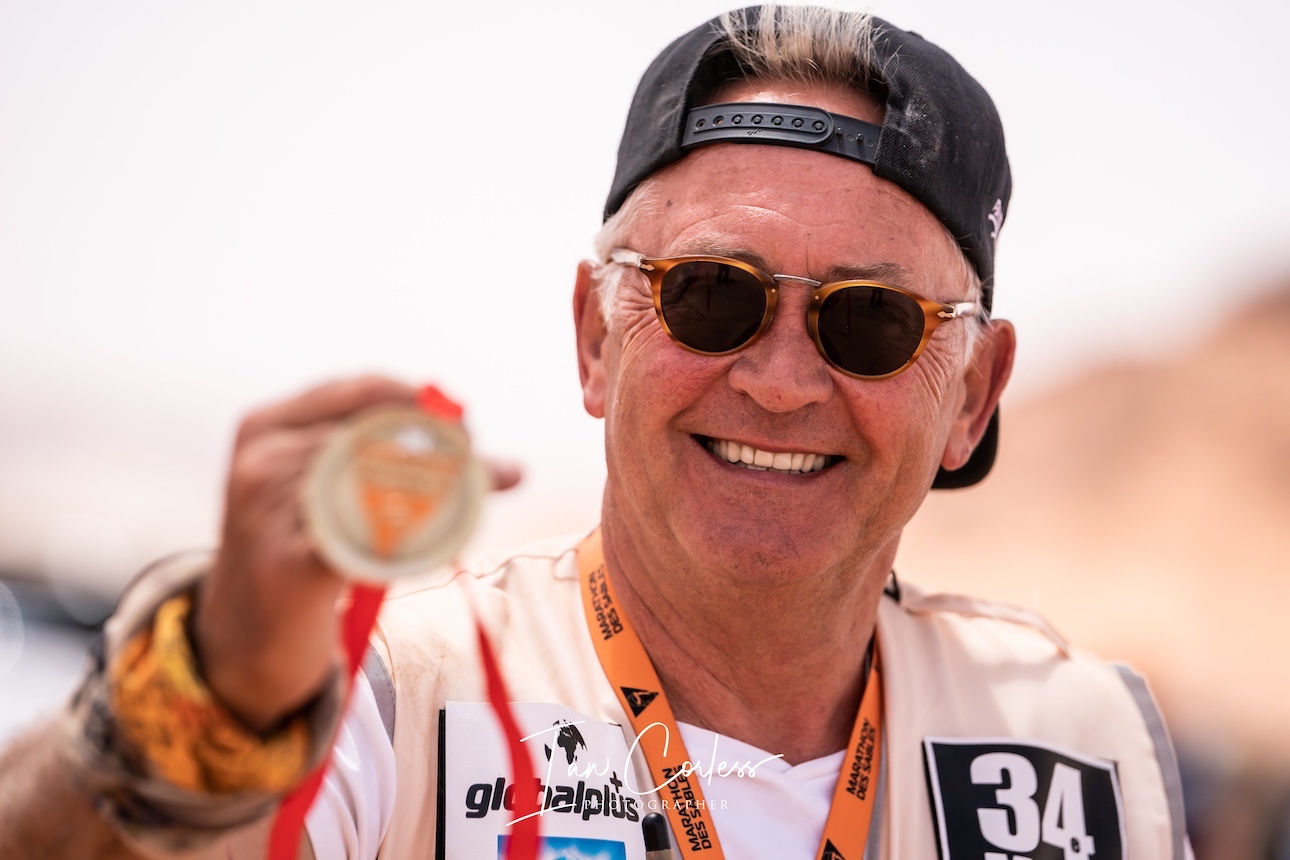
Needless to say, it was an emotional day as the 351 starters streamed in. Every and any finish at MDS is coveted, but this 35th 2021 edition may well just be the most coveted. It’s been an emotional rollercoaster for all concerned. Considerable highs and lows have taken its toll and the elation of the marathon day finish line and the sight of a medal is a pleasure for all.
For now, it’s time to celebrate the race and finishers. Send our love to the fallen and his family and remind all those who this year who were forced to withdraw, that they were in the arena.
“It is not the critic who counts: not the man who points out how the strong man stumbles or where the doer of deeds could have done better. The credit belongs to the man who is actuallyin the arena, whose face is marred by dust and sweat and blood, who strives valiantly, who errs and comes up short again and again, because there is no effort without error or shortcoming, but who knows the great enthusiasms, the great devotions, who spends himself in a worthy cause; who, at the best, knows, in the end, the triumph of high achievement, and who, at the worst, if he fails, at least he fails while daring greatly, so that his place shall never be with those cold and timid souls who knew neither victory nor defeat.” – Roosevelt
RESULTS
Rachid El Morabity 21:17:32
Mohamed El Morabity 21:32:12
Mérile Robert 22:39:02
Aziza Raji 30:30:24
Tomomi Bitoh 34:39:17
Aicha Omrani 35:47:48
Please support this website. I believe everyone deserves to read quality, independent and factual articles – that’s why this website is open to all. Free press has never been so vital. I hope I can keep providing independent articles with your help. Any contribution, however big or small, is so valuable to help finance regular content. Please support me on Patreon HERE.
It was a sombre mood in bivouac this morning, the 25 withdrawals at the finish on day-1 increased during the night as runners struggled with vomiting, sickness and bad stomachs. At breakfast, there were approximately 39 out of the race.
At almost the same distance as day 1, day 2 caused anxiety amongst all the runners as it contained 13km of Erg Chebbi (Merzouga), the highest dunes at Morocco that would see the fastest runners complete in under 2-hours (for just the dunes) but for most, it would be a long, hard slog under a relentless sun with pounding heat.
A day of mixed terrain, there was some interesting terrain early on as the runners moved from the start and passed through Tisserdemine village before arriving at CP1.
Rachid, as ever started behind the front-runners and then slowly took control of the front of the race as he entered the dunes. He is a master of the terrain and a joy to watch.
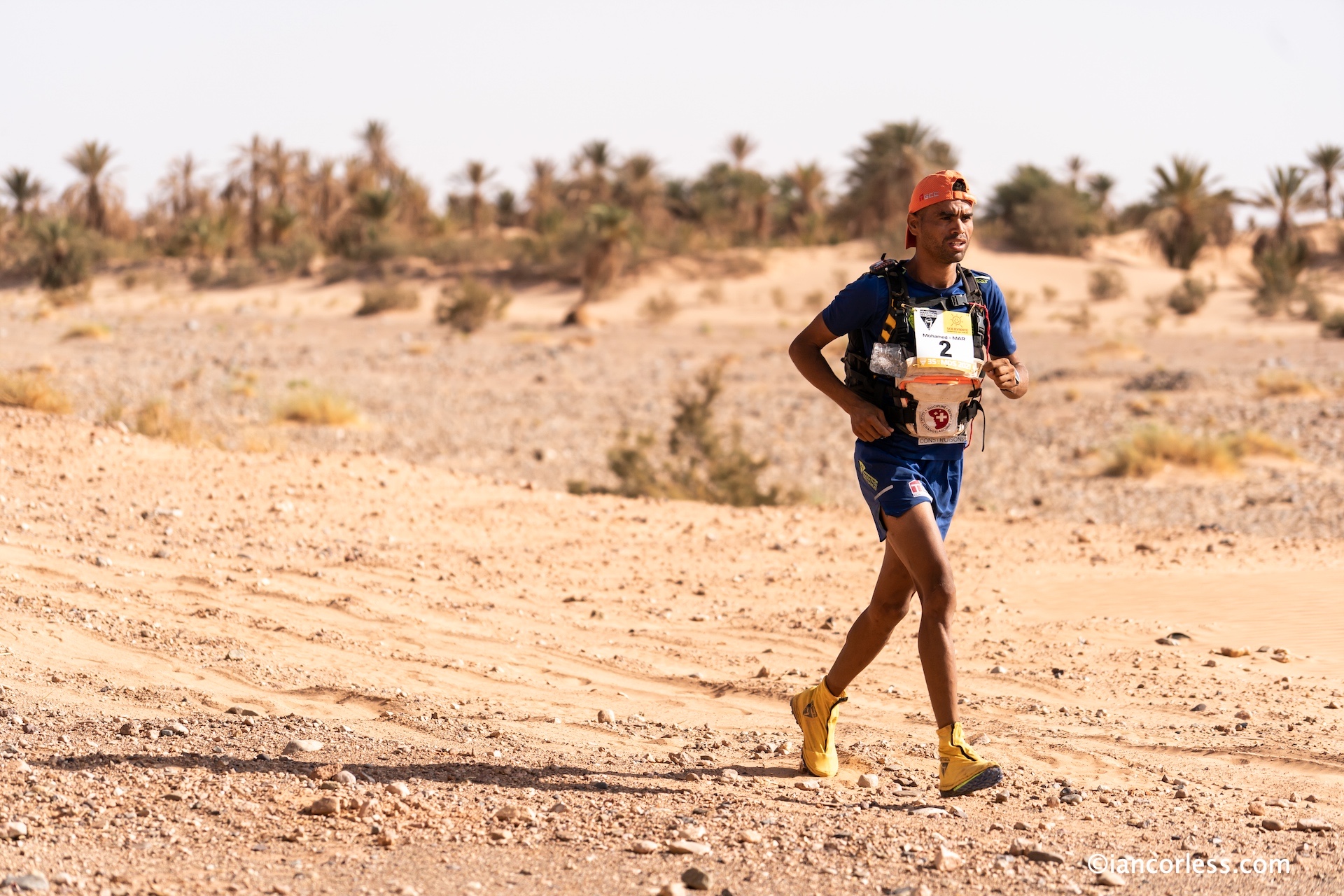
His brother. Mohamed, started much farther back allowing the front to pull away from him. But again, like his brother, he moved in to 2nd place and it was here he finished 6-minutes behind Rachid. Aziz as in day 1 finished 3rd.
For the women, Aziza once again used her experience to pull-away in the dunes with a convincing lead ahead of Aicha and Hassana who finished closely together just a couple of minutes apart.
One again the terrain and the heat caused devastation on the race with medical teams and helicopters in constant use. CP1 before the dunes looked like a medical tent from a war zone with IV drips hanging everywhere.
Tomorrow is a longer day!
It’s going to be a restless night in bivouac.
*I will update this post in due course as Patrick Bauer has asked all runners and media to assemble in the middle of bivouac at 1900 hrs. He will address all with news…?
*Sadly, a runner died today due to a heart attack. Patrick informed the family this afternoon and has updated all the other participants and media. Needless to say, the race is in mourning for a fellow runner. A minutes silence will be held at the start tomorrow and the race will continue as normal.
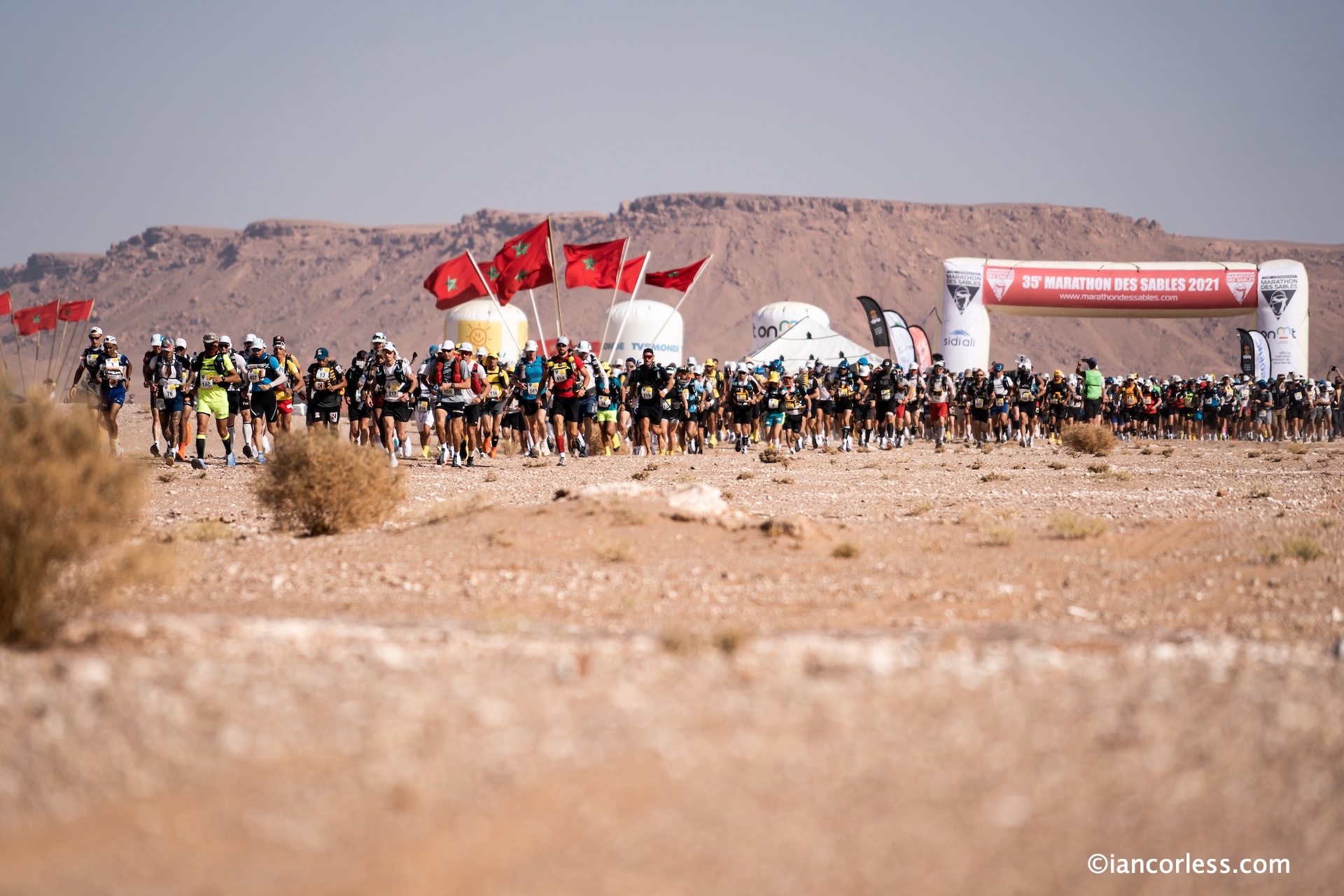
The 35th Marathon des Sables finally got underway today after three postponements.
It was a very special moment to see over 700 runners from 40 nationalities depart under the sound of AC/DC’s ‘Highway to Hell.’
And what a highway to hell the 1st stage of 32.2km’s was!
The heatwave from the previous days did not disappear despite strong winds and sand storms throughout the previous night and race day turned out to be a scorching 45deg in the shade in the mid afternoon heat. As I write, there are currently 25 dropouts and and many runners required medical help from Doc Trotters out on the course.
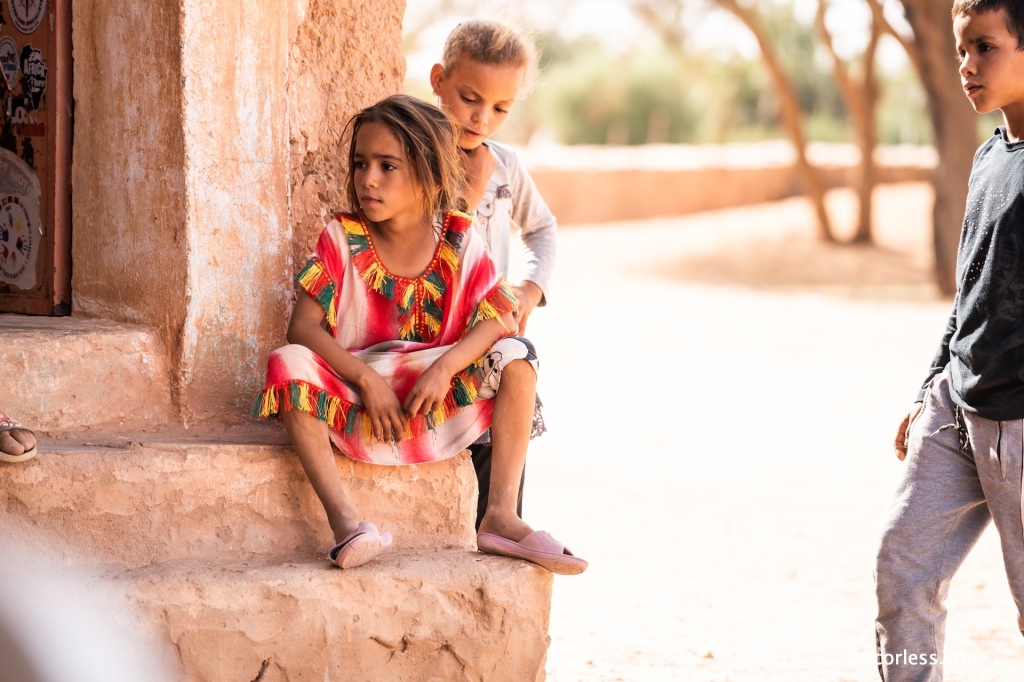
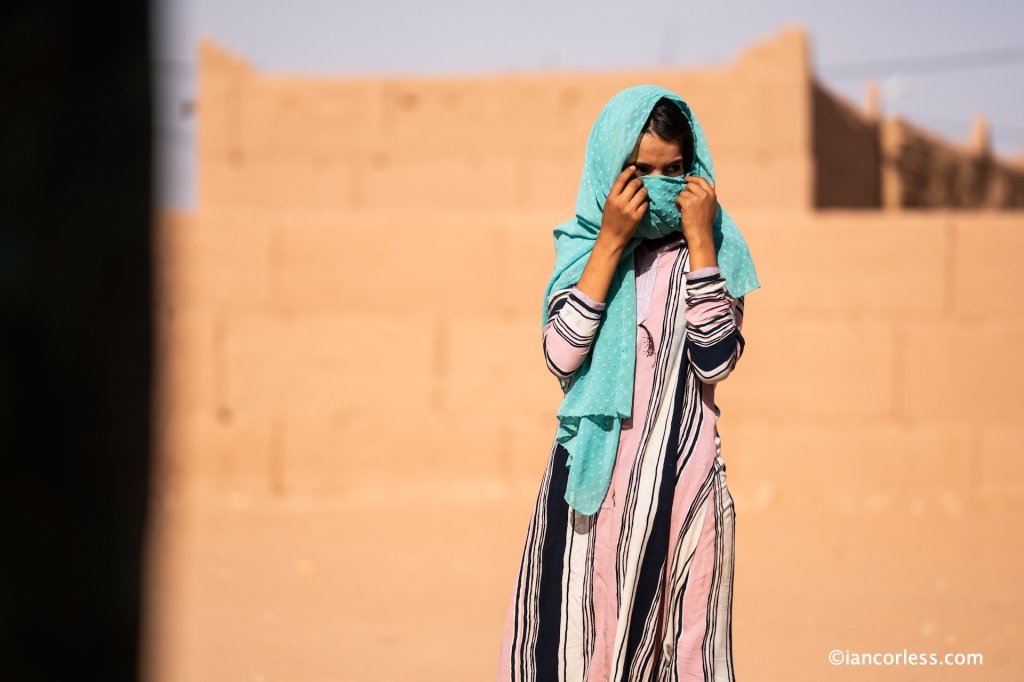
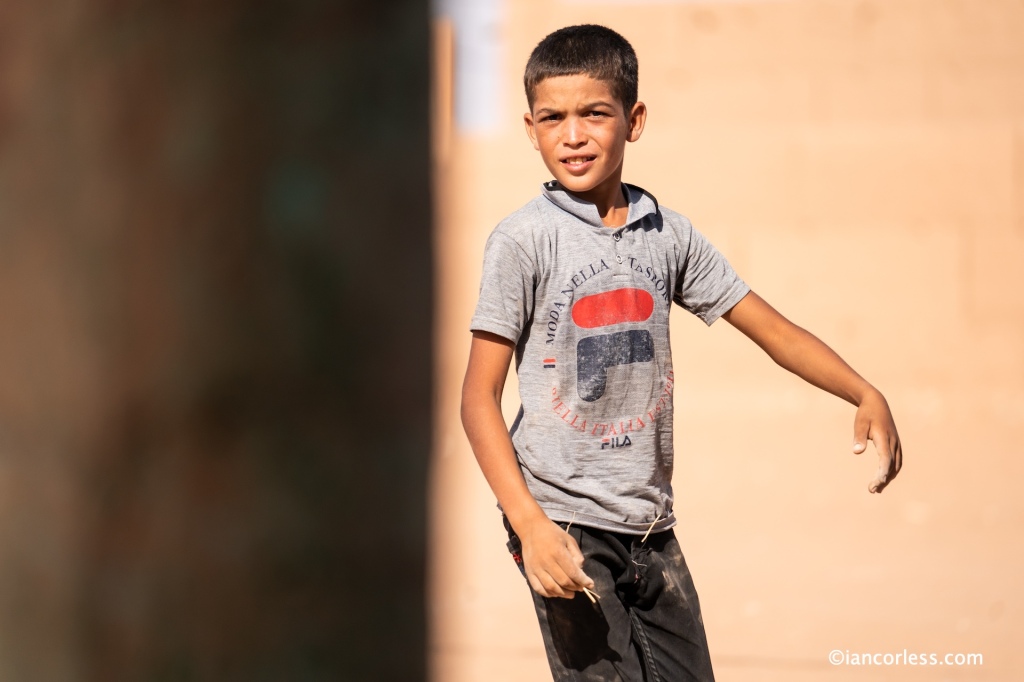
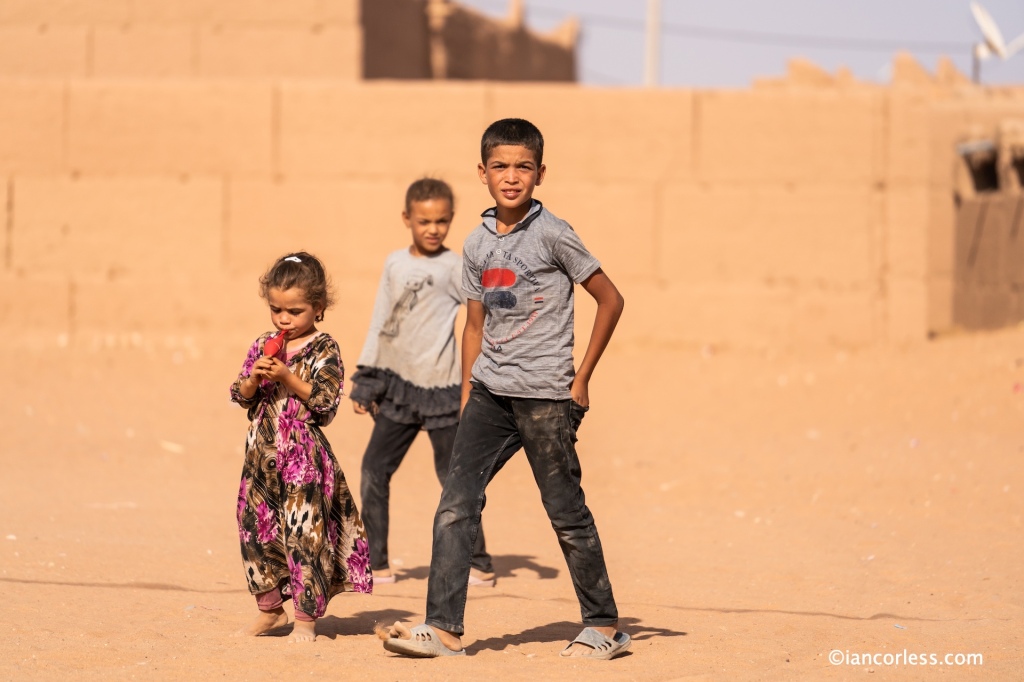
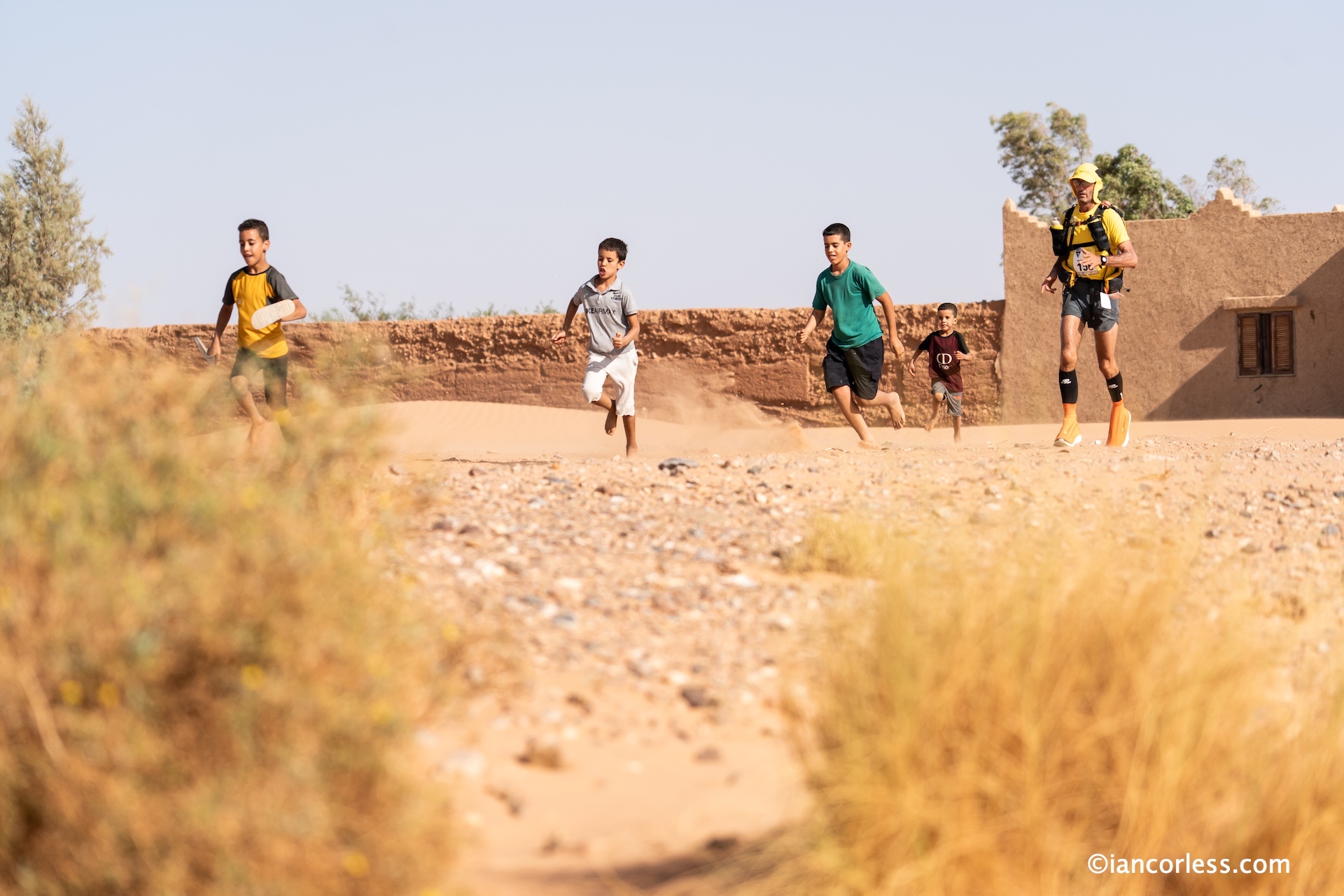
The route, billed as an easy day was beautiful one with a little of everything, hard rocky plateau, villages with many children and soft sand and small dunettes to conclude the day.
The heat though and lack of any shade turned out to be the beast of the day and it reduced nearly the whole field to a slower pace and for most, that means walking!
Even the desert king, Rachid El Morabity, although wining easily ahead of his brother, looked tired and a little more exhausted from his 2h 36m run.
Aziza Raji from Morocco started the day at an easier pace and eventually took the lead ahead of the UK’s Anna Brown, however, just like Rachid, in the final km’s she looked ready to be over with the day.
The intense heat has now impacted on day 2 with the organisation bringing start time 30-minutes forward, 0800 instead of 0830. In addition, 1 extra bottle of water will be provided for each runner and CP1 and CP2.
The stage is another 32km day, BUT, many of those km’s take place in the relentless dunes of Merzouga (Erg Chebbi), the highest in Morocco.
Day 1 standings:
Rachid El Morabity
Mhoamed El Morabity
Aziz Yachou
Aziza Raji
Anna Brown
Aicha Omrani
Please support this website. I believe everyone deserves to read quality, independent and factual articles – that’s why this website is open to all. Free press has never been so vital. I hope I can keep providing independent articles with your help. Any contribution, however big or small, is so valuable to help finance regular content. Please support me on Patreon HERE.
Let’s get one thing clear, multi-day racing is simple, it is often over complicated and this creates too many questions and too much confusion.
Let’s hark back to Patrick Bauer’s pioneering days and simplify the process, just like he did. Over the years I have interviewed and chatted with many runners in bivouac and after racing who have done just that, they had applied simple logic and worked out what would work for them.
Yes, they had taken advice, looked at websites, processed information but importantly they had found out what worked for them. They realized early on that they were an individual and as such, they needed a personal approach to multi-day racing and not a generic one. Not all multi-day races are the same, some are completely self-sufficient, some are semi self-sufficient and others are supported where all you need is transported for you.
When you break a race down, particularly a self-sufficient race, key things are really important:
Pack
Must fit and be comfortable when loaded. Have enough room (but not too much) for all your equipment and provide easy access to fluid. You must also make sure that your race number is visible as per race rules. Think about additional pockets, such as a waist belt for snacks.
Sleeping Bag
Lightweight, packs small and warm enough. I would always recommend a sleeping bag and jacket as it offers more flexibility, reduced weight and reduced pack size. Popular sleeping bags year-on-year are PHD, Yeti and OMM. Read HERE on how to choose a sleeping bag.
Clothes
You just need what you will run in. However, a spare pair of socks is often commonplace and many runners have one or all of the following: a warm base layer, a lightweight down jacket or waist coat, buff and maybe long lightweight pants. Remember, you have to carry everything, so, it’s all about getting the pack as close to minimum weight. At MDS that is 6.5kg plus water.
Sleeping Mat
It’s optional but a good nights sleep is important and usually those who do not take one wish they had. It provides comfort and importantly an insulating layer between you and the ground. Two options exist – inflatable and roll out solid foam. The choice is yours. The inflatable ones offer more comfort, more flexibility in packing but with poor admin, you do run the risk of a puncture. I’ve used inflatable for many years with no issue. A solid foam Matt will last the week with no risks of problems but they roll large and need to sit outside the pack.
Shoes and Gaiters
Shoes (more below) are personal, just make sure they have a good fit, appropriate drop for your needs and suit your run/walk style with enough durability for you. I say ‘you’ because someone like Rachid El Morabity can complete the whole of MDS race in say 21-hours whereas most people won’t even do just the long day in that time – his shoe shoe choice will and can be very different to what most of us need!
Rachid El Morabity and Ragna Debats are the 2019 champions of the iconic Marathon des Sables.
Today. stage 5, ‘The Marathon Stage’ concluded just a short distance away from Tafraout. It was a day that started with cool temperatures as runners climbed the infamous, Djebel Oftal after a 3km warm up.
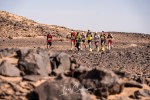
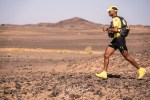
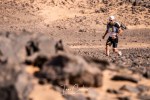
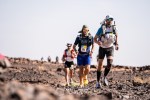
As the minutes ticked by, the sky cleared, the weather warmed up and the runners were treated to a classic MDS day and a truly beautiful course that provided the best of the Sahara.
Dunes, rocky plateau, salt flats, the oasis of El Maharch, gentle climbs, soft-sand descents and then a run in to the finish backed by a mountain range.
Despite early attacks in the men’s race including his brother Mohamed, Rachid El Morabity once again won the final stage and became the 2019 champion of the MDS once again. He really is the desert king. Mohamed El Morabity placed 2nd overall with Abdelaziz Baghazza completing the podium.
For the women, it may come as no surprise that Ragna Debats made 5 stage wins out of 5 and completely dominated the women’s race.
Credit must go to local runner, Aziza Raji who battled throughout the week to secure a very solid 2nd place for Morocco. Also, Gemma Game from the UK had a tough day-1 but battled and moved her way through the field throughout the week and once again rounded out the podium with 3rd place.
The MDS is all about every single runner and the finish line really does focus and release the emotions as tears flows, cries of joy are heard and the embraces of Patrick Bauer, the race creator, are received. The MDS is truly a magical journey and experience. It is a life -changer for many and I personally have experienced the transformation the desert and this race brings.
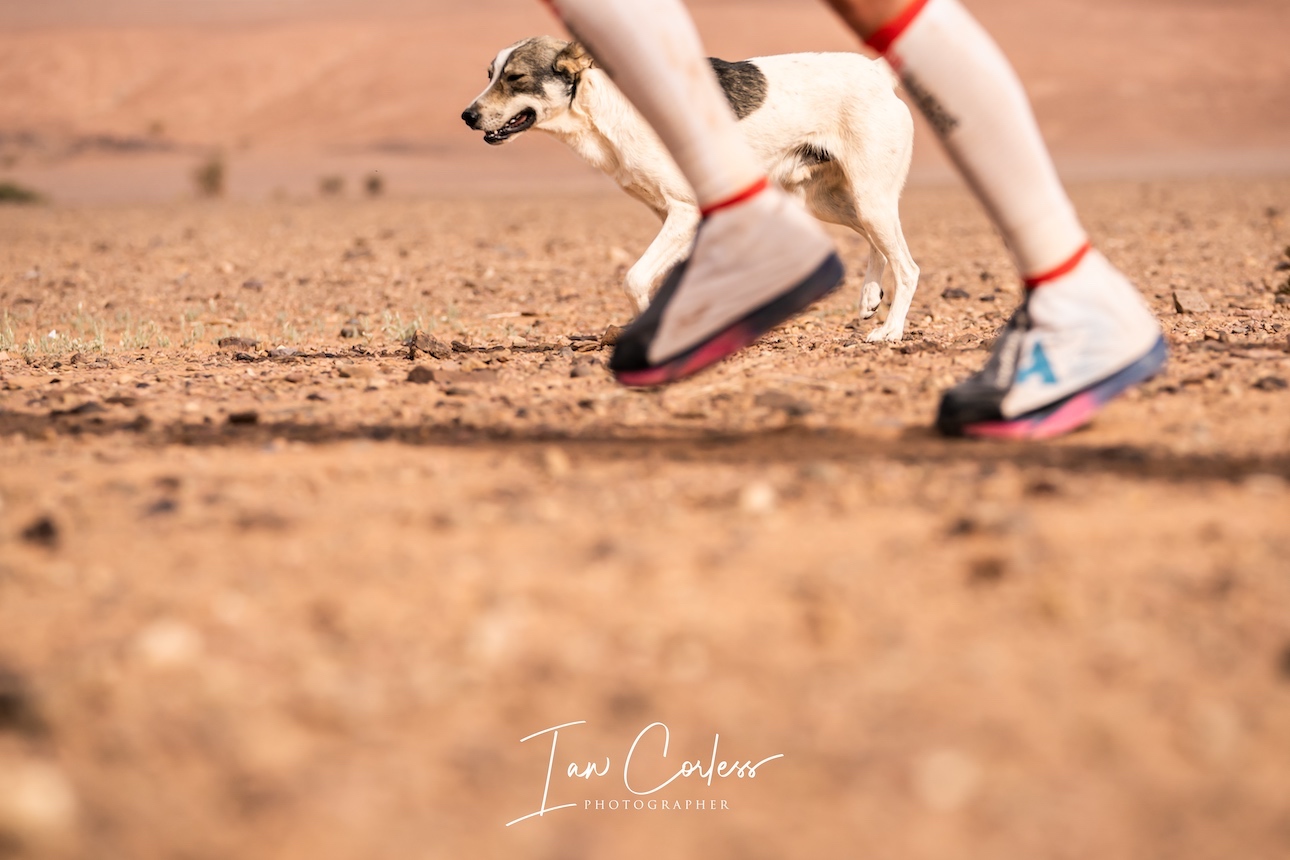
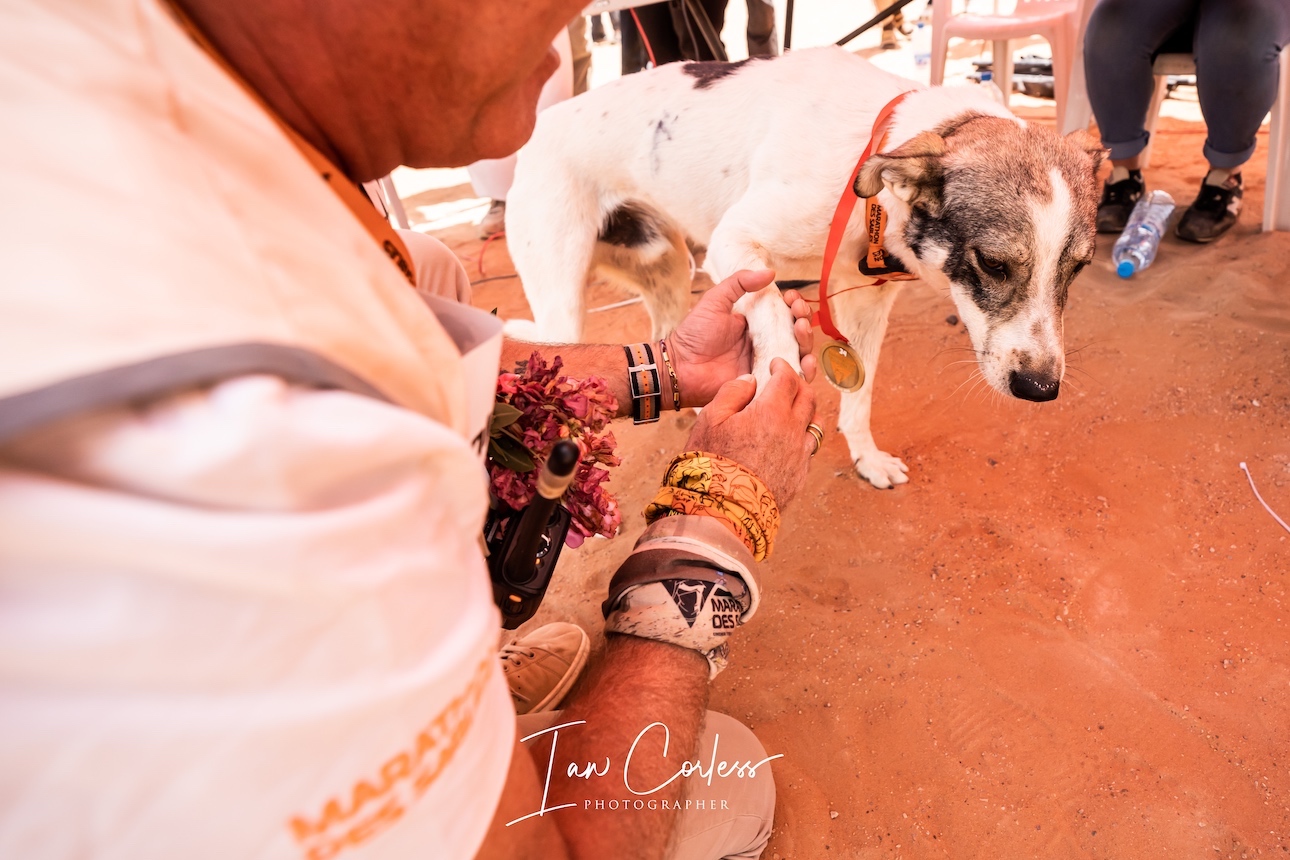
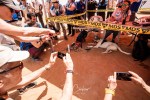
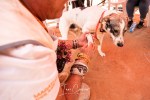
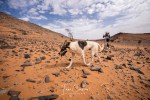
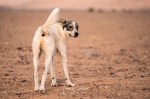
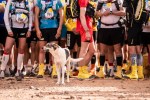
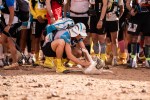
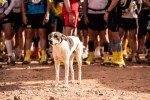
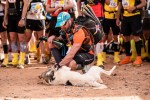
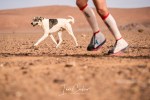
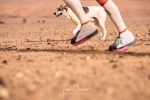
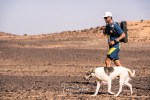
The 2019 edition certainly gained additional notoriety from a wonderful dog called Cactus. he joined us on day-2 and went on to complete day-3, 4 and today, day-5. This little dog has captured the hearts and minds of the world, not only in the media. There is a lesson to be learned from Cactus – to live life free and completely. He embraced the true spirit of what MDS stands for without realising it. And, in doing so, he has reconfirmed to all of us that life is for the living. I for one, am truly blessed to have experienced Cactus and all the 800+ plus runners on a truly magical 34th edition of the iconic ~Marathon de Sables.
Rebeca from myRaceKit is an accomplished ultra-runner, here at the 2019 Marathon des Sables.
Day-4, the feared and loved ‘long day’ of the MDS. A brutal 76.3km route that for many, personifies what the Marathon des Sables is. A journey of survival, through the varied terrain that the Sahara has to offer.
For most people, it is all about survival and getting through the day, the night and maybe the next day as easy as possible.
The day started at 0815 for the majority of the filed and the top-50 and top-5 women started at 1115 with the prospect of chasing the whole field down.
The day started to cool and cloudy and it looked like the conditions would play in to the runners hands, allowing a comfortable journey throughout the day. Not so. By 10am, the heat of the day came and it stayed that way, just a gentle breeze helping to provide some illusion of cooler temperatures.
The elite race as in previous day’s was all about two people or maybe three if we include Cactus the MDS dog.
Ragna Debats was once again on fire, For sure, she respected the long day and started at a more relaxed pace, but her speed and ability is so far ahead of the rest of the women, that she almost cruised to the line. In all honesty, Ragna’s biggest threat is possibly herself! She is chasing a top-10 ranking overall and that does come with some risk. To push in the Sahara needs a fine balance, get it wrong and dehydration could prove to be the end of an adventure. Ragna is managing everything well and looks incredible.
The real story of the long day was the rise of the UK’s Gemma Game. She looked incredible all day, ran an amazing and controlled race and she moved up the field to now make 3rd on the women’s podium. Aziza Raji ran a solid day and is still 2nd overall, approximately 36-minutes ahead of Gemma. Past winner, Meghan Hicks from the USA had a tough day of sickness and finished well down the field allowing Lauren Woodwiss to move to 4th overall.
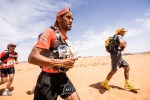
In the men’s race, many tried to attack the boss, Rachid El Morabity, but the king of the desert is too smart. He really is a joy to watch in this terrain. He holds back, paces himself, runs within a group and at all times watches what the other runners are doing. He does not panic, he manages his effort and then all of a sudden, he moves to another gear and accelerates away to take the lead and win.
This year’s long day was no different. Attacks came from Julien Chorier, Rob Pope and even Mohamed El Morabity, but the boss watched them and then made his move. Taking another stage victory, once again ahead of his brother, Mohamed. The duo now 1st and 2nd on the overall ranking with Abdelaziz Baghazza 3rd.
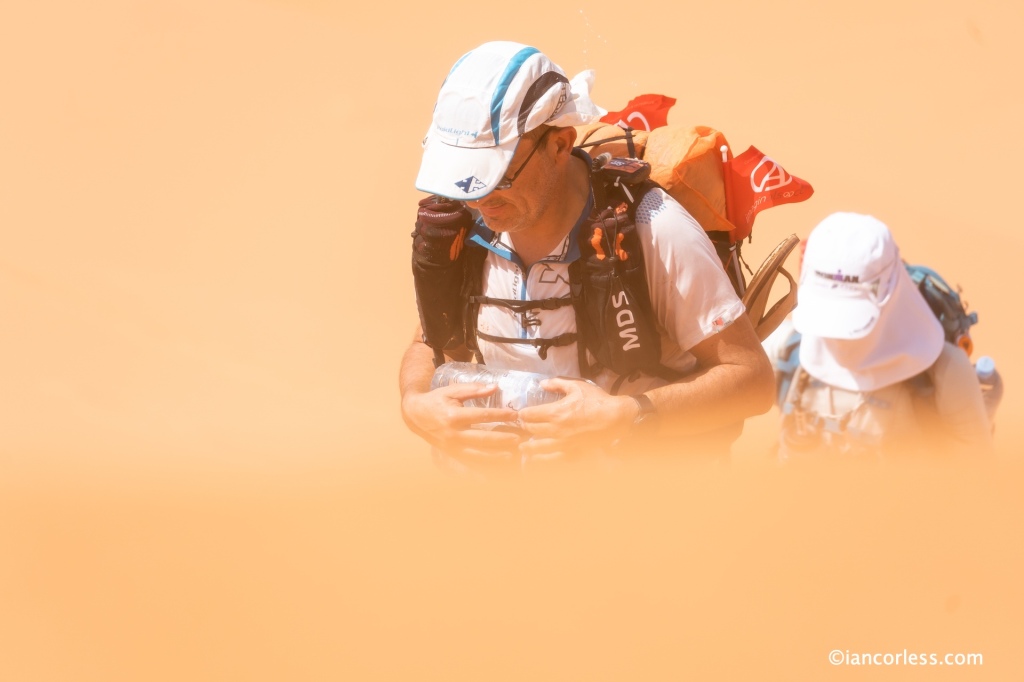
The long day will be remembered for a sand-storm that cam in around 5pm. It was quite incredible as the wind brought in a blanket of grating mist that covered all the runners and bivouac making visibility impossible. Runner’s halted in their tracks not able to see a hand place ahead of them. Luckily it was a storm that lasted less than 30-minutes but the carnage was visible to see.
Covering 76.3km’s is no easy task and while the top men and women can make it look easy, the real story is about the 800+ runners who look to survive and endure the conditions to earn a respected MDS medal.
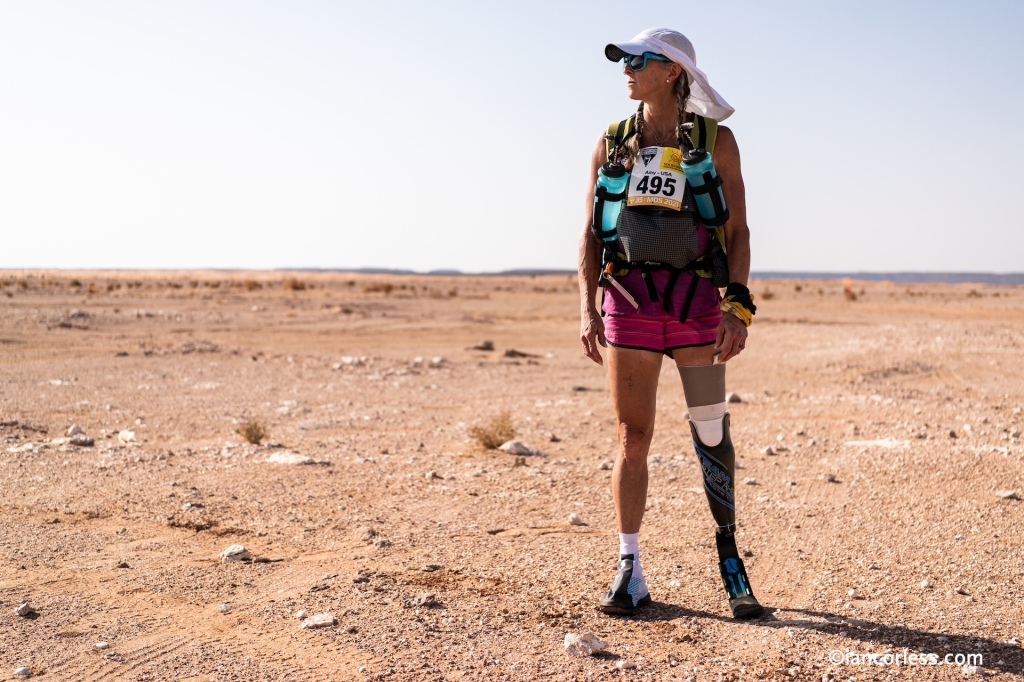
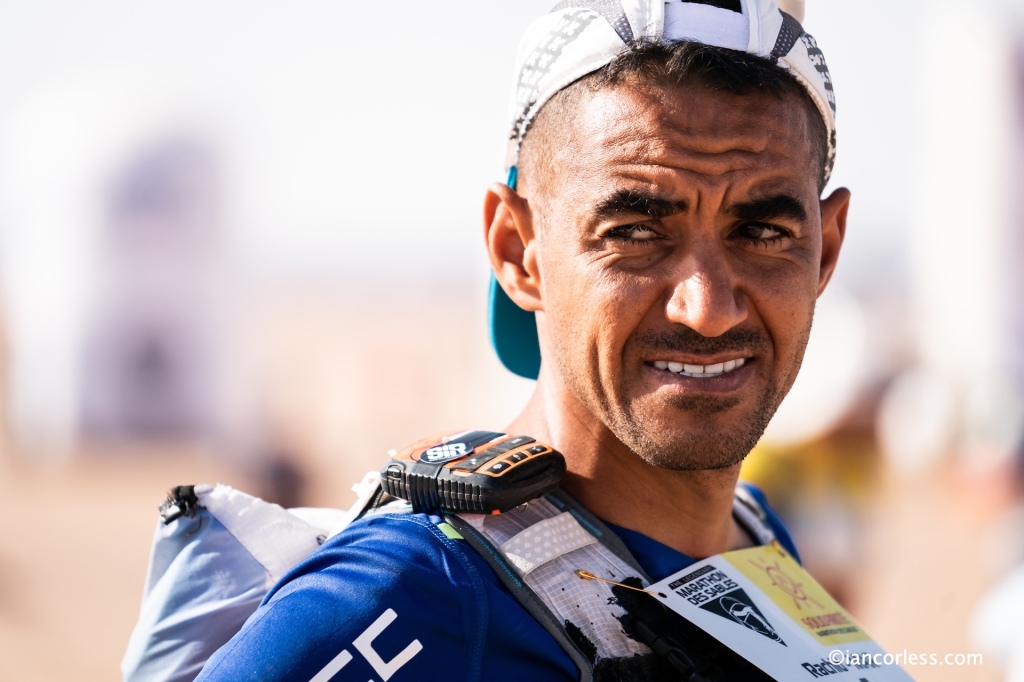
This is the MDS, the human story of fighting conditions, hunger, dehydration and pain to achieve the glory of the finish line.
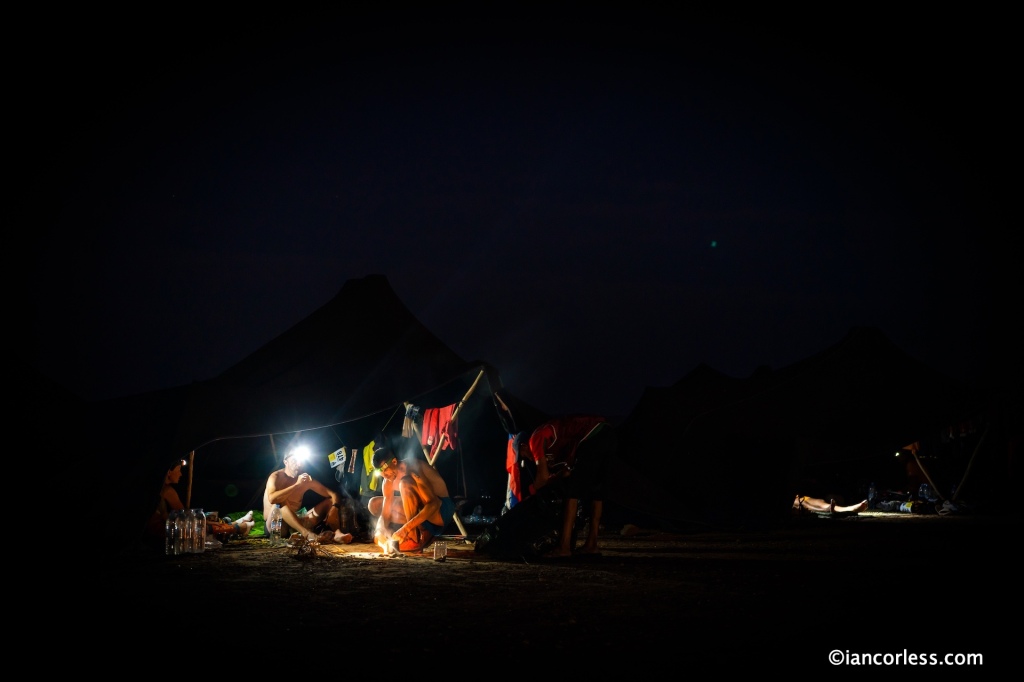
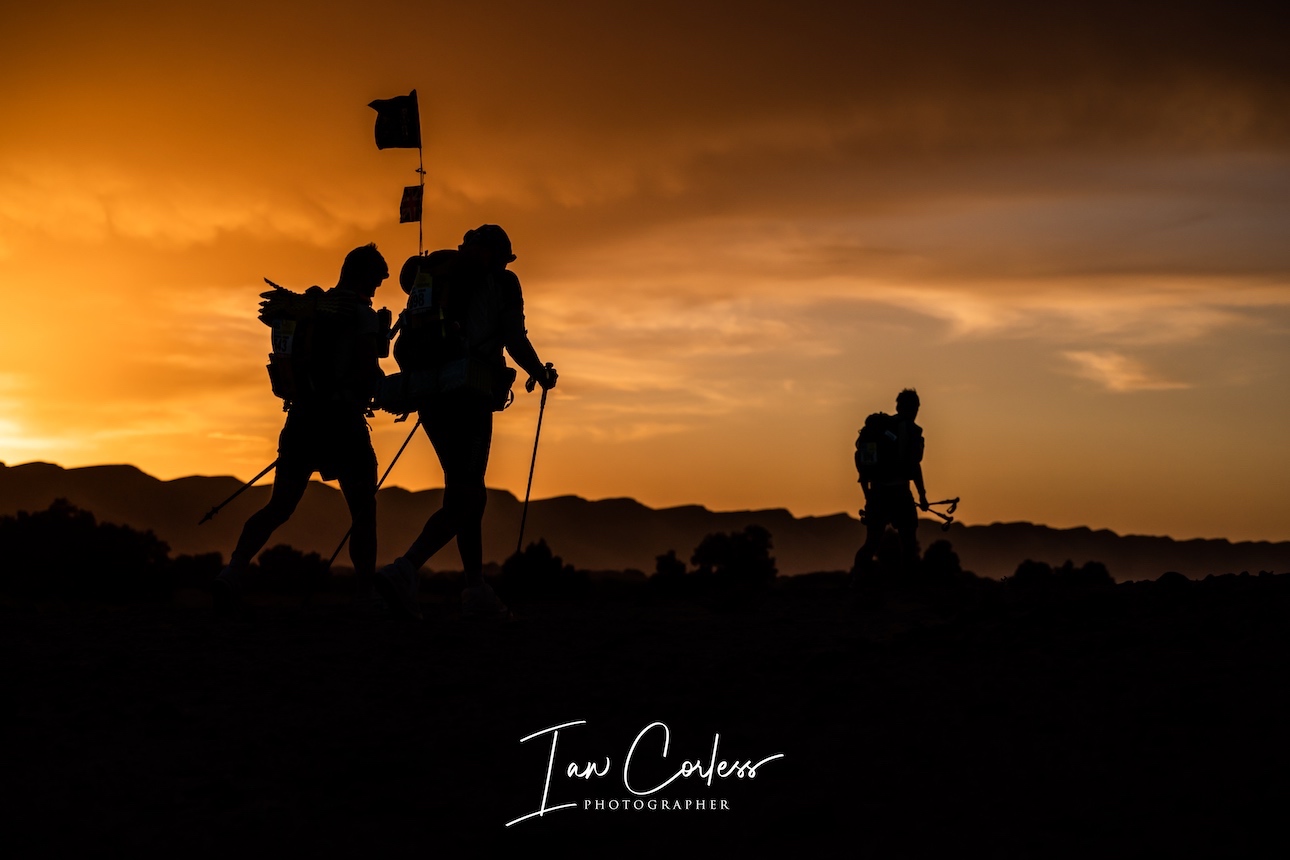
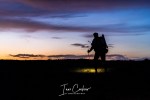
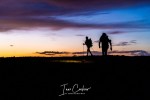
As darkness came, runner’s pushed in to the void with just the glow of a headlamp and the stars for company. For many, they will also see dawn and travel through another day. MDS is truly a life changing journey.
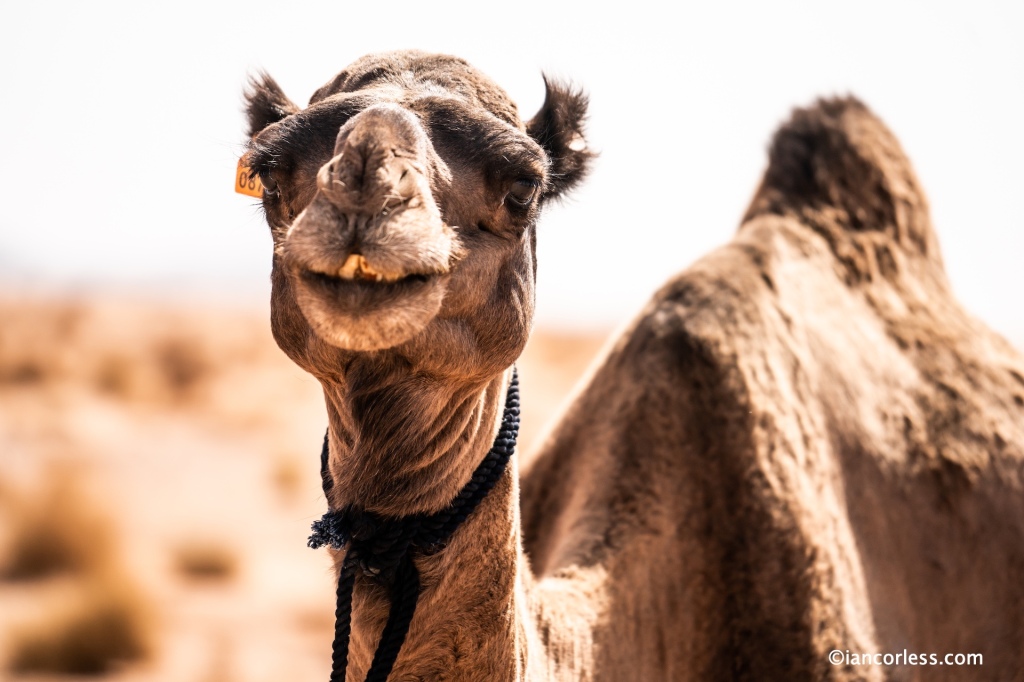
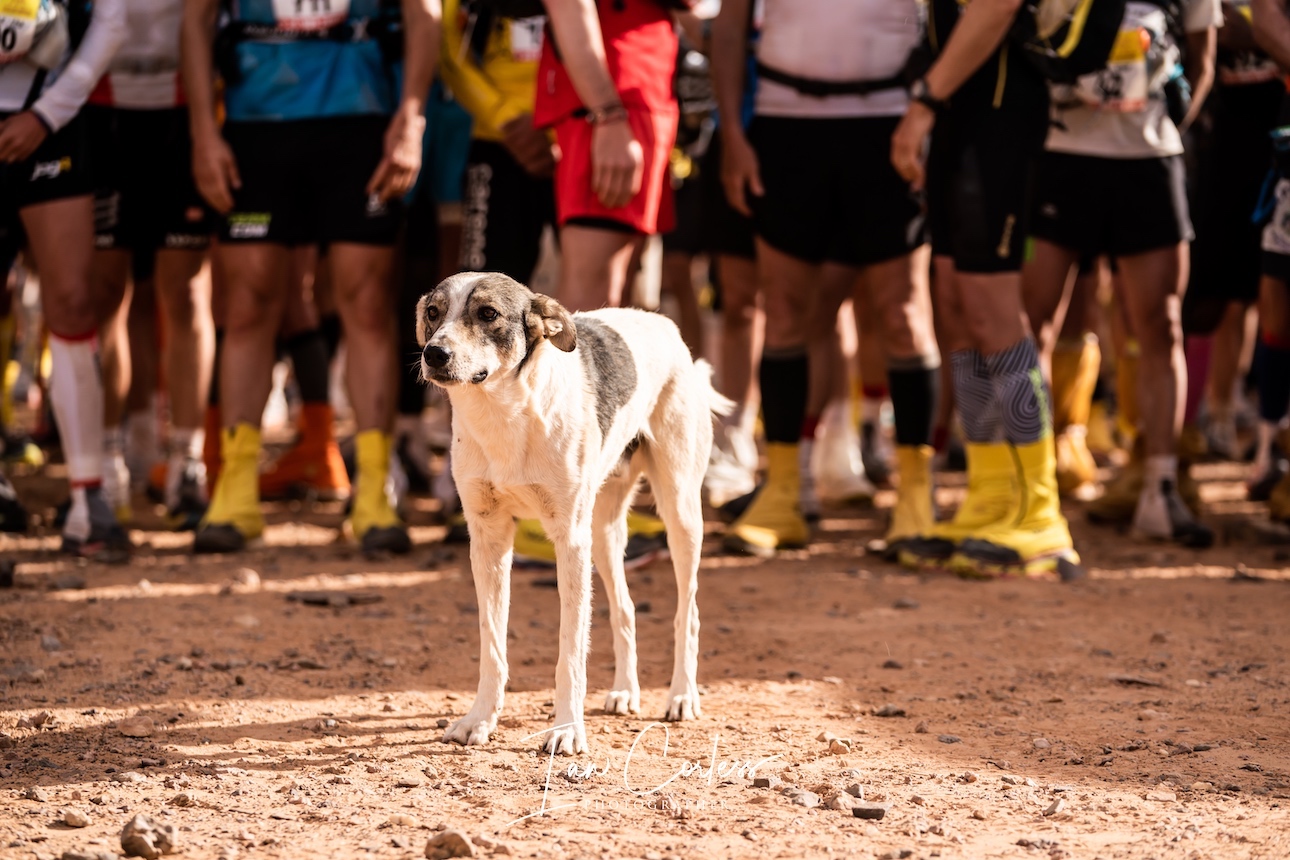
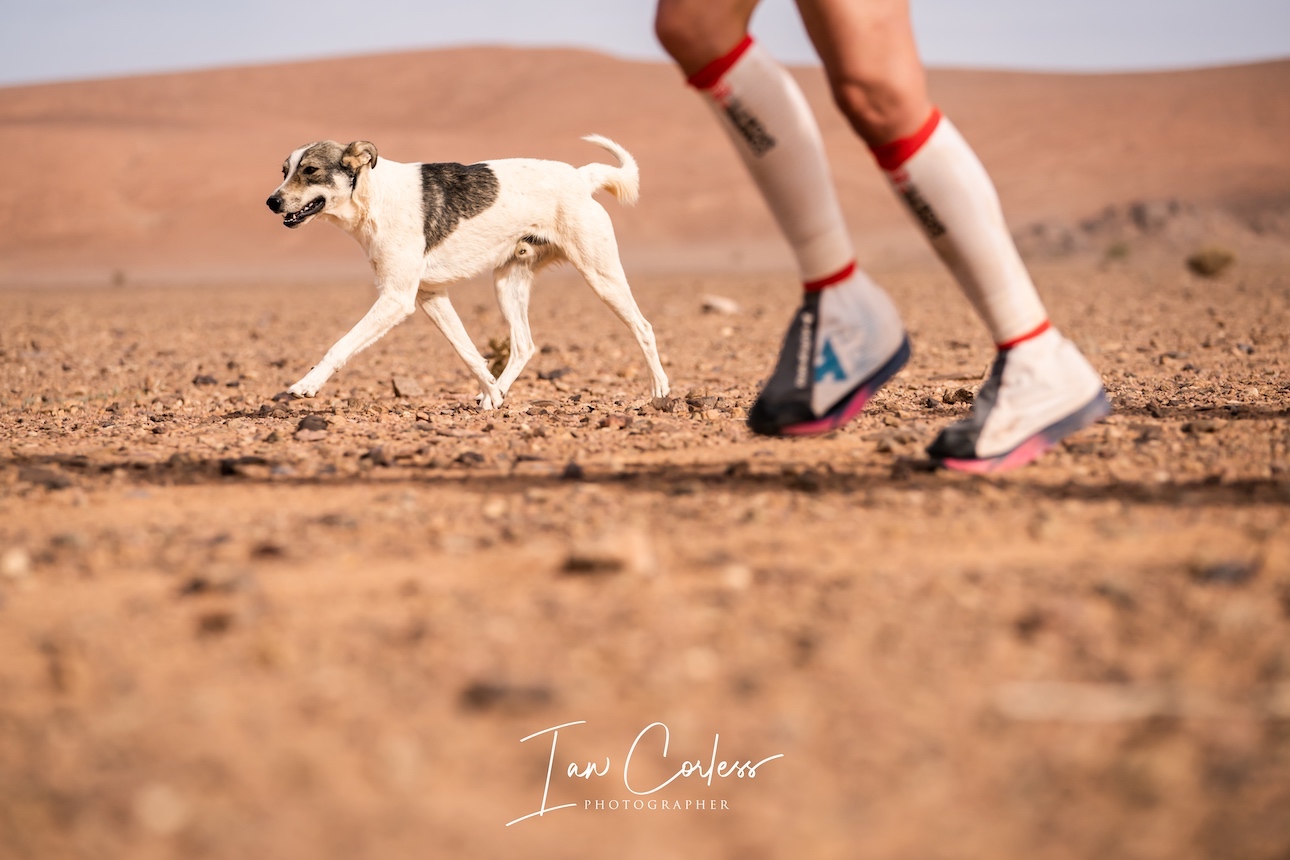
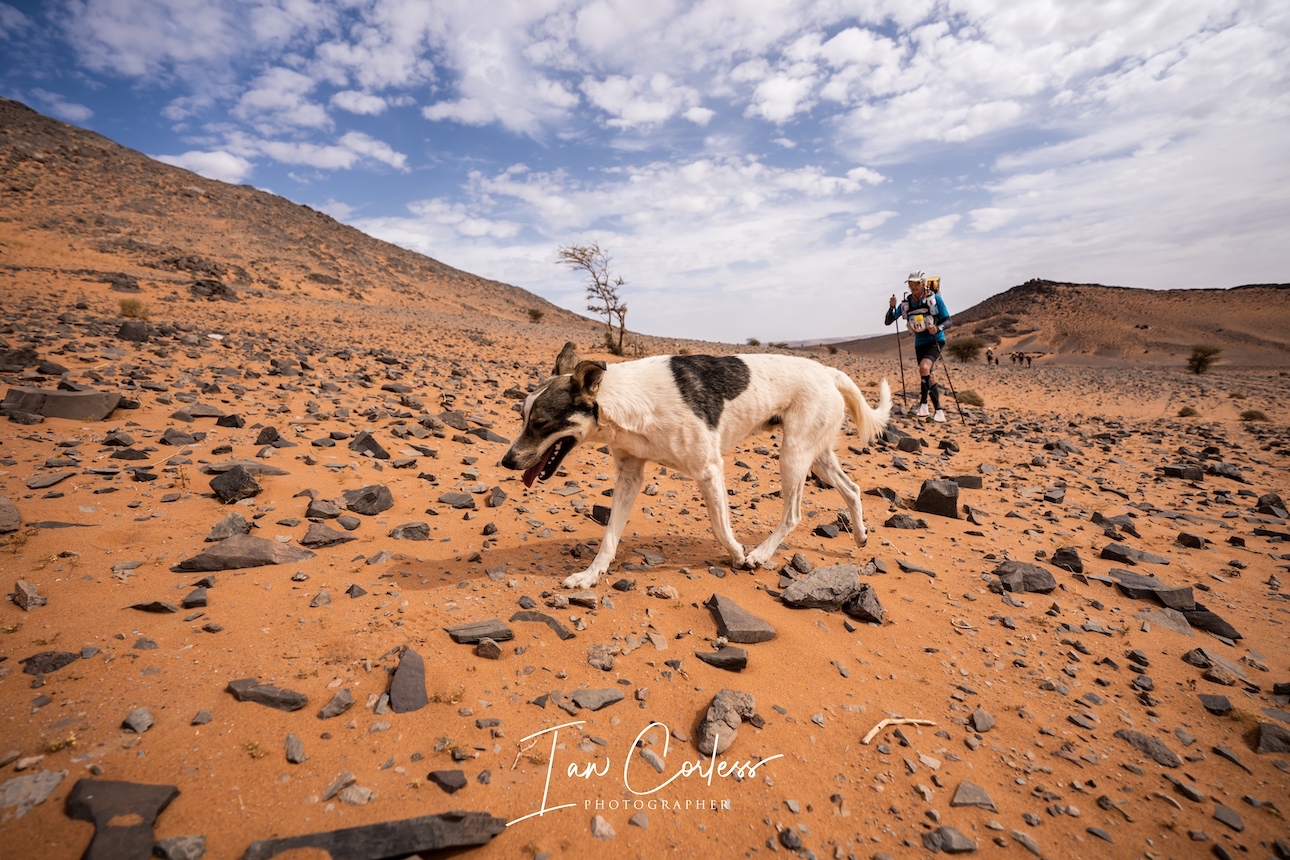
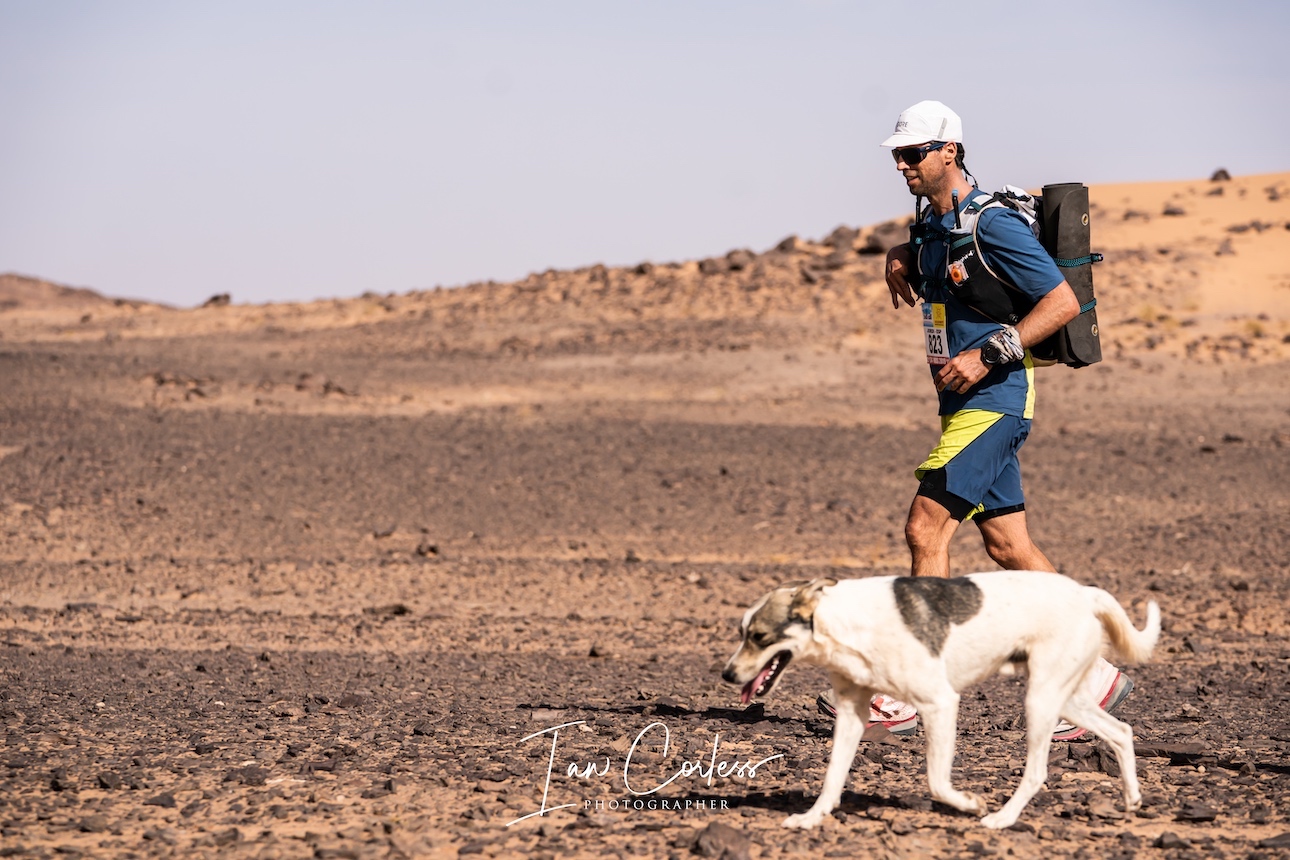
And finally, Cactus the MDS dog. What a story. The dog joined us on day-2, ran the whole of day-3 and yes folks, he ran the long day. He has become a mascot of the 34th edition. A heart warming story that has travelled the world. Many have worried about the dogs health and his ability to run long distances.
Rest assured, this fella is a true free spirit, a true nomad, a perfectly adapted animal for the terrain. He was checked by a vet and was given the all-clear. Calls for the dog to be ‘rescued’ and taken out of Morocco are well intended but wrong in my opinion. Cactus is in his home, doing what he loves. He should be allowed that freedom. And yes, he has an owner, a hotelier in Merzouga who has confirmed Cactus’ true nomadic spirit.
Tomorrow, the marathon day and the confirmation of the 2019 MDS male and female champions.
It was a warmer night in camp and the winds that had increased during the afternoon made for a comfortable night in bivouac. The tough stage 2 had left a real positive mood in camp, ‘If we can complete day-2, we stand a good chance of completing this MDS!’ seemed to be the general consensus. Many had loved the tough day, embracing the dunes. Others had found it a struggle. It is the MDS, so, it is to be expected. Of course, the day took its toll and for some, the 34th edition of the MDS ended.
Day 3 at 37.1km in comparison to day-2 would be an ‘easy’ day. Little tough terrain with lots of hard packed ground, stones and some soft sand and dunes. It turned out to be a hot day though, maybe the hottest day so far.
For the first 10km it was hard packed ground and the pace at the front was hard and fast with Rachid El Morabity dictating the the tempo with Julien Chorier – an unusual tactic the MDS champ. Behind a group of 10 followed including lead lady, Ragna Debats.
At 8km. a section of dunes lasted 3km to cp1 and then dunes followed to 16km. Rachid continued to push the pace and now his brother, Mohamed was closing the gap to join them. For the women, Ragna was in a race on her own, to be honest, she is pushing the men and overall top-10 classification.
Aziza Raji continued to chase Ragna as in all the previous day’s, but she just does not have the pace. Today, Gemma Game finally found her stride and started to look at home in the desert running ahead of the chasing women that included Meghan Hicks.
The push from cp2 the finish offered a little of everything in regards to terrain, the heat probably the most troublesome issue. The old village of Taouz provided a stunning and varied backdrop along with the Kfiroun.
As on day-1, Rachid finally put the foot down to gain a slender lead over Mohamed and Abdelaziz Baghazza who finished just seconds apart in 2nd and 3rd.
Ragna once again finished almost 30-minutes ahead of the 2nd women, Aziza, but notably Gemma closed to within a handful of minutes for 3rd.
Tomorrow is the feared long-day! The battle will be very interesting for the 2nd and 3rd women’s podium – can Gemma push ahead of the Moroccan? It would now take a disaster for Ragna to lose this race.
Rachid normally secures his victory on the long-day and one has to assume this will be his plan tomorrow. He will run steady early on and then push making the others follow his relentless pace. The top-3 are close though, anything can happen!








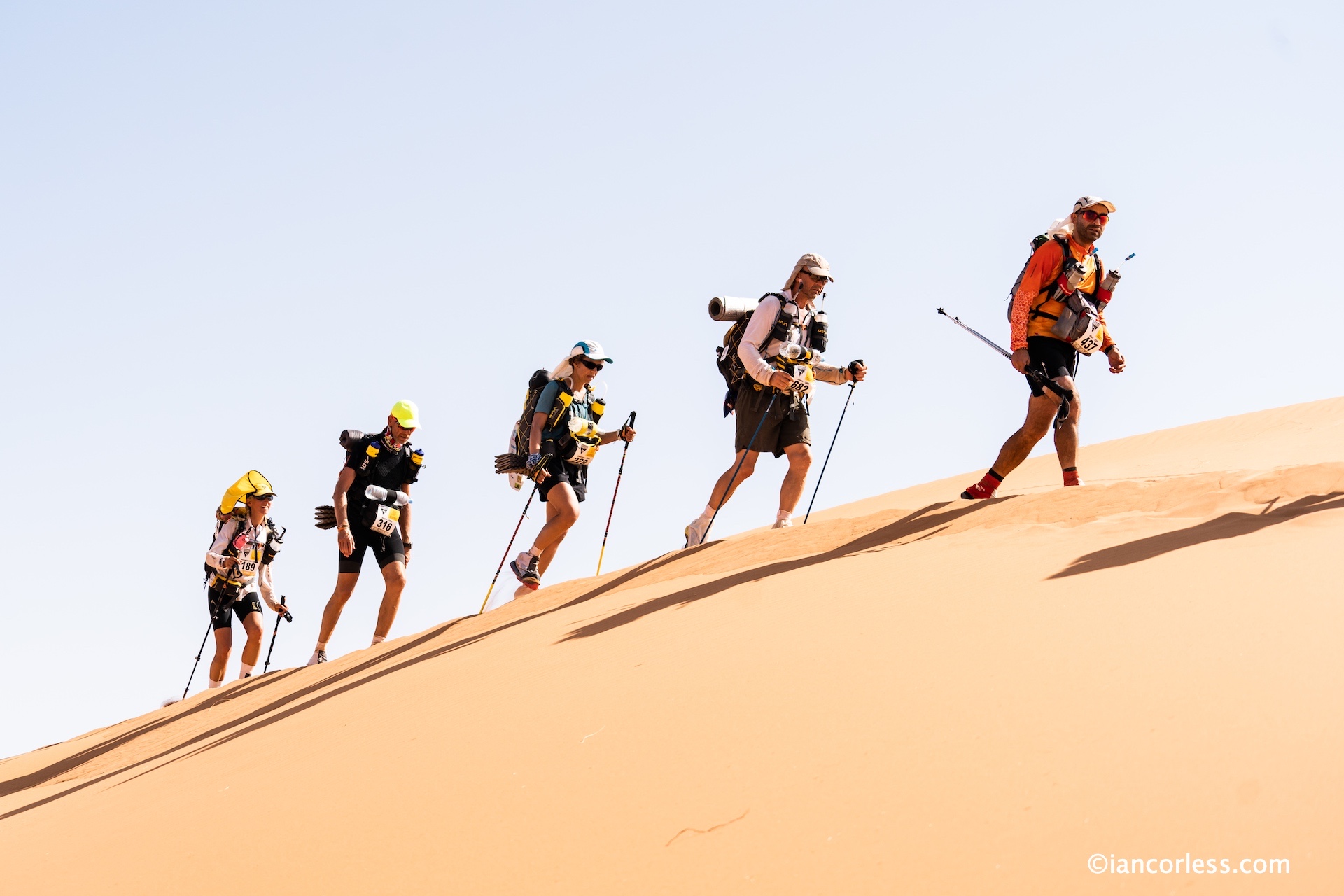
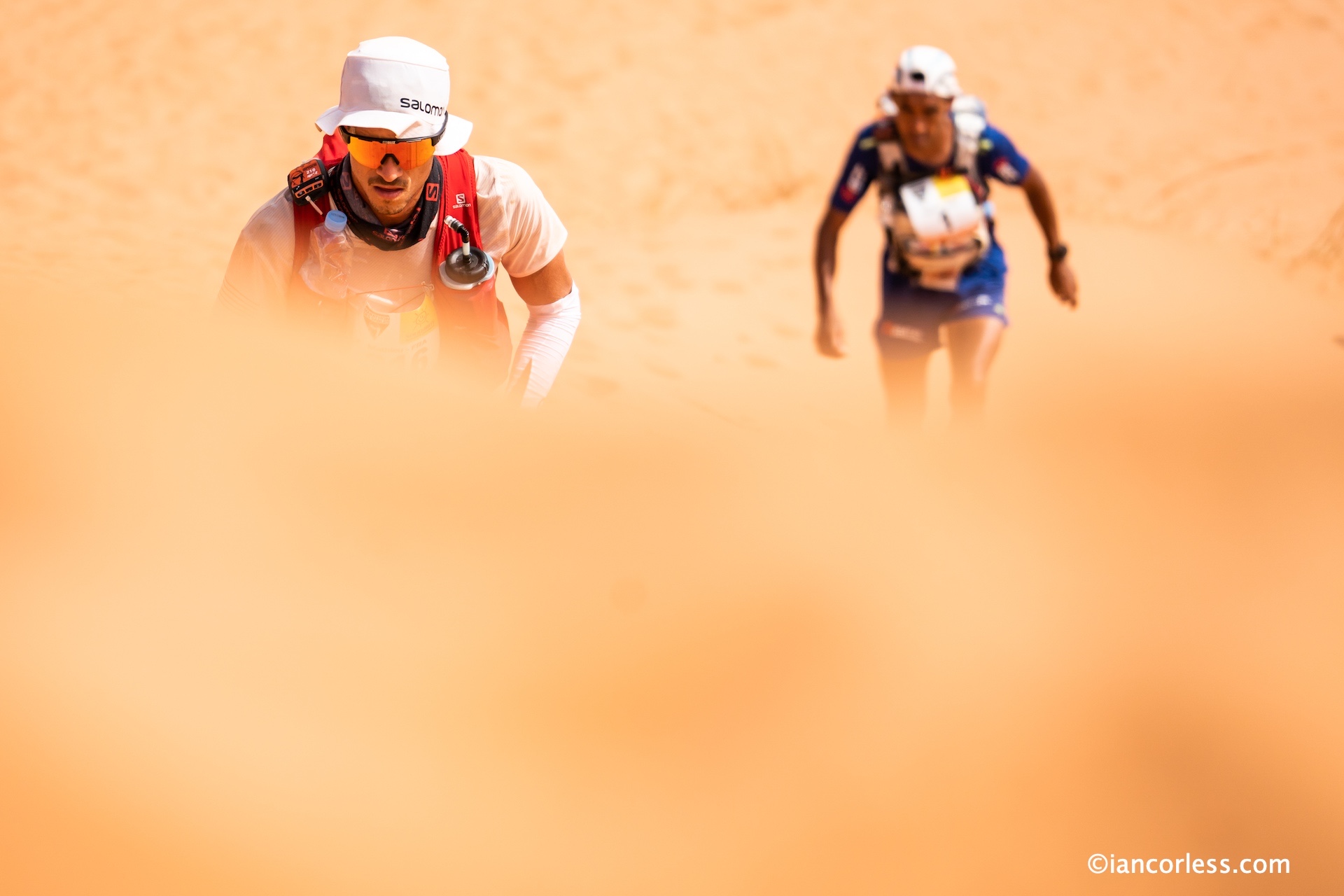

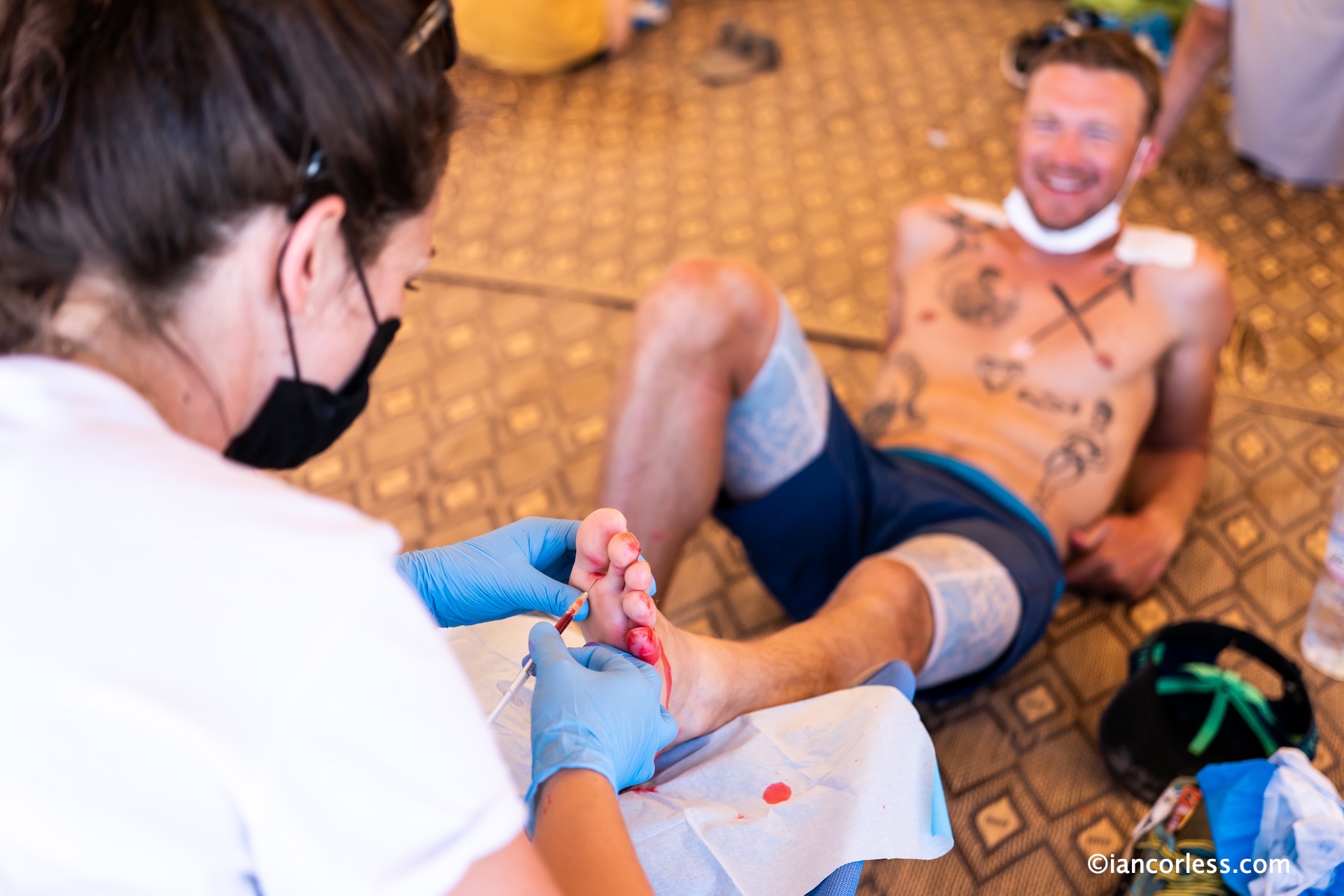
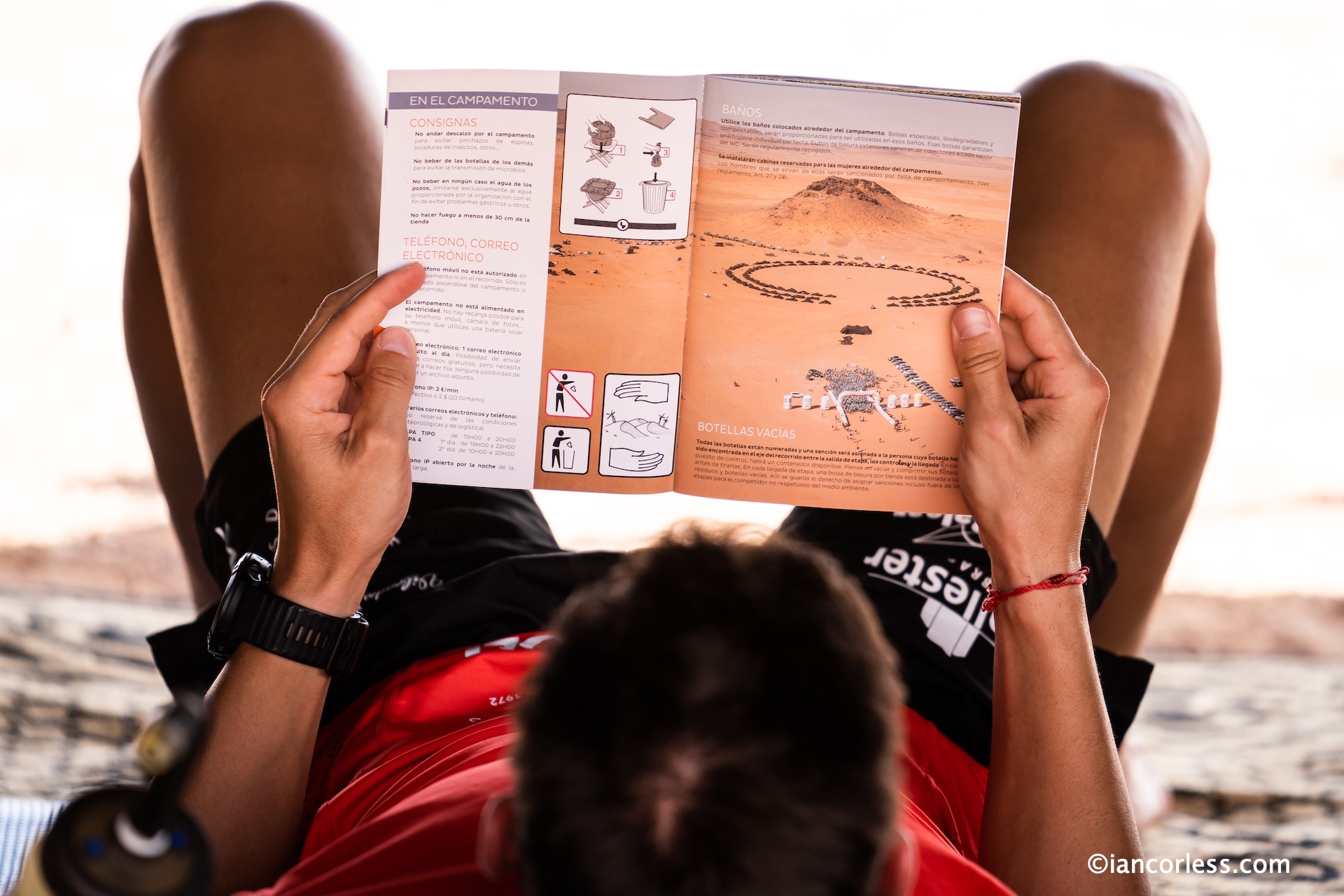
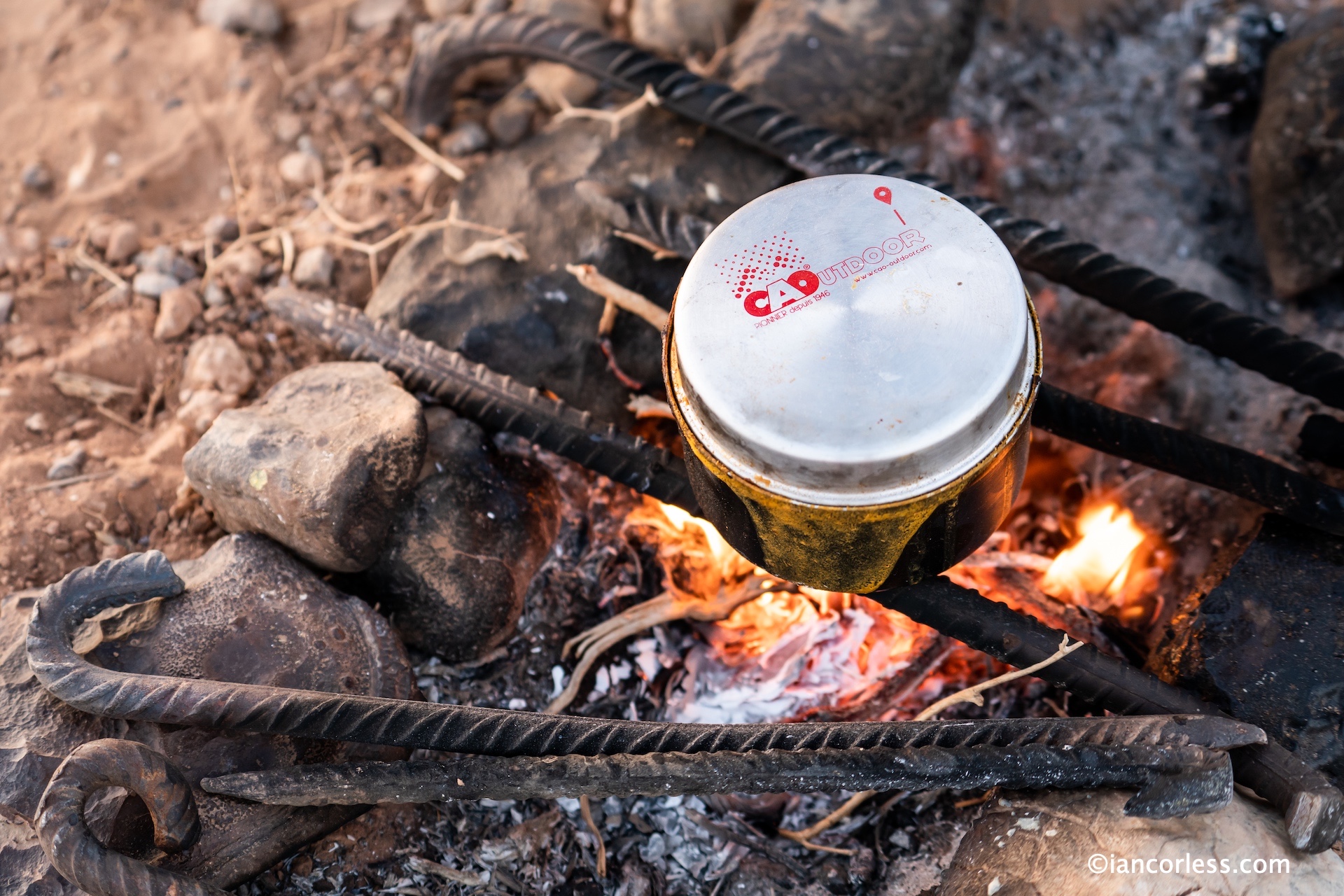
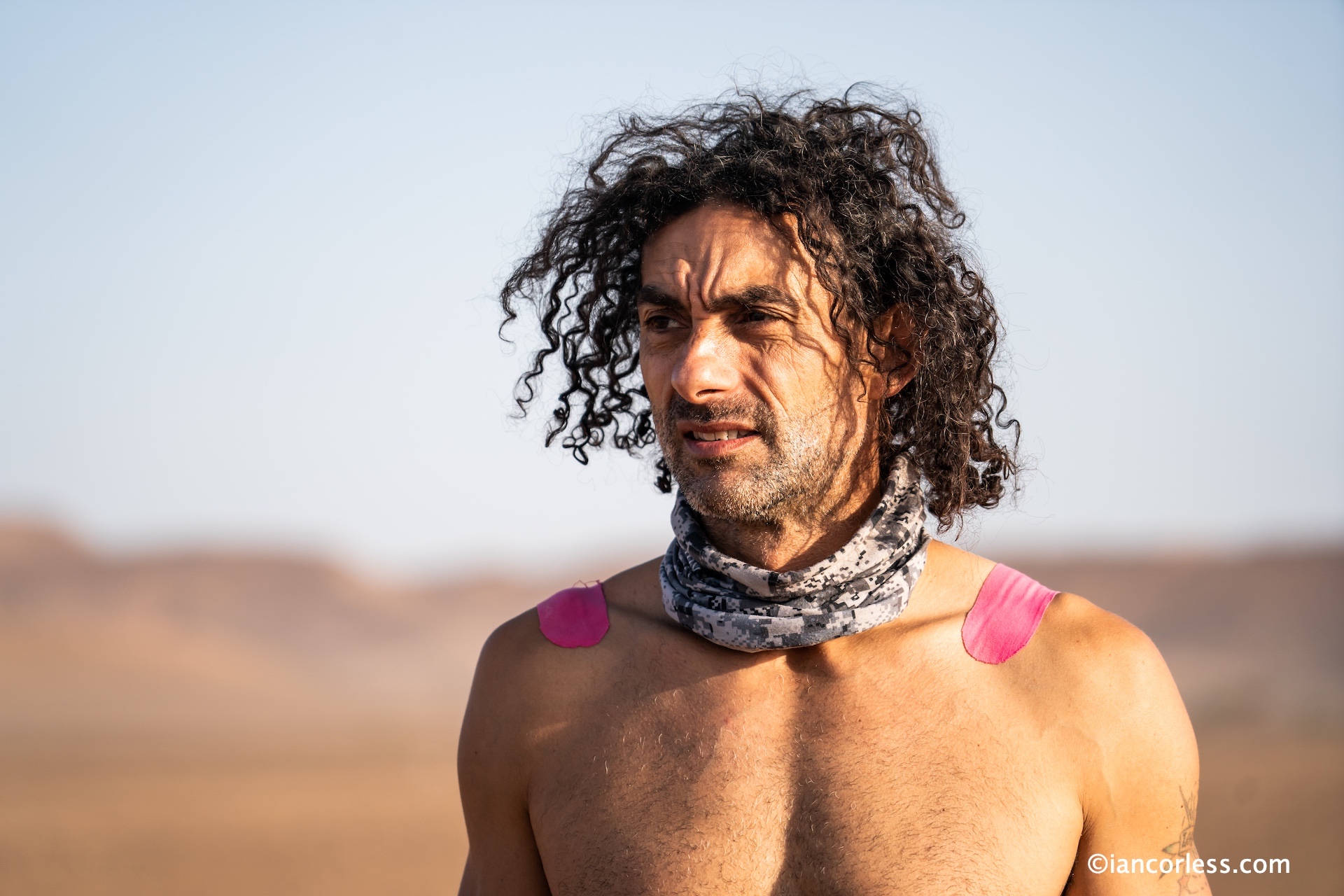
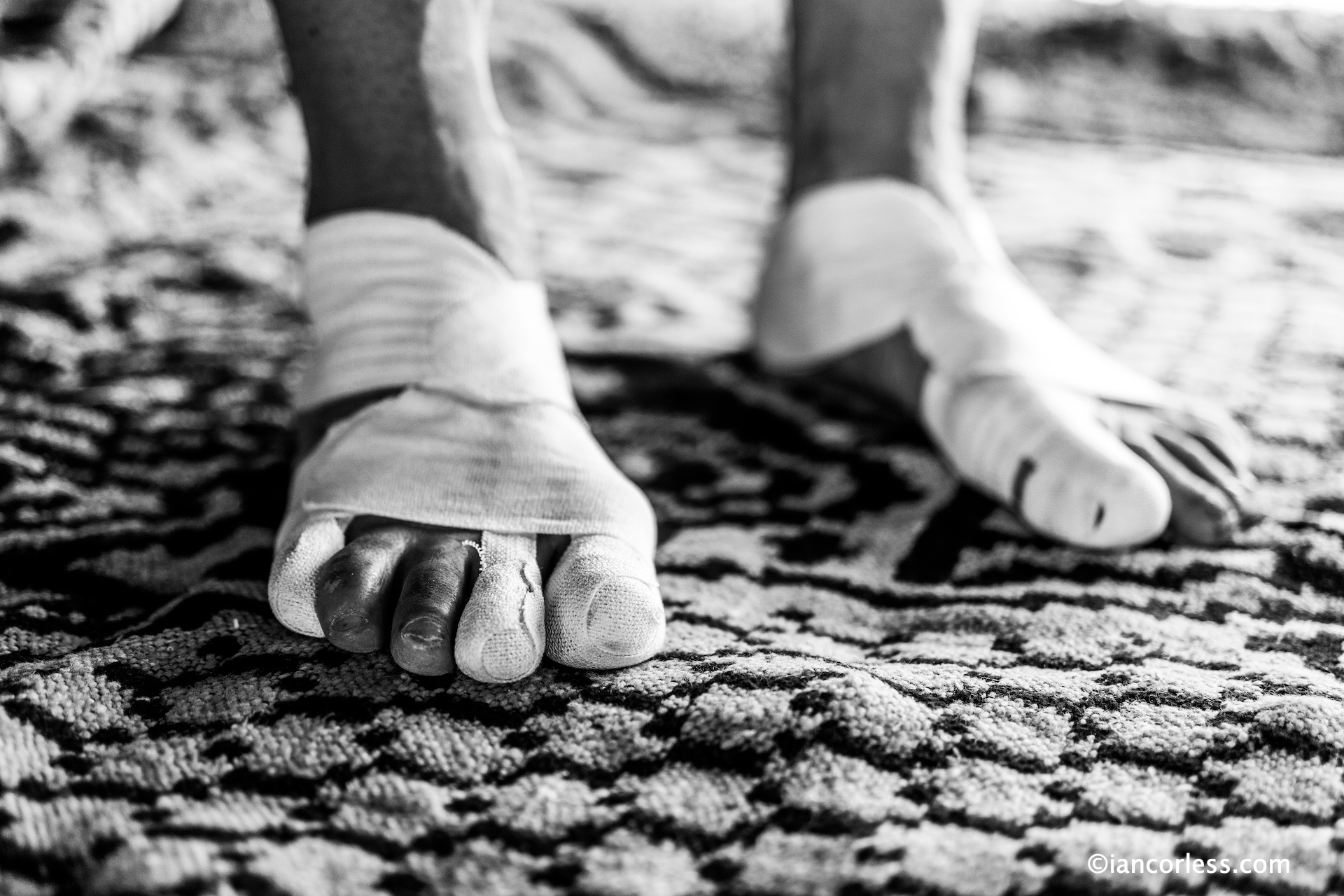
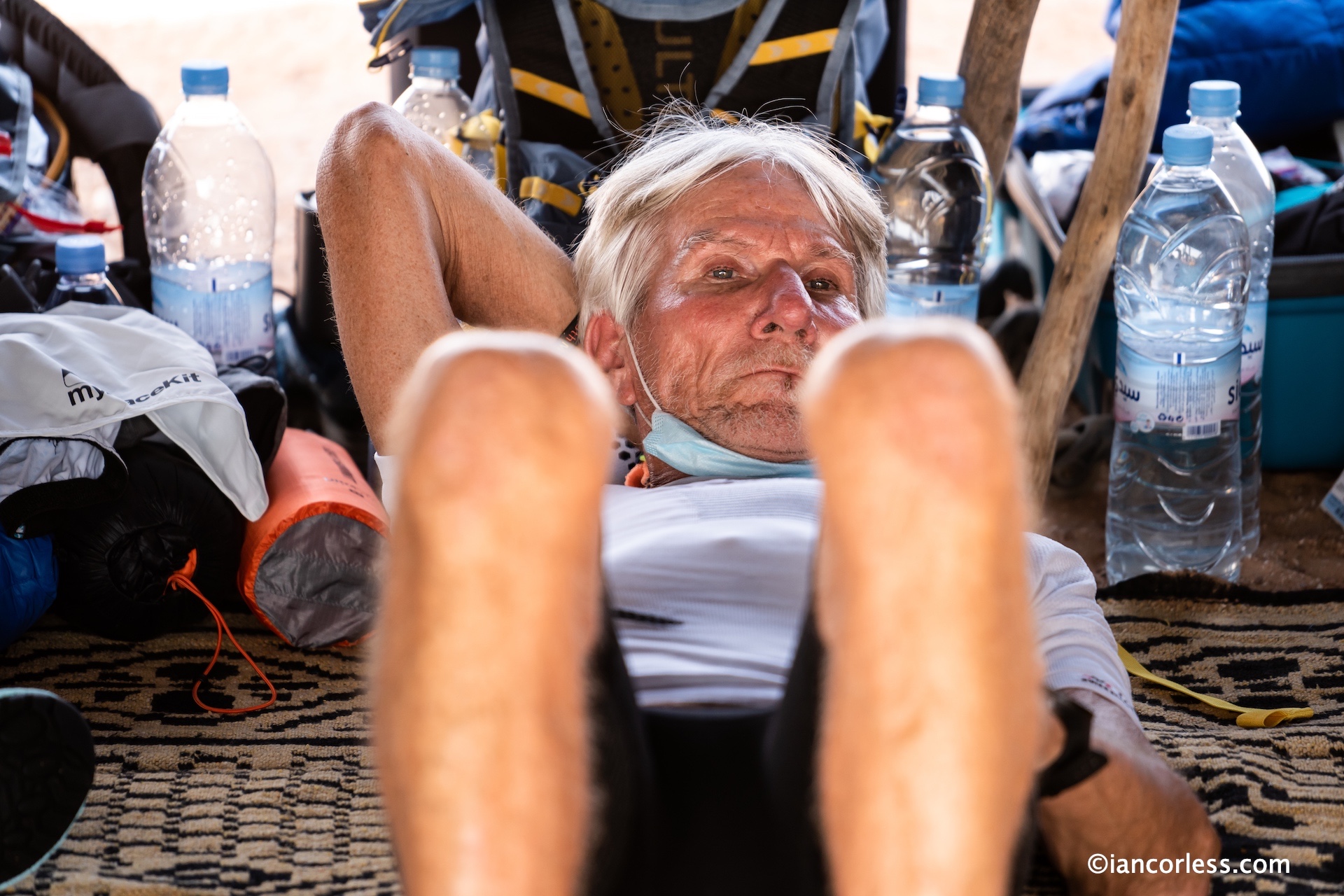

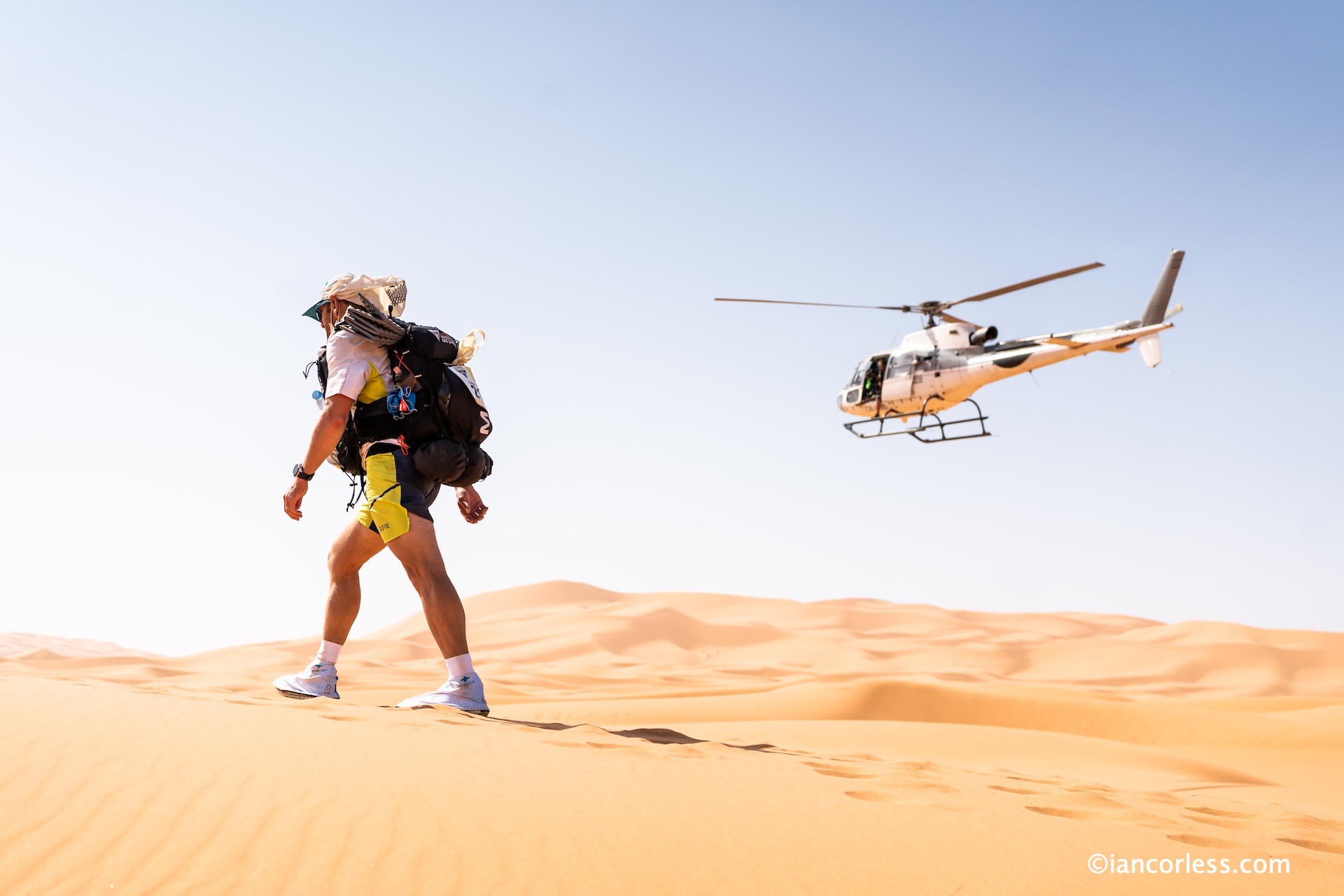
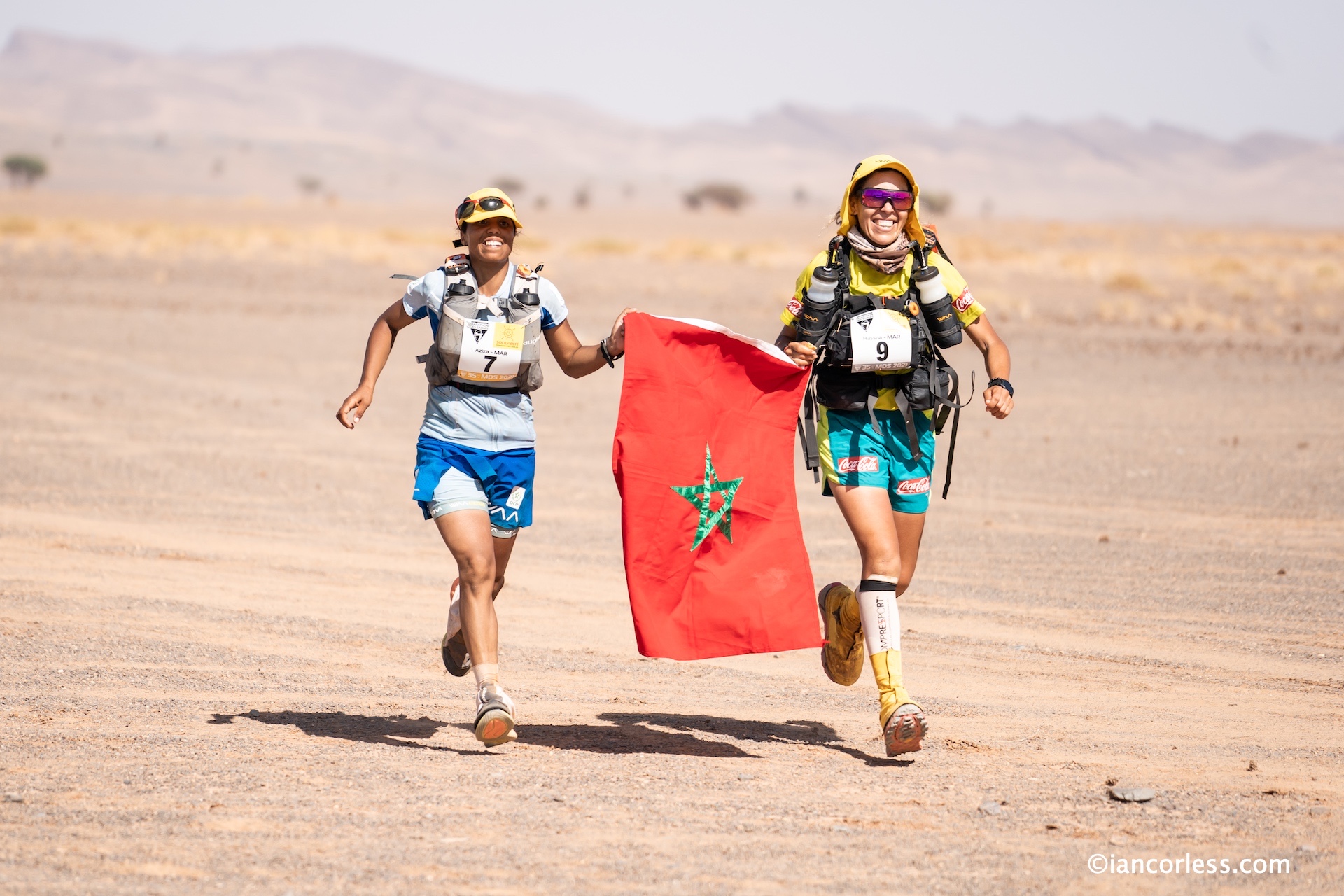


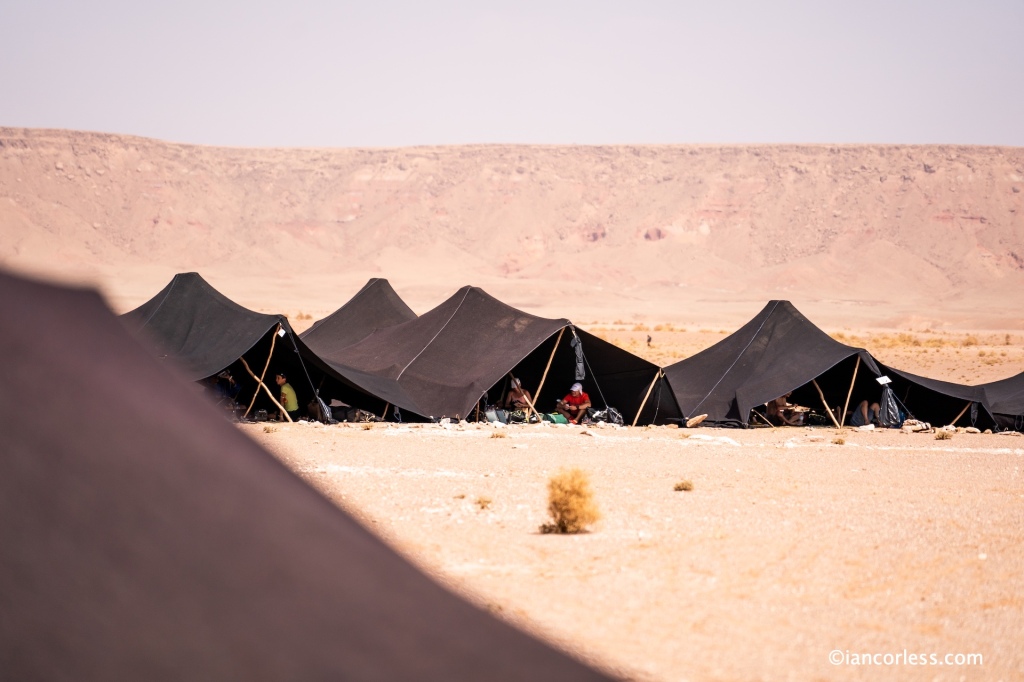
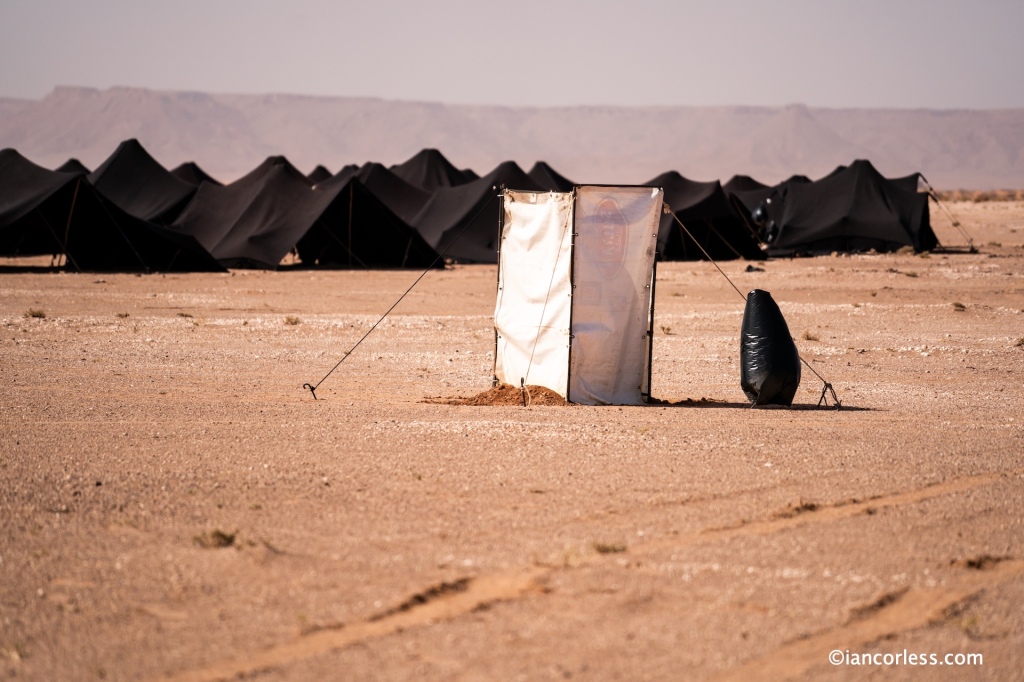
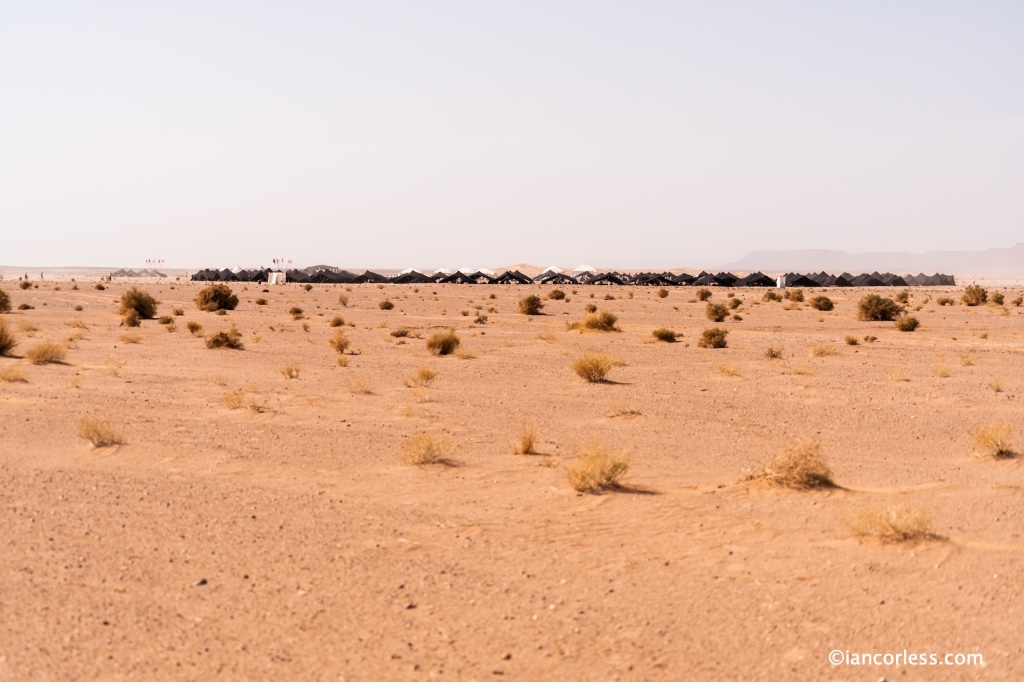
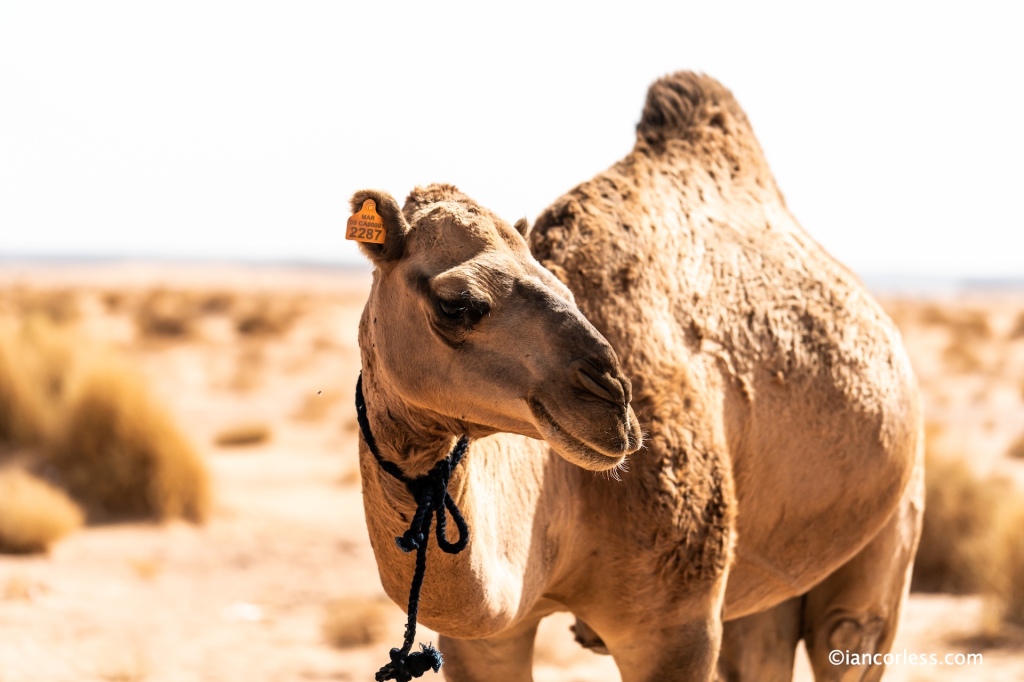
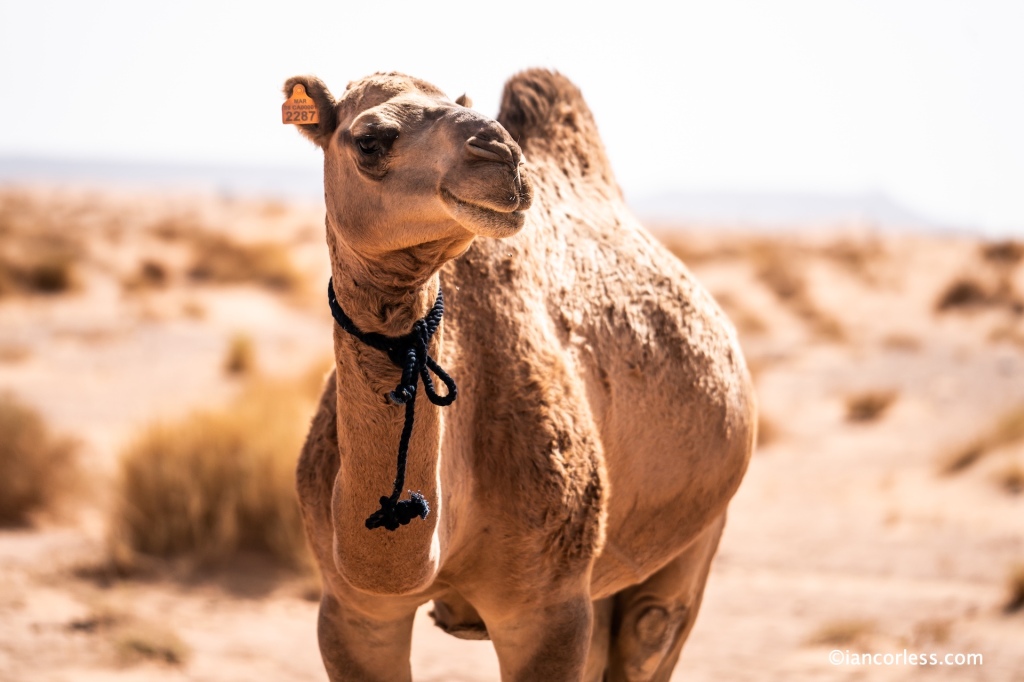
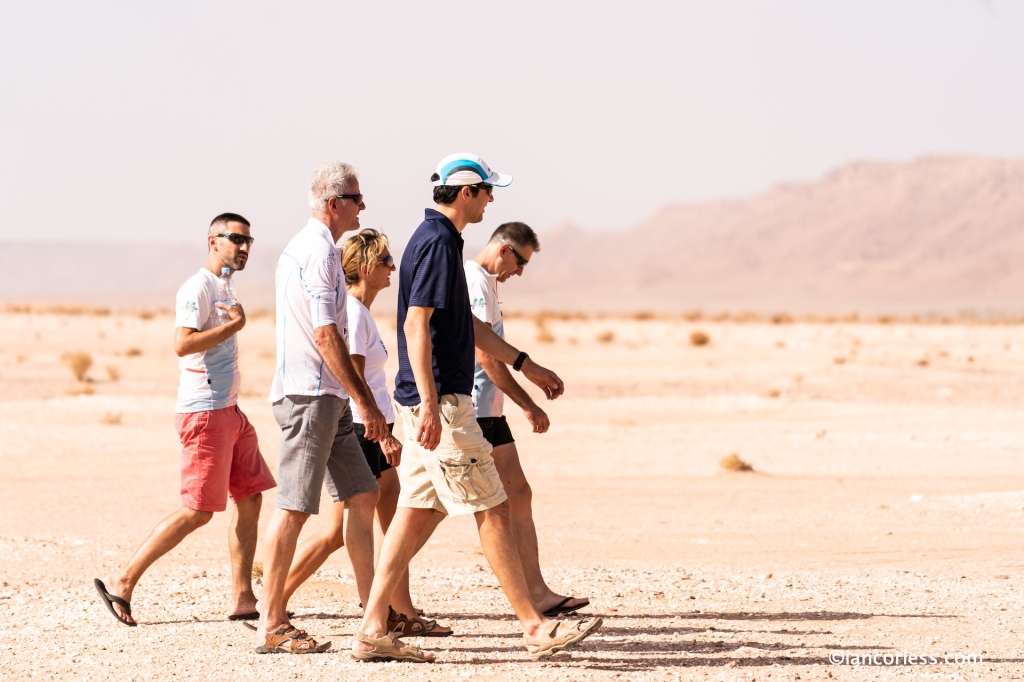

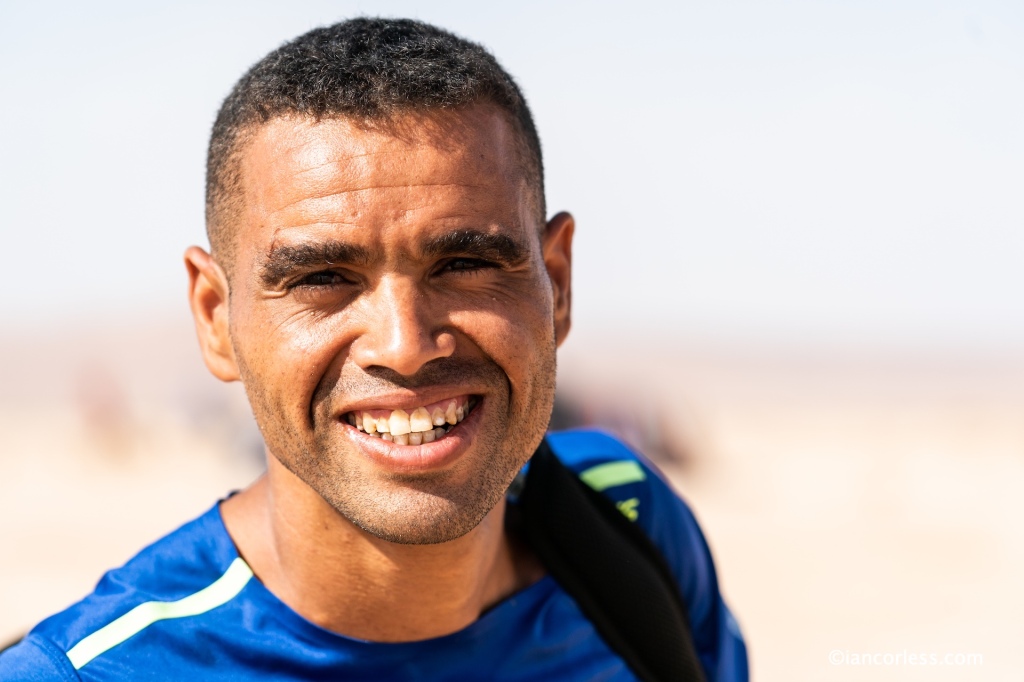
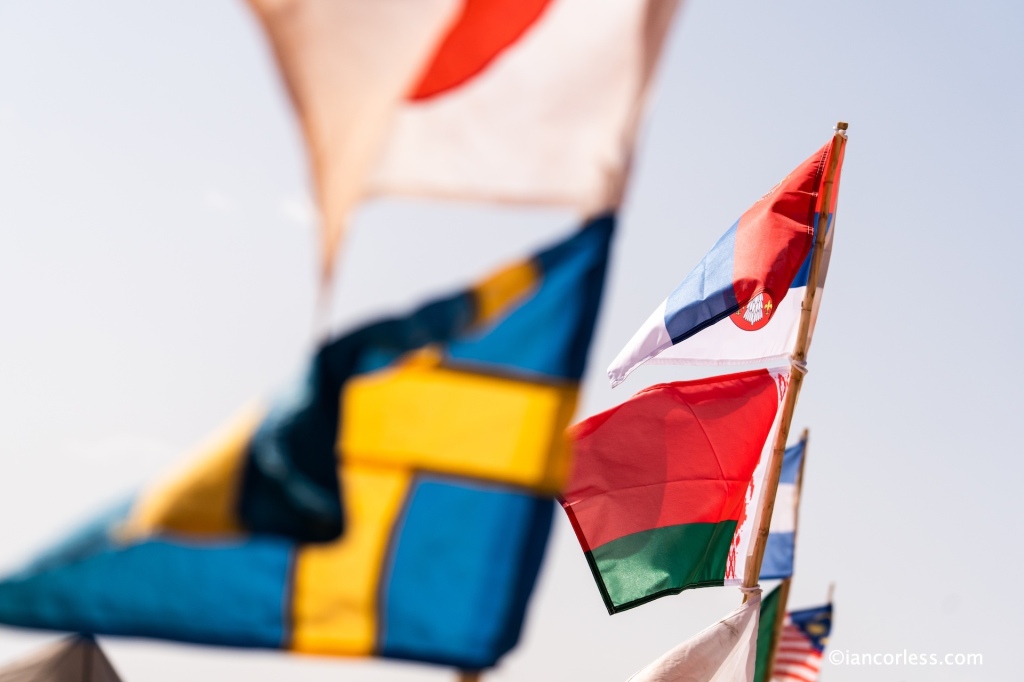

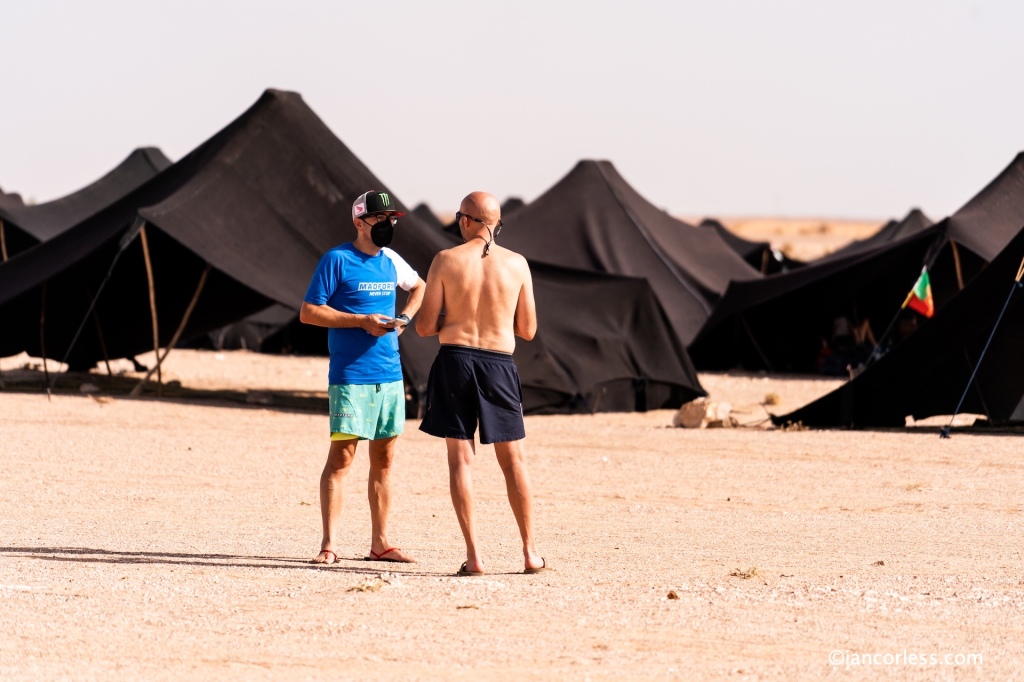
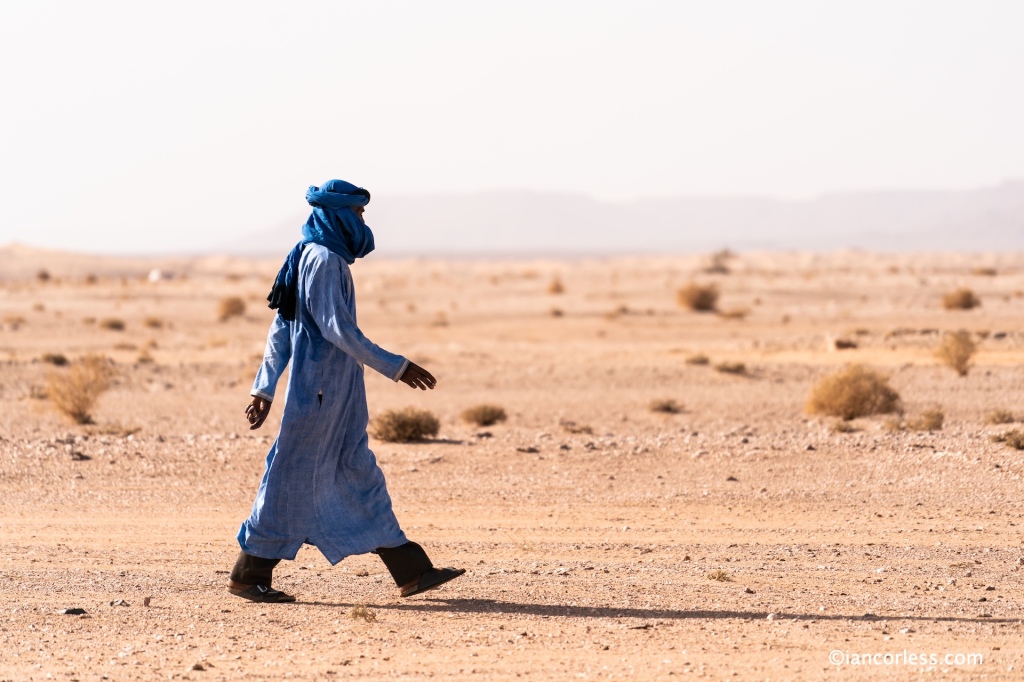
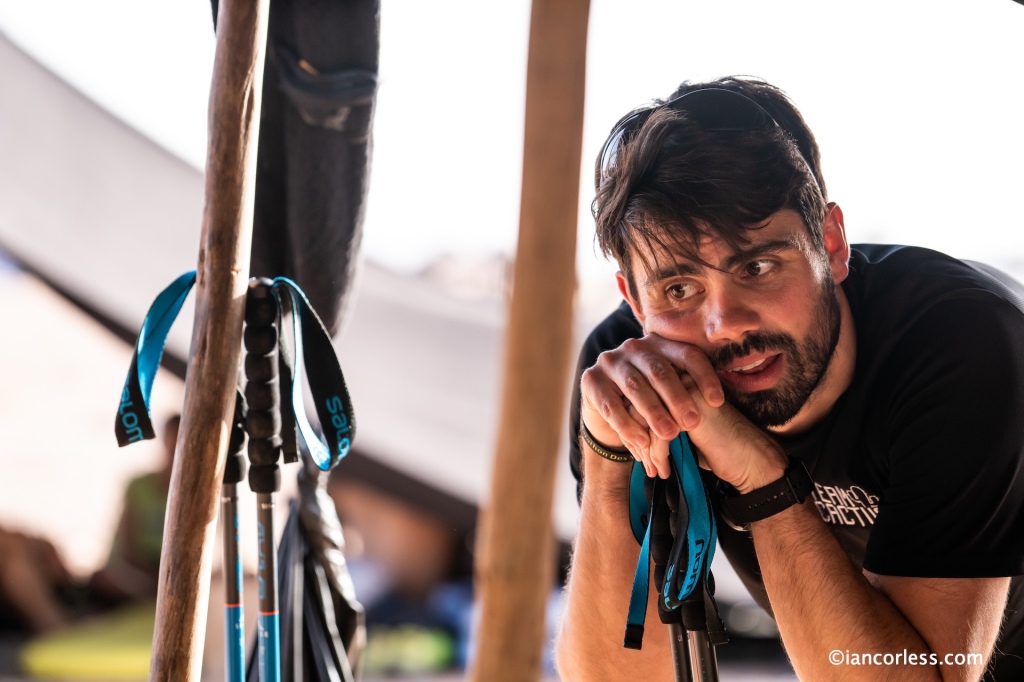
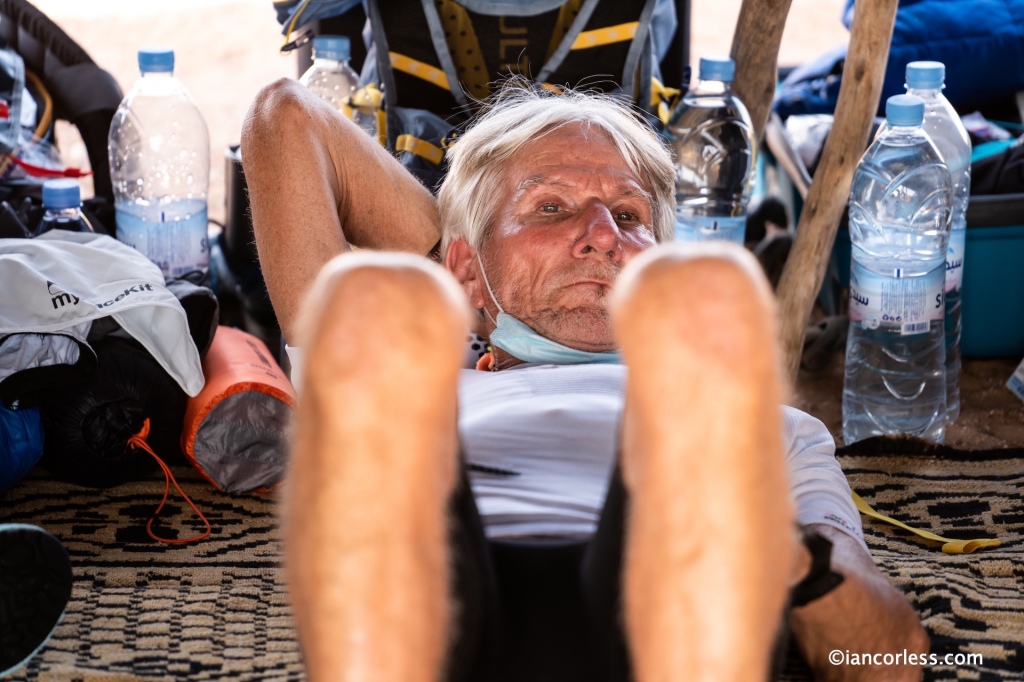
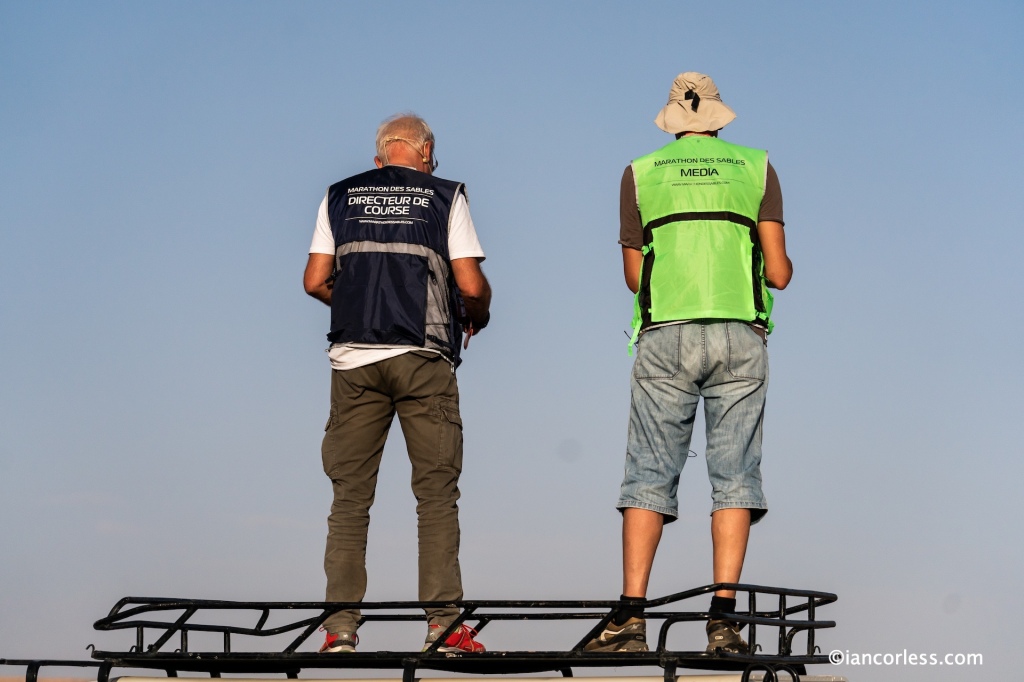
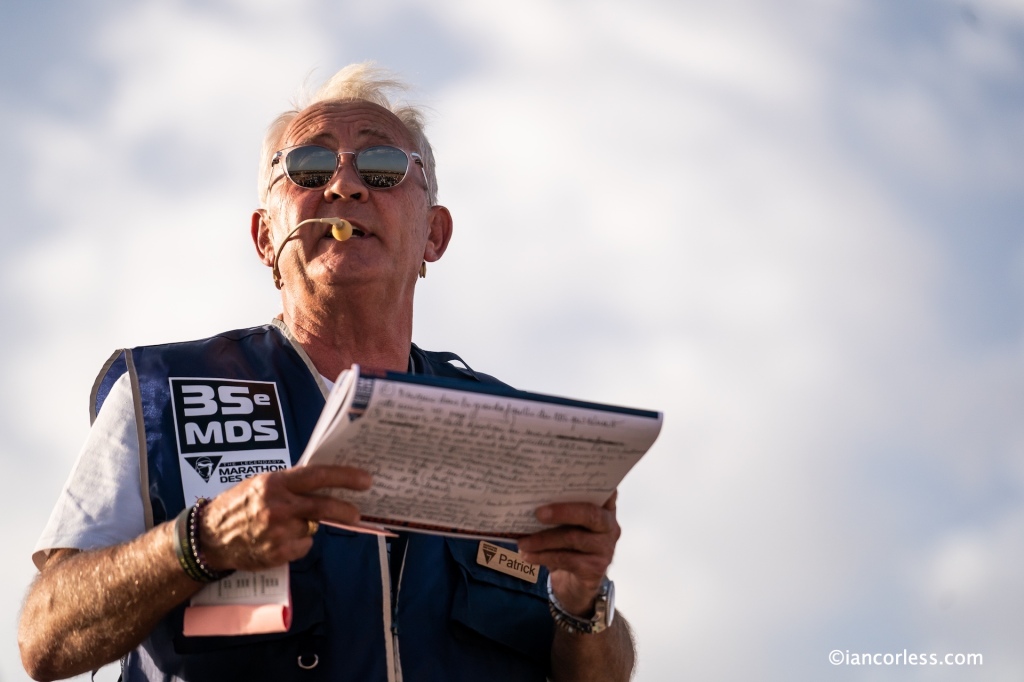
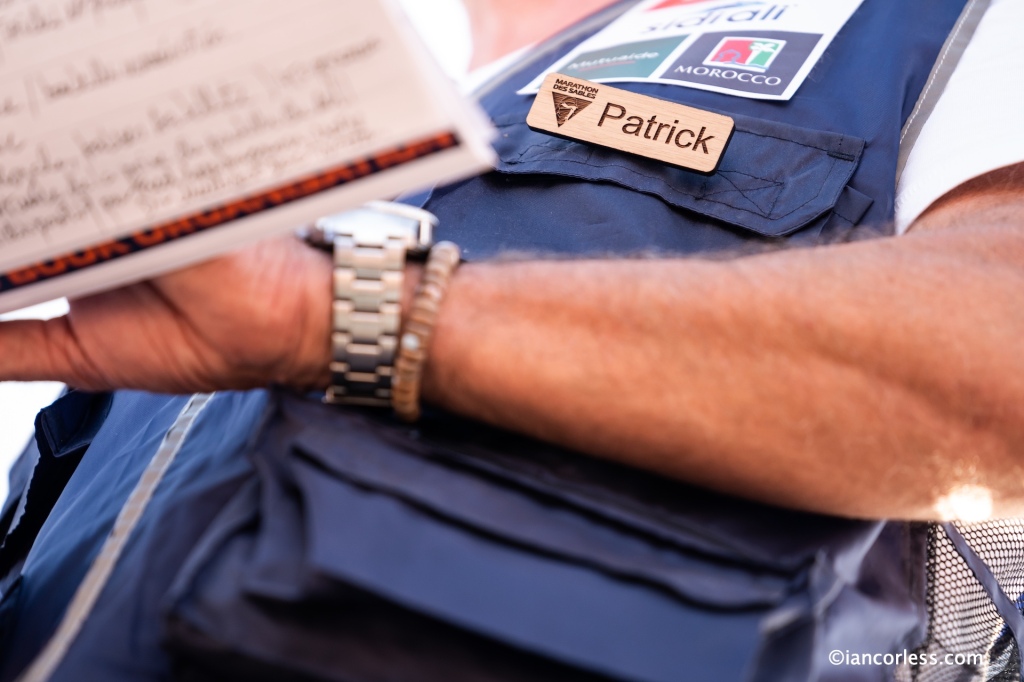
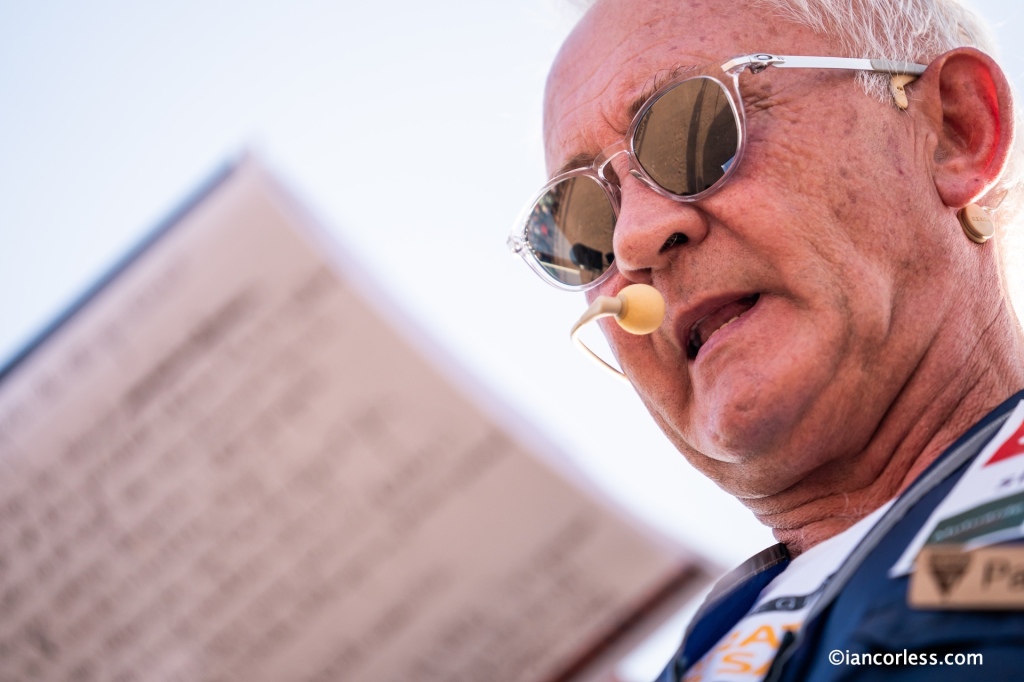
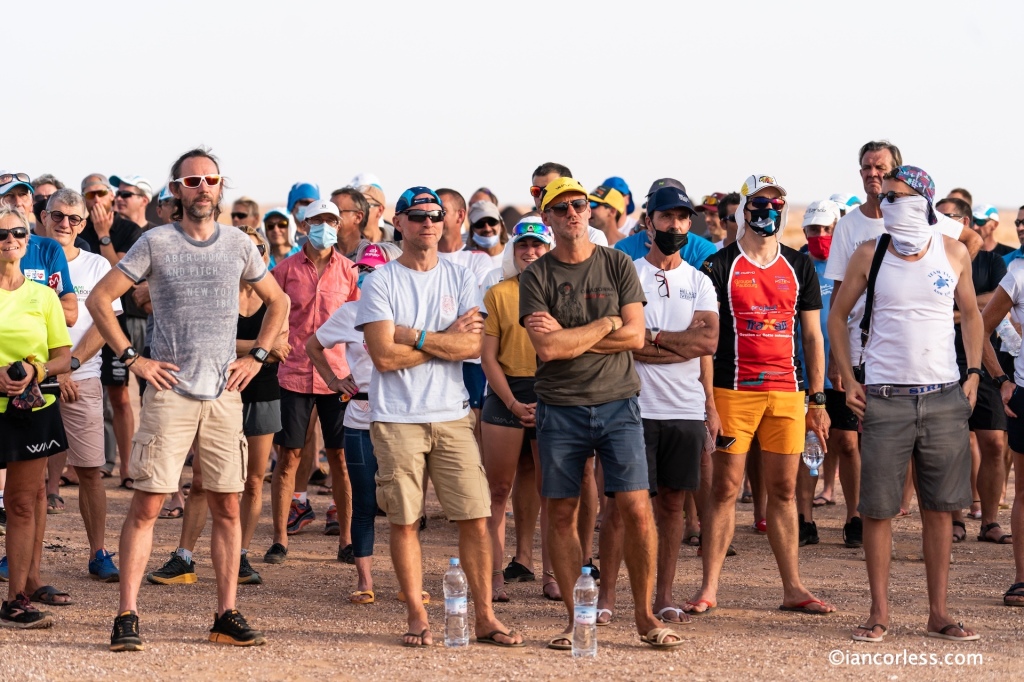
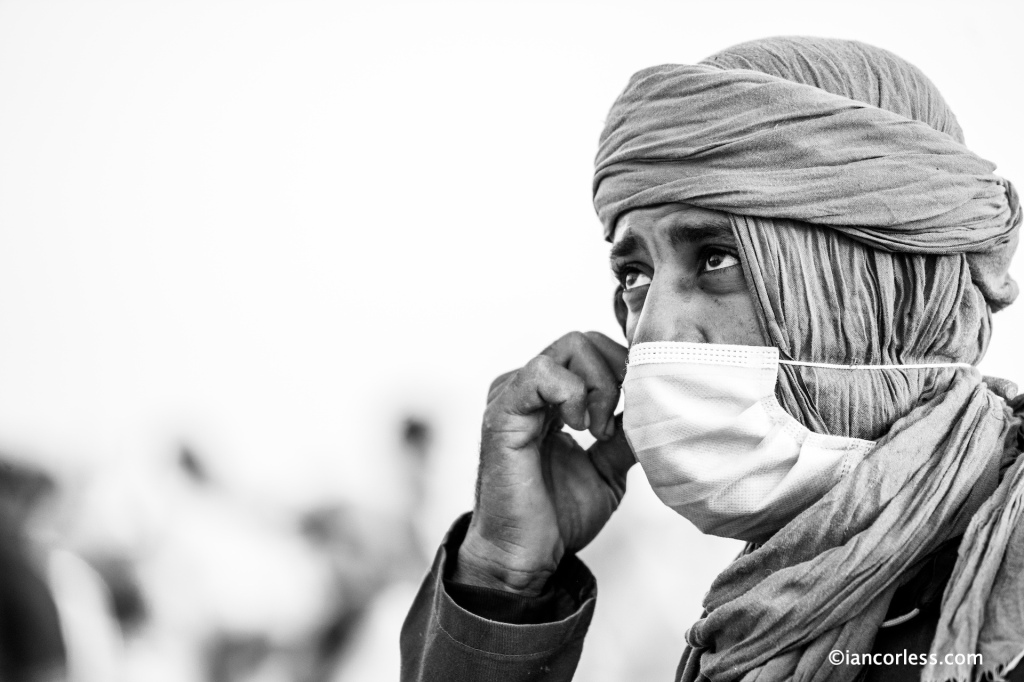
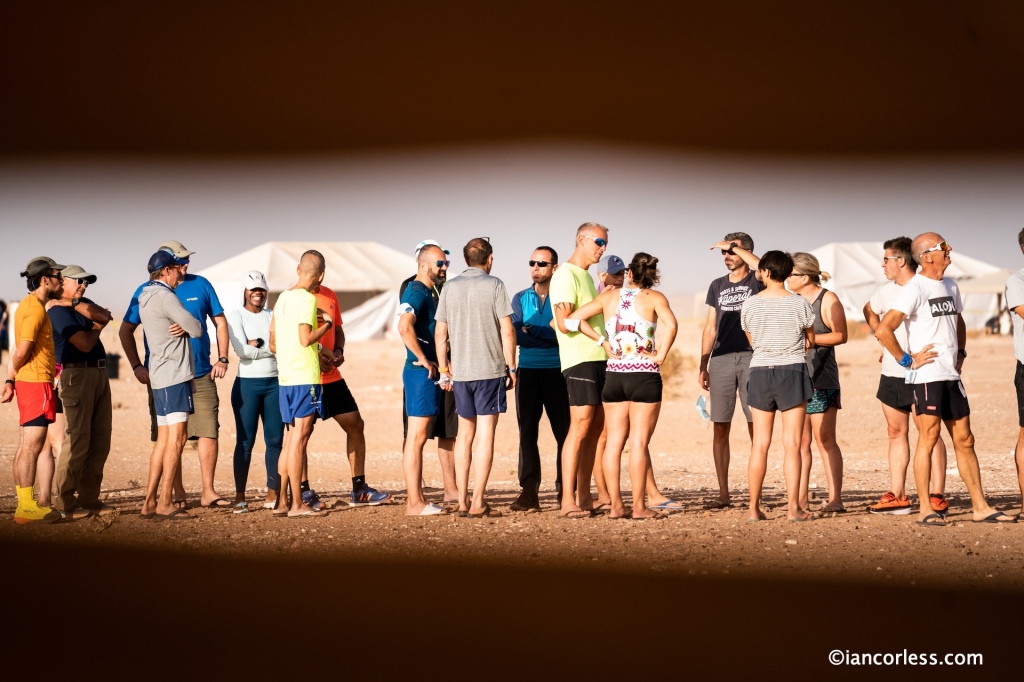

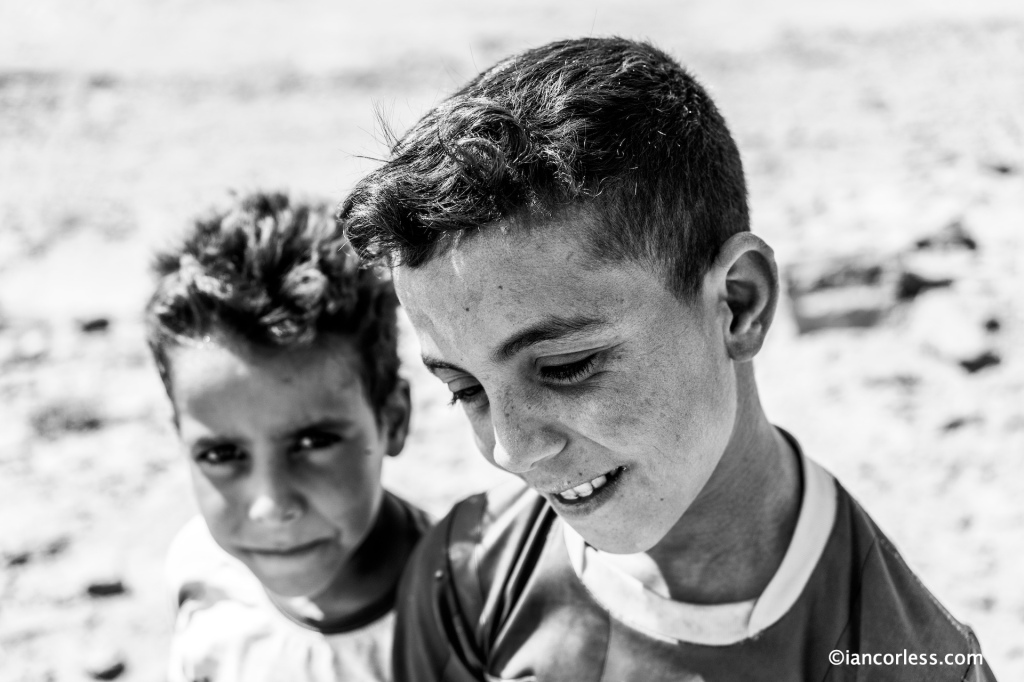
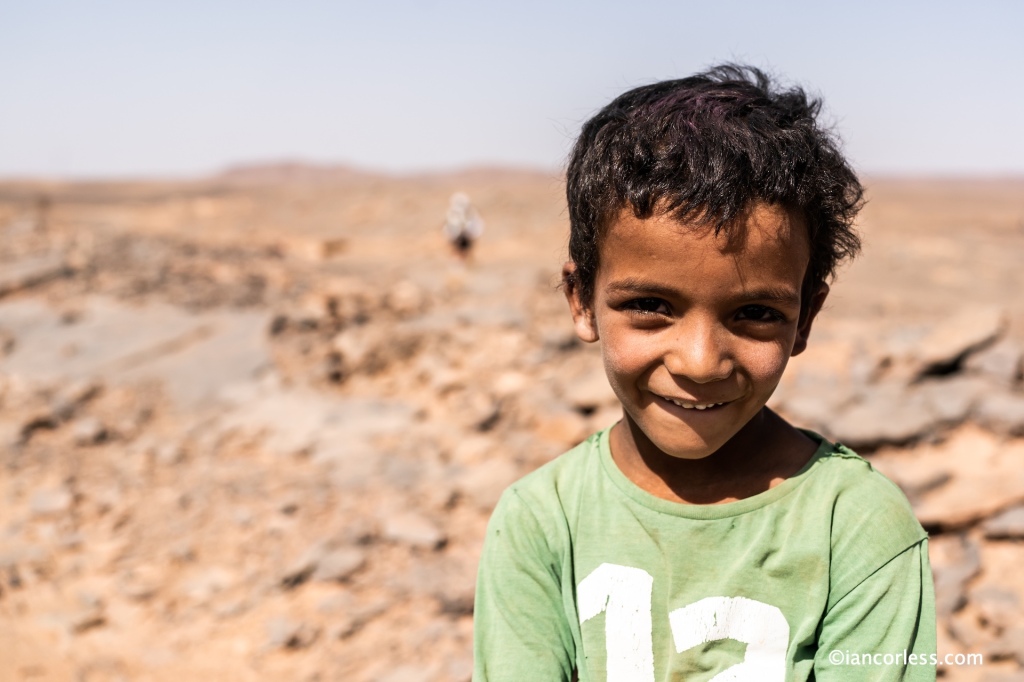
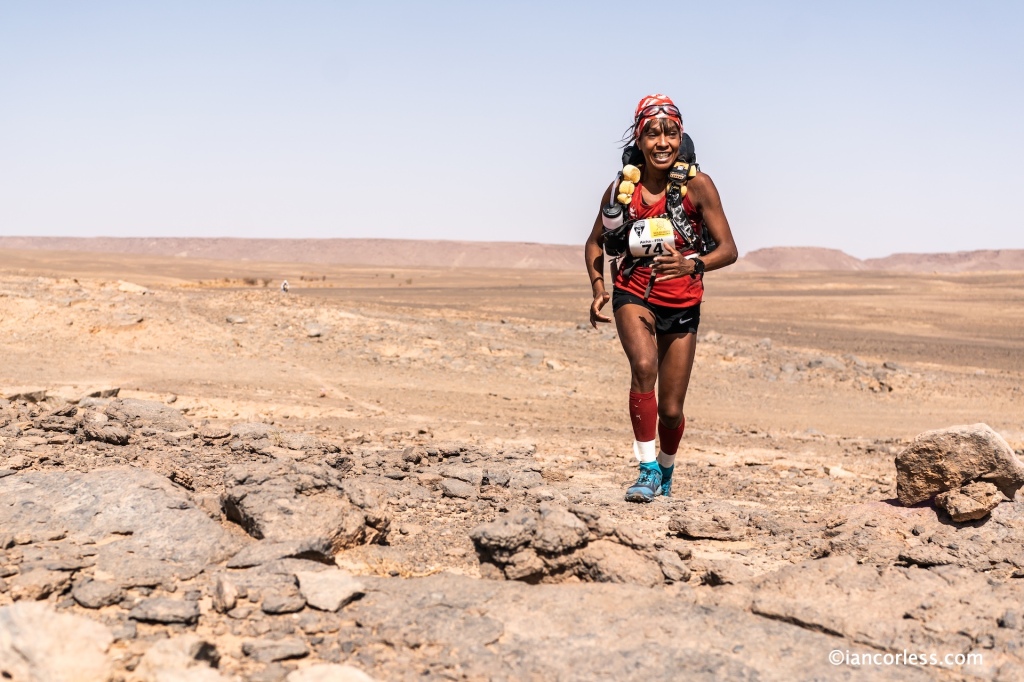
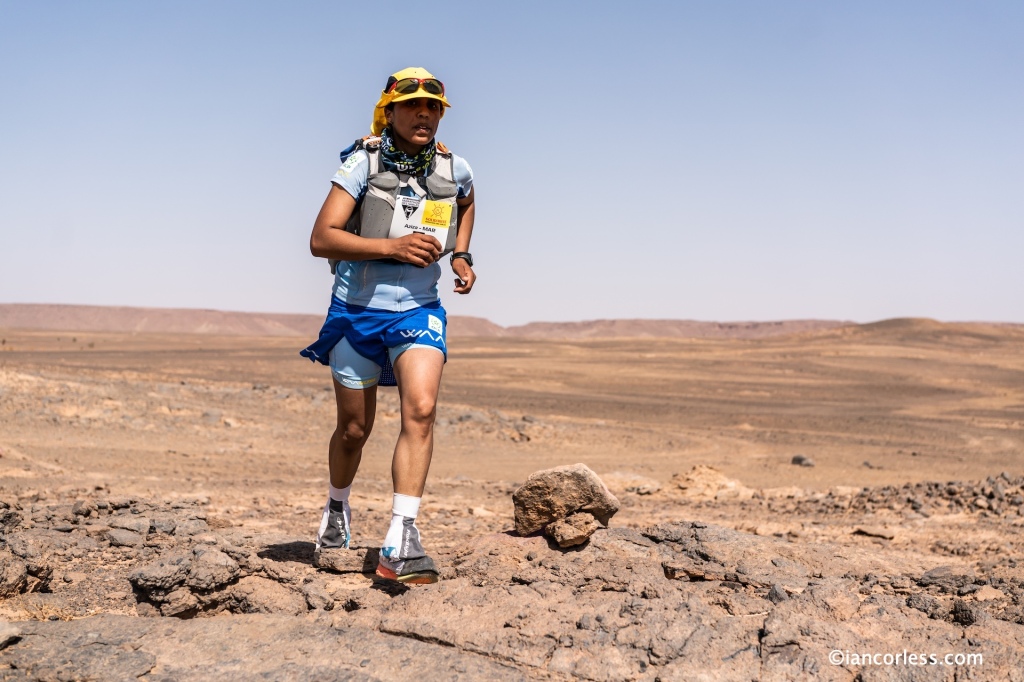
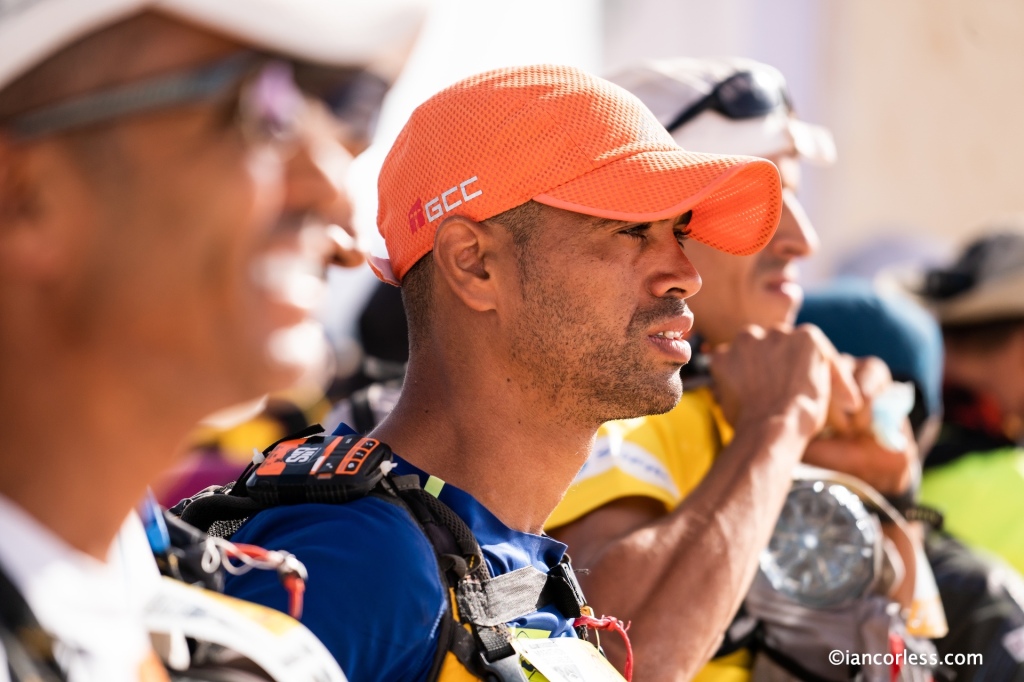
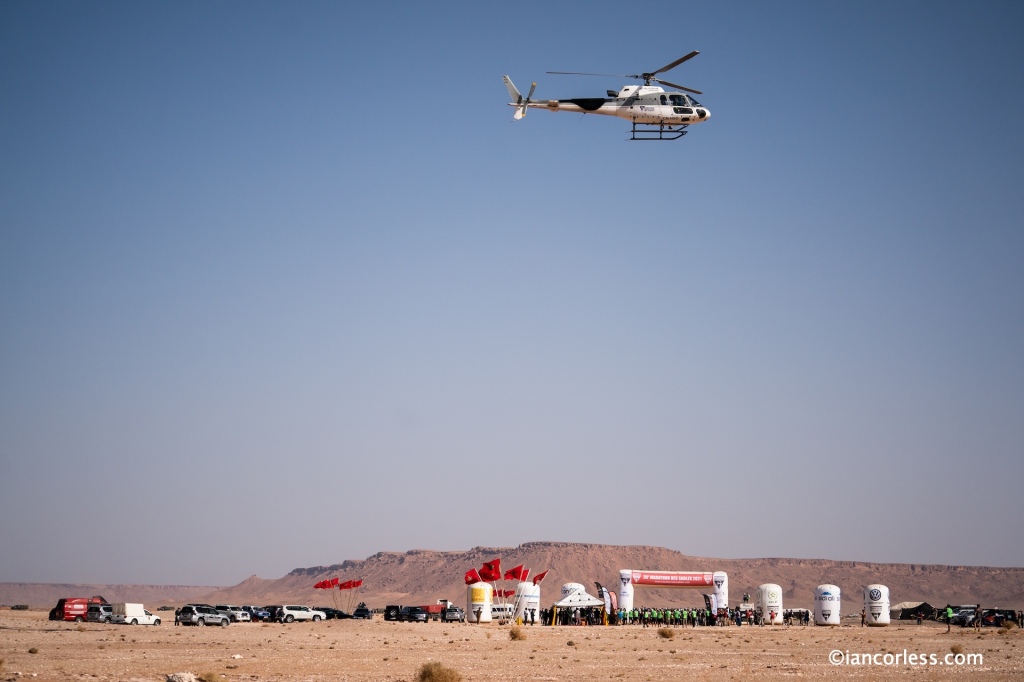
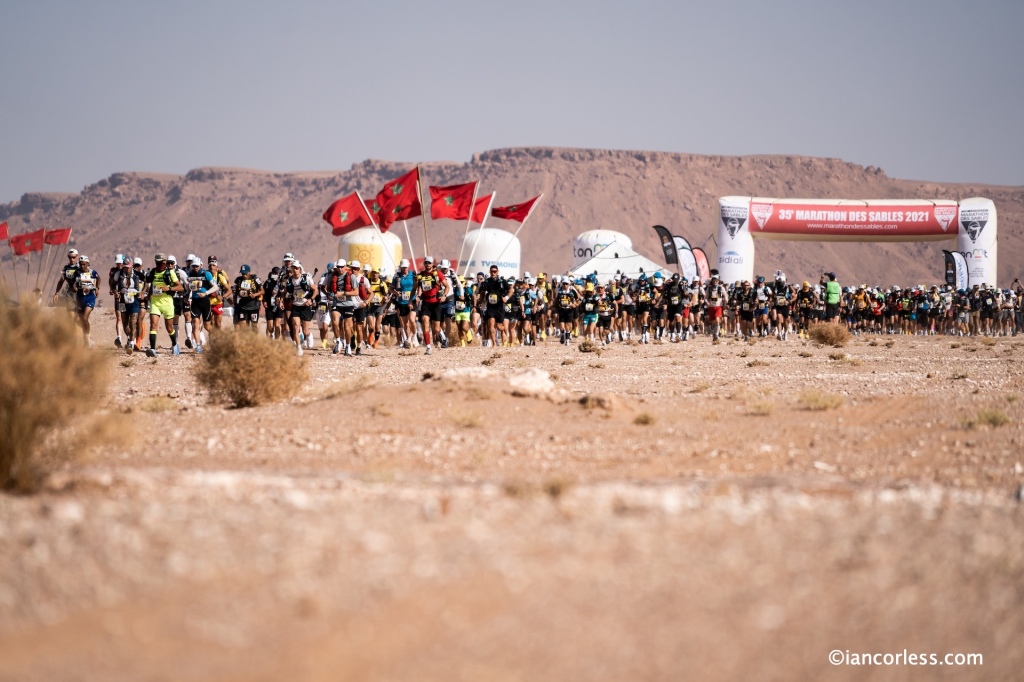

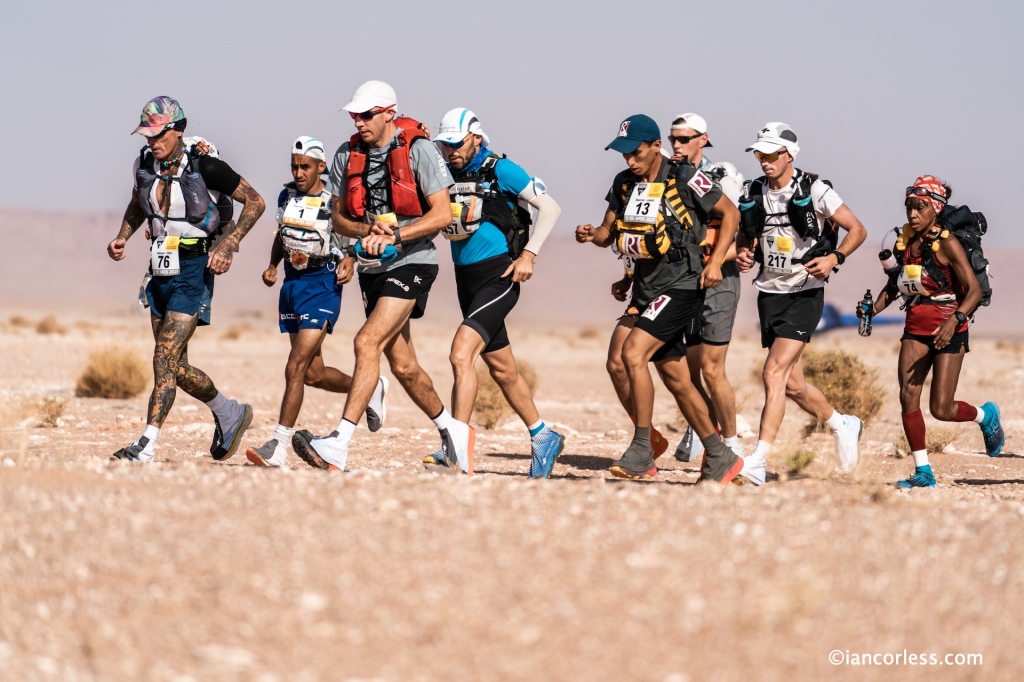
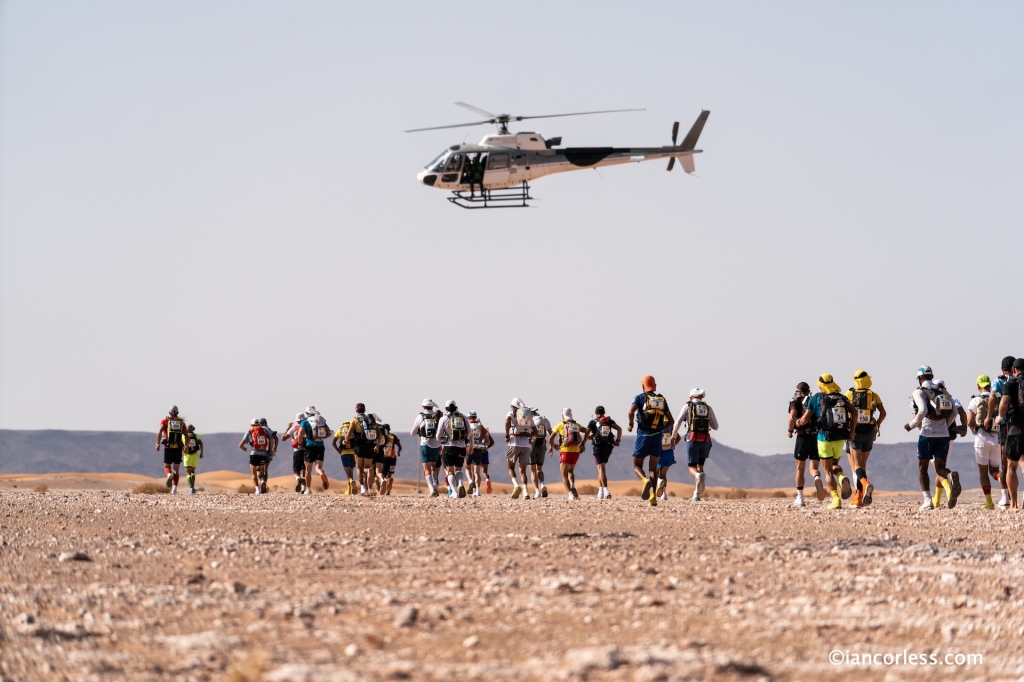

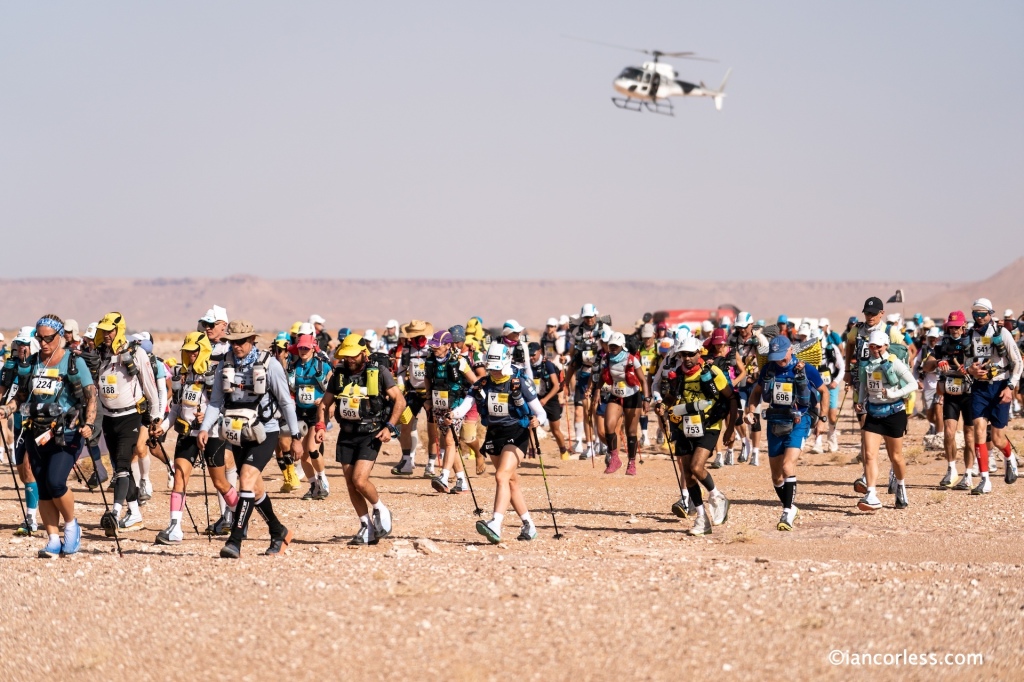
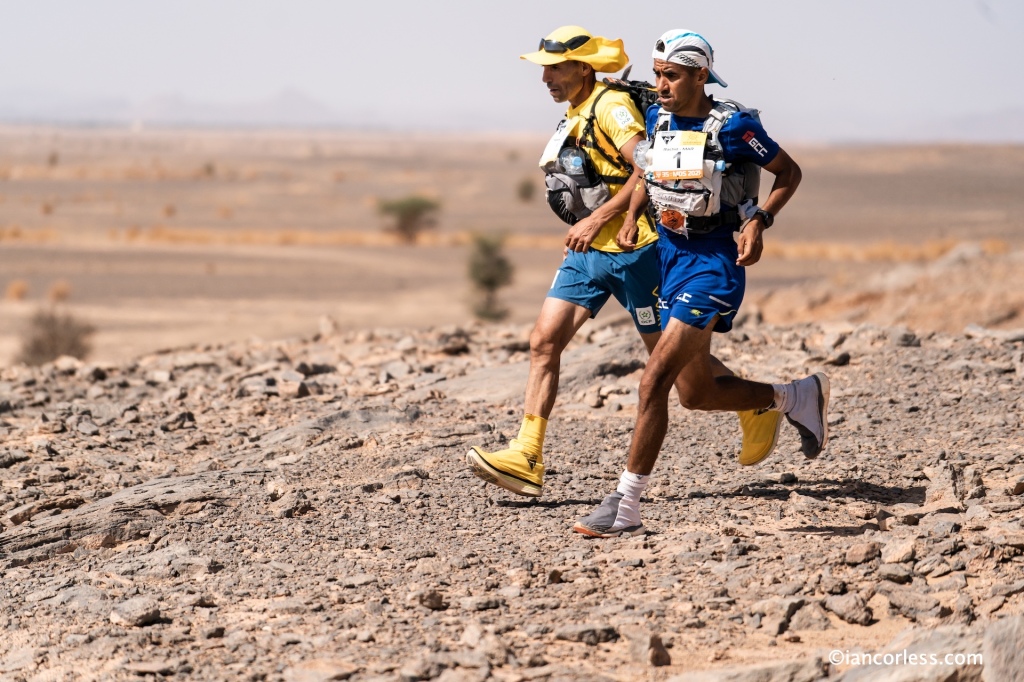
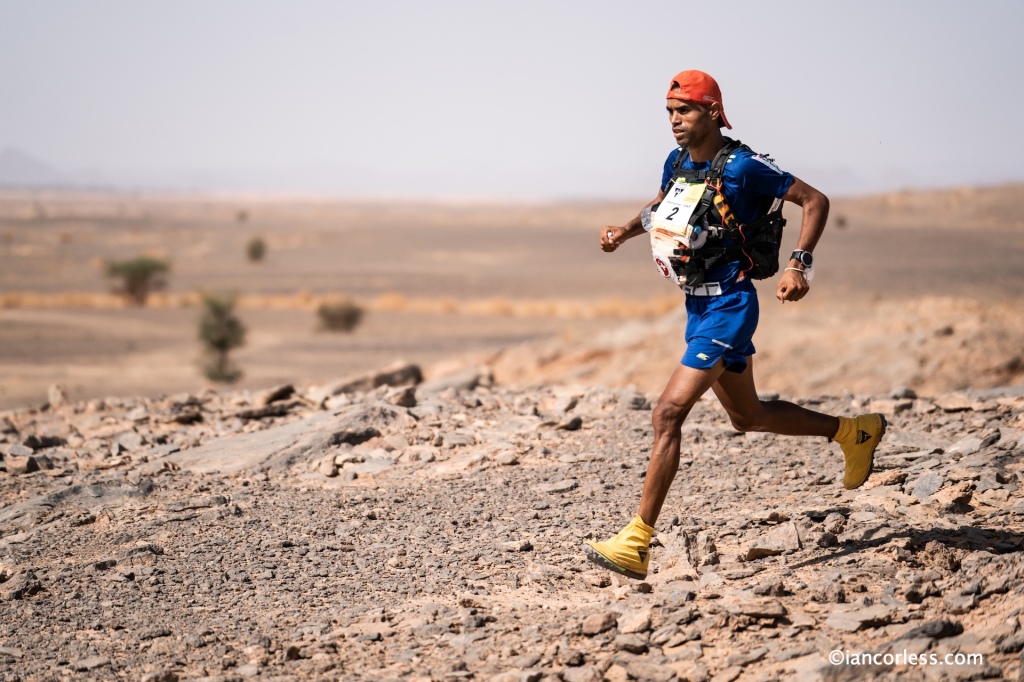
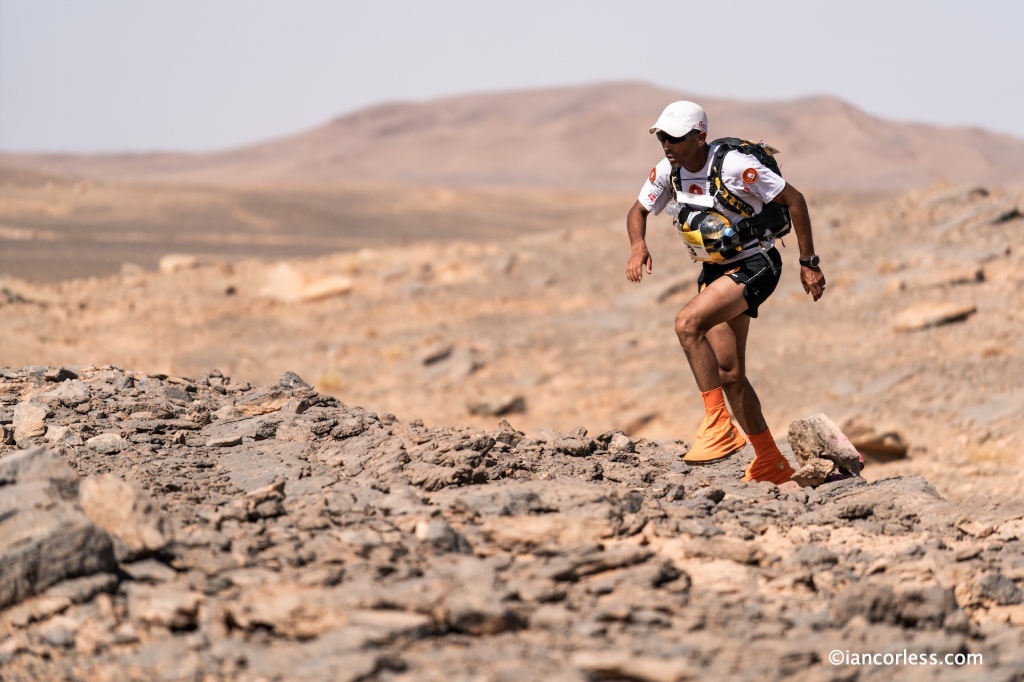
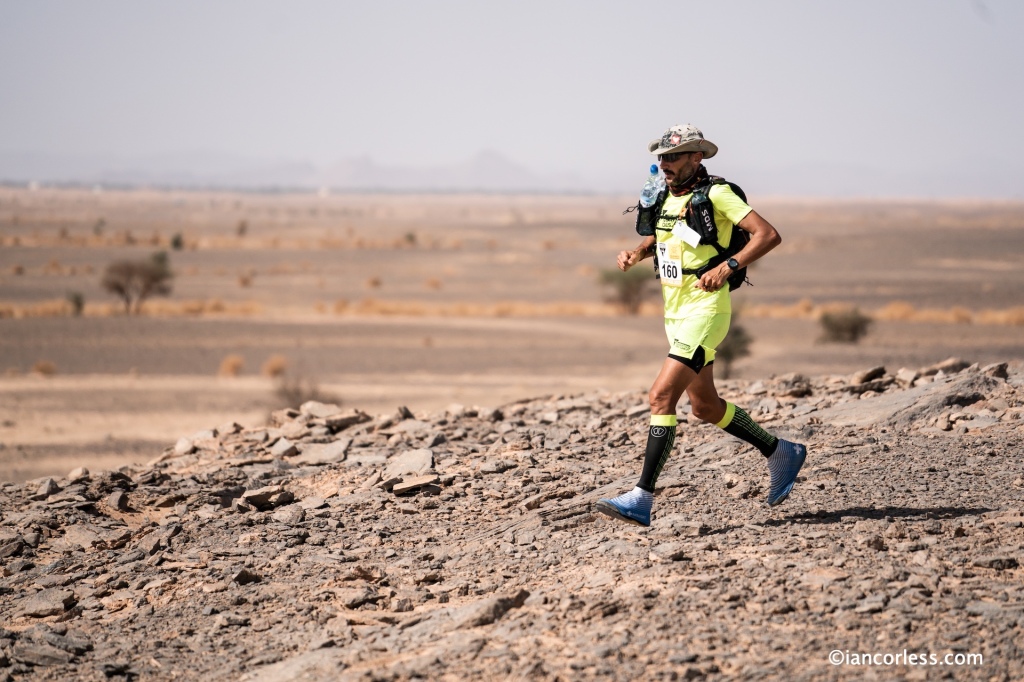
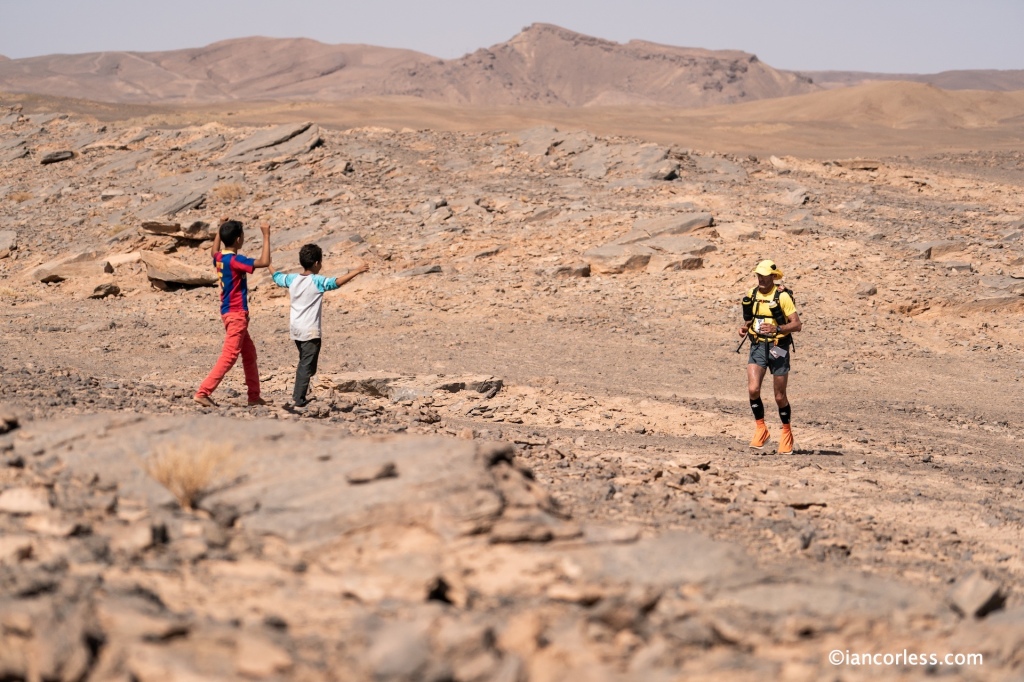
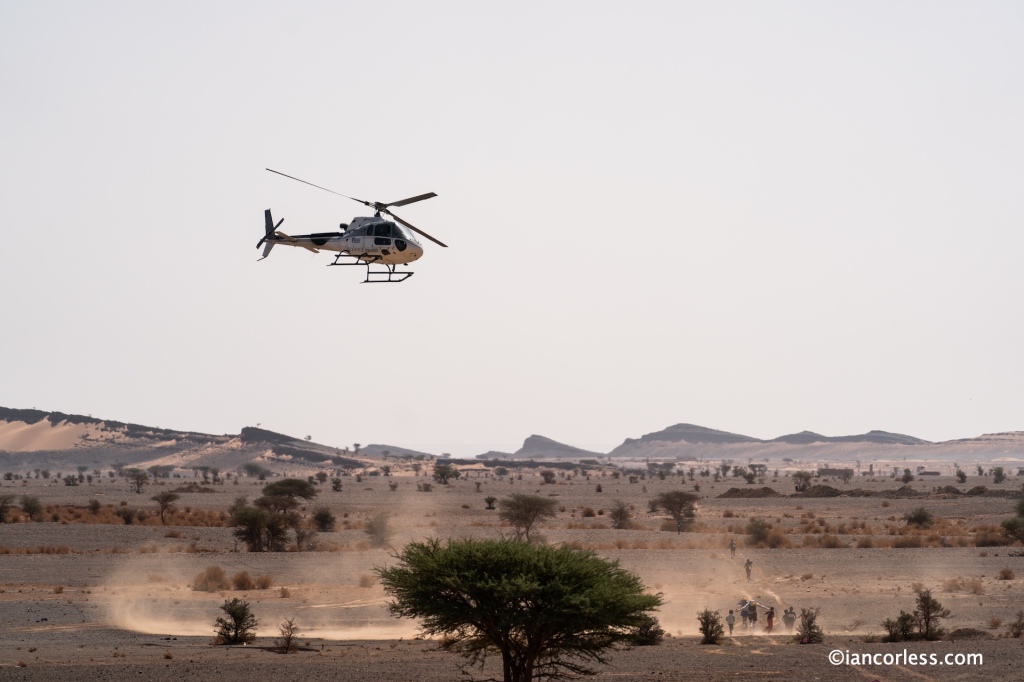
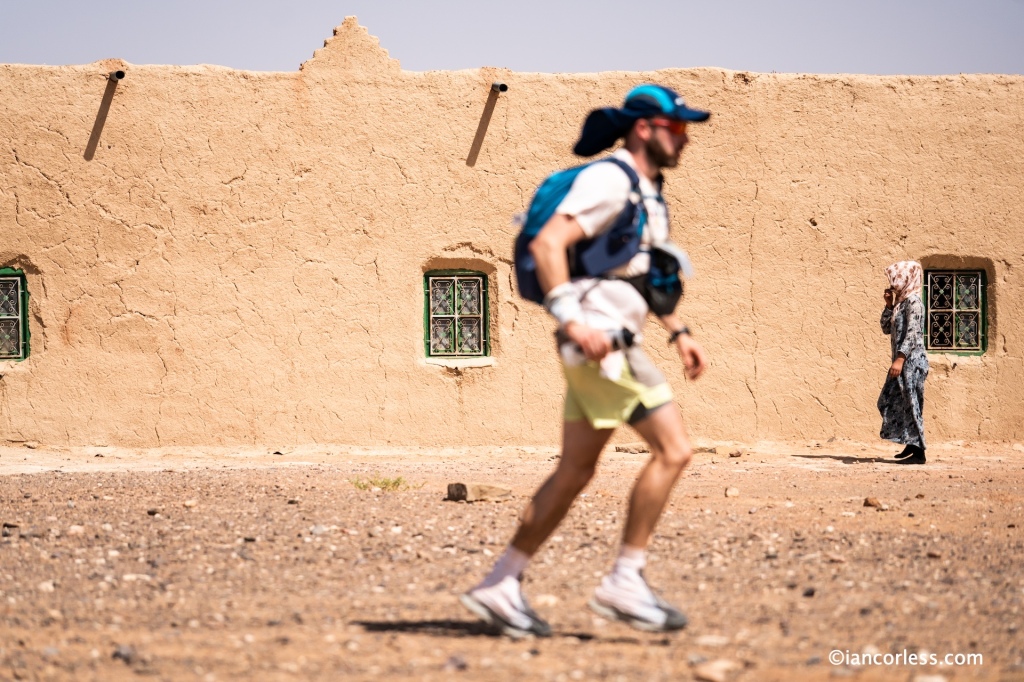
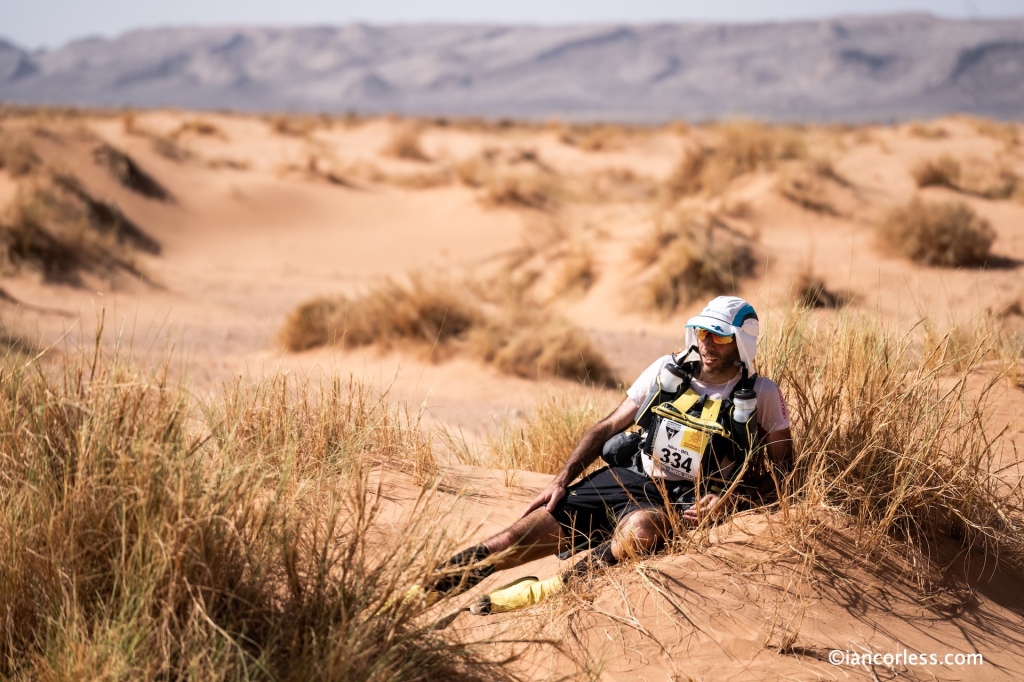
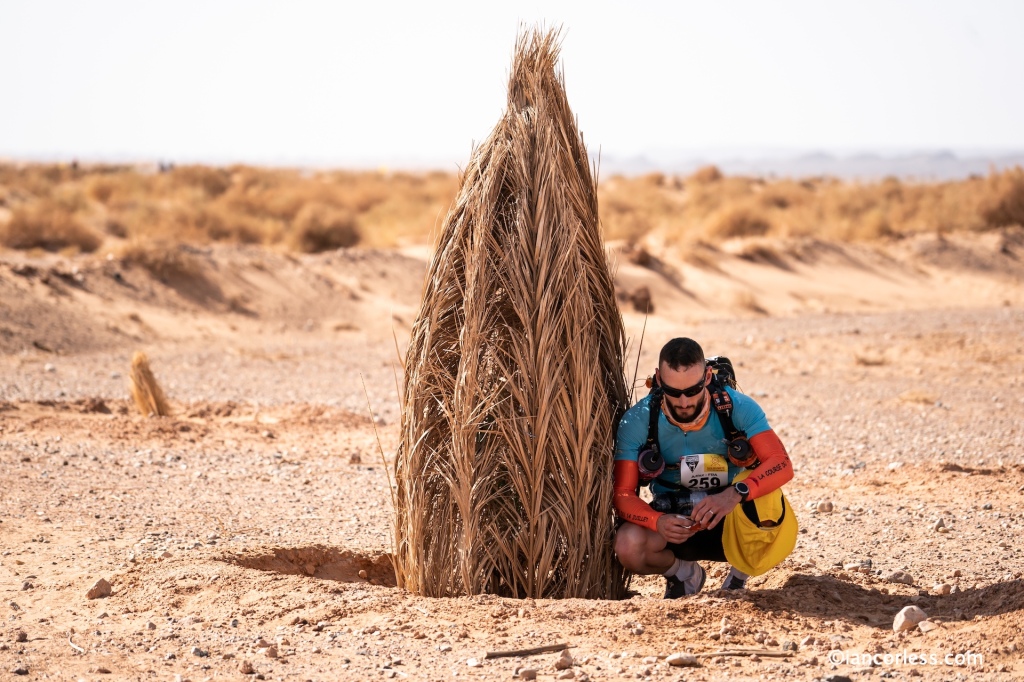
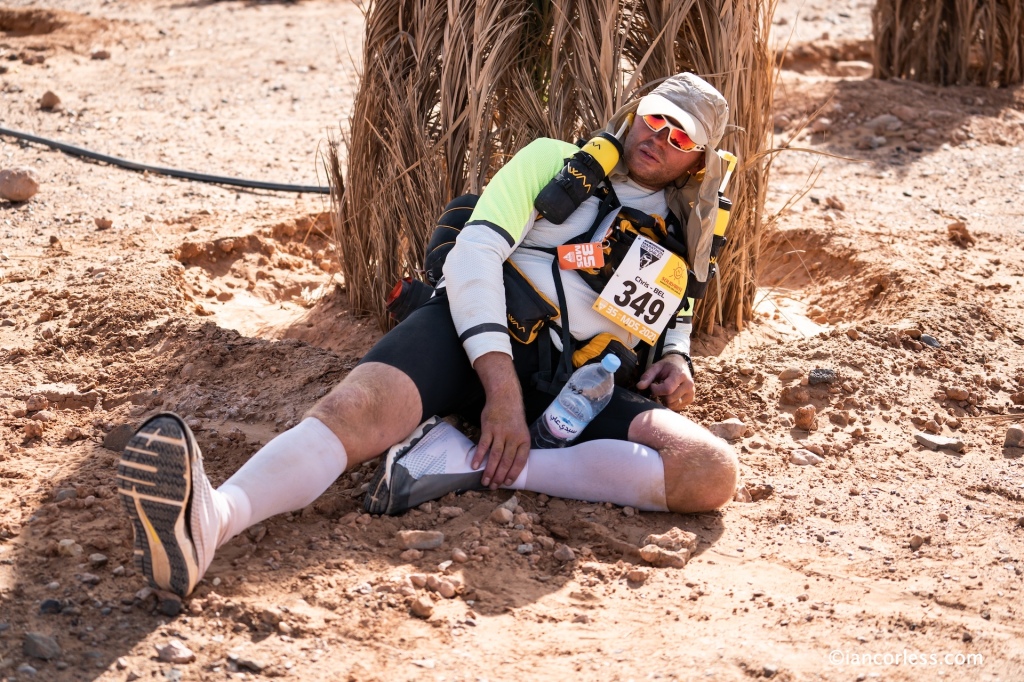
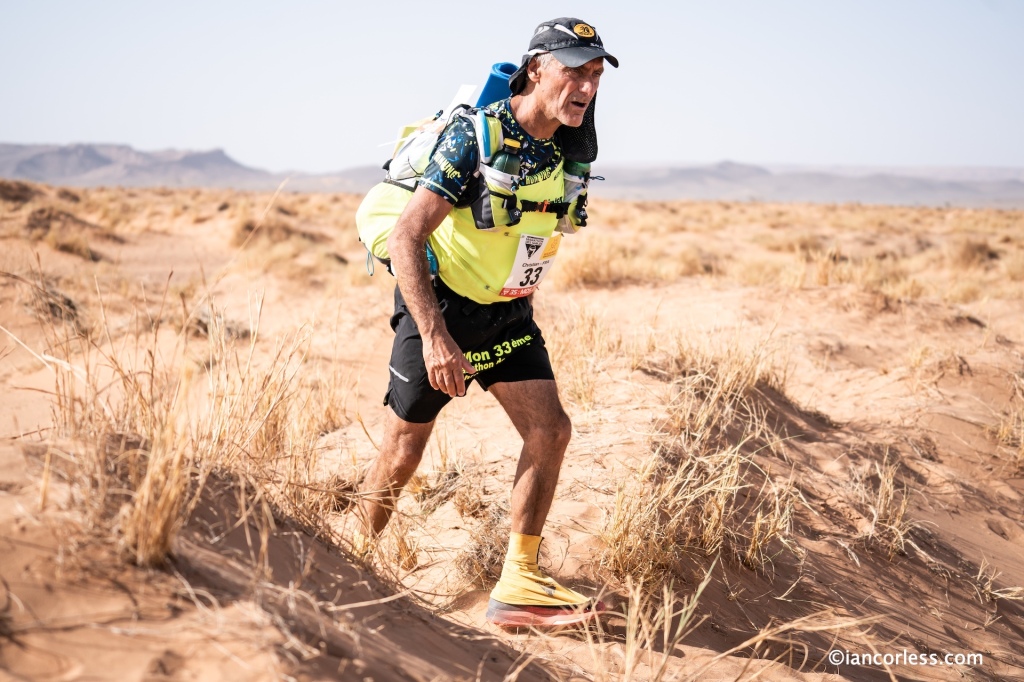
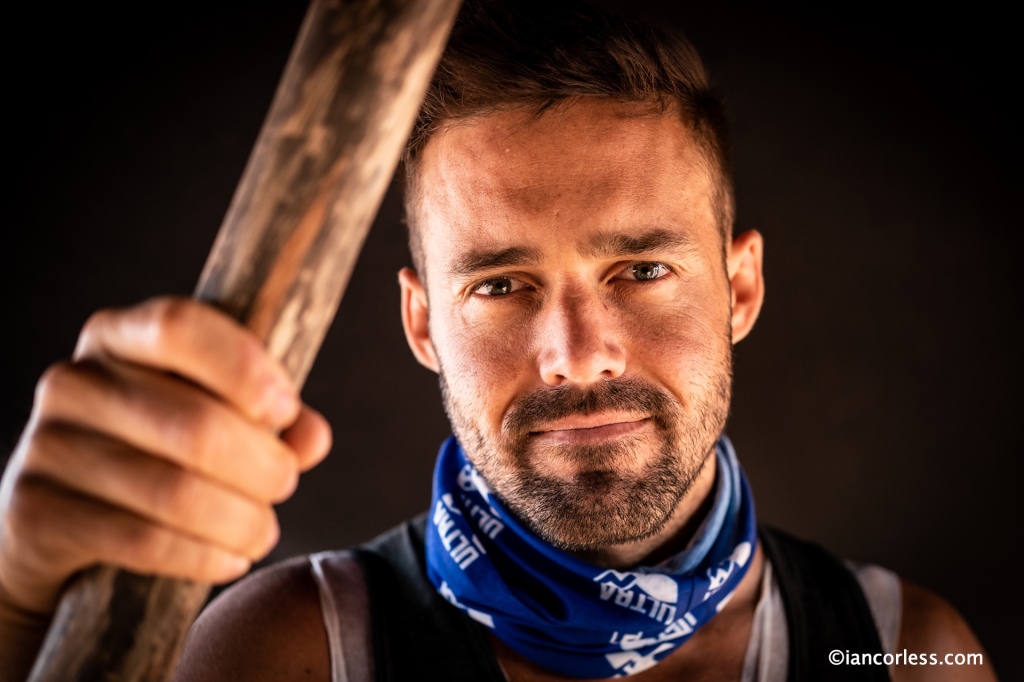
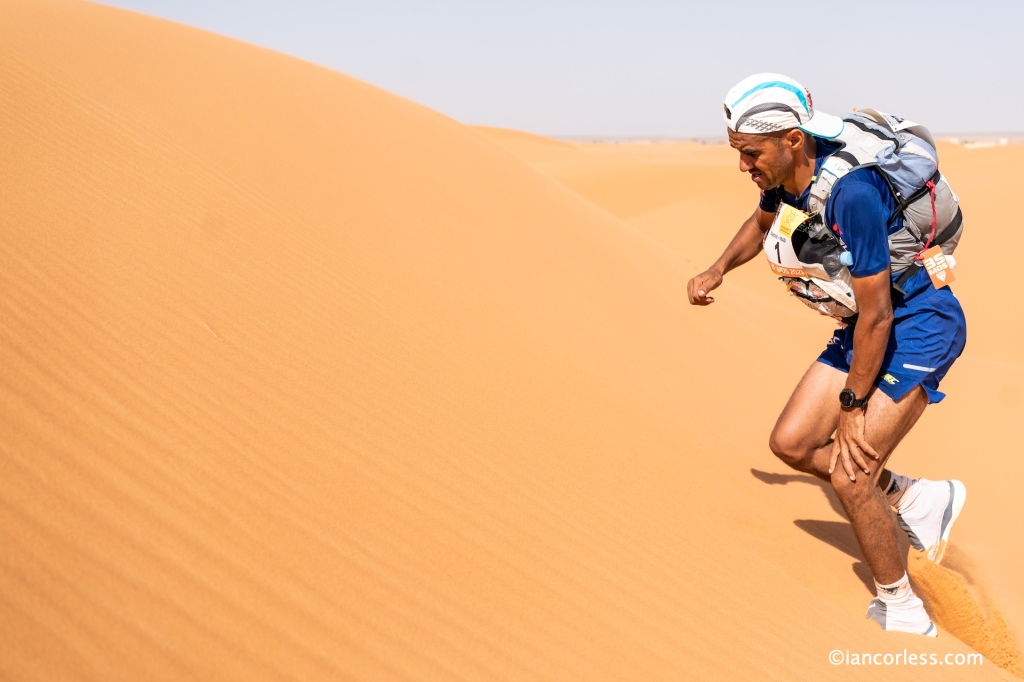
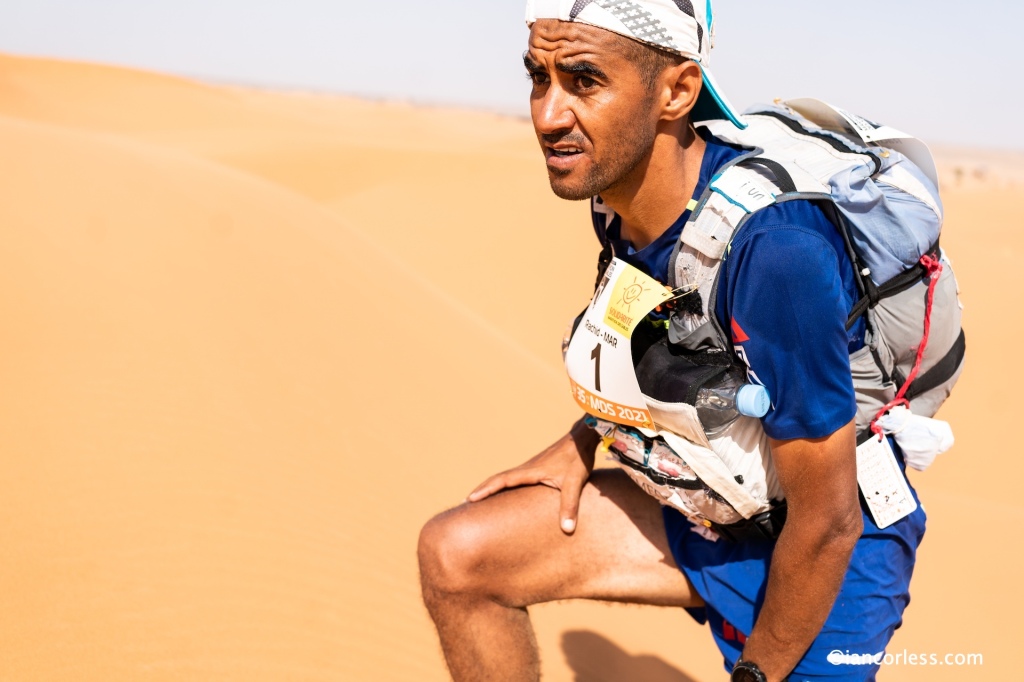
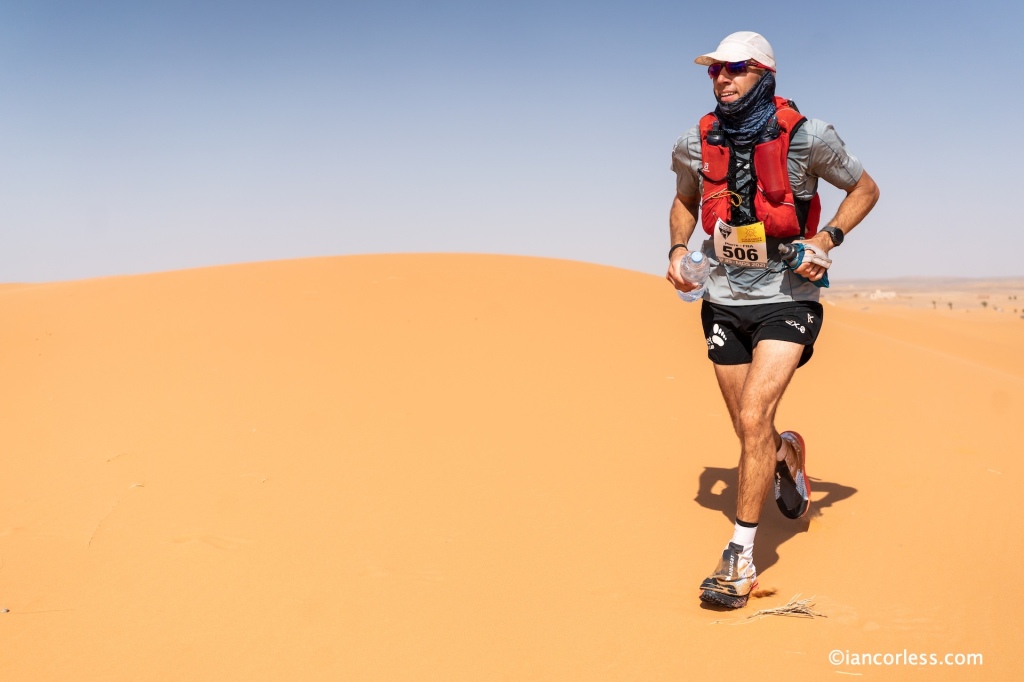
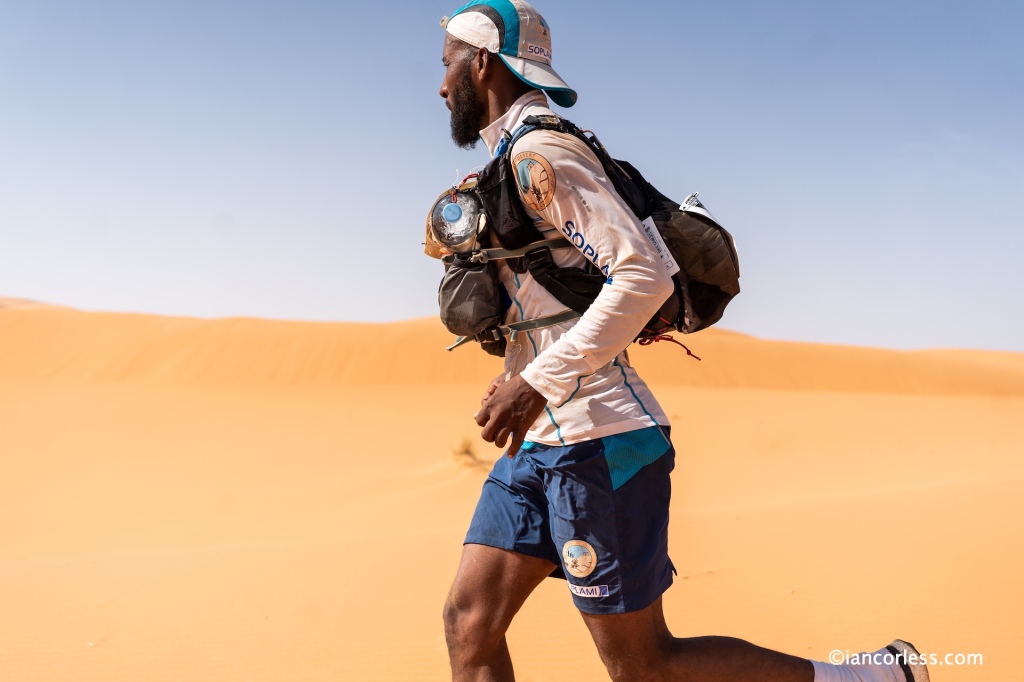
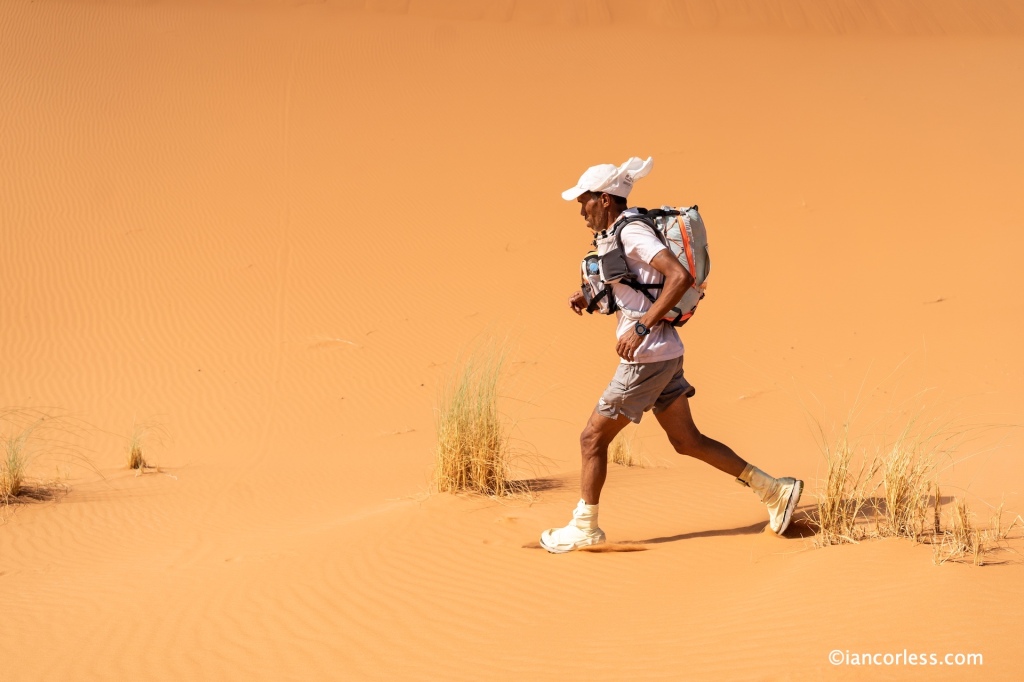
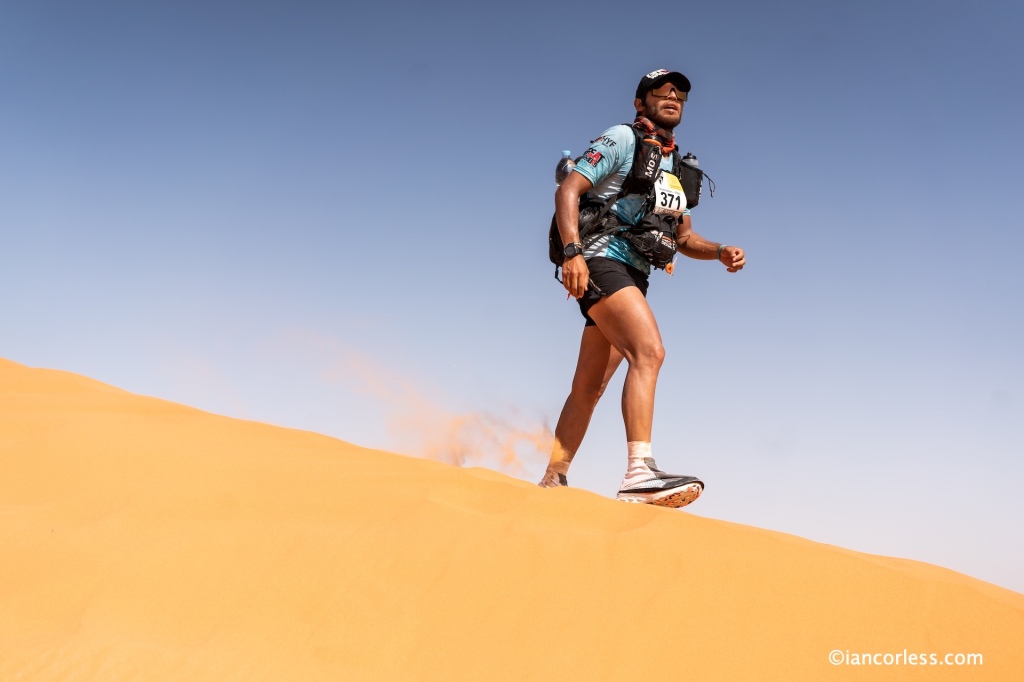
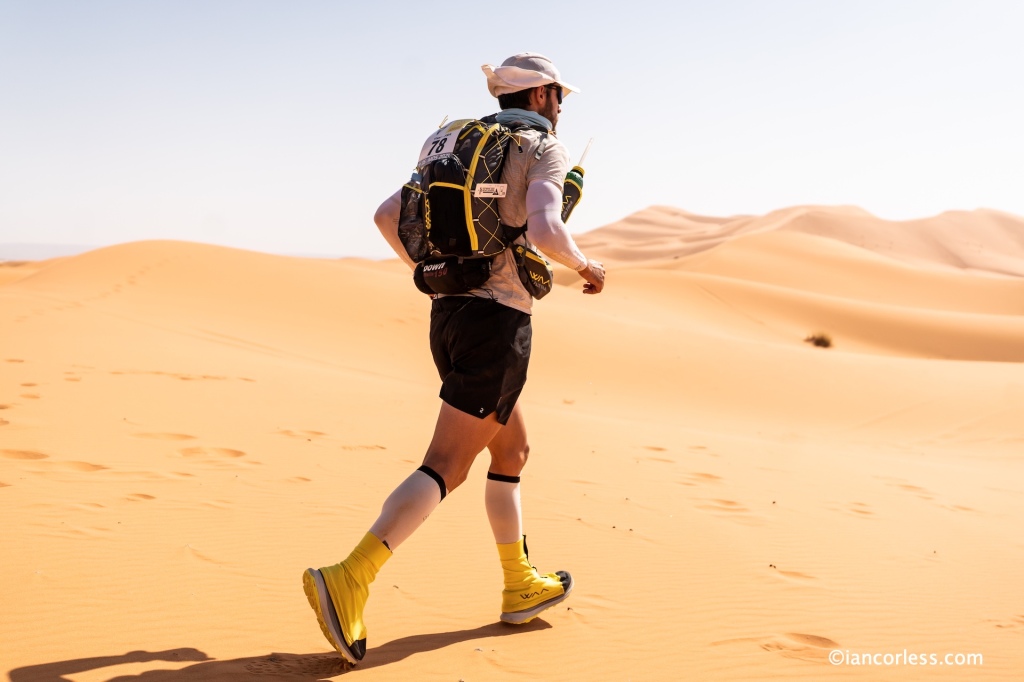

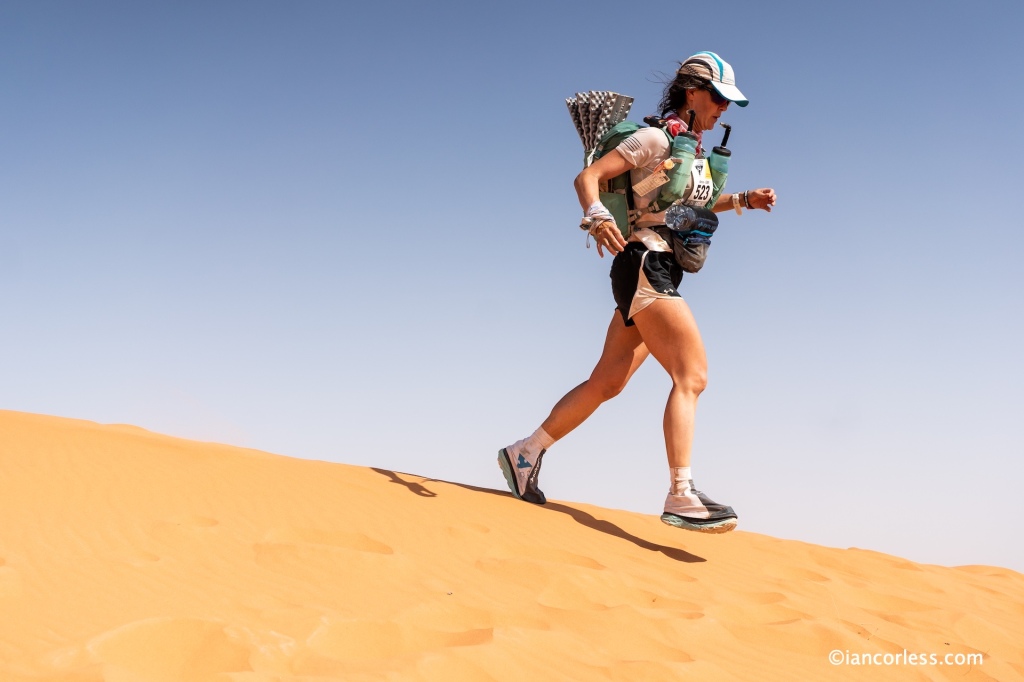


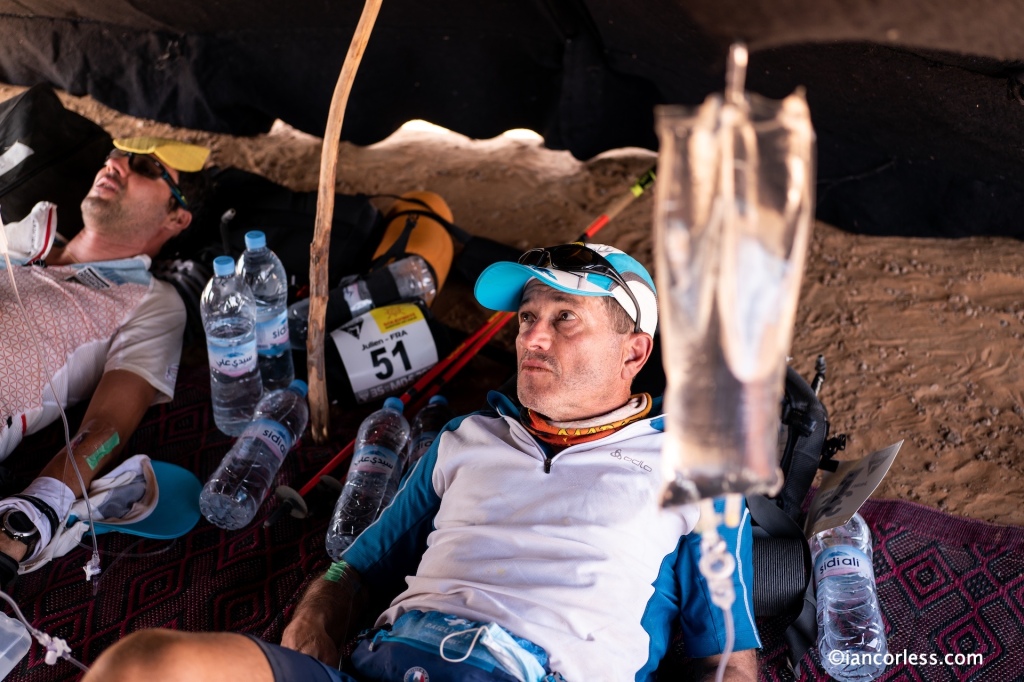
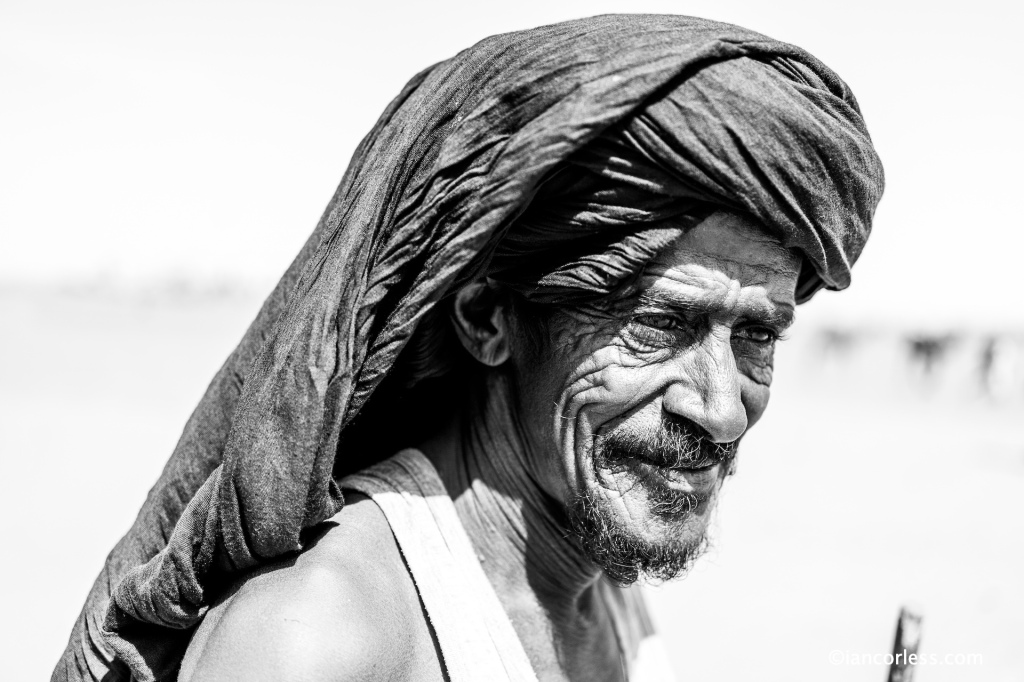
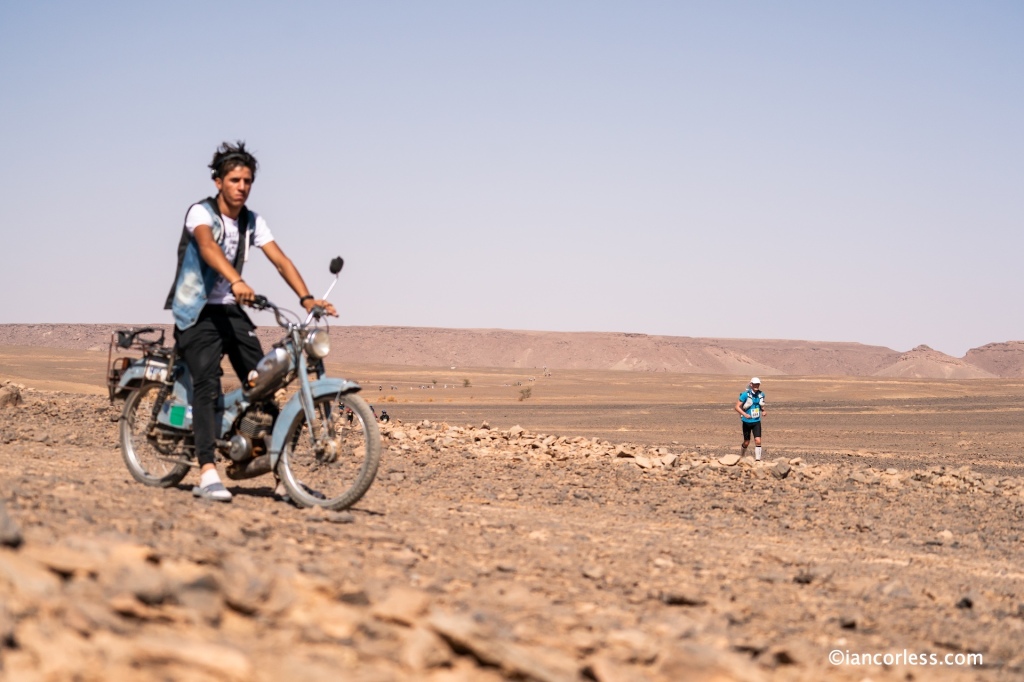
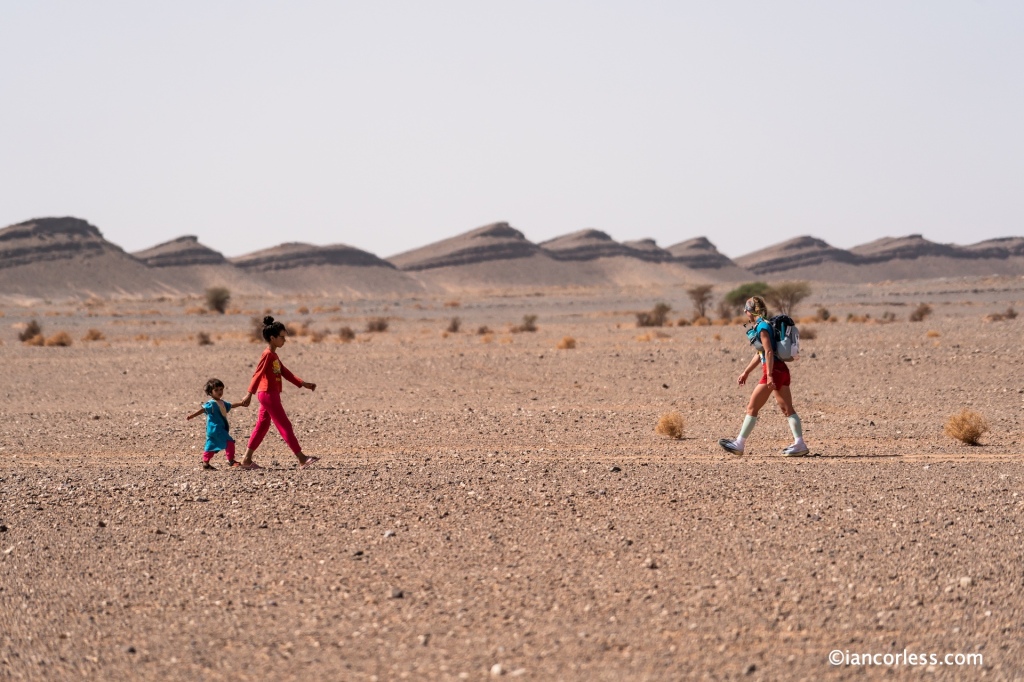
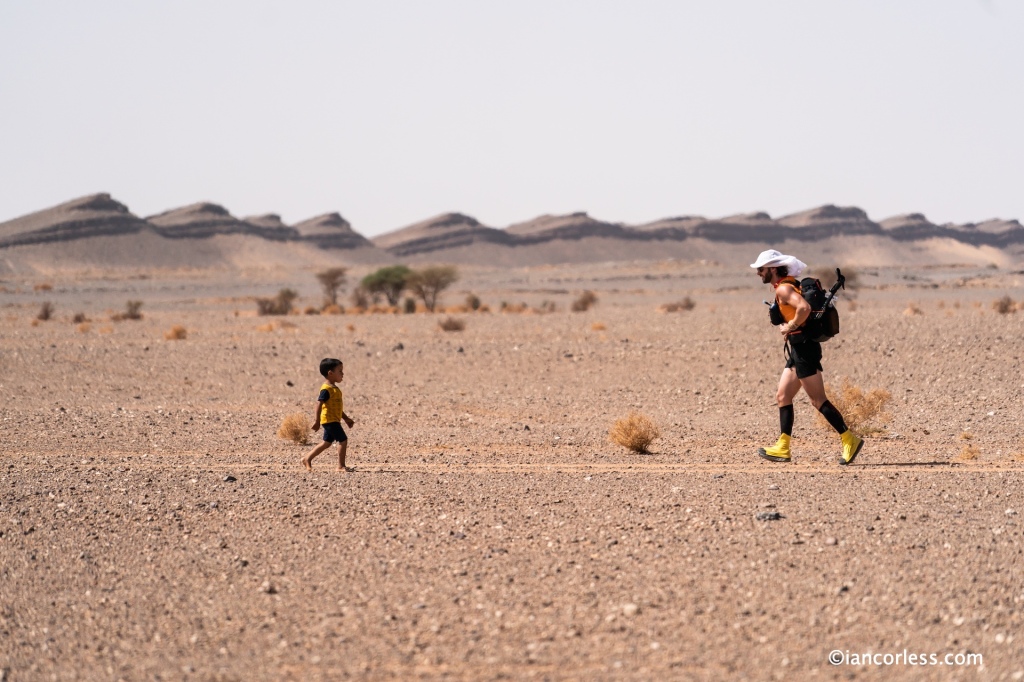
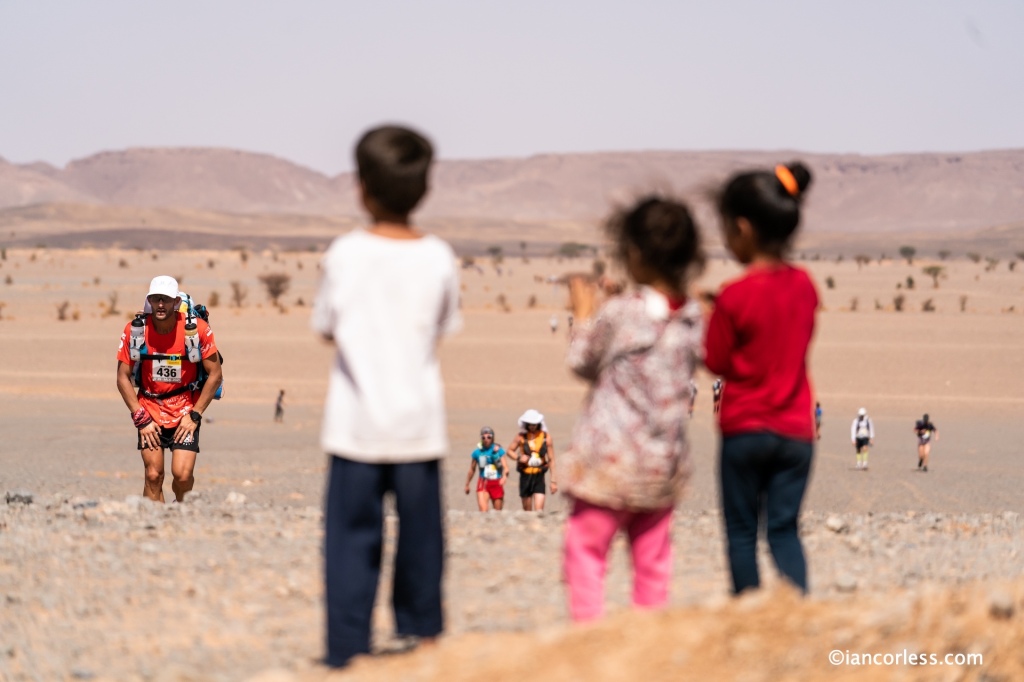
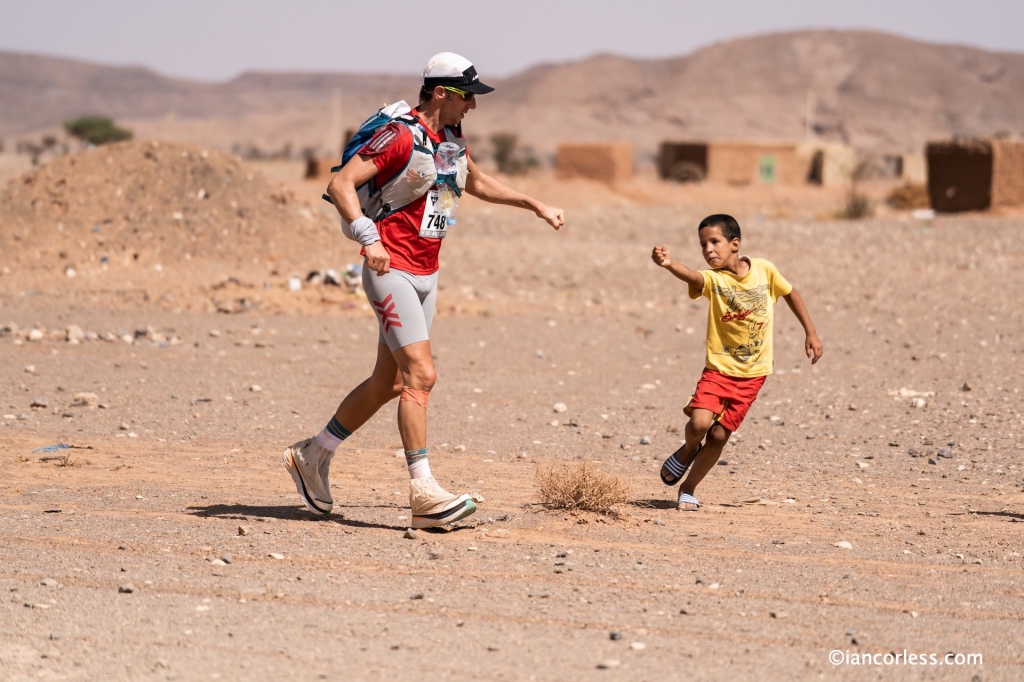


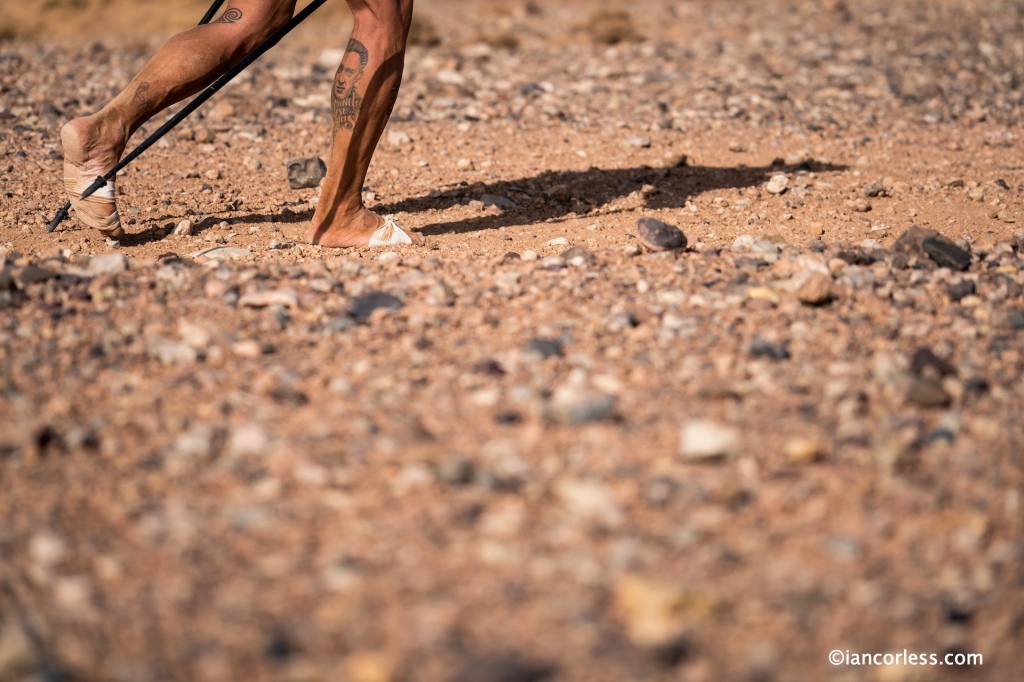


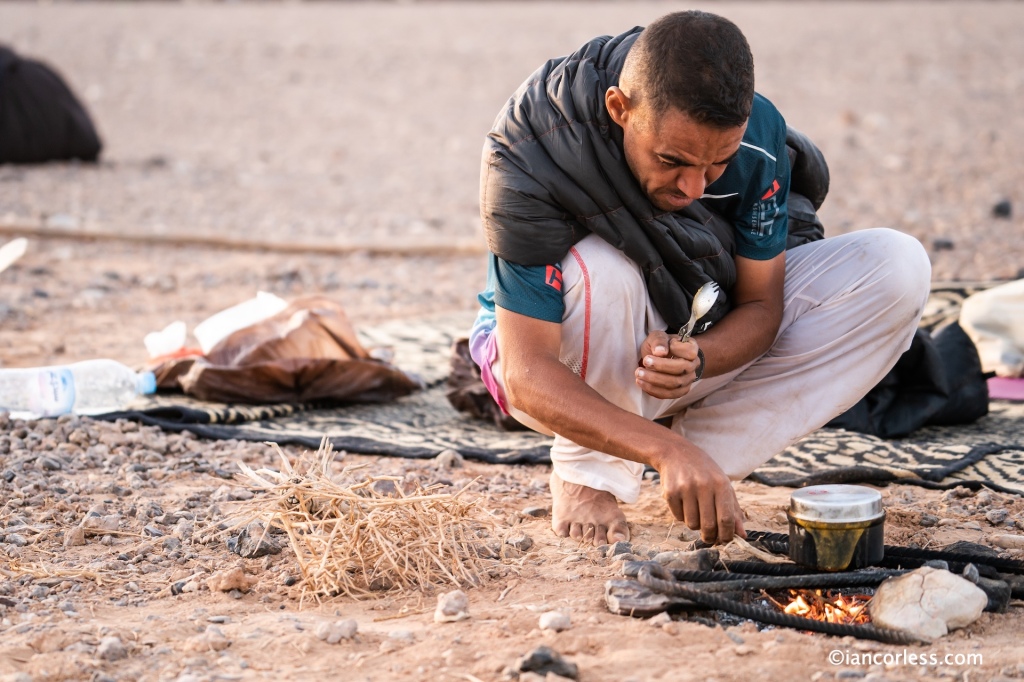
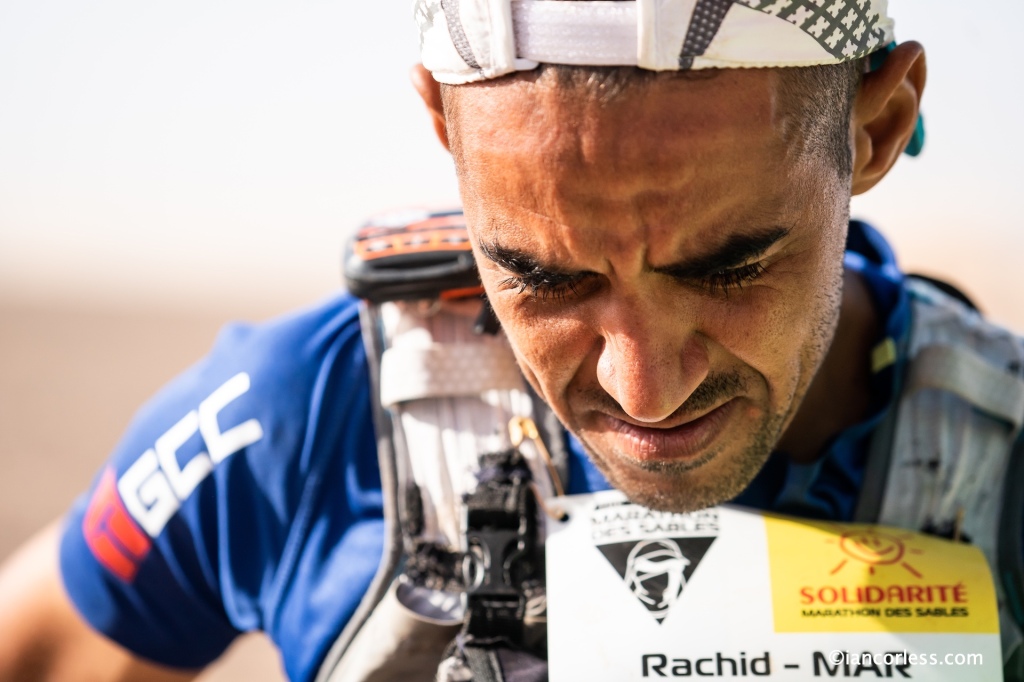
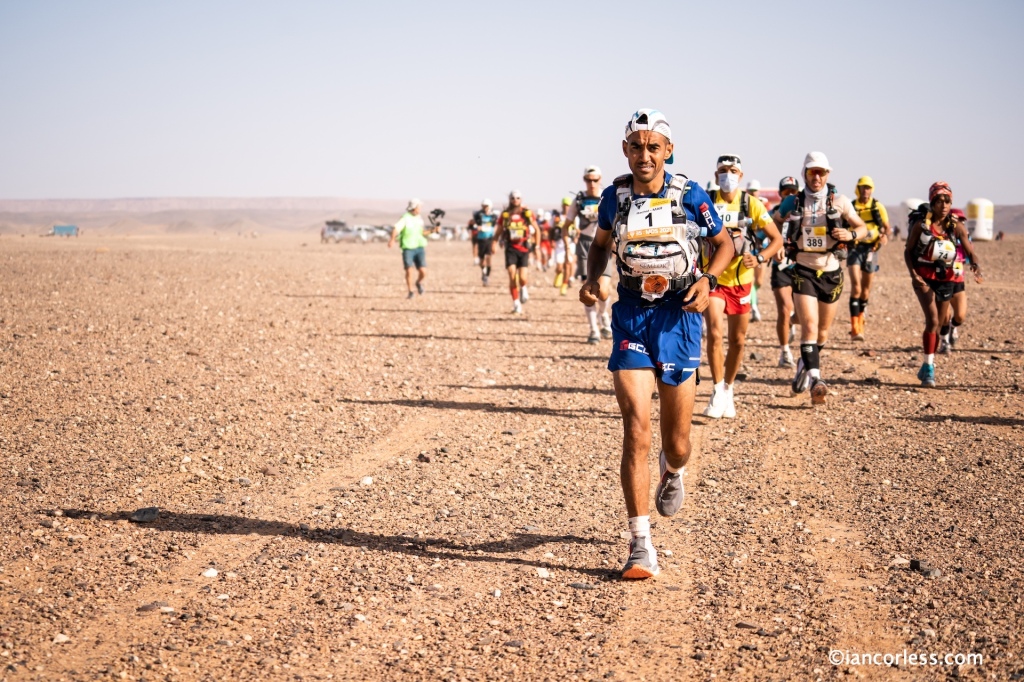
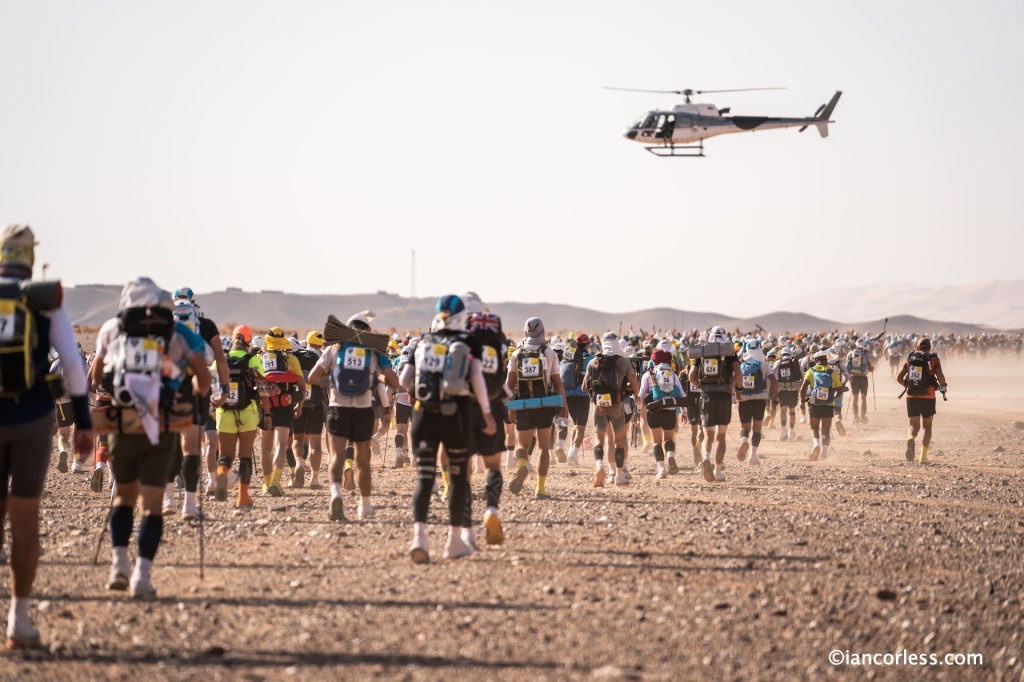
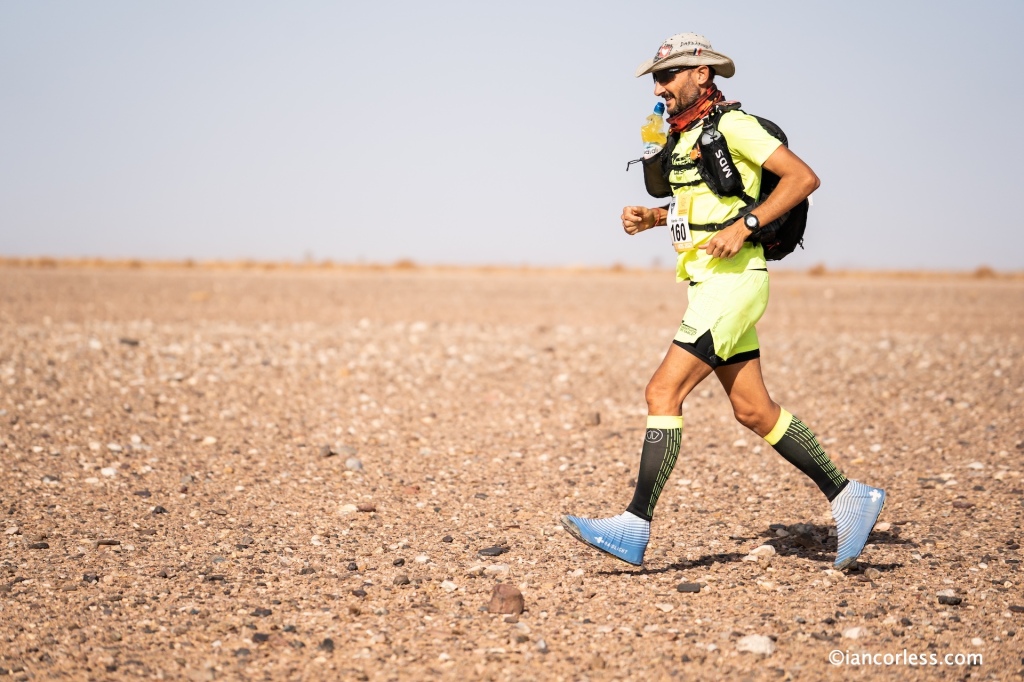
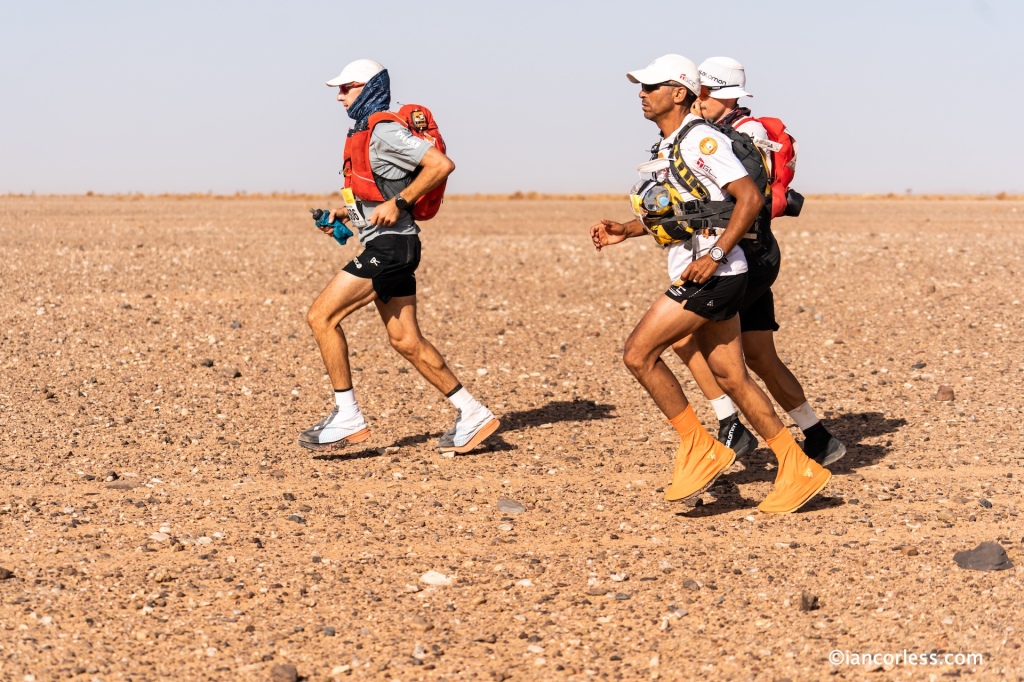

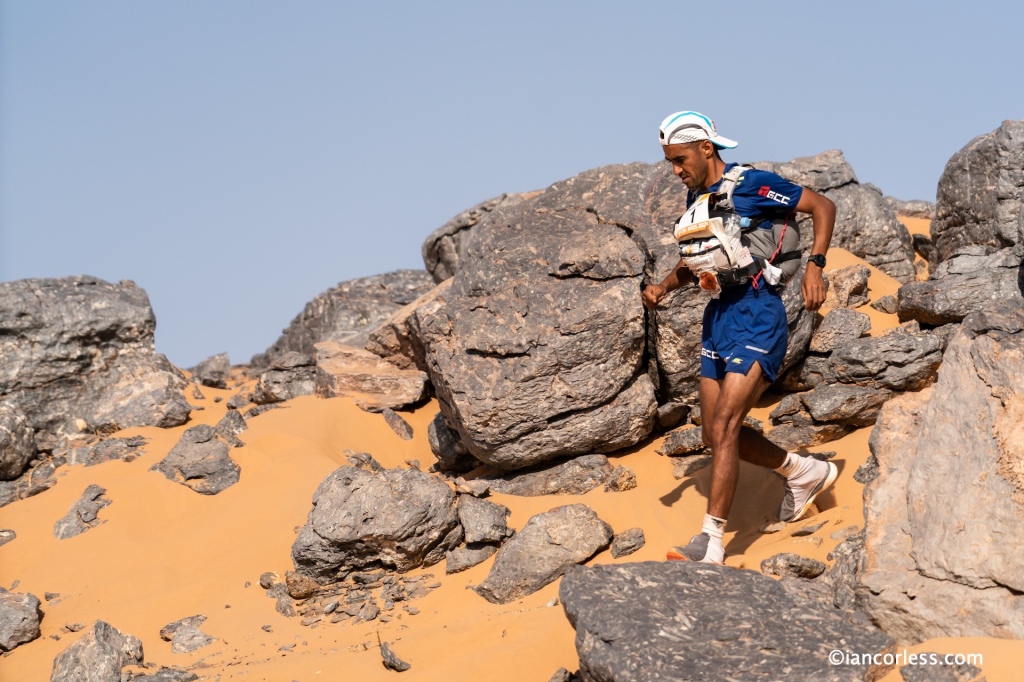
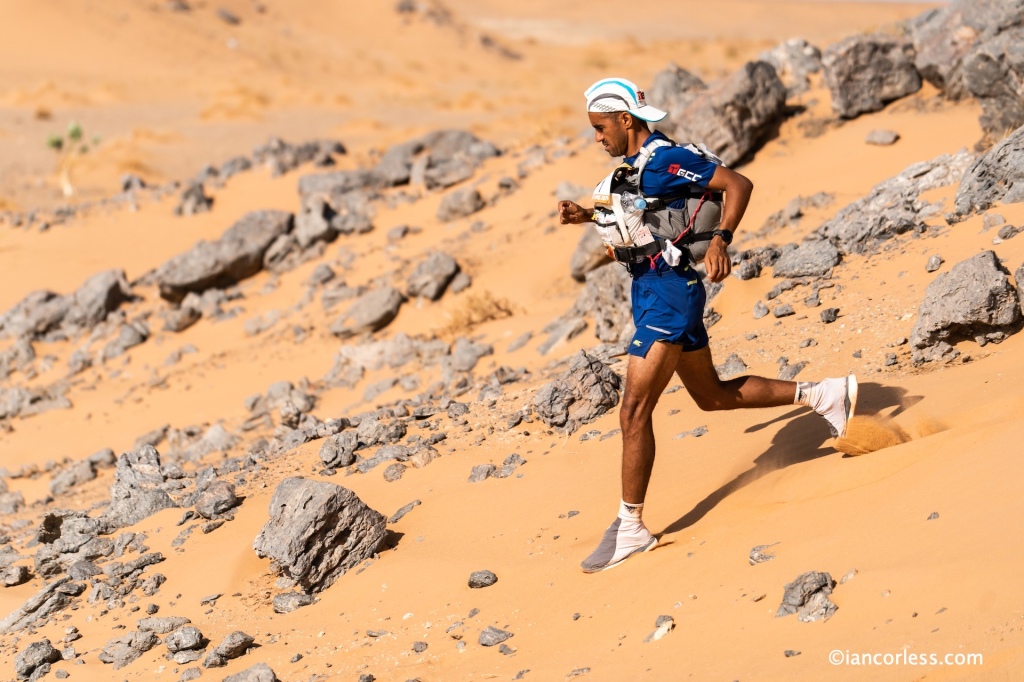
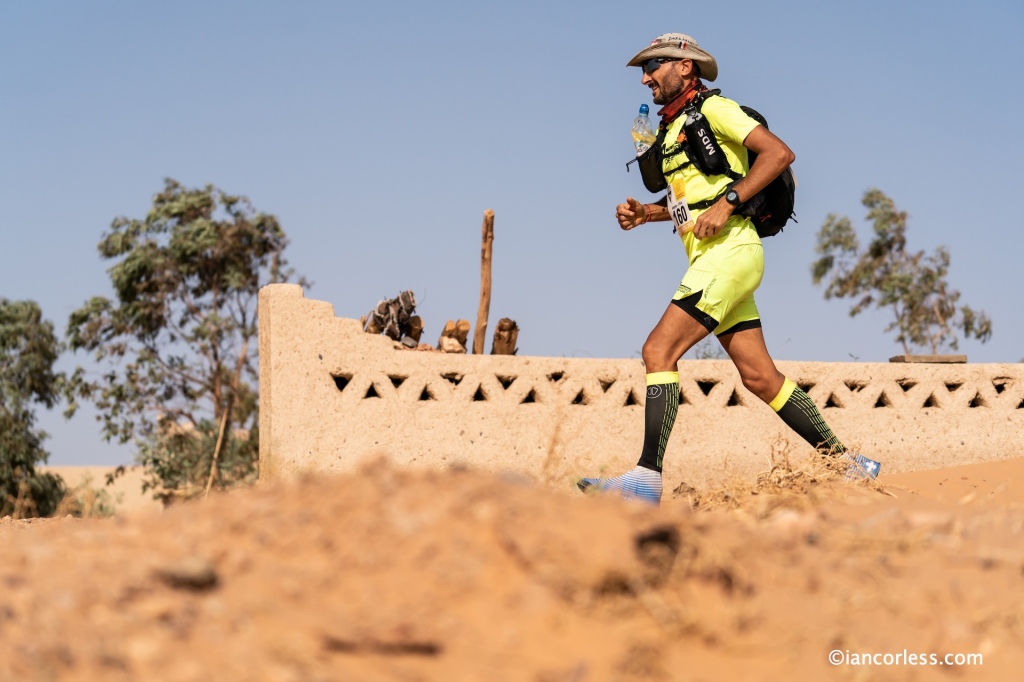
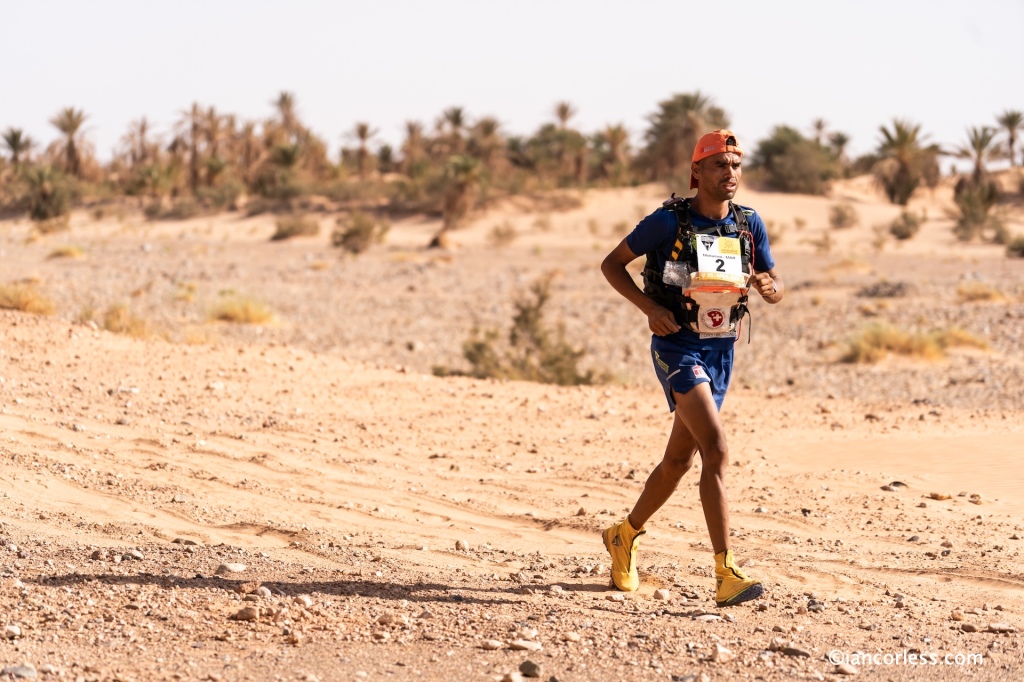
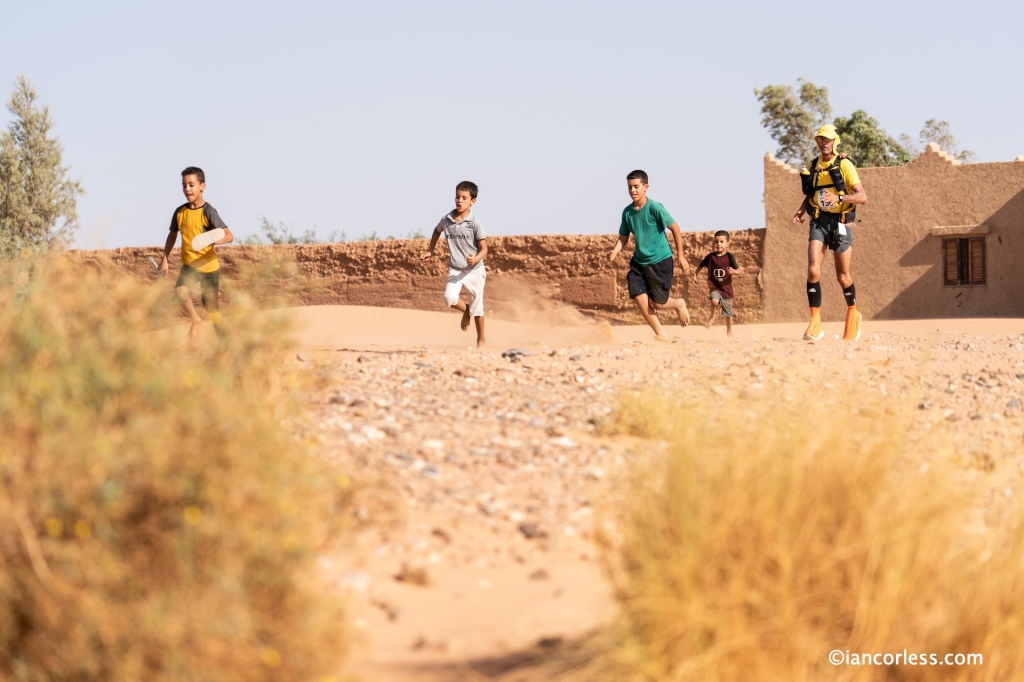
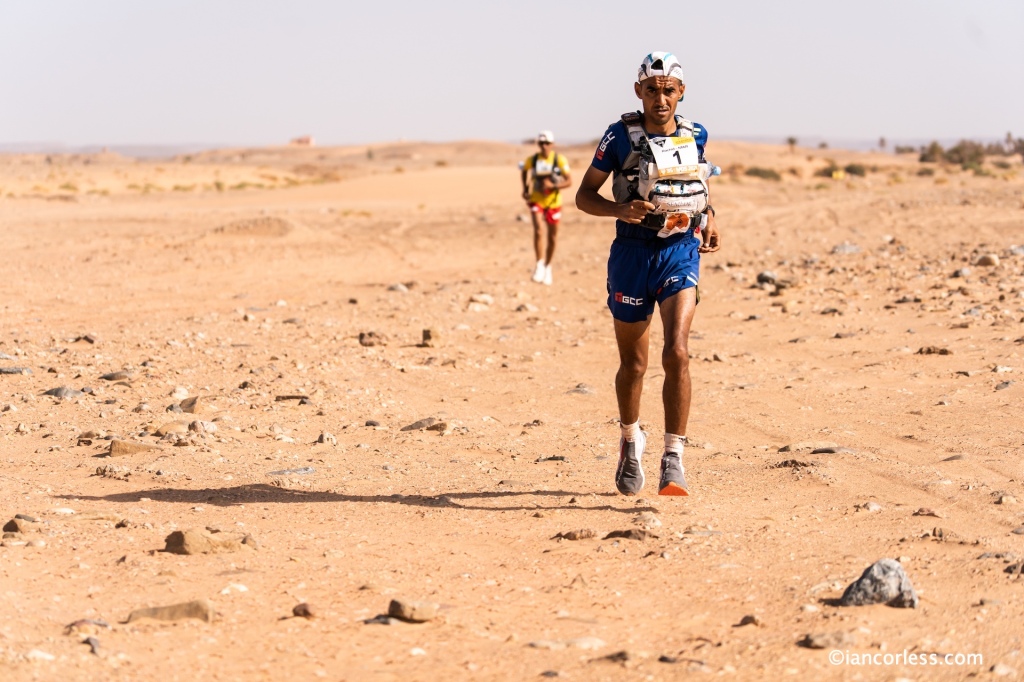
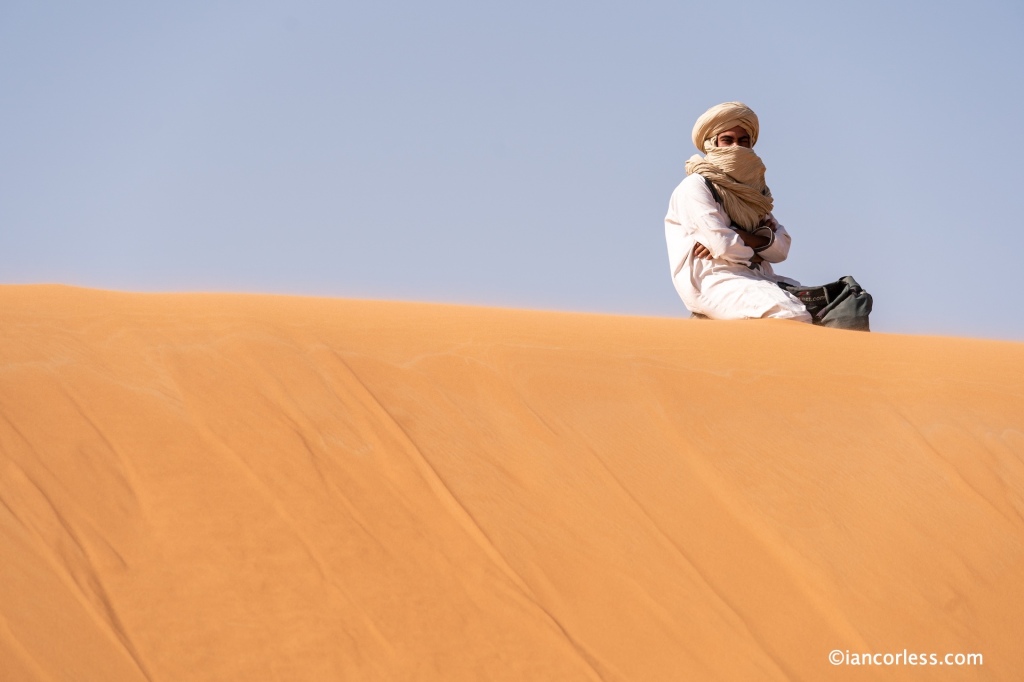
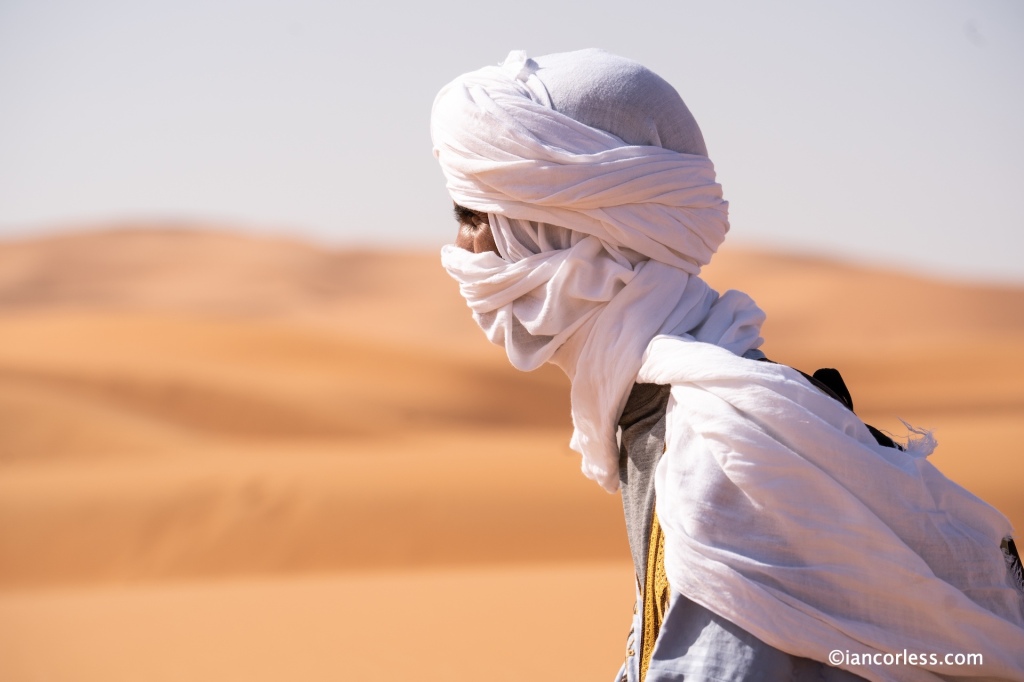
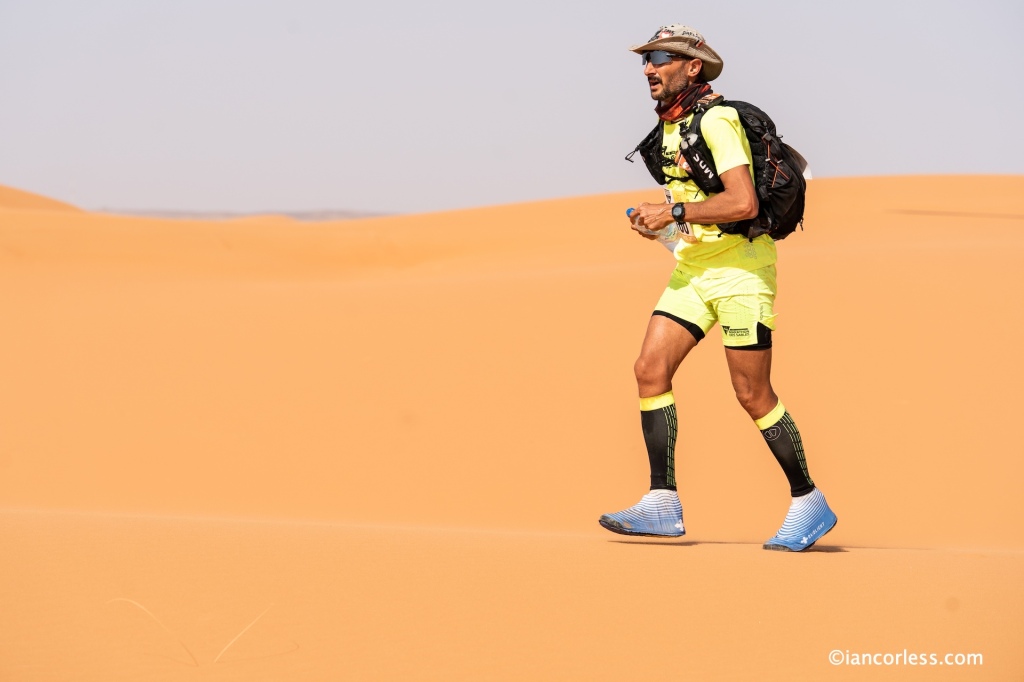
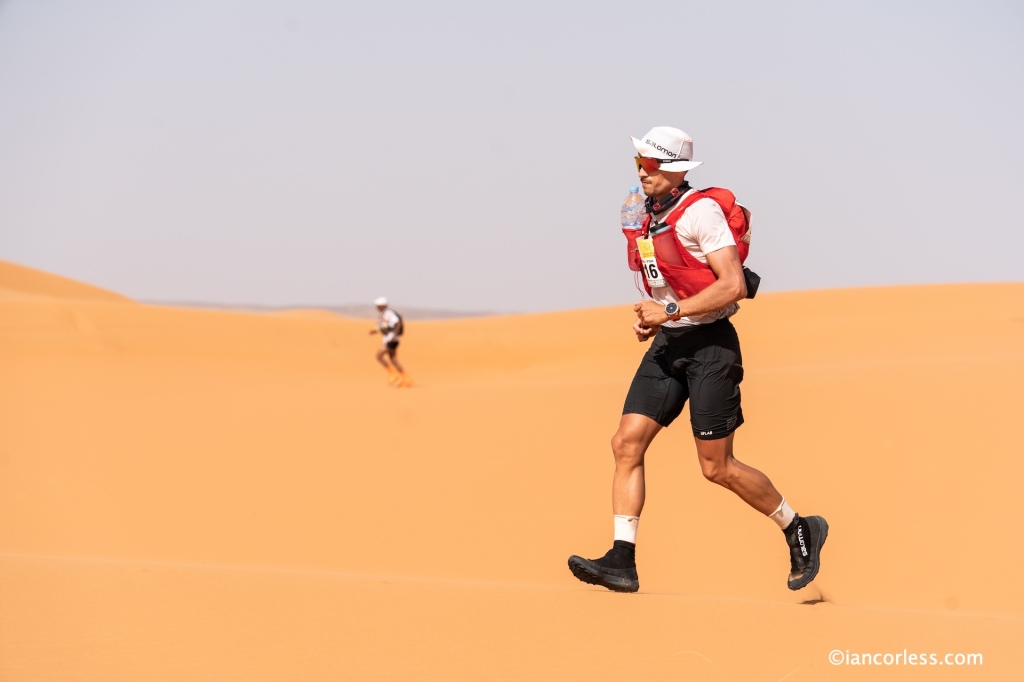
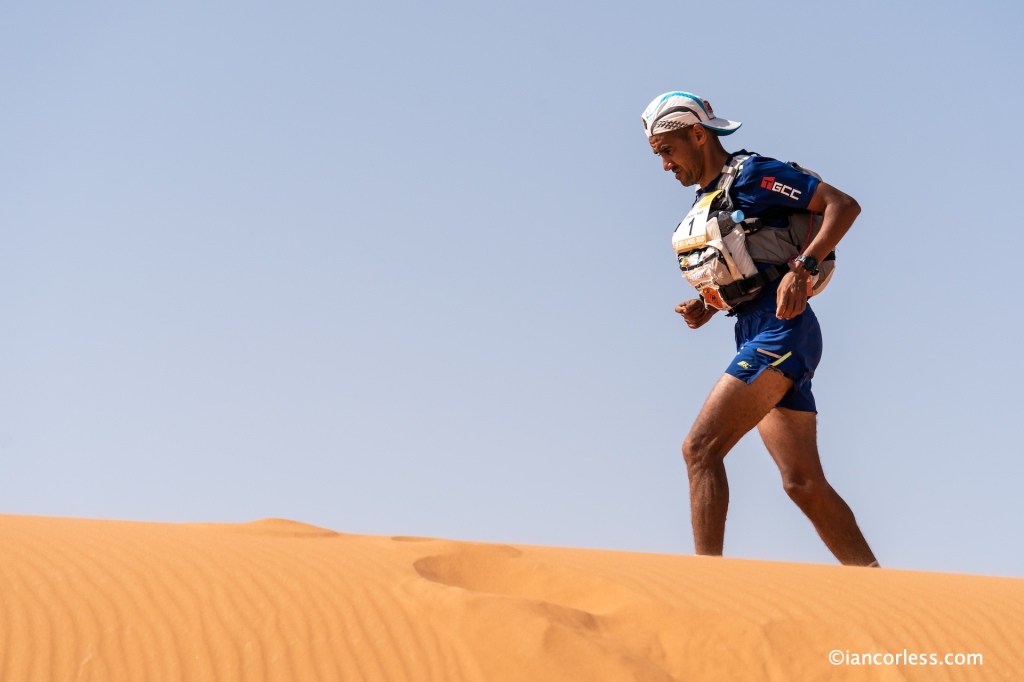

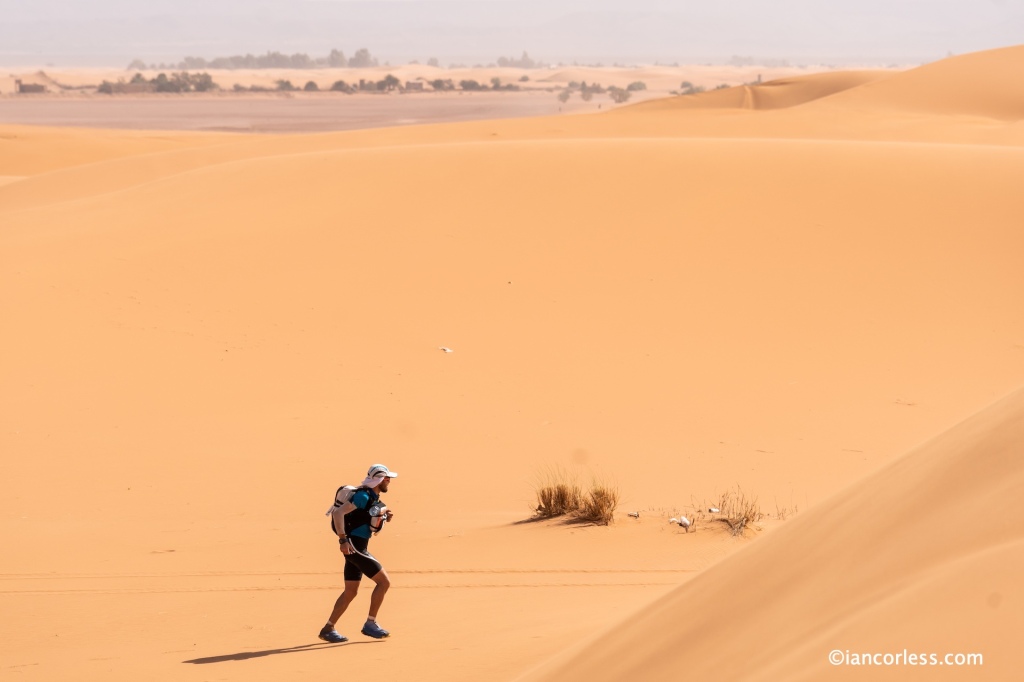
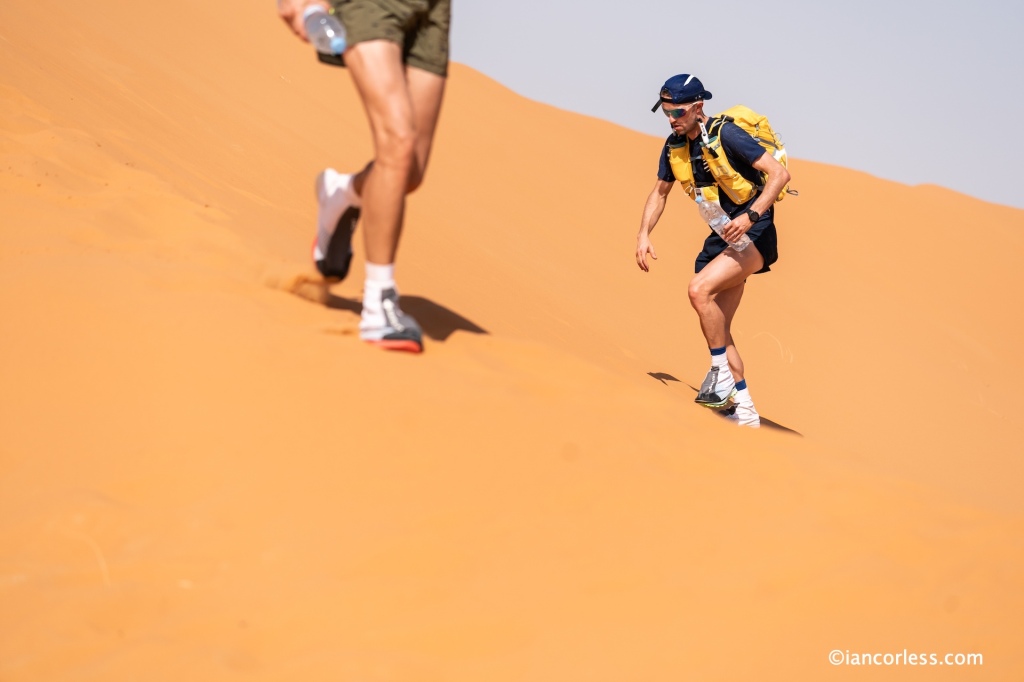
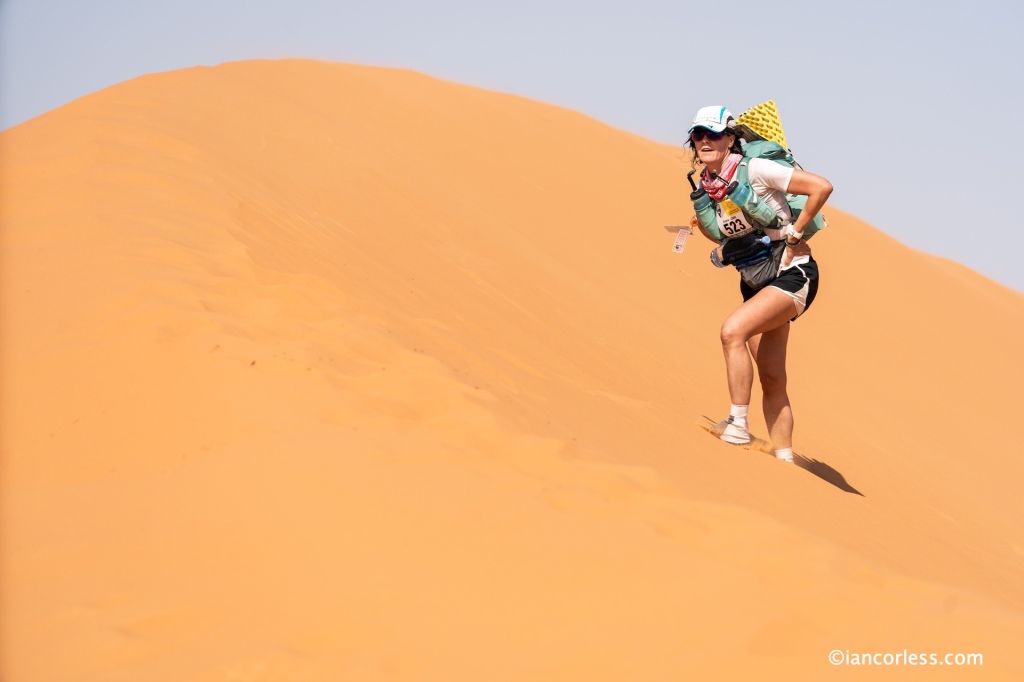
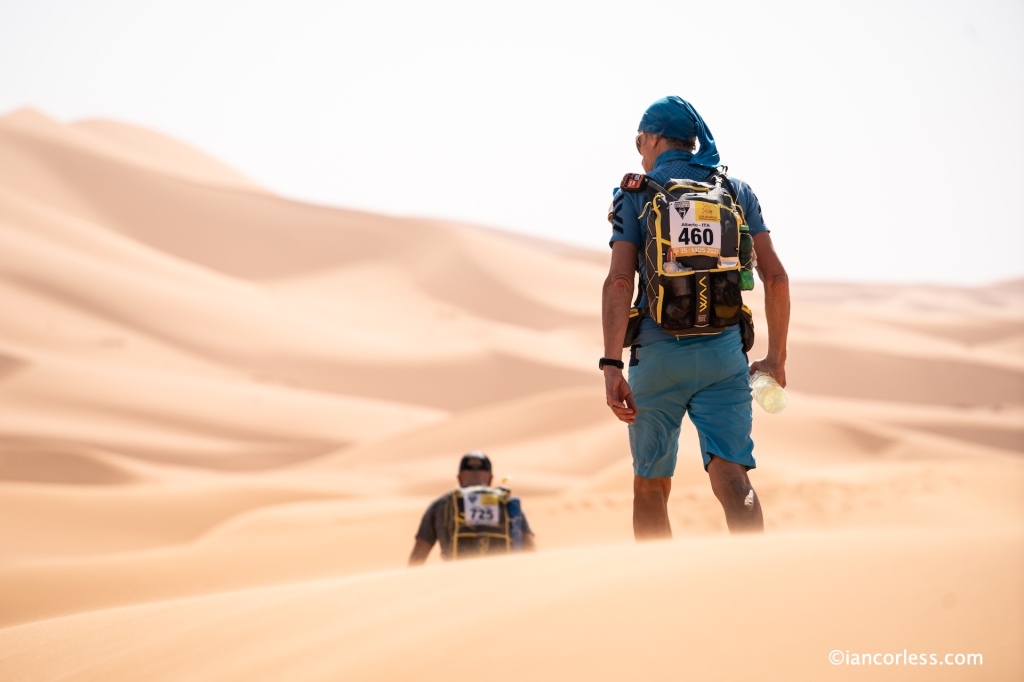
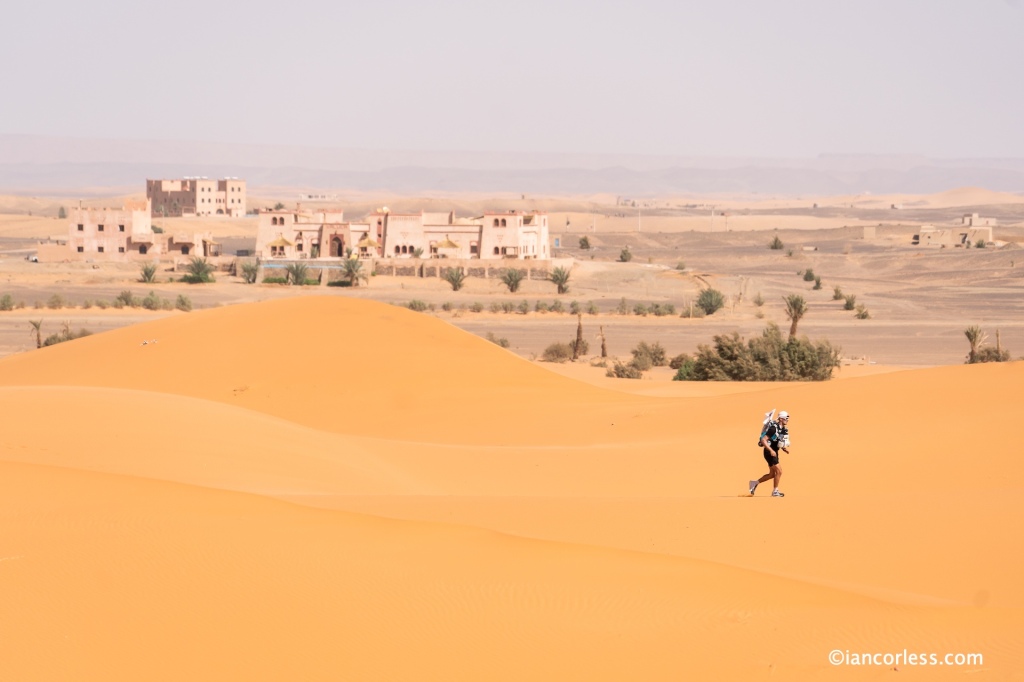
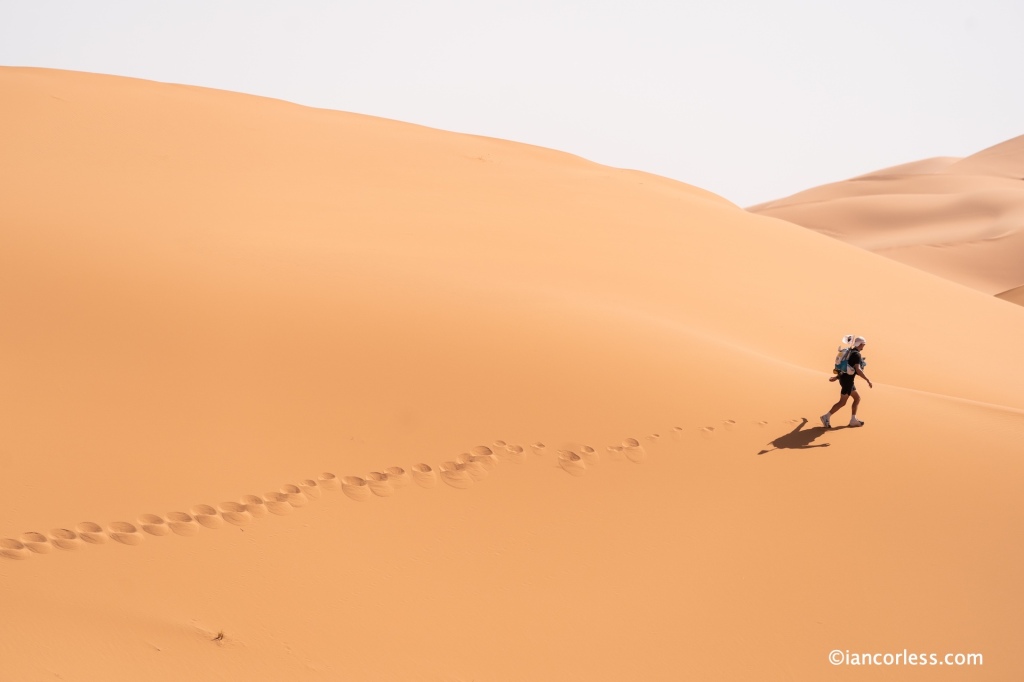
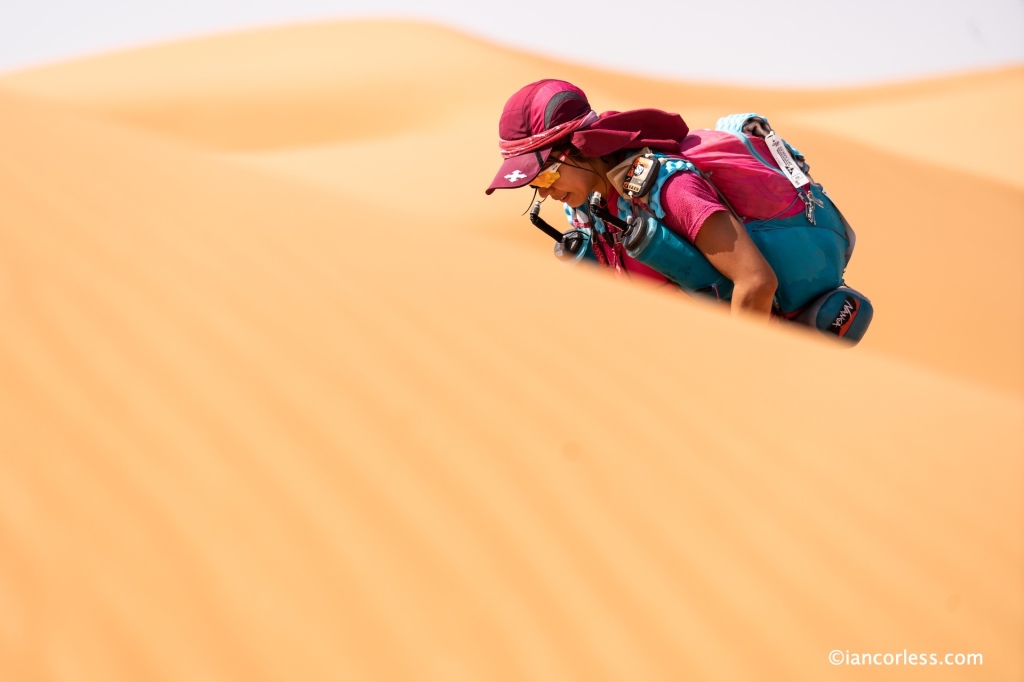

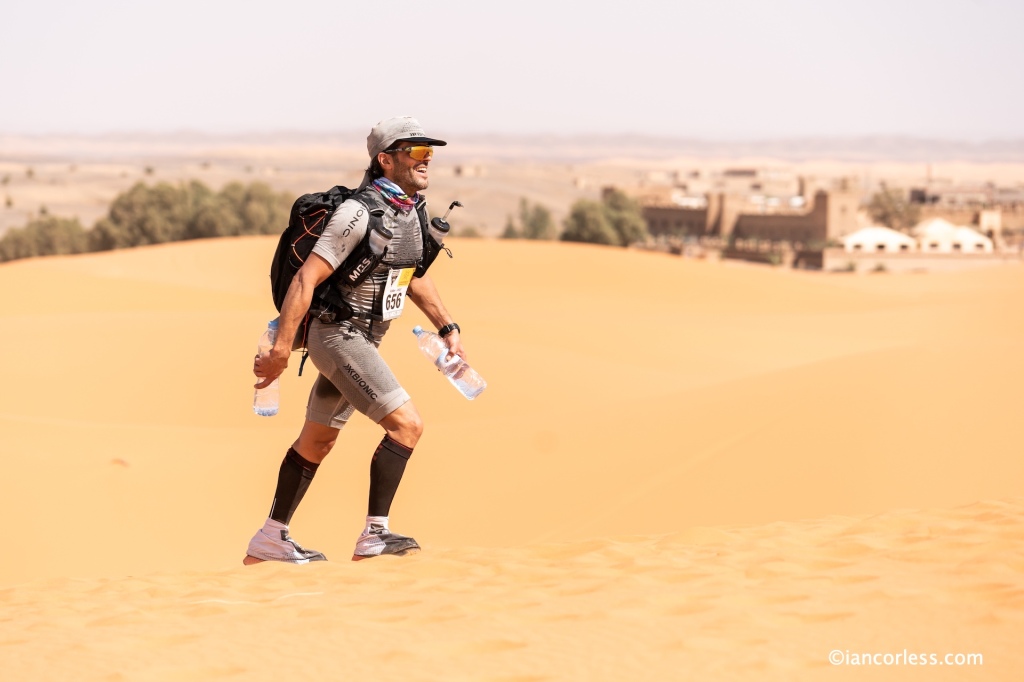
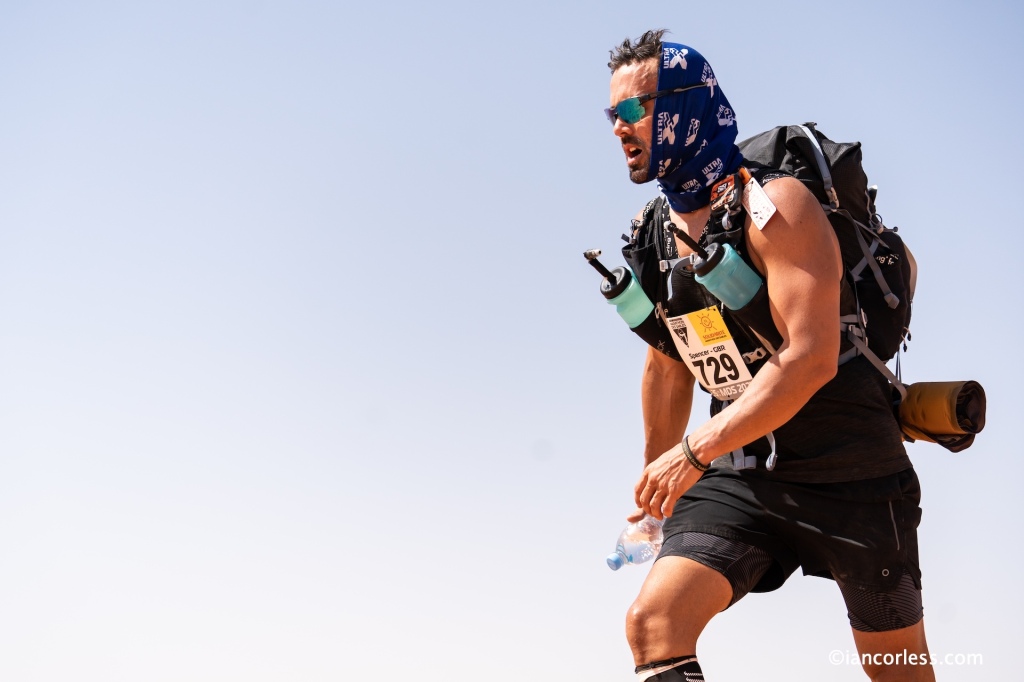

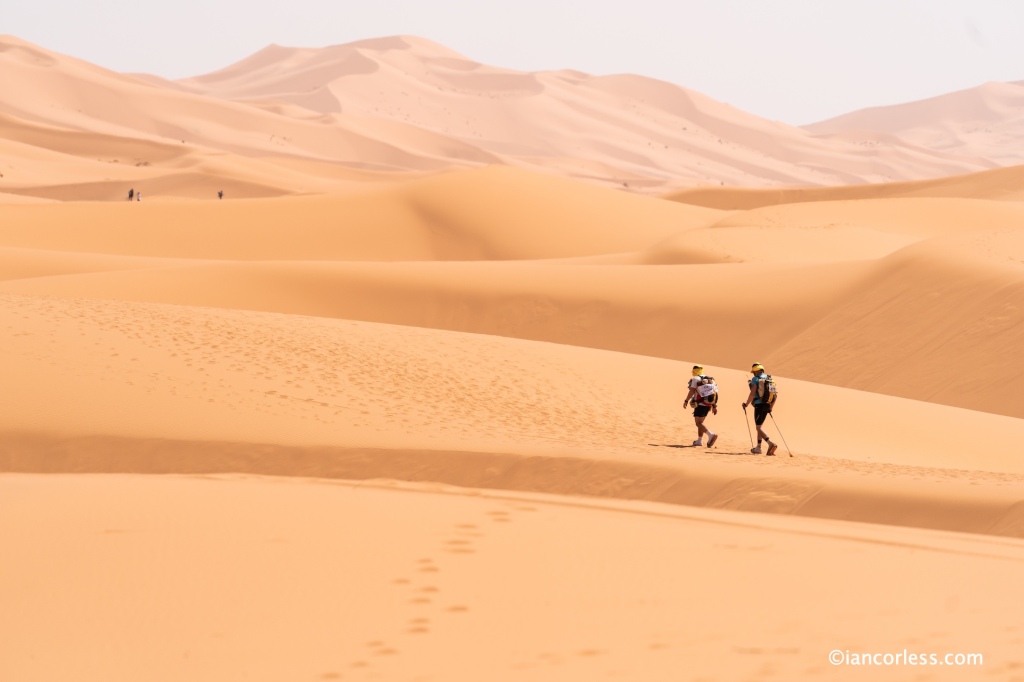
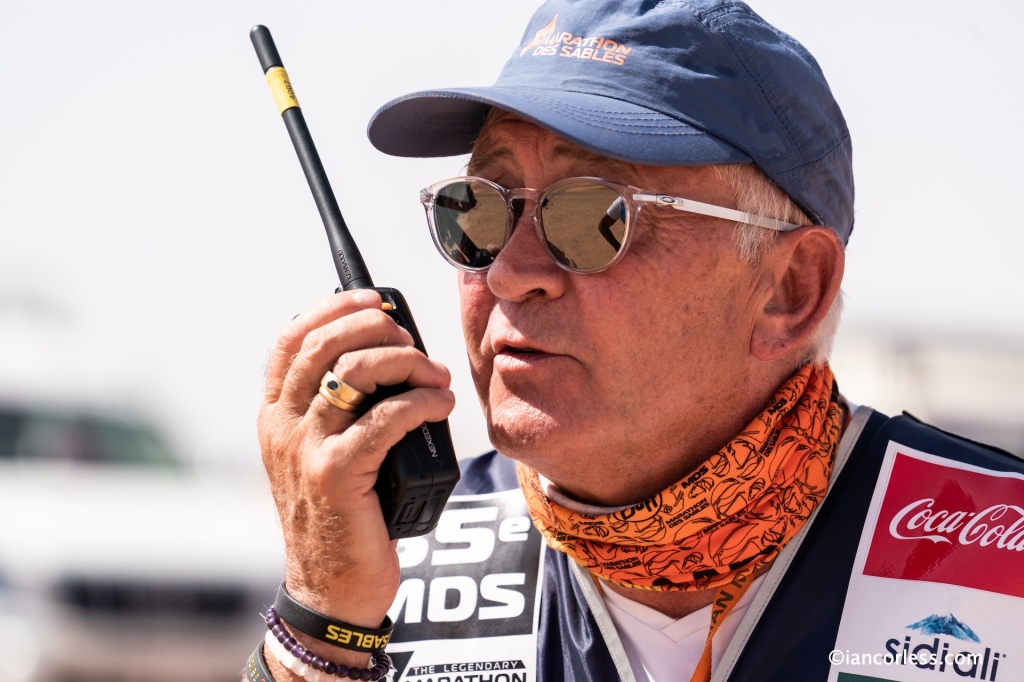

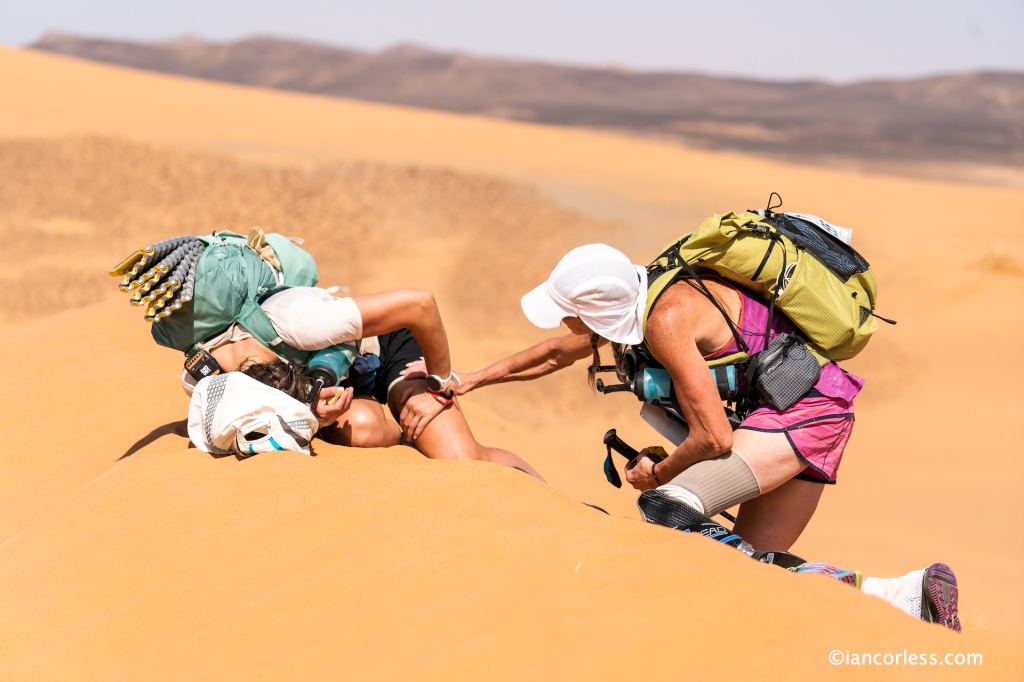

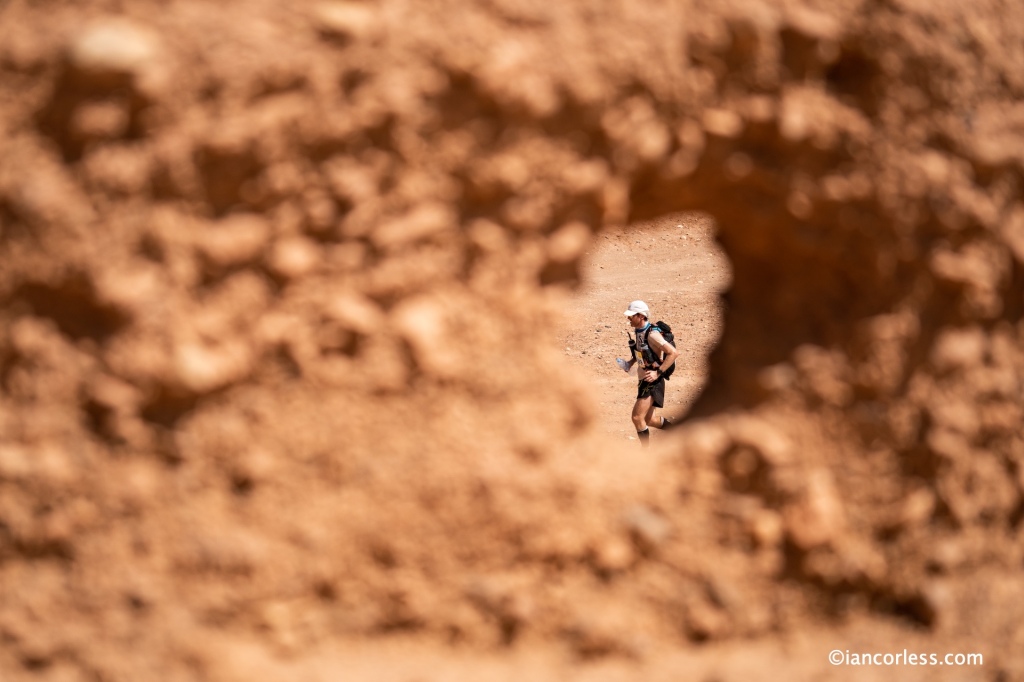
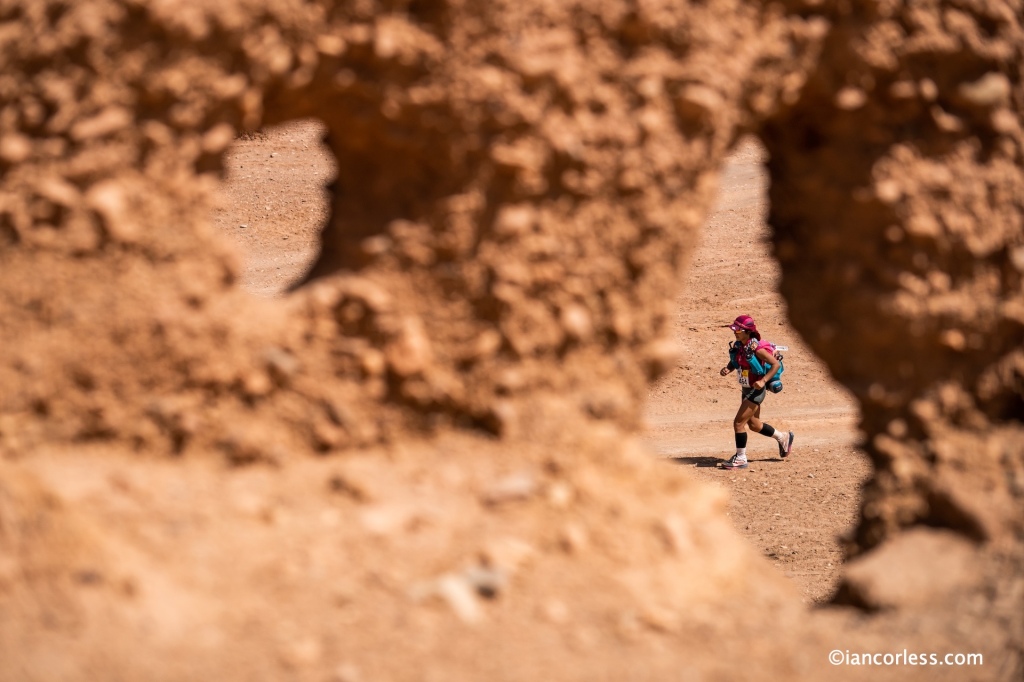
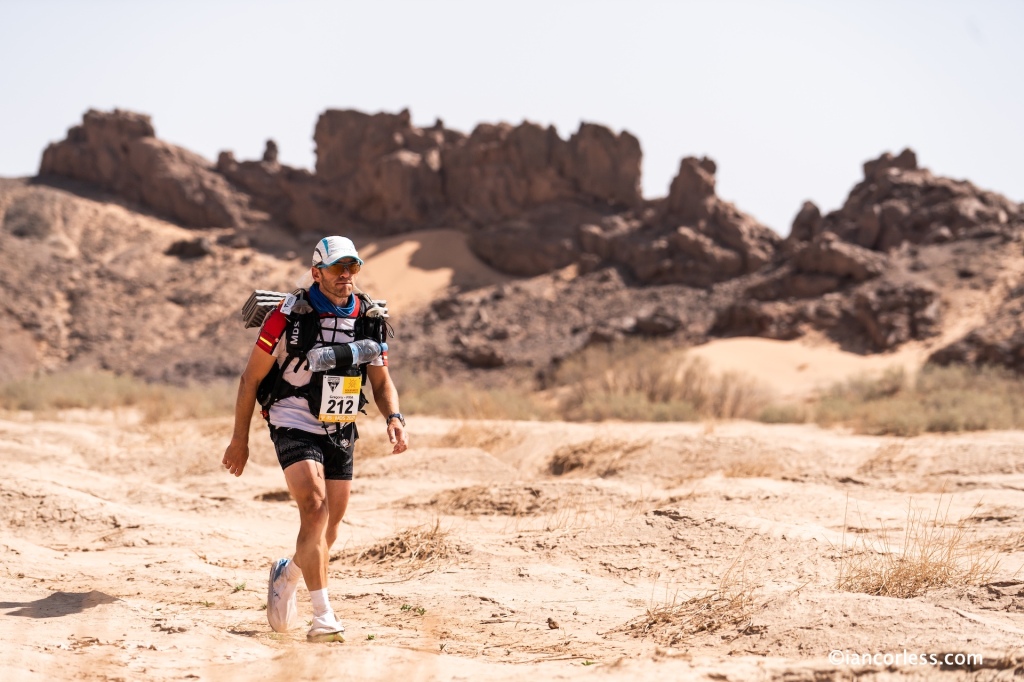
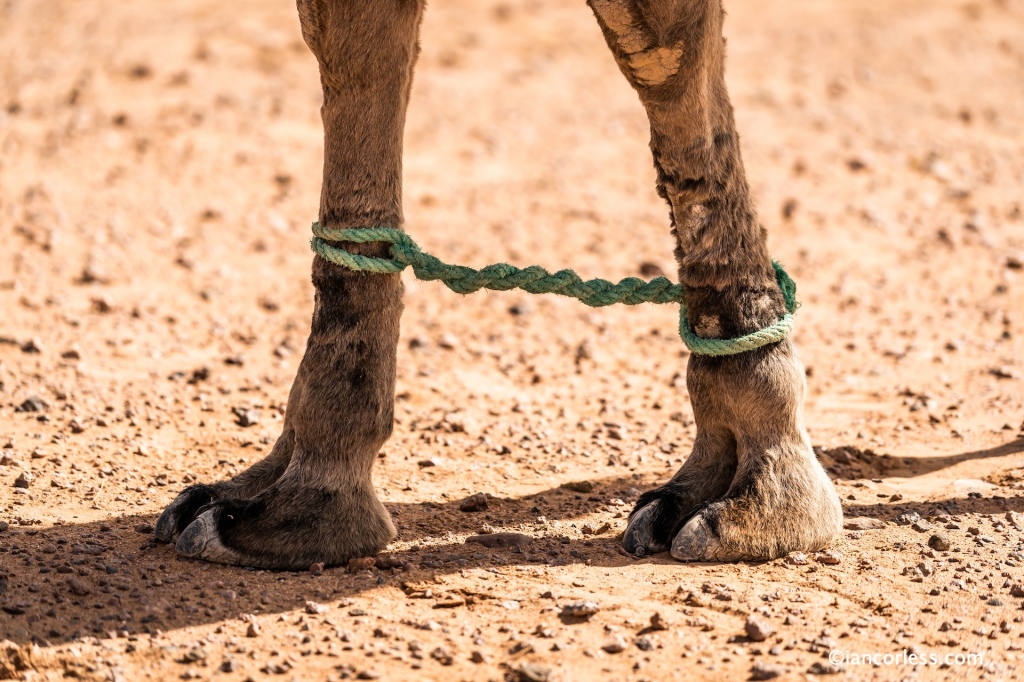
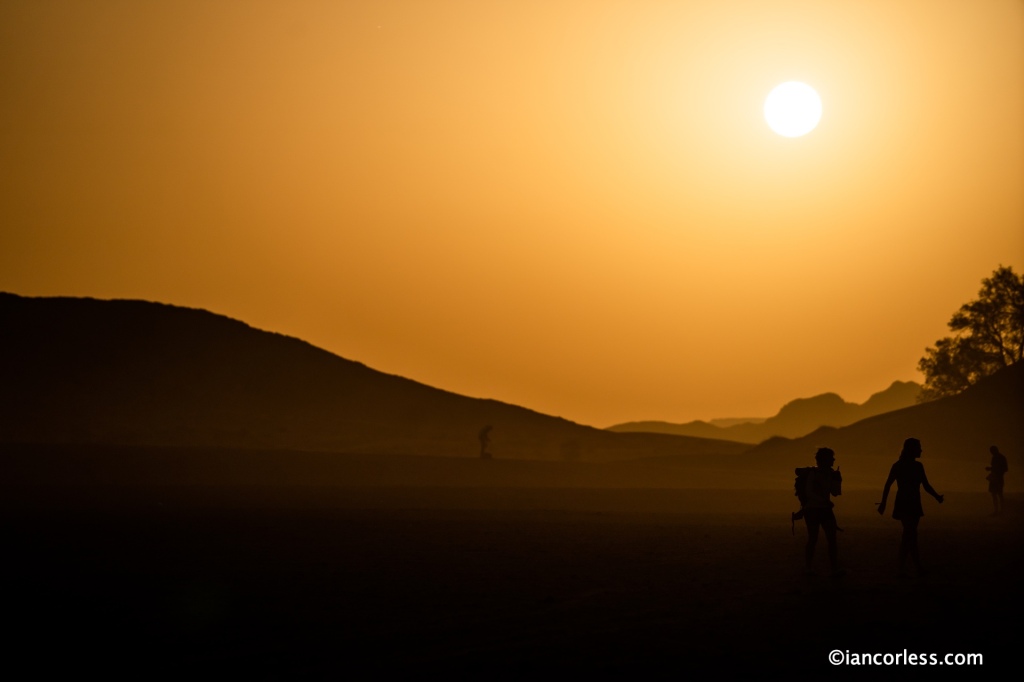
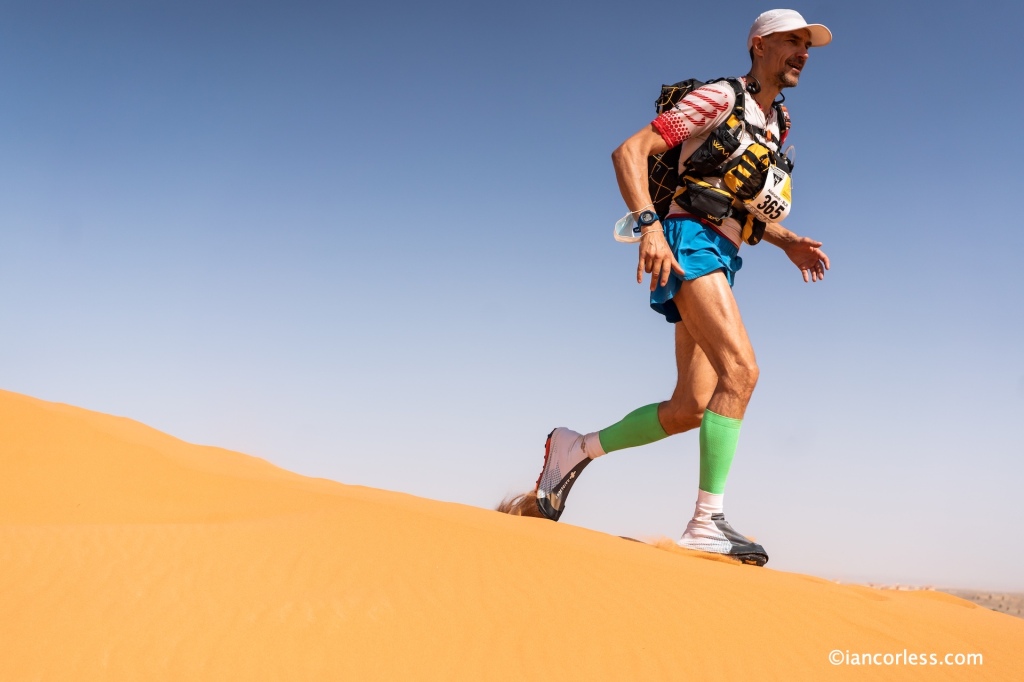
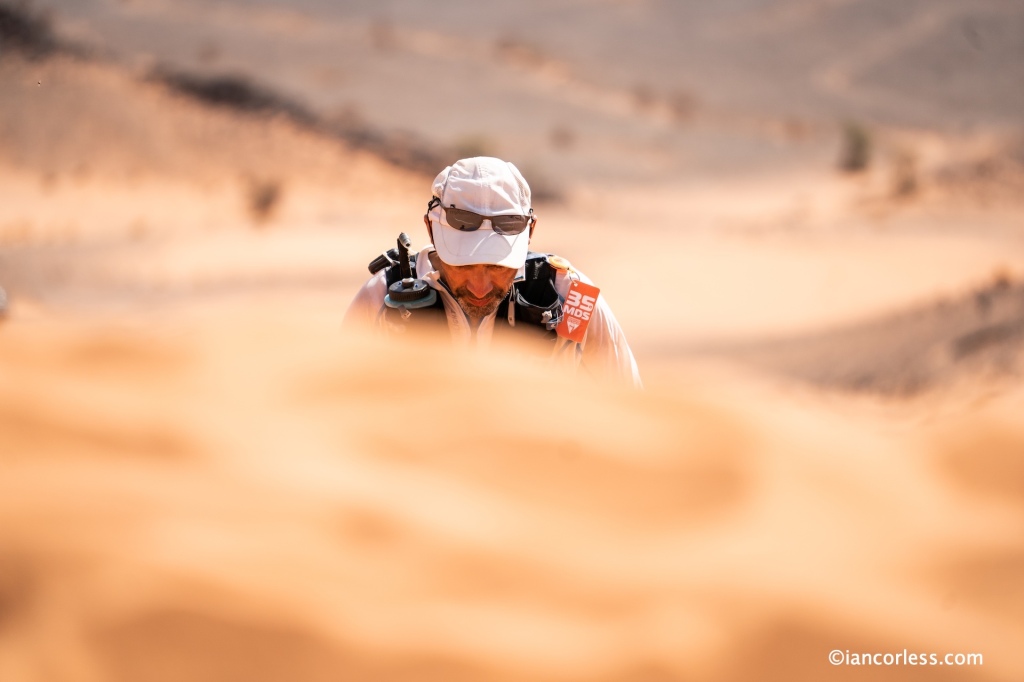
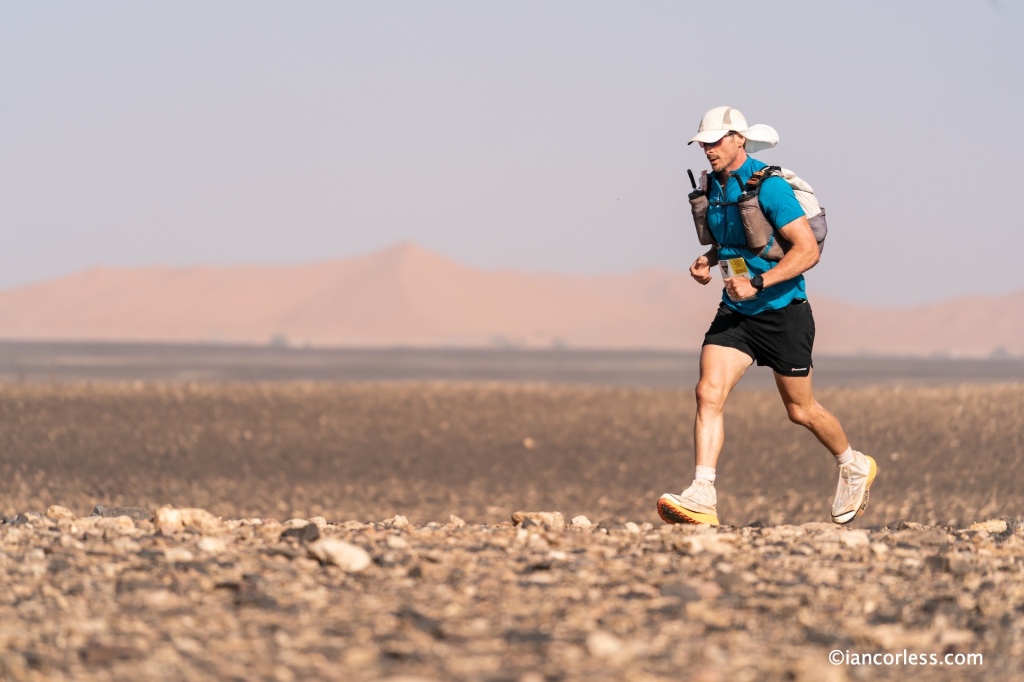
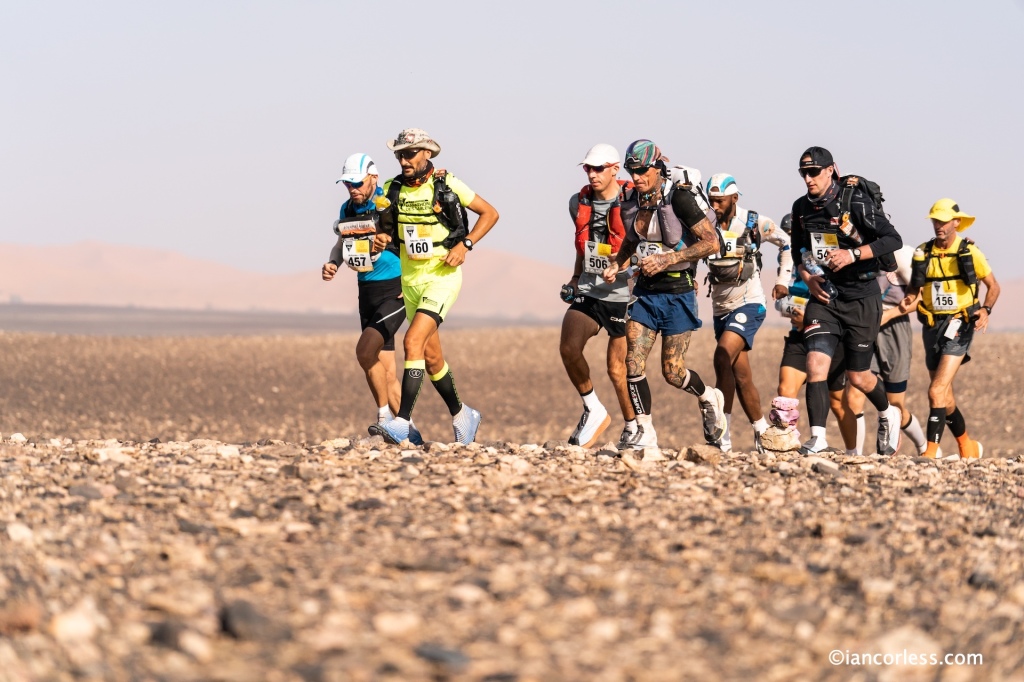
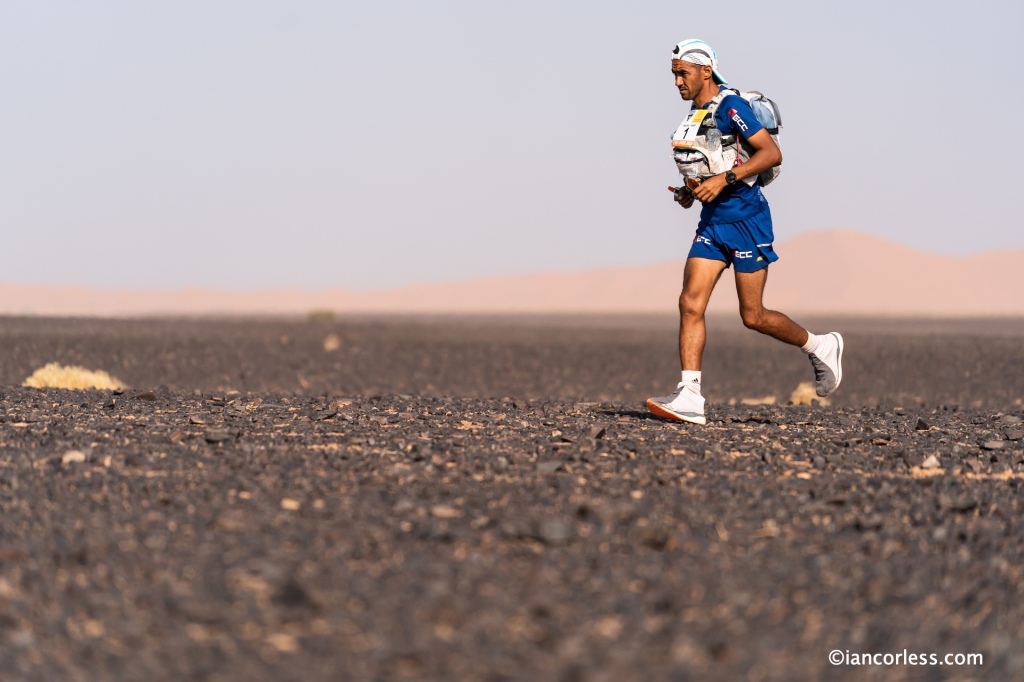
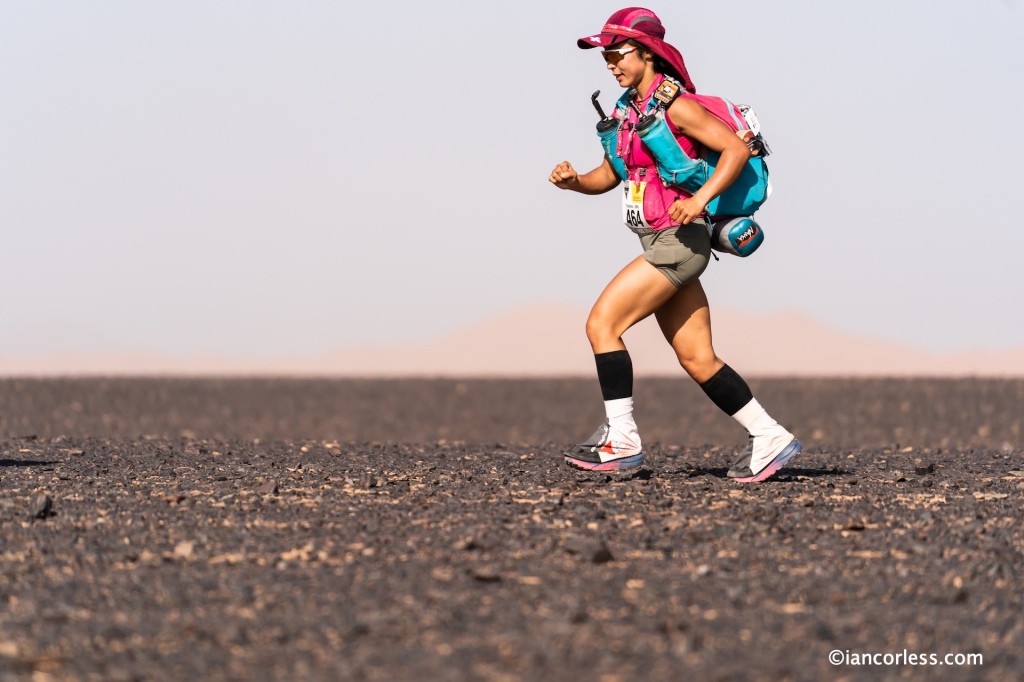
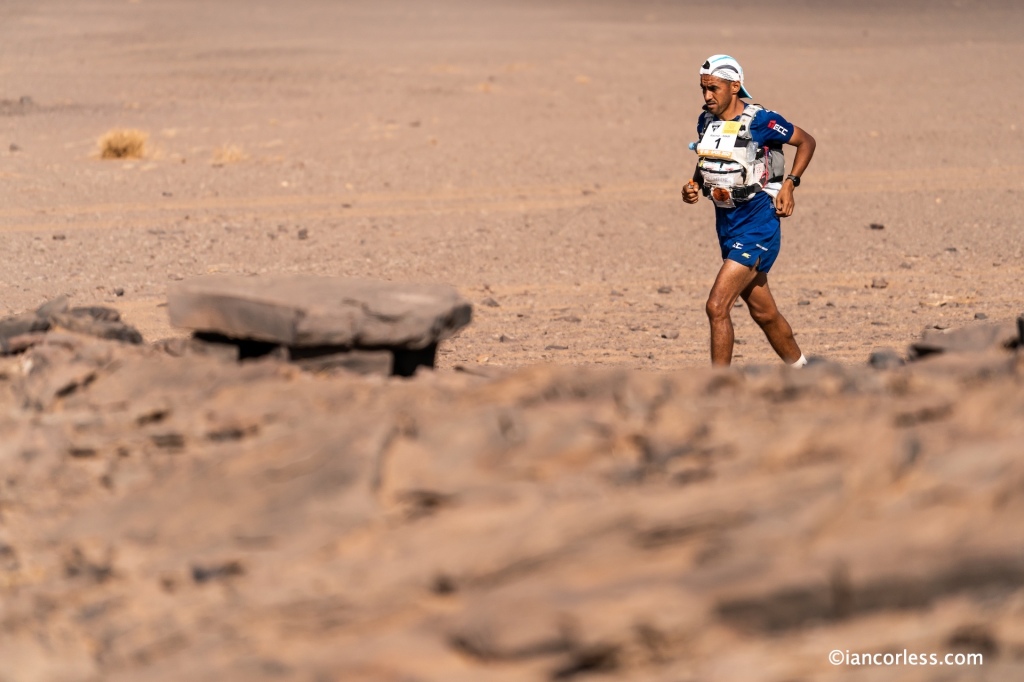
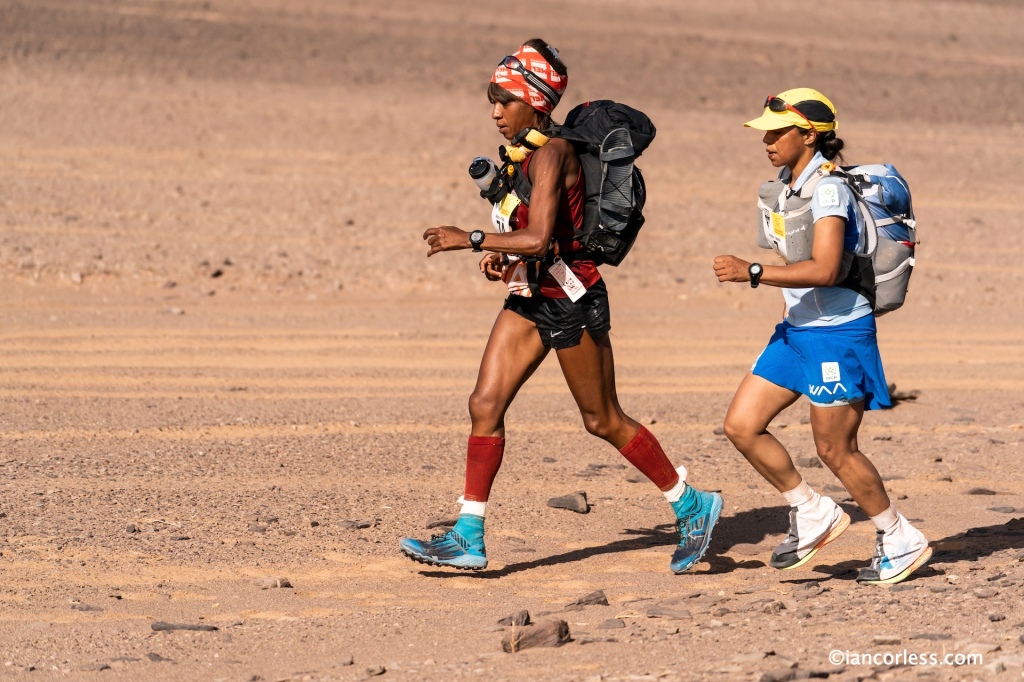
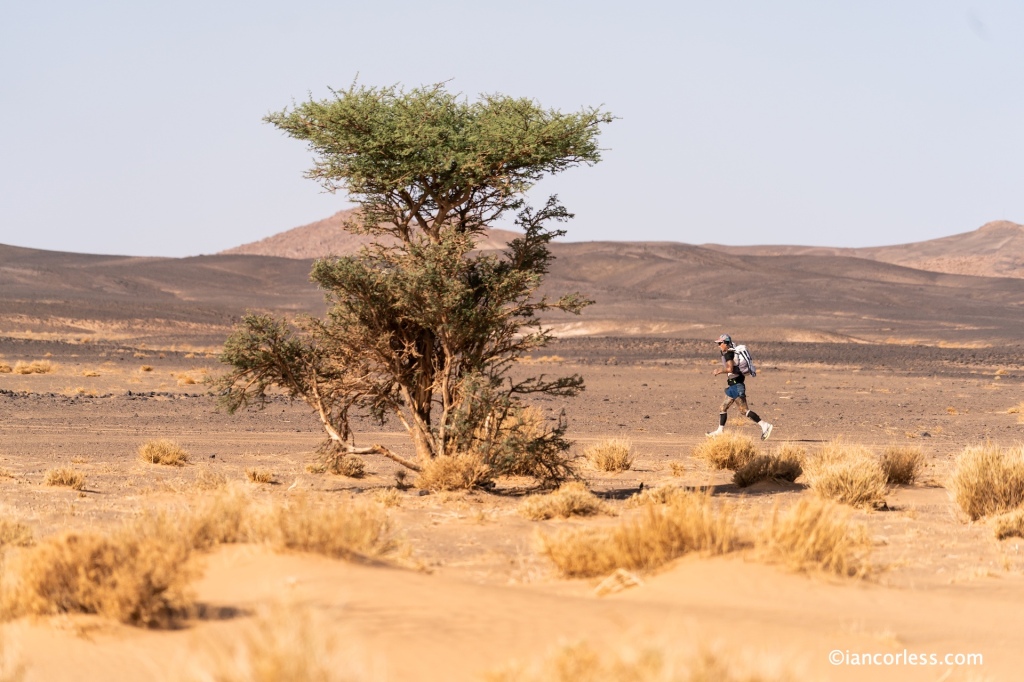
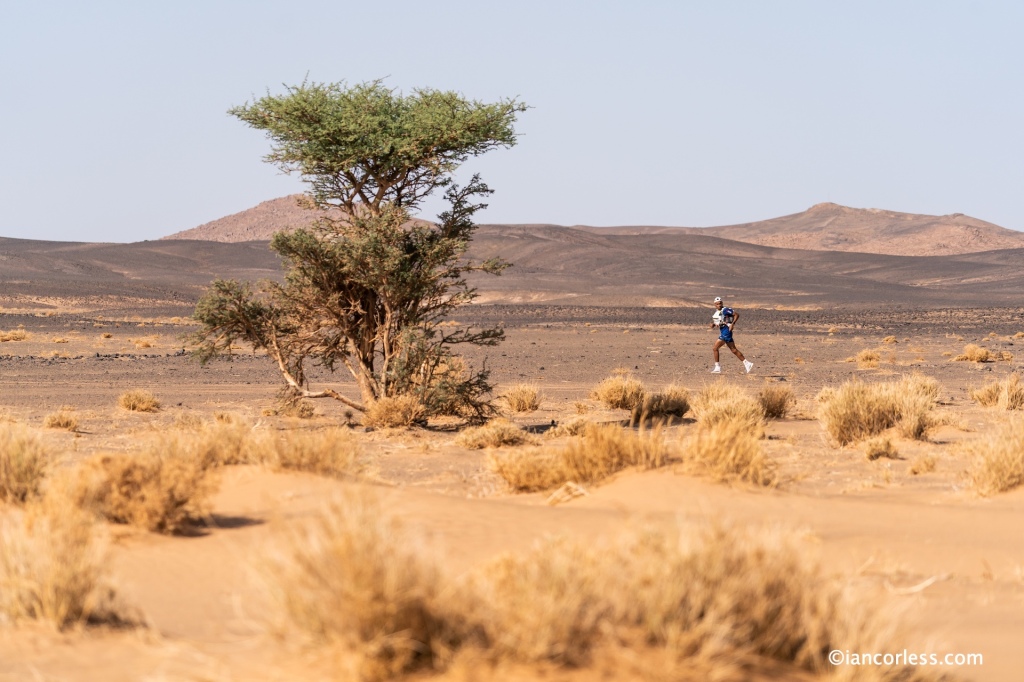
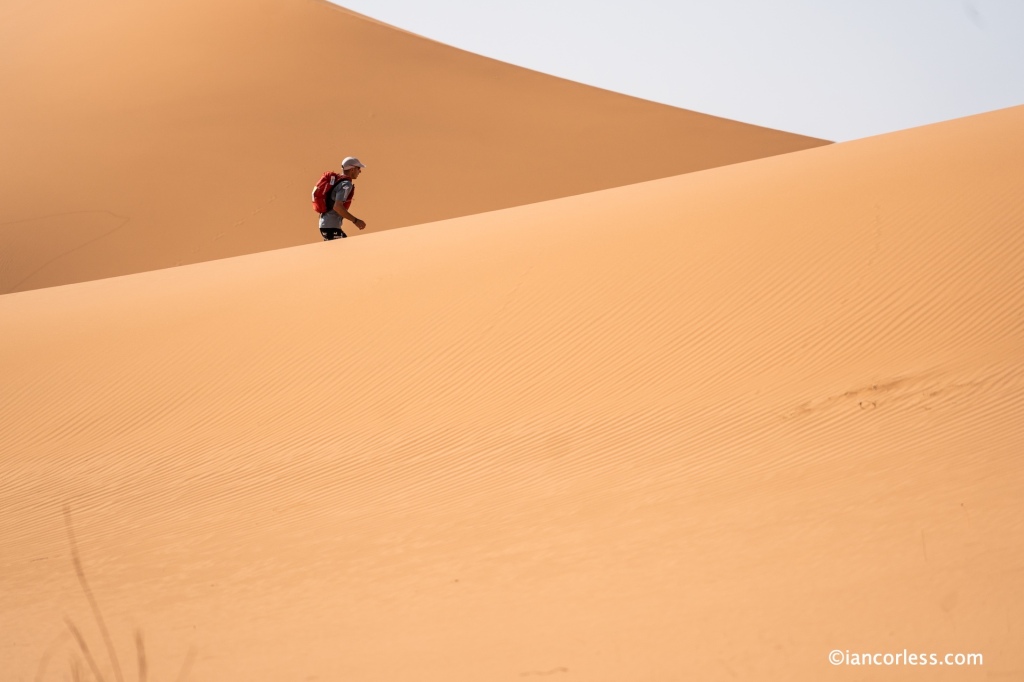
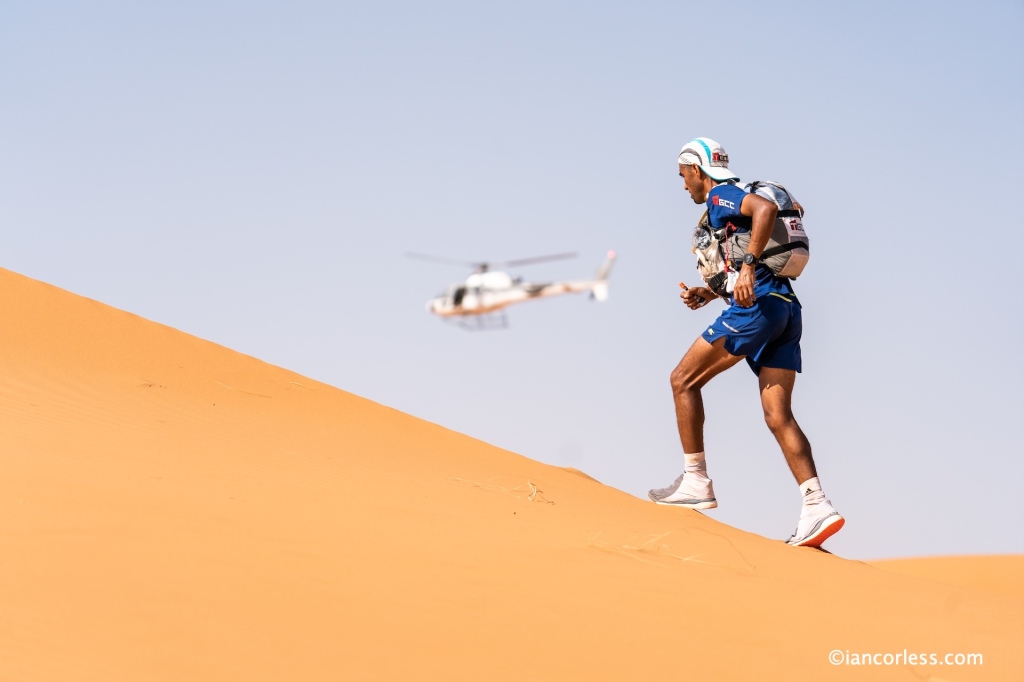
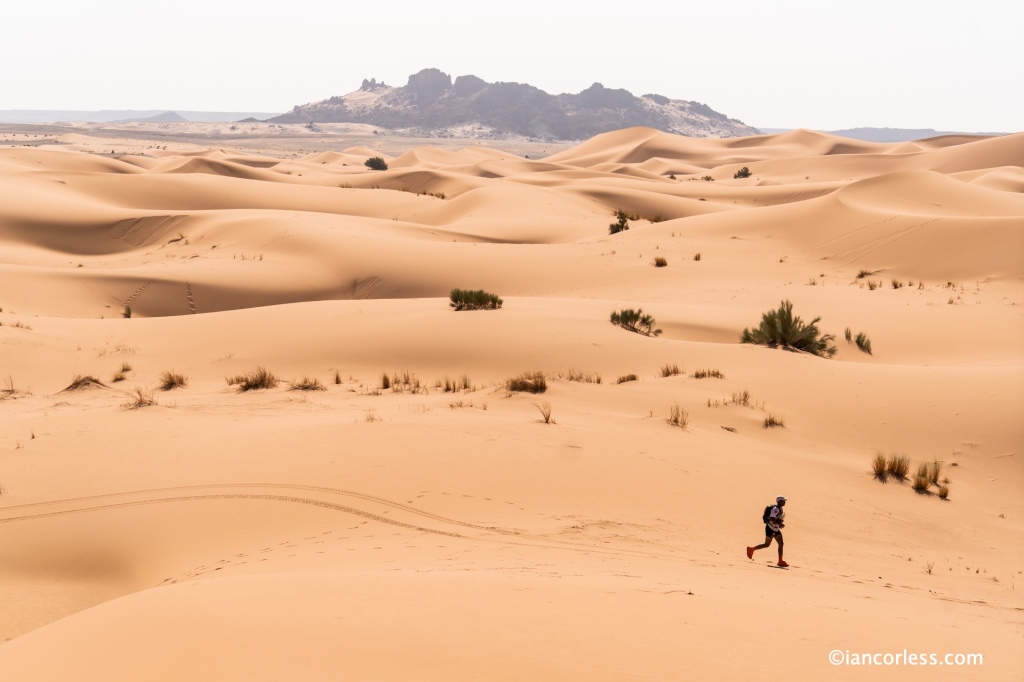
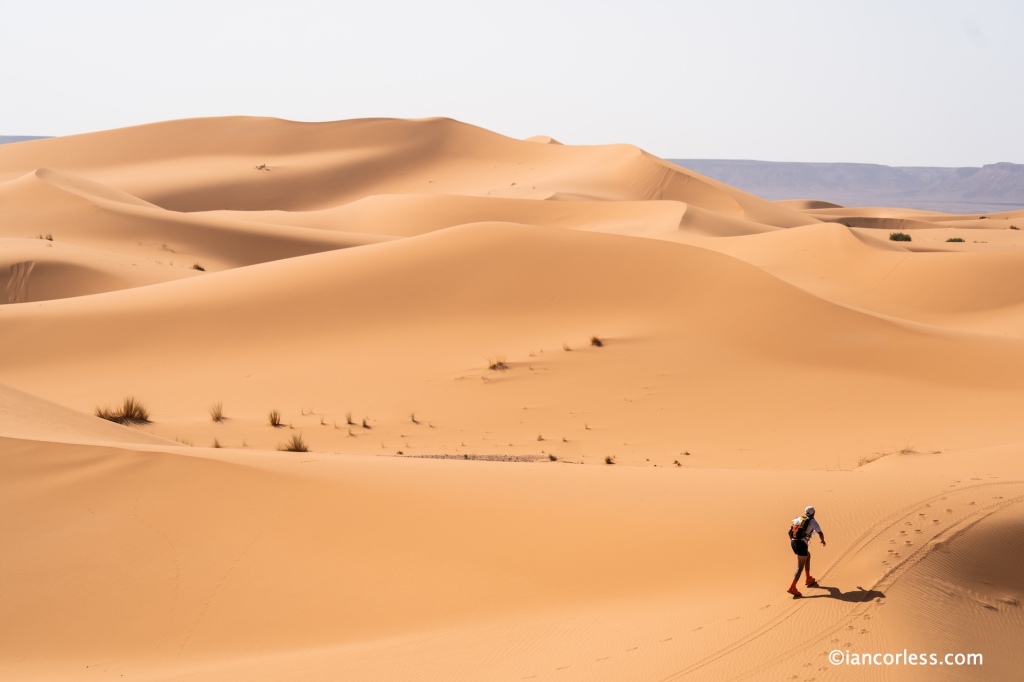
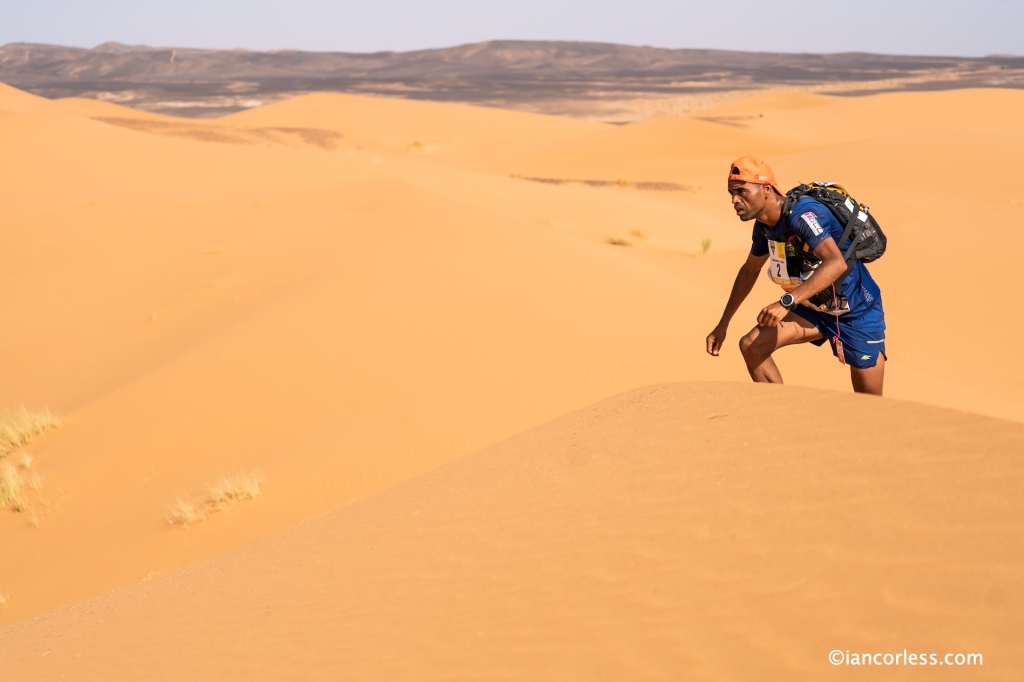
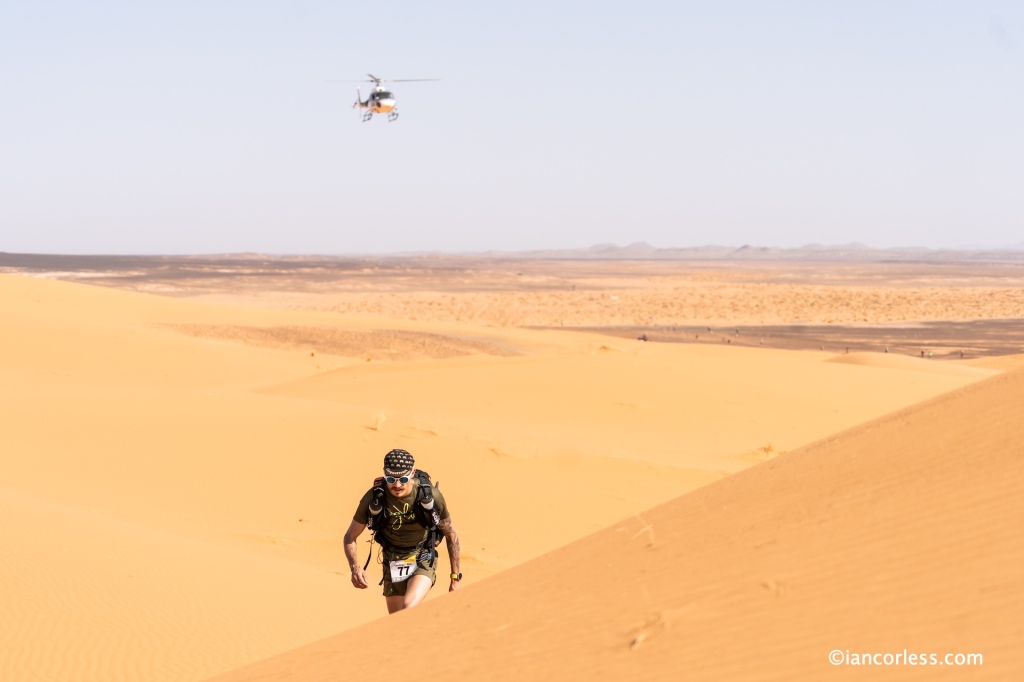

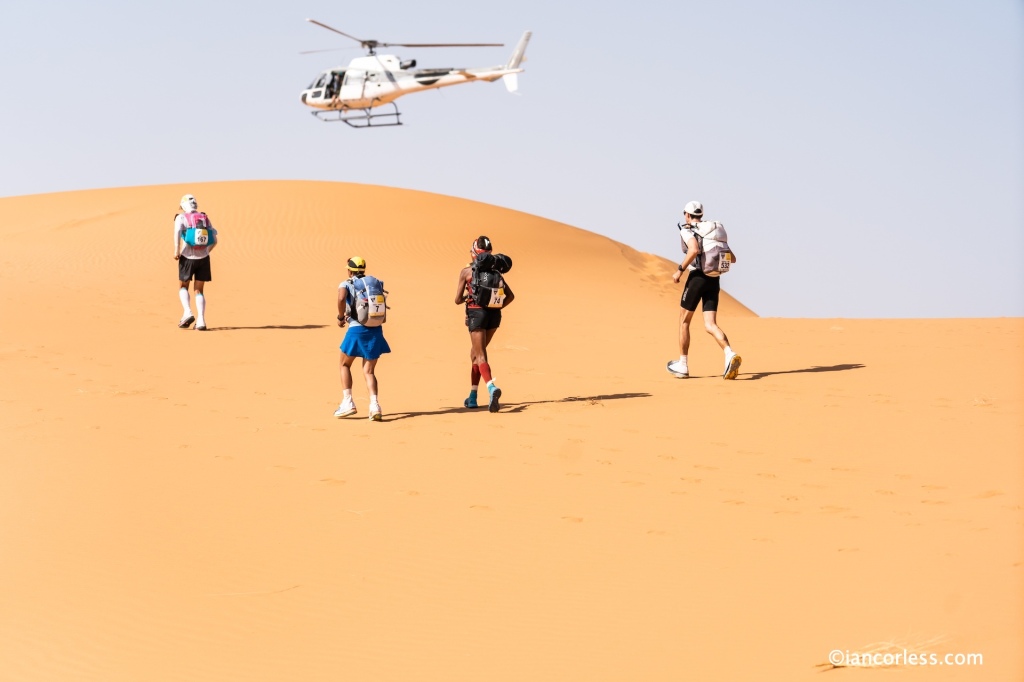
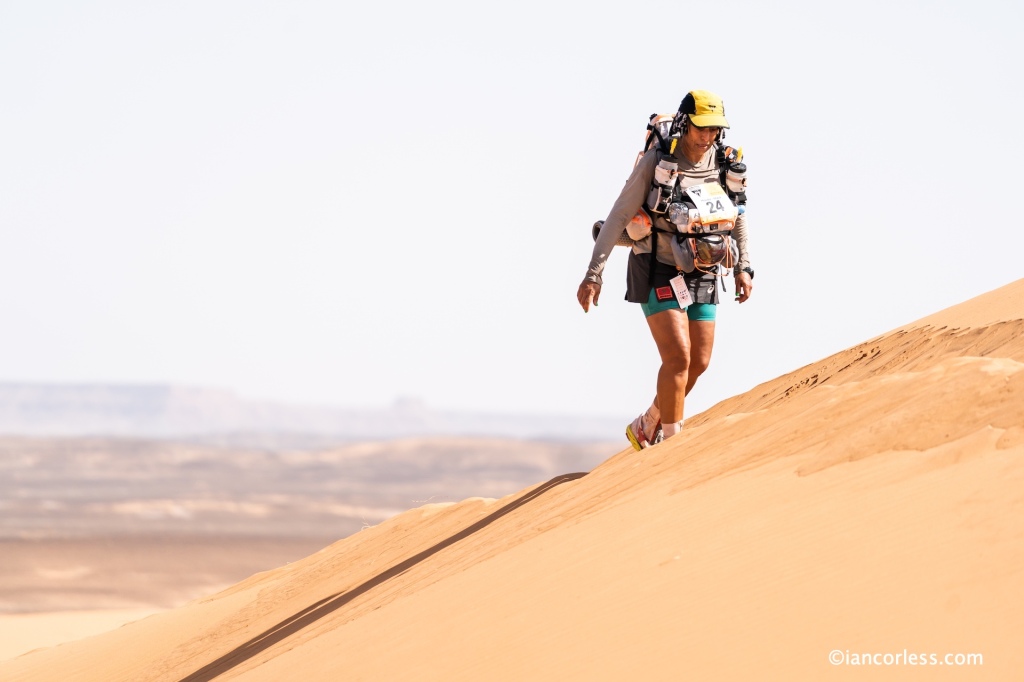
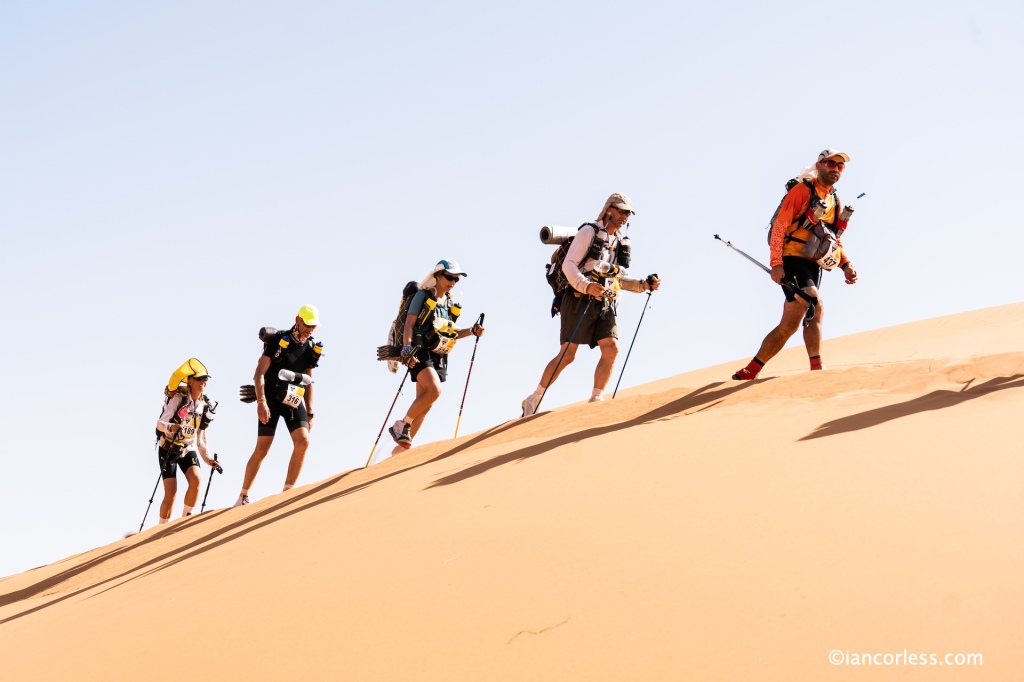
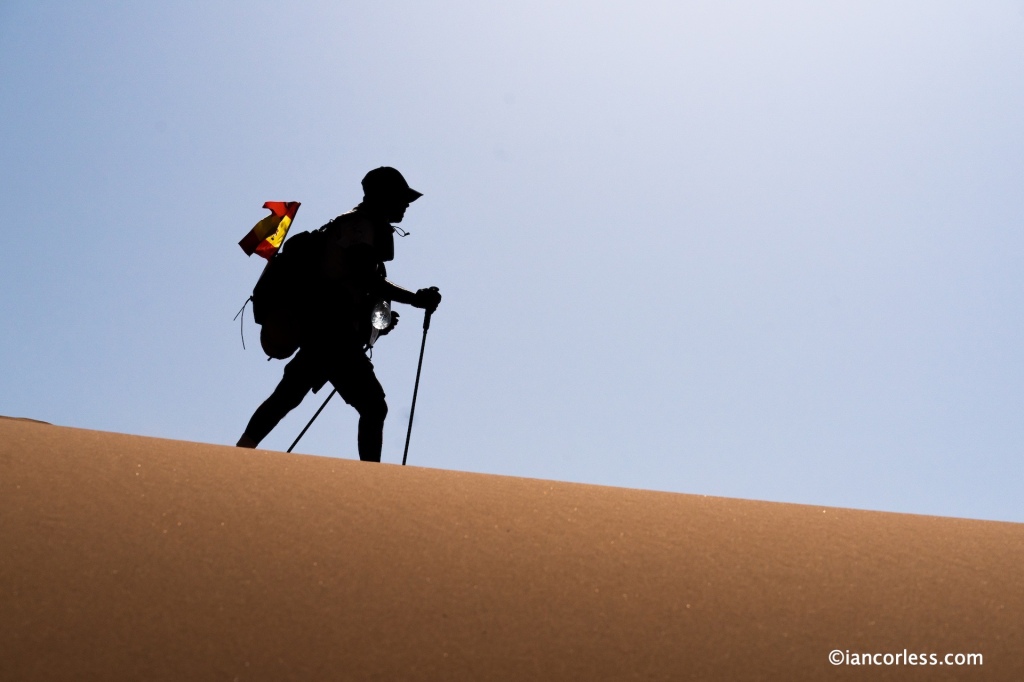
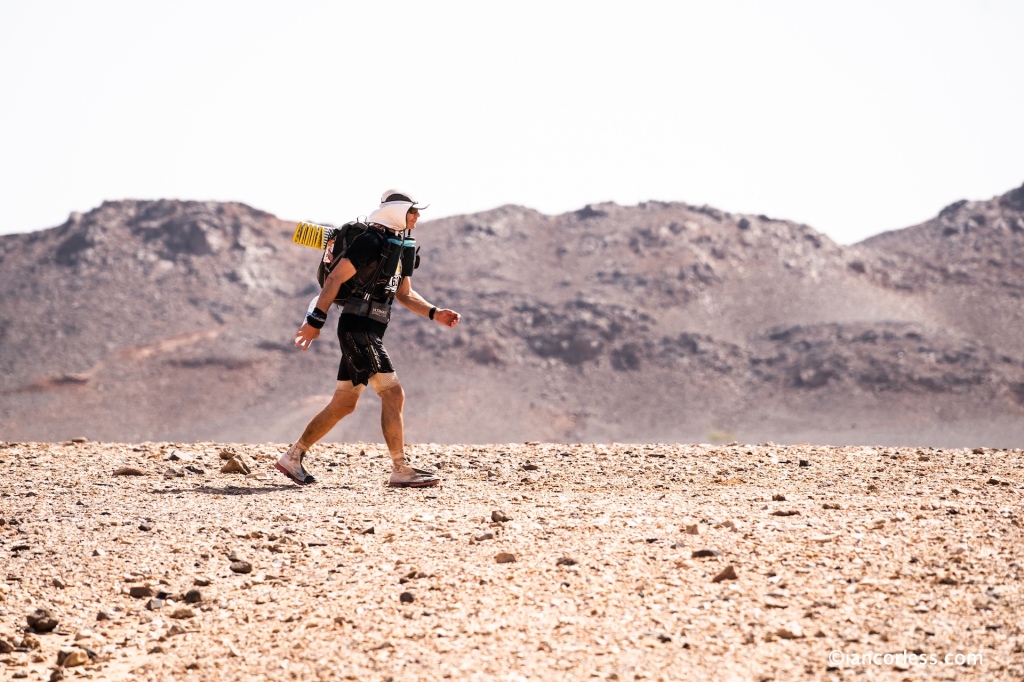
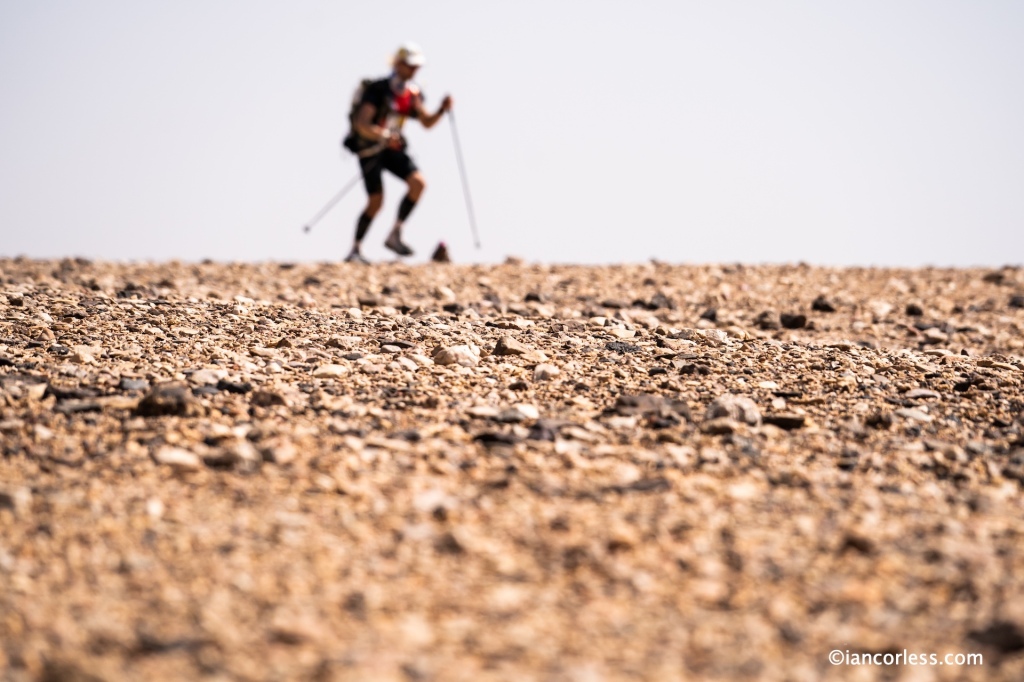
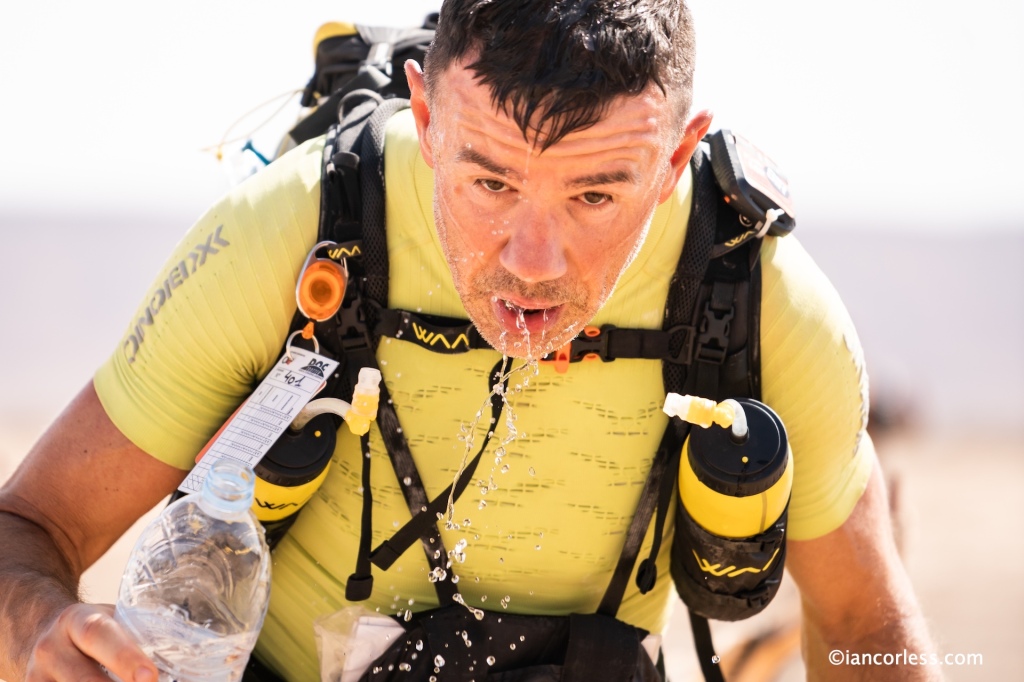
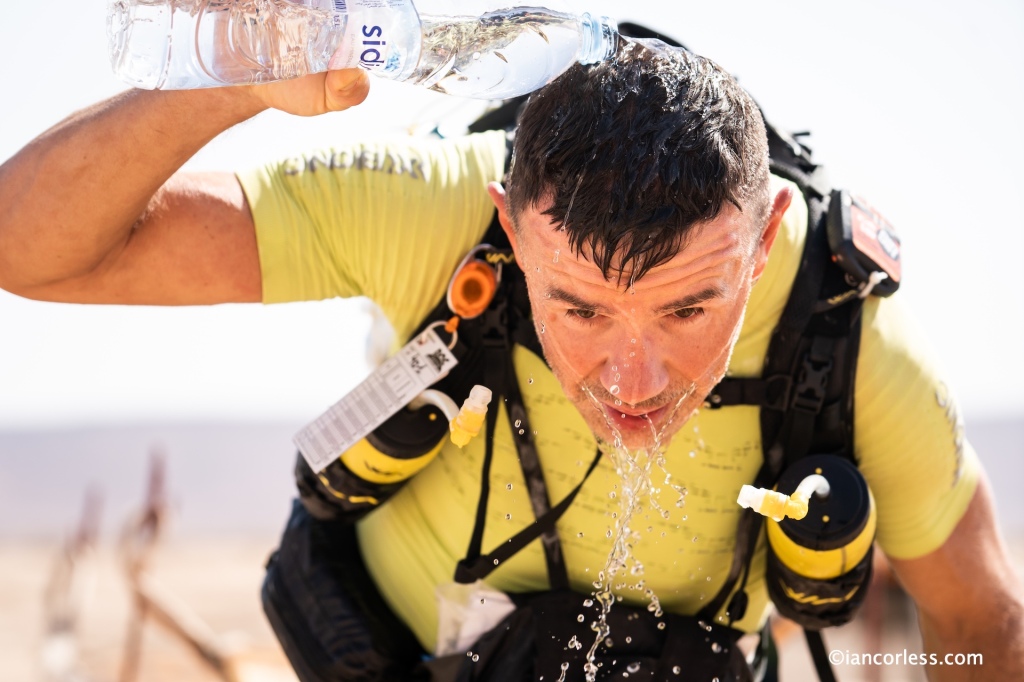
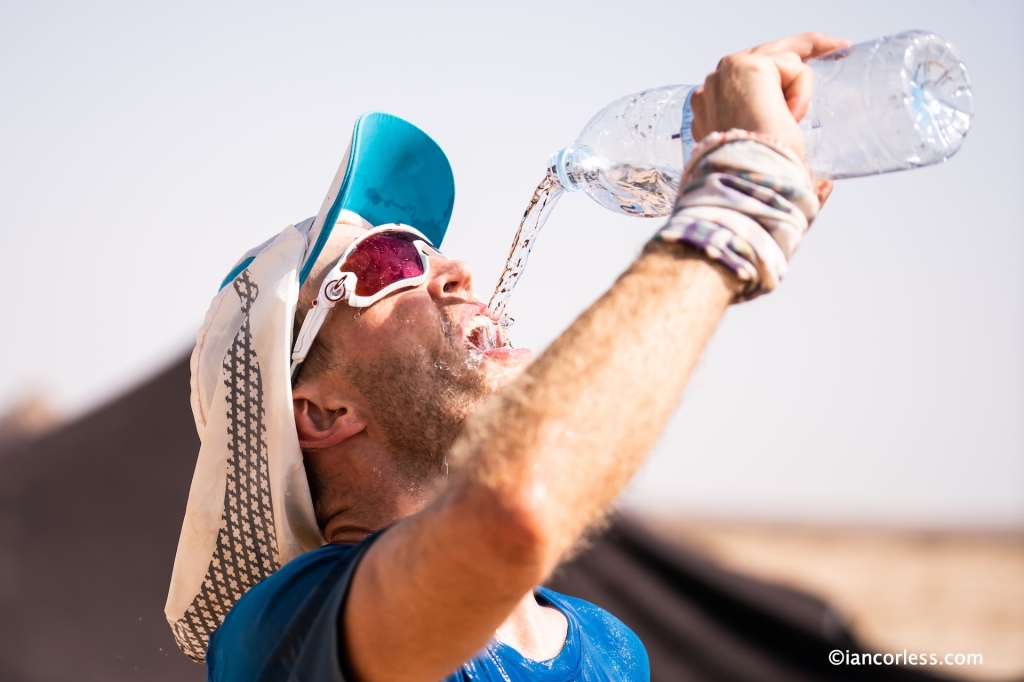
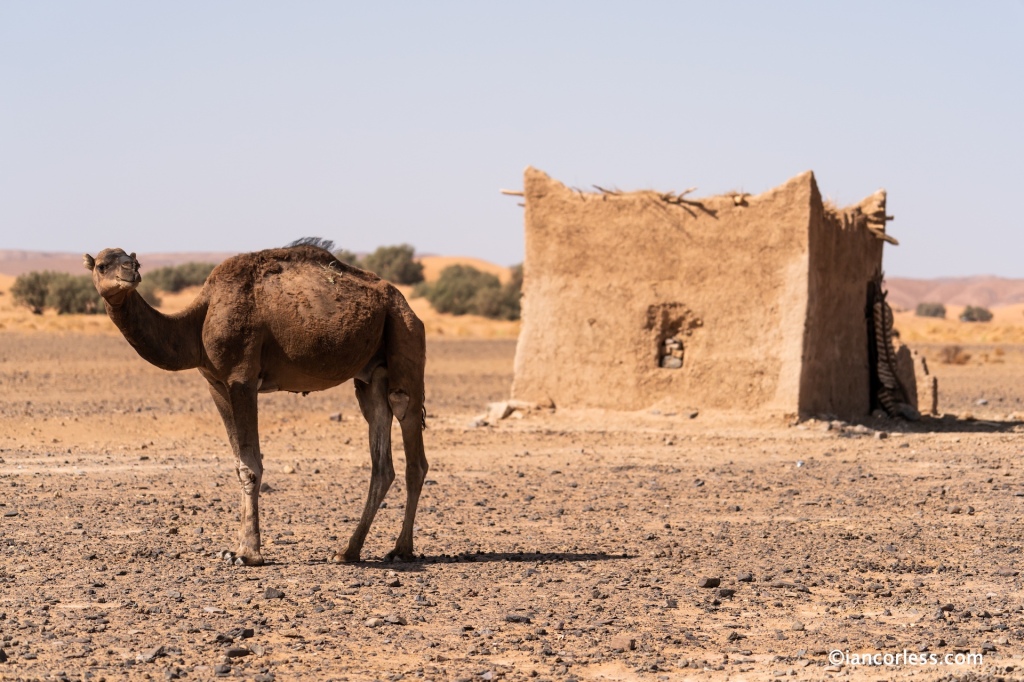
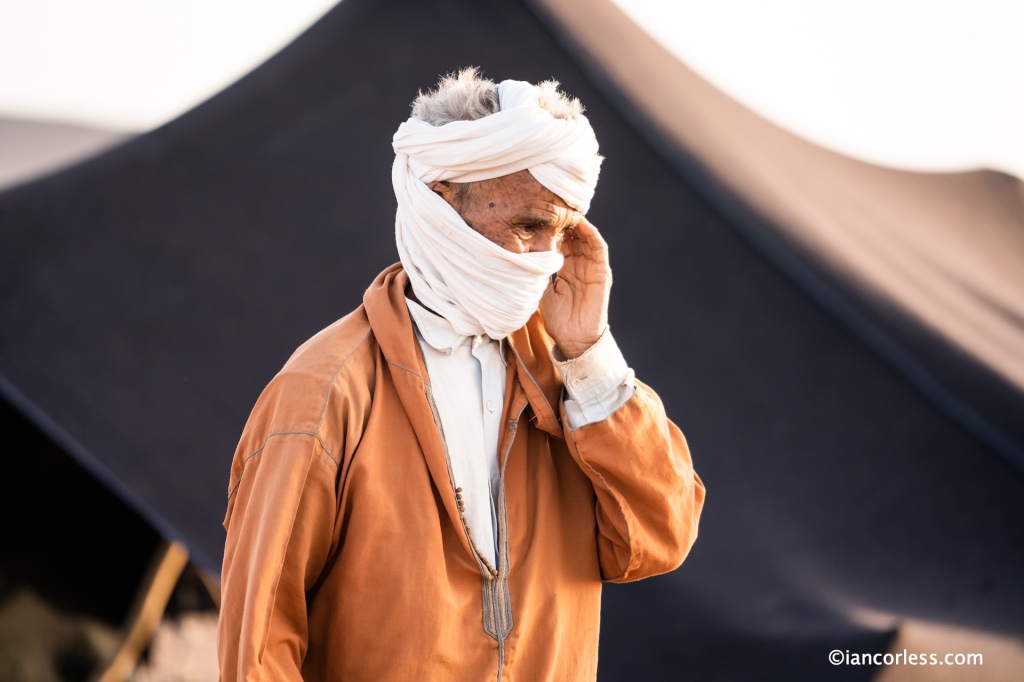
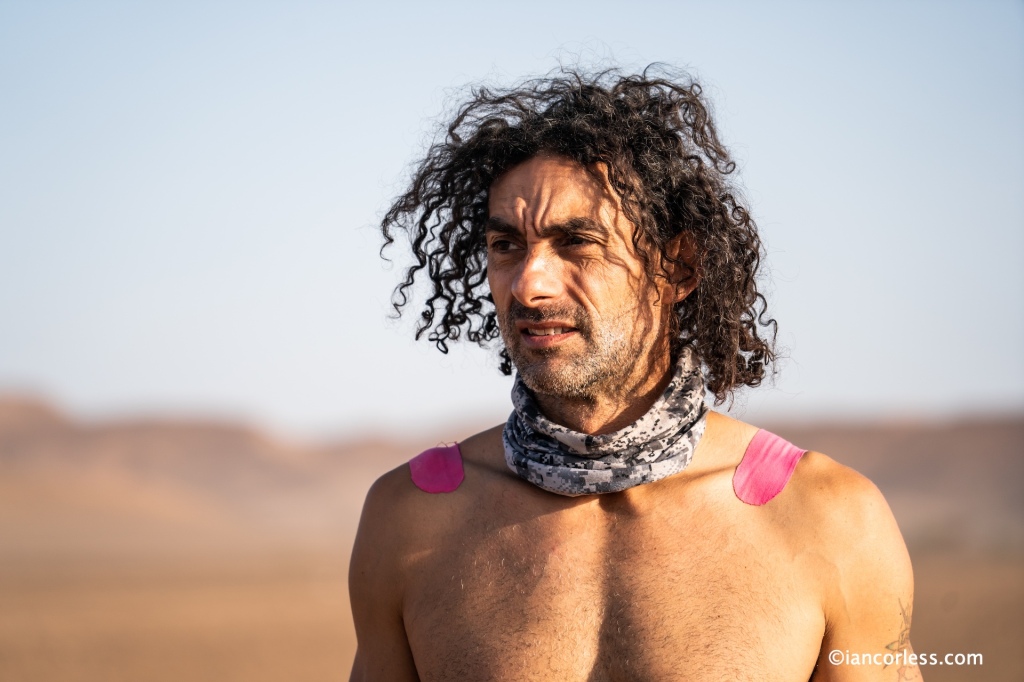
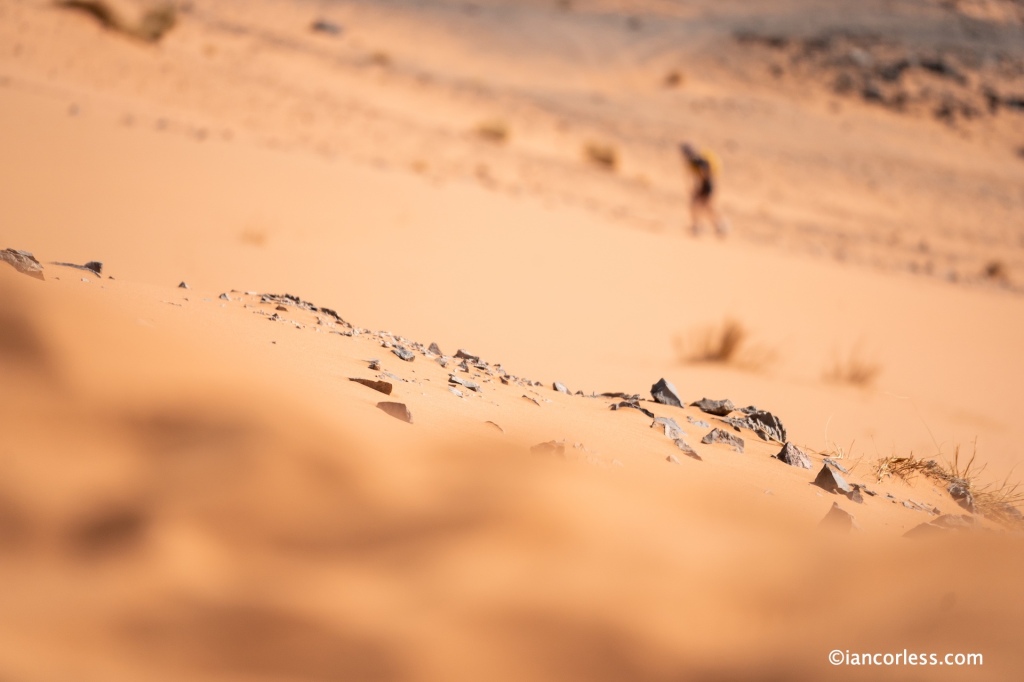
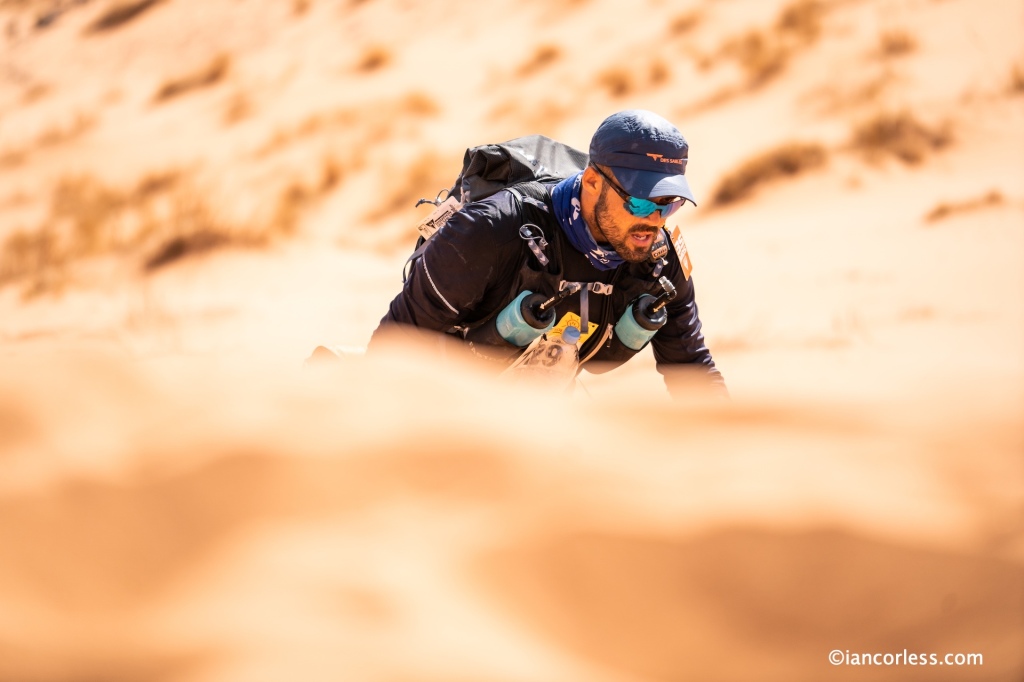
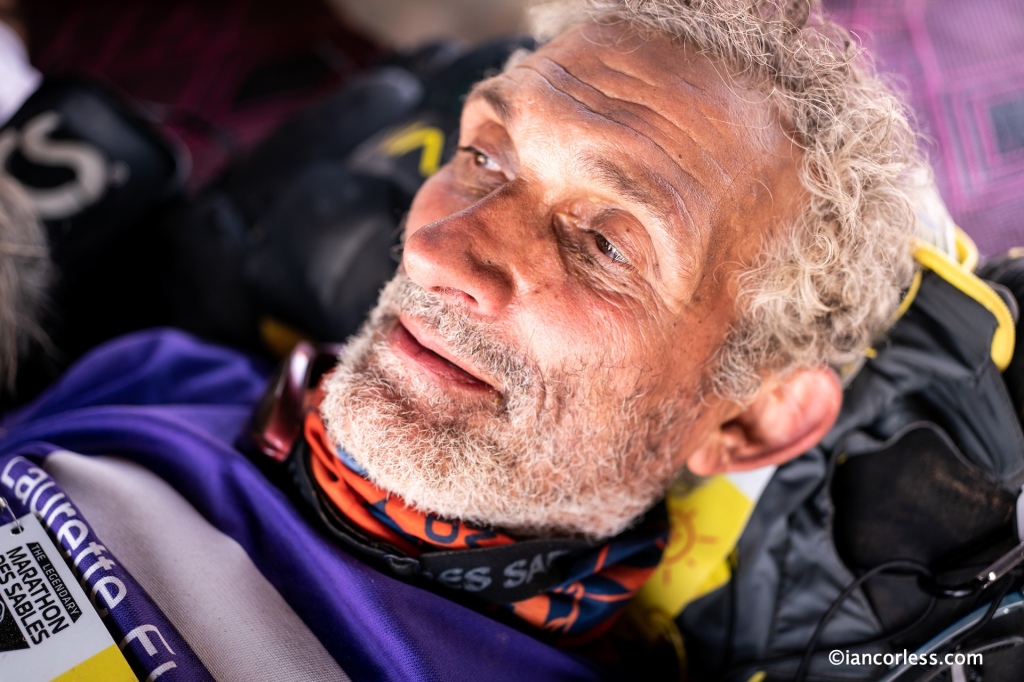
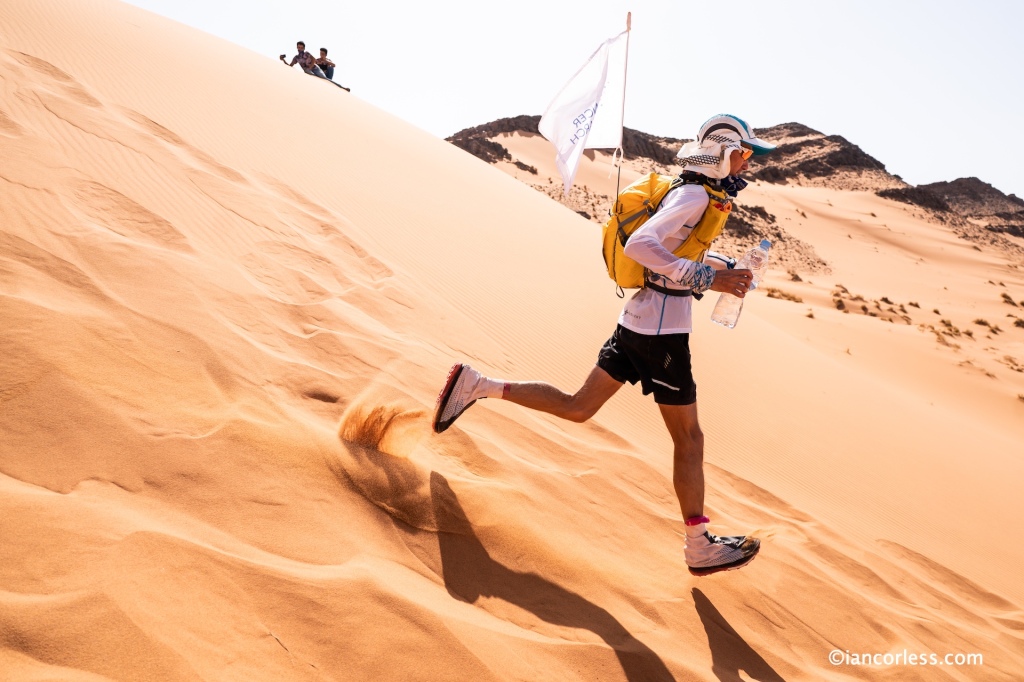
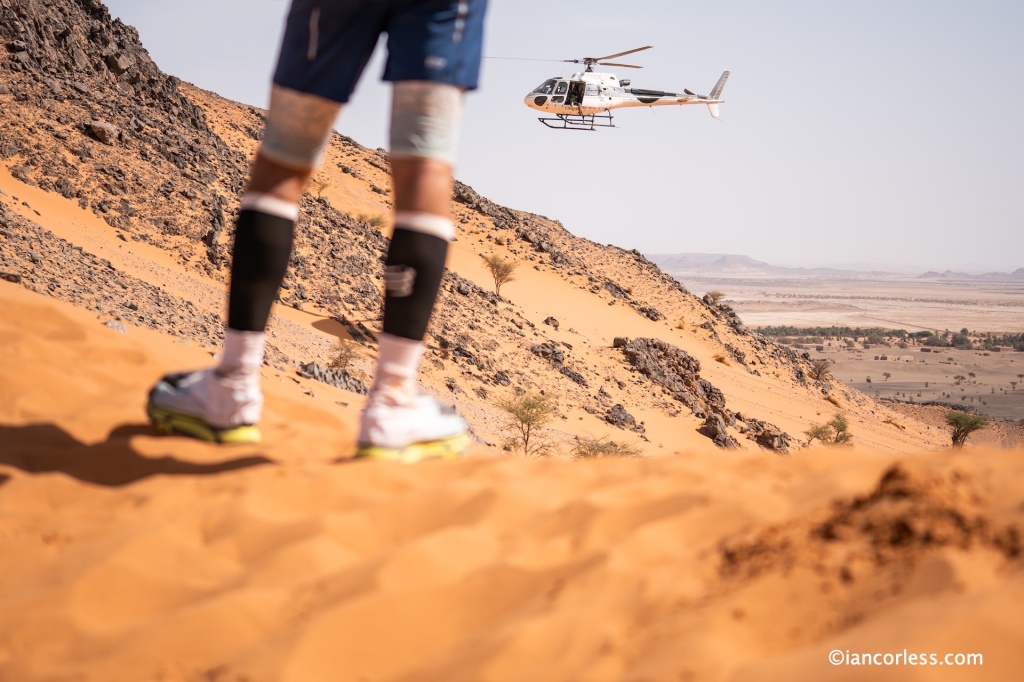
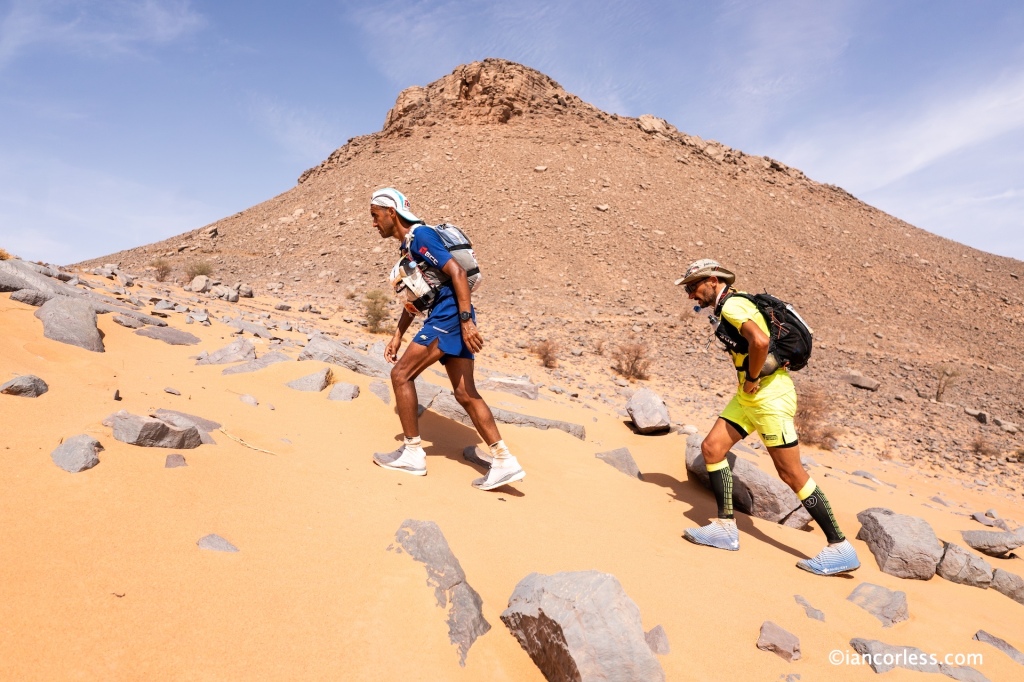
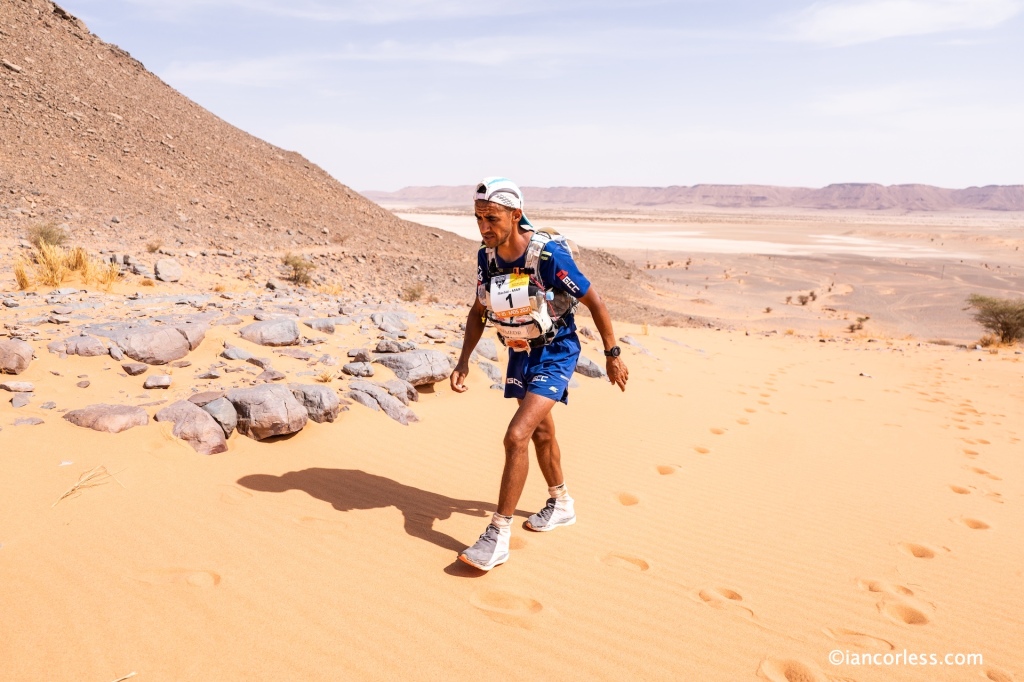
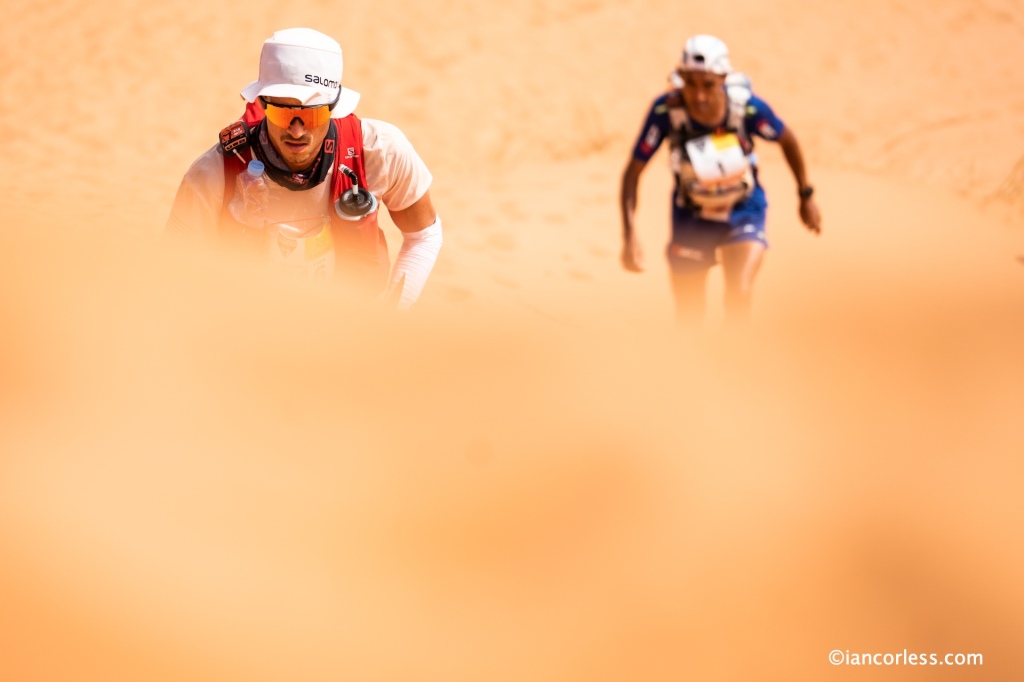
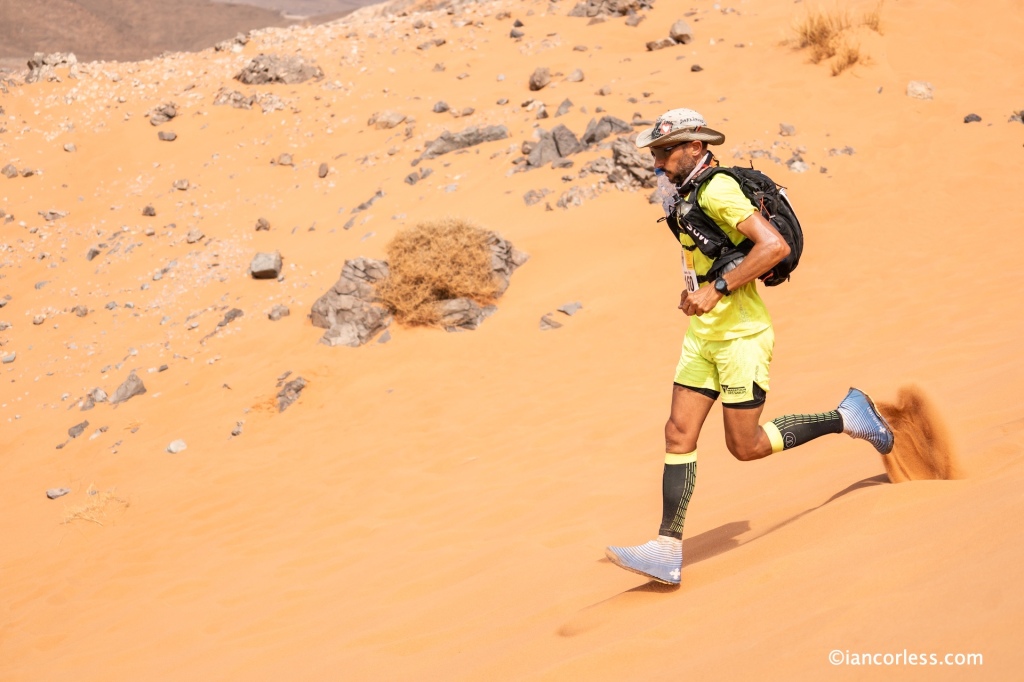
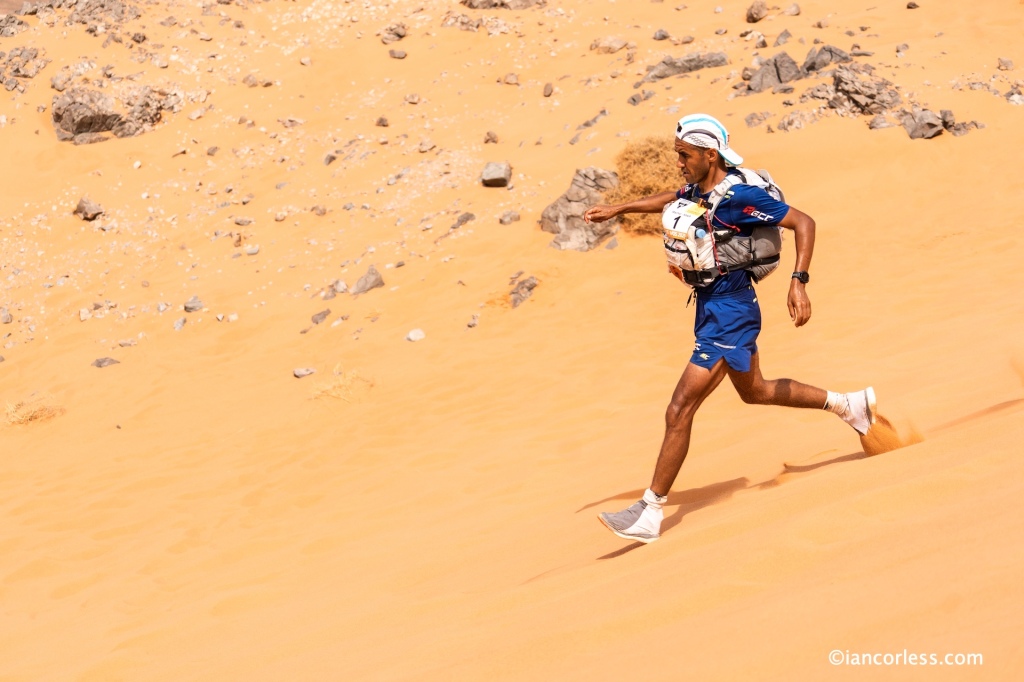
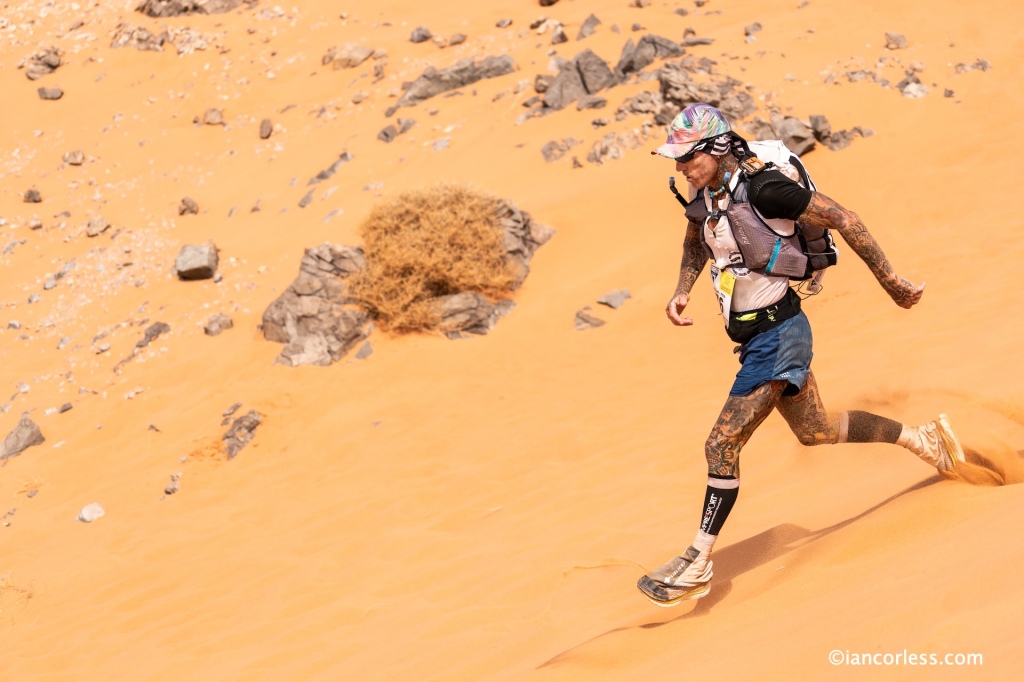
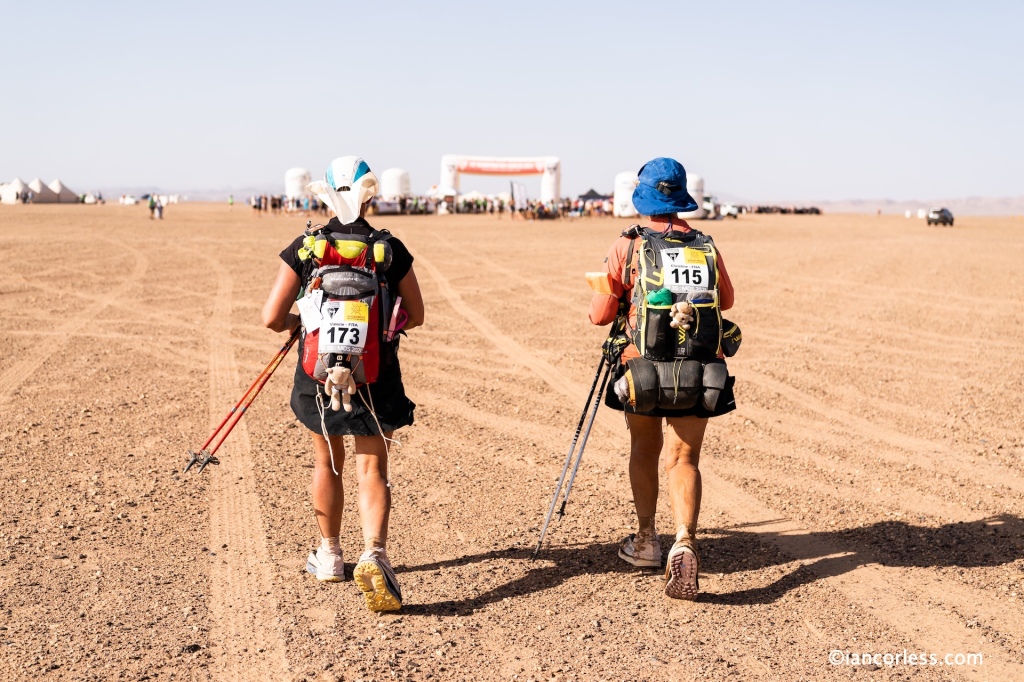
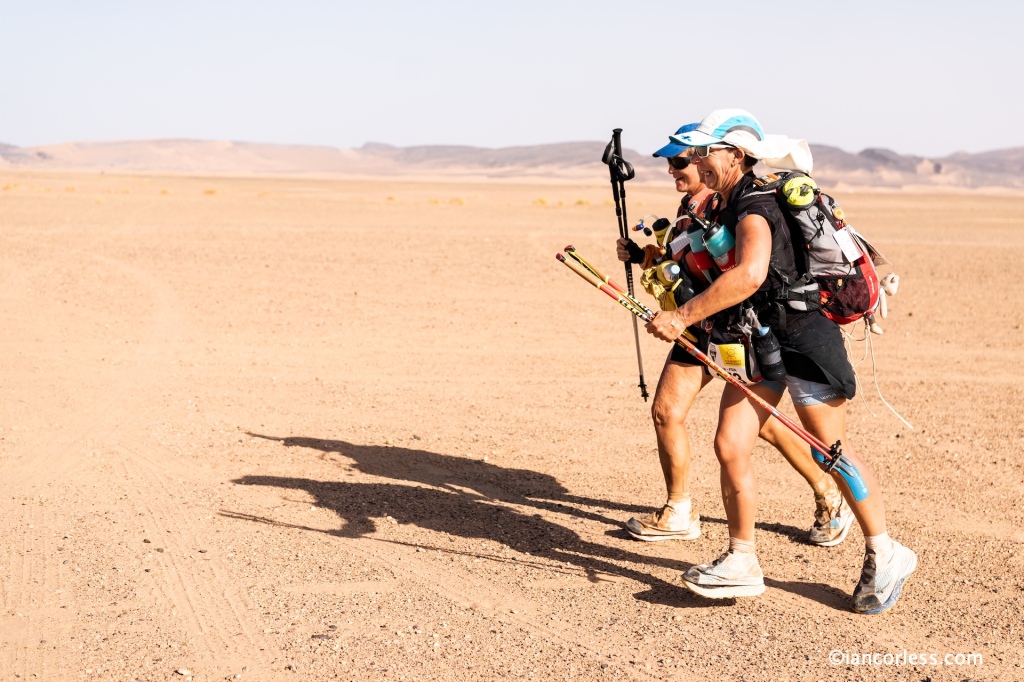

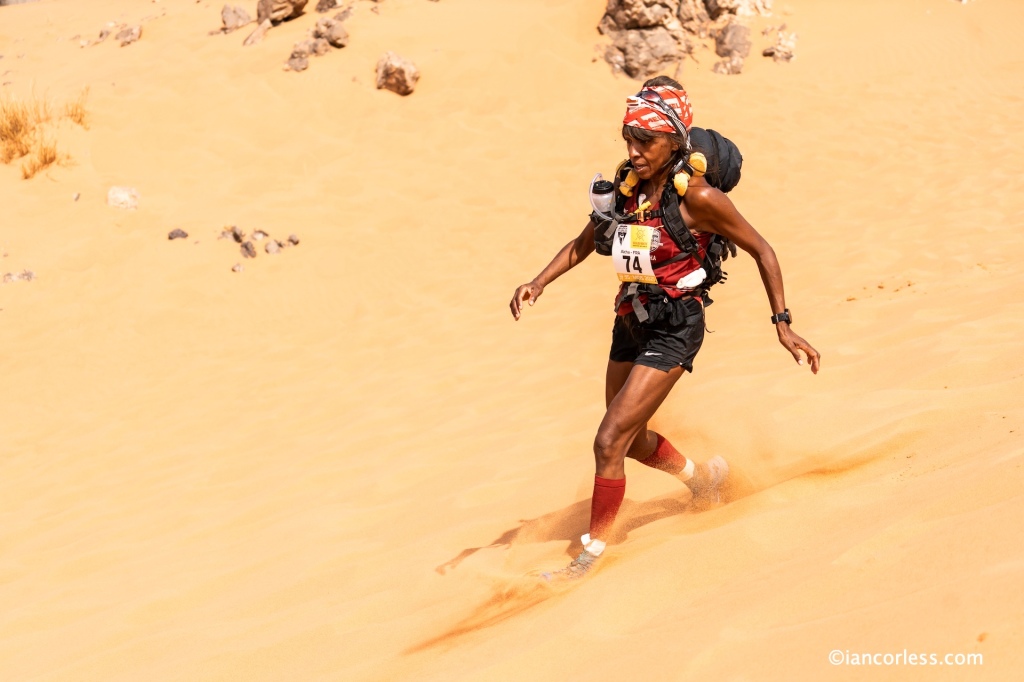

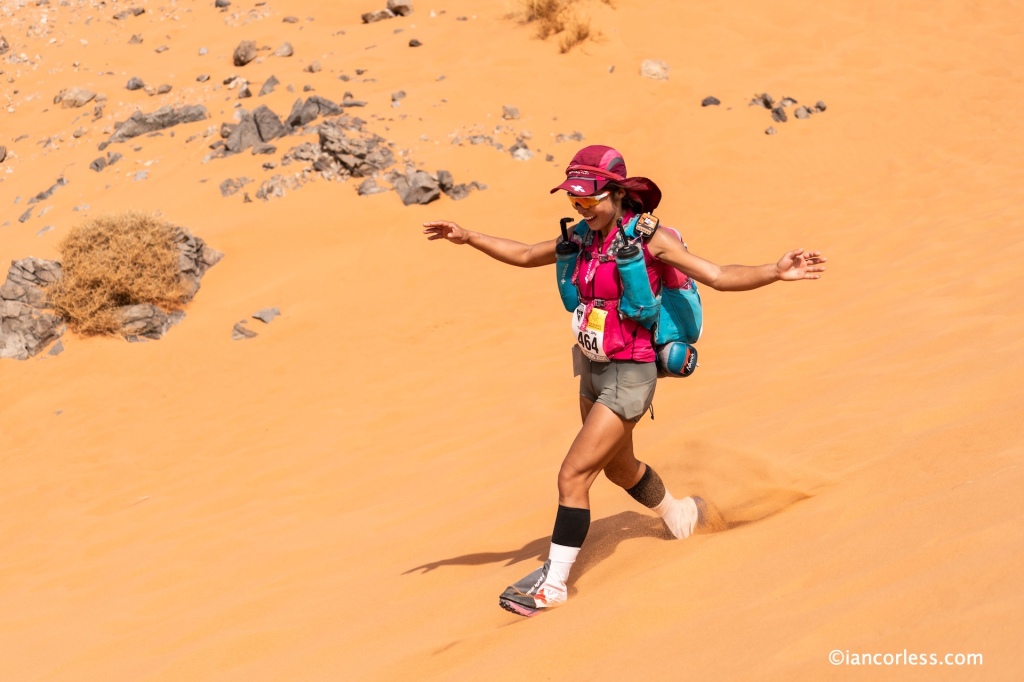
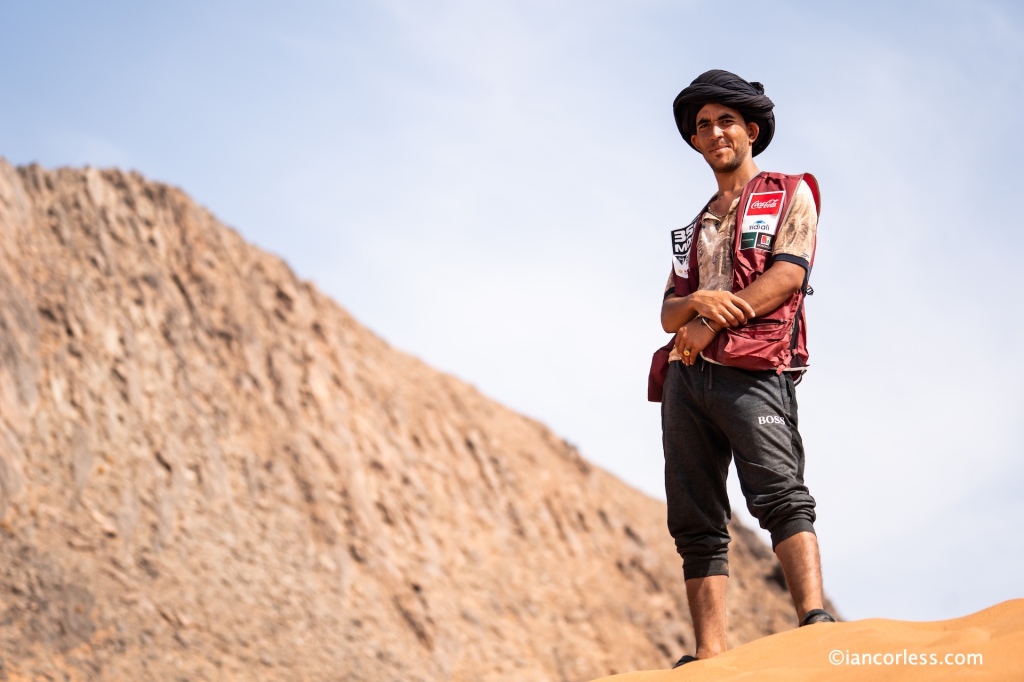
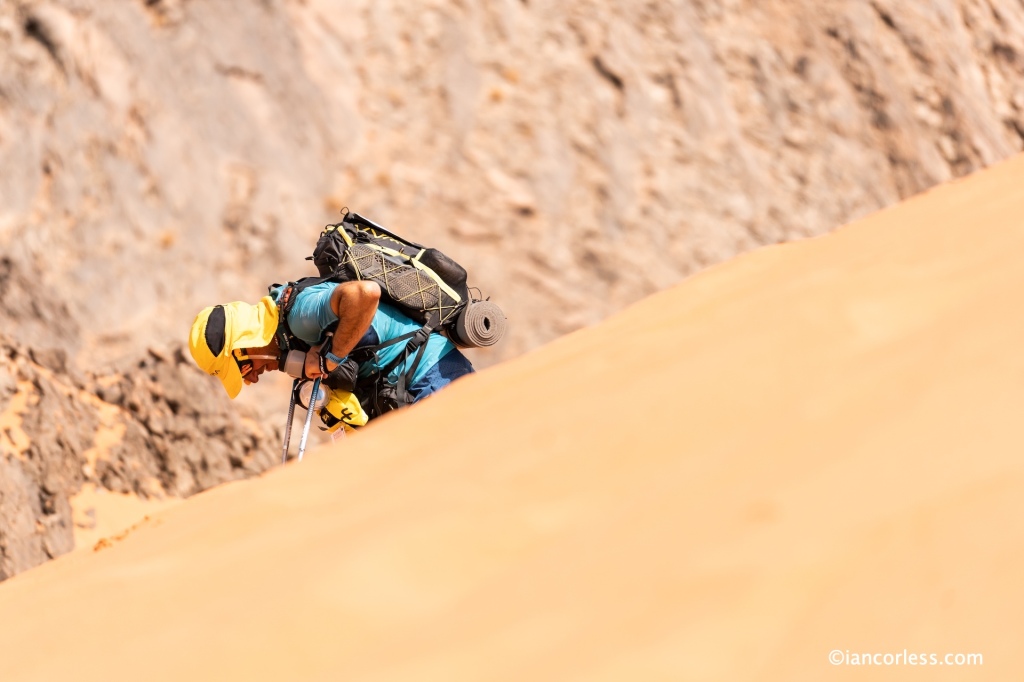
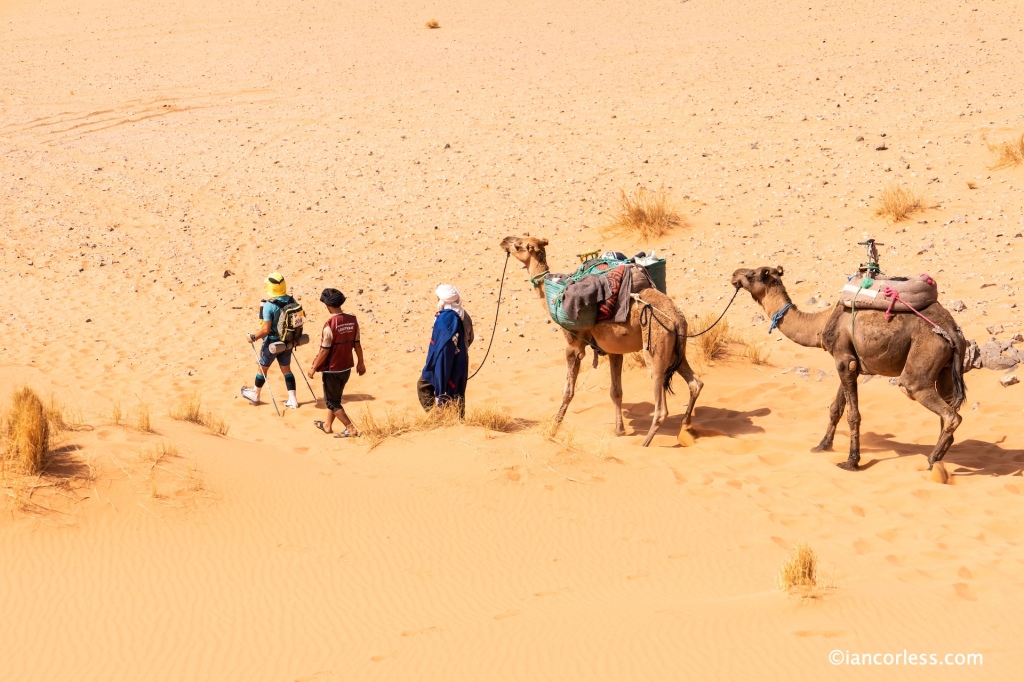
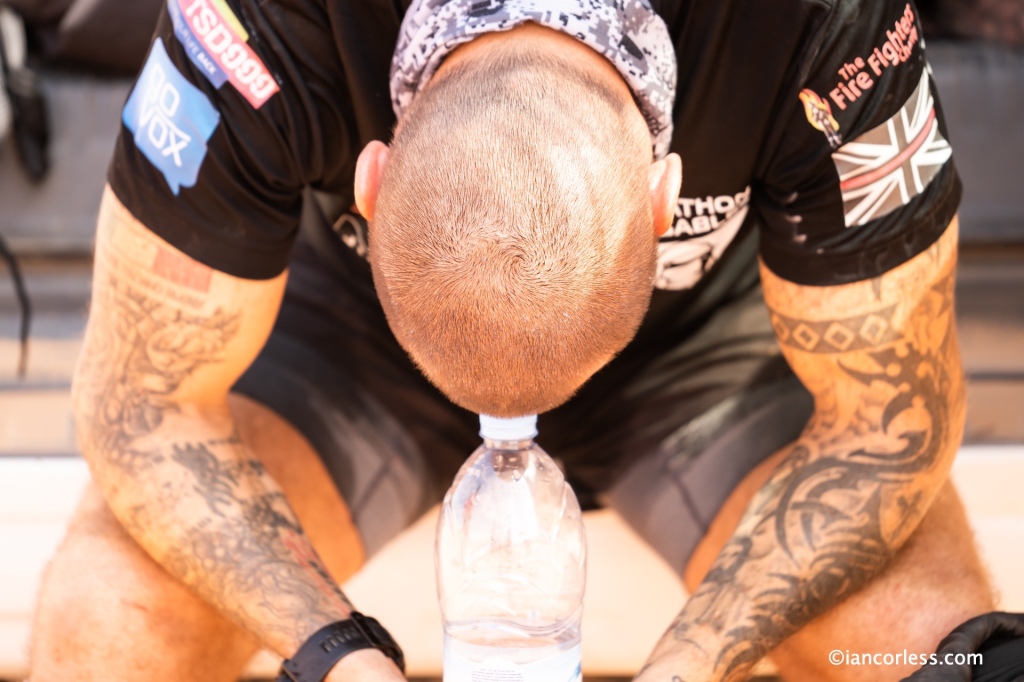
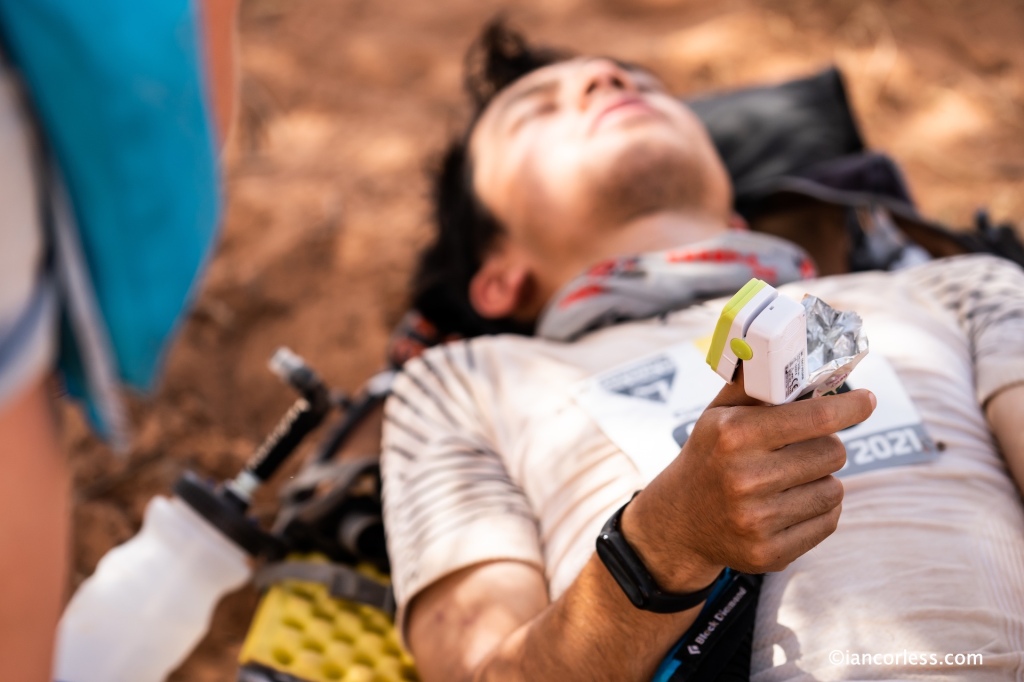


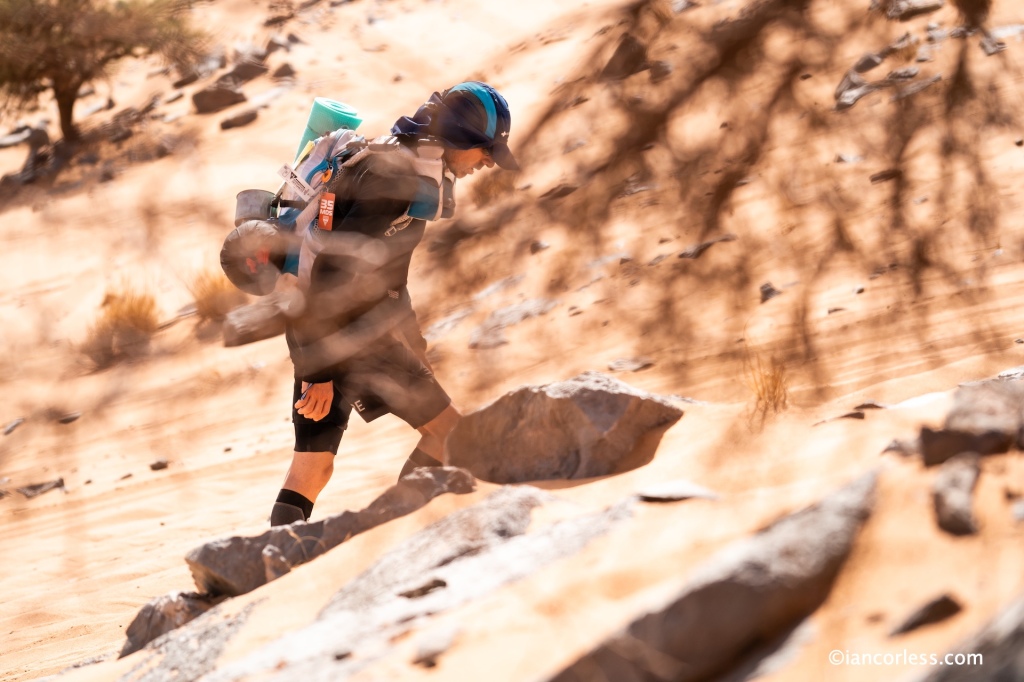
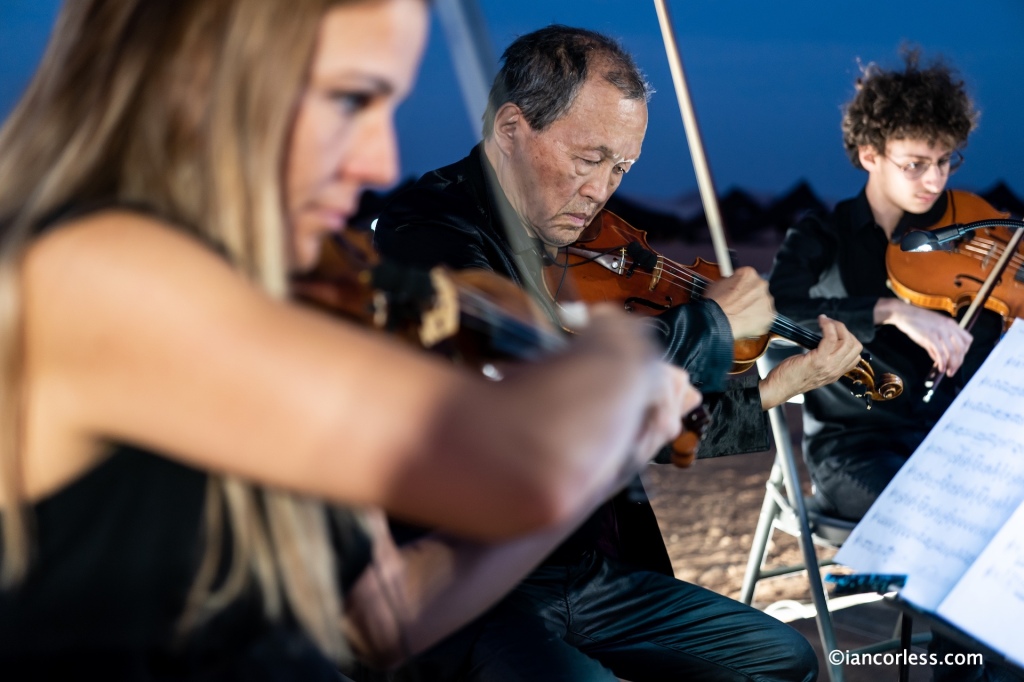
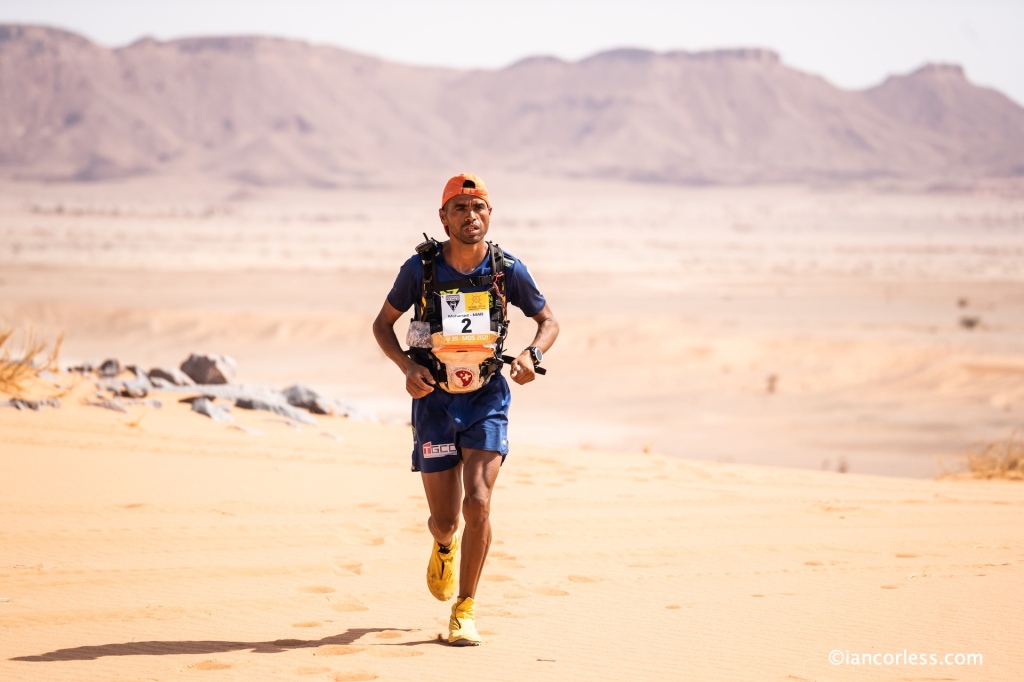
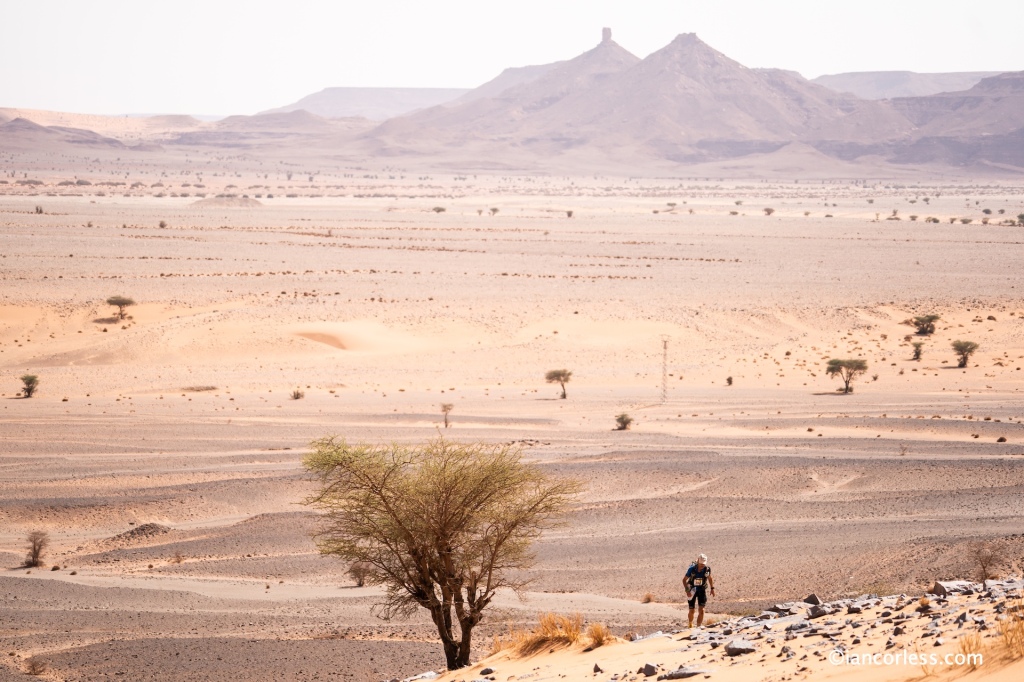
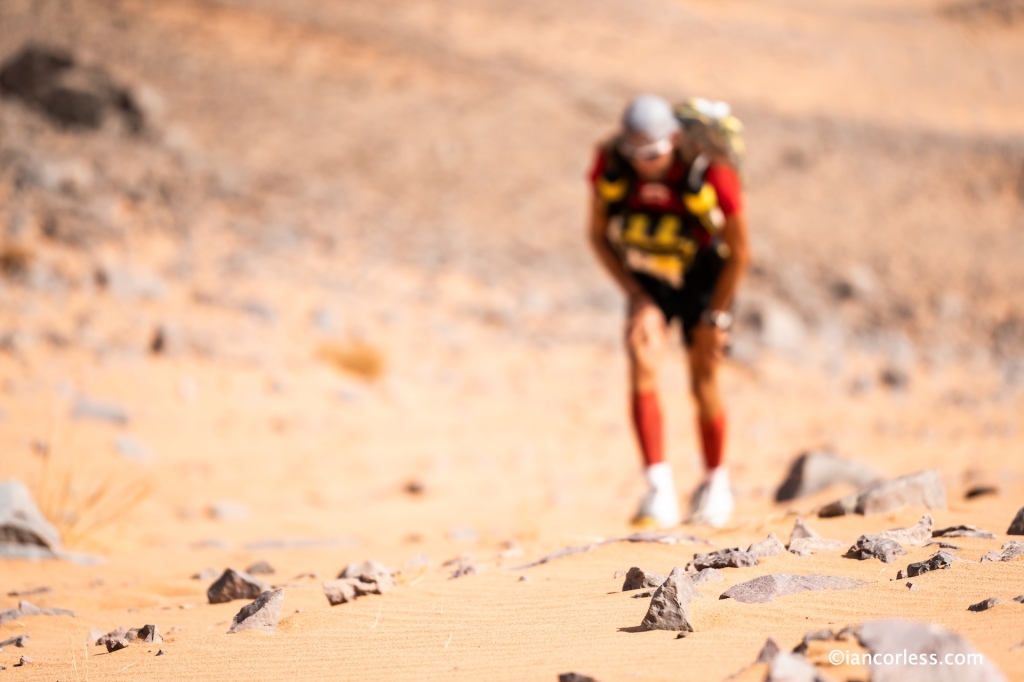
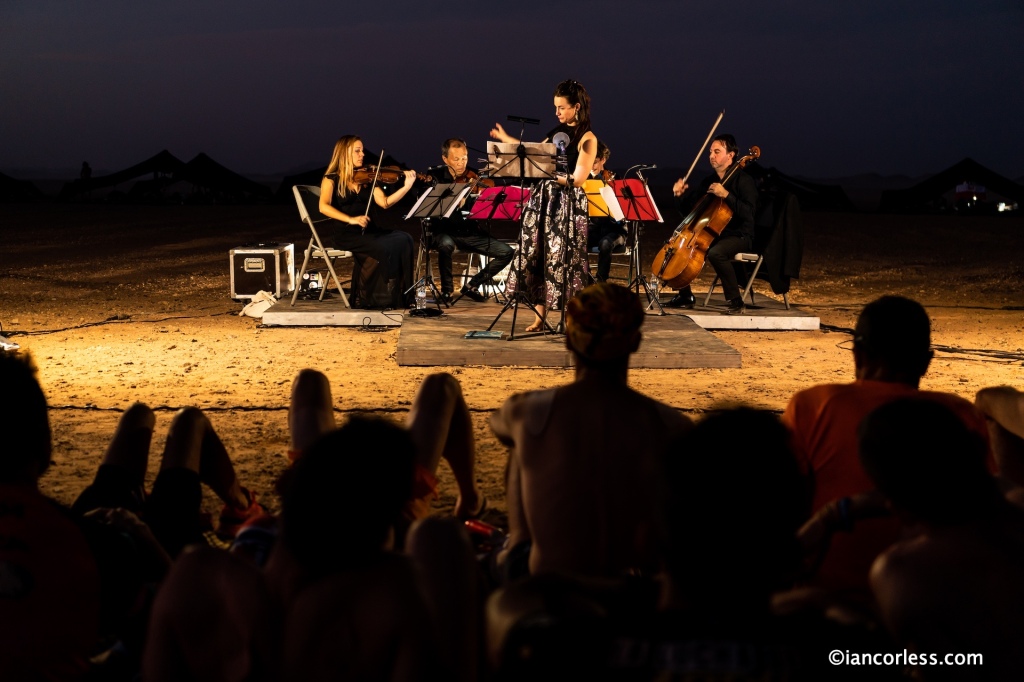

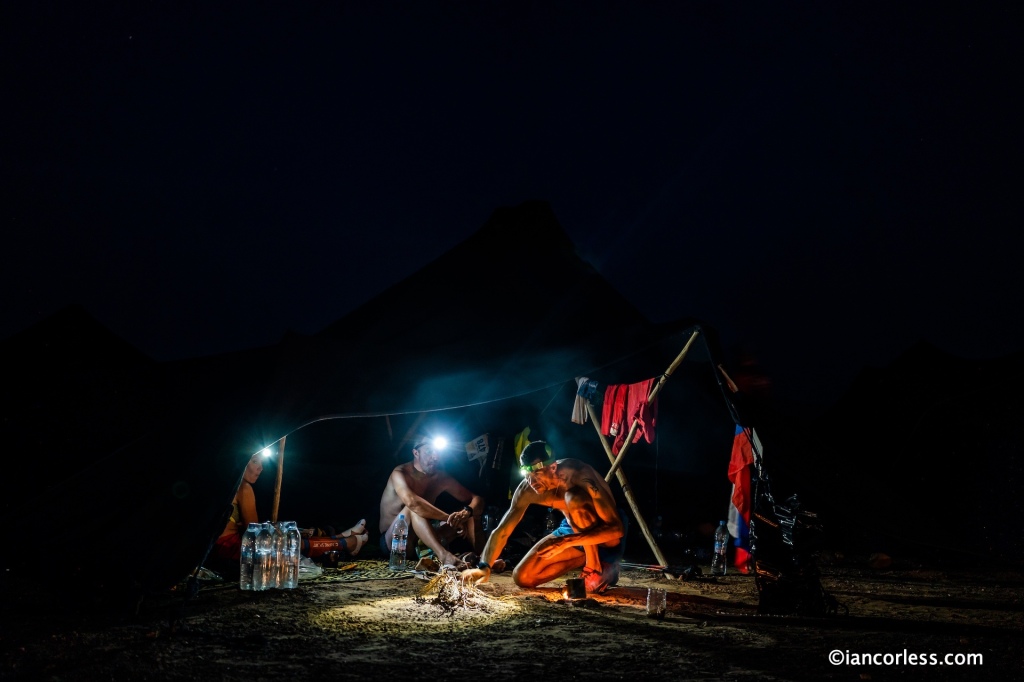
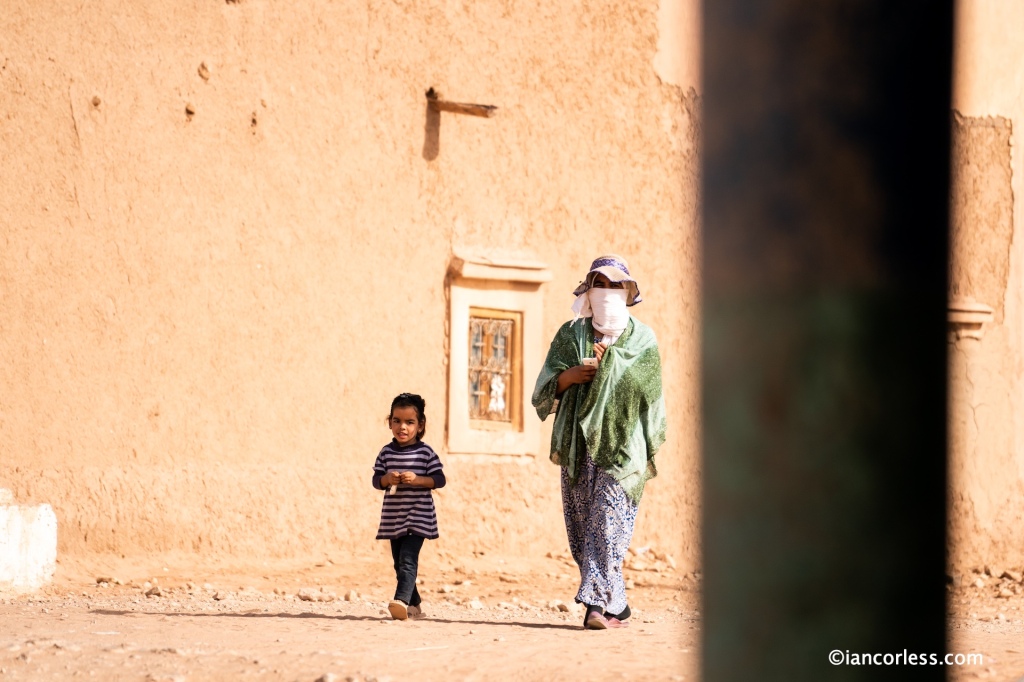
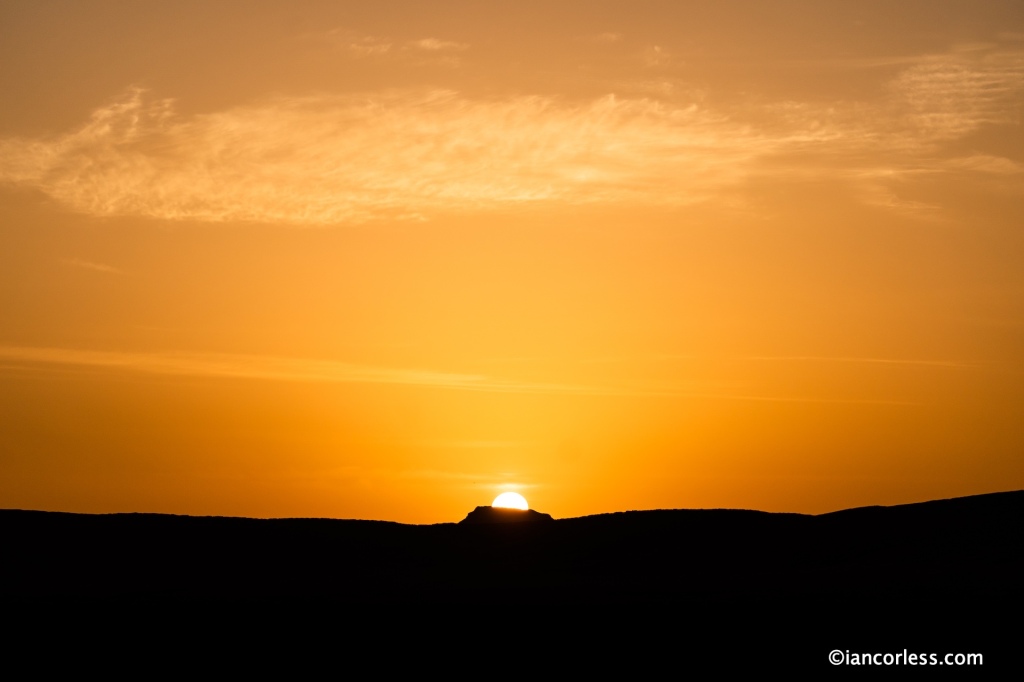


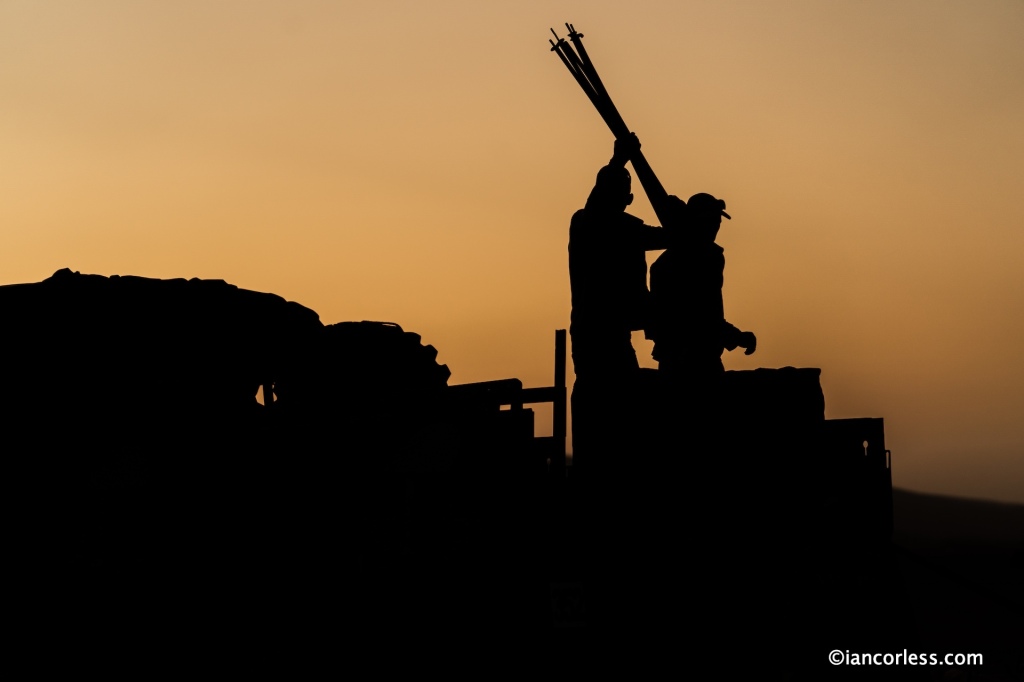
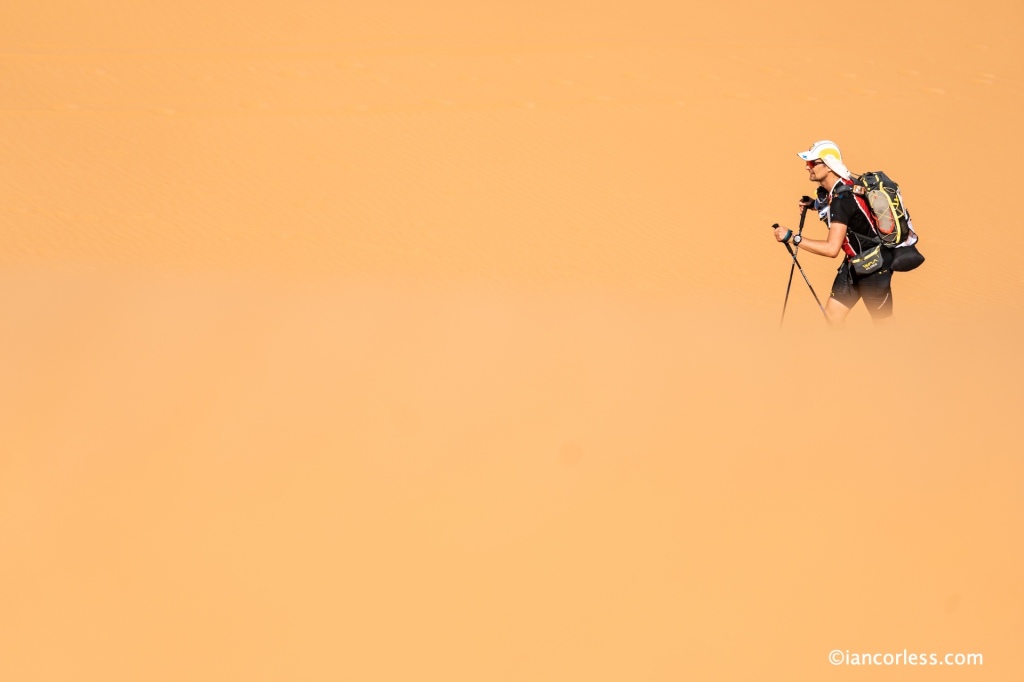
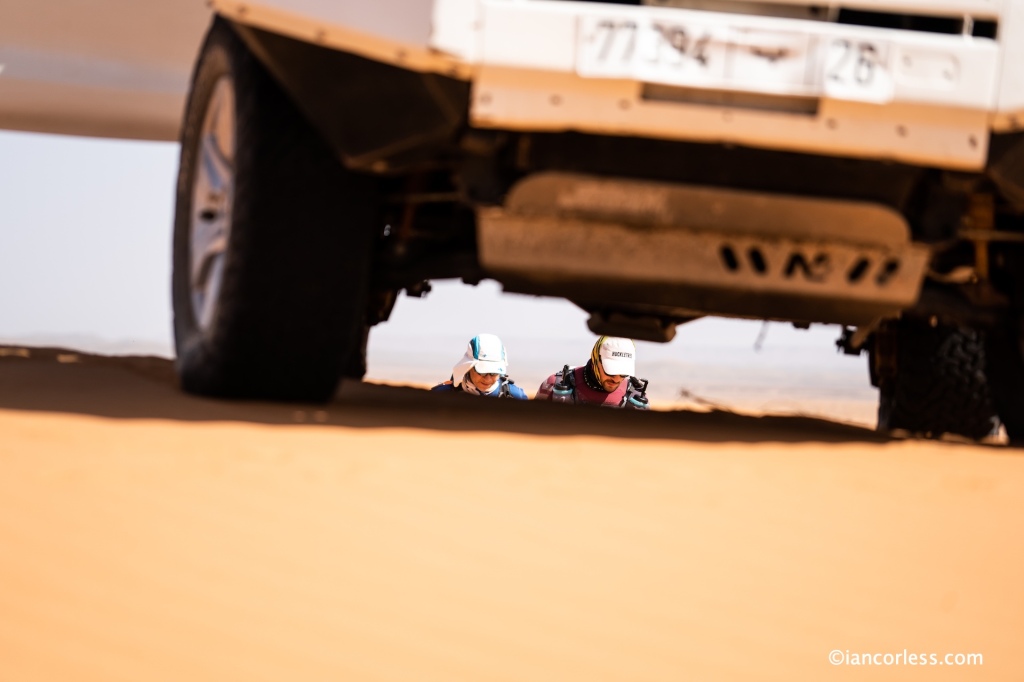
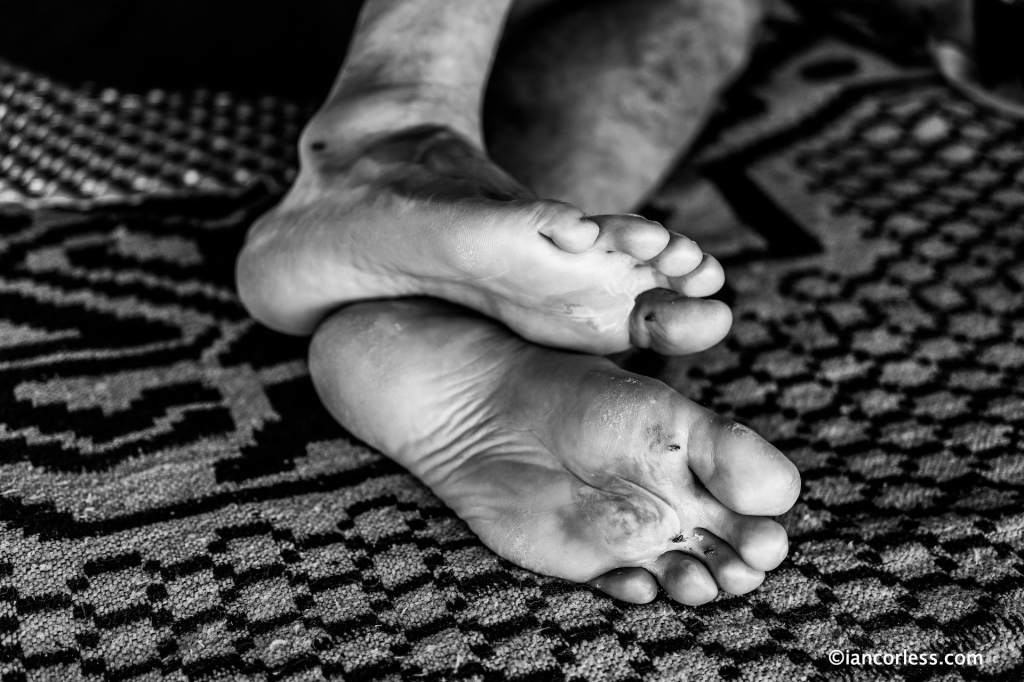

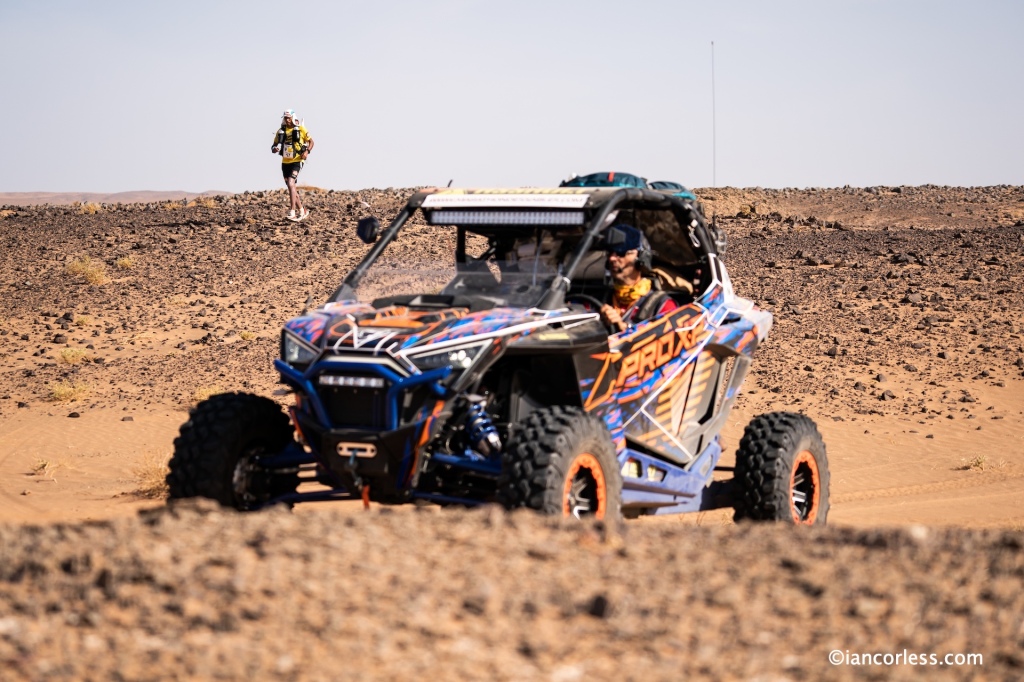
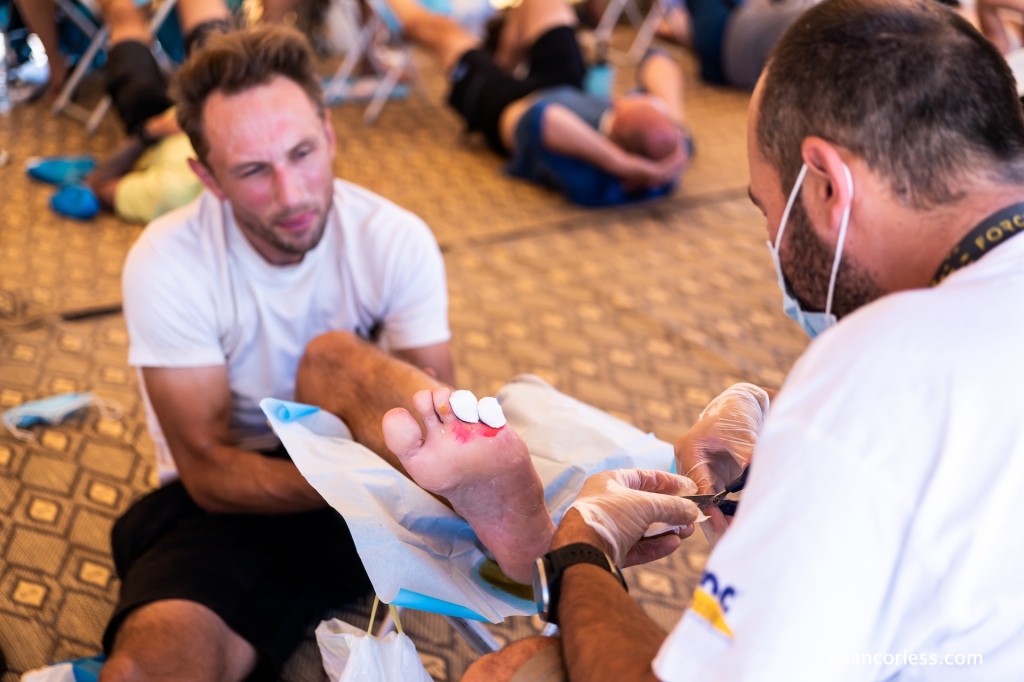

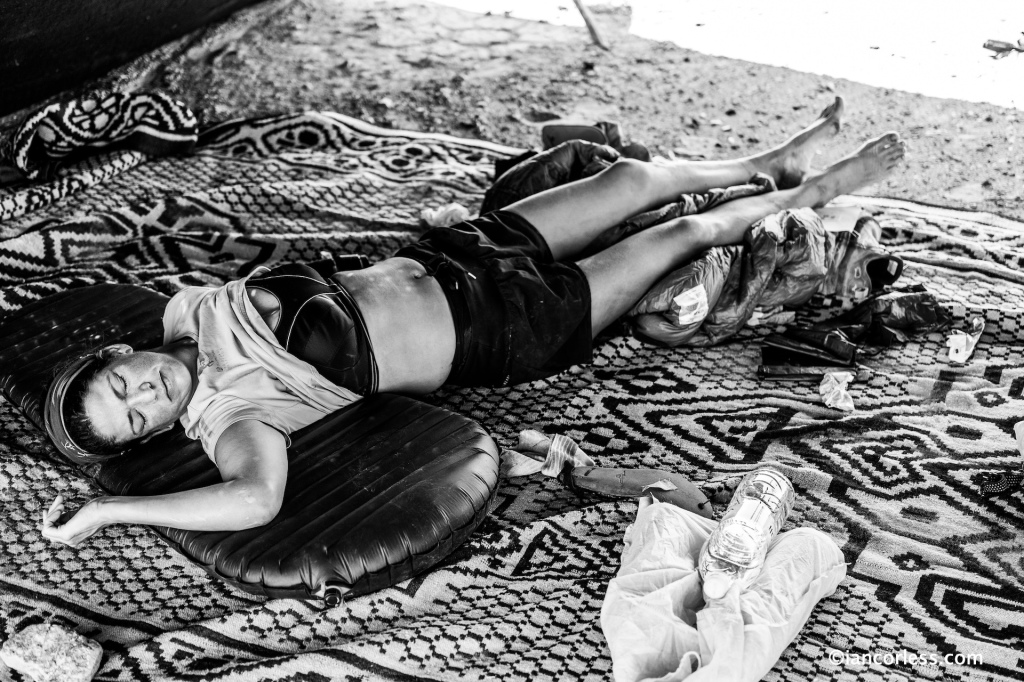
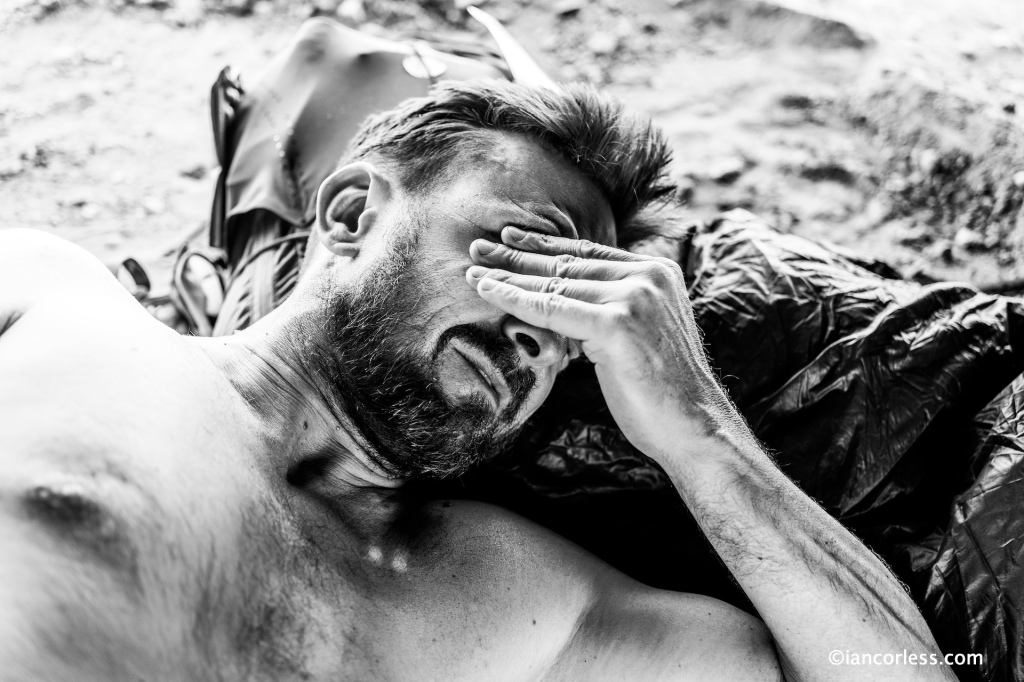
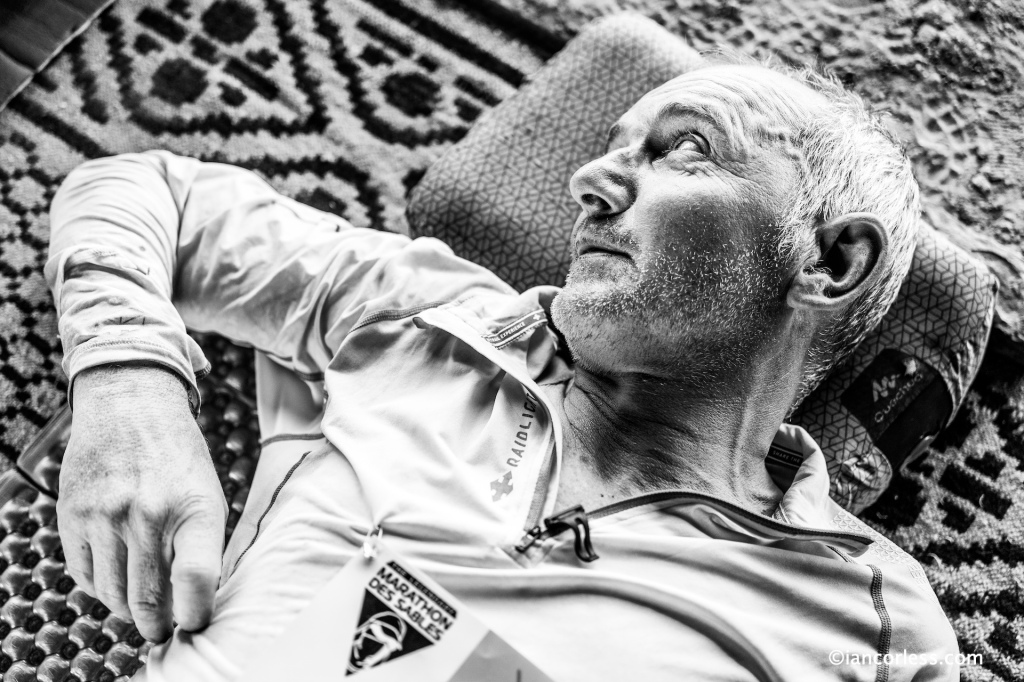


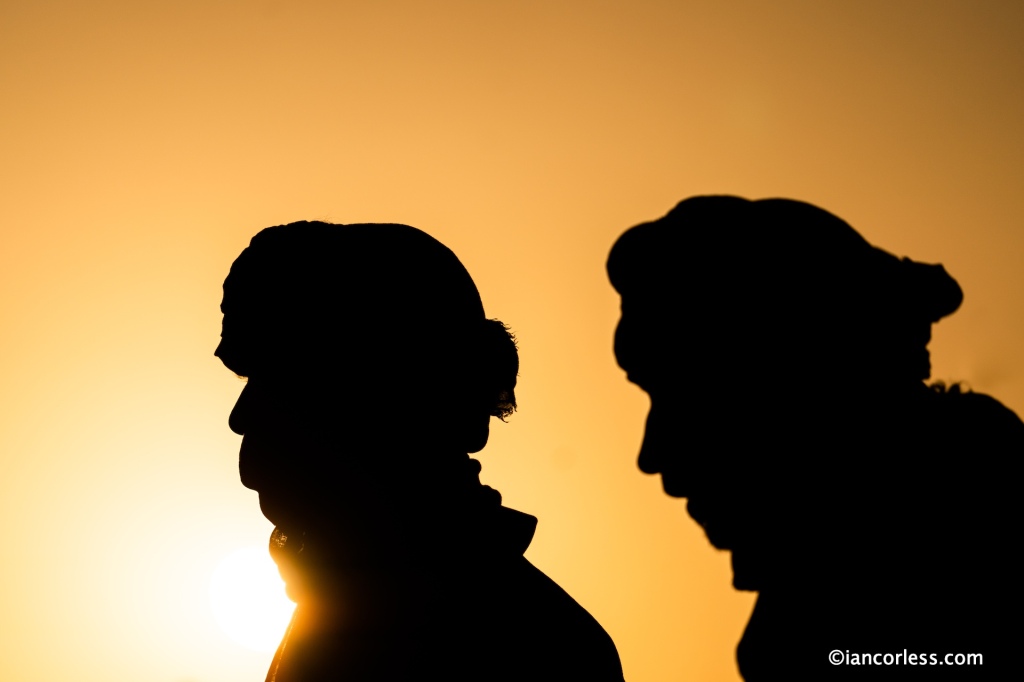
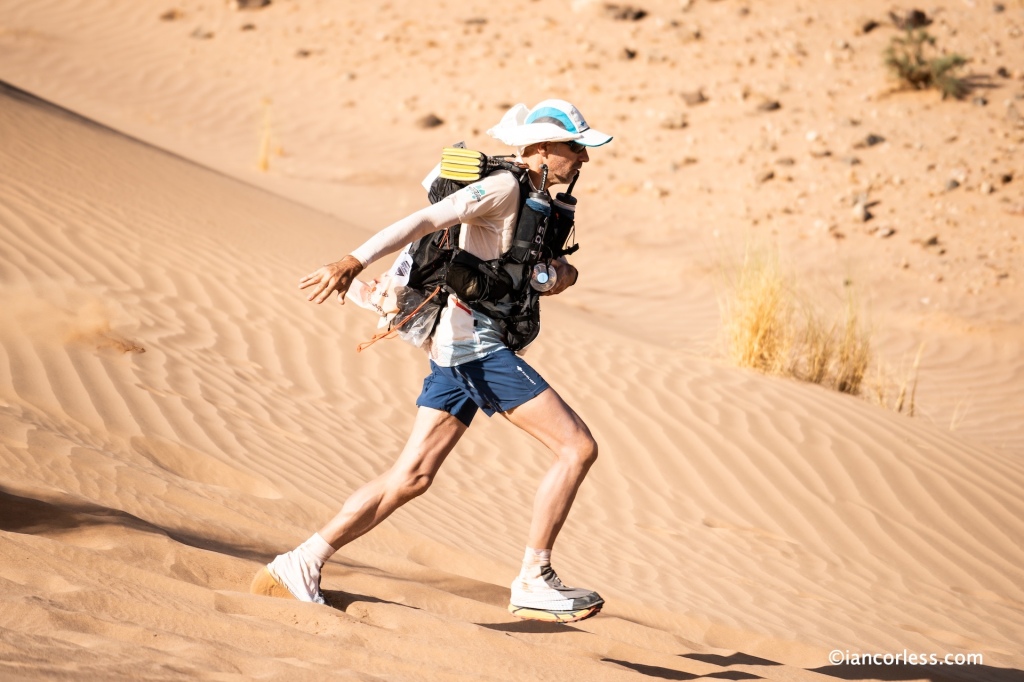
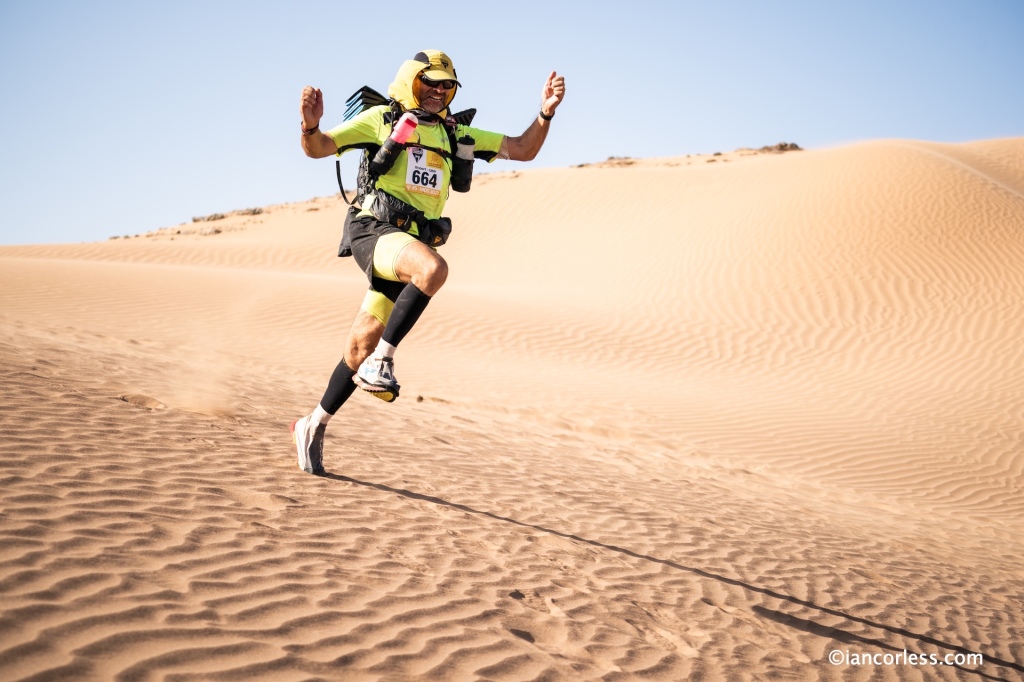
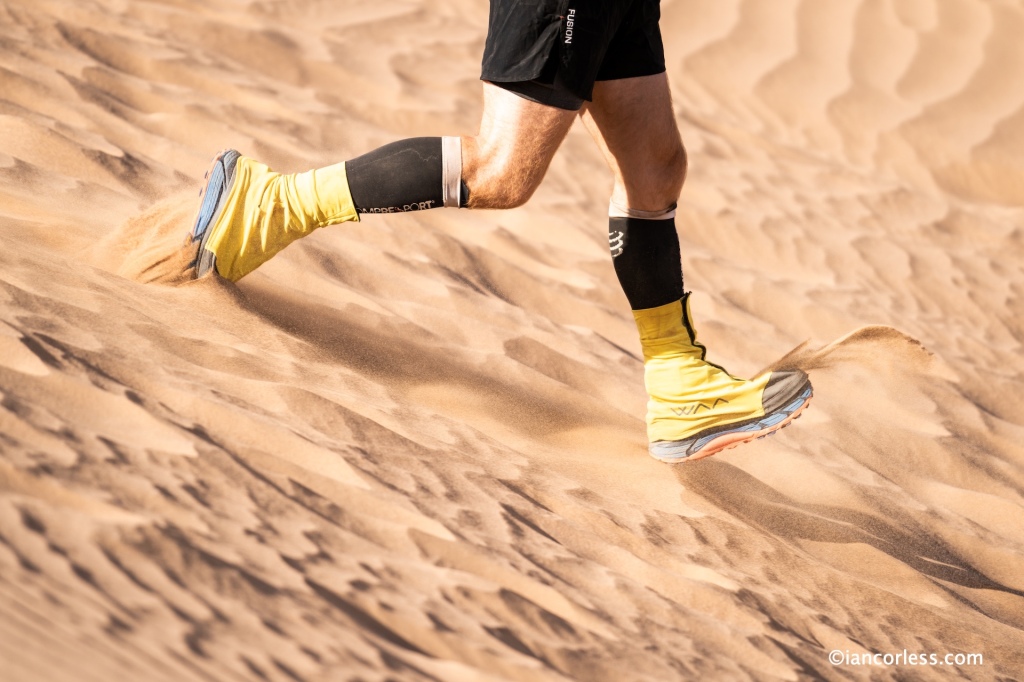

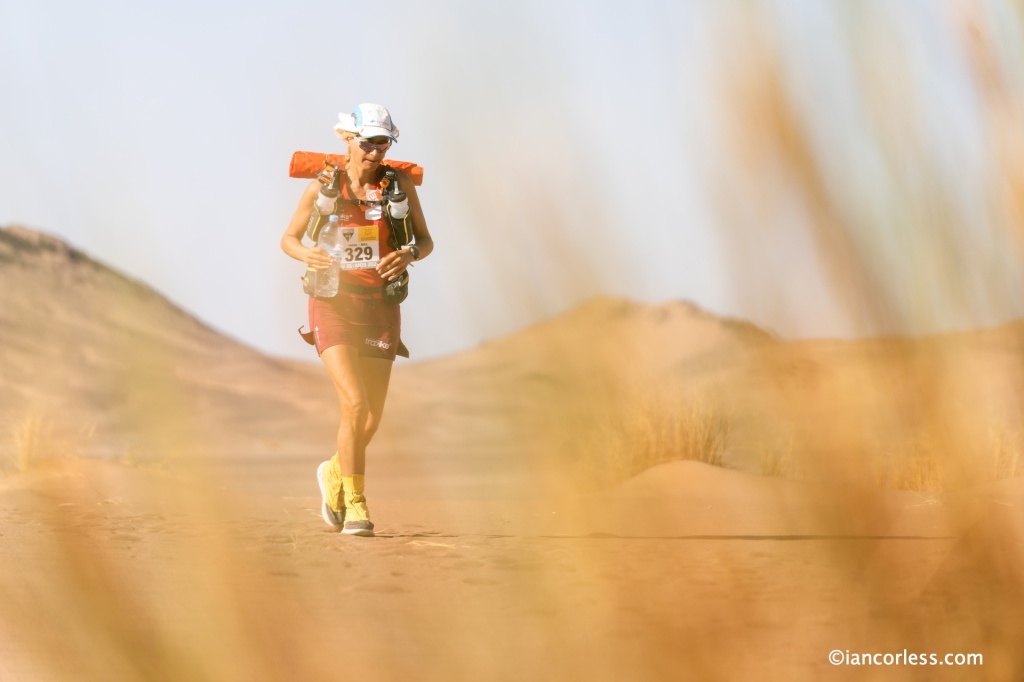
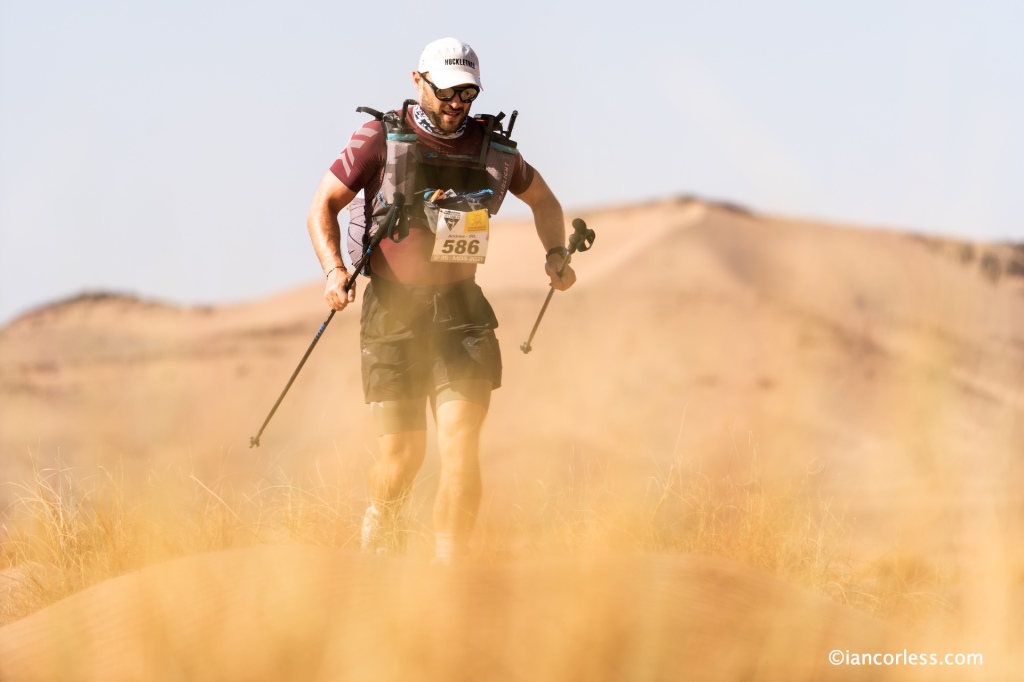
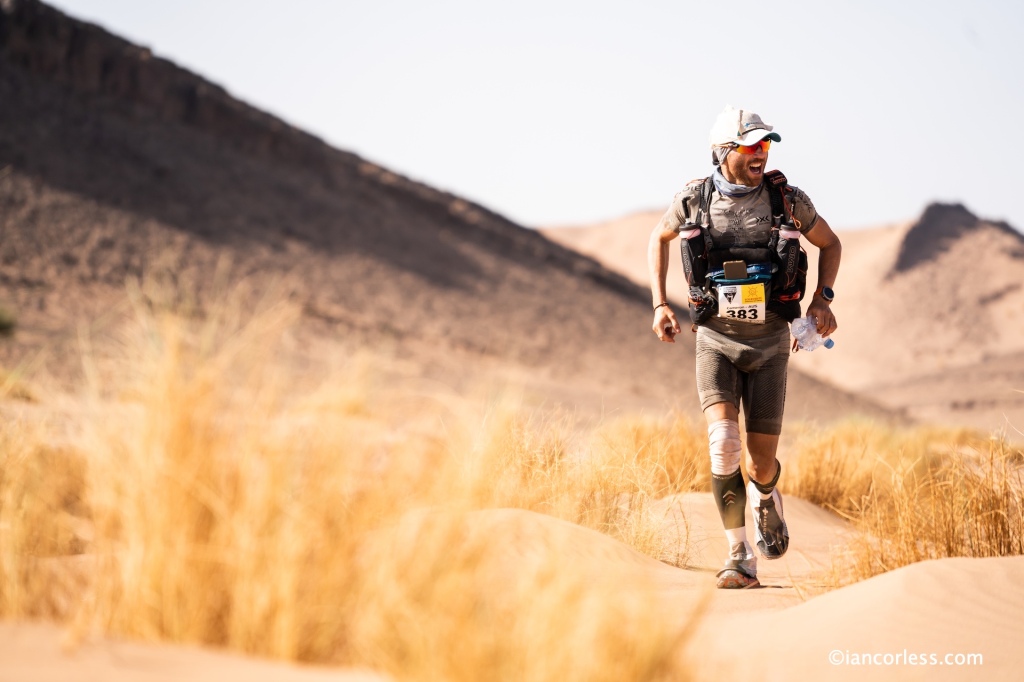
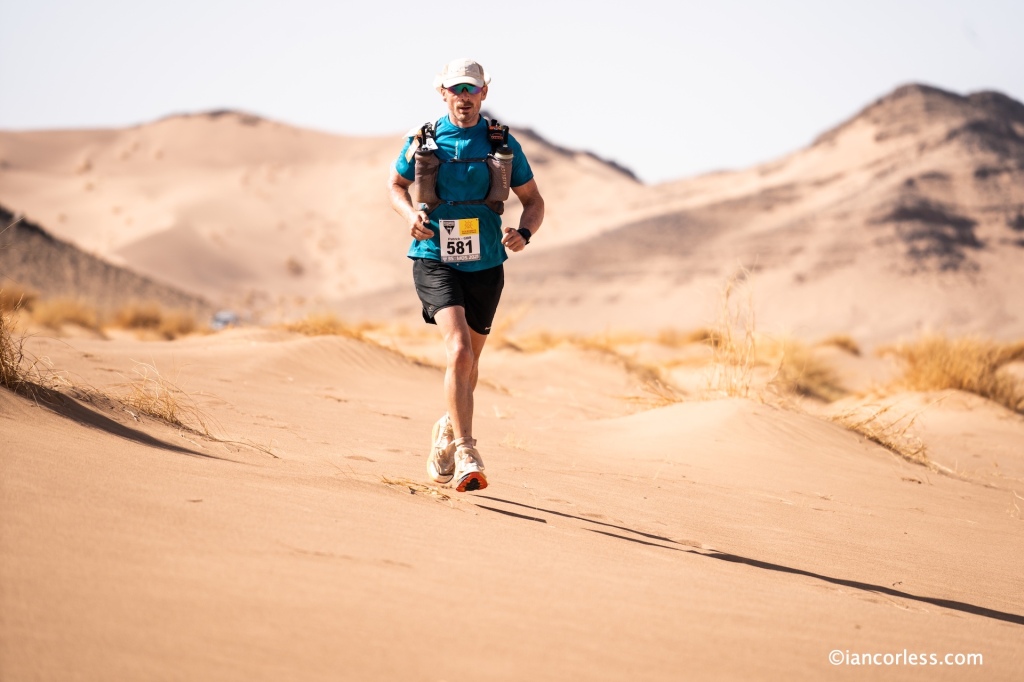
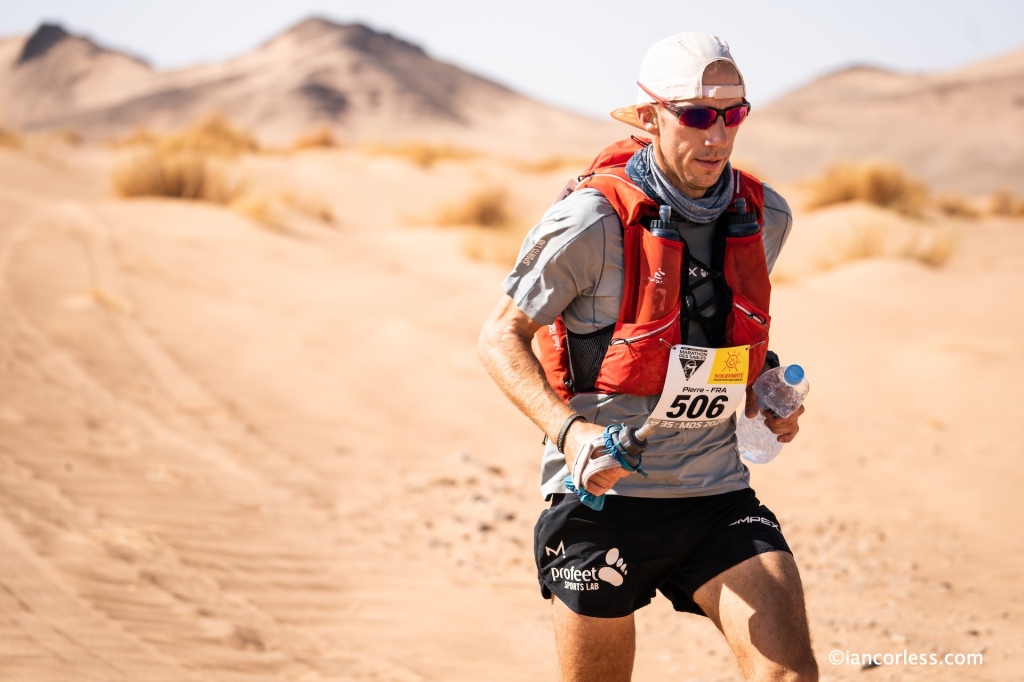
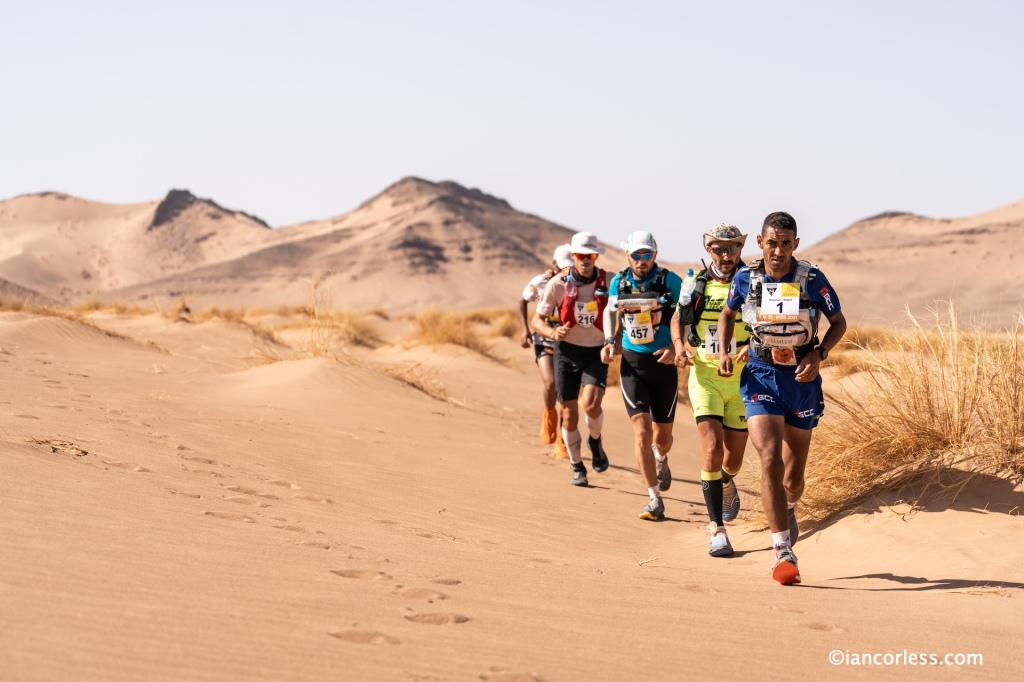

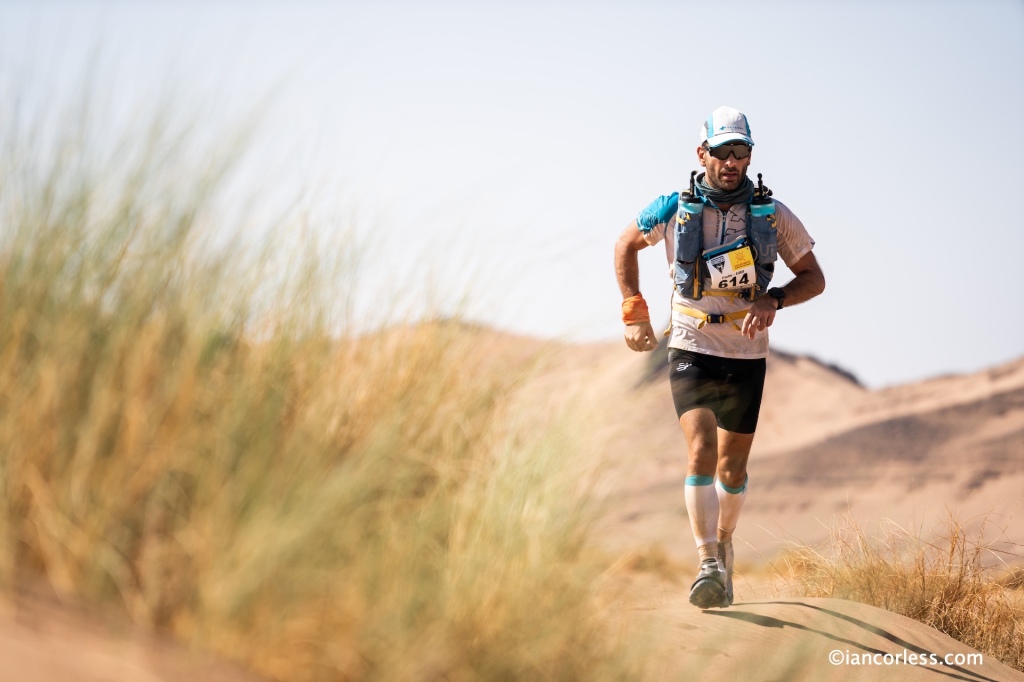
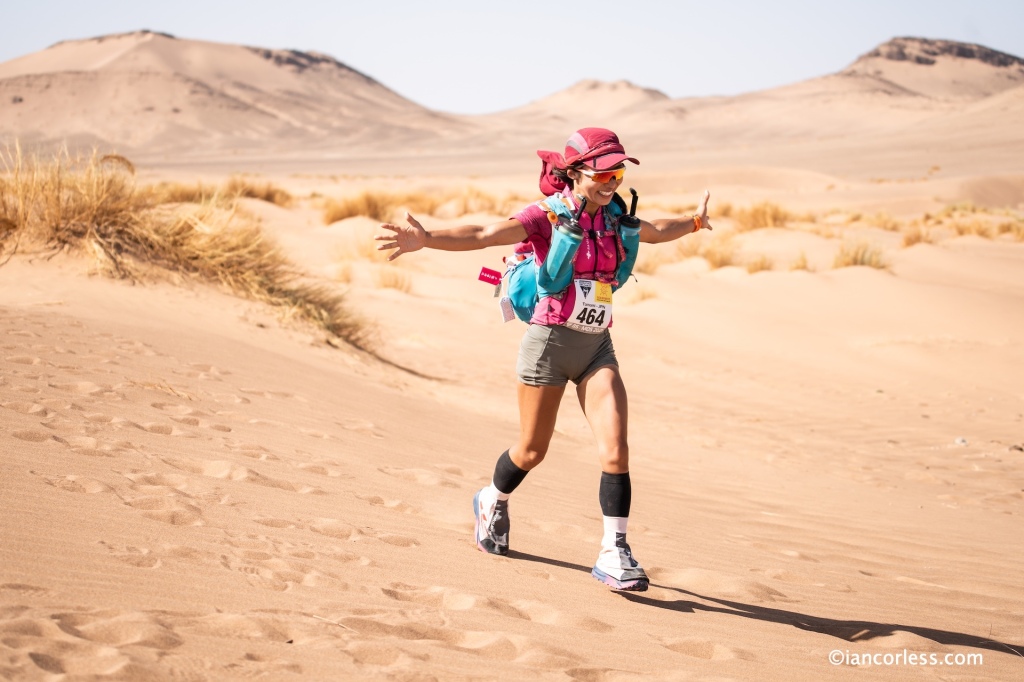
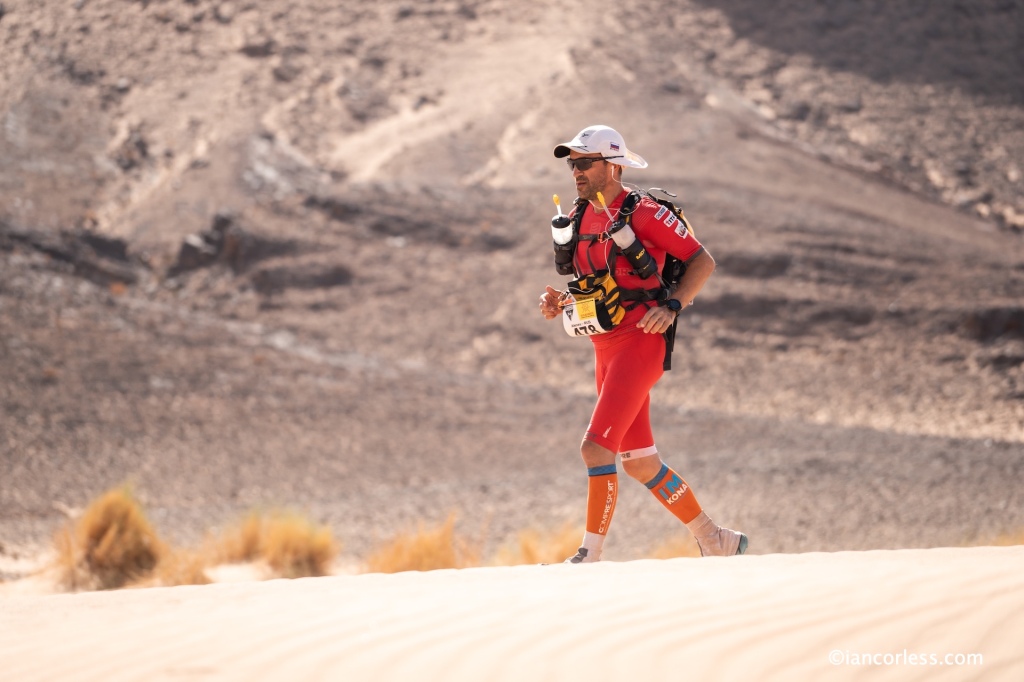
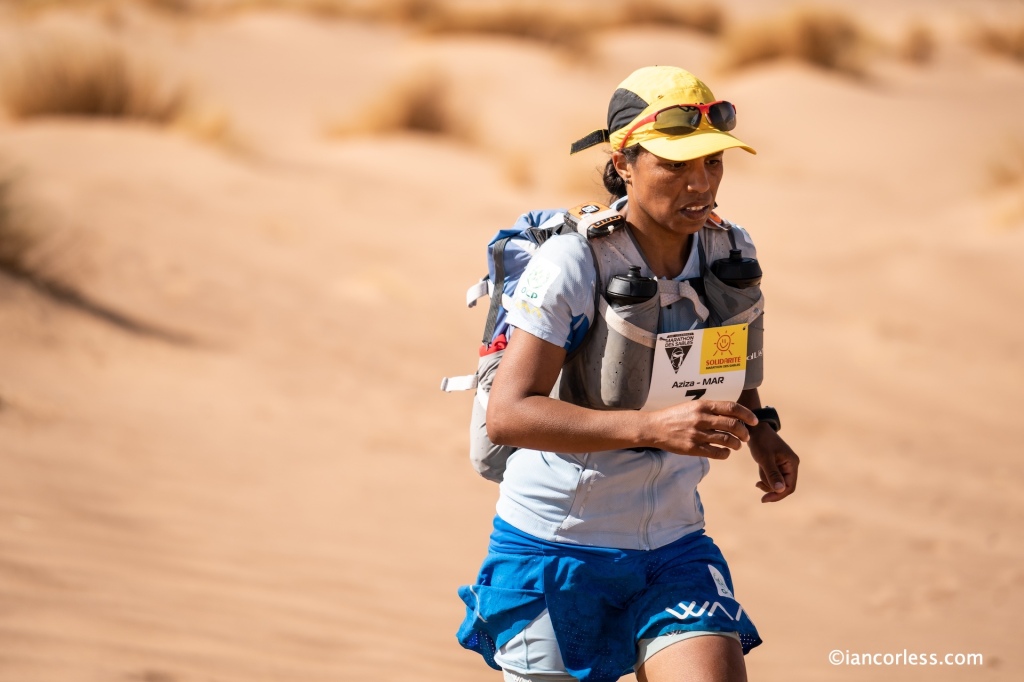
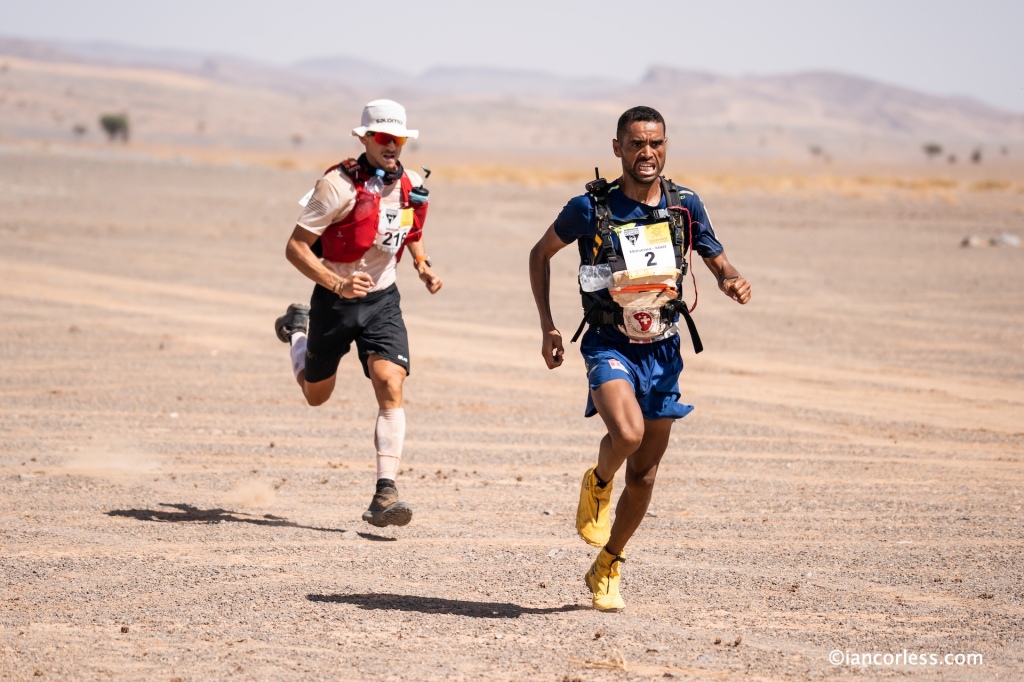
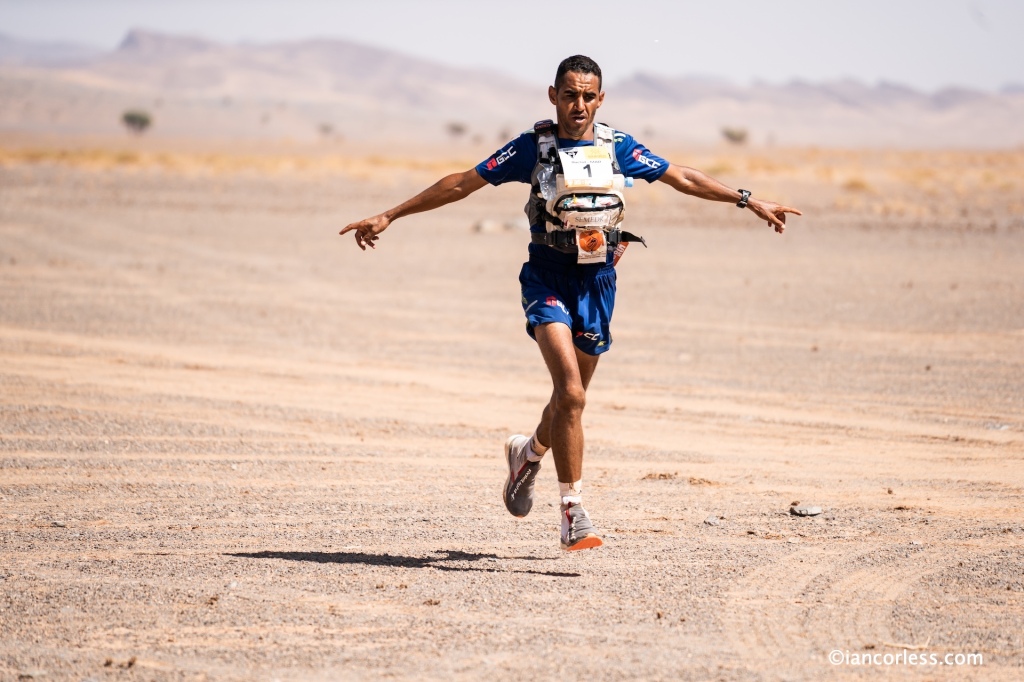
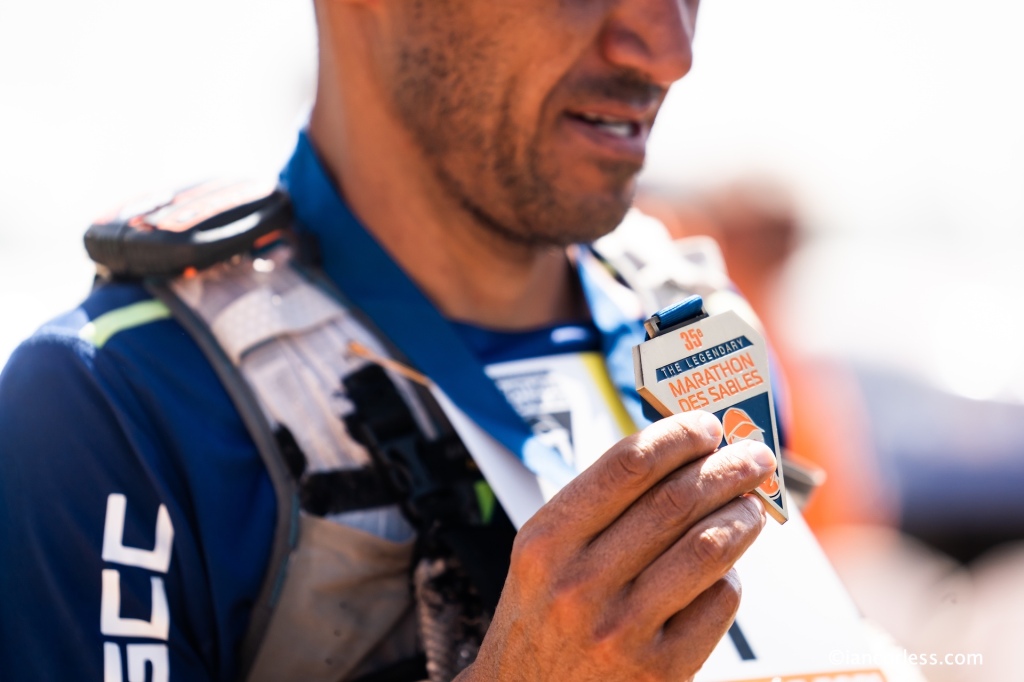
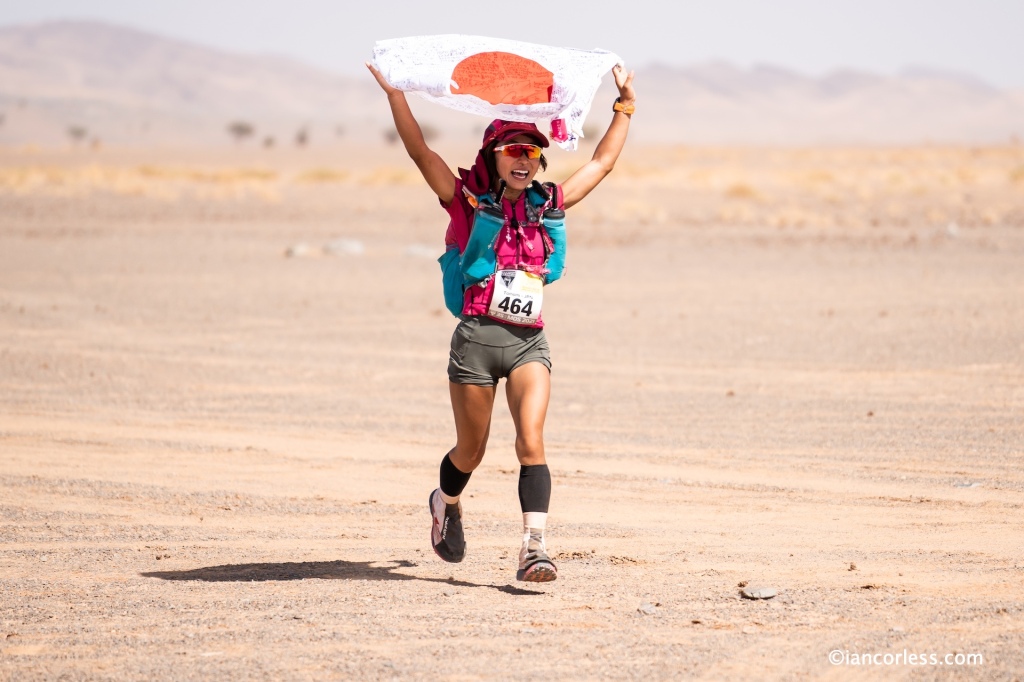
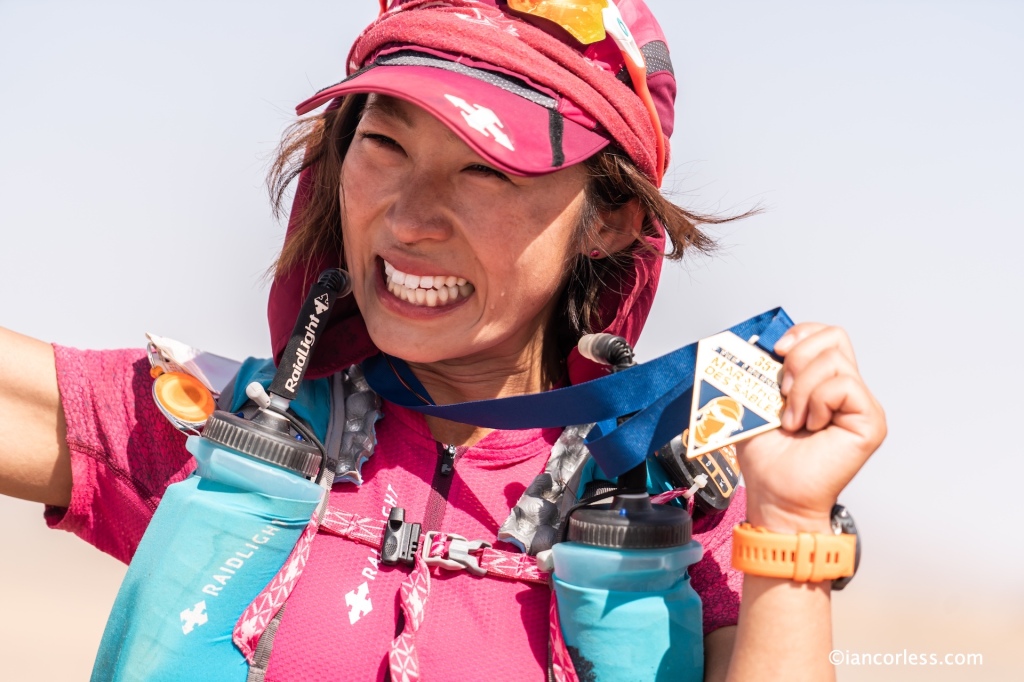
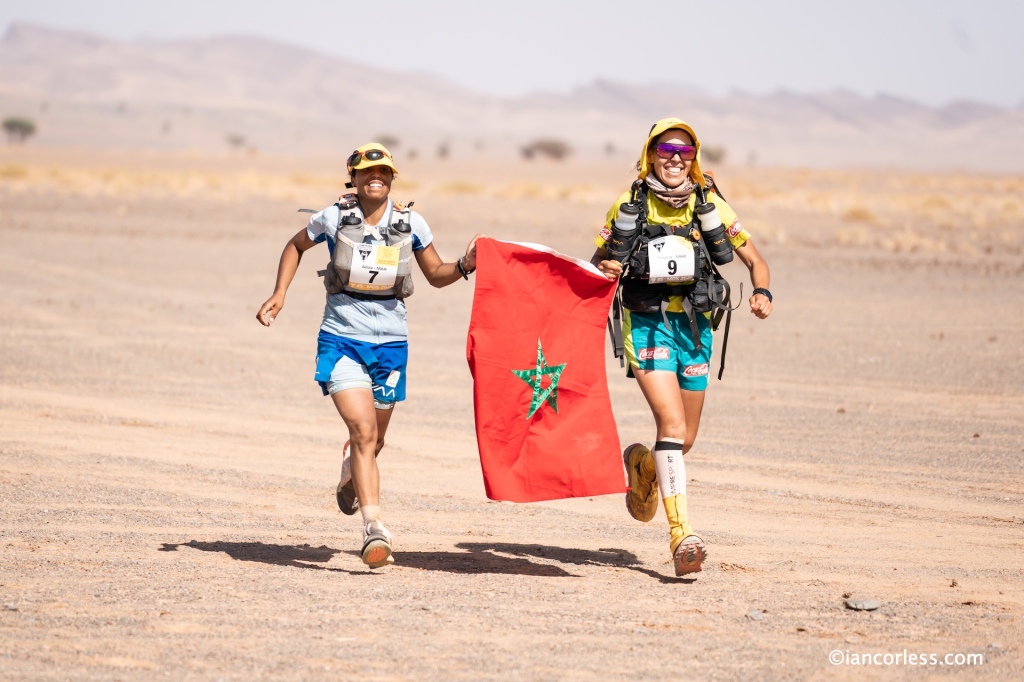

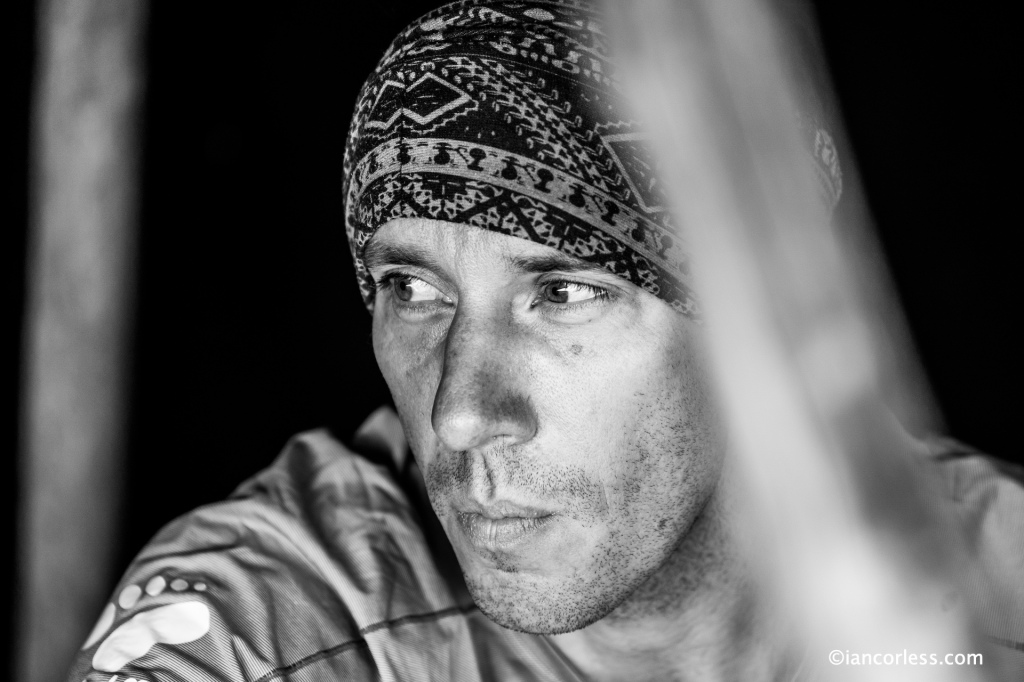
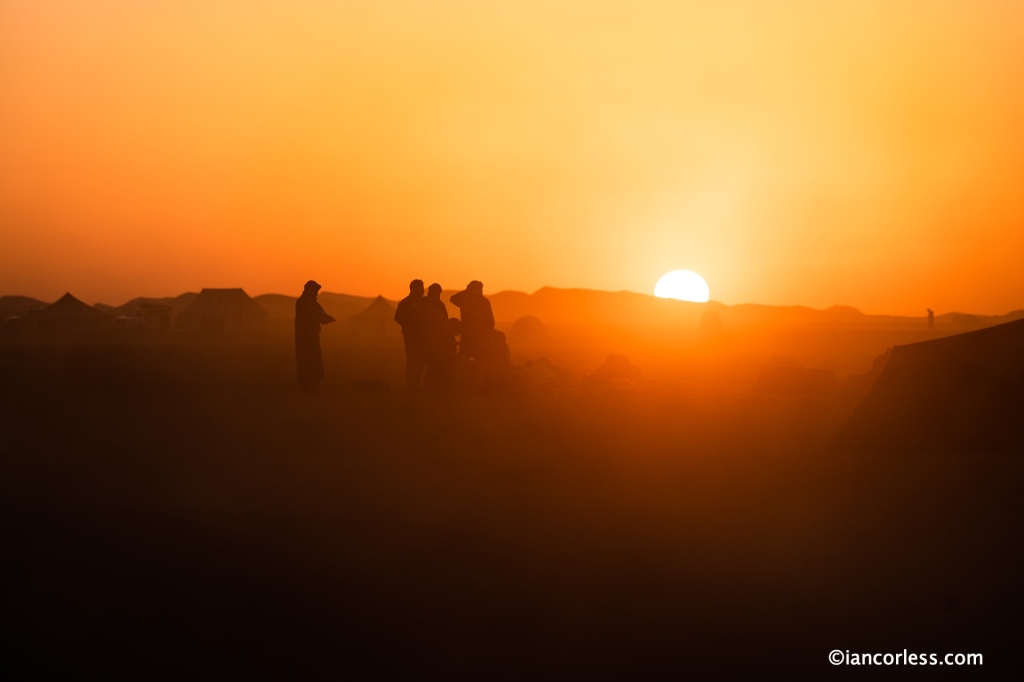
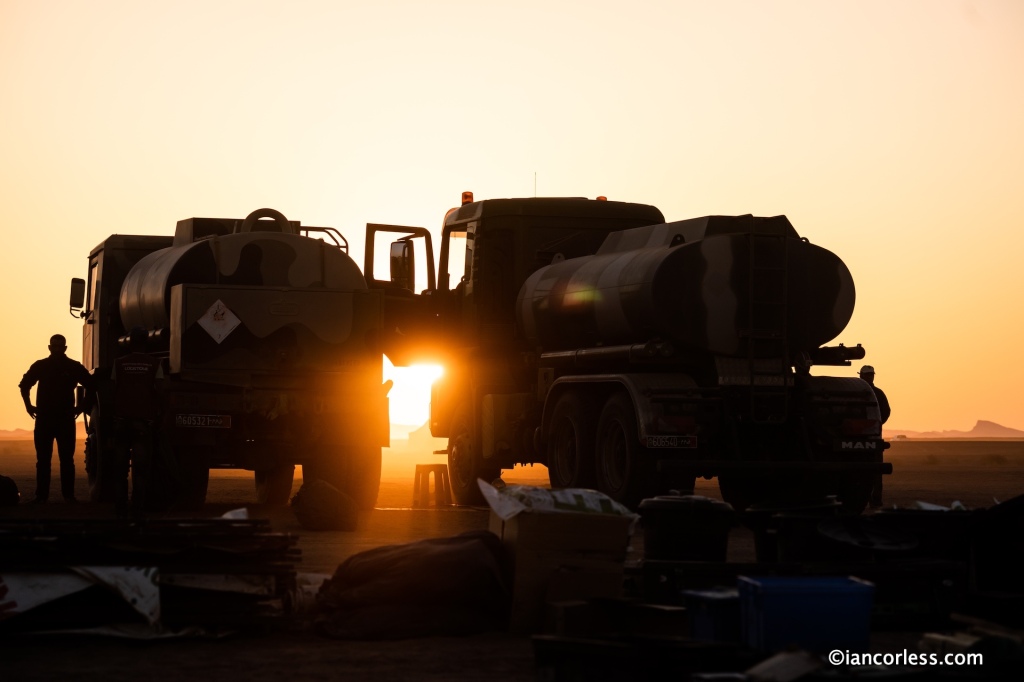


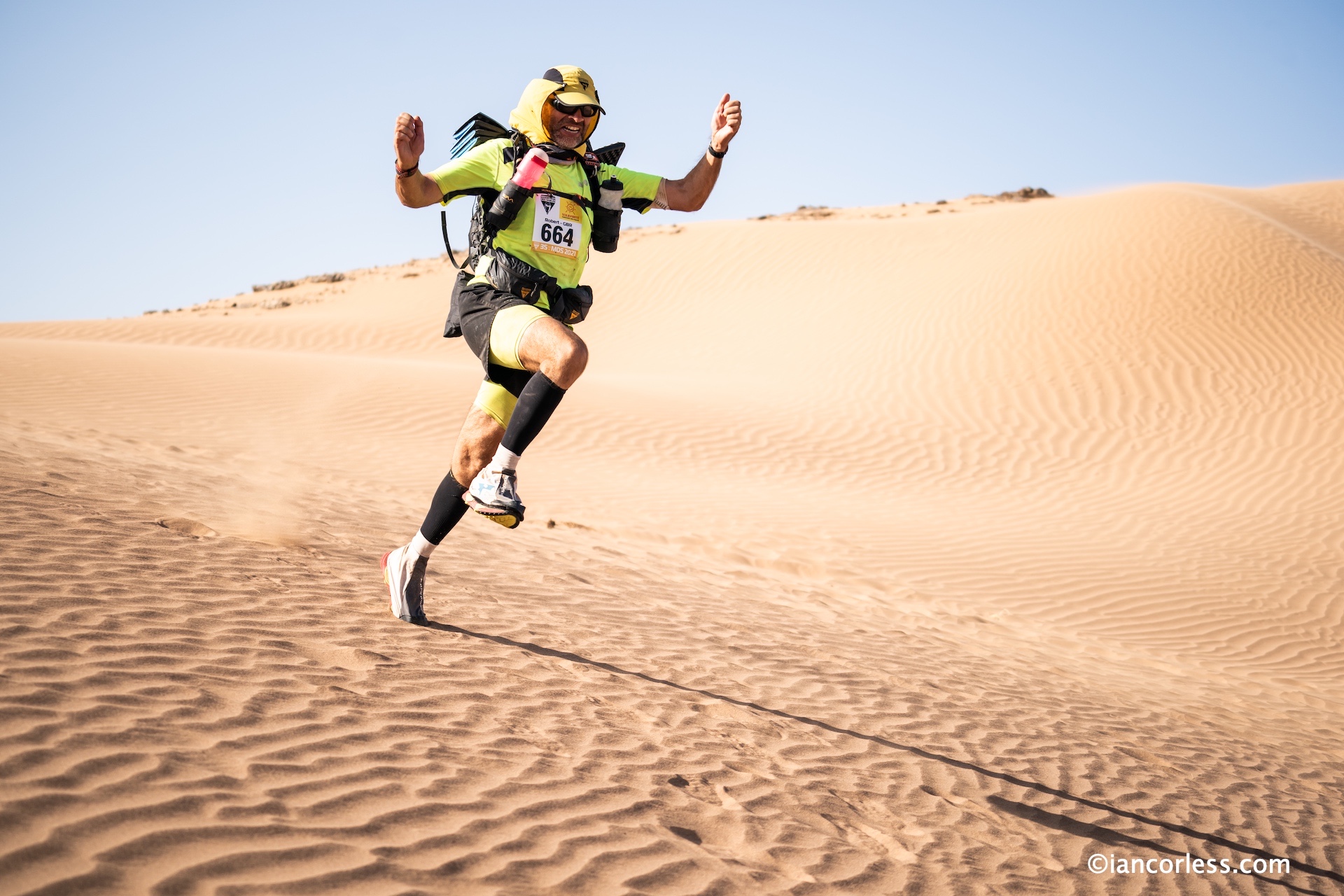
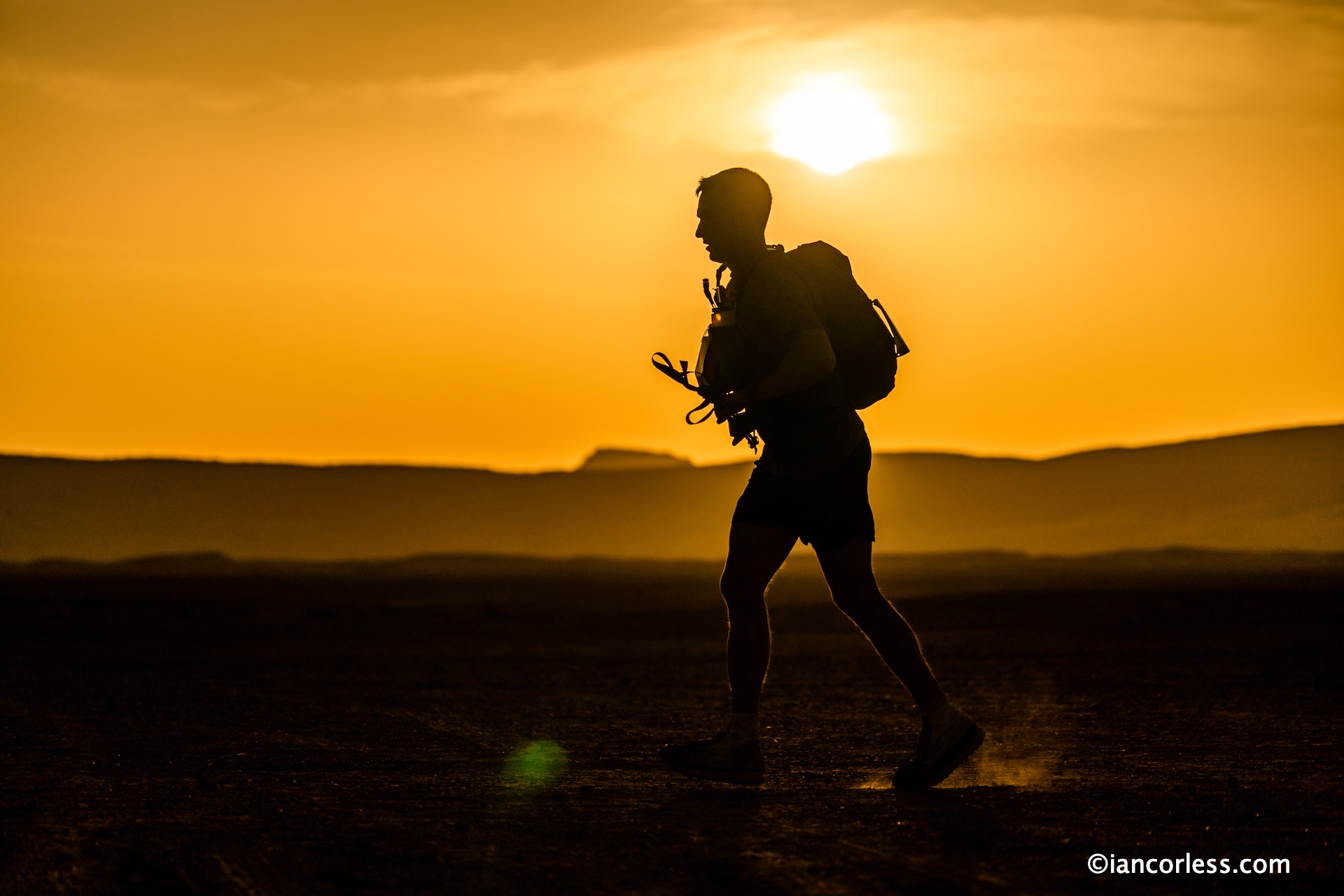
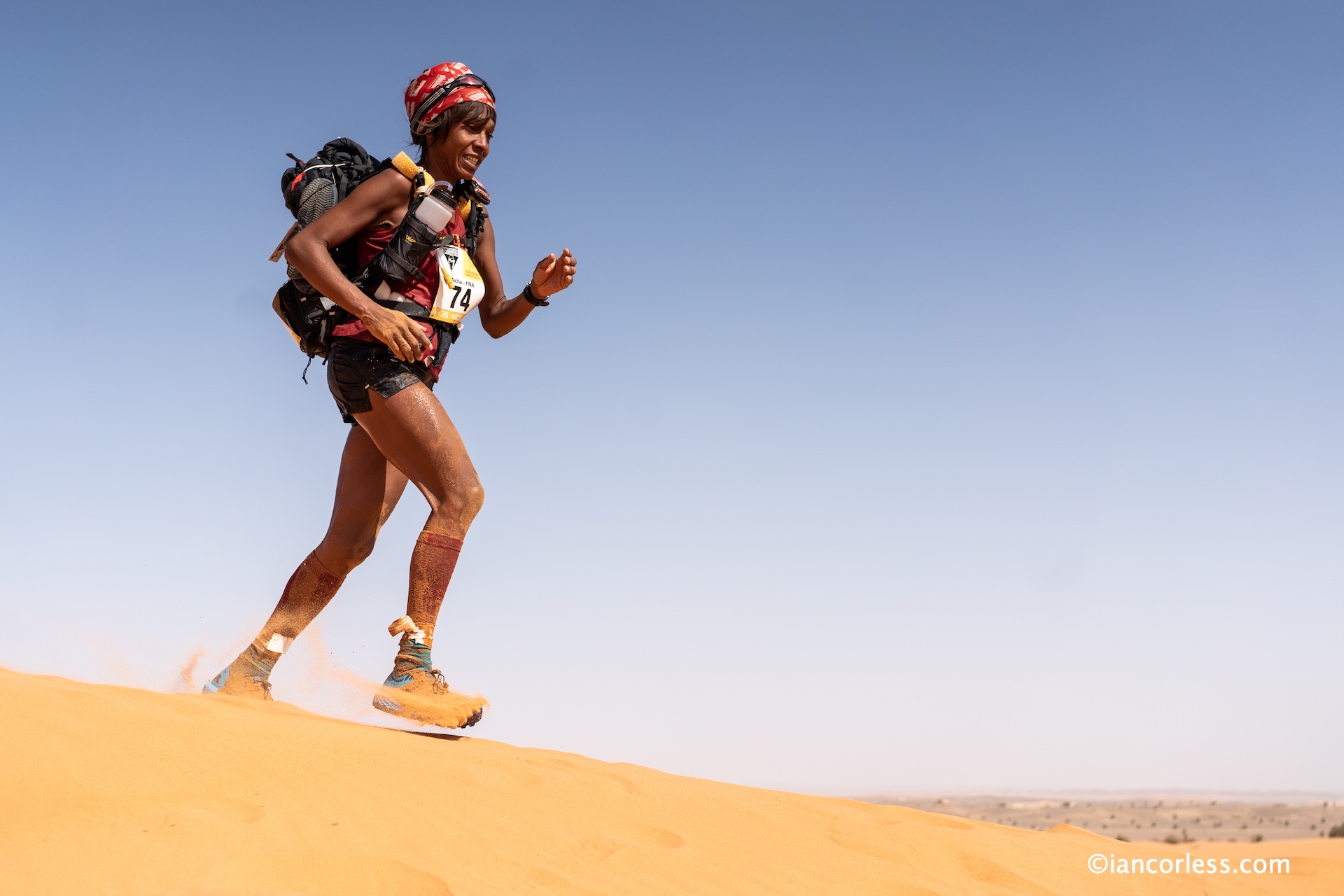
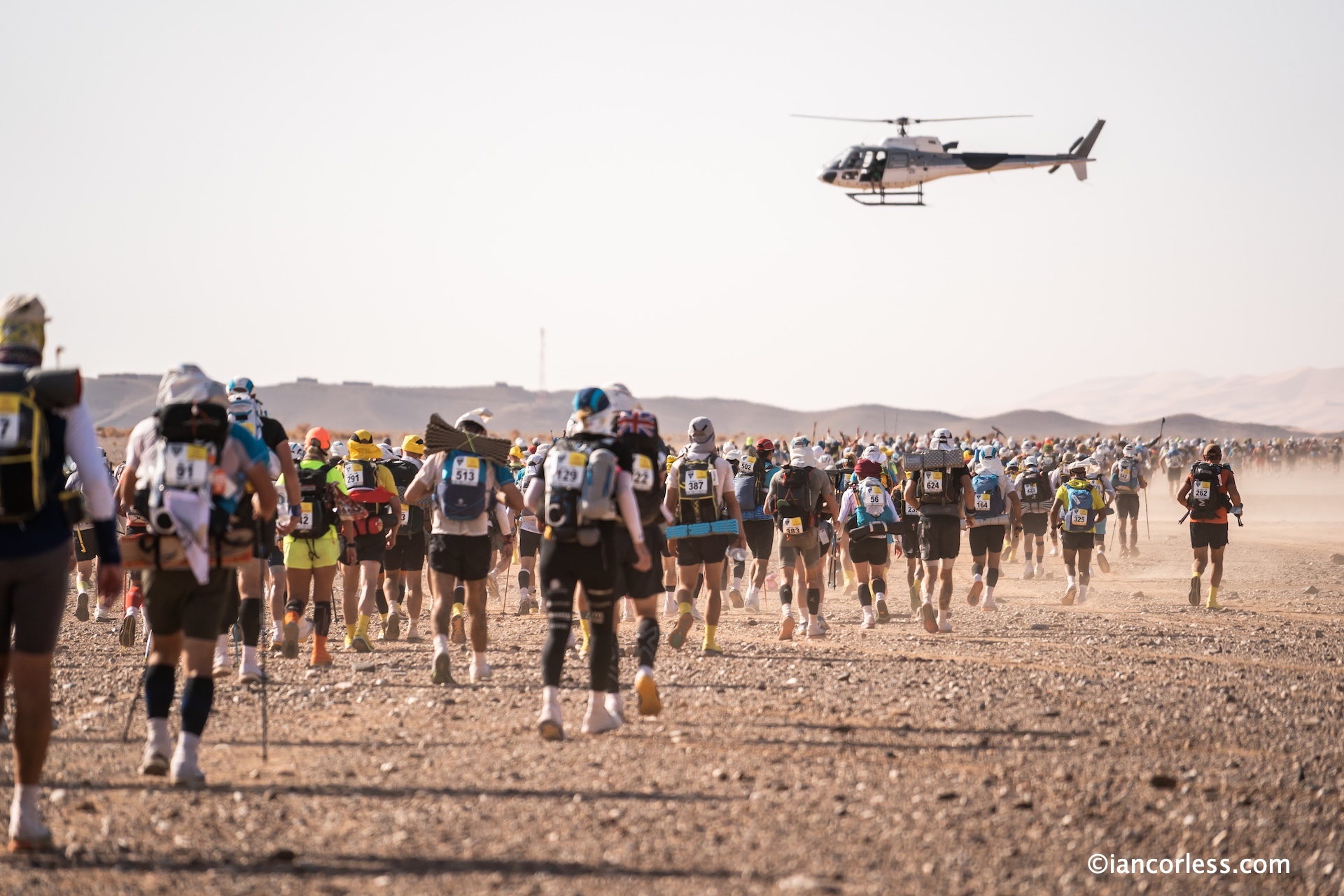
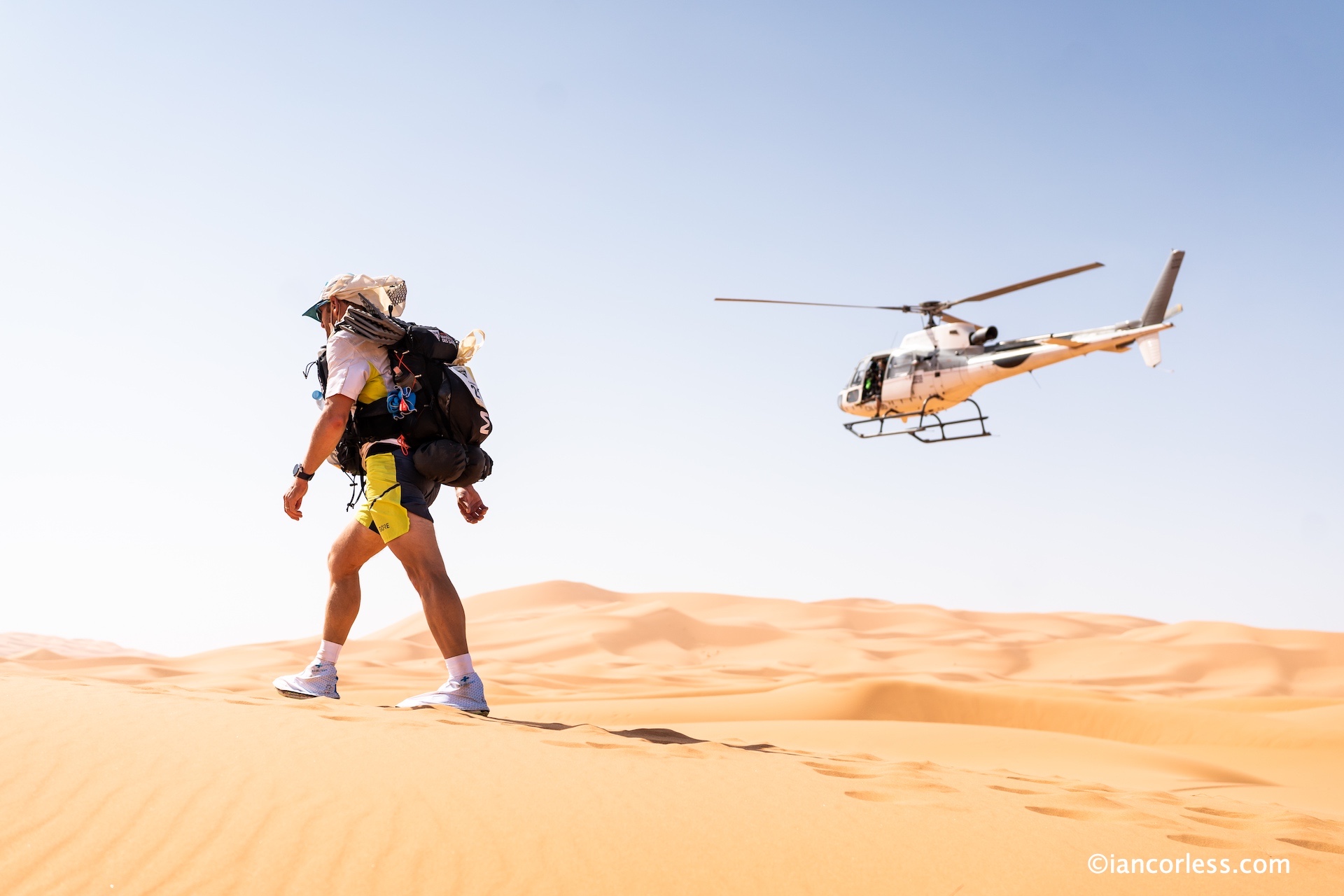

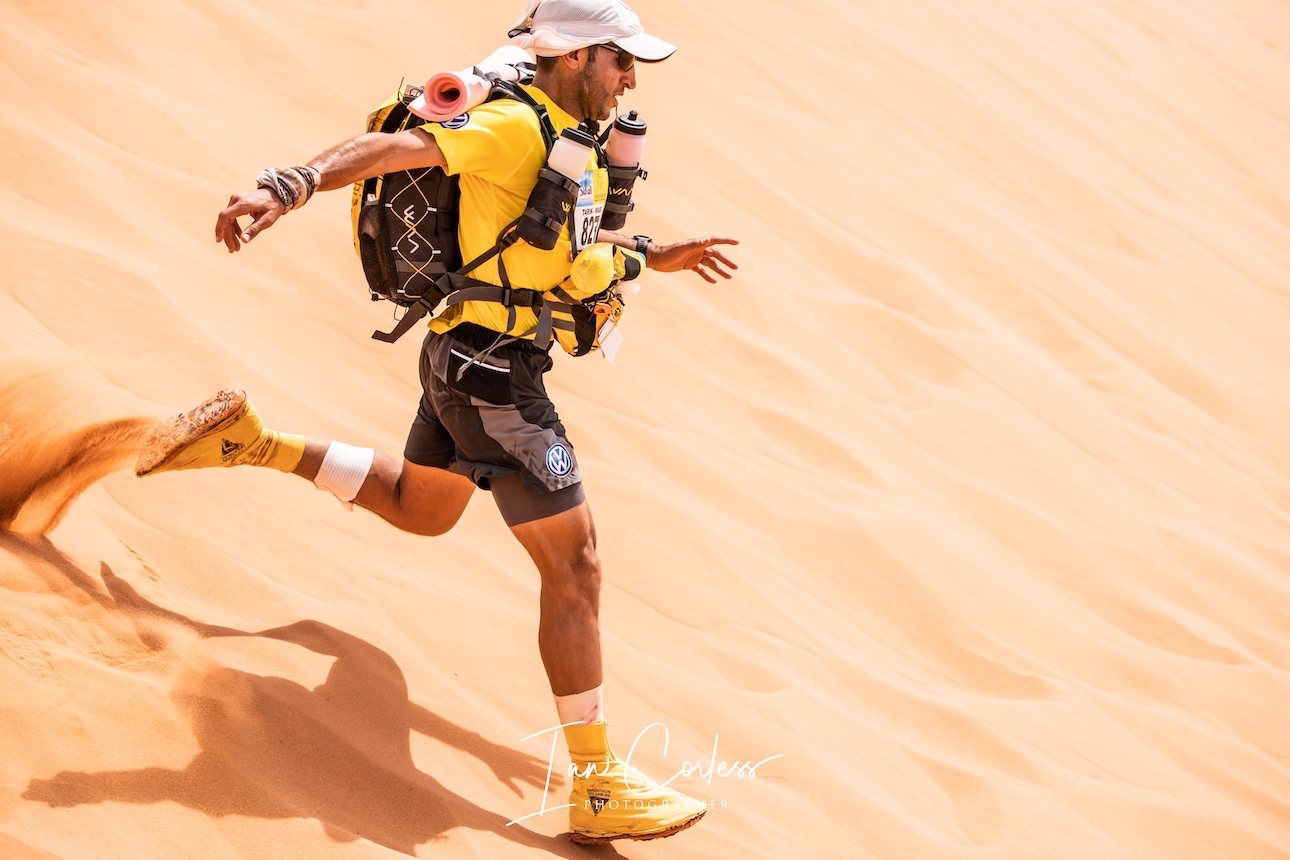
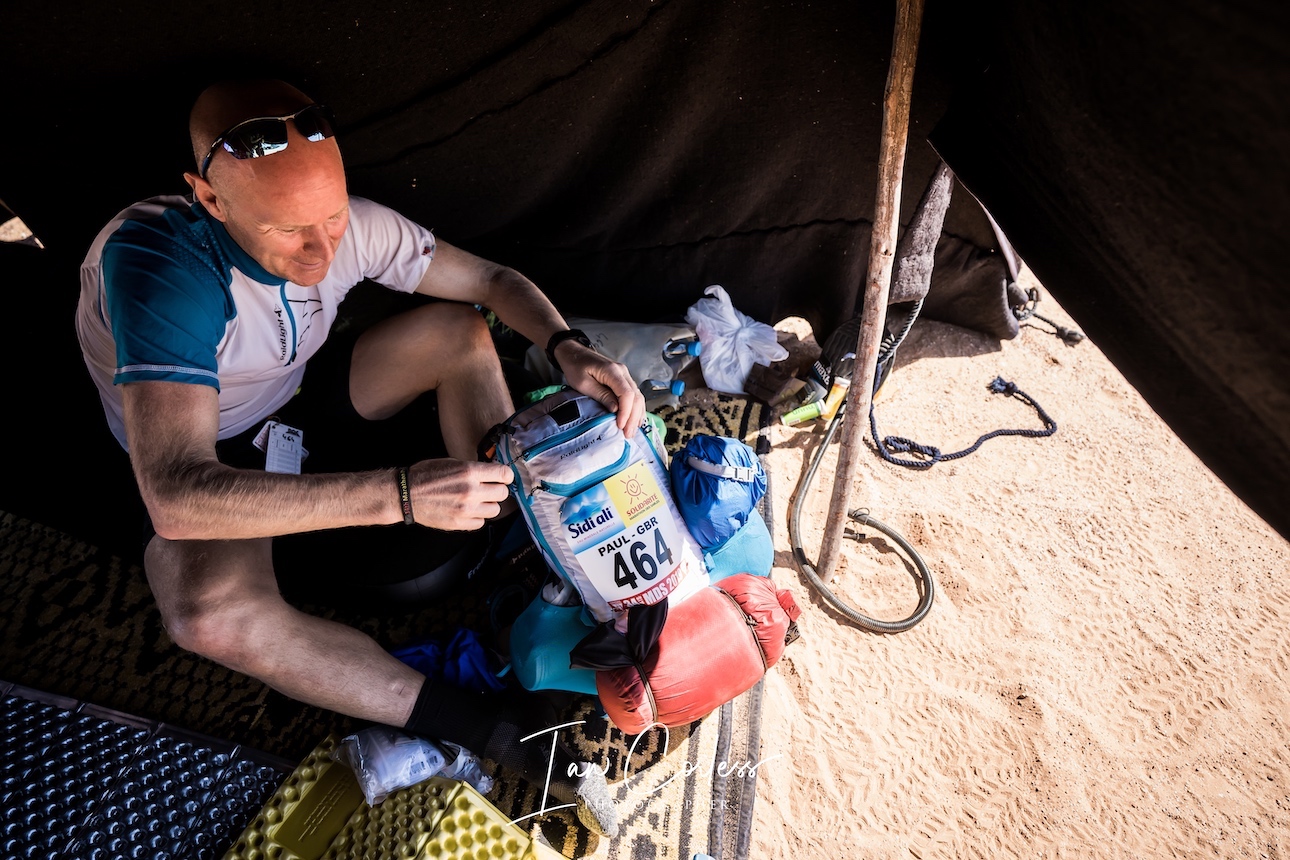
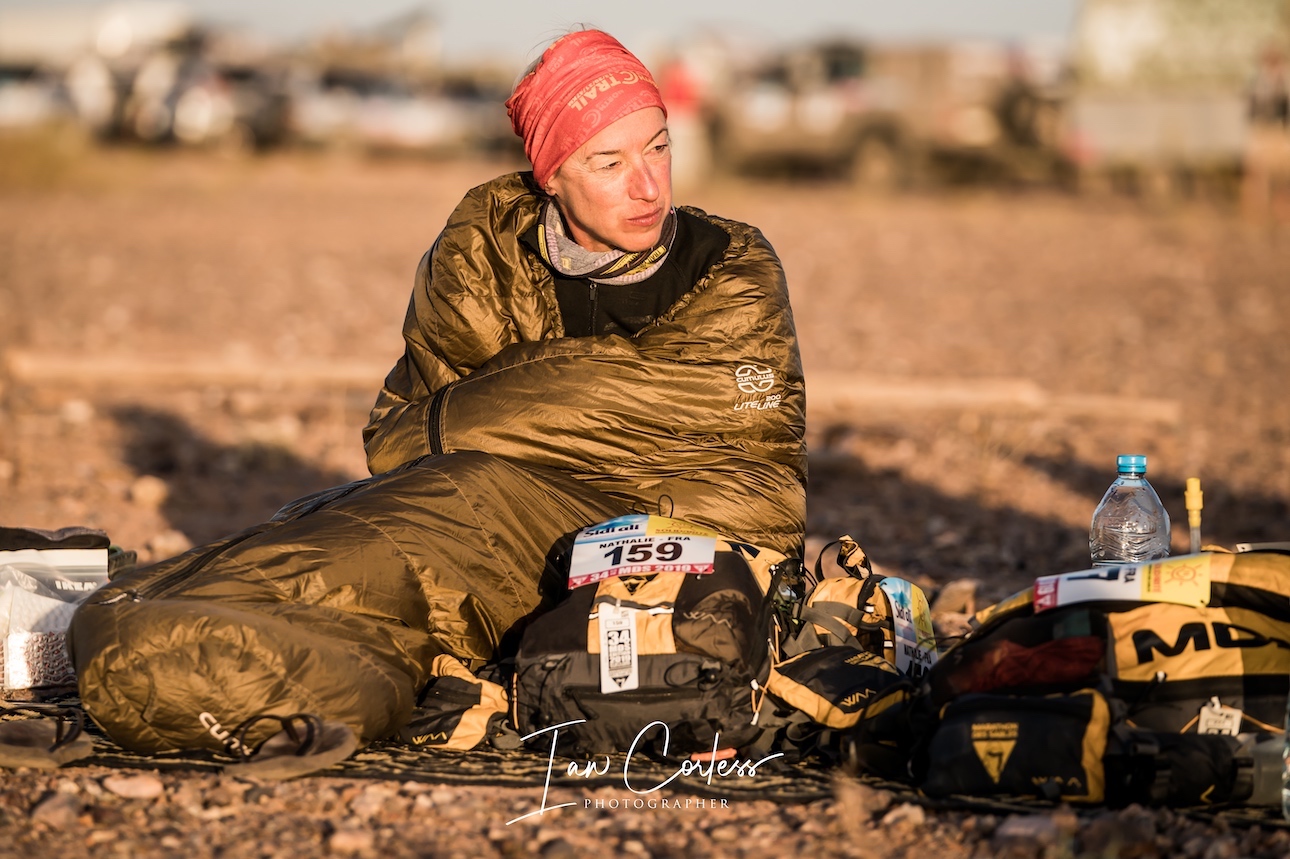
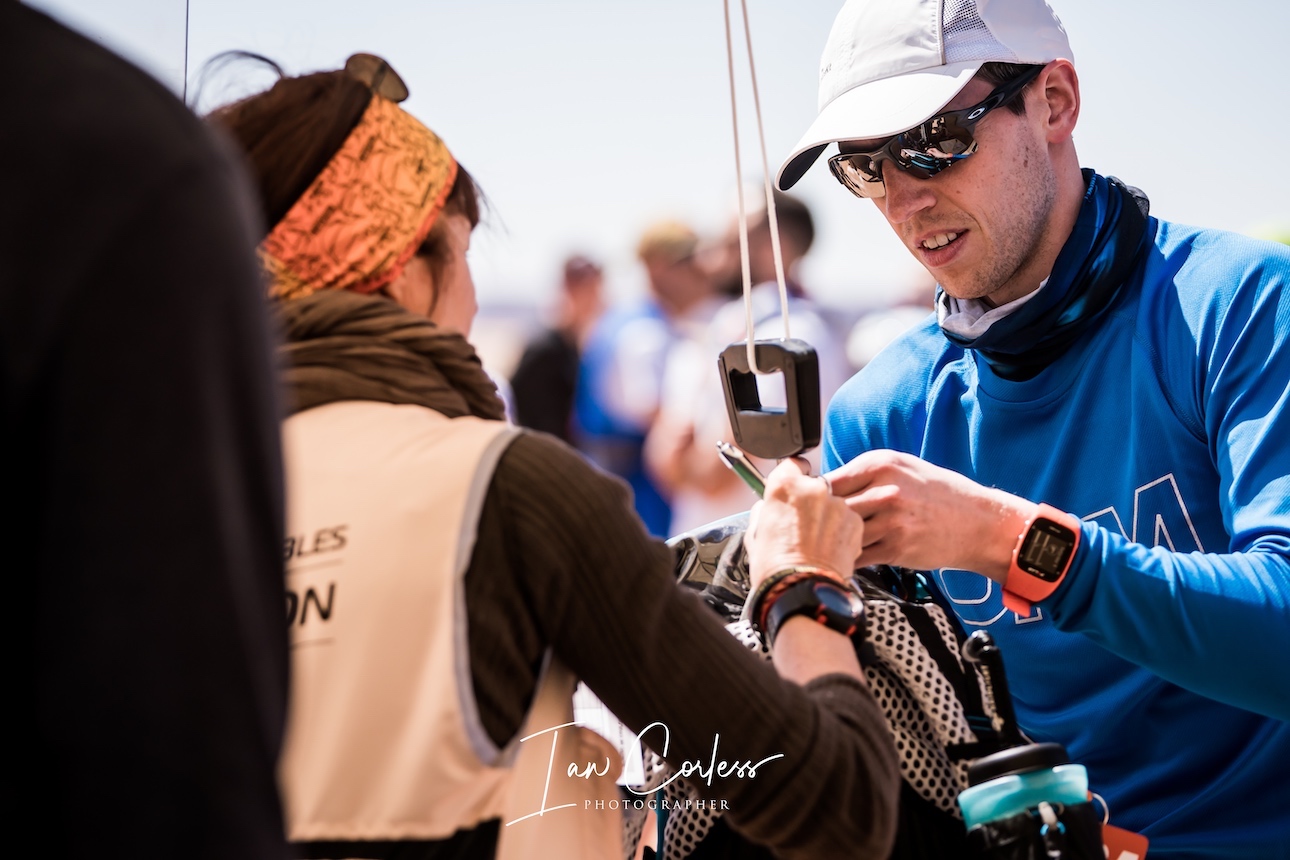

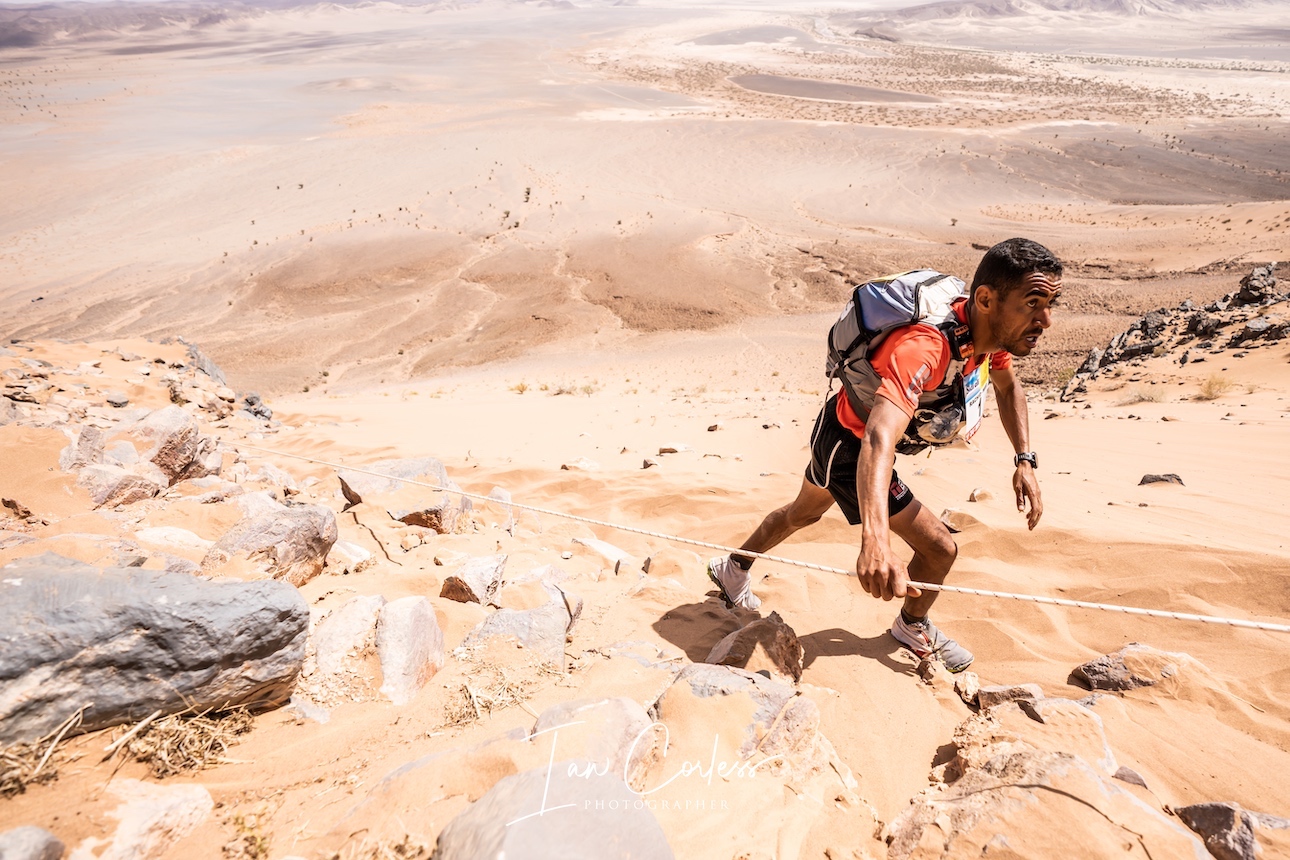
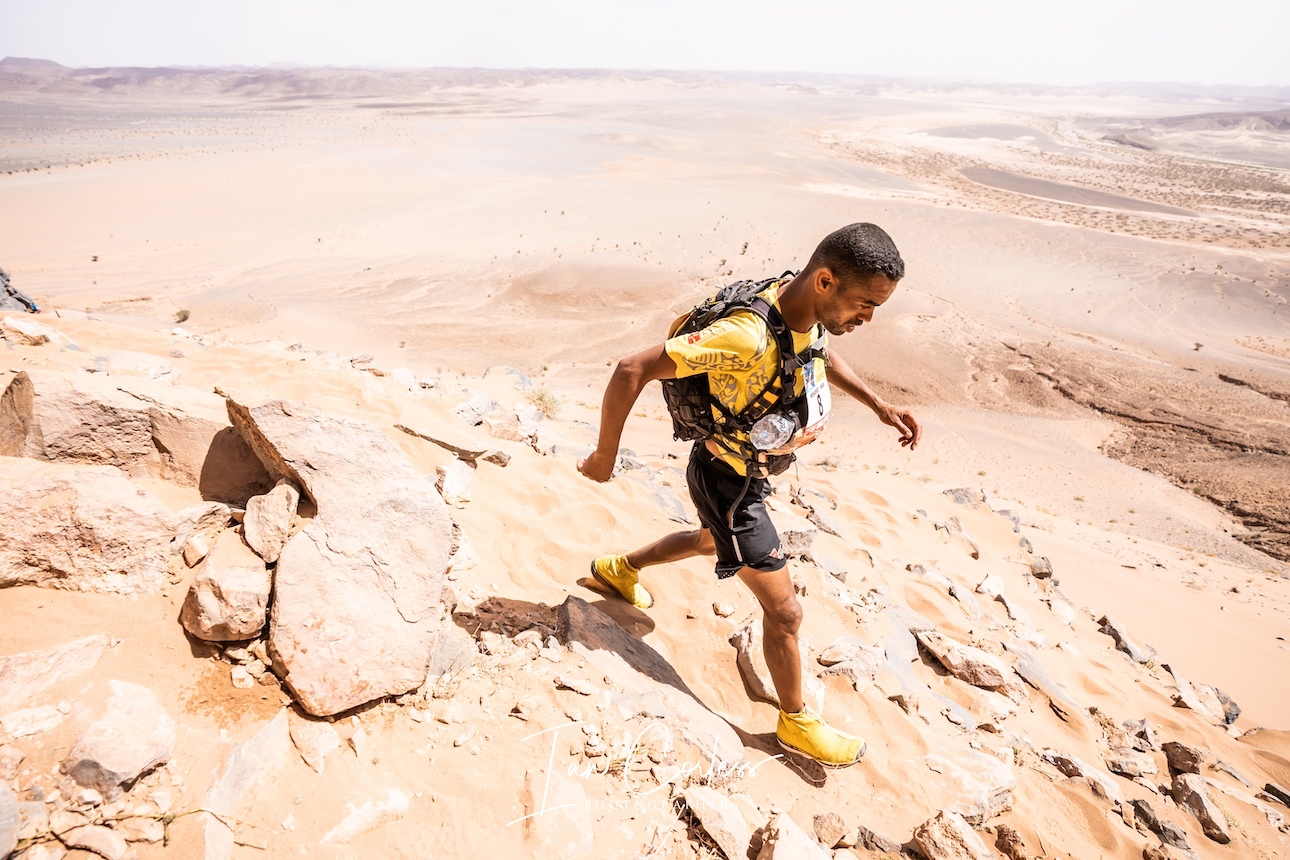
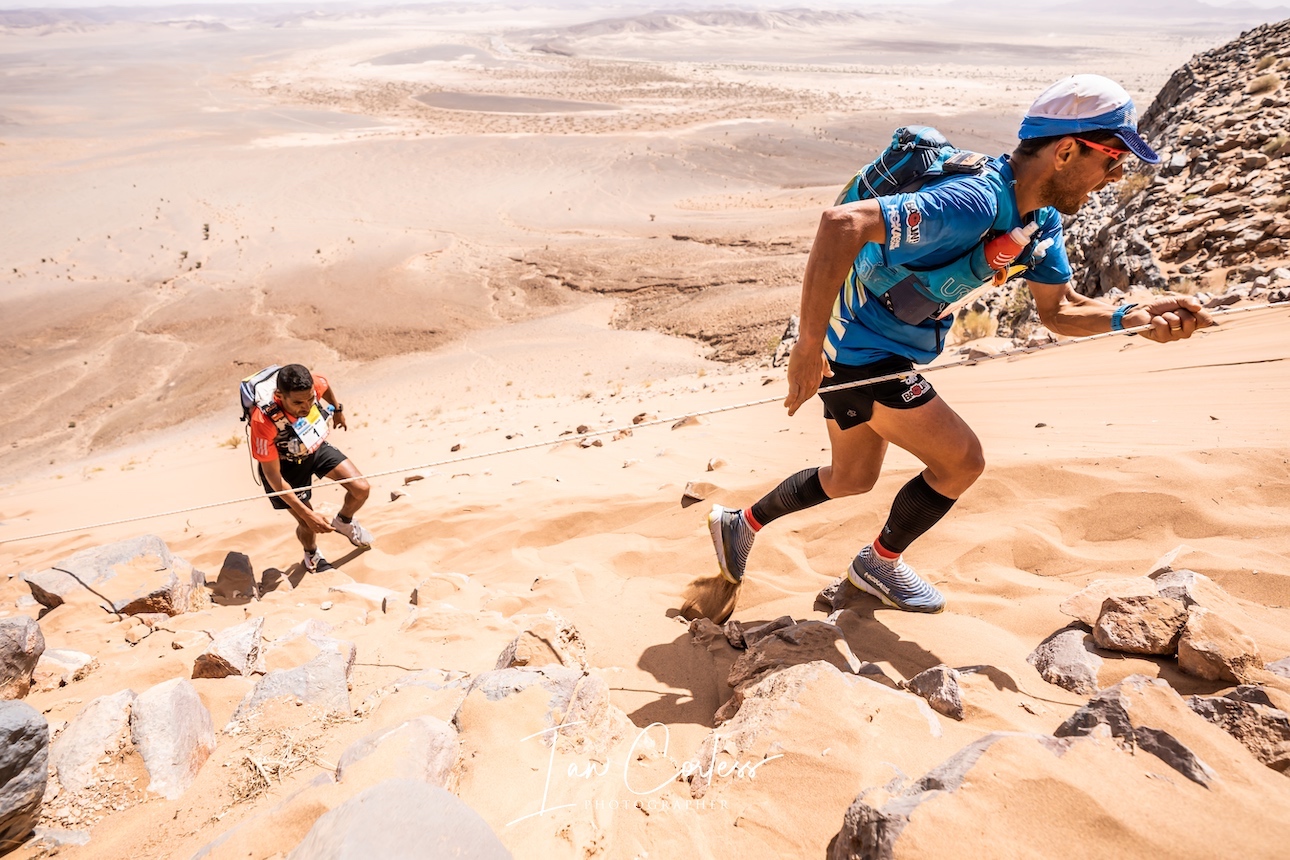

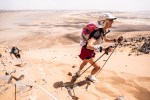
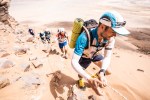
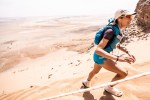
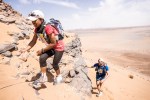
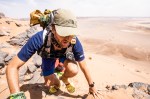
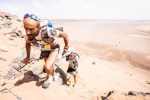
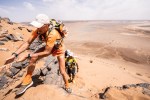
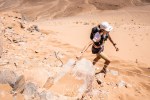
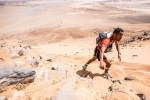
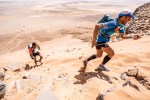
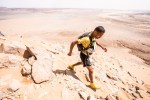
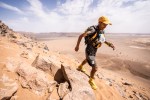
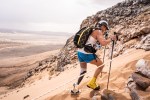
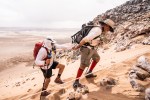
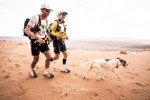
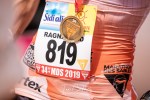
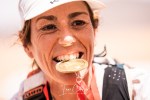
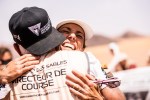
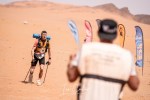
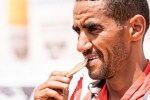
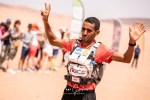
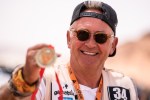
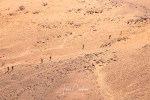
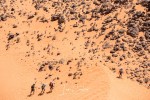
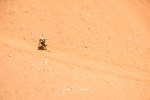
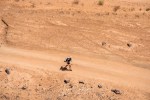
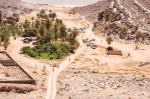
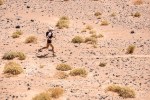
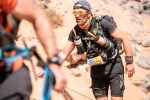
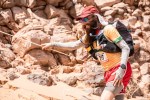
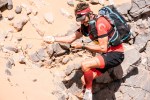
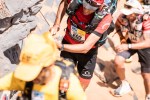
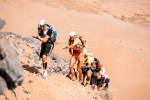
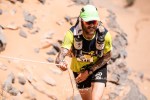
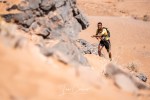
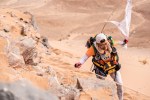
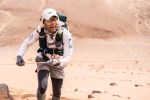
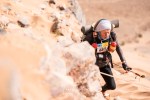
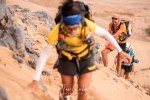
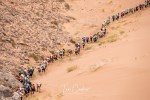
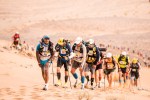
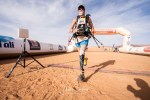
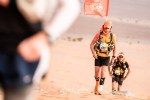
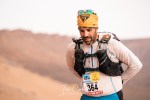
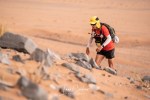
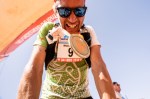
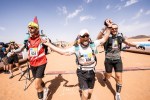
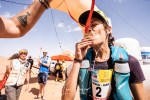
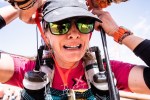
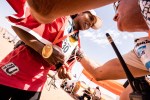
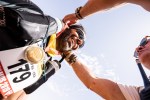
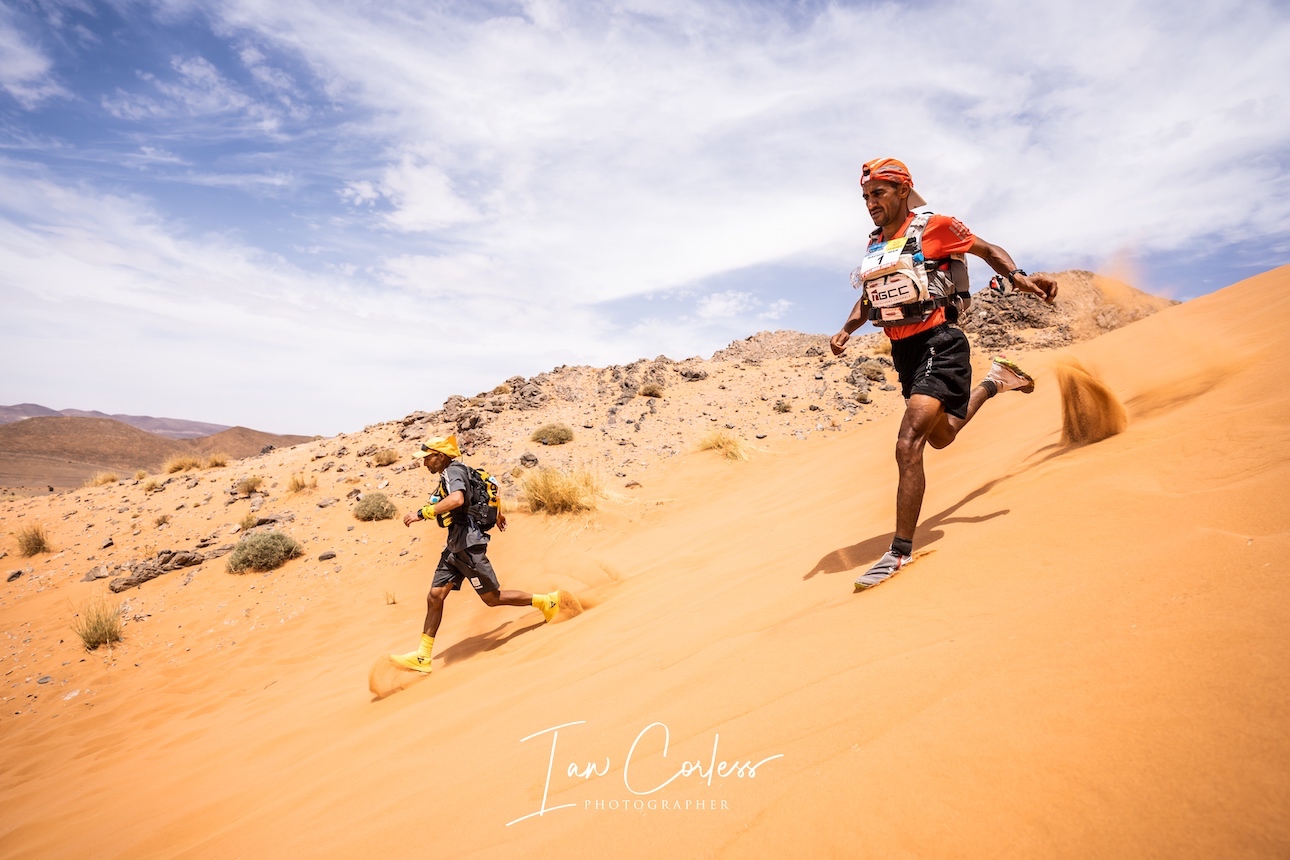
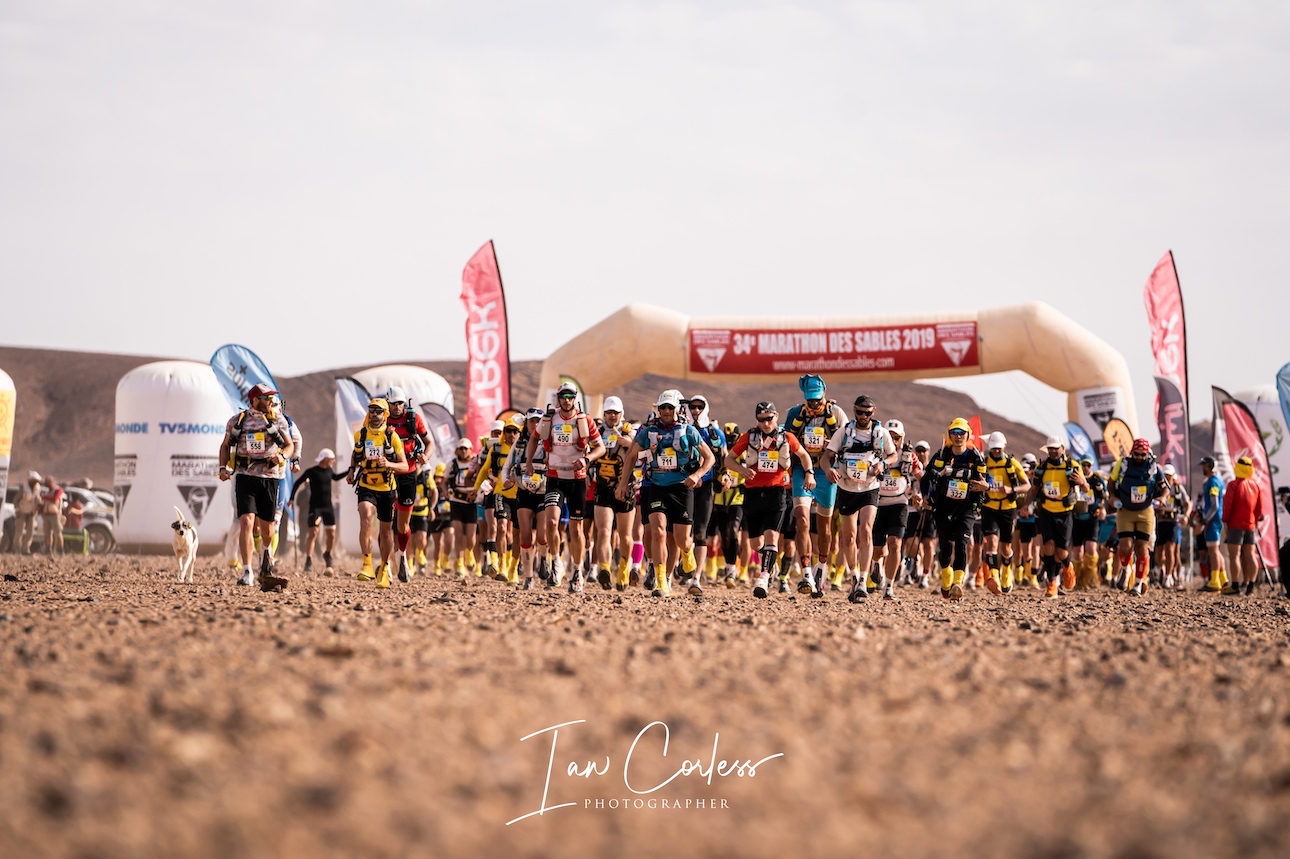
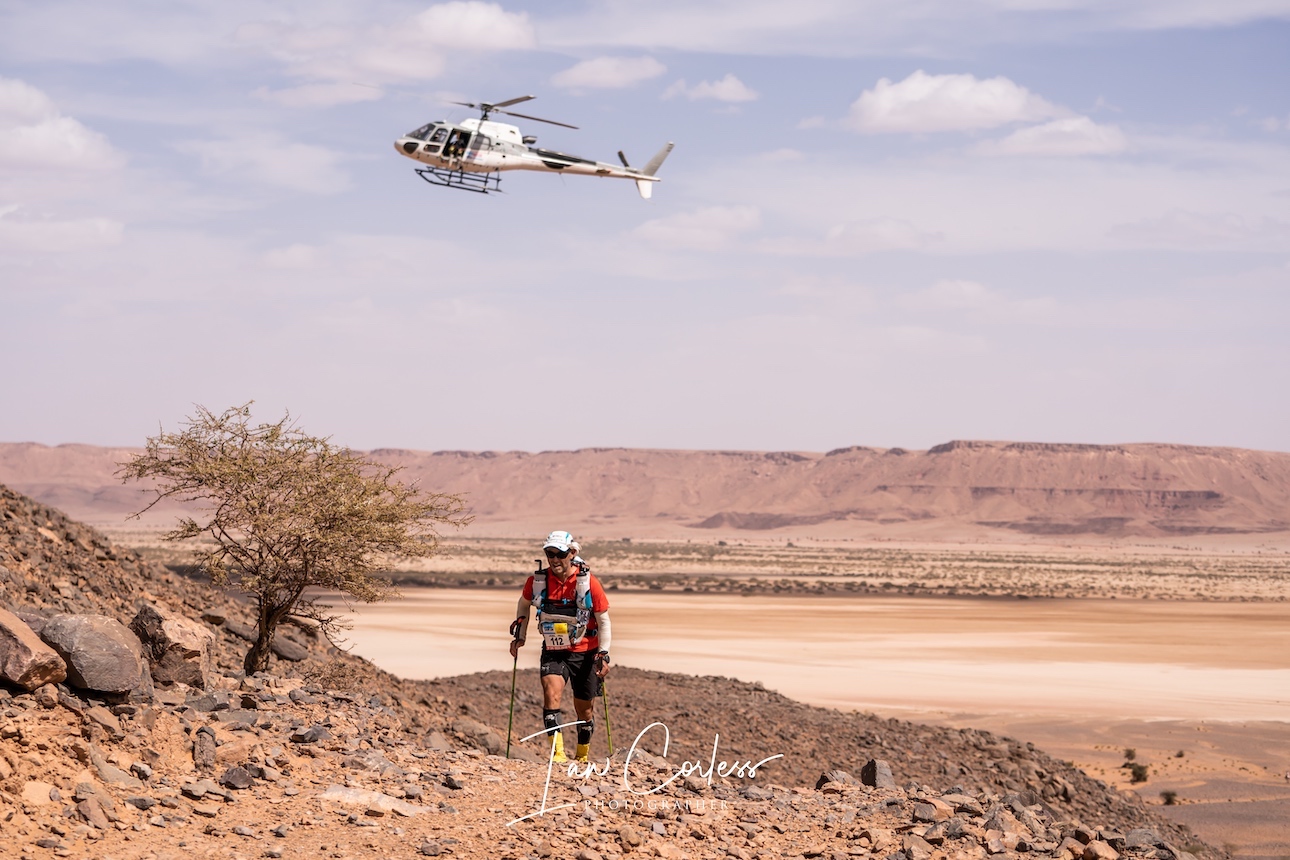
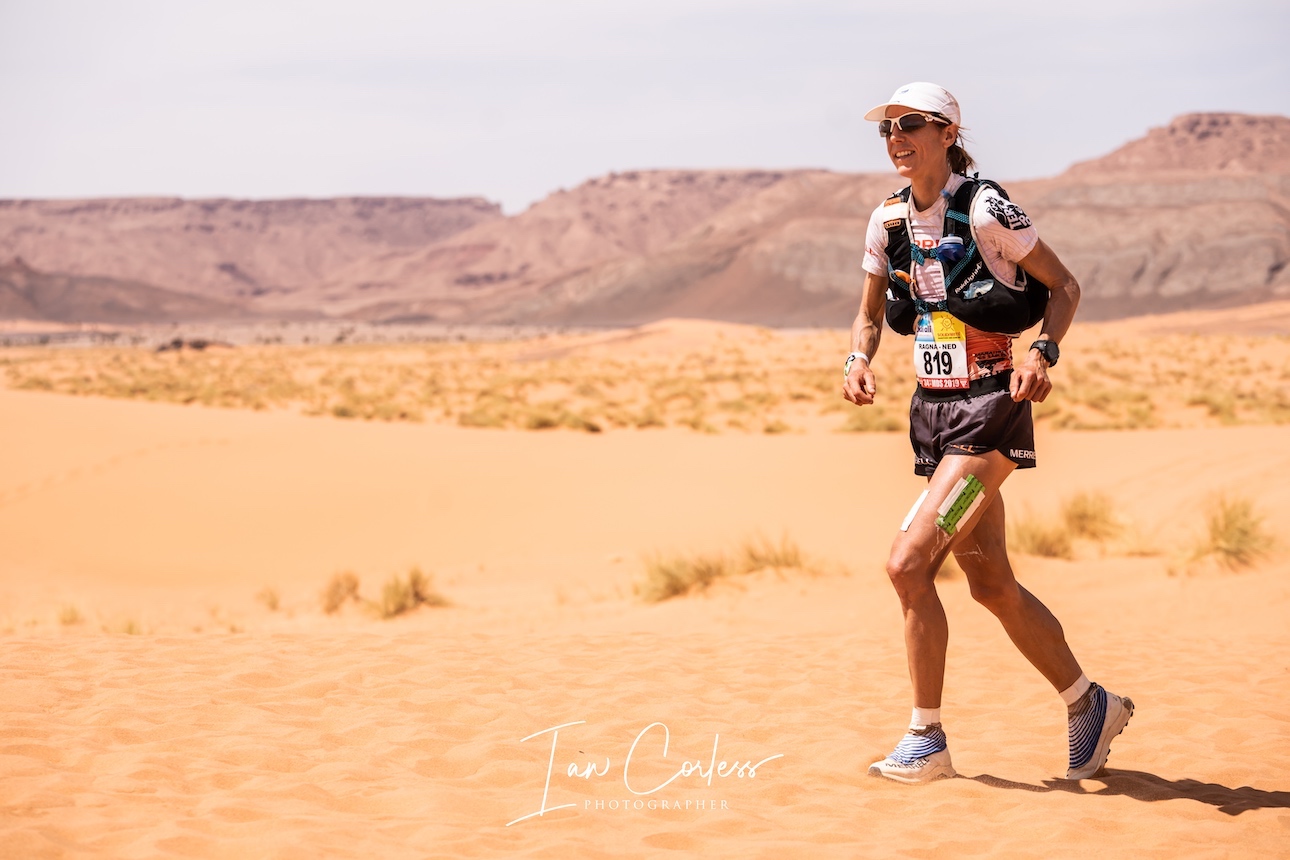
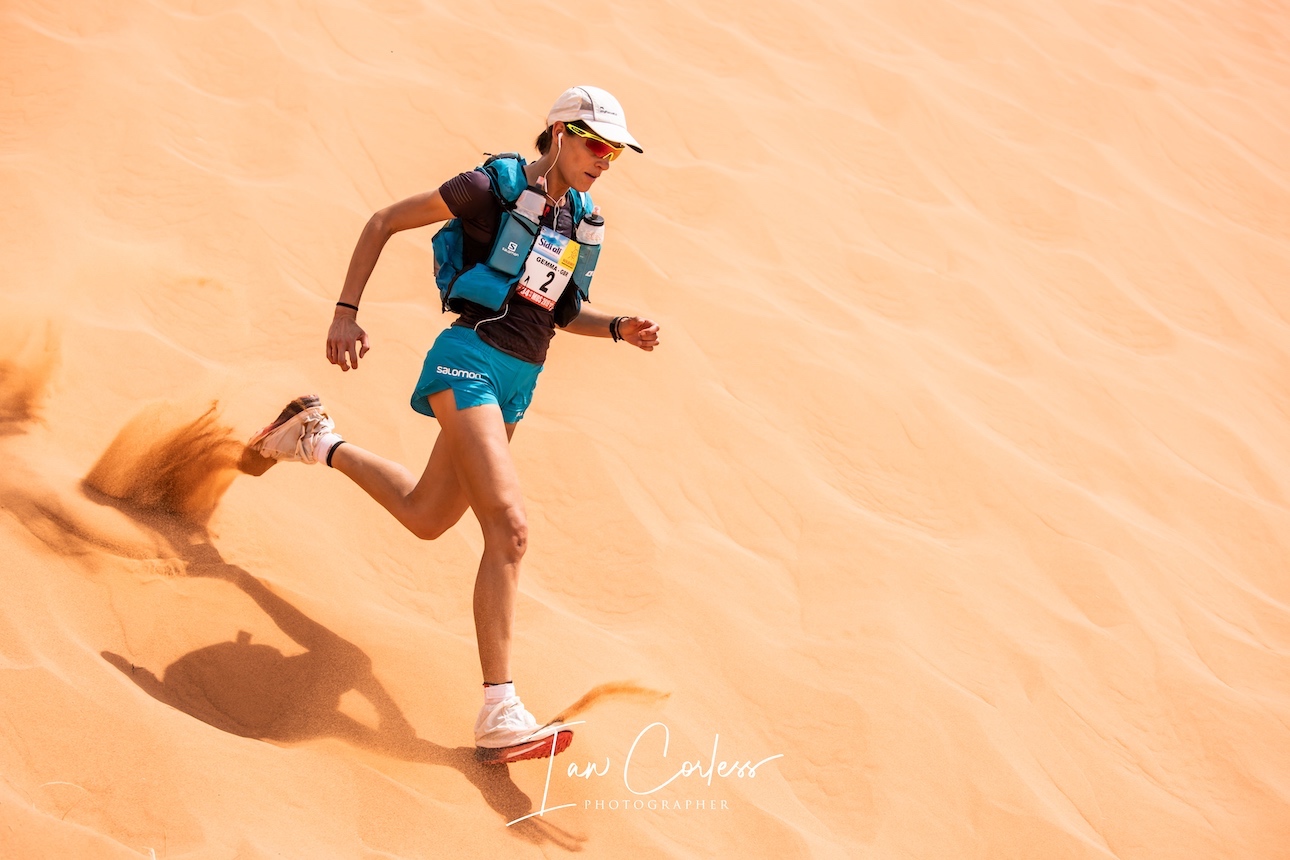
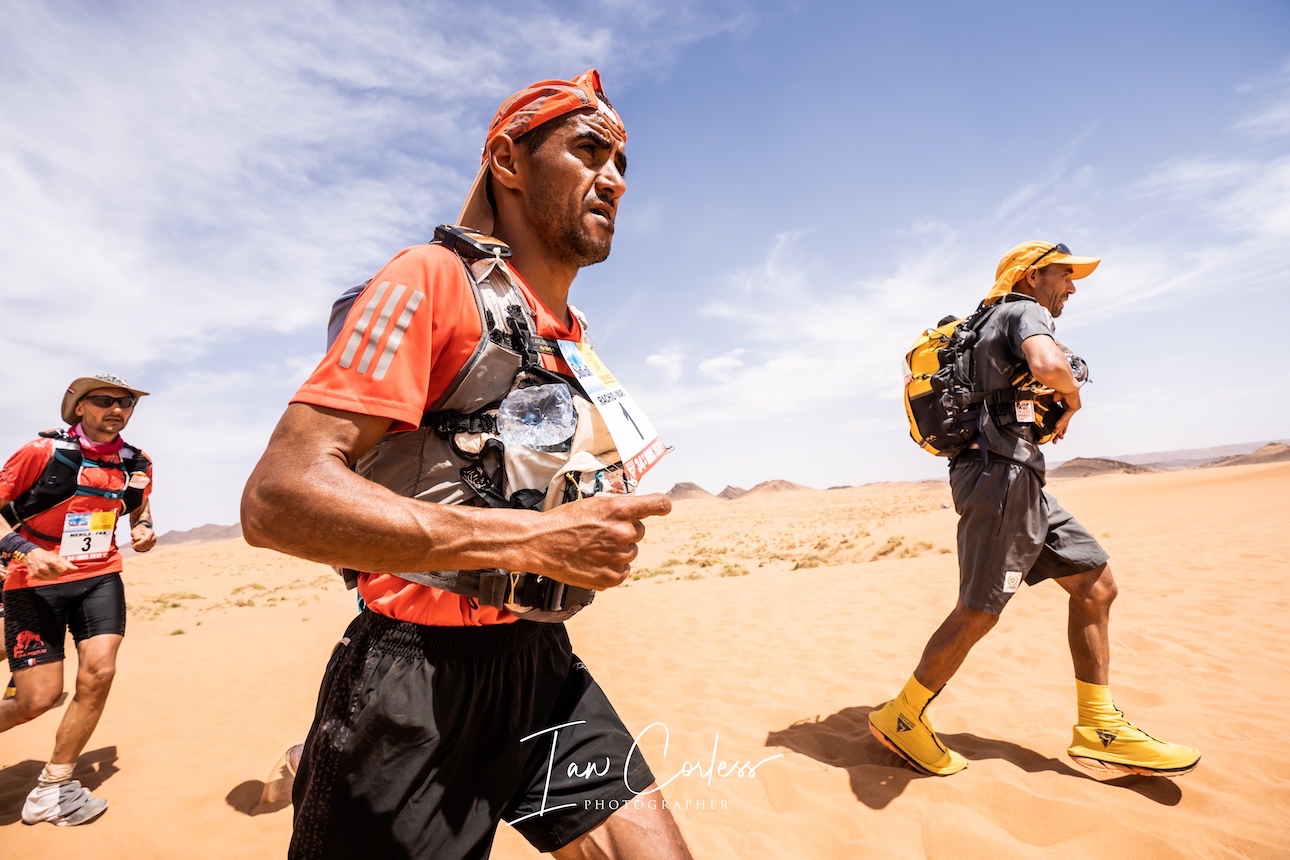
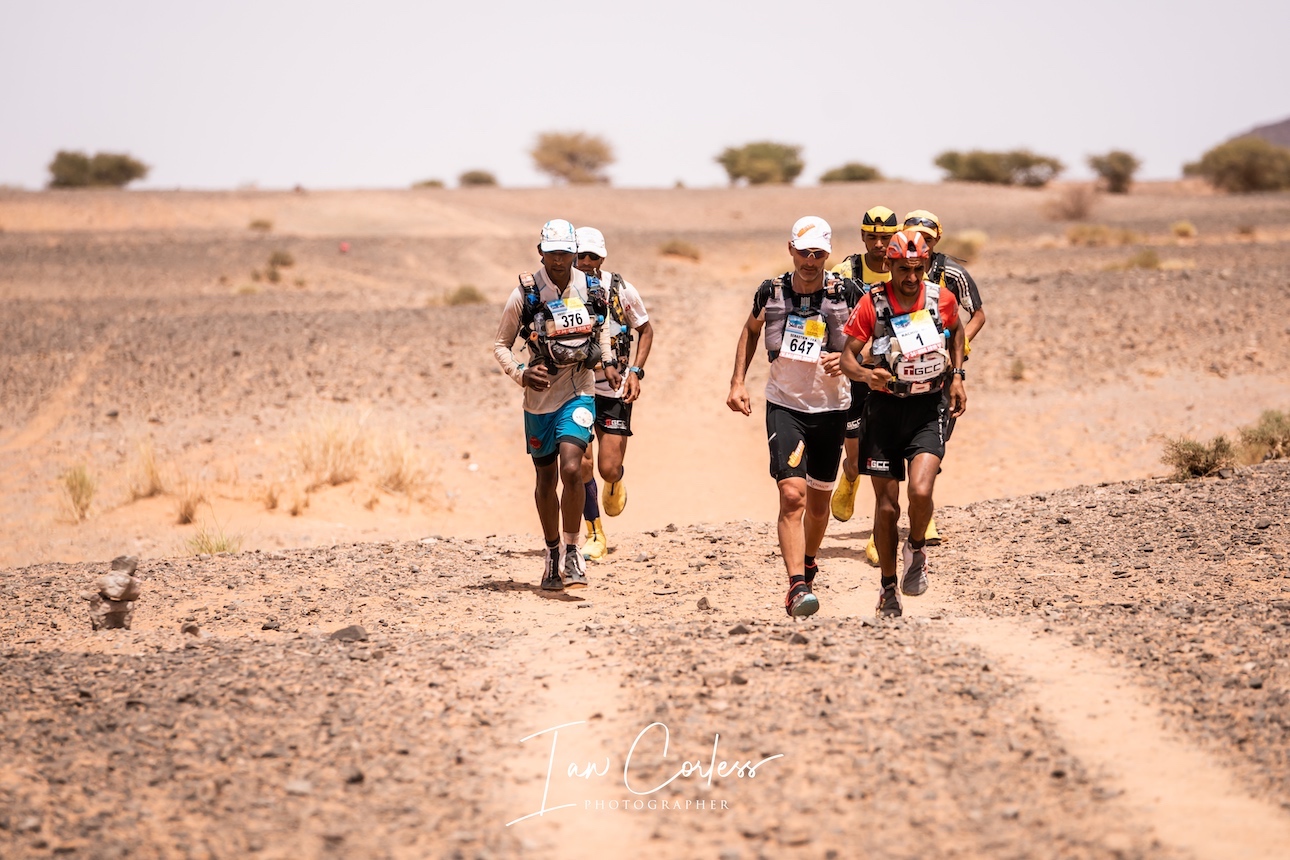
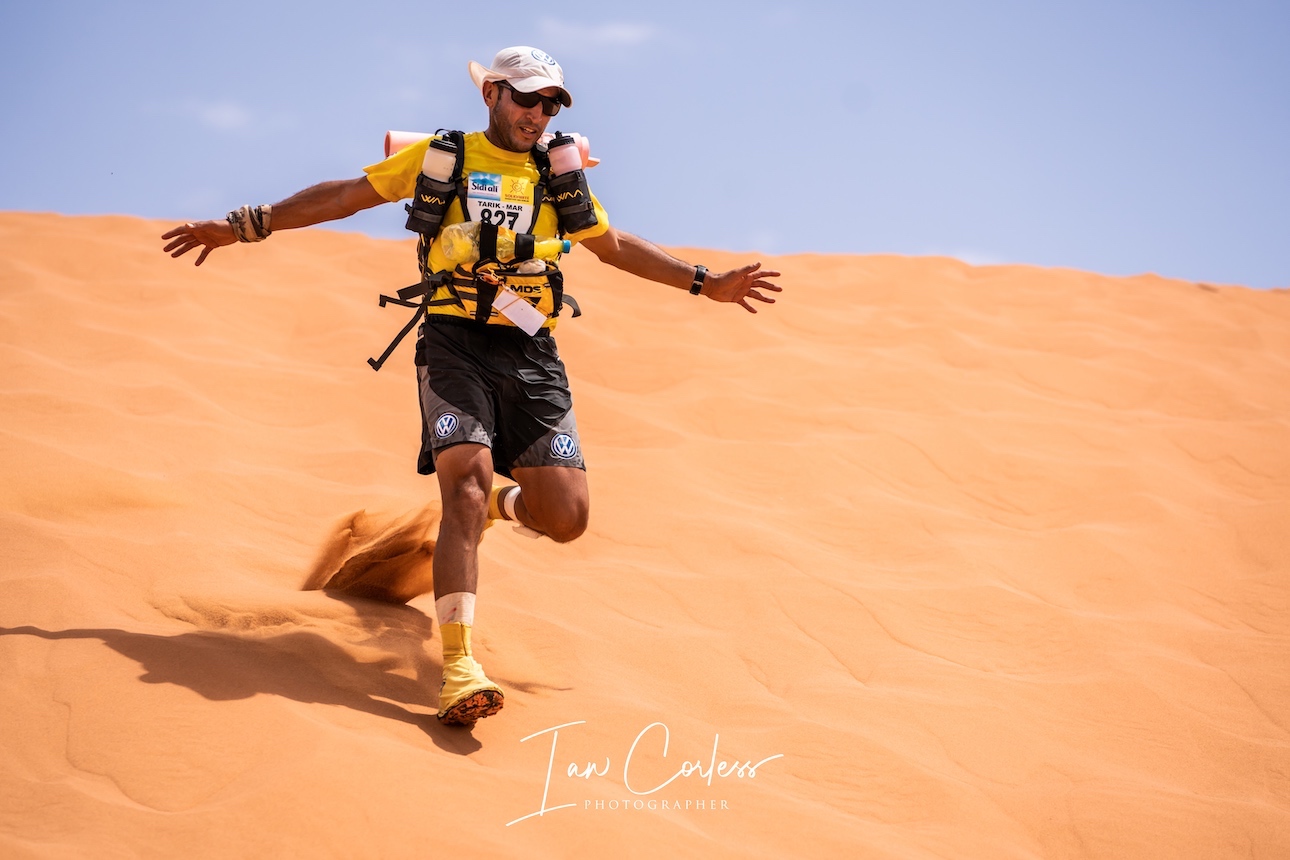
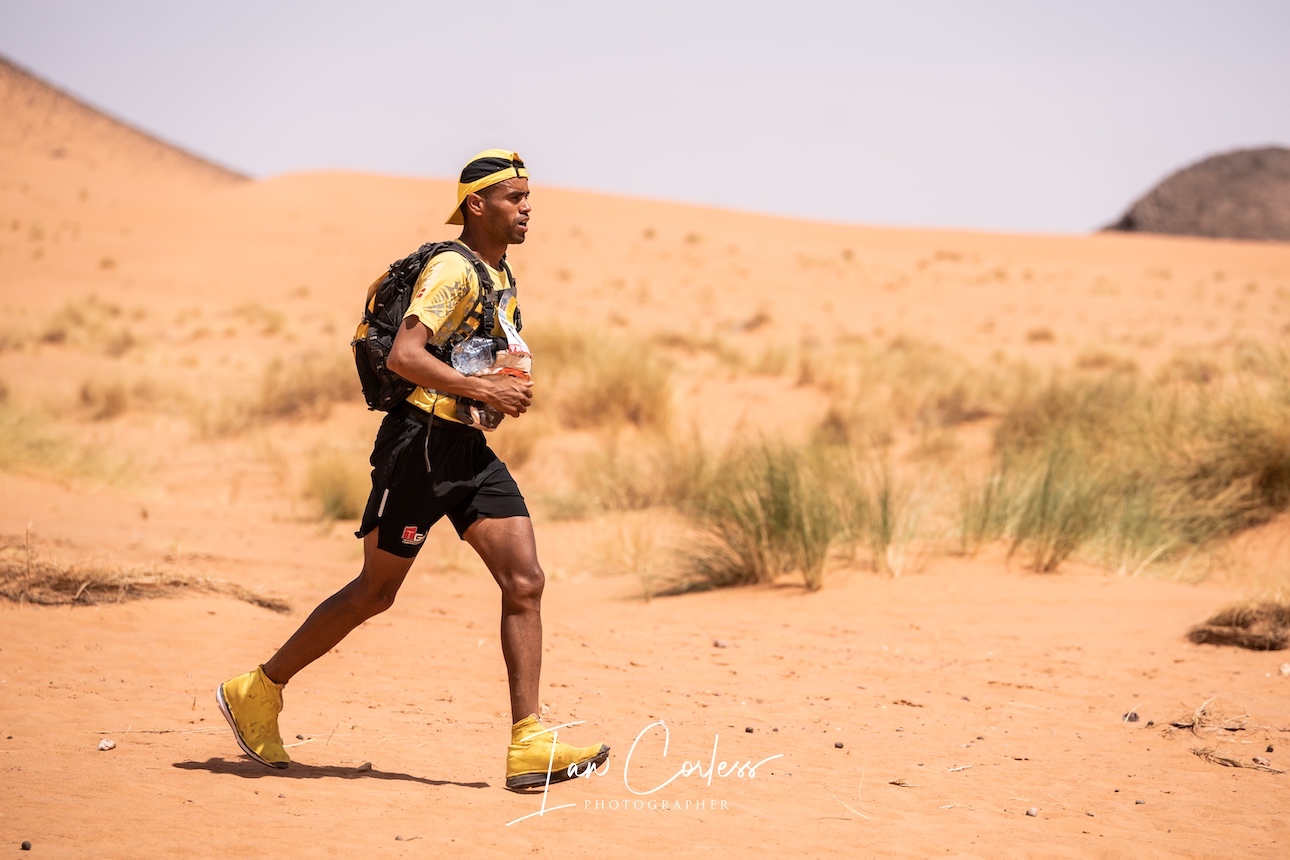

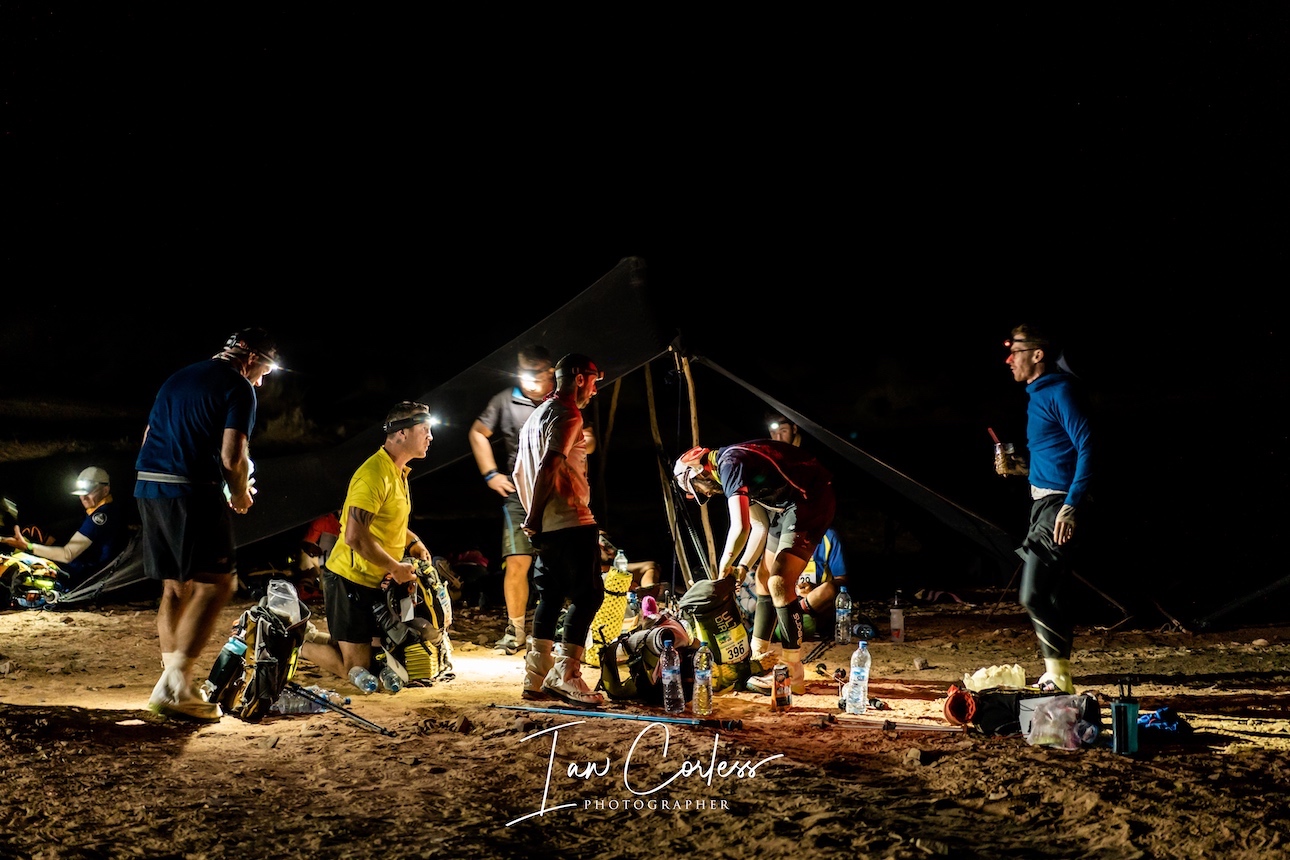
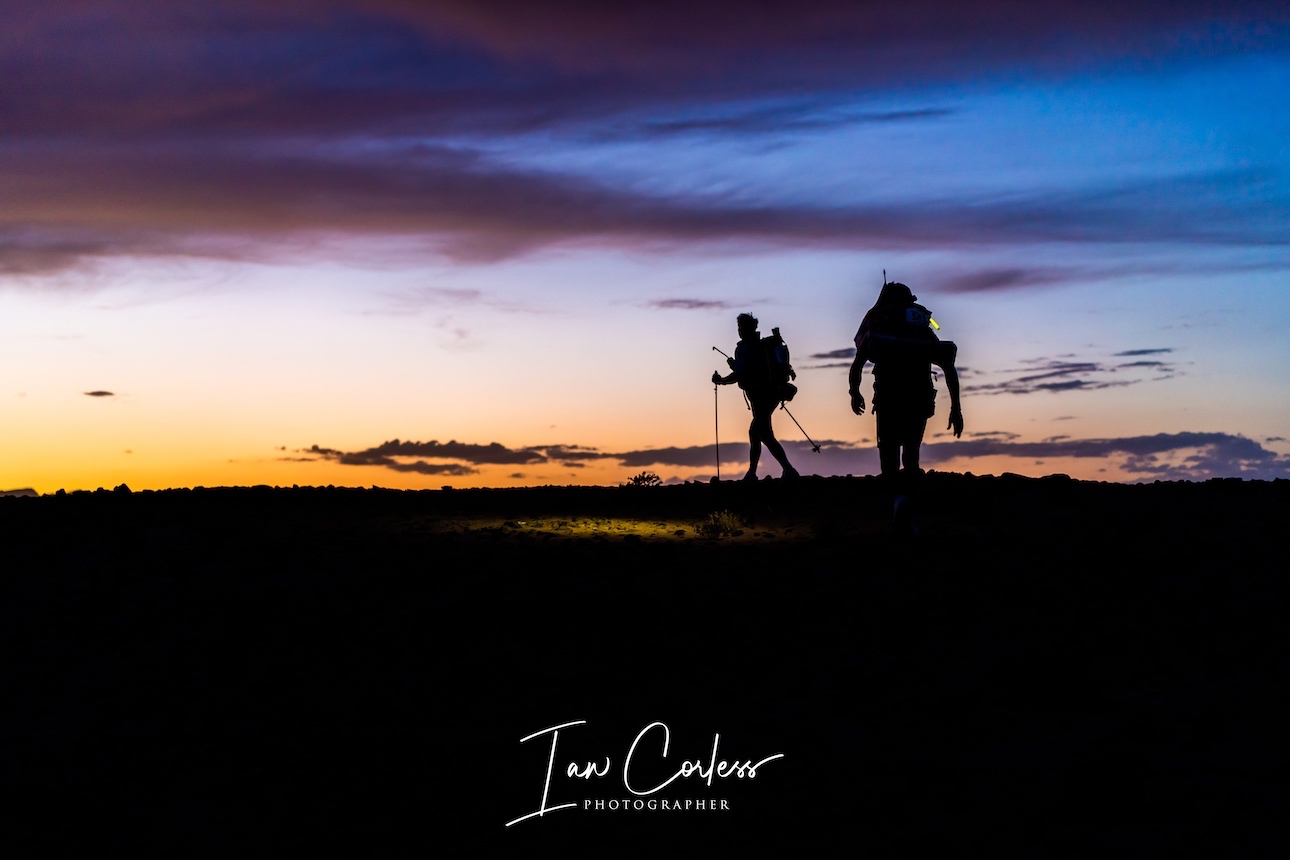 This is the MDS, the human story of fighting conditions, hunger, dehydration and pain to achieve the glory of the finish line.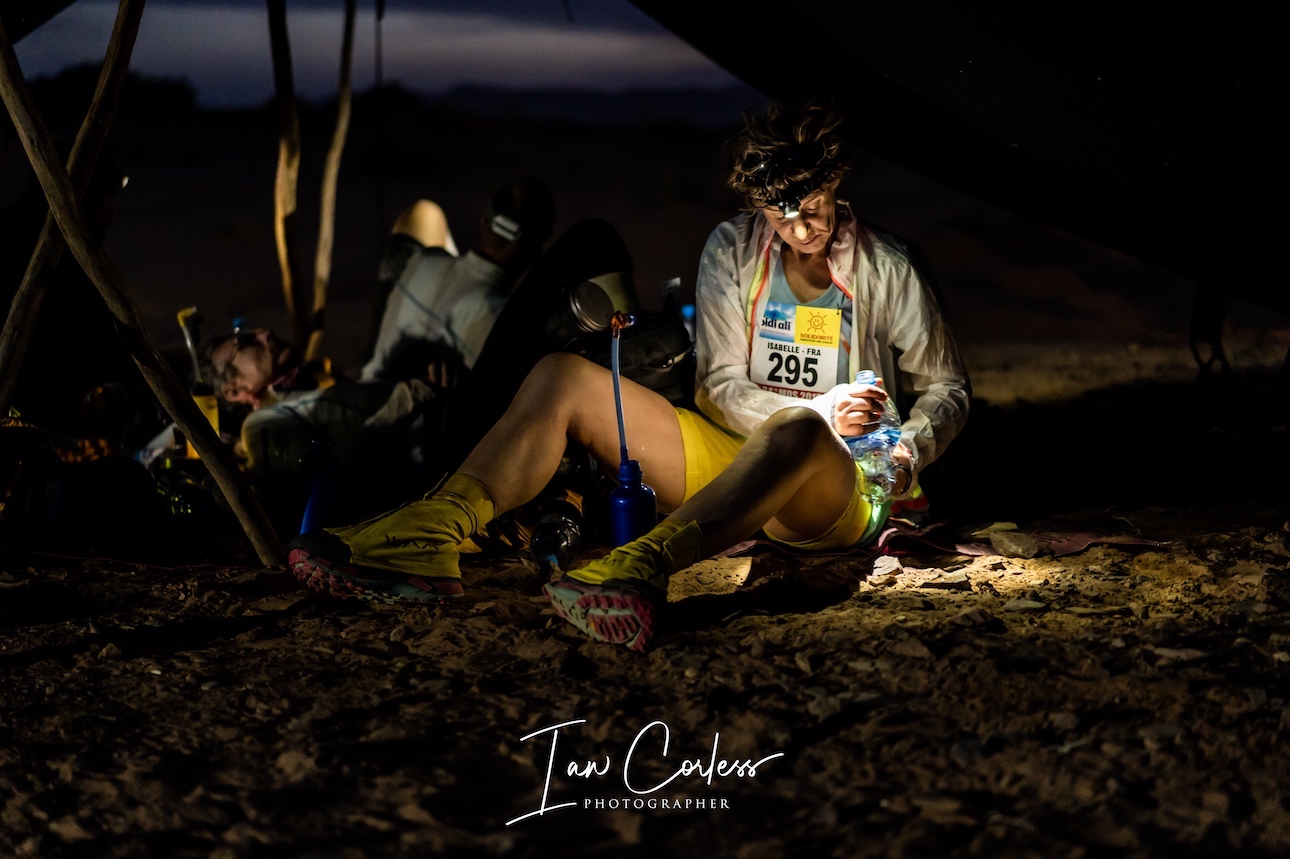




 IAN CORLESS