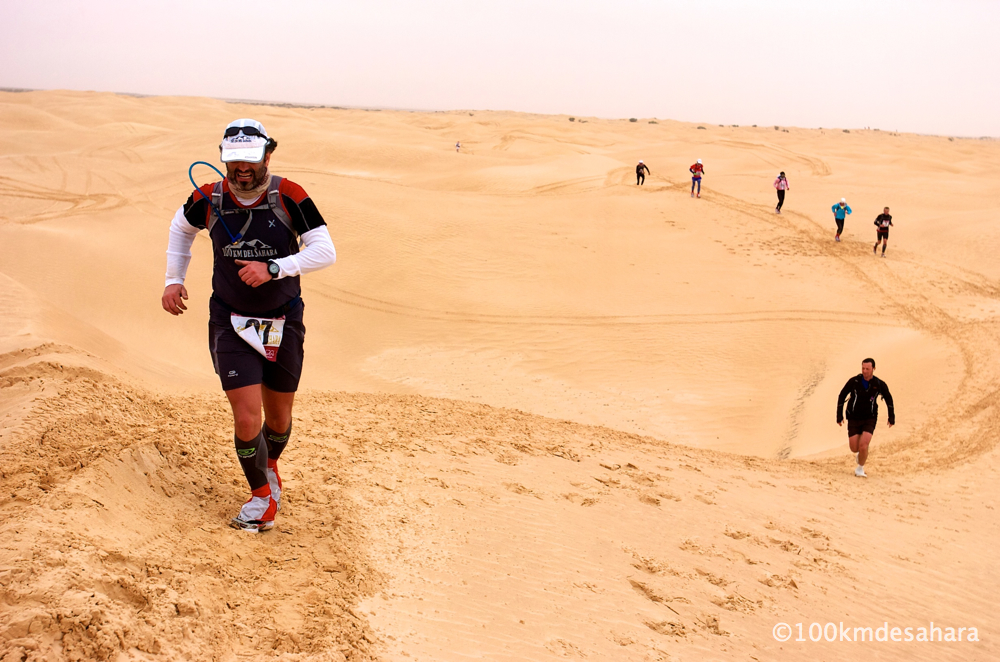
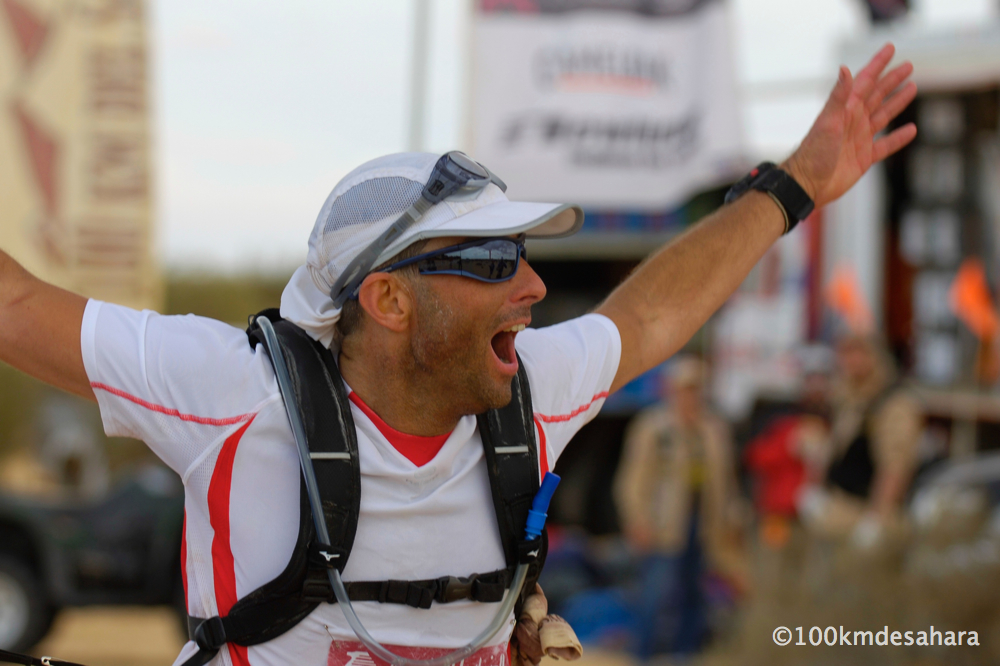
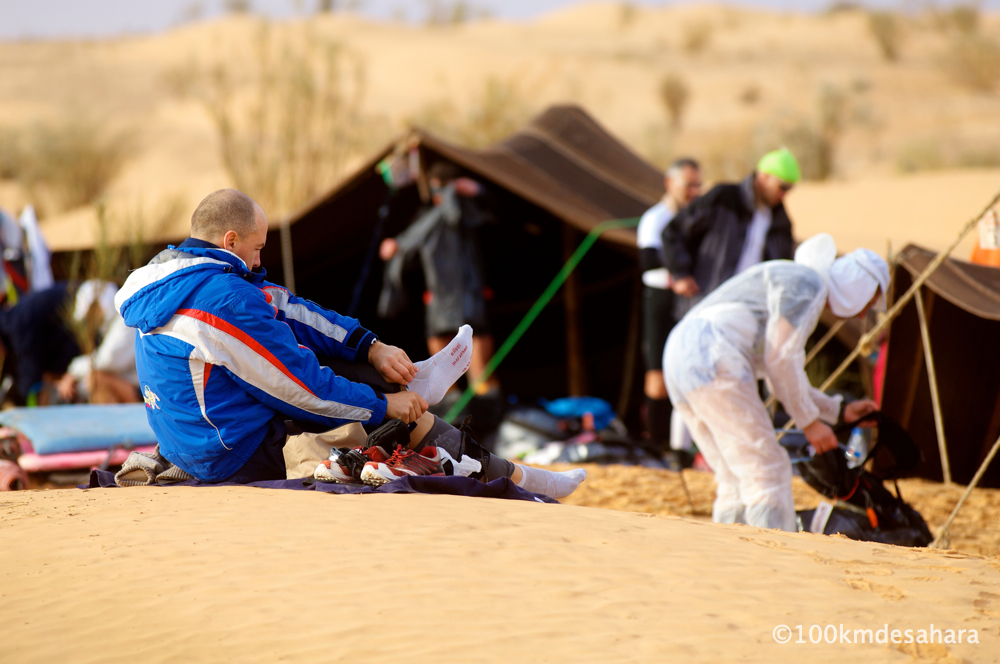
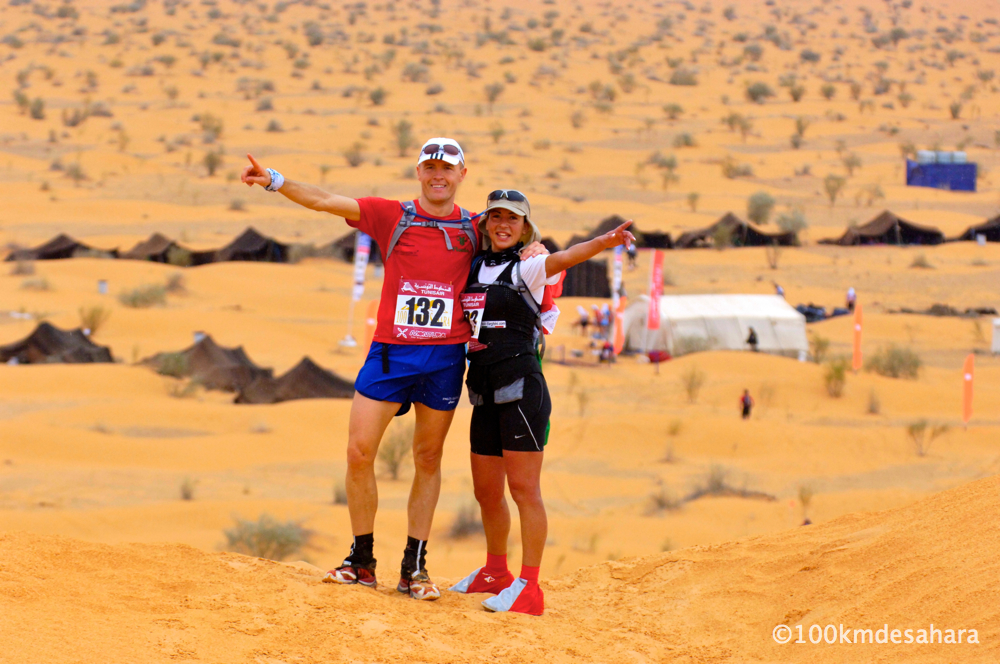
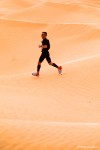
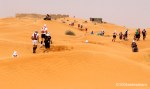
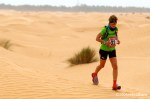
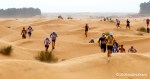
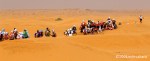
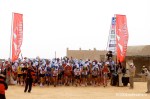
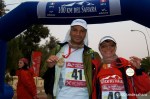
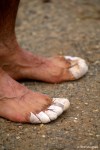
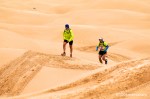
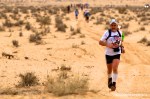
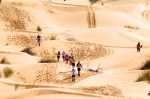
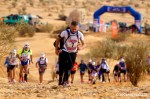
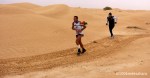
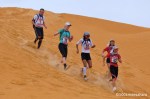
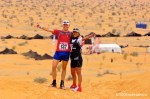
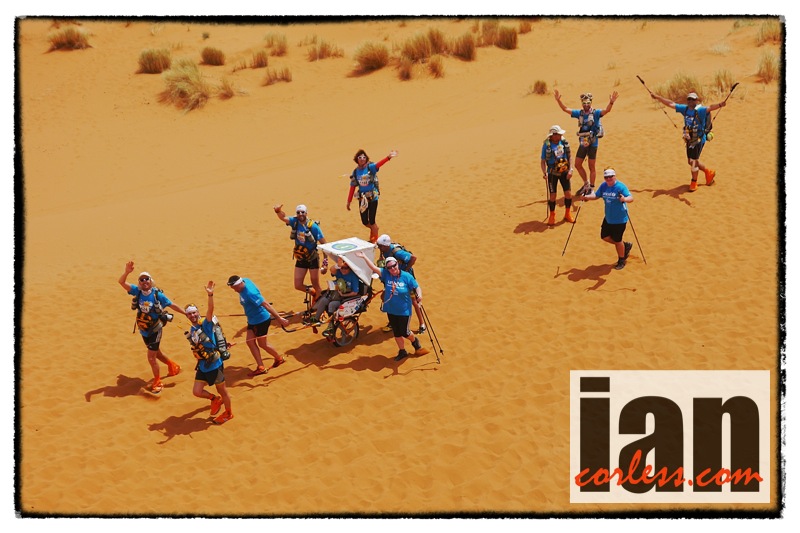
100km del Sahara, April 2014

Logo

An adventure, an experience, a stepping stone to something else… the 100km Sahara is multi-day race that will introduce you to a whole new world. Join the journey in April, 2014. 

©copyright.iancorless.com._BEN2717

Irrespective of your experience, the 100km of the Sahara will provide every participant a definitive sporting accomplishment. For some it may well provide the ultimate challenge, while for others, it may become a launching pad for continued participation in highly demanding extreme running races. The spirit of the race combines many elements; travel, adventure, excitement and ultimately a challenge.
 Pursue your dreams, pursue your passions and let the 100km of the Sahara provide you with a gateway to a new world.

©copyright.iancorless.com._MC23589

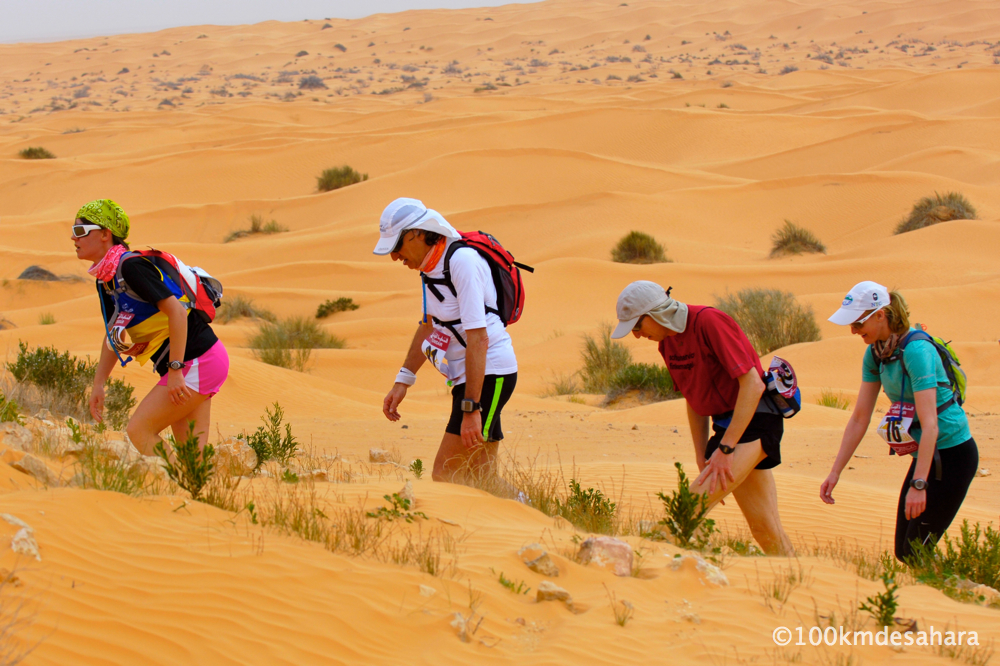
An annual race taking place over multiple days, participants test themselves against the challenge of running against the desert, while accepting the minimal assistance that is needed. The Sahara is fascinating, however it is one of the least suitable environments for running. If it was easy, anyone would do it… take yourself to a new level, add a new stimulus to your running. The Sahara will not only test your physical parameters but your capacity to control your mind.

Achieve your finish line!

©copyright.iancorless.com._BEN5048

DETAILS:

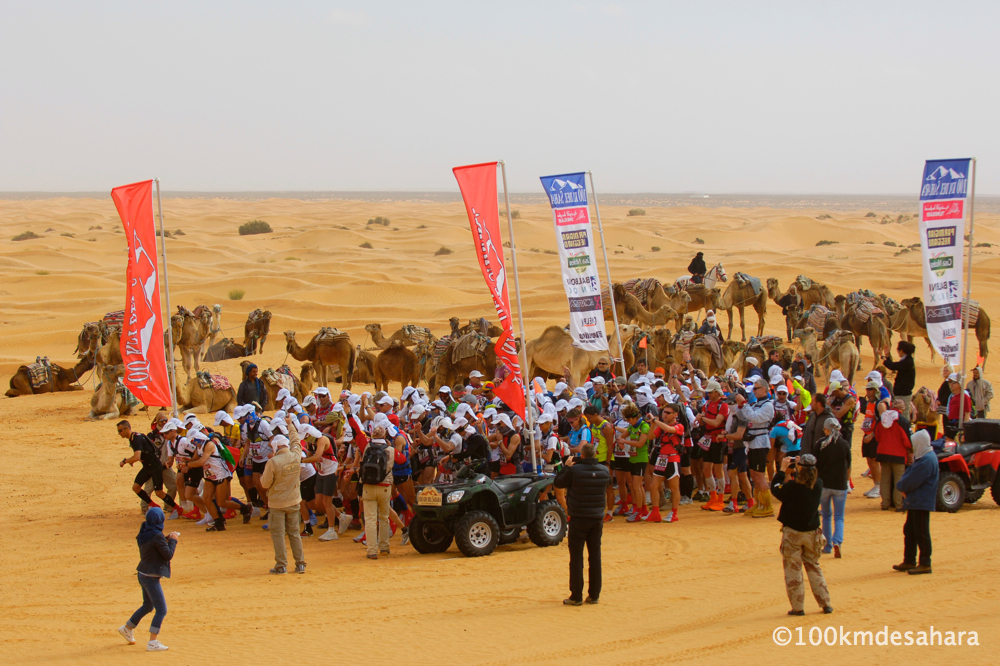
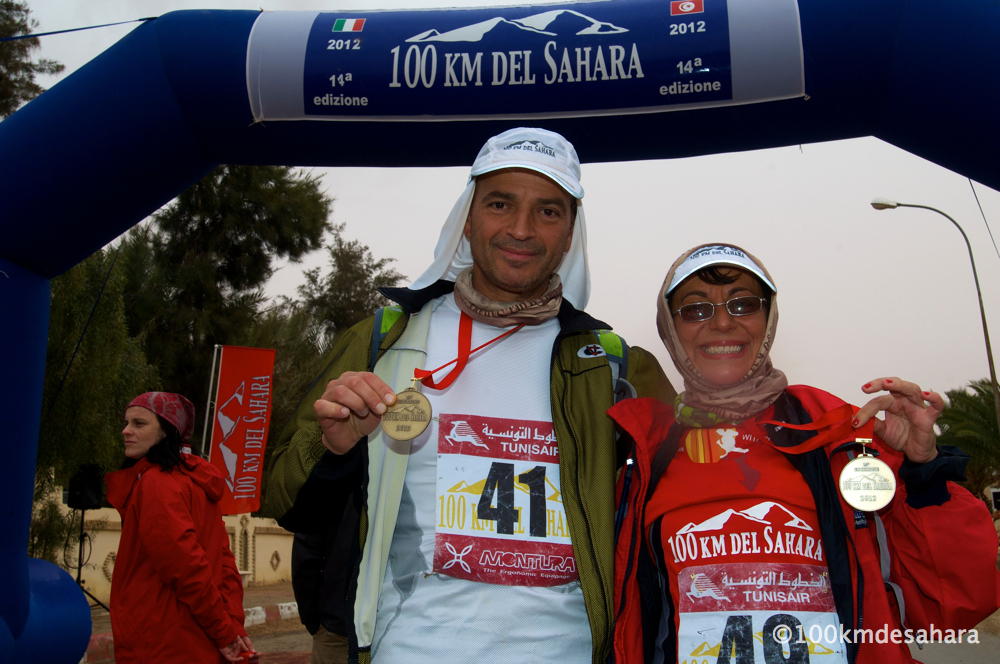
The “100 km of Sahara” maintains a departure from the oasis of Ksar Ghilane, in the great Eastern Erg for the 2014, 16th edition of the race. The arrival; the mythical oasis of Douz will be achieved after travelling 100 km’s in 4-stages with 3-nights undertaken in a tented camp.

©copyright.iancorless.com._MCA2074

The race itinerary is 7 days 6 nights. This competition is designed to bring out the spirit of challenge for those who create their own adventure. The race will have all the necessary ingredients of the extreme, but provides a race structure and format that is accessible to all. It’s a tough race but a race that is possible for all levels of ability!

©copyright.iancorless.com._BEN2939

The 100 km of Sahara is a qualifying race for the UTMB Race and will count for 2 points.

CourseQualificative2014_EN

Capacity, 150-people.

  • Program flight included € 1.840 Milan or Rome
  • Program without flight € 1.640 
  • Single supplement (3 nights in hotel) € 100

The participation fee includes:

  • Flight to and from Djerba from Italy (only in the program with flight),
  • Transfers by bus and by 4×4 cars,
  • Full board for the whole week,
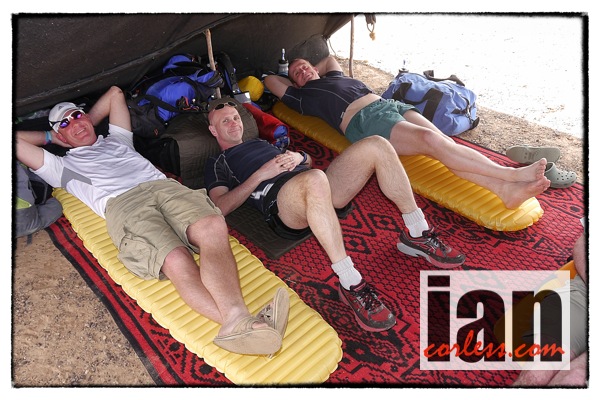
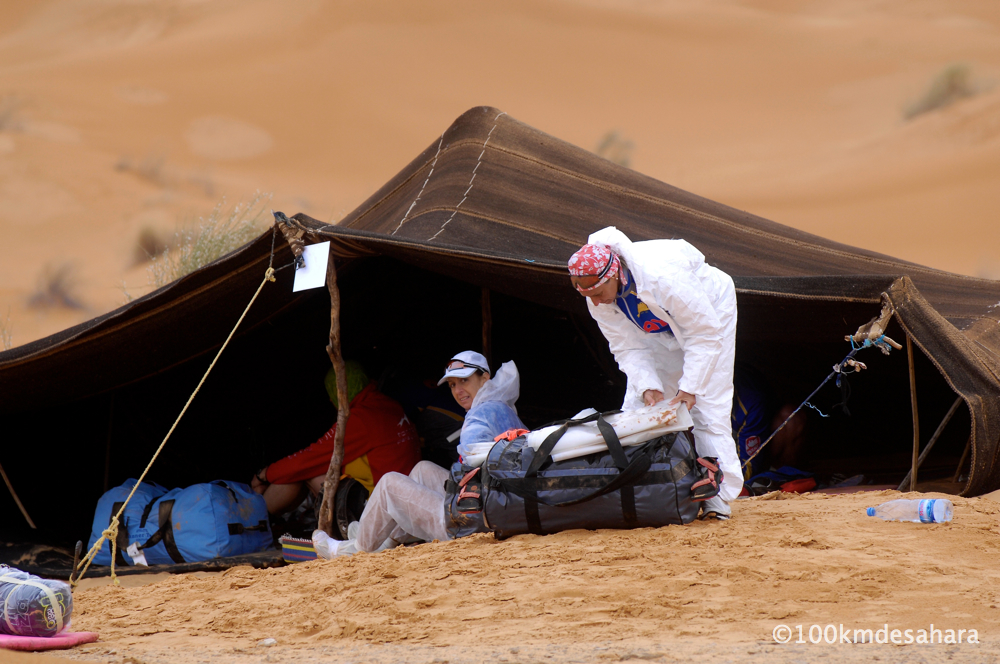
  • 3 nights in hotel and 3 nights in tents (6 people each),
  • Medical assistance during the race,
  • Tourist assistance,
  • Insurance.

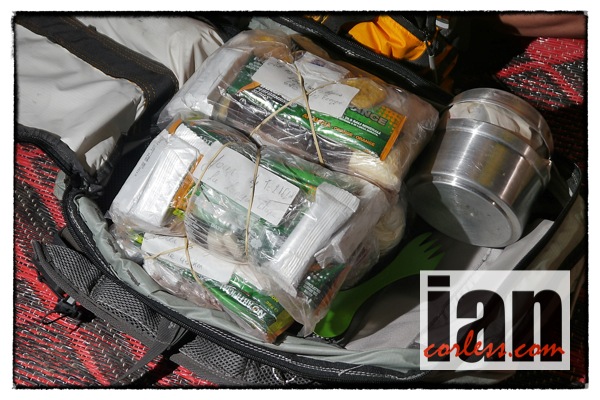
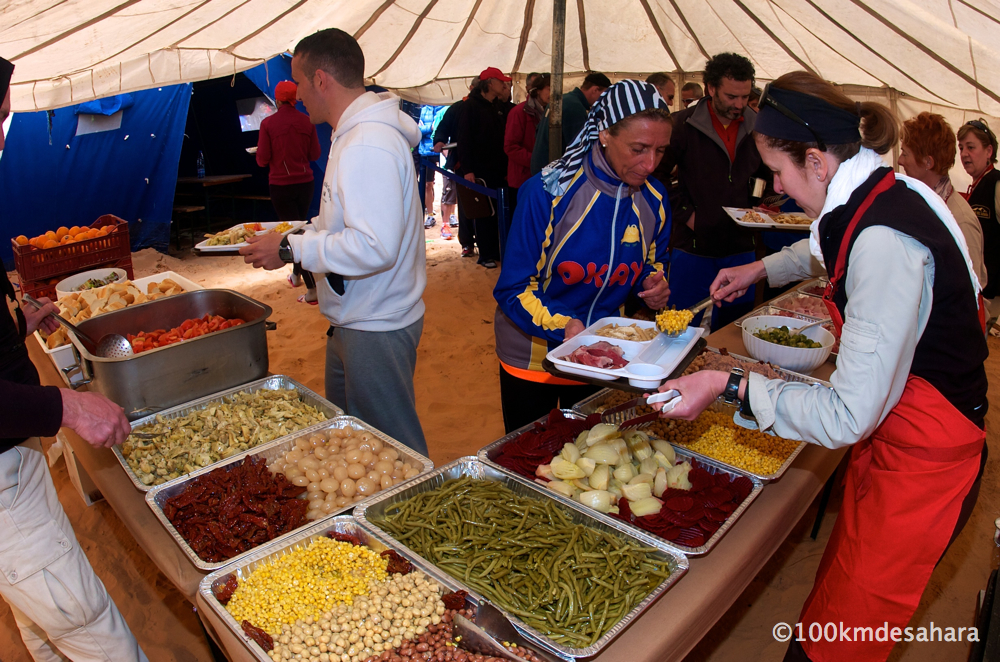
During the race, a catering service provides food for all participants. All produce comes from Italy with the exception of fresh fruits and vegetables; they will be sourced locally in Tunisia. The menu will be balanced and based around runner’s needs and requirements.

©copyright.iancorless.com._MC22832

  • Breakfast: 
Coffee, tea, milk, cookies, cakes, fresh bread, jam, honey, muesli, cereals, eggs, cooked ham, cheese, fruits
  • Light lunch: 
Pasta or rice, hot or cold dish of meet, hot or cold side dish, salami and cold pork meat, Parmesan cheese, tuna, tomato salad, fruits
  • Dinner: 
Appetizers, pasta, rice, vegetable soup and broth, hot dishes of meet, hot or cold side dishes, tomato salad, Parmesan cheese, fruits, dessert, wine on the table.

What is not included?

  • Drinks and beverages at the hotel and in the oasis of Ksar Ghilane.
  • Airport tax.

WALKERS

©copyright.iancorless.com._BEN2769

Max number of participants: 20

A new addition to the race is a walking category. Just 20-places are available, allowing an opportunity to explore the emotions and landscape of the Sahara in a more relaxed way. A special program has been arranged and will be independent of the running race but will run in parallel.

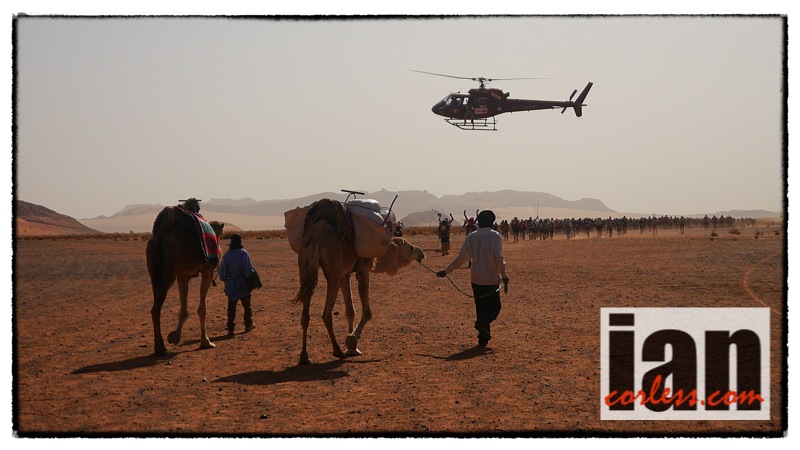
Walkers will be accompanied with a guide, dromedaries and 4×4 vehicles. Dromedaries will carry small personal luggage and the vehicles will provide security and reassurance for all walkers.

©copyright.iancorless.com._MC22935

The treatment for walkers will be the same as for the runners; night accommodation will be nomadic tents with personal sleeping bags; breakfast, lunch and dinner will be provided in the camp with the entire group of participants.

©copyright.iancorless.com._MCA9737

ITINERARY

Sunday, April 27th, 2014

  • Flight Milan or Rome-Djerba
  • Transfer to the Hotel ****, dinner and overnight in hotel
  • It will be possible to leave the extra baggage in the hotel; it’s MANDATORY for all the participants to put everything you need in just one bag. Exceptions will not be allowed.

Monday, April 28th, 2014

  • Wake up at 7.30 am, breakfast in the Hotel and transfer to Ksar Ghilane by bus for the opening ceremony
  • Arrival in the oasis, accommodation in the tent camp equipped with common
  • Rest rooms and showers
  • Lunch at the camp with local food specialties
  • 3.00 pm opening of the shop “merchandising 100 km del Sahara”
  • 5.00 pm designation of race bib numbers and assignment of tent
  • groups.
  • 6 people per tent
  • Dinner made by the Zitoway staff and overnight stay in the tent of the oasis

Wednesday, April 30th, 2014 – 2nd and 3rd stage 26km + 9km (night stage)

  • 7.00 am breakfast and baggage delivery
  • 7.30 am start of walkers
  • 8.30 am start of the 2nd leg
  • Arrival at the camp, open lunch, relax in the afternoon
  • 7.00 pm dinner at the camp
  • 9.00 pm start of the night leg
  • Overnight at the camp

Thursday, May 1, 2014 – 4th stage marathon 42km

  • 6.00 am breakfast and baggage delivery
  • 6.30 am start of walkers
  • 7.00 am start of the 1st group
  • 8.00 am start of the 2nd group
  • 9.00 am start of the 3rd group
  • Arrival at the Hotel****Sahara Douz, end of the race
  • Lunch by the hotel restaurant
  • Relax in the afternoon

Friday, May 2, 2014

  • Wake up and breakfast
  • Transfer to Djerba, lunch at the hotel
  • Afternoon in relax by the pool
  • 8.00 pm dinner in the hotel and slide show of the race/li>
  • Overnight in hotel

Saturday, May 3, 2014

  • Wake up and breakfast
  • Transfer to the Airport of Djerba, on the way free lunch
  • After lunch transfer in airport for the flight back
THE FOLLOWING PROGRAM MAY CHANGE AND IS SUBJECT TO FINAL CONFIRMATION

PRACTICALITIES:

BAGGAGE

The backpack will be the only hand luggage on the plane, which should contain just what is necessary for the race – running shoes, shorts, t-shirt, and survival kitWe have already had an incident where someone’s personal luggage was in delay and they were at risk for not being able to participate in the race. If you have the necessary items in your backpack, you can run with no problem until your baggage arrives.

REQUIRED DOCUMENTS

  • I.D. is required to go in Tunisia for Italian people.
  • A valid passport is required and no vaccinations are needed at this time. It’s always recommended to check with your Embassy for any travel advisories.
  • A medical certificate issued by a sports medical center facility with a test of physical efforts confirming that the athlete is physically fit for this race is absolutely MANDATORY. Without this certificate, you will not be allowed to participate.
  • No certificate is required for walkers.

RACE CLOTHES

  • Shoes should be suitable for off road running, and should be a little oversized to allow for sore and swollen feet.
  • It is advisable to use gaiters for the sand, but make sure they are good quality and don’t impede performance.
  • If you tend to burn easily in the sun, it is not advisable to wear a singlet or tank top during the race.
  • T-shirts should be made of a suitable anti-sweat material like dryfit, etc.
  • It’s strongly recommended  to bring a Saharan scarf, called a “cechès”, that can be useful to protect nose and mouth in case of wind or sand storm as well as motorcycle glasses.

RACE BACKPACK

For safety reasons it is MANDATORY that participants have a race backpack that contains the following items:

  • A minimum of 1-litre of water (inside the backpack or in flasks around the waist), salt tablets, survival blanket, whistle, lighter and chemical light .
  • A hat, sunglasses, protective sun lotion, a small knife and some Compeed plasters are also recommended.
  • The mandatory equipment may be verified at any moment and if an item is missing a penalty will be immediately applied per regulations.
  • The survival kit can be purchased from the Organisation.

MEDICAL CERTIFICATE

  • A medical certificate issued by a sports medical center facility with a test on physical efforts confirming that the athlete is physically fit for this race is absolutely MANDATORY.
  • No certificate is required for walkers.

SAFETY KIT

For safety reasons it is MANDATORY that participants have a race backpack

that must contain the following items:

  • A minimum of 1-litre of water
  • Salt tablets
  • Survival blanket
  • Whistle and lighter
  • Chemical light
  • Hat
  • Sunglasses
  • Protective sun lotion
  • Small knife
  • Compeed plasters

The mandatory equipment may be verified at any moment and if an item is missing a penalty will be immediately applied per regulations.

Test yourself!

If it was easy, anyone would do it… take yourself to a new level, add a new stimulus to your running. The Sahara will not only test your physical parameters but your capacity to control your mind.

Achieve your finish line!

More information or booking here:

← Back

Thank you for your response. ✨

Warning
Warning
Warning
Warning

Warning.

GALLERY:

Organisation:

ZITOWAY Sport & Adventure
P.I. 02510760362
Tel. +39 059 359813
Fax +39 059 2920013
Port. + 39 337 573662
Skype: Adrizito

UTWT – Ultra Trail World Tour analysis

“We could make runners stash their own gatorade bottles (glass) and run with the horses, but it’s not 1974.” Craig Thornley, Western States race director.

It’s a good place to start. The world of trail, mountain, road ultra running is changing. In recent years we have seen rapid growth. Runners, elite and non elite want to test themselves on ever demanding courses and ultimately test themselves against each other and see who comes out on top.

However, ultra running is not quite like any other sport. It places extreme demands on the body. Pushed too hard and the body breaks… ask Geoff Roes what he thinks.

So, although an Ultra Trail World Tour sounds attractive caution is needed. But before we worry about those aspects, we first need to look at what this UTWT entails.

The UTWT was launched on September 1st amidst the Ultra-Tour du Mont-Blanc. The fact that the race was not over and that many runners were still trying to get to the finish line may well have been a touch of bad timing. Admittedly though, many press leave immediately after the event so this may very well have been a logistical issue.

One by one, the initial races were announced and with them a representative from each race came to the stage.

2014 confirmed races are as follows:

  • January 18th Vibram Hing Kong 100
  • March 1st The North Face Transgrancanaria
  • March 15th Vibram Tarawera 100km
  • April 4th to 14th Marathon des Sables
  • April 25th Ultra Trail Mt Fuji
  • June 27th The North Face Lavaredo Trail
  • June 29th Western States
  • August 29th The North Face Ultra-Trail du Mont-Blanc

So, this takes us up to August and apparently other races have been asked to participate and we can expect confirmation of these, on or before September 15th.

Of course, alarm bells initially ring at the presence of Western States. Secondary alarm bells ring at the presence on Marathon des Sables but I will come onto that later.

How does it work?

The UTWT will propose an international competitive circuit in partnership with the International Trail Running Association. The events should already be open to the widest public and will offer ‘everyone’ a unique chance, throughout each year, to participate. Question: How does that relate to Western States with limited capacity and demand far outweighing places available? Also, Marathon des Sables… UK entrants for example are on a three year waiting list.

In each race points are awarded to every runner and therefore at the end of the year, a male and female UTWT world champion will be announced. To attract elite athletes, certain events will have Ultra Trail Series status and these will offer more important weighting in the ranking. (I assume this will be for races like Western States?)

Runners will be presented with a Passport. This can be ordered online before the end of the year, it was not made clear if these passports need to be paid for? When you complete a race, you are awarded a visa, this is added to your passport and shows your completion.

The minimum race distance will be 100km, races must have had two previous editions to qualify and already have 500 minimum participants (again, Western States has less than 400). A minimum of twenty countries will be represented and be emblematic venues.

So, how do you become World Champ?

All finishers in every race will be awarded points according to his performance. These points will be added to the International ranking and updated after each race. This ranking will be available on line at the UTWT website. The circuit will be an International competitive circuit in partnership with the ITRA (International Trail Running Association).

As mentioned, a limited number of races will be called Ultra Trail Series and you may only use two best performances from these races in building up points for the world title. In total, three races score, so, you could have two UTS races and one other.

A world champion lady and male will be announced each year.

ANALYSIS

Okay, first and foremost, we don’t have the complete picture, so, you will need to be patient.

The press conference was slick, enticing and all was going well until a call for questions came. I jumped in and asked about Western States…

It’s not just ‘any’ race, it has a limited field, it’s a desirable race, what is the impact and so on a and so on.

The answer was vague and very unconvincing. In actual fact it was embarrassing. One comment that came from the stage was, “it’s early days and we haven’t worked these things out yet”. Not a good start.

One journalist asked several questions:

Will you have doping control? YES

Will you have prize money? EACH INDIVIDUAL RACE CAN HAVE PRIZE MONEY, IT’S UP TO THE RACE. We did not have clarification though if the world title had a prize, other than the ‘title’ of world champ.

What will the elites get? ELITE 1 RUNNERS WILL GET TRAVEL AND HOTELS PAID FOR. But they never clarified if that is open to all elite 1. Lets say 50 want to do Western States, will they all get hotels and travel?

The series very much seems like the Skyrunning concept, is this competition or are you offering something different?. THE RACES WILL BE 100km OR MORE AND ON VARIED TERRAIN, SKYRUNNING WORK TO A SPECIFIC FORMAT AND WITH THE ODD EXCEPTION, ALL RACES ARE UNDER 100k. I agree, the UTWT is very different to Skyrunning, it is taking some principles from the Skyrunning ethos, for example, a series of races, three qualify out of five and the winner is world Skyrunner champion but the terrain is varied. Skyrunning look at altitude and technical.

At this point, the stage participants could feel more and more questions were coming and the conference was drawn to a close quite quickly.

Overall, it started well and ended badly. It certainly appears that the UTWT team wanted to maximise the UTMB as a platform to launch but they had far too many question marks and lack of answers to leave me feeling reassured or convinced.

POINTS TO CONSIDER

I have to say, I like a championship that includes mixed terrains and distances. That will provide a true rounded athlete. However, the UTWT never specified how runners enter, so, for example, to qualify, do you have to do one 100k, one 100m and one stage race? Do you have to do one on sand, one in the mountains and one jungle for example? Without this specified, I could maybe do three 100k races on fast trail and get maximum points if that is what I was best at? We need clarification.

World destinations, iconic races are great. I can see the beauty and excitement of going to New Zealand, Hong Kong and so on, BUT these races already exist and to be honest, if I went to one it would be highly unlikely I would go to another. Far too expensive for the average pocket.

Travel and hotels for elites are all well and good but who is paying? Surely that is what sponsorship from a team is about. I am we’ll aware that places are offered and expenses paid already exists but this is very much in conjunction with a race, the RD and the athlete. Blanket travel and hotels need to be paid for and by someone and that will come down to the everyday runners and the races themselves who I am assuming are paying a yearly fee to be part of the UTWT. Transparency is needed here. Many figures have been mentioned that ravces are paying 15,000 to 30,000 euro to be part of UTWT. I believe this to be speculation.

The UTWT title needs additional incentives. Prize money! However, that has no bearing on all the other runners. I can’t help but think that only a small few (who are rich enough) will travel to several continents to experience the world tour.

What will the races get out of it? Well, recognition and exposure for one. But, I know I go back to Western States, does that race need more exposure… Does it need more entries, does it need more PR? Same applies for UTMB, you already have to get points and enter a lottery, so, if you get a ‘Passport’ does it mean you get automatic entry in a UTWT event? Confusing!

MDS is a completely different race to all the others, to have just one stage race and no others would be long term problematic. In addition, I am not even sure it should be in this series. A great race but is a unique race.

We also need to think about the runners, all the runners. The calendar is increasingly becoming larger with more and more choice. Do we really need to insist that participants run three races over 100k to be a world champion? In addition, for this to be a true championship, one of those three races would need to be a 100-miles.

Ultra is not always better when longer. I wonder if some races under 100k should be allowed?

Why not have an Ultra World Tour and include road? Comrades is an iconic race for example and surely a true ultra world champ should be able to run road too?

Are we seeing the creation of an ‘Ironman’ for trail or is this ‘just’ a series of races with quite simply a world title?

I’d like to know who is beyond this with clear transparency. I have experienced many things in the last twelve months that I have questioned and now suddenly they all add up. For example, late 2012 WAA (What an Adventure) became the official pack for MDS. At the 2013 MDS, Catherine Poletti was present at the finish in the Sahara and then WAA became the official supplier of the blue UTMB bag. Also, I believe that Catherine Poletti visited Western States to view the event… So, is the UTWT an extension of the UTMB organisation and what does it mean? Is this good or bad? I merely ask the question.

At this stage we do not have any answers. Paul Charteris from Tarawera ultra was prepared on Sunday at the press conference, although he did not attend he was online and responded to my tweets. He also had a press release ready and he has been open and transparent. Equally, Transgrancaria have been proactive and the team at Lavaredo I spoke with personally. They all want the races to be valued, increase in size and stature and be part of something bigger. I think Craig Thornley and team are having a harder time. Western States is the holy grail and change here will be difficult and in many cases not welcome. The sport must move on and grow and that means all the sport, Craig in many ways is correct when he tweeted, “We could make runners stash their own gatorade bottles (glass) and run with the horses, but it’s not 1974.”

So what do YOU think?

I don’t have the answers and I will have missed many points. Please provide some input.

*Please note, for reasons of clarity, I do work alongside the ISF Skyrunning Federation and my thoughts and comments in this posting are impartial and with the pure objective of what is the best for our sport.

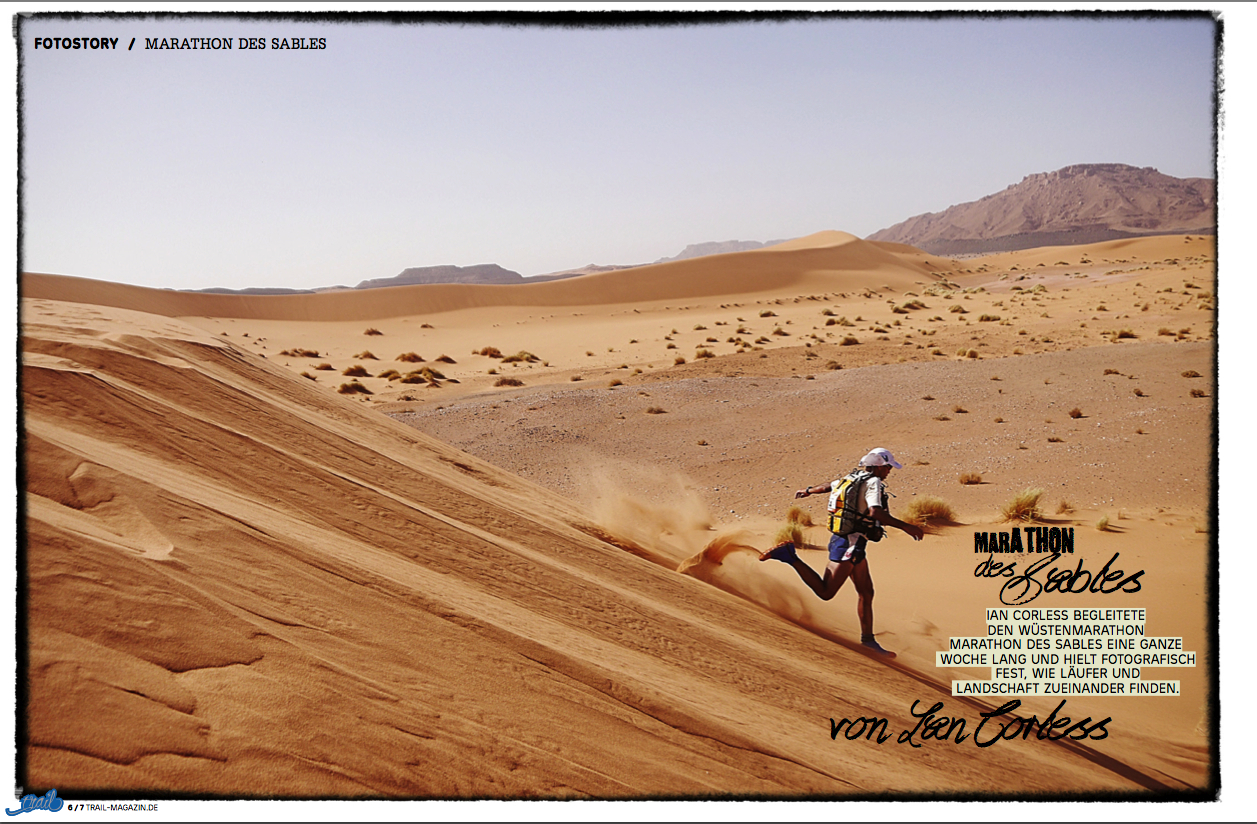
Marathon des Sables – Trail Magazin

Really pleased to have a six page photo article on the 28th edition of the Sultan Marathon des Sables in Trail Magazin.

http://www.trail-magazin.de

The magazine is available for download for just 4 euros from this link: HERE

Trail Magazin - Marathon des Sables. iancorless.com

Trail Magazin – Marathon des Sables. iancorless.com

MDS ‘Snapped’ Running Fitness

NO OVERTAKING ALLOWED!

MDS snapped RF 0713Running Fitness ‘Snapped’ July 2013.

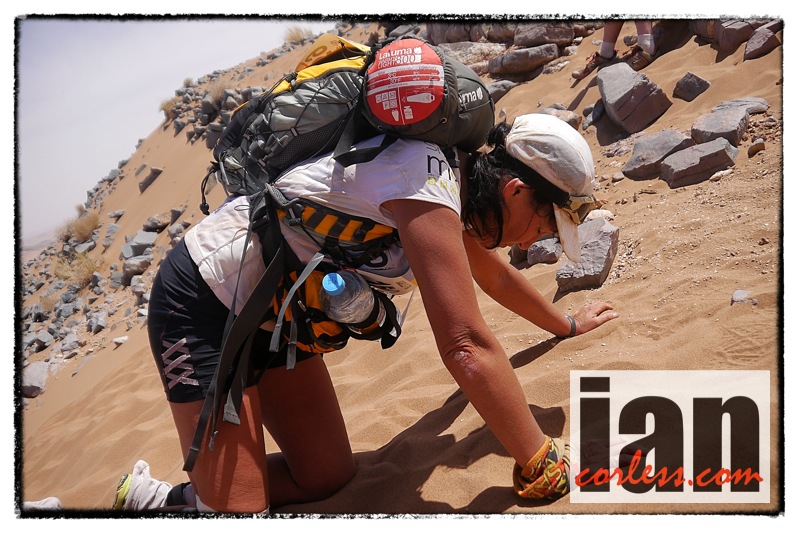
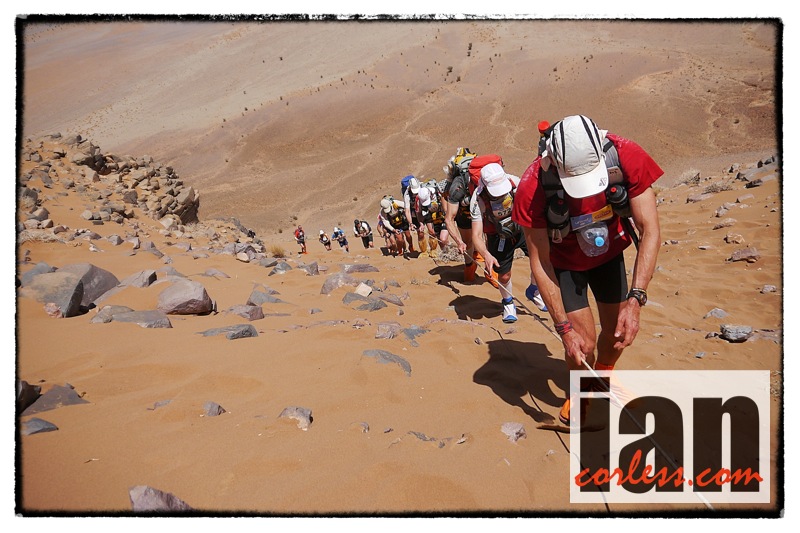
Sometimes the nature of running courses mean that, despite our best efforts, overtaking the competitor in front is simply not possible. It might be too narrow, it might be too boggy, but it’s not often that overtaking is precluded by the mother of all sand dunes!

This striking images taken by our man on the ground (or in the desert) Ian Corless shows competitors in this year’s Marathon des Sables doing battle with the course – rather than each other!

The 28th running of the epic multi-day race in the Moroccan Sahara, this year’s race added a killer wind into the equation – as if it wasn’t hard enough already. We’ll be bringing you the full report in the August issue of Running Fitness.

Links:

  • Order the magazine and subscribe HERE
  • Images from the Marathon des Sables are available to purchase for personal use HERE


Protected: Darkness to light – Marathon des Sables

This content is password-protected. To view it, please enter the password below.

Pictures tell stories…

I love what I do! I really do.

To work in a race environment and capture the action in words or audio is a real pleasure. I have played with video and although I enjoy the medium, I do prefer a ‘still’ image. It is a moment captured.

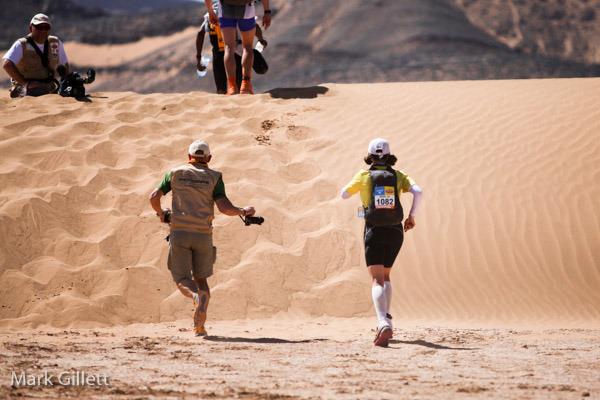
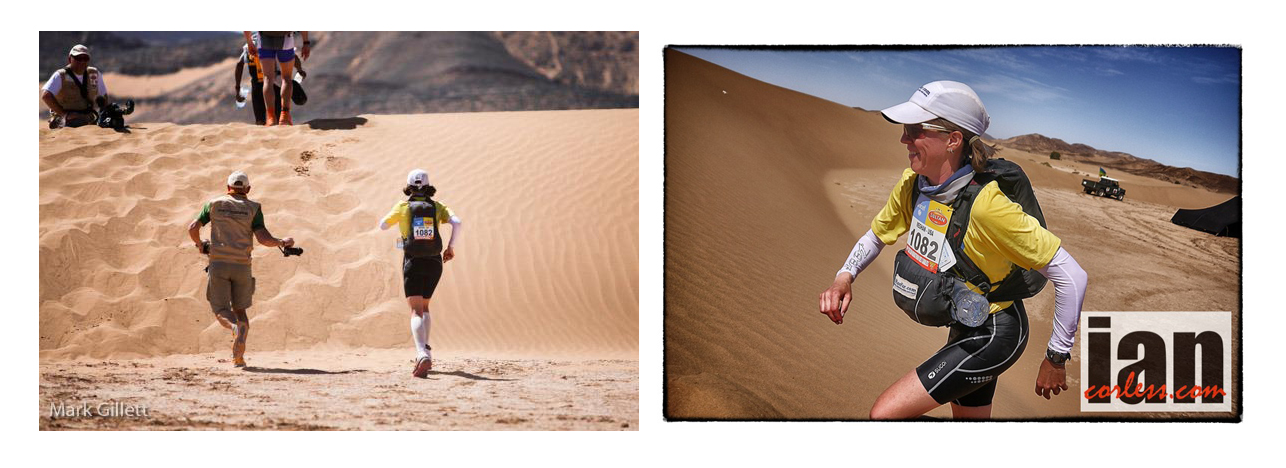
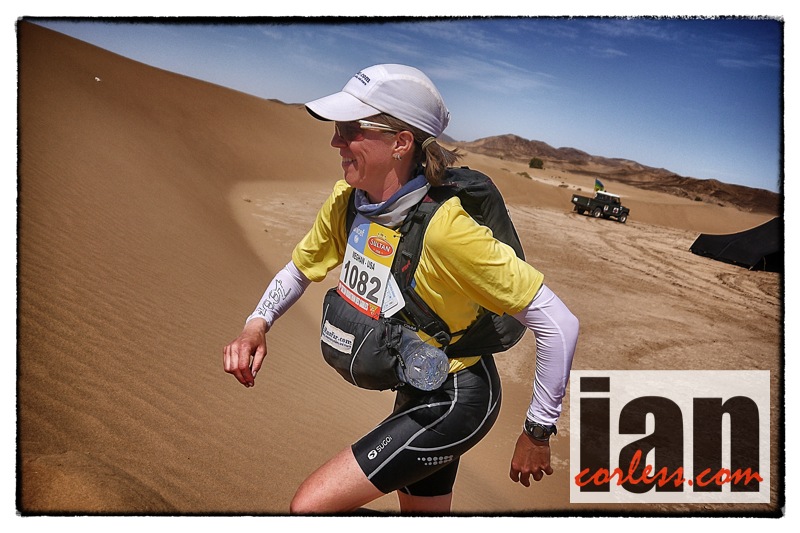
These two images really capture everything that combines to make a great image.

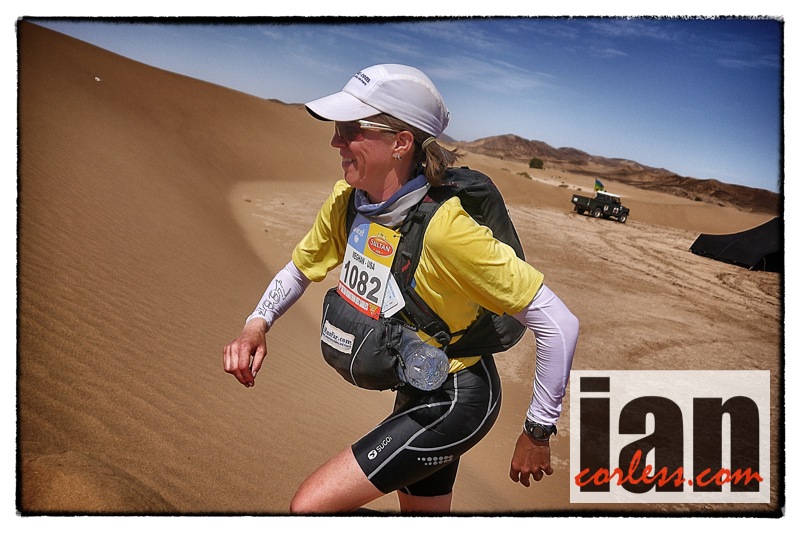
Meghan Hicks on the first stage of the 2013 Marathon des Sables (which she went on to win) running up a dune on the first day. I captured the image by running alongside her.

iancorless.comP1020570From behind, my fellow photographer, Mark Gillett captures the process involved. Story making at its best, running at its best and the use of imagery at its best. I have often been asked HOW? I manage to capture images that make the viewer feel like they are in the moment… well here is how.

Copyright Mark Gillett

Copyright Mark Gillett

Pictures tell stories… thanks for the inspiration Meghan and thanks for capturing Mark.

Pictures tell stories...iancorless.photoshelter.com


The Brits are coming…! Marathon des Sables 2013

You can read the full article and see images of Danny and Jo on RUN247 HERE

Marathon des Sables – a race in images

A portfolio of selected imagery from the 28th edition of the Sultan Marathon des Sables is now on line in individual galleries for each day.

Please follow the links for each gallery.

Before the race – link HERE

iancorless.comP1010959


Stage one – Link HERE

iancorless.comP1020570


Stage Two – Link HERE

iancorless.comP1030020


Stage Three – Link HERE

iancorless.comP1030767


Stage Four – Link HERE

iancorless.comP1030986


Stage Five – Link HERE

iancorless.com_1090639


Stage Six (non-competitive charity stage) – Link HERE

iancorless.comP1060177

Patrick Bauer – The Interview

MDS LOGO

Patrick Bauer has a passion and a love for the Marathon des Sables that the passing of the years has not suppressed. Back in 1984 he ventured into the Algerian Sahara to cover 350km’s alone in a self sufficient manner. Little did he know that his journey would not only change his life but also so many lives of so many others…

DRAYMDS2012-04-14-7436

Translation services provided by Niandi Carmont

IC Patrick, welcome. In 1984 you took a solo journey across the Algerian Sahara. Why, what inspired you?

PB In 1984 I decided to take a self-sufficient journey of 350km. It took me 12 days; because of my self-suffiency my pack weighed 35 kilos. I needed enough food water for the whole journey. I had no help. It was an incredible undertaking.

IC What was the motivation, It must have taken some planning?

PB I had lived in West Africa for two years. I was employed to sell Encyclopedias to teachers and books on medicine to doctors and pharmacists. Returning to France was difficult. I had no desire to stay… I just wanted to leave again. During my 2 years in Africa I had crossed the Sahara five to six times by car but I wanted to cross on my own, on foot. I remember it well, I had returned to France, I had no apartment so I returned to my parents. I was back sharing a room with my brother. I woke up one morning and said

“I am going to cross the Sahara on foot”

My brother said, “Ok, go to sleep… you had a nightmare”

I said to my brother you must help with a camera and sponsors. Just three weeks later I left to take the journey.

IC That journey influenced the rest of your life but importantly it changed your immediate life in the mid 80’s. In 1986 you decided to share that experience and create Marathon des Sables. What gave you the confidence to create such a race? How did you know you would have a market?

PB I realized when I did a presentation to my village. I had friends and sponsors present. It was a thank you but I had awoken curiosity and interest. Local runners did not want to make the journey alone, so, I decided to organize it. No other event compared, maybe Paris-Dakar. It was a ground breaking moment.

DRAYMDS2012-04-08-8439

IC In the early years, was participation mainly French?

PB Yes, French with the exception of one Moroccan. We had 23 runners at the first edition. It took 24 months to plan and create. Little did those 24 know that they would be the pioneers of one of the most beautiful stories that will soon be 30 years old?

IC In the early 1990’s you contacted ‘The Best of Morocco’ to introduce British and Irish runners, was this a long term plan to expand the race?

PB We already had contact with this agency (Best of Morocco) but by 1990 I had already done 5 editions of the Marathon des Sables. I wanted to expand internationally and I wanted as many countries present as possible. We started in a tentative way and today we have as many English runners as French and potentially more in the future.

IC British entries have reached 250+. The race is known worldwide. Did you know it would become so big?

PB I would never in my wildest dreams have imagined it would be what it is today. When a race is over, I start immediately on the next year. I have a passion and I don’t think about it all the time.  I want to be more strategic with my long-term vision. 2015 is the 30th edition; I like to plan 3 years ahead so I already anticipate higher demand for 2015.

IC What is it that makes the race so special. You appeal to novices and experienced runners. It is a difficult balance but you do it so well.

PB I think it is the concept. The cocktail of the desert, running and the self-sufficiency. Nobody at the beginning thought it would be possible to run with a pack. The expedition was an extra bonus…. You need to manage everything; calories, water, clothing, rest etc. All these elements combine to create the ultimate experience. It was new! Today we have additional security. Runners tell us that the safety element is key. Believe it or not, the average age is 40yrs+. These participants have families and children so risk is not negotiable. We want to offer security and safety for all these participants. We have helicopters, planes and insurance to make sure everyone is protected. Finally, it is about testing your limits; in our busy lives we find going back to basics a wonderful experience. Under the stars with friends, sat around a campfire, simple conversation and no luxuries. It is primal. It brings out true values that we may have forgotten. Because the desert facilitates all that is around us, the stars, the universe, you don’t need a book to tell you that ultimately we are all insignificant.

DRAYMDS2012-04-12-0683

IC What is it that makes runners that go back year after year?

PB Yes, we have some people returning for the 22nd or 23rd time. But it is not the same for all. If everyone came back we would have the same race, this would not be good. But we have a faithful family that we have created from the start. We have affinity and we love to find each other in the desert. We are also happy to find new friends. Maybe we have people return years later to celebrate a key moment such as a 50th birthday. We have a fraternity side, we share values. We have a respect for difference and other countries. All the languages that are spoken. These are the experiences that make the event. It is the combination of so many elements that make it great. We have an edge I think and that brings people back.

IC What is the future of the race? Will the race become bigger with more runners?

PB Yes, I think we will have more participants in 2013. We will have 350 from the UK. We had a meeting with worldwide representatives some time ago and it was decided that we would all work together on a communication strategy and we discussed the 30th edition. We have had great demand; we have refused more than 2,000 entries. I get messages about the 30th edition asking if it will be 300km as the 25th edition was 250km. Because of the worldwide economic crisis we may need to take more entries so that we can ensure the quality of the race such as safety. This is why we prepare 3 years ahead.

camp

IC As a race director can you give us an insight into the Marathon des Sables?

PB The advise to the runners is repeated every morning, like, hydration, protecting your head, sun block and more specific advice concerning the course. Storms can just arrive and then last a half-day or even 4-5 days. A few years ago we had floods… that year we had to plan from day-to-day. It wasn’t easy. The biggest problems are usually weather related. For the rest of us, it is a safe country. We have government backing should we have a problem, for example we have military assistance. We have trucks and soldiers who transport the tents everyday and we have 400 people who work on the event. If you add journalists, drivers, volunteers etc. then we have more like 450 people.  I have 110 people who directly report to me.

JPCERVELMDS2012-04-08--4466

IC It is so impressive, the tents, the staff, and the helicopters. A circus!

PB It is a little like the circus. Up and down, load up and move. I am always impressed. It is fantastic.

IC Since the beginning can you pinpoint any highlights?

PB The feeling you get from every event. We have an extraordinary experience. We share values with participants and it creates a bond. Some say ‘never again’ and then two years later we see them again. We all strive for equilibrium to balance the experience and we all strive for positive thoughts. If we have them then we can share beautiful things.

IC In 2005 you had an Opera singer to sing before the start. A magical experience.

PB Yes, for the 20th anniversary we had a spectacular start with an Opera singer and musicians. She was Japanese. It was a moving experience. Classical music is in harmony with the desert. At the beginning the runners are still fresh so they can enjoy the experience.

IC What do you think of Olympian James Cracknells performance at Marathon des Sables, he is not your ‘typical’ desert runner?

PB He was an excellent champion, a top-level athlete who understood how to test the limits. So I think he had a new experience in the Sahara. He asked himself what he was doing at the race several times I think. Discovery Channel did a documentary on him. He demanded respect as an athlete. As a man I did not get to know him but as a sportsman I am sure he has great values.

IC Has the race become easier over time or have you made adjustments to make the experience more challenging?

PB The race is not easier. The distance has increased over the years but water can be a key issue and we now have great water supplies which was not so in the past. In the past water was an issue. But we all have short memories. We forget the hardships. Every year has new demands. We now have more positive incline. We used to spend time in the valleys.

DRAYMDS2012-04-11-9798

IC True, we all forget hard times very quickly. We always remember the good times and they are our memories.

PB At the end you have sore feet and blisters… but your mind is selective. We filter the negative to retain the good. The human and sport experiences. We forget the soreness and remember the positive.

IC Do you still run, do you have the time?

PB Yes, I run after the sponsors, I run after my planes, I run after my trains… I started cycling a little and I do a little running. It’s not a good time for me. But then again, I always have an excuse. It is difficult but I am motivated to try to be more regular with my own exercise.

IC Patrick, it really has been excellent to get an insight into such an iconic race. Thank you so much.

PB Merci beaucoup

2013 RACE PREVIEW HERE

Patrick Bauer, Marathon des Sables copyright www.lest-eclair.fr

Patrick Bauer, Marathon des Sables copyright http://www.lest-eclair.fr

Marathon des Sables 2013

DRAYMDS2012-04-14-3437

Save The Date – Event from 5 to 15 April 2013

THE MARATHON DES SABLES: BEYOND JUST A RACE…

Since 1986, the MARATHON DES SABLES has offered men and women from all around the world the privilege of an encounter with immoderation. That of landscapes, that of sporting challenge, but above all that of emotion.

An adventure carved out in the South Moroccan Sahara.
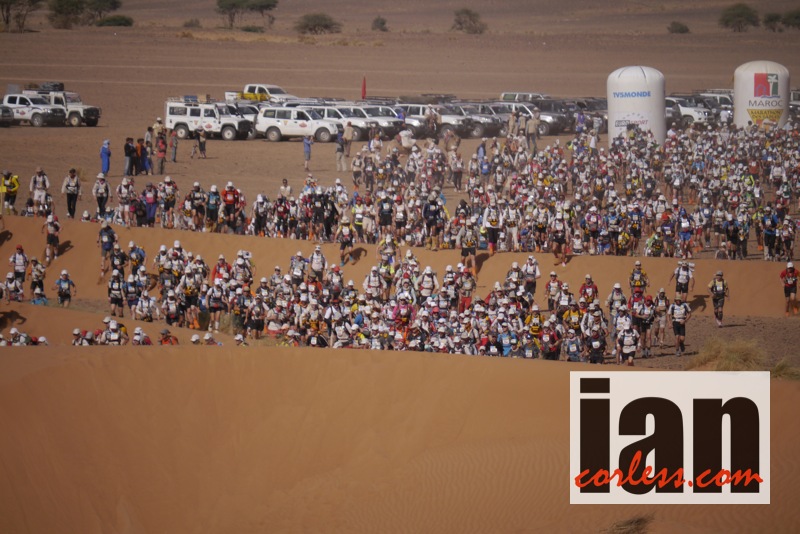
There were 23 in 1986, 27 years on there will be nearly a thousand runners coming together in this endurance race: 250 kilometres split into 6 legs marked out across the South Moroccan Sahara in the provinces of Errachidia and Tinghrir and to be completed at their own pace and self-sufficiently. 
Over the course of a week, competitors will experience one of the finest challenges of their existence, of their whole life sometimes. There are sure to be a few champions in their midst, but most often the runners are ‘ordinary’ men and women in search of the extraordinary. For a lot of people, confronting the desert for six days and being self-sufficient in terms of food intake, is the realisation of a dream that began to take shape several years earlier. And here they are, at the heart of a majestic setting, with the Merzouga dunes, the highest in Morocco, as a backdrop.

DRAYMDS2012-04-10-9404a

The richness and intensity of emotions

It is often an inner journey for all the competitors. Each day, for hours on end, they will run, jog or walk. Whatever the pace, their sole obsession is to make headway. In the heat, the wind, then the night, their bag strapped to their back, they’ll traverse the desert, with the light of their headtorch, the starry desert sky their only witness. With the passing kilometres, with the passing tracks left amid a string of dunes, in a dried out erg, or on the summit of a djebel, they separate off from the superficial to simply be left with the essential. That will be their finest victory. “On the Marathon des Sables, you cut yourself off from the world, you learn to rediscover the simple pleasures,explains Nicolas Esterhazy, a 50-year old Belgian runner. It’s hard to express how you feel in words or images. Added to that is the solidarity between the runners. You run and you come across someone from Columbia, Portugal or China. You don’t know them but you share a moment with them. Such encounters are absolutely priceless.” “This race is kind of reminiscent of the United Nations,adds Kirk McCall, a runner newly arrived from Florida. The runners come from all over the world and share the same emotions, helping each other out. All the barriers are erased. The politicians of our world should take inspiration from the Marathon des Sables.”
An XL organisation

400 people manage the event, including 110 volunteers who come to add their contribution to this ocean of sand. This caravan also employs some 250 Moroccans, 65 of whom are allocated to the 119 runners’ tents as well as over 60 drivers capable of recognising nearly every stone and dune in the desert. An absolute priority at the MARATHON DES SABLES, safety remains a constant concern. Over 50 doctors and nurses treat 300 to 400 people each day, ranging from the unmissable blister to the more delicate operations.
Solidarity Marathon des Sables: The joy in sharing

Having financed the creation of wells and some more specific projects, the MARATHON DES SABLES has now gone the extra distance in its solidarity with Morocco by creating the Association, SOLIDARITY MARATHON DES SABLES. Inaugurated on 11 April 2010, the centre, situated to the North of Ouarzazate, offers those aged 3 to 5 early-learning sports activities and for those aged 6 to 11 early-learning athletics activities. In 2012, the association has also launched the Fémmissima operation, an initiative designed to boost literacy among women. These long-term projects have a budget of between 45,000 and 50,000 Euros. The aim is to perpetuate this action through donations from the runners, of whom there are an increasing number each year who support the Association SOLIDARITY MARATHON DES SABLES. Because joy is infinitely more beautiful when it is shared.

JPCERVELMDS2012-04-11-5928