The Coastal Challenge – February 13th to February 20th, 2027
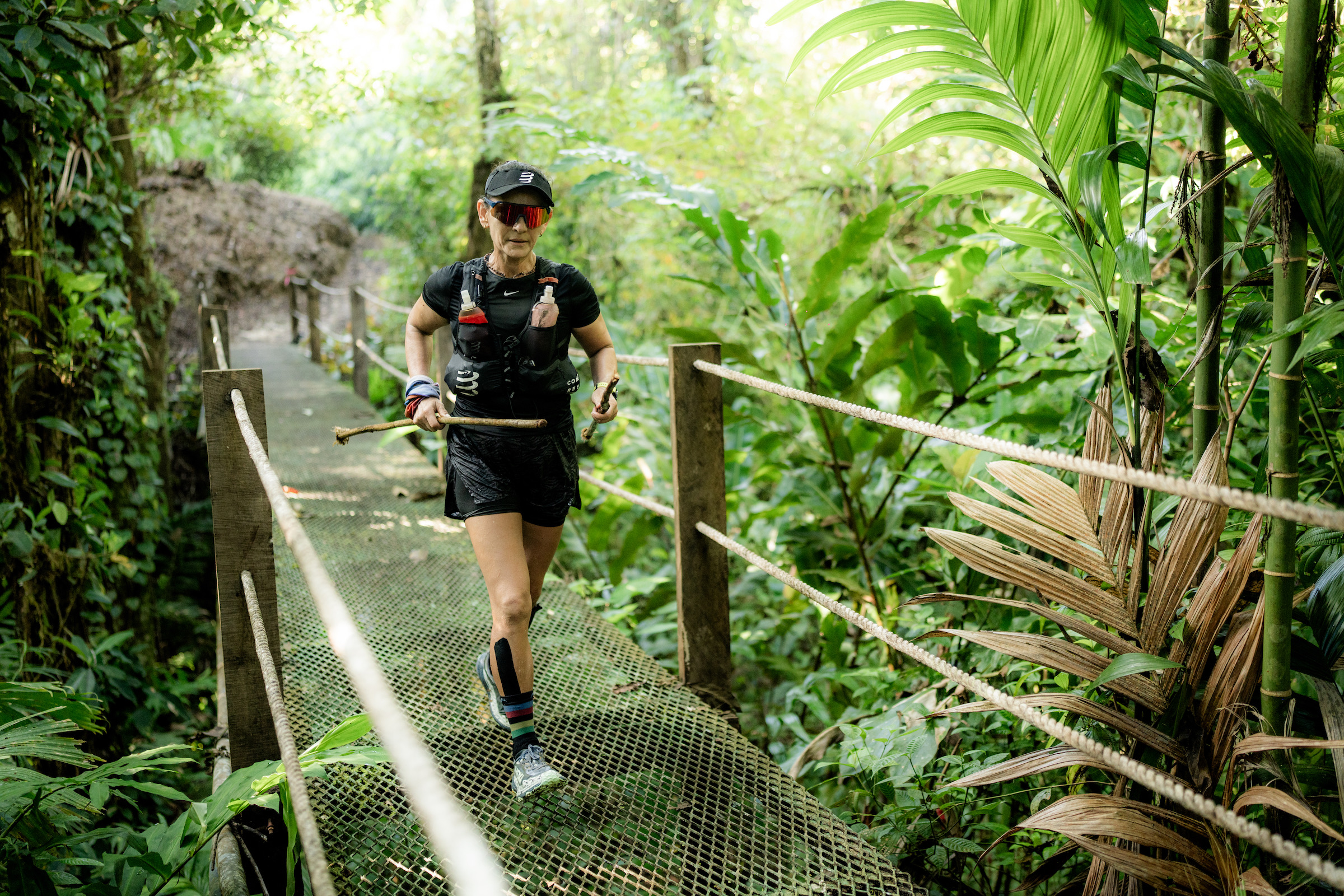
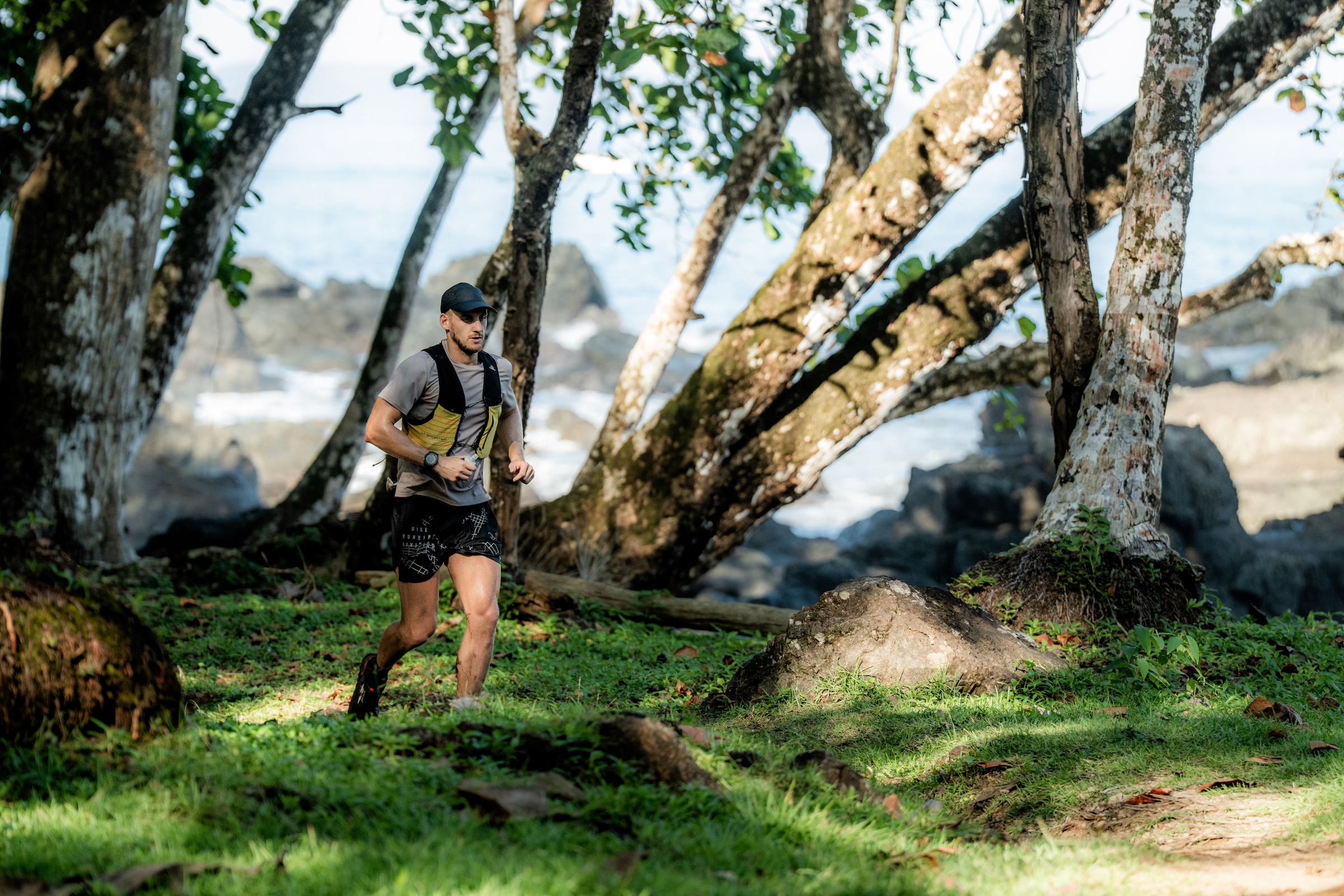
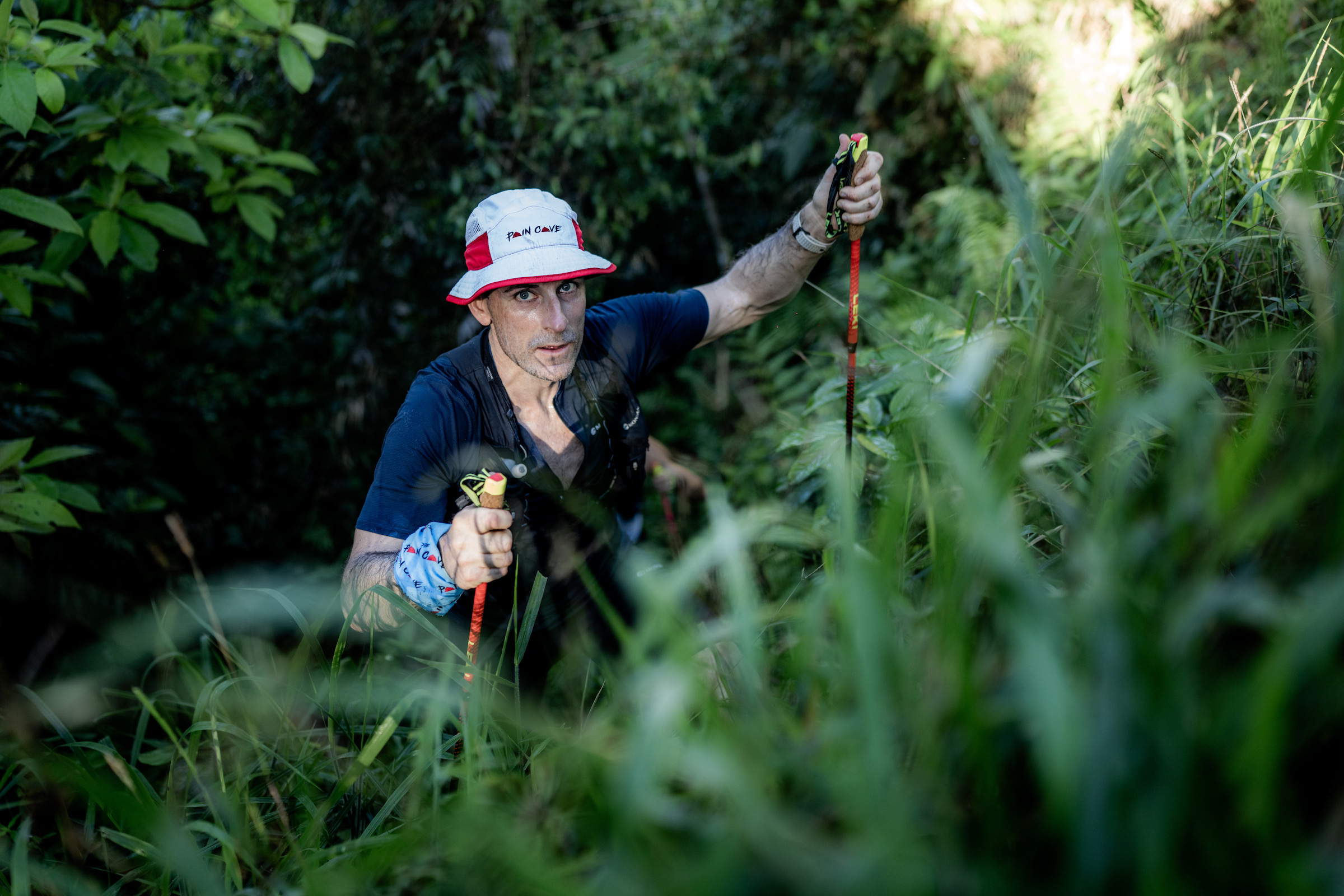
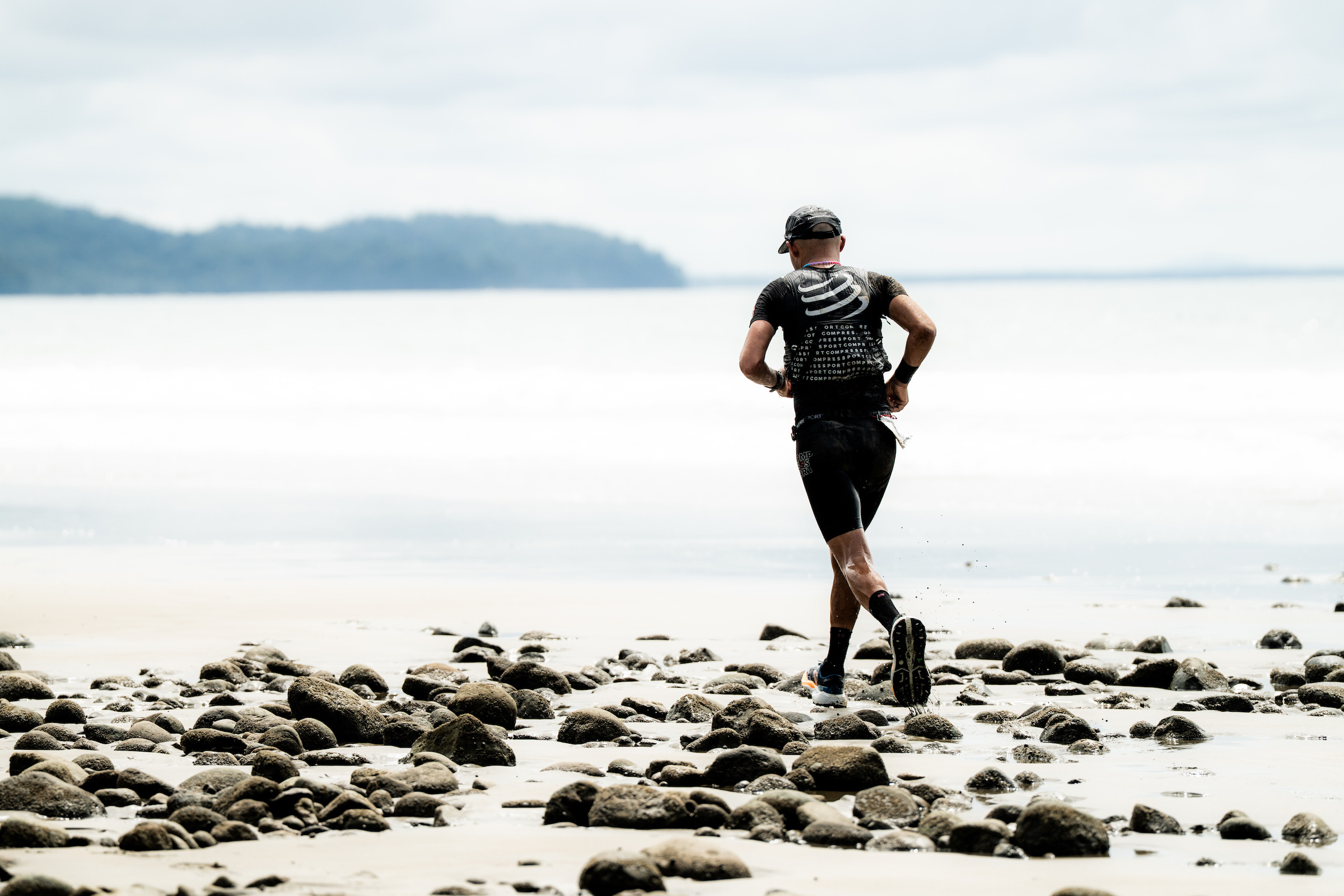
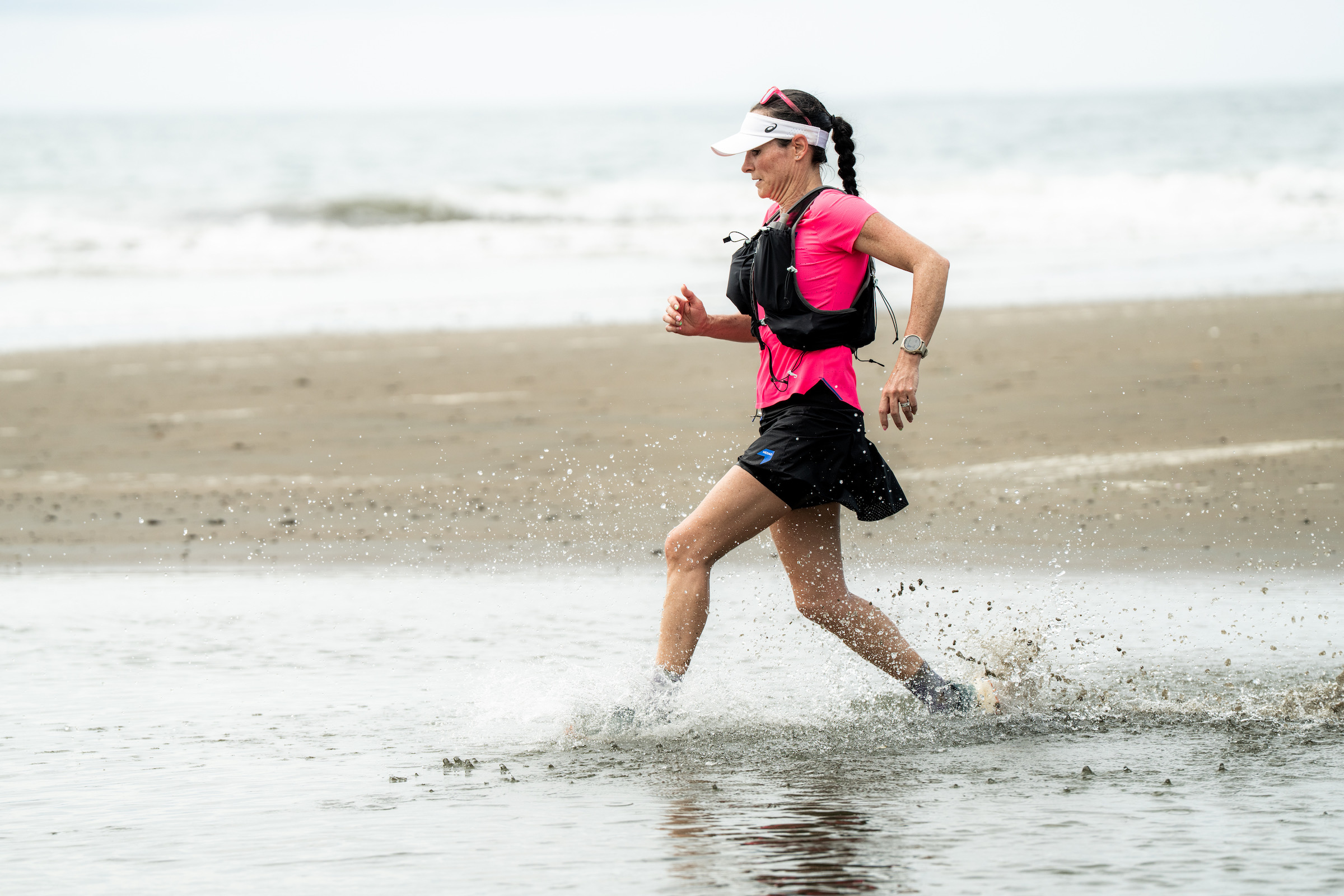
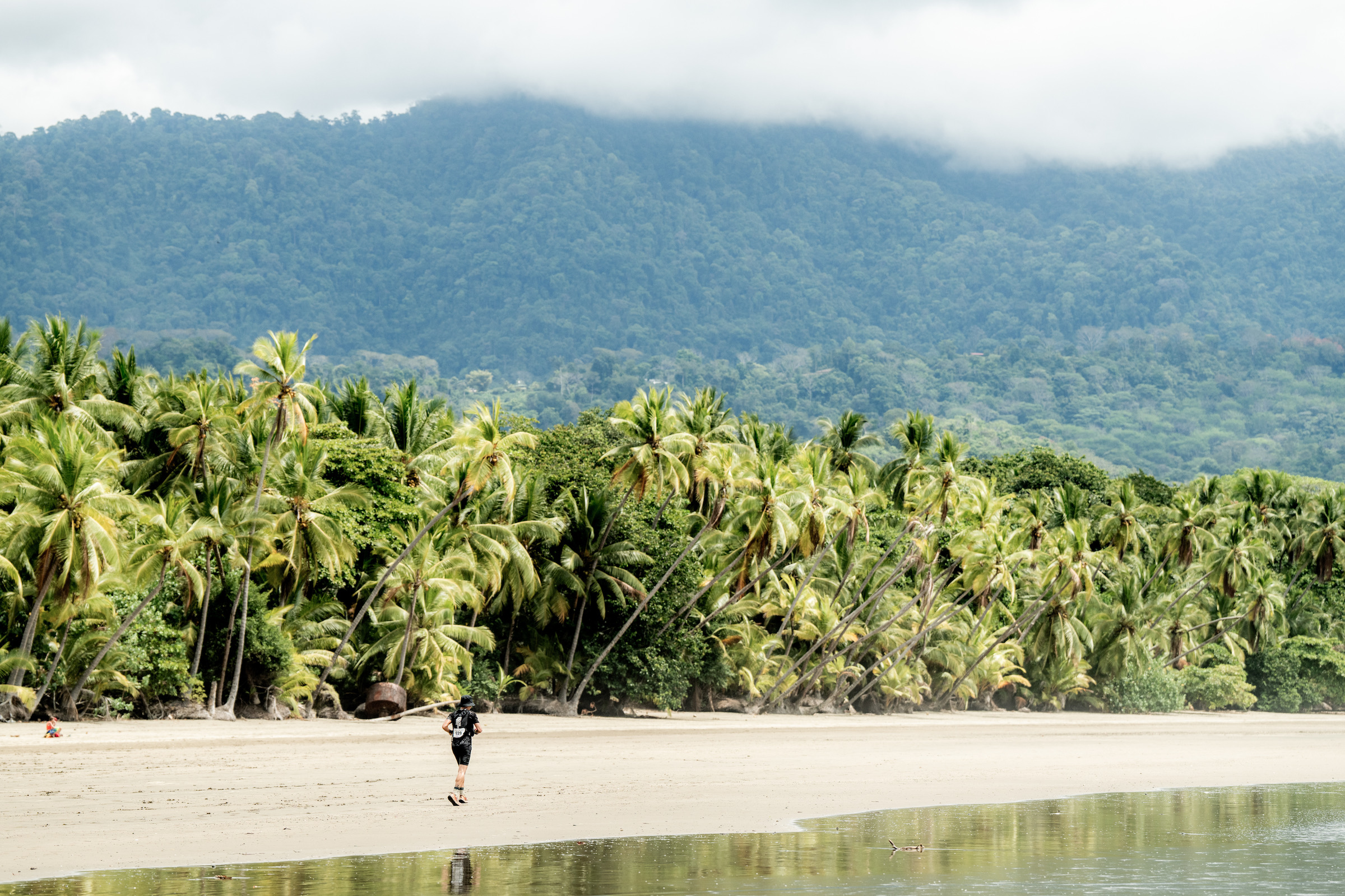
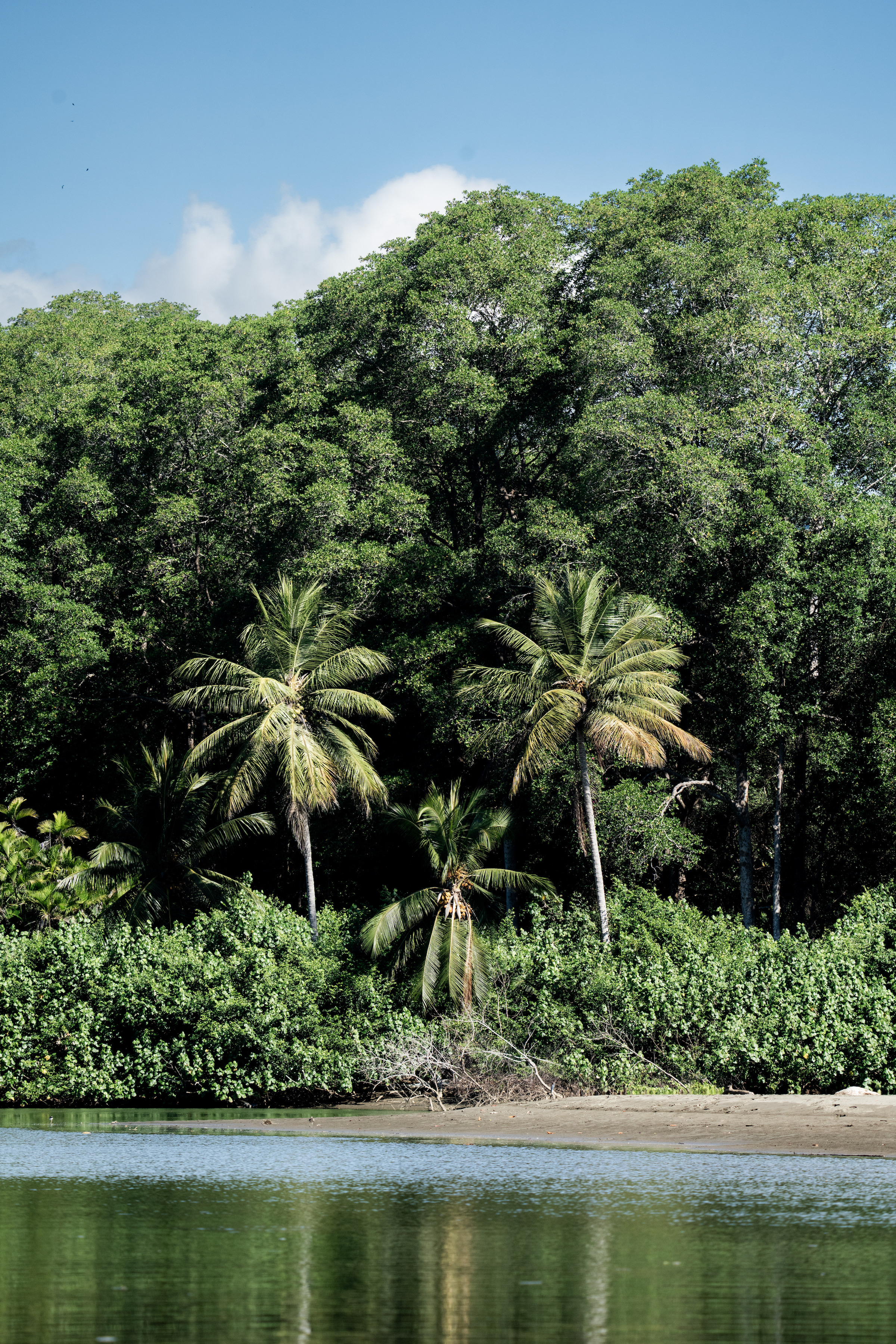
The Coastal Challenge Costa Rica is a six-stage, six-day race along Costa Rica’s Pacific coastline. It’s tough, humid, beautiful, and unpredictable in the best possible way. You’ll run through rainforest trails, cross rivers, climb steep hills, and move along stretches of tropical beach where the ocean feels close enough to touch.
This is not a single-day effort. It’s a week of managing energy, staying consistent, and adapting to changing terrain. Some days feel fast and flowing. Others demand patience and grit. By the time you reach the final stage, you’ll have covered ground that most visitors never see.
Two Race Options: Expedition and Adventure
You can choose between two distances: Expedition and Adventure. Both events run over the same six days and share the same start and finish week. Stages 1 and 6 are almost identical for both races, so everyone begins and ends the journey together.
The difference lies in Stages 2, 3, 4, and 5.
The Expedition race is the full challenge. Longer stages, greater cumulative distance, and a bigger daily physical demand. It’s designed for experienced endurance runners who want the complete test.
The Adventure race offers considerably shorter stages on days 2 through 5. That adjustment makes the event accessible to a much wider range of participants. It’s ideal for runners who prefer a steadier pace, and especially for those who plan to hike or walk sections of the course.
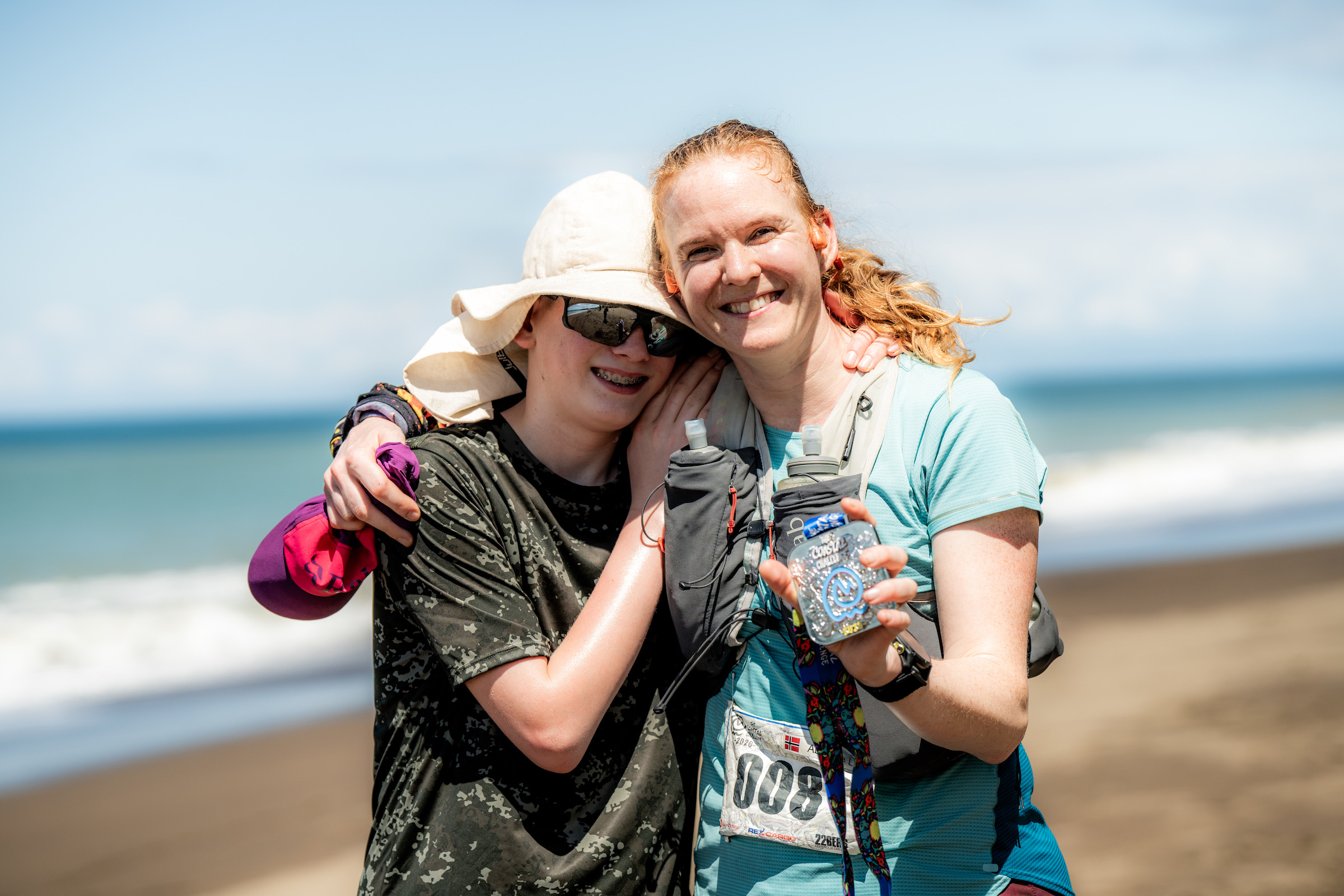
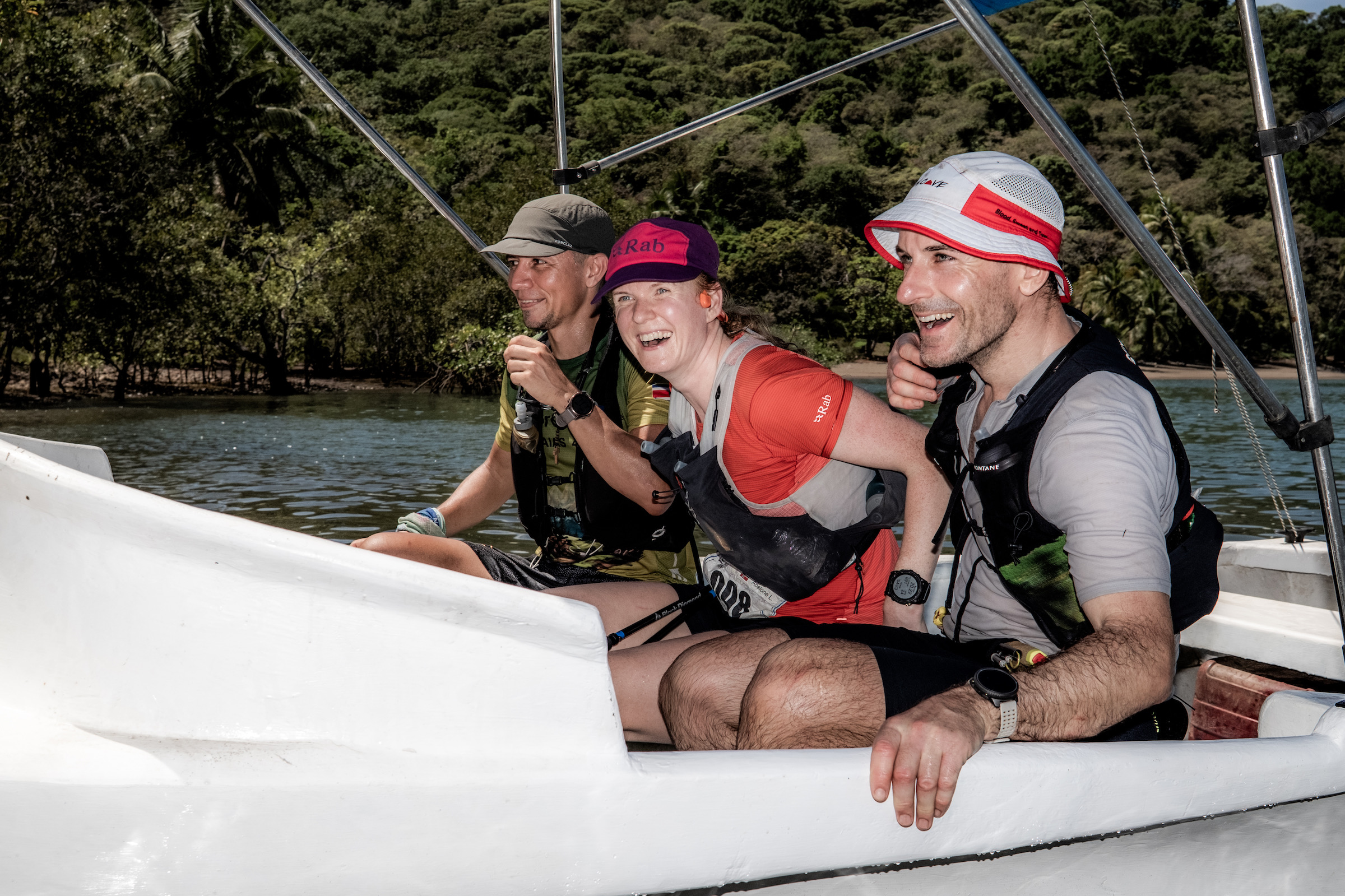
‘Adventure gives the best of both worlds, I got to race in Costa Rica and see the awesome trails, views and terrain, but I also got more time to relax and enjoy camp and the Pura Vida lifestyle.’ – Abelone Lyng
Adventure doesn’t mean easy. The terrain and climate are the same. But the shorter distances allow more time for rest, recovery, and simply taking in the surroundings. You’ll have space to soak up the Pura Vida lifestyle, connect with other runners, and enjoy the unique atmosphere that makes this race special.
Whether you choose Expedition or Adventure, you’ll experience the same wild coastline, the same supportive race community, and the same sense of achievement at the finish.
Ready to Sign Up?
The 2027 race entry is $3,050.
Using the link below, Ian Corless is able to offer a $200 discount, bringing your entry down to $2,850.
If you’ve been thinking about a multi-day race but weren’t sure which one, this is a strong place to start. Six days. A world-class course. Two distance options that make the challenge accessible without losing its edge.
We’ll see you on the start line in February 2027.
More reading
THE COASTAL CHALLENGE COSTA RICA : A 2026 PERSPECTIVE ON ONE OF THE WORLDS TOUGHEST RACES – HERE
You can read daily summaries from the 2026 edition HERE
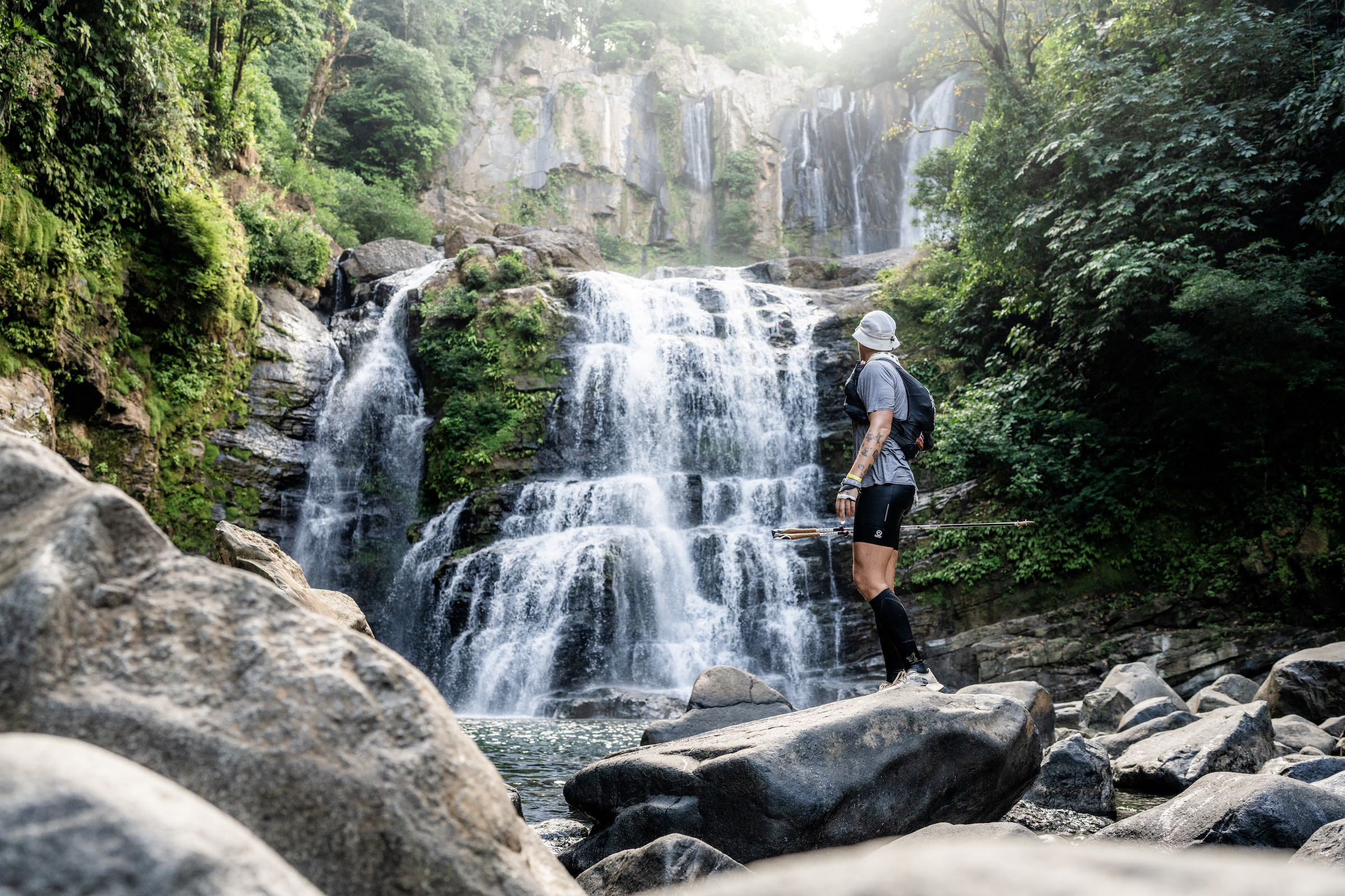
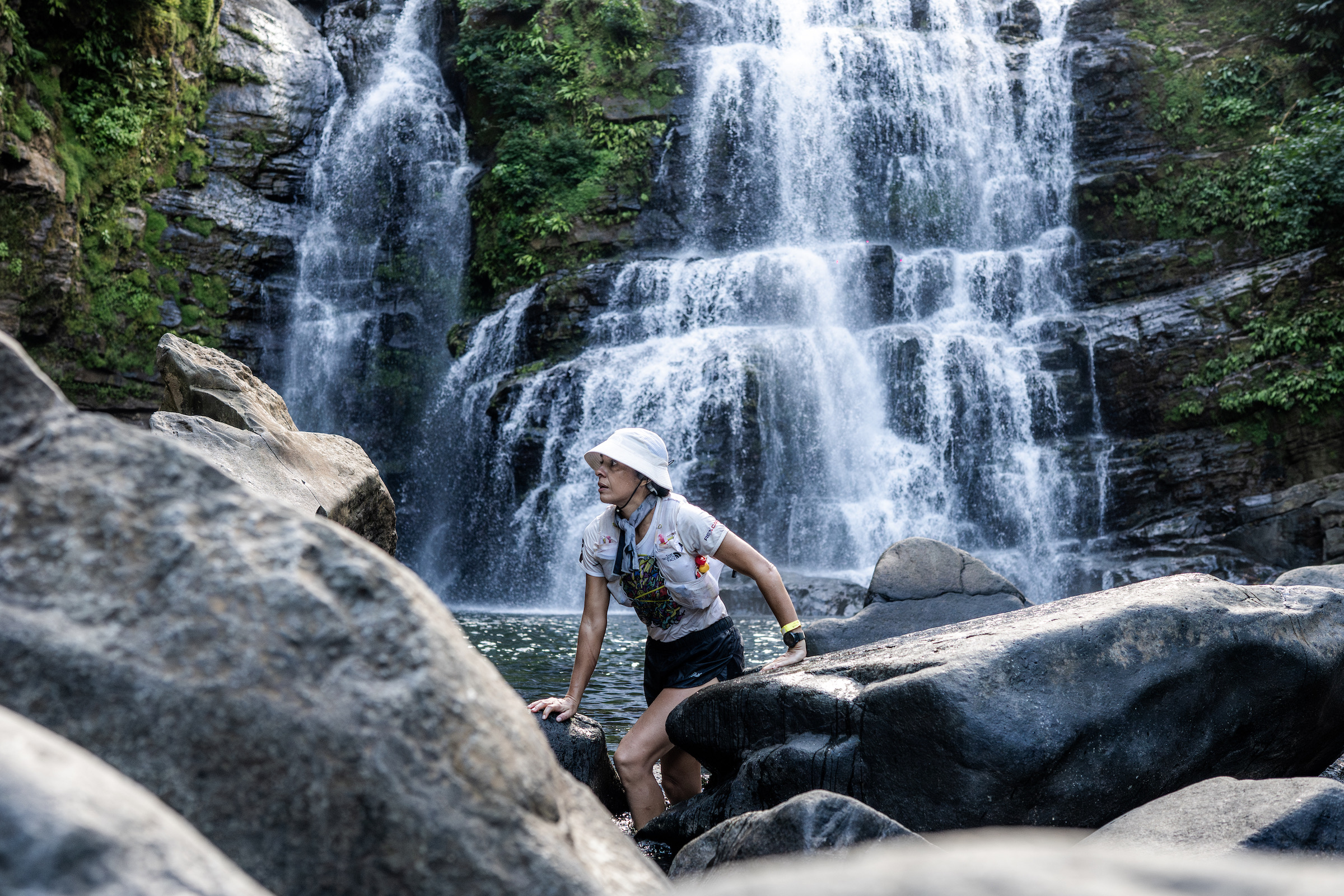
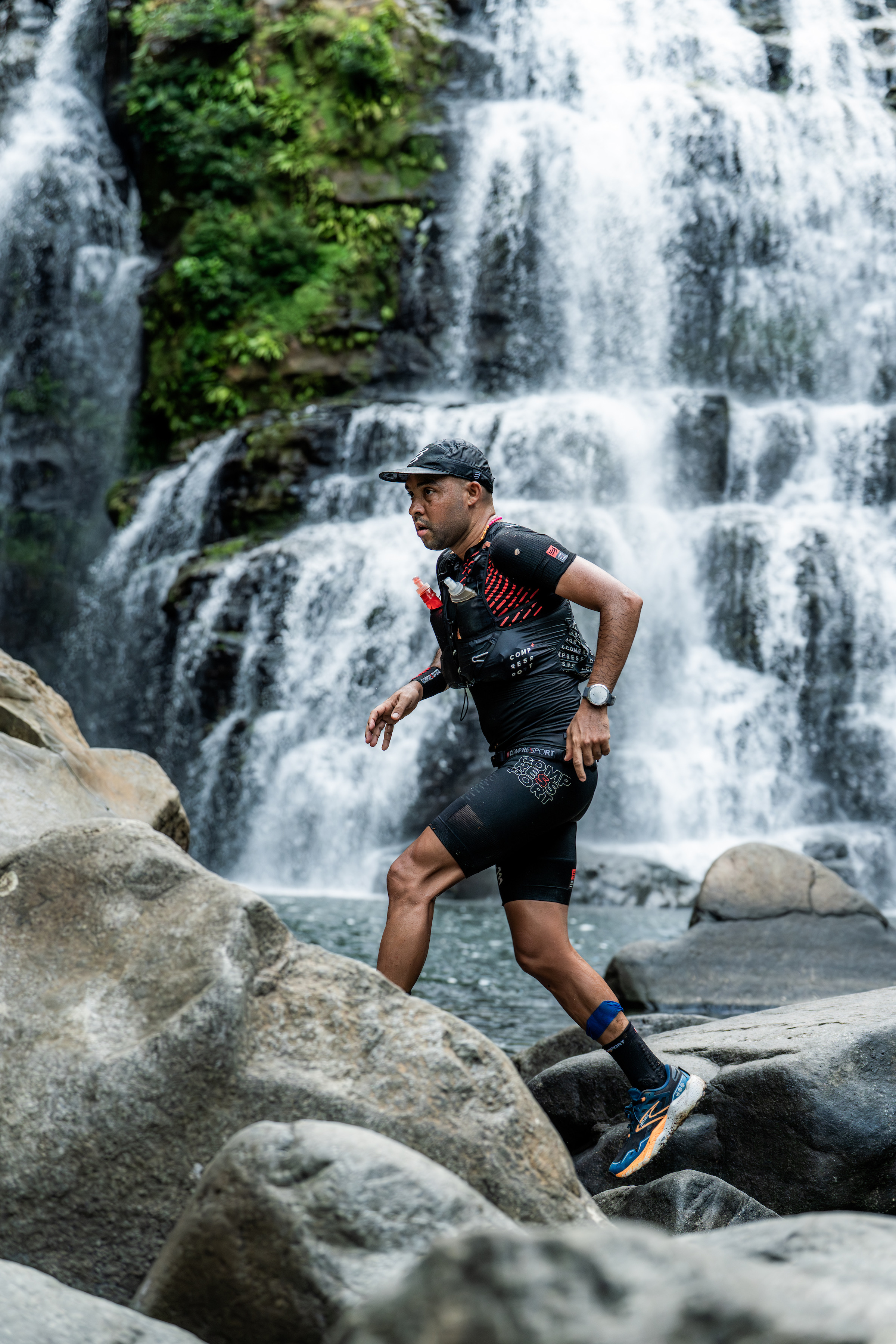
Stage 6 of The Coastal Challenge Costa Rica was always going to be special. It wasn’t just another race day. It was the closing chapter for the Adventure and Expedition categories. A loop that began and ended in the wild beauty of Corcovado and Bahía Drake. A day of waterfalls, gravel roads, jungle trails, river crossings, single track, beaches, and some of the most stunning light the Pacific coast can offer.
For many runners, this stage wasn’t only about time. It was about finishing what they started days ago. It was about earning the medal. It was about emotion.
The route delivered everything Costa Rica promises. Thick jungle that swallowed sound and forced focus. Gravel roads that tested tired legs. Technical single track winding through roots and rock.
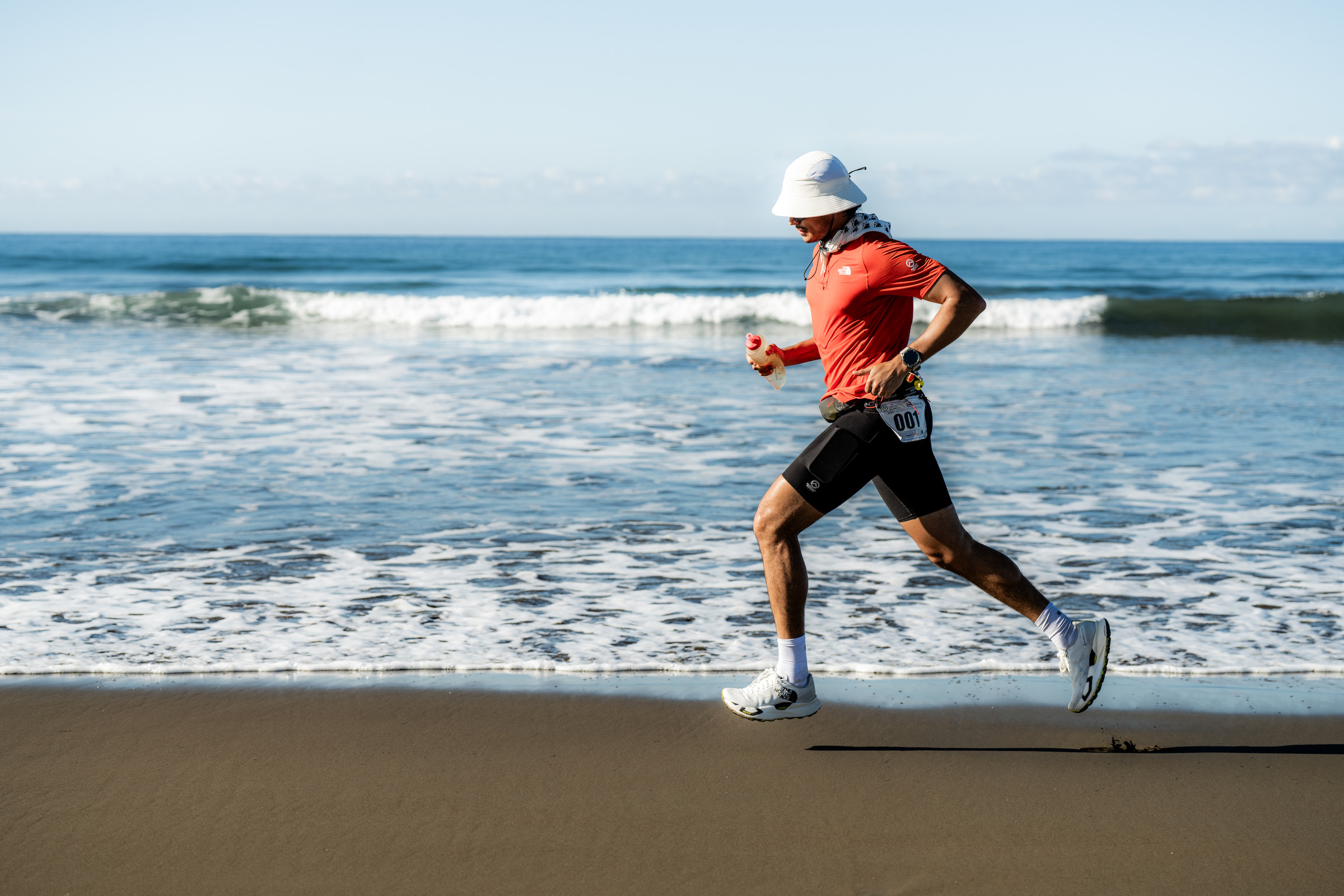
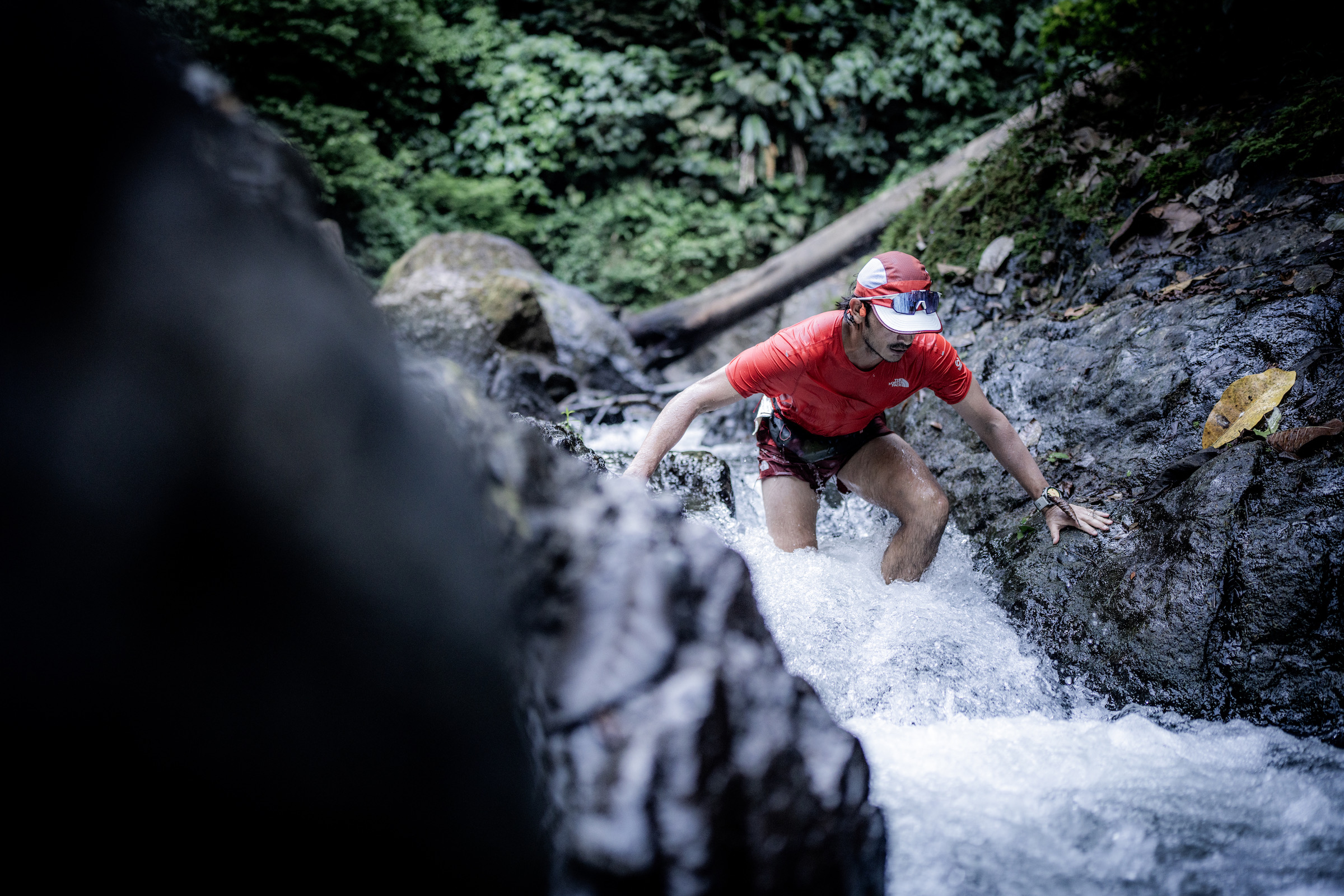
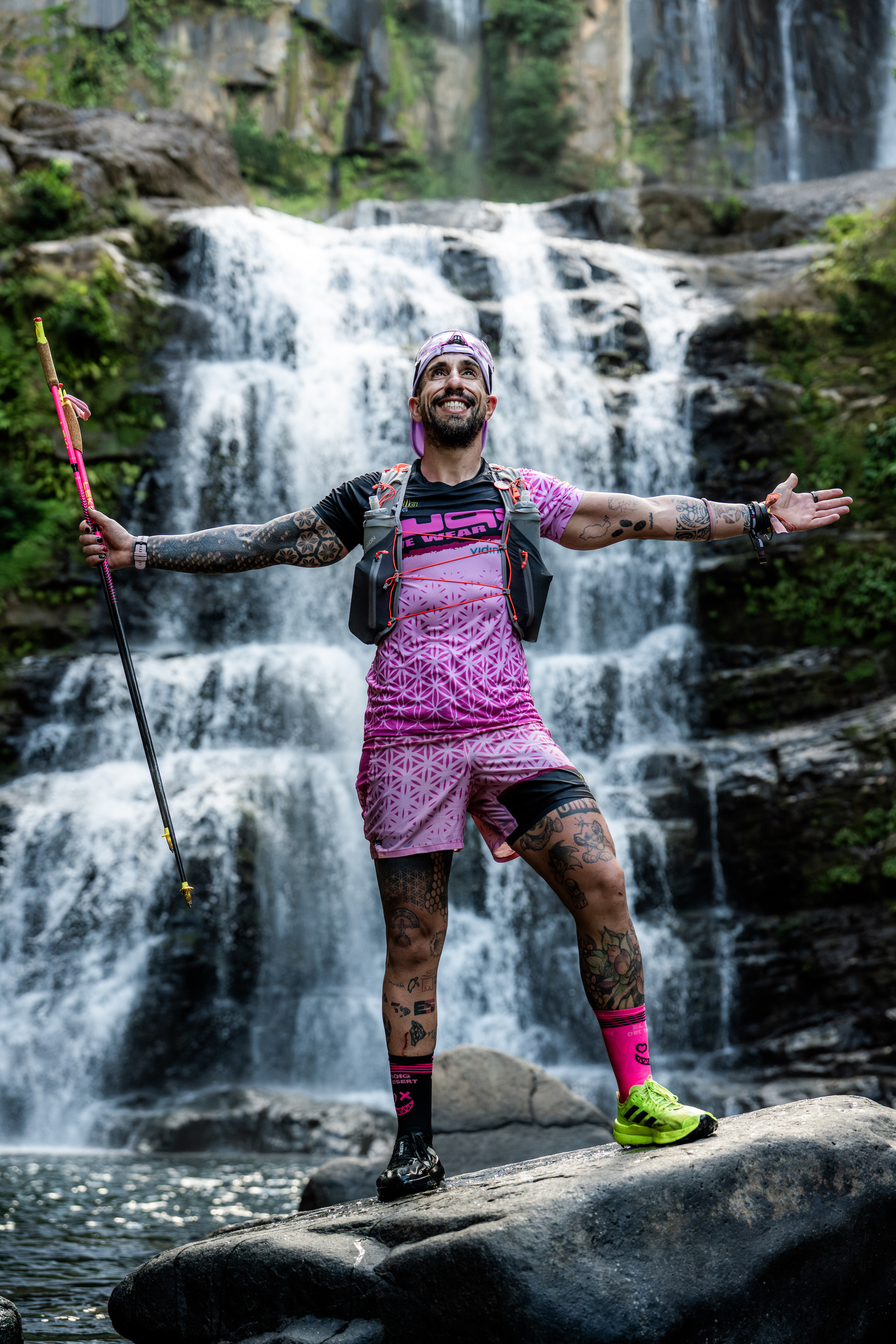
River crossings that cooled sore muscles for a brief moment. Beaches that stretched endlessly under a rising sun. Waterfalls tucked deep in green corridors. Every turn seemed to offer another view, another reason to pause, another reminder of how far everyone had come.
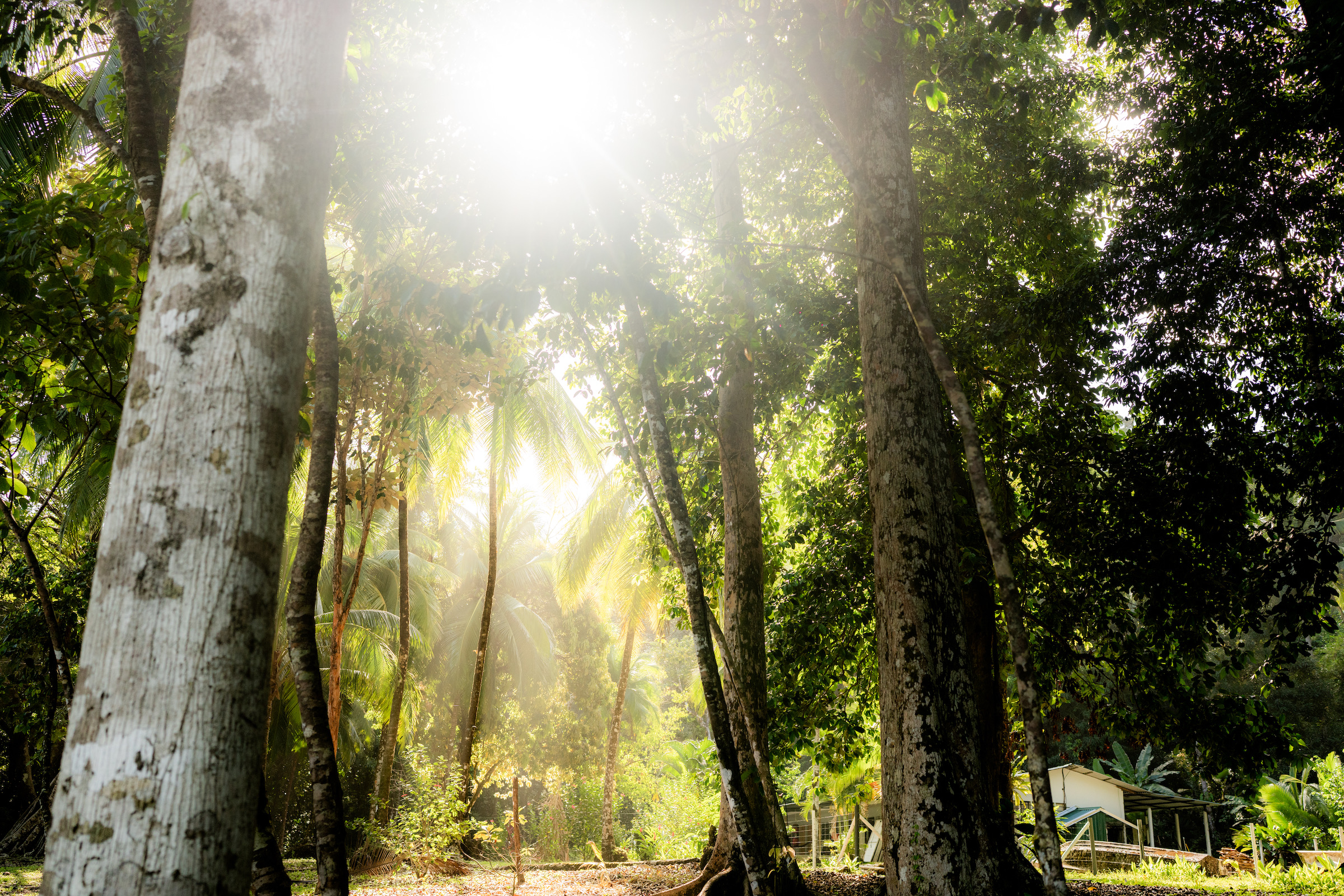
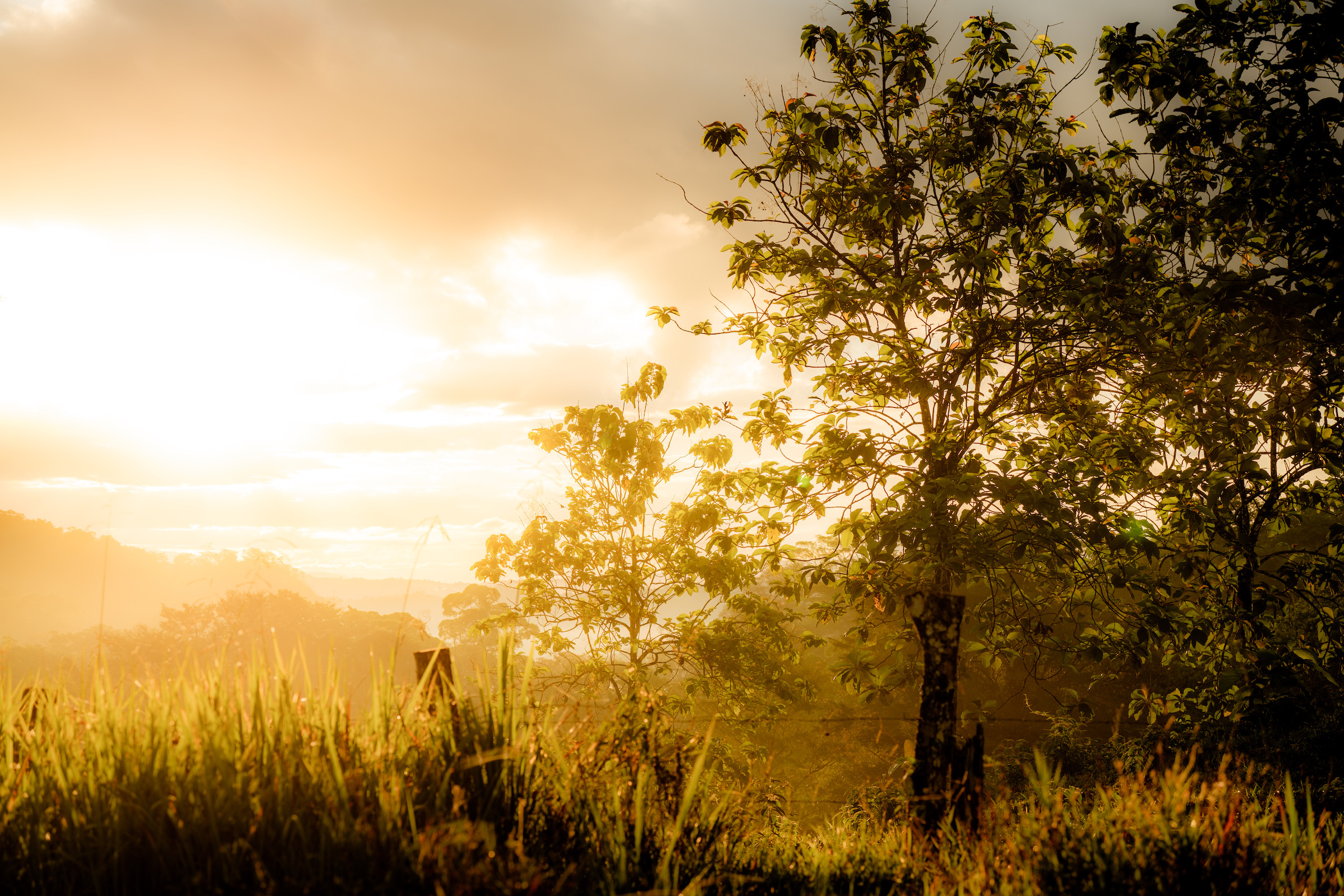
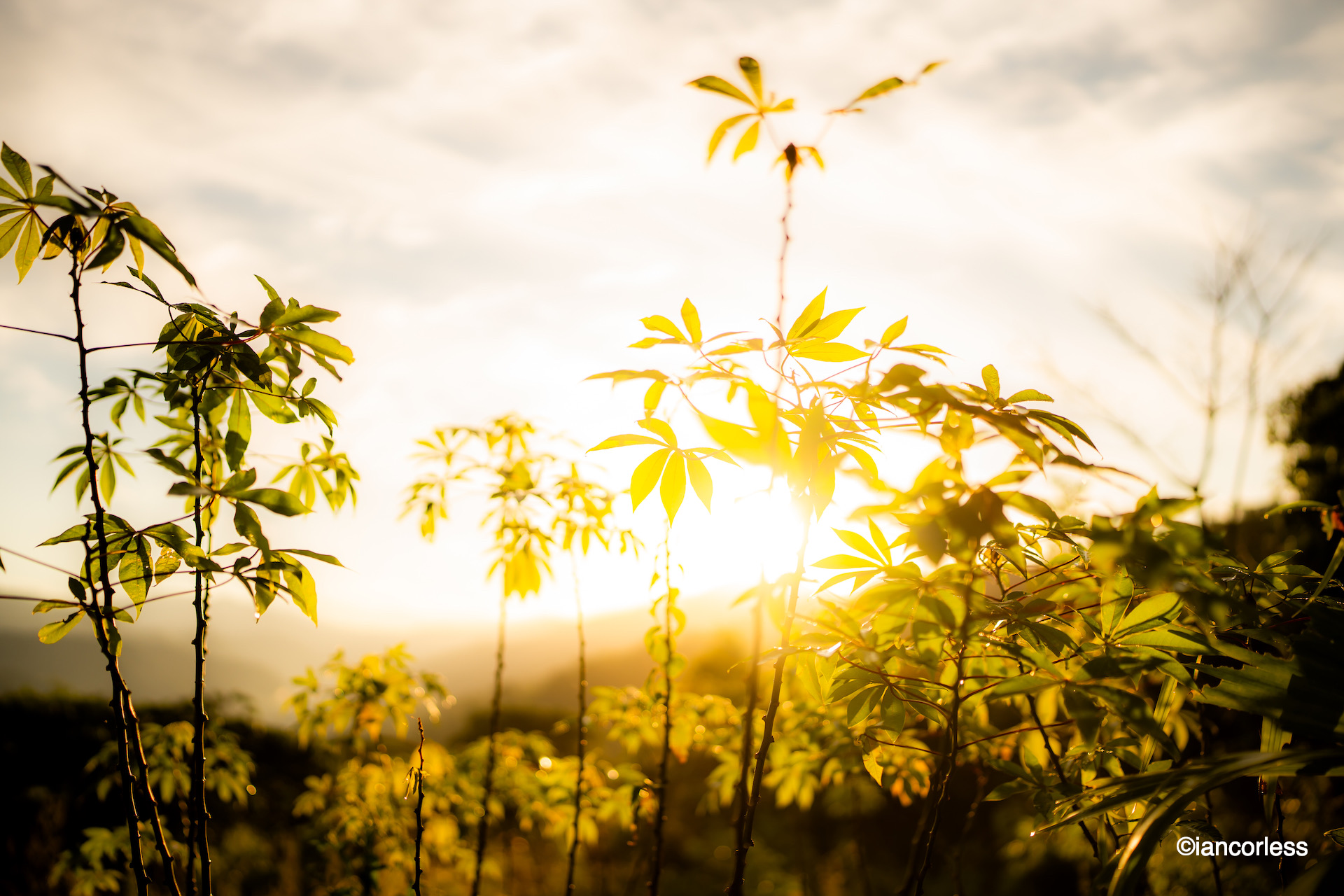
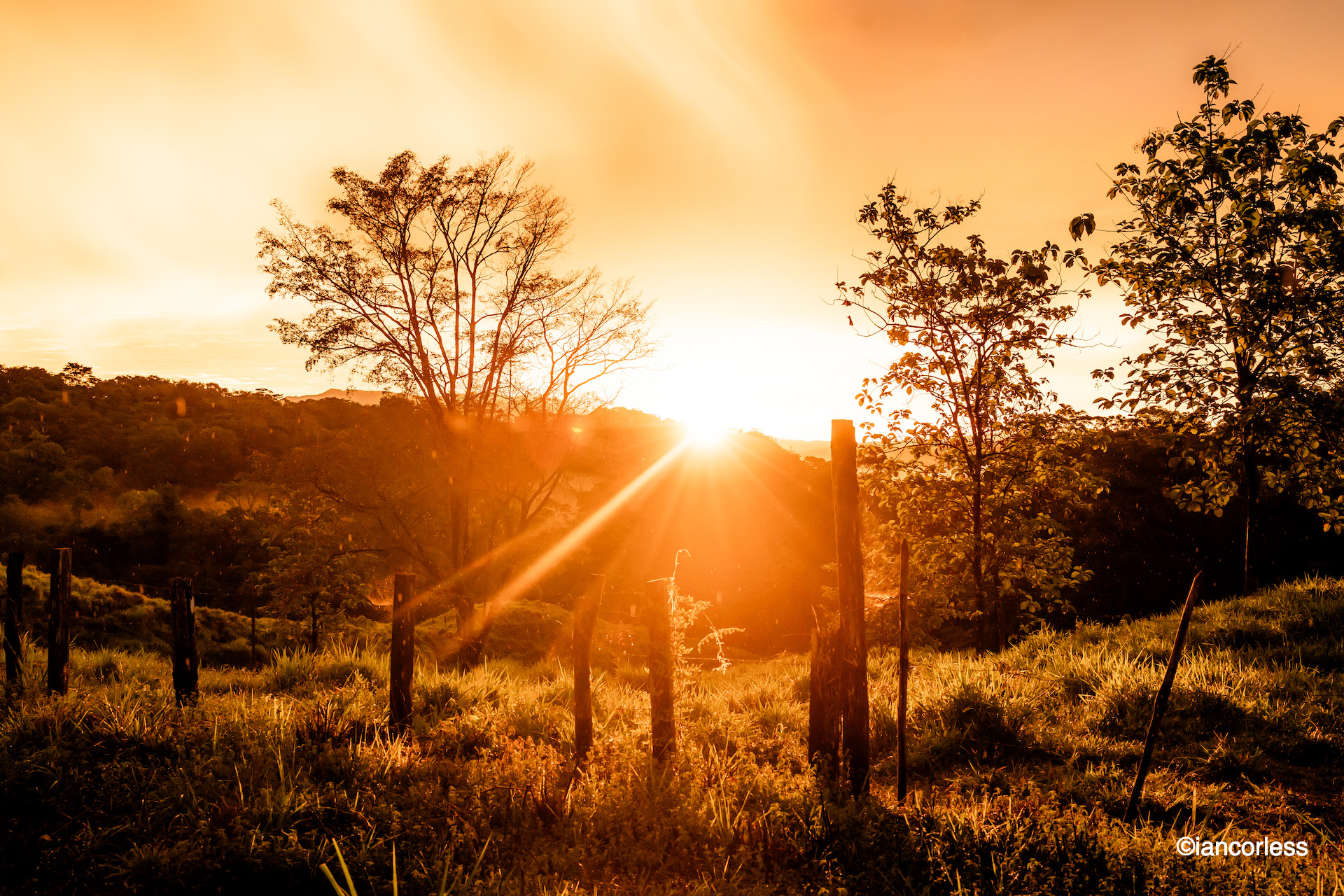
And the light. Early morning gold over the ocean. Sun filtering through canopy leaves. The kind of light that makes even exhausted runners smile.
At the front of the Expedition men’s race, Alejandro Muñoz (#1) delivered a commanding performance, crossing the line in 3:54:46.1 to take the Stage 6 win. He ran with control and strength, managing the varied terrain with precision.
Martin Alonso Mena Jimenez secured second in 4:21:29.0, followed closely by Jon Shield in 4:22:43.9. Both men pushed hard through the jungle and across the beaches, knowing every minute mattered on this final day.
But while Stage 6 had its winners, the greater story in Expedition belonged to Erick Agüero.
After eight participations in The Coastal Challenge, Erick Agüero finally claimed the overall Expedition title. Eight times he stood on the start line. Eight journeys through heat, humidity, hills, rivers, and long lonely stretches of trail. Eight times chasing the dream.
And this year, he did it.
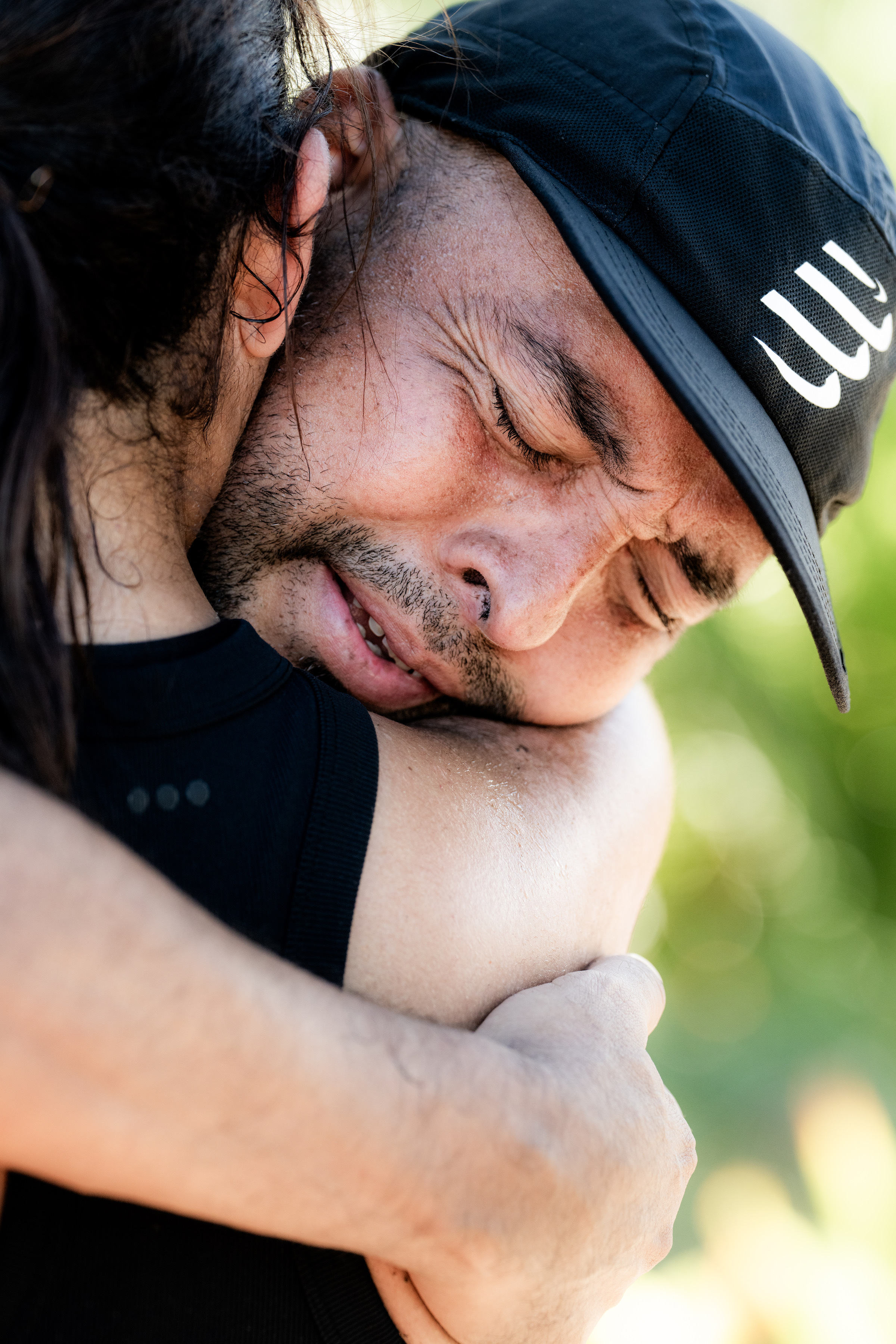
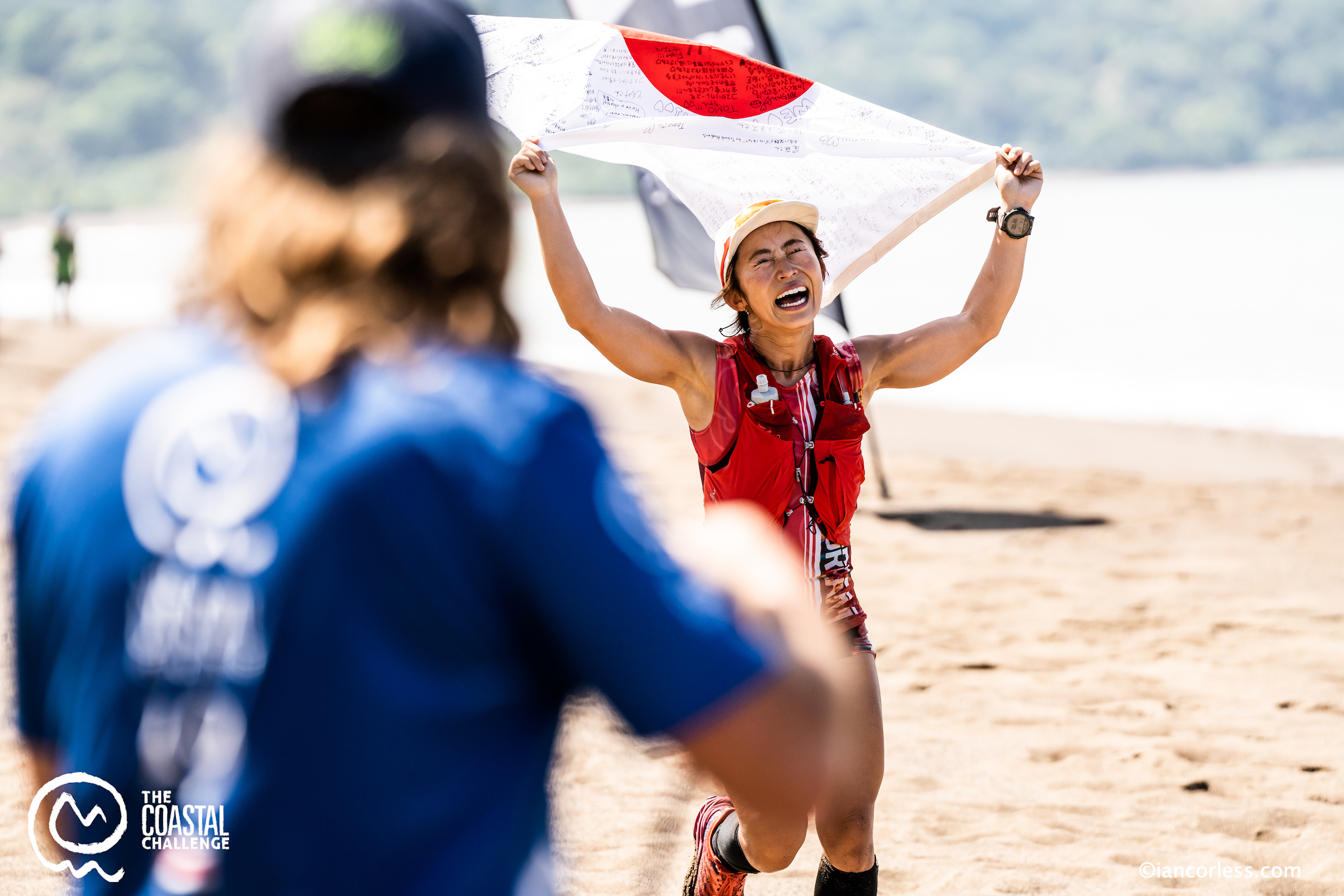
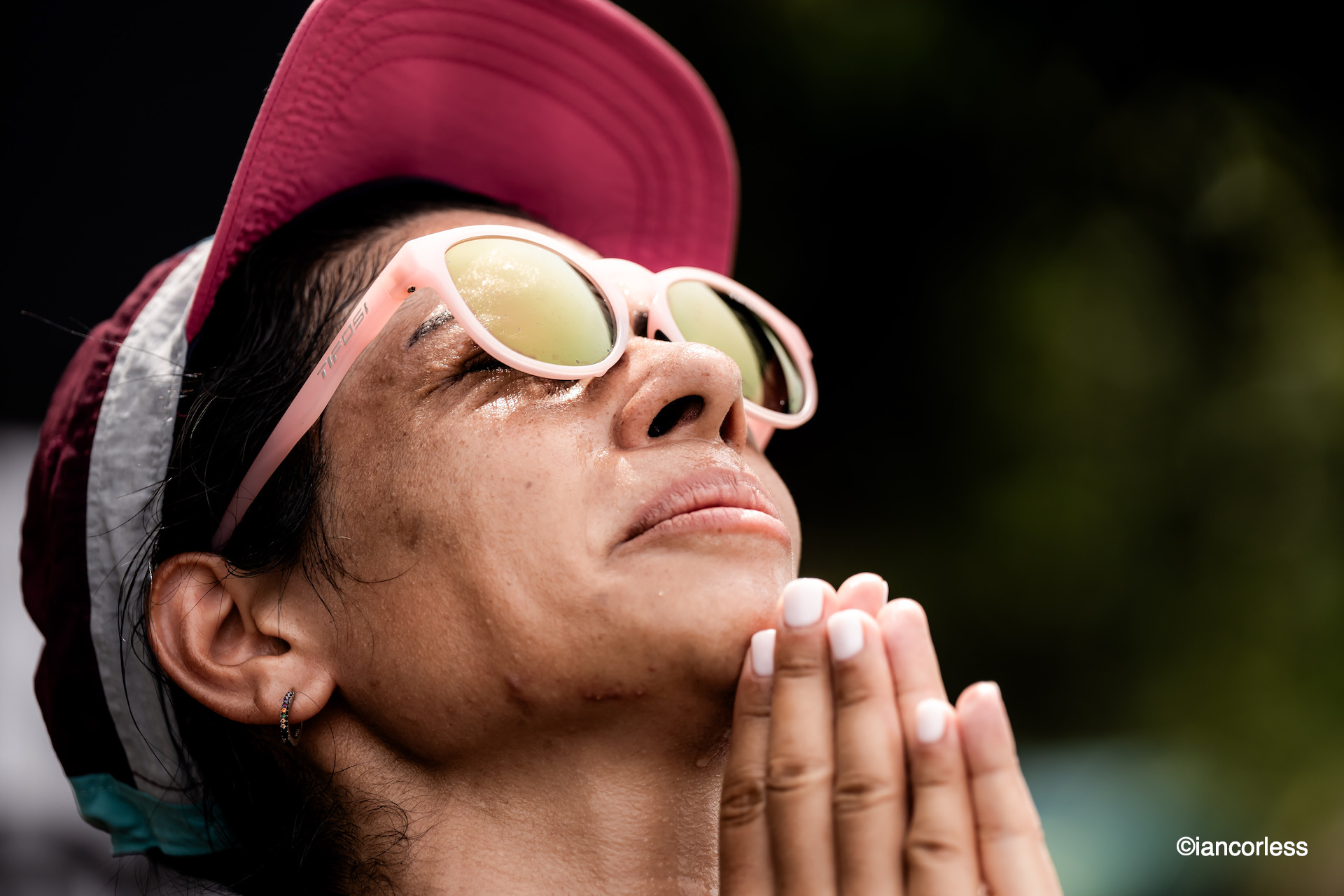
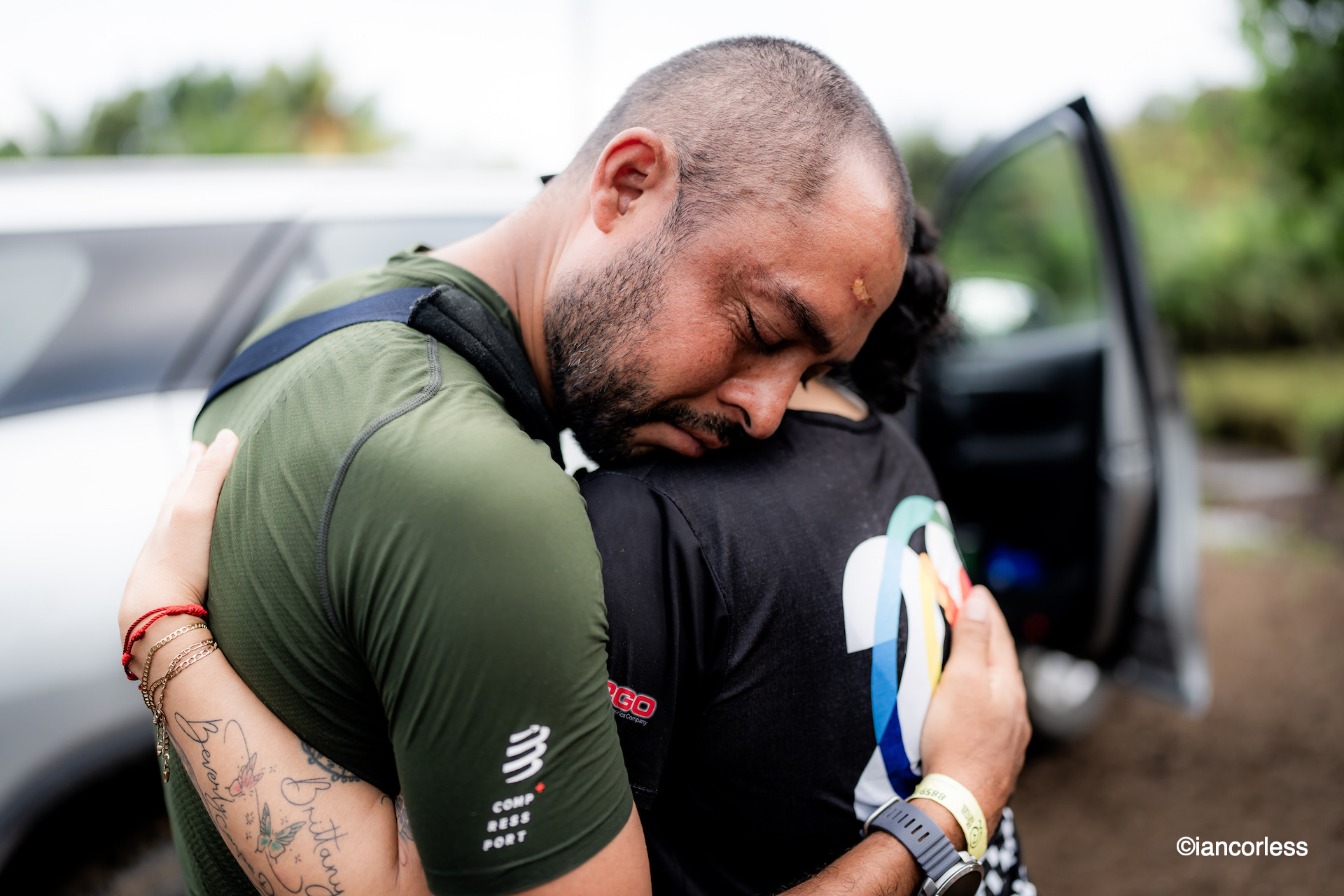
At the finish line there were tears. Real ones. The kind that come from years of effort, setbacks, persistence, and belief. You could see the weight lift from his shoulders as he crossed under the arch. Joy mixed with relief. Pride mixed with exhaustion. Winning after one attempt is impressive. Winning after eight shows something deeper. Commitment. Patience. Heart.It was one of those moments that reminds everyone why this race matters.
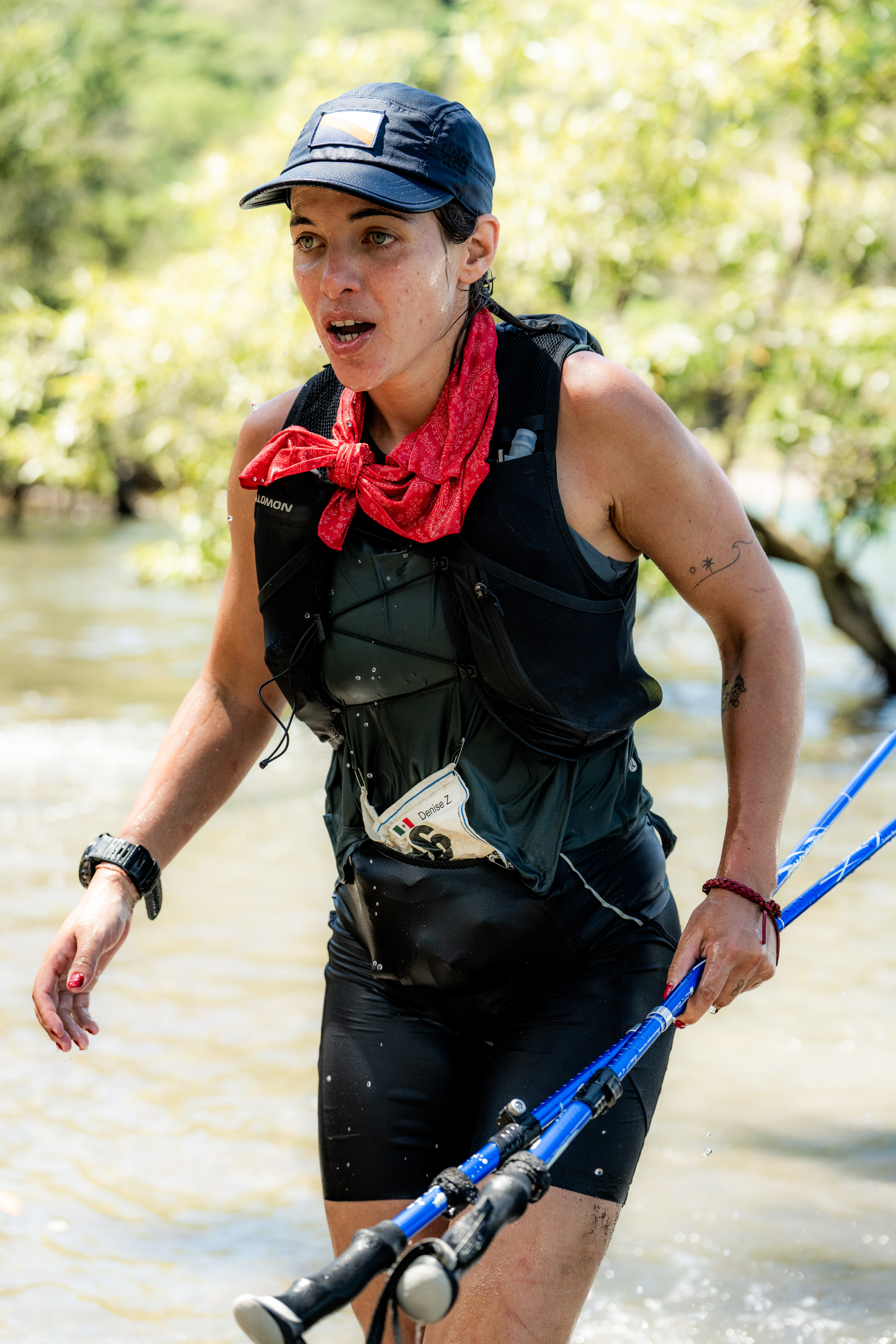
Denise Zelaya led the Expedition women home on Stage 6 in 4:24:35.1. She ran strong and steady, handling the technical sections with confidence and finishing her week on a high note.
Janina Beck followed in 5:11:18.6, while Floribeth Pérez (#38) completed the podium in 6:27:05.8. Each of them faced the same rugged loop and found their own way through it.
For the women’s field, the final stage was about resilience. By this point in the week, everyone is carrying fatigue. Legs are heavy. Feet are tender. Yet they kept moving forward. Through river crossings. Along sunlit beaches. Into the final stretch.
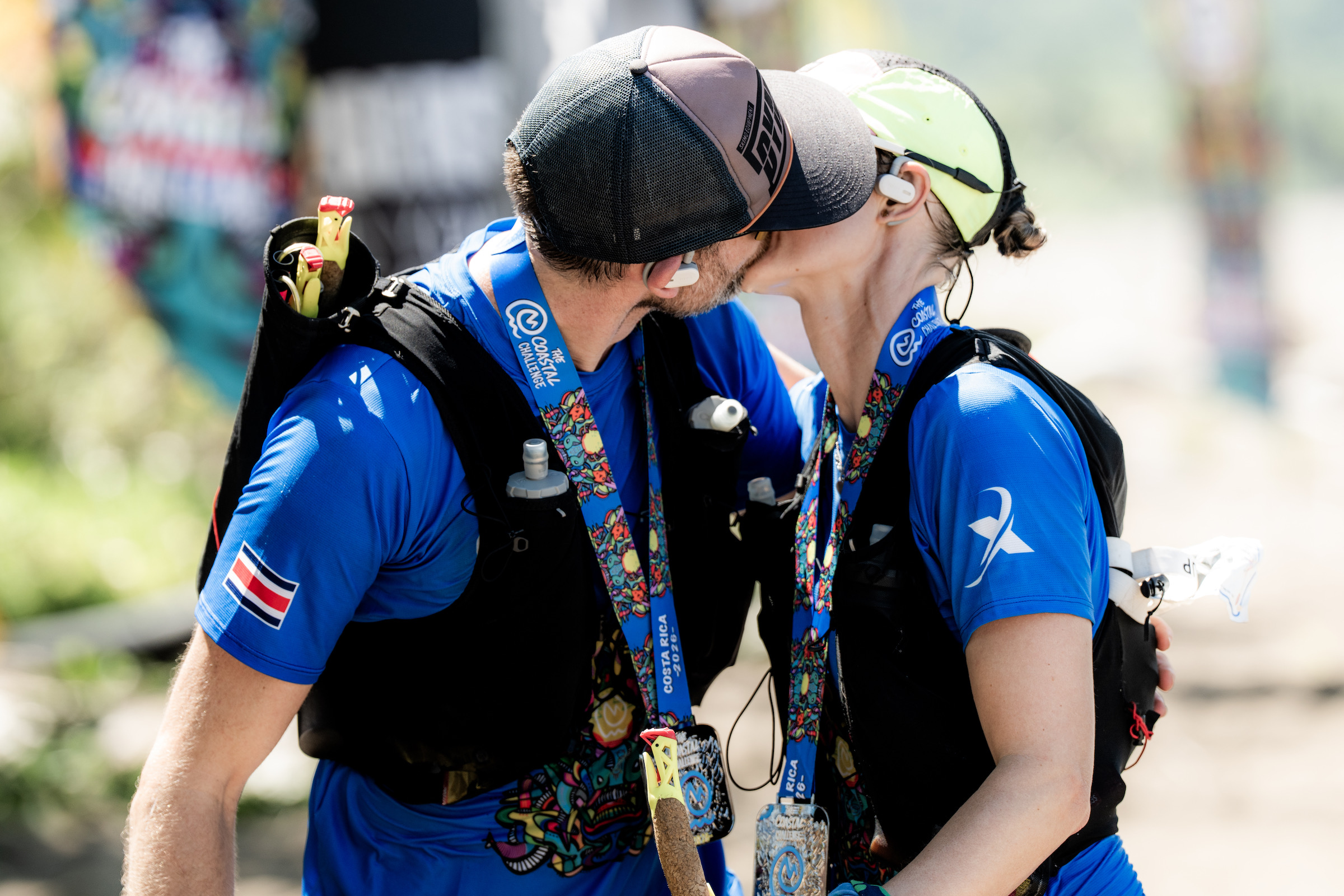
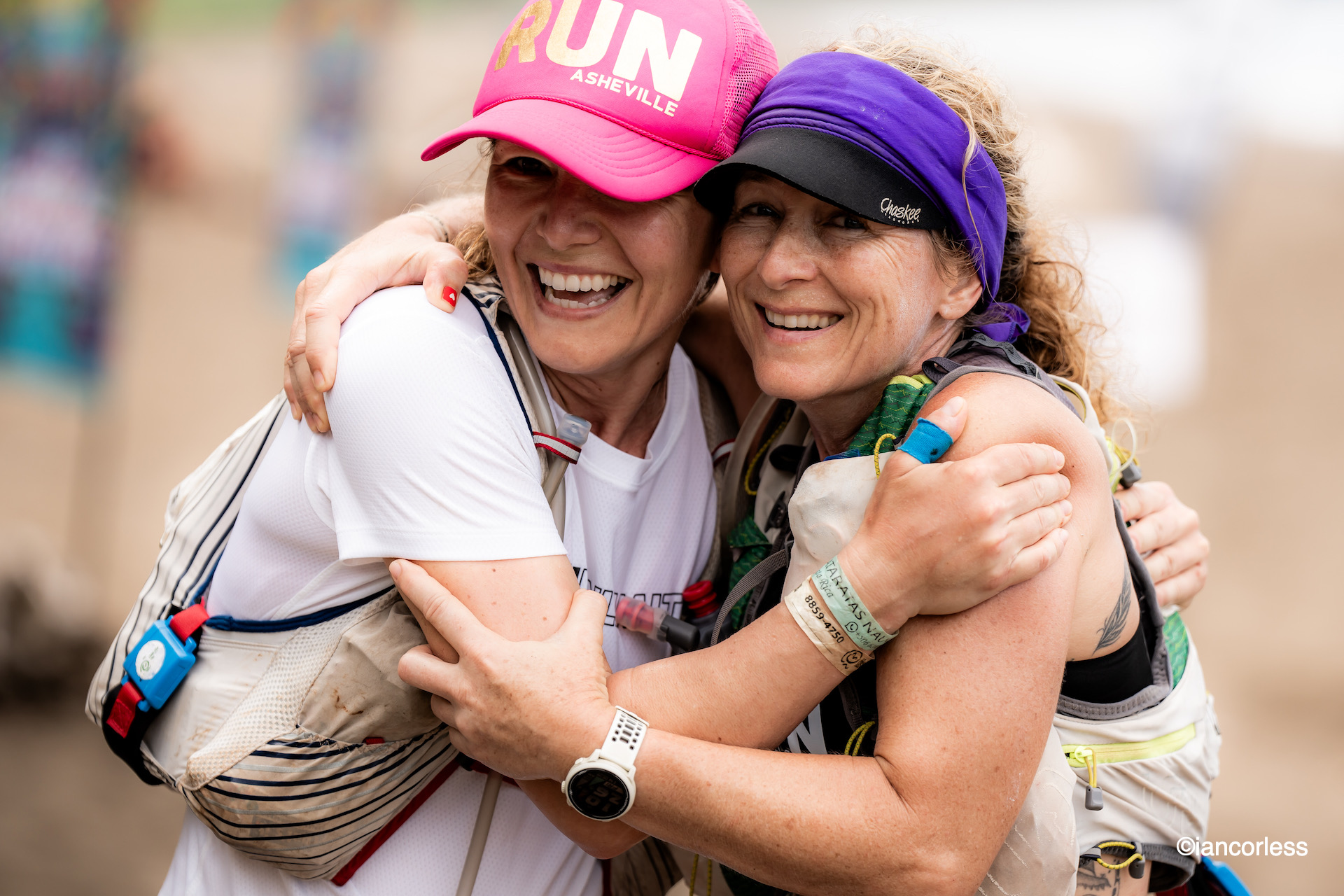
There were hugs at the finish. Long embraces. Shared smiles. The understanding that something meaningful had just been completed.
The Adventure category also closed its journey on Stage 6, and the racing at the front was sharp.
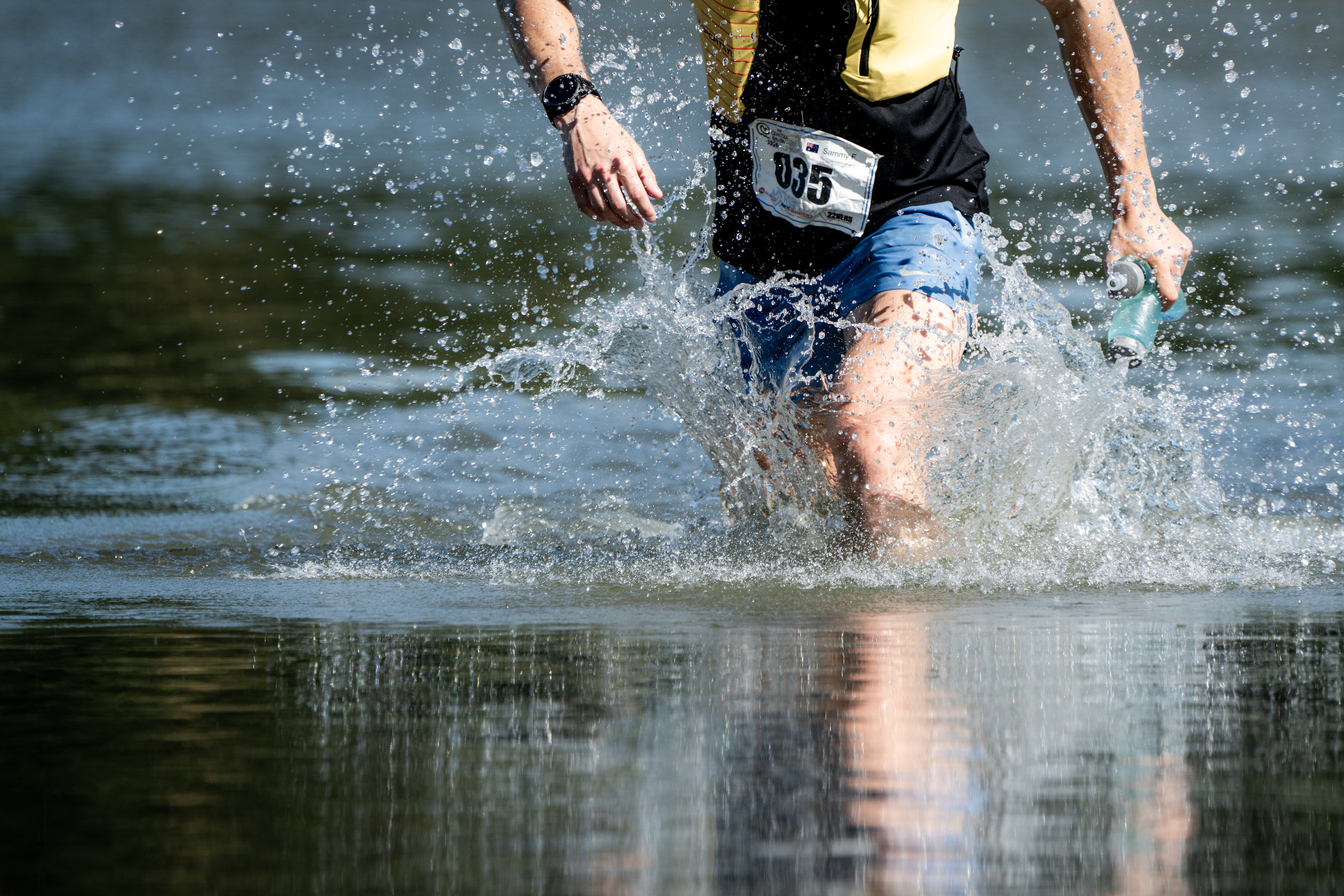
Sammy Francis (#35) took the stage win in an impressive 3:49:24.0, the fastest Adventure male time of the day. He attacked the course with confidence and made the most of the gravel roads and flowing single track.
Emerson Ulloa Avila (#61) finished second in 4:25:00.7, with Roberto Solano Rivera (#60) taking third in 4:32:05.3. All three demonstrated how much strength remains even at the end of a multi-day challenge.
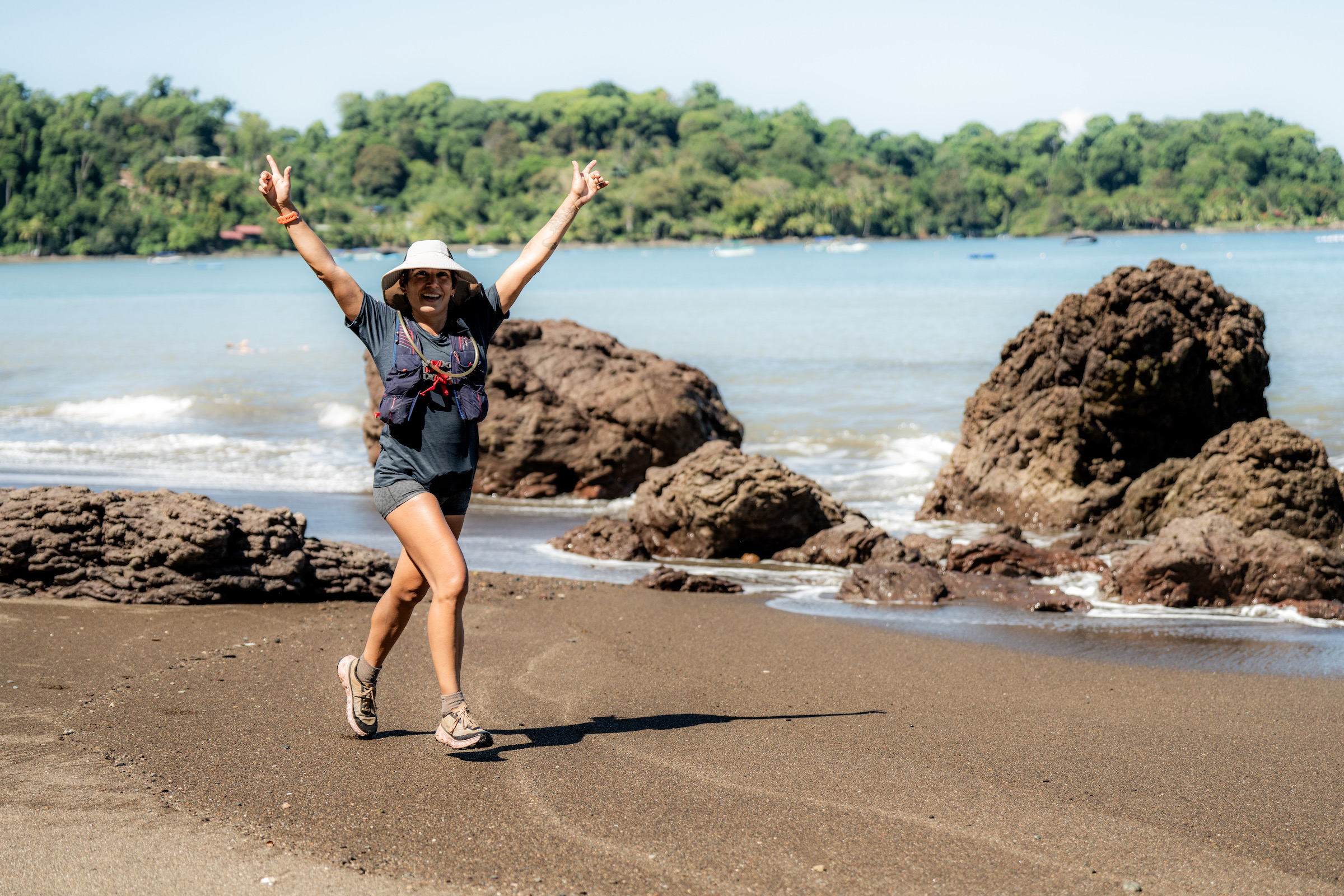
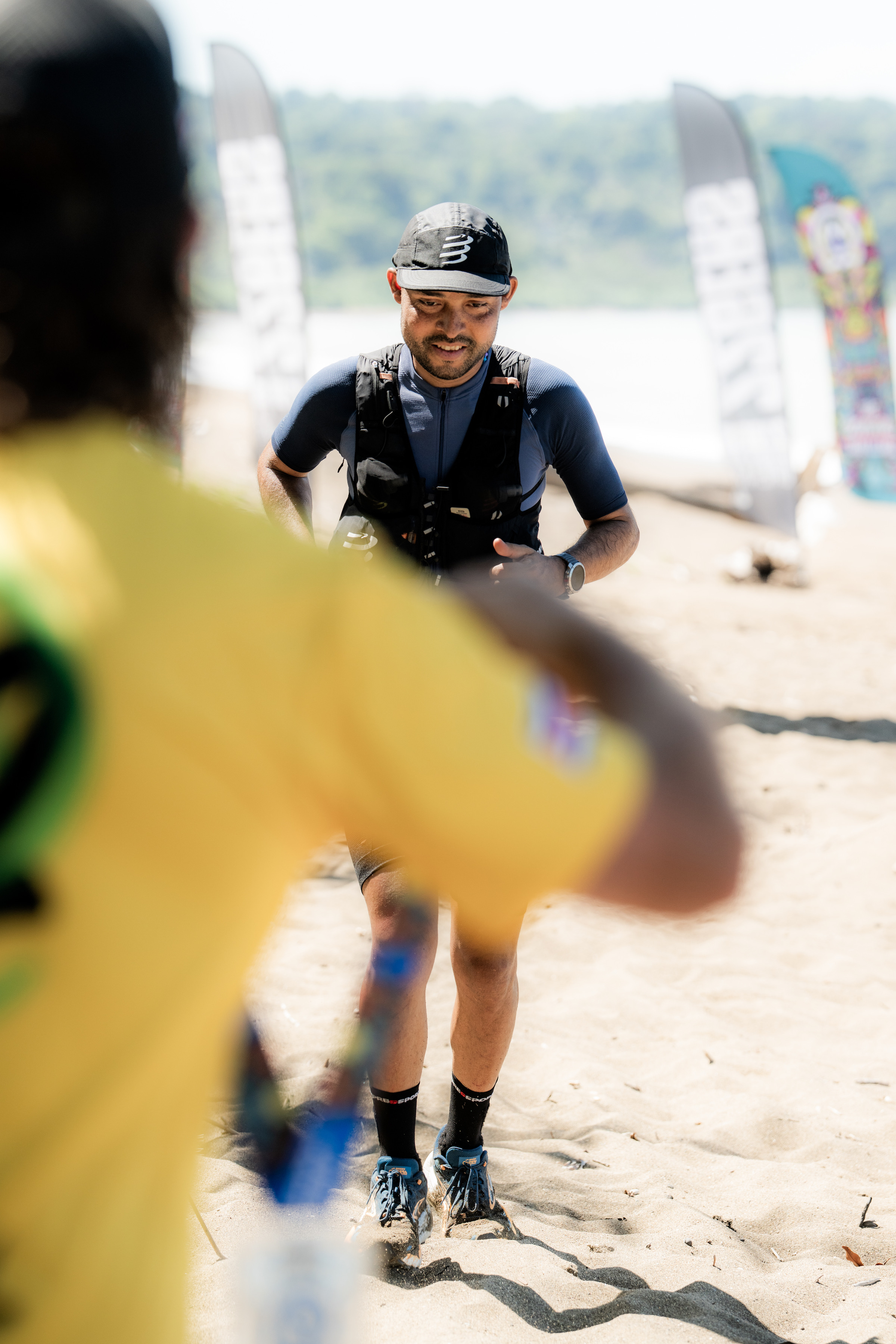
But beyond podium places, the Adventure field showed something just as powerful: joy. Runners crossing the final beach stretch with arms raised. Friends waiting at the line. The relief of knowing the journey was complete.
In the Adventure women’s race, Laura Zúñiga Alcázar claimed the Stage 6 win in 4:23:00.4 with a composed and determined effort.
Behind her, Toni Clarke and Kristel Polet (#34) finished in an exact tie at 4:26:27.0. A rare and beautiful result. Two athletes, side by side on the final day, sharing the moment.
That image said a lot about this race. It is competitive, yes. But it is also shared. Shared struggle. Shared laughter. Shared relief.
Stage 6 is always emotional. It marks the end of something intense and rare. Days of running through one of the most biodiverse regions on Earth. Corcovado’s wild heart. The raw coastline of Bahía Drake. The rhythm of waves and jungle birds.
This final loop captures everything the Coastal Challenge stands for. Variety in terrain. Beauty in every direction. Difficulty that forces growth. Moments that stay with you long after the medal is packed away.
The waterfalls cool the body. The jungle humbles you. The beaches test your patience. The gravel roads demand grit. The single track rewards focus. The water crossings refresh and surprise. And the views remind you why you signed up in the first place.
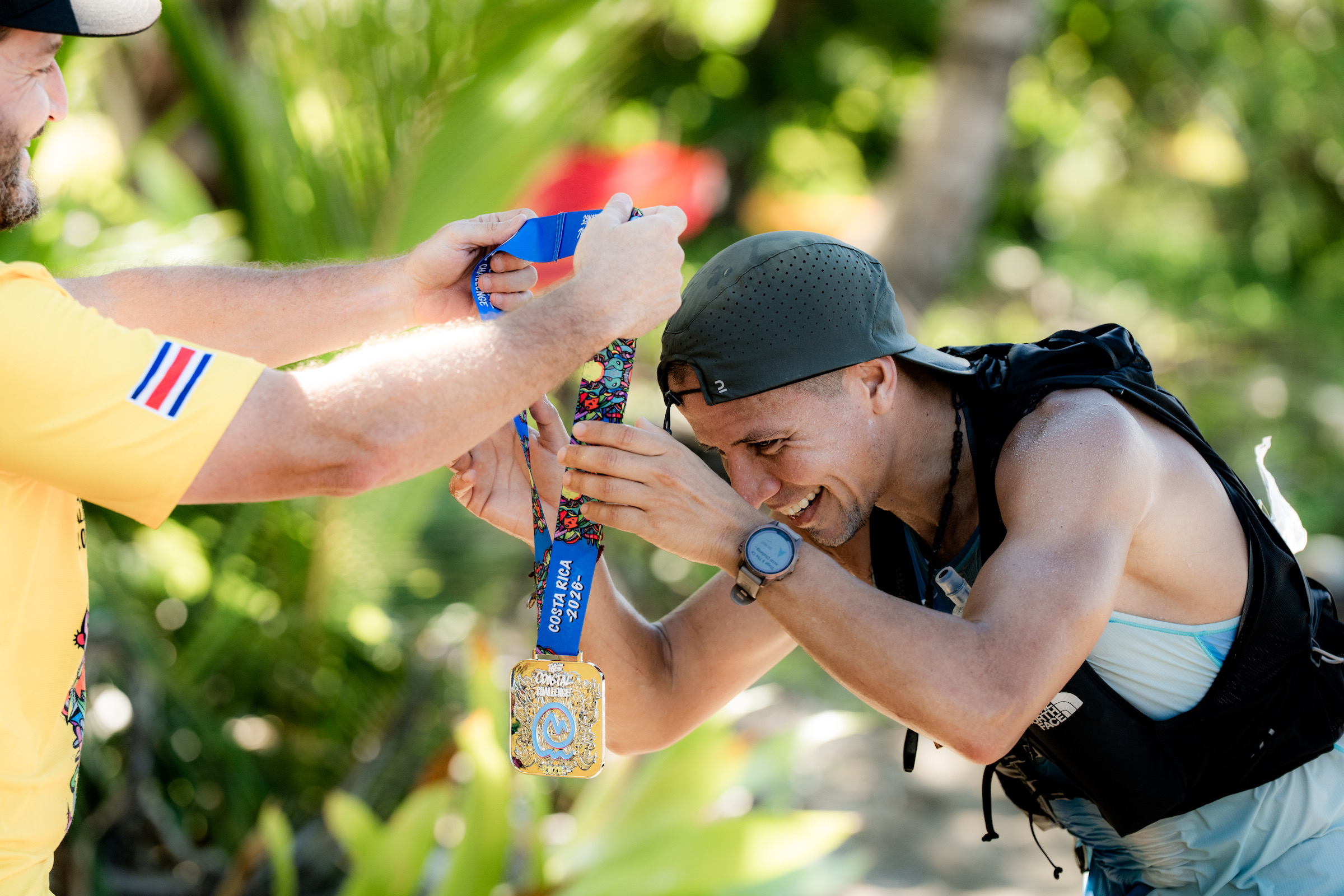
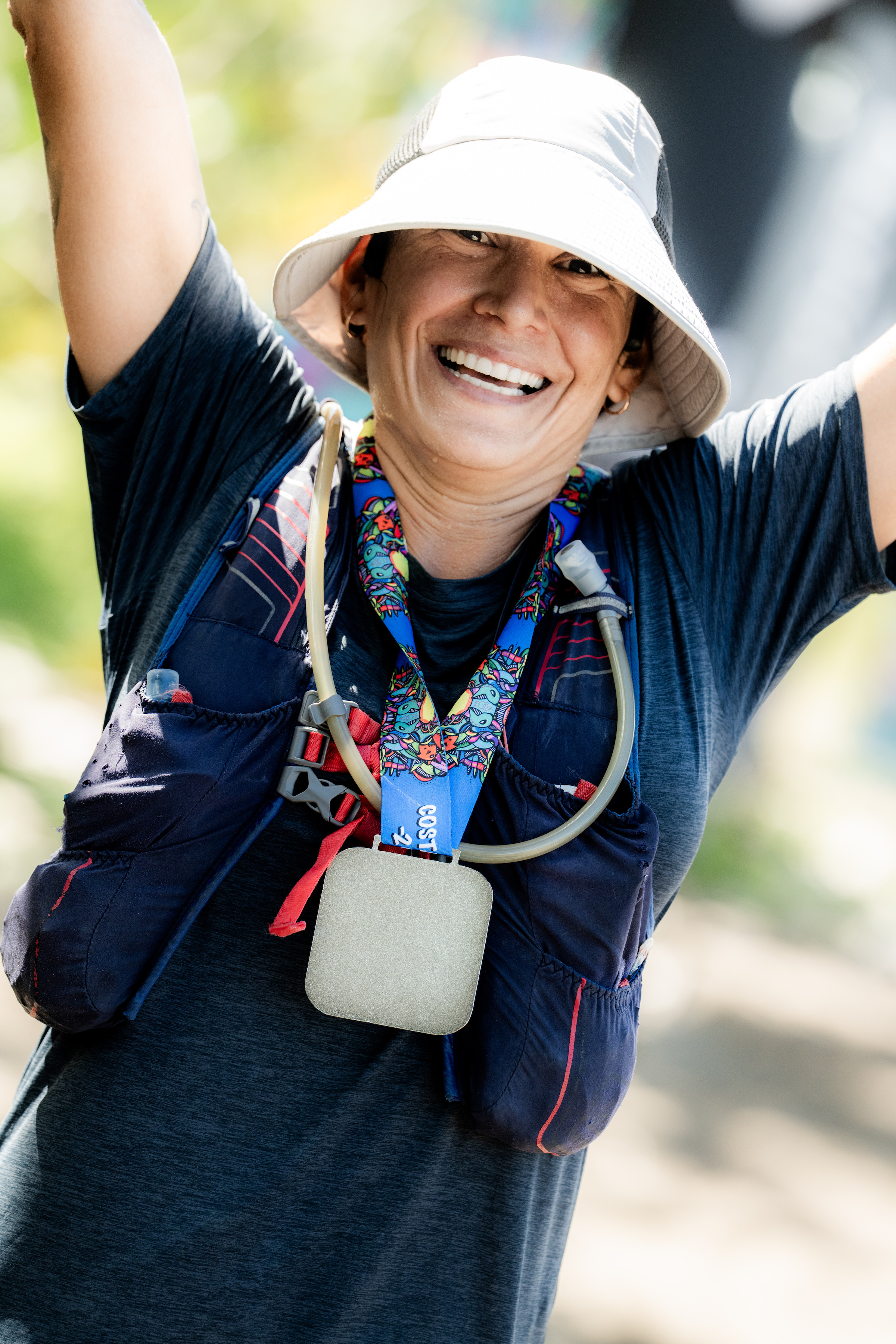
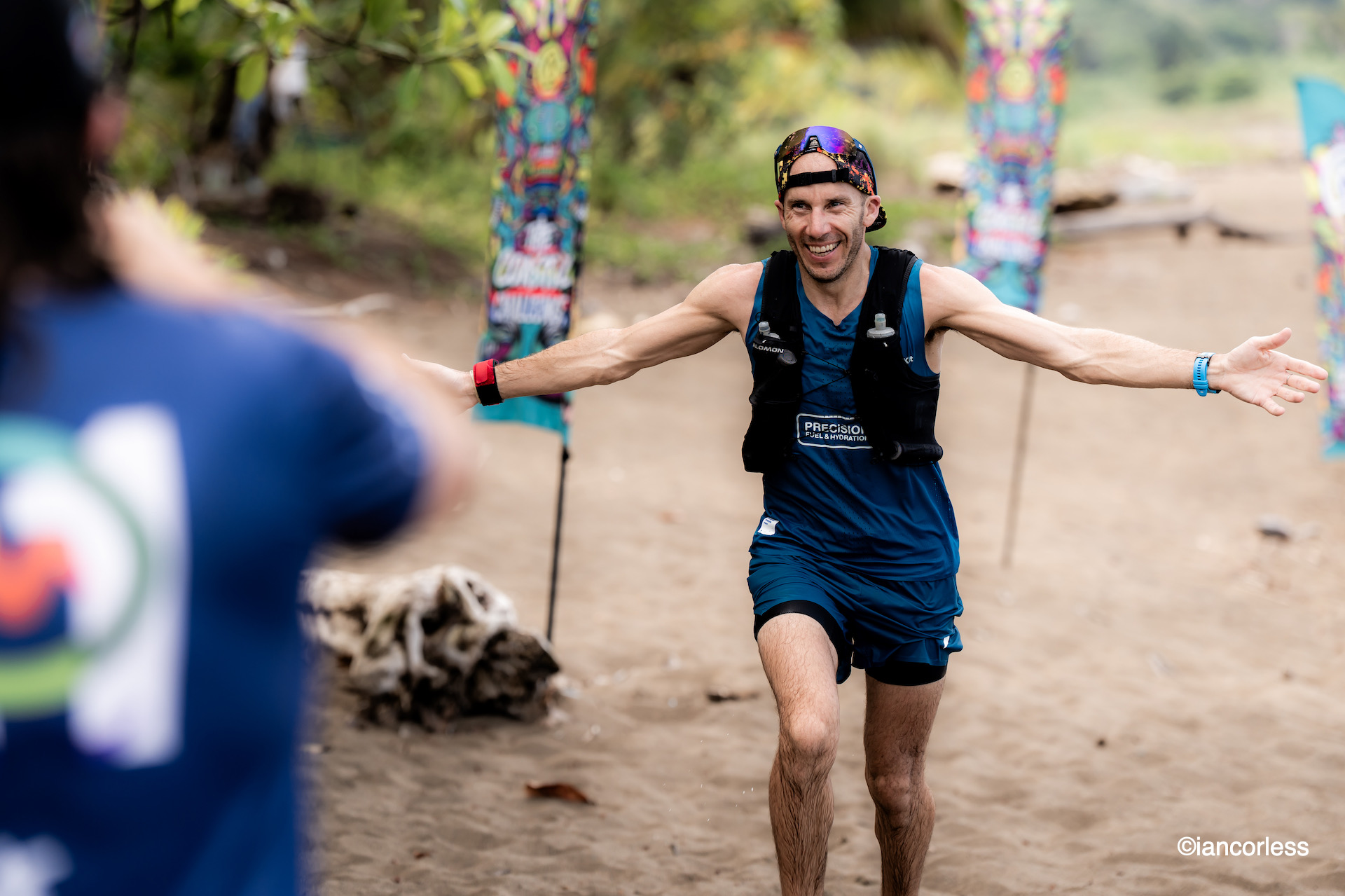
By the time runners reached the finish line on Stage 6, medals waiting, there was a mix of tears and laughter. Some sat quietly, absorbing it. Some embraced teammates. Some looked back toward the ocean.
Happiness doesn’t always arrive loudly. Sometimes it comes in a deep breath after days of effort. In the simple act of standing still after so much forward motion.
For the Adventure and Expedition categories, the journey is now complete. The miles are done. The jungle has been crossed. The beaches have been run.
And for Erick Agüero, after eight attempts, the dream has finally been realized.
Stage 6 wasn’t just the end of a race. It was the celebration of persistence, community, and the unforgettable experience of running through one of the most beautiful corners of the world. Medals were placed around tired necks. Eyes were wet. Smiles were wide.
The Coastal Challenge once again delivered more than a competition. It delivered a journey.
The penultimate stage of The Coastal Challenge Costa Rica led runners deep into one of the most biologically intense corners of the planet: the Osa Peninsula. Known locally as “The Paths of Osa,” the day was as much about immersion as it was about competition.
For Expedition runners, the route stretched 41 kilometers with 1,695 meters of climbing. The Adventure field faced 23 kilometers and 1,148 meters of ascent. On paper, those numbers were serious but manageable. On the ground, they unfolded across ferry crossings, fire roads, heavy jungle corridors, remote farms, and one unforgettable speedboat dash. The stage finished in the sweeping calm of Grandito Bay, where the rainforest spills toward the Pacific.
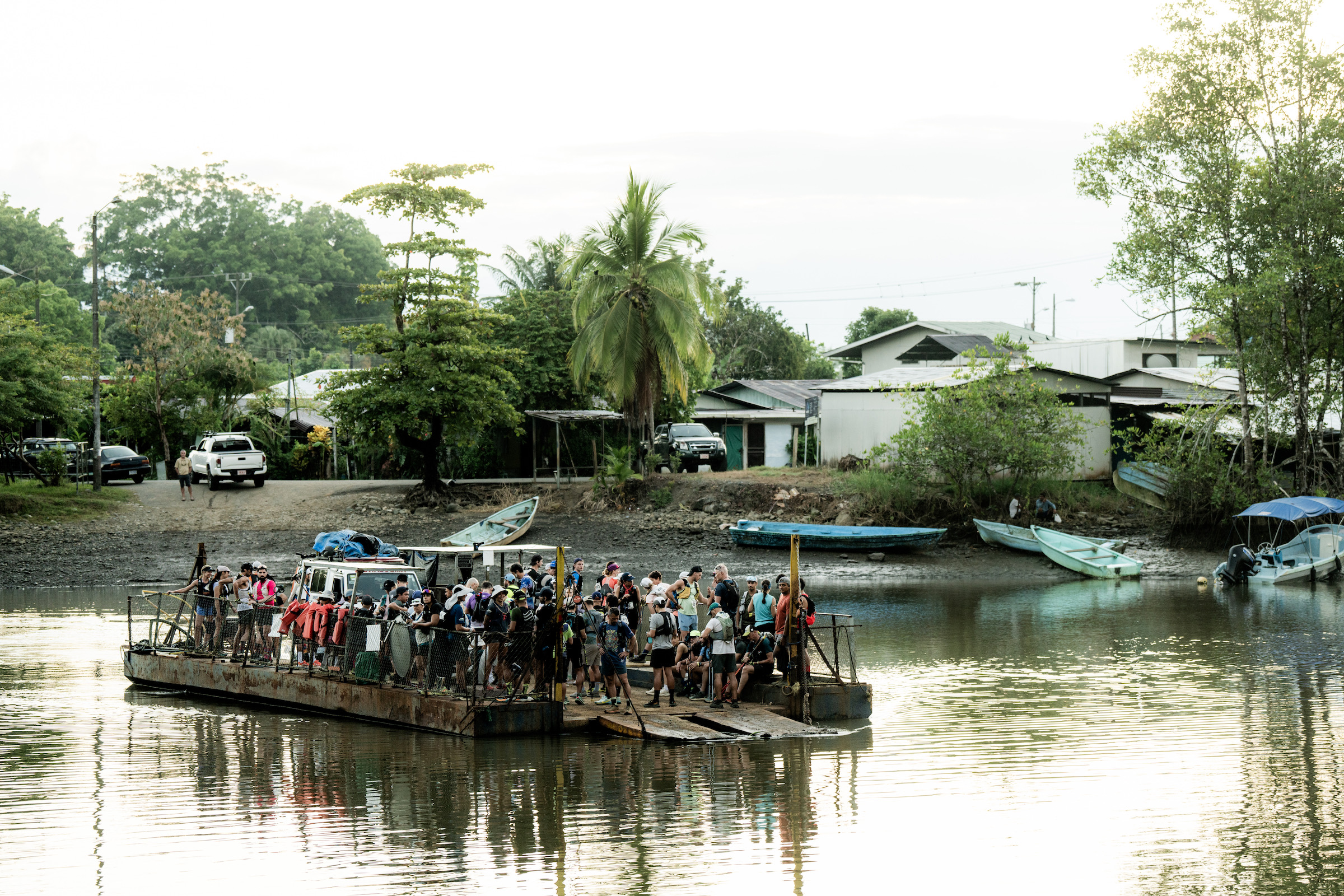
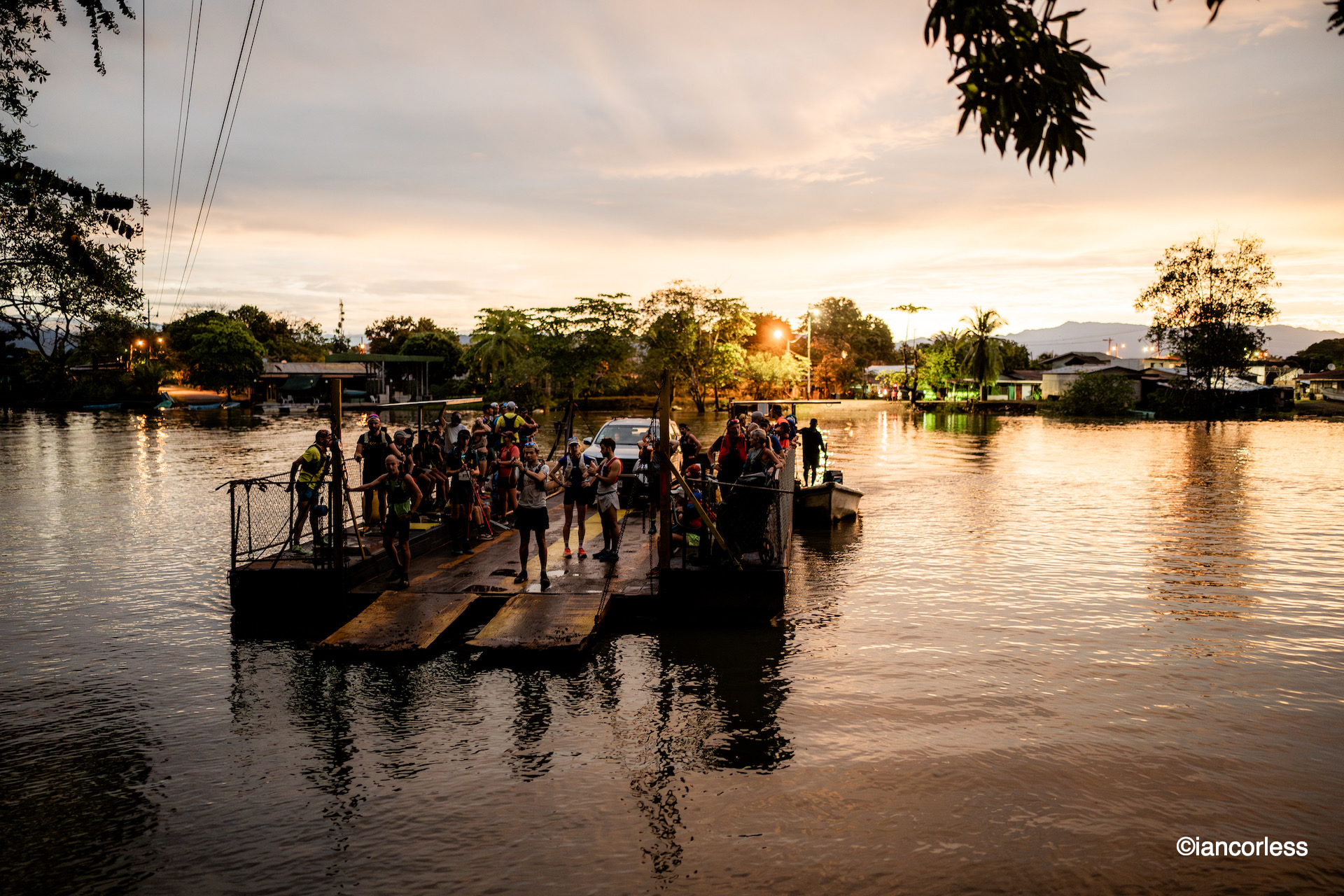
A River Crossing Into Another World, the day began not with a starting horn, but with a ferry ride across the Sierpe River.
Mist hung low over the mangroves. The Sierpe is one of the largest mangrove ecosystems in Central America, and at dawn it feels suspended in time. Runners stood quietly, some chatting, some conserving energy. It was a rare still moment in a multi-day race defined by heat, humidity, and relentless terrain.
Once across, the mood shifted. Fire roads opened the stage, dusty and exposed, climbing steadily away from the river basin. The surface was firm but unyielding, a reminder that even “runnable” terrain in Costa Rica comes with a cost.
The route threaded through working farmland before plunging into dense tropical forest.
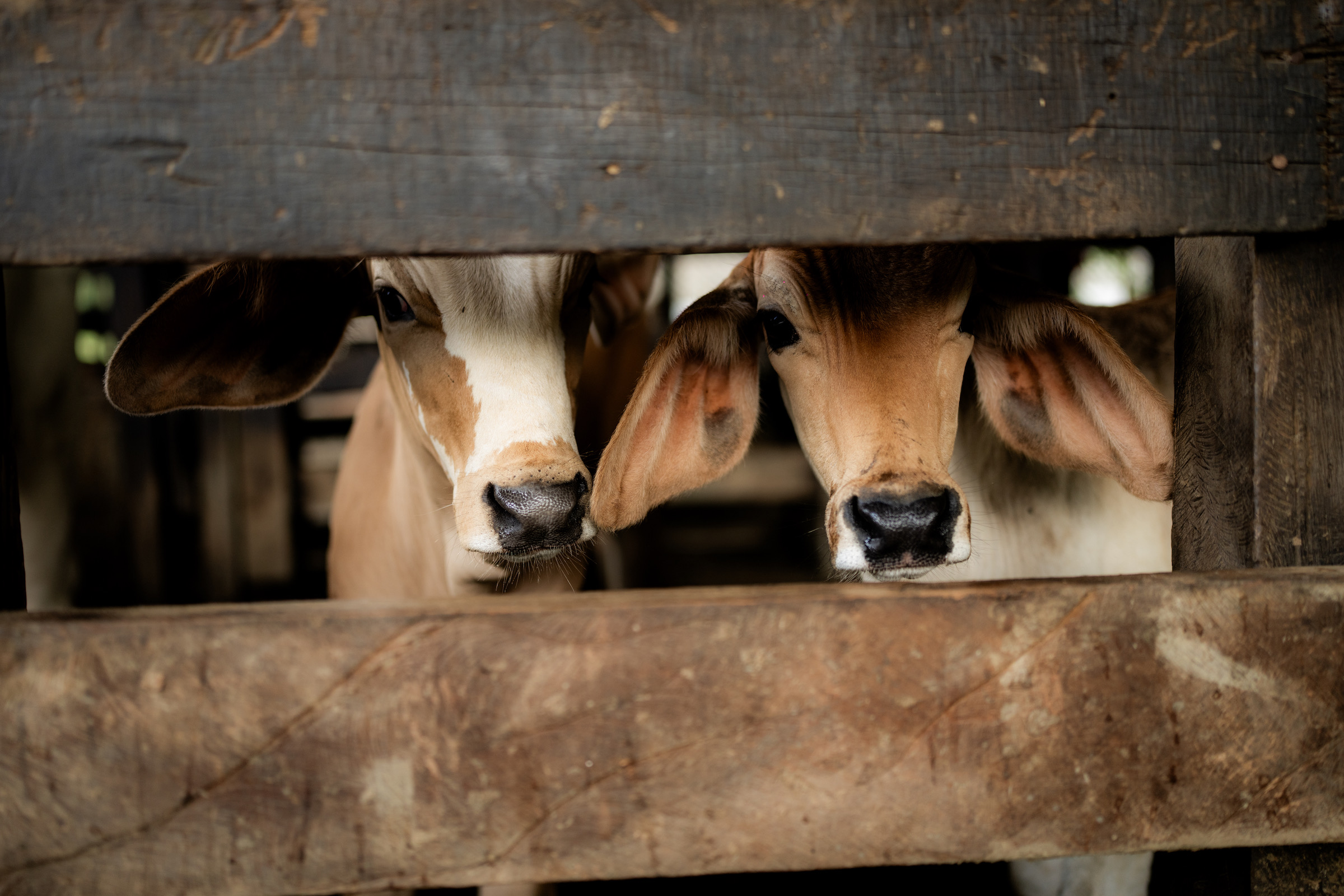
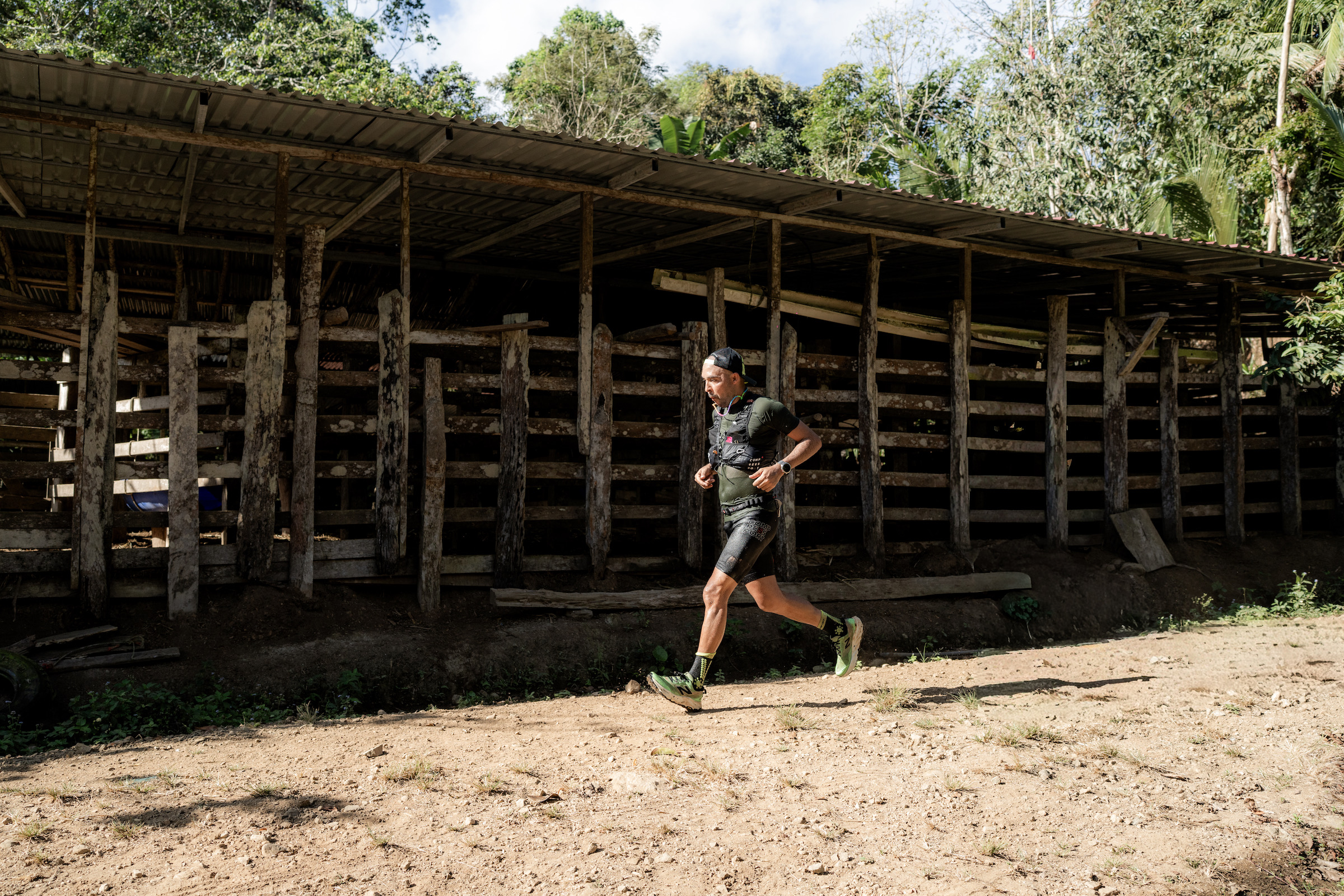
Out in the open, heat built quickly. Cattle pastures and palm-lined tracks offered little shade. Then, almost abruptly, the jungle swallowed the trail.
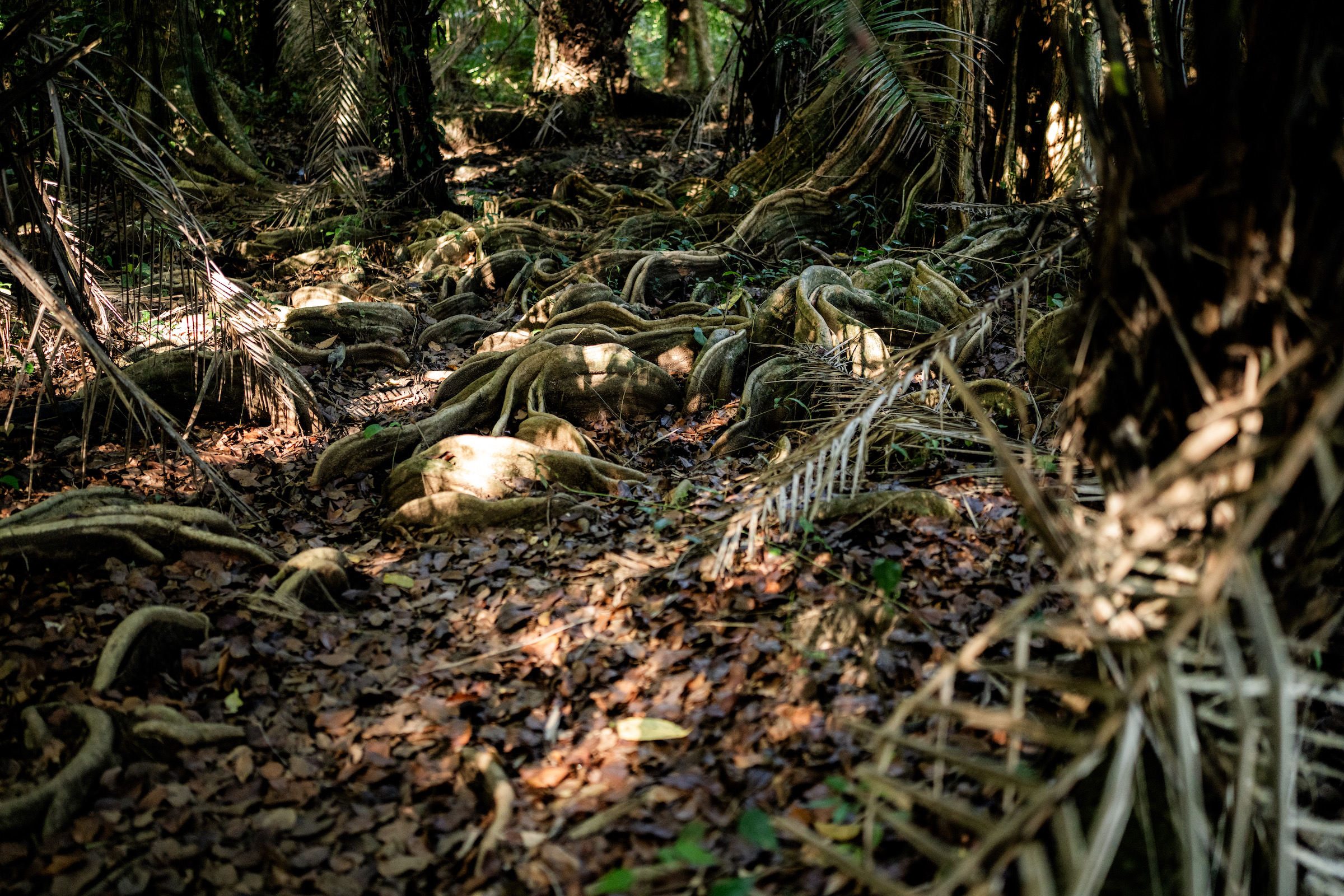
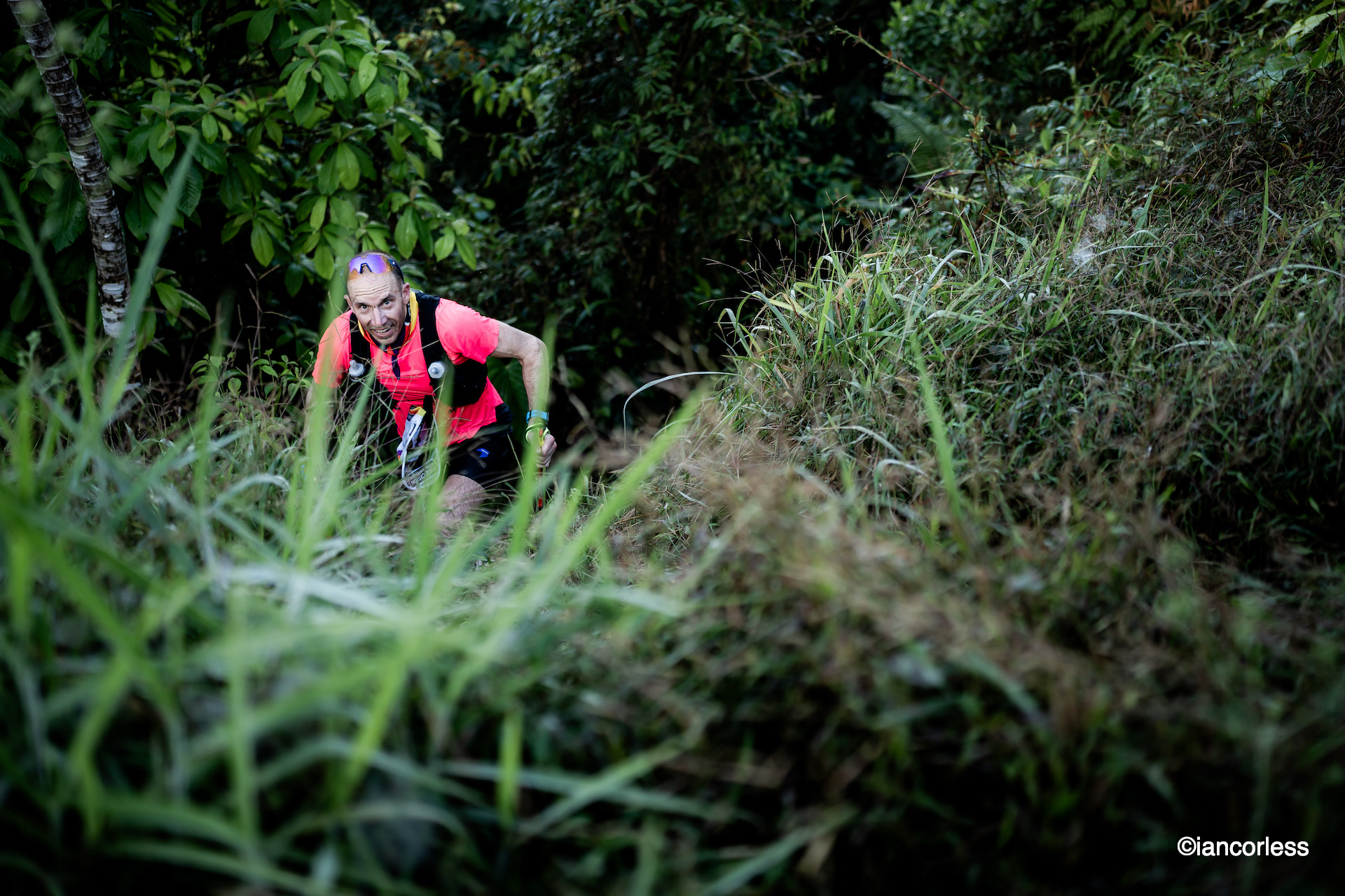
Under canopy, the air thickened. Roots twisted across narrow singletrack. The climbs felt steeper than the elevation profile suggested. Every descent demanded attention. It was classic Osa terrain: alive, humid, and unapologetically raw.
For those at the front of the race, though, the pressure was different from earlier in the week. With overall standings largely secure barring mishap, this stage offered a rare mental exhale. Leaders could look up, take in the green walls around them, and run with composure rather than urgency.
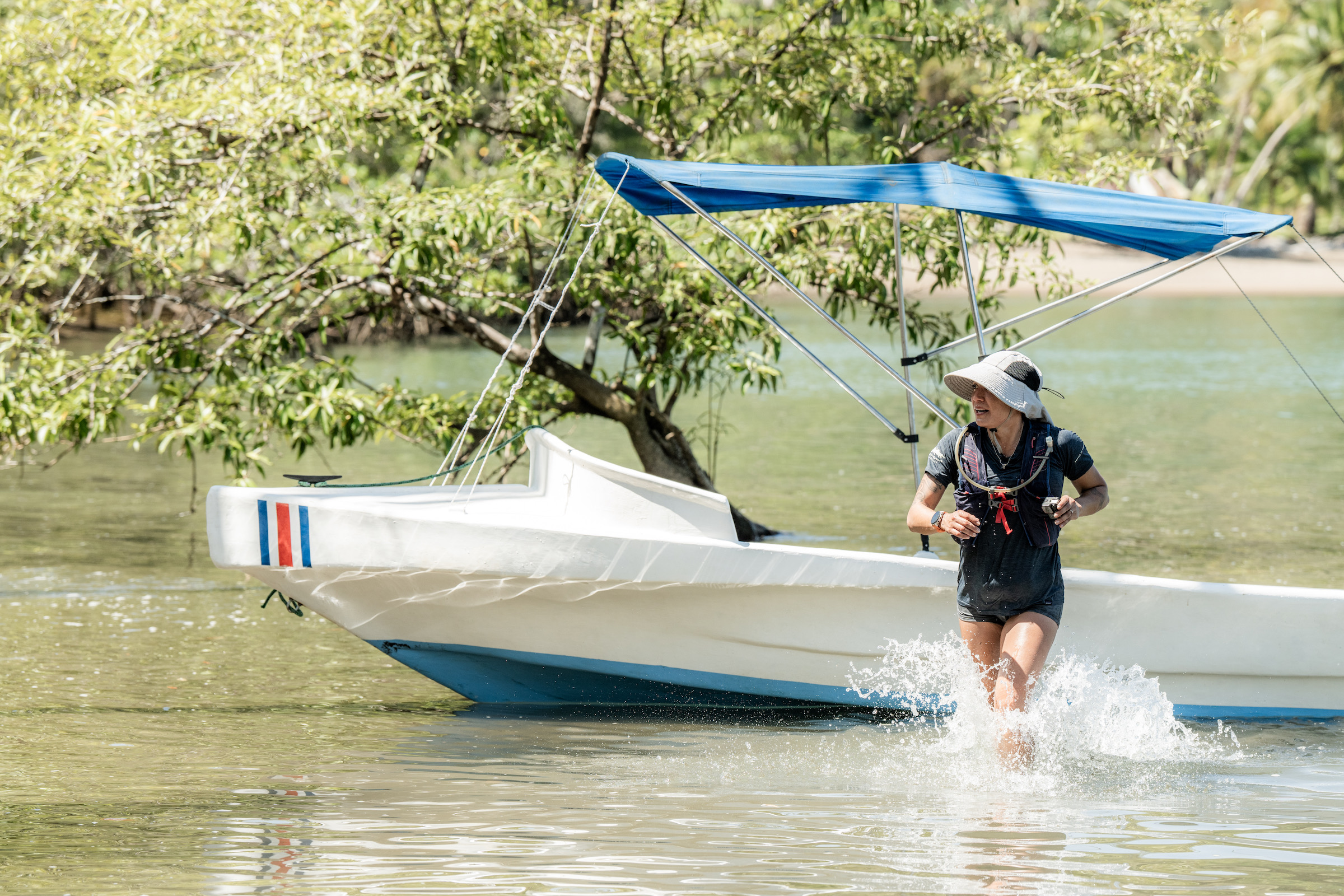
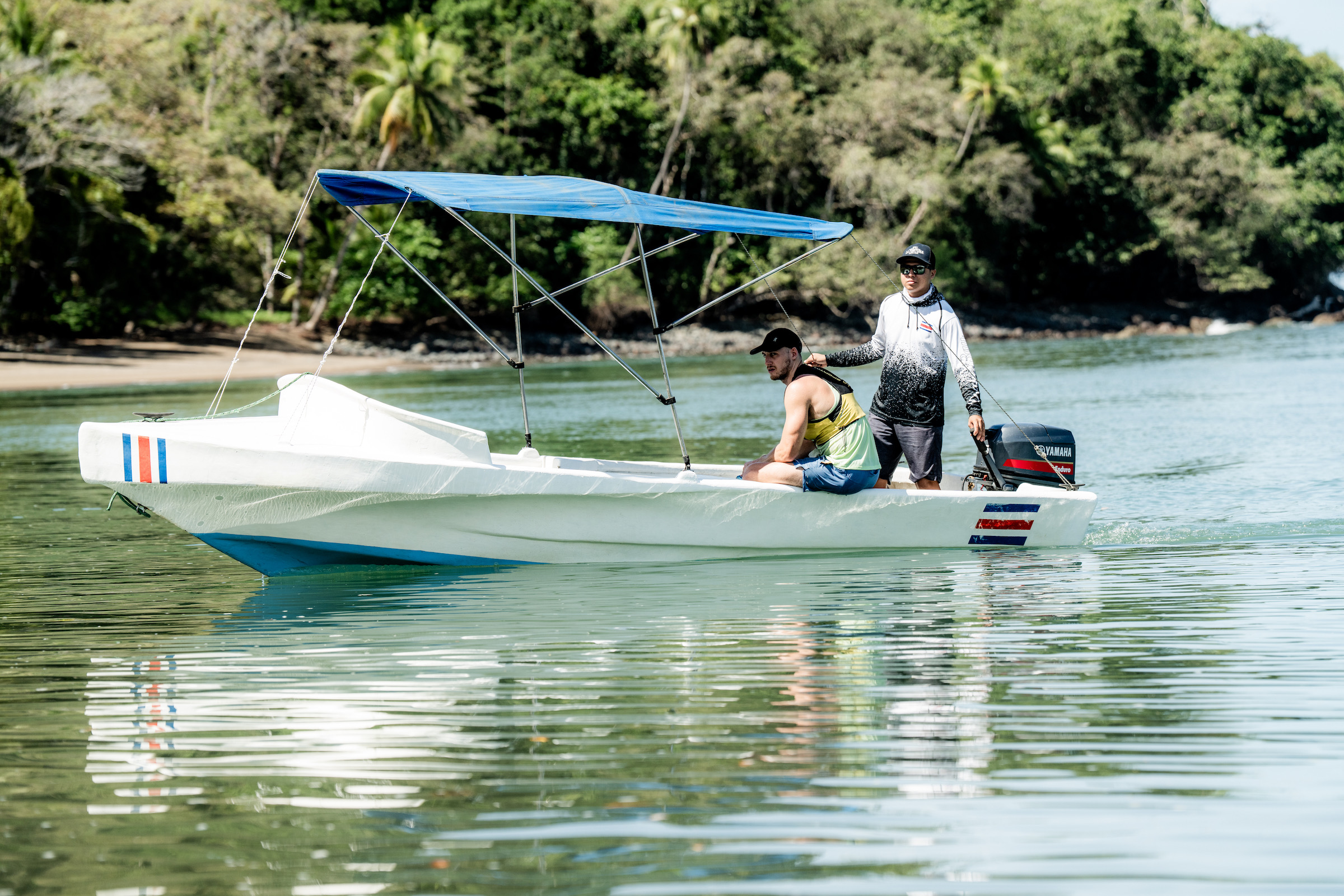
Midway through the day came one of the most distinctive features of the event: the iconic speedboat crossing.
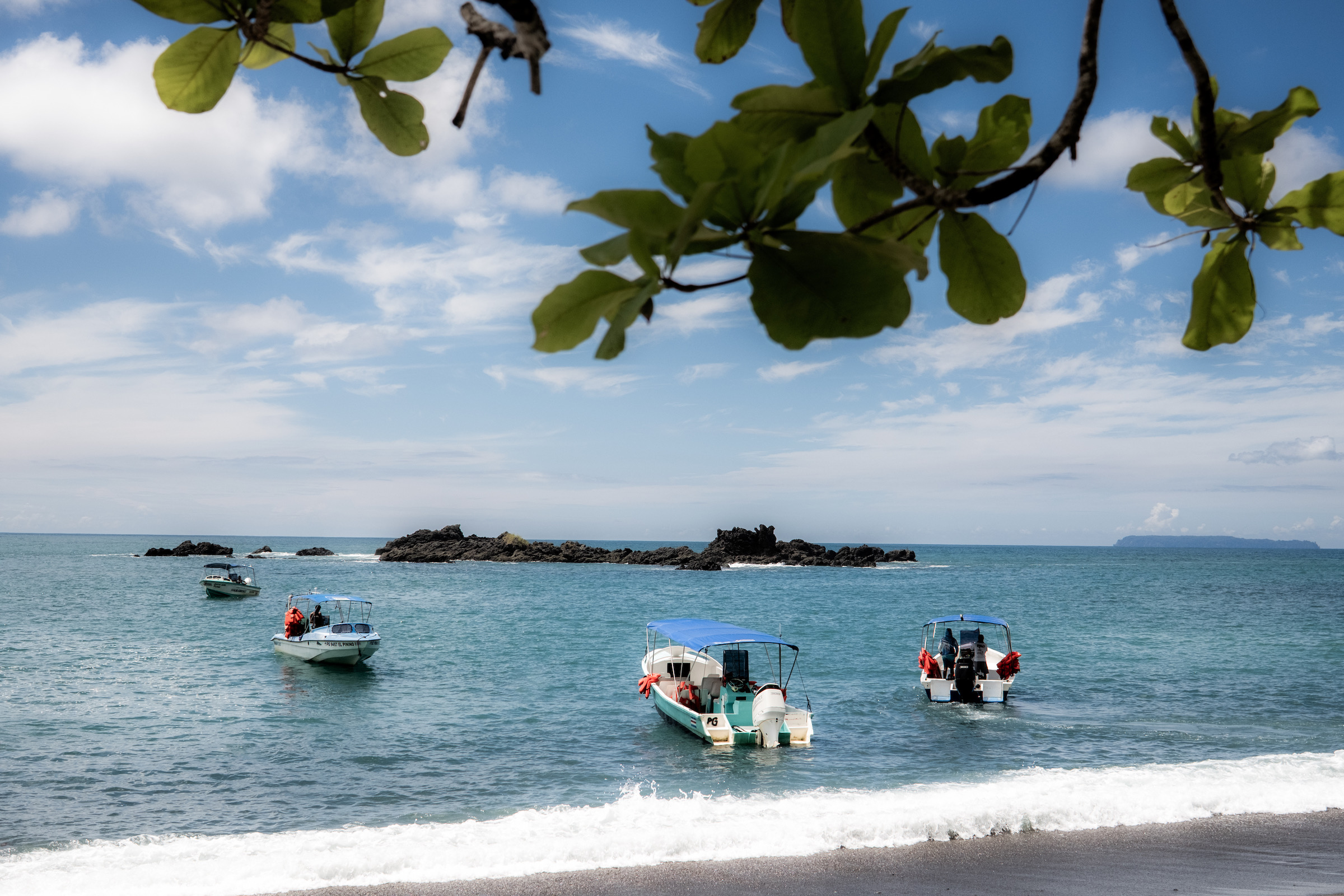
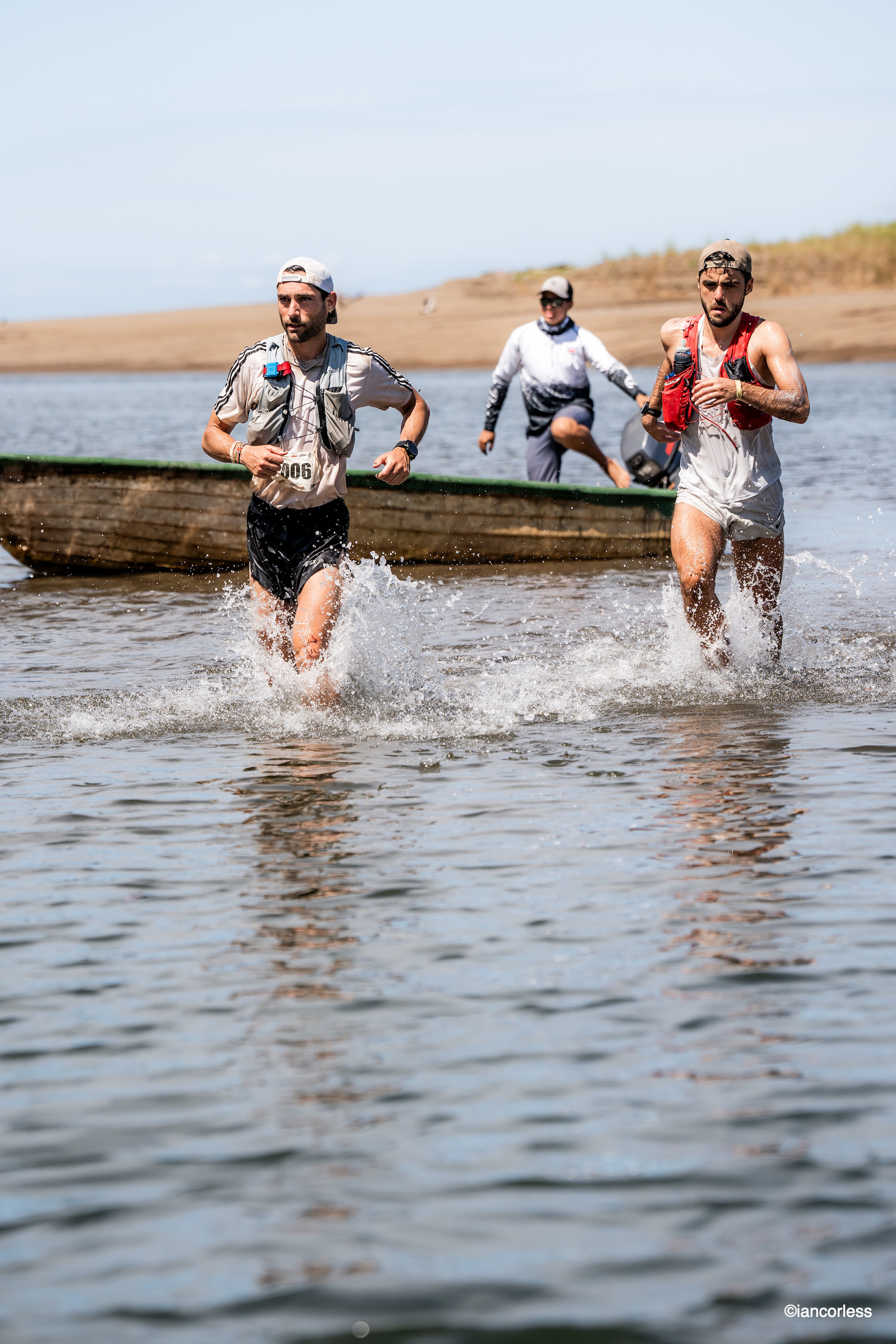
After hours of climbing and descending, runners boarded small boats that skimmed along the Pacific edge of the peninsula. Salt air replaced jungle humidity. The coastline unfurled in rocky points and quiet beaches. It was a logistical necessity, but it felt cinematic.
From there, the final approach led toward Grandito Bay, where the forest meets calm blue water. The finish line atmosphere carried a different tone from earlier, harsher stages. Relief mixed with quiet satisfaction. With one day remaining, the race picture was largely set.
In the Adventure men’s race, the day belonged to bib 35, Sammy Francis, who crossed in 4:07:57. He managed the terrain with confidence, balancing effort on the climbs and steady pacing through the jungle sections.
Roberto Solano (bib 60) followed in 4:51:46, while Alberto Gil (bib 48) secured third in 5:00:01. The gaps reflected not just speed, but careful navigation of the heat and elevation.
The women’s podium was tightly contested. Laura Zuñiga (bib 59) claimed the stage in 5:01:22, running a composed and consistent race. Just behind, Kristel Polet (bib 34) and Toni Clarke (bib 9) both stopped the clock at 5:08:01, sharing identical times after nearly five hours on course. On a day shaped by terrain rather than tactics, that symmetry felt fitting.
For Expedition runners, the added distance and climbing sharpened the challenge. Forty-one kilometers in Osa is not simply a long run. It is sustained exposure to gradient, heat, and technical trail.
Alejandro Muñoz set the benchmark, winning in 5:05:44. He held strong through the early climbs and maintained rhythm deep into the jungle sections. Erick Agüero (bib 57) followed in 5:17:22, while Jesus Cerdas (bib 64) completed the men’s podium in 5:34:57.
In the women’s Expedition race, Denise Zelaya (bib 16) led with a time of 6:11:05. Janina Beck (bib 53) finished in 6:53:21, and Floribeth Perez (bib 38) rounded out the podium in 8:00:49. Their performances reflected not only endurance but resilience across a stage that demanded constant adjustment to terrain and conditions.
What defined this stage was not just distance or ascent. It was context.
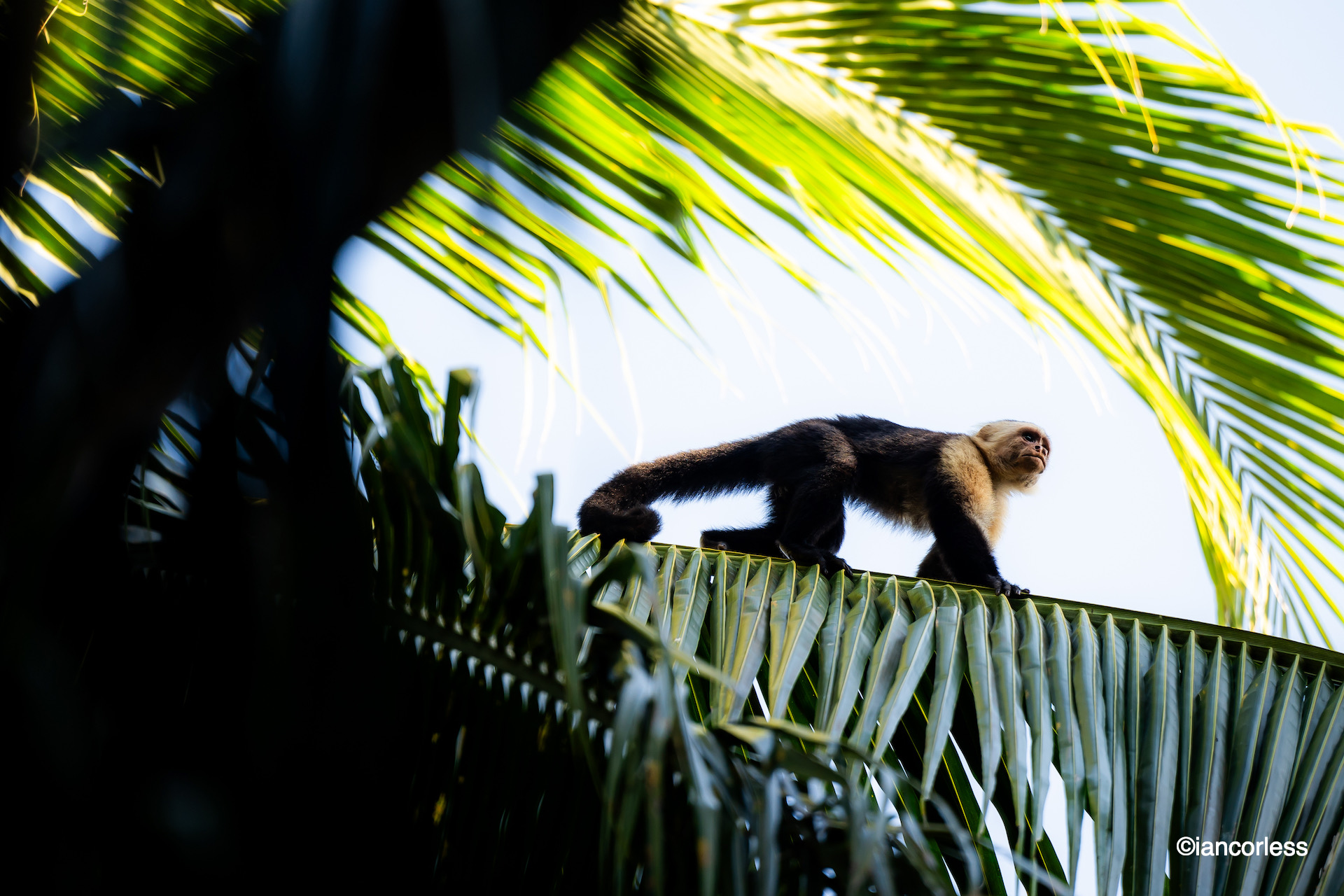
The Osa Peninsula is often described as one of the most biodiverse regions on Earth. Macaws arc overhead. Howler monkeys echo through the trees. The forest floor moves with insects and reptiles. Even seasoned trail runners find themselves looking up, momentarily distracted by the sheer density of life.
With overall victories nearly secure, race leaders could afford to ease slightly, to let the environment register. There is something rare about competing hard in a place that feels untouched. On this stage, performance and place were inseparable.
As runners gathered at Grandito Bay, shoes caked in mud and salt drying on their skin, the mood was steady and reflective. One more stage remained. But “The Paths of Osa” had delivered what the Coastal Challenge promises at its best: a demanding route set within a landscape that refuses to be ignored.
Times were recorded. Podiums were shaped. Yet long after the numbers fade, it will be the ferry across the Sierpe, the wall of jungle heat, and the rush of the speedboat toward the Pacific finish that define this penultimate day.
The Coastal Challenge Costa Rica pulled runners away from the coastline and into the high farmlands of the country’s interior. It was a bruising day, 37.7 kilometers with 2,613 meters of climbing for the Expedition category.
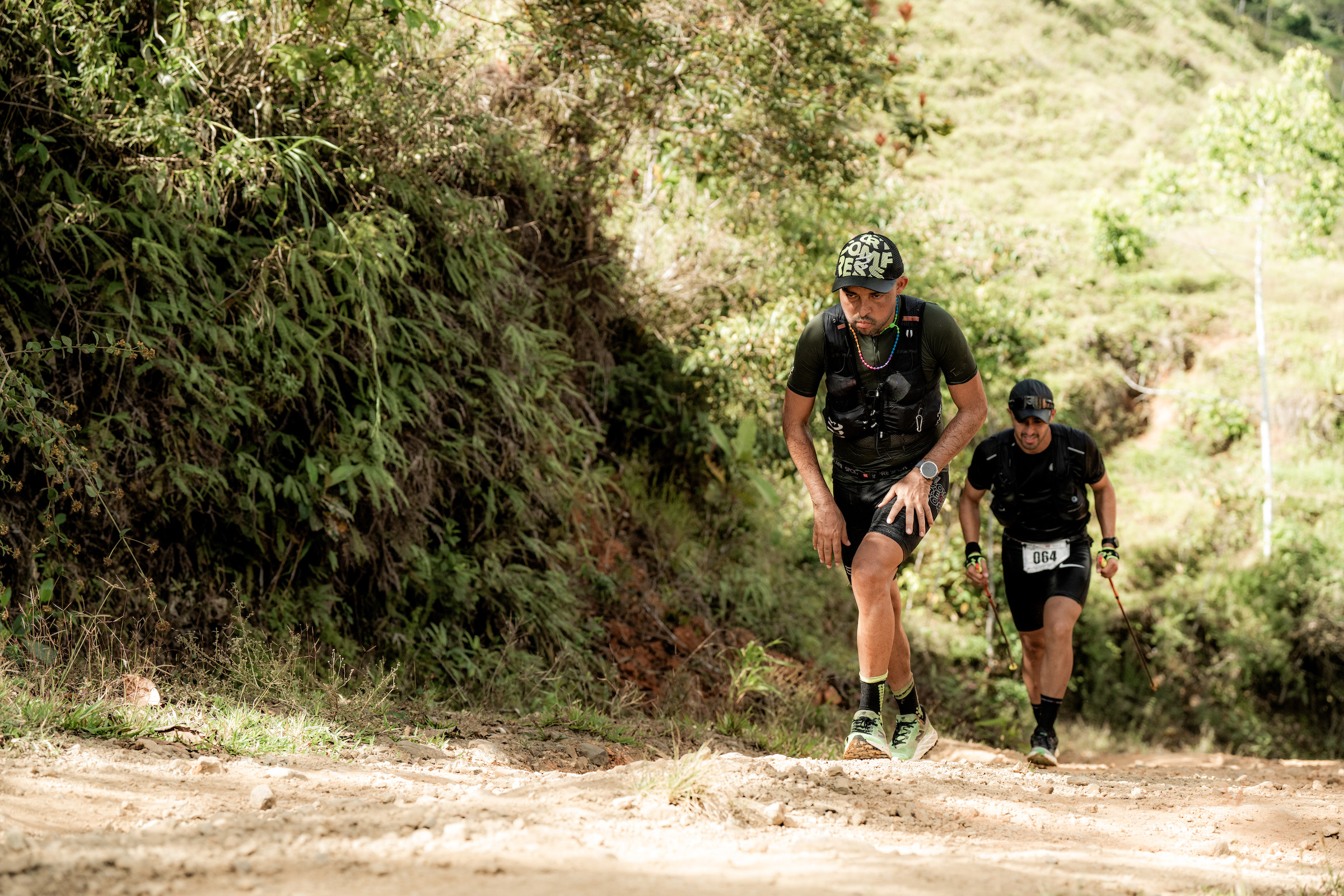
No hiding from it. The terrain rolled relentlessly, climbing and plunging through rough rural tracks and exposed hillsides before dropping toward the finish in Palma Norte. It was a stage built to test already tired legs, and it did exactly that.
Men’s Race
Erick Aguirre ran smart. With a solid overall lead, there was no need to take risks. He spent the day alongside Jesus Cerdas, the pair moving steadily across the harsh terrain. They crossed together in 6:05:43, controlled and composed.
Behind them, the real battle unfolded.
Jon Shield fought all day. For much of the stage he sat in fourth, but he never let the gap grow. Gradually he reeled in Martin Alonso Mena. The two arrived at the line almost inseparable after more than six and a half hours of racing. Shield edged it by just three seconds, 6:38:26 to 6:38:29. A long day decided by the smallest of margins.
Women’s Race
Denise Zelaya continues to run her own race. Calm, consistent, and completely dominant, she finished in 7:29, well clear of the field.
Janina Beck followed in 8:27, with Floribeth Perez completing the podium in 8:59. On a day that punished everyone, Zelaya once again showed control and strength.
Adventure Category
The Adventure course was shorter at 12 kilometers, but still far from easy. Sammy Francis ran solo again, crossing in 3:39:22 with another composed performance. In the women’s race, Laura Zuniga finished in 4:13:45, gaining more time on Toni Clark and steadily building her advantage.
*Please note – Adventure times need to deduct 1:49 from the times
With four stages complete, fatigue is real. The coastal humidity has been replaced by exposed climbs and rolling farmland. Every step now carries the weight of the days before.
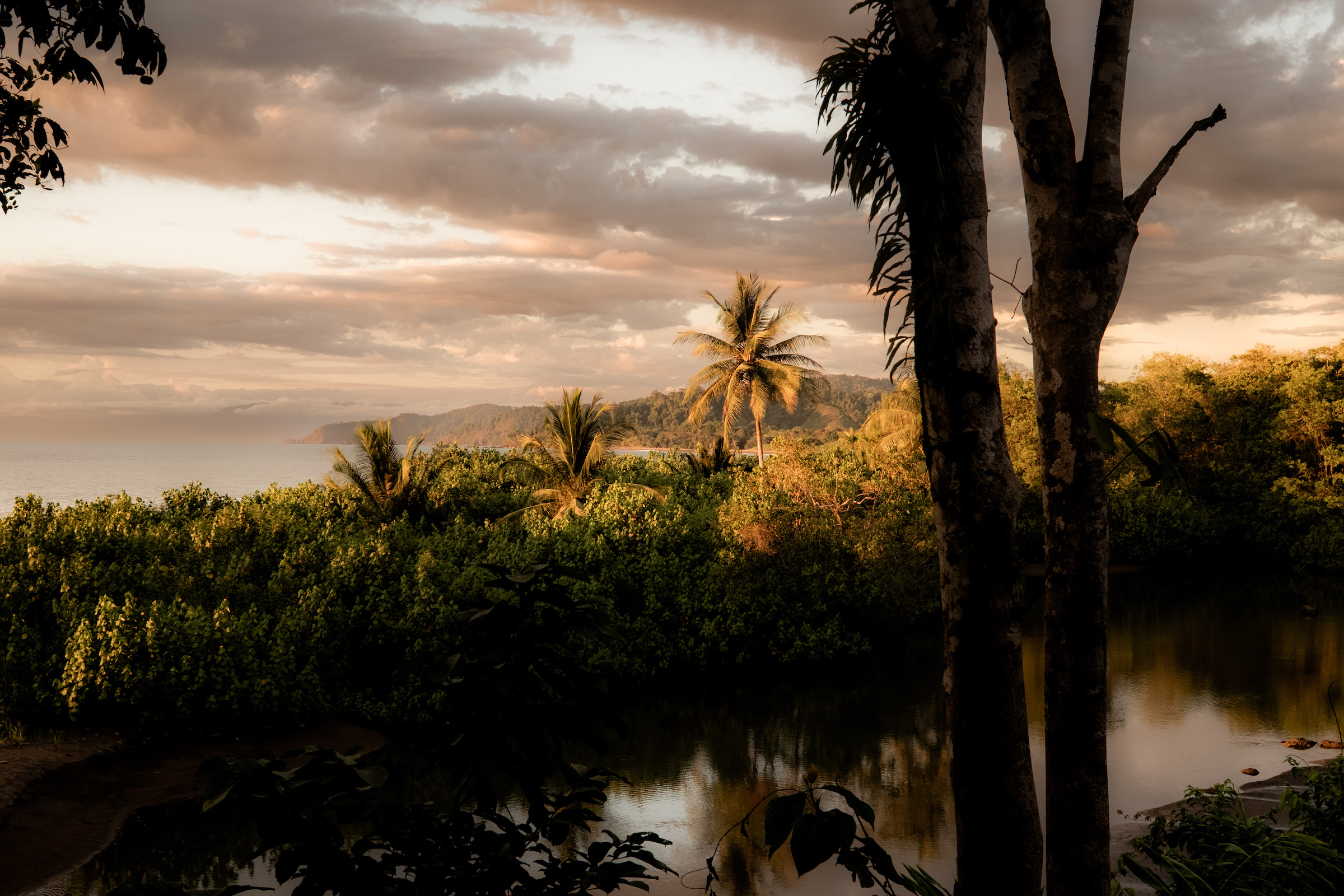
The Boruca region of southern Costa Rica feels different from the postcard version of the country. This is not manicured resort coastline or dense jungle trails pressed flat by tourists. It is rural, working land, shaped as much by history as by weather.
The Boruca people, one of Costa Rica’s remaining Indigenous communities, have lived here for generations, known for their hand-carved masks and fiercely preserved traditions.
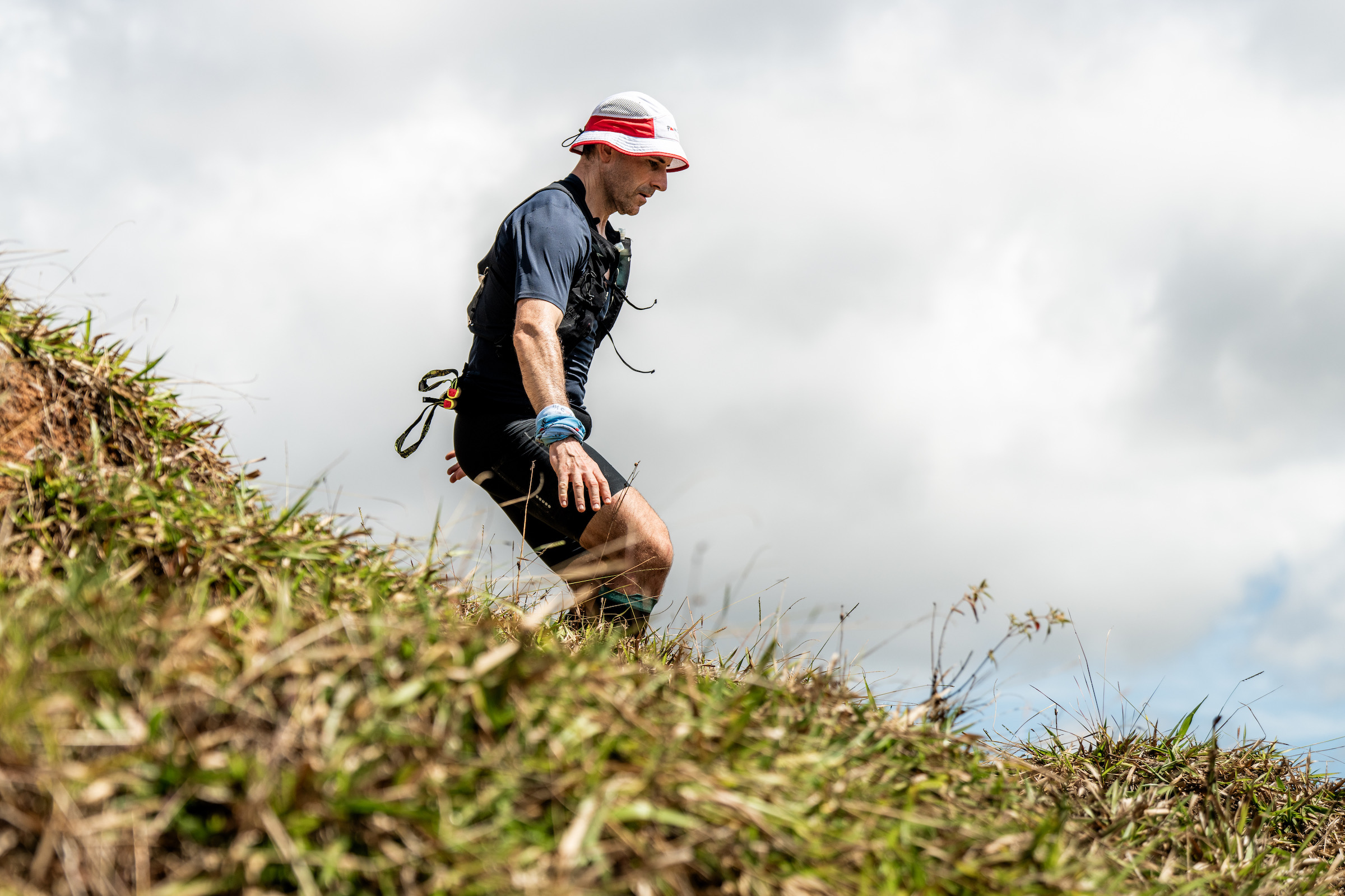
Around their villages the land rolls outward into open pasture and patchwork farmland, where cattle graze on steep green hills and small family plots cling to uneven slopes. The terrain is restless. Long climbs rise without rhythm, dirt roads bake under the sun, and sharp descents cut down into river crossings and humid low pockets before rising again.
It is a landscape that looks soft from a distance, all green folds and misty ridgelines, but up close it is rugged and unforgiving. The soil can be loose, the heat heavy, and the gradients relentless. In the high farmlands near Palma Norte, you move through open exposure rather than forest cover, feeling the scale of the land around you. It is beautiful, but it demands respect.
Stage 3 of The Coastal Challenge Costa Rica is always circled in red. The Queen Stage. The day that defines the race. The stage that strips things back to effort, patience, and decision-making. On paper it is long and brutal. On the ground, it is something else entirely.
The morning stars with the coast, in the quiet half-light where the jungle still holds the night. Runners gathered with headlamps flickering, shoes already damp from the humidity. The air was heavy but mercifully cooler than previous days. Low cloud sat over the hills. It would prove to be a gift.
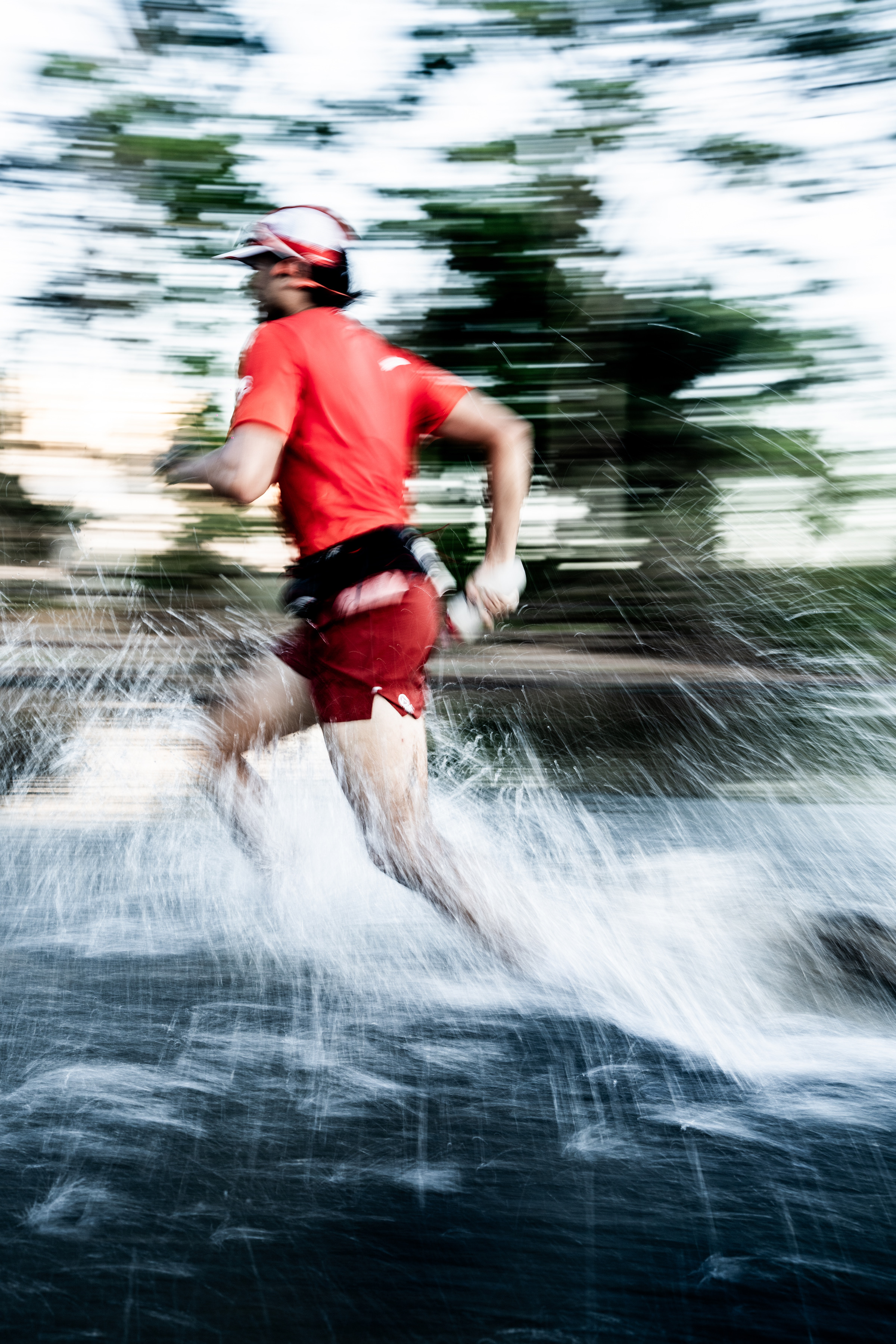
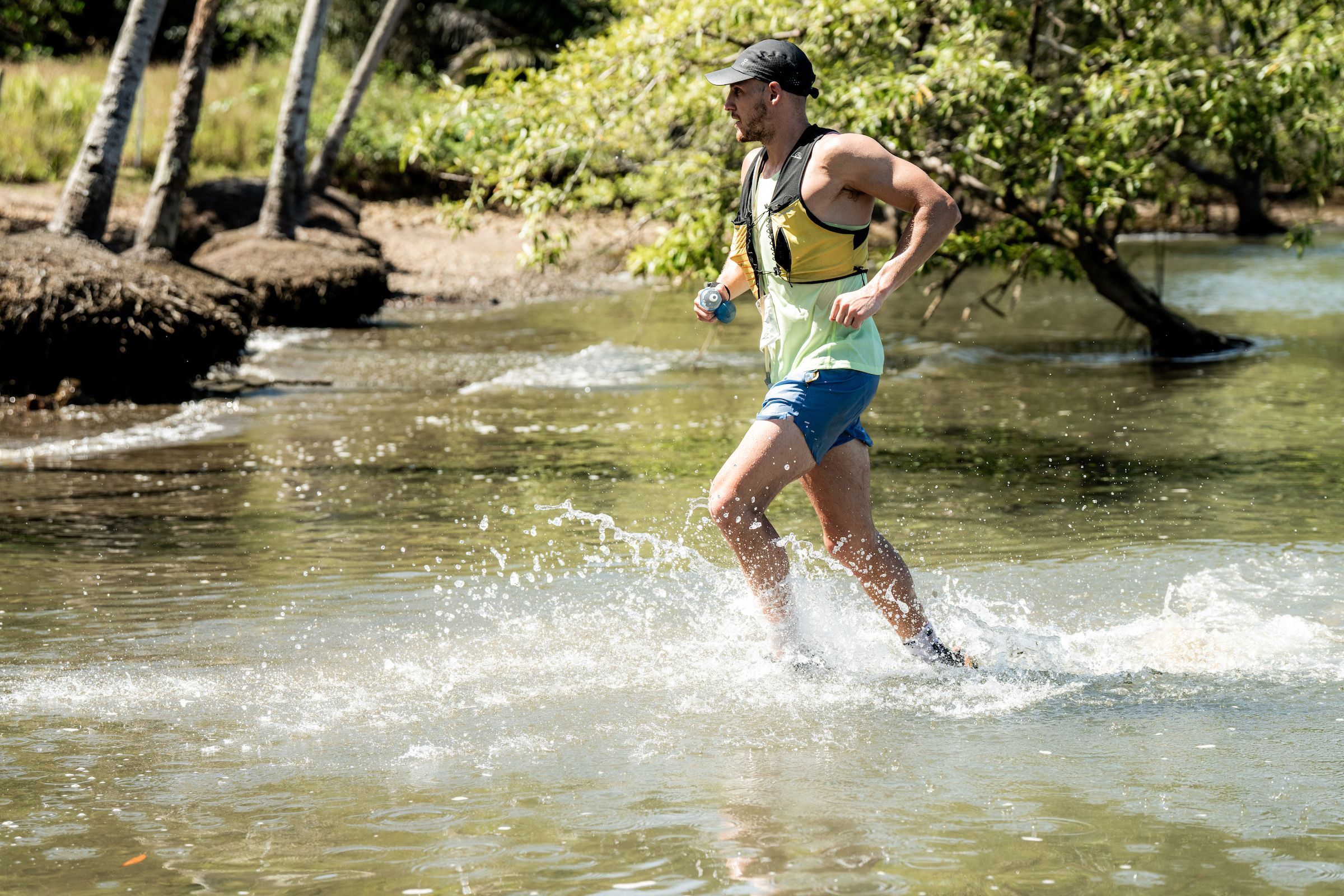
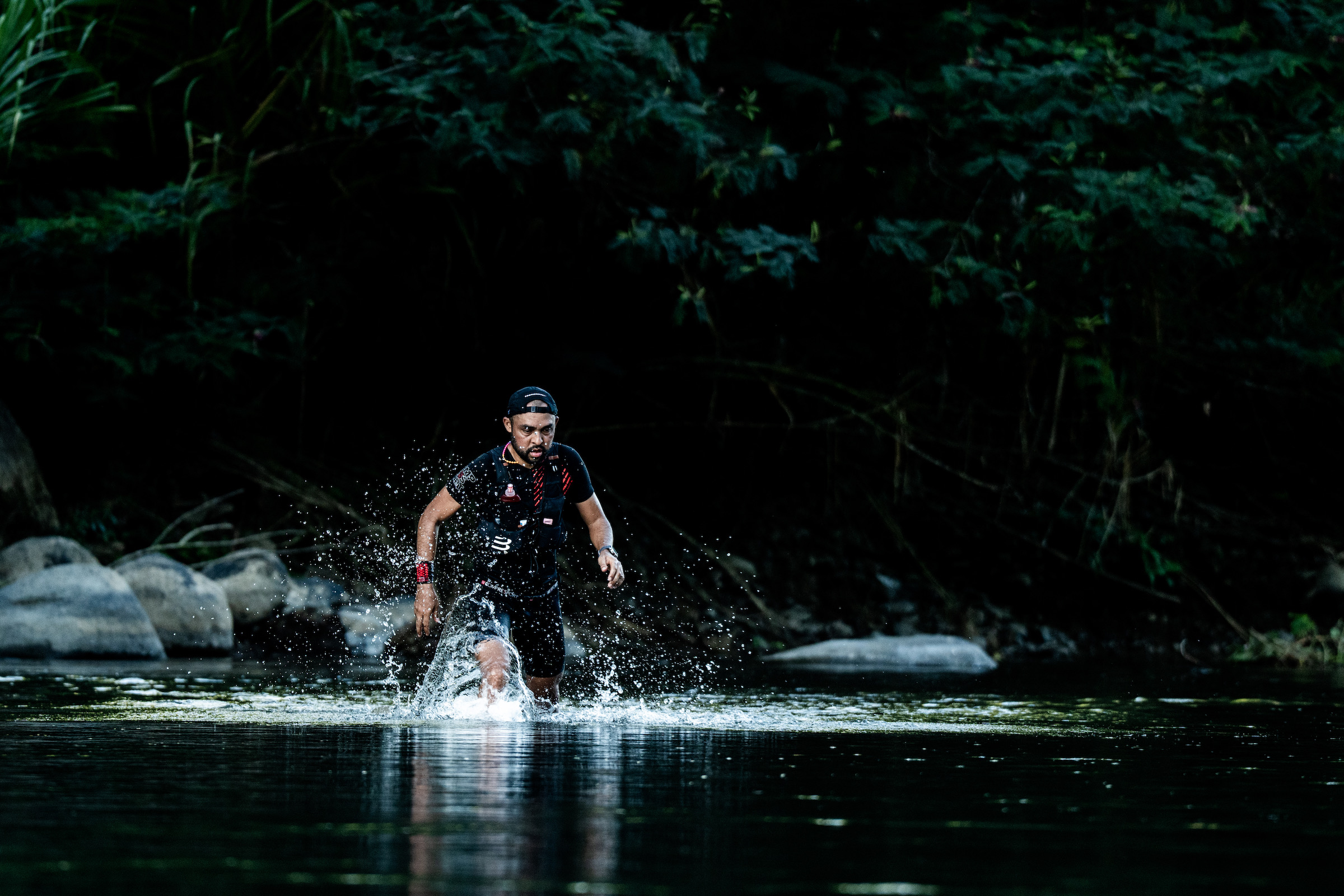
Almost immediately, the course dropped into a wide riverbed. This opening section is deceptive. It looks runnable, even friendly. Pale stones, shallow flowing water, open sky above. But riverbed running is never free speed. Every step shifts. Ankles work overtime. Shoes fill with water within minutes. The rhythm becomes uneven, a constant negotiation between pace and balance. Some runners hopped rock to rock, trying to keep their feet dry. Others accepted the soak and drove straight through, splashing forward with purpose.
The sound here was distinctive. Footsteps slapping water. Heavy breathing echoing off the valley walls. Occasional shouts as someone slipped or laughed at the futility of staying clean. This was Costa Rica announcing itself early.
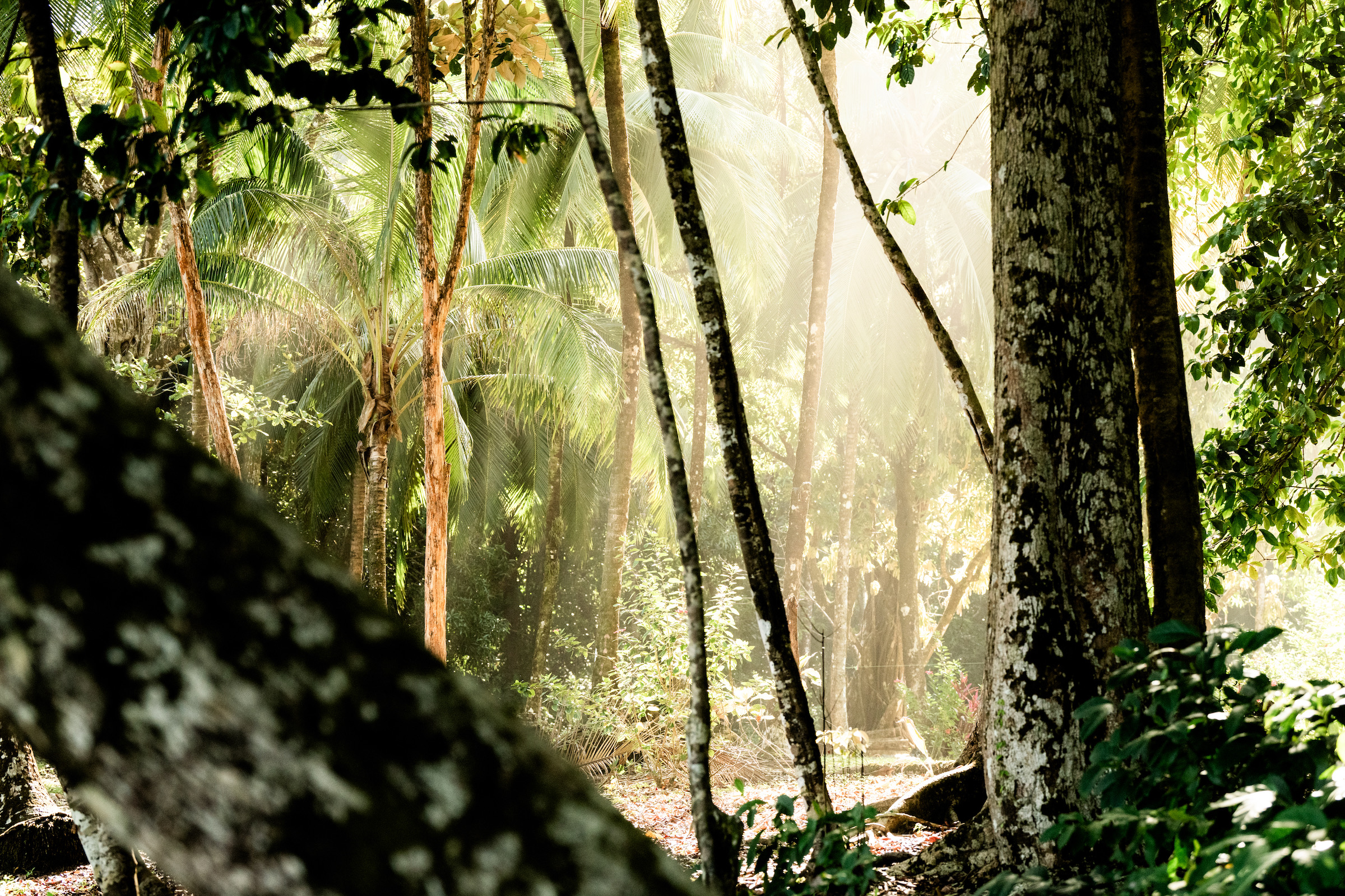
As the river narrowed, the trail began to rise. Jungle closed in. Thick green walls pressed close, vines hanging low, the smell of wet earth and vegetation everywhere. Heat built quickly once the climbing started, but the cloud cover held. No direct sun. No baking. For this stage, that mattered more than almost anything.
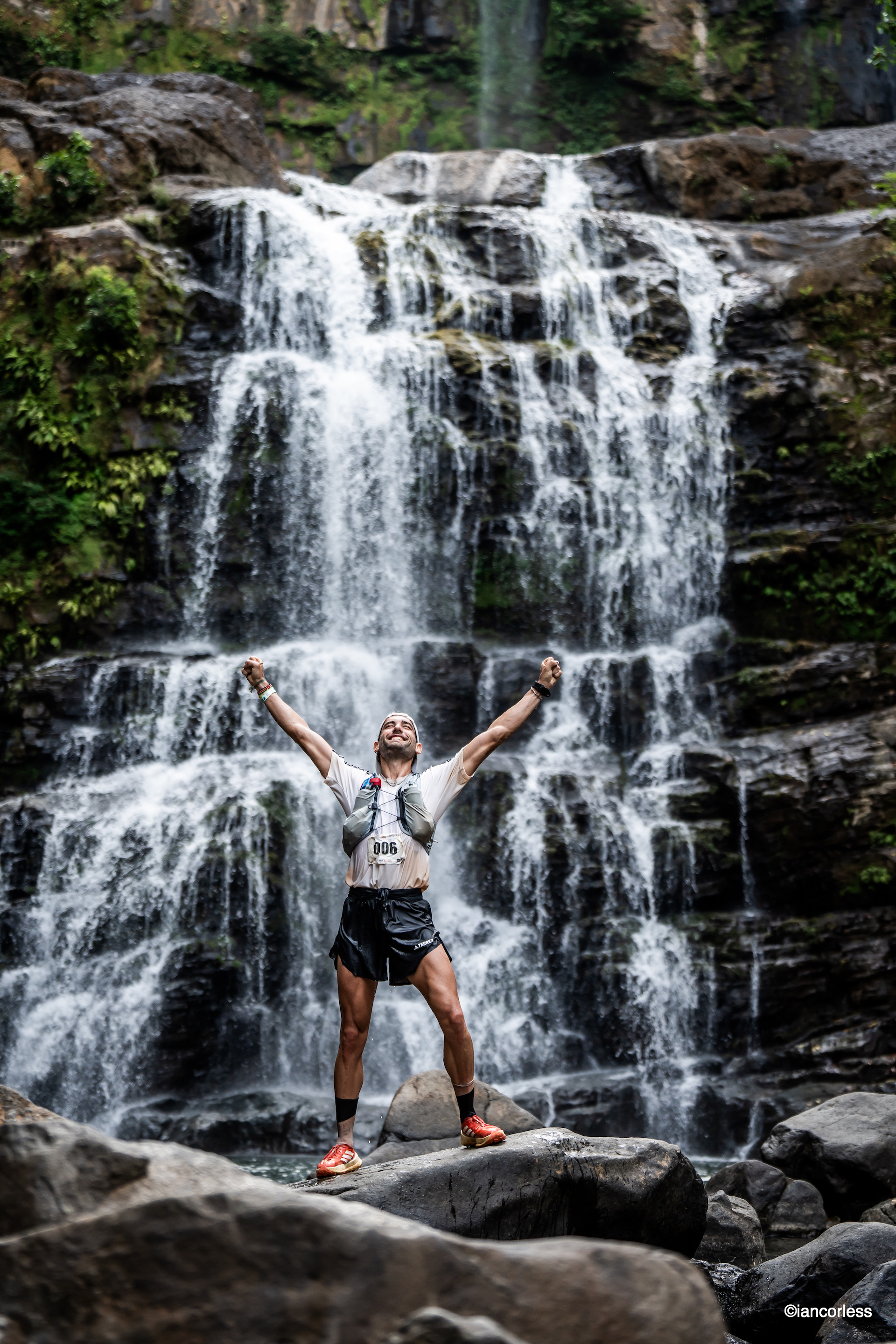
Few race courses pass somewhere this iconic. The roar of the falls could be heard long before they were seen, a deep, constant thunder. Mist hung in the air. The trail twisted along the edge, offering brief, almost cinematic glimpses of white water crashing down into turquoise pools far below. Volunteers stood grinning, clapping runners through, knowing exactly how cruel it is to pass somewhere so beautiful with no time to stop.
The climbs around the waterfalls were short but sharp. Legs were already feeling the cost of the riverbed. Breathing became laboured. Sweat mixed with spray from the falls. It felt primal. Raw. A reminder that this race is as much about environment as distance.
After Nauyaca, the stage changed character again. The trail rolled relentlessly. Up. Down. Some long climbs you can settle into. No extended descents to recover. Just constant undulation through jungle, farmland, and rough tracks. This is where the Queen Stage earns its reputation.
The terrain was hard and punishing. Exposed dirt roads baked under thinning cloud. Narrow singletrack where roots and rocks waited to catch tired feet. Every rise felt unnecessary. Every dip stole momentum. It was a section that demanded discipline. Go too hard, and the coast would destroy you later. Hold back too much, and you’d bleed time you’d never get back.
At the front, Erick Aguero was putting on another master class.
Aguero’s racing here is never flashy. No surges for the crowd. No dramatic moves. Just relentless forward motion. Smooth cadence. Perfect pack management. He ran like someone who knows this land, understands the humidity, respects the distance. While others visibly fought the course, Aguero flowed with it. By the time the terrain began to open and the air shifted, his advantage was already established.
Eventually, after hours inland, something changed. The breeze arrived first. Salty. Cool. Then the light brightened. And suddenly, unmistakably, the coast appeared.
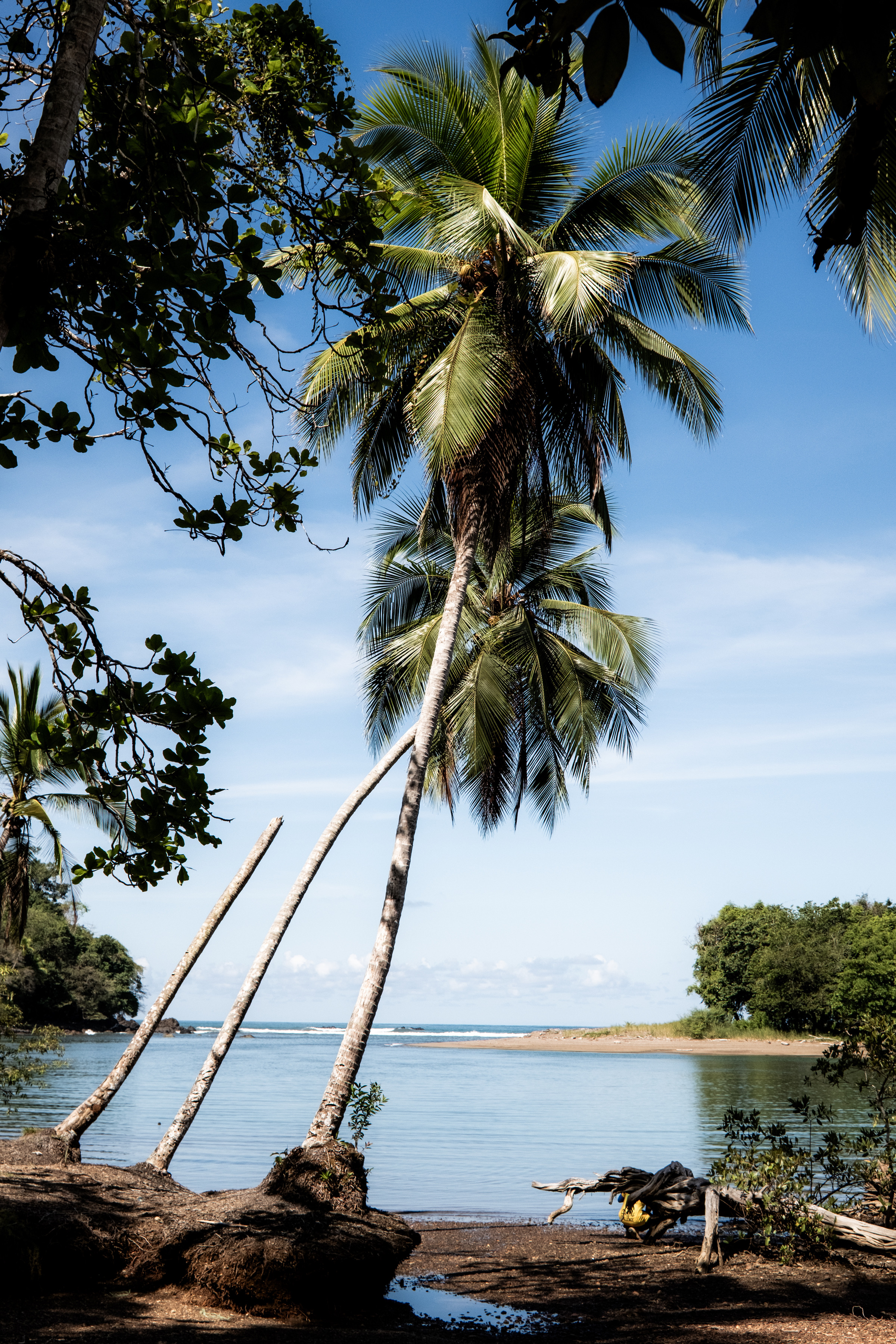
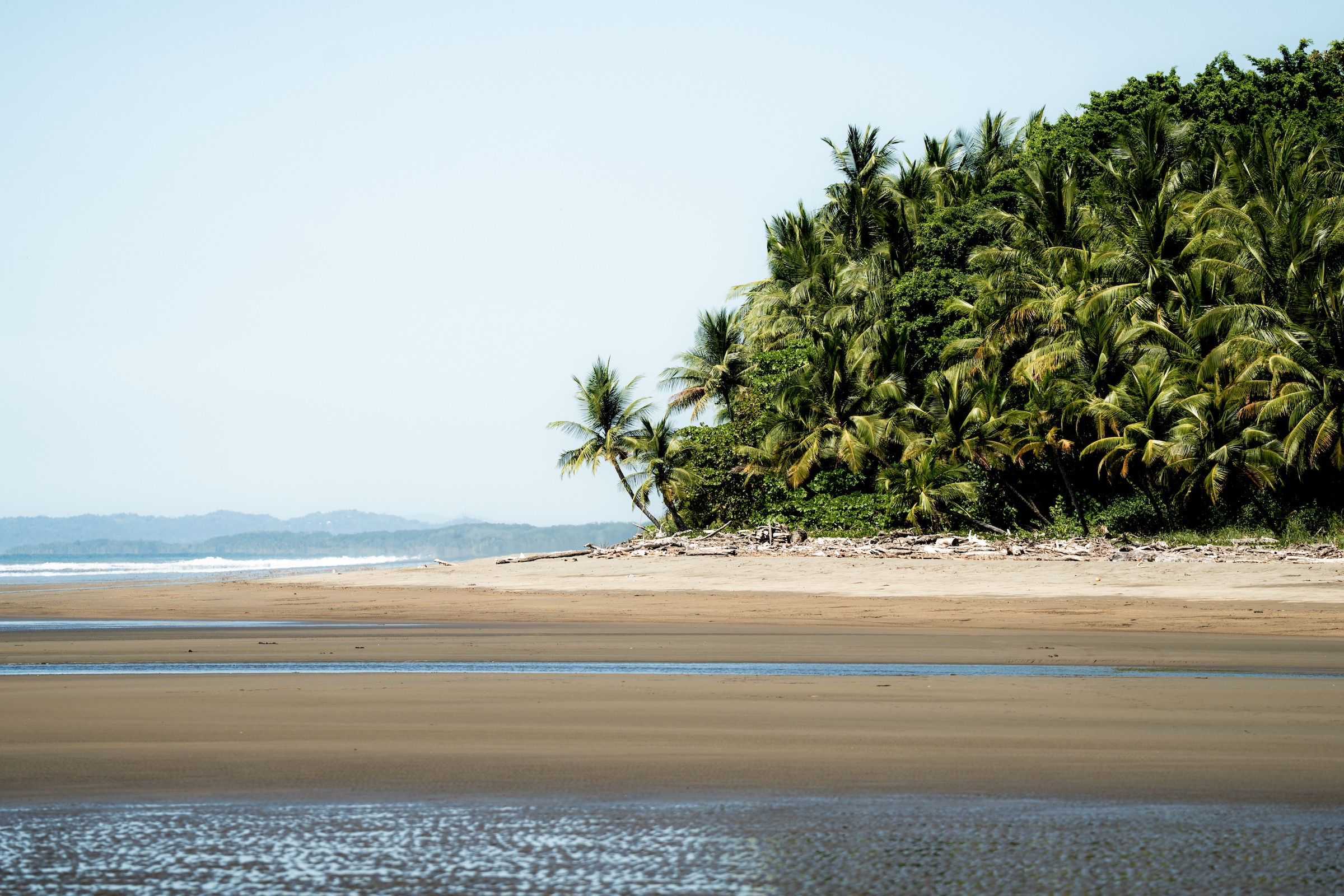
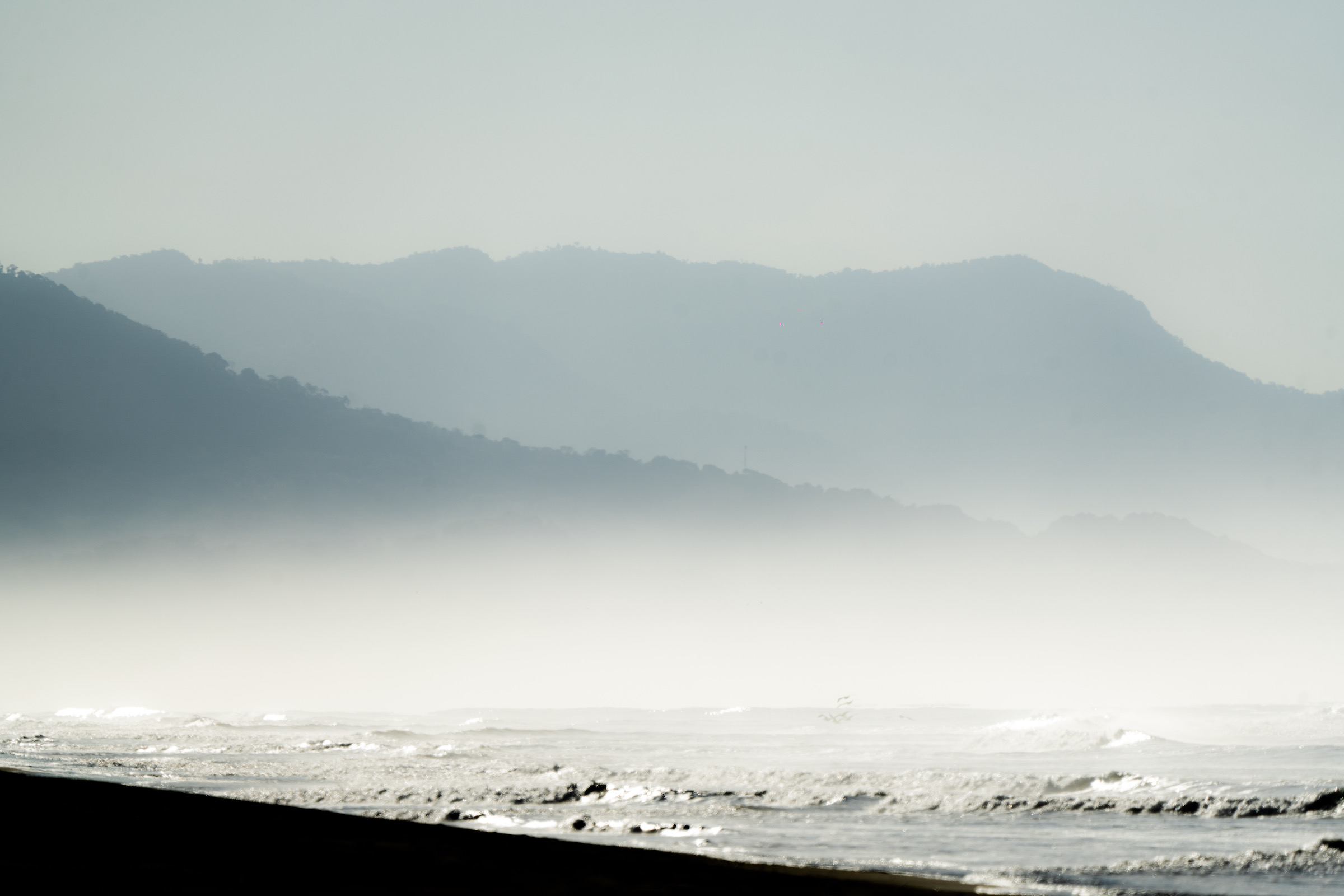
This transition is one of the great moments of the race. Jungle gives way to open sky. The sound of waves replaces insects. The vastness of the Pacific stretches out ahead. Runners hit the sands near the start of the Adventure course, knowing the end is closer now, but also knowing that beaches come with their own price.
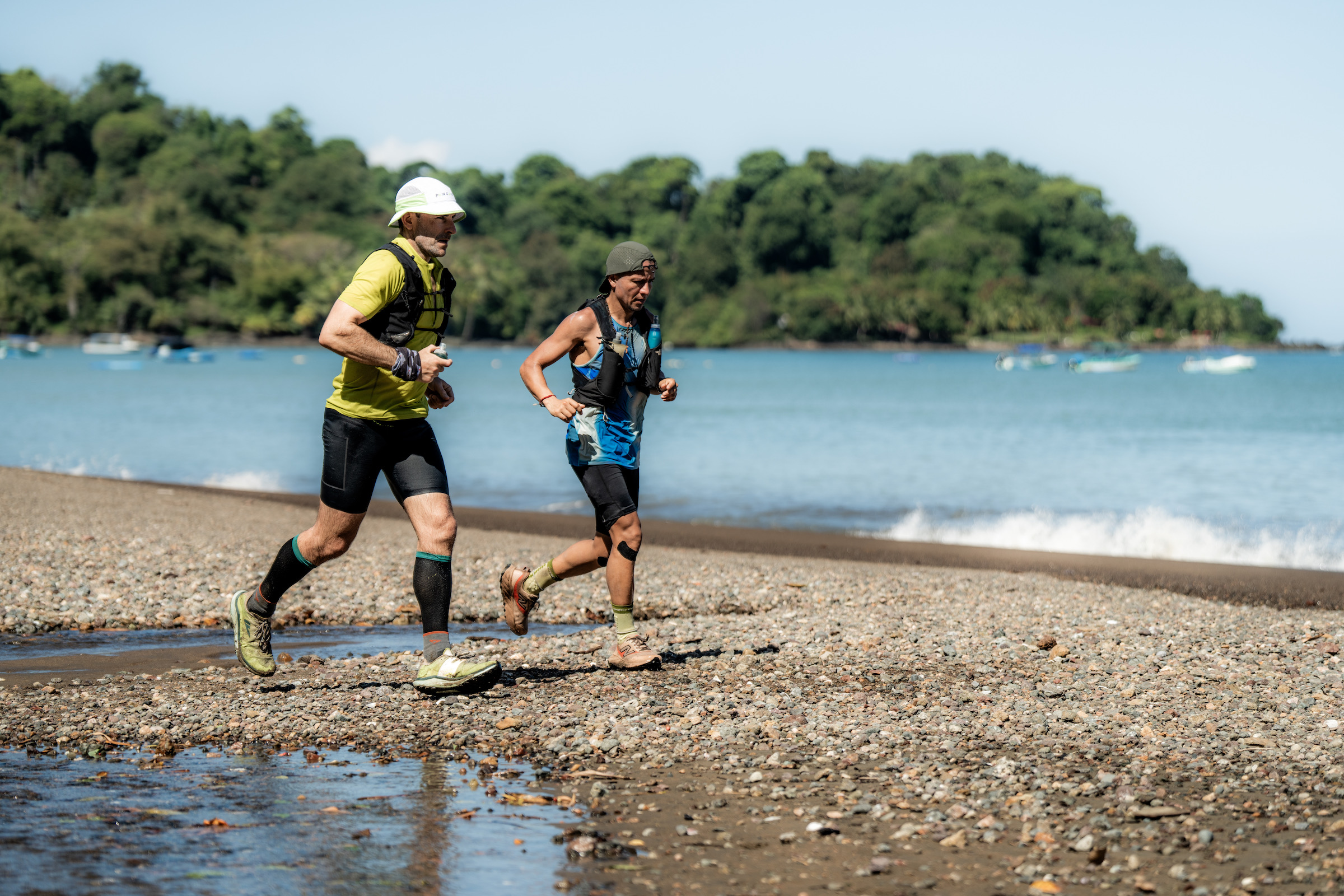
The sand was soft in places, compact in others. Feet sank, calves screamed. The trail wove along the coastline, ducking in and out of shaded sections, then back onto open beach. Offshore, the famous Whale Tail formation of Marino Ballena National Park stood out clearly, a natural landmark that feels almost surreal when you’re deep into a long race.
There was beauty here, but also vulnerability. The sun broke through the cloud intermittently. Reflections off the water were harsh. Runners could smell salt on their skin. Aid stations felt like lifelines. Ice, cola, encouragement in multiple languages.
The final kilometres into Ballena Village were a test of stubbornness. Legs heavy. Feet blistered. Packs lighter but shoulders sore. The finish line came slowly, deliberately, making runners earn every step.
Aguero crossed first in 6:26:41, calm, composed, as if he had expected nothing else. Behind him, Jon Shield fought hard to secure second in 6:54:50, holding off a strong late push from Joe Matheson, who finished just over a minute later in 6:56:02. All three looked spent. All three knew they had survived the hardest day.
In the women’s Expedition race, the story was familiar. A repeat of the previous stage with a dominant Denise Zelaya in control from the front. No drama. Just execution. On a day like this, consistency matters more than heroics. Janina Beck finished 2nd 8:57:19 with Vanessa Duran 3rd in 9:34:11.
In the Adventure category Laura Zuñiga crossed in 5:40:27 with Toni Clarke close behind 5:45:42, it’s a battle between the two, and Kristel polet 5:46:04 in 3rd. For the men, once again Sammy Francis lead Alberto Gil, 5:20:23 and 5:22:28 respectively. Roberto Solano was 3rd in 5:40:20.
Stage 3 didn’t just shuffle the leaderboard. It revealed it. It exposed weaknesses, rewarded patience, and reminded everyone why The Coastal Challenge is respected worldwide. Long after the finish line buzz faded and runners collapsed into shade with food and cold drinks, the Queen Stage lingered
Stage 2 of The Coastal Challenge Costa Rica delivered exactly what this race is known for: raw nature, relentless conditions, and a course that asks runners to adapt again and again. Starting deep in the rainforest at Rafiki Lodge, the day unfolded as a true Coastal Challenge classic, blending river crossings, technical trails, jungle heat, and a dramatic run to the sea.
From the first steps out of camp, it was clear this would not be a straightforward stage. The route followed the Savegre River, widely regarded as one of the cleanest and most biologically pristine rivers in Central America. Flowing from the highlands of the Talamanca Mountains down to the Pacific Ocean, the Savegre is internationally recognised for its exceptional water quality and rich biodiversity. Crossing it once would be memorable. Crossing it twice turned Stage 2 into something special.
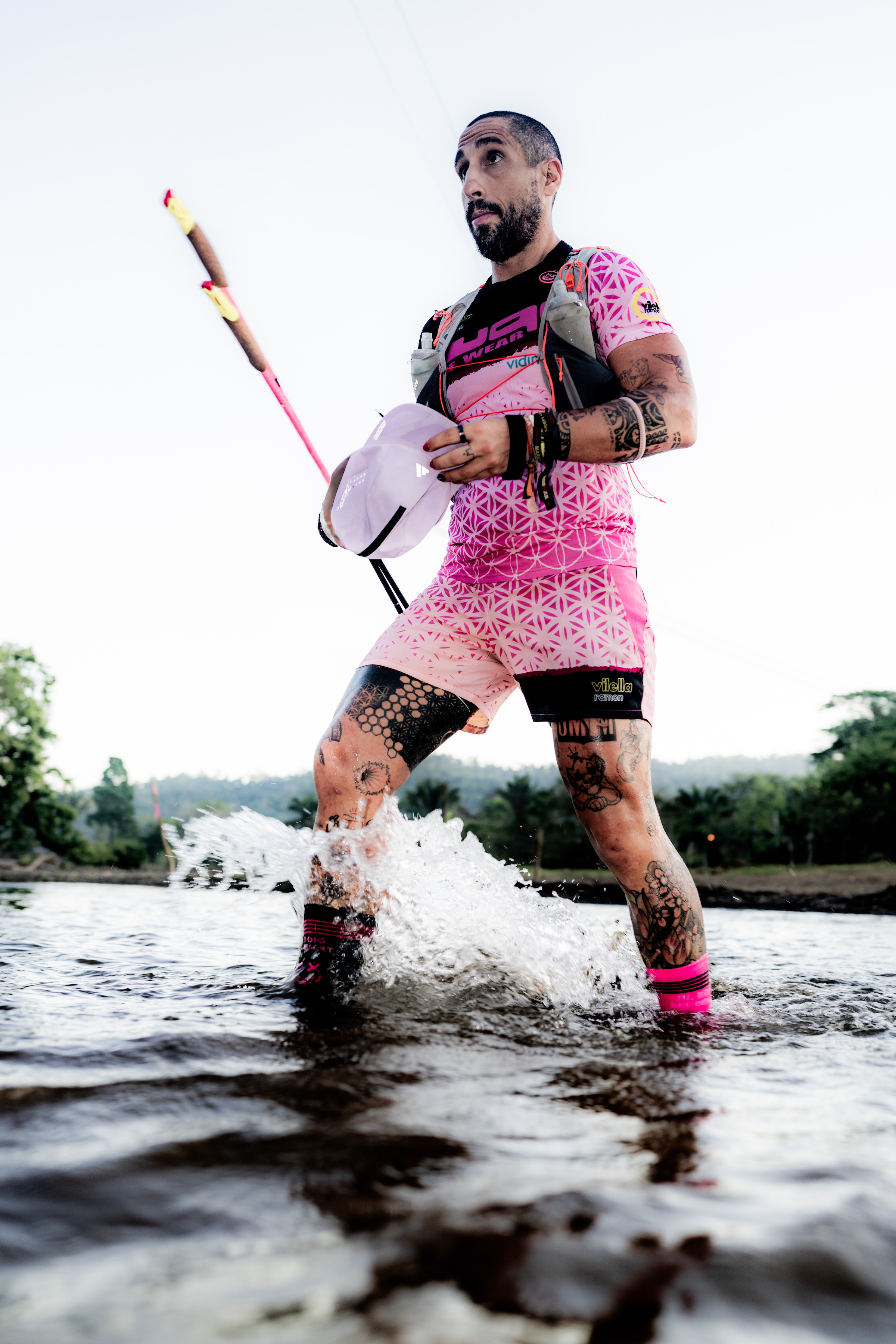
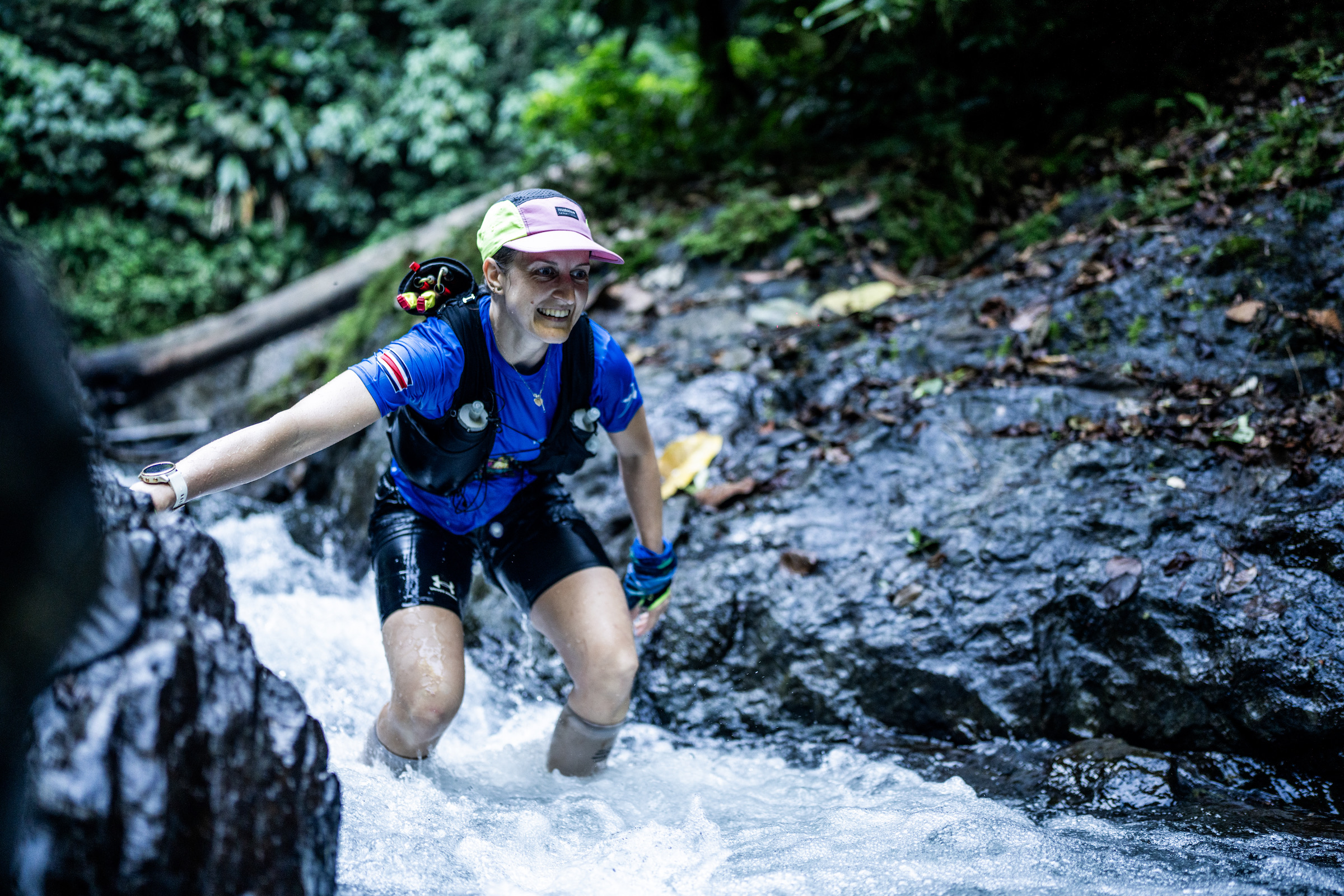
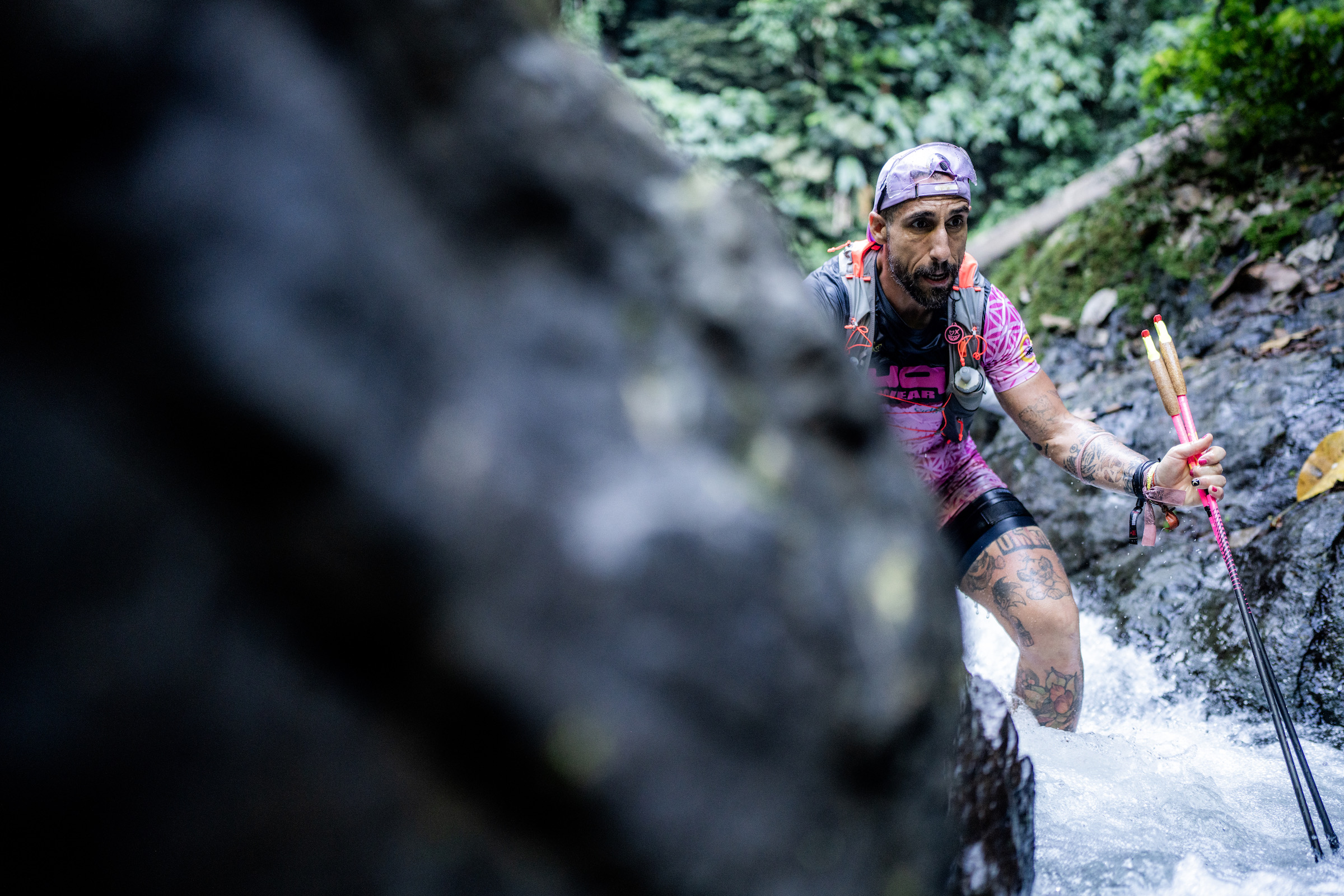
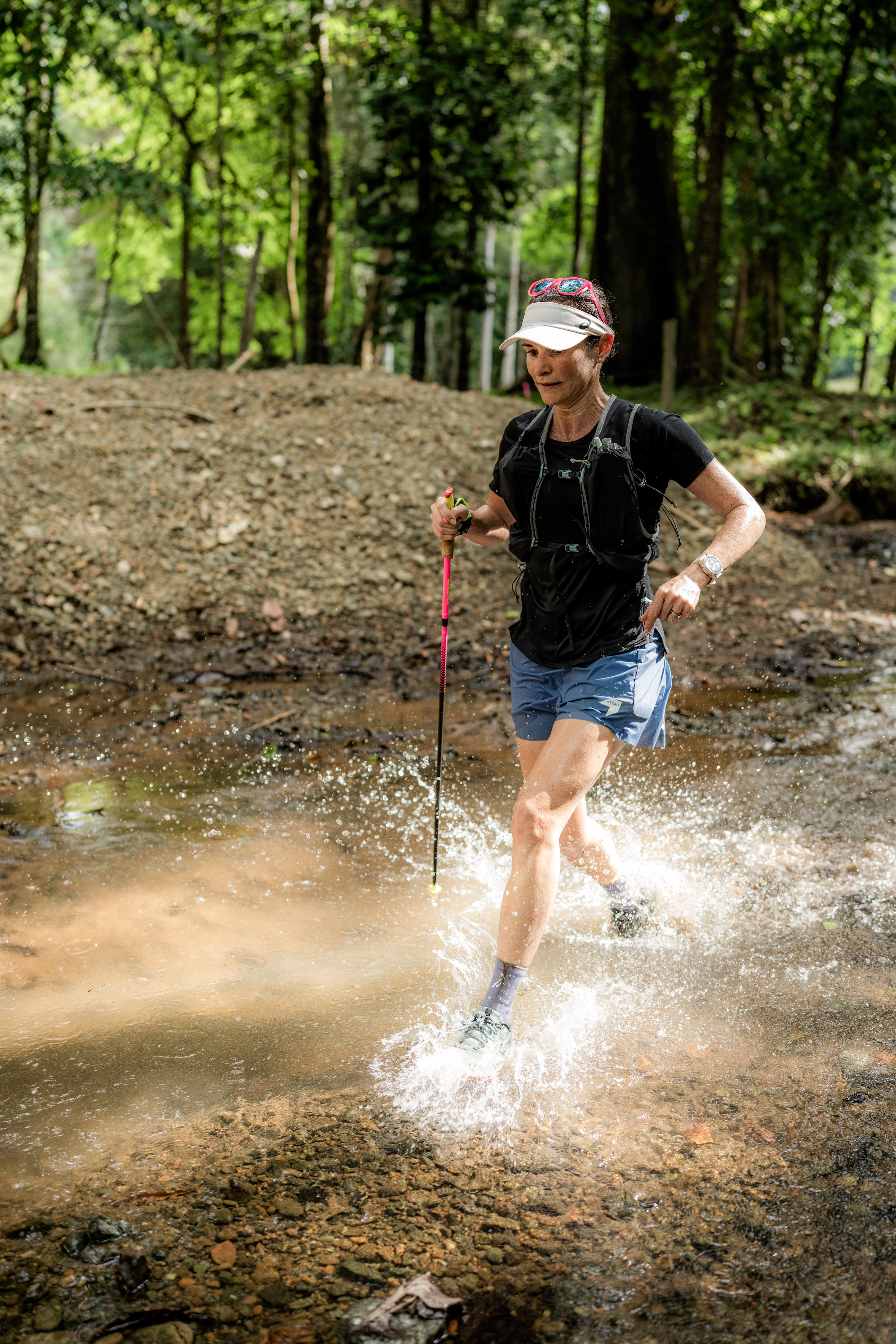
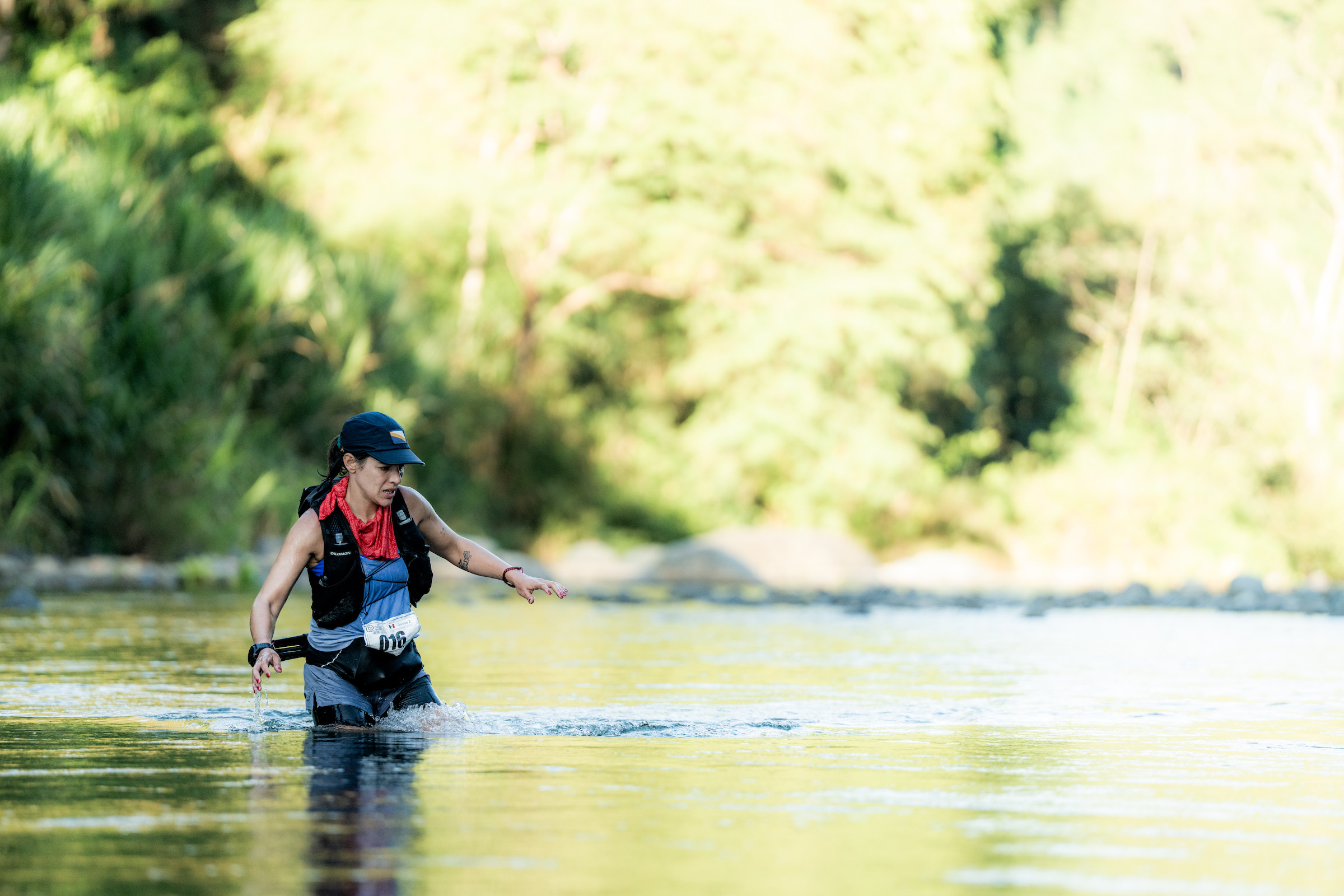
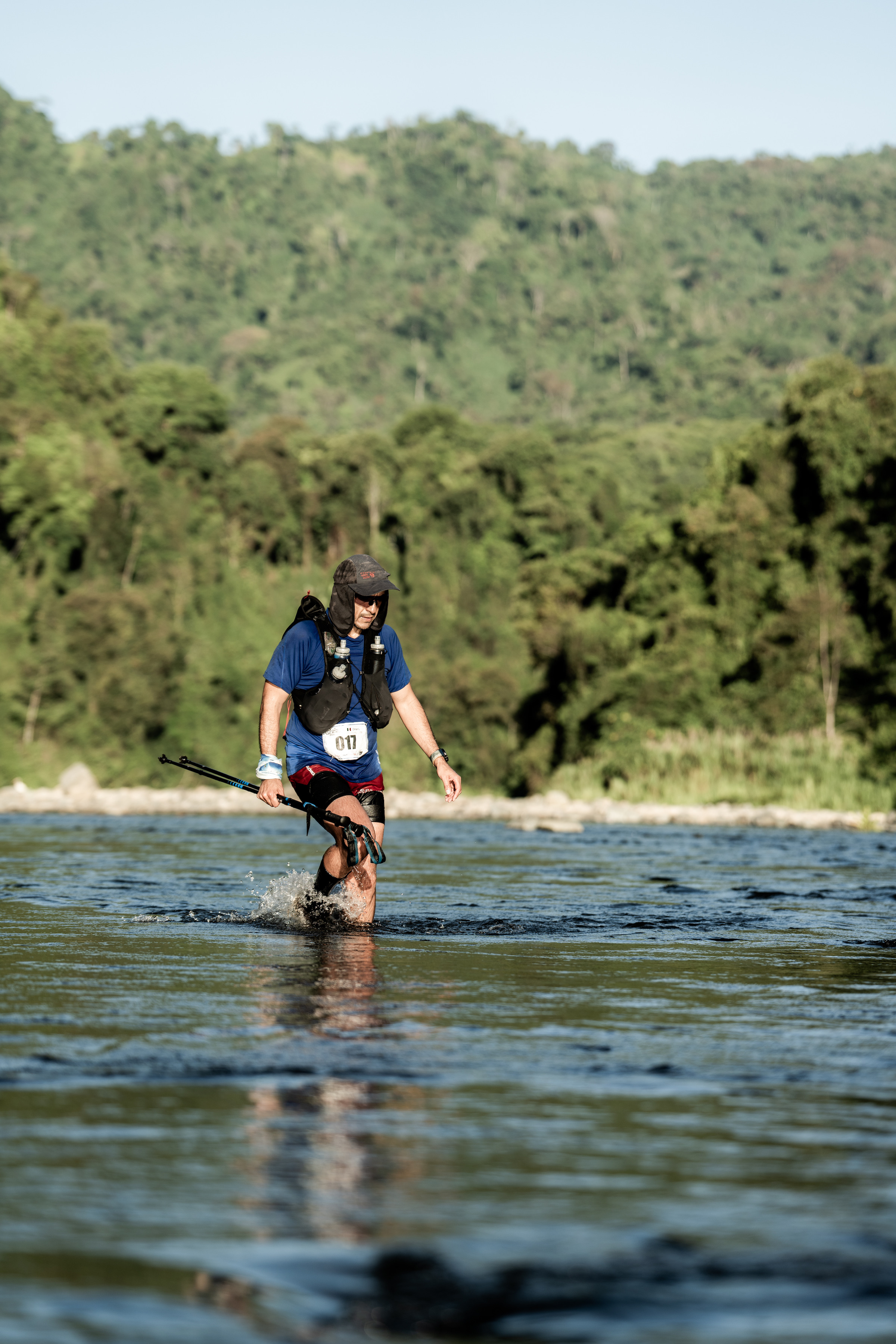
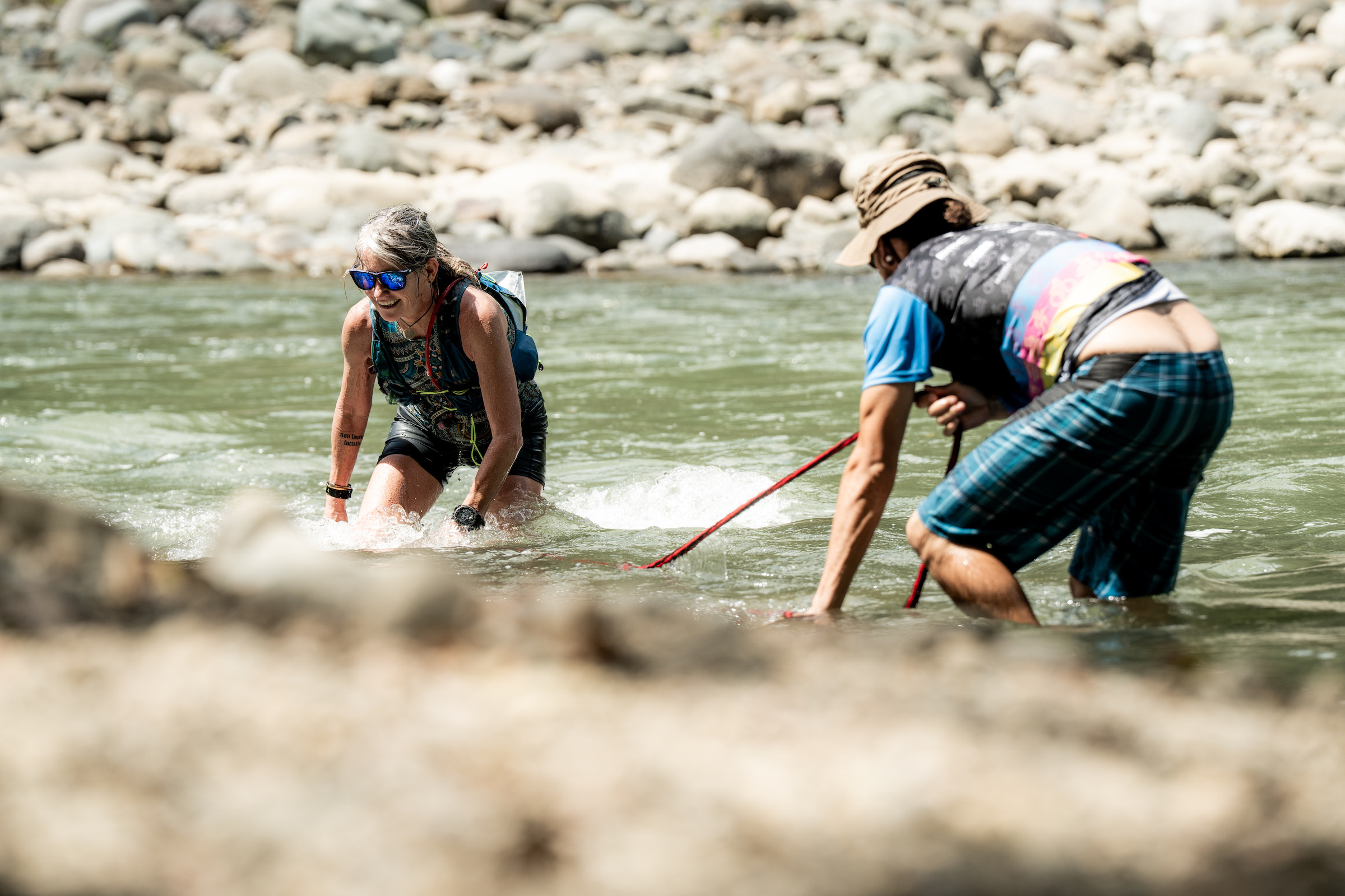
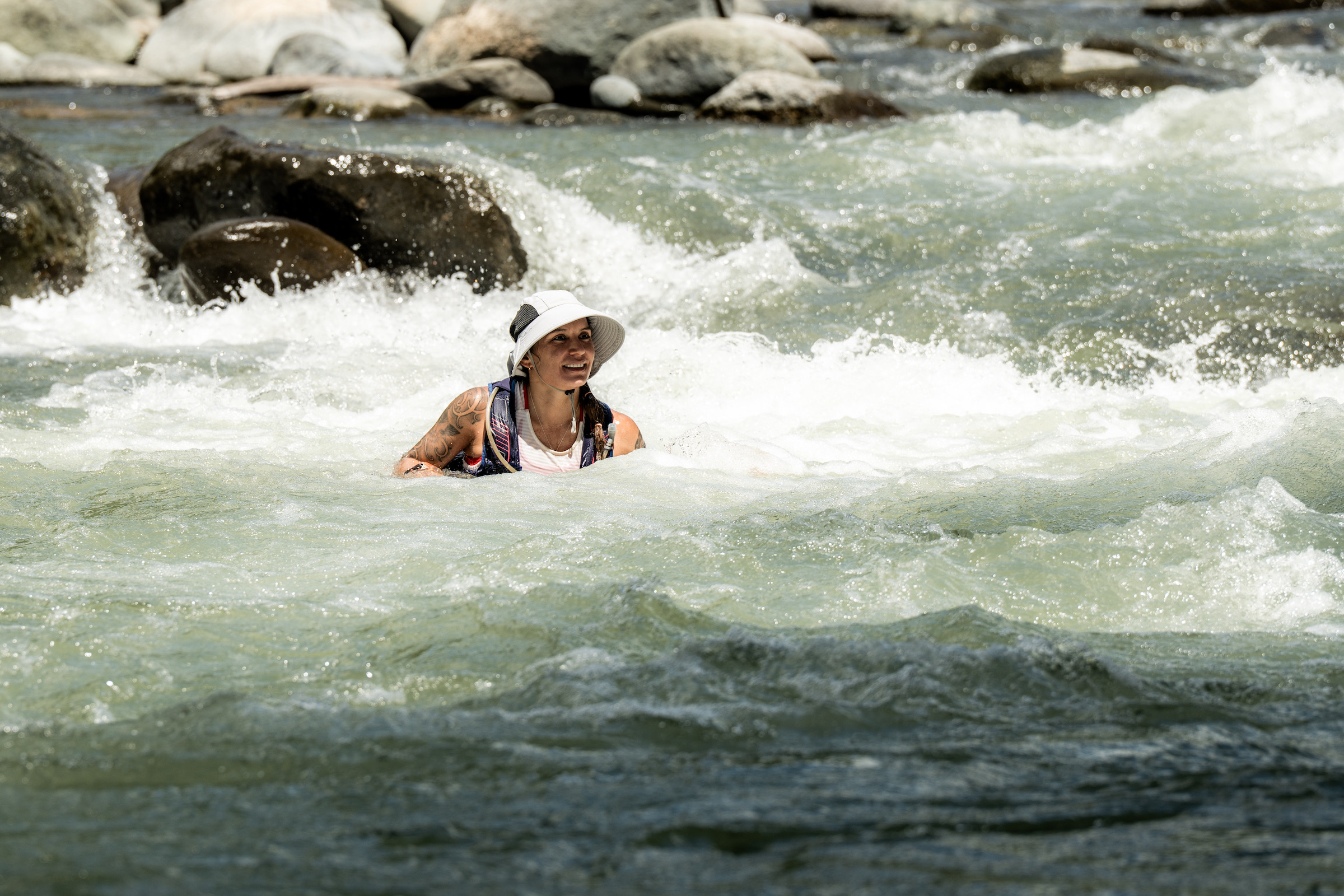
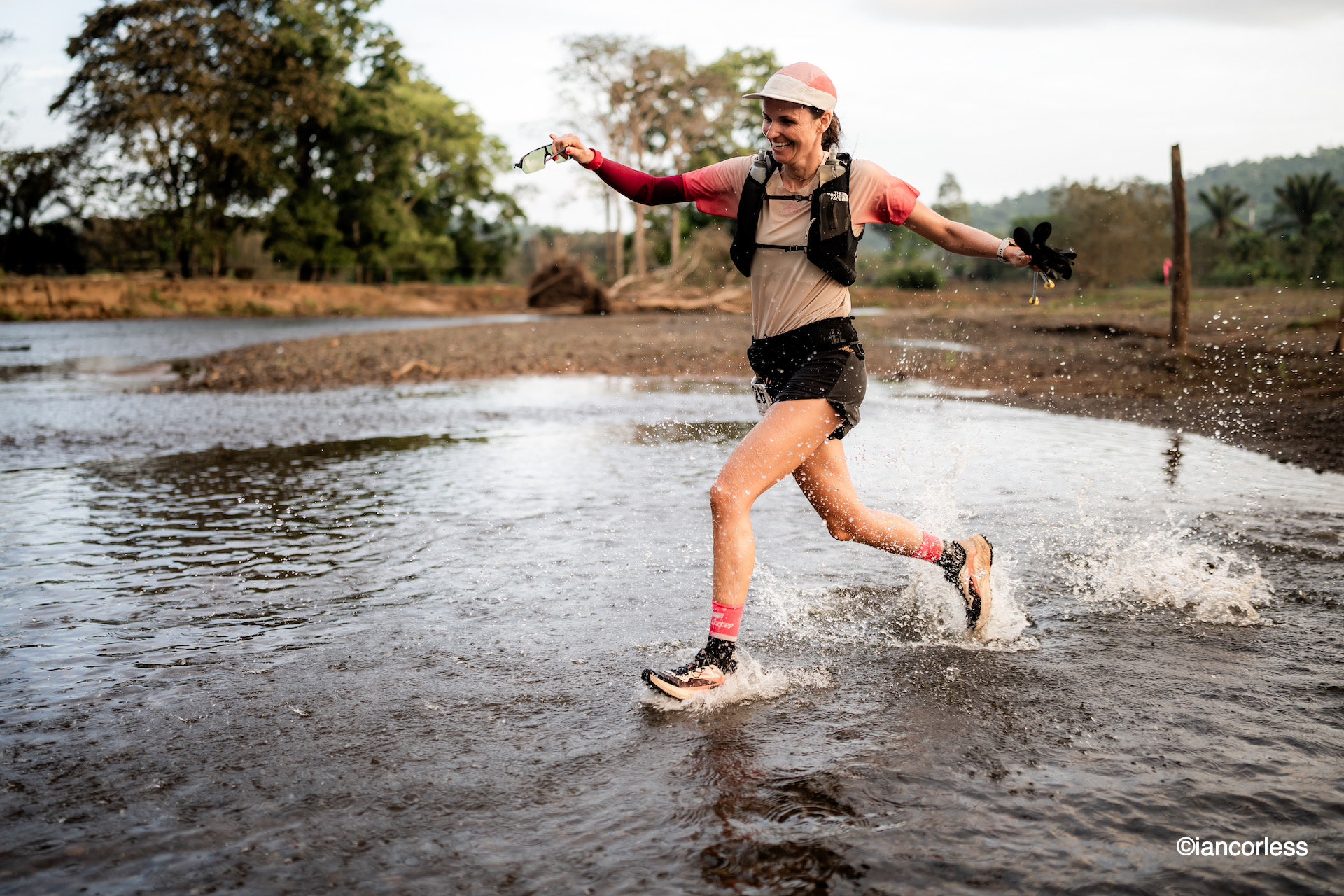
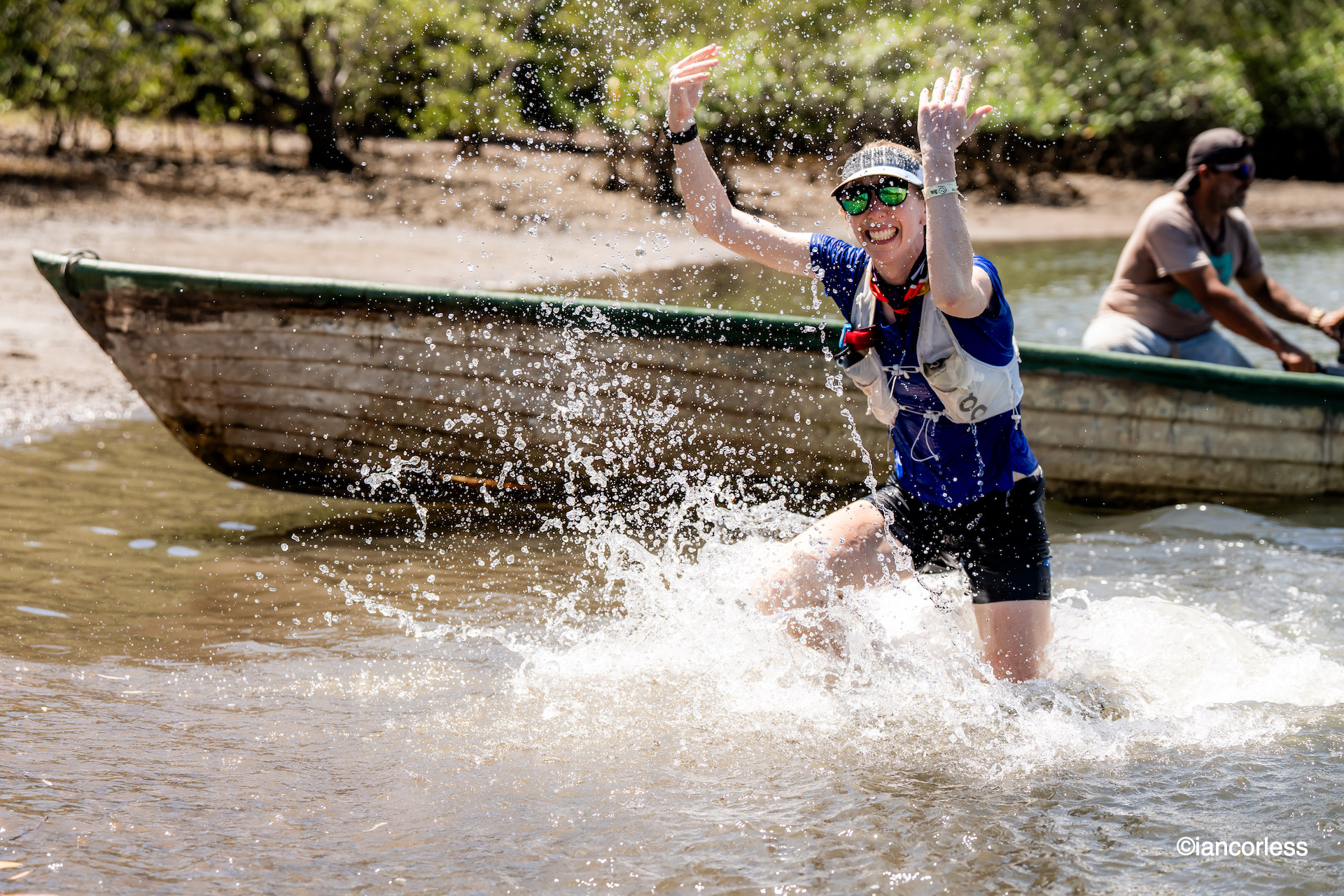
The river crossings were more than just obstacles. They were moments that forced runners to slow down, focus, and respect the environment around them. Water rose around calves and knees, current tugged at tired legs, and the contrast between cool river water and the heavy jungle air was striking. It was a reminder that this race is as much about managing nature as it is about racing the clock.
After the river, the course tightened and twisted through rainforest trails. Roots, mud, and uneven ground demanded constant attention. The humidity settled in early and stayed all day. Even experienced runners felt the energy drain as the sun climbed higher. This is where The Coastal Challenge often reshuffles the deck, and Stage 2 was no exception.
For the Adventure race, the day began at CP2, roughly the midpoint of the Expedition route. While the distance was shorter, the challenge remained very real. Adventure runners faced the same heat, the same technical terrain, and the same unforgiving humidity. Starting later on the course offered no easy miles, only a condensed dose of everything Costa Rica can throw at a runner.
As both races pushed westward, the landscape began to change. Dense jungle gradually opened up, trails widened, and the distant sound of the ocean hinted at what was to come. Crossing road 34 marked a psychological shift. From there, runners entered the estuaries and beaches that lead toward Dominical. Soft sand replaced dirt, and the open coastline exposed runners to full sun with no shelter. Legs already fatigued now had to adapt once more.
This final section summed up Stage 2 perfectly. After jungle, rivers, and trails, the beach demanded a different kind of strength. Running on sand punished tired calves and slowed even the strongest athletes. Heat radiated from above and below. Yet the sight of the Pacific Ocean and the energy around the finish made it unforgettable.
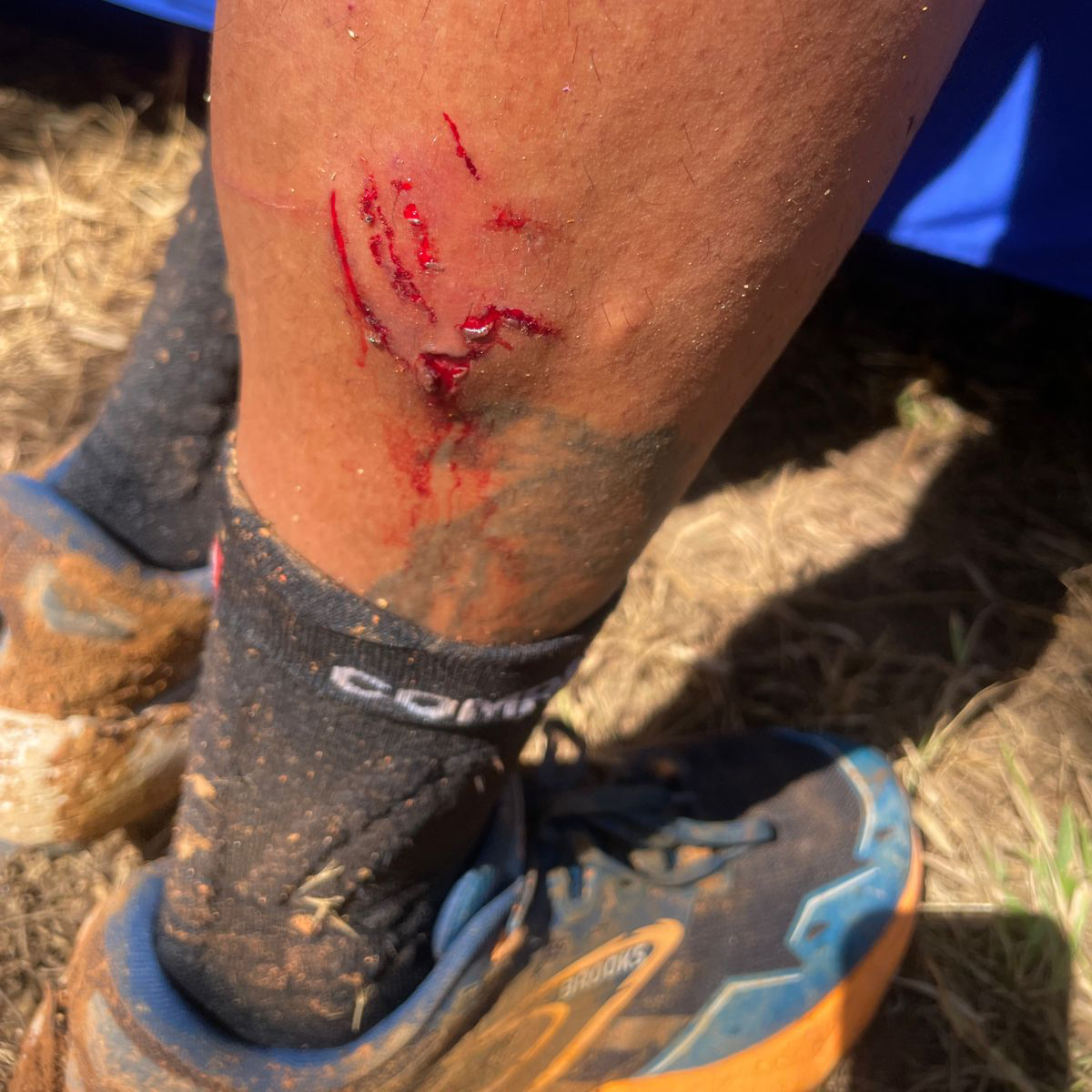
At the front of the Expedition race, the men’s competition came alive. After a controlled and measured Stage 1, Erick Aguero delivered what many have come to recognise as a classic ‘Aguero’ performance. He pushed early, established himself at the front, and gradually opened a gap that no one could close. His strength through the technical sections and consistency in the heat paid off, as he crossed the line in a commanding 4:49:04 – al this despite receiving a dog bite during the race.
Behind him, the battle for the remaining podium places was hard-fought. Jesus Cerdas Padilla ran a strong and steady race to claim second in 5:11:54. Stage 1 winner Ramon Rosello Pons followed in third with a time of 5:24:03. With this result, Aguero moved into the overall lead, setting up an intriguing dynamic for the stages ahead.
In the women’s Expedition race, Denise Zelaya was in a class of her own. From early on, she looked composed and controlled, handling the heat and terrain with confidence. Her dominance was clear as the stage wore on, and she crossed the finish line in 5:59:12, underlining her strength and experience in these conditions. It was a decisive performance on a demanding day.
Janina Beck and Pamela Muñoz placed 2nd and 3rd, 7:05:12 and 7:11:12 respectively.
The Adventure race delivered its own drama. Sammy Francis led the way, crossing first in 3:40:51 after a determined run through the heat and sand. The fight for second was tight and exciting. Toni Clarke, the Stage 1 leader, finished second, just over 30 seconds behind Laura Zuniga Alcazar, who crossed in 3:59:28. The close times reflected the intensity of the race and the way Stage 2 squeezed every bit of effort from the field.
Beyond results and times, Stage 2 captured the essence of The Coastal Challenge. It was tough, unpredictable, and deeply connected to the landscape. Runners were forced to think, adapt, and endure. The Savegre River crossings stood out as defining moments, but the entire course demanded respect.
By the end of the day, fatigue was written on every face. Salt streaked skin, mud-caked legs, and tired smiles told the story better than words. It was a hard day, but an exciting one. Stage 2 reminded everyone why this race holds such a special place in the world of stage racing, it has a little of everything, and it never gives anything away easily. Let’s not forget, Dominical is also an awesome place for camp.
Stage 1 of the 2026 The Coastal Challenge Costa Rica set the tone in the way it always does. It reminded everyone, very quickly, that Costa Rica plays by its own rules.
The day began long before sunrise. At 02:30, alarms cut through the darkness as runners gathered for a 03:30 departure, quiet conversations, nervous energy. There is something uniquely disorienting about starting a race day in the middle of the night, especially when the real work will not begin for several more hours. The long drive to the coast and Quepos was filled with anticipation and the kind of silence that comes when athletes are saving energy and thoughts for later.
By the time the start line finally came into view, just after 08:00, the sun was already making its presence known. The heat and humidity were not waiting for anyone. They never do. Stage 1 has a reputation, and once again it lived up to it. Starting late in the morning is always a challenge here. Bodies are not yet adapted, pacing plans are optimistic, and the Costa Rican climate is unforgiving if respect is not shown early.
From the beach start, the course wasted no time in revealing its character. Soft sand gave way to gravel roads, then into dense rainforest where the air felt heavier with every step. Climbs were sharp and relentless, descents technical and punishing on tired legs, and water crossings offered brief moments of relief before the heat closed in again. This was not a gentle introduction. This was pure Costa Rica.
In the Expedition race, Ramon Rosello took control early and never let it slip. He dictated the pace with confidence, moving smoothly through the terrain while others struggled to find rhythm. By the latter stages of the course, he had opened a substantial gap, finishing in a commanding 3:57:03. Behind him, Jon Shield fought hard in the conditions, crossing the line in 4:14:02. It was a clear statement from Rosello on a day where patience and experience mattered as much as speed.
Attention had been on Erick Aguirro going into the stage, with many expecting him to lead the day. However, a lingering injury told its own story. Though still competitive, Aguirro was unable to respond when the pace lifted, eventually finishing fourth behind Jesus Cerdas. On a course like this, even the smallest physical issue is magnified. Stage 1 has a way of exposing weaknesses, and there is little room to hide when the heat begins to bite.
In the women’s Expedition race, Denise Zelaya delivered a strong and controlled performance. She handled the conditions well, maintaining focus and discipline as others faded, to cross the line in 4:47:47. Janina Beck followed in 5:19:25, digging deep through the final kilometres as the accumulated fatigue of the day took hold. Both athletes showed the importance of measured pacing on a stage where ambition can quickly turn into survival.
The Adventure race brought its own drama and determination. Toni Clark led the women with a time of 4:29:41, showing resilience and strength across the varied terrain. For the men, Sammy Francis topped the standings in 3:45:28, navigating the course with efficiency and confidence. Across both races, the story was the same. Those who respected the day were rewarded. Those who did not paid for it.
Stage 1 is always tough, but it is especially brutal because the runners are not yet adapted to the environment. The heat punishes fast starts. The humidity steals energy quietly and persistently. Even seasoned athletes find themselves recalibrating expectations within the first hour. This year was no different. Faces at the finish told the story clearly. Relief, exhaustion, and a newfound respect for what lies ahead.
Costa Rica is at the heart of this race, not just as a location, but as a character in its own right. The diversity of the landscape is extraordinary. One moment you are running along the coastline with the Pacific at your side, the next you are climbing through thick jungle where the sounds of wildlife surround you. The beauty is undeniable, but it comes with a cost. Every climb, every descent, every humid kilometre demands something in return.
As runners made their way into Rafiki Lodge, recovery became the immediate focus. Cooling down, rehydrating, and reflecting on lessons learned. Many arrived with sore legs and humbled minds. Stage 1 has a habit of reshaping race strategies, and this year it was no exception. There was a shared understanding among competitors that the race had truly begun.
Tomorrow brings Stage 2, and with it, a much earlier start for the Expedition runners. Those early hours promise more comfortable conditions, at least by Costa Rican standards. The heat will still come, but later. For now, the priority is rest, refuelling, and preparation. The Coastal Challenge is not won on the first day, but it can certainly be lost.
Stage 1 from Quepos to Rafiki Lodge delivered everything it promised. Heat, humidity, challenge, and beauty in equal measure. It reminded everyone why this race is so highly regarded, and why Costa Rica demands respect. The journey has only just begun, and already it has left its mark.
Stage racing has a way of exposing everything. Fitness, patience, preparation, and mindset all get tested, not just by distance, but by what happens between the stages. Terrain is only part of the story. How you recover, rehydrate, eat, sleep, and reset day after day matters just as much.
Photo by Ian Corless
Back in 2016, comparisons between The Coastal Challenge and Marathon des Sables were unavoidable. A decade on, those comparisons still come up, but the conversation has matured. These races now stand on their own terms.
Marathon des Sables strips runners back to survival basics: self-sufficiency, rationed water, shared bivouacs, and total responsibility for your own race. That’s its identity, and it’s why it remains iconic.
The Coastal Challenge is different. It’s not self-sufficient, but that doesn’t make it easier. In many ways, it’s more demanding. The Costa Rican rainforest, the coastline, the heat, the humidity, and the relentless terrain combine into something that feels far less predictable and far less forgiving.
What The Coastal Challenge Looks Like Today
The race remains a point-to-point journey across Costa Rica’s wild south-west, traditionally running from Quepos to Drake Bay, followed by a final loop stage in and around Corcovado National Park.
The format has remained consistent: six days, six stages, each with its own character. Distances and elevation are substantial, especially when you factor in heat, humidity, and terrain. There are some changes to the route and now, in 2026, I consider the route to be more challenging, especially with a longer stage 6.
Gladly, there is an ADVENTURE category and while stage 1 and stage 2 are almost the same, the distances for stages 2, 3, 4 and 5 are notably shorter:
Stage 2: 16.8km 280m+
Stage 3: 15.2km 200m+
Stage 4: 12.5km 552m+
Stage 5: 23km 1117m+
Total distance 136.4km’s 3901m+
None of these numbers tell the full story. Beach running, river crossings, jungle trails, fire roads, steep climbs, and long descents all feature. Every day feels different. Every day asks something new.
NOTE: It is possible to move from EXPEDITION to ADVENTURE during the race, however, you will not receive a medal.
Is TCC Harder Than Marathon des Sables?
Photo by Ian Corless
The honest answer is still: yes and no.
Where TCC Is Easier
• You are not self-sufficient. You carry only essentials during the stage.
• Aid stations provide water and basic food.
• Your main kit bag is transported daily.
• You sleep in your own tent.
• Food is provided morning, post-stage, and evening.
• Camps are often in stunning locations, sometimes with cold drinks available.
• The terrain is relentlessly varied and often technical.
• Elevation gain and loss are constant and cumulative.
• Fire roads punish tired legs.
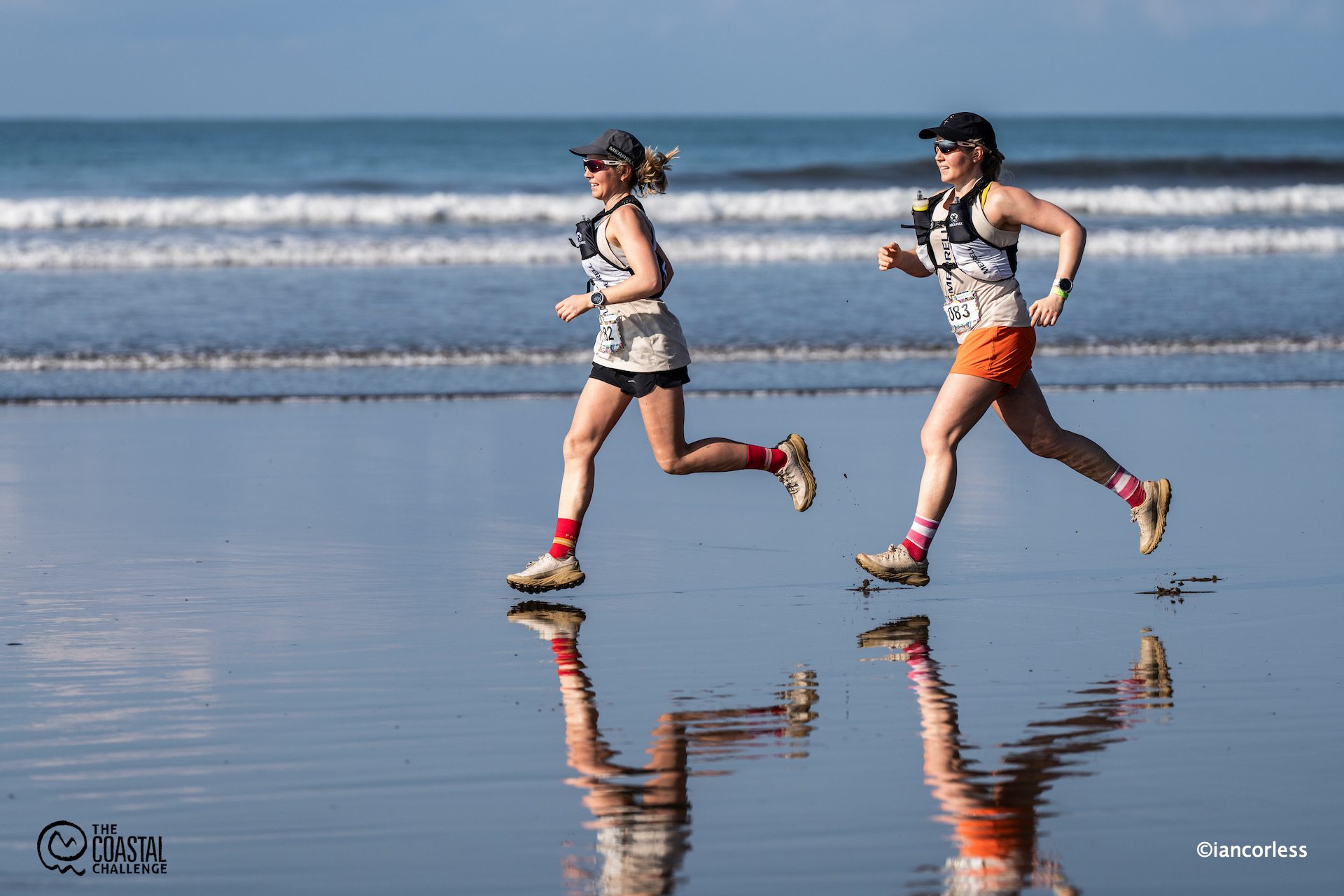
• Beach running is deceptively draining, both physically and mentally.
• Heat is relentless.
• Humidity regularly sits above 75%.
• Your feet are wet every single day.
• The long day may be “only” 47 km, but add 1754 m+ of vertical, technical trails, and jungle heat, and it becomes one of the hardest stages you’ll ever run.
This race doesn’t grind you down with deprivation. It wears you down with exposure.
Packing for Success in a Modern TCC
Because your kit is transported daily, you can afford to be comfortable. Waterproof storage remains essential. While the race still recommends Action Packer-style boxes, they’re awkward for international travel. Most experienced runners now opt for a robust waterproof duffel or roll-top bag, with internal dry bags for organisation.
You’re racing in a rainforest. Rain is not hypothetical.
Bring 6–8 full run kits. The system is simple and still works best:
• Run in one kit.
• Finish, shower, change.
• Sleep in the next day’s run kit.
Breathable fabrics are essential. Shoulder coverage matters more than people expect. Sun exposure combined with sweat and salt can destroy skin over six days. Hats are non-negotiable. Neck coverage is smart. Minimal strappy tops often look appealing but lead to brutal sunburn patterns.
Camp life is relaxing and simple, make sure you bring a sleeping mat and ideally a silk liner, a sleeping bag is not needed BUT it can get chilly around 2am to 5am. Additional camp clothing can be a nice break from run kit – for women thi scan be a loose dress, the the men, shorts and T. Flip flops or similar are essential.
Make sure you bring a plate, knife, fork and spoon and also a cup for drinks.
Shoes and Foot Care: The Deciding Factor
If runners fail at TCC, it’s usually due to feet or hydration.
Your feet will be wet every day. Rivers, streams, mud, ocean crossings. Add technical terrain, rocks, roots, and sand, and your feet take a beating.
Bring at least two pairs of trail shoes, ideally three. Some runners include a half-size-up “emergency pair” for swelling later in the race.
Forget blanket advice about sizing up. Shoes that are too big allow movement. Movement causes friction. Friction causes blisters. You need roughly a thumbnail’s space in front of the big toe, no more. Fit matters more than brand.
Your shoes must:
• Drain water efficiently
• Dry quickly
• Handle rock, mud, sand, and wet roots
• Match your gait, cushioning preference, and drop
Trail shoes are mandatory. Breathability is critical.
Socks matter just as much. A fresh pair every day is essential. Toe socks have proven exceptionally effective for many runners in these conditions.
Shoe recommendation is impossible, we are all unique, however, VJ Sport offer the best grip in the harsh terrain of Costa Rica – take a look at the VJ Ultra 3 HERE
What to Carry During the Stage
Photo by Ian Corless
Compared to many stage races, your on-course kit is minimal.
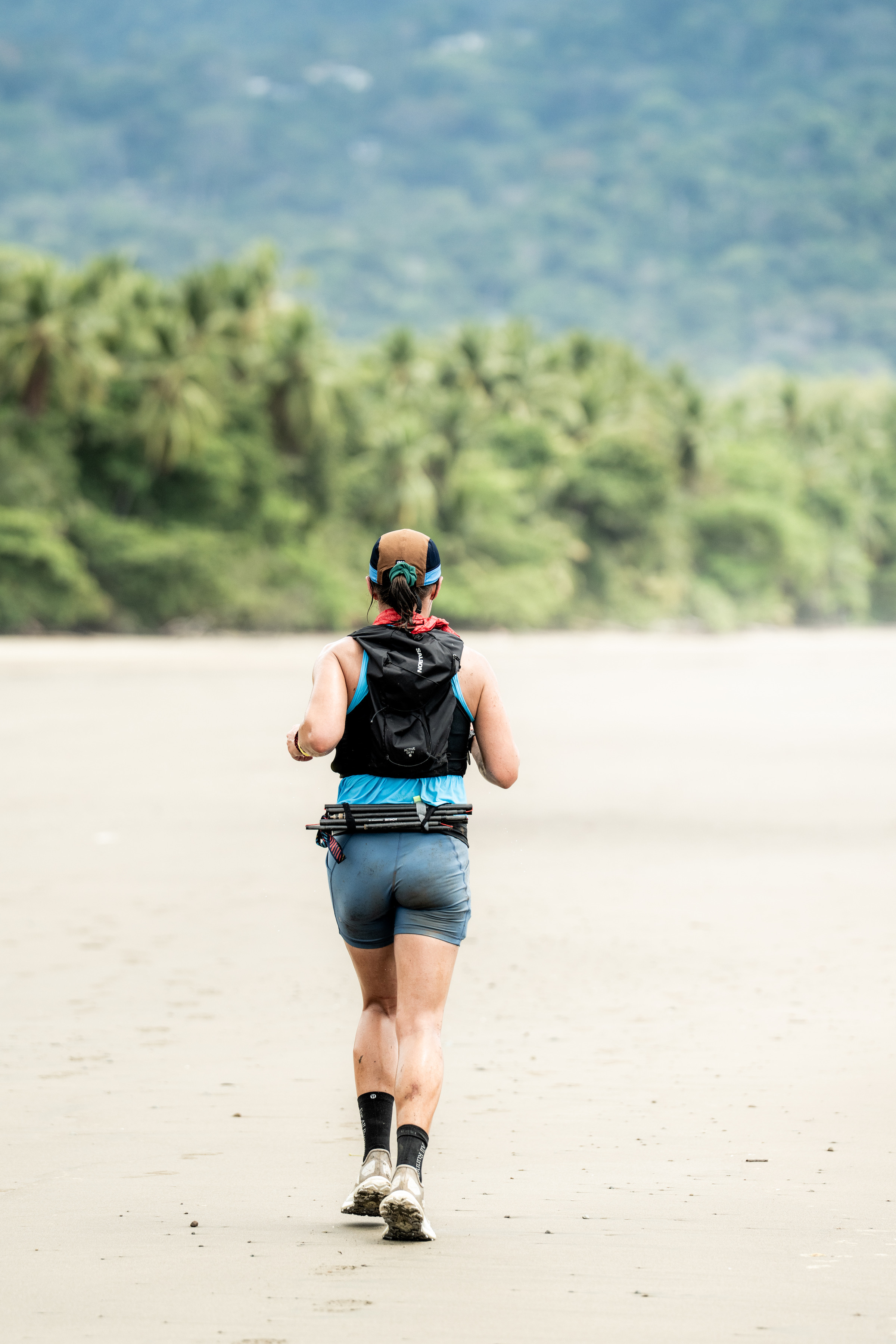
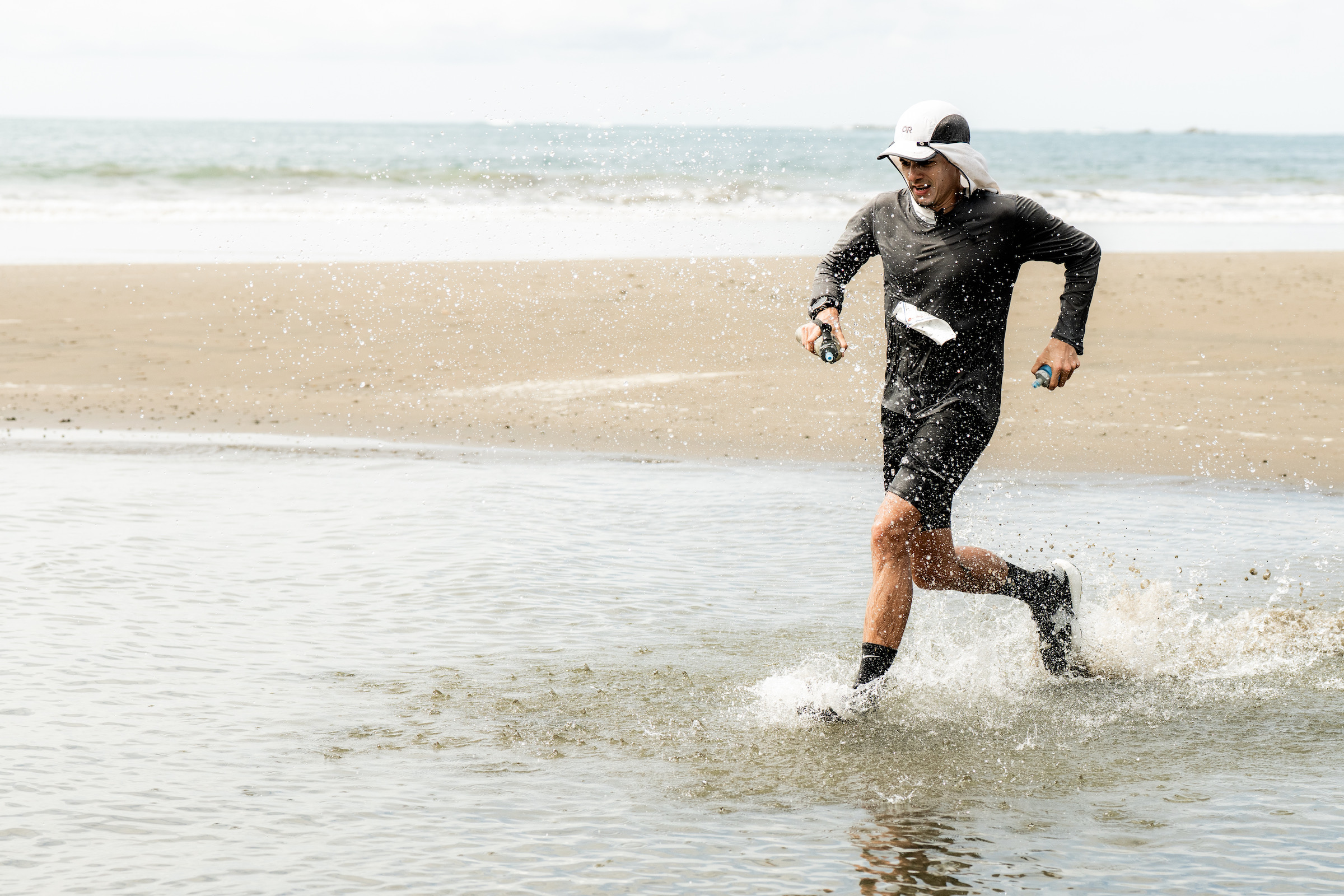
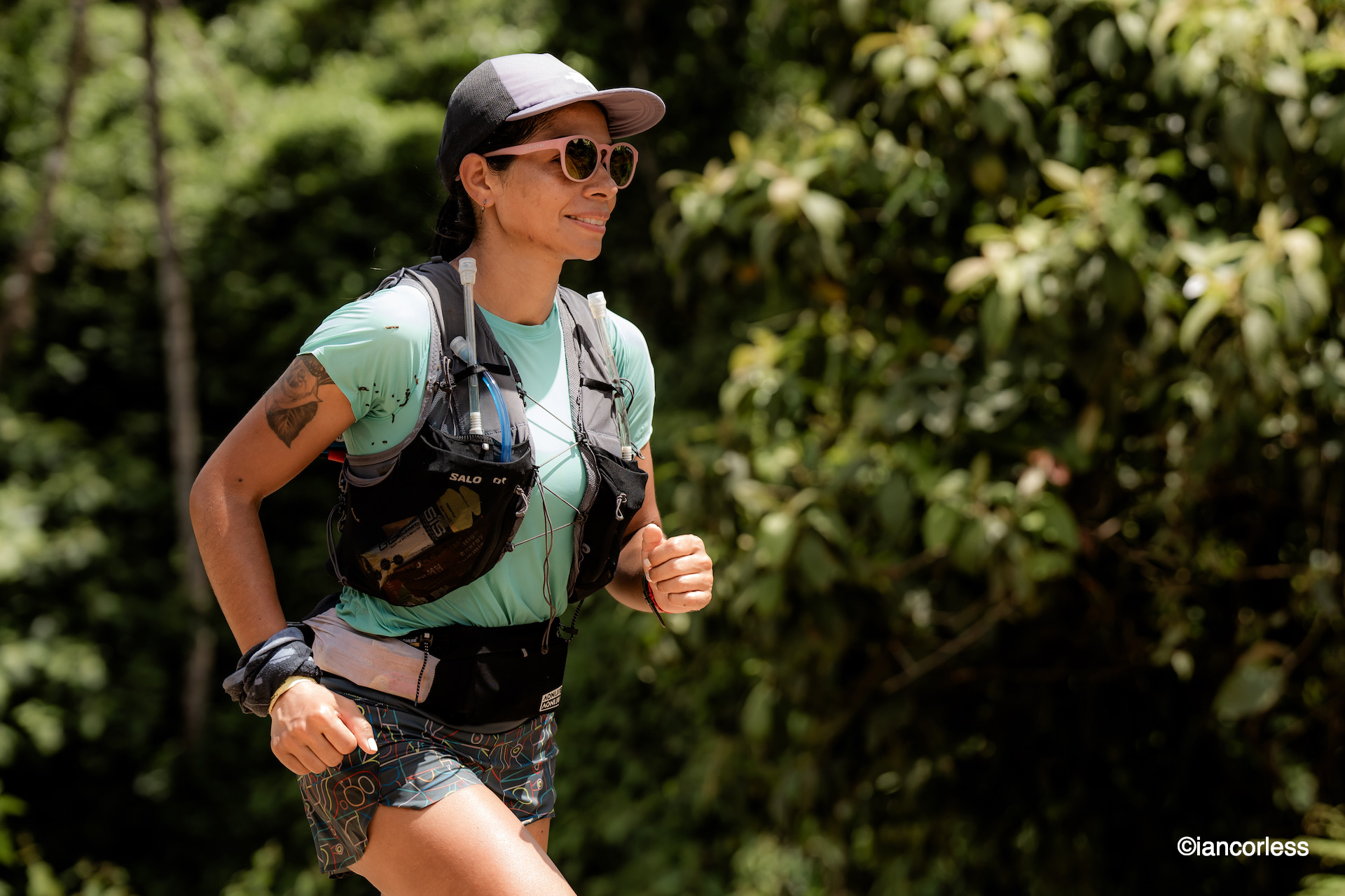
A lightweight vest-style pack works best. Many runners now carry a bladder plus two bottles. Aid stations can be far apart, and dehydration happens fast.
Carry:
• First aid basics
• Whistle
• Phone (waterproofed)
• Cash
• Sunscreen
• Purification tablets (just in case) or a water filter.
• Personal nutrition
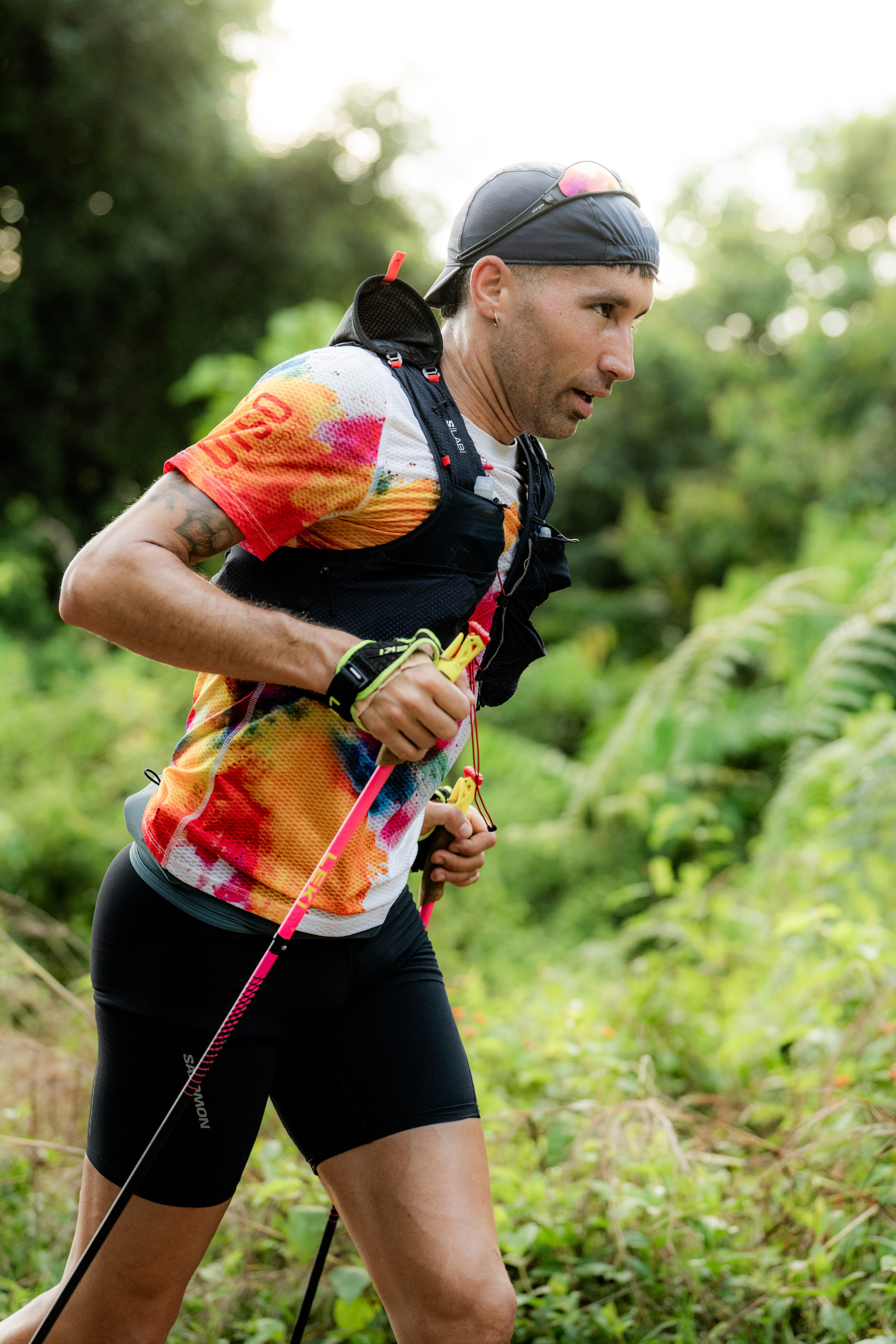
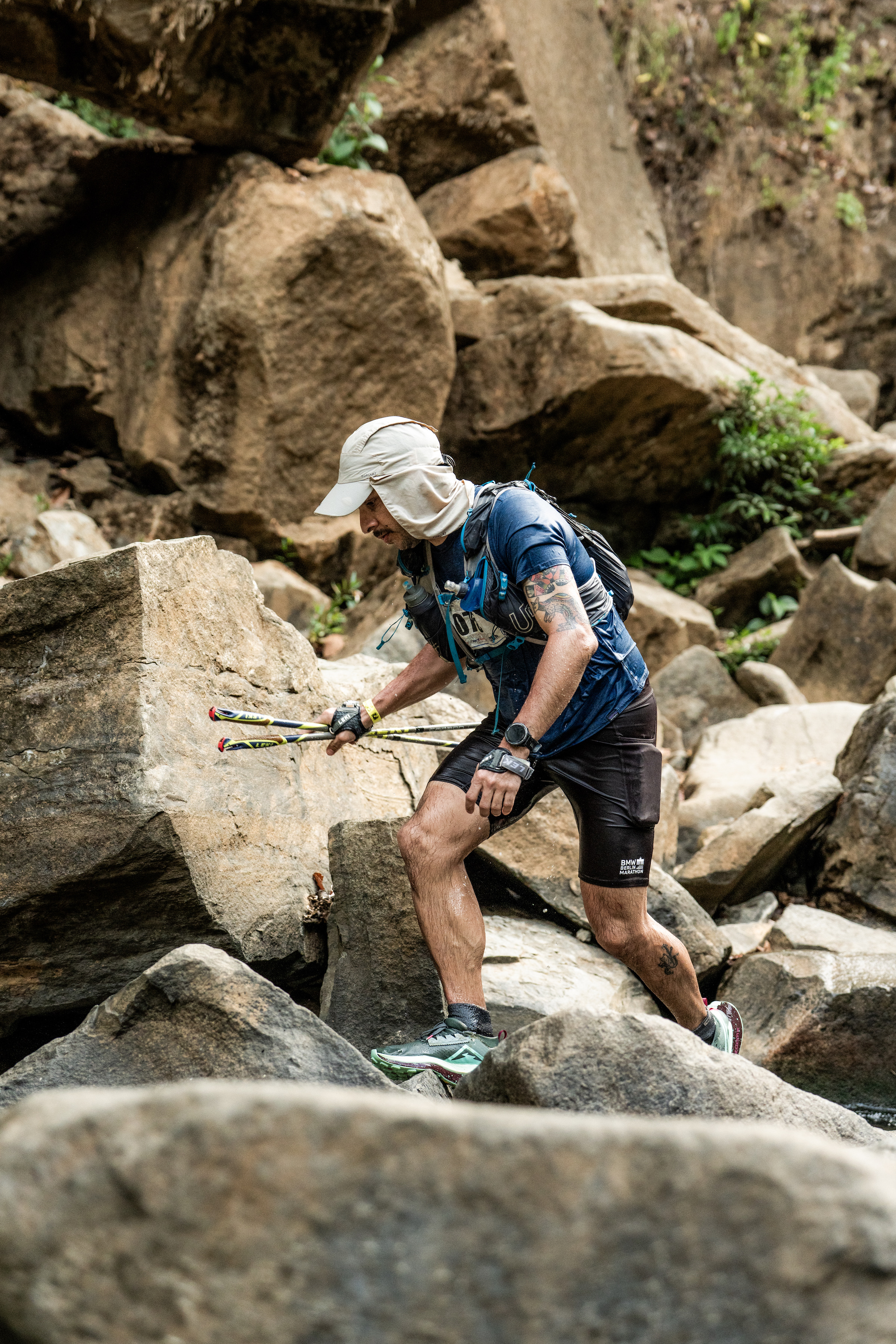
• Poles (optional, but useful)
If you use poles, they must fold, stow quickly, and be second nature to deploy. Practice with them before the race.
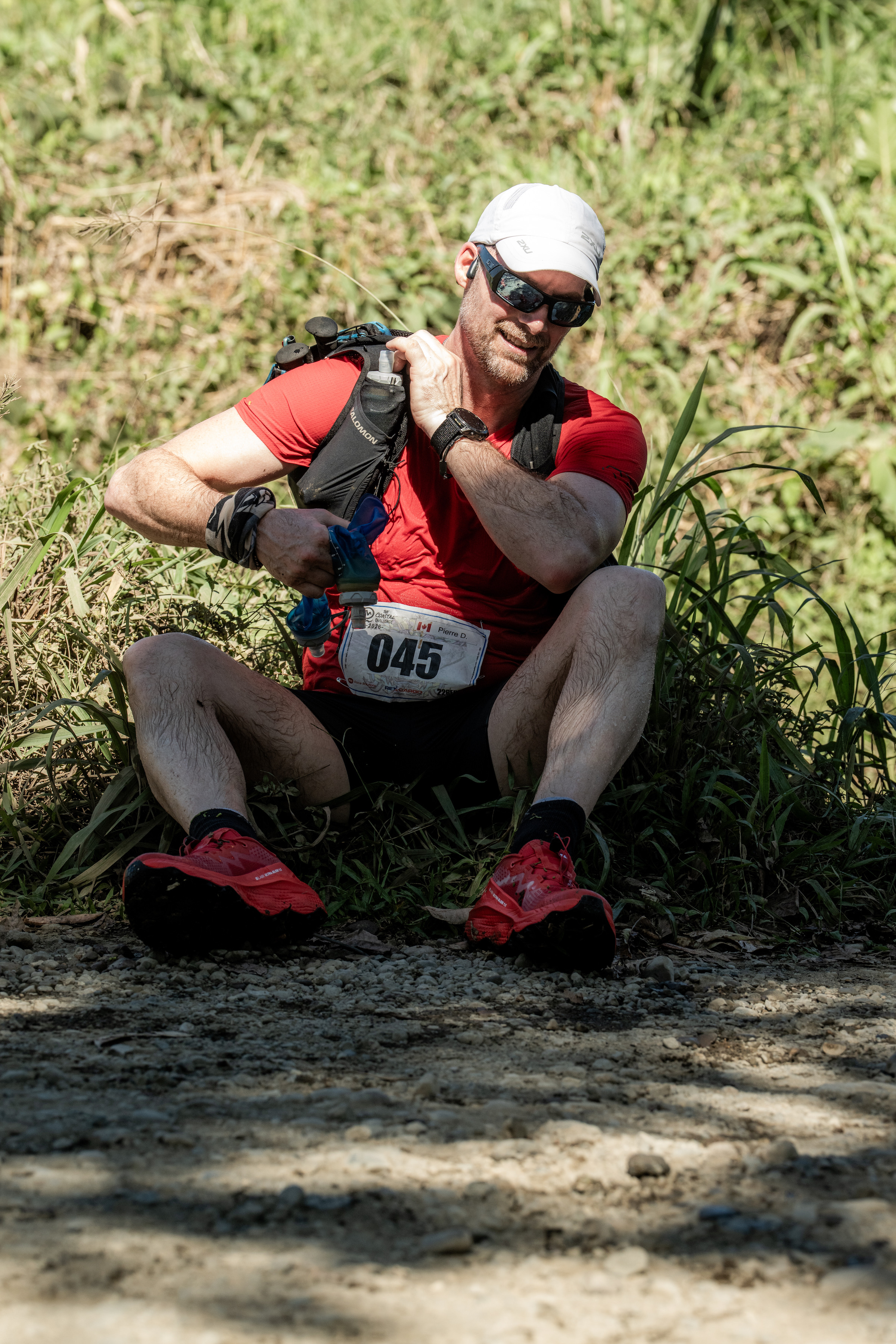
You’ll sweat within minutes of starting and continue all day. Hydration is constant, not reactive. Drink regularly, not just when thirsty. Electrolytes are personal. Know what works for you before arriving.
Never pass water without topping up.
Photo by Ian Corless
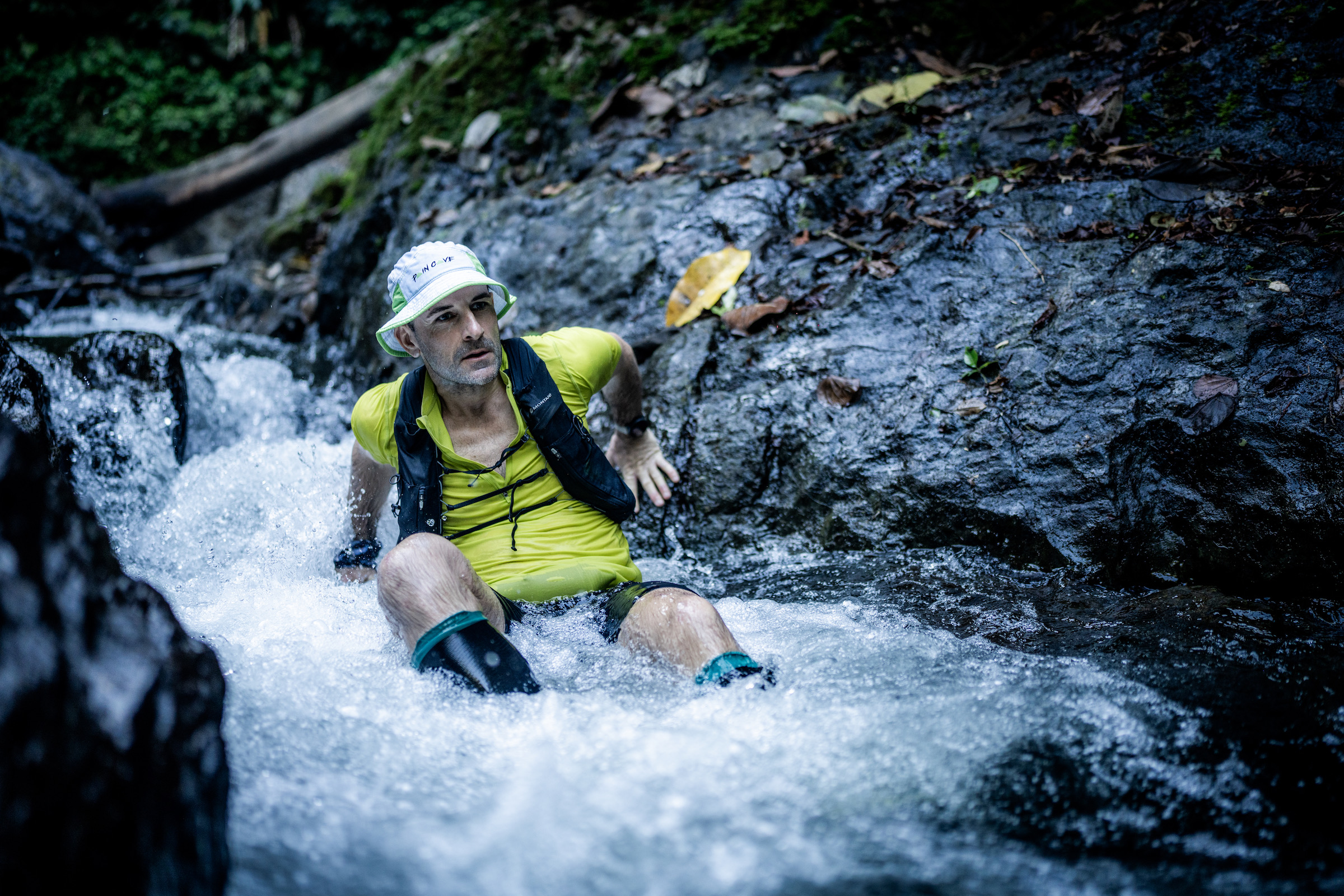
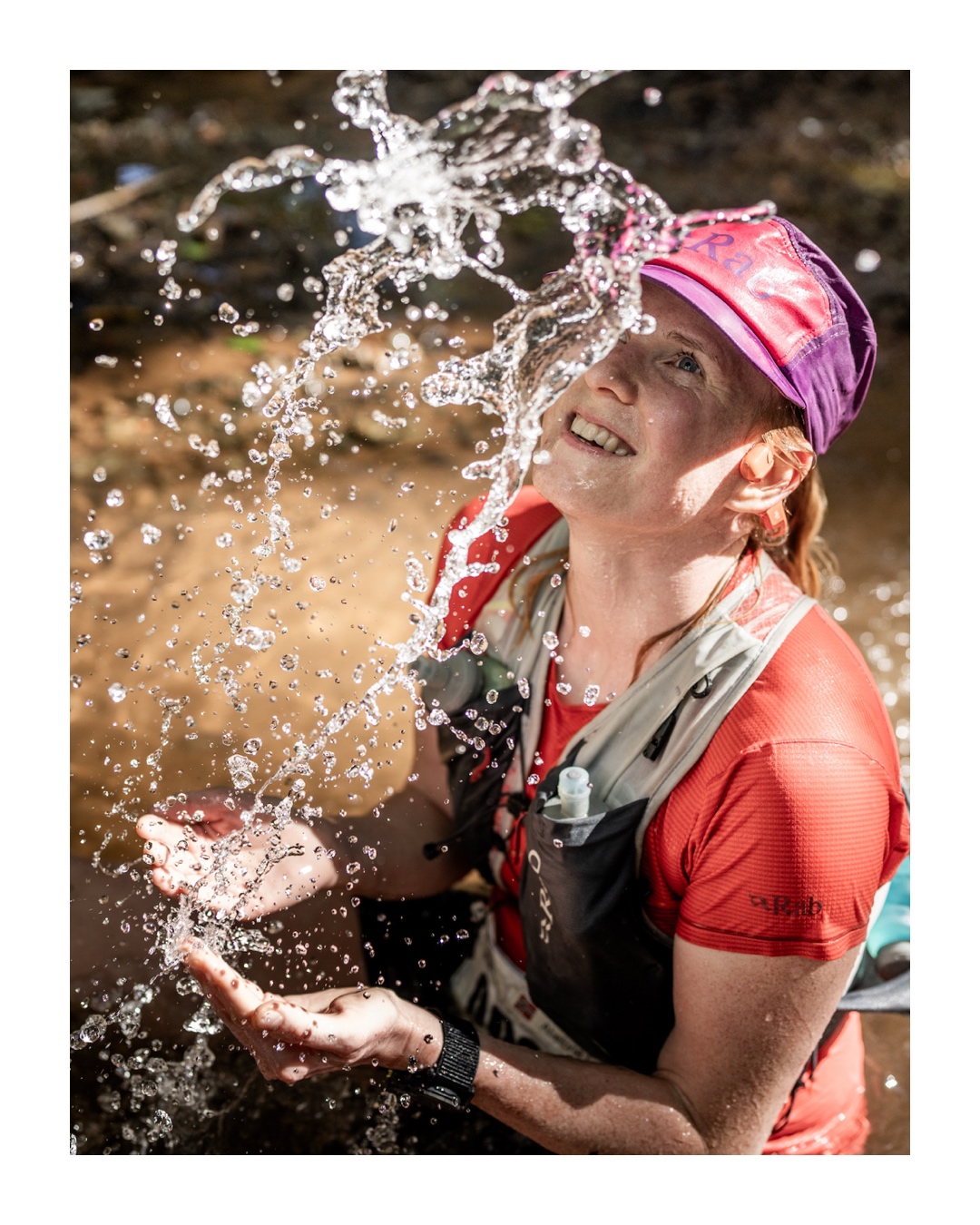
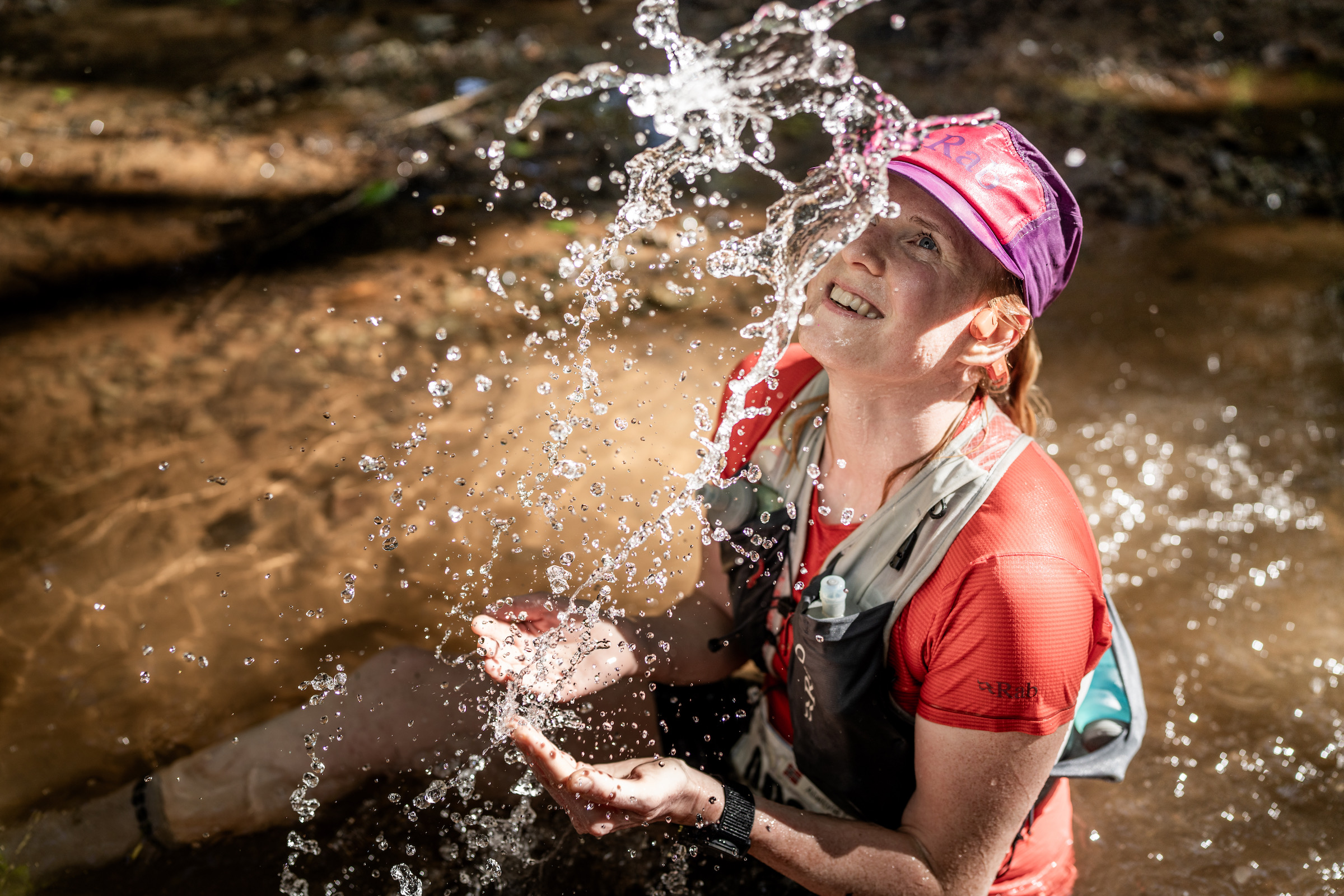
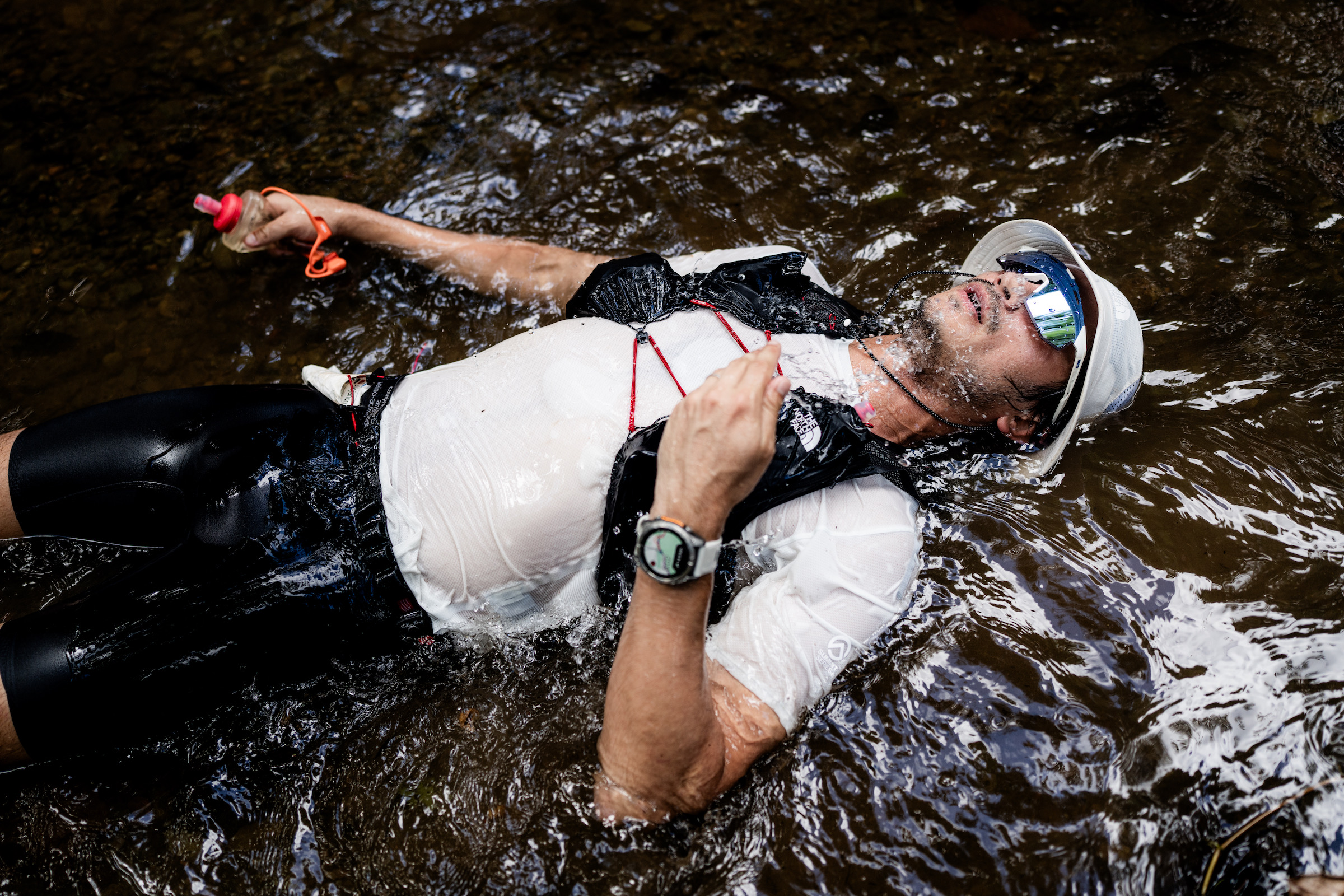
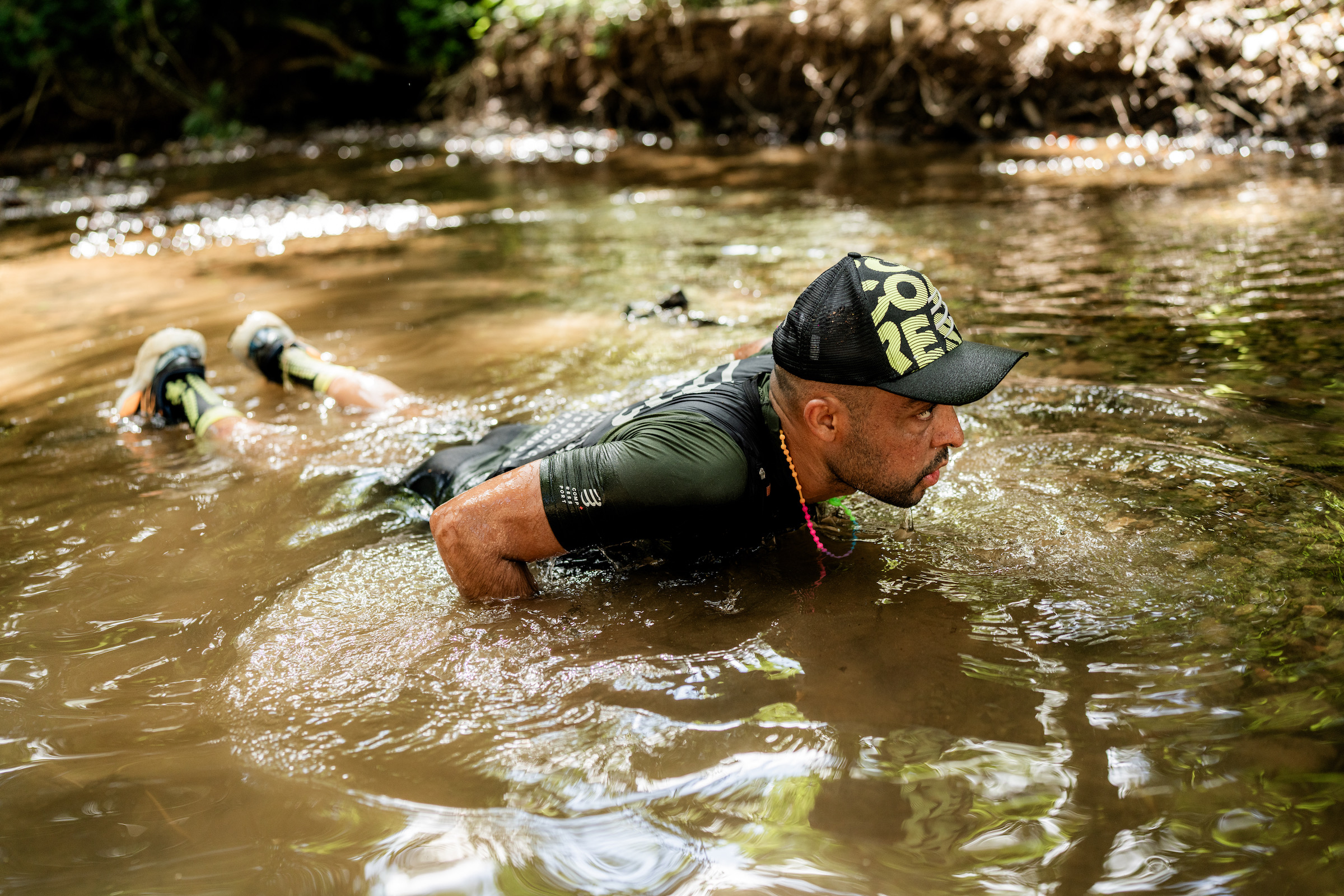
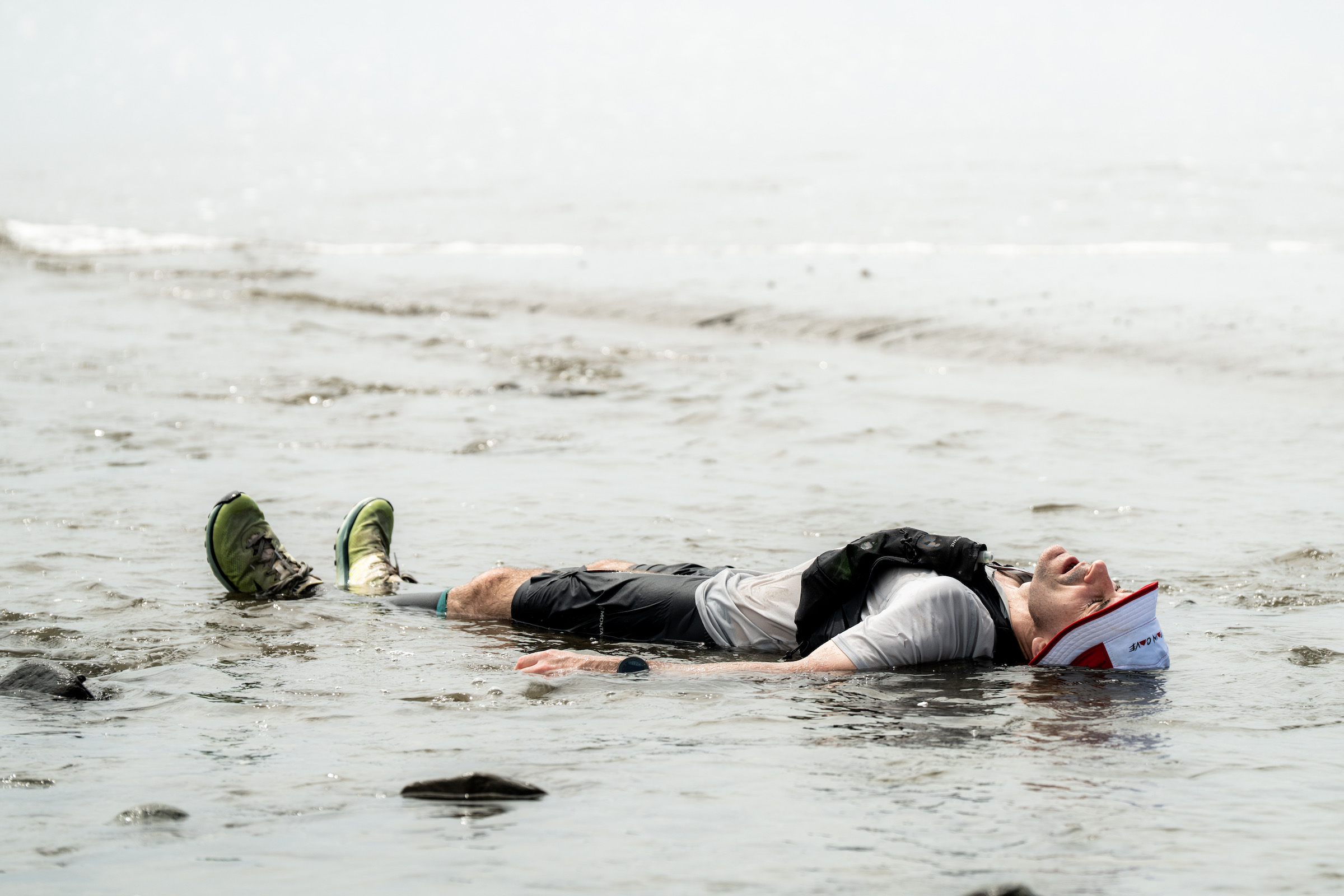
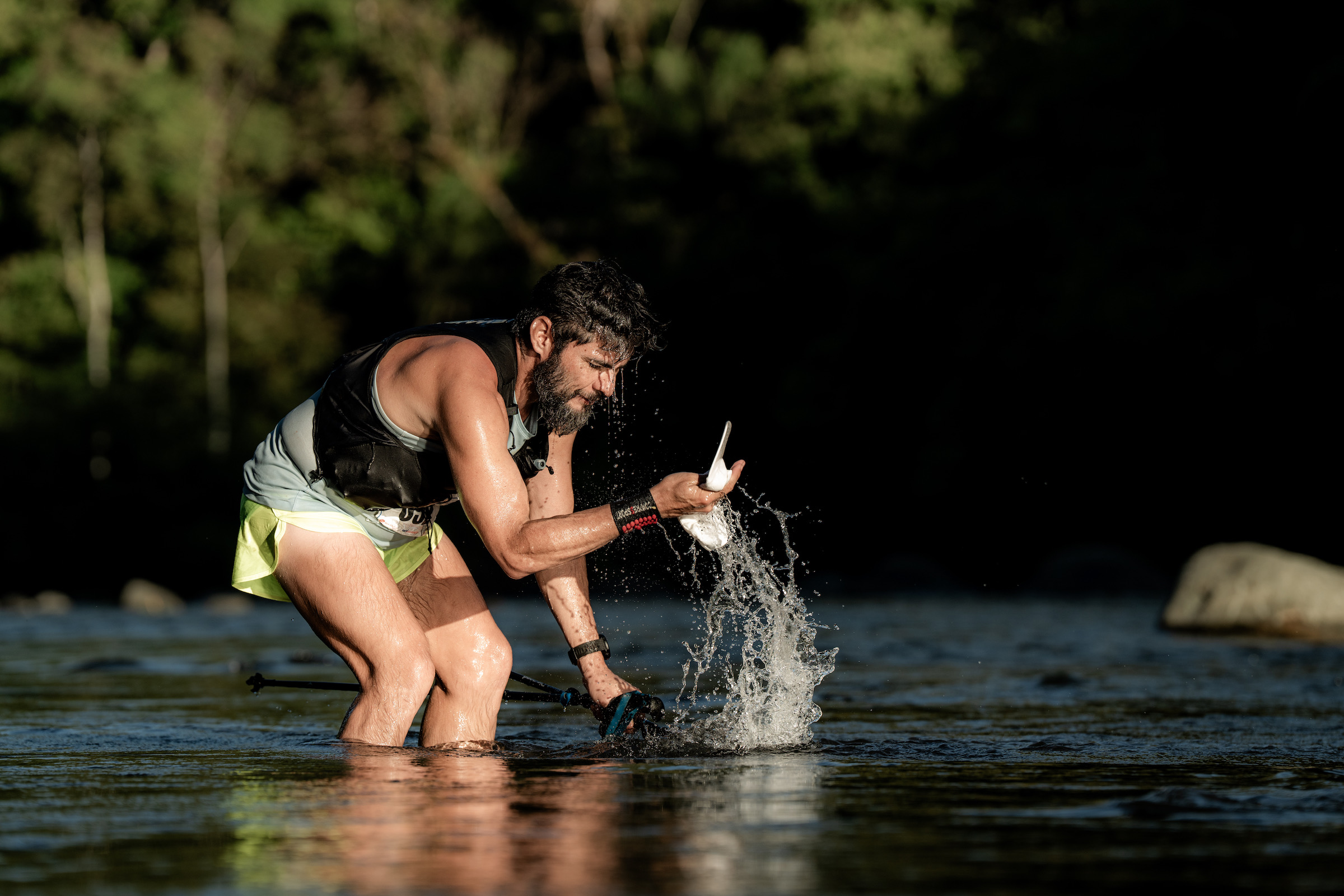
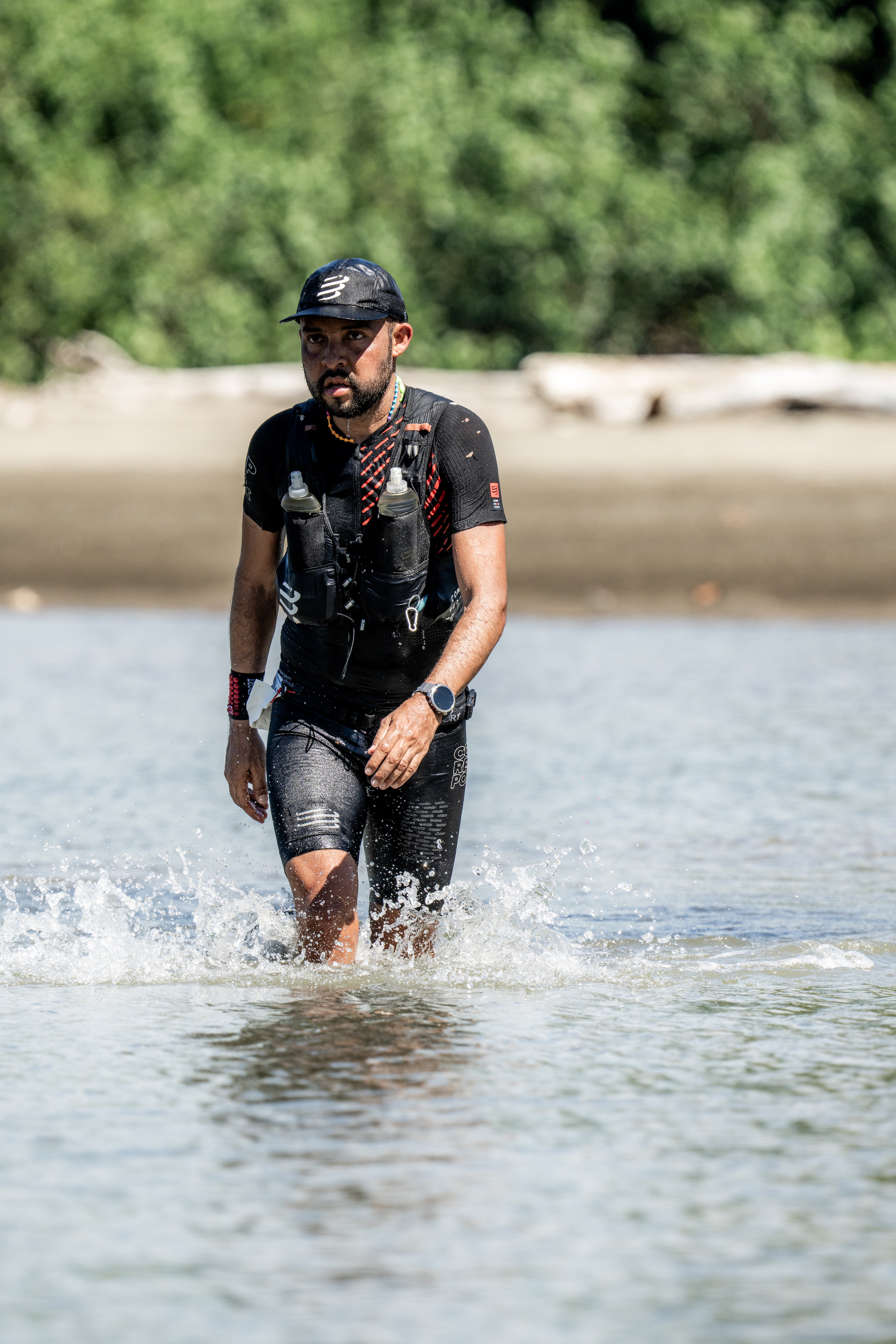
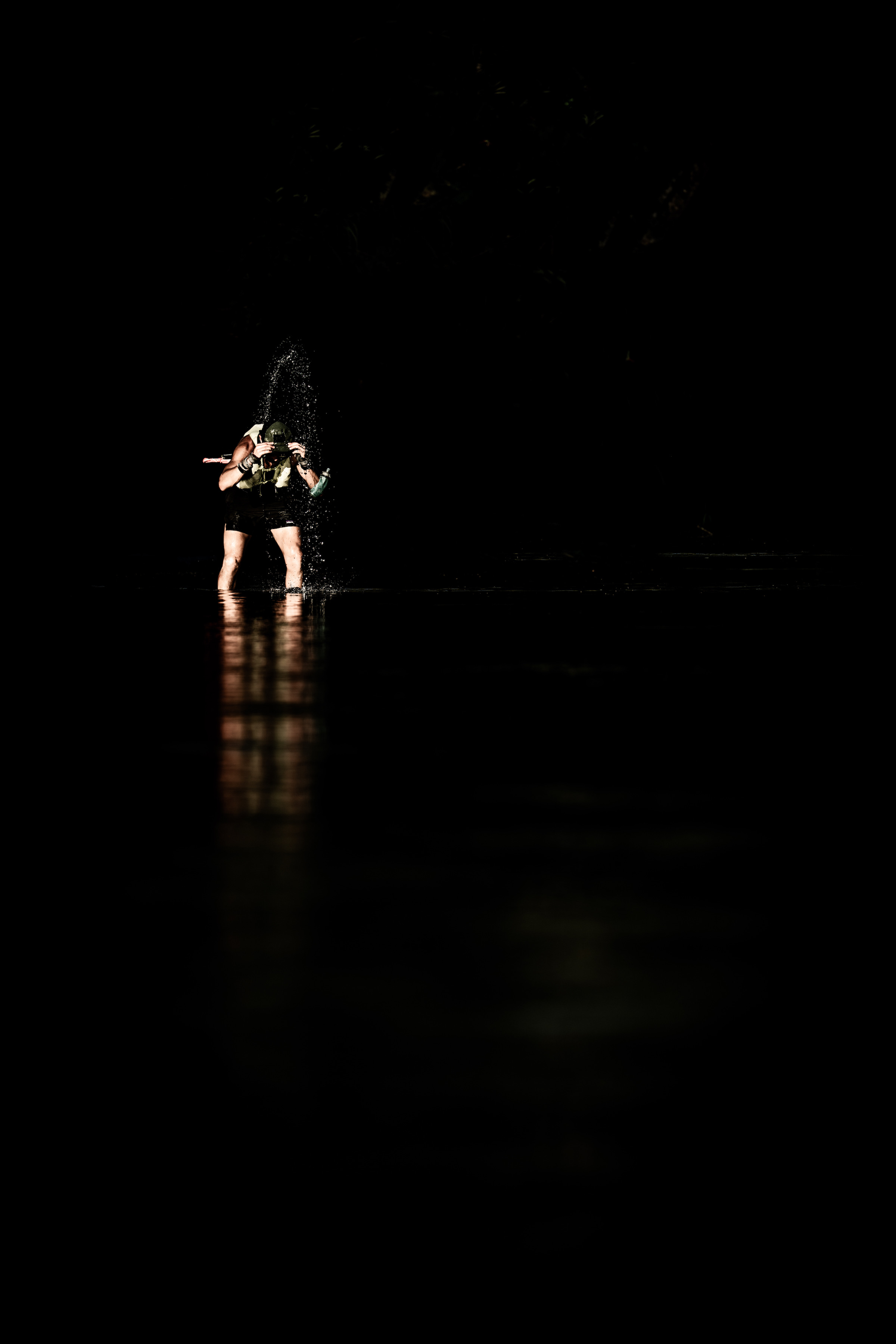
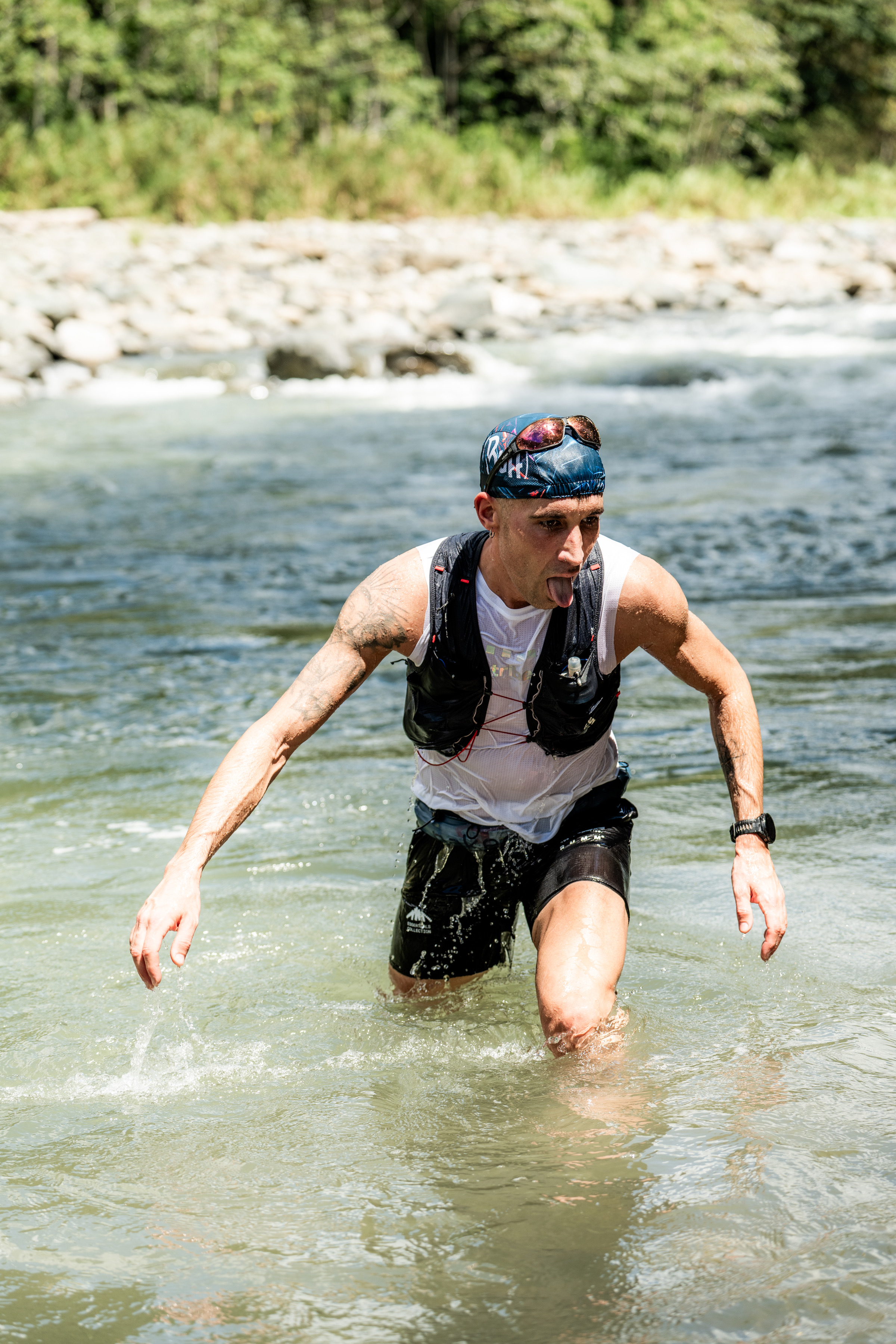
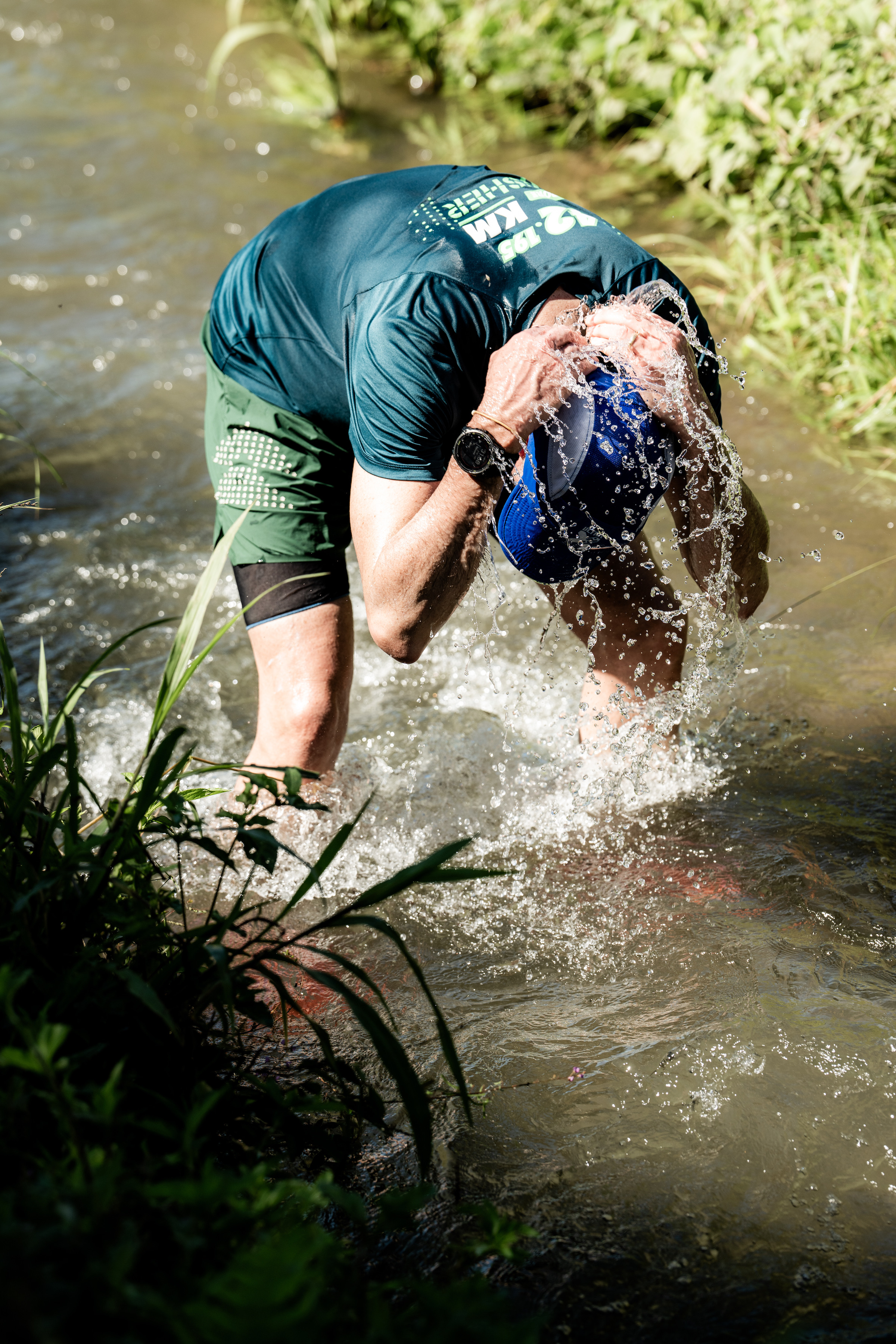
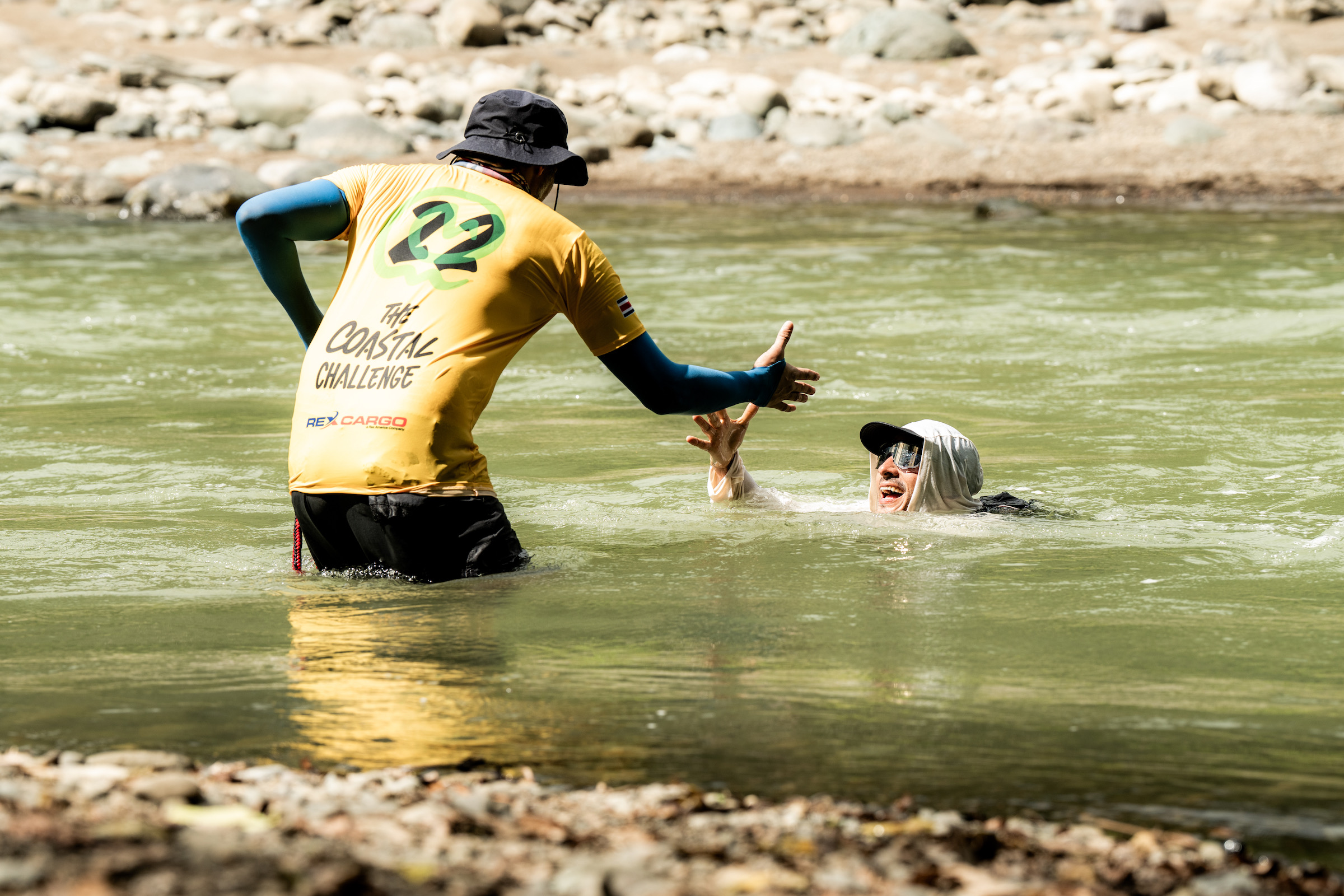
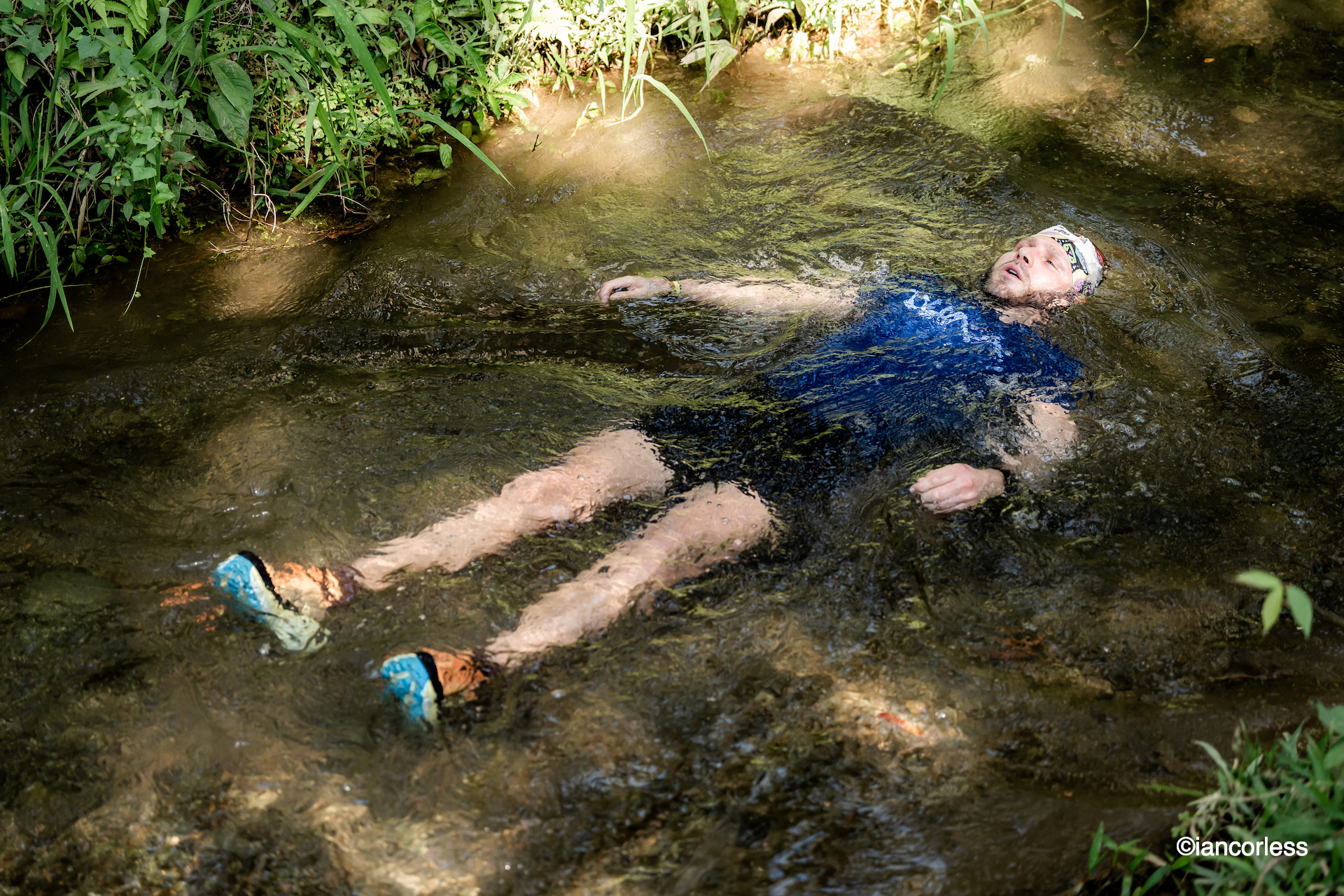
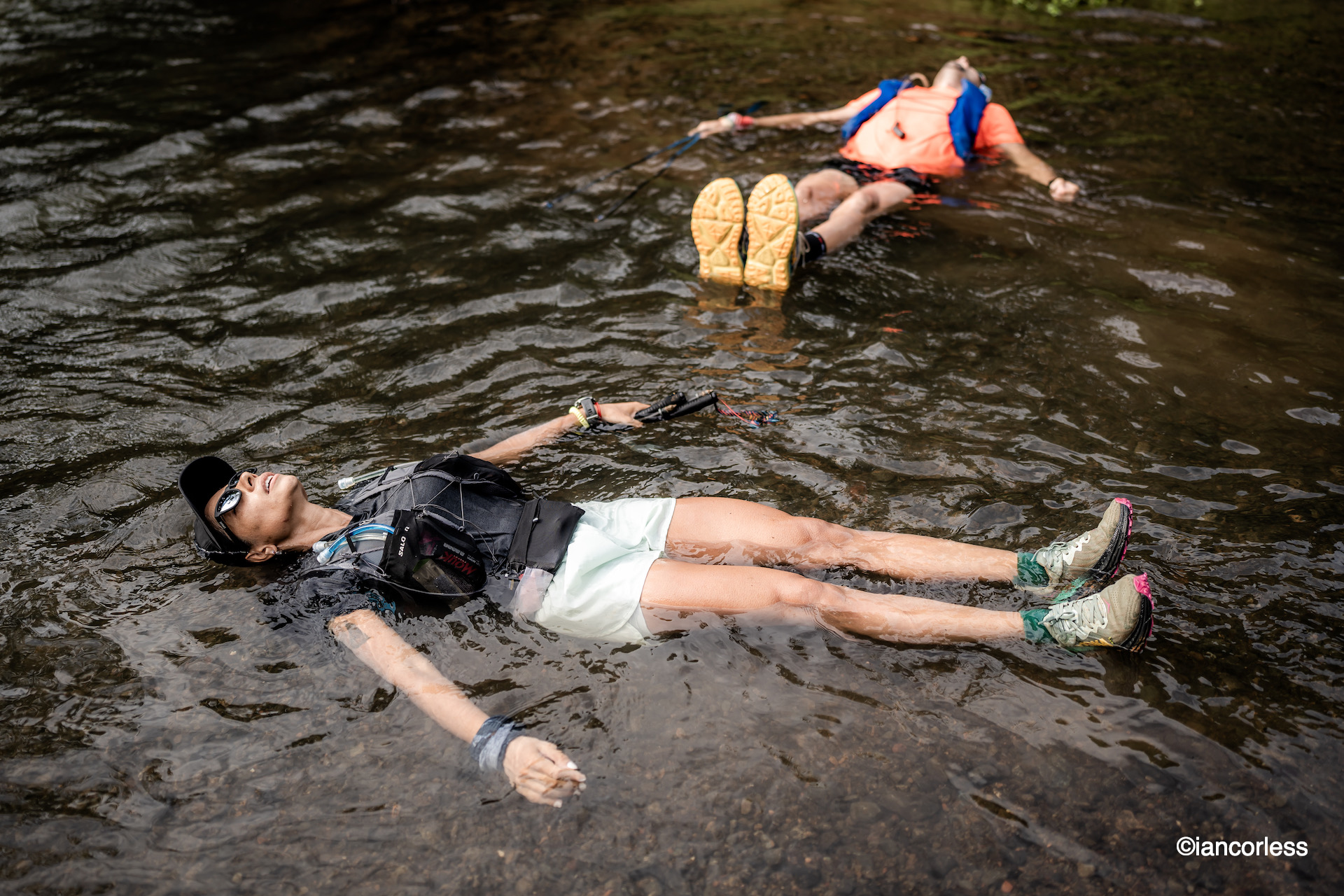
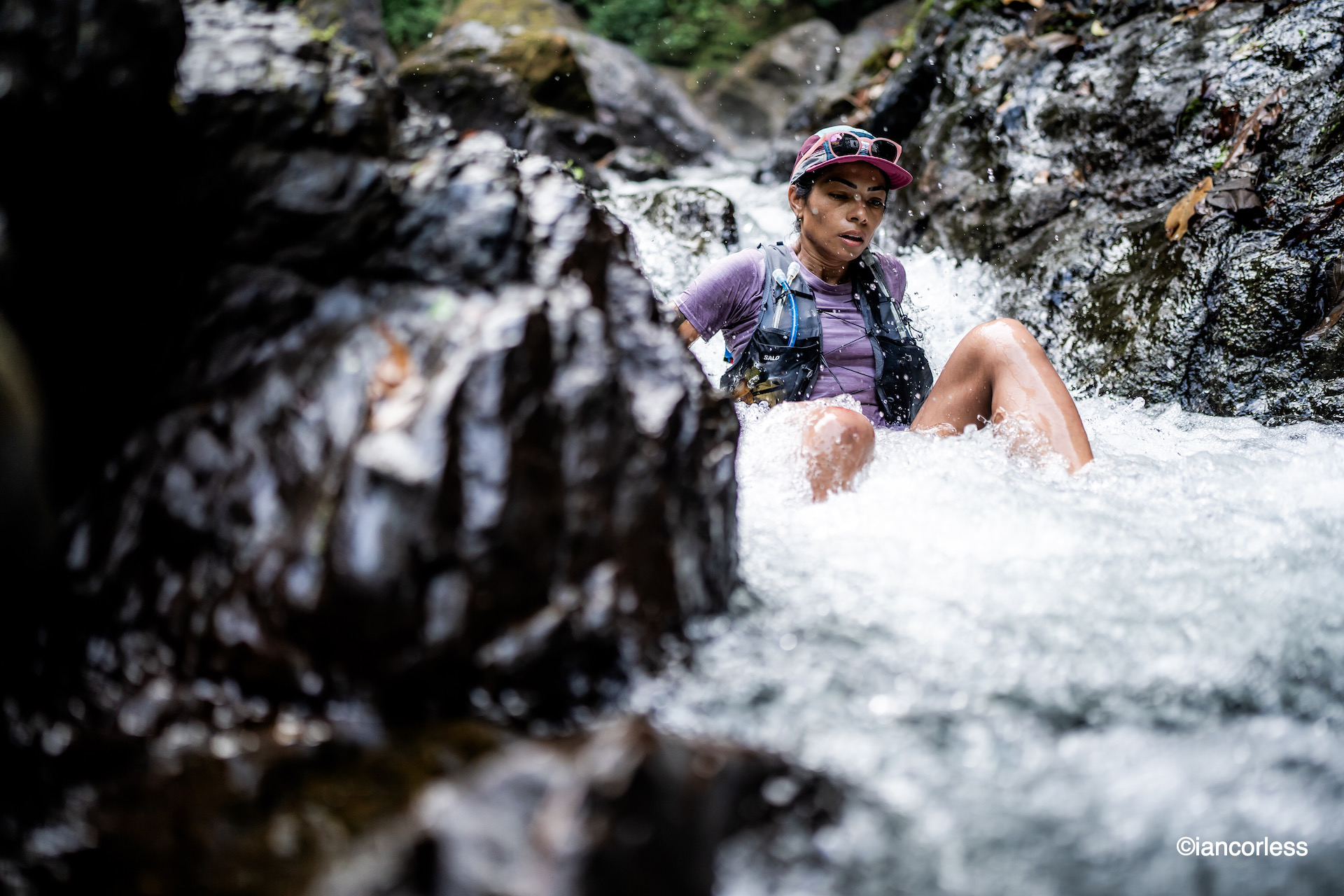
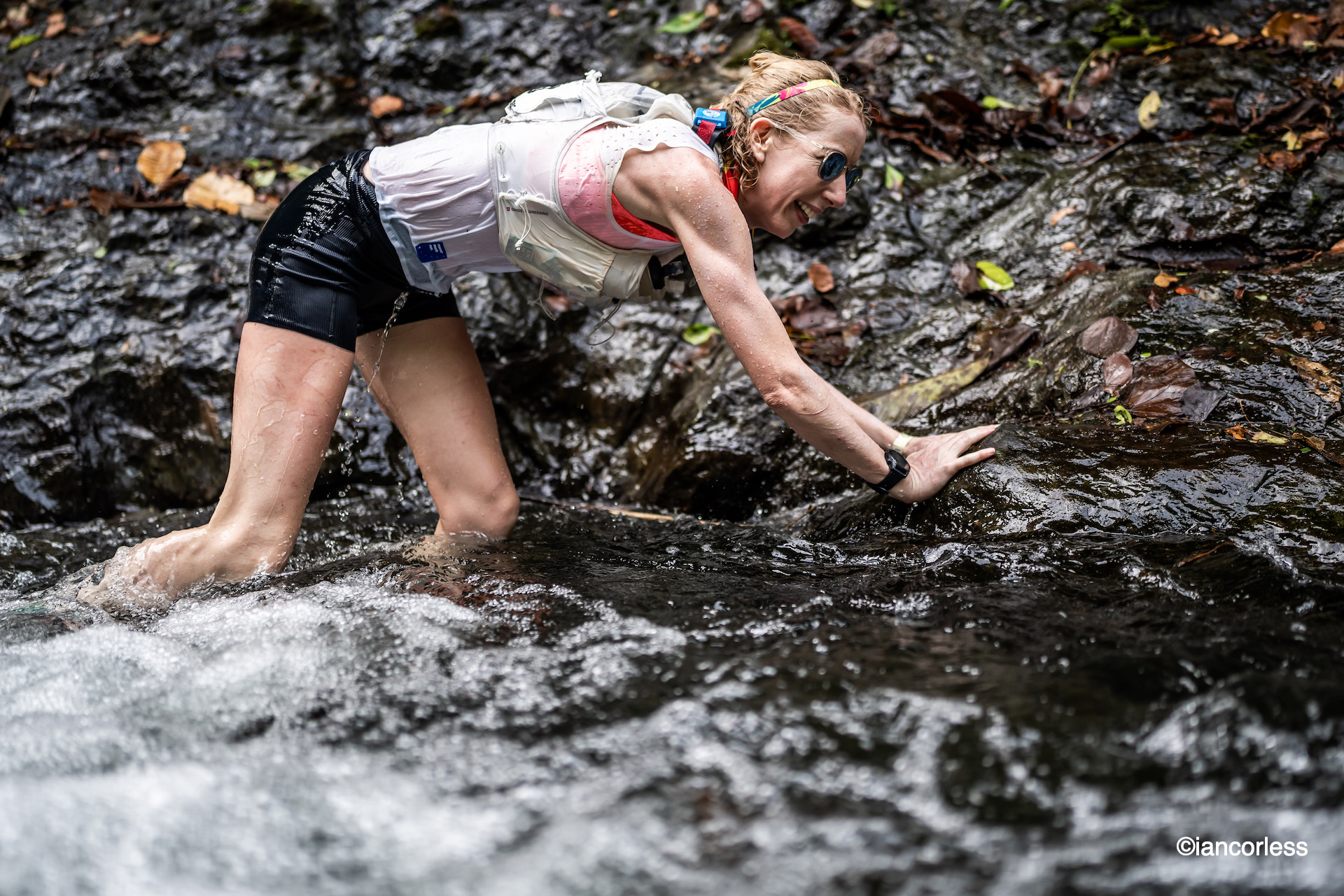
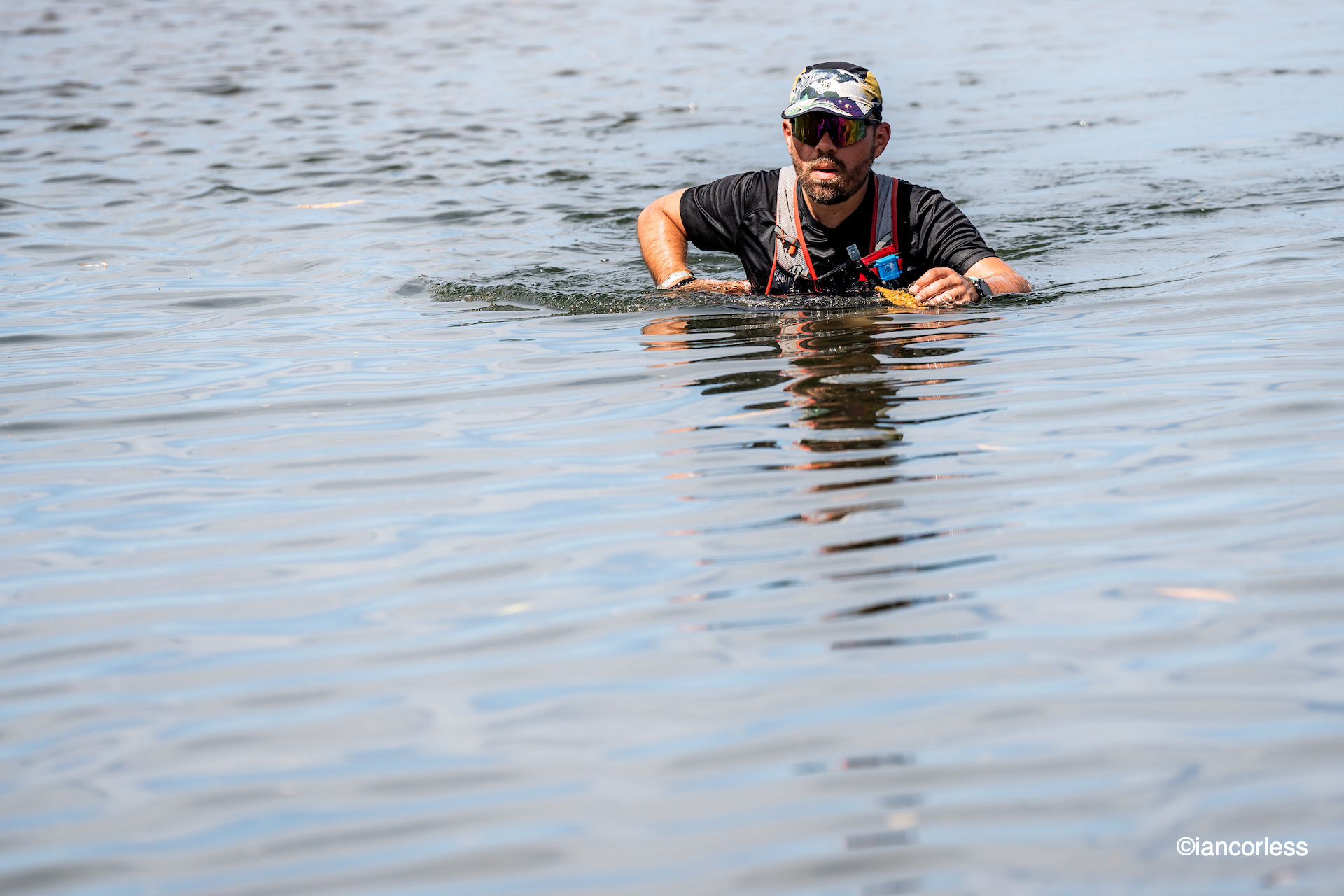
Use the environment to your advantage. Rivers, streams, and pools are not obstacles, they are survival tools. Submerge fully whenever possible. Two or three minutes can reset your entire system.
Photo by Ian Corless
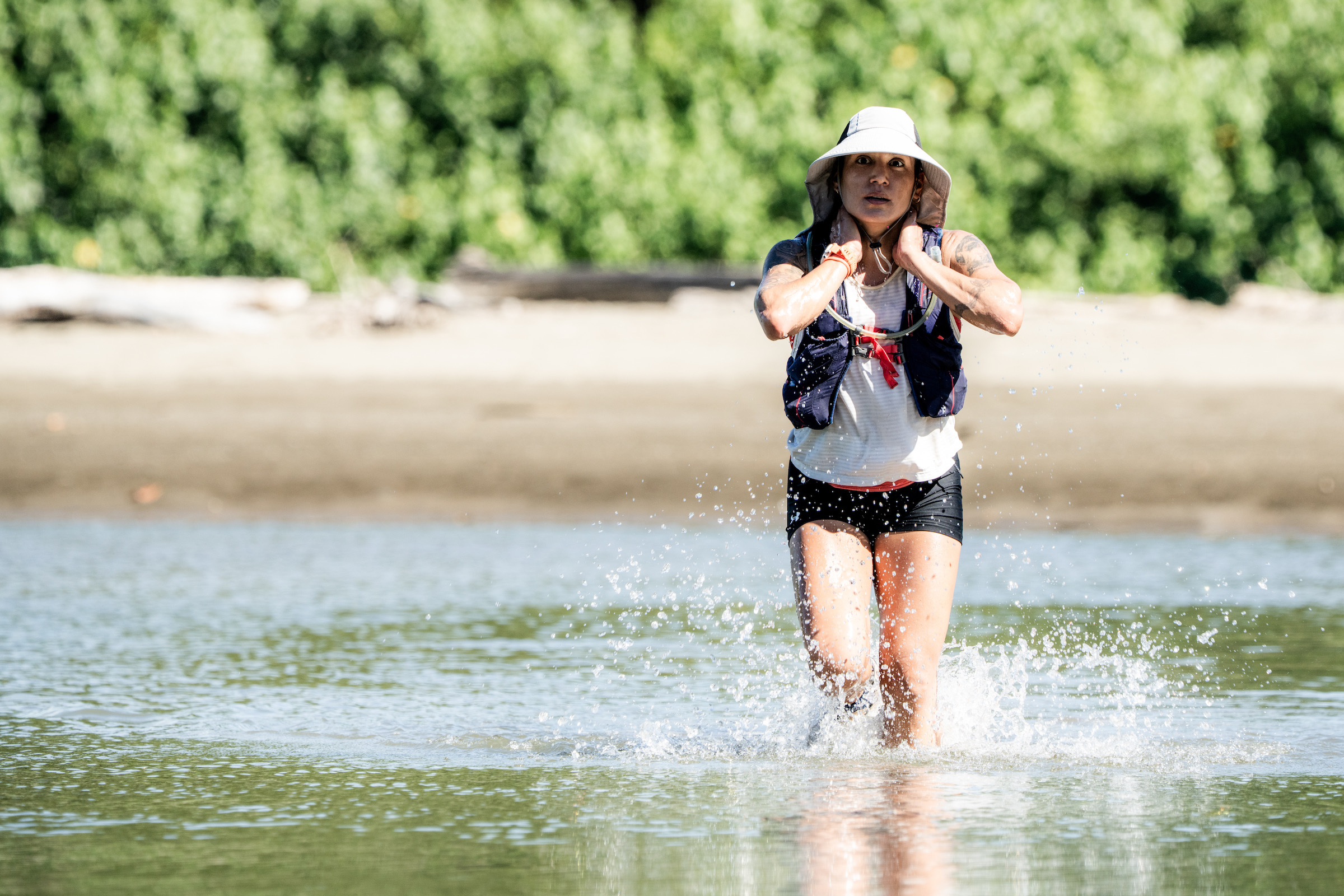
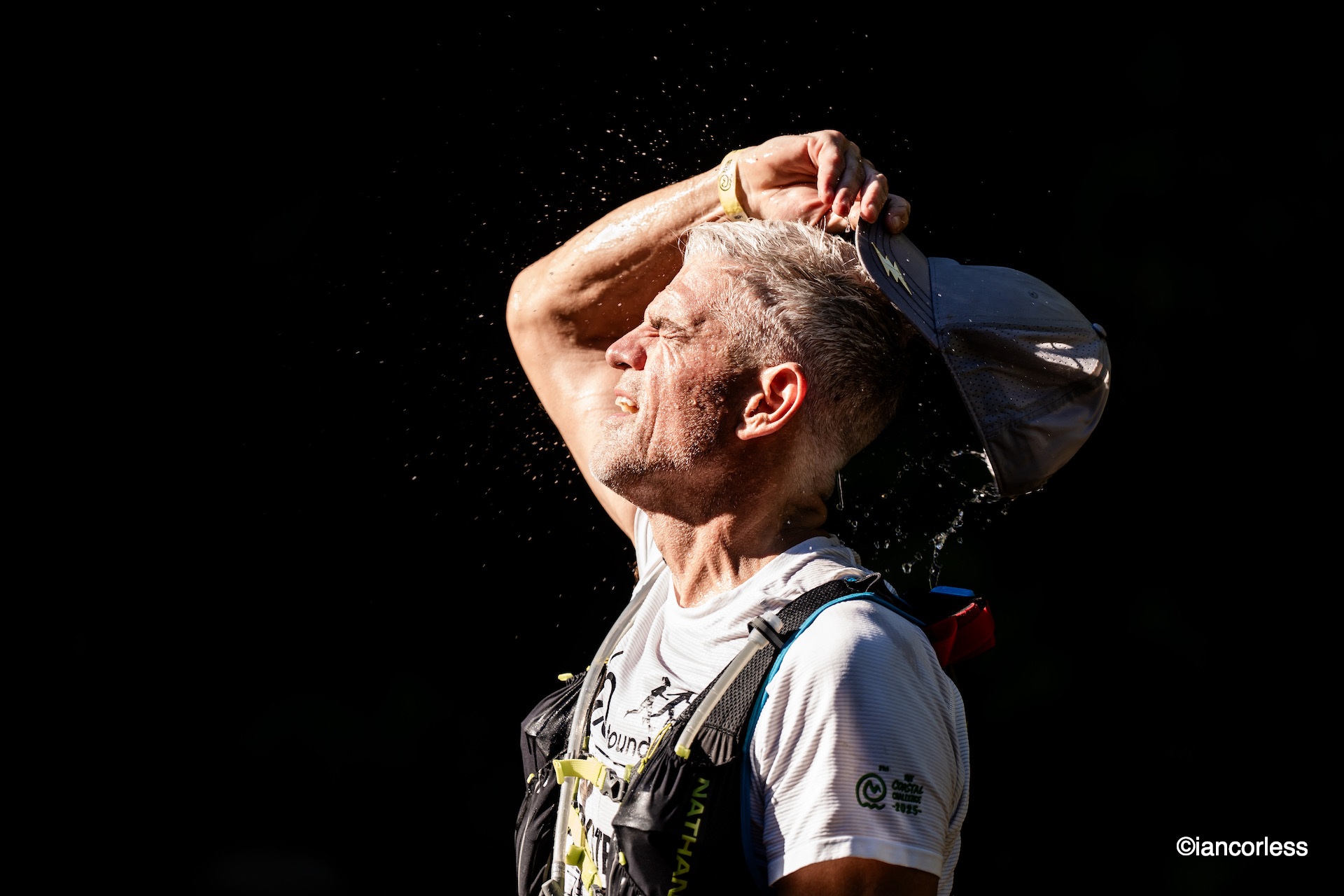
Run in shade. Walk in sun. Cover your head and shoulders. Pour water over yourself often.
Practical Race Wisdom
• Day 1 starts fast and later than other days. Most people go out too hard. Many drop out here.
• From Day 2 onward, you start at sunrise. Use the cooler hours wisely.
• This is a technical race. Train for climbing and descending.
• Everyone walks. Learn to do it efficiently.
• The course is well marked, but fatigue makes mistakes easy. If you haven’t seen a marker in five minutes, stop and check. Use the GPX files on a watch.
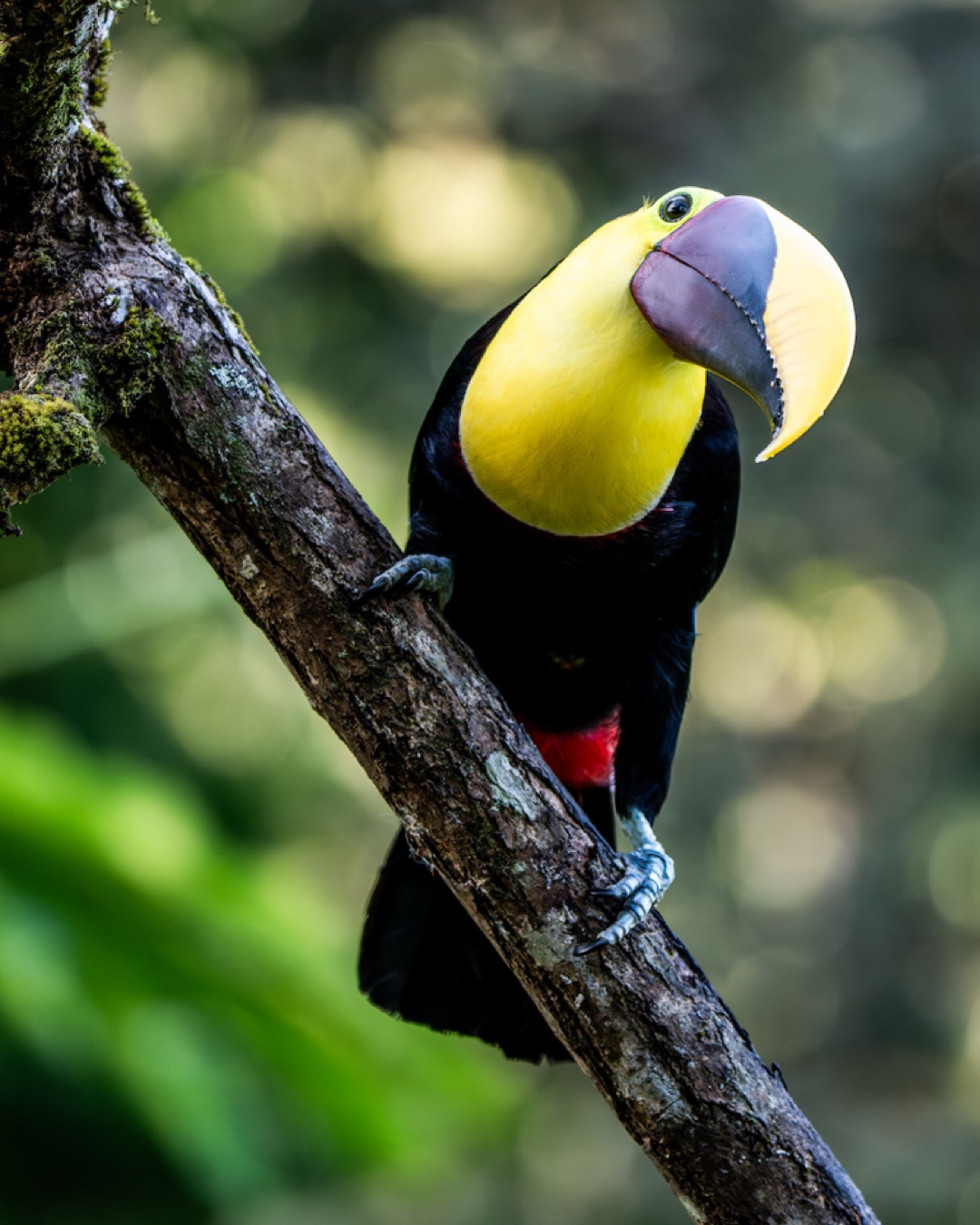
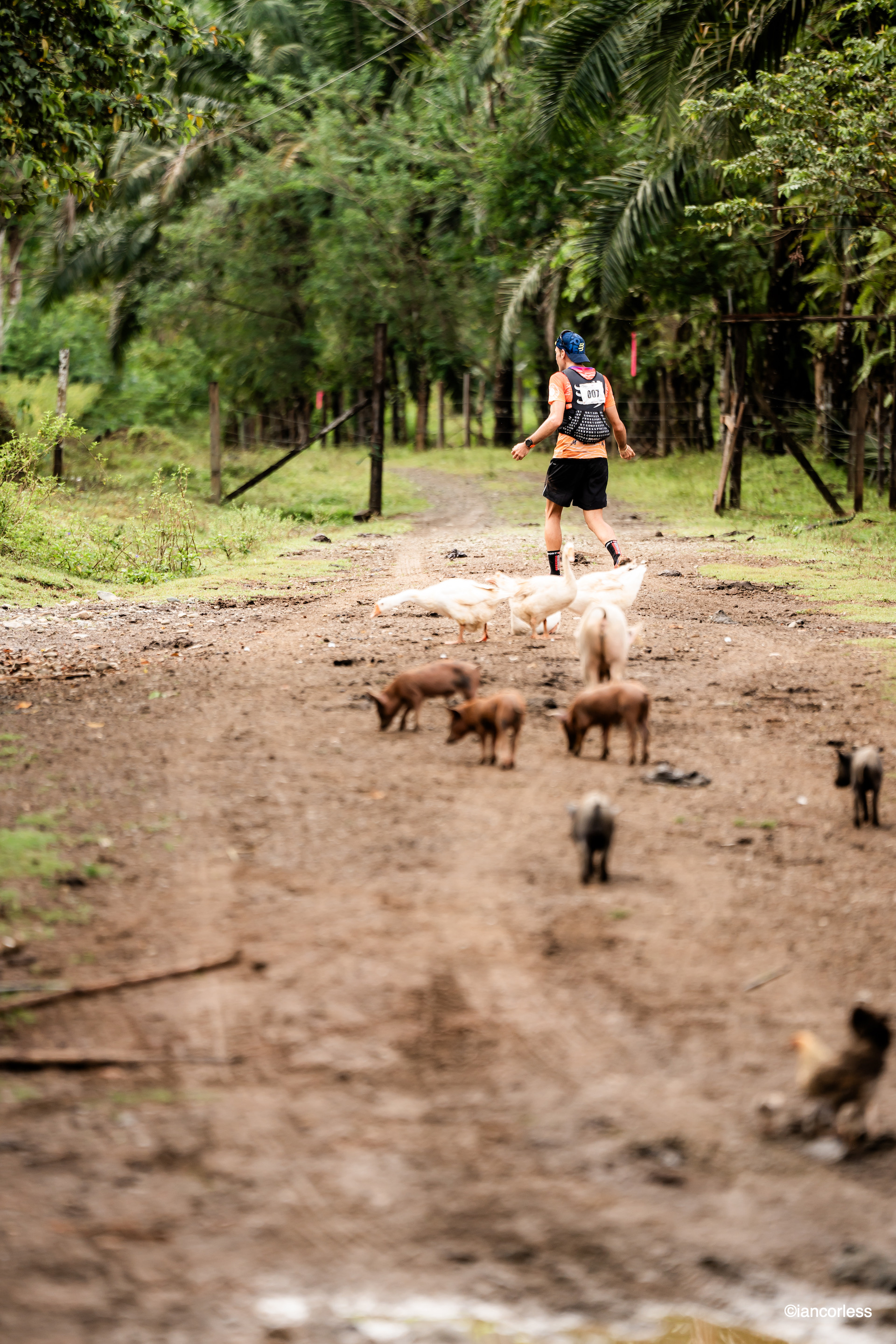
• Wildlife surrounds you. You’ll hear far more than you’ll see.
• After each stage: shoes off, feet checked, flip-flops on immediately.
• Eat, hydrate, nap, elevate legs.
• Camps are social, but your tent is your reset space.
A Note for Female Runners
Photo by Ian Corless
Practical comfort matters.
Light, non-run clothing for evenings makes a big difference. Sundresses or loose cotton work well. Flip-flops are essential, including for showers.
A two-piece swimsuit is useful for river or ocean bathing.
Sleep in run kit.
Don’t economise on sunscreen. Carry anti-chafe cream and reapply regularly. High humidity changes everything.
Avoid skorts. They hold water and add friction. Single-layer shorts or breathable tights work better.
Hair conditioner is not optional. Sachets pack well and don’t leak.
Leave rings at home. Swelling is real.
Waterproof zip-locks for cash and toilet paper are worth their weight.
Phones must be properly waterproofed or left behind for river-heavy sections.
Final Thoughts
The Coastal Challenge doesn’t pretend to be anything other than what it is: a hard, beautiful, immersive journey through one of the most demanding environments you’ll ever race in. It will challenge you. It will frustrate you. It will humble you. And if you arrive prepared, it will reward you in ways few races can.
Photo by Ian Corless
Look up. Take it in. Accept the discomfort. Prepare well for heat, humidity, technical terrain, and recovery. Get your head right before you arrive. If you do that, the race doesn’t just become manageable. It becomes unforgettable.
A good nights sleep, no rain, and stage 6 was underway at 0540. Today, 35.9km’s for all racers.
Photo by Ian Corless
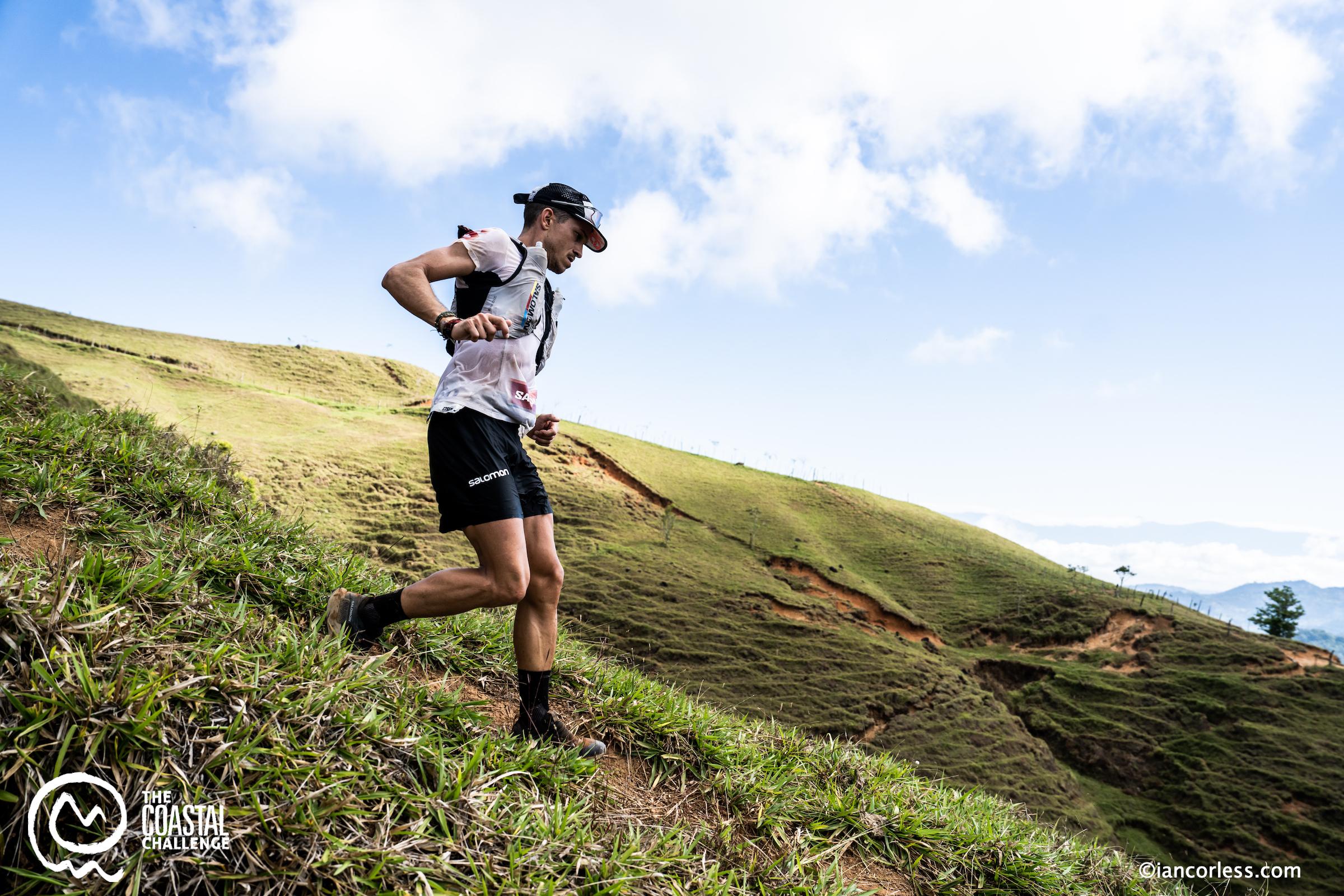
Stage 6 is arguably the Queen stage of the race, it manages to contain every aspect and highlight from all the previous stages and condense them into an incredible and beautiful route.
Photo by Ian Corless
Early gravel road km’s give way to a stunning waterfall crossing section. A run through farmlands and eventually the coast and beach arrives. The route then weaves its way to Bahía Drake and the finish line.
Photo by Ian Corless
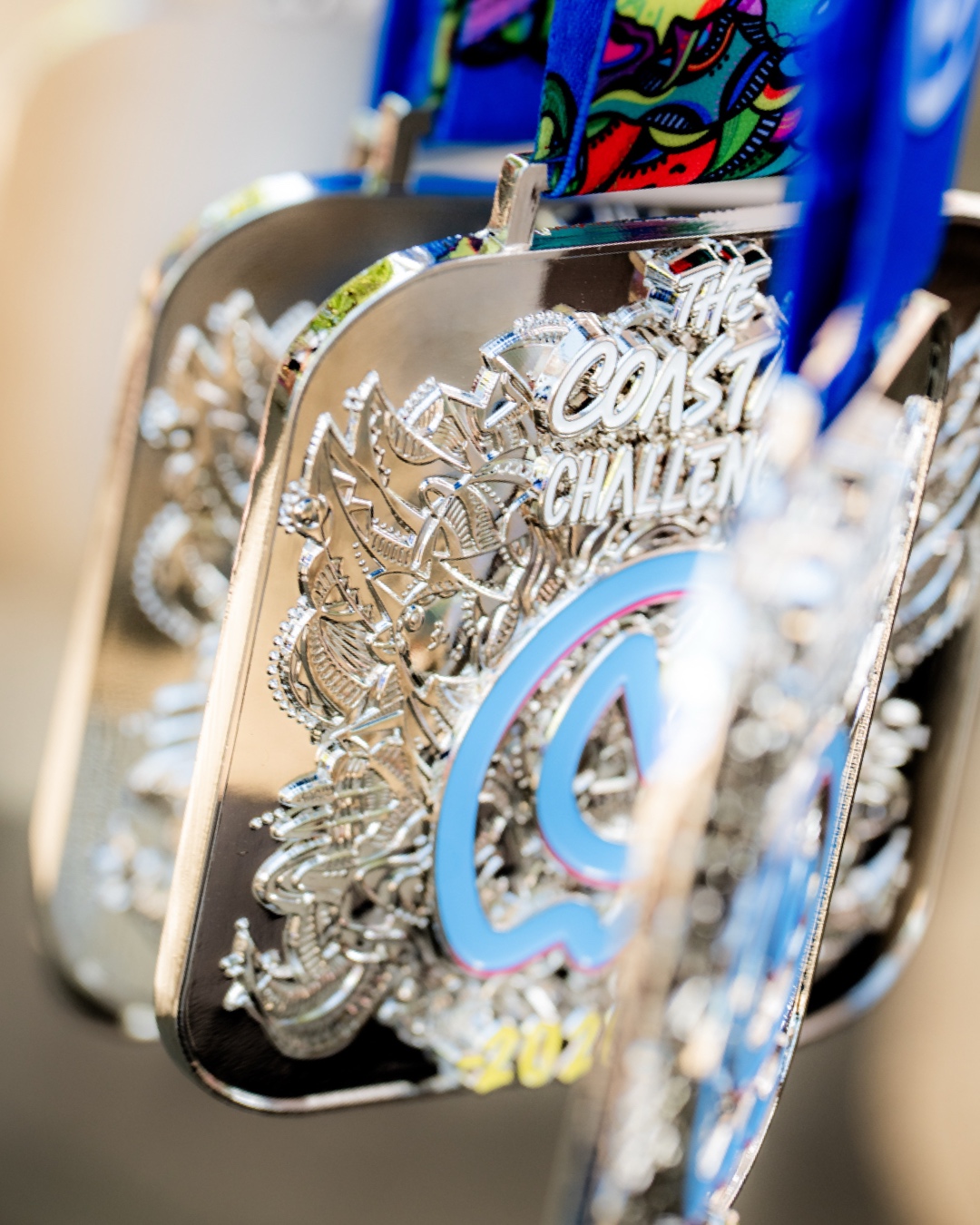
For many, it’s a day to ease back and enjoy the trails and the views, the reward at the end, a medal.
Photo by Ian Corless
For much of the day, Pierre Meslet and Sergio Turull ran together, that is, until the final 4km’s when Pierre pulled away to secure the final stage and become TCC 2025 champion.
Photo by Ian Corless
Sergio was elated to have a good day. As the week has progresses he has acclimated and adapted to the heat, humidity and technical terrain, with victory on stage 5 and 2nd on stage 6, his week has been a huge success.
Photo by Ian Corless
Katie Young had a steady day running with the other top men, a day to relax and enjoy, confident the overall victory was secure.
The finish line is one of emotion and joy, each runner a story to tell, and experience lived and importantly, memories made to last a lifetime. TCC is so much more than a race, it is an adventure into an environment that so few get to see. It may be challenging, tough and difficult, but this is the reward of the journey.
Nobody really expected more drama for stage 4 after the epic battle between Erick and Pierre. However, as darkness arrived, the heavens opened for a relentless downpour that lasted hours and hours. Camp was wiped out with flooded tents and countless runner’s seeking refuge in any shelter possible.
Photo by Ian Corless
It made for a night of wet clothes, broken sleep and very tired bodies come the 0300 wake up call.
With a tough day ahead, many, looked less than happy at the prospect of 23 or 41km’s. Pierre Meslet summed it just with his look, he was exhausted and somewhat resigned to ‘getting through the day’ and saving it all for the last day.
An early crossing of the Sierpe river and the race was soon underway, gladly, Erick Aguero was running, albeit with his arm in a sling.
Photo by Ian Corless
An incredible golden sunrise gave optimism to the day.
However, this optimism soon disappeared with the withdrawal of Erick. The pain was all too much and he emotionally took of his number and said goodbye to TCC2025.
Photo by Ian Corless
Pierre was leading the race but the sight of Erick waiting at cp1 was all too much for him. The duo had an emotional exchange and with the lack of pressure from a great competitor, a very tired mind and body, Pierre took his foot of the gas and ran easy all the way to the finish.
Photo by Ian Corless
Allan Barrielle and Sergio Turull took advantage of the situation and they ran hard to the line for a well deserved victory on the stage.
Photo by Ian Corless
For the women, Katie Young once again dominated the day, but she was feeling the fatigue from a sleepless and exhaustive night.
Photo by Ian Corless
Lucia Jarquin and Maria Jose Corrales once agin ran strong days to secure their respective 2nd and 3rd places.
Photo by Ian Corless
The stage, for many, is a ‘real’ Costa Rica experience. Gravel roads interconnect rainforest, farms, the locals, wildlife and in the latter stages, the beach and ocean lead you to Drake Bay.
Photo by Ian CorlessPhoto by Ian Corless
Tomorrow, the 6th and final stage is a victory loop that manages to compress the best of the previous 6-stages in one incredible course of rivers, waterfalls, farmland, beach, ocean and coasteering.








 IAN CORLESS