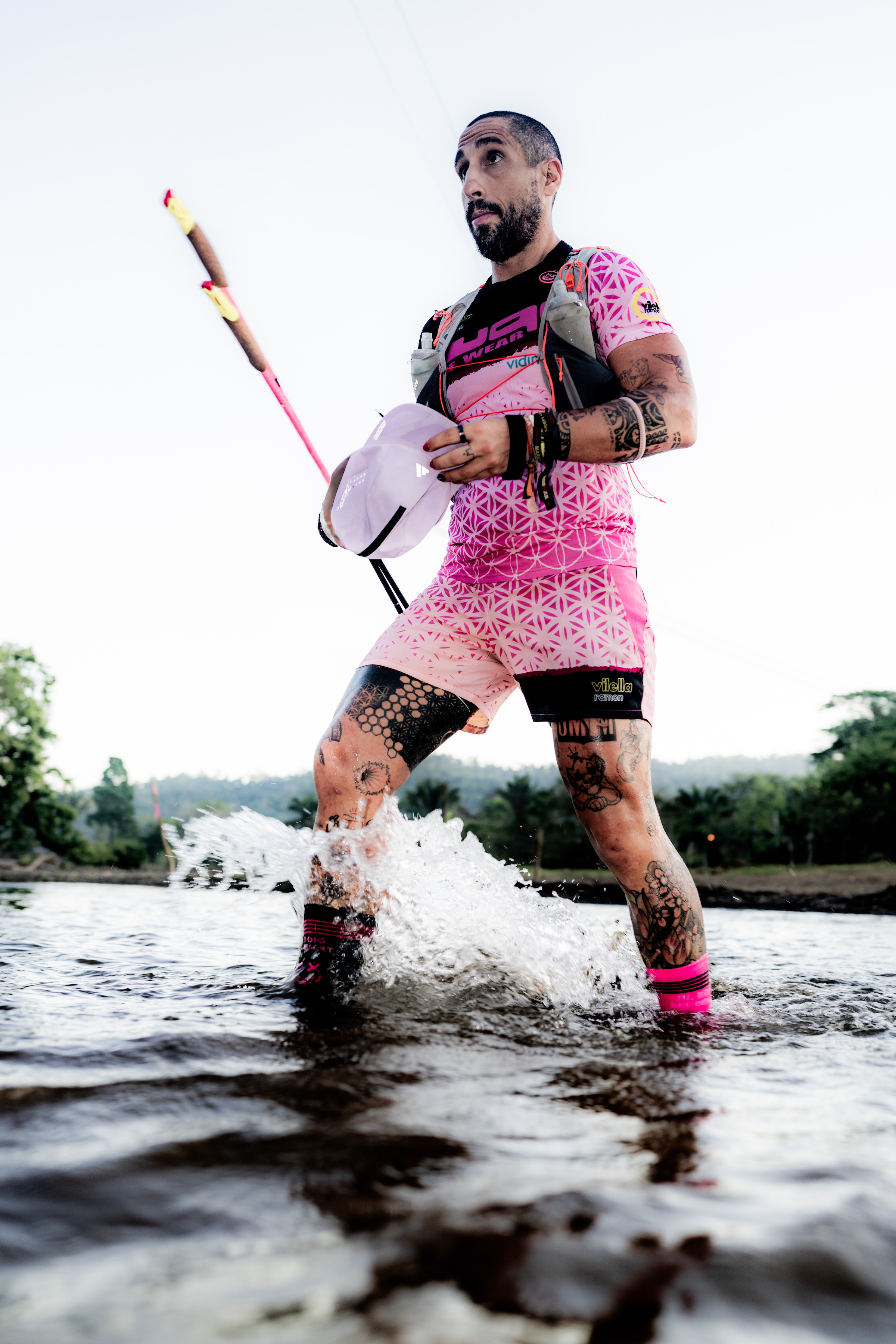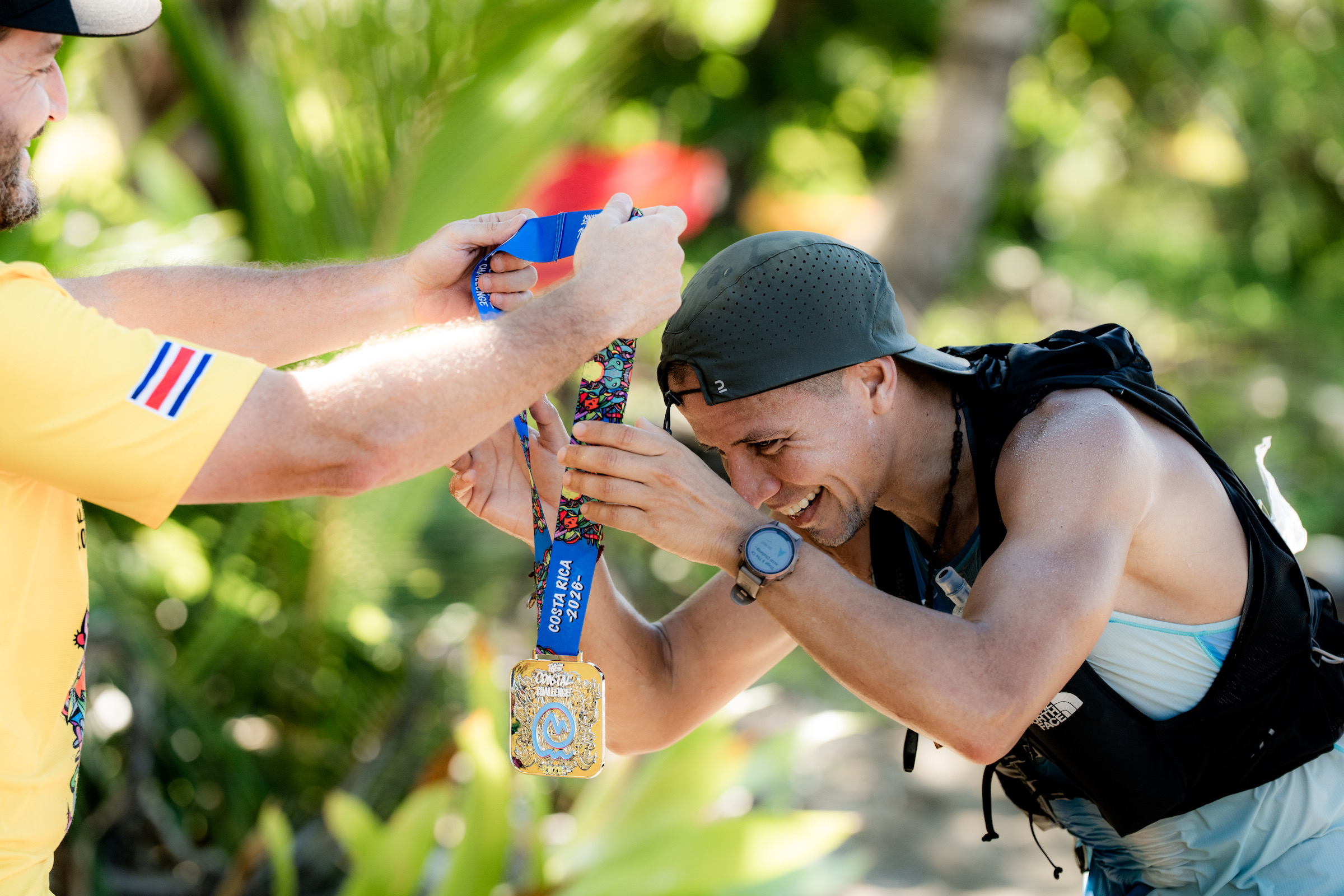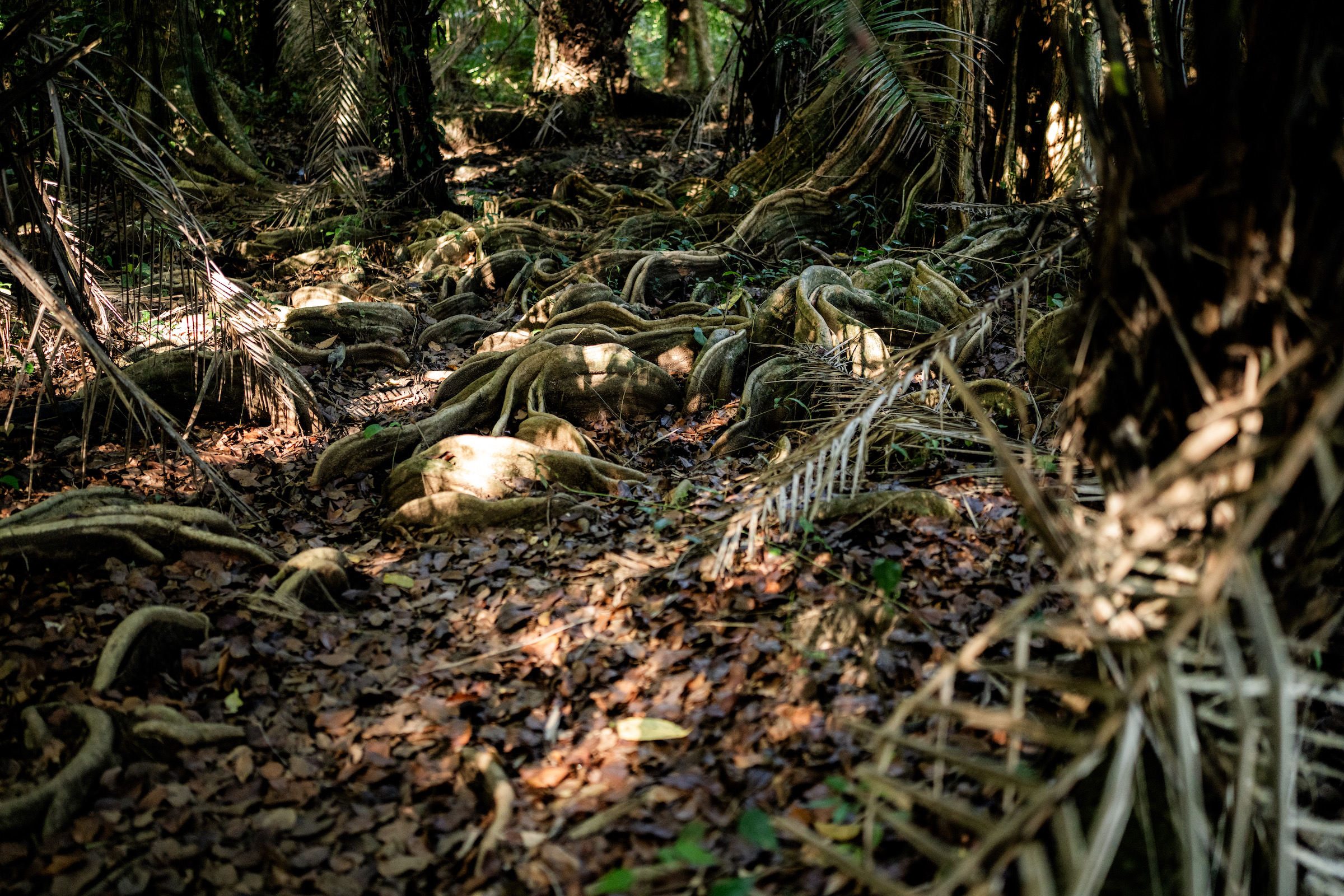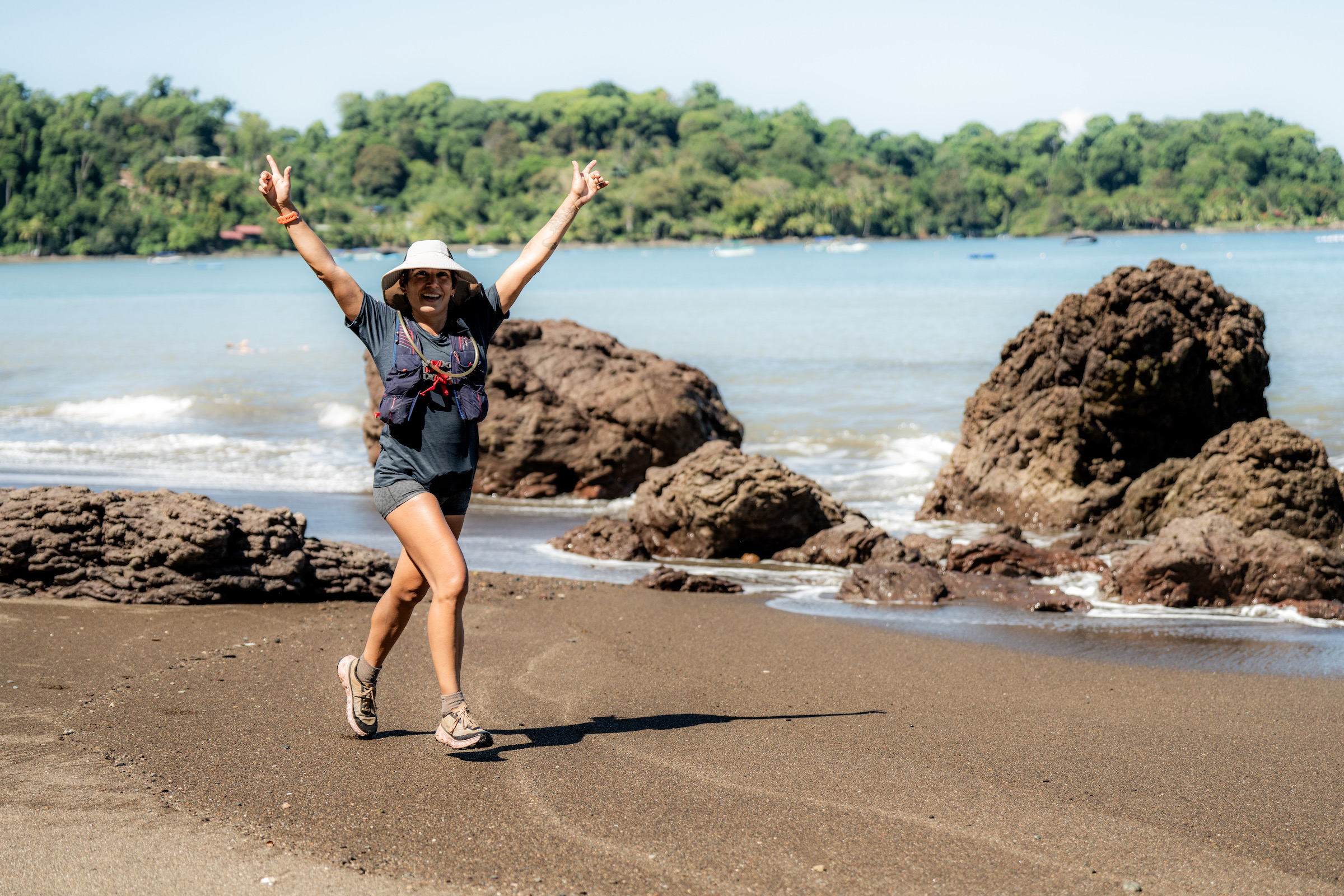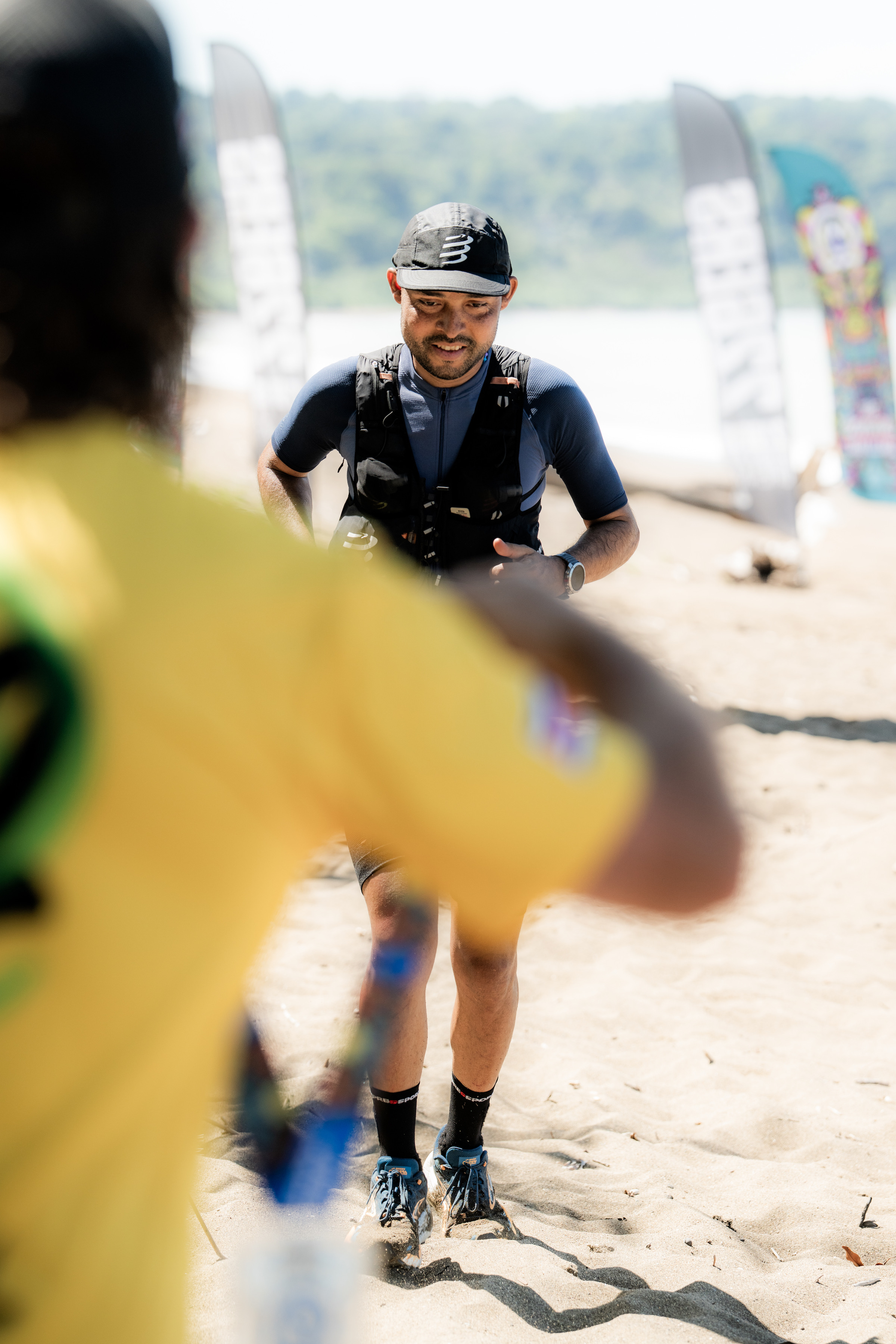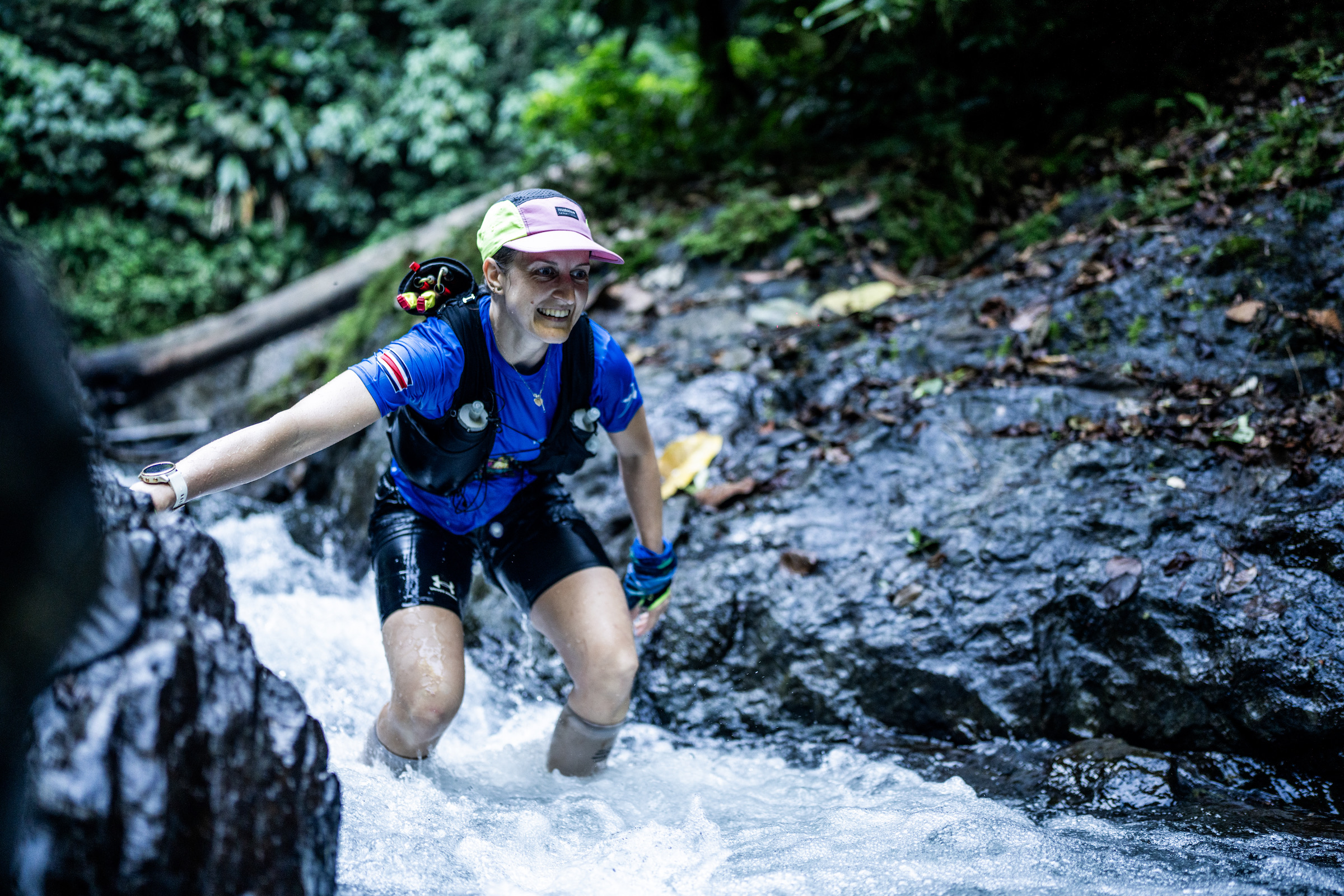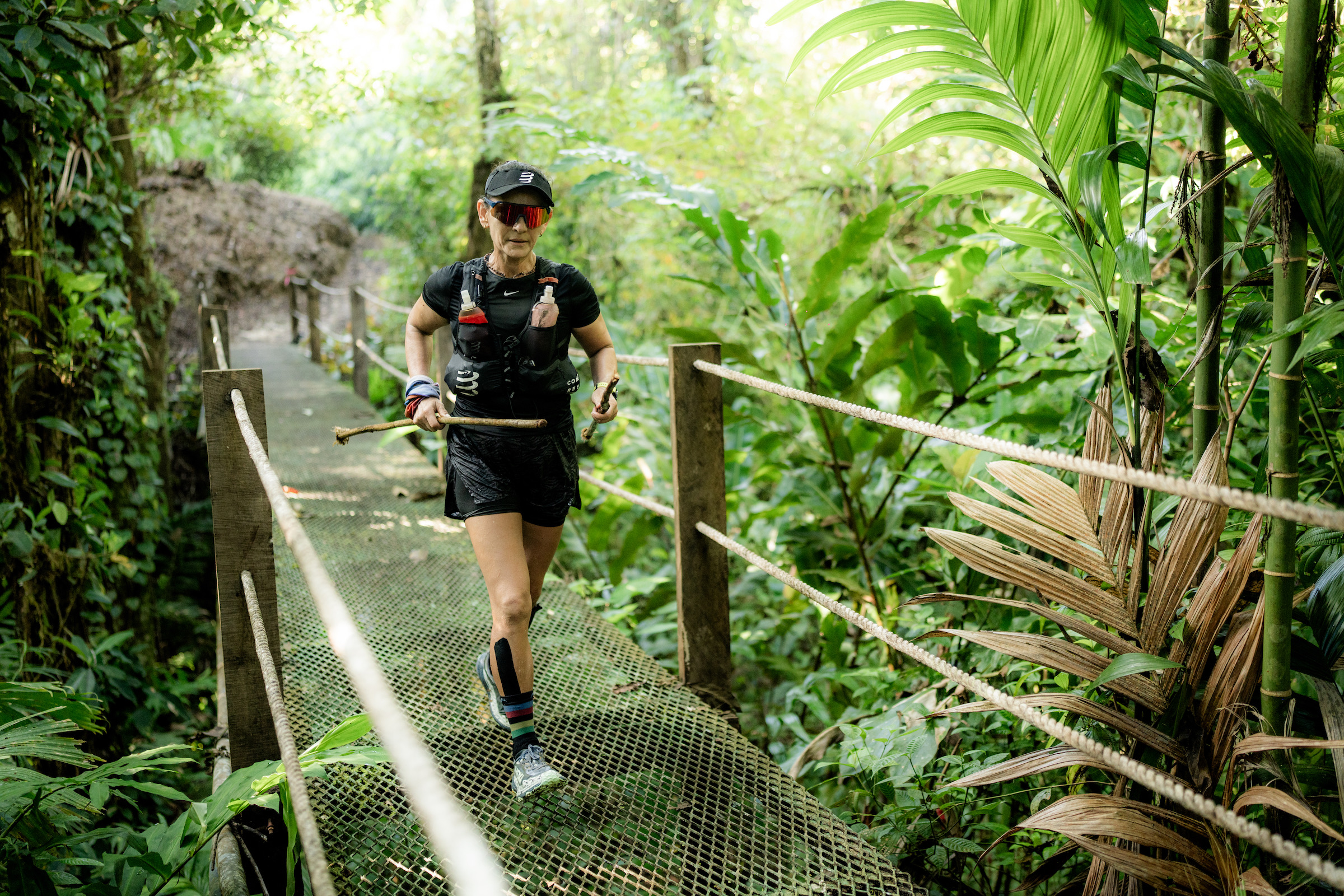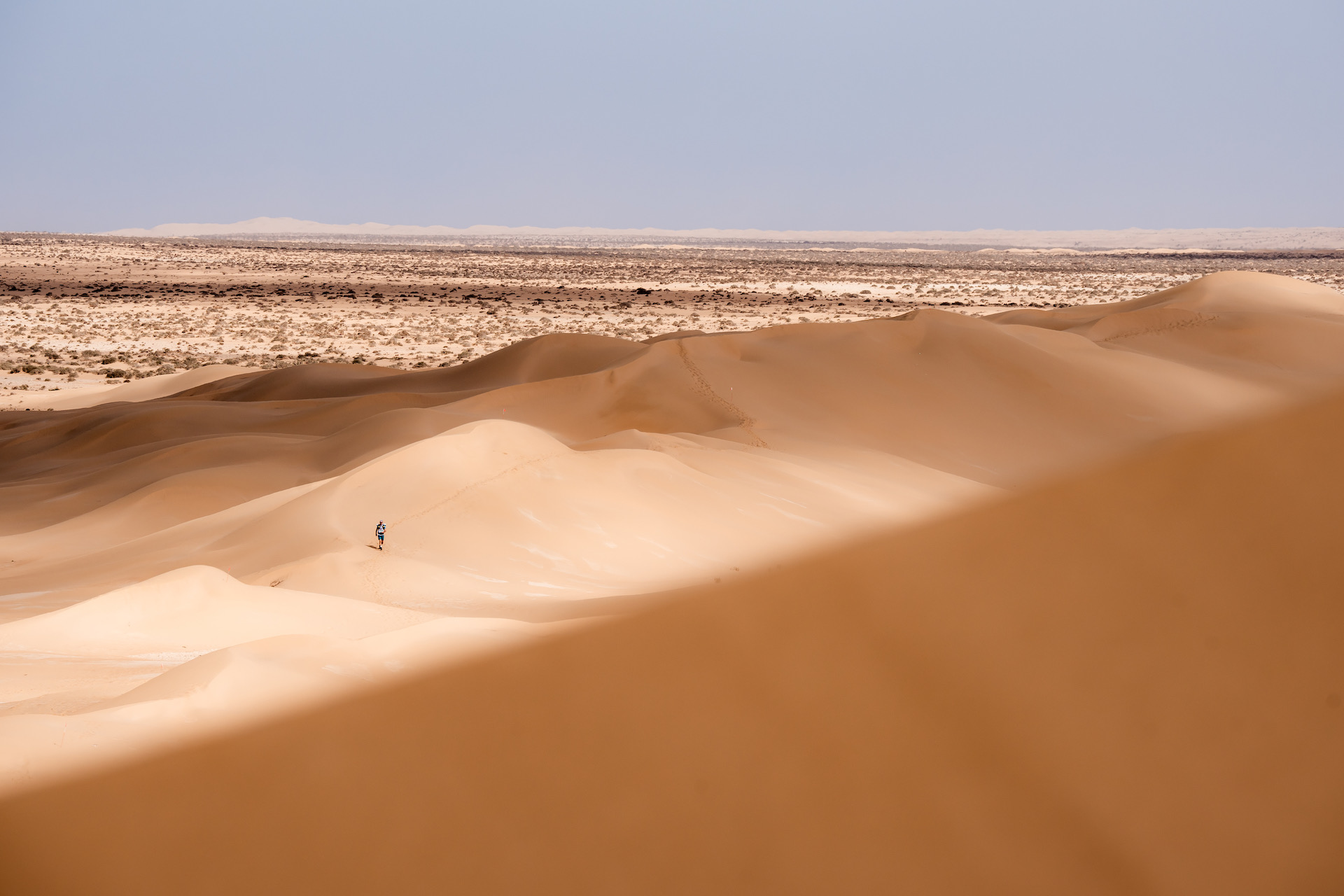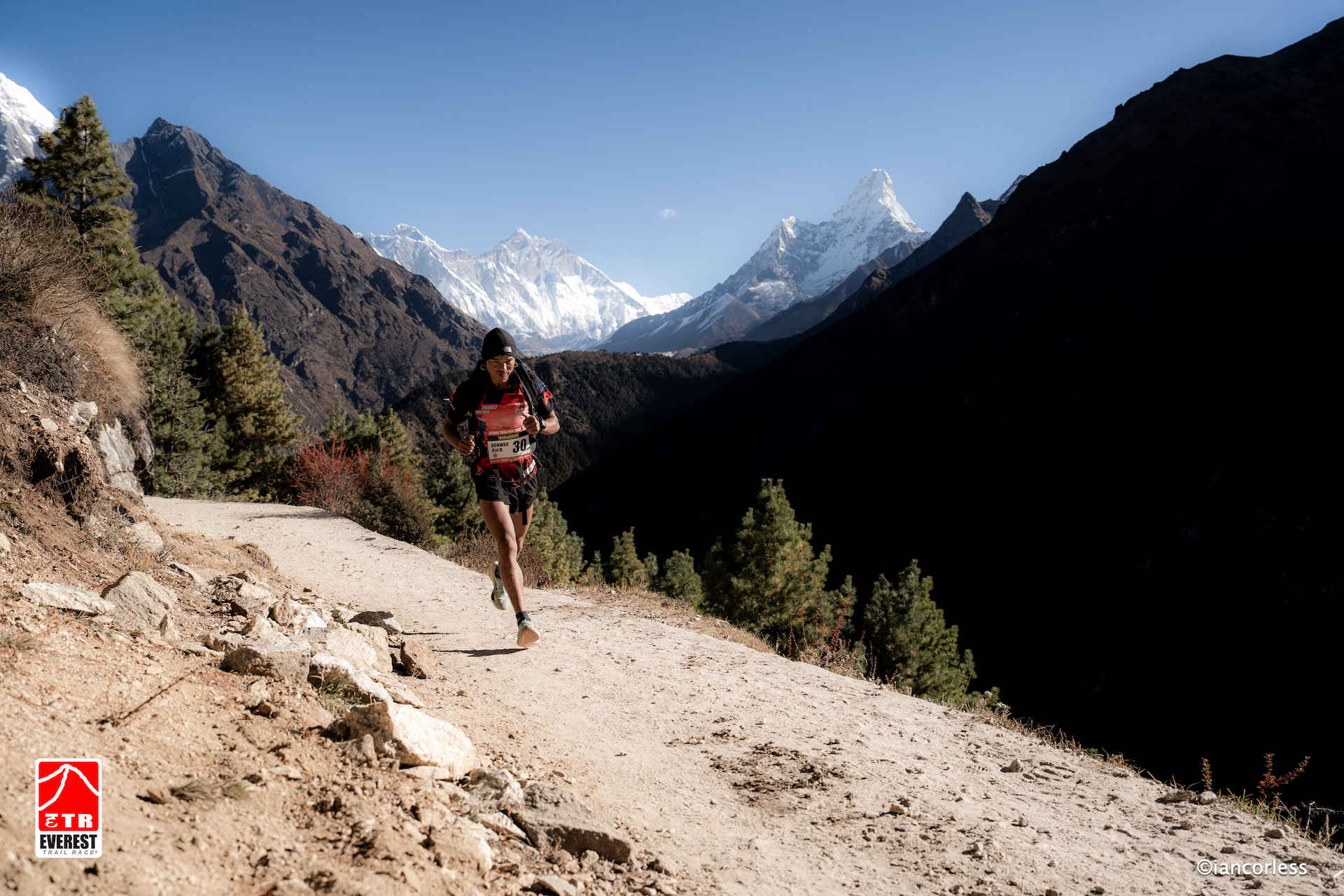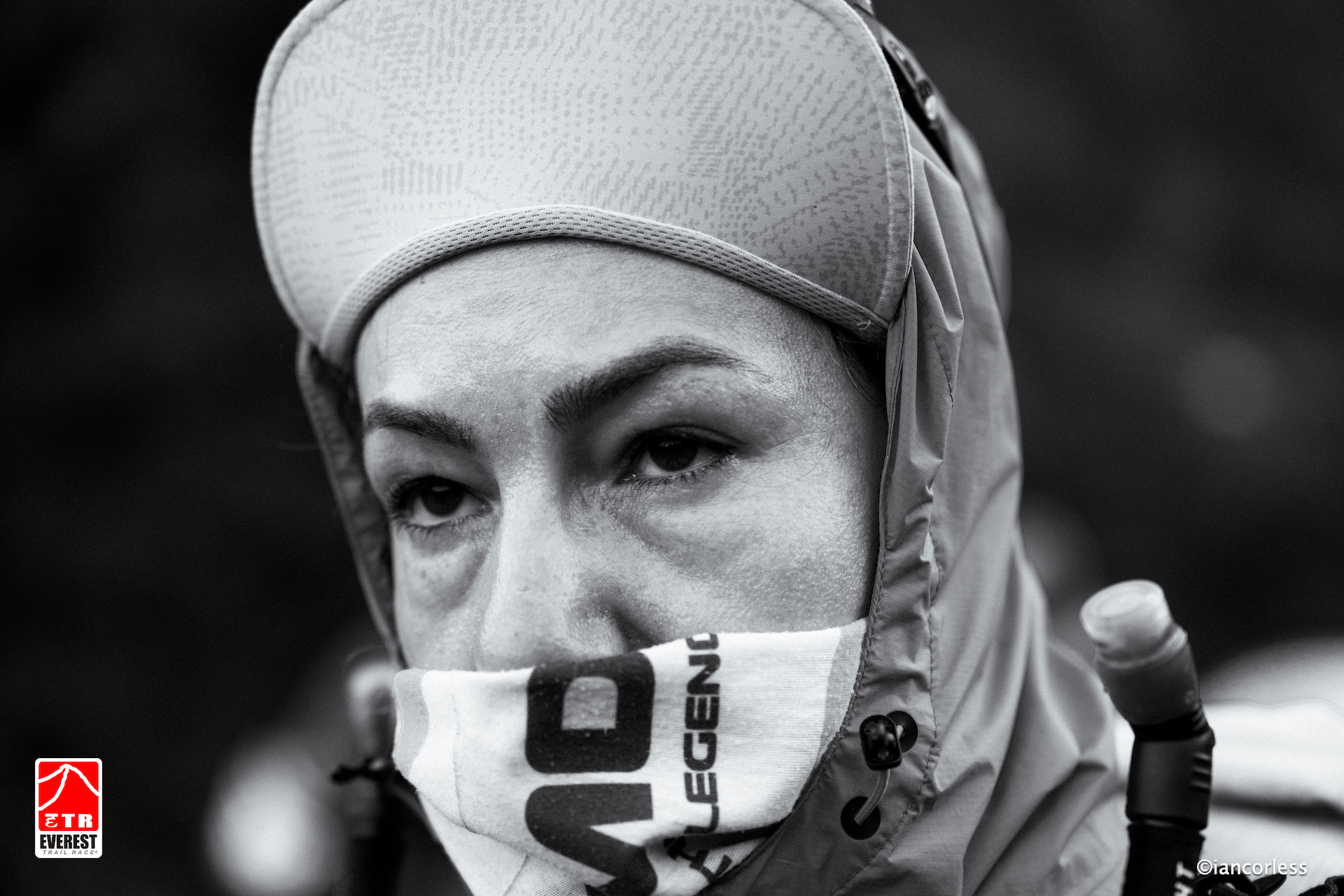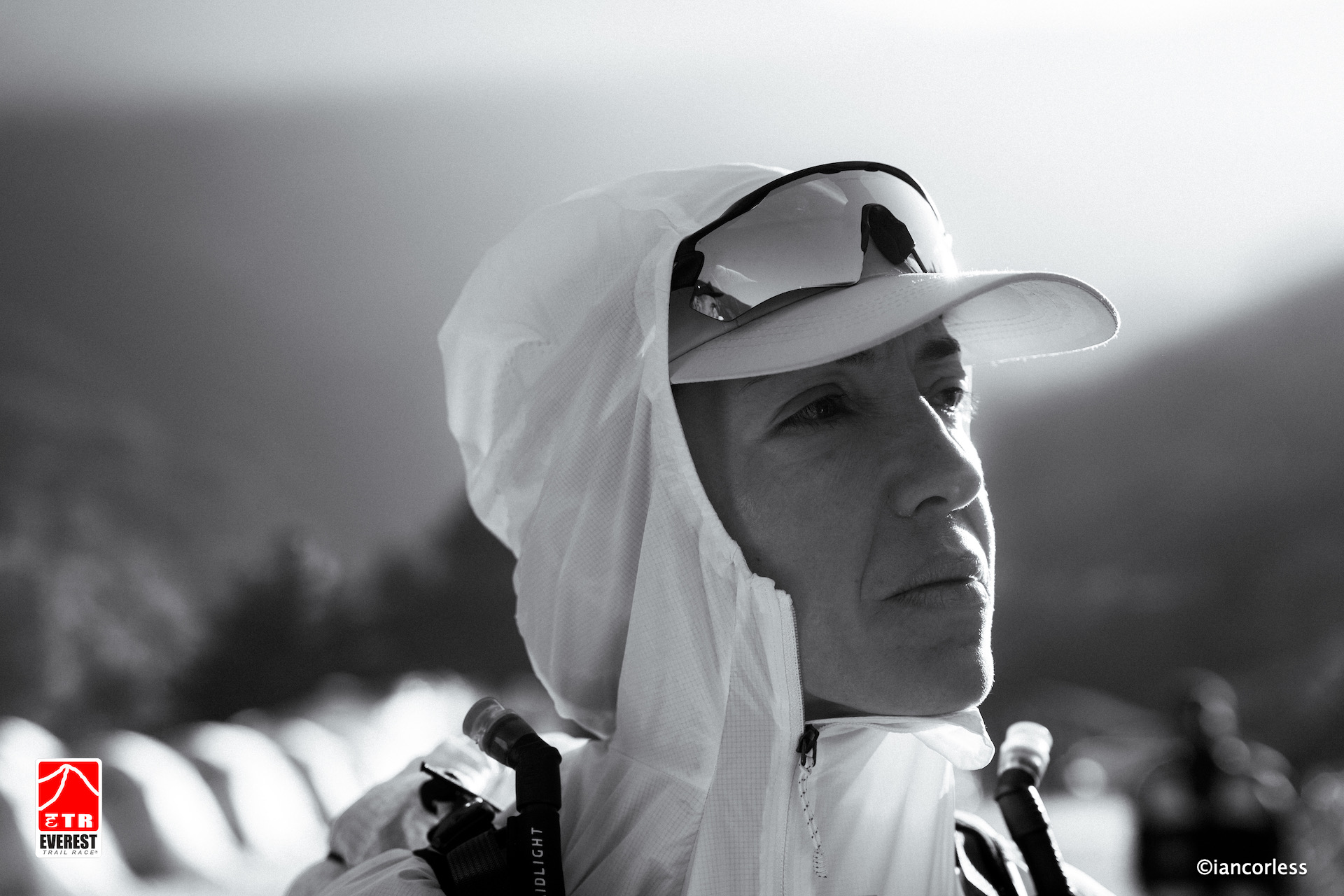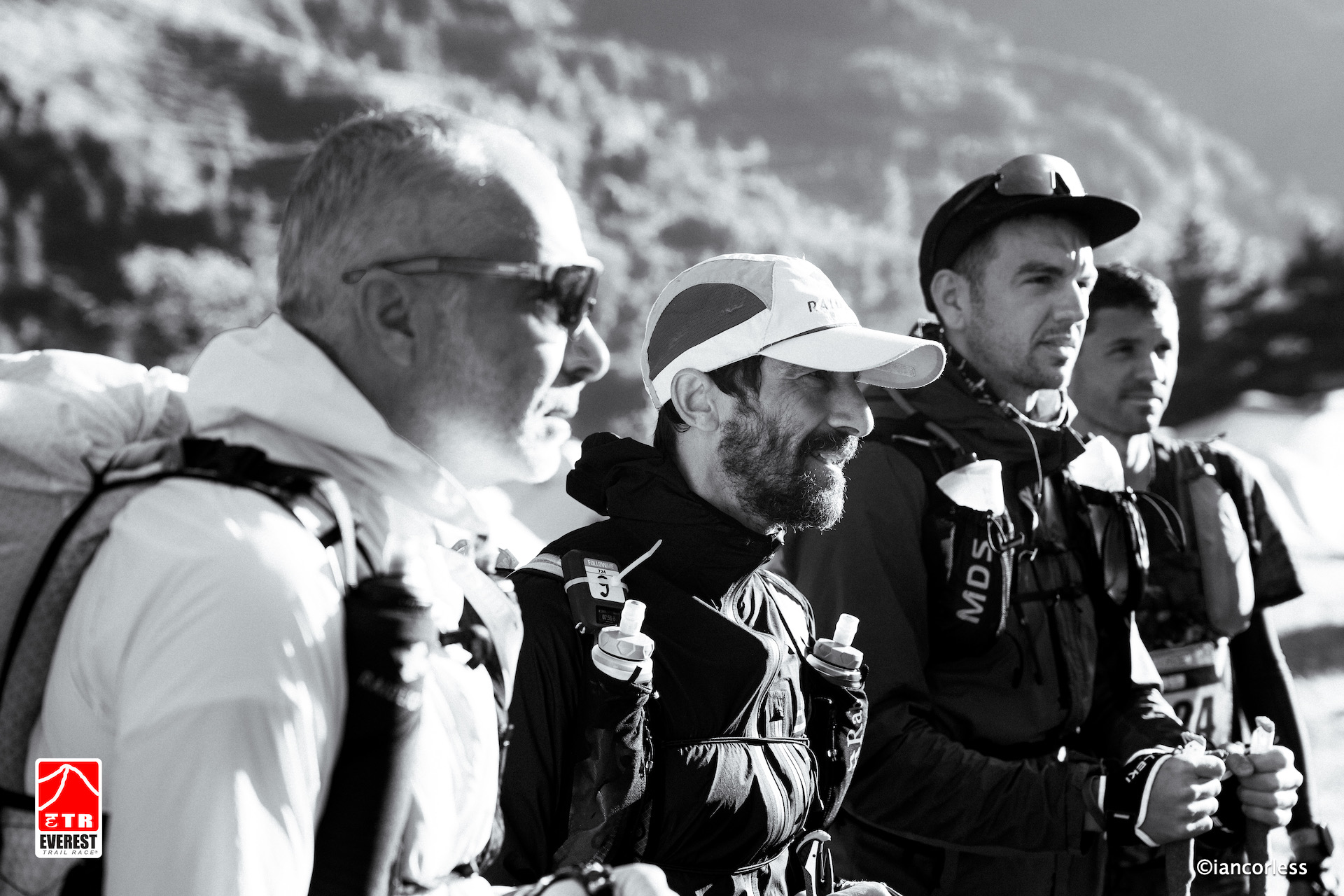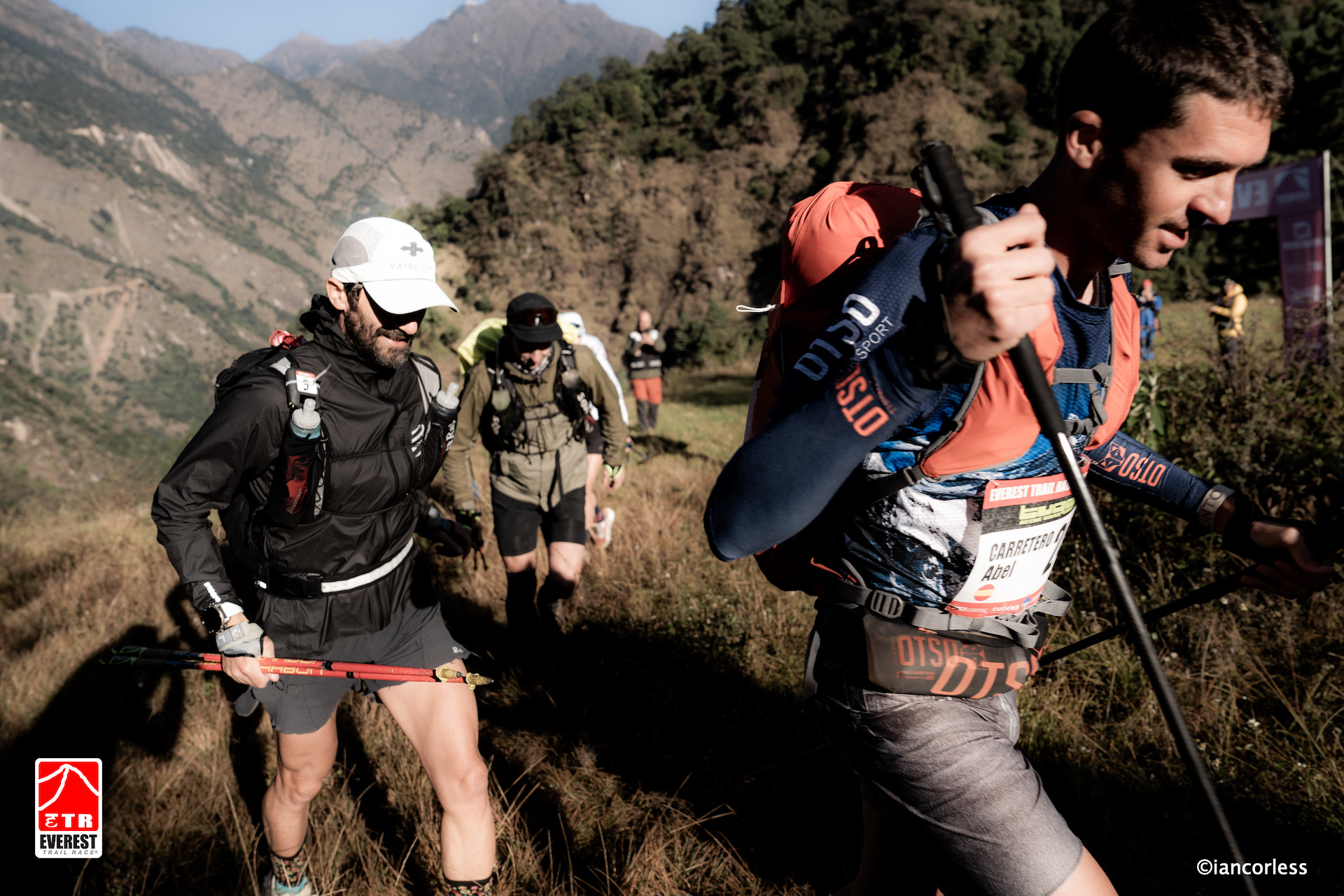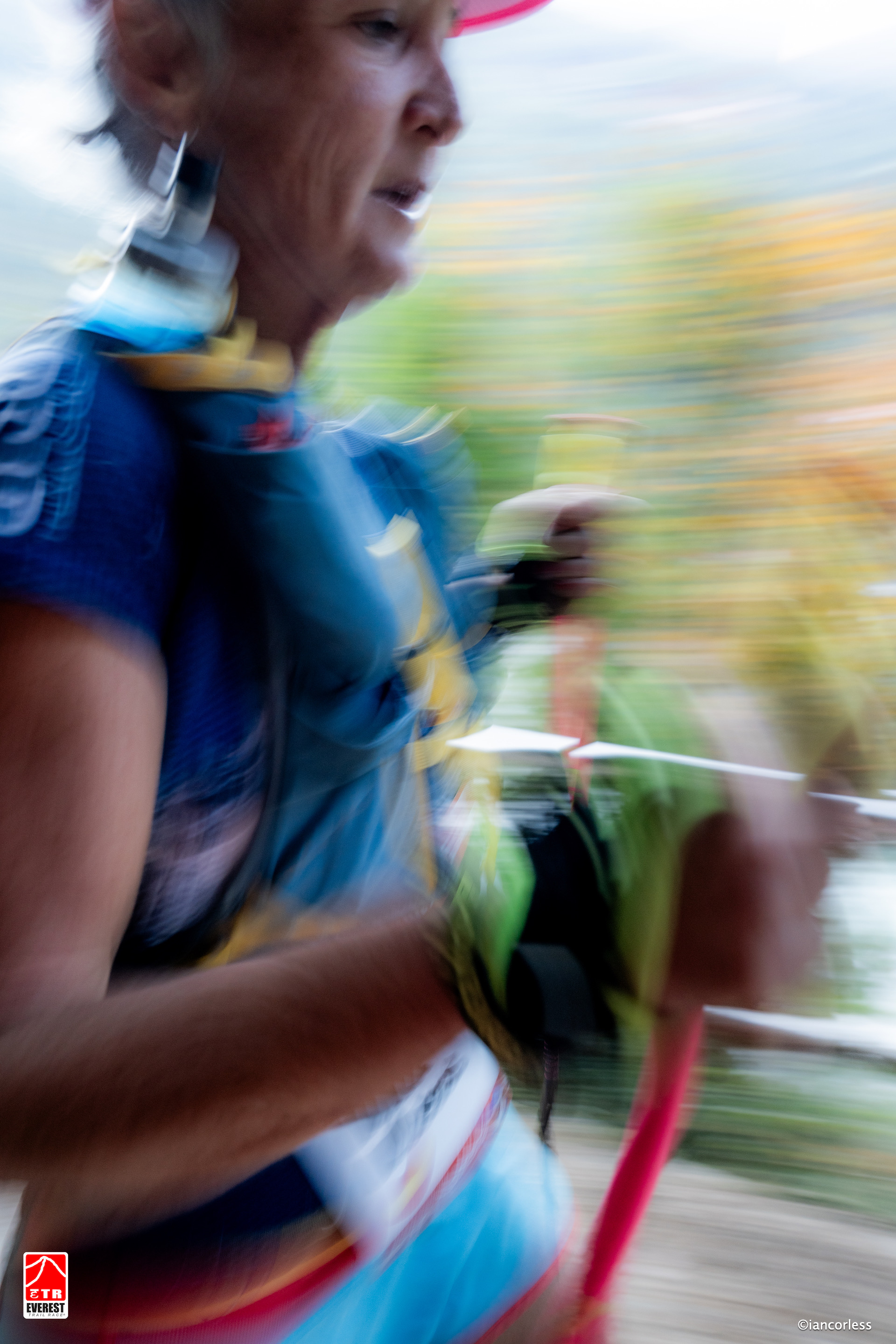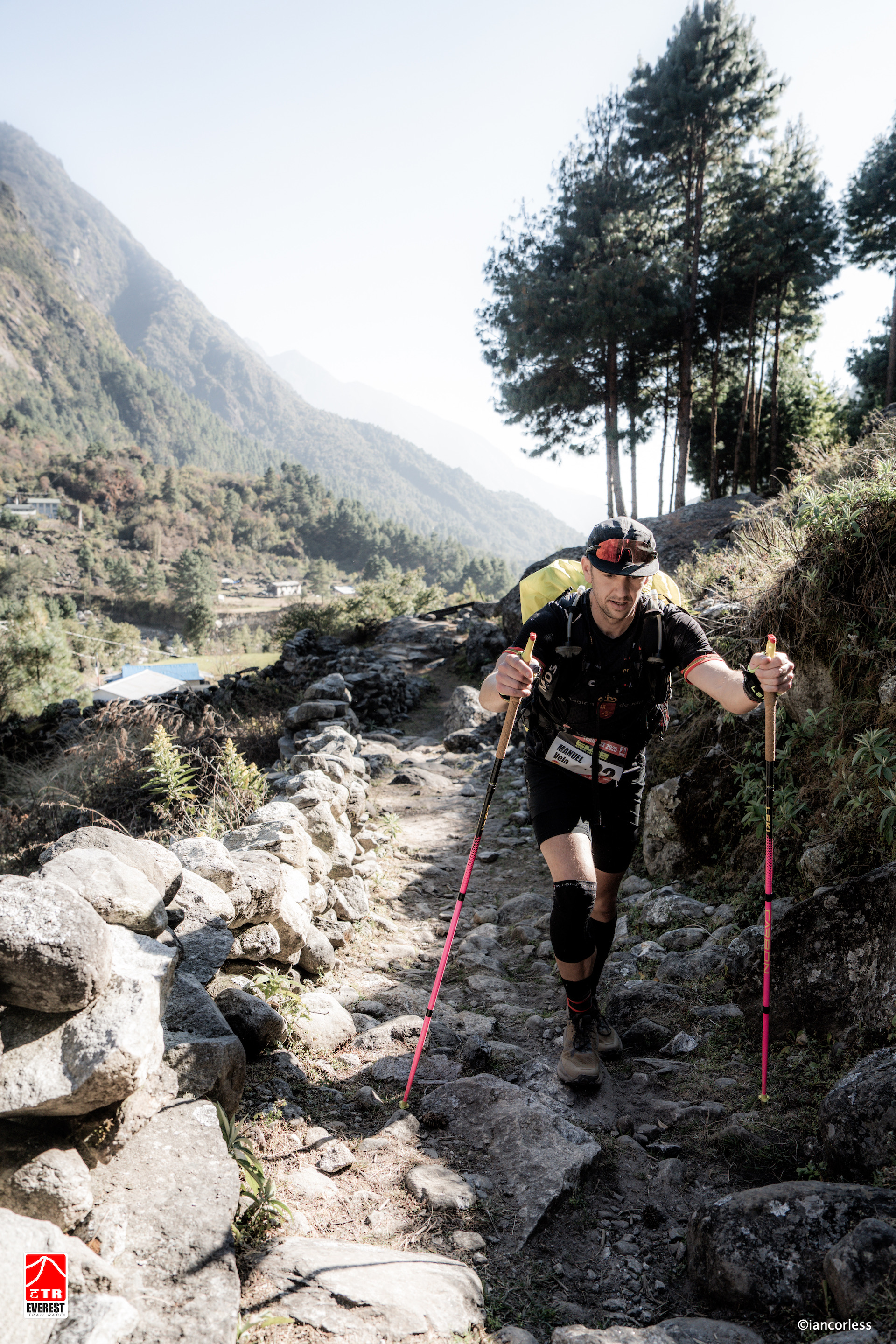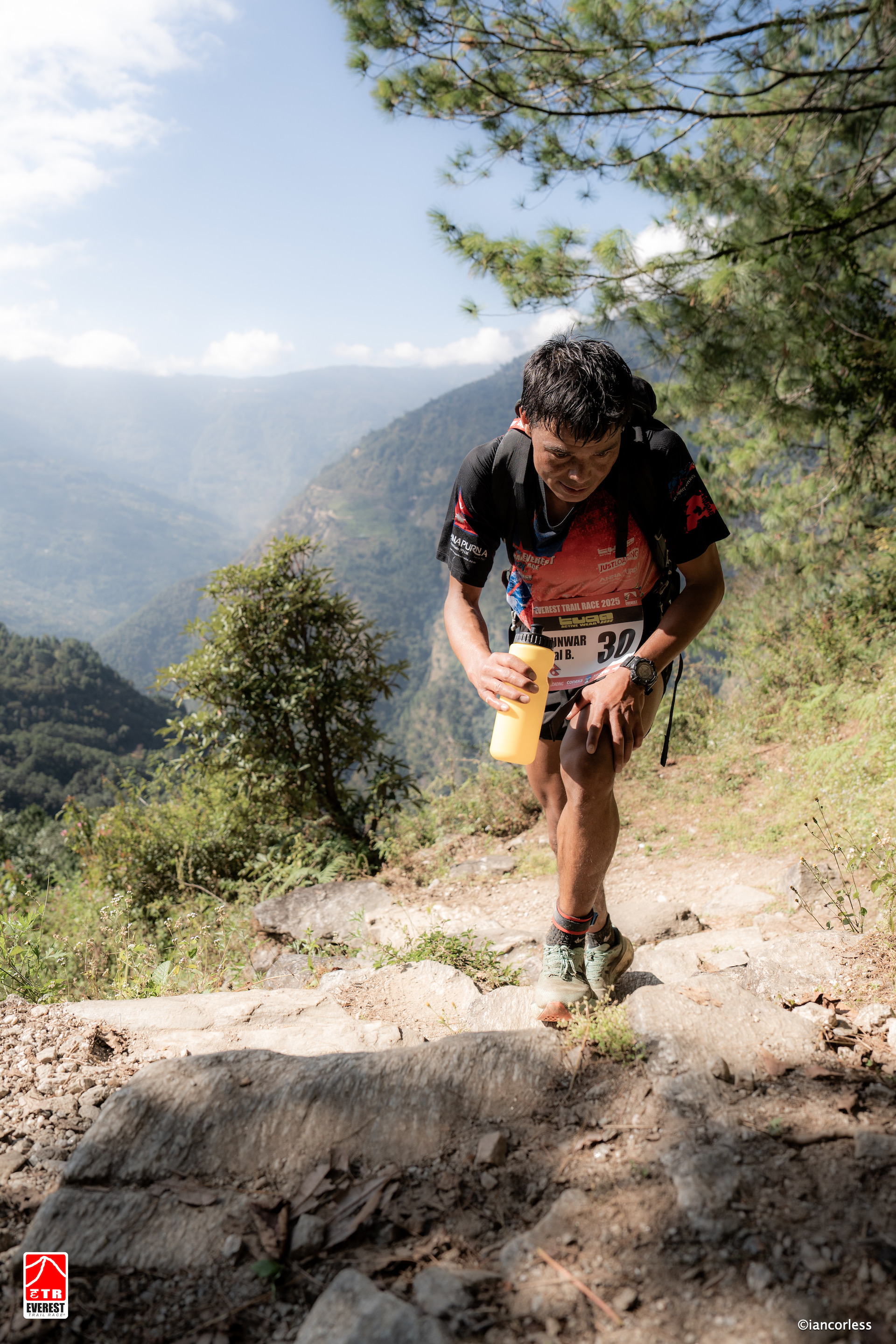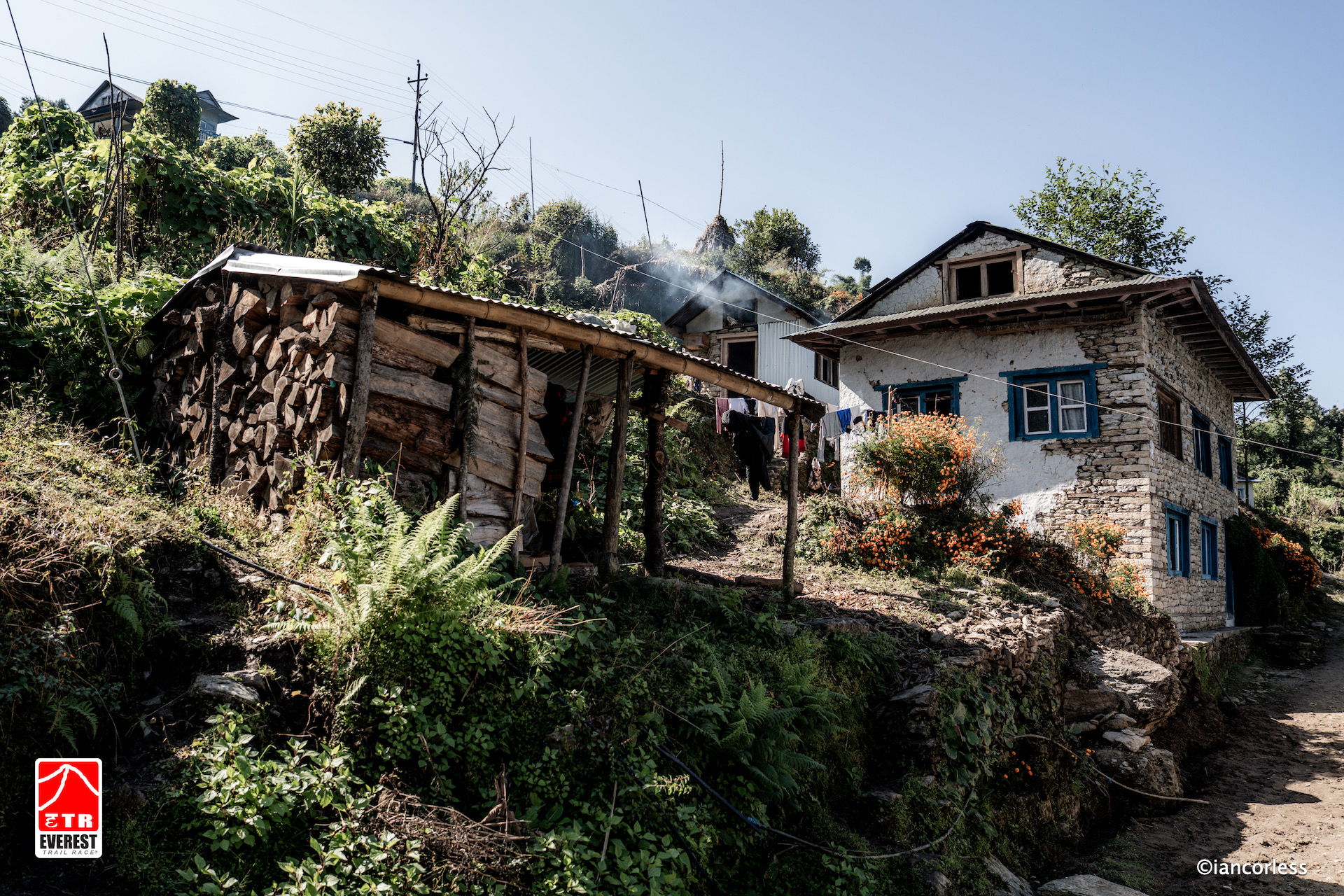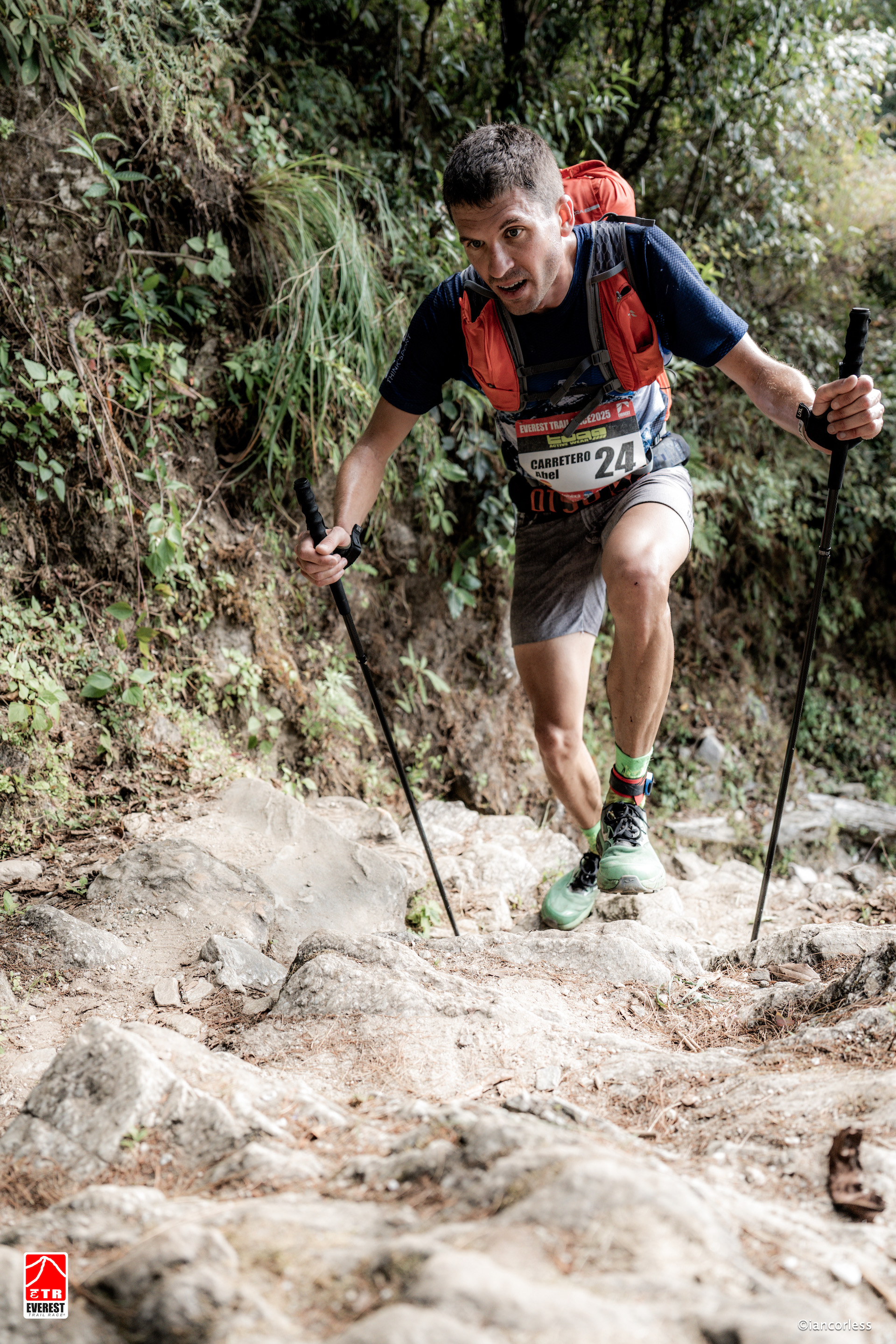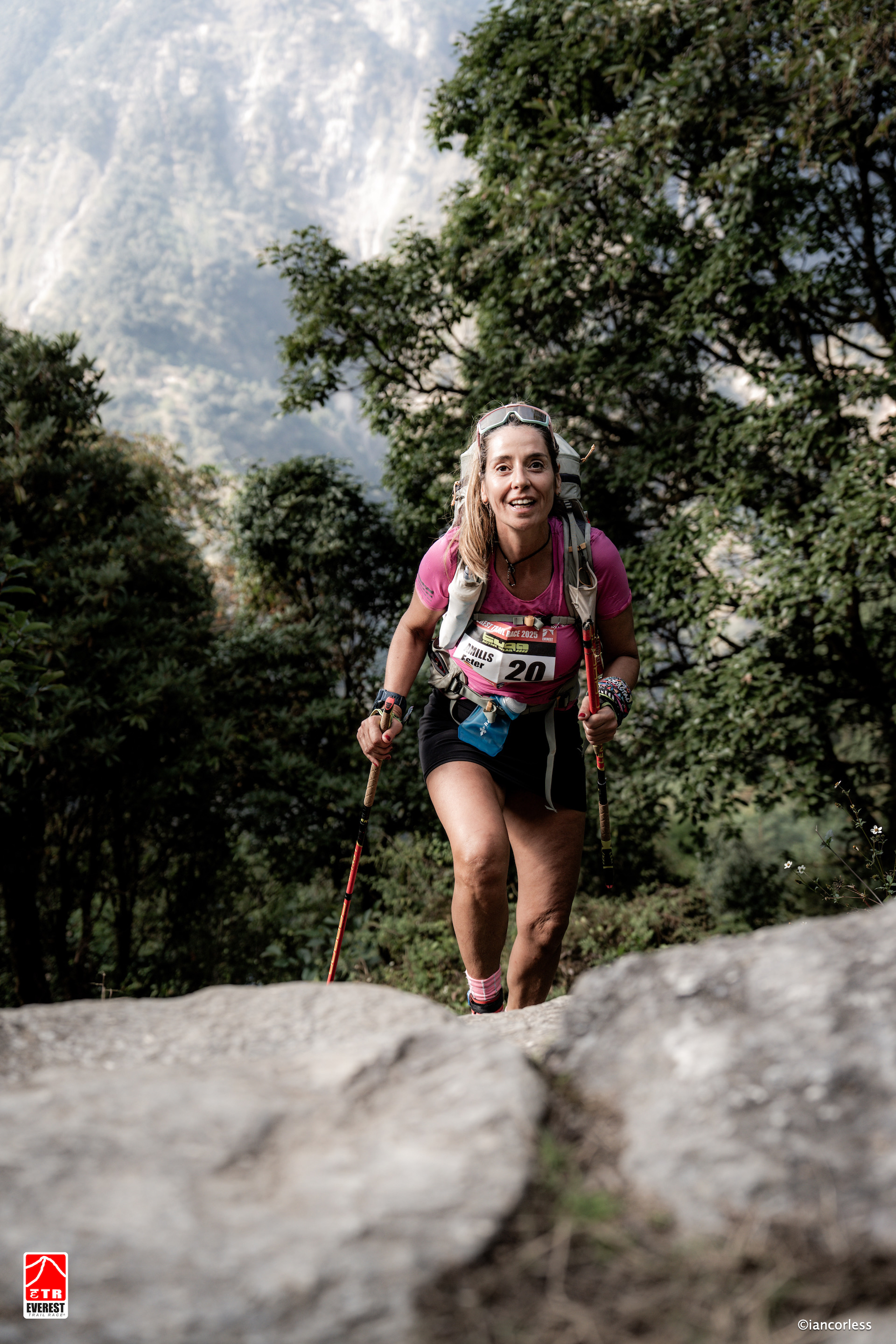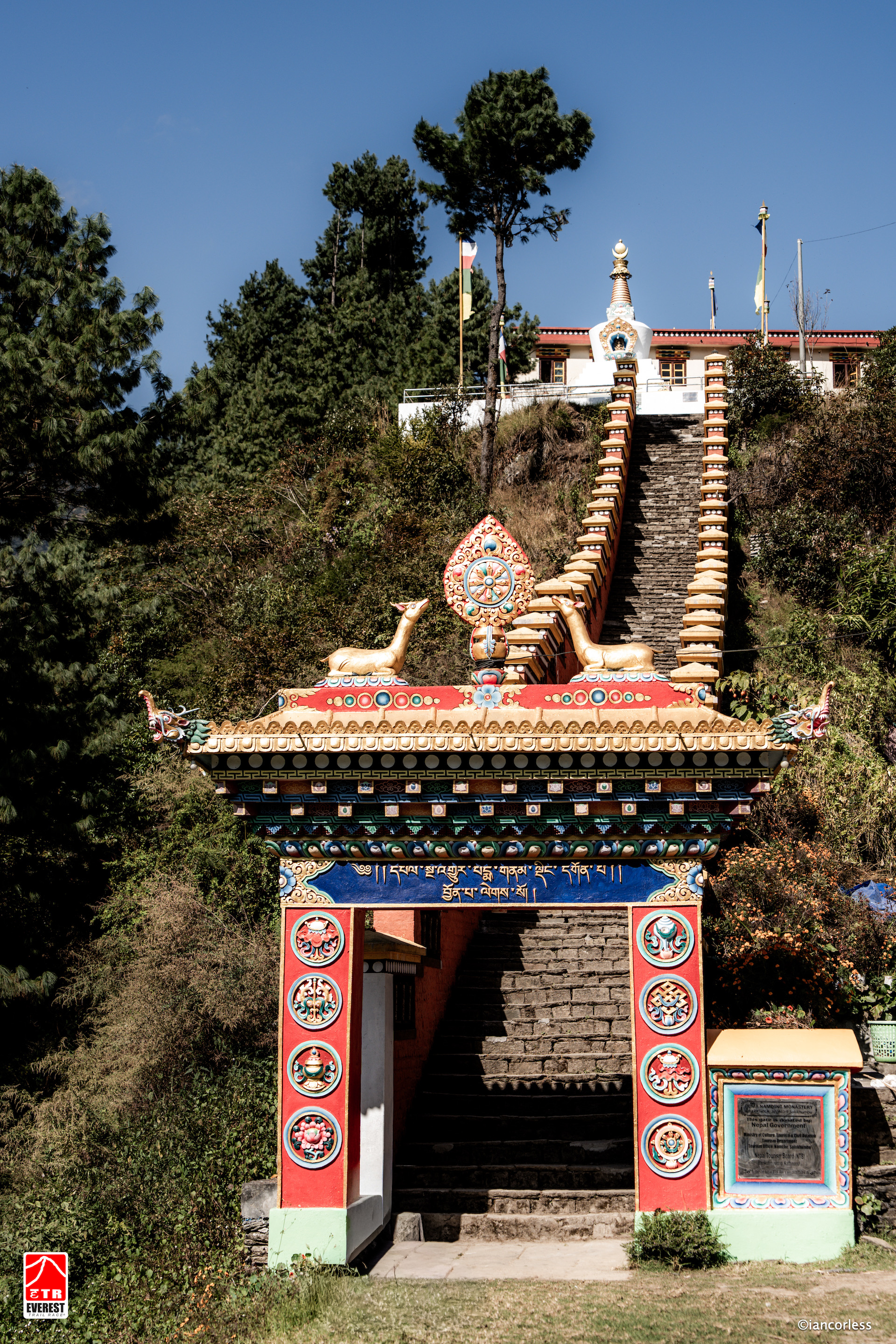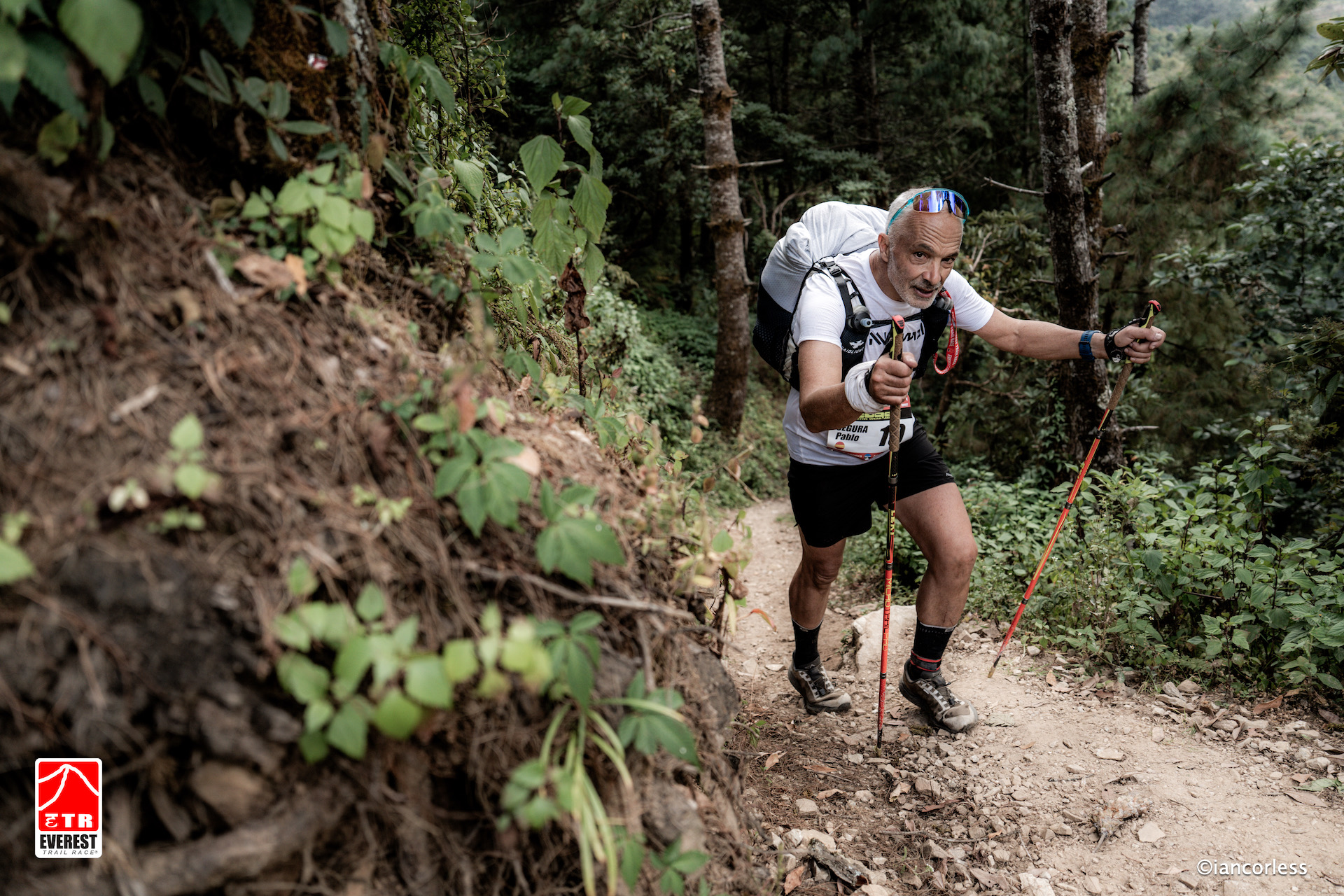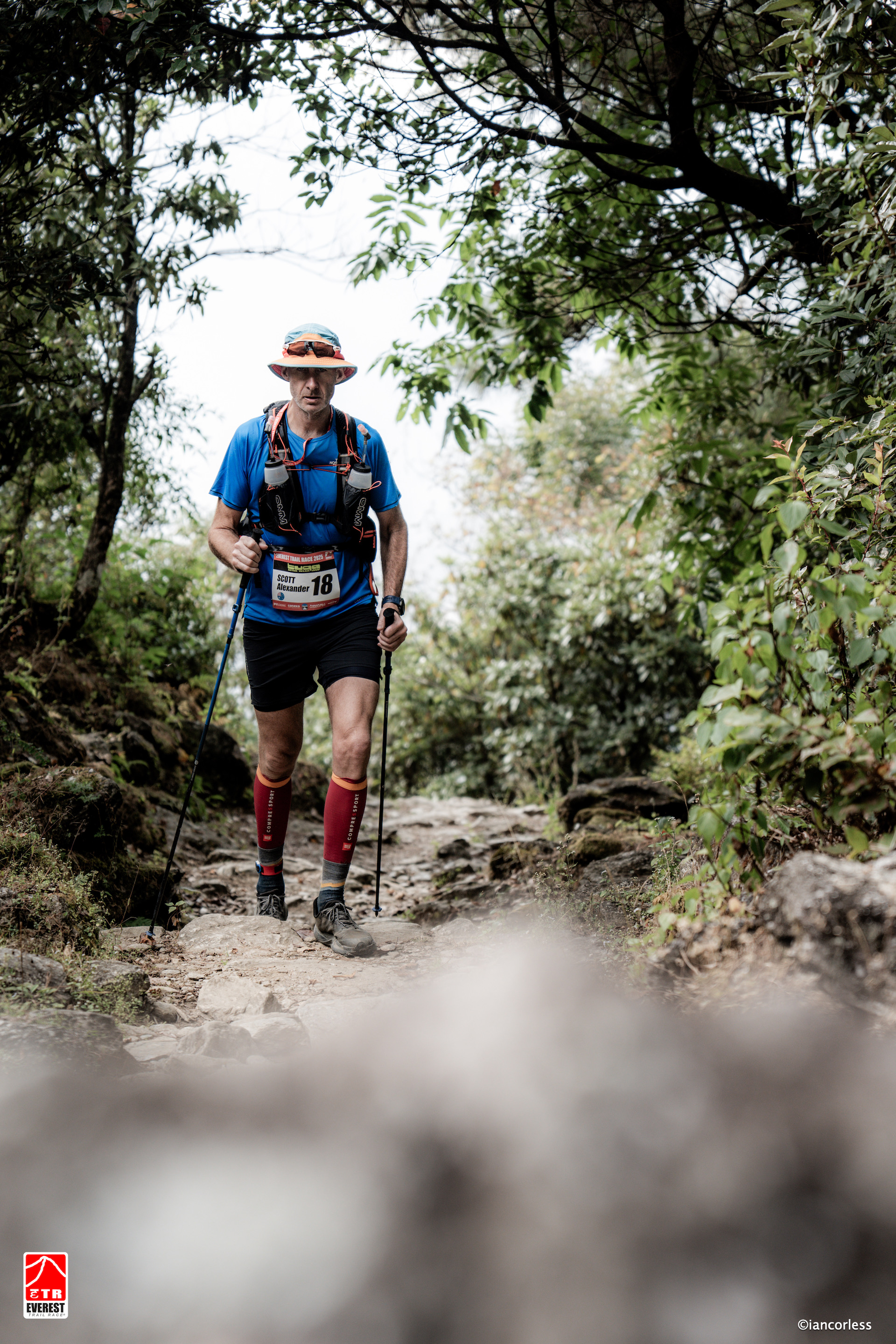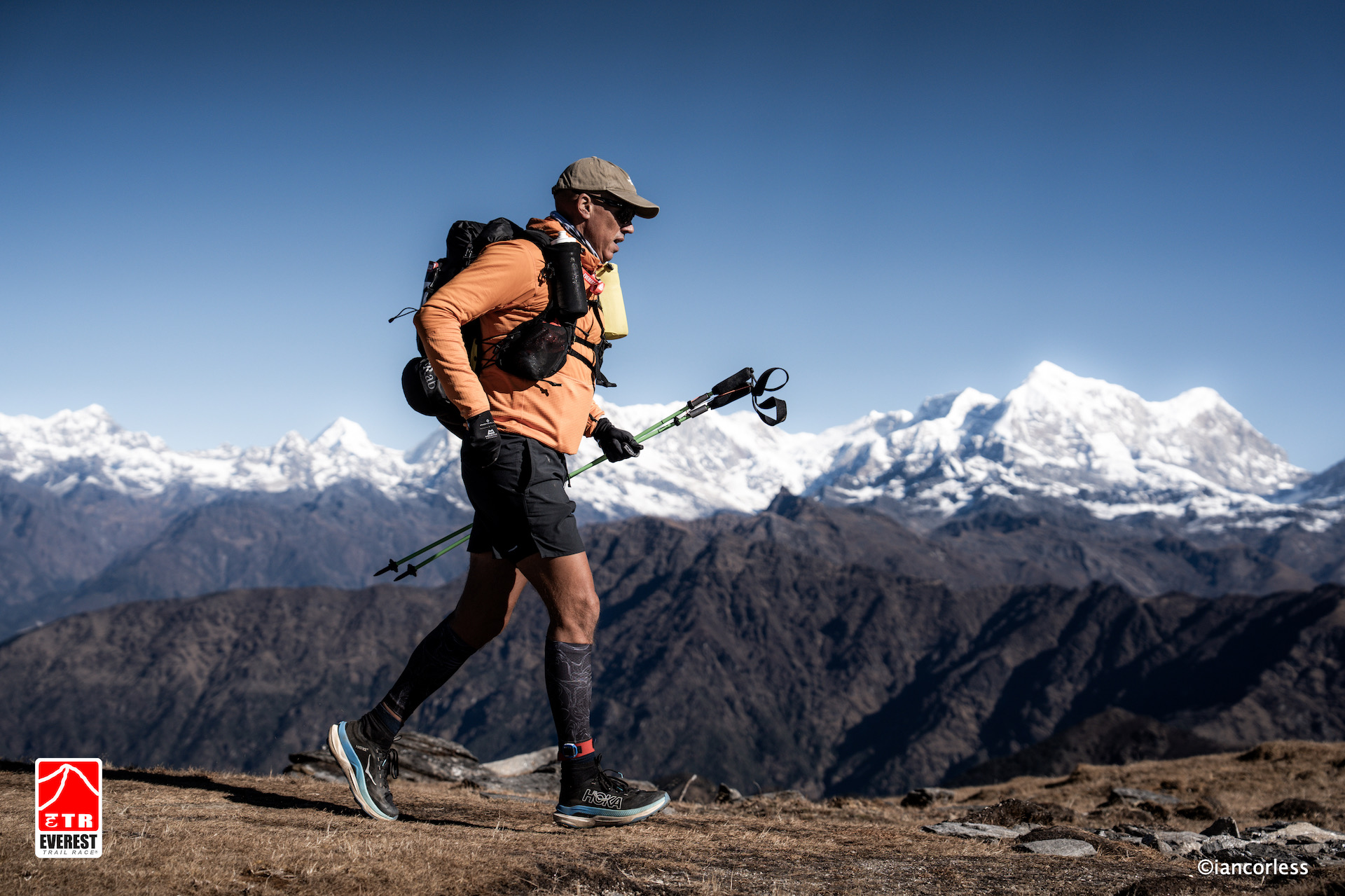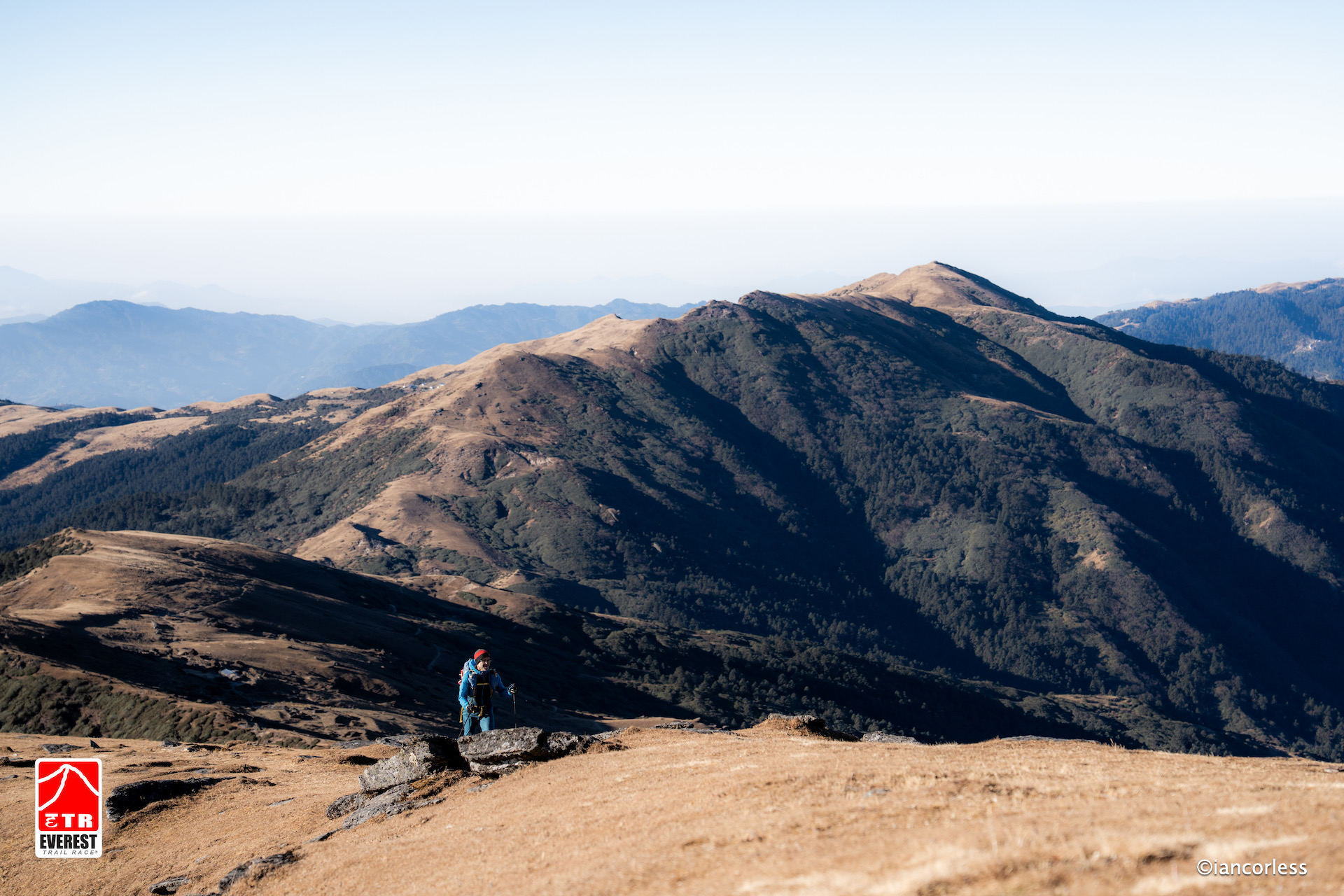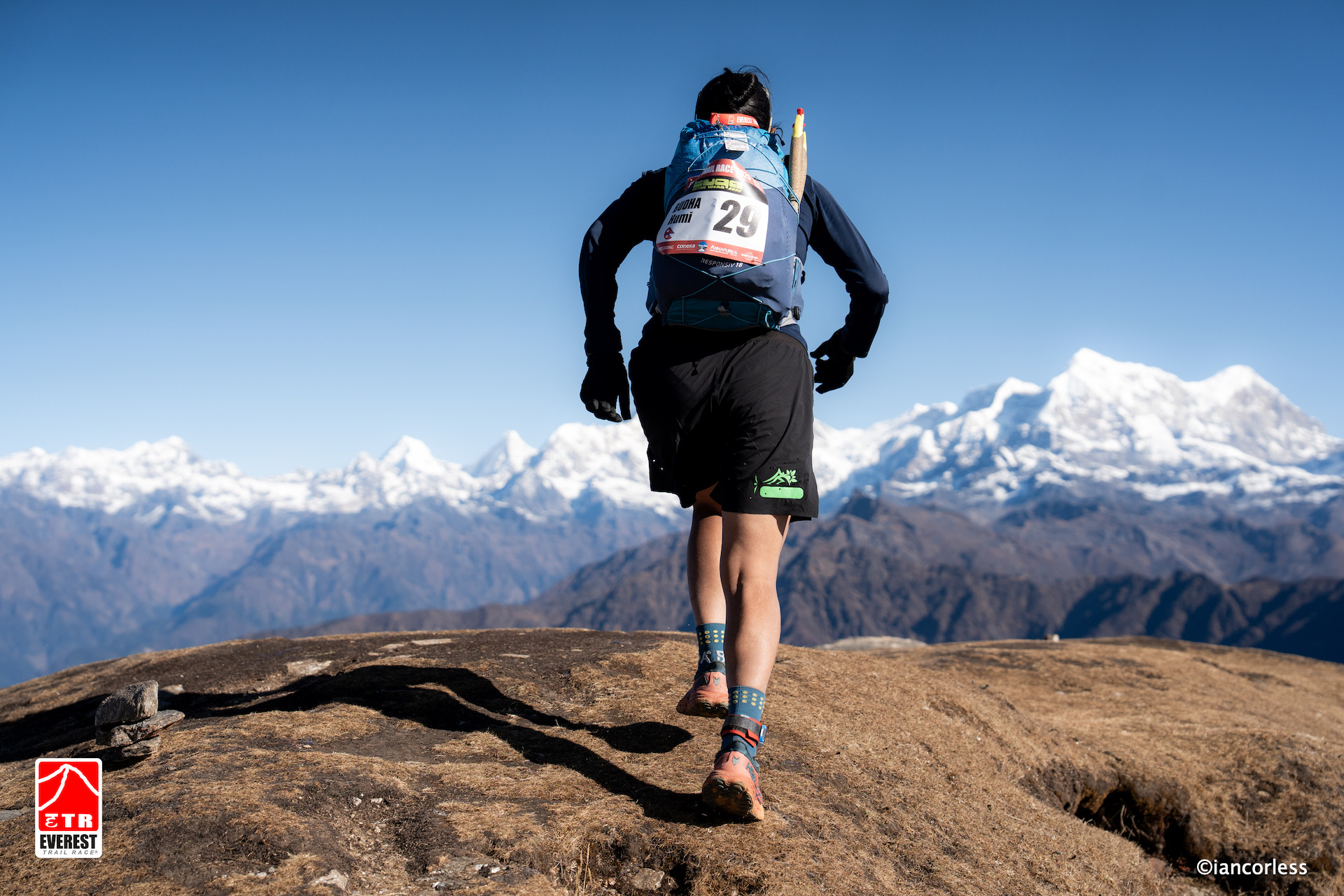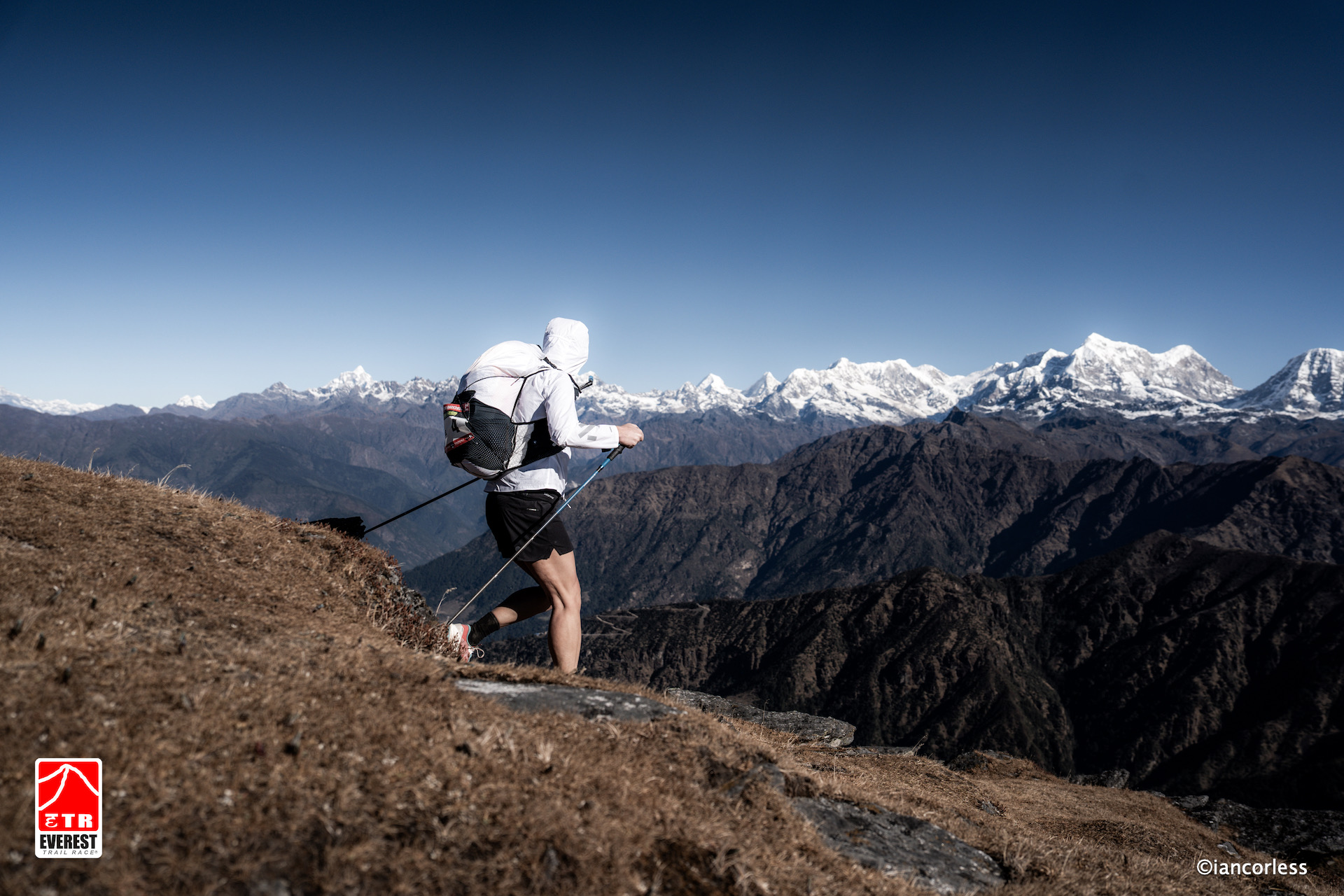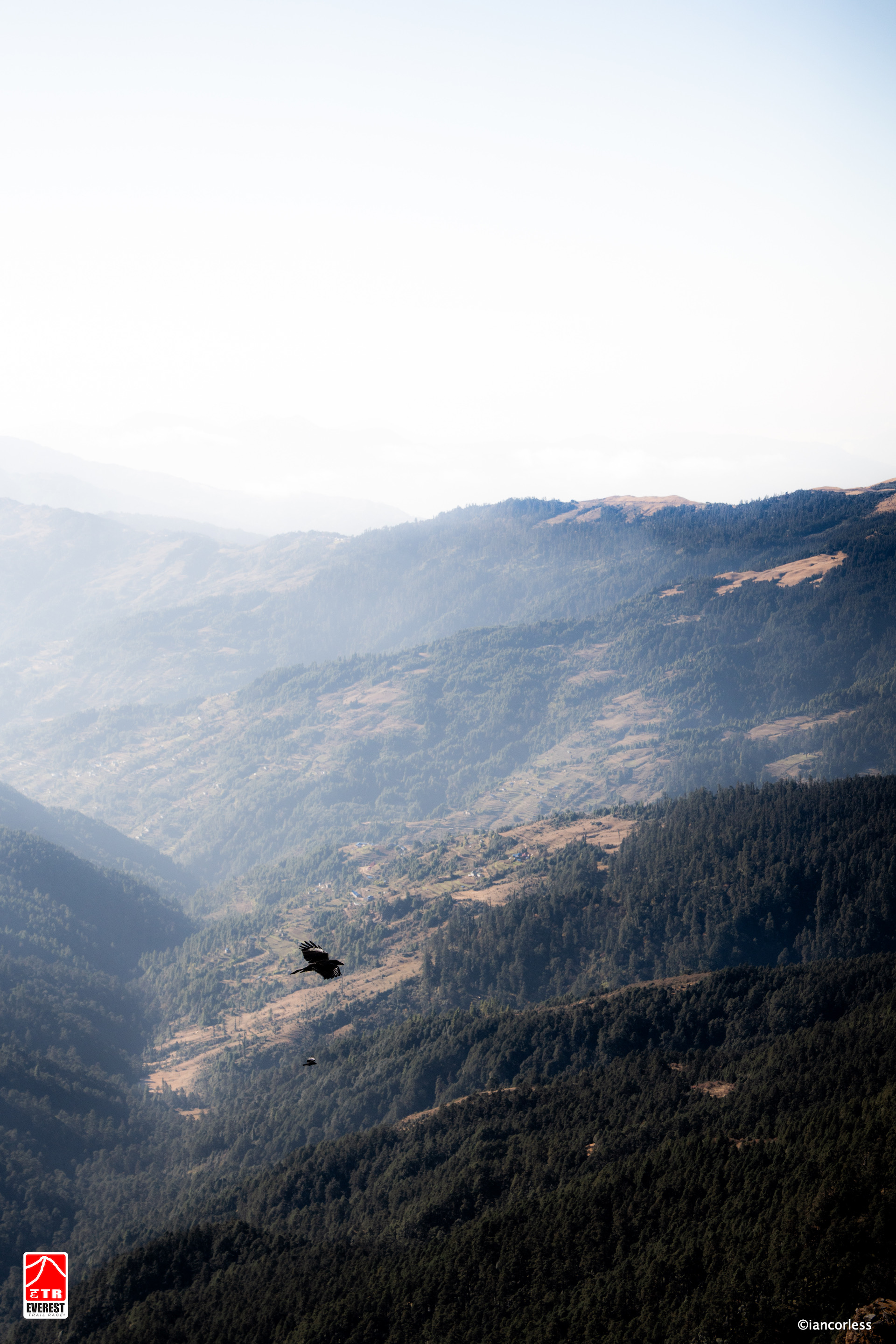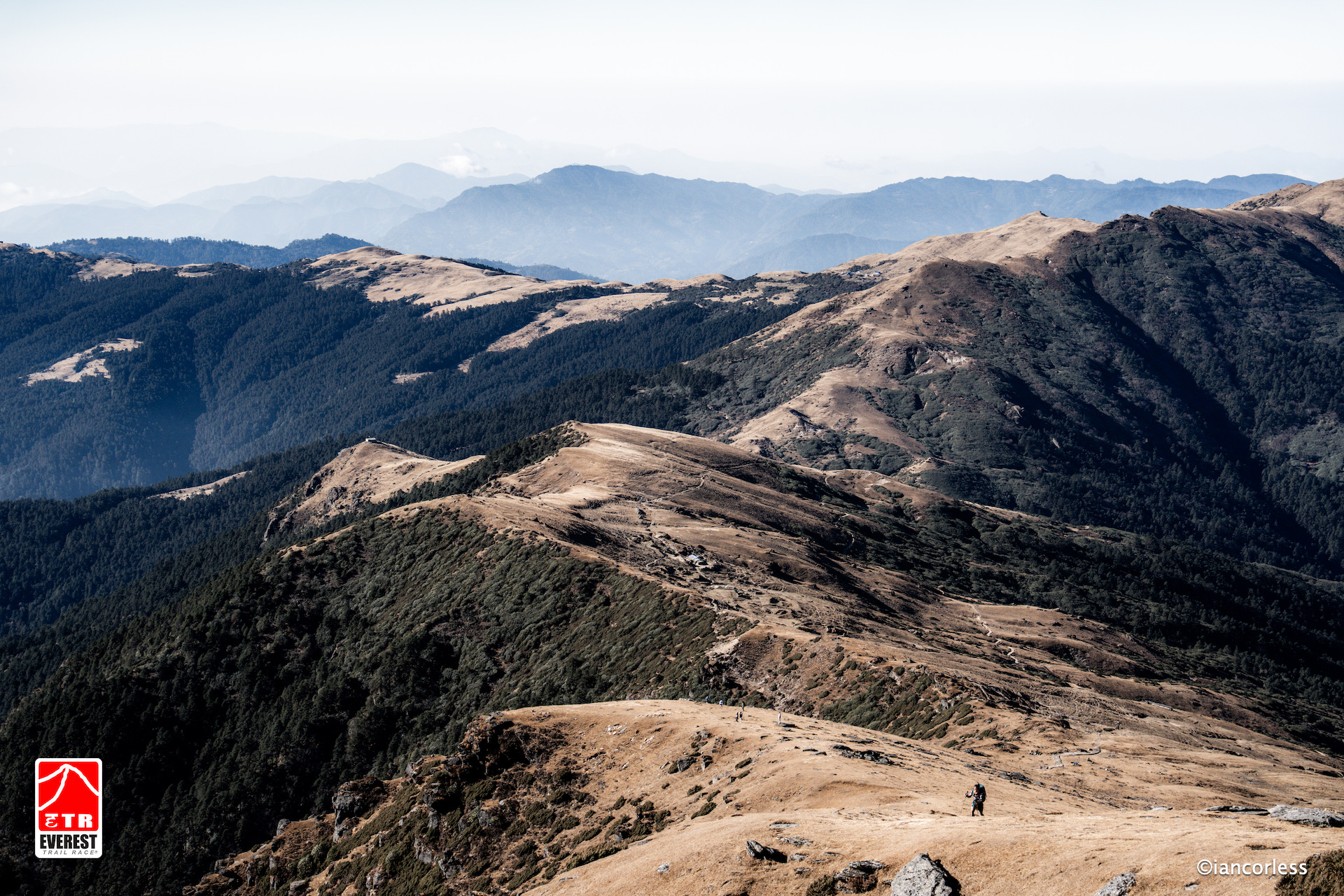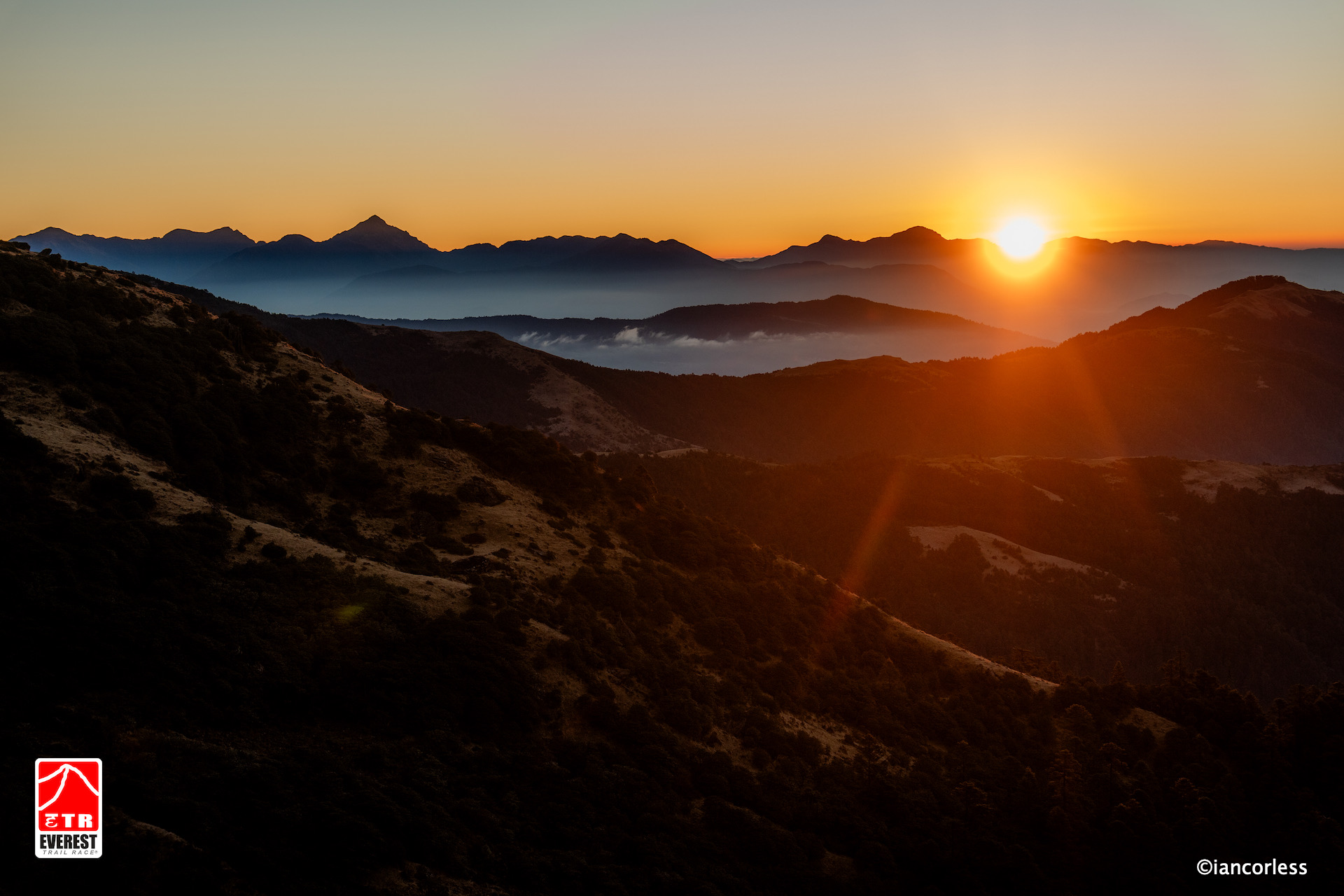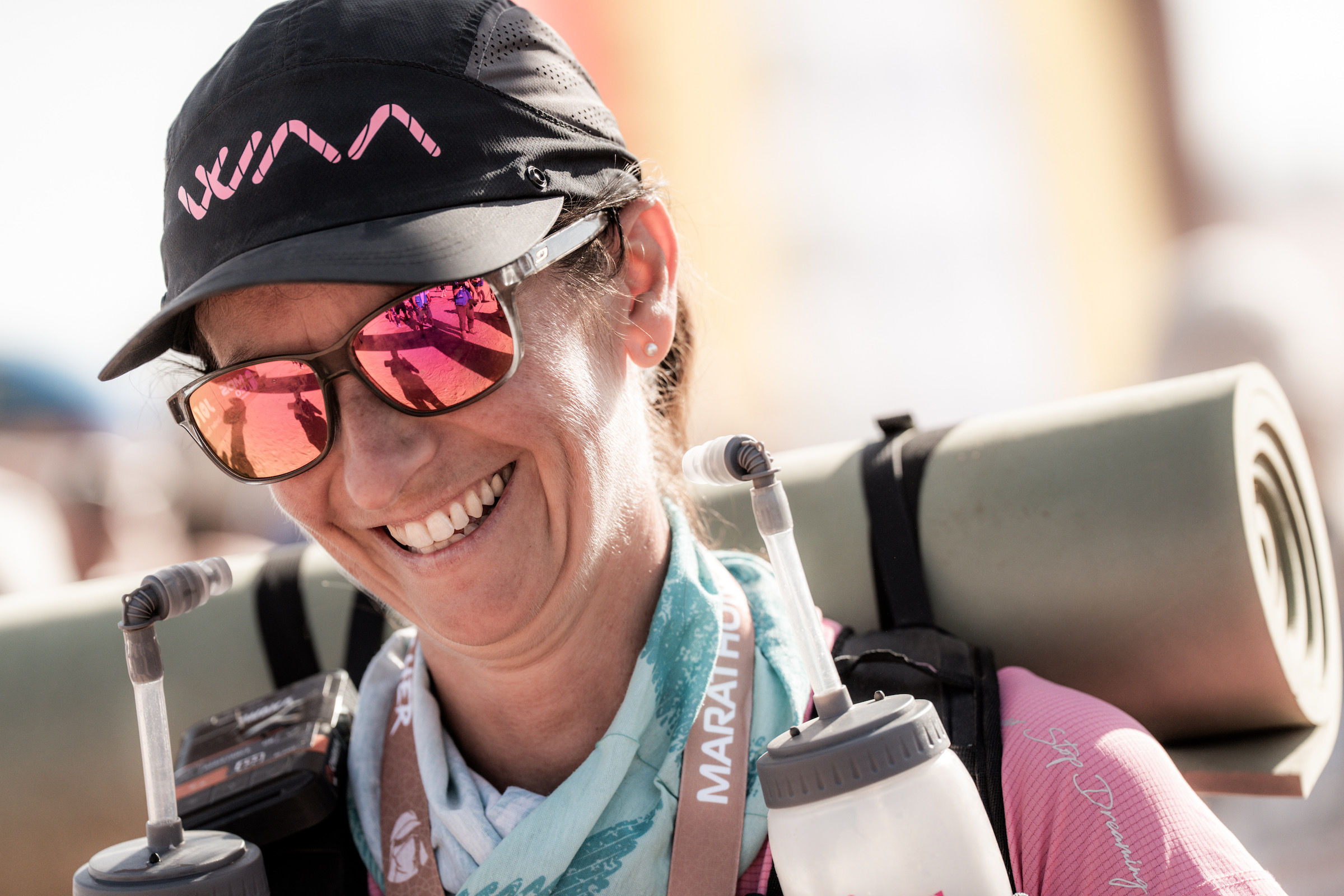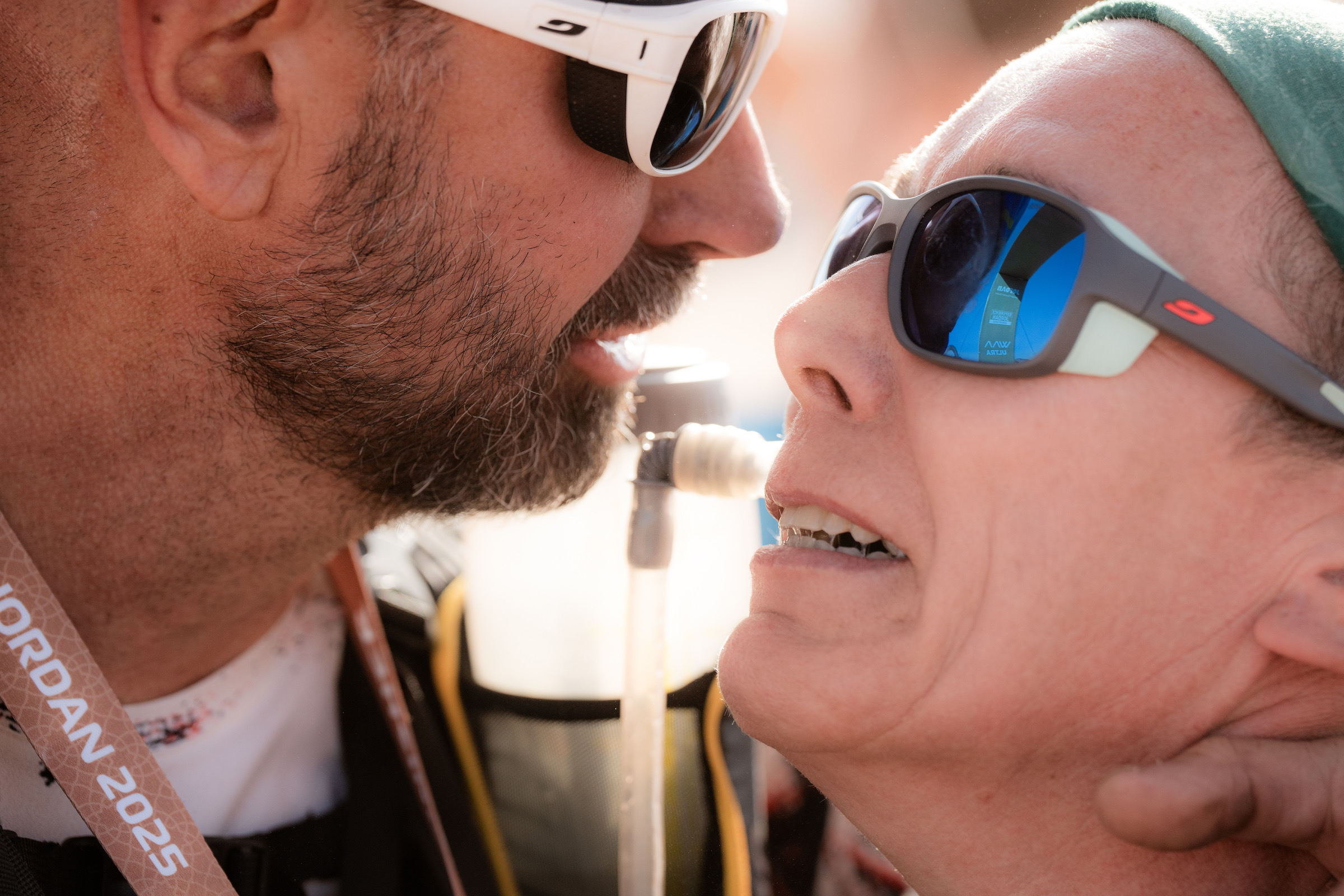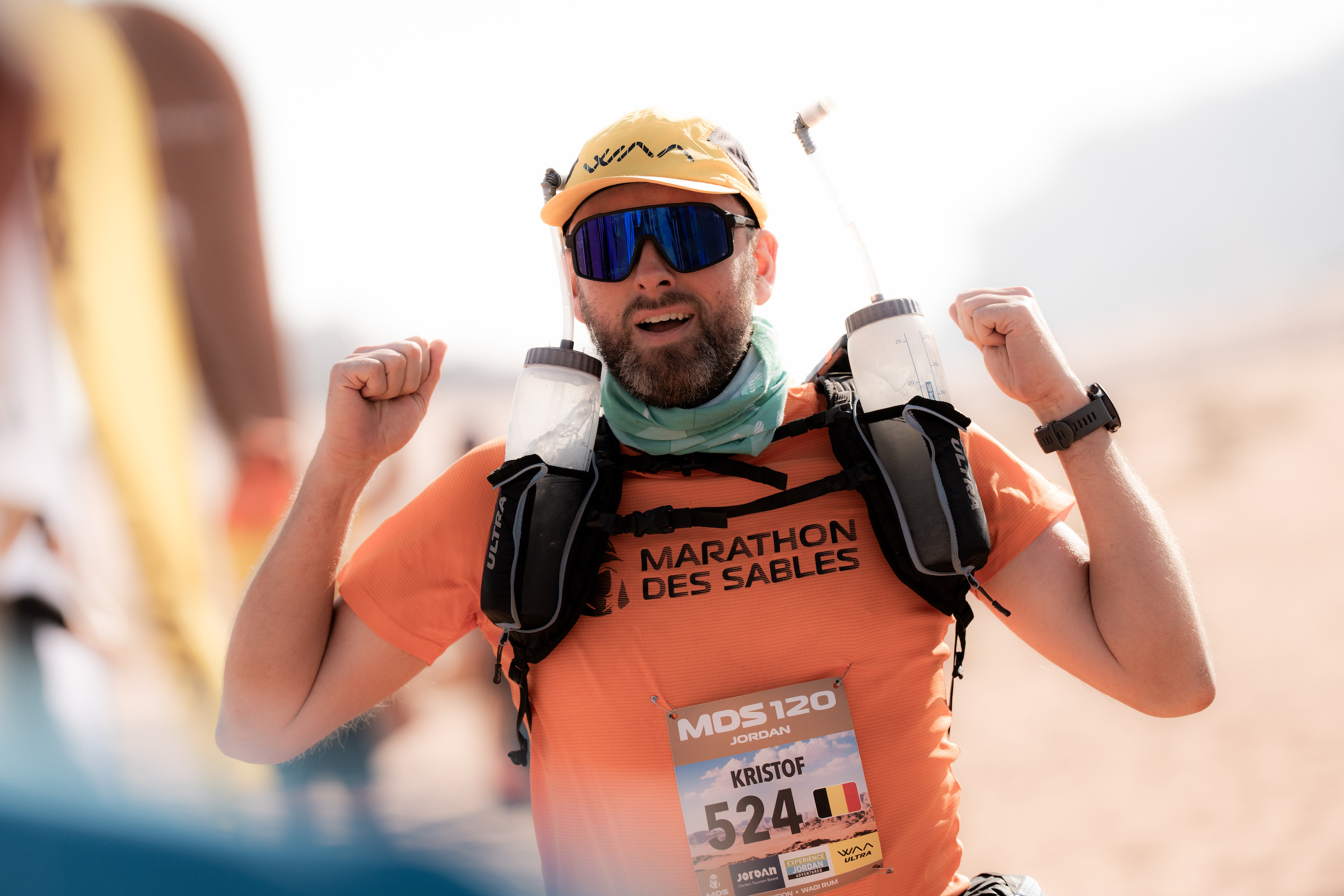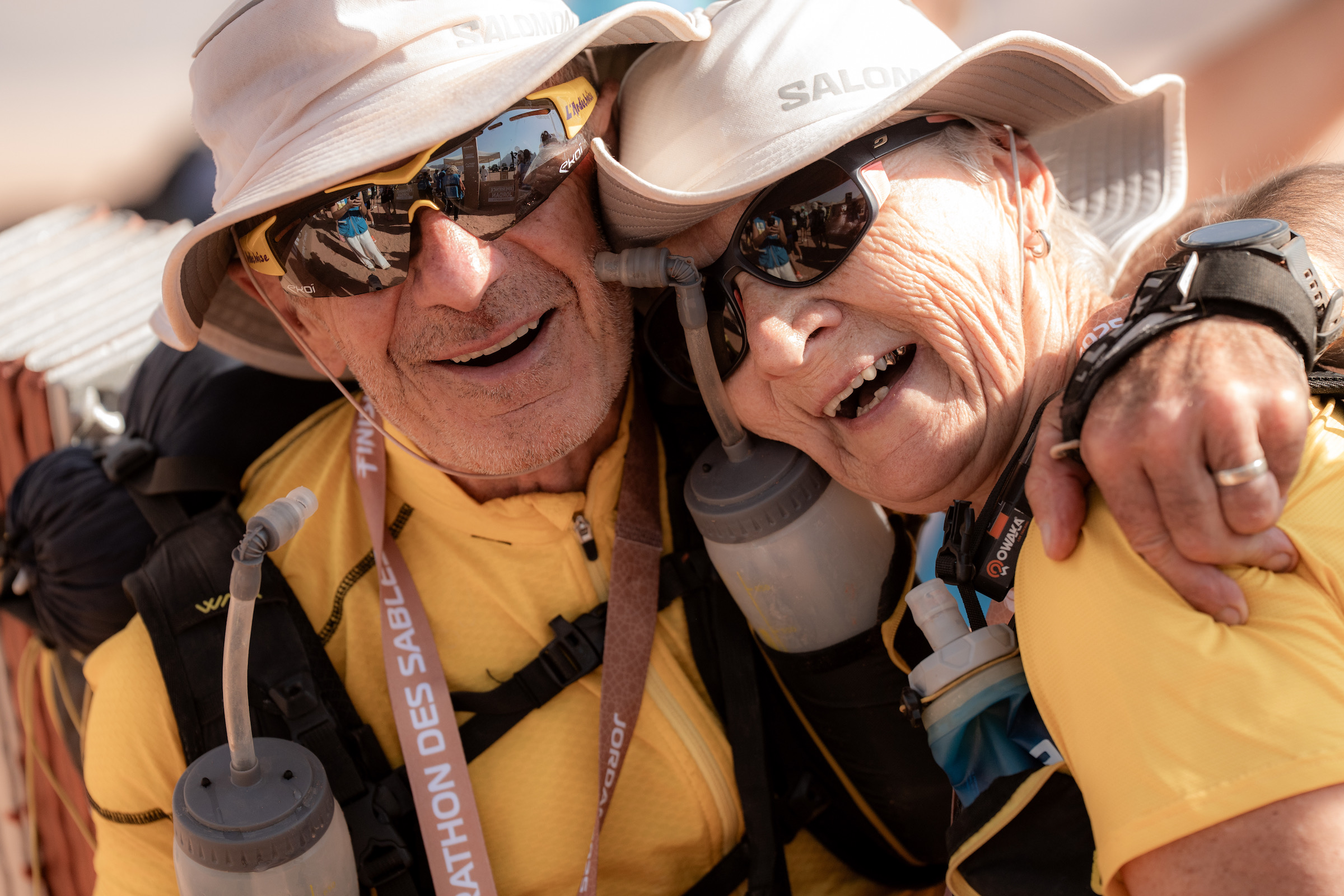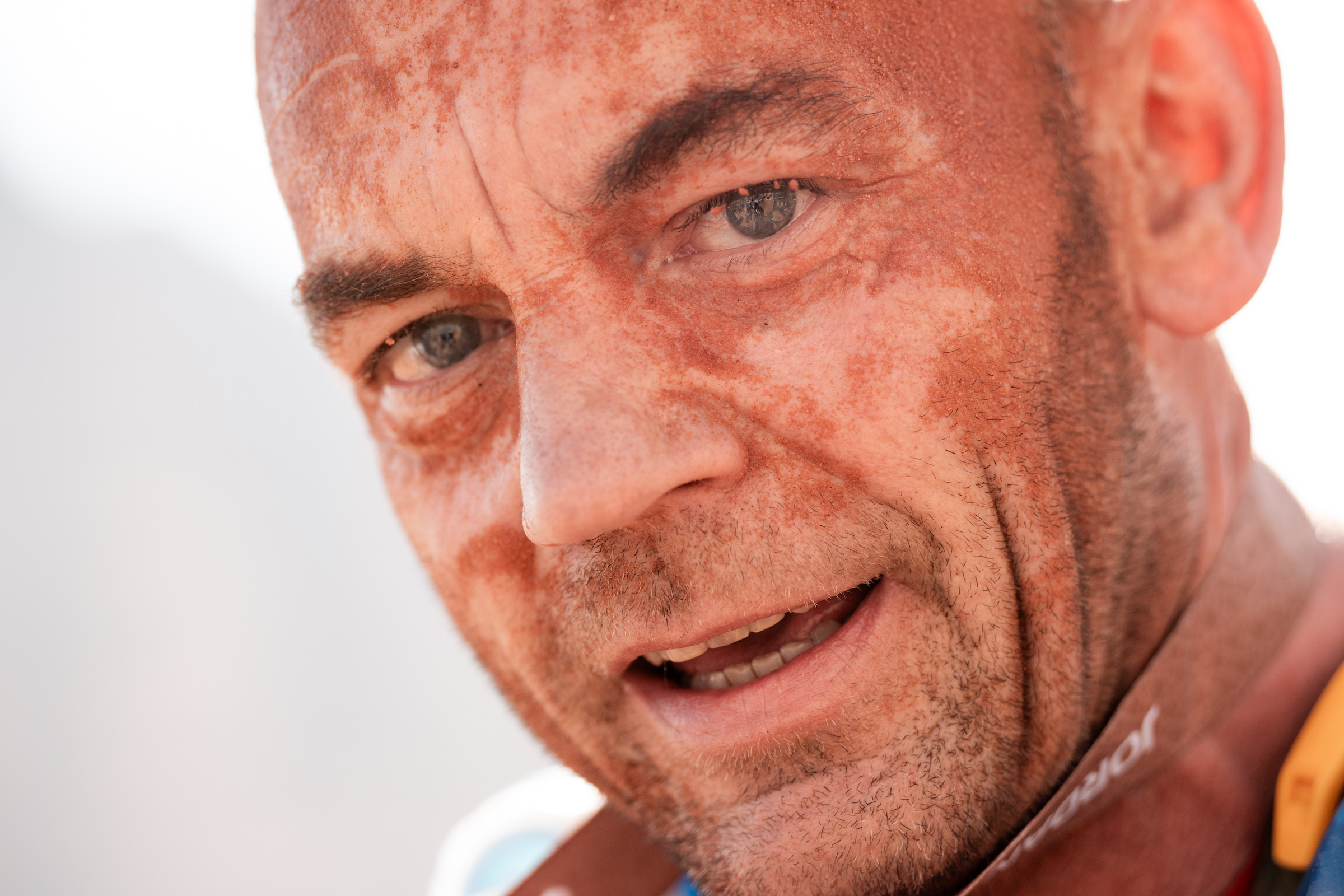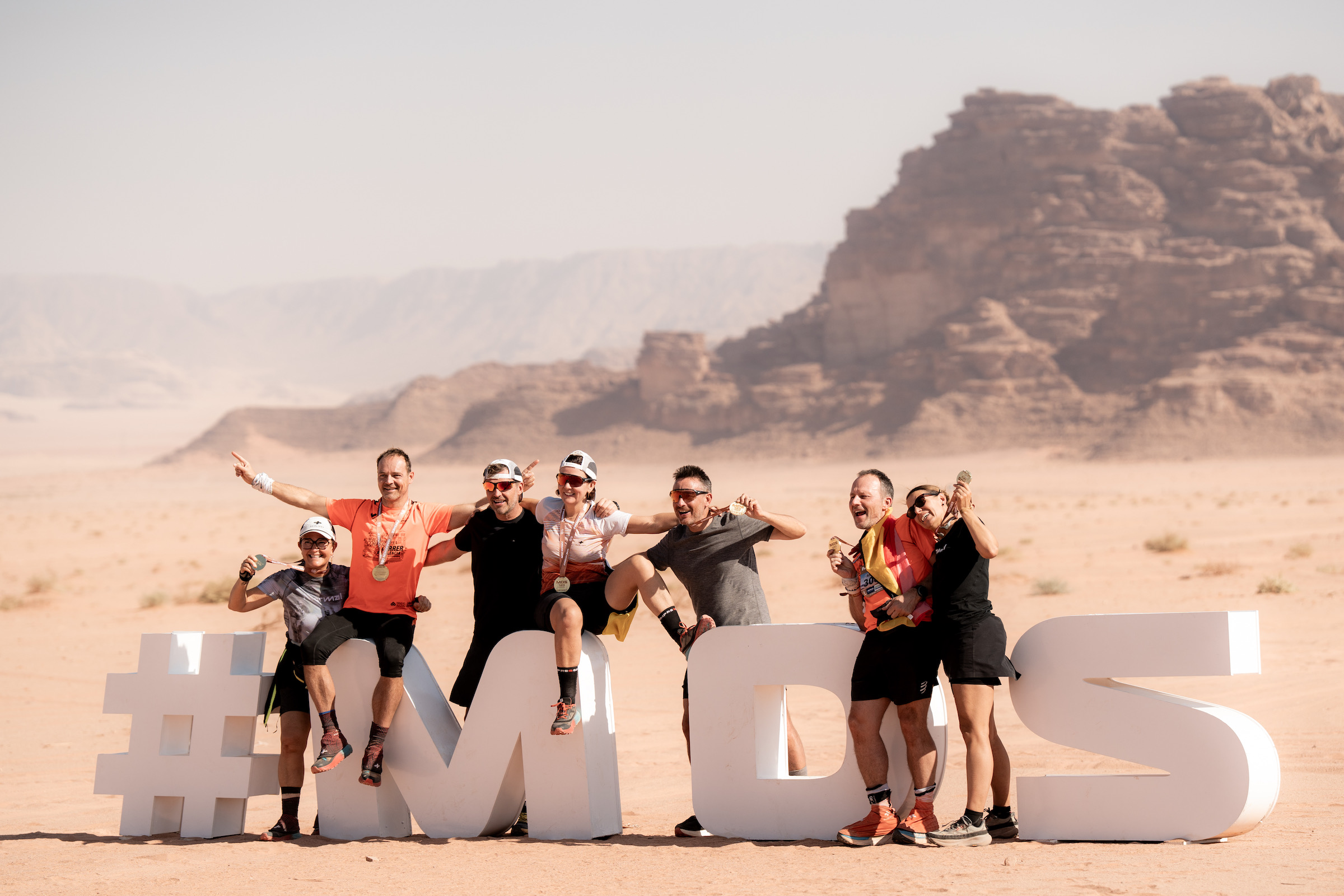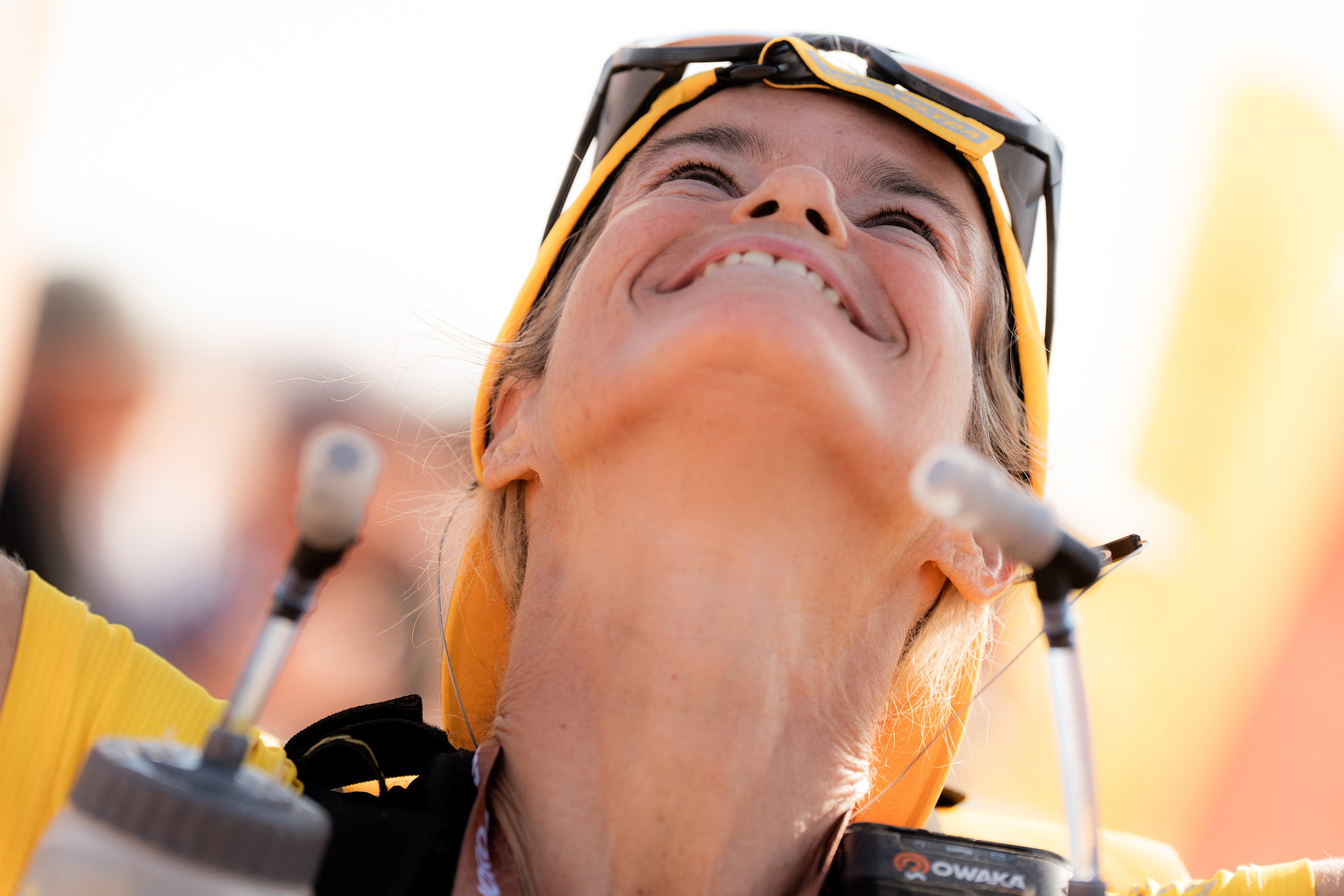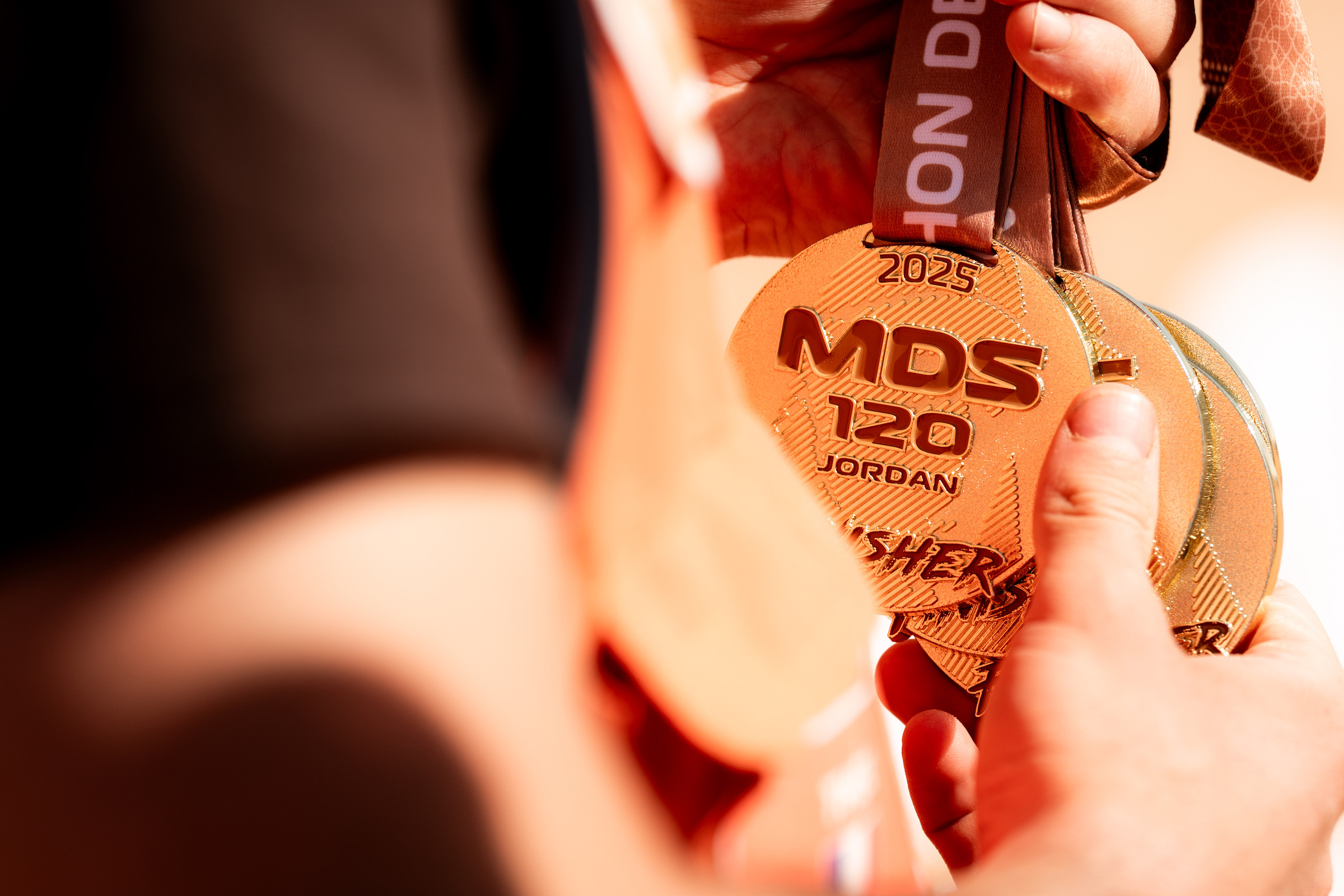
The end is in sight. After five brutal, beautiful days in the high Himalayas, Stage 6 of the 2025 Everest Trail Race delivers the final blow and the final reward. It’s 28.5 kilometres fo Lukla, a day marked by more descent than ascent: 2612 meters down, 1578 meters up, and every single step earned.
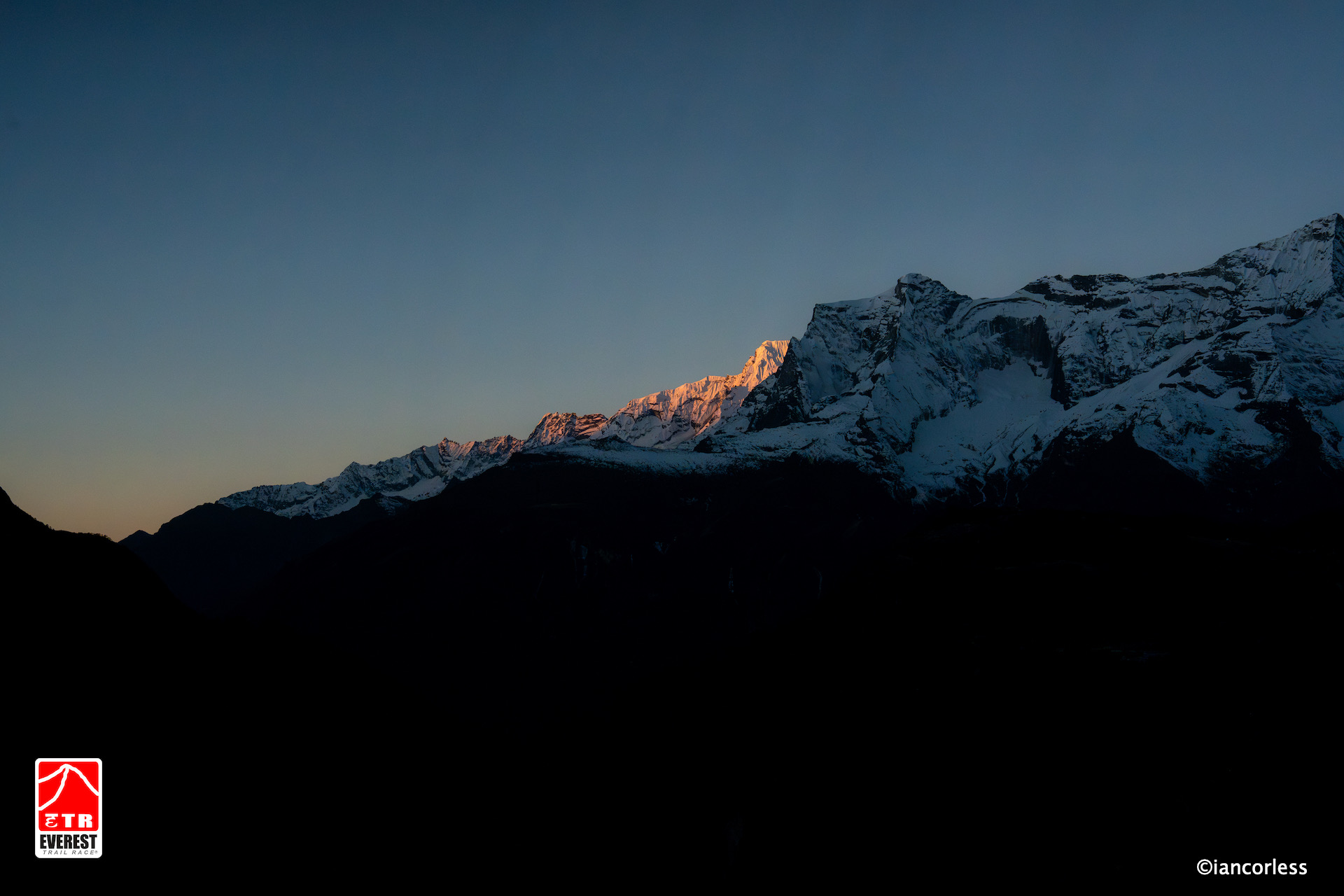
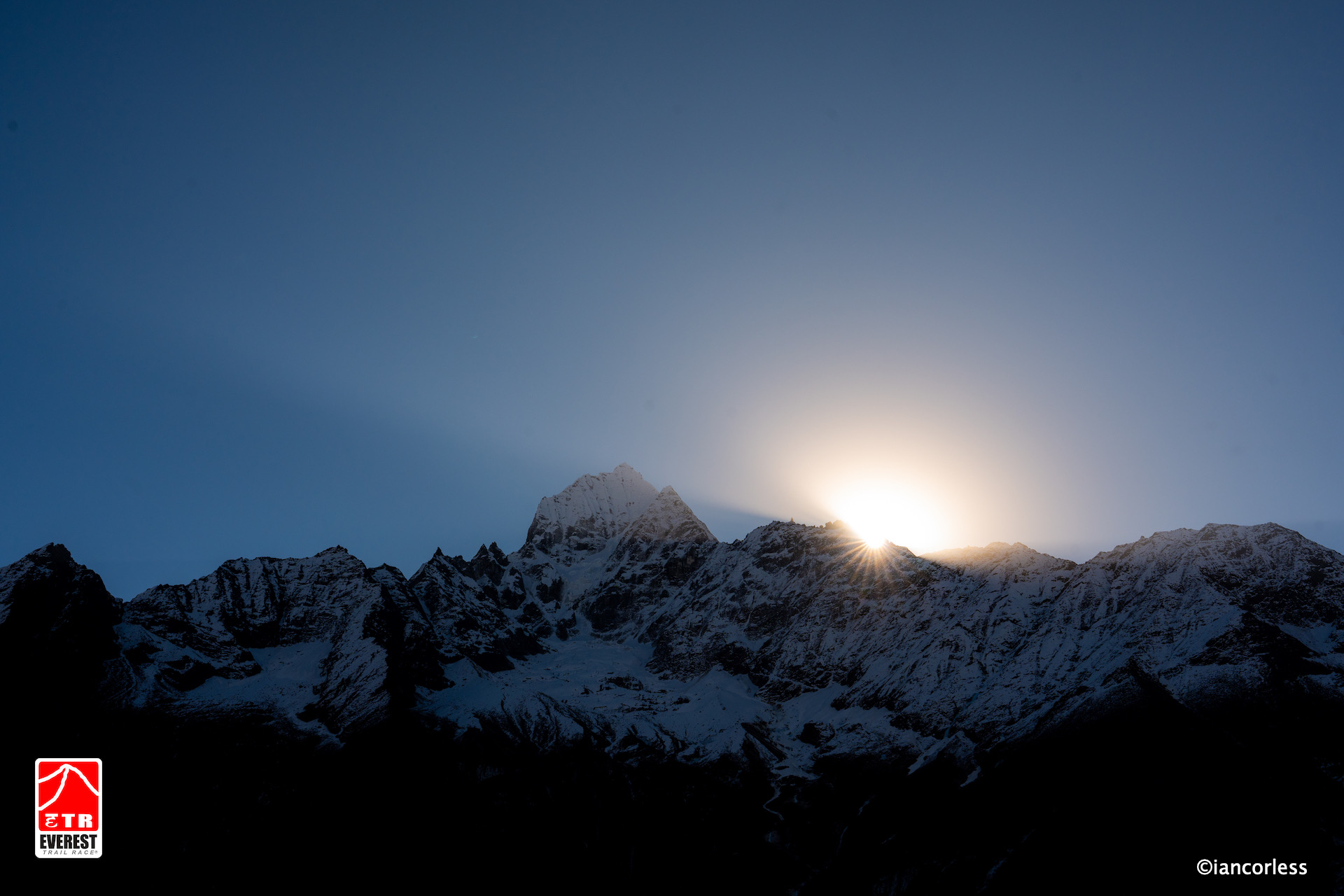
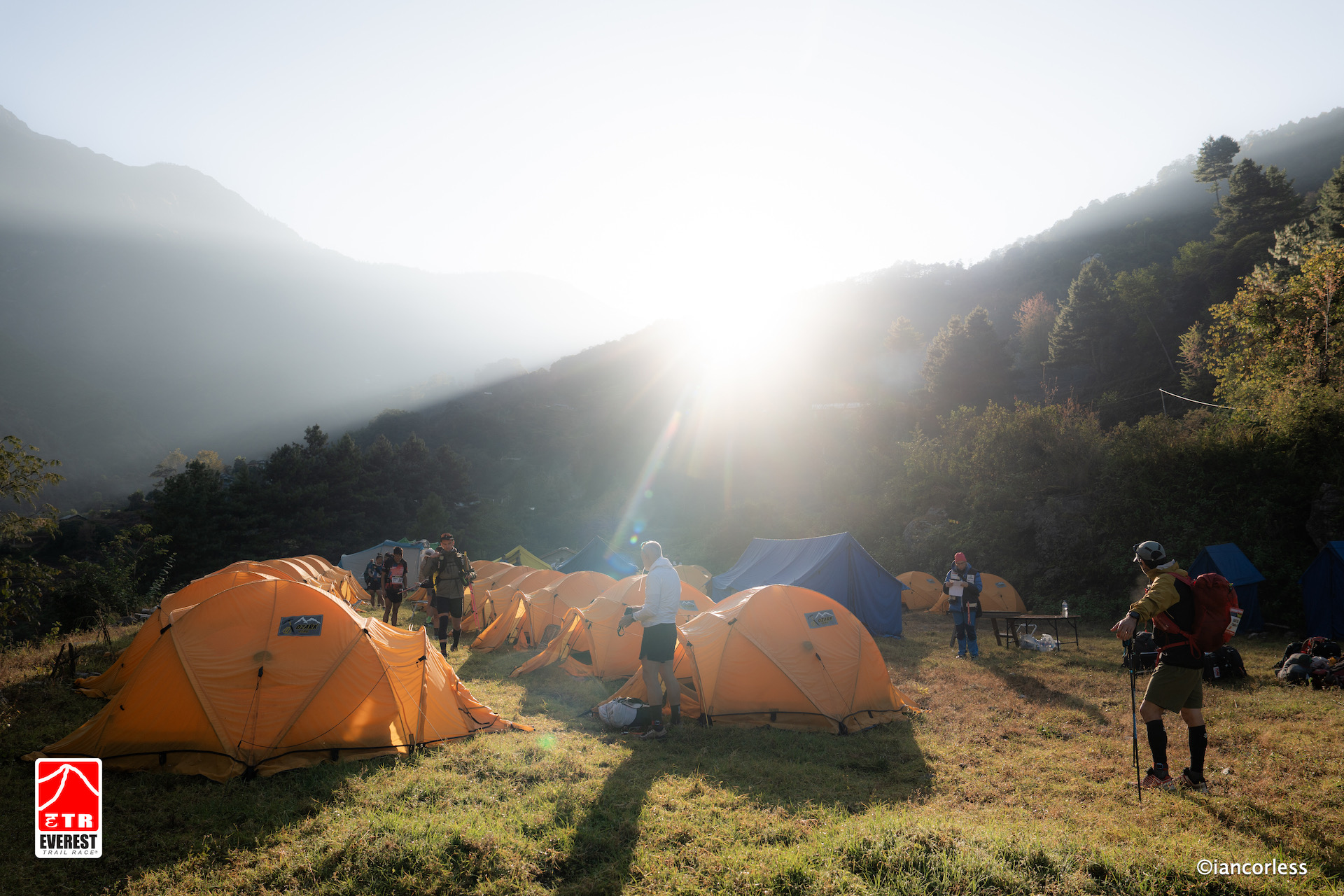
An early start, the arrival of the sun and soon, the heat will come – not only in the sky but with the bodies of each participant.
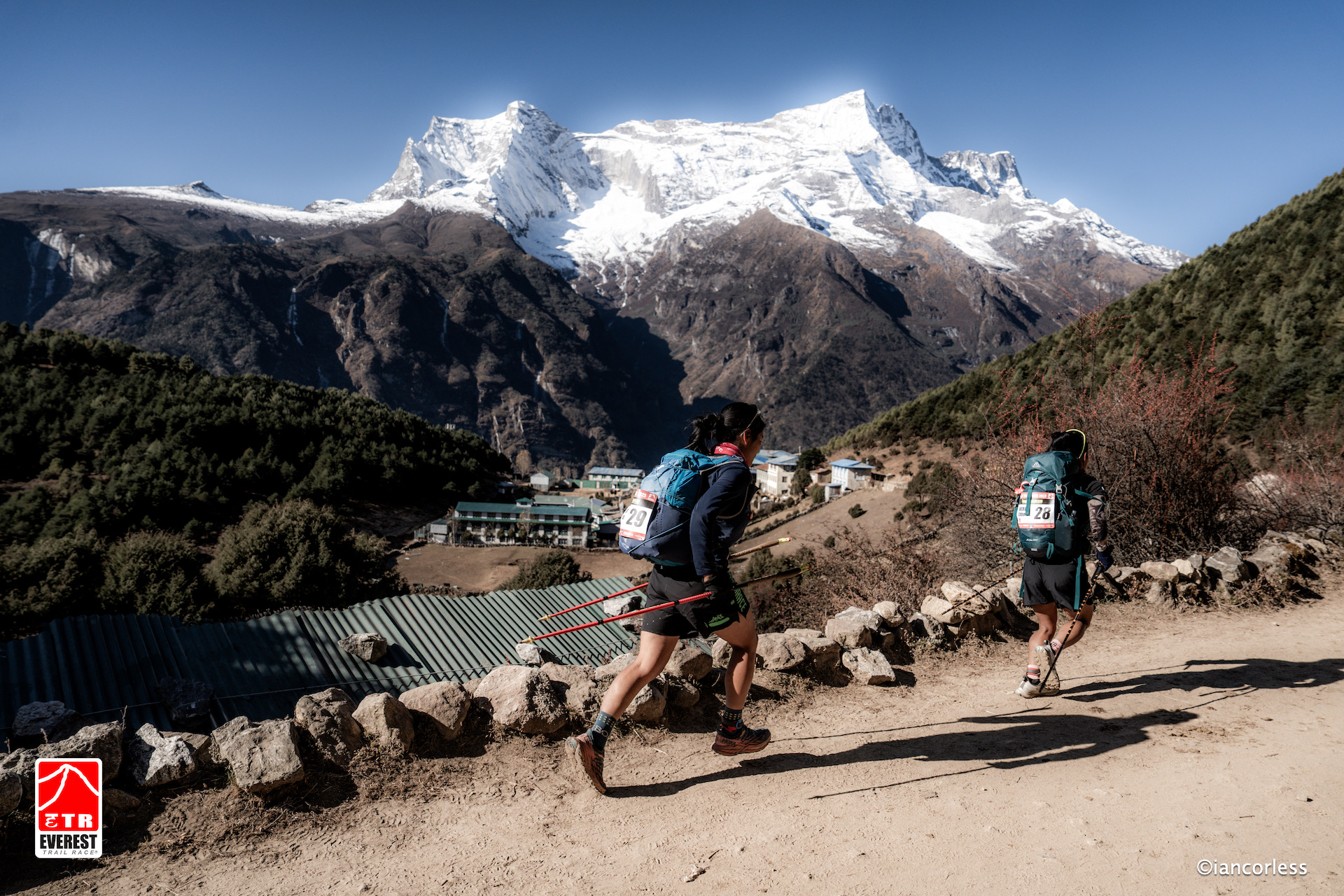
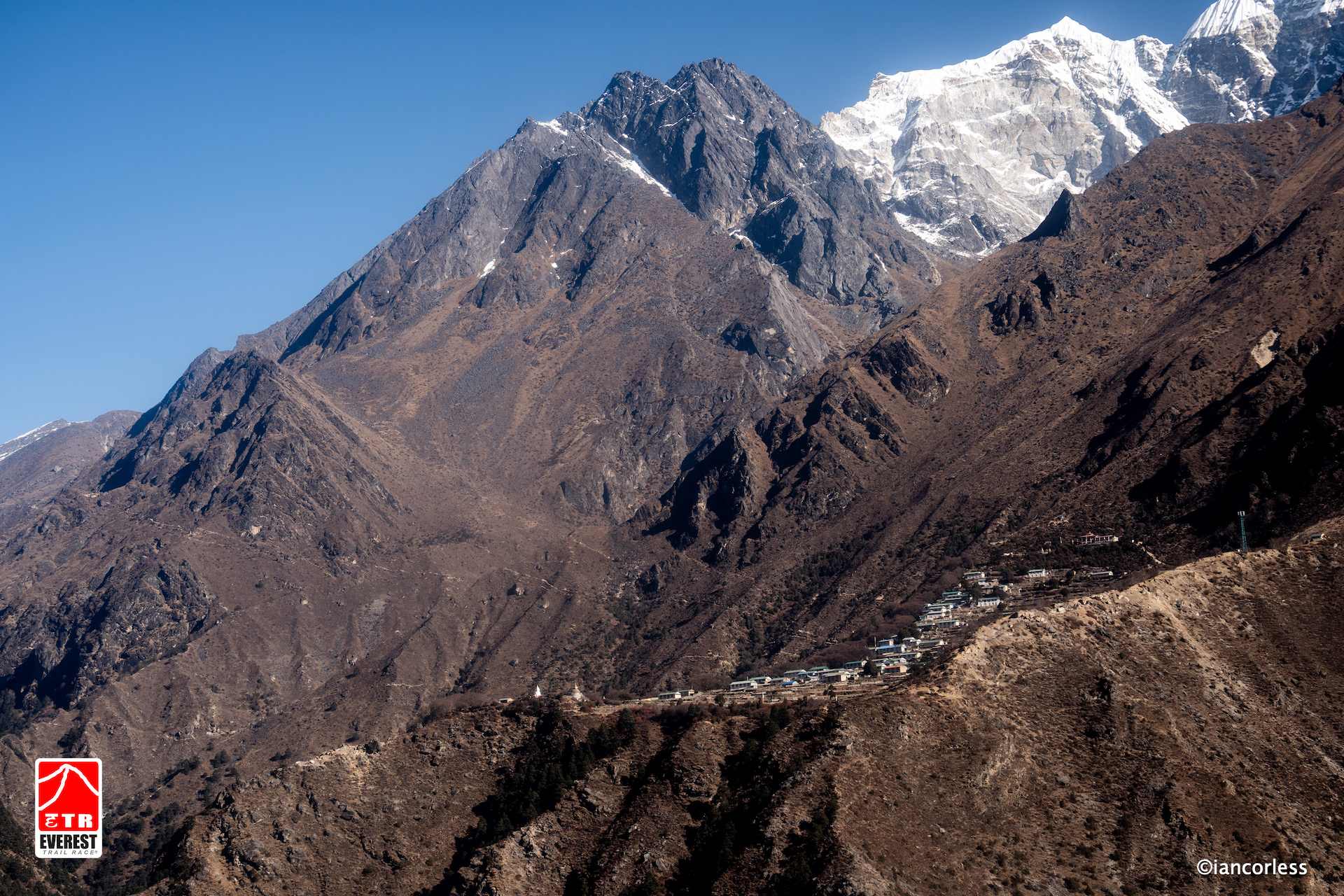
The day kicks off with iconic trails that weave from Stupa to Stupa to Namche Bazaar, the buzzing Sherpa hub perched on the mountainside like a fortress.
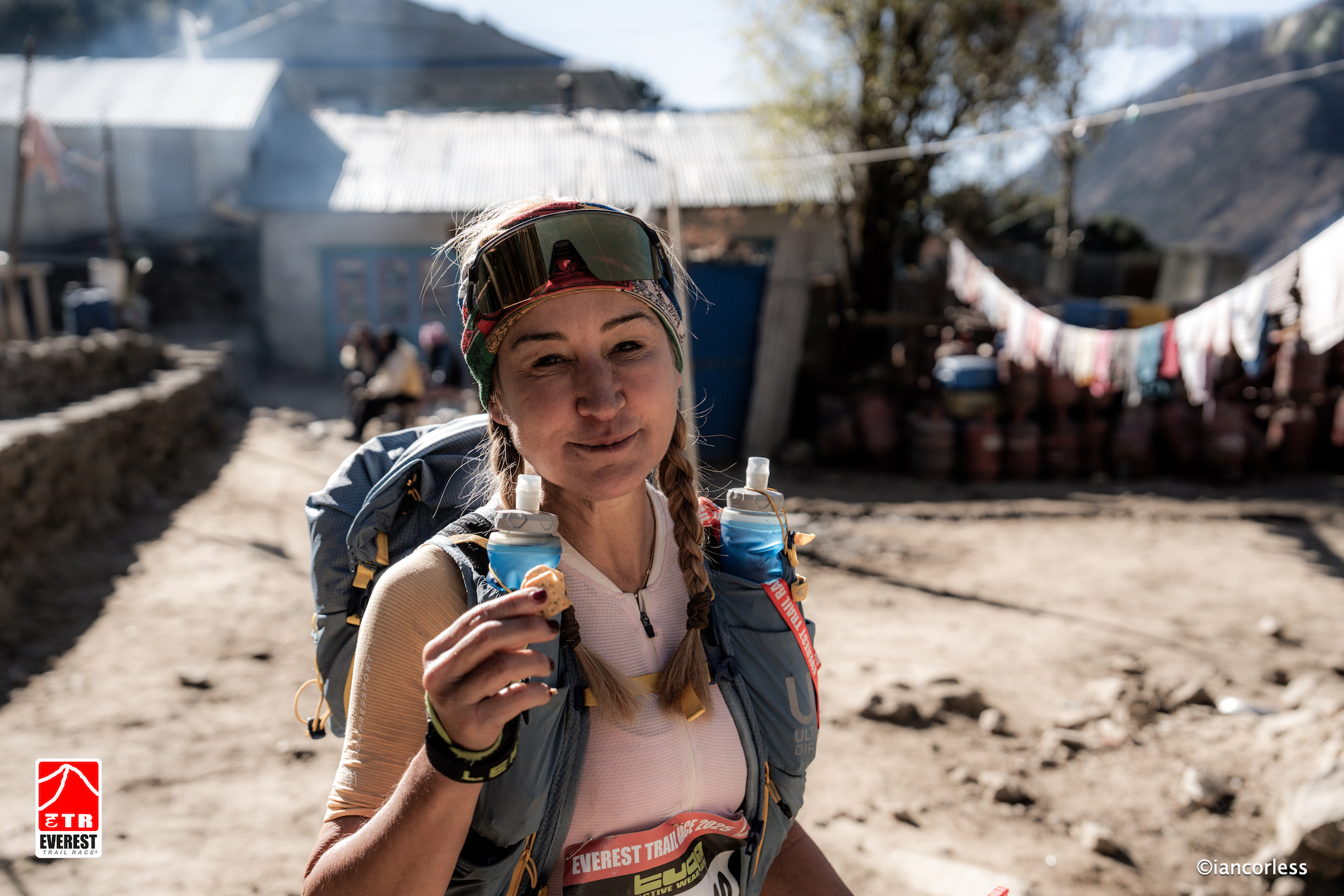
The backdrop behind, stunning, but the participants don’t get a chance to see it…
Namche brings checkpoint 1, it’s welcome, the early kilometres had worked the body hard with a steep descent, followed by a gentle climb and then an ‘easy’ run to the refreshment.
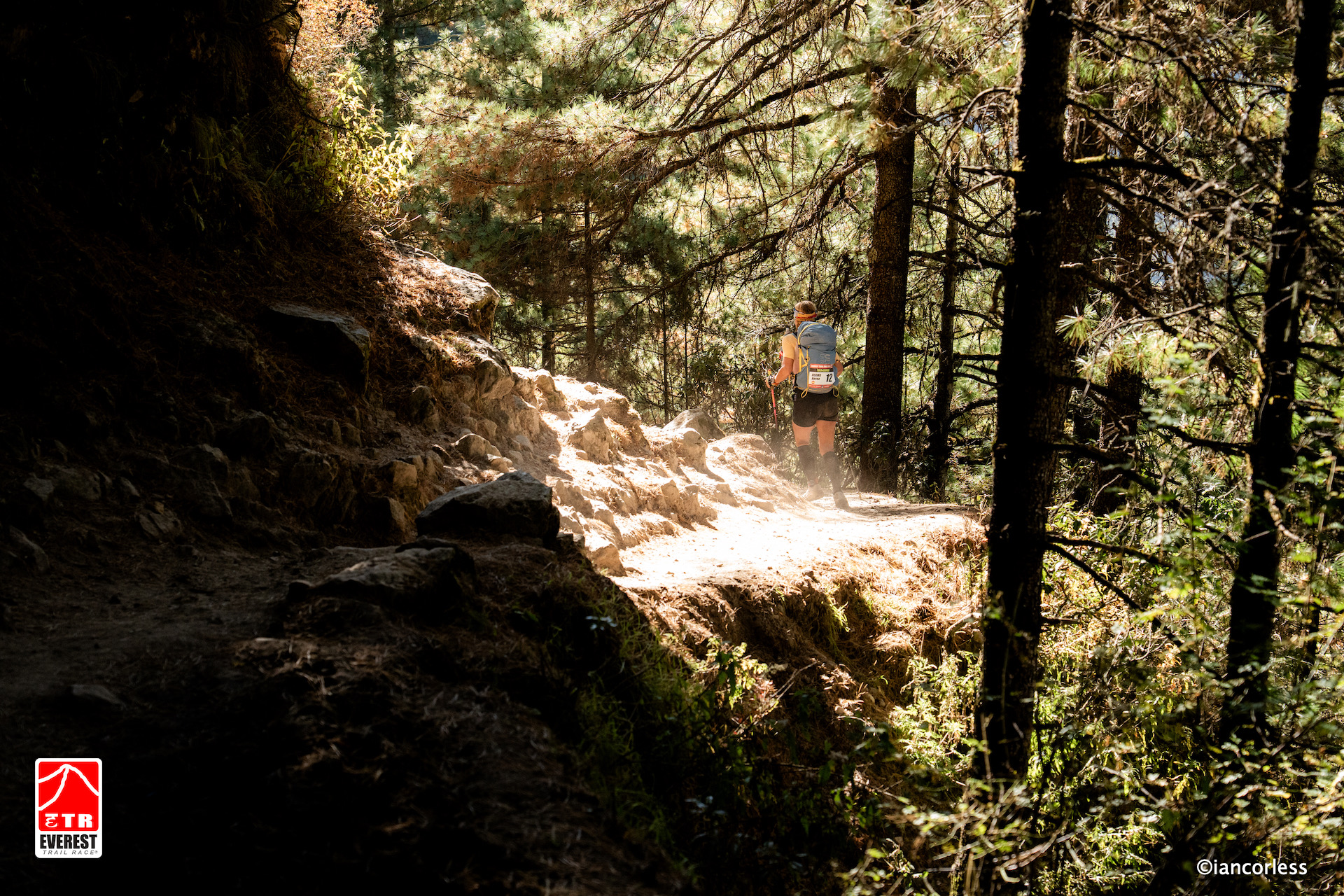
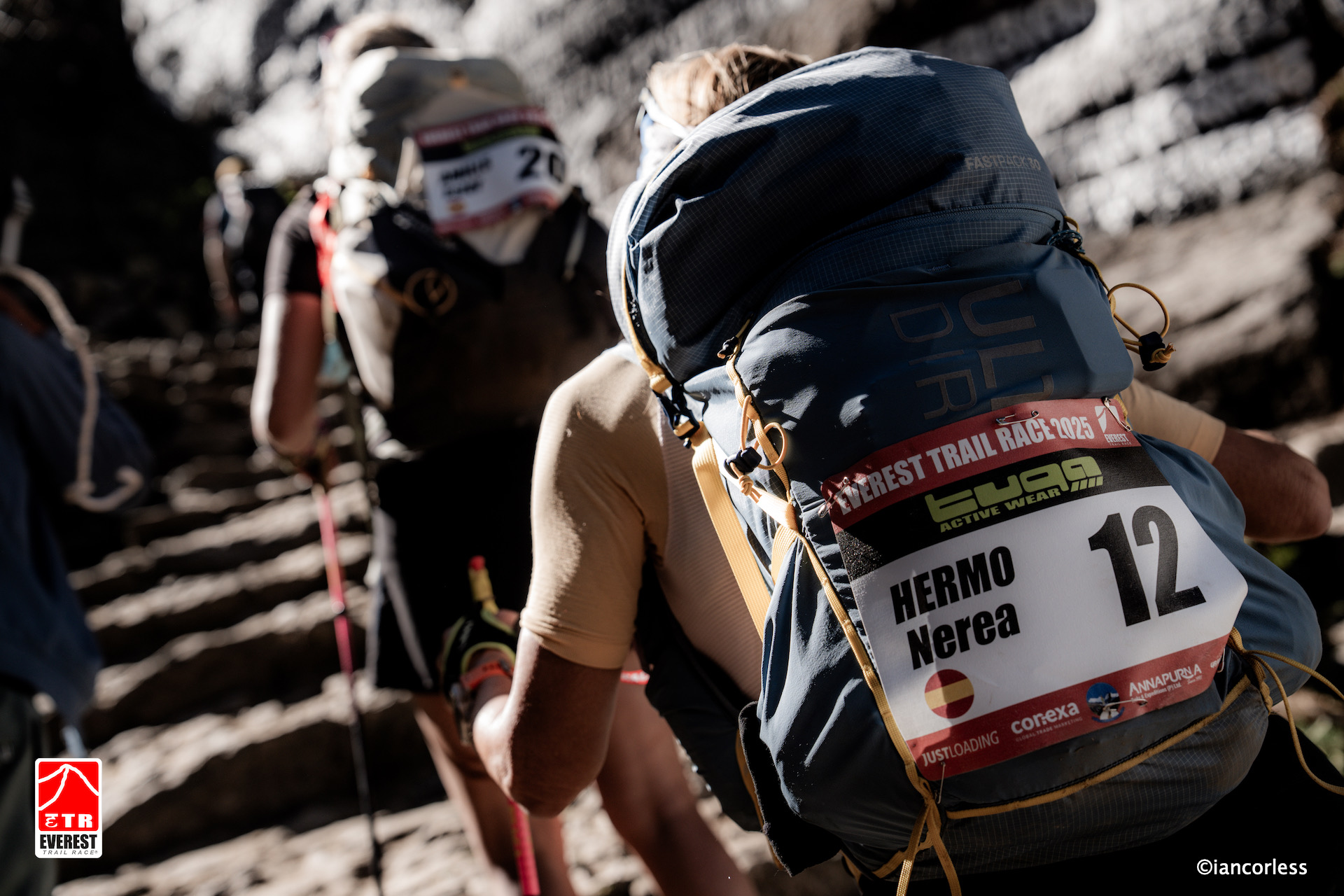
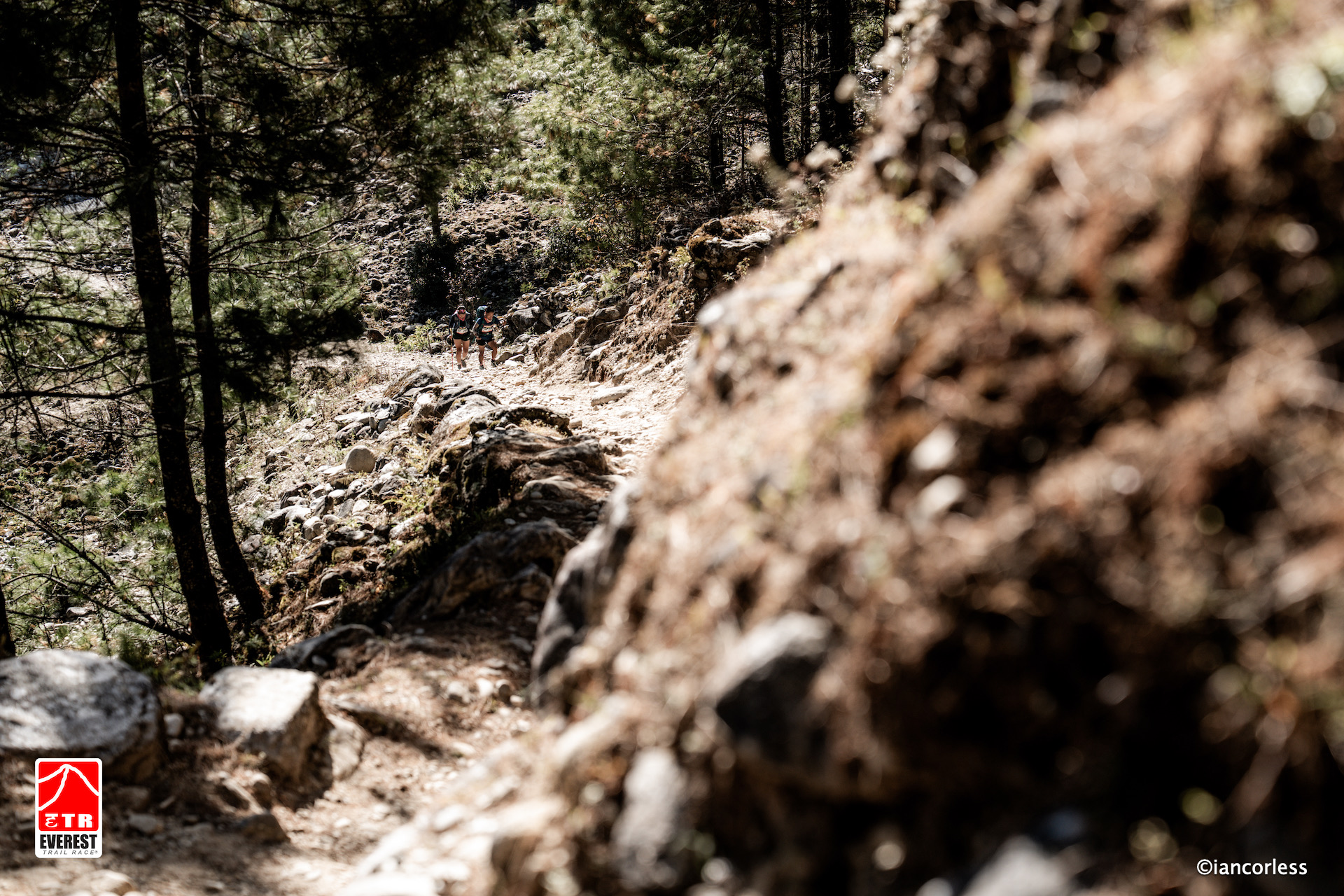
The early kilometers retrace some familiar ground – Sanasa, Phunki Tenga, and trails edged with mani stones and prayer flags, twisting through pine forests and clinging to cliffs. But don’t call it a repeat. The fatigue, the altitude, and the stakes make every step feel different.
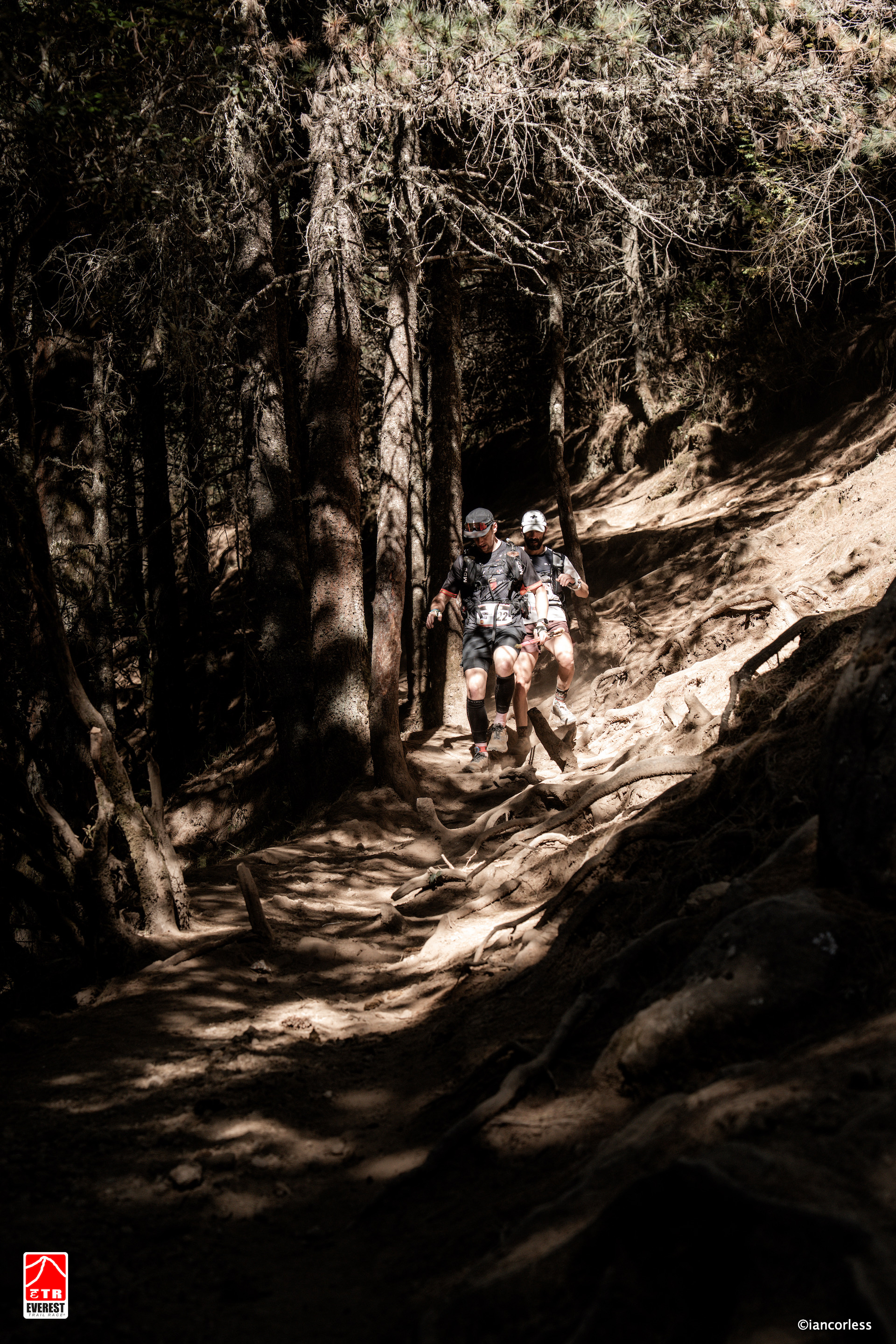
This stage is less about vertical brutality and more about holding form, keeping control as the trail drops fast and hard. Quads burn, knees scream, but momentum is everything.
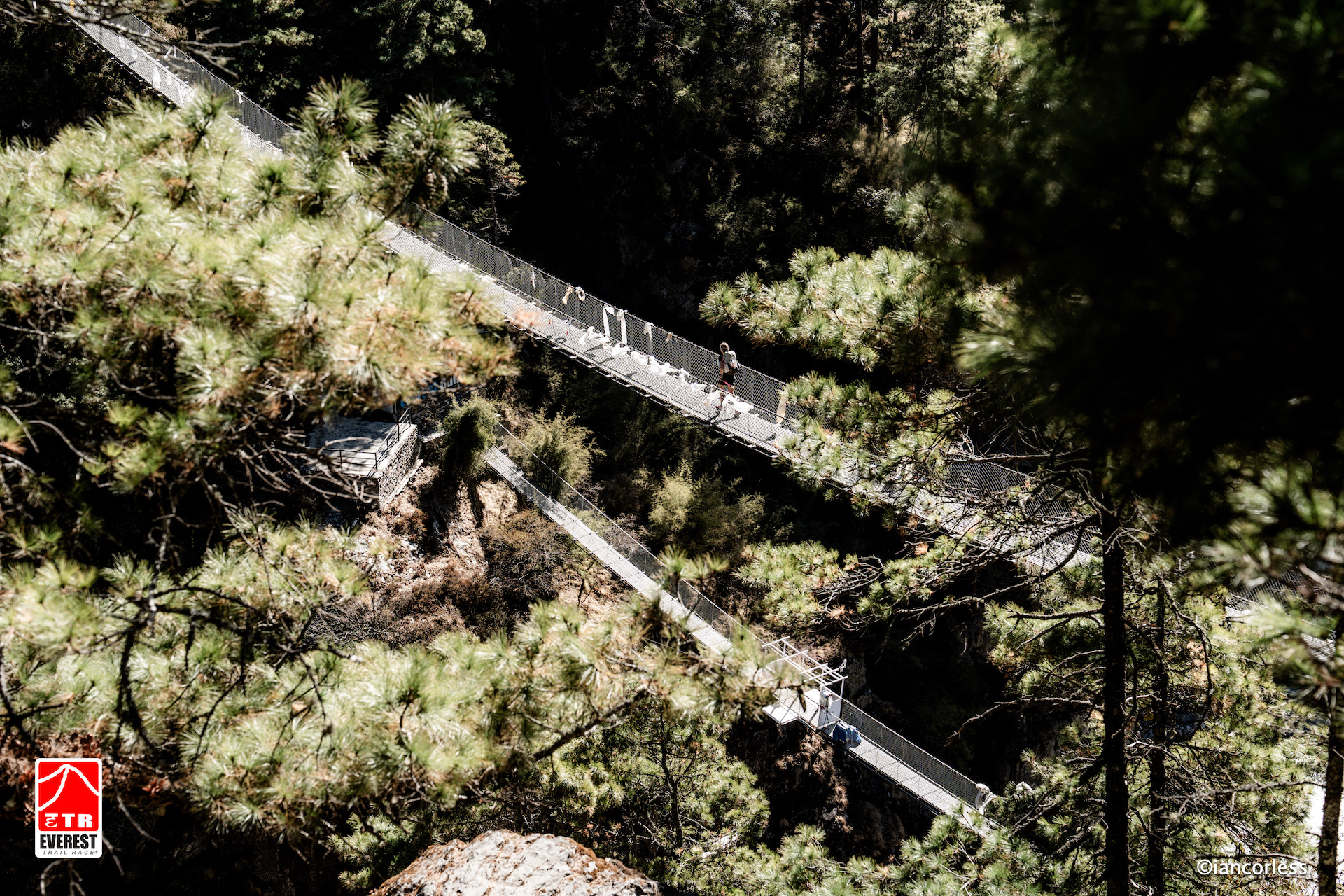
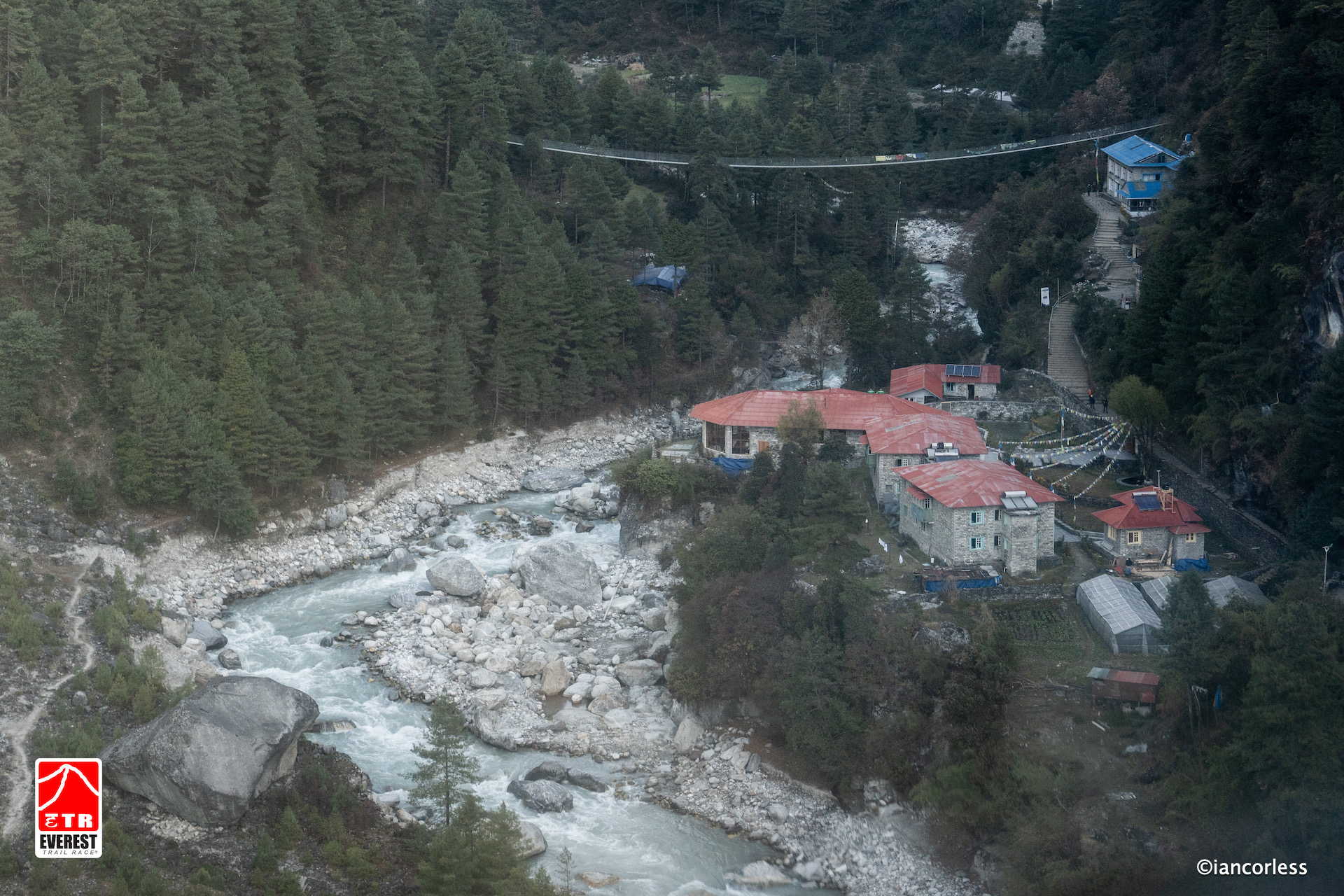
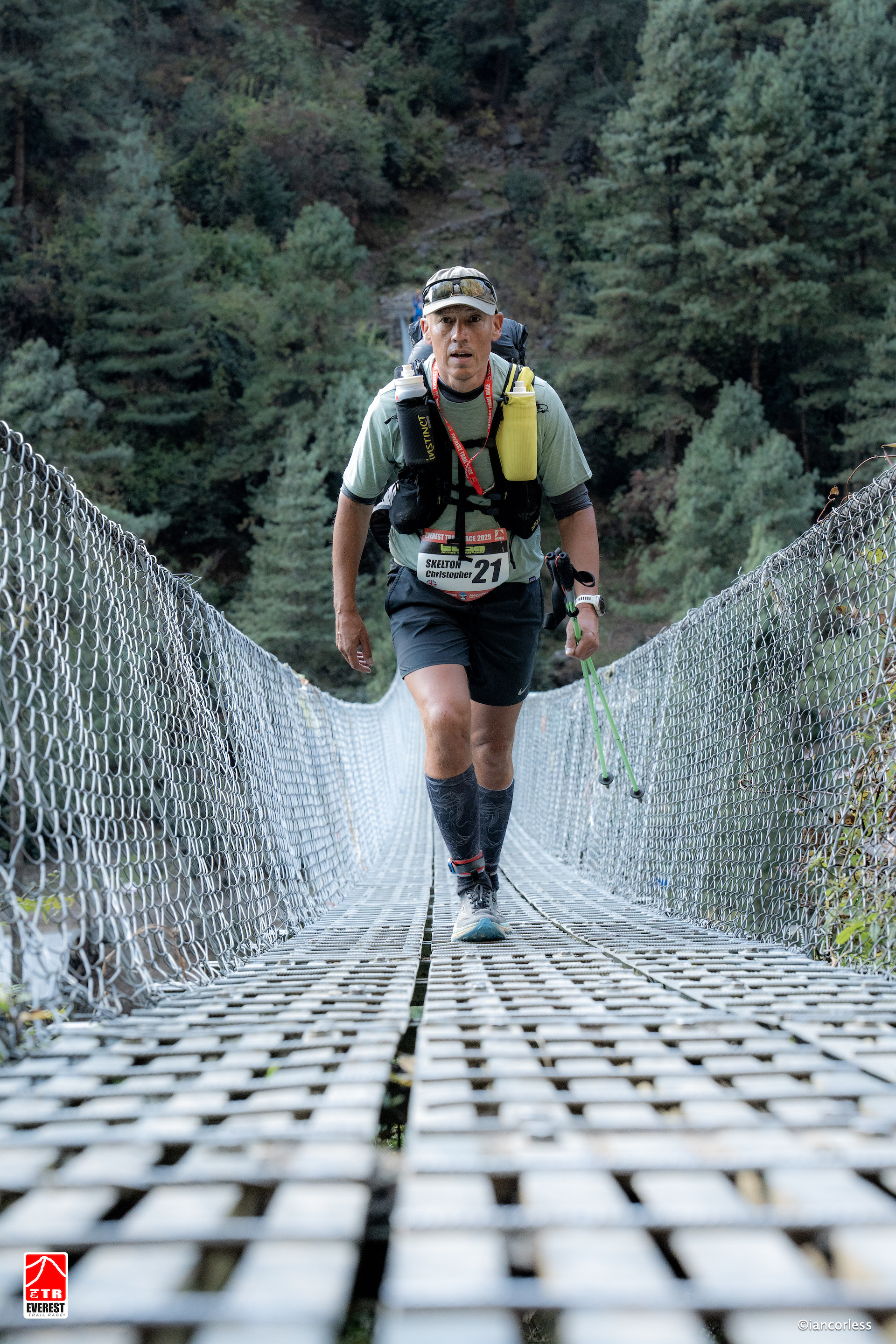
Soon, the trail funnels runners toward the legendary new Hillary Bridge – a sweeping, high-tension crossing that swings over the Dudh Kosi with views that could stop you in your tracks, if the clock wasn’t ticking.
Past the bridge, it’s Jorsale, where the race starts to feel like it’s dragging runners home. The Phakding checkpoint (CP2) marks another milestone, each bib scanned there is one step closer to Everest Trail Race glory.
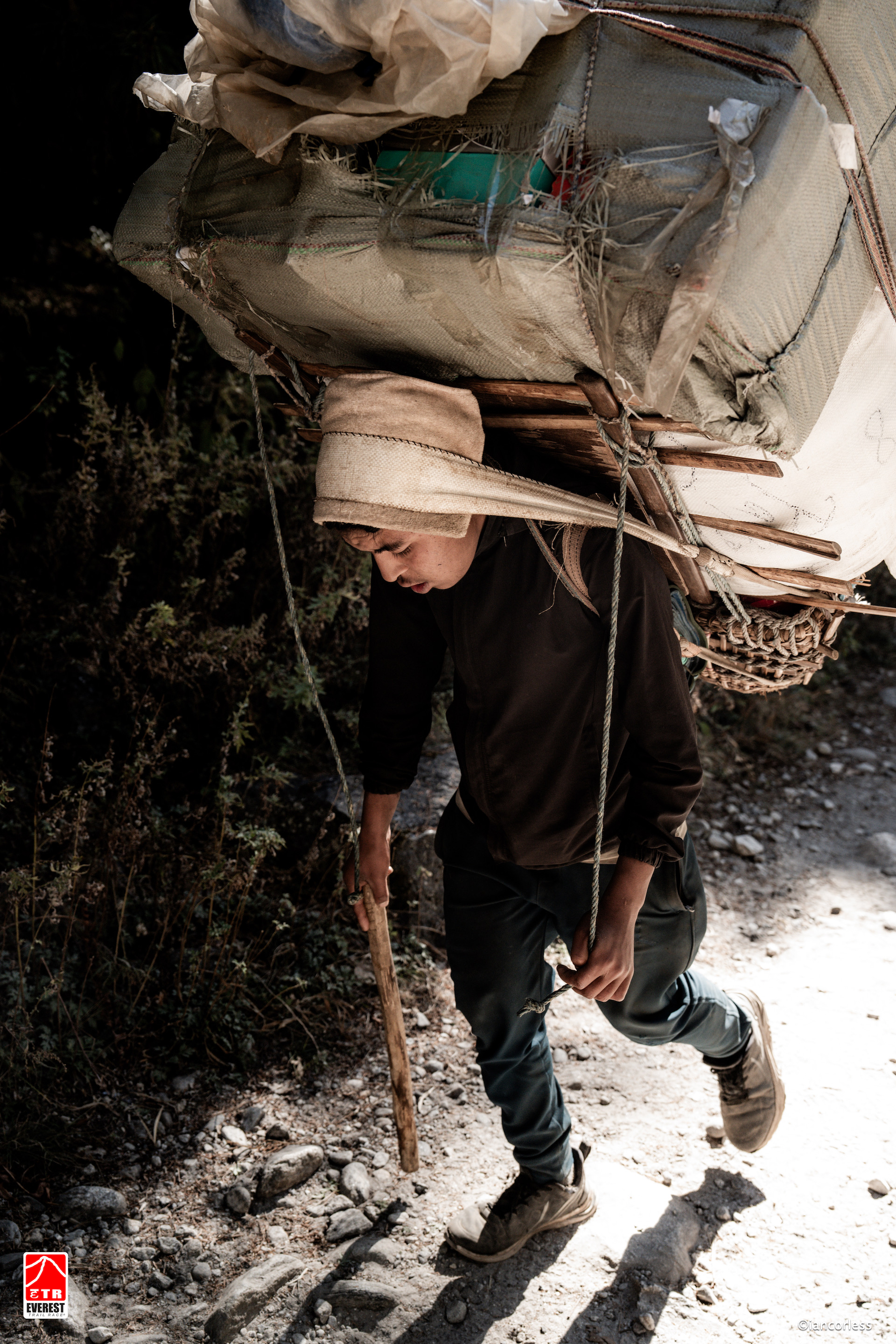
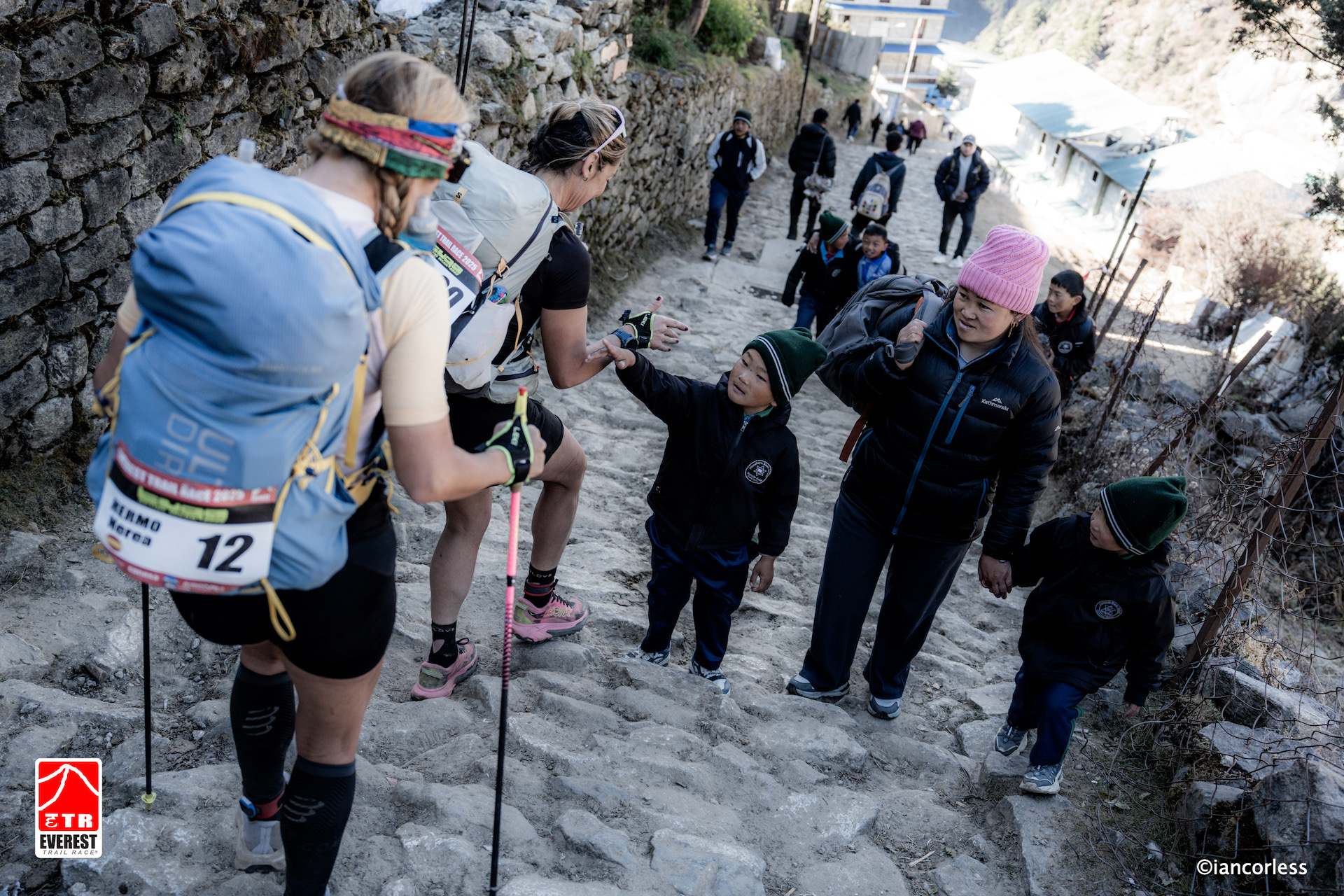
By the time runners hit Cheplung, it’s all on the table. Here, a sharp left turn signals the endgame: the final climb to Lukla and oce again, Nepal and the Porters remind us, how lucky we are!
It’s not long, but it bites. After the day’s long descent, this uphill kick demands whatever strength is left in the tank. Runners grit teeth, dig deep, and push toward the town that marks the start of most Everest dreams, and now, the finish of this one.
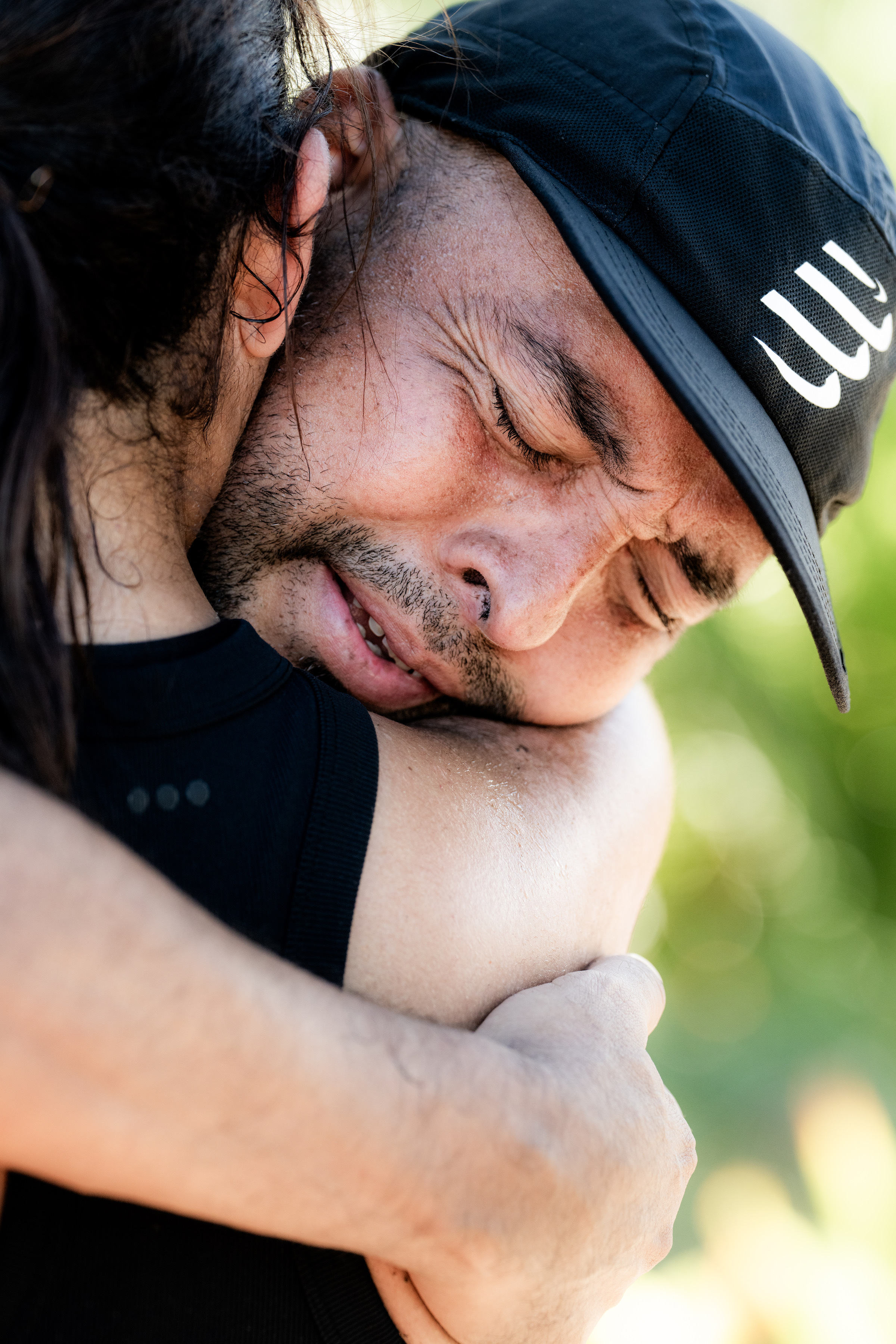
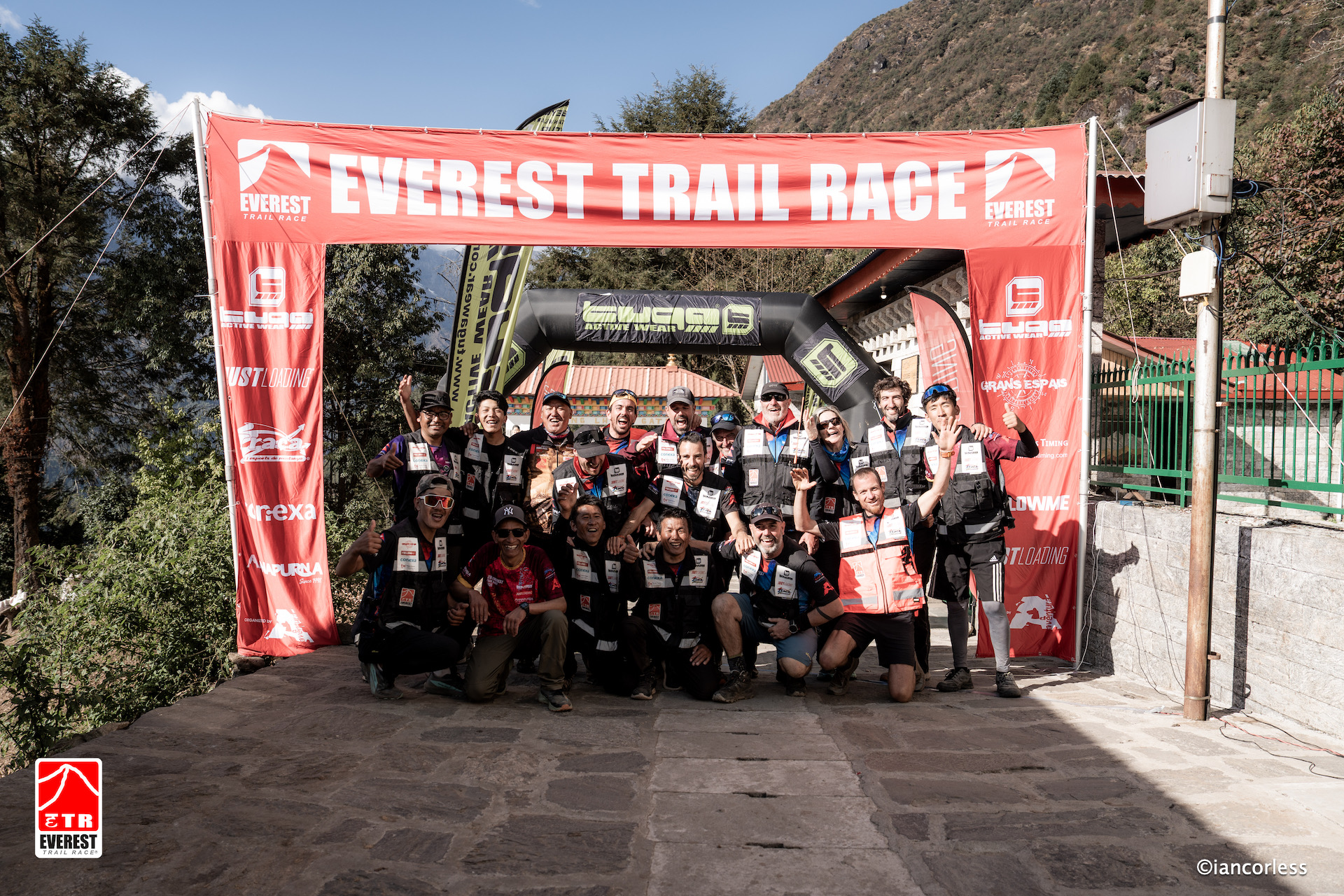
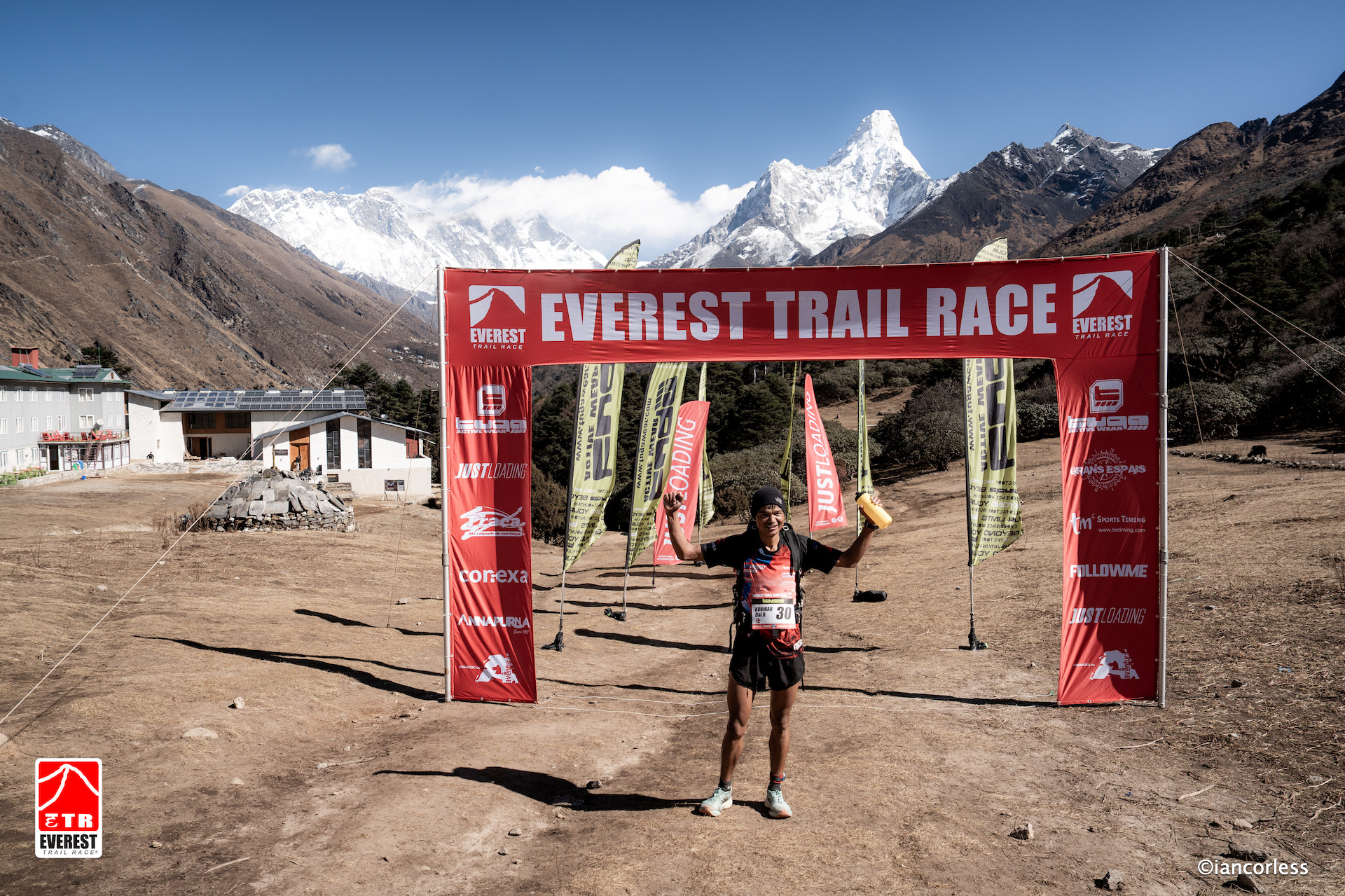
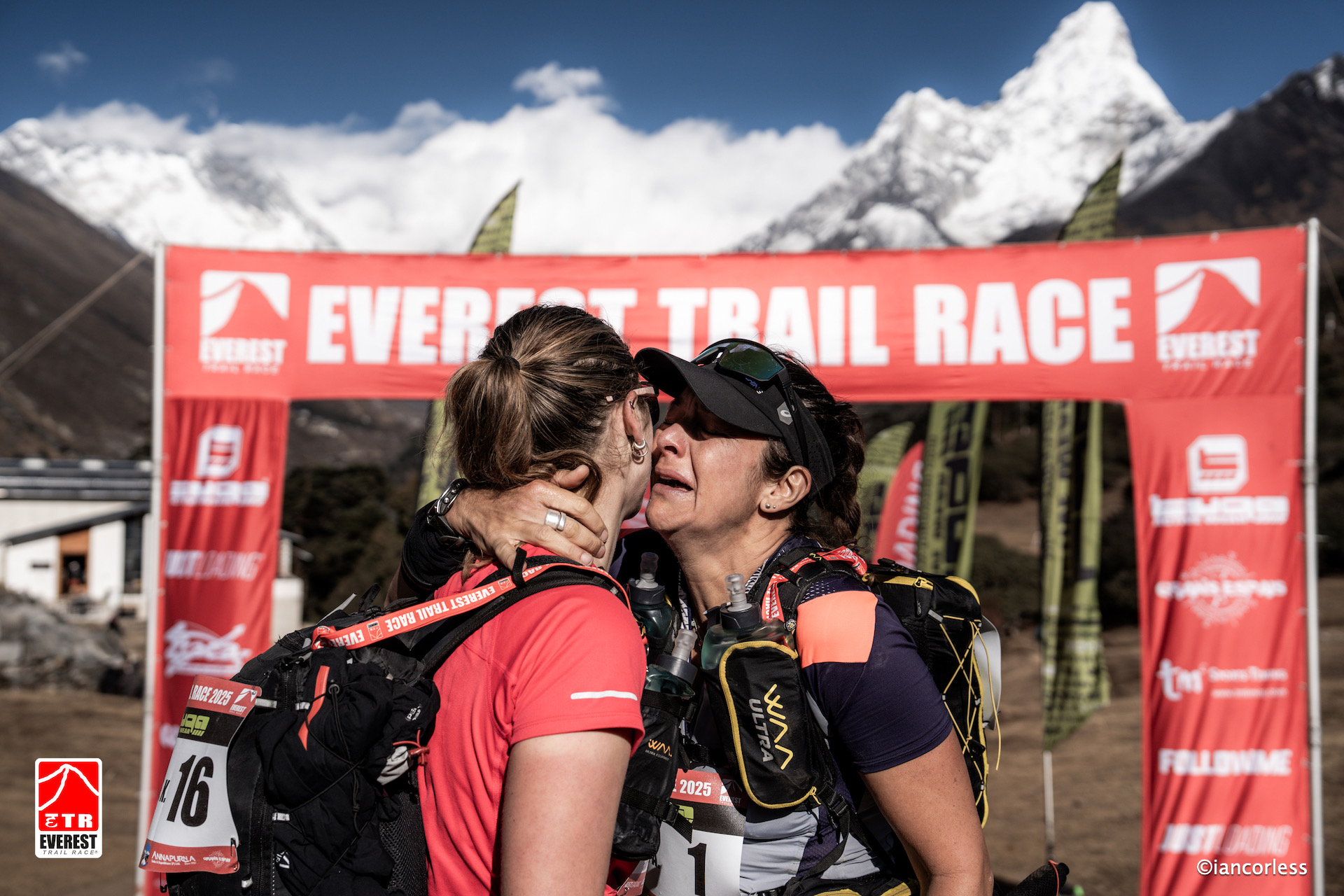
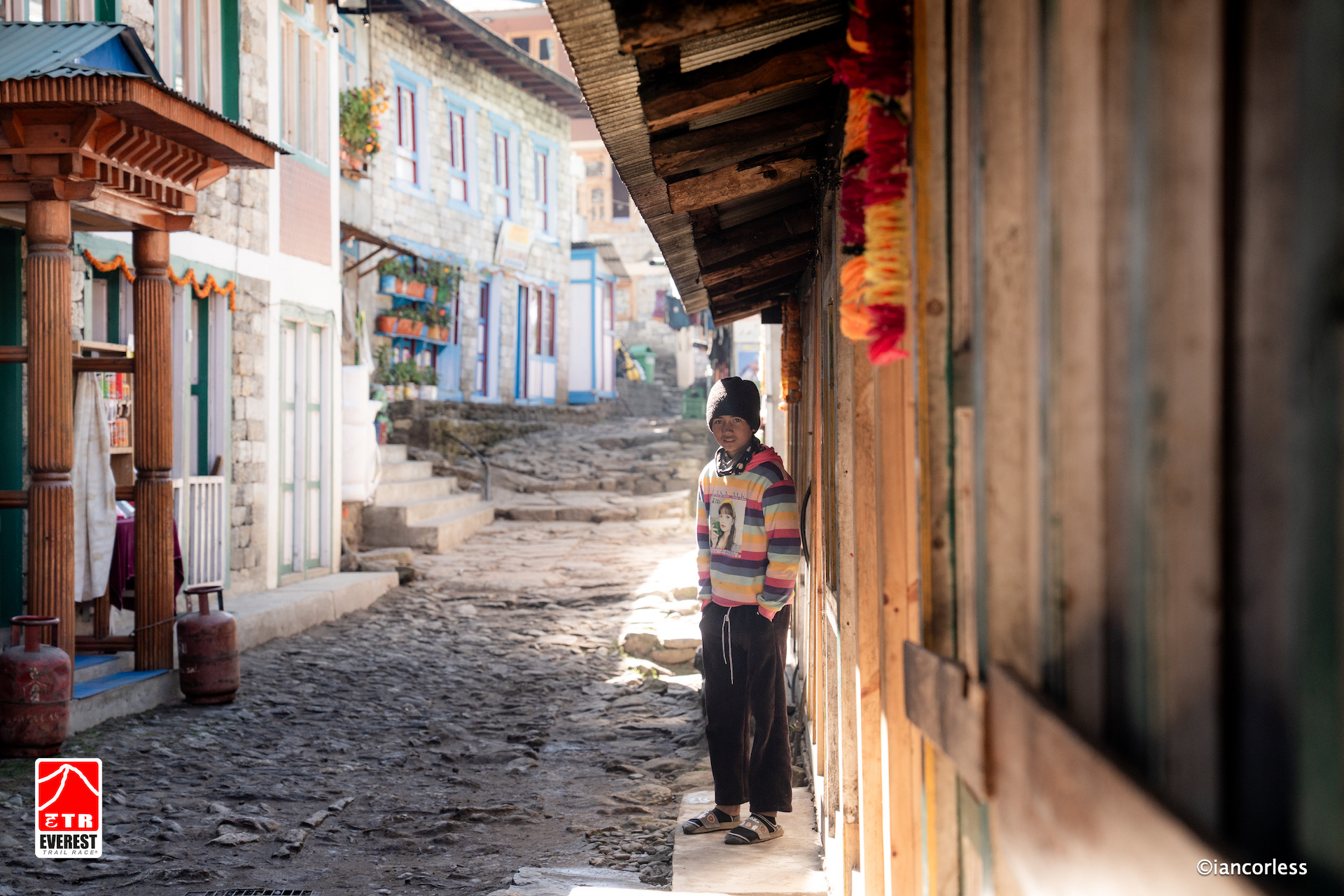
Crossing into Lukla is like breaking through into another world. Crowds, bells, cheers, and tears—this is where it all ends. For some, it’s a triumphant sprint. For others, a silent, emotional walk over the line. But for everyone, it’s the culmination of six days of relentless racing through some of the world’s toughest terrain.
The 2025 Everest Trail Race is done, everyone earned more than a medal, they earned the mountain’s respect.
Stage 5 of the Everest Trail Race pulls no punches. At 24km with a punishing 2,483 meters of ascent, this is the stage that earns its reputation as the toughest of them all. The numbers alone are intimidating, but it’s the relentless terrain and shifting altitude that test runners on every level – physical, mental, emotional.
This year’s route sees a change from previous editions, adding new layers of challenge and beauty. Starting in the shadow of Sagarmatha National Park’s giants, the trail weaves through the quiet village of Chumoa before rising into the bustling trails of Namche Bazaar, where the first checkpoint offers a brief reprieve. But this is only the beginning.
From Namche, the course climbs to Syangboche, skirting airstrips and yak paths, before pressing on to Kumjung, a Sherpa village set high beneath the peaks. Then comes Mong La – Checkpoint 2 – perched like a balcony above the valleys below. From there, it’s a steep descent to Phortse Tenga, followed by a lung-busting climb to Phortse, a village known for its mountaineering legacy.
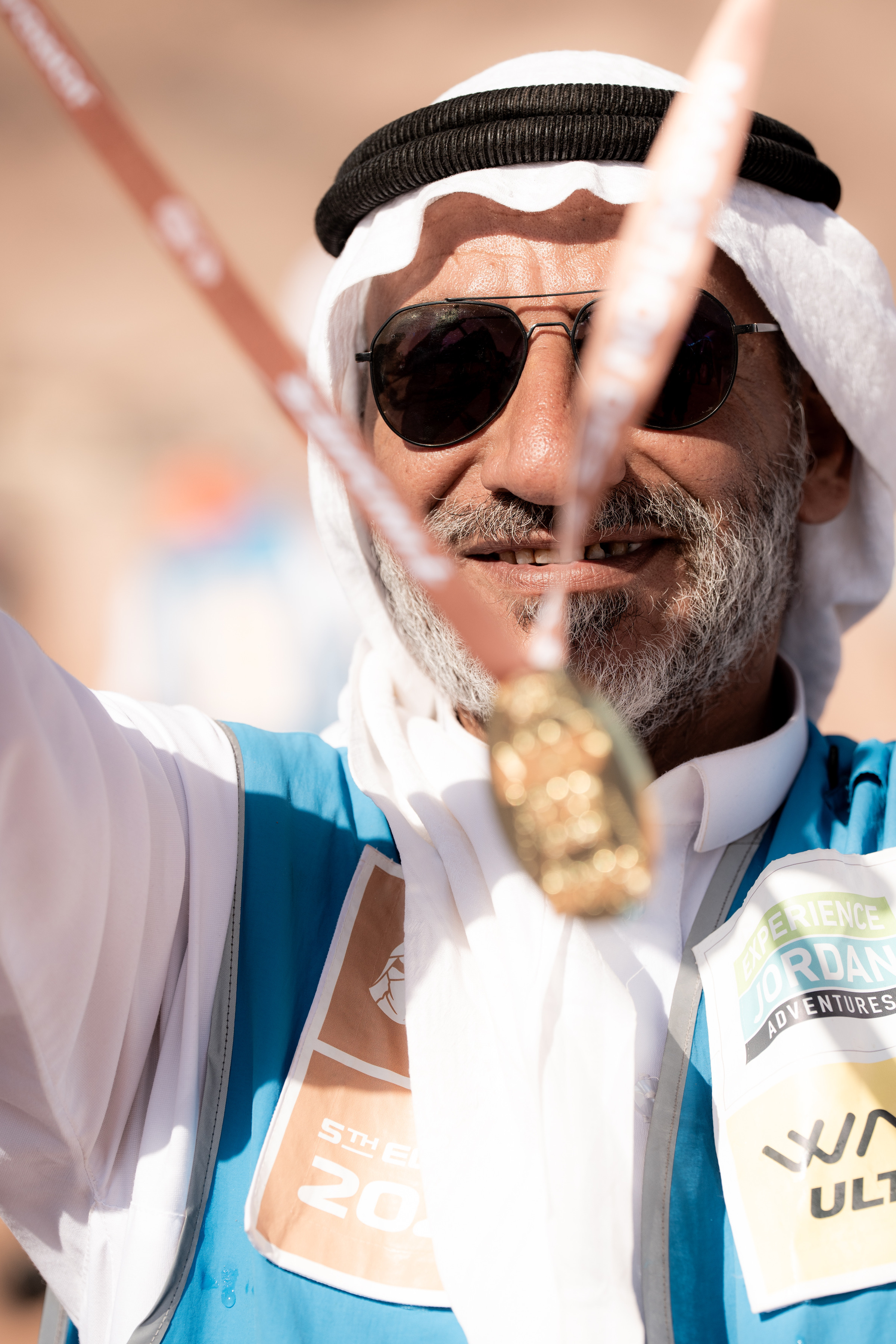
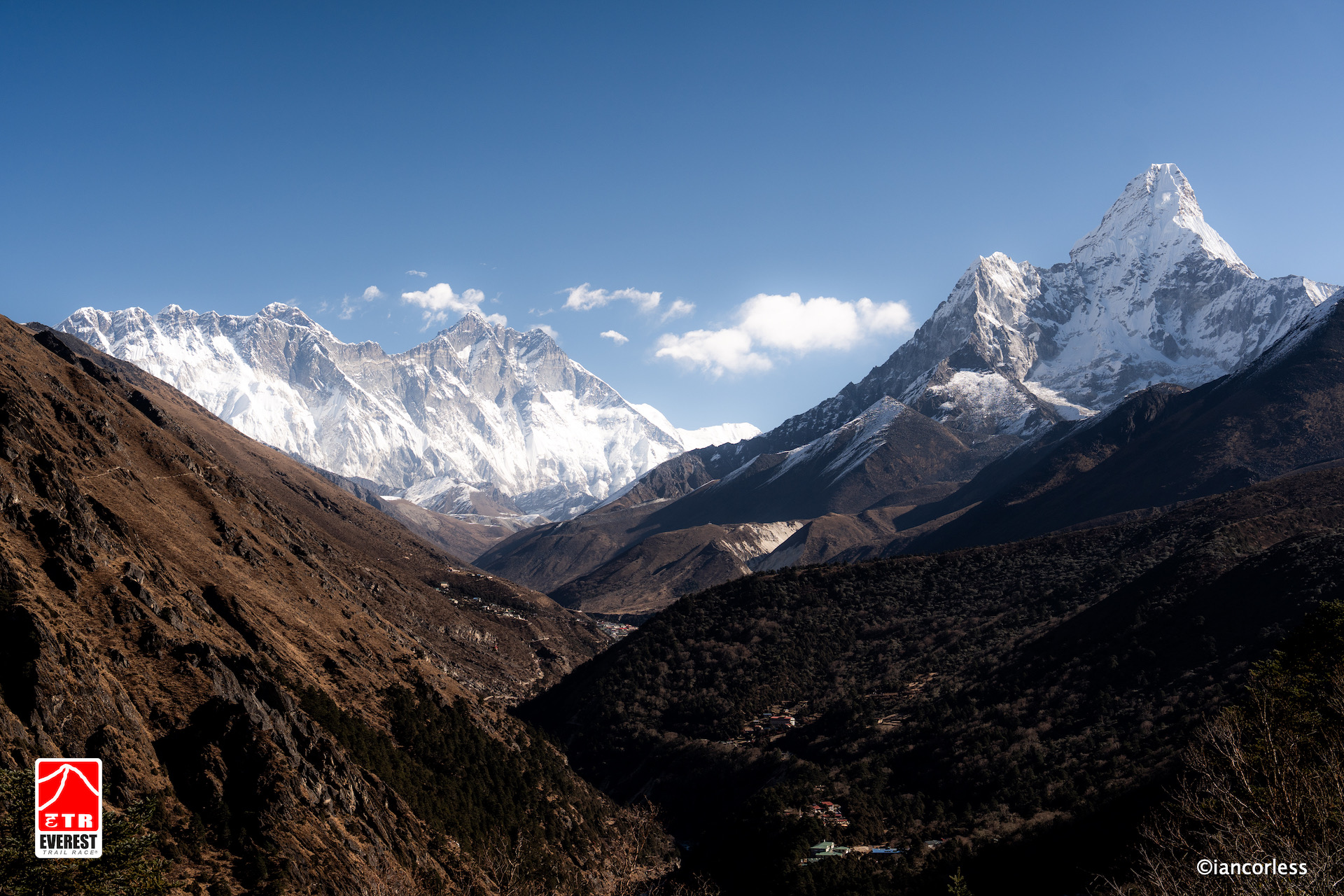
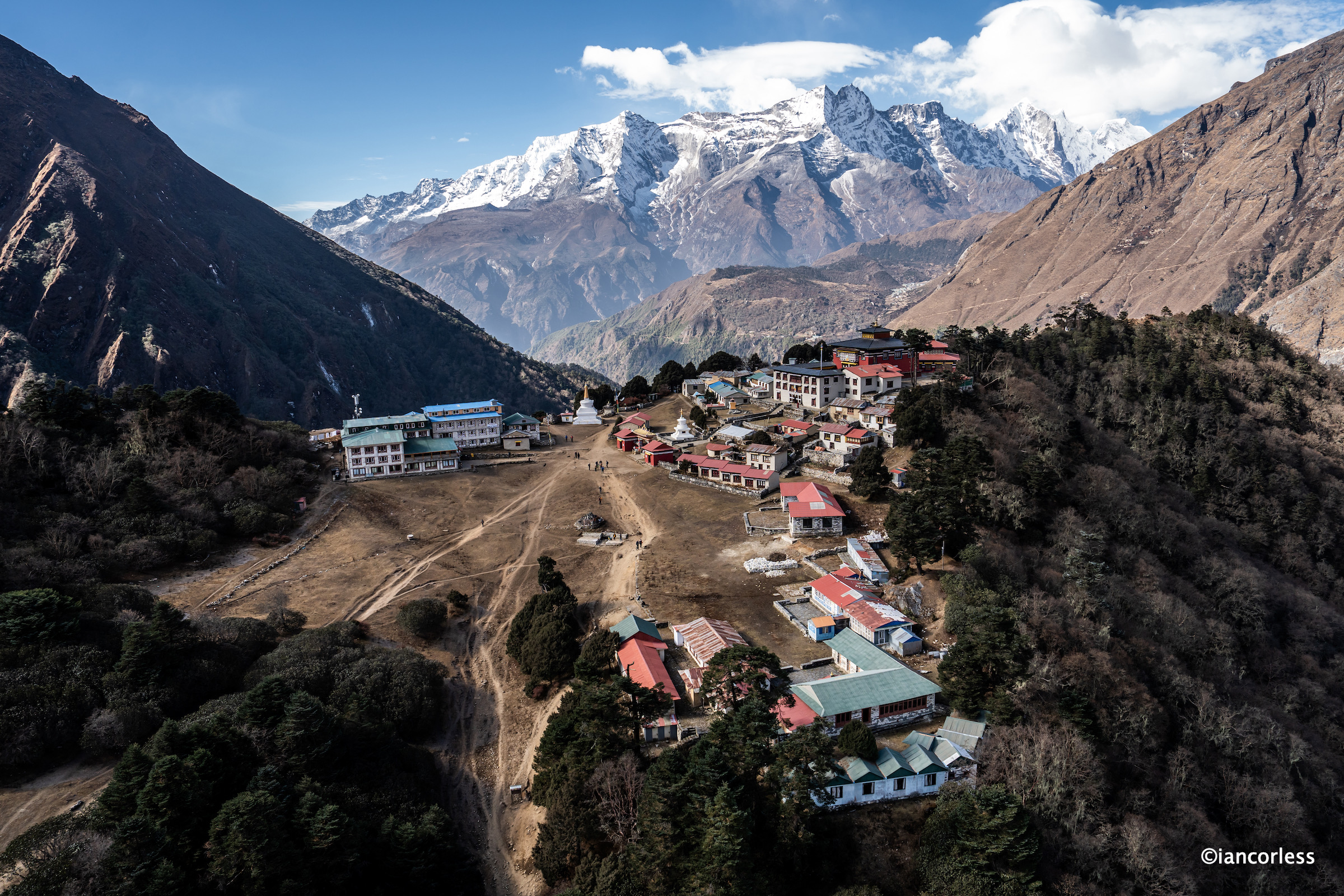
But the final ascent is where Stage 5 seals its legacy. The climb to Tyangboche Monastery, sitting at 3,860m, is a final test of grit. Legs scream, lungs burn, but the reward is immense. As runners crest the trail, they’re greeted by one of the world’s most iconic alpine views: Ama Dablam, Everest, Nuptse, and a horizon lined with Himalayan giants. Arguably, one of THE greatest finish lines in the world.
The pain is real, but so is the pride. After this brutal day, there’s relief in knowing only one stage remains. For those who made it to Tyangboche, it’s not just another finish line – it’s a summit of spirit, dedication, tenacity and perseverance.
After three gruelling stages through remote and rugged terrain, Stage 4 of the Everest Trail Race turns the page. Today, the athletes trade solitude for the storied footpaths of Nepal’s most iconic trekking corridor. This is the gateway to Everest.
A warmer night, lower altitude and this morning, the runner’s may have felt a little more rested, however, stage 4 was intimidating.
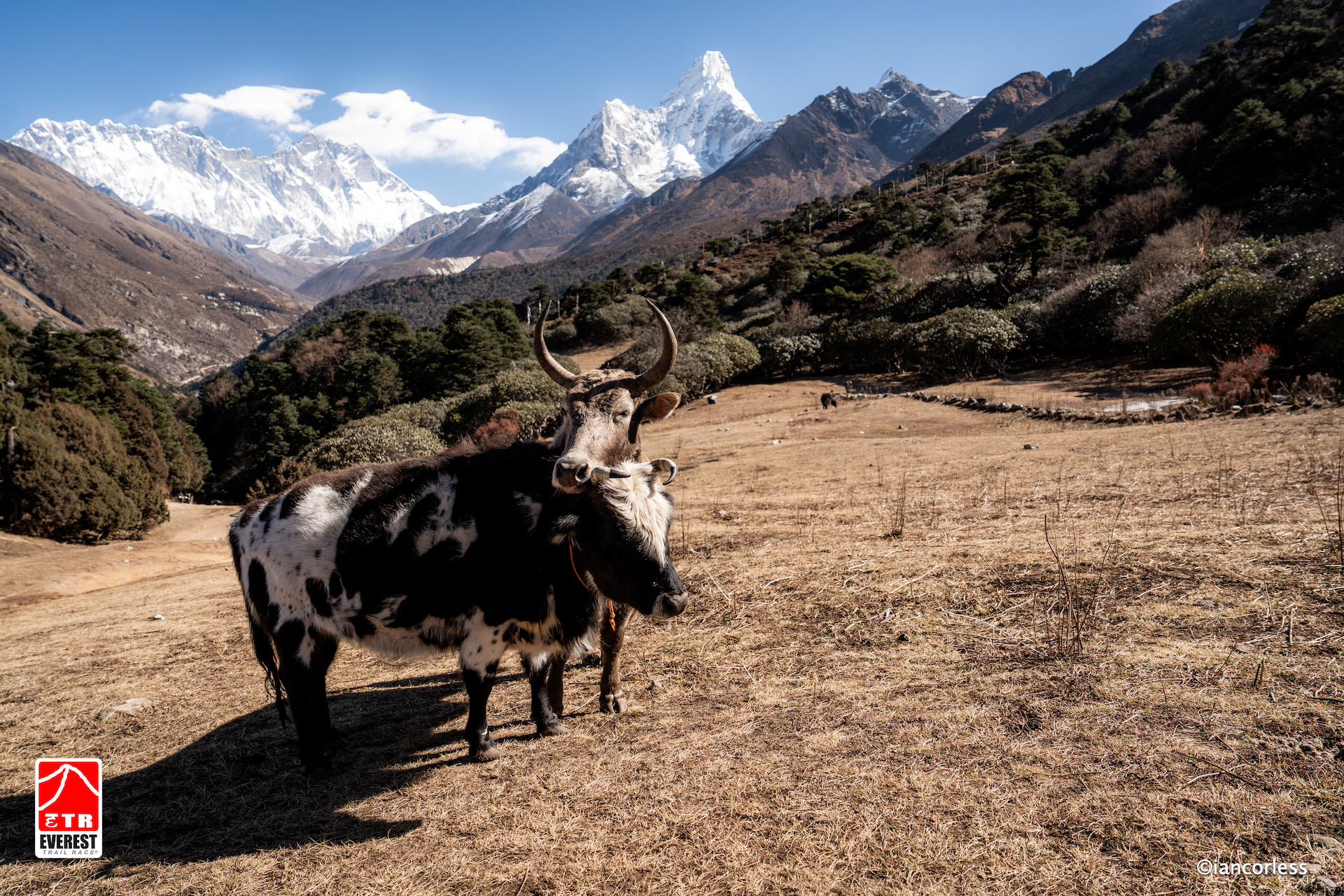
Covering 27.36 kilometers with 2,170 meters of elevation gain, Stage 4 is no break in the action. It’s a demanding route with steep climbs, quad-burning descents, and a new cast of characters on the trail: trekkers, porters, yaks, and teahouses buzzing with the hum of expedition life.
From the gun, it’s all uphill. The stage opens with a brutal 1,000-meter climb in just over 6 kilometres. The goal? Kari La, perched at 3,080 meters. This is the kind of climb that shows no mercy. Legs burn, lungs strain, and the views remind runners they’re racing through giants.
Checkpoint 1 at Paia arrives as a welcome relief. It’s a place to regroup, rehydrate, and reset. But the descent to Surke at 2,750 meters is no victory lap. Fast, technical, and relentless, it punishes tired legs before the next climb begins.
From Surke, runners face another grind: the climb to Chaurikharka (Checkpoint 2) at 2,621 meters. It’s lower in altitude but still a fight, especially coming late in the stage. From there, the course becomes unpredictable: a rollercoaster of ups and downs, testing whatever reserves are left.
The final push into Phakding at 2,620 meters marks more than the end of the stage. It’s a symbolic arrival.
The runners are now on sacred ground, part of the ancient route to Everest Base Camp. The trails are busier, the lodges more frequent, and the landscape unmistakably Himalayan.
Stage 4 isn’t just a physical battle, it’s a transition. The isolation of the early stages gives way to the buzz of one of the world’s most legendary trekking routes. But don’t let the crowds fool you. With over 2,000 meters of climbing and the fatigue of three hard days behind them, today was a war of attrition.
The finish line at Phakding means rest, food, and maybe even a little comfort, tents are traded for a lodge. Everest still looms. And the toughest stage lies ahead – stage 5 the ultimate test.
Stage 3 of the Everest Trail Race is where the real punishment begins. With 28.3 kilometres of unrelenting terrain and a leg-wrecking descent from the high-altitude village of Kamo (3855m) down to the valley floor at Jubing (1600m), this stage isn’t just tough, it’s a full-body assault.
Runners start high, where the air is thin and every step feels like a negotiation with your lungs. The early climb up to Checkpoint 1 at Kamo is already a grind, but what follows is what defines this stage: a relentless plunge that feels like it goes on forever.
The descent from Kamo to Jubing is not gentle. It’s steep, technical, and unforgiving. The views are spectacular, sure, but most runners will be too focused on staying upright to take much of it in. The drop of over 2200 meters smashes quads and shreds knees. Every rock, step, and switchback becomes part of the battle. If the climbs test your endurance, the downhills here test your durability.
Fortunately, the support is solid. CP1 at Kamo, CP2 at Hewa, and CP3 at Jubing are well-stocked and strategically placed. Runners have every opportunity to refuel and regroup, though few will find much comfort in the knowledge that the real sting comes right at the end.
Just when you think you’ve done enough, the trail throws in a final climb up to the iconic village of Kharikola. It’s a steep, grinding ascent that comes after hours of muscular destruction.
This is where mental strength counts just as much as physical preparation. After hammering down thousands of vertical meters, your legs are begging for mercy, and yet, up you go again.
Kharikola, perched proudly in the hills, is a reward in itself. Not just for the views, but for what it represents: survival. Conquering Stage 3 is a badge of toughness. It’s where the Everest Trail Race shakes out the pretenders from the contenders.
Stage 3 doesn’t just test you, you feel it in your legs for days. You carry it in your mind for longer. It’s beautiful, brutal, and unforgettable. And for every runner who arrives in Kharikola, it’s a hard-earned victory etched into the heart of the Himalayas.
Stage 2 of the Everest Trail Race doesn’t waste time. The gun goes off, and it hits hard, right into a beast of a climb that defines the day. The route is 26.6 kilometers with 1,483 meters of vertical gain, but ask anyone who ran it: it feels like double that.
The stage opens with arguably the most iconic stretch of the entire race, a 4km climb straight out of the start gate, topping out at the summit of Pike Peak at 4,046 meters. There’s no easing into it. You’re immediately lunging skyward, legs burning, lungs gasping, every step on loose rock and narrow trail.
But what a reward. The views from Pike Peak are the kind you earn. Everest, Thamserku, and the distant giants of the Himalayas tower on the horizon.
There’s a strange serenity up there—above the tree line, above the chaos, if only your quads weren’t screaming so loudly.
From the summit, runners are thrown into a tricky descent, technical, steep, and demanding full attention. This is no cruise; it’s controlled aggression. The terrain underfoot is a mix of loose stone and rutted trail, constantly shifting. Jase Bhanjyang appears below like a mirage, a short-lived reprieve at 3,510m before the next test.
After a quick breath, it’s back uphill, another climb, this time to 3,800m. It’s less brutal than the first, but by now the fatigue is setting in. The altitude, the sun, the effort, they add up. This section wears on you slowly, sapping strength before delivering a massive release:
This is the stage’s exhale. A long, fast descent winds down to Jumbesi, where Checkpoint 2 awaits. The descent is runnable FOR SOME but relentless. It’s a test of patience, footwork, and knowing how much to push without blowing up. At CP2, some collapse into chairs, others refuel and move quickly, no time to waste.
From Jumbesi, the route shifts gears. A more gradual climb takes runners to Phurteng at 3,000m, a steady push that gnaws at tired legs. Then, a rolling descent gives a hint of relief, but it’s a trap.
Because this stage has a final sting: the kick to Ringmo. Just when you think you’ve made it, the trail juts upward again before finally dropping into the finish at 2,740m. It’s psychological warfare. You can see Ringmo before you reach it – but the trail makes you fight for it.
Stage 2 is a monster. On paper, it doesn’t look like the toughest, less gain than Stage 1, more downhill, but the terrain, altitude, and sequence of climbs make it punishing. The raw elevation loss (2,203m) sounds helpful, but it hammers your legs in a different way. Many finish looking shell-shocked. Others, oddly exhilarated.
This is the Everest Trail Race offers up some of the most staggering views you’ll ever see on a race course, and today, in the shadow of Pike Peak, the price of admission was steep but worth it.
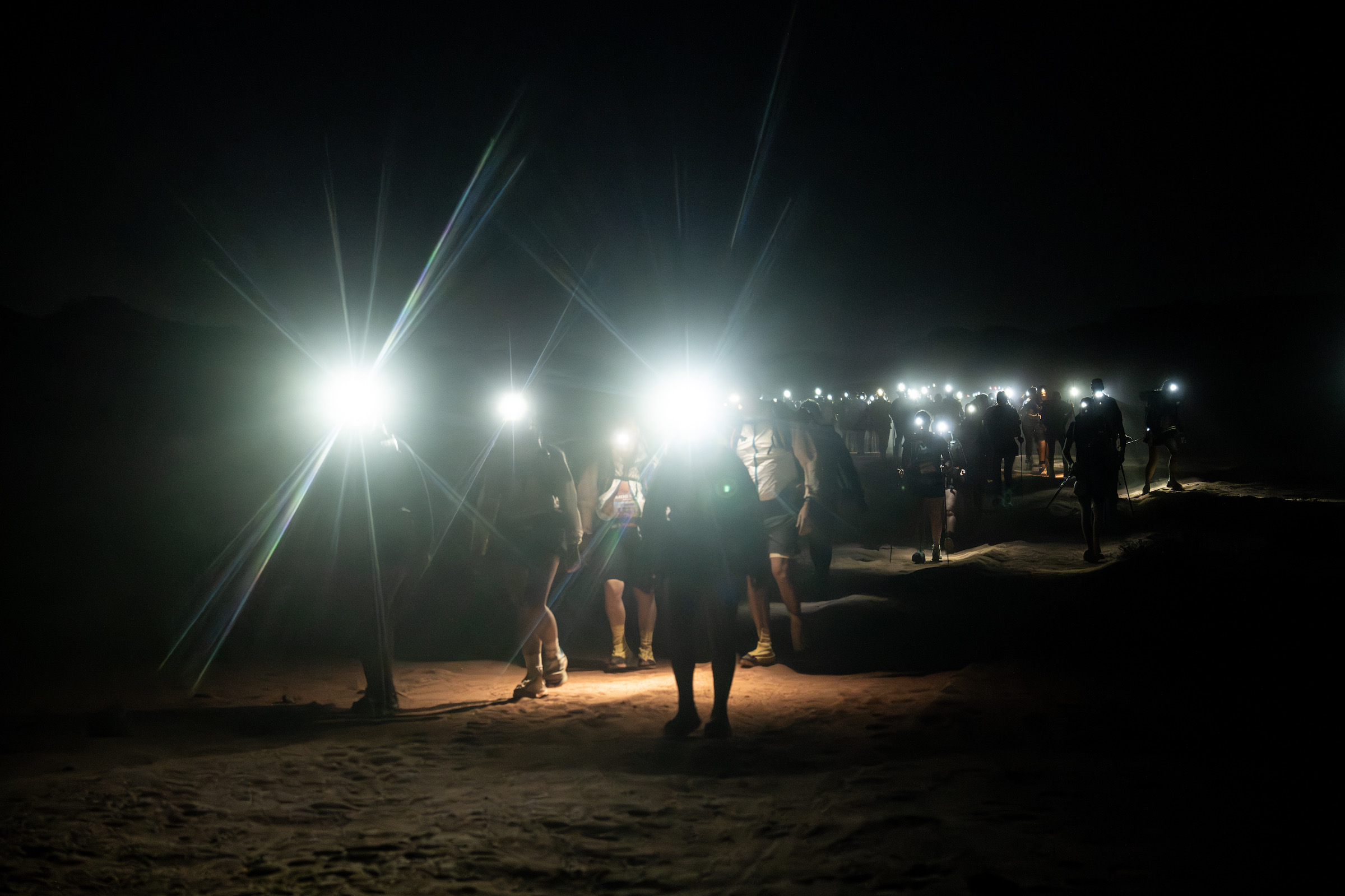
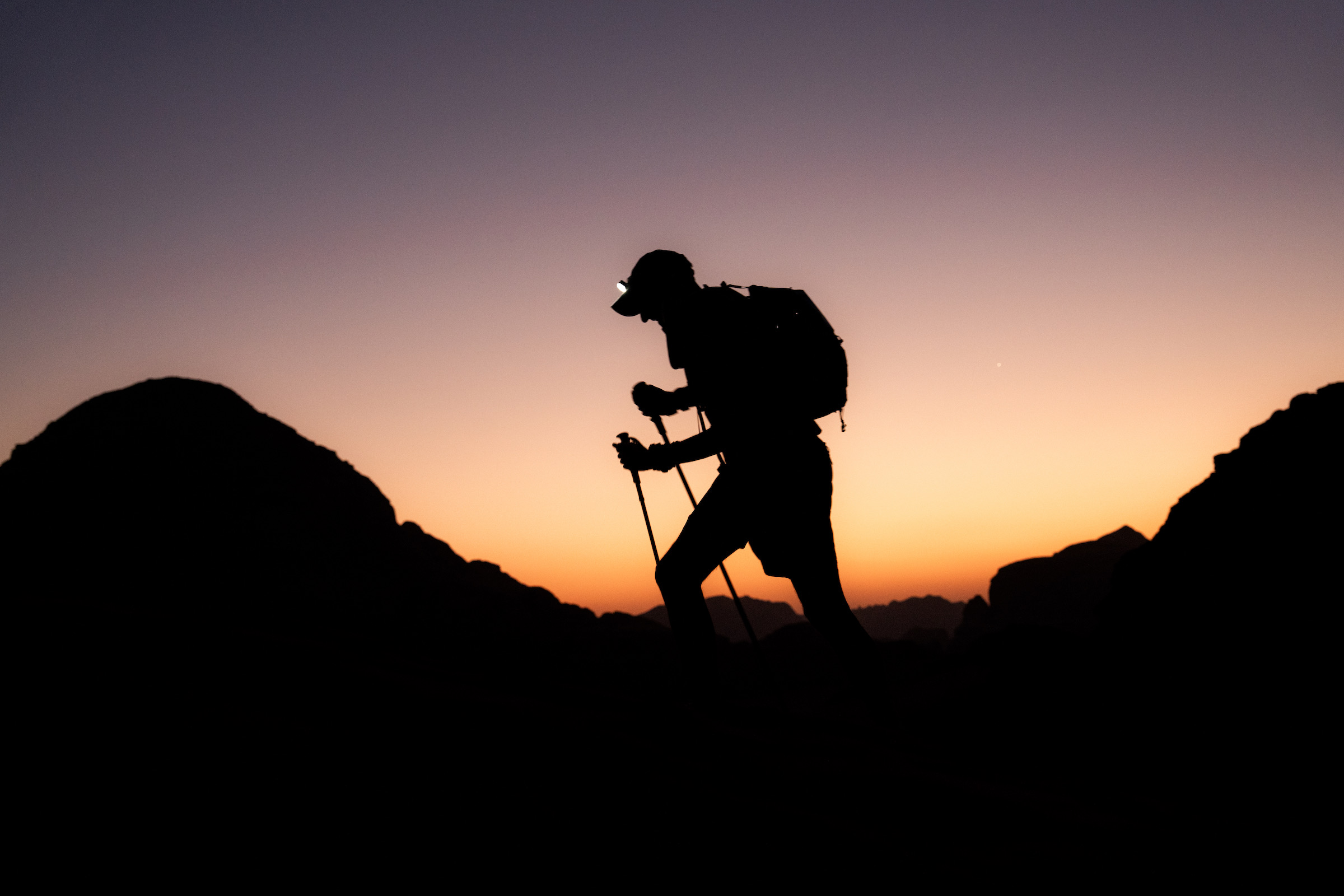
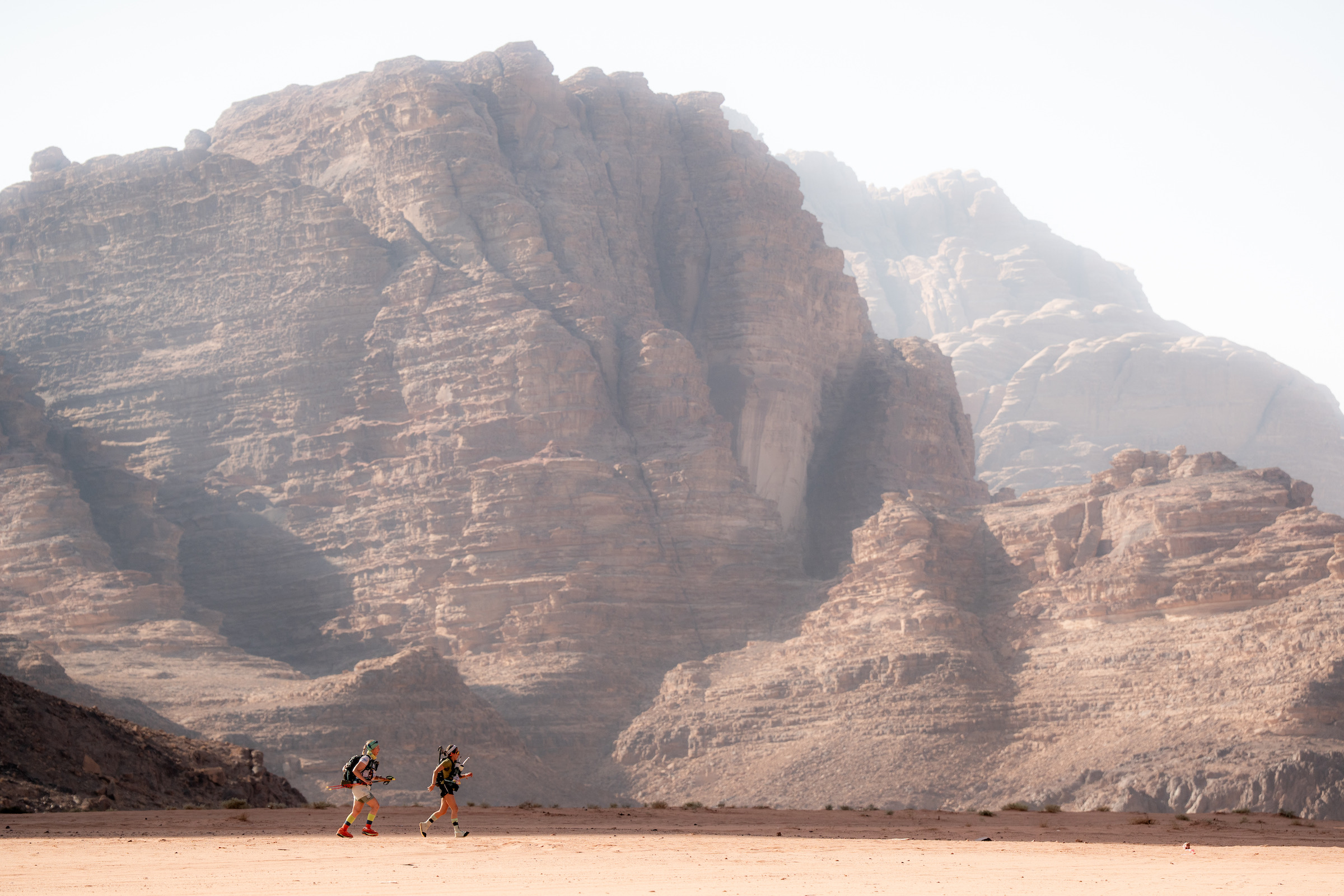
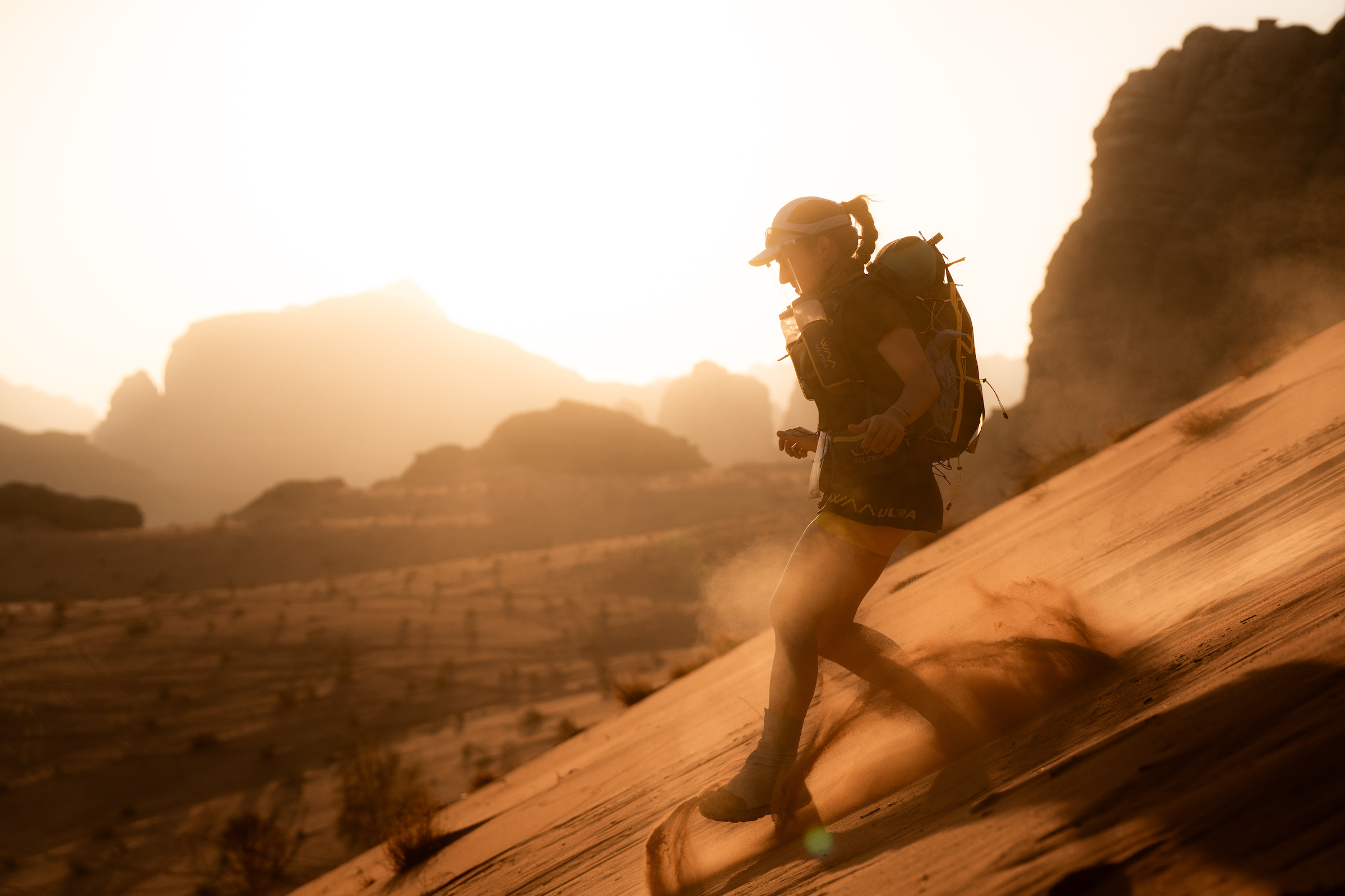
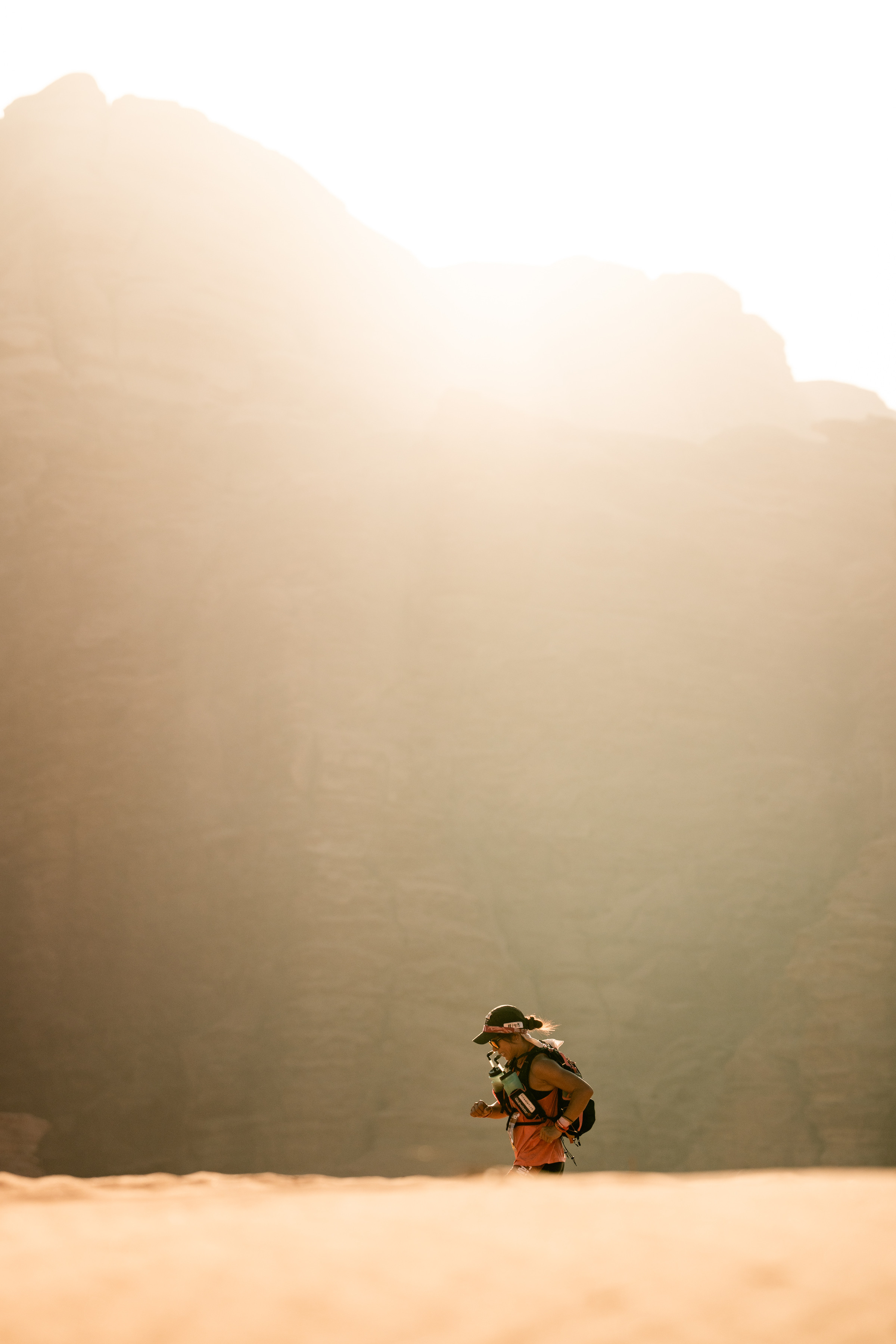
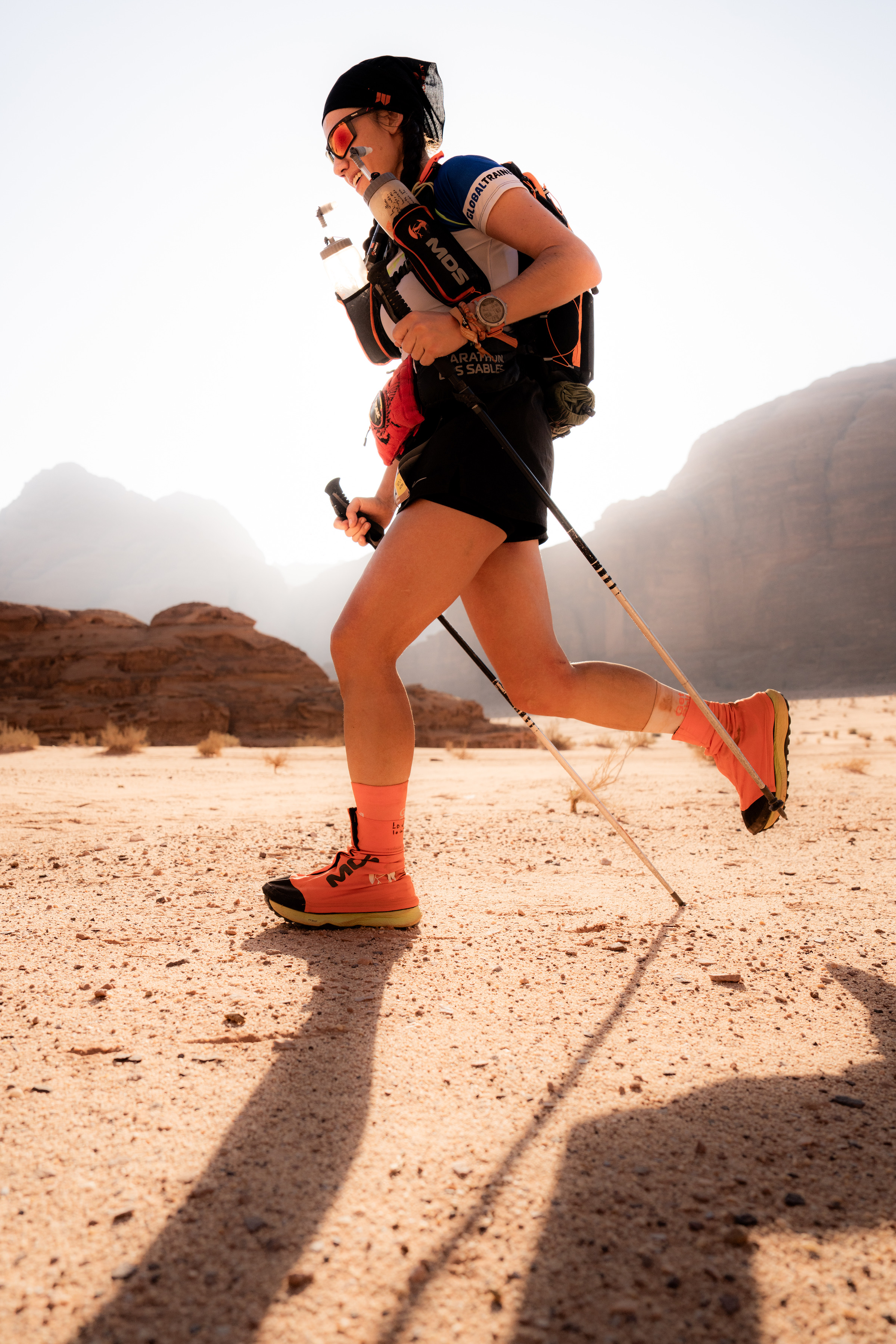
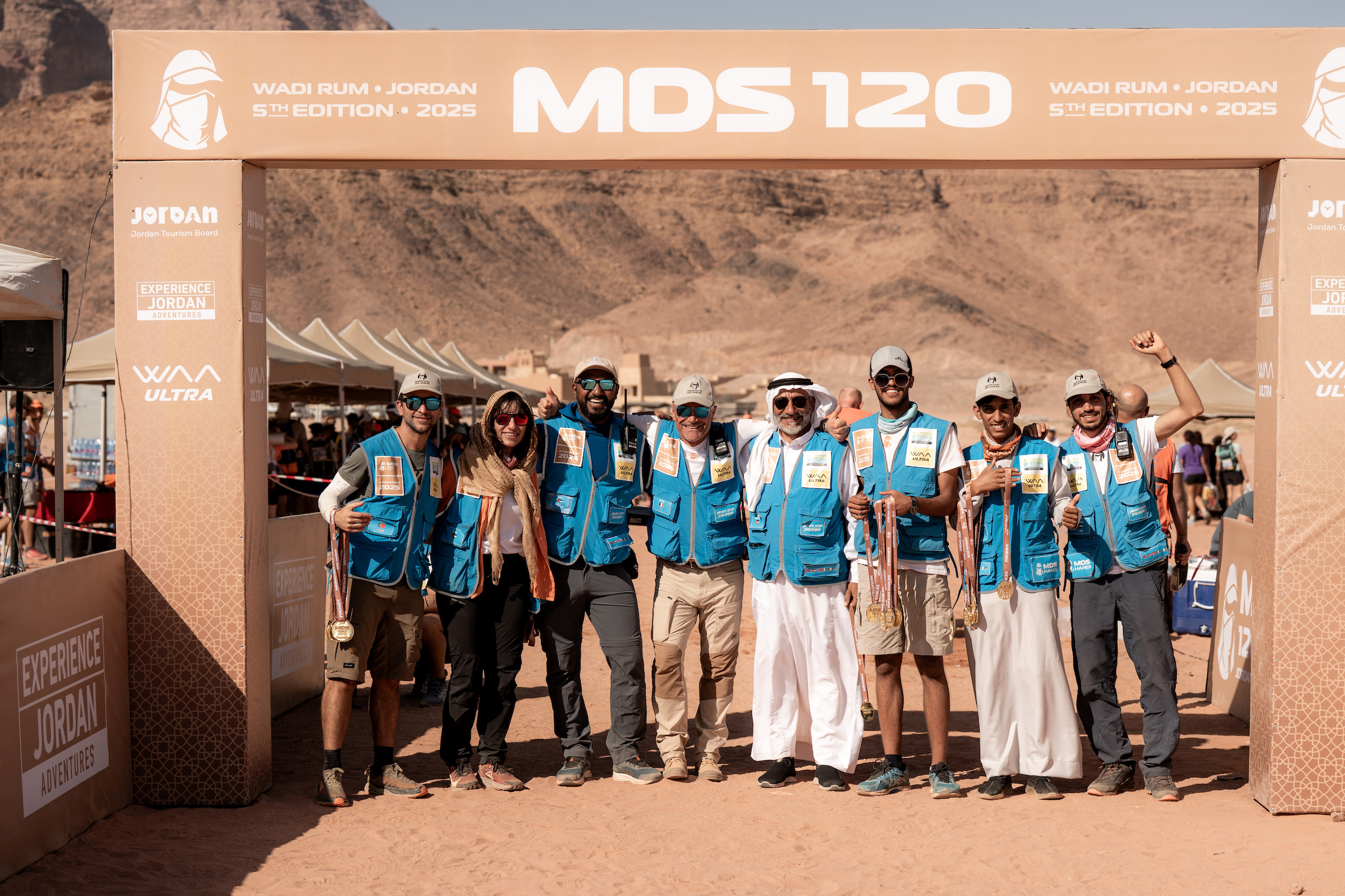
Stage 3 of MDS 120 Jordan, 26 unforgiving kilometres, darkness and the glow of head torches started a day full of promise and pressure. At sunrise, Wadi Rum ignited in gold.
This was the final stretch, the last push through soft sand, searing silence, and soul-stirring scenery. One last chance to earn the medal. One last trial through the desert’s raw beauty and brutal truth.
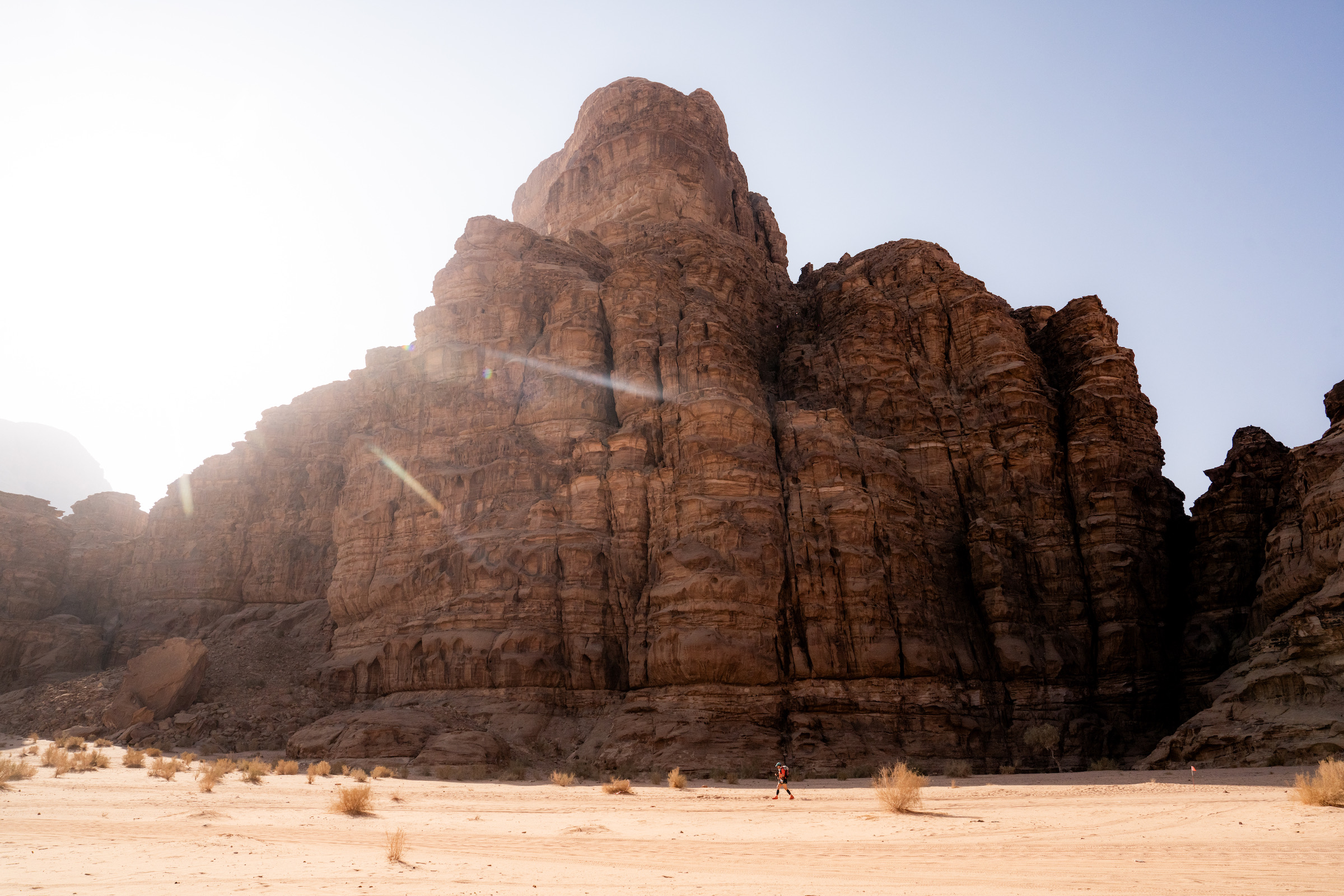
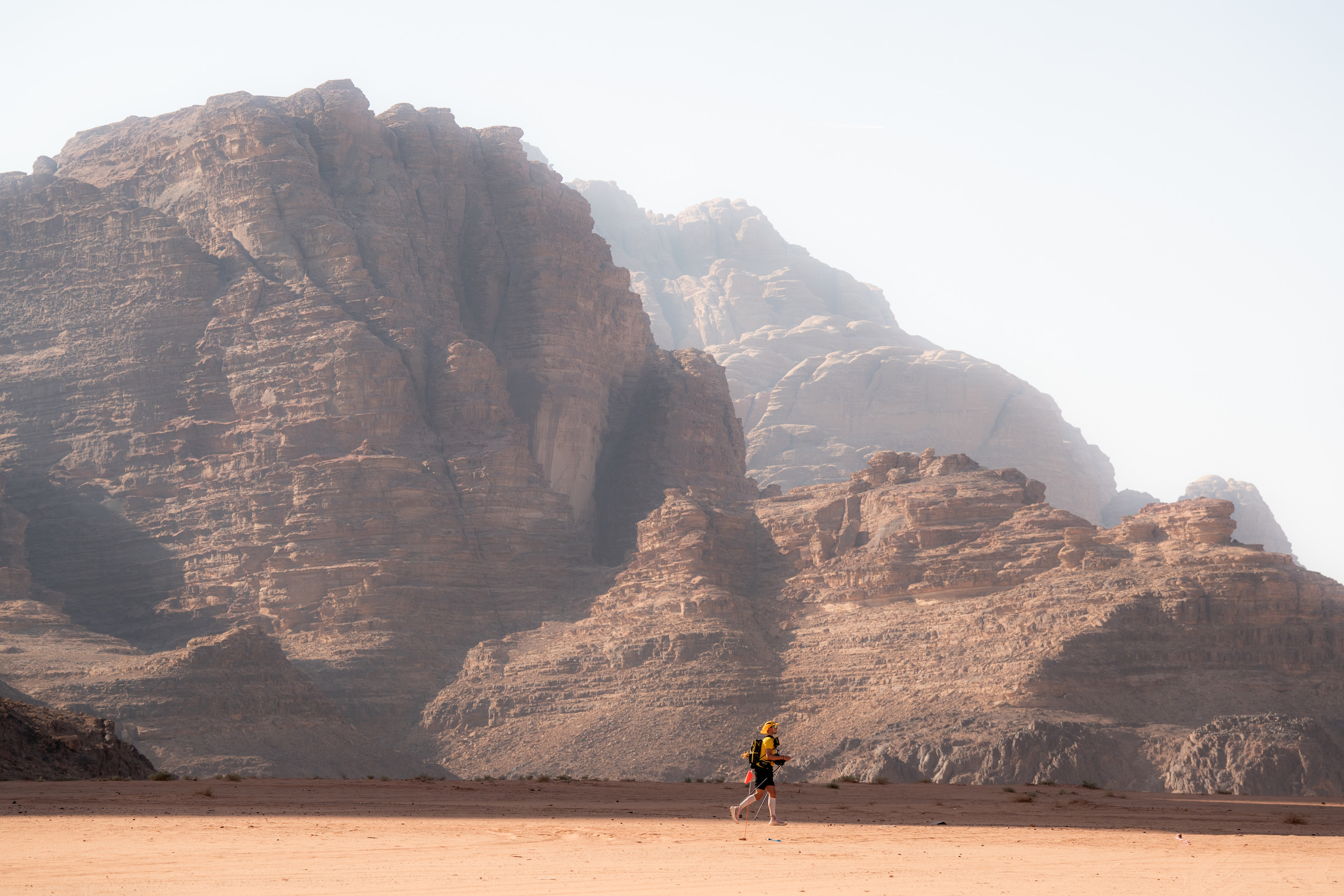
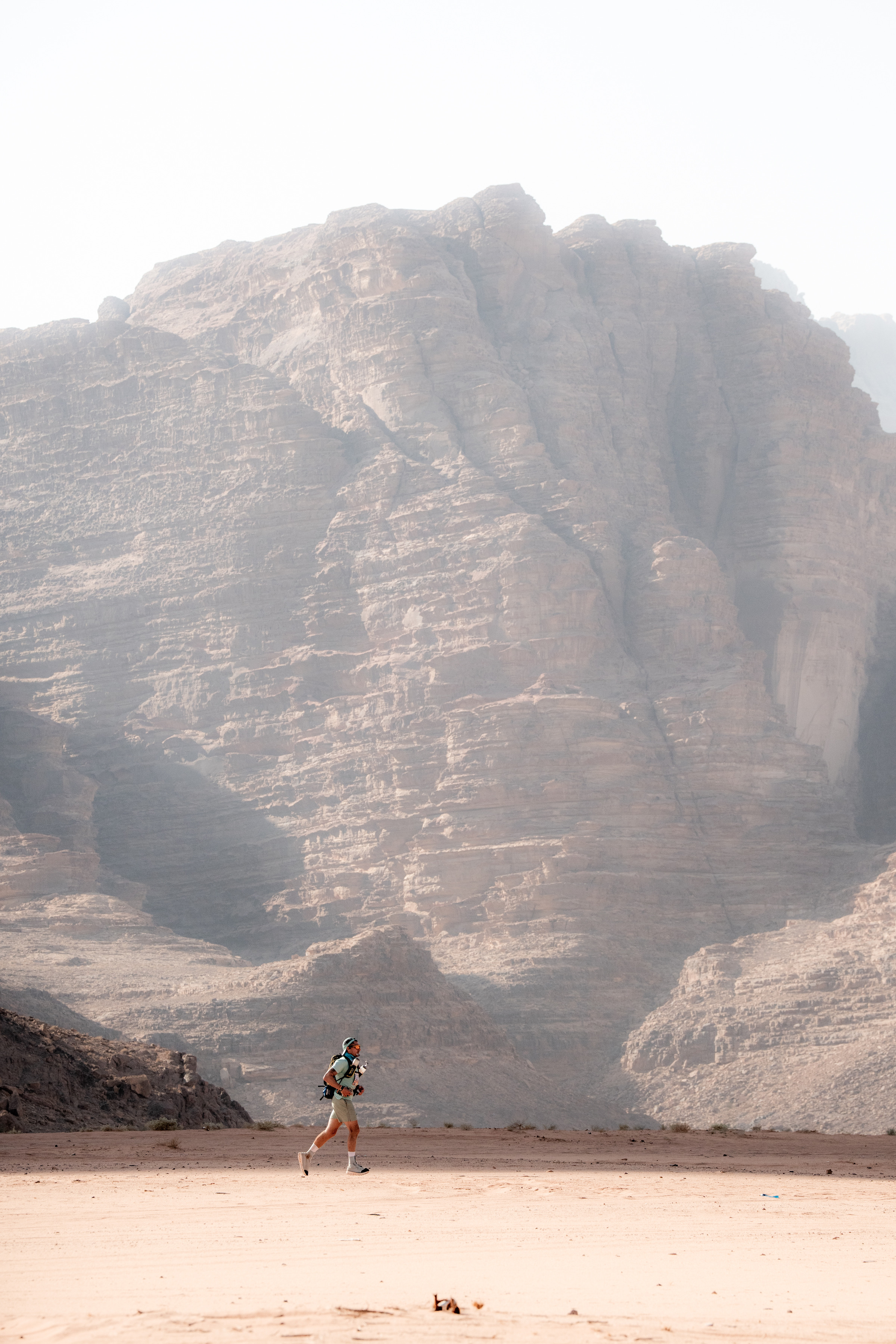
The route cut through a living painting, towering rock faces, vast plains, and dunes sculpted by centuries of wind.
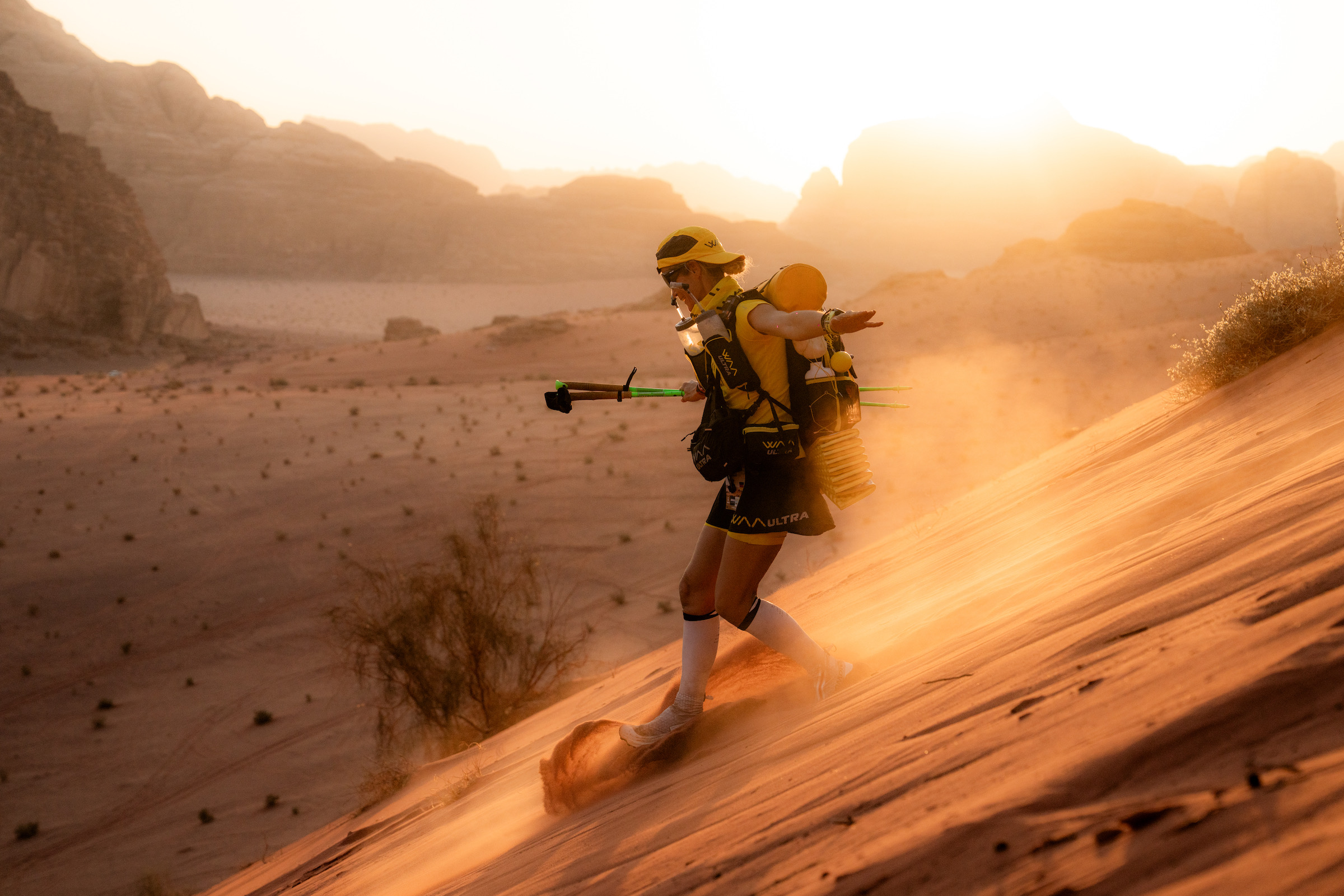
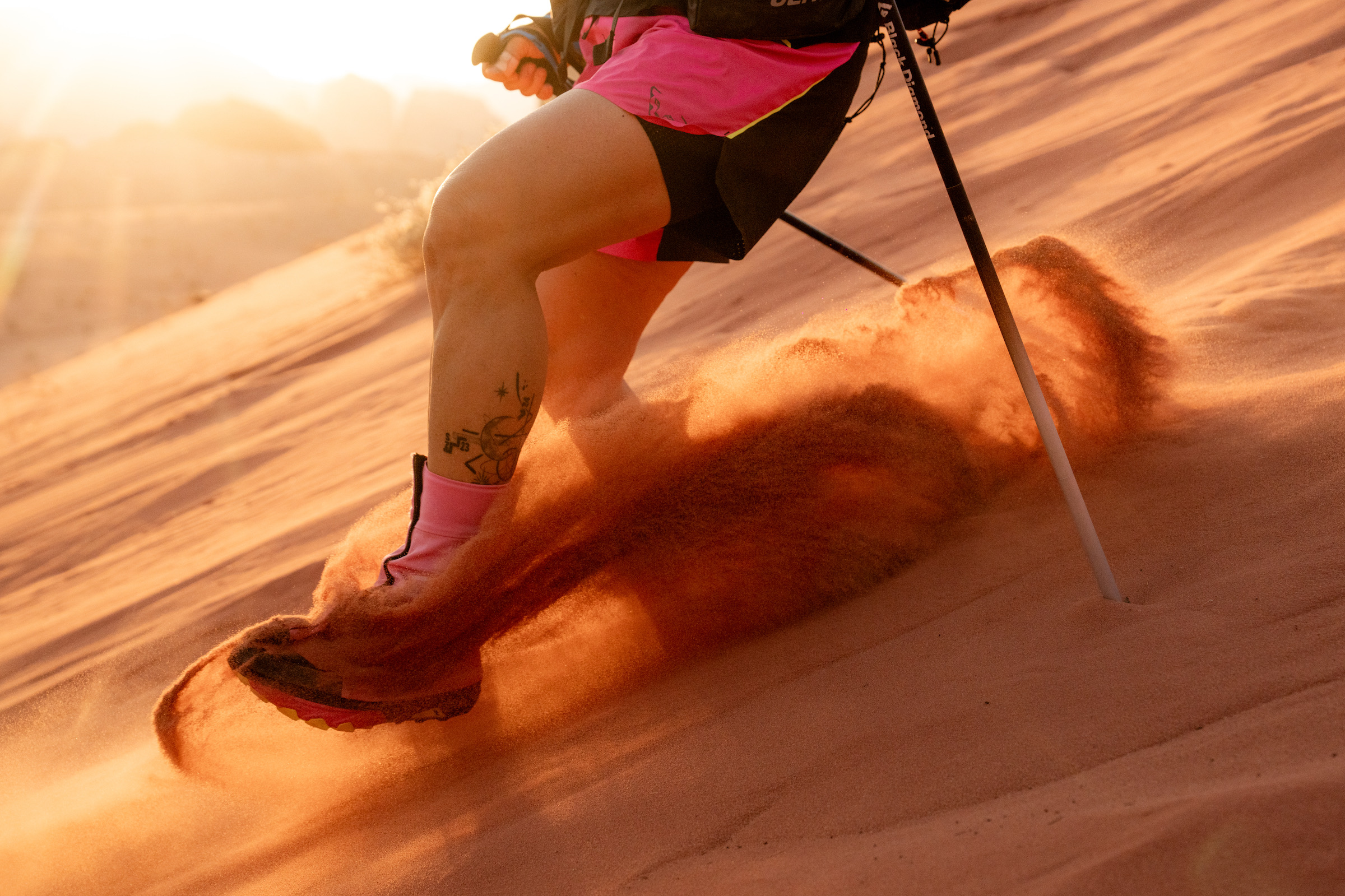
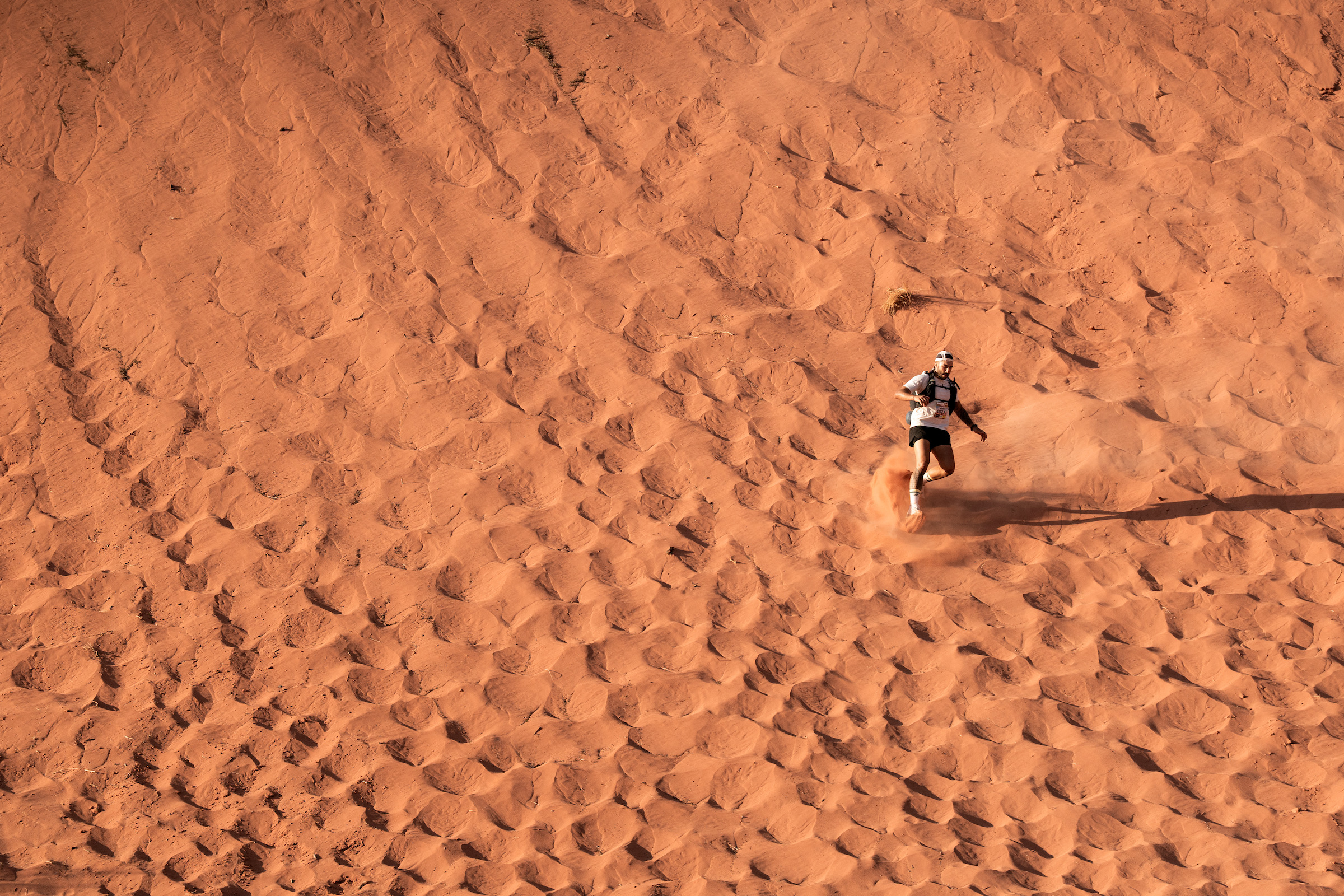
The first challenge: a steep descent down a glowing dune, soft sand cascading beneath every step. It was beautiful. It was punishing.
As the sun climbed, so did the heat. Every footfall dragged through thick sand. Every glance ahead revealed more of the same: no shortcuts, no reprieve, just the relentless call to keep going.
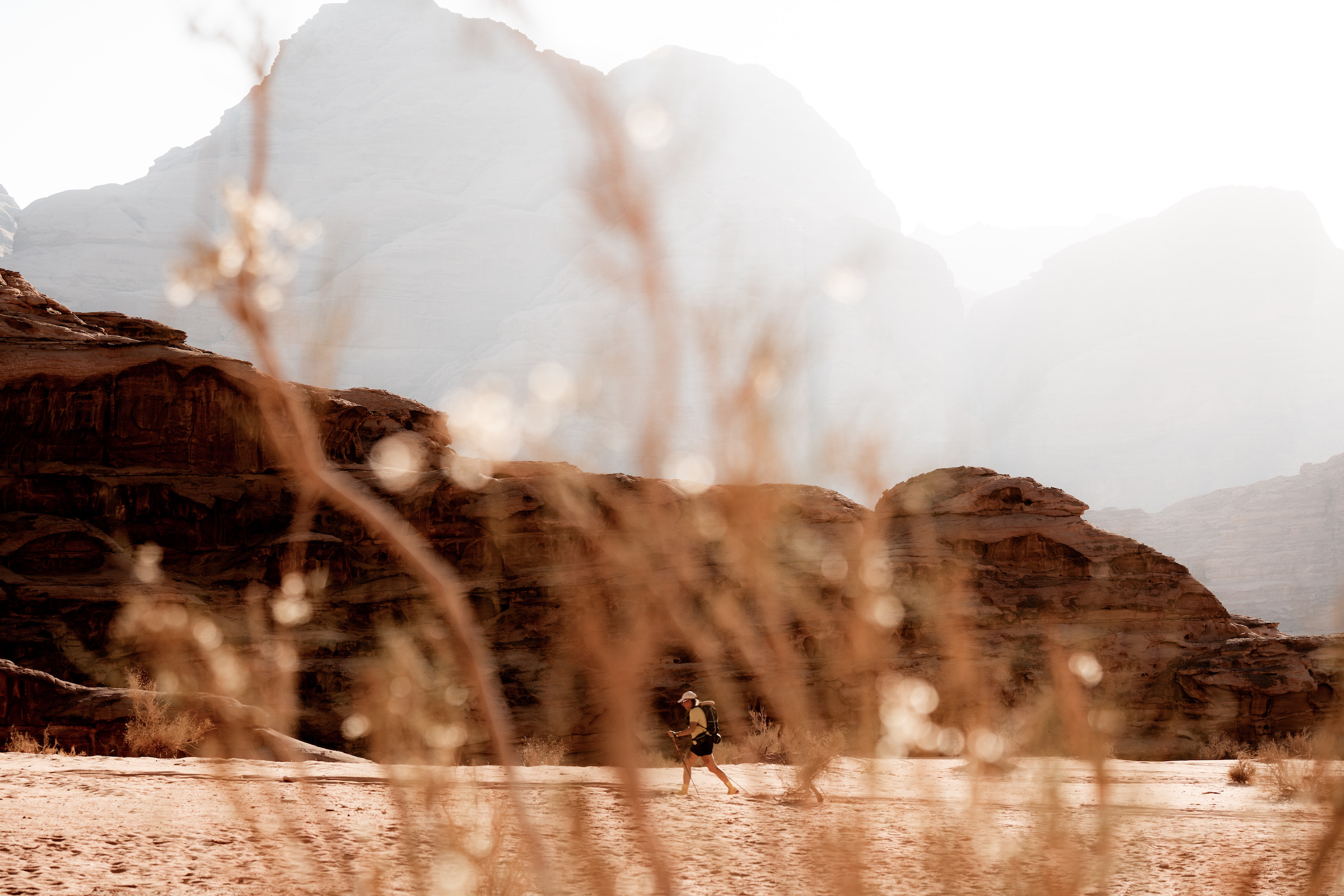
The terrain twisted between jagged mountains and flat expanses that played tricks on your sense of distance. Wadi Rum doesn’t offer false hope, only real demands. But in that, it gives something rare – clarity.
At the conclusion of stage 3, runners will have logged 70, 100, or even 120 kilometres across Jordan’s desert. Stage 3 wasn’t just the final day, it was the exclamation point.
Bodies were depleted, minds frayed, but the finish line pulled like gravity.
And what a finish. The final stretch opened into a wide, sun-drenched plain, the sound of cheers carried by desert wind.
At the line, tears flowed freely of pain, pride, exhaustion, and elation. Medals were placed on tired and elated bodies, but the real reward was something deeper.
Every runner who crossed that line brought a story. Some came to test limits, others to heal, some to prove a point only they could understand. Each journey was personal, yet all were part of something greater, a living, breathing mosaic of endurance and emotion. This is what made MDS 120 Jordan more than a race.
And within the mosaic, some pieces really stood out, especially the two pieces of Danielle and Bernard – Bernard had completed MDS Legendary and wanted to share the MDS experience with his wife of 50-years – they experienced MDS 120 Jordan, side-dy-side, an incredible and awe inspiring journey of love and solidarity that touched the sole of every participant and staff – this personifies MDS.
And then there’s Jordan itself, its people, its land, its soul. Their generosity turned this challenge into a celebration. Without them, the journey would have been just hard. With them, it was unforgettable.
Now it’s over. Sand still clings to shoes and skin.
Muscles ache. But the desert leaves more than blisters and fatigue, it leaves memories burned into the heart. It leaves friendships forged in dust and sweat.
Stage 3 wasn’t just an ending. It was a transformation. And the desert? It watched silently, as always, as each runner a piece, a small tiny piece and part of the vast, magnificent puzzle that is MDS 120 Jordan.
And each runner will carry it with them forever…. It leaves a new version of themself, one they didn’t know existed.
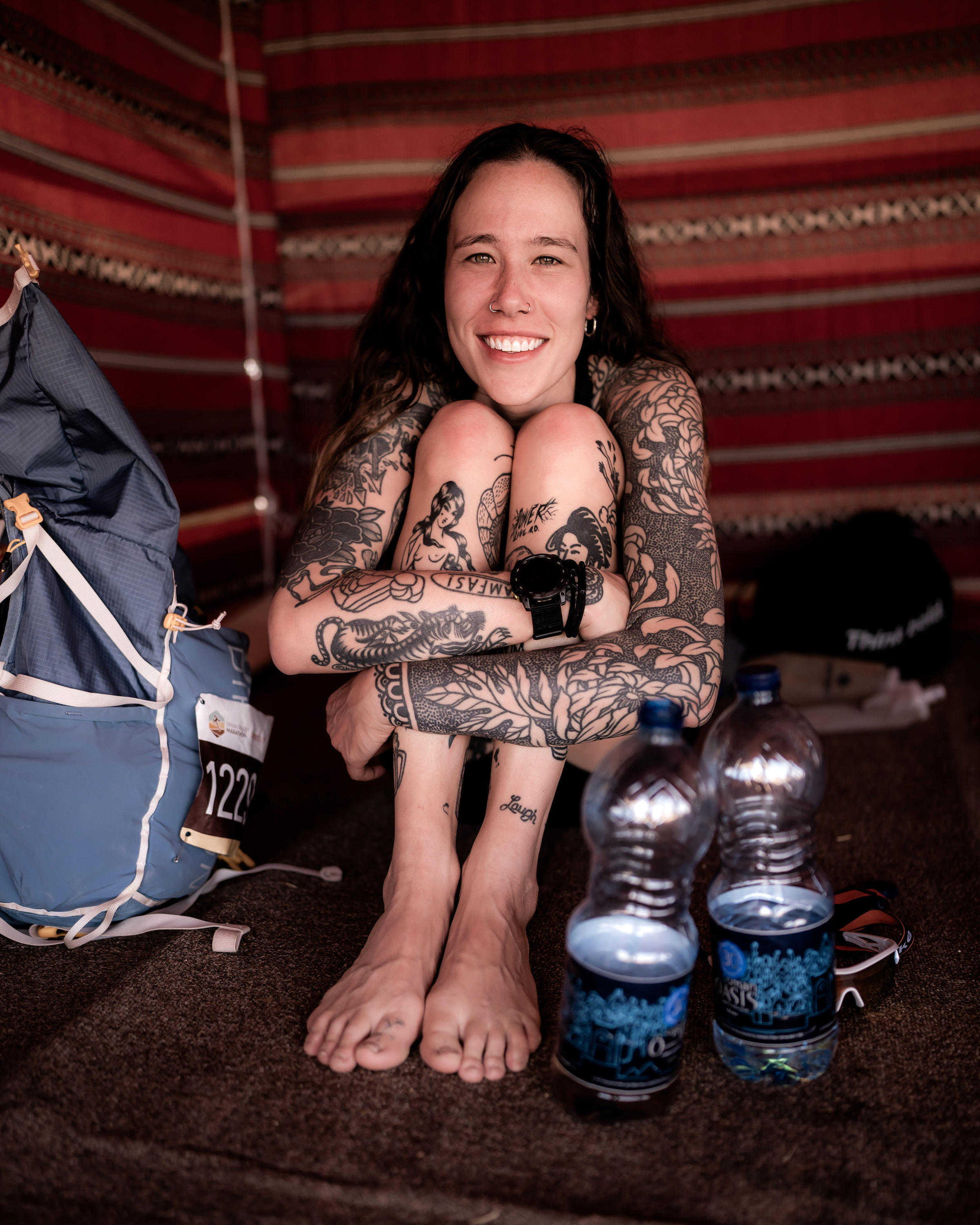
Lydia started running during lockdown whist living in the UK. From very slow 2km runs, Lydia soon progressed to creating her own approach to running and ultra.
“What started as a way to escape the East London party scene has evolved into a pursuit of wild ultra-running missions.” – article here.
She did road marathons, but did them different, failed at her first ultra, but then something clicked…
• The Speed Project solo in the USA – 500km in 5 days.
• Oman Desert Marathon – done.
• FKT across 650km of the Camino de Santiago in Portugal – done.
Photo by Ian Corless
Now she lines up at OCC during UTMB week and follows up with her own fundraising project in the UK.
2026? she’s coming to Costa Rica to face heat, jungle, mountains, and coastline of The Coastal Challenge.
Desert running brings many challenges and running in a desert for multiple days brings a whole new set of challenges.
For 40 years, the Marathon des Sables (MDS)has defined the edge of human endurance. It began as a wild idea—could someone run across the Sahara carrying everything they needed to survive? That idea sparked a revolution. MDS became the godfather of the ultra-stage race, a test of self-sufficiency, resilience, and pure grit. Over time, it expanded beyond its roots: the MDS 120, the exploratory MDS TREK, the demanding MDS RAID, and the mind-bending MDS Crazy Loops. Each one a new take on the same promise, to push the limits of what a runner can handle.
MDS as it is affectionately known paved the way not only for multi-day desert racing but ‘all’ multi-day racing, be that in snow, ice, rainforest, jungle or the mountains. If multi-day racing was the mafia, MDS would be the Corleone family.
All multi-day races have followed and tried to replicate the MDS format, however, the reality is, I have yet to experience a race that matches the size, the scale, the organisation and awe-inspiring splendour of what MDS has created in the Sahara. Ask anyone, despite experience, despite achievement, MDS is usually ‘on the bucket list!’ It’s fair to say, that MDS is directly attributable for many new ultra-runners. You see, MDS offers more than just running, it offers a challenge, it offers something quite unique – the Sahara and the MDS strips the runner back to basics and deprives them of all luxuries so that they are stripped raw. Runners find themselves in the desert.
2024 and onwards:
2024 saw a new team take over the MDS brand, at the head, Cyril Gauthier and Olivier Cerbeland. Significant changes took place for the 38th (2024) MDS Legendary pioneered at what was the HMDS format (now MDS 120) and they remained for 2025 and moving forward.. There are 3 key points:
Point 1:
Legendary is now 6 timed stages and not 5 stages with a charity stage. The distance will be, +/- 250km’s. The long day in 2024 was stage 3, for 2025 this will be stage 4.
Point 2:
MDS events are contested in food self-sufficiency: only water, in limited quantities but sufficient to cover the needs of an athlete evolving in the desert, is provided to you each day. You must take along for your entire stay in the desert everything you need to eat and prepare to eat (freeze-dried meals, semolina, cereal bars, stove, etc.). This self-sufficiency will include the day of your arrival in the desert, and the day of control preceding the race. *Trek is exempt from food self-sufficiency.
Point 3:
You must arrange your own travel to race destination. As usual, MDS will take care of you from your arrival airport, this will depend on race location. Typically, free shuttles will be offered from one key airport. You will thus have the possibility of anticipating or extending your stay, or of being joined by your family, much more simply than before.
It is recommended you listen to a podcast with co-owner and CEO Cyril Gauthier. Listen HERE.
MDS Events, 2025 moving forward:
LEGENDARY the iconic 6-stage, 250km race celebrating 40-years in 2026.
MDS 120 (used to be HMDS) this is 3-stages over 4-days with distance options of 70/ 100 or 120km.
MDS TREK this is similar to the MDS 120 format, however, there is no self-sufficiency, more comfortable accommodation and additional facilities, an excellent introduction to the MDS.
MDS RAID an event for more experienced athletes that is undertaken in teams of two, over approximately 90-120km’s, typically, two distance options are provided. The format is similar to MDS 120 with 3-stages over 4-days. One night will be undertaken under the stars with no bivouac.
MDS ULTRA new for 2025, a 100-mile or 100km single stage race with a 40-hour cut off.
MDS CRAZY LOOPS three new events for 2025 undertaken in ski resorts, the format is to run as many loops as possible in 24-hours. The loops will be typically, 3-5km’s in length.
DESTINATIONS:
Morocco – has multiple events: Atlantic Coast, Legendary, MDS Ultra, MDS 120 Morocco, and MDS Trek.
Namibia – a MDS Raid event
Turkey – MDS 120
France – Crazy Loops – La Rosière and Courchavel
Fuerteventura – MDS 120
Jordan – MDS 120
Peru – MDS 120– This event takes place every 3-years.
****
If you have entered MDS or another self-sufficient multi-day race or adventure, you will be asking:
“What equipment do I need?”
This question is the same for many other desert races but I need to be clear, not all races are the same. For example, MDS requires the runner to be completely self-sufficient. This harks back to Bauer’s pioneering expedition in 1984. The runner must carry ‘all’ they need for the duration of the event, the only exception being:
Bivouac – A simple tent cover is provided at the end of each day and this tent must be shared with 7 other runners. This is specific to Legendary. Other MDS events, MDS 120 as an example, runner’s a re provided solo-occupancy small yellow WAA tents.
Water – Water is provided in bivouac and out on the course. Whilst running, water is abundant and not rationed. At the end of the day, you are provided 5ltr of water which must last to CP1 the following day.
Anything else the runner needs must be carried – pack, sleeping bag, sleeping mat, food, snacks, luxuries etc.…
The Detail
Let’s be clear, it is important to note that equipment will not make you complete any race. What it can do is make the process easier and more comfortable. Equipment is something we all must take to any race and finding out what works and doing the research is part of the fun.
If you want to increase your chances of completing your chosen race, commit to the training required, get your head in the correct place and then finish off with the appropriate equipment for the job. Far too many stress about what equipment they need and neglect the appropriate training.
Multi-day racing in its purest form should be very simple. However, over the year’s deciding what equipment to take has become increasingly more complicated.
It shouldn’t be complicated and in all honesty, it isn’t!
Here is just a list of absolute essentials, one could say that this list is mandatory:
Hat
Sunglasses
Buff
Jacket (usually down)
T-Shirt
Shorts/ Skort
Socks
Shoes
Gaiters
Rucksack
Sleeping Mat (optional)
Sleeping bag
Head Torch
Flip-flops or similar
Toilet paper
Personal medical kit (feet etc.)
Spot Tracker (supplied at MDS, optional at other races)
Road Book (supplied)
Stock cubes
*Food for the required days
**Mandatory kit
***Water
Optional items:
Warm jacket (usually down that packs small and light) – I consider this essential and not optional
Stove and fuel blocks
Sleeping bag liner
Spare socks
Walking Poles
Goggles
Spare clothes (?)
Luxuries:
Mp3 player
Phone
Solar charger
Kitchen sink…
Perspective:
Any multi-day race has (arguably) five types of participant:
The elite races who will contest the high-ranking positions.
Top age groupers who will look to race for a high place and test themselves overall.
Competitive runners looking for a challenge.
Those who wish to complete and not compete.
Newbies who are out of their comfort zone looking to finish at all costs.
When one looks at kit and requirements, it’s easy to think that the needs of the top elites in group 1 will vary from those in group 5. I would arguably say no! All the runners need the same things; they all must carry the same mandatory kit and they all must carry the same minimum food requirement.
I think the differences come with experience. Novices and newbies will more than likely prepare for the unknown, the ‘just in case’ scenario. Whereas top runners will be on a minimum, the absolute minimum. Groups 2- 4 are a mix of groups 1 and 5 and they fall somewhere between.
So, for me, groups 2, 3, 4 and 5 should (where possible) aim to be like group 1. The only key difference comes with shoe choice. Runners who will spend much longer on their feet and out on the course will most definitely need a shoe that can withstand that pressure and the shoe must also be good for walking. Groups 2-5 never fully appreciate (often until it’s too late) how much they will walk in a desert race.
EQUIPMENT IN DETAIL
When looking at equipment, I am going to provide a brief synopsis and then some recommendations. I will then supply ‘my’ equipment list.
I strongly advice using a tool such as LIGHTERPACK which is a great tool. Here is an example of one of my personal fastpack lists.
Remember WAA is the official equipment of MDS and you can purchase many of the key items via their website HERE
Hat – A hat is essential to keep the sun off your head; options exist that have a neck cover built in to avoid that delicate area that will almost certainly be in the sun all day.
Sunglasses – So many choice, but you need a good pair that has ideally a large lens to protect the eye. Some desert specific sunglasses include a brow pad that helps stop sweat dripping in your eye. Do you need prescription? If so, I use prescription Oakley and they are excellent. Do you need goggles? Yes and no. If you have good sunglasses with good coverage, then no. However, should a sand storm hit, it can be uncomfortable. Goggles guarantee no sand in the eyes.
Buff – A buff or even two are essential. One around the neck helps keep the sun off and you can also wet it to help reduce core temperature. In wind and sand storms, the Buff is lifted and protects mouth, nose and sometimes eyes. A spare Buff is a luxury but worth considering.
Jacket – Jacket choice will depend on sleeping bag choice. If you are using a light bag, a lightweight down jacket is an essential item. Häglofs, Yeti, Mont Bell, Rab and others have exceleent super light options.
T-Shirt – It’s not rocket science, you will have been running in a shirt already, if it works, why change it? I read countless arguments about should it be black or white – you know what, it doesn’t ‘really’ matter. Look at the elite runners, they are often sponsored and have little or no choice on colour. However, lighter colours reflect heat. Comfort however is key.
Shorts/ Skort – Same answer as T-Shirt.
Socks – Getting the correct socks are key for any race and like I have said for shirt and shorts, if you have socks that work, why change? So many options exist but for me I am a firm believer in Injinji toe socks.
Shoes – Read HERE – Shoes are personal and must be suited to you, the individual. Consider your gait (neutral, supinate or pronate), consider time on feet, consider your weight, consider how much you will walk (and then double it) also consider shoe drop and how much cushioning you need. It’s impossible to recommend any one shoe because of these variables. You will see top runners using a lighter shoe, remember, these shoes only need to last 20-30 hours. However, you may well need a shoe for 40, 50 or 60-hours. Do you need a trail shoe? No, you don’t need a trail shoe but I would say that many trail shoes are more durable as they are designed for the rough and tumble of variable terrain. Do you need an aggressive outsole? No, you don’t, but I do think some grip is better than none and therefore I would use a trail shoe over road. Protection? Toe box protection is a good idea as deserts include lots or rocks, far more than you may think. Do I need a size bigger? Shoe sizing does depend on what is ‘normal’ for you. I always recommend a thumb nail of space above the big toe, you don’t need any more than this. Recommendations of going a size is bigger is bad advice in my opinion. A shoe that is too large allows your foot to move, a moving foot causes friction, friction causes blisters and the rest is the same old story that I see at desert races all over the world. However, I would recommend a shoe with a little more width in the toe box, this will allow for some comfort as the days progress. If you are prone to feet swelling, discomfort, blisters and so on, get a strategy sorted before you head out to your chosen race.
Gaiters – Are essential and they should be sewn and glued on to the shoe to guarantee that no sand can enter. WAA provide race gaiters.
Rucksack – A rucksack is one of the most essential items for the race as it will hold on your kit for the duration of the event. Many versions exist and the type of pack you choose depends on many things: Male/ Female, Small/ Large, Tall/ Short and so on. Some packs just don’t work for some people. You also need to consider if you need a front pack to hold essential items. How will you drink on the go? How much do you plan to run in comparison to walk? I have some simple advice:
Keep the pack as small as possible, if you have a bigger pack you will just fill it.
Keep the pack simple – far too many packs are over complicated and messy
Keep the pack light
Make sure that drinks are accessible, easy to use and don’t bounce
See how the pack feels full with all food and then see how the pack feels with 5-days food missing.
Make sure you can access ‘on the go’ essentials.
Needless to say, WAA is arguably the most popular pack at MDS. However, find what works for you.
Sleeping Mat (optional) – Inflatable, Foam or no mat. I’m a firm believer in taking a mat, the weight v comfort is a no brainer. I would also choose an inflatable mat even though it does run a risk of puncture. However, with good admin, good care, and years of using inflatable I have never had an issue. A foam mat is guaranteed to last the race but for me is large and cumbersome. Look at products from Thermarest, Sea to Summit, Klymvit and OMM.
Sleeping bag – Like the pack, a sleeping bag is a key item is it is likely to be the largest and heaviest item (except food and water) that you will carry. A sleeping bag is important as a good night’s rest is key for day-to-day running. I will always go with a sleeping bag and down jacket scenario is this for me provides less weight, less packed size, more flexibility and the option to get warmer at night by wearing the jacket inside the bag. Problem is, this comes at a price. Also, consider your size, shoulder width, height and so on. Some bags are very small whereas bags such as PHD and Yeti can be purchased in small, medium or large. Recommended bags are PHD (custom or off-the peg), Yeti, Western Mountaineering, Häglofs, RAB, OMM (not down) and Raidlight. Read HERE
Head Torch – Don’t compromise, you need a good head-torch that provides enough light for running in a black desert at night. Don’t use rechargeable or a torch with gizmos. You just ideally need variable power, a red-light option so you don’t disturb others at night and it will either take AA or AAA batteries. Recommendations are Black Diamond, Petzl, Silva or LED Lenser.
Flip-flops – Free slippers that hotels give away are popular as they are small, fold and are lightweight. However, they don’t stay on and they don’t protect from thorns or stones. Cheap, lightweight plastic or rubber flip flops work for me. I have seen some improvised flip-flops made from run shoe insoles and some string. It’s that group 1 to group 5 scenario again!
Personal medical kit (feet etc.) – Foot care is essential and although many races have a medical team on hand to look after you and your feet, understanding how to do this yourself is key. learn foot care and treatment and understand how to tape your feet. Ready-made foot care kits are available such as this at MyRaceKit here
Spot Tracker (supplied at MDS, optional at other races)
Road Book (supplied)
*Food for the required days – (see clarification below). Food is very personal and it’s imperative you find out what works for you based on your size, gender, calorie burn and speed of running. The front runners will use carbohydrate and fat as fuel as they will run at a faster pace and therefore they will potentially fuel ‘during’ each stage with carbs. However, as you move through the pack going into groups 2-5 the need for fat as a fuel is more important and therefore ALL runners before heading out to any multi-stage race should ideally have taught their bodies to use fat – we have an unlimited supply of this fuel! Post run it’s important to repair, we need protein for this and re-stock energy supplies, we need carbs for this. Dehydrated meals for many runners form the basis of a morning meal and evening meal. Many options are available, some people can eat anything, others are very particular. Keep in mind allergies such as gluten intolerance and decide in advance will you go hot or cold food. For me, the additional weight of a Titanium stove and fuel is worth it for hot food and a drink. We sampled some dehydrated food in 2015 HERE. In 2015 I worked hard to reduce pack weight to the minimum with a coaching client and we made sure we dialled food choices in to provide desired calorie needs but also keep weight low.
It’s important to note that equipment must be specific to the race you are doing and race conditions. The list below is an example of equipment for Marathon des Sables. However, if I was going to Atacama or the Grand to Grand (both self-sufficient) I would be looking at a heavier and warmer sleeping bag and a warmer jacket. Temperatures at night get much colder than the Sahara. The Grand to Grand can also have rain, so that would need consideration.
It’s important to note that equipment will not make you complete any race. What it can do is make the process easier and more comfortable. If you were looking for a one-stop solution, I would say that if you went away and purchased the equipment list below, you would have a comfortable and successful race. The exceptions come with shoes, that is personal and food. Food choices below are personal but a good example, you must find what works for you.
Also, note that minimum pack weight (on day one) at MDS is 6.5kg. So, you can keep purchasing lighter and lighter and then find that you are too light. I have done this. The plus side of this, is that lighter equipment allows you to take more food and/ or more options – again a good thing. For example, in my equipment list, I could go with a slightly lighter jacket, I could not take poles and I could leave the iPods at home and that would allow me 2 or 3 more dehydrated meals. However, I would prefer the equipment I want and am happy with and add 2,3,4 or 500g for the first day. Remember, the pack gets lighter as the day’s pass.
WEARING:
Hat: A good hat that will keep the sun off your head, the option to have neck coverage is a good idea and ideally make sure the inside of the peak is black. It reduces flare from the sand.
Shirt: A good t-shirt that provides coverage for the shoulders, is light and breathable.
Shorts: Lightweight shorts that cause no irritation or friction.
Socks: Injinji Trail Midweight or Injinji Outdoor 2.0 (which is Merino wool)
Shoes: Ultimately a shoe must fit you and fit well. There is no need to go larger, on the contrary, a shoe that is too large allows ones foot to move, a moving foot creates friction and friction creates blisters! However, a wider toe box can be a good option, depending on individual foot shape. Read HERE about how a shoe should fit. Consider how long you will be on your feet, the demands on a shoe are very different for someone who will finish in 20-hours in comparison to someone who will take 60-hours. Consider body weight too; a heavier individual may well need a more substantial shoe. For a race like MDS, a trail shoe is not essential, but for most preferable. Good shoe options for ‘neutral’ runners: Nike Wildhorse, inov-8 Trail Talon, Hoka One One are very popular and for zero-drop enthusiasts, Altra and inov-8 Terraultra G270. Gaiters are essential and typically Raidlight or MyRaceKit are the most popular. You can glue them on (with care and ideally some experience) but most people have them sewn on via Kevin Bradley at Alex Shoe Repairs.
Watch: Coros Vertix and Garmin Enduro are the two key considerations to last any MDS event on one charge
Buff: Any
Glasses: Look for sunglasses that fill well, cover the eyes so as to be suitable for sandstorms. You need a good strong lens that blocks the sun, however, photochromatic offers flexibility. Oakley (and others) offer the option for prescription lenses. I would avoid using contact lenses, there can be endless problems, sand and eyes do not mix well!
IN THE PACK:
WAA Ultrabag has been designed for the race and is the most popular.
Häglofs Essens160g – is super light jacket with treated down suitable for a multitude of conditions – here
PHD Minimus K Sleeping Bag380g – PHD work for me, you can have them custom made with or without zips and they are excellent. Yeti make a bag that is more than 100g lighter but I prefer the warmth and comfort of the PHD. Here
Thermarest Prolite Small310g – Small, comfortable and you can double up and use it as padding in your pack OR Sea to Summit (here)
Black Diamond Carbon Z Poles 290g – Lightweight and folding that provide 4-wheel drive when walking.
Black Diamond Spot Headtorch w/ batteries and spares 120g – Powerful (200 lumens), lightweight with many varied settings.
Esbit Stove 11g – Small, lightweight and simple.
Esbit Titanium Pot 106g – Small, lightweight and durable.
Esbit Fuel 168g
iPod Shuffle x2 64g – Life saver
Spare Socks91g – Injinji Trail Midweight or Injinji Outdoor 2.0 (which is Merino wool)
Flip-Flops 150g – But Xero True Feel are good.
Total Weight 2406g If I was looking to be very minimalist and as light as possible, I would not take the stove, pot and fuel and the poles, total 1831g. But, I would probably prefer the option for hot food/ drinks and work around no poles, so total weight would be 2116g.
Note – with constant changing weather in MDS locations, a waterproof jacket is highly recommended!
EXTRAS:
Compeed 22g
Sportshield 8g
Corn Wraps 8g
Spork 10g
Pen Knife 22g
Compass 32g
Matches 20g
Savlon Antiseptic 18g
Toothpaste 36g
Tooth Brush 15g
Superglue 3g
Space Blanket 60g
Hand Gel 59g
Wipes 85g
Toilet Paper 36g
Safety Pins 5g
Ear Plugs 2g
Venom Pump 28g
Blindfold 15g
Sun Cream 80g
Whistle 15g
Signal Mirror 12g
SPOT Tracker 113g
Total Weight 806g
TOTALS:
Pack and Main Kit Contents: 2406g
Extras: 806g
Food: 3550g
Total 6762g
This pack weight includes poles and cooking utensils plus luxuries like Mp3
(water would be added to this weight)
IN SUMMARY
I enjoy the process of looking at kit, looking at the options available and working out what is best for me and my situation. In some respects, I am lucky as I can test many items out in the market place and decide what I do and what I don’t like. However, trust me, products these days are so good that you can’t go wrong with almost any of the choices. Yeti, PHD, Haglofs etc. all make great sleeping bags, they will all work. Mountain Hardwear, Yeti, Mont-Bell etc. down jackets are all excellent, they all work. I could go on, but you get the picture. Like I said at the beginning, multi-day and desert racing is not complicated, don’t make it so. The only item you need to be sure on is shoes, make sure you get that right. But then again, I am sure you were running before you entered your multi-day race? You were using run shoes, be them road or trail and one must assume that they gave you no problems? If the answer is yes – why change them!
Finally, we all love equipment and gadgets, it’s fun to go shopping and get new items. However, being physically fit and mentally strong is what will get you to the finish line – equipment is just part of the process, remember that.
Good luck!
Clarification:
*Food (As required at Marathon des Sables)
He/she must select the type of food best suited to his/her personal needs, health, weather conditions, weight and backpack conditions. We remind you that airlines strictly forbid the carrying of gas (for cooking) on board either as hand luggage or otherwise. Each competitor must have 14 000 k/calories, that is to say a minimum of 2,000 k/calories per day, otherwise he/she will be penalized (see ART. 27 and 28). Any food out of its original packaging must be equipped, legibly, of the nutrition label shown on the product concerned. Any food out its original packaging must be equipped, legibly, of the nutrition label shown on the product concerned.
**Mandatory Kit (as specified at Marathon des Sables)
10 safety pins
Compass 1deg precision
Whistle
Knife
Disinfectant
12 stock cubes
Signal mirror
Survival blanket
Sun cream
200-euro note
Passport
Medical certificate
***Water (as specified for Marathon des Sables)
Why not join our Multi-Day Training Camp in Lanzarote. The camp takes place in January each year.
In a world of the big shoe brands, think adidas, Brooks, Asics, Nike and of course, the list goes on. I love the fact that, without doubt, the best trail and mountain running shoes come from a small Finnish brand, VJ SPORT.
It’s a bold statement huh? But, if you have been reading shoe reviews on this website for many years, you will know, that I have a love for VJ shoes.
I am not going to write an article here about the brand, its history and do a PR job for them, I honestly don’t feel I need to. I feel safe in the knowledge that if anyone purchases a pair of VJ’s based on one of my reviews, they very quickly agree with me. Over the years I have received countless messages in the vein of, ‘I had no idea about this brand until I read your review and now I have theses shoes, it’s a game changer, the fit and in particular, the outsole are amazing!’
Photo by Ian Corless
With a strong history and foundation in Orienteering, VJ made a name for itself in Scandinavia as the ‘go-to’ shoe. Jon Albon (yes, the TNF athlete) helped shift the awareness to a worldwide platform with his success in OCR using the iRock shoes and then in the world of trail, ultra and skyrunning with the XTRM, MAXx and the ULTRA.
In all honesty, despite huge growth, huge success and repeated accolades around the world for having ‘the best grip on the planet,’ VJ are still a niche brand and a secret weapon. I honestly believe, that in technical, mountain, rocky, and slippery terrain, a runner with VJ shoes has a distinct advantage that may well make a difference between gaining a podium place or not. This is especially rings true, here, in my home of Norway, where the mountain terrain is harsh, slippery and very demanding.
Photo by Ian Corless
With all the above in mind, VJ keep their shoe line up simple for trail/ mountain and Ultra:
iRock4 – Mega grip, precision feel, for intense mud when grip is a priority. The 8mm lugs are like claws.
Spark – Minimal race shoe with 5mm lugs, 11mm/16mm cushioning.
Lightspeed – Fast and light, a racing trail shoe with the ‘new’ SuperFOAMance cushioning at 23/29mm and 3.5mm lugs.
XTRM2 – A fast mountain shoe for short to middle distance with 6mm lugs and 10/14mm cushioning.
MAXx2 – Cushioning and grip with a lower profile, ideal for the mountains. With the ‘new’ SuperFOAMance cushioning at 25/31mm and 4mm lugs.
Ultra 3 – As the name suggests, a long distance shoe with cushioning. With the ‘new’ SuperFOAMance cushioning at 30/38mm and 4.5mm lugs.
Flow – A new shoe for all terrain which I have yet to test. 25/35mm and 4.5mm lugs.
In addition to the above there is a winter shoe, the XTER that is also available with spikes, called the ACE, for ice and snow. There are countless spike/ winter models HERE.
VJ ULTRA 3
Photo by Ian Corless
This is not the first ultra shoe for VJ, on the contrary, they released the ULTRA and the ULTRA2. Both of these shoes I have run in and tested over the past few years. They both had all the perfect VJ characteristics, namely, amazing grip and incredible foothold with Fitlock. However, for me, the cushioning never felt ‘bouncy,’ and this always shifted me to use the MAXx.
In 2023, VJ released a winter shoe called the ACE, this shoe was a spiked shoe for snow/ ice etc. It was a complete game changer! The shape of the shoe was completely different, the toe box was wide and expansive (just like ALTRA) to allow the toes to move and keep warm during winter conditions. In addition, the ACE had new cushioning called SuperFOAMance. I said in my 2023 review, and I quote, ‘I want this shoe without studs for dry trail running.’
Well, I gave that feedback to VJ and they listened, the VJ ULTRA 3 comes from the ACE development.
However, I need to mess up this and segway to the LIGHTSPEED and MAXx2. Between the ACE and the release of the ULTRA 3, we had the Lightspeed and MAXx2 launches. Again, two amazing game changers for VJ. The LIGHTSPEED is a super fast and responsive trail racing shoe, think the Golden Trail Series. The MAXx2(think skyrunning) builds on everything that was great in the original MAXx but takes it one step further. Both these new shoes had the SuperFOAMance cushioning, which, for me, it is incredible. I have done big mountain days in Spain, Italy and Norway in the MAXx2, always great comfort, great foot hold and of course, amazing grip. The MAXx2 is for me, without doubt, the best mountain running shoe out there. I just can’t wait for VJ to bring the cushioning to the XTRM too so when I need a more aggressive outsole, I have the option and the same cushioning.
Photo by Ian Corless
So, here we are with the VJ ULTRA 3.
The ULTRA 3 has what I loved in the ACE and the MAXx2 and has given me a shoe that merges these two shoes into a product designed for long, big, ultra days in the mountains and on trails.
The ULTRA 3 is the most cushioned shoe VJ have made, 30mm at the front, 38mm at the rear and an 8mm drop puts this shoe in an area that all the other big brands are dominating – think Hoka.
So, why would VJ try to penetrate this market?
Quite simply, they are offering a shoe that the other brands do not offer… They are bringing their unique USP’s of foot hold and grip, adding cushioning and providing a very specific mountain/ ultra shoe.
The ULTRA 3 was tested at the 2024 UTMB on the feet of Juuso Simpanen, he placed 19th.
Photo by Ian Corless
The 4.5mm lugs make the shoe ideal for trail and mountains, especially when encountering wet and slippery rock. The Superior Contact outsole featured on every VJ shoe is the best on the market – no other shoe or brand has the grip of VJ.
Photo by Ian Corless
The toe box is wider, a ‘4’ on the VJ fit scale, 5 being the widest.
Photo by Ian Corless
The SuperFOAMance cushioning is a game changer, it has elevated the VJ shoes to a different feel and responsiveness that was not there previously. That is not to say that there was anyting wrong with the MAXx or Ultra 2, that is reflected in that these shoes are still available to purchase. However, the new cushioning, for me, has given the MAXx2 and the ULTRA 3 the ability to ‘always’ use these shoes. Previously, I would think about my run and the terrain and decide what was the best shoe, the SuperFOAMance has eradicated that problem.
So, when would I use the ULTRA 3 and when would I use the MAXx2?
It’s a good question and one I find easy to answer. If I am heading out for a trail run be that in the mountains or say, in the forest, the ULTRA 3 would be my choice. The cushioning help smooths out the trails, provides comfort and despite the extra stack height, I have no worries over stability. Should I go to the mountains, with far more challenging and technical terrain, the MAXx2 is my choice. The caveat with both the ULTRA 3 and MAXx2 is neither of them will offer super grip in mud, this when the XTRM is the option and why (please VJ) I hope they release an XTRM with MAXx2 cushioning and XTRM outsole.
THE SHOE
Next level cushioning without losing the core basics that make VJ shoes special, basically, great foot hold and an awesome outsole.
On first appearance, the ULTRA 3 looks rather bulky and heavy. They are not heavy at all, my UK10 weigh under 290g.
Drop is 8mm, perfect for a long distance ultra shoe and the cushioning is 30mm at the front, 38mm at the rear and the fit is slightly small, so, if you are usually a UK9, I would recommend a UK9.5 etc. As is always the case, you need to try on and make sure of the fit for yourself.
I have found with VJ shoes I always lock lace. I did my first run in the ULTRA 3 without lock lacing and the second with lock lacing, I prefer to lock lace. Just a heads-up as I feel you should try both options to see what works for you!
Photo by Ian Corless
One of the key selling points of any VJ is how the shoe holds the foot, this comes from Fitlock which, when the laces are tightened and adjusted correctly, holds the foot perfectly, especially noticeable when on technical and demanding trail.
Photo by Ian Corless
The upper is in one piece made of multi zone woven mesh with varying density. They are breathable but equally, in colder weather, they are not too cold. There is excellent protection at the front with a great toe bumper.
The rear collar is where a noticeable change has been made from the ACE winter shoe. The ACE was well padded and very comfortable. Here, the rear collar is lightly padded with a slight raised section inside to stop heel slippage. On the MAXx2 I initially had an issue with the right side of the heel cup being a little high which irritated my ankle bone, that is present here in the ULTRA 3. I have found that after a few runs this softens and becomes no problem. On my first run in the ULTRA 3 I got a hot spot at the rear – I never get blisters! So, this rang an immediate alarm bell. However, I changed socks for my 2nd run and then had no issues, so, sock choice may well be an important consideration.
The tongue is thin. But I have had no issues with any tension, hot spots or pain.
The toe box is, for VJ, wide and this will be a game changer for many people who have found VJ too narrow in the past. It allows great toe splay and comfort without losing a precision feel when required.
Cushioning is a breakthrough for VJ. As I found on the ACE, the SuperFOAMance was something very special, here in the ULTRA 3, it takes the shoe to another level of comfort without being squidgy or losing ground feel.
There is a rock plate which in many ways has three purposes: It protects the foot. It helps protect the cushioning. It also provides some torsional rigidity (a little like a plated shoe) without having the downsides of a carbon plate or similar.
Photo by Ian Corless
Outsole, it is easy, best grip on the planet. Nothing grips like the VJ butyl outsole. The 4.5mm lugs are maybe a surprise? Would I prefer 5mm or even 6mm? Yes! but maybe the 4.5mm is the best choice for a shoe to manage ‘all’ surfaces. Ultimately, the foot print is wide, front, middle and rear making contact with the ground superb. VJ also realise that if you increase stack height, you need to increase footprint size for stability. A lesson that adidas Terrex need to learn with there woefully unstable Terrex Agravic Speed Ultra which is on technical terrain dangerous IMO.
IN USE
Photo by Ian Corless
After three runs, I had to tweak certain elements to make the ULTRA 3 perfect for me. Firstly, I lock laced. I changed socks to Injinji. I tweaked the lace tension for the comfort/ feel I prefer.
One I had the three items above dialled, the ULTRA 3 became perfect.
The cushioning is a game changer for VJ but it sits in its own place. Two current outstanding shoes I love, the Hoka Tecton X3 and the La Sportiva Prodigio Pro both have lively, bouncy cushioning. The ULTRA 3 is not like this. It’s more controlled and therefore, I prefer the ULTRA 3 in more mountainous and technical terrain. I find there is more precision and reassurance. Any roll from the additional stack height is balanced and controlled, this also comes from the amazing Fitlock.
Photo by Ian Corless
Grip is the best, and I say that with complete confidence. I would compromise cushioning and comfort for VJ grip. I have done this in the past, for example, using the MAXx for really big mountain days when I knew I needed grip due to wet rock or similar. Now, the ULTRA 3 gives me the cushioning and comfort with grip.
CONCLUSION
Photo by Ian Corless
The ULTRA 3 is a game changer for VJ. This shoe will now make VJ grip available for longer races such as those in the UTMB calendar or similar. I do feel the ULTRA 3 slots in the more mountain ultra terrain than just ultra trail. There is a durability, a strength, a build quality to the ULTRA 3 that says, ‘I am here to take a battering and protect you!’ One thing is for sure, if you are looking for a shoe with cushioning, grip and comfort, the ULTRA 3 should be at the top of your list.
The sand is settling, the 2025 and 39th edition of Marathon des Sables The Legendary is over.
Quite simply, a hugely successful edition with 95% completion rate and good time vibes felt throughout the Sahara and beyond.
OVERVIEW
Cyril and Olivier with Michael from the USA – Photo by Ian Corless
The transition from 2023 to 2024 was not an easy one. The take over of MDS from Patrick Bauer and into the hands of Cyril and Olivier had created some concern and anxiety. Most certainly, the build up to the 2024 (38th) MDS had many concerns for participants that were vocalised on social media. However, after the 2024 event, all these worries and concerns were extinguished with an incredibly successful event and high finish rate. You Can read Marathon des Sables – The Legendary : 2024 Summary HEREshould you wish.
Nothing like a MDS start – Photo by Ian Corless
From May 2024 to April 2025 the build up to the 39th Legendary edition was seamless. The successful running and completion of MDS (3-stages over 4-days at 70/100 or 120km) events in Cappadocia, Fuerteventura, Jordan, Morocco, Atlantic Coast and the introduction of Trek and Handi only confirmed the growth, development, upward learning curve and the MDS team bonding and progression.
All of the concerns and worries for the 38th edition of Legendary played out on social media were not present for the 39th edition. There is a couple of reasons for this I believe:
The 38th edition had been a huge success and therefore worries and concerns were answered.
The pro-active communication from the MDS team improved considerably.
Runner testimonies from the 2024 event confirmed that the ‘new’ MDS team and the changes made were all positive.
Evolution, not revolution was the quote that Cyril Gauthier had used in 2023 this was played out in 2024 and then consolidated upon in 2025.
Arrival in the desert – Photo by Ian Corless
THE 2025 EVENT
Welcome to the Sahra – Photo by Ian Corless
Post-race questionnaires are extremely important for the MDS team. Cyril and Olivier very much take all the comments, absorb them, digest them and then move forward with new plans. If a new plan does not work and the participants confirm this, then it is changed. If a new plan works, it is retained. There are no one-stop easy solutions, MDS is an ever-growing and ever-changing event that must constantly be a chameleon to the ever-changing demands and needs of participants.
TRAVEL
Photo by Ian Corless
A key change for 2025 was in transportation. Two key points:
The core MDS team, based mostly in Paris, travelled to Morocco via train, boat and coach, taking 3-days and not using airplane travel. For 2025, this was a one way journey, a test, to see how feasible and practical this form of travel is. The general consensus from those who did it is/ was extremely positive. General comments were around this being an adventure in its own right, a brilliant opportunity to share more time with colleagues, a great opportunity to work while travelling and so on… I think we may well see this grow into something bigger for 2026!
In 2024, plane travel arranged by the MDS organisation was reduced to a minimum. For 2025 it was eradicated all together. Therefore, participants could no longer take the option of a MDS charter plane but had to arrange flights themselves. This is no big deal with so many flight options available, especially with MDS offering a free transfer coach service from Marrakech to Ouarzazate and post-race, a free transfer service back to Marrakech.
SELF-SUFFICIENCY
Photo by Ian Corless
Catering by the MDS organisation once in the Sahara was removed in 2024, this was reasoned for 2025. To clarify, when the buses leave Ouarzazate for the desert, self-sufficiency begins for the travel day, the fist night in bivouac, the following day (admin day), the evening and then, the following day, the race starts and ‘race’ self-sufficiency begins. There is a difference between the two forms of self-sufficiency as the travel day and admin day you can bring as much or as little as you like. Quite simply, it’s not part of the mandatory race minimum requirement of 2000 cal minimum per day. You can bring tinned food, drinks, wine, beer, caviar…. Whatever you wish! It’s a no brainer to be able to look after your own food requirements and quite simply it greatly reduces the possibility of food related health issues that could potentially ruin a race.
ADMIN DAY
Photo by Ian Corless
The procedures for admin day were changed for the 2024 edition and they were a huge success. This system was retained for 2025 making the process seamless, fast and considerably less painful than the procedures that had gone before.
Photo by Ian Corless
BIVOUAC
Photo by Ian Corless
In principle, it may well look the same, however, there are changes for the very observant. Firstly, the circles that make bivouac are smaller and tighter making the camp much more of a community. In 2025 there were new ‘women only’ tents for those who would prefer this option. On some days, in the middle of bivouac, yoga/ stretching was possible, circle of legend talks and yes, even a big fire.
WATER
Photo by Ian Corless
The provision of water was drastically changed in 2024 and this was retained for 2025. During the race there is no rationing of water. As you arrive at a CP, water is decanted into your bottles via MDS blue jackets who pour the water from jugs. This water comes from large 5ltr bottles. Quite simply, you can have 2x 750ml bottles filled, you can then drink one and it will be refilled if required – a game changer.
Photo by Ian Corless
Post-race you are provided with 1 large 5ltr bottle, the is rationed. So, this water must provide hydration post-race, be used for dinner/ breakfast and it must be used to fill your bottles to take you to CP1 the following day.
ICED WATER
Photo by Ian Corless
CP’s have MDS orange or blue jackets who will pour iced water over your head to enable cooling. It’s a small simple step that makes a huge change that ultimately helps facilitate completion of the Legendary.
ORANGE AND BLUE JACKETS
Photo by Ian Corless
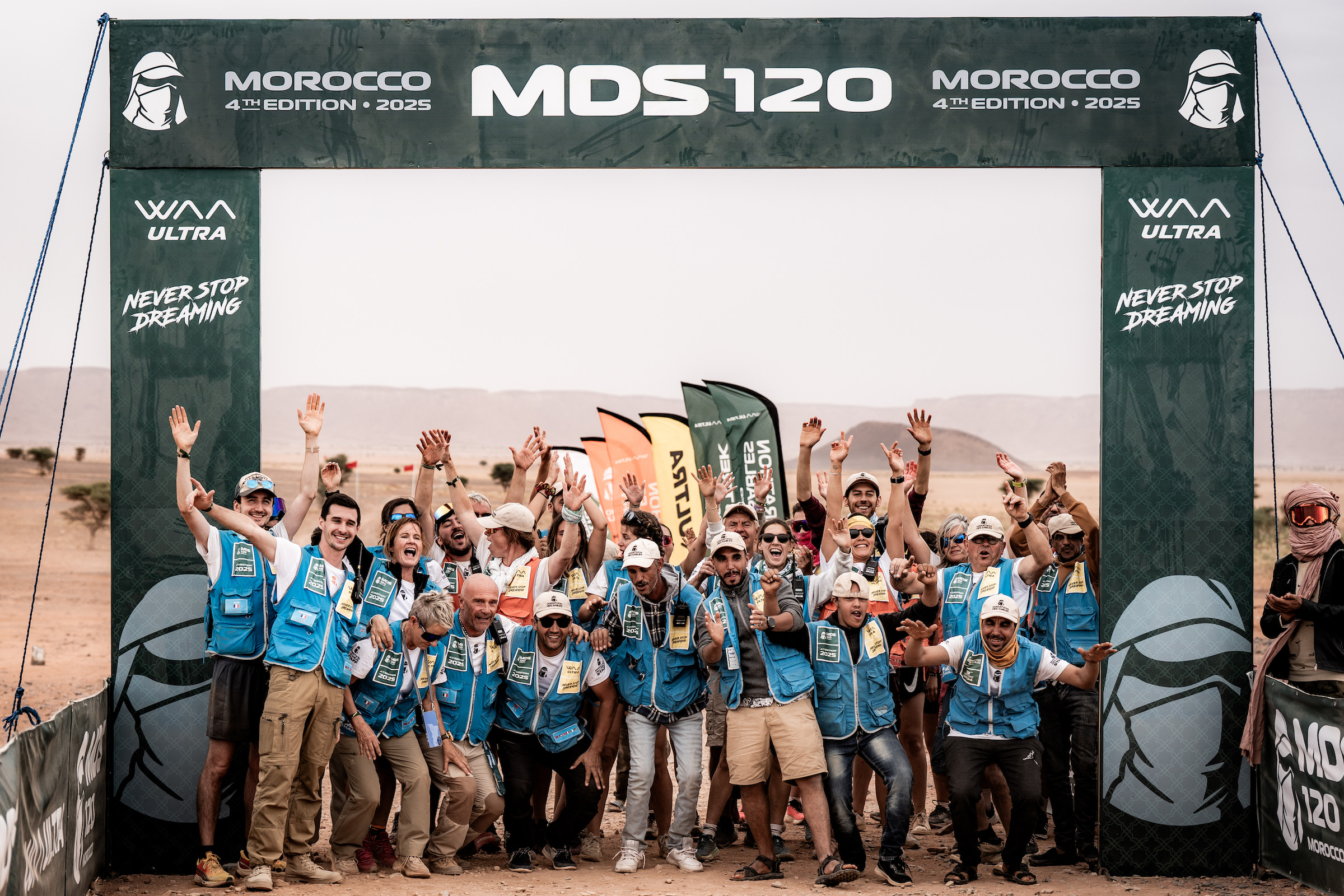
The MDS would not happen without this amazing team of people. The energy, the enthusiasm, the constant good vibes make the runner the number one priority and YES, these people make the difference between finishing and not finishing. They are 100% switched on with the sole purpose to get every runner across the line. You can get a feeling of how important the blue and oranges are by taking a look HERE on Facebook.
Photo by Ian Corless
Orange jackets are the medical team who make sure that participants are looked after 100%. They are there for you, no matter what the issue. You will see them on the course at CP’s, in fast response vehicles, in 4×4’s and of course in the medical tents in bivouac.
SAFETY
Photo by Ian Corless
Any MDS event has risks associated with it. We are often in harsh environments, in challenging conditions, we have varying climate conditions and of course, we have runner’s and staff pushing the limit of what is humanly possible. Safety is taken very seriously and how safety is managed is an ever-changing and developing process.
Countless 4×4’s – Photo by Ian Corless
Legendary had more fast response vehicles, more medical professionals on course, there were 10 medical professional runner’s who did the course and there was a new mobile medical unit for 2025 which is state of the art. There was also the inclusion of the ‘Orange Squad’ – a medical team who do the course the opposite way so that they are able to see runner’s coming toward them and should there be a problem, they can help immediately.
Fast response – Photo by Ian Corless
Each runner is issued with a Spot Tracker and this allows the MDS team to monitor each runner on the course and importantly, they have an SOS button which if pressed, will receive a medical response vehicle in minutes.
Fitting SPOT – Photo by Ian Corless
Feet are always an issue and of course, the medical tent is there to facilitate foot repair in bivouac. It’s important to be self-sufficient and look after your feet yourself, however, as and when necessary, a medical professional is always there to help.
RACE BRIEFINGS
Race start times are very important and pre 2024, the race start time was somewhat unpredictable. This changed in 2024 and was upped to another level in 2025 with every stage starting exactly on time! It may sound like a small thing, but knowing you will be underway as scheduled makes planning so much easier. If it says 0600 start, you know it starts at 0600.
Another change was the addition of an English speaking announcer – yes, it was me! This was the idea of Cyril and we instigated and tested this at Atlantic Coast in January, it worked. So, for Legendary and moving forward, an English briefing will take place and then be translated into French and not the other way around. Stage 6 race briefing may well go down in history as the best. Mood was already high with the final stage ahead, nut hen we had participant, Reujen Lista join us on stage for a ‘live’ version of Highway to Hell – it was epic!
Highway to Hell ‘live’ – Photo by Florian
WEATHER
The weather took its toll – Photo by Ian Corless
As always, weather plays a key part in any MDS event. However, we are most definitely feeling the impacts of ever changing climatic conditions. It was always assumed that MDS will be hot and unbearable, history is showing that is not the case. Recently, particularly in Morocco, we have experienced difficult weather: MDS Morocco in October had torrential rain and flooding, the recent MDS Atlantic Coast in January had cooler temperatures, some rain and the last day had full-on sand storms. The 2025 Legendary started calmly and tranquil, it was looking to be a classic race, it was sunny, hot, but not too hot and the winds were relatively calm. That all changed come stage 4 (the long day) with cloudy skies and cooler temperatures in the day. During the night the winds increased, rain came and without doubt, from 2100 hrs the conditions were difficult and challenging. Especially for those who were moving through the night looking to get the long day done. CP’s had cold participants taking shelter looking to get warm and continue the journey. This weather continued through the rest day. Stage 5 had a mix of everything but the heat never came and stage 6 was cloudy, cool and with intermittent rain. There is a very big lesson that needs to be learned, I did say this before Legendary, but now, post-race, I can only say it more, you need to be prepared for bad weather! A good jacket is now essential, so much so, I do think that it should be added to mandatory kit. I also think it wise to make sure that you are able to keep key items, such as sleeping bag, dry during bad weather. Many had wet sleeping bags during the long day which can effectively make them useless, depending on what filling is inside.
THE ROUTE
Photo by Ian Corless
Legendary is now 6-stages over 7-days and this is a huge difference. Pre 2024, the race was 5-stages and stage 6 was a non-times ‘solidarity’ stage for charity. It’s hard to argue against the charity side of this, however, a non-timed 6th stage was pointless.
Photo by Ian Corless
The race is now 6-stages timed and raced.
Photo by Ian Corless
For 2024, the ‘long day’ was moved to stage 3. For 2025, it was moved back to stage 4. The main reason for this was due to the course and the start/ finish point.
Photo by Ian Corless
2024 participants, as always, tried to stress that the 2024 edition was/ would be harder than 2025. Of course it’s nonsense. Comments like, ‘Argh, but here was more vertical gain in 2024!’ were unfounded as the people who made these comments had obviously not done due diligence, the reality is the 2024 Legendary was 252.9km’s and the 2025 event was 250km. Vertical gain was almost identical, 2024 was 2788m+ and 2025 was 2710m+
Photo by Ian Corless
In many respects, the 2025 edition was more ‘classic MDS’ with a marathon after the rest day.
Photo by Ian Corless
The route was notably different for some key reasons. The Sahara is vast and of course, needs to be explored more. Due to runner demand and logistical reasons, certain features have become almost ‘essential’ when running Legendary. However, Cyril and the team wanted to change that and therefore, there was no Jebel El Otfal in 2025, there was a return to Merzouga Dunes and while the route travelled in similar areas of the Sahara, the track was approximately 80% new. There were some great ‘new’ additions such as the huge dune on stage 4 and the stage 5 route was very special.
Photo by Ian Corless
THE RACE
Rachid – Photo by Ian Corless
Rachid El Morabity once again took victory securing his 11th and in the process he set a record for the most victories. It’s an incredible achievement to have this level of consistency over so many years. It’s fair to say, the level of competition at the front end of the race was less in 2025. The only real person who could upset Rachid was Hamid Yachou, he unfortunately withdrew mid-race with injury. We could argue all day if Mohamed El Morabity could beat Rachid, the simple fact is, it would not happen. However, as we look ahead to 2026, will Mohamed take over the Rl Morabity reigns? Mohamed is 10-years younger than Rachid and therefore, he has great potential ahead. Also, the inclusion of the 3rd and younger El Morabity, Mbark, should not be looked over.
Maryline – Photo by Ian Corless
For the women, 2023 Legendary champion, Maryline Nakache returned and she was on fire. No, she was untouchable. For perspective, Maryline finished 3rd on GC for the long day and at the end of the race, was 4th on GC with the closest time to Rachid, by a woman, in the history of the race. Quite incredible. Aziza El Amrany won the race in 2024 and for 2025 she was 2nd, she looked great throughout, despite an arm injury, however, she was no match for Maryline. Tomomi Bitoh placed 3rd, she has placed 3rd before. However, Annelies Brak would have placed 3rd had she not received a 2-hour time penalty for non-compliance of mandatory kit.
Rachid completed the race in 20:55:47 and Maryline in 23:57:20. A total of 847 participants crossed the finish line, the last male Tomohito Hirai in 75:49:27 and the last woman, Nemoto Yuzuki in 74:31:01.
Reujen Lista rocking the awards – Photo by Ian Corless
Transfer back to Ouarzazate was easy and seamless with coaches filling with participants and leaving asap. Of course, a hotel, many showers, buffet food and a nice clean bed always feels amazing after the Sahara. The awards dinner turned into an impromptu rock concert with a participant, Reujen Lista, singing 3 songs on stage, the last, of course, was Highway to Hell. It was a fantastic way to end what was a legendary LEGENDARY.