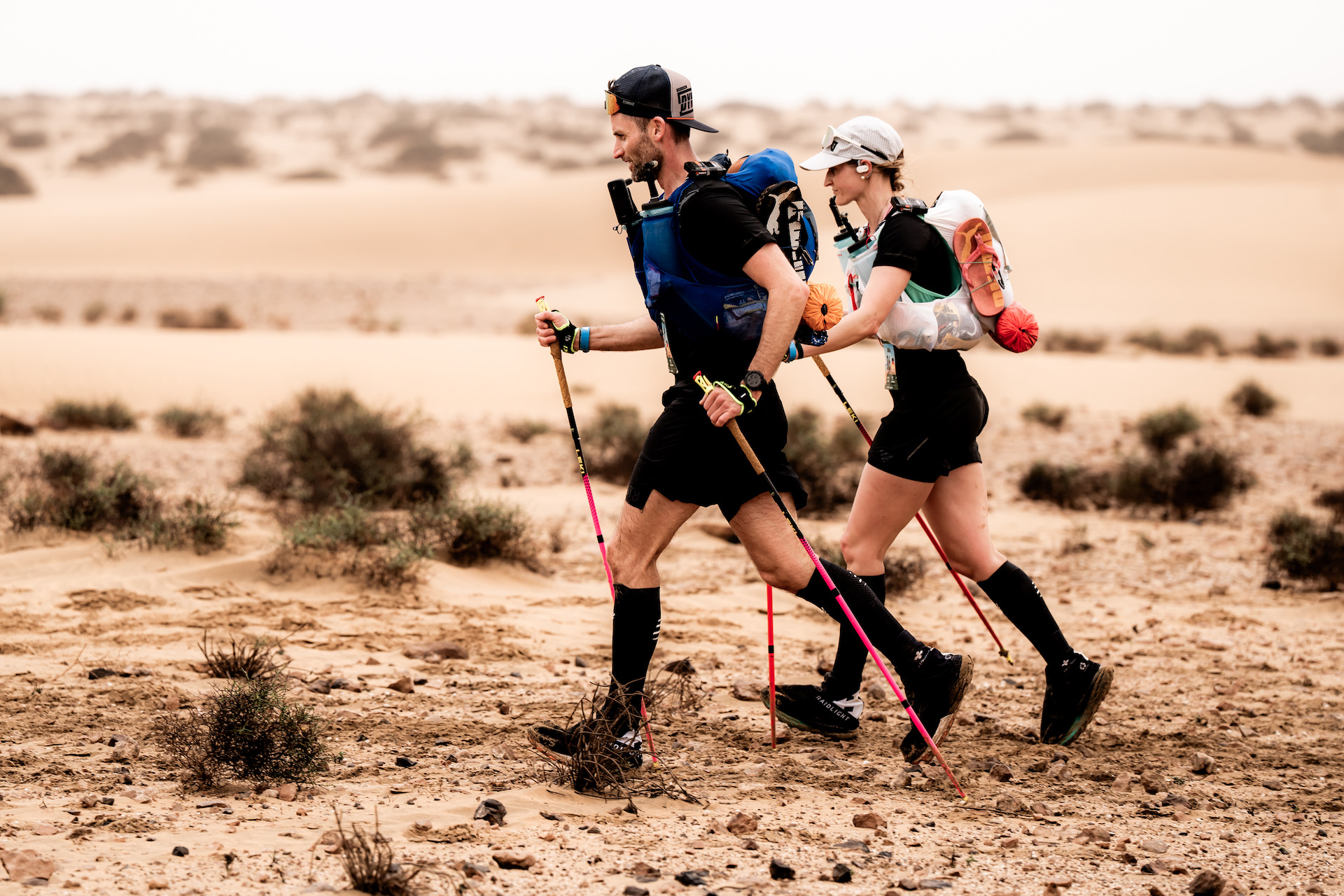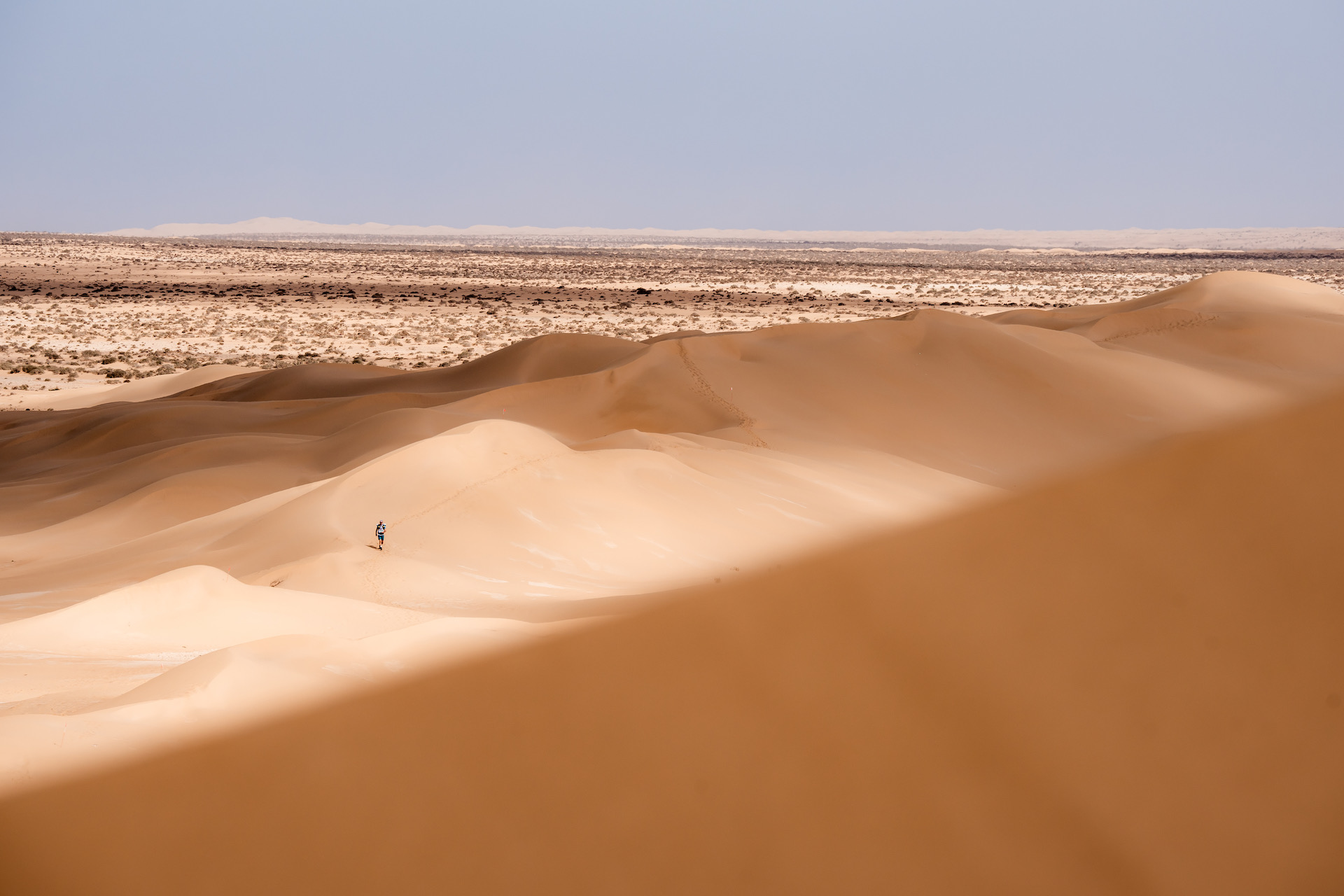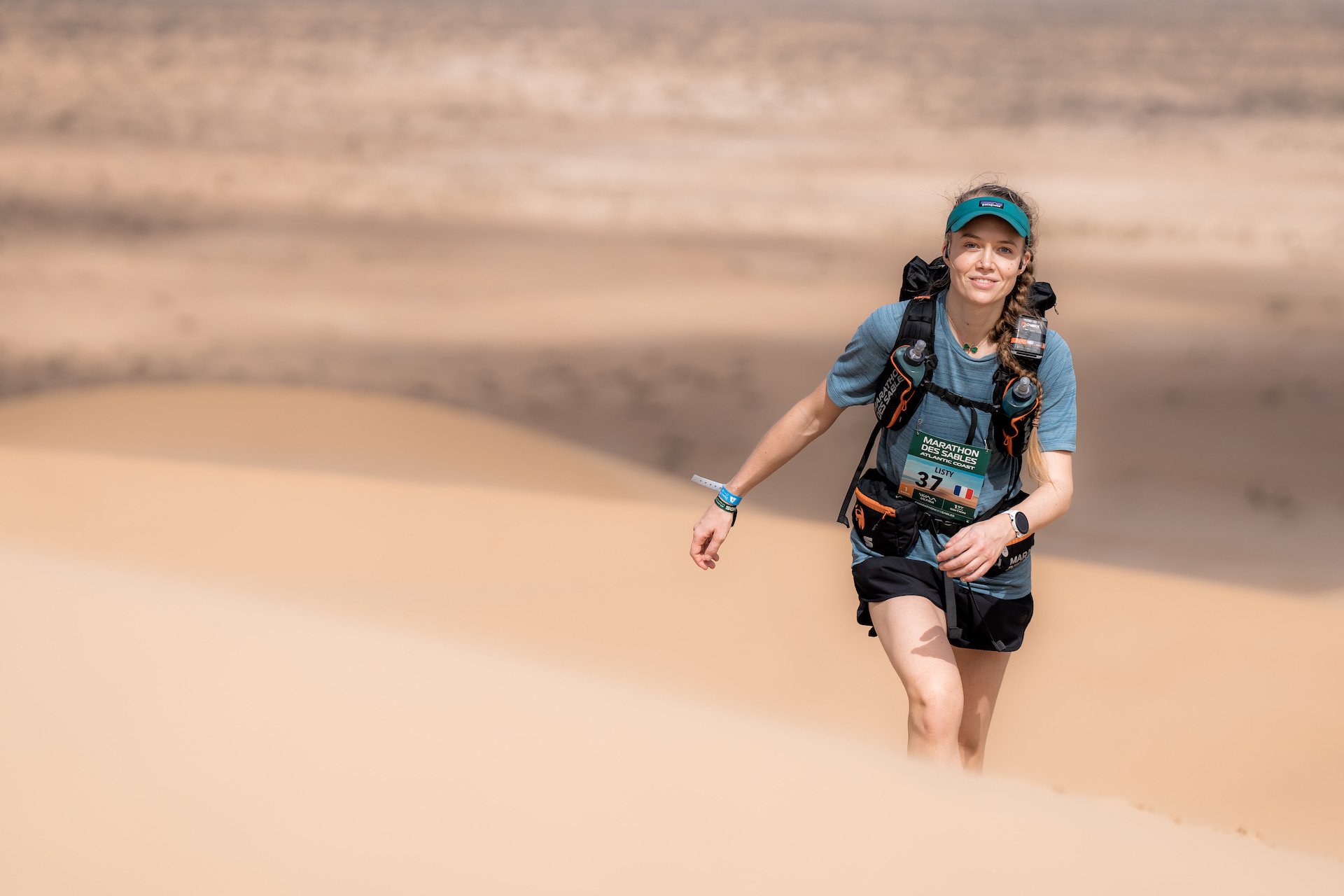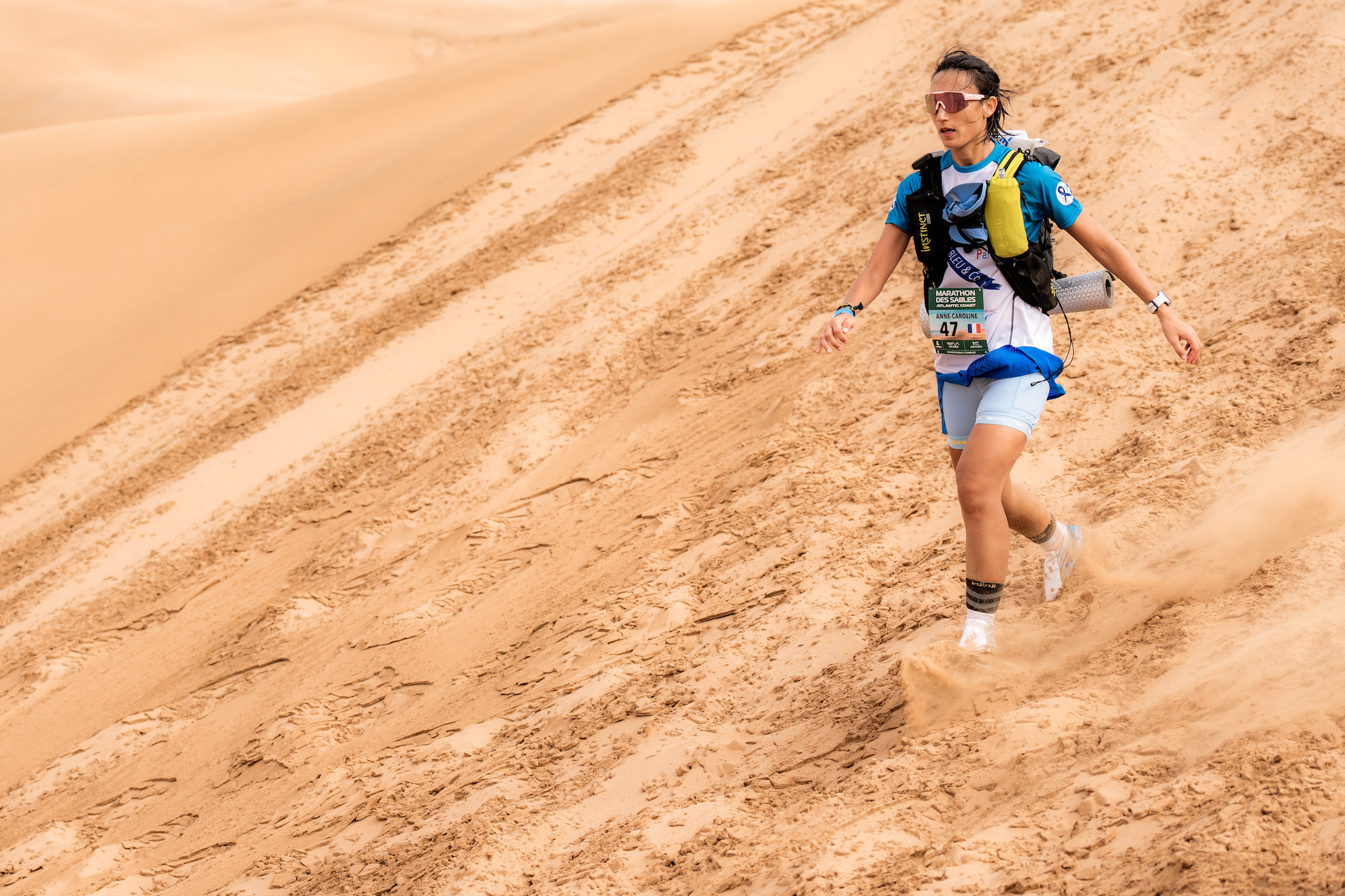
VJ ULTRA 3 – SHOE REVIEW

Photo by Ian Corless

In a world of the big shoe brands, think adidas, Brooks, Asics, Nike and of course, the list goes on. I love the fact that, without doubt, the best trail and mountain running shoes come from a small Finnish brand, VJ SPORT.

It’s a bold statement huh? But, if you have been reading shoe reviews on this website for many years, you will know, that I have a love for VJ shoes.

I am not going to write an article here about the brand, its history and do a PR job for them, I honestly don’t feel I need to. I feel safe in the knowledge that if anyone purchases a pair of VJ’s based on one of my reviews, they very quickly agree with me. Over the years I have received countless messages in the vein of, ‘I had no idea about this brand until I read your review and now I have theses shoes, it’s a game changer, the fit and in particular, the outsole are amazing!’

Photo by Ian Corless

With a strong history and foundation in Orienteering, VJ made a name for itself in Scandinavia as the ‘go-to’ shoe. Jon Albon (yes, the TNF athlete) helped shift the awareness to a worldwide platform with his success in OCR using the iRock shoes and then in the world of trail, ultra and skyrunning with the XTRM, MAXx and the ULTRA.

In all honesty, despite huge growth, huge success and repeated accolades around the world for having ‘the best grip on the planet,’ VJ are still a niche brand and a secret weapon. I honestly believe, that in technical, mountain, rocky, and slippery terrain, a runner with VJ shoes has a distinct advantage that may well make a difference between gaining a podium place or not. This is especially rings true, here, in my home of Norway, where the mountain terrain is harsh, slippery and very demanding.

Photo by Ian Corless

With all the above in mind, VJ keep their shoe line up simple for trail/ mountain and Ultra:

  • iRock4 – Mega grip, precision feel, for intense mud when grip is a priority. The 8mm lugs are like claws.
  • Spark – Minimal race shoe with 5mm lugs, 11mm/16mm cushioning.
  • Lightspeed – Fast and light, a racing trail shoe with the ‘new’ SuperFOAMance cushioning at 23/29mm and 3.5mm lugs.
  • XTRM2 – A fast mountain shoe for short to middle distance with 6mm lugs and 10/14mm cushioning.
  • MAXx2 – Cushioning and grip with a lower profile, ideal for the mountains. With the ‘new’ SuperFOAMance cushioning at 25/31mm and 4mm lugs.
  • Ultra 3 – As the name suggests, a long distance shoe with cushioning. With the ‘new’ SuperFOAMance cushioning at 30/38mm and 4.5mm lugs.
  • Flow – A new shoe for all terrain which I have yet to test. 25/35mm and 4.5mm lugs.

In addition to the above there is a winter shoe, the XTER that is also available with spikes, called the ACE, for ice and snow. There are countless spike/ winter models HERE.

VJ ULTRA 3

Photo by Ian Corless

This is not the first ultra shoe for VJ, on the contrary, they released the ULTRA and the ULTRA2. Both of these shoes I have run in and tested over the past few years. They both had all the perfect VJ characteristics, namely, amazing grip and incredible foothold with Fitlock. However, for me, the cushioning never felt ‘bouncy,’ and this always shifted me to use the MAXx.

In 2023, VJ released a winter shoe called the ACE, this shoe was a spiked shoe for snow/ ice etc. It was a complete game changer! The shape of the shoe was completely different, the toe box was wide and expansive (just like ALTRA) to allow the toes to move and keep warm during winter conditions. In addition, the ACE had new cushioning called SuperFOAMance. I said in my 2023 review, and I quote, ‘I want this shoe without studs for dry trail running.’

Well, I gave that feedback to VJ and they listened, the VJ ULTRA 3 comes from the ACE development.

However, I need to mess up this and segway to the LIGHTSPEED and MAXx2. Between the ACE and the release of the ULTRA 3, we had the Lightspeed and MAXx2 launches. Again, two amazing game changers for VJ. The LIGHTSPEED is a super fast and responsive trail racing shoe, think the Golden Trail Series. The MAXx2 (think skyrunning) builds on everything that was great in the original MAXx but takes it one step further. Both these new shoes had the SuperFOAMance cushioning, which, for me, it is incredible. I have done big mountain days in Spain, Italy and Norway in the MAXx2, always great comfort, great foot hold and of course, amazing grip. The MAXx2 is for me, without doubt, the best mountain running shoe out there. I just can’t wait for VJ to bring the cushioning to the XTRM too so when I need a more aggressive outsole, I have the option and the same cushioning.

Photo by Ian Corless

So, here we are with the VJ ULTRA 3.

The ULTRA 3 has what I loved in the ACE and the MAXx2 and has given me a shoe that merges these two shoes into a product designed for long, big, ultra days in the mountains and on trails.

The ULTRA 3 is the most cushioned shoe VJ have made, 30mm at the front, 38mm at the rear and an 8mm drop puts this shoe in an area that all the other big brands are dominating – think Hoka.

So, why would VJ try to penetrate this market?

Quite simply, they are offering a shoe that the other brands do not offer… They are bringing their unique USP’s of foot hold and grip, adding cushioning and providing a very specific mountain/ ultra shoe.

The ULTRA 3 was tested at the 2024 UTMB on the feet of Juuso Simpanen, he placed 19th.

Photo by Ian Corless

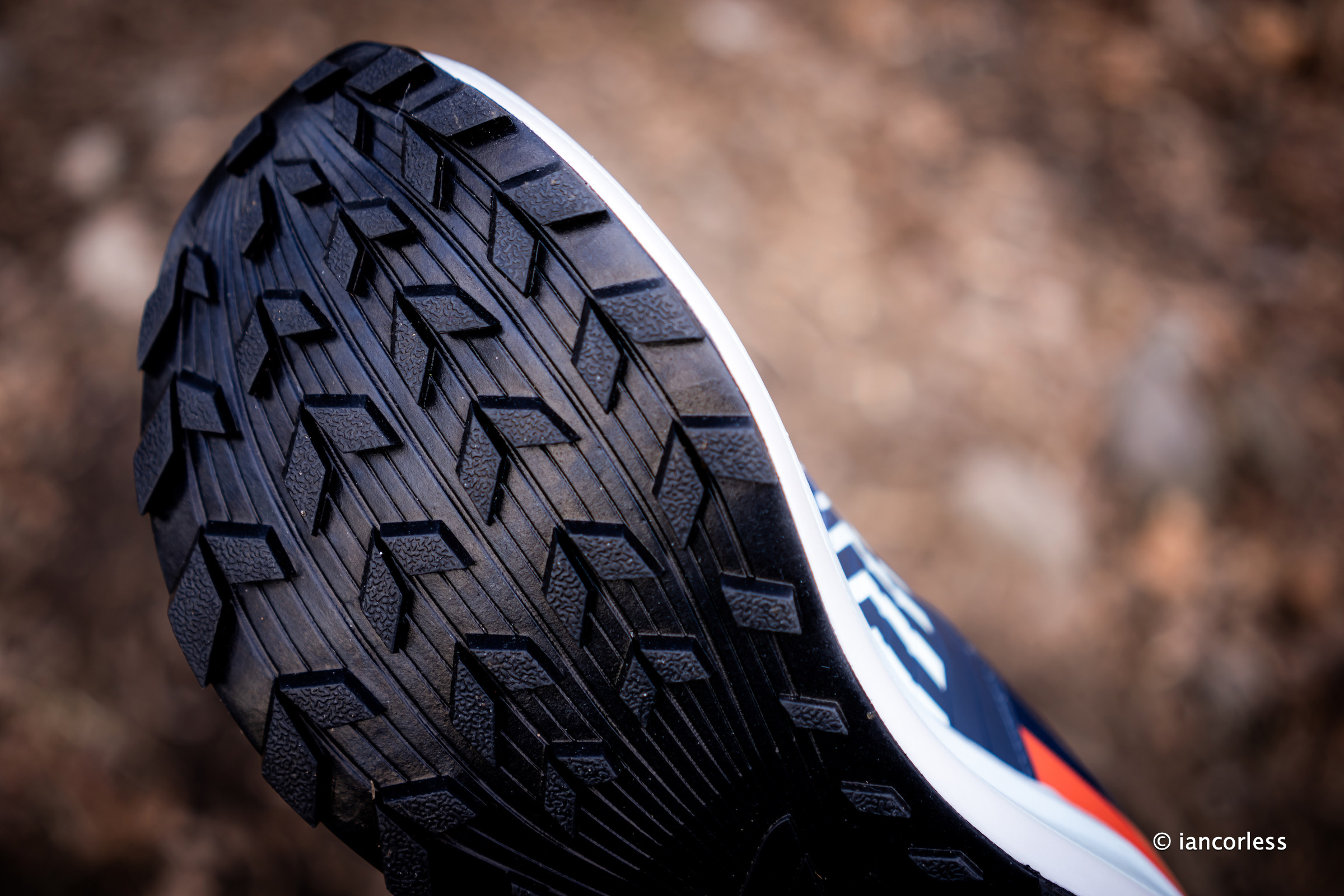
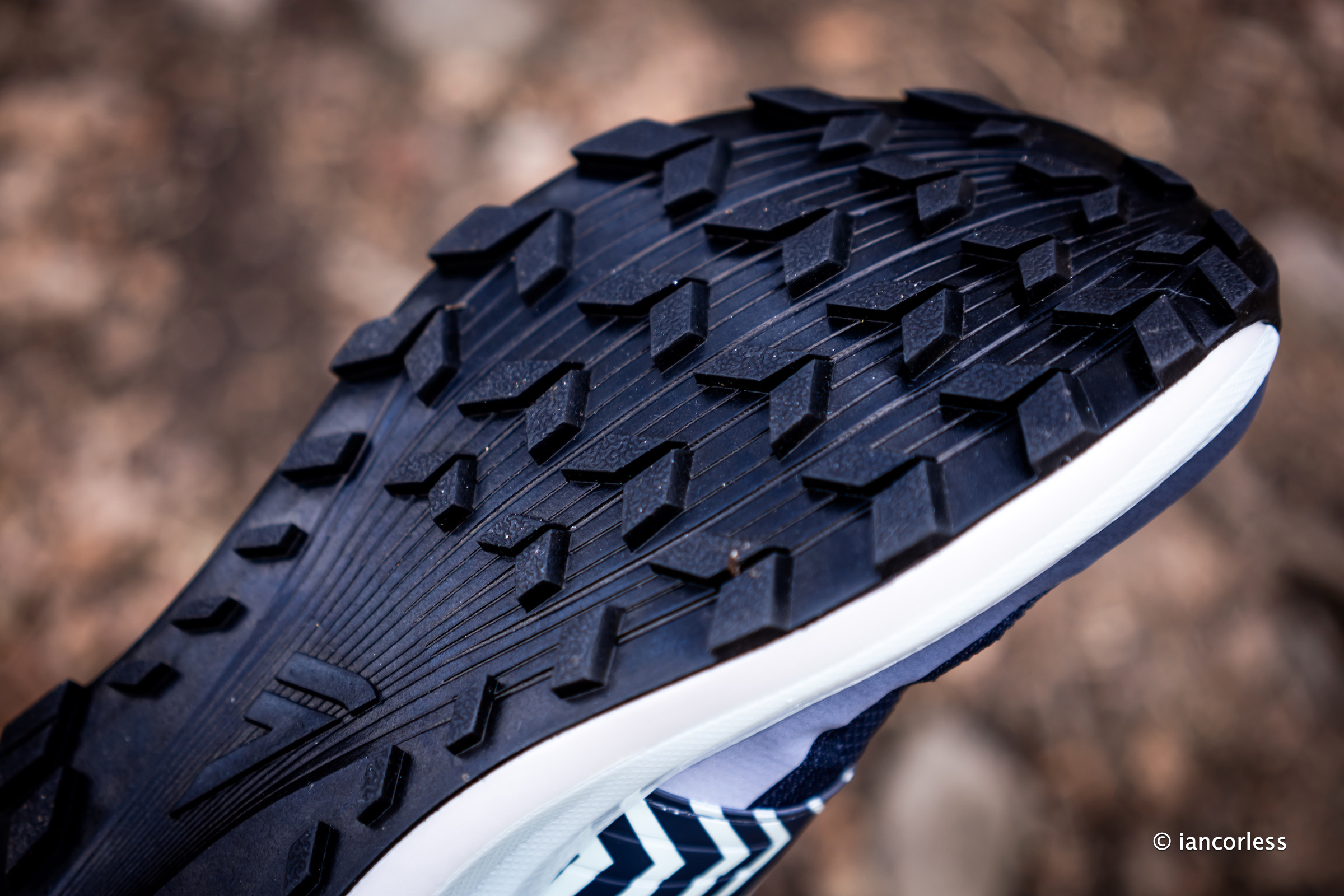
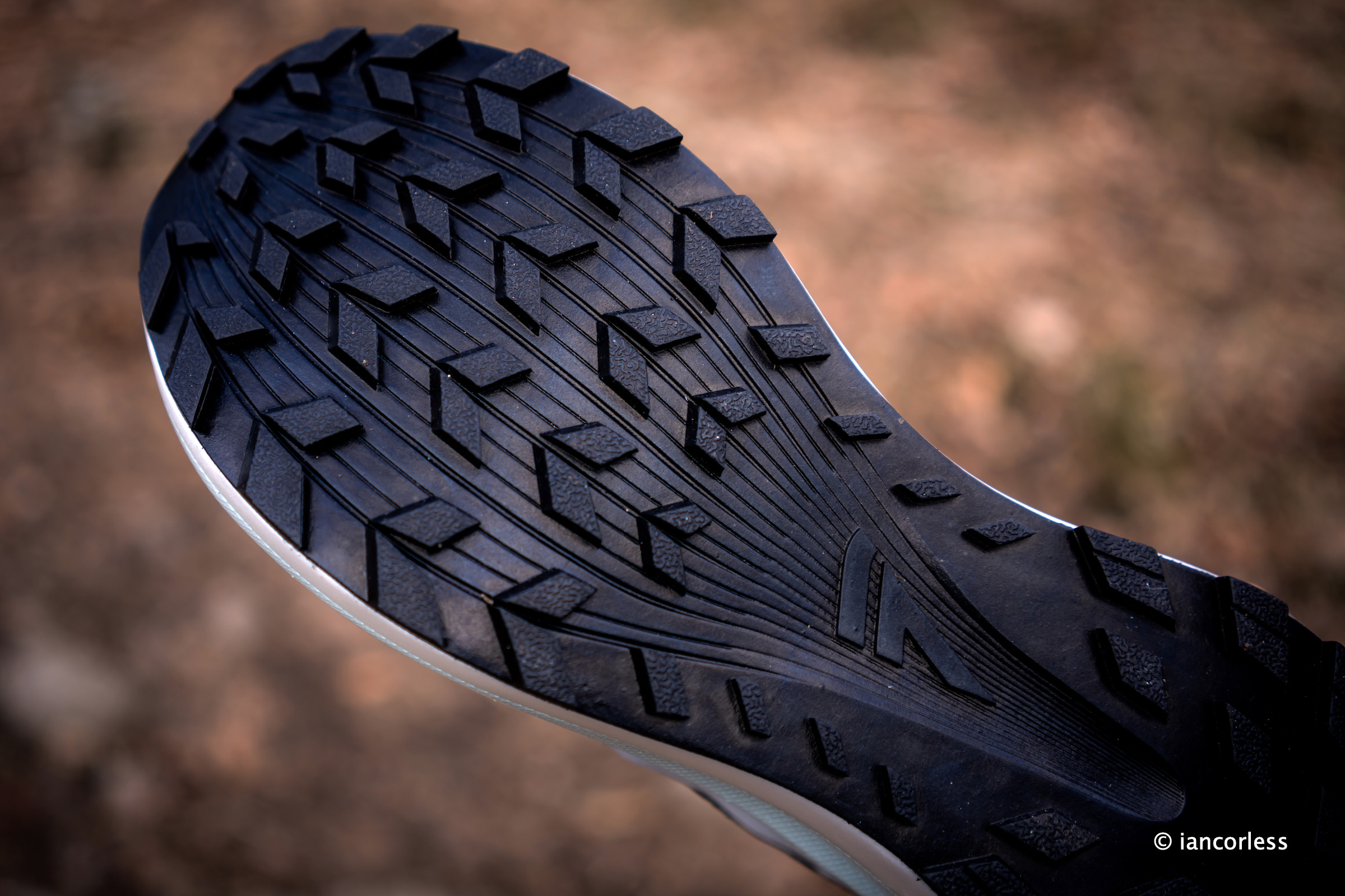
The 4.5mm lugs make the shoe ideal for trail and mountains, especially when encountering wet and slippery rock. The Superior Contact outsole featured on every VJ shoe is the best on the market – no other shoe or brand has the grip of VJ.

Photo by Ian Corless

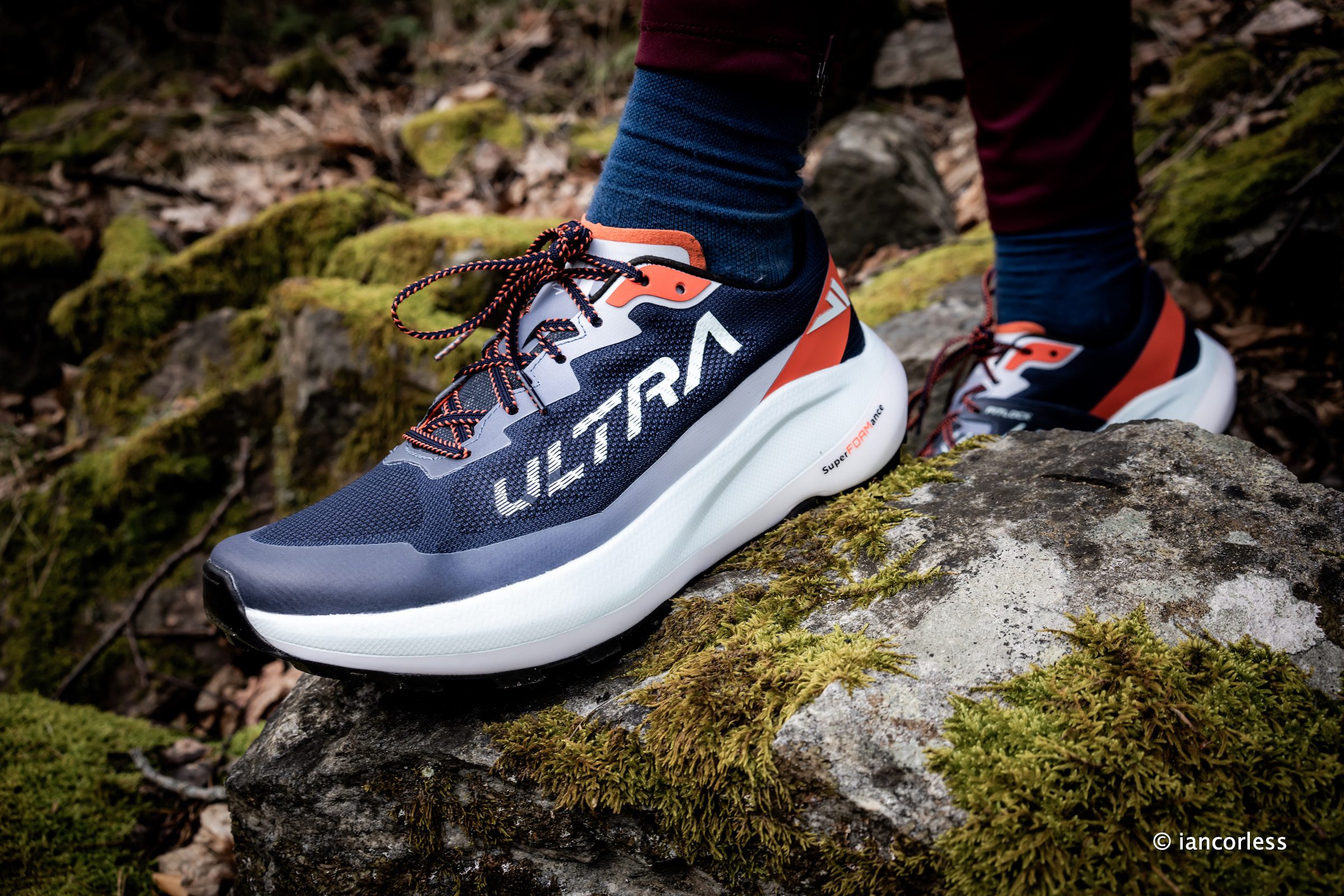
The toe box is wider, a ‘4’ on the VJ fit scale, 5 being the widest.

Photo by Ian Corless

The SuperFOAMance cushioning is a game changer, it has elevated the VJ shoes to a different feel and responsiveness that was not there previously. That is not to say that there was anyting wrong with the MAXx or Ultra 2, that is reflected in that these shoes are still available to purchase. However, the new cushioning, for me, has given the MAXx2 and the ULTRA 3 the ability to ‘always’ use these shoes. Previously, I would think about my run and the terrain and decide what was the best shoe, the SuperFOAMance has eradicated that problem.

So, when would I use the ULTRA 3 and when would I use the MAXx2?

It’s a good question and one I find easy to answer. If I am heading out for a trail run be that in the mountains or say, in the forest, the ULTRA 3 would be my choice. The cushioning help smooths out the trails, provides comfort and despite the extra stack height, I have no worries over stability. Should I go to the mountains, with far more challenging and technical terrain, the MAXx2 is my choice. The caveat with both the ULTRA 3 and MAXx2 is neither of them will offer super grip in mud, this when the XTRM is the option and why (please VJ) I hope they release an XTRM with MAXx2 cushioning and XTRM outsole.

THE SHOE

Next level cushioning without losing the core basics that make VJ shoes special, basically, great foot hold and an awesome outsole.

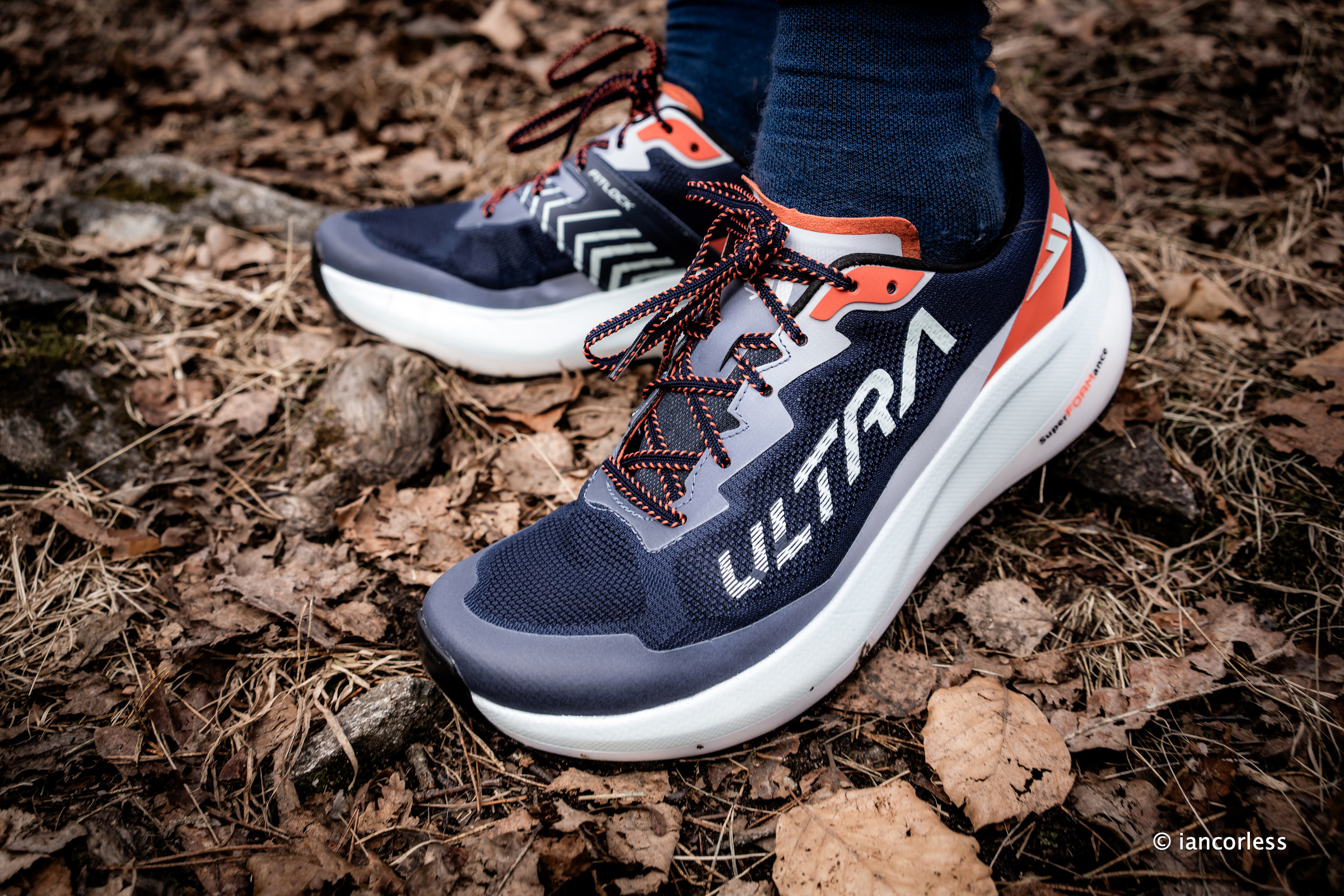
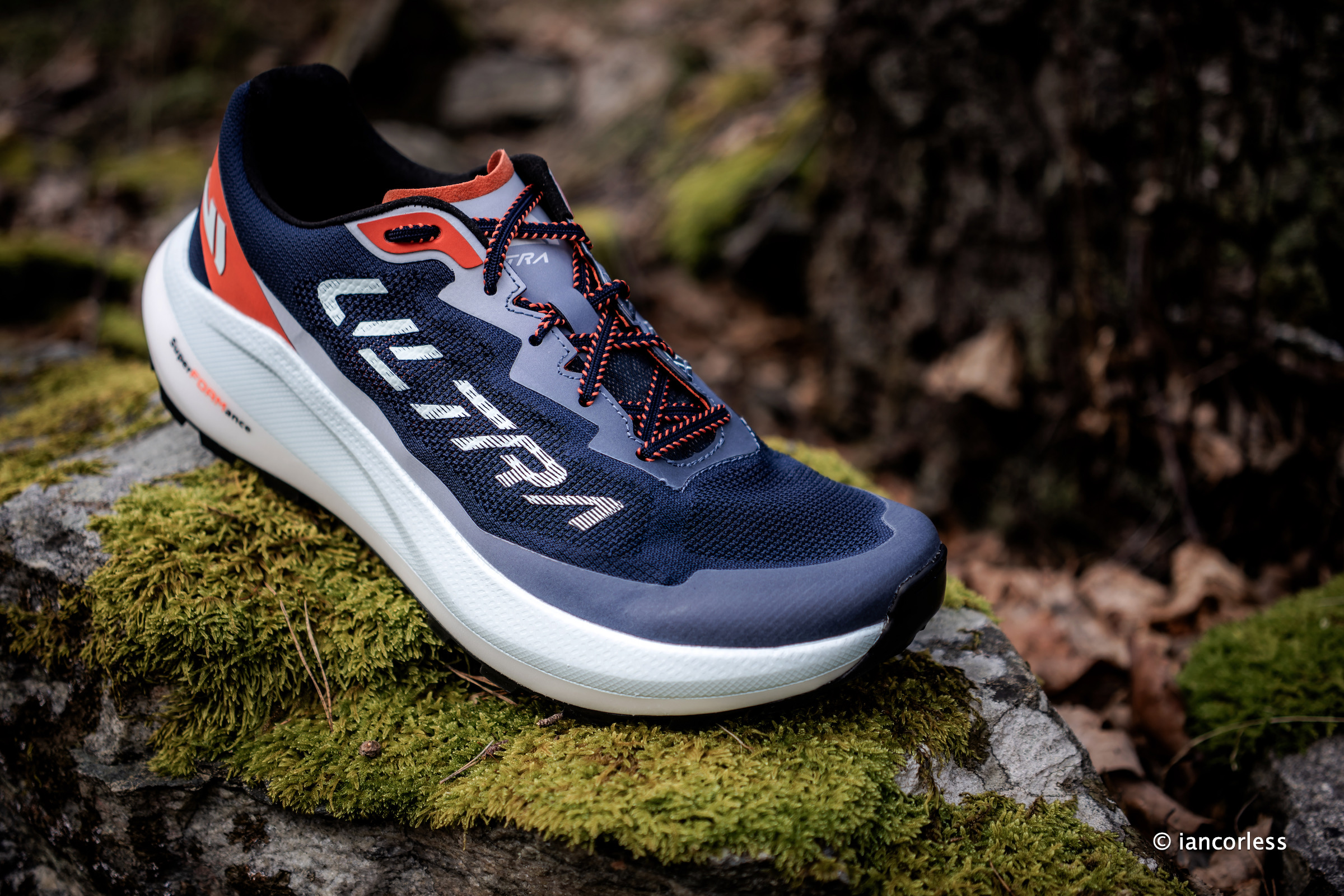
On first appearance, the ULTRA 3 looks rather bulky and heavy. They are not heavy at all, my UK10 weigh under 290g.

Drop is 8mm, perfect for a long distance ultra shoe and the cushioning is 30mm at the front, 38mm at the rear and the fit is slightly small, so, if you are usually a UK9, I would recommend a UK9.5 etc. As is always the case, you need to try on and make sure of the fit for yourself.

I have found with VJ shoes I always lock lace. I did my first run in the ULTRA 3 without lock lacing and the second with lock lacing, I prefer to lock lace. Just a heads-up as I feel you should try both options to see what works for you!

Photo by Ian Corless

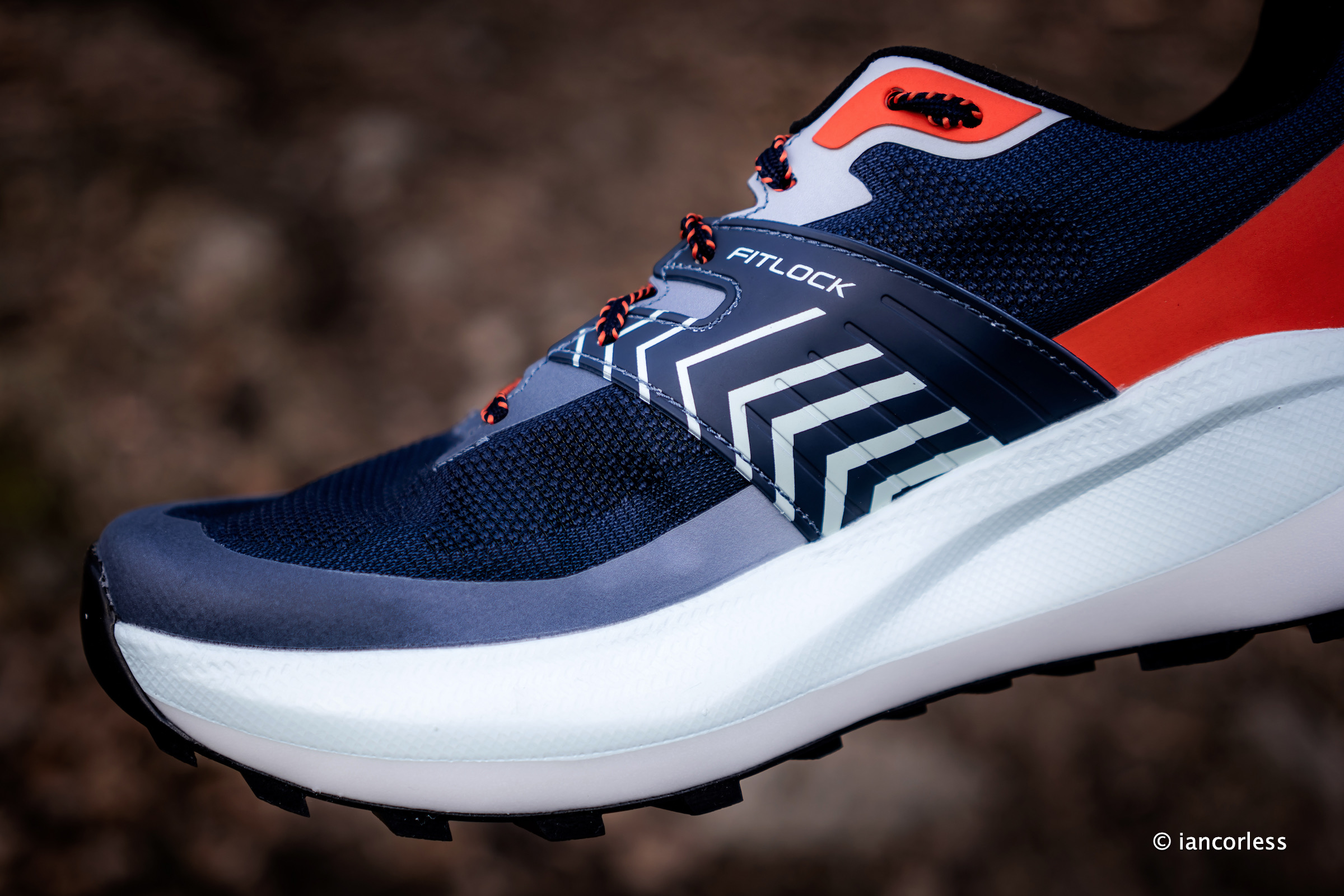
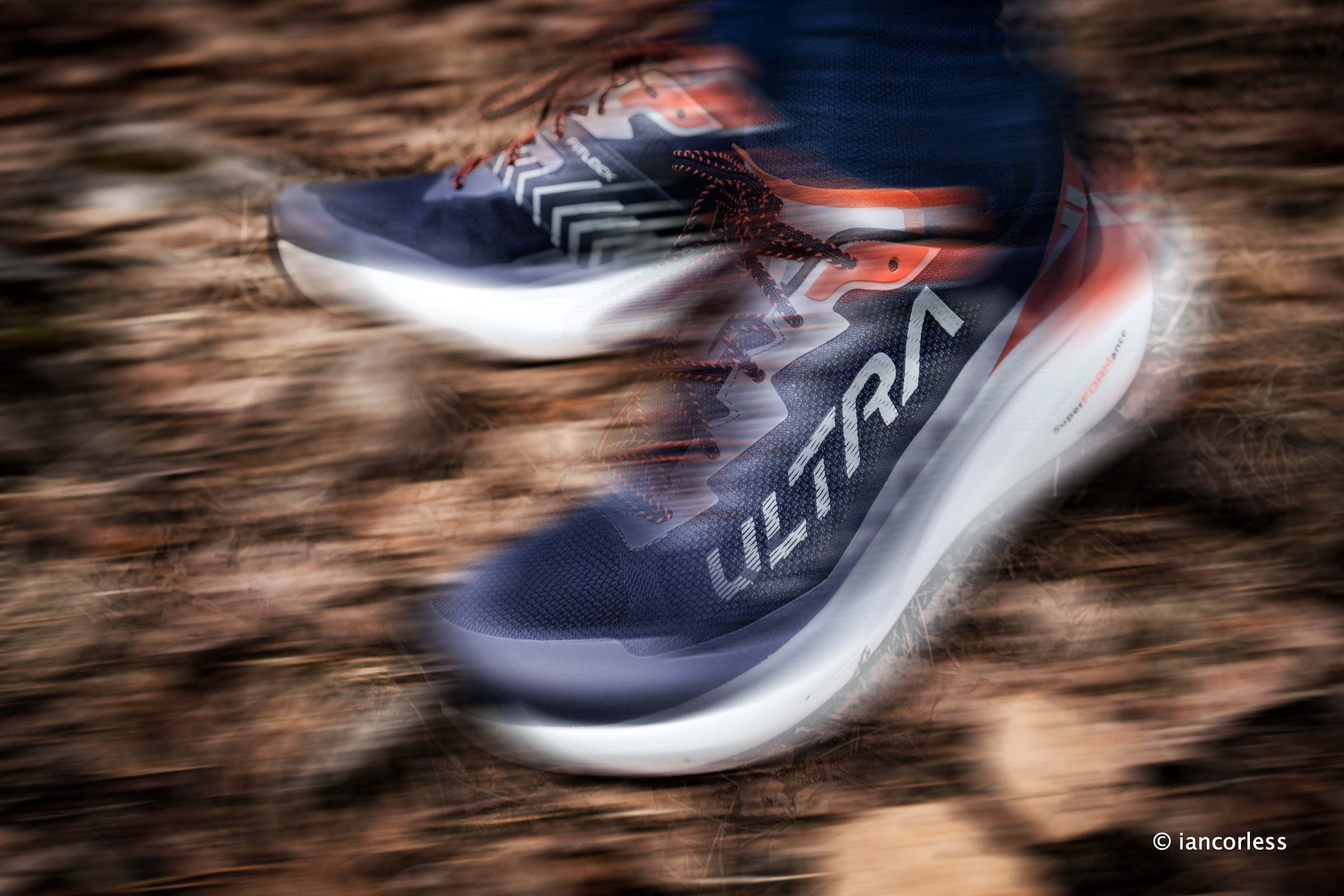
One of the key selling points of any VJ is how the shoe holds the foot, this comes from Fitlock which, when the laces are tightened and adjusted correctly, holds the foot perfectly, especially noticeable when on technical and demanding trail.

Photo by Ian Corless

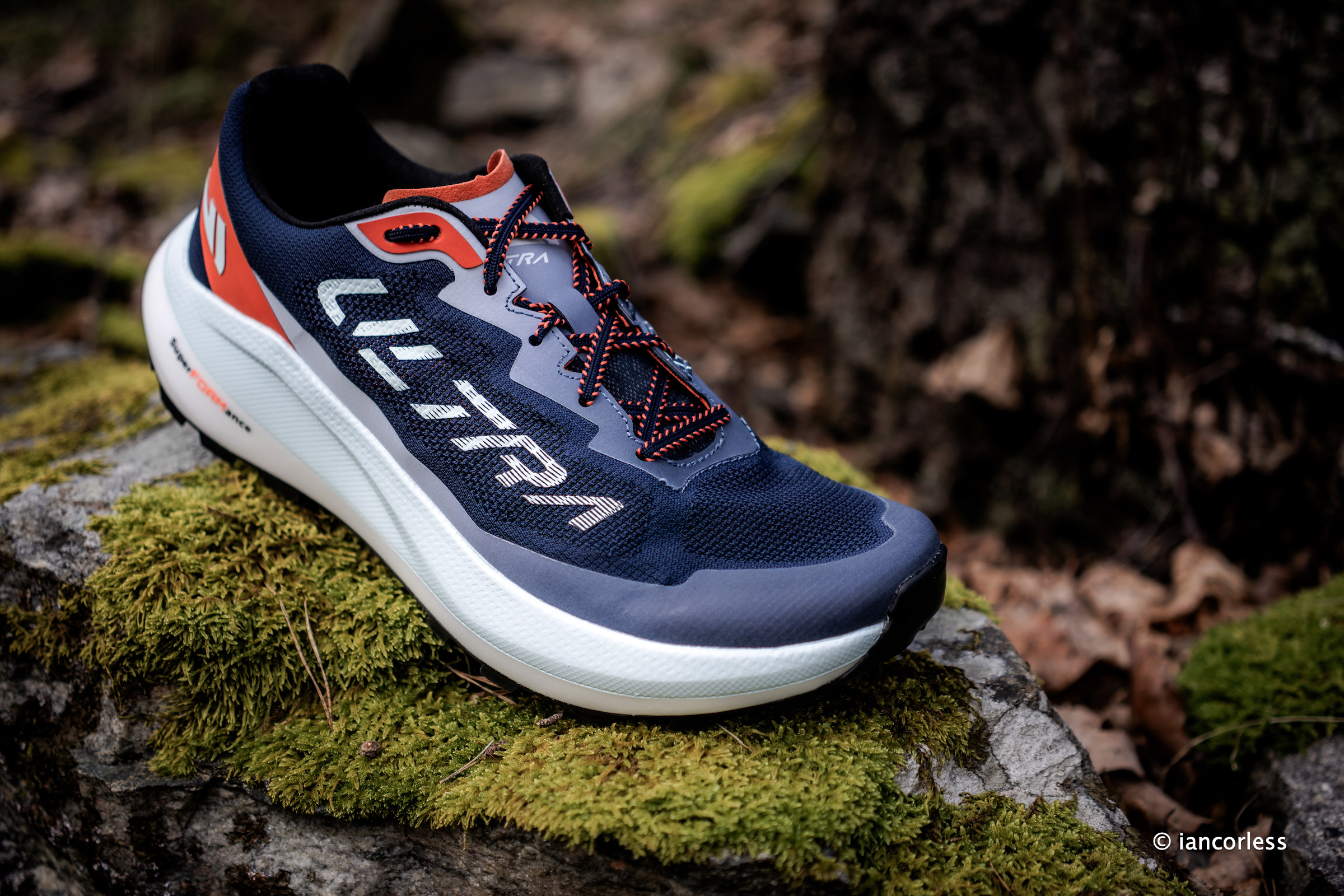
The upper is in one piece made of multi zone woven mesh with varying density. They are breathable but equally, in colder weather, they are not too cold. There is excellent protection at the front with a great toe bumper.

The rear collar is where a noticeable change has been made from the ACE winter shoe. The ACE was well padded and very comfortable. Here, the rear collar is lightly padded with a slight raised section inside to stop heel slippage. On the MAXx2 I initially had an issue with the right side of the heel cup being a little high which irritated my ankle bone, that is present here in the ULTRA 3. I have found that after a few runs this softens and becomes no problem. On my first run in the ULTRA 3 I got a hot spot at the rear – I never get blisters! So, this rang an immediate alarm bell. However, I changed socks for my 2nd run and then had no issues, so, sock choice may well be an important consideration.

The tongue is thin. But I have had no issues with any tension, hot spots or pain.

The toe box is, for VJ, wide and this will be a game changer for many people who have found VJ too narrow in the past. It allows great toe splay and comfort without losing a precision feel when required.

Cushioning is a breakthrough for VJ. As I found on the ACE, the SuperFOAMance was something very special, here in the ULTRA 3, it takes the shoe to another level of comfort without being squidgy or losing ground feel.

There is a rock plate which in many ways has three purposes: It protects the foot. It helps protect the cushioning. It also provides some torsional rigidity (a little like a plated shoe) without having the downsides of a carbon plate or similar.

Photo by Ian Corless

Outsole, it is easy, best grip on the planet. Nothing grips like the VJ butyl outsole. The 4.5mm lugs are maybe a surprise? Would I prefer 5mm or even 6mm? Yes! but maybe the 4.5mm is the best choice for a shoe to manage ‘all’ surfaces. Ultimately, the foot print is wide, front, middle and rear making contact with the ground superb. VJ also realise that if you increase stack height, you need to increase footprint size for stability. A lesson that adidas Terrex need to learn with there woefully unstable Terrex Agravic Speed Ultra which is on technical terrain dangerous IMO.

IN USE

Photo by Ian Corless

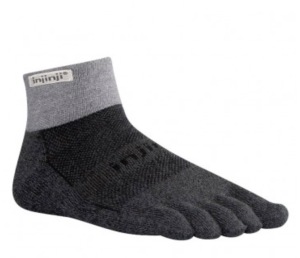
After three runs, I had to tweak certain elements to make the ULTRA 3 perfect for me. Firstly, I lock laced. I changed socks to Injinji. I tweaked the lace tension for the comfort/ feel I prefer.

One I had the three items above dialled, the ULTRA 3 became perfect.

The cushioning is a game changer for VJ but it sits in its own place. Two current outstanding shoes I love, the Hoka Tecton X3 and the La Sportiva Prodigio Pro both have lively, bouncy cushioning. The ULTRA 3 is not like this. It’s more controlled and therefore, I prefer the ULTRA 3 in more mountainous and technical terrain. I find there is more precision and reassurance. Any roll from the additional stack height is balanced and controlled, this also comes from the amazing Fitlock.

Photo by Ian Corless

Grip is the best, and I say that with complete confidence. I would compromise cushioning and comfort for VJ grip. I have done this in the past, for example, using the MAXx for really big mountain days when I knew I needed grip due to wet rock or similar. Now, the ULTRA 3 gives me the cushioning and comfort with grip.

CONCLUSION

Photo by Ian Corless

The ULTRA 3 is a game changer for VJ. This shoe will now make VJ grip available for longer races such as those in the UTMB calendar or similar. I do feel the ULTRA 3 slots in the more mountain ultra terrain than just ultra trail. There is a durability, a strength, a build quality to the ULTRA 3 that says, ‘I am here to take a battering and protect you!’ One thing is for sure, if you are looking for a shoe with cushioning, grip and comfort, the ULTRA 3 should be at the top of your list.

Photo by Ian Corless

Follow Ian Corless

Instagram – @iancorlessphotography

Twitter – @talkultra

facebook.com/iancorlessphotography

Web – www.iancorless.com

Web – www.iancorlessphotography.com

MDS THE LEGENDARY 2025 : RACE SUMMARY

Photo by Ian Corless

The sand is settling, the 2025 and 39th edition of Marathon des Sables The Legendary is over.

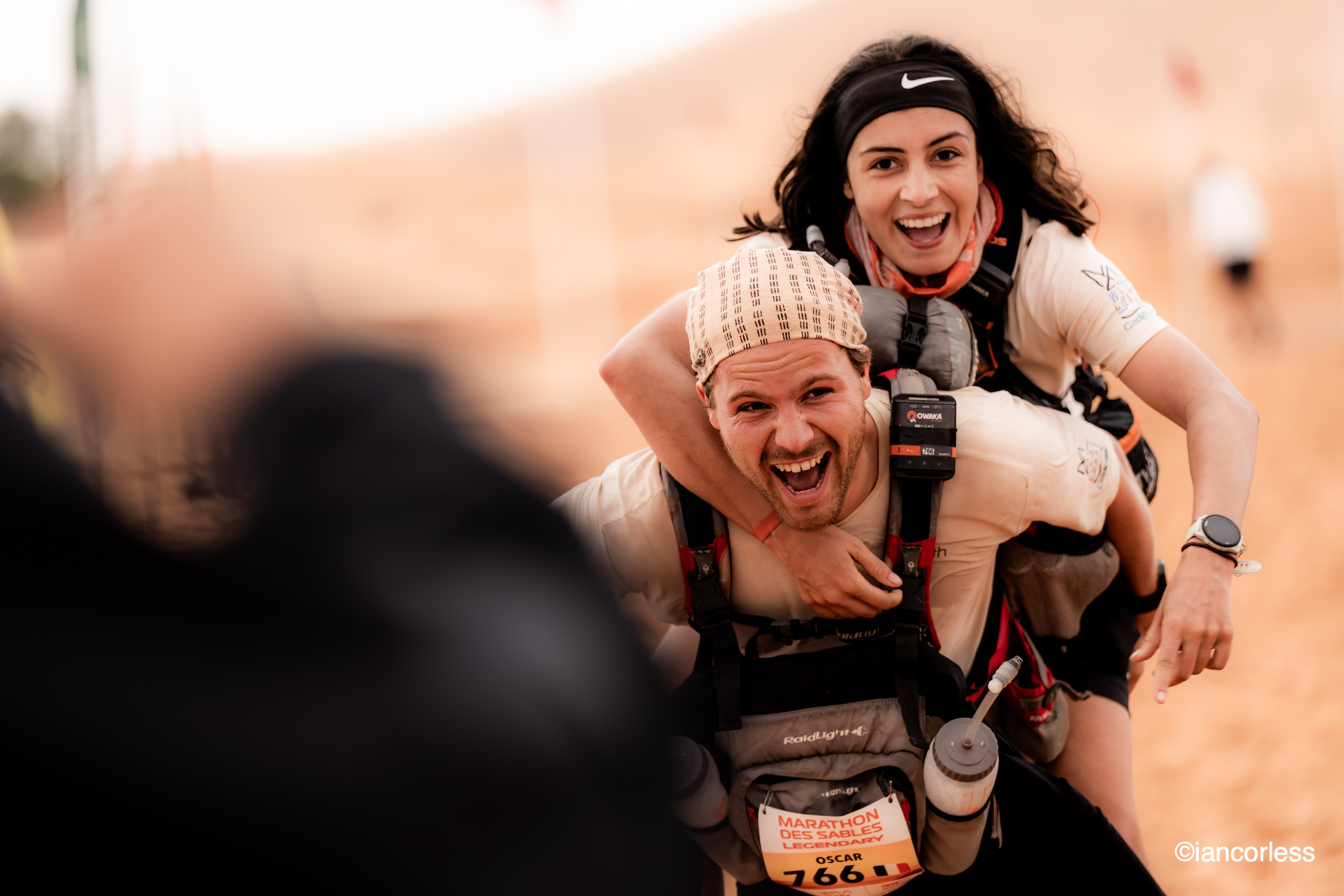
Quite simply, a hugely successful edition with 95% completion rate and good time vibes felt throughout the Sahara and beyond.

OVERVIEW

Cyril and Olivier with Michael from the USA – Photo by Ian Corless

The transition from 2023 to 2024 was not an easy one. The take over of MDS from Patrick Bauer and into the hands of Cyril and Olivier had created some concern and anxiety. Most certainly, the build up to the 2024 (38th) MDS had many concerns for participants that were vocalised on social media. However, after the 2024 event, all these worries and concerns were extinguished with an incredibly successful event and high finish rate. You Can read Marathon des Sables – The Legendary : 2024 Summary HERE should you wish.

Nothing like a MDS start – Photo by Ian Corless

From May 2024 to April 2025 the build up to the 39th Legendary edition was seamless. The successful running and completion of MDS (3-stages over 4-days at 70/100 or 120km) events in Cappadocia, Fuerteventura, Jordan, Morocco, Atlantic Coast and the introduction of Trek and Handi only confirmed the growth, development, upward learning curve and the MDS team bonding and progression.

All of the concerns and worries for the 38th edition of Legendary played out on social media were not present for the 39th edition. There is a couple of reasons for this I believe:

  • The 38th edition had been a huge success and therefore worries and concerns were answered.
  • The pro-active communication from the MDS team improved considerably.
  • Runner testimonies from the 2024 event confirmed that the ‘new’ MDS team and the changes made were all positive.
  • Evolution, not revolution was the quote that Cyril Gauthier had used in 2023 this was played out in 2024 and then consolidated upon in 2025.
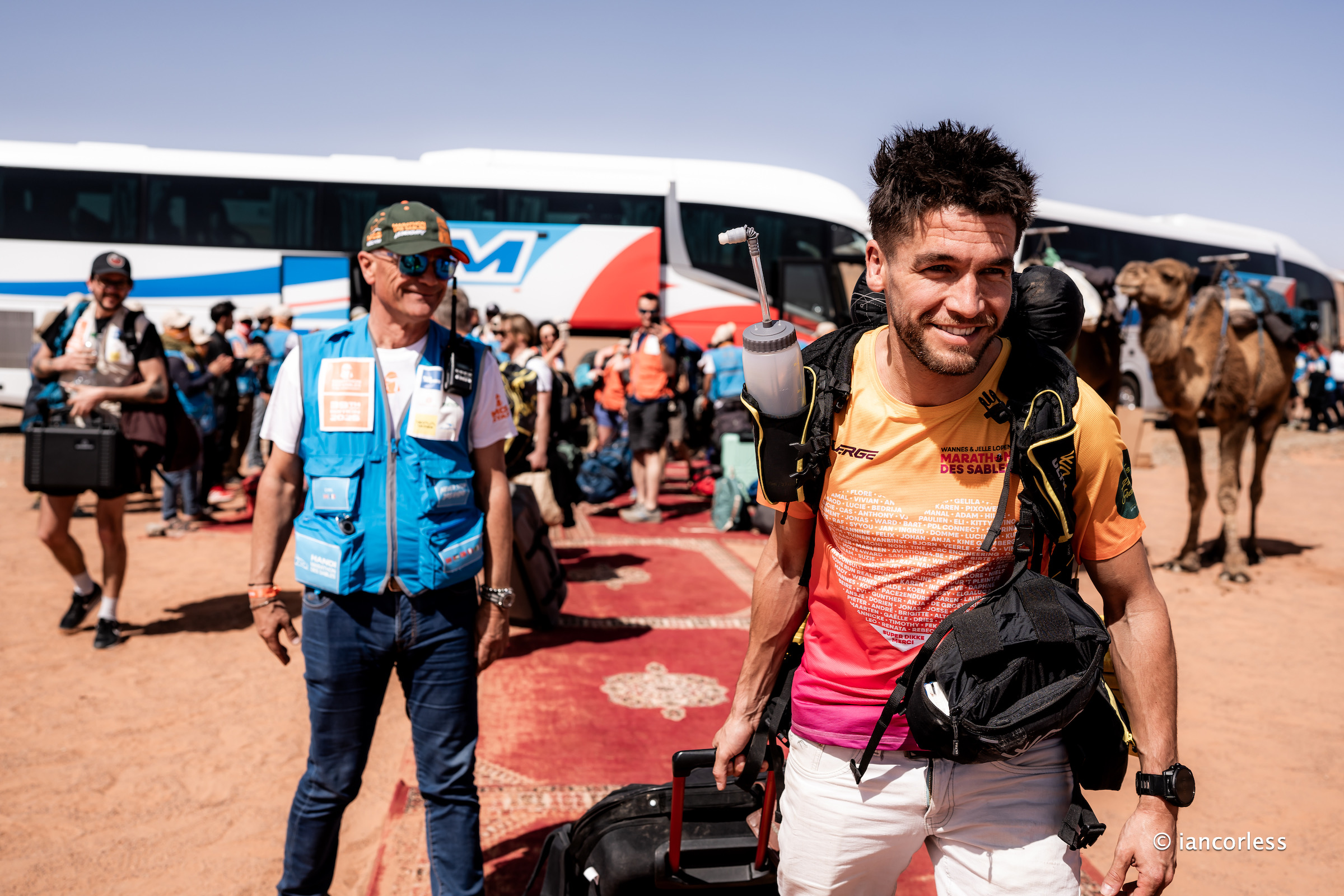
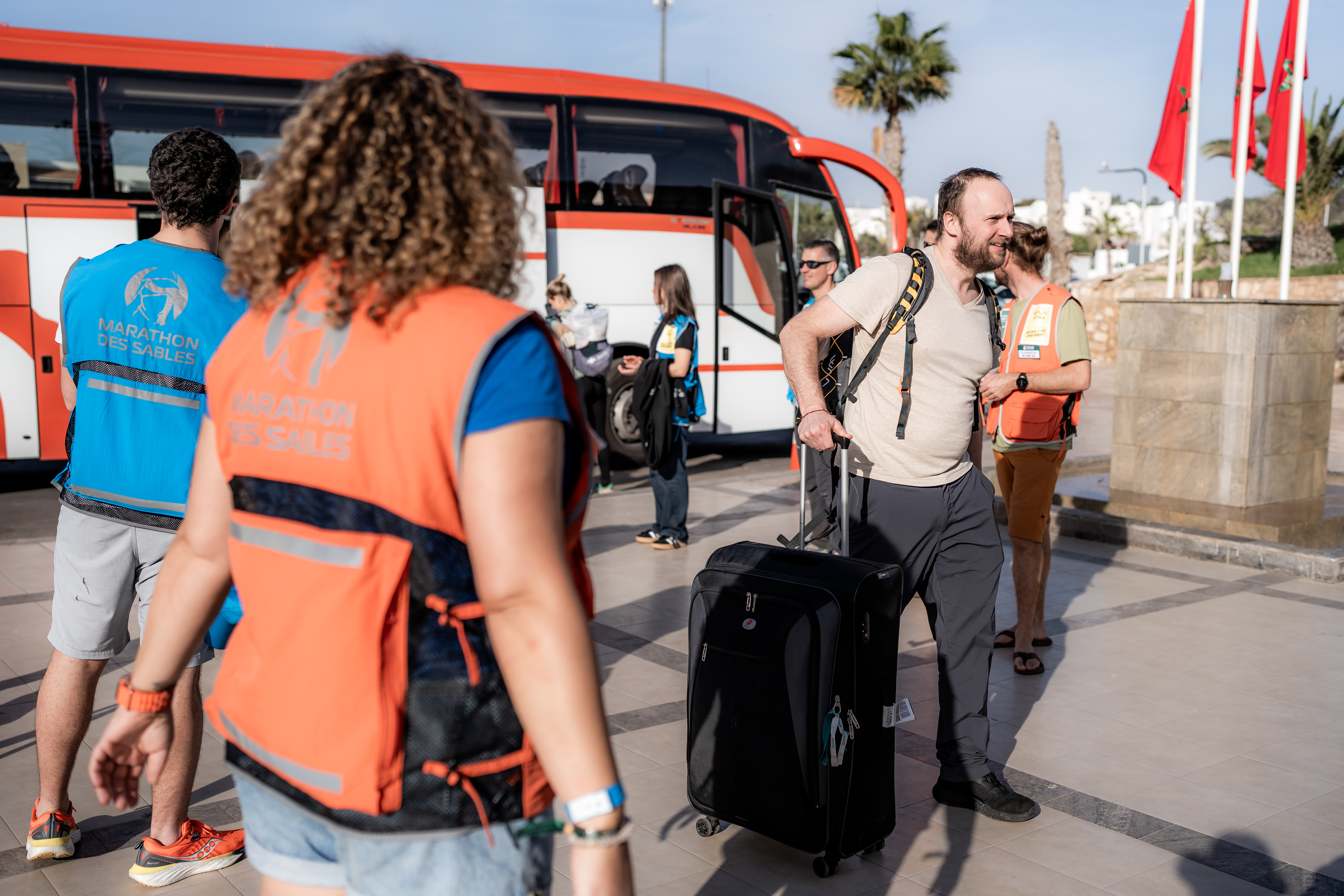
Arrival in the desert – Photo by Ian Corless

THE 2025 EVENT

Welcome to the Sahra – Photo by Ian Corless

Post-race questionnaires are extremely important for the MDS team. Cyril and Olivier very much take all the comments, absorb them, digest them and then move forward with new plans. If a new plan does not work and the participants confirm this, then it is changed. If a new plan works, it is retained. There are no one-stop easy solutions, MDS is an ever-growing and ever-changing event that must constantly be a chameleon to the ever-changing demands and needs of participants.

TRAVEL

Photo by Ian Corless

A key change for 2025 was in transportation. Two key points:

  • The core MDS team, based mostly in Paris, travelled to Morocco via train, boat and coach, taking 3-days and not using airplane travel. For 2025, this was a one way journey, a test, to see how feasible and practical this form of travel is. The general consensus from those who did it is/ was extremely positive. General comments were around this being an adventure in its own right, a brilliant opportunity to share more time with colleagues, a great opportunity to work while travelling and so on… I think we may well see this grow into something bigger for 2026!
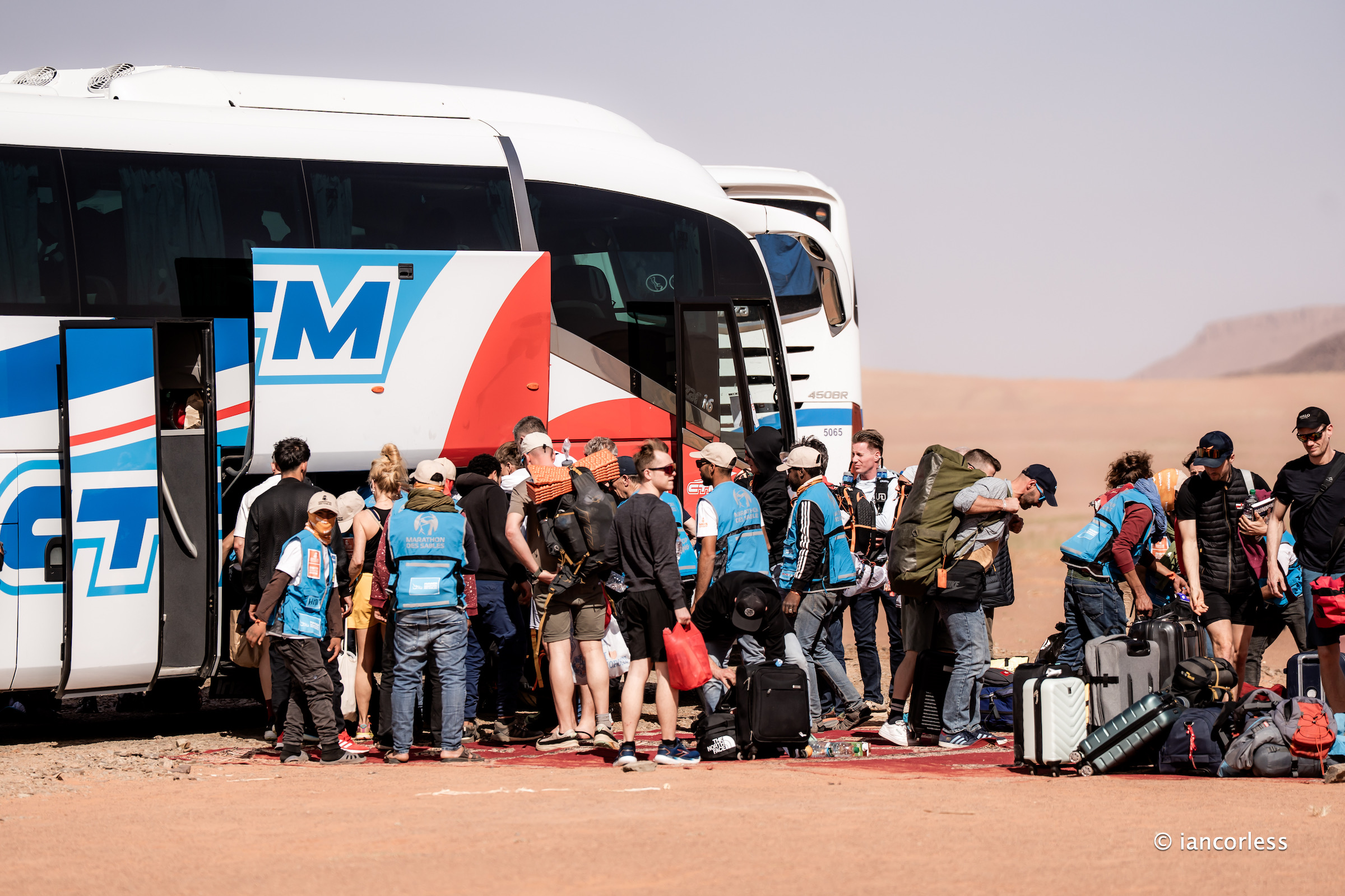
  • In 2024, plane travel arranged by the MDS organisation was reduced to a minimum. For 2025 it was eradicated all together. Therefore, participants could no longer take the option of a MDS charter plane but had to arrange flights themselves. This is no big deal with so many flight options available, especially with MDS offering a free transfer coach service from Marrakech to Ouarzazate and post-race, a free transfer service back to Marrakech.

SELF-SUFFICIENCY

Photo by Ian Corless

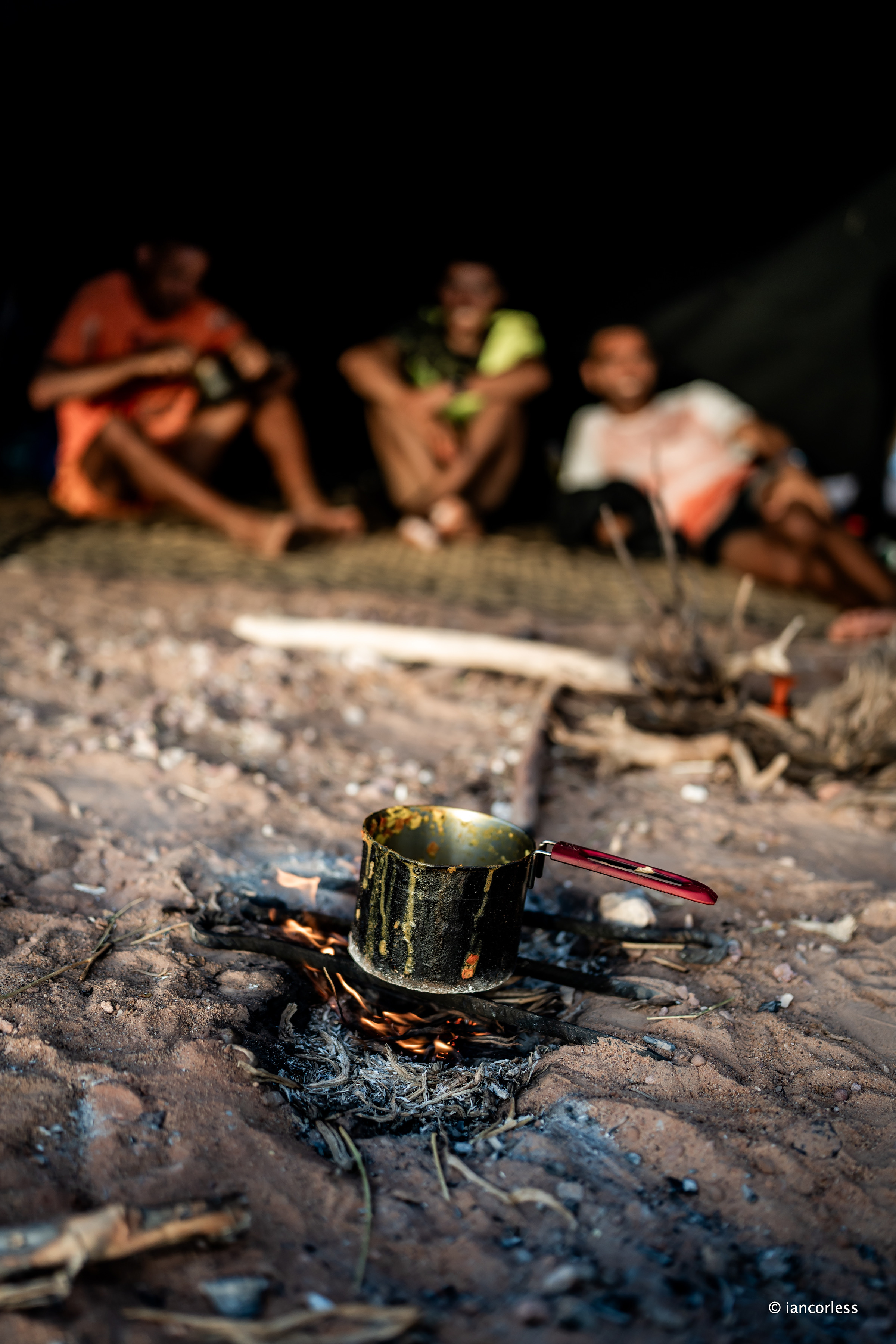
Catering by the MDS organisation once in the Sahara was removed in 2024, this was reasoned for 2025. To clarify, when the buses leave Ouarzazate for the desert, self-sufficiency begins for the travel day, the fist night in bivouac, the following day (admin day), the evening and then, the following day, the race starts and ‘race’ self-sufficiency begins. There is a difference between the two forms of self-sufficiency as the travel day and admin day you can bring as much or as little as you like. Quite simply, it’s not part of the mandatory race minimum requirement of 2000 cal minimum per day. You can bring tinned food, drinks, wine, beer, caviar…. Whatever you wish! It’s a no brainer to be able to look after your own food requirements and quite simply it greatly reduces the possibility of food related health issues that could potentially ruin a race.

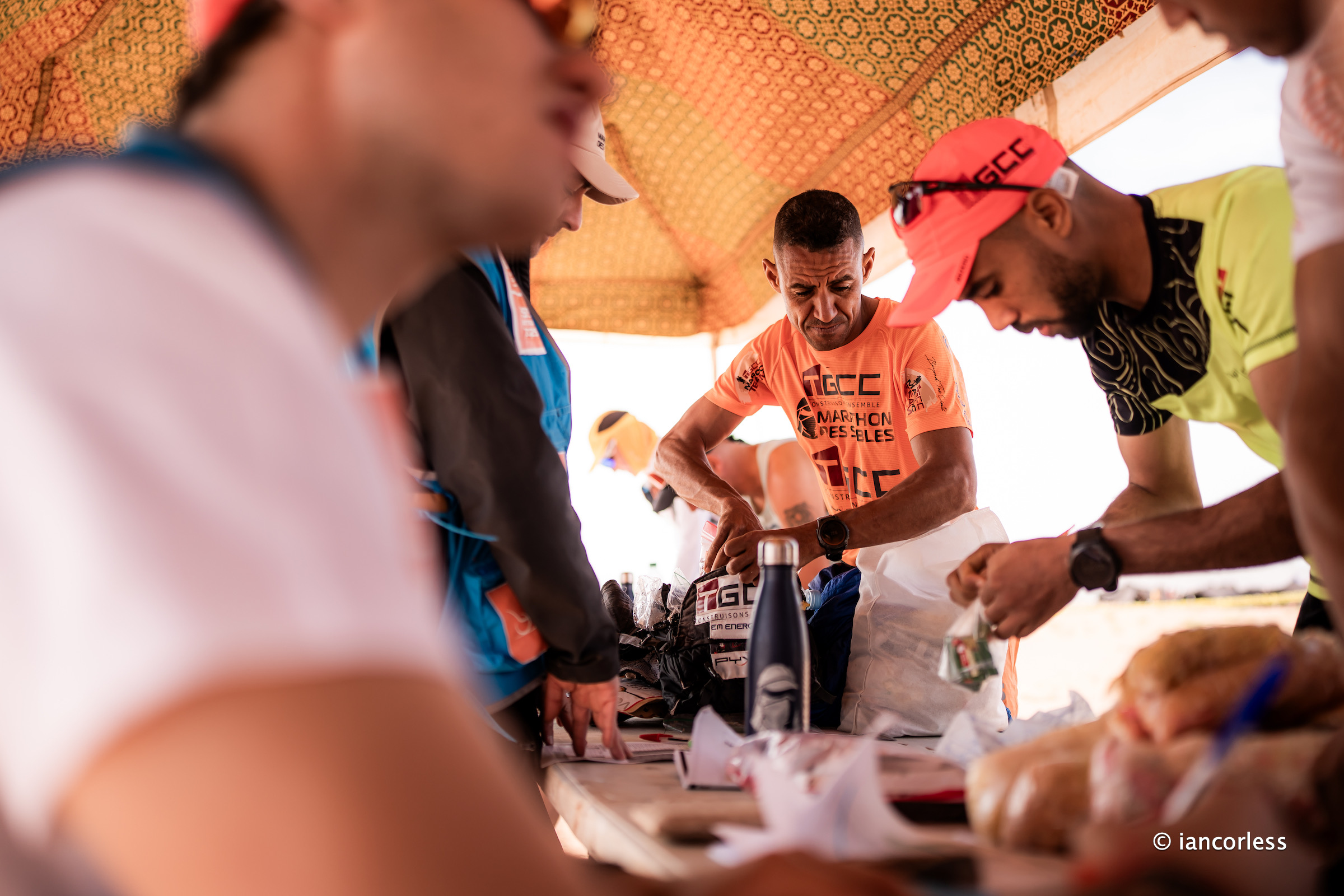
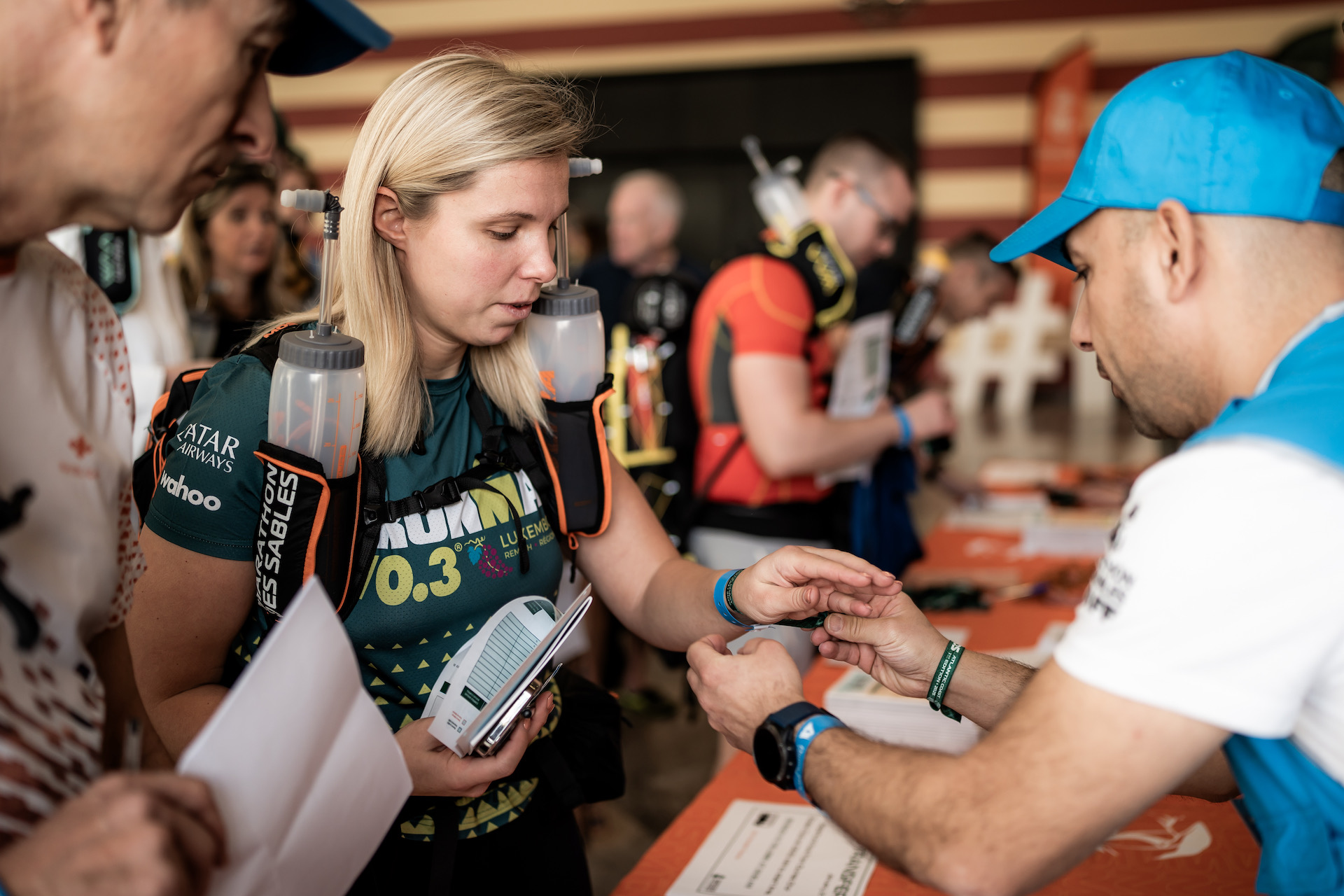
ADMIN DAY

Photo by Ian Corless

The procedures for admin day were changed for the 2024 edition and they were a huge success. This system was retained for 2025 making the process seamless, fast and considerably less painful than the procedures that had gone before.

Photo by Ian Corless

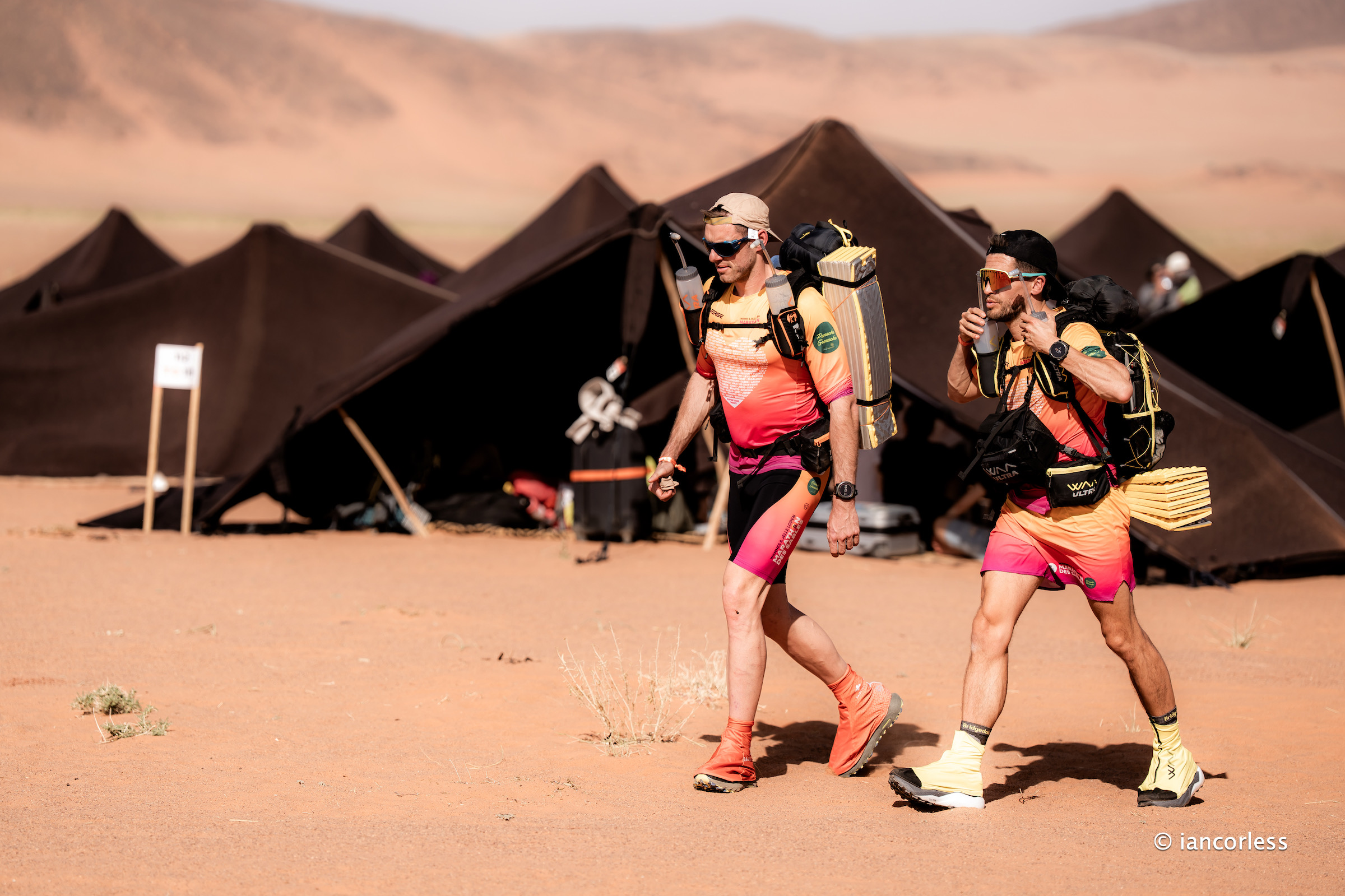
BIVOUAC

Photo by Ian Corless

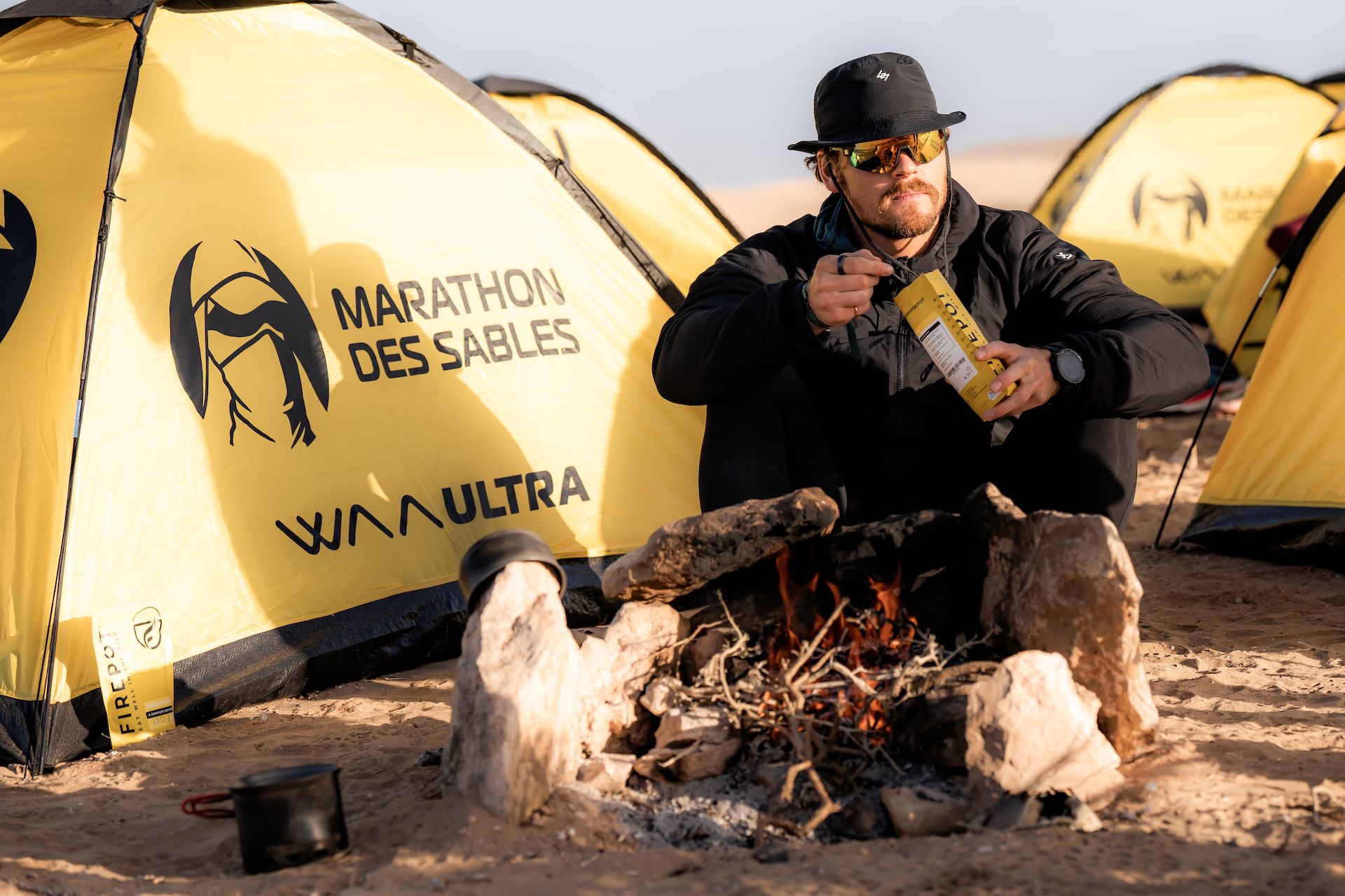
In principle, it may well look the same, however, there are changes for the very observant. Firstly, the circles that make bivouac are smaller and tighter making the camp much more of a community. In 2025 there were new ‘women only’ tents for those who would prefer this option. On some days, in the middle of bivouac, yoga/ stretching was possible, circle of legend talks and yes, even a big fire.

WATER

Photo by Ian Corless

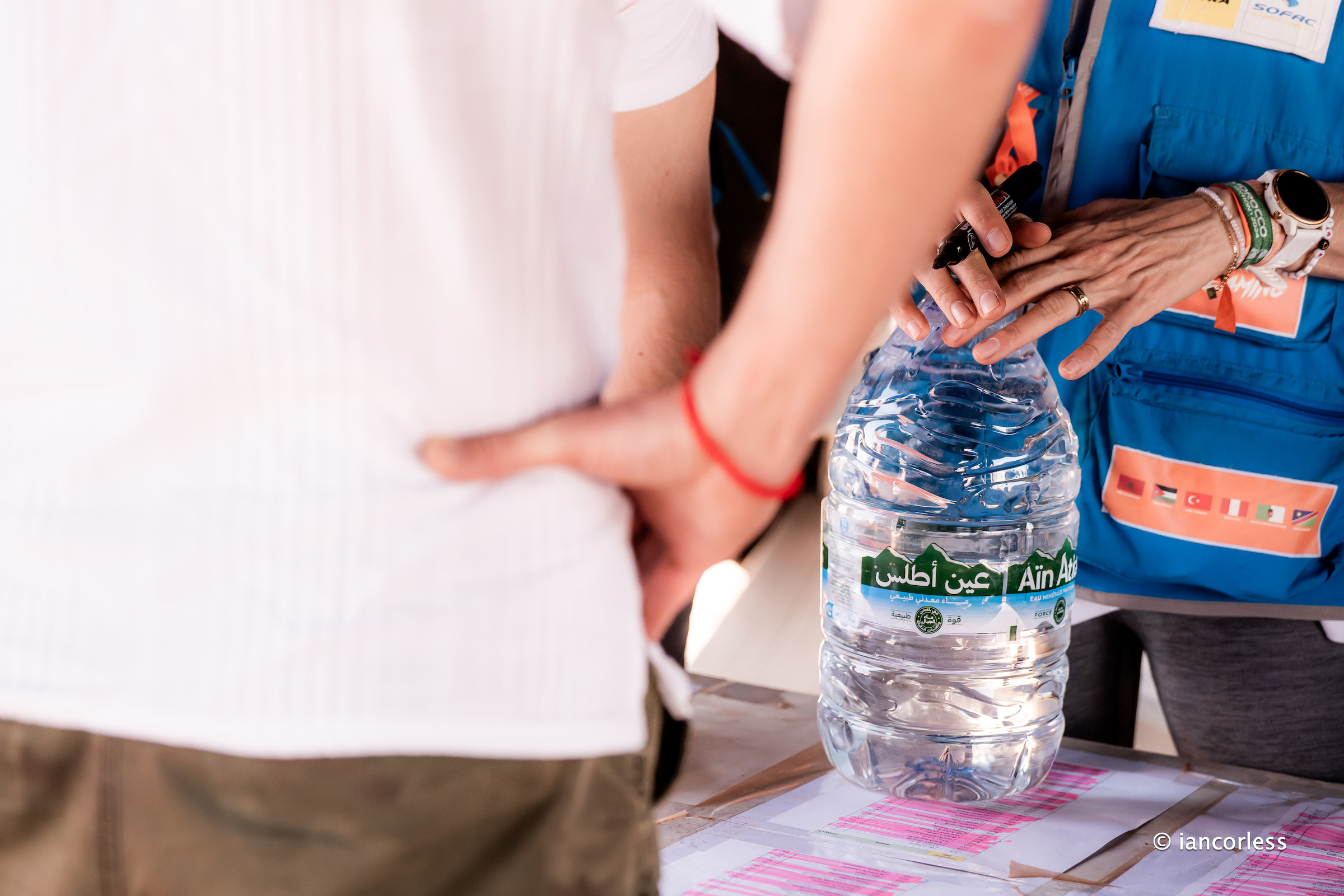
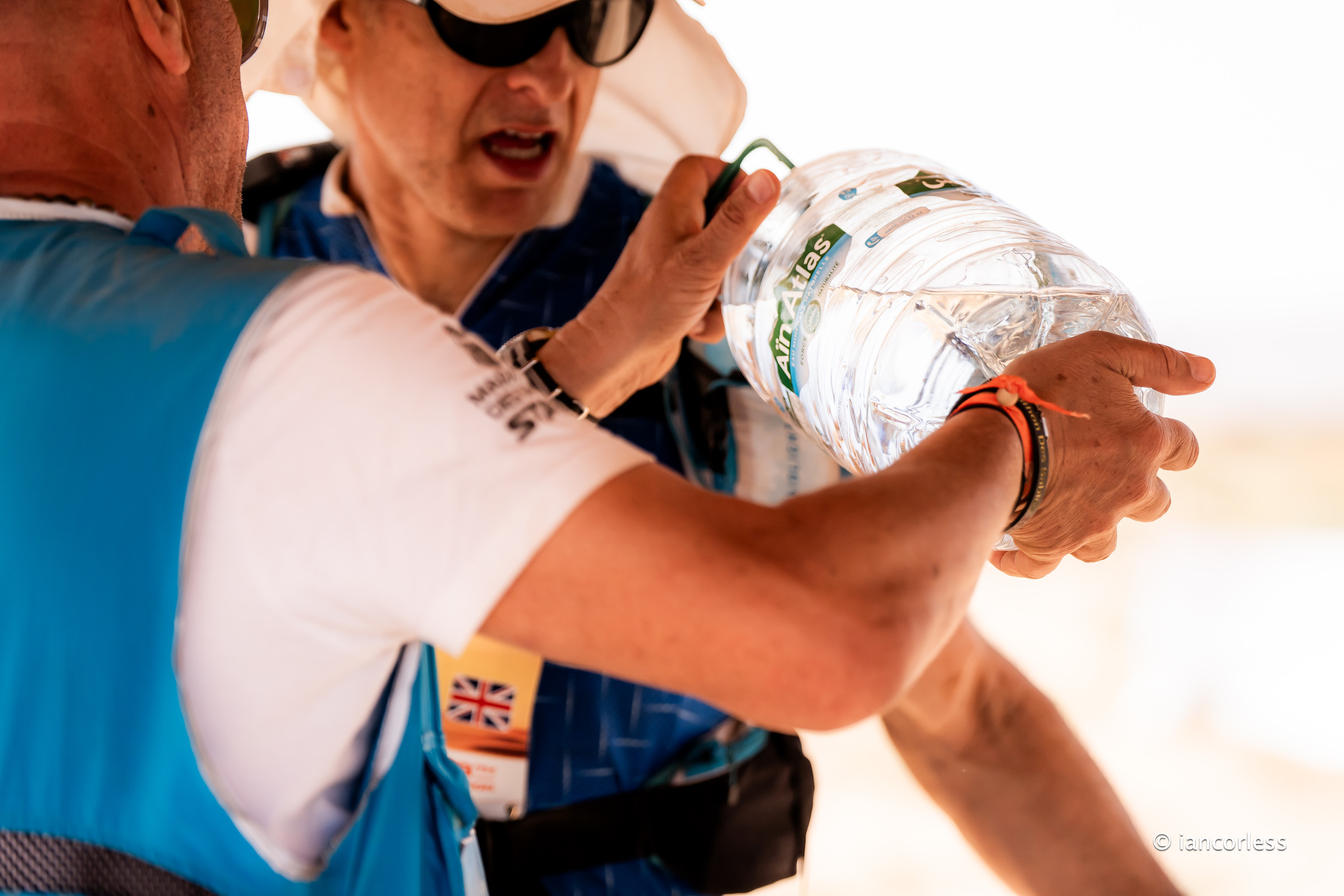
The provision of water was drastically changed in 2024 and this was retained for 2025. During the race there is no rationing of water. As you arrive at a CP, water is decanted into your bottles via MDS blue jackets who pour the water from jugs. This water comes from large 5ltr bottles. Quite simply, you can have 2x 750ml bottles filled, you can then drink one and it will be refilled if required – a game changer.

Photo by Ian Corless

Post-race you are provided with 1 large 5ltr bottle, the is rationed. So, this water must provide hydration post-race, be used for dinner/ breakfast and it must be used to fill your bottles to take you to CP1 the following day.

ICED WATER

Photo by Ian Corless

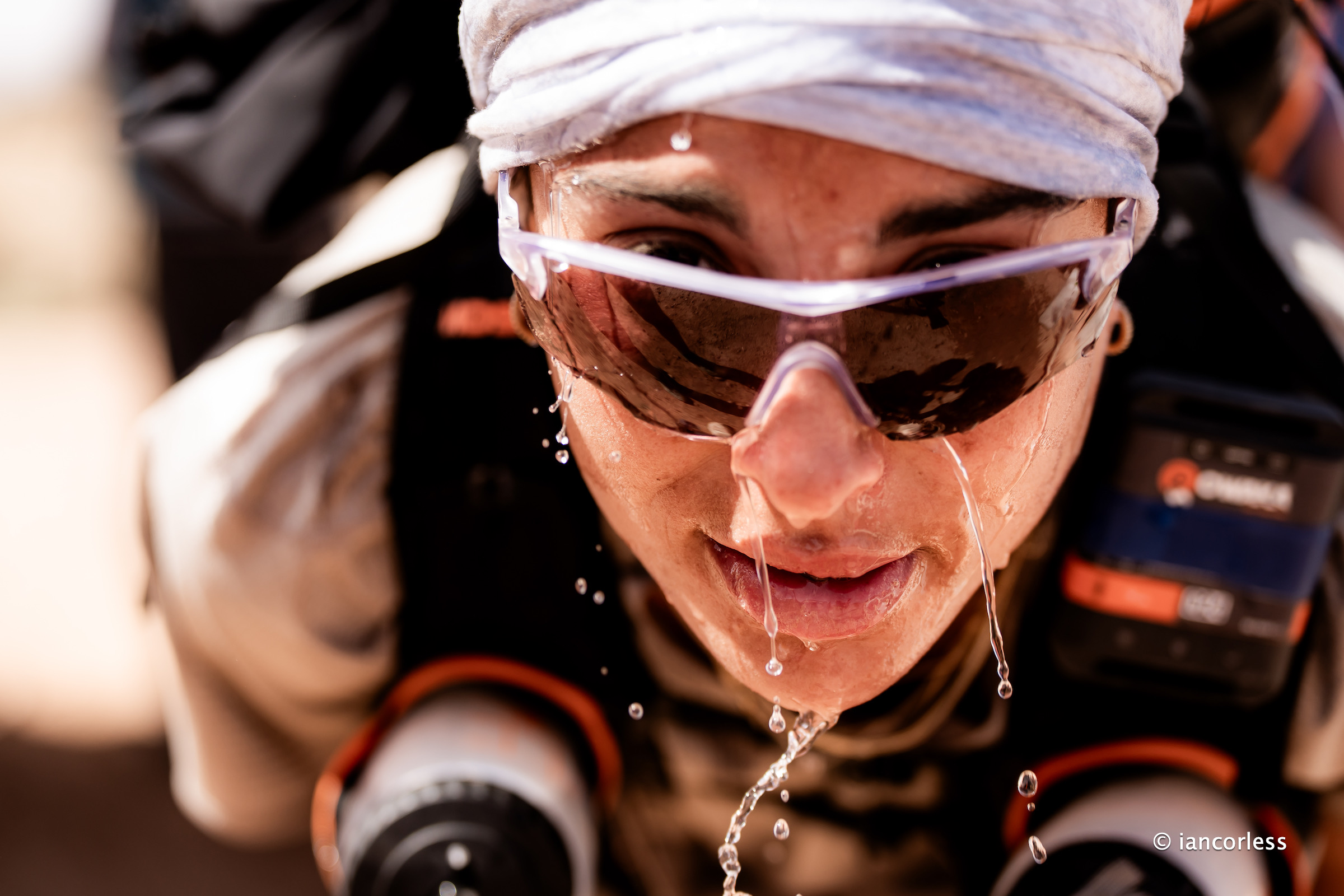
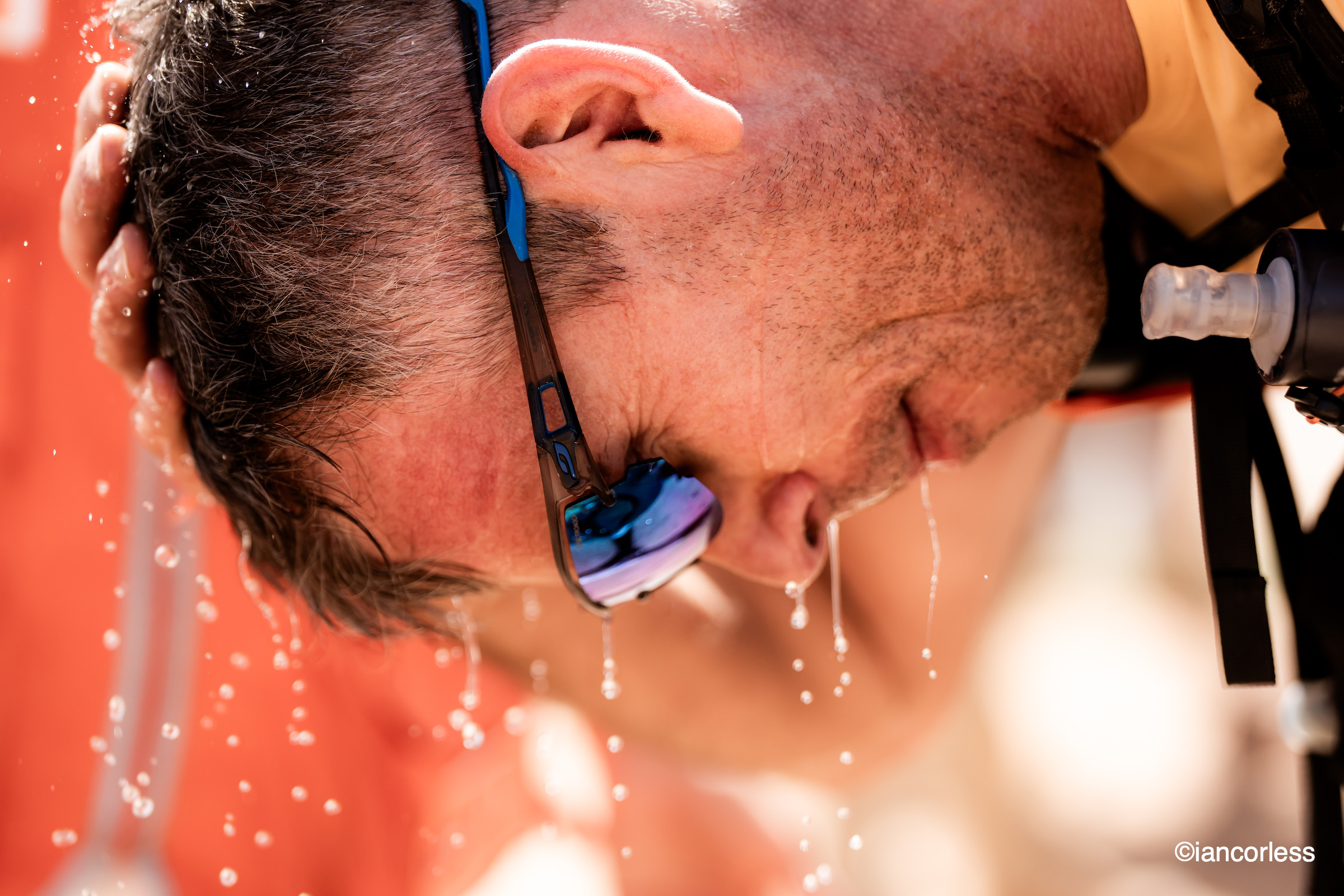
CP’s have MDS orange or blue jackets who will pour iced water over your head to enable cooling. It’s a small simple step that makes a huge change that ultimately helps facilitate completion of the Legendary.

ORANGE AND BLUE JACKETS

Photo by Ian Corless

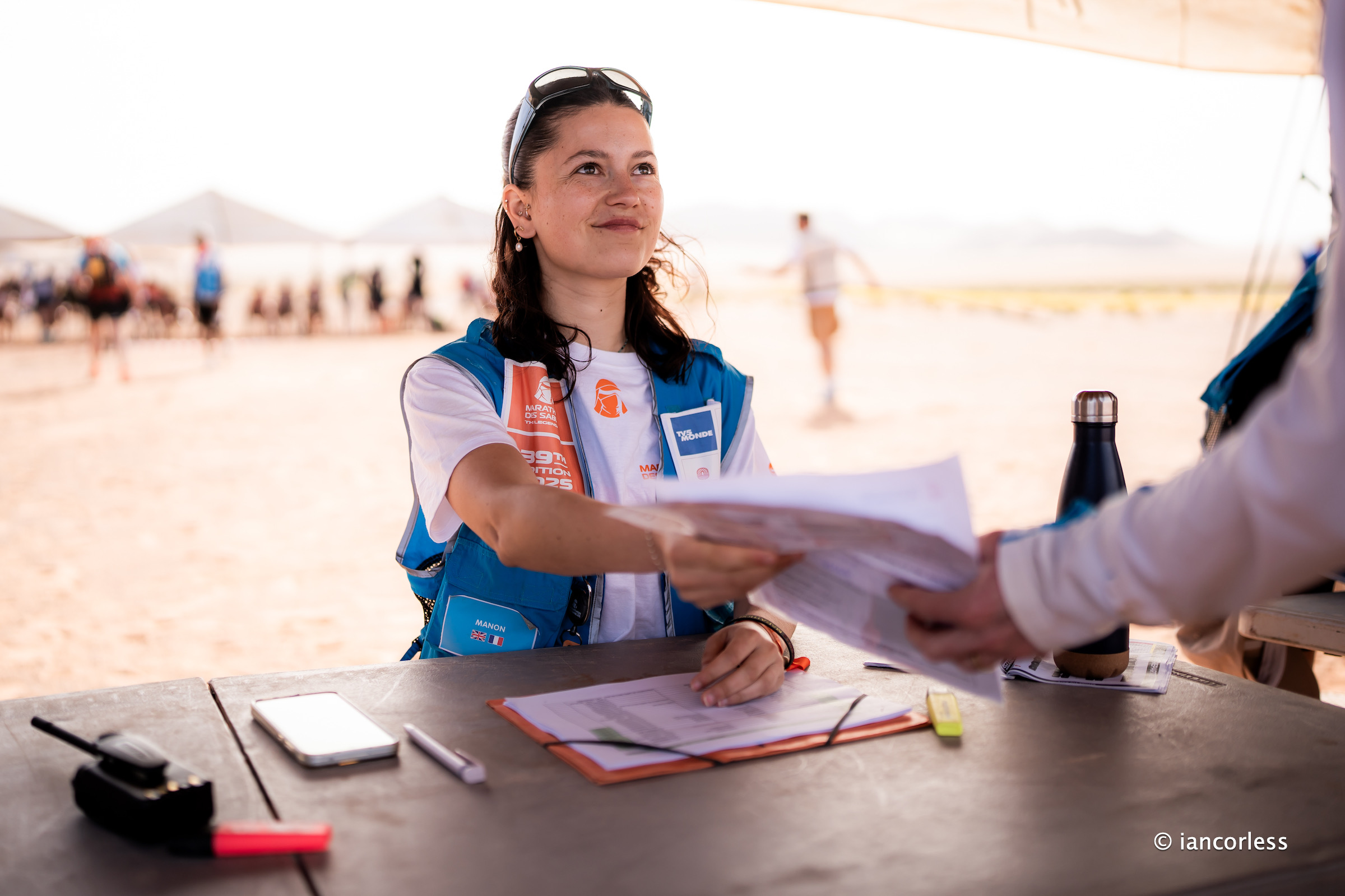
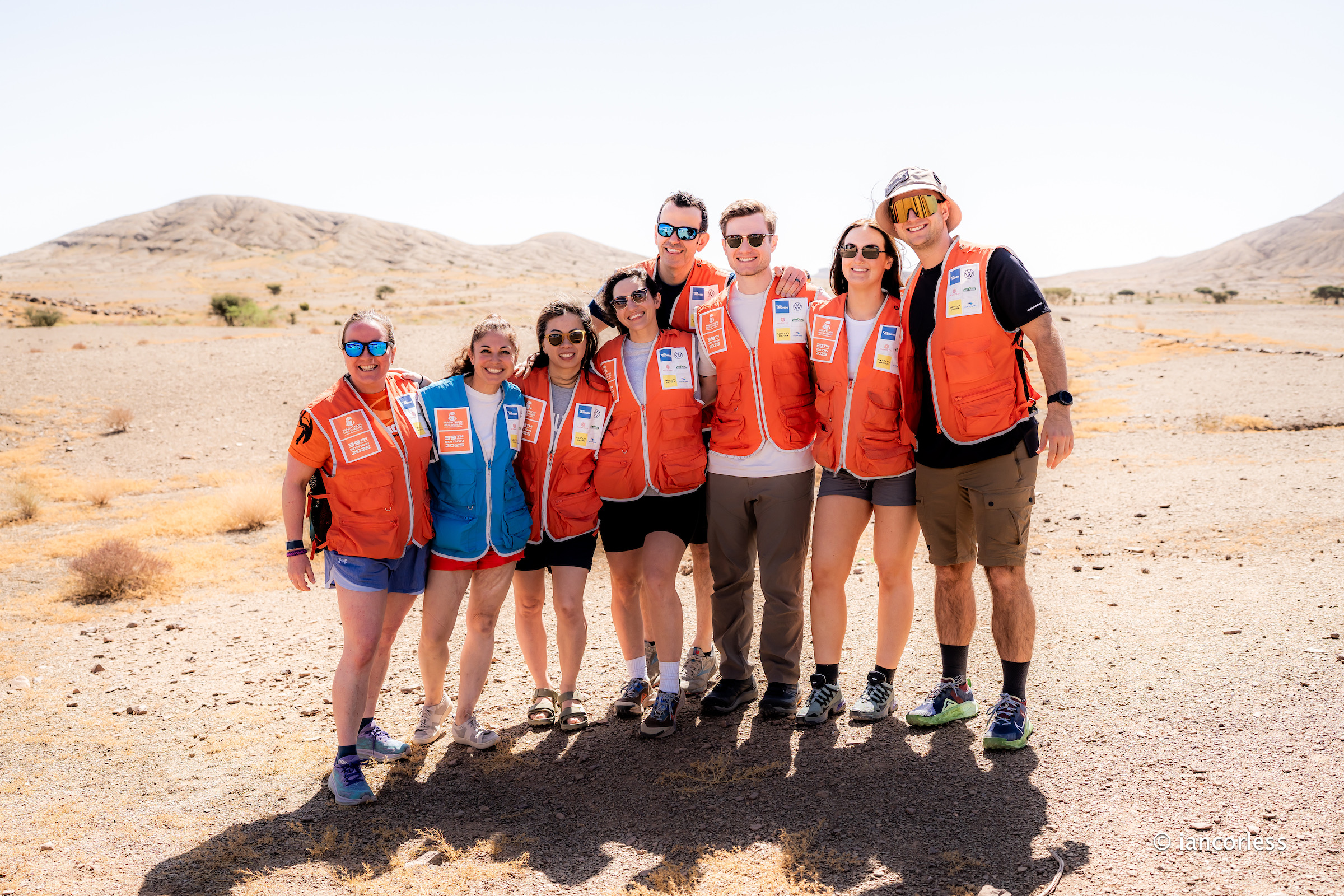
The MDS would not happen without this amazing team of people. The energy, the enthusiasm, the constant good vibes make the runner the number one priority and YES, these people make the difference between finishing and not finishing. They are 100% switched on with the sole purpose to get every runner across the line. You can get a feeling of how important the blue and oranges are by taking a look HERE on Facebook.

Photo by Ian Corless

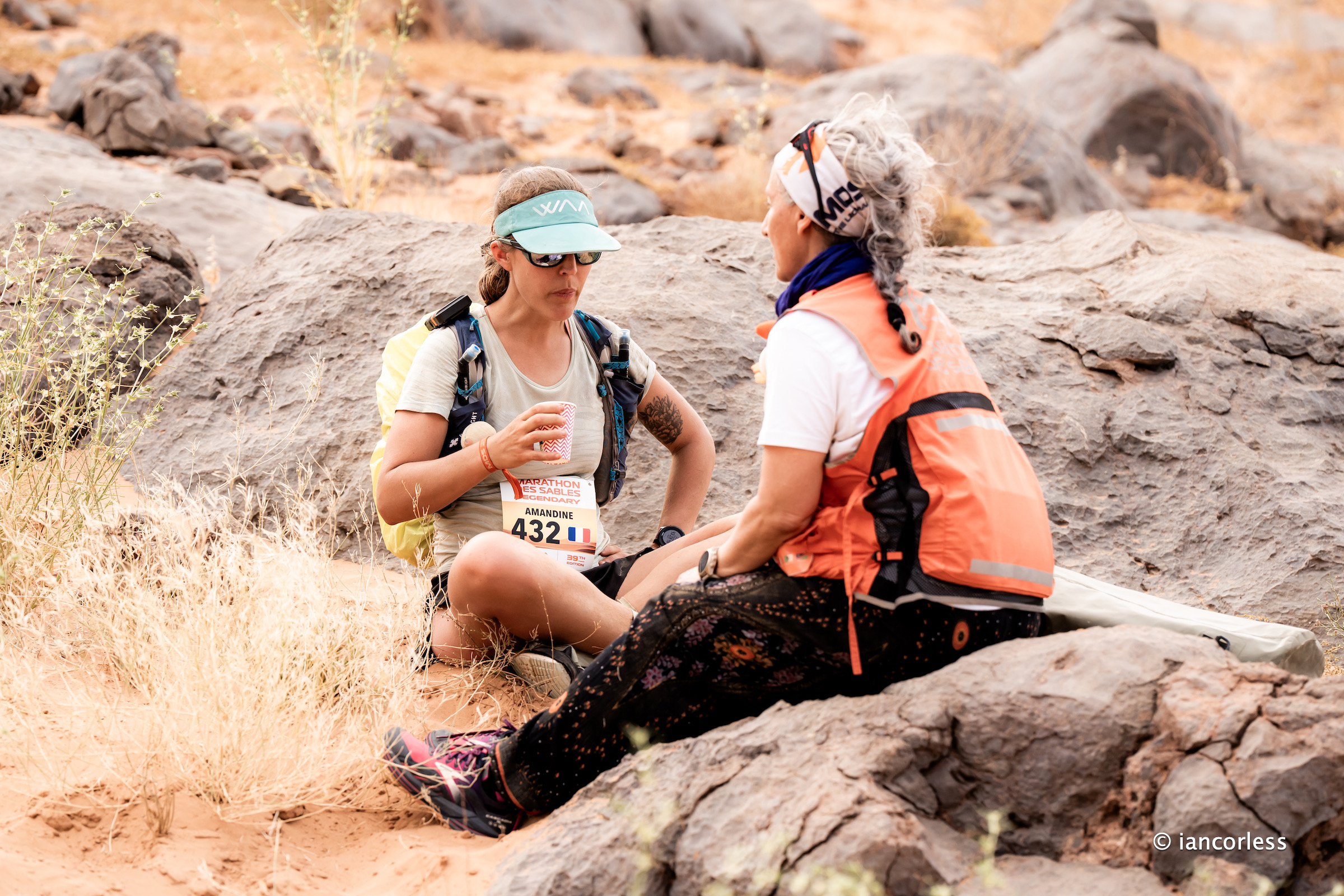
Orange jackets are the medical team who make sure that participants are looked after 100%. They are there for you, no matter what the issue. You will see them on the course at CP’s, in fast response vehicles, in 4×4’s and of course in the medical tents in bivouac.

SAFETY

Photo by Ian Corless

Any MDS event has risks associated with it. We are often in harsh environments, in challenging conditions, we have varying climate conditions and of course, we have runner’s and staff pushing the limit of what is humanly possible. Safety is taken very seriously and how safety is managed is an ever-changing and developing process.

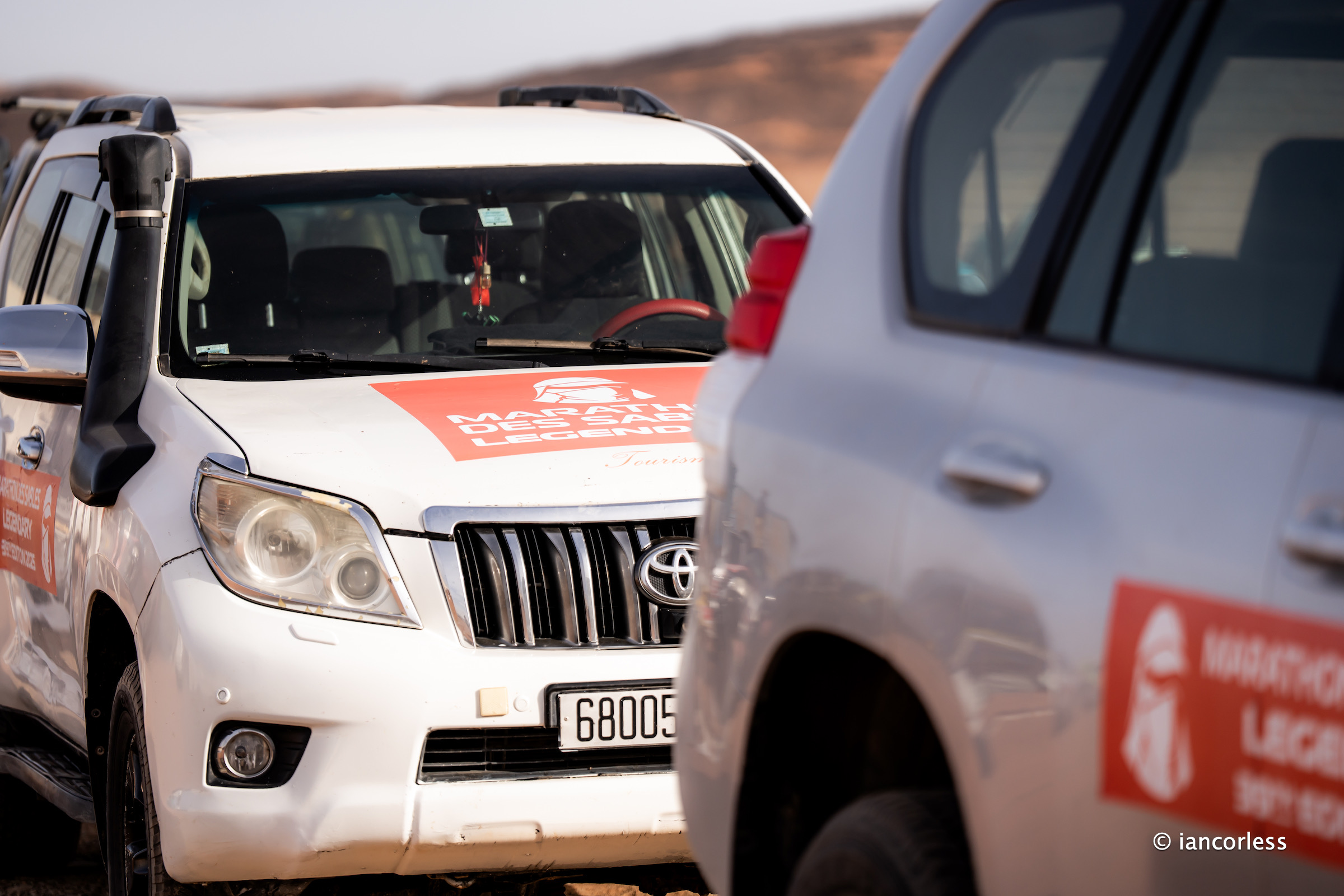
Countless 4×4’s – Photo by Ian Corless

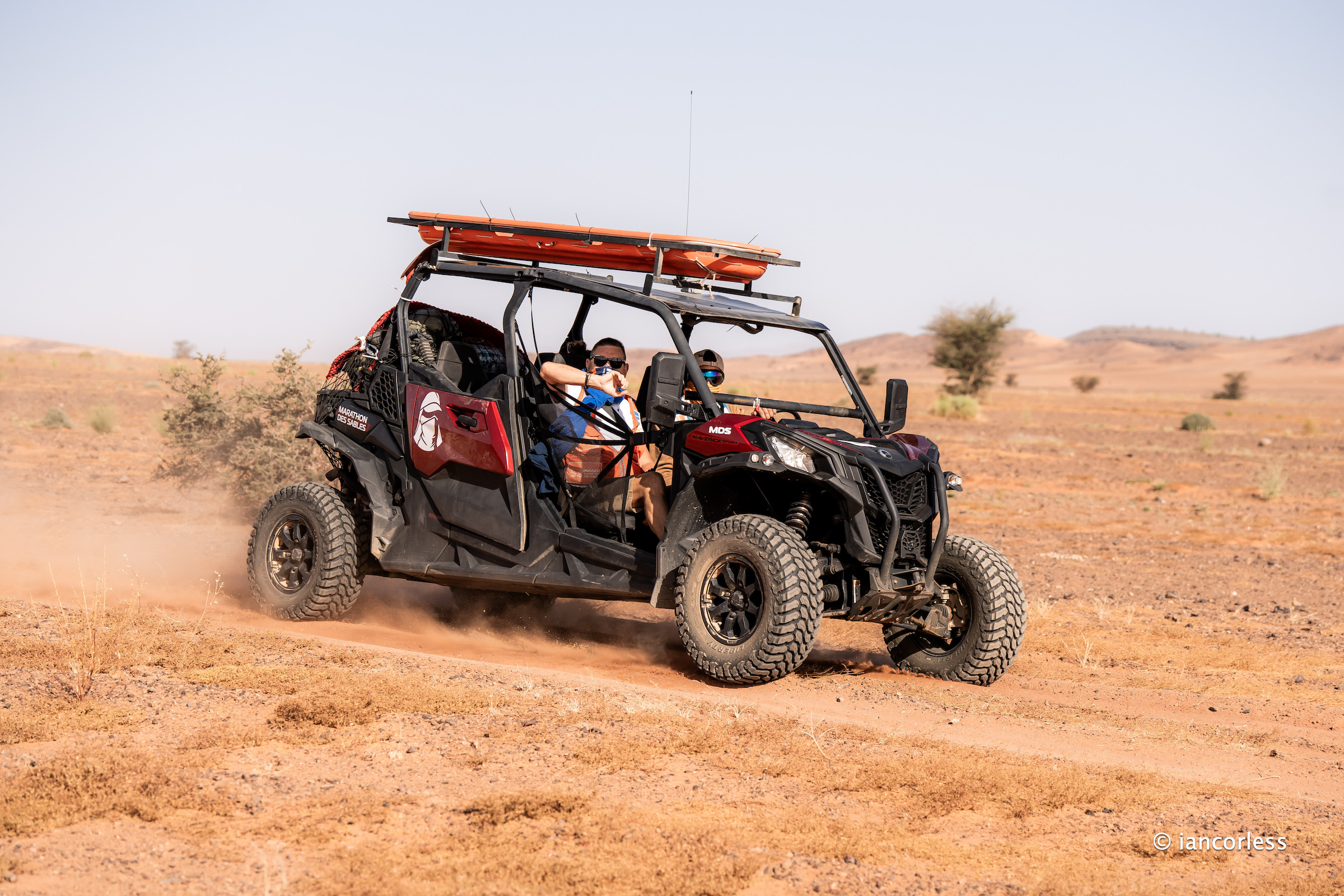
Legendary had more fast response vehicles, more medical professionals on course, there were 10 medical professional runner’s who did the course and there was a new mobile medical unit for 2025 which is state of the art. There was also the inclusion of the ‘Orange Squad’ – a medical team who do the course the opposite way so that they are able to see runner’s coming toward them and should there be a problem, they can help immediately.

Fast response – Photo by Ian Corless

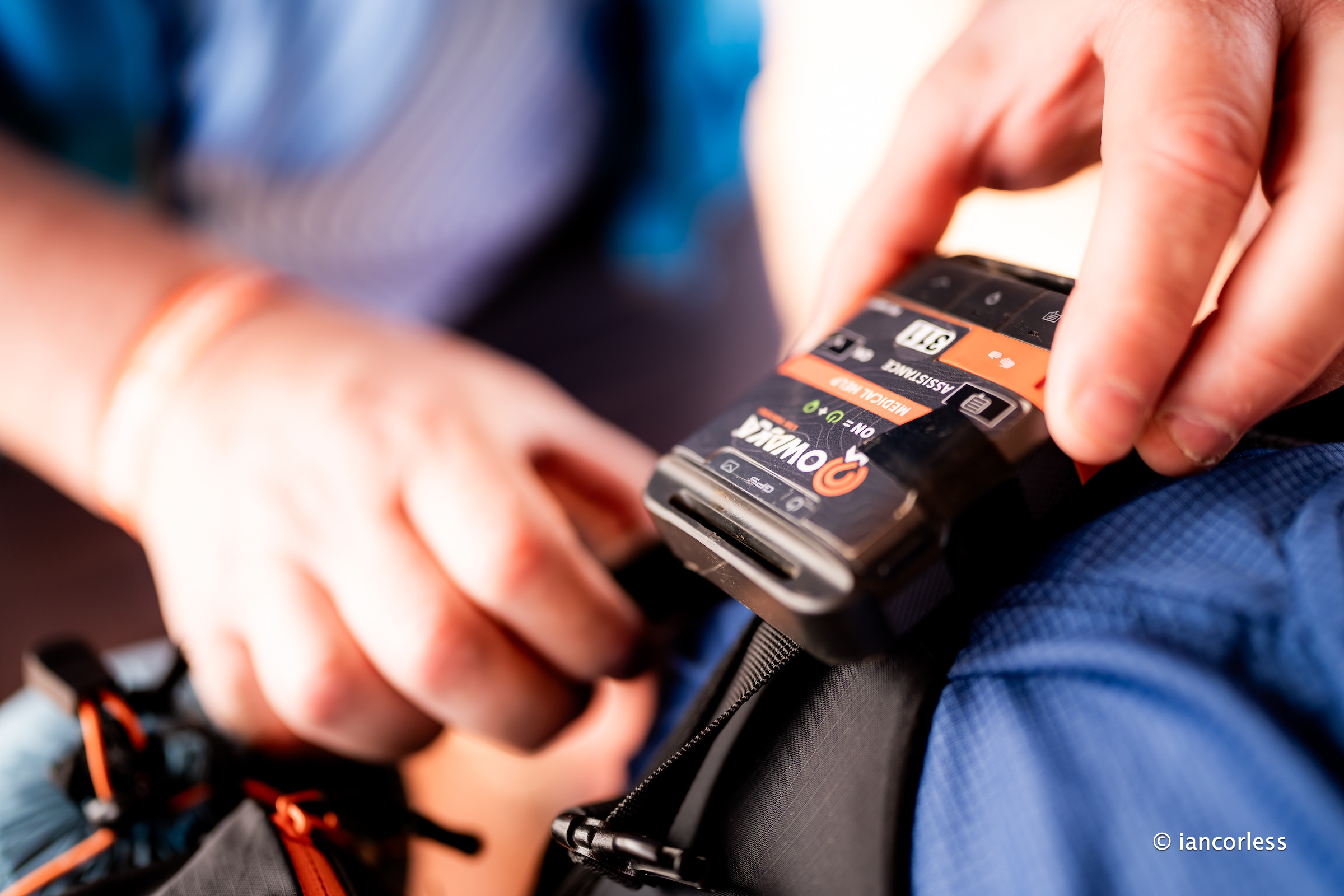
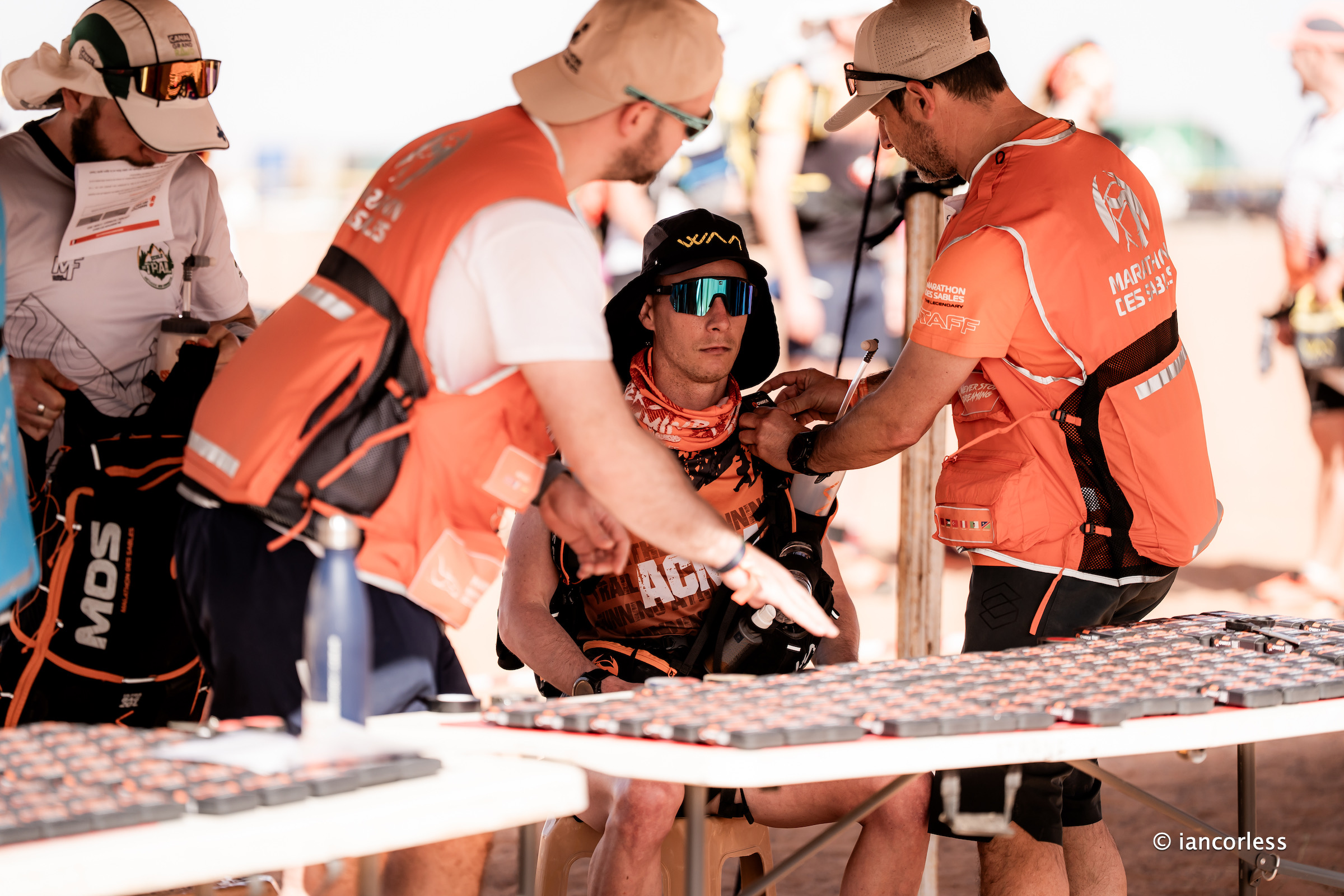
Each runner is issued with a Spot Tracker and this allows the MDS team to monitor each runner on the course and importantly, they have an SOS button which if pressed, will receive a medical response vehicle in minutes.

Fitting SPOT – Photo by Ian Corless

Feet are always an issue and of course, the medical tent is there to facilitate foot repair in bivouac. It’s important to be self-sufficient and look after your feet yourself, however, as and when necessary, a medical professional is always there to help.

RACE BRIEFINGS

Race start times are very important and pre 2024, the race start time was somewhat unpredictable. This changed in 2024 and was upped to another level in 2025 with every stage starting exactly on time! It may sound like a small thing, but knowing you will be underway as scheduled makes planning so much easier. If it says 0600 start, you know it starts at 0600.

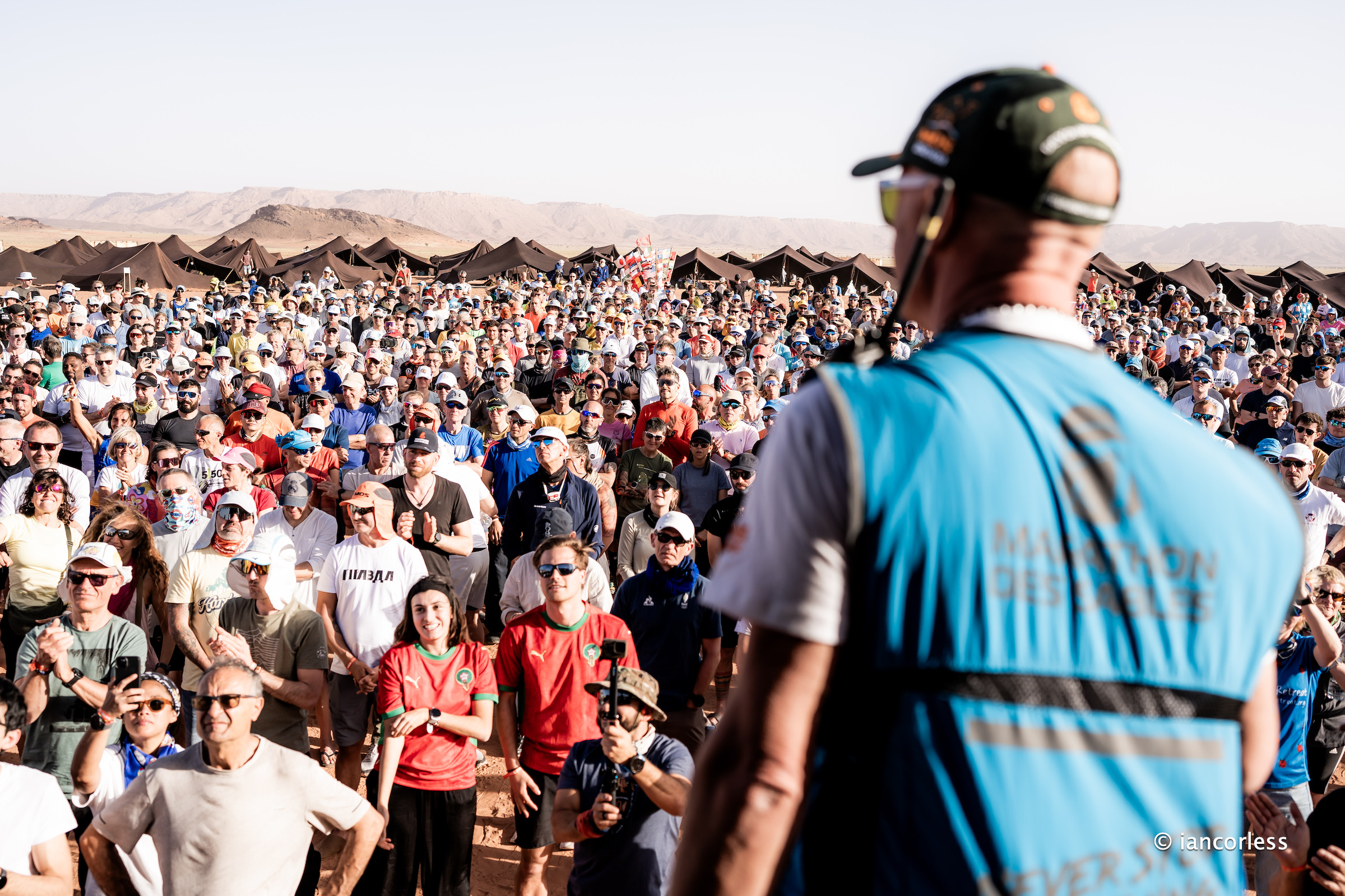
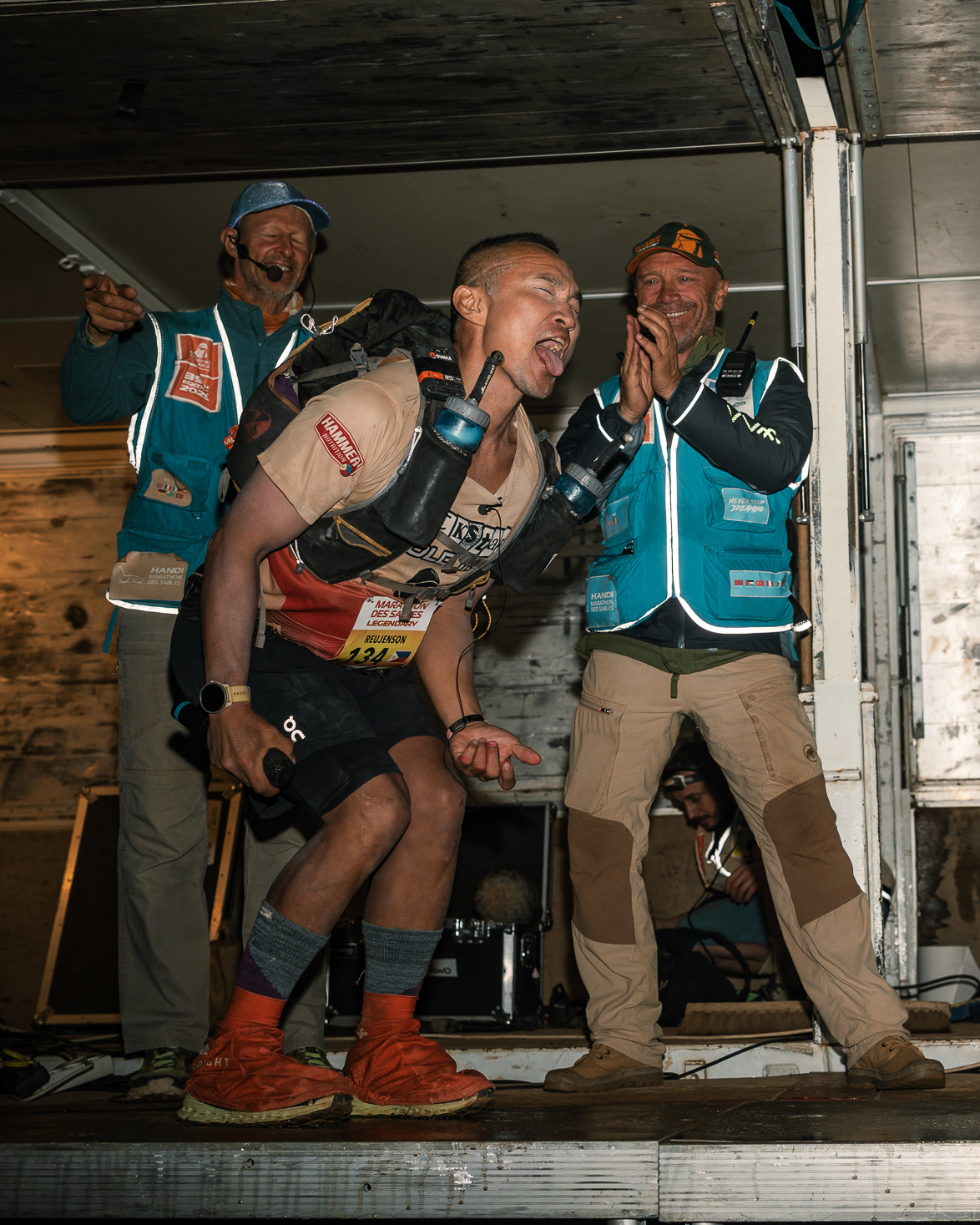
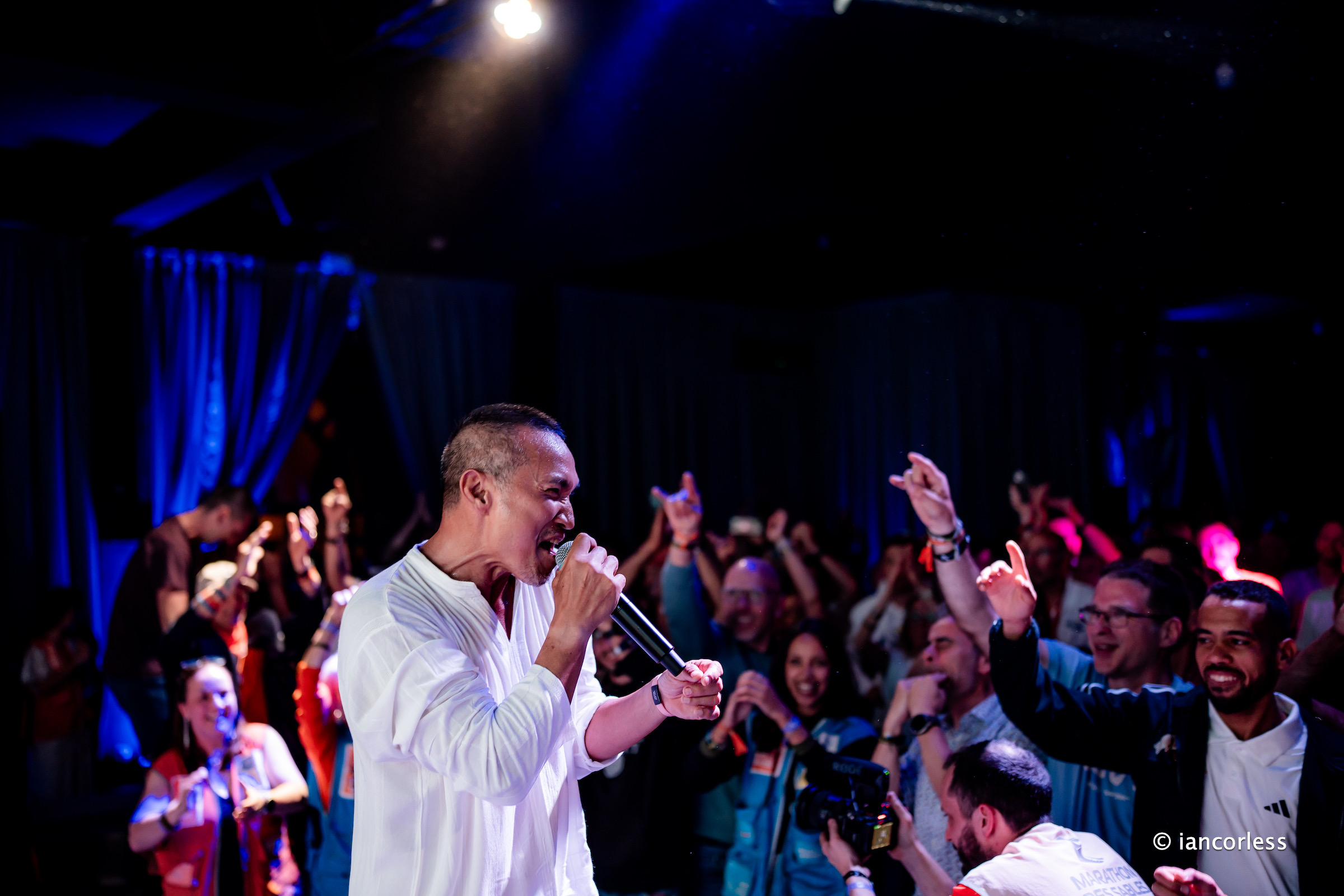
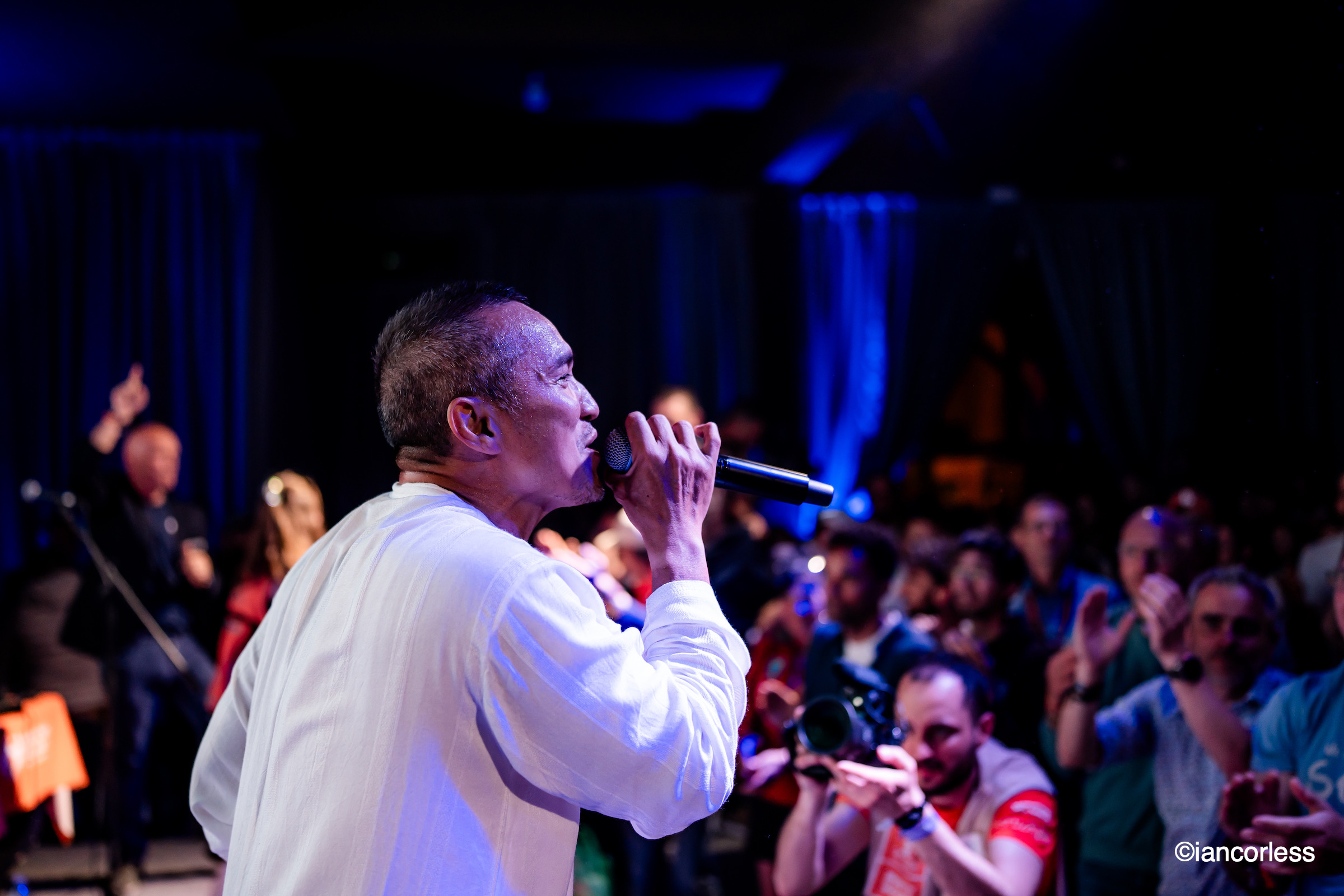
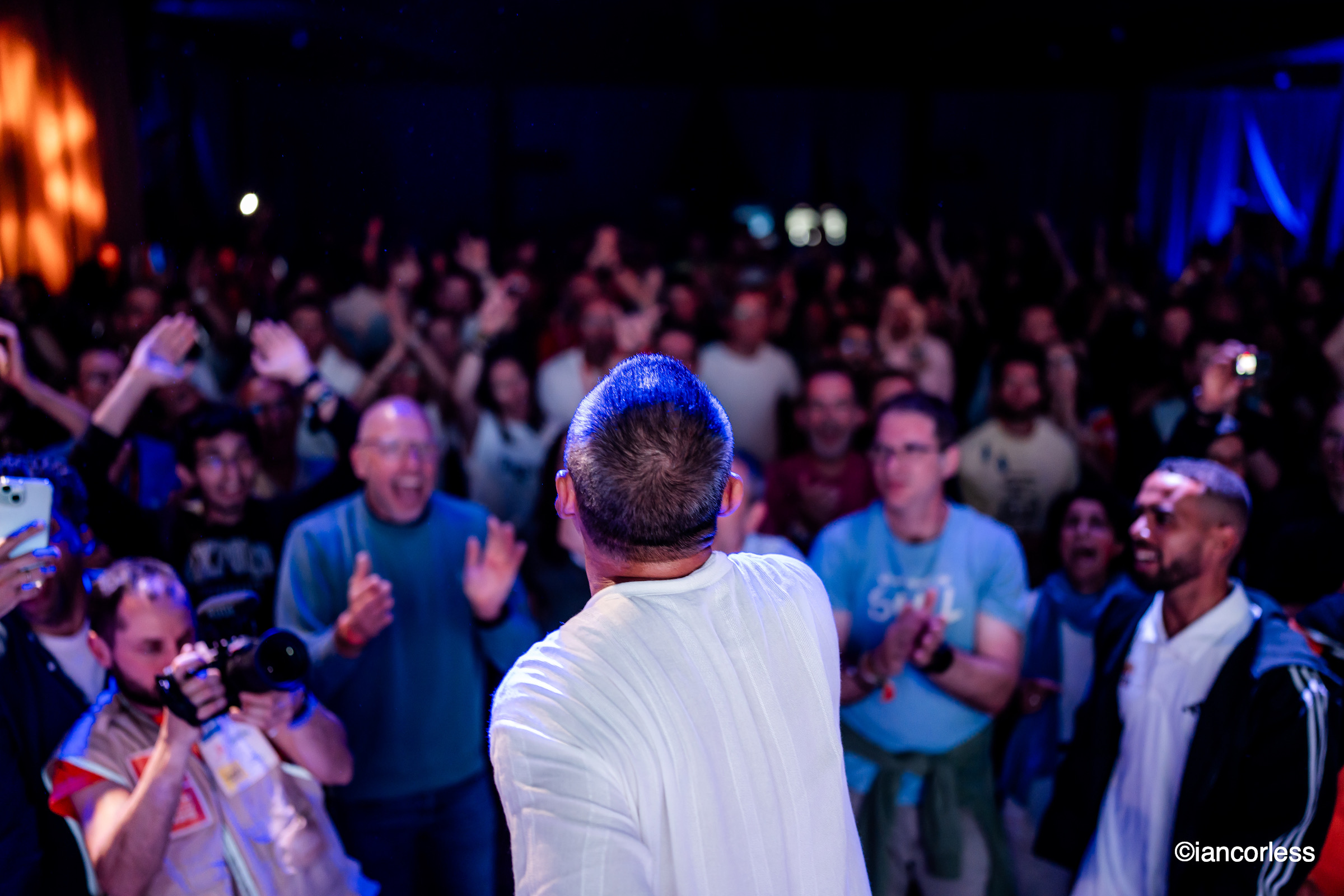
Another change was the addition of an English speaking announcer – yes, it was me! This was the idea of Cyril and we instigated and tested this at Atlantic Coast in January, it worked. So, for Legendary and moving forward, an English briefing will take place and then be translated into French and not the other way around. Stage 6 race briefing may well go down in history as the best. Mood was already high with the final stage ahead, nut hen we had participant, Reujen Lista join us on stage for a ‘live’ version of Highway to Hell – it was epic!

Highway to Hell ‘live’ – Photo by Florian

WEATHER

The weather took its toll – Photo by Ian Corless

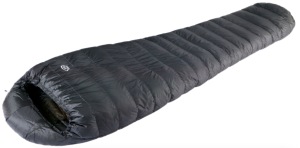
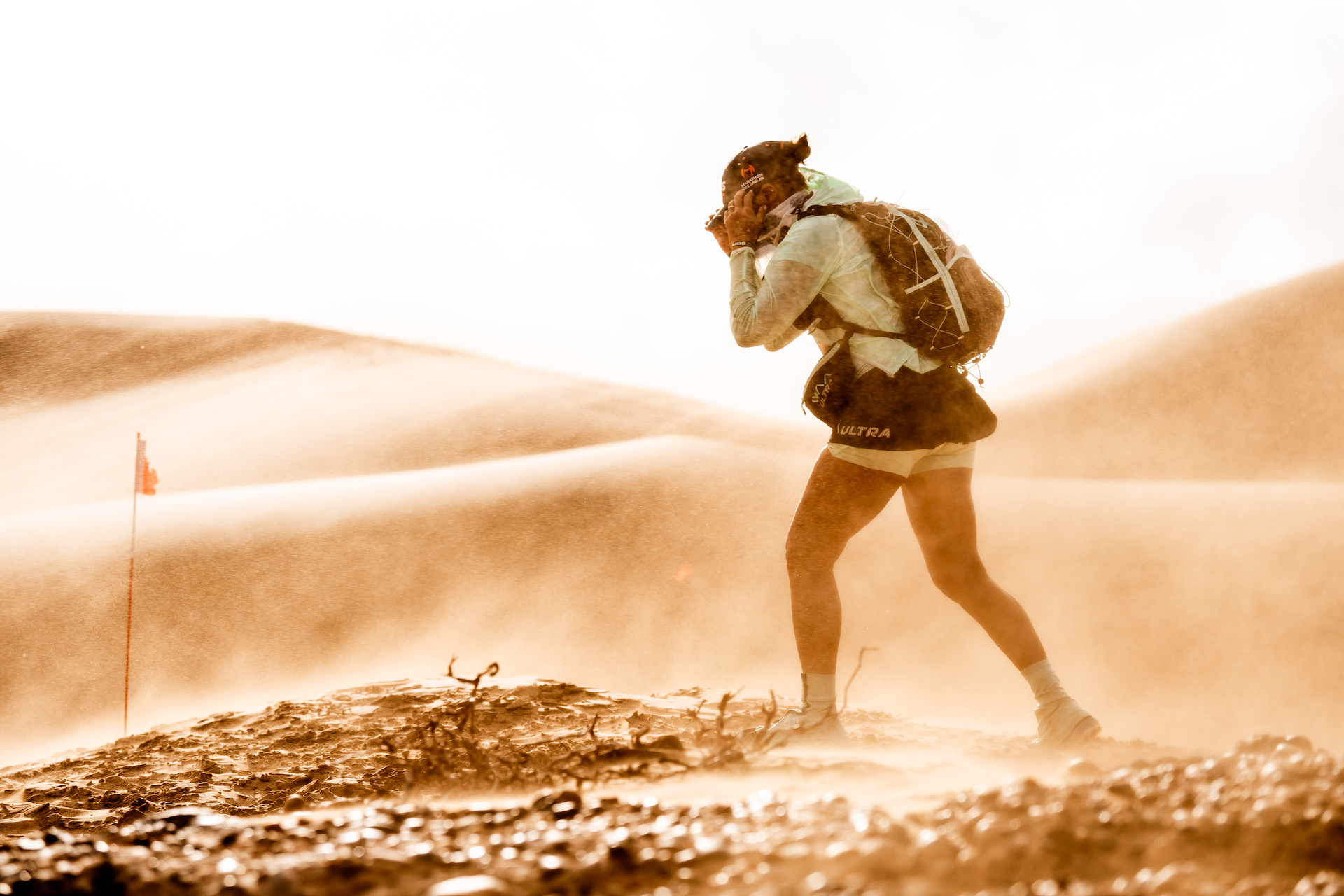
As always, weather plays a key part in any MDS event. However, we are most definitely feeling the impacts of ever changing climatic conditions. It was always assumed that MDS will be hot and unbearable, history is showing that is not the case. Recently, particularly in Morocco, we have experienced difficult weather: MDS Morocco in October had torrential rain and flooding, the recent MDS Atlantic Coast in January had cooler temperatures, some rain and the last day had full-on sand storms. The 2025 Legendary started calmly and tranquil, it was looking to be a classic race, it was sunny, hot, but not too hot and the winds were relatively calm. That all changed come stage 4 (the long day) with cloudy skies and cooler temperatures in the day. During  the night the winds increased, rain came and without doubt, from 2100 hrs the conditions were difficult and challenging. Especially for those who were moving through the night looking to get the long day done. CP’s had cold participants taking shelter looking to get warm and continue the journey. This weather continued through the rest day. Stage 5 had a mix of everything but the heat never came and stage 6 was cloudy, cool and with intermittent rain. There is a very big lesson that needs to be learned, I did say this before Legendary, but now, post-race, I can only say it more, you need to be prepared for bad weather! A good jacket is now essential, so much so, I do think that it should be added to mandatory kit. I also think it wise to make sure that you are able to keep key items, such as sleeping bag, dry during bad weather. Many had wet sleeping bags during the long day which can effectively make them useless, depending on what filling is inside.

THE ROUTE

Photo by Ian Corless

Legendary is now 6-stages over 7-days and this is a huge difference. Pre 2024, the race was 5-stages and stage 6 was a non-times ‘solidarity’ stage for charity. It’s hard to argue against the charity side of this, however, a non-timed 6th stage was pointless.

Photo by Ian Corless

The race is now 6-stages timed and raced.

Photo by Ian Corless

For 2024, the ‘long day’ was moved to stage 3. For 2025, it was moved back to stage 4. The main reason for this was due to the course and the start/ finish point.

Photo by Ian Corless

2024 participants, as always, tried to stress that the 2024 edition was/ would be harder than 2025. Of course it’s nonsense. Comments like, ‘Argh, but here was more vertical gain in 2024!’ were unfounded as the people who made these comments had obviously not done due diligence, the reality is the 2024 Legendary was 252.9km’s and the 2025 event was 250km. Vertical gain was almost identical, 2024 was 2788m+ and 2025 was 2710m+

Photo by Ian Corless

In many respects, the 2025 edition was more ‘classic MDS’ with a marathon after the rest day.

Photo by Ian Corless

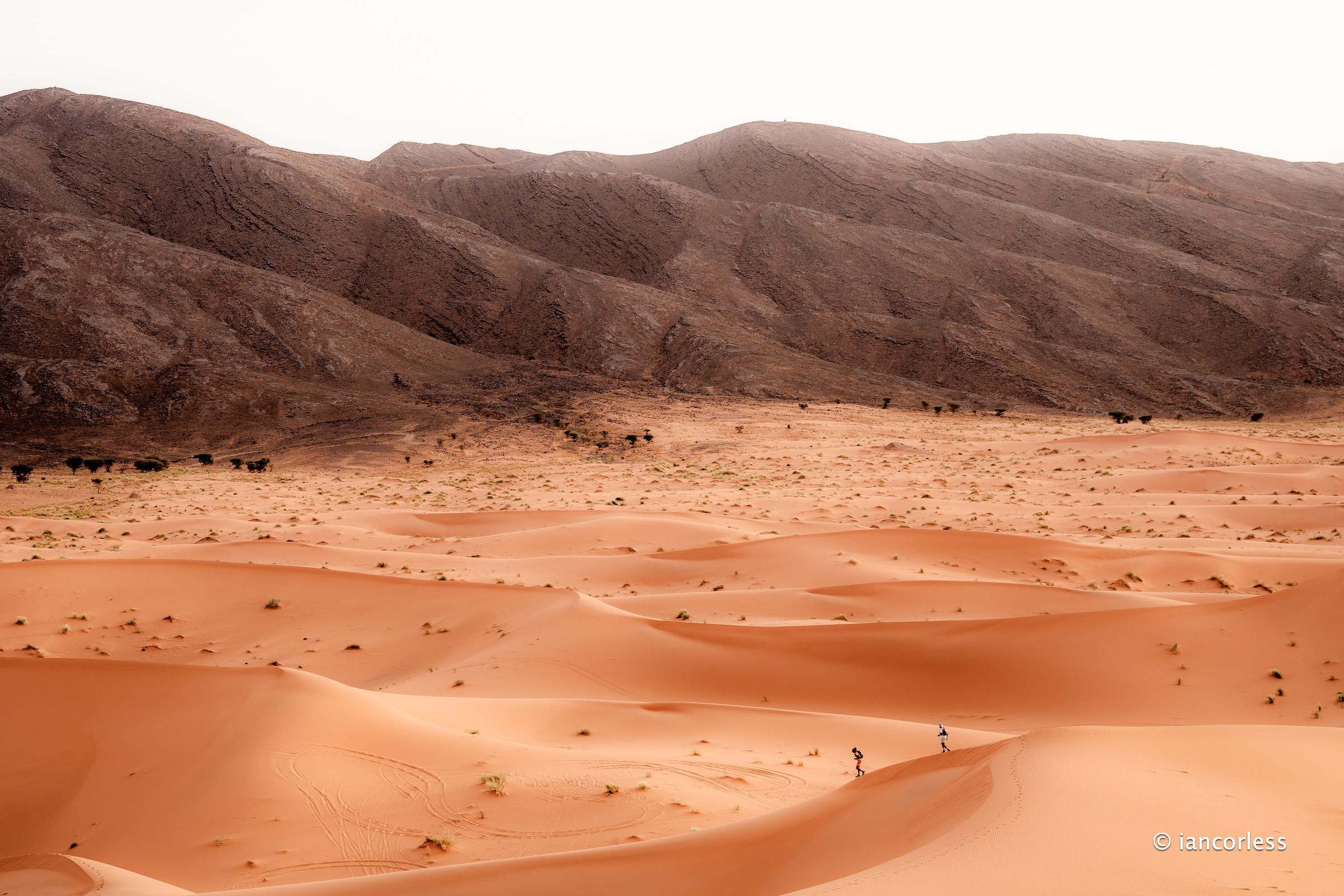
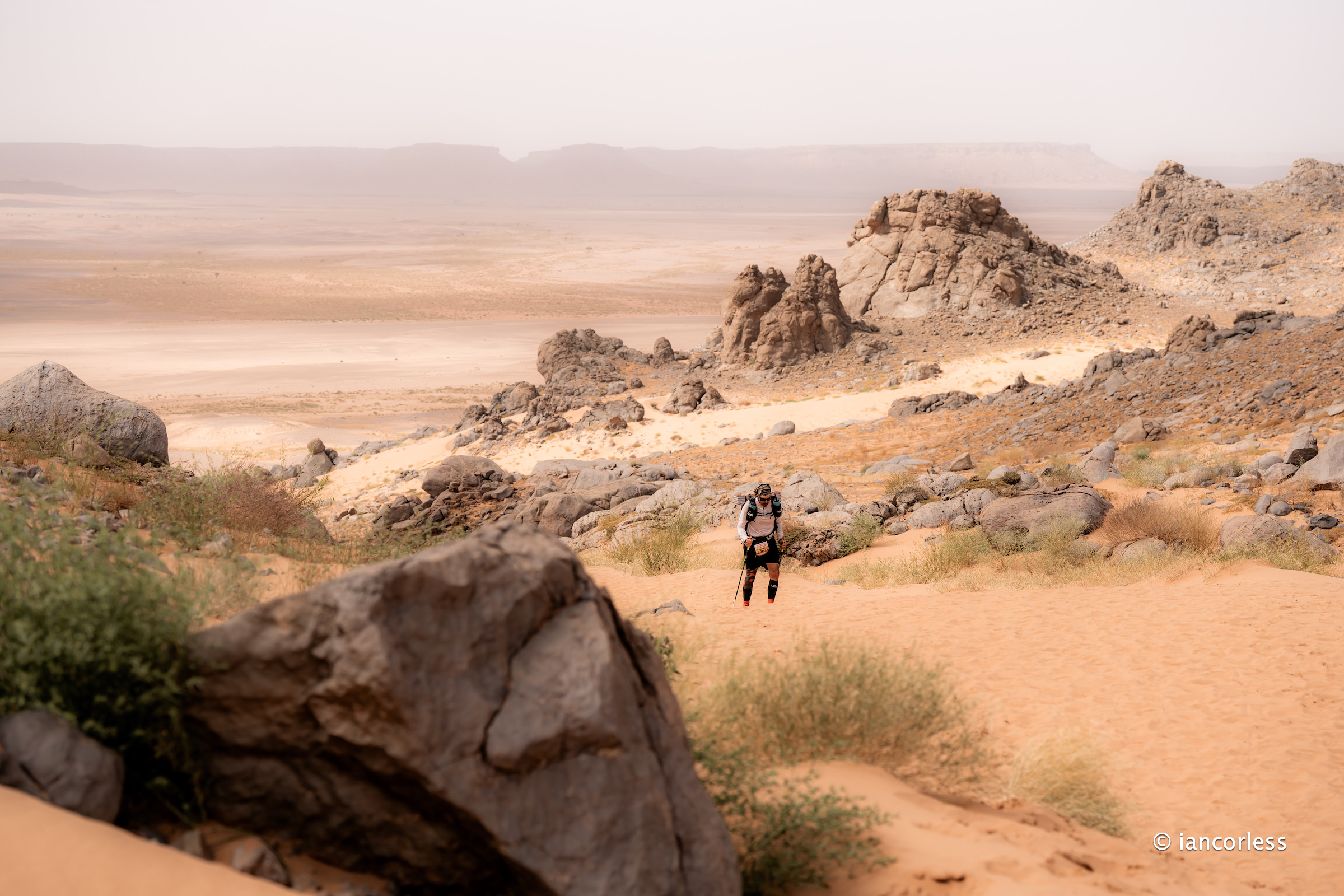
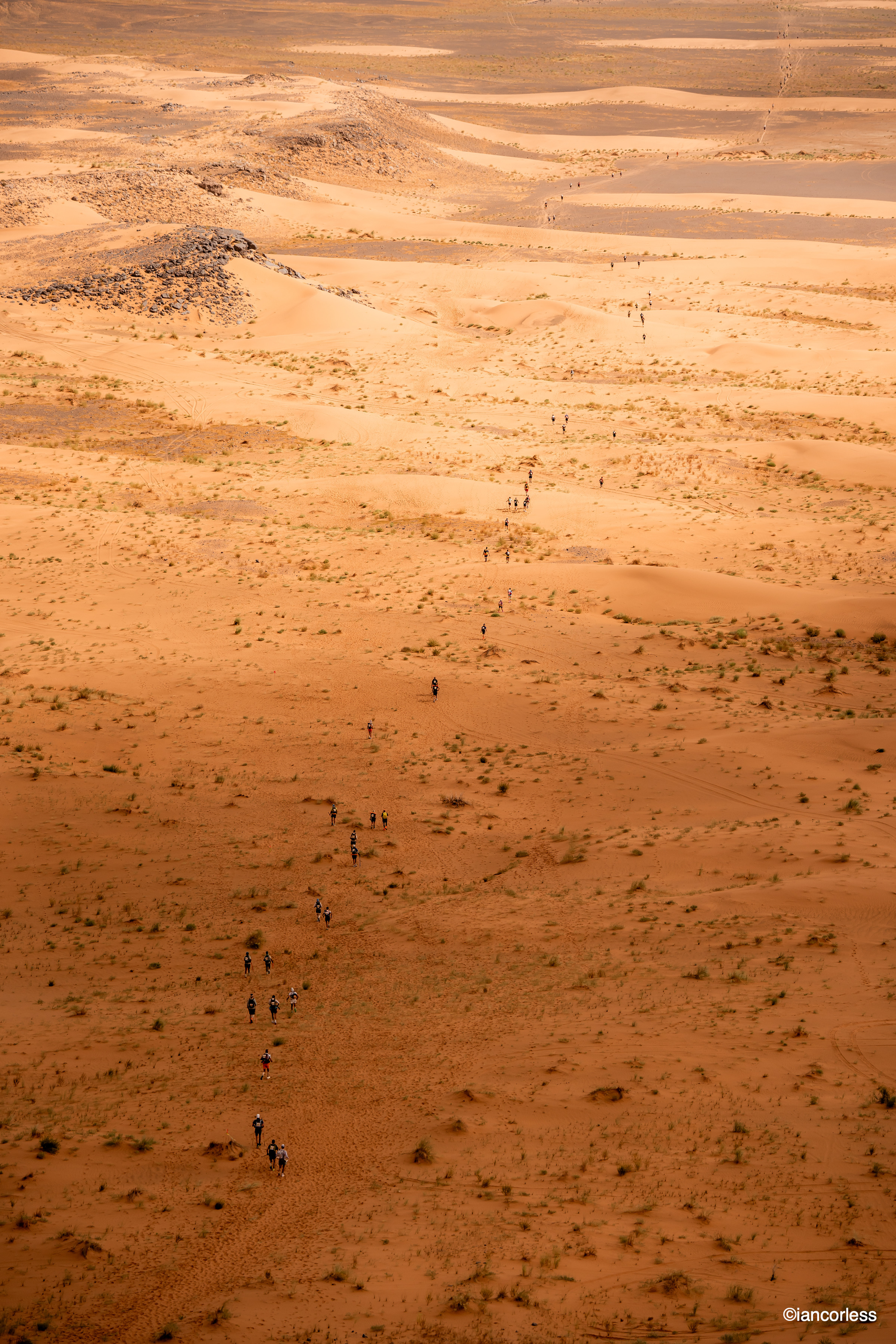
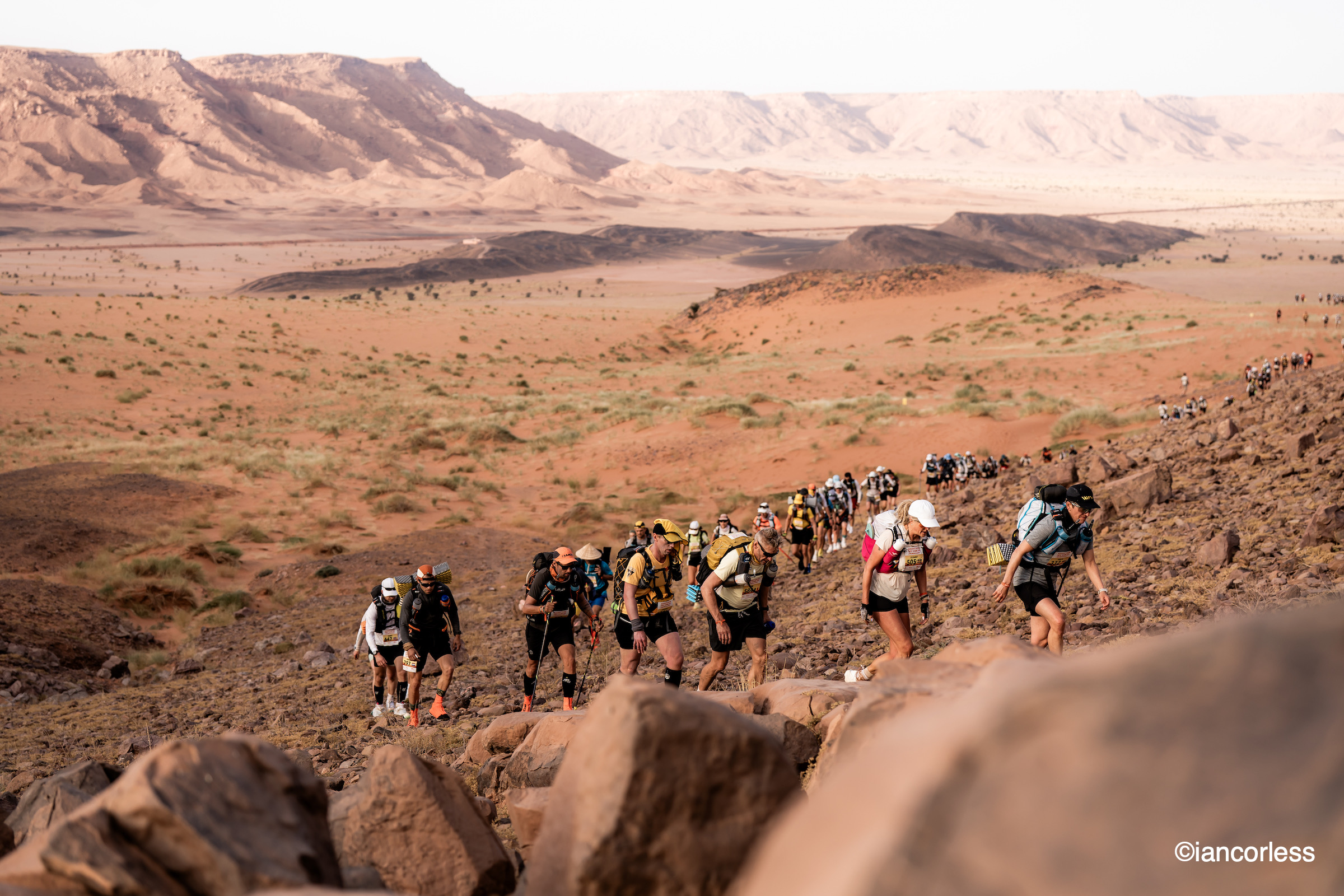
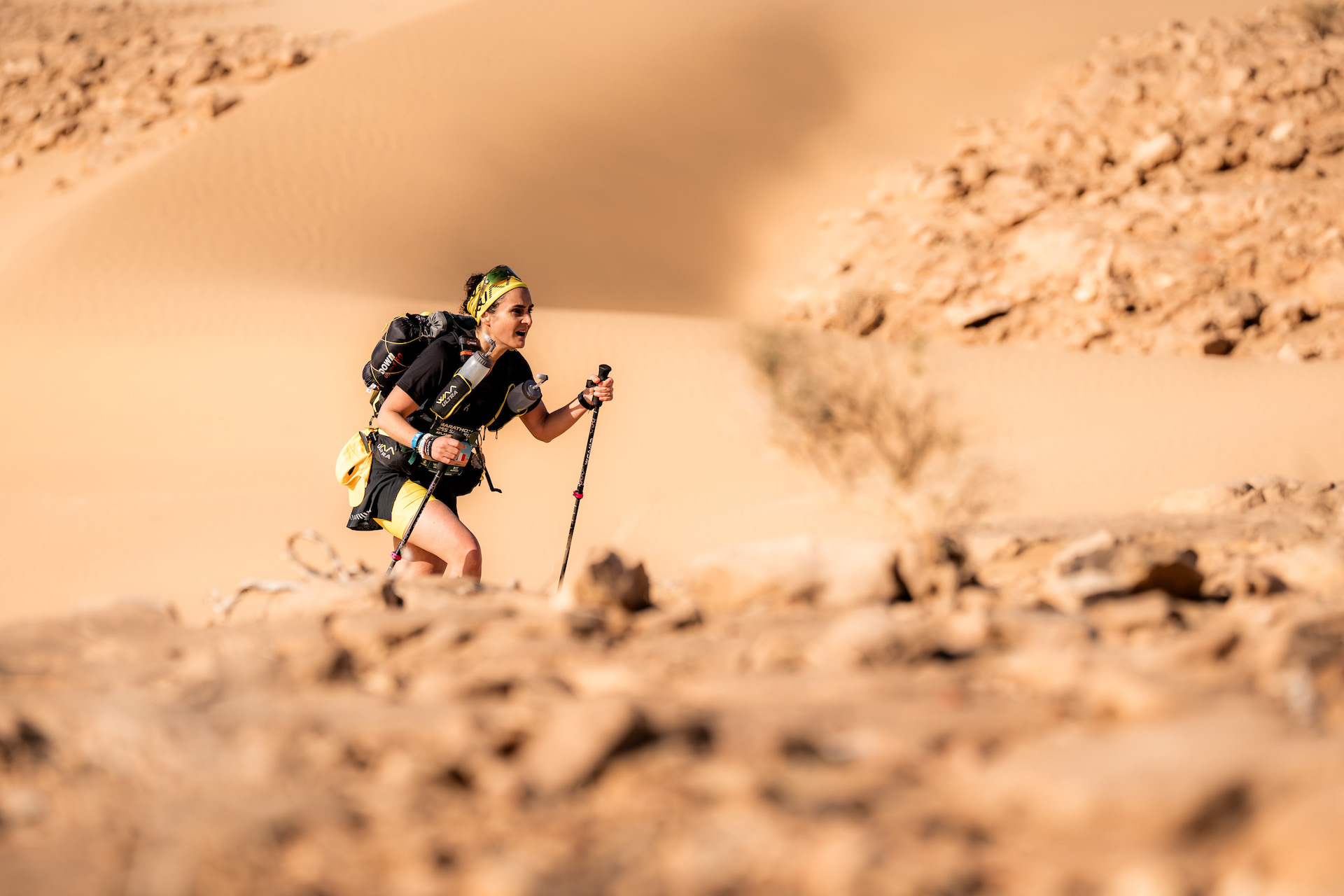
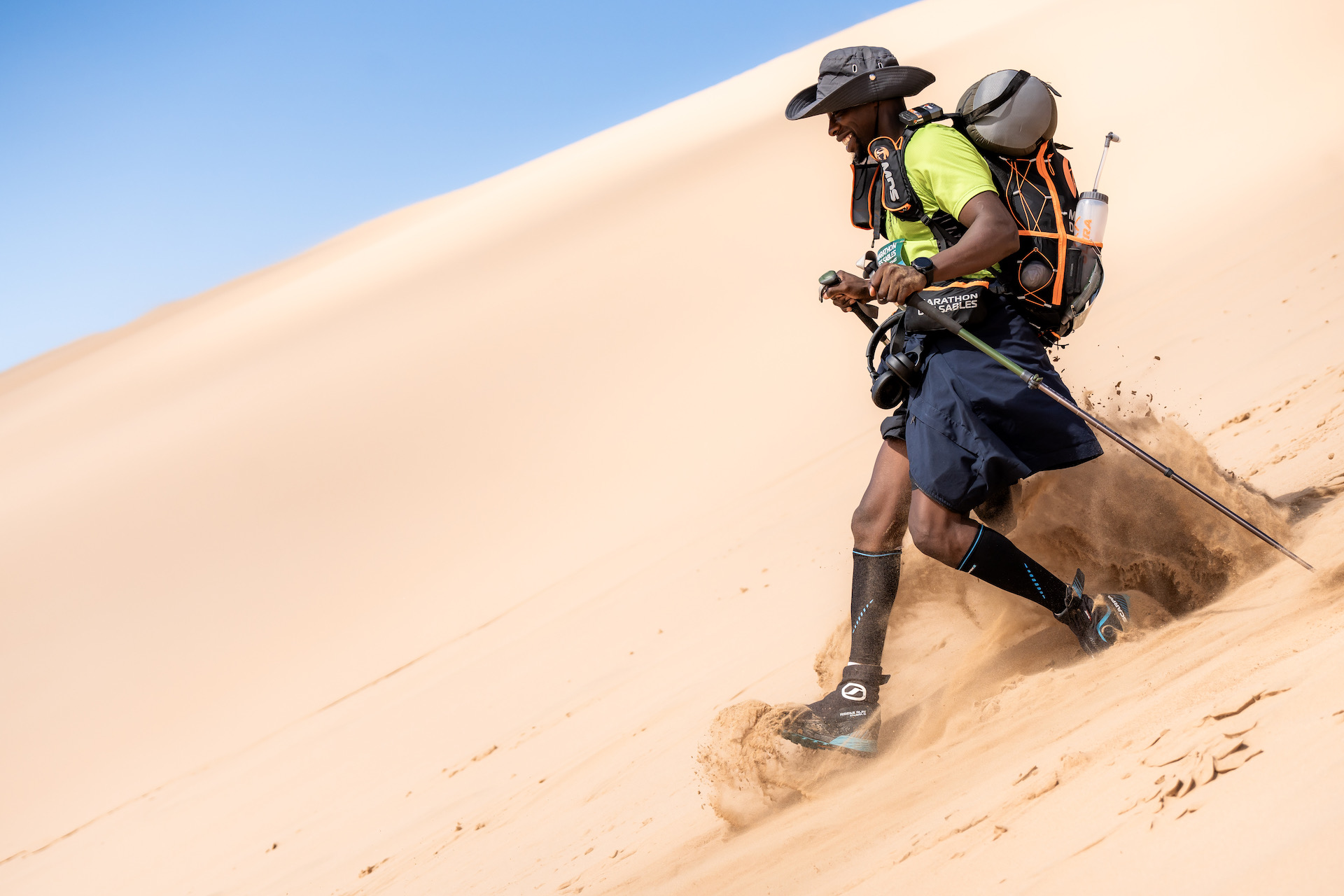
The route was notably different for some key reasons. The Sahara is vast and of course, needs to be explored more. Due to runner demand and logistical reasons, certain features have become almost ‘essential’ when running Legendary. However, Cyril and the team wanted to change that and therefore, there was no Jebel El Otfal in 2025, there was a return to Merzouga Dunes and while the route travelled in similar areas of the Sahara, the track was approximately 80% new. There were some great ‘new’ additions such as the huge dune on stage 4 and the stage 5 route was very special.

Photo by Ian Corless

THE RACE

Rachid – Photo by Ian Corless

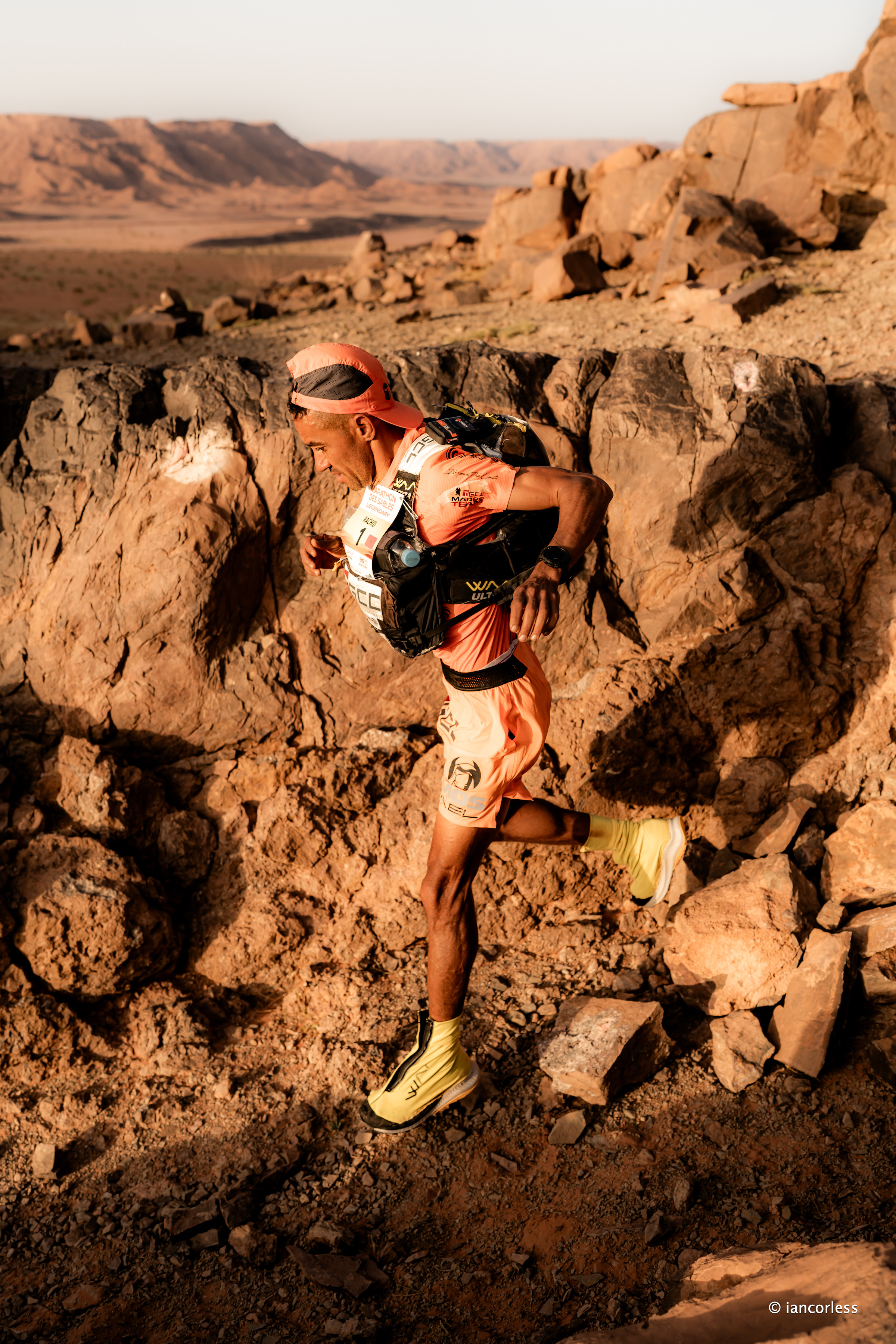
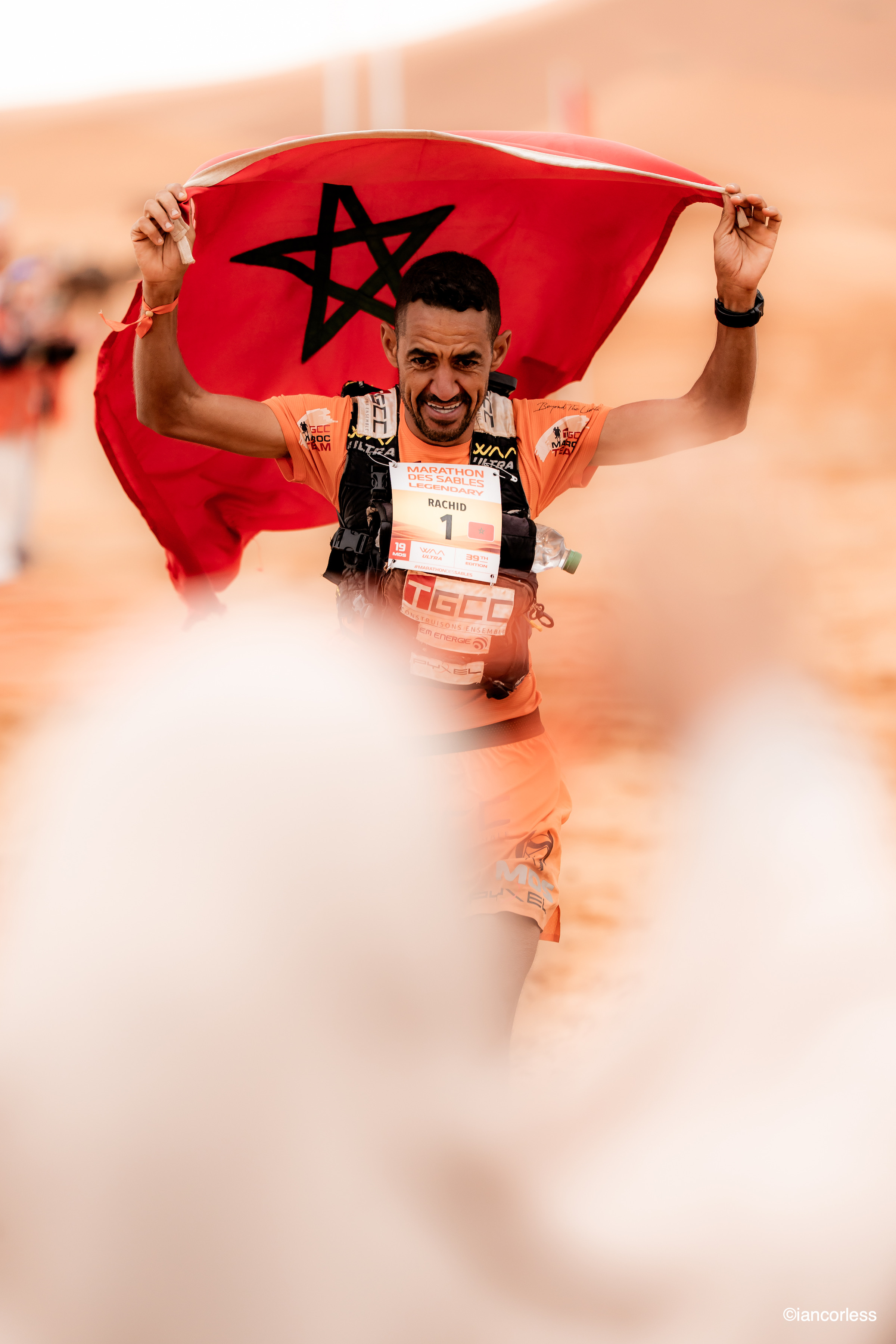
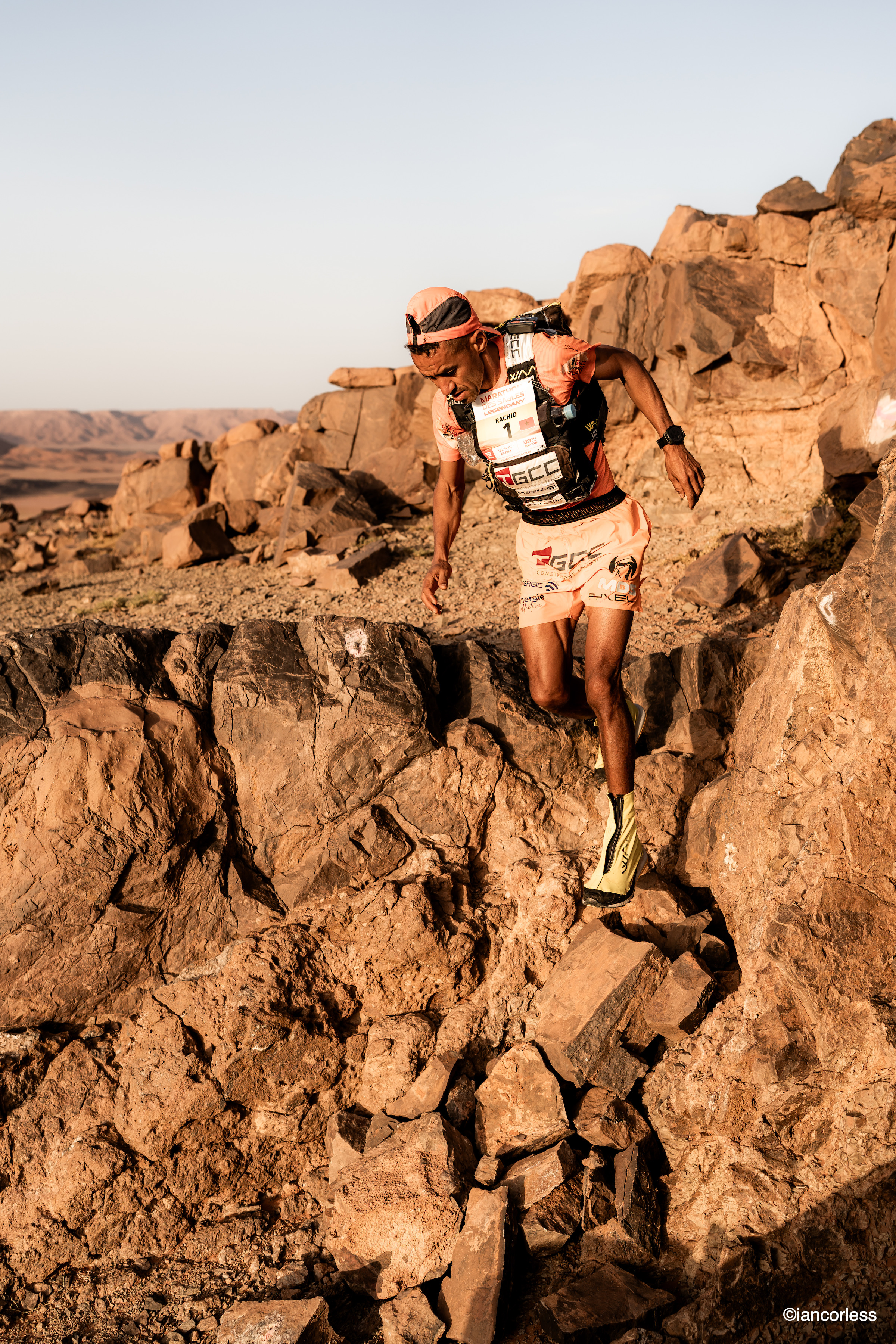
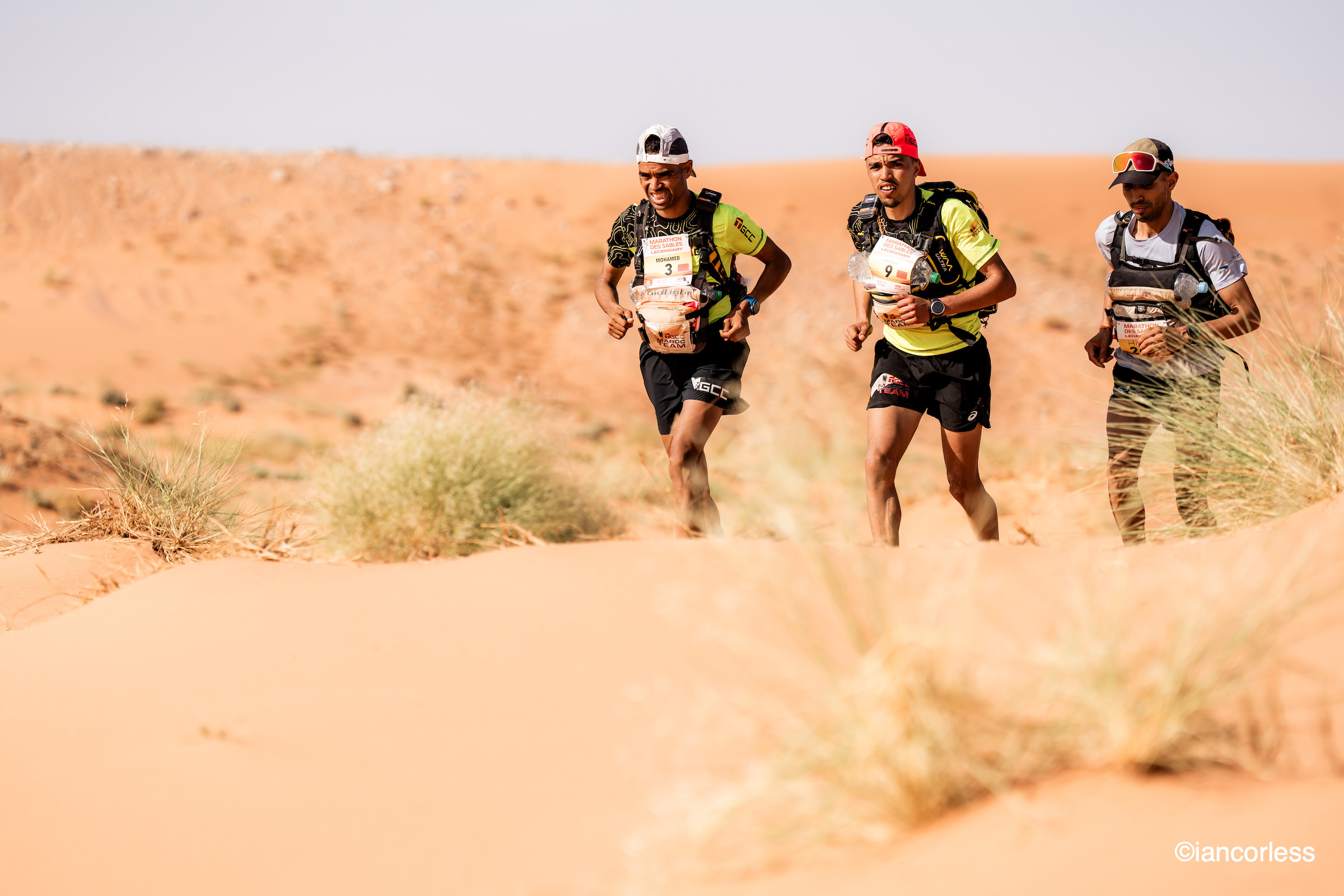
Rachid El Morabity once again took victory securing his 11th and in the process he set a record for the most victories. It’s an incredible achievement to have this level of consistency over so many years. It’s fair to say, the level of competition at the front end of the race was less in 2025. The only real person who could upset Rachid was Hamid Yachou, he unfortunately withdrew mid-race with injury. We could argue all day if Mohamed El Morabity could beat Rachid, the simple fact is, it would not happen. However, as we look ahead to 2026, will Mohamed take over the Rl Morabity reigns? Mohamed is 10-years younger than Rachid and therefore, he has great potential ahead. Also, the inclusion of the 3rd and younger El Morabity, Mbark, should not be looked over.

Maryline – Photo by Ian Corless

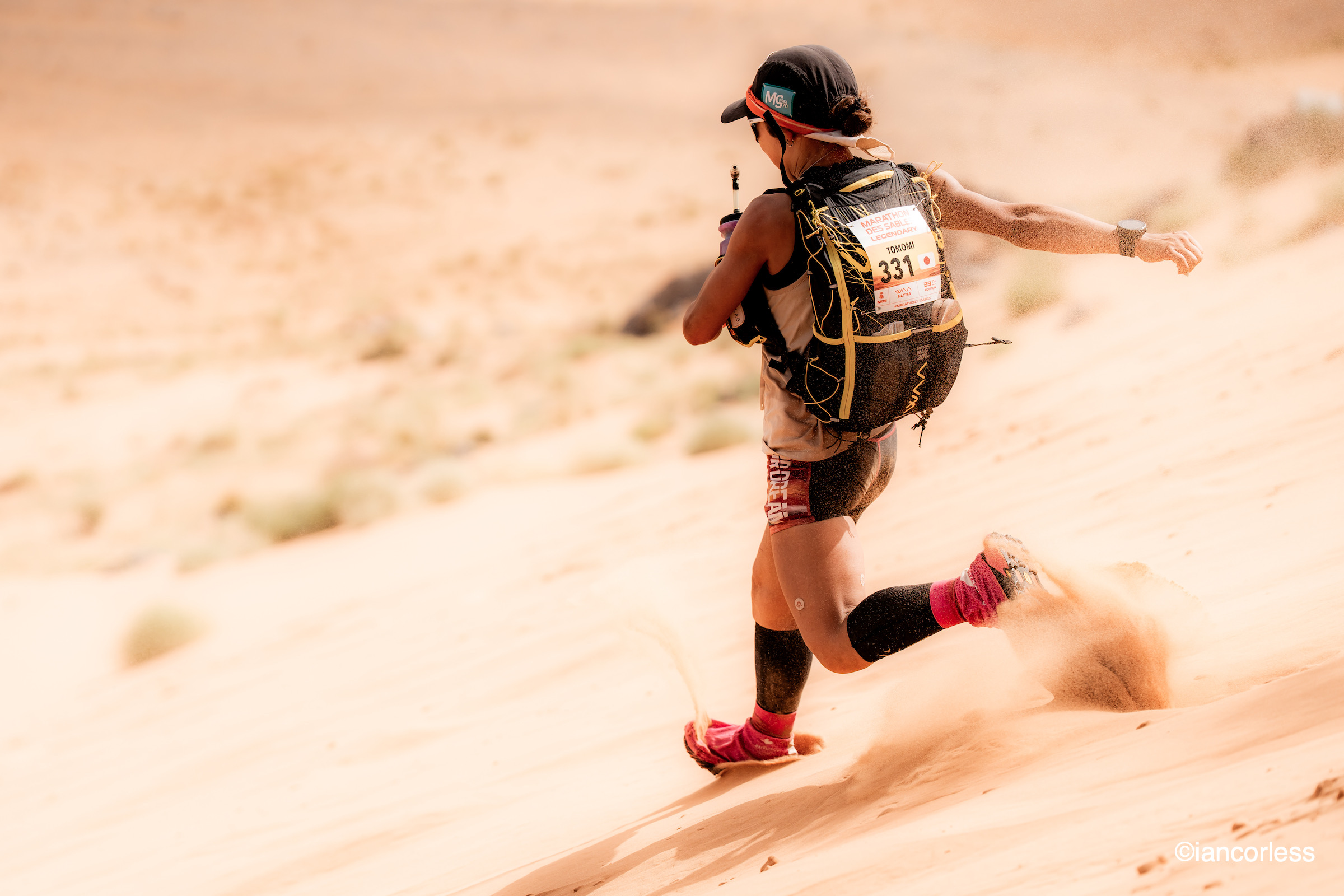
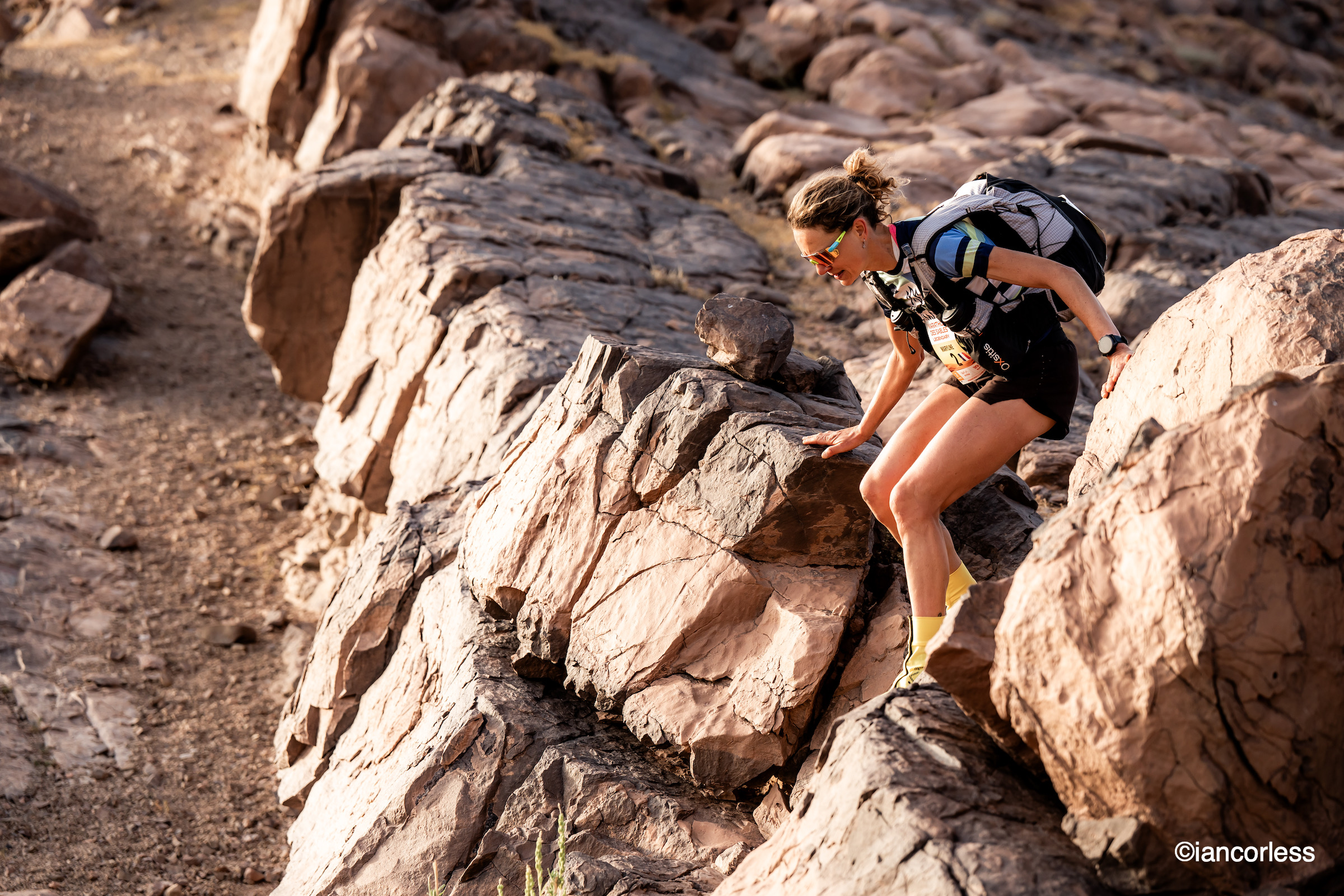
For the women, 2023 Legendary champion, Maryline Nakache returned and she was on fire. No, she was untouchable. For perspective, Maryline finished 3rd on GC for the long day and at the end of the race, was 4th on GC with the closest time to Rachid, by a woman, in the history of the race. Quite incredible. Aziza El Amrany won the race in 2024 and for 2025 she was 2nd, she looked great throughout, despite an arm injury, however, she was no match for Maryline. Tomomi Bitoh placed 3rd, she has placed 3rd before. However, Annelies Brak would have placed 3rd had she not received a 2-hour time penalty for non-compliance of mandatory kit.

Rachid completed the race in 20:55:47 and Maryline in 23:57:20. A total of 847 participants crossed the finish line, the last male Tomohito Hirai in 75:49:27 and the last woman, Nemoto Yuzuki in 74:31:01.

Results HERE

POST RACE

Reujen Lista rocking the awards – Photo by Ian Corless

Transfer back to Ouarzazate was easy and seamless with coaches filling with participants and leaving asap. Of course, a hotel, many showers, buffet food and a nice clean bed always feels amazing after the Sahara. The awards dinner turned into an impromptu rock concert with a participant, Reujen Lista, singing 3 songs on stage, the last, of course, was Highway to Hell. It was a fantastic way to end what was a legendary LEGENDARY.

Photo by Ian Corless

DAILY 2025 SUMMARIES

MDS The Legendary Stage 1 HERE

MDS The Legendary Stage 2 HERE

MDS The Legendary Stage 3 HERE

MDS The Legendary Stage 4 HERE

MDS The Legendary Stage 5 HERE

MDS The Legendary Stage 6 HERE

Photo by Ian Corless

Image Gallery HERE

Photo by Ian Corless

Marathon des Sables Website HERE

Follow Ian Corless

Instagram – @iancorlessphotography

Twitter – @talkultra

facebook.com/iancorlessphotography

Web – www.iancorless.com

Web – www.iancorlessphotography.com

MDS The Legendary 2025 – Stage 6

The GOAT of the Sahara – Photo by Ian Corless

The 2025 and 39th edition of MDS The Legendary came to a conclusion with a 21.1km stage under cloudy skies with occasional rain.

A hard won reward – Photo by Ian Corless

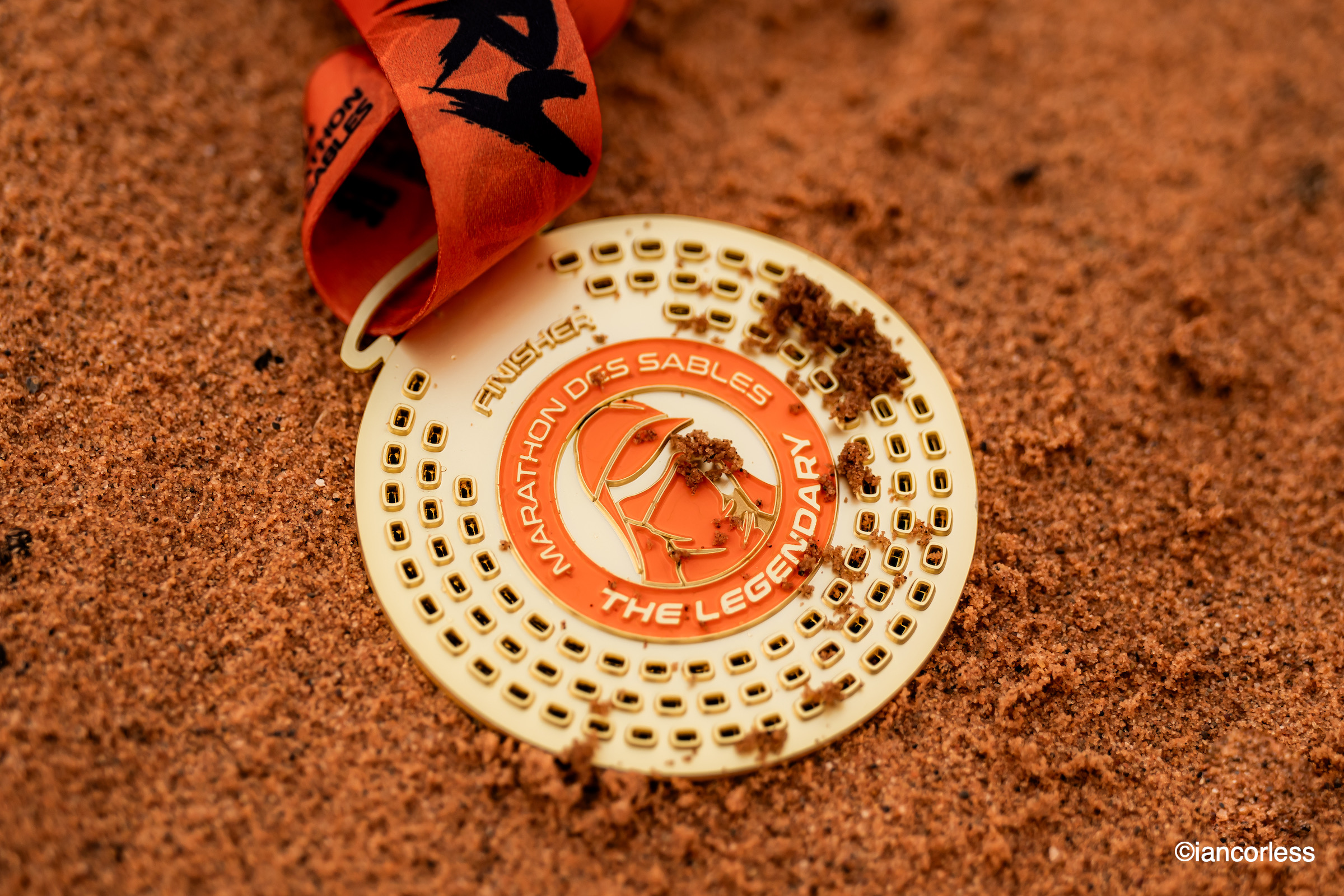
The weather did not dampen the spirit of the runner’s though, they were elated, excited and happy knowing that no matter what, today, they would cross the final finish line and receive a medal.

The atmosphere on the start line was electric, especially with an unplanned live version of Highway to Hell by Reujen Lista.

Aziza 2nd – Photo by Ian Corless

The stage concluded at the iconic Merzouga Dunes and in reality, all the racing was done, at least for the top-3 positions in the men’s and women’s races.

Rachid El Morabity would be crowned champion for the 11th time, a record!

Maryline – Photo by Ian Corless

Maryline Nakache would be crowned champion for the 2nd time, this year though, her victory is extra special, she ranked 4th overall, an incredible result. Also notable, her time, was just over 2-hours slower than Rachid, 23:57:20 to Rachids’ 20:55:47.

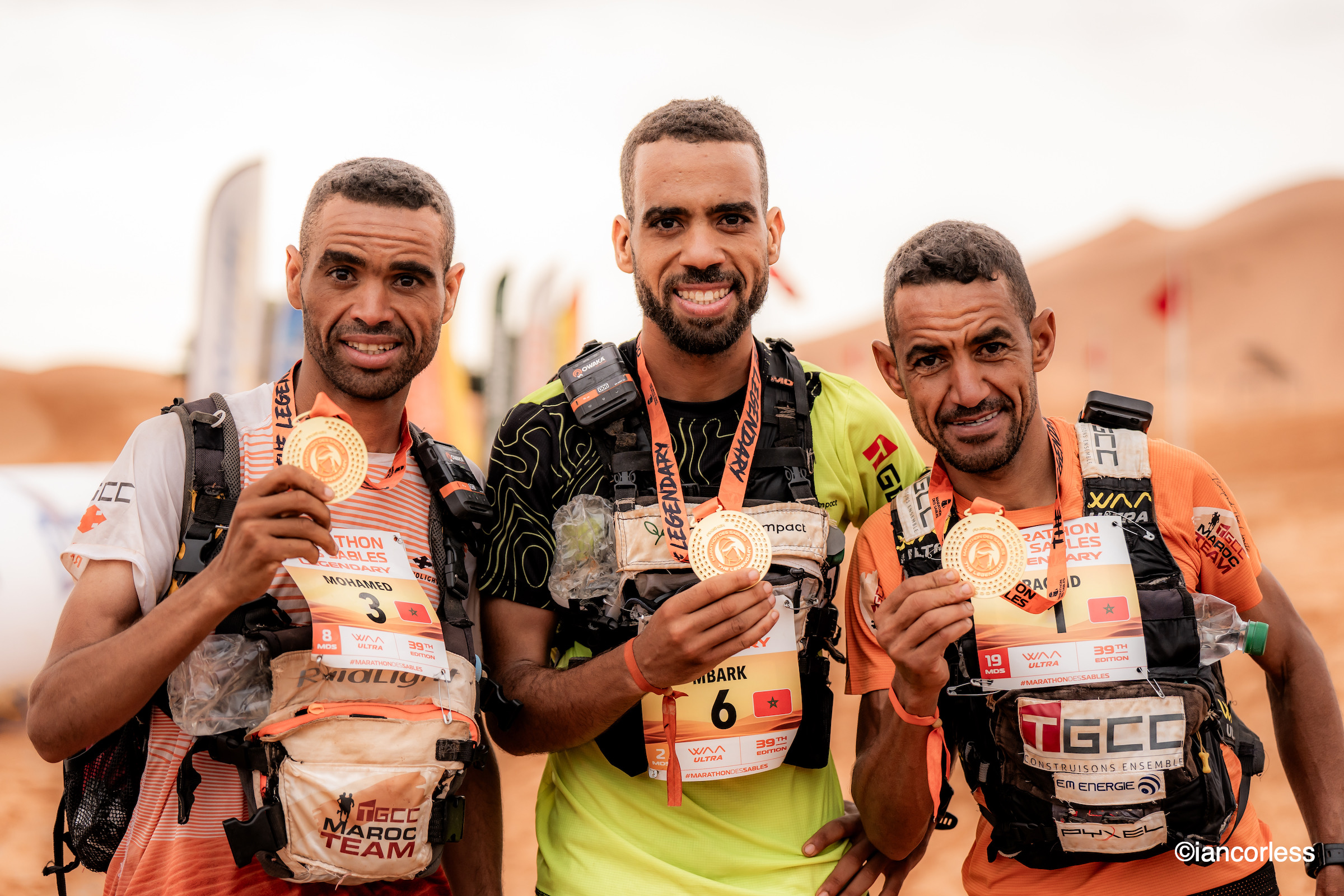
Mohamed, Mbark and Rachid, unstoppable brothers – Photo by Ian Corless

For perspective, the last finisher was Tomohito Hirai in 75:49:27 and the last female finisher was Sarah Thomas Britton 74:01:23.

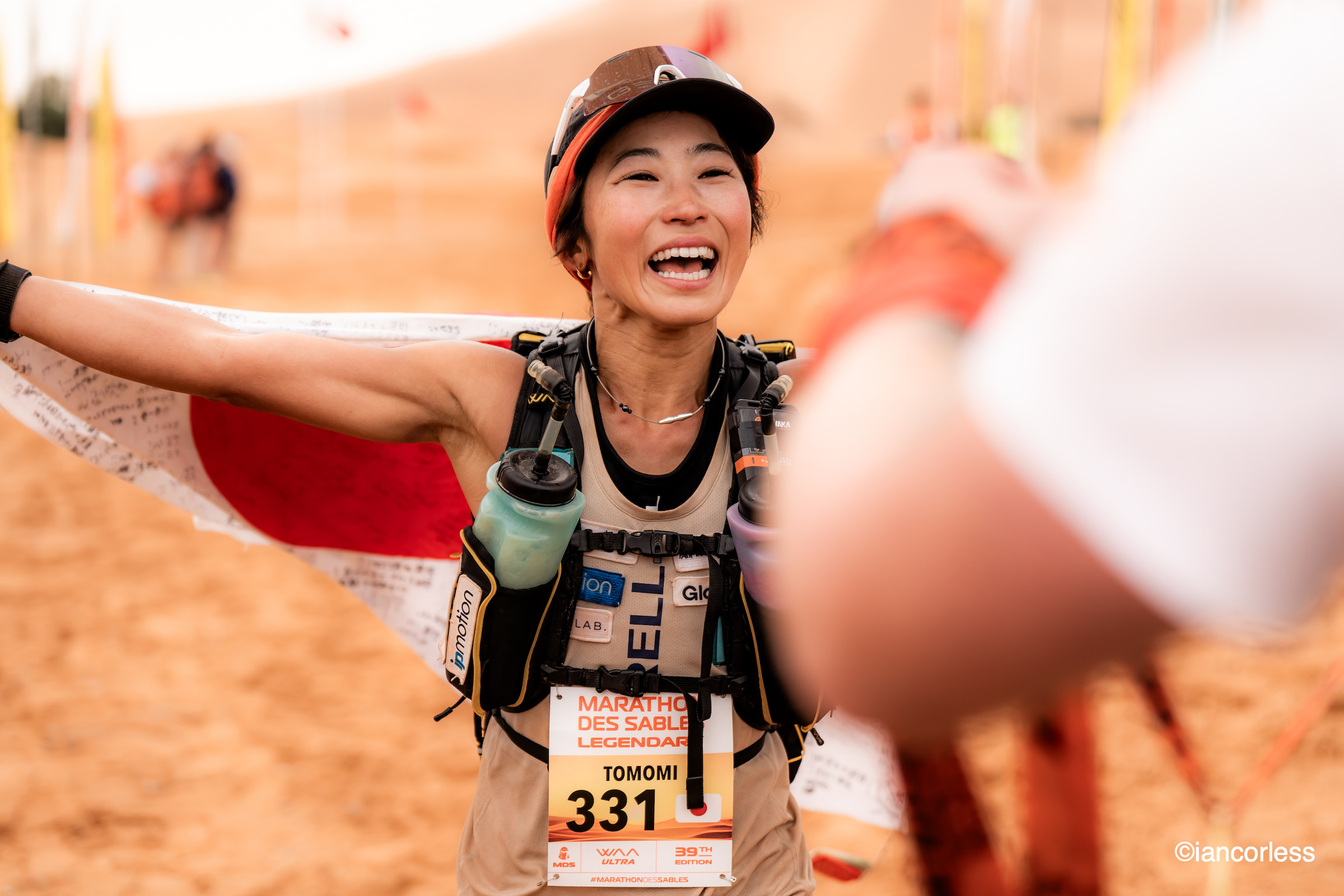
Tomomi 3rd – Photo by Ian Corless

An incredible 847 were crowned ‘Legends’ when they crossed the line, a 95% success rate.

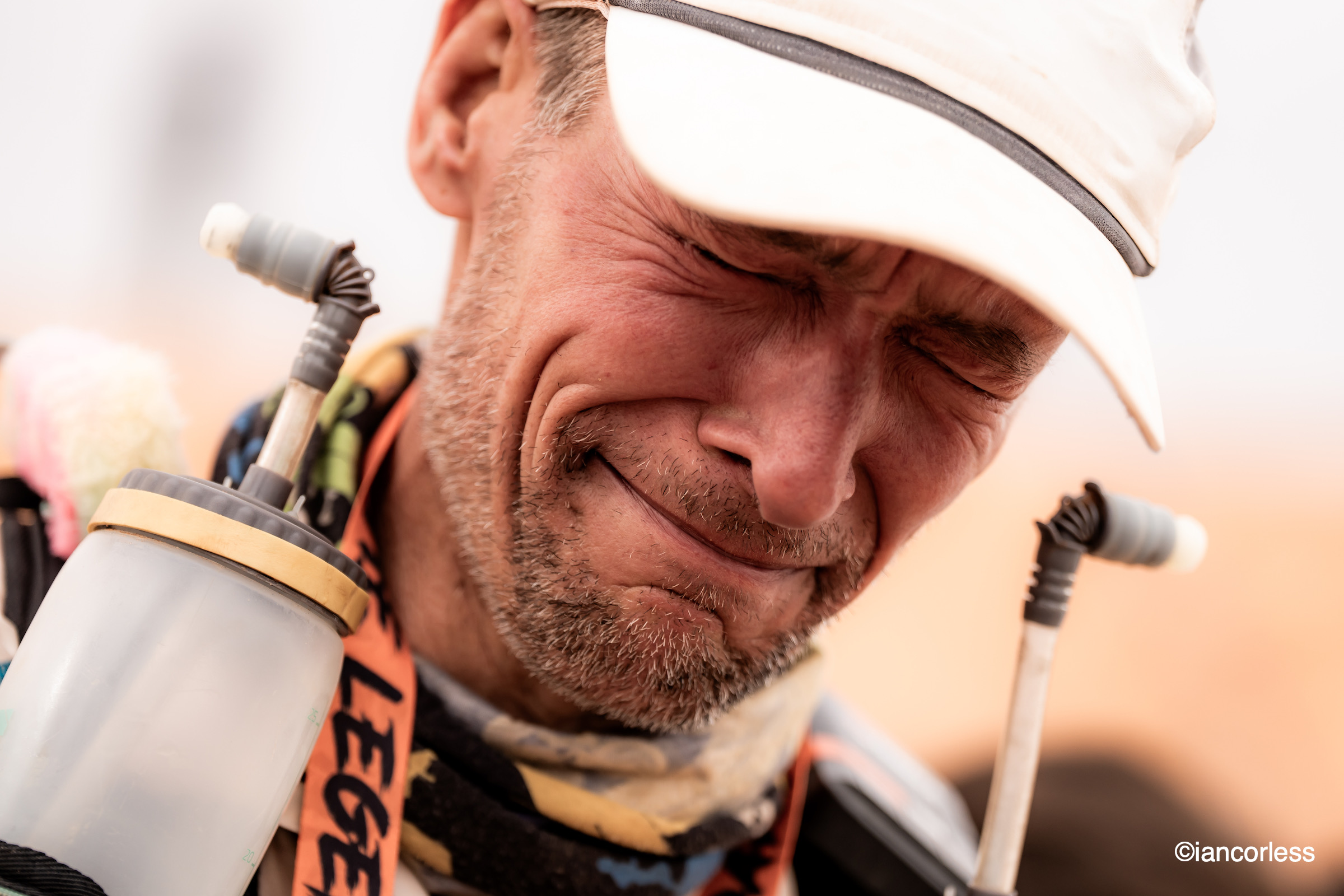
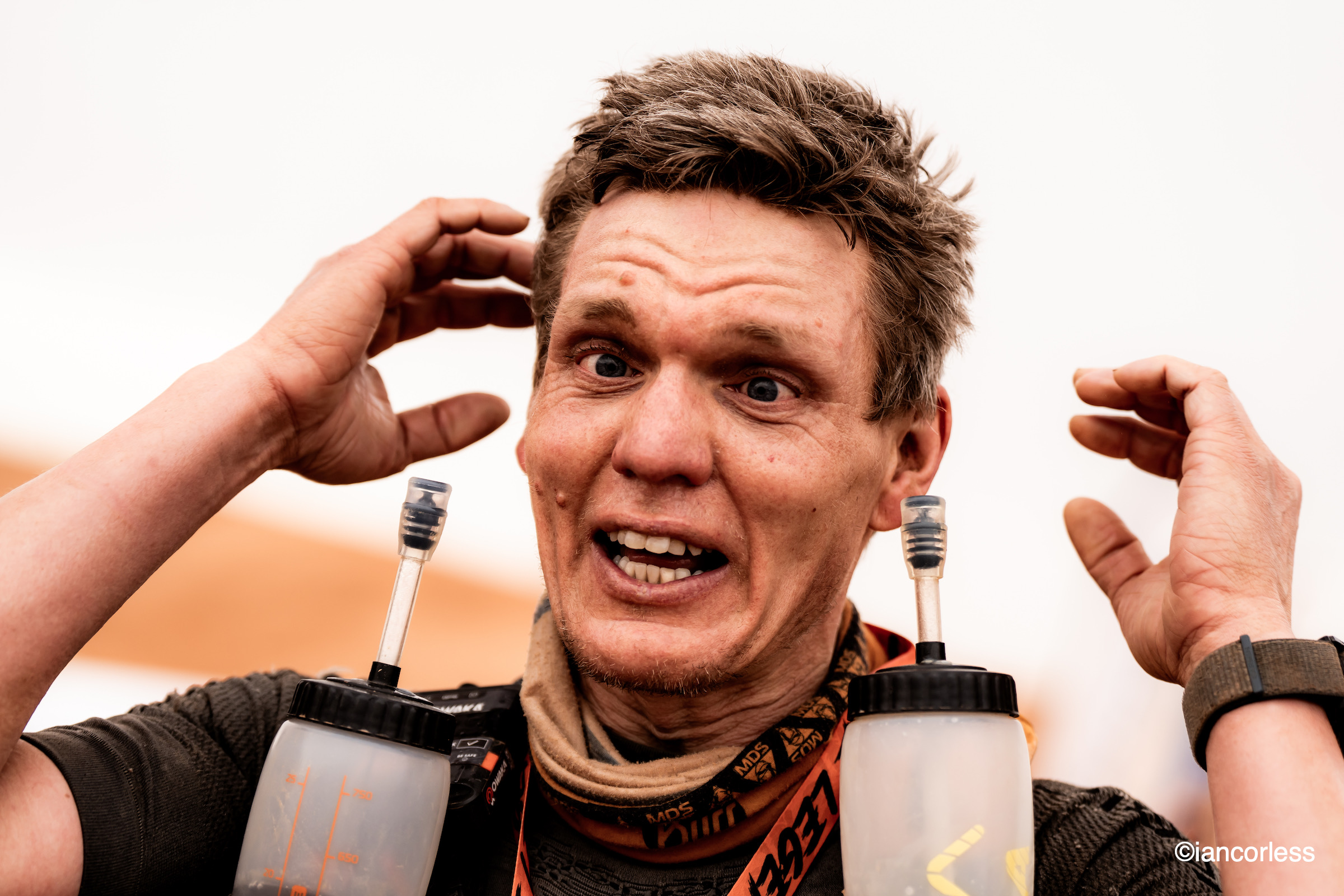
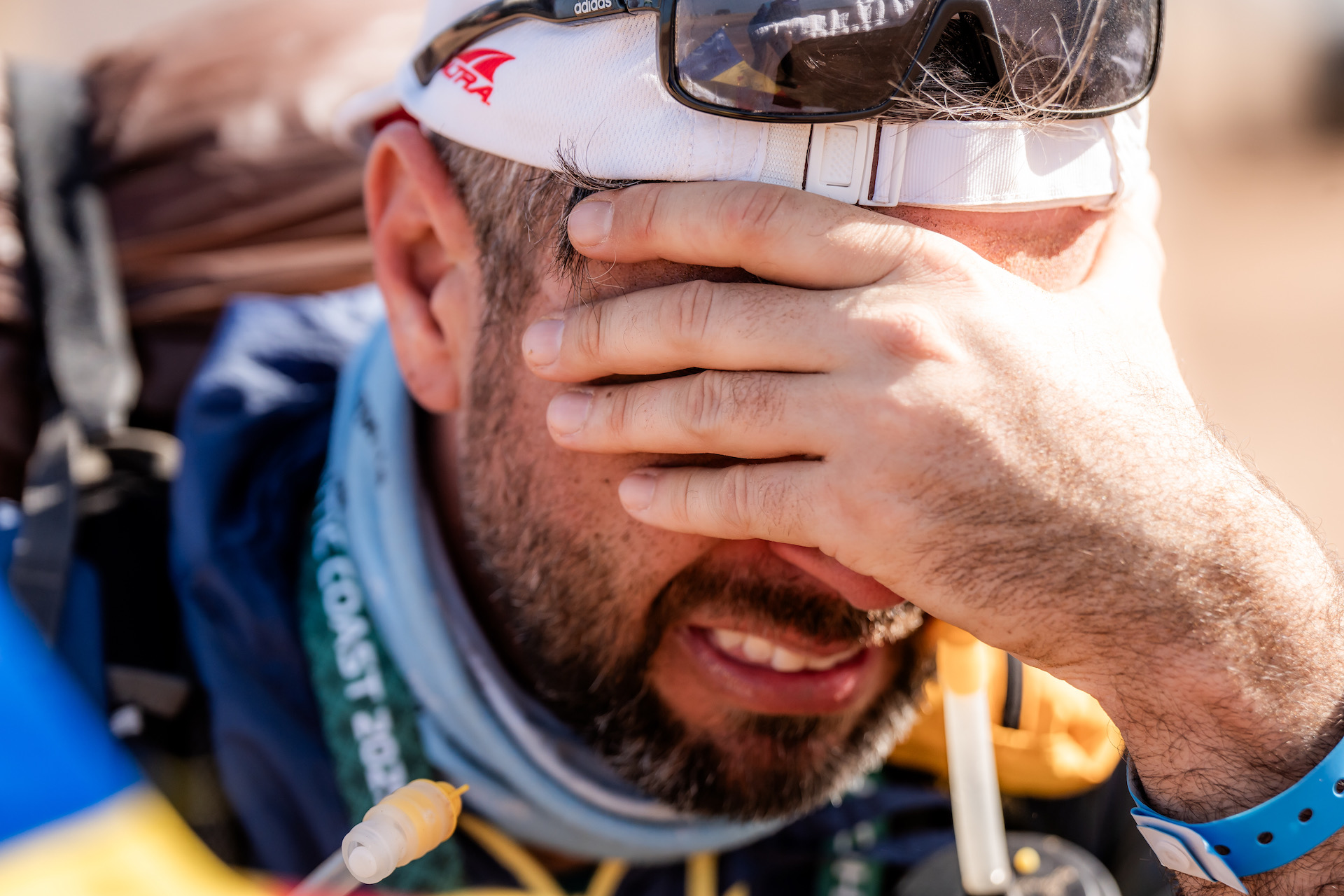
Emotion – Photo by Ian Corless

The 39th edition will be remembered for a calm ‘classic’ MDS start, temperatures were good, the wind was low and the skies were blue.

Photo by Ian Corless

However, on stage 4, the long day, the winds increased under what was a cooler and cloudier day. By 2100 hours the wind was roaring, sand was blowing everywhere and suddenly heavy rains came making the conditions horrific for those out on the course and difficult for those in camp.

Photo by Ian Corless

The cooler weather stayed for stage 5, however, it did brighten in the afternoon only to become windy once agin.

Stage 6 was cloudy and wet at the start and it remained that way for most of the day. The rain came, went, and came back again.

Photo by Ian Corless

In brief summary, the 39th edition route introduced competitors new areas of the Sahara and stage 2 was considered the hell stage with a great deal of soft sand. Conditions were variable, despite the strong winds and some rain, cooler temperatures certainly made the race more manageable.

FULL RESULTS HERE

Photo Galleries HERE

Emotion – Photo by Ian Corless

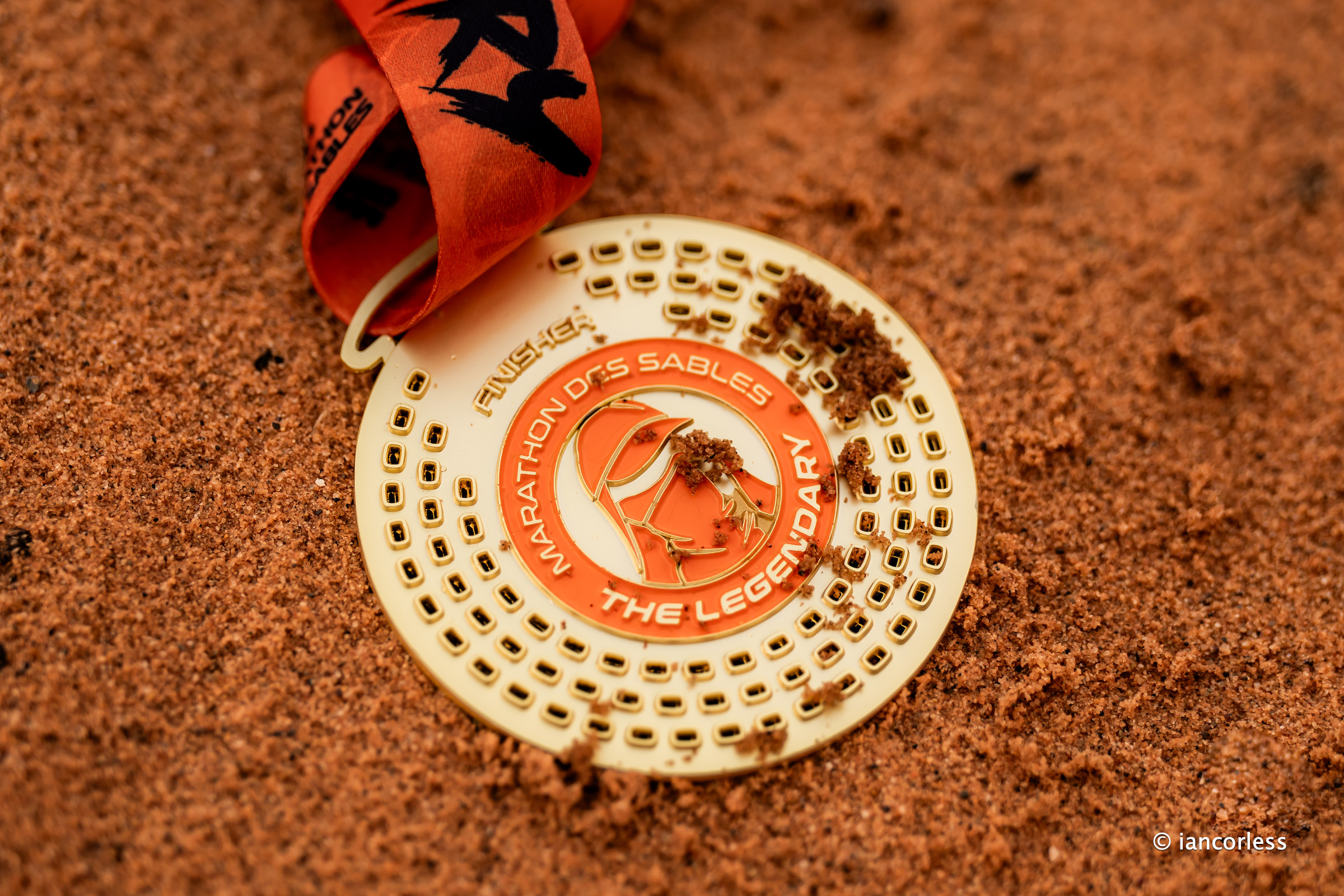
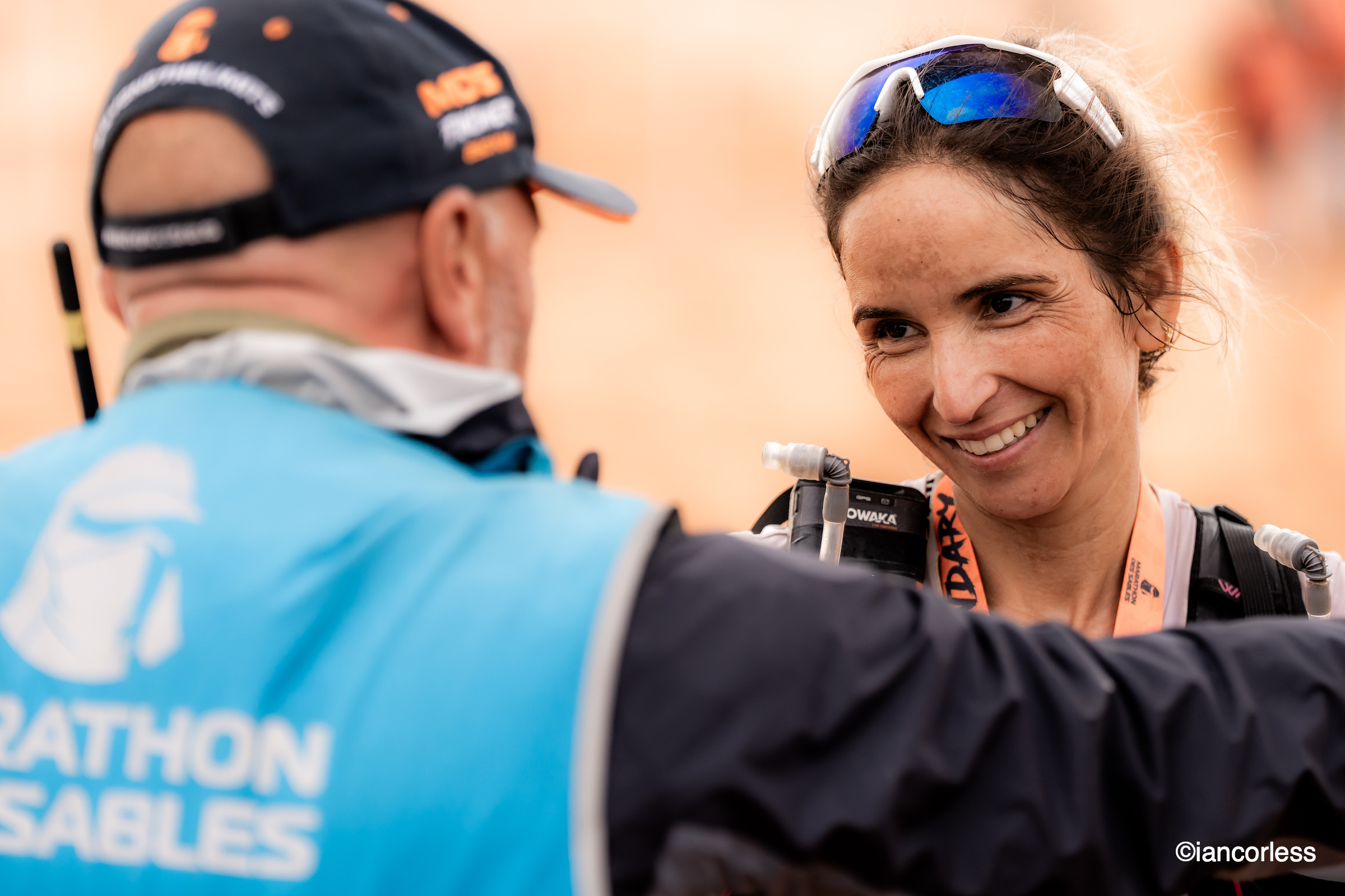
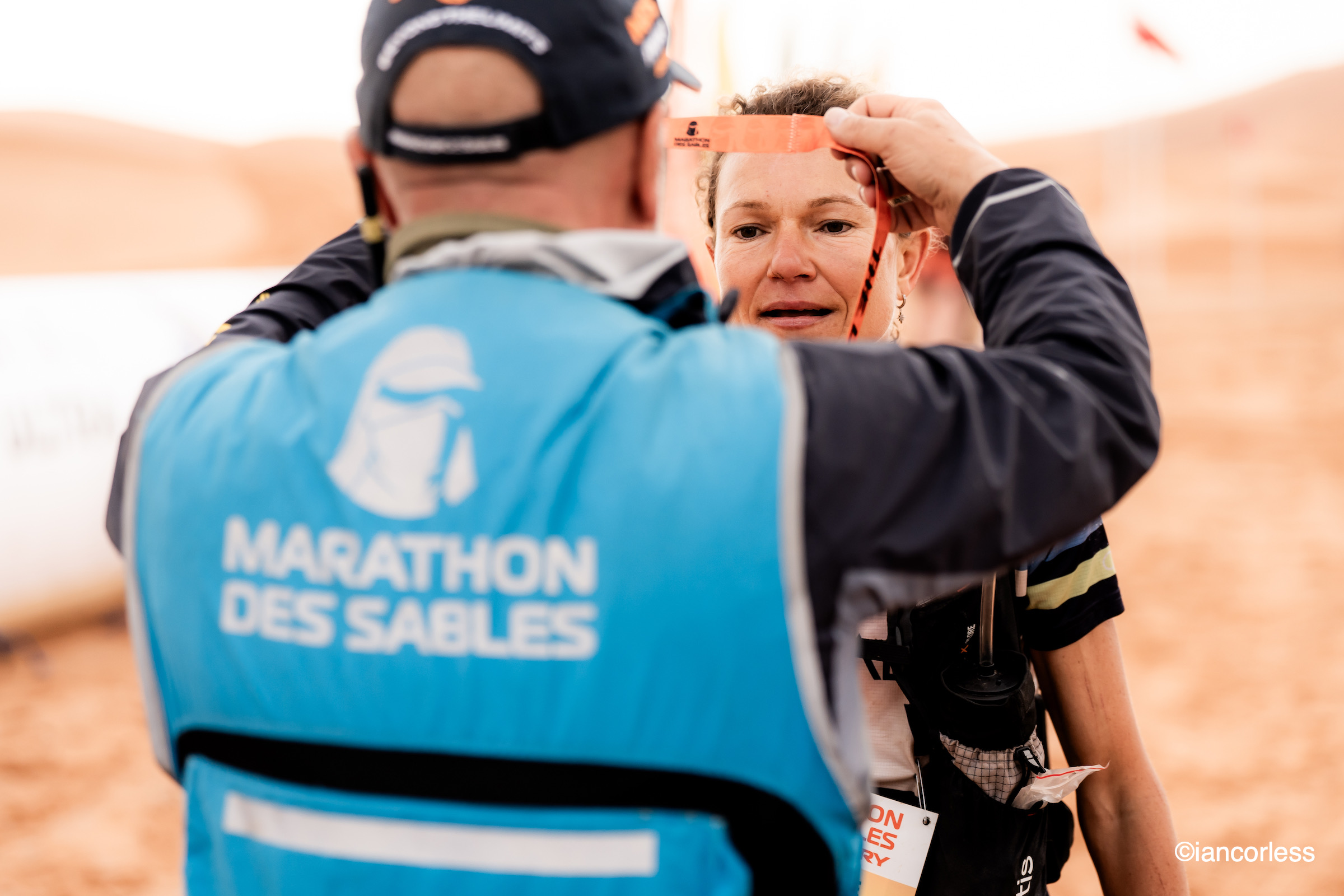
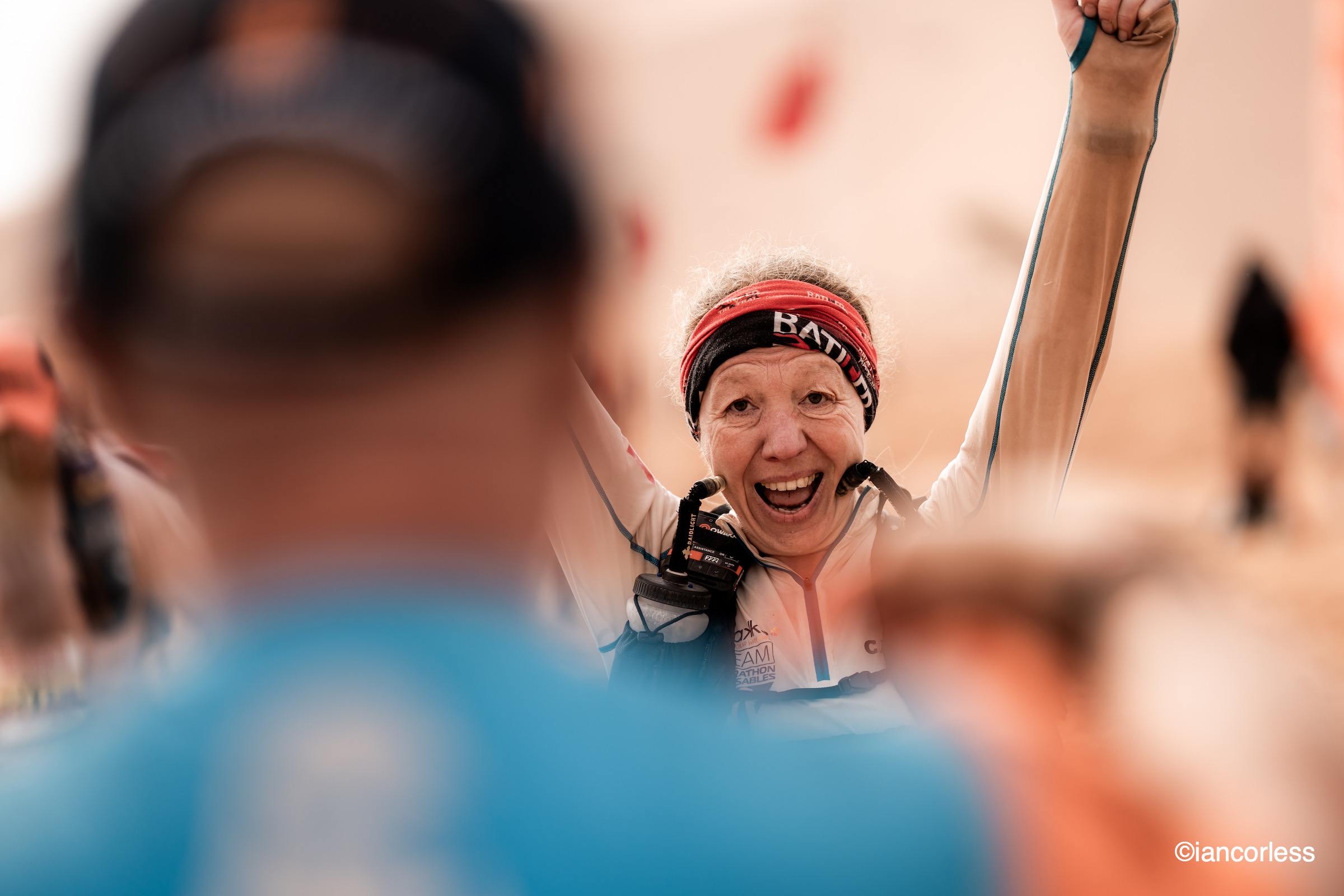
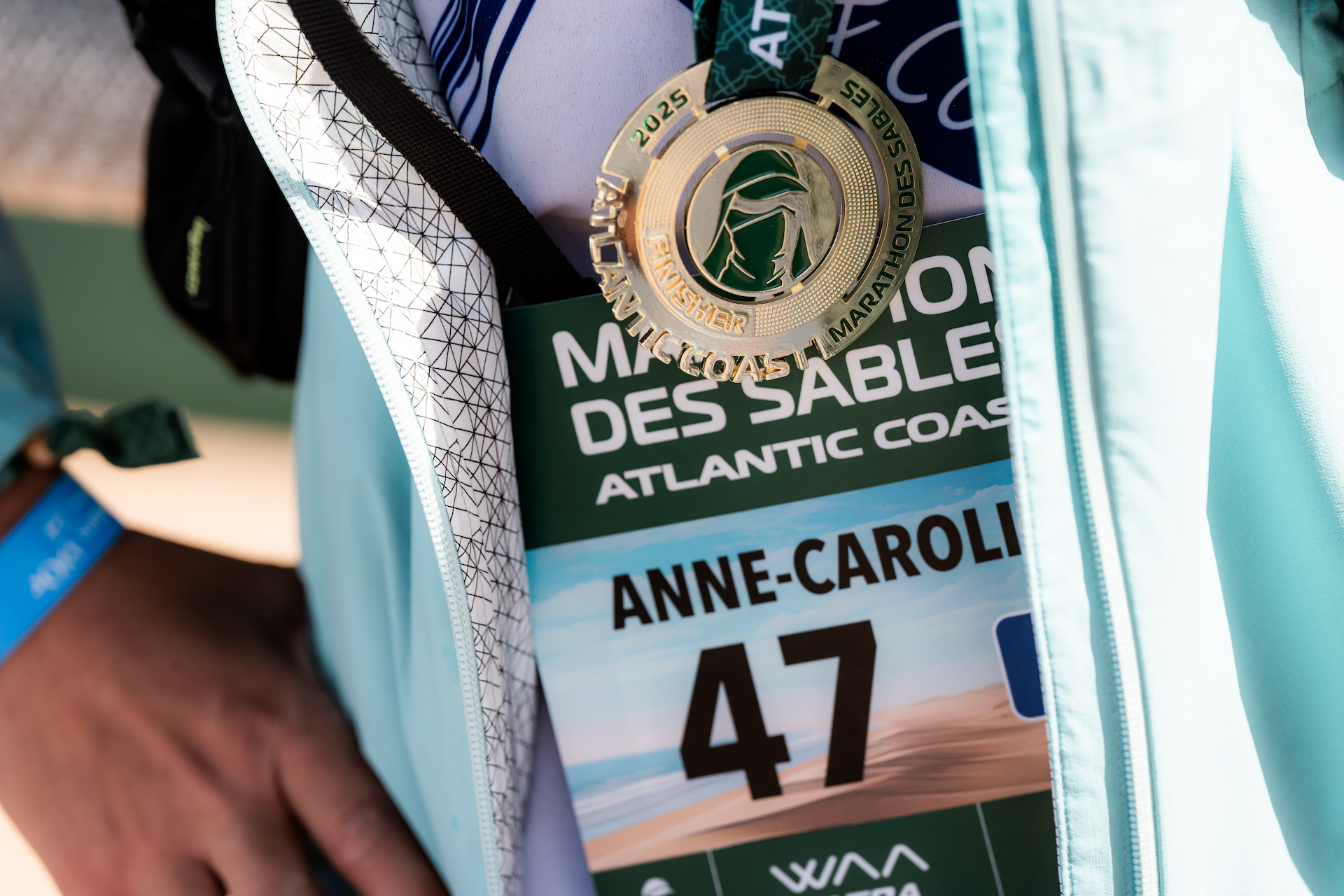
The emotion on the finish line was electric, as always, from first to last, a whole rane of emotions were witnessed, the glow of a medal making the 6-stage, 250km journey a memorable life changing one.

The awards ceremony in Ouarzazate, may well have been the most memorable yet. The film was shown to a huge applause and then, we were all treated to a live performance by Reujen Lista who performed three songs, the last one, of course, Highway to Hell!

Photo by Ian Corless

Marathon des Sables Website HERE

Follow Ian Corless

Instagram – @iancorlessphotography

Twitter – @talkultra

facebook.com/iancorlessphotography

Web – www.iancorless.com

Web – www.iancorlessphotography.com

MDS The Legendary 2025 – Stage 2

Photo by Ian Corless

The mood in bivouac was incredible after stage 1. Many happy runners felt relaxed with the race started and one completed stage. With nerves and anxiety settled, everyone was eager to continue the journey with stage 2.

Photo by Ian Corless

With 40km’s and 614m+ the day was going to be a considerably harder challenge with 8km’s extra and almost double the vertical of stage 1. For the front of the race this would equate to one extra hour, for those towards the back, considerably more time on the feet.

Photo by Ian Corless

Wiyh an 0700 start and a slight wind from the east, the runner’s were treated to cooler temperatures for the first 3-hours and then heat started to rise and by mid-afternoon, the temperatures hovered around 30-degrees.

Photo by Ian Corless

Early action came from Mohamed El Morabity for the men and Aziza El Amrany for the women. Of course, the main protagonists were not far behind.

Photo by Ian Corless

Maryline Nakache, Ragna Debats and Gemma Game followed Aziza.

For the men, Hamid and Amed ran side-by-side and then Rachid was in 4th just a minute back.

Photo by Ian Corless

Passing through the early CP’s it was between CP2 and CP3 that Rachid made a move for the front and he pulled away.

Behind, Hamid was in a Mohamed and Amed sandwich, he was marked constantly and of course, Rachid continued to move ahead, reclaim lost time from stage 1 and win convincingly to provide enough margin to lead the race.

Photo by Ian Corless

With 2-stages covered, the top-3 men are ranked:

  • Rachid El Morabity 05:54:35
  • Mohamed El Morabity 05:55:53
  • Hamid Yachou 05:59:40
Photo by Ian Corless

Maryline Nakache is on fire this year, the 2023 champion started slowly but once in gear she was on fire, so much so she dominated the stage for the women and finished 6th overall and is now 6th on GC too – impressive.

Photo by Ian Corless

Aziza El Amrany, the 2024 champion, battled hard, but it was impossible to match the pace of the French woman.

Previous MDS champ, Ragna Debats was in 3rd place ahead of Annelies Brak and Gemma Game.

Photo by Ian Corless

With 2-stage complete, the women’s top-3 is as follows:

  • Maryline Nakache 07:07:27
  • Aziza El Amrany 07:48:31
  • Ragna Debats 07:58:51
Photo by Ian Corless

Full results are HERE

Men ranking HERE

Women ranking HERE

Tomorrow, stage 3 is 32.5km’s and no doubt, for the majority, will be a day to move easily and efficiently saving as much energy as possible before the intimidating long day for stage 4.

Marathon des Sables Website HERE

Photo by Ian Corless

Follow Ian Corless

Instagram – @iancorlessphotography

Twitter – @talkultra

facebook.com/iancorlessphotography

Web – www.iancorless.com

Web – www.iancorlessphotography.com

The Coastal Challenge Costa Rica 2025 – Stage 6

Photo by Ian Corless

A good nights sleep, no rain, and stage 6 was underway at 0540. Today, 35.9km’s for all racers.

Photo by Ian Corless

Stage 6 is arguably the Queen stage of the race, it manages to contain every aspect and highlight from all the previous stages and condense them into an incredible and beautiful route.

Photo by Ian Corless

Early gravel road km’s give way to a stunning waterfall crossing section. A run through farmlands and eventually the coast and beach arrives. The route then weaves its way to Bahía Drake and the finish line.

Photo by Ian Corless

For many, it’s a day to ease back and enjoy the trails and the views, the reward at the end, a medal.

Photo by Ian Corless

For much of the day, Pierre Meslet and Sergio Turull ran together, that is, until the final 4km’s when Pierre pulled away to secure the final stage and become TCC 2025 champion.

Photo by Ian Corless

Sergio was elated to have a good day. As the week has progresses he has acclimated and adapted to the heat, humidity and technical terrain, with victory on stage 5 and 2nd on stage 6, his week has been a huge success.

Photo by Ian Corless

Katie Young had a steady day running with the other top men, a day to relax and enjoy, confident the overall victory was secure.

Race Results HERE

Photo by Ian Corless

The finish line is one of emotion and joy, each runner a story to tell, and experience lived and importantly, memories made to last a lifetime. TCC is so much more than a race, it is an adventure into an environment that so few get to see. It may be challenging, tough and difficult, but this is the reward of the journey.

Photo by Ian Corless

Instagram – @iancorlessphotography

Twitter – @talkultra

facebook.com/iancorlessphotography

Web – www.iancorless.com

Web – www.iancorlessphotography.com

MDS Morocco Atlantic Coast 2025 – Race Summary

Photo by Ian Corless

There is always something special about a first edition race. Despite all the planning, despite tight schedules, despite ticking all the boxes, there is always an element of the unknown, a curve ball nobody expected or predicted flying in and causing a problem. Gladly, no curve ball arrived on the Atlantic Coast, on the contrary, the first edition of MDS Morocco Atlantic Coast was a huge success and without hiccup.

Morocco is obviously not a new destination for MDS, Legendary is in its 39th year and MDS Morocco, MDS Morocco Trek and Handi MDS have all happened previously, so, a new event in Morocco feels comfortable.

Close to Agadir, the MDS Morocco Atlantic Coast brings something new to MDS events in Morocco and obviously brings something special to the MDS line up.

Photo by Ian Corless

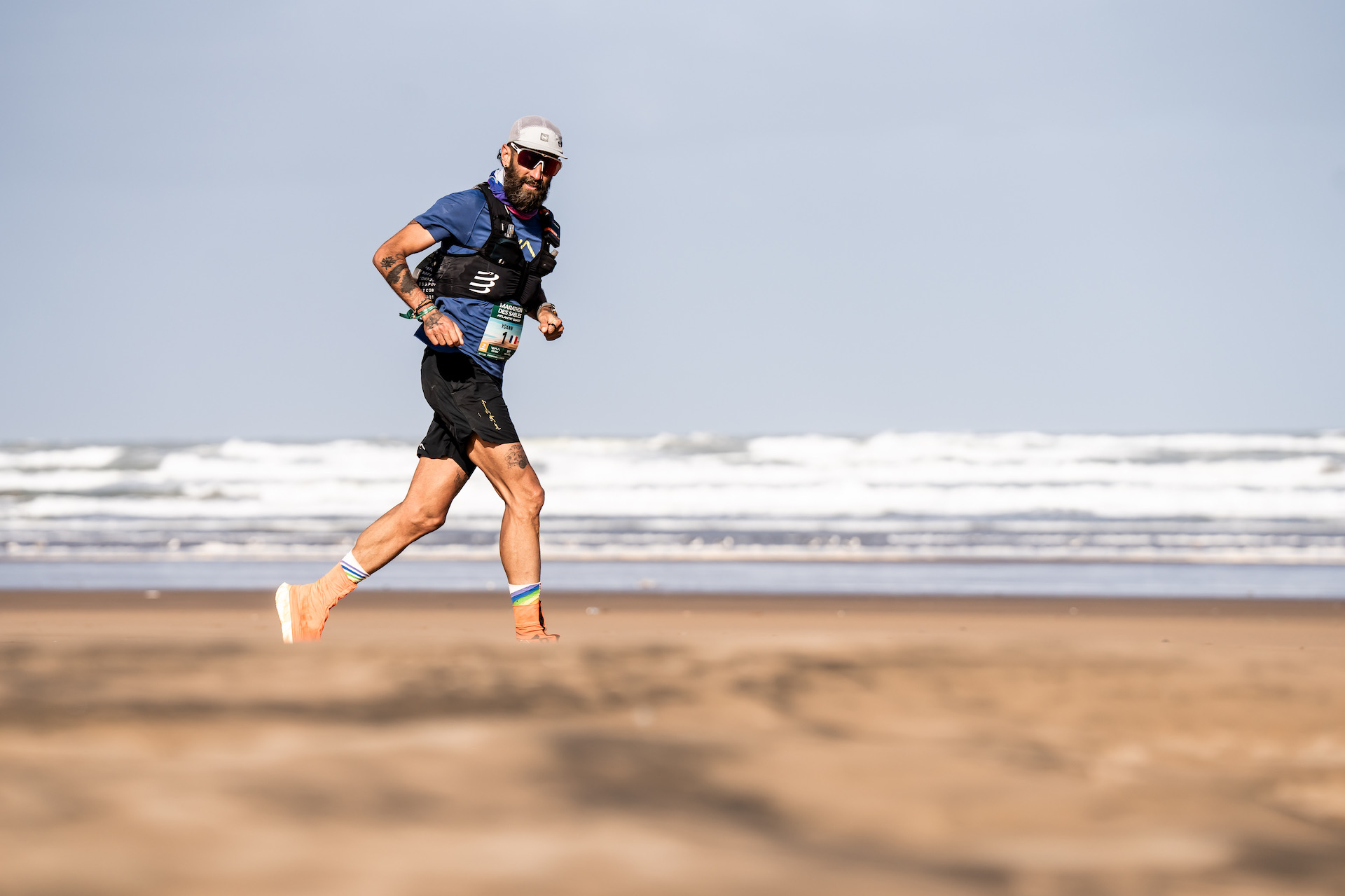
Like Fuerteventura and Peru, the ocean provides a backdrop to the race and this alone is unique. The juxtaposition of desert, dunes, beach and the roar of waves and the blue ocean make for a special environment for a race to take place.

LOGISTICS

As with all MDS events, the race is 3-stages taking place over 4-days with 3 distance options, 70km, 100km and 120km. Stage 1 and Stage 3 is the same for all participants and stage 2 is the one where a choice must be made, typically 20km, 40km or 60km. It’s a great format that makes MDS appealing for all ages and all abilities.

With 170 participants and 27 nationalities, the MDS Morocco Atlantic Coast was a great first edition. Notably, once again, female participation was around 50%. MDS are without doubt pioneering the way for female participation in their races and this must be applauded and encouraged.

Photo by Ian Corless

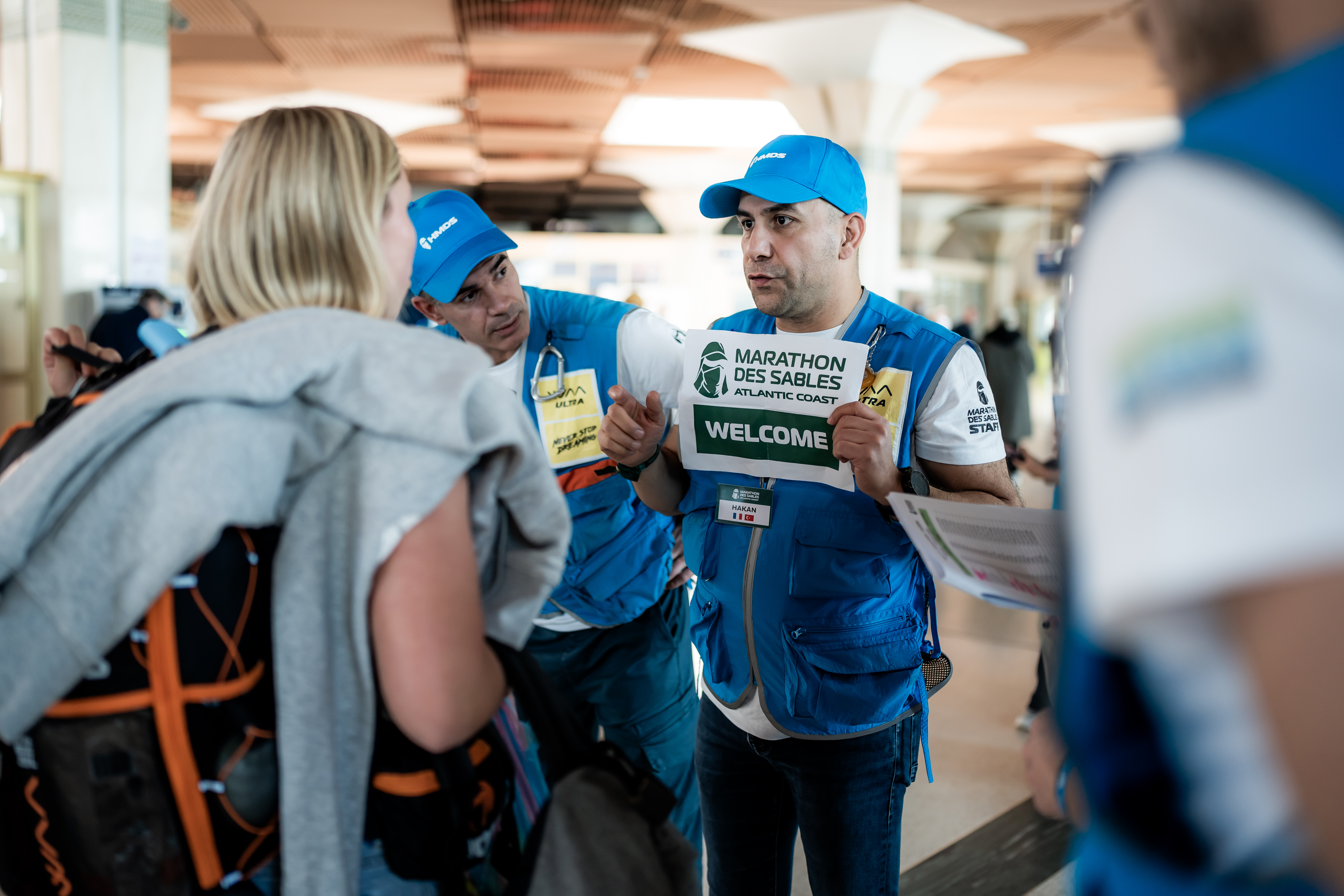
Travel to Morocco is easy and transfers were provided by MDS from Marrakech (appx 6-hours) or from Agadir, with just a 40-minute transfer to the race hotel, needless to say, most people flew to Agadir.

Photo by Ian Corless

A Saturday arrival and a Saturday departure, the race format had 2 nights in the hotel, 4-days and 3-nights in the desert and then a return to the hotel for 2-nights before onward travel.

The format provides an excellent opportunity to mix holiday and relaxation with sport.

THE EVENT

Saturday arrival was relaxed and with no commitments for the participants.

Photo by Ian Corless

Sunday mornning and the MDS admin protocols were in place between 0900 and 1200, this is a requirement for eah participant – equipment is checked, medical certificates are checked, GPX trackers are added to packs and race numbers are provided. The whole thing is efficient, seamless and fast.

The afternoon provided an opportunity for relaxation or sight seeing and then an early dinner and bed.

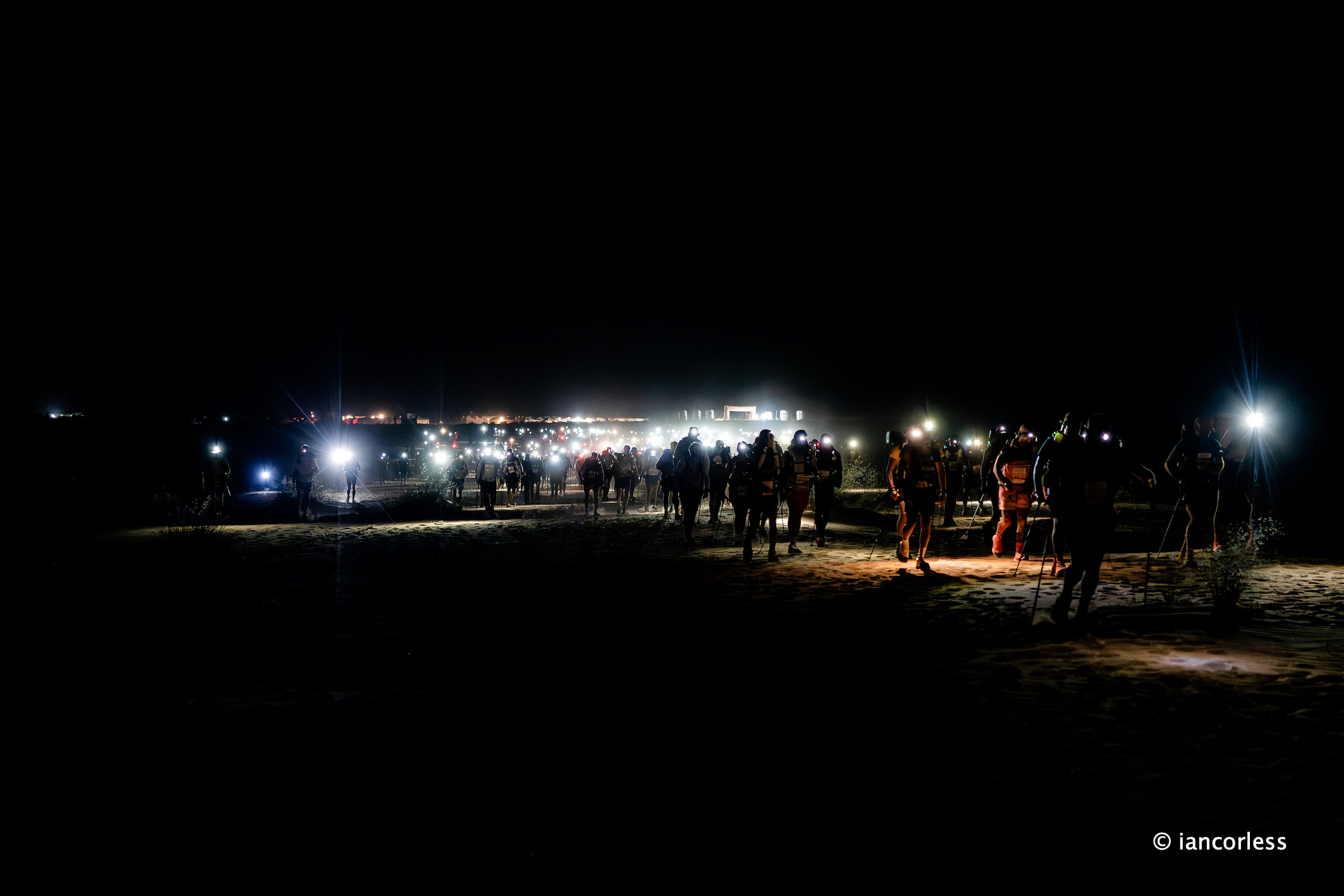
Departure time for day 1 was 0300 for a 5-hour journey to the desert. On arrival, the plan, as always, was to get the runner’s underway as soon as possible.

Highway to Hell finished and the participants departed under cloudy skies at approximately 0930.

Photo by Ian Corless

Day 1, stage 1 at 24km’s headed from an inland location and basically headed directly to the coast. The terrain was mixed, with some easy running to start the day, of course, sand featured heavily with a dune section coming just after CP1 and a final dune section concluding the race just before the finish. Temperatures reached a high of 25-degrees and it was a great first day. Bivouac awaited the runner’s and a first night in sleeping bags with self-sufficiency started. The wind blew and the temperatures dropped, a chilly night was expected. Stage summary HERE

Photo by Ian Corless

Day 2, stage 2, intermittent rain and wind blew in off the ocean and there was a sense of dread at what this day would bring, especially for those participants who would take on the 40 or 60km distances. A challenging start and just a few hours later the weather started to clear and finally, skies cleared and the sun came to make for a beautiful day, highs reached 28-degrees. The course offered an obvious challenge mixing the best of Moroccan terrain with tsome stunning dune sections. The latter km’s running parallel to the ocean to give an epic backdrop. The race wnt into the night with the final finisher arriving just after midnight. Stage summary HERE

Photo by Ian Corless

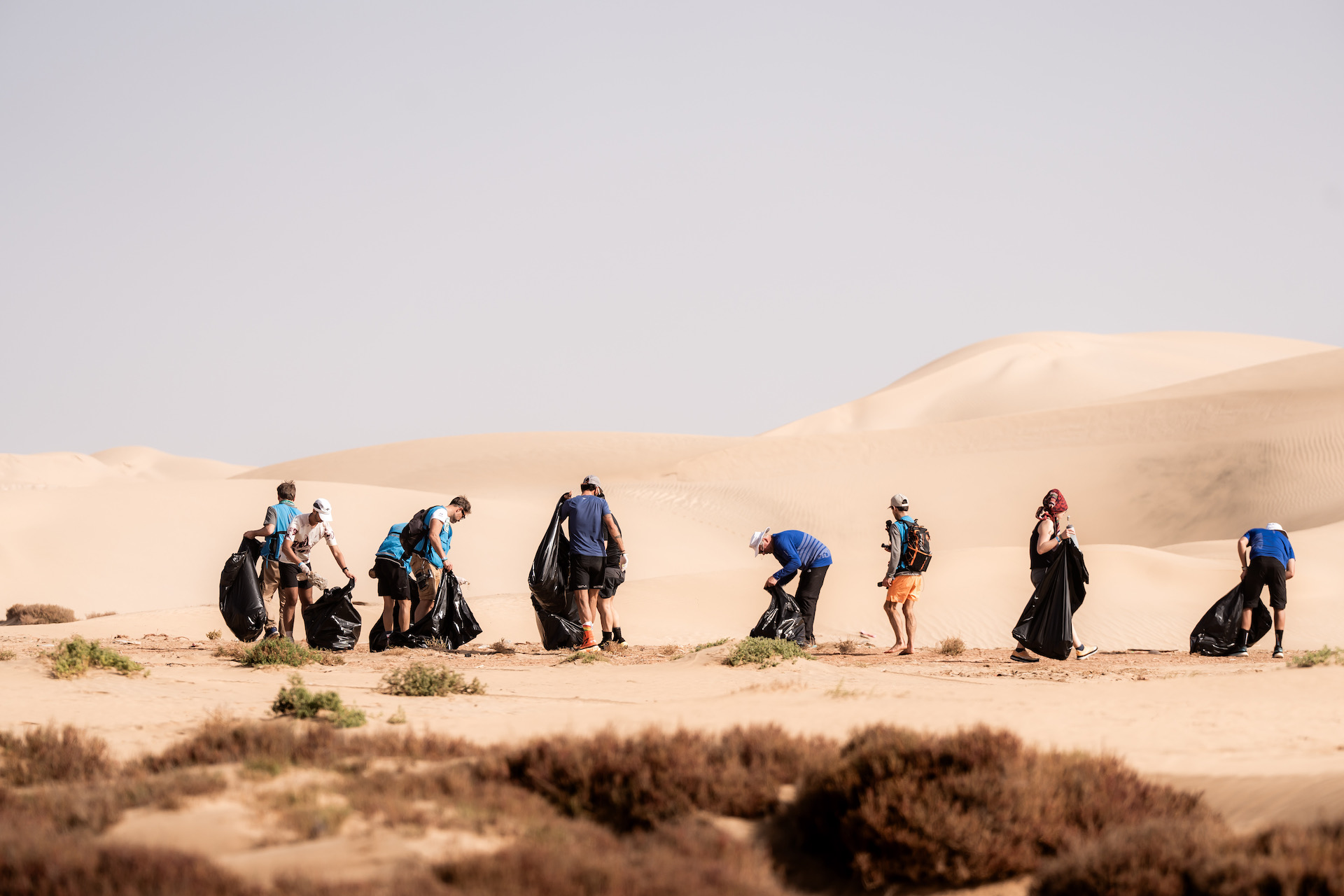
Day 3 was a welcome rest day. The skies were blue, the wind gentle and the warmth of the sun relaxing. It was a leisurely and relaxed start to the day. At 1130, blue and orange coats with participants walked to the beach and on the way cleared away rubbish and notably huge amounts of plastic. We race in these magical places and sadly, littering and pollution is high. The ocean obviously washing in debris daily. It was a huge campaign and yes, we may have only provided a small dent in what is a very big problem, however, it felt good and the difference afterwards was noticeable. The remainder of the day was releaxed, as per usual, mid-afternoon, a cold and refreshing drink was provided and as darkness came, most were already in sleeping bags gaining valuable rest before the final day.

Photo by Ian Corless

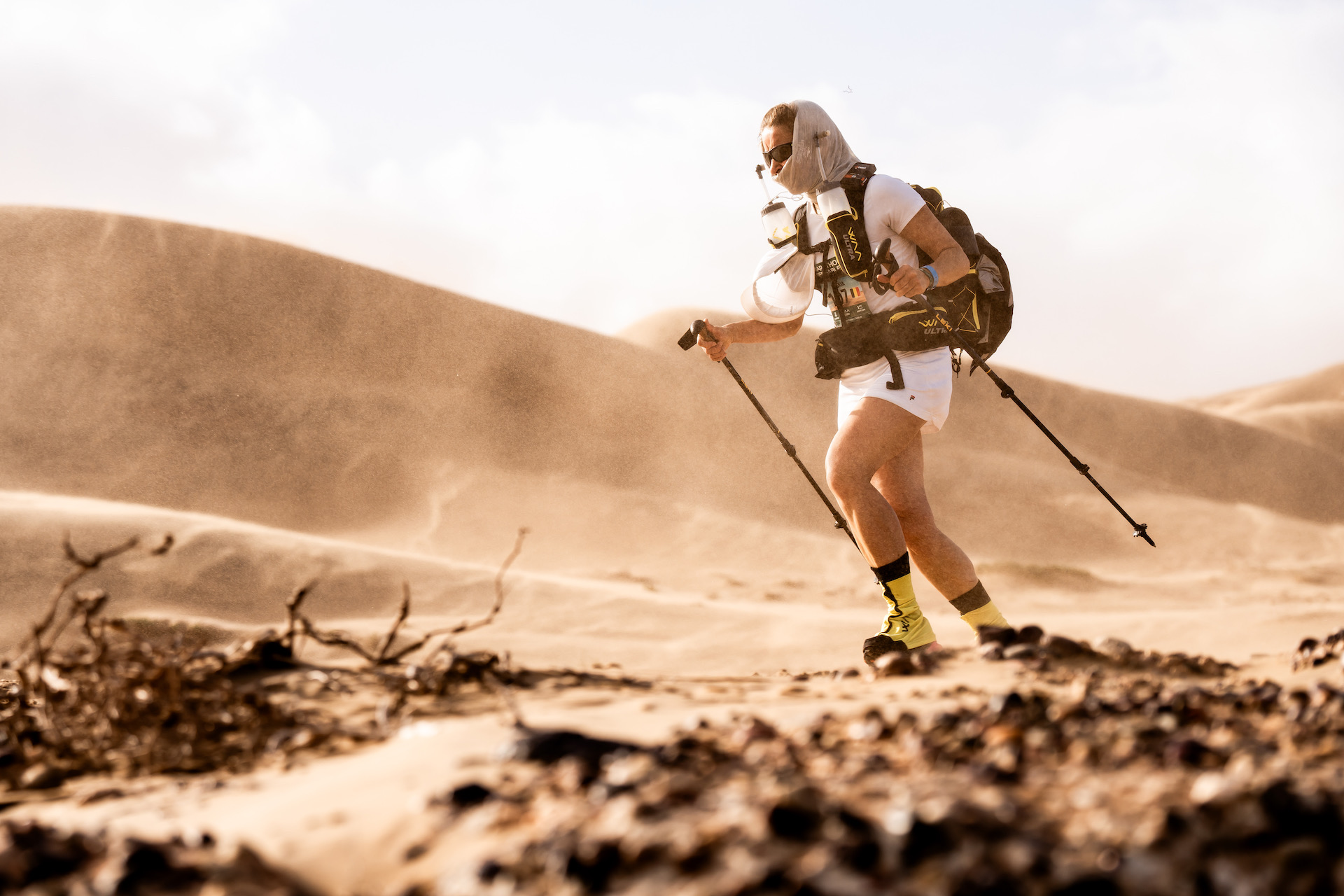
Day 4, stage 3 and what a start to the day, the wind was howling from the north bringing with it, at times, torrential rain. Runner’s were ready for the challenge though, with 2 starts, 0800 and 0930 for the top-25, the day got underway and gladly, by 0830 the rain stopped. However, the wind did not. The wind blew and blew, providing a constant headwind and relentless sand storms for the whole 27km’s. It was an epic and special day. Yes, it was hard but boy was it memorable. The joy, the emotion and the tears at the finish made the medal only more special. From the finish line, buses were waiting and as each was filled, they then departed back to Agadir for hotel comforts – shower, buffet dinner and a night in a bed with sheets and comfort. Stage summary HERE

Photo by Ian Corless

The following day was one of relaxation. Dinner was served at 1900 and then followed at 2000 hrs with a closing ceremony, awards and the showing of the MDS Morocco Atlantic Coast movie. The atmosphere was electric, the feedback incredible, the emotion high, it was a very memorable ceremony that only confirmed the success of the event. An outdoor DJ and dancing concluded the night and brought to a close this first edition.

Saturday and onward journies home.

NOTES AND CONSIDERATIONS

Photo by Ian Corless

MDS events are meant to challenge you both physically and mentally, some challenge more than others. MDS Morocco Atlantic Coast certainly falls in the latter category with challenging weather and varying temperatures. Having experienced 20 MDS events all over the world, my top-tip is ‘be prepared!’ Deserts are not always hot, they are not always dry and they are not always calm. Have with you a waterproof/ windproof layer, have with you a warm layer (lightweight down or primaloft jacket) and make sure you have eye protection. Trust me, those who did not have sunglasses or goggles for stage 3 suffered badly trying to move forward in a headwind for 27km’s.

Photo by Ian Corless

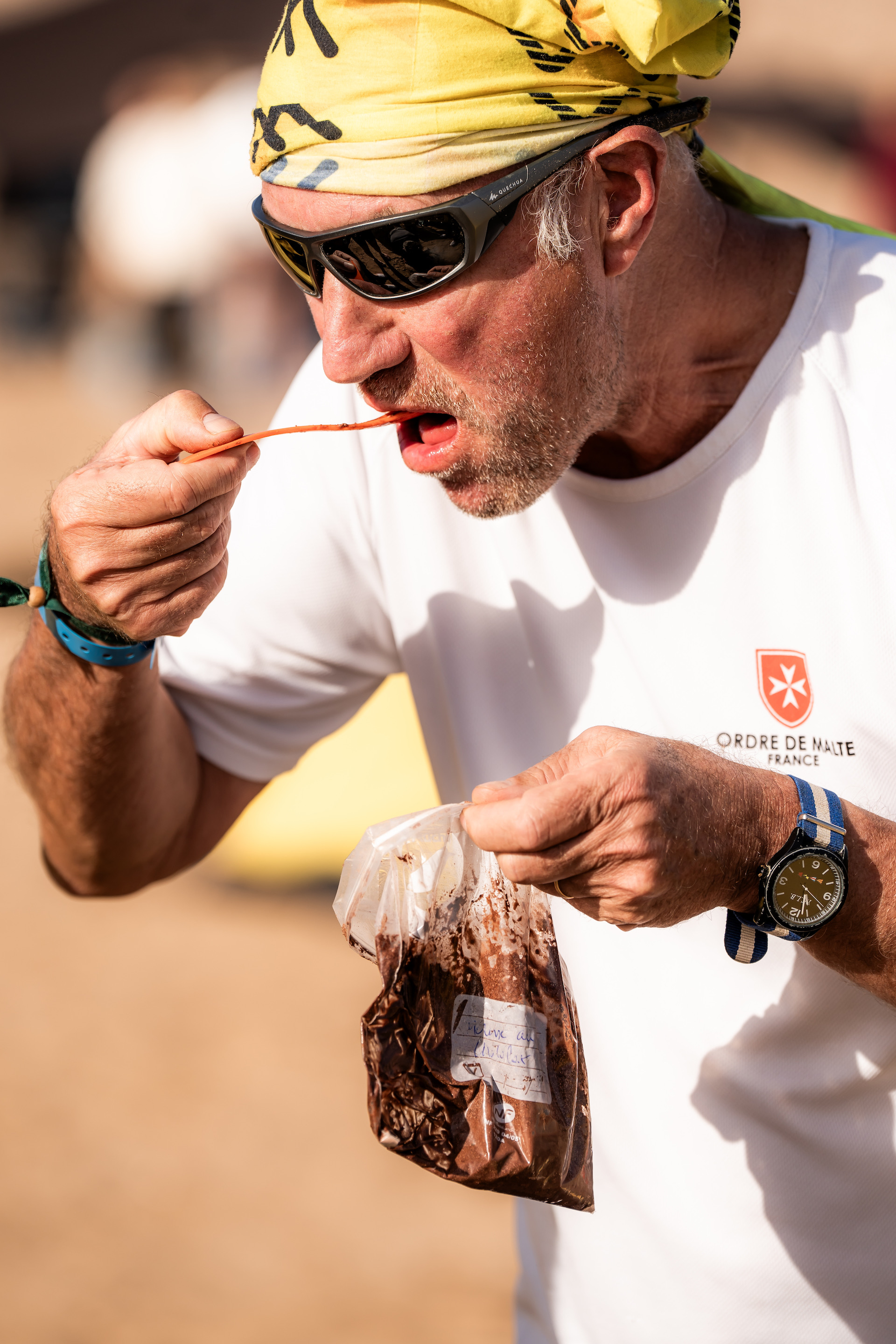
Be prepared with a variety of food choices and undesrtstand that what tastes good at home, may not taste good the desert. A balance of sweet and savoury s good and take note, as days pass, the demand for sweet becomes less.

Photo by Ian Corless

Prepare the mind for the challenge. Understand the WHY you are doing the event and be prepared for anything. The body is an amazing thing that could do incredible things, however, it needs to work in harmony and synergy with the mind to achieve your goals.

CONCLUSION

Photo by Ian Corless

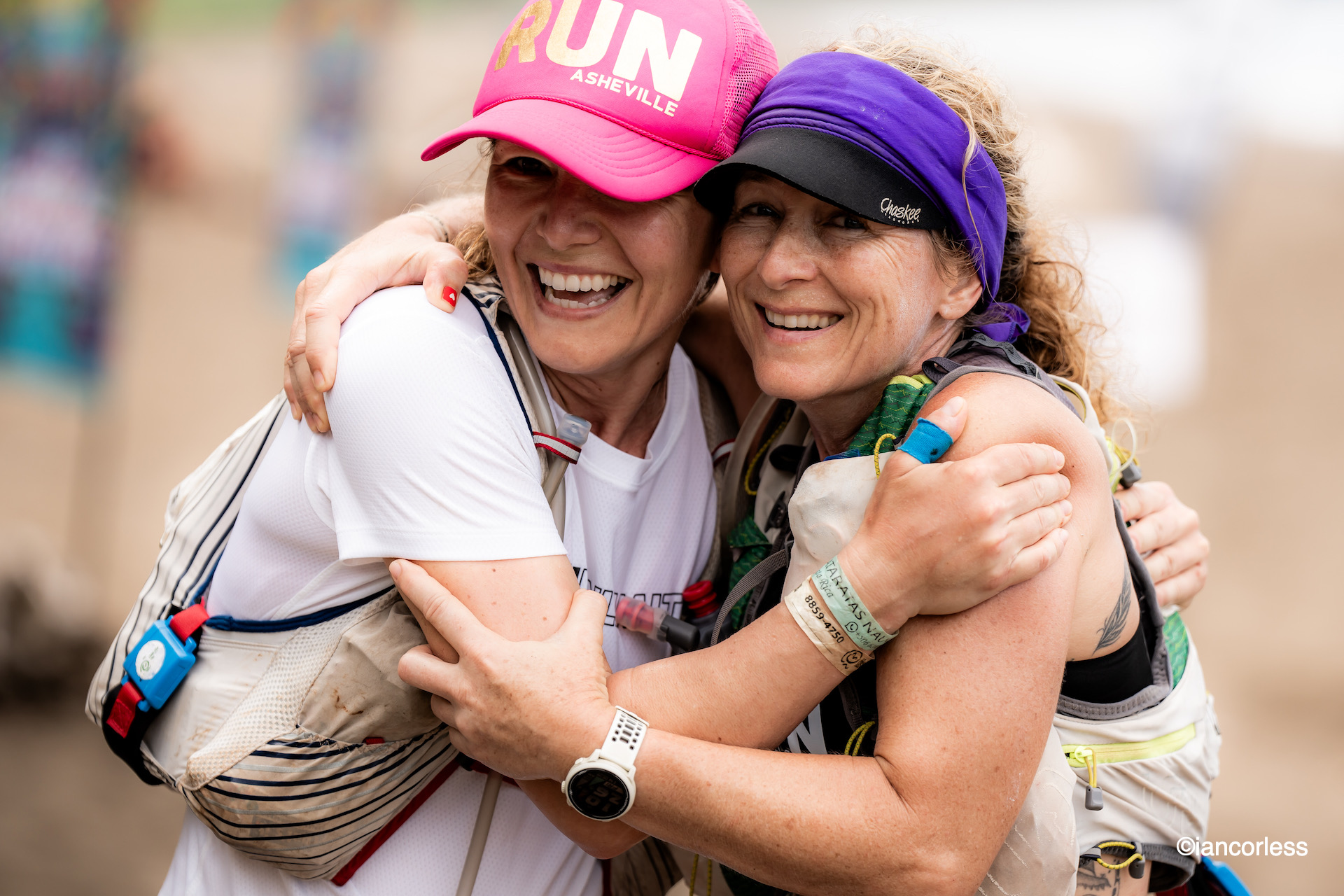
MDS Morocco Atlantic Coast was a huge success. We were all tested by the weather but this only made the event more special and memorable. The MDS event team have called it the Viavaldi race as we had all four seasons. The Atlantic Coast brings something special to Morocco and in contrast to Legendary, MDS Morocco and MDS Trek, the terrain is different, unique and of course, the ocean as a backdrop is special. No doubt, this event will grow to become an MDS favourite. January is great timing, what a great way to start a year and globally, few races take place so early in the year making this an easy option for those looking for something special post Christmas.

Full race results HERE

Interested in an MDS event in 2025? A full calendar of dates and destinations are available HERE

Instagram – @iancorlessphotography

Twitter – @talkultra

facebook.com/iancorlessphotography

Web – www.iancorless.com

Web – www.iancorlessphotography.com

MDS Morocco Atlantic Coast 2025 – Stage 2

Photo by Ian Corless

Stage 2 of MDS Morocco Atlantic Coast and the option to choose the stage distance: 20km, 40km or 60km?

Photo by Ian Corless

One of the appealing factors of the MDS format is the stage 2 distance option, with stage 1 and 3 the same for all, the stage 2 option allows for an overall distance of 70km, 100km or 120km.

Photo by Ian Corless

The day started under heavy cloud and winds coming from the north . At 0845 as participants arrived for the start, rain started to fall. It was an ominous beginning for the day and the weather remained challenging with rain increasing in strength during the morning.

Photo by Ian Corless

Gladly, by midday, blue skies and sun started to appear, however, the wind increased in strength and continued to do so into the night.

Photo by Ian Corless

With epic landscape, stunning dunes, there was much to appreciate in this stage and despite the weather, runner’s were constantly smiling.

Photo by Ian Corless

With three distances, rankings change after stage 2, often considerably, for example, Listy Mazille, a clear winner on stage 1 is now the leader of the 1ookm and we have a new leader in the 120km category now.

In the 120km, ranking is as follows:

RACE LEADERS 1 – Yoann STUCK 2 – Göran SCHREY 3 – Stephan BAWEY

WOMEN RACE LEADERS 1 – Anne-Caroline KUSNIERZ 2 – Janina BECK 3 – Adele THOMAS

In the 100km, ranking is as follows:

RACE LEADERS 1 – Listy MAZILLE 2 – Benoit BERCHEBRU 3 – Adrien LHERMITTE

WOMEN RACE LEADERS 1 – Listy MAZILLE 2 – Tiphaine SANQUER 3 – Joana TEIXEIRA

In the 70km, ranking is as follows:

RACE LEADERS 1 – Christian HARTEL 2 – Justine DEBOTÉ 3 – Cyril MALEJAC

WOMEN RACE LEADERS 1 – Justine DEBOTÉ 2 – Vanessa CUADRADO 3 – Audrey SCOTTO

The stage, for many, goes into the night. The last runner will arrive late, maybe early the next day.

Tomorrow, a rest day of relaxation and recovery before the third and final stage.

Photo by Ian Corless

Full race results HERE

Interested in joining an MDS event in 2025? A full calendar of dates and destinations are available HERE

Photo by Ian Corless

Instagram – @iancorlessphotography

Twitter – @talkultra

facebook.com/iancorlessphotography

Web – www.iancorless.com
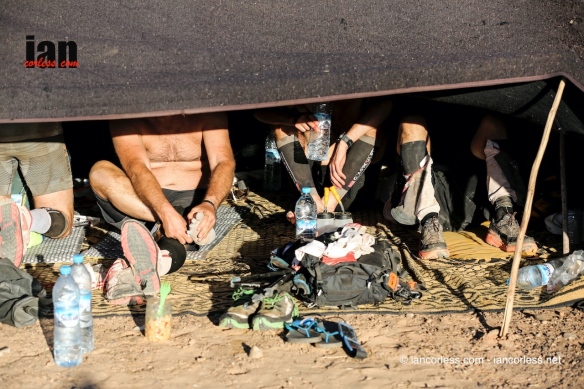
Web – www.iancorlessphotography.com
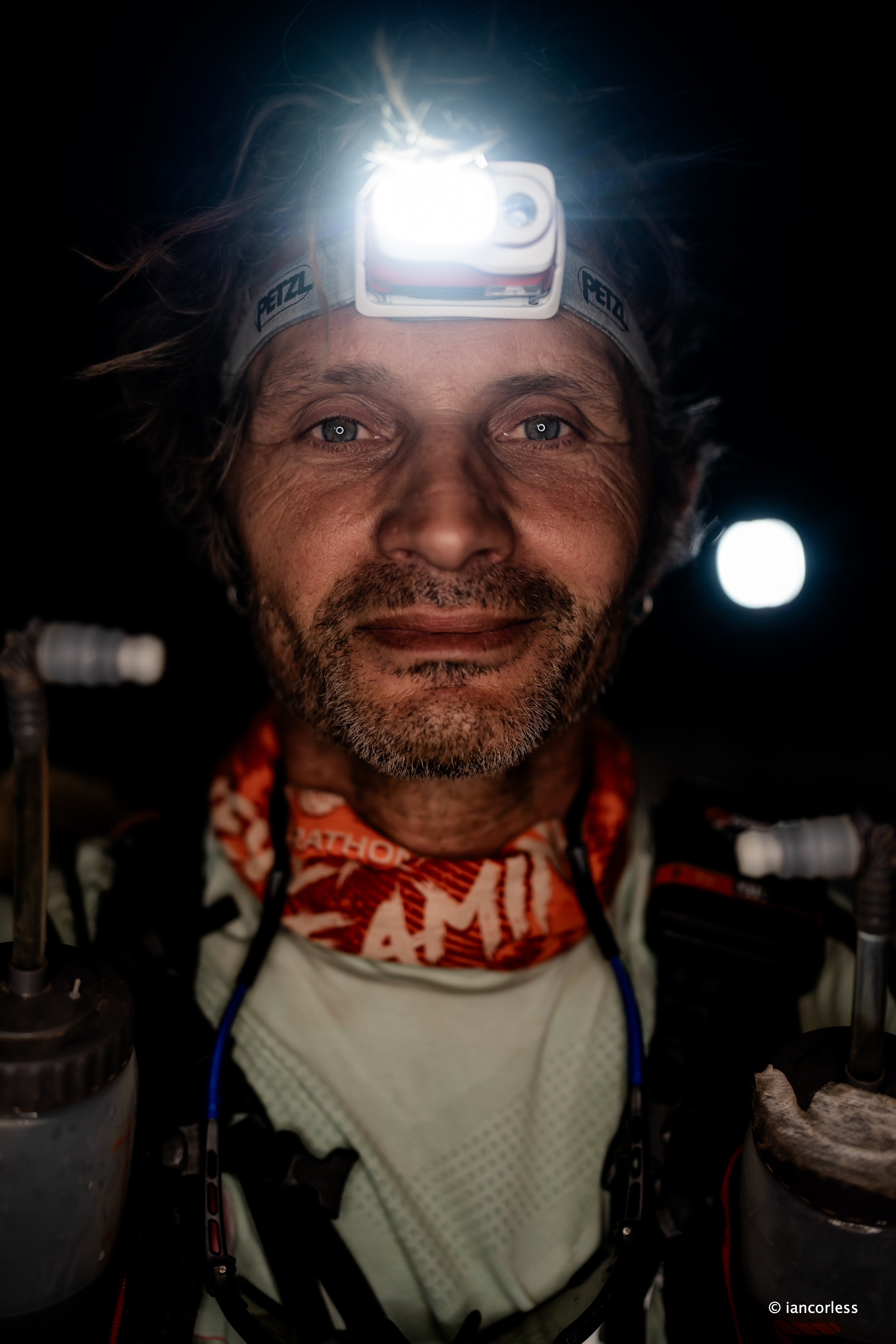
Oman Desert Marathon 165km 2025 – Stage 4

Photo by Ian Corless

It was a morning of relaxation in bivouac, today, stage 4, has the participants starting at staggered times based on ranking. The first departure 1400, the second 1500 and lastly, the fast group at 1700.

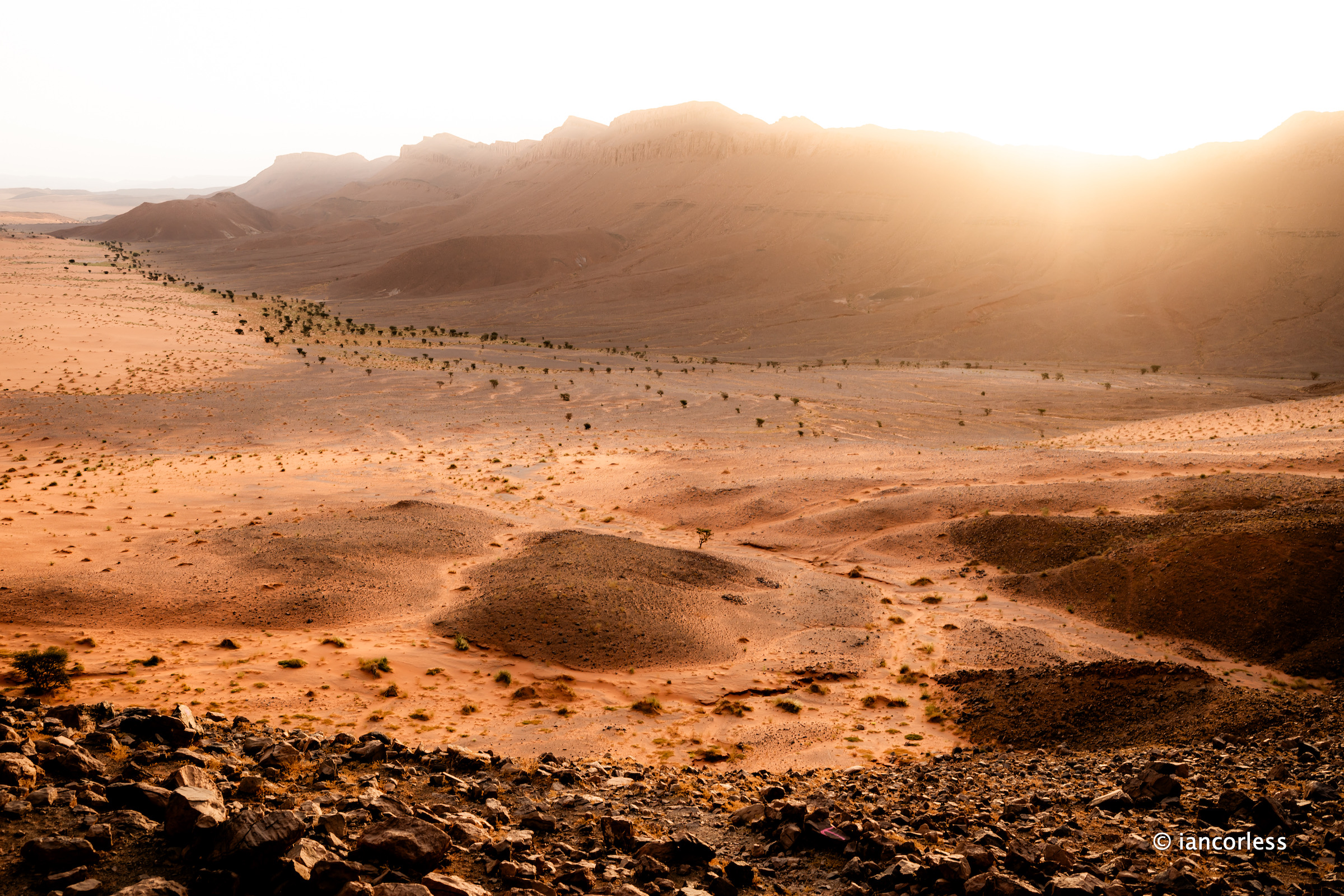
The start times are designed to allow all participants to experience the Oman Desert under darkness.

The 30km stage starts with 6.8km’s of dunes and then after a left turn, the route takes a direct line to the finish line and final bivouac night before the final stage tomorrow.

Aziza – Photo by Ian Corless

In the 1500 departure, the top women raced head-to-head and unsurprisingly, Aziza Raji once again dominated in 03:59:21 followed by Lydia Oldham, 04:20:23 and today Tanja Schoenenborn, 04:46:13, had a very strong day finishing 30-minutes ahead of Sally Ford.

Tanja – Photo by Ian Corless

In the men’s race, it was all guns blazing from the off with Rachid El Morabity setting a super fast pace. It came as a surprise as he has taken the first three stages very relaxed.
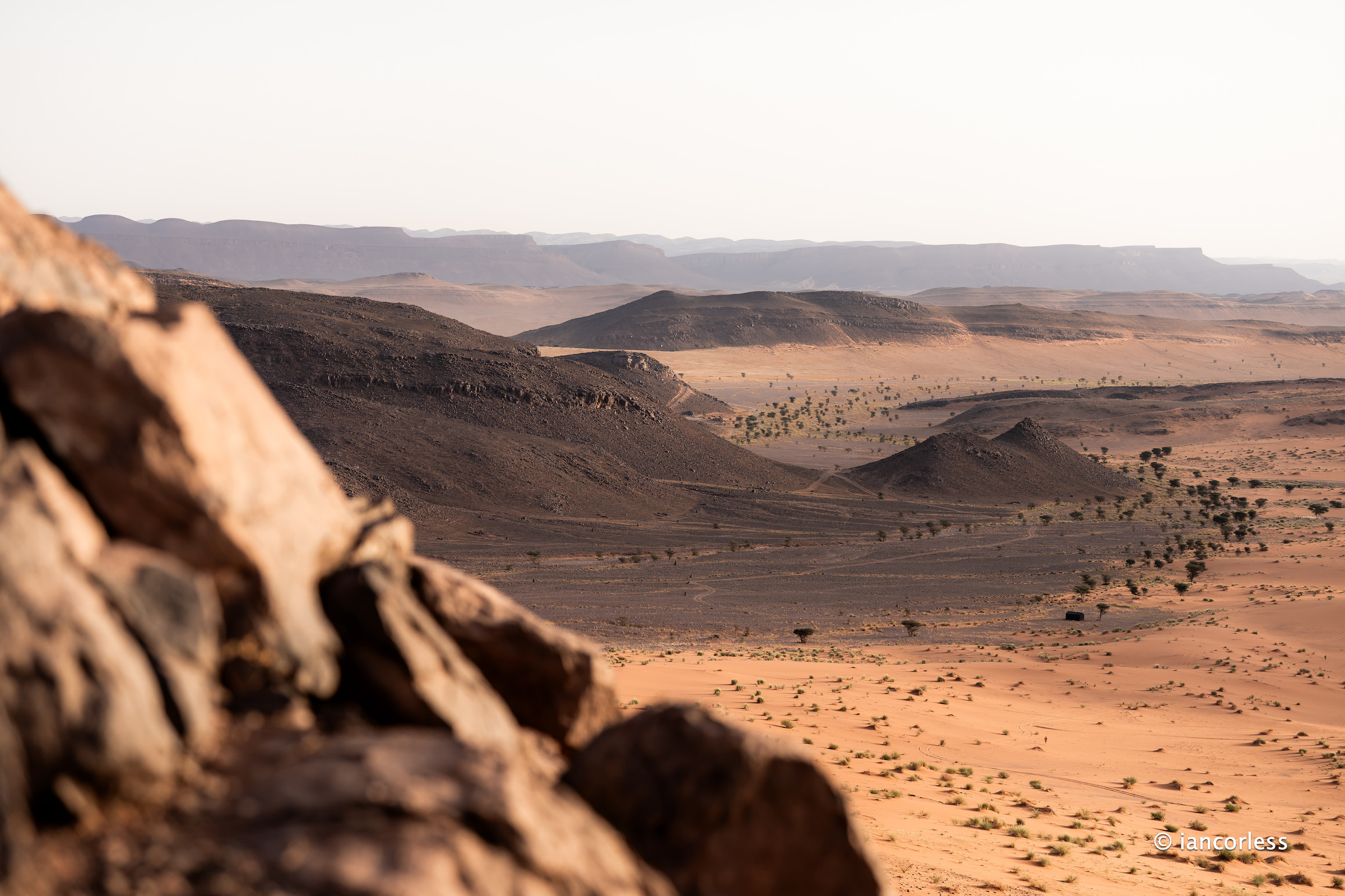
Rachid – Photo by Ian Corless

He pushed ahead and at cp1 had an 8-minute lead. He continued the charge and crossed the line in 02:37:43.

Photo by Ian Corless

Behind, Saleh Alsaidi and Mohamed El Morabity chased both pushing each other hard. The elastic eventuall snapped and Mohamed pulled away to cross in 02:44:22, 6-minutes 39-seconds behind his brother. Saleh secured third in 02:50:06.

Photo by Ian Corless

The final and fifth stage tomorrow will have the participants run a 21km stage. It’s a flat and fast stage with just a short section of dunes to start the day.
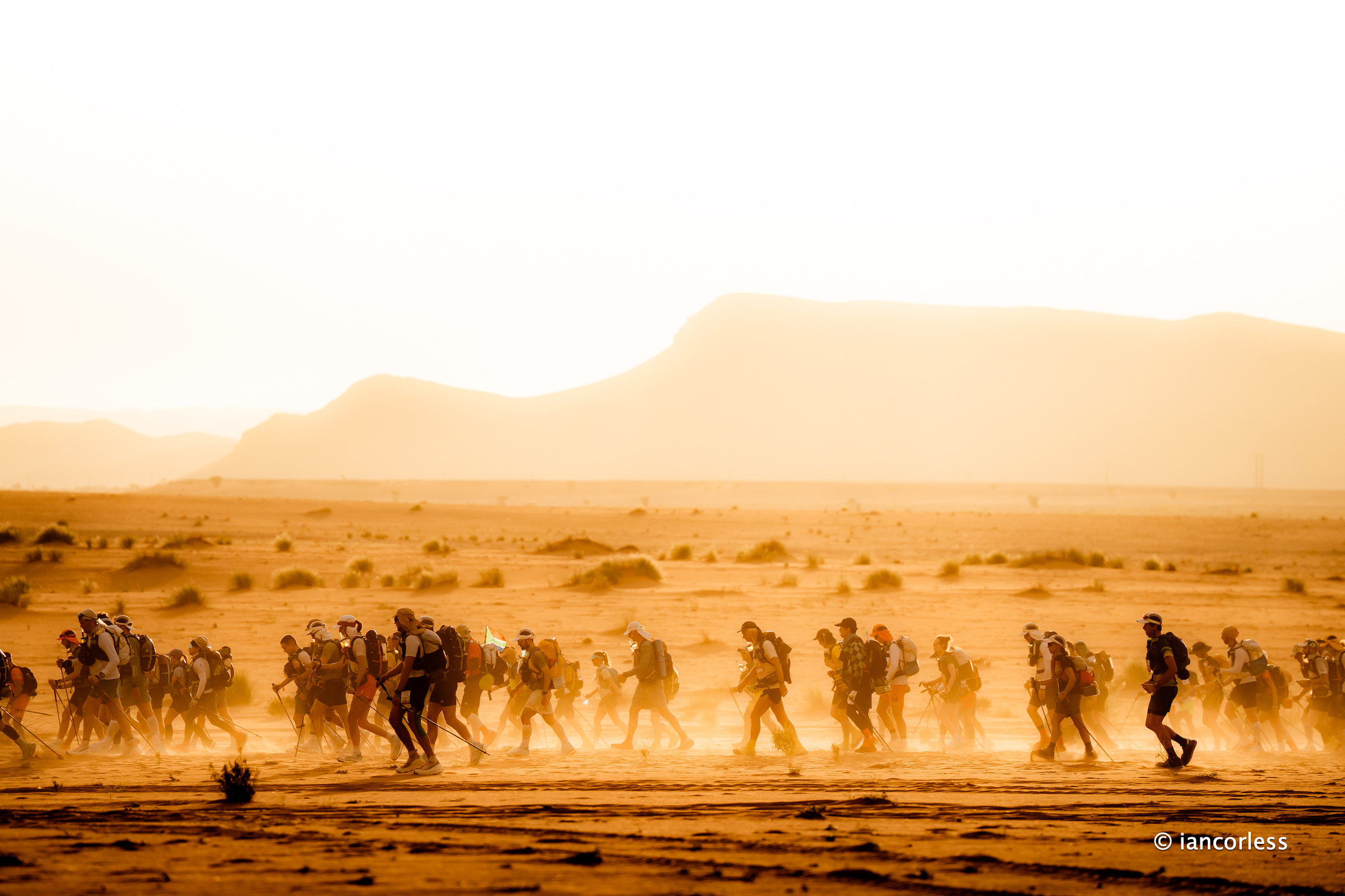
Photo by Ian Corless

Stage 4 results HERE

Full results HERE

Photo by Ian Corless

Oman Desert Marathon website HERE

Photo by Ian Corless

Instagram – @iancorlessphotography

Twitter – @talkultra

facebook.com/iancorlessphotography

Web – www.iancorless.com
Web – www.iancorlessphotography.com
Oman Desert Marathon 165km 2025 – Stage 3

Photo by Ian Corless

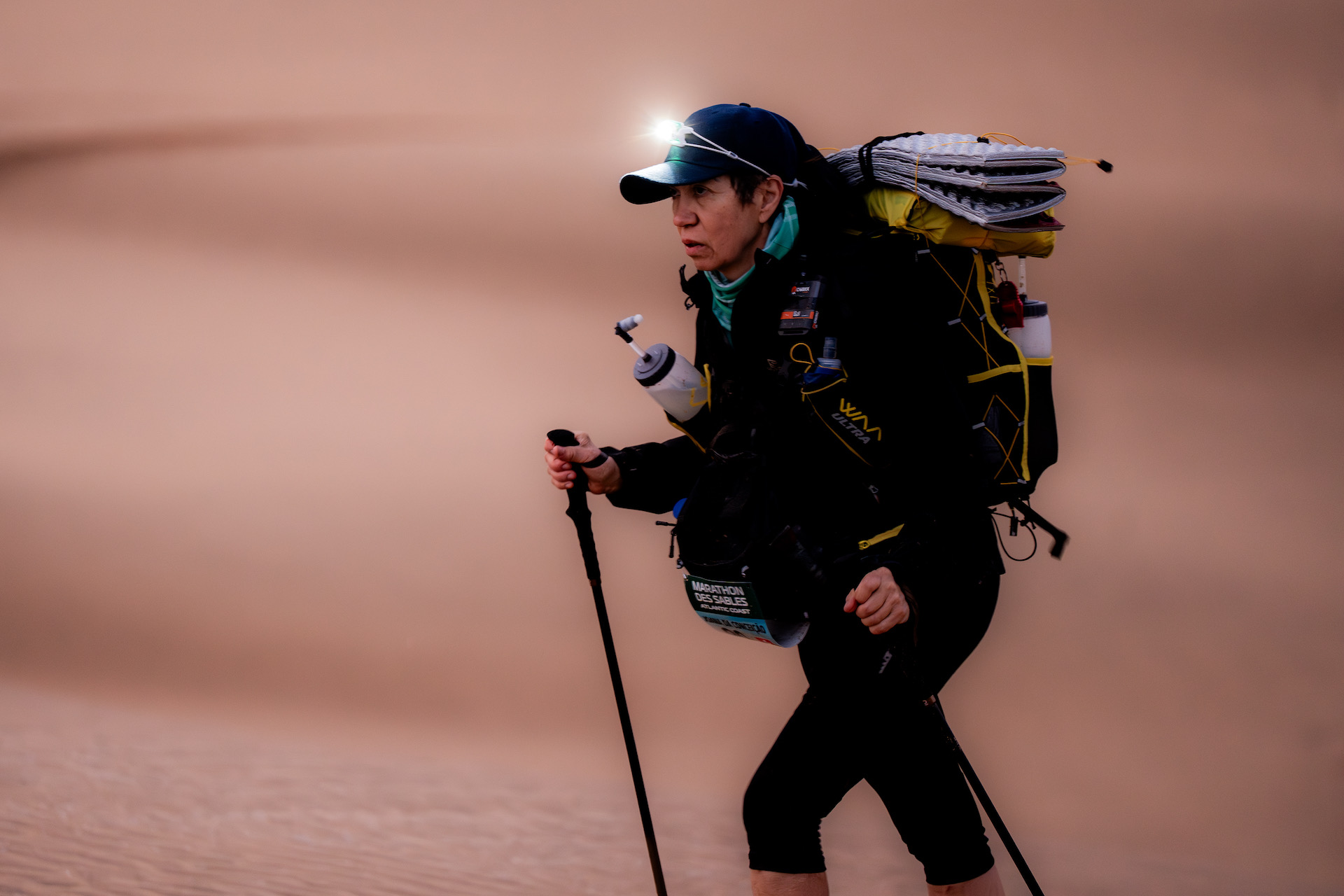
These Omani nights are cold. Dare I say that last night was colder than the night before? It’s tough for the runner’s, especially those that are minimum with kit, particularly lightweight sleeping bag and no down jacket.

Stage 3 at 40km is the second longest of the week and arguably the toughest, compensated for with incredible beauty.

Saleh – Photo by Ian Corless

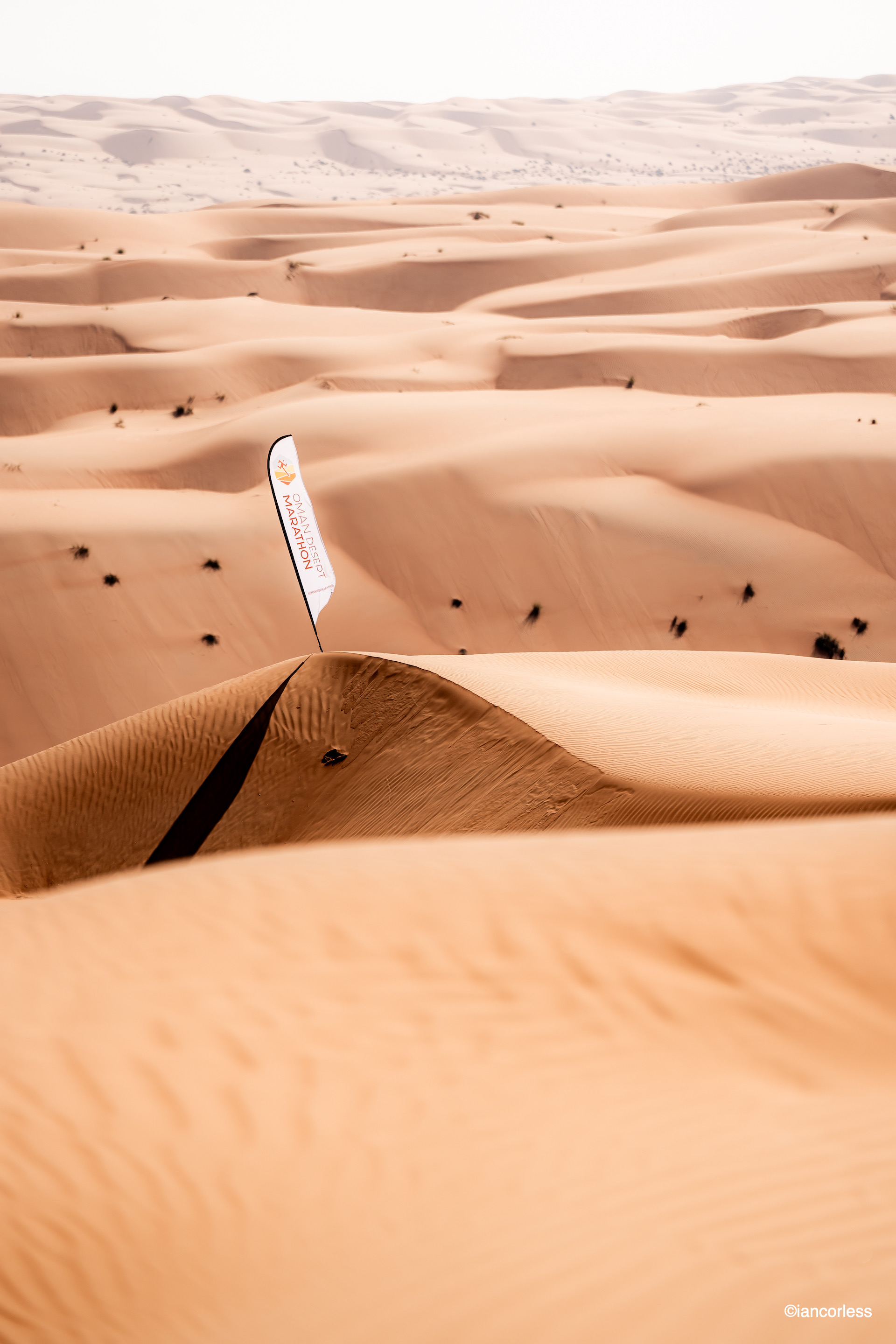
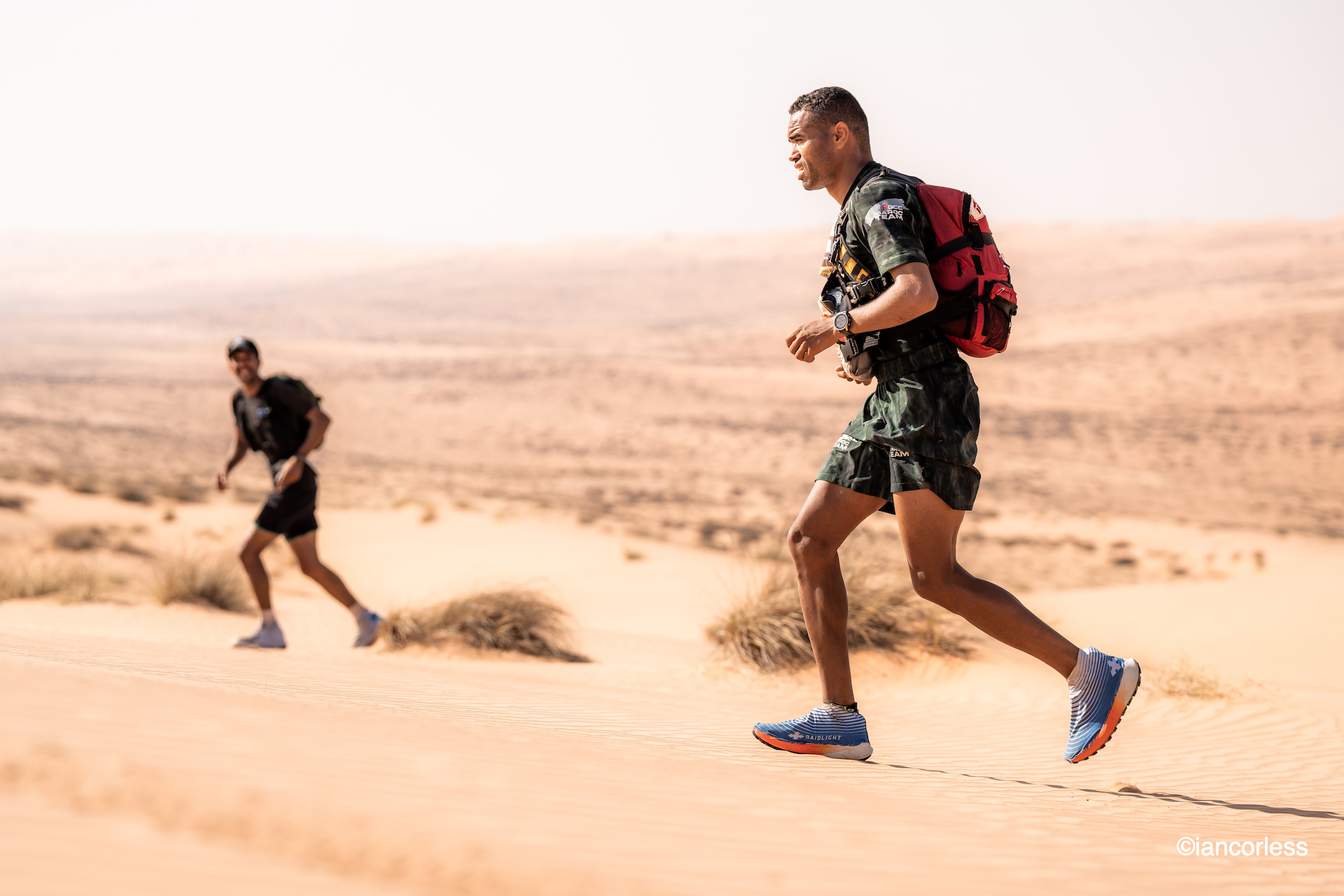
The Oman Desert Marathon is very much a sand race. Every step is on varying decrees of soft-sand and stage 3 adds the spice of a rollercoaster of dunes. There is even a dune section to the finish line.

Lots of sand – Photo by Ian Corless

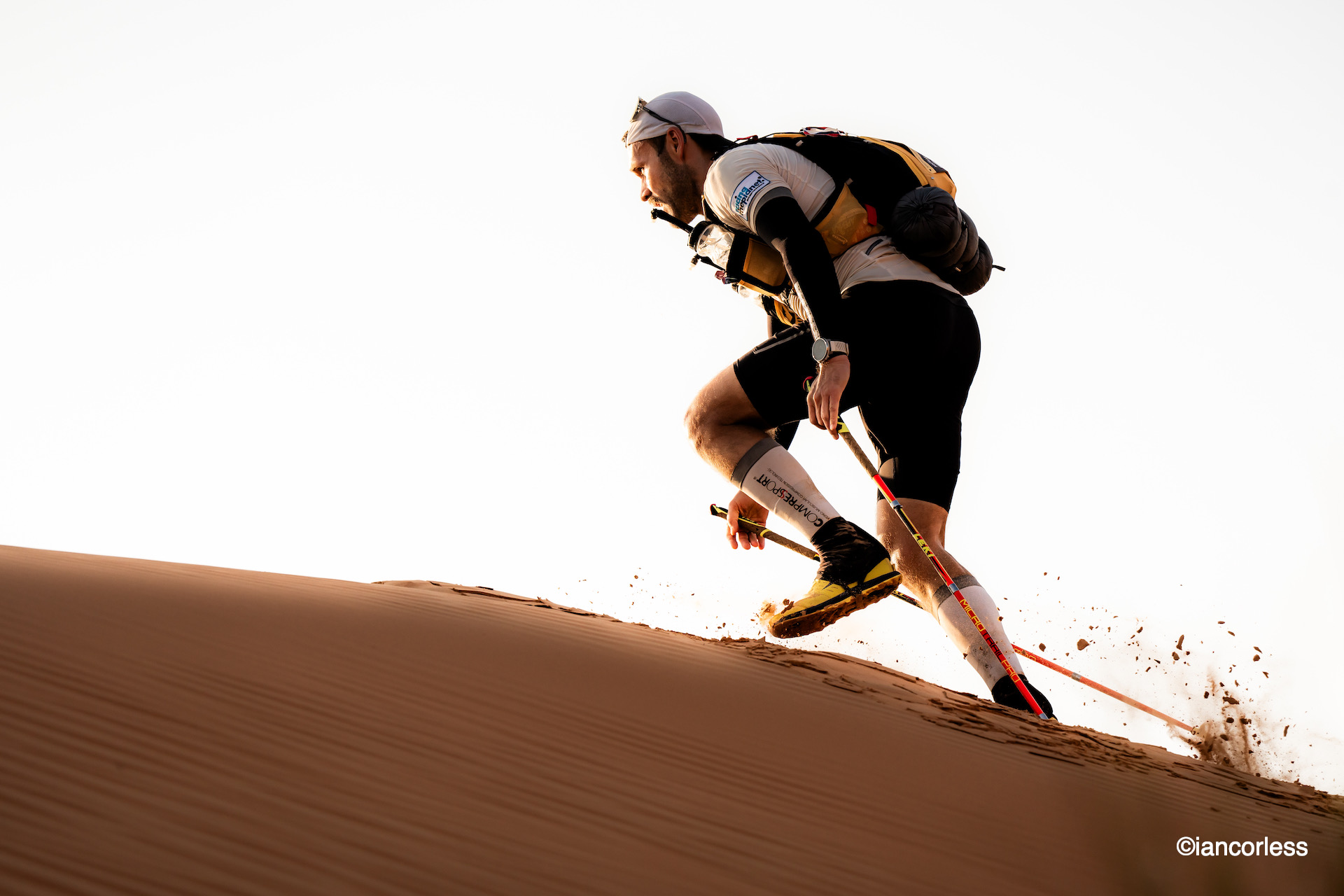
Starting just after sunrise, the early morning light and views in the first and second dune sections were spectacular. Up high, you really get to see the enormity and expanse of the sand here in Oman, it is relentless.

A tough day – Photo by Ian Corless

Early km’s of the day saw many wearing a windbreaker, trying to get warm after a cold night and chilly start. The heat soon came though and it would keep rising to a high of 27-degrees.

Rachid feeling the chill – Photo by Ian Corless

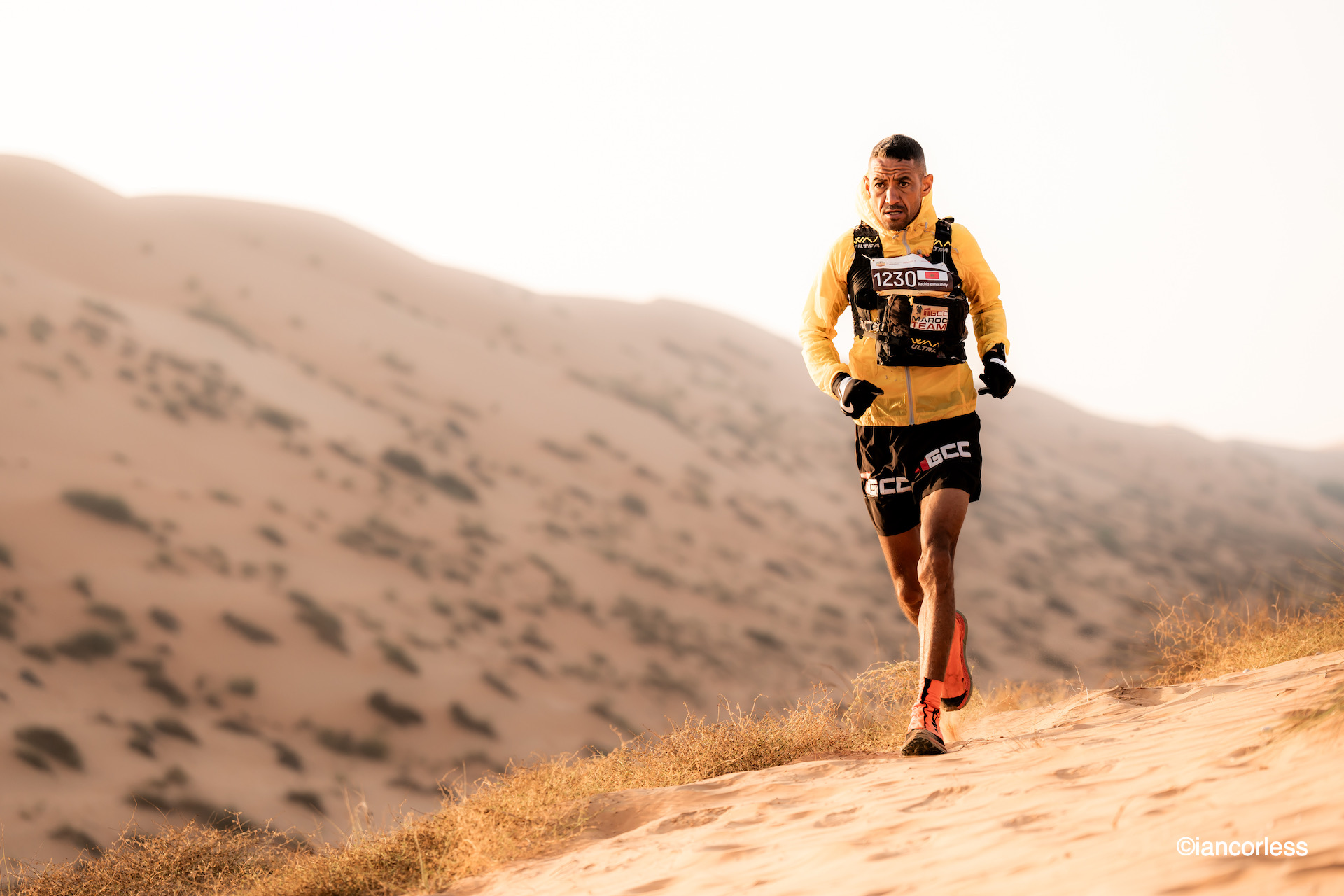
The top male contenders ran much of the day together, nobody seemed particularly eager to push the pace. Rachid took it very easy wearing a windbreaker and gloves for the whole day, he was a long way back early on and then little by little he moved up the field as the race progressed.

Mohamed playing a waiting game – Photo by Ian Corless

Mohamed and Saleh are inform and the duo finished first and second on the stage just 11-seconds apart, 4:14:39 and 4:14:50 respectively. Rachid moved up to third by the finish line crossing nearly 10-minutes behind his brother.

Aziza Raji – Photo by Ian Corless

For the women, Aziza finished 11th overall in 5:52:44 and a long way ahead of Lydia Oldham in second, 6:30:49. Sally ford was third nearly 50-minutes behind second.

Sally Ford – Photo by Ian Corless

Stage 3 results HERE

Full results HERE

Tomorrow is the penultimate stage of 30km. With three starts, 1500hrs, 1600hrs and 1700hrs, the participants will go into the night and finish in darkness.

Ronan Kirby – Photo by Ian Corless

Oman Desert Marathon website HERE

Photo by Ian Corless

Instagram – @iancorlessphotography

Twitter – @talkultra

facebook.com/iancorlessphotography

Web – www.iancorless.com
Web – www.iancorlessphotography.com
Oman Desert Marathon 165km 2025 – Stage 2

Photo by Ian Corless

Stage 1 was a tough day, the talk in bivouac was all about the relentless sand and how the final 10km was relentlessly tough.

It was an early sleep for most and the night was a cold one. Temperatures plummeted, especially in the early hour of the following morning.

Tired! – Photo by Ian Corless

Bivouac came to life around 0500 and stage 2 eventually started at 0700.

Rachid – Photo by Ian Corless

The early km’s were relatively easy and cool. So cool that Rachid wore a windbreaker and gloves… He actually did not remove them all day despite the temperatures rising to 27-degrees.

Photo by Ian Corless

The highlight of the day was a dune section with sunrise. Pure magic with high views of the surrounding landscape.

Photo by Ian Corless

While there is no ‘easy’ running here in Oman, the km’s after the dunes were relatively flat and easy.

With Mohamed taking victory on stage 1, a slender 4-seconds ahead of his brother, Rachid, all the action would be around the Moroccan.

Photo by Ian Corless

The local Omani runner’s, especially Salah Al Saidi did all they could to put him under pressure but Mohamed is too strong. In the final 10km’s he made his move and opened a gap for the stage win in 3:05:54.

Stage 2 of the 2025 Oman Desert Marathon was full of action and spectacular dunes. Mohamed El Morabity and Aziza Raji took the stage wins!
Mohamed – Photo by Ian Corless

Rachid did an amazing job to finish 2nd, 3:09:26 and Saleh 3rd in 3:10:01.

Rachid – Photo by Ian Corless

Rachid by contrast was taking it easy, with 20km’s covered he was 5-minutes behind the leaders, however, the attack came and he closed the gap effortlessly and then forged ahead with on of the Al Said.

Aziza – Photo by Ian Corless

For the women, Aziza Raji was once again making the sand and the dunes look easy. Lydia Oldham, Sally Ford and Tanja Schoenenborn are all close together, but they are fighting for second.

Lydia – Photo by Ian Corless

Tomorrow is another 40km stage, followed by stage 4 which starts late afternoon and goes into the night.

Race results are HERE

Oman Desert Marathon website HERE

Photo by Ian Corless

Instagram – @iancorlessphotography

Twitter – @talkultra

facebook.com/iancorlessphotography

Web – www.iancorless.com

Web – www.iancorlessphotography.com