



Marathon des Sables 2013 Stage 1
1
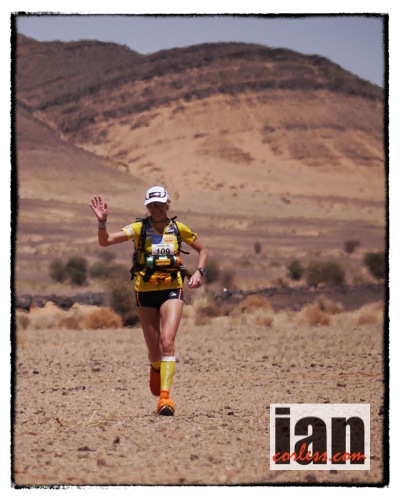
Marathon des Sables – Stage One
Distance: 37.2km.
Terrain: Undulating terrain interspersed with small ergs, a Wadi and Dunes representing a total distance of 5km.
Stage One:
It was a relief; you could see it on the runner’s faces…. Today was the day. Two days of camp life was finally coming to an end and a journey that had taken three years for some was about to start.
It had been a wind free night, at 0600 it was still chilly but it was clear that a good day would be ahead.
Campfires spread around the camp like a bunch of pyromaniacs trying to start a forest fire, without the forest! Experienced Masers gathered twigs and shrubbery from around the camp and made improvised fires in holes in the ground. By contrast, novice runners used small triangular metal stoves with fuel blocks.
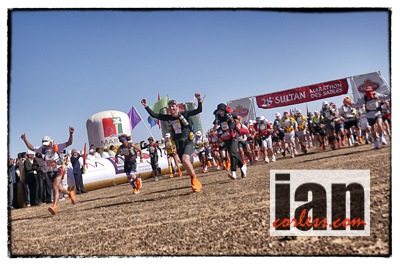
At 0800 runners started to slowly assemble at the start. The buzz and the excitement was clear for all to see. It was a runners ‘Christmas’. Patrick Bauer climbed on top of his vehicle and started his infamous daily briefing.
“Today is a good day for running with a breeze and temperatures around 25 degs. However, it is a longer than normal first day, so please be careful”
At 37.2km’s this was a tough introduction to the desert.
The countdown complete, runners burst from the start line like ants that had been forced out of a nest. They went left, right and straight at the press that had situated themselves some 150m from the line. It was an incredible outpouring of emotion. The screams, the chants, the excitement, it was intoxicating.
As I moved to the right, runners disappeared up the trail. The race helicopter flying low buzzed them. The race was underway!
As expected, the main contenders in both the men’s and ladies race forged ahead at a blistering speed. You don’t need to spend too long running at the side of them to appreciate the ability they have.
After 5.5km’s a valley, which was preceded and followed by cliff sections. Ruining through a village a Wadi crossing and then a right turn along the trail to CP1.
It’s a beautiful area of 2-3 meter dunes. As the sun beats down it’s exciting to see how the runners not only tackle the dunes but also how efficient they are in the CP’s. Runners looking to place well move and out with speed. In contrast, other runners spend prolonged periods dousing themselves in water. Remember, this water it rationed… at CP1 they are entitled to one 1.5l and at CP2 they are entitled to two bottles.
The dunes make them sink and for every step forward you move a little backwards. It’s a cruel terrain to run on.
Mohammed Ahansal was showing his class by pacing himself in the early stages and the front-runners had arrived in a group of 5 or 6. By contrast, Laurence Klein was showing her dominance and experience by forging ahead of the ladies field. When I saw her, she was running just behind the legendary, Marco Olmo.
After the Dunes the terrain became increasingly difficult area and a rocky section around 17km preceded another cliff. The race was now opening up and Mohammed Ahansal was opening up a lead over Antonio Solaris from Italy and Miguel Solar from Spain.
CP2 came and with it a few surprises in the ladies race, Laurence Klein was once again pushing ahead of the field but Brit, Jo Meek was in second followed by 2009 second-place runner, Meghan Hicks from the US.
Negotiating a rocky gorge and another cliff section the track now became wider and after more rocks and a col the finish came in sight.
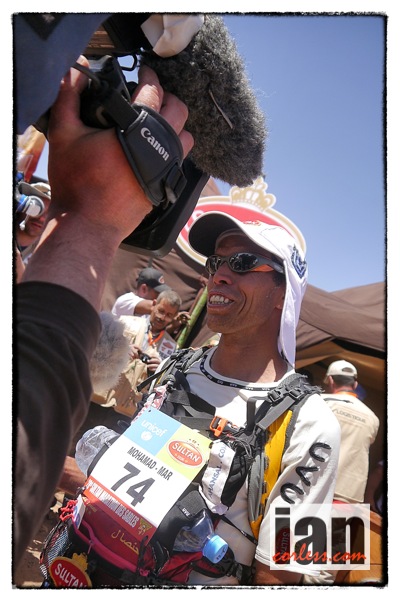
Mohammed Ahansal ran to the line looking relaxed in first place with a time of 02:50:56. Antonio Solaris, 41, from Italy (who has placed 7th overall previously and now lives in Morocco) finished in 2nd place in 02:55:25. Third place was Miguel Soler, 35, from Spain in 03:00:33.
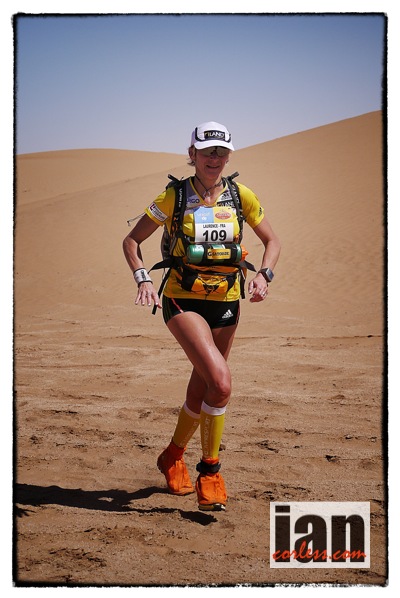
The ladies race saw the dominant Laurence Klein, 44, raise a hand in the air just before the line and say ‘Merci’ to those waiting at the finish line. Her time of 03:39:21. The big surprise was MDS fist timer, Jo Meek, 35, from the UK. She has a marathon personal best of 2:46 set in Berlin in 2009. Before the 2013 MDS began she said:
“I want to do the Marathon des Sables for the challenge but also to do the best I can. I want to race, I don’t want to just take part”
Well, Jo has fulfilled that promise. Lets just hope she can maintain that start over the following days. Megan Hicks, 34, from the US who has raced three times previously at Marathon des Sables (2nd in 2009 and 5th in 2012) took a solid third place in 03:52:51.
Notable British performances in the first stage came from:
Men’s:
Danny Kendall (7th) 03:07:47, Andrew Fargus (15th) 03:26:55, Alexander Visram (19th) 03:34:11 and Tobias Mews (23rd) 03:38:10.
Ladies:
Zoe Salt (4th) 04:01:58, Amelia Watts (7th) 04:18:09 and Alison Young (11th) 04:43:30
Stage 2 is a shorter stage of 30.7km and will see the runners tackle 3 djebels with 10-25% gradients and stunning panoramic views. News around the camp is that it is going to be a tough day out….
Marathon des Stables – Stage One
Distance:
37.2km.
Terrain: Undulating terrain interspersed with small ergs, a Wadi and Dunes representing a total distance of 5km.
Stage One:
It was a relief; you could see it on the runner’s faces…. Today was the day. Two days of camp life was finally coming to an end and a journey that had taken three years for some was about to start.
It had been a wind free night, at 0600 it was still chilly but it was clear that a good day would be ahead.
Campfires spread around the camp like a bunch of pyromaniacs trying to start a forest fire, without the forest! Experienced Masers gathered twigs and shrubbery from around the camp and made improvised fires in holes in the ground. By contrast, novice runners used small triangular metal stoves with fuel blocks.
At 0800 runners started to slowly assemble at the start. The buzz and the excitement was clear for all to see. It was a runners ‘Christmas’. Patrick Bauer climbed on top of his vehicle and started his infamous daily briefing.
“Today is a good day for running with a breeze and temperatures around 25 degs. However, it is a longer than normal first day, so please be careful”
At 37.2km’s this was a tough introduction to the desert.
The countdown complete, runners burst from the start line like ants that had been forced out of a nest. They went left, right and straight at the press that had situated themselves some 150m from the line. It was an incredible outpouring of emotion. The screams, the chants, the excitement, it was intoxicating.
As I moved to the right, runners disappeared up the trail. The race helicopter flying low buzzed them. The race was underway!
As expected, the main contenders in both the men’s and ladies race forged ahead at a blistering speed. You don’t need to spend too long running at the side of them to appreciate the ability they have.
After 5.5km’s a valley, which was preceded and followed by cliff sections. Ruining through a village a Wadi crossing and then a right turn along the trail to CP1.
It’s a beautiful area of 2-3 meter dunes. As the sun beats down it’s exciting to see how the runners not only tackle the dunes but also how efficient they are in the CP’s. Runners looking to place well move and out with speed. In contrast, other runners spend prolonged periods dousing themselves in water. Remember, this water it rationed… at CP1 they are entitled to one 1.5l and at CP2 they are entitled to two bottles.
The dunes make them sink and for every step forward you move a little backwards. It’s a cruel terrain to run on.
Mohammed Ahansal was showing his class by pacing himself in the early stages and the front-runners had arrived in a group of 5 or 6. By contrast, Laurence Klein was showing her dominance and experience by forging ahead of the ladies field. When I saw her, she was running just behind the legendary, Marco Olmo.
After the Dunes the terrain became increasingly difficult area and a rocky section around 17km preceded another cliff. The race was now opening up and Mohammed Ahansal was opening up a lead over Antonio Solaris from Italy and Miguel Solar from Spain.
CP2 came and with it a few surprises in the ladies race, Laurence Klein was once again pushing ahead of the field but Brit, Jo Meek was in second followed by 2009 second-place runner, Meghan Hicks from the US.
Negotiating a rocky gorge and another cliff section the track now became wider and after more rocks and a col the finish came in sight.
Mohammed Ahansal ran to the line looking relaxed in first place with a time of 02:50:56. Antonio Solaris, 41, from Italy (who has placed 7th overall previously and now lives in Morocco) finished in 2nd place in 02:55:25. Third place was Miguel Soler, 35, from Spain in 03:00:33.
The ladies race saw the dominant Laurence Klein, 44, raise a hand in the air just before the line and say ‘Merci’ to those waiting at the finish line. Her time of 03:39:21. The big surprise was MDS fist timer, Jo Meek, 35, from the UK. She has a marathon personal best of 2:46 set in Berlin in 2009. Before the 2013 MDS began she said:
“I want to do the Marathon des Sables for the challenge but also to do the best I can. I want to race, I don’t want to just take part”
Well, Jo has fulfilled that promise. Lets just hope she can maintain that start over the following days. Megan Hicks, 34, from the US who has raced three times previously at Marathon des Sables (2nd in 2009 and 5th in 2012) took a solid third place in 03:52:51.
Notable British performances in the first stage came from:
Men’s:
Danny Kendall (7th) 03:07:47, Andrew Fargus (15th) 03:26:55, Alexander Visram (19th) 03:34:11 and Tobias Mews (23rd) 03:38:10.
Ladies:
Zoe Salt (4th) 04:01:58, Amelia Watts (7th) 04:18:09 and Alison Young (11th) 04:43:30
Stage 2 is a shorter stage of 30.7km and will see the runners tackle 3 djebels with 10-25% gradients and stunning panoramic views. News around the camp is that it is going to be a tough day out….
Marathon des Stables – Stage One
Distance:
37.2km.
Terrain: Undulating terrain interspersed with small ergs, a Wadi and Dunes representing a total distance of 5km.
Stage One:
It was a relief; you could see it on the runner’s faces…. Today was the day. Two days of camp life was finally coming to an end and a journey that had taken three years for some was about to start.
It had been a wind free night, at 0600 it was still chilly but it was clear that a good day would be ahead.
Campfires spread around the camp like a bunch of pyromaniacs trying to start a forest fire, without the forest! Experienced Masers gathered twigs and shrubbery from around the camp and made improvised fires in holes in the ground. By contrast, novice runners used small triangular metal stoves with fuel blocks.
At 0800 runners started to slowly assemble at the start. The buzz and the excitement was clear for all to see. It was a runners ‘Christmas’. Patrick Bauer climbed on top of his vehicle and started his infamous daily briefing.
“Today is a good day for running with a breeze and temperatures around 25 degs. However, it is a longer than normal first day, so please be careful”
At 37.2km’s this was a tough introduction to the desert.
The countdown complete, runners burst from the start line like ants that had been forced out of a nest. They went left, right and straight at the press that had situated themselves some 150m from the line. It was an incredible outpouring of emotion. The screams, the chants, the excitement, it was intoxicating.
As I moved to the right, runners disappeared up the trail. The race helicopter flying low buzzed them. The race was underway!
As expected, the main contenders in both the men’s and ladies race forged ahead at a blistering speed. You don’t need to spend too long running at the side of them to appreciate the ability they have.
After 5.5km’s a valley, which was preceded and followed by cliff sections. Ruining through a village a Wadi crossing and then a right turn along the trail to CP1.
It’s a beautiful area of 2-3 meter dunes. As the sun beats down it’s exciting to see how the runners not only tackle the dunes but also how efficient they are in the CP’s. Runners looking to place well move and out with speed. In contrast, other runners spend prolonged periods dousing themselves in water. Remember, this water it rationed… at CP1 they are entitled to one 1.5l and at CP2 they are entitled to two bottles.
The dunes make them sink and for every step forward you move a little backwards. It’s a cruel terrain to run on.
Mohammed Ahansal was showing his class by pacing himself in the early stages and the front-runners had arrived in a group of 5 or 6. By contrast, Laurence Klein was showing her dominance and experience by forging ahead of the ladies field. When I saw her, she was running just behind the legendary, Marco Olmo.
After the Dunes the terrain became increasingly difficult area and a rocky section around 17km preceded another cliff. The race was now opening up and Mohammed Ahansal was opening up a lead over Antonio Solaris from Italy and Miguel Solar from Spain.
CP2 came and with it a few surprises in the ladies race, Laurence Klein was once again pushing ahead of the field but Brit, Jo Meek was in second followed by 2009 second-place runner, Meghan Hicks from the US.
Negotiating a rocky gorge and another cliff section the track now became wider and after more rocks and a col the finish came in sight.
Mohammed Ahansal ran to the line looking relaxed in first place with a time of 02:50:56. Antonio Solaris, 41, from Italy (who has placed 7th overall previously and now lives in Morocco) finished in 2nd place in 02:55:25. Third place was Miguel Soler, 35, from Spain in 03:00:33.
The ladies race saw the dominant Laurence Klein, 44, raise a hand in the air just before the line and say ‘Merci’ to those waiting at the finish line. Her time of 03:39:21. The big surprise was MDS fist timer, Jo Meek, 35, from the UK. She has a marathon personal best of 2:46 set in Berlin in 2009. Before the 2013 MDS began she said:
“I want to do the Marathon des Sables for the challenge but also to do the best I can. I want to race, I don’t want to just take part”
Well, Jo has fulfilled that promise. Lets just hope she can maintain that start over the following days. Megan Hicks, 34, from the US who has raced three times previously at Marathon des Sables (2nd in 2009 and 5th in 2012) took a solid third place in 03:52:51.
Notable British performances in the first stage came from:
Men’s:
Danny Kendall (7th) 03:07:47, Andrew Fargus (15th) 03:26:55, Alexander Visram (19th) 03:34:11 and Tobias Mews (23rd) 03:38:10.
Ladies:
Zoe Salt (4th) 04:01:58, Amelia Watts (7th) 04:18:09 and Alison Young (11th) 04:43:30
Stage 2 is a shorter stage of 30.7km and will see the runners tackle 3 djebels with 10-25% gradients and stunning panoramic views. News around the camp is that it is going to be a tough day out…
Please check Facebook for images. I am not able to post from the desert
Sandstorms hit the Bivouac and played with the minds of the runners on our arrival day in the Sahara.
It was a shock for all concerned.
But a new day and mid 25 to 30 deg temperatues settled mids. Camp is alive with excitement. Lined up in groups of 100 the 2013 runners registered and picked up race numbers.
Tomorrow, Sunday, the race starts in earnest.
Our communication outlets are extremely limited from the media tent so I apologise in advance for short posts that may become very sporadic in the coming days.
A press conference with Patrick Bauer and we were presented with last years winners and favourites for this year.
Tonight, we have a full brifieng with all the runners and staff. The race becomes a reality tomorrow.
Let the excitement begin and let the Marathon of the Sands unfold……
Have you ever asked yourself?
Dr Phil Maffetone says he can’t tell you the answers to such questions but what he does say is that he can help you find out.
He has a mantra that ‘everyone can succeed’. I agree, we are all capable of so much more than we think. But often, we need to think outside the box or we need to think in a very different way. We all become programed; we conform to the general consensus when actually finding our own path may very well be the best decision we could make.
Forget easy fixes. They don’t really exist. If you want something, you are going to need to work at it. That doesn’t necessarily mean you will need to make sacrifices but it may mean that you will need to adjust your thought process and look at things from a completely different angle.
Dr Maffetone has evolved and developed his ‘method’. We are all individual but certain patterns exist within all of us when we are not balanced in a perfect way.
As Dr Maffetone says, “These were physical, biochemical and mental-emotional imbalances, complete with various signs and symptoms. These patterns provided vital information, which helped lead to quicker and more accurate evaluations, and faster therapeutic outcomes.”
The ‘method’ leads to specific questions such as “Do you get pain?”
“These questions are a vital part of my style, and important tools anyone can use to find and fix physical ailments, metabolic imbalances and other problems.” Says Dr Maffetone.
Ultimately we all need our own personal program that will allow us to progress and function to the best of our ability. We need to self-test.
“By testing the body by adding or avoiding certain foods or specific workouts, for example, one can obtain valuable information to begin piecing together the details of an individualized program.”
There are many different facets of health and fitness that also must work together to create optimum human potential for an ultra runner, we are primarily looking at the bodies efficiency at using fat as a fuel and the physical activity that we undertake in training to make us stronger and fitter for the challenges ahead.
Burning body fat helps any athlete to perform at high levels, particularly ultra runners. The benefits are incredible, lets face it, and we all have plenty to call on. If we are using the fat within our bodies effectively not only can we perform better but we also prevent the accumulation of excess stored fat and weight.
“Most of the body’s energy for daily living comes from the conversion of both sugar (glucose) and fat to energy (in the form of ATP).” Says Dr Maffetone “Some people rely on larger amounts of fat, with the result of high physical and mental vigor, improved health, and better all-around performance.“
If you are not able to burn fat and rely mostly on sugar for energy, then you will burn less fat in day-to-day life but more importantly you are neglecting one of the primary fuel sources that will enhance your training and race experiences. In addition, you will have the highs and lows that are associated with the ‘spikes’ from a high sugar diet, you will gain body fat and weight and you may very well feel sluggish with less consistent energy to perform daily tasks.
Is a Paleo lifestyle something that you now feel will enhance your life?
But Paleo is only one aspect of the Maffetone Method. If you want to switch on the fat burning mechanism within your body and enhance it, then we need to look at how we undertake our physical activity. Dr Maffetone pioneered this process way back in the 80’s with Mark Allen (now a highly respected champion Ironman Triathlete).
We need to train our Aerobic system.
“By stimulating the full spectrum of slow-twitch muscle fibers, which rely on fat for fuel, improvements in the heart and lungs with increased circulation and better brain function also occur.”
If we don’t train our fat burning system we are missing a really key component that will enable us to function at the best of our ability, we actually run the risk of becoming aerobically deficient.
Dr Maffetone explains, “Being aerobically deficient is a common syndrome associated with fatigue, increased weight and body fat, reduced immune function, physical disability, and hormonal imbalance.”
The Maffetone Method also covers so many other aspects such controlling chronic inflammation and stress management, which you may like to follow up on in one of his many publications.
Aerobic Training
How do you calculate your own maximum aerobic training heart rate?
To find your maximum aerobic training heart rate, there are two important steps to the Maffetone Method:
1. Subtract your age from 180.
2. Modify this number by selecting among the following categories the one that best matches your fitness and health profile:
a. If you have or are recovering from a major illness (heart disease, any operation or hospital stay, etc.) or are on any regular medication, subtract an additional 10.
b. If you are injured, have regressed in training or competition, get more than two colds or bouts of flu per year, have allergies or asthma, or if you have been inconsistent or are just getting back into training, subtract an additional 5.
c. If you have been training consistently (at least four times weekly) for up to two years without any of the problems just mentioned, keep the number (180–age) the same.
d. If you have been training for more than two years without any of the problems listed above, and have made progress in competition without injury, add 5. For example, if you are thirty years old and fit into category (b), you get the following: 180–30=150. Then 150–5=145 beats per minute (bpm). In this example, 145 will be the highest heart rate for all training. This is highly aerobic, allowing you to most efficiently build an aerobic base. Training above this heart rate rapidly incorporates anaerobic function, exemplified by a shift to burning more sugar and less fat for fuel. If it is difficult to decide which of two groups best fits you, choose the group or outcome that results in the lower heart rate. In athletes who are taking medication that may affect their heart rate, those who wear a pacemaker, or those who have special circumstances not discussed here, further individualization with the help of a healthcare practitioner or other specialist familiar with your circumstance and knowledgeable in endurance sports may be necessary.
Two situations may be exceptions to the above calculations:
• The 180 Formula may need to be further individualized for people over the age of sixty-five. For some of these athletes, up to 10 beats may have to be added for those in category (d) in the 180 Formula, and depending on individual levels of fitness and health. This does not mean 10 should automatically be added, but that an honest self-assessment is important.
• For athletes sixteen years of age and under, the formula is not applicable; rather, a heart rate of 165 may be best. Once a maximum aerobic heart rate is found, a training range from this heart rate to 10 beats below could be used as a training range.
For example, if an athlete’s maximum aerobic heart rate is determined to be 155, that person’s aerobic training zone would be 145 to 155 bpm. However, the more training at 155, the quicker an optimal aerobic base will be developed. Initially, training at this relatively low rate may be stressful for many athletes. “I just can’t train that slowly!” is a common comment. But after a short time, you will feel better and your pace will quicken at that same heart rate. You will not be stuck training at that relatively slow pace for too long. Still, for many athletes it is difficult to change bad habits.
CASE STUDY taken and edited from markallenonline.com
Mark Allen says:
During my 15 years of racing in the sport of triathlons I searched for those few golden tools that would allow me to maximize my training time and come up with the race results I envisioned. At the top of that list was heart rate training. It was and still is the single most potent tool an endurance athlete can use to set the intensity levels of workouts in a way that will allow for long-term athletic performance. Yes, there are other options like lactate testing, power output and pace, but all of these have certain shortcomings that make them less universally applicable than heart rate. In our sport there are three key areas of fitness that you will be developing. These are speed, strength and endurance. Strength is fairly straightforward to do. Two days per week in the gym focusing on an overall body-strengthening program is what will do the trick.
Next are the focused workouts that will give you raw speed. This is perhaps the most well known part to anyone’s training. These are your interval or speed sessions where you focus on a approaching a maximal output or your top speed at some point in each of these key sessions. But again, developing speed in and of itself is a fairly simple process. It just requires putting the pain sensors in neutral and going for it for short periods of time.
Now for the tougher part…the endurance. This is where heart rate training becomes king. Endurance is THE most important piece of a triathlete’s fitness (or ultra runner). Why is it tough to develop? Simply put, it is challenging because it usually means an athlete will have to slow things down from their normal group training pace to effectively develop their aerobic engine and being guided by what is going on with your heart rate rather than your will to the champion of the daily training sessions with your training partners!
For those patient enough to do just that, once the aerobic engine is built the speed work will have a profound positive effect their fitness and allow for a longer-lasting improvement in performance than for those who blast away from the first day of training each year.
What is the solution to maximizing your endurance engine? It’s called a heart rate monitor. And using one in the way I am going to describe will not only help you shed those last few pounds, but will enable you to do it without either killing yourself in training or starving yourself at the dinner table.
I lived by the motto “No Pain, No Gain” motto. And it worked…sort of. I had some good races the first year or two, but I also suffered from minor injuries and was always feeling one run away from being too burned out to want to continue with my training.
Then came the heart rate monitor. A man named Phil Maffetone, who had done a lot of research with the monitors, contacted me. He had me try one out according to a very specific protocol. Phil said that I was doing too much anaerobic training, too much speed work, too many high end/high heart rate sessions. I was forcing my body into a chemistry that only burns carbohydrates for fuel by elevating my heart rate so high each time I went out and ran. So he told me to go to the track, strap on the heart rate monitor, and keep my heart rate below 155 beats per minute.
Maffetone told me that below this number that my body would be able to take in enough oxygen to burn fat as the main source of fuel for my muscle to move. I was going to develop my aerobic/fat burning system. What I discovered was a shock. To keep my heart rate below 155 beats/minute, I had to slow my pace down to an 8:15 mile. That’s three minutes/mile SLOWER than I had been trying to hit in every single workout I did!
My body just couldn’t utilize fat for fuel. So, for the next four months, I did exclusively aerobic training keeping my heart rate at or below my maximum aerobic heart rate, using the monitor every single workout. And at the end of that period, my pace at the same heart rate of 155 beats/minute had improved by over a minute. And after nearly a year of doing mostly aerobic training, which by the way was much more comfortable and less taxing than the anaerobic style that I was used to, my pace at 155 beats/minute had improved to a blistering 5:20 mile.
That means that I was now able to burn fat for fuel efficiently enough to hold a pace that a year before was redlining my effort at a maximum heart rate of about 190. I had become an aerobic machine!
On top of the speed benefit at lower heart rates, I was no longer feeling like I was ready for an injury the next run I went on, and I was feeling fresh after my workouts instead of being totally wasted from them.
Now use the 180 Formula as outlined above and….
Go out and do ALL of your cardiovascular training at or below this heart rate and see how your pace improves. After just a few weeks you should start to see a dramatic improvement in the speed you can go at these lower heart rates.
Over time, however, you will get the maximum benefit possible from doing just aerobic training. At that point, after several months of seeing your pace get faster at your maximum aerobic heart rate, you will begin to slow down. This is the sign that if you want to continue to improve on your speed, it is time to go back to the high end interval anaerobic training one or two days/week. So, you will have to go back to the “NO Pain, NO Gain” credo once again. But this time your body will be able to handle it. Keep at the intervals and you will see your pace improve once again for a period.
But just like the aerobic training, there is a limit to the benefit you will receive from anaerobic/carbohydrate training. At that point, you will see your speed start to slow down again. And that is the signal that it is time to switch back to a strict diet of aerobic/fat burning training.
Who is Mark Allen?
Mark Allen was born January 12, 1958 and is the six-time Ironman Triathlon World Champion. He graduated from Diego, where he was an All-American swimmer, with a degree in biology. After competing and losing in the Ironman Triathlon Championships six times, Mark Allen emerged victorious in 1989, winning one of the most difficult one-day sporting events in the world. It would be the first of six Ironman victories for Allen, the last coming in 1995 at age 37.
Web Site markallenonline.com
What is Paleo?
We have had some excellent discussions on Talk Ultra in the ‘Talk Training’ element of the show and I recommend that you go back and listen to them. In particular, my discussion with Barry Murray in episode 19 available HERE
The Paleolithic (‘Paleo’) lifestyle has been gaining a lot of interest lately. It has gained increased momentum recently with such notable figures as Prof Tim Noakes and Comrades legend, Bruce Fordyce changing to this way of eating and reaping the benefits. So much so, that Prof Tim Noakes is re writing the nutrition section of his iconic book “The Lore of Running’.
Followers of a Paleo lifestyle are finding that they loose weight quickly as well as generally feel better once their bodies adjust to it.
Paleo is a call to old food values for millions of years ago before a relatively recent event, ‘The Agricultural Revolution’, completely changed the way humans eat.
But what does Paleo mean for you and your running lifestyle?
Well, it will mean a complete change for many… A daily diet of rice, pasta or potatoes will go. No grains, no bread, and especially no sugar or processed carbs, nothing that comes out of a box or a carton and no vegetable oils.
Nothing labeled “low fat” or “light”. Low or light usually means fat is removed and replaced with processed sugar.
I can hear you now, but that is what I eat. I live on rice, pasta and bread.
Paleo is high fat, medium protein, and low carb. It is about eating plenty of meat, eggs, fish, vegetables, fruits and nuts. The emphasis of this diet is based around eating fats of all kinds such as the ones found in Canola oil. Ideally when cooking, you will use coconut oil or butter.
Paleo and exercise work well together and as we have explored with Dr Phil Maffetone and the case study of Mark Allen, if you are patient the rewards can be reaped. Many ultra runners (amongst other athletes) are switching to a Paleo approach, 2012 Western States winner; Timothy Olson is a classic example.
You may find this article taken from ‘Me & My Diabetes’ of interest.
Earlier this summer, Steve Phinney and Jeff Volek, authors of The Art and Science of Low Carbohydrate Performance, headed to the Western States 100-mile Endurance Run, to study how runners in this grueling race fared, literally, for they were checking how the athletes performed, AND how they ate.
Link HERE
Ultimately, and I love this quote, this article is ‘Food for Thought’. Paleo has been around for years and recently its prominence has grown. Just like barefoot running became the next best thing after the book ‘Born to Run’, Paleo may very well be the next best diet. I however feel that having investigated it for months that a Paleo approach, or should I say, a reduction in carbohydrate is certainly a direction that can reap rewards and benefits.
But it’s all about the individual and finding out what works for you!
I’d love to get your feedback and stories both for and against all that has been mentioned above.
It is all excitement and buzz as hundreds of helpers and volunteers mobilise to the get the ‘Marathon des Sables’ show on the road.
It’s exciting!
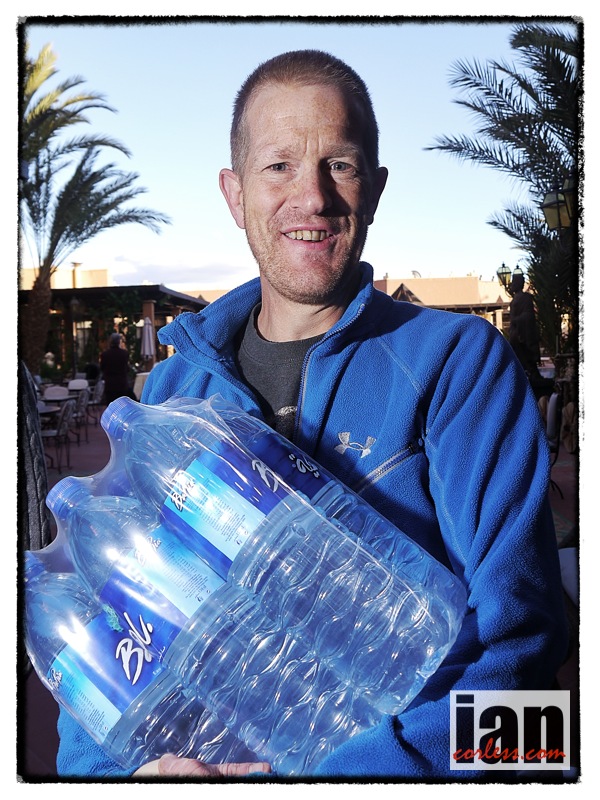
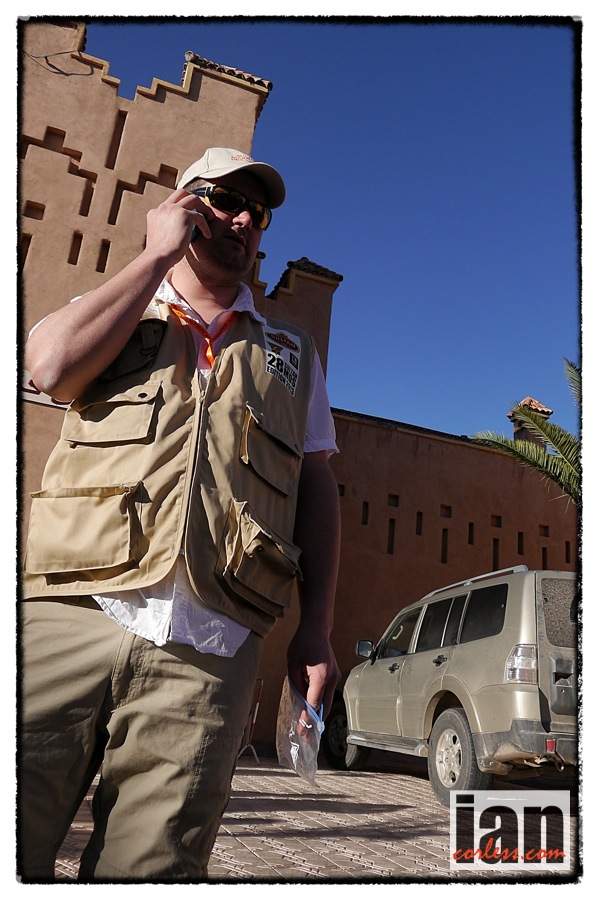
It’s like moving a whole village. Vehicles line up in rows, khaki clad men and women run back and forth with bags. It is organised chaos. Everyone knows and understands what is required and slowly but surely bags, crates, water, food, tents and all manner of packages disappear and with a sound of engines, one-by-one they embark on the 5-6 hour journey into the Sahara to ‘base camp’.
Two days adapting to the environment and then on Sunday the race begins.
The greatest show on earth!
Runners testing themselves against heat, dunes and dehydration.
Let the excitement begin….
Read my race preview HERE
Read my interview with MDS RD Patrick Bauer HERE
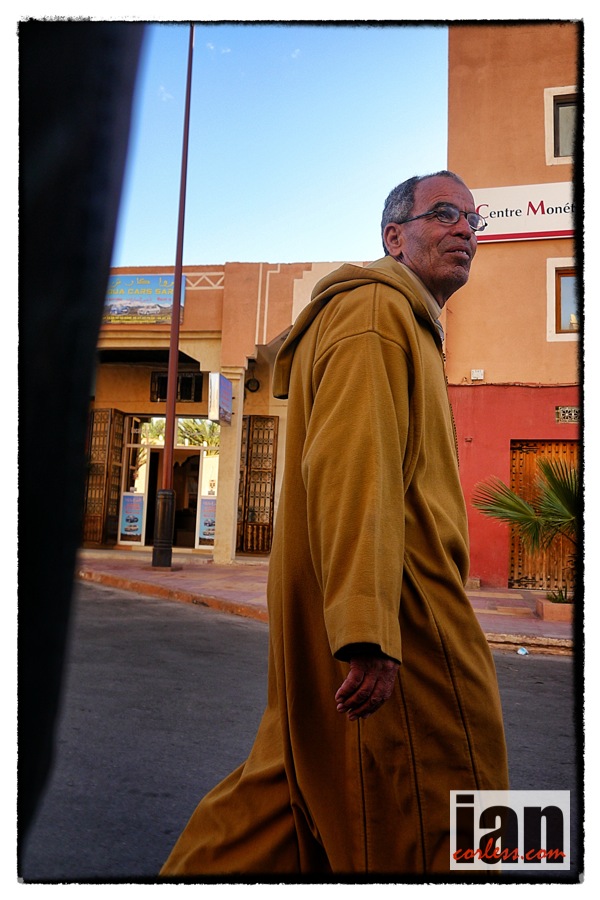
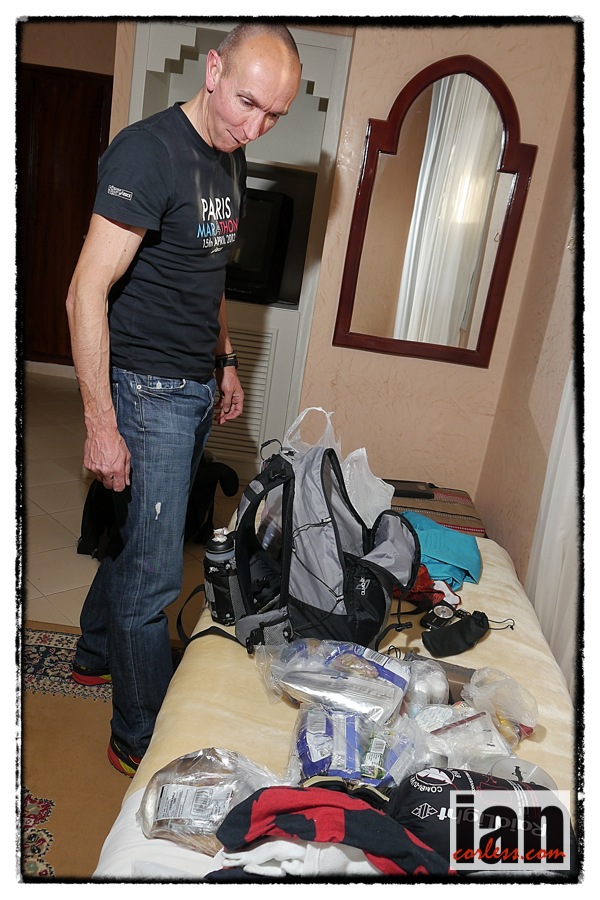


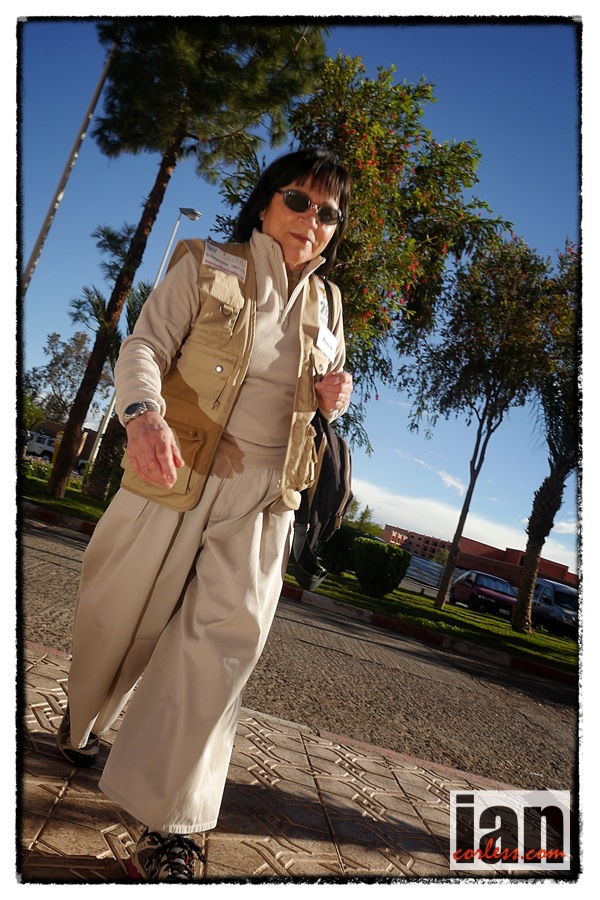
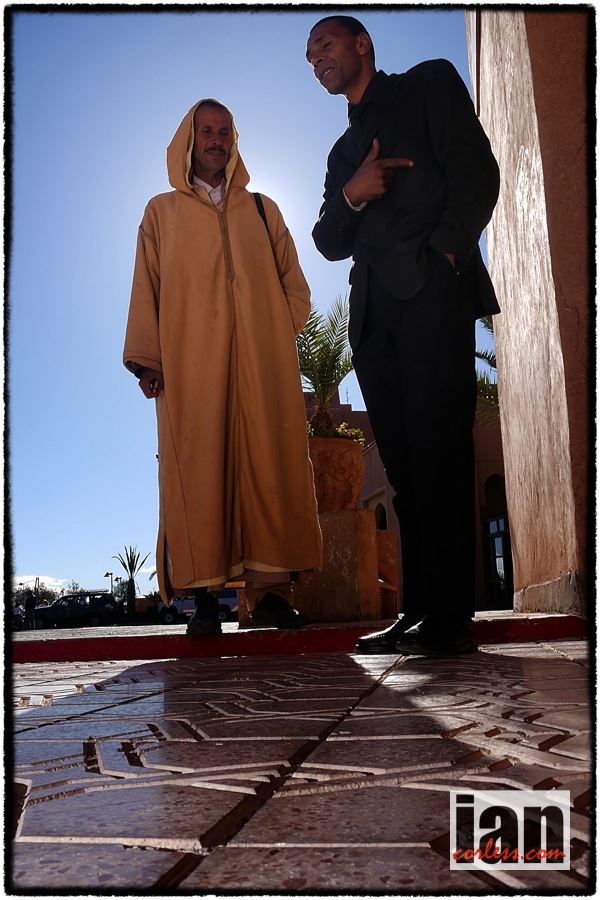

Speedgoat makes it no35 out of 60 at Antelope 100… We speak to Richard Bowles who is about to embark on another journey! We have an extended Talk Training with Dr Phil Maffetone. We catch up with Mike Wardian on how his recovery and racing is shaping up. We have a ‘Year in the life of‘, the last episode of our ‘MDS‘ build up, 15 mins of Fame with Tony Di Giovani, the News, Up and Coming Races and a Meltzer Moment.
Show Notes:
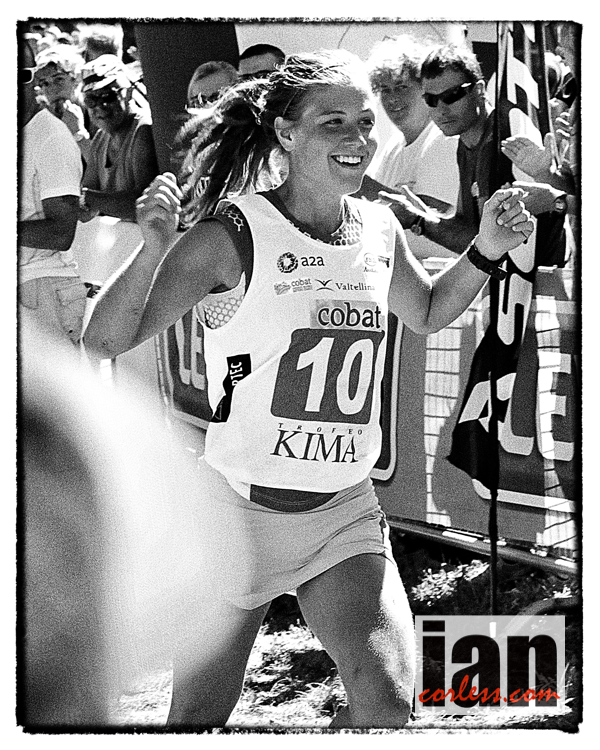
Trofeo Kima copyright Ian Corless
Emelie Forsberg, Team Salomon Running.
Emelie burst onto the running scene in 2012 with a 2nd place at the Three Peaks in the UK. Throughout 2012, taking one step at a time, Emelie progressed through the Skyrunning calendar with consistent top 3 placing’s. She crowned her 2012 season off with a Skyrunning World Championship and a stunning win at San Francisco 50. Speaking from her home in Sweden, I catch up with her just before her 2013 run season starts. Cinnamon buns are in the oven and the hot chocolate is steaming on the table…
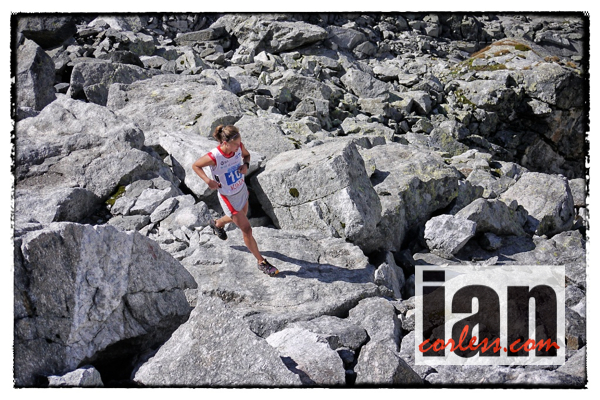
IC Welcome to Talk Ultra
EF Thank you Ian.
IC We all have followed your progress in 2012 and it has been a quick progression in the sport, but many ask, what were you doing before?
EF I have been a student for some years. Whilst studying I have lived and worked in Swedish and Norwegian mountain resorts.
IC You have mentioned work, I’m interested. By work I am assuming you don’t mean skiing or running?
EF Baking. I am a baker. In fact, I am actually baking bread right now.
IC So this is why you always post photos of you and food on Facebook. You have a secret passion.
EF (laughs) I love good bakery!
IC You love bakery but you also love Nutella if my memory serves me well?
EF Yes, I love Nutella too.
IC So you are a baker but you also worked in hotels too, I assume you must have been doing sport during this time. You are an accomplished skier, is that your sporting background?
EF Skiing is my sport as well as climbing and some running. But I only started running in the last 4 years. I run mainly in the mountains. I love being outside.
IC What was it at the end of 2011 that made you decide that you would come away from your home and start to basically to race around the world.
EF It was my Swedish brand ambassador for Salomon who asked if I would join the Swedish Salomon Team initially and then Greg Vollet, Salomon Team Manager, asked if I would join them for a weeks training? After that a decision was made that I should try some international races. I have just progressed. I wanted to take each race at a time. I didn’t want to put too much pressure on.
IC It has been a meteoric rise for you, Three Peaks was a low-key start in the UK and you got 2nd place. At Zegama, it was your first proper mountain race against an international field. You had no hiding place. But despite that pressure, you performed tremendously in what was a new experience for you.
EF Yes, a new experience. Actually, I was a little disappointed. I hadn’t run much before Three Peaks and Zegama. Of course I was happy to do well but I could have done so much better. I learnt I need to start running before racing.
IC Funny, you say you should run before racing. Seriously, you did no running before Three Peaks? What had you been doing?
EF I had a weeks running in April with the Salomon Team but when home I was doing SkiMo (Ski Mountaineering) or I just ran a couple of miles to University each day. So I wasn’t doing much. Certainly not to race. I do ski with heavy ski’s to add resistance and that really gets you fit and strong.
IC One thing that becomes apparent with mountain runners is that SkiMo plays a big part in winter prep. For example Kilian Jornet, Nuria Picas, and Philipp Reiter amongst others spend months during the winter doing this. Skiing really does transfer across well. Is it just great endurance training or does is provide other strengths.
EF Endurance is key. It is great uphill training too and the speed in SkiMo is great. The speed going downhill is great for downhill running. You learn not to be afraid, it builds confidence.
IC What is apparent is that you can go downhill really quickly. You have already gained a reputation for this. You put this to great use at Pikes Peak when at the summit you had a 10 min deficit but you pulled it back on the descent and got the win! What is that enables you to run downhill so quickly?
EF I love the speed and freedom. I love fast! You don’t need great power. During my life I have always been moving in technical terrain, which gives me confidence to recognize different kinds of trails and decide the correct route. I am not afraid. It’s a combination of no fear and confidence.
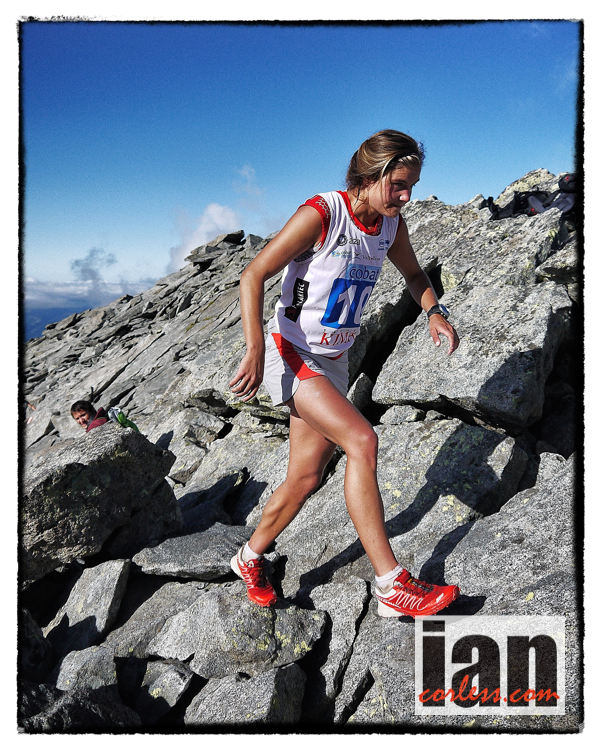
Trofeo Kima 2012 copyright Ian Corless
IC I think back to Trofeo Kima in 2012, you said before the race that you wanted to just have fun! You even took sandwiches…. On one of the toughest courses in the Skyrunning calendar!
EF I did
IC Admittedly you didn’t get time to eat them… the course was too hard. But I love the mentality. You wanted to enjoy it. I love that balance that you bring to your sport. You want to do well but ultimately you want to have fun. You have struck that balance so well. At Trofeo Kima you ran with Nuria Picas and then Nuria pulled away but you weren’t bothered, however, that competitive edge came in at the end when you could sprint for 2nd place. You put the ‘speed’ you love to good use then.
EF It’s a combination for sure. I want to have fun and I like to win. Running is great fun, for sure, my life is running. It’s liberating, it’s a big part of me. I must enjoy it. I need to enjoy what I do. Competition is great, I love to feel strong and I do love to race. Winning is great and once you have won, you think, I would like to win more but I need to keep balance.
IC I feel fortunate to have witnessed most of your races in 2012, the exception San Francisco when you won. I saw you on multiple podiums. But I also saw both sides of you… the fun person and the racer. For me, the race of the year was Cavalls del Vent. You are great friends with Nuria and Frosty and pre race you three hang out together. You laugh, giggle, drink coffee and even when racing you are great friends having a laugh. At Cavalls, all three of you battled in tough conditions. As it turned out Nuria won and Frosty was 2nd but for you 3rd was not a disappointment. It was your first long race. Did you feel intimidated by the distance?
EF I wanted to try a longer race. If you have never tried then you don’t know what it feels like. I needed to push myself. I actually started at Cavalls quite fast and I lead for almost half the race. I felt super strong. I could eat, I could drink, it was cold but I could manage it. In the end when Nuria and Anna passed me, I was mentally tired. Just super tired in my brain. I couldn’t push even though I wasn’t tired. Running uphill with Anna I couldn’t go with her. It was very unusual. We probably only had 40 mins to the finish of the race and Anna screamed at me “Come on Emily, push”. But I was just tired. I learnt something in that race.
IC What did you learn, what did you take away from Cavalls?
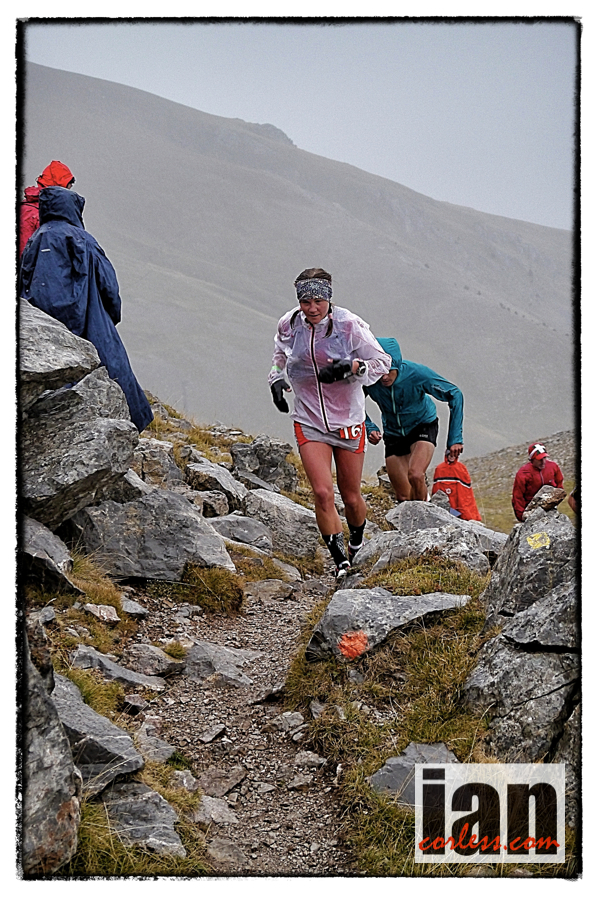
Cavalls del Vent copyright Ian Corless
EF I think I need to work on my mind and my physical. I need to connect them and I need to be stronger. It was my first long race and it was much longer than I had ever run before. To be honest, it is good to run with others too. I learnt that maybe running with others is better than running alone.
IC It is interesting what you say about running with others and talking. That is one thing that Kilian likes. I noticed it at Cavalls, he always seemed as though he wanted some company. In that race it was Anton Krupicka. Of course when it comes to the end, he runs away for the win. I guess time passes so much easier and quickly with company…
From Cavalls you went to La Templiers in France, which starts in Millau. It’s a big race in France. You raced Nuria and Lizzy Hawker. Nuria once again won. But you really gritted your teeth and outsprinted Lizzy for 2nd.
EF Yes it was satisfying but that race was problematic. I had stomach issues and I had to stop six or seven times. So that took energy. Plus I couldn’t eat. I felt I could have done so much better. I could have run with Nuria but I don’t know if I could have won? At the end I almost felt rude sprinting past Lizzy…
IC Racing is racing Emelie and Lizzy would have done exactly the same so don’t feel guilty.
Lets move to the final of 2012. Ultimately your best race, not only a stunning victory but a nice payday too, eh! (First prize in the Ladies race was $10,000)
EF Yes! a nice payday.
IC San Fran, funny, so many races have had difficult and tough with bad weather. It was no different here. Do you perform better when the conditions are like this?
EF Maybe not better but I am used to harsh conditions and I don’t worry.
IC San Fran was a great win. Talk me through it. Pre race I actually predicted you wouldn’t win because I thought you maybe had a little too much time skiing after Templiers. However, you proved me wrong, I hang my head in shame; I should have had more confidence in you. Talk me through it.
EF I wanted to start with Lucy and Maud Gobert. They are famous for being fast starters. I tried to keep up with them but very early on I thought I can’t go this fast… I was a little scared. Normally it is ME that starts fast. I slowed down. I felt confident and I was feeling okay and then two American girls passed. I then thought, wow, have I not run enough and have I had too many buns and hot chocolate (laughs) After about 20k I could see them again and I started to reel them in. I passed Lucy; she wasn’t having a good day. When the American girls picked up pacers I passed them too, this was about 30k into the race.
IC Early on then?
EF Yes, I still felt confident. I was not tired and I was looking forward to keeping on running at the same pace. Just before I picked up Anna Frost, my pacer, I passed Maud Gobert who was leading the race. I was now in the lead! I thought, I can do it… I had started the race slower and it was working. It was a great confidence boost. Anna was such a great pacer. We had such fun. She kept telling me “you can win”. It was great to be at the front, leading. It was fantastic. At the finish I was almost nervous, I had never won a long distance race before. When you think you can win, you really want it and then the nerves strike. I had a perfect day out.
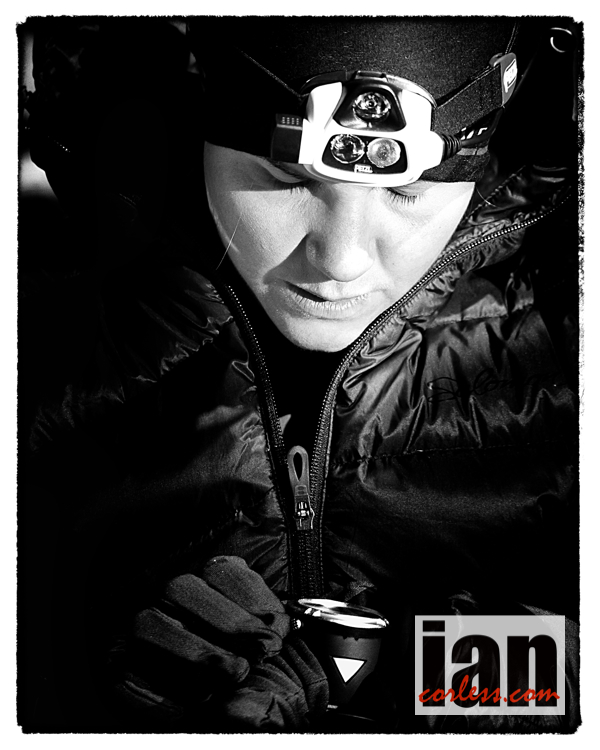
IC It was a stunning win and a great way to end an incredible 2012. Can I ask, you say you started slower, it payed dividends in the latter stages, do you think that is something you will now transfer to other races? Maybe patience is good and you should hold back?
EF Yes and no. Sometimes I just want to run the way I feel like and not have tactics. I wonder to myself if can go fast all race without slowing, so why start slow (Laughs) Greg Vollet would not agree! He thinks I should start slower.
IC Shhhh we wont tell Greg. Greg, if you are reading this, she didn’t say that!
EF (Laughs)
IC I understand, lets say for example you are racing Nuria and Anna; you would rather be with them instead of watching them run away. Better to be with them and then you can adjust your pace accordingly, it may well be that you are running easy?
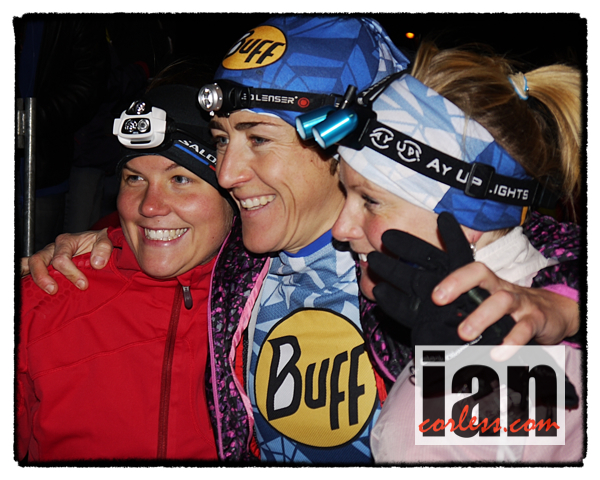
EF Yes, maybe.
IC What is on your 2013 calendar? Tarawera kicks off the year but that will be a low-key start as you are doing a relay. So will Transvulcania be the first big race?
EF Yes, I am not ready for 100k at Tarawera yet. I have planned to do some run coaching holidays and then I will go to Transvulcania La Palma. Transvulcania will be my first ‘proper’ race of 2013.
IC Superb, it’s a wonderful course and it will be great to see you racing Frosty and Nuria and some other great competitive ladies. Another classic battle lies ahead. After that, where do you go? Zegama?
EF Yes, Zegama.
IC Zegama is two week later and is a Sky marathon so will the remainder of the year be decided after these two races or do you already have 2013 planned out.
EF It’s almost planned out but I need to be flexible and I need to listen to my body. So I will change races if I need to
IC Can you tell us what your plans are?
EF I have several races in Sweden, mainly half marathons. Then I want to do Mont Blanc Marathon and the Vertical Kilometer, I will follow these two races with the European Champs (Skyrunning), I may even do Ice Trail Tarentaise.
IC Will you do UROC for the final of the Skyrunning Ultra champs?
EF Yes, I hope so. It will be my first 100k. It will be more distance than I have run before, so, I need to feel good but if I do, I will run.
IC An exciting year ahead and all those races are pretty much Skyrunning events. Exciting.
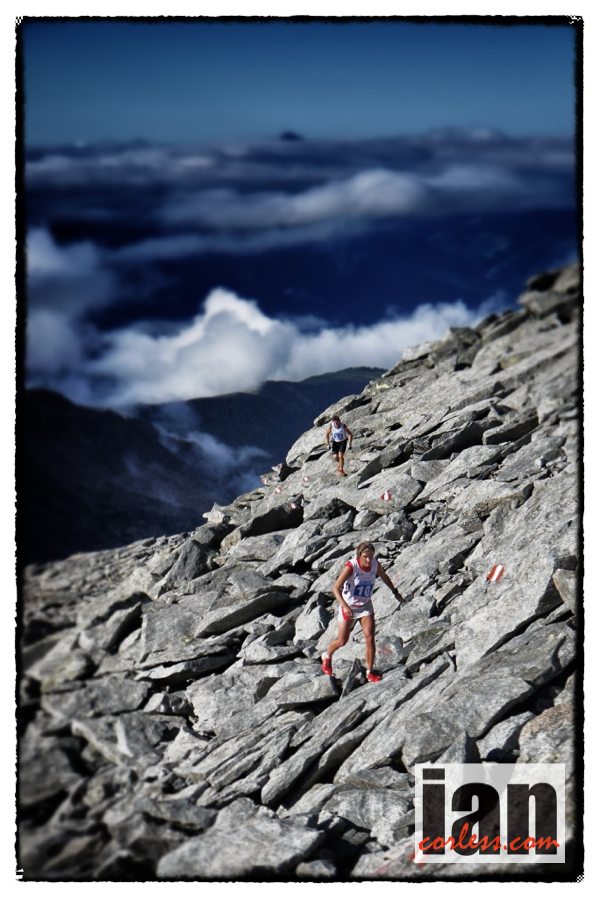
Trofeo Kima copyright Ian Corless
I have some questions from fans for you, is that okay?
EF Sure
IC James Stewart asks, “Have you had a VO2 test?”
EF No, I have not. I’m not interested. Maybe some day.
IC I guess in principal a VO2 test doesn’t matter, you are running well and you can run quickly. That is all we, and you need to know.
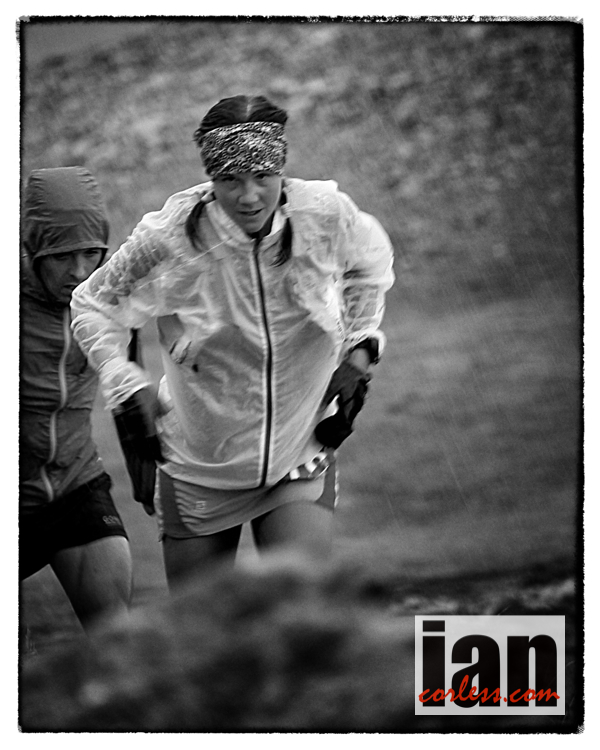
Cavalls del Vent copyright Ian Corless
IC Who would you like to race in the future?
EF I would love to race against so many, I enjoyed racing Lucy at San Francisco. Maybe it would be nice to race more of the American runners. They are very good and they have a different approach. I’d also love to race Ellie Greenwood.
IC If you do some races in the US, particularly Speedgoat and UROC then that wish may come true. I think Ellie is doing Speedgoat 50k.
Daniel Caulderon asks, “What is your nutrition plan?” Not sandwiches at Trofeo Kima and not cinnamon buns with hot chocolate.
EF I don’t have a nutrition plan. I recommend that you listen to your body. I always eat what I want. But I do eat lots of vegetables, beans and salad. But I love hot chocolate and cinnamon buns too!
IC Jill Suarez says, “I want the recipe for Nutella Brownies”
EF Shall I tell you the recipe now?
IC No, email me and we will add it afterwards.
RECIPE
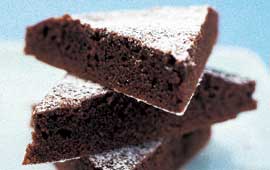
2 eggs
2 dl (0.2 l) sugar
5 big spoons of kakao
A small spoon of vanilla sugar
Very little salt
100 g butter
1 dl (0.1 l) Wheat
A little coffee
Stir the and the eggs and sugar very gently ( no whisking!)
Things to add in the cake: everything you like! I prefer nutella, walnuts, m&m´s or chocolate pieces.
Then add all the ingredients, put it in the owen at 175 Celsius. 15-20 minutes depending how you like the consistent to be like!
Enjoy!
This was what I eat during my first mountain marathon! Nyam nyam!
Apparently best served with Almond Milk….
Emelie, I want to finish and once again thank you for your time. It’s a pleasure to spend time with you. You are one of the most ‘smiley’ people on the ultra scene. What you do in racing is reflected in your smile. You love it and that is great to see. Have a fantastic 2013 and I am so looking forward to catching up with you in the mountains during the coming year.
EF Thank you so much Ian.
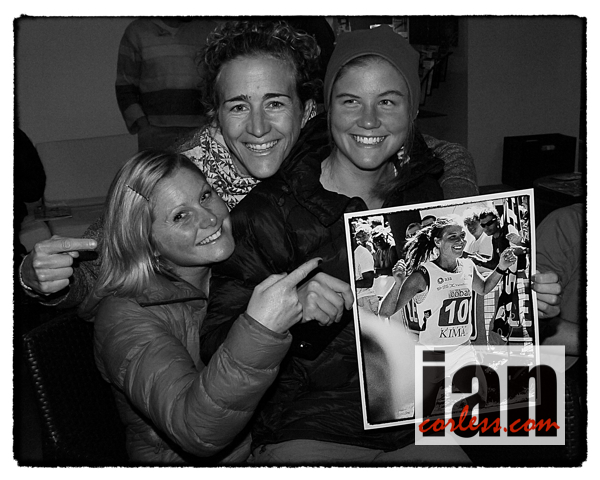
Read more SKYRUNNING interviews HERE


 IAN CORLESS