Salomon S-Lab HYBRID Jacket M and HYBRID Pants M review

Kasie ©salomonrunning

Kasie Enman ©salomonrunning

Just imagine it, you go to a car dealer looking to purchase a new car. You have set yourself a budget. You know what you want and you have narrowed your search down. 

Walking through the door, you see the car you want and in the colour you had selected. It ticks all the boxes, it’s your dream car and most importantly it’s the price you can afford and maybe more importantly, it’s what you can afford.

Just behind ‘your’ car is the new version… more streamlined, go faster stripes, a little more minimalist and certainly faster. It’s almost double the price! But you want it. No matter how much sense and logic says you have the ‘ideal’ car in front of you, at the price you can afford and in the colour you want. The ‘go-faster’ model behind keeps pulling you ever closer…

Welcome to the Salomon S-Lab range.

Let’s be clear right from the off. If you are looking for a budget jacket and/or trousers for trail and mountain running then the HYBRID M Jacket and trousers are not for you.

These two products are the Ferrari, the Stella Artois, or the Caviar of the running apparel world.

Ultra light, form functioning and with an attention to detail that is seldom seen, the HYBRID products are seriously impressive products.

I can see you are already tempted. So, if I need to provide any additional clarification or just to ensure that your bank manager doesn’t sue me for unfair persuasion, the HYBRID Jacket M has a RRP of £220 and the HYBRID Pant M has a RRP of £170. Yes folks, that is £390 of apparel porn.

Still tempted? Read on.

 HYBRID JACKET M

Jacket 1

Okay, joking aside, Salomon and more importantly the S-Lab range are all about travelling light and fast on technical, mountainous and challenging terrain and as such, the products they design are 100% committed to making that process as easy as possible. No compromises! So, price point to a certain extent is irrelevant. If you want the best technology, the lightest products and functional kit that does the job… the price will be what it will be and you just take out your credit card and commit. The question ultimately is, is it worth it?

This is a difficult one because affordability is very different for each and every individual. For example, I know many people who would reluctantly pay £2.50 for a coffee but wouldn’t flinch at paying £220 for the HYBRID Jacket M.

Breathability – Freedom of Movement – Ventilation
Jacket 4

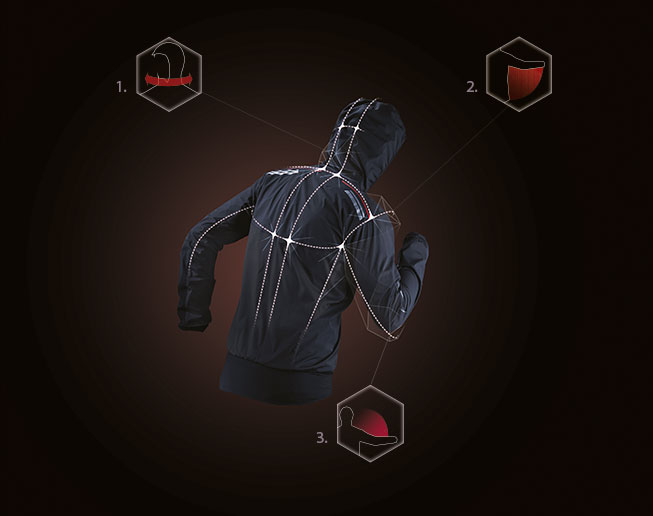
Three serious buzz words when we look at any garment that needs to protect us from tough and challenging elements. The jacket is ridiculously light at just 120g. On first look, I really questioned if this would provide 100% waterproof protection. It does to an extent! (More on that later) Using ‘Motion Fit Technology’ the jacket is tailored like a fine Saville Row suit to provide non abrasive comfort around the neck and shoulders with unrestricted movement and more importantly ones arms don’t feel restrained.

The jacket has a ¾ front zip, glued seams and has ‘Advancedskin Shield,’ reflective panels and two seriously impressive breakthrough details that I haven’t witnessed on any product before. (Let me know if anyone else has?)

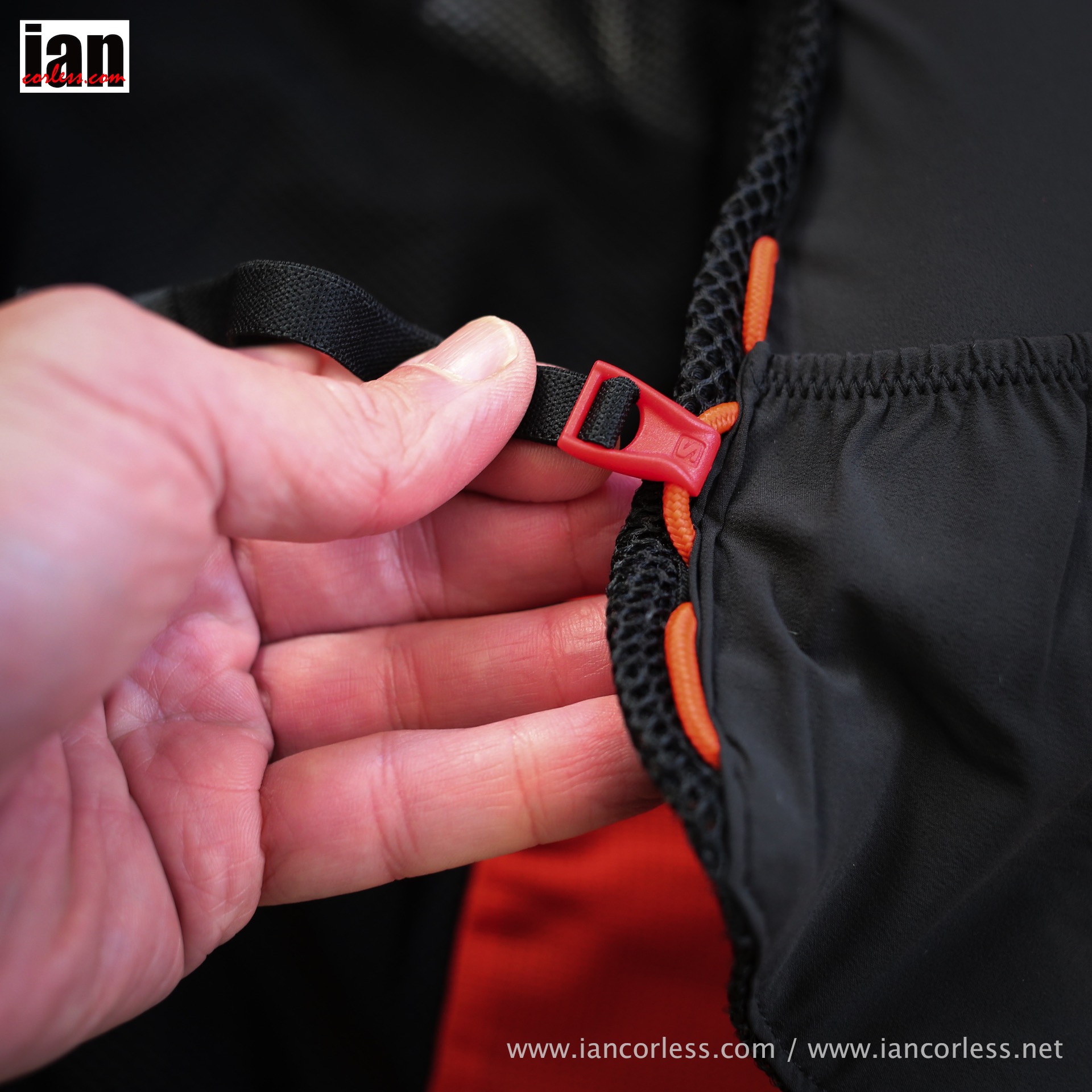
  1. Quick stash waist – this is an ingenious idea. So ingenious that I thought to myself, ‘I wonder why nobody hasn’t thought of this before.’ Basically, below the ¾ zip you have a large stretch band that goes around your waist. Initially I thought this was to stop the jacket riding up… no! This works as a ‘retainer’ when the jacket is not required. So imagine, conditions are changeable; one minute it’s raining, one minute it’s not. It’s cold, it’s hot and the need for protection is constantly changing. This system allows you to take off and put on the jacket without actually removing the jacket completely. You basically remove your arms and slide the excess fabric to your waist and then ‘store’ in the elasticated fabric band that sits around your waist. Ingenious.
  2. In the hood is a headband like product that sits around your head and therefore holds the hood in place and stops the hood moving and causing any annoying hassle. Again, so simple it’s ingenious.

Jacket 3

In all other aspects, the HYBRID Jacket M would appear just like any other jacket until you wear it. The key features then become apparent:

  • Ultra lightweight
  • Form fitting
  • Functional
  • No pockets
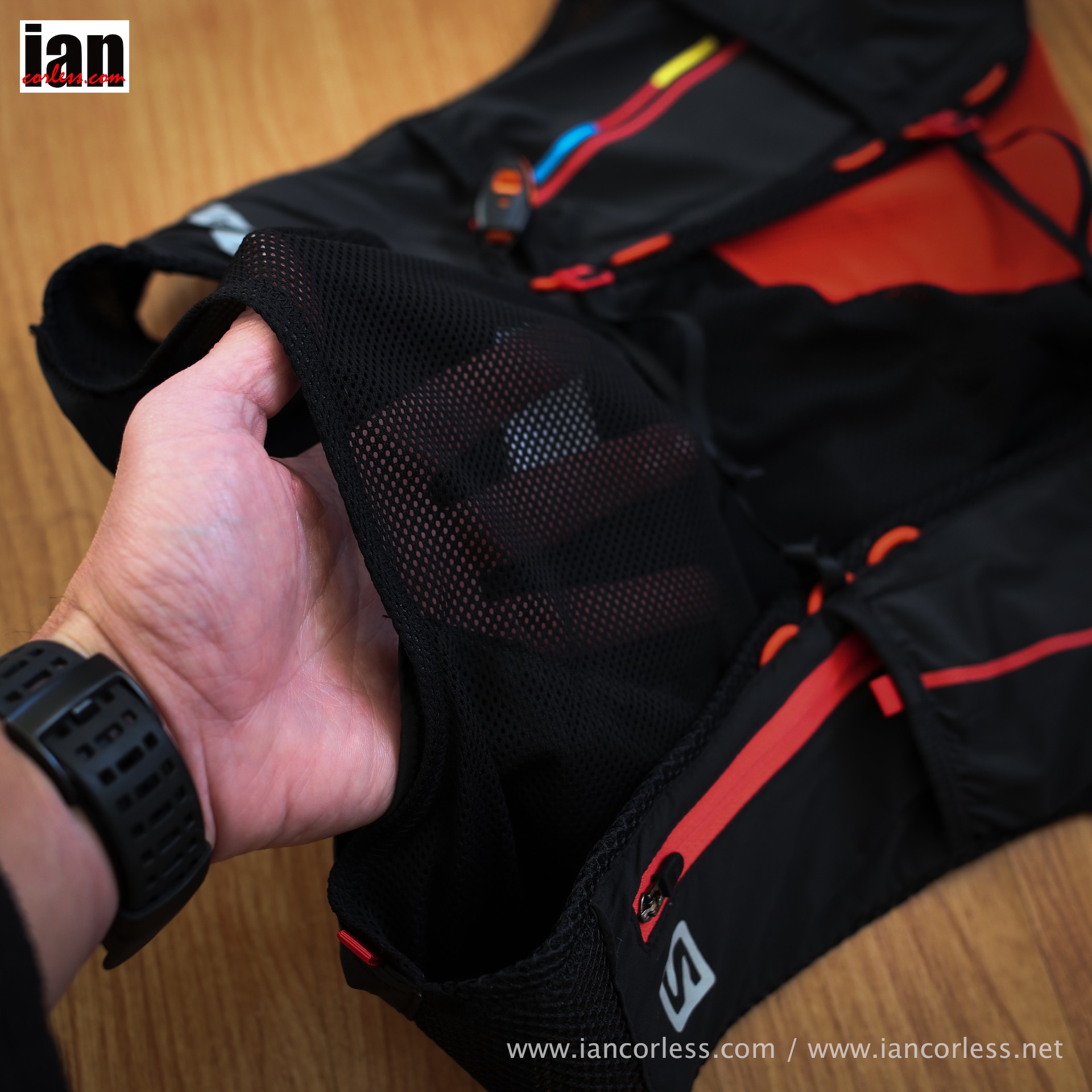
  • Ventilated armpits
  • And dare I say, ‘special.’

But this may not be the jacket for you?

Salomon may well not agree with me here but I have to say it like it is. This really is an awesome product and innovative but I can’t help feel that it is for shorter races, faster runners or faster runners doing longer distances.

I am no racehorse, if I were doing a tough mountain 100-miler say UTMB. I would not be finishing in 20-hours like Francois d’Haene, in reality it would be the opposite. I’d be getting full value for money and be out on the course for 30+ hours (I think). So, should bad weather come in and lets say a worse case scenario of torrential rain, snow, blizzards and zero temperatures I personally don’t feel that the HYBRID would provide me (or maybe similar runners) with enough protection. This is not questioning its waterproofing, the jacket is waterproof BUT only in key places. Also I need to state here, I am not sure if this jacket would comply with ‘mandatory’ specifications?

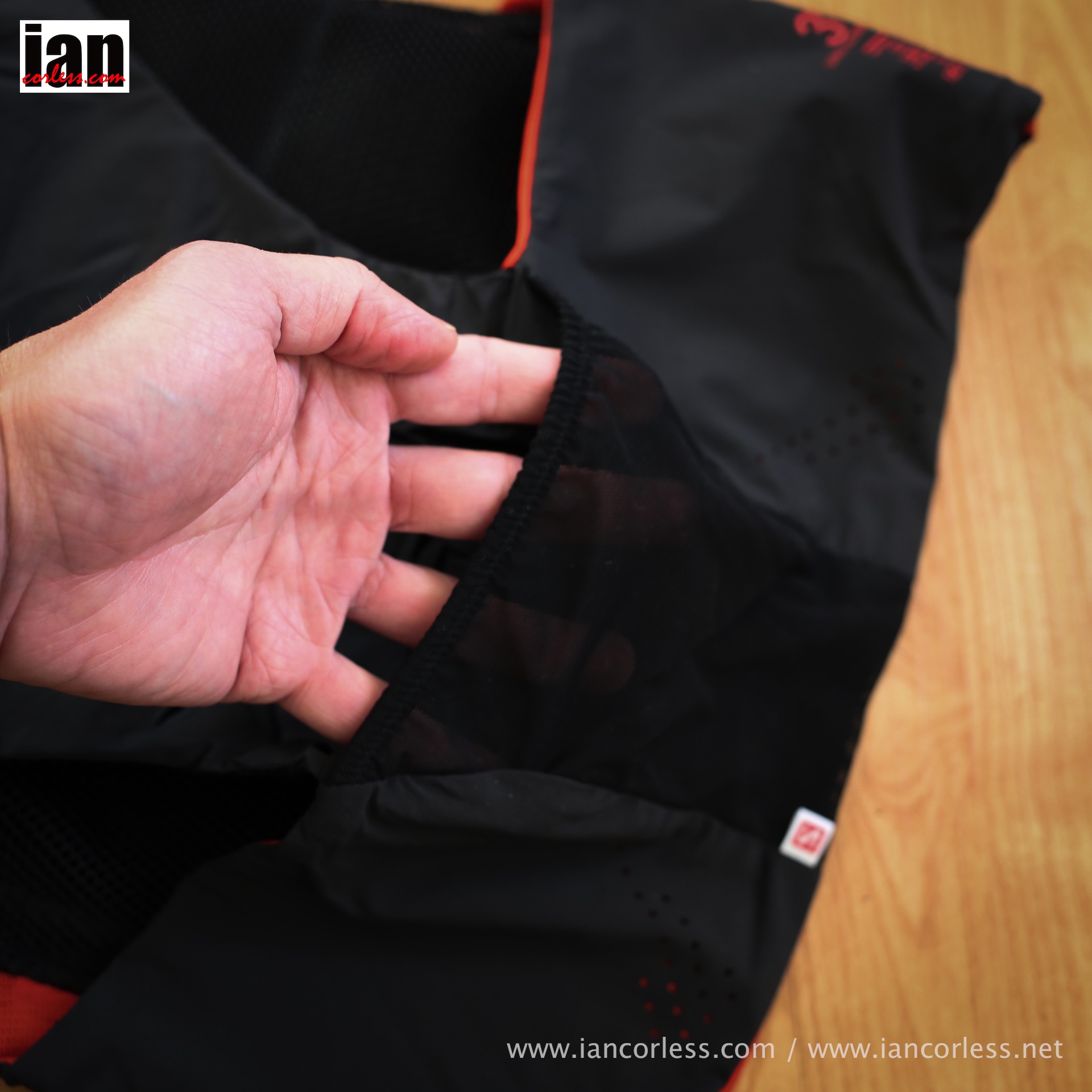
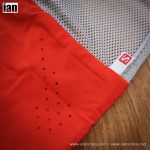
Jacket 2To clarify; the jacket is waterproof on the chest, hood, upper arms, shoulders and upper back. The remaining areas; under arms, under the armpit and lower back use a lightweight fabric. These fabric areas obviously reduce weight but do mean that the whole jacket is not 100%. So, if you are in gusty winds in bad weather, rain will gain access.

*So you see the dilemma. If you are moving quick and retaining core temperature, the HYBRID Jacket M will be ideal allowing adequate protection in a lightweight, breathable and seriously functional product. But if your pace drops, you have extended walking and your core temperature starts to drop, this jacket may well not be the best for you… something a little heavier, a little more robust and 100% waterproof may well be the better product.

See the BONATTI HERE

Salomon are very clear on this, they say:

“Ultra light jacket integrating water-proof panels for foul weather, and innovative quick stash waist, a stretch panel around the waist that enables you to remove and store your jacket without stopping.”

Fit is streamlined and as one would expect, excess fabric is at a minimum. For reference, I have a medium product and the jacket fits snuggly (I am 40” chest) with enough room to wear the S-Lab 1L or 3L vest underneath the jacket. Again, this is a real plus! If the jacket is stored around your waist, you can constantly add and remove your jacket as conditions change without adding or removing your race vest.

In conclusion, the HYBRID Jacket M is an awesome piece of apparel. It’s expensive, innovative and in my opinion has a very specific use. The jacket is light enough and small enough that it can be taken on every run as a ‘just in case’ product but its real use comes when racing and racing fast… it’s all about function, speed and providing adequate protection and freedom of movement. If you have the legs and lungs to go with this jacket, you won’t be disappointed.


HYBRID PANT M

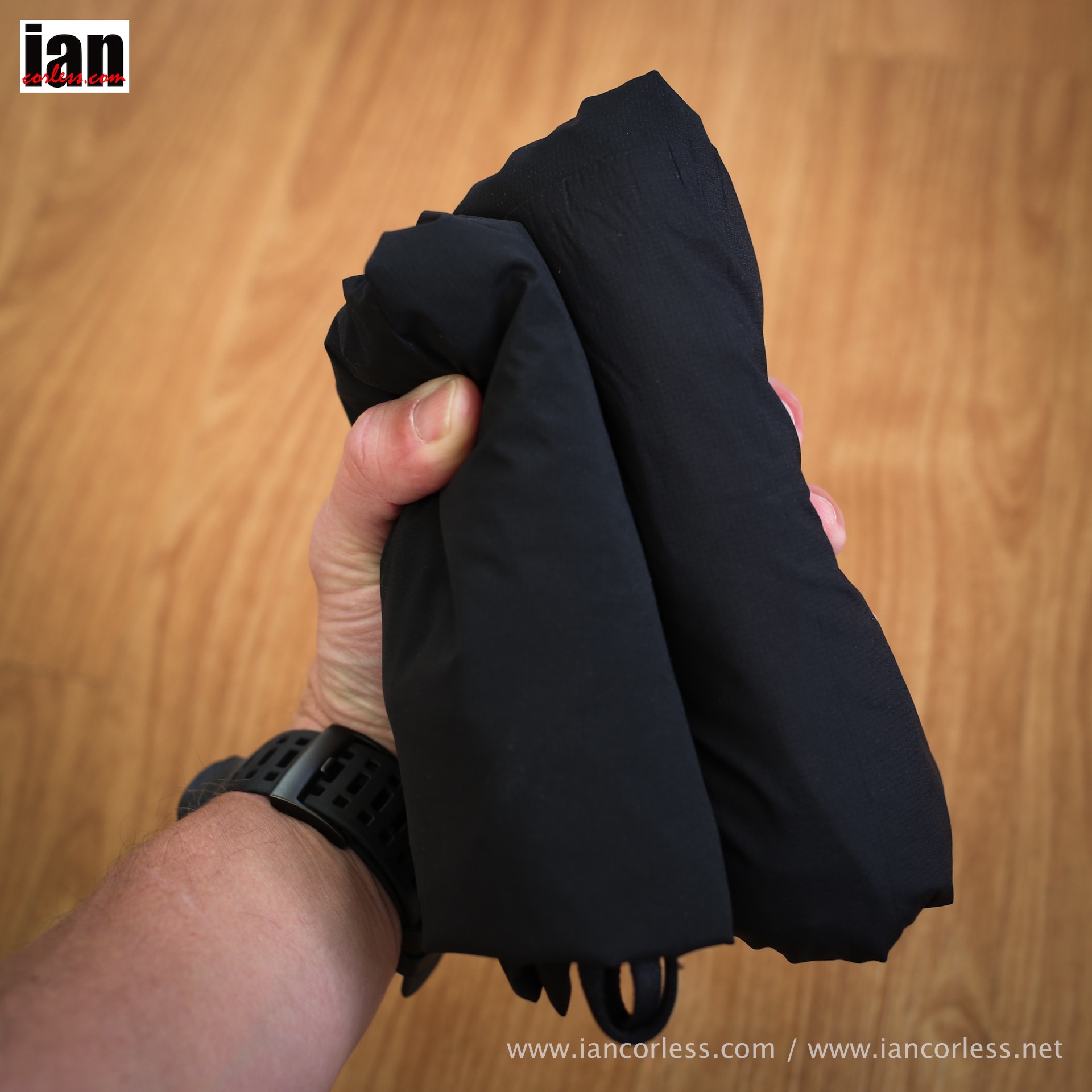
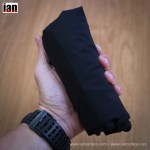
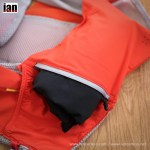
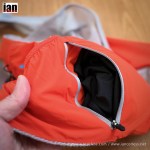
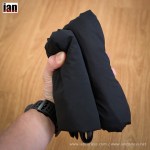
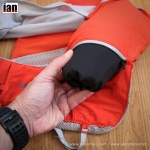
Trouser 1It may come as no surprise that many of the comments above relate to the HYBRID Pant M too. Like the jacket, the pants weigh in at a ridiculous 120g. They fold up and compress into something similar in size to an orange and so therefore take up little to no room in any pack and to be honest, with the minimal weight you wouldn’t even know you had them with you. So, as mentioned with the HYBRID Jacket M, these pants could be added to your pack for every run and would provide a great emergency cover.

Trouser 2Like the jacket, the pants are not 100% waterproof but where waterproof panels are added, the rain and wind resistance is excellent. Arguably the pants are two halves; waterproof and wind resistant front and lightweight fabric to the rear except round the calf/ ankle area where the waterproof fabric extends around.

Trouser 3

A long zip that almost extends to the knee allows the pants to removed or added without removing shoes and elastic at the ankle keeps them nice and tight. The waistband is lightweight, breathable and has stretch with an adjustable cord.

Trouser 4I have a medium product and they fit close (maybe a little too close for me) but I need to clarify, I have big legs and large calf muscles. I am not boasting, just stating a fact. For most ‘normal’ people, these pants will fit really well. I am 31/32” waist with an inside leg of 31” and the medium is ideal (despite my huge legs).

Trousers 4

Running in the pants is a joy. They are so light that you don’t really notice them. The stretch panels allow plenty of unrestricted movement and the ‘Motion Fit’ ensures that no excess fabric gets in the way.

I personally feel these pants suit the racer who needs some protection when still moving fast. If you are in a long race and moving slow, I personally don’t feel these pants would provide the necessary protection or warmth for really long periods in challenging conditions. This is particularly apparent on the rear of the pants. For example, should wind and rain be coming from behind, the trousers have no waterproof panels to protect. Again, Salomon does not hide away from this fact. They are offering a product that clearly states what you get:

“S-lab hybrid includes a waterproof membrane on the front, with wind protection on the back for cold, wet weather training. Stretch panels ensure comfort and motion fit specific to running.”

As I stated above* and I repeat, “So you see the dilemma. If you are moving quick and retaining core temperature, the HYBRID Pant M will be ideal allowing adequate protection in a lightweight, breathable and seriously functional product. But if your pace drops, you have extended walking and your core temperature starts to drop, these pants may well not be the best for you… something a little heavier, a little more robust and 100% waterproof may well be the better product.”

See the BONATTI HERE

In conclusion, having spoken to and spent a great deal of time around many runners, wearing pants when racing is a no, no! It’s funny really, I often hear the phrase, “If I am wearing pants then my race is over.” I understand that but as we have seen on so many occasions, when conditions go tits up (as they often do) a functional and protective layer is essential. Salomon provides a very specific product that fulfils a need for many a runner and/or racer but that product comes at a price.

Summary

The HYBRID Jacket and pant M are two seriously impressive products with loads of innovation. They are light, pack small and are a dream to wear and use. Although anyone can wear them, I do feel that the products suit a particular type of runner. However, having said that, if you have the money, want a lightweight jacket and pants to take on every run, these two beauties are absolutely ideal for that. Ultimately though, you have to ask the question, do I want to pay £390 for that option? Personally, I would still need a more substantial jacket and trousers for big mountain days and products that are 100% waterproof (See the BONATTI HERE). I welcome the HYBRID products to my wardrobe but they do not replace other items. They are an addition and a really welcome addition.
 

CHECK OUT THE SALOMON S-LAB RANGE HERE
Salomon Logo

SALOMON S-LAB SENSE ULTRA SET and SALOMON S-LAB SENSE SET
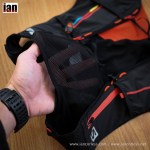
©iancorless.com_Salomon-7704

A new year and new products! Nothing is more eagerly awaited than a new offering from Salomon and today I take a look at two new race vests from the French brand, the S-LAB SENSE ULTRA SET and the S-LAB SENSE SET.

Race vests have become the norm in racing now and it’s east to see why. When the product works (and some don’t) they fit like a piece of clothing, they don’t move, they cause no chaffing and they provide easy and immediate access to everything you need while still pushing the pace. I honestly don’t know who first came up with the ‘vest’ concept, what I do know is I always remember Kilian Jornet finishing and winning UTMB and holding his vest above his head!

Salomon vests and the S-LAB ADV SKIN HYDRO 12 SET can be seen in long distance races all over the world. Tweaked from one model to the next and the current incarnation has moved away from using a bladder to front mounted soft flasks. With a huge capacity, it’s often considered as one of the most ideal packs to hold all mandatory kit for a long distance race. The pack is lighter and utilises all the key features that one needs including that snug form fitting hold on the body. However, 12L capacity is not needed for shorter and faster races.

Enter the S-LAB SENSE ULTRA SET and the S-LAB SENSE SET.

It’s unusual in a review that I would review two packs at once, however, these two packs are so similar that a separate review is not necessary. So, I am reviewing the SENSE ULTRA SET and I will note comments and changes as appropriate for the SENSE SET.

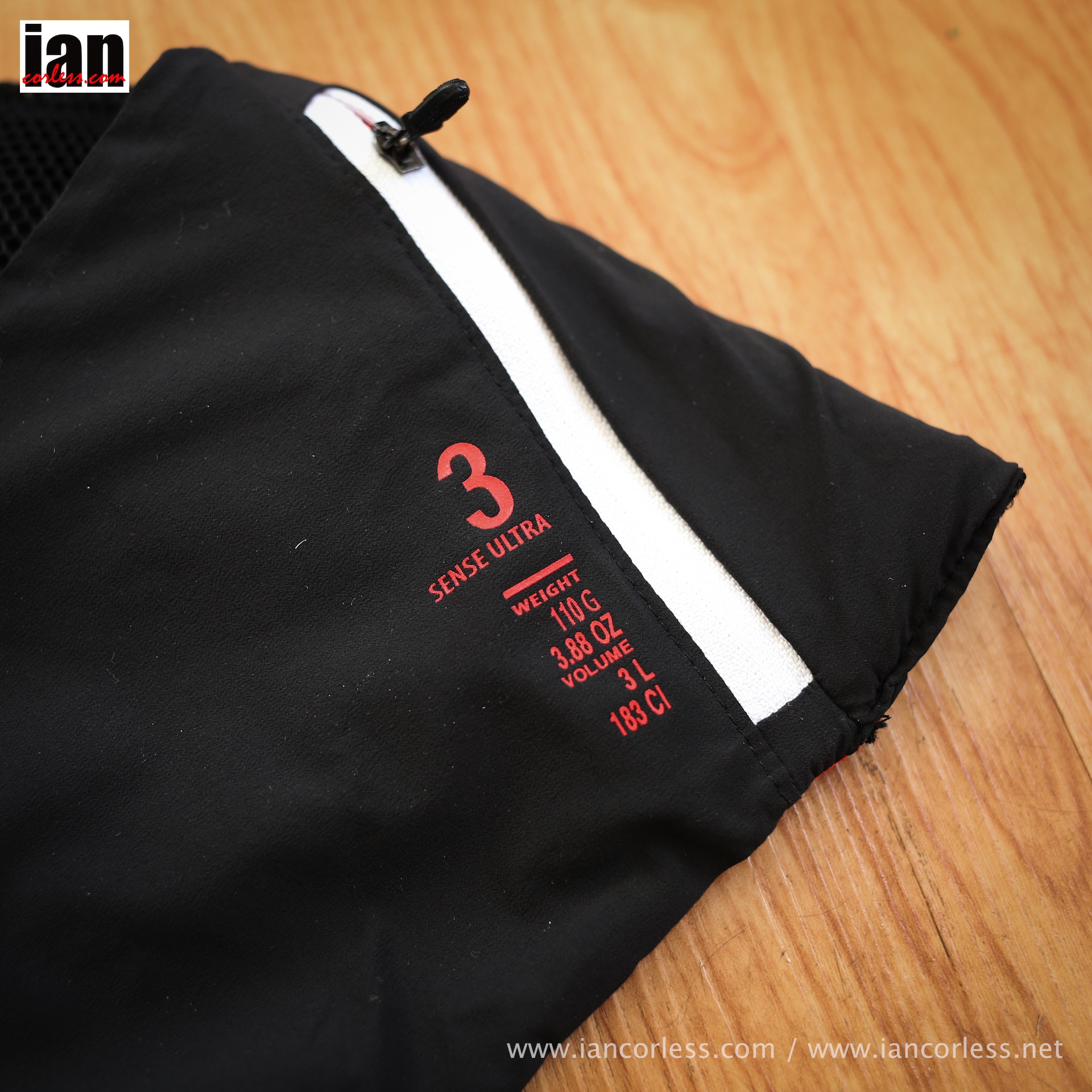
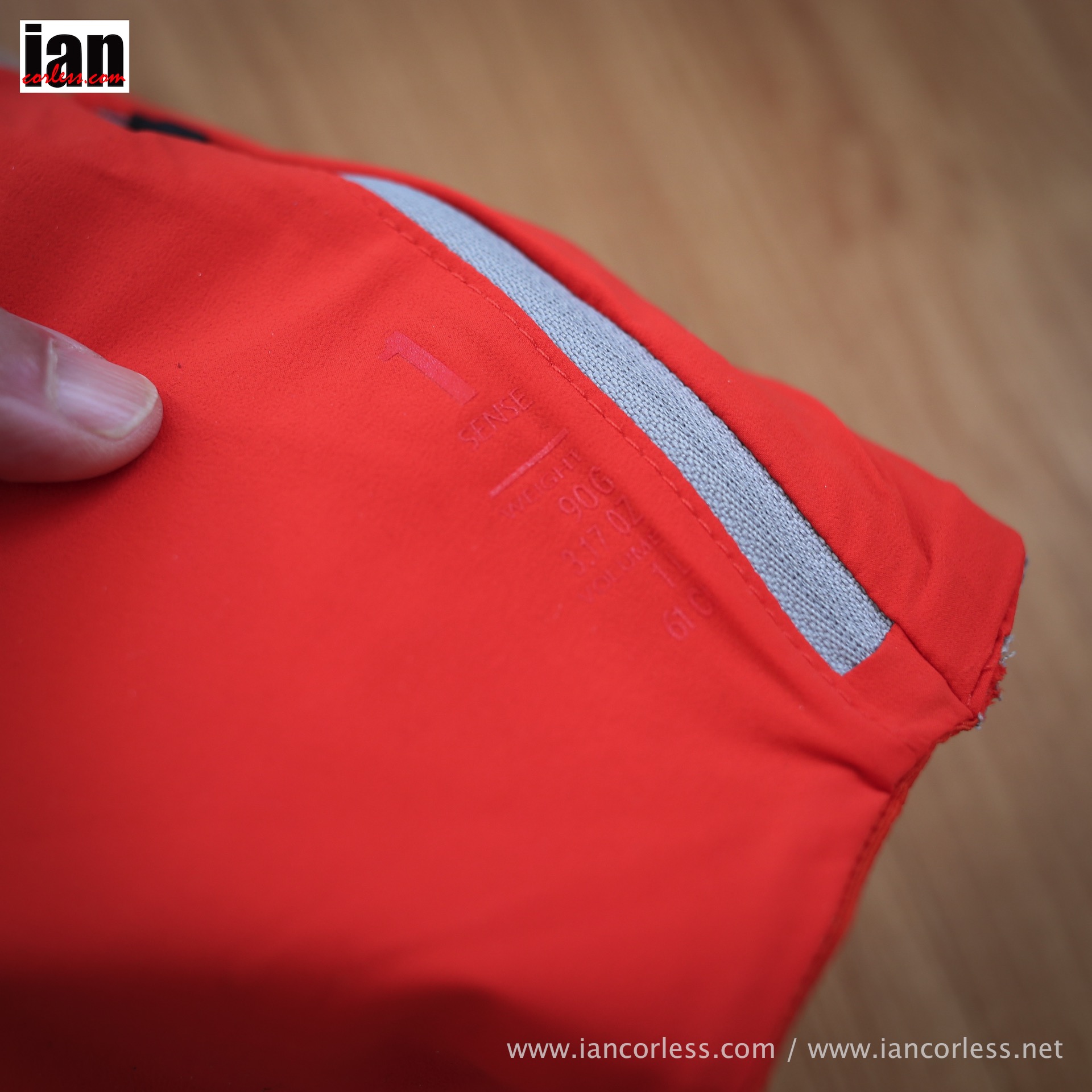
So what is the difference? Simple: weight and capacity. The SENSE ULTRA SET has a 3L capacity and weighs a  110g. The SENSE SET has a capacity of 1L and weighs 90g. I am pleased to say that my two test packs are different colours, the 3L is black and the 1L is red. That’s going to make things easier.

©iancorless.com_Salomon-7741©iancorless.com_Salomon-7796


Both packs are identical at the front and differ at the back. This is where capacity is removed or added, so, let’s look at the front first.

©iancorless.com_Salomon-7704


This is a really sweet pack! The layout is great, comfort is awesome and the capacity is ideal for any run when mandatory kit is minimal.

Key features:

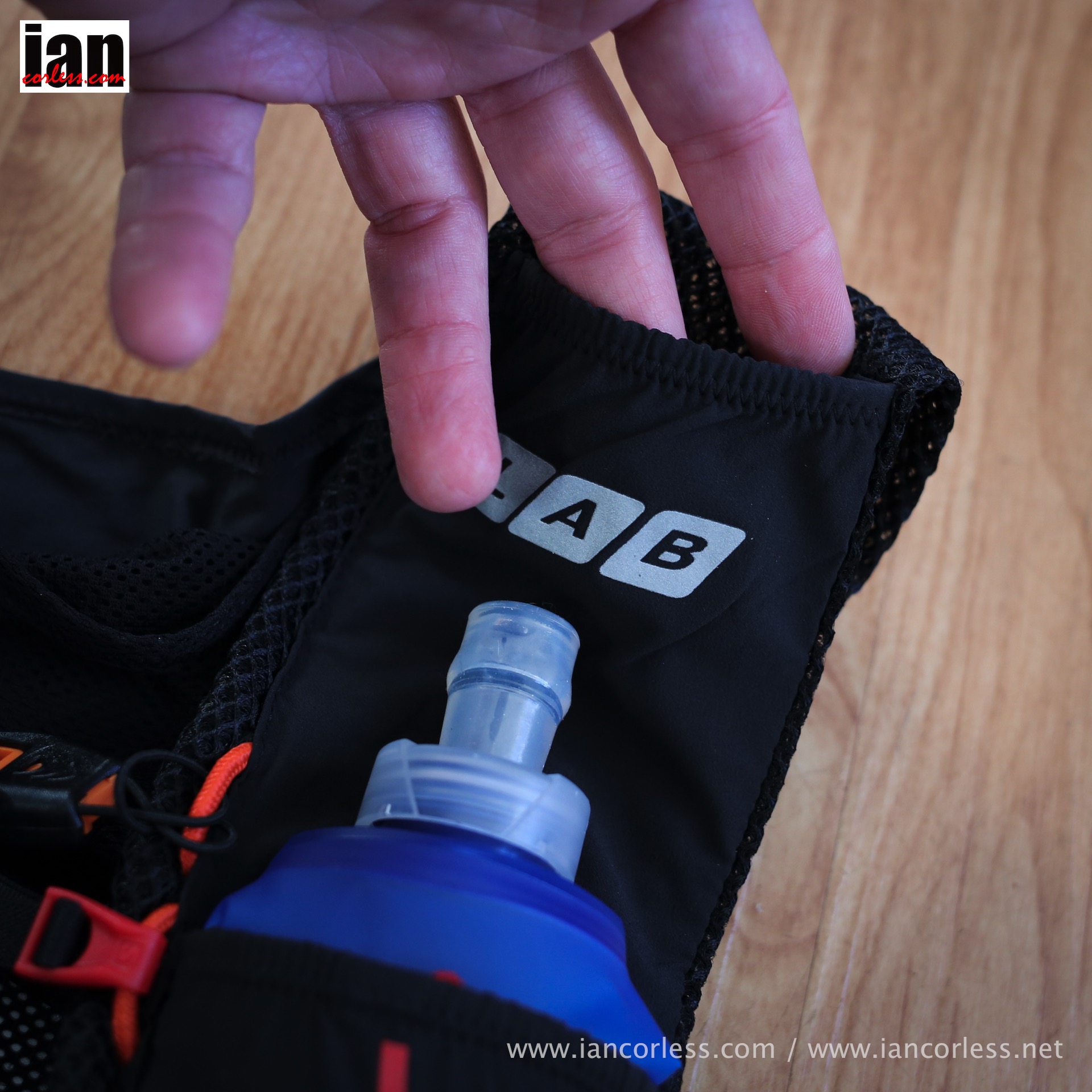
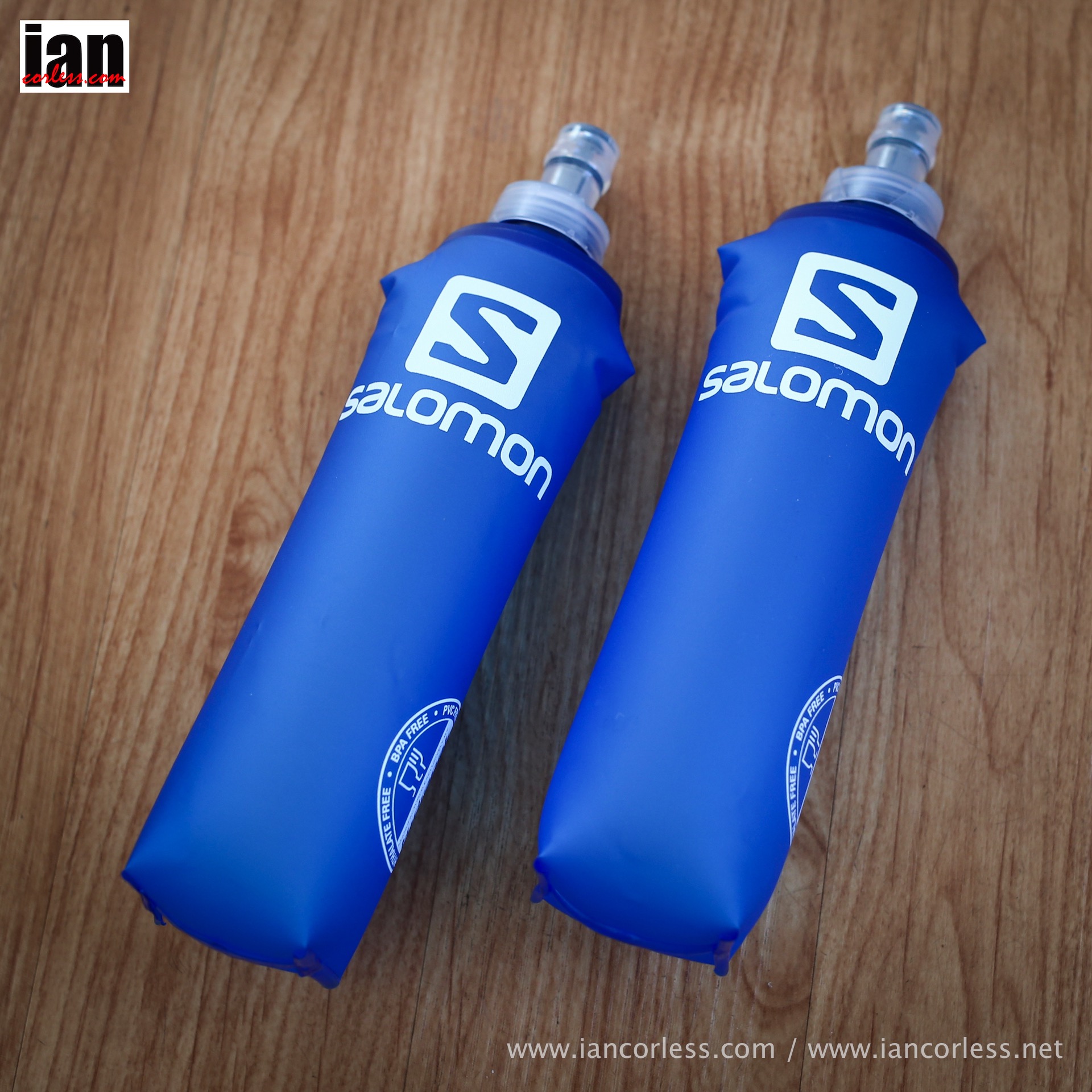
Two 500ml soft flasks in two stretch pockets.

©iancorless.com_Salomon-7704

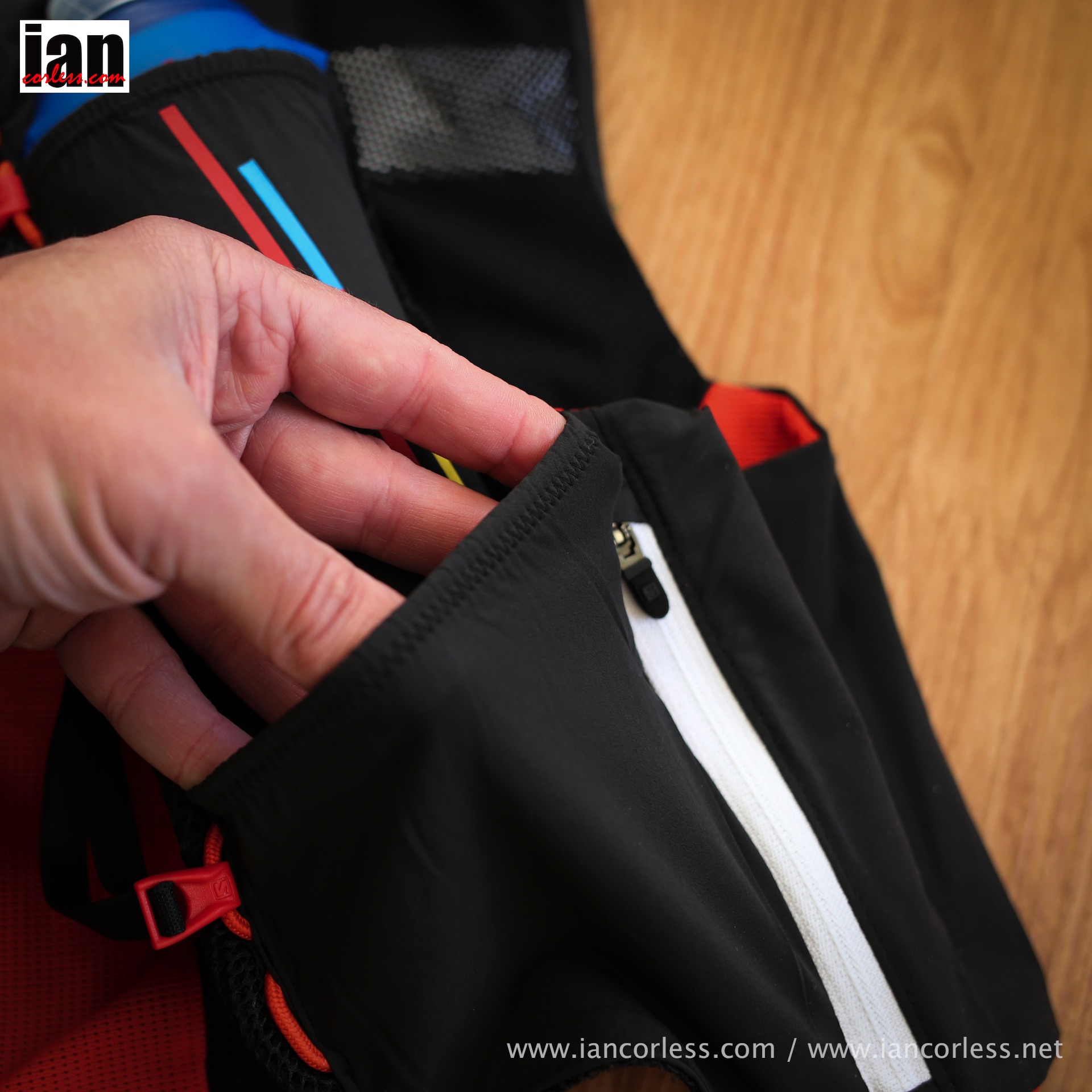
Two dump pockets (open ended but elasticated at the top) at the bottom of the soft flasks

©iancorless.com_Salomon-7720

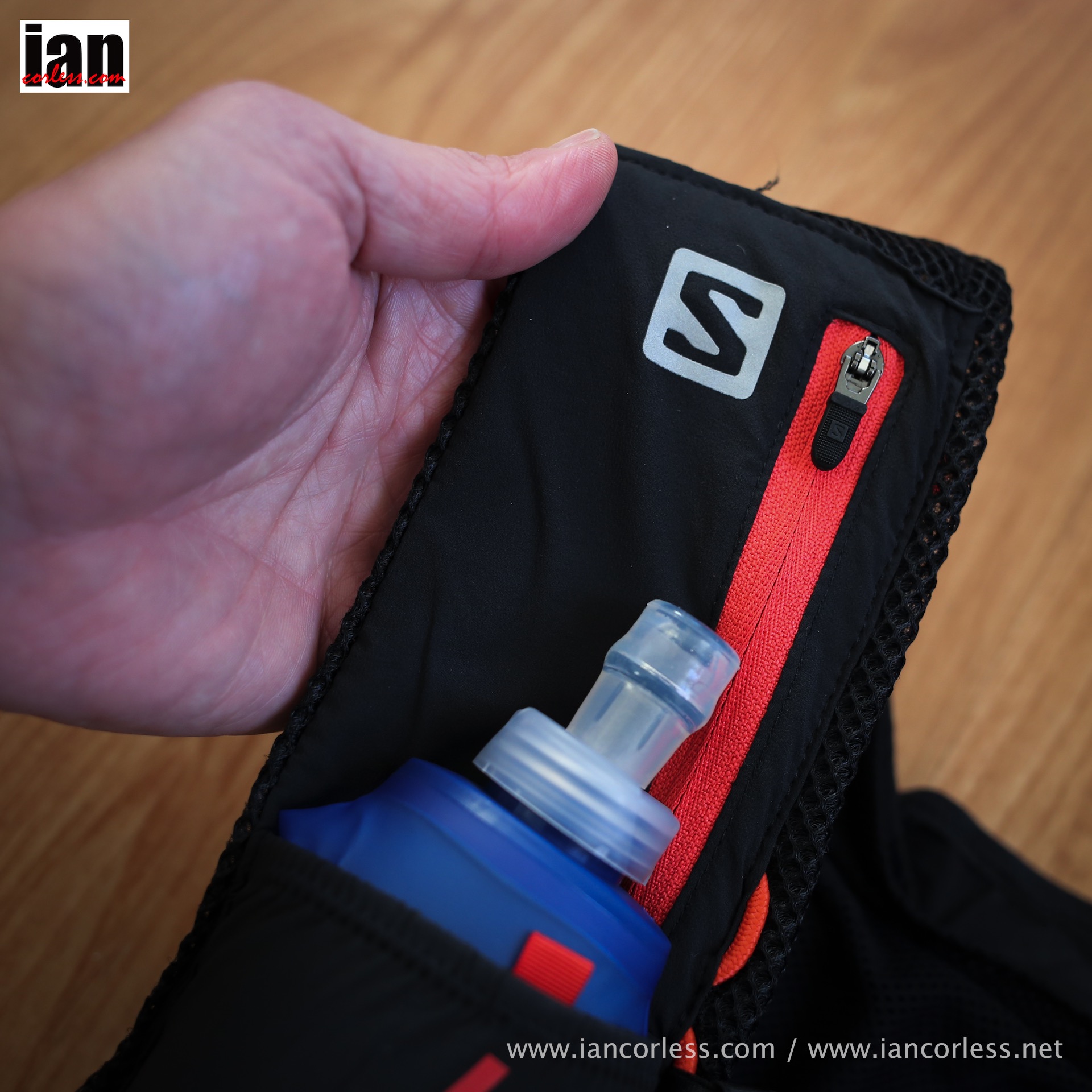
Two zipper pockets (on each side) with large capacity made from a stretch fabric.

©iancorless.com_Salomon-7722 ©iancorless.com_Salomon-7724

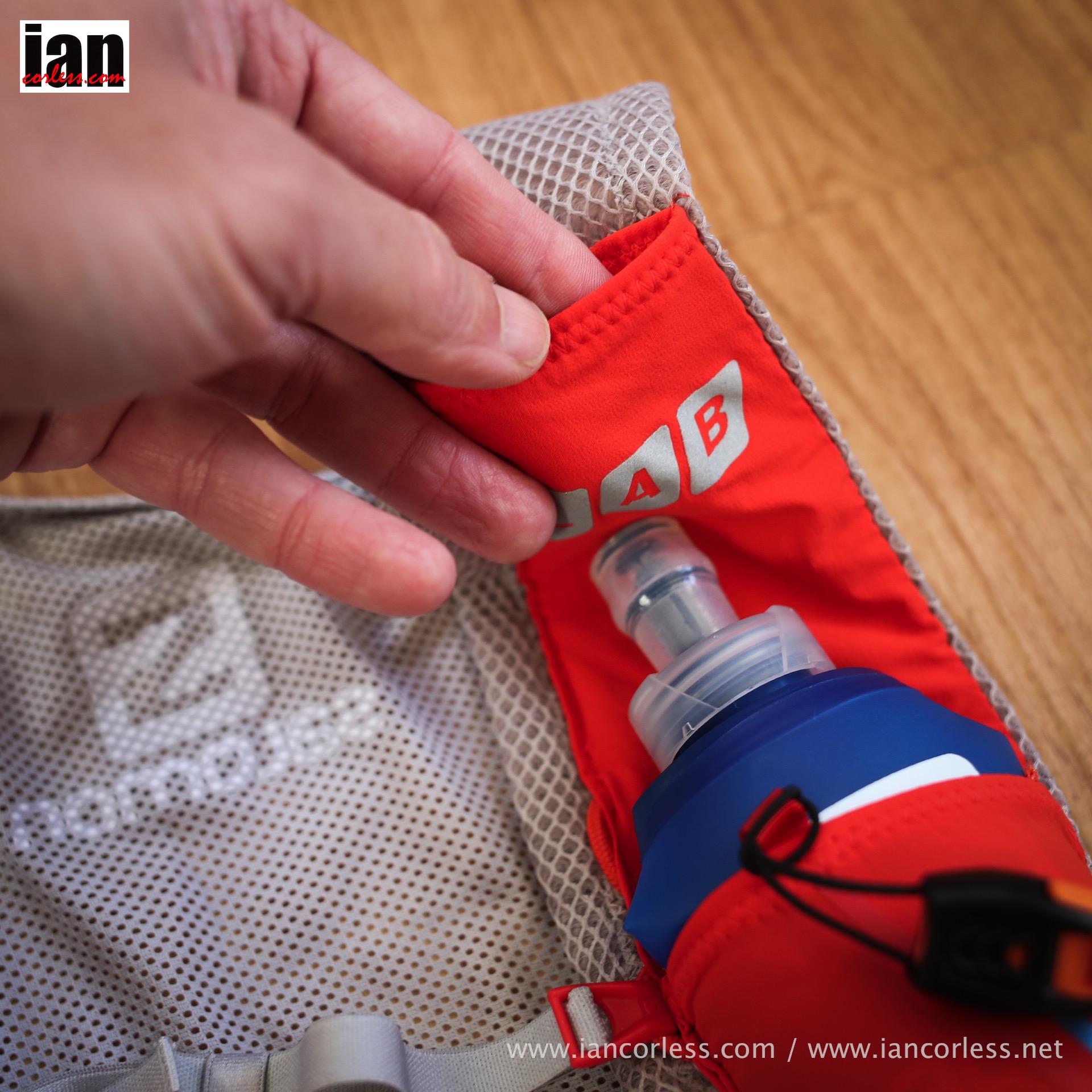
Open ended stretch pocket on the left shoulder strap above the bottle.

©iancorless.com_Salomon-7711


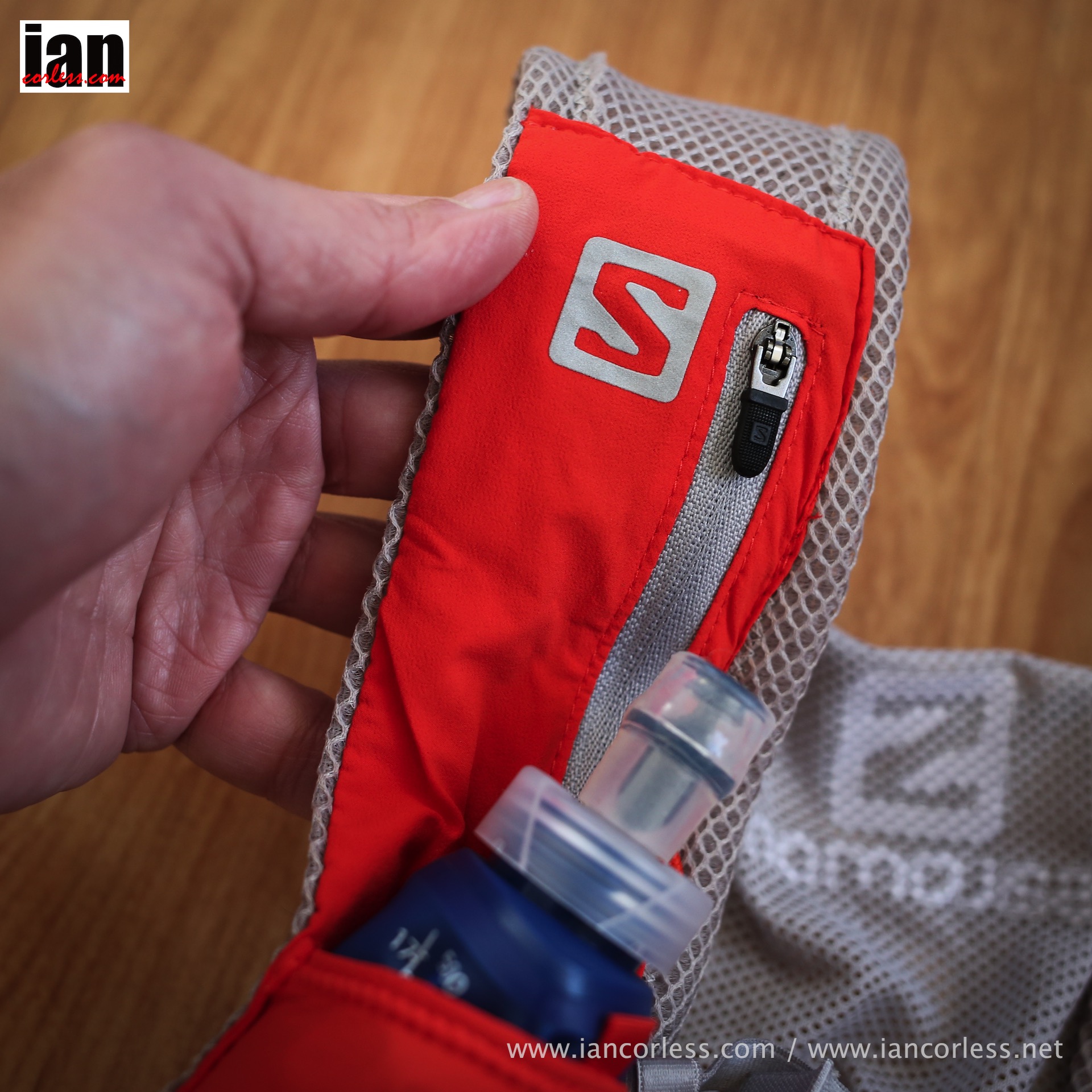
Zipper pocket on the right shoulder strap above the bottle.

©iancorless.com_Salomon-7710


Adjustable fitting system (left to right) with three upper and lower settings.

©iancorless.com_Salomon-7713

Whistle.

©iancorless.com_Salomon-7707

In Use

I have the M/L fit and it’s quite simply the most comfortable pack I have ever worn. The pack hugs the body, it does not rub and importantly under the armpits and around the neck area the cut is wide to avoid any nasty rubbing.

The soft flasks sit on the chest and do not bounce. You can drink from the bottles without removing them when required, however, I haven’t been able to do that running. I need to stop, lean over, bite the bottle, take a drink and then push on…  Soft flasks and tight fitting stretch pockets make for a tricky combination. The soft flasks and the way they fit on the body are perfect, but trying to add a full bottle back to the pocket can be tricky. With practice it does get easier and a tip is to blow back into the bottle once you have taken a drink. This inflates the bottle and makes it more rigid. I personally have always preferred bottles over bladders and soft flasks and Salomon’s positioning make this combination the best I have tested.

©iancorless.com_Salomon-7756

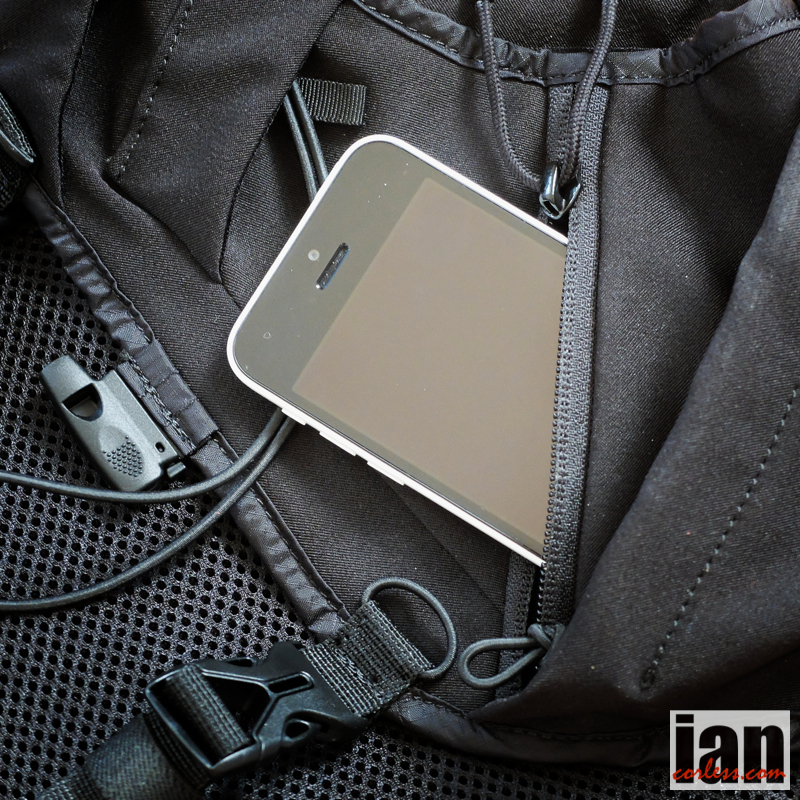
The upper zipper pocket will fit a phone or a gps device. I personally use and old style waterproof phone when racing and that fits perfectly. However, on training runs I have taken an iPhone 5 in a waterproof casing. So, capacity is ideal. The pocket is tight and stretchy and therefore whatever you put in is held tight with no bounce, another plus!

©iancorless.com_Salomon-7775

On the opposite side the open ended stretch pocket is also large enough to hold a phone but is ideally suited for maybe food items or a music player.

©iancorless.com_Salomon-7772

The two open ended dump pockets on either side of the pack below the bottles are large enough to hold multiple gels and bars and/ or items such as gloves, hat, buff or anything similar. To give you an idea of capacity, I could fit a beanie and gloves in one side and four/ five gels or bars on the other side. Ultimately it means you have plenty of room for energy when racing. Access is dead easy. Just put your hand in and pull the items out.

©iancorless.com_Salomon-7779

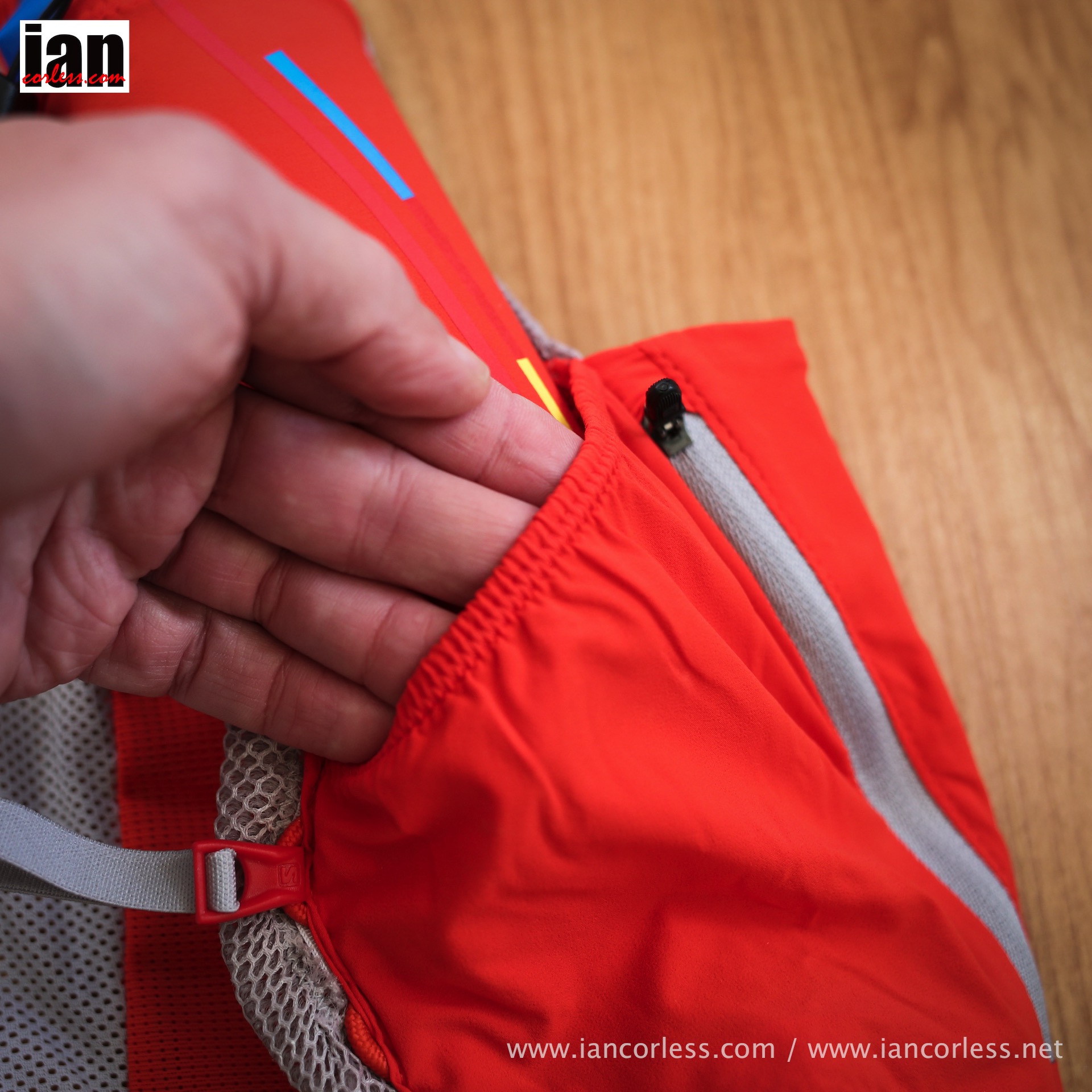
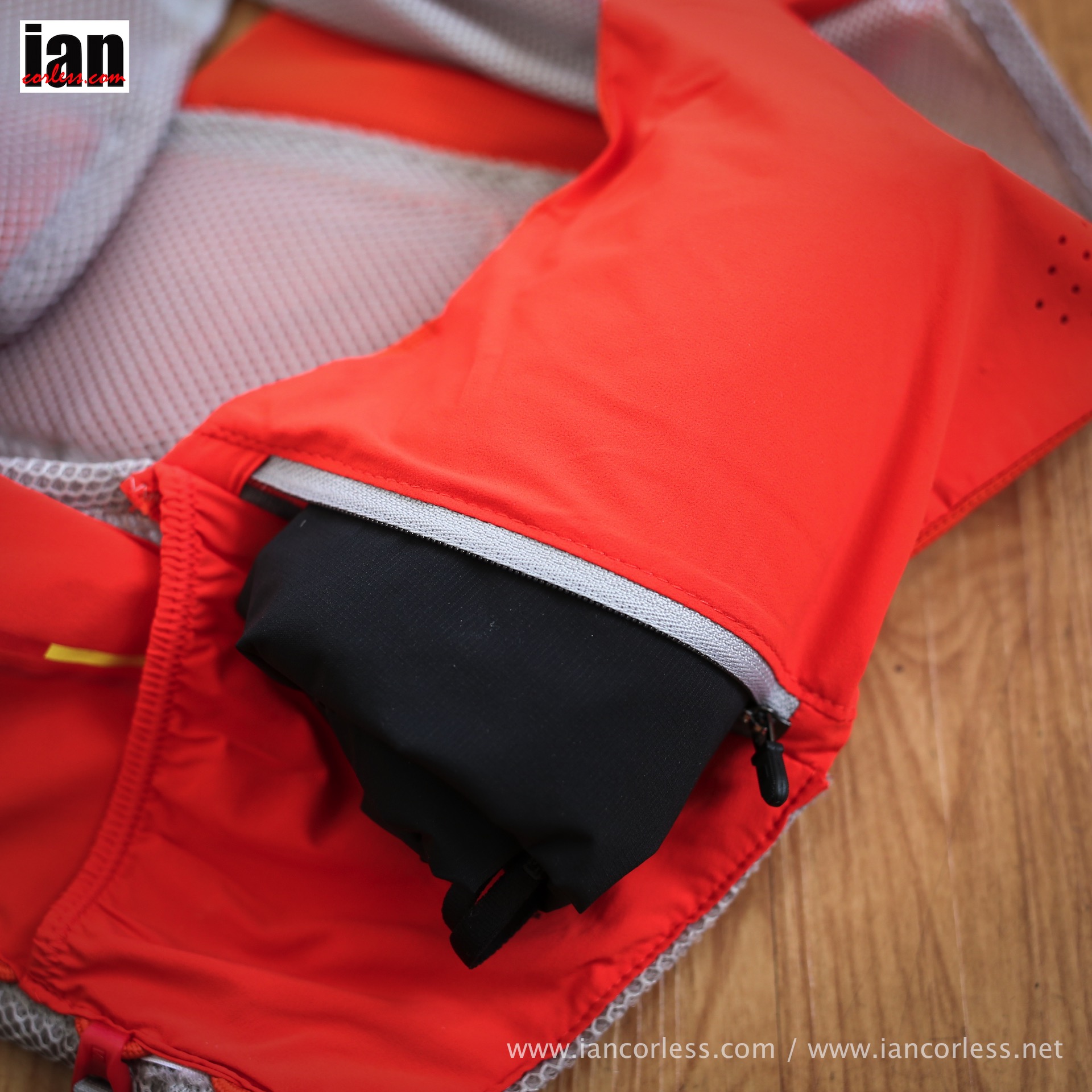
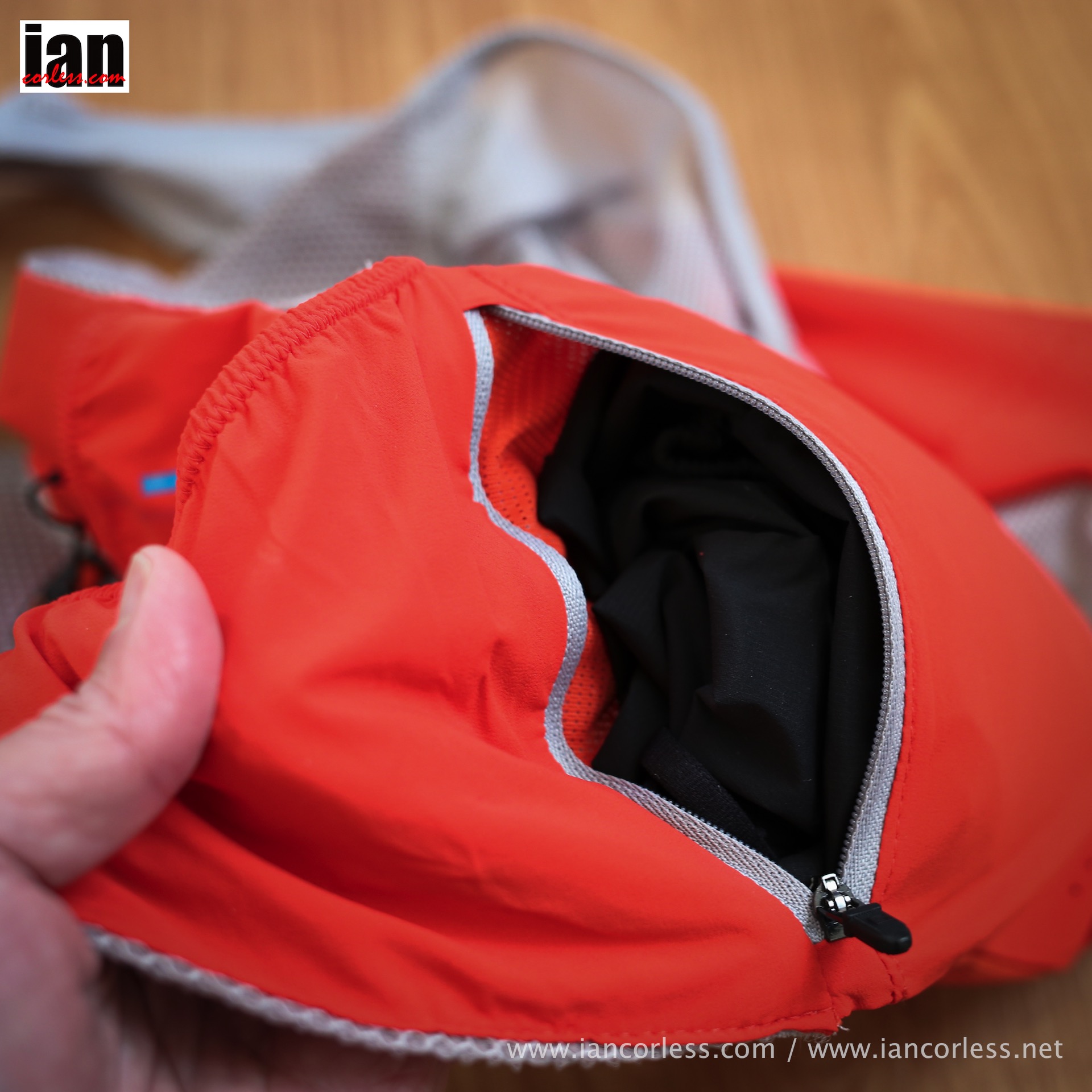
The two zipper pockets are the secret weapon on both packs. I am amazed at how spacious these pockets are. Depending on the race you are doing and also dependant on your own personal preferences; the zipper pockets will actually hold a taped seam waterproof jacket in one side and taped seam waterproof trousers in the other side!

©iancorless.com_Salomon-7832 ©iancorless.com_Salomon-7836


Salomon provided me the  S-LAB HYBRID JACKET and S-LAB HYBRID PANTS (both medium) to test (review to follow later) and these items folded up and fitted in both packs perfectly.

©iancorless.com_Salomon-7847

Considering the SENSE SET pack is only 1L capacity, this is remarkable. Lets just look at the facts, you can fit in:

  • Jacket
  • Trousers
  • Phone
  • 1L of fluid
  • 4-10 bars or gels
  • Hat and gloves
  • and then other extras such as Mp3, space blanket or other small items.

The SENSE ULTRA SET adds extra capacity at the rear in the form of two pockets. The SENSE SET is just a highly breathable and lightweight pack with no extras.

©iancorless.com_Salomon-7793

A ‘kangaroo pocket’ on the on the lower third of the rear of the pack provides an easy access open ended pocket that can be added to or taken from whilst moving. The pocket is quite small and would take a windproof jacket or food items.

©iancorless.com_Salomon-7732


The mesh back panel is actually two layers and makes an open ended deep pocket that can actually be accessed without removing the pack. It’s surprisingly roomy and should you decide not to add a jacket and trousers to the zipper pockets, this pocket can hold both items. Yes, it’s that roomy!

When running, it was easy to reach over, place my hand in the pocket and pull out my jacket. Of course, it was easier to do this if I stopped BUT this vest is very much designed about moving fast and light. It’s a performance product and as such, should you have the need to be quick… this product will allow you that comfort!

©iancorless.com_Salomon-7748

©iancorless.com_Salomon-7729

I have reviewed many products and last year I reviewed the stripped down inov-8 race vest (review here). This for me was a great product. I loved the feel of it, I loved the capacity and I loved its usability when running. For me though, Salomon have upped the game with the SENSE ULTRA SET and the SENSE SET and produced two sublime products that are a joy to wear and use.

Considering the minimal differences between the two vests, I would almost certainly recommend that the SENSE ULTRA SET is the ideal purchase. From Salomon’s perspective, it almost feels an indulgence to have a 1L and 3L version. The added cost and added capacity of the 3L makes far more long term sense for me and lets face it, if you are running really long races, you will probably have the 12L product (or similar) anyway.

On a final note, I am seriously impressed with the capacity of both packs. The SENSE SET at 1L holds a ridiculous amount of kit for something so minimal that I question if 1L capacity is correct? The SENSE ULTRA SET wouldn’t hold all the required items for a race like UTMB but it wouldn’t come far off if you were keeping items to a minimum. That said, the SENSE ULTRA SET makes a perfect and ideal pack for racing any distance (even 100-miles) when all you need is some liquid, food, jacket, trousers, hat, gloves, space blanket, phone and a few other small items. It’s arguably the perfect pack!

Pros:

  1. Soft flasks are a dream
  2. Capacity on the front of both packs is incredible
  3. Zipper pocket is great for valuable items
  4. Open ended dump pockets great for items that you need all the time – food, hat, gloves and so on.
  5. Zipper pockets have amazing capacity
  6. You could wear the products against your skin
  7. On the SENSE ULTRA SET the rear capacity is superb and a real eye opener
  8. Weight is amazing
  9. Price is good £100 for SENSE ULTRA SET and £85 for SENSE SET

Cons:

  1. Soft flasks can be tricky to get back in the open ended pockets
  2. I am not sure how the pack would fit for lady users. The bottles would potentially sit in just the wrong place?
  3. The ‘kangaroo’ pocket on the SENSE ULTRA SET is small
  4. These are lightweight products and durability ‘may’ be an issue?

Conclusion:

I love these two packs. They actually make wearing a pack a pleasure rather than a chore and that is a real bonus. Capacity is quite mind blowing in both products and the SENSE ULTRA SET makes the most logical purchase choice as it provides more usage options. I actually found it difficult to come up with ‘cons’ for these packs they are that good!

Check out Salomon HERE


Salomon LogoSALOMON S-LAB SENSE ULTRA SET
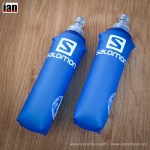
©iancorless.com_Salomon-7704

Ultra-lightweight running pack designed by Salomon Athletes. The Salomon S-LAB Sense Ultra Set weighs in at 110g and is designed to carry the bare essentials in absolute comfort with a 3L capacity.

  • Motion fit trail
  • Sensifit
  • Soft twin link
  • 2 zippered pockets
  • 1 chest pocket
  • 2 soft flask
  • Zipper phone pocket
  • 2 stretch pockets
  • Back compartment
  • Kangaroo pocket
  • soft rim
  • Reflective
  • Whistle

SALOMON S-LAB SENSE SET
©iancorless.com_Salomon-7759

Ultra-lightweight running pack designed by Salomon Athletes. The Salomon S-LAB Sense Set weighs in at under 100g and is designed to carry 1L of the absolute bare essentials.


  • Motion fit trail
  • Sensifit
  • Soft twin link
  • 2 zippered pockets
  • 1 chest pocket
  • 2 soft flask
  • Zipper phone pocket
  • 2 stretch pockets
  • soft rim
  • Reflective
  • Whistle

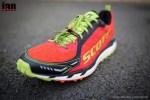
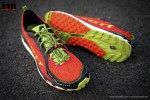
SCOTT Trail Rocket 2.0 (2015) Shoe Review
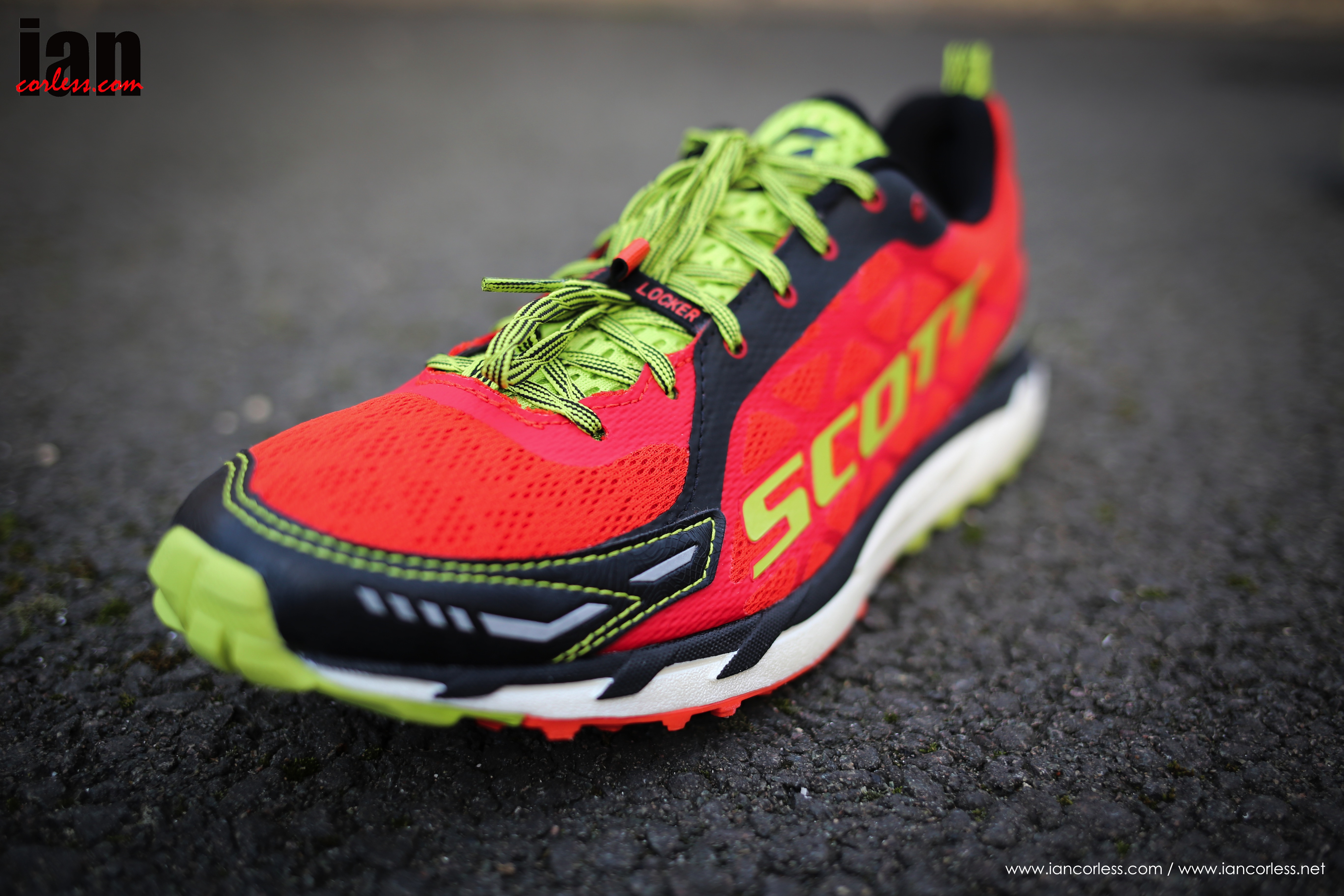
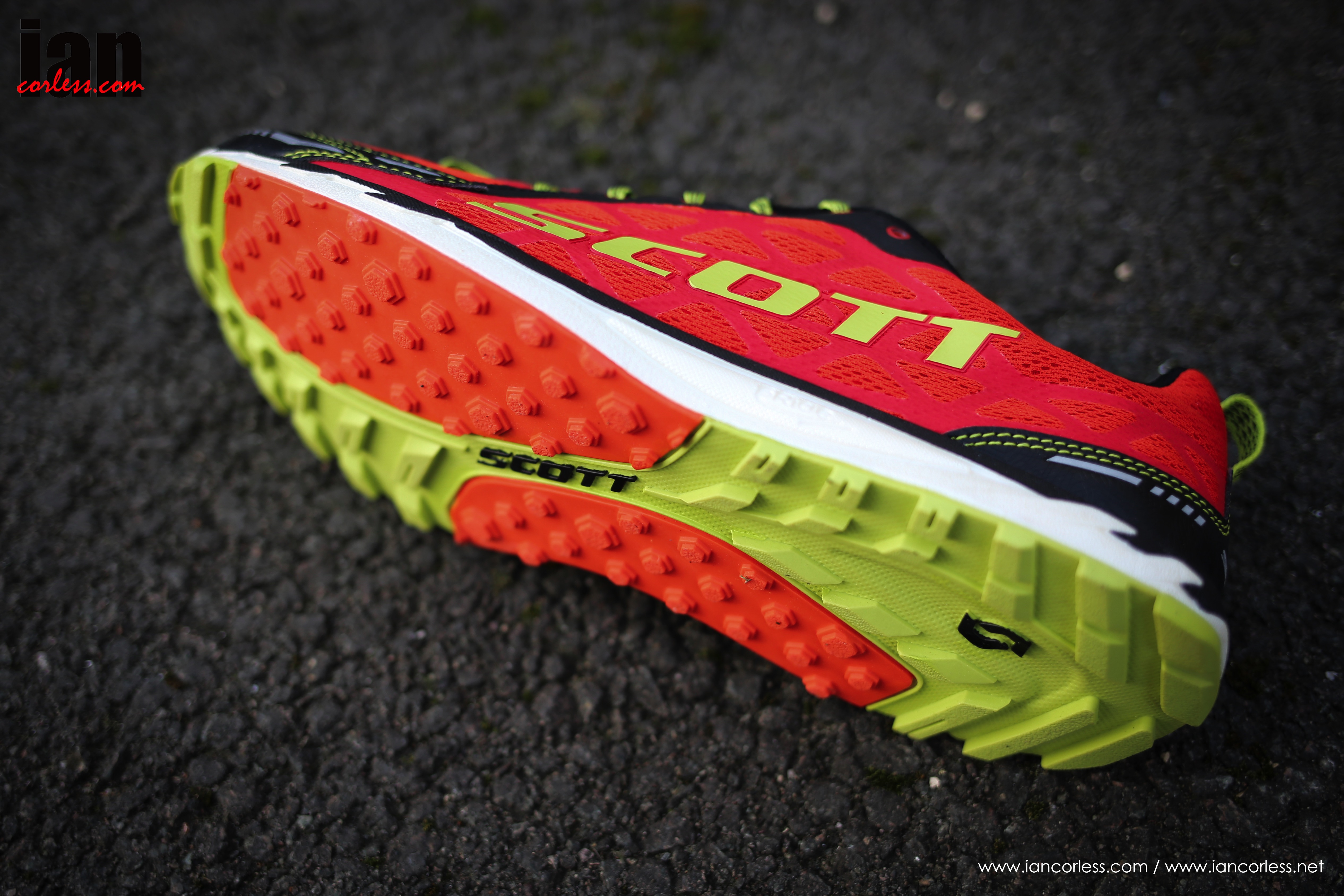
©iancorless.com_Scott-8036


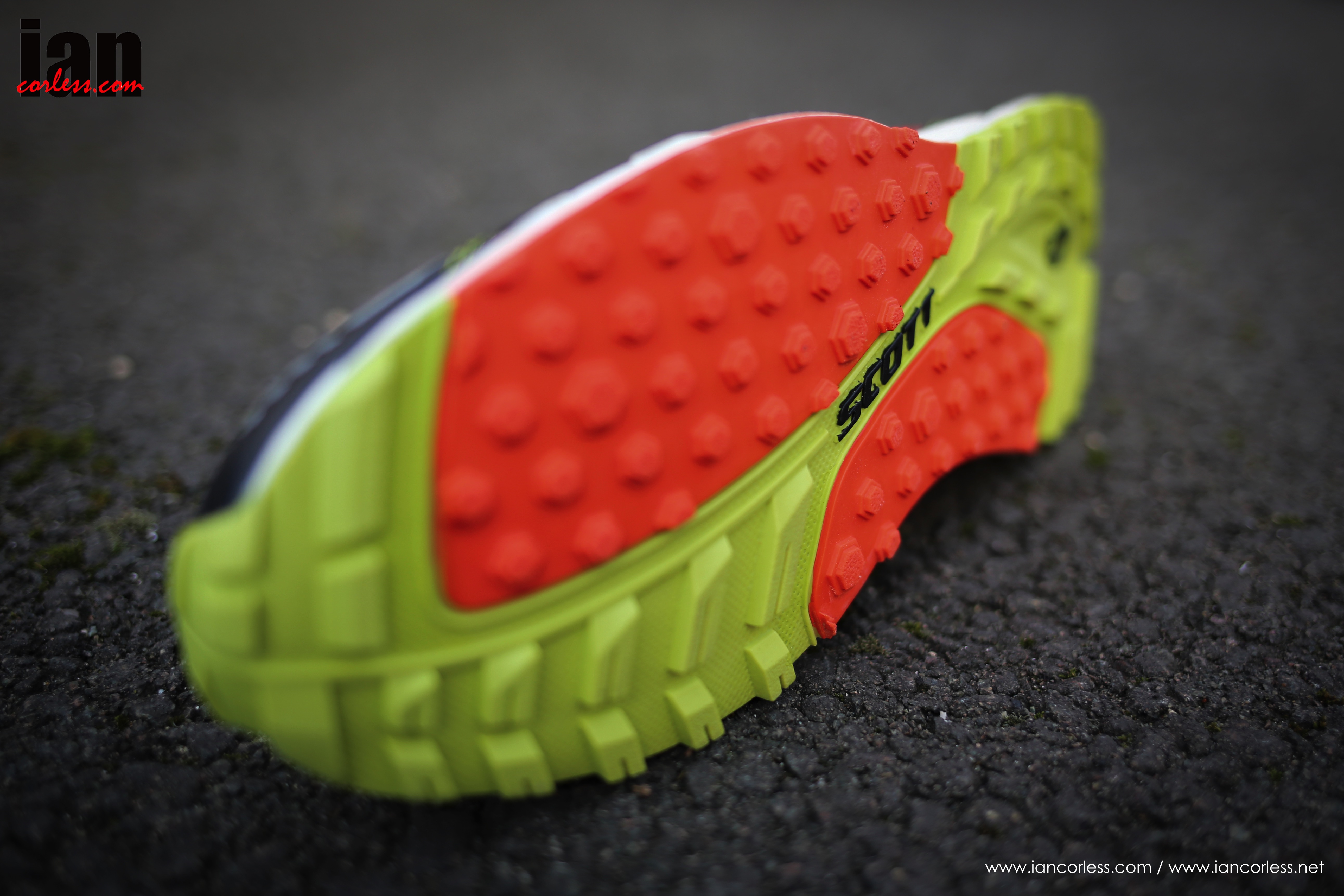
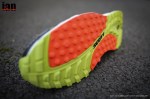
Following on from the extremely successful and popular T2 Kinabalu (review HERE and ladies review HERE) Scott have produced an out and out trail running race shoe aptly named the Trail Rocket. The original Trail Rocket (Feb 2014) when released gained plenty of initial praise. I praised them! However, it soon became apparent that the sole had some serious issues. The black nodules as seen on the image below literally would just come off. For me, my shoes did last a while before I had issues, however, some runners had problems within 50-miles.

Scott Trail Rocket Sole

The new 2015 shoe has addressed this issue and the sole is now far more resilient and long lasting.

©iancorless.com_Scott-8046

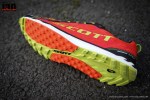
The orange section of the sole is now a moulded compound and the grip is not ‘added’ as in the previous model. So if you have used the Trail Rocket in the past, like them but refused to go near them again because of longevity issues, don’t worry, Scott have addressed this!

If mud is your thing the Trail Rocket is not for you. The Trail Rocket 2.0 is for fast running on hard pack trails, rocks, gravel and so on. They can withstand a little mud but not too much. They perform well on wet ground but the compound used in the orange section of the sole is relatively hard and on occasion I have felt the shoe slip. It’s only a minor slip but nonetheless it does make you take a breath and then you question what will grip be like later in the run?

©iancorless.com_Scott-8044

Following the trend for low drop shoes, the Trail Rocket 2.0 has a 5mm heel to toe drop in comparison to the 11mm drop of the T2 Kinabalu. The T2 Kinabalu is still a favourite shoe of mine even though it has an 11mm drop. This is mostly due to the ‘rocker’ sole which makes the shoe feel lower than it actually is. You can see one of the 2015 T2 Kinabalu 3.0 colour ways below.

Scott T2 Kinabalu 2015

Scott T2 Kinabalu 2015

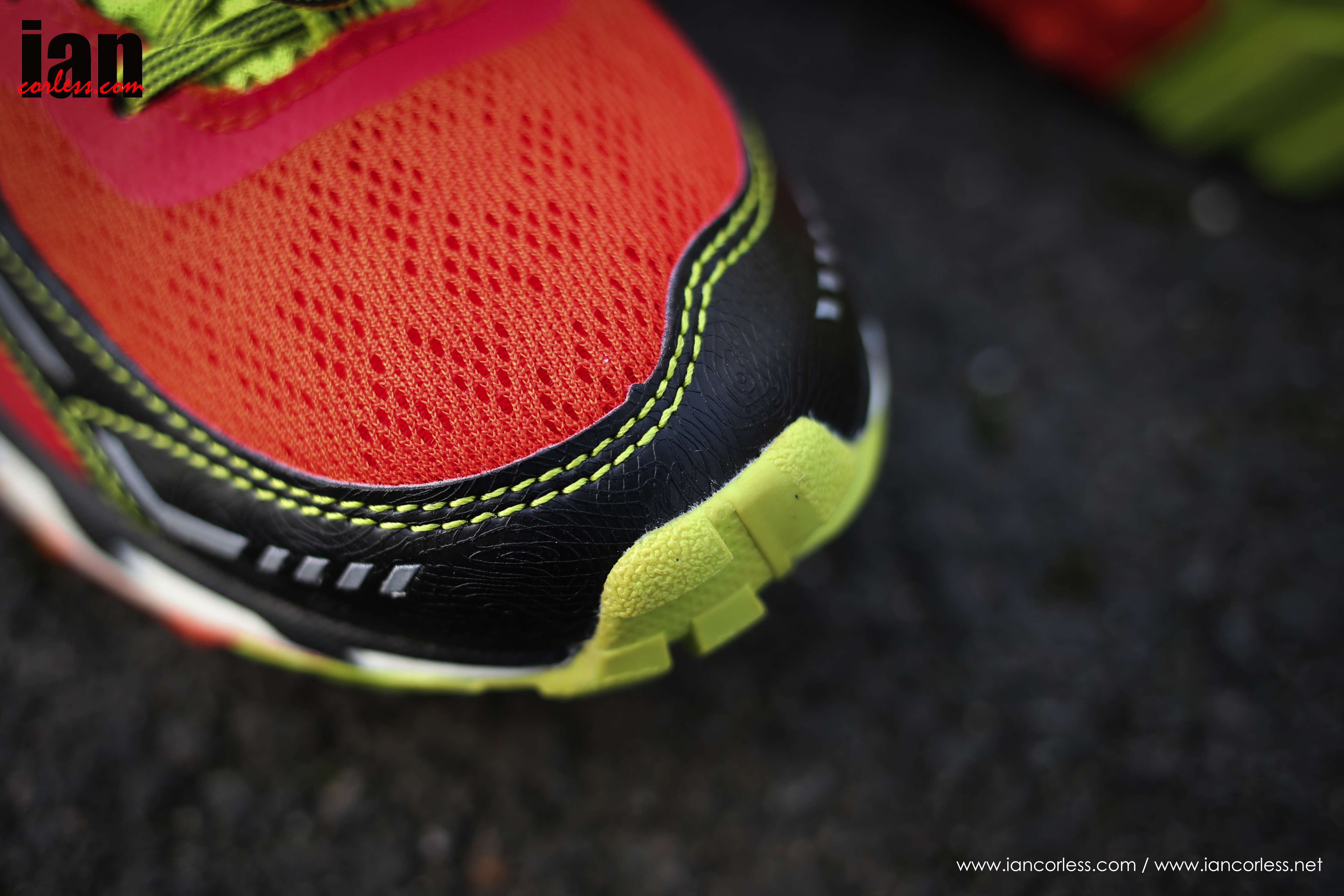
The upper of the Trail Rocket 2.0 is very breathable with a slightly narrow toe box (precision) and a snug heel compartment that provides a solid and secure fit. Toe protection is okay but not great.

©iancorless.com_Scott-8052

Sizing is true to size, however, if you are going without socks you may want to check what works for you. Lacing is solid and depending on your preferred lacing method the shoe holds firm to the foot and is extremely comfortable.

©iancorless.com_Scott-8051

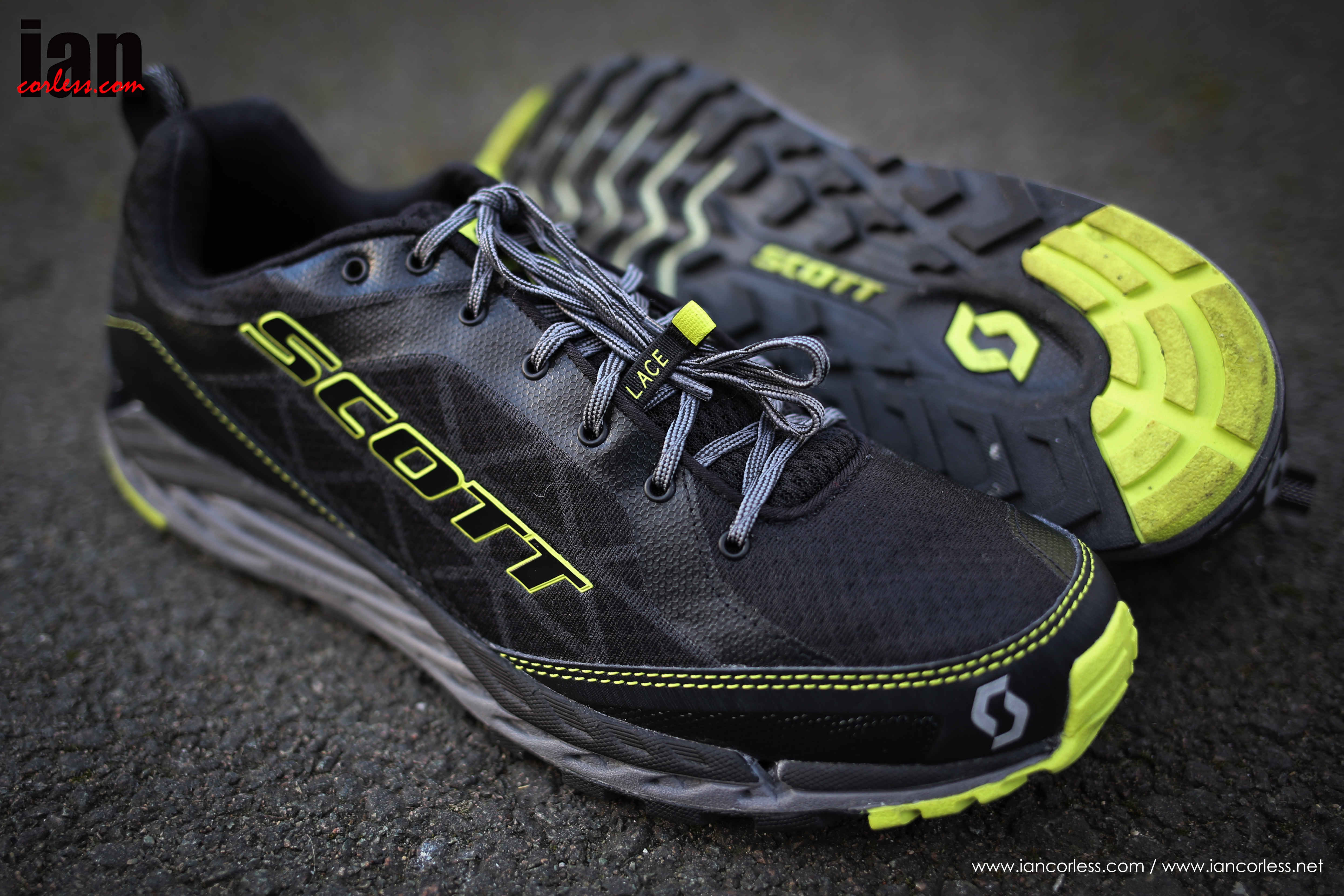
The laces provide a real secure and tight hold and once tied they hold firm and don’t come loose. An elastic bungee (Lace Locker) holds and retains any  excess lace.It’s a really practical solution that was missing on the original Trail Rocket. It’s a simplistic solution to a problem that exists for all runners unless you use Salomon!


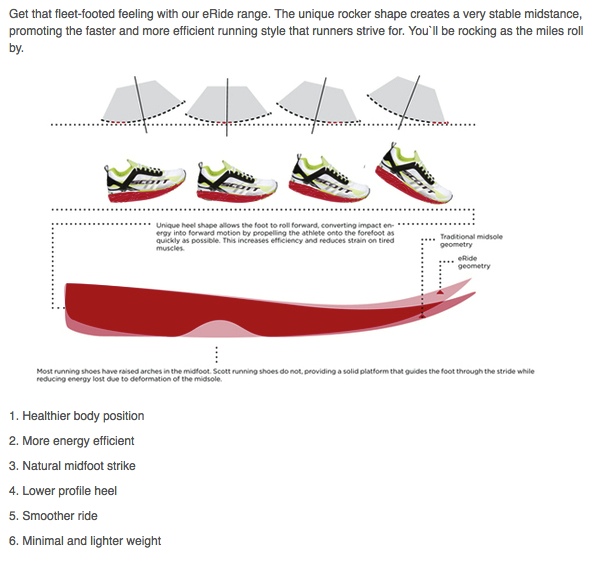
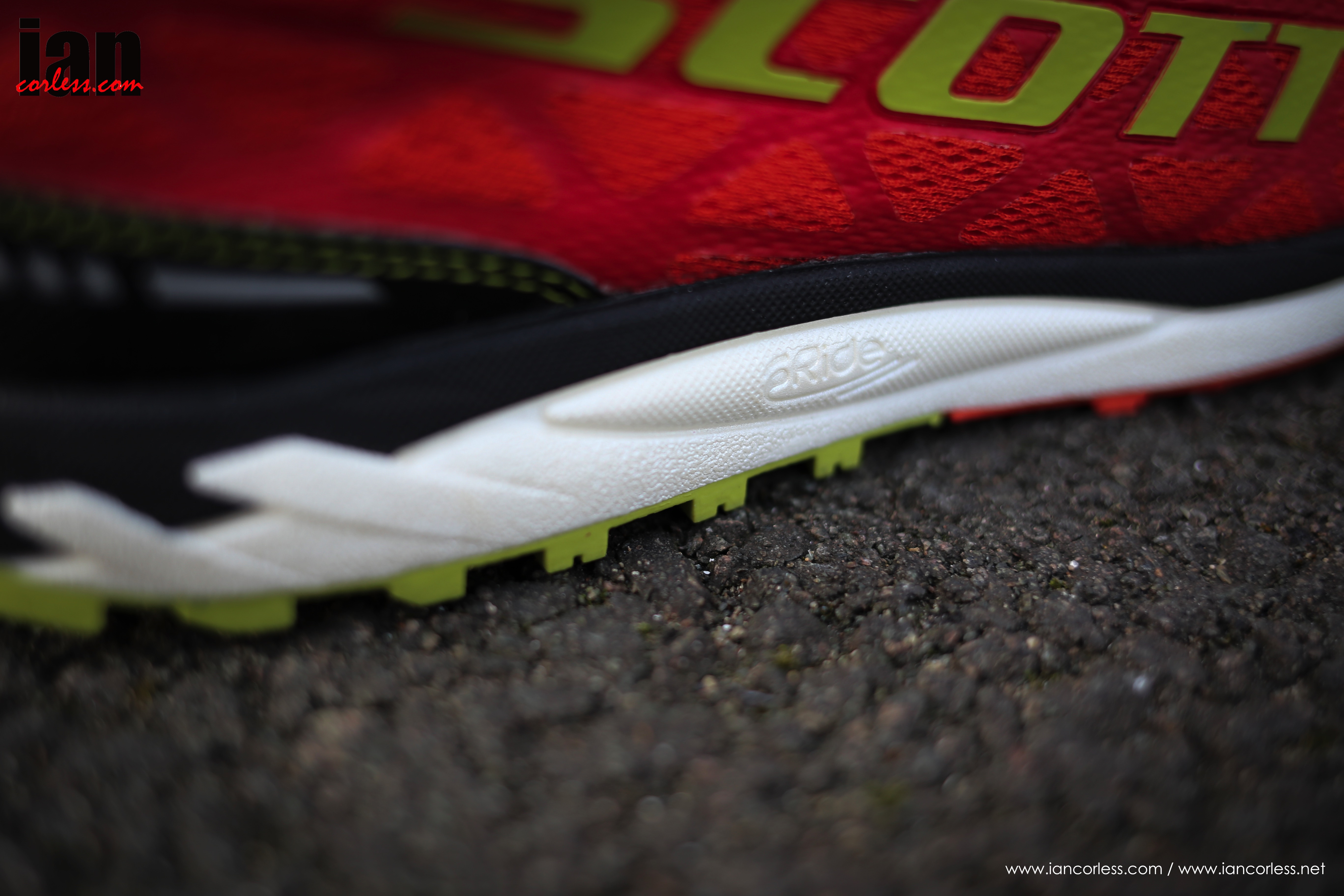
The Trail Rocket 2.0 is lightweight and versatile and designed for maximum performance for racing and fast training. The minimalistic design in combination with the eRide™ Technology promotes an efficient, natural and fast running style.

©iancorless.com_Scott-8057

Arguably, the eRide™ (rocker) may not required for this model of shoe as a 5mm drop will almost certainly mean that your run form should already be good and mid to forefoot landing is normal. However, should you be transitioning to lower drop shoe (say from 8mm) the eRide™ will help guide you on your way.

eRide

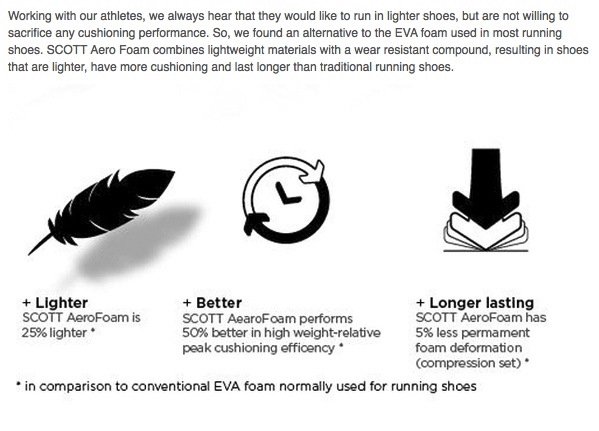
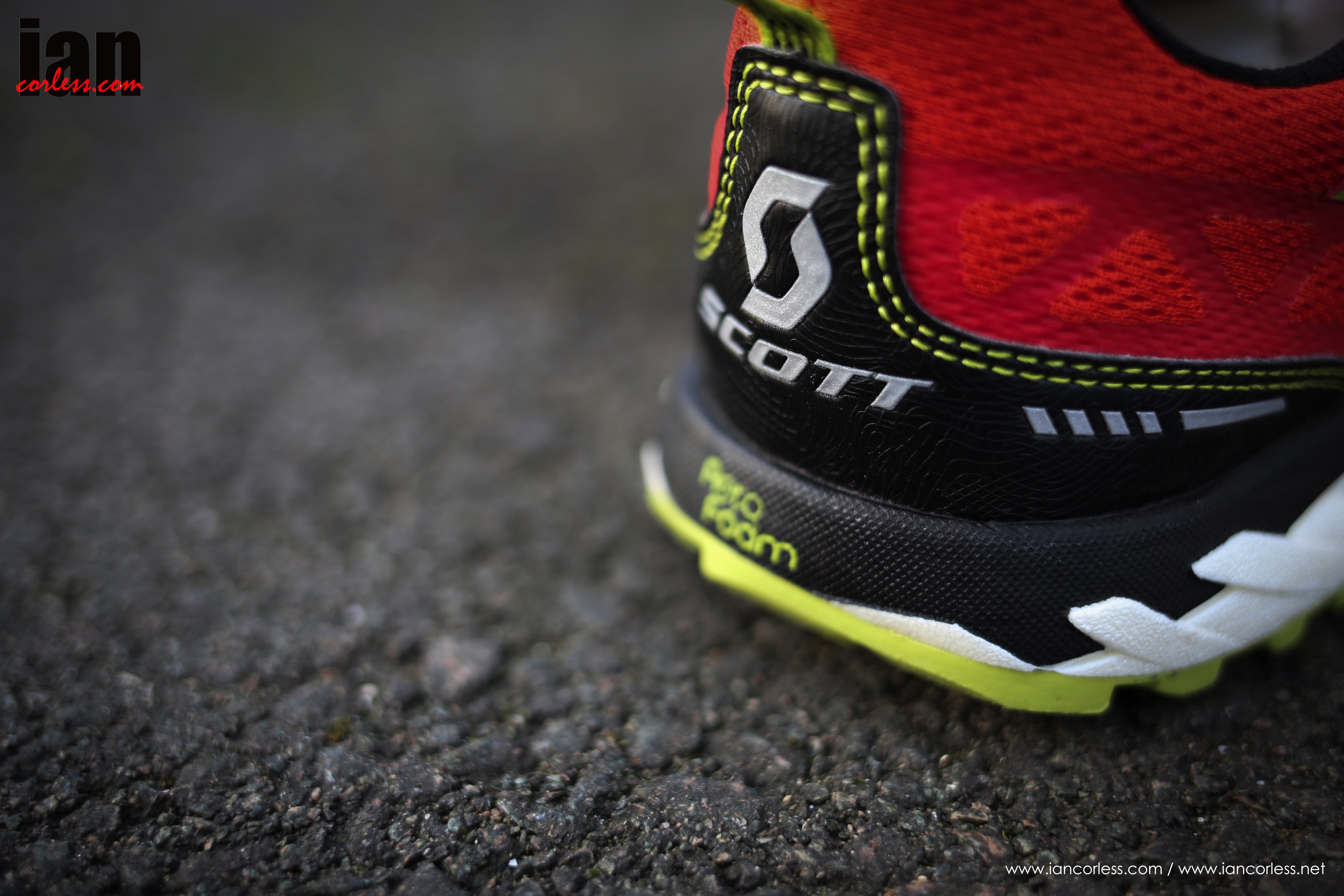
As you would expect, the shoes weigh in at a light 260g (UK9) which is obviously due to the minimalist design and Aerofoam.

Aerofoam

Forefoot cushioning is 17.5 and rear cushioning 22.5 providing a shoe that still provides good cushioning and protection. How far can you run in them? Well it very much depends on your form, adaptation and technique. Without doubt I think we will see many efficient runners covering 100-miles in this shoe, however, for many the Trail Rocket 2.0 will be ideally suited for fast running on trail races up to 50-miles.

©iancorless.com_Scott-8040


The Trail Rocket 2.0 has a ‘Rock-Protection-Plate’ too reduce any impact from obstacles on the ground and cushioning is good. I have had few issues with ‘feeling’ the ground beneath me.

Slipping the shoe on you have that confirmed comfort feeling inherited from the T2 Kinabalu, so, it’s fair to say that if you are a fan of its beefier brother you are going to like the Trail Rocket.

Overall comfort is great and you zip along feeling very light and fast. The shoe has great flexibility. They encourage you to move quicker, lighter and faster with increased cadence.

A real bonus is how good the shoe feels on road and/ or tarmac. Many of us need to transition to trail either by connecting roads or maybe you need to access trail with a jog to and from home? The Trail Rocket handles this well. It’s too early to say in testing what impact this will have on the wear and longevity of the sole.

The Trail Rocket is definitely a shoe for faster training sessions. Certainly if you are new to ultra racing or looking to complete rather than compete, the Trail Rocket may not be the shoe for you.

I really like the Trail Rocket. I enjoyed the first incarnation and had the sole not let me down I would have continued to use them. SCOTT may have an uphill battle convincing previous Trail Rocket owners back… that would be a shame! The 2015 edition of the shoe is exactly as before but now the shoe has a sole that can keep pace with your running.
Read about eRide HERE

©iancorless.com_Scott-8055

Read about Aerofoam HERE

Pros

  1. Light.
  2. Low drop (5mm).
  3. Breathable.
  4. Great lacing and ‘Lace Locker’.
  5. eRide and Aeroform and buzz words but they work.

Cons

  1. Maybe too light for some runners.
  2. Potentially too narrow in the toe box, so, if you like roomy shoes make sure you try these first.
  3. Previous model sole had real issues so runners are going to need to be convinced.

Specs:

  • Drop 5mm
  • Upper – mesh with synthetic overlays
  • Lower – eva/ rubber

Scott Running website HERE

logo

Salomon S-LAB Sense 3 SG (Soft Ground) Review

©iancorless.com_SalomonS3SG-8144

I test a great deal of shoes and these days rarely do I get a shoe that I really don’t like. All the brands learn from each other and I guess ‘borrow’ ideas to help develop their own shoes and so therefore the playing field starts to even out. In the old days I would test a ‘neutral’ shoe, decide if I liked it, look at the grip or lack of and then review it. However, we are spoilt for choice these days… 12mm drop, 8mm drop, 6mm drop, 4mm drop, 0 drop and then road grip, road-to-trail, trail, dry trail, wet trail, soft ground, fell and so on. Jeez it can be exhausting and that is from a reviewing point of view. I’m pleased to say, that as a reviewer I get provided all my shoes and so if I don’t like a pair, it’s no big deal. However, had I spent a £100+ on a pair I’d feel a little perturbed to find out that I didn’t like them. So, I take reviewing shoes seriously! After all, what I write may well influence you to spend your hard earned bucks. I always try to remain impartial, inevitably though some personal thoughts and preferences will come in and when they do, I usually try to be very clear when making those points. I wrote an article a while ago and it may be wise to read it (HERE) before reading on.

©iancorless.com_SalomonS3SG-8111So, Salomon Sense 3 Ultra SG (soft ground) do I like them? Yes, I love them!

I picked up this particular pair of shoes in the middle of 2014 and I have run on road (not too much) trail, hard trail, soft trail, rocks, snow, ice, mud, bog, fell and downright disgusting ploughed farm fields of mud and they have performed in most scenarios remarkably well.

I know Kilian wears Sense (not the ultra) as does many of the Salomon racing team and yes, it’s easy to be convinced that the shoes are great because they wear them. But genuinely, for me, the Sense Ultra really is the dog’s bolx. 

©iancorless.com_SalomonS3SG-8133

Why?

As with all the Sense shoes, Salomon use a fitting system within the shoe called ‘*Endofit’ It’s a sock-liner that holds the foot in place providing THE most comfortable fitting shoe on the market. (My opinion, obviously.) So, if you haven’t tried a Sense shoe on before, don’t order online, as you may well need to play around with sizing to find your ideal fit. Get the correct fit and the shoes are a dream to wear. Many say that the toe box is too narrow but I actually haven’t found that. Yes, they may be narrower than some shoes on that market but not as narrow as others, so again, try this out for you.

*Endoft – an internal fit sleeve designed to hug the foot in exactly the right places and improve feedback and foot wrapping.

©iancorless.com_SalomonS3SG-8140

Once your foot enters the shoe it’s like a custom made glove. You really notice it when you move to a shoe without Endofit. This is something I do a great deal when testing so that I understand the pros and cons of respective shoes. The SG has Salomon’s unique lacing system and the ‘garage’ to stow any excess lace when tied. I have yet to find a person who doesn’t love this lacing system.

©iancorless.com_SalomonS3SG-8122

The ‘Ultra’ version of the Sense has more cushioning than the normal ‘Sense’ and therefore it is designed for longer running. However, I think for most people, the Ultra version offers the ideal cushioning irrespective of racing distance. Of course I give a fair amount of personal preference here, so please keep this in mind if you really like the ‘feel’ of the ground as the normal ‘Sense’ may well be for you?

©iancorless.com_SalomonS3SG-8127

The ‘SG’ part of the Sense 3 Ultra SG refers to ‘soft ground’ and it basically takes the Salomon Speedcross, strips it down into a racing shoe that is lighter, provides more feel of the ground and ultimately makes it a faster shoe. I don’t agree 100% here, so, you will have to read on…

The shoes pros and cons

Lets start with the ‘SG’ part, as ultimately this is the ‘USP’ of the Sense 3 Ultra SG. It’s an aggressive sole shoe that as one would expect provides grip on multiple types of terrain. For me, the shoe excels on any trail that is dry with a loose surface. Mud is also easily dealt with if not too sloppy. BUT if you get on really muddy trails and very wet slippery grass/ fell the SG does not perform as well as other shoes. So yes, this is a criticism. However, I very much see the Sense 3 Ultra SG as a ‘go-to’ trail shoe when I need something that works well on a multitude of surfaces in one run. If I wanted a shoe for an out and out muddy fell run then I would choose the inov-8 X-Talon 212 (or similar.)

©iancorless.com_SalomonS3SG-8108

The ‘Contagrip’ sole compound is relatively hard wearing and non-marking. I have used my test pair for 6-months and they show significant wear but I have been hard on them. I have not used them purely on soft ground. For example, my daily trail run always includes 2-3 miles of road/ tarmac and that really can impact on any shoe over time but the SG has handled that well. On dry trail and rock the SG are great but when rocks, tarmac or road get wet, grip can be compromised. On VK (vertical kilometre) courses they have been excellent, for example the Chamonix VK that twists and turns on dry and rocky trail. However, on a grass VK such as the Dolomites, grip was compromised.

©iancorless.com_SalomonS3SG-8116Endofit is awesome and for me provides the most reassuring, secure and comfortable fitting shoe on the market. The toe box may be a little narrow for many runners but I had no issues and I usually prefer more room.

©iancorless.com_SalomonS3SG-8123

Toe protection is good from a reinforced toe box. The rear of the shoe is snug, comfortable and if you have the correct size shoe, you have no slipping or movement. Lacing is legendary and the lace garage is perfect.

4mm drop does mean you need to be an efficient runner with a mid to forefoot strike, so, if you are hitting the ground with your heal first, this is not the shoe for you. Feel for the ground is excellent and cushioning is great for such a light and responsive shoe. The ‘Profeel Film’ provides protection from sharp and/ or irregular objects so hours in the SG are not a problem. The shoes are neutral with no support, so if you like a little arch support (Salomon Speedcross) or you are prone to Plantar Fasciitis the SG is probably not for you. 

©iancorless.com_SalomonS3SG-8105

Conclusion

The Salomon Sense 3 Ultra SG is a great shoe. It’s not perfect though. If I were looking for an out and out soft ground shoe then ironically the ‘SG’ would not be it. But if I wanted a shoe for daily training or racing that handled a multitude of different surfaces then the SG would always be my shoe of choice (and is.) When I travel, and I travel a great deal, the Sense 3 Ultra SG is always in my bag.

So is this shoe for you? Well, only you can answer that question. But if you are looking for a shoe that can:

  • Handle a multitude of mixed terrain.
  • Has low drop.
  • Supreme foot hold.
  • Good cushioning.
  • Excellent lacing,

Then the ‘SG’ should be a shoe you consider.

If you want a shoe for running ‘just’ on soft ground, then no, ironically the SG is not the best shoe for you.

You will already know this but any product in the Salomon S-LAB range is not cheap. But I do really feel that in the Sense Ultra you get what you pay for, a high-end shoe that if it were a car, it would be a Ferrari.

Finally, no one shoe will ever do all things well. Want to run road? Get a road shoe. Want to run road and trail? Get a ‘City Trail’ shoe. Want to run on the fells in thick mud? Get a fell running shoe. Want a shoe that manages to mix all of the above (admittedly, not too much road) then the Sense 3 SG (or the new Sense 4) is going to be a tough shoe to beat.

In March 2015 the new incarnation of the Sense SG will be released, the Sense 4. Here is a sneak preview:

The Salomon S-LAB Sense 4 Ultra SG 

Salomon S-LAB Sense 4 SG

Salomon S-LAB Sense 4 SG

The Salomon S-LAB Sense 4 Ultra SG is new for 2015 and will be available in the UK from March (tbc.)

  • The sole has deeper lugs and the sole compound has been adjusted.
  • The already brilliant Endofit has been tweaked to avoid less debris entering the shoe.
  • Additional room in the toe box.
  • Additional mid-foot support.
  • A new upper will provide a better fit using Sensifit and additional width has been added to the toe box.
  • Fit will apparently be even better than the Sense 3.

Specifications for the new Sense 4

WEIGHT 264 g  (SIZE UK 8.5)


UPPER

Quick drying breathable mesh

Propriotection™

Sensifit™

Quicklace™

Racing last

Lace pocket

EndoFit™


SOLE CONSTRUCTION 

Mud & Snow non-marking Contagrip®

OS Tendon

Dynamic TRACTION


CHASSIS

Profeel Film


MIDSOLE

Dual density EVA

Moulded EVA


SOCKLINER

Die cut EVA


MID SOLE HEIGHT

13mm/9mm – 4mm drop

Check out Salomon S-LAB HERE

Salomon Logo


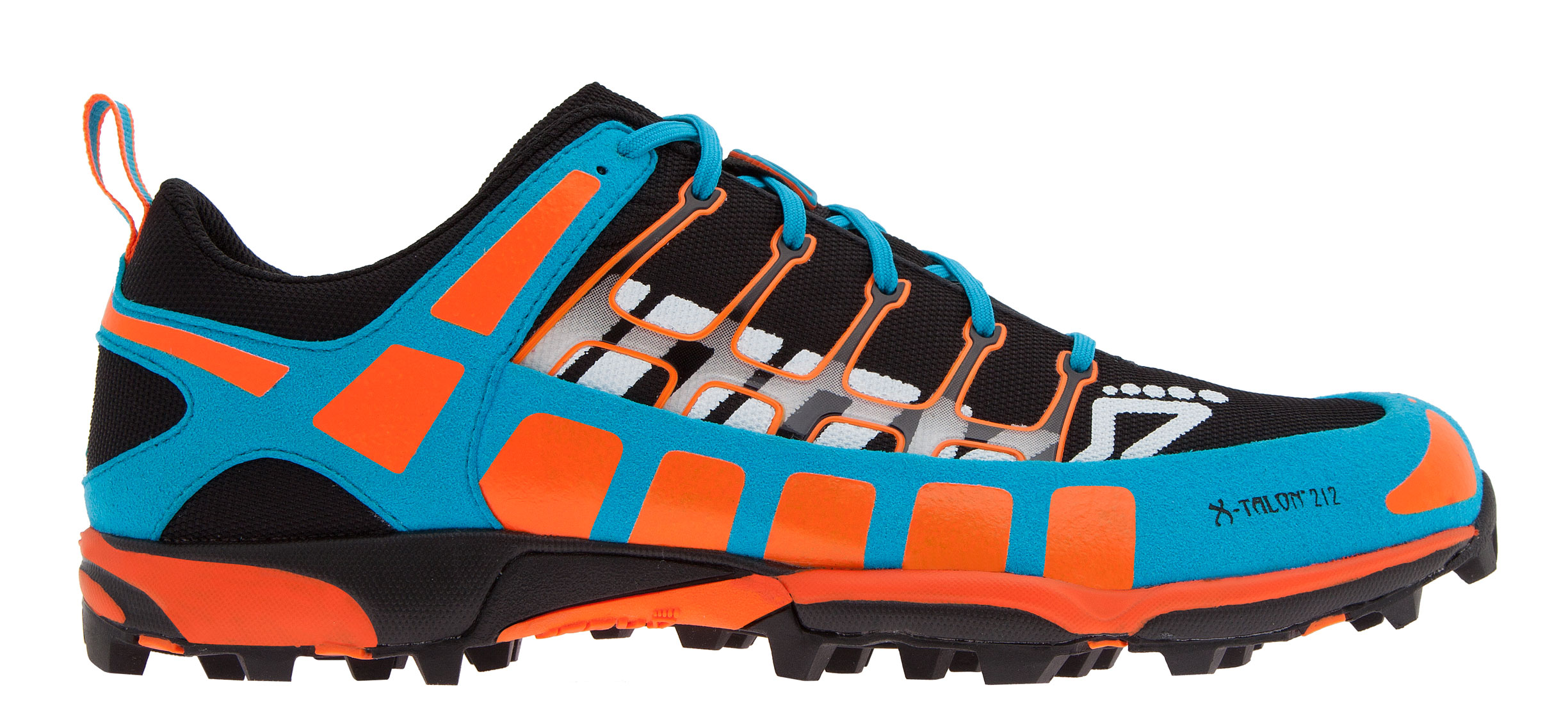
inov-8 X-TALON 212 Review

©iancorless.com_inov8_212-7294

If Wolverine™ were going to go running on the trails, he would pair up his incredible hands (and blades) with a pair of X-Talon 212’s.

Irrespective of what type of running you do; road, trail, mountain, fell or even treadmill, the X-Talon 212 has that distinctive look that not only sets it apart from the competition but also makes one take a second look and ask the question, “is that a run shoe or a football boot?”

It’s a winning shoe that combines minimal weight, low drop, stability and awesome grip for when conditions are muddy, boggy, slippery or basically just downright awful.

I doubt that inov-8 needs an introduction but let’s have a recap just in case.

©iancorless.com.IMG_5365

The company is just 11-years old and the creation of South African, Wayne Edy. You can sum up inov-8’s growth in just one quote from Wayne, “I’m not a follower, I never will be. I like to carve a new way. I thrive to innovate.”

inov-8 shoes are all about being at one with the terrain and in the UK they have become the ‘go to’ shoe when you need grip.

inov-8 say, “We believe in natural running. Natural running involves taking running back to its most innate form, letting nothing alter the natural biomechanics of the foot and body. Natural running relies on the strength of the runner’s feet and legs rather than the cushioning or support of a shoe. The foot controls the shoe, not the other way around.”

inov-8 were very much at the forefront of minimalist running and right from the off the offered a very structured and methodical approach to getting ‘lower’ to the ground.

This system was a series of arrows (on the rear of the shoe) that signified the shoes drop in 3mm increments: 3 arrows = 9mm, 2 arrows = 6mm and so on. This arrow system informed runners immediately of what drop a shoe was and importantly allowed runners to make an informed and structured progression to get lower (if required). The shoe naming was also quite innovative. You had the model of shoe, for example: Trailroc, Roclite or X-Talon and then a number afterwards, so, in this scenario X-Talon 212. The ‘212’ refers to the weight of the shoe in grams.

Lightweight, minimal and functional, inov-8 have pioneered running shoes for trail, rock, fell or mountain and in simple terms have endeavoured to keep runners low to the ground (with grip) via a plethora of shoe models providing a selection of drops, cushioning and grip. The recent addition of the Race Ultra 290 (Review HERE) is a prime example of how the company are looking at the growing ultra market and the need for a more cushioned shoe but still with a low drop (6mm) and a flatter outsole for extended hours running.

2015 will see many new additions to the already expansive range. (*see below)

X-TALON 212

©iancorless.com.IMG_5434

Firstly, big news! The X-Talon is now available in a standard fit in addition to the normal precision fit. This is important news for many a runner who would have loved to use the 212 but found the tight and narrow fit of the precision just too tight for their Hobbit like feet.

As mentioned previously, the 212 may well be one of the flagship shoes in the inov-8 range and you can expect to see the shoe in Trail, Mountain, Fell, Orienteering, Cross Country, Obstacle and Skyrunning races all over the world.

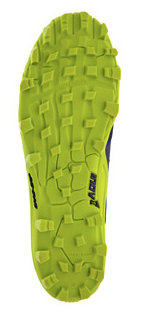
The 212 is an out and out off road shoe and as the name suggests, the grip is Talon like.

The Shoe 

x-talon-212-side

I used the standard fit in my normal shoe size UK9.5 so it would be fair to say that the 212 is true to size. However, even though this shoe is standard fit it still fits super close in the toe box, you almost certainly would want to try this shoe on before purchasing. Please remember that the 212 are an out-and-out off road and soft ground shoe, so it is important that your foot has minimal movement within the shoe. This is why the shoe was originally designed in precision fit only. A close fitting shoe is ideal when climbing, descending or contouring when on soft or uneven ground. The lacing system allows you to pull the shoe tight to your foot and cradle it offering more support. Spend a little time tweaking the lacing and you will be rewarded with a wonderful close and natural contact to the ground.

©iancorless.com_inov8_212-7305

First off, the shoe is super flexible. You can bend it anyway, fold it in half and the shoe does not resist. The shoe upper is tough and quite thick and I have heard criticism saying the upper is too thick! Of course this all comes down to personal preference but if you are bombing up and down wet and muddy terrain everyday, you need an upper that can withstand that sort of abuse… I have had my 212’s for 6-months (probably 3-runs a week) and I have well and truly abused them without failure. That’s a plus in my book.

©iancorless.com.IMG_4481

The shoe has Meta-Flex™ and Meta-Cradle ™, which provide a flex groove and upper webbing support at the metatarsal heads. In all honesty I am not fully sure what that means but if that means good flex and support then I agree.

INO540_400_2

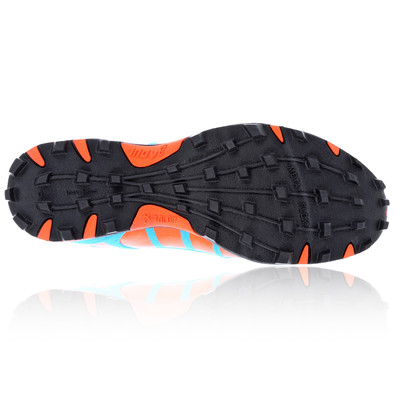
The sole of the 212 looks like a football boot with a series of spaced out rubber nodules that are made of soft ‘sticky’ compound rubber as one would see on some climbing shoes. What makes this shoe work so well off road is the fact that the grip is spaced out and this therefore stops soft ground filling and clogging up the grip of the shoe. The soft rubber works really well on rocks, gravel and other dry surfaces and should the rocks become wet, grip is still highly impressive allowing you to run with confidence. One downside of the soft rubber is that if you go on the road it will wear down. This is not a criticism of the shoe. It’s basically just a heads up to warn against excessive road use. I should point out that my everyday run requires at least a couple of miles on road or pavement to get to the trail and yes, my sole has started to show wear and tear but that is after 6-months of regular use.

©iancorless.com_inov8_212-7314

Cushioning is minimal and the drop (2 arrows) is 6mm; this provides a great contact for the trail beneath your feet. Ironically, the shoe feels very comfortable on hard trail and even road. I would say it feels surprisingly cushioned despite its minimal looks. inov-8 do not use a rock plate to protect your foot against small and/ or sharp objects and therefore you can sometimes feel these objects when running.

Th front of the shoe has a rubber bumper but toe protection is minimal. The rear of the shoe holds the foot well and if you have the right size shoe and the laces adjusted correctly, you have have little or no movement when running.

IN USE

Pros

The 212 are all about gaining grip on soft and boggy ground. If you use the shoe in these conditions you will be over the moon by the grip, feel and security offered. The upper is durable and the lacing perfect. The addition of a standard fit in addition to the long established precision fit now ensures that you can have comfort despite your shoe size or width. The combination of these elements makes the 212 my ‘go to’ shoe for anything that resembles fell running or soft ground running (including snow.) I have used the shoe for 6-months, accumulated 100’s of hilly miles and the shoes have performed perfectly. They have also been my preferred shoes when running Vertical Kilometres™ particularly when the terrain has been grassy and steep. The low drop allows great feel for the terrain below and although relatively minimalist from a cushioning perspective, they do offer great comfort for runs of 2 to 3-hours. This comfort is extended if the ground remains soft and boggy.

Cons

It’s a very specific shoe for a very specific use and therefore this would be an ‘addition’ to your shoe collection. It’s almost unfair to say this is a con but for some, they want a wonder shoe that does ‘all things,’ the 212 is NOT that shoe.

The lack of a rock plate does mean that you can feel small and sharp objects occasionally.

The shoe is very flexible with minimal cushioning and therefore one would need to be attentive to how long one runs in them. Of course this is very personal to the user… one person may find 60-mins enough, another 3-hours. Certainly, the more you use them, the more time you will be able to spend in them.

Specs

  • Weight 212g
  • Upper Synthetic, TPU
  • Lining Mesh
  • Drop 6mm (2 arrows)
  • Sole X-Talon (Sticky)
  • Midsole Injected eva
  • Fit Precision and now Standard

Conclusion

The X-Talon 212 really is a top quality shoe with a very specific use. If you are looking for a shoe to do several types of running (road and trail), the 212 is not for you. However, if you are looking for grip on off road terrain then you would be hard pressed to find a shoe that does the job better than the 212. The addition of a standard fit to the long established precision fit should mean that if you have tried the 212 in the past and found them too narrow, they may very well fit you now! Both models are unisex.

Note

X-Talon-190-side-1_13

If you prefer a more minimalist shoe with lower drop, inov-8 make the X-Talon 190, which has 3mm drop, a stripped back upper and the same talon like grip.

*New for 2015

X-talon-200-Blk-Red-Yel-1-15-1024x490

inov-8 are strengthening the  X_TALON off-road running shoe range (212 & 190) with the addition of the new X-TALON 200. Available in early 2015, the shoe looks set to be a huge hit with off-trail runners and obstacle racers.

inov-8 BareGrip 200 Review by Ty Draney


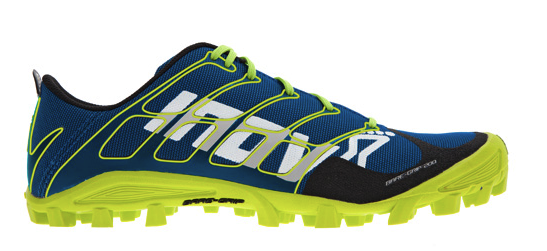
Baregrip

There are minimal shoes, and there are barefoot shoes. Runningwarehouse.com describes the Inov-8 Bare-Grip 200 as; “a near-barefoot shoe for trail runners seeking unrelenting traction, with no cushioning and a firm ride.”

 Shoe review by respected ultra athlete TY DRANEY (Patagonia)

©iancorless.com.IMG_7689Transvulcania14

I have been wearing minimal shoes for years, eschewing trail shoes for flats because I enjoyed the lighter weight and most of the time here in the west I run on dry trails. I wasn’t completely unfamiliar with inov-8 having spent some time in their X-talon models when they first came out. The BareGrip 200 as it turns out is a completely different animal. They look a lot like a football boot. When I wore them they usually elicited two different responses-“What are you wearing?” and “Wow. Cool shoes.”

Baregrip2

The first thing I noticed was how light and flexible they are. There is absolutely no support or structure, none of the traditional EVA for cushion. The thin rubber twists and stretches as far (or farther) than your foot can. Luckily the lugs supply a big of lift and some give to extend the range of this shoe. I found that I could run as far as 10k before my feet felt too fatigued or beat up. The added flexibility was great running uphill, but running rocky downhill caused me to slow down considerably to keep from hurting my feet.

screenshot_114

The upper is also study and flexible. After nearly a hundred miles in the shoe, there is absolutely no wear or snags. The tight weave has a downside. I found that the shoe didn’t drain particularly well after being fully submerged. There are light overlays extending from the outsole to the laces that supply structure to the shoe. They are medium, to narrow in width and have a solid toe bumper for its weight. I found the heel cup particularly comfortable on my bony heels. It has “just enough” structure to keep the heel firmly planted in the shoe, even on steep uphill slopes.

screenshot_115

The Bare-grip has outstanding traction. A wet fall has provided ample opportunity to take these shoes on a variety of muddy trails. I was pleasantly surprised how well they shed the mud and helped me keep my footing, and again, the lugs provided a little cushion to help extend their range. I am looking forward to using these as a winter shoe when the rocks are covered with snow and I need the extra traction.

This is not a shoe for everyone. The barefoot feel and zero mm drop automatically excludes many runners. It does however do what it was designed for very well, “give natural feel, maximum grip, and proprioception.” (inov-8.com) I see this shoe as a great vertical-k-type shoe in adverse conditions or for racing muddy fells where there are few rocks.

Specs:

screenshot_116

Check out inov-8 HERE

Check out Ty Draney HERE

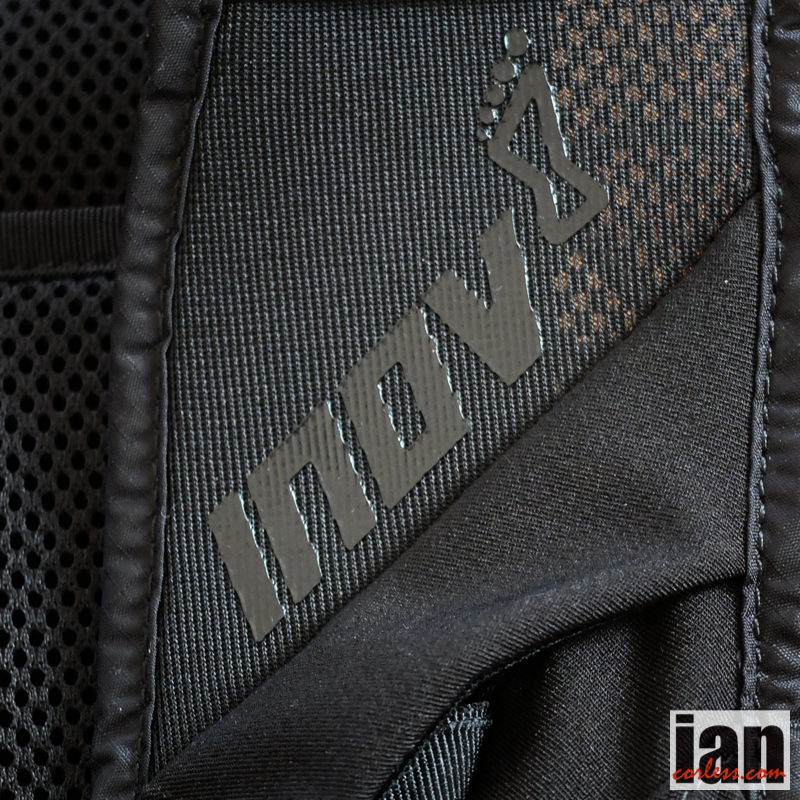
inov-8 Race Ultra Vest 2015 *New Product Review

©iancorless.com_S0132106RaceUltraVest2015

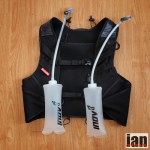
The 2013 incarnation of the inov-8 Race Vest was a revelation. It was arguably the most simple and minimalist pack on the market that fit and functioned perfectly for the task at hand. It had a unique design, the ability to carry 2-bottles and/ or bladder and in addition it had a series of really useful and importantly, ‘usable’ pockets. No pack is perfect, however, I did say the Race Vest was close.

Many agreed. The pack sold incredibly well and it won awards.

However, it did have some restrictions. In reality, the pack was perfect for 1-day races when minimal mandatory kit was required. But if you where doing a longer event such as UTMB then the original pack had limited space. I actually was able to put all my mandatory kit in the pack but I had to be creative and yes, I had to have the smallest and lightest kit available.

©iancorless.com_S0152108RaceUltraVest2015I personally don’t think this is a fault of the pack! The original Race Vest had a use and if used in the scenario for which it was intended, then it was arguably one of the best packs available.

When the product became available to purchase (early 2014), a few tweaks had been made from the original prototype, which I was using. The key change was in the upper. My pack would allow the 2-bottles to fit low (near the rib cage) or high on the shoulder straps. After testing, many people commented that the shoulder straps rubbed around the neck, so, Matt Brown, the designer, reworked the design, narrowed the straps (which did provide a better fit) but unfortunately this meant you couldn’t fit the bottles in the upper position. A real shame in my opinion! More importantly, original retail samples had a couple of question marks on durability. Many runners complained of some less than perfect construction. This was soon nipped in the bud but as we all know, this is never a good thing.

Below, the original Race Ultra Vest with bottles: 

For_web_Race_Ultra_vest

Jump to the inov-8 athlete retreat in the English Lakes, spring 2014. A weekend of running: looking at new shoes, apparel and accessories for the coming year (2015). Needless to say, as a running aficionado, I love this. I love to see how a brand takes past and current ideas, develops them and comes up with something new. The new apparel looked incredible, new shoes were promising; particularly the new Ultra 290 shoe and then we saw the packs… the new Race Vest.

Similarities could be drawn to the original 2013/2014 model but boy oh boy. This was a complete overhaul taking all the features from the original, adding tweaks and then coming up with something new. inov-8, Matt Brown and the rest of the team had pimped their packs!

No longer was one pack available but three: 5ltr, 10ltr in this style and a larger 24ltr for mountain marathon or multi-day events. Using the ‘vest’ fitting system, these new packs in one word are awesome.

I said in my original Race Vest review back in 2013 that ‘This new product from UK company; inov-8 may very well be the next key moment in pack design stripping away complication and providing a pack that would almost make a perfect accessory for Batman.’

It was a bold statement and one that I still hold. However, that unique innovation has moved up a step and lessons have been learnt.

©iancorless.com_S0182111RaceUltraVest2015

So, what is new?

  • Larger capacity (3 different sizes)
  • Pole fitting attachments
  • Redesigned vest
  • New soft flasks with extended drinking straws
  • Dump pockets
  • Zipper pockets

I have 2-packs for testing, the 5ltr and 10ltr. They are exactly the same, obviously the only difference being capacity. For the purpose of this review, I have tested and photographed the 10ltr as I feel this will be the most popular option. However, I will say that the 5ltr does have far more capacity than the original Race Vest despite them being arguably, on paper, the same size!

My test product is a prototype and I am aware of some tweaks that will be made based on my review and the feedback I provide. So please refer to this review and I will update with any key changes and revisions that may happen over the coming weeks/ months.

The vest fits like a glove. I never expected anything else. You put it on and immediately it is like adding another piece of well fitting clothing. Unlike the original Race Vest, this pack will not have adjustment straps on the side. Therefore, the pack will come in a variety of sizes so that you can get the product that fits you! I believe this will be S/M and M/L and fit has been tweaked under the arm to a better fit under the arm from my prototype.

Why no side straps?

Well, two large ‘dump pockets’ have been added to the pack. It made sense. This was an area not utilised in the original design and now you have 2-easy access pockets for food, clothing or any other item you may need.

For me though, these dump pockets make the ideal location for storing the new soft flasks. This wasn’t the original idea of designer, Matt Brown. However, after 1-week of testing, I contacted Matt and told him of the way I was using the pack. It made perfect sense to me. It had the bottles in an easy access and comfortable place, the new ‘extended straws’ meant that I could feed as and when I wanted without removing them and if I needed to refill, I could just pull them out, take off the top, fill and replace. In addition, you could still use the dump pockets for additional storage either under or over the soft flasks. I typically put my gloves, Buff or other essential items in this area. Being a photographer, I have often replaced one soft flask with a camera. Yes, they are that adaptable.

©iancorless.com_S0112103RaceUltraVest2015

On the front of the pack, you have zip pocket on either side. These pockets are for the soft flasks, however on my prototype they were a little too small and tight. For me, they are perfect for valuable items such as phone/ money/ credit card or similar. Matt Brown has confirmed for me that the zipper pockets have been re-designed and made larger accommodating the flasks with ease and comfort, ‘I used the updated sample at CCC and kept the bottles in the zipper pockets, a lot easier to remove and get back in again,’ said Matt. So, the choice will be yours? I do recommend you try options and see what works for you.

Several other stretch pockets are available that work well for keys, food and or gels.


©iancorless.com_S0082100RaceUltraVest2015


©iancorless.com_S0072099RaceUltraVest2015

The front fastening system has also changed from the original. This pack no longer uses the quick release system that some found fiddly on the previous vest (I didn’t). Now it has 2-fixed straps, upper and lower and both use the classic male/ female quick release fastening system.

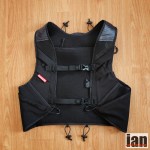
The rear of the pack has 2-zippers: one on the outside of the pack that allows access to an uncluttered open pocket.

©iancorless.com_S0142107RaceUltraVest2015

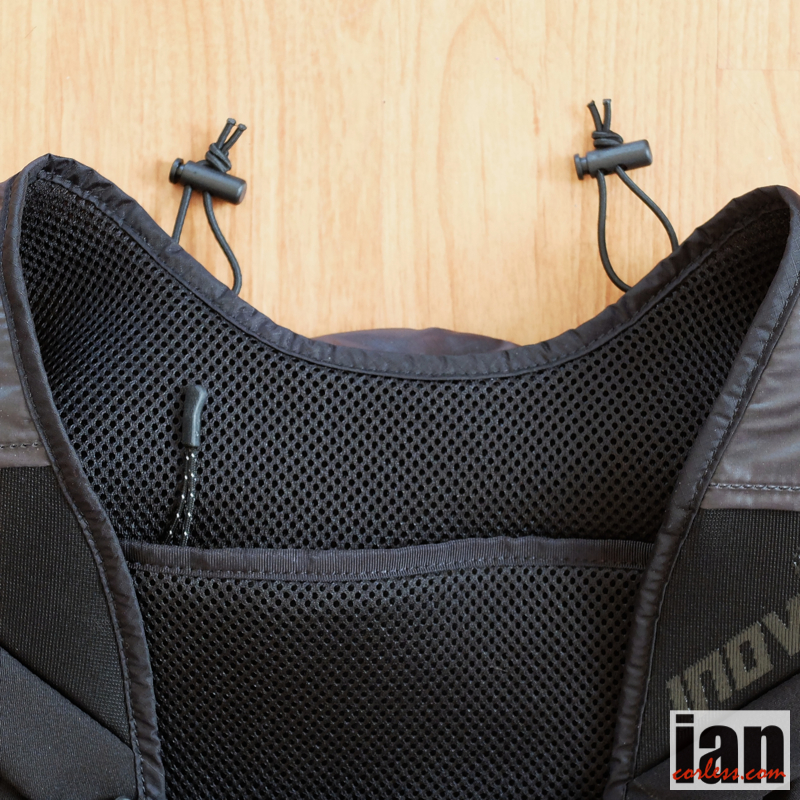
On the reverse, the part of the pack that would sit against your back, has a zipper that would allow direct access to a bladder should you wish to use one.

©iancorless.com_S0122105RaceUltraVest2015

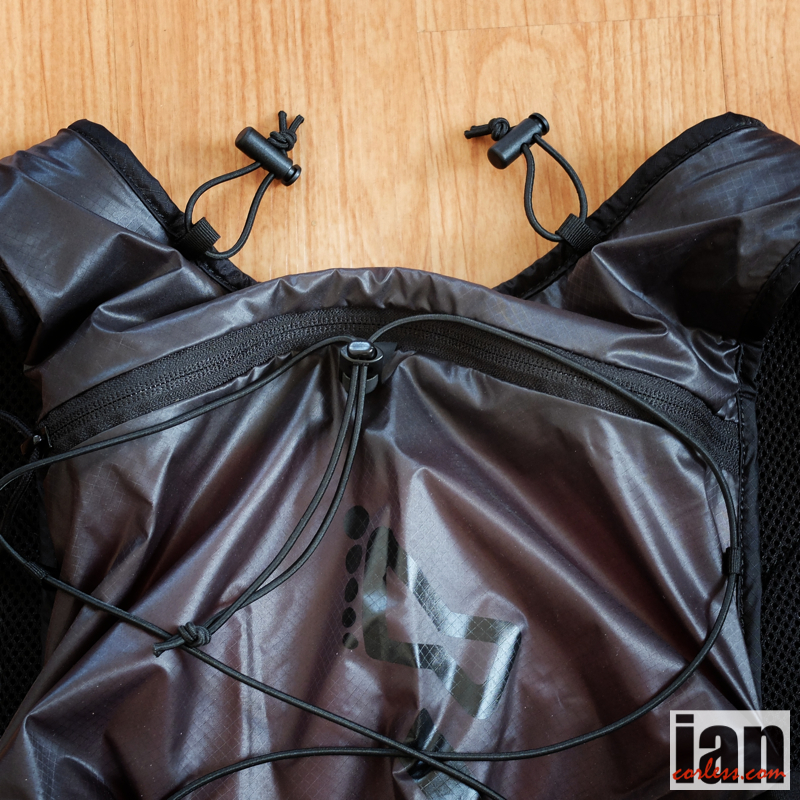
Of course, this is perfect, especially in long events when you are carrying mandatory kit. You don’t want to be pulling kit out to get to a bladder. In addition, elastic cords have been added to the top and bottom to attach poles.

©iancorless.com_S0102102RaceUltraVest2015

The large open pocket (10ltr version) held with ease:

  • Waterproof jacket
  • Waterproof pants
  • Buff
  • Gloves
  • Base layer
  • Compass
  • Gps
  • Phone
  • Arm warmers
  • Beanie
  • Gels/ bars

And I still had space to squeeze other items in. No question, it’s perfect for a UTMB style event or similar. Should you carry fewer items, the adjustable bungee drawstring on the pack will allow you to compress unwanted space.

The pack has an optional (purchase extra) 2ltr bladder that sits within a temperature control sleeve and this easily slides into the rear zipper pocket. The feed pipe is insulated and can be used on the left or right hand side of the vest. Ideal should you require the option to carry 3ltrs of liquid: 2ltrs in the rear and 1ltr at the front two soft flasks.

IN USE 

It may come as no surprise that I find the pack perfect. I have yet to find an issue with any aspect of the design.

10423640_10152436309158891_3441956871401018922_n

The soft flasks with extended straws are a revelation and make ‘on the go’ drinking a breeze. It also makes refilling very easy.

©iancorless.com_S0182111RaceUltraVest2015

The vest fits like a glove, does not bounce and is extremely comfortable even when filled to capacity.

Fabrics are light and breathable as the original. Of course with any vest, you are going to get a hot spot on your back. You can’t avoid that with this style of product. Having said that, I have yet to find a pack that doesn’t do this…

10464062_10152436307373891_1576851184164900850_nThe rear large zippered pocket requires some thinking when packing, as it is just an open space. You push things in and keep pushing. I recommend if using a bladder, add this first and then pack. Place the items you are likely to need less at the bottom and then work your way up leaving the most essential items at the top. It’s not rocket science but good to think ahead. Once the bladder is in place, you don’t need to remove it as it has a separate zipper access thus allowing refilling as and when required. It works really well. As mentioned previously, you can fit all mandatory kit (UTMB requirement) in the spacious pocket.

You can attach poles to the rear. I tried but didn’t find this to be a good option for me. More often than not, the new folding poles such as Black Diamond or Leki are shorter in length. This makes fastening more awkward and problematic. To resolve this, I attached two adjustable bungees to the shoulder straps and I store my poles folded across my chest; works for me and makes storing and access to the poles easier. It’s a personal thing.

10462583_10152436315363891_6369717190422017424_n

The multiple front packets provide immediate access to anything I needed whilst running. I had a phone, camera, bars, gels, keys and money all at hand. Perfect. The front zipper pockets add extra security if not used for the soft flasks.

10409601_10152436318398891_1351287040658863138_n

I used the two large dump pockets for my soft flasks and then placed gloves, buff and some snack items on top. This works great but you need to think when coming into an aid station… if you just pull out the soft flask, what is on top will hit the deck!

 action photos ©marcuswarner

Conclusion

I raved about the original Race Vest (2013/14 model) and hailed it as arguably the ‘perfect’ pack. In refection, I was wrong. It was perfect to a point. The new range of packs (in 3-sizes) have addressed the issue of storage (or lack of) and with the addition of soft flasks with straws, these packs offer everyone the opportunity not only to get the right size to fit them but also the correct capacity for your needs. For me, if you were only going to purchase one pack, the 10ltr would be the most logical option.

Although we haven’t done a full test from a female perspective, initial feedback has been good. As I am sure you can imagine, this very much depends on the lady and the chest size.

We will update this review with a female viewpoint ASAP.

Finally, inov-8 has come up with another winner. I’d recommend this pack to anyone and everyone. The 10ltr does have some strong competition from many other key brands so ultimately it will all come down to personal taste. But if you are ordering online without seeing the product have confidence, you won’t be disappointed.

Check out inov-8 HERE

Availability? This pack is a 2015 model and as such will retail in early 2015. Pre orders and enquiries should be sent to inov-8

Price? 5L £110 / 10L £120 inc bottles

Note: I was asked on Facebook about a lack of negative comments. It’s simple really, I don’t have any. My comments re the zipper pockets being too small and tight was my big gripe which ironically made me look at storing the soft flasks in the dump pockets. Matt Brown, the designer has reworked these pockets and as he says, he personally used the pack for CCC with no issues. I do hope to get a couple of images from Matt to show this tweak to the design.

Scott T2 Palani (Ladies) Road Shoe Review

Scott T2 Palani_1

Niandi Carmont wanted a special outfit for her 14th Comrades ultra marathon, and why not! If you are going to push the boat out and test yourself (for the 14th time) over just under 90 km’s on the roads from Pietermaritzburg to Durban, you may as well look good, feel good and importantly be comfortable and efficient. Niandi picked up a full running outfit provided by Scott Running and here, Niandi reviews the T2 Palani road shoe.

Niandi Carmont Comrades

Reviews to follow of: Scott eRide Tank, Light Socks and Skort.

Scott is not a brand name widely associated with running but more often than not conjures up images of cycling. Perhaps we need to rethink our preconceived ideas about household brand names. This is the second Scott model I’ve tested although the first road shoe (read the T2 Kinabalu review HERE). The timing was right as I was in pre-Comrades training and looking for a shoe not only for race day but also a shoe to see me through the last couple of months of my race build-up.

Scott T2 Palani_2

The first thing I noticed when I lifted them out of the shoe-box was the weight – at 7.4 oz, this is a lightweight shoe. However it also boasts AeroFoam midsole cushioning which makes it a good compromise in terms of weight and cushioning for the long-distance ultra-runner not seeking to go minimalist. The outsole offers great grip providing great traction on the road, which is a typical Scott shoe feature. Drainage holes on either side of the toe-box keep your feet relatively dry in wet weather conditions. The shoe I tested is a women’s specific fit.

500-meters into my first run I knew that I was going to get on with this shoe. What I like about Scott shoes is the unique patented eRide geometry of their shoes. The rocker shape creates a very stable midstance for a more efficient running style. It might have something to do with the fact that I heel-strike with my right foot and I felt that the shoe helped provide me with a more economical stride. Instead of my heel smacking on the ground, I felt the rocker provided me with more bounce and forefoot lift off. The eRide is a great concept compensating for the lack of sensory feedback and proprioception due to cushioning.

eRide

Scott say about eRide, ‘Get that fleet-footed feeling with our eRide range. The unique rocker shape creates a very stable midstance, promoting the faster and more efficient running style that runners strive for. You`ll be rocking as the miles roll by.’

Basically the unique heel shape causes the foot to roll forward, converting impact energy into forward motion. This is another plus for ultra-runners who irrespective of individual biomechanics will eventually heel strike. Thus the shoe is not only more energy efficient, reducing fatigue through heel striking over long distances but also provides a smoother ride and a more natural midfoot strike.

1. Healthier body position

2. More energy efficient

3. Natural midfoot strike

4. Lower profile heel

5. Smoother ride

6. Minimal and lighter weight

My perceptions of the shoe for this first one-hour training run were thus extremely positive and I subsequently adopted the shoe as my Comrades race shoe. I tested it for every road run over the 2 months preceding Comrades and found that it was a great all-weather road shoe. In very wet road conditions in the UK the drainage holes prevented the shoe from becoming water-logged and in South Africa on the hot tarmac the breathable mesh upper kept my feet relatively cool. Also the grippy outsole on the inside of the arch and the outer side of the toe box provided great grip on wet road.

Scott T2 Palani_3

The toe-box is very roomy even with the narrower female-specific fit and provides ample room for toes to splay or for runners with wider feet. Heel-striking has caused my right arch to collapse slightly. As a result the foot is wider and I often have an issue with chafing as well as a Taylor’s bunion on the outside of my foot which the toe-box accommodated perfectly.

The shoe is neutral with an 11mm drop from heel to forefoot. Cushioning 15mm at the front and 26mm at the rear.

Lastly this shoe is EXTREMELY durable. That is definitely a Scott quality – very little sign of heel wear through heel striking on the outer side of my right foot and this NEVER happens with any other brand of shoe. I’ll definitely get more mileage out of this racing shoe than with other rival products and in the long run (sorry about the pun!) save on my shoe budget!

Scott say, ‘The T2 Palani is a high performance, lightweight neutral trainer and racing shoe for the roads. Unbeatable for anything from short races to marathons as well as all fast training units, it incorporates all essential ingredients of a winning lightweight running shoe.’ 

Tech specs:

Category – Performance

Weight – 210g

Forefoot – 15

Heel – 26

Heel to toe drop -11mm

Technologies

  • eRide
  • eRide flow
  • AeroFoam

Size – US 5-11

Material

  • Upper: Mesh/Synthetic Overlays
  • Lower: EVA/rubber

View the product on Scott Running HERE

Niandi Carmont

Niandi Carmont

Niandi Carmont – Niandi is South African born, a former resident of Paris, she now lives in the UK. A runner for over 20-years; Niandi has completed Comrades Marathon 13-times, Washie 100 2-times and has finished well over 100 marathons and ultras  all over the world. Currently residing in the UK, Niandi splits her work life between the UK and France.

Montane JAWS 10 Ultra Distance Race Pack Review


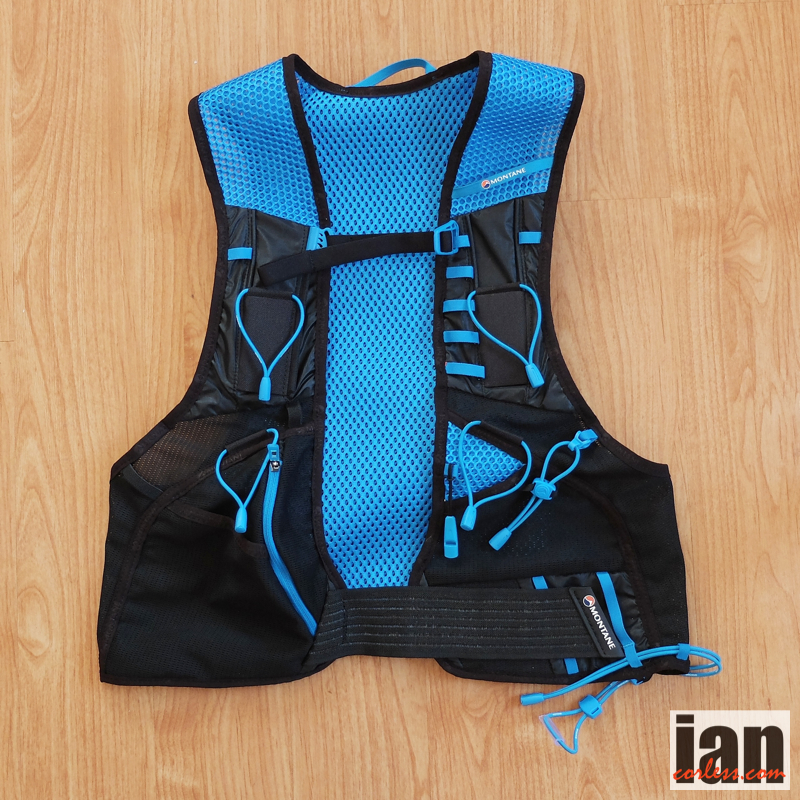
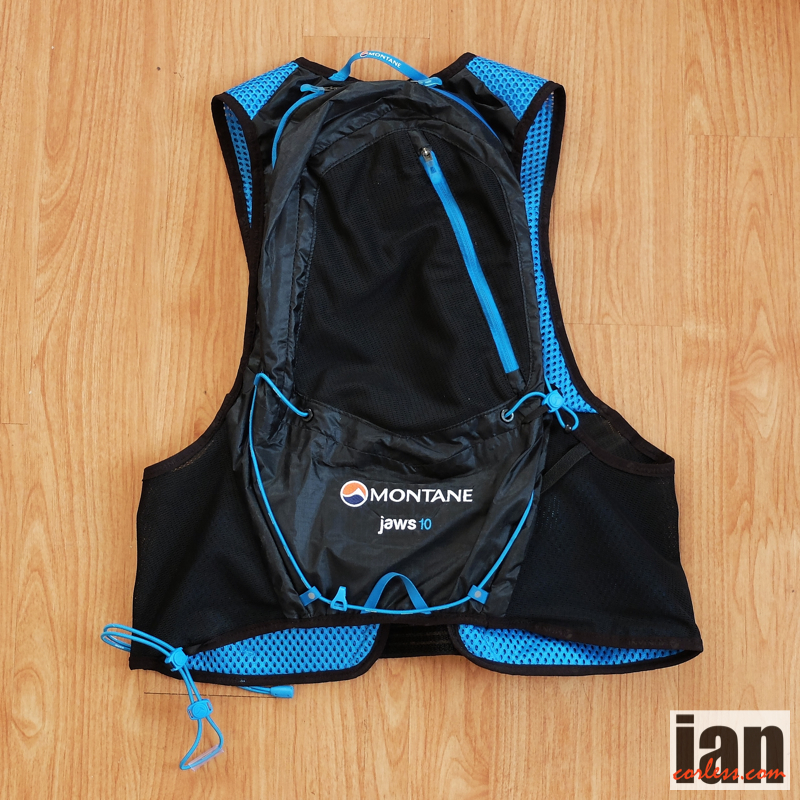
Jaws 10 front

Jaws 10

Montane know a thing or two about lightweight. Arguably, they are one of the first companies truly to push the boundaries of going light to the mountains with single layer clothing. For over 18-years, Montane have developed and tweaked ideas and recently they have moved into trail and mountain running. It was a natural progression. Involvement on the Lakeland 100 and 50-mile races has progressed to sponsorship of The Spine and the Yukon Arctic Ultra amongst others. Involvement in these races and the development of a trail running team is an invaluable process for a brand that are looking to push boundaries and we as consumers benefit from this explorative work. Let’s face it the Minimus Jacket and Pants have become almost essential items for anyone requiring light, functional fully waterproof outer layers for demanding sports. So, I was excited to see Montane’s new packs in late 2013 and even happier to get hold of samples to test in 2014.

In summary, Montane have developed 3 new run packs and 1 waist belt. The packs are as follows:

Fang 5

Jaws 10

Dragon 20

and as the name would suggest each have a capacity of 5, 10 and 20 liters. The waist best, Bite 1, is a stretch trail running belt that holds one bottle and has a small waterproof pocket for essential items.

scroll_bite_1_blue_spark_angle_blk_FOR_WEB

The packs have many of the same features and for the purpose of a review I have the Jaws 10, which sits nicely in the middle of the range and ultimately, if you were only going to purchase 1-pack for many running scenarios, this pack would offer the most options excluding any OMM type of event.

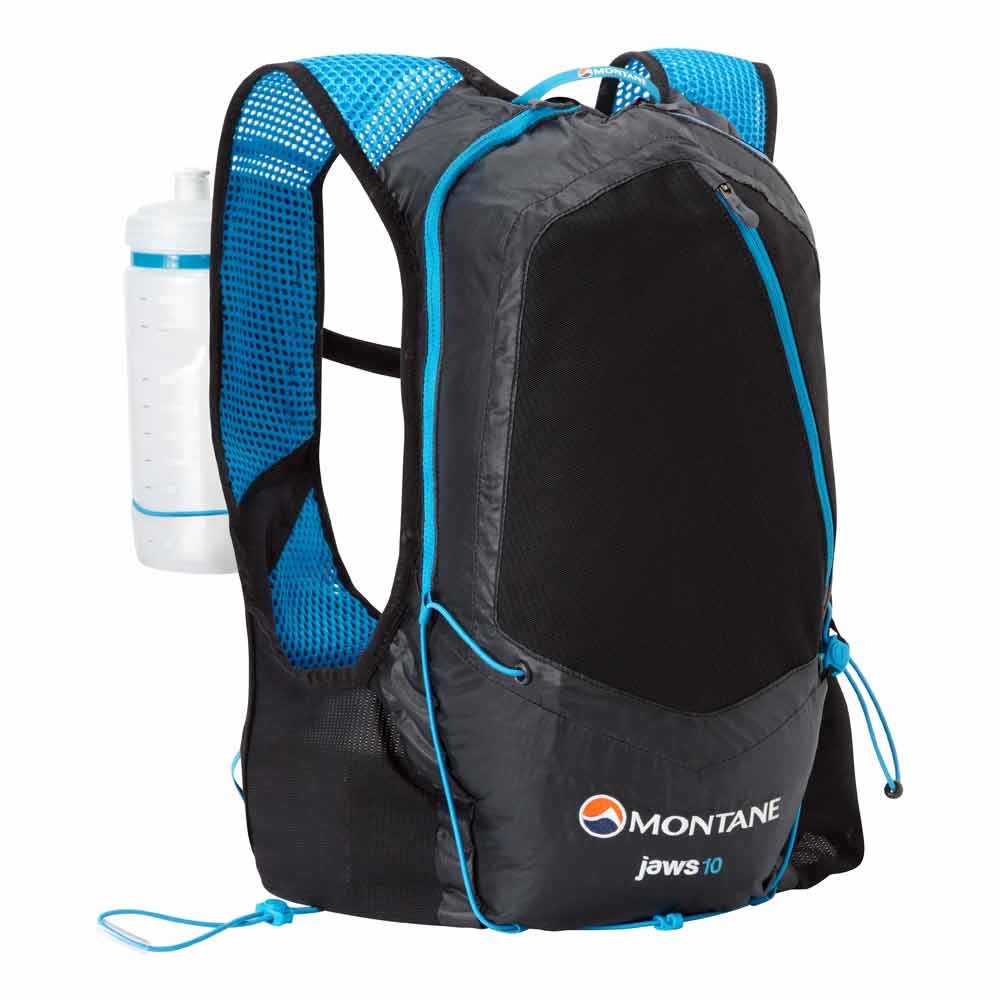
Montane say, ‘The Jaws 10 is the world’s most weather resistant ultra distance trail running pack. Designed for mountain trails in wet or changeable conditions, it uses RAPTOR Hydroseal waterproof fabric and fully taped seams to help protect kit from the elements. Through its stretch body fit, the new MONTANE® Freelight Chassis provides an even weight balance whilst trail running and keeps the weight away from the lower back allowing for nimble agility. With a super lightweight 10 liter storage capacity, two specially adapted MONTANE® water bottles and a bladder compartment, the Jaws 10 is perfect for ultra distance race events or long trail days.’

©iancorless.com_S0202117MontaneJaws10

On first look, the Jaws 10 conforms to many of the ‘new’ packs on the market. It has a ‘vest’-fitting fitting scenario that fits and hugs the body like a piece of clothing. We could argue all day about which company first invented this system and to be honest, I don’t know than answer. For many though, Salomon rightly or wrongly get the recognition and I am not going to argue, The S-Lab vest was a key moment that changed how run packs are designed. Montane are following the trend but with a difference.

The Pack

©iancorless.com_S0272148MontaneJaws10

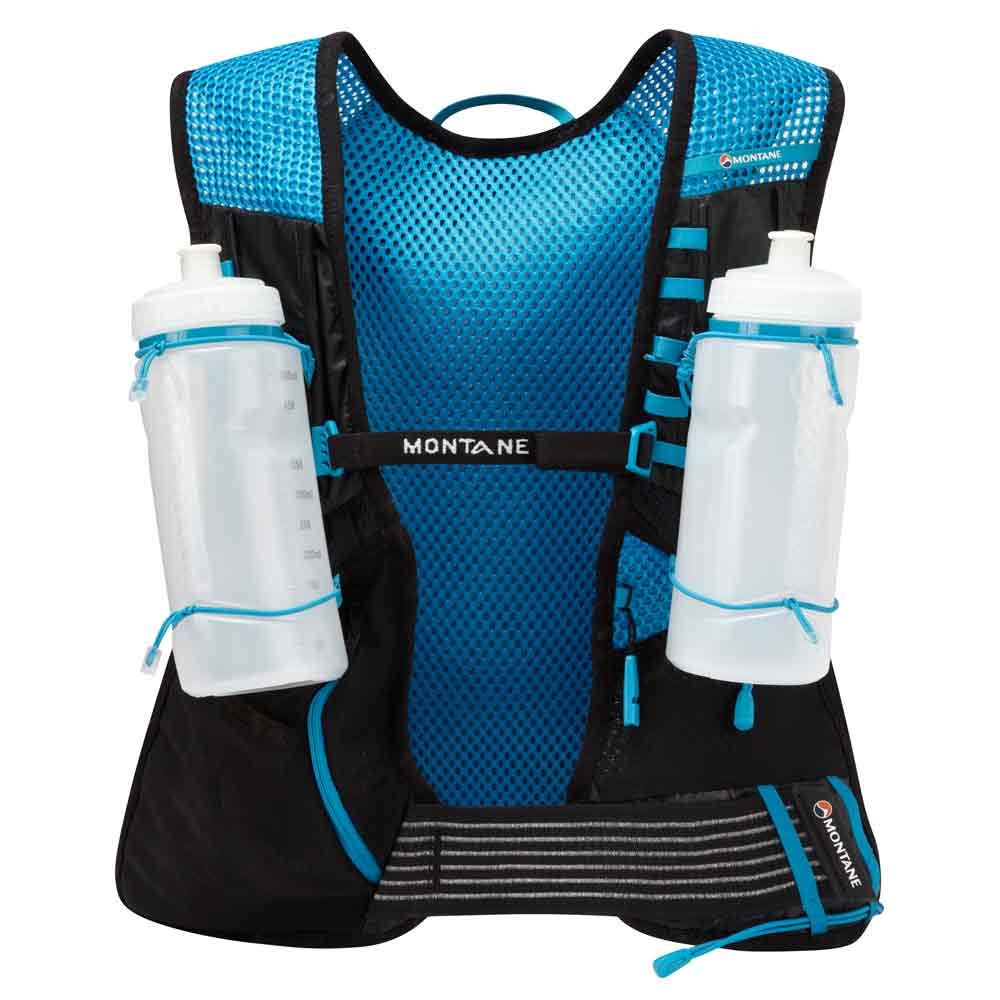
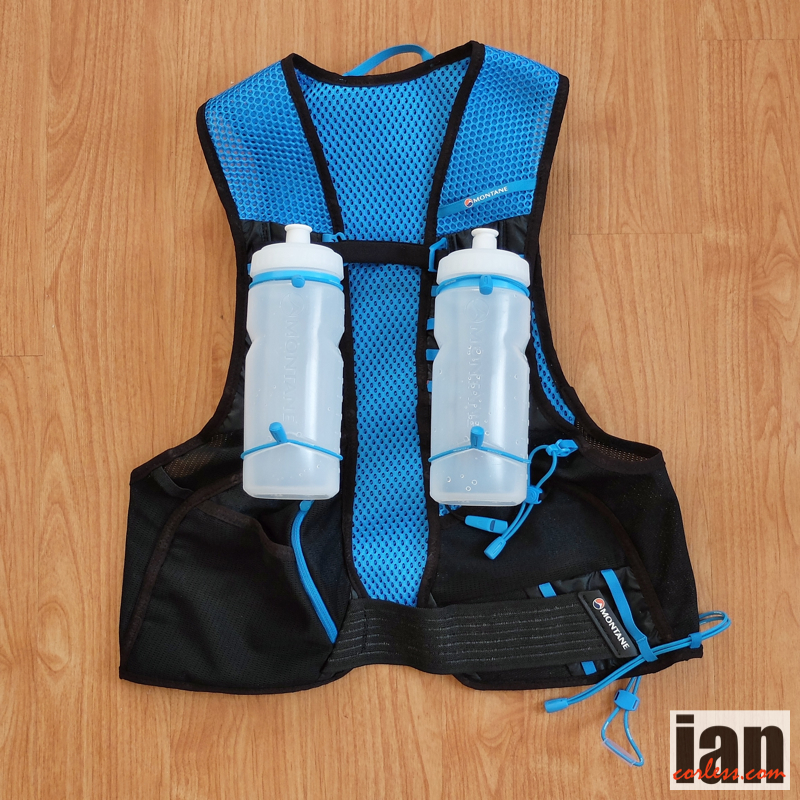
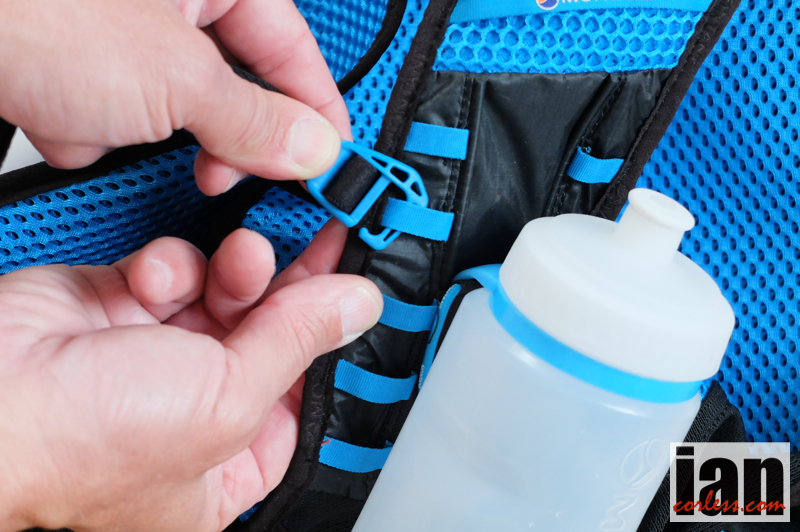
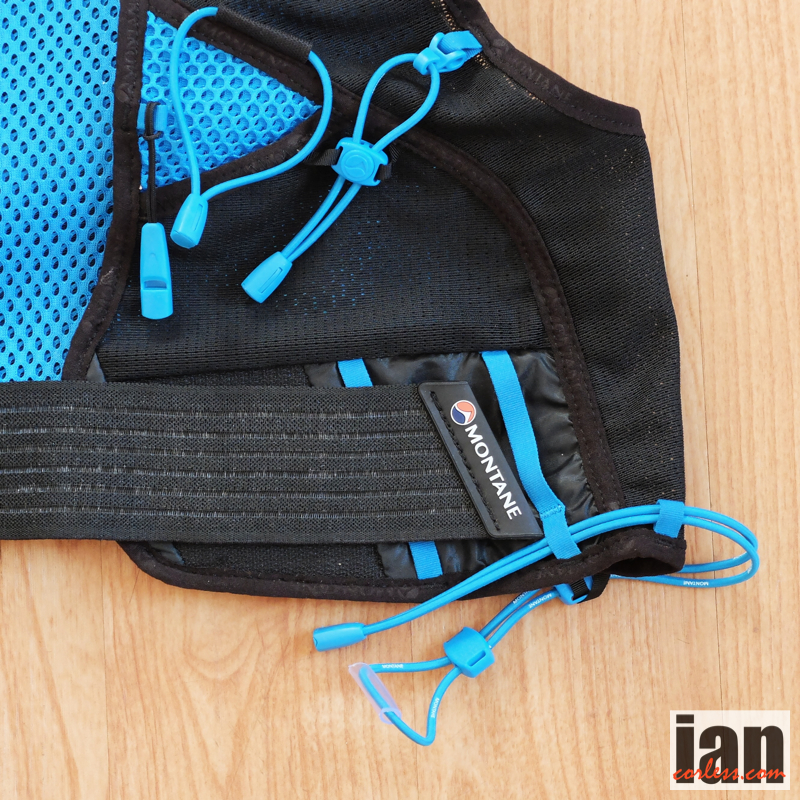
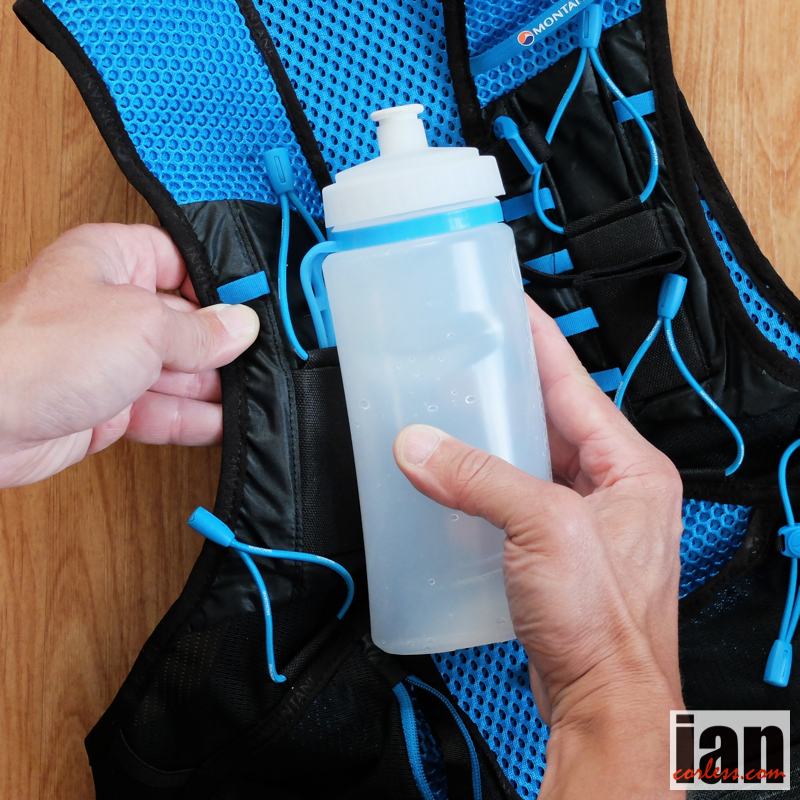
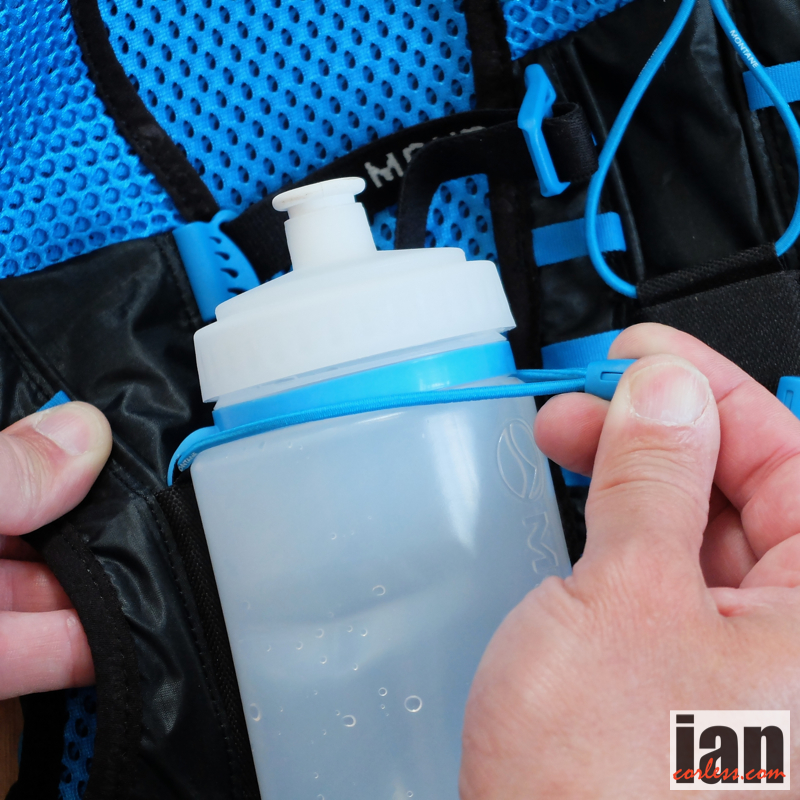
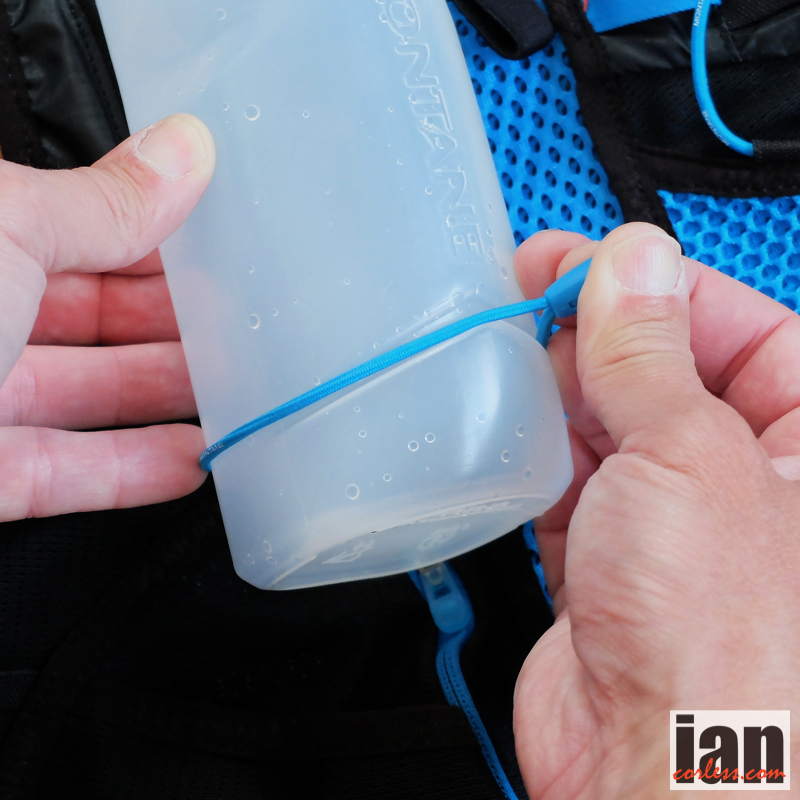
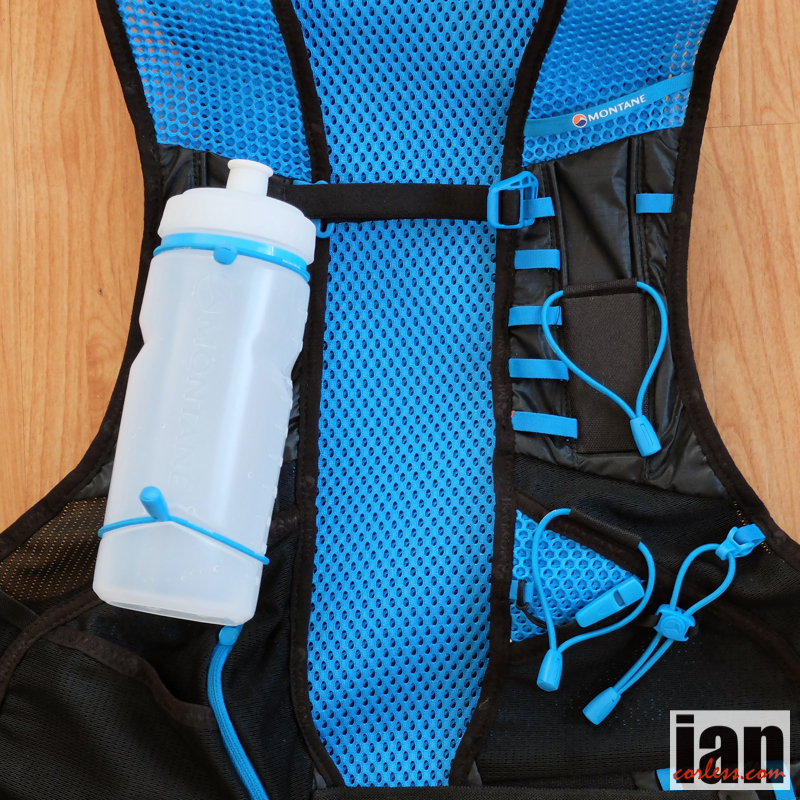
At first glance, you notice the bottles on the shoulder straps and then you take a second look and contemplate the fastening system. They look like they are held by 2-elastic bungees. They are but the bottle has a specially developed clip (not dissimilar to a pen) that hooks into a specially reinforced pocket on the shoulder straps. This system is actually quite ingenious and really is thinking out of the box.

©iancorless.com_S0412218MontaneJaws10


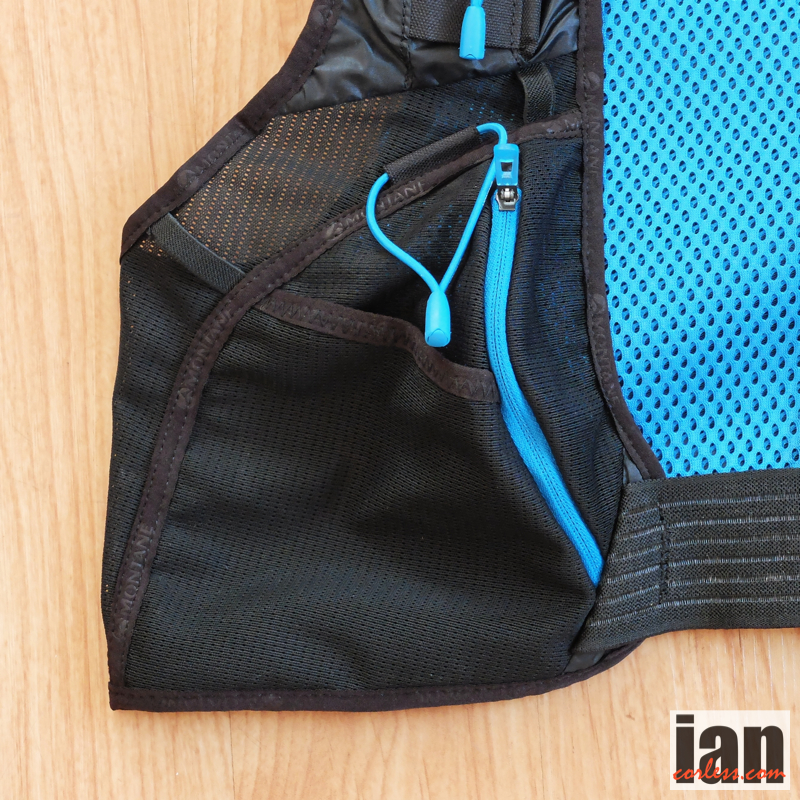
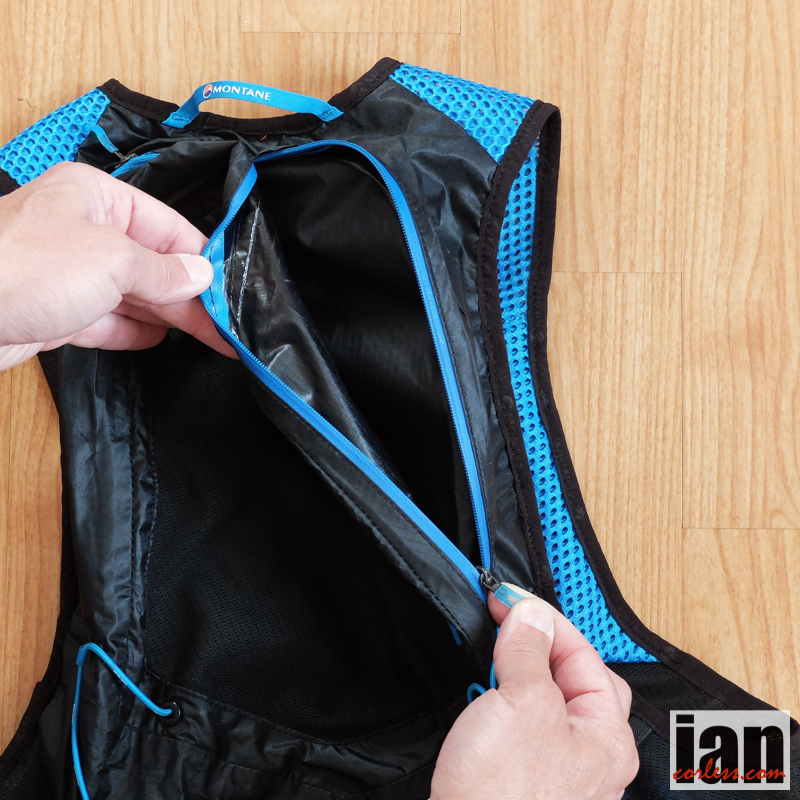
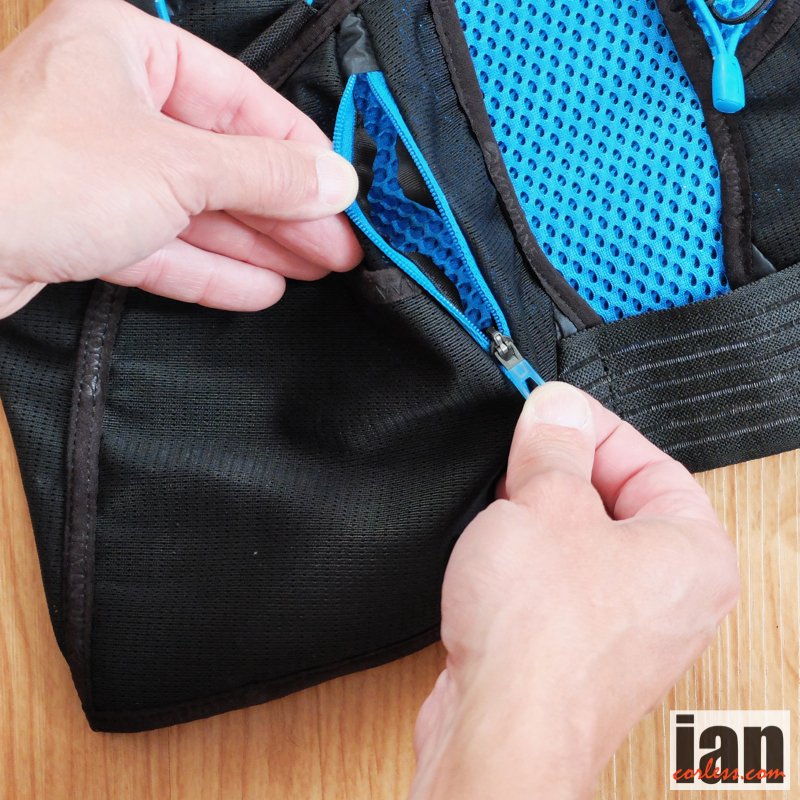
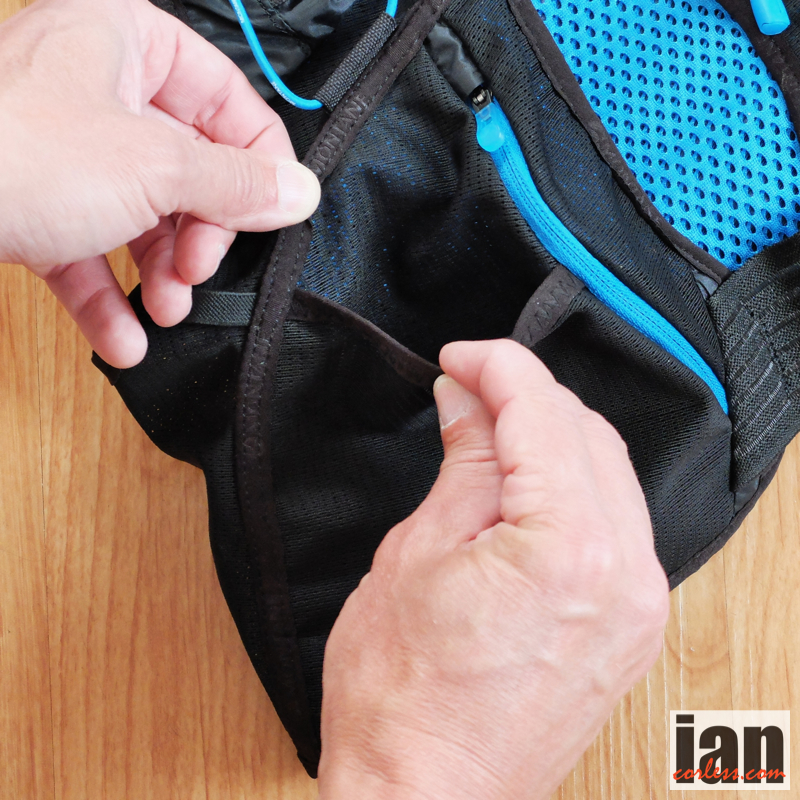
Below the left hand bottle is a small open-ended stretch mesh pocket for small essentials that are required while running. On the opposite side is a larger mesh pocket added on top of a zipper pocket. The zipper pocket would be ideal for valuable items such as phone, gps, money or small camera. Above these pockets is a series of elasticated loops that would hold a bladder feed tube if this was your preferred drink method.

©iancorless.com_S0212122MontaneJaws10

©iancorless.com_S0232132MontaneJaws10

©iancorless.com_S0242137MontaneJaws10

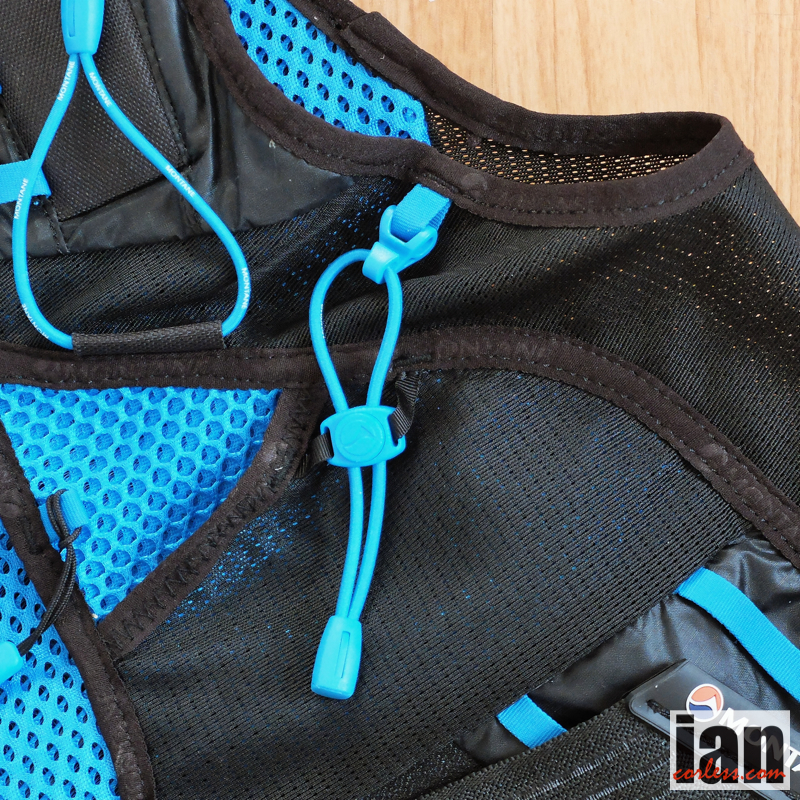
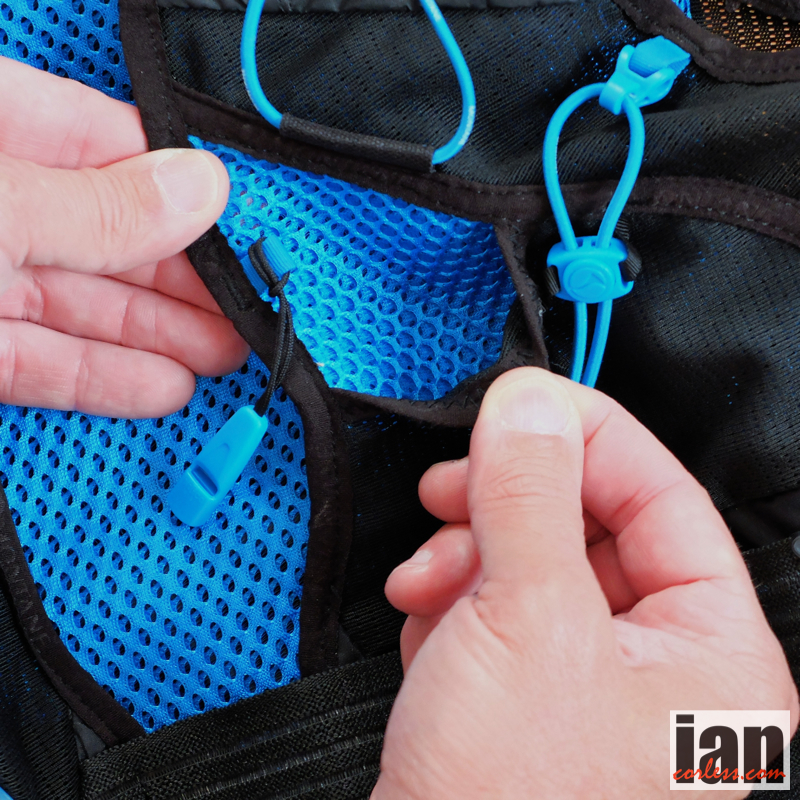
A whistle is attached to the front of the pack on a small cord and the pack is fastened with an adjustable chest stretch that hooks onto reinforced loops. Lower down the pack a large/ wide adjustable stretch Velcro holds the pack close to ones body.

©iancorless.com_S0352188MontaneJaws10

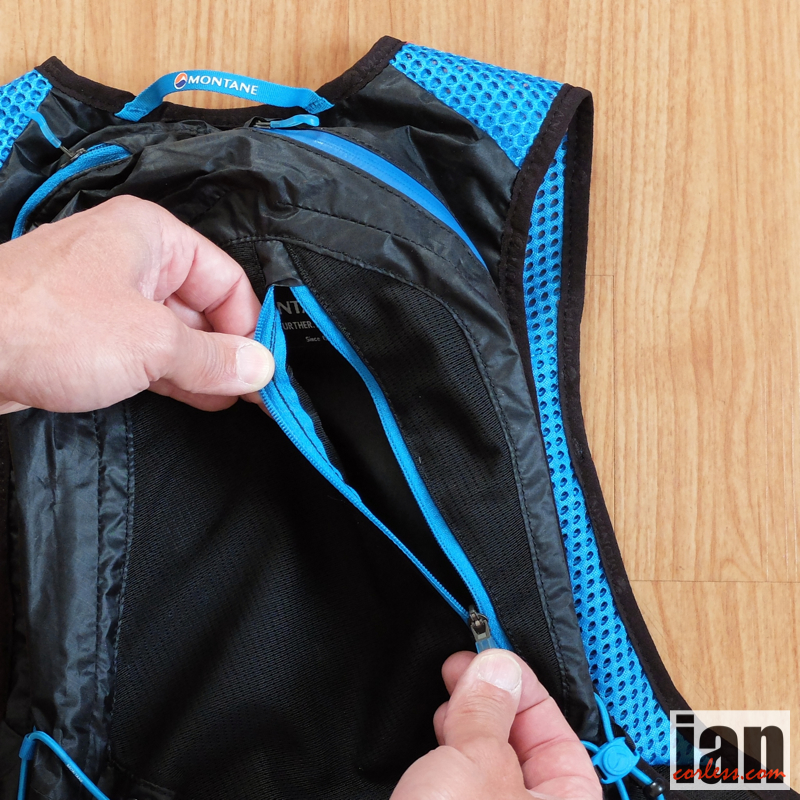
On the rear the pack splits into 3.

©iancorless.com_S0282153MontaneJaws10

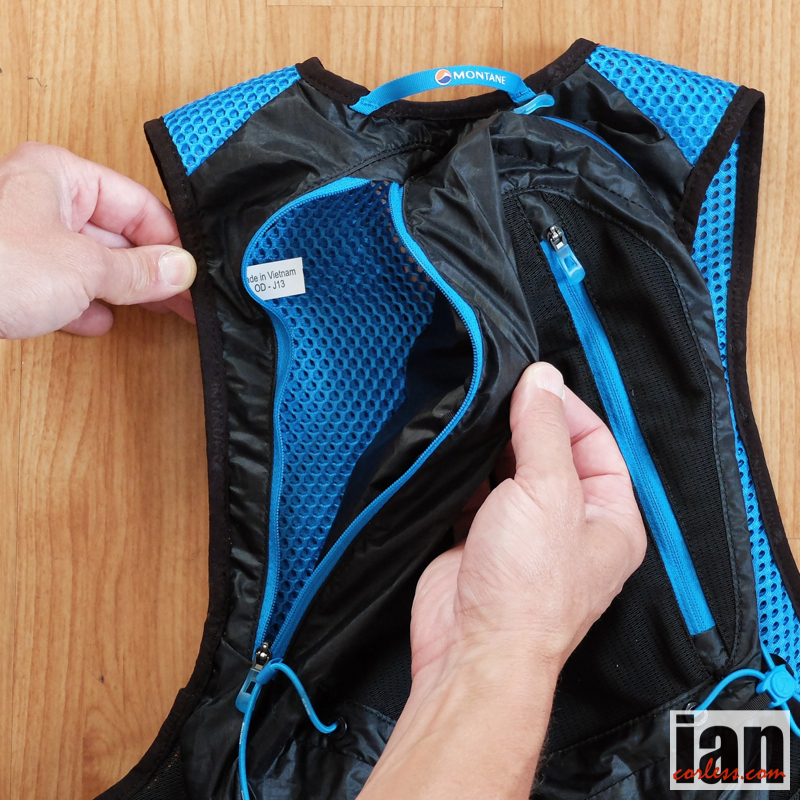
The zip on the left allows access to the bladder pocket (bladder not supplied) which would offer additional storage should you wish to just use bottles.

©iancorless.com_S0292158MontaneJaws10

The right zip is sealed and taped and offers a large waterproof pocket.

©iancorless.com_S0312168MontaneJaws10

On the face of the pack is a zipped mesh pocket for smaller items.

©iancorless.com_S0302163MontaneJaws10

On the lower section of the pack is an elasticated adjustable cord for attaching poles and the pack has an external draw cord should you wish to compress the pack. On the right hand side is a hole to allow the bladder pipe to exit and run around the pack, under the arm to the front of the pack.

©iancorless.com_S0422223MontaneJaws10

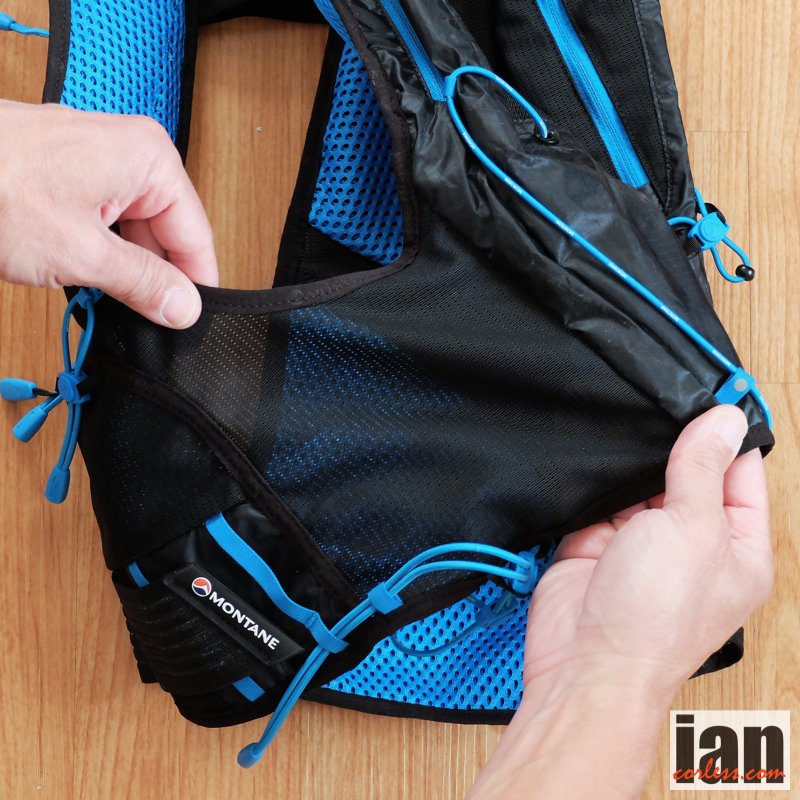
On the side are two large stretch mesh panels that allow the pack to conform to your body and adjust with movement.

©iancorless.com_S0322173MontaneJaws10

The pack in use

The Jaws 10 comes in 2-sizes*: S/M and M/L. I was literally the borderline measurement and received a M/L from Montane.

*For our SS15 season, Montane have introduced new chest sizes for the Jaws 10 and Fang 5 – they both now come in S/M and M/L..  Chest measurements of the wearer respectively are: 76-97 cm (S/M) and 97-112 cm (M/L).

The pack didn’t feel too large but I was adjusting to the tightest fitting. So, it would be interesting to try the S/M and see if I noticed any difference in fit. On the body, the Jaws 10 fits snuggly just as all vest products should. Under the arms I didn’t feel too compressed and the lightweight and stretchy mesh in this area allowed the pack to adjust and conform to my body movement. I can’t help but think that Montane missed a trick in this area! The stretch panels under the arms are large and may well have provided another storage option by adding an open top mesh pocket on each side. It would have been perfect for bars, gels, hat, gloves and so on.

©iancorless.com_S0322173MontaneJaws10

Adjusting the pack to the body is done via the sternum strap, it can be moved up and down.

©iancorless.com_S0442229MontaneJaws10

An elasticated belt that sits just below the rib cage provides the main adjustment. It’s interesting to see a brand using this method as most manufacturers have now moved away from this. Adjustment was easy and secure and the elastic does allow for fine tune adjustment and expansion while wearing. As stated, the Jaws 10 fits like clothing, however, the added pressure this elasticated belt provides may not be to everyone’s liking?

©iancorless.com_S0222127MontaneJaws10 The key USP of this pack are the bottles and the way they fasten. It’s a little like putting a pen in your shirt pocket… the specially designed bottles have a clip that slips into a reinforced pocket on each shoulder strap and the bottle is then held in place with a top and bottom bungee cord.

©iancorless.com_S0372198MontaneJaws10

©iancorless.com_S0382203MontaneJaws10

©iancorless.com_S0392208MontaneJaws10

In use, the bottles never came loose which I have to say was a surprise! The design really is quite clever and moving bottles and then replacing them on the go is a breeze. Again, much easier than I expected!

©iancorless.com_S0252142MontaneJaws10

However, for me the bottles have far too much bounce when running. Not only do they move up and down but left to right. With each bottle full I felt a little like one of the ladies from Baywatch (heavy chested) running along the beach and wearing no bra! I did get used to the bounce over repeated runs, however, for me it’s not something I could tolerate. I must stress here that I personally have never been a fan of bottles on shoulder straps, particularly when they are allowed to move around. The recent invention of soft flasks and mesh pockets have addressed this issue and eradicated bounce. In my opinion, it’s a far more preferable way to hold liquid in this area of the body. I can’t speak for the ladies, but I don’t see how this pack could be comfortable for the female anatomy, especially when one considers the placement of the bottles in relation to a ladies chest? (We will come back to you on this with a female viewpoint)

©iancorless.com_S0342183MontaneJaws10

The zippered pocket below the right bottle is ideal for a valuable item such as phone, gps, money or iPod and has room for several items.

©iancorless.com_S0332178MontaneJaws10

The mesh pocket attached here is great for gels, bars or similar but it ‘s not the ‘Tardis’ so you will be restricted.

©iancorless.com_S0362193MontaneJaws10

On the opposite side is another mesh pocket, however, this is smaller than the right hand side and only really for small items such as salt tabs, shot blocks or similar.

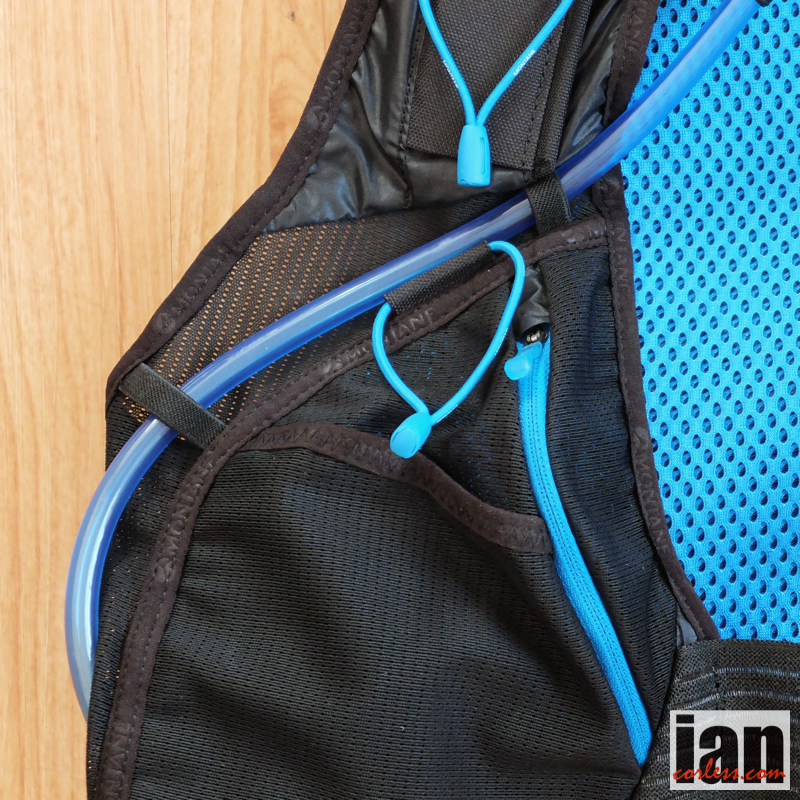
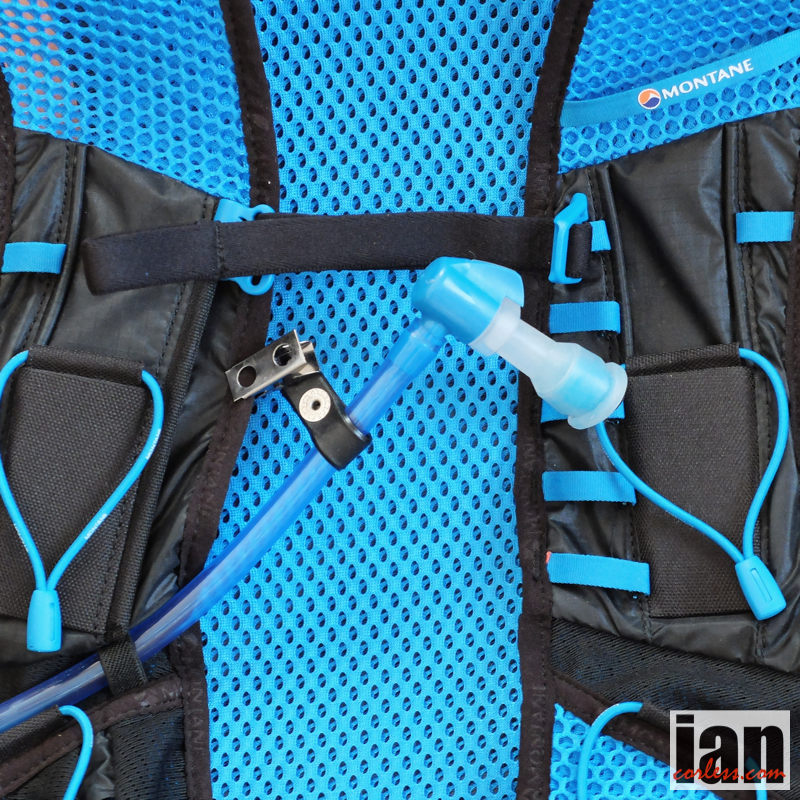
I preferred the feel of the pack with a bladder and the rooting system works well bringing the feed pipe out of the lower right hand side of the rear pack and rooting it under the arm while securing it in elastic loops. You can then place the feed nozzle at your preferred heights for feeding hassle free. Of course, you can use a bladder with bottles that would potentially provide you with 3-4lts of liquid storage, a real plus in some self-sufficient events. But, if you don’t use the bottles you are left with two wasted spaces on the shoulder straps and elastic bungee hanging loose!

The waterproof compartment on the rear will fit ‘mandatory kit’ for most events and I include UTMB or Lakeland 100 if you pack smartly. The main issue is that the pocket is just an open pocket with no compartments, so, fill it up and off you go. Should you need something it will be a case of rummaging around and finding it or potentially lifting everything out one-by-one until you find what you need. It’s a pay off! One compartment will be less weight than several compartments, so, you pay your money and make your choice. The waterproof compartment and zip is a real plus. I poured water over it, submerged the pack and used it in rain and it did not leak. The zips also have a ‘garage’ to add security and sealing, The outer rear mesh pocket is ideal for small things and it does expand, The bladder pocket adds additional storage should you need it. For most people, if you are planning doing a one-day race or a 100-mile event, this pack will provide a great lightweight option. In addition the Jaws 10 has bungee cords for poles and a compression bungee to tighten the pack should it be required.

Conclusions

The Jaws 10 really fits well and is extremely comfortable (for men) providing you like the adjustable elastic chassis. It’s a light breathable product that functions extremely well on the trail when racing or training. The bottles are an ingenious idea, work well but bounce around too much for me! Storage is good (but not great) and the addition of a waterproof pocket is a unique addition but may very well over engineer something that can be solved with a plastic bag? Using a bladder is easy and very comfortable and the separate pocket allows for on the go filling and replacing. Storage pockets are adequate but are less capacious than like for like products. The Jaws 10 has many great features and pluses but I firmly believe that a few tweaks would make what is a good pack a much better pack. For example, the addition of ‘dump’ pockets under the arms would increase storage for the essentials we all need when running long events.

Pros

  • Lightweight
  • Breathable
  • Adjustable
  • Waterproof compartment
  • Will take bladder and bottles
  • Bladder compartment can be used for storage
  • Will hold poles
  • Unique bottles that are easy to use
  • Two size options

Cons

  • Bottles have too much bounce
  • On the go storage is minimal
  • Montane only bottles so I suggest you purchase spares
  • Not convinced how practical for ladies?

 *****

Tech Specs provided by Montane

CONSTRUCTION

  • Main body fabric constructed from super lightweight RAPTOR Hydroseal waterproof fabric that has a PU inner coating and a silicone outer face
  • MONTANE® Freelight Chassis constructed from lightweight CONTACT Flyte Mesh that is fast drying and highly breathable
  • Fully taped internal seams in the main pack compartment
  • Bound seams on the chassis give stronger, neater edges
  • YKK semi-auto zips that lock shut and are rustle free
  • All zip openings feature zip garages to help prevent weather ingress

MONTANE® FREELIGHT CHASSIS

  • Technically tailored ergonomic MONTANE® Freelight Chassis vest designed for body hugging load carrying comfort during movement over long distances and whilst running
  • Front stretch Velcro lower body adjustment enables chassis to grip the body whilst running
  • Chassis elastication also allows the user’s rib cage to expand freely for unrestricted breathing during exertion
  • Low profile sternum stretch adjustment with adjustable hook and multiple attachment points
  • 2 x MONTANE® customized water bottles with unique easy clip to harness for rapid hydration
  • Water bottle is anti-roll, curved to fit to chest / torso
  • Right hand front zipped storage pocket with stretch mesh
  • Lower right and left hand front sleeve pockets with stretch mesh
  • Upper left hand chest gear loop on shoulder straps
  • Trekking pole attachment point with low profile ‘penny cordlock’ adjustment that is easy to access whilst on the move
  • Removable whistle accessory for mountain and race safety

MAIN COMPARTMENT

  • Two way YKK Aqua Guard® MONTANE® semi-auto main body zip that has been laser cut and bonded into opening
  • External pocket with stretch mesh panel
  • External drawcord provides rear pack compression and additional storage with low profile ‘penny cordlock’ adjustment
  • Hydration bladder pocket behind rear back panel with stretch loops for hydration tube on chassis

Top lightweight hang loop

Colours:

Black / Blue spark zips / Blue spark trims

Blue spark / Kiwi zips / Kiwi trims

Weight: 281.5g / 9.9oz

Size: S/M and M/L

Fit: Active Mountain

Activities: Fast Alpine / Mountain Walking / Alpine Running / Mountain Marathon / Trail Running

RRP: £85.00

Montane products are available to view HERE

******

If you like the content on this website you can support us by making a donation

one-off funding with gofundme

gofundme

or funding via Patreon

donate

inov-8 – Race Ultra™ 290 – Shoe Review

Race Ultra 290 1[2][2]

inov-8 release their first ever ultra running shoe and we were lucky enough to get hold of a test pair 3-months ago, albeit in a UK8. That ruled myself out of any run testing but Niandi Carmont stepped up to the mark and gave the new Race Ultra™ 290’s a beating in the build up to Comrades. Here are her thoughts.

The Race Ultra™ 290’s is a first for UK shoe manufacturer, inov-8 but definitely not the last based on my testing of them. I picked up these shoes in the middle of March, so, I have had them for exactly 3-months; a perfect test period for any shoe!

In preparation for the 2014 Comrades I was reluctant to do all my training on road. Funny really, I used to be a ‘roadie.’ However, like so many others, after finding trail I have been reluctant to go back to the hard stuff… Road running was going to require a lot of motivation so I decided to alternate between trail and road just to get the miles in and to keep my motivation going. The Race Ultra™ 290’s proved to be the perfect shoe when mixing things up.

Usually it takes me a while to get used to new shoe models never mind new brands. I was a little anxious this time as this was my first experience of inov-8 footwear. I was pleasantly surprised – I required no adaptation or transition. The shoe has a slipper-like feel and is a perfect compromise in terms of cushioning and weight (290g/UK8). The gusseted tongue is padded, holds the foot firm and the thin laces pull tight, stay tight and provide reassuring security to my foot irrespective of the conditions. The toe box is wide, spacious and certainly has room for swelling feet should the need arise from multiple hours of running. Toe protection comes from a reinforced area that actually extends all the way around the shoe.

Prone to foot injuries I need cushioning but usually find it hard to get a trail shoe that is able to offer:

  • Cushioning.
  • Lightweight.
  • Good grip.

The Race Ultra™ 290 ticks all these boxes. Yes I know you can get lighter shoes. Yes I know you can get more cushioning and yes I know I can get a shoe with more grip. The secret of the Race Ultra™ 290 is that it has averaged all these elements and comes up with a great all round package. So much so, that I would say if you were looking for one shoe to do all things, you wouldn’t go wrong with a pair of these!

©iancorless.com_P6100027RaceUltra290

Injected with EVA, the footbed is 6mm with 10mm at the front and 18mm at the rear offering a heel to toe drop of 8mm. Inov-8 as a brand have pioneered the transition to a lower drop shoes for 11-years and the Race Ultra™ 290 may well provide ultra-runners seeking to transition say from 12/13mm drop shoes towards a more minimalist drop a perfect opportunity. Equally, if you run in 6/4/3 or zero drop shoes, the 8mm may well provide you with a more ‘relaxed’ day on the trails. After all, this is the purpose of the Race Ultra™ 290. It’s all about making hours on trail and/ or road more pleasurable and less tiresome but this depends on your own run style and preferences. For me 8mm sits very well for longer runs. The flatter outsole ensures a stable ride without the loss of proprioception and as the hour’s pass and fatigue sets in, the 8mm drop and added cushioning are welcome.

©iancorless.com_P6100002RaceUltra290

Transitioning from road to trail is not an issue as obviously this shoe has been designed specifically for this purpose. It’s without doubt an all round shoe that excels on hard pack trail events that may include road and rocky sections. Tested on dry sun baked French trail that incorporated a mixture of hard clay, stones and rocks the Ultra 290 excelled, in softer / grassy sections the ‘Tri Endurance’ compound provided confidence. Should the trail become very boggy and/or muddy, grip is compromised. This is to be expected in a shoe that is trying to be all things in one package. However, if these sections are short and provide a very small percentage of your run (say 10-20%) this is a compromise worth making for the comfort and security the shoe will provide for the remainder of your run.

Race Ultra 290 2[1][2]

On UK trail it proved to be a good all-weather shoe offering good grip for a multitude of conditions. Door-to-Trail is a term that is being used quite considerably at the moment and I do feel that the Race Ultra™ 290 fits well in this bracket.

A nice little non-negligible feature for the runner with smelly feet is the patented X-STATIC® foot bed, ensuring that the bacteria feeding on sweat will be kept at bay! I’ve had these shoes for a while, they have been through mud, wet and grass and I guarantee they are completely odourless!

The shoe also has the option to take custom Race Ultra™ Gaiters (available separately). They clip onto inov-8’s unique on-the-shoe attachment system. This is very cool. The shoe has attachment points built in and thus allows the gaiter to be added or removed as required with minimum fuss. I don’t use gaiters very often, however, having tried these I think I will use them more. They stopped mud and stones entering the shoe from the top and to be honest, once on, I didn’t even know I was using them. I can see this feature being added to more shoes in the inov-8 range. Should you wish to use the gaiter with other shoes, a fastener is supplied to make this possible.

A feature I would have liked is a more trail-friendly lacing system that offers a place to secure or store excess lace when the shoes are tied. It’s a minor quibble and may very well have been an omission as this would be redundant if the gaiter was worn.

In conclusion, inov-8’s new Race Ultra™ 290 shoe will be a hit. I am sure of it. If you are already an inov-8 user this may well be your new ‘go to’ shoe for your daily runs when an ‘all rounder’ is just what you need. If you are new to ultra running and only want one shoe, this will be perfect place to start. I really can’t find any negatives about this shoe other than the obvious…. If it’s really muddy you won’t have enough grip but that isn’t a criticism of the shoe, it’s more about having the wrong shoe for the job.

Check out inov-8 HERE

Shoe will be available from July 2014


Niandi Carmont

Niandi Carmont – Niandi is South African born, a former resident of Paris, she now lives in the UK. A runner for over 20-years; Niandi has completed Comrades Marathon 13-times, Washie 100 2-times and has finished well over 100 marathons and ultras  all over the world. Currently residing in the UK, Niandi splits her work life between the UK and France.

 ******

If you like the content on this website you can support us by making a donation

Click HERE

donate