Episode 209 has Damian Hall joining Ian to discuss the new UTMB World Series that sees UTMB joining with Ironman.
Talk Ultra needs your help! We have set up a Patreon page and we are offering some great benefits for Patrons… you can even join us on the show! This is the easiest way to support Talk Ultra and help us continue to create! Many thanks to our Patrons who have helped via PATREON Donate HERE
INTERVIEW : IAN and DAMIAN HALL discuss the new UTMB World Series.
Important notes in addition to the discussion.
1.We would not expect to see Ironman branding at UTMB? No, this is the UTMB World Series, therefore the brand UTMB will be the one visible
2. We would not expect to see significant price increases for UTMB and UTMB races? This is not at all the plan
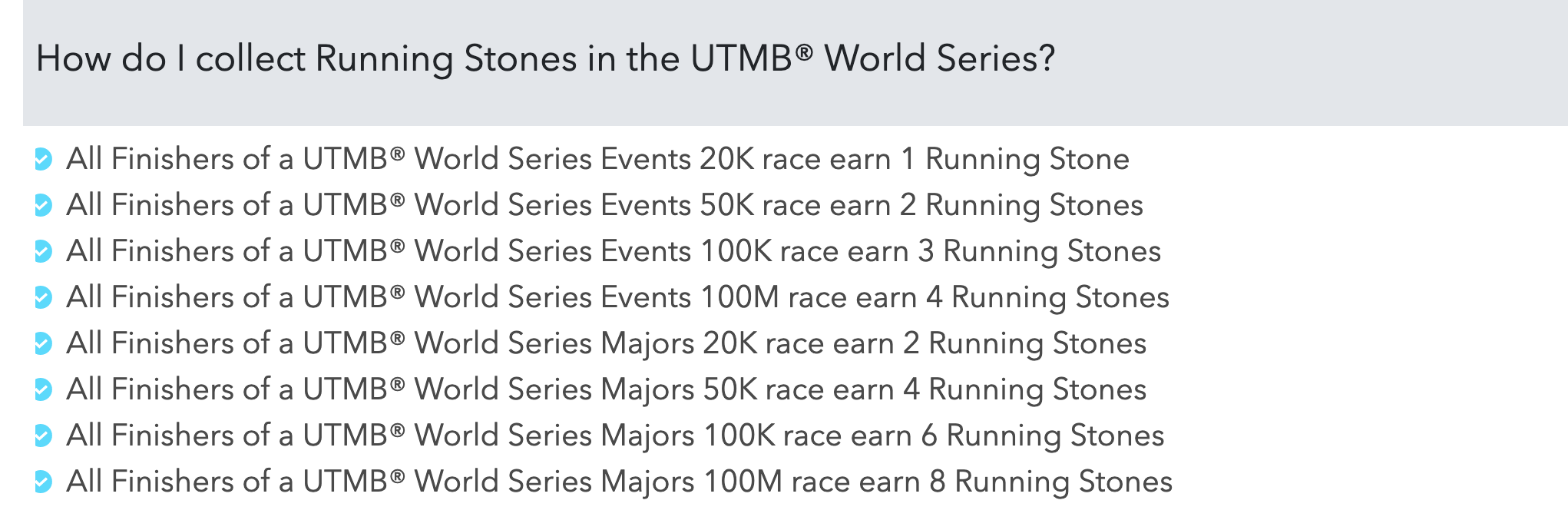
3.How long are Running Stones valid for? Running Stones remain valid until you succeed at the lottery. If you do not run for 2 years, you are required to ‘re-activate’ your Running Stones by running one race.
La Sportiva CYKLON shoe review HERE listen to Episode 208 of Talk Ultra is a special show with DANIEL FEENEY and Jonathan Wyatt discussing the collaboration between BOA and La Sportiva for the new, Cyklon shoe.
Please support this website. I believe everyone deserves to read quality, independent and factual articles – that’s why this website is open to all. Free press has never been so vital. I hope I can keep providing independent articles with your help. Any contribution, however big or small, is so valuable to help finance regular content. Please support me on Patreon HERE.
Episode 208 of Talk Ultra is a special show with DANIEL FEENEY and Jonathan Wyatt discussing the collaboration between BOA and La Sportiva for the new, Cyklon shoe.
Talk Ultra needs your help! We have set up a Patreon page and we are offering some great benefits for Patrons… you can even join us on the show! This is the easiest way to support Talk Ultra and help us continue to create! Many thanks to our Patrons who have helped via PATREON Donate HERE
Please support this website. I believe everyone deserves to read quality, independent and factual articles – that’s why this website is open to all. Free press has never been so vital. I hope I can keep providing independent articles with your help. Any contribution, however big or small, is so valuable to help finance regular content. Please support me on Patreon HERE.
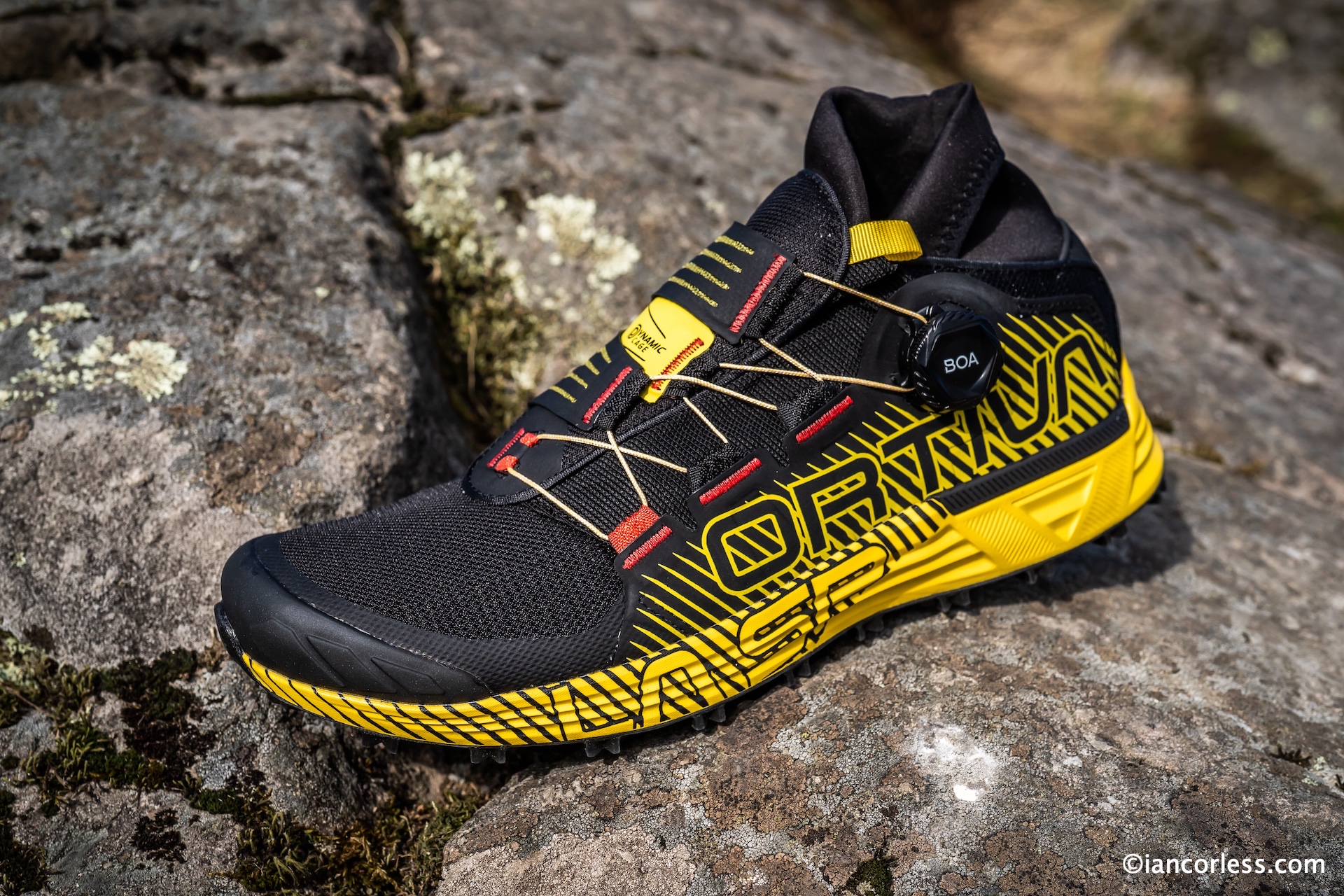
The La Sportiva CYKLON is here. Renowned for shoes that perform in mountain, challenging and arduous terrain, La Sportiva have moved up a level with the CYKLON collaborating closely with BOA® Fit System to provide a new mountain running shoe with a difference.
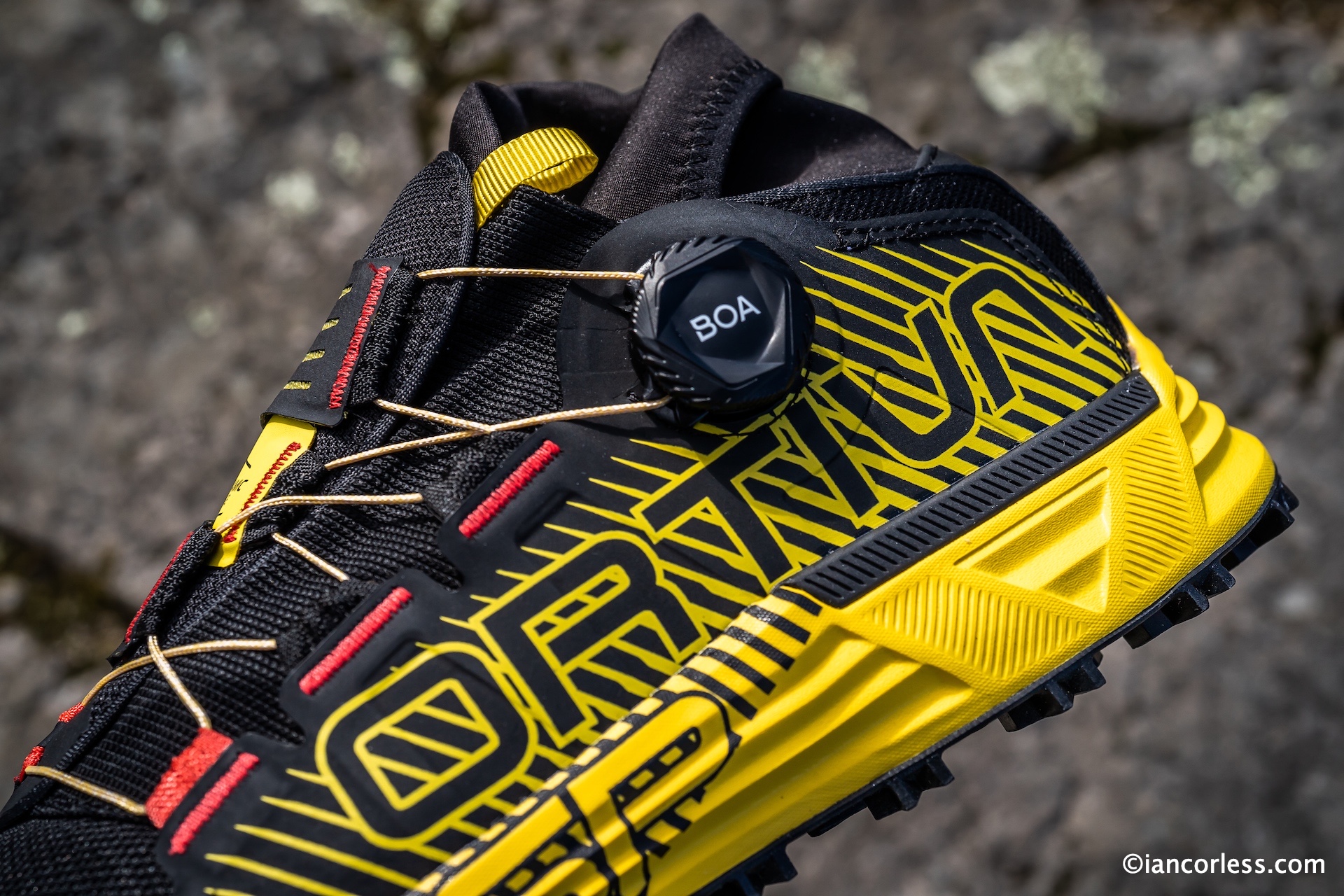
Available in multiple (4) colour options, the standout for me is the classic and directly recognizable La Sportiva colours on black/yellow/red which has always been pleasing to the eye and one that grabs attention.
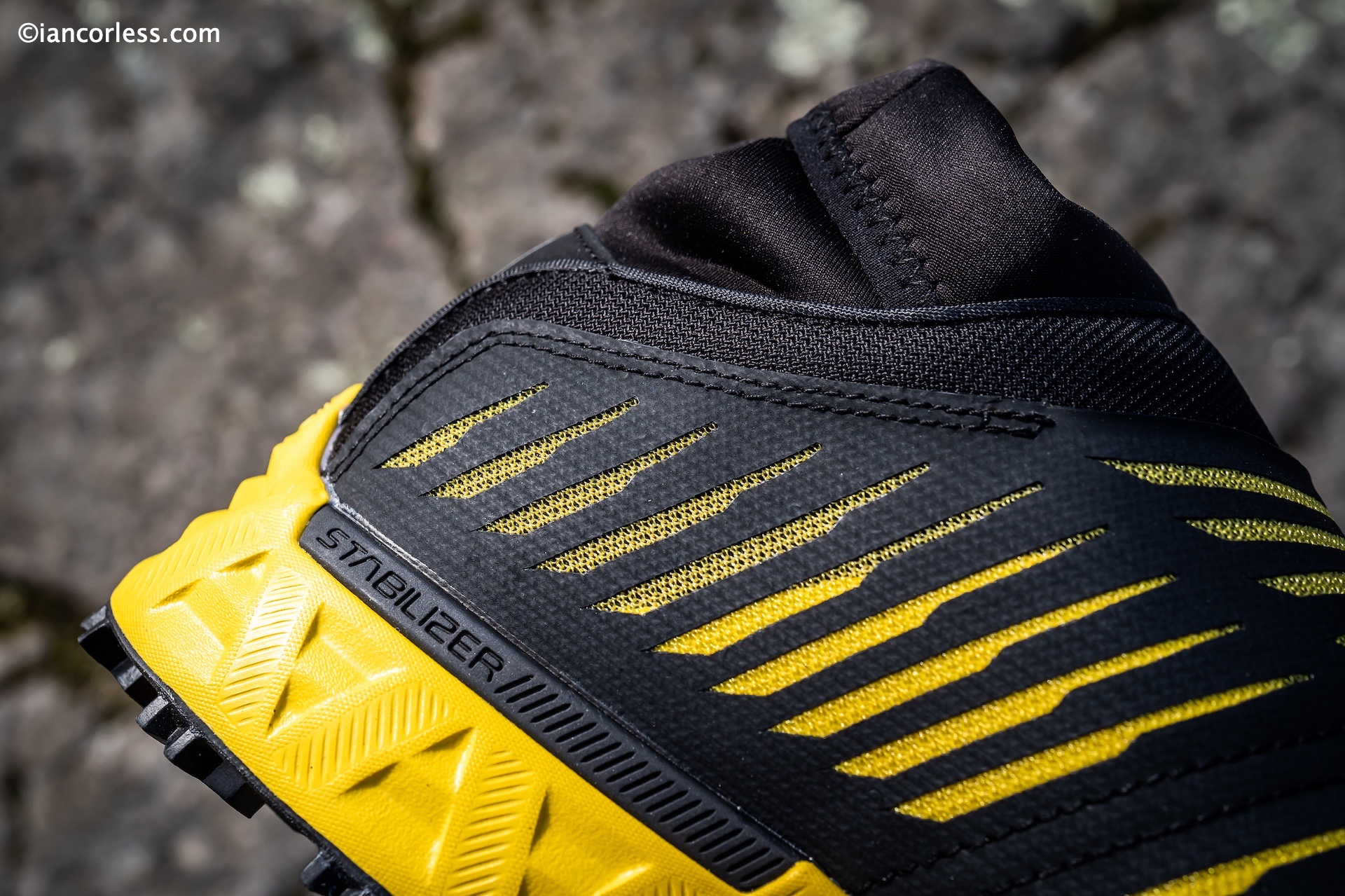
The CYKLON on first impressions could almost be mistaken for a lightweight boot due to the built-in sock-liner which comes higher up the leg, to beyond ankle height which has two purposes: 1. It keeps out debris from entering the shoe. 2. It provides additional support.
The CYKLON has slightly unusual sizing, I take an EU44 (UK9.5) in all my shoes, the same applies here in the La Sportiva, but this comes out as a UK9.5+ – I guess a 9 and 2/3rds. It works fine and, in all honesty, I would say that little extra room was welcome.
They are not the lightest shoes, 340g for an EU44, but on the foot and running they feel superb, secure, and strong. They certainly don’t feel like a 300g+ shoe. The weight is listed as 315g for ‘standard size’ which is typically UK8/ EU42.
Drop is 8mm and cushioning is 20mm at the front and 28mm at the rear providing excellent protection for tough and challenging terrain.
Designed to excel in mountain environments, 6x world mountain running champion, Jonathan Wyatt (who works at La Sportiva) has been closely involved with the development of the shoe with all important athlete feedback. In his words, the CYKLON is the next step from the extremely popular MUTANT. While similarities can be seen, particularly in the outsole, the CYKLON moves the shoe design on significantly. The addition of BOA® significantly changes things too and the two brands have worked together to develop and tweak to ensure that the shoe is as perfect as it can be.
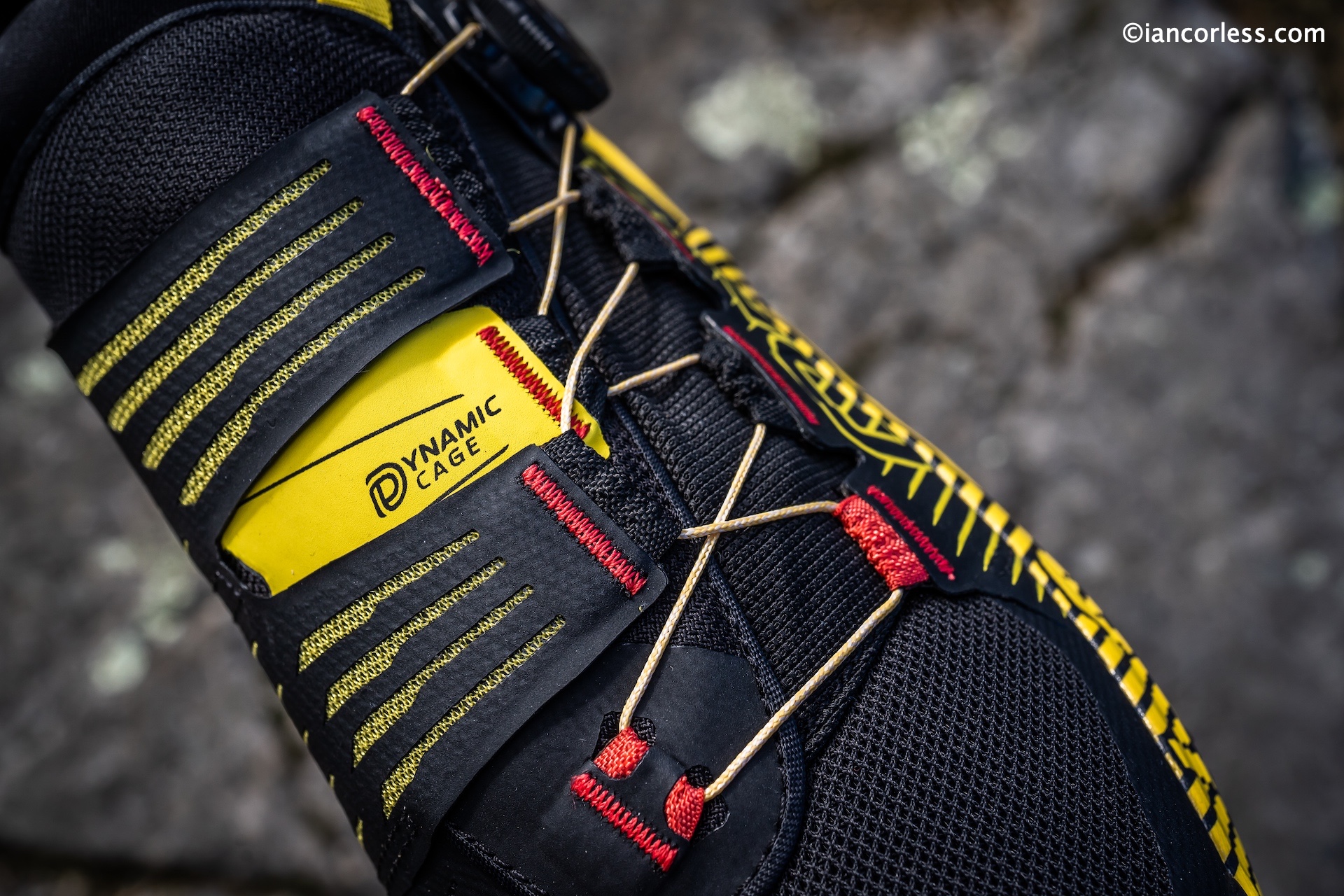
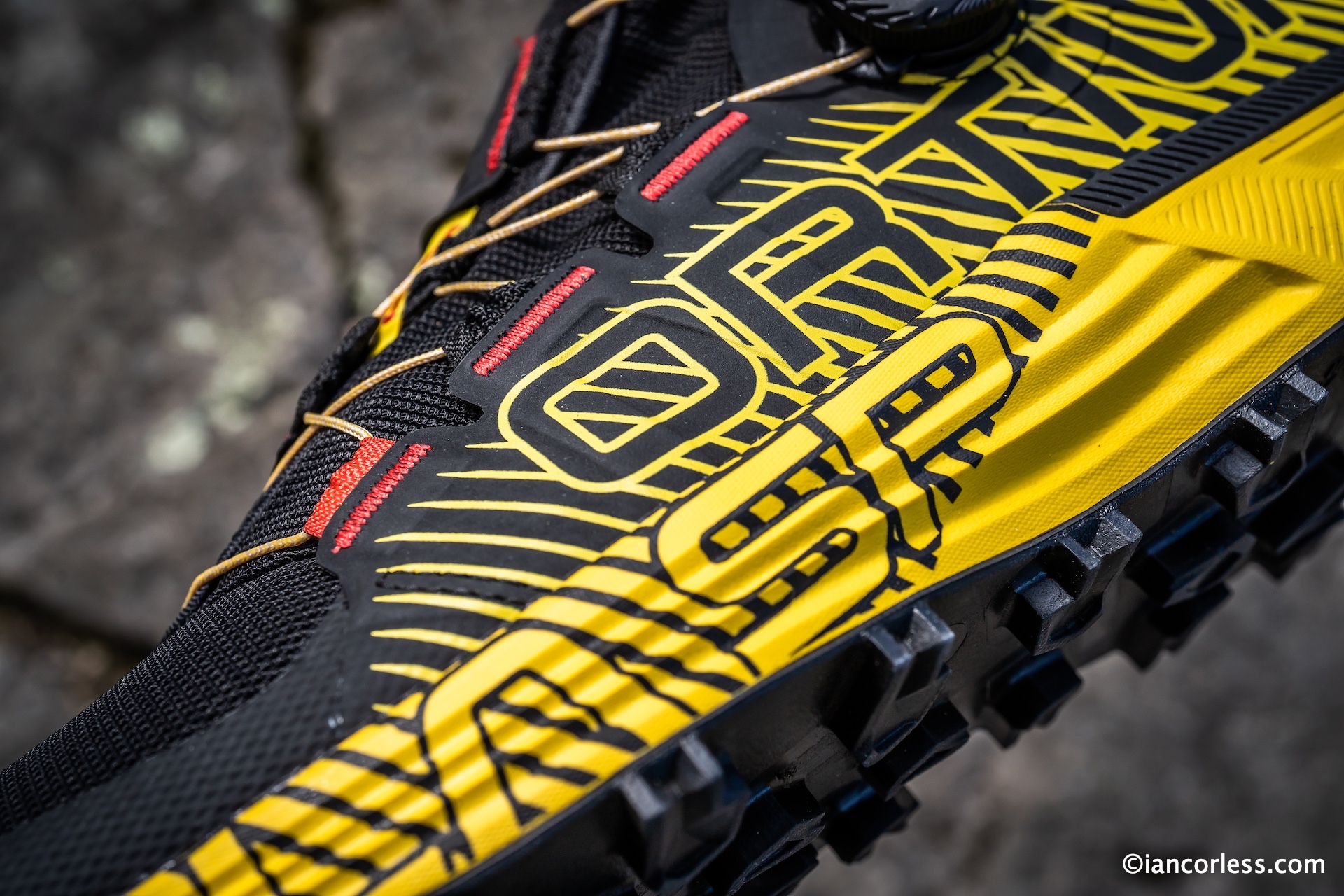
It’s often easy to get bogged down in jargon when discussing a shoe and all brands have their names to describe key features, here in the CYKLON ‘Dynamic Cage’ is a buzzword and one of the key USP’s of the shoe. Working with a supremely comfortable and secure sock-like fit, the Dynamic Cage holds the foot like no other shoe I have tried, it is as good as VJ Sport ‘Fitlock’ but at the same time, completely different.
The midsole is EVA Memlex which helps absorb shocks, offers protection through double density and it also has stabilization inserts.
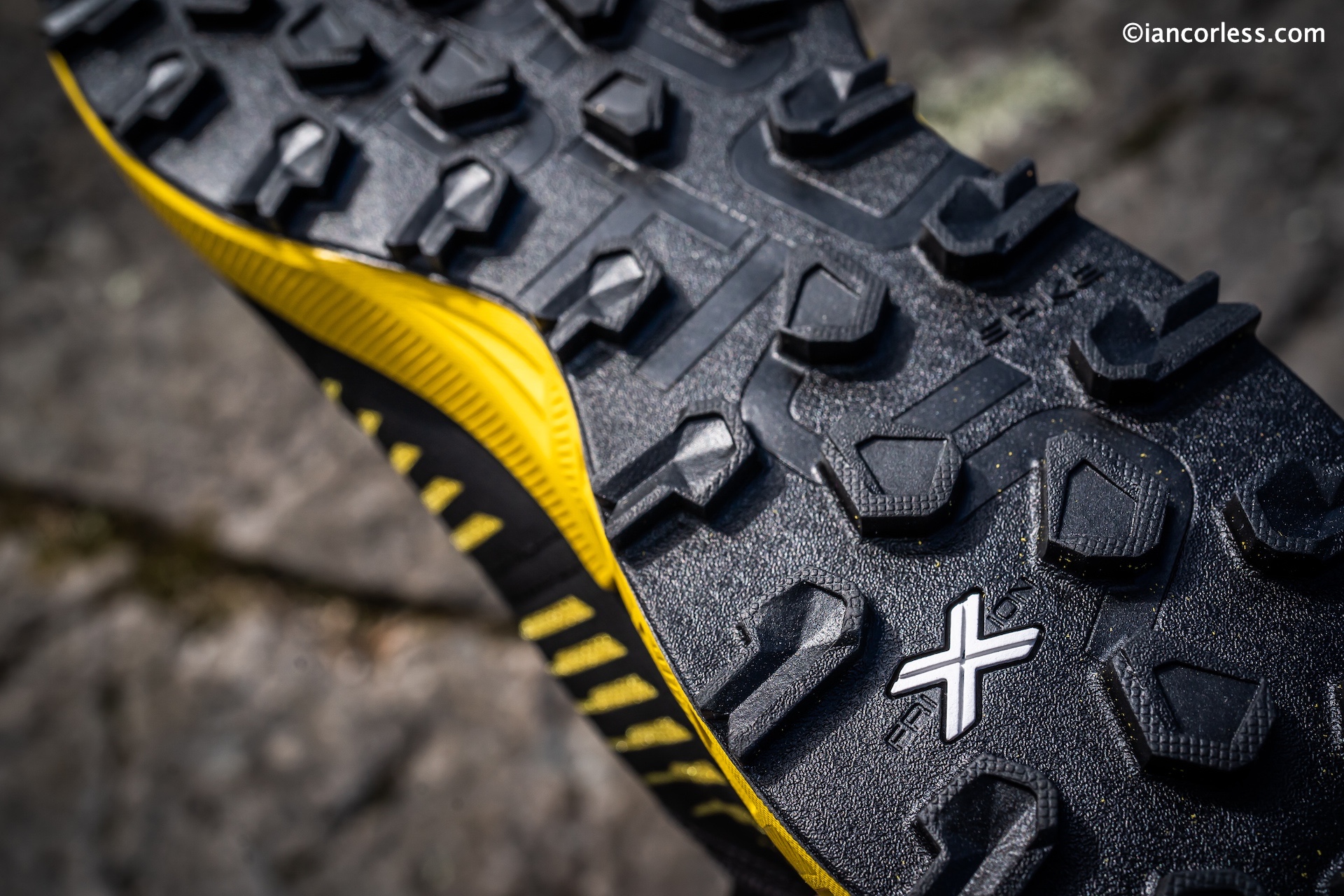
The outsole is FriXion XF 2.0 with 7mm lugs which clearly shows what the CYKLON is for – challenging mountain terrain that includes mud, snow and/or ice.
The upper has 4-way mesh and has a multi-layer side panel overlay. It’s all about foothold and protection and while it’s too early to comment on longevity and life, the CYKLON upper screams durability. This is only emphasized at the form of the shoe with a real sold toe bumper and the rear where the overlay gives way to the sock-liner.
THE SHOE
The CYKLON is actually a little tricky to get on, a little like putting neoprene socks on. It is worthwhile just taking an extra minute to ensure you have your foot in the shoe correctly and that the sock-liner is adjusted, a yellow tab helps you pul them on. The sock liner does come above ankle height, so, you may want to consider what sock length you use.
First impression is the incredible hold of the foot. This is even before the BOA is adjusted. It’s like sliding your foot in to shoe gloves. Turning the BOA, the shoe tightens to the foot via 4 key points. The bottom one is fixed, the other 3 are independent and move according to foot shape and applied tension from the BOA – this is the Dynamic Cage. Quite simply, the more you turn the dial, the more secure the foothold. I have tested multiple shoes with a BOA system before and one of my constant complaints was that I often felt I couldn’t get the foothold I wanted, not so in the CYKLON. The foothold here as stated previously, is up there with the best and this is due the sock-fit and the Dynamic Cage working in harmony.
I was worried at the rear of the shoe where the overlays for the heel stop and the sock-liner starts. Hold for the heel is excellent but I did wonder if I would have an issue? The answer was no. Hold and comfort was superb.
There does feel just a hint of arch support in the shoe. It’s nothing crazy and for someone who uses neutral shoes, it caused me no issues or problems. As mentioned, there is some stability added to the midsole and this all comes down to La Sportiva making sure you have a secure and resilient shoe that can handle the terrain that the shoe is designed for.
Width up front is a 3 on a 1-5 scale, 1 being narrow/ precision and 5 being wide. For me, a 3 fit it about right based on the intended use – technical and challenging terrain of mid distance.
The 20-28 cushioning is more than I anticipated as is the 8mm drop. When running on mountain, skyrunning and technical terrain a shoe with more ground feel and lower drop is usually preferable, say 18-24 with 6mm drop! However, the CYKLON excels on the rough stuff giving a very confident and secure feel and they adapt to quick changes of direction. The FriXion outsole with 7mm lugs works superbly. Interestingly. AT Grip Spike can be added to the outsole for use on icy ground. The footbed is Ortholite and specifically designed for mountain running.
IN USE
I have 124km in the CYKLON and this is a first impression review. There are two key features which I want to rave about:
The sock-like fit is superb.
The BOA system Dynamic Cage is incredible and holds the foot like no other.
The 2 features above are stand out and on all my runs, this security and foot hold has put a huge smile on my face. Tree roots, rocks, mud, climbing, descending and so on, the CYKLON just holds the foot and gives complete confidence. The downside is that all these layers and hold make the shoe run hot! I could feel that the heat generated when running had difficulty to escape despite the breathable upper. Quite simply, the anti-abrasion mesh and TPU reinforcements all add up. I did a challenging and technical 26km run that had me out for 2h 45min and while I had no pain, irritations or discomfort, my feet were noticeably hotter than in other shoes.
BOA is always going to turn some people off, I get it, laces work, are simple and you snap one, you can easily replace it… BOA has come a long way in recent years and here on the CYKLON I can see the advancement and in all honesty, I don’t think the foot hold in the CYKLON would be as good if provided by laces – the BOA brings a whole new dynamic to the shoe and I am completely sold. For perspective, BOA do offer a full guarantee on the system. Here they use a L6 dial and TX4 lace and I asked the question, ‘what if a lace breaks?’ Quite simply, BOA replied, ‘A lace snapping is highly unlikely, however, should it happen, you can just tie lace together (as you would with any lace), and this will work.’ One of the great things about BOA is the ability to adjust quickly on the go, especially useful in cold weather. We all experiences laces coming undone, it’s a pain to stop and do them up again. With BOA they will not come undone and if you need to tighten, you just stop, bend down, turn the dial and off you go.
Cushioning in the CYCLONE is on the firm/ protective side and considering the intended use, probably comes as no surprise. However, I did expect a little more bounce? However, with 50km on the shoes, I found them more responsive – they are not plush or bouncy. They are solid, secure, and reliable and trustworthy. Again, this is a shoe designed for mid-distance and not long distance. Certainly, I found 3-5 hours perfectly comfortable. I haven’t gone beyond that time in the CYKLON yet. There is some support in the shoe and that can be felt when the terrain becomes very challenging, it helps guide the foot, not control it.
The outsole is solid, reliable, and durable. It’s ideal for mountain terrain and excels on rock and technical terrain, particularly in conjunction with the foot hold and BOA system.
SUMMARY
The CYKLON is somewhat unique in that it almost occupies its own category, almost a crossover between mountain running shoe and boot. It excels in challenging terrain with incredible foot hold, protection, and a great outsole. Standout features are the sock-like fit in conjunction with the BOA/ Dynamic Cage which provided me with arguably one of the most secure footholds I have experienced.
Intended for mid-distance, I see the CYKLON as a great shoe for any mountain adventure, long or short. It’s crossover capabilities and weight would have me choosing this shoe over a boot, particularly if I wanted to hike fast in the mountains.
Climbing and descending is solid and reassured.
All-in-all it’s a great shoe and La Sportiva fans, particularly those who have used the Mutant are going to love.
The downsides for me are that the shoe runs hot and particularly in summer months this could prove to be an issue? It’s not the lightest shoe and despite the amazing foot hold, it probably doesn’t feel like a nimble and light race shoe, so, if looking to race, another shoe may be preferable? Day-to-day mountain adventures, fast or slow, the CYKLON will be a great addition to any shoe rotation.
The shoes were provided free for testing purposes and this is not a paid review or promotion.
Please support this website. I believe everyone deserves to read quality, independent and factual articles – that’s why this website is open to all. Free press has never been so vital. I hope I can keep providing independent articles with your help. Any contribution, however big or small, is so valuable to help finance regular content. Please support me on Patreon HERE.
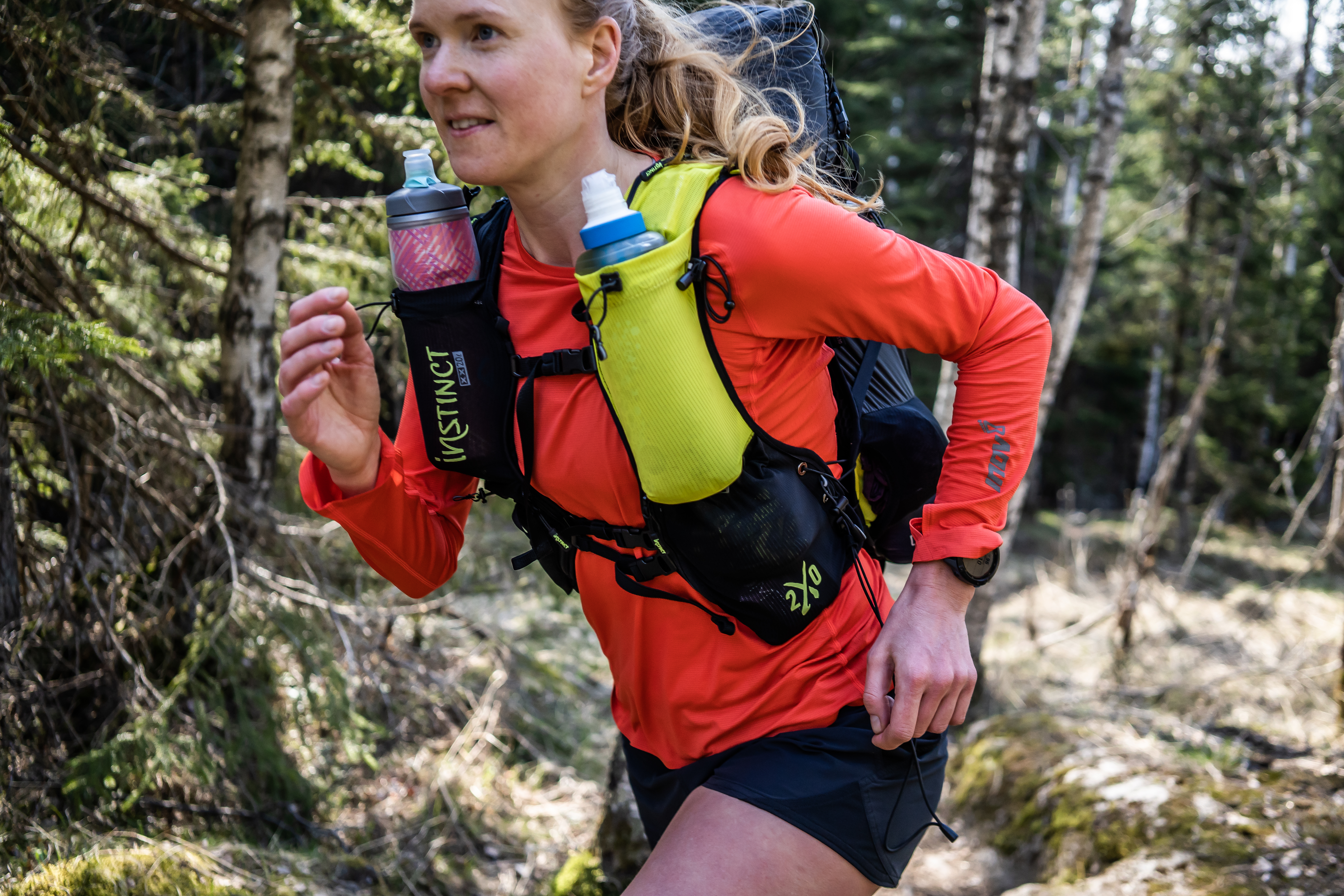
The INSTINCT XX 20L pack is a new addition to the stage/ multi-day racing scene and finally, dare I say, this pack begins to address many of the failures experienced in other packs.
It is in summary, the best pack we have used.
To clarify, this pack was provided free to test and this is not a paid review or advertisement. You can read and view some initial videos here.
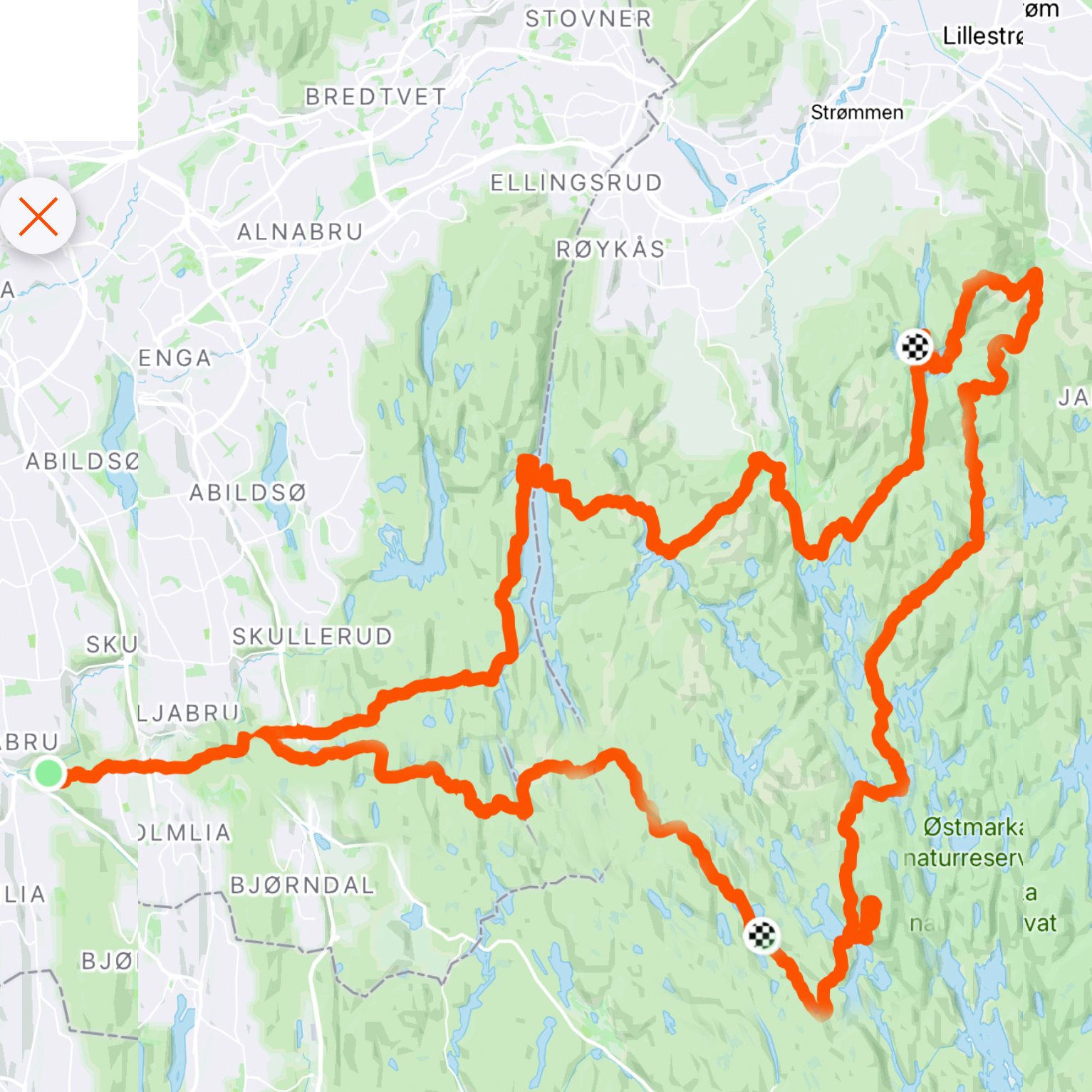
The only way to test any pack like this is in a ‘real’ scenario for male and female. So, Abelone Lyng and myself set off for a 3-day fastpack covering 65km carrying all we required.
Our 65km route.
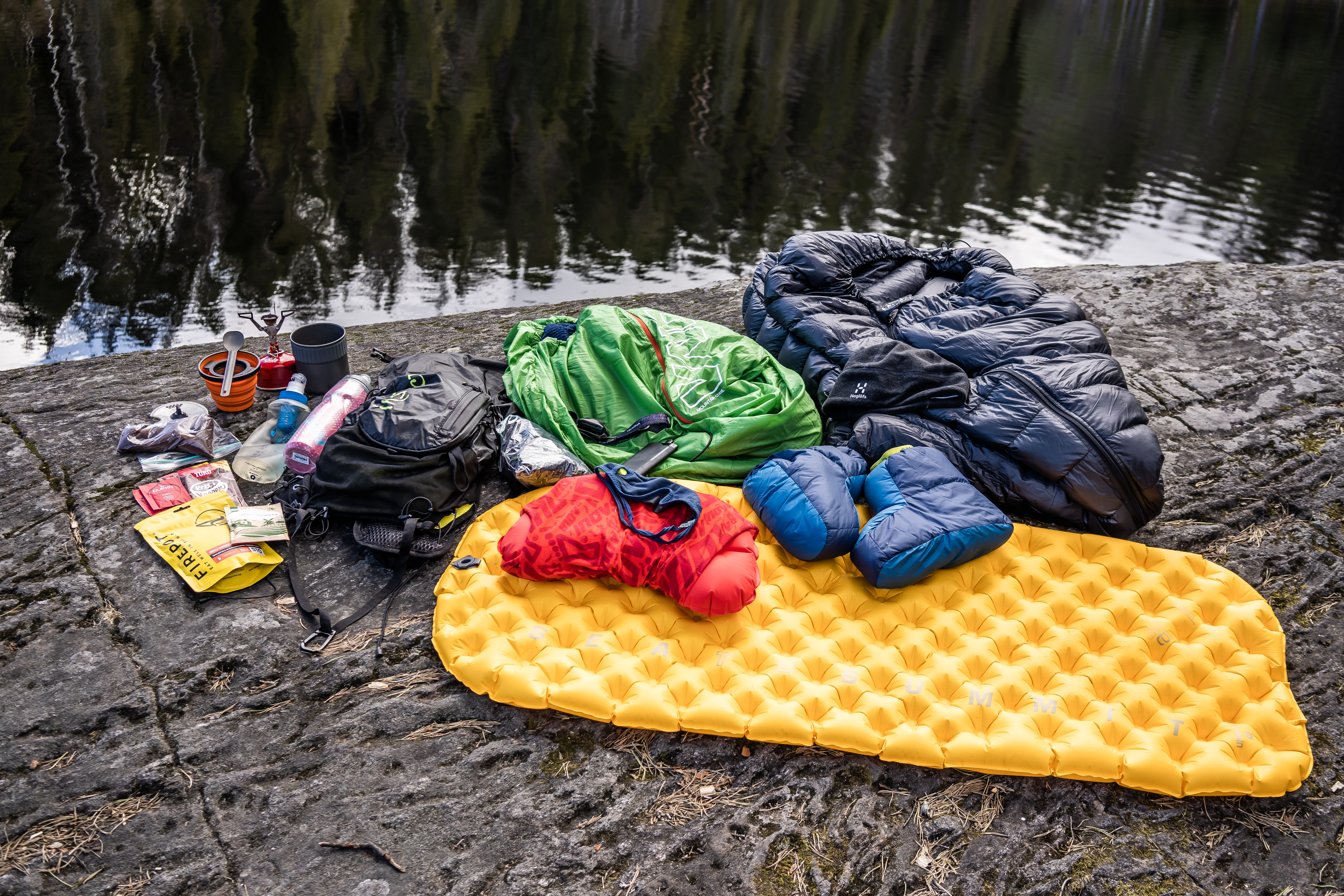
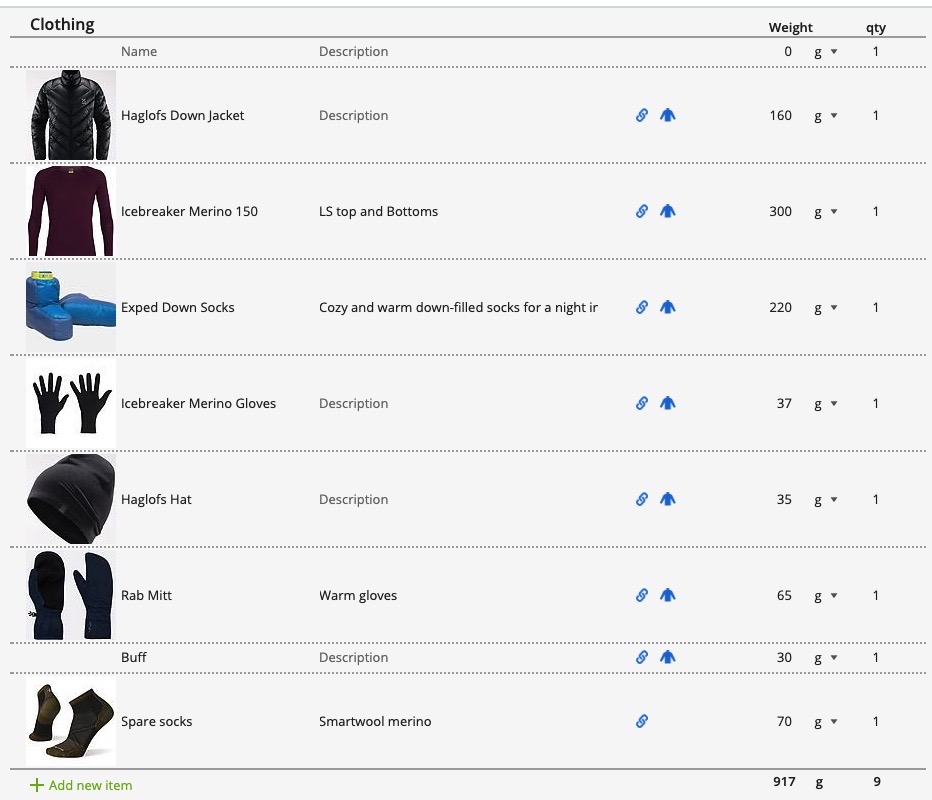
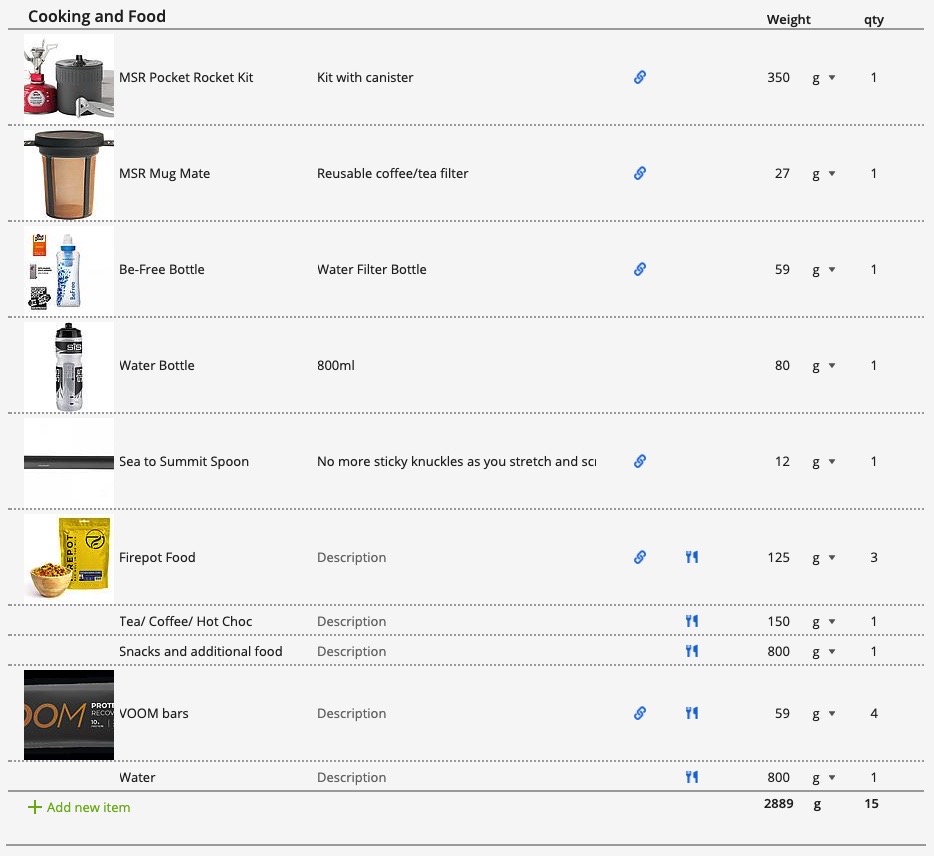
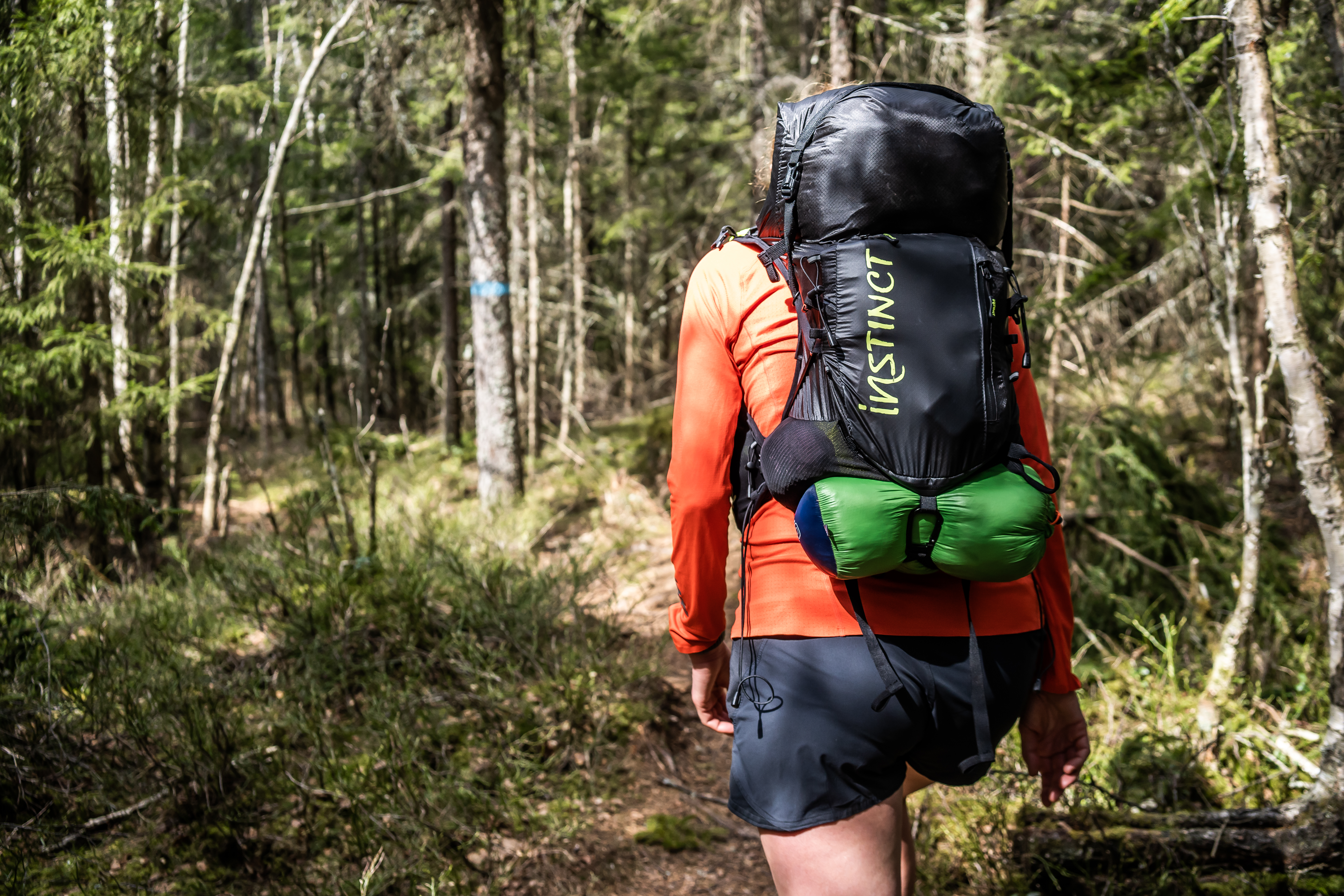
We both carried a pack, and the INSTINCT had more than required for one person. You can see in the photo above the majority of contents but in addition to the above was a 2-person tent, merino top and leg base layer, down jacket, hat and gloves. Also, 3 Firepot meals and additional snacks. Total weight, inc the pack was approx 6.5kg with 800g water.
See a time-lapse of packing below:
HERE are the pack contents itemised with weights and links.
There are several key features to the instinct and depending on the adventure you are undertaking, you would pack the bag differently. For our 3-day trip we needed a tent, but as an example, if doing a race like Marathon des Sables, you would have no need for a tent and this would free up considerable space for the food requirement of six or seven days.
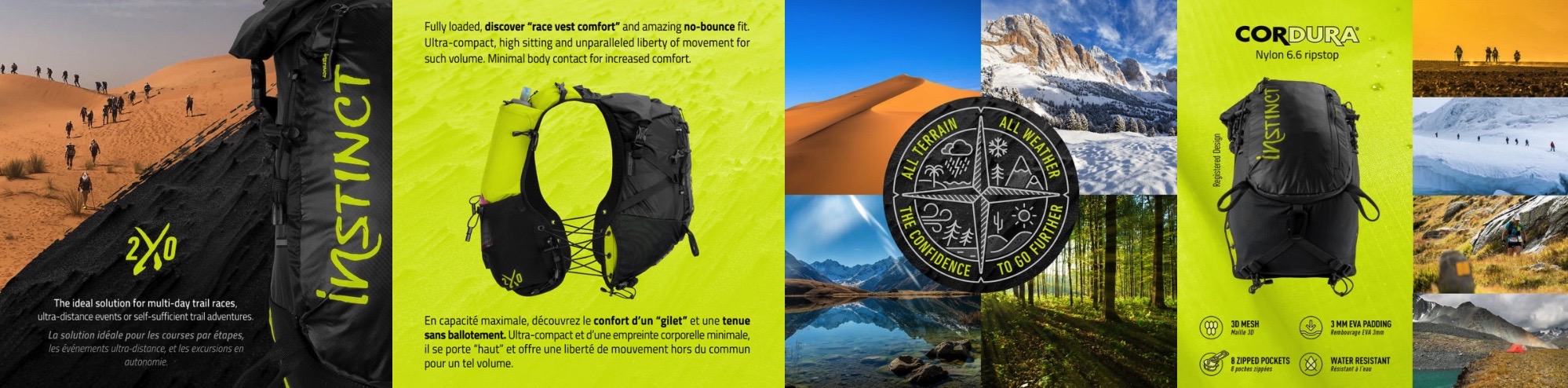
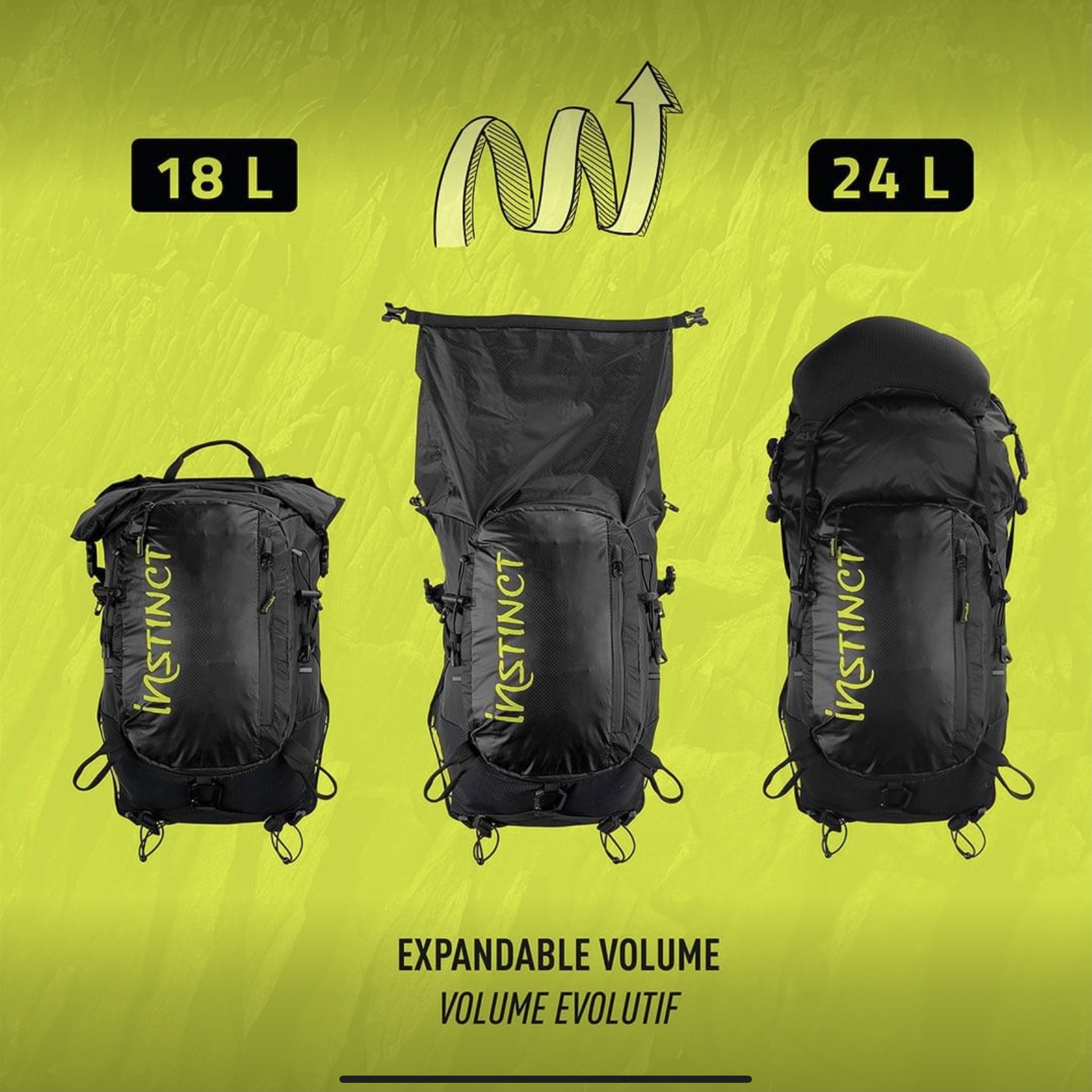
The pack has a maximum capacity of 24L and compresses to 18L by rolling down the top of the pack and compressing it. We recommend you view the videos here. This is extremely useful in self-sufficient races when you basically ‘eat’ the contents of the pack and therefore the pack reduces in size, weight and volume.
Here is a review video which gives a real-time review of the INSTINCT XX 20L.
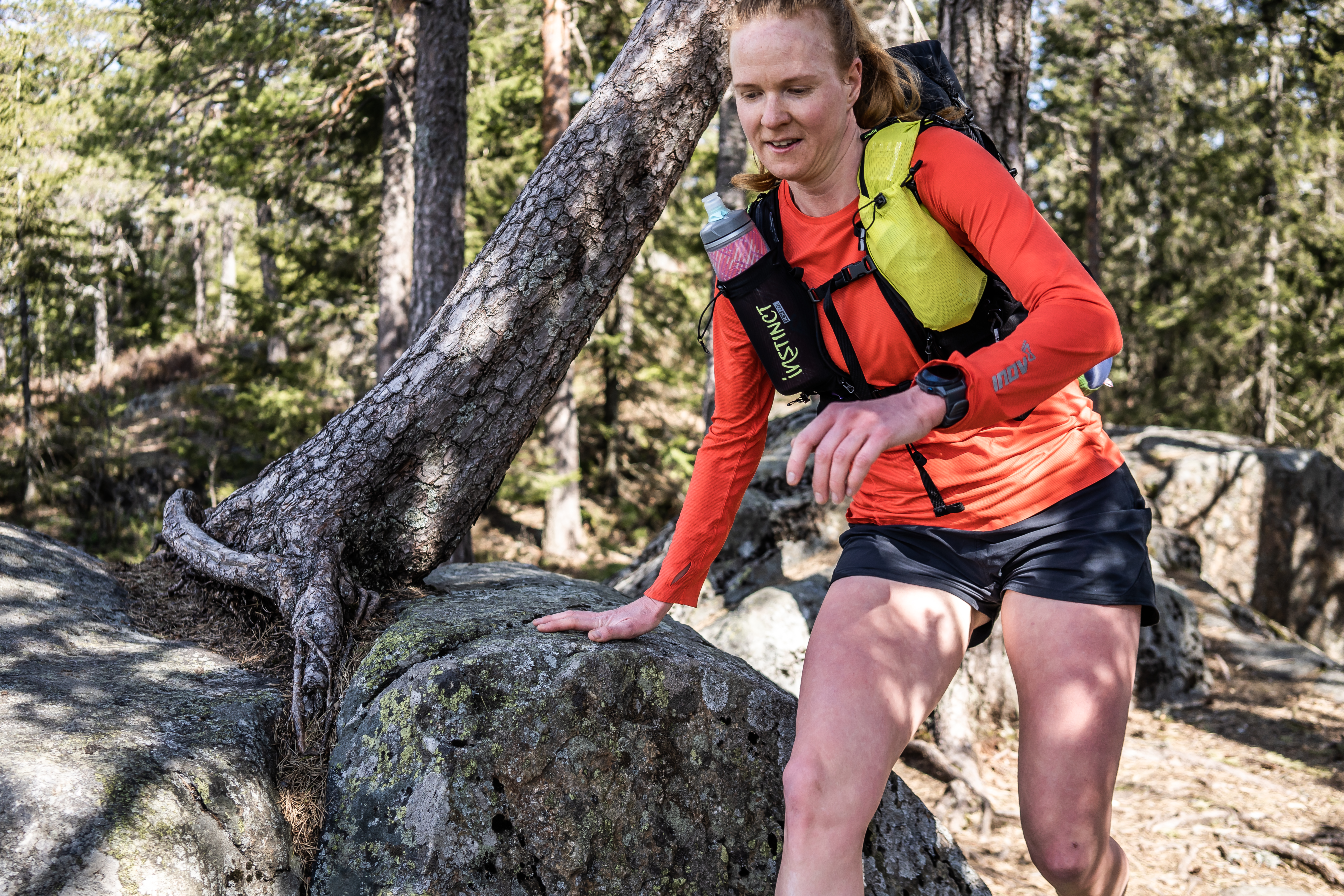
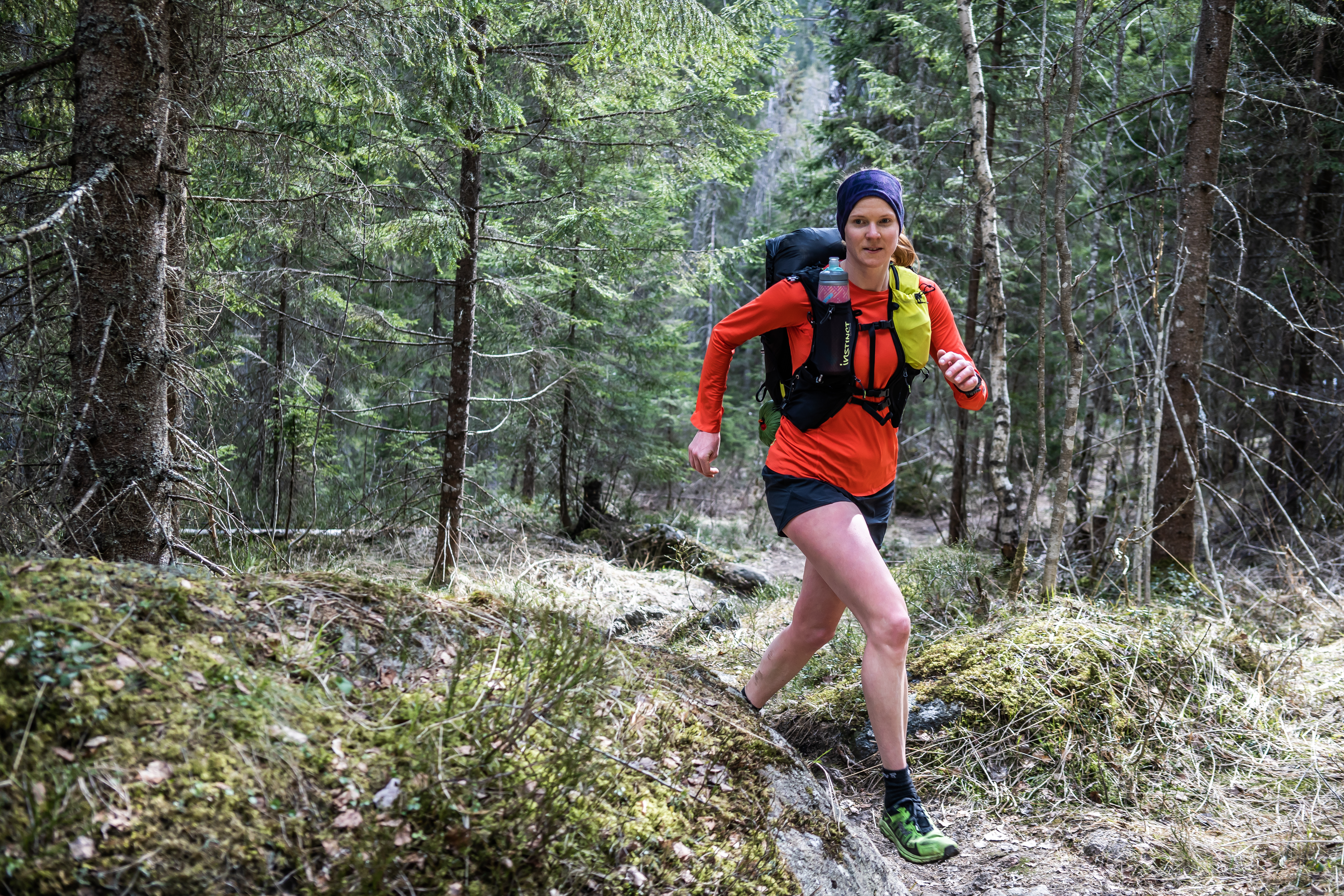
Both Abelone and myself found the pack arguably the most comfortable we have used and tested and it stands out in several areas:
Flexibility and adaptability.
The ability to reduce the pack size as per requirements.
The ability to segregate items in different areas – top pocket, main pocket, two mesh pockets, zipper pockets.
The front of the pack is the best we have tried not only for two hard bottles but the ability to use four bottles or use two bottles and use the other pockets for storage.
The fit is excellent and while extremes of size, both large and small cannot be accounted for, in general, we feel that the pack will work with most body sizes and shapes.
Movement while running is minimal but not zero. It is the best we have used.
There are many small features – zipper pockets, elastics, the external carabiner fitting and so on that make the pack a pleasure to use.
With full weight (8kg) you soon realise if you have the Instinct packed incorrectly and it is worthwhile playing and spending time with different configurations. What works for one, may not work for another, so, find what what works for you. Certainly, what I personally thought would work for me initially, did not work and I had too much movement in the top pocket. When I re-packed, the improvement was considerable.
The one size fits all and elastic side does provide incredible flexibility and comfort and both Abelone or myself found no hot spots or irritation.
Packed correctly, the ability to access what you need, on the go, is superb. Ultimately, fine-tuning the pack to an individuals need is part of the process of what makes fastpacking fun. However, the crossover of fit, packing and individual needs between Abelone and myself was seamless and we could easily swap and change at any time with just an adjustment to the chest and elastic side straps making for a perfect fit.
How to fit the pack?
Notably, there are features to the pack that we did not use or mention:
Large zipper pocket that will take a 2 to 3ltr bladder that will occupy the length of the pack between the back pad and the main compartment. This pocket could also be used to segregate clothes, for example, clean and dirty.
Removable top pouch that we did not use that can also be used to secure a helmet if required – useful for snow/ climbing adventures.
Three different areas to secure poles.
Ice axe and shovel friendly with attachment points.
Specs:
The XX allows : – 2 x 750ml+ bottles/softflasks in front – 2 XL vertical front zip pockets – 2 zipped shoulder pockets – 2 XL mesh front pockets – 3 fixing options for poles (front/back) – Ice pick on back – Shovel fixture – Easy backside carrying of sleeping mat or other objects (ex: tent) – Independent 3L water bladder pocket – X-Large 2-in-1 overlapping stretch mesh pockets on lower backside
KEY FEATURES : – Large back door = instant access to main compartment and easy viewing of internal items – Independent roll-top pocket for increased storage – Removeable top pouch carries smaller items (first aid kit, knife, etc). A stretch mesh pocket over the top allows instant access to jacket storage or a solar battery panel
Is the INSTINCT perfect? No, it’s not, but it comes pretty darn close… I guess the question that I have is the zipper on the main compartment? If that fails, this would cause huge problems, however, it is a special zip, reinforced and extremely durable, I have no reason to think this would fail. The pack may be compromised on fit with small men or women, however, in general, based on myself and Abelone, we can see it fitting most body shapes.
Ultimately, for both of us, the INSTINCT XX 20L is the most complete and flexible pack we have used. It’s great to look at, it is really well thought out, it provides multiple options and flexibility and without doubt, has the best bottle holding and capacity of any pack I have used. The option to compress the pack to 18L means it can also be used for long single-day races, such as UTMB, when the need for mandatory kit is high.
Please support this website. I believe everyone deserves to read quality, independent and factual articles – that’s why this website is open to all. Free press has never been so vital. I hope I can keep providing independent articles with your help. Any contribution, however big or small, is so valuable to help finance regular content. Please support me on Patreon HERE.
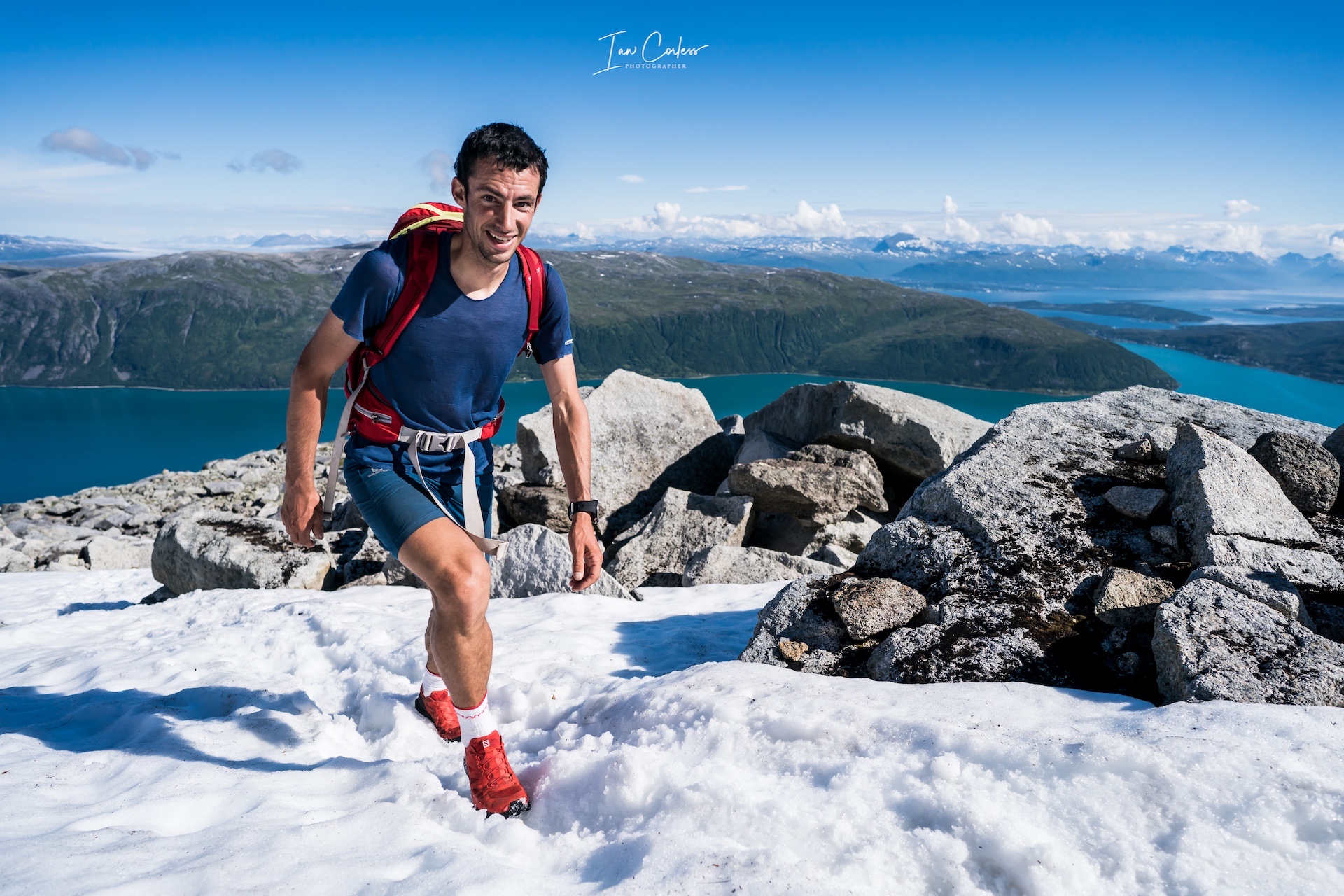
Kilian Jornet today confirmed he is back in Nepal with David Goettler – the plan still remains a mystery?
“A simple idea and a high possibility of failure summarises perfectly what we are searching for in the next weeks in the Khumbu region.”
– Kilian Jornet
David on his own IG just today posted an image from his last rotation at 6800m on the #Lhotse face between C2 and C3.
“One more from my last rotation up to 6800meter on the Lhotse face between C2 and C3. The face itself was super dry. I hope with the recent small snowfalls it changes to a bit better and safer conditions.“
@David_goettler
It begs the question, are the duo planning to resurrect the project of Ueli Steck. Maybe the Hornbein route on the west ridge of Everest… Climb the Hornbein Couloir then traverse to the peak of Lhotse? Steck unfortunately died before he had the opportunity…
“Steck had originally planned to attempt it after completing an audacious Everest-Lhotse traverse—summiting the world’s tallest and fourth-tallest peaks in one push without supplemental oxygen.”
Outsideonline
Time will tell what the duo plan, one thing is for sure, they may will need to be flexible and adaptable, particularly with the ever-changing Covid situation. In theory, they will have 4-weeks to attempt anything and then the monsoon will come.
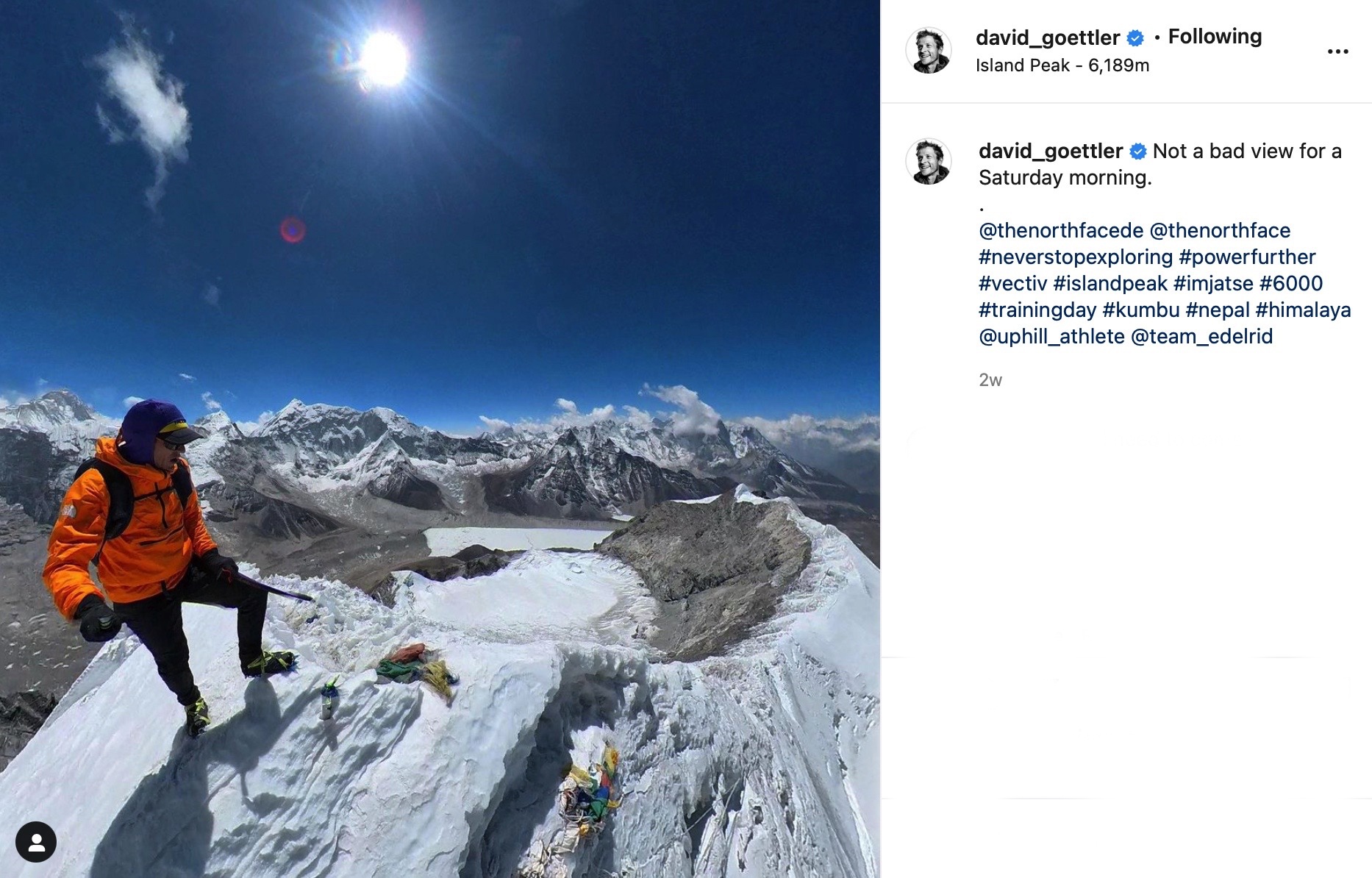
It would appear that David has been training and getting acclimated for some time in the area, at least 3-weeks. David summited Island Peak just 2-weeks ago.
Whereas Kilian has been training in Norway. While Norway is a perfect training ground, it lacks altitude and Kilian will need to play catch up when in Khumbu. One thing is for sure, Kilian adapts quickly but as we all know, altitude and the mountains are the boss!
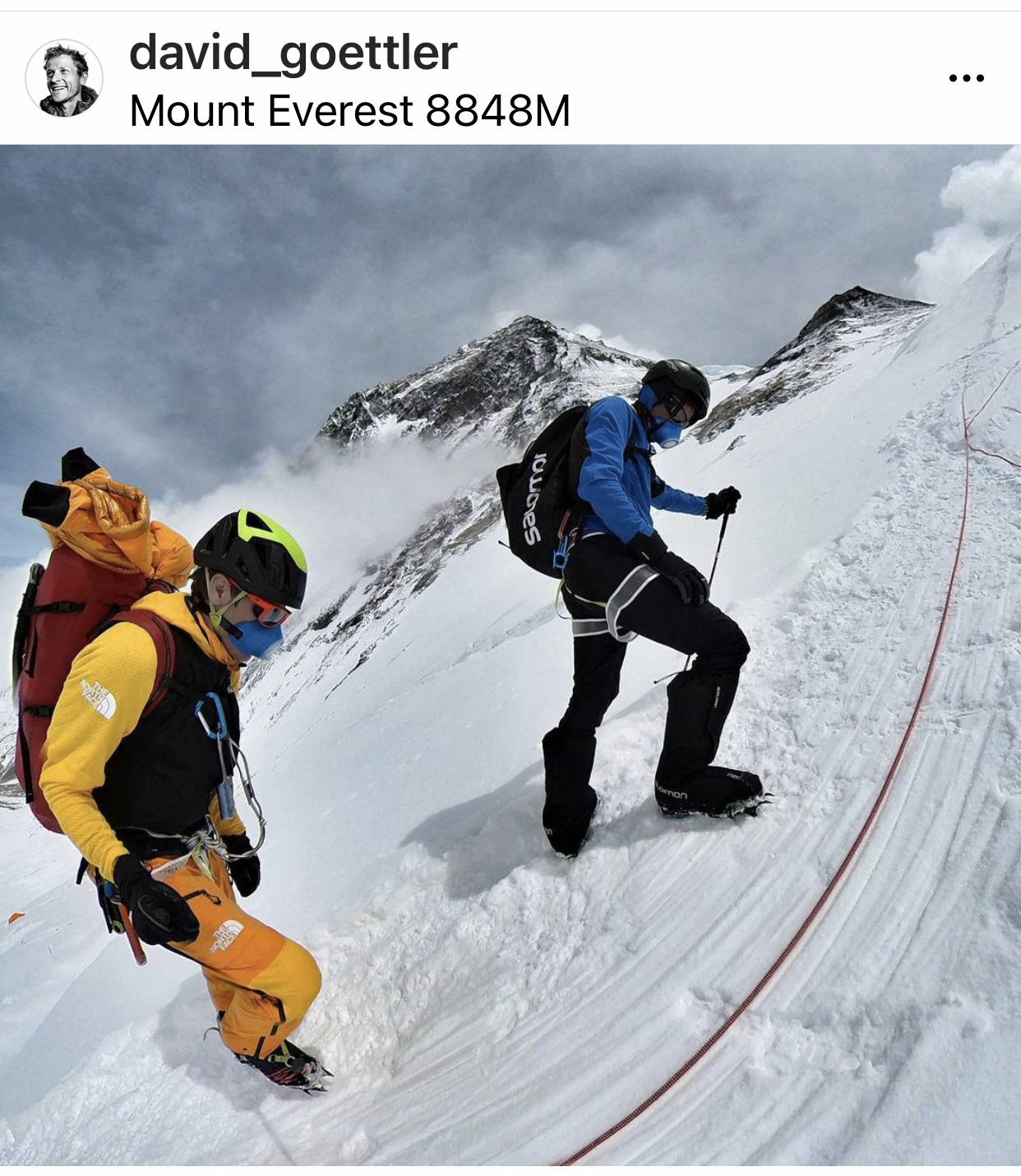
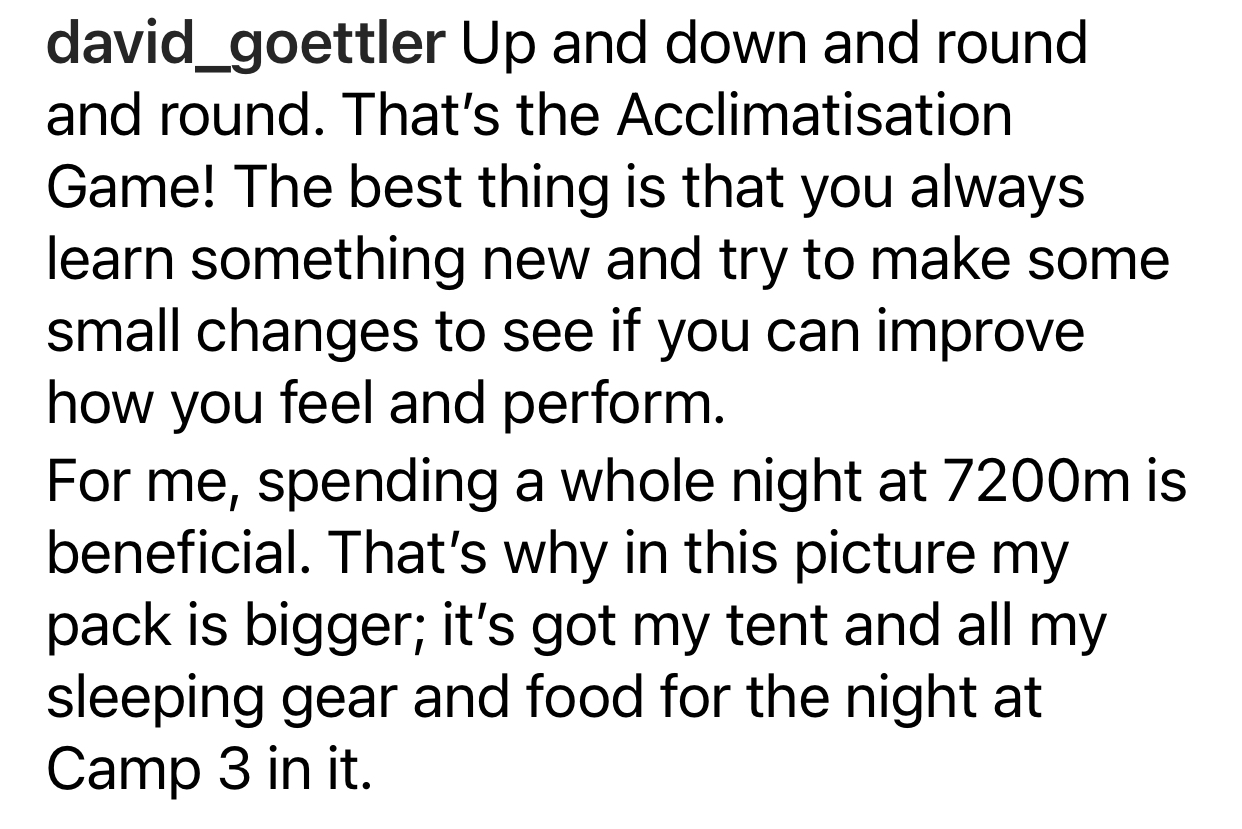
Update May 5th 2021: Both Kilian and David have been acclimating above 7000m on Everest,
We wish them well and safe passage on the journey.
One thing is for sure, Kilian will be looking for fun and adventure.
Please support this website. I believe everyone deserves to read quality, independent and factual articles – that’s why this website is open to all. Free press has never been so vital. I hope I can keep providing independent articles with your help. Any contribution, however big or small, is so valuable to help finance regular content. Please support me on Patreon HERE.
It is finally here… I have been waiting to get my hands on the INSTINCT XX 20L pack ever since I laid my eyes on it and now I have one to test.
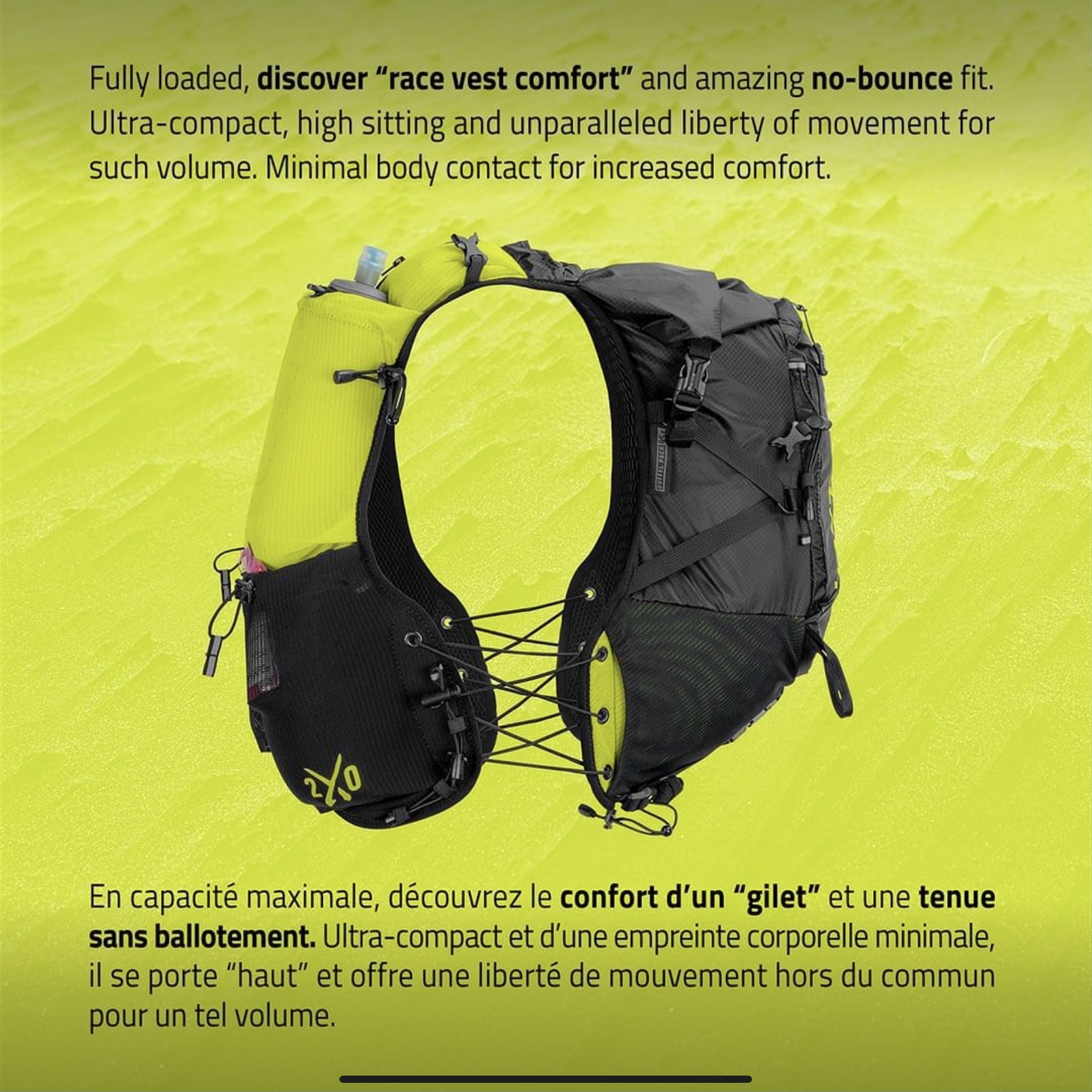
Unprecedented in design, the XX marks a new beginning for those seeking the ideal solution for multi-day trail races, ultra-distance events or their next self-sufficient adventure.Stunning in function and versatility, the XX’s intuitive design offers easy access to key elements in the most critical conditions. Extreme function allows customization in how gear/ clothing/ food/ hydration can be carried.The XX is evolutive in volume and brings intelligent, segmented storage.
This is not a review, this is a first look and importantly I have done a video that address questions that I have asked and asked…
How much liquid will it hold?
Will it take 750ml bottles both hard and soft?
Do they have different sizes?
Is there a female version?
Over the coming days I will be testing the pack completely and I will video packing and showing capacity and features.
Below shows the pack with a typical multi-stage equipment list.
I will then do a 2-day fastpack carrying all I need, including tent, to see how the pack performs with a loaded weight of 8kg.
Below shows the pack with a typical fastpacking set up.
To show packing flexibility, the above pack is as in the Fastpacking video BUT with the tent split between one of the mesh pockets and the main compartment. All other contents remain the same, just packed differently.
Initial impressions confirm the pack has vest comfort and amazing flexibility and fit. Notably, the pack has the option to adjust in size shifting from 24L to 18L – important in a multi-day like MDS when you eat food and the need for less volume is required.
KEY FEATURES : – Large back door = instant access to main compartment and easy viewing of internal items – Independent roll-top pocket for increased storage – Removeable top pouch carries smaller items (first aid kit, knife, etc). A stretch mesh pocket over the top allows instant access to jacket storage or a solar battery panel
The XX allows : – 2 x 750ml+ bottles/softflasks in front – 2 XL vertical front zip pockets – 2 zipped shoulder pockets – 2 XL mesh front pockets – 3 fixing options for poles (front/back) – Ice pick on back – Shovel fixture – Easy backside carrying of sleeping mat or other objects (ex: tent) – Independent 3L water bladder pocket – X-Large 2-in-1 overlapping stretch mesh pockets on lower backside
Follow here for full review, video and photos.
Please support this website. I believe everyone deserves to read quality, independent and factual articles – that’s why this website is open to all. Free press has never been so vital. I hope I can keep providing independent articles with your help. Any contribution, however big or small, is so valuable to help finance regular content. Please support me on Patreon HERE.
Episode 207 of Talk Ultra brings you an interview with Coree Woltering who in the last 12-months has set two FKT’s, one on the Ice Age Trail and the other on the Pinhoti Trail. Speedgoat co-hosts.
Talk Ultra needs your help! We have set up a Patreon page and we are offering some great benefits for Patrons… you can even join us on the show! This is the easiest way to support Talk Ultra and help us continue to create! Many thanks to our Patrons who have helped via PATREON Donate HERE
Please support this website. I believe everyone deserves to read quality, independent and factual articles – that’s why this website is open to all. Free press has never been so vital. I hope I can keep providing independent articles with your help. Any contribution, however big or small, is so valuable to help finance regular content. Please support me on Patreon HERE.
Ok A new shoe by VJ Sport is an exciting thing. I will be clear from the very start, VJ Sport produce, in my opinion, currently the three best shoes for fell, skyrunning, mountain and longer-distance trail/ mountain races. I have said time and time again and I will repeat it here, the iRock 3, XTRM and MAXx are a trio of shoes that provide a perfect weapon choice for specific terrain and distance. Although the three shoes are very obviously from the same family, (they look very similar) – They all have ‘Fitlock,’ they all have amazingly durable Kevlar uppers and they all have the amazing Butyl rubber (albeit in different size lugs) outsole that VJ are renowned for, but they do not all fit the same, have the same cushioning or have the same drop. The iRock 3 is narrower, has more precision and aggressive lugs, the XTRM sits between the iRock 3 and the MAXx and the MAXx has been the more recent shoe, offering a wider fit and more cushioning for longer distance trail and mountain races. There is no getting away from the fact that longer-distance races, basically when time on feet is longer, the need for ‘more’ in a shoe can be preferable, but it does depend on the runner. Up until now, the MAXx was the only option from VJ Sport with extra cushioning.
Step in the ULTRA.
As the name suggests, the new ULTRA from VJ Sport is here to address the need and requirement for a trail/ mountain shoe that is ideal for any distance but will come in to its own when going beyond 50km and longer. With the recent announcement by inov-8 of the Trailfly Ultra G 300 Max, there is obviously a change happening in the mountain shoe world, VJ and inov-8 have never made shoes with so much cushioning before!
I am fortunate to have had the ULTRA for 5 weeks now and have tried them out on a multitude of terrain and conditions.
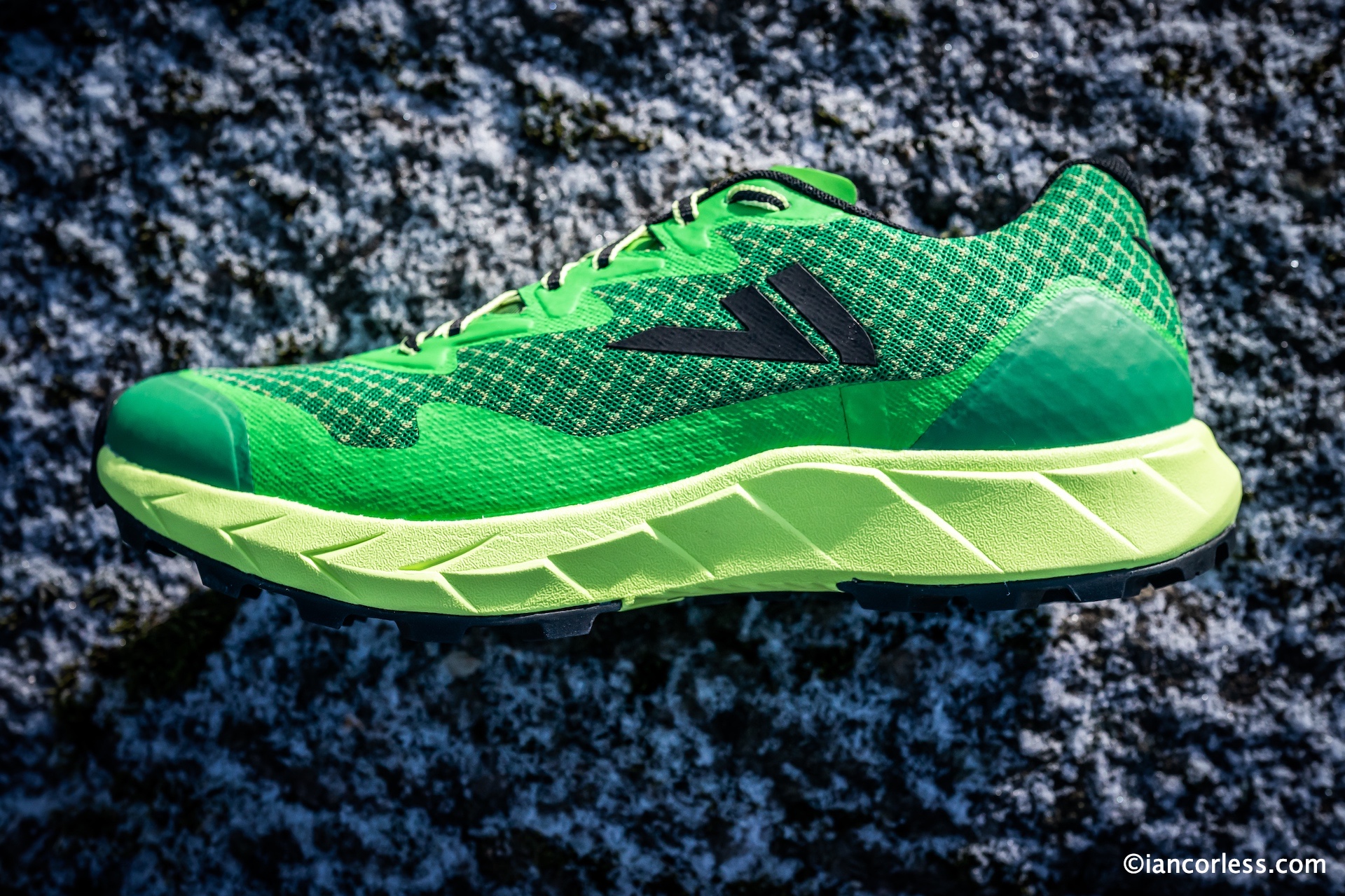
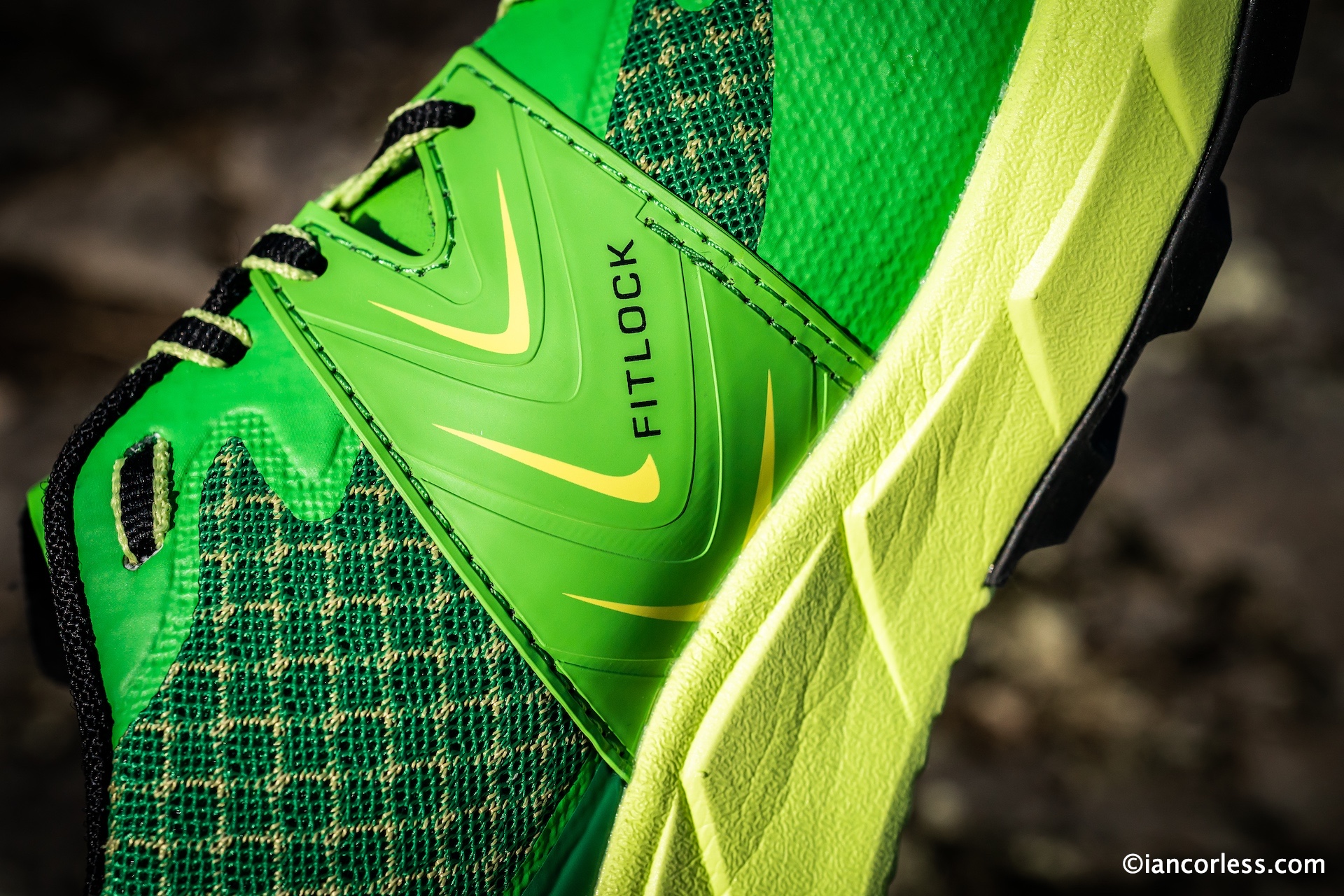
The ULTRA immediately looks like a VJ Sport shoe, it has all the usual characteristics, notably the upper and Fitlock. Turning the shoe over, the Butyl outsole is there. But on closer look and inspection, notable things stand out:
More cushioning.
Different Fitlock.
Wider toe box.
Different lacing configuration.
Different outsole.
Different width and shape to the outsole.
Heal box more padded.
But first, let’s look at the width of the shoe from the outsole.
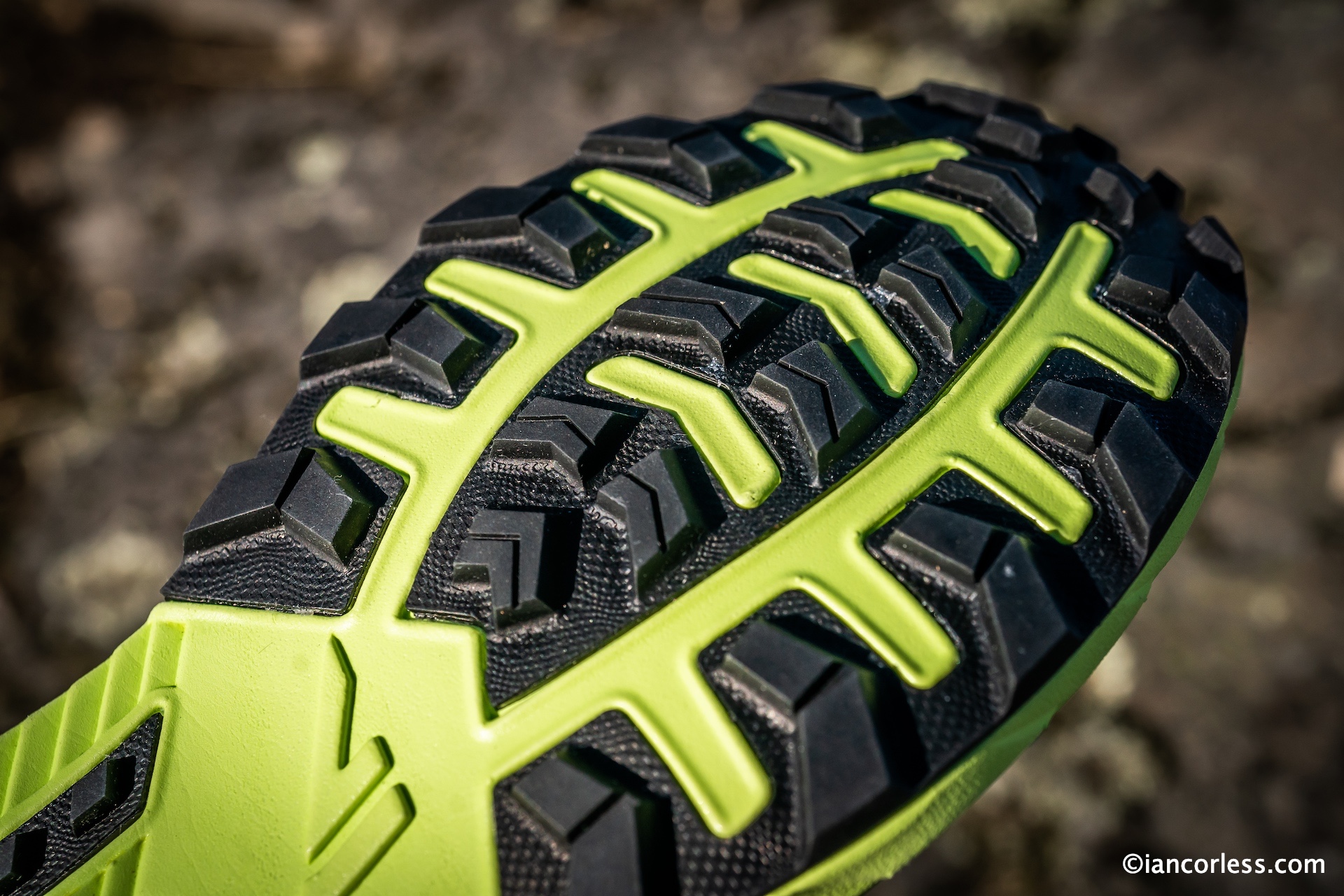
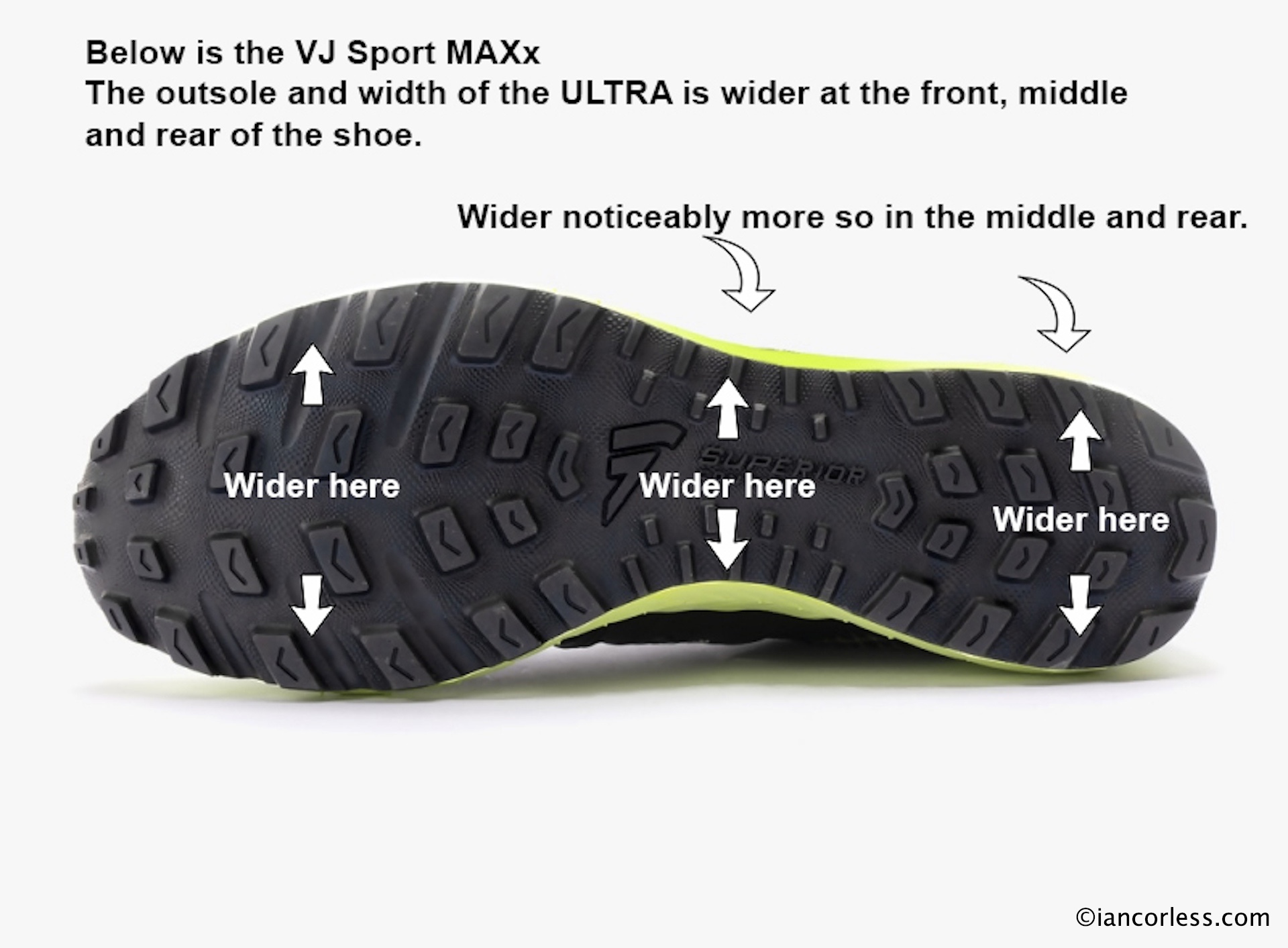
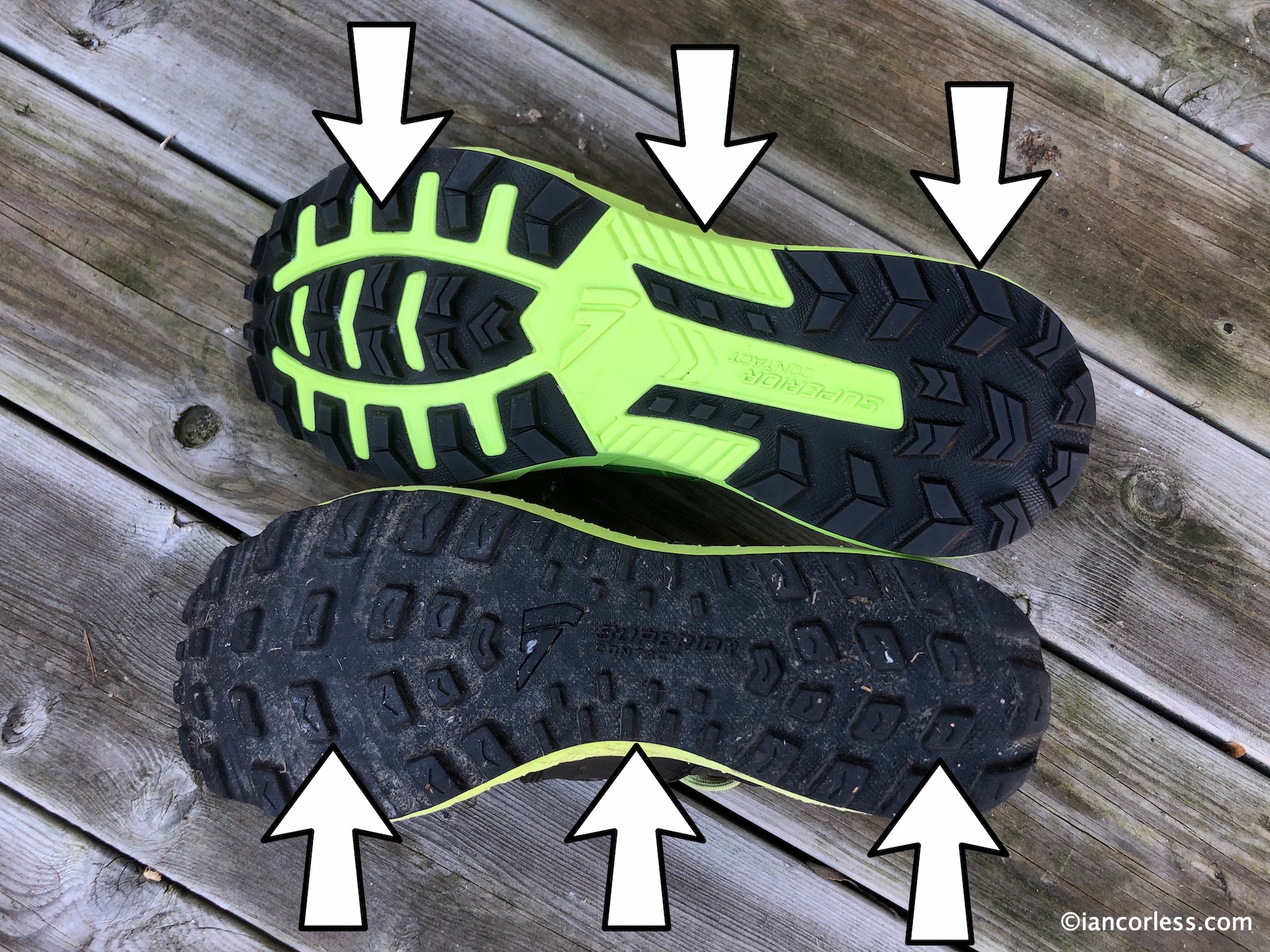
The ULTRA outsole is wider from front to back and noticeably in the mid foot, clearly emphasising that this shoe is designed for less technical and more cruise like trails and rocky terrain. The lugs are comparable to the MAXx at 4mm but you see how the outsole is completely different. This wide last also compensates for the higher stack height from the cushioning. This makes the shoe feel considerably less like a ‘Max’ shoe and that is a real benefit.
The ULTRA cushioning was anticipated to be a step up from the MAXx (10mm/16mm) both at the front and rear and designed to provide a more plush and forgiving ride over longer distances. With 27mm at the front and 33mm at the rear of EVA, this isn’t just a step up from the MAXx, it’s another world! We are in ‘Hoka’ territory with this cushioning. Like the MAXx, the ULTRA has a 6mm drop which on a personal level, is a surprise, I expected 8mm. However, 6mm sits nicely and may well keep more runners happy.
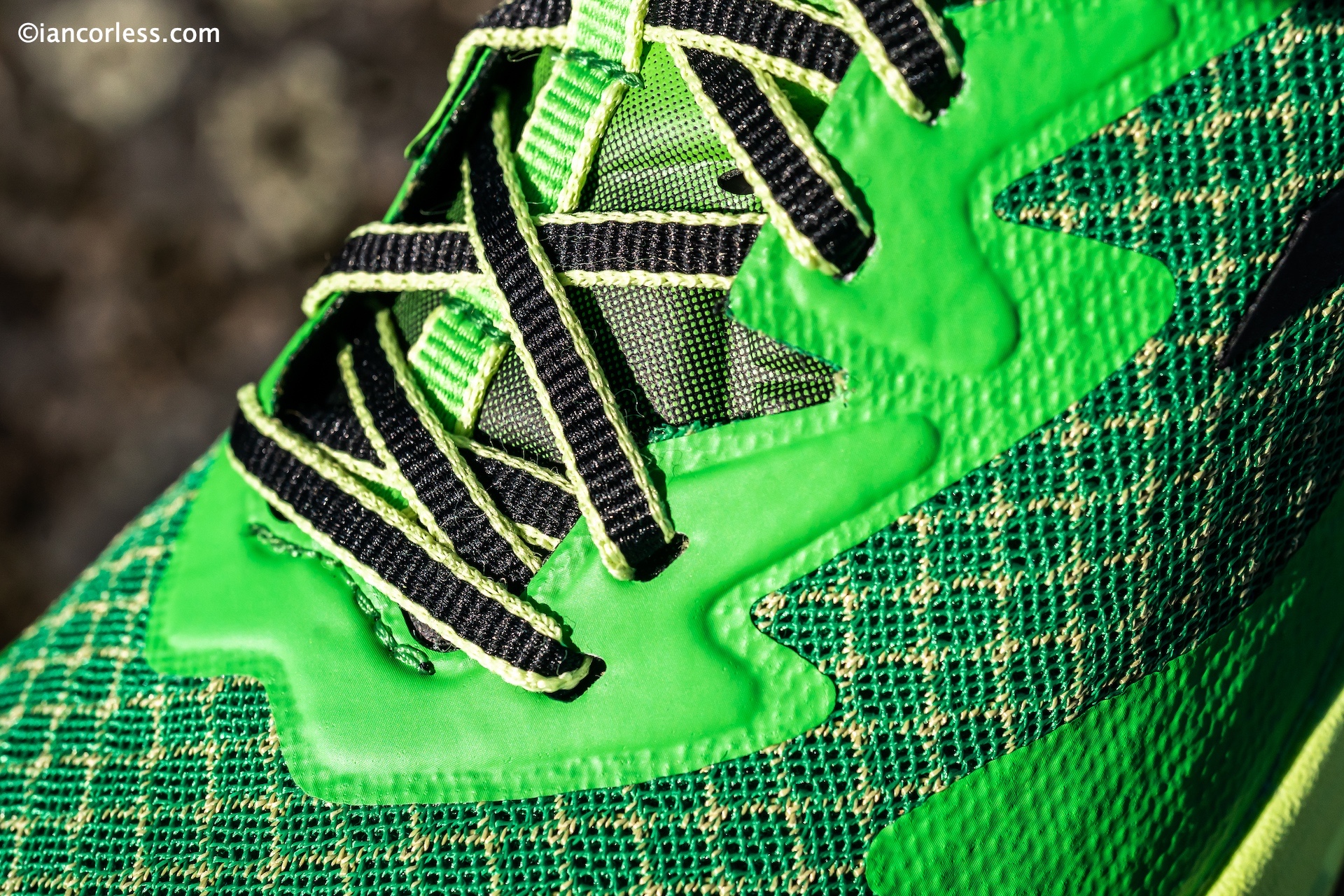
The Fitlock, a key characteristic of VJ Shoes and one of the standout USP’s that make VJ so good, is here on the ULTRA but has a different look compared to the MAXx. The MAXx is a harder plastic whereas the ULTRA is lighter and a less aggressive. It’s softer and more flexible and therefore adapts to the foot better.
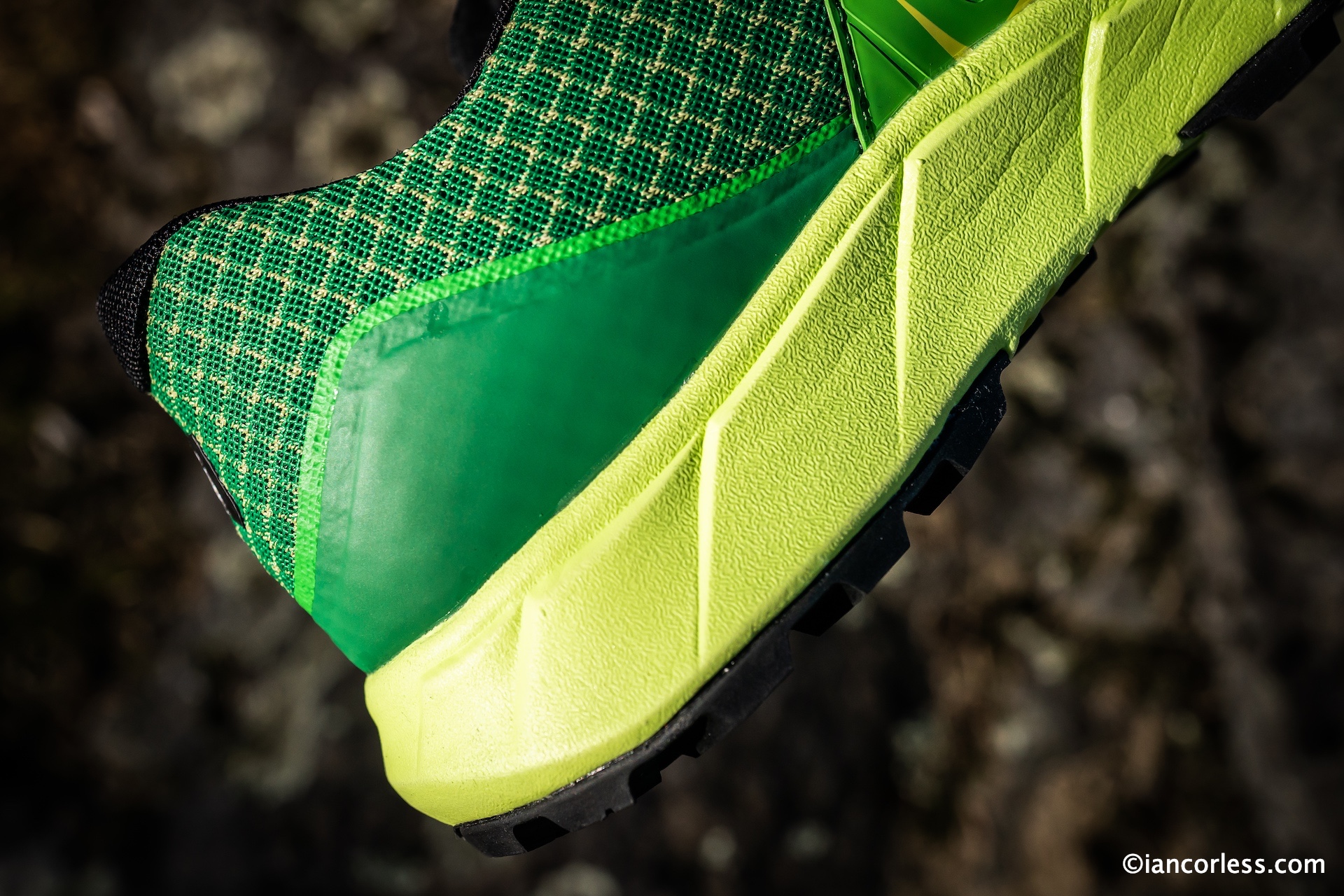
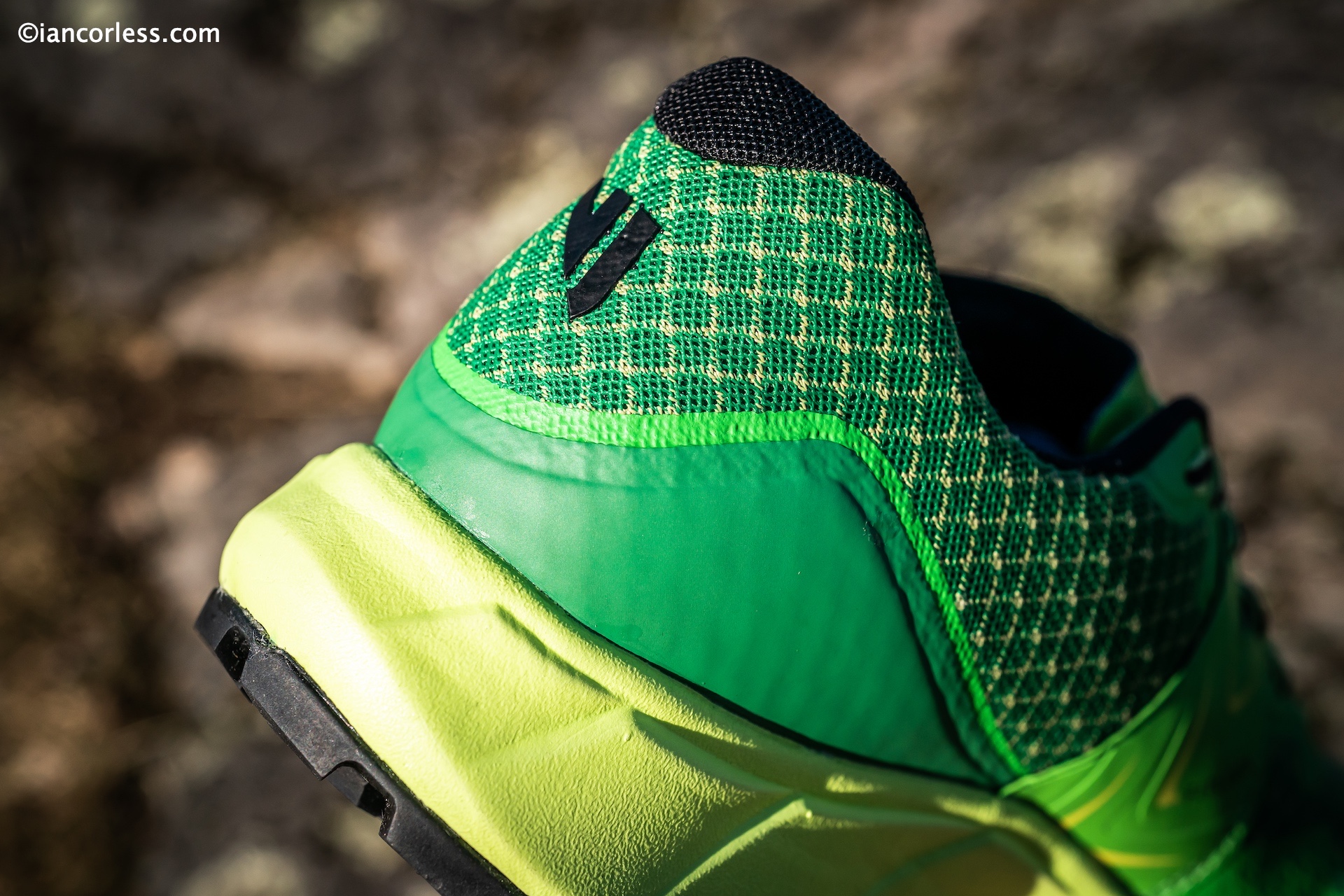
The heel box on iRock, XTRM and MAXx is quite minimal and really grips the heel, here with the ULTRA, the cushioning/ padding is a little more noticeable but not at the compromise of a firm hold. Your foot really sits inside and is snug and secure.
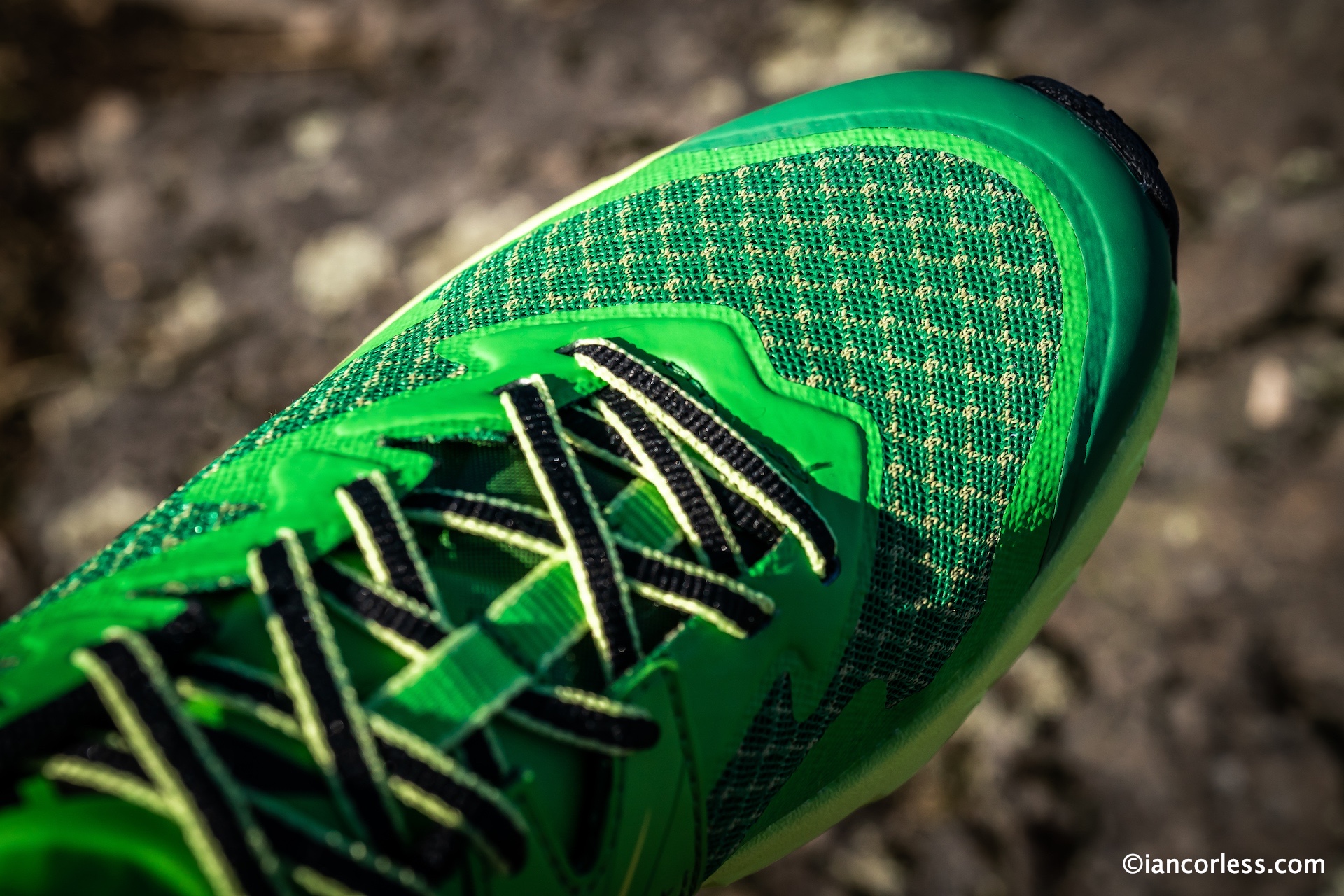
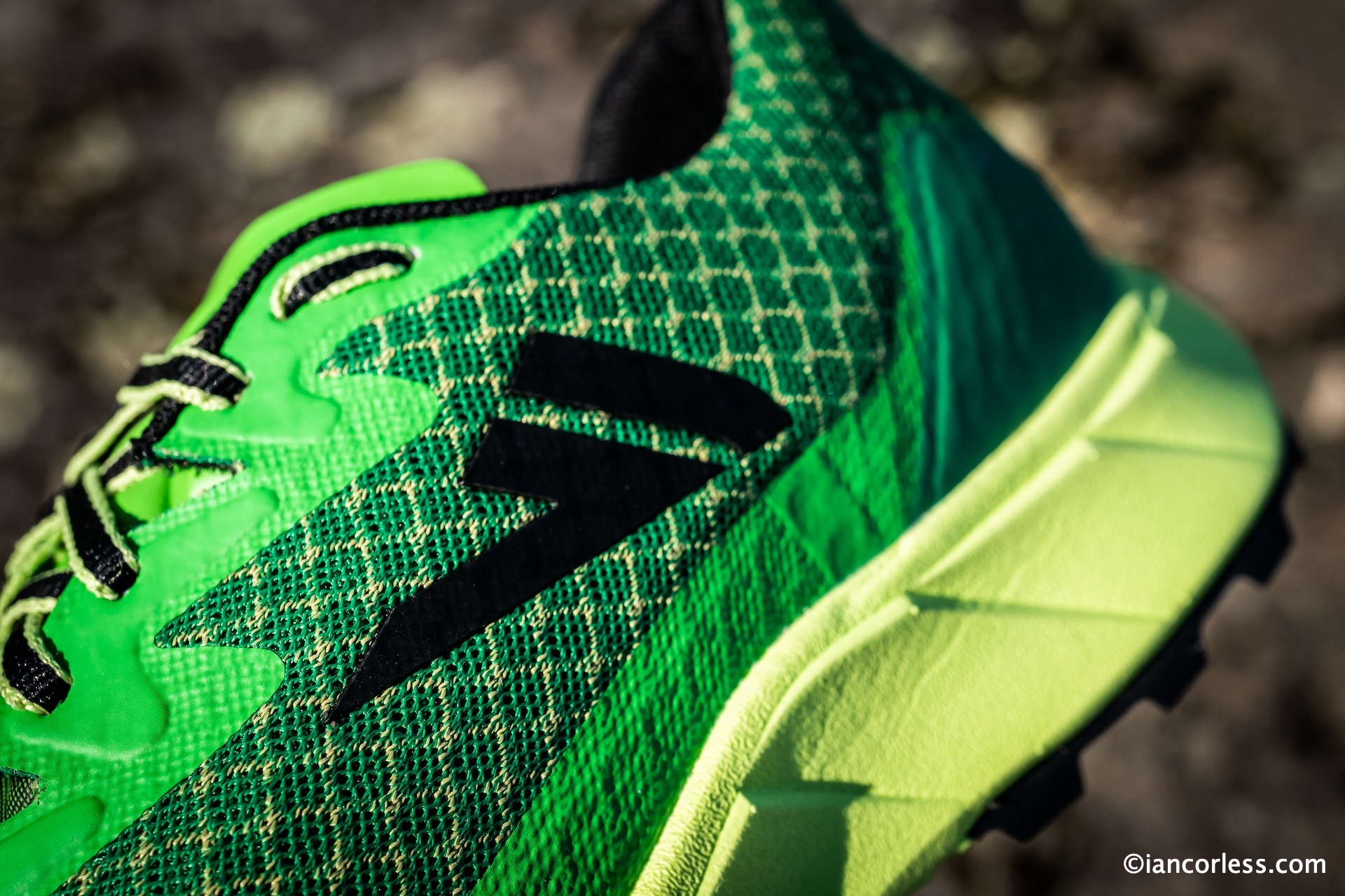
The upper is classic VJ Sport mixing Kevlar and Nylon (22/78%) to provide a durable and breathable upper. Toe protection is similar to the MAXx but the whole upper package feels like a step up with similar breathability but better durability.
The laminated overlays, while not the same, are comparable with the MAXx but very different to the XTRM and iRock which has stitched on and heavily reinforced layers to reflect the harsh terrain that they will be used in.
The lacing configuration is slightly different to the MAXx but still has the trusted firm and reassured hold that one expects from VJ Sport and Fitlock. There are the extra eyelets for lock-lacing or similar.
The weight of the shoe is a wow, my MAXx in an EU44/ UK9.5 weigh 313g, the ULTRA with considerably more cushioning weighs 286g – I am actually not sure how VJ Sport have made this shoe so much more lighter? Obviously the Fitlock is different and a saving can be made there, but still…? Compare this to the recent offering from inov-8 HERE and each shoe is 100g lighter… So, 200g a pair! Just imagine on an ultra adding 200g to every full cadence, it’s a huge difference and why the inov-8 felt so heavy.
The rear of the MAXx and ULTRA are quite similar, certainly in regard to the overlays, but the noticeable difference is more cushioning in the sole and additional padding for the heel.
The outsole is significantly different. I have already mentioned how from front to rear, the ULTRA has a much wider last, but it also has a different lug layout. On the MAXx it is Butyl rubber all over. The ULTRA is a mix allowing the softer yellow cushioning to penetrate and mix with the lugs designed to provide a more cushioned feel. It is very noticeably difference to the MAXx. There is no compromise on lugs or grip and the new layout with enhanced lug pattern has more grip.
While not a complete departure for VJ Sport, the ULTRA really is something different and only shows how the brand are listening to the customer to bring all they they love from the other shoes and produce something that is designed for longer outings without losing what makes a VJ Sport shoe great. The ULTRA with 27mm/ 33mm cushioning is a head turner, particularly when one considers the MAXx which was ‘the’ cushioned VJ Sport trail shoe was 10mm/ 16mm.
IN USE
I have had the shoes for five weeks and accumulated nearly 300km on them.
The feel of the ULTRA is very similar to the MAXx when slipping on with a noticeable extra room at the front. The lacing is reassured and with the Fitlock, just perfect. It really is my favourite lacing method of any shoe brand. The heel area is noticeably more padded and comes a little higher than the MAXx. The hold of instep and around the Navicular bone is unique and reassured. I found after 50-miles that my foot really started to bed inside the shoe and what was already comfortable, became more so. Particularly around the heal area. On longer runs, I also found the additional toe room welcome.
Sizing is inline with iRock, XTRM and MAXx. I use UK9.5/EU44 in all my VJ Sport shoes but I will hint at a word of caution, this ULTRA ‘may’ size a little smaller. So just be careful, I definitely feel a little less length in comparison to my MAXx but I still have used a UK9.5 with no issues. Read here about how a shoe should fit.
The wider last is really noticeable and provides a much more stable platform on any terrain. It has really grown on me… They are great on snow! Depending on ones individual run style, shoes with a narrower last, as seen on the iRock, XTRM and MAXx can cause some inward foot roll, even with the Fitlock. This is considerably less noticeable on the ULTRA. An important consideration with the extra height from the cushioning too.
Grip is as one expects from VJ Sport, it is superb on trails, wet or dry rocks and obviously, with a less aggressive lug, grip in mud is compromised when it is deep and sloppy.
My first run was intentionally a road run of 14km. I wanted to really feel what that 27mm/33mm cushioning felt like… NOT what I expected! I was really expecting some floaty, bouncy, marshmallow like propulsion with the shoe almost collapsing under my feet and then recoiling and throwing me forward. I got none of this, they felt firm. I said to myself, “new shoe, it will soften,” 14km later, no, still quite a firm feel and I was struggling to believe the 27/33 claim. To be fair, road use in the ULTRA should probably be limited as the Butyl outsole will wear. On my third road run, I started to feel a change and while not bouncy soft, I was feeling a difference both in overall comfort and energy return.
An initial trail run with a mixture of frozen ground, tree roots, rocks, a little snow and occasional ice felt similar to the feel on the road. I need to be clear, it’s not that there is anything wrong with the feel or the cushioning of the ULTRA, it’s just not what I expected from a shoe with 27/33mm of EVA. Surely, the whole purpose of so much cushioning is that it feels cushioned and allows one to run longer with more comfort? But, the more I have run in the shoe, the better the feel has come. Certainly, with over 100km in the shoes, they had bed in and that normal VJ feel has started to come. When in mud and softer terrain, the shoe had the usual VJ traits.
Despite a high stack height, the shoes do not feel like a Max shoe, on the contrary, I questioned ‘if’ there is so much cushioning? VJ have confirmed that there is. On technical terrain, the wider last compensates for the cushioning and while not as agile as a MAXx or XTRM, the ULTRA still has loads of confidence and reassurance on the rough stuff and technical terrain. Arguably, the ULTRA is the best Max cushioned shoe I have tried on trail which has considerably less roll and instability. The ULTRA really does feel like a beefed up MAXx which is superb and consistent with the VJ line-up. No point in changing what works, just adapt it. The control in the ULTRA comes from several factors: 1. The firmer cushioning stops the shoe compressing and collapsing and becoming unstable and therefore roll to the left and right is less. 2. The wider last helps provide a more stable platform on which to land. 3. The VJ Fitlock is awesome and really holds the foot. 4. Flex, particularly in the propulsive phase is till good despite additional cushioning.
with 230km use.
The upper had all the secure and familiar VJ Sport feel and the new Fitlock was holding my foot stable just as the previous incarnations. A notable feel difference comes from the wider toe box and the overall wider feel of the outsole. The heel box is really secure and a confidence booster when climbing. Despite the cushioning, the propulsive phase (flex behind the metatarsals) is still pretty good and reassuring providing some bounce and return when picking up the tempo.
The more I have run in the ULTRA, the better they have become. This not unusual for a VJ shoe, I had a similar feeling with the MAXx. Ultimately, if you like VJ shoes, need more cushioning and wider toe box, the ULTRA is going to make you very happy.
INITIAL SUMMARY
I am a huge VJ Sport fan and the ULTRA is a great addition to the line-up that carries on the tradition of great foot hold with Fitlock and the stand-out Butyl outsole grip. The added cushioning now answers the calling from consumers for a shoe that is ideal for really long ultras be that on trail or in the mountains. Having said that, the shoe works great on shorter runs too, it is just less nimble, particularly in comparison to an XTRM. The cushioning will not be for everyone, but that is fine, it provides an option! For someone who has avoided Max cushioned shoes since 2012 (read here) the ULTRA has made me re-look at my relationship with a heavily cushioned shoe and while I wouldn’t wear them all the time, the option to have them for longer outings is one that I have enjoyed. The cushioning is not as cushioned (soft) as other cushioned shoes, it has a firmer feel initially but does soften with more use. It’s not floaty/ bouncing cushioning, but firmer with a more controlled bounce and this is crucial for me on trail, there is considerably less roll and less of a ‘high’ feel. The wider last also considerably helps providing a secure platform on which to land, only enhanced by the excellent VJ grip. The wider toe box will also be appreciated by many. I feel that the ULTRA is a mountain shoe and therefore more designed for the tougher races that mixes challenging terrain with distance. UTMB a prime example.
Ultimately, the VJ Sport ULTRA is a really solid mountain ultra shoe that is well built, has great foot hold and has one of, if not the best outsoles out there. They are also light! Highly recommended.
To clarify, the shoes were provided to test, as are all the shoes that I review. But this is not a paid review.
Please support this website. I believe everyone deserves to read quality, independent and factual articles – that’s why this website is open to all. Free press has never been so vital. I hope I can keep providing independent articles with your help. Any contribution, however big or small, is so valuable to help finance regular content. Please support me on Patreon HERE.
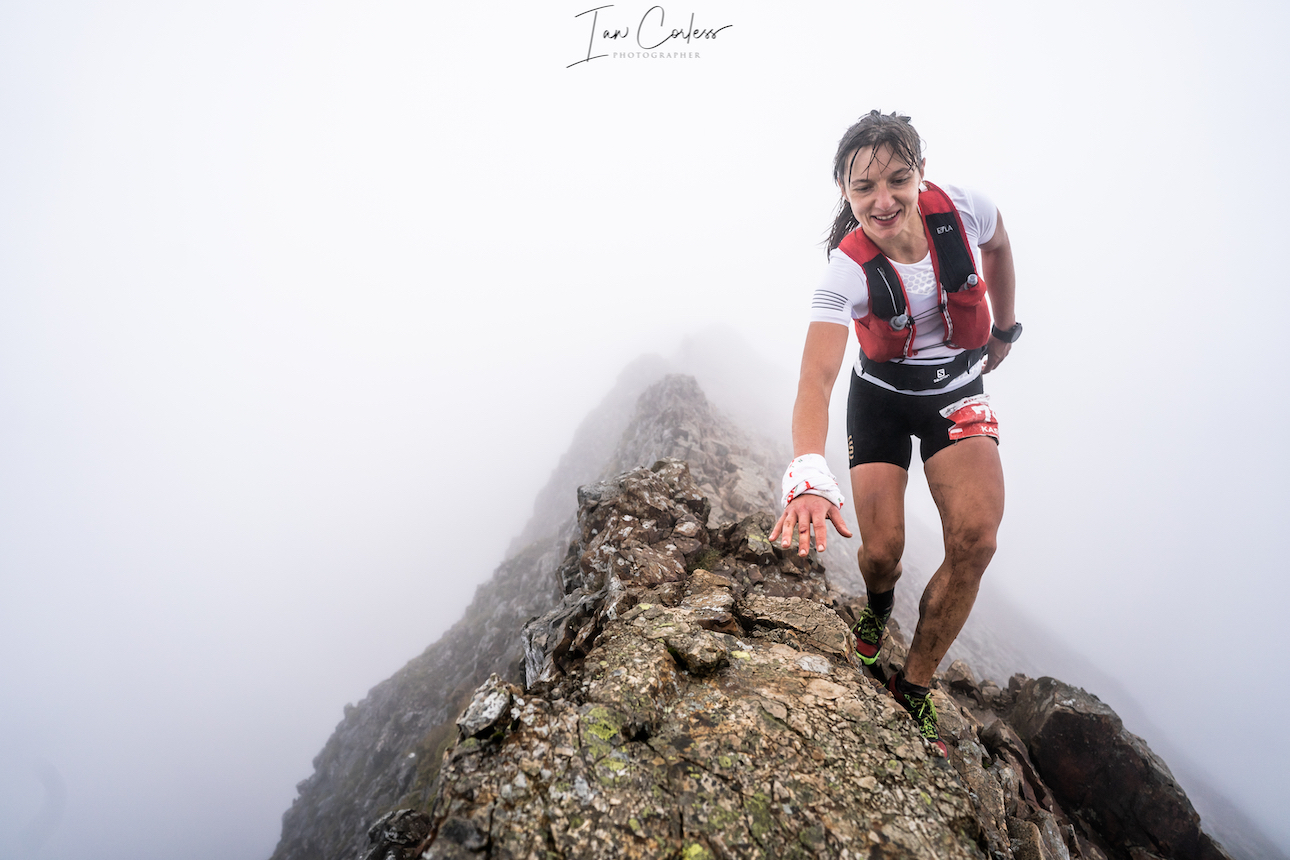
We lack altitude in the UK & Ireland, however, we have an abundance of wonderful technical terrain that is very unique and an envy of many a skyrunner. The Snowdon SkyRace is not only the personification of what a skyrunning race in the UK is but also what a skyrunner race should be on a world-stage. This has now been recognised with the race being added to the Skyrunner World Series (SWS) for 2021.
3150m of vertical gain over 40km, the race is a brutal challenge that equals and surpasses the best of what Europe has to offer. The iconic exposed arête of Crib Goch and the climb of Tryfan bring that all desirable element that makes the Snowdon SkyRace one that must be experienced.
In 2021 the SWS features 14 races in 11 countries and is supported by Merrell, also the presenting partner of the Snowdon Skyline weekend.
Snowdonia is widely regarded as a paradise for scrambling and technical trail running, boasting stunning scenery and terrain that can rival the skyrunning playgrounds of France, Italy and Spain.
A figure of eight route, it starts and concludes in Rhyd-Ddu with four key highlights, Snowdon, Glyder Fawr, Tryfan and Crib Goch. It’s a beautifully brutal route that challenges even the most talented skyrunner. Technical, tough, and a race that must be experienced.
“Since 2018 it has been our goal to host a round of the Skyrunner® World Series here in North Wales and show the skyrunning world what Snowdonia has to offer. The route is simply phenomenal, taking in the area’s most iconic ridges and Grade 1 scrambles, it’s sure to become an international classic and a very worthy addition to the World Series. I’m super excited by the prospect of the world’s best skyrunners racing over Crib Goch this October!”.
Michael Jones, RD.
Kasia at Snowdon Skyline
This October, the world’s most technically adept Skyrunners from far and wide will descend upon Snowdonia to battle it out at the Snowdon SkyRace® for Skyrunner® World Series points, a unique 3D printed dragon trophy by DesignReal and a share of the following generous prize pool: €1,500 – €1,000 – €500 – €250 – €125 for 1st-5th female and male overall finishers, respectively!
Entries for the Snowdon SkyRace® are now live and with over half of them already snapped up, this race is likely to reach capacity well in advance of October! More event info and entry available here: www.snowdonskyline.com
Please support this website. I believe everyone deserves to read quality, independent and factual articles – that’s why this website is open to all. Free press has never been so vital. I hope I can keep providing independent articles with your help. Any contribution, however big or small, is so valuable to help finance regular content. Please support me on Patreon HERE.
Episode 206 of Talk Ultra has a chat Zach Bitter and Speegoat Karl co-hosts.
Talk Ultra needs your help! We have set up a Patreon page and we are offering some great benefits for Patrons… you can even join us on the show! This is the easiest way to support Talk Ultra and help us continue to create! Many thanks to our Patrons who have helped via PATREON Donate HERE
Please support this website. I believe everyone deserves to read quality, independent and factual articles – that’s why this website is open to all. Free press has never been so vital. I hope I can keep providing independent articles with your help. Any contribution, however big or small, is so valuable to help finance regular content. Please support me on Patreon HERE.
























 IAN CORLESS