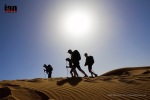
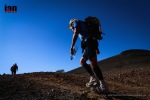
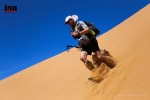
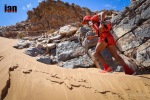
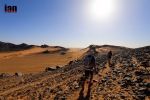
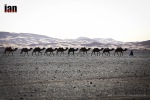
Nikki Kimball – ‘Hints ‘n’ Tips’ Marathon des Sables #MDS2015

©iancorless.comIMG_2710

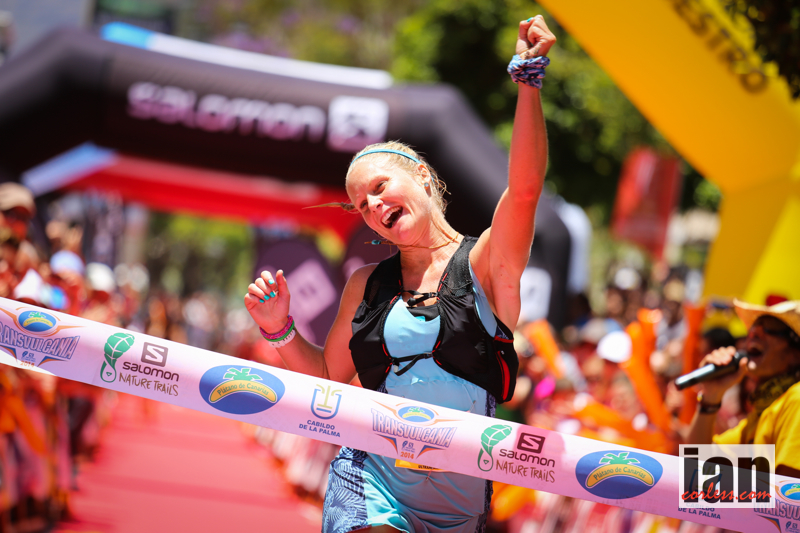
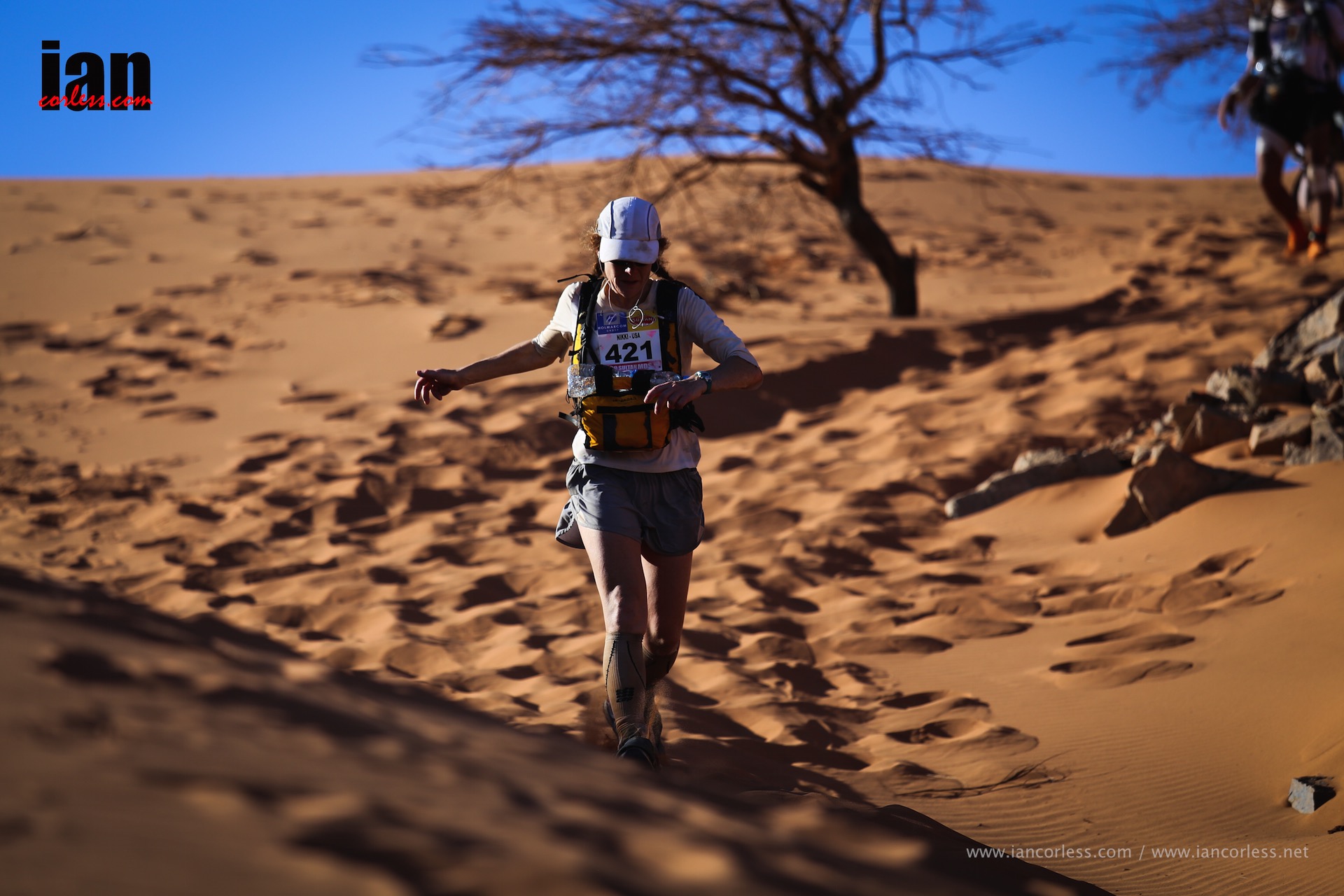
Nikki Kimball is one of the most highly respected ultra runners in the world, Her running CV is beyond comprehension. It all started in 2000 with a win at Escarpment Trail Run 30k at the age of 29.

In 2004, Nikki had a break through moment with victory at the iconic Western States. Nikki also won again in 2006 and in 2007 she did the ultra double winning Western States and UTMB in the same year.

An ever present in the world of ultra running, Nikki has often been referenced as a true pioneer of the sport. In 2014 Nikki ran the Marathon des Sables for the first time and won! The Marathon des Sables is 30+-years old this year so I wondered, what knowledge could Nikki pass on before the next edition.

Join our Multi-Day Training Camp in Lanzarote, January each year. Booking and details available HERE
©iancorless.comIMG_0691

It’s been a while Nikki, when did we last speak?

No, we spent a week together in Morocco.

Exactly… April, not that long ago I guess. A great place to start: was that your first multi day race?

I have done Jungle Marathon in Brazil, very similar to MDS but a lot less comfortable due to humidity. I did that in 2009. You need to carry all your gear just like MDS and I have done Transrockies too which is like summer camp.

I knew you had done Transrockies but not the Jungle Marathon.

 Oh yeah, Transrockies is a vacation.

 What enticed you to Morocco and MDS, great way to start a year?

Yes, I guess. I thought it would be great training for Western States. That was my initial goal. The UTWT helped me get me to Morocco so I must thank them. I had wanted to do MDS for some time but the financial side was an issue. I got the opportunity and wow; it was just awesome. It was so much more than what I expected. I was overwhelmed by the race. It is so professional, so impressive it is quite mind blowing. It was an incredible week of running.

So many have a perception of what MDS is. From a UK perspective it is an expensive race… USA also. The entry fee is high; I guess travel from the UK is okay but less so from the USA. It costs thousands of pounds and dollars. I am often asked: why does it cost so much? But having experienced it, it is the biggest circus I have ever seen.

Oh yeah. It’s amazing. The logistics are amazing. They have full medical teams and so on… There is a good reason why race entry is so much. It is beyond impressive. It is an unbelievable undertaking.

©iancorless.comIMG_3347

From your perspective, the ‘Batchens’ (Lisa-Smith and Jay) are heavily involved as USA agents. Lisa-Smith has won the race. Did you speak with them pre race?

Oh for sure. I stayed with them and asked every question possible.

So you came well prepared?

Yes I think so. I also spoke and spent time with 2013 ladies winner, Meghan Hicks, so, between Lisa and Meghan I was well looked after. They understood the race and they could pass that on. You know, the feel of the race. Races have a feel and MDS definitely has a unique feel.

 Great that you should get advice from the other Americans who have won the race?

Oh yeah, we all live relatively close together so it was great.

 Talk me through the 2014 race. Give me some highlights!

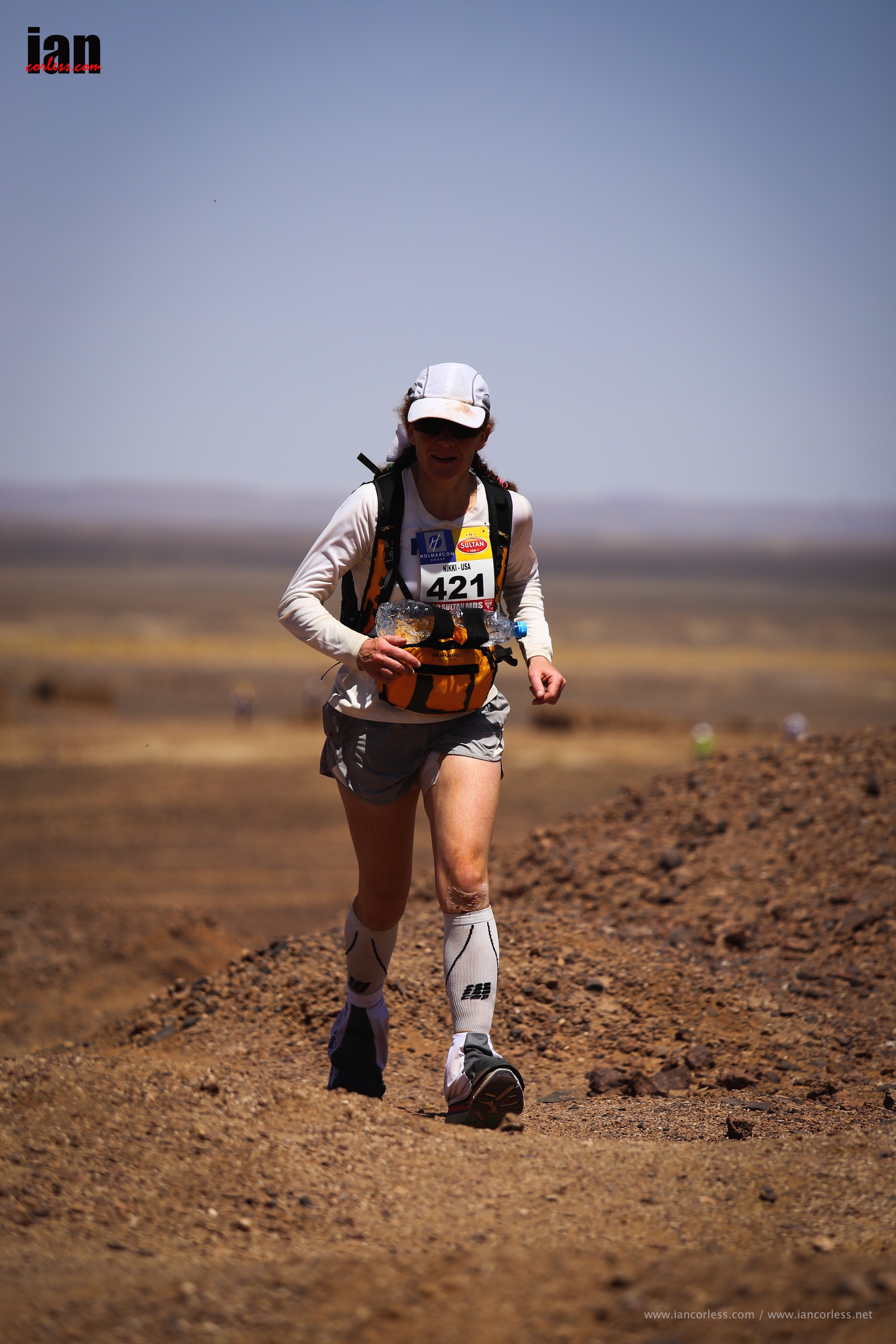
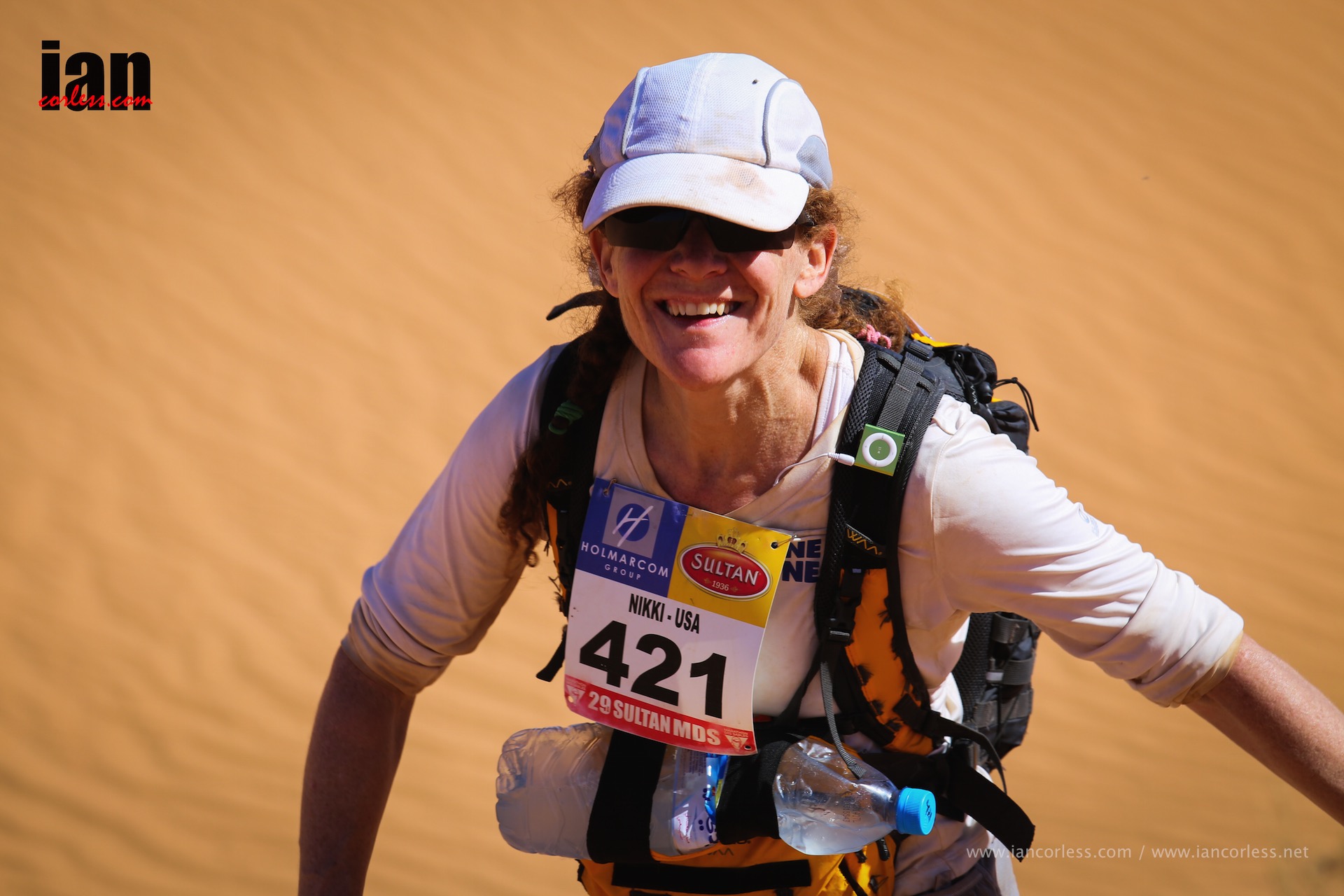
Wow, the first couple of days were fun. I didn’t push it hard and I enjoyed the atmosphere. I was kind of having some depression problems prior to MDS. I have major depression anyway and I was kind of not doing too well going into the race. I remember on the first day… I was climbing a dune and I could see nothing but sunshine and happy people. My mood lifted. It was just amazing. The depression broke and it was really instrumental to setting the stage for the race. Day two and three was easy and then I guess it was the long day that I made my move. I had planned beforehand that I would try to win the race that day.

 Yes I remember pre race when we chatted that you said you would make a push that day. You expected Laurence Klein to be faster on the short days but the long day would play into your skill set and 100-mile experience.

I have never had a race go so well. It went perfect. Exactly to plan; easy couple of days and then ramp it up. I’m really happy with how it all went.

Did you get nervous early on? You know, thinking that you were giving time away to Laurence or did you have complete confidence?

I had confidence that I was racing the best way for me and that my strategy would give me my best performance. I had no idea how Laurence would race. I couldn’t control her pace, so I just ran my own race. I didn’t know I would beat Laurence but equally I wasn’t convinced I would loose to her either. After day two one of the French reporters asked me, “At this point do you think that you could possibly beat Laurence?” Big mistake… I was polite but I thought, ‘I will show ya!’

Well it’s a French race and Meghan won in 2013 so I guess they were hoping they would have a French lady back on the podium.

I guess so.

You upset the apple cart. Once the long day was done, did you just consolidate?

Absolutely! I have just completed sixteen years of ultra running. That is a long time. Once I took that lead on the long day, I knew I had no need to push. I could just defend and race smart. I don’t even know how many ultras I have done… but I know I don’t need to destroy myself.
©iancorless.comIMG_7314

Great tactic. No extra points or extra prestige for winning by more hours. A great lesson for us all here!

I knew I had races coming up so I wanted to be sensible.

It’s a new year and MDS is not far away…  Runners are now suddenly panicking. The race is just months away. So may questions. What rucksack, what shoes, what sleeping bag, what food, tell us about bivouac and so on. What tips do you have for everyone that worked for you?

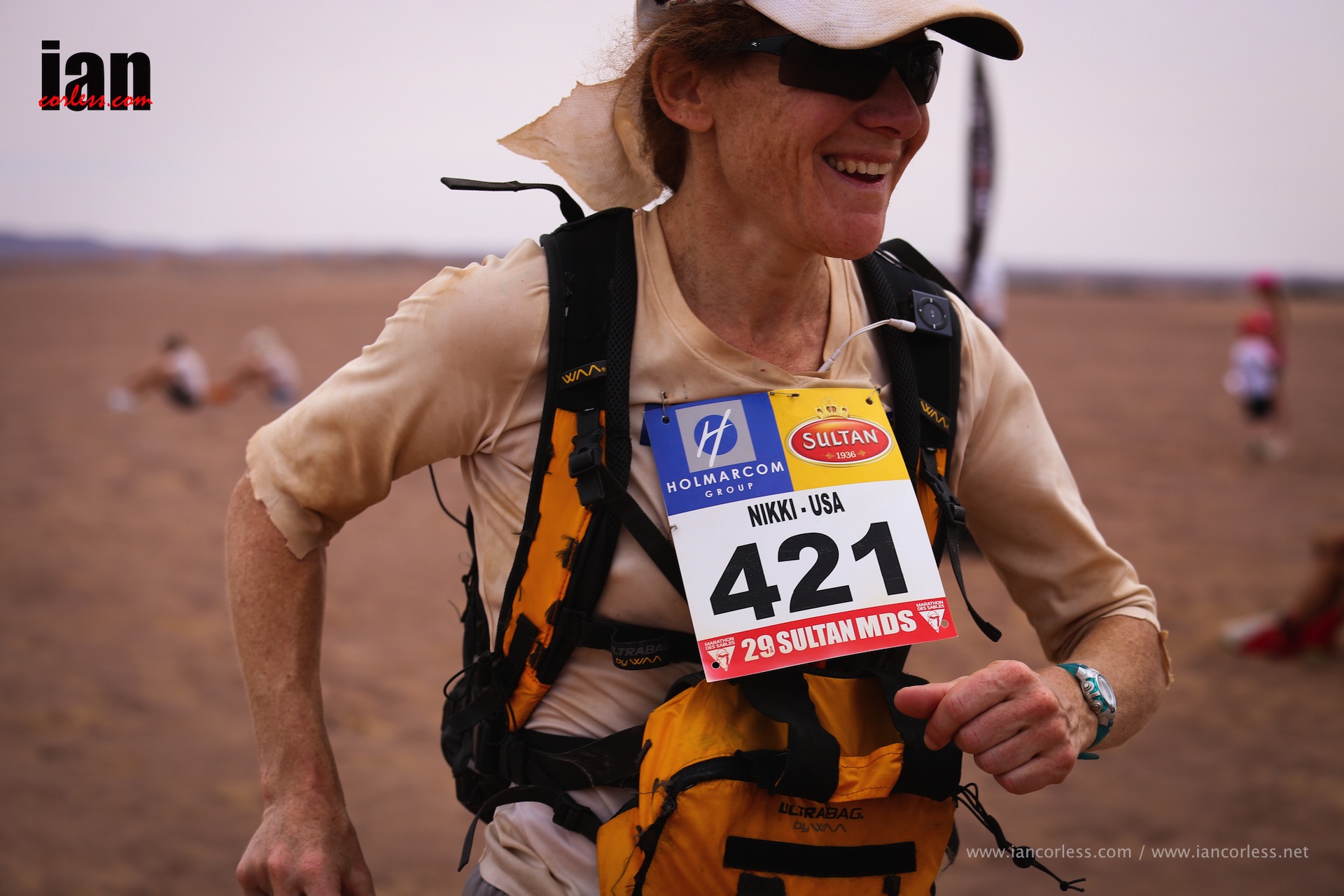
I had a very light sleeping bag and that was all I needed. I was warm in that but I do believe 2014 was a warm year. It didn’t really get cold at night, so, you may need to be careful on that. If you are racing and want to be competitive then weight is everything. You must go as light as possible. I didn’t have a sleeping pad, no luxuries, and no creature comforts. But if you want to ‘complete’ it makes sense to have a few comforts but don’t go crazy, remember you have to carry it!

How about food, what strategy did you use. You need a minimum calorie allowance.

Yes, I carried the minimum.

How did you break those calories down? It’s always a big debate; fat v carbs, dried food, bars, liquid, gels and so on. What did you do?

I took advice from Lisa and Meghan and a woman called Susan Hunt who had done loads of research on MDS. I went with what I thought would work for me. That is what you have to do. For me, I did one freeze-dried meal at night, which provided good calories. I rolled out all my food before I went to Morocco and mad it as small as possible and then put it in new bags. I just added water and then put them back in the sun to warm it so I didn’t need a stove. I also took a great deal of calories in peanut oil. It’s oil that lasts (it doesn’t go rancid) and it has loads of calories.

How did you carry that peanut oil?

I decanted it to small plastic bottles. I had over 1000 calories of peanut oil and I added it to my food. It was easy calories. If I go to MDS again I would take more. It worked really well.

So you had 1000+ calories to last the week?

Yes, I wasn’t eating 1000 calories of oil a day but I would definitely take much more for another trip or race like this. It’s great; just add to food and it really works.
 

©iancorless.comIMG_1704

What did you do for breakfast?

I had dehydrated potatoes but it didn’t really work for me. I don’t eat a high carb diet anyway so it was a struggle. They tasted great for a couple of days and then I couldn’t stand it. I was throwing my breakfast away, crazy.

Yes, so many struggle with what they thought was safe food and then they can’t eat it. I remember Meghan saying she had a favourite bar that she loved. It was a bar she could eat anytime, so she took them to MDS. After day one (I think) she couldn’t face them! It is funny how your palette changes so quickly when under stress.

Exactly. I’m not sure how you find out what works though? I think variety is good. You need to play safe to a certain extent.

©iancorless.comIMG_4051

What would be a breakfast choice now?

I would still take potato but only for a couple of days and then I would take some other freeze-dried option.

On the trail each day, how did you get calories?

I ate dried mango. I loved them and I never got sick of it. They were really great. I also had little packets of ‘Vespa’ for amino acid. That helped too. I knew I would burn my own fat for calories. You can’t race on 2000 calories alone so you will burn fat. I didn’t need to eat all that much really.

Great point! You have already mentioned you don’t eat much carb so am I correct to assume that you have a low carb and low sugar diet. You look to be fat adapted.

Not always but yes, for the last few years I have raced this way. I let myself go a little in the off-season but when I am racing I need to be 100% on my nutrition game. It’s all about balance, running is important but not all consuming.

I guess you prepared for MDS when the New Year started, what was training like. Did you do anything specific so that you knew you would be performant in Morocco?

When I signed up for MDS, I got invited to India to do a run. That wasn’t planned so I had to fit that in. This race was in February. It was a 100km in the heat in a salt desert on the Pakistan border; that was perfect! It was a great jump-start. I had no heat training at all really from that point onwards but I did run in the snow and that worked great. Running in the snow is very similar to the sand and dunes.

Yes, sand and snow very similar feel when running.

Yes, I have been running in the snow this winter and it has reminded me of MDS. Obviously running in the cold isn’t ideal but snow-running technique was brilliant. I have however always run well in the heat. My Western States performances confirm this.

What about back-to-back runs, speed sessions and running with a pack?

I didn’t run with a pack at all… I had one of those WAA packs and they are incredible. It fit me like a glove. I recommend people train with a pack but I do ski mountaineering and I always use a pack so I don’t need to adapt. I am 100% used to it.

I mentioned speed work and back-to-back runs. I guess you have been running so long that running a multi day is second nature?

Yes. I did no back-to-backs or speed. I have been doing this running thing for years.
©iancorless.comIMG_9176

You have an incredible running history. You’ve won Western States and UTMB and so many other incredible races, so where does MDS fit. Is it one of the best?

Oh yes. It’s up there. It was a surprise for me. I didn’t expect it to be as fun and as challenging as it was. As I mentioned, I was a little depressed pre race and so therefore I was a little down. But the race kicked me out of that and I had a ball. I’d love to go back some day. It was a wonderful learning curve too. I met so many amazing people. It holds a special place in my heart.

I agree, MDS is quite special; I feel fortunate to witness the race from the outside looking in. Documenting each participant’s journey through images and words. Final question; how difficult do you rate MDS?

It’s no easy race if you are pushing at the front. But it’s as easy or as hard as you want it to be. The cut offs are generous and that provides so many with an opportunity, which is great. But if you are looking to be at the front, you have to be fit, dedicated and focused. It’s not the hardest race I have done but it is also not the easiest.

*****

Nikki will race The Coastal Challenge in Costa Rica (HERE) in February and will hopefully peak for the 2015 Western States.

Nikki has a new film about to be released called FINDING TRACTION that documents her journey on the Long Trail (see Here)

If you require any photography, words or articles re Marathon des Sables please email using the contact form below.
← Back

Thank you for your response. ✨

Warning
Warning
Warning
Warning

Warning.


FASTER DOWNHILL RUNNING? Tom Addison gives his top 10 Hints ‘n’ Tips

©iancorless.com.IMG_4943

inov-8 athlete and 2014 English Fell Running Champion Tom Addison is one of the best downhill runners in the business.

To help others improve their downhill running speed he is giving away his secrets with these top-10 go-faster tips.

Tom, a Great Britain and England international in mountain, trail and fell running, says:

There is no greater adrenalin buzz in running than nailing a downhill. It’s a battle of you against the terrain, and to win that battle feels amazing.

Being able to descend with confidence is crucial, especially when racing. You can be the best in the world at running uphill, but if you can’t descend then it will seriously hamper your chances of winning races, be that on the fells, mountains or trails. I have had to work hard to improve my downhill skills but that dedication to doing so paid off when I won last year’s English Fell Running Championships for the first time.”

©iancorless.com.IMG_4926

Here are Tom’s top-10 tips to improve downhill running speed.

Switch off your brain

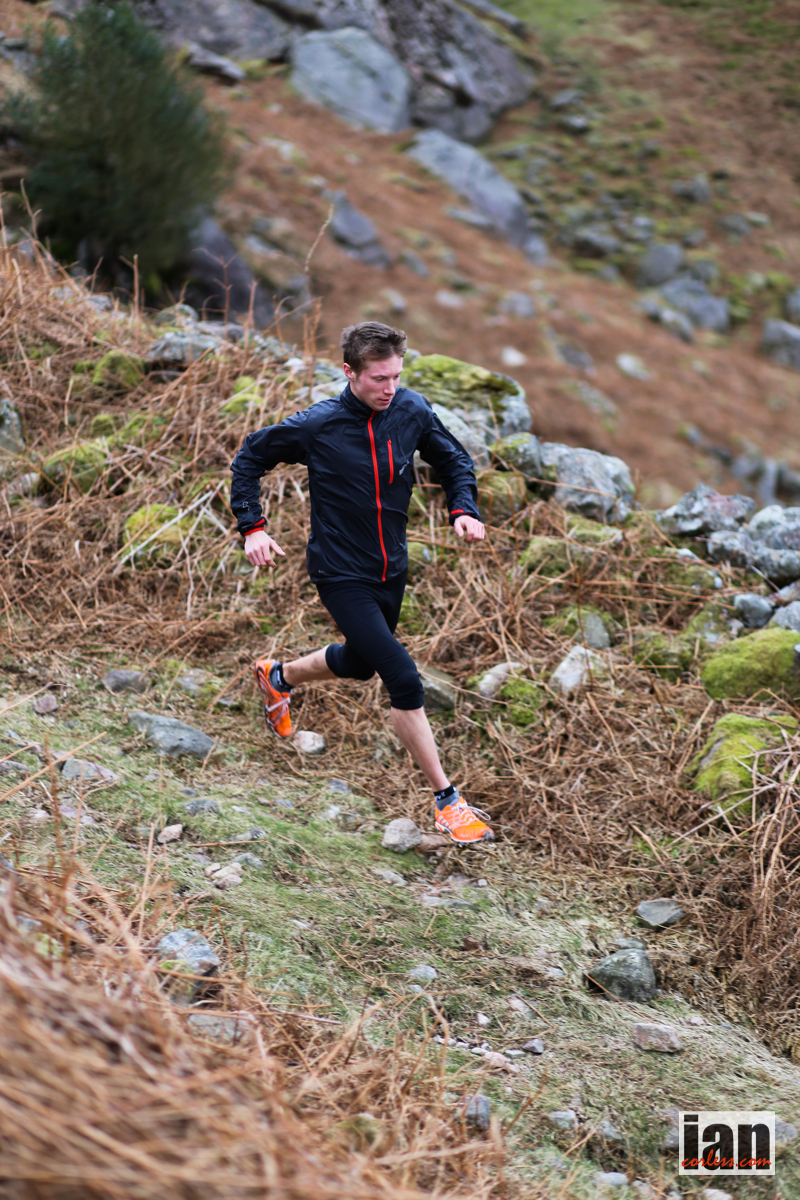
Runners worry about falling, slipping and hurting themselves, which is understandable. However, to think like this will only slow you down. It’s not easy, but what you have to do is, at the top of the hill, switch off your brain and let your legs take control. The less your brain is working, the better. Empty it of fear and you will run downhill faster. Because it has less time to think about things, my brain switches to no-fear mode much easier when I’m racing. So, when training downhill I often pretend that I’m racing, tricking the mind!

Keep strides long

The most common mistake runners make – and I’m guilty of doing so myself when tired – is shortening their stride. Longer strides equal faster downhill running. I practice downhill running a lot and the focus is always on maintaining a longer stride. It takes time and a degree of bravery to improve your downhill running but the end benefits are huge.

Lean forwards

Whenever you can, especially on gradual downhill, lean forwards. This will lengthen your stride and ensure your brakes remain switched off. On steeper descents, I try to lean forward but tiredness can mean I lean back slightly. This does in turn give you a little more control in your downhill running but you won’t go as fast.

Look ahead and pick the best lines

Rather than looking directly at the terrain under your feet, look slightly ahead at what’s coming in two strides’ time. When racing, think more about your route choices and the lines you are going to take. I am always looking for the best, fastest lines, though these may not always be the most direct. Avoiding wet rocks in favour of a grassier, albeit slightly longer, alternative route can be quicker. I try and recce race routes in advance so I know the fastest lines and various alternatives.

Do repetitions in training

Find a gradual off-road downhill gradient and do sprint repetitions down it, ensuring you use a long stride length. Each repetition should be about a minute to a minute and a half in effort. Jog back up the hill after each repetition to recover. I try and do 10. Ensure you stretch well, especially your hamstrings, both before and afterwards.

Tom Addison - image#25A318F

Bend your legs

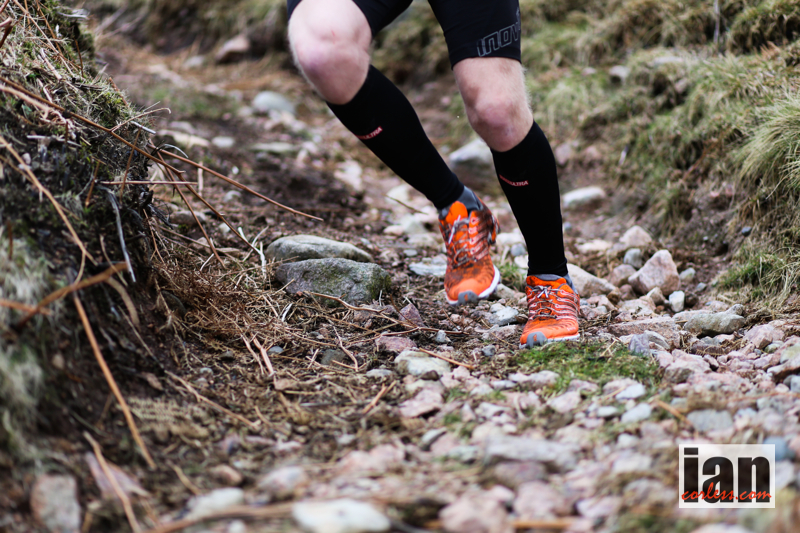
Try not to run downhill with straight legs, as this could potentially result in knee complaints. Your legs should be slightly bent, which will in turn give you more spring in your step.

Squat for strength

Leg strength is crucial for fast downhill running. One exercise I use a lot is the squat. Put your back against a wall, with your knees at a 90-degree angle. Push off your toes and force your back hard against the wall. Keep your knees at 90-degrees and hold for as long as possible. Yes, it hurts!

Pretend you’re a windmill!

It’s important not to forget that your arms also have a key role to play if you want to run downhill faster. Push them out, as high and wide as you feel comfortable, and use them to aid your balance. You might think you look a bit silly doing so but it definitely works. Imagine you are on a tight rope, what would your arms do? Now replicate that when running downhill.

Trust your feet and footwear

If you don’t have trust in your own feet and your footwear then you are in trouble. I like shoes with a really aggressive tread and wear inov-8’s X-TALON, MUDCLAW and OROC shoes when wanting the best grip.

Adapt your technique to the terrain

Be ready to adapt your technique to the different terrains you encounter on a downhill. Loose rock and scree can often work with you as it moves forward under your feet – just ride it! Wet rock is the most difficult to negotiate – the less time your feet are in contact wet rock, the better, so stay light-footed and springy. When running downhill through mud, dig your heels in a bit more.


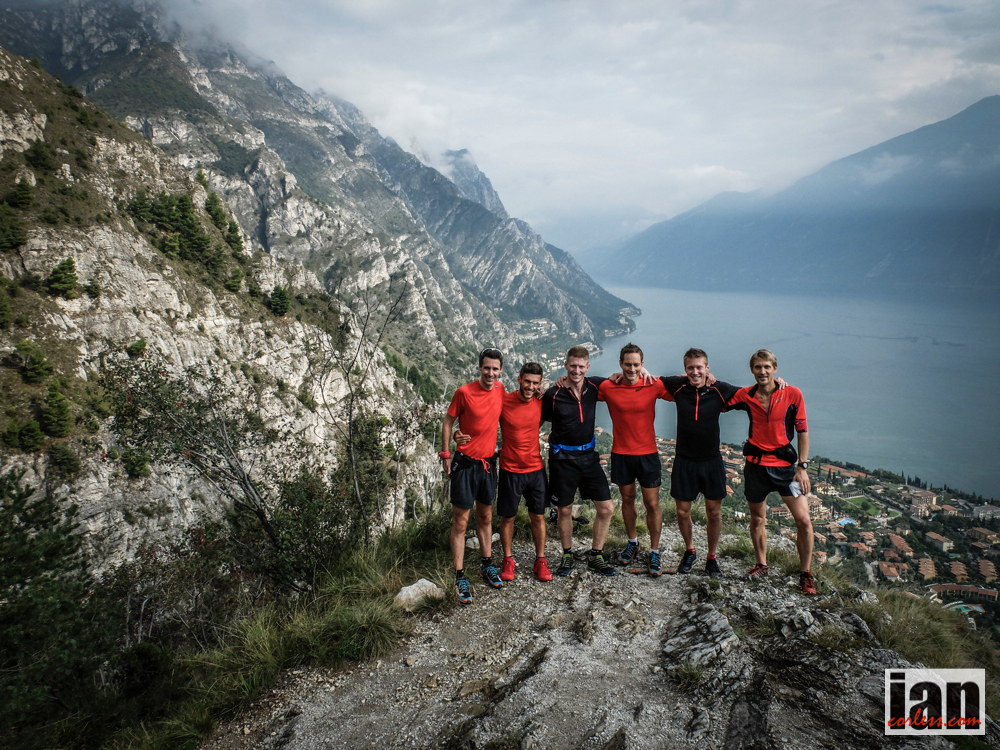
Tom with his inov-8 team members at the Skyrunning Limone Extreme 2014.

Tom with his inov-8 team members at the Skyrunning Limone Extreme 2014.

 article by ©inov8

inov-8 logo

Read a review of the NEW Ultra 270 shoes HERE

Read a review of the NEW Race Ultra Vest (2015) HERE

X-Talon 212 Shoe review HERE

Read more tips and stories from inov-8 athletes at HERE

Anna Frost and Samantha Gash : 2-weeks and counting #TCC2015

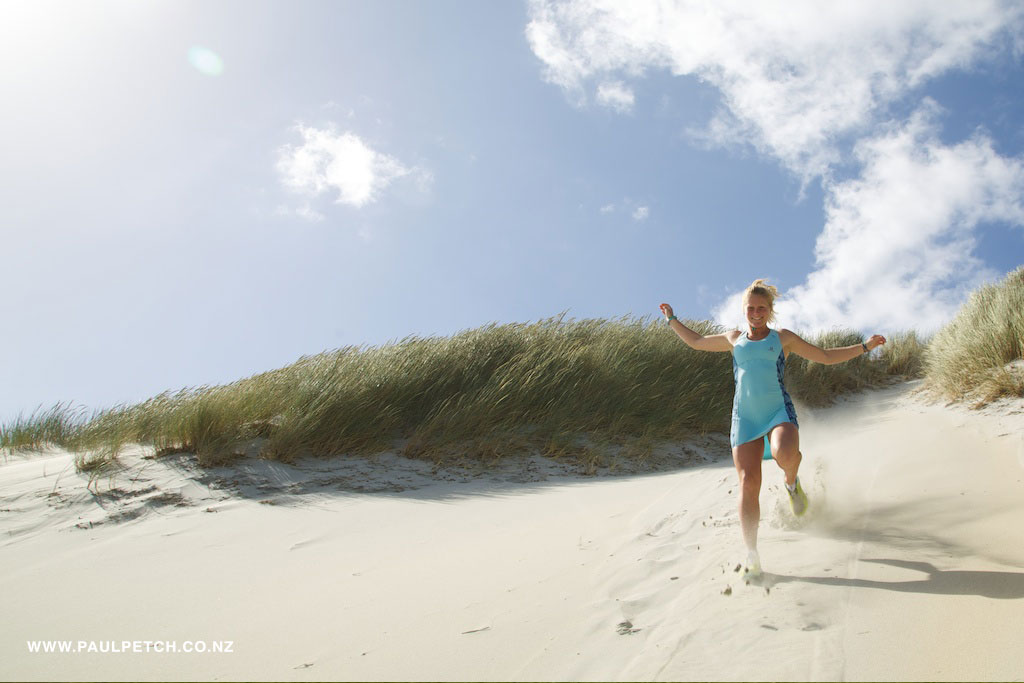
©paulpetchphotography

The Coastal Challenge 2015 (#TCC2015) is point-to-point race starting in Quepos and finishing in the stunning Drakes Bay close to the border of Panama. The 230km route weaves in and out of the Talamancas (a coastal mountain range in the south west corner of the country) providing a true multi terrain experience.

Participants are required to balance the distance, severity of the terrain and a tropical climate to reach the finish line. Jungle, rainforest trails, mountain trail, single track across ridge lines, highlands and coastal ranges lead into pristine beaches, rocky outcroppings, reefs, river valleys, river and estuary crossings to provide an ultimate journey.

I caught up with two of the male contenders for overall victory in the 2015 edition just the other day:  Joe Grant and Speedgoat Karl Meltzer (read HERE.) Today we have a catch up with Anna ‘Frosty Frost and Samantha Gash.

Anna Frost – Salomon

©iancorless.com.IMG_9258Transvulcania14

You have been back home in the Southern Hemisphere over the Christmas period, what have you been doing to prepare for TCC?

Well, it only seems like yesterday the 2014 race season finished. So I have been having a break and catching up with family and friends after a long race season away from home. It has been a wonderful hot summer so I have naturally been getting used to the heat and enjoying some beach runs and swims! It is a perfect time to be in the mountains on overnight adventures so I have taken the opportunity to get some long days back to back. 

You managed to experience the TCC race in 2014 without racing, how beneficial has that been in preparation for the 2015 race?

 I learnt a lot about the course and was able to see the challenges without putting myself through them. Although nothing really prepares you like the experience itself. I hadn’t expected such long beach sections so I have been making the most of living beside the beach and doing most of my runs there. 

Your mum is joining you out in TCC. That’s going to be quite special. Are you planning making this a holiday race?

Yes, my mum is joining me which will be fabulous to be able to share this part of my life with her. Stages races are so social and exciting everyday so for spectators to get involved is really nice for everyone. I got my travel blood from my parents so she is definitely looking forward to seeing somewhere new and in a new way through my race. (Im not sure what you mean by a holiday race) I am not fully back into race mode or training hard as I have a long season ahead, but this race will most definitely give me a good base to kick start the year.   

Any tips for all those taking part?

Drink lots of water, anytime you go past water submerge yourself to fully cool down, drink some replacement fluids afterwards and even in the morning and then drink some more water. It is so hot there…we are all going to need it. 

Anna Frost ©iancorless.com

Samantha Gash

Sam Gash

You have been back home after South Africa, what have you been doing to prepare for TCC?

I spent Christmas and New Years in New Zealand with my partner and fellow ultra running friends. It was only my second overseas trip in four years that didn’t revolve around a race! We spent everyday outside, running some incredible trails and hiking hard up some mountains. Although it wasn’t planned to be so, it was great training for TCC. 

You had a wonderful no racing multi day experience in South Africa. Great preparation for TCC but have you recovered?

To be honest I wouldn’t say I have recovered 100% yet. I get more tired after a run and mentally my mind isn’t yet committed to doing long runs for the purpose of training. It would be easier to be hard on yourself for feeling weaker whilst climbing hills and weary after a 20km run, but it is to be expected after what we experienced – both from a running and preparation perspective.

You have multi day racing dialled. What for you are the secrets of racing/ running day after day?

Be strategic in how you attack each stage. I personally like to think of the entire race as an arch as opposed to separate stages. There will be times where you may choose to run more conservatively to complete the entire arch. Nutrition and how you choose to recover between the stages is also important. So, I will aim to get some rest after each days run in addition to a good nights sleep. 

Any other tips for all those taking part?

Have fun, look around and get to know the other competitors. These are the things you will probably remember more than how you placed. 

Sam Gash2

The 2015 #TCC2015 starts on January 31st and finishes on February 7th. Daily reports and images will be available on this website and you can follow Facebook and Twitter#TCC2015

The Coastal Challenge Facebook page is HERE and the race website is HERE

Route book and profiles available on PDF Here

Top images of Anna Frost – ©paulpetch.co.nz

Joe Grant and Speedgoat Karl prepare for The Coastal Challenge 2015

Karl MeltzerThe 11th edition of The Coastal Challenge 2015 (#TCC2015) is just weeks away. For those in the know, the TCC is a gruelling multi-stage race that takes place along the tropical Pacific coastline of Costa Rica. The 230km route weaves in and out of the Talamancas (a coastal mountain range in the south west corner of the country) providing a true multi terrain experience.

A point-to-point race, the course starts in Quepos and finishes in the stunning Drakes Bay close to the border of Panama. Simple in concept, the TCC provides an extreme challenge that tests each individual runner. Participants will need to balance the distance, severity of the terrain and tropical climate to reach the finish line.

If you enjoy long distance running and adventure then The Coastal Challenge is for you and will prove to be a tremendously rewarding achievement. Jungle and rainforest trails, mountain trail and single track across ridge lines, highlands and coastal ranges; pristine beaches, rocky outcroppings and reefs, river valleys, river and estuary crossings. It’s an amazing course.

Following on from the incredible 10th edition line up (2014) that included Philipp Reiter, Nick Clark, Julia Boettger, Veronica Bravo and men and ladies victors; Michael Wardian and Jo Meek, race director, Rodrigo Carazo has once again provided a stunning line up for 2015.

Two of the male contenders for overall victory in the 2015 edition are Joe Grant and Speedgoat Karl Meltzer. I caught up with them to find out how training has gone in the final build up to the race.

*****

Speedgoat Karl Melter – Hoka One One, Red Bull

Karl, you have your mojo back! Is the TCC directly attributable for that? 

I definitely have my mojo back.  I am looking at the TCC as a great week of running, with some harder runs, some good runners to run against, and to hopefully not get ‘chicked!’ Which I suspect I will.  The race has motivated me to come to Zion Canyon and run some multi-long days in January which is great.  I also look at it as an interesting test of my fitness.  I’ve had 3 decent months so far, with the exception of a mildly aggravating neuroma, which will never go away, so I will just continue to run and manage it.

©redbull

©redbull

You are no stranger to running day after day having done the AT (Applachian Trail) and Red Bull Pony Express, have you done anything specific in training for TCC? 

The AT and the Pony Express trail, being much longer days than the TCC really aren’t that comparable.  The Pony was a cakewalk because it was not a race. The AT was just about surviving the distance daily.  The TCC is much shorter and faster each day,   The real key is recovery, so I suspect, I’ll be sleeping plenty and resting a great amount after each day to see how that pans out.

***

I’ve been toying with recovery the past month after long runs. I will likely take in some Ultragen and remain motionless for about 30 min. Eat more. Take a nap with legs elevated for about 2 hours. Then go for a walk about 1-2 miles to loosen the legs again… then eat again!  At least that’s the plan for now. I”m sure it depends on what’s going on too, but the nap is important as well as the walk later in the day.

Any other tips for all those taking part?

Don’t drink as much beer as I will.  🙂  Enjoy more than anything and try and plan to be the “chaser”, not the “chasee” after day 3.  I’m hoping to be the guy who gains momentum after day 3, rather then going out with the fast guys on day 1 and frying myself.  It’s far more entertaining for me to run that way.

IMG_2033

Joe Grant – Buff, Arc’teryx, inov-8

JoeGrant2

You have been back home training in the snow on skis and the ‘phat’ (fat) bike. Will that all work well for your run legs at TCC?

I find that both the ski and biking help develop a lot of power while minimizing the impact on the body you get from running. I can get a lot of vertical in, have a good long day of training where I feel tired, but not banged up. At this point in the year, I think it’s a very sustainable practice and will set me up nicely for spring/summer racing. TCC will definitely be a bit of a shock to the system, particularly the heat, but that’s partly why I’m interested in the race as it will be a great early season training boost.

Are you doing any specific preparation for the heat of TCC?

I did go down to Arizona to visit my uncle over the New Year. I was hoping to get a bit of heat training in down there in the desert, more of a mental thing really to break out of the winter cycle back home. The weather was surprisingly cold though and I only got one warm day of running in shorts. Heat is certainly my biggest concern for the race.

Joe Grant

Multi day racing will place different demands on you in comparison to one long push (like in a 100-mile) do you have any thoughts or strategy for TCC?

I’m approaching the race like a demanding week of training with slightly longer mileage and more intensity. What I’ve found in multi-day races (in a single push) is that even a small amount of sleep and rest can do wonders for recovery. I’ll just need to remind myself during the race, that even if I’m feeling particularly bad on one day, good food and solid rest can really turn things around on the next. It’s a patience game and being able to spread your effort out evenly over the course of the 6 days.

Any tips for anyone taking part in a similar event?

I’d recommend really paying attention to all the little details that can improve your comfort and recovery during the week. It’s easy to be too tired to clean your shoes or tend blistered feet or chaffing after a strenuous stage, but taking care of those little things will pay off. It’s worth having clean, dry clothes to change into particularly at night to get good rest and feel ready to tackle the next day.


The 2015 #TCC2015 starts on January 31st and finishes on February 7th. Daily reports and images will be available on this website and you can follow Facebook and Twitter #TCC2015

The Coastal Challenge Facebook page is HERE and the race website is HERE

Route book and profiles available on PDF Here


Trail Running Magazine Feb/Mar 2015

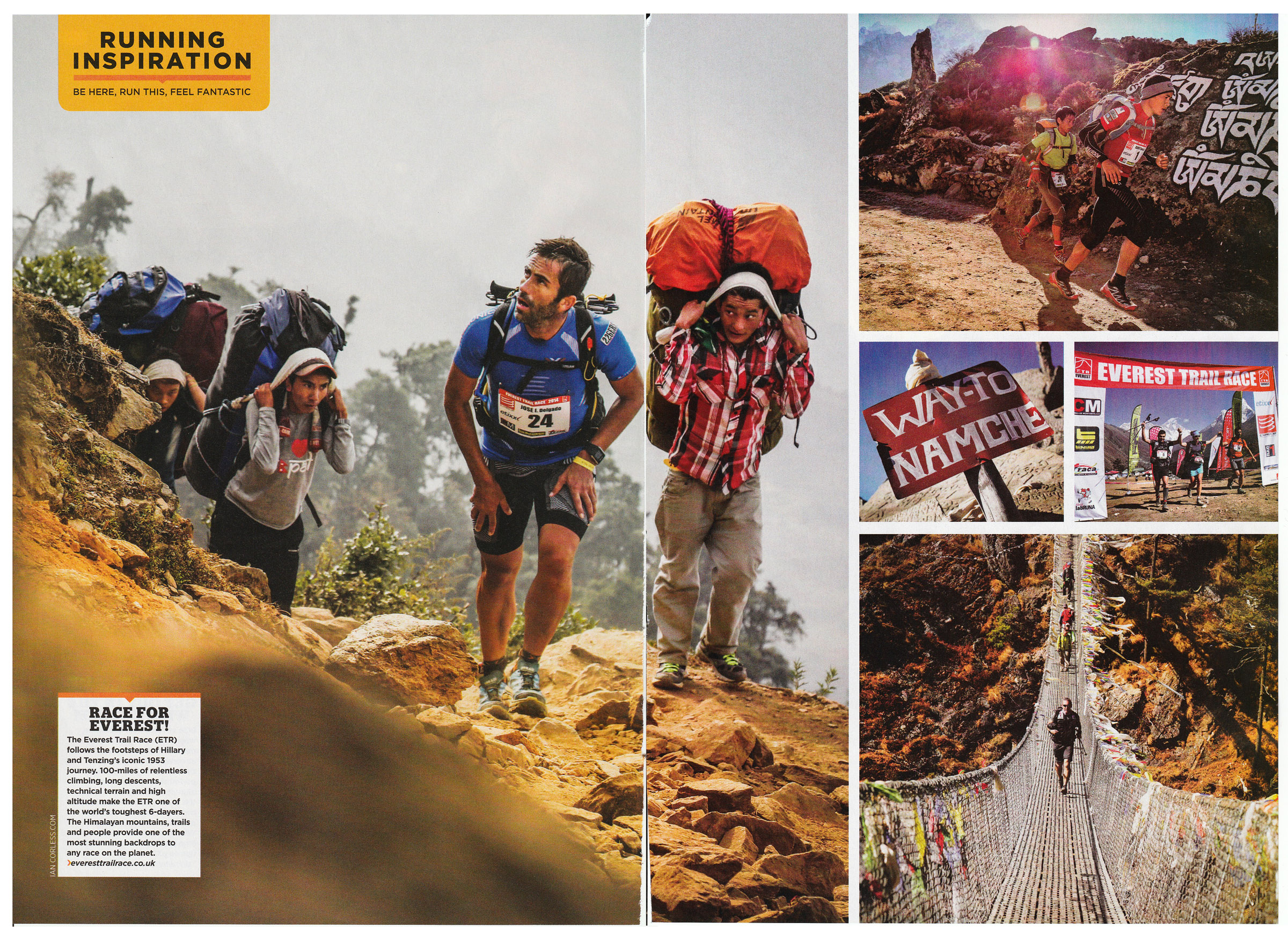
ETR2014_DPS_TrailRunningMag_A

Check out the latest edition of TRAIL RUNNING Magazine Feb/Mar 2015

It has a nice ‘DPS’ on the Everest Trail Race (HERE) by yours truly and a whole host of other great info for the budding and experienced trail runner.

  • Trail Running, the UK’s only mag dedicated to the adventurous world of off-road running, is on sale now!
  • FREE with this issue – Start Running Now training guide with expert fitness and nutrition plans for every level from 5k to marathon.
  • Run all winter with confidence – We share the secrets from 14 elite trail runners from running on snow and ice to motivation to get outside in the first place
  • Trail Running Saved My Life – From binge drinking and public nakedness to race wins and a GB vest, be inspired by our exclusive interview with elite endurance athlete Robbie Britton, plus more athletes and readers saved by trails
  • Easy Quick Fitness – how to lose flab and run faster with no extra training effort!Ditch the gym – no expensive memberships, get fit by running with our easy 2-week plan
  • Run your first ultra – go from 10k to 30 miles with our 24-week plan from the Mammut Dig Deep Races experts
  • Gear tests – Budget trail shoes, winter gilets, hydration bottles, bumbags & packs and the top 20 running apps
  • Chocolate’s good for you! – Made you look, yes, we reveal the healthy way to enjoy this treat

View HERE online

Subscribe HERE

Episode 78 – Fiennes, Ulrich, Macy, Tortorich

Ep78

Episode 78 of Talk Ultra celebrates its third anniversary with interviews with two legends, Sir Ranulph Fiennes and Marshall Ulrich. We also speak to adventure racer turned ultra runner, Travis Macy and in Talk Training we chat with America’s Angriest Trainer, Vinnie Tortorich. The News, Up & Coming Races and of course, Speedgoat Karl Meltzer.

00:09:13 NEWS
Across the years
David Johnston 551.148 miles
Sue Scholl 437.769 miles
all results – HERE
 
Kilian Jornet 12:49 for Aconcagua – HERE
00:24:21 INTERVIEW
 Sir Ranulph Fiennes – read about Sir Ranulph HERE

Sir Ranulph Fiennes has been called, ‘The World’s Greatest Living Explorer.’ It’s a difficult statement to argue. Sir Ranulph’s list of achievements is quite incredible.

Born in ‘44’ he was educated at Eton, served in the Royal Scots Greys for eight years and progressed to the Special Air Service (SAS) where he specialized in demolitions. In 68’ he joined the Army of the Sultan of Oman where he was decorated for bravery after leading several raids deep into rebel territory.

Sir Ranulph married his first wife, Virginia (Ginny) in 1970 and between them they lead expeditions all over the world. Ginny was awarded the Polar Medal in ’87.’ Sir Ranulph has raised incredible sums of money for Marie Curie Cancer Charity as his wife, mother and sister all died from the disease within 18 months of each other (2004.)

Currently, Sir Ranulph is the only person alive to have to have travelled around the Earth’s circumpolar surface. Continually a pioneer, Sir Ranulph is ever present at pushing boundaries.

The first explorer to cross the Antarctic Continent unsupported, Sir Ranulph has come a long way since leading a British Expedition on the White Nile in ’69.’

Ran, as he likes to be known, may perhaps be best known after travelling to the North Pole unaided. Dr Mike Stroud has figured heavily in Ran’s career and amongst many expeditions, two stand out! A 97-day trek across Antarctica in ‘93’ and running seven marathons in seven days on seven continents (2003.) The latter was undertaken just four months after a triple heart bypass.

In 2000, Ran attempted to walk solo to the North Pole but his sled fell through thin ice. Exposure to the ice-cold water resulted in severe frostbite and some months later, the famous ‘finger’ incident.

Having been to both Poles and participated in over 30 major expeditions, Ran summited the Eiger in 2007 and at the age of 65 (2009) he pushed the boundaries once more to be the oldest Briton ever to climb Everest after two failed attempts in 2005 (he had a heart attack) and in 2008 when he ‘went a little too quickly’ and exhaustion foiled his attempt.

After 5 years of planning, in 2012, Sir Ranulph set off on his latest expedition, ‘The Coldest Journey’ leading the first team on foot, across Antarctica during the southern winter. The expedition was brought to a sudden halt for Ran when in training he removed a glove to attend to a ski binding. Ran was evacuated for frostbite and treatment but the expedition continued without him.

In 2015, Ran will attempt the 2015 Marathon des Sables.

BLOG
Summits of my Life – Aconcagua HERE
01:11:55 INTERVIEW
Marshall Ullrich 

The ultimate endurance athlete, Marshall Ulrich has run more than 120 ultramarathons averaging over 125 miles each, completed 12 expedition-length adventure races, and climbed the Seven Summits all on his first attempts.

He finished the first-ever circumnavigation on foot of Death Valley National Park, about 425 miles in one of the hottest, driest places on earth, during the most blistering month in U.S. history (July 2012). He’s ranked this expedition as tougher than ascending Mount Everest, but not as challenging as his record-setting transcontinental run of more than 3,000 milesfrom San Francisco to New York City, which was the subject of his memoir, Running on Empty.

In his sixties, Marshall inspires adventurers, active and armchair athletes, and a growing general audience by sharing his experiences and defying the ideas of “too far,” “too old,” and “not possible.”

01:45:36 INTERVIEW
Travis Macy sponsored by Hoka One One and Vitargo

Travis Macy summited glacial peaks in the French Alps, rapelled into cavernous limestone caves in China, and ran through parched deserts in Utah.  Most famously, he won the Leadman, a high-altitude combination trail running marathon, 50-mile mountain biking race, 100-mile mountain biking race, 10K run, and 100-mile trail run.  Macy accomplished it without exceptional strength, speed, flexibility, high tech performance labs, or performance-enhancing drugs.  His secret?  A precise and particular outlook he calls the “Ultra Mindset,” principles for daily life which are neither mysterious nor the sole province of ascetics or elite athletes: embrace fear, rewrite stories we tell ourselves, and master the art of seeking help, among others.  By applying the Ultra Mindset principles to other areas of life, anyone can find success that otherwise would have been impossible.

More about The Ultra Mindset here.

Available for purchase here.

02:30:38 TALK TRAINING
Vinnie Tortorich

Vinnie Tortorich (born September 27, 1962), is an author, radio and podcast host, fitness trainer, and model based in Beverly Hills, California.

In 2012, he started the “Angriest Trainer” podcast HERE with co-host Anna Vocino, who was best known for the self-improvised show “Free Radio” on Comedy Central. as a personal trainer is working with Hollywood celebrities and Ironman triathletes.

In July 2013 Vinnie released his second book called “Fitness Confidential.”

In October 2014, Vinnie launched Pure Vitamin Club, an online subscription-based business selling an original multivitamin/multimineral formula.

 
03:33:58 UP & COMING RACES

Antartica

Antarctic Ice 100k | 100 kilometers | January 15, 2015 | website

Australia

Queensland

Bogong to Hotham | 64 kilometers | January 11, 2015 | website

Victoria

Two Bays Trail Run 56km | 56 kilometers | January 11, 2015 | website

Brazil

Brazil 135 Ultramarathon | 135 miles | January 14, 2015 | website

Brazil 281 Relay | 281 miles | January 14, 2015 | website

France

Essonne

Raid 28 | 80 kilometers | January 17, 2015 | website

Semiraid 28 | 50 kilometers | January 18, 2015 | website

Eure-et-Loir

Ultra Raid 28 | 120 kilometers | January 17, 2015 | website

Germany

Bavaria

Schwabacher Winter Ultra | 56 kilometers | January 18, 2015 | website

Lower Saxony

7. Lauf PSV Winterlaufserie 100 KM | 100 kilometers | January 10, 2015 | website

7. Lauf PSV Winterlaufserie 50 KM | 50 kilometers | January 10, 2015 | website

8. Lauf PSV Winterlaufserie 100 KM | 100 kilometers | January 17, 2015 | website

8. Lauf PSV Winterlaufserie 50 KM | 50 kilometers | January 17, 2015 | website

North Rhine-Westphalia

Nord Eifel Ultra | 56 kilometers | January 11, 2015 | website

Hong-Kong

Vibram® Hong Kong 100 Ultra Trail® Race | 100 kilometers | January 17, 2015 | website

India

Ultra India Race | 220 kilometers | January 21, 2015 | website

Netherlands

North Holland

Dutch Coast Ultra by Night 100 km | 50 kilometers | January 09, 2015 | website

Dutch Coast Ultra by Night 50 km | 50 kilometers | January 09, 2015 | website

Dutch Coast Ultra by Night 75 km | 75 kilometers | January 09, 2015 | website

New Zealand

Hutt River Trail Ultra Marathon | 60 kilometers | January 17, 2015 | website

Serbia

Mojstir Extreme km Trail Run 100 | 100 kilometers | January 18, 2015 | website

Spain

Valencian Community

GR10-Xtrem Valencia Ultra Trail | 93 kilometers | January 10, 2015 | website

Sweden

W-R-T Sandsjöbacka Trail Marathon – 68 km | 68 kilometers | January 18, 2015 | website

Thailand

Columbia Trails Masters – 50K | 50 kilometers | January 11, 2015 | website

United Kingdom

Anglesey

Coastal Trail Series – Anglesey – Ultra | 34 miles | January 17, 2015 | website

Buckinghamshire

Country to Capital | 45 miles | January 17, 2015 | website

Derbyshire

Montane Spine Race | 268 miles | January 10, 2015 | website

USA

Alabama

Nicholas Wilson Memorial Tashka Trail 50K | 50 kilometers | January 17, 2015 | website

Arizona

San Tan Scramble – 50K | 50 kilometers | January 10, 2015 | website

California

Avalon Benefit 50 Mile Run | 50 miles | January 10, 2015 | website

Crystal Springs 50 Km Trail Run | 50 kilometers | January 11, 2015 | website

Long Beach Enlightened Ultra 100K | 100 kilometers | January 10, 2015 | website

Long Beach Enlightened Ultra 100 Mile | 100 miles | January 10, 2015 | website

Long Beach Enlightened Ultra 50K | 50 kilometers | January 10, 2015 | website

Long Beach Enlightened Ultra 50 Mile | 50 miles | January 10, 2015 | website

Pacifica Foothills Trail Run 50K | 50 kilometers | January 17, 2015 | website

Race Across California – Border to Border (10 Marathons) | 266 miles | January 16, 2015 | website

Race Across California – Desert Challenge (4 Marathons) | 107 miles | January 23, 2015 | website

Race Across California – Urban Challenge (4 Marathons) | 106 miles | January 16, 2015 | website

San Diego 50 | 50 miles | January 17, 2015 | website

Steep Ravine 50 km | 50 kilometers | January 17, 2015 | website

Florida

Clearwater Distance 50K Ultra | 50 kilometers | January 18, 2015 | website

Long Haul 100K | 100 kilometers | January 17, 2015 | website

Long Haul 100M | 100 miles | January 17, 2015 | website

Georgia

Savannah Rails to Trails 50K | 50 kilometers | January 10, 2015 | website

Hawaii

H.U.R.T. 100 Mile Endurance Run | 100 miles | January 17, 2015 | website

Idaho

Wilson Creek Frozen 50k | 50 kilometers | January 17, 2015 | website

Illinois

Frozen Gnome 50K | 50 kilometers | January 10, 2015 | website

Iowa

Tripple D Winter Ultramarathon Run | 50 kilometers | January 18, 2015 | website

New Jersey

The Batona 50K | 50 kilometers | January 18, 2015 | website

The Batona 50 Mile | 50 miles | January 18, 2015 | website

North Carolina

Weymouth Woods 100k Trail Run | 100 kilometers | January 17, 2015 | website

Oklahoma

Ouachita Switchbacks 50K | 50 kilometers | January 17, 2015 | website

Tennessee

Swampstomper 50k | 50 kilometers | January 18, 2015 | website

Texas

Bandera 100km | 100 kilometers | January 10, 2015 | website

Bandera 50km | 50 kilometers | January 10, 2015 | website

Big Bend 50 | 50 kilometers | January 18, 2015 | website

Virginia

Willis River 50K Trail Run | 50 kilometers | January 10, 2015 | website

Washington

Bridle Trails Winter Running Festival 50 km | 50 kilometers | January 10, 2015 | website

Capitol Peak Mega-Fat Ass 34 miles | 36 miles | January 17, 2015 | website

Pullman Winter Ultra Series 50K | 50 kilometers | January 10, 2015 | website

Wisconsin

Frozen Otter Ultra Trek – 32 Miles | 32 miles | January 17, 2015 | website

Frozen Otter Ultra Trek – 64 Miles | 64 miles | January 17, 2015 | website

Show length 03:43:00


SHOW LINKS

Jordi Saragossa ‘Through the Lens’ on RUNULTRA

©iancorless.com-8947aKima_

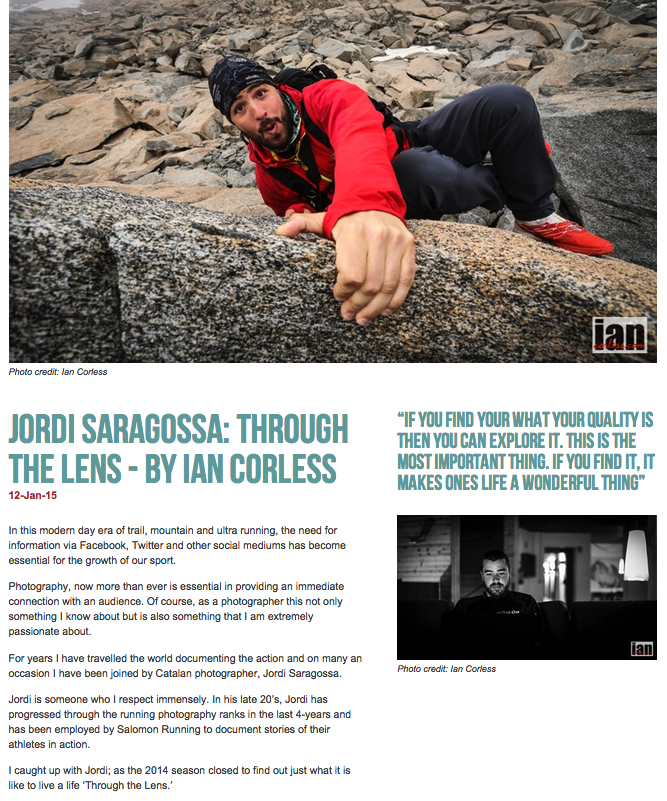
In this modern day era of trail, mountain and ultra running, the need for information via Facebook, Twitter and other social mediums has become essential for the growth of our sport.

Photography, now more than ever is essential in providing an immediate connection with an audience. Of course, as a photographer this not only something I know about but is also something that I am extremely passionate about.

For years I have travelled the world documenting the action and on many an occasion I have been joined by Catalan photographer, Jordi Saragossa.

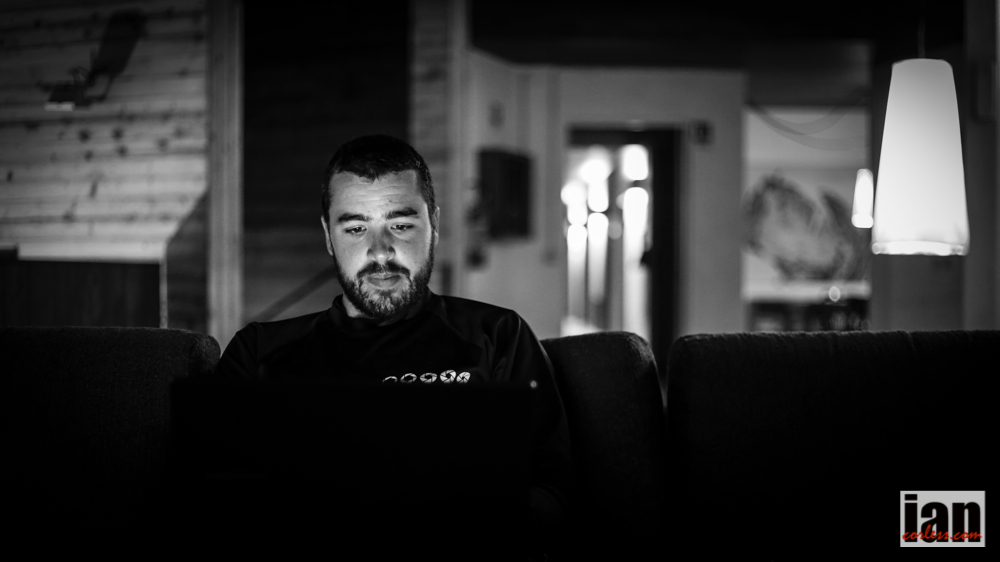
Jordi is someone who I respect immensely. Now in his late 20’s, Jordi has progressed through the running photography ranks in the last 4-years and has been employed by Salomon Running to document stories of their athletes in action.

I caught up with Jordi; as the 2014 season closed to find out just what it is like to live a life ‘Through the Lens.’

Read the full article HERE

jordisaragossa

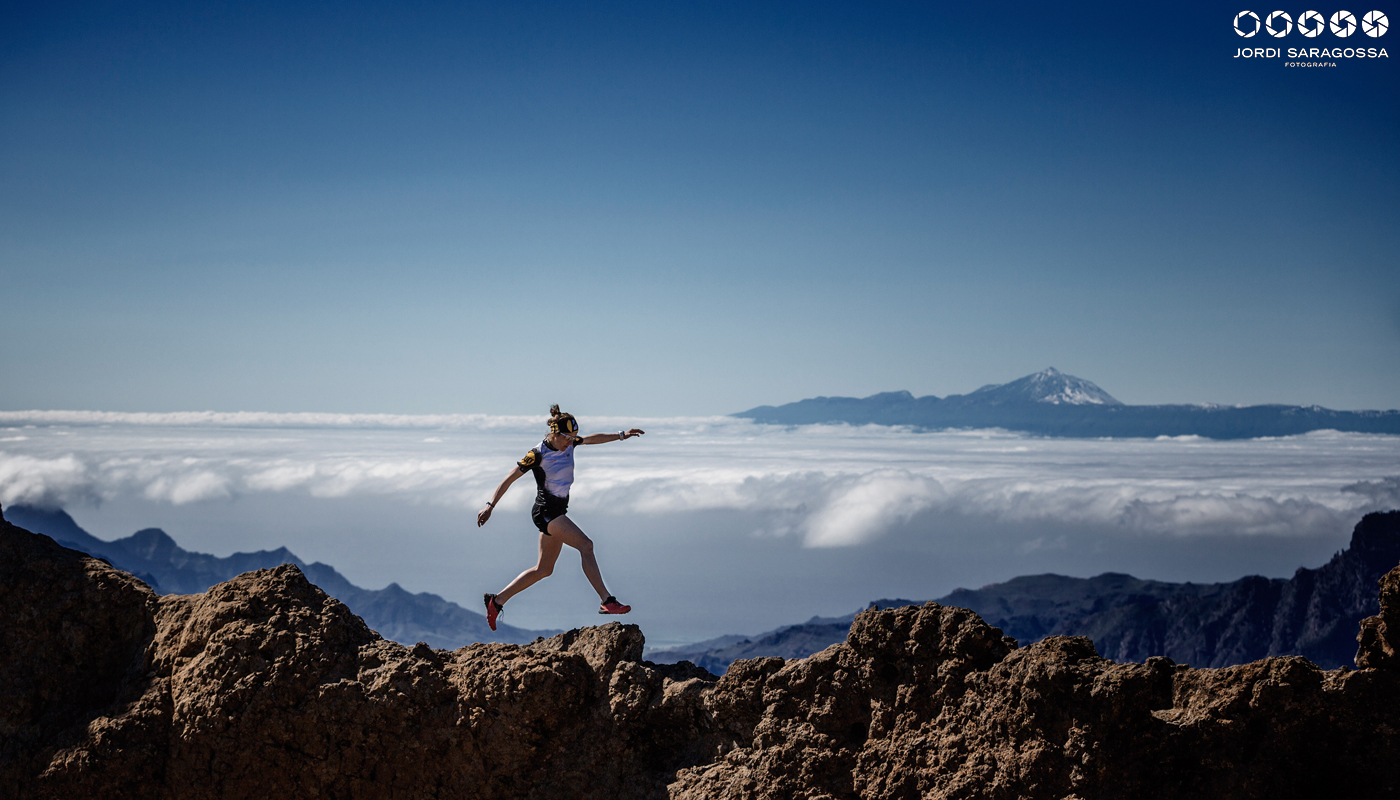
(c)JordiSaragossa_portfoli008

READ THE FULL STORY HERE on RUN ULTRA

run-ultra-logo

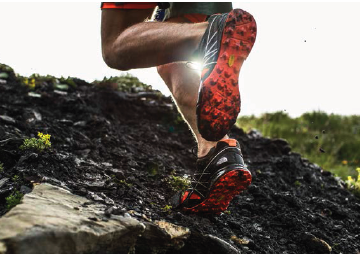
The North Face new PERFORMANCE products for 2015

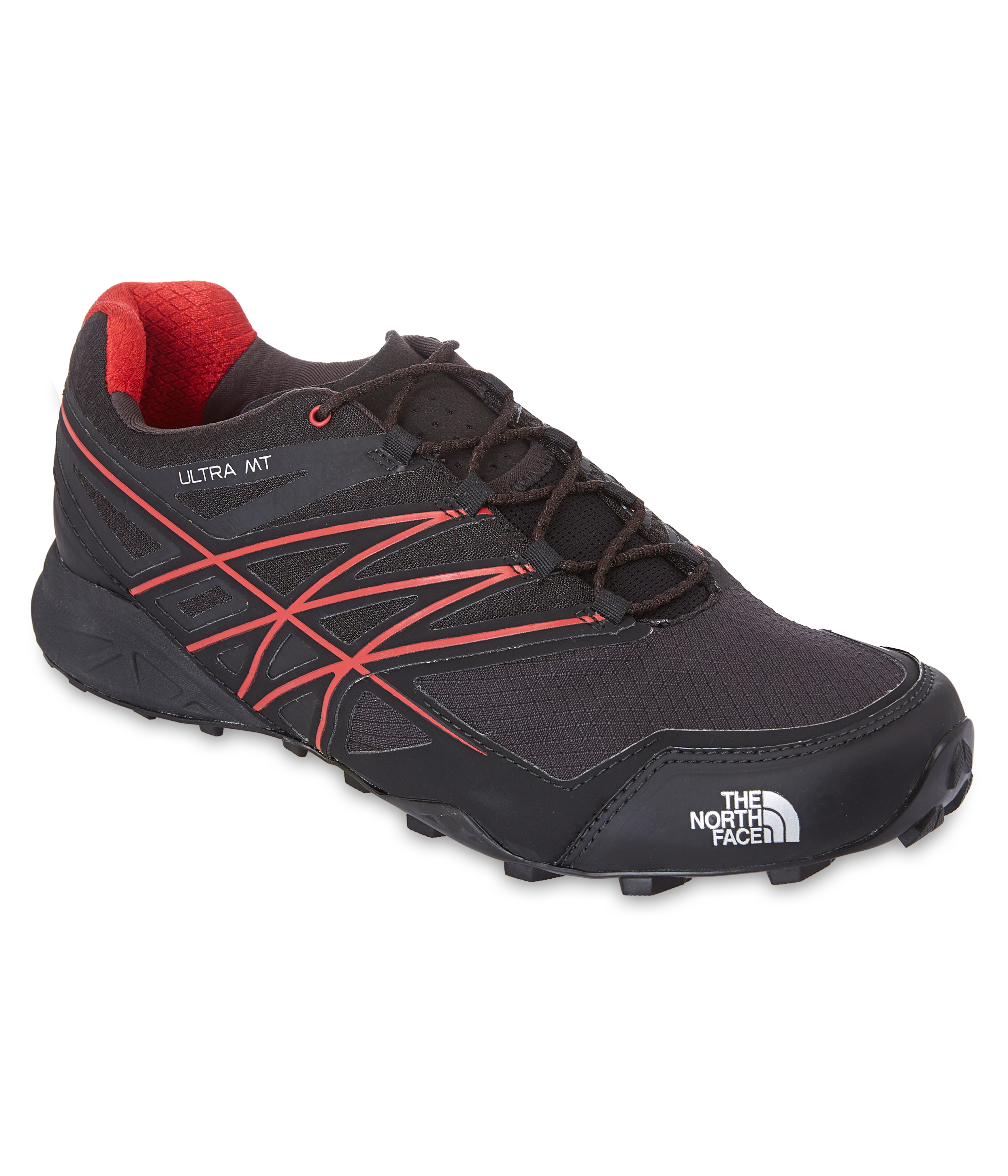
M Ultra MT

The North Face like many other key brands have some new products launching in 2015 and by all accounts they will be in store from March 2015.

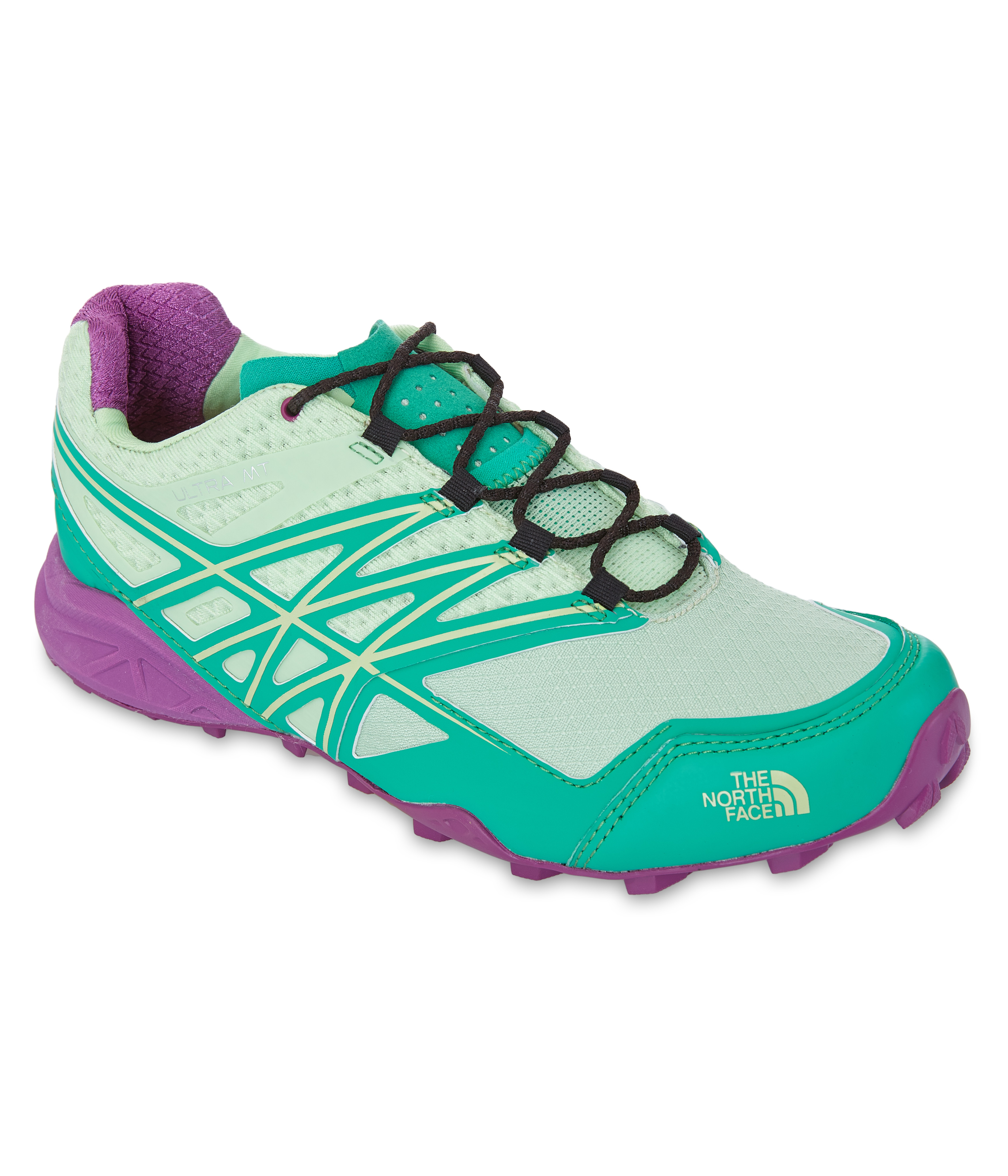
Following on from the success of the ULTRA GUIDE shoe (review HERE) the 2015 incarnation will be the ULTRA MT available in male and ladies options

W Ultra MT

If it is an improvement on the Ultra Guide then this is a shoe I am going to be very keen to try. As you will know from my Ultra Guide review, I thought the shoe was a real winner offering a great combination of comfort, grip and an 8mm drop. The ULTRA MT will have a new Vibram® Megagrip outsole with unrivalled traction to keep you close to the ground. It will also have the benefit of enhanced upper support as well as breathable Ultra Airmesh over the quarter. The innovation continues underfoot, where precise stability and protection ensures a better performance with every step.

Drop will be 8mm and weight estimated at 295g for sample size (usually UK8.) A body mapping layer system on the upper enhances support on the medial side, protecting the toe area. Vibram Megagrip sole.

screenshot_463


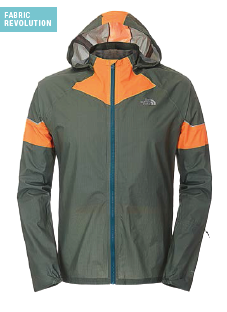
More daylight during summer means running longer, which is why you should be prepared if the weather changes. This new male/ female Storm Stow Ultralight Jacket is fully waterproof and windproof, but also packs incredibly small, so you can keep it on hand for any emergency. When the trail takes you further, there is no better protection to carry with you.

screenshot_459

screenshot_461

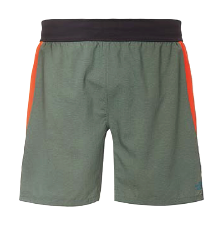
The new Better Than Naked Long Haul Short will allow you to stay comfortable on longer runs with a wider comfort-fit waistband, stitch-free design on critical seams, and maximum storage capacity for big days.

screenshot_460

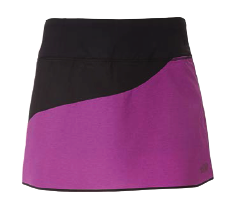
Combining modern style with superior comfort, this new Better Than Naked Long Haul Skirt is built to minimise distractions. With maximum storage, built-in compressive-short liner, and a wide waistband for added support, you can

screenshot_462

Once you’re on the trail, it’s easy to get carried away. In the heart of nature, and surrounded by inspiration, every trail runner is fuelled to go further. That’s why comfort and performance needs to last. To that end, The North Face have designed this new apparel and shoes for 2015.

I anticipate to receive test samples within the coming month and we will provide a full review as soon as possible.

Check out The North Face HERE

image002

Sir Ranulph Fiennes to run the 2015 Marathon des Sables – Interview

sir_ranulph_fiennes_bigussiue.com

sir_ranulph_fiennes_bigissue.com

Ranulph Fiennes (March 7th 1944)

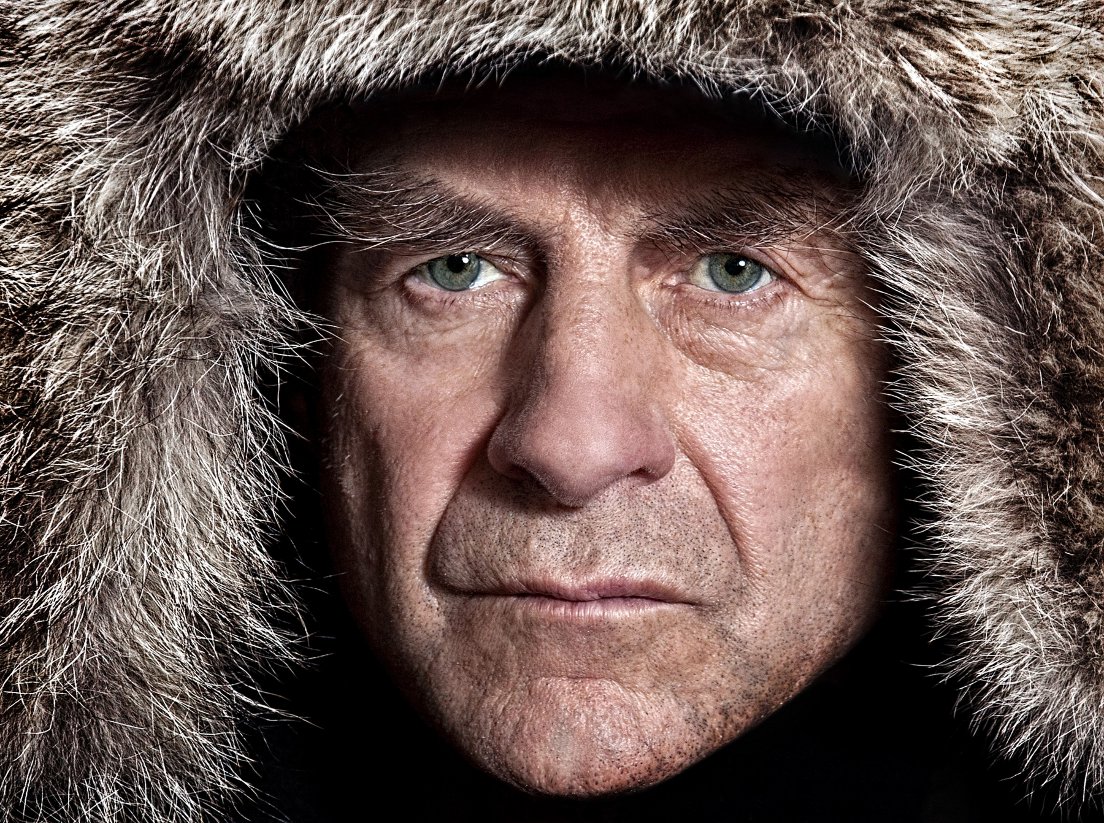
 Sir Ranulph Fiennes has been called, ‘The World’s Greatest Living Explorer.’ It’s a difficult statement to argue. Sir Ranulph’s list of achievements is quite incredible. 

Born in ‘44’ he was educated at Eton, served in the Royal Scots Greys for eight years and progressed to the Special Air Service (SAS) where he specialized in demolitions. In 68’ he joined the Army of the Sultan of Oman where he was decorated for bravery after leading several raids deep into rebel territory.

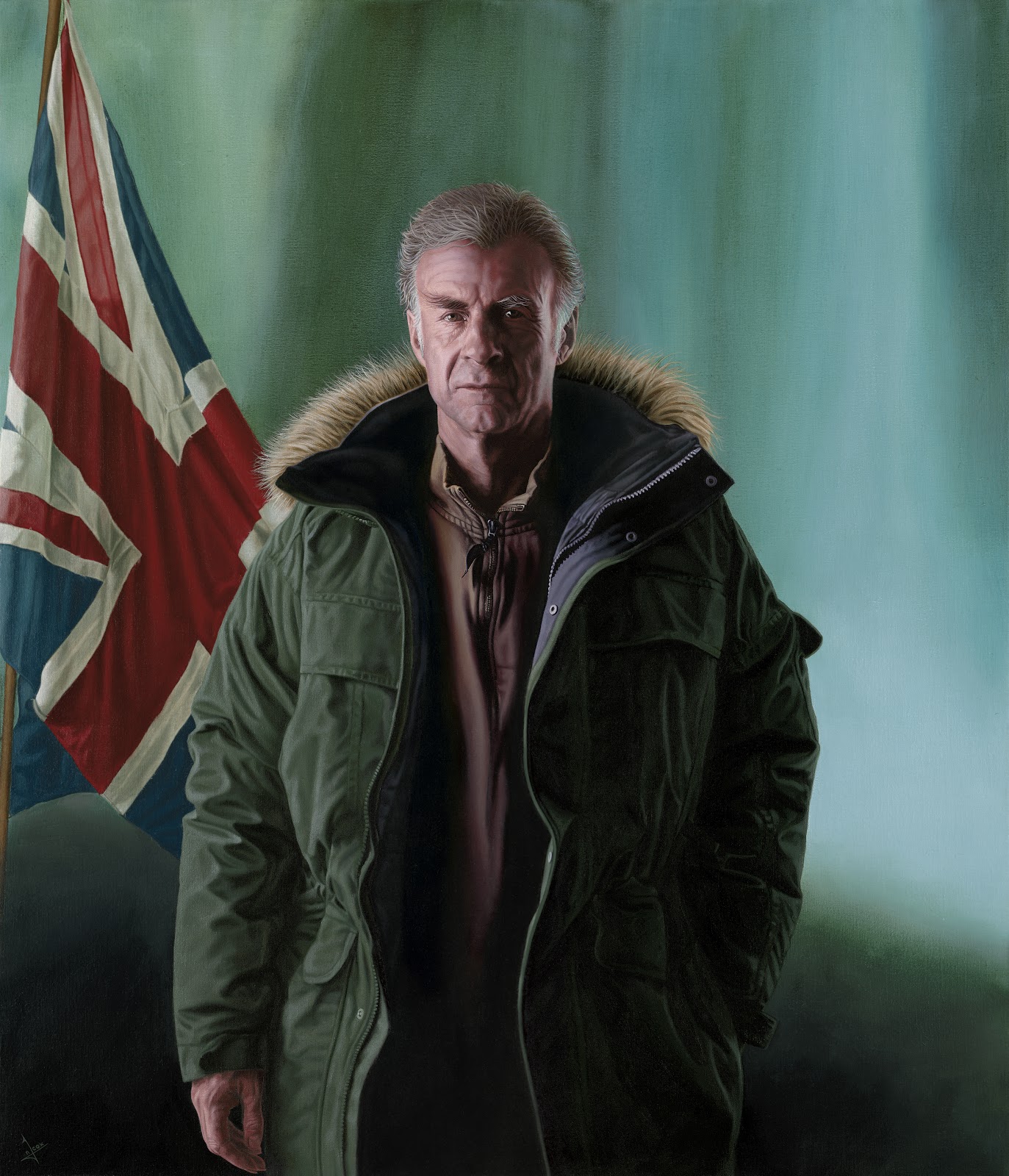
Sir Ranulph Fiennes Portrait 2012_militaryspeakers

Sir Ranulph Fiennes Portrait 2012_militaryspeakers

Sir Ranulph married his first wife, Virginia (Ginny) in 1970 and between them they lead expeditions all over the world. Ginny was awarded the Polar Medal in ’87.’ Sir Ranulph has raised incredible sums of money for Marie Curie Cancer Charity as his wife, mother and sister all died from the disease within 18 months of each other (2004.)

Currently, Sir Ranulph is the only person alive to have to have travelled around the Earth’s circumpolar surface. Continually a pioneer, Sir Ranulph is ever present at pushing boundaries.

The first explorer to cross the Antarctic Continent unsupported, Sir Ranulph has come a long way since leading a British Expedition on the White Nile in ’69.’

Ran, as he likes to be known, may perhaps be best known after travelling to the North Pole unaided. Dr Mike Stroud has figured heavily in Ran’s career and amongst many expeditions, two stand out! A 97-day trek across Antarctica in ‘93’ and running seven marathons in seven days on seven continents (2003.) The latter was undertaken just four months after a triple heart bypass.

In 2000, Ran attempted to walk solo to the North Pole but his sled fell through thin ice. Exposure to the ice-cold water resulted in severe frostbite and some months later, the famous ‘finger’ incident.

Having been to both Poles and participated in over 30 major expeditions, Ran summited the Eiger in 2007 and at the age of 65 (2009) he pushed the boundaries once more to be the oldest Briton ever to climb Everest after two failed attempts in 2005 (he had a heart attack) and in 2008 when he ‘went a little too quickly’ and exhaustion foiled his attempt.

After 5 years of planning, in 2012, Sir Ranulph set off on his latest expedition, ‘The Coldest Journey’ leading the first team on foot, across Antarctica during the southern winter. The expedition was brought to a sudden halt for Ran when in training he removed a glove to attend to a ski binding. Ran was evacuated for frostbite and treatment but the expedition continued without him.

In 2015, Ran will attempt the 2015 Marathon des Sables.

*****

Ranulph Fiennes Interview undertaken by Niandi Carmont at ‘The Druid Challenge’ 2-day race in November 2014. An event both Niandi and Sir Ranulph were using as preparation for Marathon des Sables in 2015.

NC: Welcome Sir Ranulph

RF: Many thanks for the invite and showing an interest.

NC: You hold multiple records, I am a little overwhelmed. You were in the army for many years, did that ignite a passion for adventure?

RF: Well when I was in Germany it was the Cold War. We had 60 70-ton tanks facing the German border waiting for the Soviets to attack… but they never did attack. So the soldiers got bored. So, we were made to run, canoe or whatever it may be. I was told I would be the running officer. I wasn’t asked, I was told! I became an expert in a week. I started to train 600 soldiers. We got to be 5th best regiment out of about 80 regiments after 4-years. All the races were 6miles though.

NC: Wow an interesting beginning and somewhat unique. What was it like to be the first person to visit both poles?

RF: Well, it was my late wife Ginny (married 38-years) who motivated me. Before we married we had done various hot expeditions in the Sahara, the Nile and Arabia. In the 70’s the British press were no longer interested in media for hot expeditions. So, no sponsorship equals no expeditions. Ginny decided we should go to cold environments. We looked at a globe and we decided that nobody had gone vertically between the poles. There was only one route!

NC: How long did this take?

RF: It took 7 years to get sponsorship. We had 1900 sponsors and raised 29 million pounds. This was in the 70’s! Nobody paid us to get sponsors so we had to work at weekends in pubs to make a living. Eventually Jennies dream was ready to go… we had a team of 52-people who had given up everything. Engineers and so on… we got a 40-year old Norwegian vessel and set off from Greenwich and arrived back 2.5 years later. We were the first to go around the earth surface vertically around the world ever and nobody else has repeated this. More people have been on the moon! So in all, 10 years!

NC: Amazing that the record still stands. So remarkable! You were the first person to cross Antarctica on foot?

RF: That was the Antarctic Continent? Antarctica changes all the time… I did coastline to coastline: Atlantic to Pacific. We completed the first crossing in ‘79’ but we used skidoos, nonetheless the first crossing side-to-side. But when we crossed the Continent that was 20-years later and that was unsupported. So, what we carried on day-1 was enough for 2000 miles without resupply. That was somewhat problematic but we did do it and we were in a bad way at the end!

NC: Problematic?

RF: We ran out of food! I started at 15.5 stone, at halfway I was 9-stone despite eating 5000 calories a day. So we had a daily deficiency of 3500 calories per day. So, we were officially starving. Mike Stroud thought this was fascinating… he is Europe’s top physiologist studying in starvation and muscle cannibalisation, so he was able to study this first hand. It had only been possible to study something like this previously at Auschwitz!

NC: You had frostbite. Many have heard the stories about you cutting your fingers off. Are they true?

Fiennes_standard.co.uk

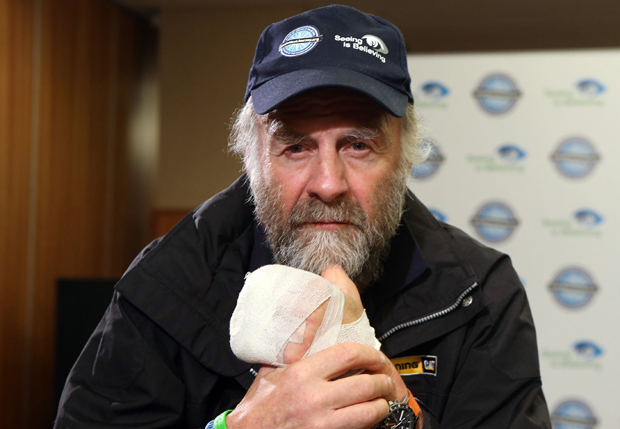
RF: I got frostbite on a solo expedition to the Arctic Ocean. If I had had a doctor with me he would have pulled me out and got the tent out with a cooker on and avoided the frostbite. As it was, because I was alone by the time I had got out of the water… the damage was done. I was too cold too pitch a tent, start a cooker and so on. It was -48. Think about it, it was pitch black on a semi frozen sea, so I went back to the start to find land again and sent a radio message. An amazing Canadian ski pilot landed in the dark on the edge of the coast and he saved me. I was taken to hospital. I had special pressure treatment for 60-hours to lengthen the living part of the fingers on one hand. They cut off about 2-inches of the five fingers on one hand. The other hand recovered. My insurers refused to pay unless the operation was in the UK. I tried to find someone in the UK who knew something about frostbite. Navy divers are susceptible to the bends and apparently they can lose fingers. Apparently they don’t amputate until after 5-months to allow for some recovery. Five months is a long time. Every time you touch something with mummified fingers it hurts… after 2 months my wife and I decided to cut them off. We went to the garden shed. We got a Black & Decker workbench and micro saw. It took 2 days and lots of tea. Apparently a physio in Bristol said I did a great job but my surgeon was less pleased.
NC: Did it take courage and did it hurt?

RF: No, if it hurt or started to bleed I just moved further away and just made sure the bit I was cutting off was dead. It doesn’t hurt!

NC: In 2009 you summited Everest at the age of 65-years; what impact did age have on you if any?

ranulph-fiennes_mpora.com

RF: This was my 3rd Everest attempt. My 1st attempt had been somewhat risky from the Tibet side and I had a heart attack on the last night after 2-months of acclimatizing. Bad timing eh but I survived! I said I would never go back… but I was told that was a rubbish idea and that I should go from the other side.

So my 2nd attempt was from the Nepal side; which is easier. But we still failed as we passed a load of bodies including the father of my Sherpa. We passed a Swiss climber too who had summited without Oxygen but died on the way down with hypoxia.

In 2009 it was easy… I guess I understand why I had failed the first and second times. I had been trying to catch up with my British guide the second time. Competitiveness can be a bad thing. When you have had a heart attack you must obey your surgeons advice and not exceed 130bpm. So, in 2009 I took it easy and it all came together.

NC: You are obviously endurant and resilient?

RF: When I was in my 50’s I enjoyed running a great deal and I had success. In my 60’s running was no longer an option… I was jogging until about 69-years of age and that was okay, not that I ever went in for races in that decade. Jogging became shuffling and that is very annoying! Avoid geriatric status at all costs.

NC: I agree 100%. You have a great collaboration with Mike Stroud – 26-years?

RF: Mike comes up with all the ideas. For the last 5-years we have been working on an idea that involved Antarctica. Mike unfortunately had a hip problem. In the last couple of years his other hip went, it wasn’t as easy as the first one so Mike took on all the scientific side. In many ways this is more difficult and that is what he is in charge of now. We are still doing things. There was a time when Mike and I didn’t do expeditions; this was after the Antarctic crossing. We did running races. Mike led an Eco-Challenge team, which must have been one of the first in British Columbia in the Whistler Mountains. That was very enjoyable… it was a team of five and it included Rebecca Stephens the first the British lady to summit Everest, his Father who was over 70-years, the editor of Runners World and an SAS man, David Smith. Mike put the team together and introduced all of us back to running in 1995. We have also done many events as a pair such as the 7-marathons on 7-continents.
NC: He is also a friend, It’s more than running surely?

RF: You don’t choose people for expeditions because they are friends. We chose Mike Stroud in the very beginning because I was already in the Arctic. The man I was with was recalled to London and I was left with nobody. I rang my wife in England and said, ‘I need someone in 3-days who is completely ‘polar’ trained.’ Dr Mike Stroud had been a reserve on another expedition and had only just returned from Antarctica after 1-year away. Somehow he pulled it off… he managed to come away on a 3-day turnaround.

NC: You obviously relied on your wife a great deal.

RF: Absolutely! Since my wife has passed away, Mike has taken on the ‘idea’ role.

NC: Can we discuss the 7-marathons in 7-days on 7-continents?

RF: Mikes’ idea again! The New York marathon club considered themselves the best marathon club in the world. The only non New Yorker as part of this group was Dr Mike Stroud. They swore him to silence that they thought it may be possible to run 7-marathons on 7-continents in 7-days. Mike kept his word and 2-years later, Mike approached American Airlines and they said they couldn’t schedule the flights. (You need jumbo jets and 5-hours in each continent.) Delta said they couldn’t do it. United said they couldn’t do it and now 6-years had passed. It was 2003 and Mike had still kept the secret. I called Mike in 2003 about another expedition. He said great, I’ll ask the boss. They told him he could only have 1-week’s holiday as he taken so much time already. Mike phoned me and said, I can’t do your expedition but I want you to do mine! So, Mike asked me to contact British Airways and within 2-months they phoned back and said they had cracked it! They said we had to finish with New York and not Asia. Asia would need to be in the middle. Also, if we were a minute late ever they would fly without us. They wouldn’t keep passengers waiting. So, they provided 2 free first class beds and food (this was our only opportunity to rest) and yes, it was all systems go! It all went well to Argentina. We were suppose to be running on King George Island (Shetland), the night before we were due to run the ‘Argies’ blocked the landing on King George with their own planes. So we had a team meeting, Mike and myself, BBC news, a reporter from The Times and a photographer: 6-people in total. When we suddenly arrived the whole thing had been cocked up, the BBC bloke said, “I’ve got a very good friend in Santiago, I will ring him now and get him here and he will fly us to one of the other Antarctic Islands.” So we had to run one of the South American marathons locally. That night we ran a marathon and we had officials to make sure we ran an official marathon in 3:45, which was extremely stupid. The next morning we get on this plane without a worry of which island we would go to. Apparently the only island to run on would be the Falklands. You may know, but you are not supposed to fly from Argentina to the Falklands without 6-months notice. So we slept on the plane. Mike woke me up and we looked out of the plane window. We had two Tornado jets on either side of us… they made us do a force landing on a military airstrip on the Falklands. We were marched to the CO who was furious. He told us we had no permission and that we could all face prison. At this point, one of the reporters went forward and said, “Did they realise that the news and the papers would make this not look good for the army!” There was a fairly quick turnaround…
“You can run your 26. something miles locally and we will watch them every step of the way,” The CO said.

They never saw us off. Funny really.

NC: This seems extremely stressful. Running, logistics, last min changes and so on.

RF: The BBC and The Times did all that for us.

NC: Yes, but it must have been stressful.

RF: The 7x7x7 challenge was sponsored by Land Rover and they did everything for us. It was incredible. They did all the work for us and they had cars waiting for us at anytime. Land Rover and British Airways made this all possible. They had the contacts.

NC: Before the 7-challenge you had a heart attack and a double bypass. It’s amazing that you would undertake this.

RF: I was on a drip for 3-days and nights, they decided to cut me open and do a double bypass. They just decided to do this! It took 13 attempts to revive me after they sewed me up. When I woke up my late wife said, “Ran you had a heart attack 3-days ago” but I still can’t remember anything!

NC: You aborted your most recent expedition, is that the end of cold journeys for you now?

RF: We aborted the crossing but we kept the team (all 5 of them) not Mike and not me through frostbite, but we kept all the team for 8-months at 11,000 feet above sea level doing scientific work on each other. It has delighted the Royal Society and all the scientists, we raised 2.3 million dollars for blindness in Bangladesh and I went with Joanna Lumley to Bangladesh to see what they were doing with the money. For £19 they could remove cataracts from babies. Quite remarkable! For £9 they could provide spectacles to children. This means they can go to school and have opportunities in the future. We really need charity PR people to get behind us, the more money we make, the more people we can benefit.

NC: What does the future hold for you?

RF: Well, I am not allowed to talk about this until I get the nod, but I will be going to Marathon des Sables in 2015. And I am also writing another book. One book actually came out last week.

Marie Curie Logo

Get involved and support Sir Ranulph! Text RUN and a message of support to 70007 to donate £5, or you can visit his Just Giving page here:http://bit.ly/1xUB298

Find out more about Sir Ranulph and his Marathon des Sables challenge:http://bit.ly/1wvffi8

NC: Can you tell me about Agincourt, your most recent book?

Agincourt


Book on Amazon HERE

RF: A historian would normally write a book like Agincourt… but it turns out that I am related to Robert Fiennes from the village of Fiennes in the Pas de Calais.

NC: What an amazing story?

Niandi speaks French to Sir Ranulph and he is taken aback. He also speaks French and they enter into a short dialogue. 

Sir Ranulph comments that he could hear an accent in Niandi’s voice but not French! Niandi explains that she is South African born…

NC: So you lived in South Africa?

RF: Yes, my relatives live in South Africa. I spent the first 12-years of my life in SA.

Anyway, we digress. I decided to go to Fiennes and find my French cousins. They were wiped out at the battle of Agencourt and I found out how. One of them was part of an 18-strong commando group with the specific aim of killing King Henry V in the battle. One of them, maybe not Robert Fiennes, got to knocking the crown of his head… Two of King Henry V’s generals, one was a sheriff of Kent in Sussex. He was corrupt man; so corrupt that Henry V1 made him into the Chancellor of the Exchequer. When soldiers came back from France, 20,000 of them attacked London. The King gave the Chancellor of the Exchequer to the mob and they killed him… nasty business!

NC: I guess we are going to have to read the book. Sounds like a fascinating story. Looking at modern day adventurers, what are your thoughts on Uli Steck and Kilian Jornet?

RF: Uli is amazing, incredible… I do not understand how you can go up the Eiger in 2-hours or something ridiculous like that. He is unbelievably amazing. Both of them are just incredible.

NC: And what about your new book, what is it called?

RF: My new book will be called HEAT. Nice contrast to my other book, COLD.

“Physically I’m going to be a wreck pretty quickly.” But these challenges are fought in the mind, he says. “There’ll be a voice in my head saying I’ll have a heart attack, I’ll get hyperthermia, I’ve got a family, it’s stupid to carry on. That sort of wimpish voice tries to appear logical, finding reasons for stopping. You have to fight it. I’ve had it so many times.”

-BBC News, Tom de Castella


Cold

On Amazon HERE

Sir Ranulph Fiennes will participate at the 2015 Marathon des Sables. An announcememt will be made on January 8th. We hope to have follow up interviews with Sir Ranulph to help document this exciting journey.

*****

AWARDS

In 1970, Fiennes received the Sultan’s Bravery Medal.

He has also been awarded a number of honorary doctorates, in 1986, 1995, 2000, 2002, 2005, 2007 and 2011

Fiennes received the Royal Geographical Society’s Founder’s Medal.

Fiennes was appointed Officer of the Order of the British Empire in 1993 for “human endeavour and for charitable services”

In 1986 Fiennes was awarded the Polar Medal for “outstanding service to British Polar exploration and research.”

In 1994 he was awarded a second clasp to the Polar Medal, having visited both poles.

In 2010 Justgiving named Fiennes as the UK’s top celebrity fundraiser, after raising more than £2.5 million for Marie Curie Cancer Care.

In September 2011 Fiennes was awarded an honorary Doctorate in Science from Plymouth University and

In July 2012 he was awarded an Honorary Fellowship from the University of Glamorgan.

In October 2014 it was announced that Fiennes would receive an honorary Doctorate of Science, from the University of Chester, in recognition of “outstanding and inspirational contribution to the field of exploration”. 

*****

Links and credits:

‘I am not a madman’

http://www.theguardian.com/theguardian/2007/oct/05/features11.g21

Fiennes climbs to Everest summit

http://news.bbc.co.uk/1/hi/uk/8060649.stm

Ranulph Fiennes pulls out of Antarctic journey

http://www.usatoday.com/story/news/world/2013/02/25/ranulph-fiennes-antarctic-journey/1946571/?AID=10709313&PID=6156889&SID=w7wk81lnnmpn

The world’s greatest living explorer

http://www.militaryspeakers.co.uk/speakers/sir-ranulph-fiennes.aspx

Interview with TIME

http://content.time.com/time/world/article/0,8599,1900969,00.html?imw=Y

Ranulph Fiennes – Wikipedia

http://en.wikipedia.org/wiki/Ranulph_Fiennes

Who, What, Why: Is it harder to run in the Sahara Desert or the North Pole?

http://www.bbc.co.uk/news/blogs-magazine-monitor-30716727

inov-8 launch Race Ultra 270 for 2015

©iancorless.com_RaceUltra270-7533The release of the Race Ultra 290 in 2014 (review here) showed inov-8’s intentions to appeal to the ever-expanding ultra market that run on mixed terrain for a very long time. The shoe ticked many boxes and soon became a favourite for many a runner. In particular, the ‘290’ fulfilled the one shoe does all scenario quite well. It was happy on the road, happy on hard trail and rock and adequate when the trail got muddy… admittedly, not when very muddy! It was cushioned, had that ‘sweet’ drop of 8mm and a wide toe box.

The perfect shoe?

It was certainly a shoe that many touted as perfect but what about that new breed of runner that loves a lighter and lower drop shoe?

Your prayers are answered.

©iancorless.com_RaceUltra270-7561

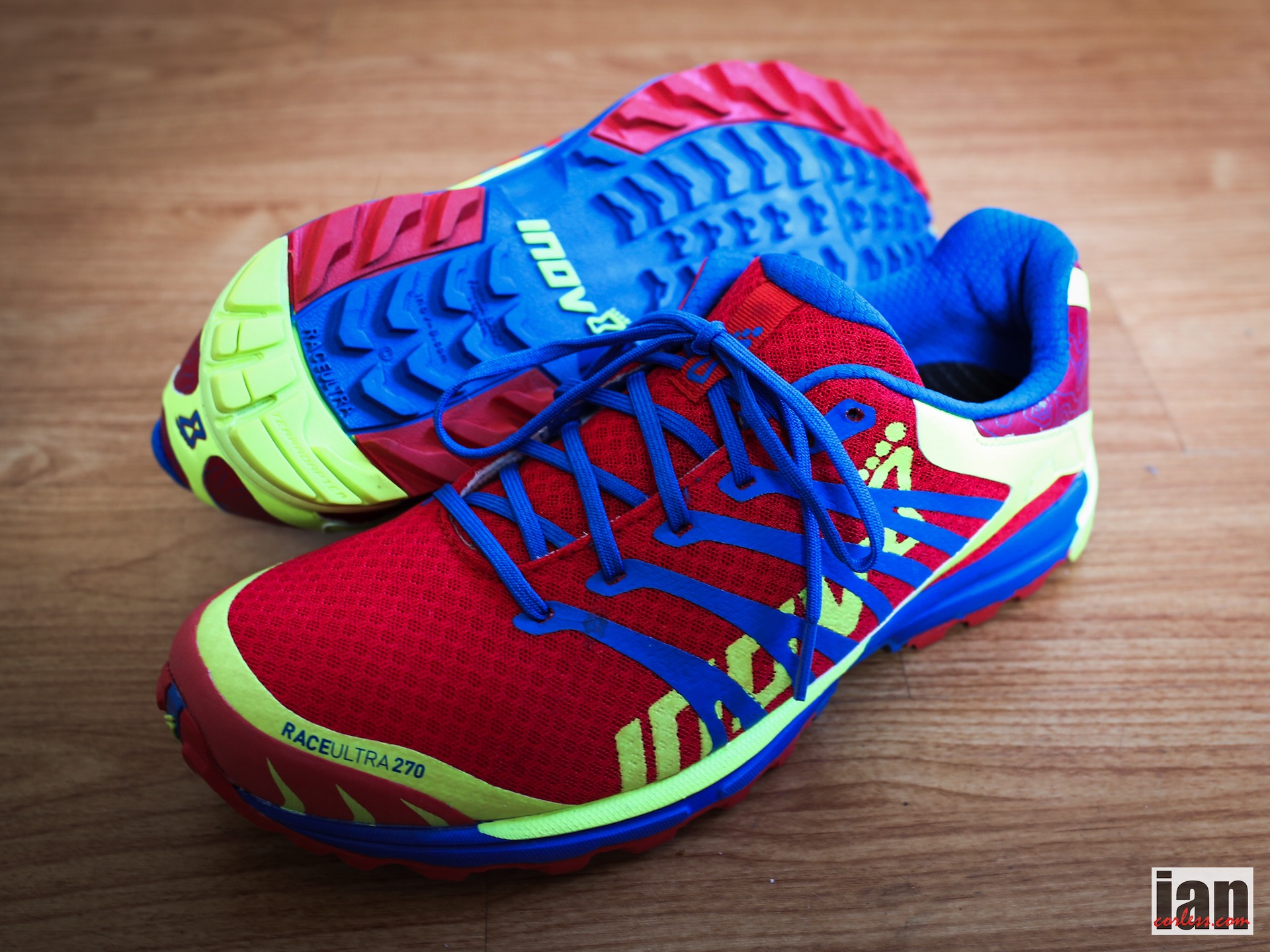
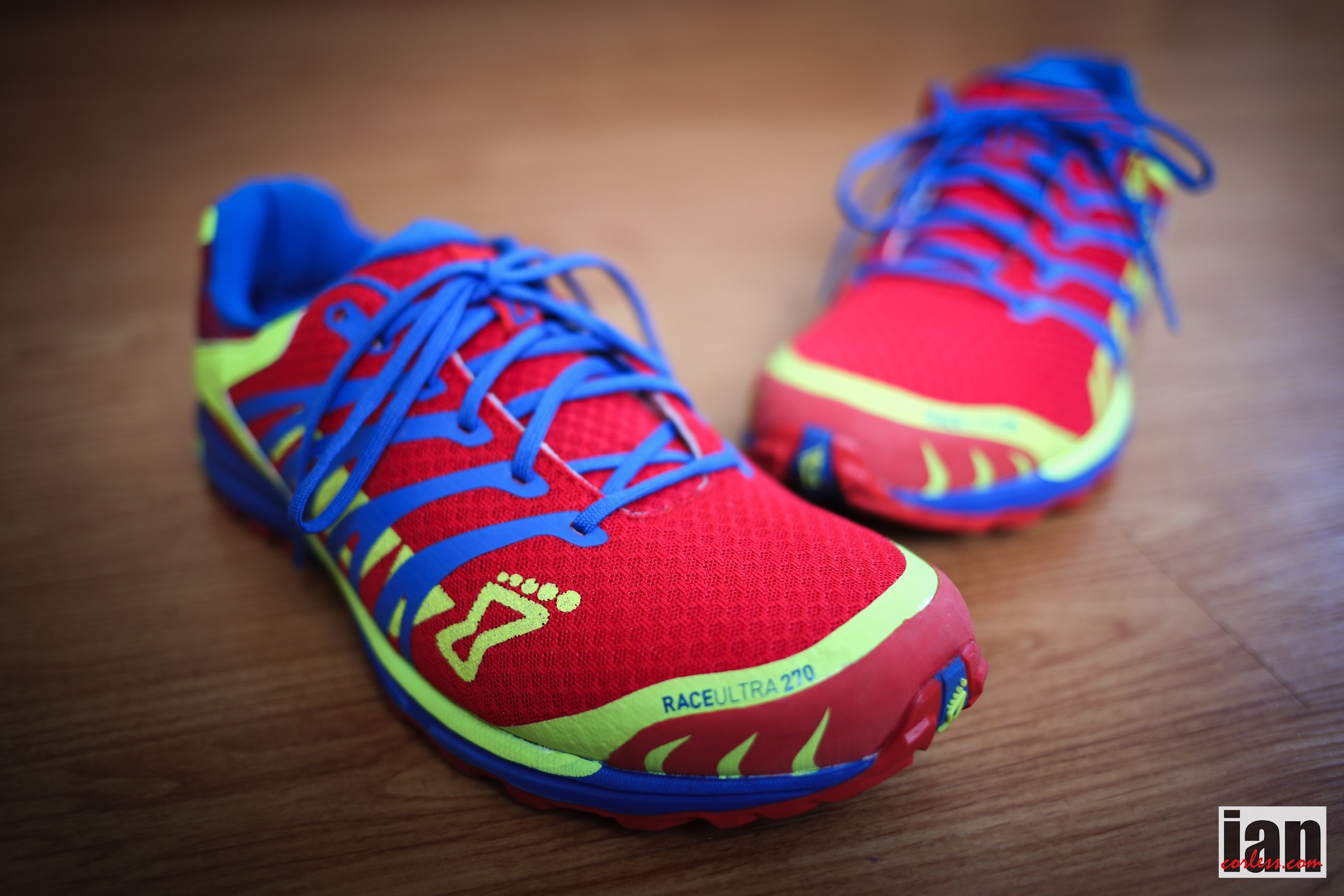
Building on the success of its ISPO award-winning RACE ULTRA 290, inov-8 will launch in Spring 2015 a lighter version of the ‘290’ to give long-distance athletes an even faster weapon in their shoe armory; the Race Ultra 270.

Weighing in at just 270g (hence the name), the Race Ultra 270 is 20g lighter than the 8mm drop Race Ultra 290 and has a drop of 4mm (1-arrow.)

Designed to bring the runner closer to the terrain the 270 will provide increased levels of proprioception while not losing cushioning.

©iancorless.com_RaceUltra270-7537

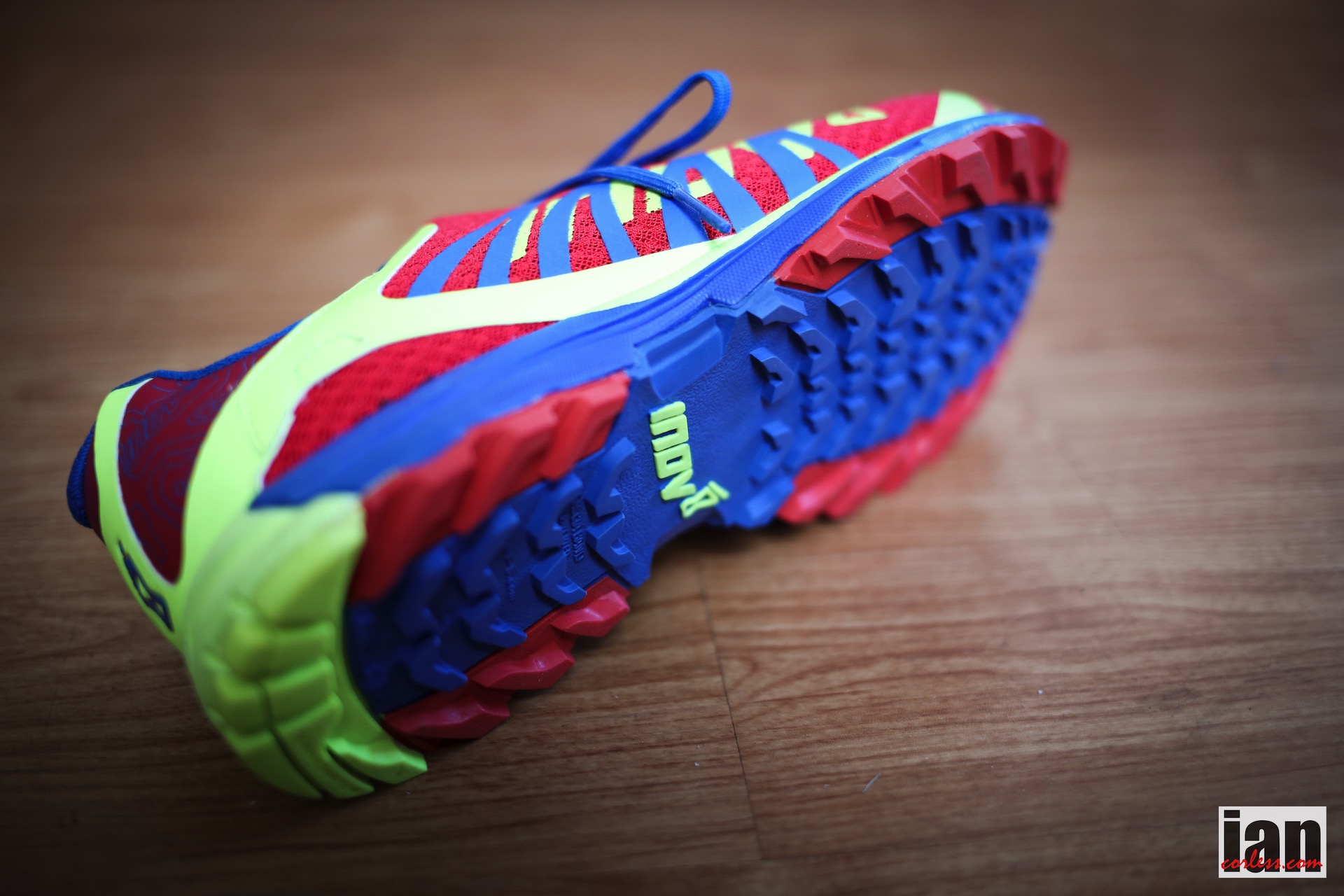
Grip will remain the same as the ‘290’ and is very much designed to accommodate road, hard trail, rocks and light mud with a mixture of soft and hard rubber. It has a flatter outsole ensuring a stable ride even when hours in the shoe increase and fatigue sets in.

Like the ‘290,’ the ‘270’ will also incorporate the unique on-the-shoe gaiter attachment so that should you require a RACE ULTRA GAITER you can purchase the item separately and attach/ de-attach with ease.

©iancorless.com_RaceUltra270-7550

On first looks, inov-8 are taking a successful shoe (the 290), replicating it and making it appealing for those who require a lighter shoe, a little less cushioning and importantly, a lower drop. The two prototype colour ways look really impressive and in particular we really like the look of the men’s colour. Four colours will be available, two for men and two for ladies.

©iancorless.com_RaceUltra270-7595

The shoe is flexible (you can fold it in half) and has a ‘Meta-Shank’ that aligns with ones individual metatarsals. This Meta-Shank helps provide energy without loosing impact protection. Lightweight, the combination of good lacing, a gusseted tongue and a wide toe box (standard fit) all combine together to make the ‘270’ a real ‘one to look at’ for those looking for a door-to-trail shoe.

©iancorless.com_RaceUltra270-7591

Door-to-trail is a buzzword at the moment and brands such as Salomon, The North Face and others are looking to capture this market. inov-8 with two offerings at 8mm and 4mm drop will certainly cover the bases and provide two important options. Importantly, it will also allow a nice stepping-stone for those looking to drop from 8mm to 4mm.

Initial feedback from a couple of runs confirms that if you liked the ‘290’ then you are going to like the ‘270.’ In use they certainly feel lighter, a little more responsive and most importantly comfortable. Due to the standard fit (wide at the front) you may want to try your normal shoe size and a half size smaller to make sure you have the correct fitting shoe.

A full review of the Race Ultra 270 (men’s and ladies) will follow in February 2015. We now need to go and rack up some miles in them… Niandi says, ‘Les nouveaux bébés de Inov8.’ I think that means she is excited to try them out!

Suggested retail price: £110 (110 UK pounds)

Contact inov-8 HERE

Contact HERE