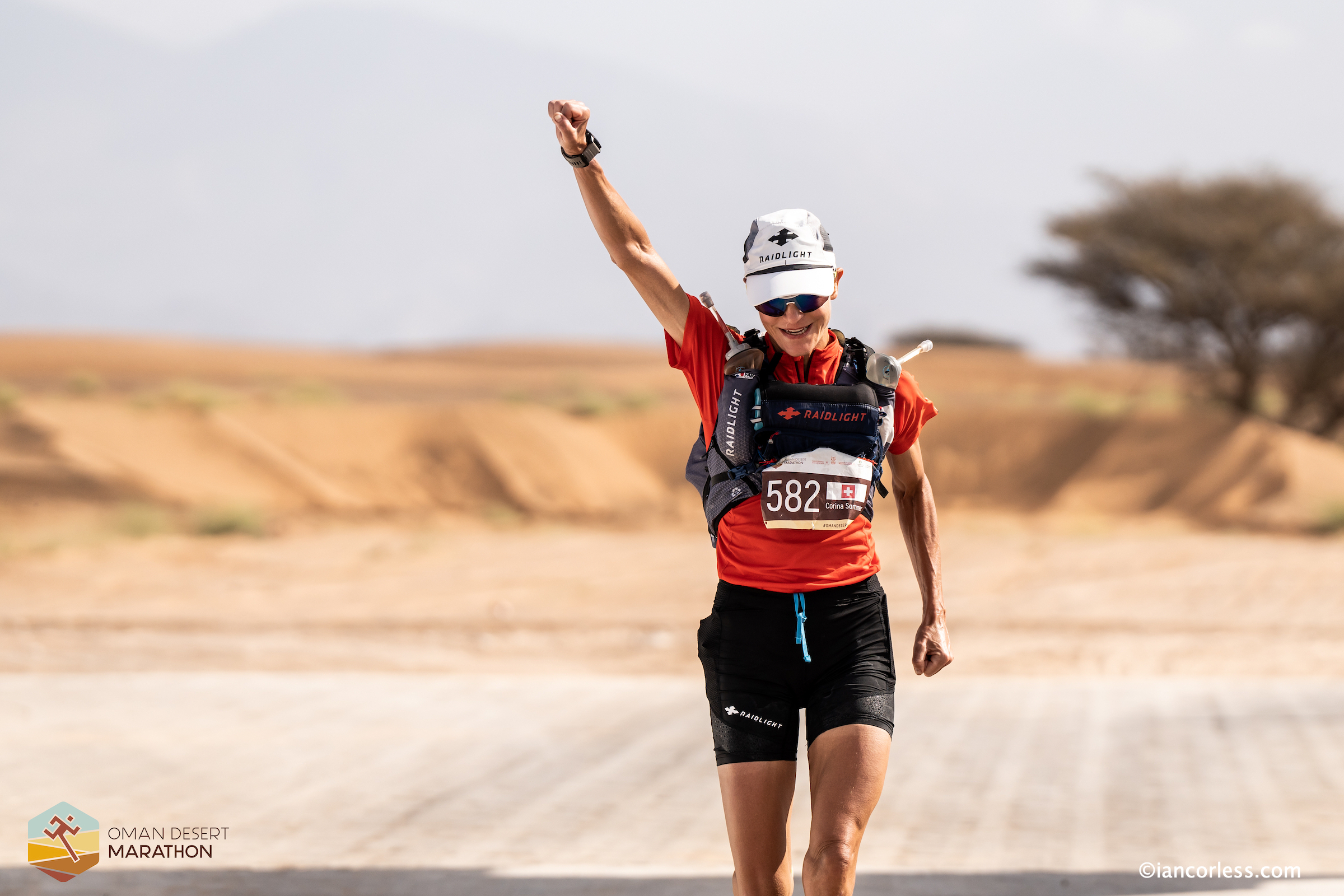
Episode 237 of Talk Ultra has an interview with Corina Sommer who won Oman Desert Marathon early in 2023 and went on to place 4th at Marathon des Sables.
Now in its 8th edition, the Oman Desert Marathon took place January 21st to 24th. A self-sufficient race, the event took place over 4-stages with a total distance of 165-kms. Corina Sommer battled hard to take a convincing victory.
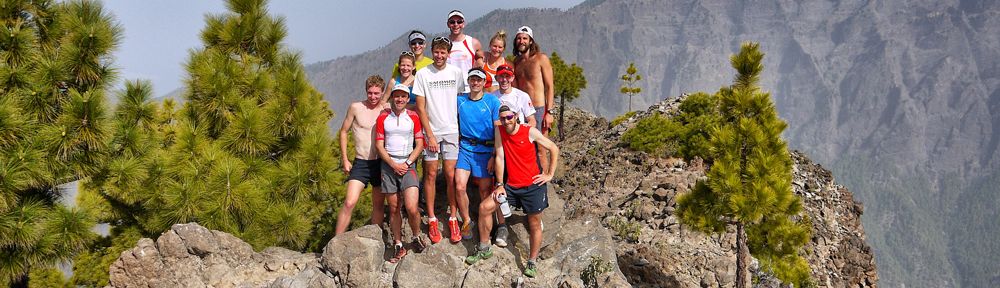
HOME of the GIANTS goes live August 1st. A multi-day adventure through the magical and amazing playground that is Jotunheimen, Norway. Unlike a race, this journey is a finely balanced exclusive trip for just 12 participants. A challenge at a more relaxed pace, taking in an amazing route whilst moving light in a semi self-sufficient mode. More HERE
Are you up for an adventure in an incredible part of the world?
If the answer is yes, Home Of The Giants is for you!
JULY 21ST TO JULY 28TH 2024
A multi-day adventure through the magical and amazing playground that is Jotunheimen, Norway. Unlike a race, this journey is a finely balanced exclusive trip for just 12 participants. A challenge at a more relaxed pace, taking in an amazing route whilst moving light in a semi self-sufficient mode.
The iconic ‘The Church’ we go to the summit on day 2
Spread over 5-days, our journey starts from Bygdin Fjellhotel with an overnight stay, the following morning we depart via the iconic M/B Bitihorn boat covering the length of Bitihorn lake to our start point at Eidsbugarden. A magical journey, on foot, covering 100kmand 4774m+
Snow fields, water crossings and morraine
You will encounter snow, water crossings, airy and exposed sections, plenty of climbing and descending and full days on the trail. Each day will conclude at a DNT cabin where you will have a bed, shower facilities, 3-course dinner and breakfast included.
Rock and snow transitions to lush green and single-track
WANT TO JOIN US?
Only 12 places are available for what will be a journey of a lifetime.
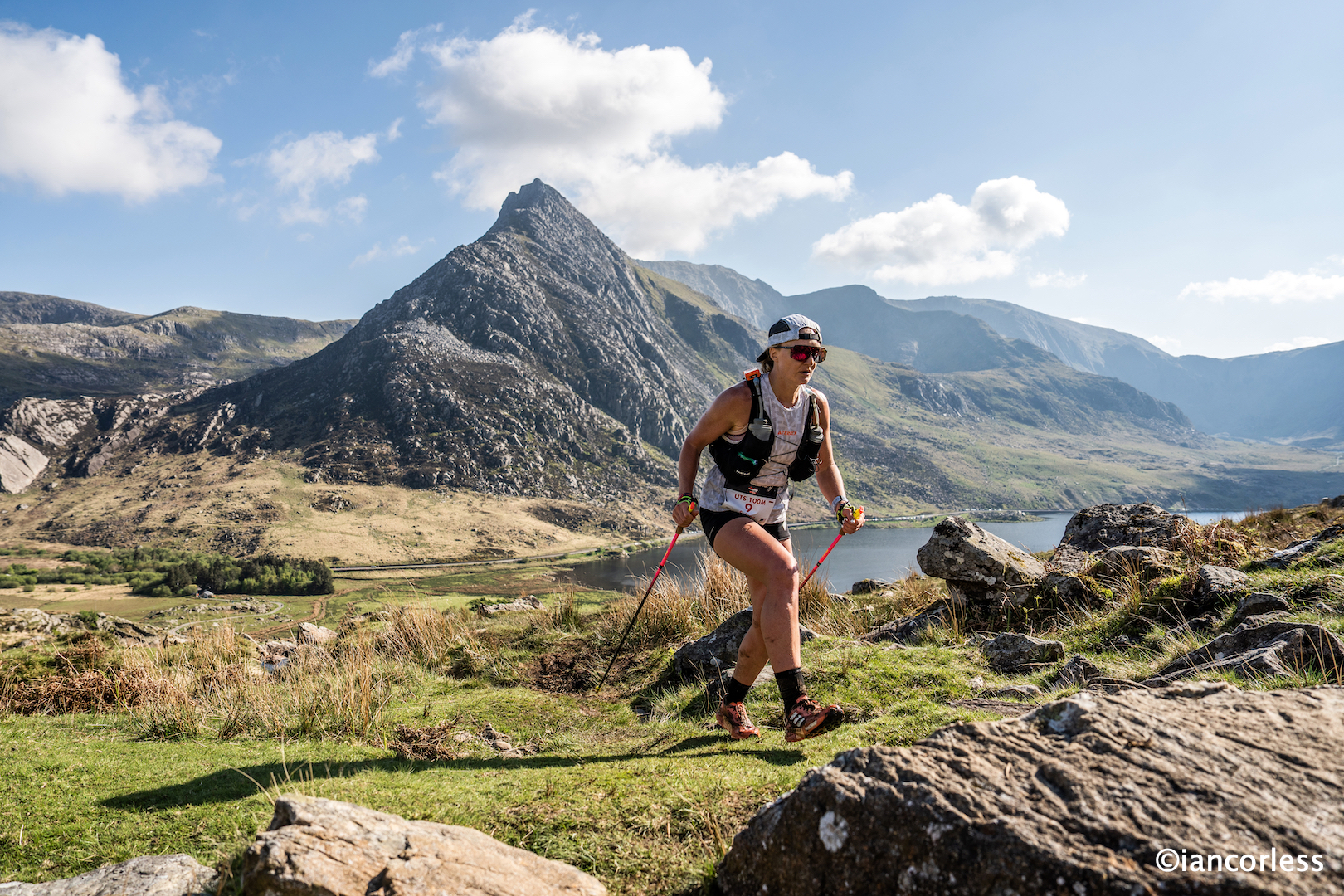
Episode 236 of Talk Ultra is with adidas Terrex athlete, Sabrina Stanley who placed 2nd at Ultra Trail Snowdonia by UTMB.
Ultra Trail Snowdonia by UTMB blossomed in 2023! The dream project of RD Michael Jones was to bring a UTMB scale event to the UK, the event reached new heights with some 3000 participants toeing the line of one of the many races on offer.
The 100-mile race is a brute and adidas Terrex athlete, Sabrina Stanley, flew in from the US to participate looking for a podium place and a secured entry for UTMB in Chamonix come August.
Sabrina climbing with Tryfan behind.
Have you tried the new HOKA Torrent 3? Review HERE
The Hoka Torrent has become one of my favourite shoes.
The Torrent 2, while not the best shoe at anyone thing, is without doubt, one of the best all-rounders. Trail, single-track, rocks, mountains, forest, some mud and yes, even road. If I could only have one shoe, it would be a Torrent.
So, when I heard a Torrent 3 was going to be released, I got a little worried. Shoe brands have a tendency to want to change things, wether they need changing or not. Gladly, Hoka seem to be able to restrain that urge, listen to the audience and tweak appropriately.
The Torrent 3 is exactly this.
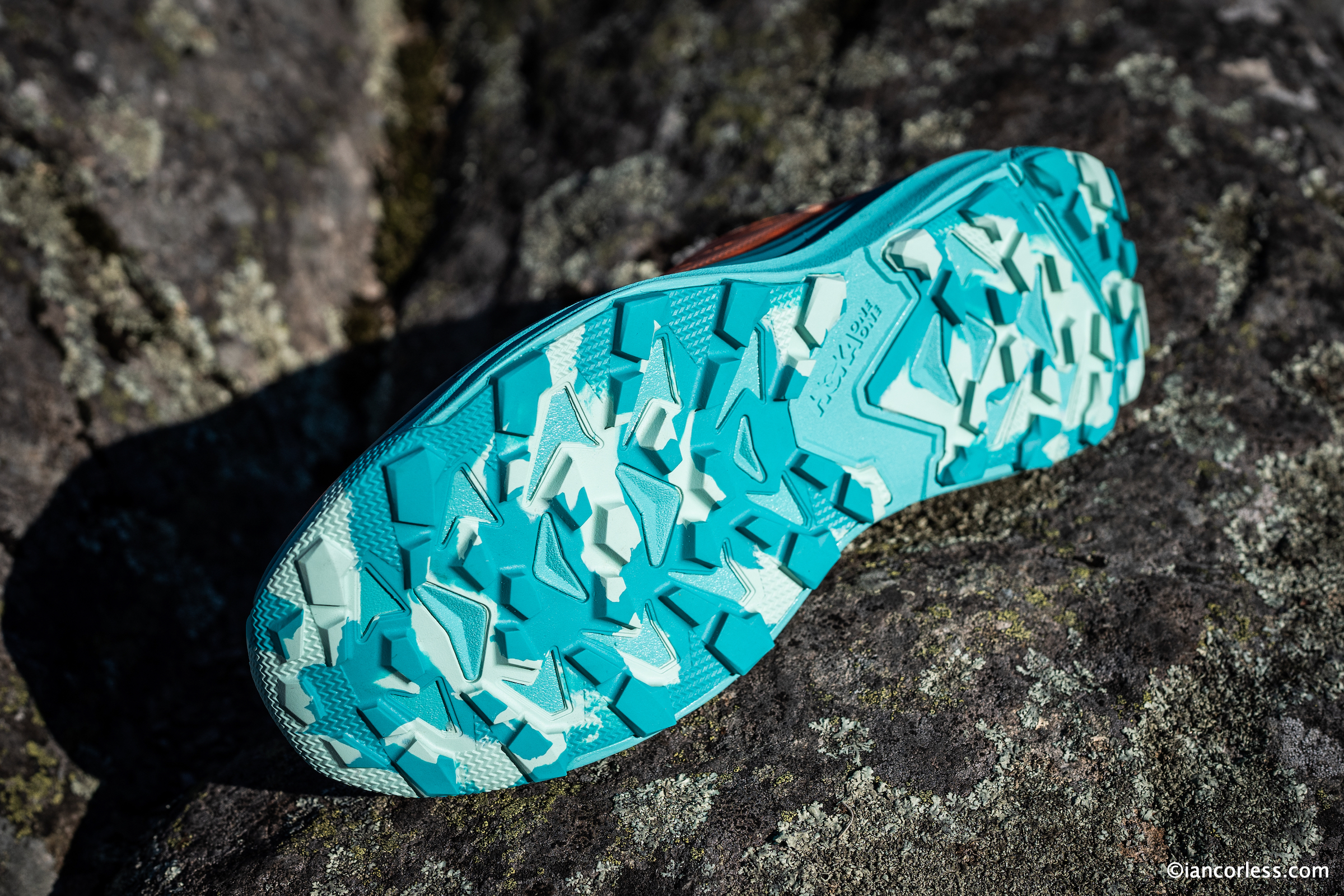
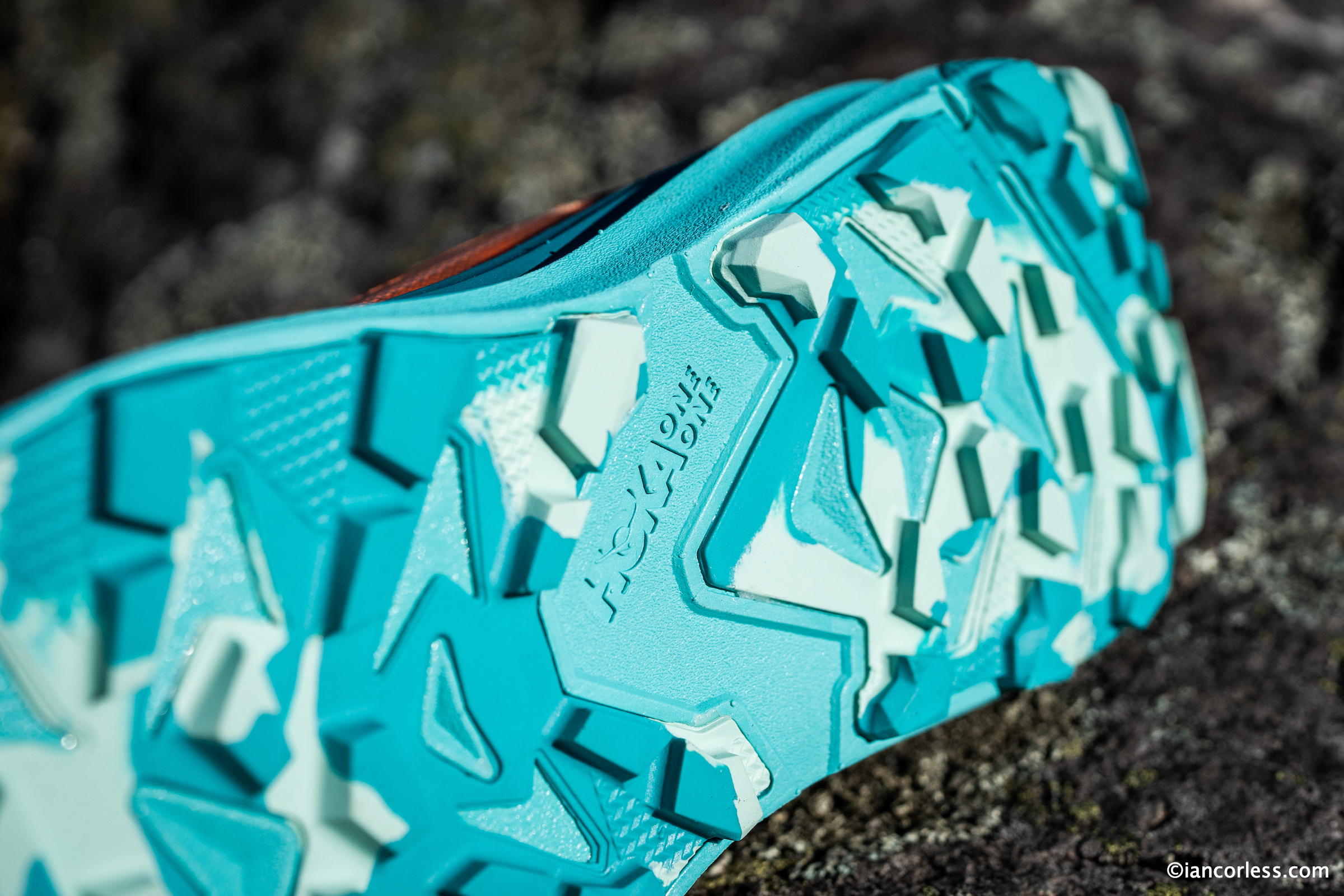
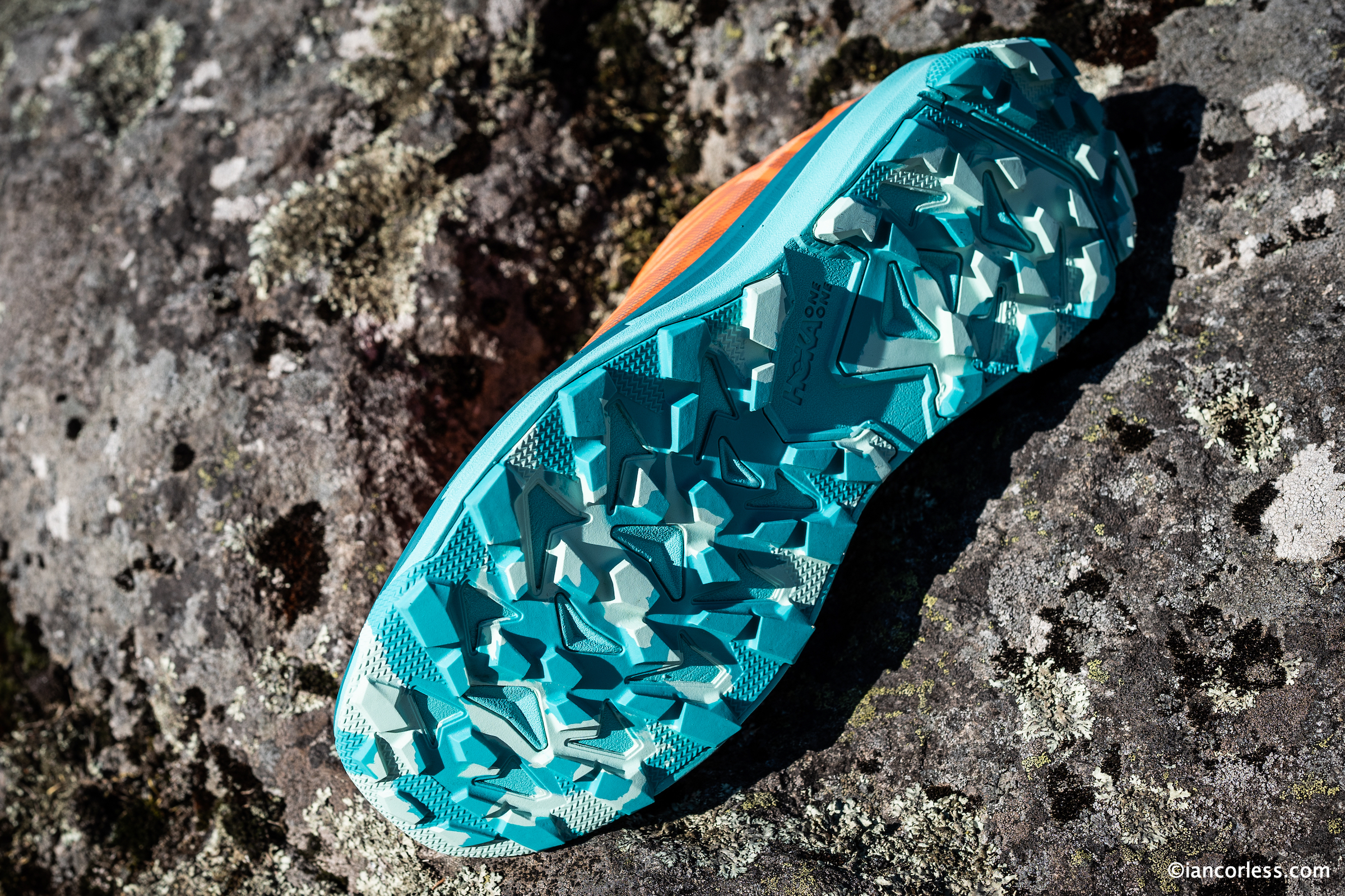
For me, the Torrent 2 was pretty much perfect, the only misgiving being the outsole which most definitely was compromised on wet rock. The Torrent 3 has a new outsole and without doubt, it is an improvement both in the wet a dry.
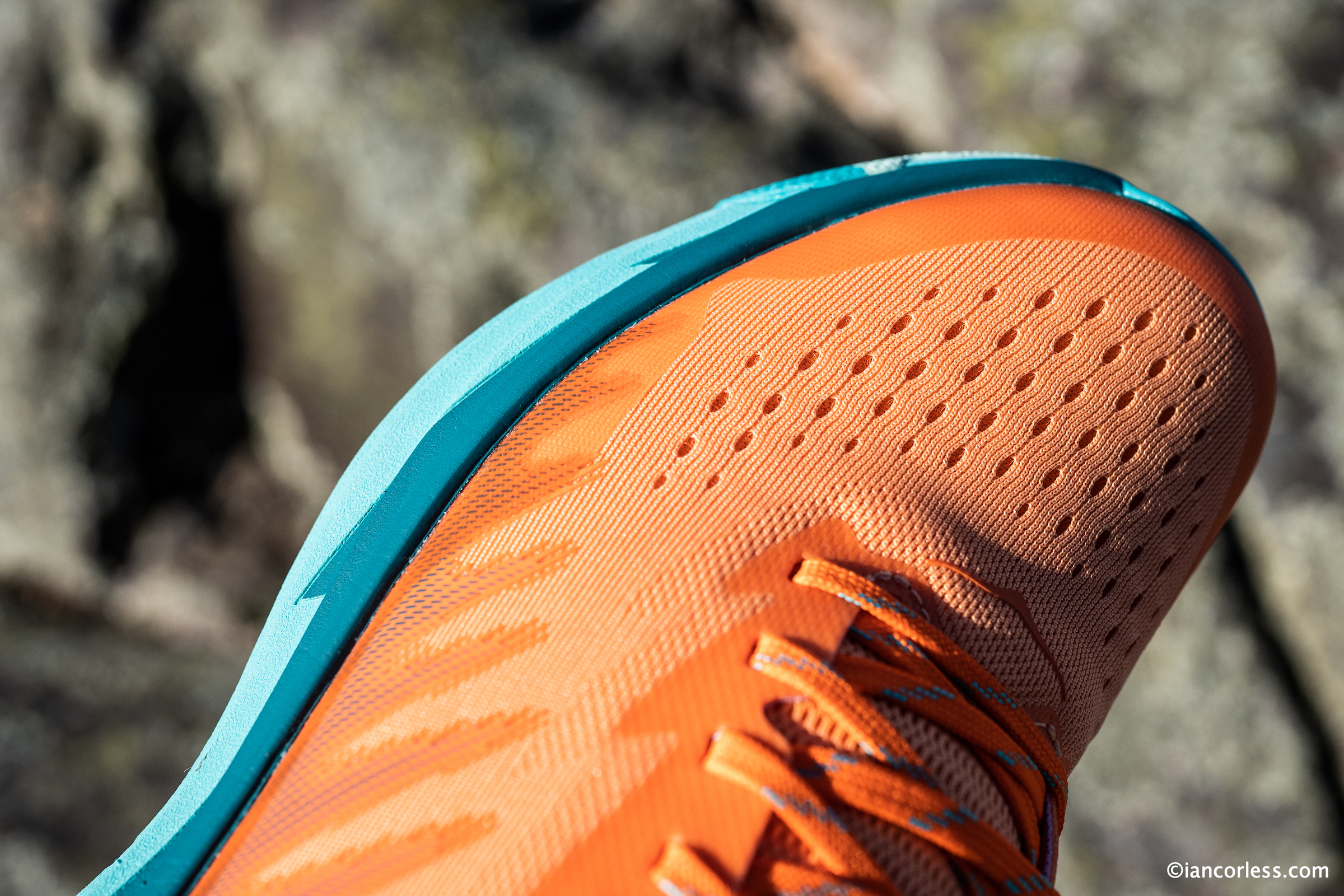
Torrent 2 was, on occasion, a shoe that retained heat. So, the Torrent 3 has a stripped back upper which is now single-layer mesh for increased breathability.
Profly construction, neutral, gusseted tongue, meta-rocker, 4mm lugs, cushioned but not excessive, great ground feel, light, responsive and a 5mm drop make the Torrent 3 a perfect shoe for most scenarios.
I got introduced to the Hoka Torrent in early 2021 after avoiding Hoka for many, many years. I was tempted back due to the Torrent being the least Hoka like shoe, basically, less cushioning and more ground feel. I was not disappointed. I immediately fell in love with the Torrent 2 and 6 pairs later, I am still in love with them, but that will change, the Torrent 3 is better and that says a great deal.
The Torrent 3 is just a great everyday shoe that works on most terrain and provides comfort over short or long distance. The PROFLY is excellent, and the propulsive phase is great, as is ground feel. There is a firmer feel to the Torrent 3, but not as form as the Zinal. Just like the Torrent 2, the Torrent 3 sits nicely between the Zinal and Tecton which has two carbon plates, I still choose the Torrent 3 over these other options.
Neutral, a 5mm drop with 18mm cushioning at the front and 23mm at the rear makes this a shoe that blends ground feel, responsiveness and cushioning perfectly. Great on on long or short runs, the Torrent 3 manages anything except very muddy ground. The wider footprint goes a long way in providing great comfort and less roll. There is no rock plate in the shoe and in all honesty, for me, I found no issues or problems. However, some say they feel too much…
A key improvement is the outsole, which has been re-worked from the original Torrent and Torrent 2. The grip works well in soft ground but if heading into muddy terrain, you will no doubt need a more aggressive outsole. The key difference is grip on wet rock, the softer rubber is a big improvement.
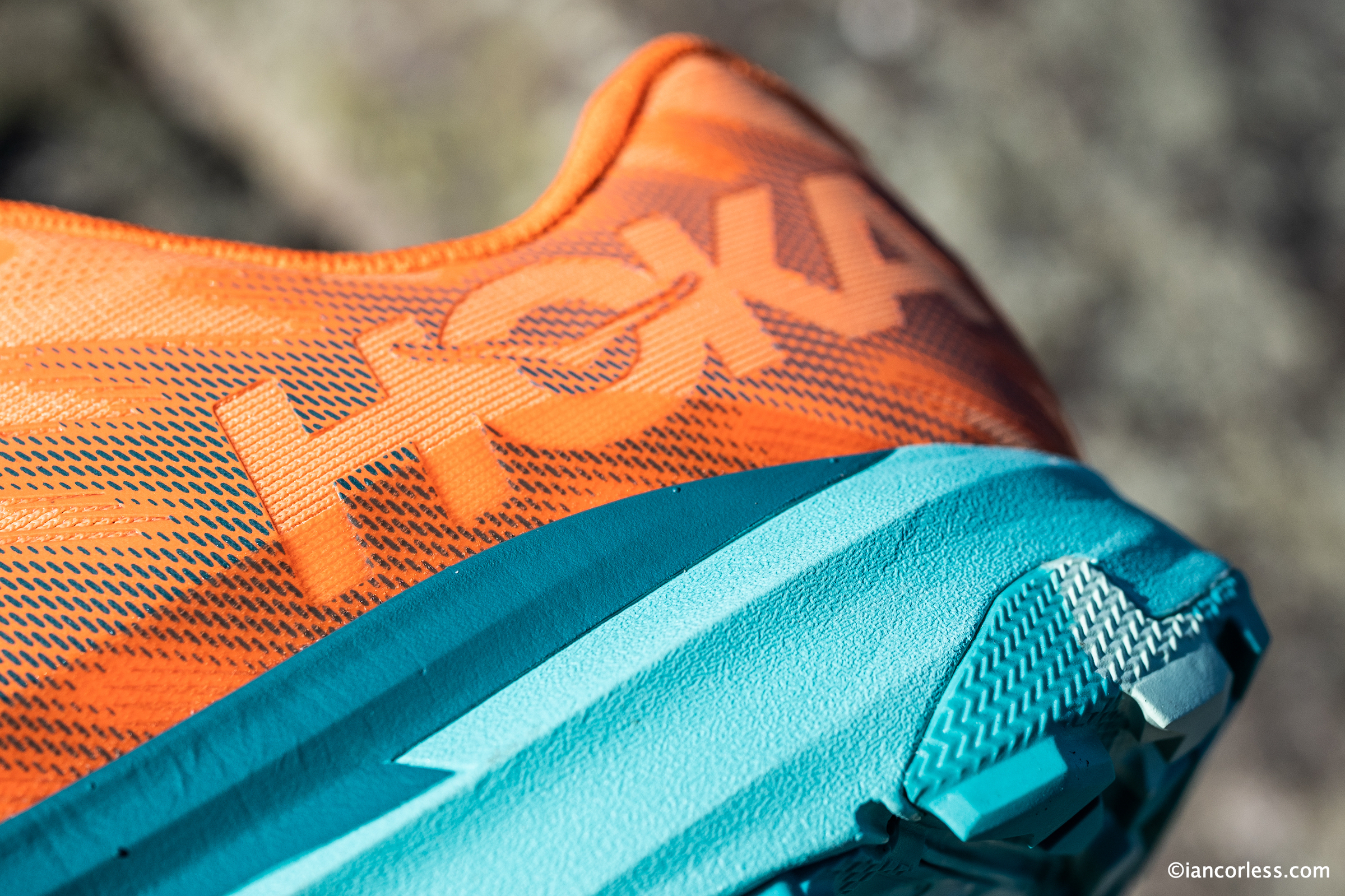
Fitting is true to size, with great comfort in the heel, excellent padded tongue, good lacing, a considerably more breathable upper and modest toe protection, the Torrent 3 is a winner.
Conclusion
Torrent 2 was superb, Torrent 3 is even better. It really is that simple. Ultimately, a great all-rounder over any distance and any terrain. It has low weight, comfort, toe splay and cushioning. If you only can purchase one shoe, the Torrent 3 is ideal. If you need a really specific shoe, for specific purpose, then yes, there maybe better alternatives, Speedgoat for technical trail, Challenger for road to trail and Zinal for fast and short, but trust me, the Torrent 3 sits perfectly amongst all these shoes and does the job superbly.
Episode 235 of Talk Ultra and we speak with Katie (Catherine) Young who placed 6th lady and 1st Brit at the 2023 Marathon des Sables in 34h 21m 18s.
The 2023 Marathon des Sables will go down in the 37-year history of the race as a tough one. With second longest stage in the race history (90km), a tough course and excessive heat, 30% did not make it to the finish.
Katie Young from the UK, running her first stage race had an incredible run placing 6th woman and 1st Brit.
Are you planning on running Marathon des Sables or a similar race in 2024 or beyond? Why not join us in January for our LANZAROTE TRAINING CAMP which runs from the 11th to 18th. More information HERE.
Marathon des Sables 2024 #MDS – The New Features Discussed
2024 Marathon des Sables entries are due to open on June 30th. Moving forward, some changes will be made to the race. Read a summary of points HERE.
NEED A NEW PACK?
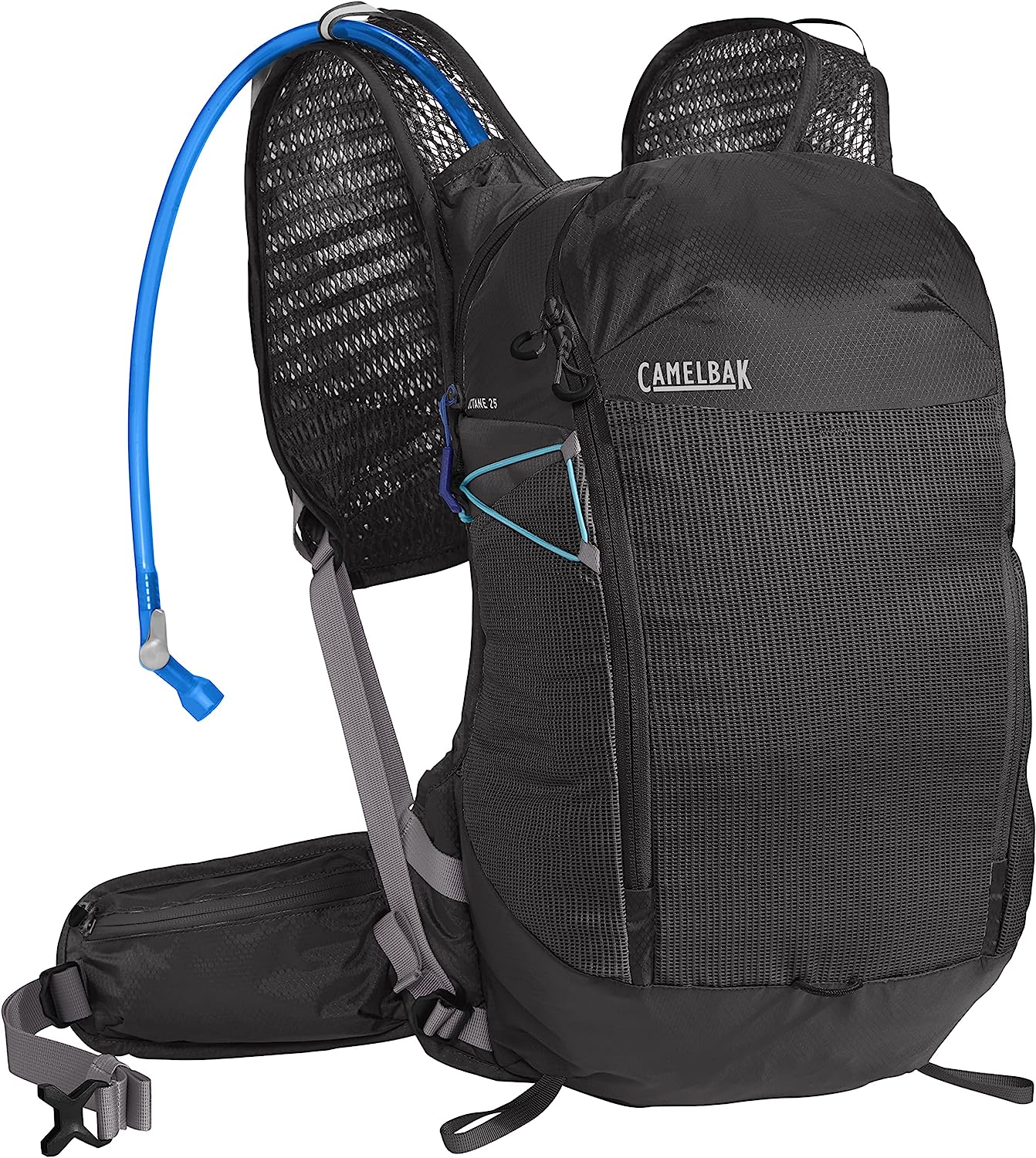
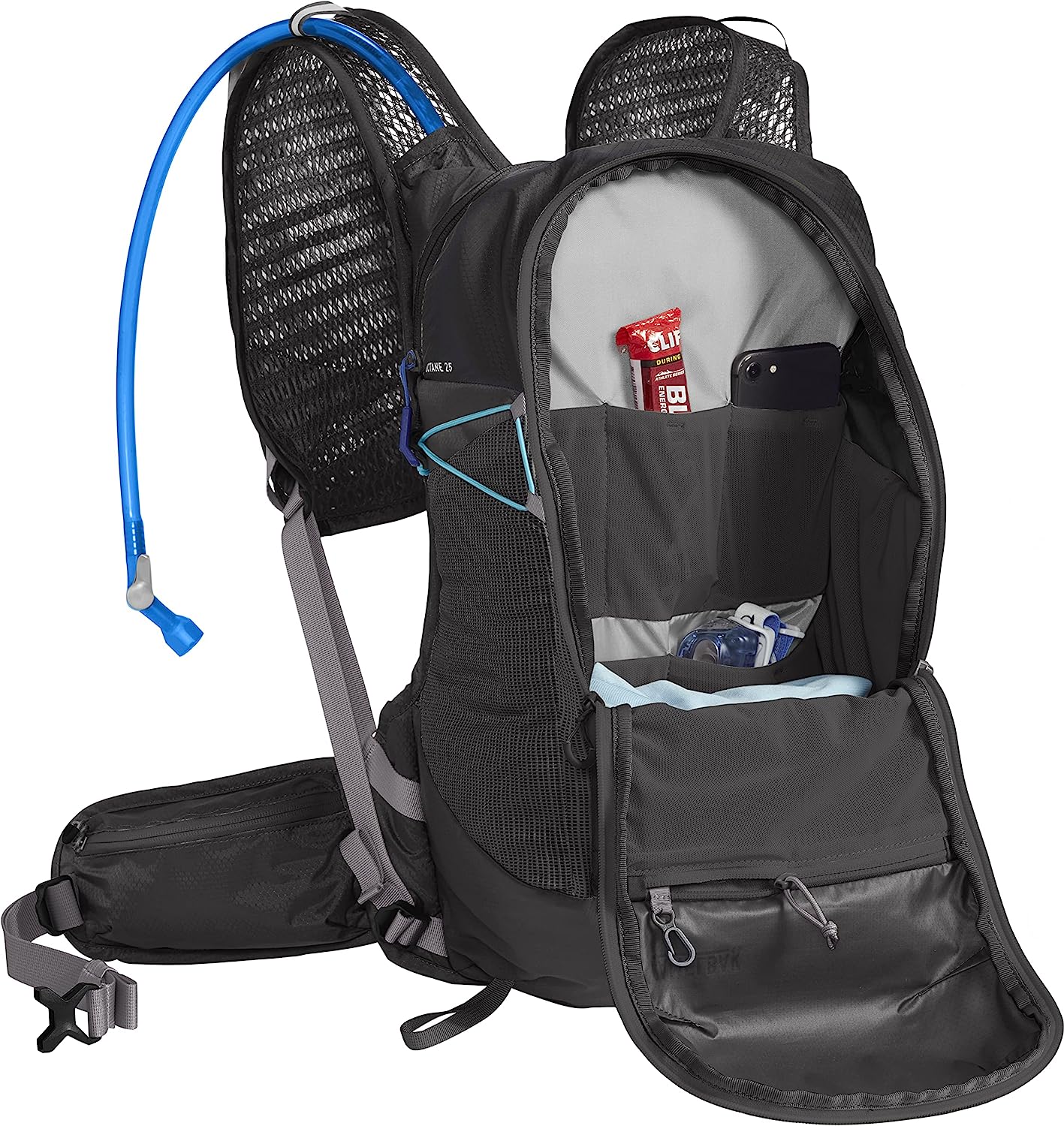
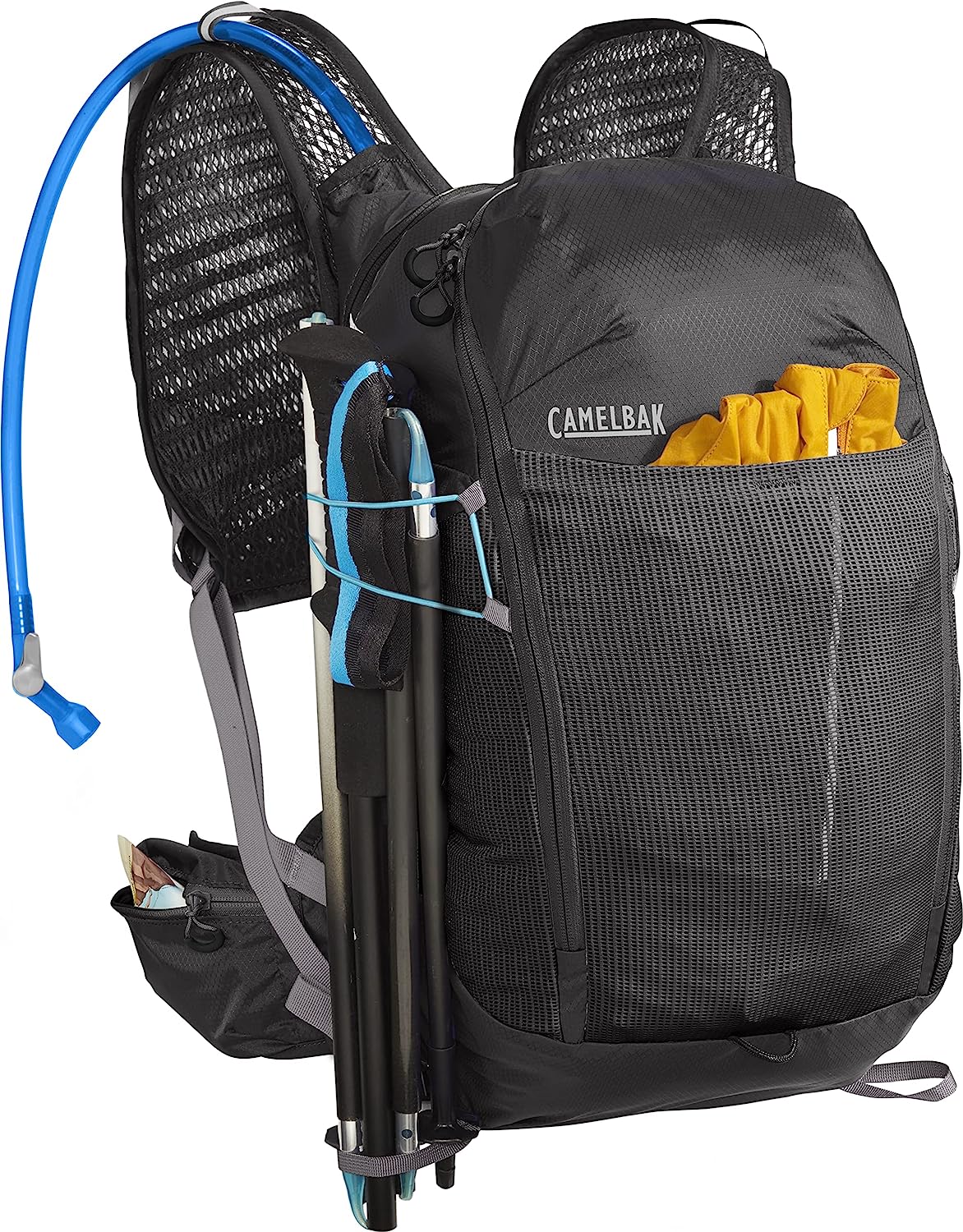
Are you looking for a new pack that is suitable for fastpacking and stage racing? We are currently testing the Camelbak Octane 25 and it is proving a real favourite. It’s full of features, has great storage and is extremely comfortable. Check out our first impressions HERE.
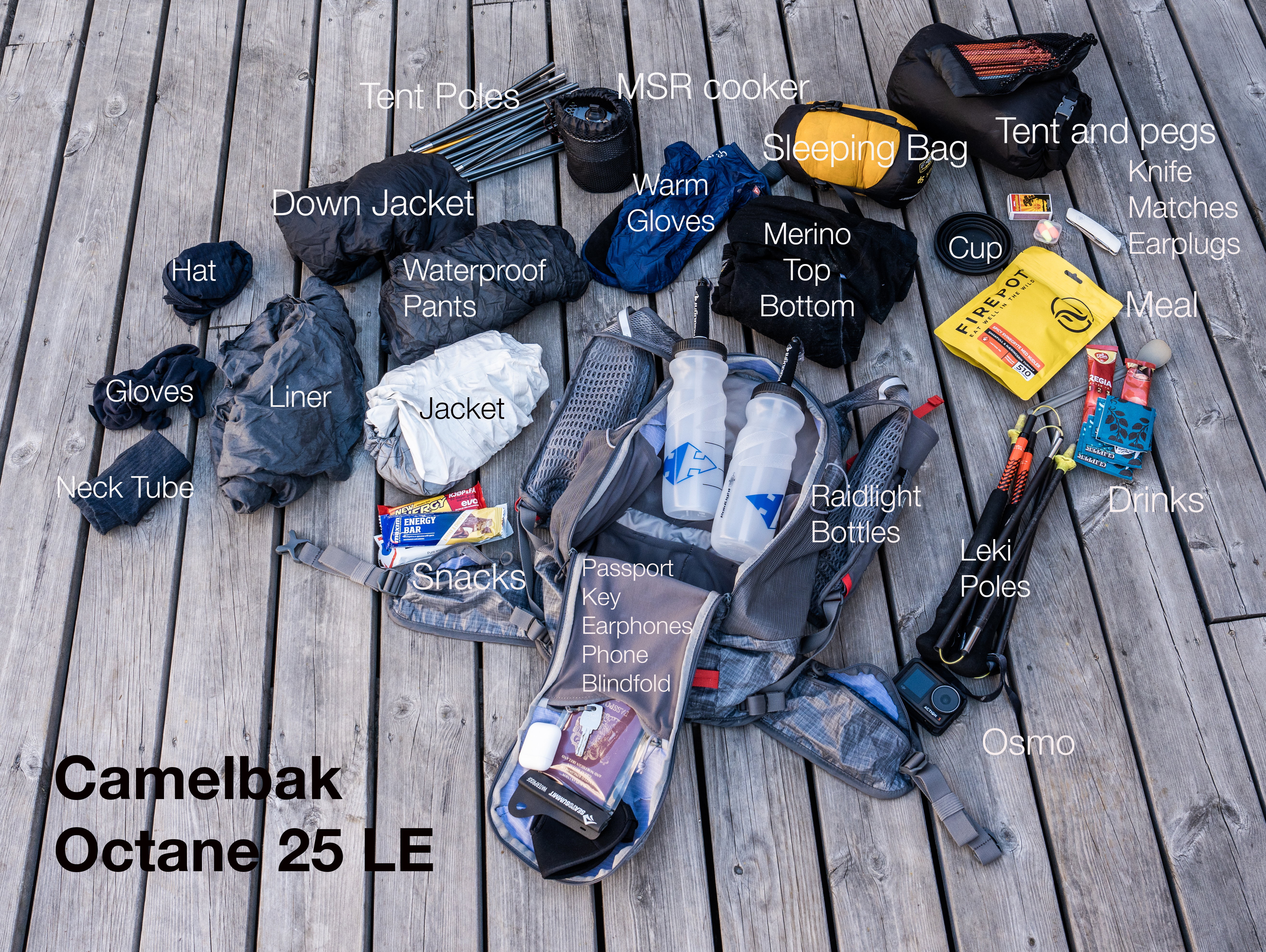
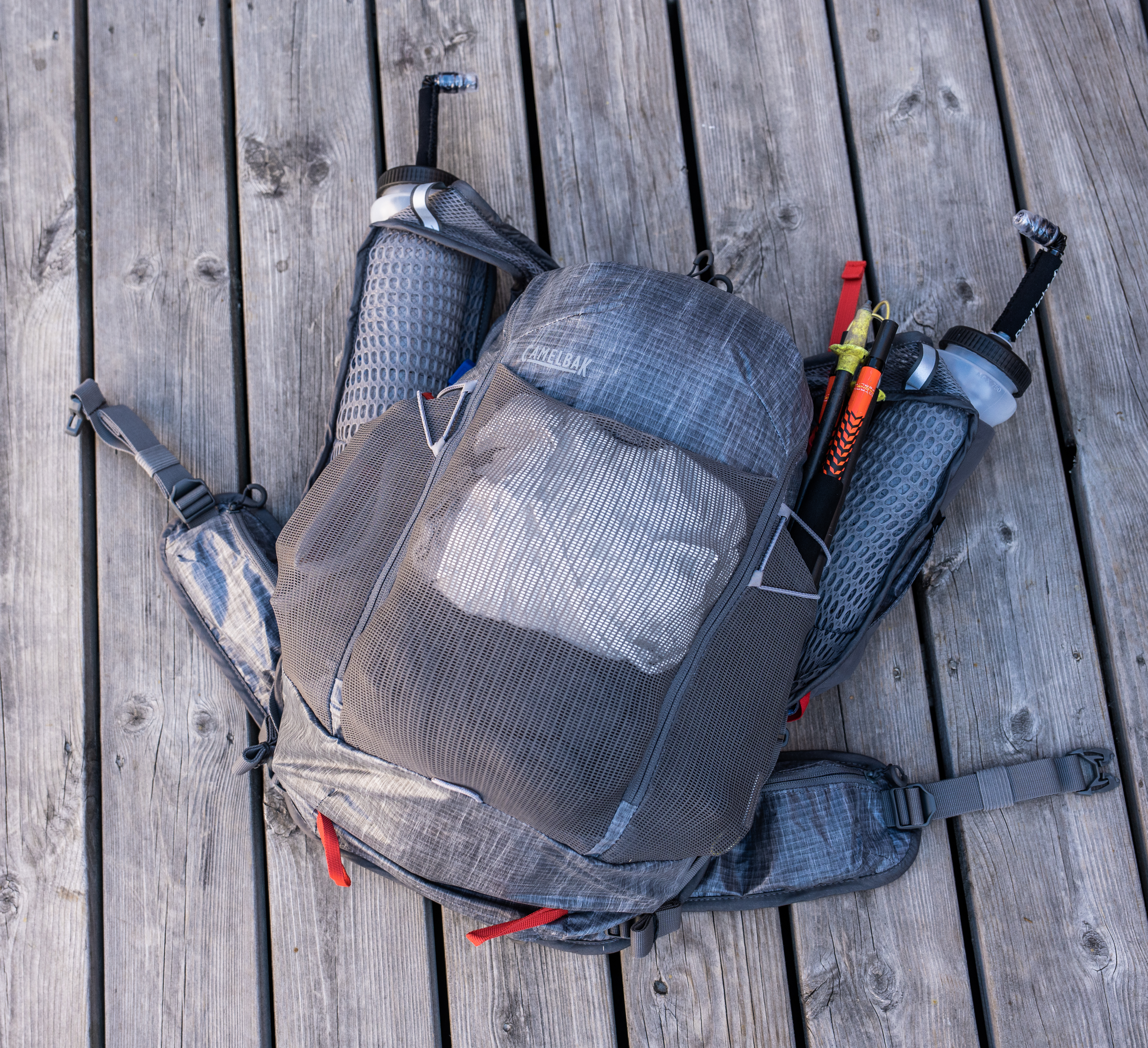
Octane 25 fully packed with tent,sleeping bag, apparel and food for a 1-night fastpack.
Streamlined, lightweight, full of features and storage, CamelBak have brought together the best of both the trail running and hiking worlds with Octane 25 LE.
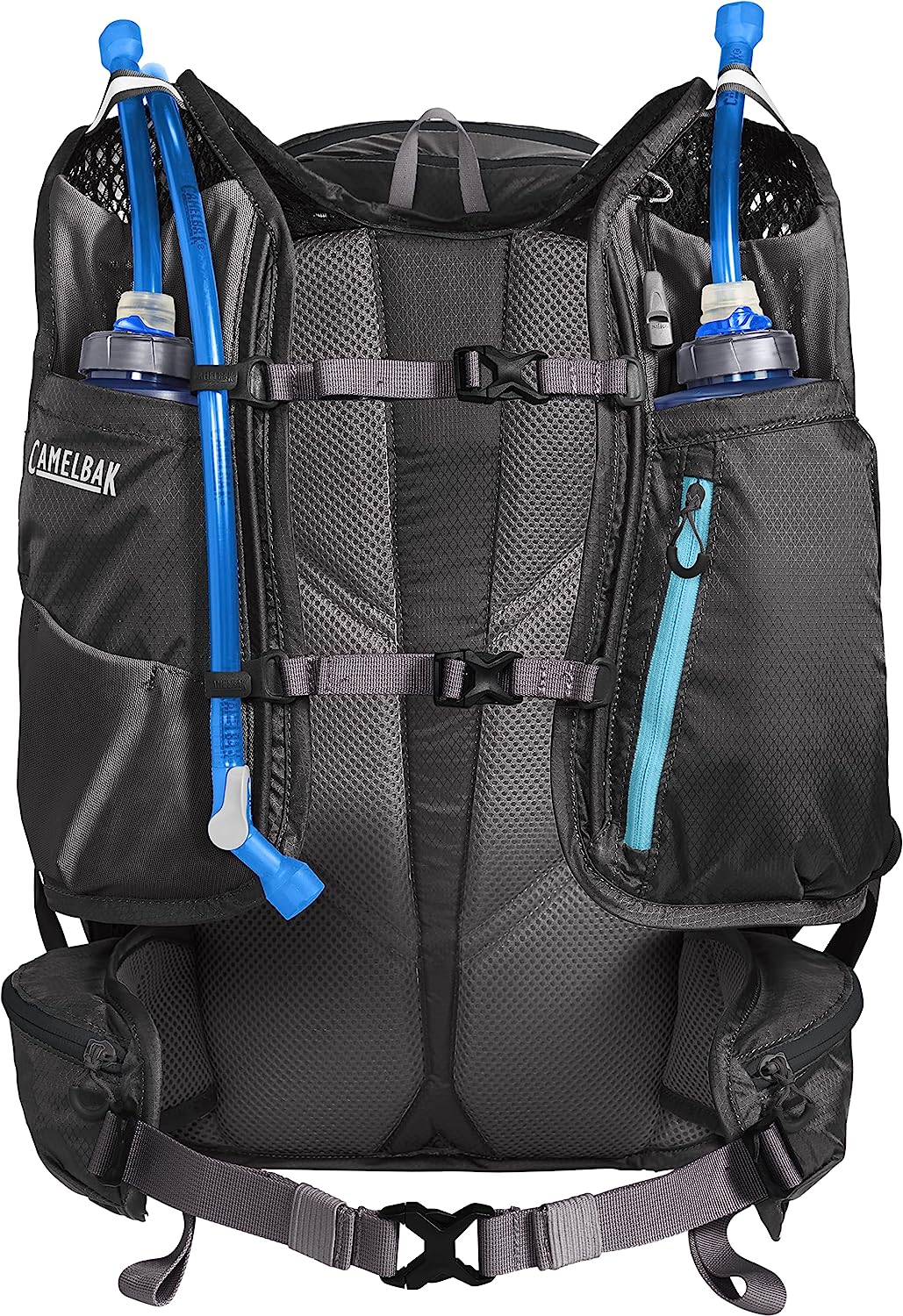
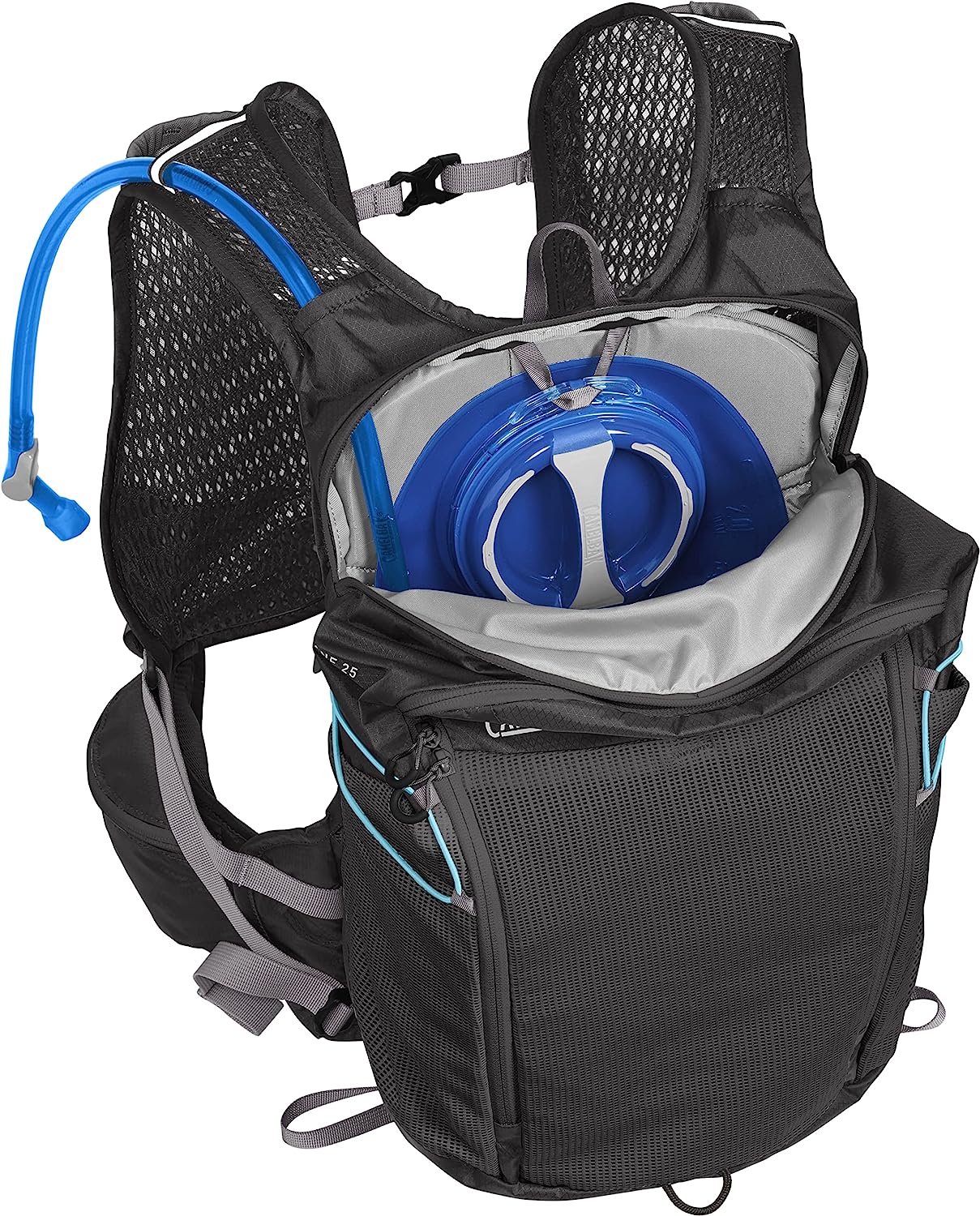
As you would expect, CamelBak has integrated a system to keep the bladder secure and easy to access, with the hydration hose tucked in and out of the way with secure fixings at the front. For many though, the use of the bladder can be a plus or a minus, so, removal is easy. At the front, there is storage for two large bottles or soft-flasks.
Ultimately, this pack with 25L of storage is perfect for fast packing and multi-day stage events. It is optimised for those who want to stay light and move fast. It is full of features and after packing and testing, this is a piece of equipment that is ideal for a race such as Marathon des Sables.
Key features are:
Belt with two zippered pockets for ‘on-the-go’ snacks.
Trekking pole storage via left or right side.
11 exterior pockets one with zipper and two for bottles/ soft flasks.
8 interior pockets one with zipper and key holder
2 chest straps
A large zipper opens up the pack like a suitcase, therefore adding and removing contents is easy. Inside the pack are multiple small stretchy storage pockets, 8 in total. On the rear insides 5, 2 longer pockets on the sides of the inside. In the lid of the pack is a zipper pocket ideal for wallet, passport with an integrated key holder.
Outside there are 11 exterior pockets and a giant compartment that is dedicated to hold the bladder, or, if doing multi-day, this is a great place to put a sleeping mat or even some clothing. Three large mesh pockets are ideal for external storage that may require quick access, for example, waterproof jacket, pants, hat, gloves, additional liquid and so on. Two elastic straps not only will hold poles in place but also help compress the pack smaller.
Pockets help keep things in place, and the dual chest straps keep it all closely attached to the body. The addition of the waist belt and two zippered pockets only adds to a secure feel and the increased pockets are welcome for ‘on-the-go’ snacks.
To provide perspective I removed the bladder and added a sleeping mat in to the bladder compartment (not shown in the video) and the items you see are as follows:
2 large Raidlight bottles
Big Agnes solo backpacking tent with poles and pegs.
Sea to Summit Sp1 sleeping bag.
Sea to Summit sleeping bag liner.
Merino LS top and bottoms.
Waterproof jacket.
Waterproof pants.
Down jacket.
Warm gloves.
Leki poles.
Merino beanie, neck roll and gloves.
MSR solo cook kit.
Sea to Summit spoon
Knife, matches, hot chocolate sachets, tea, earplugs, blindfold, snacks, and cup.
Firepot food and bars.
Osmo Active.
Phone, passport, and credit card.
To wear, the pack hugs the body, is comfortable and if adjusted correctly provides a run with minimal bounce. Made from ultralight sail cloth, the Octane 25 feels very durable. 3D vent mesh helps comfort and breathability.
While not one of the obvious choices for a multi-day or stage race, this pack is proving hard to beat. The features, the storage capacity and the fit against the torso is superb. It really is one of the best, if not the best, we have tried. Coming in one size, smaller or larger individuals would need to try on and make sure fit and comfort works. The side adjustments do compensate for many sizes and the waist belt adds to a secure feel and it helps spread the carry load.
Is there a downside? The only possible problem could be the zip. Zips can break, particularly when under pressure from holding in contents or from harsh environmental conditions, such as sand. However, this is just a thought process that needs considering, there is nothing in testing that would suggest there to be a problem.
Ultimately, one of the best fast packing and multi-day packs I have tried and one that I am using on all adventures for the foreseeable future.
The 37th was a tough one from many perspectives, heat, sandstorms, route and a very long, long day at 90km. You can read my summary HERE.
30% did not make the finish, the second highest in the race history, the highest coming in 2021.
Now, all eyes, look ahead to the next edition, the 38th in 2024. Many were looking to register in May, however, Marathon des Sables communicated a delay in registrations opening till the end of June. Of course, delays are never good and of course, questions get asked.
There has been many rumours if the 37th edition would be Patrick Bauer’s last? There has been no communication on this and no confirmation, equally, for clarity, there has been no official communication of new ownership. This, I assume, will be communicated in due course.
In recent days, Marathon des Sables has communicated in multiple languages to notify of significant changes that will take place for the 38th MDS. There are 3 key points:
Words as provided by Marathon des Sables.
Point 1:
The 38th MARATHON DES SABLES will take place over 5 stages instead of 6 previously. The total distance, around 250 km, does not change, and this will only slightly change the distance of each stage:
Stage 1 from 28 to 35 km
Stage 2 from 28 to 39 km
Stage 3 from 28 to 39 km
Stage 4 (The Long One) from 75 to 85 km (over 2 days)
Stage 5 (Marathon Stage) of 42.195 km
The removal of the sixth stage will allow everyone to celebrate obtaining the Finisher medal at the end of the Marathon stage: no more stress about the ten kilometers of the sixth stage! This will also allow us to offer a more substantial Solidarity program associated with this same Marathon stage, which will strengthen support for the Solidarity MARATHON DES SABLES association.
Point 2:
The MARATHON DES SABLES is contested in food self-sufficiency: only water, in limited quantities but sufficient to cover the needs of an athlete evolving in the desert, is provided to you each day. You must take along for your entire stay in the desert everything you need to eat and prepare to eat (freeze-dried meals, semolina, cereal bars, stove, etc.). This self-sufficiency will include for this 38th edition the day of your arrival in the desert, and the day of control preceding the race. These first two days will allow you to test yourself in real desert conditions, and to reduce sanitary risks.
Point 3:
To offer you more flexibility, and to reduce the carbon footprint of the event, we will charter fewer planes than in previous years. Only 400 places will be available from Paris, and 200 from London. As usual, we will of course take you from OUARZAZATE airport to the first bivouac, in the heart of the desert. And for those who wish, free shuttles will be set up from MARRAKECH to allow you to easily reach OUARZAZATE. You will thus have the possibility of anticipating or extending your stay, or of being joined by your family, much more simply than before.
SUMMARY AND THOUGHT PROCESS
The Marathon des Sables is loved and it’s fair to call the participants, staff and volunteers a family. Without doubt it’s a community that is 37-years in the making. So, when changes come, they are often taken with a sense of held breath. Some will dislike them, some will like them, some will be indifferent and if you are new to Marathon des Sables, you will probably be no wiser as you have nothing to compare to.
For perspective, Marathon des Sables has gone through many changes in its 37-years.
In 1989 participation increased to 170. I am sure competitors from previous years did not like the increase.
In 1991 the Gulf War impacted on the race and sponsors.
In ’92’ the establishment of regulation regarding equipment and food were implemented.
’94’ Doc Trotters arrives.
In ’99’ a mobile hospital becomes part of MDS.
Internet arrives in 2000.
In 2001, the ‘long day’ originally called §The 70’ exceeds 80km.
2006 146 DNF due to heat and humidity.
In 2008 Solidarité MDS is created.
Flooding at MDS in 2009.
For the 25th edition, 1013 participants.
In 2013 the final “Charity” stage sponsored by UNICEF is introduced.
2020 Coronavirus.
2021 and D&V sweeps through MDS and causes the highest DNF rate.
2023 heat impacts on the race with 30% DNF.
Quite simply, if anything can be learned from the above, change and changes happen, planned or not. So, let’s look at the new 3 changes and see the pros and cons.
The charity stage has always been a discussion point, from my perspective, having been at the past 10-editions is that the stage has been pointless. The race is over, so, it just drags out the agony for one more day.
But the counter argument is that it provides this great opportunity for a ‘tent’ to spend the time together, in the desert as a moment of celebration.
For 2024 this stage will go. Give MDS one or two editions and I don’t think it will be missed.
The downside may well be the impact on the charity and fund raising, however, the communication says, ‘…offer a more substantial Solidarity program associated with this same Marathon stage…’ So, this addresses this point.
The race will be 5-Stages. This is no different to what has happened since 2013. The race has been 5-stages and the medal is provided at the end of the ‘marathon’ stage, stage 5. However, the release outlines the following:
Stage 1 from 28 to 35 km
Stage 2 from 28 to 39 km
Stage 3 from 28 to 39 km
Stage 4 (The Long One) from 75 to 85 km (over 2 days)
If we take the longest distance from the above, 35, 39, 39, 85 and 42.195 this provides a total distance of 240.195km.
If we take the shorter distances, 28, 28, 28, 75, and 42.195 this provides a total distance of 201.195km.
So, moving forward, the Marathon des Sables has the potential to be as long as 240.195km (a significant way from 250km) and potentially as short as 201.195km and an average distance of 220km.
In fairness, the potential to have a shorter distance race could reflect or compensate for a very difficult route, for example, a great deal of soft sand, dunes, climbing and technical terrain. And by contrast, a longer route could reflect an ‘easier’ more runnable route.
For the race to live up to ‘The Toughest Race on The Planet’ and the tag of 250km or 6 marathons may/ will need to be addressed.
One of the key attractions and challenges of MDS is the self-sufficiency. It makes the race exceptionally difficult, and this is why the race is so hard. Carrying all one requires, food, clothing and equipment is THE Marathon des Sables, and this has been copied worldwide.
This self-sufficiency is manageable as before the race, one is not self-sufficient and post-race, one is NOT self-sufficient, just ask any hotel, restaurant, or cafe in Ouarzazate!
So, the new point 2, ‘Self-sufficiency will include for this 38th edition the day of your arrival in the desert, and the day of control preceding the race. These first two days will allow you to test yourself in real desert conditions, and to reduce sanitary risks.’
The above has some pros and cons.
PROS: Ironically the mention of ‘sanitary risks’ does make one ask what element of food poisoning or similar took place in 2021? Certainly, reducing any outside risk does improve one’s chance of making the stage 1 starting line without a problem, so, being self-sufficient and relying on one’s own food addresses this.
CONS: You should NOT be testing your food strategy in the two days before the race, this should have been done before! Catering by MDS took away stress and worry, getting dinner on arrival day and then breakfast, lunch, and dinner the following day offered an opportunity to fill up on calories and dine with tent mates and others, to remove this IMO it will be seen as a negative. BUT, if you haven’t been to MDS before, you will not know difference!
My initial reaction to the removal of catering was negative. The more I have thought on it, I have started to appreciate some of the benefits. But my conclusion is that the removal of catering impacts on the MDS experience, especially for those who have been before and experienced it.
POINT 3:
Quite simply, if you are someone who likes or needs a more ‘package’ holiday experience and you are French or English, you need to enter early to make sure you are one of the 200 or 400 who will have a flight included.
Outside of this, once you enter the race, you would need to arrange your own travel. For perspective, this has always been the case for anyone outside the UK and France, flights were chartered because entries made a charter possible.
PROS: The option to arrange one’s own travel offers flexibility, such as arrive early and or depart late. You may be able to get better prices. MDS are offering free shuttles to Ourzazate from Marrakech, it roughly takes 6-hours. Carbon footprint will be saved as charter planes fly out full of runners and then home empty. They would then fly out empty and return full back to UK or France.
CONS: With only 400/200 flight options for French and UK participants, this may will impact on those ‘who want’ this option and cannot have it, maybe they will not enter? Meet point in Ouarzazate will mean increased costs as it will require a hotel stay. It’s also a 6–8-hour drive to bivouac 1 the following day. For the past few years, planes have flown to Errachidia requiring only a short drive to B1 and no hotel stay.
One point not addressed is the option to meet at Bivouac 1. This would make more sense, particularly if one is arranging one’s own travel. I personally would fly to Marrakech, then fly to Errachidia and then taxi to B1.
PRICES:
The prices for the MARATHON DES SABLES 2024 are as follow:
Offer with flight included from Paris: 3,990€/person for an individual registration and 4,090€ for a team registration (priority to the participants with French residency; then reservation has to be requested by email for other countries according to the availabilities). This offer is limited to 400 people. It includes the round trip flight from Paris to Ouarzazate.
Offer without flight: 3,540€/person for an individual registration and 3,640€ for a team registration This offer does not include flight. Participants will meet at the airport in Ouarzazate on April 12.
The prices for participants living in Great Britain, Ireland and the British Islands are as follows (different service):
Offer with flight included from London: 5,280€/person for an individual registration and 5,380€ for a team registration This offer is limited to 200 people. It includes the return flight from London to Ouarzazate.
Offer without flight: 4,680€/person for an individual registration and 4,780€ for a team registration This offer does not include a flight. Participants will meet at Ouarzazate airport on April 12.
CONCLUSION
Change is always difficult. Runners who been before may not be happy, but can they learn to accept the change? If not, they may well never enter MDS again. For those who have never done the race before, they will have nothing to compare it to, so, it will be the norm! For them, it will still be an amazing experience and one that they will prepare for based on the rules.
In regard to prices: “In the history of the MARATHON DES SABLES, many crisis have affected the organization and endangered the sustainability of the event. The Covid-19 crisis is not the least, and yet, since 2018, our rates have only increased by €90 (for an individual participant taking our planes from Paris). At the same time, the costs related to the organization of the event exploded (transport, equipment, security, etc.). The increase between the 37th and 38th editions therefore acts as a rebalancing to ensure the future of the legendary desert event. And that’s without counting on the novelties, like this famous gala evening which will close the event in style! We are fully aware that this registration fee can make it difficult for some people to participate, and we will do everything to help you make your dream come true (payment in several times, advices in your sponsorship process, etc.).”
As I was told, this is evolution, not revolution. Do you agree?
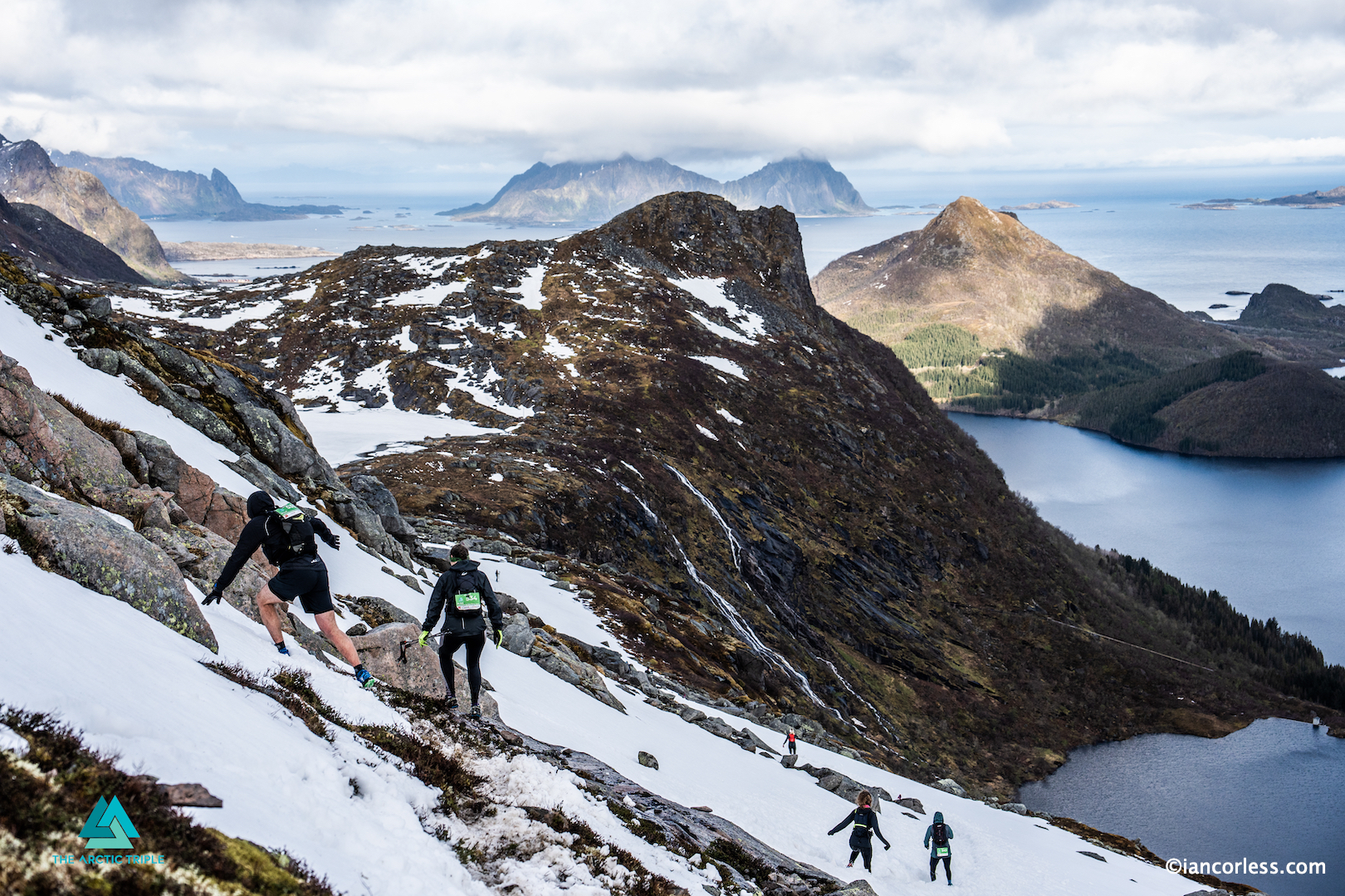
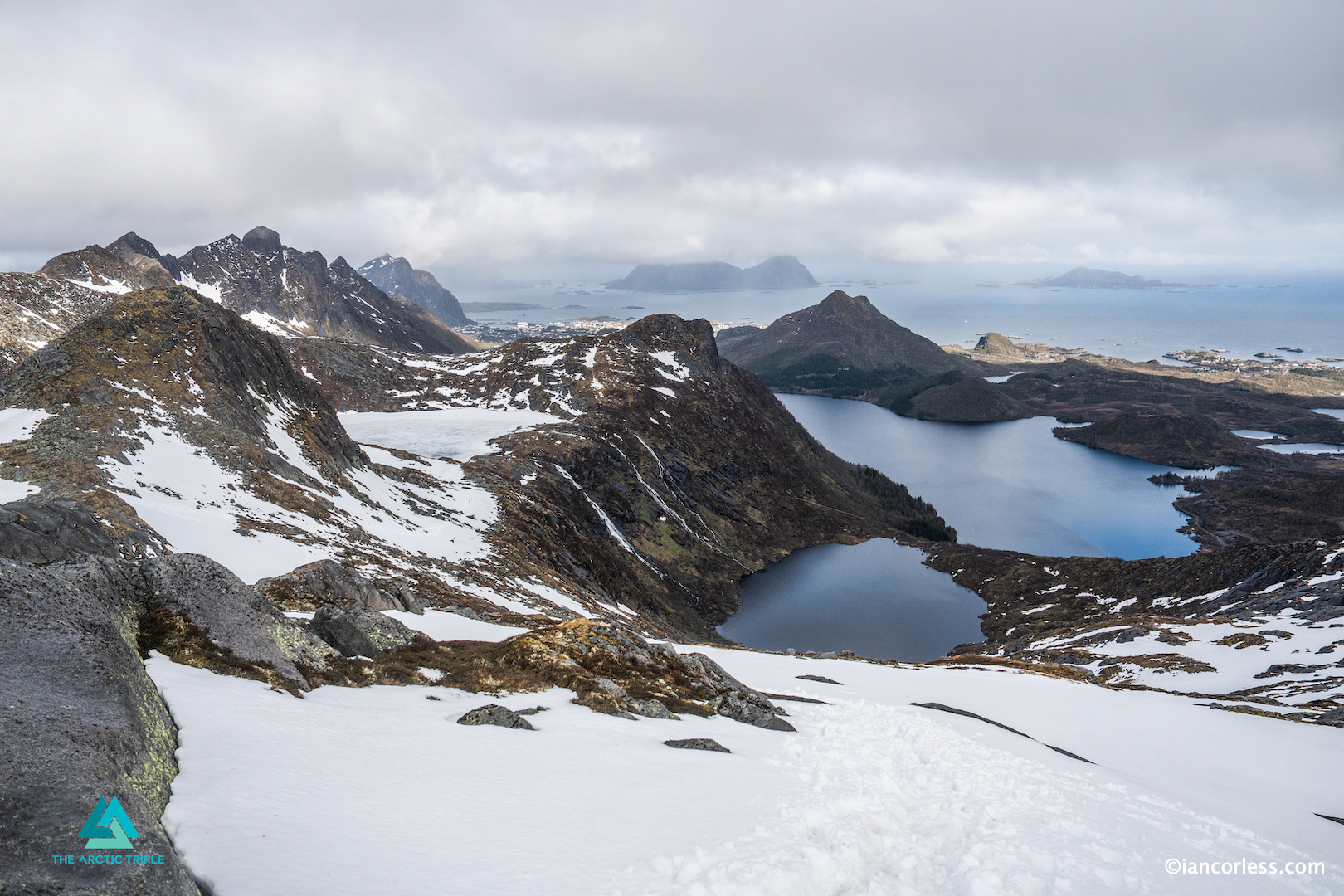
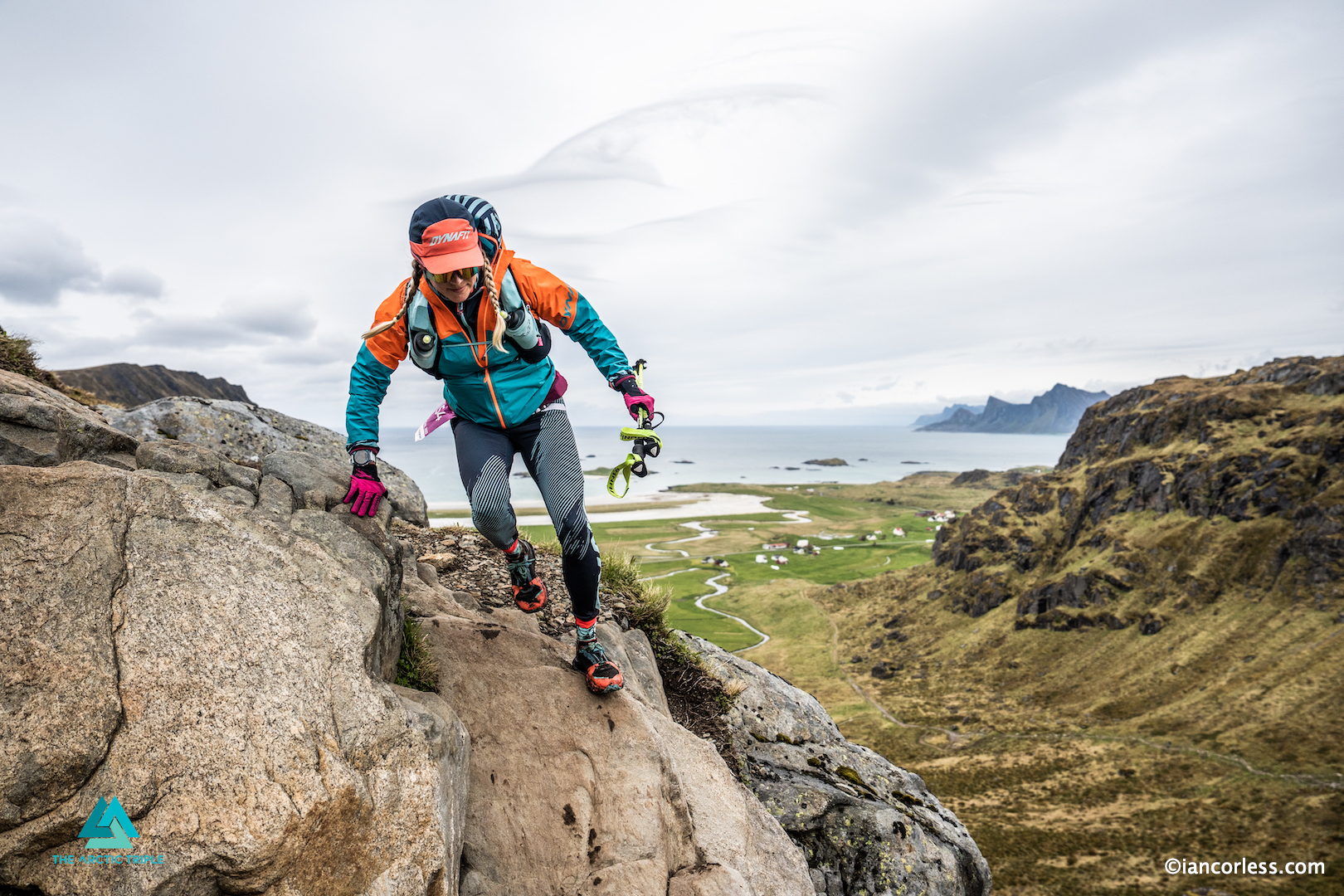
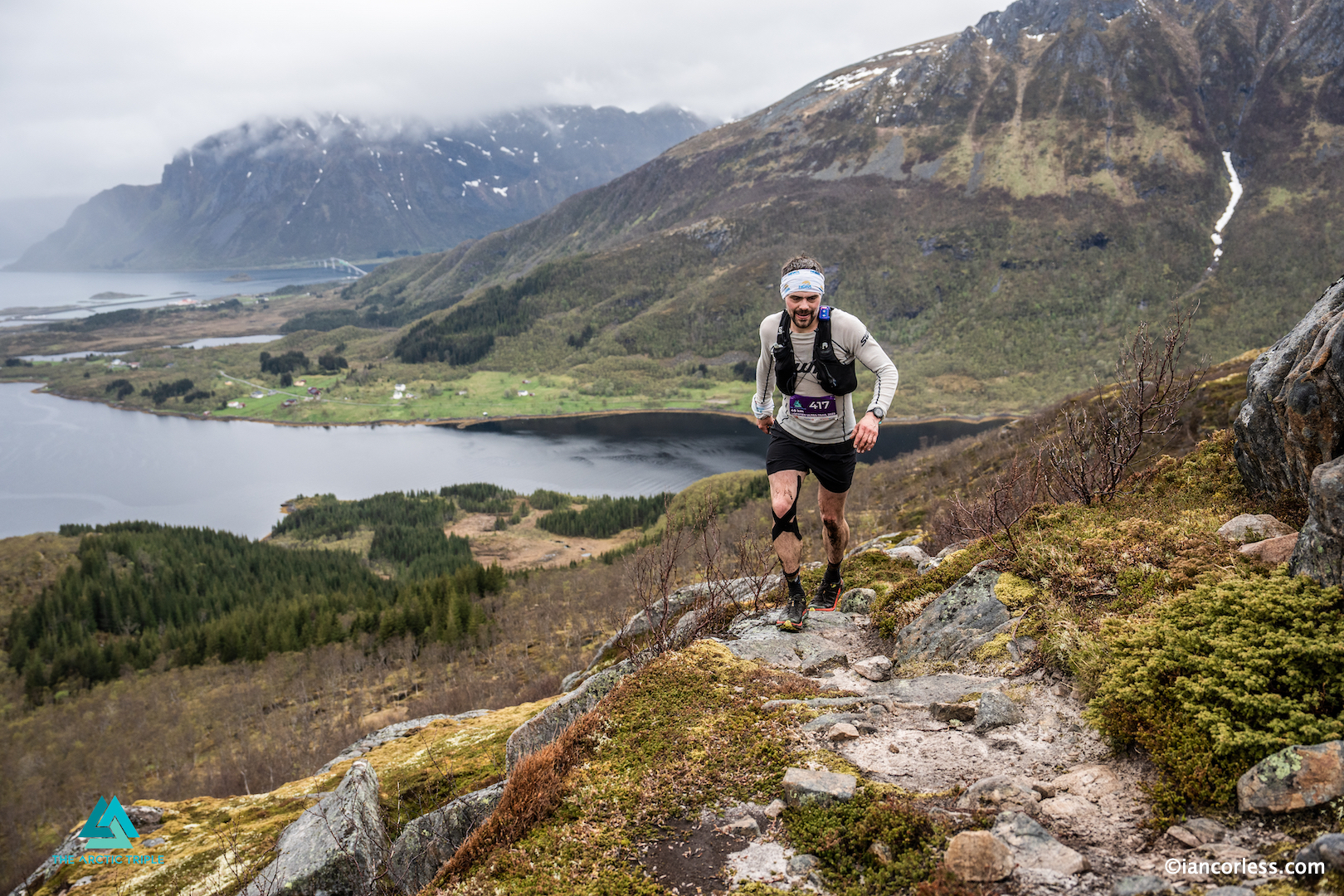
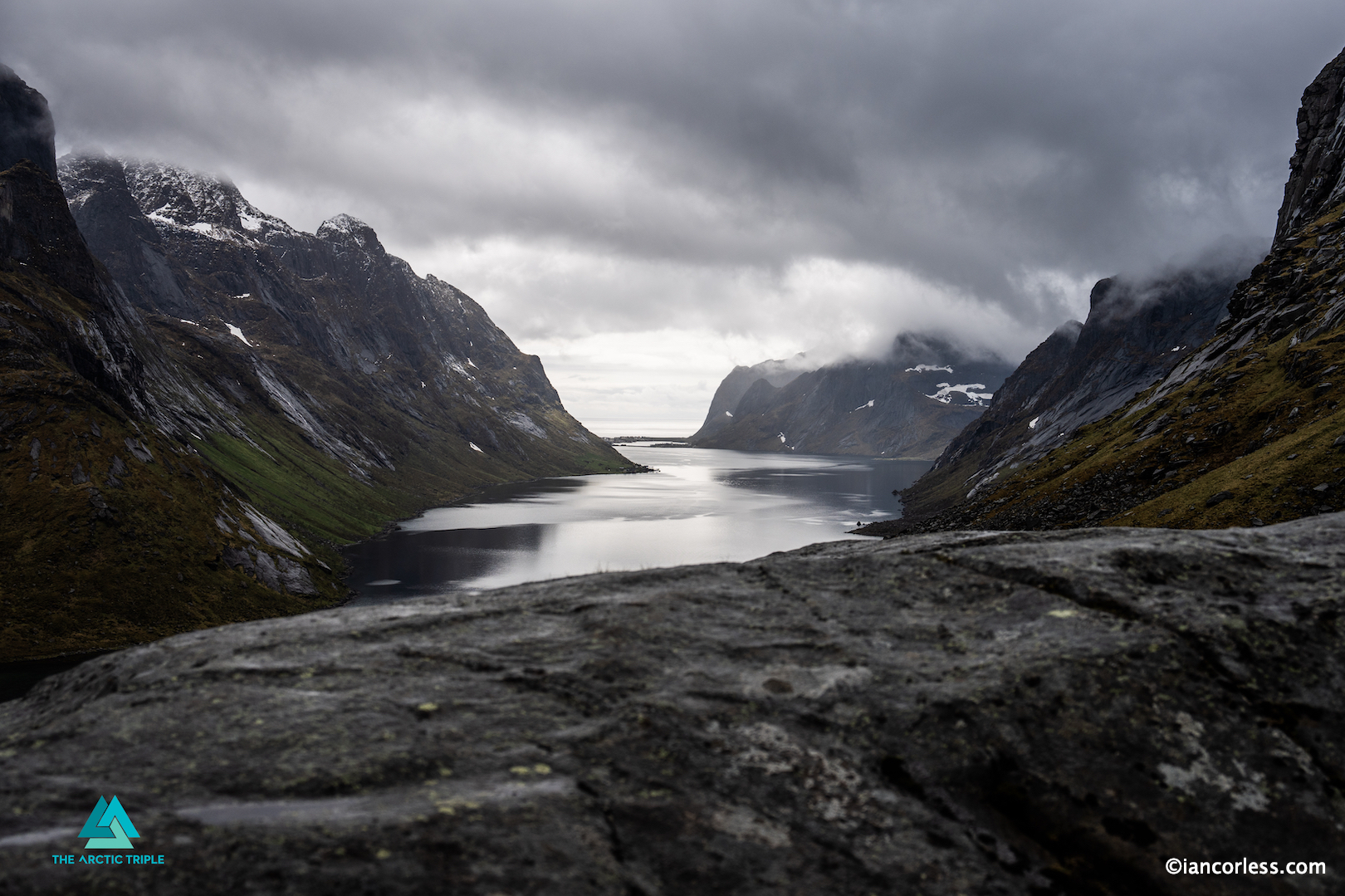
Located 800 miles from Oslo and 95 miles north of the Arctic Circle. Lofoten is an archipelago in Nordland county, known as the land of the midnight sun, from the end of May to the middle of July sunset merges into sunrise, with no darkness in between. Majestic mountains, lush valleys, chalk-white beaches, seagull cries, the smell of sea and houses where you would not believe that anyone could live. It’s Lofoten in a nutshell.
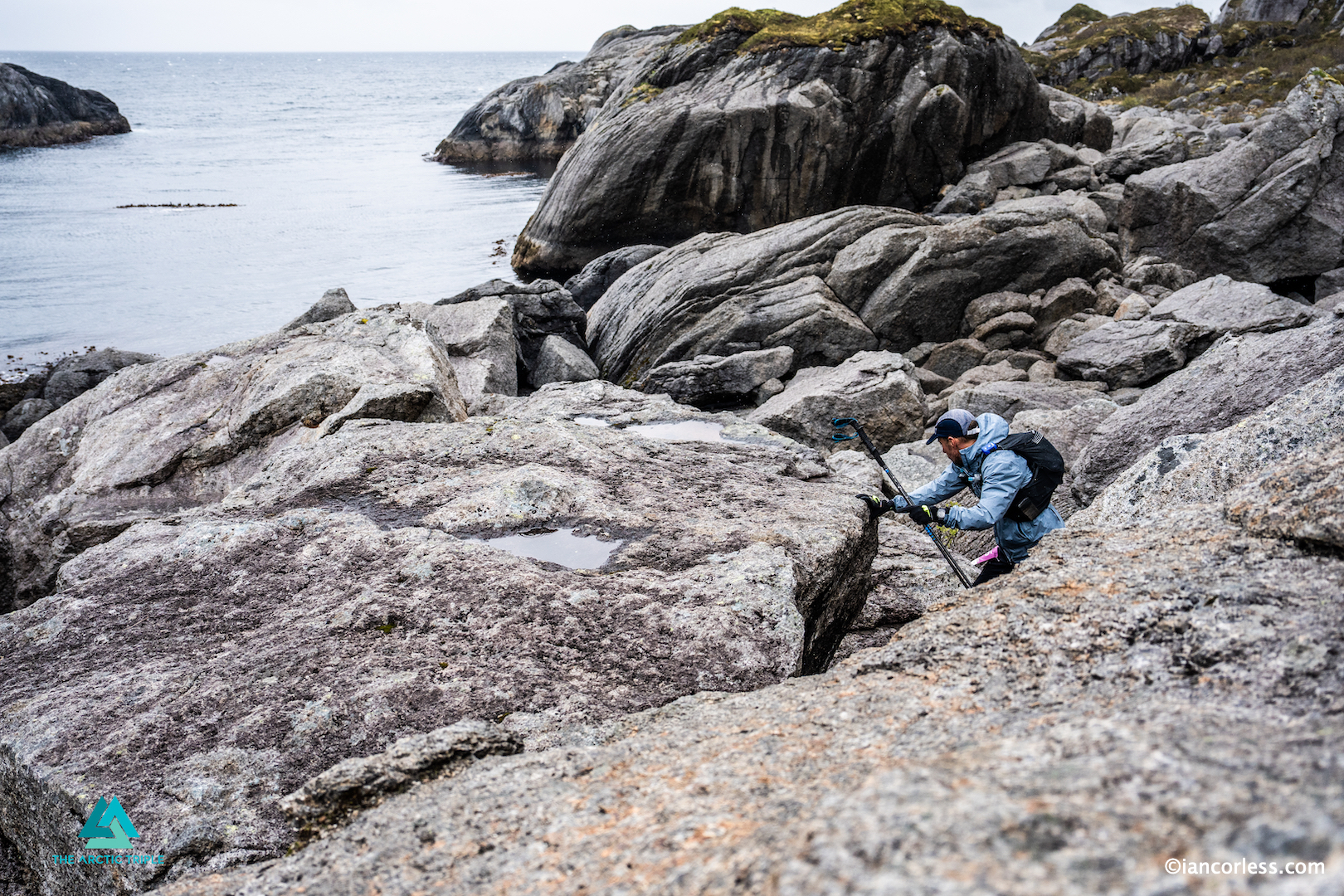
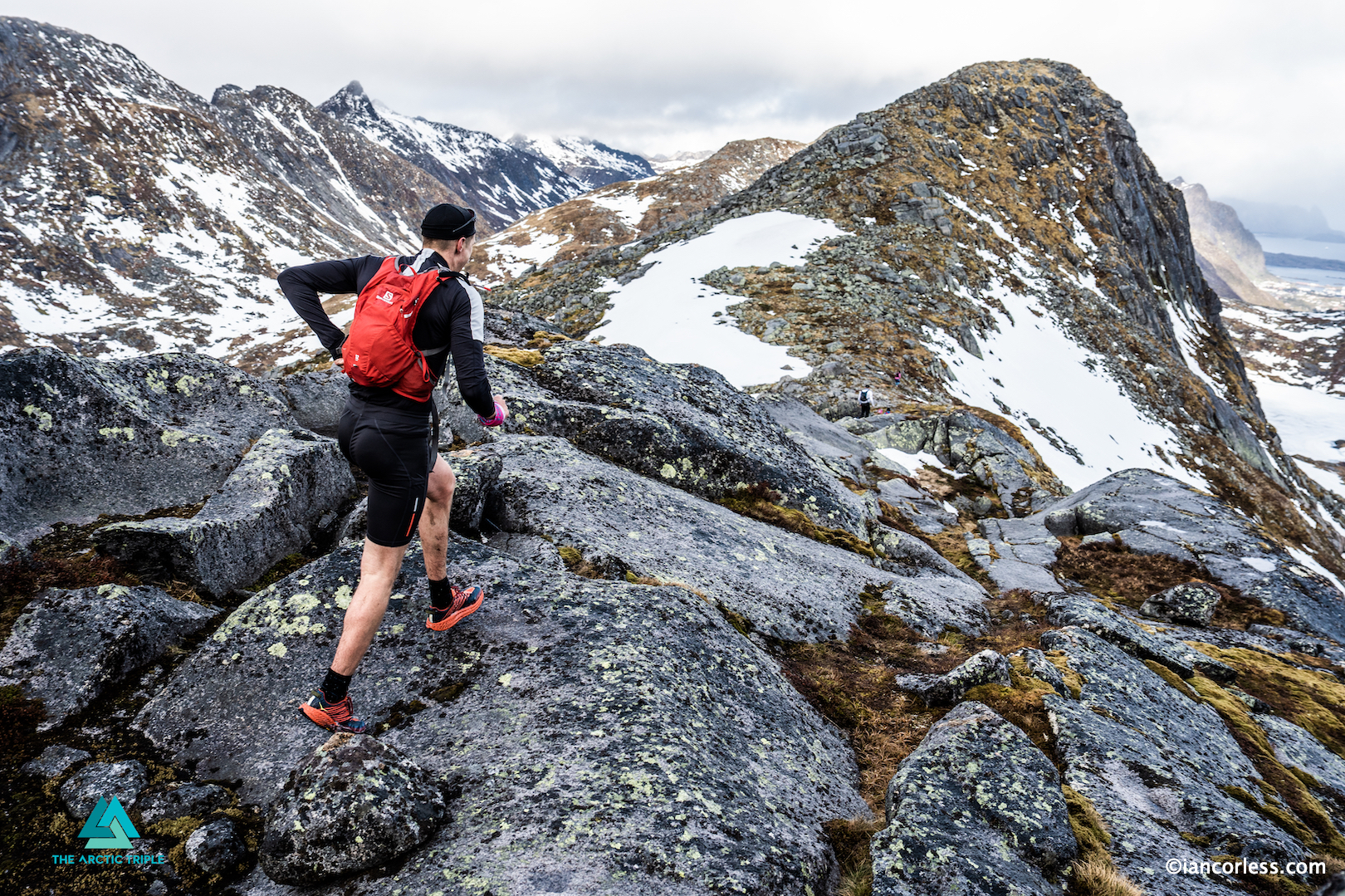
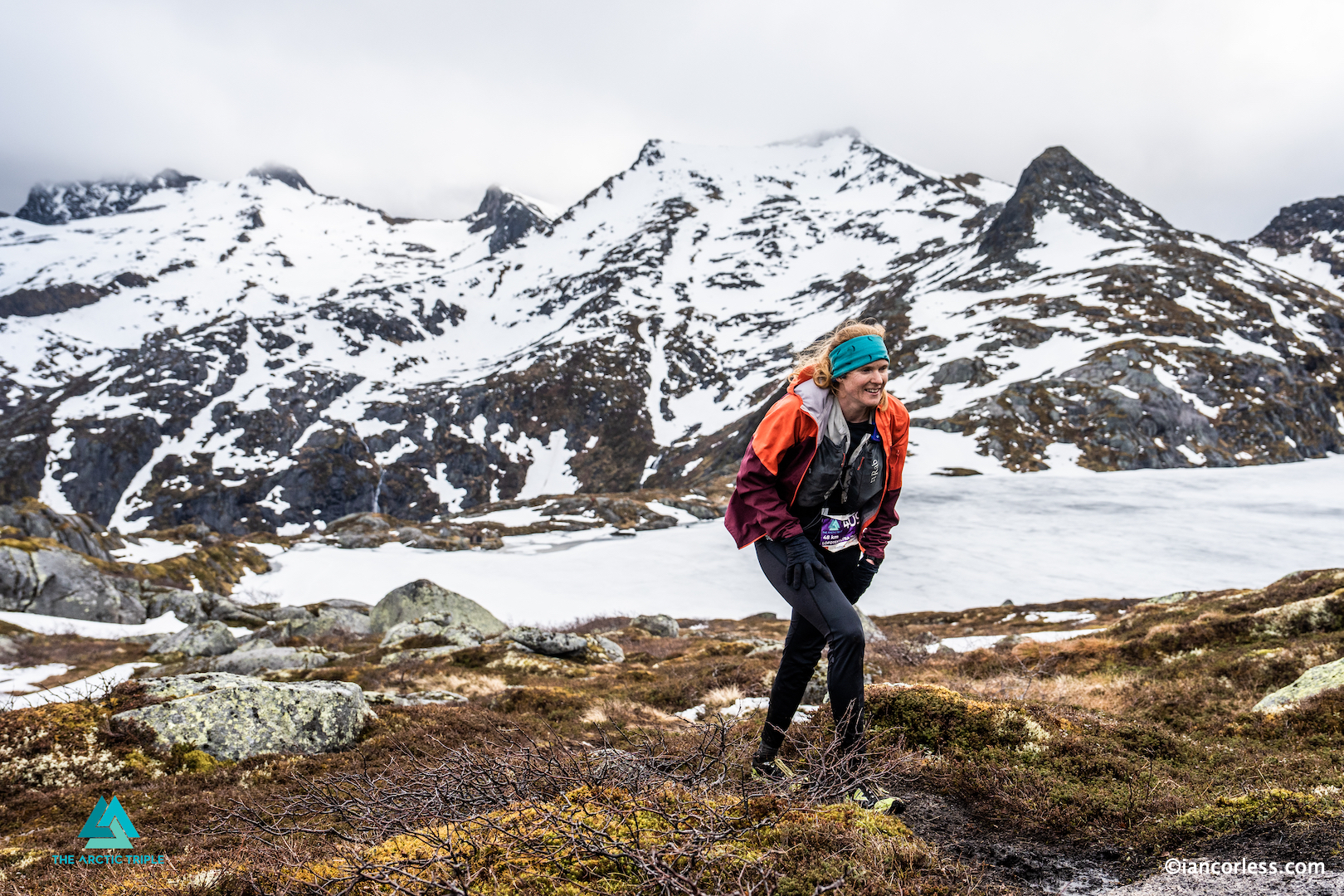
Highlights are countless, especially for an enthusiastic tourist, however, as a runner, you are in an amazing position to explore. Off the beaten track you get to see the ‘real’ Lofoten that only the hardy get to see. Higravtind, 1146m is the highest peak, what Lofoten lacks in height, it more than compensates for with a plethora of mixed terrain and endless peaks connected via sea, beach, road, and trail.
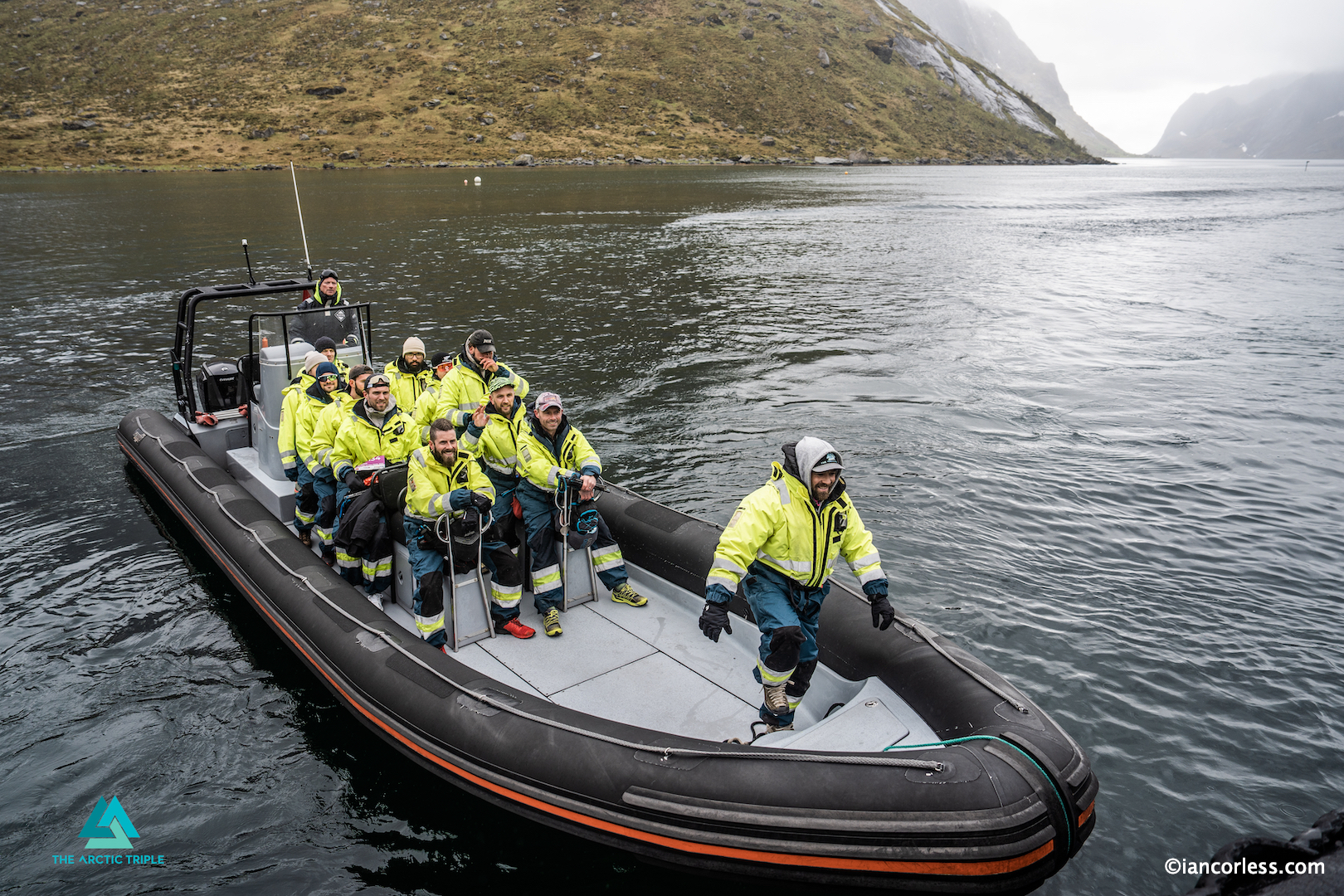
The Arctic Triple isa series of races (skimo, ultra-trail and triathlon) that take place at 3 key points of the year, March week 11, June week 22, and August week 33. Created to showcase this stunning archipelago; the Ultra-Trail (and shorter races) takes place in June bringing endless days and nights of light.
Providing a perfect opportunity to sightsee while running, it comes as no surprise that the 160km, 80km, 48km, 24km and 12km races are extremely popular, 750 toed the line in 2023. In addition, there is a 160km relay competition and a 80km relay competition.
Passing through amazing scenery of mountain ridges, white beaches, green hills, and grey cliffs, the race routes are stunning and for almost the entire time, the ocean is in view. All the races conclude in Svolvær.
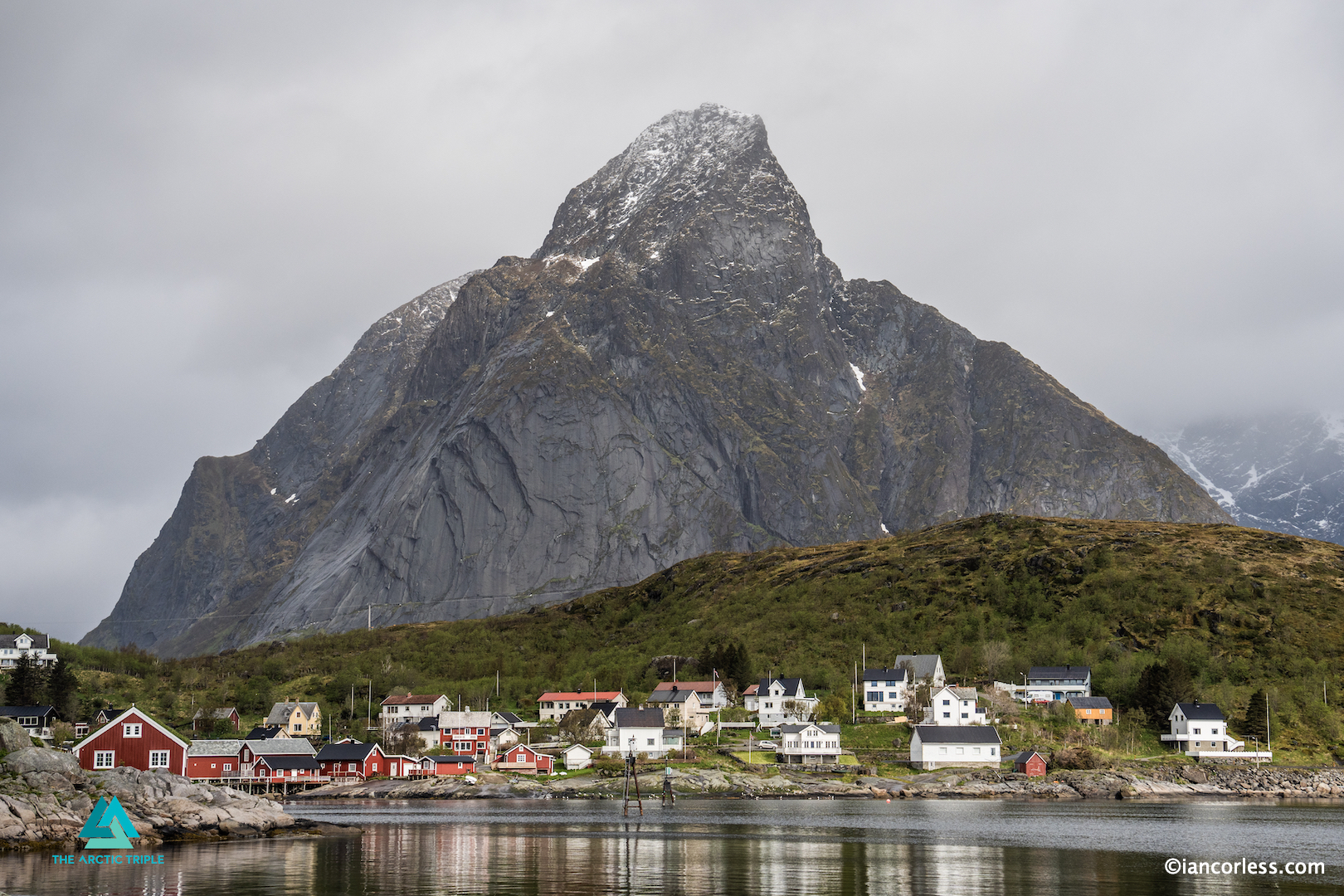
Reine, the classic picture postcard view of Lofoten, is a small fishing village located on the island of Moskenesøya, surrounded by towering mountains, this is where The Arctic Triple experience starts for 160km runners leaving by boat for Kirkefjord, the official start line.
Highlights come thick and fast, the peak of Kråkhammar towering the opening km’s to cp1 at Selford. The beach of Kvalvika is by far the loneliest beach in Lofoten on the way to cp2 at Fredvang. In previous editions, Unstad, Uttakleiv and Haukland beach have been part of the race route, but for 2023, changes were made to accommodate local farmers and livestock. A coastal section from Nesland to Nusjford providing rolling and at time technical trail.
Nusford, like Reine, is a picture postcard fishing village on the southern shore of the island of Flakstadøya. What follows is arguably one of the more challenging sections of the whole race route and the cp at Napp (56km) is a key aid station. The coastal trail loop of Offersøy leads eventually to Leknes, 73km covered and it is here that the 80km race starts.
Now, as the 160km route counts down to the finish in Svolvær, the respective 48km, 24km, and 12km races start. The route from Brustranda climbing up from the coastline into Grønbakkan being a highlight.
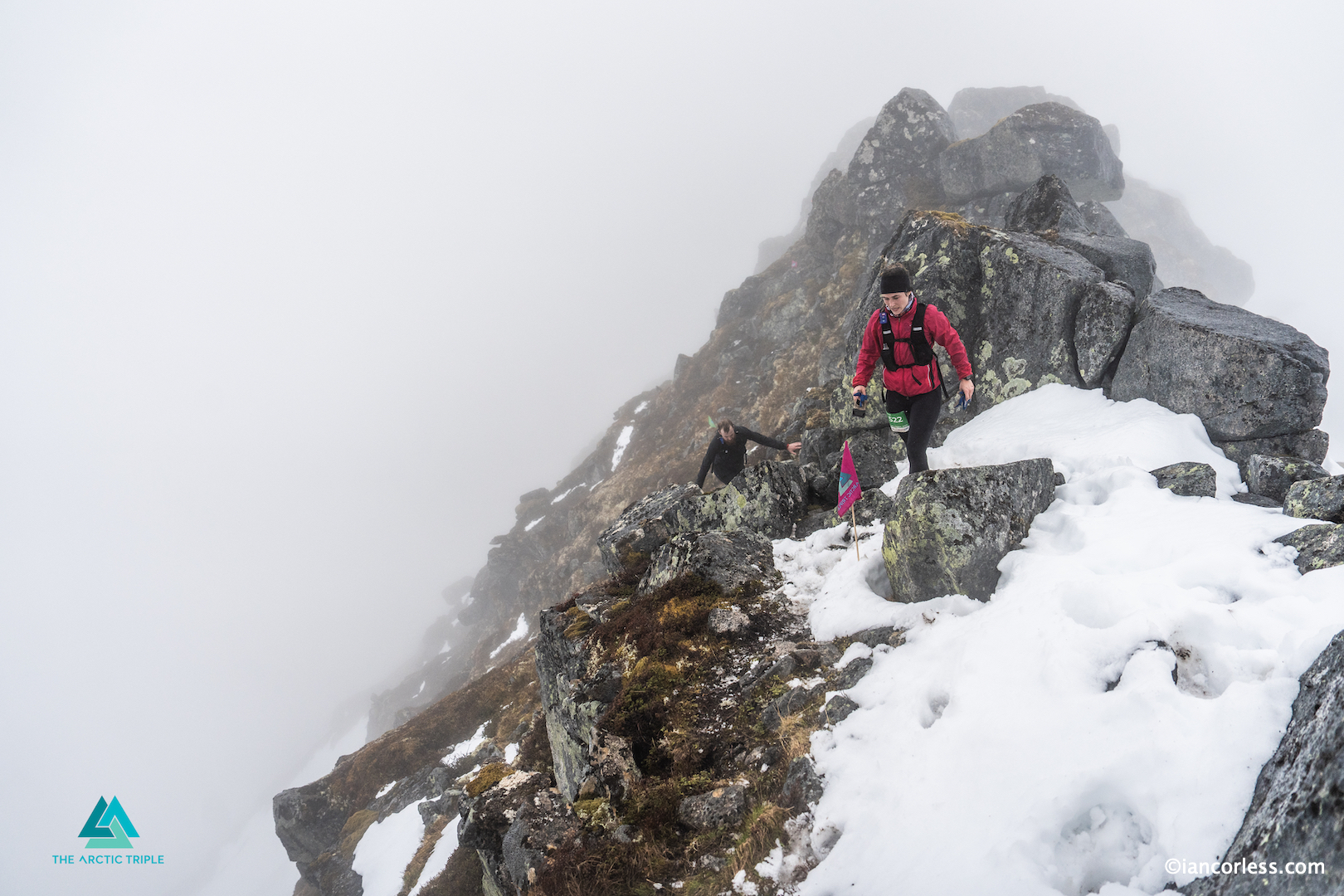
Torvdalshalsen and the 48km start leads to Vetten and some challenging terrain before climbing a steep wall of grass and a race highlight of Dalstuva ridge. Road miles follow and now, with approximately 20km’s to go, the route enters the whammy of Jordtinden, Nonstinden, Spisstinden and finally Tjeldbergtinden before finally arriving in Svolvær, exhausted!
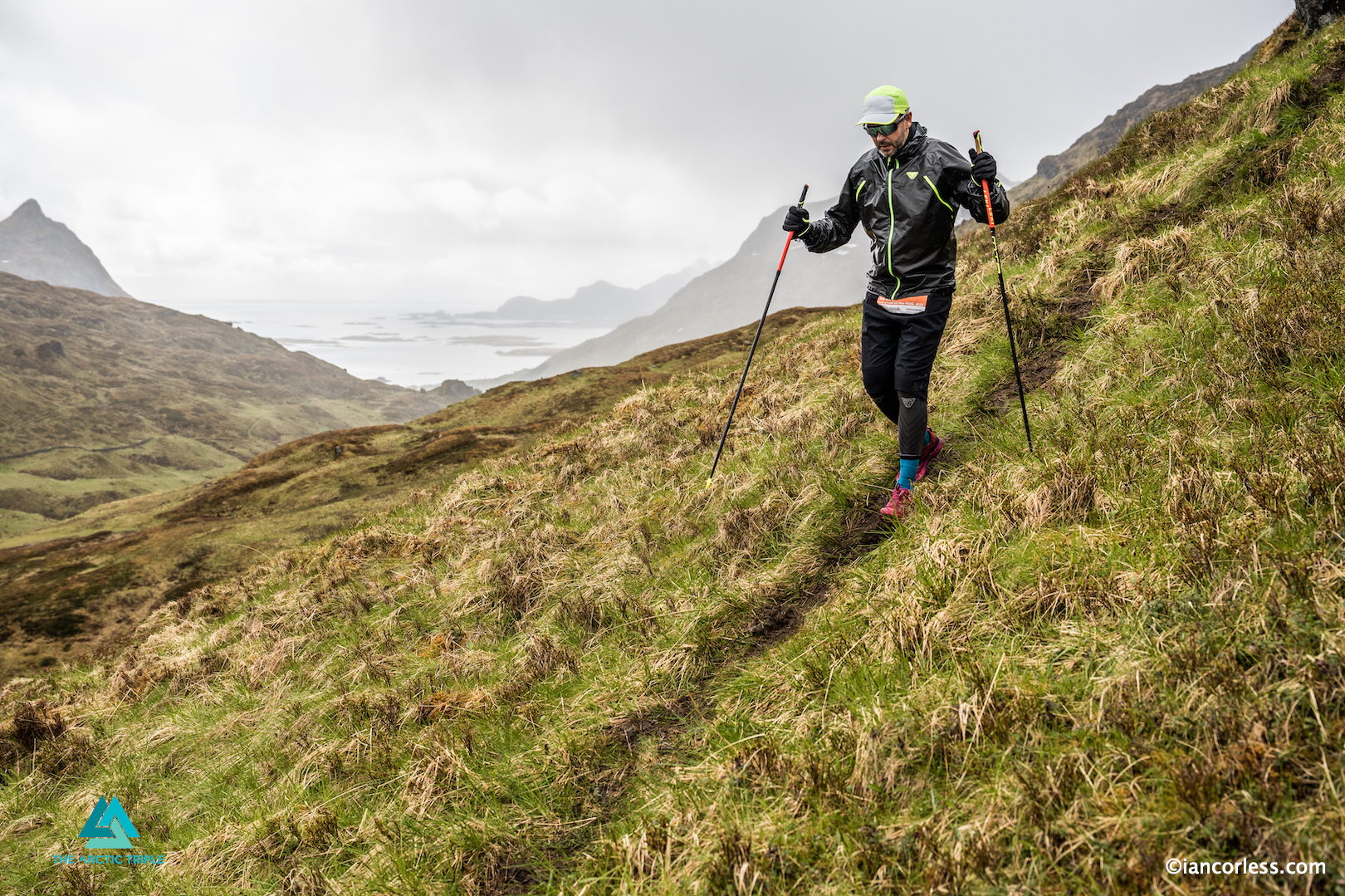
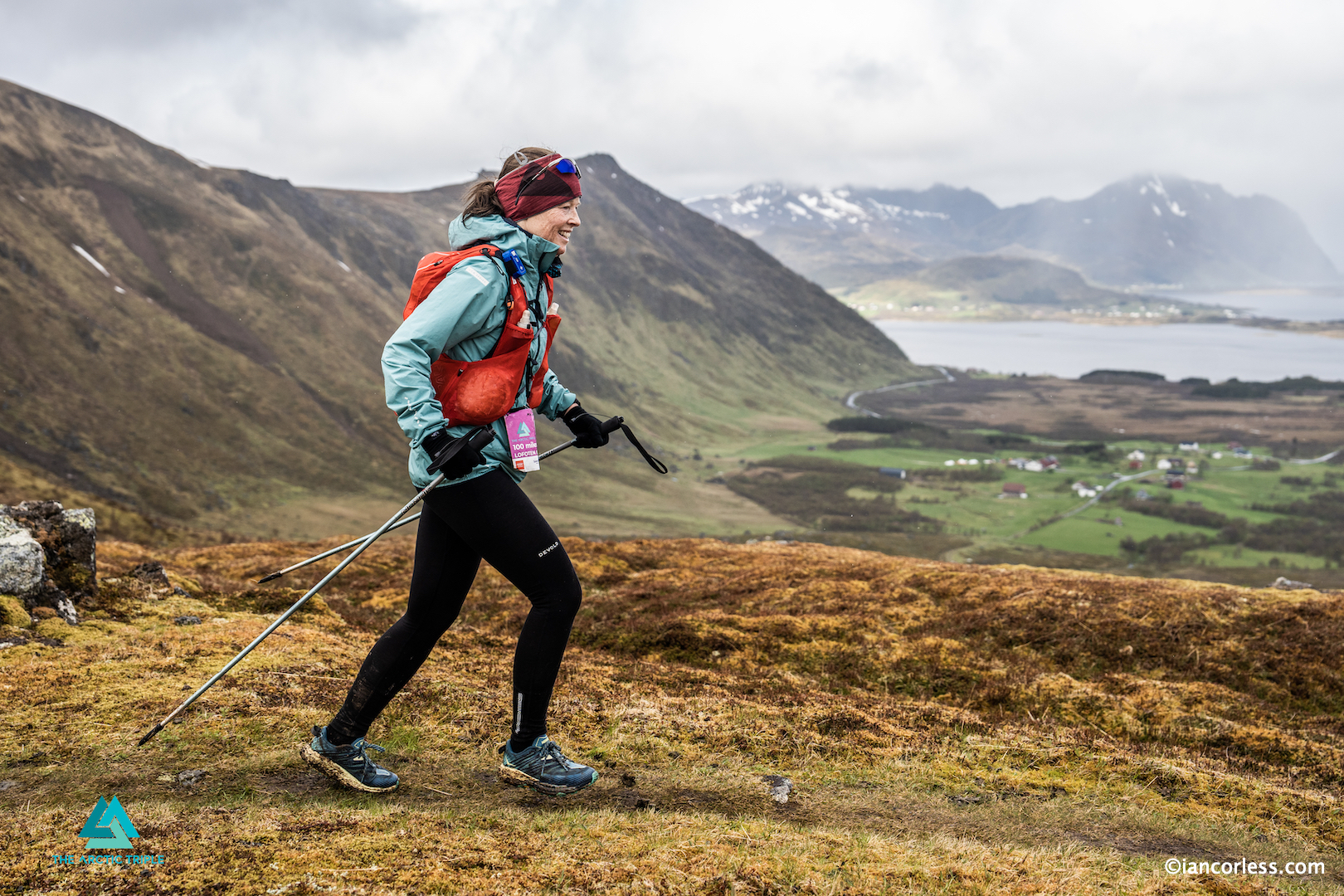
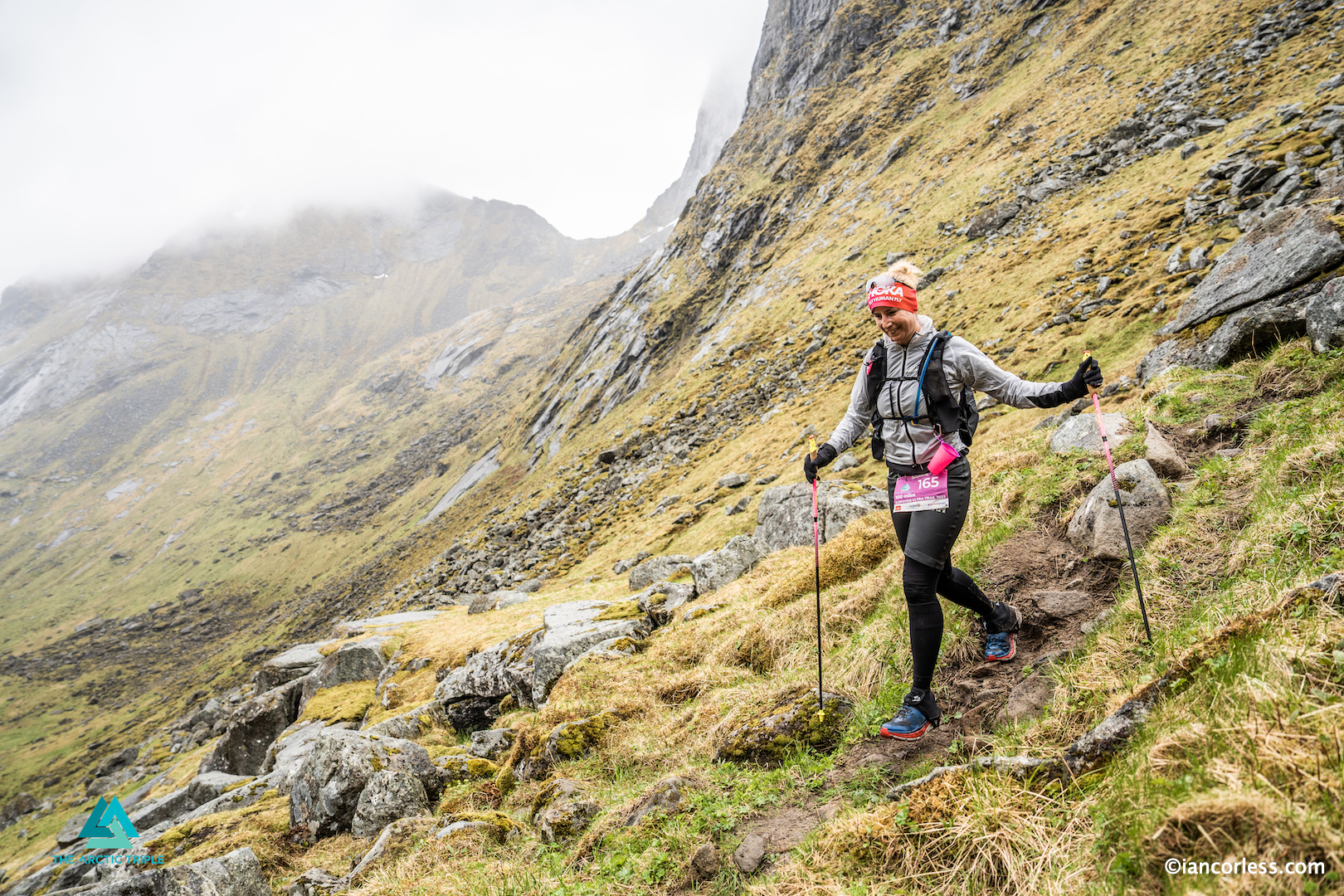
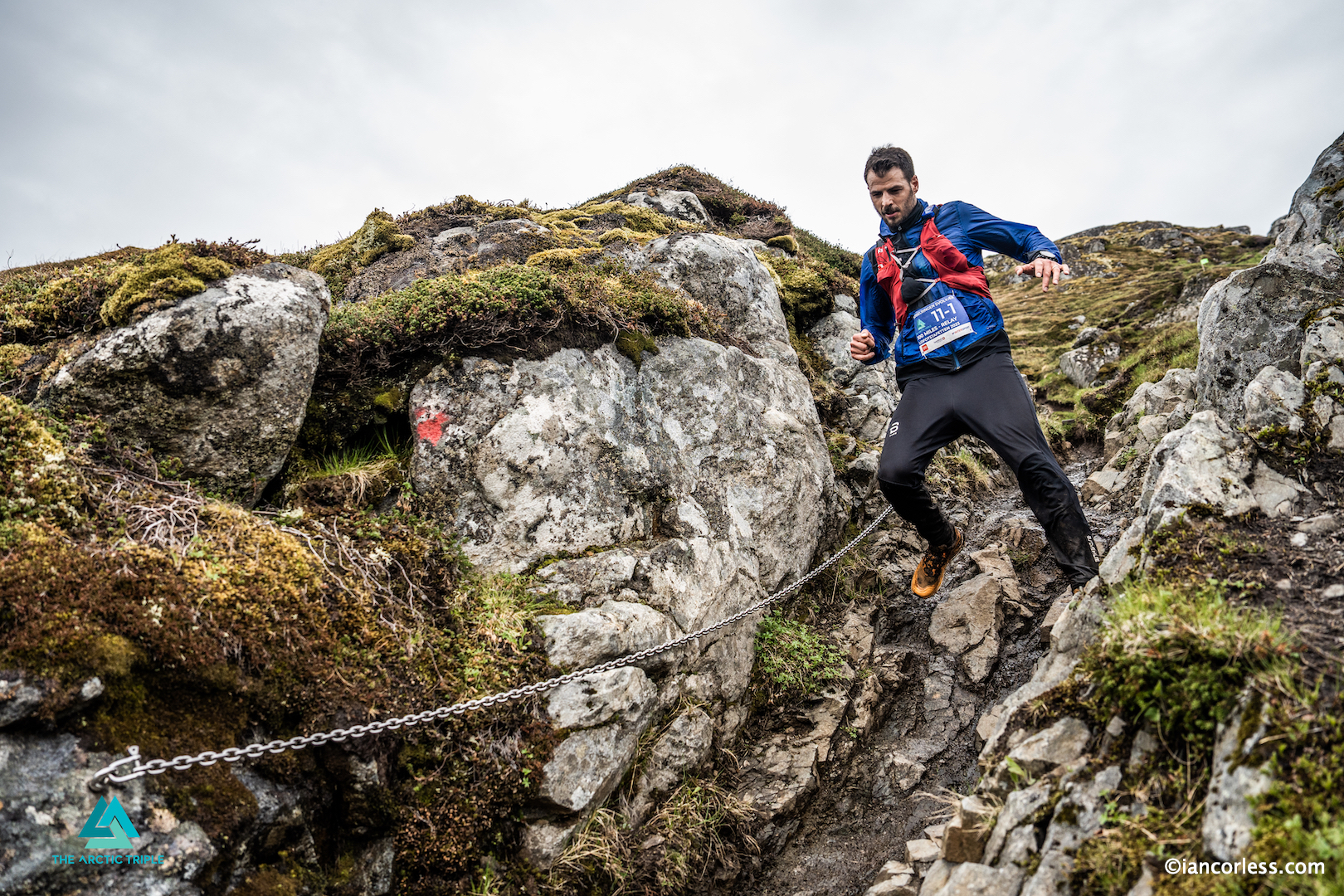
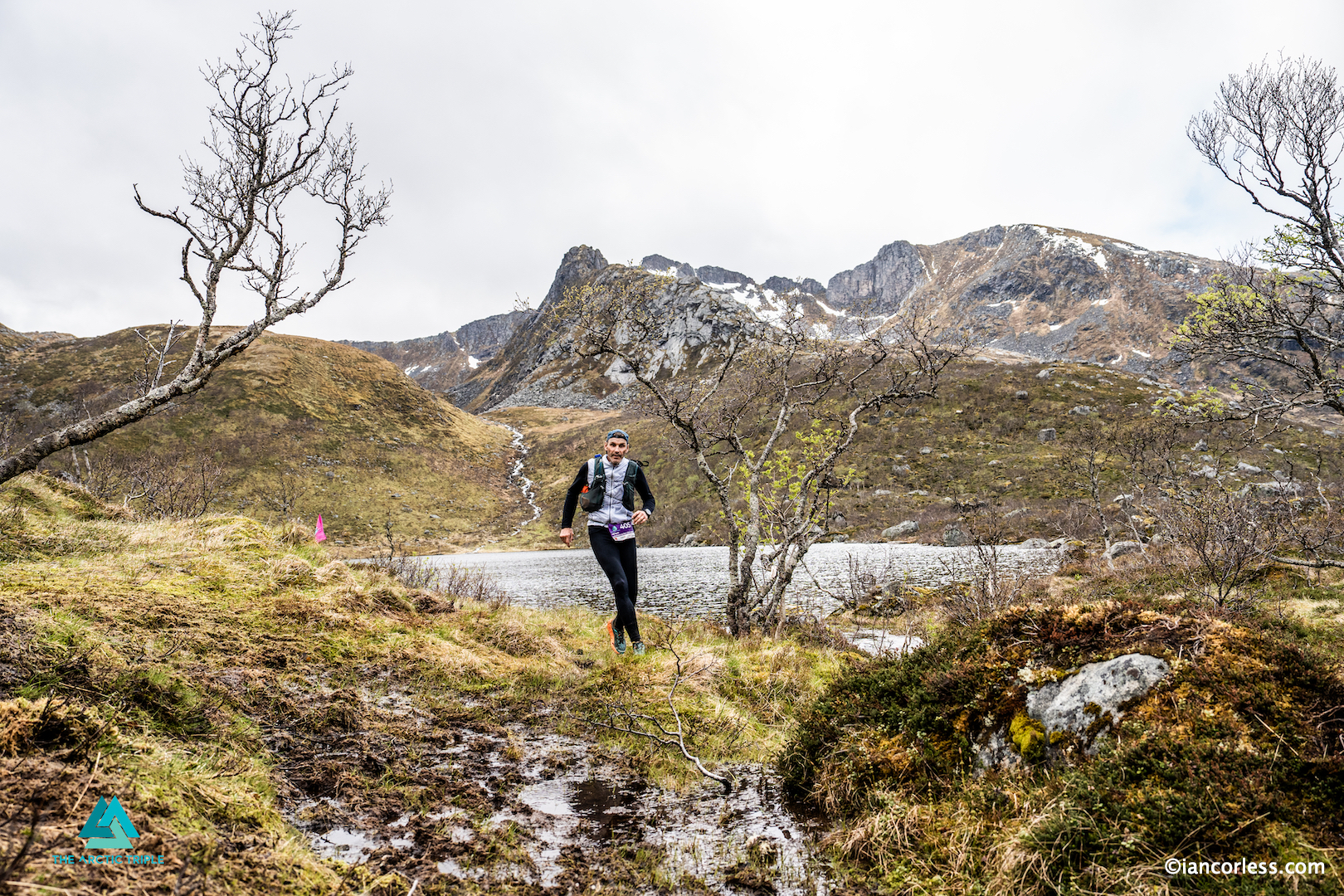
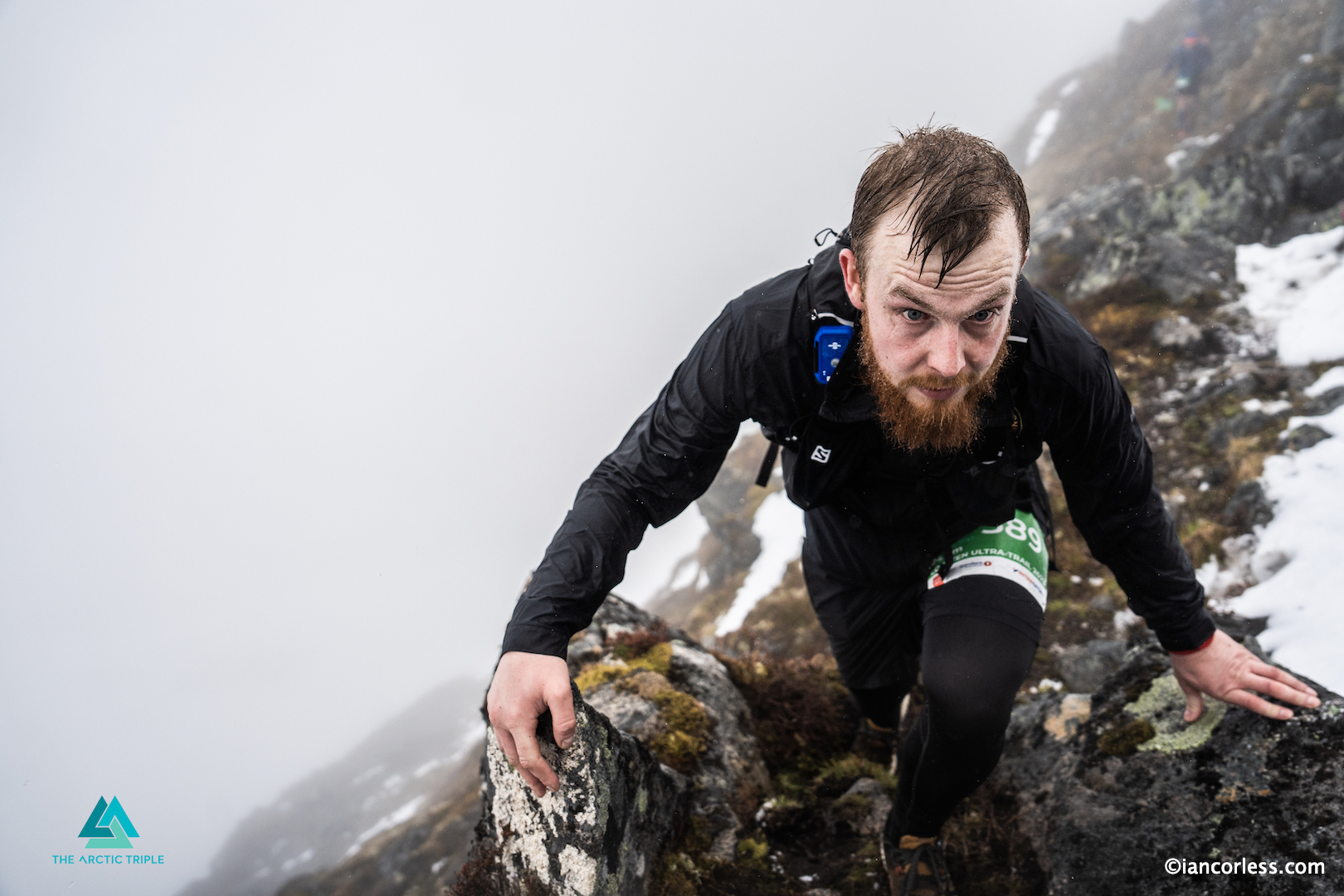
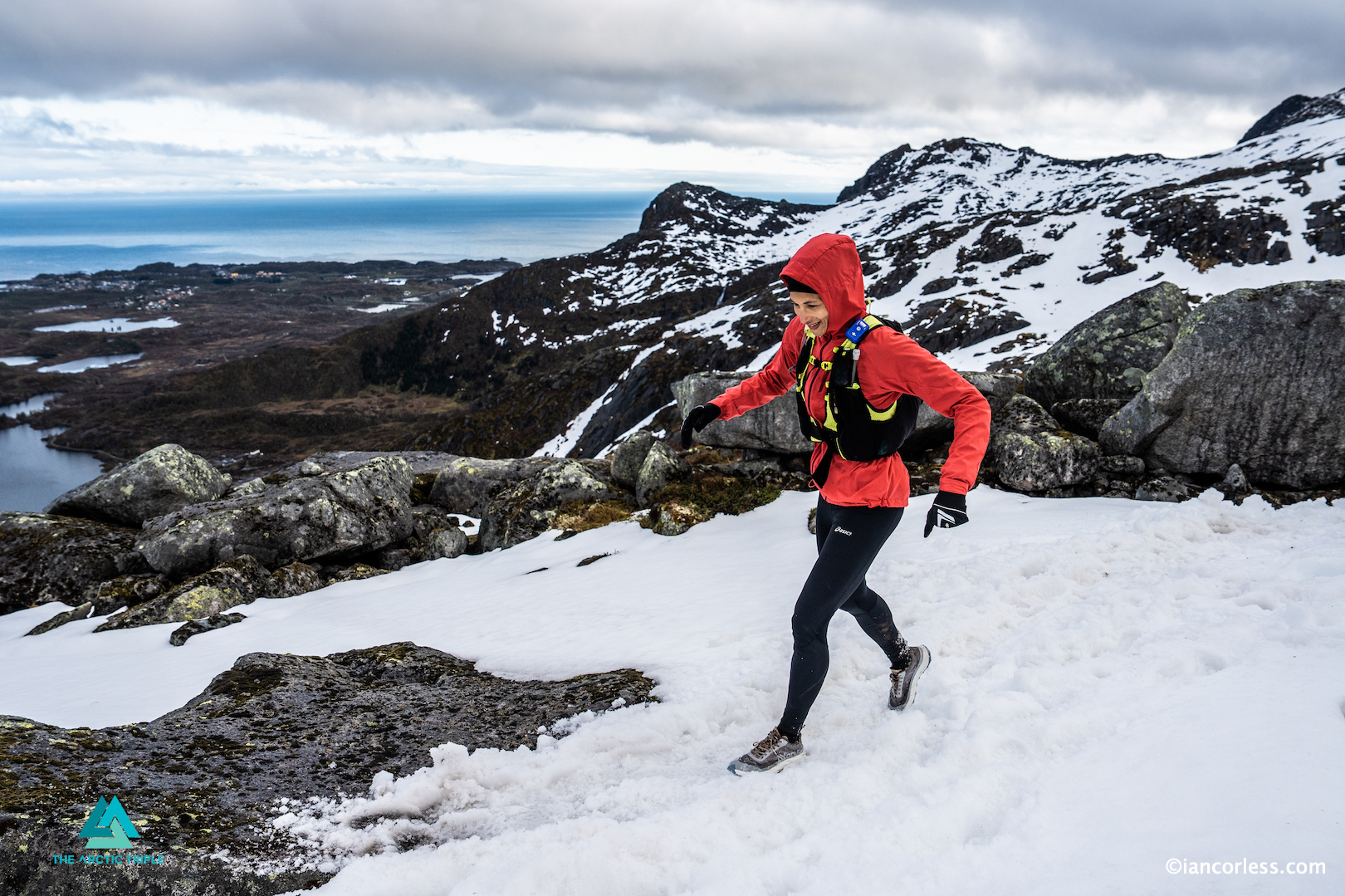
Lofoten, on foot, is relentlessly beautiful and challenging and for 2023, even more so, with persistent rain, strong winds at time varying amounts of snow; the final section over Nonstind, Spisstind and Tjeldbergtinden providing an even greater challenge with recent snowfall, varying levels of visibility and cold temperatures.
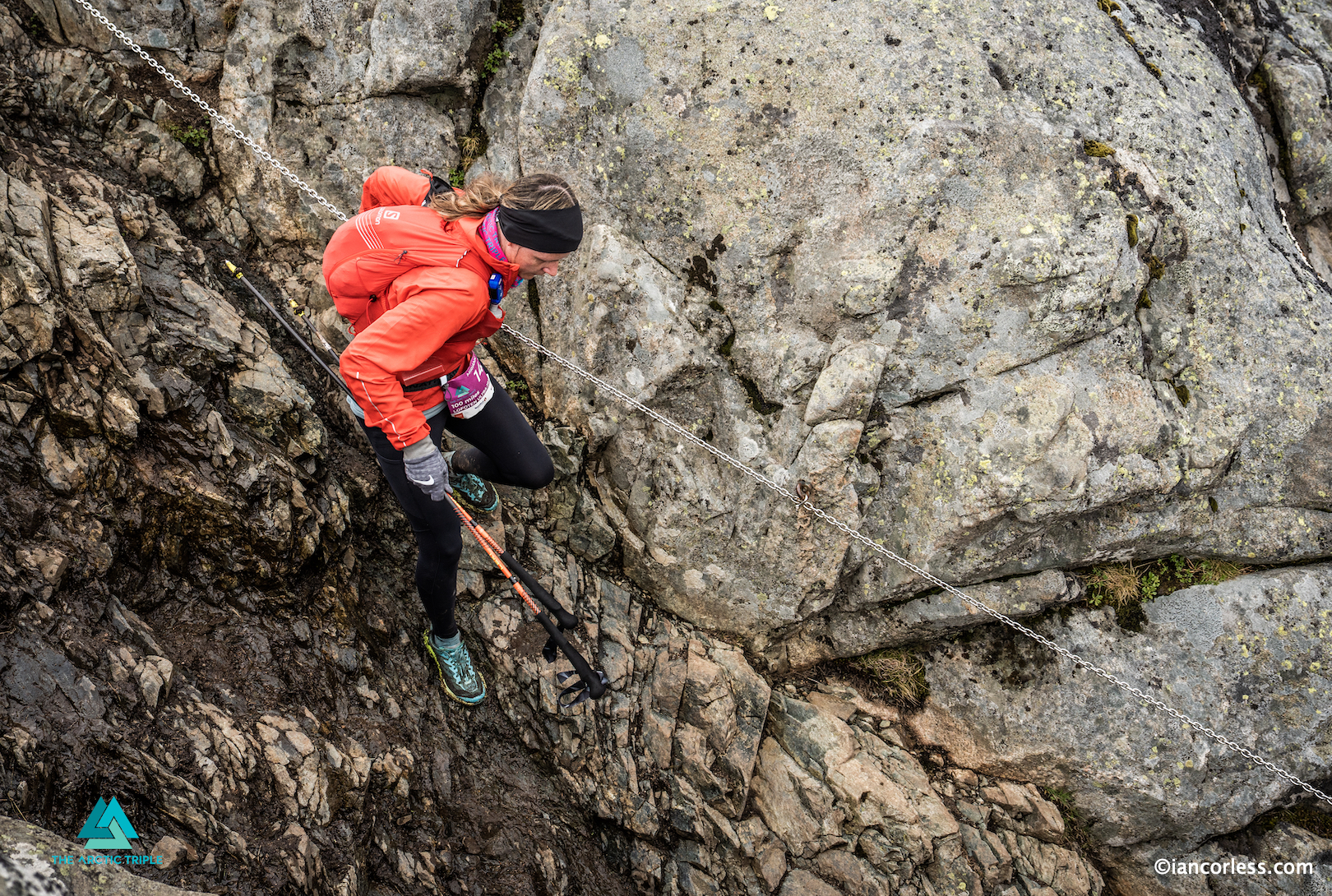
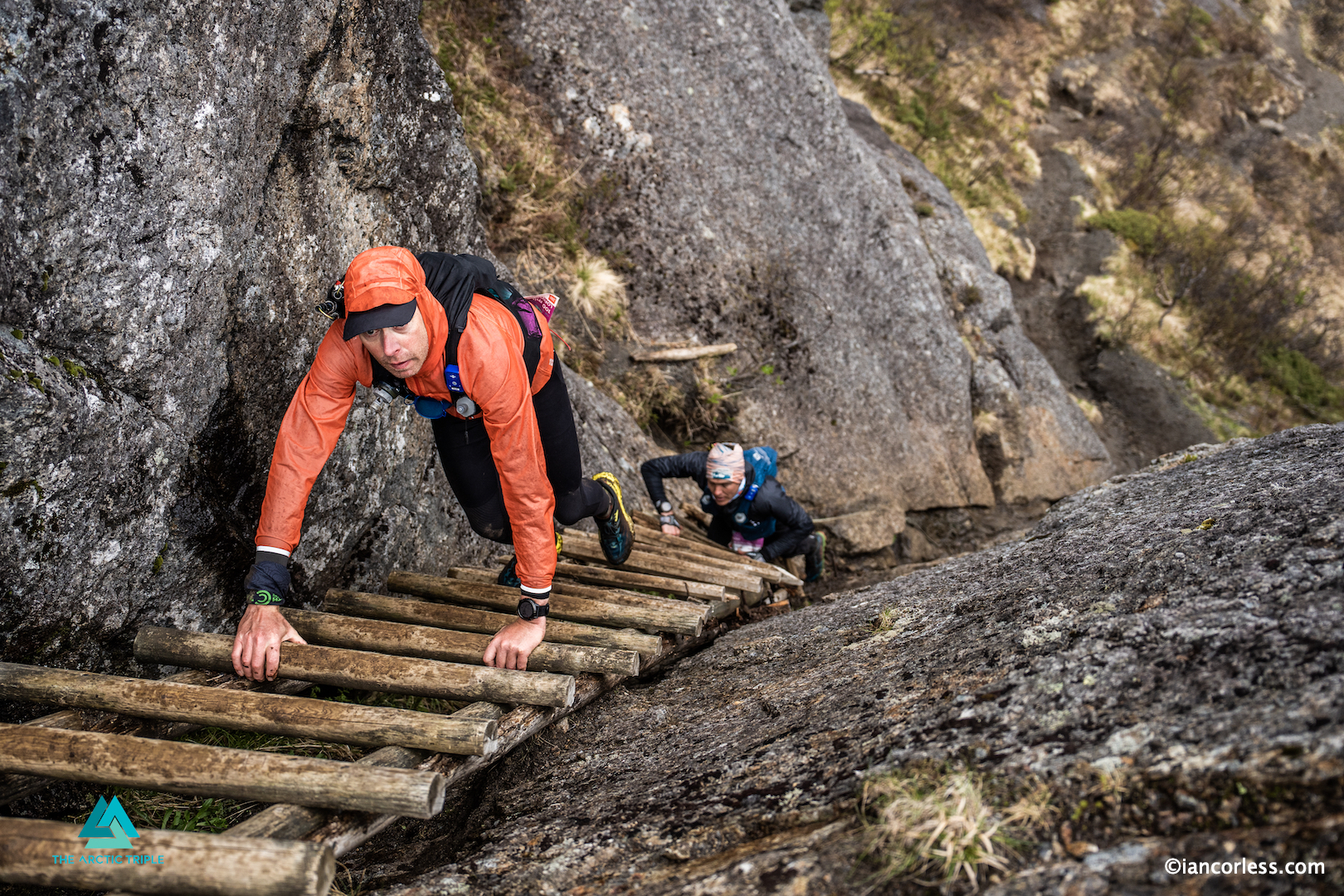
“You run on some absolutely fantastic trail, and you are constantly surrounded by sea and lush mountains. It is a raw experience, steep mountain sides, narrow edges and 100% concentration is required. There are airy parts that offer a challenge and incredible views. Single-track, road, marshland, dense forest, mud and views to make my eyes sore – what a place Lofoten is!” – Abelone Lyng
Ultimately, Lofoten is a magical paradise that is waiting to be explored. There is so much to do and see that one trip will not be enough and it will only whet the appetite for future visits and plans.
However, if you need an introduction to this magical part of the world, signing up for one of The Arctic Triple races would be a great introduction. Of course, the 160km race provides the ultimate point-to-point immersive experience from Reine to Svolvær, for many though, this is too far and too challenging, but watch this space, new for 2024 (in addition to the 160km single-stage) the 160km race will be broken down in to four stages and offer Norway’s first multi-stage race (more info HERE), it will provide a full and immersive experience.
160km, 80km, 48km, 24km, 12km or the new stage race, running The Arctic Triple lets you experience the nature, views and atmosphere of Lofoten – there is no better way to experience any place!
The 37th edition of the iconic Marathon des Sables concluded at Merzouga Dunes (Erg Chebbi) after what is considered, one of the hardest and most challenging editions of the race, 2021 an exception.
Coming later in April due to Ramadan, the predictions were always for hotter temperatures and an increased chance of sandstorms – we got them both!
Gladly, the intense sandstorms subsided after stage 2, but the heat grew in intensity as the week progressed with 42 degree temperatures in the shade and low 50 degree temperatures recorded in the direct sun.
This of course impacted on every participant and every member of staff.
October 2021 and the 35th edition was plagued by a Norovirus that debilitated many of the staff and runner’s, also, some of the most sustained and intensive heat that the race has experienced. It was a perfect storm that resulted in nearly 50% not completing the race. An in-depth article is HERE.
The 36th edition by contrast was the opposite, only confirming that extreme endurance challenges can bring anything and being prepared and adapting is key and integral for successful completion. However, significant sandstorms did increase the DNF rate to around 10%.
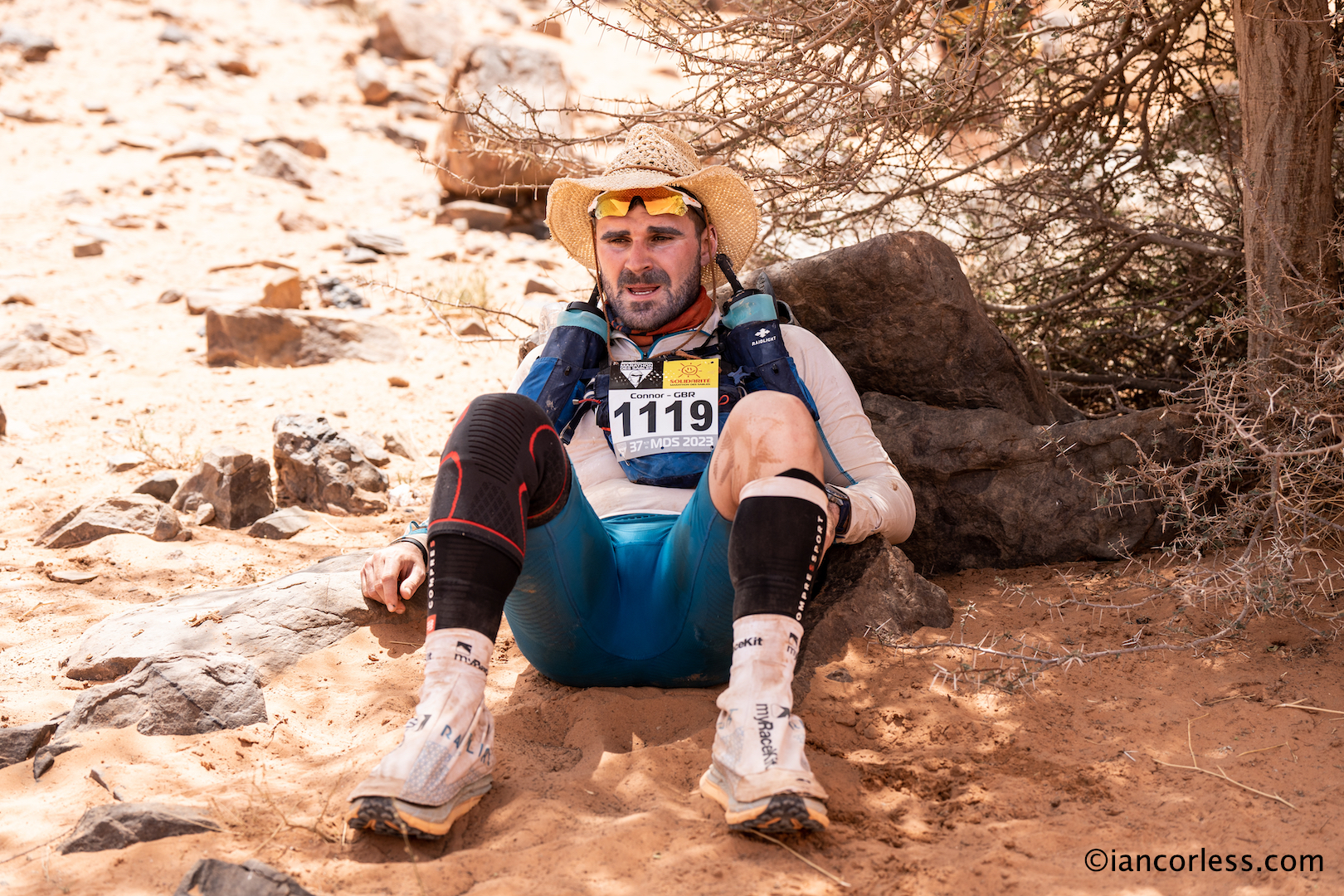
Here in 2023 there was no Norovirus, just intense heat that resulted in heat stroke, exhaustion and the second highest dropout rate in the 37-year history of the race – 30%.
What can be learnt from the 2023 edition and why such a high DNF rate?
Preparation – The 2021 edition of the race and huge dropout rate was a wakeup call for any racer, I would say that the 2023 edition of the race had participants who were well aware and understood the nature of the challenge. If the 35th and 36th editions can teach us anything, the key take away is you MUST be prepared for anything; intense heat, cold, sandstorms and the unexpected.
Sandstorms – They plagued the early stages of the 2023 edition, however, lessons had definitely been learnt from the 2022 edition when sandstorms increased the DNF rate. Far more runners in the 37th edition were prepared with specific eyewear that functions in harsh conditions. It’s a key item that to all intents and purposes should be mandatory on an MDS kit list. Gladly, sandstorms did not really impact when runners were on the course, the latter part of stage 2 an exception. The sandstorms impacted on camp life and comfort. Had they hit during racing, DNF rates may well have been higher.
Heat – It’s the Sahara, it gets hot! May sound silly to say, but, this is the nature of the event. Now of course, we can get extremes, 2021 and 2022 a perfect example, arguably the hottest and the coldest. 2023 sits most definitely in the hotter end of the 37-year history of the race and the DNF rate shows this. Quite simply heat adaptation and preparation is key coming in to the MDS in the 14-days before the race. If you do not do this, the adaptation will take place during the race and quite simply, the body cannot handle it and boom, you overheat, dehydrate, get sickness and withdraw. Stage 2 shows the impact with 106 abandons. I would normally say here, that by the time the ‘long day’ comes, DNF rates reduce due to adaptation taking place, BUT for the 37th edition they increased, why? Quite simply, temperatures continued to rise, the long day was arguably the hottest day of the race, it placed tired bodies in more intense heat and the knock on effects are easy to see. Also, let’s not forget the race distances.
Race Distances – The DNF rate in 2023 is without doubt a result of the intense heat, however, I do feel the race stages also contributed. To be clear here, I am not asking for easier stages, just providing an overview. Stage 1 at 36km was a long stage. When one considers that day 1 is ‘typically’ 29-32km, the additional distance adds to an immediate stress and strain. It’s easy to look on and say, but it is only 4km to 6km! True, but 4 to 6km for some can be 2 to 3-hours in the heat. It takes a toll. Stage 2 was a beautiful stage and a classic distance, however, this stage had more technicality and additional vertical gain, this in itself added a stress and strain, add intense heat and sandstorms towards the end of the day, plus carry over fatigue from stage 1 and we can see how 106 did not finish. Stage 3 is always a cautious stage as many want to preserve energy for stage 4, the long day. Starting with km after km of flat running, the stage was in comparison to other stages, an easier day, however, 72 abandoned. Stage 4 at 90km was the second longest ever stage of the MDS, coming in a brutality hot year, it was always going to be a tough challenge. A beautiful route that included climbing Jebel Otfal, the route had relentless soft sand and intense heat. Darkness and cooler temperatures were the saviour of many runners and despite this, 119 did not make the line. Stage 5 and the medal is in sight, no matter how tough the day is, the hug and kiss from Patrick makes one more day of pain manageable, despite this, sadly, 3 did not make the line.
Heat Stroke – D&V did happen during the race and while some questioned if a virus was present, it was clear to see that any resemblance to 2021 was not there. Heat stroke has very similar symptoms to a bug: tiredness · dizziness · headache · feeling sick or being sick · diarrhea. I saw countless runners with heat rash on their legs and bodies.
Pack Weight – Again and again, one of the key easy gains for MDS completion is getting pack weight as close to 6.5kg as possible. Additional weight is additional strain. In intense heat this is only magnified.
Walking – If I had a euro for every time I have preached, ‘learn to walk’ I would be a rich man. MDS always makes people walk far more than they want or anticipate. Add intense heat, walking becomes normal for everyone, the elite excluded. Rising core temperatures require you to reduce stress on you and the body, even if you do not want to walk you will be forced too. Continue raising internal temperature and eventually you’ll need to stop, hopefully seek shade and reset and carry on. The DNF’s in 2023 show that heat just wiped people out. So, effective walking is a key MDS strategy.
Poles – Quite simply, poles and knowing how to use them are a key weapon in helping achieve an MDS finish for those typically outside the top-50. However, Norwegian runner Gaute Løset was the personification of great pole technique and placing 11th overall. Poles provide 4-wheel drive, stability and help reduce some fatigue by helping to distribute load stresses. Trust me, poles are a key weapon for most at MDS.
Mind – Broken and tired bodies were willed to the end through thick and thin due to incredible mental strength and fortitude. Training is not only physical, but mental.
Be Prepared – Hot or cold, dry or humid, windy or not, the Sahara can throw anything at you. Racing MDS is not complicated, understand the challenge and prepare accordingly. The greater the preparation, the greater chance of completion!
Rachid El Morabity was going for a 10th MDS victory and all eyes were on him. Ragna Debats was returning to MDS after winning the race in 2019, she was the odds-on favourite for victory. It was not to be for either of them.
Rachid was running a typically smart race using his brother, Mohamed as a decoy to counter any threat from Aziz Yachou and Mathieu Blanchard. Fireworks were expected come stage 4 but the race felt nuetralized with Rachid, Mohamed and Aziz all finishing within 1-minute. This placed Mohamed the leader of the race. During the ‘rest day’ thoughts for the race strategy come the marathon stage were simple, Rachid would mark Aziz, Mohamed would police the race and then conveniently lose enough time to place Rachid winner of the race and gain his 10th victory. However, at 2pm on the rest day, Rachid and Aziz El Akad were both issued with 3-hour time penalties after failing a bag check just before the start of stage 4. The reason being ‘outside assistance!’
They both had items that could only have been provided by another person therefore giving them an advantage. To be clear here, many other runners were also tested before stage 4. Rachid’s chances of victory were over, he and Aziz withdrew from the race. Finally after many years being domestique to his elder brother, Mohamed clinched his first victory with Aziz Yachou placing second and Mathieu Blanchard third.
Ragna Debats dominated the early stages of the race building a huge time gap, we all thought the race was over. Signs of some fatigue and distress were visible on stage 3. However, come stage 4, the race unfolded for Ragna and she fought a long and hard day to finish many hours outside the top 3 women and therefore there was no longer a chance of victory or podium.
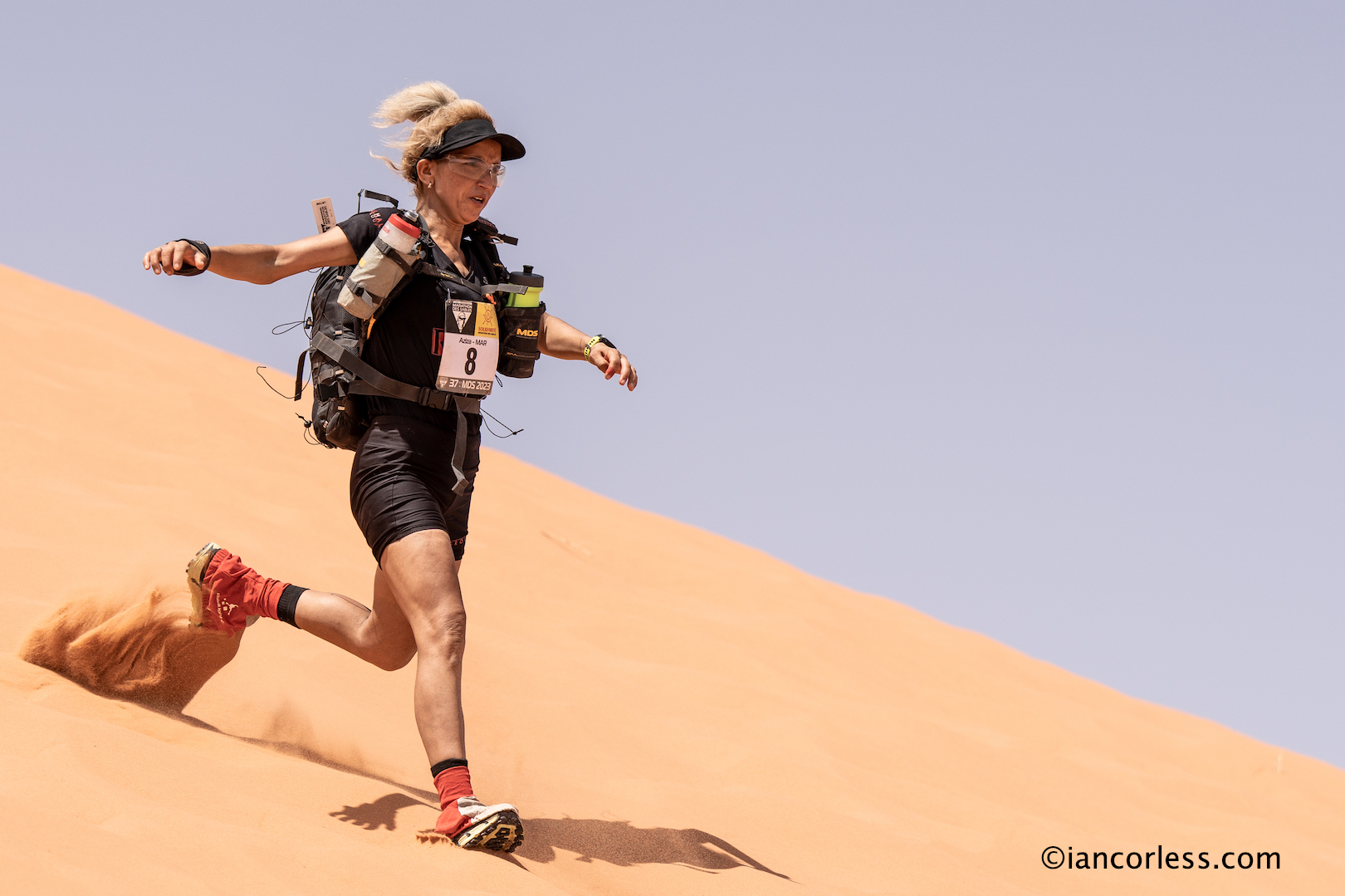
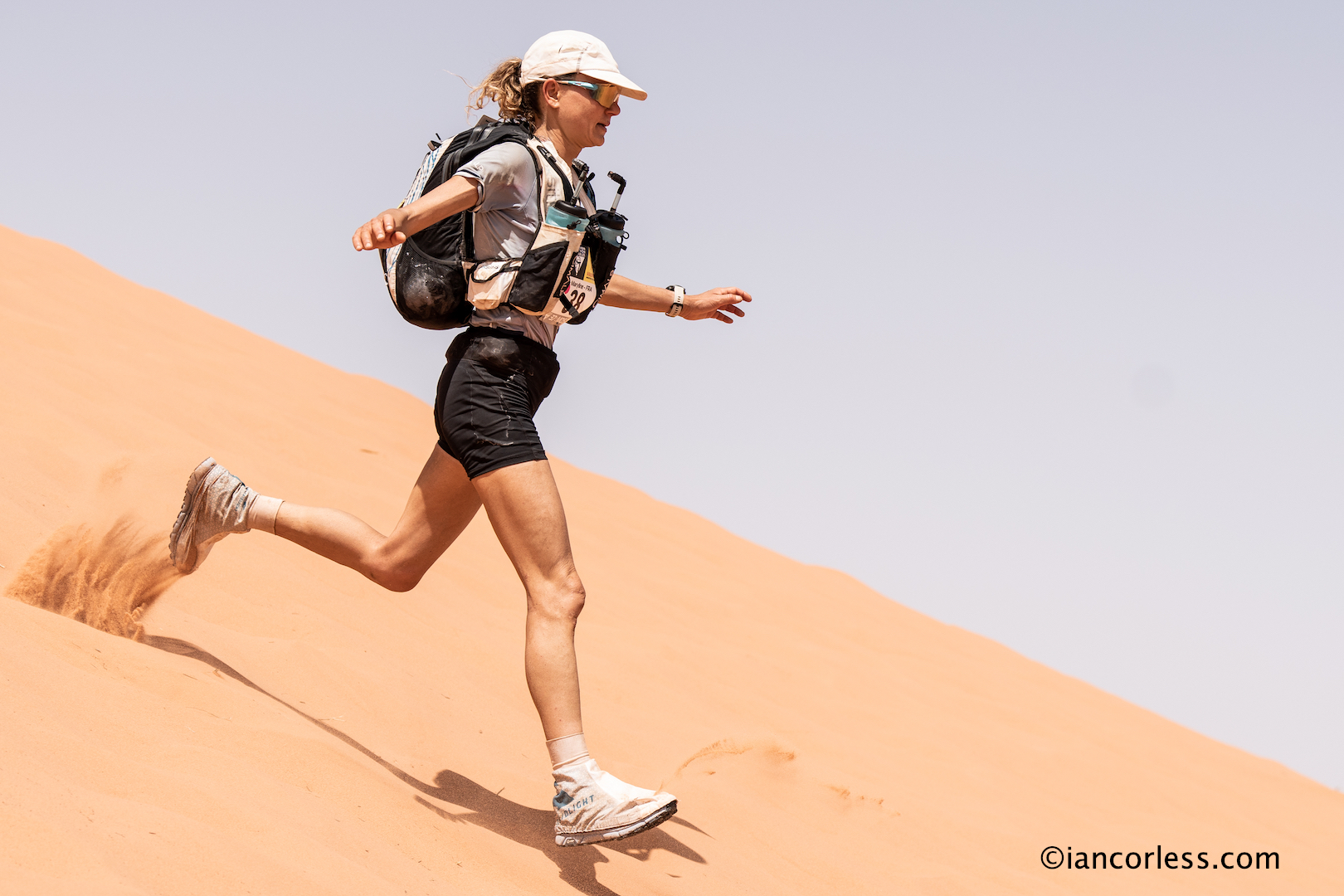
Maryline Nakache took over the reigns and despite Aziza El Amrany winning the long stage, she held on to victory with Aziza second and Tomomi Bitoh once again placed 3rd as she did in 2021.
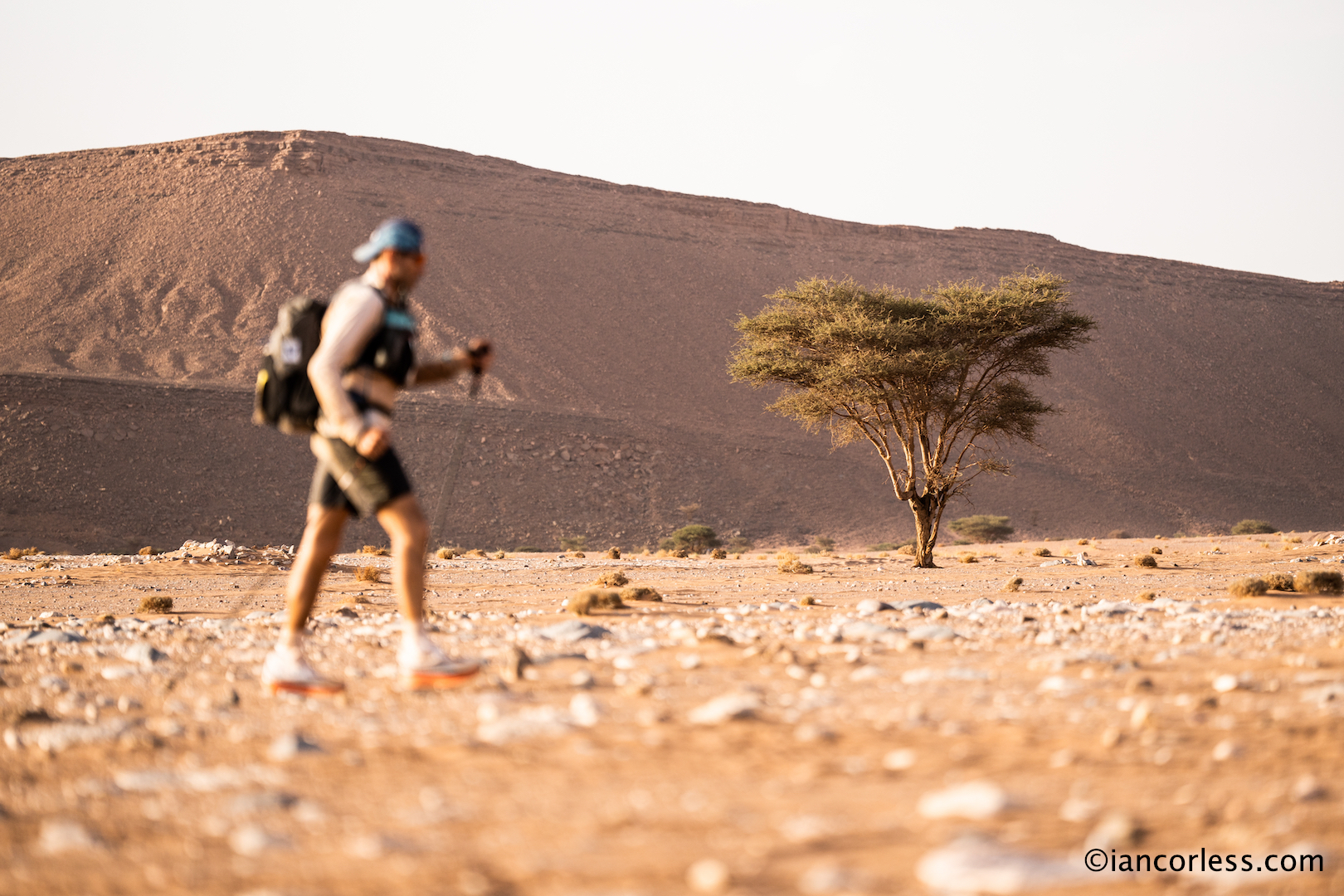
The 2023 was classic, stage 2 and the long day providing the best of this region of the Sahara. Combined with the intense heat, it was a tough race. The long day, while not the longest (92km in 2009) was a significant challenge with an abundance of soft sand. Stunning views, ridges, climbs, soft sand, two crossings of Jebel Otfal, salt flats and oasis, the 2023 route was special.
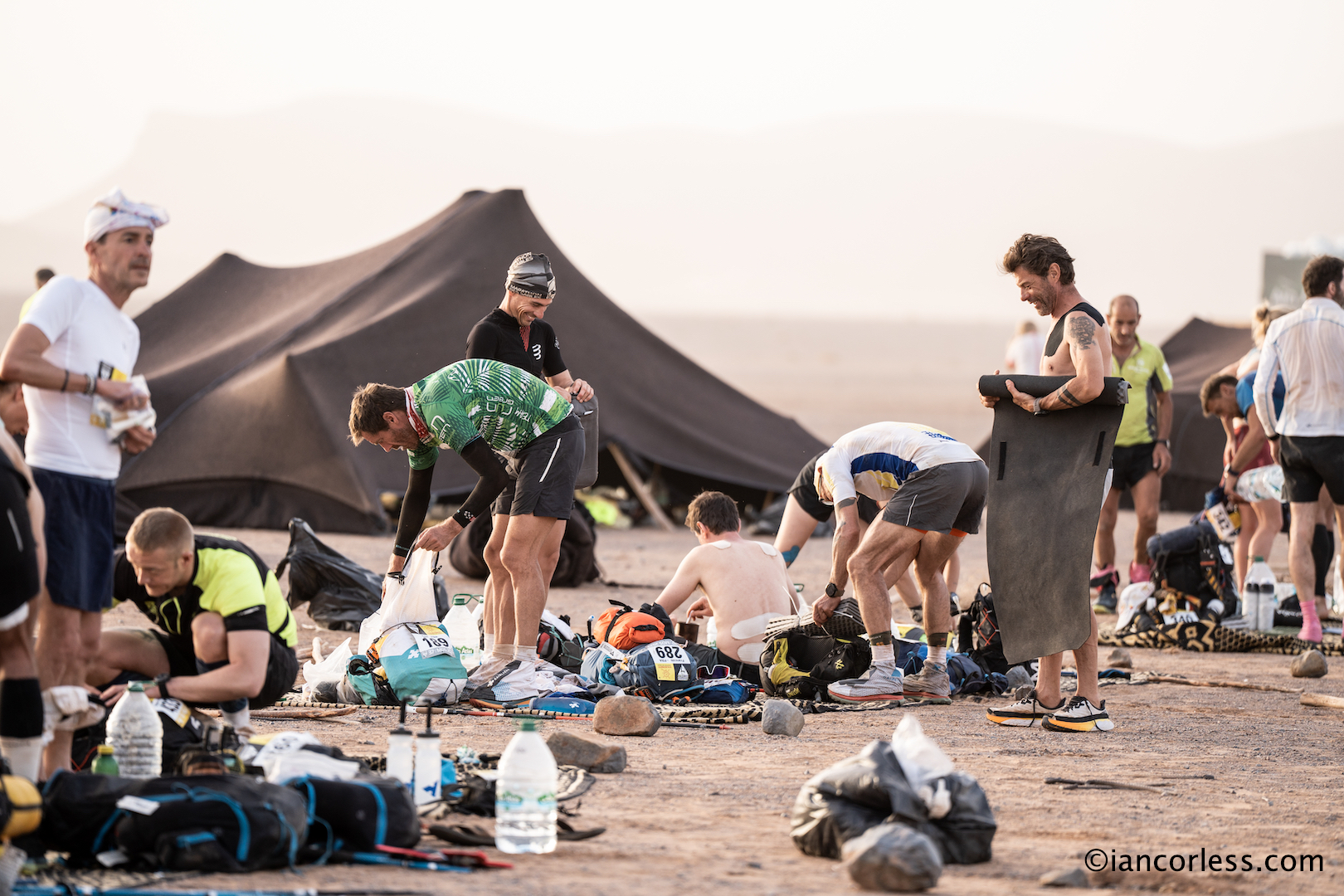
MDS is a magical Saharan experience that really is one of the greatest experiences in running. A small city moves seamlessly and like clockwork day-by-day, a wonderful, magical, moving road show that is difficult to understand and appreciate until you are living it.
Stripped back from connection and technology, MDS is one of the ultimate raw experiences in this crazy modern and connected world; one tent, 8-people, one bag per person; rationed food, clothing, sleeping bag, sleeping mat, mandatory equipment and rationed water, it gets no simpler or basic. For those who have experienced it, they know the life changing process that the experience brings. They dared to place themselves in the arena knowing that if at least they fail, they do so while daring greatly.
The marathon stage had been highly anticipated as it was expected, that Rachid El Morabity would come from behind and gain time on his brother, Mohamed and clinch his 10th victory. However, this was not to be!
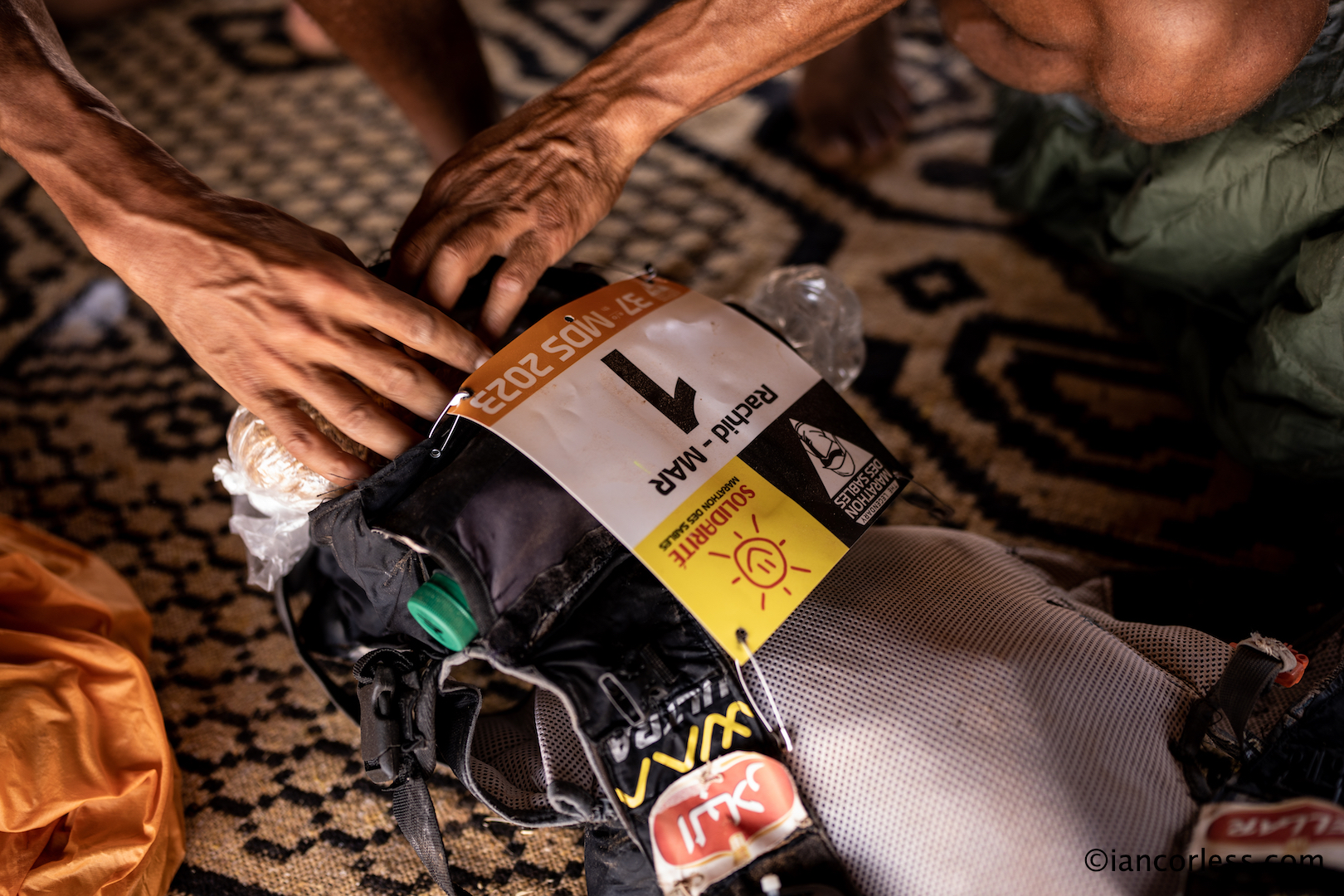
Rachid, along with Aziz El Akad failed an equipment check before the long stage (stage 4) of the Marathon des Sables. This check showed items that were not present at the initial kit check on admin day. The items, coincidentally, were provided each day in lunch packets for MDS staff. In simple terms, Rachid and Aziz were obtaining ‘outside assistance’ to gain an advantage and this, of course, is outside the rules of the race and the sense of fair play. On the rest day, a penalty of 3-hours was given to Rachid and Aziz and also, the Moroccan team was penalised. Rachid and Aziz decided to leave the race and not participate in the last stage.
Rachid has since posted on his Instagram account, and I quote:
“…it is with heavy heart I have decided to quit Marathon des Sables because I was punished unfairly for a mistake I dod not commit. When you are wrongly accused, it’s better to stand with your head high than to remain to suffer injustice…”
Sadly, this is a sad chapter in the history of the Marathon des Sables and the legacy of Rachid. However, it’s greatly important that self-sufficiency in the true nature of the MDS is held and when applicable, penalties are given, irrespective of if you have won 9 editions or not.
The 2023 edition will go down in the history of the race as one of the toughest! A beautiful but tough route, was made considerably tougher with intense heat that not only lasted the week, but increased in temperature daily. Also, early days were impacted with multiple sand storms. At the time of writing, the DNF rate is approximately 30% with just 771 runner’s starting the marathon stage.
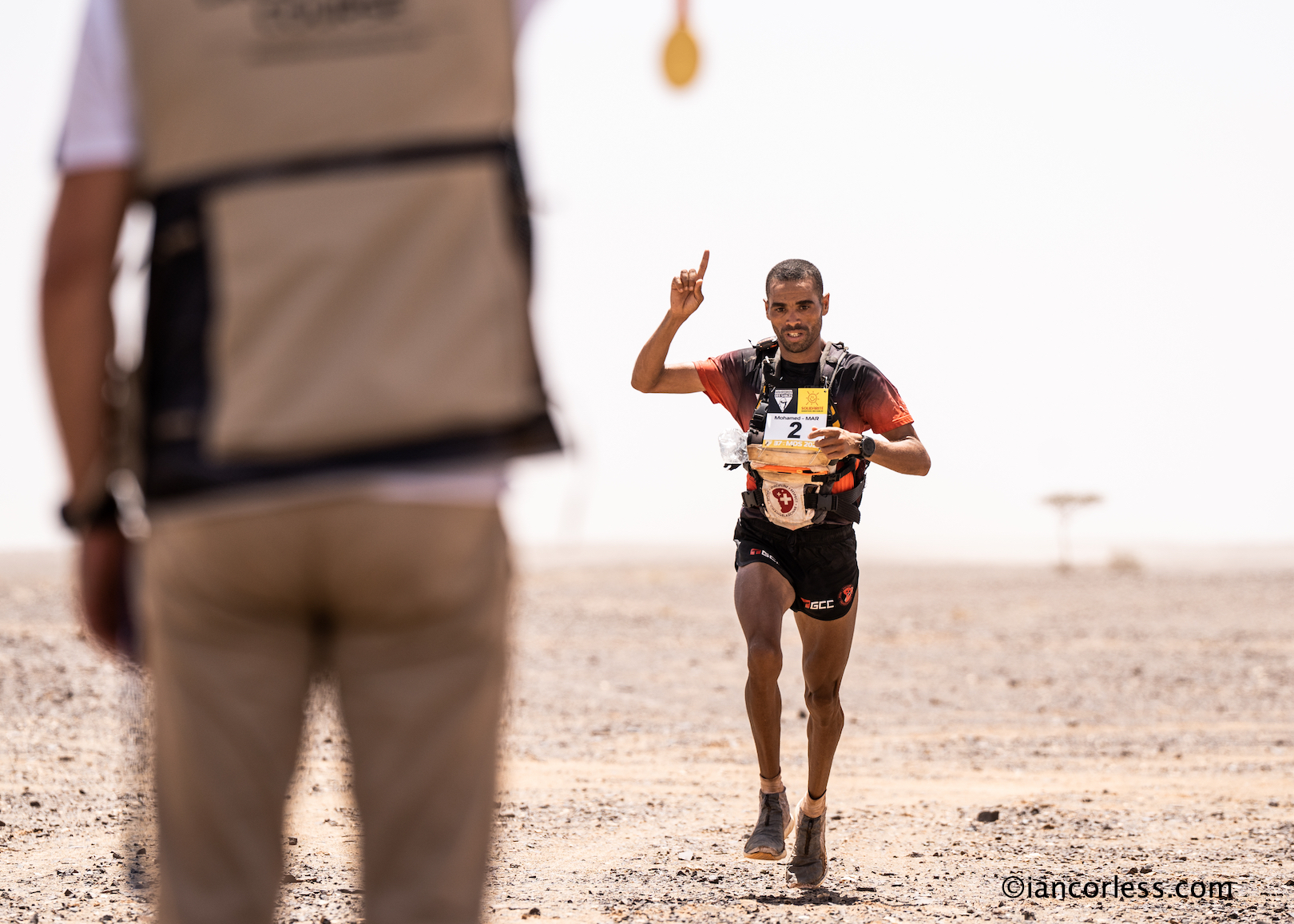
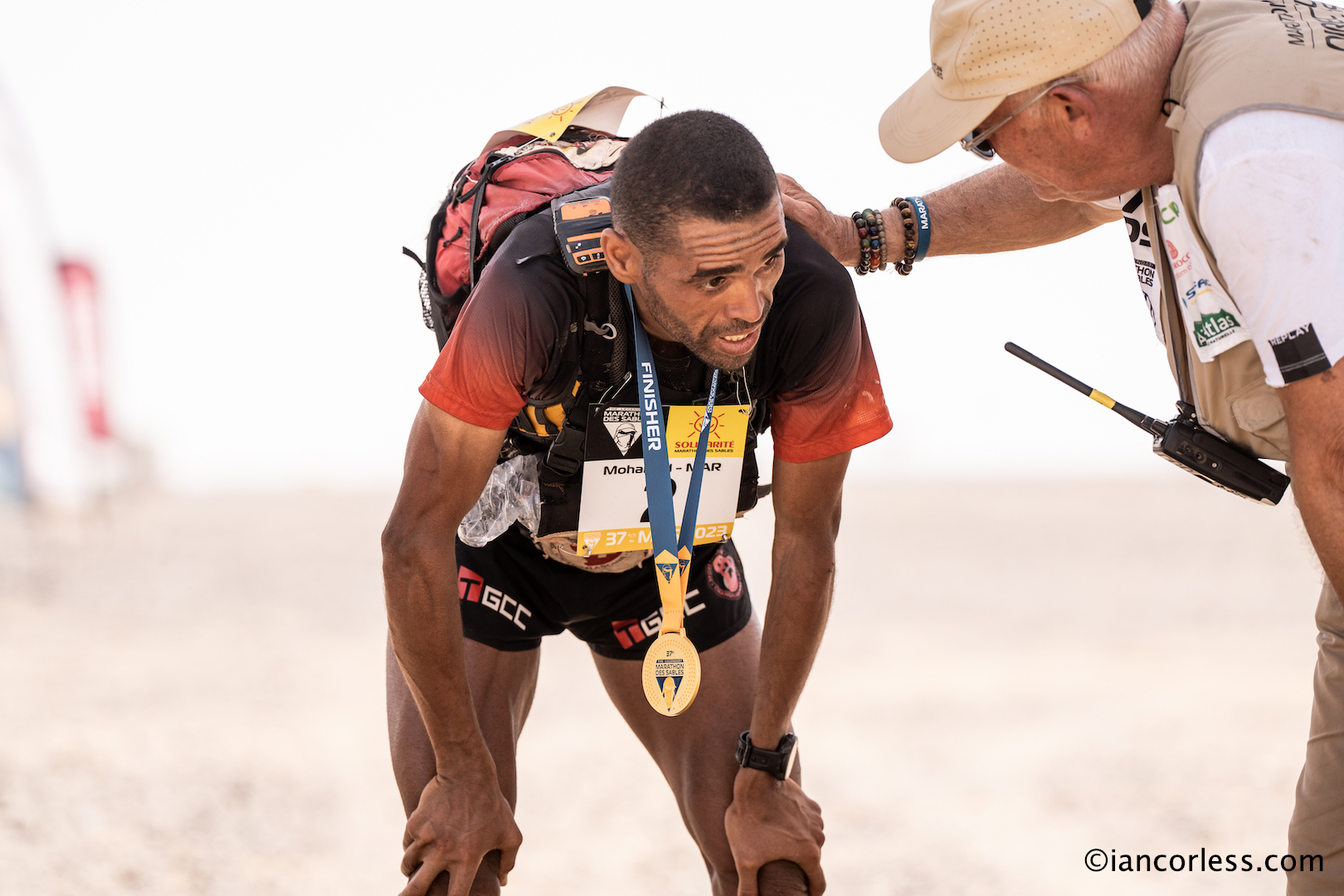
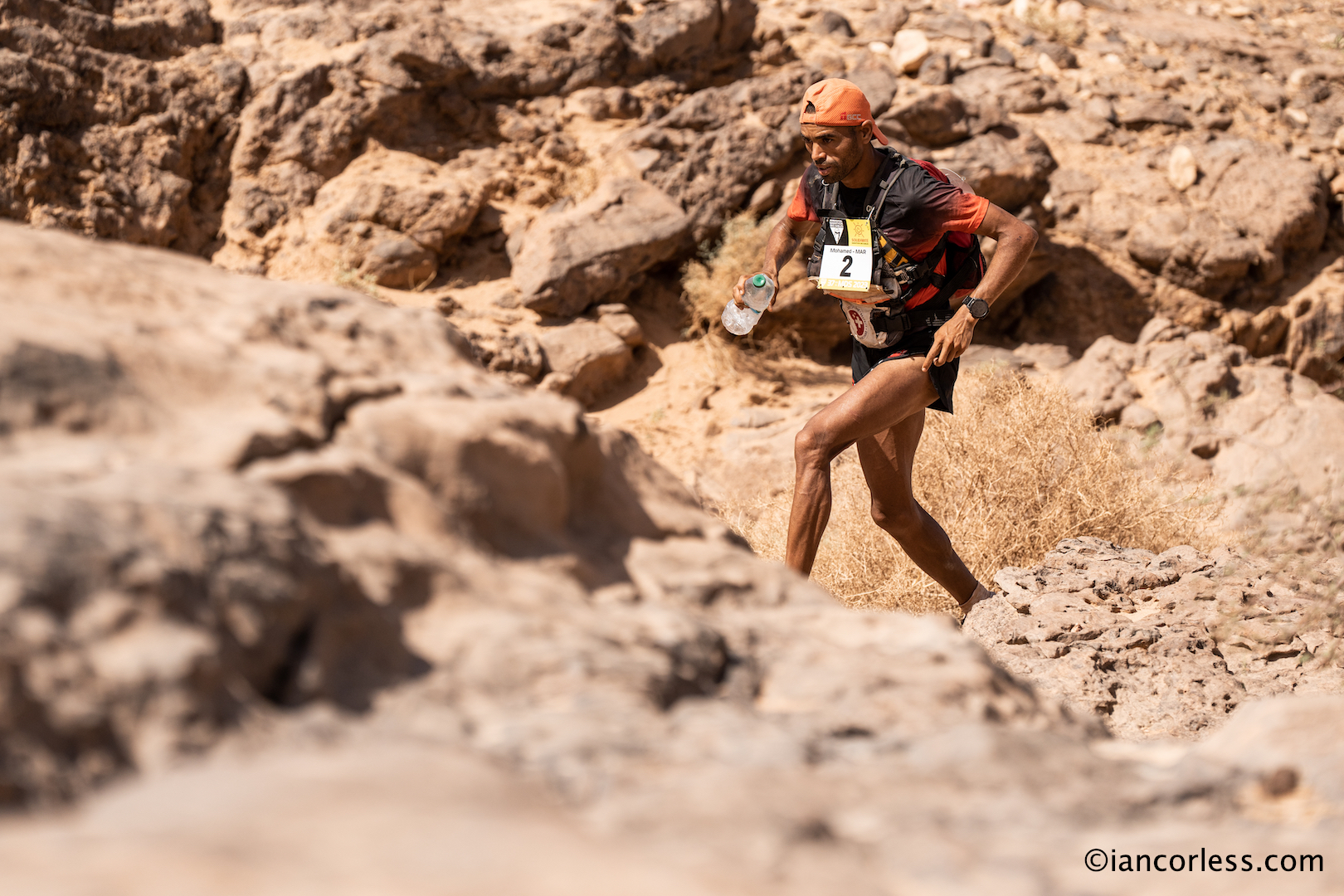
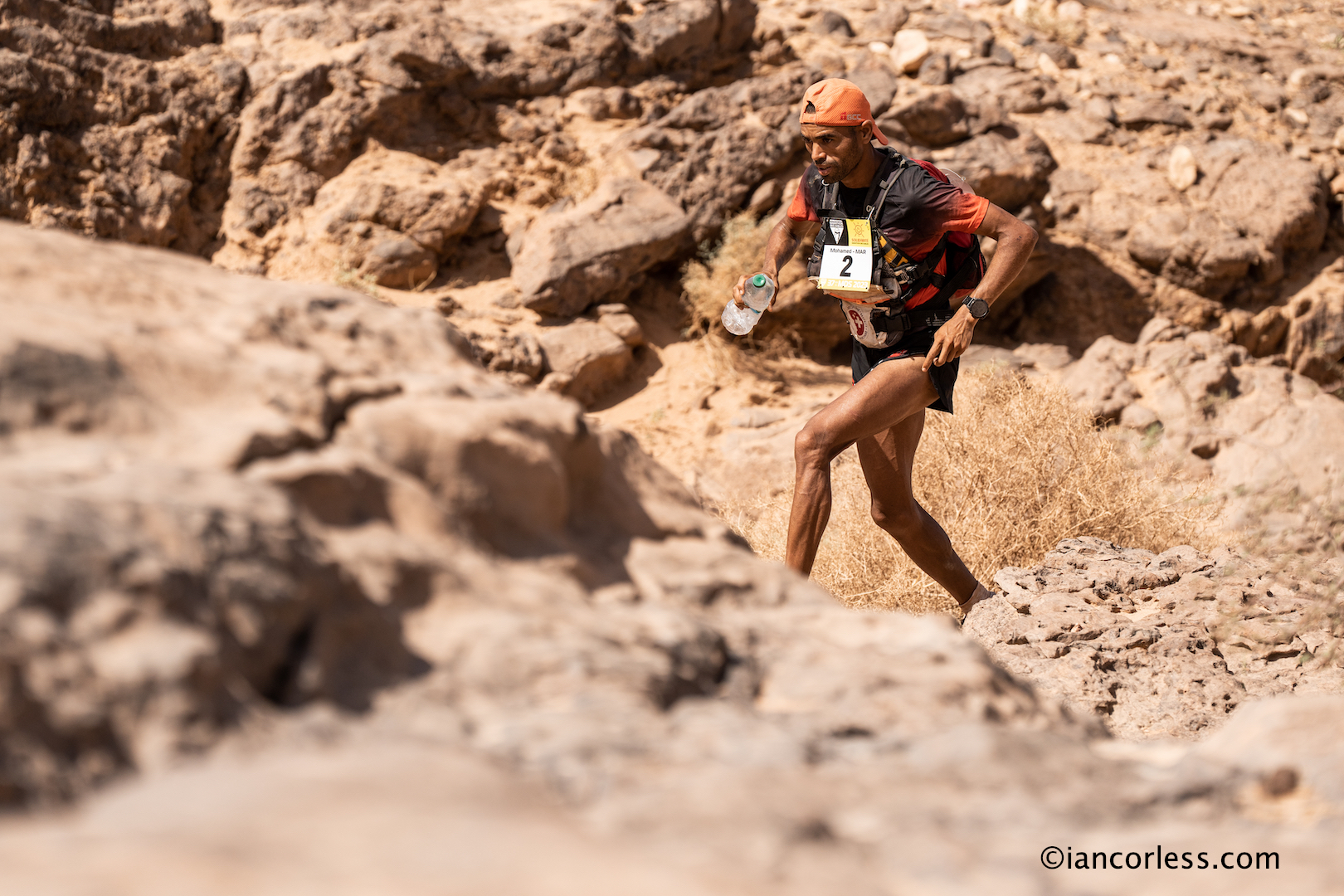
It was a day full of emotion, finally, Mohamed El Morabity was finally released from the pressures of working for an elder brother and ran a smart race. He consolidated his lead by marking his closest rival Aziz Yachou and then in the final km’s he opened a gap crossing the line in 3:18. A huge victory for the Moroccan.
Aziz placed 2nd on the stage and 2nd overall on GC with Visiili Korytkin rounding out the stage podium. Mathieu Blanchard placed 3rd overall on GC, a great step up from his 2021 5th place.
For the women, Maryline Nakache won the stage and the overall GC. Tomomi Bitoh who won the marathon stage the last time she raced MDS today placed 2nd and 3rd on GC. Aziza El Amrany placed 3rd on stage and 2nd oveall.
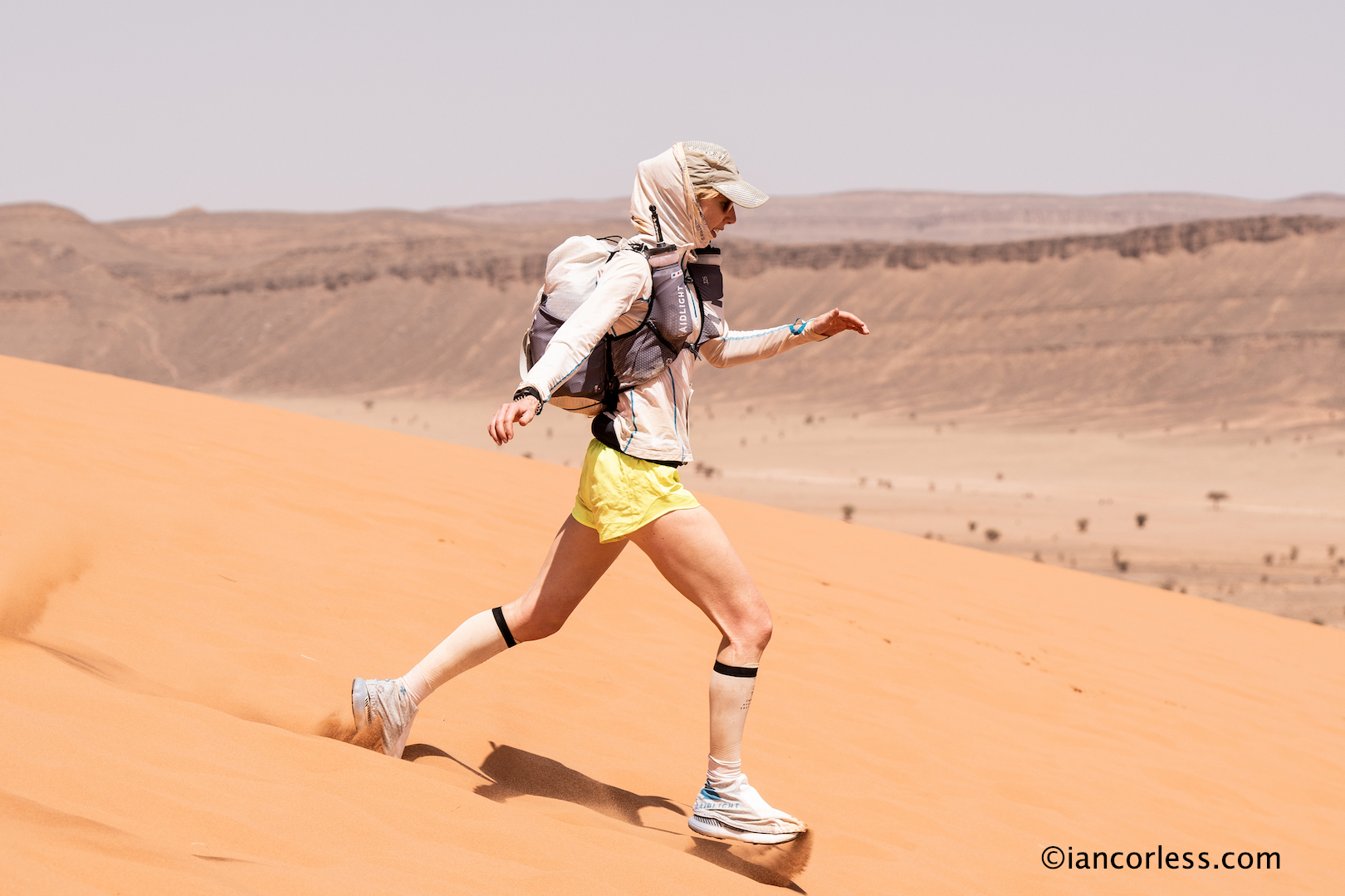
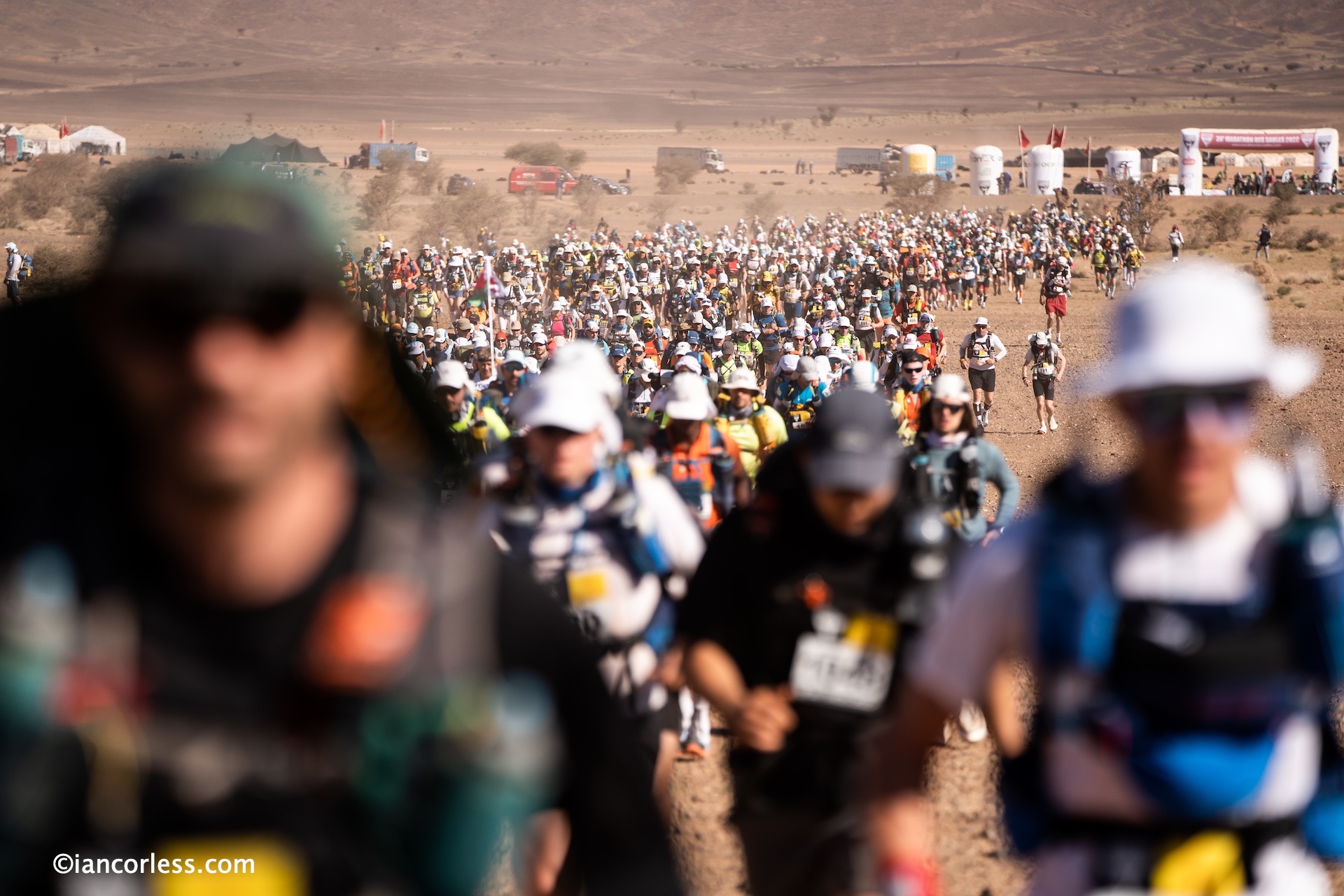
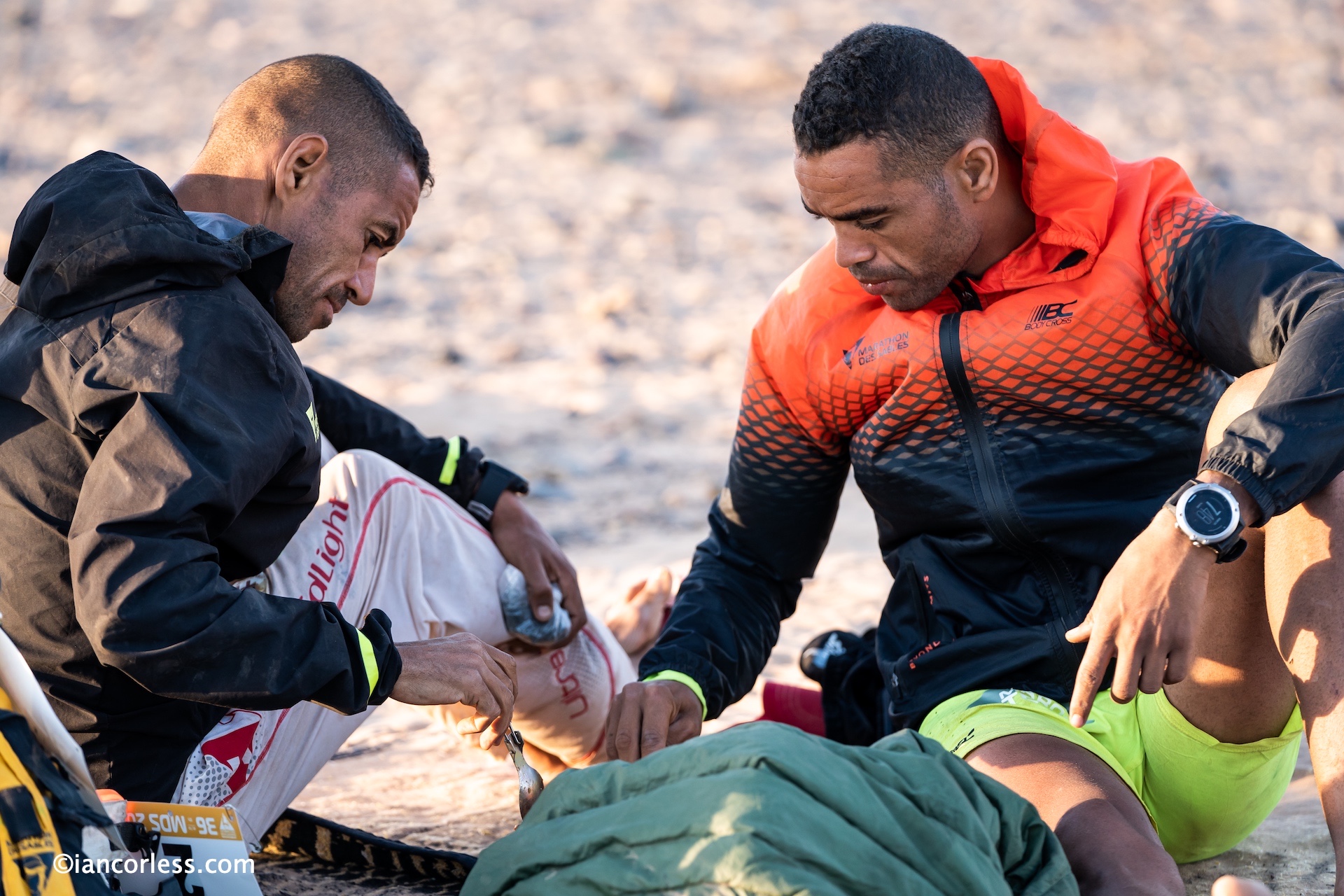
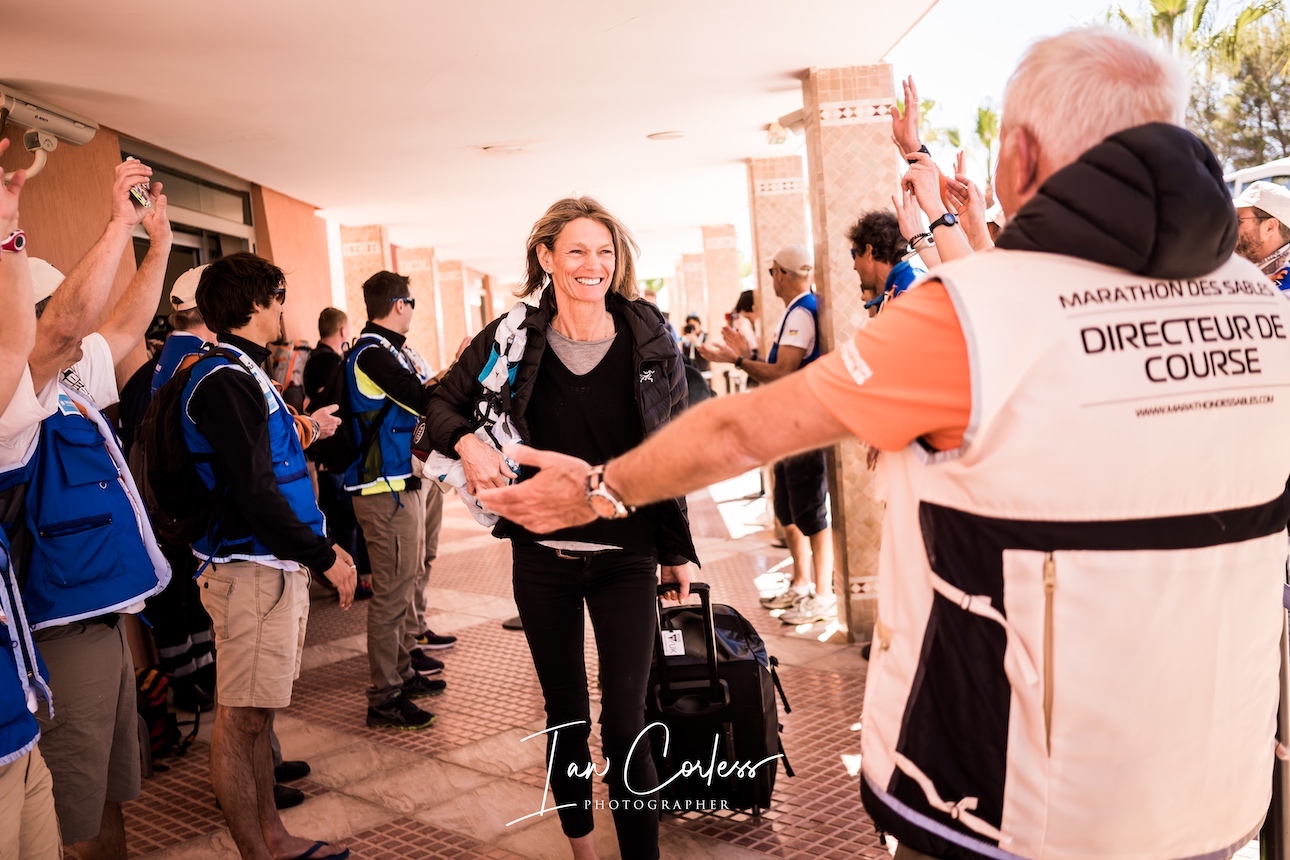
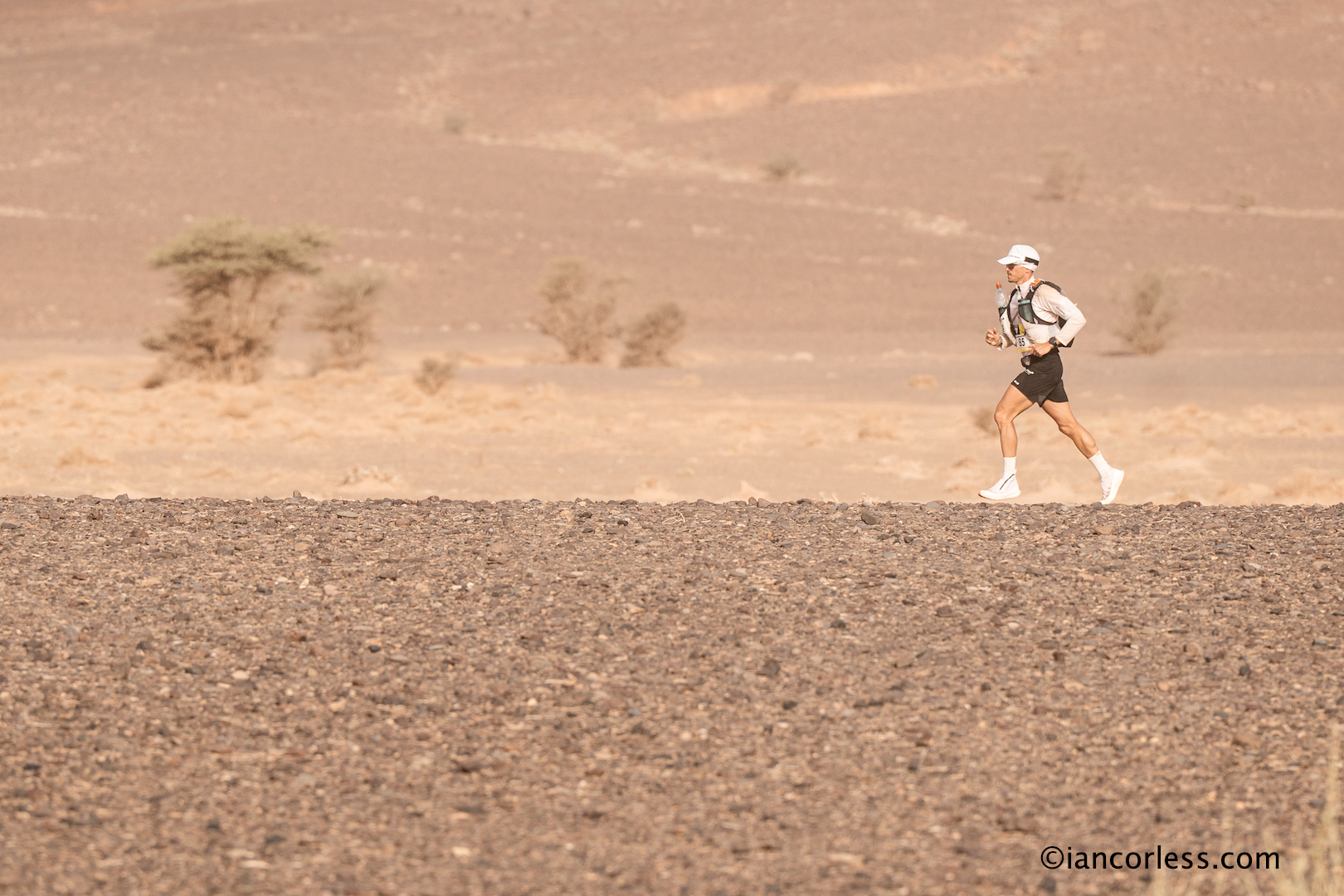
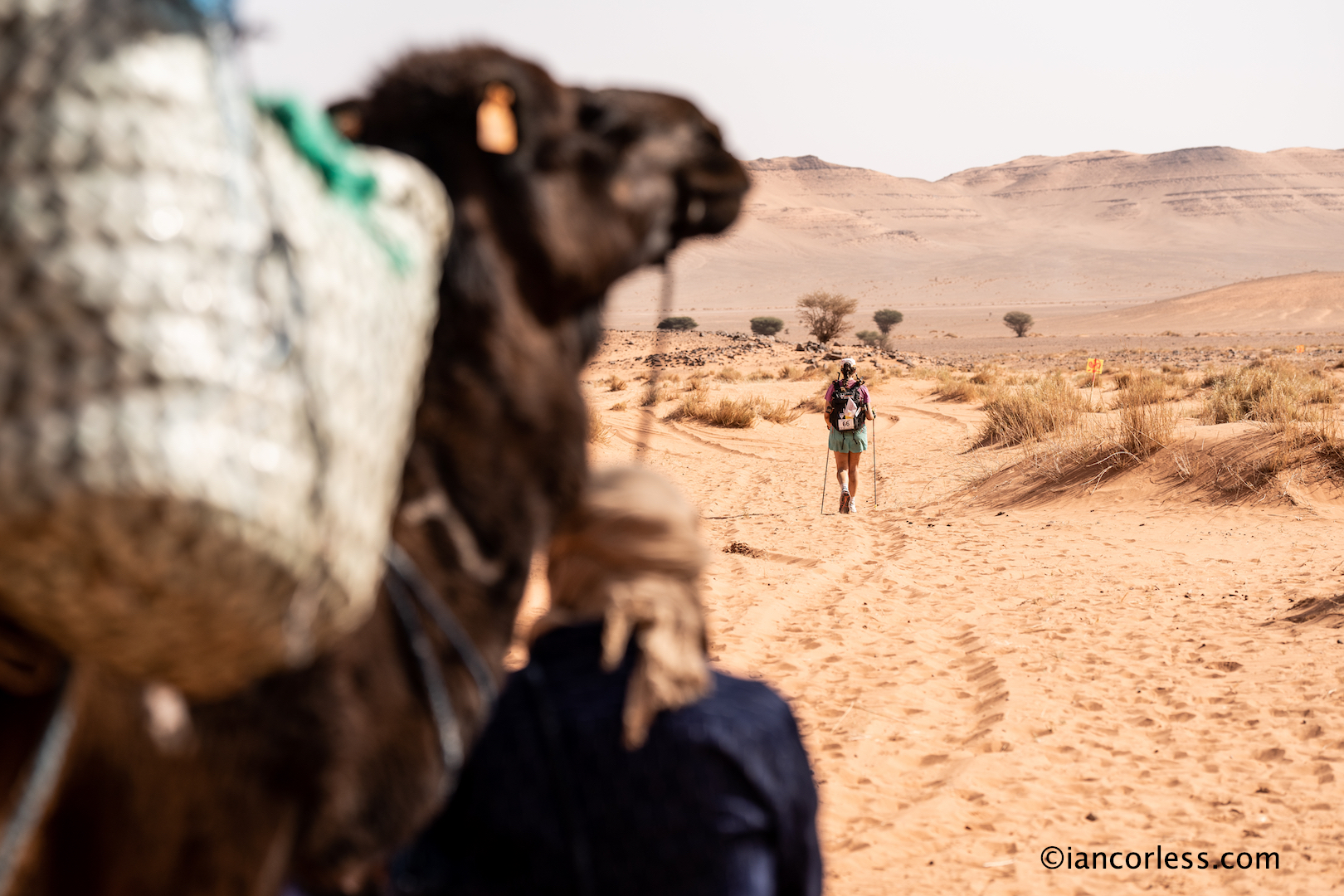
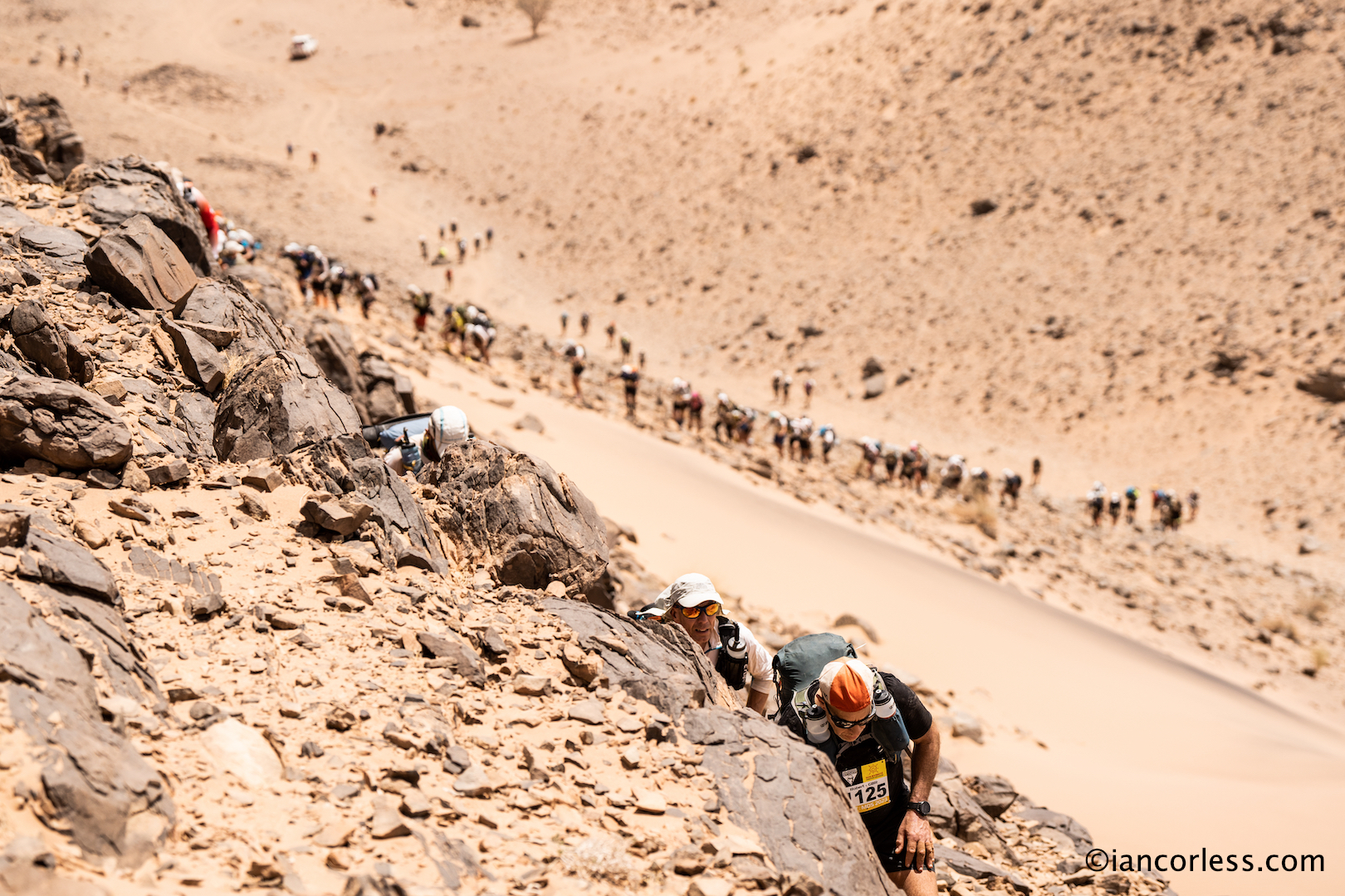
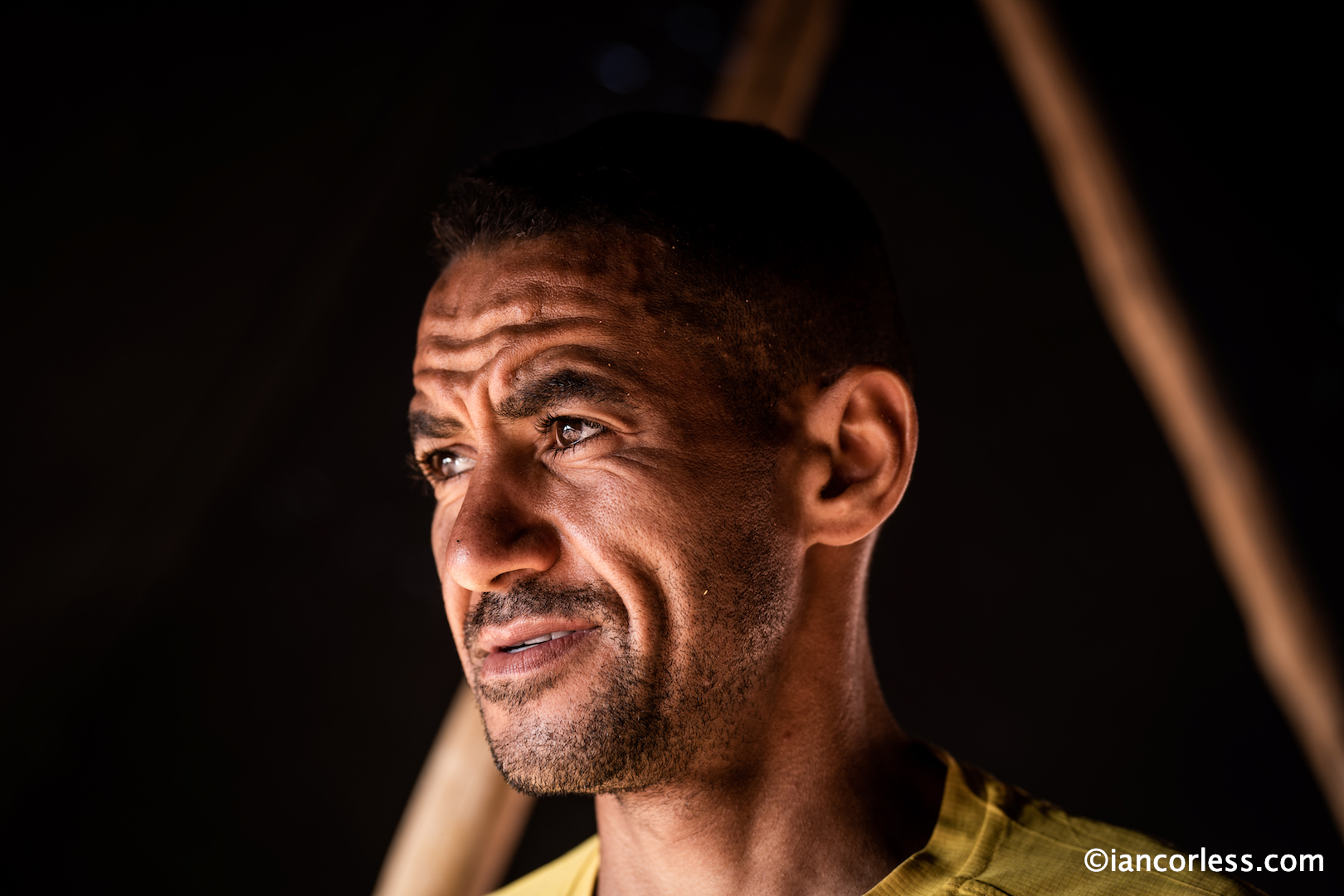
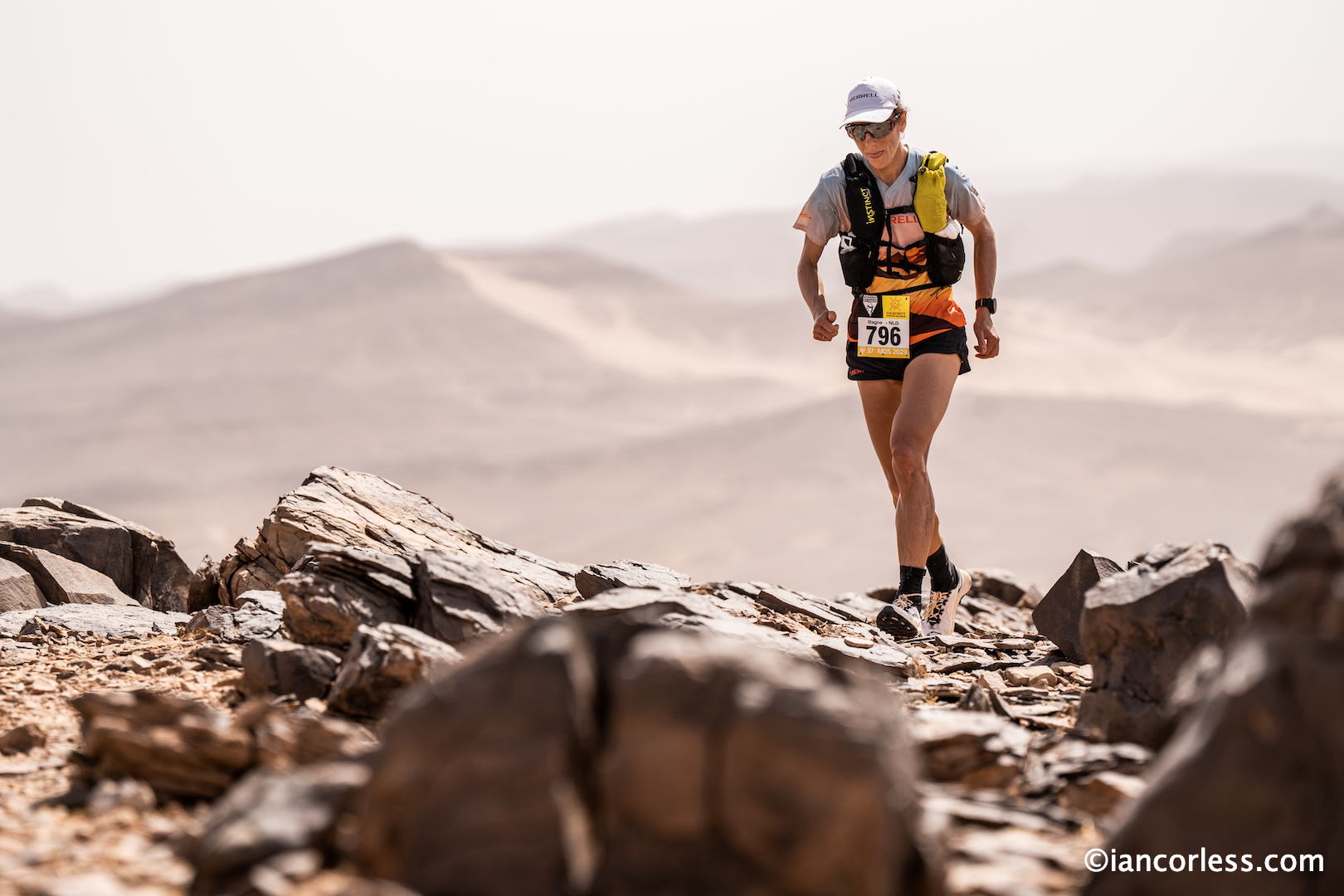
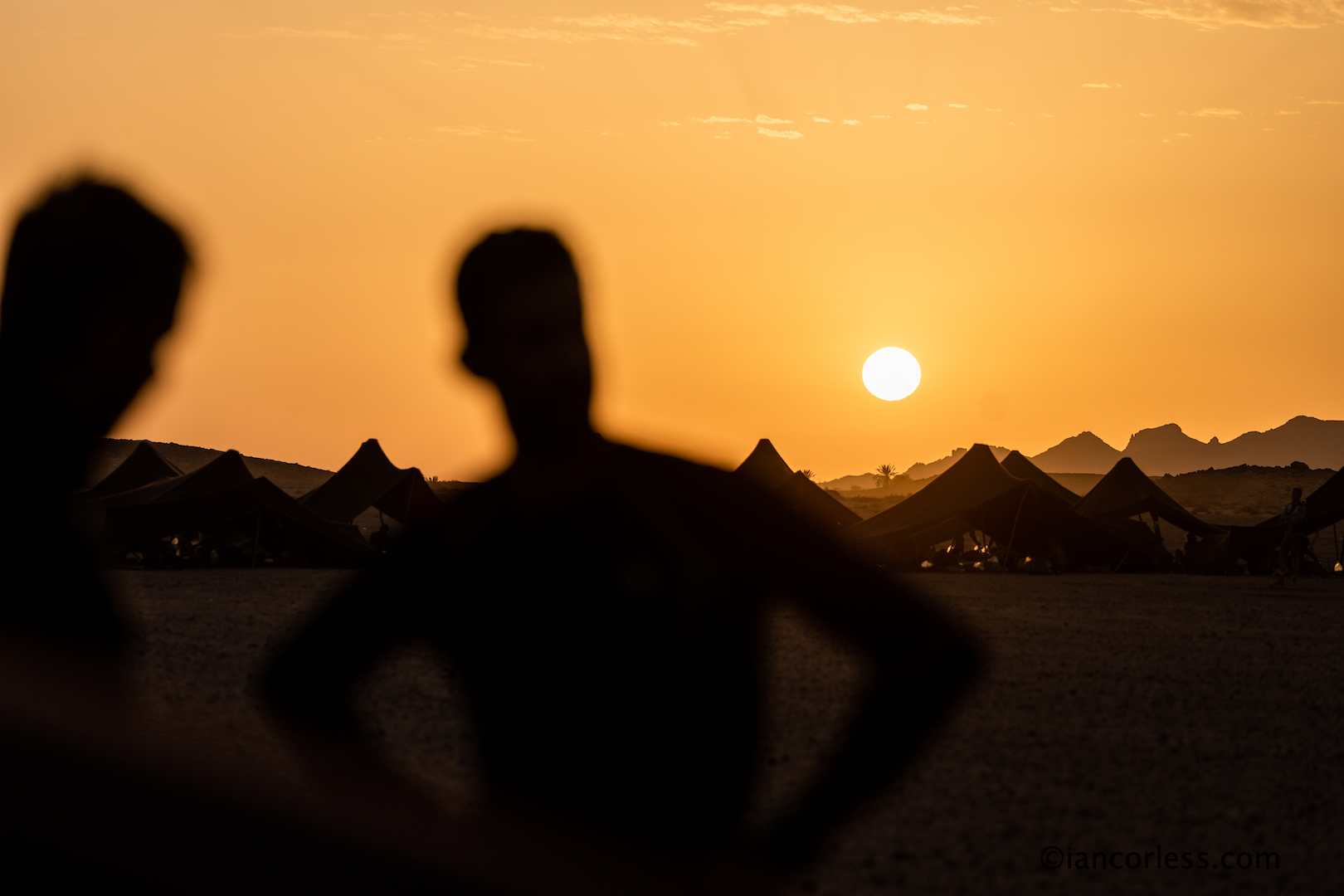
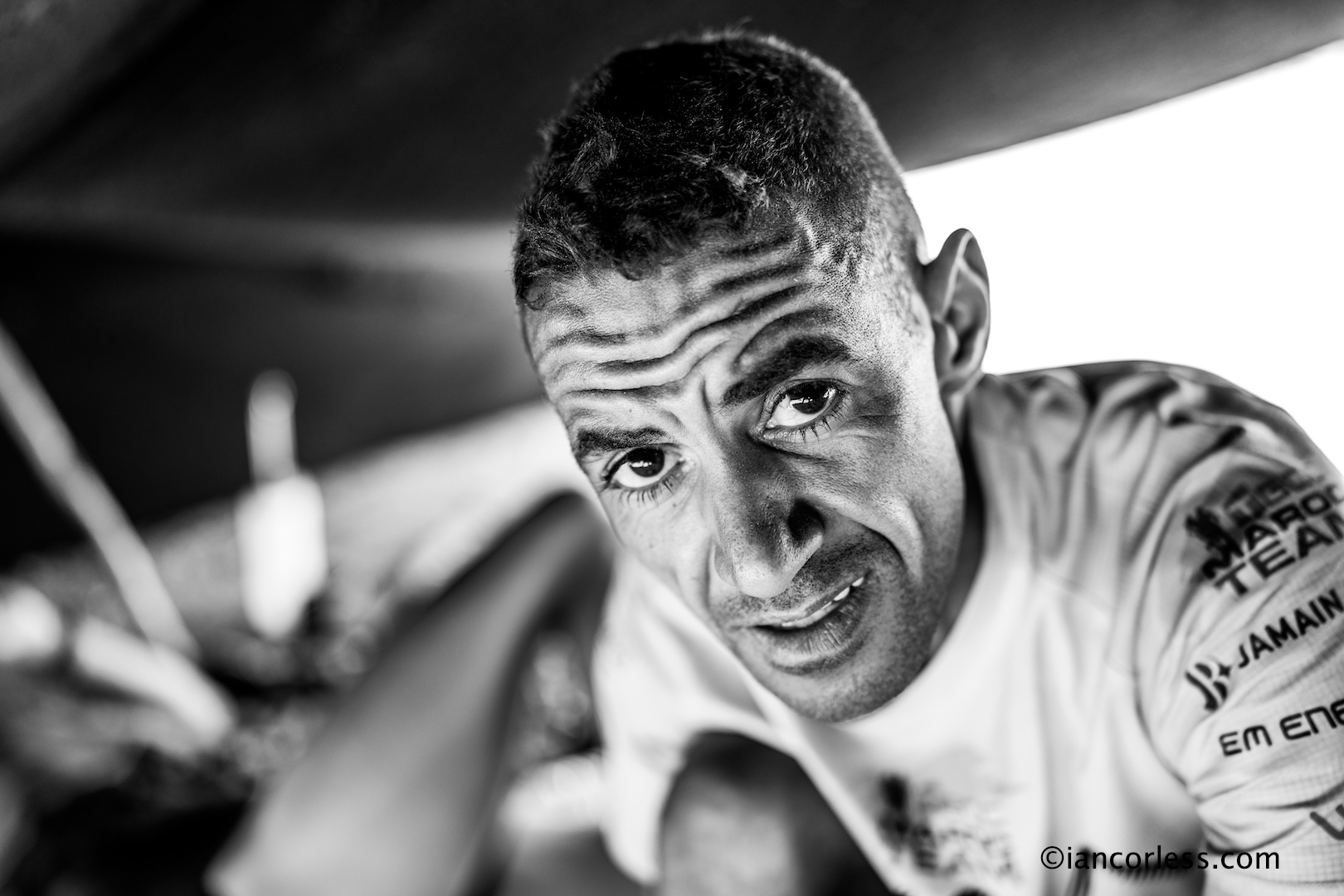
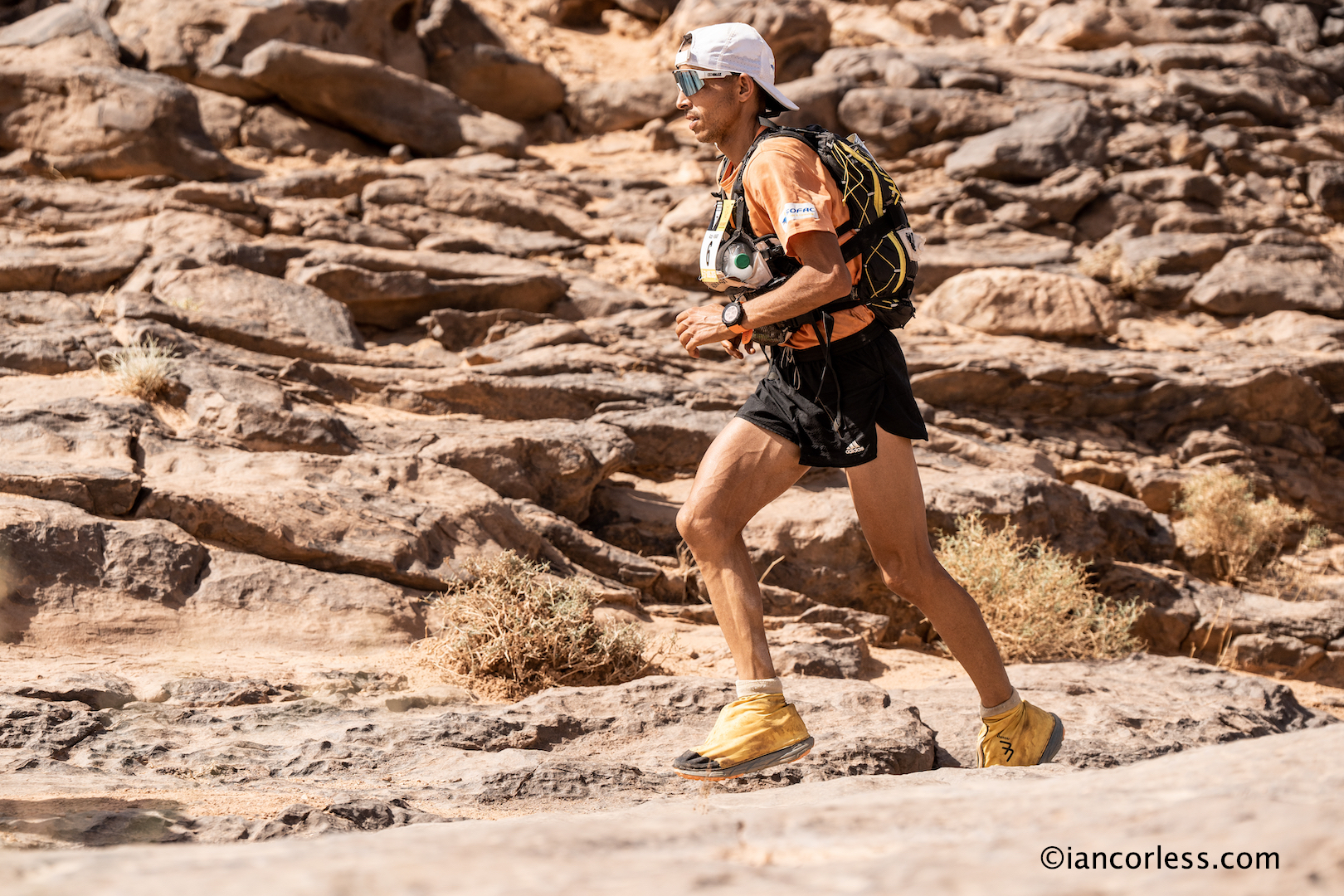
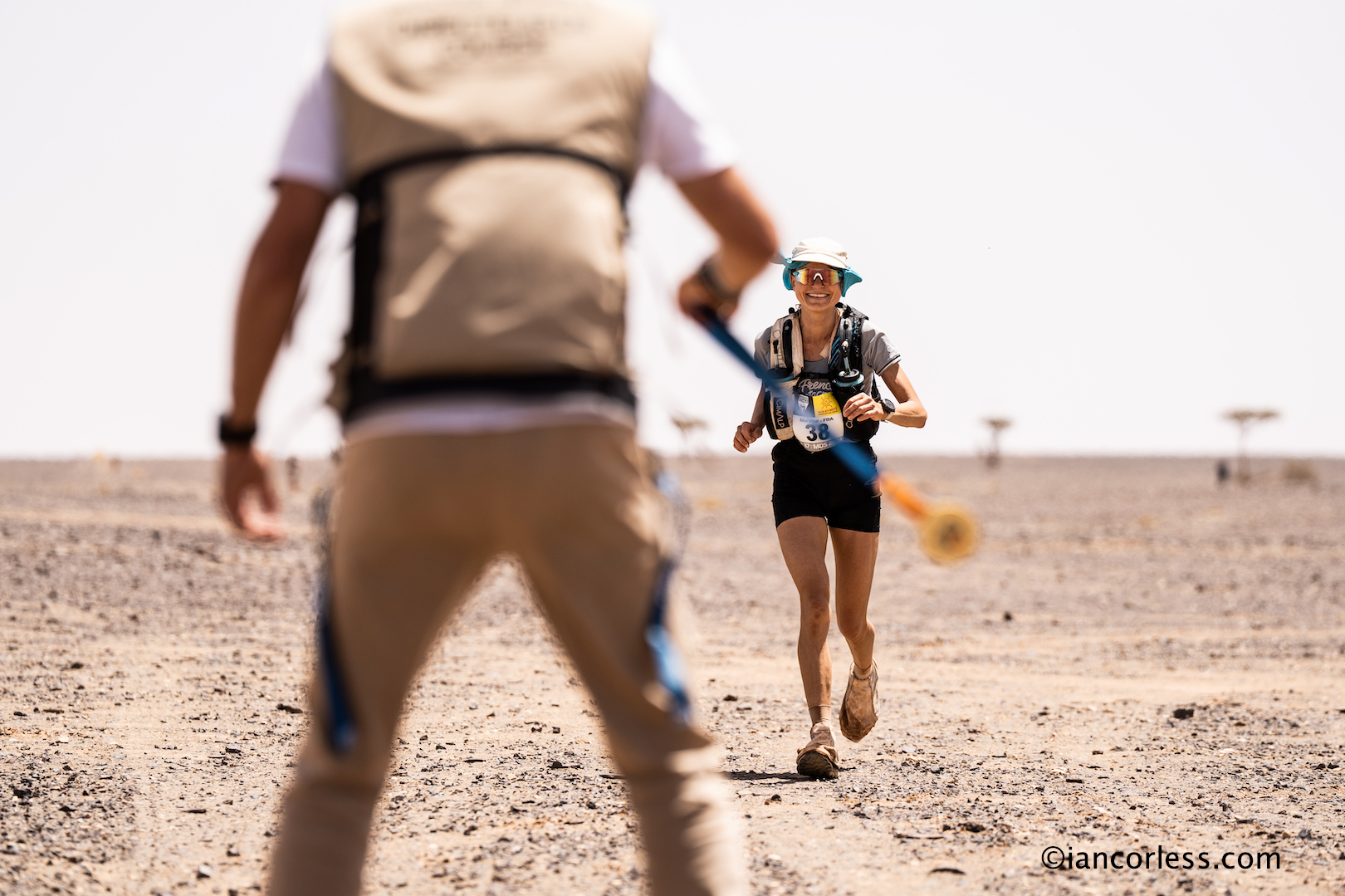
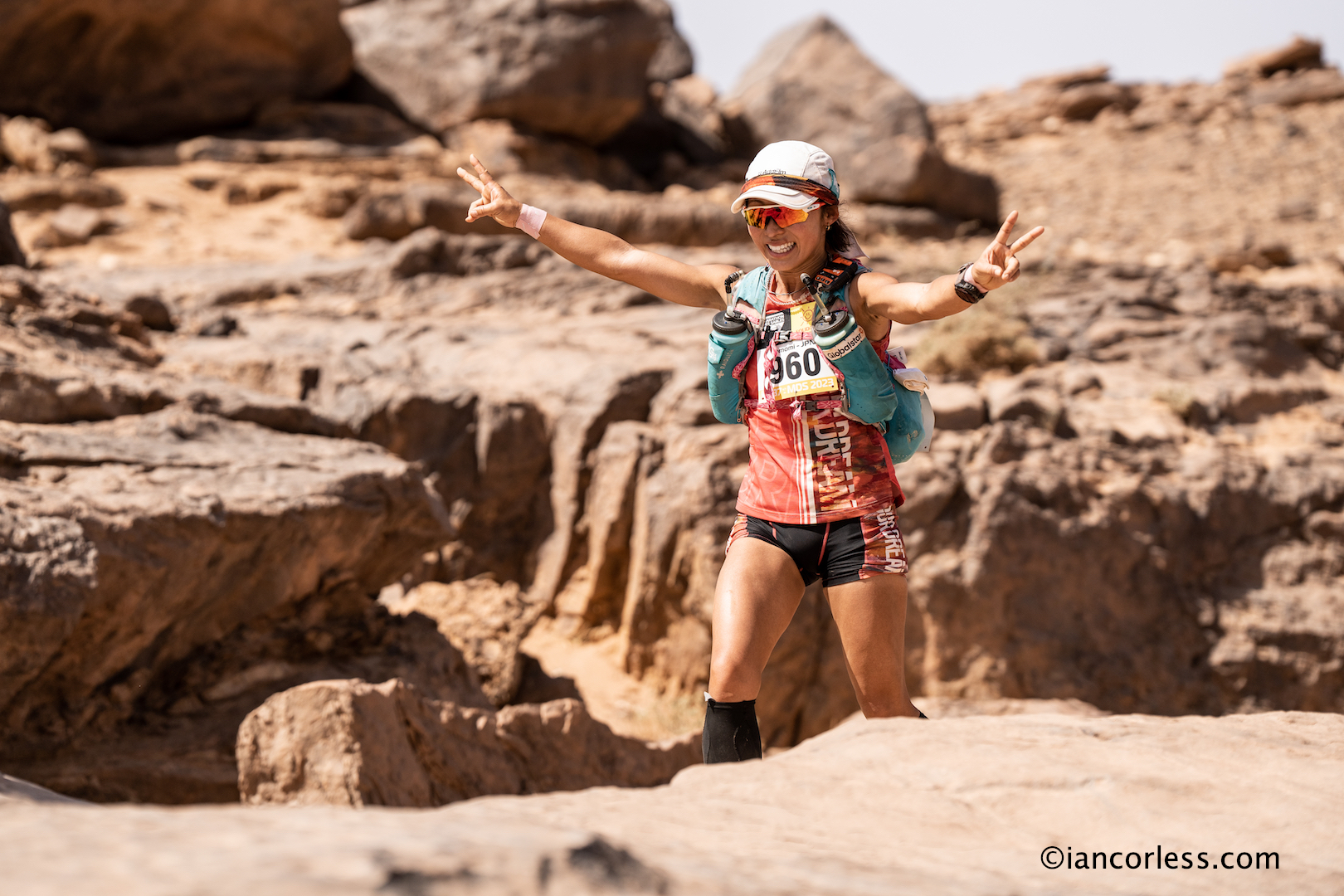
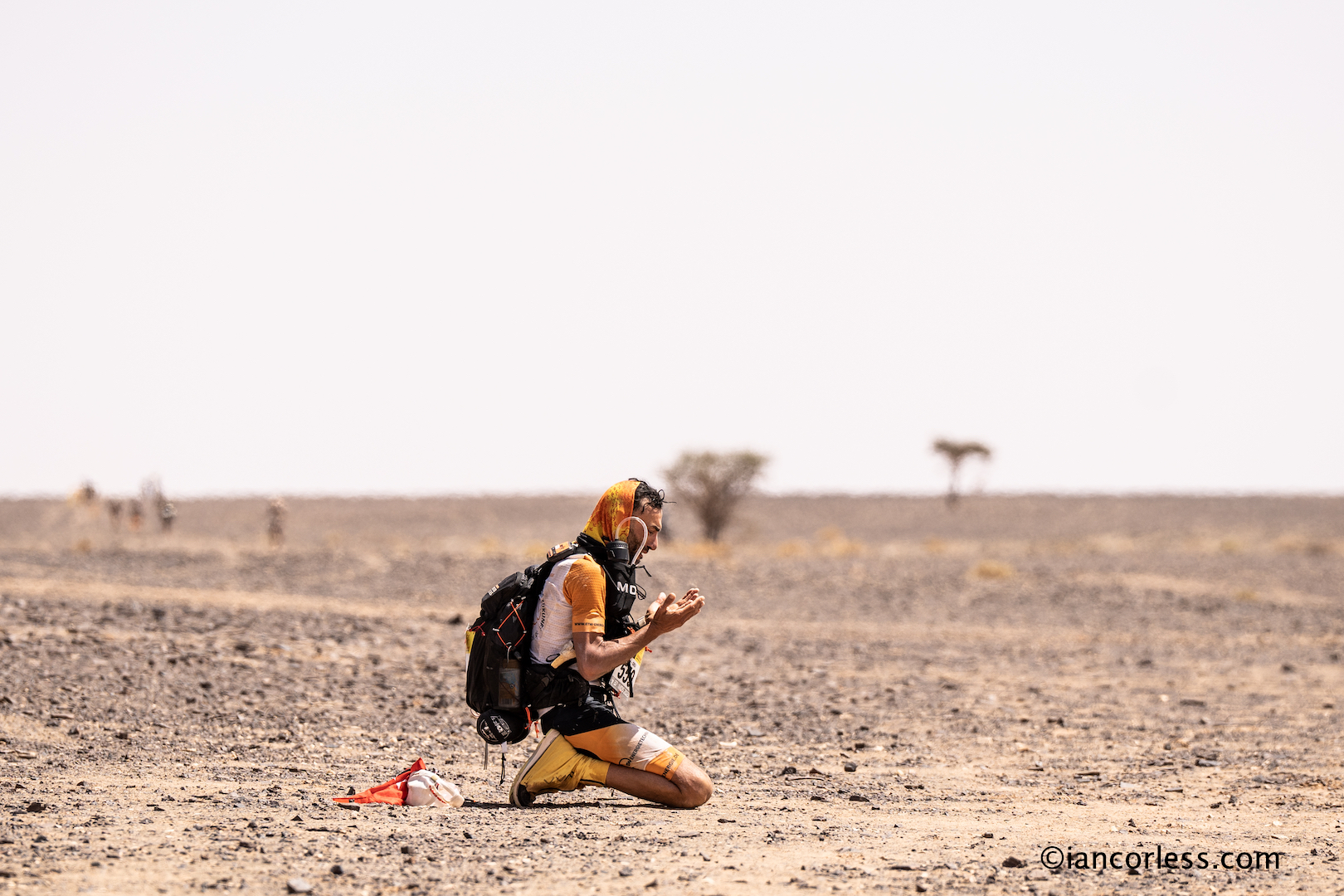
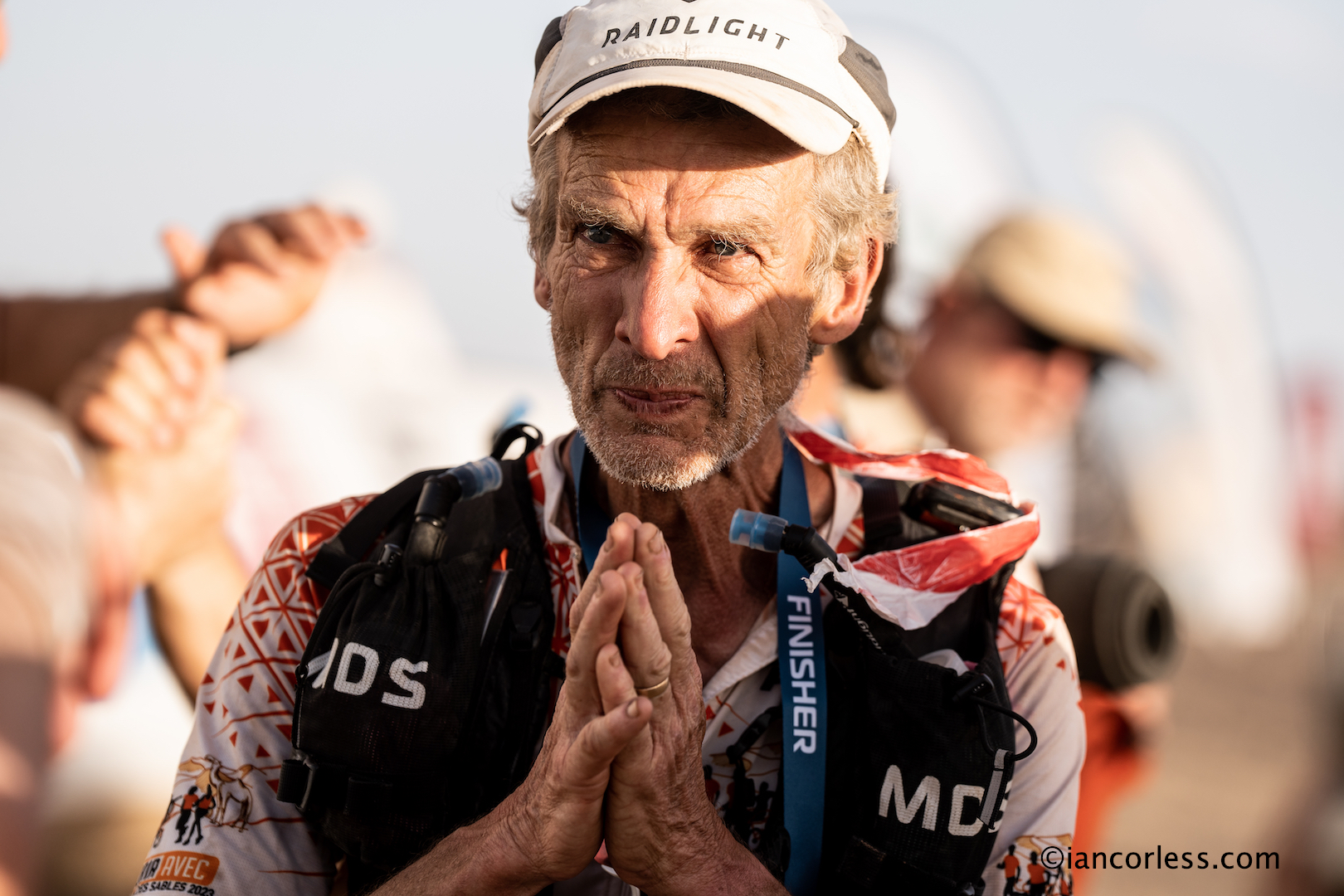
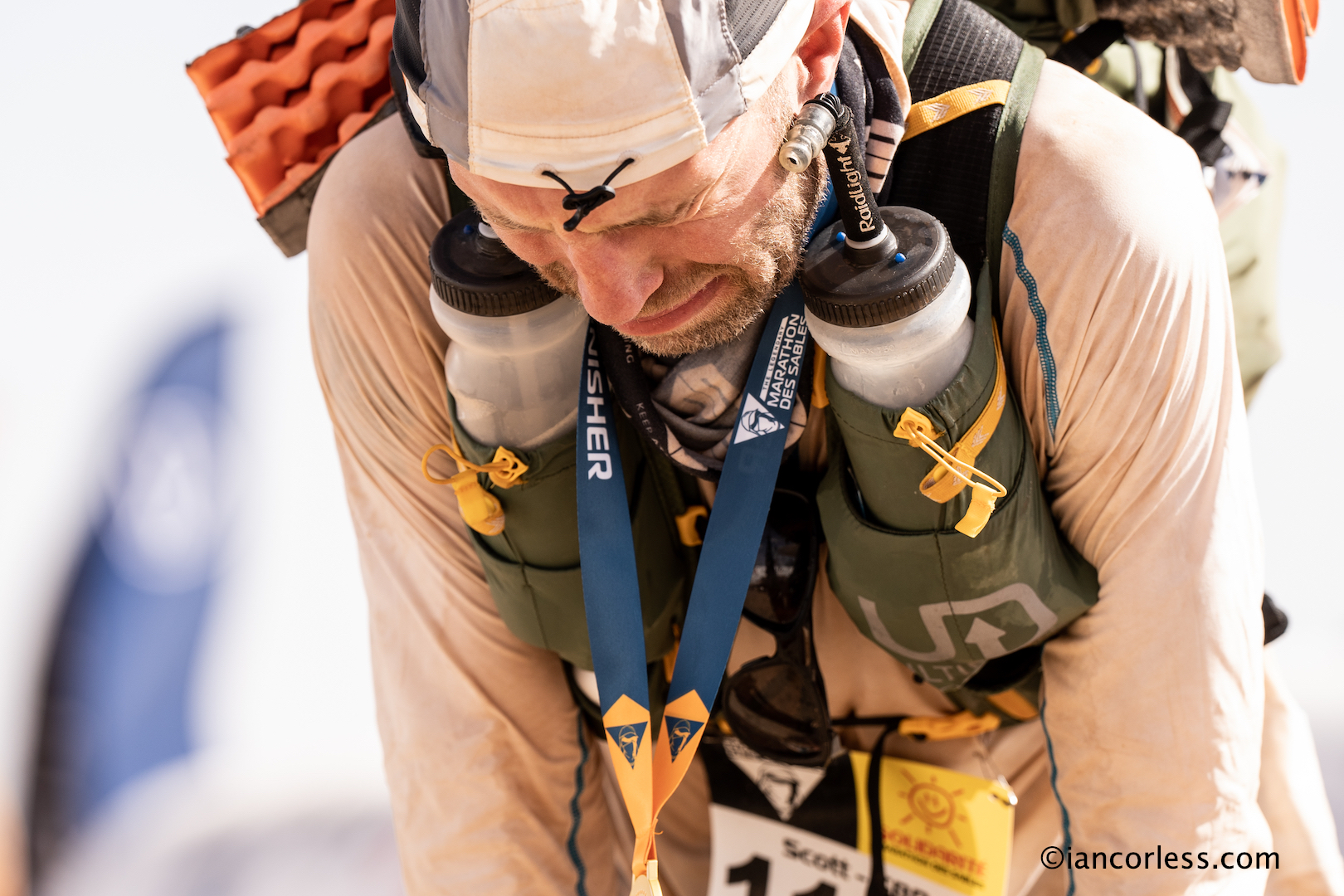
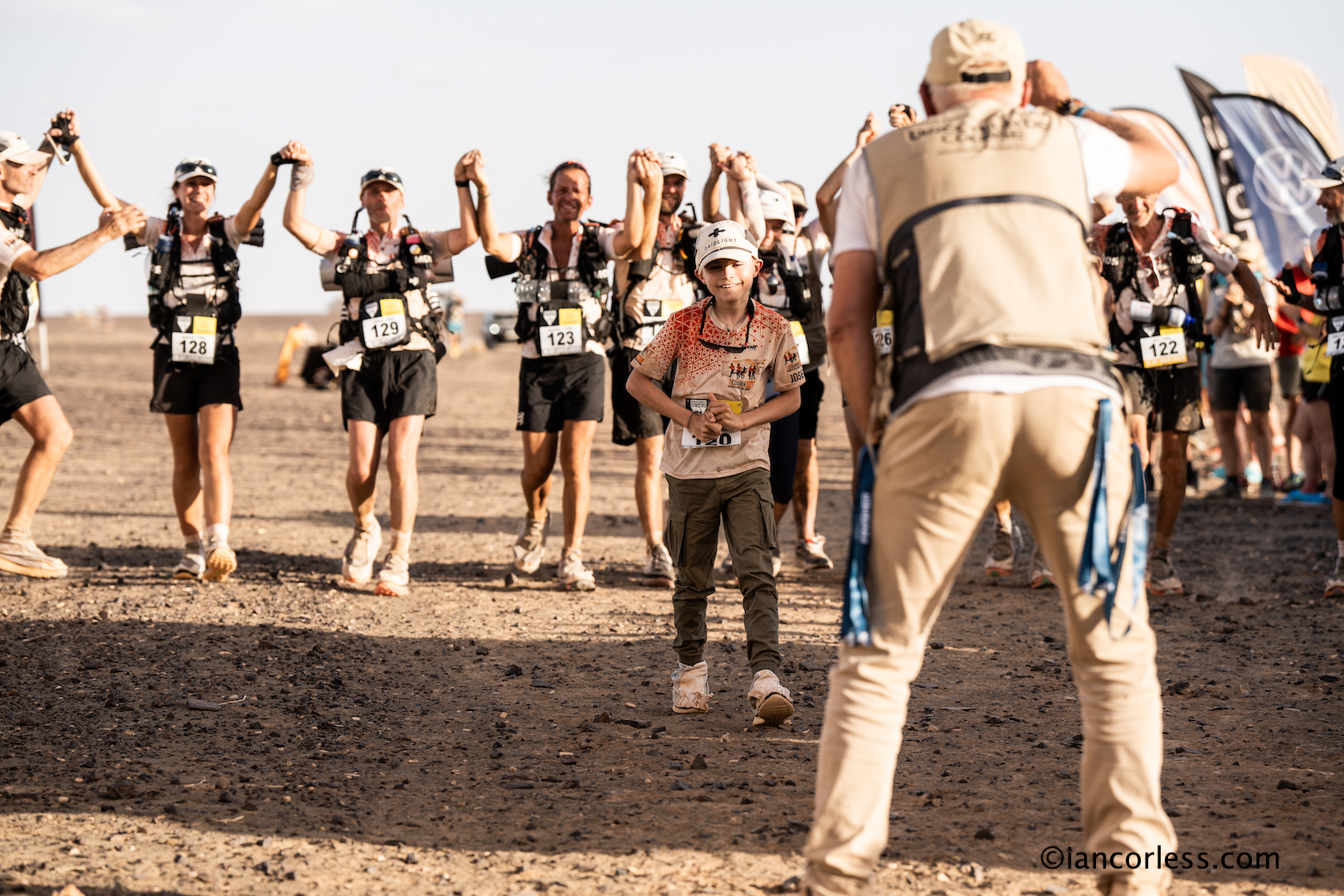
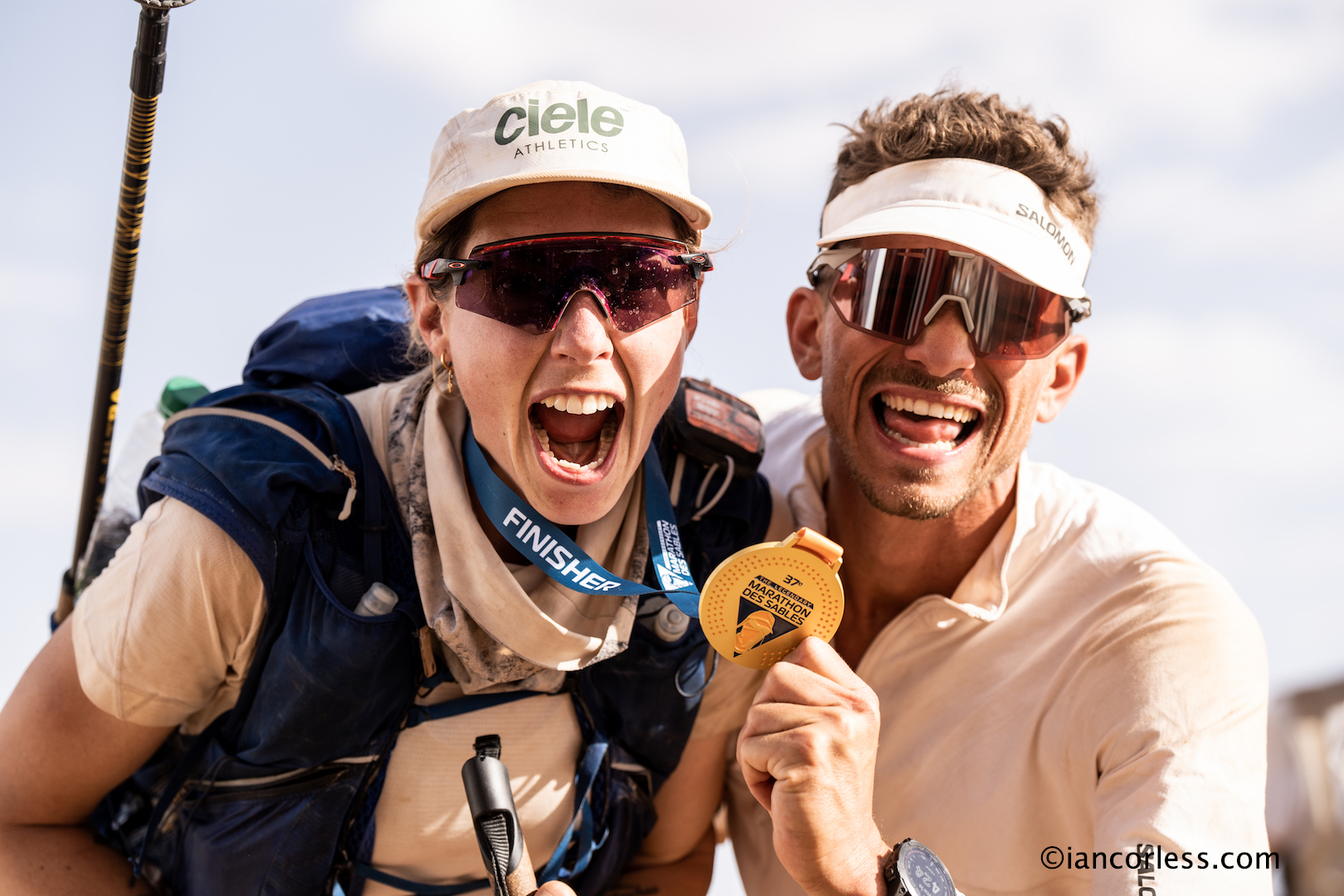
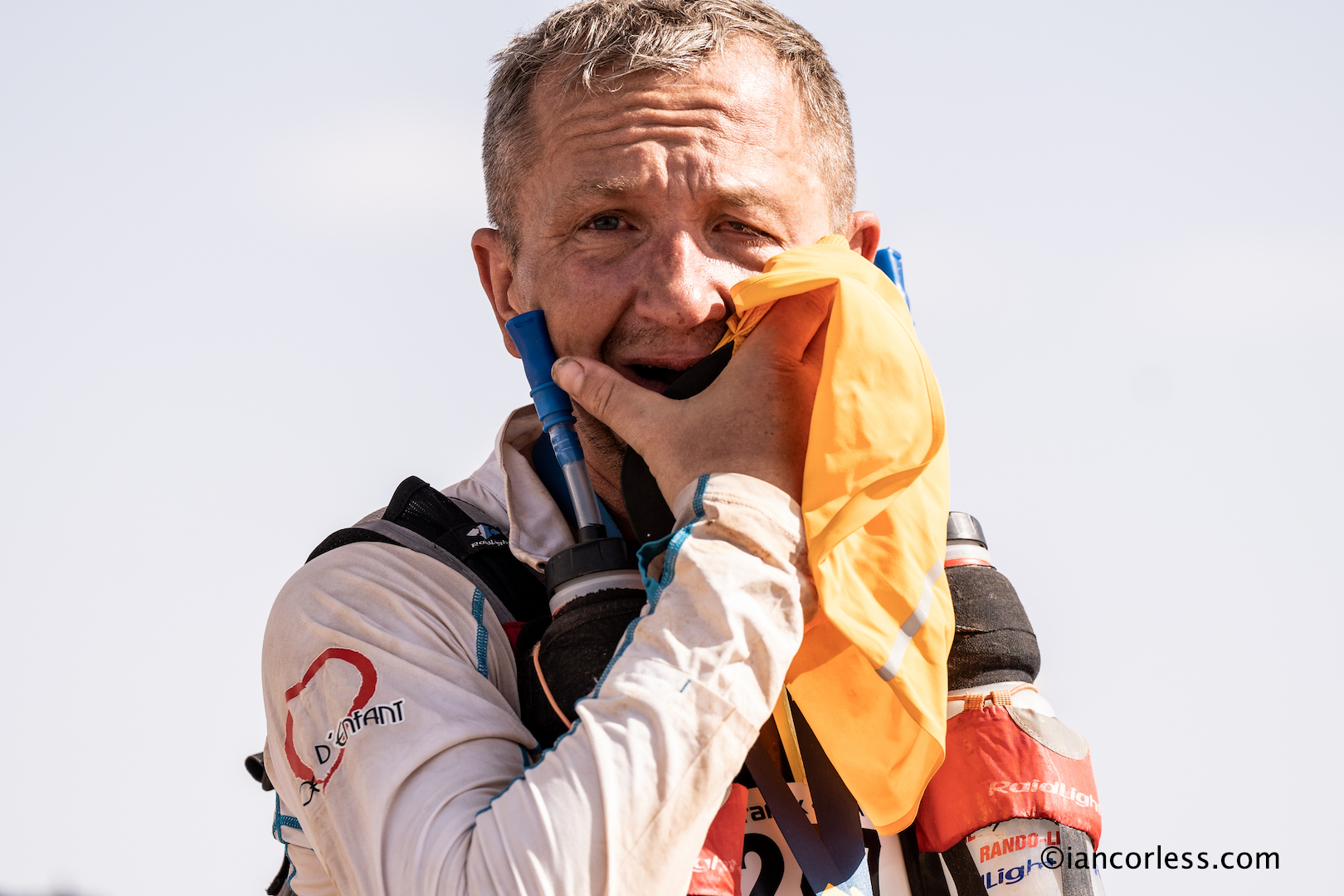
Of course, today, the finish is full of tears, joy and emotion. The 37th edition has been a tough one and it’s clear to see the elation as the line is crossed and finally, it’s possible to relax and let go. There have been many highs and lows for all. As always, there are countless stories that transcend running and in time, those stories will be told. But just look at the images below to get a glimpse of the inspiration, the journey, the transformative process that MDS brings.

















 IAN CORLESS