Lanzarote Training Camp 2017 – Breaking News

©iancorless.com_MDS2016-6279

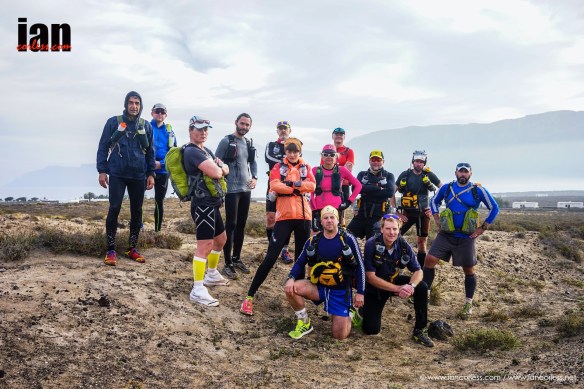
I am pleased to announce that Sondre Amdahl will join us as a special guest at our Lanzarote Training Camp which will take place in just 1-week at Club La Santa.

Sondre is an experienced and highly successful ultra-runner. In 2016, he placed in the top-10 overall at the Marathon des Sables and he also had a very successful race at the Oman Desert Marathon later in the year placing 6th.

Recently he won a 115km race in Hong Kong and he is now in his final preparations to race The Coastal Challenge in Costa Rica in February (preview HERE).

Needless to say, Sondre will be a great addition to the training camp and his advice on kit, training, food and survival in a multi-day race will enhance everyones training camp experience.

©iancorless.com_MDS2016_Day0_0013

As a reminder, we also have the 2015 Marathon des Sables and Oman Desert Marathon ladies champion, Elisabet Barnes as head-coach for the entire week.

©iancorless.com_MDS2016-5765

Our 2017 Training Camp is full but we are already taking bookings for 2018 HERE

You can also read daily reports from the 2016 edition HERE

2106: A Year In Podcasting with Talk Ultra


A_GRAVATAR

2016 is over and 2017 is here. Now is a good time to take a look back and refresh the mind (and ears) about all the great audio that we produced on Talk Ultra in the last year. Episodes 103 to Episode 125.

Episode 103 was look back at some of our all-time highlights and the show included: Timmy OlsonKilian JornetDavid JohnstonScott and Jenny Jurek and a bonus, Sir Ranulph Fiennes.

Episodes 104 to 125 looked at the sport of ultra, trail, mountain and skyrunning via in-depth interviews. What are the highlights? It’s so hard to say… I like to believe that all the audio we create is inspirational on so many levels.

However, for me, some of my highlights are:

  • Episode 104 – Zach Bitter running super-fast for 100-miles.
  • Episode 109 – Mina Guli
  • Episode 110 – Jasmin Paris
  • Episode 112 – Nicky Spinks
  • Episode 114 – Kaci Lickteig and Jim Walmsley
  • Episode 115 – Jason Schlarb
  • Episode 117 – Martin Yelling
  • Episode 119 – Karl Meltzer
  • Episode 122 – Pete Kostelnick
  • Episode 123 – Adam Campbell

2016 was a great year.

January 2017 is significant, Talk Ultra is five year’s old and as a show we are proud that we have produced a wealth of content for free. The show will always be free! However, demands on time, production costs, editing and so on, really impact on the Talk Ultra team, therefore, if you love the show please help us out.

We have set up a Patreon page and you can support the show from as little $1 per month. As you move up the Patron levels we are offering special offers and you can even appear on the show.

Please check out Patreon HERE and we hope you can support us.

support_patreon

https://www.patreon.com/talkultra

Episode 125 of Talk Ultra is our Christmas Show – Happy Christmas everyone! We have interviews with Zach MillerCaroline Boller and Samantha Gash. We also have a review of the year and Niandi Carmont is co-hosting. HERE

*****

Episode 124 of Talk Ultra is all about the Everest Trail Race with a selection of audio from 5 participants – Andreja Sterle PodobonikCasey MorganJennifer HillTom Arnold and John Percy. We bring you news from the ultra world and Niandi Carmont co-hosts. HERE

*****

Episode 123 of Talk Ultra and this weeks show is a special, one off edition with Adam Campbell HERE

*****

Episode 122 of Talk Ultra and we have a 1 hour interview with Pete Kostelnick all about his amazing, record breaking run across the USA. Ryan Sandes talks Raid de la Reunion and Casey Morgan talks about Madeira’s EcoTrail Funchal and the Everest Trail Race. The show is co-hosted by my good buddy from the Twin Cities, Kurt DeckerHERE

*****

Episode 121 – On this weeks show we speak with Els 2900 Alpine Run race director, Matt Lefort, about his super tough Andorran race. Niandi Carmont brings us a selection of audio, recorded in the Simpson Desrert, as Australia’s 2016 Big Red Run took place. Ian is interviewed by a Portuguese magazine and Speedgoat is back co-hosting! HERE

*****

Episode 120 – Alex Nichols tells us all about his first 100-miler and how how he won it! Emelie Forsberg tells us about her return to Kima and finding solace and new skills in India. Jasmin Paris is on fire and we sum up an incredible 2016 and ‘another’ round record and finally Speedgoat Karl answers your questions about the Appalachian Trail FKT. HERE

*****

Episode 119 of Talk Ultra and we have a 1-hour special interview with Speedgoat Karl Meltzer on his incredible record breaking FKT on the AT. We also have interviews with the male and female winners of the Superior 100, Mallory Richard and Frank Pipp. We have the news and Niandi co-hosts. HERE

*****

Episode 118 of Talk Ultra and this week is going to be a short and sharp show… it’s all about the UTMB races and Trofeo Kima. We have interviews with Jo Meek who placed 2nd lady at the CCC and Damian Hall who placed 19th in the UTMB and recently completed a ‘FKT’ on the South West Coast Path in the UK. This weeks show is co hosted by Albert Jorquera. HERE

*****

Episode 117 of Talk Ultra and it’s a packed show. We talk with Jonathan Albon who last year won the Tromso SkyRace and this year placed 2nd. Debbie Martin-Consanitalks about running long and her recent CR at the North Downs Way 100 in the UK. We also speak to my fellow podfather and good friend, Martin Yelling, about his inspiring, ‘Long Run Home.’ The News and Niandi co-hosts. HERE

*****

Episode 116 of Talk Ultra and We speak with Beth Pascall who obliterated the female record at the UK’s Lakeland 100 and placed 4th overall in the process. We also speak with Donnie Campbell who won the Lakes Sky Ultra. We have the news, results and Niandi Carmont co-hosts while Speedgoat Karl goes for a jog on the AT! HERE

*****

Episode 115 of Talk Ultra and we have an interview with Hardrock 100 winner, Jason Schlarb. We also speak with Elisabet Barnes about her Richtersveld Transfrontier Wildrun and Big Red Run double. Speedboat Karl is with us on the countdown to the AT and of course we have the news from around the world. HERE

*****

Episode 114 of Talk Ultra and we have two interviews from Western States – Ladies champion Kaci Lickteig and the incredible Jim Walmsley who looked to break all WSER records only to go off course at 92 miles. We also speak with Joanna Williams, the outright winner from South Africa’s Richtersveld Transfrontier Wildrun. We have the news, ultra chat and Ryan Sandes co-hosts! HERE

*****

Episode 113 of Talk Ultra and We have a show with a selection of audio from participants who took part in the 8-day, 400km Cape Wrath Ultra (Ita Marzotto, Jenny Davis, Louise Watson, Luke Robertson, Richard Beard and Ted Kristensson)and the 190-mile, single stage, Northern Traverse (Angela White, Clare Turton and Eoin Keith). We have the news and Niandi Carmont co-hosts. HERE

*****

Episode 112 of Talk Ultra and we speak with Nicky Spinks about that incredible DOUBLE Bob Graham Round. Emelie Forsberg joins us to tell us all about her injury, how she feels and when (we hope) she will be back and we speak to ‘The Jeff’s’ an inspiring husband and wife who took respective 1st places at the Salt Flats 100. HERE

*****

Episode 111 of Talk Ultra and it’s all about Transvulcania. We speak with Chris Vargo who placed 5th, Alicia Shay who placed 4th and Ida Nilsson who blasted around the course to take the ladies victory. We have the news, a chat with Holly Rush and Speedgoat Karl is back. HERE

*****

Episode 110 of Talk Ultra. This weeks show is a Marathon des Sables special with a load of great content from the Bivouac by Niandi Carmont and then a series of post race interviews with Sondre AmdahlElisabet Barnes and Elinor Evans. If that wasn’t enough, we have an interview with Jasmin Paris who has just blasted the Bob Graham Round ladies record to a new level. HERE

*****

Episode 109 of Talk Ultra. We speak with inspiring adventurer and I2P ambassador Ray Zahab about his amazing Antarctica 2 Atacama expedition. We also speak with an amazing Australian lady, Mina Guli, who ran 40-marathons across 7 deserts on 7 continents in 7 weeks. We also have a little pre-MDS chat and Speedgoat is here. HERE

*****

Episode 108 of Talk Ultra. We speak with 2016 Transgrancanaria champion, Didrik Hermansen. We have a chat with Brit Paul Navesy about winning the 100km Anglo Celtic Plate and Jason Schlarb gives us the lowdown of skiing the Hardrock 100 route in 4 days. Niandi gives us a stress fracture update and brings us another Big Red Run interview and Speedgoat is here after ‘another’ 100-mile victory. HERE

*****

Episode 107 of Talk Ultra. This show has so much content, we speak with Lizzy Hawker about her amazing 200km Kathmandu Valley FKT, Ryan Sandes talks about his 2015 and his new book, Trail Blazer. Gavin Sandford tells us about his amazing double Marathon des Sables challenge. Niandi catches up with past participants of the Big Red Run in Australia who will return in 2016 and Speedboat is still on the AT. HERE

*****

Episode 106 of Talk Ultra. This show is all about The Coastal Challenge multi-day race in Costa Rica. We talk in-depth about Niandi’s experience and we bring you a selection of interviews to give you a feel for the race. HERE

*****

Episode 105 of Talk Ultra. Niandi and Ian are back from a multi-day training camp in Lanzarote, The Spine winner, Eoin Keith tells us all about his race and we speak with Rocky Raccoon and Fling Race winner, Matthew LayeHERE

*****

Episode 104 of Talk Ultra and I am pleased to say Speedboat is back. On this show we talk with rising Australian star, Lucy Bartholomew. We speak to fast man, Zach Bitter about running 100-miles super quick and Candice Burt talks Hurt 100 and the appeal of 200-mile races. HERE

*****

Episode 103 A very happy new year! Talk Ultra is 4 years old and to signify this landmark we are bringing you 4 interviews from our back catalogue, one from 2012, 2013, 2014 and 2015: Timmy OlsonKilian JornetDavid JohnstonScott and Jenny Jurek and a bonus, Sir Ranulph Fiennes. In addition, we may well bring you a few sounds, music and memories. HERE

A_GRAVATAR

Caroline Boller 50-Mile Trail Record In-Depth Interview

carolinefinish-bb50

Photo credit © Anthony Stasulli

In December 2016, female ultra-running in the USA hit a purple patch. Two Ann Trason records fell, Gina Slaby set a new outright 100-mile record lowering Trason’s 13:47:41 to 13:45:49 at Deserts Solstice Invitational and Caroline Boller lowered the USA 50-mile trail record to 5:48:01 at Brazos Bend. Caroline, aged 42-years is a Brit living in the USA and has only been running ultra’s for 4-years. I caught up with her to find out about this stunning run.

Ian: I’m joined by Caroline Boller and she’s Americas 50-mile fastest runner on the trails. How are you doing Caroline?

Caroline Boller: I’m doing very well thank you Ian.

Ian: So how does it feel running 50 miles super-fast and breaking a record that was set by Ann Trason, I mean come on, that pretty damn good isn’t it?

Caroline: Well it was a very good day, I was determined to have fun, it was my birthday so that helped to keep a positive mind-set, it was better day than I expected.

Ian: Yes, I mean what was Ann’s record 6:14 and change and you run 5:48:01, now, we have got a say that this is not on the same course and of course there’s many variables that come in with a trail record because the elevation gain, the type of surface that you’re running on but still it’s 50-miles and you’ve got to run it damn quick. What’s the thought process going in to a race like this, did you ever have a record at the back of your mind?

Caroline: The set up was more of a mark to see could if I go as fast as that and possibly faster on this course which is quite a fast course. I did have the record in mind, at the same time it was more of a personal challenge to me to try and see if I could get out there and just see how fast could I run on a trail surface; on a course that’s conducive to fast times. I thought I could probably run it sub-six on a good day, the trail was as described and then I got out there and was just having a fantastic day.

Whenever you go that fast in a 50-mile race or a long race like that you know there’s always a danger that it’s going to catch back up to you and I was willing to take that gamble and it paid off, and it doesn’t always work out like that but on this day, it did and it turned in to a great day because of it.

Ian: There’s so many things that come in into this type of performance and I’ve mentioned it before on my podcast and I’m going to go back to Ian Sherman’s win at Rocky Raccoon. Where the stars align, the weather’s perfect, the course is perfect, the person is perfect and it results in a perfect performance and arguably one can say that is how world records, course records, life time performance bests come. Do you feel that for you it was one of those days where everything just aligned?

Caroline: Well it definitely was a good day the conditions were amazing, the conditions can be quite difficult down there because it is essentially a swamp and even in the winter you can have– quite aside from the wild life there’s alligators and mosquitoes and things like that, which if you don’t like that sort of thing can throw you of a bit, but the weather was really good. It can be very humid there and we didn’t have a tone humidity in the air or at least I didn’t feel it, and the weather was quite cool.

It can also be quite warm even in December, so having an over cast day, a day that was very cool and was cool throughout. There was a little bit of wind for the second and the third loop course, three loops and second and the third loop we were buffeted a little bit by wind in some of the exposed sections of the course, but those sections were limited; I would say it was a total of maybe four or five miles throughout the whole race.

And so, I don’t think it affected me too much and I just enjoyed it and it’s one of those days where I just went in with a positive attitude. Like I said that helped me to overcome when it became tough, because it did get tough and I’m just thankful that it came together as it did because it’s very easy to give back all those early fast miles at the end and the fact that, that didn’t happen too much, I think I lost a couple of minutes from that last loop and that’s it. And other than that, my splits were very consistent throughout and yes it just came together well on the day.

Ian: Tell me about the pigs?

Caroline: The pigs were completely unexpected. I was running, it was in the first couple of miles and we’d just done a turn back and there quite a lot of runners at that point because we’d only just come out at the start right, and so I wasn’t the only one who was intimidated by these pigs but I could hear this noise in the brush and it was very loud, multiple animals snorting and you just don’t know what’s going to come out of the bushes. I was sort of thinking, no what could this be, I’m expecting it to be wild boar which is quite a bit bigger and has horns, they are much more aggressive and instead it was these pigs, they were wild pigs but they came out and they were maybe a dozen or so of them.

They came out right in front of me on the trail, just a few feet away and they streamed across the trail – stunning! If I had been there or if anyone had been there they would have completely been wiped out by this stampeding heard, but at the same time there’s part of me going, “They are so cute.” There were little baby piglets in there too, so cute. It could have been quite a different story from my racing day because you could still hear them in the brush even after the main group had passed and I thought no, I’m just going to have to chance it and go for it and I did and I was lucky enough that I did not get taken out by the pigs, I don’t think anybody did which is excellent news.

Ian: Brilliant! I was reading your report about the race and one of the things that interested me was in the latter stages of the report, you said that you felt as though there was always another runner in front of you and that you were running in second and chasing that runner, and that other runner may very well have been Ann Trason. Does visualization and mind games play a big part of getting a good performance out of yourself.

Caroline: It definitely does! The races where I am very mindful of keeping a positive attitude and of reinforcing that, in my mind I keep saying things to encourage myself and to tell myself that it’s going well – just keep at it! I sat to myself. ‘just stay there you don’t want to lose all that ground.’ Having that visualization of weather, a real runner or not, so, in this scenario I was just visualizing Ann Trason in front of me, and just following her lead which was quite fun.

In the end of the race I had a runner behind me, I passed him at about mile 45 and I was imagining that he was close on my heels and going to pass and I thought it would be quite fun to finish the race first overall, that was definitely motivating for me as well.

Ian: That must have been Michael? If I remember correctly, he was running the 100-mile race but dropped down to the 50?

Caroline: He had dropped down a couple of days before the race as he had come down with a cold, on the day he raced the 50.

Ian: On a course like this where you’re coming across other runners, how helpful is that in terms of motivation as well?

Caroline: Well the nice thing about a loop style course is that you do of course see a great deal of people. There are quite a lot of out and back sections from the course as well and you would see a lot of the same runners as you’re going around and they were all very encouraging, it makes it much more interesting! Instead of sort of just having a flat expansive road or trail, there was always something to be anticipating, I’ve got an aid station coming up here, I’m going to see my crew here, look I’ve seen that person again and they are having a strong day it’s good for them, try and encourage them on and there was always something to look at, always something to keep my mind engaged which was great.

Ian: What I find interesting is you consider yourself a rank amateur but you just set this time and that would indicate the opposite. How does that fit in your mind set?

Caroline: Well it is very hard for me to reconcile it too because I came to running later in life. I didn’t start until I was about 38, so for me it’s just been four years of plugging away. I feel that I’m only just sort of getting a handle on how to do it properly and I still don’t think I have a lot of it figured out. I mean I have yet to have a successful 100-mile race. I’m always optimistic that there’s a lot of better races still in me and I can perform better. Maybe it’s more of a personal view of myself that I’m never quite satisfied and I always want to be pushing for more.

I also see so many of these amazing women out there and of course the men too. Sometimes they make it look so effortless. Sometimes they get it right all the time and I don’t. I mean, I have races where I’ll have a good race and then I’ll have a bad race. I don’t have a ton of consistency. I do still think of myself as somebody who’s working out. I’m not quite there yet.

Ian: But in running terms you’re still in primary school, aren’t you? Because you’re only running for four years.

Caroline: Yes, that’s the hope [laughter], because I’m also 42, so you never know. At some point age catches up with you but then you see runners that are running well into their late 40s, early 50s, mid 50s and beyond. They’re so inspirational, so I know there’s more life in the legs yet.

Ian: I think age is just a number. There’s a point where you do go over a certain point and then you will get slower, but I don’t think at 42 that you’re not past the opportunities of achieving better results. You’re coached by Mario Fraioli, what does that bring to the package and how much do you learn from him?

Caroline: Well, Mario has a wealth of experience at all distances. He’s traditionally been someone who has focused on marathon and below distances with his athletes, but he also coaches ultra-runners.

The thing that appeals to me about that is that I’m keen to continue my progression on the speed end of things as well as on the endurance end of things. Mario is good at making sure that both of those aspects are covered going into any race. I feel like I don’t lose a ton of speed even when I’m training for something like a 50-mile, or 100K, or beyond that – the speed is there and it just takes a little bit of another thing if I want to then run a marathon or a 50K or something that requires quite a bit more speed and turnover.

Ian: In terms of the training that he gives you, does it look very much like a marathon training plan or do you feel as though it’s an ultra-training plan?

Caroline: Well it depends what I’m training for because I do still run marathons. When I’m training for a marathon, it is a very classic training cycle for a marathon, although I’m not very good I have to say at timing my marathons. I rarely take the opportunity to fully get me dialled in for a marathon. I tend to sort of jump into these things, and he goes, “Well, you’ve only got six weeks, so there’s not that much we can really do but we can try.” I think he’d probably love to see if I could plan it out a bit more. I am impulsive sometimes and just feel like racing.

Mario does work with me on that. But then when I’m training for an ultra, like when he was training me for Western States, the training is completely different. I mean I’m out there doing almost exclusively doing hilly, or trail runs, and lots and lots more elevation. Just even an emphasis on hill repeats climbing power, that kind of thing. Just very different, it looks very different than a marathon training cycle.

Ian: A good proportion of speed work and endurance work?

Caroline: Yes, definitely! I always keep the speed work in there. Even when we’re training for something like Western States, the speed work is always in there. It just looks a little bit different. For a marathon, if it’s a flat marathon that I’m training for, then he wants me to try and get the maximum leg turnover and speed that I can, so I’m going out and try to find the fastest surface that I can do it on. Whereas if I’m training for something like Western States, that’s not going to help me that much, so I need to do that type of work on the trail or on a hilly road, something that pushes me to maintain leg turnover at the same time as packing climbs and combining those two aspects.

Ian: When we talk about an endurance side of your training, what’s a longer run for you?

Photo credit to ©Paul Nelson

Photo credit to Paul Nelson

Caroline: If I’m training for something like 100-mile, usually I’ll try and get a 30-mile (ish) training run in there but I’ll also probably jump into a 50K and possibly 100K as well in advance to sort of get those miles in my legs. It’s not like I’m going out every weekend and cranking out 28, 30 miles. That’s just too much. We must pick the right times to do that in the cycle that is going to help me to progress. But if I’m training for something that is shorter, I mean, I didn’t anticipate doing Brazos Bend the 50-miler, or JFK 50-miler which I just did three weeks apart… I did these only on the back of the fact that I had a disappointing World Champs for the 50K road in Doha.

I knew the fitness was there. I sort of just had a long run in Doha… I had an asthma attack and it was awful. I believe in that fitness and I knew it was there, but even that training I wouldn’t say was ideal for what I tried to do both at JFK and at Brazos Bend. Again, probably if I plan these things out a little bit better maybe I could possibly improve. I don’t know. We’ll see!

Ian: You are being very modest because you were second at JFK, running 6:32. Like you say, you were at the 50K World Championships. It may have not gone the way that you wanted it to, but the point is you were there and you were representing your country. I think your best result at Western States was eighth, is that right?

Caroline: Yes.

Ian: Eighth at western states. A lot of people would be going, “I was eighth at Western States,” and, “I’m eighth at Western States.” I would probably be more impressed with your eighth at Western States than maybe your 50-mile run, but that maybe is just the geek side of me.

Caroline: [laughs]

Ian:  Western States being Western States. Where does that fit into the big picture? Because it’s fantastic to run a fast 50-miler and to beat a legend like Ann Trason. Of course, that moment in time is now documented and you will be remembered for history of running as being the person to the set that time. But also, the geeky ultra-running side of me and the ultra-running world would be impressed with a WSER 8th.

Caroline: Well yes. For me personally, and I am thrilled to have been in the top 10 because every year that race is incredibly competitive. I mean, the women who run that I have the utmost respect for, and at the same time I am always wanting to get the best performance out of myself and I don’t feel that I’ve had that on that course yet. I feel like I’ve had a very disappointing last 20, 25 miles both times that I ran it.

Particularly this year, it was a very difficult pill to swallow because I felt good. I ran a slightly more aggressive race than I had the year before. I came in well ahead of where I had been the year before at Forest Hill. I mean basically I passed a lot of the ladies’ in the Canyons and I was in third place… for something like 40-miles of Western States.

I thought this is coming together for me and then it just all fell apart. I just found that I didn’t have anything left. I don’t know if that’s physical, mental or a combination of both but I’m not satisfied with the way that those last miles went for me and I’d like to go back and do it better.

Ian: Yes.

Caroline: That’s something to me personally, that I’m not happy with. It’s nothing about the other ladies, you know?

Ian: Where do you go from here because you finished 12th at Western States this year. Your automatic qualification is not there; you’re going to have to go to a golden ticket race and get an entry. So how does that work? Is that a priority for you to pinpoint one of these golden ticket races and get a place?

Caroline: It is, but probably not for 2017.

Ian: Okay.

Caroline: I have realized that I am trying to do it all in a year and every year that comes around, I race everything from half marathons on the road, to 100-milers.

Ian: Yeah.

Caroline: Maybe I would be best served by focusing and spending one year, being a bit more specific about what I’m doing, and then come back to the trail so I feel that I can probably have a better performance. I’ve never done a 100k on the road so I’d like to do a 100k on the road. I’m mulling over whether I jump into Comrades because I think that’s always been a bucket list to me and I think it would be fantastic and suit my skill set fairly well, and then also I’ve got this bee in my bonnet about trying to run a sub 2:40 marathon. I think I can but I think I can only do that if it hasn’t been a year working focused on trail running. I don’t know what my 2017 calendar looks like for sure, because as I said I’m always one who jumps into something based on how the last race went. I’m bad at planning these things.

Ian: Okay.

Caroline: But I sort of feel like 2017 would be a great year for me to focus on a little bit more similar type of races and then focus back on the trail maybe for 2018 and see if I can have a fast race.

Ian: You’ve been 3rd at Bandera before, so that’s obviously gone well. I think what you’re saying makes sense to me and I used the term before that you’re primary school runner in terms of running. What I mean by that is you’ve only got four-years of running and of course to run well, and to run in the way that you want to run for a 100-miler takes a little bit of time and even though you’ve placed well at States maybe the transition to go into top five does mean you need more running of different types before you can nail Western States?

So, with 2016 at an end it certainly sounds as though you’re not quite sure what your targets are for this year so what happens now in this period? Is it just about recovery, speaking with your coach? Maybe looking at the calendar and deciding how to bring your training together and setting those A-races for next year?

Caroline: Yes. I will talk with Mario and we’ll go through some ideas. I’m sure he’s got some ideas as well but I know he always sort of wants to hear what excites me and what gets me fired up. Then he’ll tell me if he thinks that if I do certain races maybe they’re a bit too close together or maybe I should pick 2 out of those 3 to do, or something like that and sort of help to shape it for me. He also knows that I quite like doing races close together in a block. Like three close races together in a row.

Usually by the time the third one comes around my body is ready for it and that’s often where I have my best performance so that’s something that I like. It’s a bit unusual, some people focus on one or two big races a year and they want to make sure there’s plenty of recovery in between, but that’s something that works for me. For the time being, I’m taking it very easy now but I’m quite keen to get back to it because I’m feeling alright, you know. My body’s recovering quite well.

Ian: Yes. Well you have good weather in California?

Caroline: Yes. California, we’re very lucky it’s always lovely here. I don’t mind running in the rain though, the rainy days I find it very refreshing. So, I’ll probably still be out there doing reasonable number of miles and maintaining fitness. But maybe, maybe not as focused as it has been the last two months.

Ian: Okay, so I’m going to finish off with a question. I’m glad you’re not sitting opposite me so you can’t throw anything at me. [laughs]

You’ve just broken an Ann Trason record and Ann Trason won the Western States 14 times. Any chance of you going to Western States and getting 14 victories?

Caroline: No, I don’t. No! No! I have so much respect for Ann. I honestly don’t think that anybody is ever going to repeat that. It’s just an outstanding accomplishment. And I don’t even think there’s a chance. If I ever was lucky enough to have a strong podium finish at Western States I think I’d have to hang up my hat and say, “thank you very much. That was lovely.” I’m onto new things now. Love the race. Absolutely love it. I will always want to get there and support runners, volunteers whatever it takes to be part of it but boy! The dedication to win fourteen times. Oh! Wow! Just absolutely awestruck by that.

Ian: Caroline it’s been excellent speaking to you. Many, many congratulations on this record. I hope you manage to sit down with your coach, sort your year out and I hope to see you back to Western States and see you move up the ranking.

Caroline: Thank you very much for having me Ian.

Ultra Signup Results for Caroline HERE

©Myles Smythe of Michigan Bluff Photography

©Myles Smythe of Michigan Bluff Photography

Support on PATREON HERE

support_patreon

Episode 126 – Stevie Kremer, Trails Are Free Movie, Sondre Amdahl

A_GRAVATAR

Episode 126 of Talk Ultra is here, Happy New Year! – We have an interview with Stevie Kremer, we chat with Lindsey Topham about her movie, ‘The Trails Are Free’ and Sondre Amdahl tells us about racing in Hong Kong and how is preparation for The Coastal Challenge is going… Speedgoat is back too!

New Year and Talk Ultra needs your help!

We are five year’s old this January and as a show we are proud that we have produced a wealth of content for free. The show will always be free! However, demands on time, production costs, editing really impact on Talk Ultra, therefore, if you love the show please help us out. You can make a one-off donation, a yearly donation or maybe donate monthly… just £1 or $1 would make a huge difference. We are currently in the process of setting up a Patreon page that will allow you to gain access to the Patreon Activity Feed that will be for Patreon supporters ONLY! This is the easiest way to support Talk Ultra and help us continue to create!

More info to follow. Thanks!

Donate HERE

donate-button

Support on PATREON HERE

support_patreon

RUNNING BEYOND BOOK is travelling the world and of course I recommend it as a great Christmas present… we mentioned in the last show about Running Beyond Event which will take place 3, 4 and 5th March in London, plans are progressing for that… in addition, Niandi and myself will now be in Amsterdam on Feb 3rd, 4th and 5th for a Trails in Motion event and Running Beyond book signing with Mud Sweat and Trails and I will be also going to Sofia in Bulgaria on the 17th, 18th and 19th March for a trail, mountain and Skyrunning expo.

00:26:32 NEWS

Across The Years – 24, 48, 72-hours and 6-Days

24: Kelly Agnew and Chavet Breslin ran 124 and 119-miles

48: Karen Bonnett Natraj and Alex Ramset ran 140 and 177-miles

72: Iso Yucra and Anne Lang ran 248 and 200-miles

6-Day: Ed Ettinghausen and Liz Bauer ran 451.4 and 418.9-miles

Ultra-Trail Tai Mo Shan

Gediminas Grinius and Andrea Huser won the 100-mile in 20:04 and 26:01.

Sondre Amdahl and Marie McNaughton won the 115km in 16:15 and 16:20

“TCC will be my main target for the winter/spring of 2017. I have had a couple of easy months after a DNS at the Tor des Géants (due to injury). I have had a good block of training in November, December, I raced at Ultra-Trail Tai Mo Shan in Hong Kong (115km) on New Year’s Eve which I won and then in January I will go to Gran Canaria to prepare for TCC.”

00:53:34 INTERVIEW with Sondre Amdahl

Read a preview of the 2017 The Coastal Challenge HERE

01:20:36 INTERVIEW with Stevie Kremer

02:12:14 INTERVIEW with Lindsey Topham about the film ‘The Trails Are Free’

The Trails are Free tells the story of how Boston based trail running club, the Trail Animals Running Club (TARC), promotes and preserves the culture of ultra running through a series of grassroots, community based races in the greater Boston area. The film captures the history of the club and how it has grown from a few members to over 4000 since its founding in the early 1990’s. From its start TARC has been more focused on camaraderie and community among runners than on competition and winning. The club’s motto “Leave No Animal Behind” exemplifies their welcoming spirit, as well as their humility, level playing field, and love for the outdoors. Trail Animals come from all walks of life and all abilities and there is no pecking order.

The club’s rapid growth has mirrored a nationwide trend in the sport in recent years. Where ultra running used to be considered an oddball sport, it is now the subject of many books and is gaining more mainstream coverage in film and on television. The threat of this community spirit becoming consumed by competition and commercialisation is becoming a realistic, legitimate concern.

In 2011 the club introduced the TARC Trail Series, a group of 10 trail races of varying distances, from 10K to 100 Miles. This film documents the ways these races have become a vehicle for preserving, promoting, and sharing the culture of the sport with new members. Race organisers keep race costs down by organising volunteers to mark courses, maintain trails, and provide support, provisions, and food for potluck-style aid stations. First place finishers win handmade trophies. There is no prize money.

“The Trails Are Free” was shot on location at various TARC races over the years. It is quintessentially New England. There is snow, mud, peepers, rocks, roots, and bright foliage.

Website HERE

vimeo trailer HERE

UP & COMING RACES

Australia

Victoria

Two Bays Trail Run 56km | 56 kilometers | January 15, 2017 | website

Brazil

Brazil 135 Ultramarathon | 135 miles | January 12, 2017 | website

Brazil 281 Relay | 281 miles | January 12, 2017 | website

Chile

Ultramaratón Licanray – Villarrica | 70 kilometers | January 08, 2017 | website

Ecuador

100 km Relevos | 100 kilometers | January 07, 2017 | website

150 km Relevos | 150 kilometers | January 07, 2017 | website

Germany

Lower Saxony

  1. Lauf PSV Winterlaufserie 100 KM| 100 kilometers | January 14, 2017 | website
  2. Lauf PSV Winterlaufserie 100 KM| 100 kilometers | January 08, 2017 | website
  3. Lauf PSV Winterlaufserie 100 KM| 100 kilometers | January 07, 2017 | website
  4. Lauf PSV Winterlaufserie 50 KM| 50 kilometers | January 14, 2017 | website
  5. Lauf PSV Winterlaufserie 50 KM| 50 kilometers | January 08, 2017 | website
  6. Lauf PSV Winterlaufserie 50 KM| 50 kilometers | January 07, 2017 | website

North Rhine-Westphalia

Nord Eifel Ultra | 56 kilometers | January 08, 2017 | website

Hong-Kong

Vibram® Hong Kong 100 Ultra Trail® Race | 100 kilometers | January 14, 2017 | website

Italy

Friuli-Venezia Giulia

S1 TRAIL – LA CORSA DELLA BORA | 57 kilometers | January 06, 2017 | website

Spain

Valencian Community

GR10-Xtrem Valencia Ultra Trail | 93 kilometers | January 14, 2017 | website

Sweden

82 km | 82 kilometers | January 15, 2017 | website

United Kingdom

Buckinghamshire

Country to Capital | 45 miles | January 14, 2017 | website

Derbyshire

Montane Spine Challenger | 108 miles | January 14, 2017 | website

Montane Spine Race | 268 miles | January 14, 2017 | website

USA

Arizona

50K | 50 kilometers | January 07, 2017 | website

California

50 miler | 50 miles | January 14, 2017 | website

Avalon Benefit 50 Mile Run | 50 miles | January 07, 2017 | website

Pacifica Foothills Trail Run 50K | 50 kilometers | January 14, 2017 | website

Steep Ravine 50 km | 50 kilometers | January 14, 2017 | website

Florida

100K | 100 kilometers | January 14, 2017 | website

100M | 100 miles | January 14, 2017 | website

Croom Zoom 100 Km Run | 100 kilometers | January 07, 2017 | website

Croom Zoom 50 Km Run | 50 kilometers | January 07, 2017 | website

Hawaii

H.U.R.T. 100 Mile Endurance Run | 100 miles | January 14, 2017 | website

Idaho

Wilson Creek Frozen 50k | 50 kilometers | January 14, 2017 | website

Illinois

Frozen Gnome 50K | 50 kilometers | January 07, 2017 | website

Iowa

Tripple D Winter Ultramarathon Run | 50 kilometers | January 15, 2017 | website

Louisiana

Wild Azalea Trail Challenge 50 | 50 miles | January 07, 2017 | website

Maryland

PHUNT 50K | 50 kilometers | January 14, 2017 | website

Michigan

Yankee Winter Trail 50K | 50 kilometers | January 07, 2017 | website

New Jersey

Watchung Winter Ultras Trail 50k | 50 kilometers | January 07, 2017 | website

North Carolina

Salem Lakeshore Frosty 50k | 50 kilometers | January 07, 2017 | website

Salem Lakeshore Frosty 50k Relay | 50 kilometers | January 07, 2017 | website

Salem Lake Shore Frosty Fifty | 50 kilometers | January 07, 2017 | website

Weymouth Woods 100k Trail Run | 100 kilometers | January 14, 2017 | website

Oklahoma

Ouachita Switchbacks 50K | 50 kilometers | January 14, 2017 | website

South Carolina

Harbison 50K | 50 kilometers | January 07, 2017 | website

Tennessee

Swampstomper 50k | 50 kilometers | January 15, 2017 | website

Texas

Bandera 100km | 100 kilometers | January 07, 2017 | website

Bandera 50km | 50 kilometers | January 07, 2017 | website

Big Bend 50 | 50 kilometers | January 15, 2017 | website

West Virginia

Frozen Sasquatch Trail 50k | 50 kilometers | January 07, 2017 | website

Wisconsin

Frozen Otter Ultra Trek – 32 Miles | 32 miles | January 14, 2017 | website

Frozen Otter Ultra Trek – 64 Miles | 64 miles | January 14, 2017 | website

Tuscobia Winter Ultramarathon 150 Mile Run | 150 miles | January 06, 2017 | website

Tuscobia Winter Ultramarathon 35 Mile Run | 35 miles | January 07, 2017 | website

Tuscobia Winter Ultramarathon 75 Mile Run | 75 miles | January 07, 2017 | website

02:42:05 Close

02:47:07

ITunes http://itunes.apple.com/gb/podcast/talk-ultra/id497318073

Stitcher You can listen on iOS HEREAndroid HERE or via a web player HERE

Libsyn – feed://talkultra.libsyn.com/rss

Website – talkultra.com

Food For A Multi-Day On The Cheap

iancorless-com_mdsfood-01398

Multi-day racing is booming and the selection and variety of races increases, year-after-year! Last year I attended multiple races that lasted several days and each of those races had a very unique difference to the others. For example, the heat, humidity and technical terrain of Costa Rica at The Coastal Challenge was in many ways compensated for by the race being fully supported. At Everest Trail Race, the mountains, the altitude and semi self-sufficiency was compensated for by food being provided each morning and each night.

Read a related article, Top Tips to Multi-Day Racing HERE

Marathon des Sables though, like races such as Grand to Grand, 4Deserts such as Atacama, Gobi and the Sahara all operate a self-sufficiency policy. The only items provided are water and a cover for the night.

So, everything must be carried (read an in-depth article here) and that includes food for the duration of the run. In many cases, a minimum calorie requirement is specified for each day, at Marathon des Sables for example, it’s 2000 calories.

Calories are important at a multi-day race, not only do they allow you to perform but that also enable you to recover and importantly, food alters your mood. As many runners say, you only have three things to do at multi-day: Run, eat and sleep. So, food becomes very important.

Needless to say, calories, how many calories and how those calories break down (carbohydrate, fat and protein) is very individual to the person who will consume them. A female 5-feet 5-inches weighing 50kg is going to need less calories than a male 6-feet 2-inches weighing 80kg! It will also depend on the objectives of said runner. Are they looking to race and make an impact at the front or are they looking to complete? Also, how the runner uses calories depends very much on how they have trained their bodies when running. Utilising fat as a fuel source is essential for multi-day running.

Food is important!

Many dehydrated food options exist that are specifically designed for multi-day racing. Some are tasty, some are not and nearly all are expensive.

With this in mind I asked the question, ‘How cheaply can one put food together for multi-day race?’

I am sure it’s a question many ask and while the balance of carbs, proteins and fats may be compromised in the list below. It just shows how effectively your local supermarket can fulfil your multi-day food needs.

I shopped with the intention to purchase food for just one day. I didn’t tally weight or calories as I shopped. I purchased on impulse keeping these points in mind:

  1. Taste.
  2. Variety.
  3. Carbohydrate.
  4. Fat.
  5. Protein.
  6. What would be easy to cook.
  7. What would I want to eat?
  8. Treats?

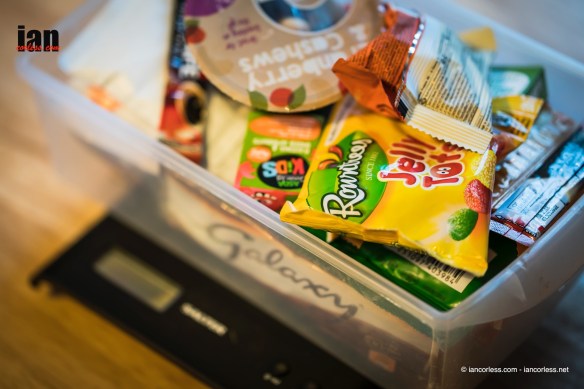
It wasn’t scientific! I purchased Noodles, Cous Cous, Peperami, Nuts, Dried Fruit, Porridge, Soup and so on…

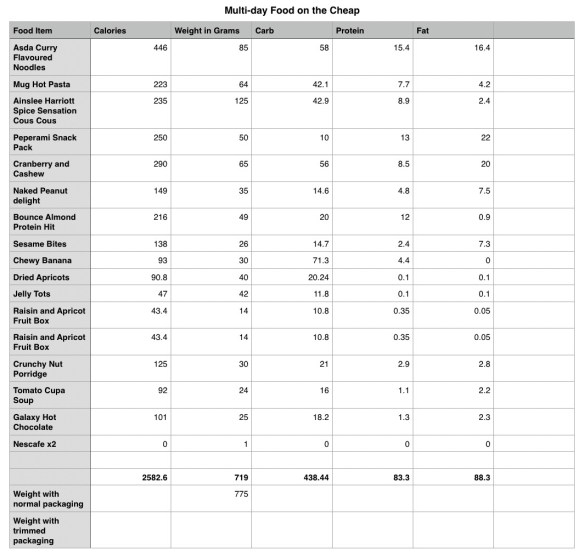
I spent £13.50 and I accumulated 2582 calories for a weight (in original packaging) of 775 grams.

See table below:

multidayfoodcheap

iancorless-com_mdsfood-01376

2582 calories is probably a ‘typical’ daily requirement for many a runner at a multi-day race. The minimum 2000 is a little too light for many. If you think about the weight of 775 and then multiply that by days (six), that gives 4650 grams. If one trims the packs or re-packs into different bags or vacuum packs, additional weight can be saved. I trimmed just the original packing and resealed and I instantly saved 75 grams. That alone would save you 450 grams over six days.


Food samples purchased:

You can download the list of food and breakdown HERE

You may be asking what point am I trying to make with this post?

Well, it’s quite simple. Multi-day racing does not have to be complicated and it doesn’t have to be expensive. Yes, the balance of carb v protein v fat may not be ideal in the above example, however, I could survive on the above!

Think outside the box and customise your food needs to you, your taste and your budget. I personally would tweak what I have above and add a little more savoury/ protein and reduce the simple sugars.

Enjoy the process.

Why not join our Multi-Day Training Camp in Lanzarote with 2015 Marathon des Sables ladies champion, Elisabet Barnes. The camp takes place in January each year. 

Information HERE

©iancorless.com_Lanza2016-04780

Support on PATREON HERE

support_patreon

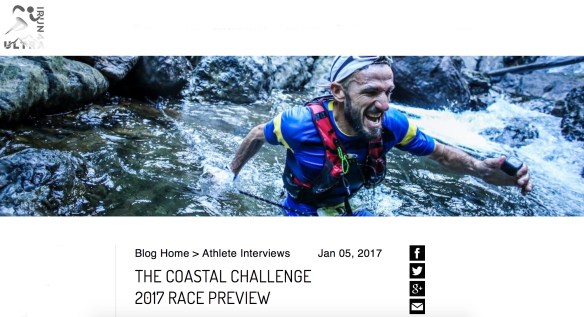
The Coastal Challenge 2017 Preview on IRUN4ULTRA

tcc_irun4ultra

The Coastal Challenge is multi-day race over 6-days starting in the southern coastal town of Quepos, Costa Rica and finishing at the stunning Drake Bay on the Osa Peninsula. Considered by many an ultimate multi-day running experience, it challenges even the most experienced runner.

The 2017 The Coastal Challenge is just weeks away from starting. Runners from all over the world will arrive in San Jose and then travel to the start in Quepos for the 13th edition. And what a line-up the race has… Reigning ladie’s champion, Ester Alves is back along with Elisabet Barnes, Anna Comet and Veronica Bravo. For the men, Jason Schlarb, Sondre Amdahl, Chema Martinez, Tom Owens and Vicente Juan Garcia Beneito head up a quality line up.

Read all about it on IRUN4ULTRA HERE

img_0568

Michael Wardian – The Running Man on IRUN4ULTRA

“He keeps running and running. Michael Wardian just never stops. Many runners have been given the tag, ‘Forest Gump’ and in 2016 we certainly witnessed a couple of real life ‘Gump’s’ in Pete Kostelnick and Karl Speedgoat Meltzer who respectively set two new records: Running Across the USA and setting an FKT on the Appalachian Trail. Kostelnick and Speedgoat produced two remarkable performances, but Michael Wardian raced 47 events in 2016, he raced 1,254-miles in total and in the process, he set 2 World records, had 8-victories, 22-podiums, 31-top ten placings and 26 ‘master’s’ victories. Wardian is a man on a mission and 2016 is not an unusual year… this committed husband and father of two races like this, year-in and year-out.”

Read about Michael Wardian in my article for IRUN4ULTRA  HERE

GO HARD or GO HOME – Zach Miller In-Depth Interview

img_20160712_070410

Zach Miller has inspired from the day he burst on the ultra-running scene way back in 2013 when he relegated the then untouchable Rob Krar at JFK50 (who did not finish) and Matt Flaherty placed 2nd.  What has followed is a full-on, Go Hard or Go Home approach to ultra-running that at times has produced awe inspiring results and equally has left fans and Zach, holding their heads in their hands wondering, ‘what might have been?’ Win or not, Zach is one of the most exciting runners to follow. Earlier in 2016, he did a ‘Zach’ at UTMB and for much of the race it looked as though he may well pull of the biggest win of his life… he blew but still managed a top-10 placing. Cut to December 2016, $10.000 prize money and one of ‘the’ most stacked fields ever assembled at TNF50 in San Francisco and the stage was set, once again, for Zach to lay it all on the line…

“I must give it the best. I like to give it my best and I don’t know maybe I could run faster, with a different strategy but I just like to get out there and get it going and see where it goes. Sometimes it goes well and I end up running times or getting performances that I didn’t even know I was capable of. I think just being willing to take that risk is thrilling and I just like to see what’s on the other side. Because sometimes it’s great!”

I caught up with Zach from La Palma, the home of Transvulcania, a place Zach knows well after racing here as part of the Skyrunner World Series.

Zach: How is La Palma?

Ian: La Palma is as good as La Palma always is as you know.

Zach: Yes, it’s hard to have a bad time there.

Ian: I came here last December because I was finishing off my book, Running Beyond, I needed a little bit of isolation and a little bit of space and an opportunity to get on some nice trails and just to do a little bit of running. It was just so nice because the weather here in December is fantastic, the trails are great. It’s just a nice place to be and I thought, “You know what, it has been another long year. I’m going to go and do it again.” It is just so good. It’s a little bit difficult getting around the islands to get to different places of trail because there’s not a lot of connection. But I’m staying in Tazacorte Port. I have a 2500-meter climb on my doorstep.

Zach: Yes, Okay. There you go, what more do you need?

Ian: The final descent of the race just drops straight to my apartment door.

Zach: Okay, you have no shortage of climbing then?

Ian: No shortage of climbing and no shortage of descending.

[laughter]

Ian: The only thing is it takes me as long to come down as it does to go up.

[laughter]

Zach: Yes, work on your down a little bit [laughs].

Ian: That downhill is just brutal, isn’t it?

Zach: Yes, it is.

Ian: 18k, 2500m of descent. It’s just exhausting. I’d rather go up anytime.

Zach: Yes, that one’s a tough one!

Ian: Yes, well you know all about it, don’t you?

Zach: Yes, I’ve done it once.

Ian: I remember you coming past me in the race after El Pilar, climbing towards Roques de los Muchachos.

Zach: Okay.

Ian: …at that point you were just in the lead with Luis Alberto Hernando, jumping on your heels.

Zach: Yes.

Ian: At that point, it was a classic Zach Miller day, wasn’t it?

Zach: Yes.

Ian: In that you lead the race from the front and then in the latter stages, it all goes a little bit wary… you had that fantastic finish with Dakota.

Zach: Yes, I did. I remember that. That was quite a day. Maybe one day I’ll maybe get back to take another crack at it.

Ian: It’s a great course, a great race. But talking of Zach Miller days, you do have a reputation for going out hard and giving it everything. La Palma, was one of those days. It’s a Zach Miller trademark. Tell me about the Zach Miller trademark of go out and go out and give it everything.

Zach: For one, it’s probably worked for me more times than it hasn’t [laughs]. And even when it doesn’t, it usually ends up exciting. It’s a combination of just liking to be aggressive and make sure that the race gets out and I give a good honest effort that we don’t dilly dally too much.

[laughter]

Ian: No, that’s true [laughs].

Zach: I just kind of set the tone, to give all, I must give it the best. I like to give it my best and I don’t know maybe I could run faster, with a different strategy but I just like to get out there and get it going and see where it goes. Sometimes it goes well and I end up running times or getting performances that I didn’t even know I was capable of. I think just being willing to take that risk is thrilling and I just like to see what’s on the other side. Because sometimes it’s great. Like San Francisco!

Ian: Yes.

Zach: I didn’t really know that I could do that. On paper, I’d have thought I couldn’t maybe run somewhere around that time, but I didn’t know I could run it in that fashion. But I just like to give it a shot and see what happens. There’s plenty of races and if I mess up, there’s another one in few months…

Ian: You say that if you messed one up…  but sometimes going out as hard as you do for the distances you do, that could take some recovery. People like myself when we’re talking about a race that’s coming up or we’re writing a preview for a race, whenever we come to seeing Zach Miller’s name on the start list, we always say the same thing. That, you going to go out hard and you’re either going to have the most incredible day, set a course record and take victory maybe? Or you are going to blow up in [laughs] super fashion and it’s going to turn into carnage and you are probably not going to finish the race or you going to move down the field. You seem quite happy living with that strategy and certainly spectators all around the world love your racing strategy. Do you ever think to yourself that maybe one day, you might try something a little bit different?

Zach: [laughs].

Ian: – or are you happy with the fact that give it all or die trying?

Zach: Yes, I do every now and then I get curious and I wonder, I think like, ” Oh, I wonder what I could run.” And it’s like, “Just run smart.” It’s like if I were strategic, could I run 10 or 20 minutes faster. Would it be more… would it be less painful at the end.
img_20160616_233057

Zach: Would I feel a lot better at mile 40 and be able to run really, really fast instead of just hanging on? Yes, I have this thought sometimes but I like the way that I race and I think it’s exciting and I know people like it. I feel stuck with it because I feel like if I do anything different…

Ian: [laughs]

Zach: …people will be disappointed.

Ian: [laughs]

Zach: Although, I think some would like to see or would be entertained by seeing me taking a different strategy and seeing what I would have left in like the last– the second half of the race. Let’s say I ran with the guy with Alex Nichols through the first half of the race and then try to move. But I don’t know, it’s just my style. I’m pretty happy with it. I’m not going to lie when it doesn’t work, I’m hyped!

Ian: [laughs]

Zach: The only time– the main time where it didn’t work and I wasn’t that hyped was at Templiers in France.

Ian: Aaargh, okay.

Zach: Just because it was so… you know I came so close. I was just very proud of the effort and people got excited about it. And then, I also saw how close I came to winning. I just concluded that it was a nutritional error. I didn’t know for sure but that was how I saw it. That one was like, it wasn’t a training error, it wasn’t even necessarily a pacing error. It was basically like, “I didn’t eat enough [laughs] or drink enough.” Then it was like, “Well, I can fix this.” And that was easier to deal with.

Ian: Okay, I’m going to come on San Francisco because obviously, that’s the most recent result. It’s the one where you had the amazing showdown. Your two-minute video or should I say Jamil’s two-minute video of you running into the finish of San Fran is quite spectacular and it’s certainly gained a lot of hits. But before we talk about that, I want to go back because we first did an interview when you burst on the scene and at the time you were working on cruise ship and training on the treadmill. You’ve come a long way since then, haven’t you?

Zach: Yes, I have. That’s one thing I say and I’ll always says that it’s amazing to see how far I have come in three years and the things is, it’s amazing to see how much my life has changed. My lifestyle. I’m anything but living on a cruise ship anymore [laughs].

Ian: No.

img_20160415_195424

Zach: Now I live in the middle of the mountain in a cabin [laughs]. But yes, it’s been a wild ride. A lot of things have happened. A lot of races have occurred but I think I’ve also developed a lot as an athlete. I’ve gotten a lot stronger and I could just do things now that I couldn’t have done three years ago.

Ian: What do you consider being the changing point for you, where life took on a different roll and you realized that there was an opportunity for you to change tack and almost make running your life?

Zach: Mainly, once I won JFK and then started getting some interest from sponsors, I just saw the potential of that. I was at that elite level and I was desirable to sponsors. When I realized, I could start making an income off it and that I could be good at it, I kind of saw maybe it was time to transition off the ship and get back on land. I moved to Colorado, so that was a big step and it was a great place to move to, to train and everything. Just seeing the success of JFK gave me the confidence to give it a go.

Ian: You got sponsorship from Nike, how instrumental has that sponsorship been? And how much do they help you to live the life that you now want to live?

Zach: Nike has been very helpful over the past three years. I was very new to the sponsored world. Basically, they came in and they gave me a lot of very good product support, travel support, an opportunity to make some money, too. It just opened doors to be able to travel, to races like Transvulcania or UTMB. To have the sponsors to do that because plane tickets and everything are very expensive and I wasn’t at the point in my career yet where races were paying to bring me over. I needed sponsor help to get me to those races so that I could make a name for myself. Basically, they just gave me an opportunity. They provided a way for me to get out there and make a name for myself. That’s been very, very helpful. Over time, I got a few more sponsors and things. But, yes, they were the first one to jump in and support me and it worked well.

Ian: When did the move happen for Barr Camp, and tell me a little bit about Barr Camp and the story behind that?

Zach: I would have moved to Colorado in May– around May, shortly after Lake Sonoma in 2014. I lived in Manitou Springs, at the base of Pikes Peak for about a year– working and training. I was on Pikes Peak a lot training on the Bar trail and just in that general area. I got to know the caretakers who were working at Barr Camp which is an off the grid cabin, halfway up the mountain. It’s like the huts that you would have in Europe except not as fancy. There isn’t a road. There’s a little electricity that comes from solar. Our water comes from the creek. The bathrooms are outside so it’s not as fancy as a lot of the European huts. It’s very remote and it’s pretty rustic. But anyways, I got to know them and then I found out that they were leaving and they were looking for new people to take the job so I got the information and then I pitched the idea to my sister because I wanted somebody to apply with me. My sister liked it and so we applied together and then we ended up getting the job. Now, it’s me and my sister and her husband– we all work up there. We’ve shifted rolls a bit. My sister and her husband take the full-time roles and then I actually work in a part-time – more of an assistant, part-time role. I live at the cabin year around but I have the freedom to go do my racing and my sponsorship obligations. And basically, when I’m here, I’m working but I get a lot more freedom to be able to like go Europe and go to California and do all the things I need for my running career. It’s really just a good mix.

img_20160919_220809

Ian: There’s a lot of people going to be reading this and they’re going to be thinking – particularly if they’re involved in trail and mountain running, “Wow, that sounds just awesome.” Is it as awesome as it sounds?

Zach: It is awesome but it’s not for everybody. It is also tough. The winters are very awesome because the camp is open year round but our traffic drops a lot in the winter. In the winter, we have a lot of time to ourselves. It is still labour intensive. You’ve got to haul the wood in so the fires lit to keep the cabin warm and you’ve got to carry the water in from the creek in five gallon buckets. You got to shovel off the solar panels and clear all the snow and everything. In terms of like day-to-day seeing people, we don’t see as many. It’s much more relaxed to have a lot of time to go out snowshoe, or ski or hike or run. It’s much more laid back. But the summers are incredibly busy. We’ll feed and house up to 45 people. If you come to our camp it’s not very big, so that can get hectic. We’ll feed like 45 people out of this little tiny walled kitchen. There’s just a lot of work in the summer, between cooking and cleaning and doing camp maintenance and doing search and rescues, and talking to hikers and selling things. In the summers, you pretty much go non-stop from 6:00 Am till 9:00 PM. And then maybe you read a book for like 30 minutes and then you pass out and go to bed [laughs]. I’m basically either working or training or working. It gets pretty busy.

Ian: Tell me a little bit about the training, because obviously, I don’t know what height Barr Camp is at, but it must be around about 10,000 feet. You’re sleeping altitude for sure, do you then drop down and train at lower altitudes or do you find that you’re training above 10,000– below 10,000 and that works really, well?

Zach: Yes, I just stay around 10,000. The camp is at 10,200 feet.

Ian: That was a good guess, yes?

Zach: Yes, it was. It’s 3,000m, I’m looking at my cabin right now because we have it up on the wall. It’s 3,109 meters for everyone in Europe. It’s very high. When I’m here I do a lot of my training. Sometimes if I make it all the way down to town, that’s like 6,400 feet. But then I must come back up. Basically, the low point of my training is around 6,400 but then I have days where I go all the way to the summit which is 14,110 feet. My training is anywhere from 6,000 to 14,000 feet. It always starts and ends at 10,000. I probably spend a lot of time between 13,000 and 8,000 feet, it is probably where a lot of my training is done. I don’t necessarily intentionally go low to train; I just train where I am. I don’t drop down to do like speed work or anything. Not usually.

Zach: What’s interesting about that is we started this conversation with me being in La Palma and the Transvulcania course starts at sea level and almost finishes at the sea level. But that middle third of the course, once you go through El Pilar you’re then above 2,000 meters and you stay at 2,000 meters or above. One of the things that I’ve found running on the course and being on the course is that going up to altitude and dropping back down is completely different than staying at altitude and having to run at altitude for a prolonged period. And of course, that’s one of the things that happens at Transvulcania is that once you get into that middle and latter third section, you’re running at 2,000 to 2,500 meters for quite a chunk of time. Living where you do, this is perfect preparation for this type of race. Do you really feel the benefits of that when you travel and go to different races?

Zach: Yes, the benefits are there. It’s hard to always feel like Superman per say but the one thing is like when I run a race like Transvulcania or I race at UTMB, when we get up to the high points of 8,000 feet I don’t necessarily feel much different. For me, it’s not like I get up there and I feel I’m way out of my element. It’s just like that’s where I train every day. Up there I just feel like I do in Colorado. You don’t necessarily feel like superman per say although, I do usually feel pretty sure on climbs. Like when you get the high altitude and we go up the climb, that is where I notice it.

I do remember running at Transvulcania two or three years ago and being up on the volcano with Luis Alberto. He’s incredibly strong but I remember listening to his breathing and feeling like he was breathing very hard and he obviously ran very hard and he ran great that day. He beat me by a long shot but I don’t know what altitude he charged at? But I just remember noticing that we were up there and probably once he got down he was very, very strong. I remember him seeming a bit laboured up there but he still went right away from me. It was very, very impressive or maybe he’s just a heavy breather [laughs].

Ian: He does breathe heavily and Luis is a little bit like yourself in that he commits himself but he knows how to bide his time. Particularly at Transvulcania he would have known that you and maybe Sage Canaday and a couple of others were going to go off hard and he would be thinking about pacing himself. But when he makes his decision to go then he commits.

Zach: For sure I’ve seen that.

Ian: That was probably the phase that you were hearing him. When he made the commitment and it was a case of, “Now I’m going for it. I’m going for it.” Would you say that Transvulcania was maybe the race that started your switch to move to the longer ultras?

Zach: I wouldn’t necessarily say so because it’s still in that 70 to 80-kilometre range. I’m trying to remember if it was our first big European race or not?

Ian: It was, wasn’t it?

Zach: It was probably my first like real big more technical European race because Templiers in France is a hybrid. Transvulcania isn’t that technical in the beginning but that descent is what defines that and that is much more technical. I just think I was walking up in terms of racing in the European style at Transvulcania.

Ian: If Transvulcania wasn’t the real catalyst then surely something like Madeira Ultra Trail which at the time you said was one of the hardest races you’d ever done?

Zach: Yes, it’s still one of the hardest races I’ve ever done. That was the one that was a jump for me. I had been doing racing and it took around six to seven hours and then Madeira was my first race that ever took longer than like eight or nine hours. It was much longer than that. It was just under fourteen hours. That was a long time for me. That was new territory for me. But I did that and then people were like, “Well, if you can do this, you can do UTMB.” It scared me and also gave me some confidence for UTMB at the same time.

Ian: Tell me a little bit about Madeira Island Ultra Trial because I’ve been to Madeira Island several times now for races and there’s only two directions on the island and that’s up and down. It’s a brutal environment. I remember seeing a photograph of you lying on the ground looking as though you had a medical team making sure you were still alive.

Zach: Your description is good, there’s only two directions up or down. There are points in Madeira where you actually do run rolling almost flat but yes, it’s a very roller coaster course. You’re basically doing a big climb or big descend or a short little bit of runnable in between and the climbs are very steep and the descents are very steep. What defines Madeira are the stairs. So many of their trails just have stairs in them. They’re not uniform, some are concrete some are like dirt and wood planks. Some are small, some big, some are wide. Your footwork at Madeira must be very good and you must be able to change it at a moment’s notice. It makes the end that last 20 kilometres, so it was just brutal.

Ian: Do you still consider it, without considering San Francisco which you obviously have just won, was MIUT one of those defining races where you put it all on the line and it had come good?

Zach: Yes, it was because I was going thoroughly hard from the gun. We started at midnight and by the time the sun came up I had a good lead but I had already bonked… That’s why there’s that aid station video of me eating so much food because I had just bonked right before that aid station and I knew I needed to eat. Yes, I had worked very hard. I had run myself into a bonk and then came out of it. Then just had to fight really, really hard and it was very painful for the last like 20 miles but I was somehow able to keep going even though my body wanted to stop. It was also a day where it was like, “Wow, it’s impressive that my body could hurt that bad and keep going like it did.” It was a very telling day.

Ian: I’m interested in a couple of things that you’ve said there. You bonked in the race? You blew up, managed to eat and then carry on and not lose the lead but then also in the final stages– and quite long final stages where you’re really hurting and you’re in pain, you still manage to continue to push. Is that something that is just within you or is it something that you think you’ve worked on to enable yourself to do that?

img_20160929_224333

Zach: It’s both. It’s within me and it’s also something that I practice almost every day. Even as a kid I was a very very competitive person and I am very hard worker. If there was something in my mind that I considered to be successful, whether it was getting an A on my test at school or running a certain time in cross country. If there was something that I gained success I always wanted to attain it. I’m just naturally very, very driven and very hard working.

My parents were not so much athletes but very, very hardworking people, so I always kind of grew up with that example in front of me. And kind of not quitting until the job is done. Then the other part is I go out and I train and I just take those things and I practice them. I won’t let myself hike up a climb, I just stubbornly run it or I’ll bonk out there on the run and I won’t let myself walk it in. I’ll somehow manage to slowly run back to the cabin, and it gets cold in the winter and I train all winter long and it could be negative 15 degrees’ winter and freezing cold and snowing and I still go out and do it. I just kind of discipline myself on a day-to-day basis and then when I get in the races, I’m well practiced at suffering and just sticking with that and that’s how I get myself to push all the way to the end.

Ian: Okay. Well, that’s obviously one of the reasons why you’re successful because most people can’t do that. CCC, where did that fit into the big picture? I’m assuming that it was a case of going to Chamonix, understanding the environment, understanding the landscape for a serious attempt at UTMB?

Zach: Yes, sort of, it was probably less about scoping out the landscape for UTMB as it was just running CCC. I wasn’t at the point in my career where I wanted to do 100 miles yet, so I wasn’t going to do UTMB. But I still liked racing in Europe and that one looked good and Nike had gone over the scopes and they recommended it, Nike said it would be great. And yes, a bunch of my team mates were doing it. And it was like, “Well, this looks like fun and this looks like good one.” So, I jumped in and did it. It wasn’t so much like just a scouting mission for UTMB, it was more just to run that race. And it ended up being greater. It was kind of a turning point in my career and I was thankful that I did it.

Ian: Winning CCC is one of those funny things, if it was a stand-alone race, on its own weekend, it would be huge, but it always gets completely overshadowed by the UTMB. And I’ve spoken to and I’ve interviewed countless people who’ve been on the podium at CCC, Ellie Greenwood is a classic example and she said, “You really feel as though you’ve just won a smaller race in a big weekend.” Did you feel that?

Zach: That was my fear when I went to do it but when I did it, I didn’t really feel that. My fear was kind of like– in fact towards the end I wanted to run UTMB instead because I was thinking CCC is the side show, UTMB is the A race and CCC is the B race, and all the eyes and all the media and all the attention is on UTMB. And I was a bit reluctant to be in CCC to be honest. Probably even standing on the start line thinking all the big names are not in this race but then I ran it and the crowds were fantastic. My family was following along from home and the coverage was good. And when I came in… it finishes at the perfect time because it finishes around nine o’clock at night when everybody is having dinner. And so, the finish line at CCC is just phenomenal. When I came in and I won, it didn’t feel like I just won this side show, it actually felt like a very big deal. A lot people got very excited about that win. It got me a lot of attention in Europe and in the States, as well, so no, I was afraid that it would feel like that, but once I did it, it didn’t feel like that. It felt like its own show almost.

Ian: I wonder Zach, whether it’s because of your racing style and your race strategy and your, give it everything, and of course you did milk that finish line, didn’t you with the jump in the air… there was the elation, there was everything in there and of course an American winning a French race is a great story.

Zach: Yes, maybe it was partly because of that but yes, whatever it was, it was a great experience for me. And that’s the interesting thing about running and about sponsorship, most of the time the sponsors want the win, they want the podium finish. They want you on the top. But I’ve also come to realize that through racing, people are attracted to elements more than just winning. I probably had races where I haven’t won and I ended up with more interviews and articles and attention than the guy who did. Just because people were so entertained by the dynamic of it and the style of it and that’s just been very interesting. And it’s just funny how that is, it’s like sometimes you don’t even need to win, I want to win but there can be a lot of value just in the way in which you run the race regardless of exactly where you finish in the standings.

Ian: No, absolutely. And there’s a couple of classic examples of that and this year’s Western States with Jim Walmsley as a classic example of that, he’s had far more media coverage than Andrew Miller who won the race and almost to the point that if you ask people who won Western State this year, sometimes they don’t even know, because there was so much attention on Jim Walmsley.

Zach: Yes, exactly.

Ian: Particularly for you with UTMB, the fact that you took it on and you gave it everything, and you did blow up. But you didn’t blow up in spectacular fashion as myself and maybe a couple of other journalists thought you would – you somehow you managed to hold on and still get a very, very respectable place. Tell me about UTMB, and what made you think that you could go and run that big loop through three countries from the front and maybe hold on to the finish line?

img_20161222_213042_122

Zach: Honestly I didn’t know. That’s the thing with how I race. I said to friends or whatever, “I don’t go into races saying that I’m going to win, I don’t even go in with full confidence that I will. The only thing is that I’m just willing to try, and I’m willing to try to do something that I’m not sure I can do.” I think I can run around Mont Blanc, but I’m not sure I can run around it at the pace that I’m going to set off at. I’m just willing to try and find out and then if it works, it will be great, and if it doesn’t, I will learn something and then come back and probably try and fix it. Yes, I didn’t know if I could hold that all day. I did feel good and strong for a very long time. I had a little bad patch out of Courmayeur but then recovered and ran strong. It seemed all was going well up until just after Champex Lac, this is where it all started to unravel.

Ian: That’s what’s so great about it. I think to myself, if I was on the start line of a race like that and I had those insecurities-, those doubts or if I could or couldn’t, I’d play safe as most people would. And I’d maybe ease myself into the race, see how things go, and if I got to around about 70 or 80 miles and I’ve got something left, then I might give it a little bit more of a push. But you almost do it the opposite way around, you sort of go, ” I’m really fresh, let’s go as hard as I possibly can, for as long as I possibly can and maybe I’ll hold on.” When it all goes belly up and you get that major blow up and the major bonk, what goes through your mind at that point? Because you see the other runners coming up to you, you’ve got all those question marks in your mind about, “How I’m I going to get on here with? How am I going to continue? I’ve spent so long in this race at the front I don’t want to give it up now.” How’d you carry on?

Zach: It is very hard. Usually, there’s a fair amount of fight left. When I got Champex Lac I was getting chased but somehow I fought my way in there in the lead. Then by the time I left right on the heels of I think Julien and then just in front of the guy in third at that point in the race whose name is escaping me. Right then, I was in a bad spot – I wasn’t good mentally but I wasn’t going to give up. I was very determined to try and salvage it. I did actually get past Julien and I climbed away from him very, very, well. It wasn’t until the next day in the race that I found out that those two who had caught me at Champex Lac never beat me. I held them off.

Ian: No, they didn’t catch you!

Zach: Which I didn’t know because when Ludovic caught me I thought it was Julien, they’re both Hoka, I don’t know them very well by face. I know them much better now. I was confused when I was out there. I thought I was getting caught by Julien Chorier again and it was Ludovic. They’d comes from very far back. First, there was a lot of fight and then the body was just getting to a stand-still. It was just like the heart and the mind battle, the heart wanted it so badly to stay at the front and the body just wasn’t able to. It was very, very difficult for me. But I was still going to try to get to the finished and finish respectively. I just pushed to the finish — not very fast but I just did what I could and I got there. It was very tough mentally once I start getting passed.

Ian: It was still an incredible result for you to be one of the highest ever finishing Americans at the UTMB. History with UTMB and America is not something that the Americans have looked on until these last few years as being too great. What do you think has changed with people like David Laney, Jason Schlarb, yourself and so many others, that are now, making or enabling the American male runners – because the females have always done well at UTMB – but it’s significant the male runners that are now performing, what is it do you think that’s happened that’s now giving you good results at that race?

Zach: I’m not entirely sure I think maybe we’re a little more focused. Americans had a stage and we’re still maybe going through it where people just raced everything. They were not being very selective they just trying to see how much they can do but it’s quantity instead of quality. And as it’s gotten more competitive in America the elite runners have started to realize that, “I can’t just go out and win everything all year all along, I actually have to plan this. I need to be strategic and I need to target races.” I think maybe we’re targeting a little more and so we’re coming in with bodies that are not so beat up– that are ready to go.

And then we’re getting this faster generation that’s fresher and has this fast running background. On a runnable course– on a pretty runnable course like UTMB they’re able to– we’re able to go crank for a while. But then we’re also pulling young guys who have that background but also live live in the mountains of California at high altitude. I live in Colorado, Jason Schlarb lives in Colorado. David Laney bases out of Oregon but he’s always out the big mountains. Runners are finding themselves with these faster running backgrounds and good talents then coupling them with good training grounds and a little bit of focus and it’s paying off.

img_20160609_083240

Ian: Yes, you’re exactly right. It’s a learning curve and I also think that more Americans are racing in Europe and they’re beginning to understand the European style of racing and the courses that are available out here. Because in general, our courses are more technical– and I’m not saying that UTMB is a technical race but I’m just saying that it’s all a process and it’s all a learning curve. Your UTMB, and this is my last question on UTMB. We’ll talk about San Francisco in a minute. A lot of people have compared your run to Ludovic Pommeret who won the race. Ludovic, while you were leading the race, was probably back in 50th place and he slowly but surely moved his way through the field as many of the elite runners fell by the wayside and dropped out of the race. He moved up and eventually won the race.

Have you, in the weeks and the months after UTMB sat down and looked at your race and looked at his race and thought, “I can learn something from his win?”

Zach: You could learn something. His win is also interesting because, if I understand correctly, he and I were actually pretty much together in the very early stages of the race. He did go out aggressively. He had a stomach issue partway through that put him into a walk for a while or hike and put him way back in 50th and then he made that miraculous comeback. His body forced him into a more conservative or strategic approach even though it wasn’t necessarily what he was trying to do. It is very interesting; it shows that you can and guys like David Laney too, show that you can be slower and be much more strategic and then just sweep up all the carnage along the way.

Ian: Yes.

Zach: There is something to be learned there. For me, when I came out of it the big areas where I saw to improve and learn lessons was more from a training standpoint – conditioning my legs a bit better for the downhill running towards the end. Then just in general and then a nutritional standpoint. Because when I look at UTMB in my own head and I don’t know if I’ve ever actually said this to anyone but in my own head as I progressed through my career– as I’ve raced since then and as I looked backed at UTMB and I looked back at other races I’ve done I feel that maybe– and I must go back and try UTMB again to test my theory. But it feels maybe it’s a bit like Templiers where I learned a big lesson in nutrition and there was a lot of potential there in my body physically but there was a lot that needed to be learned nutritionally to support that kind of an effort. Now, I’m just trying to figure out how do I fuel my body to support that kind of a physical effort. I don’t know. Yes, maybe I need to make some adjustments in tactics, in pacing, in technique and how much I hike and when I run and how aggressively I go out. It’s all very, very, interesting and I have a lot to think on through the winter.

Ian: The Ultra running audience are quite happy with the way you run Zach and they’ll happily accept every now and again that you are maybe going to blow up or you’re not going to win a race because the way you’re racing is so exciting. How was the recovery process post UTMB? Had UTMB depleted you physically and mentally?

Zach: It took its toll physically and mentally in the short term. Physically, I was less sore but from a deep-set fatigue stand point I would say I was much more beat up. UTMB took about a month. It was much, much longer, about twice as long than 50 mile recovery. And then mentally, it was tough too. When I came back from UTMB, I was in a rough spot mentally. I just had trouble. Although, I acknowledge a lot of positive things that came of it, lessons learned and good experiences and things, it was just really hard. It was so very heart-breaking for me; it was hard to deal with for a while but then eventually the body came around. I got back to training hard and I could focus my energies on something and I had a goal in mind– getting ready for North Face, and eventually I found my way, but it was initially very hard.

In the long term, the fear of the hundred was kind of like, “Oh, you will lose your speed.” People were like, “Take your time getting to the hundred, you’ll lose your speed.” Maybe I lost a bit of very low end speed but after North Face 50 I don’t feel like I’ve made myself a worse 50 mile runner.

[laughter]

Zach: I’m very happy about that because I felt at North Face, and maybe you will ask about this, but I felt when I was out running North Face, maybe at North Face is where my UTMB training that I had done all summer was paying dividends and showing up. That maybe I wasn’t quite present at UTMB but after resting after UTMB and then going back, like shifting training a bit. But at North Face, the work that I had done all summer long was now finally paying off.

Ian: You have hit the nail on the head for me and that was going to be my segway into North Face in San Francisco. What you achieved or maybe what some people would say you didn’t achieve at UTMB is what gave you a course record and that incredible run at San Francisco. That suddenly 50 miles was not that long in comparison to what you did at UTMB, but also it gave you all that inner strength and there was definitely a part of me that, it was a case of you were on the start line not only to race everybody else but you were there really to race yourself and to see what you could get out of your body and if that meant victory then all well and good, but if it meant that you came third or fifth or tenth but having given it everything then you would have been happy?

Zach: Yes, that’s always kind of the idea. Sometimes I do come third or fifth and I’m not so happy because I am competitive. But yes, that kind of is the idea and with the talent that was in that race it was basically shaping up to be pretty much exactly what it was or what it turned out to be, just an absolute hammer fest all day long. And you know that’s an exciting thing. It’s like, “Well, here’s a chance to really find out what I’m made of.” Because I see snippets in training. But you never go out there and race a full 50 miles in training. It’s just like, “Well, here is a really good opportunity to put myself to the test and see exactly what’s possible.”

Ian: I’m going to compress 50 miles into five or ten minutes but I’ve seen a lot of races, a lot of ultras and I’ve seen some fantastic performances, but the one thing with an ultra is when you see the guy or the girl come down the finishing chute they never look spent. They never look as though they’ve given it everything (from a a pace perspective) and it looks as though at San Francisco that you gave everything right from the beginning and finished it off giving every last ounce that you had. Your finish is just the most captivating two minutes of a 50-mile race. You are giving it everything. You’re breathing out of every orifice that and you’re worried about whether Hayden is chasing you down because you were only separated by minutes. It’s just so compulsive. Do you feel as though that is the way that the racing is going to go now?

Zach: It is heading that direction. We’re getting to the point now where we’re really starting to race. Hayden’s performance that day was absolutely incredible. I basically told him after the race, I’ve never had anyone hang with me like that. I’ve had people like Luis Alberto beat me. I’ve had people catch me. I’ve had other experiences but I’ve never had anyone go out with me and challenge me like that and then stay right on my heels all day long. And sometimes it was me on his heels because we flipped back and forth. That’s how close it was. It was a race. It was like I was running a road marathon where we came down to the final couple of miles and somebody makes a kick and pulls away and wins. That’s pretty much what it was. It was an actual race all day long where I could never be comfortable and I could basically never let off on the gas.

Yes, as we get competitive fields and these young hungry guys in the sport we are maybe going that way. The 100 mile distances are a very interesting distance for that to happen to, just because there’s so many factors. But in this 50-mile distance where, especially in America where the courses are being run in five and a half– six and a half hours, and guys are starting to get very strong and trained very well and be tapered well for the races. Yes, we could see more of it. I don’t think we’ll see it necessarily at every race but I think a couple of the big ones during the year where you get the right combination of guys on the line and we’ll have a few more shows in the next couple years.

Ian: Zach, how much do you think $10,000 prize money influences it being a race.

Zach: It influences it in the sense that it draws a lot of very good competition to the start line. A lot of the elites, they want to run it because that’s the big pay day if they can get it. When I’m out there running… I forget where I heard it but it was somewhere I think after college somebody said they had received some advice or something that you should never run for money. Money should never be the reason that you’re running. When I’m out there running 50-mile race, money is not the motivating factor. I like to think that there’s other things that are more of a motivating factor but I won’t lie when I was running the race I was thinking about the $10,000 prize!

Ian: [laughs]

Zach: That’s a pretty significant amount of money. It does a lot for me. Yes, it does push you. When I had 5k to go and I was in the lead by about a minute, it was kind of like, “Well, I can hurt an awful lot for $10,000.”

[laughter]

Zach: I would love to say that the money never crossed my mind, that I’m just such a purist of giving it my all and just the spirit of the sport, that that was the only thing motivating me but I’m too human. It was a mix. It was my competitiveness, it was my desire to just be first and attain that measure of success, and it was also $10,000. I probably needed just about every bit of of grit to get me to push that hard.

Ian: There is absolutely nothing wrong and my question was a loaded question because I wanted to get your viewpoint on the influence and the impact that money has in the sport, because I think we are going to see more of it and races like Run Rabbit Run where there is even more money available has an influence. This race was a race, prize money or not. And when Hayden and yourself are running shoulder to shoulder and he’s in the lead and you’re in the lead, what was the point where in your mind you thought to yourself, “Now is the point that I go and give it everything.”?

Zach: It was pretty much with about nine miles to go coming out of Muir beach the second time.

Ian: Okay.

Zach: There was a time shortly before that where I thought like maybe I was breaking away but I think mostly I had gotten a few seconds but the trail was just so twisty and turny that I couldn’t see him, so it felt like I was farther ahead than I was. And by the time we got to Muir Beach he was right behind me. He was like 15 seconds behind me. And there we were at around mile I don’t know 40, 42 and nobody had blown, we were in the exact same spot we had been basically at the start. But that was the point where I knew we had basically two more climbs and we had two descents and I didn’t want to lose it on a descent at the end and so I was just kind of like, “Well I just– I have to– I’ve been doing well.” After about 30 miles I had been doing well on the climbs– very well on them so I just had like, “Well, I’m just going to kind of push really hard here and see if I can get away and do a little caution for the couple of descends that were left.”

Ian: You got the course record and the race will be remembered for years and years to come. It’s one of those classic jewels and of course the advantage these days is that there’s so much social media that that story get shared worldwide. It’s certainly become one of the highlights of 2016 for several reasons – I think the time that you ran, that final two-minute video shows the amount of commitment and pain that you’re putting yourself through. But equally the finish line and the sharing of the story and the emotion with Hayden that very much humanized the event, that there was a victory there was prize money but ultimately it’s one of the things that I love about this sport, it was the interaction between you two and the mutual respect.

Zach: Yes, that was one of the greatest parts of the day. Was that I was competing against an incredible athlete who at the end of the day was willing to turn around and shake my hand and give me a hug and chat about the race and how incredibly hard it was. There was a good camaraderie there, it wasn’t this like ugly rivalry of like, “Oh, I hate you and you hate me and we can’t talk to each other.” No, it was almost like we were more friendly with each other after the race than we were friendly with each other before the race but I think each person kind of maybe has their guard up a little bit, you know?

Ian: Yes.

Zach: And then after the race it was good to be able to share those moments with Hayden and especially him being so new to the sport.

Ian: All right.

Zach: That was me at JFK with Rob Krar. And I remember how kind Rob Krar was after the race in talking to me and I respected that. And that is a good testament of the great sports we have.

Ian: 2016 is coming to an end, you’ve had incredible results at San Francisco, you’ve got that course record and now is an opportunity for you to look back at the year and recover and plan for 2017. I’m looking forward to next year, you have an entry for Hardrock 100.

Zach: [laughs] Yes, just to add it’s not a guarantee yet, I’m in if I want it. It was a funny situation, I had a ticket and I’d paid for the Hardrock and I’ve kind of wanted to do Hardrock and Bill Dupery wanted me to do it and I had this ticket and I said well, they say it takes like eight years to get in so I might as well put it in.

Ian: [laughs]

Zach: And I said I will put it and I will hope that it doesn’t come out because I want to go UTMB.

Ian: [laughs]

Zach: I got in!

Ian: [laughs]

Zach: Now I have this decision, I must decide whether I run Hardrock or run UTMB and at first I would say I was leaning towards just going to UTMB and then I kind of started talking with Bill Dupery and [laughs] friends in Colorado and I started leaning back more towards Hardrock. And now I’m not sure what to do but I’m considering both. I won’t do both but I will pick one and I’m considering both I just must decide which one to pick. I’m very honoured to have made it into the race and it is a very cool race and I think it suits kind of my current living and training style, I am well-suited for it, so I kind of feel I should probably take a crack at it while I have the chance. Because I know this chances are precious. I’d say there’s a decent shot I’ll be on that start line but I still must kind of think through a few things.

Ian: Well, I’m not going to pressurize that decision.

Zach: [laughs]

Ian: Should you choose to do Hardrock or UTMB it’s going to be a very, very exciting day. I must think that you’re run at Hardrock would really, interest me because [laughs] if you use the strategy that you always use that could be a very, very interesting day at Hardrock and particularly with Kilian and Jason Schlarb going back – that’s one hell of a line-up.

Zach: And I’ll say this, I feel like there are two things that people would love to see at Hardrock, they would love to see me race like I normally do…

Ian: Yes [laughs].

Zach: …because, as insane as they think it is, it’s extra insane at Hardrock because of the nature of the course and they want to see Kilian go as fast as he possibly can. And if we could get both of those things in one day it would be very exciting.

Ian: It would be more than exciting Zach!

Zach: Maybe Kilian’s already gotten his best performance there but the man is very, very talented and I felt like having Hayden at North Face just pushed me to a different level. I’m not saying that I’m good enough to push Kilian to that level but if we could ever have somebody push him to that level that could be very fun to watch.

Ian: It would be definitely fun to watch. And on that note, it’s a perfect place to finish with the anticipation and excitement of what might happen. Either at UTMB or Hardrock in 2017. Zach look, thank you so much for giving me your time, it’s been a fascinating interview and thank you for inspiring so many runners in 2016.

Zach: You’re welcome, it was my pleasure.

img_20160418_062137

All images ©zachmiller

Merry Christmas and Thanks

merrychristmas2016

2016 has been an incredible year. I have travelled to more races, worked with some incredible people, interviewed inspirational athletes from all walks of life and I launched Running Beyond Book.

As one year comes to an end, it’s always good to give thanks. I want to thank all the races and race directors worldwide that have asked me to cover their races; I started my race coverage in Costa Rica and concluded it Nepal with a whole string of stunning locations and places in between.

Skyrunning for an incredible calendar of races – VK, SKY, ULTRA and in 2016 we launched EXTREME, it really is such an inspiring race series.

So many magazines, websites and resources that have used my content throughout the year.

Karl ‘Speedgoat’ Meltzer has once again provided another year of co-hosting with Talk Ultra and somehow along the way he managed to set a ‘FKT’ on the Appalachian Trail.

Niandi Carmont has been invaluable with her support – without that, what I do would not be possible and in addition, she has been working at many of the races I have attended as writer and podcaster. I hope 2017 is a great year for her as she progresses her run coaching.

Finally, all of you who read the articles, view the images and listen to the podcast – a huge thanks!

Have a great end to 2016 and I wish you all a successful 2017.

Jim Walmsley’s Record Breaking 2016 on I RUN 4 ULTRA


irun4ultra_logo

In 2017 I am pleased to say that I will be writing regularly for I RUN 4 ULTRA with two or three submissions per month. My first article was about:

PETE KOSTELNICK – RUNNING ACROSS THE USA read the article HERE

My second article is about

JIM WALMSLEY’S RECORD BREAKING YEAR OF 2016

As years go, 2016 has been a cracker in the world of ultra-running. Pete Kostelnick ran Across the USA in a record time. Karl ‘Speedgoat’ Meltzer set a new ‘FKT’ on the Appalachian Trail, Zach Miller broke the TNF 50 course record with a trail blazing run and Jim Walmsley has turned heads with a display of hard and fast running that has left many wondering, what does 2017 hold for this sport?
Read the full article on I RUN 4 ULTRA HERE