Food For A Multi-Day On The Cheap

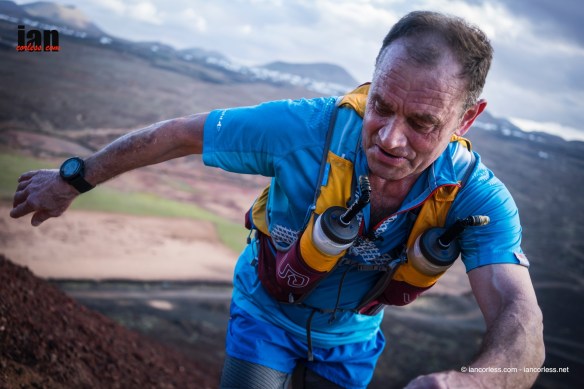
iancorless-com_mdsfood-01398

Multi-day racing is booming and the selection and variety of races increases, year-after-year! Last year I attended multiple races that lasted several days and each of those races had a very unique difference to the others. For example, the heat, humidity and technical terrain of Costa Rica at The Coastal Challenge was in many ways compensated for by the race being fully supported. At Everest Trail Race, the mountains, the altitude and semi self-sufficiency was compensated for by food being provided each morning and each night.

Read a related article, Top Tips to Multi-Day Racing HERE

Marathon des Sables though, like races such as Grand to Grand, 4Deserts such as Atacama, Gobi and the Sahara all operate a self-sufficiency policy. The only items provided are water and a cover for the night.

So, everything must be carried (read an in-depth article here) and that includes food for the duration of the run. In many cases, a minimum calorie requirement is specified for each day, at Marathon des Sables for example, it’s 2000 calories.

Calories are important at a multi-day race, not only do they allow you to perform but that also enable you to recover and importantly, food alters your mood. As many runners say, you only have three things to do at multi-day: Run, eat and sleep. So, food becomes very important.

Needless to say, calories, how many calories and how those calories break down (carbohydrate, fat and protein) is very individual to the person who will consume them. A female 5-feet 5-inches weighing 50kg is going to need less calories than a male 6-feet 2-inches weighing 80kg! It will also depend on the objectives of said runner. Are they looking to race and make an impact at the front or are they looking to complete? Also, how the runner uses calories depends very much on how they have trained their bodies when running. Utilising fat as a fuel source is essential for multi-day running.

Food is important!

Many dehydrated food options exist that are specifically designed for multi-day racing. Some are tasty, some are not and nearly all are expensive.

With this in mind I asked the question, ‘How cheaply can one put food together for multi-day race?’

I am sure it’s a question many ask and while the balance of carbs, proteins and fats may be compromised in the list below. It just shows how effectively your local supermarket can fulfil your multi-day food needs.

I shopped with the intention to purchase food for just one day. I didn’t tally weight or calories as I shopped. I purchased on impulse keeping these points in mind:

  1. Taste.
  2. Variety.
  3. Carbohydrate.
  4. Fat.
  5. Protein.
  6. What would be easy to cook.
  7. What would I want to eat?
  8. Treats?

It wasn’t scientific! I purchased Noodles, Cous Cous, Peperami, Nuts, Dried Fruit, Porridge, Soup and so on…

I spent £13.50 and I accumulated 2582 calories for a weight (in original packaging) of 775 grams.

See table below:

multidayfoodcheap

iancorless-com_mdsfood-01376

2582 calories is probably a ‘typical’ daily requirement for many a runner at a multi-day race. The minimum 2000 is a little too light for many. If you think about the weight of 775 and then multiply that by days (six), that gives 4650 grams. If one trims the packs or re-packs into different bags or vacuum packs, additional weight can be saved. I trimmed just the original packing and resealed and I instantly saved 75 grams. That alone would save you 450 grams over six days.


Food samples purchased:

You can download the list of food and breakdown HERE

You may be asking what point am I trying to make with this post?

Well, it’s quite simple. Multi-day racing does not have to be complicated and it doesn’t have to be expensive. Yes, the balance of carb v protein v fat may not be ideal in the above example, however, I could survive on the above!

Think outside the box and customise your food needs to you, your taste and your budget. I personally would tweak what I have above and add a little more savoury/ protein and reduce the simple sugars.

Enjoy the process.

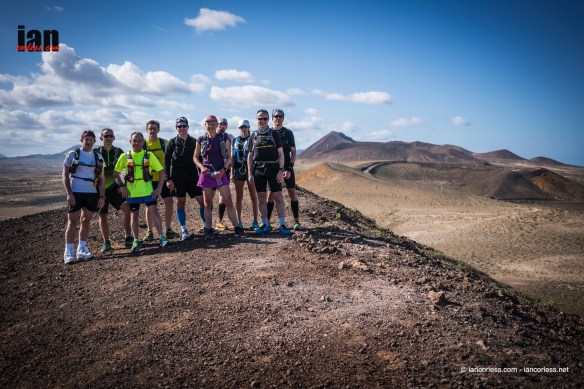
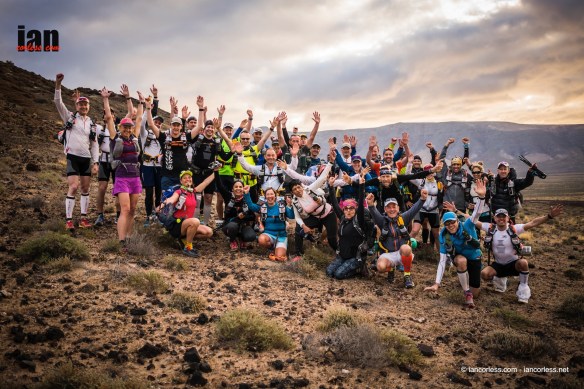
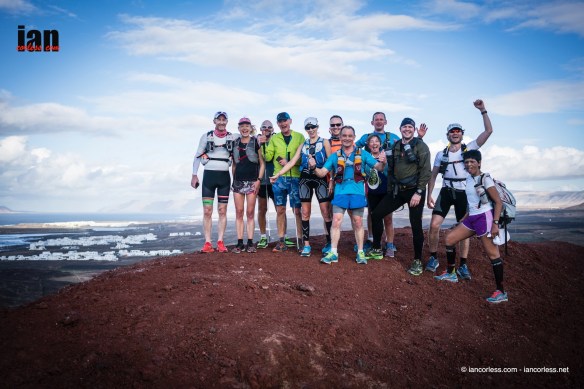
Why not join our Multi-Day Training Camp in Lanzarote with 2015 Marathon des Sables ladies champion, Elisabet Barnes. The camp takes place in January each year. 

Information HERE

©iancorless.com_Lanza2016-04780

Support on PATREON HERE

support_patreon

The Coastal Challenge 2017 Preview on IRUN4ULTRA

tcc_irun4ultra

The Coastal Challenge is multi-day race over 6-days starting in the southern coastal town of Quepos, Costa Rica and finishing at the stunning Drake Bay on the Osa Peninsula. Considered by many an ultimate multi-day running experience, it challenges even the most experienced runner.

The 2017 The Coastal Challenge is just weeks away from starting. Runners from all over the world will arrive in San Jose and then travel to the start in Quepos for the 13th edition. And what a line-up the race has… Reigning ladie’s champion, Ester Alves is back along with Elisabet Barnes, Anna Comet and Veronica Bravo. For the men, Jason Schlarb, Sondre Amdahl, Chema Martinez, Tom Owens and Vicente Juan Garcia Beneito head up a quality line up.

Read all about it on IRUN4ULTRA HERE

img_0568

Michael Wardian – The Running Man on IRUN4ULTRA

“He keeps running and running. Michael Wardian just never stops. Many runners have been given the tag, ‘Forest Gump’ and in 2016 we certainly witnessed a couple of real life ‘Gump’s’ in Pete Kostelnick and Karl Speedgoat Meltzer who respectively set two new records: Running Across the USA and setting an FKT on the Appalachian Trail. Kostelnick and Speedgoat produced two remarkable performances, but Michael Wardian raced 47 events in 2016, he raced 1,254-miles in total and in the process, he set 2 World records, had 8-victories, 22-podiums, 31-top ten placings and 26 ‘master’s’ victories. Wardian is a man on a mission and 2016 is not an unusual year… this committed husband and father of two races like this, year-in and year-out.”

Read about Michael Wardian in my article for IRUN4ULTRA  HERE

GO HARD or GO HOME – Zach Miller In-Depth Interview

img_20160712_070410

Zach Miller has inspired from the day he burst on the ultra-running scene way back in 2013 when he relegated the then untouchable Rob Krar at JFK50 (who did not finish) and Matt Flaherty placed 2nd.  What has followed is a full-on, Go Hard or Go Home approach to ultra-running that at times has produced awe inspiring results and equally has left fans and Zach, holding their heads in their hands wondering, ‘what might have been?’ Win or not, Zach is one of the most exciting runners to follow. Earlier in 2016, he did a ‘Zach’ at UTMB and for much of the race it looked as though he may well pull of the biggest win of his life… he blew but still managed a top-10 placing. Cut to December 2016, $10.000 prize money and one of ‘the’ most stacked fields ever assembled at TNF50 in San Francisco and the stage was set, once again, for Zach to lay it all on the line…

“I must give it the best. I like to give it my best and I don’t know maybe I could run faster, with a different strategy but I just like to get out there and get it going and see where it goes. Sometimes it goes well and I end up running times or getting performances that I didn’t even know I was capable of. I think just being willing to take that risk is thrilling and I just like to see what’s on the other side. Because sometimes it’s great!”

I caught up with Zach from La Palma, the home of Transvulcania, a place Zach knows well after racing here as part of the Skyrunner World Series.

Zach: How is La Palma?

Ian: La Palma is as good as La Palma always is as you know.

Zach: Yes, it’s hard to have a bad time there.

Ian: I came here last December because I was finishing off my book, Running Beyond, I needed a little bit of isolation and a little bit of space and an opportunity to get on some nice trails and just to do a little bit of running. It was just so nice because the weather here in December is fantastic, the trails are great. It’s just a nice place to be and I thought, “You know what, it has been another long year. I’m going to go and do it again.” It is just so good. It’s a little bit difficult getting around the islands to get to different places of trail because there’s not a lot of connection. But I’m staying in Tazacorte Port. I have a 2500-meter climb on my doorstep.

Zach: Yes, Okay. There you go, what more do you need?

Ian: The final descent of the race just drops straight to my apartment door.

Zach: Okay, you have no shortage of climbing then?

Ian: No shortage of climbing and no shortage of descending.

[laughter]

Ian: The only thing is it takes me as long to come down as it does to go up.

[laughter]

Zach: Yes, work on your down a little bit [laughs].

Ian: That downhill is just brutal, isn’t it?

Zach: Yes, it is.

Ian: 18k, 2500m of descent. It’s just exhausting. I’d rather go up anytime.

Zach: Yes, that one’s a tough one!

Ian: Yes, well you know all about it, don’t you?

Zach: Yes, I’ve done it once.

Ian: I remember you coming past me in the race after El Pilar, climbing towards Roques de los Muchachos.

Zach: Okay.

Ian: …at that point you were just in the lead with Luis Alberto Hernando, jumping on your heels.

Zach: Yes.

Ian: At that point, it was a classic Zach Miller day, wasn’t it?

Zach: Yes.

Ian: In that you lead the race from the front and then in the latter stages, it all goes a little bit wary… you had that fantastic finish with Dakota.

Zach: Yes, I did. I remember that. That was quite a day. Maybe one day I’ll maybe get back to take another crack at it.

Ian: It’s a great course, a great race. But talking of Zach Miller days, you do have a reputation for going out hard and giving it everything. La Palma, was one of those days. It’s a Zach Miller trademark. Tell me about the Zach Miller trademark of go out and go out and give it everything.

Zach: For one, it’s probably worked for me more times than it hasn’t [laughs]. And even when it doesn’t, it usually ends up exciting. It’s a combination of just liking to be aggressive and make sure that the race gets out and I give a good honest effort that we don’t dilly dally too much.

[laughter]

Ian: No, that’s true [laughs].

Zach: I just kind of set the tone, to give all, I must give it the best. I like to give it my best and I don’t know maybe I could run faster, with a different strategy but I just like to get out there and get it going and see where it goes. Sometimes it goes well and I end up running times or getting performances that I didn’t even know I was capable of. I think just being willing to take that risk is thrilling and I just like to see what’s on the other side. Because sometimes it’s great. Like San Francisco!

Ian: Yes.

Zach: I didn’t really know that I could do that. On paper, I’d have thought I couldn’t maybe run somewhere around that time, but I didn’t know I could run it in that fashion. But I just like to give it a shot and see what happens. There’s plenty of races and if I mess up, there’s another one in few months…

Ian: You say that if you messed one up…  but sometimes going out as hard as you do for the distances you do, that could take some recovery. People like myself when we’re talking about a race that’s coming up or we’re writing a preview for a race, whenever we come to seeing Zach Miller’s name on the start list, we always say the same thing. That, you going to go out hard and you’re either going to have the most incredible day, set a course record and take victory maybe? Or you are going to blow up in [laughs] super fashion and it’s going to turn into carnage and you are probably not going to finish the race or you going to move down the field. You seem quite happy living with that strategy and certainly spectators all around the world love your racing strategy. Do you ever think to yourself that maybe one day, you might try something a little bit different?

Zach: [laughs].

Ian: – or are you happy with the fact that give it all or die trying?

Zach: Yes, I do every now and then I get curious and I wonder, I think like, ” Oh, I wonder what I could run.” And it’s like, “Just run smart.” It’s like if I were strategic, could I run 10 or 20 minutes faster. Would it be more… would it be less painful at the end.

img_20160616_233057

Zach: Would I feel a lot better at mile 40 and be able to run really, really fast instead of just hanging on? Yes, I have this thought sometimes but I like the way that I race and I think it’s exciting and I know people like it. I feel stuck with it because I feel like if I do anything different…

Ian: [laughs]

Zach: …people will be disappointed.

Ian: [laughs]

Zach: Although, I think some would like to see or would be entertained by seeing me taking a different strategy and seeing what I would have left in like the last– the second half of the race. Let’s say I ran with the guy with Alex Nichols through the first half of the race and then try to move. But I don’t know, it’s just my style. I’m pretty happy with it. I’m not going to lie when it doesn’t work, I’m hyped!

Ian: [laughs]

Zach: The only time– the main time where it didn’t work and I wasn’t that hyped was at Templiers in France.

Ian: Aaargh, okay.

Zach: Just because it was so… you know I came so close. I was just very proud of the effort and people got excited about it. And then, I also saw how close I came to winning. I just concluded that it was a nutritional error. I didn’t know for sure but that was how I saw it. That one was like, it wasn’t a training error, it wasn’t even necessarily a pacing error. It was basically like, “I didn’t eat enough [laughs] or drink enough.” Then it was like, “Well, I can fix this.” And that was easier to deal with.

Ian: Okay, I’m going to come on San Francisco because obviously, that’s the most recent result. It’s the one where you had the amazing showdown. Your two-minute video or should I say Jamil’s two-minute video of you running into the finish of San Fran is quite spectacular and it’s certainly gained a lot of hits. But before we talk about that, I want to go back because we first did an interview when you burst on the scene and at the time you were working on cruise ship and training on the treadmill. You’ve come a long way since then, haven’t you?

Zach: Yes, I have. That’s one thing I say and I’ll always says that it’s amazing to see how far I have come in three years and the things is, it’s amazing to see how much my life has changed. My lifestyle. I’m anything but living on a cruise ship anymore [laughs].

Ian: No.

img_20160415_195424

Zach: Now I live in the middle of the mountain in a cabin [laughs]. But yes, it’s been a wild ride. A lot of things have happened. A lot of races have occurred but I think I’ve also developed a lot as an athlete. I’ve gotten a lot stronger and I could just do things now that I couldn’t have done three years ago.

Ian: What do you consider being the changing point for you, where life took on a different roll and you realized that there was an opportunity for you to change tack and almost make running your life?

Zach: Mainly, once I won JFK and then started getting some interest from sponsors, I just saw the potential of that. I was at that elite level and I was desirable to sponsors. When I realized, I could start making an income off it and that I could be good at it, I kind of saw maybe it was time to transition off the ship and get back on land. I moved to Colorado, so that was a big step and it was a great place to move to, to train and everything. Just seeing the success of JFK gave me the confidence to give it a go.

Ian: You got sponsorship from Nike, how instrumental has that sponsorship been? And how much do they help you to live the life that you now want to live?

Zach: Nike has been very helpful over the past three years. I was very new to the sponsored world. Basically, they came in and they gave me a lot of very good product support, travel support, an opportunity to make some money, too. It just opened doors to be able to travel, to races like Transvulcania or UTMB. To have the sponsors to do that because plane tickets and everything are very expensive and I wasn’t at the point in my career yet where races were paying to bring me over. I needed sponsor help to get me to those races so that I could make a name for myself. Basically, they just gave me an opportunity. They provided a way for me to get out there and make a name for myself. That’s been very, very helpful. Over time, I got a few more sponsors and things. But, yes, they were the first one to jump in and support me and it worked well.

Ian: When did the move happen for Barr Camp, and tell me a little bit about Barr Camp and the story behind that?

Zach: I would have moved to Colorado in May– around May, shortly after Lake Sonoma in 2014. I lived in Manitou Springs, at the base of Pikes Peak for about a year– working and training. I was on Pikes Peak a lot training on the Bar trail and just in that general area. I got to know the caretakers who were working at Barr Camp which is an off the grid cabin, halfway up the mountain. It’s like the huts that you would have in Europe except not as fancy. There isn’t a road. There’s a little electricity that comes from solar. Our water comes from the creek. The bathrooms are outside so it’s not as fancy as a lot of the European huts. It’s very remote and it’s pretty rustic. But anyways, I got to know them and then I found out that they were leaving and they were looking for new people to take the job so I got the information and then I pitched the idea to my sister because I wanted somebody to apply with me. My sister liked it and so we applied together and then we ended up getting the job. Now, it’s me and my sister and her husband– we all work up there. We’ve shifted rolls a bit. My sister and her husband take the full-time roles and then I actually work in a part-time – more of an assistant, part-time role. I live at the cabin year around but I have the freedom to go do my racing and my sponsorship obligations. And basically, when I’m here, I’m working but I get a lot more freedom to be able to like go Europe and go to California and do all the things I need for my running career. It’s really just a good mix.

img_20160919_220809

Ian: There’s a lot of people going to be reading this and they’re going to be thinking – particularly if they’re involved in trail and mountain running, “Wow, that sounds just awesome.” Is it as awesome as it sounds?

Zach: It is awesome but it’s not for everybody. It is also tough. The winters are very awesome because the camp is open year round but our traffic drops a lot in the winter. In the winter, we have a lot of time to ourselves. It is still labour intensive. You’ve got to haul the wood in so the fires lit to keep the cabin warm and you’ve got to carry the water in from the creek in five gallon buckets. You got to shovel off the solar panels and clear all the snow and everything. In terms of like day-to-day seeing people, we don’t see as many. It’s much more relaxed to have a lot of time to go out snowshoe, or ski or hike or run. It’s much more laid back. But the summers are incredibly busy. We’ll feed and house up to 45 people. If you come to our camp it’s not very big, so that can get hectic. We’ll feed like 45 people out of this little tiny walled kitchen. There’s just a lot of work in the summer, between cooking and cleaning and doing camp maintenance and doing search and rescues, and talking to hikers and selling things. In the summers, you pretty much go non-stop from 6:00 Am till 9:00 PM. And then maybe you read a book for like 30 minutes and then you pass out and go to bed [laughs]. I’m basically either working or training or working. It gets pretty busy.

Ian: Tell me a little bit about the training, because obviously, I don’t know what height Barr Camp is at, but it must be around about 10,000 feet. You’re sleeping altitude for sure, do you then drop down and train at lower altitudes or do you find that you’re training above 10,000– below 10,000 and that works really, well?

Zach: Yes, I just stay around 10,000. The camp is at 10,200 feet.

Ian: That was a good guess, yes?

Zach: Yes, it was. It’s 3,000m, I’m looking at my cabin right now because we have it up on the wall. It’s 3,109 meters for everyone in Europe. It’s very high. When I’m here I do a lot of my training. Sometimes if I make it all the way down to town, that’s like 6,400 feet. But then I must come back up. Basically, the low point of my training is around 6,400 but then I have days where I go all the way to the summit which is 14,110 feet. My training is anywhere from 6,000 to 14,000 feet. It always starts and ends at 10,000. I probably spend a lot of time between 13,000 and 8,000 feet, it is probably where a lot of my training is done. I don’t necessarily intentionally go low to train; I just train where I am. I don’t drop down to do like speed work or anything. Not usually.

Zach: What’s interesting about that is we started this conversation with me being in La Palma and the Transvulcania course starts at sea level and almost finishes at the sea level. But that middle third of the course, once you go through El Pilar you’re then above 2,000 meters and you stay at 2,000 meters or above. One of the things that I’ve found running on the course and being on the course is that going up to altitude and dropping back down is completely different than staying at altitude and having to run at altitude for a prolonged period. And of course, that’s one of the things that happens at Transvulcania is that once you get into that middle and latter third section, you’re running at 2,000 to 2,500 meters for quite a chunk of time. Living where you do, this is perfect preparation for this type of race. Do you really feel the benefits of that when you travel and go to different races?

Zach: Yes, the benefits are there. It’s hard to always feel like Superman per say but the one thing is like when I run a race like Transvulcania or I race at UTMB, when we get up to the high points of 8,000 feet I don’t necessarily feel much different. For me, it’s not like I get up there and I feel I’m way out of my element. It’s just like that’s where I train every day. Up there I just feel like I do in Colorado. You don’t necessarily feel like superman per say although, I do usually feel pretty sure on climbs. Like when you get the high altitude and we go up the climb, that is where I notice it.

I do remember running at Transvulcania two or three years ago and being up on the volcano with Luis Alberto. He’s incredibly strong but I remember listening to his breathing and feeling like he was breathing very hard and he obviously ran very hard and he ran great that day. He beat me by a long shot but I don’t know what altitude he charged at? But I just remember noticing that we were up there and probably once he got down he was very, very strong. I remember him seeming a bit laboured up there but he still went right away from me. It was very, very impressive or maybe he’s just a heavy breather [laughs].

Ian: He does breathe heavily and Luis is a little bit like yourself in that he commits himself but he knows how to bide his time. Particularly at Transvulcania he would have known that you and maybe Sage Canaday and a couple of others were going to go off hard and he would be thinking about pacing himself. But when he makes his decision to go then he commits.

Zach: For sure I’ve seen that.

Ian: That was probably the phase that you were hearing him. When he made the commitment and it was a case of, “Now I’m going for it. I’m going for it.” Would you say that Transvulcania was maybe the race that started your switch to move to the longer ultras?

Zach: I wouldn’t necessarily say so because it’s still in that 70 to 80-kilometre range. I’m trying to remember if it was our first big European race or not?

Ian: It was, wasn’t it?

Zach: It was probably my first like real big more technical European race because Templiers in France is a hybrid. Transvulcania isn’t that technical in the beginning but that descent is what defines that and that is much more technical. I just think I was walking up in terms of racing in the European style at Transvulcania.

Ian: If Transvulcania wasn’t the real catalyst then surely something like Madeira Ultra Trail which at the time you said was one of the hardest races you’d ever done?

Zach: Yes, it’s still one of the hardest races I’ve ever done. That was the one that was a jump for me. I had been doing racing and it took around six to seven hours and then Madeira was my first race that ever took longer than like eight or nine hours. It was much longer than that. It was just under fourteen hours. That was a long time for me. That was new territory for me. But I did that and then people were like, “Well, if you can do this, you can do UTMB.” It scared me and also gave me some confidence for UTMB at the same time.

Ian: Tell me a little bit about Madeira Island Ultra Trial because I’ve been to Madeira Island several times now for races and there’s only two directions on the island and that’s up and down. It’s a brutal environment. I remember seeing a photograph of you lying on the ground looking as though you had a medical team making sure you were still alive.

Zach: Your description is good, there’s only two directions up or down. There are points in Madeira where you actually do run rolling almost flat but yes, it’s a very roller coaster course. You’re basically doing a big climb or big descend or a short little bit of runnable in between and the climbs are very steep and the descents are very steep. What defines Madeira are the stairs. So many of their trails just have stairs in them. They’re not uniform, some are concrete some are like dirt and wood planks. Some are small, some big, some are wide. Your footwork at Madeira must be very good and you must be able to change it at a moment’s notice. It makes the end that last 20 kilometres, so it was just brutal.

Ian: Do you still consider it, without considering San Francisco which you obviously have just won, was MIUT one of those defining races where you put it all on the line and it had come good?

Zach: Yes, it was because I was going thoroughly hard from the gun. We started at midnight and by the time the sun came up I had a good lead but I had already bonked… That’s why there’s that aid station video of me eating so much food because I had just bonked right before that aid station and I knew I needed to eat. Yes, I had worked very hard. I had run myself into a bonk and then came out of it. Then just had to fight really, really hard and it was very painful for the last like 20 miles but I was somehow able to keep going even though my body wanted to stop. It was also a day where it was like, “Wow, it’s impressive that my body could hurt that bad and keep going like it did.” It was a very telling day.

Ian: I’m interested in a couple of things that you’ve said there. You bonked in the race? You blew up, managed to eat and then carry on and not lose the lead but then also in the final stages– and quite long final stages where you’re really hurting and you’re in pain, you still manage to continue to push. Is that something that is just within you or is it something that you think you’ve worked on to enable yourself to do that?

img_20160929_224333

Zach: It’s both. It’s within me and it’s also something that I practice almost every day. Even as a kid I was a very very competitive person and I am very hard worker. If there was something in my mind that I considered to be successful, whether it was getting an A on my test at school or running a certain time in cross country. If there was something that I gained success I always wanted to attain it. I’m just naturally very, very driven and very hard working.

My parents were not so much athletes but very, very hardworking people, so I always kind of grew up with that example in front of me. And kind of not quitting until the job is done. Then the other part is I go out and I train and I just take those things and I practice them. I won’t let myself hike up a climb, I just stubbornly run it or I’ll bonk out there on the run and I won’t let myself walk it in. I’ll somehow manage to slowly run back to the cabin, and it gets cold in the winter and I train all winter long and it could be negative 15 degrees’ winter and freezing cold and snowing and I still go out and do it. I just kind of discipline myself on a day-to-day basis and then when I get in the races, I’m well practiced at suffering and just sticking with that and that’s how I get myself to push all the way to the end.

Ian: Okay. Well, that’s obviously one of the reasons why you’re successful because most people can’t do that. CCC, where did that fit into the big picture? I’m assuming that it was a case of going to Chamonix, understanding the environment, understanding the landscape for a serious attempt at UTMB?

Zach: Yes, sort of, it was probably less about scoping out the landscape for UTMB as it was just running CCC. I wasn’t at the point in my career where I wanted to do 100 miles yet, so I wasn’t going to do UTMB. But I still liked racing in Europe and that one looked good and Nike had gone over the scopes and they recommended it, Nike said it would be great. And yes, a bunch of my team mates were doing it. And it was like, “Well, this looks like fun and this looks like good one.” So, I jumped in and did it. It wasn’t so much like just a scouting mission for UTMB, it was more just to run that race. And it ended up being greater. It was kind of a turning point in my career and I was thankful that I did it.

Ian: Winning CCC is one of those funny things, if it was a stand-alone race, on its own weekend, it would be huge, but it always gets completely overshadowed by the UTMB. And I’ve spoken to and I’ve interviewed countless people who’ve been on the podium at CCC, Ellie Greenwood is a classic example and she said, “You really feel as though you’ve just won a smaller race in a big weekend.” Did you feel that?

Zach: That was my fear when I went to do it but when I did it, I didn’t really feel that. My fear was kind of like– in fact towards the end I wanted to run UTMB instead because I was thinking CCC is the side show, UTMB is the A race and CCC is the B race, and all the eyes and all the media and all the attention is on UTMB. And I was a bit reluctant to be in CCC to be honest. Probably even standing on the start line thinking all the big names are not in this race but then I ran it and the crowds were fantastic. My family was following along from home and the coverage was good. And when I came in… it finishes at the perfect time because it finishes around nine o’clock at night when everybody is having dinner. And so, the finish line at CCC is just phenomenal. When I came in and I won, it didn’t feel like I just won this side show, it actually felt like a very big deal. A lot people got very excited about that win. It got me a lot of attention in Europe and in the States, as well, so no, I was afraid that it would feel like that, but once I did it, it didn’t feel like that. It felt like its own show almost.

Ian: I wonder Zach, whether it’s because of your racing style and your race strategy and your, give it everything, and of course you did milk that finish line, didn’t you with the jump in the air… there was the elation, there was everything in there and of course an American winning a French race is a great story.

Zach: Yes, maybe it was partly because of that but yes, whatever it was, it was a great experience for me. And that’s the interesting thing about running and about sponsorship, most of the time the sponsors want the win, they want the podium finish. They want you on the top. But I’ve also come to realize that through racing, people are attracted to elements more than just winning. I probably had races where I haven’t won and I ended up with more interviews and articles and attention than the guy who did. Just because people were so entertained by the dynamic of it and the style of it and that’s just been very interesting. And it’s just funny how that is, it’s like sometimes you don’t even need to win, I want to win but there can be a lot of value just in the way in which you run the race regardless of exactly where you finish in the standings.

Ian: No, absolutely. And there’s a couple of classic examples of that and this year’s Western States with Jim Walmsley as a classic example of that, he’s had far more media coverage than Andrew Miller who won the race and almost to the point that if you ask people who won Western State this year, sometimes they don’t even know, because there was so much attention on Jim Walmsley.

Zach: Yes, exactly.

Ian: Particularly for you with UTMB, the fact that you took it on and you gave it everything, and you did blow up. But you didn’t blow up in spectacular fashion as myself and maybe a couple of other journalists thought you would – you somehow you managed to hold on and still get a very, very respectable place. Tell me about UTMB, and what made you think that you could go and run that big loop through three countries from the front and maybe hold on to the finish line?

img_20161222_213042_122

Zach: Honestly I didn’t know. That’s the thing with how I race. I said to friends or whatever, “I don’t go into races saying that I’m going to win, I don’t even go in with full confidence that I will. The only thing is that I’m just willing to try, and I’m willing to try to do something that I’m not sure I can do.” I think I can run around Mont Blanc, but I’m not sure I can run around it at the pace that I’m going to set off at. I’m just willing to try and find out and then if it works, it will be great, and if it doesn’t, I will learn something and then come back and probably try and fix it. Yes, I didn’t know if I could hold that all day. I did feel good and strong for a very long time. I had a little bad patch out of Courmayeur but then recovered and ran strong. It seemed all was going well up until just after Champex Lac, this is where it all started to unravel.

Ian: That’s what’s so great about it. I think to myself, if I was on the start line of a race like that and I had those insecurities-, those doubts or if I could or couldn’t, I’d play safe as most people would. And I’d maybe ease myself into the race, see how things go, and if I got to around about 70 or 80 miles and I’ve got something left, then I might give it a little bit more of a push. But you almost do it the opposite way around, you sort of go, ” I’m really fresh, let’s go as hard as I possibly can, for as long as I possibly can and maybe I’ll hold on.” When it all goes belly up and you get that major blow up and the major bonk, what goes through your mind at that point? Because you see the other runners coming up to you, you’ve got all those question marks in your mind about, “How I’m I going to get on here with? How am I going to continue? I’ve spent so long in this race at the front I don’t want to give it up now.” How’d you carry on?

Zach: It is very hard. Usually, there’s a fair amount of fight left. When I got Champex Lac I was getting chased but somehow I fought my way in there in the lead. Then by the time I left right on the heels of I think Julien and then just in front of the guy in third at that point in the race whose name is escaping me. Right then, I was in a bad spot – I wasn’t good mentally but I wasn’t going to give up. I was very determined to try and salvage it. I did actually get past Julien and I climbed away from him very, very, well. It wasn’t until the next day in the race that I found out that those two who had caught me at Champex Lac never beat me. I held them off.

Ian: No, they didn’t catch you!

Zach: Which I didn’t know because when Ludovic caught me I thought it was Julien, they’re both Hoka, I don’t know them very well by face. I know them much better now. I was confused when I was out there. I thought I was getting caught by Julien Chorier again and it was Ludovic. They’d comes from very far back. First, there was a lot of fight and then the body was just getting to a stand-still. It was just like the heart and the mind battle, the heart wanted it so badly to stay at the front and the body just wasn’t able to. It was very, very difficult for me. But I was still going to try to get to the finished and finish respectively. I just pushed to the finish — not very fast but I just did what I could and I got there. It was very tough mentally once I start getting passed.

Ian: It was still an incredible result for you to be one of the highest ever finishing Americans at the UTMB. History with UTMB and America is not something that the Americans have looked on until these last few years as being too great. What do you think has changed with people like David Laney, Jason Schlarb, yourself and so many others, that are now, making or enabling the American male runners – because the females have always done well at UTMB – but it’s significant the male runners that are now performing, what is it do you think that’s happened that’s now giving you good results at that race?

Zach: I’m not entirely sure I think maybe we’re a little more focused. Americans had a stage and we’re still maybe going through it where people just raced everything. They were not being very selective they just trying to see how much they can do but it’s quantity instead of quality. And as it’s gotten more competitive in America the elite runners have started to realize that, “I can’t just go out and win everything all year all along, I actually have to plan this. I need to be strategic and I need to target races.” I think maybe we’re targeting a little more and so we’re coming in with bodies that are not so beat up– that are ready to go.

And then we’re getting this faster generation that’s fresher and has this fast running background. On a runnable course– on a pretty runnable course like UTMB they’re able to– we’re able to go crank for a while. But then we’re also pulling young guys who have that background but also live live in the mountains of California at high altitude. I live in Colorado, Jason Schlarb lives in Colorado. David Laney bases out of Oregon but he’s always out the big mountains. Runners are finding themselves with these faster running backgrounds and good talents then coupling them with good training grounds and a little bit of focus and it’s paying off.

img_20160609_083240

Ian: Yes, you’re exactly right. It’s a learning curve and I also think that more Americans are racing in Europe and they’re beginning to understand the European style of racing and the courses that are available out here. Because in general, our courses are more technical– and I’m not saying that UTMB is a technical race but I’m just saying that it’s all a process and it’s all a learning curve. Your UTMB, and this is my last question on UTMB. We’ll talk about San Francisco in a minute. A lot of people have compared your run to Ludovic Pommeret who won the race. Ludovic, while you were leading the race, was probably back in 50th place and he slowly but surely moved his way through the field as many of the elite runners fell by the wayside and dropped out of the race. He moved up and eventually won the race.

Have you, in the weeks and the months after UTMB sat down and looked at your race and looked at his race and thought, “I can learn something from his win?”

Zach: You could learn something. His win is also interesting because, if I understand correctly, he and I were actually pretty much together in the very early stages of the race. He did go out aggressively. He had a stomach issue partway through that put him into a walk for a while or hike and put him way back in 50th and then he made that miraculous comeback. His body forced him into a more conservative or strategic approach even though it wasn’t necessarily what he was trying to do. It is very interesting; it shows that you can and guys like David Laney too, show that you can be slower and be much more strategic and then just sweep up all the carnage along the way.

Ian: Yes.

Zach: There is something to be learned there. For me, when I came out of it the big areas where I saw to improve and learn lessons was more from a training standpoint – conditioning my legs a bit better for the downhill running towards the end. Then just in general and then a nutritional standpoint. Because when I look at UTMB in my own head and I don’t know if I’ve ever actually said this to anyone but in my own head as I progressed through my career– as I’ve raced since then and as I looked backed at UTMB and I looked back at other races I’ve done I feel that maybe– and I must go back and try UTMB again to test my theory. But it feels maybe it’s a bit like Templiers where I learned a big lesson in nutrition and there was a lot of potential there in my body physically but there was a lot that needed to be learned nutritionally to support that kind of an effort. Now, I’m just trying to figure out how do I fuel my body to support that kind of a physical effort. I don’t know. Yes, maybe I need to make some adjustments in tactics, in pacing, in technique and how much I hike and when I run and how aggressively I go out. It’s all very, very, interesting and I have a lot to think on through the winter.

Ian: The Ultra running audience are quite happy with the way you run Zach and they’ll happily accept every now and again that you are maybe going to blow up or you’re not going to win a race because the way you’re racing is so exciting. How was the recovery process post UTMB? Had UTMB depleted you physically and mentally?

Zach: It took its toll physically and mentally in the short term. Physically, I was less sore but from a deep-set fatigue stand point I would say I was much more beat up. UTMB took about a month. It was much, much longer, about twice as long than 50 mile recovery. And then mentally, it was tough too. When I came back from UTMB, I was in a rough spot mentally. I just had trouble. Although, I acknowledge a lot of positive things that came of it, lessons learned and good experiences and things, it was just really hard. It was so very heart-breaking for me; it was hard to deal with for a while but then eventually the body came around. I got back to training hard and I could focus my energies on something and I had a goal in mind– getting ready for North Face, and eventually I found my way, but it was initially very hard.

In the long term, the fear of the hundred was kind of like, “Oh, you will lose your speed.” People were like, “Take your time getting to the hundred, you’ll lose your speed.” Maybe I lost a bit of very low end speed but after North Face 50 I don’t feel like I’ve made myself a worse 50 mile runner.

[laughter]

Zach: I’m very happy about that because I felt at North Face, and maybe you will ask about this, but I felt when I was out running North Face, maybe at North Face is where my UTMB training that I had done all summer was paying dividends and showing up. That maybe I wasn’t quite present at UTMB but after resting after UTMB and then going back, like shifting training a bit. But at North Face, the work that I had done all summer long was now finally paying off.

Ian: You have hit the nail on the head for me and that was going to be my segway into North Face in San Francisco. What you achieved or maybe what some people would say you didn’t achieve at UTMB is what gave you a course record and that incredible run at San Francisco. That suddenly 50 miles was not that long in comparison to what you did at UTMB, but also it gave you all that inner strength and there was definitely a part of me that, it was a case of you were on the start line not only to race everybody else but you were there really to race yourself and to see what you could get out of your body and if that meant victory then all well and good, but if it meant that you came third or fifth or tenth but having given it everything then you would have been happy?

Zach: Yes, that’s always kind of the idea. Sometimes I do come third or fifth and I’m not so happy because I am competitive. But yes, that kind of is the idea and with the talent that was in that race it was basically shaping up to be pretty much exactly what it was or what it turned out to be, just an absolute hammer fest all day long. And you know that’s an exciting thing. It’s like, “Well, here’s a chance to really find out what I’m made of.” Because I see snippets in training. But you never go out there and race a full 50 miles in training. It’s just like, “Well, here is a really good opportunity to put myself to the test and see exactly what’s possible.”

Ian: I’m going to compress 50 miles into five or ten minutes but I’ve seen a lot of races, a lot of ultras and I’ve seen some fantastic performances, but the one thing with an ultra is when you see the guy or the girl come down the finishing chute they never look spent. They never look as though they’ve given it everything (from a a pace perspective) and it looks as though at San Francisco that you gave everything right from the beginning and finished it off giving every last ounce that you had. Your finish is just the most captivating two minutes of a 50-mile race. You are giving it everything. You’re breathing out of every orifice that and you’re worried about whether Hayden is chasing you down because you were only separated by minutes. It’s just so compulsive. Do you feel as though that is the way that the racing is going to go now?

Zach: It is heading that direction. We’re getting to the point now where we’re really starting to race. Hayden’s performance that day was absolutely incredible. I basically told him after the race, I’ve never had anyone hang with me like that. I’ve had people like Luis Alberto beat me. I’ve had people catch me. I’ve had other experiences but I’ve never had anyone go out with me and challenge me like that and then stay right on my heels all day long. And sometimes it was me on his heels because we flipped back and forth. That’s how close it was. It was a race. It was like I was running a road marathon where we came down to the final couple of miles and somebody makes a kick and pulls away and wins. That’s pretty much what it was. It was an actual race all day long where I could never be comfortable and I could basically never let off on the gas.

Yes, as we get competitive fields and these young hungry guys in the sport we are maybe going that way. The 100 mile distances are a very interesting distance for that to happen to, just because there’s so many factors. But in this 50-mile distance where, especially in America where the courses are being run in five and a half– six and a half hours, and guys are starting to get very strong and trained very well and be tapered well for the races. Yes, we could see more of it. I don’t think we’ll see it necessarily at every race but I think a couple of the big ones during the year where you get the right combination of guys on the line and we’ll have a few more shows in the next couple years.

Ian: Zach, how much do you think $10,000 prize money influences it being a race.

Zach: It influences it in the sense that it draws a lot of very good competition to the start line. A lot of the elites, they want to run it because that’s the big pay day if they can get it. When I’m out there running… I forget where I heard it but it was somewhere I think after college somebody said they had received some advice or something that you should never run for money. Money should never be the reason that you’re running. When I’m out there running 50-mile race, money is not the motivating factor. I like to think that there’s other things that are more of a motivating factor but I won’t lie when I was running the race I was thinking about the $10,000 prize!

Ian: [laughs]

Zach: That’s a pretty significant amount of money. It does a lot for me. Yes, it does push you. When I had 5k to go and I was in the lead by about a minute, it was kind of like, “Well, I can hurt an awful lot for $10,000.”

[laughter]

Zach: I would love to say that the money never crossed my mind, that I’m just such a purist of giving it my all and just the spirit of the sport, that that was the only thing motivating me but I’m too human. It was a mix. It was my competitiveness, it was my desire to just be first and attain that measure of success, and it was also $10,000. I probably needed just about every bit of of grit to get me to push that hard.

Ian: There is absolutely nothing wrong and my question was a loaded question because I wanted to get your viewpoint on the influence and the impact that money has in the sport, because I think we are going to see more of it and races like Run Rabbit Run where there is even more money available has an influence. This race was a race, prize money or not. And when Hayden and yourself are running shoulder to shoulder and he’s in the lead and you’re in the lead, what was the point where in your mind you thought to yourself, “Now is the point that I go and give it everything.”?

Zach: It was pretty much with about nine miles to go coming out of Muir beach the second time.

Ian: Okay.

Zach: There was a time shortly before that where I thought like maybe I was breaking away but I think mostly I had gotten a few seconds but the trail was just so twisty and turny that I couldn’t see him, so it felt like I was farther ahead than I was. And by the time we got to Muir Beach he was right behind me. He was like 15 seconds behind me. And there we were at around mile I don’t know 40, 42 and nobody had blown, we were in the exact same spot we had been basically at the start. But that was the point where I knew we had basically two more climbs and we had two descents and I didn’t want to lose it on a descent at the end and so I was just kind of like, “Well I just– I have to– I’ve been doing well.” After about 30 miles I had been doing well on the climbs– very well on them so I just had like, “Well, I’m just going to kind of push really hard here and see if I can get away and do a little caution for the couple of descends that were left.”

Ian: You got the course record and the race will be remembered for years and years to come. It’s one of those classic jewels and of course the advantage these days is that there’s so much social media that that story get shared worldwide. It’s certainly become one of the highlights of 2016 for several reasons – I think the time that you ran, that final two-minute video shows the amount of commitment and pain that you’re putting yourself through. But equally the finish line and the sharing of the story and the emotion with Hayden that very much humanized the event, that there was a victory there was prize money but ultimately it’s one of the things that I love about this sport, it was the interaction between you two and the mutual respect.

Zach: Yes, that was one of the greatest parts of the day. Was that I was competing against an incredible athlete who at the end of the day was willing to turn around and shake my hand and give me a hug and chat about the race and how incredibly hard it was. There was a good camaraderie there, it wasn’t this like ugly rivalry of like, “Oh, I hate you and you hate me and we can’t talk to each other.” No, it was almost like we were more friendly with each other after the race than we were friendly with each other before the race but I think each person kind of maybe has their guard up a little bit, you know?

Ian: Yes.

Zach: And then after the race it was good to be able to share those moments with Hayden and especially him being so new to the sport.

Ian: All right.

Zach: That was me at JFK with Rob Krar. And I remember how kind Rob Krar was after the race in talking to me and I respected that. And that is a good testament of the great sports we have.

Ian: 2016 is coming to an end, you’ve had incredible results at San Francisco, you’ve got that course record and now is an opportunity for you to look back at the year and recover and plan for 2017. I’m looking forward to next year, you have an entry for Hardrock 100.

Zach: [laughs] Yes, just to add it’s not a guarantee yet, I’m in if I want it. It was a funny situation, I had a ticket and I’d paid for the Hardrock and I’ve kind of wanted to do Hardrock and Bill Dupery wanted me to do it and I had this ticket and I said well, they say it takes like eight years to get in so I might as well put it in.

Ian: [laughs]

Zach: And I said I will put it and I will hope that it doesn’t come out because I want to go UTMB.

Ian: [laughs]

Zach: I got in!

Ian: [laughs]

Zach: Now I have this decision, I must decide whether I run Hardrock or run UTMB and at first I would say I was leaning towards just going to UTMB and then I kind of started talking with Bill Dupery and [laughs] friends in Colorado and I started leaning back more towards Hardrock. And now I’m not sure what to do but I’m considering both. I won’t do both but I will pick one and I’m considering both I just must decide which one to pick. I’m very honoured to have made it into the race and it is a very cool race and I think it suits kind of my current living and training style, I am well-suited for it, so I kind of feel I should probably take a crack at it while I have the chance. Because I know this chances are precious. I’d say there’s a decent shot I’ll be on that start line but I still must kind of think through a few things.

Ian: Well, I’m not going to pressurize that decision.

Zach: [laughs]

Ian: Should you choose to do Hardrock or UTMB it’s going to be a very, very exciting day. I must think that you’re run at Hardrock would really, interest me because [laughs] if you use the strategy that you always use that could be a very, very interesting day at Hardrock and particularly with Kilian and Jason Schlarb going back – that’s one hell of a line-up.

Zach: And I’ll say this, I feel like there are two things that people would love to see at Hardrock, they would love to see me race like I normally do…

Ian: Yes [laughs].

Zach: …because, as insane as they think it is, it’s extra insane at Hardrock because of the nature of the course and they want to see Kilian go as fast as he possibly can. And if we could get both of those things in one day it would be very exciting.

Ian: It would be more than exciting Zach!

Zach: Maybe Kilian’s already gotten his best performance there but the man is very, very talented and I felt like having Hayden at North Face just pushed me to a different level. I’m not saying that I’m good enough to push Kilian to that level but if we could ever have somebody push him to that level that could be very fun to watch.

Ian: It would be definitely fun to watch. And on that note, it’s a perfect place to finish with the anticipation and excitement of what might happen. Either at UTMB or Hardrock in 2017. Zach look, thank you so much for giving me your time, it’s been a fascinating interview and thank you for inspiring so many runners in 2016.

Zach: You’re welcome, it was my pleasure.

img_20160418_062137

All images ©zachmiller

Merry Christmas and Thanks

merrychristmas2016

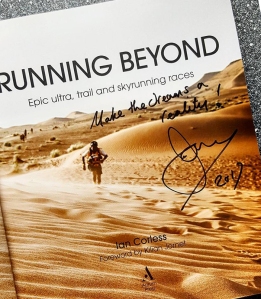
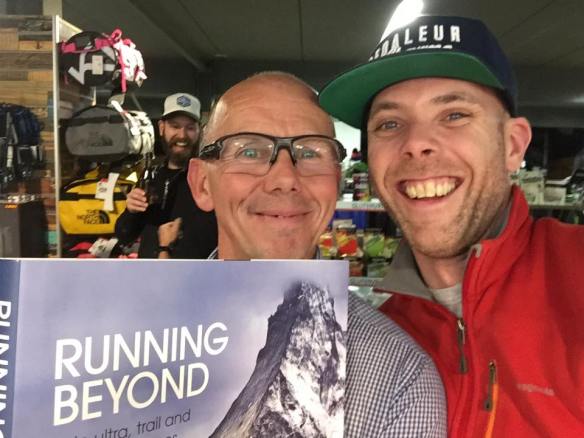
2016 has been an incredible year. I have travelled to more races, worked with some incredible people, interviewed inspirational athletes from all walks of life and I launched Running Beyond Book.

As one year comes to an end, it’s always good to give thanks. I want to thank all the races and race directors worldwide that have asked me to cover their races; I started my race coverage in Costa Rica and concluded it Nepal with a whole string of stunning locations and places in between.

Skyrunning for an incredible calendar of races – VK, SKY, ULTRA and in 2016 we launched EXTREME, it really is such an inspiring race series.

So many magazines, websites and resources that have used my content throughout the year.

Karl ‘Speedgoat’ Meltzer has once again provided another year of co-hosting with Talk Ultra and somehow along the way he managed to set a ‘FKT’ on the Appalachian Trail.

Niandi Carmont has been invaluable with her support – without that, what I do would not be possible and in addition, she has been working at many of the races I have attended as writer and podcaster. I hope 2017 is a great year for her as she progresses her run coaching.

Finally, all of you who read the articles, view the images and listen to the podcast – a huge thanks!

Have a great end to 2016 and I wish you all a successful 2017.

Jim Walmsley’s Record Breaking 2016 on I RUN 4 ULTRA


irun4ultra_logo

In 2017 I am pleased to say that I will be writing regularly for I RUN 4 ULTRA with two or three submissions per month. My first article was about:

PETE KOSTELNICK – RUNNING ACROSS THE USA read the article HERE

My second article is about

JIM WALMSLEY’S RECORD BREAKING YEAR OF 2016

As years go, 2016 has been a cracker in the world of ultra-running. Pete Kostelnick ran Across the USA in a record time. Karl ‘Speedgoat’ Meltzer set a new ‘FKT’ on the Appalachian Trail, Zach Miller broke the TNF 50 course record with a trail blazing run and Jim Walmsley has turned heads with a display of hard and fast running that has left many wondering, what does 2017 hold for this sport?

Read the full article on I RUN 4 ULTRA HERE

inov-8 ROCLITE 305 Review

iancorless-com_inov8_roclite-06913

One month ago, the new ROCLITE arrived at my home, not just one pair but 3 pairs – the 290, 305 and 325. I wrote a first impressions article HERE and it would make sense to have a read of that before reading on.

In summary, the 290 is 4mm drop, the 305 8mm drop and the 325 is 8mm drop but a running boot. The running boot is for a specific audience I believe and although it’s a product I love using, I am going to save any talk on the 325 for my review that will come out in the New Year. Having said that, much of what I write in this review of the 305 directly transfers to the 325 – they are to all intents and purposes the same!

I run in shoes of varying drop all the time, however, lower drop shoes like the 290 (4mm) are usually reserved for shorter runs be they fast or slow. Once I run beyond an hour, an 8mm drop shoe works perfectly for me and without doubt it is my ‘drop’ of choice.

iancorless-com_inov8_roclite-06918

Therefore, when the ROCLITE’s arrived late November and I had a trip planned to La Palma (the home of Transvulcania) it was an easy decision to pick up the 305 with the intention of well and truly giving them a battering on this tough, challenging, rocky and gnarly terrain.

iancorless-com_inov8_roclite-06921

The ROCLITE range of shoes, for me, are designed for mountain running in wet or dry conditions when the trail can be very varied or unpredictable. Although the shoe can handle a little mud, it’s not a shoe for those conditions and without doubt, if you plan to run on grass, mud, fell or similar, I think inov-8 make far better shoes for that, try the X-Talon for example.

iancorless-com_inov8_roclite-06914 iancorless-com_inov8_roclite-06940

I have used many, many shoes and I have tried and tested countless inov-8 shoes and despite the ROCLITE being around for appx 10-years, it’s not a shoe that I have used a great deal. So, I hold my hands up, this review is based on ‘this’ shoe and I can offer no comparisons to previous incarnations.

iancorless-com_inov8_roclite-06924

As with many inov-8 shoes, the looks and colours are very pleasing. You can’t go wrong with red and black and out of the box they were saying to me, ‘wear me!’

iancorless-com_inov8_roclite-06932

Looking over the shoe, a couple of things stood out. The tongue is part of the upper and not a tongue sewn into the upper. Anyone who reads my shoe reviews knows that I LOVE gusseted tongues so I was eager to slide these shoes on. I was not disappointed. I would go as far to say that the 305 is THE most snug and comfortable shoe I have worn – that is saying something! They are the most slipper like run shoes I have worn, so much so, that I could imagine removing the laces and walking around the house in them. Adding to the package is a completely seamless inner, even the ‘insole’ is part of the shoe (you can’t remove it) making it snug, snug, snug!

iancorless-com_roclite305-00971

iancorless-com_roclite305-00983

Going for a run in them instantly felt comfortable. I mentioned in my ‘first impressions’ that I thought the shoes in the ROCLITE range sized a 1/2 size too small. Now I am not sure? Sorry for being indecisive but I have run in them for 1-month and I have been very happy, I must stress though that I used a thinner sock than normal. What is noticeable, say over the TRAIL TALON (here) and X-CLAW (here) is that the ROCLITE is narrower in the toe box. I wouldn’t say it’s a ‘precision’ fit shoe but it is certainly less spacious than the Talon or Claw.

iancorless-com_roclite305-00974

The other notable point is that the front of the shoe (toe box) is just material with no additional overlays or support other than a reinforced bumper to protect toes against unwanted collisions. This had pros and cons. The pros were simple – a comfortable shoe that allowed my foot to flex, bend and adapt to the terrain. The cons were on technical descents, I found that at times I wanted just a little ‘more’ to hold my foot. It was a minor point and caused me no problems. What I did do to compensate was make sure I had the laces adjusted and tightened correctly.

iancorless-com_roclite305-00981

The trails in La Palma are harsh, really harsh. It’s jagged, volcanic, gravel, sand and abrasive rock that is irregular and punishing. It ruins shoes. In recent years, I have been out here and I have had shoes last for just the holiday. I must stress that this is not a criticism of the shoes but an indication of how harsh the terrain is.

iancorless-com_roclite305-00976

One’s foot is moved constantly to the left, right and it is twisted back and forth, noticeably the huge red ‘X’ on the rear of the ROCLITE offered some great stability and I didn’t roll my ankle once – unusual for me.

iancorless-com_roclite305-00972

The out-sole did work well on all the dry terrain, be that gravel, soft black lava sand, jagged irregular rocks or solidified volcanic lava. A run through a river bed that offered all manner of possibilities to slip and fall through a technical boulder session were brushed at one side with ease with the ROCLITE. Once you have confidence in a shoe, you can push harder and faster and the 305’s gave me that.

iancorless-com_roclite305-00980

Importantly though, on this terrain, protection is as important as grip and the META-SHANK and rock-plate combined with additional cushioning gave me a really solid and comfortable day out. The longest outing here has been 8-hours and my feet felt great. Rocks and rough terrain didn’t penetrate through the sole leaving me and my feet feeling jaded. Powerflow in the heel provided some real comfort and reassurance, particularly when walking… it’s tough out in La Palma and walking is a big part of any outing. Daily I always did anything from 400 to 2000+m of climbing and the META-FLEX at the front of the shoe allowed my foot to bend without hindrance.

iancorless-com_roclite305-00982

The lacing is unique as you pull in on web loops. It really does work! It works so well that you can pull the laces too tight. I struggled with the lacing at first, at times I tied the laces too right and other times I tied them too loosely. I eventually found a balance after 3-4 runs and once I got it dialed in, I found I had no need to adjust or adapt my laces once running. I am pleased to say that extra eyelets are provided at the top of the shoe should you need to ‘lock-lace’ or similar. The heel box was plush and caused no issues.

iancorless-com_roclite305-00986

In Conclusion

inov-8 have thrown a curve ball in at the end of 2016 and may well have provided me with one of my favourite shoes of the year. Yes, the ROCLITE 305 is that good. I have battered them on the trails out here with approximately 50-hours of running and they are showing signs of wear but they have survived really well and are good for many more hours. I can’t say the ROCLITE is my all out favourite shoe as it has a specific use. By contrast, to explain what I mean, the inov-8 X-CLAW for example can handle grass, mud and sloppy stuff and it would still be able to perform on rocky and mountainous trails like here in La Palma. Is the X-CLAW a better shoe? No! However, it may very well be a better all-rounder? If you are running on trail, be that a canal tow path or a rocky mountain trail in the Alps, the ROCLITE will take some beating and without doubt it’s going to be a shoe of choice for me in 2017. The fit, the snug upper, the seamless build and the gusseted tongue just make the 305 one of the best shoes I have run in. Add to that package 8mm drop, cushioning, a great outsole and other key inov-8 features such as the ‘X’ Lock, Adapterweb, Meta-Flex and Meta-Shank and this shoe is one to consider.

There are some downsides. The upper may lack some support in the toe area when running on technical terrain allowing the foot to move a little too much. The toe bumper is adequate and does offer protection but maybe it could be a little beefier? It’s a minor niggle. Finally, although the ROCLITE 305 is not a precision fit shoe, it is narrower than the Trail Talon or the X-Claw and therefore it may not work for some people? However, I would counter that by saying that on mountain and technical trails, too much movement in the toe box leads to insecurity and a lack of precision and confidence.

Ultimately, the ROCLITE 305 is a winner.

inov-8 website and shoe details and prices HERE

The Green Tunnel – Speedgoat Karl Meltzer and the Appalachian Trail

karlmeltzeratfinish

‘Speedgoat’ Karl Meltzer needs no introduction to the ultra-world, Speedgoat was running 100’s when most of us didn’t even know they existed. So much so, he has won more 100’s than any other runner; 38 at the last count. Five of those hundreds came at Hardrock 100, impressive! Speedgoat’s tally of runs and records make history and in 2016, he finally added the ‘FKT’ for the Appalachian Trail to his palmares. It was a long time coming, two previous attempts (2008 and 2014) had left him short but 2016 was different. Speedgoat had had the opportunity to assess his past attempts while helping his buddy, Scott Jurek, achieve his own FKT on the AT in 2015! With this information and a wealth of ultra-running experience, Speedgoat was a different man in the ‘Green Tunnel’ in 2016.

On Sept. 18 at 3:38 a.m., professional ultra-runner and Red Bull athlete Karl “Speedgoat” Meltzer emerged from the Appalachian Trail’s southern terminus at Springer Mountain, Ga., and set a new Appalachian Trail thru-hike speed record with a time of:

45-days 22-hours and 38-minutes.

Speedgoat started his supported run at 5 a.m. on Aug. 3 from Mt. Katahdin, Maine, and averaged approximately 47 miles per day at a pace of 3.2 miles per hour.  Speedgoat’s time beats the previous record by more than 10 hours, which was set by Scott Jurek in 2015.

The project, in planning for more than two years, was accomplished with a small core crew consisting of Speedgoat’s father, Karl Sr., and crew chief Eric Belz.  Others joined the crew to support Speedgoat for short periods throughout the hike, including Speedgoat’s wife, Sheryl and fellow ultra-runners such as David Horton.  The crew travelled alongside Meltzer every day, providing him with food, water, medical attention and logistical support. Speedgoat’s time on the trail typically began around 5 a.m. and ended between 7 p.m. and 9 p.m.

 Download and view a full map of the Appalachian Trail HERE

The Appalachian Trail runs from Maine to Georgia stretching 2,190 miles through 14 states.  It is roughly the distance between Los Angeles and Washington, D.C., as the crow flies.  A thru-hiker will experience 464,500 feet of elevation change, or 16 climbs of Mt. Everest.  Thousands of people attempt an Appalachian Trail thru-hike every year, yet only one in four hikers finish the journey, and they typically take five to seven months to complete the entire trail.

Here is Speedgoat’s story.

******

karlmeltzer1

Ian: Many, congratulations Karl, you did it!

Karl: Yes, thanks. It was a long journey but yes, it’s over. Thank God. All the misery and pain is over.

Ian: All the misery and pain. Well you say that, but it’s not is it? Because now you’re going through media and interviews and repeating the same story to a lot of different people.

Karl: At least a dozen times yesterday…!

Ian: [laughs]

Karl: Yes, I did talk yesterday for maybe six hours. Then we did the CNN World Sports thing, which was right around the corner from the hotel I was staying at. Yes, it was a busy day. By the time I got to the last three interviews I was like, “Can you ask me what’s next one more time.” But it was good. There was a lot of part of that going on. I have quite a few more this afternoon, but they don’t start till 11.

Ian: That’s good. That’s good, so you can give me some time and hopefully we can ask some interesting questions. Epic journey, epic journey. It was fantastic being here in the UK getting the updates from Red Bull. What I was doing was re-showing them on my website and getting the audience engaged, because they really wanted to know what was happening. Right from the off, it appears you started with some real intention and nailing it for the first seven days. In retrospect, do you think that maybe you were pushing a bit too hard in those early seven days?

Karl: Actually, everything was super textbook and really good all the way for the first 19 days. The first seven days you get to go in New Hampshire, you must get to that point to set yourself up and put yourself in a good position. Honestly, I felt on my game… I was getting plenty of sleep. Everything was working out well. I wasn’t overly tired. I wasn’t pushing myself or getting to those points where I was worked or thinking, “Oh my God, I’m not going to get up tomorrow.”

New Hampshire went perfectly well. The big game in New Hampshire is the Route 302 which is called Crawford notch. It was 47 miles over Mount Washington and then over Carter Ridge, it was a huge day. I finished it a little after 10:00 PM. The following day I think I went like 28 miles, but that 28 miles was ridiculously hard but I was good that day…

Generally speaking, through 19 days before my shin started bothering me, I was a full day ahead of Jen Pharr’s pace, and when I got to that point I was like just stay even with her, with her pace through Pennsylvania which was my plan, and then just try to close it out from there. My shin went down running on flat grass, the easiest piece of the trail of all, flat grassy piece but it just tweaked and I was like, “Uh.” When I was going along I was like, “Oh man, that might be the one that throws me off.” And it did, it obviously did.

Ian: It’s interesting with day 19 because that was the day that I phoned in and spoke to Eric Belz whilst you were on the trail. He was giving me an update of how things had been going. He gave me an itinerary of what it’d been like and how you were crushing the miles, how they were giving you ice cream and looking after you. I will come on to that… One of the things I remember reading on the day nine (I think it was) reports, when you were going through Mount Lafayette, Eric referred to a knife edge. I couldn’t quite place what the knife edge was. What was that?

Karl: You mean in New Hampshire? Well, there’s a ridge called San Antonio Ridge. It’s not that technical of a knife edge. You’re on a ridge line that’s fairly narrow, but it’s not super. It’s not like exposed or anything. Yes, he had been up there before in 2014, he hiked that section with me when I was doing trail at that time too. New Hampshire is ridiculously hard. That might have been what he was referring to as a knife edge. It wasn’t really super techie or anything like that. It’s called San Antonio Ridge, and it’s a very very super popular place. You see more hikers on that trail probably in New Hampshire than anywhere else other than maybe Mount Washington.

Ian: And then day 10, you’re into Flume Gorge the White Mountains, and I think that was the first sign where you were beginning to show some wear and tear on your feet. Eric also touched on the fact that you were mentally beginning to feel a little fatigued. Neither of those things obviously turned into a big issue, but one of the important things about anything like this where you’re doing multi-day and going out for another 40, 50 miles is maintenance. What was that maintenance side like, and how did Eric and Senior (Karl’s Dad), and Sheryl (Karl’s wife) keep you on track, and how did you react to them keeping you on track?

karlmeltzer_washingfeet

Karl: We had some protocols. Every time I stop, when I stop at the end of the day, my dad’s job if you want to call it that, Sr’s job, was to have me setup so I can clean my feet. He’ll just setup a bin of water and some cleaning stuff, some soap or whatever. The first thing I do when I came in, I sit down, he took my shoes off and I clean my feet up. I never had any blisters on my toes over the whole time, the whole trip. They were solid as rock. I had a blister on my heels, but those things we drain them early in the thing and run and they just went away. Generally, we just cleaned my feet and got those taken care of, have them dried out, and just moved on.

That was the protocol for that. After we did that, once we cleaned my feet and I was good. I was sitting on a higher chair and I went to a lower chair, put my feet up, put ice on my shins and I ate my dinner as I was icing my shins, and then I went straight into bed. I was in bed within 30 minutes usually after every stop; after every night, which was super-fast. I certainly fell asleep quickly. It was really good. They were super-efficient in terms of taking care of things. The further we get down the trail, the more efficient they got. When you did talk to Eric, we were at a place called Bake Oven Knob and that was in Pennsylvania. I think that was my day 20, maybe 20 or 21?  Maybe 20.

That morning, when I woke up at Bake Oven Knob that was the day my shin was probably was at its worst. It was like on fire. I woke up at 4:15 AM in the morning or something like that and I couldn’t really extend on my right leg. It was swollen and red and I’m like, “Oh god.” I’m like, “I need to sit here and ice it a couple of times this morning before I get going anywhere.” I did that because again, I was a day ahead of Jen’s itinerary, I had a little time to I waste to say I had money in the bank, it’s not my style, or miles in the bank, that’s not my style but I had to do it.

We did that, and then finally after a few hours, I put my shoes on and I started moving. I believe I only covered 32 miles that day. After 25 miles during that day, again my shin was on fire. Pennsylvania is all rocky so your leg is twisting around a lot. It was just aggravating it even more. After 25, I stopped again I said, “Hey, I got to ice this thing a couple of times.” And then we’ll just see what happens. It felt a little better after I sat for a while and then I went another seven miles down the trail, and I think we finished at 32.

Ian: Yes, that was the day that Mike joined you. He made a comment that because you are obviously protecting your shin, your knee was buckling underneath you during the run. What’s going through your mind at this point Karl? Because it wouldn’t be an underestimation to say that completing the AT in a fast time has been a priority for you for years. I think we both knew before you went into this when we discussed it that this was probably the last chance to get this record. Did you see it? All the hard work starting to potentially crumble beneath your shin?

Karl: Well, maybe? I think the thing is Scott got hurt, Jen got hurt, I got hurt. With my knee buckling thing, that issue was with me back in May before it even started. The whole thing is like it wasn’t affecting my running. I just put on a knee wrap on my knee, and that reminded me not to extend out, hyper extend my knee. The brace isn’t going to do something bad, the brace isn’t going to stop you from hyper extending your knee.

But it was protecting a little bit from doing that just in my mind and just physically. But then that day again, when Mike was walking with me and my shin was killing me, my knee buckled a couple of times and Mike was walking behind me. I was like, “Oh my God. Why is this happening?” And feel like, “Why are these things aren’t falling into place?” But yes, I was a little worried about it for sure. I was just like, “Well, who is my knee going down now too?” I started to get mentally frustrated. I started getting a little upset.

Again, having that cushion that I had built up made huge difference because it gave me time. It’s not like I fell 40 miles behind quickly because I was hurt. I was still in it. I just said to myself, “You just got to stick with it for a while and see what happens.” I do remember in 2008 when both my shins were bothering me, and on the Pony Express when they were bothering me, you sort of keep using them and keep walking through it, it sorts of goes away. I said, “Well, we’ll see if that happens here.” As you saw, we did 32, and then we did 50 something, and then we did 16 which again my shin was on fire that day too. The next day, we did 50 something…

Ian: It was interesting watching because there was obviously this dilemma going through your mind, and I’m sure your crew’s mind. You had your blinkers on, and it was very interesting following some of the comments on Facebook. The doubters were going to doubt, and of course they were going to say, “Oh no, the shin is hurting. That’s it. He’s got no chance.” The one thing that I kept going back to in commenting on was, “Look guys, Karl is completely 100% blinkered for this. We discussed it. He knows what he has to do because he experienced it with Scott and there were valuable learning lessons.”

One of the things that was worrying me from the side-lines was that I could see this accordion. I could see you suffering, and then the next day it was almost as though you refused to accept that your body was doing what is was doing, and you were bullying it into doing what you wanted it to do. A classic example was day 20 when you did 35 miles, but then the next day you spent 17 hours on the trail. Of course, this is a real bouncing act, isn’t it? Because that’s your bloody mindedness wanting to get it done, but then the problem comes with day 22; you can be wrecked. How did you manage that? Did you just think to yourself, “You know what, I’m just going to give this everything and see what happens?”

Karl: Yes, absolutely. I think what was funny too is I was sort of telling myself in a jokingly kind of way that, “Well gee Karl, you did 16 miles yesterday so you’re rested for tomorrow.” Seriously, it didn’t make a difference in the rest there because I went to bed 7:15, or 7:30 as opposed to maybe 9:00 or something like that. Because I don’t really do well with sleep deprivation, that made a difference for me the next morning to get up and say, “Okay, I’m up and wired, I’m awake.” I’m kind of, “I’m going to do what I can. I know my shin is going to hurt, just deal with it.”

The rest helped me be able to go those 50 plus miles after the short days if my shin wasn’t bothering me. It was amazing, my shin with those shorter days was not able to re-heal overnight, of course. But the swelling went down so I had more time to just settle down a little bit. I could keep going, and then my gig going into Duncannon, Pennsylvania which is the end of the rocky section of Pennsylvania, I survived. I crashed hard going down that trail a couple of times. You’ll see that in the film probably which is quite entertaining for all the people watching.

When I finally got to Duncannon, it was just a two mile walk through town. I walked through town and I said,” Let’s just… I’m only eight miles behind where Jen was. I’ll stop here, I need to rest and wake up in the morning, we’ll see what happens.” We stayed in this nasty camp around in Duncannon. We got up the next morning. I was driven to where I stopped walking that morning, and I started walking uphill. It was a steep rocky climb for about maybe a mile and half, going uphill wasn’t so bad. It was going downhill where my toes would extend out forward, which would make it sore and hurt.

I get to the top of the climb and the terrain sort of changed where it started to get smooth. There’s an area there called Cumberland Valley where Pennsylvania is sort of known for being smooth. I knew that was coming, and it’s funny because I reached that ridge line and turned into Cumberland Valley and there’s this CVATC, we manage the trail here. I was like, “Uh, Cumberland Valley ATC. Thank God I’m here.” The uphill section is gradual, very gradual uphill I’d say. I started running, yep, very slowly running the gradual uphill’s.

I said to my dad, I said, “I’ll just start to run uphill now and see what happens.” Instead of running downhill, I started running uphill. It was weird but the shin pain went away. When the terrain got smooth and the shin pain went away, I think it is a 53, a 60, and 57 miles all in a row, boom boom boom! That got me right back where Jen was and even put me ahead of her pace. Once again, the confidence builds up, “My shin doesn’t hurt. Man, I’m back. I’m back in the game.” Again, I never felt I ran off pace. I was so confident I could still get there as long as I stayed fairly close to that pace.

Ian: What are the frustrating things I guess for me and people who were following you. Was that for reasons that you discussed prior to departing was that Red Bull and Appalachian Trail didn’t want people to know exactly where you were. Your updates were coming out maybe two to three days late. But day 22 to day 25, certainly looked as though it was a real crunch phase in the whole thing. As you said, day 22 you did 16.4 miles in seven hours, but you benefited from good rest, good sleep. The next day you get back up on the trail, and then day 24, you do 35 miles. Day 25, it didn’t list how many miles you’ve done.

Basically, it reaffirmed how far you’d gone, how far you had to go, what your age was, and it was saying this is crunch time. I got a real sense of feeling that it was a massive pivotal point within the whole thing that this reading between the lines from the feedback and from what Eric was saying. How you pivoted on this point was where the success or failure was going to happen. As you just said, you go into day 26, and you banged out 60.1 miles. I remember writing at the time, I just can’t comprehend it because 60.1 miles for any of us is a big day out just on its own.

Karl: Yes, and the funny thing is too, 60 is a lot more than 50! 10 miles is three hours whatever, but it’s a huge difference because you don’t get that sleep. You don’t get that rest. You don’t get that recovery. Yes, but it was sometimes that was logistics, and sometimes the terrain was tough; that’s near Shenandoah I think? The terrain is a little bit smoother in there, so your average pace is no longer 3.2, it might be like 3.5. That .3 miles per hour over that long period is five miles or whatever. It made a difference in terms of being able to go 60. 60 was huge no doubt about it. I think Scott only pulled one 60-mile day too. Yes, it was confidence. It got me back.

Ian: That day 26 was the day that your dad, Senior, came back onto the trail. One of the questions that cropped upon Facebook on the Talk Ultra feed was that. There was an obvious reference to Sheryl and Senior throughout the whole thing. Its’ obvious how important those people are in your life. This process, because it’s so intense for you and let’s face it, you’re tired, you’re fatigued, you can be cranky, you can be moody, you can be probably pretty offensive at times. But the one thing that I could imagine from the outside looking in is that this type of experience as a family can only bring everybody so much closer together. I just wondered what impact Senior joining you on day 26 had on you producing that 60.1 miles?

Karl: It’s funny that… I can be a little annoying jerk and stuff like that. It was funny, I talked to Dave Horton along the trail about this, he was inspirational too.

He was like “When I was on the trail,” and he knows, because he’s done it, so he understands. He’s like, “When I was on the trail, I would yell at my wife, and I would say not so nice things, and things like that. And he’s like, “It’s sad that we feel like we can say mean and cruel things to our spouse or our dad or something like that, but not others.” I wouldn’t say those types of things to Belz as I’d say it to Sheryl, or say it to my dad. It’s bad that we do that huh?

But I guess we accept the fact that they won’t bite back, or something like that. My dad would just kind of let it blow it over his head. Sheryl will sometimes take it a little more offense, but that’s okay. She sort of mostly will let it blow over her head. She knew that I was dealing with a lot of mental misery. It definitely brings them closer together; they did such an incredible job of always being positive when I would come to a stop. Even if I was grumpy or something like that, they still didn’t bite back at me or yell at me or something like that. It was more like, “Karl, just relax. Calm down.”

Ian: Yes, I’m sure there was a fair amount of stuff said.

Karl: Yes. My dad was incredible, I mean he, well Belz was sort of crew chief. My dad was sort of the monkey worker on the side, always kind of doing stuff. My dad doesn’t sleep. The guy moves back and forth all the time. I mean, he was awake at 3:30 in the morning going back and forth to his truck when I was still sleeping, like, “Why is he up now?”.

He never took a nap when they had an opportunity to rest; they needed a rest too! He just would never do that. He was so into it. It was so cool to spend that time with my dad. Even though I wasn’t there spending time with him, I knew he was always there and helping me out. Yes, it brings us closer for sure. It was quite the experience, having them there.

Ian: So, day 26, 60.1 miles. Day 27, 55.8. Day 28 was just another whopping day. And at this point, I’m looking at my computer and a photograph came on your Facebook page, and it drew complete parallels to the photo last year of Scott Jurek. Remember when everybody discussed about his vegan diet and Marshall Ulrich went on record and said, “You can’t do the AT without eating meat”.

karlmeltzerontheat

And there’s this photograph of you with your Red Bull scarf around your neck looking damn drawn, looking damn lean. And it just goes to show the incredible impact that the trail, the multiple days of hours and hours and hours on the trail has. Belz said to me that you were having ravioli and mandarin oranges. What was the diet like, and could they predict what you wanted?

Karl: Well, they couldn’t really… They would go and say “Hey Karl, what do you want today to eat? If you want some food, just find something.” I would more or less eat anything. I ate a lot of good food too. The stories came out where it was like Meltzer doses on some beer and candy. Well, it’s not true. I didn’t do it on beer and candy. That’s just the media doing their thing. I ate a fair bit of meat.

I think Belz probably cooked me five or six or seven rib eyes when I’d come the end of the day. I had a steak and some asparagus and some rice and things like that. But I had a great dinner every night. I think that was really, really important. And even though many people thought that I was looking skinny… I’m a skinny guy anyway, and you know me! I’m a skinny guy anyway. Over the whole entire trip, when I weighed myself two days later at the Red Bull office, I had lost three pounds, that’s all!

So, I gained maybe a pound or two back after I finished, but the bottom line is, I was eating a lot of food. I mean, the stuff that I was eating on the trail, I was pretty much eating real food. My last gel I ate was in Maine. I didn’t eat that much gel or chump things or anything like that. I went to real food because I still feel like that just fills up your belly a little more. It doesn’t mean it gives you better energy, but it fills you up a little more.

I ate a combination of anything. Dave Horton would bring chicken for me and ice cream. And I think it was dense calories. So, I was eating a lot. Scott, being vegan, it’s going to be a lot harder for him to get as much protein. He certainly knows what he’s doing, don’t get me wrong, but he lost 19 pounds when he was done. Being vegan, you probably can’t get as many calories. And he was eating all day long, too. He was doing the same kind of thing, and I think, what Marshall said, it’s like, you do need to eat meat. You need to eat a lot of protein. I drank a lot of Ultragen, a lot of calories there. I did a lot of that kind of stuff. I ate a lot of sweets. I ate a lot of cinnamon buns.

Ian: [laughs] What where you eating Karl…?

Karl: It’s kind of funny, but it’s just calories, you know?

Ian: What were you eating between seeing the crew? Or was that not so much of a priority? Because I’m just trying to think that let’s say you see your crew every ten miles. As you’ve said, that’s three or four hours. Maybe even longer in some places. So, you’ve got to be eating something while you’re out on the trail. You can’t just be relying until you see Eric and Senior and Sheryl.

Karl: Yes. I had a small pouch on my little waist pack, and I would just have like a quesadilla or something like that, or a steak and cheese wrap, or something like that. A piece of chicken, a cinnamon bun, a donut, even. I never buy donuts, but they were so good on the trail. I had a little bit of candies for some straight sugar. That article was true. I did eat some candies. Spree was my favorite. They’re just little sugar things. And yes, I ate a combination of protein and sugar and carbohydrates. I would bring a piece of pizza along with me.

But I did eat as much as possible! When I stopped at the van, I probably consumed at least 500 calories. Fruit. I ate a lot of fruit. Those mandarin oranges and canned peaches were just the greatest thing ever. I ate so many mandarin oranges, it’s kind of silly. But I like them. That kind of stuff was boom boom boom and I’d eat a whole can of it in like a minute.

Ian: Just to sort of clarify there, because your pace is going slower, did you feel as though you could take in more calories and that it had less stomach distress? Because we all know the balancing act between eating calories and it sitting in your stomach. And your stomach having to work to digest that food. It doesn’t always go in line with trying to move quicker or faster. But I’m guessing your hiking and jogging pace was allowing you to eat big calories and it not causing any gastric distress?

Karl: You’re right. When you’re going slower, you can definitely digest food. Not once did I have a stomach problem the whole time. I was never like, oh my god, my stomach’s upset because I ate that whole pint of ice cream in three minutes. I did eat an entire pint of ice cream in a few minutes one time. And you would think, “I’m never going to be able to run for a couple of hours.”

But it’s funny because you take that in and you suck it down and I would start hiking and it was like, I was good for about an hour or so after that. I wouldn’t have to eat any food. But after an hour, I’m like, “I need to get in my pouch and get me something to eat.” Your body is such a furnace on these multi-day things like this, that it really doesn’t matter how much you eat at once, because you are. You’re moving a lot slower.

I mean, my average heart rate was probably 100. I’m going to guess, but somewhere in that ballpark. It wasn’t that high. So, I could digest, I could use the fuel and the power from whatever I was eating and not have that stomach distress. Again, any 100-mile race, or smaller, shorter races, there is that fine balance of taking in too much at one time. But it is pretty easy to just eat whatever you want and not have that problem.

horton-jurek-meltzer

And Dave Horton would say the same thing, and so I’m sure Scott would say the same thing. It didn’t matter how much I ate at a stop. It never bothered the stomach. Scott’s stomach never bothered him either. Dave Horton said he had a lot of problems. He’s like, “I could never eat like you, Karl.” I sat there one time, he brought me a bucket of chicken, and I got a big bucket of chicken at one place, and I ate like the whole thing.

And he’s sitting there watching me eating, and he’s like, “Man, I could never eat like that. I couldn’t eat it when I was done.” And he’s like, “You are amazing.” I’m just like, just give me another piece.” I would just take it right down. I didn’t have problems with that. It was just fortunate, you know. Obviously, that’s why I didn’t lose 19 pounds, probably.

Ian: Absolutely.

Karl: It was cool to be able to do that.

Ian: Let me talk about day 29, Virginia. Again, I’ve said pivotal points. And it appears this was another pivotal point. That day, you covered 50.4 miles. And Eric said that it was relatively pain-free because you’d found a new way of taping your shin. What was that? Was that just a little bit of luck, of trying different methods? Because I know that you’d been wearing a compression sock and you’d tried taping it.

And you were icing as much as you often could. But you found a way of taping that seems to just work?

Karl: That information came from Scott when I was in Duncannon. Belz called Scott and I was just talking about my shin, why it was bothering me, where it was hurting that kind of a thing. Scott has a physical therapist background, so he’s like, “Try to get a brace or like a wrap – that will compress your interior tibialis, the muscle there over your shin. And compress the muscle belly.

Don’t put the wrap over your tendon, down lower towards your foot. When my leg came on fire, that wrap was down on my tendon on the lower part of my foot, and it was there and it was freaking killing me. I changed the location of it a little bit, and it just didn’t hurt as much. That was a game changer.

There were a few game changers in this whole thing that gave me the record basically. There’s another one down the road I’ll explain in a minute, but the allocation of that wrap helped. I never took it off all the way to the end. I’m like, “Just wear it.” Even though it wasn’t bothering me later. I’m like, “Just keep it on dude.”

Ian: Exactly. If it ain’t broke, don’t change it. Don’t change it. You said the game changer, and it was that game changer that strapping that made you on day 30 cover 60 miles.

Karl: Little things that count.

Ian: What was very interesting was that you’d obviously got out for the day, you’d planned to stop at 6:00 PM, but that blinkered vision, that feeling good, maybe the reassurance in this new taping sent you out for another 11 miles. Of course, at the end of that day, you’re feeling damn good. Your crew are thinking, “This is amazing Karl. Is just absolutely killing it.” I made a comment when I wrote about this and I said that you were killing it and I was blown away by your tenacity.

Karl: It was amazing how it came about.

Ian: Yes, amazing. First, tell me about that, that come back and what goes through your mind to bang out 60 miles when you’re 30 days into something incredible like this? And then tell me about the day after.

Karl: It was weird. I’m running long like, “Why doesn’t my shin hurt anymore?” Obviously, I was trying to do the right thing here with the wrap and icing and all that stuff. But it’s just like suddenly it went away. [laughs] It’s hard to explain why and everything else, but it went away so it gave me more and more confidence. I kept telling myself, “Don’t be greedy here. You still have tomorrow. You still have 15 more days to go. You just got to be patient with it. Don’t do anything stupid. Always watch where you’re stepping.” Again, my shin was still a little tight, it just didn’t have that searing pain that it had before.

Believe me, I was just like blown out of the water that it wasn’t hurting anymore. I was quite surprised. And even everyone like Belz, my dad was just like, “Wow. How come it’s not hurting anymore?” I don’t know how to explain that. It’s like Jen, she had the same thing, Scott had the same thing. I’m sure when Scott hurt his knee or his quad, he tore his quad muscle like a week later it healed. How does that stuff heal while you’re doing 50 miles a day? God, I don’t know. Your body is just adopting to it.

Ian: Can I ask a question Karl, how much other pain did you have?

Karl: Well, soreness like if you run a hard race, the next day you wake up and you’re sore and you’re hobbling around. On these types of things, your body starts to adopt after two to three weeks. I never had that deep soreness or anything like poke your muscles out and you get that sore pain. Not once that I ever really have that type of thing. The real pain is between your ears. [laughs]

You try to deal with it mentally, but as I get going every day, your legs are just heavy like you’re carrying around these two heavy cement logs but you don’t have that excruciating soreness pain. If you’re not having that and you’re still able to walk, you can always walk. And walk is what you’re doing most of the time anyway. If you could walk fast, and I taught myself how to walk a little faster than normal, and I was just able to keep going.

The jogging, you don’t jog very fast. You’re jogging slow. You’re barely picking your feet up off the ground or you’re stumble all the time. The real pain, it really isn’t there– that much. It’s just the pain is between your head and you’re just trying to keep moving forward.

Ian: Let’s go to day 31, because it certainly seemed as though that extra 11 miles that you banged out on the evening of day 30 may very well have been 11 miles too far and certainly that’s what Eric was touching on… in his report from that day where that you were feeling tired, you were feeling fatigued, you’ve got a blister under your foot, and as I can only imagine, I think I would have been done a long time ago…. I don’t have the mental or physical strength to maybe put myself through what you’re putting yourself through, but the highs of day 30 probably were feeling pretty rubbish on day 31?

Day 30 was Virginia when you were in the Shenandoah National Park. That’s when you’d had your leg taped up and you’re sort of planning to finish at 6:00 PM, and then you went out for 11 miles in the evening, and then you did 60 miles that day. But day 31 was Blue Ridge Parkway section. You were very fatigued, and you had got a blister under your foot, your crew got you a little bit happier by giving you two steaks for dinner.

Karl: Yes, the blister thing under my foot I must mention, this is probably the ultimate game changer. There is a guy, Johnathan Basham, he holds the record of the long trail. Jonathan I’ve known for a long time. He was pretty close to there. He came out to visit me, he’s the stay-at-home dad. He’s got two kids, two young kids, and his wife is an ER doc. Now, his wife was off that day. He could come out and say hello, and see how I was doing.

He shows up, and I come in to the stop where my crew was and my left foot was killing me under the bottom center of my foot. I’ve had a neuroma under there for a long time – for years. The same pain, the pain of that under my left foot felt like my neuroma. It was numb. It was pretty excruciating to step on it. I got to the stop and I said, “Man, my foot is just on fire. It’s killing me.” Jonathan was sitting there, and he says, “Karl, how’s it going.” I took my shoe, “Oh my God.” Every time I would put my foot down in the ground, it would start throbbing, like throbbing hard.”

John looks at it,” No, Andre Thompson had this too back when he did it. It’s just a really deep blister, like way, super deep blister under your foot.” I was like, really? “Do you have anything to try to drain that thing?” I said, “Well, I have a scalpel.” It was a needle type scalpel. He’s like, “No, that blister gets wider as you stick it. Do you have like a needle or a safety pin or something like that?” I was like, “Well, we have a safety pin.” We tried that, and it got a little bit of fluid out, but not everything. He’s like, “I’ll tell you what, tomorrow, I’ll bring you a surgical needle.”

He shows up on cue at four o’clock in the morning, and I’m awake ready for him. We stick my foot with the needle, and we got all the fluid out. I put my socks and my shoe on, and I started hiking again, all pain was gone, and my foot was an entirely new foot. The pain was absolutely gone. That was the ultimate game changer. Yes, it was incredible. Suddenly I could get running again… it totally got me jogging again.

Ian: This way day 32?

Karl: Yes. I guess it’s 32.

Ian: Yes, day 32 you did 57 miles. I think what’s interesting here is you’ve just said that draining your foot was a game changer. But also, day 32 was also nearly the day where you ruined your whole attempt. Because that was the night that you actually slept out on the trail. You slept at Scorched Earth Gap instead of continuing for another four miles to your crew. You bedded down on the trail. You had a bad night and then what followed on day 33 was one of those days that probably your crew and you want to forget in that you were just completely exhausted.

karlmeltzer_sleeping

You couldn’t function. They found you face down asleep on the trail and basically you just said, “I need to sleep.” During the middle of the day you went and slept for three hours. I guess that was a really awful time for Eric and Senior and Sheryl in that they’re looking and thinking, “Carl, is this it? Is this over?” What was going through your mind at that point?

Karl: When I slept on the trail, Eric packed the tent, he had food for me and he did everything right. I got to him a little after ten so it was kind of a late night for me too. They got there and we went to bed to sleep and I did not sleep very well. We tossed and turned a little bit and it just wasn’t very good sleep. We got up at four o’clock in the morning and I got my shoes on and stuff and I started walking. Eric picked up the tent stuff behind me. He said we’d all just catch up. I started walking and I was just super-duper fatigued.

Every time I went uphill I was just like, I couldn’t. I was just so slow. My legs were so tired. That lactic acid burned and built up after every step. We went in a mile or two slow and I said, let me crash for 20 min. Give me a 20-minute power nap and see if that makes a difference. That’s when you saw the picture where I was face down trying to sleep on the trail. I was only down for 20 minutes on the trail that time and Belz was like, “Okay Carl. It’s 20 minutes.” I was like, “All right.” I got up. The same thing. It was just like I had nothing in the tank!

It was like going on empty. I finally get the van. Five hours for 10 miles which is ridiculously slow. I got to the van and I was like, “I need to sleep.” I just walked there and I went right down. Sheryl was there and my dad was a little like, “You know you can’t do that.” I’m like, “Well, I’m sleeping for two hours.” This is when I was the ultimate jerk. I won the award for the ultimate jerk. I was just like, “No. I’m not going anywhere. I’m sleeping. Leave me alone.”

Two hours. I slept for a while and, did that help me? I guess it helped me a little bit in terms of waking up and having a little more energy. But we were kind of milling around the van and stuff like that and I was just really frustrated. Obviously didn’t have a pack while I was sleeping and stuff like that. I just kind of got up and I just walked off. I was mad. I just kind of walked off and got on the trail and l said, “Don’t give up.” I told myself, “Don’t give up yet.” I just got on the trail I started walking south… my crew never saw me leave.

Ian: I know. I can imagine them going to look for you and suddenly you’ve disappeared and then they have no idea where you are. You’re somewhere down the trail of course. Then they are rushing packing things away to go and meet you at the next stop.

Karl: I expected someone to come behind and say, “Hey, wait. Where are, you going?” But I kept looking back and, “No.” I walked about a mile and a half or something like that and I saw a couple of other hikers. I said, “Hey you guys. If you see people down the trail, if they’re looking for a Speedgoat. Tell them, I am on the trail.” Then another mile or two went by and Sheryl came running backwards towards me. It was a short section. It was like five and a half miles or something.

She came running backward. She just gave me some water. I didn’t need water or anything. She gave me some stuff and I just kept walking to the next stop and then I consumed a massive pint of ice cream. Still frustrated and all that but I got my craft together a little bit and put my pack on and I walked those seven miles. That’s when Dave Horton showed up again and was saying to me, “You got to keep going. You’re still in it. The foods are in front of you. You still have it, Karl.”

He was trying to inspire me to do another seven or eight miles. He was like, “You’ve done the seven or eight. You’re still three miles ahead!” I’m like, “What dude? I need to sleep.” I had to the stop and I decided that I would be better off sleeping instead of trying to push seven more miles and get there in the dark. I need to sleep. I knew that if I slept eight hours I’d be much better tomorrow. That’s what I did and then obviously, you know things turned back in my favour again.

Ian: Yes.

Karl: It’s funny, I had one day where I was just so tired that I just walked into the van and “boom”. Then I went down for three hours. A lot of it is in your head but at the same time, I just felt like I had to do that. Again, I wasn’t out of it because I heard I was a little bit ahead over general. I wasn’t out of the game yet.

Ian: It brings up so many questions. But let’s think back to your last attempt when you failed. We’ve discussed that in-depth and one of the things that seem to be far more significant about the failure last time was probably not so much your physical self, but more to do with your mental self and the fact that your crew weren’t quite doing what you needed. Now you obviously learned from that process. You got to witness Scott last year and we discussed in the build-up to this attempt and questioned, did you have the grit? Did you have the blinkers? Where you prepared to go back out when you were tired? Was your crew going to be nailing it?

It’s just unequivocal yes to all those points this time around, isn’t it? You knew what had to be done. But also, what is so important is that Eric and Senior and Sheryl just seemed to be so on the ball – making sure that you had what you need. They were there for you. I know that you’ll give them credit. But we know how hard it is to follow somebody for 40 days on the trail with minimal sleep, looking after you, finding you, feeding you, packing up, breaking down. It’s just an incredible challenge.

karlmeltzer2

Karl: Well, they stayed positive all the time. That was the whole thing. Instead of arguing or not, not giving me grief about being a jerk or something like that. It rubbed off me. The positive parts rubbed off me. Why aren’t they yelling back at me? Sheryl and I had a few conversations that weren’t so pleasant. But at the same time, she kept saying, “You’re not out of this yet. You can do this. You can still do this.” I had to believe in that and she helped me believe in that.

Again, they didn’t get negative and kind of walk away. They just said, “Karl, you’re still in it. Don’t give up yet.” I still knew in the back of my head that I was still in it but I never wanted to quit. There’s a lot of time and effort spent on this thing. Not just Redbull, but all the money in support. It’s just one of those things that you must stay positive and it worked. It worked. The crew was amazing. Crew was super important.

Ian: After day 33, I think Eric said it was probably the lowest day of the whole AT experience. It was a day where you covered 23 miles. You physically and mentally were feeling jaded. Day 34 comes around in you’re in Virginia and the calculations are done. That from here on, in its 50-plus mile days to get the record. You go out and you bang out 50 miles as though it’s a normal scenario. It goes back to the amazing highs and lows of being out on the trail. Do you think that 50-plus mile day was the Karl Meltzer determination, or was it the fact that day 33 was a shorter day, and you got more rest and you managed to get out there and kick trail butt?

Karl: A combination of both. I just said to myself after Sheryl locked me out that morning the dark and it wasn’t so good for a little while but I kind of turned the switch on of being happier Karl again. I tried to not being mean Karl. It just said, “All right Karl, turn the switch on. What are you doing? Get your shit together?” I just sort of did and I came into a happier place and then it just turned back to good old Karl on the trail. It was amazing.

Ian: Okay. Then at this point Scott is joining you on the trail?

Karl: A little later. I think a little bit later maybe he joined me. Somewhere like day 37 or something like that.

Ian: Okay, so, talk me through from, say, day 36 because this is the point where I wrote on my website that you could smell the barn, and I know that I was probably a little bit premature with you smelling the barn…

Karl: Just a little, yes, but that’s okay.

Ian: But you knew what I meant in writing that. At that point you’re much closer to the goal than you were at the beginning. And although the smell of the barn might be a faint one, it’s there, it’s in your nostrils. And there are no guarantees because there was still a long way to go. But I guess mentally there must’ve been a change for you, and if there was a change, what was that change?

Karl: Well, you’re right, I mean, I smelled a little. I knew if I kept my crap together I could still get it. That feeling came around day 40 or day 41. I was like, “If your body holds up, you can do this” then I knew I could bang out 80-something miles in the last day. That’s when I started to smell the barn, it was probably 40, 41. I was near Smoky Mountain National Park, and that’s when I knew that I kind of had it. And then Scott came in there too, he was amazing, he ran into places to crew for me that other crew couldn’t get to.

scottjurekandkarlmeltzer

He did whatever to help me, he brought my stuff into camp overnight that one time and that my crew wouldn’t have been able to do. He was inspirational. Whenever we ran together we just were chatting about old times, and the miles went by a lot faster that way too. He made a huge difference. Then he took off one day, he had to go to New York, so he jumped on a plane to New York, came back the next day.

Ian: Brilliant.

Karl: Yes, that was pretty cool. Scott said,” Yes, I’m coming back for sure”, and he made a big difference for sure.

Ian: Yes, certainly on social media Scott’s presence was significant because the community fully realized not only what you were undertaking, but the true nature of the sport. Scott had got the record, you’d been there, you’d helped, and then he was returning that favour even though you were going to potentially break something that he’d worked very hard for. There’s many questions that we could go on and ask about but what was Scott’s demeanor during the attempt? How did he verbally encourage you on the trail, and what hints and tips was he giving you that maybe you knew but maybe you didn’t know?

Karl: Well, clearly, if you would have shown up and Scott was there, you would never know at the time that he held the record and that’s kind of the friend he is, he’s just like — Whatever you need to do, he would take over some logistical stuff. You would never know that I was breaking his record, he was just there to help me, kind of like when I was there to help him. He just did what he needed to do to make me move forward. The funny thing is that on the last day Jenny was like, “Hey, Karl, why don’t you take an eight-hour nap?”

She was just joking around, of course, but it’s just like, “No, Jenny, I want to get it”. But, no, you would never know that he was the guy that held the record because he was just helping me, and that was special, and I felt that from him. He was just like, “I’m just going to do what I need to do”.

Ian: Yes. Day 36, 57 miles. Day 37 was another 50 plus mile a day. Day 38 was 55.6 miles. At this point it looks as though you were cruising. Were you?

Karl: Yes, yes, more or less. Those mileages are basically I needed to get that far, but road logistics had something to do with that too, it was like, “Today you have to do 55 because you can’t stop before that”. Some of those big miles came like that, but I wanted to stay a certain amount ahead of Jen, so that I knew that the last day I’d be safe if I did the 85 miles. So, yes, I was cruising, though, I was still getting done early, I was getting to bed by 8-8:30 PM.

And, yes, it’s just about 15 hours. I get out the door at five o’clock every morning, and I could get those miles in well. It’s hilly down there, but it’s smoother, so you can definitely move better, especially on downhill. You could go a tiny bit faster if it wasn’t so technical, and I was just able to get those miles in, and get to sleep at the same time.

Ian: On day 40 Dave Horton had to leave the trail early but he turned to you at one point, and said, “You can do this. You should quit now if you don’t plan on beating Scott’s record”. Basically, reading between the lines, you’ve got this! Did you feel as though you had this at day 40?

Karl: Yes. I mean, I knew only if my body held up, like I said. Yes, I knew that because, again, the last day I knew I could blow out a lot of miles. And Jen didn’t blow out the last day and nor did Scott. He was just struggling to get there. I had the opportunity, and that was basically by blowing out that last day. I had a 20-mile lead, or whatever you want to call it. So, that gave me the confidence to know that once I started on Saturday morning, I’m going to the end. That’s where I gained all the ground.

Ian: The last day, or the last couple of days lived up to a Meltzer trademark that 100 miles is not that far.

Karl: [laughs]

karlmeltzer100miles

Ian: I still find it ridiculously unbelievable that after 40 plus days banging out an average of 40 odd miles a day. That you have the strength, physically and mentally, to bang out what was 88 miles…

Karl: 85.4.

Ian: 85.4. And it was interesting, Karl, because I thought back to our interview just before you went out to the AT, and I said to you, I don’t know if you can remember it, but I said, “Are you prepared? Are you prepared to not sleep in those final days to get it done?”. It just seemed as though everything clicked into place physically and mentally, despite highs and lows. Scott called it his masterpiece. Do you feel as though it’s your masterpiece?

Karl: I don’t know if “Masterpiece” is the best word. I was kind of a mess after 19 days. [laughter] But, it was just his call on it. Scott was kind of a mess too at the end. It was totally, necessarily not a masterpiece either, but to me, I call it more of a stamp. Obviously with a lot of 100 mile wins, this was raising the bar just another time, and to say that I’ve won all these hundreds, and then actually did something bigger and more beyond, winning all those hundreds– It was, in my eyes– It’s sort of a stamp in my career. Will I keep running? Of course, I will.

I’ll keep going, I’m not going to end it, but I have nothing to prove. It feels good to be successful the third time. This time I finally got it done and it makes me feel like I can still do this. I’ll be able to go after the 50 age plus records maybe, in a year and a half or something like that. We’ll see what happens, I don’t know.

Ian: Well, you’ve got the record – 45 days, 22 hours, 38 minutes. I’ve got to ask one question… But you went the opposite way to Scott, and one question that springs to my mind, it sprung to several other people’s minds too, is it two records or is it one record?

Karl: I think it’s two records and I even said it to Scott, it’s different, he finished in a different way. George is smooth to finish; Maine is ridiculously hard. Just think, Comrades has a record up and down, right? Hardrock has a record back-and-forth. In Hardrock it doesn’t recognize it that way but we all know there’s two. I think there’s a north to south bound on the AT for sure.

Ian: Okay, so does that mean that you might have a go the other way?

[laughter]

Karl: Not the right time to ask that question but at the same time I doubt it, I think the fact that I got this one time, that was what I was shooting for and I don’t need to do it again. I would have to have quite the incentive to try again but I don’t think so. The misery is too much, it’s just mentally incredibly tiring. Not so much the physical things, just the misery of every morning getting up at four o’clock and grinding out the day. It’s just ridiculous.

Ian: I cannot even fathom it Karl. Many congratulations on the ‘stamp!’
All images ©redbull ©karlmeltzer unless otherwise stated

Red Bull Logo

karlmeltzer3

Episode 125 – Zach Miller, Caroline Boller, Samantha Gash

A_GRAVATAR

Episode 125 of Talk Ultra is our Christmas Show – Happy Christmas everyone! We have interviews with Zach Miller, Caroline Boller and Samantha Gash. We also have a review of the year and Niandi Carmont is co-hosting.

00:01:30

RUNNING BEYOND BOOK is travelling the world and of course I recommend it as a great Christmas present… we mentioned in the last show about Running Beyond Event which will take place 3, 4 and 5th March in London, plans are progressing for that… in addition, Niandi and myself will now be in Amsterdam on Feb 3rd, 4th and 5th for a Trails in Motion event and Running Beyond book signing with Mud Sweat and Trails and I will be also going to Sofia in Bulgaria on the 17th, 18th and 19th March for a trail, mountain and Skyrunning expo.

Need a run coach for 2017? Check out coaching with Ian and Niandi HERE

00:18:26 NEWS

Read the REVIEW of 2016 article HERE

00:23:00 INTERVIEW with Caroline Boller

01:30:35 INTERVIEW with Samantha Gash

02:20:45 INTERVIEW with Zach Miller

UP & COMING RACES

Belgium

Wallonia

53 km | 53 kilometers | December 17, 2016 | website

French Guiana

100 Bornes du Père Noël | 100 kilometers | December 16, 2016 | website

Germany

Lower Saxony

  1. Lauf PSV Winterlaufserie 100 KM| 100 kilometers | December 17, 2016 | website
  2. Lauf PSV Winterlaufserie 50 KM| 50 kilometers | December 17, 2016 | website
  3. Lauf PSV Winterlaufserie 100 KM| 100 kilometers | December 18, 2016 | website
  4. Lauf PSV Winterlaufserie 50 KM| 50 kilometers | December 18, 2016 | website

USA

California

Woodside Ramble 50K | 50 kilometers | December 17, 2016 | website

Florida

Ancient Oaks 100 Mile Race | 100 miles | December 17, 2016 | website

Indiana

HUFF 50K Trail Run | 50 kilometers | December 17, 2016 | website

Ohio

First Day of Winter 50K | 50 kilometers | December 18, 2016 | website

Tennessee

Lookout Mountain 50 Mile Trail Race | 50 miles | December 17, 2016 | website

Texas

50K | 50 kilometers | December 16, 2016 | website

Houston Running Festival 100K | 100 kilometers | December 17, 2016 | website

Houston Running Festival 100 Mile | 100 miles | December 17, 2016 | website

Houston Running Festival 50K | 50 kilometers | December 17, 2016 | website

Houston Running Festival 50 Mile | 50 miles | December 17, 2016 | website

Virginia

Seashore Nature Trail 50K | 50 kilometers | December 17, 2016 | website


03:30:00 Close

03:34:18

ITunes http://itunes.apple.com/gb/podcast/talk-ultra/id497318073

Stitcher You can listen on iOS HEREAndroid HERE or via a web player HERE

Libsyn – feed://talkultra.libsyn.com/rss

Website – talkultra.com