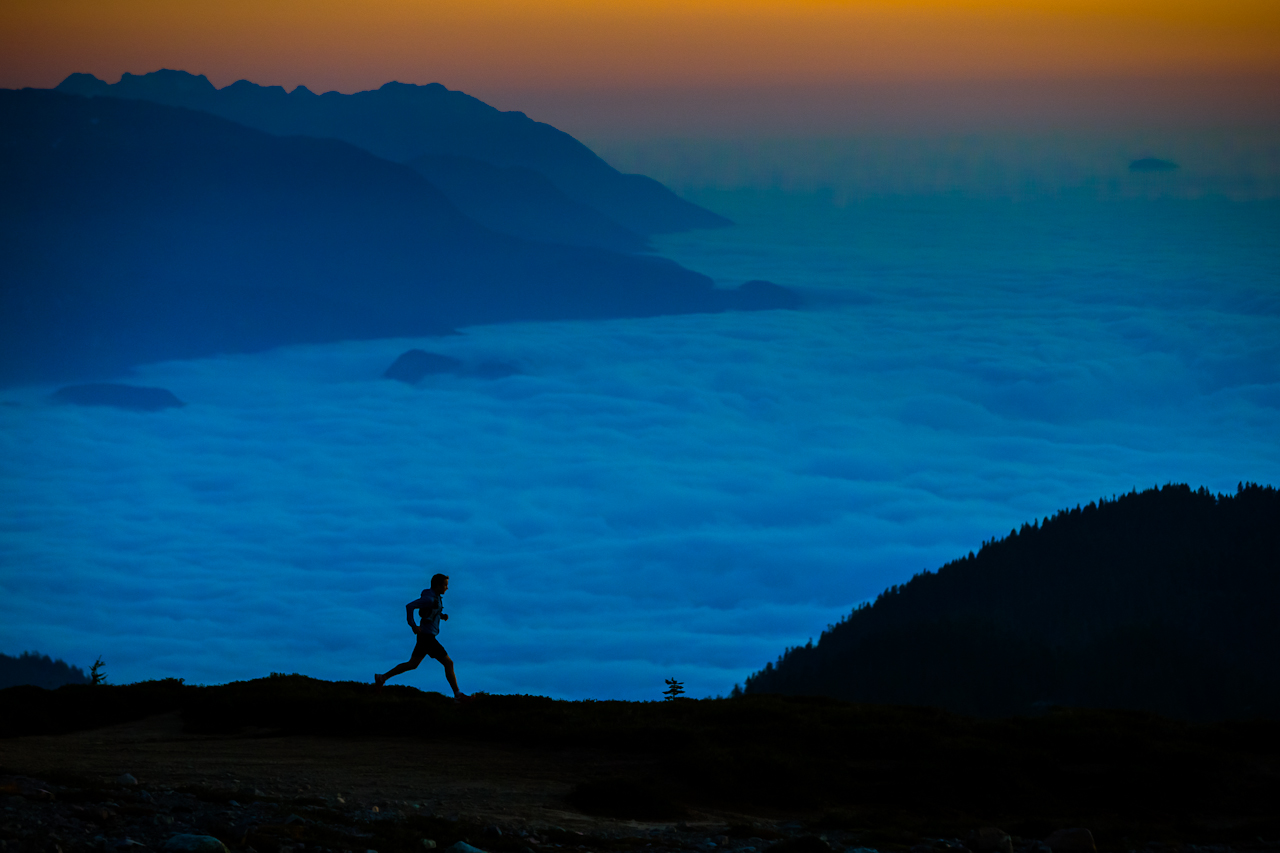
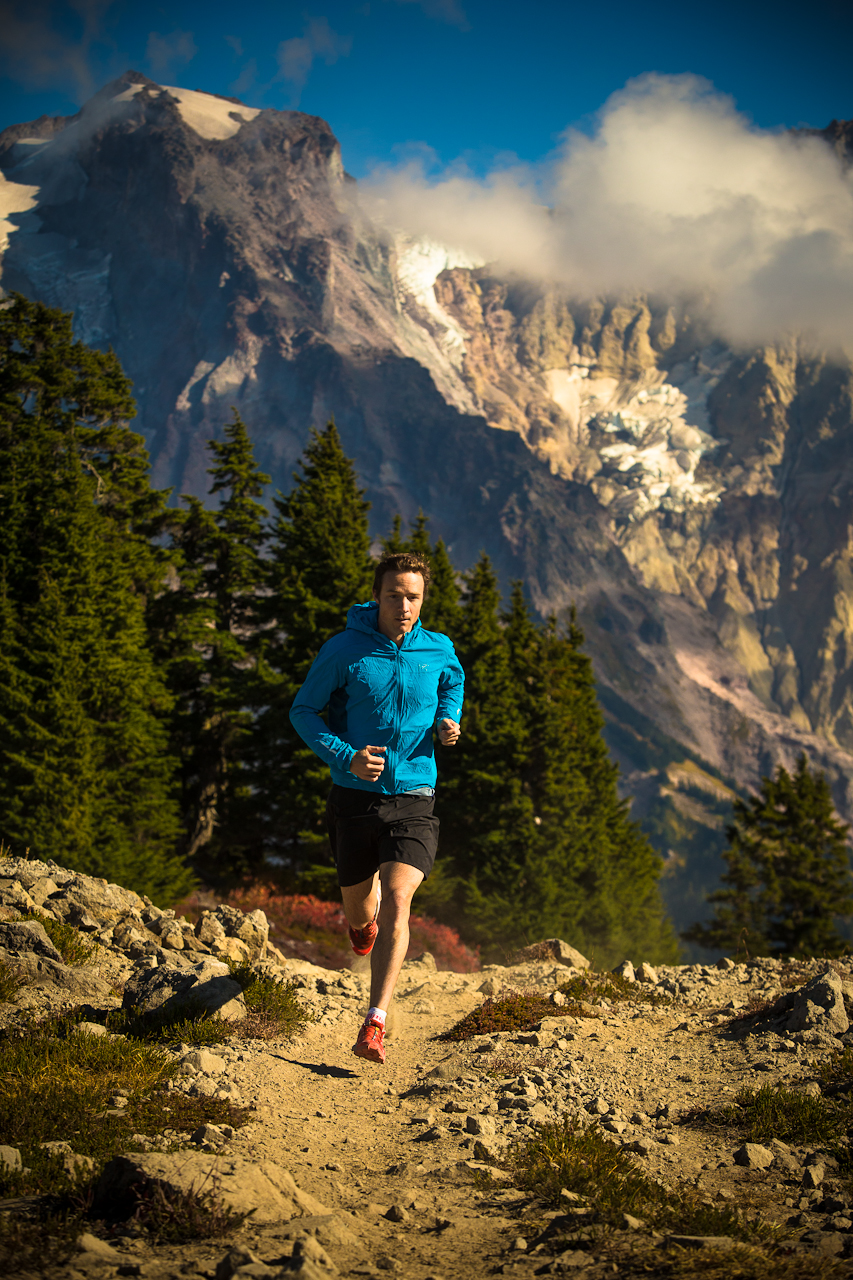
Joe Grant – Transvulcania 2013

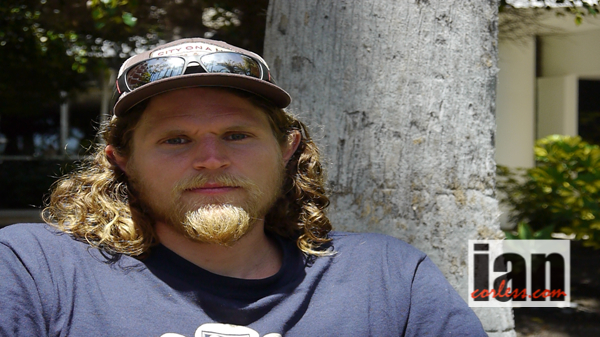
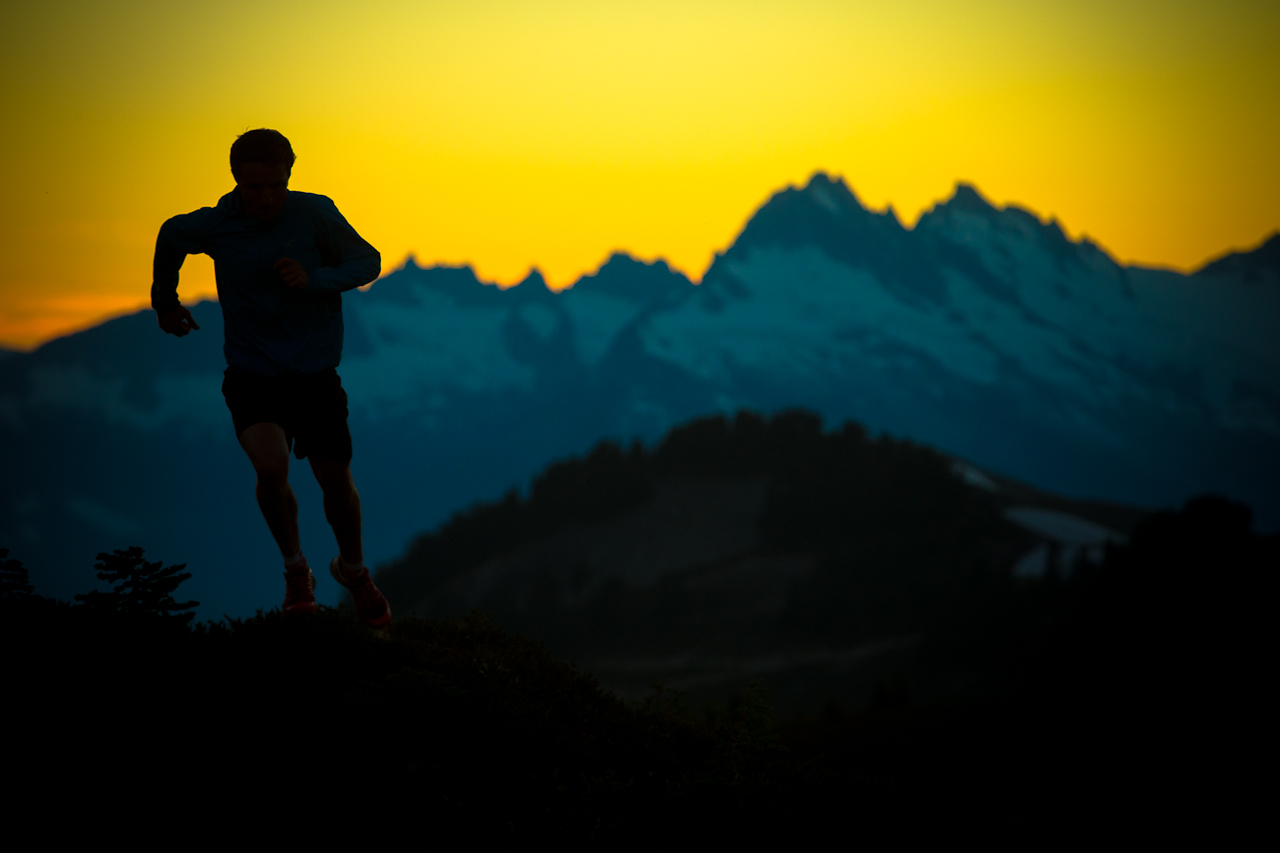
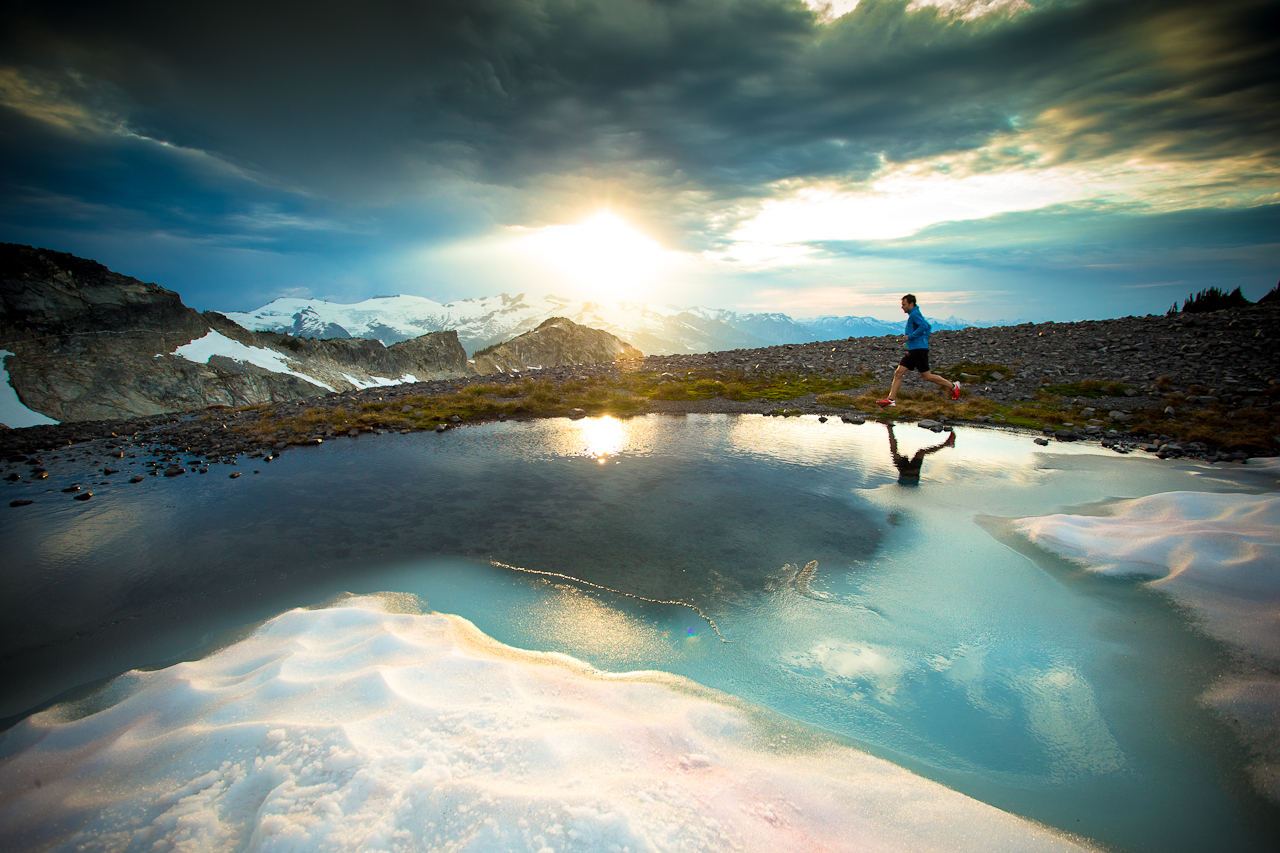
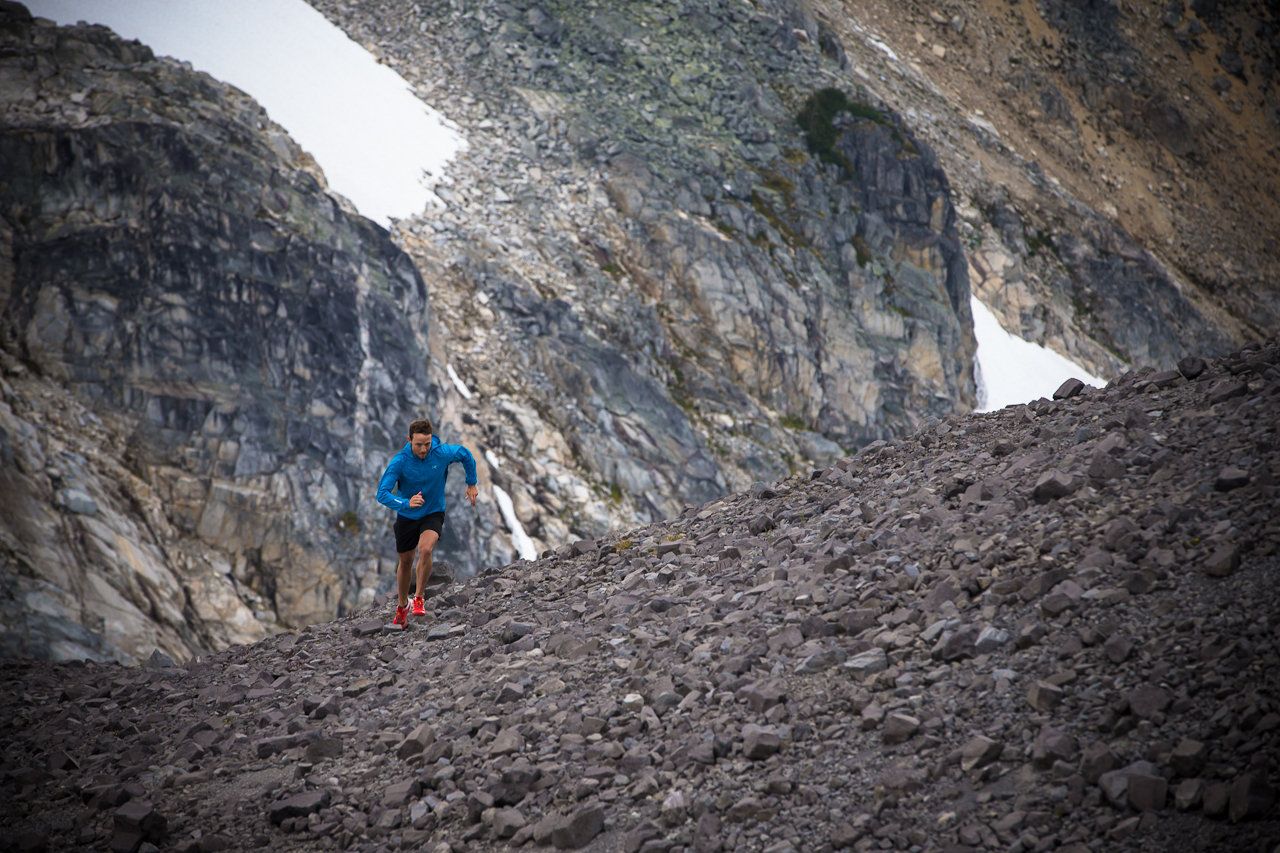
Joe Grant Transvulcania 2013 - copyright Ian Corless

Joe Grant Transvulcania 2013 – copyright Ian Corless

Arc’teryx athlete, Joe Grant chats with Ian about his recovery from the Iditarod Trail Invitational and about he is excited to once again to return to La Palma.

Joe has the advantage over much of the competition to have experienced the Transvulcania course before. In 2012 he raced well to place just outside the top 10. He hope to improve on that this year….!

YouTube HERE

Links:

  • Joe Grant – HERE
  • Arc’Teryx – HERE
  • Transvulcania 2013 – HERE
  • Skyrunning – HERE


Timothy Olson – Transvulcania 2013

Timothy Olson Transvulcania 2013 - copyright Ian Corless

Timothy Olson Transvulcania 2013 – copyright Ian Corless

Timothy Olson has been on the island of La Palma for nearly two weeks now and he has loved every moment exploring. Early in 2013 he placed second behind Sage Canaday at Tarawera in New Zealand and just recently he raced at Lake Sonoma. A few niggles with his knees have caused some concerns in recent weeks but we all hope that he is in full health on Saturday.

YouTube HERE

Links:

  • Timothy Olson – HERE
  • The North Face – HERE
  • Transvulcania 2013 – HERE
  • Skyrunning – HERE


Adam Campbell – Interview

ARC'TERYX/Brian Goldstone

ARC’TERYX/Brian Goldstone

Arct’eryx  athlete Adam Campbell, gained much notoriety early in 2012 after securing a solid second place behind Julien Chorier in his first 100 mile race at Ultra Trail Mt Fuji in Japan. With high hopes, he moved into the 2012 season looking to race well at TNFUTMB and the Skyrunning calendar. However, injury issues and personal issues got in the way… I caught up with Adam in April ahead of the 2013 season and his first big race, Transvulcania on the island of La Palma.

IC Adam, the last time we spoke you mentioned that your background as a sportsperson came from triathlon.

AC: Yes, what was I thinking! All those accessories to clutter my life. Actually, triathlon was a big part of my life. I started in 97/98 and I made the junior Canadian National Team. It was a great honor to wear the Maple Leaf. It had a huge effect on me. At the same time, Simon Whitfield was world champion, so I had lots to tempt me into the sport. I decided to take the leap. I had an invite to live in Victoria, British Columbia and train. So, I packed in college and lived with Simon Whitfield, he took me under his wing. I trained with him for a few years and raced the world cup circuit. I had the goal of trying to make the Olympics in 2008.

IC: You couldn’t have had a better teacher! Simon Whitfield was the man to beat!

AC: Oh yeah. Amazing. Victoria had a wealth of talent… Lauri Boden, Greg Bennet, Peter Reid and Laura Bennet. I was spoilt with influences and inspiration from a whole host of the best triathletes. Canada was a mecca for the sport.

IC: You decided that your ability as triathlete was limited and you turned to run and run long!

AC: Sport is fair like that. I realized in 2006 I wouldn’t make the Olympics as a triathlete. I gave it a really good shot but I just wasn’t good enough. I lacked certain physical traits. I wasn’t explosive enough and my swimming was poor in comparison to the competition. I worked my butt off to make it happen but the whole time I enjoyed running the most. I loved it. It gave me the most satisfaction. Especially the long runs in woods and trails. The farther I went the better I became, so, it seemed a logical choice. We are all drawn to the things that we are good at. At the same time I was amazed about this guy I would read about in magazines, Scott Jurek. He looked incredible and he ran in incredible places. I have always been drawn to the mountains. I guess it is the challenge of pushing your self, would I have what it would take?

ARC'TERYX/Brian Goldstone

ARC’TERYX/Brian Goldstone

IC: 2007/2008 you qualified for the Canadian Mountain Running Team, was that a plan that you had put in place or did it happen by default?

AC: I actually qualified in my first ever trail race. I guess I was lucky. If I want to do something well, I always love to speak the best. So I sent Jonathan Wyatt an email and I asked him to coach me. He said yes! Unbelievable. He wrote me a plan for the Jungfrau marathon and I followed it to the ‘T’.

IC: It worked.

AC It sure did. Thanks to Jonathan. But it wasn’t planned. Initially I just enjoyed the process. I had speed and the rest clicked in place. As for ultra running, beyond 3 hours seemed nuts to me.

IC: It still does…

AC: Oh yeah!

ARC'TERYX/Brian Goldstone

ARC’TERYX/Brian Goldstone

IC: Mountain running races do tend to be a shorter distance. Of course the terrain is up and down but it is more like the ‘Sky’ distance of races. You need speed and agility. What was it that interested you to go longer? For many a marathon on a mountainous course  is far enough.

AC: I don’t know to be honest. Curiosity I guess. The longer I went the more I enjoyed it so I decided to race the longer races too. It had a strong appeal. The longer a run gets the more I get the opportunity to really know my body and my mind. I don’t have the ability to run a sub 4 min mile so this type of racing tests the participant in a different way. I was drawn to it.

IC: You have been noted and still have a reputation as a fast runner, even in the ultra circles you are noted as being fast. What combination of speed do you bring to ultra training?

AC: Well, that is all relative. No sub 2:04 marathons coming out of these legs!

IC: Well you say that but speed is becoming very important, particularly if we look at Sage Canaday and Max King. 

AC: For sure, speed is important. The terrain brings many changes and it is important to adapt. I do a couple of hard runs a week but it is more organic. Certainly less structured than when I was a triathlete. I have been in sport a long time and I have become more intuitive. I listen to my body. If I want to go hard I will and when I do I tend to go really hard. By contrast my easy days are easy. I have a long background in sport and that has benefits. I can apply that knowledge to what I do. I also talk with John Brown from the UK, he helps me with my planning and calendar. It’s critical now with the way races are going. You can’t be fast all year and race all year.

IC: One thing that crops up with ultra runners is the desire and need to get in lots of vertical. Do you bring that into your training?

ARC'TERYX/Brian Goldstone

ARC’TERYX/Brian Goldstone

AC: Absolutely. I never look at weekly mileage. I just log vertical. That is what is the most important for me, how much vertical and it’s huge how much strength comes from this. It creates a great foundation.

IC: Anton Krupicka and Kilian Jornet have the same approach. It’s all about going up. Kilian in particular just logs vertical ascent.

AC: Geoff Roes and Mike Wolfe amongst others do the same. I guess the Europeans do the same? No magic formula is required. It is all about being specific to the terrain and distances that I race.

IC: If we look back at your ultra career what would you consider a highlight?

AC: That is tough. I like to pick races that are in beautiful places or races with competitive fields. So, every race has been special. I guess UTMF in Japan last year… my first 100-mile race was special. I was 2nd behind Julien Chorier. I had a respectable race and it really challenged me. It took a huge physical and emotional toll on me as I raced very hard. Also my first ultra back in 2010, Chuckanut 50, that to me was awesome. Just being on the line to start was incredible. I was definitely scared going beyond a marathon distance!

IC: Most of us are Adam. The first time can be a worrying experience. You mentioned UTMF and we actually spoke last year not long after that race. I was interested in your training but also your equipment. You had specific needs which Arc’teryx helped with. I guess one of the benefits you have had is your location and the proximity to Arc’teryx HQ. They can manufacture and provide equipment for you usually within a couple of days?

AC: Incredible. I have been with Arc’teryx since 2007. I cold called them and my timing was perfect. I actually was suggesting making running apparel and luckily somebody in the design team had the same thought. I was lucky. I work closely with them and we are constantly developing more run specific apparel. They have the best materials and the highest quality. They have a no compromise approach, which is amazing. It can take ages to bring something to market. This is the price of quality. I test lots of products on the trail so I am lucky. 

IC: Your physique is unique. You are a small guy so I guess you have lots of custom clothing made?

AC: Oh yeah, I take take XS in Japan. Now that is small.

IC: That IS small

AC: Yep. I am lucky. I get custom clothes from Arc’teryx because I am very particular. I don’t like baggy clothes for running. It must fit and it must have no excess fabric. For UTMF I had some specific kit made. I wanted the most minimal gear possible. If I am not going to use it, I don’t want to carry it. I don’t want to carry an extra gram. It must be functional and suit the purpose it is intended for.

IC: In 2012 you spent time in Europe. You had planned to do TNFUTMB but you had some niggles which ultimately meant that TNFUTMB had to be taken out of your calendar. Do you have plans to go back to Chamonix and race the iconic 100 mile race?

AC: For sure. I love Chamonix. It’s an incredible town. I will be racing the Skyrunning Mont Blanc Marathon in summer and Arc’teryx are putting the Arc’teryx Alpine Academy together; a week of mountaineering so that will be incredible. I do a little climbing but I am really looking forward to working on my mountain skills.

IC: Mountain skills? So is this going to be climbing and everything related?

AC: Glazier travel, mountaineering and learning specific skills.

IC: Sounds awesome.

AC: It will be an amazing week.

IC: You mentioned Skyrunning, Arc’teryx are heavily involved in the series. It is going to be a great year for you, the team and the brand.

ARC'TERYX/Brian Goldstone

ARC’TERYX/Brian Goldstone

AC: I was gutted last year not to race in the Skyrunning series due to unjury. I like to race the best people on the best and most beautiful terrain. Skyrunning personify that!. They have done a brilliant job. Nothing like being recognized for personal achievement and Skyrunning offer this. It’s the vibe, the experience and yes, Arc’teryx are involved as a sponsor.

IC: Transvulcania kicks it off with a stacked field. I said in 2012 it was the race of the decade, but 2013 is equally impressive.

AC: It’s going to be great fun. Racing the best brings out the best in me and the field doesn’t get any better than at this race. I will be interested to see how I perform. I believe I have put the work in and I am in good shape.

IC: I presume you are doing the ultra series? You need three events to qualify but five in total are available, are you planning on the five?

AC: Jeez have you seen this 100 miler, Andorra, Ronda del Cims! It has massive appeal BUT boy I don’t know…. It took Miguel Heras 30 hours! That is a long time to be out on such a tough course. That race may end my summer. I would need plenty of recovery so I will have to see? I can’t recover like Kilian.

IC: It is all about balance and finding what works for you. You have to cherry pick and keep the balance.

AC: An incredible race but a little much for me at the moment.

IC: Tell me about your world record in 2012… some inspired idea to run a marathon in a business suit. What was that all about…?

AC: I had read an article on letsrun.com and I saw some guy had set a record in a suit in 3:25. I was sure I could run quicker. I was going through a divorce and I needed a distraction. I needed some fun and an escape. I wasn’t in a great place personally so that seemed a quirky thing to do. It was a good excuse to raise money for a charity also. I had a lot of fun. It was a great challenge… it was also really hot!

IC: Yes, running a marathon fast is a test but to run it in a shirt, tie, jacket and trousers… c’mon, what was the time?

AC 2:35! I started slow looking for 3 hours but after the first mile I rolled and I felt great. I hadn’t run in the suit before so it was all new to me. I actually negative split the race heavily 1:19 and 1:16 for the second half.

IC: Wow  – ridiculous.

AC: Yes, I guess, I surprised myself.

IC: What is your marathon PB?

AC: I haven’t really run marathons before. My first marathon was 2:29 in 2006. I don’t run too much road.

IC: You finished 2012 with San Francisco 50. You had a great race. Sage Canaday and your self at the front…  erm, who was to blame for going of course (laughs)?

AC: (laughs) Well I was leading but we were all together as a group. Nobody questioned the decision. It was foggy, dark, windy, raining and it was just hard. The route seemed correct and we all took responsibility.

IC: I am only joking. Sage does have a small reputation for going off course.

AC: The dude just runs way too quick!

IC: Yep, so fast he doesn’t see the markers. A great race for you though and a great boost for 2013.

AC: For sure, it’s good to be competitive and it is nice to have it in the bag. It had been a rough year so it was a good way to finish. I get confidence from racing and performing.

IC: 2013 comes around and you think about a new season and then I see you post a photo on facebook of your leg in plaster!

AC: It was dumb. These things happen. The day before I had seen my physio. He said, “Have you ever sprained your ankle?” I said no…. oh dear, fatal last words. I was 2.5 hours into a run and I slipped on a wet log. I went down hard and I had no option but to hike out. Really painful but I got great treatment and support. All is good, it flares up a little but I will be okay.

IC: And your recovery?

AC: I didn’t respect the recovery. I should have been a little more patient but we all learn.

IC: These things need time.

ARC'TERYX/Brian Goldstone

ARC’TERYX/Brian Goldstone

AC: Yes I tried to make up time. It never works; patience is key. I am good now, I have plenty of volume and I did cross country skiing and climbing to break things up, I have tried to save my legs a little, it is a long season. I want to be good in September and still have motivation.

IC: To finish off I would like to discuss the video ‘Silence’. I remember seeing it early on and it really switched for many people. It was a change, a breath of fresh air. It not only fulfills a running purpose but it was also a piece of art. Was it your idea?

AC: It came together by the people at the production company. I fitted the narrative perfectly and I was really keen to do it. Everything about it was perfect. When they pitched the story I said yes immediately. I could relate to it.

IC: It was a great movie. We all get stuck in our day-to-day lives. I am fortunate I think, I spend lots of time on a computer but my life evolves around running, mountains and races. I get my fix. I guess living where you do you can get on trails quickly… the film manages to get that perspective across

AC: Yes it was a fabulous. The entire production was top notch. I am really happy. The story struck a chord with so many. Canada is a great place for running. One moment in the office, the next on a beautiful local trail.

IC: You have a great local running group too.

AC: Oh yeah, Ellie Greenwood, Garry Robbins, Jason Loutitt and so on…

IC: Gary hasn’t tempted you to run Hurt 100?

AC: That race looks brutal. The time he ran in 2012 is seriously impressive.

IC: Particularly with Gary’s story; two years out of the sport with injury.

AC: Gary is a great guy. Great to see him back!

IC: Adam, it has been great to catch up. We will meet up at Transvulcania. As the season unfolds I guess we will see each other on a regular basis. It’s going to be great to see you on the circuit.

AC Looking forward to it. It is a privilege to compete. I don’t take that lightly. I consider myself extremely lucky. I will be prepared and I hope to race well. We shall see how I go.

IC Brilliant have a great 2013 season.

 Links

Episode 33 – Marathon des Sables and Adam Campbell

Ep33 Talk Ultra


This weeks show honours the injured and fallen at Boston Marathon. We have daily chat from the Marathon des Sables (Tobias Mews, Danny Kendall and Stuart Rae) bivouac and interviews with top placed Brits, Danny Kendall and Jo Meek. We interview Arc’teryx athlete, Adam Campbell. We discuss Mojo in Talk Training with Niandi Carmont, we have ‘A year in the life of…’ a Blog, Speedgoat, the News and ‘Up & Coming Races’.

00:00:44 Start
00:18:40 A year in the life of… with Amanda Hyatt. Amanda has been struggling with training and recently run the Brighton Marathon.
00:29:30 News from around the ultra world
00:35:40 MDS special from the bivouac with chat from Stuart Rae, Danny Kendall and Stuart Rae.
01:11:55 Back to the news
01:18:45 MDS special – after 28 editions of the race, Danny Kendall has surpassed James Cracknell and is now the highest ever placed Brit in the race.
01:35:40 MDS specialJo Meek entered the MDS several years ago and in 2012 got the nod that 2013 would be the year. With no experience of multi day racing, Jo wanted to finish the race but also perform to the best of her ability – she made the podium in 2nd place!
015215 BlogNick Cark always writes an in depth blog about his running HERE
01:52:55 Back to Karl
01:55:30 Talk Training – have you lost your Mojo? We discuss ways to get your mojo back with Niandi Carmont.
02:03:10 Interview – with Arc’teryx athlete Adam Campbell as he prepares for the 2013 season.

A former member of the Canadian National Triathlon and Duathlon teams, in 2006 Adam decided to shed the extra gear and rely solely on his running shoes to get around. He also decided to put down the stopwatch and set intervals and hit the trails.

Adam’s love for running began on the beaches of West Africa and Spain, where he spent his childhood running after soccer balls and chasing waves. It wasn’t until he moved to Canada in his late teens that he began running competitively. Adam’s love for all individual athletic challenges quickly saw him jump into the multi-sport world of triathlons and duathlons where he was renown for his running ability, which saw him win a national duathlon title.

However the drudgery and structure of training and racing for triathlons caught up with him and he began to seek out new challenges. After running the roads for a year, he jumped into his first trail race in 2007 and a new love was born. Adam qualified for the Canadian Mountain Running Team in his first trail race and continued to post the best ever finish by a Canadian at a Mountain Running World Championship at the Jungfrau Marathon, a gruelling 42k uphill run with 6000ft elevation gain from start to finish.

His running goals are to seek out interesting challenges in inspiring settings. A lifelong traveler and racer, Adam’s new belief is: if you are going to be suffering, you might as well suffer somewhere beautiful!

Occupation: Trail runner/law student (environmental, aboriginal, employment law)
Favourite Trail: anywhere I haven’t run before
Favourite Place to run: Soft & hilly terrain. Summer alpine runs
Favourite Race: Comfortably Numb, Whistler BC/ Jungfrau Marathon, Interlaken Switzerland
Favourite Distance: I will race anyone, anywhere…

02:33:20 A Meltzer Moment
02:36:20 Up & Coming Races
02:41:25 Close
024450

Pictures tell stories…

I love what I do! I really do.

To work in a race environment and capture the action in words or audio is a real pleasure. I have played with video and although I enjoy the medium, I do prefer a ‘still’ image. It is a moment captured.

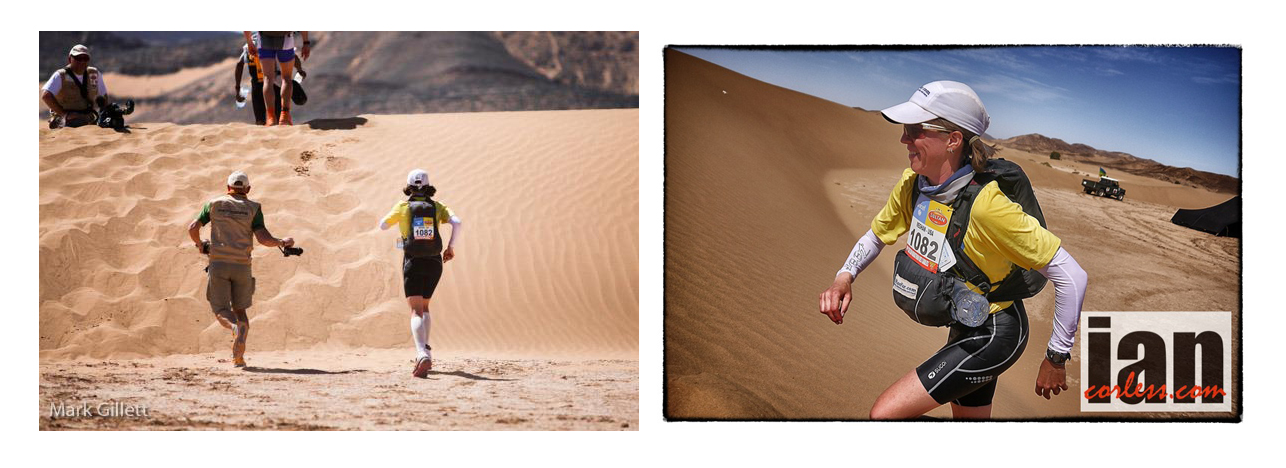
These two images really capture everything that combines to make a great image.

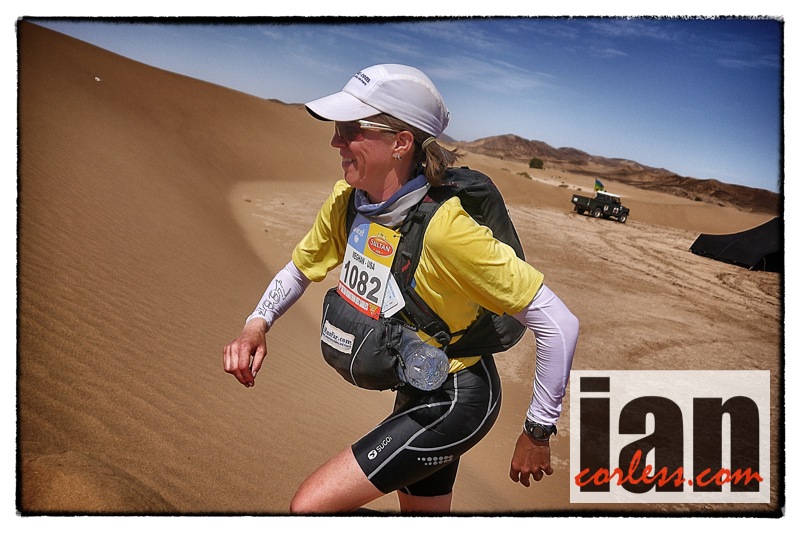
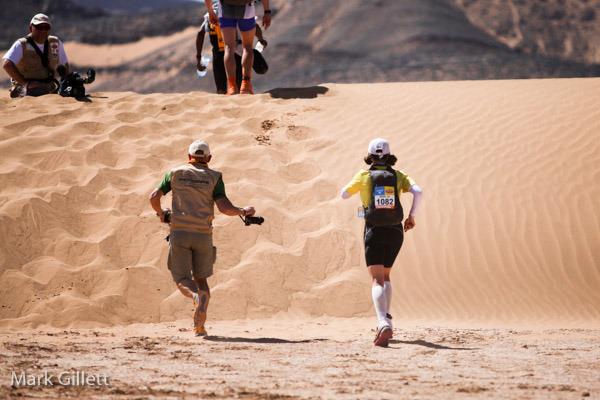
Meghan Hicks on the first stage of the 2013 Marathon des Sables (which she went on to win) running up a dune on the first day. I captured the image by running alongside her.

iancorless.comP1020570From behind, my fellow photographer, Mark Gillett captures the process involved. Story making at its best, running at its best and the use of imagery at its best. I have often been asked HOW? I manage to capture images that make the viewer feel like they are in the moment… well here is how.

Copyright Mark Gillett

Copyright Mark Gillett

Pictures tell stories… thanks for the inspiration Meghan and thanks for capturing Mark.

Pictures tell stories...iancorless.photoshelter.com


Lizzy Hawker to attempt new record!

Lizzy Hawker is going to attempt to break her own 3-day record for running 319km from Everest Basecamp to Kathmandu run.

At 7am on Thursday 18th April internationally renowned endurance athlete Lizzy Hawker began a solo run in the direction of Kathmandu some 319km (198 miles) away.

She is the world record holder for the ‘Everest Mailrun’ the route taken by those carrying letters to and from expeditions at Everest Base Camp before the opening of Lukla airstrip in 1964.

Lizzy Hawker at TNFUTMB copyright Ian Corless

Lizzy Hawker at TNFUTMB copyright Ian Corless

record stands at 71 hours 25 minutes, completed in November 2011. She made her first attempt of the run in 2007 with two friends which took 74 hours 36 minutes with just 4 hours sleep in Jiri.

The last Nepali runner to hold the record was Kumar Limbu in 3 days 7hrs and 10mins set in May 2000.

The route is brutally hilly with more than 10,000m ascent and nearly 15,000m descent.

Hawker, who was named a National Geographic Adventurer of the Year 2013, won the 100K world championship in 2006, set a 24-hour world record by running 247km at the Commonwealth Championships in September 2011, and set a course record for women in the 250km Spartathlon Ultra Race in Greece last year.

Lizzy Hawker TNFUTMB copyright Ian Corless

Lizzy Hawker TNFUTMB copyright Ian Corless

“I try to focus on running the very best that I can, literally moment by moment,” Hawker recently told the New York Times,  “If I’m in pain or tired, I don’t have to fight it. I can be in myself, in the environment. It’s amazing what you can do running moment to moment.”

Hawker fuels herself on simply banana cake and cheese sandwiches and likes dal but prefers roti to rice.

She is expected to reach Jiri at 4pm Friday and reach the Rangashalla stadium late Saturday night 65 hours after starting at Base Camp.

Earlier this year The North Face sponsored athlete won the 100km Annapurna 100 race and will race the multiday Mustang Trail Race later this month.

Lizzy Hawker blog : HERE

Press Release from : http://trailrunningnepal.org

Zegama – Aizkorri 2013 Preview

Zegama - Aizkorri

Zegama – Aizkorri needs no introduction to those who follow Skyrunning. It is a course that has created many a story over the years.

Located in a natural park, Aizkorri-Aratz, it brings respect and excitement to every mountain runner that toes the line.

Zegama Map iancorless.com

In July 2002, the Village Council decided to revitalise and bring life to the local area, in order to achieve these objectives the Zegama-Aizkorri Mountain Marathon Association was created. Today, the AIA-renovated Alpine Marathon has a reputation in the world as one of the world’s most prestigious mountain marathons.

Part of the Skyrunner World Series it is the ultimate mountain marathon test. In 2008 the European Championships were hold on this very course. When Kilian Jornet was asked about Zegama, he quite simply said:

“Zegama? It’s Zegama!”

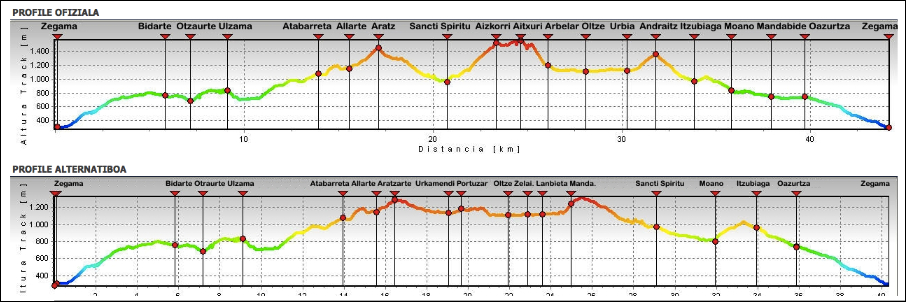
Zegama Profile

In other words, nothing more needs to be said. It has a reputation that demands respect from the higher echelons of the mountain running world.

2012 Summary

Zegama followed just 7 days after Transvulcania La Palma in 2012 and therefore we almost had a re run of the La Palma race. Of course, conditions were a little different. The dry heat of La Palma was replaced by torrential rain, mud, cold and the occasional snow blizzard.

The American contingent who had raced well on La Isla Bonita transferred en-mass to mainland Spain with a couple of additions. Nick Clark representing Pearl Izumi and the ‘hot tip’, Max King. Max had everything in is his favour; speed and a mountain pedigree.

As it happened, the American contingent had a lesson on European mountain running and never got in contention. For many of them they could hardly stand up in the tough conditions and as Nick Clark crossed the line he exclaimed

“Now THAT is a mountain race!”.

It was a shock to the system. Dakota Jones victorious just a week earlier had taken the race easy, a pre-race plan as he had nothing to prove after topping the podium at Transvulcania. In comparison, Kilian Jornet had something to prove and now had some running in his legs… midway through the race he applied the pressure and once again proved that he is the king of the mountains.

In the ladies race Oihana Kortazar showed her dominance over this Sky distance and we started to get a glimpse of a star in the making, Emelie Forsberg. Nuria Picas also set her stall out for a year-long process of podium places over all distances, from marathon to ultra. Anna Frost tired after a dominating Transvulcania performance decided not to race at Zegama and keep some powder dry for another day.

2013

* PLEASE LOOK FOR UPDATES posted 26th April marked in BLUE

The 2013 race is going to see some great representation from top ranking teams: Salomon, New Balance, Adidas, La Sportiva, Arc’teryx, Valetudo Skyrunning, Inov-8 and Scott.

Zegama this year is two weeks after Transvulcania and although that would work well for additional recovery, it doesn’t necessarily work well for travel budgets, so, we wont have Sage Canaday, Timothy Olson, Anton Krupicka, Joe Grant and the ‘other names’ joining the Zegama party.

The Mens Race

Kilian Jornet copyright Ian Corless

Kilian Jornet copyright Ian Corless

Kilian Jornet will be a dominating force at Transvulcania La Palma and I see him on top of the podium, two weeks recovery is a life-time for Kilian and after his dominating performance in 2013 I see him replicating the win at Zegama. He has just flown around the Transvulcania La Palma course and set a new course record. Respect!

His sparing partner, Marco De Gasperi, a legend in mountain and Skyrunning unfortunately has now pulled out of the race with a knee problem. This is a great shame, we all love to see Kilian and Marco go head-to-head.

Marco De Gasperi copyright Ian Corless

Marco De Gasperi copyright Ian Corless

This almost certainly means that we will have a re run of the 2012 Zegama race and also the 2013 Transvulcania… Kilian’s main competition will now come from Luis Alberto Hernando. Luis was second behind Kilian at Zegama last year and is almost certainly in some of the best form of his life at the moment. He pushed hard at Transvulcania just over a week ago and was leading the race at the final summit, ultimately loosing his lead to Kilian on the descent. His race on the island of La Palma is even more impressive considering it was his first ultra.

Transvulcania 2013 copyright Ian Corless

Transvulcania 2013 copyright Ian Corless

Missing from Transvulcania and deciding to run the ‘Sky’ distance in 2013 is Andy Symonds. Andy comes from a traditional fell/ mountain running background and just like Tom Owens, he will love the conditions here. Both Andy and Tom have withdrawn from Zegama I am afraid. In an email from Andy Symonds, he says, “We’re both injured!! can you believe it.. Tom’s got some pretty bad tendon rumpture in his foot and I’m limping with a duffed iliopsoas… neither of us have run for several weeks (much more for Tom). And so, no Zegama this year.. booo.. :-(” A real shame not to have these two top performers at the race. Speedy recovery guys.

Andy Symonds copyright Ian Corless

Andy Symonds copyright Ian Corless

Miguel Heras missed Transvulcania due to injury so we currently have a question mark if he will run at Zegama. In form he is one of the best runners in the world, so, he will most definitely mix it up at the front. Tofol Castanyer recently raced the Three Peaks in the UK and had a good race but was not used to the ‘navigation’ element of UK fell running, he too has the potential to win, particularly when running on Spanish soil.

Tofol Castanyer copyright Ian Corless

Tofol Castanyer copyright Ian Corless

Miguel Heras copyright Ian Corless

Miguel Heras copyright Ian Corless

Michel Lanne from France had a great race over the tough and technical trail at Trofeo Kima in 2012 and has been racing regularly in the build up to this Spanish race. He will arriving in form and ready to take on the front of the race. Just this week he has been on the trails with Kilian.

Inov-8 have Alex Nichols and Ben Bardsley taking part and they may very well be two dark horses. Ben is well versed in fell and mountain running and will almost certainly come into the race a little under the radar… one person who knows and respects Ben’s ability is Andy Symonds. Expect a surprise! Also watch out for South African fast man, AJ Calitz, he may well struggle a little with the terrain, technicality and temperatures at Zegama. But a surprise can come from anywhere…

Other contenders are Michel Rabat, Nicholas Pianet, Dai Matsumoto, Toru Miyahara, Dawa Sherpa, Dave James and Daniele Capelletti.

The Ladies Race

Emelie, Frosty, Maud, Lizzy, Nuria copyright Ian Corless

Emelie, Frosty, Maud, Lizzy, Nuria copyright Ian Corless

The ladies race will be a battle royal and although the men’s field has a top quality field I can’t help but think that some real excitement and a nail biting finish will come from this select group of women. Of course, Oihana Kortazar is returning to hopefully repeat her 2012 victory. She will be fresh as she will have not raced at Transvulcania. However, I am going to go out on a limb and predict a podium place, if not a win for Stevie Kremer. Stevie (from the US and now living in Italy) may not be a name too familiar to many but believe me, she has all the class and ability to create some waves over the ‘Sky’ distance in 2013. She has just recently placed on the podium in a very tough race in Italy (overall podium, not the ladies) and after seeing her perform at Sierre Zinal and other races, I think Stevie will be the surprise package of Zegama.

Stevie Kremer copyright Ian Corless

Stevie Kremer copyright Ian Corless

Nuria Picas once again had a great race at Transvulcania 2013 and will come to Zegama ready to push hard and go full speed for the win. She had an incredible 2012 season and performed over all distances always making the podium and in most cases, she stood on top of the podium. She is a true champion and a great ambassador for the sport.

Nuria Picas copyright Ian Corless

Nuria Picas copyright Ian Corless

Emelie Forsberg had a superb race in 2012 and she will be back fighting for the podium. She can go downhill like no other and as she showed last year, she took the final descent at break neck speed and got on the podium. She is wiser, stronger and more experienced now. She is going to be fired up after her incredible run at Transvulcania and just missing Frosty’s CR by a couple of minutes. I think back 12 months when I first met Emelie, Zegama really was her first big race… boy she has come such a long way in twelve months. What does the future hold for her?

Trofeo Kima 2012 copyright Ian Corless

Trofeo Kima 2012 copyright Ian Corless

Silvia Serafini is also another great potential for a podium place. I don’t see her on top of the podium… she is still very much a lady who likes speed and good running terrain BUT she is learning fast and has heaps of talent and ability. Just this last weekend, the 18th May, she set a new CR in The Great Wall run in China.

Silvia Serafini - copyright Ian Corless

Silvia Serafini – copyright Ian Corless

Anna Frost gets a notable mention. She won’t be racing this year. She missed Transvulcania due to injury but just this last week has had some good news and she is now back on the trails, albeit slowly and one step at a time. She will be back!

Anna Frost 'Frosty' copyright Ian Corless

Anna Frost ‘Frosty’ copyright Ian Corless

Emanuela Brizio will lead the rest of the ladies gunning for one of those coveted podium slots. Maud Gobert, Stephanie Jimenez, Debora Cardone, Sarah Ridgeway and Anna Lupton make up the main contenders for the 2013 edition.

Links

Calendar

SKY
1. SPAIN: Maratòn Alpina Zegama-Aizkorri – 42k, Zegama – May 26
2. FRANCE: Mont-Blanc Marathon – 42k, Chamonix – June 30
3. USA:  Pikes Peak Marathon – 42k, Manitou Springs, Colorado – August 18
4. SWITZERLAND: Matterhorn Ultraks – 46k, Zermatt – August 24
5. ITALY: Skyrunning Xtreme – 23k, Limone sul Garda – October 13

Tom Owens – Is the SKY the limit?

Tom Owens running a ridge at the stunning Trofeo Kima copyright Ian Corless

Tom Owens running a ridge at the stunning Trofeo Kima copyright Ian Corless

Tom Owens  is a British runner who I guess in ultra terms, as Tom keeps telling me, is not an ultra runner. But when you are on the podium repeatedly in Skyrunning races in 2012 and push Kilian Jornet, the term ‘ultra’ can be loosely used. I caught up with Tom just as he had finished a run in a gale force wind on the fells near his home in Scotland.

IC: Welcome Tom.

TO: Thanks Ian, great to be here.

IC: Thanks for finding the time to chat. So, you say you are not an ultra runner but it is fair to say that when we look at some of your 2012 races like Zegama and Trofeo Kima they are tough races aren’t they and when we look at how long it takes to cover these races they do drift into ultra category.

TO: Yes I agree with you. You are on your feet for a long time. A race like Zegama can take 4 hours and that is considered a ‘runnable’ Skyrunning race.

IC: Lets go back to what got you into running. You told me that at the age of 22 you ran London Marathon.

TO: Yes I was at University and I entered the ballot for the marathon not thinking I would get in. Ironically I got in first time. I did a little training and joined a cross country club. I had a year of running but it was very much a sideline. I was much more interested in Football and having a good time. I ran the marathon and then got addicted.

IC: In 2004 you ran 2:42 at London.

TO: Yes, correct. I learnt so much in the first two years. I met some great folk at Bristol Uni and I learnt how to train and recover. I was very pleased at the time.

IC: What do you mean pleased? Any of us would be ecstatic with 2:42 marathon.

TO: Funny, I didn’t know what time to go for so I wrote splits for 2:42 on my hand and it went well. My first time was hopeless and I bonked. I made changes for the second year but that was pretty much the end of my road running.

IC: Yes, you met Andy Symonds and I guess your friendship with Andy has dictated both your careers. You have almost run in parallel.

TO: I met Andy and he introduced me to hills. He is a great guy, super talented and enthusiastic. So he encouraged me to try hill races and I loved the vibe. Really different. Very challenging but no pressure. So varied. Andy encouraged me throughout and I kept with it.

IC: What would you say was the point when the focus started to shift? You lived in New Zealand and you met the Scottish team who were out for the world trophy. Was that a pivotal point?

TO: Yes it was I guess. I travelled and then I settled in New Zealand and it had a great running community. I lived in a brilliant city surrounded by hills. It’s an outdoor way of life and I ran more. With the World Mountain Running Champs taking place I saw Jonathan Wyatt and that inspired me. To have the English, Scottish and Welsh team over was brilliant. I hung out with them, did the ‘open’ race and yes, I guess I just continued that momentum in the UK.

Tom Owens behind 'Hernando' in the early stages of Zegama 2012 copyright Ian Corless

Tom Owens behind ‘Hernando’ in the early stages of Zegama 2012 copyright Ian Corless

IC: In 2007 you won your first British Championships beating Rob Jebb.

TO: Yes that was a surprise. A race up in Scotland. Wasn’t a big field but it was a tough race and it has two or three big hills. I can’t remember the distance but it took about 3 hours. I just pipped Rob by about 7 seconds on the line. It was a huge confidence boost. Luckily most races I do finish downhill so it gives me a chance to catch back up after loosing time on the climb.

IC: I guess this is a perfect opportunity to discuss and explain what fell running is. As an exponent of fell racing would you like to give us an overview.

TO: They are very low-key events. The race will visit checkpoints, typically hill summits or passes. You often start at a village hall or pub. You run to to the hills carrying basic equipment such as waterproof, whistle, compass and map and then you make your way to checkpoints as fast as you can. It’s often horrendous conditions; after all it is the UK. You can need map and compass work but you can ‘follow’ as I do. More often than not it is usually wet and very slippery. In a nutshell you basically go straight up and straight down as fast as you can

IC: It’s a key point isn’t it that fell running is not about sticking to the worn path, it’s about the quickest route from A to B.

TO: Yes. That is the beauty. You have a hill, you get up as quick as you can. That is often ‘hands on knees’ power walking and then the fun bit is hurtling down as quickly as you can in a direct line. I guess in the UK we are lucky. The hills are open and we can pretty much go where we want. Especially in Scotland with the right to roam act.

IC: You mentioned going up ‘hands on knees’ I think for most of us we can get our head around that, what I find with fell running is the coming ‘down’ is just crazy. It’s such a skill. Is that God given or do you have to practice.

TO: Like anything you need to practice. You have to get confidence on all terrain and build up ankle strength. If you relax it is so much easier. Particularly if you fall over, most of the time you get up and carry on. Racing is in the head, relax and enjoy it and the rest will follow!

IC: In 2007/ 2008 you got involved with Salomon and eventually you ended up adventure racing and multi stage racing. What was the process involved in that?

TO: I started as a reserve for the Saab/Salomon Adventure Racing Team. In 2008 adventure racing was a big sport. It was certainly one of Salomon’s big focuses. I would say it was probably the last year of racing too as the economy crashed. I was called up as a reserve and I raced a six-day race. Probably one of the best races ever…  two mountain days on foot, mountain biking, climbing, paddling and canyoning. In addition, every evening we had a trail race that was really competitive. It favored runners.

IC: Your team was 2nd overall, yes?

TO: Yes that is right. I was with Andy Symonds again and a guy called Ben Bardsley. We are mountain people. We lead for most of the race but lost time on the water.

IC: That combination of multi stage racing and time with Andy, was that instrumental in what brought you guys together to take on Transalpine.

TO: Yes, it was a race I had heard about. It looked amazing. Andy was in Scotland at the time and we trained together so it seemed logical that we should undertake this as a team and give it a go. Again, another brilliant race!

IC: The race is typically about 160 miles over 8 days and alternates direction?

TO: Yes, 8 days. It has two routes and they alternate. An easterly route and a route that is more western which is more alpine. Actually we did both. We did the west route in 2009 I think and the other the following year.

IC: And you won both!

TO: Yes, Andy and I run together so well and the format suits us. You run hard and then you get to recover and do it all again the next day.

IC: Just like that!

TO: Yes, it is a battering race. Definitely good that it is late in the year as you really need to recover afterwards.

IC: You see, you say that you are not an ultra runner but 8 days in the mountains on those tough courses running a marathon a day is ultra running. That is severe, head to the ground hard work.

TO: Yes, challenging days. Brilliant days. Some of the passes and tracks are breath taking. It’s a delight to be involved but you get it done as quickly as you can. It does take its toll. It definitely has an ultra element to it.

IC: In 2010 you raced ‘Giir di Mont’. You came 6th. Was that the point that Skyrunning really started to appeal or was it before that?

TO: To be honest the first Skyrunning race was 2006, it was La Plagna, A huge race. It was 55km with 3000m up and 3000m down. Certainly the hardest thing I had ever done at the time, I hadn’t been running long. In 2007 I did a couple more and similar in 2008. I started to build up and as more opportunities came I snapped them up.

Crowds supporting at a Skyrunning event copyright Ian Corless

Crowds supporting at a Skyrunning event copyright Ian Corless

IC: Well, we are at present day and 2012 was a stunning year. We seemed to bump into each other all year. Sometimes we saw each other consecutive weekends. What impressed me was right from Zegama to the very end you were always there or there abouts with Kilian Jornet. You pushed him. Great to see a Brit pushing at the front… from a world perspective also, Tom Owens became a name to reckon with. It must be great for you to have Kilian on your Salomon Team but also to be able to race him.

TO: I don’t actually think I pushed Kilian. I may have been second but he was usually 10 minutes clear.

IC: It’s all relative Tom!

TO: Certainly seeing Kilian at the start and finish is great. He is on another level. He is so dominant at all distances, VK to ultra. We can’t get close to him. He is so chilled and he recovers so quickly. I certainly can’t do it week after week. After a hard race I can’t walk for 4 to 5 days.

IC: If we look back at 2012 what was your highlights?

TO: To be honest I was really pleased with the year actually and the consistency. I did so much and it was never straightforward. I had some wonderful opportunities. The highlight though was Trofeo Kima in August. It’s a really technical Italian Skyrunning race that has passes, via ferrata and scrambling. It’s a small race but absolutely brilliant experience.

Tom Owens  'running' at Trofeo Kima copyright Ian Corless

Tom Owens ‘running’ at Trofeo Kima copyright Ian Corless

 IC: I have to say that it was a highlight for me too. I had never experienced a course like it. To be able to witness the action unfold and capture it on camera was really fantastic. You say it was a small race, you are right, the race is capped at around 125 people but it had a stacked field; Philipp Reiter, Kilian Jornet, Andy Symonds and more. What was obvious at the end was the level of fatigue you all had. That course required 110% concentration.

TO: Absolutely, it had so much rock hopping and you followed painted markers so you had to be focused not to go off course and also not to fall. The last descent was bonkers. A 2000m descent on slippery gnarly terrain. To be running that long on such technical terrain that included ladders, chains and ropes is a big concentration exercise. I was happy to get to the road at the end to be able to relax. It was full on.

IC: What are the plans for 2013? Is the Skyrunning series going to figure again?

TO: I really want to do the Skyrunning series again. Races like Zegama, Chamonix and the Matterhorn excite me. Also the race at Limone. All being well I will try some of those and also mix in some new races. It will be an adaptable schedule and I will see how I go and feel.

IC: What about UK races?

TO: I fancy the British Fell Running Championships, so that will be three, maybe four races in addition to everything else. I will try to mix it up like I did in 2012.

IC: Any temptation to move up to any longer distances or will you establish yourself around the Sky marathon distance.

SKY Marathon races for 2013
1. SPAIN: Maratòn Alpina Zegama-Aizkorri – 42k, Zegama – May 26
2. FRANCE: Mont-Blanc Marathon – 42k, Chamonix – June 30
3. USA:  Pikes Peak Marathon – 42k, Manitou Springs, Colorado – August 18
4. SWITZERLAND: Matterhorn Ultraks – 46k, Zermatt – August 24
5. ITALY: Skyrunning Xtreme – 23k, Limone sul Garda – October 13

Tom Owens at Sierre Zinal being chased by Joe Symonds (Andy Symonds brother) copyright Ian Corless

Tom Owens at Sierre Zinal being chased by Joe Symonds (Andy Symonds brother) copyright Ian Corless

TO: I think it would have to be a course I really wanted to do. I would like to try the Ice Trail Tarentaise. That looks brilliant. I am not sure of the distance but I will have to see. I am not avoiding them but I wouldn’t do an ultra for the sake of it!

IC: You know your skills and ability and as such you choose the races were you know you can perform.

TO: As long as I am enjoying it I run well. We shall see.

IC: Thank you so much for freeing up time to chat, Tom. I am really looking forward to seeing you at many races in the coming year.

TO: Thanks so much. It’s a pleasure. Keep up all the good work!

This article was first published on Mud, Sweat and Tears in March 2013.

Links

  • Skyrunning events can be found HERE
  • Salomon Running HERE
  • Tom Owens HERE

Paleo, Maffetone & the Method

Have you ever asked yourself?

  • Why can’t I lose weight?
  • What can I do to reach my potential as an ultra runner?
  • Why do I sometimes have pain and discomfort?

Dr Phil Maffetone says he can’t tell you the answers to such questions but what he does say is that he can help you find out.

He has a mantra that ‘everyone can succeed’. I agree, we are all capable of so much more than we think. But often, we need to think outside the box or we need to think in a very different way. We all become programed; we conform to the general consensus when actually finding our own path may very well be the best decision we could make.

Forget easy fixes. They don’t really exist. If you want something, you are going to need to work at it. That doesn’t necessarily mean you will need to make sacrifices but it may mean that you will need to adjust your thought process and look at things from a completely different angle.

Dr Maffetone has evolved and developed his ‘method’. We are all individual but certain patterns exist within all of us when we are not balanced in a perfect way.

As Dr Maffetone says, “These were physical, biochemical and mental-emotional imbalances, complete with various signs and symptoms. These patterns provided vital information, which helped lead to quicker and more accurate evaluations, and faster therapeutic outcomes.”

The ‘method’ leads to specific questions such as “Do you get pain?”

  • How do you get the pain?
  • When does the pain start?
  • What makes it better or worse?
  • How long does the pain last?

“These questions are a vital part of my style, and important tools anyone can use to find and fix physical ailments, metabolic imbalances and other problems.” Says Dr Maffetone.

Ultimately we all need our own personal program that will allow us to progress and function to the best of our ability. We need to self-test.

“By testing the body by adding or avoiding certain foods or specific workouts, for example, one can obtain valuable information to begin piecing together the details of an individualized program.”

There are many different facets of health and fitness that also must work together to create optimum human potential for an ultra runner, we are primarily looking at the bodies efficiency at using fat as a fuel and the physical activity that we undertake in training to make us stronger and fitter for the challenges ahead.

Burning body fat helps any athlete to perform at high levels, particularly ultra runners. The benefits are incredible, lets face it, and we all have plenty to call on. If we are using the fat within our bodies effectively not only can we perform better but we also prevent the accumulation of excess stored fat and weight.

Most of the body’s energy for daily living comes from the conversion of both sugar (glucose) and fat to energy (in the form of ATP).” Says Dr Maffetone “Some people rely on larger amounts of fat, with the result of high physical and mental vigor, improved health, and better all-around performance.“

If you are not able to burn fat and rely mostly on sugar for energy, then you will burn less fat in day-to-day life but more importantly you are neglecting one of the primary fuel sources that will enhance your training and race experiences. In addition, you will have the highs and lows that are associated with the ‘spikes’ from a high sugar diet, you will gain body fat and weight and you may very well feel sluggish with less consistent energy to perform daily tasks.

Is a Paleo lifestyle something that you now feel will enhance your life?

But Paleo is only one aspect of the Maffetone Method. If you want to switch on the fat burning mechanism within your body and enhance it, then we need to look at how we undertake our physical activity. Dr Maffetone pioneered this process way back in the 80’s with Mark Allen (now a highly respected champion Ironman Triathlete).

We need to train our Aerobic system.

“By stimulating the full spectrum of slow-twitch muscle fibers, which rely on fat for fuel, improvements in the heart and lungs with increased circulation and better brain function also occur.”

If we don’t train our fat burning system we are missing a really key component that will enable us to function at the best of our ability, we actually run the risk of becoming aerobically deficient.

Dr Maffetone explains, “Being aerobically deficient is a common syndrome associated with fatigue, increased weight and body fat, reduced immune function, physical disability, and hormonal imbalance.”

The Maffetone Method also covers so many other aspects such controlling chronic inflammation and stress management, which you may like to follow up on in one of his many publications.

  • “In Health & Fitness” by Dr Phil Maffetone HERE
  • “The Maffetone Method” by Dr Phil Maffetone HERE

I caught up with Dr Maffetone for episode 32 of Talk Ultra and we discussed the Aerobic system and Paleo diet. You can listen to the full interview HERE

Aerobic Training

How do you calculate your own maximum aerobic training heart rate?

To find your maximum aerobic training heart rate, there are two important steps to the Maffetone Method:

1. Subtract your age from 180.

2. Modify this number by selecting among the following categories the one that best matches your fitness and health profile:

a. If you have or are recovering from a major illness (heart disease, any operation or hospital stay, etc.) or are on any regular medication, subtract an additional 10.

b. If you are injured, have regressed in training or competition, get more than two colds or bouts of flu per year, have allergies or asthma, or if you have been inconsistent or are just getting back into training, subtract an additional 5.

c. If you have been training consistently (at least four times weekly) for up to two years without any of the problems just mentioned, keep the number (180–age) the same.

d. If you have been training for more than two years without any of the problems listed above, and have made progress in competition without injury, add 5.

For example, if you are thirty years old and fit into category (b), you get the following:
180–30=150. Then 150–5=145 beats per minute (bpm). 

In this example, 145 will be the highest heart rate for all training. This is highly aerobic, allowing you to most efficiently build an aerobic base. Training above this heart rate rapidly incorporates anaerobic function, exemplified by a shift to burning more sugar and less fat for fuel.

If it is difficult to decide which of two groups best fits you, choose the group or outcome that results in the lower heart rate. In athletes who are taking medication that may affect their heart rate, those who wear a pacemaker, or those who have special circumstances not discussed here, further individualization with the help of a healthcare practitioner or other specialist familiar with your circumstance and knowledgeable in endurance sports may be necessary.

Two situations may be exceptions to the above calculations:

• The 180 Formula may need to be further individualized for people over the age of sixty-five. For some of these athletes, up to 10 beats may have to be added for those in category (d) in the 180 Formula, and depending on individual levels of fitness and health. This does not mean 10 should automatically be added, but that an honest self-assessment is important.

• For athletes sixteen years of age and under, the formula is not applicable; rather, a heart rate of 165 may be best.

Once a maximum aerobic heart rate is found, a training range from this heart rate to 10 beats below could be used as a training range.

For example, if an athlete’s maximum aerobic heart rate is determined to be 155, that person’s aerobic training zone would be 145 to 155 bpm. However, the more training at 155, the quicker an optimal aerobic base will be developed.

Initially, training at this relatively low rate may be stressful for many athletes. “I just can’t train that slowly!” is a common comment. But after a short time, you will feel better and your pace will quicken at that same heart rate. You will not be stuck training at that relatively slow pace for too long. Still, for many athletes it is difficult to change bad habits.

CASE STUDY taken and edited from markallenonline.com

Mark Allen says:

During my 15 years of racing in the sport of triathlons I searched for those few golden tools that would allow me to maximize my training time and come up with the race results I envisioned. At the top of that list was heart rate training. It was and still is the single most potent tool an endurance athlete can use to set the intensity levels of workouts in a way that will allow for long-term athletic performance. Yes, there are other options like lactate testing, power output and pace, but all of these have certain shortcomings that make them less universally applicable than heart rate.

In our sport there are three key areas of fitness that you will be developing. These are speed, strength and endurance. Strength is fairly straightforward to do. Two days per week in the gym focusing on an overall body-strengthening program is what will do the trick.

Next are the focused workouts that will give you raw speed. This is perhaps the most well known part to anyone’s training. These are your interval or speed sessions where you focus on a approaching a maximal output or your top speed at some point in each of these key sessions. But again, developing speed in and of itself is a fairly simple process. It just requires putting the pain sensors in neutral and going for it for short periods of time.

Now for the tougher part…the endurance. This is where heart rate training becomes king. Endurance is THE most important piece of a triathlete’s fitness (or ultra runner). Why is it tough to develop? Simply put, it is challenging because it usually means an athlete will have to slow things down from their normal group training pace to effectively develop their aerobic engine and being guided by what is going on with your heart rate rather than your will to the champion of the daily training sessions with your training partners!

For those patient enough to do just that, once the aerobic engine is built the speed work will have a profound positive effect their fitness and allow for a longer-lasting improvement in performance than for those who blast away from the first day of training each year.

What is the solution to maximizing your endurance engine? It’s called a heart rate monitor. And using one in the way I am going to describe will not only help you shed those last few pounds, but will enable you to do it without either killing yourself in training or starving yourself at the dinner table.

I lived by the motto “No Pain, No Gain” motto. And it worked…sort of. I had some good races the first year or two, but I also suffered from minor injuries and was always feeling one run away from being too burned out to want to continue with my training.

Then came the heart rate monitor. A man named Phil Maffetone, who had done a lot of research with the monitors, contacted me. He had me try one out according to a very specific protocol. Phil said that I was doing too much anaerobic training, too much speed work, too many high end/high heart rate sessions. I was forcing my body into a chemistry that only burns carbohydrates for fuel by elevating my heart rate so high each time I went out and ran.

So he told me to go to the track, strap on the heart rate monitor, and keep my heart rate below 155 beats per minute.

Maffetone told me that below this number that my body would be able to take in enough oxygen to burn fat as the main source of fuel for my muscle to move. I was going to develop my aerobic/fat burning system. What I discovered was a shock.

To keep my heart rate below 155 beats/minute, I had to slow my pace down to an 8:15 mile. That’s three minutes/mile SLOWER than I had been trying to hit in every single workout I did!

My body just couldn’t utilize fat for fuel.

So, for the next four months, I did exclusively aerobic training keeping my heart rate at or below my maximum aerobic heart rate, using the monitor every single workout. And at the end of that period, my pace at the same heart rate of 155 beats/minute had improved by over a minute. And after nearly a year of doing mostly aerobic training, which by the way was much more comfortable and less taxing than the anaerobic style that I was used to, my pace at 155 beats/minute had improved to a blistering 5:20 mile.

That means that I was now able to burn fat for fuel efficiently enough to hold a pace that a year before was redlining my effort at a maximum heart rate of about 190. I had become an aerobic machine!

On top of the speed benefit at lower heart rates, I was no longer feeling like I was ready for an injury the next run I went on, and I was feeling fresh after my workouts instead of being totally wasted from them.

Now use the 180 Formula as outlined above and….

Go out and do ALL of your cardiovascular training at or below this heart rate and see how your pace improves. After just a few weeks you should start to see a dramatic improvement in the speed you can go at these lower heart rates.

Over time, however, you will get the maximum benefit possible from doing just aerobic training. At that point, after several months of seeing your pace get faster at your maximum aerobic heart rate, you will begin to slow down. This is the sign that if you want to continue to improve on your speed, it is time to go back to the high end interval anaerobic training one or two days/week. So, you will have to go back to the “NO Pain, NO Gain” credo once again. But this time your body will be able to handle it. Keep at the intervals and you will see your pace improve once again for a period.

But just like the aerobic training, there is a limit to the benefit you will receive from anaerobic/carbohydrate training. At that point, you will see your speed start to slow down again. And that is the signal that it is time to switch back to a strict diet of aerobic/fat burning training.

Who is Mark Allen?

Mark Allen was born January 12, 1958 and is the six-time Ironman Triathlon World Champion. He graduated from Diego, where he was an All-American swimmer, with a degree in biology. After competing and losing in the Ironman Triathlon Championships six times, Mark Allen emerged victorious in 1989, winning one of the most difficult one-day sporting events in the world. It would be the first of six Ironman victories for Allen, the last coming in 1995 at age 37.

Web Site markallenonline.com

What is Paleo?

We have had some excellent discussions on Talk Ultra in the ‘Talk Training’ element of the show and I recommend that you go back and listen to them. In particular, my discussion with Barry Murray in episode 19 available HERE

The Paleolithic (‘Paleo’) lifestyle has been gaining a lot of interest lately. It has gained increased momentum recently with such notable figures as Prof Tim Noakes and Comrades legend, Bruce Fordyce changing to this way of eating and reaping the benefits. So much so, that Prof Tim Noakes is re writing the nutrition section of his iconic book “The Lore of Running’.

Followers of a Paleo lifestyle are finding that they loose weight quickly as well as generally feel better once their bodies adjust to it.

Paleo is a call to old food values for millions of years ago before a relatively recent event, ‘The Agricultural Revolution’, completely changed the way humans eat.

But what does Paleo mean for you and your running lifestyle?

Well, it will mean a complete change for many… A daily diet of rice, pasta or potatoes will go. No grains, no bread, and especially no sugar or processed carbs, nothing that comes out of a box or a carton and no vegetable oils.

Nothing labeled “low fat” or “light”. Low or light usually means fat is removed and replaced with processed sugar.

I can hear you now, but that is what I eat. I live on rice, pasta and bread.

Paleo is high fat, medium protein, and low carb. It is about eating plenty of meat, eggs, fish, vegetables, fruits and nuts. The emphasis of this diet is based around eating fats of all kinds such as the ones found in Canola oil. Ideally when cooking, you will use coconut oil or butter.

Paleo and exercise work well together and as we have explored with Dr Phil Maffetone and the case study of Mark Allen, if you are patient the rewards can be reaped. Many ultra runners (amongst other athletes) are switching to a Paleo approach, 2012 Western States winner; Timothy Olson is a classic example.

You may find this article taken from ‘Me & My Diabetes’ of interest.

Earlier this summer, Steve Phinney and Jeff Volek, authors of The Art and Science of Low Carbohydrate Performance, headed to the Western States 100-mile Endurance Run, to study how runners in this grueling race fared, literally, for they were checking how the athletes performed, AND how they ate.

Link HERE

Ultimately, and I love this quote, this article is ‘Food for Thought’. Paleo has been around for years and recently its prominence has grown. Just like barefoot running became the next best thing after the book ‘Born to Run’, Paleo may very well be the next best diet. I however feel that having investigated it for months that a Paleo approach, or should I say, a reduction in carbohydrate is certainly a direction that can reap rewards and benefits.

But it’s all about the individual and finding out what works for you!

I’d love to get your feedback and stories both for and against all that has been mentioned above.