MEEK and mild – The Jo Meek interview

©iancorless.com_1120572all images ©iancorless.com – all rights reserved

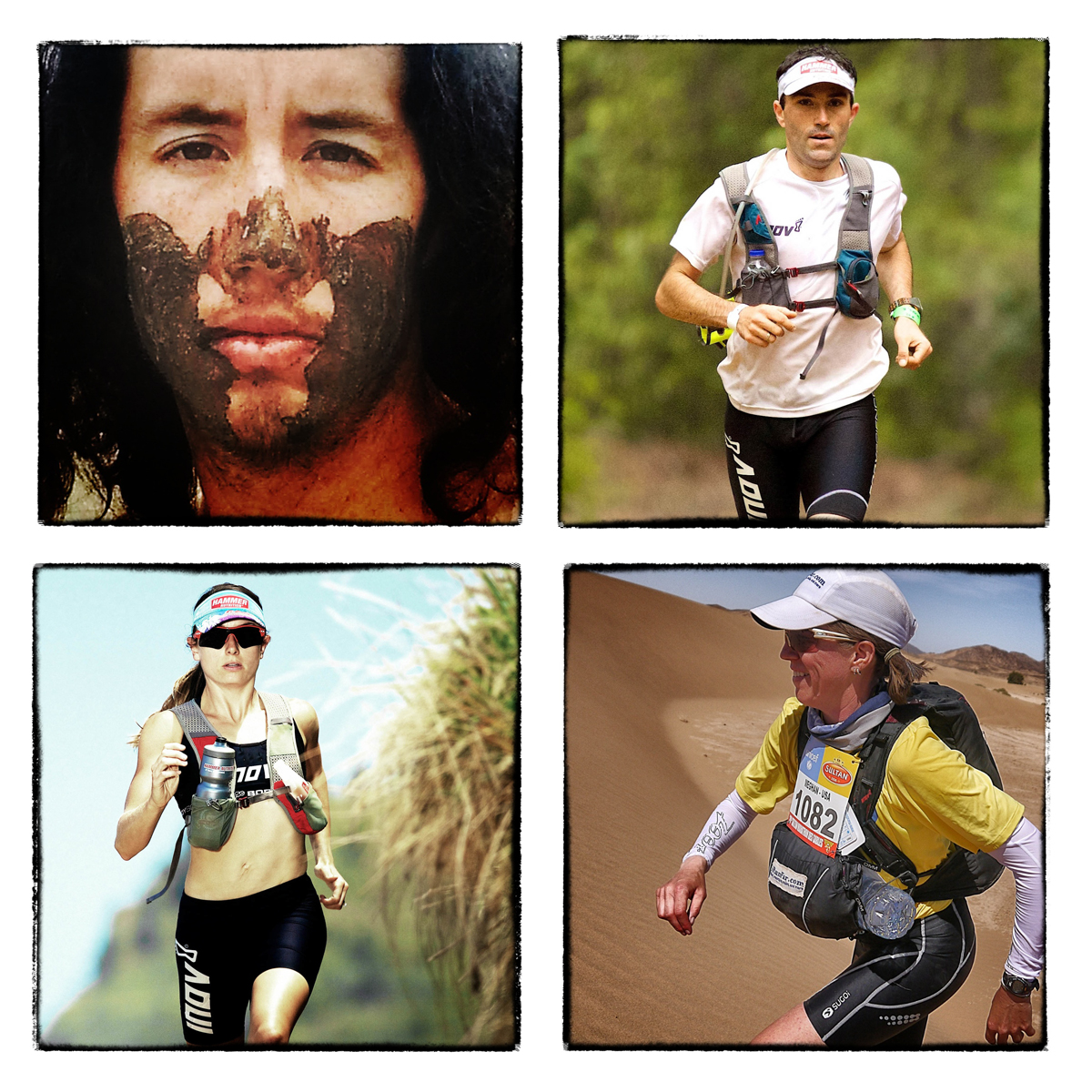
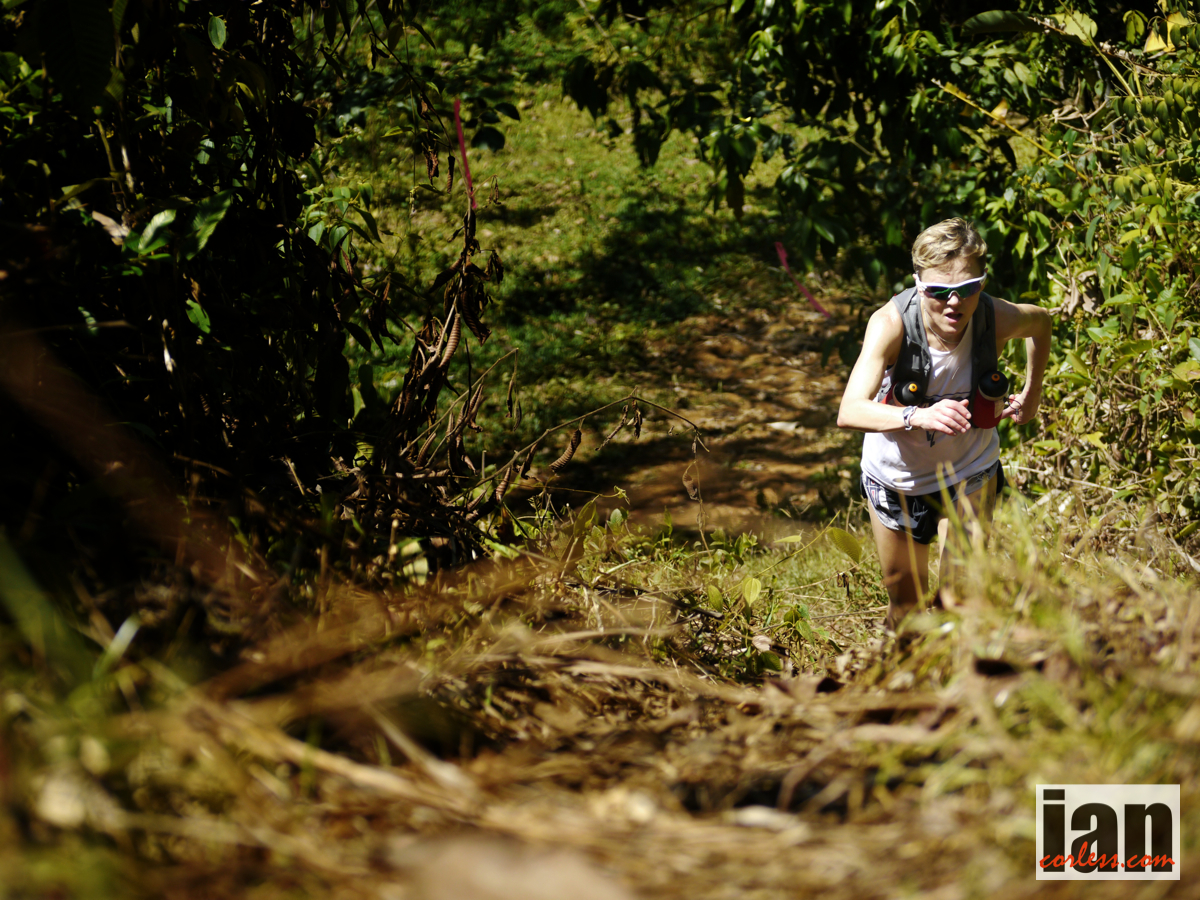
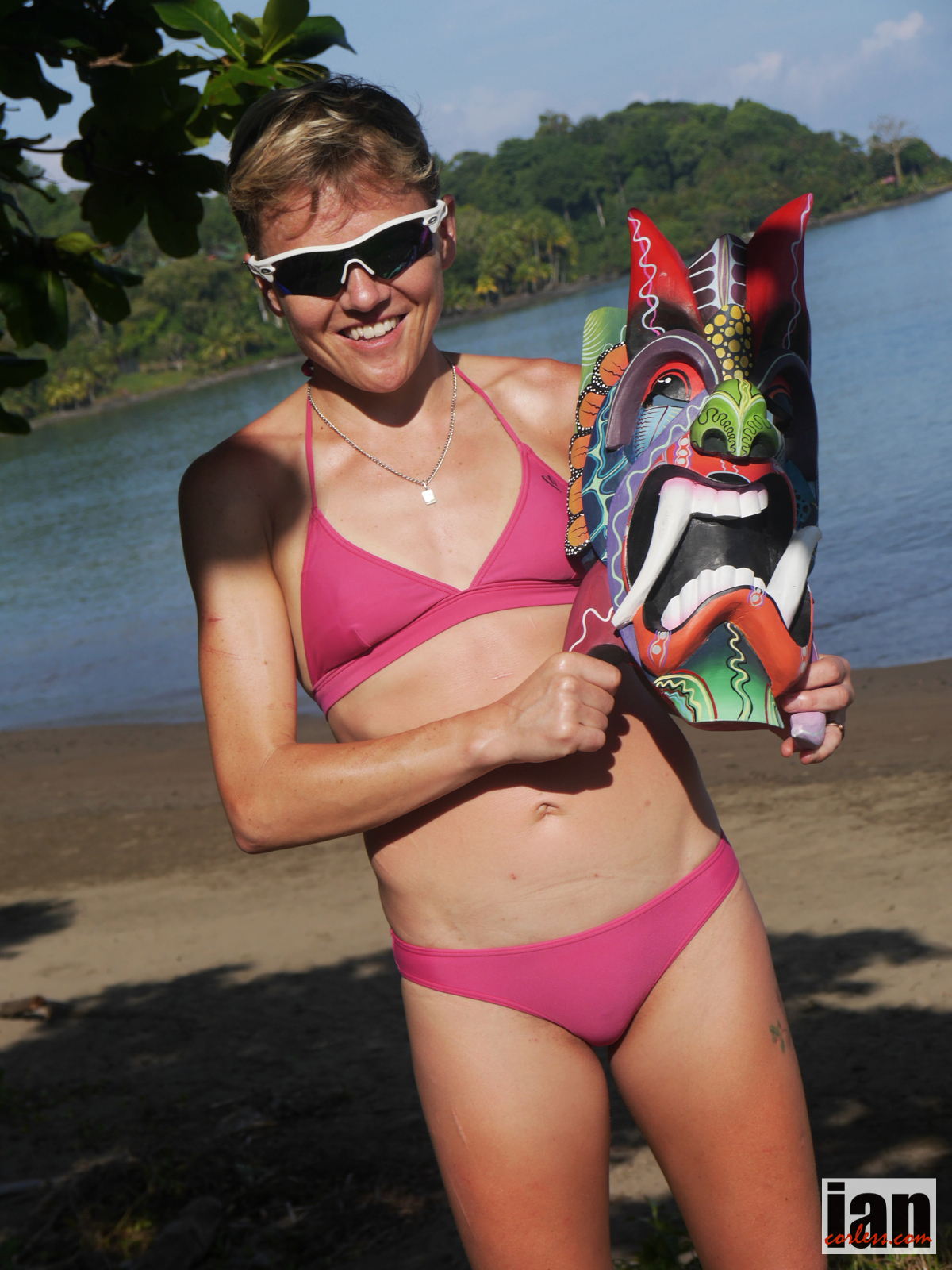
The eyes tell the story… they look through you. Deep in focus, almost blinkered like a horse, Jo Meek has only one purpose. To run as fast and as efficiently as possible over 6-days and when crossing the final finish tape, be crowned winner of the 10th edition of the 2014 The Costal Challenge in Costa Rica.

I had seen this look once before, at the end of stage-1 of the 2013 Marathon des Sables. Sitting in a bivouac, Jo Meek had just excelled on the first day of the race. I like others looked around in wonder and asked the question, ‘who is Jo Meek?’

No more questions needed to be asked, at the end of the 28th Marathon des Sables, we all were well aware who Jo was, she was the lady who had just placed 2nd overall behind Meghan Hicks at her first Marathon des Sables.

When you excel at one race it’s easy for many to look on and say, ‘It was first time luck.’ Not that Jo needed to prove anything, certainly not to me! I had seen her race; I had witnessed the dedication and focus as Jo pushed herself daily to get the best she could out of her body.

Switching from the dunes of the Sahara to the beaches and rainforest of Costa Rica was always going to be a cathartic moment for Jo, particularly when one considered the competition she would be up against; Julia Bottger (Salomon), Veronica Bravo (Adventure Racer from Chile) and Anna Frost (Salomon). Unfortunately, ‘Frosty’ had to withdraw from the race just days before the start in Quepos on doctor’s orders. Disappointed at not having the opportunity to test herself against one of the best female mountain/ ultra runners in the world, Jo focused and said, ‘It changes nothing. I am here to race and race hard. I would have loved to have Anna push me but you know what, I can push myself pretty hard.’

As we all found out, Jo can push herself pretty hard; maybe too hard at times? On day-1 of the TCC, Jo raced like a demon. Unaffected by the Costa Rican heat and humidity, she put 45-minutes into the female competition and set the platform on which to build for an incredible victory at the 10th edition of the race.

Back in the UK after a recovery week in Costa Rica, I caught up with Jo as she attempted to move house… a house that she had purchased without seeing! Yes, Jo had purchased a house she hadn’t seen. When I asked her in Costa Rica about this, Jo replied, ‘I was too involved in my training, I had one focus, to be in the best shape for the TCC. I just didn’t have time to go and look at it. I convinced myself it would be okay…’

©iancorless.com_1130144

IC: A year ago I was talking to you at your surprise 2nd place at MDS. You have now been out to Costa Rica, a very different environment in comparison to the Sahara, raced against stronger competition? And you have won an incredible victory over 6 –tough days of racing. How do you feel?

JM: I feel really pleased. I have complete satisfaction from the race. It’s possible to sometimes come away with question marks but I have none. I feel that the effort I put in was rewarded appropriately. I put a great amount of dedication into this race and sacrificed lots.

IC: Yes, you had that steely MDS look in your eyes. Like blinkers. You dedicate yourself to the task and I guess knowing in advance what the competition was going to be like at TCC and having the MDS experience inside you, you were able to be far more specific in training. I know post MDS that you thought you had maybe been a little over cautious. You could have run quicker? So, did you go to TCC with all guns blazing and take each day as a race?

JM: Yes I did. I remember listening to Ryan Sandes on Talk Ultra and he said it was amazing how quickly one recovers. I thought, I do recover well and I had nothing to loose. I know from MDS that I had been cautious, for example on the last day I pushed hard. Had I done that everyday the result may have been different but it’s difficult to say. So, at TCC I wanted to give it everything. I had prepared for the heat and my training was good.
 ©iancorless.com_1150601

IC: You have just mentioned that you committed yourself from day-1. Needless to say, TCC day-1 was impressive. You put 45-mins into the competition, impressive, particularly when we look at the ladies who you were racing against. Of course it gave you a real buffer. A safety net. The biggest issue on day-1 for everyone (except you) was the massive contrast in European weather and Costa Rican weather. Even in Costa Rica itself, the temperatures between San Jose and the coast were remarkable. As you approach the coast the heat goes up along with the humidity. Day-1 has a later start so you are straight into the heat… mid 30’s and closer to 40 at the height of the day. But it did not affect you and the main reason for this was 10-days training in a heat chamber.

JM: Yes. I was prepared. I gave everything on that first day. I had assumed that the competition would have done the same? Using a heat chamber is only a case of contacting Universities and they are usually willing to help. I assumed some heat work would put me on a par. As it turned out it wasn’t the heat that struck me but the pace! We were running slower than I expected so I ran at what was comfortable for me and nobody ran with me. I then ran scared thinking I had made a mistake that I was going to pay for.

IC: Now you have had an opportunity to reflect on TCC can you tell us about the heat chamber, how did it benefit you, are there any crossovers between MDS and TCC prep?

JM: I did the same sort of training. I followed a marathon program but I did more back-to-back runs. Essentially you are training for the same thing. In the heat chamber I was under the guidance of the team. I told them I would do whatever I needed to do… They told me I needed 10-days. You actually don’t need to exercise in the heat chamber, you can just sit inside but it takes longer. I could sit for 3-hours or run for 1-hour. I am dedicated, I am focused, and that’s a really big thing.

IC: Lets talk about the training. When you say a classic marathon program, I guess you are talking about a speed session, hill session and then long runs. Of course, you were training for multi-day so you built from 1-long run to back-to-back long runs. What did a peak week look like; I guess this was 3-4 weeks out from the TCC?
 ©iancorless.comP1130161

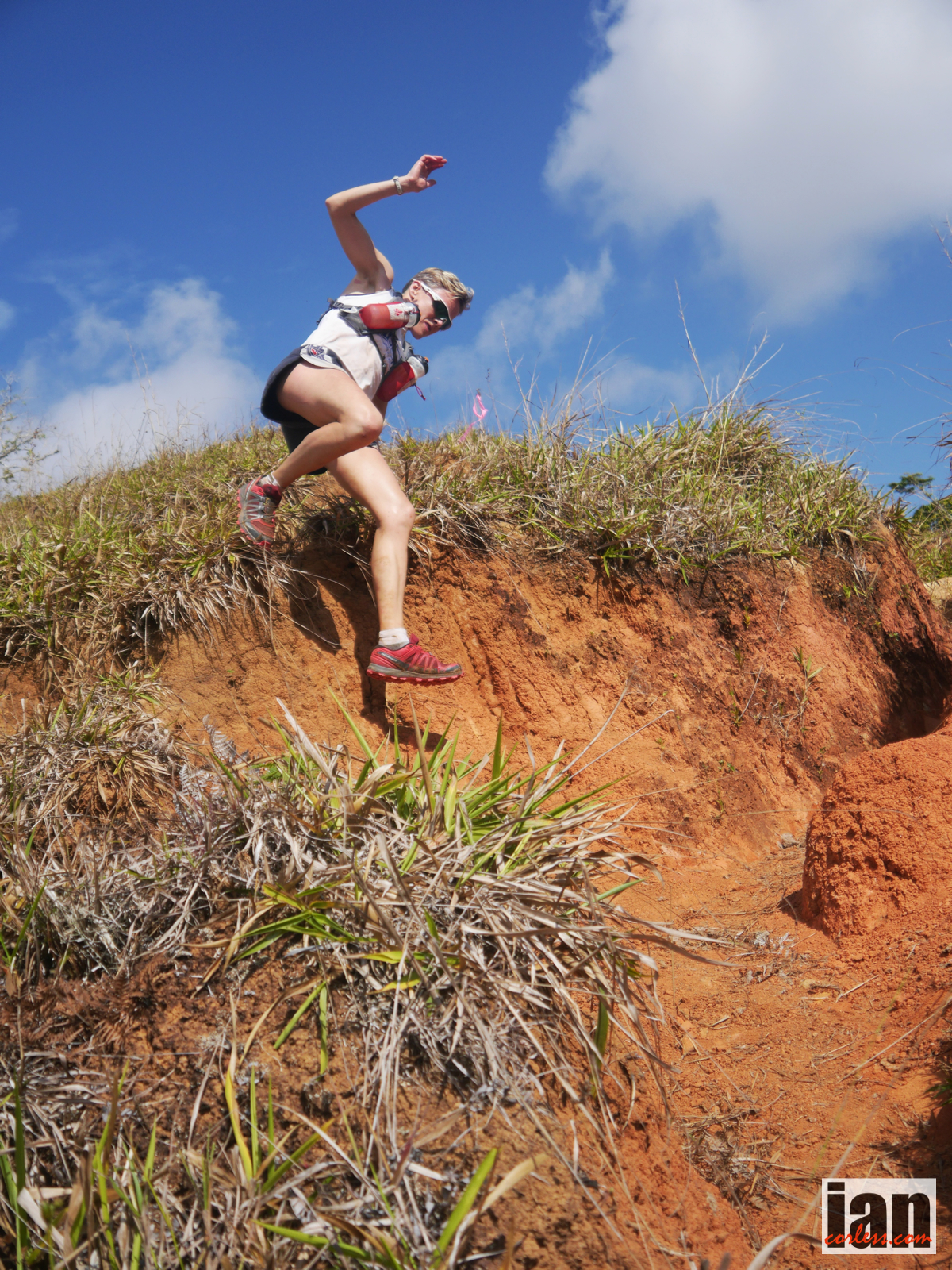
JM: Yes, 4-weeks out and then I would taper. You are right; I would do a speed session, a threshold run, a hill session and then long runs that would build to back-to-back runs. What you can’t afford to do is not let yourself recover in terms of, if you have done a long run and made it fast, you need to recover. It was all about balance. You need to be sensible and listen to your body. I would do 2.5-3-hours normally for a normal long session, whereas my long run for TCC was 4-hours; but at a slower pace. I wanted to make sure I could incorporate hills to prepare me for the hills of TCC.

IC: Back-to-back sessions, was that 2 x 4-hour runs?

JM: No, I did 3 back-to-back 3-hour runs.

IC: So, 9-hours split over 3-days; I presume when you did this you eased back of speed and hill work?

JM: I actually kept the sessions. In actual fact, that week I did a race. You have to remember, the long runs were really slow. It was just a case of recovering from a food and nutrition perspective. The runs actually didn’t damage my muscles. I am sensible after each run. I rest. For the 3 back-to-backs I took a day off work to make sure I had the best platform from which to build.

IC: So you planned this into work. You took a day off work and you treated this very much from a professional perspective. Feet up after the run, concentrate of food and hydration and make sure you are in the best place.

JM: Yes it was like being a full time athlete. Of course day-to-day life gets in the way; cook dinner and walk the dog for example. I just took this relaxed and in my own time.

IC: How did you break speed sessions down? Many ultra runners look at speed sessions as something that they don’t need to do. But that is not the case, you actually need endurance and speed, so, how do you work this to your benefit, how did you go about speed sessions?

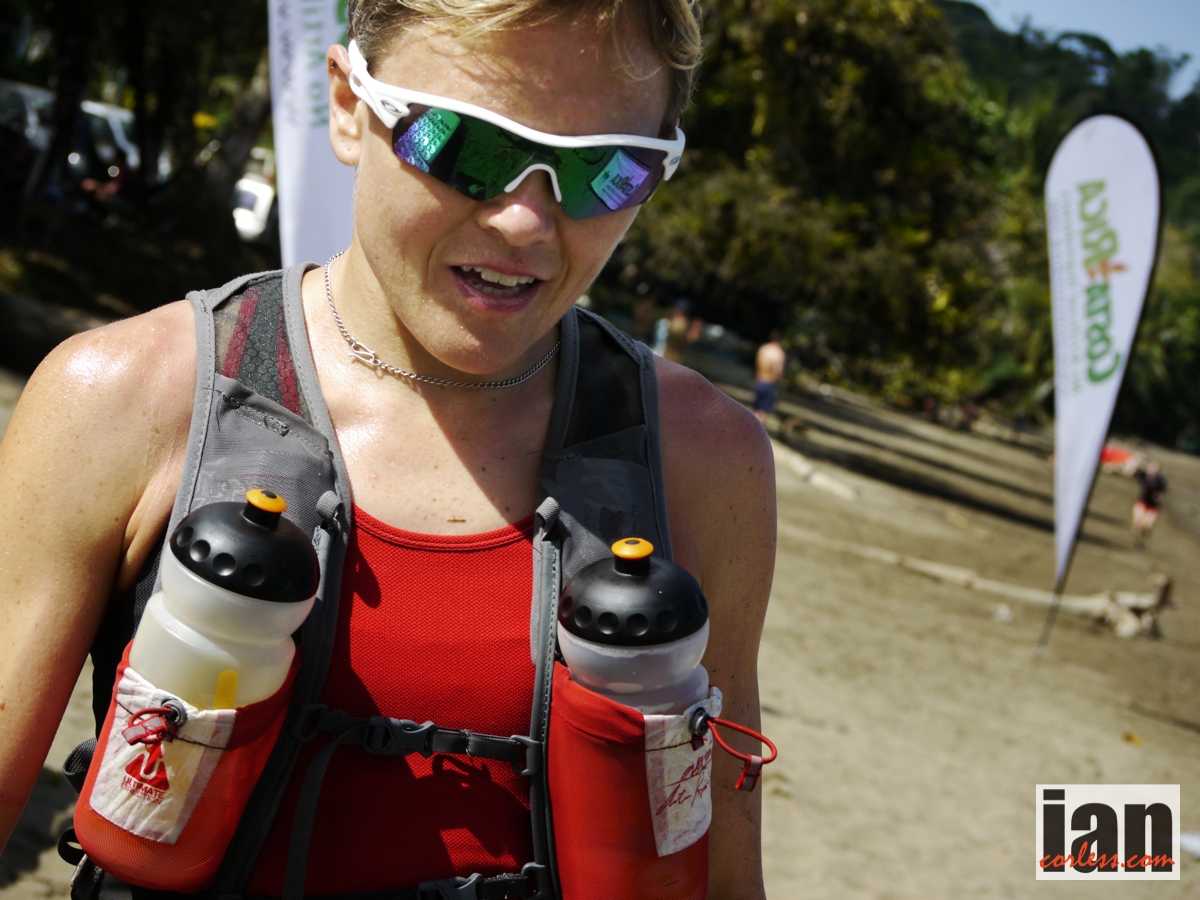
JM: It is difficult to answer as we are all individual and it depends on your race. You need to target your sessions at the pace you want to achieve and then sometimes faster. I would do some track work running 400’s or I would do 1-mile reps. I guess you need to vary what you do… try to enjoy it! We all think, speed; it’s going to hurt. But if you find sessions you enjoy it makes a big difference. Also try training with others.
 ©iancorless.com_1160267

IC: So you had your plan, you did speed, you did strength, you did hills, you did back-to-backs but you realized that to give you an edge or in your terms an equal playing field was that you needed to adapt to the heat. It was a variable. It was one thing you couldn’t account for. You did 10-days consecutive in a heat chamber?

JM: Yes, 10-days.

IC: What is day-1 like?

JM: Oh you think I will never be able to run in this? I went in thinking that I would run at ‘pace’ but actually you run at a slow pace as they don’t want your temperature to rise too quickly. It feels bearable at the start. They monitor the core temperature and mine went too high after 30-min so then I had to walk and rest to keep it under control. It’s not as physically as hard as you may think. It’s all about core temperature.

IC: What is important is the lesson that we can all learn. You trained in the UK; you did the heat sessions, which gave you massive temperature and humidity fluctuations. You got that process over with before arriving in Costa Rica. By contrast, nearly all the runners had to go through that process on day-1 of the race… for example; Philipp Reiter had a really tough 1st day. He was overheating and red, he was trying to control himself but to no avail. However his recovery was phenomenal. He recovered so well to come back strong on day-2.

JM: That is the benefit of being 20!

IC: Yes, for sure that helped. However, had Philipp and the others got day-1 over with in a heat chamber it would have made a massive difference. It could have been the difference between top-3 and a win.

When you went back to the heat chamber how was the adaptation?

JM: Mentally I was more prepared. On day-1 I felt nauseous and tired but I guess it just gets easier. By day-3 my resting core had reduced dramatically. It gets easier and easier unless you are a moron like me and fall off the treadmill.

(Laughter)

IC: Mmmm yes, you did make a mess of your face. Not the best thing to land on in the final days of prep in the build up to an important race!

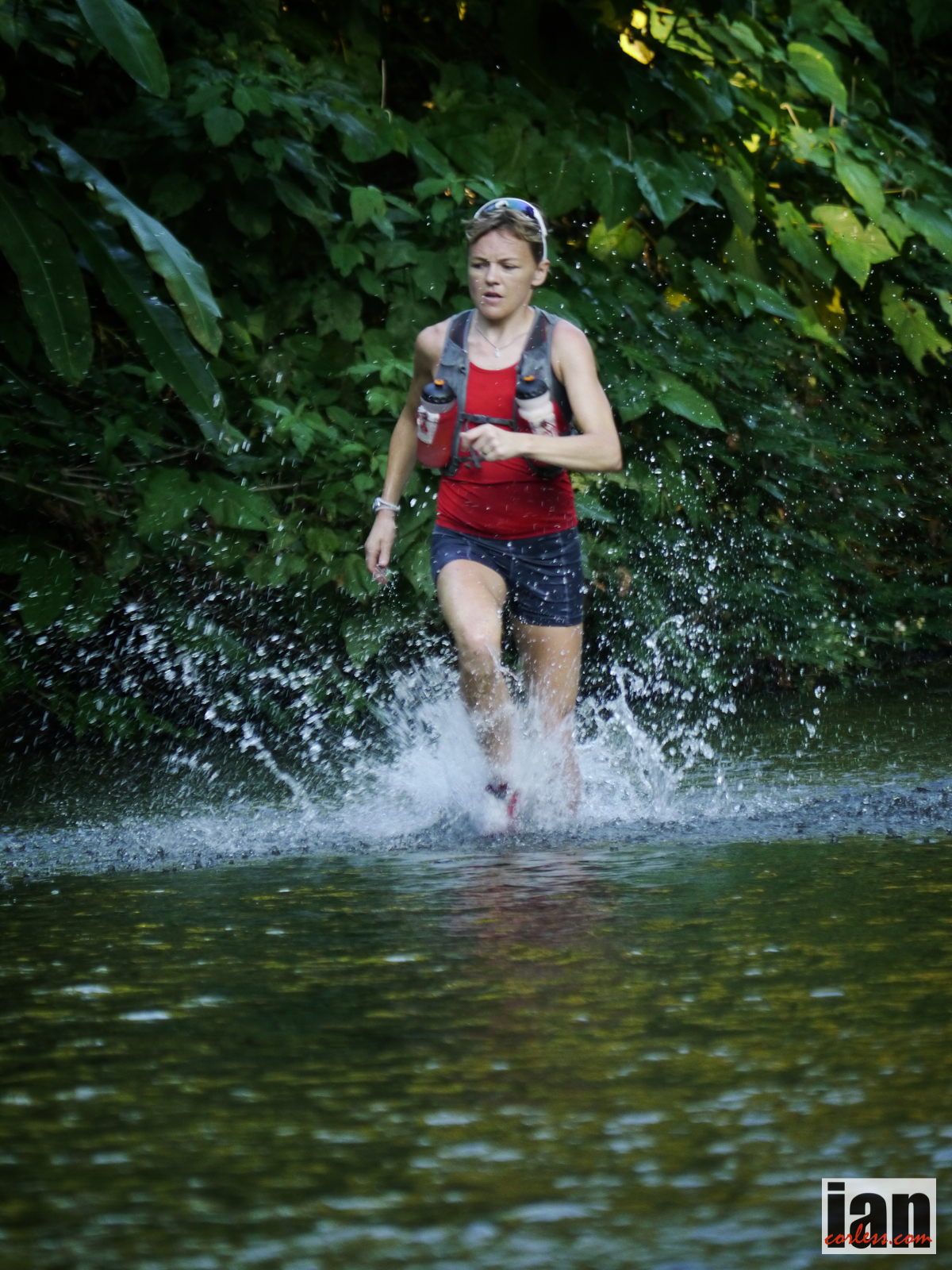
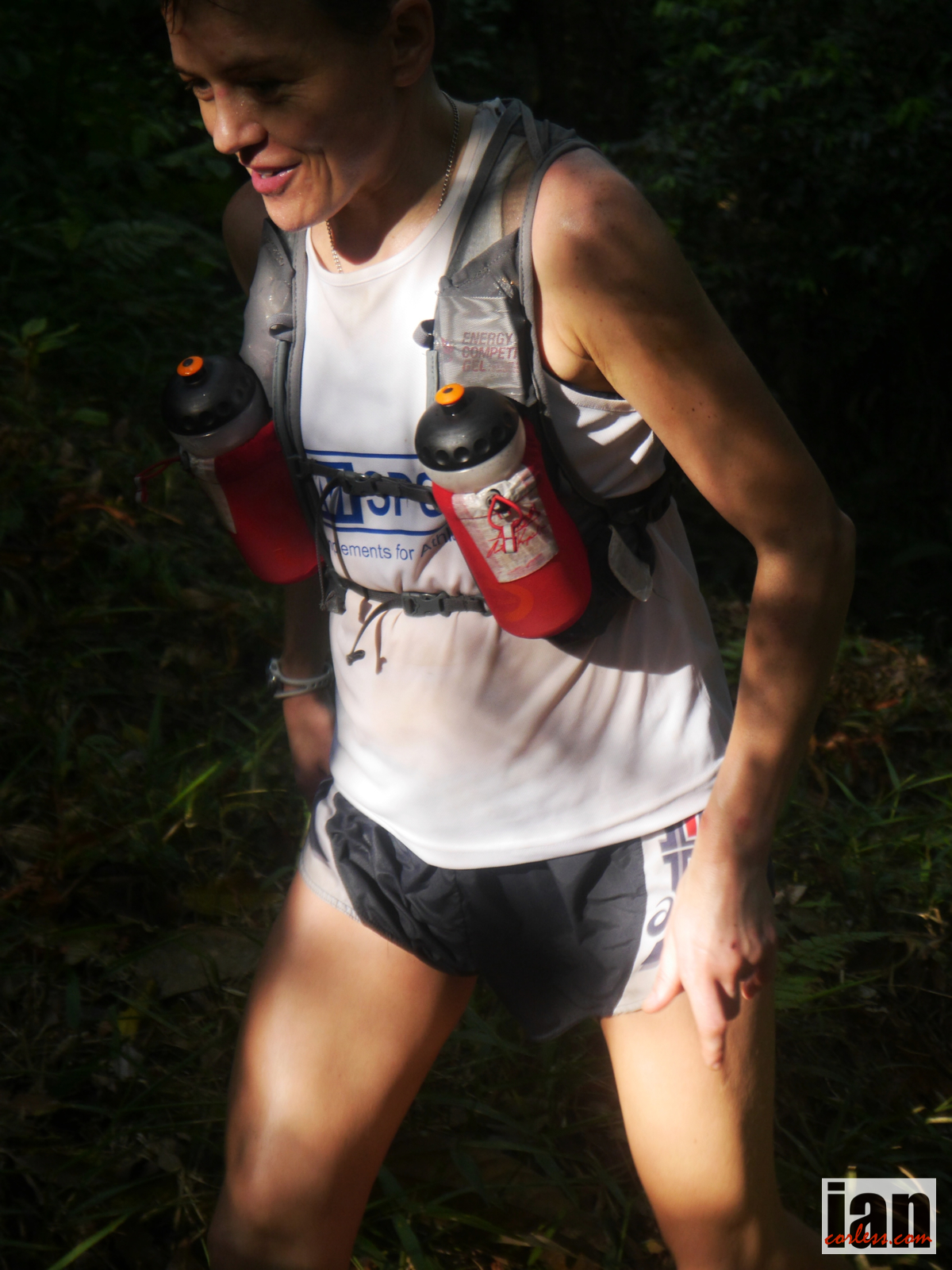
So, you adapted in the heat chamber. The process went exceptionally well and pretty much after the last session you made your way to Costa Rica. It’s a shock, isn’t it? Time changes, a day of registration, logistics and presswork, an early bed and then a very early start the following day that starts at 3am. A transfer by bus to the coast and before you know it, day-1 starts at 0930 just as the heat of the day is beating down. It’s hot, really hot, however it caused you no problems. You had that amazing first day. Post day-1 you said you felt great. You had taken the race on, you had pushed yourself and you had stamped your authority on the race. How did the rest of the race unfold for you? You had a couple of key moments; day-3 in the river section start when you struggled with the technicality, ironically, very similar to the male winner; Mike Wardian. You and he are very similar runners, you both run well on fast terrain but less so on technical terrain.  However, as the race progressed you both adapted and became far more efficient.
©iancorless.comP1120273

JM: Yes, without doubt.

IC: Moving up hill and covering technical ground became so much better for both of you.

Lets go back to that day-3 start when you had Veronica Bravo and Julia Bottger ahead of you, did you think you were loosing the race?

JM: When you can’t see runners you immediately think you are loosing 45-mins. It’s funny. However, when it is so technical you can’t think about anything other than what is below your feet and what is ahead. I just had to follow the course markers and cover the ground as best as I could. All the time I was thinking, I just need to get on the flat or get on a good hill and start chasing and pulling time back.

IC: You got through the section and you started to chase. You clawed back the time, you caught Julia and Veronica and then on the final beach section in 40-deg heat you pulled away and got another stage win. You re-established your dominance of the race. It must have been a great day and a great boost?

JM: The 3rd day was the longest and most emotional day. It almost felt like the end of the race. I was very emotional. Had someone been waiting for me at the end I would have cried. Even though I still had 3-days of racing ahead I had concentrated so much it had exhausted me. Having got through that it was a case of maintaining it. But as you very well know, I like to race and continued that way. I didn’t want to take anything for granted. I could have fallen and hurt myself and with Veronica and Julia chasing, I couldn’t be complacent. I raced hard to the end.

IC: Post race you said one day in particular is the day that you got things wrong that impacted on the final 2-days, was that day-4?

JM: I gave everything on day-3 and then I continued to race on day-4 when I didn’t need to?

IC: Yes, we had that conversation when I said to you, ‘you know what, you have a 60-min lead so be sensible. You have no need to put yourself in the ground. Consolidate what you have and be sensible.’ But in true Jo Meek fashion you continued to push…

Day-5 was significant. You had been in the lead and then Julia came back to you with about 10-km to go. It was the final feed station. You had a 60-min lead, so, overall victory was secure.
 ©iancorless.comP1130916

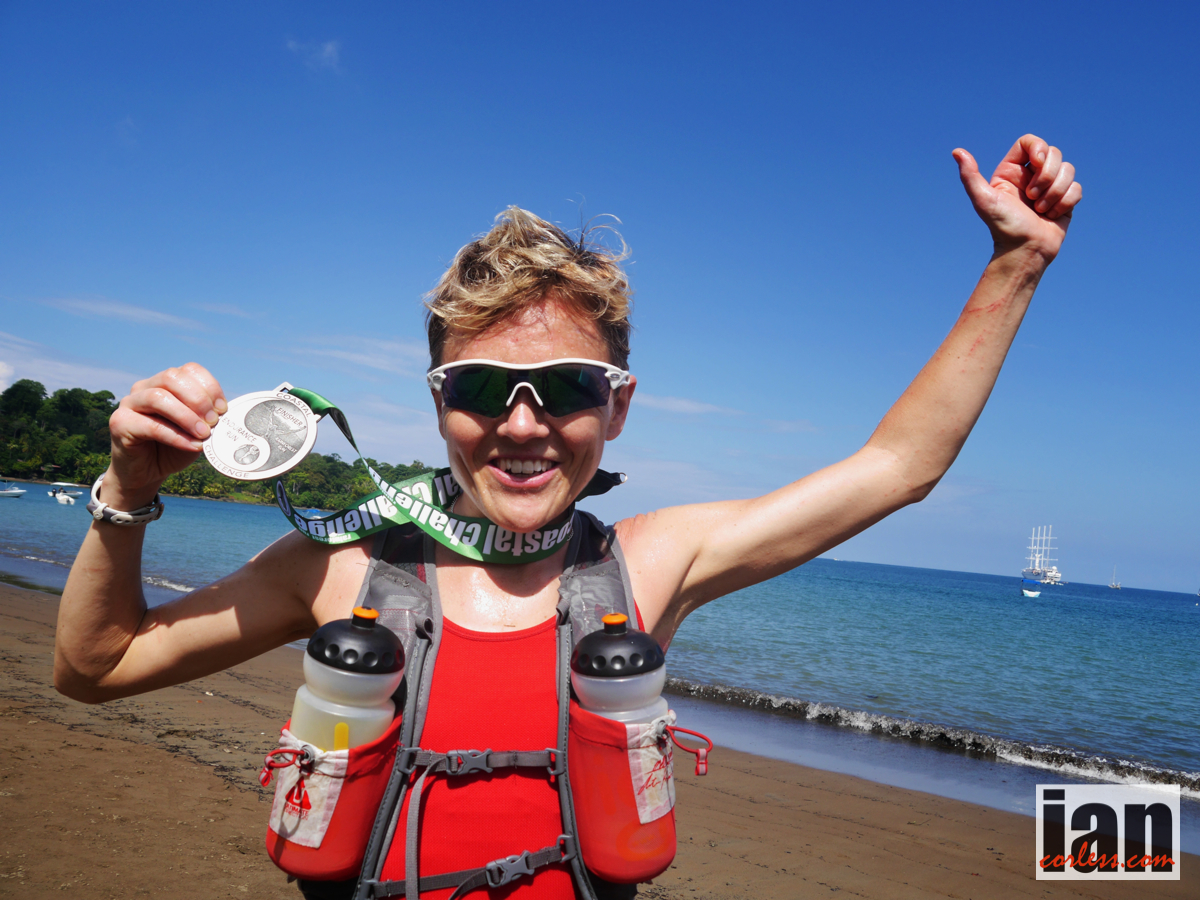
JM: I was at the feed and Julia arrived and I thought, ‘Oh my goodness, I thought I have to go.’ I ran, ran hard and closed out the final 10-km like a stand-alone session. I finished out of breath with hands on knees.

IC: Funny, when I saw you, you said, ‘I am an idiot.’

JM: I did.

IC: When I asked why, you explained the situation. Of course you have now reflected and I hope you realize that it wasn’t clever racing? You could have still had a bad moment on the last day and needed the reserves.

JM: Oh yes. I am well aware. What hurt me on the last day were sore quads. It was all the descending from the previous days. So I ran the last day within myself, however, had I thought Julia would have really pushed I would have found something, some extra energy.

IC: You have 2-great experiences under your belt. Marathon des Sables provided an introduction into multi-day racing and you performed maybe beyond our expectations but not beyond your own and now you have the victory at The Coastal Challenge. You have confirmed yourself as someone who can race hard, day-after-day, so, what are the hints ‘n’ tips you can provide for multi-day racing?

JM: Assess what you as an individual want from the race and then train accordingly. You must have a goal. Do you want to compete or complete? It makes a big difference. If you get your mind it the right place it is half of the battle. Prepare mentally, don’t be scared of the environment. Do what you can do and make sure that is clear. Have a great understanding of your body and how it recovers. Give yourself what you need. Without doubt eating after exercise within an hour is key, especially for multi-day racing or training. Rest when you get an opportunity; elevate your legs. For sure your feet and ankles will get tired. Relax, eat, drink and let everything settle. If you can sleep, do so. It provides great recovery. Ultimately, common sense prevails and the body is an amazing thing.

IC: TCC and MDS are very different. At MDS you had to be self-sufficient and carry a pack whereas at TCC tents and food were provided so you could run light, you just needed a hydration pack. Of course it’s a level playing field as everyone must do the same but from your perspective what are the pros and cons from both races and which did you prefer?

JM: That is very tricky. At TCC having food in abundance is obviously great. You can eat when you want and as much as you want so that makes recovery easy. However, everyone has that option so it’s not a personal advantage it’s just a different scenario. At MDS you can use this to your advantage, if you have planned well and your nutrition is optimum for your own personal needs then of course your competition may have not, so this can be something you work into a positive. It requires more planning. It’s a game of calories v weight. I like the challenge of the MDS scenario but equally your running style changes; your speed changes and you are carrying the burden of the pack.  I guess it depends if you prefer faster racing or a more expedition type of approach.

IC: It’s a crazy question but MDS compared to TCC, which race, all things considered was the hardest race?
 ©iancorless.comP1140703

JM: The Coastal Challenge course. It has everything, ascending and descending, the damage the course did to my legs was far greater than the MDS. I found the MDS was harder from a food perspective, it took me 4-5 weeks post MDS to put the weight back on. The Coastal Challenge course tests the body and mind and the continual changes of terrain keep you guessing and working hard.

IC: So what is next, recovery is first and foremost I guess?

JM: I want to prove myself as an ultra runner. I want to run in a GB vest. I will try to qualify for GB in a trail race. I’d like to do more stage races and I have entered Comrades in June. That will be an interesting test and very different to what I have currently achieved.

IC: Finally, Costa Rica, what was the experience like for you, can you sum it up?

JM: The race is incredible. Where else can you run (or walk) in such an amazing place! The organizers have created a race and a route that often is inaccessible to most; riverbeds, jungle and plains. I probably didn’t look around too much while racing but I stayed for 1-week afterwards and I had a holiday. I went diving, saw a whale, I walked, went white water rafting and saw plenty of wildlife. It’s just an incredible and exciting place. Even if you did just the race you would come away with a whole new outlook. It really is incredible.

LINKS:

TCC 2014 race images – HERE

The 2015 The Coastal Challenge is now available to book. Want a discount? Use the form below for early bird booking.

Race Website – HERE

← Back

Thank you for your response. ✨

Episode 34 – Hollon, Hicks, Davies & Stephenson

TU34

On this weeks show we speak to 22 year old Nick Hollon who just recently finished the infamous Barkley Marathon. We catch up with Natalie White who tells us all about the future plans for UK based Inov-8 who are 10 years old in June. We have chat with Ozzies Brendan Davies and Shona Stepehenson who placed 5th and 2nd respectively at UTMF in Japan. In Talk Training we speak to Mitch from Stride UK. We also speak to Chris Mills in 15 mins of fame. We have a blog, the news, up and coming races and of course, Speedgoat.

00:00:00

00:00:45 Start

00:09:50 News

Evesham Ultra

Robbie Britton 6:47:17, Mark Davies 07:11:58, Mark Denby 07:12:04

Hayley Stockwell 8:47:51, Joan Clarke 8:57:08, Sandra Goldsack 9:12:54

Lizzy Hawker

once again continues to inspire, she recently broke her own speed record from running Everest Base Camp to Kathmandu – 319km in 63hr 8min.

She is now pack in Nepal to do the Mustang Mountain Trail Race – multi stage 277k in 8 days

Iznik Ultra

130km

1  Mahmut Yavuz 13:52 2 .Aykut Çelikbas 14:15 3 . Mustafa Poyraz 15:14

1. Elena Polyakova 15:00 2. Muazzez Özçelik 19:53 3. Bakiye Duran 22:55

80km

1. Tanzer Dursun 8:13 2  Ahmet Zeren 8:19 3  Özgür Tetik 8:2

1.Amy Sproston 7:12 2.  Alessia De Matteis 9:29 3  Sirin Mine Kiliç 9:55

Leona Divide

50k

Yassine Diboun 4:03:33, Jeremy Humphrey 4:09:59 and Aaron Keller 4:33:19

Rachel Lipman 5:21:56, Gwendolyn Ostrosky 5:30:59 and Ruth McCoy 5:41:43

50m

Robert Krar 5:53:51, Jason Wolfe 6:43:10 and Jason Schlarb 6:44:54

Melanie Peters 7:30:47, Jenny Capel 7:59:23 and Kristina Folcik 8:31:05

UTMF 

1. Hara 19:39 2. Chorier 19:48 3.Chaigneau 19:50 4. Gary Robbins 20:20 5. Brendan Davies 20:38

1. Krissy Moehl 24:35:45 2. Shona Stephenson 25:56:52 3. Hitomi Ogawa 26:15:25

IAU – 100km European Championships on April 27th

Asier CUEVAS 6:53:14 Michaël BOCH 6:56:49 José Antonio REQUEJO 6:57:02

Irina ANTROPOVA 7:42:52, Sue HARRISON 7:48:12 and Sophia SUNDBERG 7:53:21

http://www.5000mileproject.org – British couple, David and Katherine are  running 5000m across South America in 1 year! They started on July 28th. I have had some email chats with David and we hope to hook up within the next month or so.

Zion 100

Pierre Loic Deragne 17:52:10, Andy Pearson 17:55:12, Matt Cecill 18:42:22

Jennifer Benna (and 5th overall) 19:01, Larisa Dannis 20:22:23, Pam Reed 24:09:23

Hoka Highland Fling

Lee Kemp 7:02:50 (new CR), Ricky Lightfoot 7:09:30 and Matt Williamson 7:21:51

Tracy Dean had a real battle to the line with a calf injury but held on to win by just over 1 min ahead of Fionna Cameron 9:12:21. Third was Sandra Bowers in 9:17:02

00:2415 Brendan Davies – Brendan recently raced at Tarawera ultra in New Zealand. Part of the Inov-8 international team, he recently raced at the Ultra Trail Mt Fuji in Japan. He says it is the hardest race he has ever done… he was 5th. We caught up with Brendan just days after the race. Website HERE

00:36:37 Back to News

00:38:30 Shona Stephenson – Shona, a personal trainer and mum of two girls also raced at the Ultra Trail Mt Fuji. Like Brendan, she is also part of the Inov-8 international team. Shona secured an impressive second place behind US based Krissy Moehl, we caught up with Shona when she arrived back home in Australia. Website HERE
00:56:08 Back to News

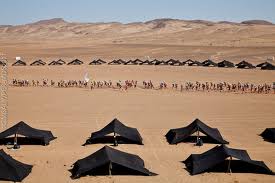
01:05:10 Meghan Hicks – has raced at Marathon des Sables several times before. However, in 2013 she returned with several objectives. Her main priority was to make the podium but her ultimate goal was to win the race…. we caught up with Meghan at her home in Utah, less than 14 days after the iconic 28th edition of the MDS. Website HERE

01:43:10 Blog – Anton Krupicka is back…. he always writes a very detailed daily post. Here is a highlight:

Sat-AM: 6:59, 11,500′ ~ Grand Canyon Double Crossing

Used the standard South-North Kaibab route and clocked a 6:59:24 roundtrip, which was a 17min PR for me and I think ~30sec under Mackey’s previously 2nd-fastest time (but still 6min short of Dakota’s FKT). I didn’t know if I was going to go particularly quick today, but thought I’d just see how the legs were feeling. After getting down to the river pretty quickly (despite being slowed a minute or two by a descending mule train), I decided to keep going steady and see how things shook out. Felt pretty solid all the way to the North Rim, hiking a fair bit above the Supai Tunnel, but then on the way back down I was definitely already getting pretty tired by time I made it back to the residence water spigot. Things got progressively worse on the run back to Phantom Ranch (stiff, achey, tired legs), but I pounded three bottles of water there (spending 4min at the spigot) and then climbed quite strongly all the way to Tip-Off, but above there things got pretty weak/queasy as I ran out of water about half-way up. At Tip-Off I thought there was a really good chance I could still get Dakota’s record–even take 5min or so off of it–but in the end I was just psyched to sneak in under 7hr. Great run, and a good confidence boost going into TV, as I know I still have a lot of running fitness to gain. Had another 12min of running on the day, getting to and from the South Rim. Splits: River, :46; Phantom Ranch, :53-54; Cottonwood, 1:54; Residence, 2:09-10; Bridge, 2:42; Supai Tunnel, 2:56; North Rim, 3:22; Supai Tunnel, 3:35; Bridge, 3:43?; Residence, 4:04-6; Cottonwood, 4:16; Phantom, 5:08-12; River, 5:19; Tip-Off, 5:49; Skeleton Pt, 6:14; Cedar Ridge, 6:37; South Rim, 6:59:24.

01:45:10 Talk Training – this week we introduce Mitch to Talk Training. Mitch is based in the UK and has a practice called STRIDE UK (http://www.strideuk.com). In our first episode we touch on the importance of flexibility and stretching.

01:59:45 Natalie White Inov-8 – UK based company Inov-8 have a reputation for making some of the best running shoes available. They have made some iconic products such as the famous ‘Mud Claw’. In 2013 they are introducing a new clothing range to the brand, they have created an inter nation racing team and they also celebrate a 10th birthday in June. Website HERE
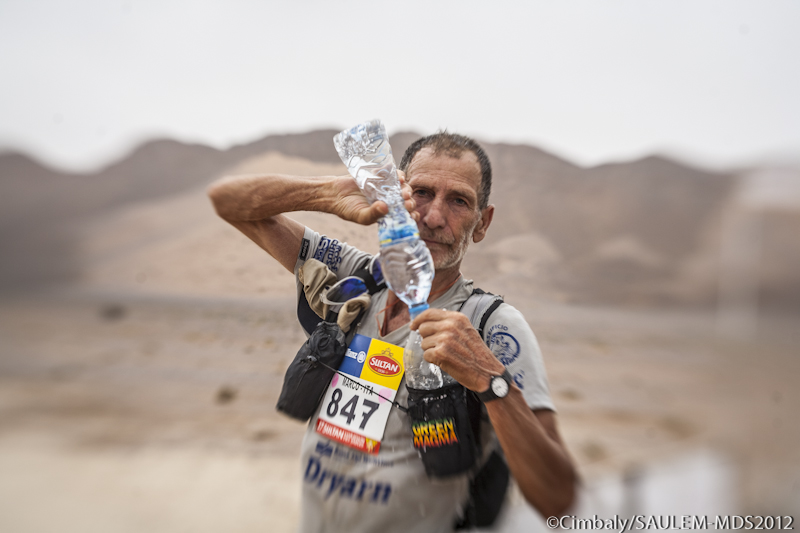
02:17:45 Nickademus Holllon – Barkley ultra marathon is infamous. It strikes fear into any runner. So difficult is this iconic ultra that finishers are few and far between, Nick Hollon not only completed the race in 2013 but at the age of 22 he also became the youngest ever winner. We caught up with Nick to hear all about how he achieved a finish and also to find out how started in running… he has a great story. Believe me, he doesn’t like to make things easy! Website HERE
03:09:45 Back to Karl

03:14:00 Meltzer Moment – Speedgoat gives us his Good, Bad and Ugly.

03:18:40 15 min of fame – this week we speak to Chris Mills (24fifty.com). Chris is just an ordinary guy. He actually hasn’t run an ultra…. yet! But I am sure when you listen to him, you will find his story inspiring.

03:3210 Races – the up and coming races for the next two weeks.

03:40:05

Links

Protected: Darkness to light – Marathon des Sables

This content is password-protected. To view it, please enter the password below.

Pictures tell stories…

I love what I do! I really do.

To work in a race environment and capture the action in words or audio is a real pleasure. I have played with video and although I enjoy the medium, I do prefer a ‘still’ image. It is a moment captured.

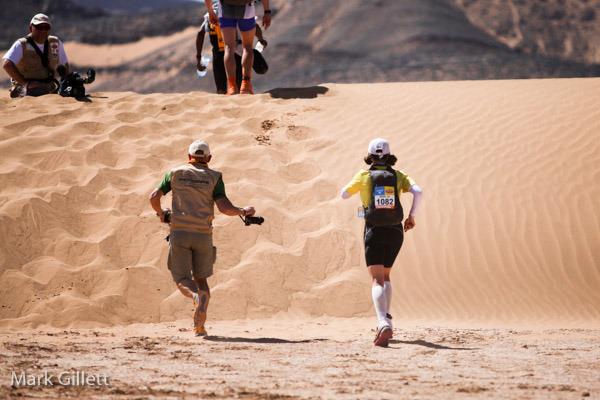
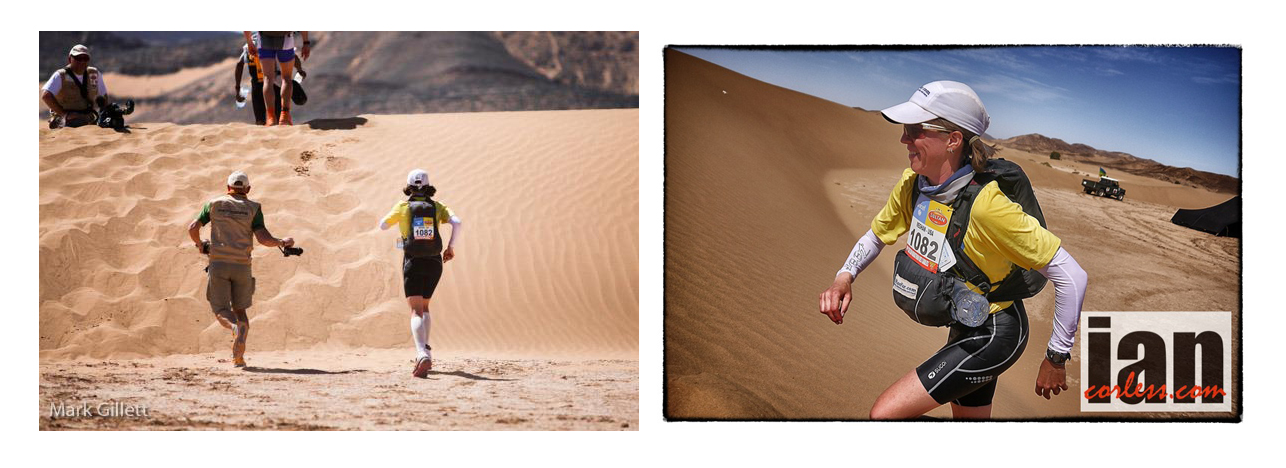
These two images really capture everything that combines to make a great image.

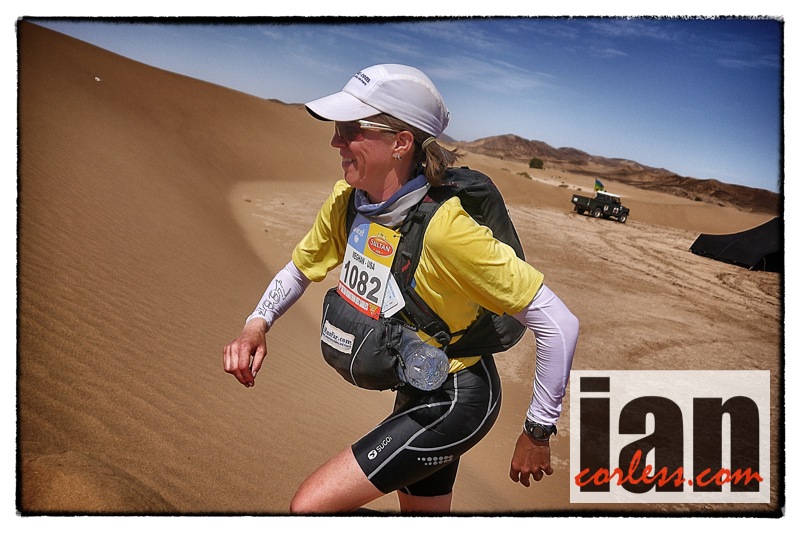
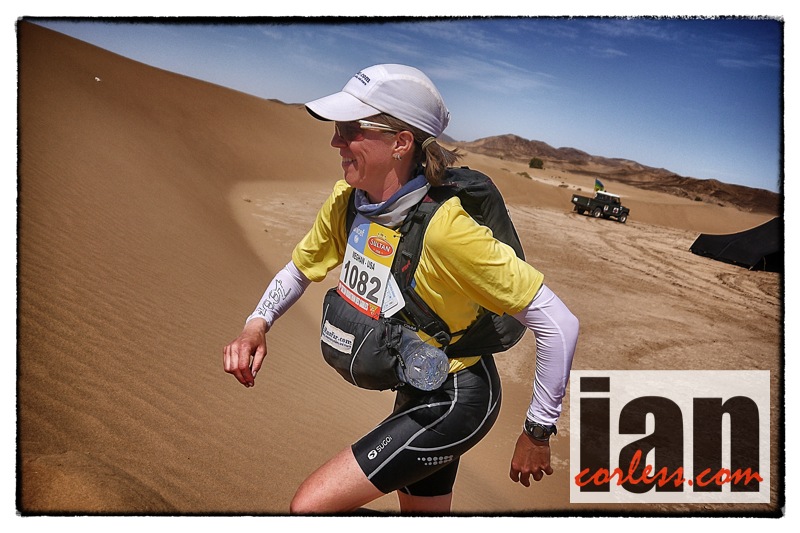
Meghan Hicks on the first stage of the 2013 Marathon des Sables (which she went on to win) running up a dune on the first day. I captured the image by running alongside her.

iancorless.comP1020570From behind, my fellow photographer, Mark Gillett captures the process involved. Story making at its best, running at its best and the use of imagery at its best. I have often been asked HOW? I manage to capture images that make the viewer feel like they are in the moment… well here is how.

Copyright Mark Gillett

Copyright Mark Gillett

Pictures tell stories… thanks for the inspiration Meghan and thanks for capturing Mark.

Pictures tell stories...iancorless.photoshelter.com


The Brits are coming…! Marathon des Sables 2013

You can read the full article and see images of Danny and Jo on RUN247 HERE

Marathon des Sables STAGE 6

The final day of the Marathon des Sables is ‘usually’ an easy stage. Your finish is guaranteed! Almost….

Not so for the 2013 edition of the Sultan Marathon des Sables.

For the fast runners, one days rest had preceded the final competitive stage of the 28th edition of the race. However, for the slower runners who had taken over 24 hours to complete the 75.7km of the long day, rest was minimal.

The final leg was over the classic marathon distance. It was by no means and an easy day. When you add to this, plenty of sand, dunes and searing heat, it was going to be tough.

Tired limbs, sore and blistered feet moved to the start and after the obligatory briefing they were off, straight into dunes. Golden rollercoasters providing a light and dark palette. It was by far the most impressive start stage start of the entire race

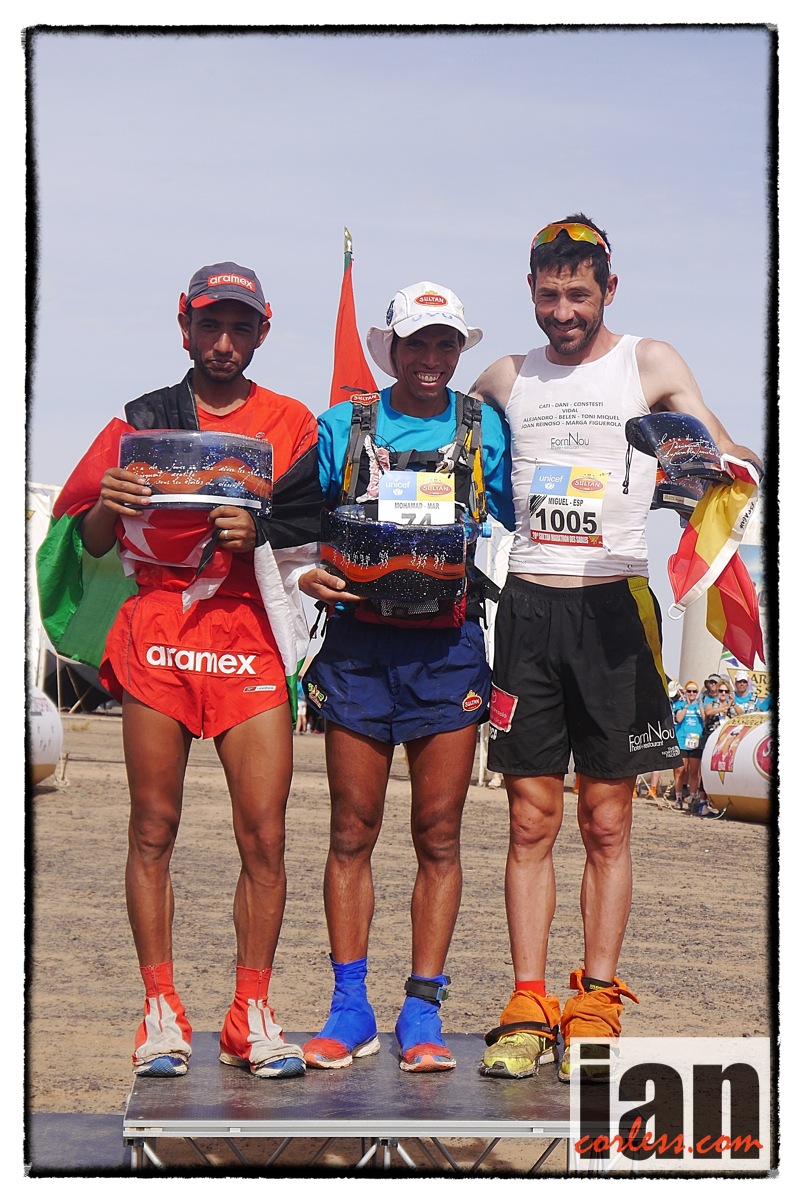
In reality, the front end of the field was not going to see much change. It was guaranteed that barring a disaster; Mohamad Ahansal and Meghan Hicks would be crowned winners off the 28th Sultan Marathon des Sables.

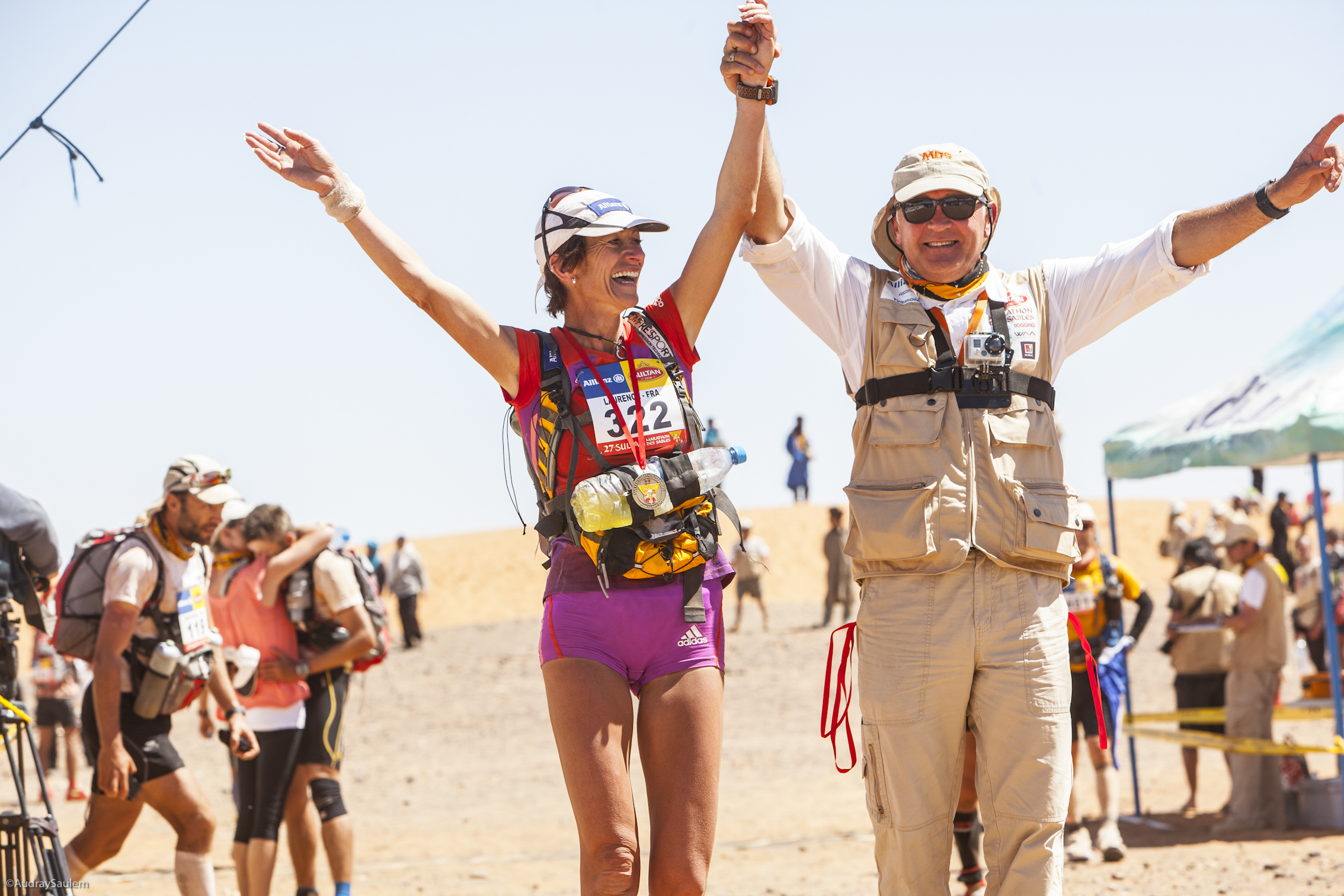
However, Aziz El Akad and Jo Meek had different plans. Both of them ran incredibly hard over the 42km and secured two impressive stage wins. El Akad crossed the line in 03:18:36 and was awarded his medal by Patrick Bauer. In true MDS tradition, Patrick waits on the line and welcomes every runner on the last day. Jo Meek in particular ‘chicked’ many of the men with a time of 04:14:34. On the finish line the emotion and realization of what she had achieved took hold. As the tears rolled down her face she just said, “I can’t take it in. I came here to race but I never thought I would achieve second overall. Today’s distance, the classic marathon, is MY distance so I wanted to run hard”.

2012 winner, Salameh Al Aqra from Jordan finished a great 2013 race with second place in 03:26:34 and Mohamad Ahansal was close behind in 03:29:40. Danny Kendall had an inspired day and finished the race as he started with 6th on the stage with 03:46:19

Meghan Hicks finished second on the stage in 04:26:53 and after a relatively reserved crossing of the line she suddenly jumped, bounced and whoop whooped! Finally she was topping the podium at one of the most iconic races in the world.

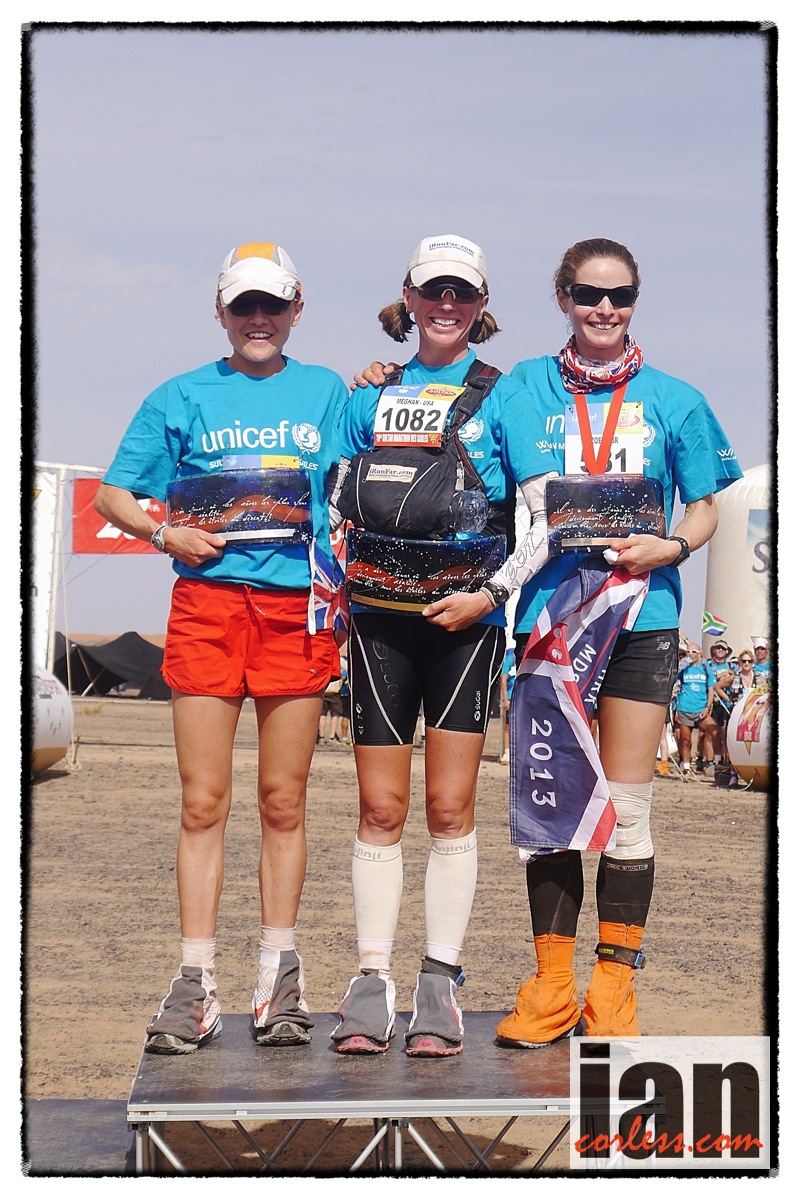
Finishing the podium was another Brit, Zoe Salt. It really has been a year when the Brits have made a resounding presence felt and for sure, the ladies race looks very strong for the future.

The final day is all about medals and completing a journey. The finish line is a place of emotion. Every single person has a different emotion. Cheers and screams follow blank faces and hollow eyes. Tears roll down a cheek and arms are raised above heads and you hear a “yes! YES! I did it”.

The emotion, the camaraderie and the bonding of all was personified late in the evening when Didier Benguigui and his guide, Gilles arrived at the finish followed by a convoy of cars with flashing lights. An impromptu alleyway of staff with head torches and the support of many runners cheered, clapped and applauded as Didier crossed the line to complete his 10th Marathon des Sables.

iancorless.com_DSC9026

Races are memories. Didier and Gilles summed up everything that one could witness in any race; devotion, sacrifice, suffering and ultimately victory.

As they walked past the line to the applause, cheers and celebrations of all, in bivouac a rock band started to warm up to provide some entertainment for tired and emotional bodies.

It was an incredible 2013 race and one that I feel honored to have witnessed

Overall Results:

 Men

  1. Ahansal (MAR), 18h59’35
  2. Al Aqra (JOR), 19h41’15
  3. Capo Soler (ESP), 20h19’31

First Brit: Danny Kendall (GBR), 21h46’03

iancorless.comP1050468

Ladies

  1. Meghan Hicks (USA), 24h42’01
  2. Joanna Meek (GBR), 25h41’01
  3. Zoe Salt (GBR), 27h03’58

iancorless.comP1050625

 LINKS TO PHOTOGRAPHY

Marathon des Sables – a race in images

A portfolio of selected imagery from the 28th edition of the Sultan Marathon des Sables is now on line in individual galleries for each day.

Please follow the links for each gallery.

Before the race – link HERE

iancorless.comP1010959


Stage one – Link HERE

iancorless.comP1020570


Stage Two – Link HERE

iancorless.comP1030020


Stage Three – Link HERE

iancorless.comP1030767


Stage Four – Link HERE

iancorless.comP1030986


Stage Five – Link HERE

iancorless.com_1090639


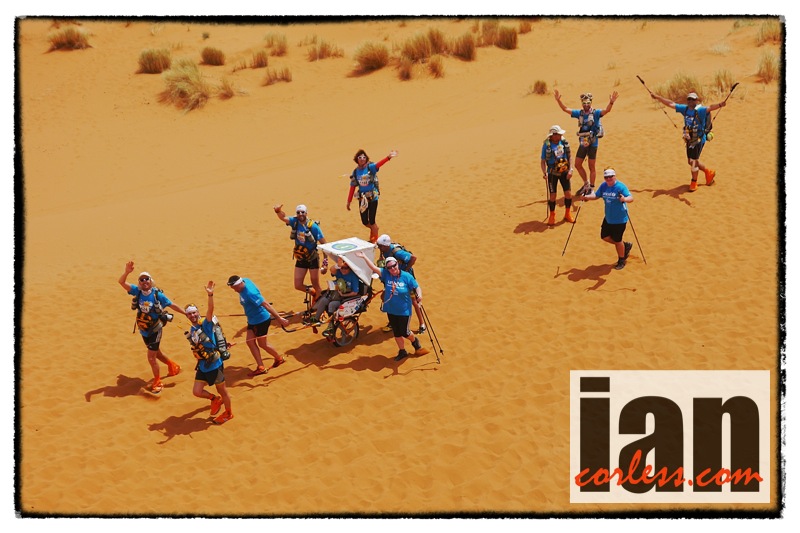
Stage Six (non-competitive charity stage) – Link HERE

iancorless.comP1060177

Marathon des Sables, Day 1. The depart!

MDS LOGO

It is all excitement and buzz as hundreds of helpers and volunteers mobilise to the get the ‘Marathon des Sables’ show on the road.

It’s exciting!

It’s like moving a whole village. Vehicles line up in rows, khaki clad men and women run back and forth with bags. It is organised chaos. Everyone knows and understands what is required and slowly but surely bags, crates, water, food, tents and all manner of packages disappear and with a sound of engines, one-by-one they embark on the 5-6 hour journey into the Sahara to ‘base camp’.

Two days adapting to the environment and then on Sunday the race begins.

The greatest show on earth!

Runners testing themselves against heat, dunes and dehydration.

Let the excitement begin….

Read my race preview HERE

Read my interview with MDS RD Patrick Bauer HERE

iancorless.comP1010411 iancorless.comP1010423 iancorless.comP1010432 iancorless.comP1010436 iancorless.comP1010452 iancorless.comP1010460 iancorless.comP1010465 iancorless.comP1010468 iancorless.comP1010471 iancorless.comP1010477 iancorless.comP1010487 iancorless.comP1010491 iancorless.comP1010494 iancorless.comP1010497

Patrick Bauer – The Interview

MDS LOGO

Patrick Bauer has a passion and a love for the Marathon des Sables that the passing of the years has not suppressed. Back in 1984 he ventured into the Algerian Sahara to cover 350km’s alone in a self sufficient manner. Little did he know that his journey would not only change his life but also so many lives of so many others…

DRAYMDS2012-04-14-7436

Translation services provided by Niandi Carmont

IC Patrick, welcome. In 1984 you took a solo journey across the Algerian Sahara. Why, what inspired you?

PB In 1984 I decided to take a self-sufficient journey of 350km. It took me 12 days; because of my self-suffiency my pack weighed 35 kilos. I needed enough food water for the whole journey. I had no help. It was an incredible undertaking.

IC What was the motivation, It must have taken some planning?

PB I had lived in West Africa for two years. I was employed to sell Encyclopedias to teachers and books on medicine to doctors and pharmacists. Returning to France was difficult. I had no desire to stay… I just wanted to leave again. During my 2 years in Africa I had crossed the Sahara five to six times by car but I wanted to cross on my own, on foot. I remember it well, I had returned to France, I had no apartment so I returned to my parents. I was back sharing a room with my brother. I woke up one morning and said

“I am going to cross the Sahara on foot”

My brother said, “Ok, go to sleep… you had a nightmare”

I said to my brother you must help with a camera and sponsors. Just three weeks later I left to take the journey.

IC That journey influenced the rest of your life but importantly it changed your immediate life in the mid 80’s. In 1986 you decided to share that experience and create Marathon des Sables. What gave you the confidence to create such a race? How did you know you would have a market?

PB I realized when I did a presentation to my village. I had friends and sponsors present. It was a thank you but I had awoken curiosity and interest. Local runners did not want to make the journey alone, so, I decided to organize it. No other event compared, maybe Paris-Dakar. It was a ground breaking moment.

DRAYMDS2012-04-08-8439

IC In the early years, was participation mainly French?

PB Yes, French with the exception of one Moroccan. We had 23 runners at the first edition. It took 24 months to plan and create. Little did those 24 know that they would be the pioneers of one of the most beautiful stories that will soon be 30 years old?

IC In the early 1990’s you contacted ‘The Best of Morocco’ to introduce British and Irish runners, was this a long term plan to expand the race?

PB We already had contact with this agency (Best of Morocco) but by 1990 I had already done 5 editions of the Marathon des Sables. I wanted to expand internationally and I wanted as many countries present as possible. We started in a tentative way and today we have as many English runners as French and potentially more in the future.

IC British entries have reached 250+. The race is known worldwide. Did you know it would become so big?

PB I would never in my wildest dreams have imagined it would be what it is today. When a race is over, I start immediately on the next year. I have a passion and I don’t think about it all the time.  I want to be more strategic with my long-term vision. 2015 is the 30th edition; I like to plan 3 years ahead so I already anticipate higher demand for 2015.

IC What is it that makes the race so special. You appeal to novices and experienced runners. It is a difficult balance but you do it so well.

PB I think it is the concept. The cocktail of the desert, running and the self-sufficiency. Nobody at the beginning thought it would be possible to run with a pack. The expedition was an extra bonus…. You need to manage everything; calories, water, clothing, rest etc. All these elements combine to create the ultimate experience. It was new! Today we have additional security. Runners tell us that the safety element is key. Believe it or not, the average age is 40yrs+. These participants have families and children so risk is not negotiable. We want to offer security and safety for all these participants. We have helicopters, planes and insurance to make sure everyone is protected. Finally, it is about testing your limits; in our busy lives we find going back to basics a wonderful experience. Under the stars with friends, sat around a campfire, simple conversation and no luxuries. It is primal. It brings out true values that we may have forgotten. Because the desert facilitates all that is around us, the stars, the universe, you don’t need a book to tell you that ultimately we are all insignificant.

DRAYMDS2012-04-12-0683

IC What is it that makes runners that go back year after year?

PB Yes, we have some people returning for the 22nd or 23rd time. But it is not the same for all. If everyone came back we would have the same race, this would not be good. But we have a faithful family that we have created from the start. We have affinity and we love to find each other in the desert. We are also happy to find new friends. Maybe we have people return years later to celebrate a key moment such as a 50th birthday. We have a fraternity side, we share values. We have a respect for difference and other countries. All the languages that are spoken. These are the experiences that make the event. It is the combination of so many elements that make it great. We have an edge I think and that brings people back.

IC What is the future of the race? Will the race become bigger with more runners?

PB Yes, I think we will have more participants in 2013. We will have 350 from the UK. We had a meeting with worldwide representatives some time ago and it was decided that we would all work together on a communication strategy and we discussed the 30th edition. We have had great demand; we have refused more than 2,000 entries. I get messages about the 30th edition asking if it will be 300km as the 25th edition was 250km. Because of the worldwide economic crisis we may need to take more entries so that we can ensure the quality of the race such as safety. This is why we prepare 3 years ahead.

camp

IC As a race director can you give us an insight into the Marathon des Sables?

PB The advise to the runners is repeated every morning, like, hydration, protecting your head, sun block and more specific advice concerning the course. Storms can just arrive and then last a half-day or even 4-5 days. A few years ago we had floods… that year we had to plan from day-to-day. It wasn’t easy. The biggest problems are usually weather related. For the rest of us, it is a safe country. We have government backing should we have a problem, for example we have military assistance. We have trucks and soldiers who transport the tents everyday and we have 400 people who work on the event. If you add journalists, drivers, volunteers etc. then we have more like 450 people.  I have 110 people who directly report to me.

JPCERVELMDS2012-04-08--4466

IC It is so impressive, the tents, the staff, and the helicopters. A circus!

PB It is a little like the circus. Up and down, load up and move. I am always impressed. It is fantastic.

IC Since the beginning can you pinpoint any highlights?

PB The feeling you get from every event. We have an extraordinary experience. We share values with participants and it creates a bond. Some say ‘never again’ and then two years later we see them again. We all strive for equilibrium to balance the experience and we all strive for positive thoughts. If we have them then we can share beautiful things.

IC In 2005 you had an Opera singer to sing before the start. A magical experience.

PB Yes, for the 20th anniversary we had a spectacular start with an Opera singer and musicians. She was Japanese. It was a moving experience. Classical music is in harmony with the desert. At the beginning the runners are still fresh so they can enjoy the experience.

IC What do you think of Olympian James Cracknells performance at Marathon des Sables, he is not your ‘typical’ desert runner?

PB He was an excellent champion, a top-level athlete who understood how to test the limits. So I think he had a new experience in the Sahara. He asked himself what he was doing at the race several times I think. Discovery Channel did a documentary on him. He demanded respect as an athlete. As a man I did not get to know him but as a sportsman I am sure he has great values.

IC Has the race become easier over time or have you made adjustments to make the experience more challenging?

PB The race is not easier. The distance has increased over the years but water can be a key issue and we now have great water supplies which was not so in the past. In the past water was an issue. But we all have short memories. We forget the hardships. Every year has new demands. We now have more positive incline. We used to spend time in the valleys.

DRAYMDS2012-04-11-9798

IC True, we all forget hard times very quickly. We always remember the good times and they are our memories.

PB At the end you have sore feet and blisters… but your mind is selective. We filter the negative to retain the good. The human and sport experiences. We forget the soreness and remember the positive.

IC Do you still run, do you have the time?

PB Yes, I run after the sponsors, I run after my planes, I run after my trains… I started cycling a little and I do a little running. It’s not a good time for me. But then again, I always have an excuse. It is difficult but I am motivated to try to be more regular with my own exercise.

IC Patrick, it really has been excellent to get an insight into such an iconic race. Thank you so much.

PB Merci beaucoup

2013 RACE PREVIEW HERE

Patrick Bauer, Marathon des Sables copyright www.lest-eclair.fr

Patrick Bauer, Marathon des Sables copyright http://www.lest-eclair.fr

Episode 31 – Joe Grant & Ruby Muir

Episode 31, Joe GRant, Ruby Muir, Atacama Crossing

Episode 31 of Talk Ultra. Joe Grant tells us all about his experiences covering 350 miles at the Iditarod Trail Invitational in Alaska. New run sensation, 21 yr old Ruby Muir from New Zealand tells us what it’s like dominating Tarawera Ultra and placing 7th overall. We speak with Daniel Rowlands & Rebecca Pattinson, respective winners of the Atacama Crossing in Chile. Ian Sharman discusses the News, Marc Laithwaite talks hills in Talk Training, Speedgoat has a Meltzer Moment and of course we have A year in the life of, MDS special and the Up & Coming Races.

00:00:44 Start
00:20:10 A Year in the life of… with Amanda Hyatt. Amanda finally seems to be getting the hand of ultra running. After being ‘shocked’ with her first race experience, she now has another race under her belt and feels far more confident.
00:33:30 News with Ian Sharman. Ian has had a niggle with a knee injury but is back in training and has a race coming up in the next couple of weeks. He discusses the news from around the world.
00:41:40 Ruby Muir – 21 year old ultra newbie, Ruby Muir has elevated herself to a whole new level with a stunning performance at the very competetive Tarawera Ultra in New Zealand. Not only did she dominate the ladies race, she placed 7th overall. I caught up with her just this last week… “I am just a runner” this modest star of the future says.
01:00:00 Back to News
01:04:40 Daniel Rowlands from Zimbabwe has just won the Atacama Crossing in Chile. You can hear what he has to say and read his blog HERE
01:14:05 Rebecca Pattinson from the UK won the ladies race at Atacama Crossing and is somewhat surprised! She talks about her training and racing money for Autism. Take a look HERE
01:34:40 Back to News
01:42:15 Blog/ Video – SILENCE – Surrounded by the noise of the city, a noise that can drown out our ability to fully listen to what our bodies are telling us, the video highlights how it can disconnect us from the places that we’re running in and although running becomes an escape – it isn’t always relaxing. Why we Run? Watch it HERE
01:45:00 Talk Training with Marc Laithwaite, this week we discuss Hills. Going up and down them.
02:06:45 Interview. Our final catch up with Arc’teryx/Inov-8 athlete Joe Grant. Joe has just completed the 350 mile Iditarod Trail Invitational in joint 2nd place. It was a little tougher than he expected.
02:49:35 Back to Karl
02:56:30 A Meltzer Moment with Speedgoat Karl
03:03:05 MDS Special – This week we have our final catch up with Stuart Rae. The next time we speak it will be in the Sahara.
03:12:10 Up & Coming Races for the next two weeks.
03:14:45 Close
03:16:37

http://traffic.libsyn.com/talkultra/Episode_31_Grant__Muir.mp3

ITunes http://itunes.apple.com/gb/podcast/talk-ultra/id497318073

Libsyn – feed://talkultra.libsyn.com/rss

Website – talkultra.com