The end is in sight. After five brutal, beautiful days in the high Himalayas, Stage 6 of the 2025 Everest Trail Race delivers the final blow and the final reward. It’s 28.5 kilometres fo Lukla, a day marked by more descent than ascent: 2612 meters down, 1578 meters up, and every single step earned.
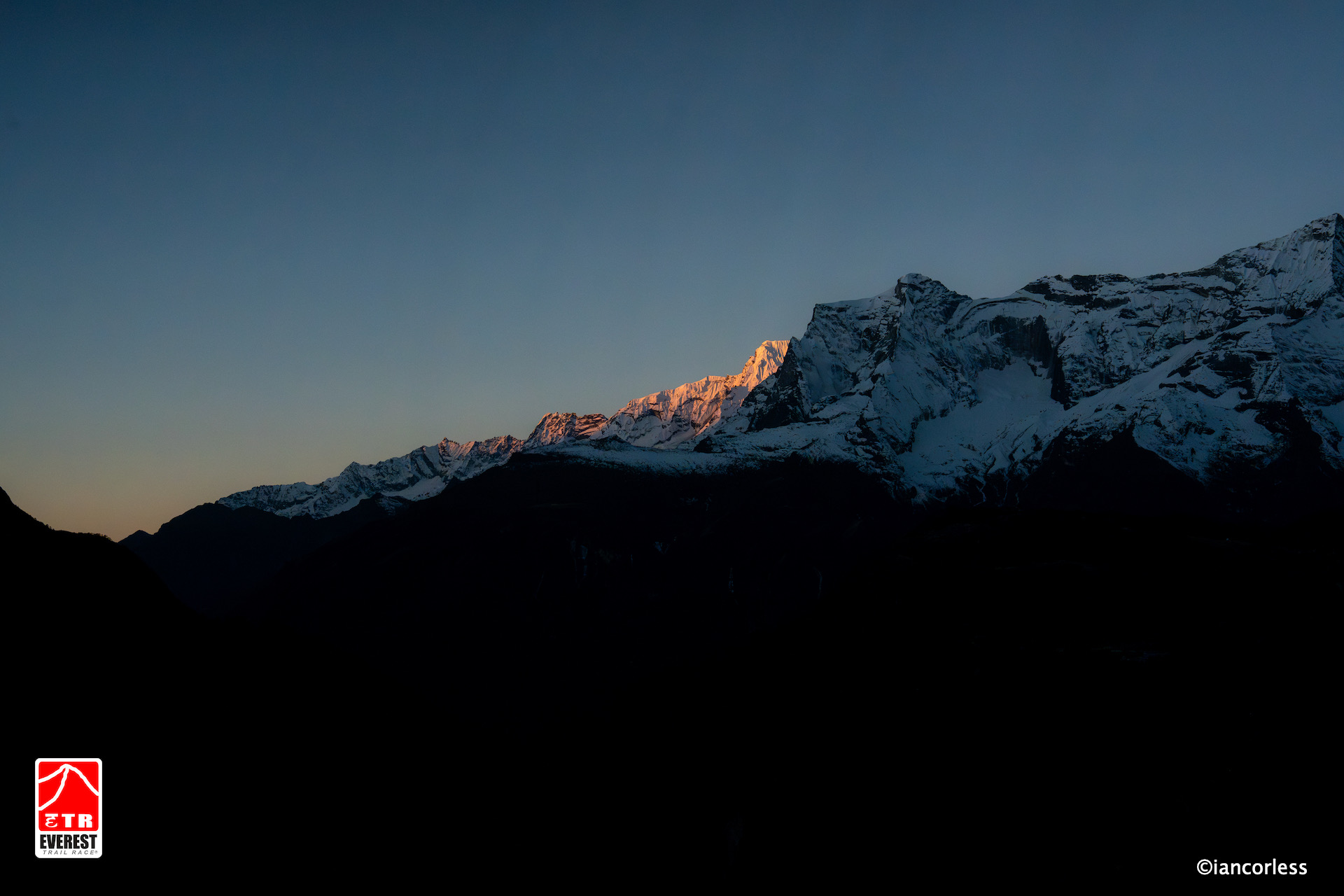
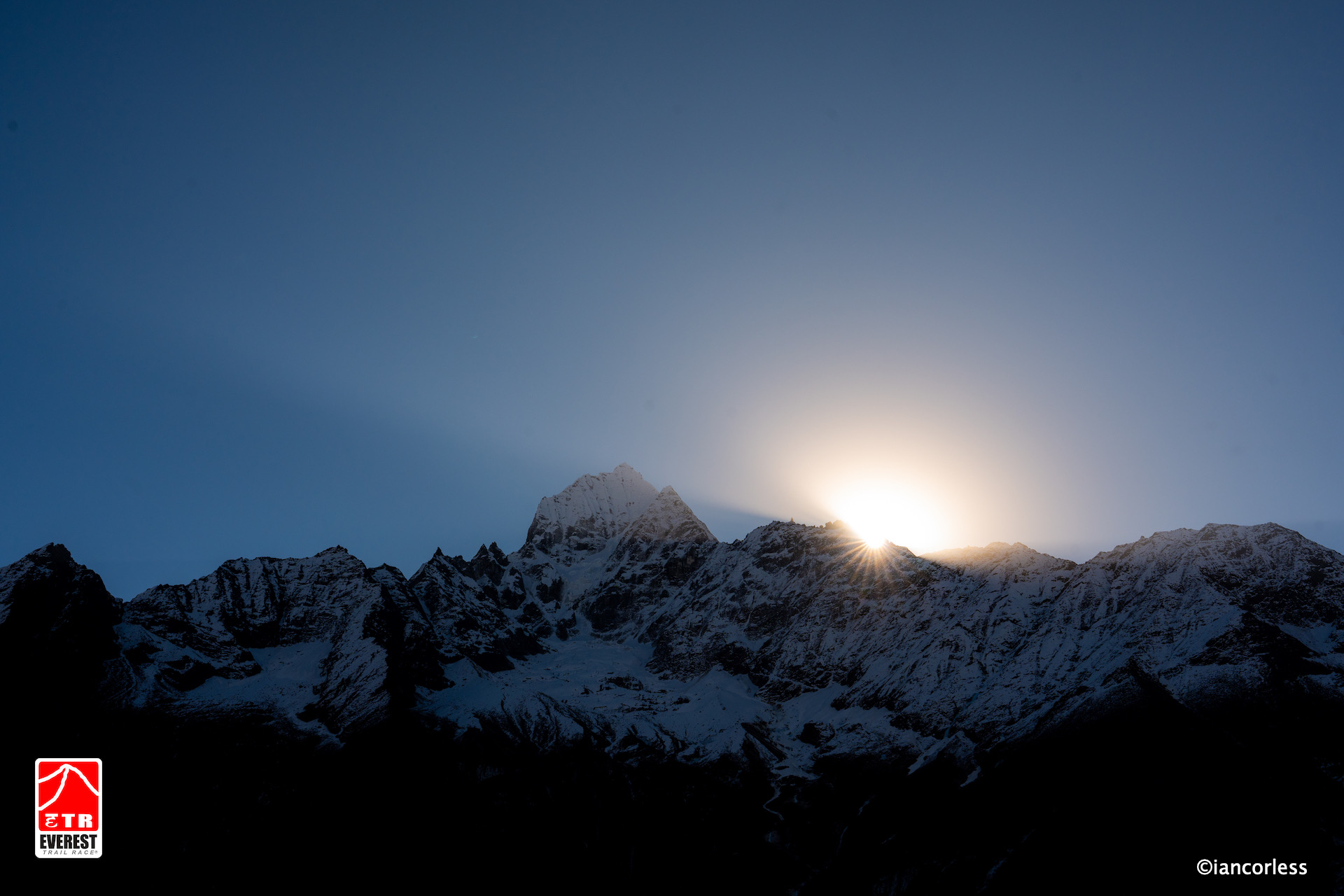
An early start, the arrival of the sun and soon, the heat will come – not only in the sky but with the bodies of each participant.
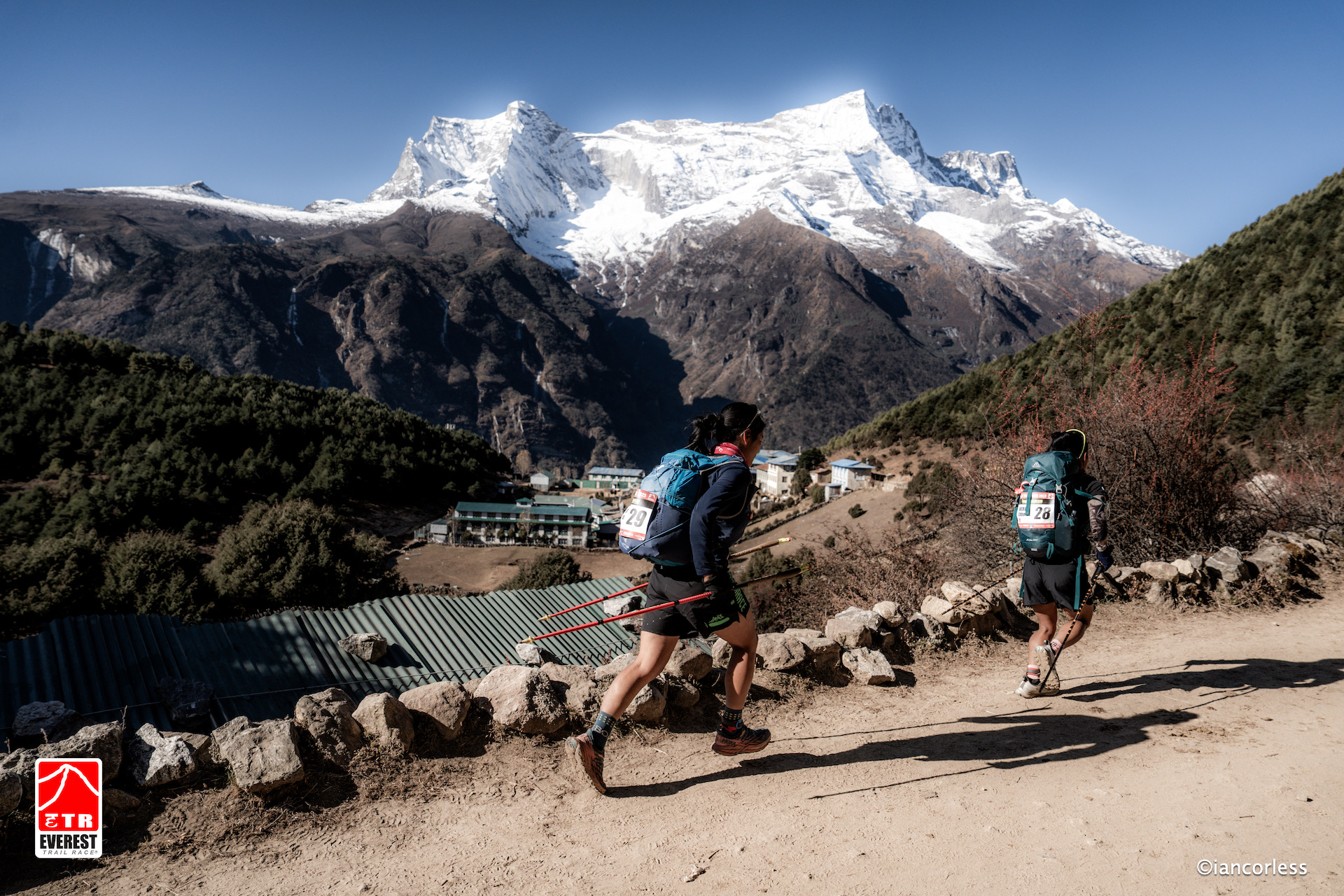
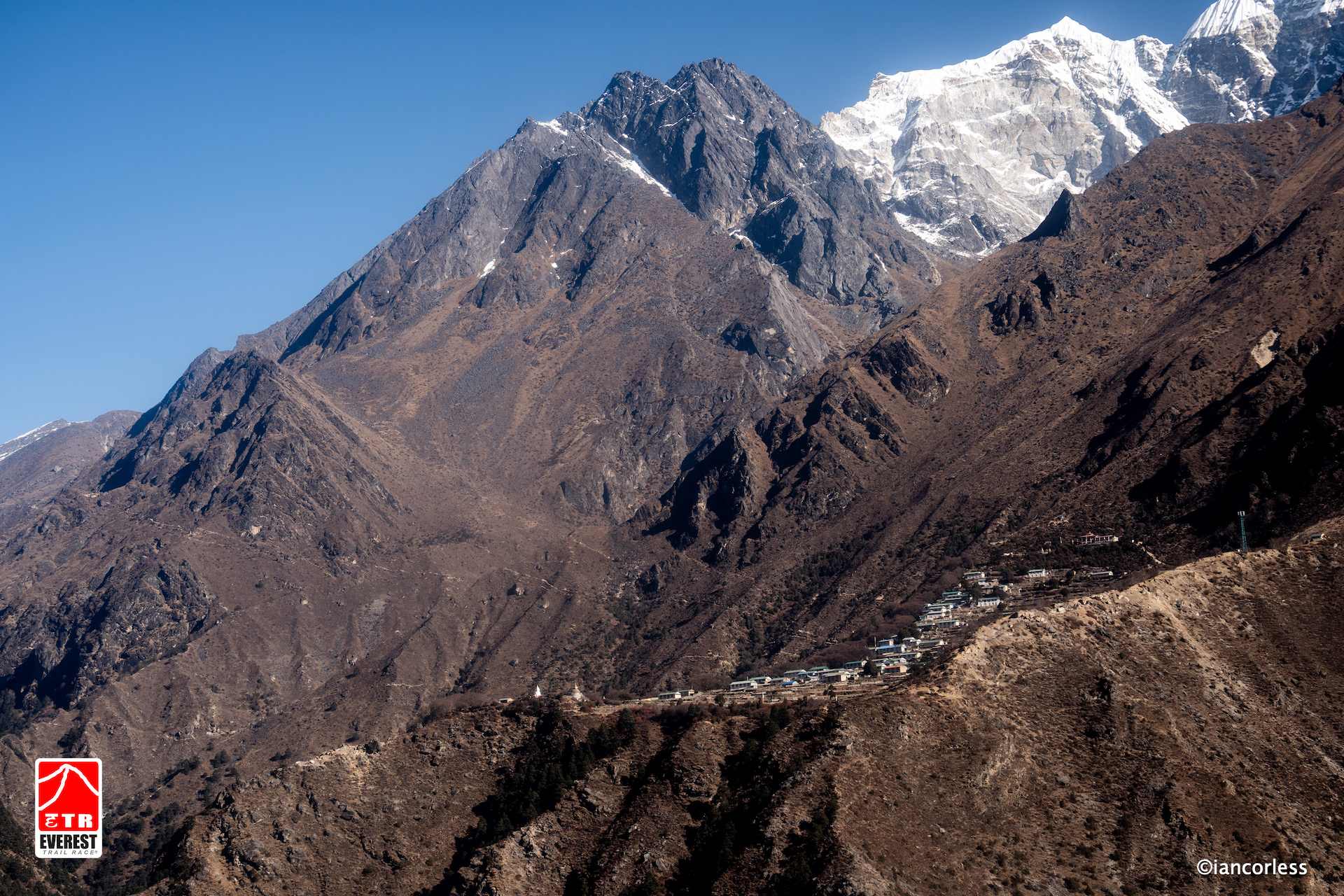
The day kicks off with iconic trails that weave from Stupa to Stupa to Namche Bazaar, the buzzing Sherpa hub perched on the mountainside like a fortress.
The backdrop behind, stunning, but the participants don’t get a chance to see it…
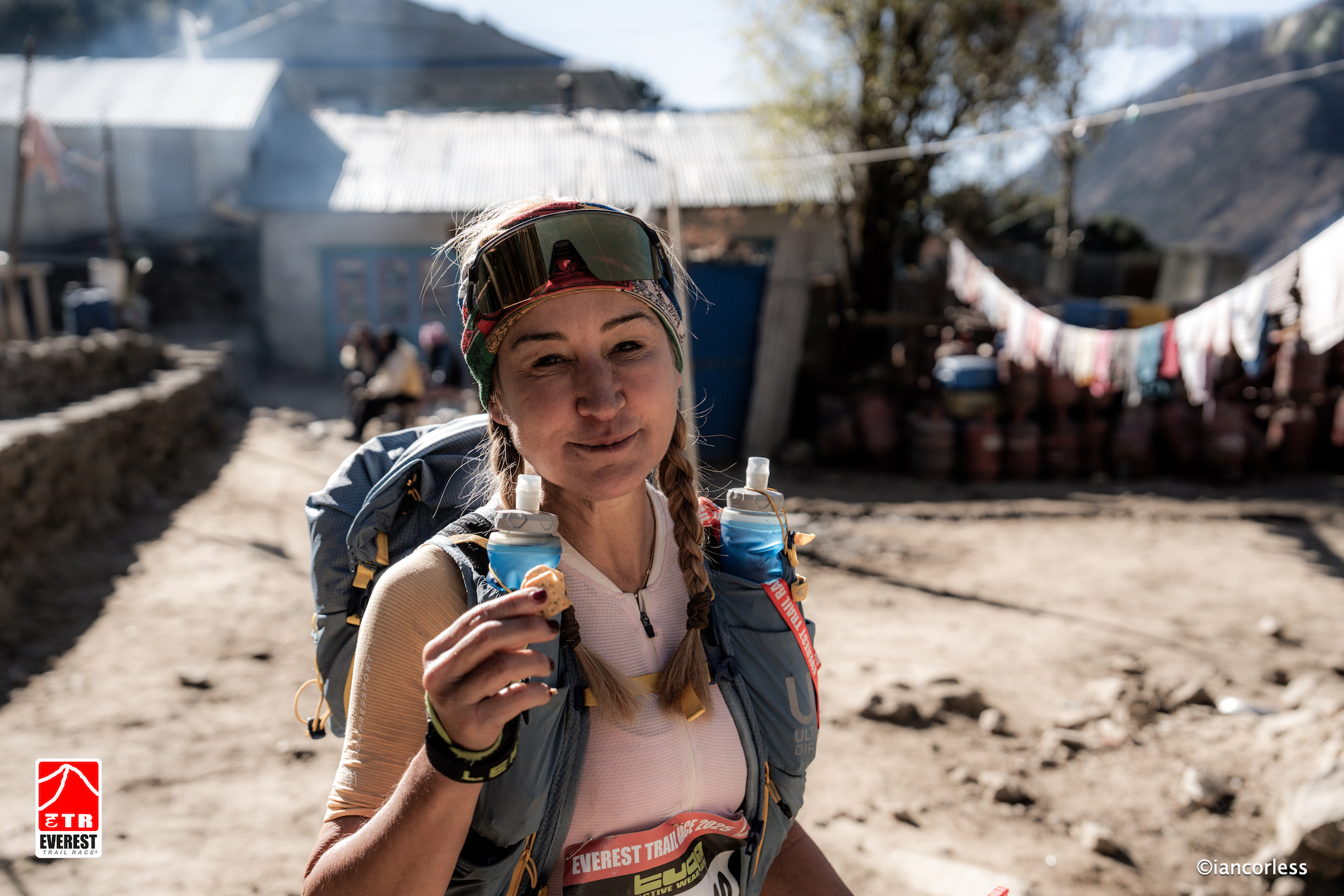
Namche brings checkpoint 1, it’s welcome, the early kilometres had worked the body hard with a steep descent, followed by a gentle climb and then an ‘easy’ run to the refreshment.
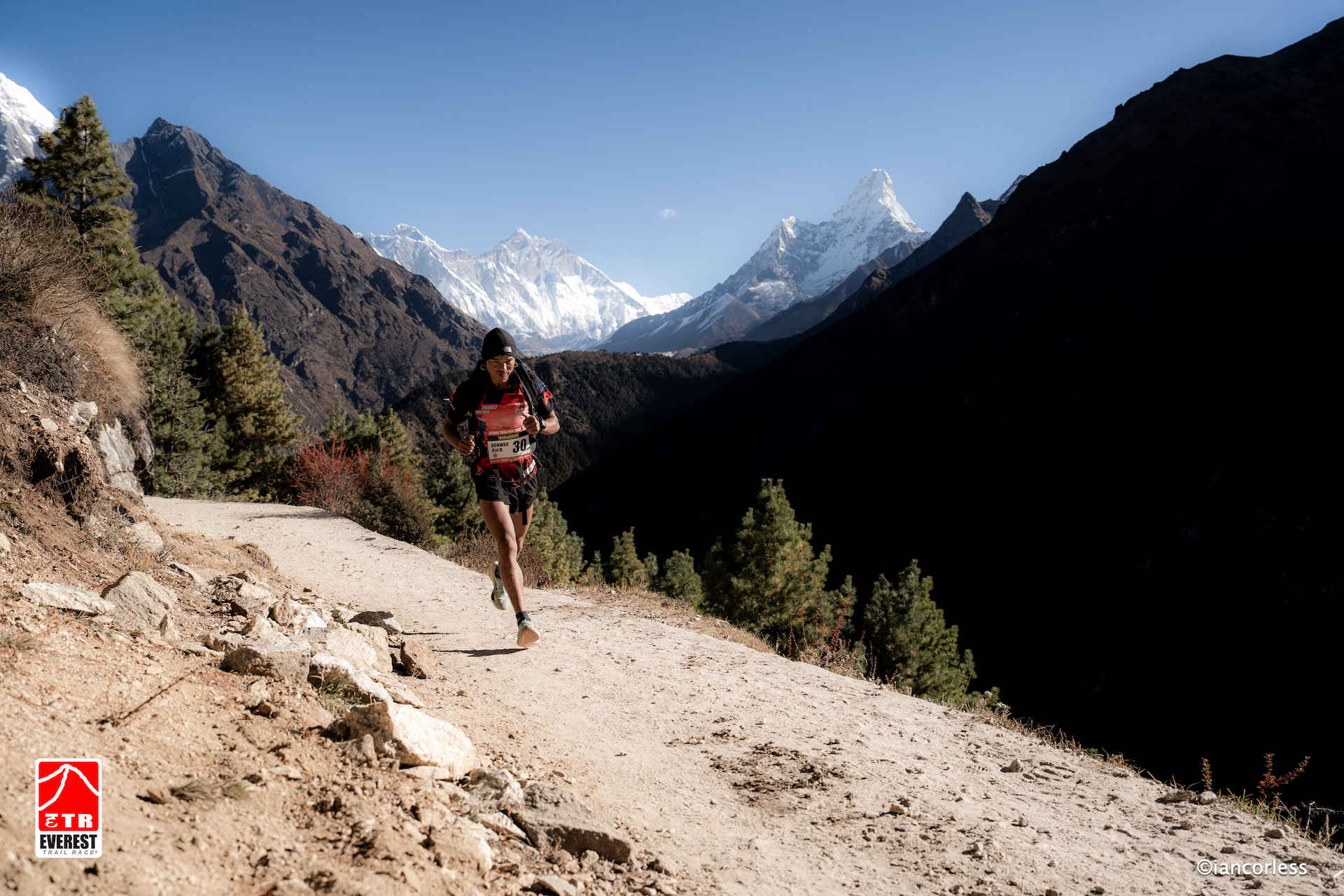
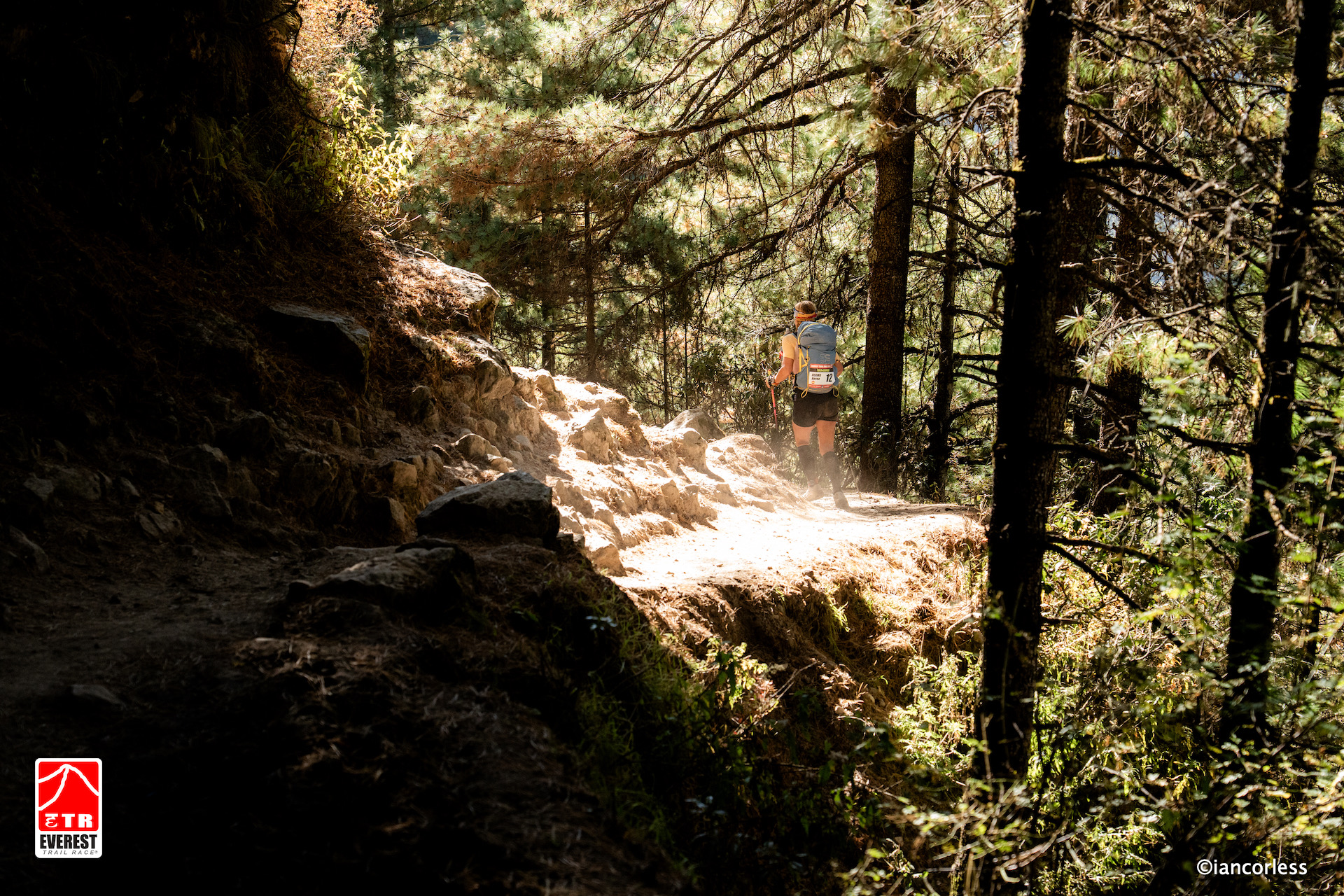
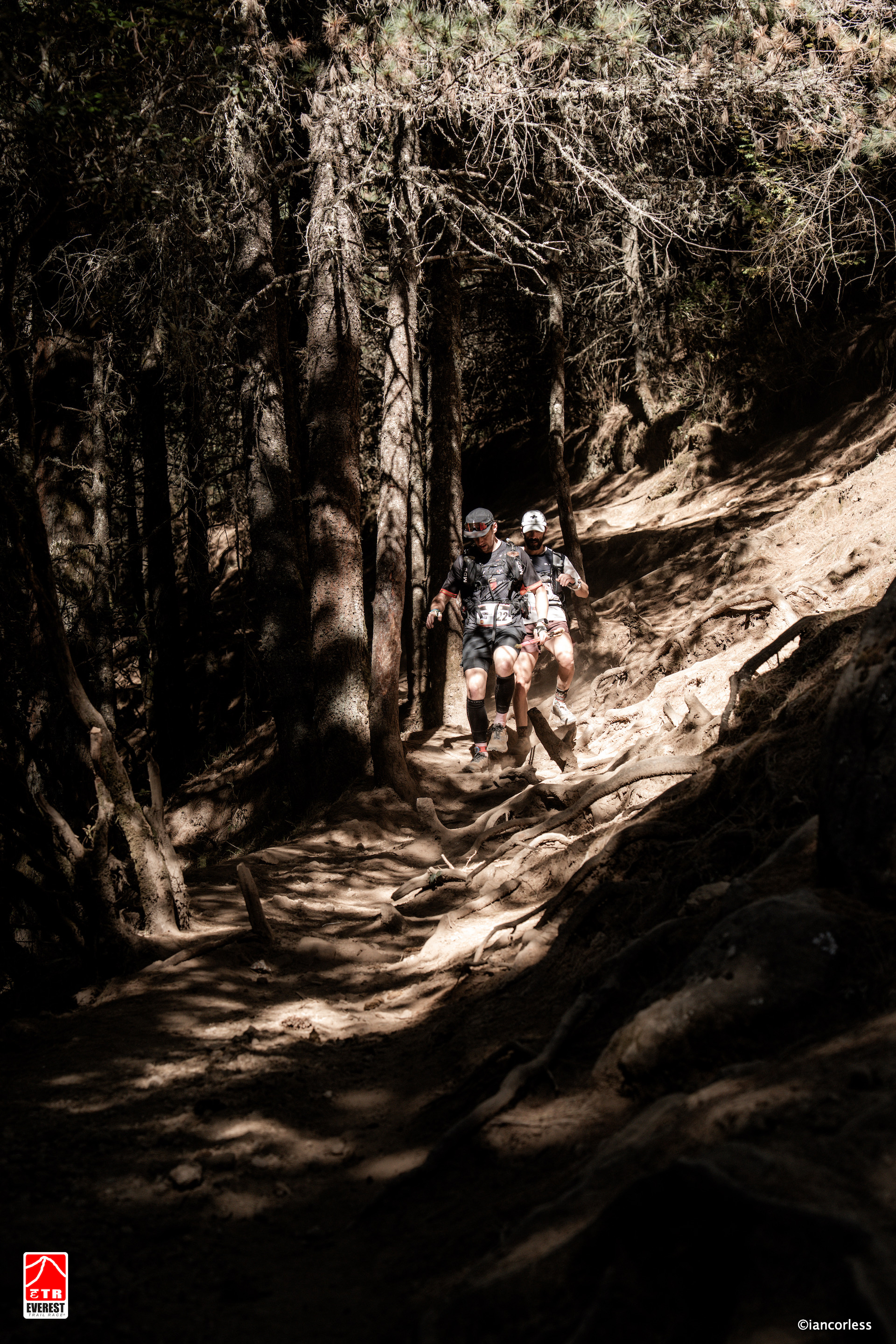
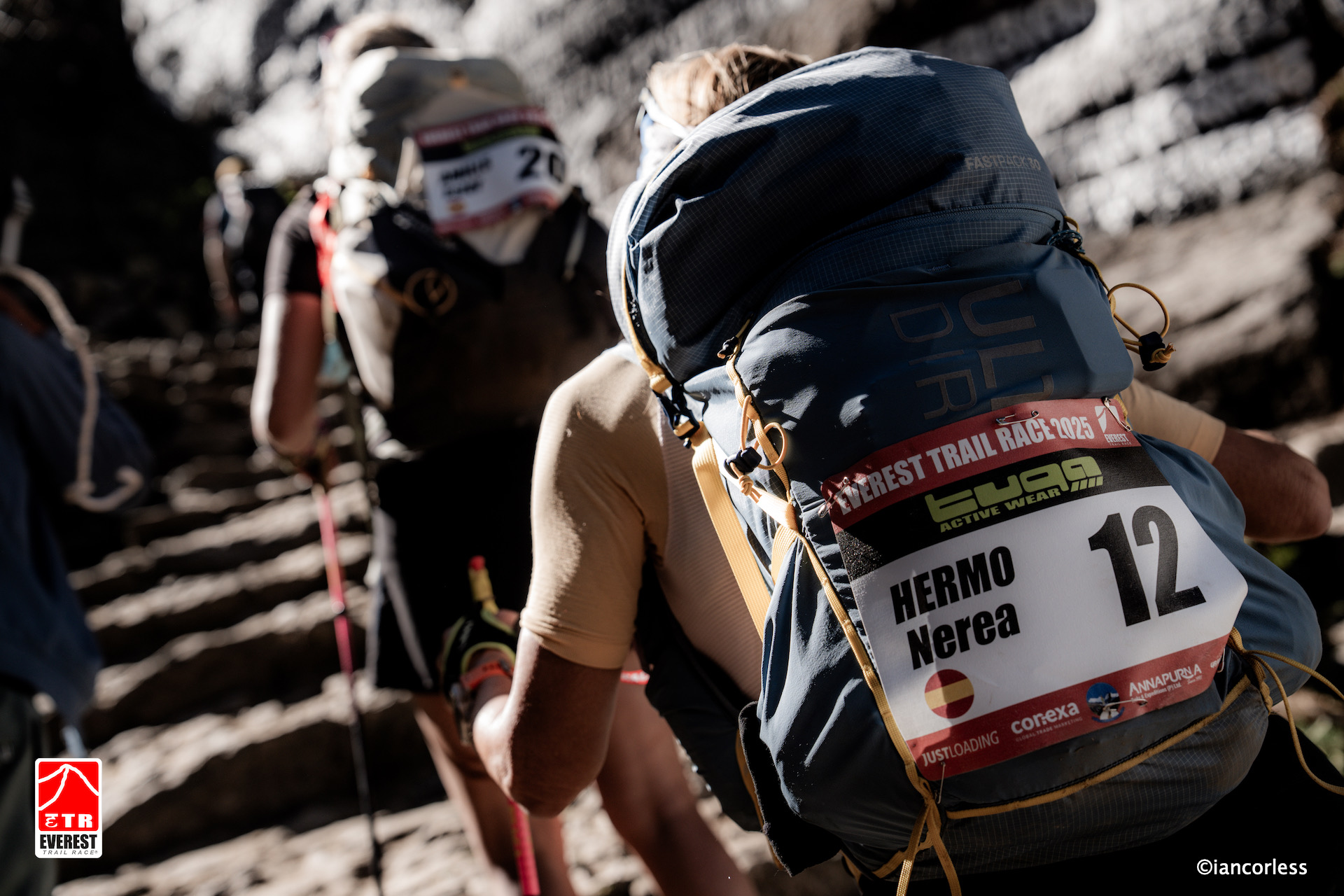
The early kilometers retrace some familiar ground – Sanasa, Phunki Tenga, and trails edged with mani stones and prayer flags, twisting through pine forests and clinging to cliffs. But don’t call it a repeat. The fatigue, the altitude, and the stakes make every step feel different.
This stage is less about vertical brutality and more about holding form, keeping control as the trail drops fast and hard. Quads burn, knees scream, but momentum is everything.
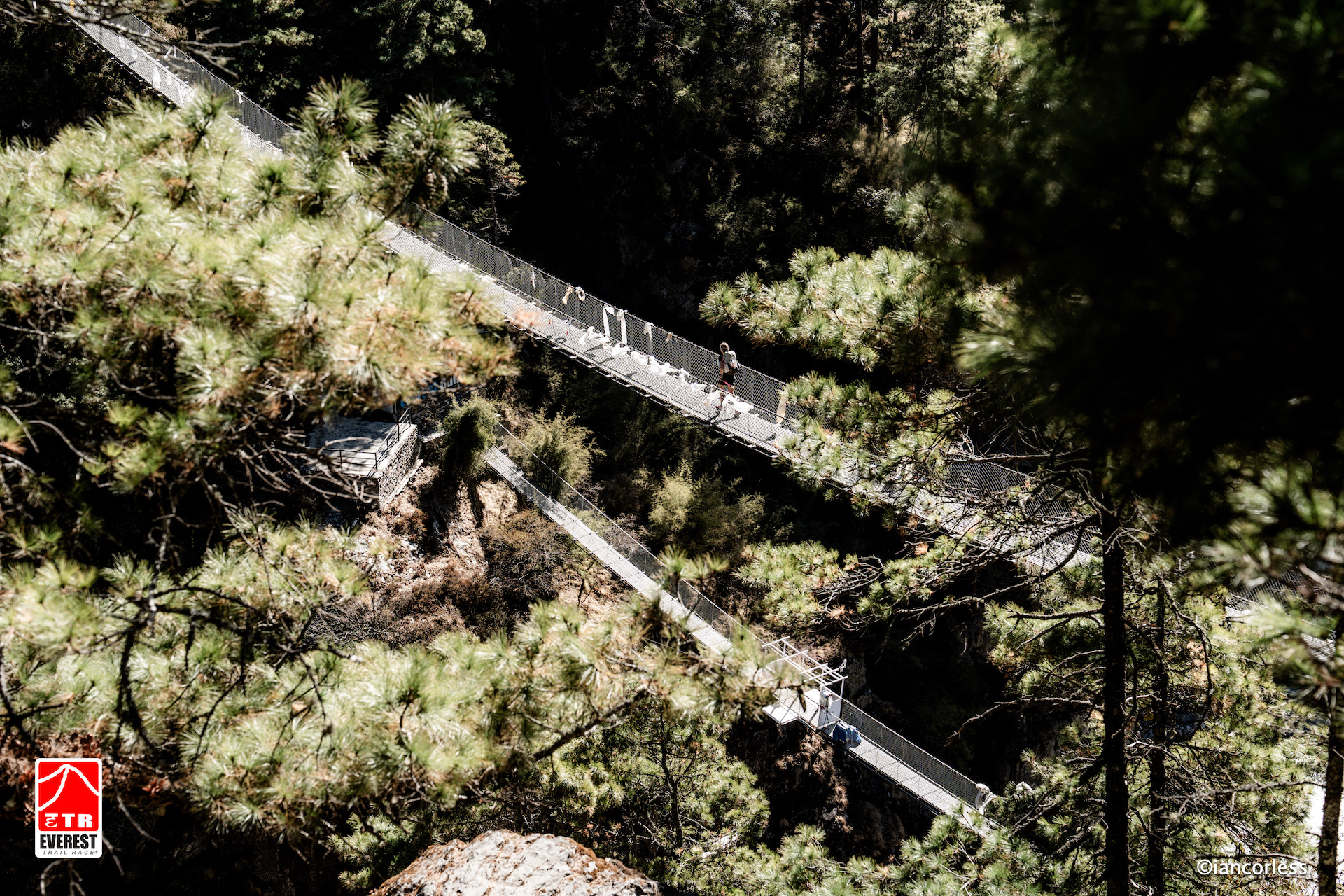
Soon, the trail funnels runners toward the legendary new Hillary Bridge – a sweeping, high-tension crossing that swings over the Dudh Kosi with views that could stop you in your tracks, if the clock wasn’t ticking.
Past the bridge, it’s Jorsale, where the race starts to feel like it’s dragging runners home. The Phakding checkpoint (CP2) marks another milestone, each bib scanned there is one step closer to Everest Trail Race glory.
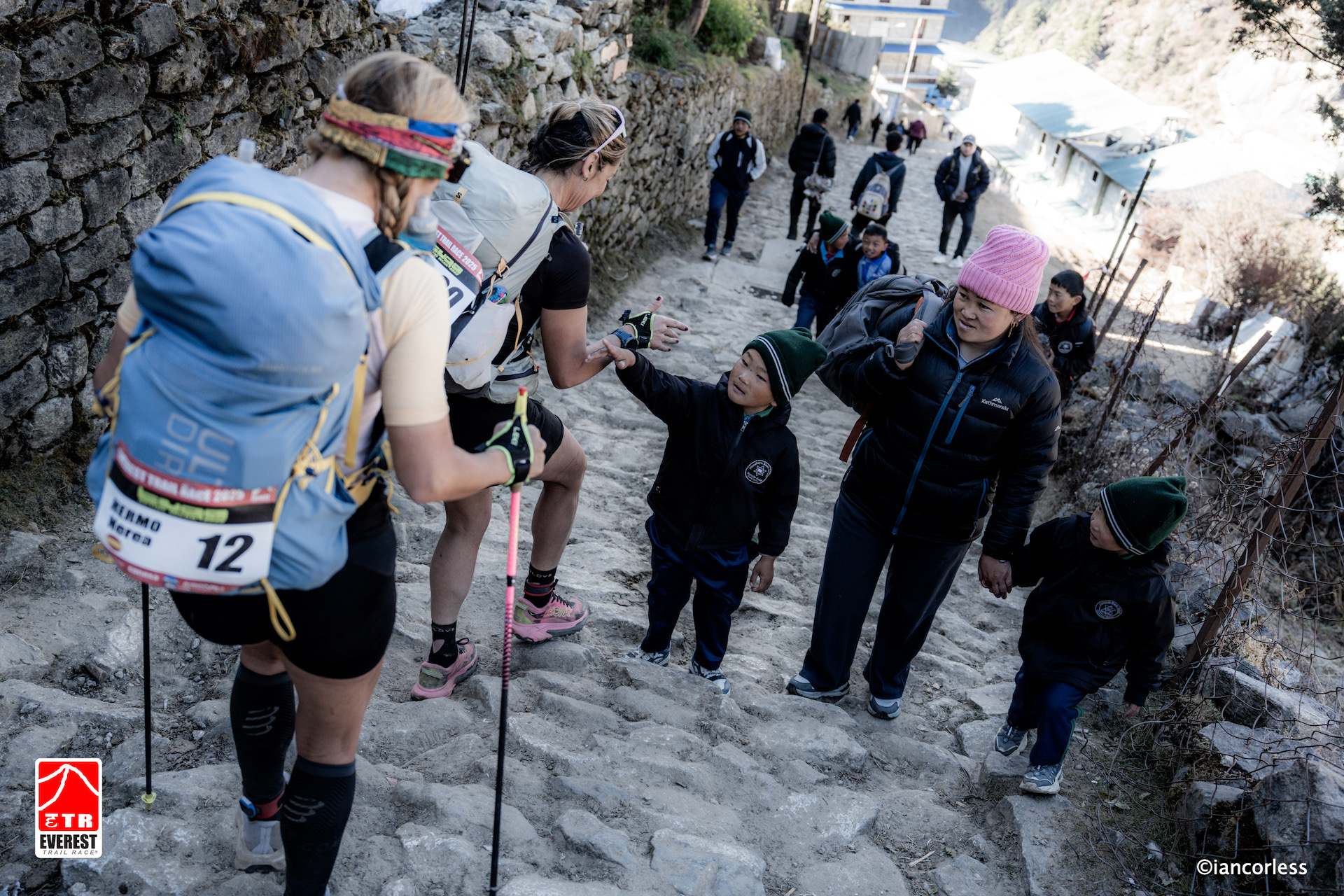
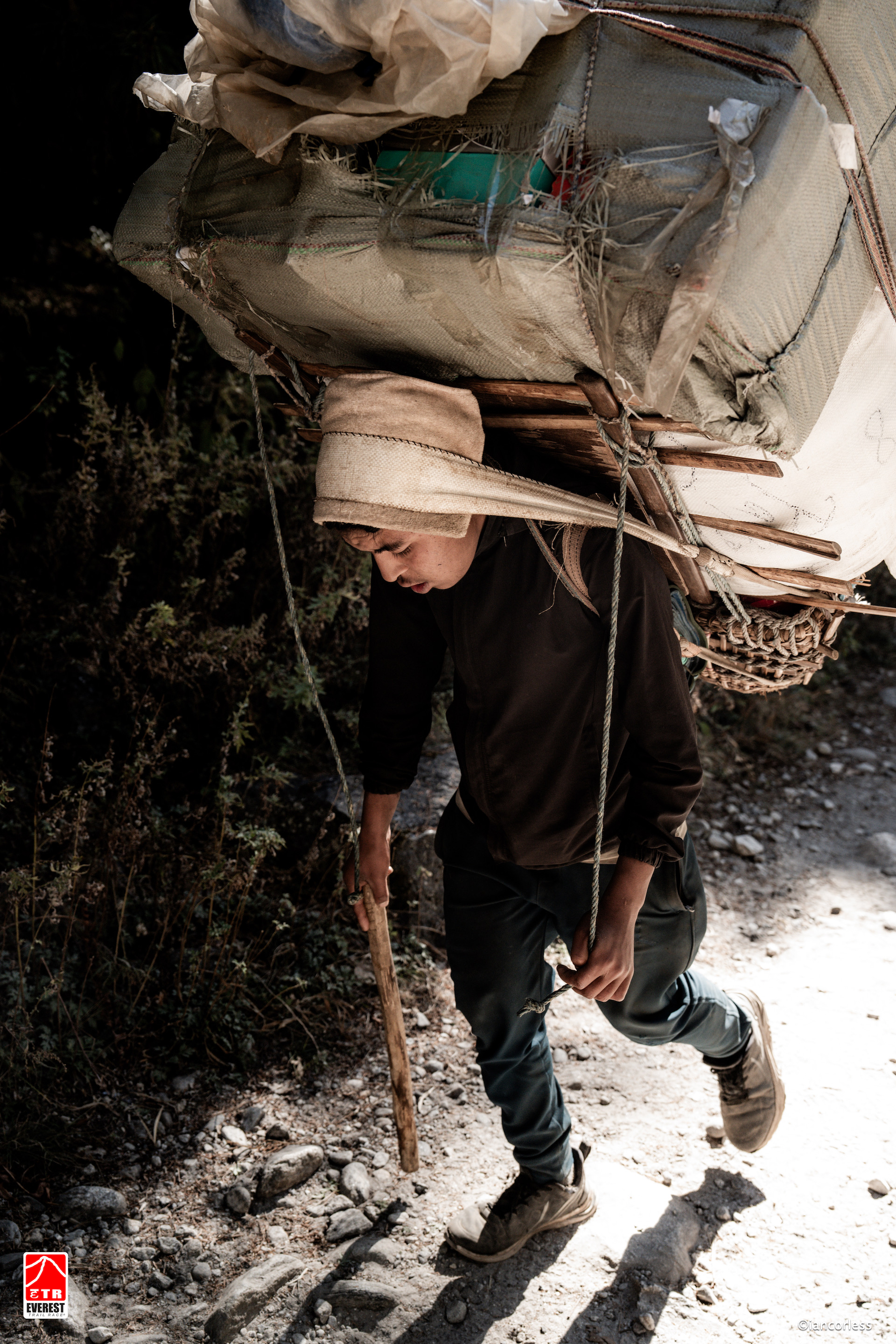
By the time runners hit Cheplung, it’s all on the table. Here, a sharp left turn signals the endgame: the final climb to Lukla and oce again, Nepal and the Porters remind us, how lucky we are!
It’s not long, but it bites. After the day’s long descent, this uphill kick demands whatever strength is left in the tank. Runners grit teeth, dig deep, and push toward the town that marks the start of most Everest dreams, and now, the finish of this one.
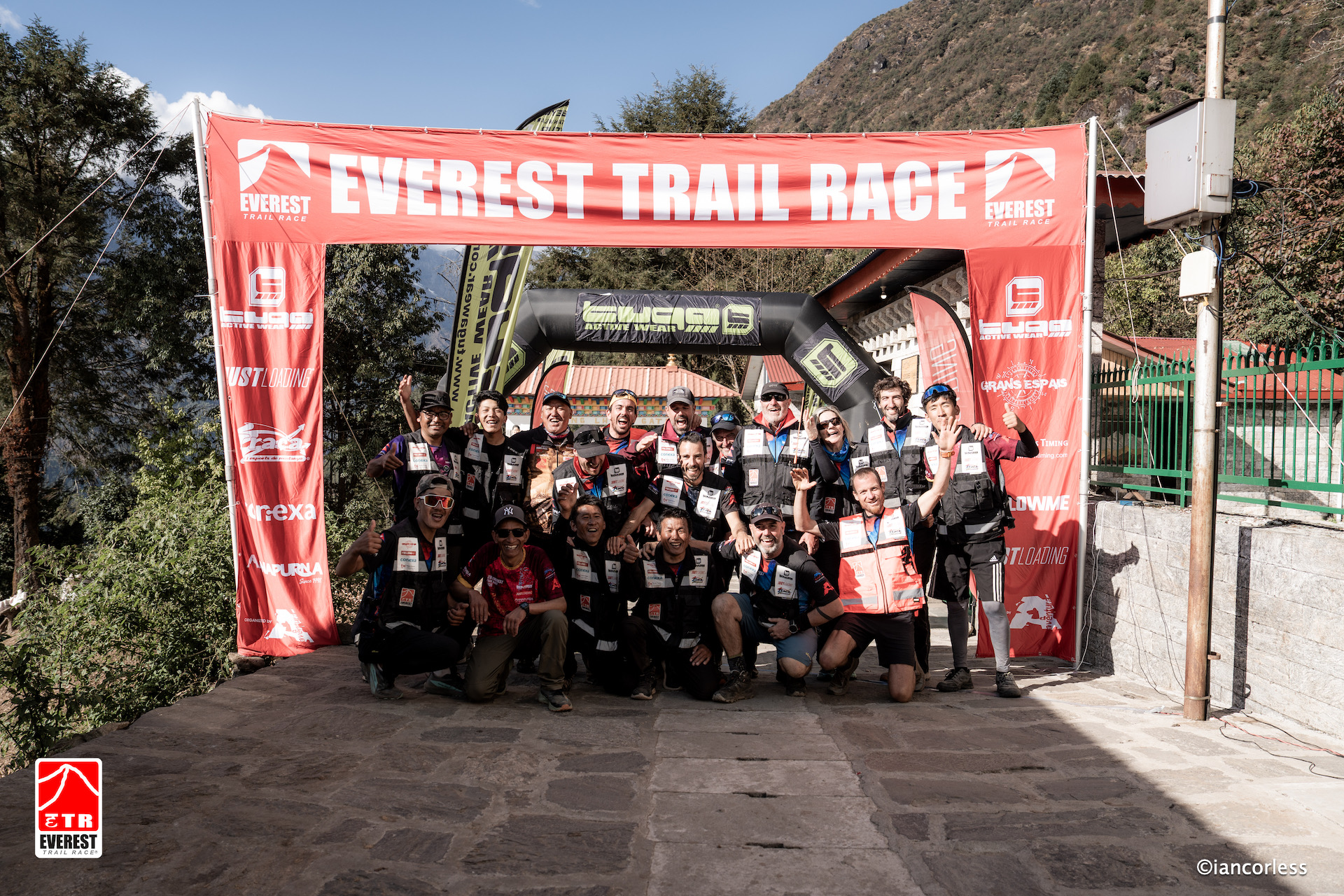
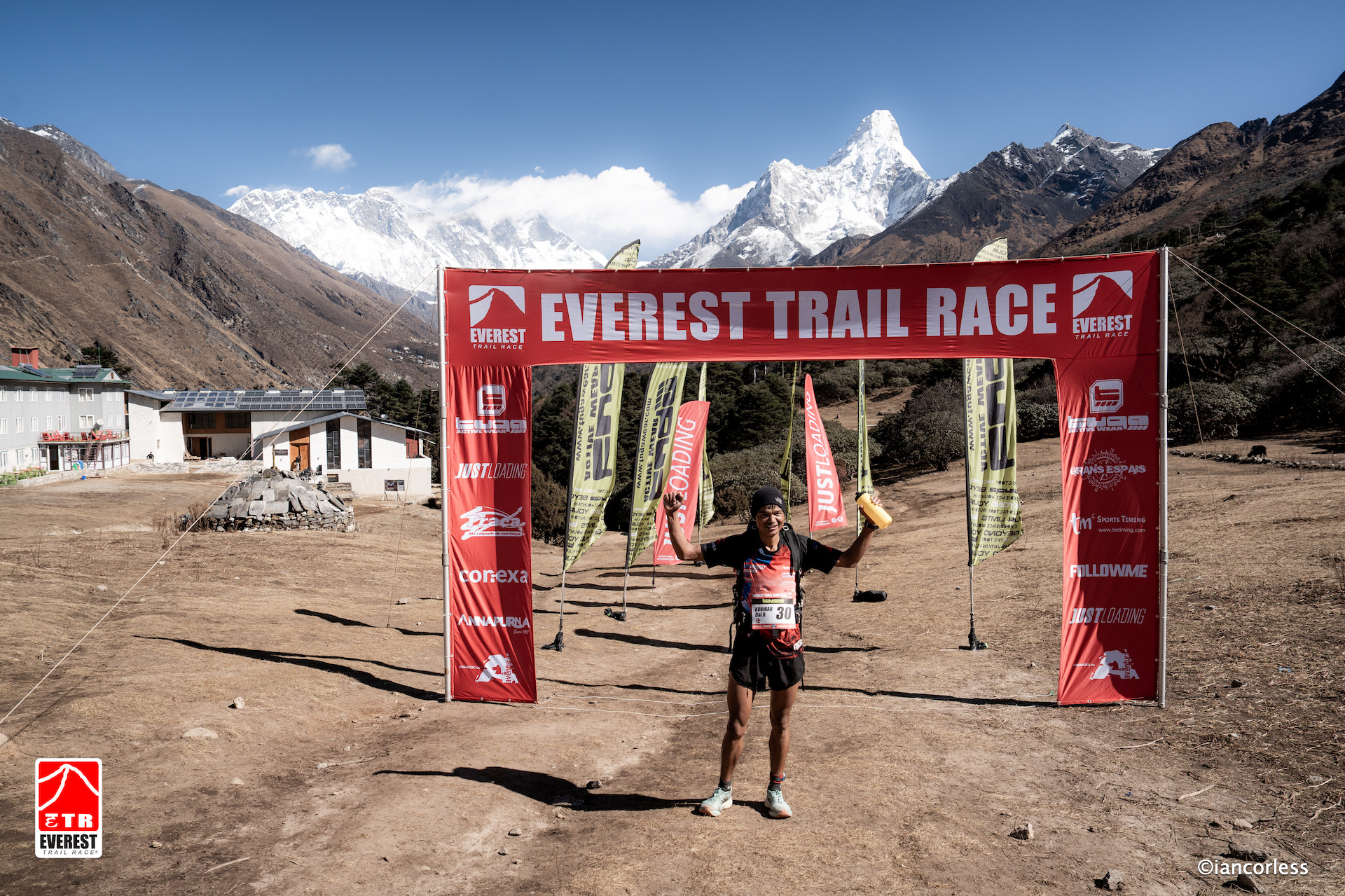
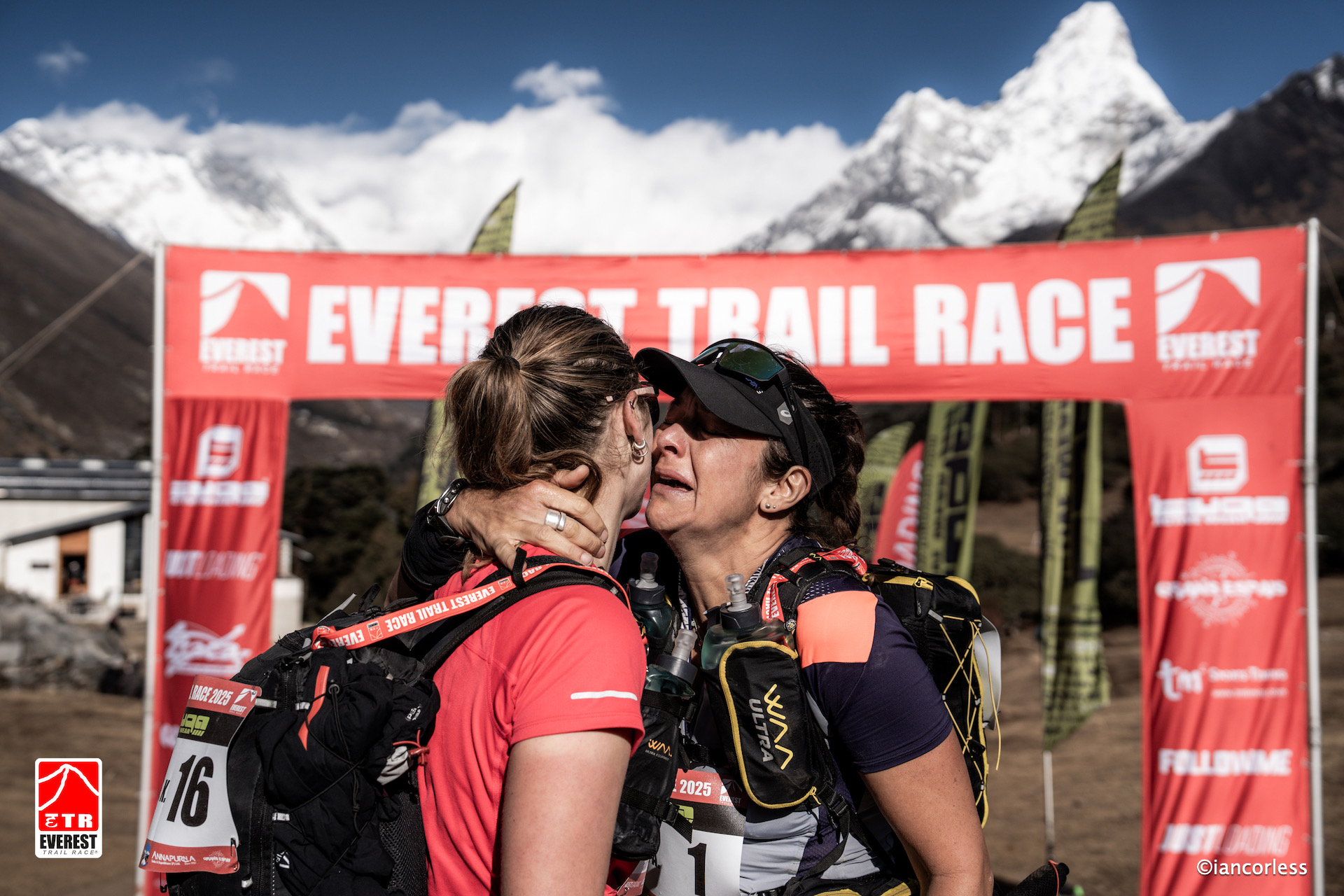
Crossing into Lukla is like breaking through into another world. Crowds, bells, cheers, and tears—this is where it all ends. For some, it’s a triumphant sprint. For others, a silent, emotional walk over the line. But for everyone, it’s the culmination of six days of relentless racing through some of the world’s toughest terrain.
The 2025 Everest Trail Race is done, everyone earned more than a medal, they earned the mountain’s respect.
Stage 5 of the Everest Trail Race pulls no punches. At 24km with a punishing 2,483 meters of ascent, this is the stage that earns its reputation as the toughest of them all. The numbers alone are intimidating, but it’s the relentless terrain and shifting altitude that test runners on every level – physical, mental, emotional.
This year’s route sees a change from previous editions, adding new layers of challenge and beauty. Starting in the shadow of Sagarmatha National Park’s giants, the trail weaves through the quiet village of Chumoa before rising into the bustling trails of Namche Bazaar, where the first checkpoint offers a brief reprieve. But this is only the beginning.
From Namche, the course climbs to Syangboche, skirting airstrips and yak paths, before pressing on to Kumjung, a Sherpa village set high beneath the peaks. Then comes Mong La – Checkpoint 2 – perched like a balcony above the valleys below. From there, it’s a steep descent to Phortse Tenga, followed by a lung-busting climb to Phortse, a village known for its mountaineering legacy.
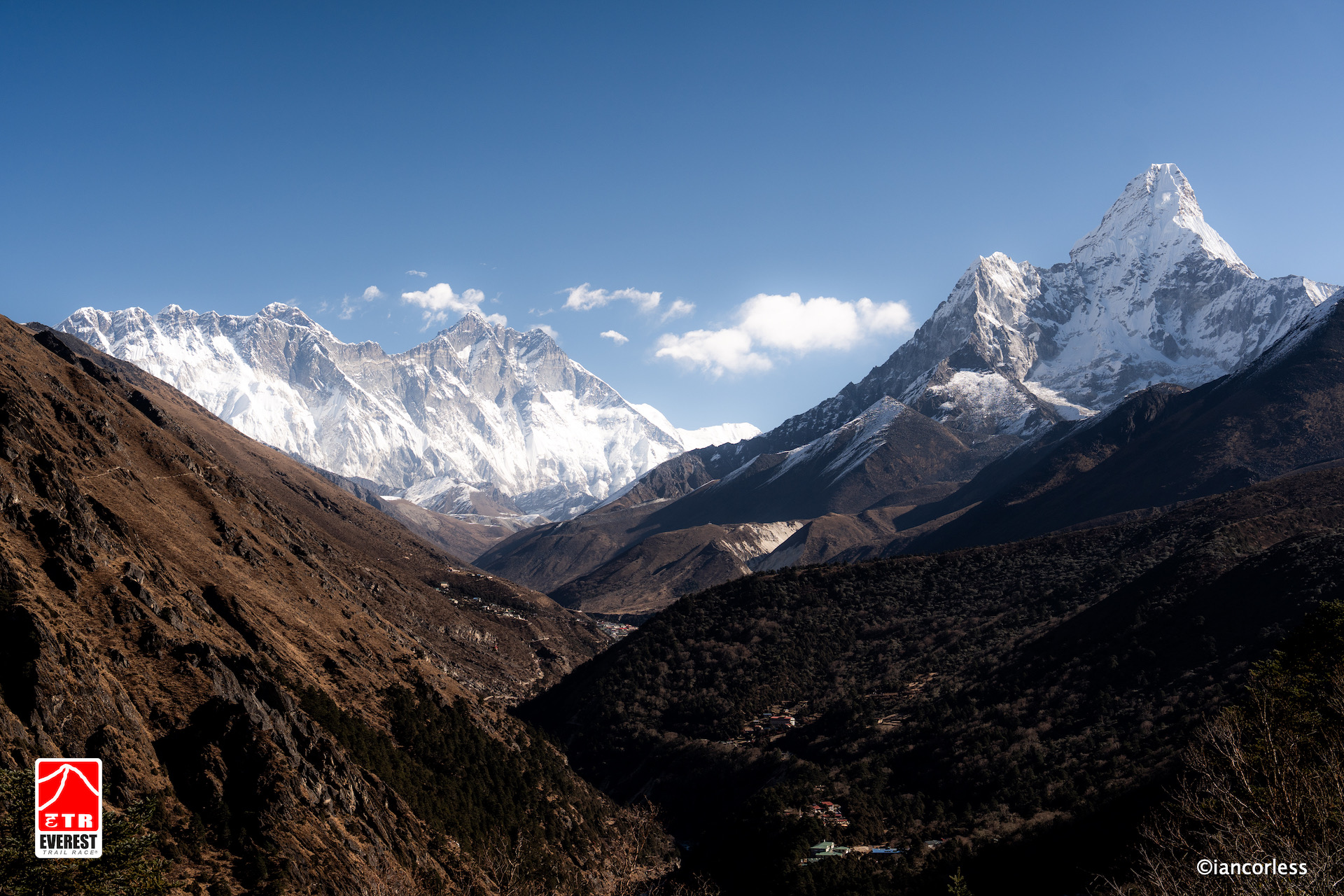
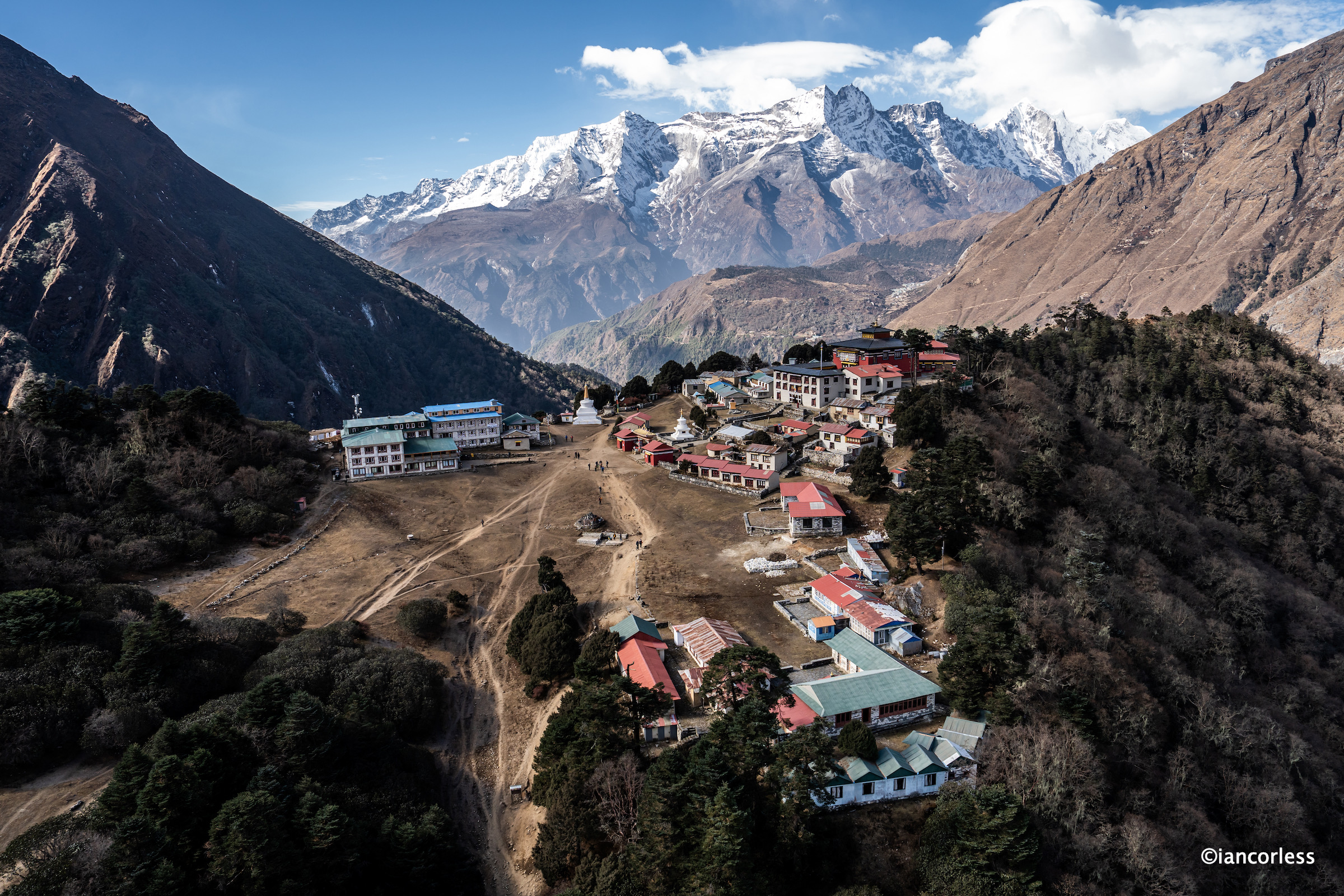
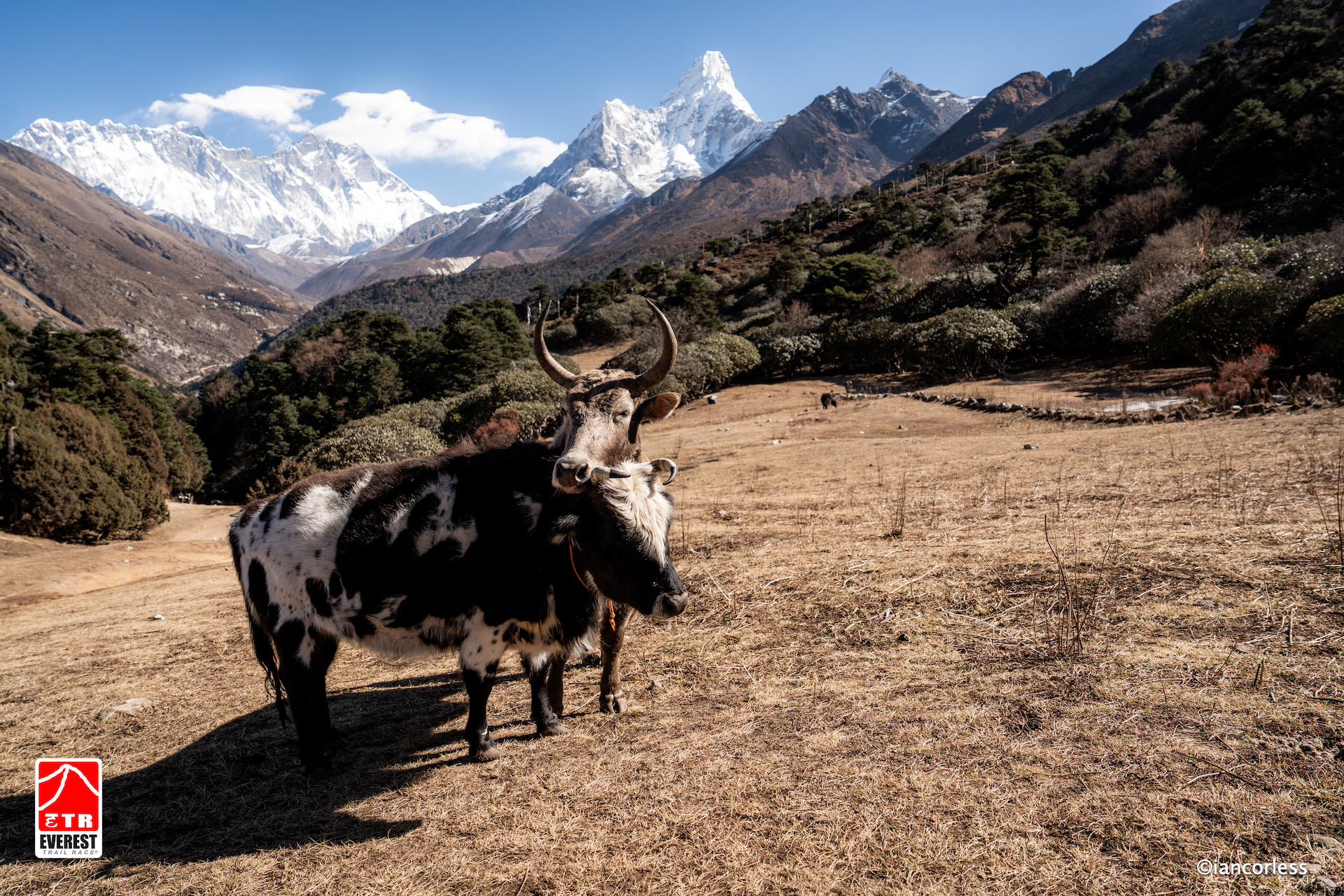
But the final ascent is where Stage 5 seals its legacy. The climb to Tyangboche Monastery, sitting at 3,860m, is a final test of grit. Legs scream, lungs burn, but the reward is immense. As runners crest the trail, they’re greeted by one of the world’s most iconic alpine views: Ama Dablam, Everest, Nuptse, and a horizon lined with Himalayan giants. Arguably, one of THE greatest finish lines in the world.
The pain is real, but so is the pride. After this brutal day, there’s relief in knowing only one stage remains. For those who made it to Tyangboche, it’s not just another finish line – it’s a summit of spirit, dedication, tenacity and perseverance.
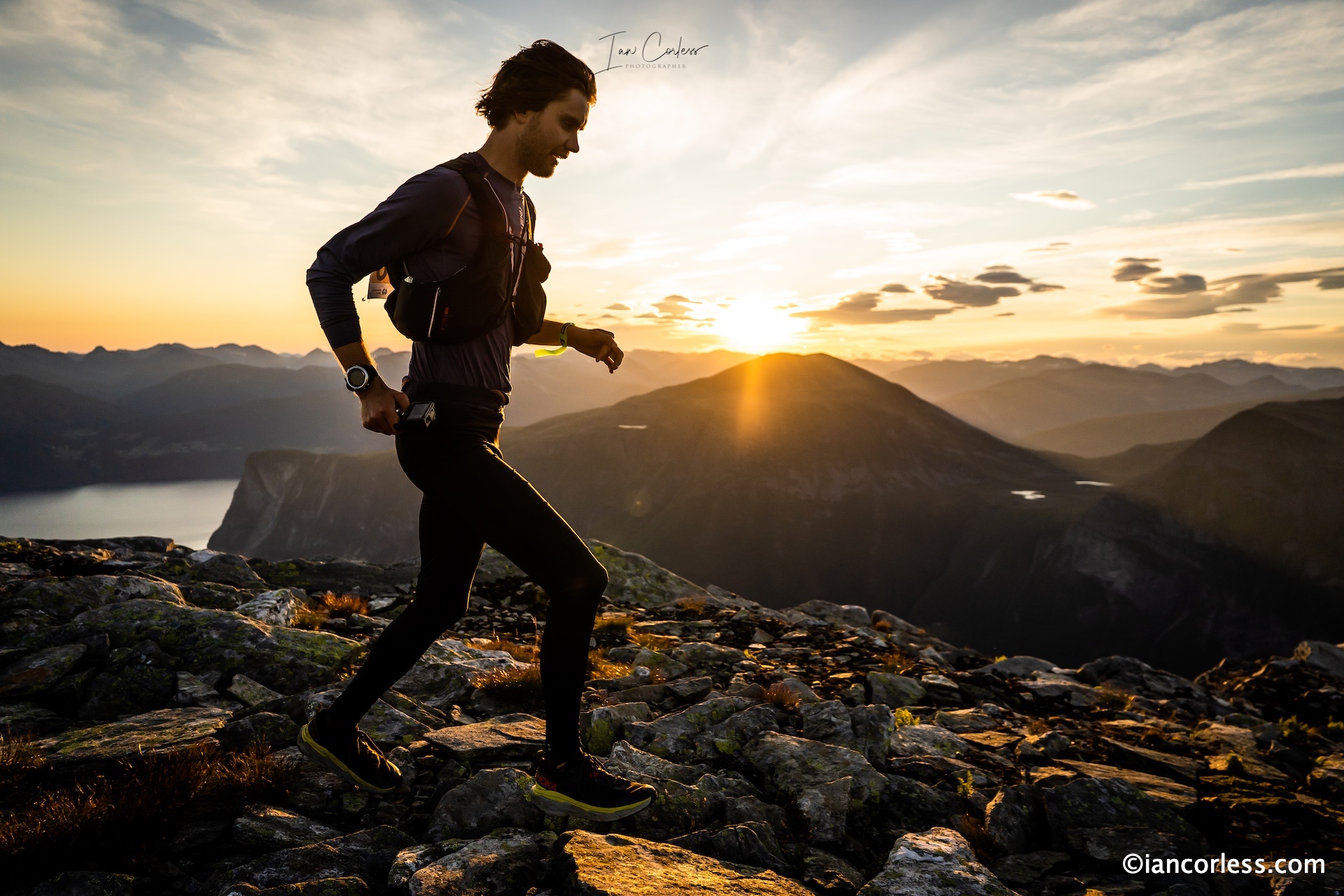
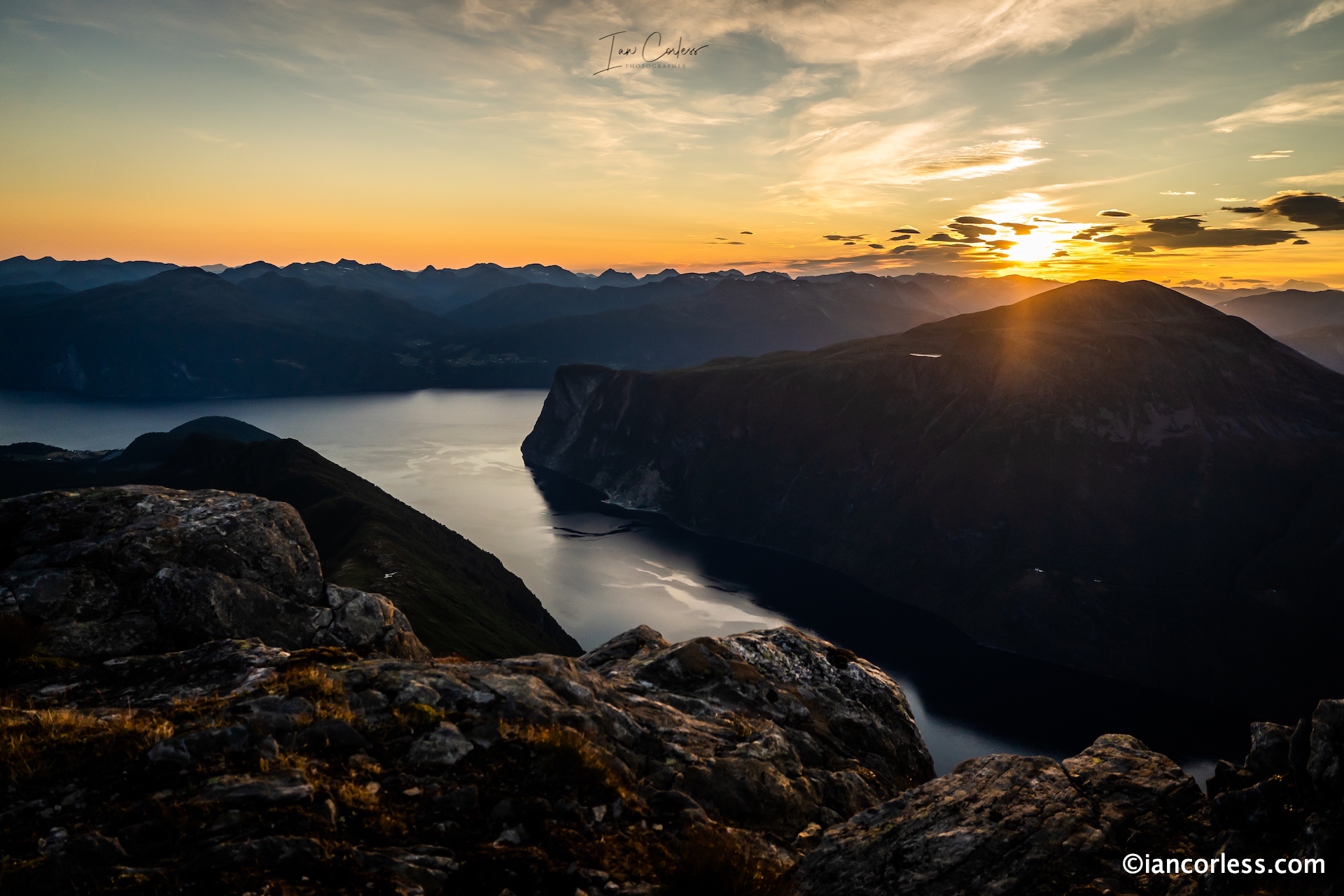
It was burned in my memory, waiting at Fremste Blåhornet at 0430, daylight was already arriving, but the sun had not risen, there was just a promise of what was to come. The first runner arrived quite literally as the sun peaked over the mountains and a glow of orange started to come illuminating Stranda Fjord, the mountains ahead and the runner. It was one of ‘those’ days you wish for as a runner and photographer.
Sunrise 2021
The 2021 Stranda Fjord Trail Race and, the 100km event was truly magical. Norway, Stranda, Slogen and the whole route has never looked so good.
Jump ahead one year and the 2022 edition was a completely different story. Ahead of race day, the weather forecast was greatly discussed both by runner’s and race team. A decision was made, the 48km and 25km races would go ahead as planned but the 100km event would have two key sections removed, the technical and airy ridge after Fremste Blåhornet would be removed and the out-and-back to the summit of Slogen – both considered too risky and dangerous in the expected weather.
With all the attention on the Golden Trail Series 25km event, the 100km was very much a secondary event. Starting at 0200, the 100km race would have already been going for 9-hours before the start of the GTS race. Yes, the 100km event is THAT tough.
Epic, beautiful and brutal are three words that sum up the racing and route here in Stranda, that is in good weather. In bad weather… Well, you can work it out. The physical and mental challenge is huge.
However, the Stranda Fjord Trail Race located in Møre go Romsdal, is one of the most truly spectacular experiences. The 100km distance offering a full and immersive 360 experience of what this magical area of Norway has to offer.
The 25km, 48km and 100km races are tough, challenging, and brutal and should not be underestimated. There is little easy running here, the climbing is hard and steep, the descents even on a dry day can be horrendous, in the wet, they are as one person said, “Terrifyingly slippery despite what shoes you use!’
Let’s be honest, Norway as a location is arguably one of the most beautiful places in the world, and as a runner or outdoor enthusiast, the options and possibilities are endless, be that in the south or north.
Stranda is located on one of the west Norwegian fjords, part of the Sunnmøre region, often accessed via ferry from Liabygda. It can also be accessed by road via Lom. For most, the easiest way to travel is to fly to Ålesund and then travel 50km by bus.
2022 was significant with the 25km being a stage of the Salomon Golden Trail Series, this event alone brought in more than 600-participants and many of the world’s best mountain and trail runners. The 4000 population of Stranda increased by approximately 30% over race weekend, an amazing boost for the local community. GTS brought a European razzamatazz to the event with live broadcasts, commentary, interviews, group runs and huge social presence – it was arguably the biggest promotion of trail running in Norway since the inception of the Tromso SkyRace which ironically was taking place on the same day further north.
There was huge anticipation of how the racing would go, key favourites such as Sara Alonso and Manuel Merillas would have a hard job of beating ‘local’ favourites of Jon Albon (Brit living in Norway) and Emelie Forsberg (Swedish) who has been living and running in Norway for many years. The inclement weather, challenging conditions and brutally slippery rock only played into the hands of those with local knowledge.
Jon Albon won the race in a new course record – amazing in the challenging conditions. Manuel Merillas (Esp) and Bart Przedwojewski (Pol) placed 2nd and 3rd ahead of Frederic Trancard (Era) and Davide Magnini (Ita)
For the women, we saw the rise of Sophia Laukli (USA) who won the event ahead of Elise Poncet (Fra) and Emelie Forsberg. Blandine HIrondel (Far) placed 4th and Sara Alonso 5th.
The stories post-race was truly mud, sweat and tears. Arguably the most challenging and technical race of the GTS and what a way to shine a light on Norway and its incredible landscape. I am sure there are many runners now thinking and planning future adventures in this epic playground.
The 48km race, a big challenge but considerably more achievable than the 100k uses much of the opening miles of the 100km route, however, after reaching the summit of Fremste Blåhornet at 1478m returns to Stranda via Heimste Blåhornet, Løfonnfjellet and Rødesthornet. The route passes through Stranda start/ finish and continues on another loop summiting at Roaldshornet at 1230m and then following on to Blåfjellet and Skurdahornet before descending all the way down to the finish line.
Lasse Aleksander Finstad placed first ahead of Tolga Rambovski Olcay and Torbjørn Breansœter, 6:34, 6:50 and 7:07 respectively.
Mirjam Saarheim placed 7th overall and clinched female victory in 7:26. Jingling Tang and Anna Louise Astand Sørlie ran 7:50 and 8:02 to round out the podium.
Offering a 360 counterclockwise experience of this stunning area of Norway, the 100km route is a beast. It is quite simply stunning, even in bad weather. However, the physical and mental tenacity required to complete the race cannot be fully explained. This is reflected in only 33 participants finishing.
The course does contain some areas where you can switch off and just run, but they are few and far between. The opening miles may offer an illusion of the severity to come. The hard work starts to really kick in with approximately 20km covered at Liavarden. What follows are walls of grass, rock, scree, stone slabs, technical ridges, relentless vertical climbing, and challenging descending.
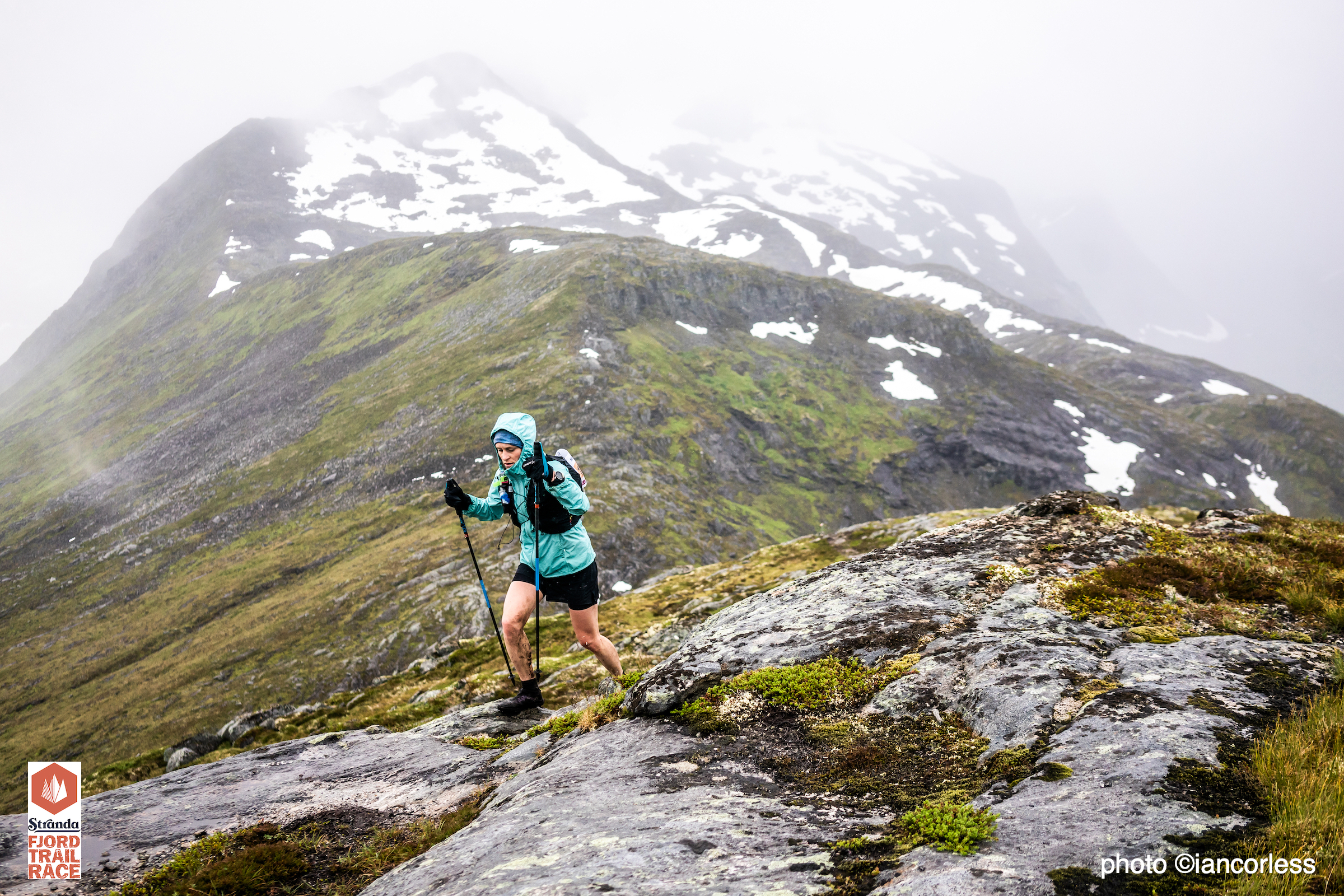
Reaching the summit of Fremste Blåhornet at 1478m and 23km the route was changed to avoid a technical ridge. The terrain that followed was rocky, slow, and brutal especially in the persistent rain and cold temperatures.
The aid station on the road of Dalevegen at 28km distance was followed by easy running before an extremely steep and challenging out-and-back climb to Storhornet at 1309m.
Liasætra aid station followed and then easy trail running to Patchellhytta DNT cabin. Here, the out -and-back to the summit of Slogen was removed – a shame but absolutely the correct call in the conditions.
Left in the valley and runners make their way to Velleseter, Brunstadsætra, Storevatnet, and then the road section crossing and aid station that leads to the final section of the course, 80km covered.
The climb to summit Roaldshornet at 1230m is long and relentless, the summit at 86km and it would be easy to think it’s all downhill from here. Considering what has gone before, it’s fair to say that it is. Eventually the 100km joins with the final section of the 48km track and the run in to the finish is welcome and hard earned.
Mathis Dahll Fenre battled with Vermund Upper Garden for victory, the duo separated by just 1-minute, 16:00 and 16:01 respectively. Thomas Wallin-Andersen placed 3rd in 16:59.
For the women, Wenfei Lie had led the early sections of the race ahead of Alexandra Narkowicz and although the duo was together on the climb to the final summit at Roaldshornet, Alexandra had more reserves to take victory in19:13 to 19:55 for Wenfei. Margrethe Fjetland rounded the podium.
One thing is for sure, running 25km, 48km or 100km in this area of Norway is not easy, ask anyone who toed the line of the respective distances. There is something truly magical here, 2021 opened up this area of Norway to the world, 2022 has elevated Stranda as a ‘must go’ location. I can only encourage and emphasise that you ‘need’ to add Stranda Fjord Trail Race to your bucket list. You will not be disappointed with the experience, BUT come prepared, you are going to earn that finish medal.
A Multi-Day race or a long-distance ultra is a huge undertaking. For many, it’s a 12-month project (or longer) that slowly but surely can consume every available day, hour, minute and second.
I get it, a long-distance race over multiple days in an unfamiliar terrain can leave more questions than answers. However, don’t panic, it’s not that complicated – read HERE.
As your key adventure looms, it’s time to focus the mind, body, and equipment so that you can plan for and anticipate all that may go wrong and right while undertaking this key target.
Quite simply, the old saying, ‘Fail to Prepare, Prepare to Fail’ does and can ring true.
So, what can be done?
Luck can have a place in any success; however, it should never be relied on. In multi-day events, particularly self-sufficient ones, the need to fine tune everything is a key element.
Training.
Kit.
Mind.
All of the above have very important roles to play in success.
Get the training wrong, you may not have the fitness or an injury that will result in you not achieving the finish line.
Get the kit wrong, be it too heavy, not durable or inappropriate may impact on your ability to achieve your goal.
Many say the mind is a key and an integral part of any success. Often, the body can be willing, but the mind can be weak, get the mind focused and prepared.
You need to be prepared for whatever your multi-day adventure will throw at you.
In the final phase of training, 6-8 weeks before your adventure starts, is a great time to start working on the final phases and plans that will help ensure success.
THE PREPARE PHASE
If we assume that tapering will take 2 to 3-weeks, this key ‘Prepare Phase’ should be in weeks 4, 5, 6 and 7 before D-Day.
Train and prepare specifically.
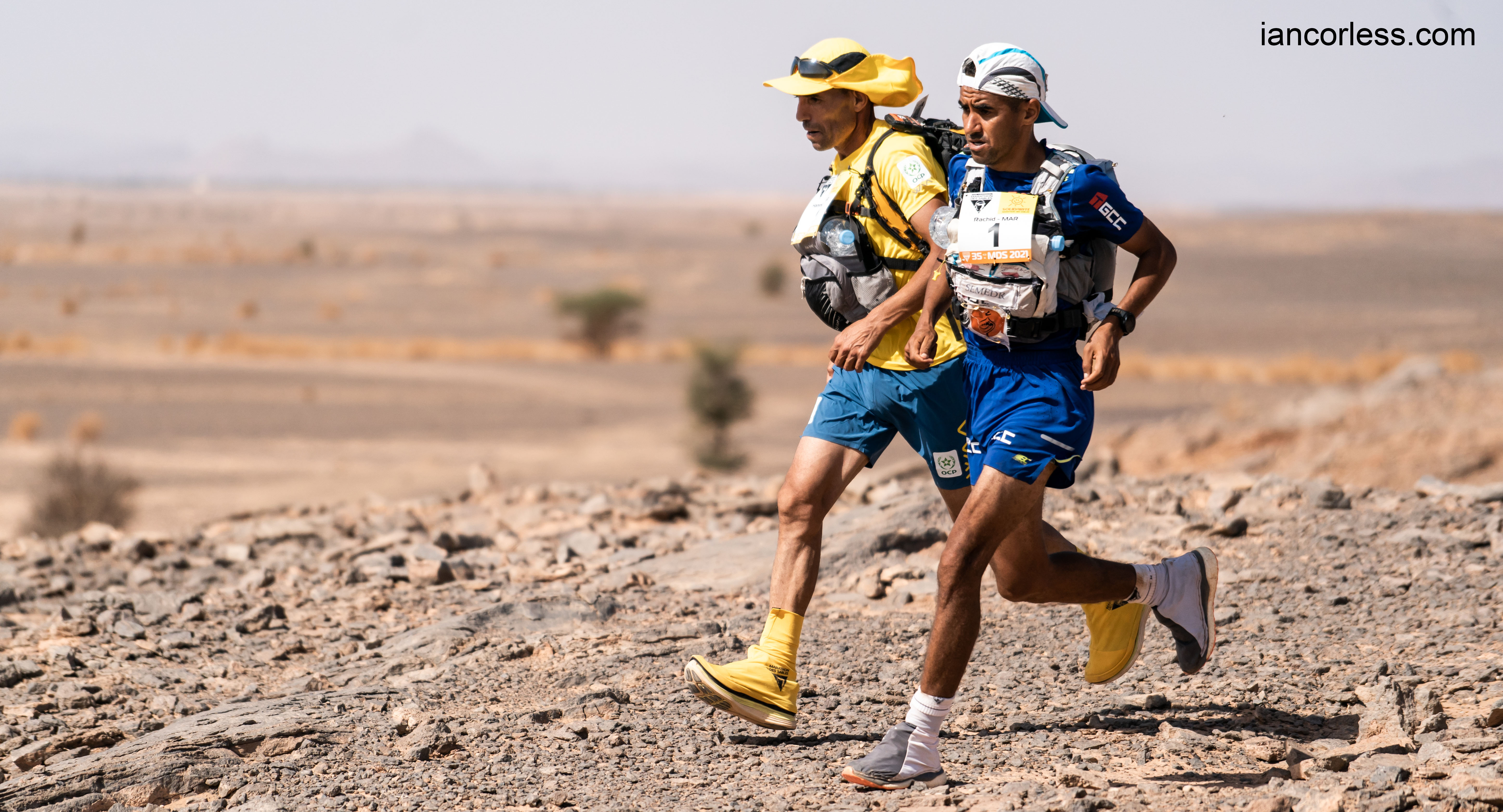
First and foremost, understand the challenge that you are undertaking. You may feel that you already have a grasp on this, but there is no harm sitting down and going through all they key aspects. Terrain, weather, mandatory kit, distance, and conditions. Look at the October 2021 edition of Marathon des Sables, the race started with a series of protocols to manage Coronavirus. Ultimately, Coronavirus was not a consideration, it was extreme heat, sickness and stomach problems.
Understand the event and challenge.
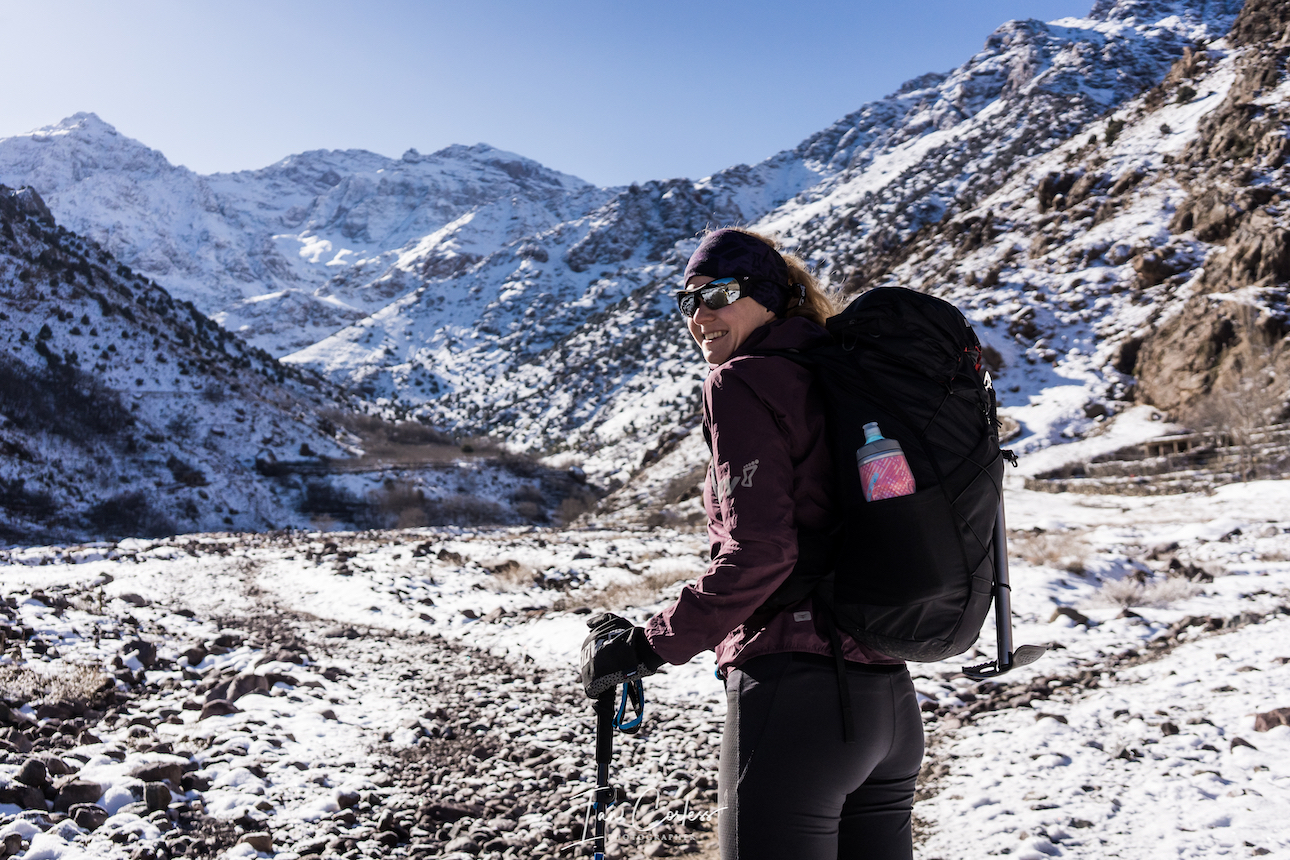
Walk, WALK, WALK! – Walking will (for most) be an absolute essential skill to complete any multi-day adventure. You may think you will run most of the distance… But experience confirms that walking is a key to success. Walking, and walking with purpose is a skill. Practice. Consider poles, they may enhance your walking experience, if so, practice and use them.
Learn to walk.
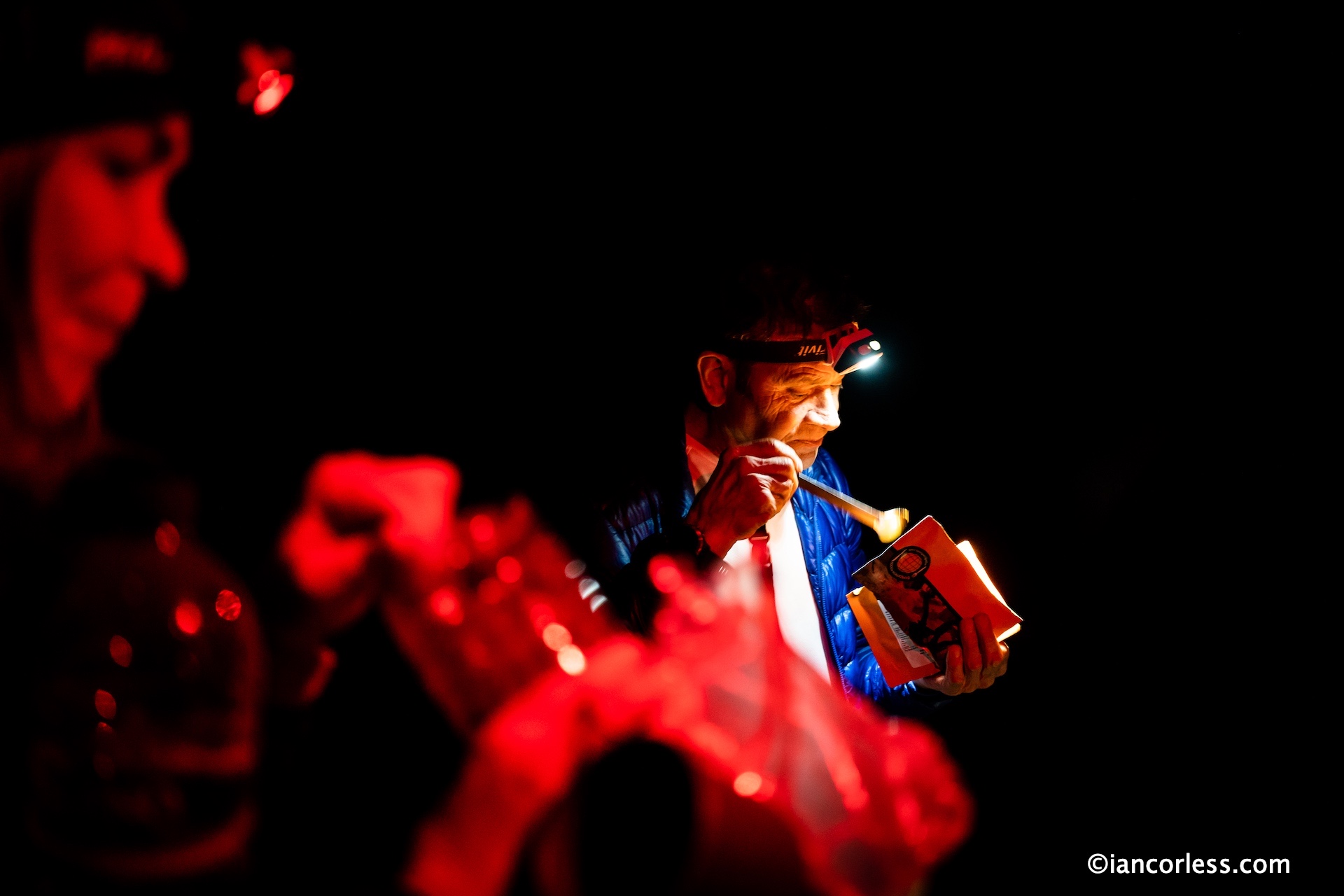
Without doubt you will have long days, and some will go in to the night and through the night. Take time and plan and include a session like this in the ‘Prepare Phase!’ Understand here that this is an opportunity to test kit, not only yourself. Is your head torch bright enough, how do temperatures vary, how does my appetite and requirement for fluid change etc. By doing this in training, you do it in a safe environment. If it all goes badly, you can always make a call and get picked up or get a taxi. You can’t do that in your race or event. Darkness and nighttime can play tricks.
Back-to-back runs may well have featured in your training but running/ walking tired is a skill. However, be careful how you plan this in training. You want adapt body and mind, not break them.
Practice makes perfect.
Perform training with rationed water and race/ event food. You need to learn what works and what doesn’t work. It’s all very well going for a long run and then getting home and eating chocolate and drinking Coca Cola – can you do that in your event? Mentally this can be a real tough challenge – be prepared.
Get a pack that fits perfectly and does not bounce.
Your pack will be with you for the duration of your event. It must be as light as possible and also sturdy enough to last the challenge without breaking. Be minimalist on equipment and purchase the lightest equipment possible. Remember though, lightweight can often mean less durable, less warm, less functional and so on… Better to break or damage equipment in training so that you can make changes ready for the important challenge ahead. Modify and adapt.
Be specific!
Be specific. Snow, mountains, altitude, heat, or cold. Understand the demands that will be placed on you in your challenge and plan for a specific phase (typically in the 2-3 weeks before the event) to help acclimate. This could be a heat chamber, it could be arriving early before an event and adjusting to high altitude, it could be some specific cold, ice or snow training.
Try out food for an adventure in training.
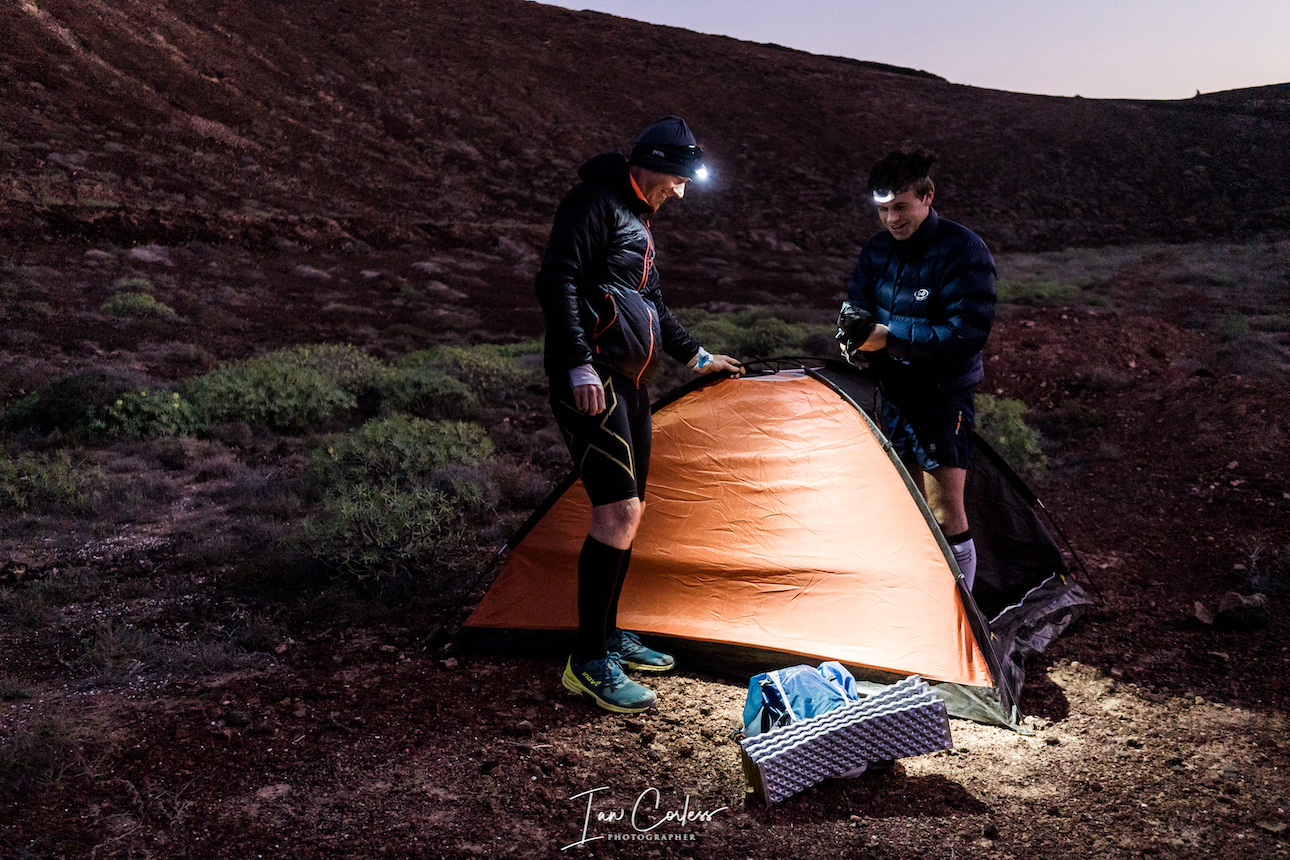
Plan an ‘event simulation’ that will require you to run for a specific distance, be self-sufficient overnight, sleep in a similar scenario/ situation to your event and then get up and run the next day. This can be a key element in understanding what does and does not work. Is your sleeping mat comfortable? Is the sleeping bag warm? Did your food taste good? How easy was it to cook? How about snacks, did they work? How was the pack weight and distribution of contents?
Spend a night out in training to find out what does and does not work.
Train with your pack and add weight, however, be careful NOT to do too much training with too much weight. This can result in injury. In addition, learn how to pack your bag so that it sits comfortably with minimal bounce. Understand where to put snacks so that you can access them on the go.
Look after feet – many failures come via poor shoe choice and foot care.
Feet and shoes. Please do not ask. ‘What shoe shall I use for ‘X’ Event?’ Runners are individuals and what works for one does not work for others. Gait, foot shape, foot width, foot length, toe length, run conditions and so on all impact. Read THISarticle on how to find the correct run shoe.
Water and hydration is key to success.
Food glorious food. Calories are essential for an event, so is what they weigh. Understand food and its nutritional values and make sound educated choices that balance fat, protein, and carbohydrate. Also understand that taste changes. Sweet may be ok early on but typically savory is better as time passes. Is beef jerky better than nuts? What food rehydrates quickly or with cold/ warm water? Should I take bars? What about protein drinks? So many questions… They need answering!
Shops are not always available.
You only have to do three things at most multi-day events:
Run.
Eat.
Sleep.
All three impact on each other, so, make sure you have all of them dialed.
Finally, remember, we are all individual. What works for one person, will not work for another. It is your responsibility to take ownership of yourself, the challenge you are undertaking and the challenges it will bring. Ultimately, that is why you signed up, no?
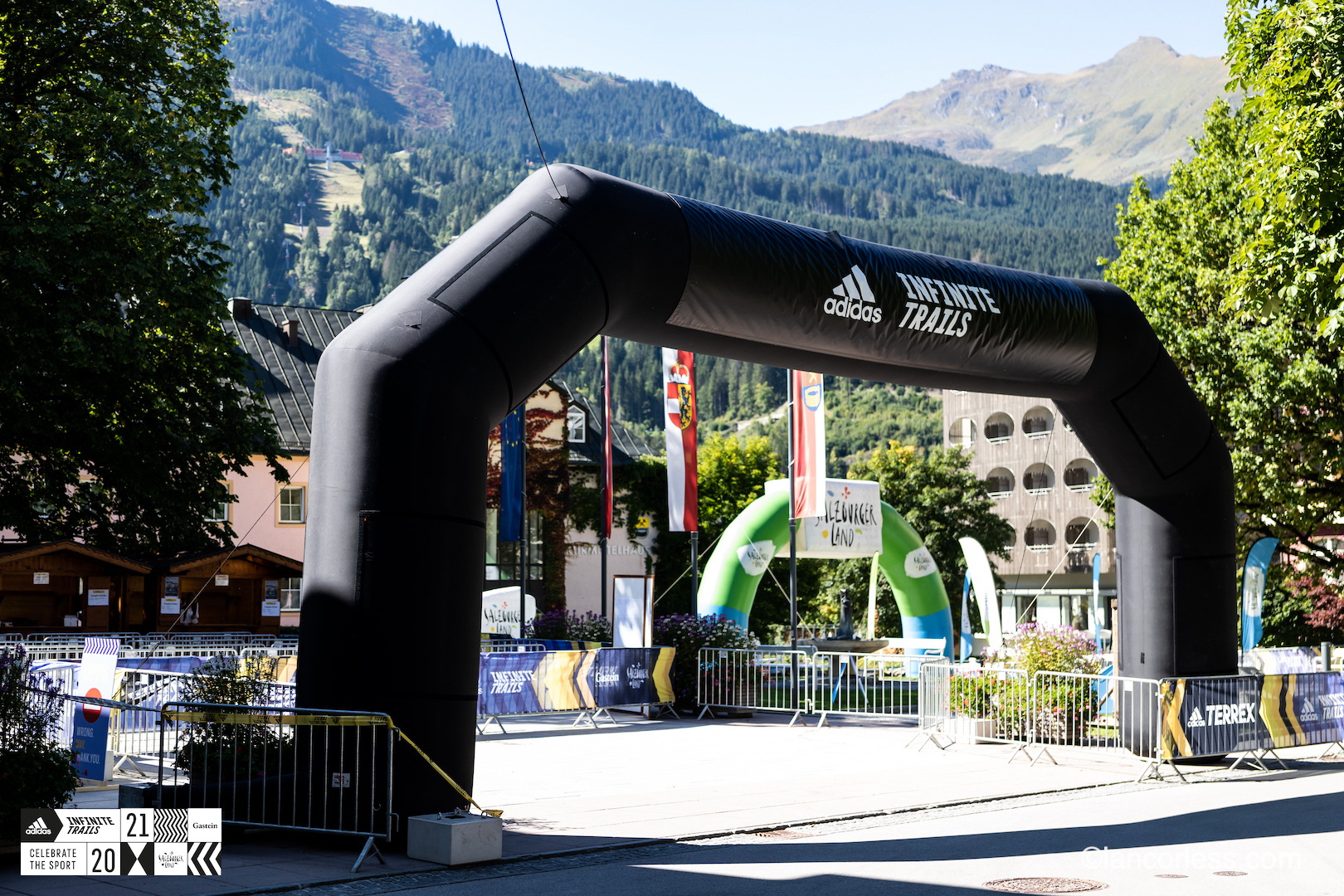
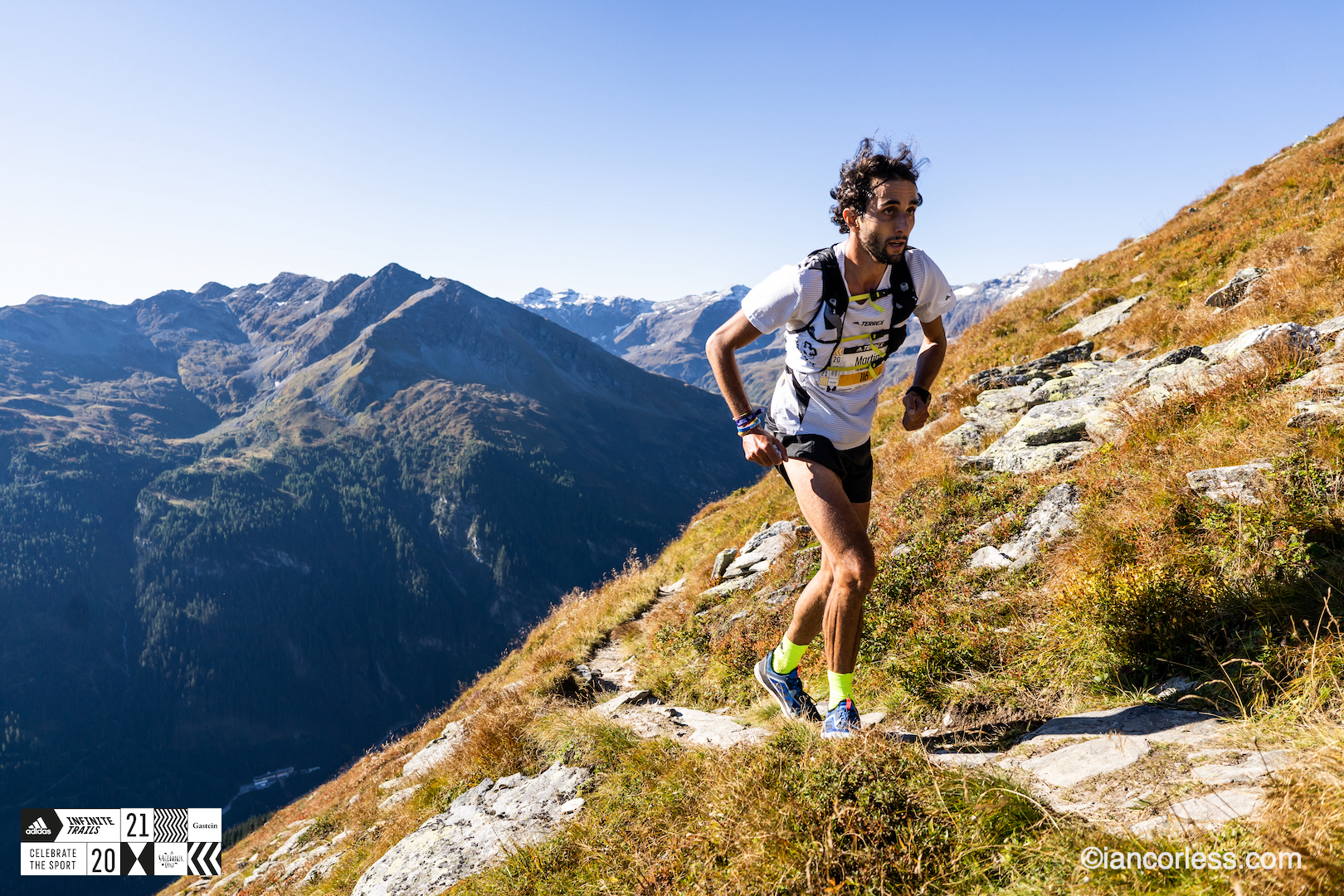
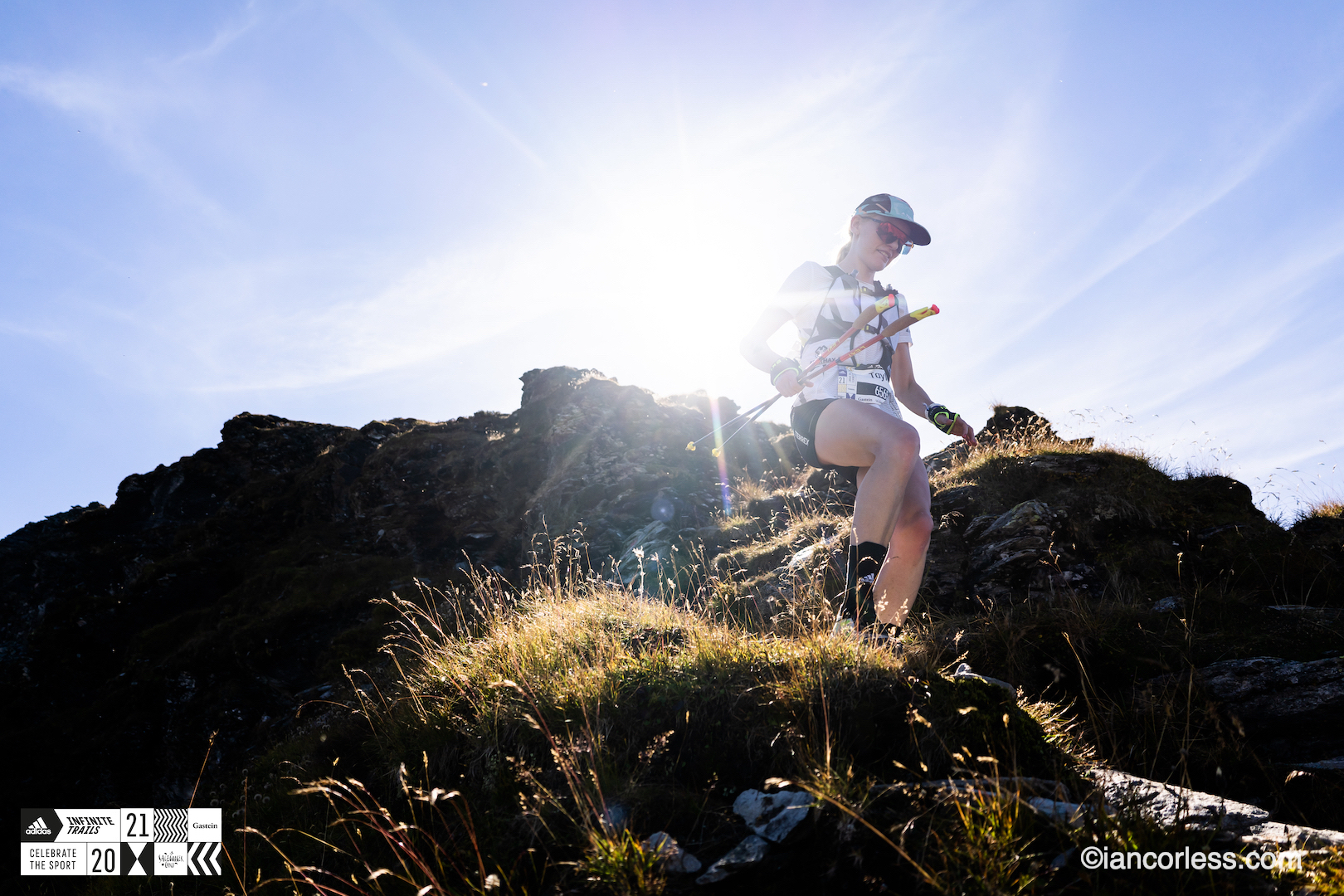
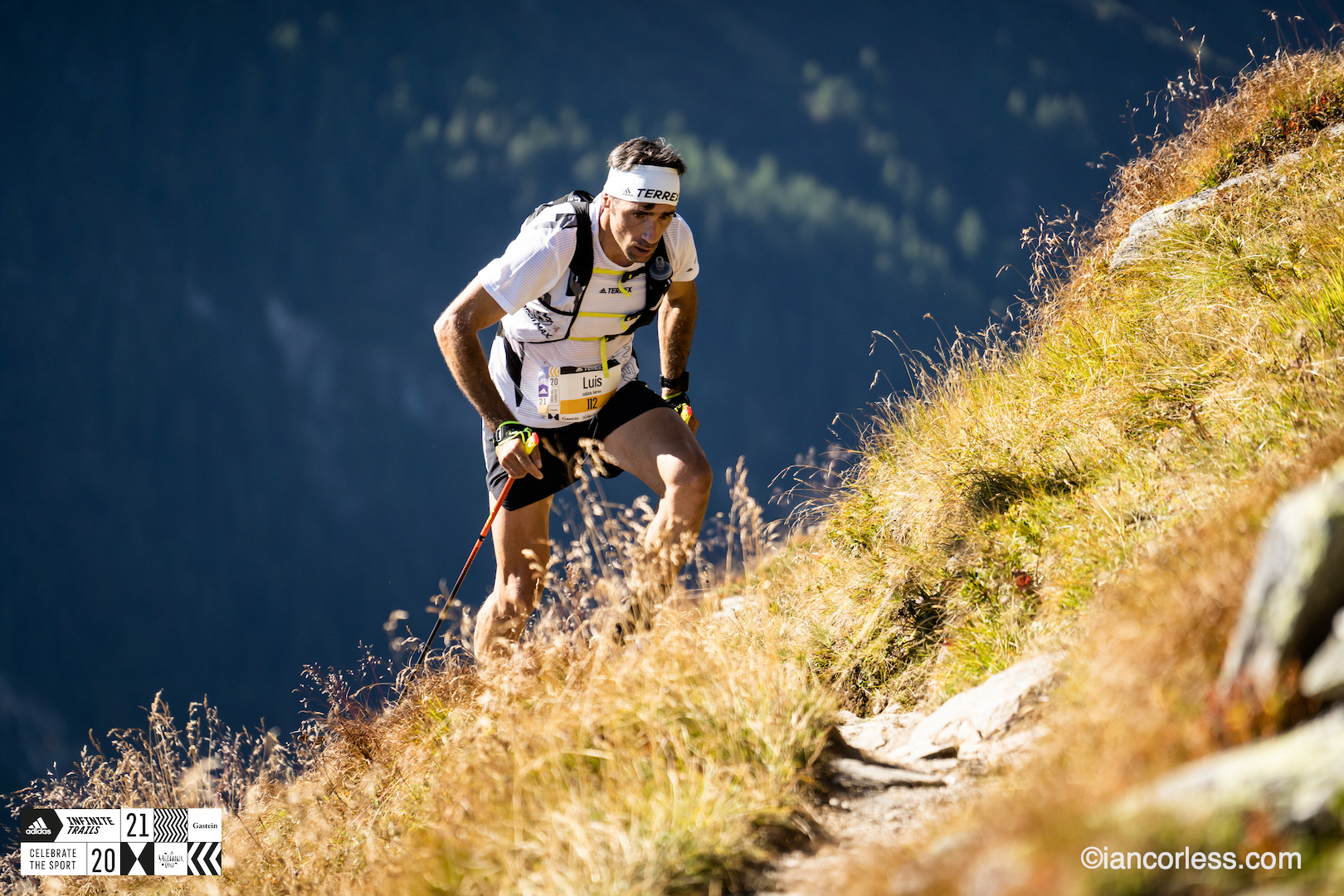
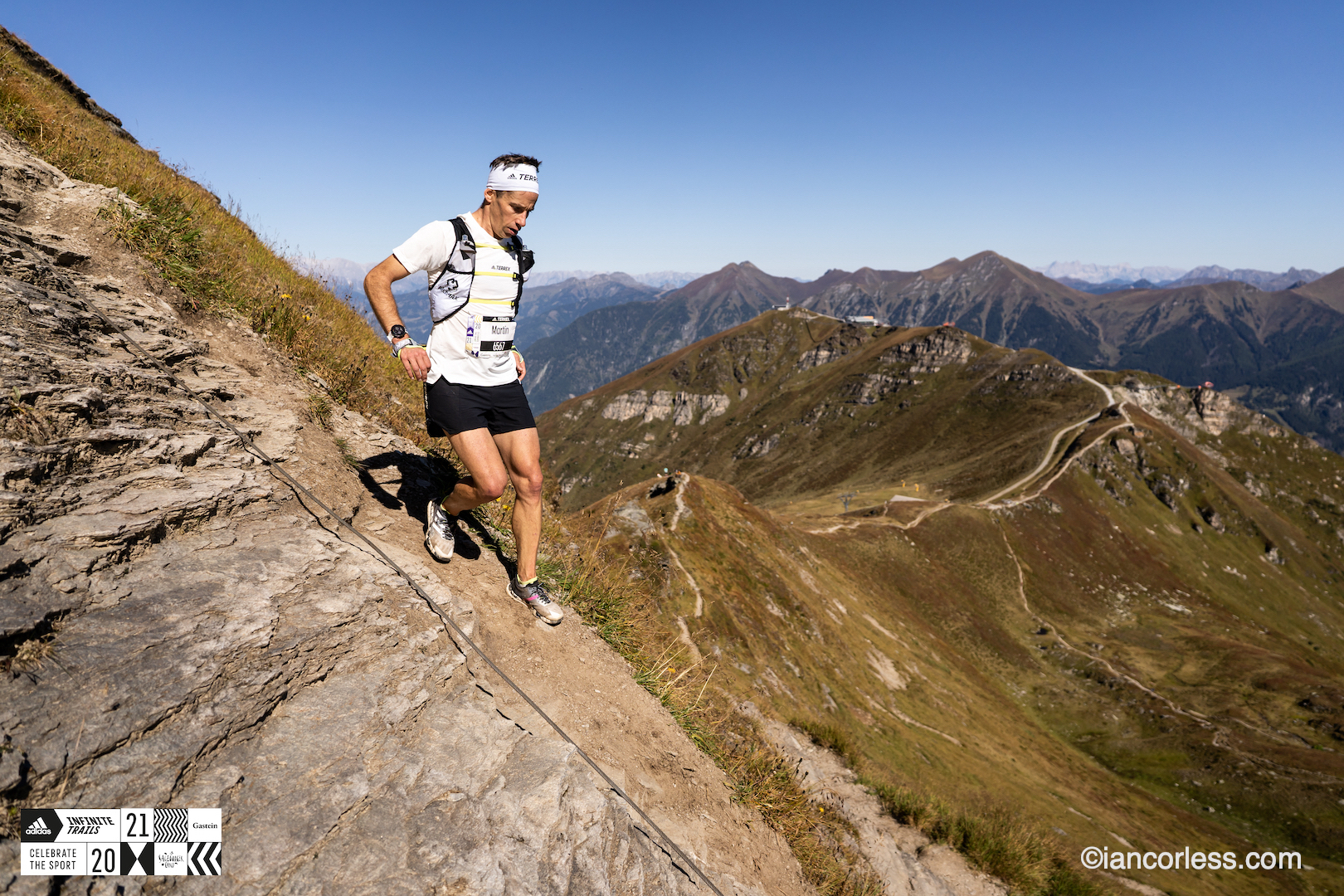
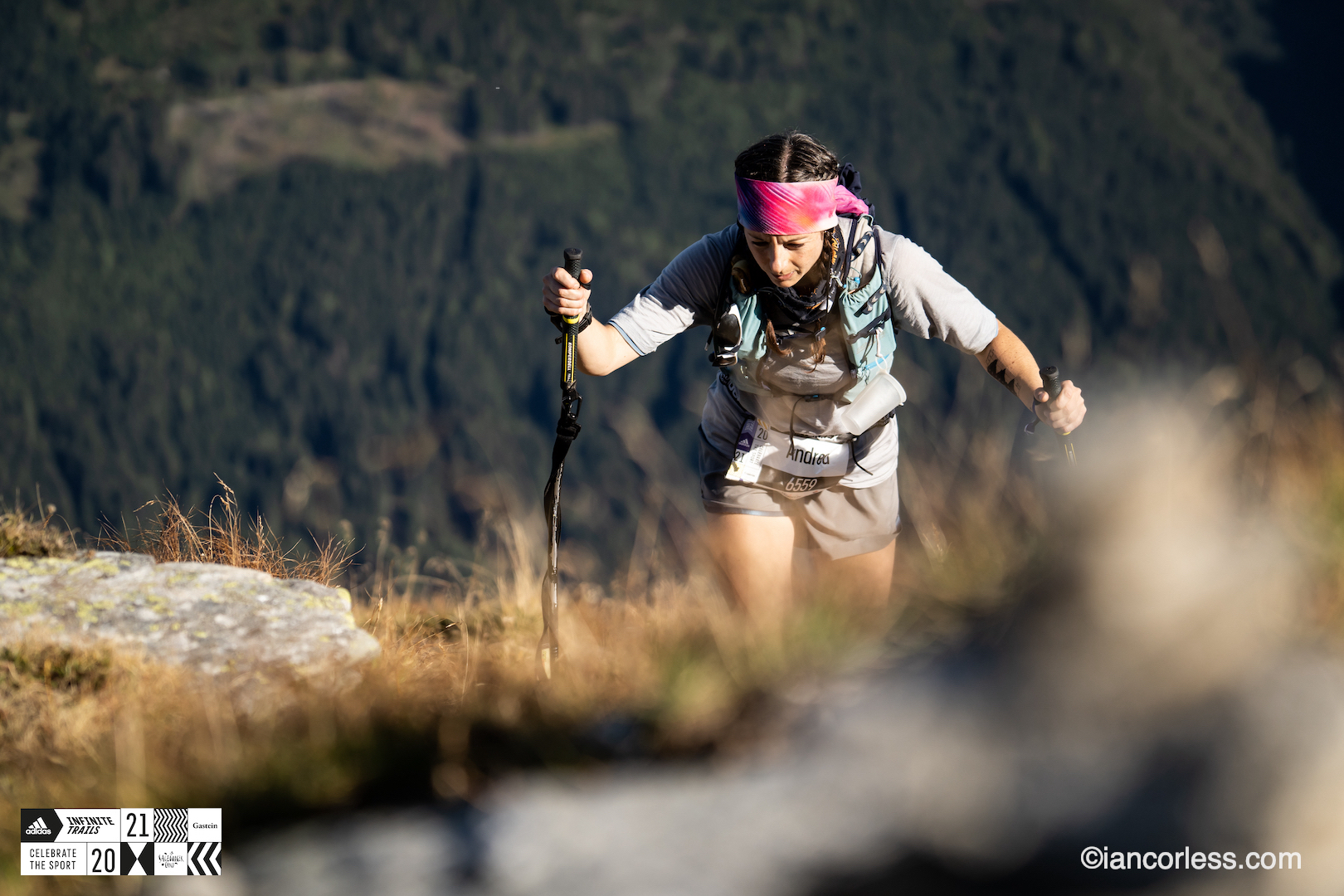
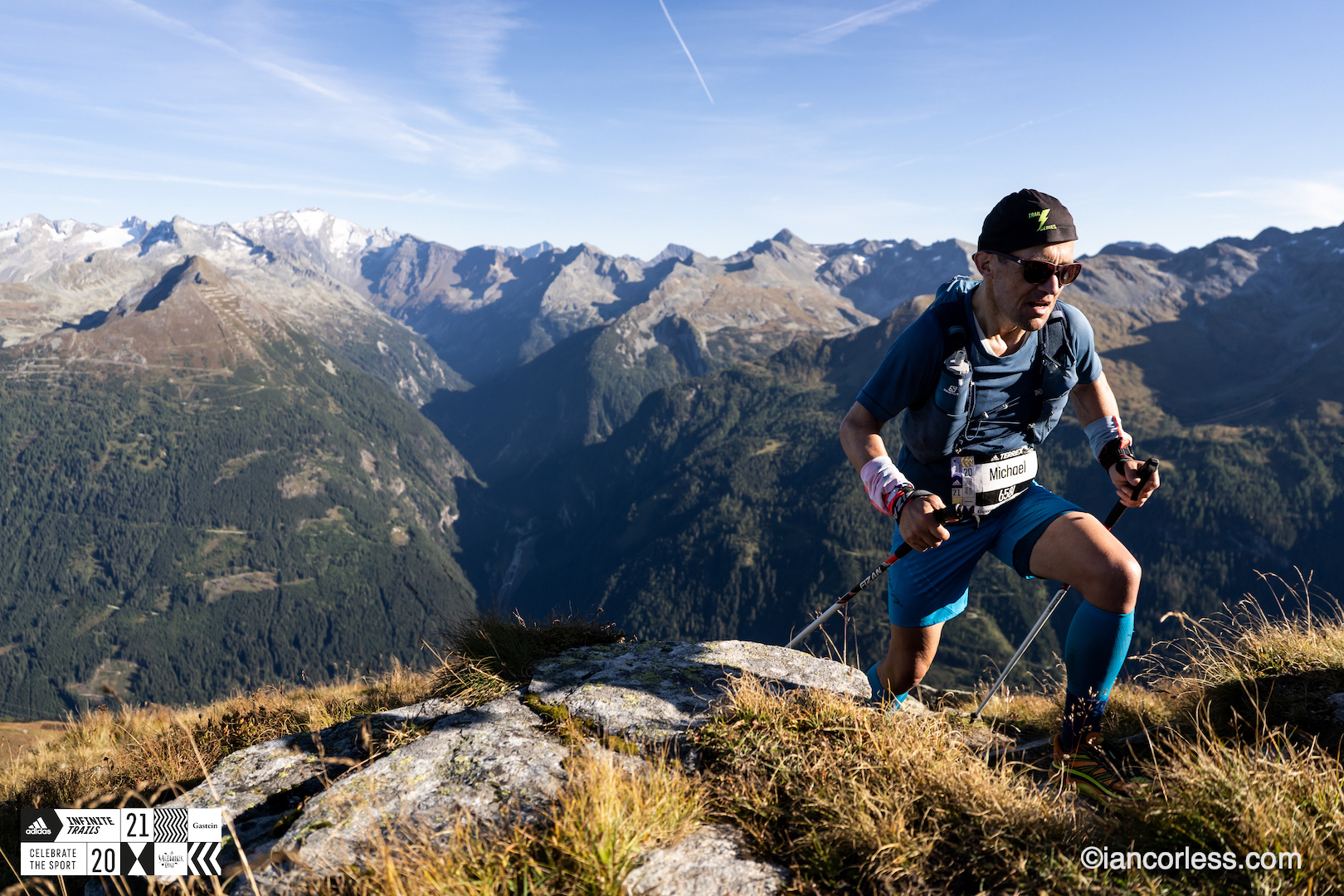
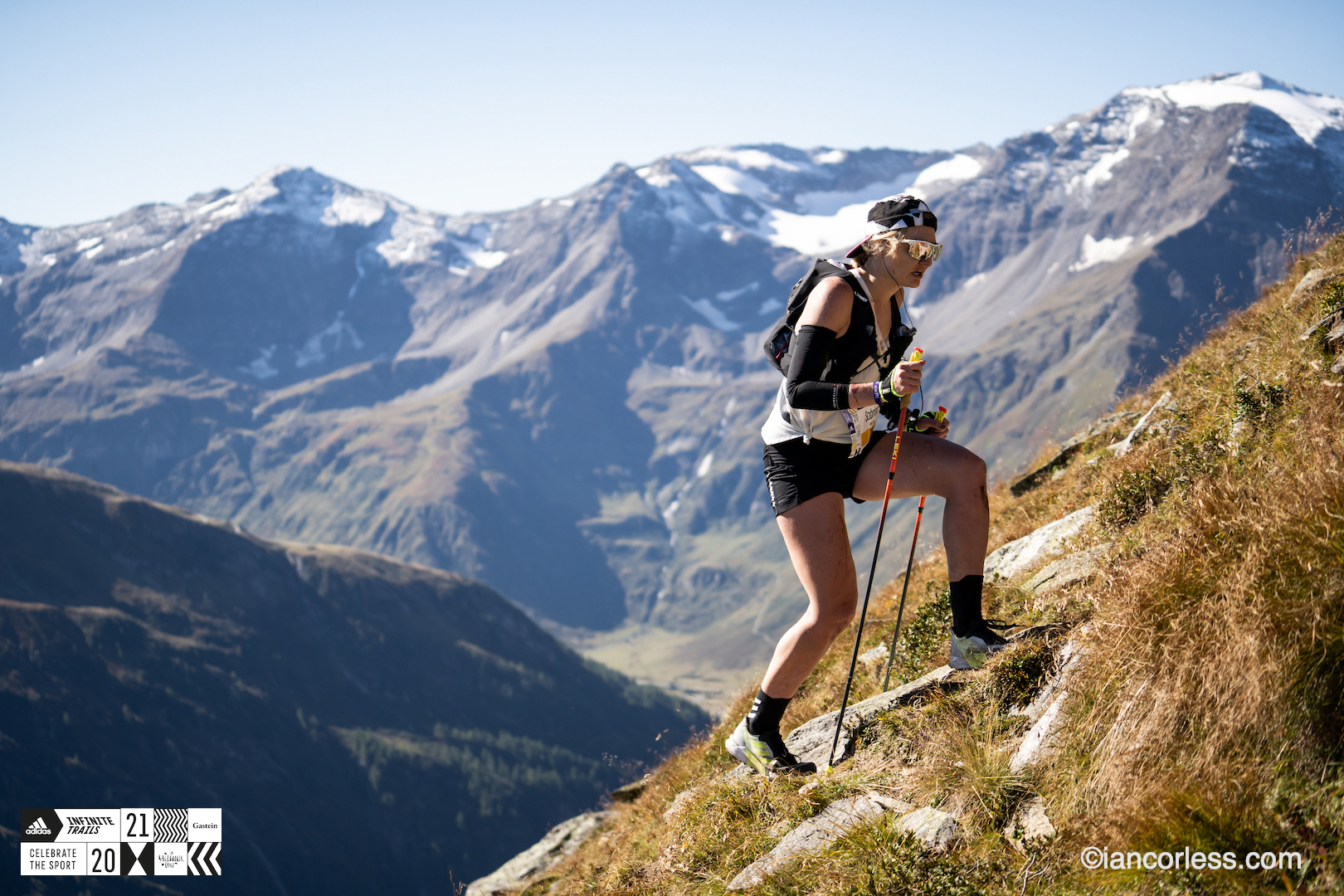
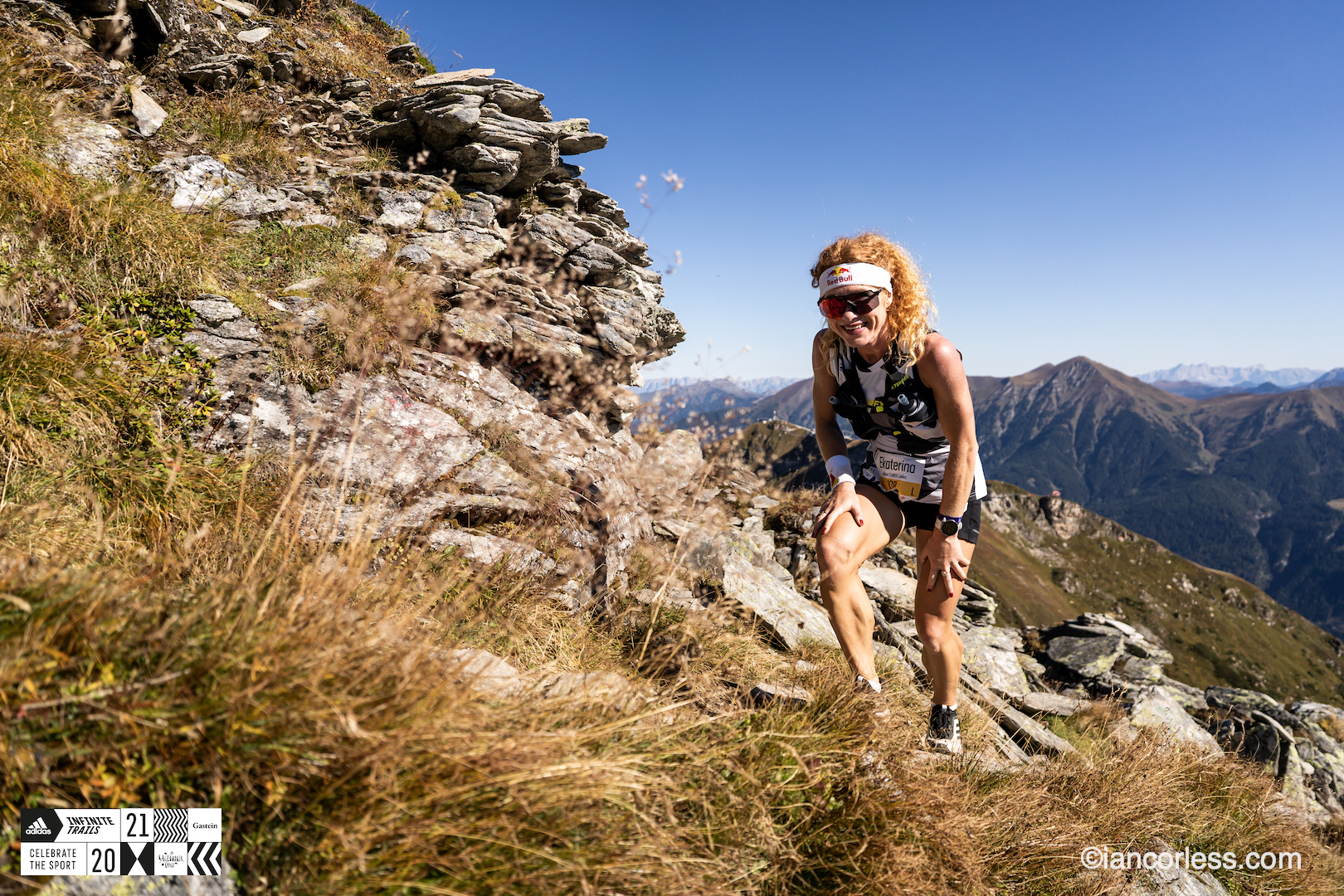
Three runners. Three loops. One Team. The concept of the adidas Infinite Trails is a bold one. Take three run routes of varying distance, take three runners, each running their own loop varying in distance from 15km to 40km. Quite simply, add the three individual finishing times together to see who the fastest team can be.
Now in its third edition, 2018 being the first followed by a hugely successful 2019 edition that elevated the event to a whole new level. As such, 2020 was hugely anticipated edition rolling on from the growth of 2019, unfortunately, a certain pandemic changed those plans.
Working within very specific parameters, the 2021 edition had less runners, new loops for the relay race of 20, 30 and 40km, a new solo 65km/15km race and a smaller athlete village. It would be easy to think that the 2021 version would be disappointing… Not at all! Mike and Sonja of Planet Talk, with the help of a truly dedicated team, once again managed to pull off an event that sets the benchmark for all running events.
Incredible organization and planning are at the hub of adidas Infinite Trails and it’s why the event is a success. No stone is left unturned, every eventuality is looked at and planned for. It’s a dream event to run and work on.
The weekend started with a very controlled registration process meeting COVID guidelines. Race briefing was done digitally, and one has to wonder if race briefings in the future will always be done this way? It’s time efficient and arguably more thorough.
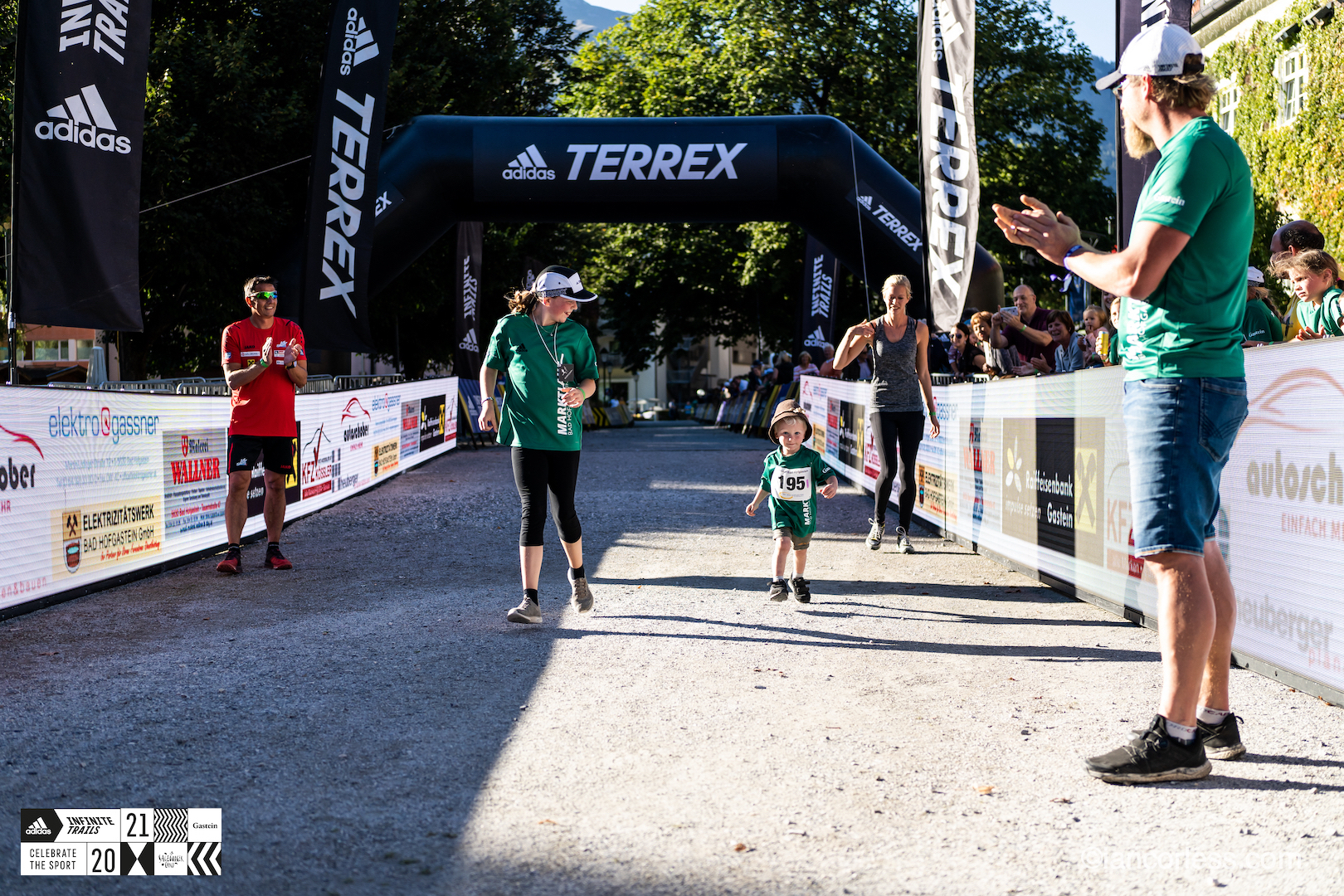
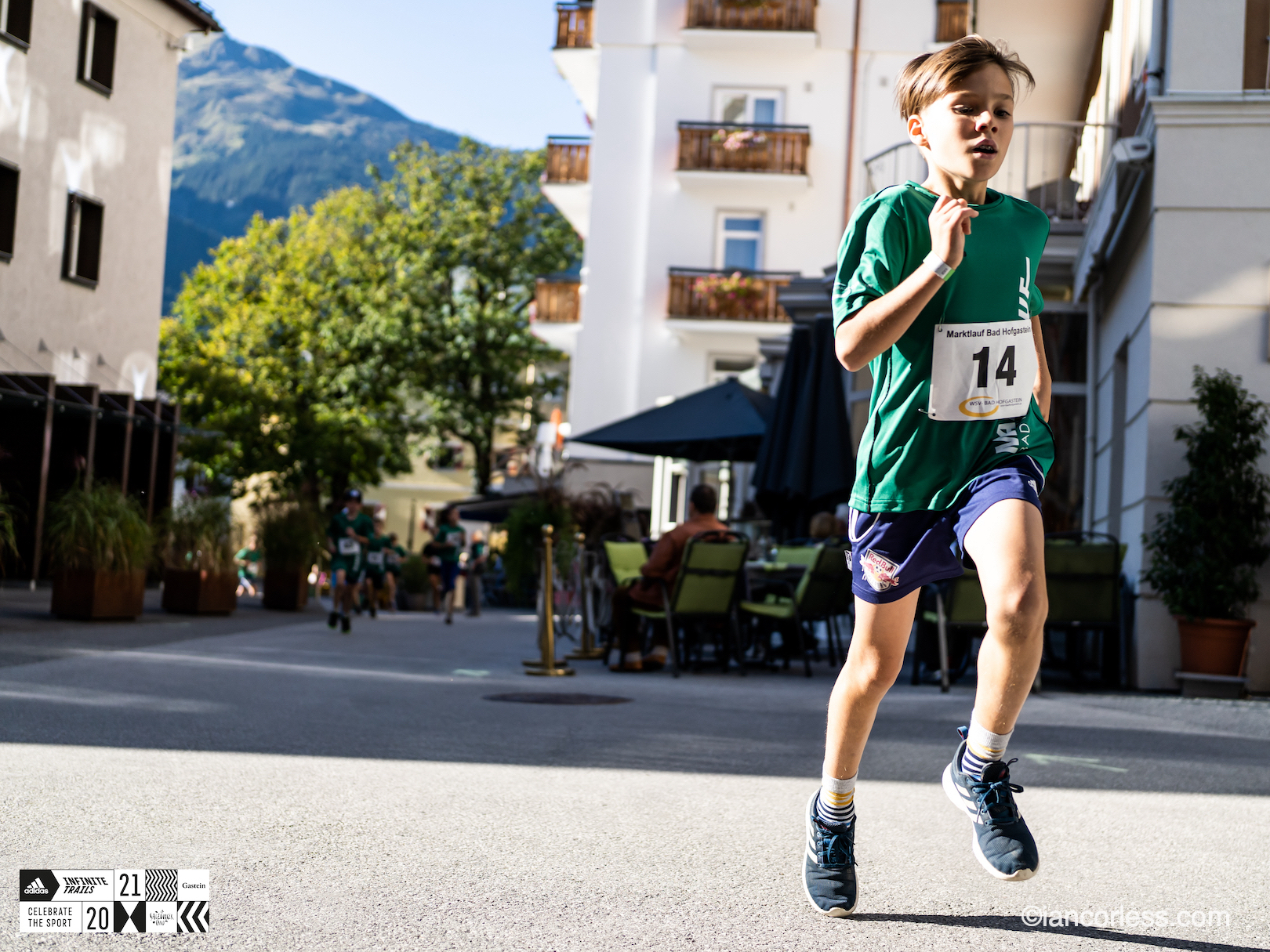
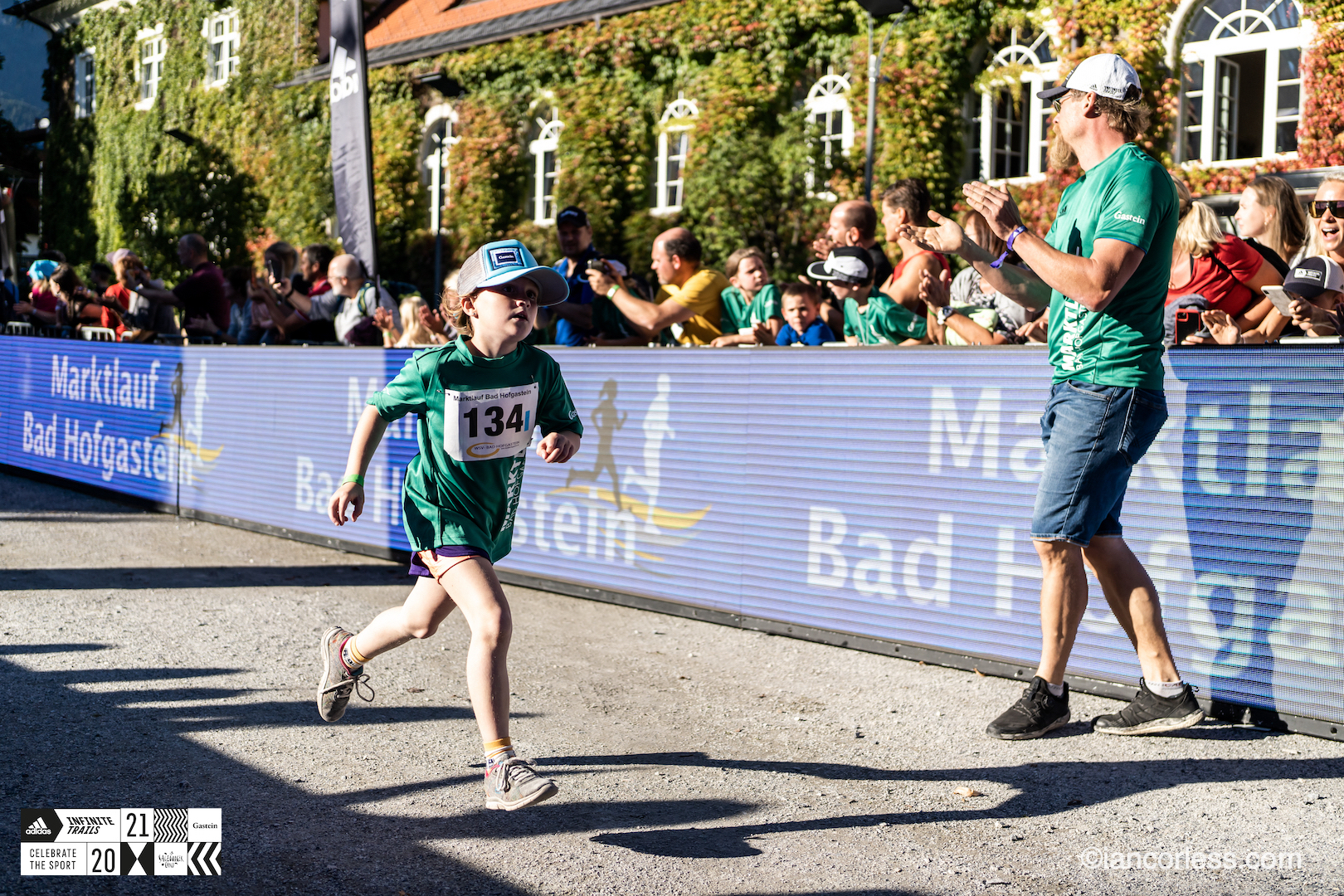
The ‘Market Run’ started in the afternoon and with it, racers of all ages tackled shorter distances around Bad Hofgastein. Of course, the highlight was the children. It’s so special to see kids run and run fast with no thought of pace.
Saturday was race day and this is where the format changed to previous editions. In 2019, runners ran the first loop only first and then passed the timing chip to their teammate on completion at the finish. The second runner would then go on their own loop of a new distance to repeat the process once again. The third loop would follow the same process and the conclusion at the start/finish area would provide a total accumulative time.
For 2021, all loops started at the same time with the three team members lining up and then departing on their respective loops at 0700. The 65km solo loop started 30 minutes earlier, the solo 15km starting at 0900. The format worked extremely well and provided a plethora of finishes starting firstly with the 15km loop and lastly with solo runners arriving at darkness for the 65km loop.
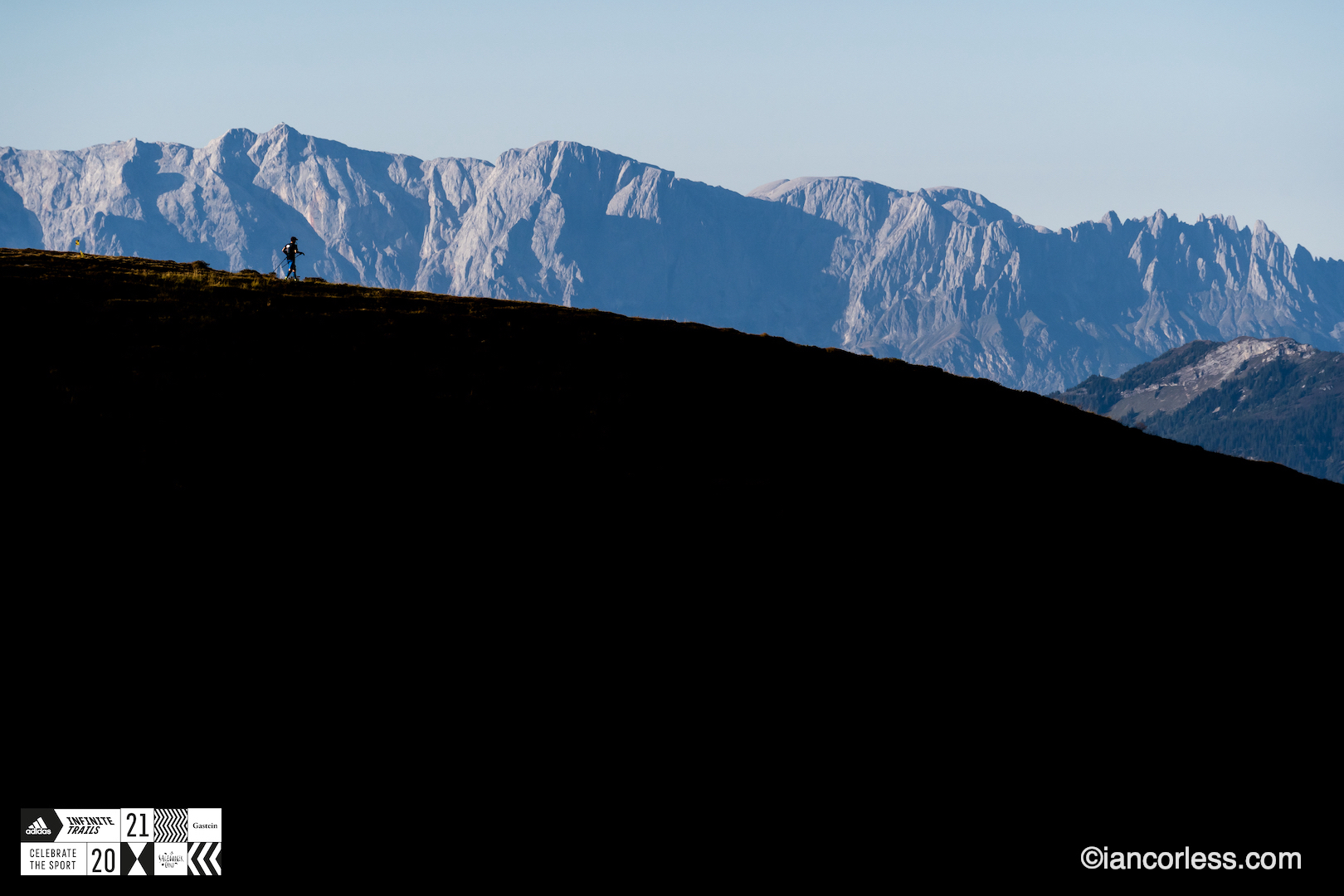
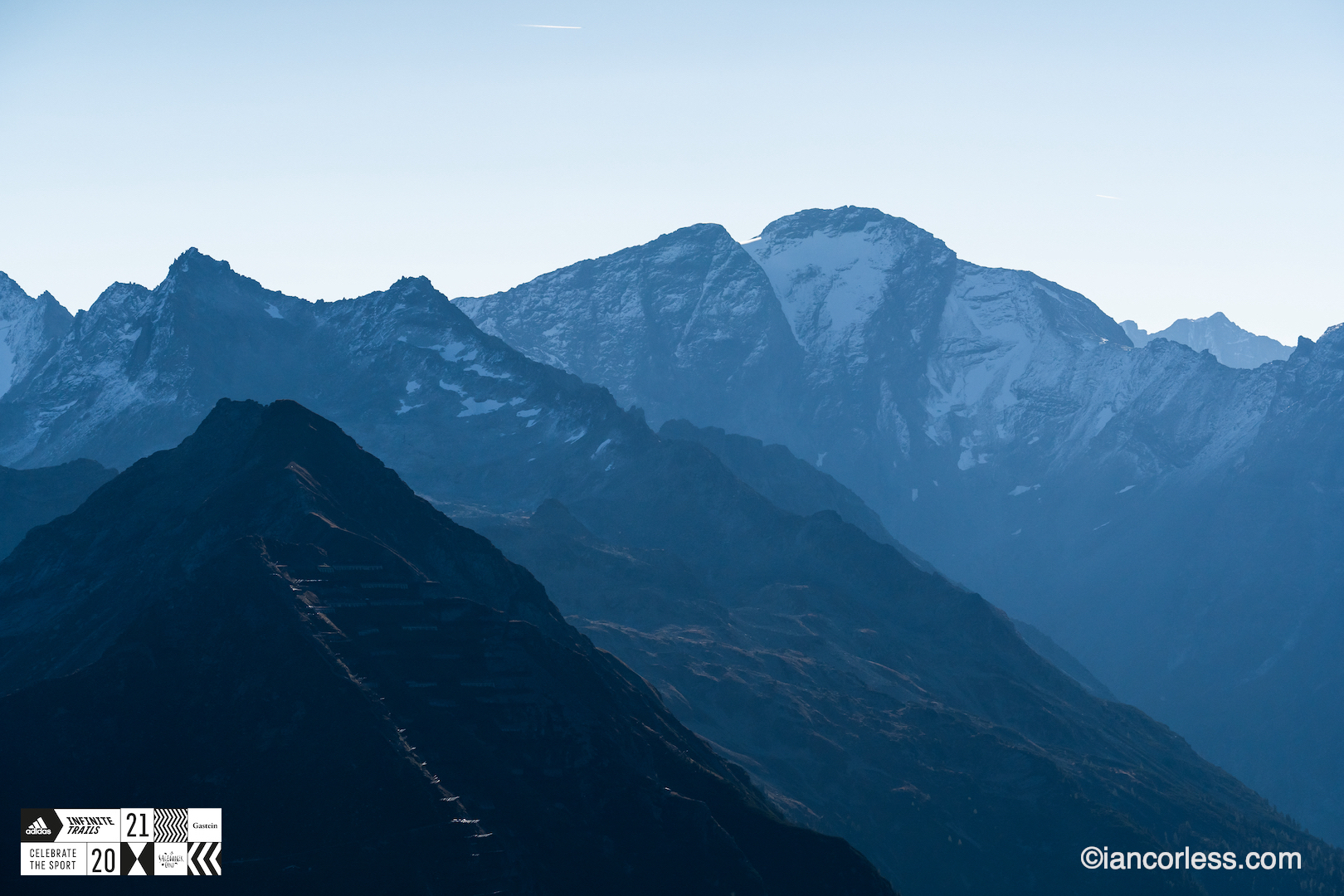
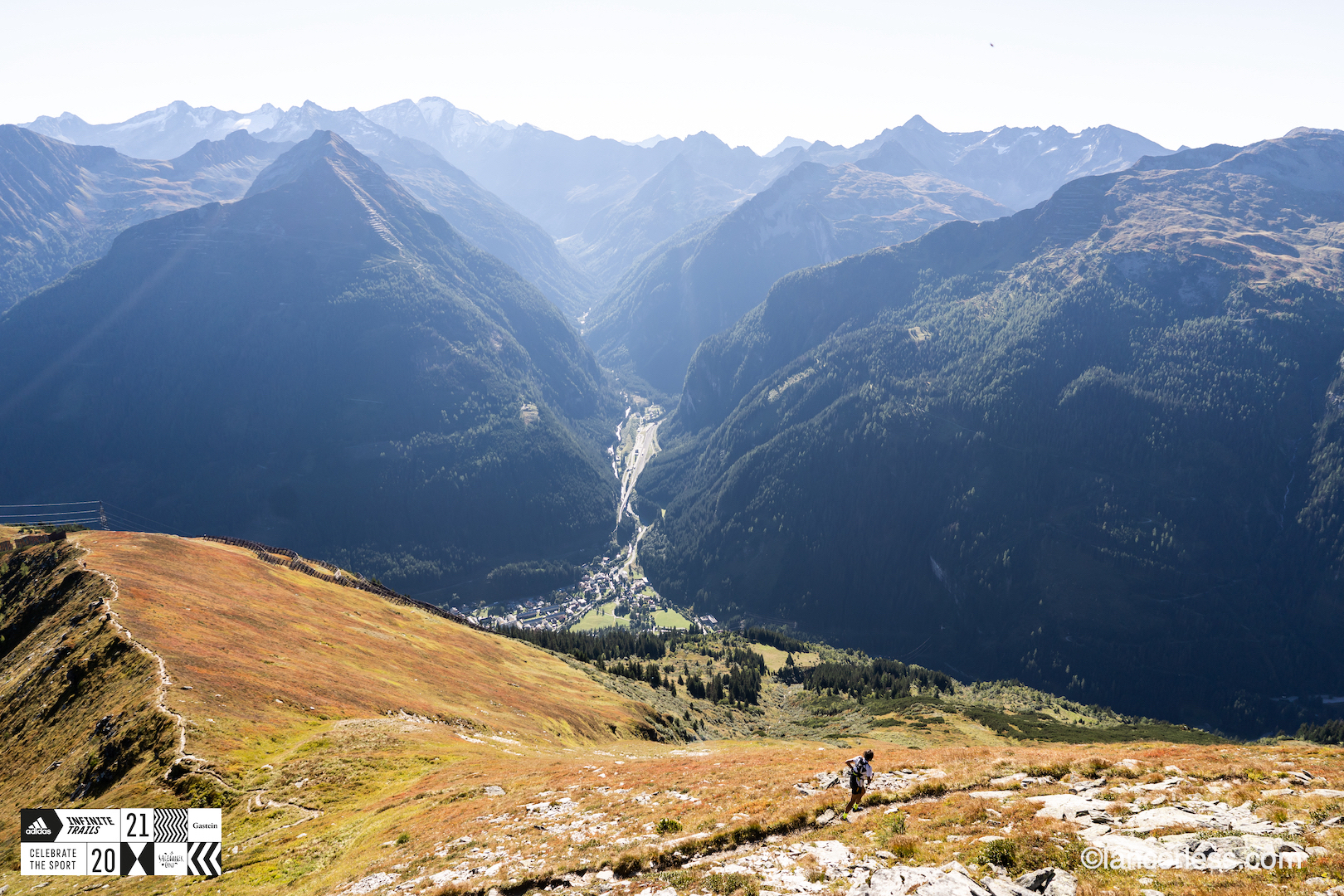
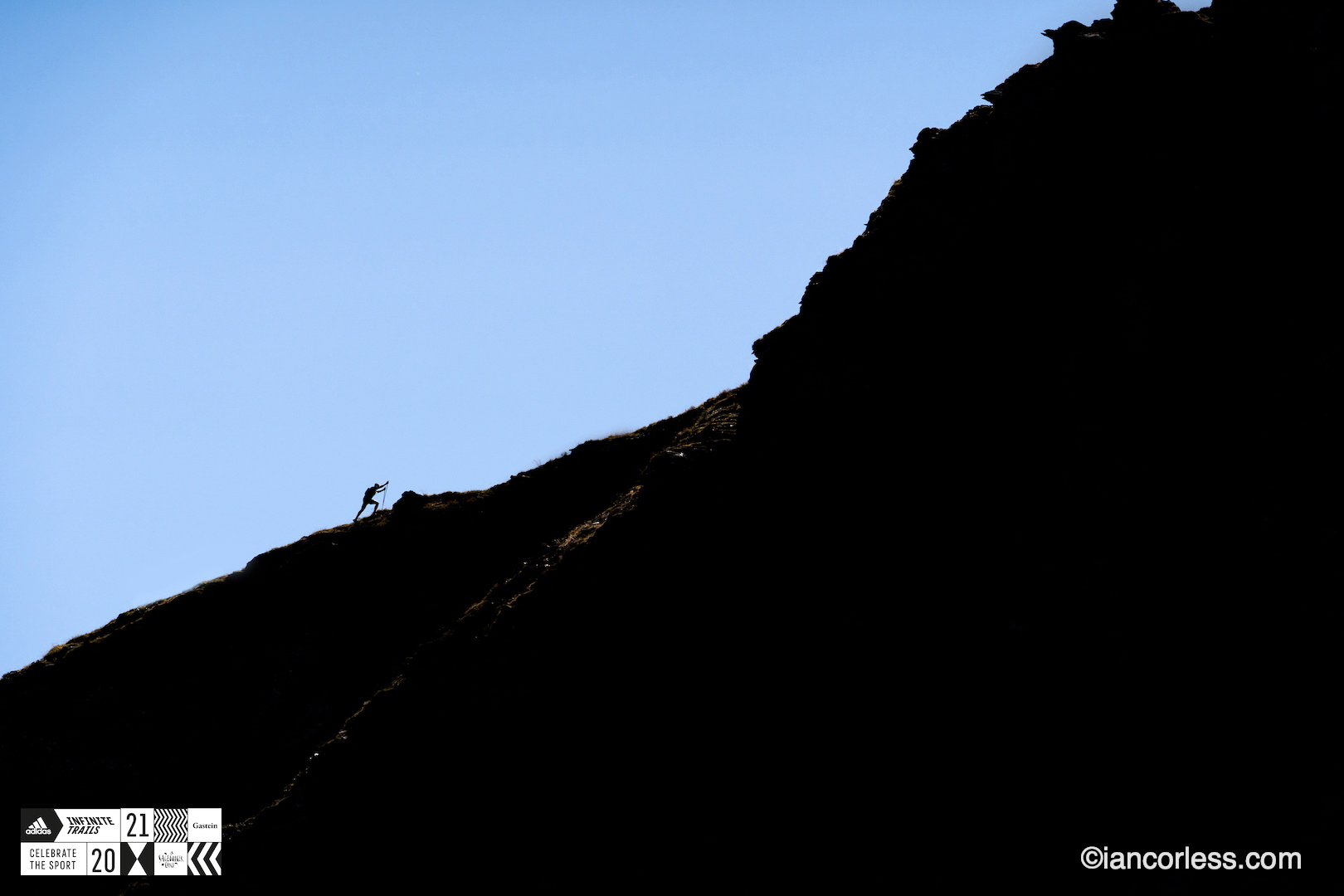
Austria and Gastein is a playground for trail runners, the three loops providing a perfect showcase for the highlights of the area. Only the 65km loop provided a full 360 journey including the highlights of Gamskarkogel, Graukogel and Tischkogel.
Races within a race bring an exciting element to adidas Infinite Trails. There is individual accolade as each runner passes their own finish line, but it’s only at the end that three runners will know if they have won the event; the three individual times added together to bring one finish time.
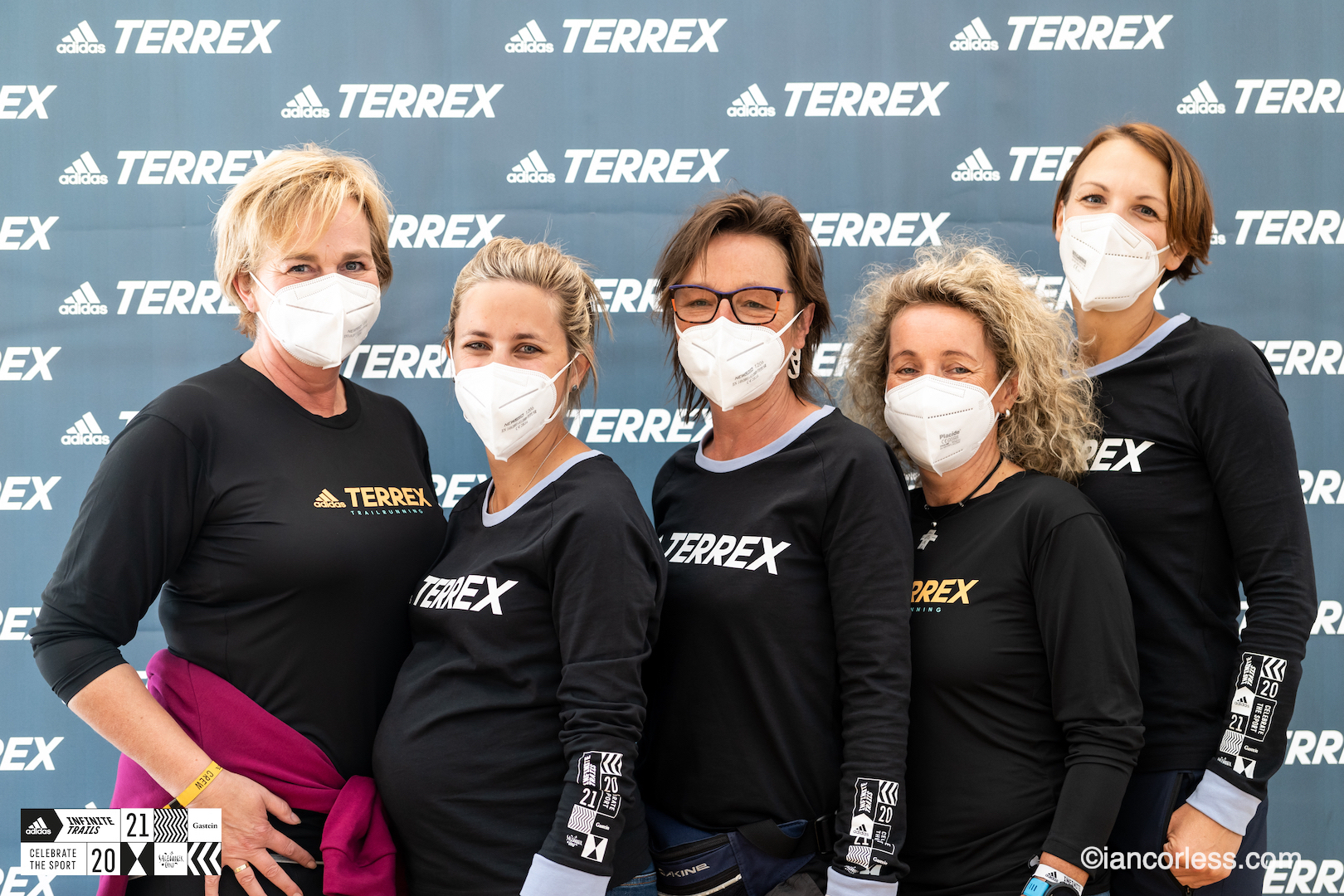
The adidas Terrex Team fielded a star-studded line up, even more impressive coming so soon after hard efforts at UTMB. As always, the #oneteam ethos was paramount and for those who would not race, they would crew and support the others.
Importantly though, the 2021 edition was all about inclusion and participation, of course, there were individual and team winners, but importantly, there were no losers. The adidas Infinite Trails was full of achievement, happiness, and pride. It was good to all come together again, enjoy the trails, a great atmosphere, and all glory in a combined stunning weekend of running joy, very much the #oneteam ethos working for a whole community of likeminded people who wanted to celebrate the sport!
Bad Hofgastein provided a perfect hub for a weekend like this and the after party achieved a whole new level of awesomeness as it moved to the Alpentherme for water, music, drinks, and food.
2021 may well have been a transition year for the adidas Infinite Trails, one thing is for sure though, we all received a resounding confirmation that the race is here to stay. Something this good should be a must for all.
I said this in 2019, but I’d love to see other brands field teams to go head-to-head to see who the best with three runners over three loops can be. And you? Plan now, find two friends, create a team name and join us in Bad Hofgastein next year for the adidas Infinite Trails. Or if you fancy the full and immersive 360 journey, why not contemplate the 65km solo run, it’s a toughie, but very rewarding.
Please support this website. I believe everyone deserves to read quality, independent and factual articles – that’s why this website is open to all. Free press has never been so vital. I hope I can keep providing independent articles with your help. Any contribution, however big or small, is so valuable to help finance regular content. Please support me on Patreon HERE.
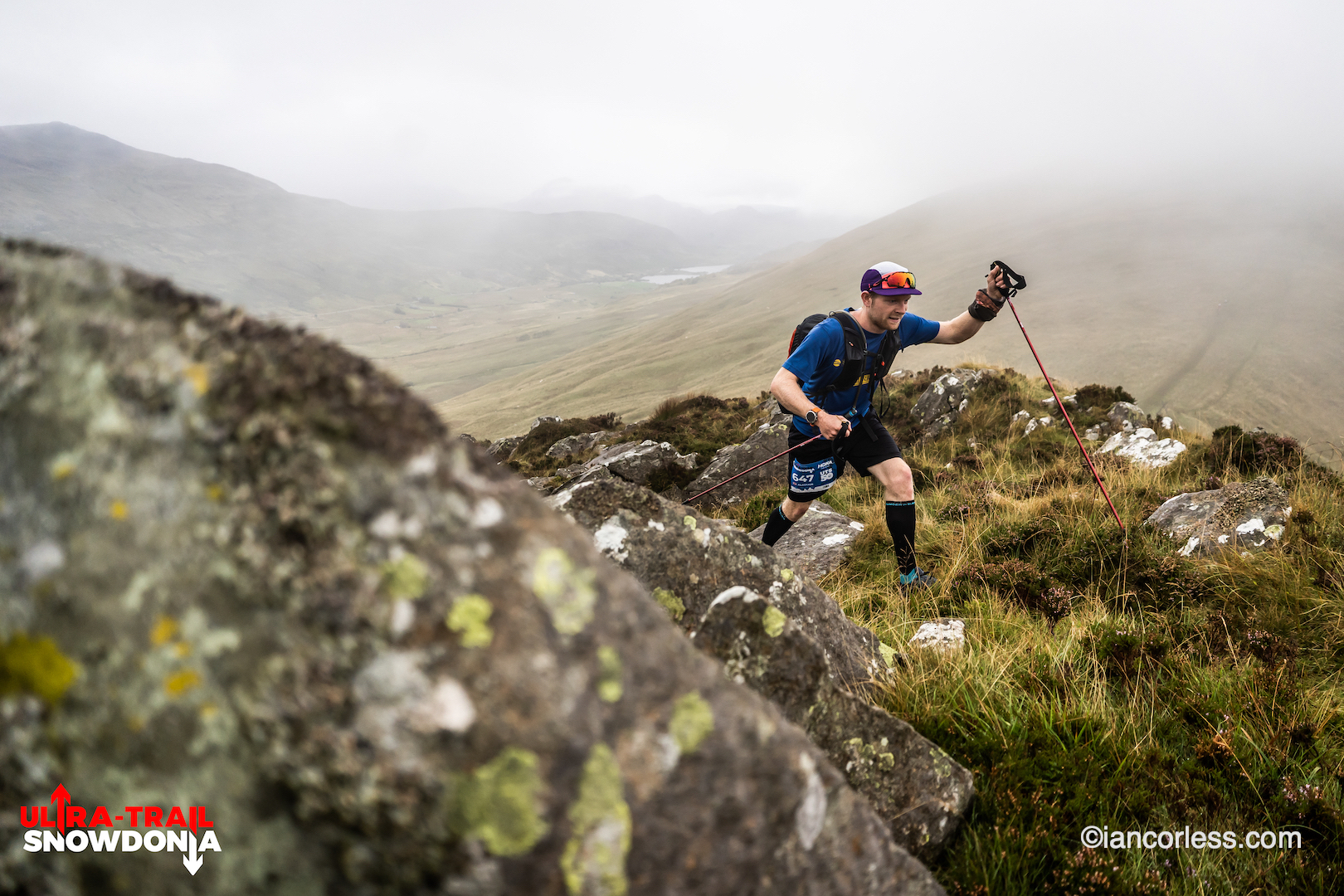
Persistent rain, low cloud, poor visibility, mud, bogs, wet rocks, climbs and descents that made even the most adapted legs scream in pain, yes, that was Ultra Trail Snowdonia 2021.
Missing in 2020 due to the dreaded ‘C’ word, the UTS returned in 2021 to Capel Curig as part of the Ultra Trail World Tour and supported by Hoka One One to confirm the dream of Michael Jones of Apex Running – A big UTMB style weekend of racing in the heart of Wales.
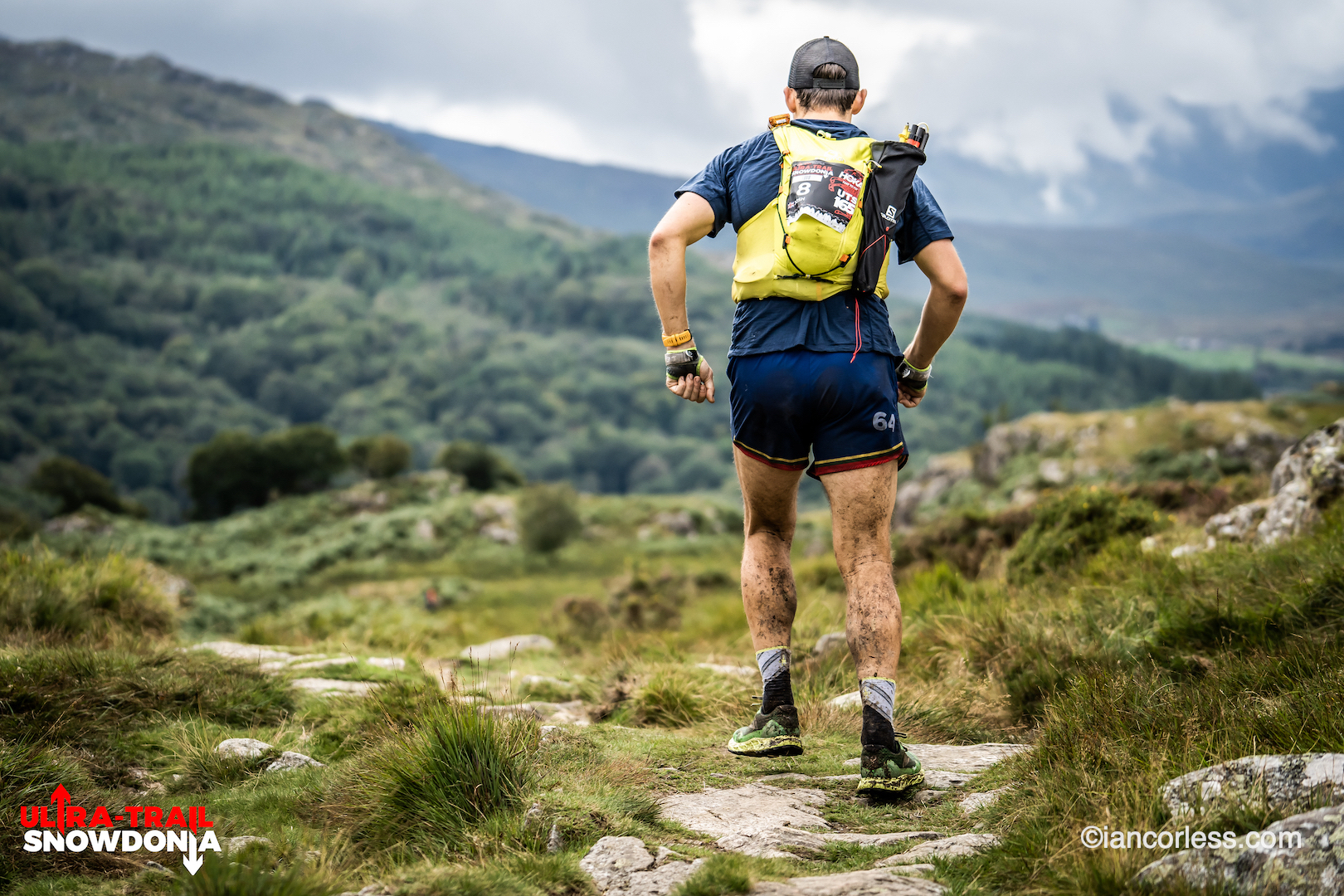
With distances of 50km, 100km and the whopping 165km, one word was touted pretty much everywhere all weekend, brutal! And it was… A savage weekend of racing but as Michael says, ‘beautifully beyond belief, savage beyond reason.’
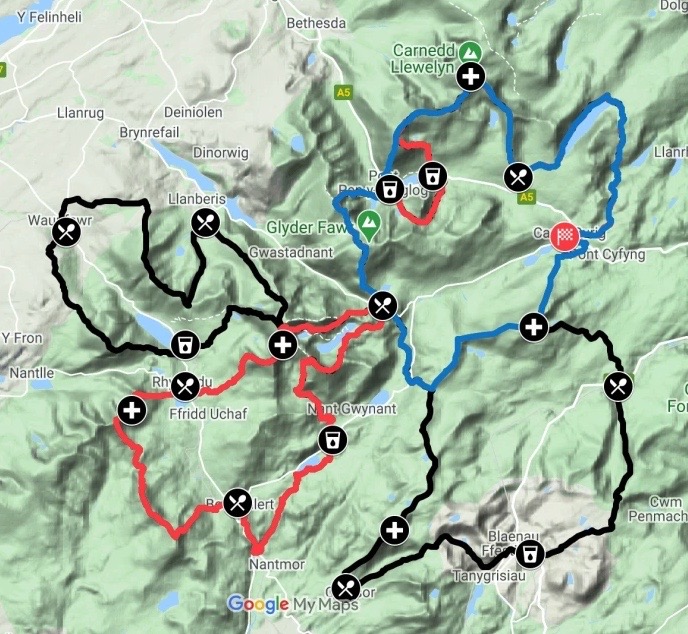
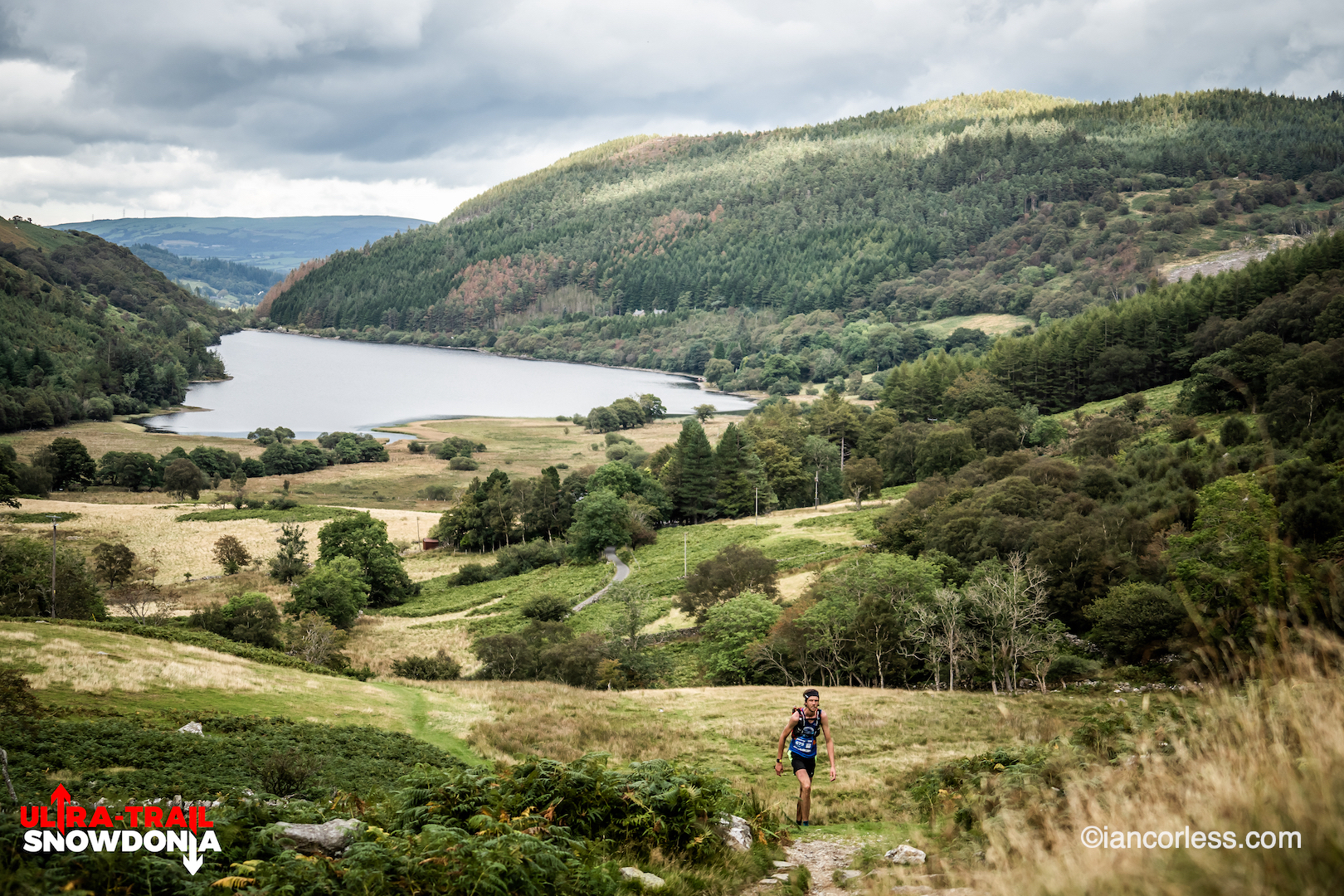
Despite the rain, despite the lack of views, Wales was a stunning playground for trail running. Let’s be clear here, there is no ‘easy’ running at UTS. The 50km is a wonderfully challenging route that may well have surprised many with some of its technical challenges, particularly the climb from Ogwen up to Carnedd Dafydd, compensated for what could be then considered a ‘relatively’ easy run in to the finish via Lyn Cowlyd and Blaen-Y-Nant.
The 100km route followed the early miles of the UTS50 all the way to Pen-Y-Pass but then headed along the Miners’ Track for an extended loop to return via the Pyg Track heading off to Y Garn, a loop around Tryfan and then head up to Carnedd Dafydd via a different route to the 50km and then follow the same run in to the finish.
The 165km is well, just a monster! As expected, it created carnage amongst the competitors. It’s a relentless beasting of mind and body that passes through the whole of Snowdonia. The 100km and 50km routes all utilizing sections of this all-encompassing journey but only the 165km giving the full perspective of how beautiful and hard the Welsh mountains are. As with all races at UTS, it started and concluded in Capel Curig. Heading off to Blaenau Ffestiniog, Croesor it then picked up the 50km and 100km routes to Pen-Y-Pass. Nantmoor, Moel Hebdog, Llyn-y-Gadair and then after Yr Wyddfa it followed the Snowdon Ranger Path for an extended loop before returning via the Snowdon Massif and Pyg Track to Pen-y-Pass. From here, the 100km and 165km routes were identical all the way back to Capel Curig.
Tremayne Dill Cowdry summed it up: “45 hours to do just over 100 miles and every minute of that was a hard slog. Mountains, bog, wet rock, tough nav on a marked course, sleep deprivation, mist, rain and the terrain!! Very little was even runnable. I can’t imagine a 100 miler more difficult than that. Easily the hardest I’ve done and definitely the hardest in the UK. I was going ok although I would have happily dropped given the chance but my feet succumb to the permanent wet and I had to hobble the last 20-ish miles…
Stunning landscape
As with all races, someone has to cross the line first, and of course there was stunning performances all weekend. However, the real sense of achievement came firstly from toeing the line and being in with a chance of completing a journey. The second came from completing the journey. Every medal was hard earned.
Josh Bakker-Dyos
In the 165km event, Josh Bakker-Dyos lead from the start and while many expected him to blow up, so fast was his pace, he never did. He was relentless and consistent crossing the line in 28:51:43. It was easy to say, ‘he made it look easy!’ But for every other runner who crossed the 165km line, it was very clear, there was nothing easy on this route! Toby Hazelwood was less than 60-minutes behind in second, 29:45:17, another stunning run! Adam Jeffs rounded the podium with 34:09:54. Alice Sheldon and Becky Wightman were the only female finishers, 45:09:55 and 47:41:06 their hard-earned efforts stopping the clock – a brutal two nights and days out in the Welsh mountains. Only 32 completed the race.
Mark Darbyshire
The 100km route was won, but not dominated by Lakeland 100 champ, Mark Darbyshire ahead of Josh Wade and Jack Scott. Mark crossed in 14:25:47 with 14:33:36 going to second. It was 16:02:05 elapsed before the third crossed the line. Sarah Stavely (21:41:03) won the women’s race with Kajsa Holgersson and Julie Finn in second and third, 22:28:49 and 22:44:53.
Lauren Woodwiss
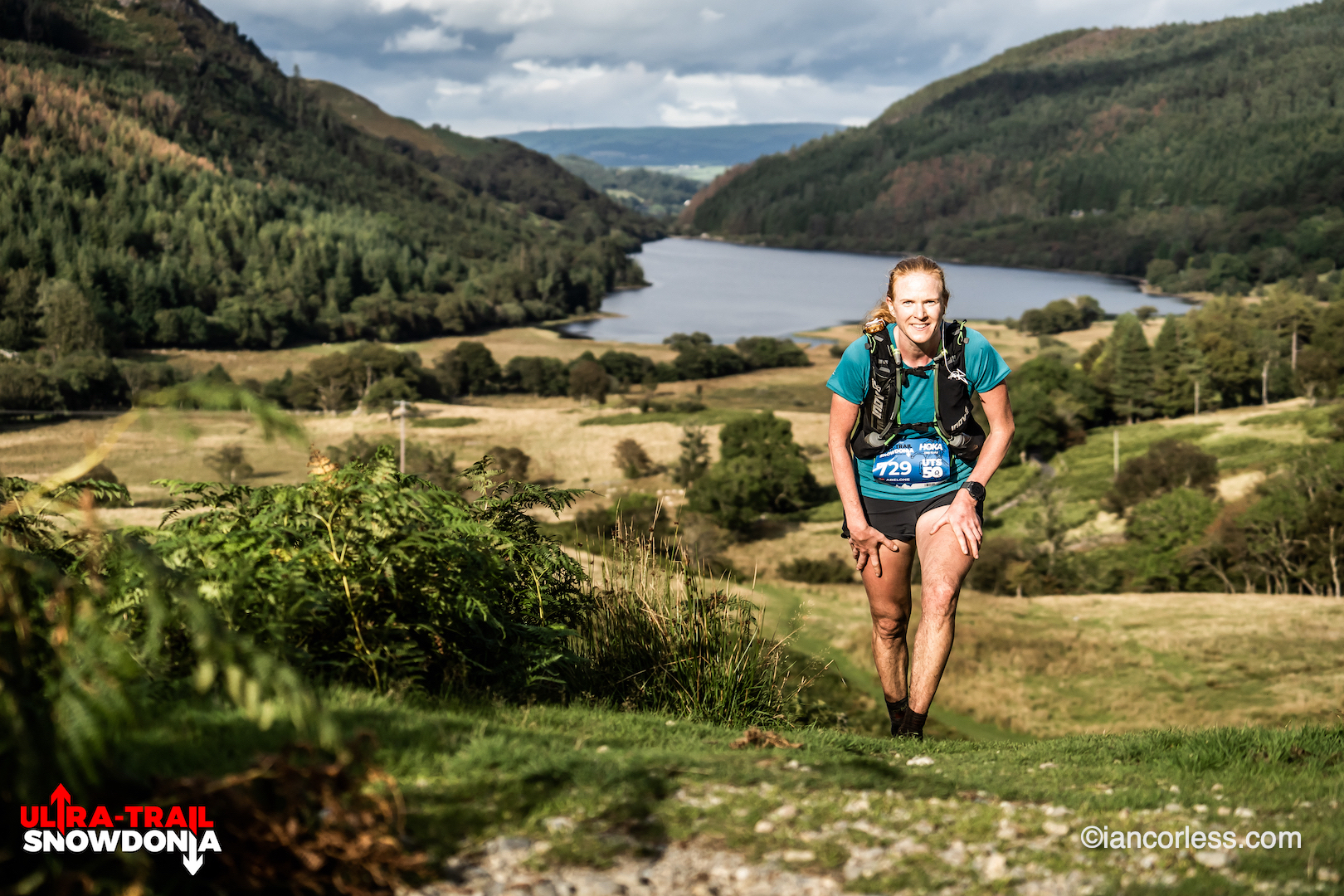
Harry Jones flew around the UTS 50 route and looked as strong at the finish as when he started, his 6:13:33 a stunning time. It was 6:56:54 elapsed before second place Will Simmons crossed ahead of Spencer Shaw in 7:14:53. Lauren Woodwiss, like Jones, lead from the start dictating an excellent pace over the 50km route and completed her journey in an excellent 7:54:18. Celia Waring placed second in 8:36:18 and Abelone Lyng from Norway, moved up from outside the top-10 women to eventually finish third in 8:43:16 after sprinting for the line ahead of Jenna Shail who was just 13-seconds behind.
As Capel Curig slowly returned to some normality on Sunday, it was easy to see that the UTS will become one of the ultimate trail running events not only in the UK but the world. It may not have all the glamour and glitz of Chamonix and the UTMB. It’s a much more grass roots event, some would say a ‘true’ trail running event. Ultimately though, Wales was the hero of the weekend offering stunning routes. This landscape combined with the vision of Michael Jones of Apex Running and a team of dedicated volunteers and supporters will make UTS a ‘one to do!’ However, if you are thinking about the 165 event? Think long hard and without doubt, train hard, it’s a beautifully brutal beast.
‘beautifully beyond belief, savage beyond reason.’
Please support this website. I believe everyone deserves to read quality, independent and factual articles – that’s why this website is open to all. Free press has never been so vital. I hope I can keep providing independent articles with your help. Any contribution, however big or small, is so valuable to help finance regular content. Please support me on Patreon HERE.
It was the penultimate day of the 2021 Pyrenees Stage Run, 26.6km with 1820m+ starting in Tavascan and concluding in Esterri d’Àneu.
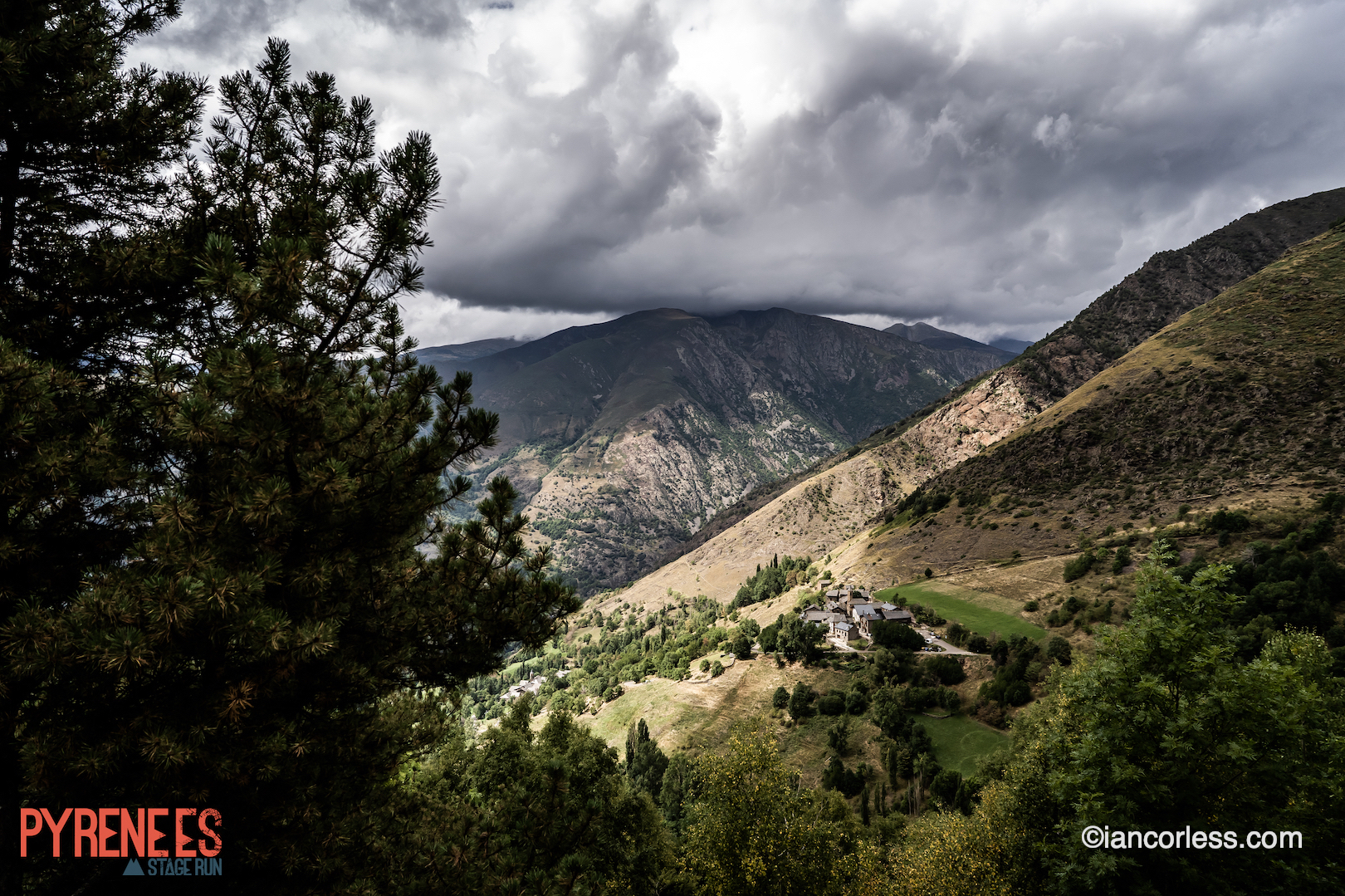
Crossing the last part of the Pallars Sobirà region to face Vall d’Aran, past participants had enthusiastically proclaimed that this was a spectacular day, and they were correct.
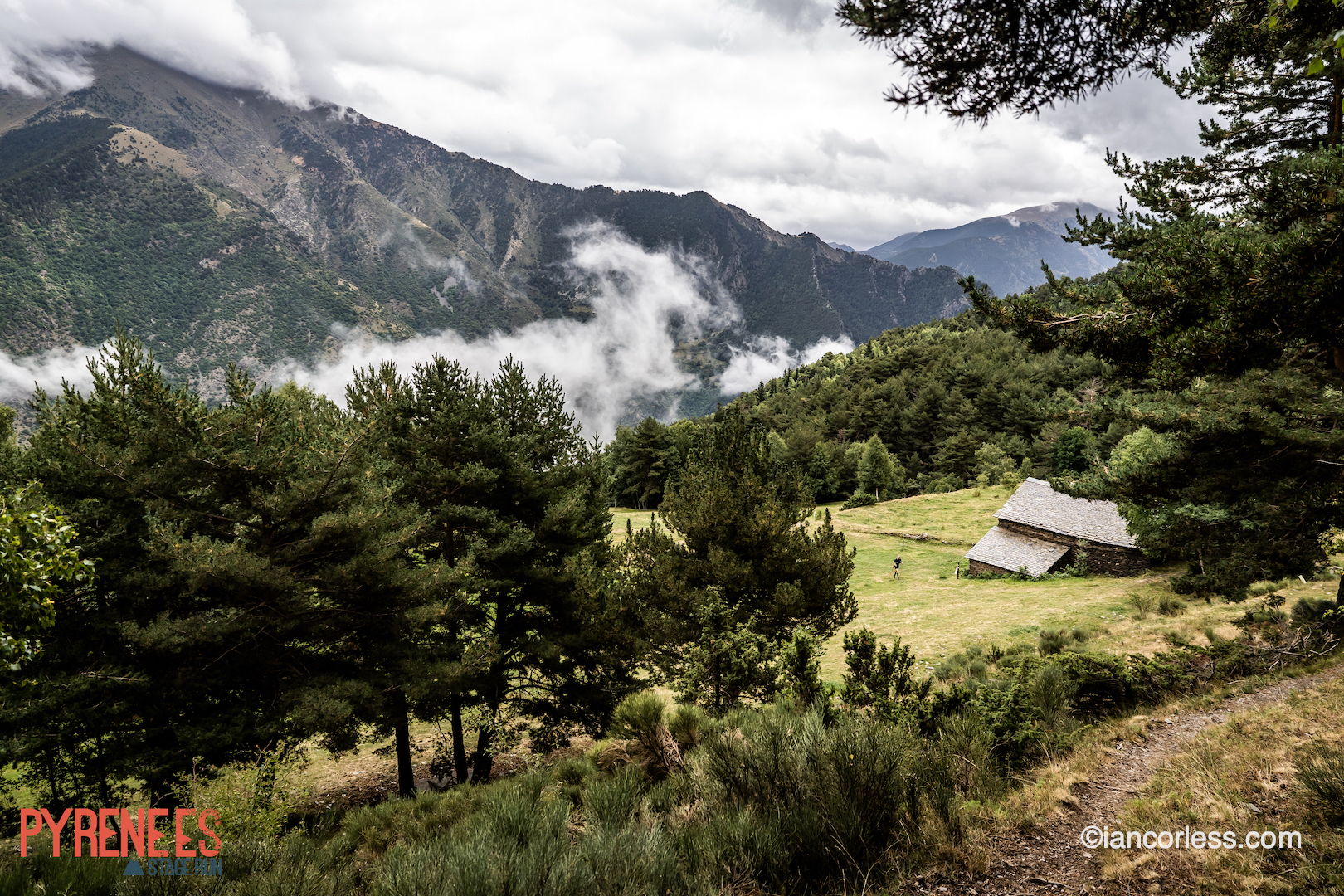
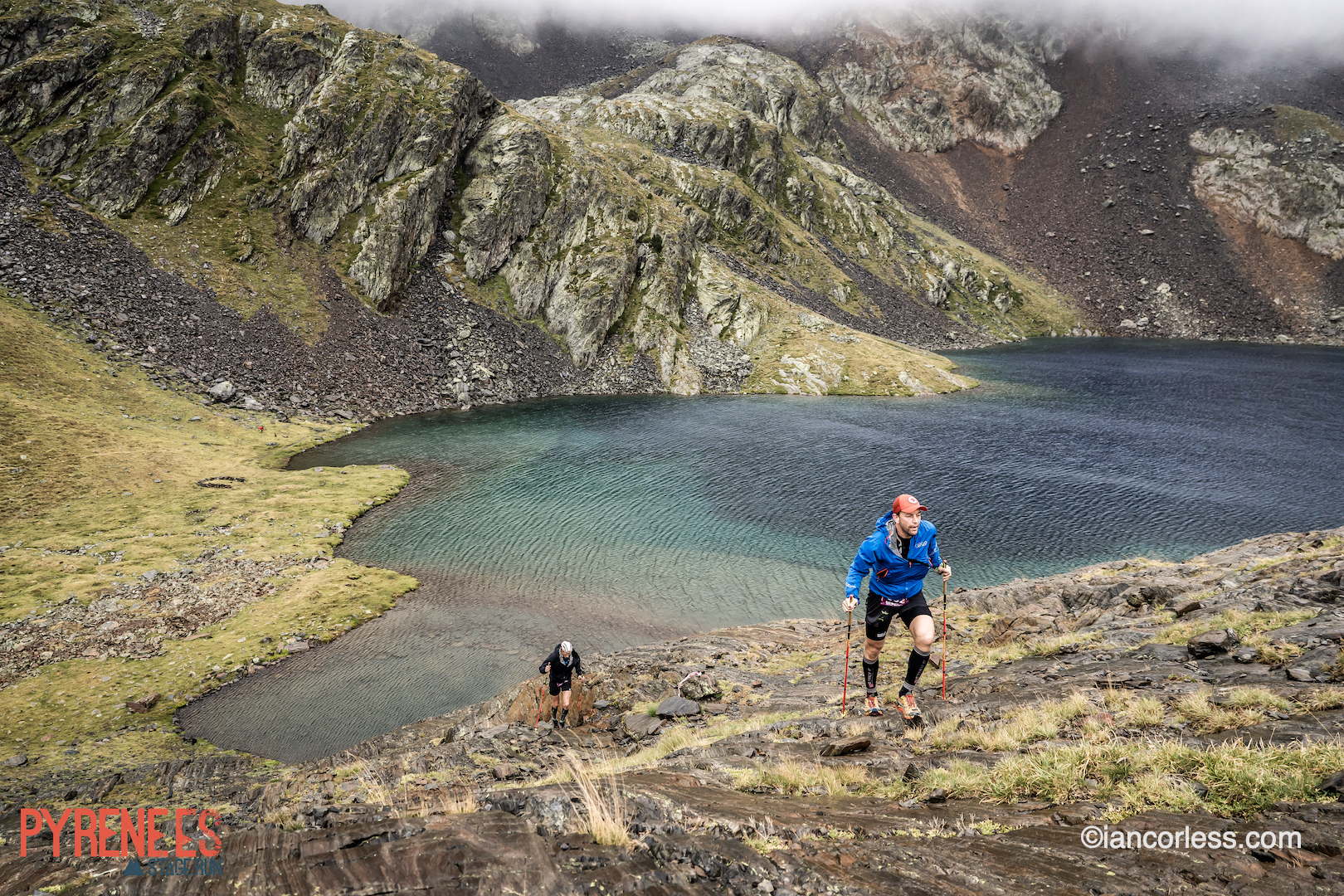
The early 6km of climbing to La Pleta del Prat (1720m) were mostly on forest trails, however, from the ski station, the landscape opened up offering stunning views of the surrounding mountains. The highlights of the day were the lakes of Estany de Mascarida and Collada dels Tres Estanys.
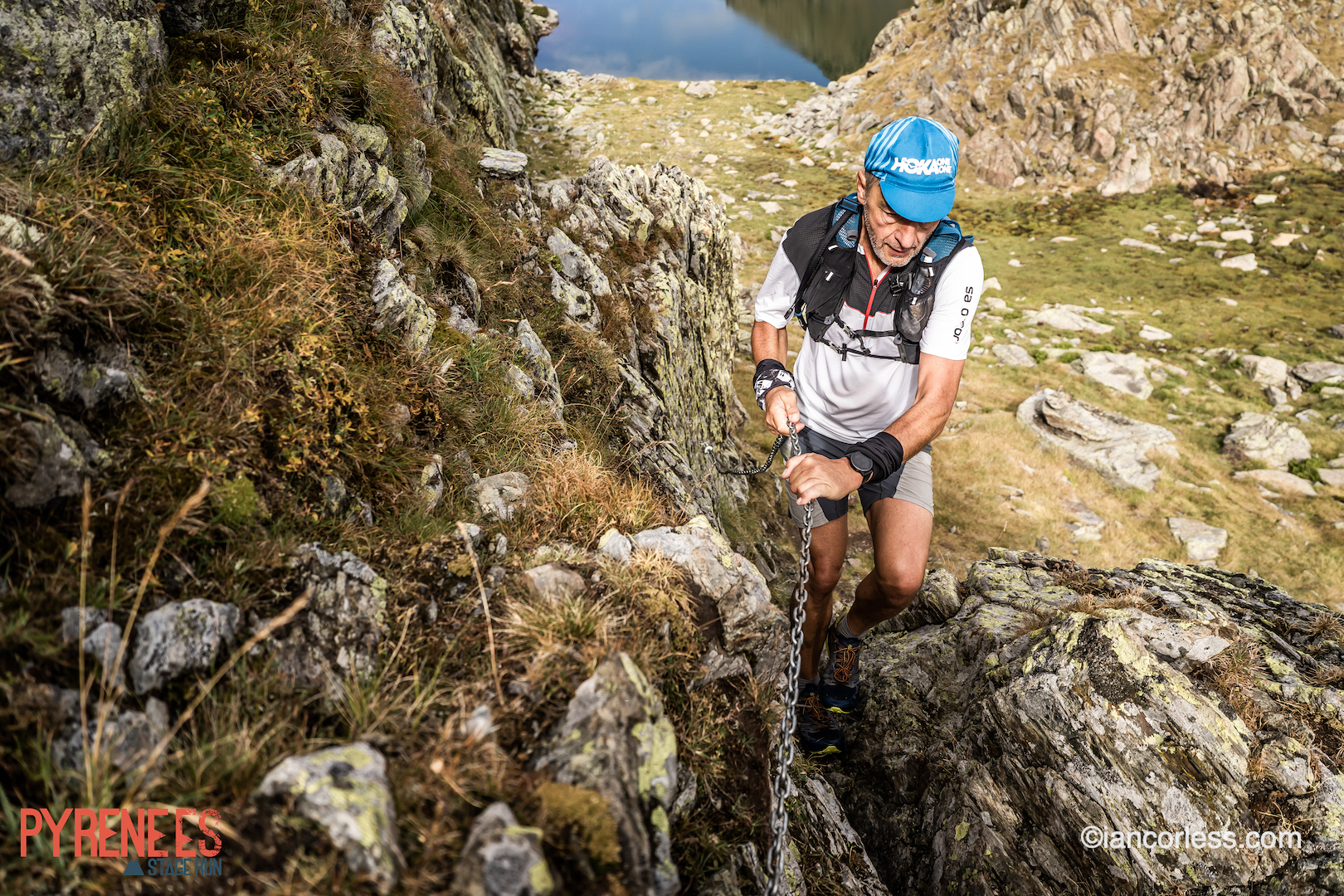
The highpoint of the day coming at 2646m and with it scree slopes, rope sections and after Collada dels Tres Estanys some small chained sections.
It was a wow day, the landscape truly spectacular.
Pont de Graus and Unarre broke up the long 16km downhill to the finish that would sap tired legs.
Parc Naturel de L’Ailt Pirineu gave way to Parc Nacional d”Aigüestortes I Estany de Sant Maurici and the finish in Esterri d’Àneu was a welcome conclusion to a beautiful day.
Tomorrow, stage 7 will conclude the PSR and while the runners bodies will welcome the conclusion of a tough 240km journey, there is already a hint of sadness that this experience is coming to close.
The PSR is most definitely a run experience that gives an all encompassing run journey through a remarkable part of the world. Of course, there are those who will finish first, but this 7-day journey feels much more like a run than a race.
The PSR can be followed live through the website of the race, https://psr.run, and every day a video and photographs of the stages will be published on their social networks.
The Pyrenees Stage Run would not be possible without the main sponsorship of Turga Active Wear, Garmin, Puigcerdà, Encamp (And) Vall del Madriu-Perafita-Claror and bifree sports.
Please support this website. I believe everyone deserves to read quality, independent and factual articles – that’s why this website is open to all. Free press has never been so vital. I hope I can keep providing independent articles with your help. Any contribution, however big or small, is so valuable to help finance regular content. Please support me on Patreon HERE.
Stage 5 of the 2021 Pyrenees Stage Run may well just be the ‘best’ one. Of course, it’s all subjective and when all stage have their highlights, it’s hard to choose. However, if you love tough mountain days, stage 5 is a doozy!
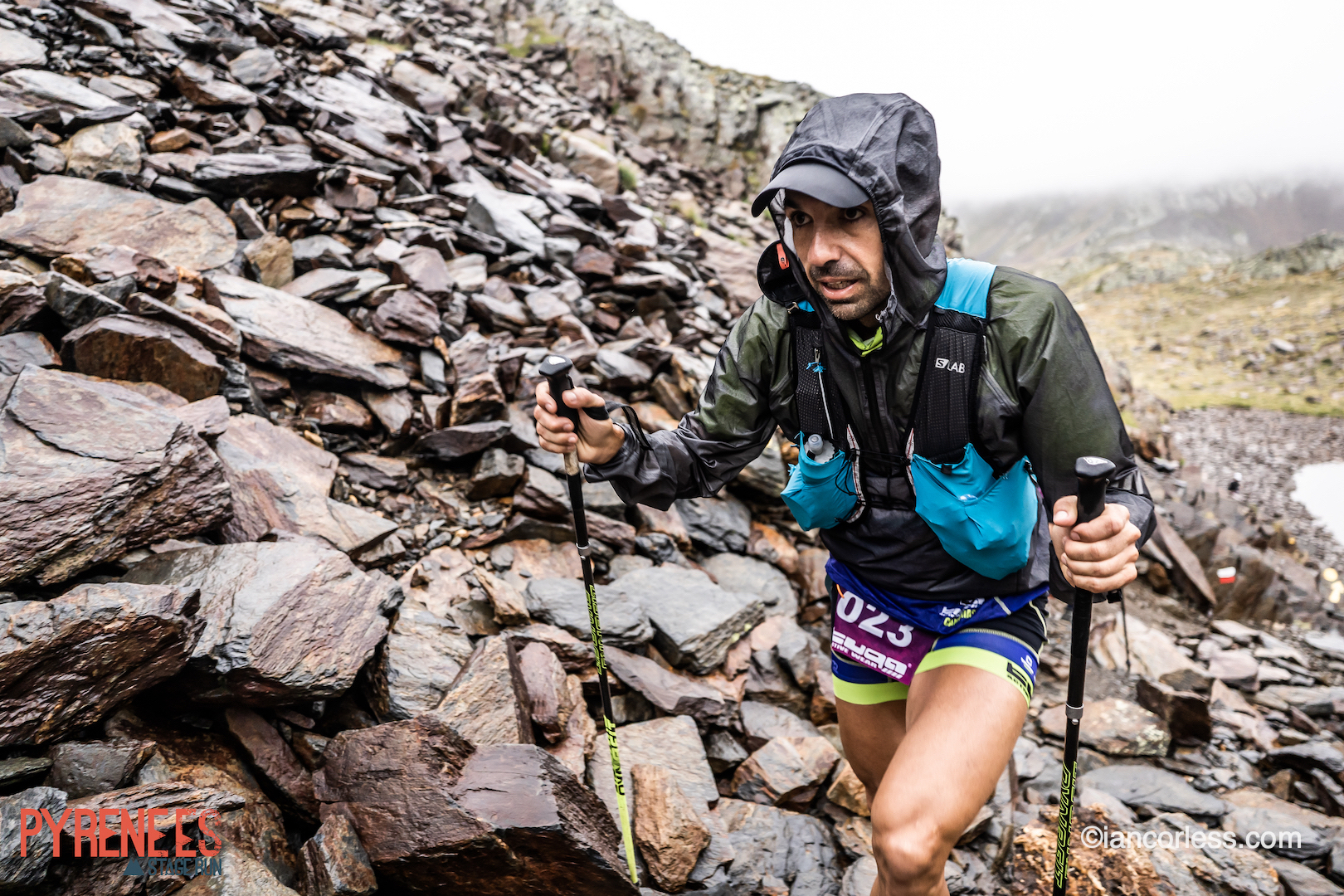
The predicted bad weather came early with persistent rain and at times, strong winds. However, it didn’t deter from the type 2 fun, actually, it added to it!
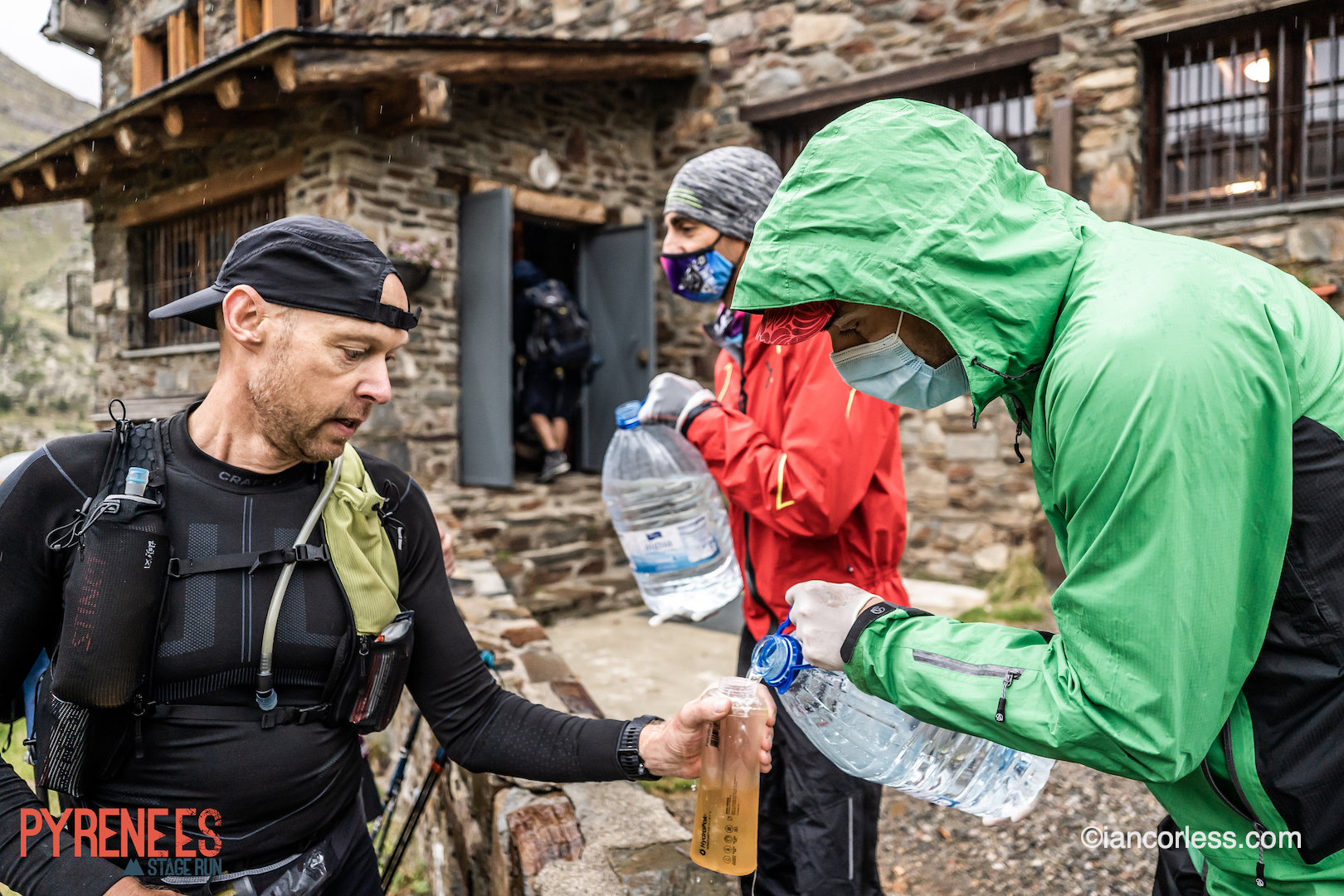
Leaving Arinsal, it was straight climb all the way to the Refugi Compadreose (2260m) and the first aid station. It was here the rain came and the temperature dropped with just 5km covered.
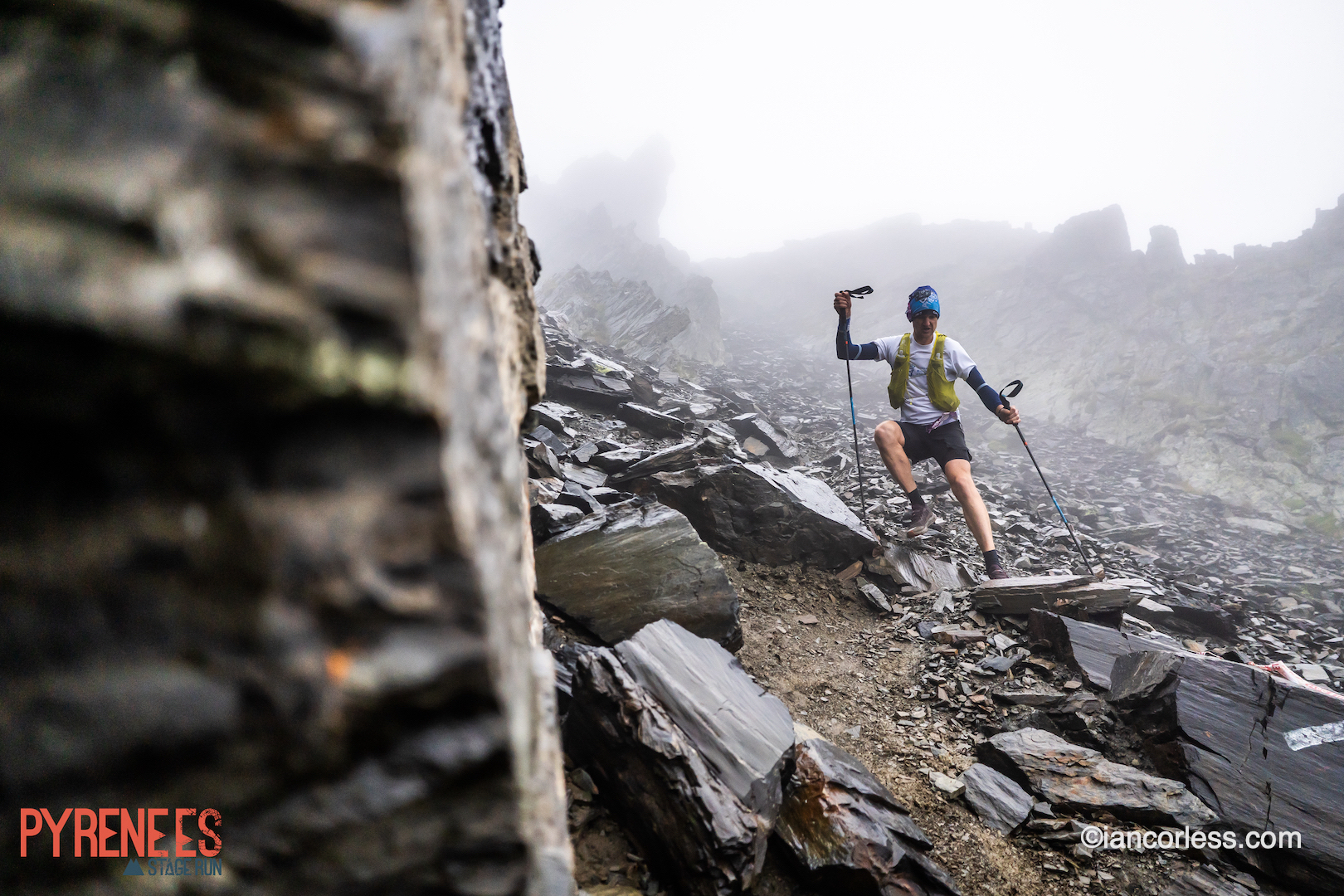
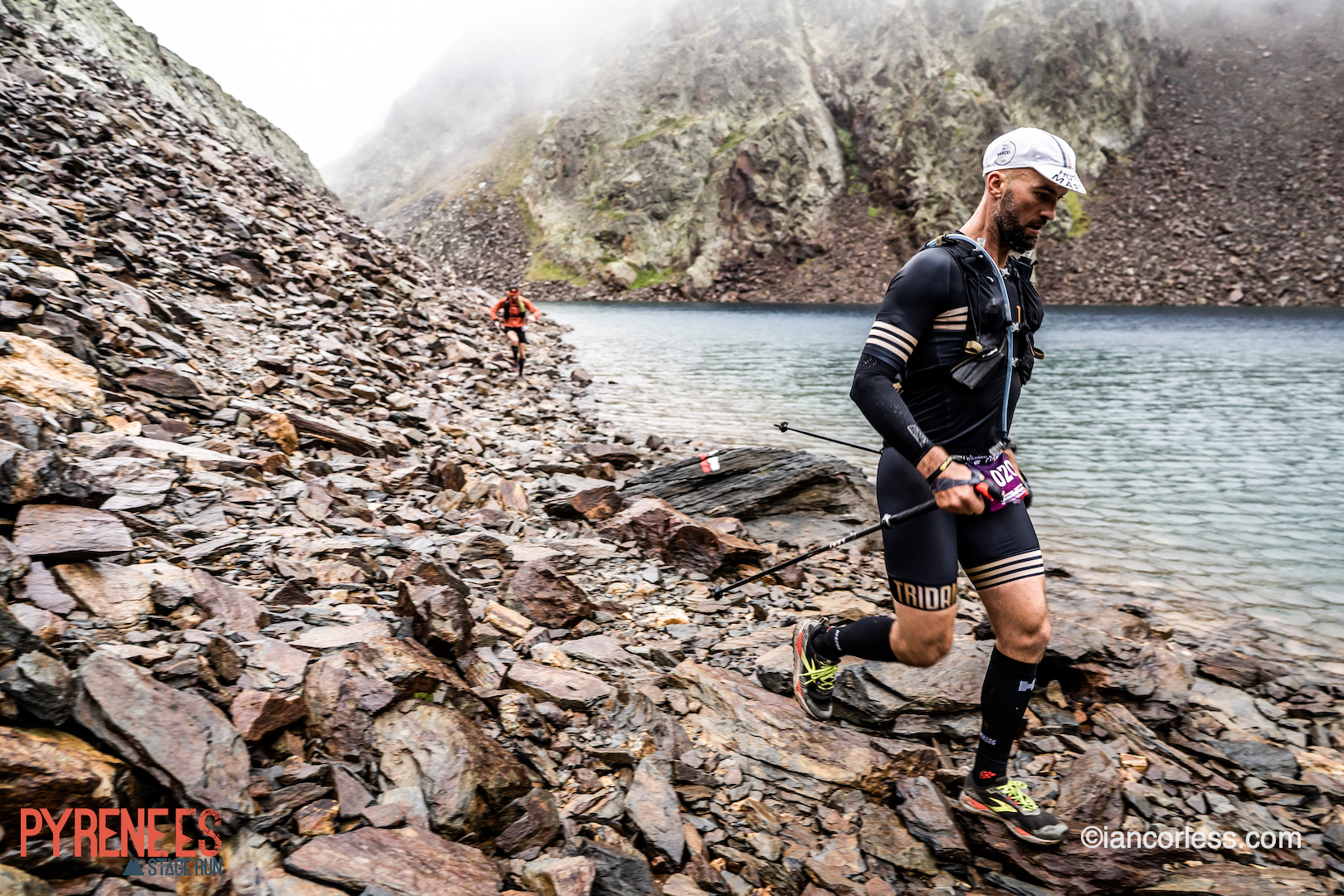
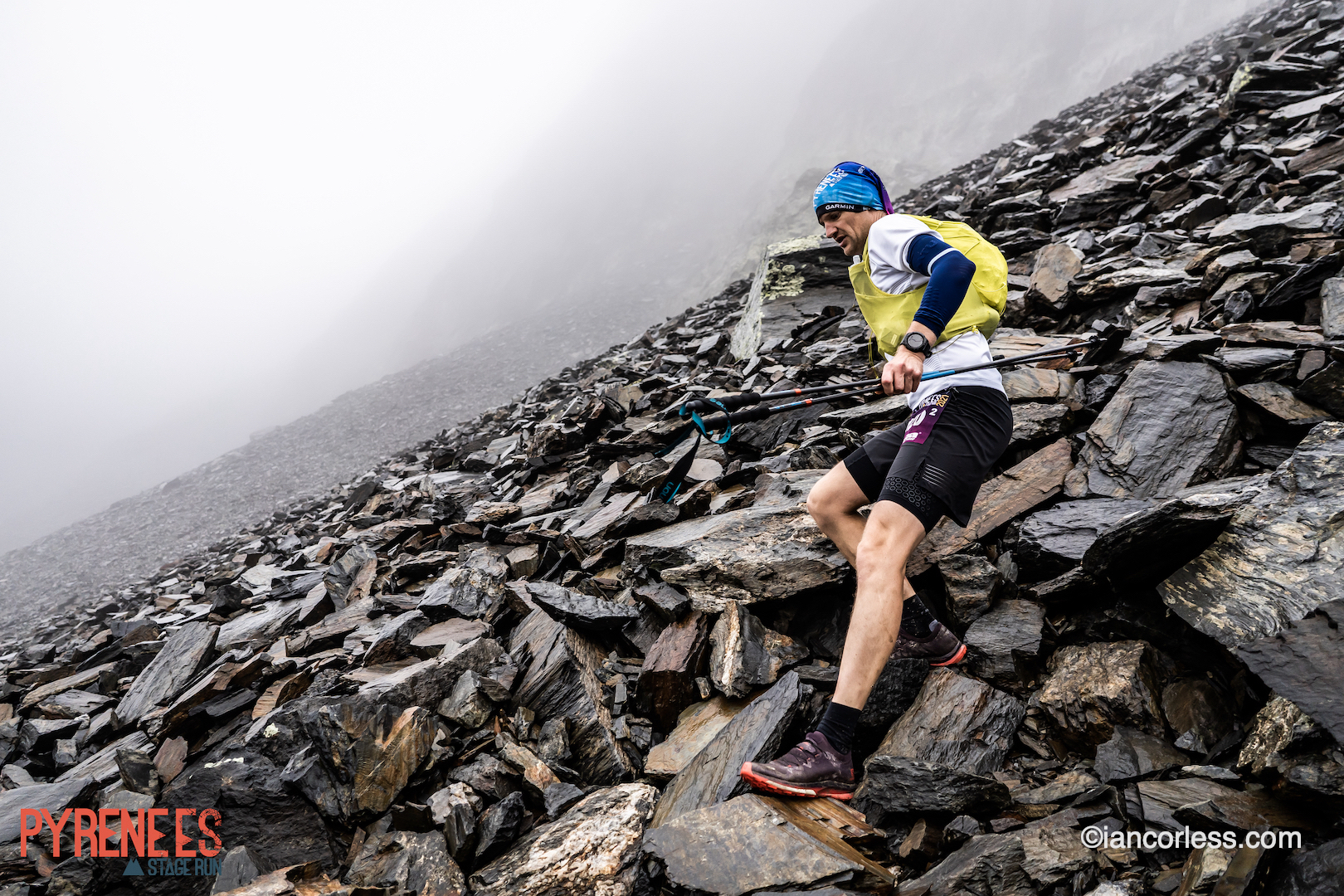
A short flat section and then the climb to Portella de Baiau at 2756m and the highest point of the PSR. The terrain was challenging, slippery and difficult – just perfect! The lakes providing some visual splendour in the great wet mist.
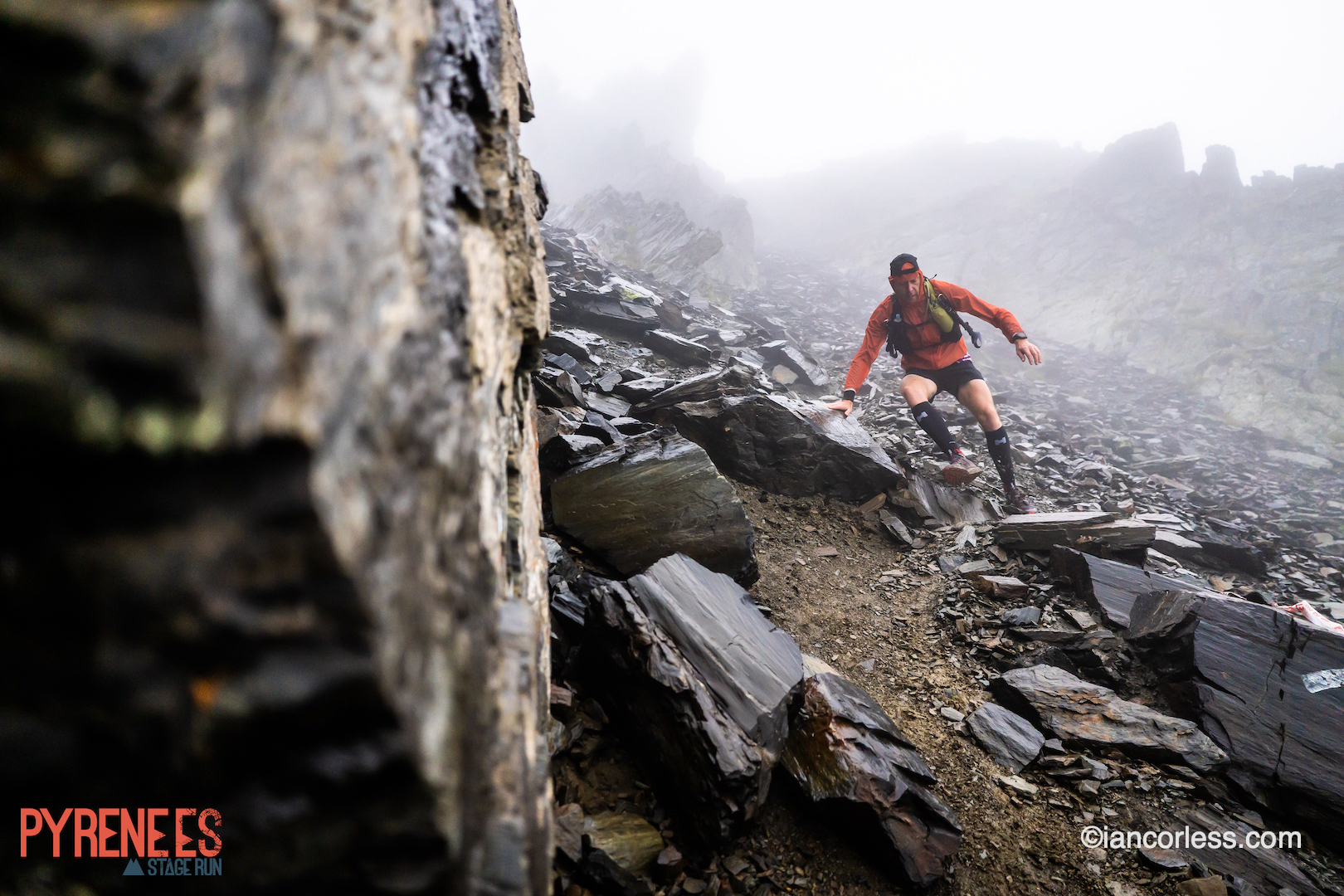
The scree descent was a highlight of the day, however, for some, it would be terrifying… It’s like skiing on rocks!
Rolling terrain, technical single-track and finally the next aid station at La Molinassa (1806m) with 16km covered. The elapsed time on watches reflecting how difficult the run so far had been.
Now easy running all the way to Àreu aid station and 24.7km.
From here, the Coll de Tudela beckoned at 2240m, a straight VK (vertical kilometre) in 5km. Just perfect at 25kmm in a 40km day.
From the summit the run down to Boldís Sobirà at 1488m was non-technical and arguably some of the easiest running of the day. Over the next 4km, there was some small rollercoaster terrain before the sharp, steep and technical drop to the line at Tavascan (1140m) – what a day!
The PSR can be followed live through the website of the race, https://psr.run, and every day a video and photographs of the stages will be published on their social networks.
Tomorrow, stage 6 is 26.34km with 1635m+ crossing the Natural Park of Alt Pirineu in the middle of magnificent forests, and ending up to Esterri d’Aneu, close to the National Park of Aigüestortes i Sant Maurici.
The Pyrenees Stage Run would not be possible without the main sponsorship of Turga Active Wear, Garmin, Puigcerdà, Encamp (And) Vall del Madriu-Perafita-Claror and bifree sports.
Please support this website. I believe everyone deserves to read quality, independent and factual articles – that’s why this website is open to all. Free press has never been so vital. I hope I can keep providing independent articles with your help. Any contribution, however big or small, is so valuable to help finance regular content. Please support me on Patreon HERE.
The longest day of the race travelling from Puigcerdà to Encamp in Andorra. A tough and challenging 47.5km with 2600m+ over some stunning and remarkable terrain that would leave the runners weary from the effort but rejuvenated by the views.
The early km’s were easy but soon the trail pointed to the sky and by 18km’s Guils-Fontanera had been passed and Refugi de Malniu opened up the gateway to the try challenges of this stage.
The climb to Portella D’Engorgs at 2696m sapping the energy of all only to be followed by a descent to Cabana D’Esparvers at 2060m and then another climb to 2543m and Coll de L’Illa. Looking at the profile, one may think that the final 15km is all downhill… Think again, it’s a challenging run with many false flats and technical terrain only to sap the legs and energy before the arrival in Andorra.
The day was always going to be feared and rightly so, 47km is never an easy run, even when fresh, let alone after already a couple of challenging days. The weather forecast also was less than favorable with storms and rain forecast for the afternoon, gladly it only arrived at 4pm and lasted for 30-minutes.
Relentless in beauty, the stage had it all with wide open valleys, technical single-track, tough and hard climbs and leg busting descents. It was a day to survive for many, the promise of an easier 20km stage the day after.
As in the previous days, the results were the same, “Tuga Canarias” team of Gilberto Molina and Carmelo Gonzalez once again won. However, second place went to “The Ultrazzz” team of Wim Debbaut, Thomas Swankaert and Kurt Dhont with Jesús and Mario Delgado of the “The Sigobros Century” placing 3rd.
In the female category, Marcela Mikulecka and Petra Buresova of “Runsport Team” dominated followed by mother and daughter, Jeanette Rogers and Kerrianne Rogers of “Running Holidays France.”
Jaroslaw and Natalia Haczyk of “BeerRunners” lead the mixed category ahead of “B-Running” team Bastian Mathijssen and Birgit Van Bockxmeer are followed by Steffen Rothe i Kathrin Litterst of “Black Forest.”
The Pyrenees Stage Run would not be possible without the main sponsorship of Turga Active Wear, Garmin, Puigcerdà, Encamp (And) Vall del Madriu-Perafita-Claror and bifree sports.
Stage 4 is just 20k but with 1900m+.
The PSR can be followed live through the website of the race, https://psr.run, and every day a video and photographs of the stages will be published on their social networks.
Please support this website. I believe everyone deserves to read quality, independent and factual articles – that’s why this website is open to all. Free press has never been so vital. I hope I can keep providing independent articles with your help. Any contribution, however big or small, is so valuable to help finance regular content. Please support me on Patreon HERE.
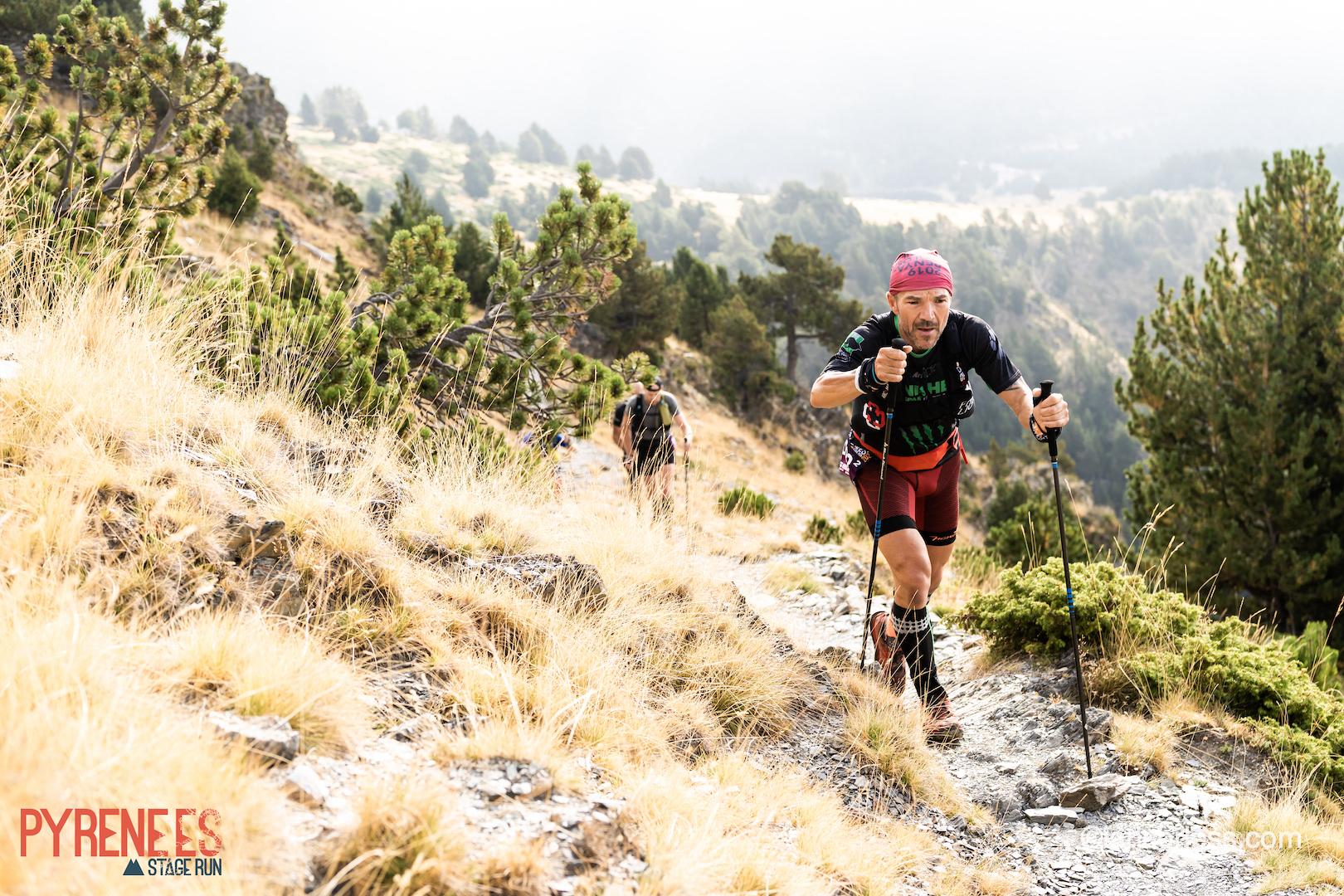
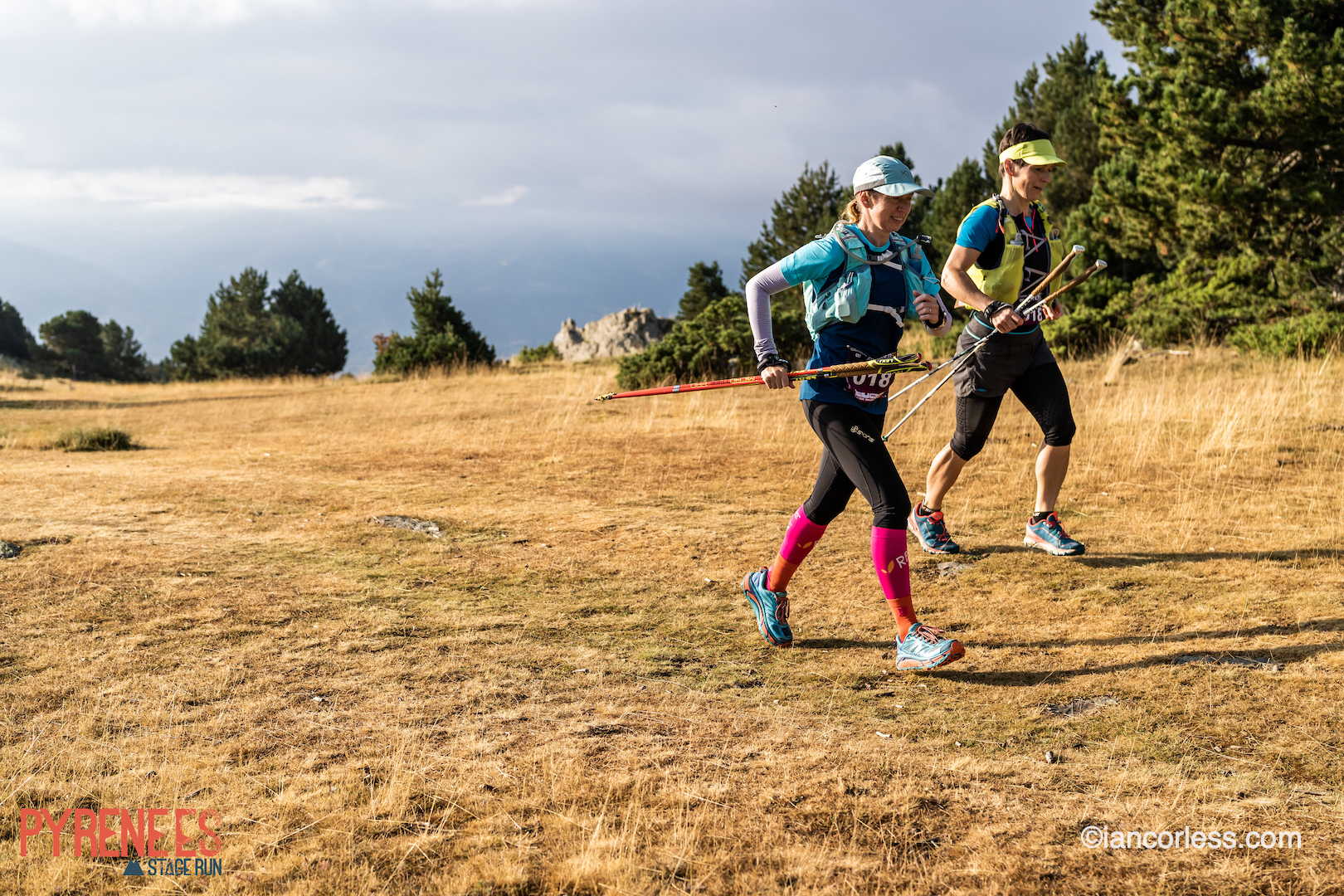
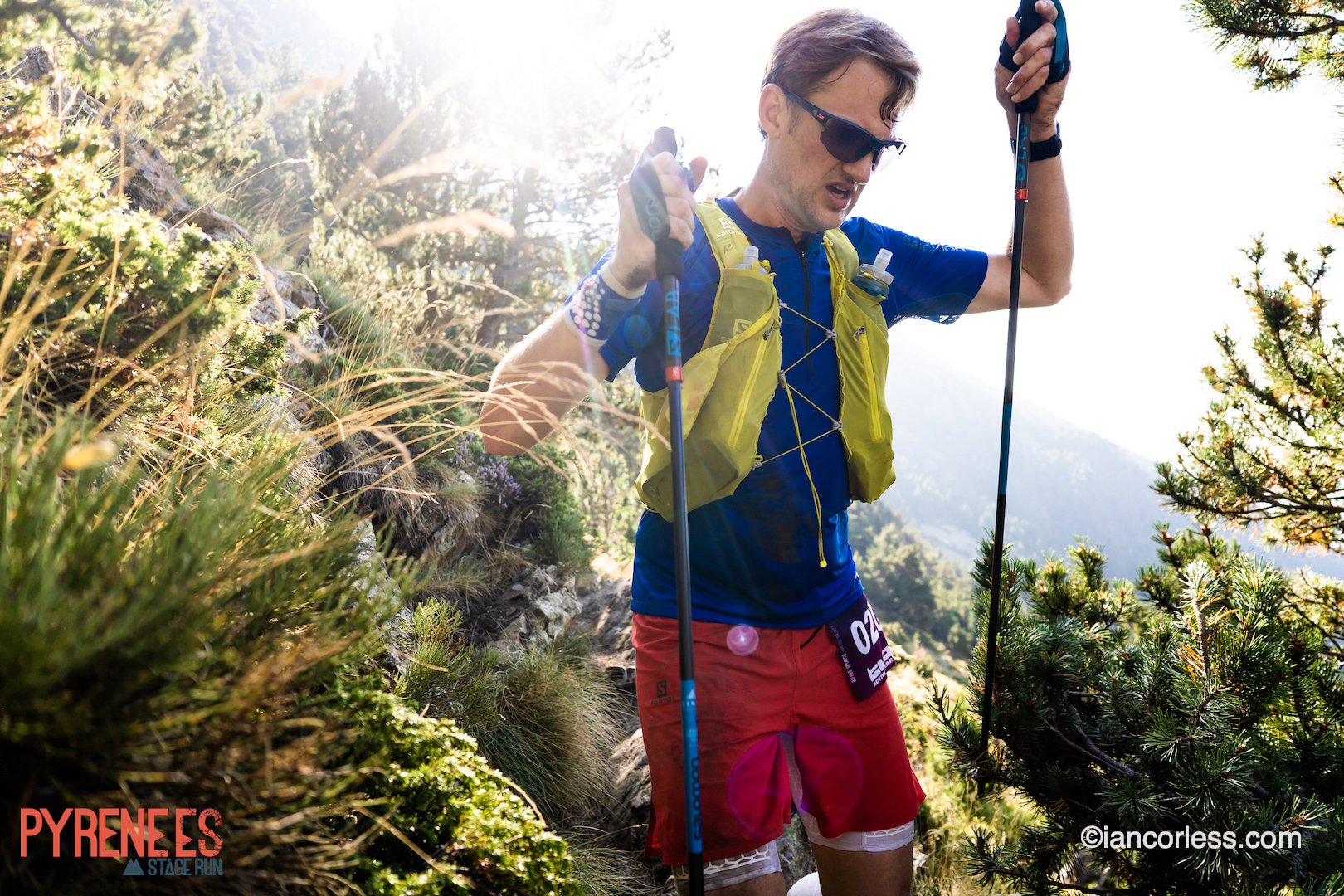
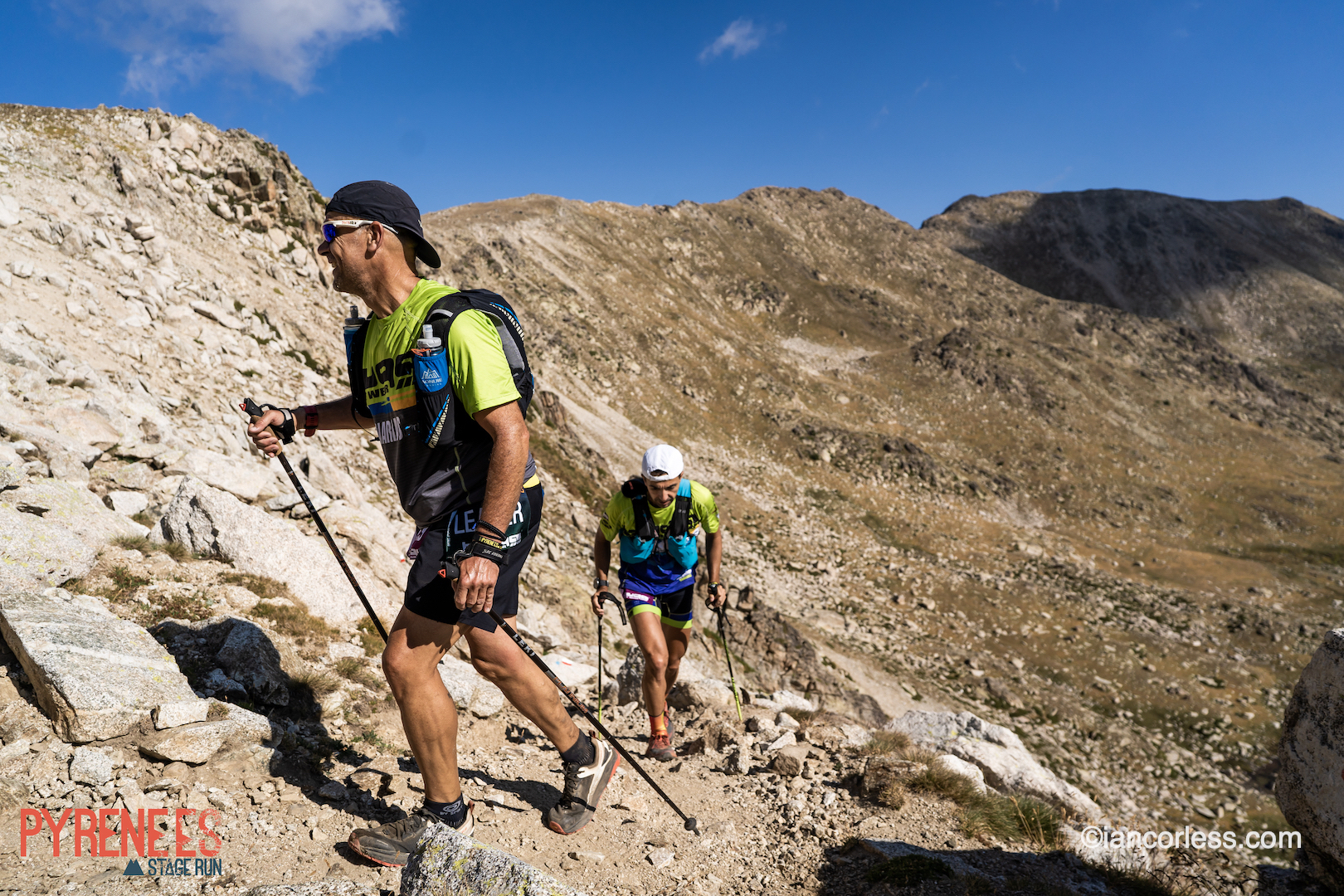
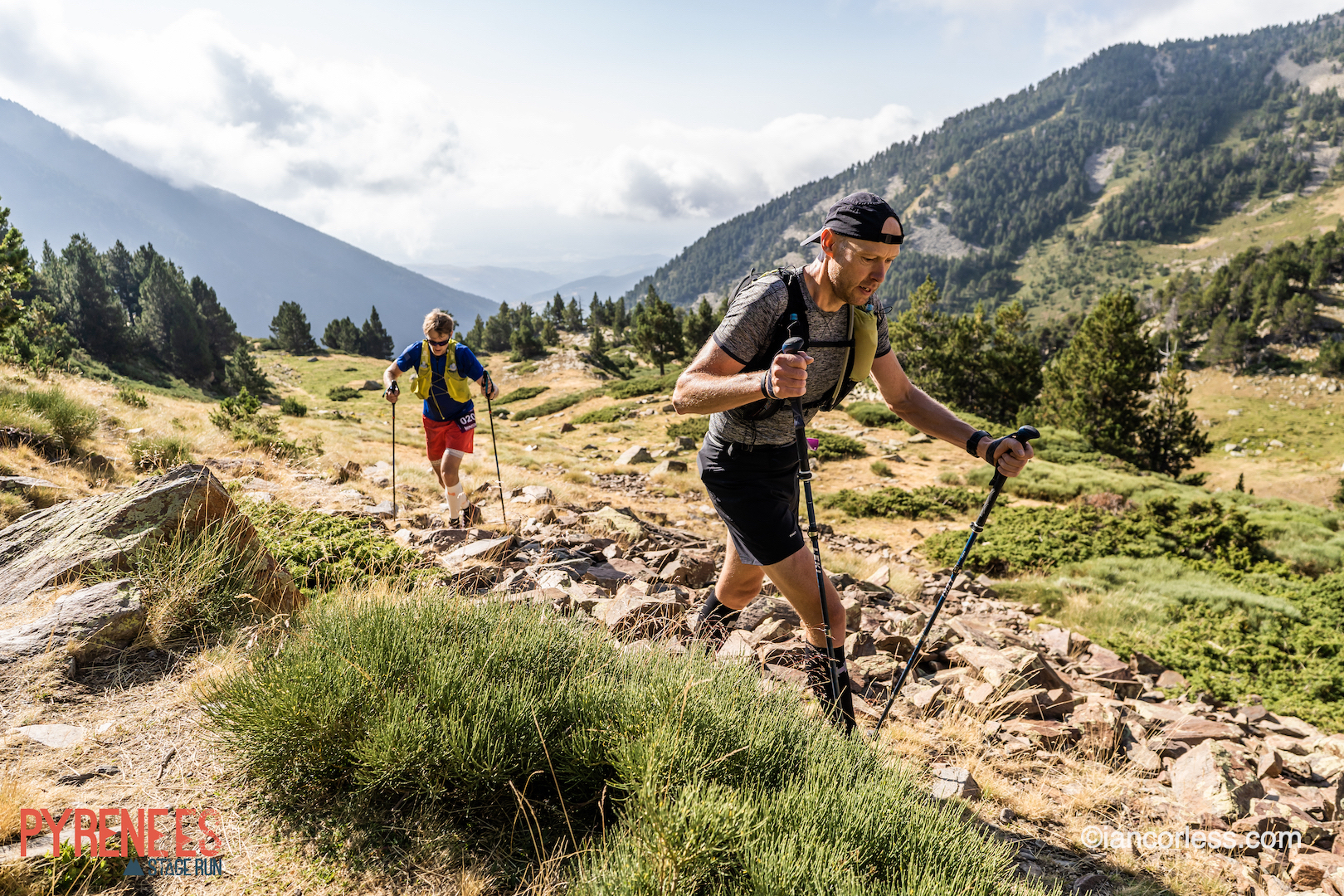
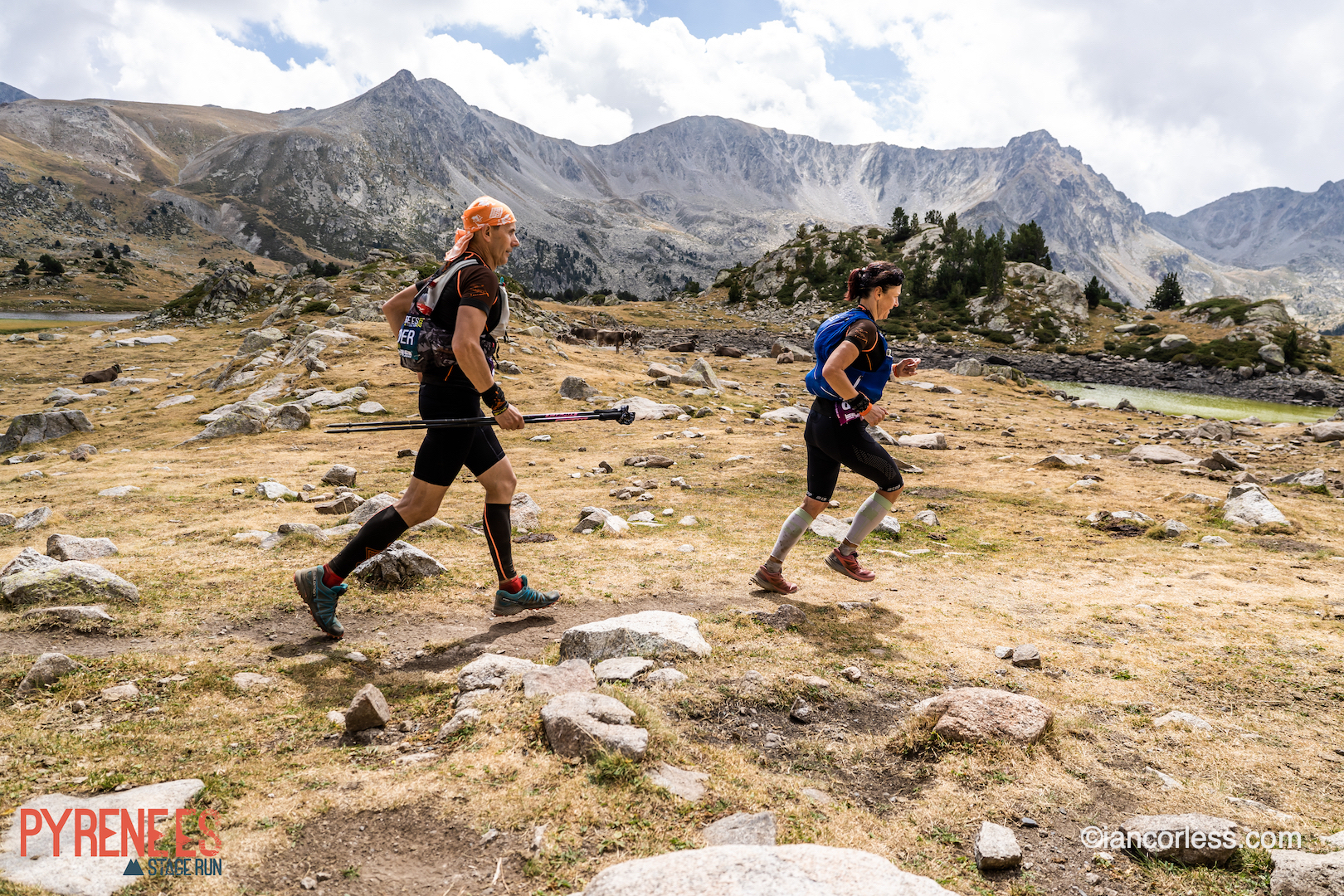
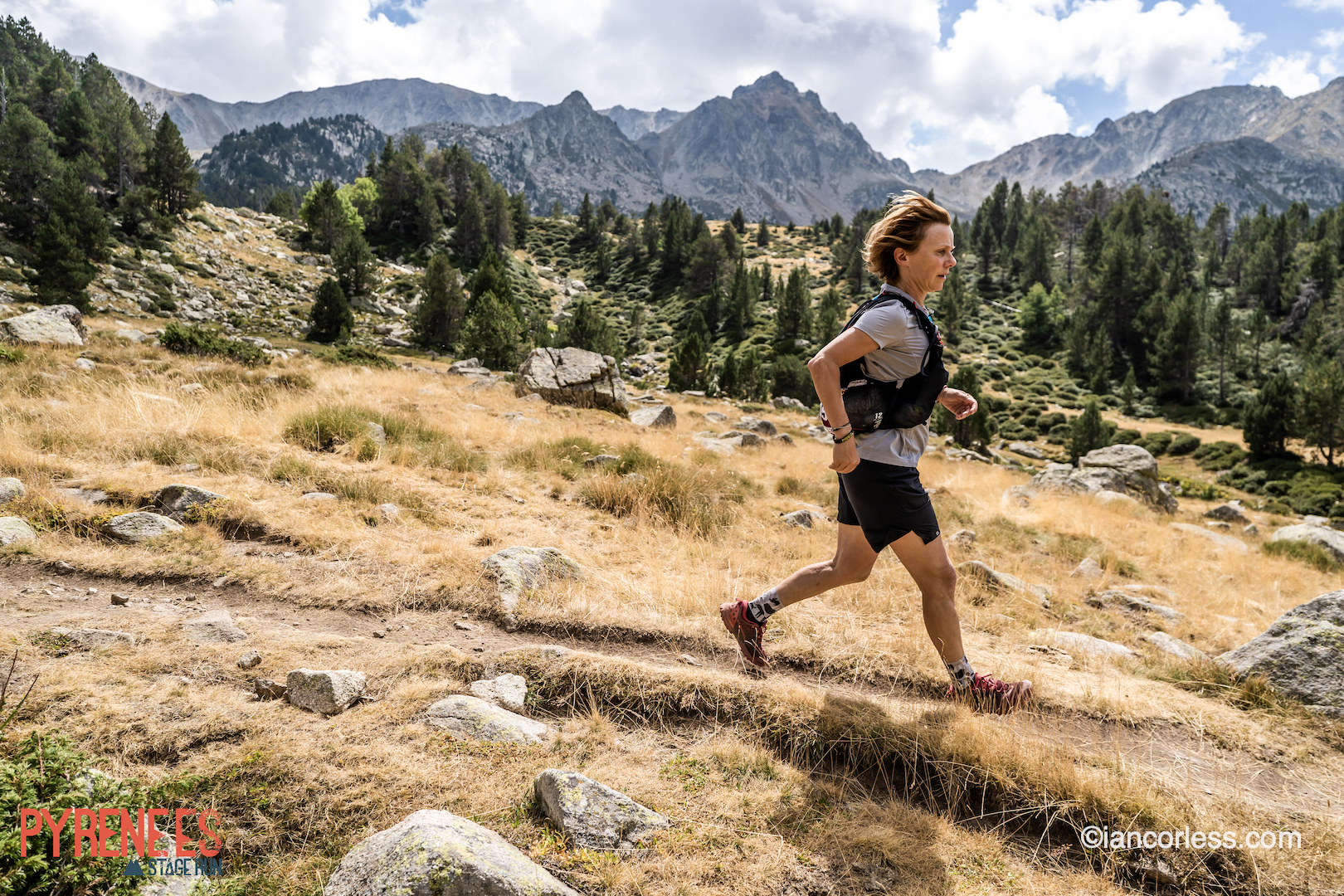
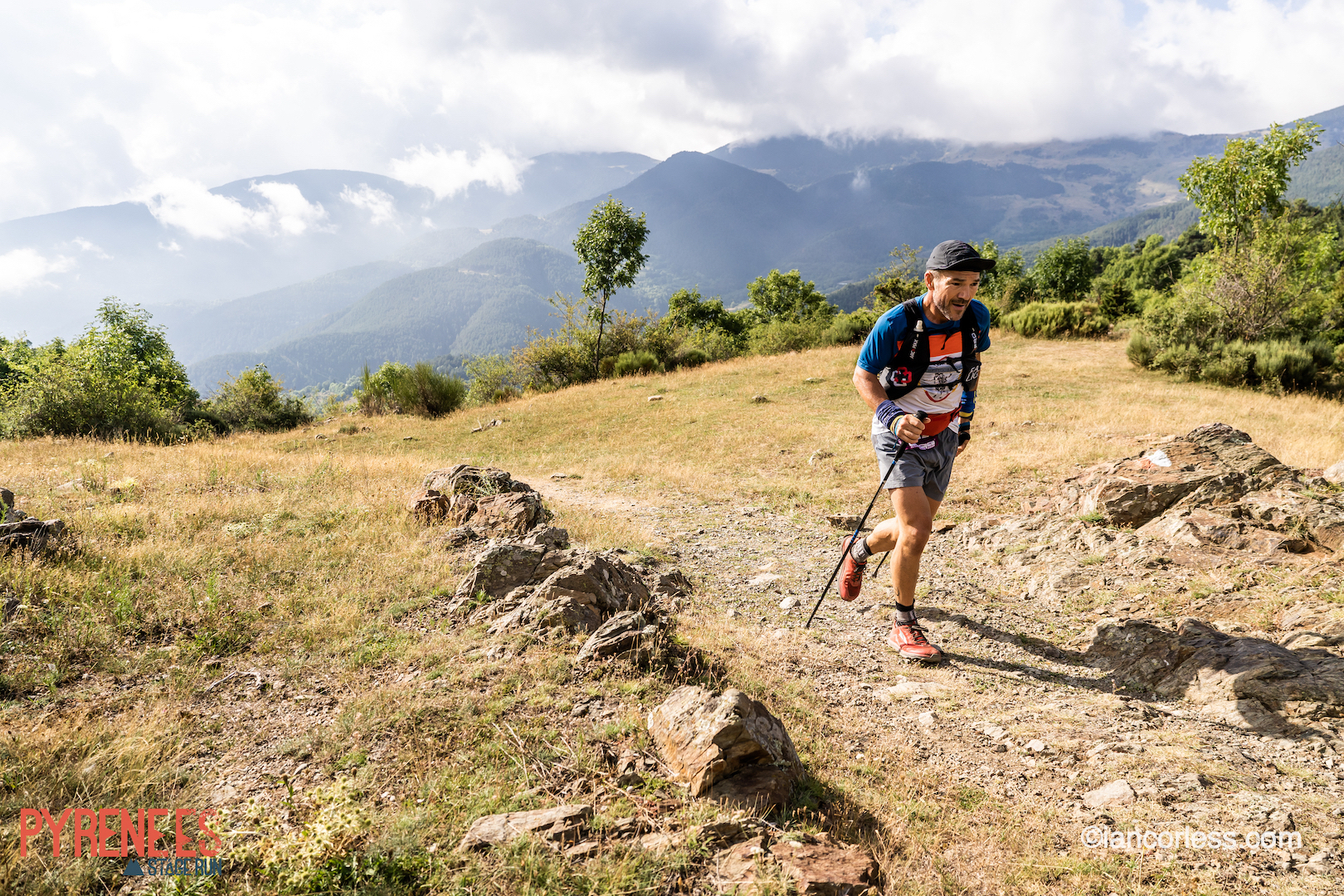
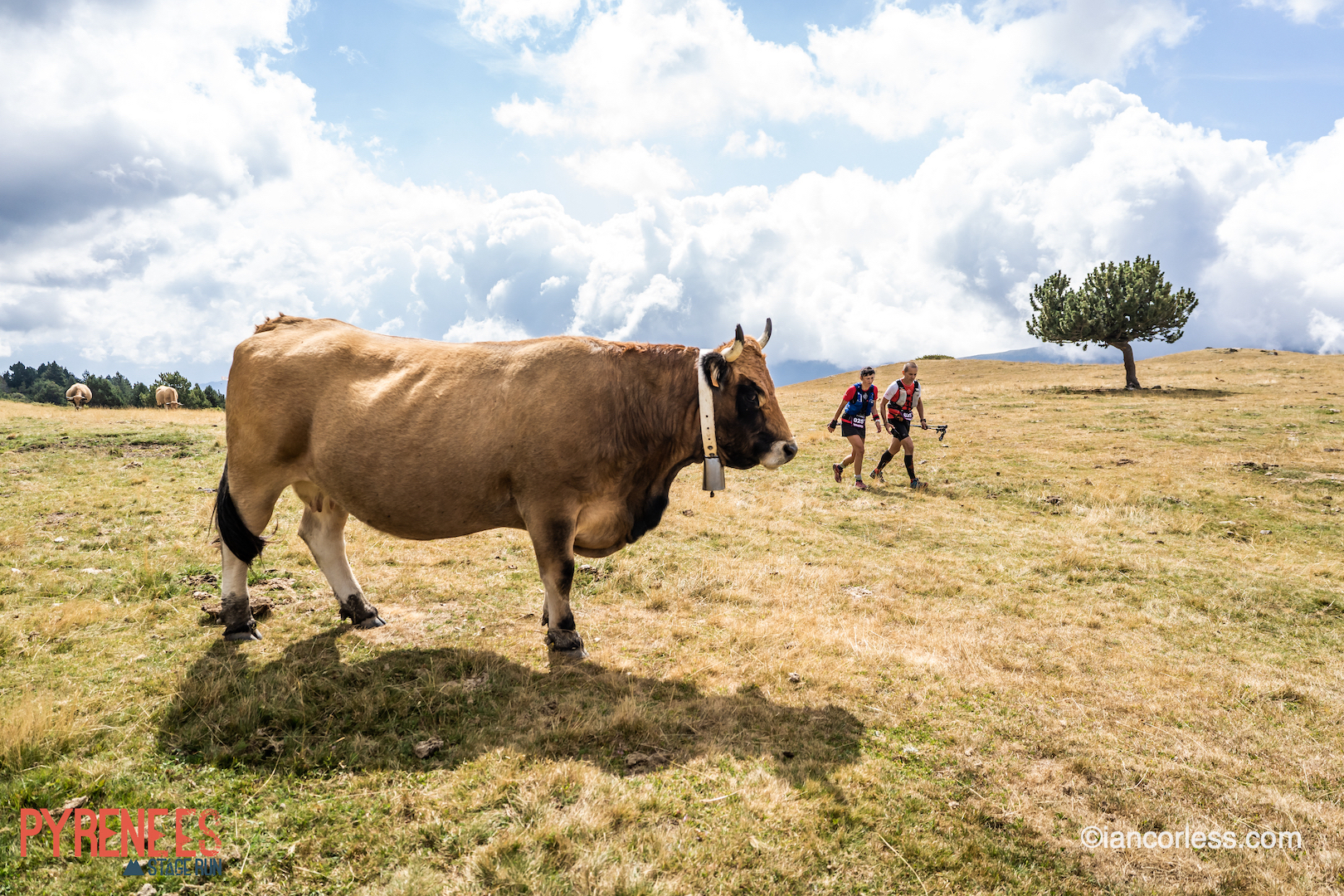
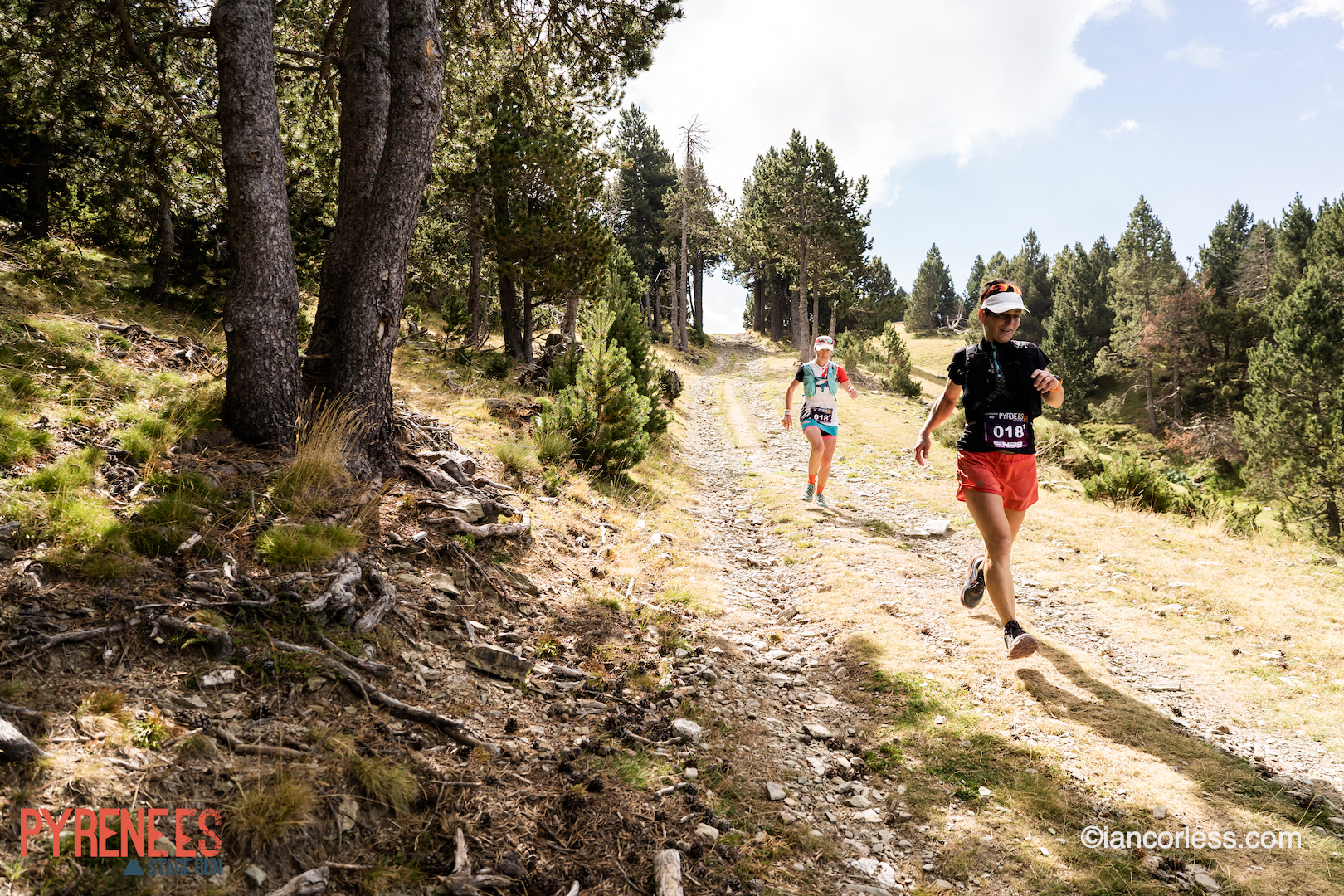
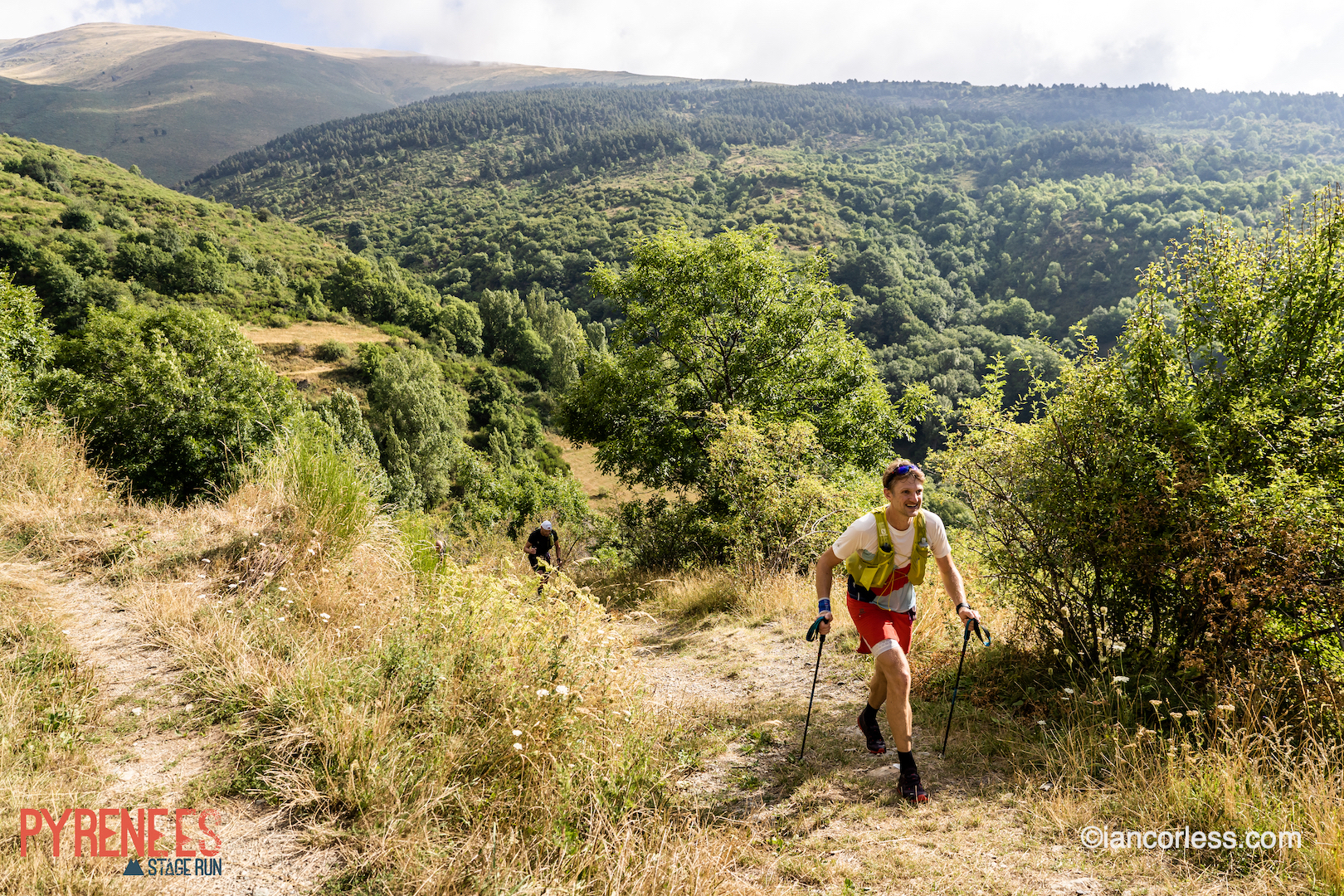
The Pyrenees Stage Run 2021 got underway yesterday, Sunday August 29th from Ribes de Freser. The challenge? 240km over 7-days allowing participants to fully appreciate the beauty of the Pyrenees.
A linear route, the journey concludes in Salardú with a 32.8km distance and 2300m+
Running in teams of 2 or 3 participants, the Pyrenees Stage Run arguably is a running holiday, with tough and challenging days and then relaxing post-race with a shower, bed, fresh clothes and excellent dinner each evening.
Stage 1 concluding in Queralbs after 34.3km and 2180m+ with highlights of Emprius de Pardines, Balandrau at 2585m (the highest point peak of the day), Col de Tres Pics, Coma de Vaca and finally Santuari de Núria before the drop to Queralbs. It was a successful day with all runners achieving the cut-off times. However, as always happens in any run,, injury hit forcing one runner not to make the start for day 2.
The ‘Tuna Canarias’ team of Gilberto Molina and Carmel Gonzales dictated the pace over the challenging terrain in Capçaleres del Ter I Freser Natural Park. A highlight of the day was the panoramic views from Balandrau Peak. Passing Refugio de Montaña the temptation to stop, take a cold drink and snack may well be tempting distraction but the Santuari dr Núria was waiting and then the finish.
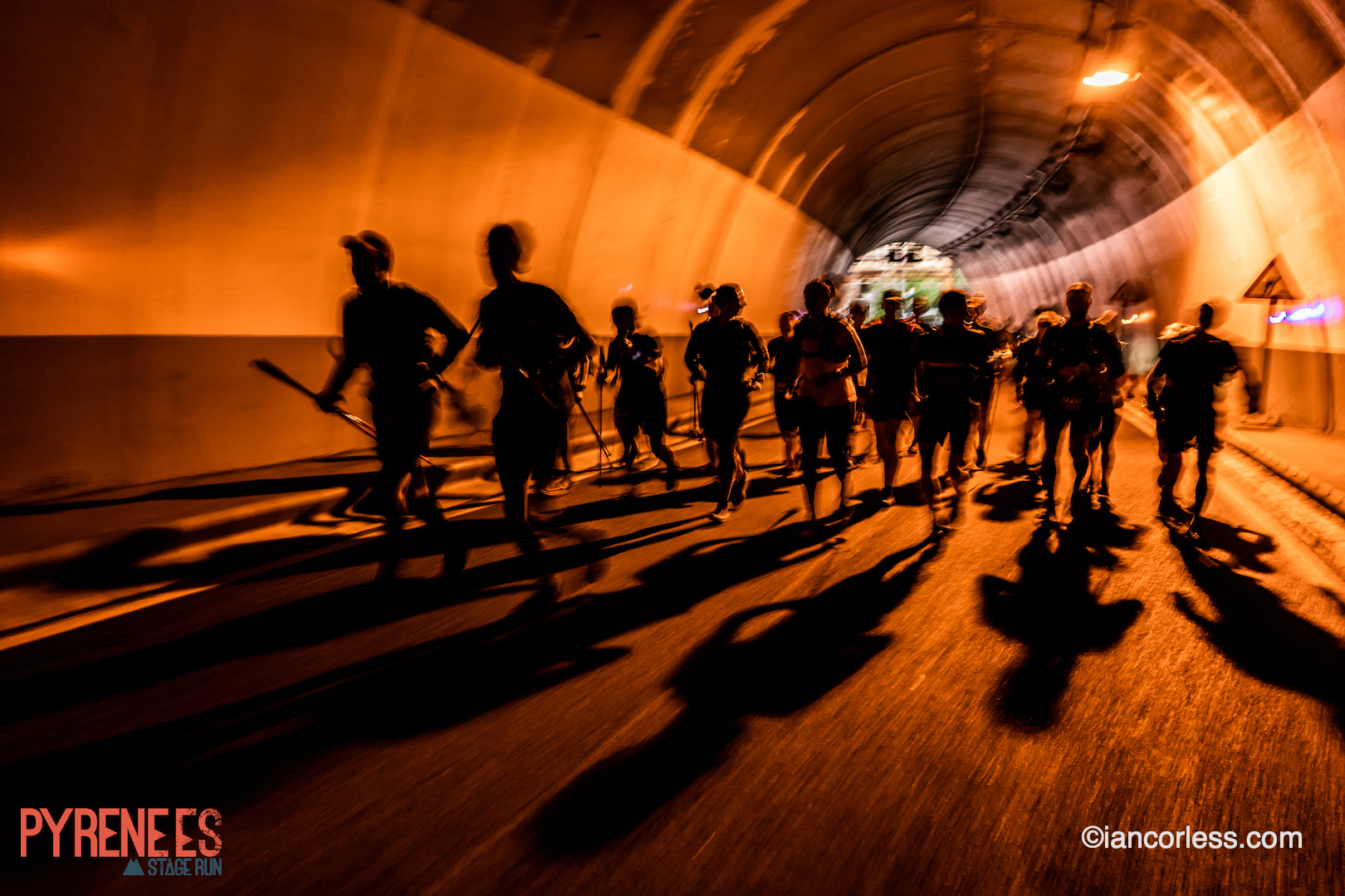
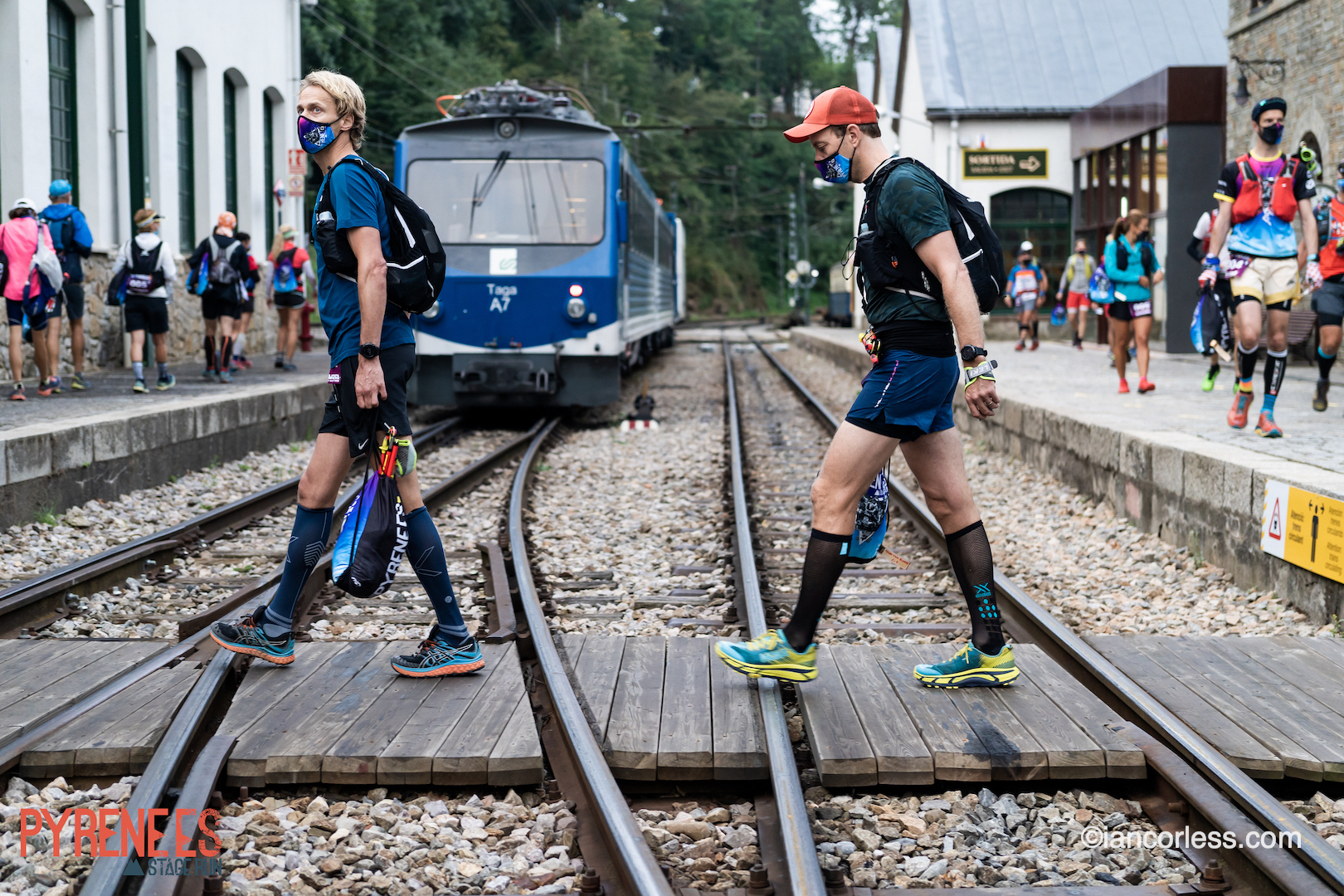
Stage 2 started with the Cremella train journey back to the finish line of day 1 and a relatively late start of 0815. The 37,4km that lay ahead with 1700m+ was in comparison to stage 1, ‘easy’ running!
Concluding in Puigcerdà the route was almost 100% GR11 track with little technicality but some stunning views.
Starting with a climb over the first 7km to Collet De Les Barraques, the route then dropped down to Can Fosses at 10km and the second lowest elevation point of the day. The following 12km was all about gently climbing to Coll de la Creu de Meians at 1992m via the pretty town of Dòrria. Coll Marcer followed and then the route dropped to Vilallobent before 5km of road to the stage 2 conclusion in the capital of Cerdanya, Puigercerdà.
The race is so far it is dominated by “Tuga Canarias” team of Gilberto Molina and Carmelo Gonzalez. Jesús and Mario Delgado of the “The Sigobros Century” follow and the “The Ultrazzz” team of Wim Debbaut, Thomas Swankaert and Kurt Dhont are 3rd in the in the men’s category.
In the female category, Marcela Mikulecka and Petra Buresova of “Runsport Team” have a strong lead after another excellent day, followed by mother and daughter, Jeanette Rogers and Kerrianne Rogers of “Running Holidays France.”
Finally, in the mixed category Jaroslaw and Natalia Haczyk of “BeerRunners” lead “B-Running” team Bastian Mathijssen and Birgit Van Bockxmeer are followed by Steffen Rothe i Kathrin Litterst of “Black Forest.”
The Pyrenees Stage Run would not be possible without the main sponsorship of Turga Active Wear, Garmin, Puigcerdà, Encamp (And), Vall del Madriu-Perafita-Claror and the organisation of bifree sports.
The event enters Andorra on Tuesday for stage 3, the longest of the race at 47km and 2600m+ The runners have 12 hours to finish the route.
The PSR can be followed live through the website of the race, https://psr.run, and every day a video and photographs of the stages will be published on their social networks.
Please support this website. I believe everyone deserves to read quality, independent and factual articles – that’s why this website is open to all. Free press has never been so vital. I hope I can keep providing independent articles with your help. Any contribution, however big or small, is so valuable to help finance regular content. Please support me on Patreon HERE.



















 IAN CORLESS