Race Day Nutrition (Part Four) – Marc Laithwaite

©iancorless.com_MDS2015Day1-9809

So last week (part three HERE) we discussed carbohydrate absorption and the role of insulin, this week, we are going to look at how to take foods on board whilst competing, to avoid stomach problems and maximise performance.

I’m having issues getting energy, what’s the solution?

Your stomach and gut acts a little like a sieve. If you pour water into it, the water passes straight through without any problems. If you pour a milkshake into the same sieve, it will pass through, but will take a little more time and will slowly drip. If you throw solid food into a sieve, it stays exactly where it is. The only way to pass solid food through a sieve would be to mix it up with water and make a thin enough solution, which could then start to drip through.

The solution which enters your stomach, is therefore very important in terms of performance. During endurance events, we eat and drink to get energy, but if the food sits in your stomach, then you aren’t actually getting any energy into your bloodstream. Not only are you receiving less energy, you are also likely to get some kind of stomach problems.

Isotonic is just the tonic

Isotonic refers to a solution which is a similar concentration to fluids in the body. Solutions of 7% are generally referred to as isotonic, this means that 7g of carbohydrate in 100ml of water is isotonic. You can count grams and millilitres as the same thing, so the calculation is simple, 100ml / 7g = 7%.

Drinks bottles generally come in 2 different sizes, 500ml and 750ml so based on the 100ml / 7g rule, the calculations would be as follows:

500ml water + 35g carbohydrate = Isotonic

750ml water + 52.5g carbohydrate = Isotonic

Some solutions are less concentrated than isotonic fluids. For example, water has no carbohydrate in it and no calories, this is classed as hypotonic (hypo = low / less than). Solutions which are more concentrated than isotonic fluids, are classed as hypertonic (hyper = high / more than). An example of a hypertonic solution would be a smoothie.

That’s fine for drinks but what about solid food?

Many athletes choose to eat solid food during their event. As stated above, anything which is above 7% solution is hypertonic. Therefore, all energy bars and solid food is hypertonic. This means that if you wish to absorb solid food effectively, you must add sufficient water to make a 7% solution. For example, a standard energy bar is approximately 50-60g in total weight. We said earlier that 7g in 100ml of fluid would be a 7% solution, so that means you would have to drink 7-800ml of water with each energy bar to make at isotonic solution (56g is 7% of 800ml). In ultra running events, there’s often solid food such as sandwiches at feed stations, so get into the habit of estimating the portion size, e.g. what does 60g of cheese sandwich look like! Eating sandwiches, pasta and cake can very quickly result in a large mass of food gathering in your stomach. As for gels, they work the same way. A single gel contains 20-30g of carbohydrate (you need to read the packet). A gel with 21g would require 300ml to make a 7% solution.

Why is solution an issue?

Taking energy bars, gels and other solid food provides energy, but you have to take a lot of fluid to create an isotonic solution in your stomach. If you fail to take sufficient fluid you will have a thick ‘hypertonic’ solution in your stomach which may not digest and may well lead to stomach problems.

Don’t forget the 60g per hour rule

As we’ve said in previous blogs, it’s unlikely that you can absorb more than 60g per hour of carbohydrate so eating too much food can have a negative impact upon digestion. Eating too much may lead to food gathering in the stomach and leading to feelings of bloating or sickness. The carbohydrate ‘maltodextrin’ seems particularly prone to doing this and all carbohydrate drinks and gels tend to consist of maltodextrin (pretty much every energy drink on the market is the same, it’s flavoured maltodextrin).

It’s known that when you get an accumulation of carbohydrate in the stomach, due to excess food intake, the body is forced to dilute the solution. The strong solution sitting in the stomach starts to draw water other parts of the the body, into the stomach, to dilute the solution and aid digestion and absorption. This action of drawing fluid into the stomach is termed ‘osmosis’.

It’s important to remember that if you do take too much energy, coupled with a lack of fluid, not only are you likely to get stomach issues, the energy will also fail to reach your blood stream and exercising muscles where it is needed. In simple terms, more food may provide you with less energy.

Practical advice:

  1. You need to stick to the 60g limit for carbohydrate intake
  2. A solution of 7% is not always attainable, aim for 10% as a minimum start point for intake:

60g energy powder + 600ml water per hour
60g energy bar + 600ml water per hour
60g of gels (2-3) + 600ml water per hour

  1. You can mix the above, e.g. 30g carbohydrate powder and 30g gels every hour, plus 600ml of water.
  2. Think about what’s the easiest to calculate and what the easiest to obtain during the event. Knowing how much energy is in drinks which are handed up at aid stations or adding your own powder on the go is not really feasible so gels and bars are often simpler to use and to quantify. In truth, you really have no idea what’s being handed up in the drinks bottles, so water is always the safe option.
  3. Feeding is easier when cycling compared to running, so if you’re doing Ironman triathlon, the bike feeding is critical to set you up for the run. If you’re running an ultra, the slower pace can help, but little and often applies.
  4. Little and frequent works best for digestion. A gel every 20-30 minutes or half a bar every 30 minutes is better than a full bar every hour. You still need to drink the correct amount of water to account for solution.
  5. Drinking water only with bars and gels has the benefits of ‘freshening your mouth’. Energy drinks, gels and bars can leave you with a constant sticky taste.

What about the food content?

There is circumstantial evidence to suggest that eating too much carbohydrate may also impact upon digestion and potential stomach problems. If you are prone to stomach issues, then gels with a higher fat content may well work best. There are some very scientific high fat gels on the market, mainly in the US, but if you Google for peanut butter flavour gels, that’s a simple option and you can easily get those in the UK. If you don’t like peanut butter flavour, there’s not much option!

The final step

Ok, so here’s your homework. Go and purchase gels or bars, which you intend to use for your event and take a look at the wrapper. What’s the total weight in grams of the product and what does the content add up to? Remember, a gel may have added water, so a 40g gel may contain 20g of carbohydrate. Don’t just use the actual product weight, you need to check the weight of the ingredients and use that as your gauge. Work out how many you will need and how often you will eat them. If your event uses specific products e.g. Ironman use Powerbar, it’s a lot easier to use these on the day and save yourself the hassle of carrying a lot of product.

Hydration?

That’s coming next week

About Marc:

Sports Science lecturer for 10 years at St Helens HE College.

2004 established The Endurance Coach LTD sports science and coaching business. Worked with British Cycling as physiology support 2008-2008. Previous Triathlon England Regional Academy Head Coach, North West.

In 2006 established Epic Events Management LTD. Now one of the largest event companies in the NW, organising a range of triathlon, swimming and cycling events. EPIC EVENTS also encompasses Montane Trail 26 and Petzl Night Runner events.

In 2010 established Montane Lakeland 50 & 100 LTD. This has now become the UKs leading ultra distance trail running event.

In 2010 established The Endurance Store triathlon, trail running and open water swimming store. Based in Appley Bridge, Wigan, we are the North West’s community store, organising and supporting local athletes and local events.

Check out the endurance store HERE

Endurance Store Logo

Race Day Nutrition (Part Three) – Marc Laithwaite

©iancorless.com_TCC2015_Day4B-1685

Last week we showed you how to calculate the amount of carbohydrate used during cycling and running, in order for you to produce a structured plan for race nutrition. This week, we begin the process of looking at what and when to eat on race day and the first step, is to explain the basic physiology.

Missed part one (here) and part two (here)

Carbohydrates

Carbohydrates or ‘sugars’ are a prime source of fuel when exercising and unfortunately, as explain in previous blog posts, they are relatively limited. The term for stored carbohydrate is ‘glycogen’ and we store glycogen in the muscles (to use for movement) and in the liver (to supply sugar to the brain and maintain blood sugar levels)

There are different types of carbohydrates, but ultimately, they are all broken down to glucose as this is what we use as our prime fuel. When you eat or drink carbohydrate, it first goes into your stomach. We can’t absorb carbohydrates through the stomach wall, so they progress from there into the intestines and are absorbed through the intestine wall

The rate of absorption

The carbohydrates you eat are broken into glucose and pass through the intestine wall into the blood stream. Remember that in recent blogs, we’ve stated that the limit for this seems to be around 60g per hour of glucose. Depending upon the type of carbohydrate and how it is consumed (drink or solid food), the time taken for the carbohydrate to be broken down and absorbed will vary.

Many of you will have heard of the ‘Glycemic Index’. This scale was designed with diabetics in mind and it dictates how quickly foods are broken down and absorbed through the intestine wall. To measure the GI of a food is relatively simple (but complex at the same time). The process is to give someone a specific food, then take blood samples at regular intervals for the next hour to see how rapidly the blood sugar (glucose) levels rise.

The ‘GI’ scale runs from 1-100. Foods with a low score will take longer to reach the blood and give a more consistent supply (slow drip feed). Foods which enters the blood stream quickly, will give a more immediate spike in the blood sugar levels. Pure glucose has a score of 100 as that will lead to a rise in blood glucose more quickly than anything else.

The role of insulin

The reason why the GI scale is so important for diabetics, is the ‘insulin response’. A rise in blood glucose will lead to a rise in blood insulin, which is the hormone responsible for removing glucose from the blood and pushing it into the liver and the muscles.

Your daily diet should be made up of foods low on the GI scale. It you eat foods which are high on the GI scale throughout the day, this results in repeated sugar spikes and subsequent insulin spikes. Over time, your insulin will become less effective (overuse can lead to it becoming less sensitive to glucose). The reduced sensitivity can eventually lead to type 2 diabetes (insulin doesn’t work correctly). You may think, as an athlete, you are not susceptible to type 2 diabetes, but you’d be wrong. It is critical for you that your insulin works correctly, so you should be doing everything in your powers to ensure it does.

The secondary issue relating to insulin, is the impact upon fat metabolism. It reduces the amount of circulating fat by encouraging storage in fat tissue. In terms of your daily diet and metabolism, this has significant consequences upon weight loss and fat use. Constant spikes in blood glucose and insulin will reduce the amount of fat you metabolise throughout the day.

Are we discussing daily diet in this blog or race day nutrition?

Okay, I am going off track a bit, but I think it’s important to understand the foundations. As an athlete, you need a constant and balanced supply of energy to complete your training sessions and to recover quickly. Therefore, you should be eating to encourage a more stable metabolism and that is derived from low to moderate GI foods, NOT high GI foods.

So how does this work during racing?

  1. If you are racing an endurance event, you really need to ensure that you have a steady supply of glucose, without disrupting fat metabolism. A large spike in glucose and insulin, could inhibit fat metabolism, which means you’ll be forced to use more glycogen and run out more quickly.
  1. There are times when you may well need a rapid rise in blood glucose. If you have an extreme low point in the race and find yourself sitting on the road side, you may need an ‘instant hit’. Under such circumstances, you need the quickest glucose spike possible to get you back on your feet. At times like this, who cares about insulin!!

Here’s the thing, if you do scenario number 1 correctly, then you shouldn’t experience scenario number 2. The other issue is that products that are sold to deal with scenario number 2 (high energy, quick acting gels) are being used for scenario number 1. If you are half way through a 12 hour event and your energy levels are feeling relatively good, should you take a product which gives you an instant spike in glucose and insulin? Remember, we are aiming for a ‘constant’ and ‘balanced’ blood glucose level, we are trying to avoid blood glucose ‘fluctuations’.

So this blog is not what I intended when I started typing and none of the original planned information has made the page. Needless to say, this 4 part ‘race nutrition’ series is not going to be 4 parts.

A critical point to take away is that over the years of giving advice, we’ve found that the daily diet can have a huge impact upon training and racing performance. In particular, cutting out high GI foods can lead to a dramatic change in metabolism and enhance your fat utilisation.

Your homework for this blog is to take a look at the glycemic index. You’ll find this very interesting and you’ll probably find that many of the foods you presumed to be ‘sugar spiking’ are not and vice versa.

What if I said that Coke had a score of 60, whilst mashed potato AND jacket spuds had a score of 90 (that means mashed potato and jacket spuds can give more of a sugar spike than Coke!!)

You’ll notice that there is also something called ‘glycemic load’. This takes the volume of food into account e.g. you can’t compare a full jacket spud with a teaspoon of glucose as the volume is very different. Don’t worry about that for now, it’ll over-complicate the matter!

Take a look for yourself, and see what’s low and high. There’s loads of them on the internet, Google glycemic index table. Next week we’ll look at the foods you eat during the event. How can you manipulate the use of drinks, bars and gels to maintain a steady blood glucose supply and avoid the fluctuations that we have discussed above. See… I told you there was a point to this blog.

Until then, stay healthy.

– Marc Laithwaite

About Marc:

Sports Science lecturer for 10 years at St Helens HE College.

2004 established The Endurance Coach LTD sports science and coaching business. Worked with British Cycling as physiology support 2008-2008. Previous Triathlon England Regional Academy Head Coach, North West.

In 2006 established Epic Events Management LTD. Now one of the largest event companies in the NW, organising a range of triathlon, swimming and cycling events. EPIC EVENTS also encompasses Montane Trail 26 and Petzl Night Runner events.

In 2010 established Montane Lakeland 50 & 100 LTD. This has now become the UKs leading ultra distance trail running event.

In 2010 established The Endurance Store triathlon, trail running and open water swimming store. Based in Appley Bridge, Wigan, we are the North West’s community store, organising and supporting local athletes and local events.

Check out the endurance store HERE
Endurance Store Logo

Race Day Nutrition (Part One) – Marc Laithwaite

©iancorless.com_TCC2015_Day5-2539

In recent articles, we’ve discussed the 2 main fuel sources for endurance exercise (fat and carbohydrate) and how you should optimise your body to burn fat, thereby allowing you to save precious carbohydrate stores. When it comes to race day then the game and the rules change completely. As a recap, when training you should:

1. Ride or run at the correct intensity or follow a specific protocol such as Maffetone
2. Avoid fluctuations in intensity, remember that average heart rate or power output are NOT the critical figures, it’s TIME IN ZONE that counts
3. Eat foods which are balanced with low GI carbohydrates and fats to encourage fat usage and avoid sugar spikes
4. Avoid gels and sugar products based on point 3 above

If you follow the above guidance, over a 12-16 week training period, you can teach your body to utilise a greater amount of fat as fuel and also to use less calories overall, making you more economical. The important thing to remember is that ‘training’ and ‘racing’ are 2 separate things and your fuelling approach should reflect this.

What happens during the race?

Okay, let’s presume that you have trained correctly and maximised your fat burning potential and fuel economy. You reach the first event of the year and when riding or running at race pace you are using 700kcal per hour, 50% of which comes from carbohydrate and 50% of which comes from fat. You only need to worry about the carbohydrate loss as that’s the one which is critical, so let’s focus on the 350kcal of carbohydrate which equates to 88 grams of carbohydrate (4 kcal per gram).

The limitation of carbohydrate intake

Here’s the big problem, you can only absorb approximately 60g of carbohydrate per hour. Imagine that there are small boats, which ‘ferry’ carbohydrate across the intestine wall into your blood stream. Unfortunately you only have so many ‘ferry boats’ so no matter how much carbohydrate you throw in there, the amount which can be ferried is limited to a pretty standard 60g. For our example above, that means that you’re going to fall short. You’re using 88 grams per hour and you can only replace 60 grams per hour. That’s a 28 gram / 112 kcal per hour deficit.

So I can’t just eat more?

Unfortunately not. If you eat more, it’s unlikely to be digested and will simply sit in your stomach or intestines without providing energy. There are a lot of people who suffer from gastric problems during long distance events and this is generally caused by eating too much food which they are unable to digest. It’s really important that you understand, eating more food doesn’t mean you’ll have more energy and it may well mean that you’ll face stomach upsets. I stress this point knowing how obsessed Ironman athletes in particular become with regards to feeding on the bike.

A deficit of 112 Kcal per hour doesn’t sound too bad

No, it doesn’t. But that is based on the presumption that you are only using 700kcal per hour, bigger people and less efficient people may be using more. It’s also based on the assumption that 50% is coming from fat and that may not be the case at all, in fact, as much as 80-100% may be coming from carbohydrate. What makes this worse is that bigger people can’t necessarily take on board more fuel, the 60g limit still pretty much applies. It’s a gut issue, it’s not about how big your muscles are and how much you can store in there.

So the 3 things you might want to know are:

1. How many calories do I burn per hour?
2. How many of them come from fat and carbohydrate?
3. How much should I be taking in as a consequence?

As a start point, you can probably work out your calorie usage by using a heart rate monitor or power meter. Run or ride at race pace and it’ll do the calculation for you, although the power meter is a lot more accurate than the heart rate monitor, it’s still a start point. Warm up, then do an hour at your ‘race pace’ and work out the figures. It’s amazing how many people who consider their training and racing to be ‘serious’, still have no clue how many kcal they use when racing. How can you have any grasp of nutrition requirements without knowing this figure? Once you’ve calculated that figure, apply the following rule:

80/20: If you are struggling to ride 50 miles / run 15 miles even when fuelling yourself throughout, then apply the 80/20 rule. That means 80% of your fuel is carbohydrate and 20% is fat.

65/35: If you can ride 50 miles / run 15 miles comfortably using fuel, then apply the 65/35 rule. That means 65% of your fuel is carbohydrate and 20% is fat.

50/50: If you can ride 50 miles / run 15 miles comfortably without using any fuel whatsoever, then apply the 50/50 rule. That means 50% of your fuel is carbohydrate and 50% is fat.

Are those figures accurate?

Absolutely not, I just made them up. They are by no means 100% accurate but they will give you a good start point and will allow you to calculate an approximate figure. The running figures are less ‘straight forwards’ than the cycling, as the impact of running can really fatigue your legs, so you may find 15 miles difficult, even if your fat burning and fuel economy is good. for cycling, the impact is low, so it’s more likely governed by metabolism and fuel.

Ok, so what’s the next step?

Here’s what we’re going to do. Prior to next week you are going to do a 1 hour ride or run at your ‘race pace’ and then using your cycle power meter, GPS or heart rate monitor, calculate how many calories per hour you are using when exercising at that intensity. I feel this is a pretty important thing for you to understand if you are to race successfully. It’s easy with a power meter for cycling, it does the maths for you. Most heart rate monitors will use your age and weight to work out kcal per hour. There are some tools on the internet such as: http://www.braydenwm.com/calburn.htm which can help to give you a basic idea.

Go forwards my endurance friends and do the maths, next week, we will be looking at planning your intake.

Until then, stay healthy.

– Marc Laithwaite

About Marc:

Sports Science lecturer for 10 years at St Helens HE College.

2004 established The Endurance Coach LTD sports science and coaching business. Worked with British Cycling as physiology support 2008-2008. Previous Triathlon England Regional Academy Head Coach, North West.

In 2006 established Epic Events Management LTD. Now one of the largest event companies in the NW, organising a range of triathlon, swimming and cycling events. EPIC EVENTS also encompasses Montane Trail 26 and Petzl Night Runner events.

In 2010 established Montane Lakeland 50 & 100 LTD. This has now become the UKs leading ultra distance trail running event.

In 2010 established The Endurance Store triathlon, trail running and open water swimming store. Based in Appley Bridge, Wigan, we are the North West’s community store, organising and supporting local athletes and local events.

Check out the endurance store HERE
Endurance Store Logo

FOOD for THOUGHT – What freeze-dried food for multi-day racing?

All Food 3

Article ©Niandi Carmont

Niandi Carmont is taking on the 30th edition of the Marathon des Sables. No stranger to endurance events, Niandi regularly competes in ultras all over the world. However, it has been 10-years since she last toed the line at MDS and although an occasional freeze-dried meal has been consumed on some weekend fast-packing, eating out of a packet or packets for a whole week was going to take some getting used to! It’s a no brainer to test food in advance of a race, particularly one as expensive as MDS. You don’t want to ruin your race with poor food choices…

Running a mult-day race? Check out our 2016 training camp http://d.pr/f/18cqZ

Niandi had always planned to take ‘real’ food such as Billtong, Parmesan Cheese, nuts and other similar portable and high calorie foods. However, Niandi’s main meal of the day will be a freeze-dried option. The question of hot food or cold food is a dilemma that you will each need to work out. Needless to say, all these food options can be eaten with hot or cold water.

FREEZE DRIED FOOD REVIEW 

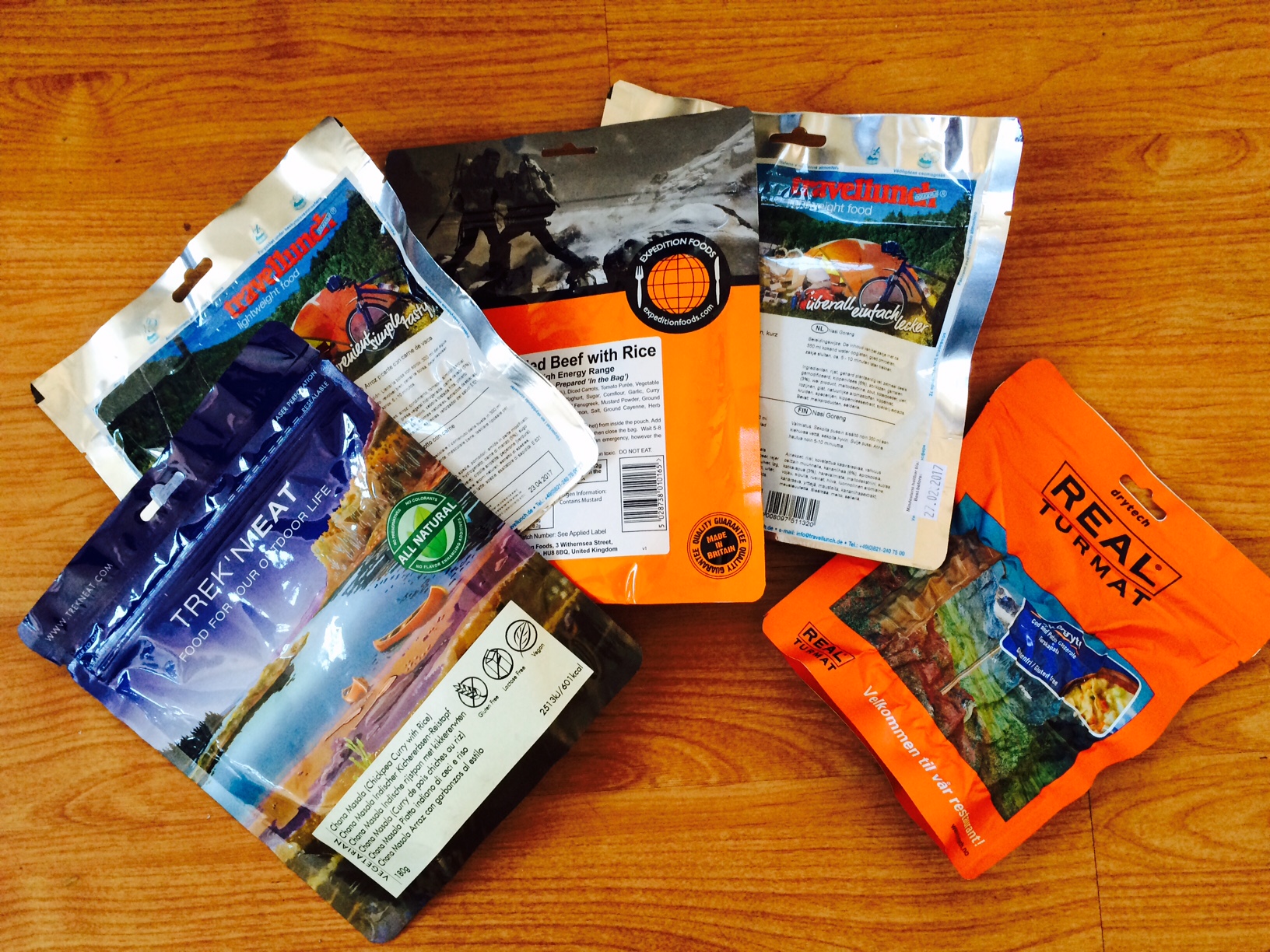
I recently discovered a great site specializing in freeze-dried foods for outdoor and endurance events. I am taking part in MDS 2015, a multi-stage self-sufficiency event and therefore I need high calorie food in lightweight packages. I contacted LYOPHILISE.COM to test 5 of the dishes on the menu!

My choice was limited to:

  • Evening meals as I will be taking some of my own favorite snacks during the day. Having said that, this site also provides breakfasts, desserts, snacks, MDS packs, drinks and so on… all for the adventure/ multi-stage and/or endurance athlete.
  • High calorie to weight ratio. I want to limit the weight of my pack to the minimum requirement of 6.5kg and so my selection was based on high calorie/ low weight foods.
  • Preferably gluten-free options.

Well after a weekend spent subjecting my palate to 5 freeze-dried haute gastronomie dishes, here’s my feedback:

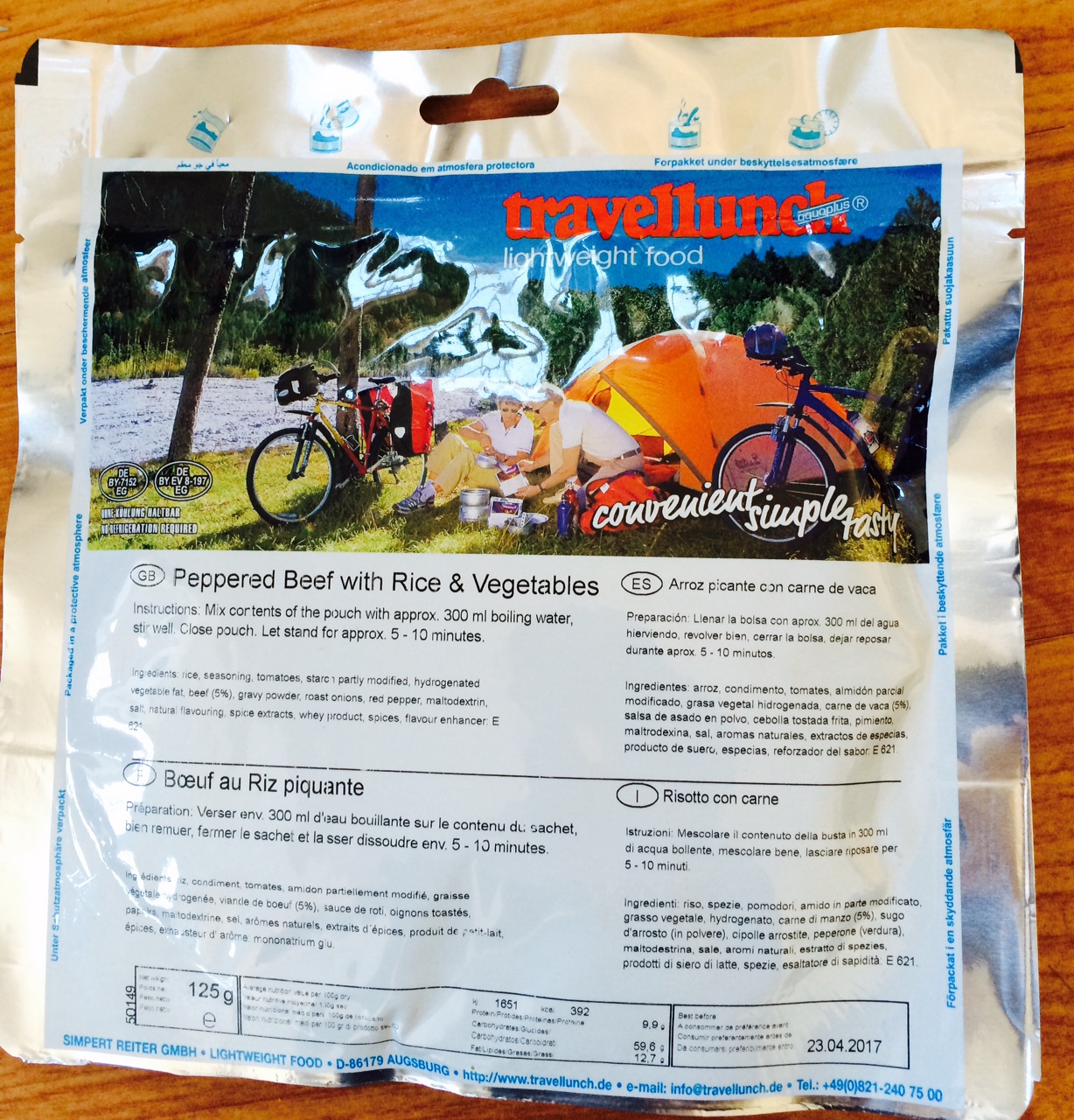
Peppered Beef with Rice & Vegetables by Travellunch €4.95/€8.90

Peppered Beef

This meal comes in 2 formats. A single portion or a double portion; I really liked this dish. Very tasty and very morish, I could easily eat this as a meal replacement. The texture is great. The rice absorbs all the water and provides the dish with just the right texture – it’s not soggy, soupy or gooey like so many freeze-dried dishes. And it is seasoned with just the right amount of pepper and spices. What I like too is that all the flavorings are natural and guys, who usually need more calories, can have double portions as this dish comes in 2 formats. The dish is relatively high in carbs so perfect fuelling before the long stage especially if you consume a double portion. Or alternatively it can be used as replenishment after the long stage when you are running low on carbs. What I liked less was the packaging – Travellunch could make their packets easier to open. When you’re in a self-sufficiency event you really want something that’s easy to cut open and reseal. It’s also great value for money compared to some of the other brands at 4.45€ for a single portion. I’ll be taking 3 of these to MDS.

Peppered Beef Before

Nutritional Values:

Energy value in Kcal per 100 g (dry product) 392
Energy value per 100 g (kJ) 1651
Energy value per product (Kcal) 980
Energy value per product (kJ) 4127,5
Protein per 100 g 9.9
Protein per bag (g) 24.75
Carbohydrates per 100 g 59.6
Carbohydrates per bag (g) 149
Fats per 100 g 12.7
Fats per bag (g) 31.75

Ingredients:

Rice, tomatoes, beef (5%), roast onions, red pepper, natural flavorings

Rating:

  • Price: *****
  • Taste: *****
  • Energy/Weight ratio: ****
  • Nutritional Value: ****
  • Convenience: ***

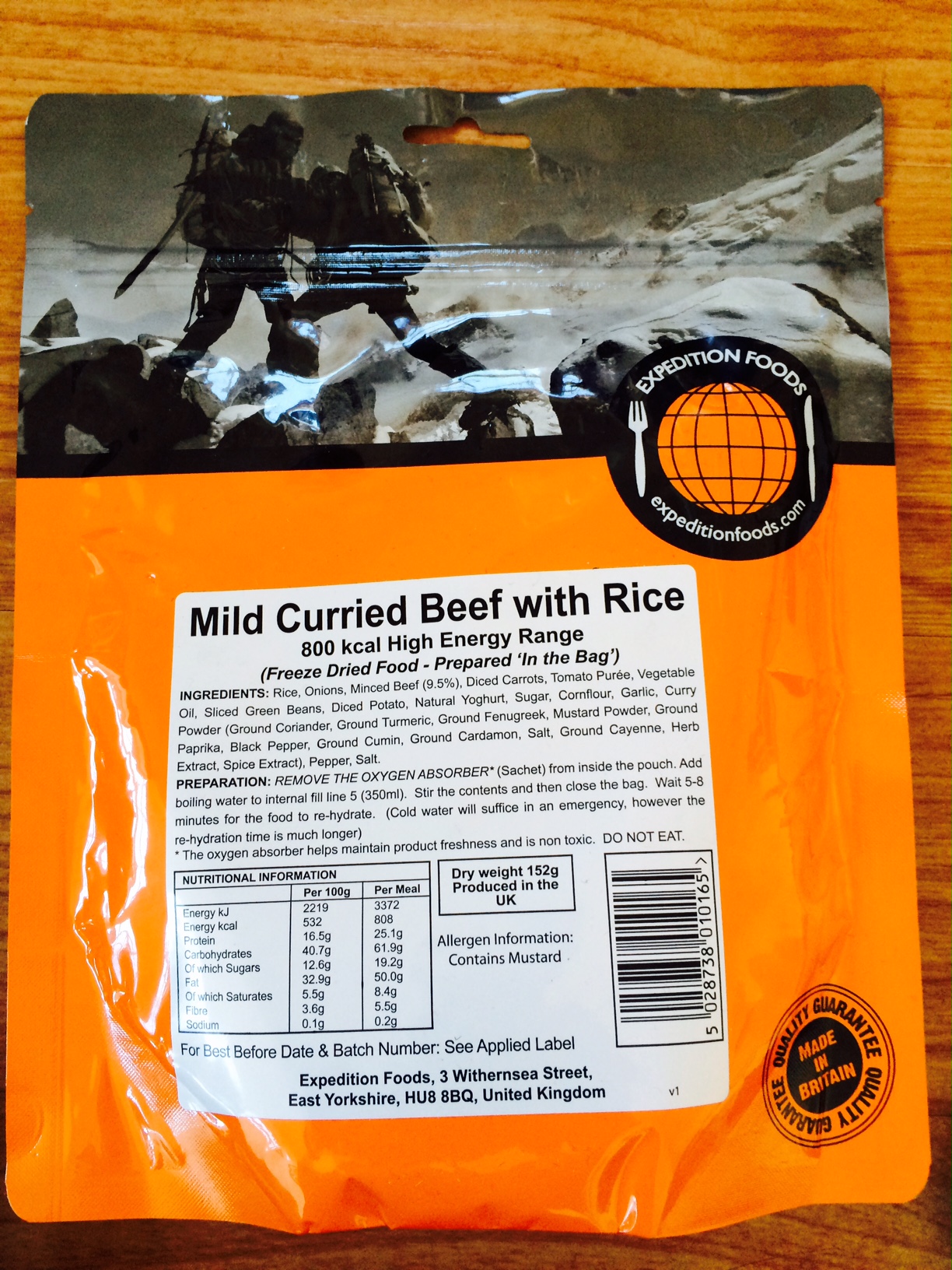
Mild Curried Beef & Rice by Expedition Foods €8.95

Curried Beef Rice

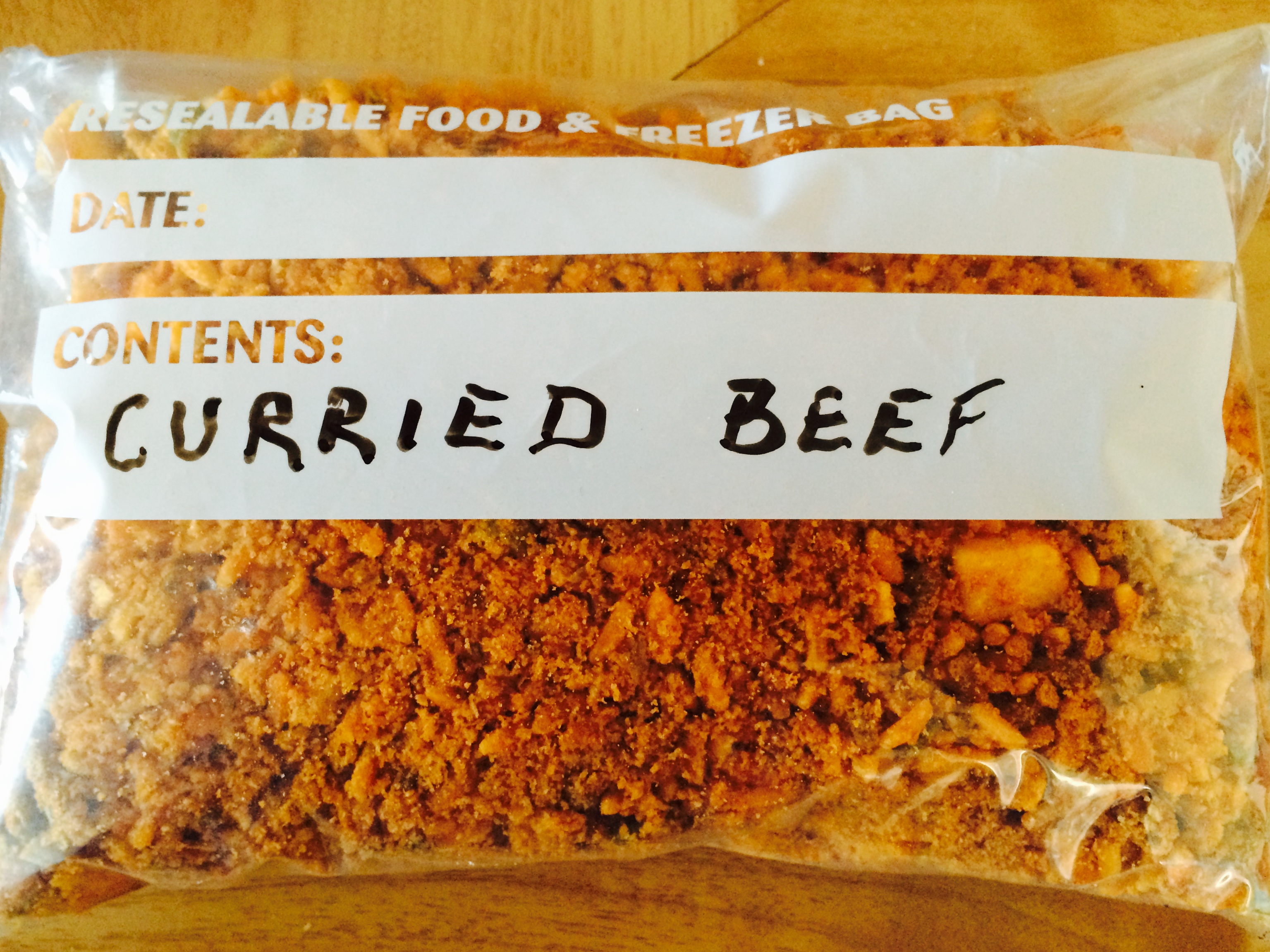
This is another of my favorites and I’ll be taking a couple of these to MDS too! Of all the meals I tried this was definitely the tastiest. Again this is a meal I would happily eat as a meal replacement. It’s mildly spicy and although it is a curry dish it is not hot. It’s very palatable. The diced and sliced vegetables are a great little touch to this dish. The texture is great too – nothing soggy and watery or bland about this dish – with a little imagination I could be sitting in the local curry house….In comparison with the previous rice & beef dish, this one has a considerably higher fat content and is lower in carbs. The bag is really easy to open and reseal so very practical. What’s great about this dish is that you can also prepare it with cold water so if you feel like a meal during the long stage at night you can just whip this out and add some water – bear in mind that the re-hydration time will be much longer.

FullSizeRender (3)

Rating:

  • Price: **
  • Taste: ****
  • Energy/Weight ratio: *****
  • Nutritional Value: *****
  • Convenience: *****              

Nutritional Values:

Energy value in Kcal per 100 g (dry product) 532
Energy value per 100 g (kJ) 2218
Energy value per product (Kcal) 808
Energy value per product (kJ) 3372
Protein per 100 g 17
Protein per bag (g) 25,1
Carbohydrates per 100 g 41
Carbohydrates per bag (g) 61,9
Fats per 100 g 33
Fats per bag (g) 50

Ingredients:

Rice, onions, minced beef (9,5%), tomato puree, carrots, vegetable oil, green beans, potato, yoghurt, sugar, cornflour, garlic, curry powder, salt, pepper,


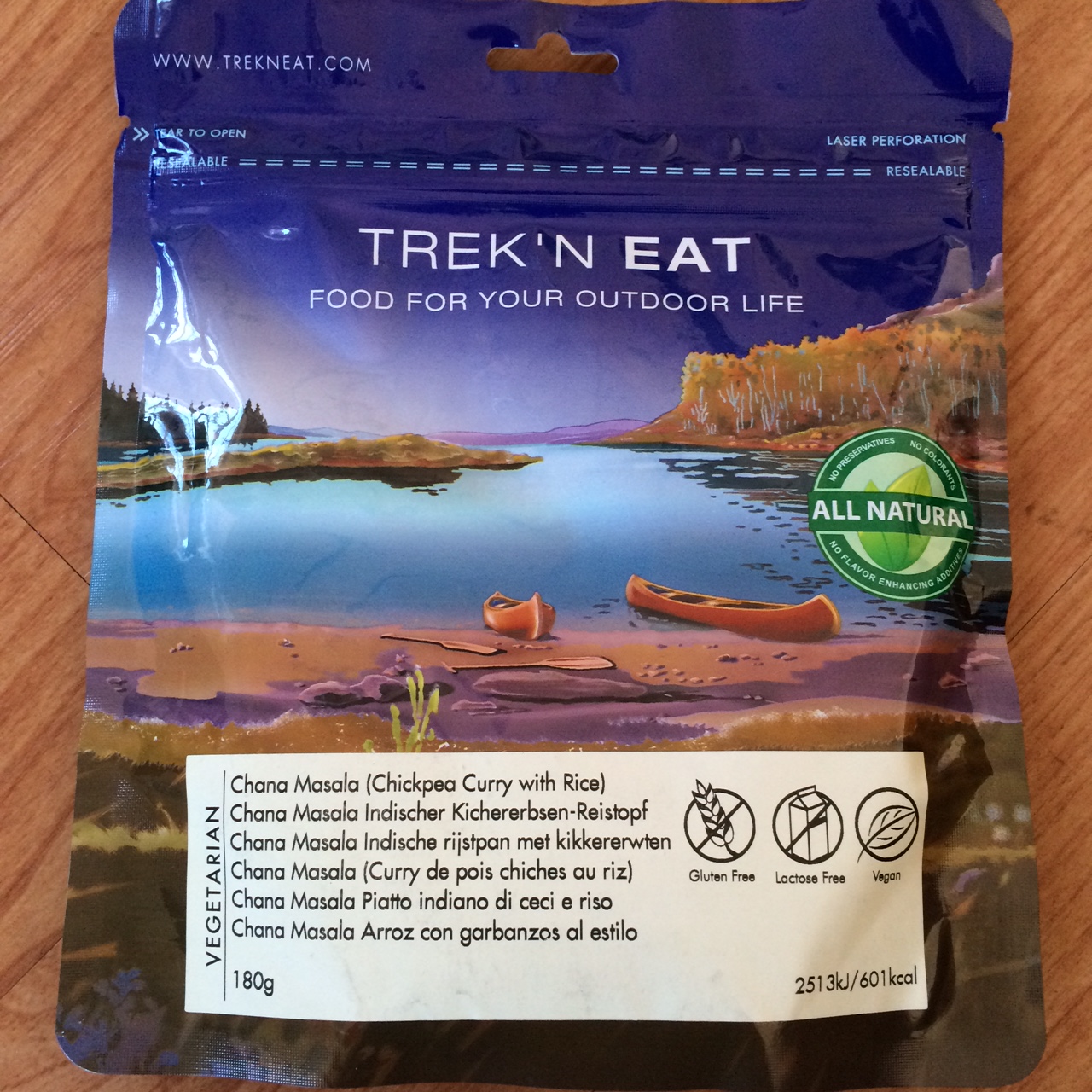
Chickpea Curry with Rice by Trek ‘n Eat €6.95

Chickpea Curry Packet

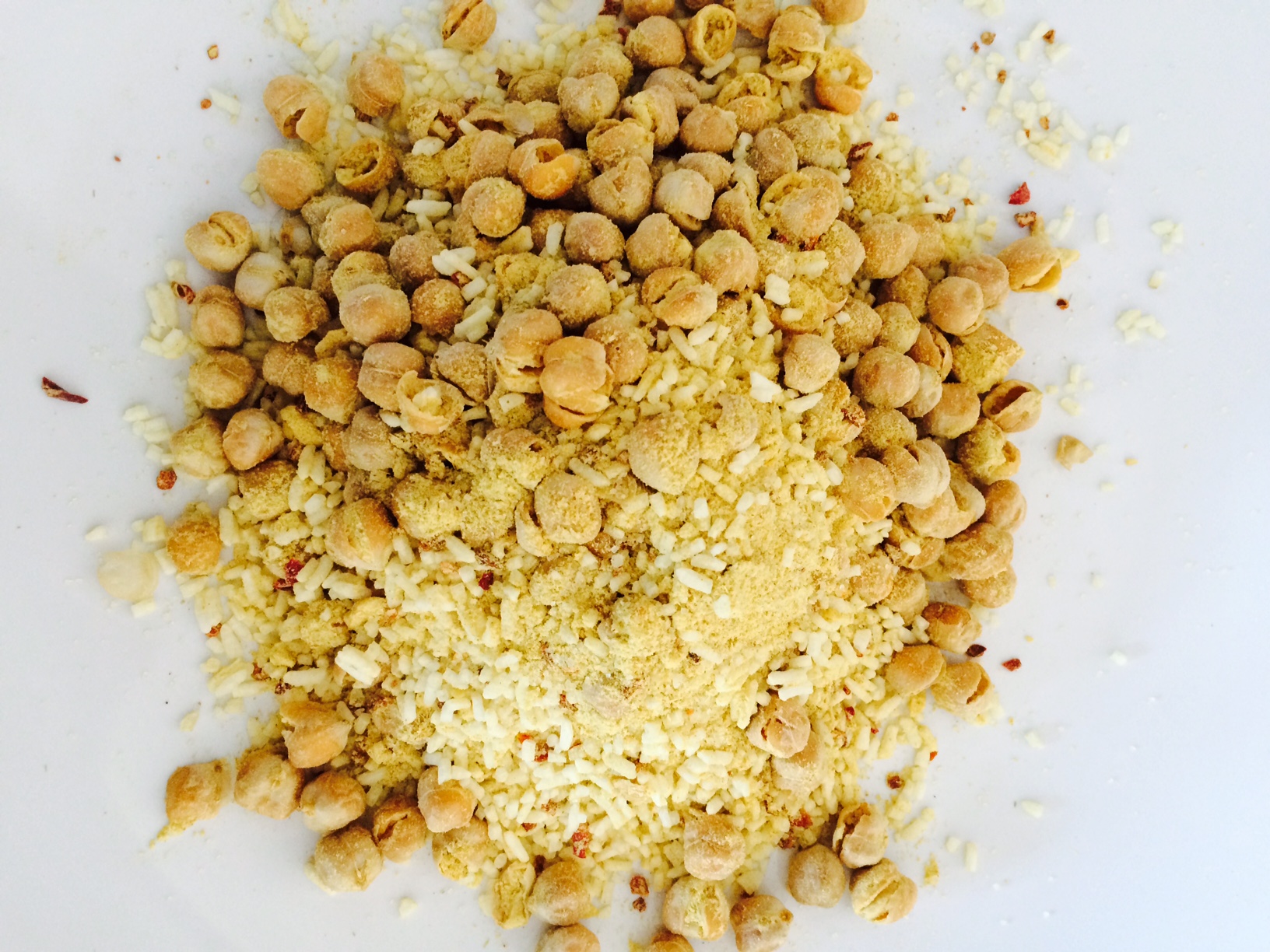
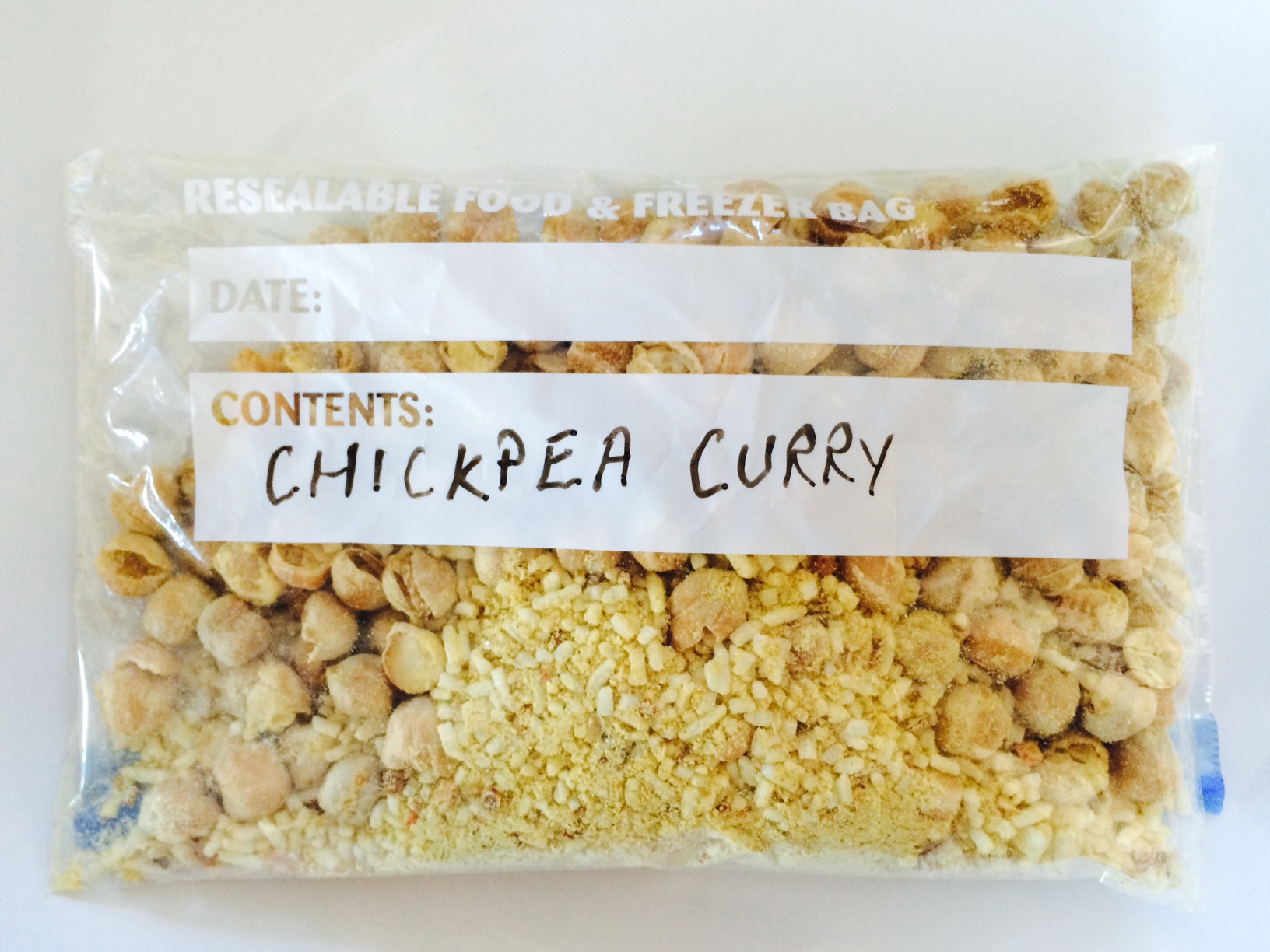
This dish was far too hot and spicy for me! I definitely can’t see myself eating this after a day’s running in the desert! It’s supposed to stand for 10 minutes to re-hydrate but I found that the chickpeas were hard and crunchy. The dish just didn’t do it for me. The lack of taste and blandness might have something to do with the fact that it is gluten-free and also very low in fat.

Chickpea

FullSizeRender (5)

Rating:

  • Price: ****
  • Taste: *  
  • Energy/Weight ratio: ***
  • Nutritional Value: ***
  • Convenience : **  

Nutritional Analysis :

Energy value in Kcal per 100 g (dry product) 334
Energy value per 100 g (kJ) 1396
Energy value per product (Kcal) 601.2
Energy value per product (kJ) 2512.8
Protein per 100 g 9.3
Protein per bag (g) 16.74
Carbohydrates per 100 g 68
Carbohydrates per bag (g) 122.4
Fats per 100 g 2.3
Fats per bag (g) 4.14

Ingredients:

52% rice, 22% chickpeas, sugar, onions, iodised table salt, spices, apple, maltodextrine, paprika, mustard, coriander, cayenne pepper.


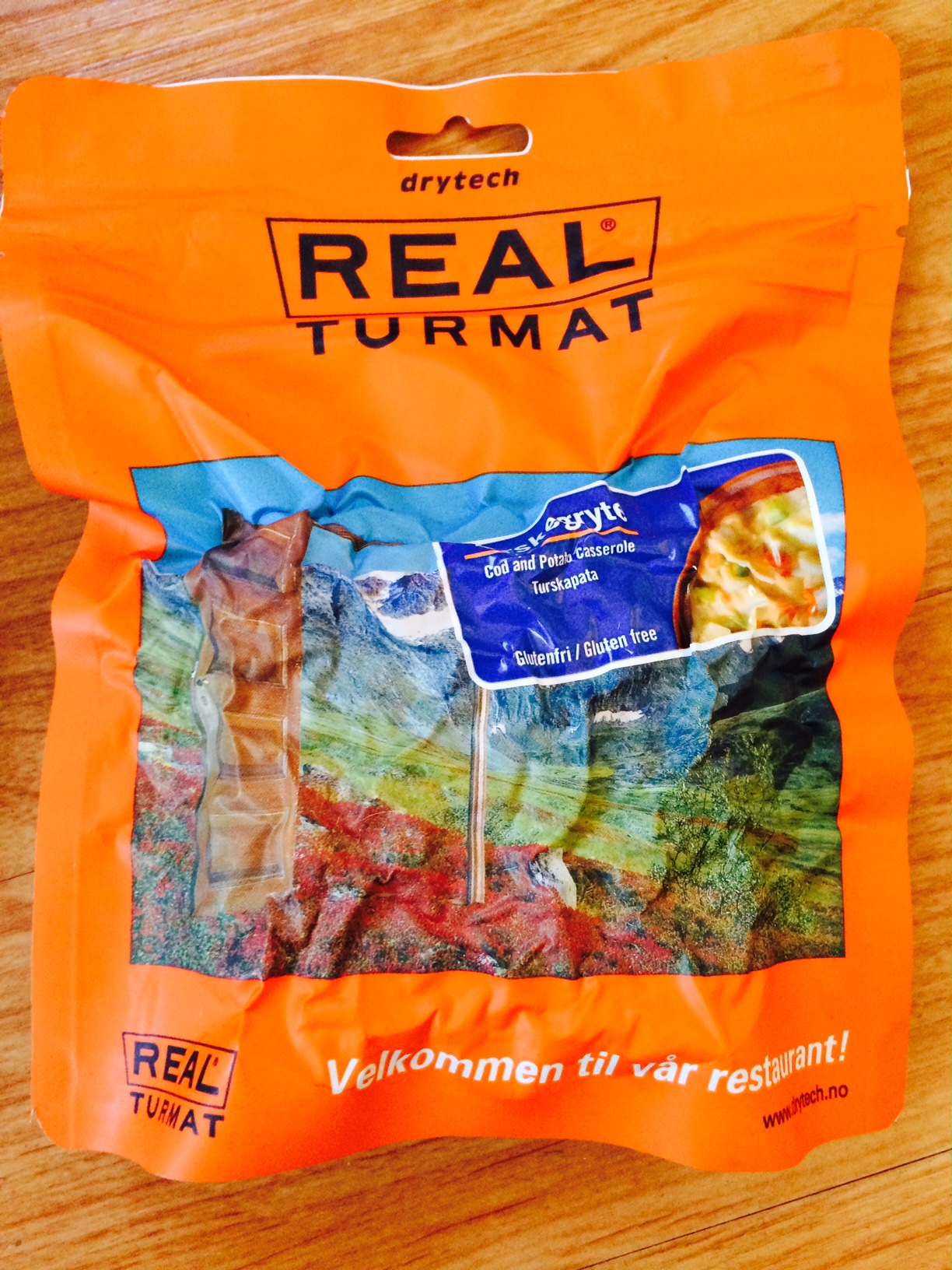
Cod and Potato Casserole by Real Turmat €9.90

Cod_Potato_Packet

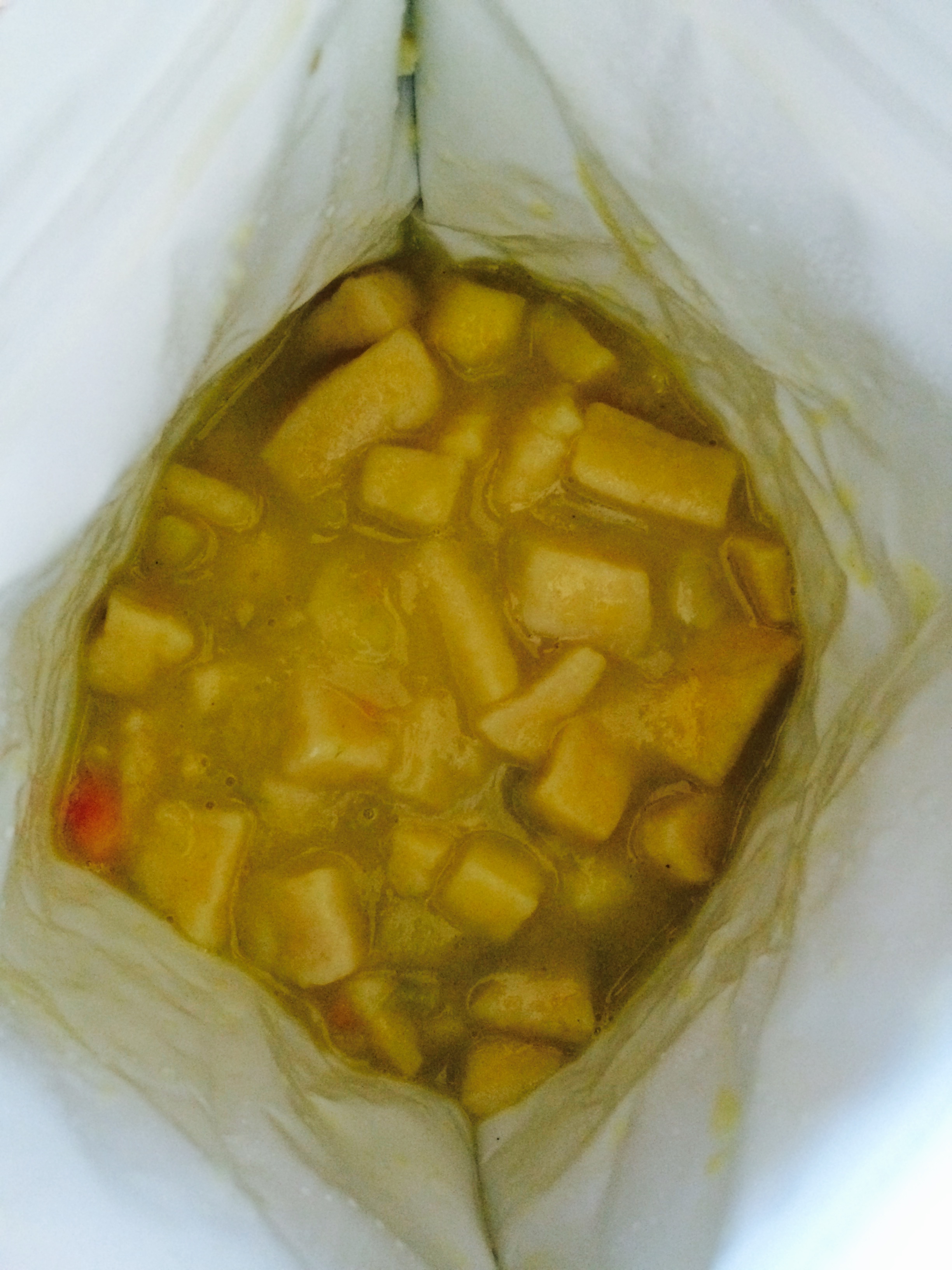
Bland and tasteless. Not very appetizing looking and watery/soupy even after re-hydration. Tastes very floury and more like some bad potato/fish soup rather than a casserole as the name suggests. Very good energy to weight ratio with 501cal/100g and high in both fats and carbs. Another gluten-free option but not for me.

Cod Before

Cod_Potato_Prepared

Rating:

  • Price: *     
  • Taste: *
  • Energy/Weight ratio: *****
  • Nutritional Value: ****
  • Convenience : **

Nutritional Analysis :  

Energy value in Kcal per 100 g (dry product) 501
Energy value per 100 g (kJ) 2090
Energy value per product (Kcal) 536
Energy value per product (kJ) 2230
Protein per 100 g 13
Protein per bag (g) 14
Carbohydrates per 100 g 39
Carbohydrates per bag (g) 42
Fats per 100 g 31
Fats per bag (g) 33 

Ingredients :

Potato, cod pâté 18 % (cod 88%, potato flour, salt), sour cream, green pepper, carrot, onion, wheat flour, soybean oil, fish bouillon, salt and seasoning (celery).


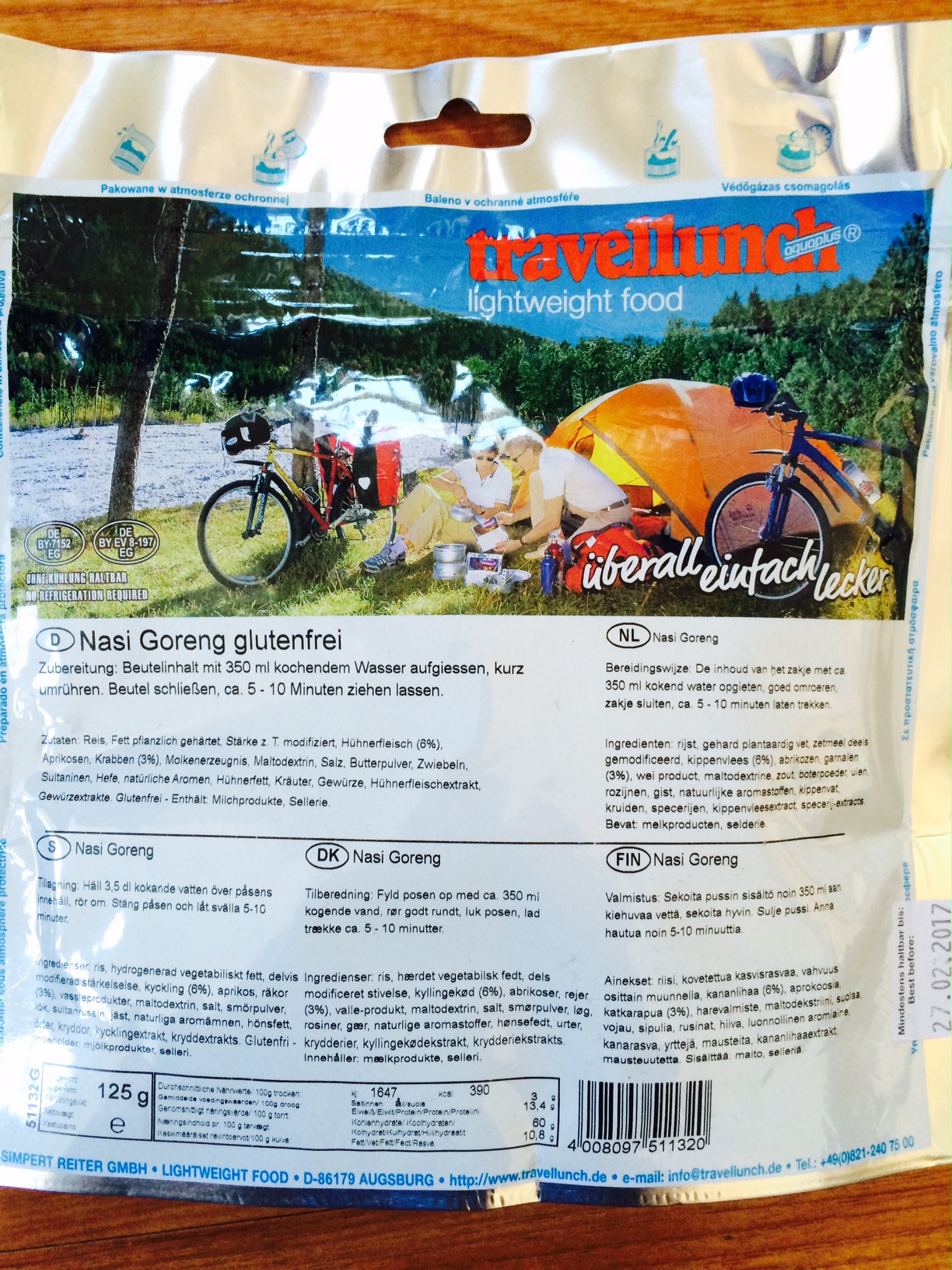
NASI GORENG WITH CHICKEN AND RICE BY TRAVELLUNCH €4.95

Nasi Goreng Packet

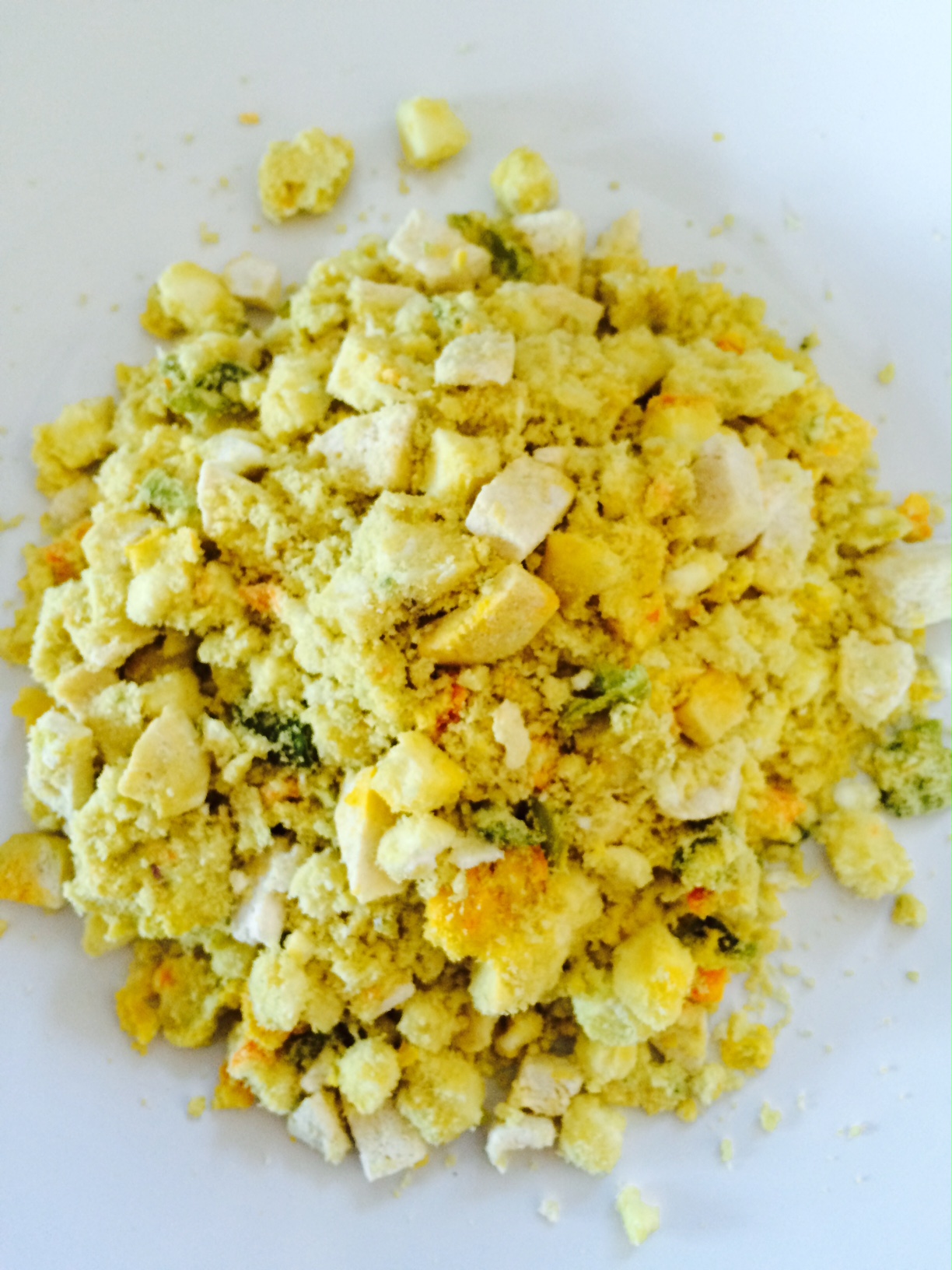
A gluten-free dish and of Indonesian origin. I chose this dish having eaten a lot of Nasi Goreng in the Netherlands. The dish has quite a lot of flavor but the texture is a little odd like so many freeze dried dishes. However, the apricots, sultanas and spices add a nice touch to the dish and the meal is quite flavorsome. Once again the packet is not as practical to open and reseal as other brands. It’s very high in carbs and relatively low in fats compared to some of the other dishes with a very good weight to calorie ratio. Definitely a dish to be consumed pre or post a long day.

Rating:

  • Price: ****
  • Taste: ***
  • Energy/Weight ratio: *****
  • Nutritional Value: ****
  • Convenience : **

Nutritional Analysis :        

Energy value in Kcal per 100 g (dry product) 394
Energy value per 100 g (kJ) 1662
Energy value per product (Kcal) 492
Energy value per product (kJ) 2077
Protein per 100 g 11.9
Protein per bag (g) 14.875
Carbohydrates per 100 g 60.2
Carbohydrates per bag (g) 75.25
Fats per 100 g 11.8
Fats per bag (g) 14.75

Ingredients:

Ingredients: rice, hydrogenated vegetable fat, starch partly modified, chicken (6%), apricots, shrimps (3%), whey product, maltodextrin, salt, butter powder, onions, chicken broth, sultanas, natural flavoring, herbs, spices, spice extracts. Contains: celery.

For more information on the site and to order meals online:

http://www.lyophilise.fr/

CONCLUSION

  • Lyophilise is a very comprehensive site with an impressive list of different freeze-dried brands.
  • The customer service is very friendly & professional.
  • Delivery is fast if the products are in stock.
  • There is an on-line customer service.
  • They provide gluten-free, lactose-free and vegetarian options.
  • There provide special MDS packs that offer a one-stop shopping scenario.

logo


Episode 66 – Krar, Enman, Forbes, McGregor

Ep66This is episode 66 of Talk Ultra and on this weeks show e catch up with Rob Krar after his incredible Western States. Kasie Enman is on the comeback trail after her 2nd child and we chat after a stellar 2nd place at Speedgoat 50k. Scott Forbes just this last weekend won Race to the Stones in the UK… a great result but Scott has an incredible story. In Talk Training we talk nutrition with Renee McGregor. The News, a Blog, Smile and Miles with Emelie Forsberg, Up and Coming Races and Pocket Rocket is back… Stevie Kremer.

NEWS

HARDROCK 100 results iRunFar
 
·      Kilian Jornet – 22:41:33
·      Julien Chorier – 25:07:56
·      Adam Campbell – 25:56:46
·      Jeff Browning  – 26:58:59
·      Scott Jaime  – 27:46:14

·      Darcy Piceu – 29:49:58
·      Betsy Kalmeyer – 37:57:22
·      Betsy Nye – 42:22
·      Tina Ure – 42:45
·      Suzanne Lewis – 42:55

 
SPEEDGOAT 50K

·      Sage Canaday  – 5:12:30
·      Paul Hamilton – 5:31:15
·      Alex Nichols  – 5:33:30
·      Rickey Gates  – 5:46:36
·      Mike Wolfe – 5:53:17

·      Anna Frost – 6:42:00
·      Kasie Enman  – 6:43:48
·      Ellie Greenwood – 6:53:04
·      Hillary Allen  – 7:03:57
·      Kerrie Bruxvoort  – 7:12:41

INTERVIEW with KASIE ENMAN
 
Skyrunning Ice Trail Tarentaise

  • Francois D’Haene 7:38
  • Fabian Antonilos 7:56
  • Tom Owens 8:02
     
  • Emelie Forsberg 9:25
  • Allessandra Carlini 9:42
  • Maud Gobert 9:42+
  • Skyrunning Dolomites SkyRace
     
  • Kilian Jornet 2:03:50
  • Ionut Zinca 2:05:20
  • Tadei Pivk 2:05:21
  • Manuel Merillas 2:07:29
  • Alexis Sevennec 2:07:54·
  • Laura Orgue 2:26:17
  • Emelie Forsberg 2:27:40
  • Maite Maiora 2:31:58
  • Christel Dewalle 2:35:53
  • Magdalena Kozielska 2:36:23
     
     
    DODO TRAIL
     
    ·      Ricky Lightfoot 5:19:21 new CR
    ·      Jean Pierre Grondin 5:55:30
    ·      Jeannick Boyer 6:02:54
     
    ·      Landie Greyling 6:49:10
    ·      Estelle Carret 6:51:55
    ·      Andrea Clemons 8:37:35 
    BLOG
     
    Dakota Jones has ab excellent write up on Hardrock 100 on iRunFar – http://www.irunfar.com/2014/07/falling-off-edges-hardrock-2014.html

     
    INTERVIEW

    ROB KRAR produced the 2nd fastest run ever at the 2014 Western States. We caught up with him just a few days after the race for a chat.

    SMILES and MILES with EMELIE FORSBERG

    TALK TRAINING with Renee McGregor lead nutritionist
     
     
    INTERVIEW
     
    SIMON FORBES won the Race to the Stones in the UK which is impressive. However, he has a fascinating back story.

     
    UP & COMING RACES
     
    Australia
    Australian Capital Territory
    Bush Capital 60 km Ultra | 63 kilometers | August 03, 2014 | website
    Queensland
    Flinders Tour – 50 km | 50 kilometers | July 27, 2014 | website

    Austria
    Dirndltal Extrem Ultramarathon | 111 kilometers | August 02, 2014 | website
    Pitztal-Gletscher Trail Maniak 95K | 95 kilometers | July 26, 2014 | website

    Belgium
    Flanders
    100 km Dodentocht® | 100 kilometers | August 08, 2014 | website

    Canada
    Alberta
    Canadian Death Race | 125 kilometers | August 02, 2014 | website

    Quebec
    Trans Gaspesia | 260 kilometers | August 03, 2014 | website

    Finland
    Lapland
    NUTS Midnight Sun Trail Ultra 125 km | 125 kilometers | July 25, 2014 | website
    NUTS Midnight Sun Trail Ultra 55K | 55 kilometers | July 26, 2014 | website

    France
    Haute-Corse
    Via Romana – 62 km | 62 kilometers | August 03, 2014 | website
    Haute-Savoie
    Trail du Tour des Fiz | 61 kilometers | July 27, 2014 | website
    Isère
    Défi de l’Oisans | 200 kilometers | July 27, 2014 | website
    Trail de L’Etendard | 65 kilometers | August 03, 2014 | website
    Jura
    Tour du Lac de Vouglans | 71 kilometers | July 26, 2014 | website
    Loiret
    L’Orleans-Océan | 410 kilometers | July 26, 2014 | website
    Savoie
    Courchevel X Trail 54 km | 54 kilometers | August 03, 2014 | website
    La 6000D | 65 kilometers | July 26, 2014 | website
    TCT 50 | 50 kilometers | August 03, 2014 | website
    TCT 73 | 73 kilometers | August 03, 2014 | website
    Ultra 6000D | 110 kilometers | July 26, 2014 | website

    Germany
    Bavaria
    Chiemgauer 100 k Mountain Ultra Run | 100 kilometers | July 26, 2014 | website
    Chiemgauer 100 mi Mountain Ultra Run | 100 miles | July 26, 2014 | website
    Brandenburg
    Berliner MauerwegNachtlauf | 62 kilometers | July 26, 2014 | website
    Lower Saxony
    Süntel-Trail 50K | 50 kilometers | July 26, 2014 | website

    Guadeloupe
    Rèd Mammel | 50 kilometers | July 25, 2014 | website
    Ultra Transkarukera | 120 kilometers | July 25, 2014 | website

    Italy
    Aosta Valley
    Monte Rosa Walser Ultra Trail | 50 kilometers | August 02, 2014 | website
    Piedmont
    Terra Acqua Cielo Wild Trail | 50 kilometers | August 03, 2014 | website

    Sicily
    Etna Trail | 64 kilometers | August 02, 2014 | website

    Veneto
    Trans d’Havet Ultra | 80 kilometers | July 26, 2014 | website

    Latvia
    Cēsis ECO Trail 80 km | 80 kilometers | August 02, 2014 | website

    Madagascar
    Isalo Raid – Grand Raid | 80 kilometers | July 26, 2014 | website

    Mauritius
    Trail des 7 Couleurs | 120 kilometers | July 26, 2014 | website

    Mongolia
    Mongolia Sunrise to Sunset 100K | 100 kilometers | August 06, 2014 | website

    Portugal
    Ultra-Trail Nocturno da Lagoa de Óbidos | 50 kilometers | August 02, 2014 | website

    Réunion
    Trail du Grand Ouest | 60 kilometers | August 02, 2014 | website

    Romania
    VLC Ultra TrailRun Petrimanu 56 | 56 kilometers | July 26, 2014 | website

    Russia
    Elbrus Mountain Race | 105 kilometers | August 01, 2014 | website

    Serbia
    Tara Challenge | 61 kilometers | August 02, 2014 | website
    Tara Ultramarathon | 115 kilometers | August 02, 2014 | website

    Spain
    Andalusia
    Subida Granada Pico Veleta | 50 kilometers | August 03, 2014 | website
    Aragon
    Calcenada – 104 km | 104 kilometers | August 01, 2014 | website
    Gran Trail Aneto-Posets | 109 kilometers | July 26, 2014 | website
    Vuelta al Aneto | 58 kilometers | July 26, 2014 | website
    Castile and León
    Gredos Infinite Run – 120 km | 120 kilometers | July 26, 2014 | website
    Tilenus Xtreme Ultra Trail 105 KM | 105 kilometers | July 25, 2014 | website
    Tilenus Xtreme Ultra Trail 60 KM | 60 kilometers | July 25, 2014 | website

    Catalonia
    BUFF® Epic Trail Aigüestortes | 100 kilometers | August 02, 2014 | website
    Cadí Ultra Trail | 80 kilometers | July 26, 2014 | website
    Ultra Catllaràs | 55 kilometers | July 26, 2014 | website
    Principality of Asturias
    Ultra Trail DesafíOSOmiedo | 86 kilometers | August 02, 2014 | website

    Sweden
    Tierra Arctic Ultra | 120 kilometers | August 08, 2014 | website

    Switzerland
    Grisons
    Swiss Alpine Marathon K78 | 78 kilometers | July 26, 2014 | website

    Thailand
    Bangkok Ultra Trail Festival – 50 km | 50 kilometers | August 03, 2014 | website

    Turkey
    DASK ADAM Anatolian Mountain marathon – Long Course | 75 kilometers | August 07, 2014 | website
    DASK ADAM Anatolian Mountain marathon – Medium Course | 60 kilometers | August 07, 2014 | website

    United Kingdom
    Cumbria
    The Montane Lakeland 50 | 50 miles | July 26, 2014 | website
    East Riding of Yorkshire
    The Montane Lakeland 100 | 100 miles | July 25, 2014 | website
    England
    Round the Rock | 48 miles | August 02, 2014 | website
    Round the Rock Ultra Marathon | 48 miles | August 02, 2014 | website
    Hampshire
    Oxfam Trailwalker GB (South) | 100 kilometers | July 26, 2014 | website
    Kent
    The 50 Mile Challenge | 52 miles | July 28, 2014 | website
    North Yorkshire
    Oxfam Trailtrekker GB (North) – 100 km | 100 kilometers | July 31, 2014 | website
    Oxfam Trailtrekker GB (North) – 65 km | 65 kilometers | July 31, 2014 | website
    Stirling
    Devil o’ the Highlands Footrace | 43 miles | August 02, 2014 | website

    USA
    Alaska
    Resurrection Pass 100 Mile Ultra Trail | 100 miles | August 08, 2014 | website
    Arizona
    Vertigo 63K Night Trail Run | 63 kilometers | July 26, 2014 | website
    California
    Angeles Crest 100 mile endurance run | 100 miles | August 02, 2014 | website
    Salt Point 50 km | 50 kilometers | August 02, 2014 | website
    San Francisco 100 Mile Endurance Run | 100 miles | August 02, 2014 | website
    San Francisco 50 Mile Endurance Run | 50 miles | August 02, 2014 | website
    San Francisco 52.4 Ultramarathon | 52 kilometers | July 27, 2014 | website
    Skyline 50K | 50 kilometers | August 03, 2014 | website
    Colorado
    Grand Mesa 100M | 100 miles | July 26, 2014 | website
    Grand Mesa 37.5M | 60 kilometers | July 26, 2014 | website
    Grand Mesa 50M | 50 miles | July 26, 2014 | website
    Mountain Ultra | 220 kilometers | August 01, 2014 | website
    Mount Werner Classic – 50K Trail Run | 50 kilometers | July 26, 2014 | website
    Ouray 100 Mile Endurance Run | 100 miles | August 02, 2014 | website
    Ragnar Relay Colorado | 200 miles | August 08, 2014 | website
    Wild West Relay | 200 miles | August 01, 2014 | website
    Idaho
    Standhope 60K | 60 kilometers | August 08, 2014 | website
    Wild Idaho 50K Enrudance Run | 50 kilometers | July 26, 2014 | website
    Wild Idaho 50M Enrudance Run | 50 miles | July 26, 2014 | website
    Maryland
    Catoctin 50k Trail Run | 50 kilometers | July 26, 2014 | website
    Minnesota
    Minnesota Voyageur Trail 50 Mile Run | 50 miles | July 26, 2014 | website
    Mississippi
    Big Butts 100K | 100 kilometers | July 26, 2014 | website
    Big Butts 50K | 50 kilometers | July 26, 2014 | website
    Montana
    HURL Elkhorn 50 K Ultramarathon | 50 kilometers | August 02, 2014 | website
    HURL Elkhorn 50 Mile Ultramarathon | 50 miles | August 02, 2014 | website
    Nevada
    Ruby Mountain Relay | 184 miles | August 08, 2014 | website
    North Carolina
    Mattamuskeet Death March | 100 kilometers | July 26, 2014 | website
    Ohio
    Burning River 100 Mile Endurance Run | 100 miles | August 02, 2014 | website
    Oregon
    Siskiyou Out Back Trail Run 50K | 50 kilometers | July 26, 2014 | website
    Siskiyou Out Back Trail Run 50M | 50 miles | July 26, 2014 | website
    Pennsylvania
    Viaduct Trail 100 Mile Ultramarathon | 100 miles | July 27, 2014 | website
    Viaduct Trail 150 Mile Ultramarathon | 150 miles | July 26, 2014 | website
    Viaduct Trail 50 Mile Ultramarathon | 50 miles | July 27, 2014 | website
    South Carolina
    Landsford Canal 50 K | 50 kilometers | July 26, 2014 | website
    Vermont
    Moosalamoo Ultra – 36 M | 36 miles | August 02, 2014 | website
    Virginia
    Dahlgren Heritage Rail Trail 50 km | 50 kilometers | August 02, 2014 | website
    Washington
    Grand Ridge 50K Trail Run (August) | 50 kilometers | August 02, 2014 | website
    White River 50 Mile Trail Run | 50 miles | July 26, 2014 | website

    CLOSE

3:51:35

Episode 55 – Wardian, Meek, Clark, Johnston

Ep55

Episode 55 of Talk Ultra – We have a The Coastal Challenge special with an interview with male overall winner, Michael Wardian. Jo Meek, ladies overall winner talks about her training and preparation for the TCC race and Nick Clark discusses how stage racing compares to 100-milers. We have an interview with the 2013 ITI350 winner and recent Susitna 100 winner and new course record holder, David Johnston before he emarks, once again on the ITI350 just one week after his impressive Susitna win! A special Talk Training on nutrition specific to Marathon des Sables with Rin Cobb (PND Consulting). Emelie Forsberg is back for smilesandmiles and of course we have the News, Up and Coming Races and Speedgoat Karl Meltzer.

NEWS

Rocky Raccoon 

1. Matt Laye 13:17:42

2. Ian Sharman 13:38:03

3. Jared Hazen 13:57:17

Mention for Steve Spiers 15:26:25 follower of Talk Ultra and 4th – top job!

1. Nicole Struder 15:42:04

2. Kaci Lickteig 15:45:32

3. Shaheen Sattar 16:45:26

Shaun O’Brien 50

1. Dylan Bowman 6:23:17

2. Mike Aish 6:37:34

3. Mike Wolfe 6:57:15

1. Cassie Scallon 7:38:16

2. Sally McRae 8:36:25

3. Denise Bourassa 8:42:57

El Cruce Columbia

1. Marco De Gasperi 6:34:10

2. Sergio Jesus Trecaman 6:38:46

3. Dakota Jones 6:52:37

1. Emma Roca 7:59:23

2. Amy Sproston 8:11:59

3. Adriana Vanesa Vargas 9:30:26

Red Hot Moab 50K

1. Alex Nichols 3:57:11

2. Paul Hamilton 3:59:37

3. Mike Foote 4:07:26

1. Jodee Adams-Moore 4:31:28

2. Kerrie Bruxvoort 4:42:39

3. Hiliary Allen 4:52:01

Susitna 100

1. David Johnston

2. Piotr Chadovich

3. Houston Laws

1. Laura Mcdonough

2. Jane Baldwin

3. Sarah Duffy


AUDIO with DAVID JOHNSTON


The Costal Challenge

1. Michael Wardian 23:26:23

2. Vicente Beneito +0:25:32

3. Philipp Reiter +0:31:31

1. Jo Meek 29:17:19

2. Julia Bottger +0:57:02

3. Veronica Bravo +3:07:06


 AUDIO with JO MEEK


TALK TRAINING

With sports dietician Rin Cobb from PND Consulting – http://www.pndconsulting.co.uk


INTERVIEW  – TCC Special

MIKE WARDIAN

NICK CLARK


MELTZER MOMENT

Good, Bad and Ugly


UP & COMING RACES

Argentina

4 Refugios Classica | 80 kilometers | March 01, 2014 | website

4 Refugios Non Stop | 70 kilometers | March 01, 2014 | website

La Misión | 160 kilometers | February 22, 2014 | website

La Misión – 80 km | 80 kilometers | February 22, 2014 | website

Australia

NEW SOUTH WALES

Wild Women on Top Sydney Coastrek 100 km Team Challenge | 100 kilometers | February 28, 2014 | website

Wild Women on Top Sydney Coastrek 50 km Team Challenge Day: Party All Night | 50 kilometers | February 28, 2014 | website

Wild Women on Top Sydney Coastrek 50 km Team Challenge Day: Sun, Sand, Surf | 50 kilometers | February 28, 2014 | website

France

DORDOGNE

Trail en Night and Day 55 km | 57 kilometers | March 01, 2014 | website

GARD

Trail aux Etoiles | 58 kilometers | March 01, 2014 | website

LOIRE-ATLANTIQUE

Le Trail du Vignoble Nantais – 50 km | 50 kilometers | February 23, 2014 | website

PUY-DE-DÔME

Trail de Vulcain – 72 km | 72 kilometers | March 01, 2014 | website

Germany

HESSE

Lahntallauf 50 KM | 50 kilometers | March 02, 2014 | website

Hong-Kong

MSIG Sai Kung 50 | 50 kilometers | March 01, 2014 | website

Italy

TUSCANY

Terre di Siena 50 km | 50 kilometers | March 02, 2014 | website

Mexico

Ultra Caballo Blanco | 50 miles | March 02, 2014 | website

New Zealand

Bedrock50 | 53 kilometers | February 22, 2014 | website

Taupo 155 km Great Lake Relay | 155 kilometers | February 22, 2014 | website

Taupo 67.5 km Great Lake Relay | 67 kilometers | February 22, 2014 | website

Waiheke Round Island 100 km Relay | 100 kilometers | March 01, 2014 | website

Philippines

Davao50 | 50 kilometers | February 23, 2014 | website

Hardcore Hundred Miles | 100 miles | February 21, 2014 | website

Slovakia

Kysucká Stovka | 120 kilometers | March 07, 2014 | website

South Africa

South African Addo Elephant 44 km Trail Run | 44 miles | March 01, 2014 | website

South African Addo Elephant 76 km Trail Run | 76 kilometers | March 01, 2014 | website

Spain

ANDALUSIA

Ultra Trail Sierras del Bandolero | 150 kilometers | March 07, 2014 | website

CANARY ISLANDS

Transgrancanaria | 125 kilometers | March 01, 2014 | website

Transgrancanaria – Advanced | 84 kilometers | March 01, 2014 | website

United Kingdom

ESSEX

St Peters Way Ultra | 45 miles | March 02, 2014 | website

KENT

White Cliffs 100 | 104 miles | March 01, 2014 | website

White Cliffs 50 | 53 miles | March 01, 2014 | website

NORTHUMBERLAND

Coastal Trail Series – Northumberland – Ultra | 34 miles | March 01, 2014 | website

USA

ALABAMA

Mount Cheaha 50K | 50 kilometers | February 22, 2014 | website

ALASKA

Iditarod Trail Invitational 1000 mile | 1000 miles | February 23, 2014 | website

Iditarod Trail Invitational 350 mile | 350 miles | February 23, 2014 | website

ARIZONA

Elephant Mountain – 50K | 50 kilometers | February 22, 2014 | website

Old Pueblo 50 Miler | 50 miles | March 01, 2014 | website

Ragnar Relay Del Sol | 200 miles | February 21, 2014 | website

CALIFORNIA

Chabot Trail Run 50K | 50 kilometers | February 22, 2014 | website

FOURmidable 50K | 50 kilometers | February 22, 2014 | website

Montara Mountain 50K Trail Run | 50 kilometers | February 22, 2014 | website

San Juan Trail 50K | 50 kilometers | March 01, 2014 | website

COLORADO

Headless Horsetooth Fat Ass 50K | 50 kilometers | February 22, 2014 | website

FLORIDA

Everglades 50K Trail Race | 50 kilometers | February 22, 2014 | website

Everglades 50 Mile Trail Race | 50 miles | February 22, 2014 | website

Palm 100K | 100 kilometers | March 01, 2014 | website

Palm 50K | 50 kilometers | March 01, 2014 | website

MARYLAND

Hashawha Hills 50 km Trail Run | 50 kilometers | February 22, 2014 | website

MISSISSIPPI

Carl Touchstone Mississippi Trail 50K | 50 kilometers | March 01, 2014 | website

Carl Touchstone Mississippi Trail 50 K | 50 kilometers | March 01, 2014 | website

Carl Touchstone Mississippi Trail 50 Mile | 50 miles | March 01, 2014 | website

Carl Touchstone Mississippi Trail 50 Miles | 50 miles | March 01, 2014 | website

NEW JERSEY

Febapple Frozen Fifty – 50K | 50 kilometers | February 22, 2014 | website

Febapple Frozen Fifty – 50M | 50 miles | February 22, 2014 | website

Lenape Trail Run | 34 miles | March 01, 2014 | website

NEW YORK

Caumsett State Park 50K | 50 kilometers | March 02, 2014 | website

NORTH CAROLINA

Mount Mitchell Challenge | 40 miles | February 22, 2014 | website

TEXAS

A2B2: Alamo To Border 2 | 162 miles | February 28, 2014 | website

Cowtown Ultra Marathon | 50 kilometers | February 23, 2014 | website

Nueces 50K Endurance Trail | 50 kilometers | March 01, 2014 | website

Nueces 50 Miler | 50 miles | March 01, 2014 | website

VERMONT

PEAK Snowshoe 100 Mile Race | 100 miles | February 28, 2014 | website

VIRGINIA

The Reverse Ring | 71 miles | February 22, 2014 | website

WASHINGTON

Lord Hill 50 Km | 50 kilometers | February 23, 2014 | website

CLOSE

LINKS

▪   http://traffic.libsyn.com/talkultra/Episode_55_Wardian_Meek_Clark_Johnston.mp3

▪   ITunes http://itunes.apple.com/gb/podcast/talk-ultra/id497318073

▪   Libsyn – feed://talkultra.libsyn.com/rss

Website – talkultra.com

Everest Trail Race – Fernanda Maciel Interview

LOGO ETR

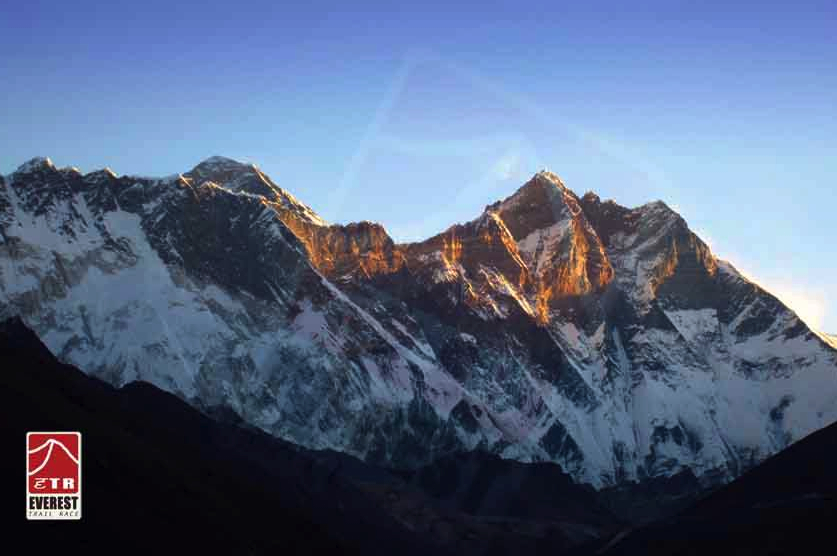
Everest! Do you really need any other description? Later this year, the third edition of the Everest Trail Race (ETR) will take place. Starting on the 3rd November and finishing on the 15th November, runners from around the world will join together for one of the toughest high altitude ultra marathons.

Image taken from - everesttrailrace.com ©

Image taken from – everesttrailrace.com ©

Set against one of the most awe inspiring backdrops, the race will last for six days covering a total distance of 160km. Daily distances are on the face of it relatively easy at; 22, 28, 30, 31, 20 and 22km, however, daily altitude difference goes from 3000m to almost 6000m.

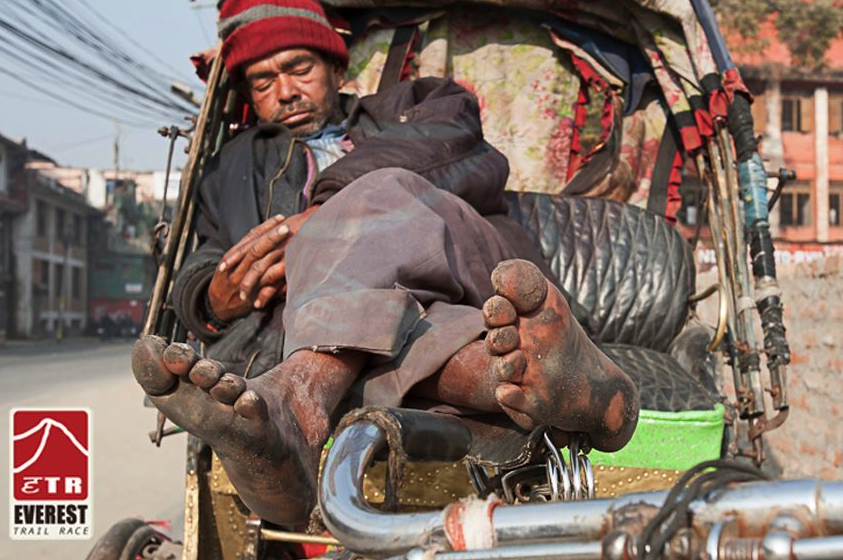
It is a demanding race and although each participant is required to be self-sufficient during each day, food, water and an evening camp are provided by the race organization.

Image taken from - everesttrailrace.com ©

Image taken from – everesttrailrace.com ©

Daily temperatures can vary from -10c to +18c and the terrain will offer incredible variety; frozen earth, snow and rocks of varying color. Without doubt, the ETR is a challenge, why else would you do it? But it is a challenge all can undertake with some specific training. It is ideal for runners or hikers who want to push the limit.

Image taken from - everesttrailrace.com ©jordivila

Image taken from – everesttrailrace.com ©jordivila

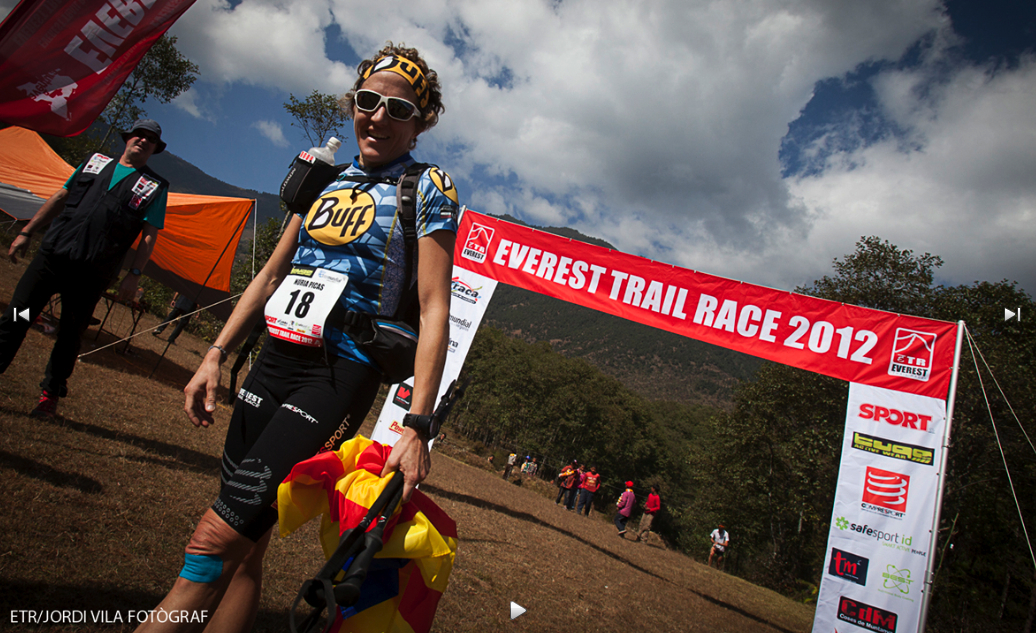
Created in 2011 by Jordi Abad, a Spanish extreme ultra runner, the ETR is staged at the beginning of the dry season. Why? Well, the air is clean after the monsoons, visibility is impeccable and the surroundings are resplendent.

In order to get a greater understanding of what the ETR may offer, I caught up with Brazilian, Fernanda Maciel. Fernanda is currently preparing for the ‘CCC’ in Chamonix at the end of August and will make the journey to Nepal in November to take part in the 3rd edition of the ETR.

©copyright .iancorless.com.P1100588

IC – Fernanda, welcome, how are you, I believe you are currently at your home in Spain?

FM – I am great thanks Ian. Yes, I am in Spain.

IC – I presume you are training in the mountains?

FM – Yes sure, one month ago I damaged my foot so I have been recovering and training. I live in the Pyrenees. It’s a great place to be. It is a great background for training and to prepare for the CCC and other races.

IC – Let’s hope they get good weather at the CCC this year…

FM – I Hope so!

IC – I guess coming from Brazil you would prefer hot weather.

FM – Yes, but I live in the Pyrenees so I am used to the cold and snow but hot weather would be nice for the race.

IC – I often think of you as an ultra runner but you are a much more diverse person than that. Can you take me back to what got you into sport and what made you realize that you had a passion for all things connected to running, cycling and swimming. You have done so many sports with such variety.

FM – From the age of 8 I was training as an Olympic gymnast. At 10yrs old I was in the US doing competitions and training every day for four hours. So, my background in sport was established when I was a child. This helped a great deal. For me the sports I have done in my life I have really enjoyed. I couldn’t separate sport from my life; it is my life. I also did martial arts. My father was a master and my grandfather was also a master in jujitsu. So I was always fighting too…

©copyright .iancorless.com.P1100600

IC – So a gymnast and fighter, the message is, don’t mess around with Fernanda!

FM – Yes, it was so funny. My grandfather’s house had a fighting ring.

IC – Like a dojo?

FM – Yes a fighting ring. So my cousin and I would fight all the time. It was so funny. I loved this time. When I was 15/16 years old I started to run, 5k on the road and then 10k. When I was 20 years old I started doing half-marathons. The changing point came at 23 years old. I was invited to do some adventure racing. I purchased a bike and started to do mountain biking. I was running before but not MTB. So I progressed to adventure racing at 23. I became an endurance runner through adventure racing. The races are always long, you don’t stop, you don’t sleep so it was perfect preparation for ultra running and ultra trail. It was easy for me to progress to long distance.

IC – Do you think with ultra and trail you have found ‘your’ sport?

FM – I feel complete when I do trail and ultra. I am not sure if I can try another sport and be better but I love running. I cannot be without one day of running. I love it. Of all the sports I have done, running gives me movement, style and great experiences during and after. To be on the trails, mountains, sand or whatever; it is what I really enjoy. Currently I love the mountains. It provides great views, fresh air; I love it. It completes me. I also love flowers and animals so it’s great. Very interesting. When you go above the clouds the sensations are so amazing. It’s a great feeling.

IC – I’d like to talk about your professional life. I think of you as a professional sports person, which of course you are. But you practiced as an environmental lawyer and a sports nutritionist. Do you still practice law?

FM – I have a company in Brazil. I am a businesswoman. I also work in sport nutrition. I can do all my work remotely, so, I just need a computer. I have people in Brazil who help me. In the past I was a lawyer but when I came to Spain I needed five more years study because the law was different. Lawyers need to be in a city, I chose sport instead. Sport nutrition allows me more flexibility. It fits in with my life. I breathe sport. It’s better. I love law, I love to study and read but I didn’t want to be in an office all day. I didn’t have much contact with nature. I also became an outdoor bound instructor in addition to everything else.

©copyright .iancorless.com.P1100803

IC – If we look back over your run career, it starts in 2006 and you have had some great results. You won at Transgrancanaria, you won Andorra Ultra Trail, you were fourth at UTMB, recently you had success at Lavaredo, TNF Mt Fuji but the one thing that sticks out is Camino of Santiago de Compostela, 860km and you did this as a personal challenge in ten days. What was that like?

FM – It was the hardest run of my life. I knew the Camino. I thought maybe if I run the Camino I could help children with Cancer. When I was in Brazil as Lawyer, I also helped children with cancer. So, I made this project with charity in mind and it was really tough. I was running 90-100km per day without a support team. I carried everything and slept in huts along the route. It was super tough. It think it’s a great way to do the Camino… I am writing a book now about the experience to encourage others to maybe run the Camino instead of hiking.

IC – I remember when we spoke at Haria Extreme race you told me of the difficulty on getting approval. They wouldn’t stamp your card because you moved along the trail too quickly.

FM – Yes, the church think that the runners move too fast so they don’t have time to think and reflect… I told them I had plenty of time! I was running ten or eleven hours a day. I had plenty of time to think. I hope that running will be an option for others in the future.

IC – Other races in your career, what would you pinpoint?

FM – I love the UTMB, CCC and TDS. I did the TDS in 2009 and for me it is an amazing race. It is so technical and beautiful. It is so different to the UTMB. The views are amazing. It is a really great race and one I would recommend. I have run in many races around the world, but I prefer races in Europe because they have more elevation. I prefer high mountains. I would like to try Hardrock 100. Hopefully I can get a place next year? I am going to Patagonia soon, this will give me high mountains and altitude.

IC – You have mentioned the high mountains and both of us will be in the high mountains in November. We are going to Everest Trail Race. I will be along as a journalist and photographer, very exciting for me. You will be participating. An exciting place to race…

(Laughter)

FM – Yeeesssss!

(Laughter)

IC – I can hear the excitement.

FM – Yes, I am so excited. We have support but we also need be self-sufficient too. I prefer this. It is wilder. I like this aspect of racing; it makes things more interesting. The race will provide the best views ever. It will be hard and it will be technical. It is my first stage race. It will be interesting; I can share my feelings and thoughts with other runners. We will all learn so much. The mountains will also teach us. We will be one week in this environment.

©copyright .iancorless.com.P1110316

IC – It takes place in the Solukhumbu region of the Himalayas in Nepal. It has an altitude gain of more than 25,000m (ouch). It has long hard trails of frozen earth, snow, rocks it is 160km in total over 6-days broken down into 22, 28, 30, 31, 20 and 22km‘s per day. The distances don’t sound too much but when you look at elevation per day of 3000 to 6000m per day that will be extremely tough. It will be a different experience. Have you been doing anything specific in preparation?

FM – I am already preparing as I climb and spend time at elevation. It will be like a climb/run because of the elevation. The race has short distances but high elevation and that will make it tough. I go into the mountains to adapt, in the last two weeks for example I did a 60km race and I did 4500m in elevation. This is good preparation. I need altitude and high elevation. Sometimes I prefer to climb, it is good cross training and it is also good for my mind. It’s good to be in open areas.

IC – In terms of the race, snacks, meals and water are provided both along the route and at camp at the end of each day. During the race you need to be self sufficient in terms of safety kit. You need technical kit, sleeping bag, warm clothes, and mandatory kit. You have already said that this is something that excites you. Do you have any specific things that you will take?

FM – No. I will have what I need and what is specified in the rules. I will want my kit to be light, so, I will use the lightest products possible. I won’t have special drinks or food. I don’t eat cheese or meat but I have made sure that vegetarian food will be available. Apparently we need to be careful with water but apparently we will be supplied good water.

IC – You are sponsored by TNF (The North Face), are they producing any products for you specifically or will you use what is available in the consumer range

FM – I will use normal product. I may have some prototypes to test in the coming weeks, so, I may take some of this with me but I will need to test. But I think for Everest, the pack, sleeping bag, jacket and so on will be normal product in the TNF range.

IC – One thing that has always impressed me is that you like to raise money for charity. You get involved. Are you doing anything in particular for the Everest trip.

FM – Yes, at the Everest trip I have one day free after the race. I have a friend who asked if I could help children for Fundació Muntanyencs per l’Himàlaia. So, the Everest trip was perfect. Last week I had a meeting with the foundation in Spain. They need children’s clothes. In the race, we will pass through the villages of the children, where they were born. So I will hopefully bring clothes and resources to Nepal and provide them for the foundation. In the coming weeks I will start to collect everything and then I can take it with me.

IC – Great, something really incredible to help the local communities.

FM – We will need to run to the Village to help them, so if you can help me that would be great. Also, I hope Lizzy Hawker will help us too.

IC – Absolutely, I would love to get involved. It’s a great thing! Finally, many people will read this and look at your achievements and the experience you have. If you had to give advice to someone who was maybe thinking about going to Nepal, what advice would you give to help him or her?

FM – Have an open mind and open heart. The mountains will talk with you. This is the best experience for everyone. It will be incredible to be in this place. Yes, for sure, you need to train but this is only one aspect. Train the mind and the heart, the rest will follow.

IC – Perfect. Of course, the Everest Trail Race is about experience. Due to the nature of the terrain and altitude it will not be a full on running race, you will also need to be a good hiker…

FM – Yeeesss. For sure! I think if you have confidence and a good mind then it won’t be a problem. Yes we will walk, we will also run but we will also take photographs. It’s about being in the mountains. After all, it is Everest! It is another world.

IC – Fernanda, than you so much for your time. I am looking forward to catching up at CCC and of course later in the year in Nepal.

FM – Great. Here are the details of the foundation:

The children (5 to 18 years old) that we can help…

Mountaineers for Himalayas Foundation

Fundació Muntanyencs per l’Himàlaia

info@mount4him.org

www.mount4him.org

Finally, a word from Jordi Abad, ETR director.

” If this was only a pure and hard competition, it would be a nonsense; environment gives its hardness but not the competitiveness itself. We are here to share and to help each other. It is possible to make the effort running any city marathon in the world, but the sensations, the environment and the feelings are to share them with friends, to know new people with whom laughing and weeping. This is what remains in the end and what makes it an unique experience for all”.

LINKS:

  • Website for ETR – HERE
  • Fernanda Maciel – HERE
  • The North Face – HERE 

INTERESTED? in participating in the 2013 Everest Trail Race? It is not too late… some places are still available. Please use the contact form below and obtain a discount, only available through this contact form:

Go back

Your message has been sent

Warning
Warning
Warning
Warning

Warning.

*Note, I will attend the 2013 ETR at the invite of the race organisation.