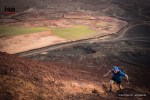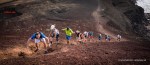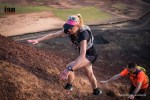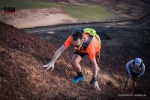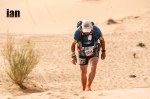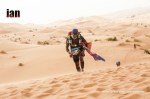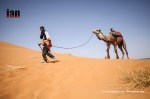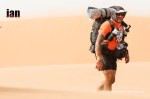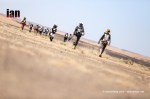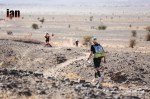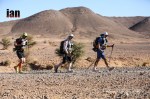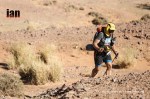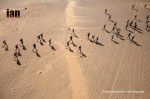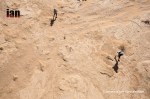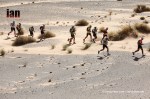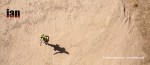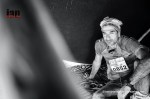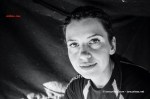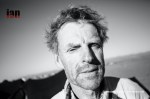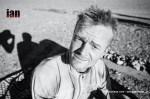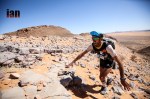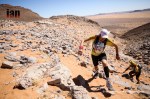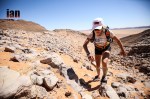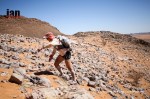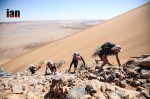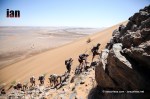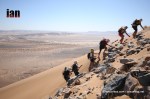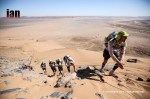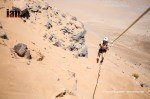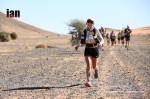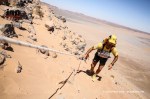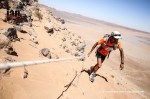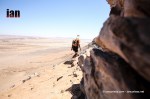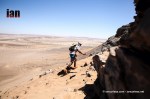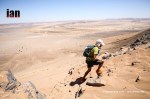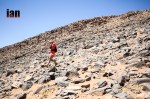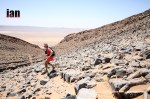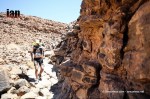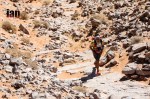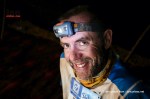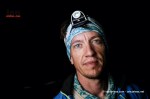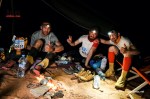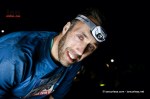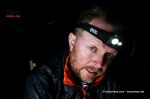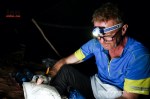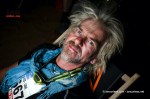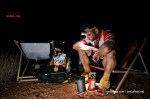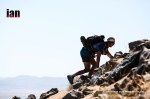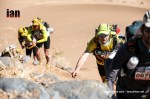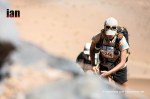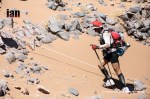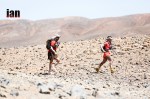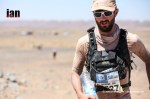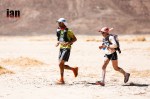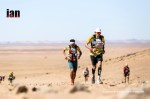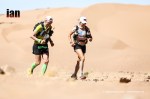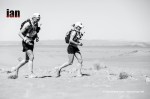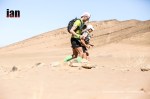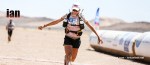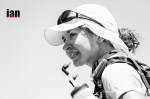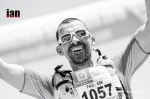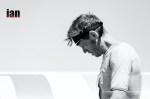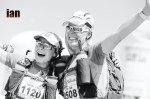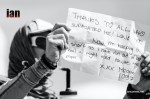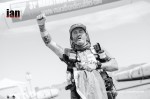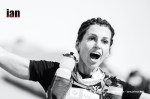
One Sees Clearly Only With The Heart

One sees clearly only with the heart. The essential is invisible to the eyes. – Antoine de Saint-Exupéry

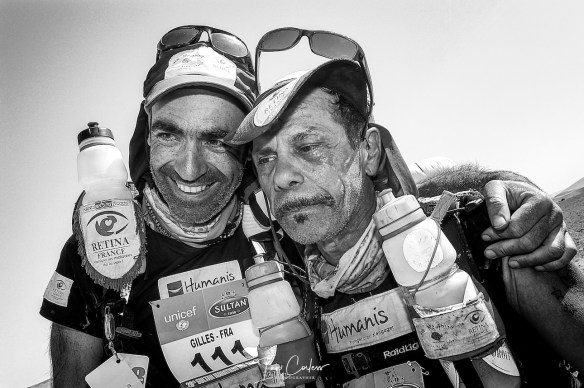
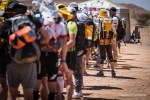
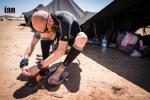
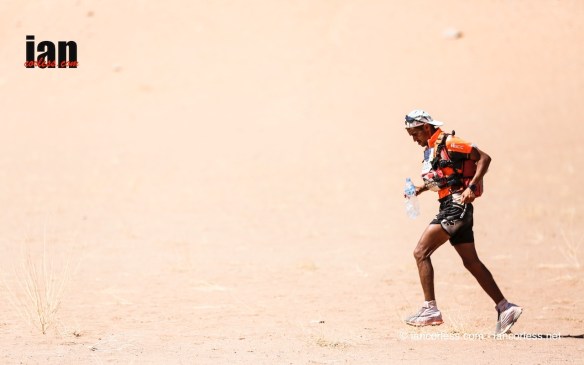
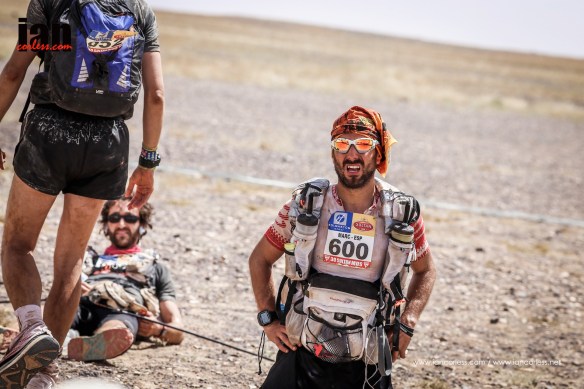
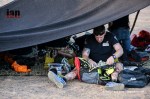
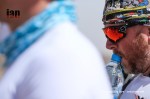
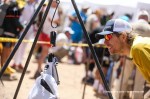
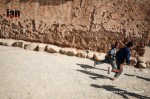
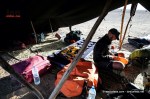
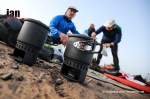
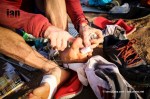
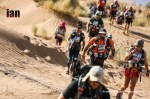
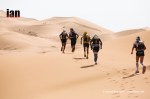
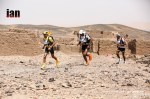
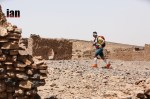
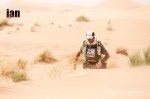
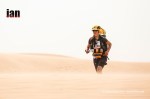
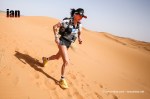
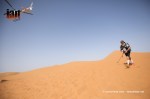
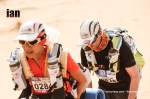
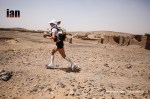
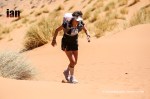
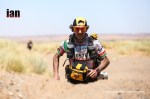
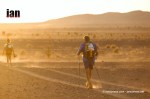
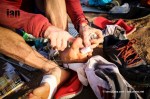
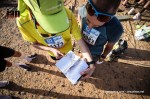
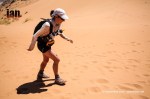
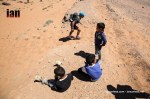
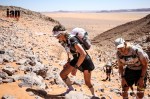
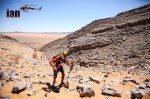
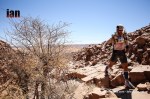
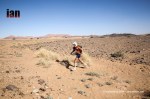
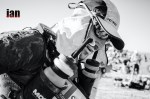
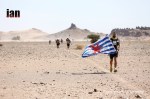
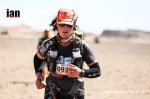
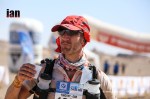
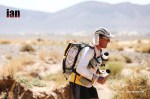
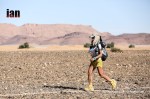
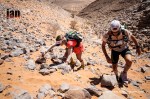
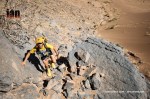
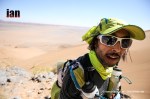
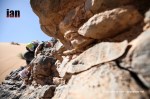
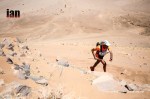
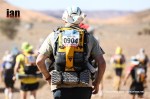
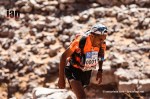
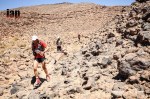
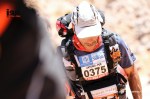
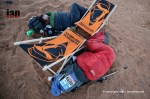
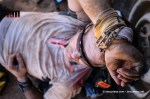
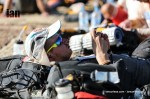
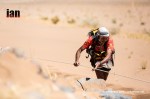
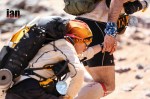
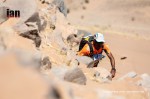
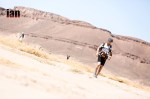
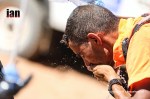
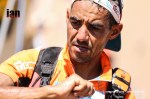
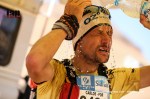
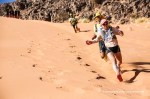
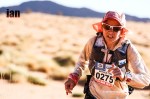
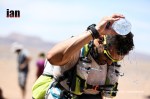
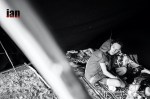
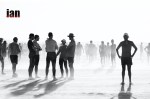
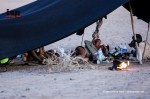
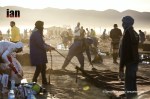
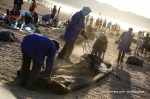
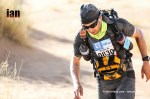
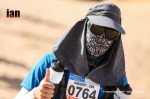
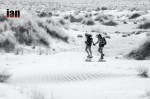
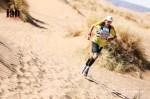
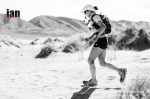
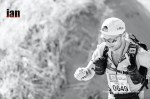
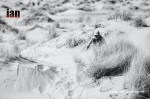
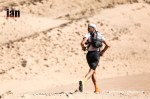
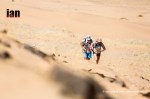
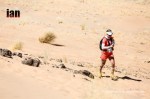
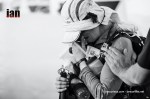
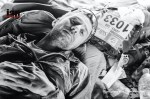
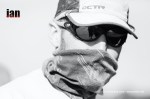
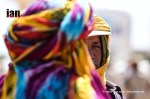
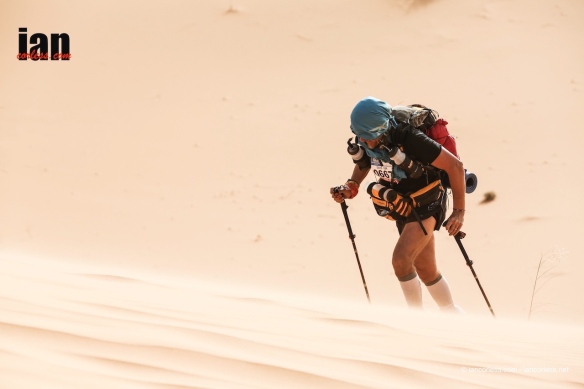
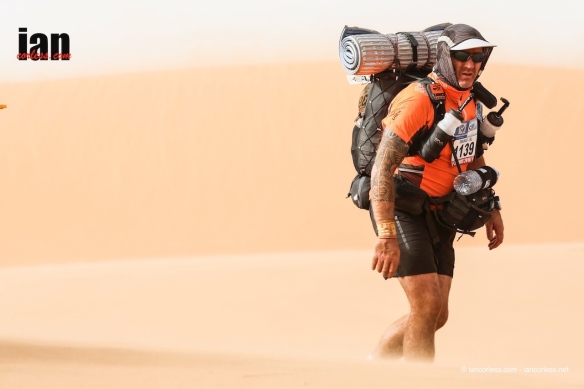
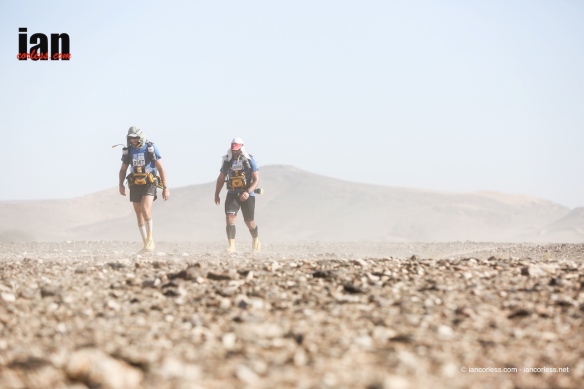
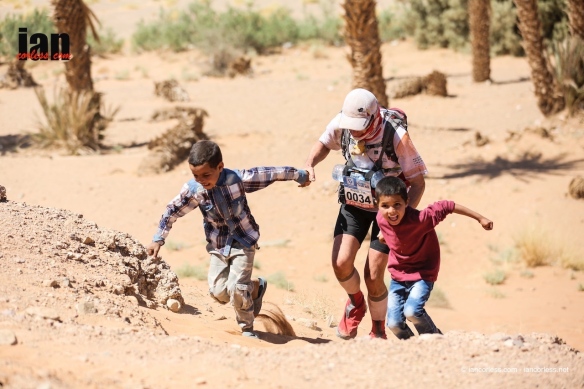
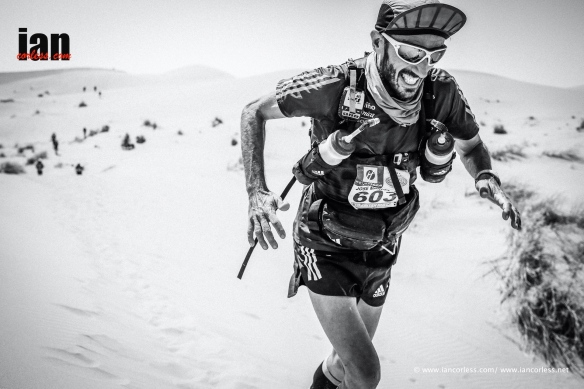
Water splashed over the large brimmed hat. Gilles poured and poured on Didier’s head to help reduce his temperature. Droplets floated in the air like stars in space and as they made contact they exploded with dramatic effect.

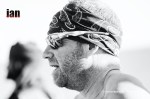
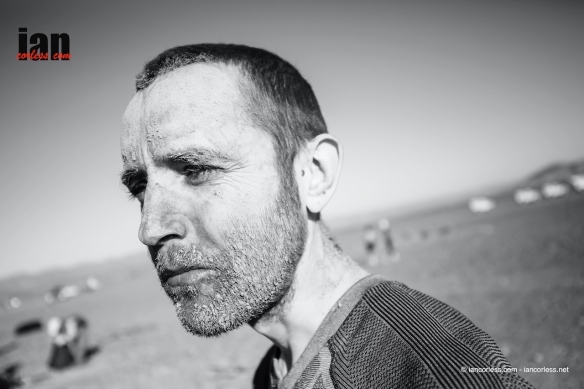
Dry and crusty salt on cheeks and lips disappeared with the release of the water but moments later re-appeared as the searing 50+ degree temperatures evaporated the water that continued to pour.

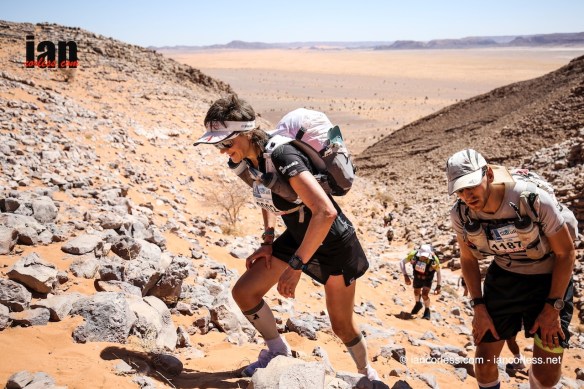
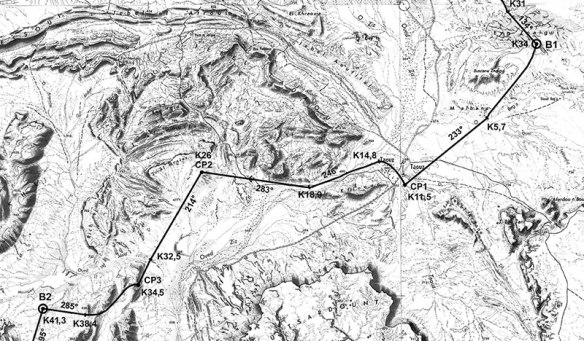
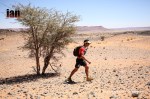
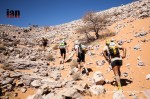
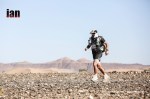
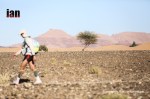
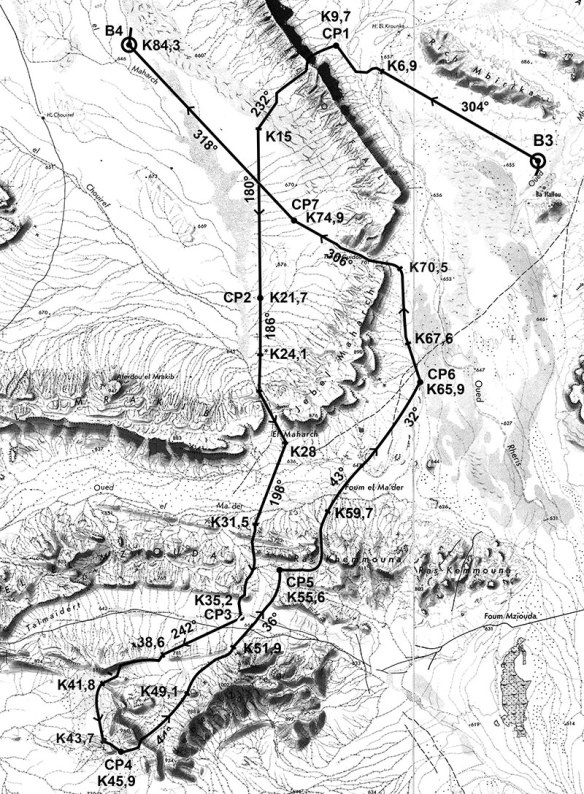
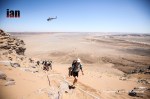
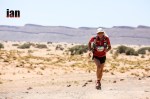
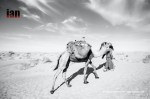
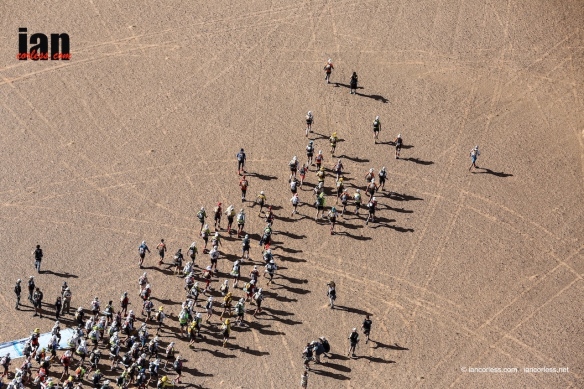
It was midday. Gilles and Didier had only dented the 80km distance that needed to be covered before the 34-hour cut off would be imposed on the longest day of the iconic Marathon des Sables.

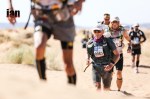
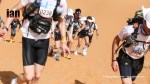
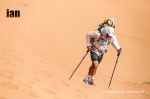
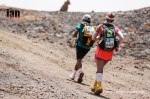
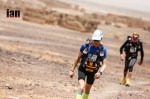
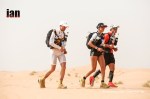
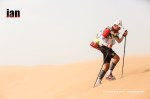
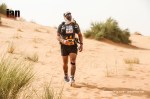
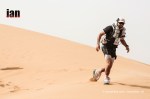
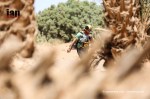
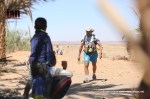
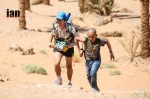
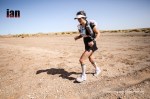
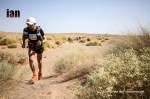
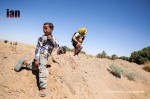
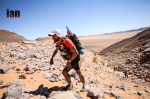
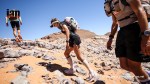
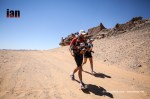
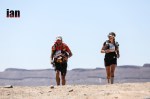
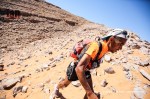
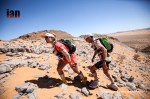
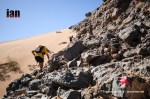
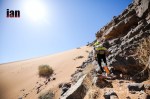
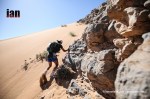
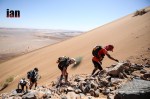
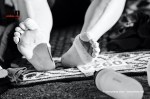
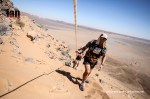
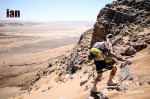
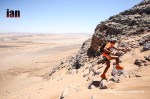
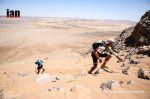
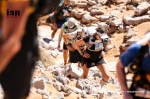
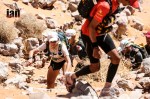
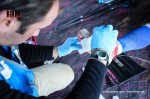
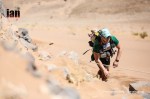
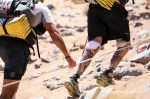
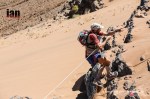
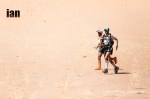
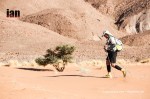
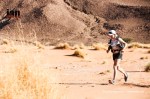
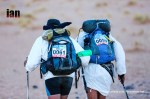
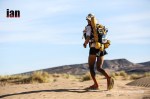
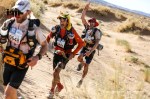
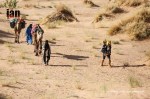
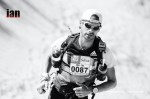
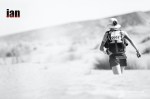
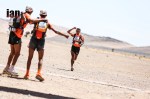
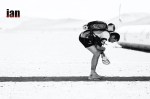
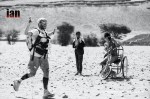
Moving onward, Didier embraced Gilles arm for stability. A very sore and enflamed right knee could give way at any moment resulting with a fall. Gilles as ever was faithful to the cause and provided the support and self-sacrifice to ensure that Didier’s journey to the line was safe and as trouble free as possible.

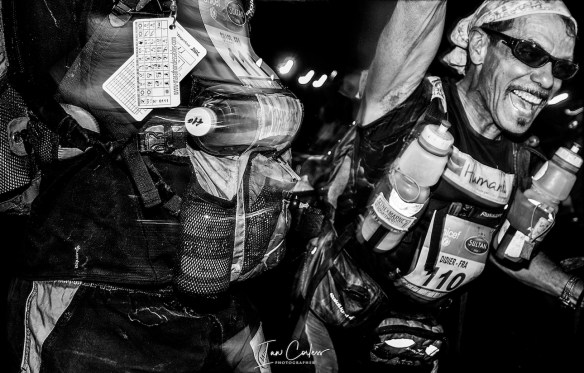
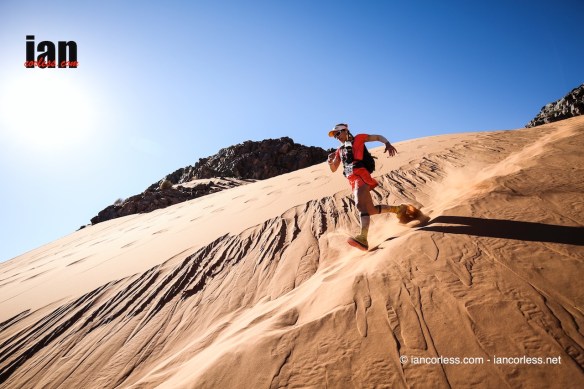
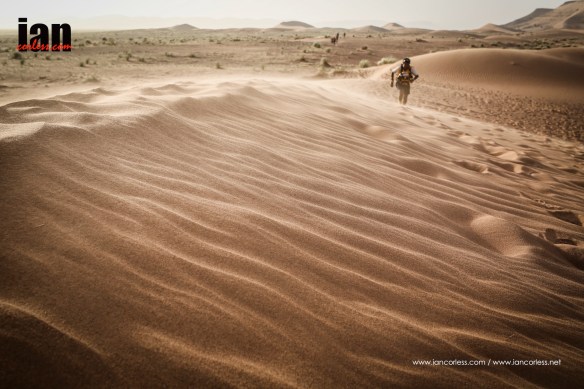
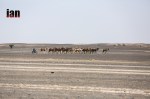
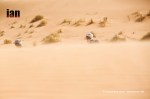
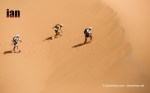
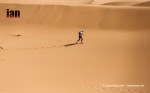
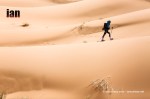
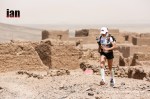
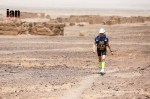
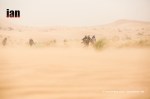
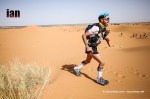
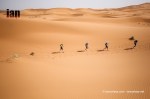
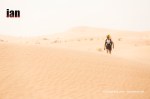
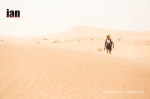
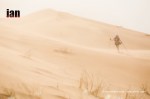
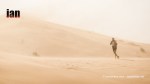
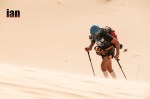
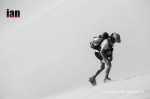
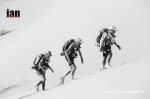
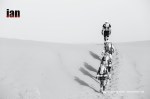
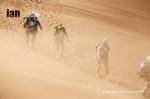
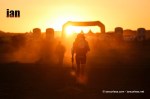
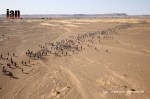
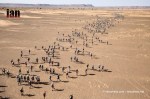
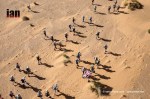
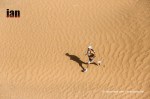
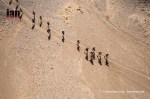
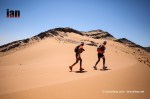
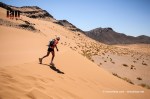
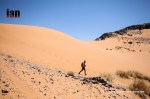
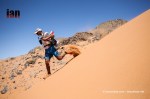
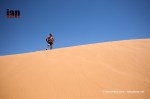
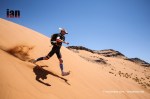
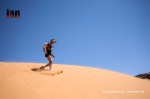
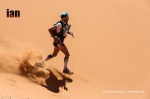
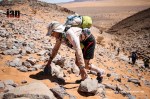
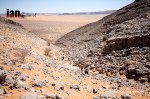
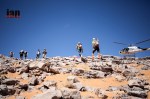
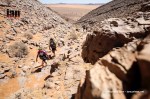
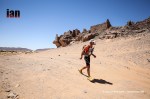
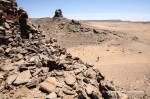
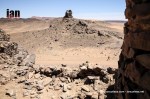
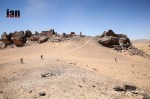
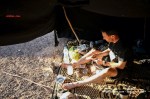
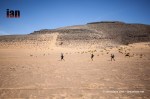
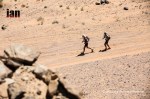
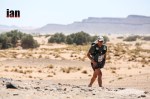
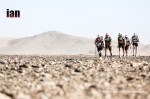
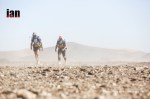
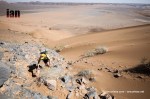
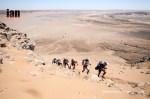
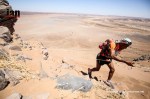
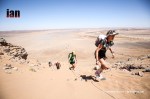
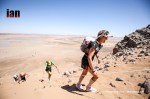
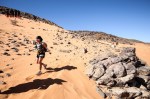
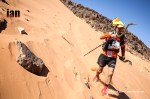
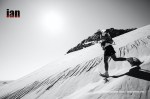
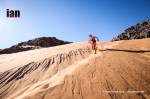
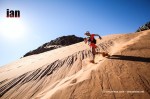
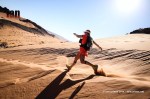
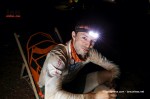
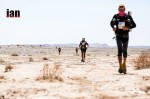
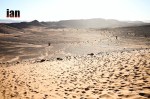
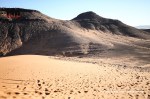
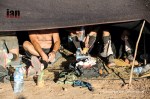
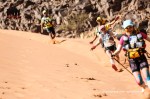
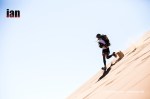
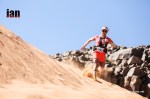
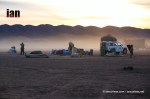
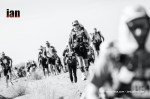
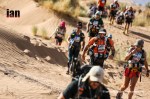
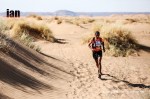
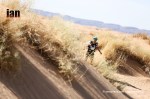
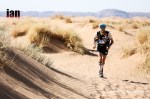
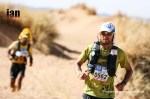
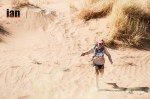
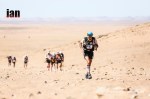
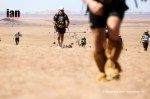
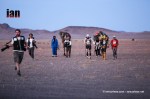
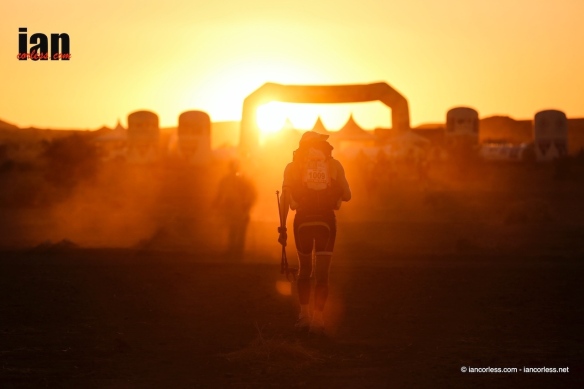
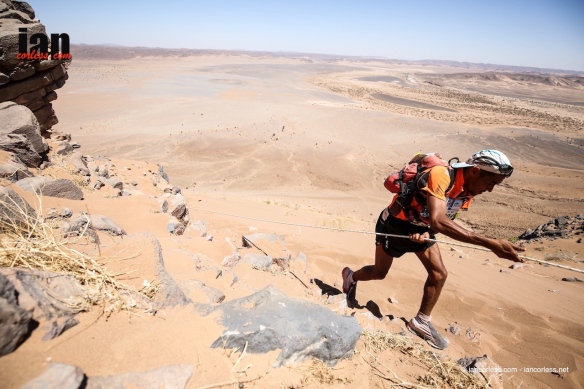
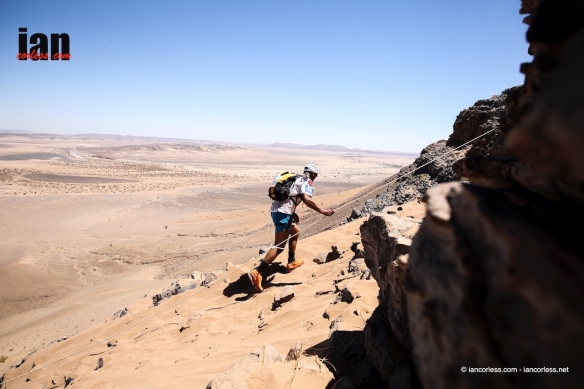
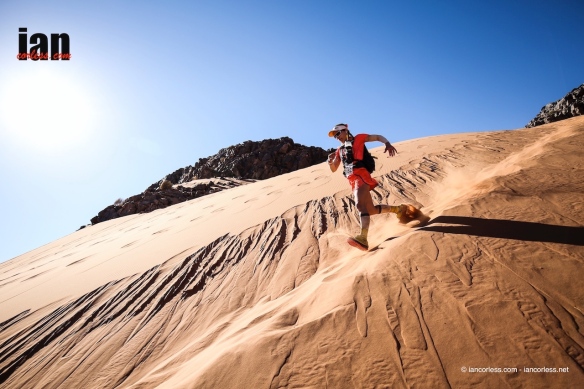
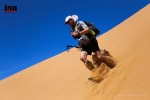
Darkness approached and with it some food and rest. With a new lease of life, the two continued into 13 km of relentless dunes that reached two to three meters in height. In the distance a green laser showed the direction to follow. It was a beacon of hope, slowly but surely getting closer. Two become one and as the sunrises and the heat returns, victory and the opportunity to fight another day seems possible.

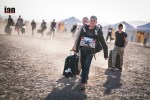
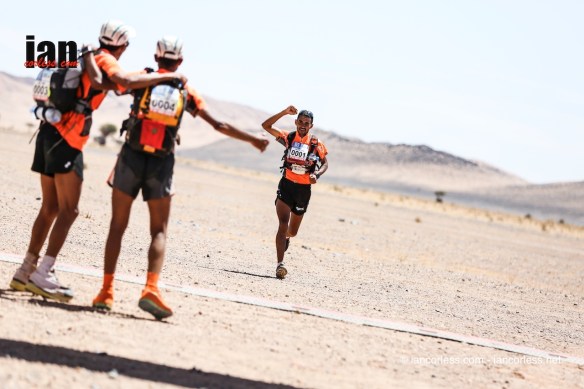
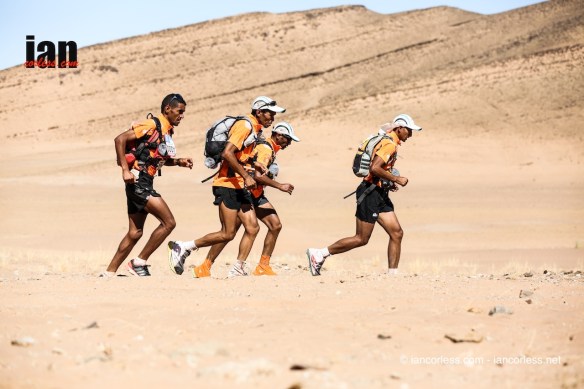
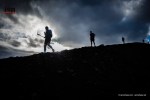
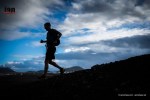
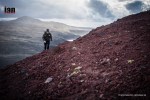
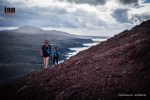
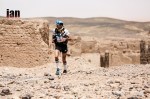
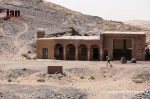
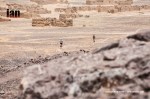
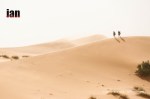
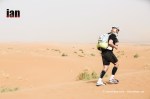
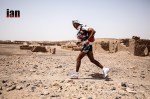
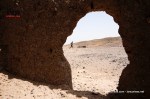
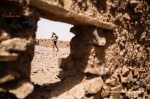
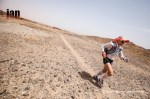
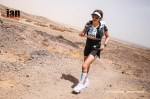
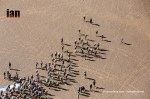
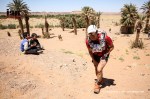
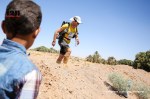
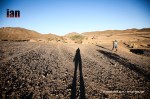
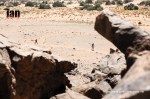
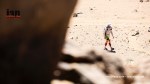
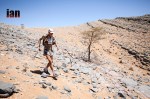
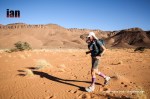
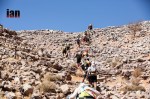
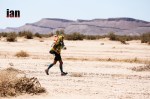
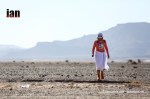
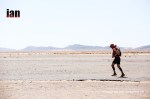
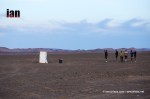
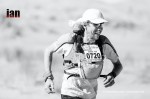
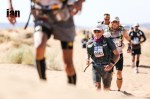
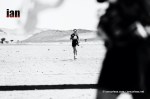
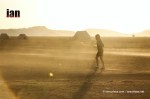
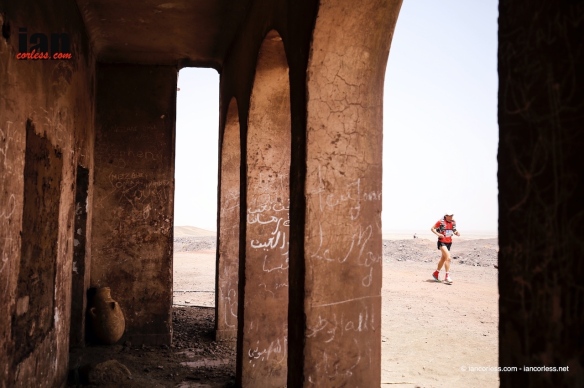
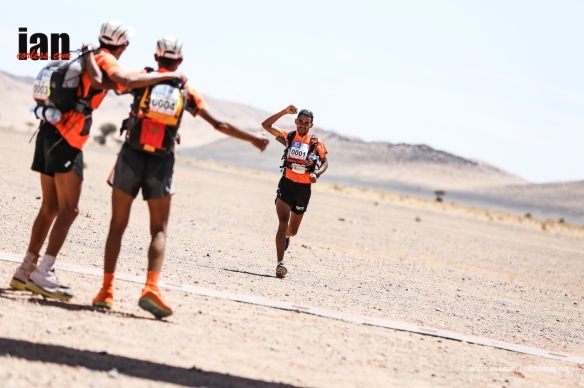
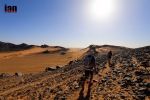
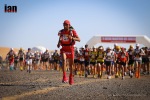
From the finish line two shadows on the horizon appear. It is 4pm in the afternoon. The warriors have been on the trail for 32 hours. Tired, weary and emotional they approach the line.

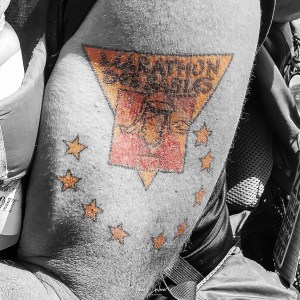
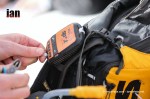
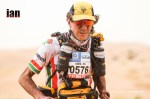
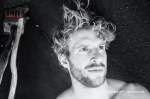
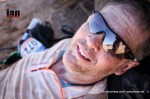
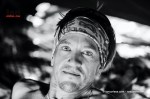
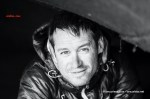
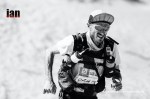
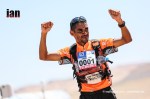
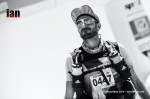
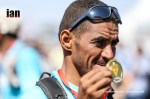
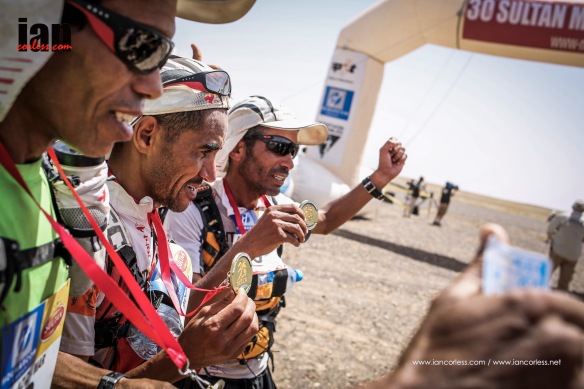
I see a tattoo glisten in the scorching light on the arm of Didier; an MDS logo on his arm with nine stars around it, a star for every completed MDS. Next to the 9th star a space, would he obtain that 10th star at this edition of the race?

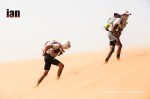
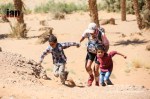
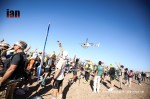
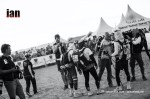
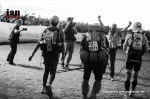
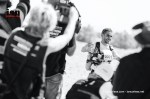
In the final meters to the line you can hear the shouts from MDS staff, “Bravo Gilles”, a marshal shouts “Allez Didier” and then the clapping and whoop whooping starts. It’s done, they cross the line an incredible 75.7 km’s completed over some of the most demanding conditions possible.

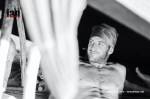
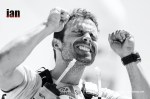
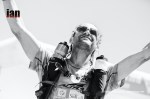
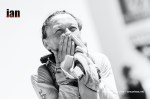
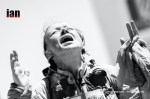
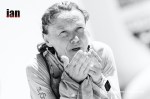
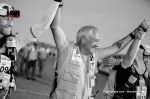
Didier falls into the arms of Gilles in an embrace similar to a small child who has just found a lost mother.

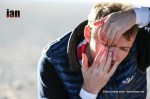
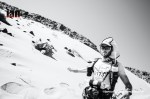
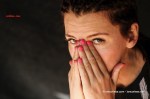
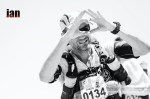
Tears stream down his face as he sobs uncontrollably. Gilles, all smiles, pulls away and kisses him on each cheek with a passion seldom seen. It’s a moment to savour! They are the last two runners on the course and the moment epitomizes all that the Marathon des Sables represents. It shows a bond between two people and confirms all that is good and pure in human nature and ultra-running.

You see this is no ordinary achievement.

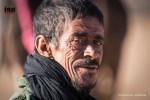
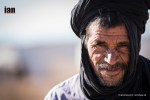
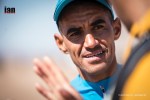
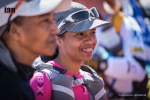
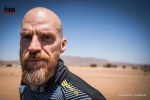
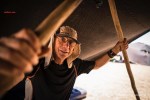
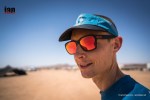
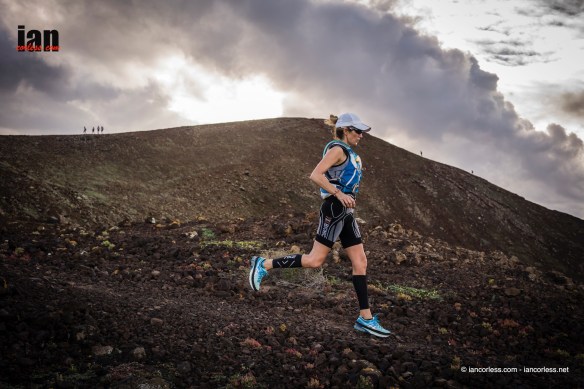
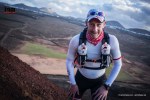
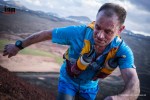
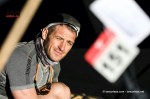
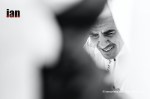
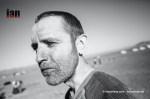
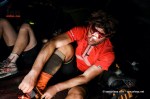
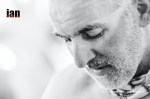
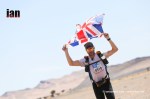
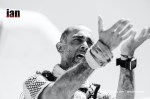
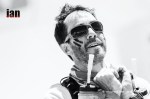
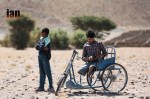
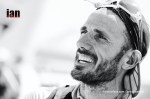
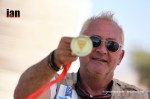
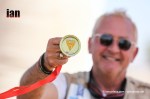
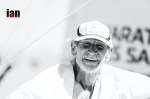
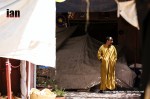
Gilles is a guide and Didier is blind.

Please support this website. I believe everyone deserves to read quality, independent and factual articles – that’s why this website is open to all. Free press has never been so vital. I hope I can keep providing independent articles with your help. Any contribution, however big or small, is so valuable to help finance regular content. Please support me on Patreon HERE.

Follow on:

Instagram – @iancorlessphotography

Twitter – @talkultra

facebook.com/iancorlessphotography

Web – www.iancorless.com

Web – www.iancorlessphotography.com

Image sales –www.iancorless.photoshelter.com

     Article was first published in 2013 and later for Runultra

Marathon des Sables 2017 #MDS – Registration Day

It’s hot… I know it’s the Sahara but today has been hot!

After a day of travel, some 1200 runners arrived in bivouac yesterday and settled to a first night in the Sahara. A meal, some admin and it was an early night. The winds increased with darkness and the general comment in camp the following morning was, “Wow, it got cold last night!”

It caused some last minute anxiety as today is bag drop day and therefore after registration all runners are wearing and carrying everything they need for the week. I could see a few warm layers being taken from cases and added to packs… they can always be thrown away later!

Today is a long day as everyone just wants to run. However, all admin procedures must be undertaken at specified time slots.

Firstly luggage is left and it will not be seen till after the race. Passport and identity is checked and then an overview of medical forms. Packs are weighed for a minimum 6.5kg and in some scenarios checked for mandatory kit. A Spot tracker is added to the runners packs, numbers are collected, timing chips activated and that’s it. The process takes about 2-hours in the heat of the day.

Bivouac is spread over a large area and in each tent, which hold 8-people there is carnage as last minute planning takes place.

As the evening approaches, the last full meal is provided. On waking, self-sufficiency takes over and the runners will start, well and truly, the 32nd edition of Marathon des Sables.

Day 1 is 30.03km with a 10-hour cut-off time.

Follow on

facebook.com/iancorlessphotography

Twitter @talkultra

Instagram @iancorlessphotography


The 2017 32nd Marathon des Sables Preview #MDS

The 32nd MARATHON DES SABLES draws near and as usual, we take a look at several of the main contenders who will toe the line looking to place on the podium of this iconic race. We look at some of the impressive statistics and we preview at the route the runners will need to cover.

Since 1986, over 20,000 participants have raced at the Marathon des Sables and over 1200 are registered for 2017. Of the 52 Nationalities represented, the British are the largest contingent followed by the French.

2017 ROUTE SUMMARY

The 32nd edition will cover 250km in five timed stages and one compulsory charity stage. Daily distances will vary from 30km to 90km. The only provision to runners is rationed water and a bivouac each night which must be shared with seven other runners. The race requires self-sufficiency and everything a runner needs must be carried for the duration of the race.

Day 1 – A relatively flat stage with small dunes, lots of sand and a slight climb to the finish. It’s a day when many runners go too fast. Tip: Ease into the race.

Day 2 – Will be a tough stage that is long with a great deal of sand. You will climb a gorge and run down a very steep descent. Tip: Tough day, keep focused, watch your pace and keep hydrated.

Day 3 – A climb starts the day and it is followed by rollercoaster terrain taking runners up and down. One section is very steep with technical passages. If that wasn’t enough, this stage contains the first ‘real’ dunes of the 32nd edition. Tip: One foot in-front of the other and remember the big day is tomorrow.

Day 4 – The long one: a feared and formidable stage. A lot of sand and some pitfalls for the feet. Two start times: 8.15 a.m. for most people and 11.15 a.m. for the first 50 men and the first 5 women. It’s a day of much sand and difficult terrain underfoot – be careful not to fall! Two passages through small gorges, a climb up a djebel, a roller coaster through the sand, and a technical descent add to a tough day. Tip: Watch out for the heat and manage the night carefully! Get your head in the right place.

Day 5 – Two start times: 7 a.m. for the majority and 8.30 a.m. for the first 200 runners. Dunes at the start and then no major difficulties, however, be prepared for a hot stretch over a long plateau… Tip: If you finished the long day, the race is in the bag. Smile!

Day 6 – Compulsory charity stage.


THE TOP MEN AND WOMEN

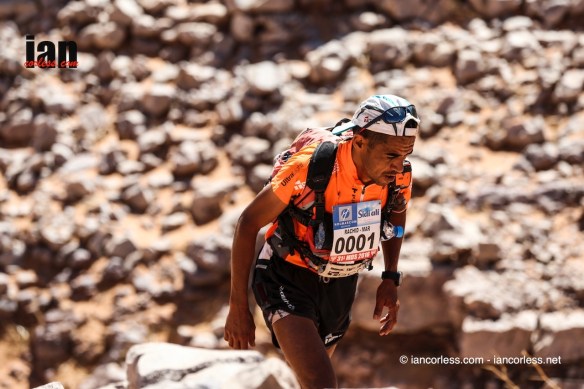
Rachid El Morabity returns and is without doubt, once again, the host favorite for male victory. Russian Natalia Sedyh, who won the race in 2016 has decided not to return in 2017 and this leaves the door open for 2015 MDS champion Elisabet Barnes but it will be no easy run – 2017 is arguably one of the strongest female line-ups the race has seen.

THE WOMEN RACE

Nathalie Mauclair placed 2nd in 2016 and Fernanda Maciel placed 3rd, with Natalya not returning, could victory go to one of these very strong ladies? Of course, yes! They both now know the race better, they will have adjusted their training and equipment and will arrive prepared. Nathalie has won Diagonale des Fous twice and has been trail World Champion twice – this combination of speed and endurance is just what is required in the Sahara.

Fernanda Maciel, like Nathalie, is a powerhouse on trails. A regular competitor on the UTWT she brings incredible experience to the race and a tenacity to push to the line.

Elisabet Barnes won MDS in 2015 and what has followed is a string of world-class performances in multi-day races all over the world – Australia, South Africa, Costa Rica, USA and so on. Elisabet loves the Sahara and this year has stepped up her training and prepared meticulously for the 32nd edition.

Emilie Lecomte will run MDS for the first time in 2017 but last year, pipped Elisabet Barnes to victory at the Grand To Grand in the USA. Emilie is a specialist in long races and the multi-day format suits her. She still holds the FKT for the GR20 in Corsica and like Nathalie has won the Diagonale des Fous.


Ester Alves from Portugal won The Coastal Challenge in 2016 and this year placed 3rd. Like the ladies’ above she is a fierce competitor and although this is her first foray into the Sahara, I have a feeling we will see her contend for the top 5, if not the podium.

Our women’s top ten to watch:

Aziza Raji is the Moroccan hope. She won the race in 2008 and 2009 but the speed of the race has increased and she is unlikely to contend with the other top elites.

Lizzie Wraith from the UK is a strong runner who will be under the radar here in the Sahara – watch out, she may surprise many people! Lizzie made the podium at the UK’s tough, Dragons Back Race.

Mélanie Rousset is attempting MDS for the first time but has a string of top-10 results at Diagonale des Fous and UTMB.

Nahila Hernandez San Juan from Mexico placed 8th at MDS in 2009 and was 5th at Badwater 135 in 2013.

Marie Eve Trudel a newcomer to ultra but placed 4th at the Grand To Grand in 2015.

Amy Costa winner of the Badwater 135 in 2013.

Kerri Kanuga 6th at Badwater in 2016.

THE MEN RACE

Rachid El Morabity, Samir Akhdar, Aziz El Akad and Abdelkader El Mouaziz are the strong men on this 32nd MARATHON DES SABLES. Rachid has won the race in 2011, 2014, 2015 and 2016 – do you want to bet against him?

Samir Akhdar is a MDS regular but his best result came in 2015 when he placed 4th. In 2017, he has the potential for 2nd or 3rd. Equally, Aliza El Akad although he is getting on in years, his seven completions at MDS and all within the top-5 would suggest he will continue that consistency.

This year the race does not have Chema Martinez from Spain or Danny Kendall from the UK. Therefore, the great European hope comes with a trio of Brits.

Andy Symonds is a world-class runner who has made the podium all over the world in iconic ultras. Although this is his first MDS he has the running skill to be up there! It all depends if he has adapted to the pack and the additional weight.

Nathan Montague is coming to the race with clear intentions to do well and ideally be the first Brit and hopefully that highest placed Brit ever. He’s a fast runner with some impressive times for 50km and 100km.

Damian Hall has been top-20 at UTMB and placed on the podium at The Spine. He raced in Costa Rica in 2016 with an excellent performance against a world-class field. Like Andy, Damian is on a MDS learning curve but he has the potential to do well.

Moroccans may well provide the competition for the other Moroccans. Abdelkader El Mouaziz is a 2:06 marathon runner and has won London Marathon in 1999 and 2001. He may well be slower now with the passing of the years but class is permanent. His highest placing at MDS is 2nd – one to watch!

Miguel Capo Soler was 3rd at MDS in 2013 and is the most experienced non-Moroccan who will potentially contend the top-10 placing. In recent years, he has run at The Coastal Challenge and Everest Trail Race.

Our men’s top ten to watch:

Mustapha Ait Amar finished MDS 13-times and was 12th in 2012.

Andrew Fargus placed 11th at MDS in 2013.

Luca Papi is a novice MDS runner but brings a wealth of experience.

Marco Olmo is a legend of ultra-trail and MDS – he will not contend the podium but he will be up around the top-20. Not bad for a 68-year old!

Notable mentions for blind runner Didier Benguigu who aged 67 will participate in his 13th MDS.

Also, Duncan Slater from the UK who lost both legs during a mission in Afghanistan. He did not complete in 2016 due to medical complications – he’s back this year for the medal!

Finally…

1216 runners will toe the line and the youngest male is Oscar Daglish from the UK who is just 16-years old. He will be running with his father who has already completed MDS.

The youngest female is Emily Rolfe, also from the UK. Emily will also run with her father.

Claude Leonardi from France is the oldest male runner. The 32nd edition will be his 5th time on the race, not bad for 80-years old!

Edda Hanna Bauer got into sport late, she ran her first marathon and 60. Now aged 72 she has made up for it clocking up 26 marathons and 63 ultra-marathons.

Crazy Statistics of the MDS

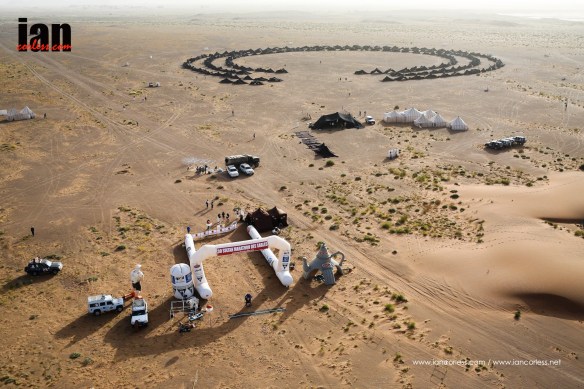
“The logistics are a big headache and we organize every detail in advance! We’re a village of 2,000 people that must be set up and dismantled every day. We need to be self-sufficient in energy, food, water and fuel. As one of my friends says, ‘Let’s expect the worst because the best will never surprise us!’ We also benefit from the infallible support of the Royal Moroccan Army, which makes available about 25 6WD military trucks to transport all of our equipment.” – Patrick Bauer

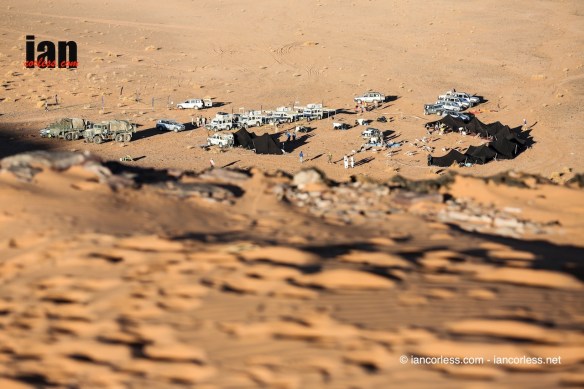
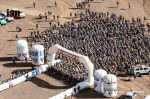
You must see Marathon des Sables t appreciate the size and scale of the event. It’s like the largest moving circus you will ever see and it’s impressive to witness.

Following statistics provided by the Marathon des Sables office:

▪      150 volunteers to supervise the race,

▪      450 general support staff,

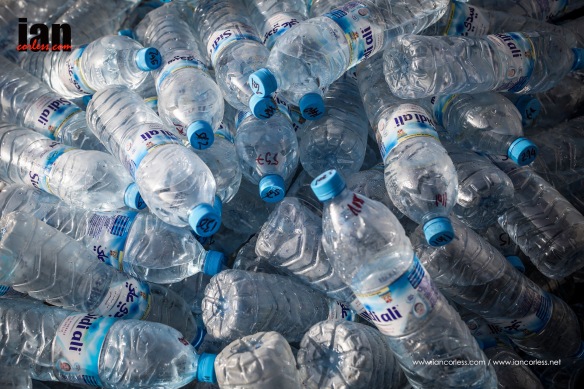
▪      120,000 liters of bottled mineral water,

▪      300 Berber and Saharan tents,

▪      120 all-terrain vehicles and trucks,

▪      2 Squirrel helicopters and 1 Cessna plane,

▪      8 Transavia ‘MDS special’ commercial planes,

▪      30 buses,

▪      4 dromedaries,

▪      1 incinerator lorry for burning waste,

▪      5 quad bikes to monitor race environment and safety,

▪      72 medical staff,

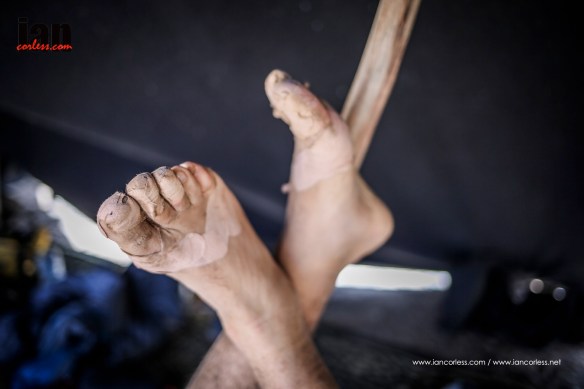
▪      2.3kms of Elastoplast,

▪      12,200 compresses,

▪      6,000 painkillers,

▪      150 liters of disinfectant,

▪      1 editing bus,

▪      5 cameras,

▪      1 satellite image station,

▪      10 satellite telephones,

▪      30 computers, fax and internet,

▪      20,000 competitors since 1986

▪      3 runners aged 10-20, 108 aged 20-30, 314 aged 30-40, 491 aged 40-50, 299 aged 50-60, 66 aged 60-70 and 13 aged 70-80 years.

▪      14 km/hr.: average maximum speed, 3 km/hr.: average minimum speed,

▪      15 years of age for the youngest competitor and the oldest, 83!

30 Years of the MDS

1986 – Michel GALLIEZ (FRANCE) – Christiane PLUMERE (FRANCE)

1987 – Bernard GAUDIN (FRANCE) – Marie-Ange MALCUIT (FRANCE)

1988 – Bernard GAUDIN (FRANCE) – Marie-Ange MALCUIT (FRANCE)

1989 – Hassan SEBTAOUI (FRANCE) – Marie-Claude BATTISTELLI (FRANCE)

1990 – Hassan SEBTAOUI (FRANCE) – Claire GARNIER (FRANCE)

1991 – Hassan SEBTAOUI (FRANCE) – Monique FRUSSOTE (FRANCE)

1992 – Mohamed BENSALAH (MOROCCO) – Monique FRUSSOTE (FRANCE)

1993 – Mohamed BENSALAH (MOROCCO) – Irina PETROVNA (RUSSIA)

1994 – André DERKSEN (RUSSIA) – Valentina LIAKHOVA (RUSSIA)

1995 – André DERKSEN (RUSSIA) – Béatrice REYMANN (FRANCE)

1996 – André DERKSEN (RUSSIA) – Anke MOLKENTHIN (GERMANY)

1997 – Lahcen AHANSAL (MOROCCO) – Rosanna PELLIZZARI (ITALY)

1998 – Mohamad AHANSAL (MOROCCO) – Rosanna PELLIZZARI (ITALY)

1999 – Lahcen AHANSAL (MOROCCO) – Lisa SMITH (USA)

2000 – Lahcen AHANSAL (MOROCCO) – Pascale MARTIN (FRANCE)

2001 – Lahcen AHANSAL (MOROCCO) – Franca FIACCONI (ITALY)

2002 – Lahcen AHANSAL (MOROCCO) – Simone KAYSER (LUXEMBOURG)

2003 – Lahcen AHANSAL (MOROCCO) – Magali JUVENAL (FRANCE)

2004 – Lahcen AHANSAL (MOROCCO) – Simone KAYSER (LUXEMBOURG)

2005 – Lahcen AHANSAL (MOROCCO) – Simone KAYSER (LUX)

2006 – Lahcen AHANSAL (MOROCCO) – Géraldine COURDESSE (FRANCE)

2007 – Lahcen AHANSAL (MOROCCO) – Laurence KLEIN (FRANCE)

2008 – Mohamad AHANSAL (MOROCCO) – Touda DIDI (MOROCCO)

2009 – Mohamad AHANSAL (MOROCCO) – Touda DIDI (MOROCCO)

2010 – Mohamad AHANSAL (MOROCCO) – Monica AGUILERA (SPAIN)

2011 – Rachid EL MORABITY (MOROCCO) – Laurence KLEIN (FRANCE)

2012 – Salameh AL AQRA (JORDAN) – Laurence KLEIN (FRANCE)

2013 – Mohamad AHANSAL (MOROCCO) – Meghan HICKS (USA)

2014 – Rachid EL MORABITY (MOROCCO) – Nikki KIMBALL (USA)

2015 – Rachid EL MORABITY (MOROCCO) – Elisabet BARNES (SWE)

2016 – Rachid EL MORABITY (MOROCCO) – Natalya SEDYH (RUSSIA)

A brief history of the MDS:

1984: At 28 years of age, Patrick Bauer decided to make for the Sahara to try to traverse a 350km expanse of uninhabited desert, on foot, alone, where he wouldn’t come into contact with a single village, oasis or watering place. Totally self-sufficient, with a rucksack weighing 35kg and containing water and food, he set off on a journey that was to last 12 days. It was the starting point of what was to become the MARATHON DES SABLES.

1986: The creation of the first MDS in the Moroccan Sahara. The 23 pioneers who took the start never imagined that their footprints would mark the start of a legendary event, which has today become a must among the major adventure sport meets. The creation of a non-mechanical competition in the Moroccan sands offers adventure runners a wealth of new prospects.

1987: Creation of the MDS logo: the face of a runner covered by a keffiyeh, the eyes protected by a pair of sunglasses and the pipette from the runner’s water container clenched between the teeth.

1989: 170 competitors take the start of the race.

1991: The gulf drama puts the MDS at a disadvantage and the financial partners withdraw. Fortunately, some runners answer the call. For these competitors, the true victory lies in meeting athletes from different backgrounds and their communion in the desert around the same goal. Sport proves once again that it can bring people together and create bonds.

1992: One and the same regulation for everyone. This year sees the establishing of unexpected draconian tests, to ensure that each participant properly transports all his or her gear from one end of the course to the other. A 30-point charter is drawn up.

First participation by the Moroccan Lahcen Ahansal

1994: Arrival of the Doc Trotters at the event.

1995: 10th anniversary. Since the start, over 1,500 men and women have left their footprint and their passion in the desert. Installation of water-pump for the inhabitants of the village of Ighef n’rifi (South of Er-Rachidia) – an idea by competitor Gilles Flamant and backed by Rolland Barthes and Patrick Bauer. Its success is to be repeated again and again

1996: First participation by Mohamed, a younger sibling of Ahansal. The two Moroccan brothers set off together and rank 4th and 5th respectively.

1997: This year heralds the start of the Ahansal saga. Morocco is honored with Lahcen’s first victory. He beats his two pursuers by nearly 30 minutes, despite them being international long-distance running champions.

1999: A mobile hospital on the MDS comes into being. There are around thirty practitioners on the ground, with doctors and nurses joining the caravan. A dedicated helicopter and ten all-terrain vehicles track the competitors each day. On- board these vehicles there are doctors of course, as well as high-tech equipment. The village boasts a genuine field hospital.

2000: Internet appears in the large MDS village. The organization decides to broadcast the texts and photos of the race live, day after day. The competitors can communicate with their nearest and dearest and receive messages of encouragement.

2001: For the first time the long leg, traditionally called “The 70”, exceeds the 80km barrier to reach 82km. The threshold of 240km is also surpassed since the 16th MARATHON DES SABLES spans 243km. Another first relates to the fact that there are no Moroccans on the podium this year.

2002: This edition is punctuated by a sandstorm, involving headwinds, which lasts the entire week. The doctors invent a machine for ‘low pressure cleansing’ to rinse out the runners’ eyes. Despite the difficult conditions, there are few retirements to report as the wind considerably reduces the temperature.

2005: The Luxembourg runner Simone Kayser is the first woman to win 3 MARATHON DES SABLES. For this 20th edition, the total number of runners exceeds 700 for the first time, with no fewer than 777 runners taking the start.

2006: A drying wind and very high humidity levels cause damage to the runners’ bodies. Despite additional allocations of water, a whole series of retirements ensues. There is a total of 146 retirements ultimately, which equates to double that of the previous record… Race management decides to shorten the long leg by over 10km given how tired the runners seem.

2008: The Solidarité MDS association is created. The aim: to develop projects to assist children and disadvantaged populations in the domains of health, education and sustainable development in Morocco. 

2009: MDS is disrupted by flooding and the 1st and 6th stages are not able to take place. To avoid the flood zones, the organization is obliged to improvise new legs on a day-to-day basis. In this way, the edition goes down in legend for its 3rd leg, which is the longest ever contested: 92km of sand, loose stones and rocks… The leg even sees the retirement of Lahcen Ahansal… At the prize giving the 2 winners admit to having competed in their hardest MDS. However, it was also the shortest: 202km.

2010: For its 25th edition, the number of participations reaches a record high of 1,013 participants. It is to be the longest MARATHON DES SABLES. It spans 250 kilometers with a course considered by former entrants to be the most difficult ever organized.

2012: A dramatic turn of events on the longest leg as the then leader in the overall standing, Rachid El Morabity (MAR) injures himself one kilometer from the finish. Medical examinations reveal a serious muscular lesion in the quadriceps. After over five years on the 2nd or 3rd step of the podium, Jordanian Salameh Al Aqra secures the title.

2013: 1,027 competitors on the start line make this a new participation record. New feature: a final “Charity” stage sponsored by UNICEF and traversing the Merzouga dunes round off the race. Sports wise, Mohamad Ahansal and Megan Hicks are the champions of the 231.5km event. On a human level, all the finishers pull off their crazy bet.

2014: 2011 winner, Moroccan Rachid El Morabity (MAR) wins the overall ranking and takes Mohamad Ahansal’s crown. In the women’s category, another American stamps her mark, Nikki Kimball. The French revelation is one Michaël Gras, 22 years of age, 8th overall and top Frenchman. A major athletics star, Moroccan Hicham El Guerrouj lines up to take the start of Saturday’s Unicef Charity leg.

You can follow the 2017 Marathon des Sables on this website.

On Facebook – Facebook.com/iancorlessphotography

On Instagram – @iancorlessphotography

On Twitter – @talkultra


Please remember, communications in the Sahara will be sporadic and we will upload content as and when possible.

Lanzarote Training Camp 2017 – Day 5

iancorless-com_lanza2017-03916

Now THAT was a stunning day!

0700 and meeting at the run track at Club La Santa was not, in the majority, most peoples idea of fun. However, the glow of head torches and an easy run of around 1-hours around the trails and lagoon of CLS, very much set everyone up for a perfect day in Lanzarote.

Breakfast was followed by two talks. Rich Carpenter discussed his first Marathon des Sables in 2016 and talked us through his whole preparation and race. He pointed out what worked and what didn’t and he also provided some invaluable personal ‘tips’ that many could take away to improve their own future multi-day experience.

Ian and Niandi then discussed the travel to Morocco, what everyone could expect and they provided invaluable hints-and-tips to make the bivouac experience more pleasurable until the race started.

Lunch and an afternoon break was followed by a run run to a volcano and a series of hill reps. I guess it was a session many feared… But, by unanimous feedback, the session has been the most exciting, the most welcomed and the most inspiring. Everyone loved it!

It was inspirational to see some runners push themselves to their physical limit, while others conquered a fear of climbing, exposed ridges and technical terrain. It was a real winning session and one that set everyone up perfectly for evening drinks in the bar and a relaxing and casual dinner.

Tomorrow, Sunday, is a big day with a long run out and back along the coast.

Interested in our 2018 Training Camp? Go HERE

Marathon de Sables 2016 – Race Summary and Images #MDS2016

©iancorless.com_MDS2016-5093

Photography by iancorless.com

Race summaries by Emmanuelle Lamarle for MARATHON DES SABLES

Translations from French to English by Niandi Carmont

The 2016 and 31st edition of the MARATHON DES SABLES concluded in Morocco on Saturday April 16th. It will go down in the history of the race as one of the toughest and most beautiful editions. At 257km long, it was the longest in the races history and although the long stage was 84km, the daily distance were higher and continually hovered around the marathon distance and thus made the multi-day challenge considerably harder. In the early days, particularly day 1, strong winds and sandstorms battered the runners making what was already a very hard day, considerably harder. This was reflected in day 2 with a high drop out rate. Day 3 was a beautiful stage but just an appetiser for the long day. The feared long day lived up to its reputation and although a very tough, relentless and challenging route, it was compensated for with it’s incredible beauty. Day 5, the classic marathon day, was for many a walk in the park after the long day, this was reflected in the emotions on the finish line when 5 days of effort were released. Day 6, the compulsory charity day concluded the race and with it, each runner received a medal on the line from race director and race creator, Patrick Bauer.

The Sahara, Morocco and the MARATHON DES SABLES never disappoints, 2016 though was a special one – tough, relentless and beautiful. the desert, the multi-day experience and the challenge really does make everyone look inward. The Sahara has a way of stripping you bare, down to your core and the looks of emotion, relief and celebration are moments to savour and all those who completed the journey will be changed forever.

Below is a brief summary of the race week with images to provide some perspective to what has been an incredible 31st edition of the ‘MDS!’

Travel and arrival

DAY ONE

MDSday1Moroccans dominated the men’s race as expected and the female field was shaken up by Russian Natalia Sedyhk.

Make no mistake the top male and female runners were bursting to go. In the minutes preceding the start the Russian athlete Natalia Sedykh (3rd in 2015) was doing some sprint warm ups; a definite indication of her intentions for the race.

An hour and a half later, on the other side of the incredible Mezouga dunes, the first 2 Moroccan runners surged from the North, then 2 other Moroccans joined them. To no-one’s surprise, the fennecs of the desert took advantage of the 12km dune section to open the gap, leaving behind their European competitors. Their run gait is incredible to watch. Light-footed, they hardly touch the sand. Three Moroccans take the lead and finish the stage claiming the first three places: Rachid El Morabity, last year’s winner, Hammou Ou Mohamed Moudouji and Abdelkader El Mouaziz all within 35 seconds of each other. Third and fourth, the Spaniard Jose Manuel Martinez and the Frenchman Erik Claveryfollow 9 and 14 minutes later.

In the female field, Natalia Sedyhk (RUS) arrived first at CP1 looking very fresh, she was pushing a relentless pace and looking to improve on her 3rd place in 2015 when a 2-hour penalty impacted on her race. Nathalie Mauclair followed in pursuit sticking to a regular pace but the Russian was too strong. Natalia sprinted across the finish line victorious winning the stage having outdistanced Nathalie Mauclair by 17 minutes. 2015 race winner, Elisabet Barnes crossed the line third looking relaxed and comfortable. Nathalie was very happy with her performance today:

“I stuck with a group so that I didn’t waste energy battling the wind alone. In the dunes I felt really good but I didn’t want to speed up as I didn’t want to overdo it. In the second dune section I had to use my compass to navigate and that went very well”.

The day was notable in terms of difficulty, especially the strong winds and sandstorms that made running and navigation equally important.

Women
1 – Natalia SEDYHK (RUS) – 3:40:20
2 – Nathalie MAUCLAIR (FRA) – 3:57:30
3 – Elisabet BARNES (SUE) – 4:10:57
4 – Elizabeth HOWARD (USA) – 4:17:50
5 – Fernanda MACIEL (ESP) – 4:22:49

Men
1 – Rachid EL MORABITY (MAR) – TGCC – 3:10:29
2 – Hammou Ou Mohamed MOUDOUJI (MAR) – TEAMAROC – 3:10:45
3 – Abdelkader EL MOUAZIZ – (MAR) – TGCC – 3:11:04
4 – Jose Manuel MARTINEZ (ESP) – 3:20:30
5 – Erik CLAVERY (FRA) – TERDAV EQUINOX 1 – 3:25:52

DAY TWO

MDSday2

The Gap opens in the Moroccan field in the men’s race and Natalia SEDYHK keeps the lead in the women’s race.

In the first fifteen kilometres of the second stage of the MARATHON DES SABLES race predictions were that the Moroccans would yet again dominate the race and rank in the top 10 of the male field.

On the second part of the course, the Europeans held on and better still even overtook some of their Moroccan rivals including Hammou Ou Mohamed Moudouji , who for his first edition would have liked to stick to the heels of Rachid El Morabity, but he blew up. Which goes to show that even the Moroccans are not perfect!

At the finish Rachid finished before Abdelkader El Mouaziz , and was followed by a duo arriving hand-in-hand : the Spaniard Jose Manuel (Chema) Martinez  and Aziz El Akad . Erik Clavery (D 087 – FRA) finished sixth and was first Frenchman. Sondre Amdahl was seventh.

In the female race, Natalia Sedykh was in the lead again, she seemed a little fragile and less fiery but despite this, she once again dominated the stage making many runners comment, ‘she is on another planet this year!’ Natalia won the stage, finished in the top-10 overall – incredible! Nathalie Mauclair followed 15 minutes later and Fernanda Maciel  came in third position, 2 minutes behind her gaining an advantage over 2015 champion Elisabet Barnes who finished fourth.

WOMEN

D662 SEDYKH Natalia RUS F 7:51:06
D275 MAUCLAIR Nathalie FRA F 8:22:13
D482 MOURA ANTUNES MACIEL Fernanda ESP F 8:49:36
D2 BARNES Elisabet SWE F 9:02:43
D525 HOWARD Elizabeth USA F 9:15:40

MEN

D1 EL MORABITY Rachid TGCC MAR M 6:34:33
D4 EL MOUAZIZ Abdelkader TGCC MAR M 6:35:35
D447 MARTINEZ Jose Manuel ESP M 7:03:36
D6 AKHDAR Samir TGCC MAR M 7:21:16
D3 EL AKAD Aziz TGCC MAR M 7:22:11

DAY THREE

MDSday3

A foregone conclusion to today’s race – not only do the Moroccans hold a faster pace but they know how to manage their race strategy running together in a small group.

Moroccan runners once again lead the race, setting off at a very fast and regular pace on a course which is going to be very runnable. Apart from two successive dune sections and a climb up a djebel, this pace was maintained. At the first check-point El Morabity was leading but closely followed by his compatriots. Only Manuel (Chema) Martinez  and Erik Clavery manage to keep up the gruelling pace that the local set. Clavery was definitely feeling much better today at the start. “It was much better today, I managed my race better”.

After the tough stoney djebel, three Moroccans continued to lead the race: Rachid El Morabity, Aziz El Akad and Abdelkader El Mouaziz. Sticking together they manage their race cleverly, running fast enough to hold off the competition but not too fast to risk blowing up. Behind them Chema Martinez was running hard though and he eventually caught up with  Samir Akhdar moving into 4th place with Erik Clavery hot on his heels. This order didn’t change before the finish although the gap between the runners widened confirming the Moroccan superiority and the leaders’ positions.

In the female race, Natalia Sedykh once again set a gruelling pace to shake off her rivals and although the long stage would follow, word in the camp was that it would take a monumental mistake by the Russian to loose the race. Aziza Raji, third at the first check-point, didn’t manage to stave off Nathalie Mauclair  and Fernanda Maciel.

Ranking of Stage 3:

First 5 women

  1. D662 SEDYKH Natalia RUS 03:49:15
  2. D275 MAUCLAIR Nathalie FRA 03:53:34
  3. D482 MACIEL Fernanda ESP 03:55:53
  4. D33 RAJI Aziza MAR 04:16:41
  5. D2 BARNES Elisabet SWE 04:37:28

First 5 men

  1. D1 EL MORABITY Rachid MAR 03:03:41
  2. D4 EL MOUAZIZ Abdelkader MAR 03:04:02
  3. D3 EL AKAD Aziz MAR 03:05:40
  4. D447 MARTINEZ Jose Manuel (Chema) ESP 03:18:55
  5. D6 AKHDAR Samir MAR 03:25:22

General Ranking

First 5 women

  1. D662 SEDYKH Natalia RUS 11:40:21
  2. D275 MAUCLAIR Nathalie FRA 12:15:48
  3. D482 MACIEL Fernanda ESP 12:45:31
  4. D2 BARNES Elisabet SWE 13:40:12
  5. D33 RAJI Aziza MAR 13:56:47

First 5 men

  1. D1 EL MORABITY Rachid MAR 09:38:16
  2. D4 EL MOUAZIZ Abdelkader MAR 09:39:38
  3. D447 MARTINEZ Jose Manuel (Chema) ESP 10:22:31
  4. D3 EL AKAD Aziz MAR 10:27:52
  5. D6 AKHDAR Samir MAR 10:46:40

DAY FOUR

MDSday4

Rachid El Morabity  and Natalia Sedykh claim victory on the 31st edition of the MARATHON DES SABLES with excellent long day results.

Rachid El Morality was congratulated like never before on the finish line of the long day in the 31st edition of the MARATHON DES SABLES. The Moroccan almost certainly sealed his 4th consecutive edition, claiming victory in all the stages with a comfortable lead on his rivals – just the marathon stage to go! His race management has been exemplary and irreproachable. Abdelkader El Mouaziz lost 2 more minutes to Rachid but crossed the finish to claim a well-deserved second place. Jose Manuel (Chema) Martinez ran a hard race and completed the podium of the long stage – a great result and a real improvement on his 2015 6th place overall.

Frenchmen Erik Clavery and Jean-Sébastien Braun, as well as Carlos Sa  and Sondre Amdahl all came in the top 10.

Talking about the Top 10: female Russian runner Sedykh  is the only women to rank in the top-10 general ranking, in spite of her loss in energy during the long stage where she placed 2nd behind Nathalie Mauclair. Sedykh has a 24-minute lead on the French lady and although Macular will try to take back that time in the marathon, it is highly unlikely she will succeed. It really is is hard to see how Sedykh’s rivals can close the gap on the marathon stage tomorrow. Nathalie Mauclair did manage to gain 12 minutes on her Russian counterpart on the long day with a really aggressive run but the Russian remained consistent. Fernanda Maciel placed 3rd, which as with the men’s podium should change very little on the marathon stage. The gaps have widened in the leading field and behind.

Ranking Stage 4

First 5 women

  1. D275 MAUCLAIR Nathalie 09:07:59 FRA 9,20
  2. D662 SEDYKH Natalia 09:19:53 RUS 9,00
  3. D482 MOURA ANTUNES MACIEL Fernanda 10:30:12 ESP 8,00
  4. D2 Elisabet BARNES 11:36:11 SWE 7,24
  5. D267 Sophie LAVERSANNE 267 12:00:25 FRA 7,00

First 5 men

  1. D1 EL MORABITY Rachid 08:11:24 MAR 10,26
  2. D4 EL MOUAZIZ Abdelkader 08:14:28 MAR 10,19
  3. D447 MARTINEZ Jose Manuel 08:25:55 ESP 9,96
  4. D3 EL AKAD Aziz 08:28:04 MAR 9,92
  5. D87 CLAVERY Erik 08:41:20 FRA 9,67

General Ranking

First 5 women

  1. D662 SEDYKH Natalia 21:00:14 RUS 9,33
  2. D275 MAUCLAIR Nathalie 21:23:47 FRA 9,16
  3. D482 MOURA ANTUNES MACIEL Fernanda 23:15:43 ESP 8,43
  4. D2 Elisabet BARNES 25:16:23 SWE 7,76
  5. D33 Aziza RAJI 26:09:24 MAR 7,49

First 5 men

  1. D1 EL MORABITY Rachid 17:49:40 MAR 10,99
  2. D4 EL MOUAZIZ Abdelkader 17:54:06 MAR 10,95
  3. D447 MARTINEZ Jose Manuel 18:48:26 ESP 10,42
  4. D3 EL AKAD Aziz 18:55:56 MAR 10,35
  5. D87 CLAVERY Erik 19:32:54 FRA 10,03

DAY FIVE

MDSday5

“The Moroccans are on a different planet” Erik Clavery

A thrilling race with the top 4 Moroccans claiming victory and leaving Jose Manuel (Chema) MARTINEZ  out of the podium. The female field remains unchanged with Natalia SEDYKH leading the field.

Once again the Moroccans claimed victory in the men’s field in today’s stage. They set off fast from the outset and widened the gap over the succession of sandy dunes and more runnable sections of the marathon day. Although yesterday’s stage pre-determined the winner Rachid El Morabity and runner-up, the third place was still uncertain with an 8-minute gap between Jose Manuel (Chema) Martinez and El Akad. Yesterday they knew that they would be battling it out the next day. For Chema the strategy was simple:

“I’m going to stick to Aziz and accelerate in the final runnable stretch.”

Aziz on the other hand intended to give it his best shot on the marathon stage

“I’m going to do everything I can to get on the podium tomorrow. I’ll make it or break it.”

And that is what happened Jose Manuel (Chema) Martinez lost 30 minutes to EL AKAD however this does not reflect the true story. ‘Chema’ was stopped early on in the race and was required to change his numbers due to a ‘technicality’ based on the race rules. This stopped Chema in his tracks and while he removed his pack and changed his numbers, his race was broken…  Rachid El Morabity did not win the stage coming in second behind El Mouaziz. Erik Clavery came in 3rd looking shattered.

“It’s the first time I am in tears at the end of a race. I am so happy. I really managed the race to the best of my ability. But the Moroccans are unbeatable – it’s another planet.”

In the female race, the ranking hardly changed. Natalia Sedykh lead the stage and opened a small gap with her rivals. She was flying at the finish of this 5th stage. Nathalie Mauclair tried to hang on but couldn’t keep up with the pace set by her Russian rival. Very moved she spent several minutes in front of the webcam at the finish blowing kisses to her kids and family back in France. Surprise of the day was the performance of the Chinese runner Pui Yan Chow who crossed the line in 2nd place. Fernanda Maciel remained third but like Chema, Maciel also was penalised for a number infringement, luckily it did not impact on her 3rd place but it was close….

Top 5 women Stage 5

Running Runner Number Time Country Speed
1 SEDYKH Natalia 662 3:45:12 RUS 11,19
2 CHOW Pui Yan 766 3:50:23 CHN 10,94
3 MAUCLAIR Nathalie 275 4:07:08 ESP 10,20
4 RAJI Aziza 033 4:32:07 MAR 9,26
5 MOURA ANTUNES MACIEL Fernanda 482 4:43:00 ESP 8,90

NOTE – “Puy Yan CHOW has received a time penalty of 3 hours for non-respect of the starting wave at stage 5 and we are going to update the ranking.”

Top 5 men Stage 5

Ranking Runner Number Time Country Speed
1 EL MOUAZIZ Abdelkader 4 3:11:32 MAR 13,16
2 EL AKAD Aziz 3 3:11:34 MAR 13,15
3 EL MORABITY Rachid 1 3:11:41 MAR 13,15
4 AKHDAR Samir 6 3:18:54 MAR 12,67
5 CLAVERY Erik 87 3:27:24 FRA 12,15

General Ranking 2016

Top 5 women MDS 2016

Ranking Runner Number Time Country Speed
1 SEDYKH Natalia 662 24:45:26 RUS 9,61
2 MAUCLAIR Nathalie 275 25:30:55 FRA 9,33
3 MOURA ANTUNES MACIEL Fernanda 482 27:58:43 ESP 8,51
4 BARNES Elisabet 002 30:02:26 SWE 7,92
5 RAJI Aziza 033 30:41:31 MAR 7,75

Top 5 men MDS 2016

Ranking Runner Number Time Country Speed
1 EL MORABITY Rachid 1 21:01:21 MAR 11,32
2 EL MOUAZIZ Abdelkader 4 21:05:38 MAR 11,28
3 EL AKAD Aziz 3 22:07:30 MAR 10,76
4 MARTINEZ Jose Manuel 447 22:27:50 ESP 10,59
5 CLAVERY Erik 87 23:00:18 FRA 10,35

The Charity Stage

MDScharity

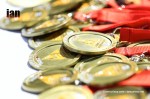
The compulsory charity stage concluded the 2016 MARATHON DES SABLES and although the overall rankings would not change with is stage, it offered all the runners a casual way to transition from aggressive racing to recovery. Patrick Bauer awarded each and every runner, first to last, with a medal. A significant moment that concluded the 2016 MDS!

Local colour in Ouarzazate

All images ©iancorless.com – all rights reserved

A series of runner profiles by Niandi Carmont will allow over the coming days

A full image gallery will be displayed on iancorless.photoshelter.com

Many thanks to the MARATHON DES SABLES

MDSlogo

Marathon des Sables 2016 #MDS2016 in Images

©iancorless.com_MDS2016-0966

The 2016 Marathon des Sables is over and what an edition. The ‘MDS’ calls itself the toughest race on earth and the 31st edition lived up to its reputation providing all participants with a brutal test. At 257km, the race was the longest edition in the races history and although the long day was not as long as many expected (84km), the overall daily distances were higher making recovery a delicate balancing act.

In addition to one of the toughest courses in the races history, brutal weather with strong winds, sand storms and intense heat over the last couple of days made every runner who crossed the line fully appreciate the enormity of the task.

Rachid El Morabity once again took top honours in the men’s race and Russian, Natalia Sedykh ran a jaw dropping race not only to win the ladies race (she was 3rd in 2015) but she also placed in the top 10 overall.

In-depth reports, interviews and a selection of stories will follow over the coming week to provide an insight into the 31st edition of the Marathon des Sables, until then, here is just a taster of images to come to provide an insight of an incredibly intense, brutal and of beautiful journey through the Sahara.

©iancorless.com_MDS2016-8576

©iancorless.com_MDS2016-8110

©iancorless.com_MDS2016-8007©iancorless.com_MDS2016-8374

©iancorless.com_MDS2016-1713©iancorless.com_MDS2016-1820

©iancorless.com_MDS2016-0626

©iancorless.com_MDS2016-5228

©iancorless.com_MDS2016-6258

©iancorless.com_MDS2016-3107

©iancorless.com_MDS2016-2845

©iancorless.com_MDS2016-2302


©iancorless.com_MDS2016-0187©iancorless.com_MDS2016-2149©iancorless.com_MDS2016-2233

©iancorless.com_MDS2016-6110

©iancorless.com_MDS2016-5872

©iancorless.com_MDS2016-8107©iancorless.com_MDS2016-6701

all images ©iancorless.com

Elisabet Barnes – Marathon des Sables Pre-Race Interview #MDS2016

©iancorless.com_Lanzarote2016-01018

Elisabet Barnes dominated the 2015 Marathon des Sables by winning every stage of the race against a high quality field of competitors. What followed was a series of  races and victories – a win and course record at Trail Menorca and victory (and everyday stage wins) at Oman Desert Marathon.

2016 kicked off with a multi-day training camp (here) and in February, Elisabet placed 2nd at Costa Rica’s The Coastal Challenge.

©iancorless.com_TCC2016-4677

I caught up with Elisabet just two days before she flies out to Morocco to discuss how she feels, how 2016 will be different to 2015 and how life gets in the way of ‘just’ training.

You can listen and download the interview HERE

Or please click play on the audio file below

You can read a full and in-depth preview of the 2016 race HERE

©iancorless.com_Lanzarote2016-00684

Marathon des Sables 2016 #MDS2016 Race Preview

©iancorless.com_MDS2015Day6-0982

MDS, Marathon des Sables, The Toughest Race in the World… whatever you want to call it, the 31st edition is just around the corner. Think about it, 30-years. It’s quite incredible how this race has grown and has become ‘the’ multi-day race to do irrespective of experience. It was the first and is still the best race offering an ultimate adventure for novice and experienced runner.
MDSlogo

It’s more than a race. It’s an experience, it’s escape and it’s a challenge. The combination of self-sufficiency, life in bivouac and running 250-km’s through the heat of the Sahara is something that those that have experienced it will never forget. It is the story of life, a story of men and women who have come to the heart of the desert to rid themselves of the superficial to keep only the essentials and get in touch with their true selves.
©iancorless.com_MDS2015Day7-2789

“What concerns me the most is the runners’ safety, and our capacity to ensure rapid medical intervention and emergency health evacuation. The weather is another worry, but unfortunately totally out of our hands.” – Patrick Bauer

For the past three decades, some 19,000 runners have signed up for this experience, so, with the imminent running of the 2016 edition, it’s fair to say that race will see a great number of participants returning.

To summarise the impact on participants over 30 years:

(statistics provided by MDS media team/ official press documentation)
  • 30-40% are returning,
  • 70% are international,
  • 30% are French,
  • 17% are women
  • and 45% are veterans thus confirming that you are never too old to take part!

2016 will see 1200 runners participate, a huge increase from 1986 when only 23 runners took part.
©iancorless.com_MDS2015Day6-9440

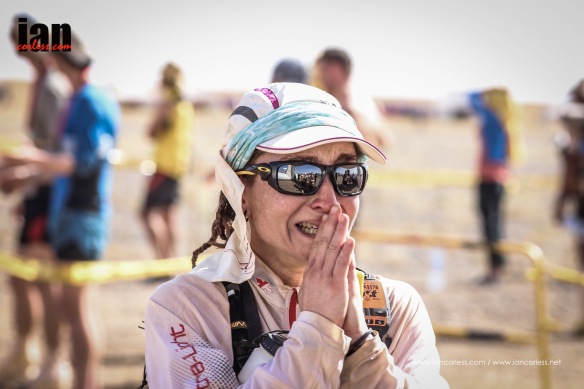
“The desert strips you bare, all the more so on a race like this. Values like sharing, solidarity, and respect for differences and cultures are omnipresent. So of course, friendships develop between the brothers and sisters of the desert who have no more barriers or boundaries and are all united to achieve the same goal.” – Patrick Bauer
©iancorless.com_MDS2015Day4-6694

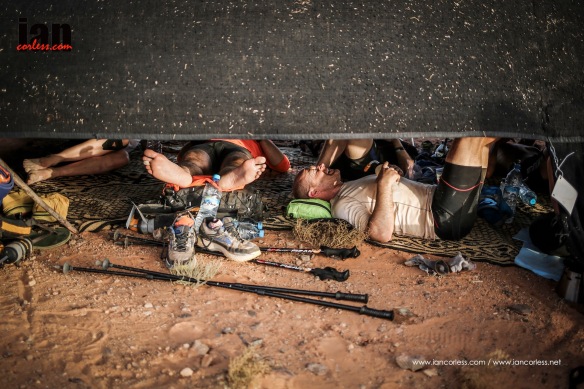
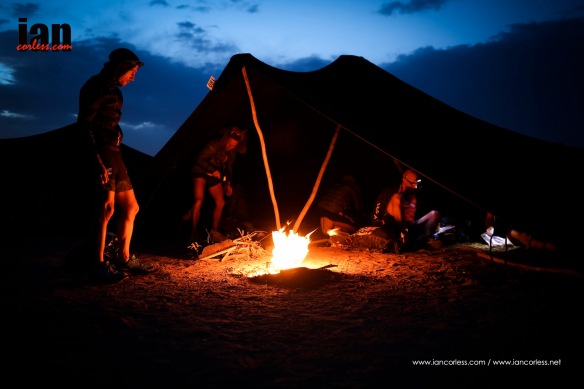
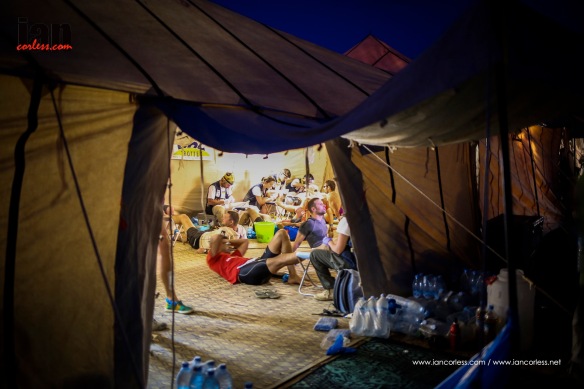
Lasting six days’ participants must be self-sufficient carrying everything they need in a pack. Water is provided but rationed and a tent (bivouac) is provided each evening that must be shared with seven other participants.

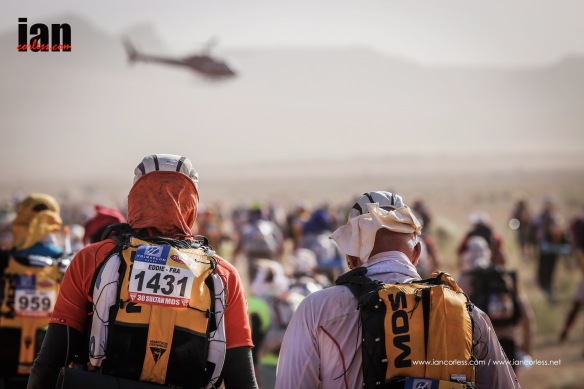
The 2016 edition of the race will be 257-km’s offering a series of challenges that will test the mind and body in equal measure.
©iancorless.com_MDS2015Day5-7840

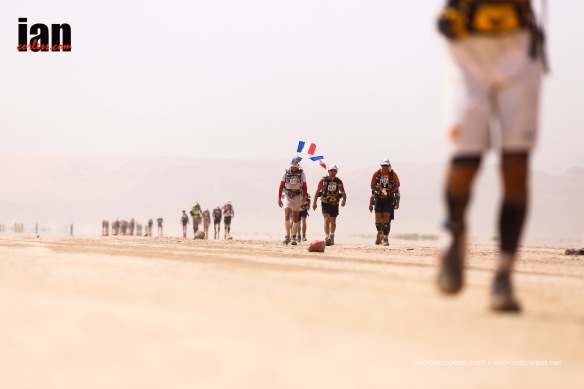
“We try to convey happiness, enthusiasm and positive thinking through what we do and the sense of belonging is particularly intense for the runners, almost tribal, after ten days of sharing the adventure and fulfilling the same dream. Another thing I’d say was very important and a big part of the marathon’s success is the security and care that we bring the runners. The average age of participants is about forty, and most of them have children and have opted for a mishap-free adventure. In any case, when your family is far away, you count on quality organization.” – Patrick Bauer
©iancorless.com_MDS2015Day5-7951-2

The Route

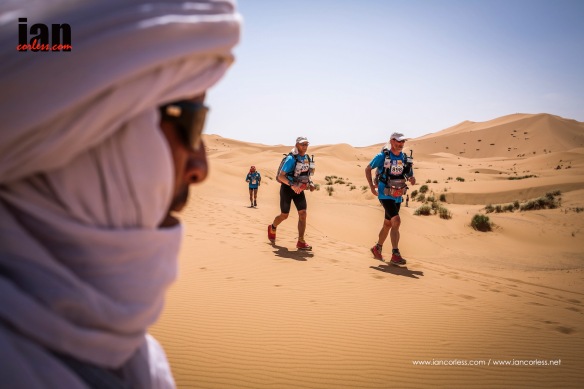
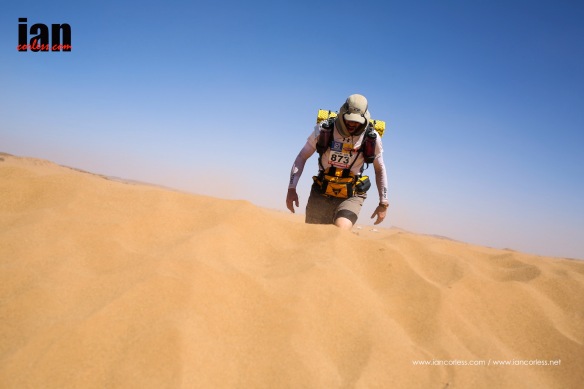
On a course punctuated by difficulties, competitors will get to see all of the Sahara’s different facets. Runners will have to cross ergs (dune fields), djebels (mountains), stony plateaus, dried-up lakes and oueds in which only sand flows, as well as oases, nomad camps, and traditional, rammed-earth villages. The desert has its secret gardens and those taking part in MARATHON DES SABLES will be lucky enough to contemplate them as a recompense for their efforts.

Stage 1 – 10th April

12km of majestic dunes kick off the race anddunes conclude the stage for the last 3km before competitors reach the bivouac. In-between, runners will have the time to appreciate the difficulty of making their way down a sandy oued and crossing a ghost village. Although not confirmed, I would anticipate that the Erg Chebbi Dunes may start the 2016 race. These dunes finished the 2015 edition on the charity stage. This will most definitely mean a longer transfer from the airport to the start of the race and these dunes are tough! “The dunes of Erg Chebbi reach a height of up to 150 meters in places and altogether spans an area of 50 kilometers from north to south and up to 5–10 kilometers from east to west lining the Algerian border.”

Stage 2 – 11th April

A long stage, with a wide variety of terrains. The standard dunes will be accompanied by stony plateaus where time stands still, rammed-earth villages inhabited by courageous souls farming arid land, and some steep djebels. As beautiful as it is difficult.

Stage 3 – 12th April

MARATHON DES SABLES will merit its name on this stage. The first part will go fast but, before the 1st check point the dunes will emerge… and then carry on, with more before and after the 2nd check point and a few more before the bivouac. The desert will go up and down with a slight climb before some slopes of over 20% that will put it all into perspective.

Stage 4 – 13/14th April

Known as “the long one” by old hands, this is the most testing part of the race, where you really need to manage your energy. The list of remarkable sites along this stage is particularly long. It’s the kind of stage that made MDS’s reputation. In less than 35 hours, runners’ minds and bodies will have had their fill. Running through the sand at night under the stars teaches all of them about humility. No one emerges from this long pilgrimage unchanged.

Stage 5 – 15th April

The Marathon stage. For those who thought they’d seen it all, get ready for a revelation. This entirely new route will take you through some splendid sites and end in a battle for the leading places. The less hurried will take their time to admire the landscapes. A lot more dunes and hills for 42.2km.

Stage 6 – 16th April – SOLIDARITY UNICEF legs

This obligatory stage is timed but does not count in the MDS ranking. You have to cross the finish line to feature in the ranking of the 31st MDS and receive a finisher’s medal. When they reach the small village in which the final finish line is located, competitors, sponsors and families signed up on this stage will make up the caravan and be able to appreciate the beauty of the landscape, all wearing the colours of UNICEF, which supports projects for impoverished children. This stage is mostly a chance to reflect on the experience of this amazing human adventure, and raise awareness of solidarity before returning to civilization.
©iancorless.com_MDS2015Day2-1527

ONES TO WATCH AT MDS 2016

The LADIES ©iancorless.com_MDS2015Day3-2734

Elisabet Barnes is the defending champion and has become a dominant force in the world of multi-day running. She followed MDS victory in 2015 with victory in Oman and placed 2nd lady at the recent The Coastal Challenge in Costa Rica. Recent life changes have impacted on Elisabet’s preparation for the 2016 edition of the race but she knows the desert, she knows the sand and she knows how to race over multiple days.

PRE RACE INTERVIEW WITH ELISABETH BARNES HERE

“I have a lot more experience than I had in 2012. I do train a little more, but it’s really that I understand more about pushing myself further and how to manage my food and water. My bag was also a lot lighter than in 2012, my 2015 bag only weighed 7 kilos compared to 11 kilos in 2012.”
©copyright.iancorless.com.P1070838

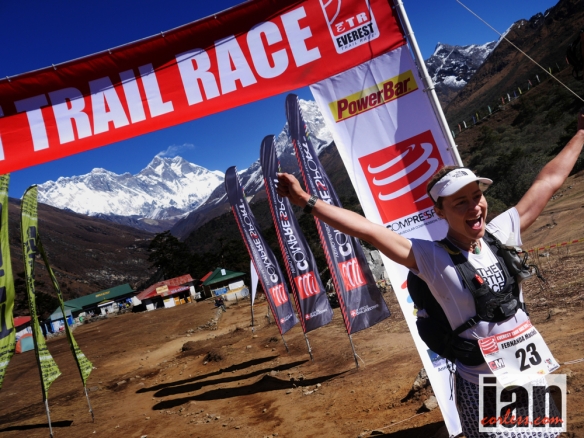
Fernanda Maciel is a newbie to the Sahara and multiple day racing despite victory at the 2013 Everest Trail Race. One thing is for sure, the heat should not be a problem for the Brazilian ultra runner. An experienced competitor, Fernanda recently spent a long period of time at altitude in an effort to set a ‘FKT’ (fastest known time) on Aconcagua. Something she achieved! Her success at races such as UTMB, Transgrancanaria and Ultra-Trail Mt Fuji will almost certainly mean that she will be a force to be reckoned with.
©copyright .iancorless.com._1000768

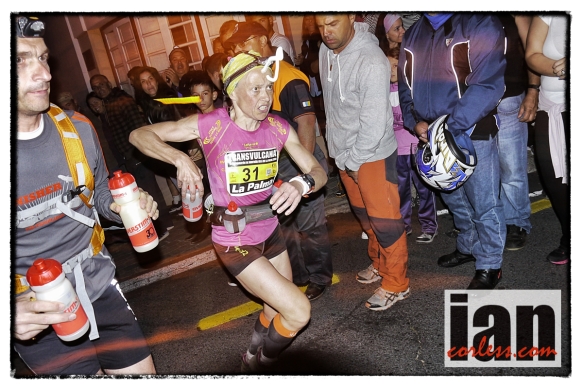
Nathalie Maculair will without doubt shake things up at the 2016 edition. Her results speak for themselves and her ability to run fast, climb, handle technical trail will (and quite rightly so) intimidate her competition. Nathalie has raced well at Transvulcania, become a world trail champion and also won the ridiculously tough, Grand Raid de la Reunion (Diagonale des Fous). This will be Nathalie’s first multi-day race but she has raced in ‘Raids’ before. Her small size will without doubt be a huge disadvantage in the early stages.  A wife and mother, this may well be the ultimate escape for her.

“Given my small size, transporting 6-7 kg will be quite a challenge. But I’ve already run with a large bag on multisport raids. I enjoy the period when you prepare the bag and start picturing yourself on the race and thinking about what you’ll need. Once I’m in that phase, part of me is already there.”
©iancorless.com.IMG_3927MDS2014

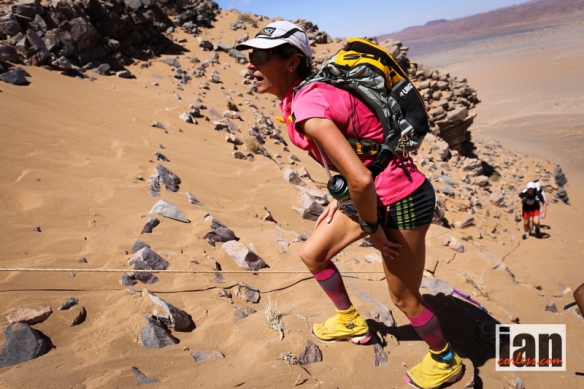
Laurence Klein has won the race multiple times (2007, 2011 and 2012), and knows the sand and the race better than anyone else. You van never rule her out! In recent years’ things have not gone to plan in the big sand pit, but Laurence is back once again, that can only mean one thing; she believes she can win!
©iancorless.com_MDS2015Day1-9651

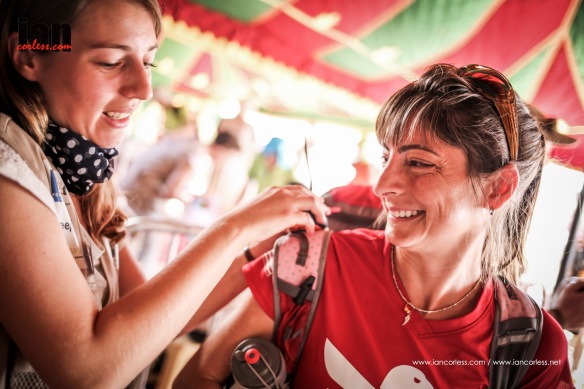
Liza Howard ran MDS last year and placed 16th which does not reflect her ability. She has real experience of ultra running as she proved with victory at Leadville 100 in late 2015 (she also won Leadville in 2010) and I am sure that she learnt valuable lessons in the 2015 edition of MDS that will only make her stronger and more resilient in 2016.

Aziz Raji a name I initially missed but a hot contender for the podium after great runs at Trans Atlas Marathon and in Oman.

Meghan Arbogast is another USA based runner that has all the credentials and history to make a real impact in the dunes and the hard packed sand of the Sahara. A fast runner, particularly over 100km, Meghan’s race history dates back to 1996 and is compulsive reading.
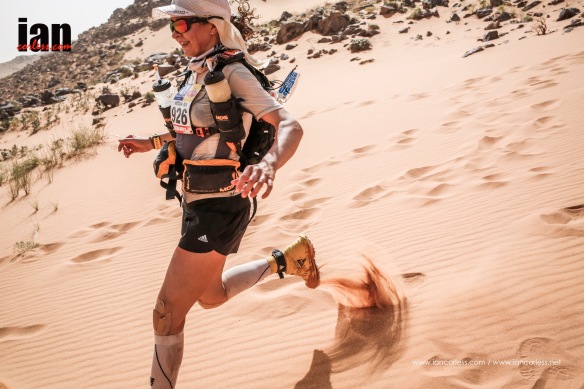
©iancorless.com_MDS2015Day5-7531

Natalia Sedykh placed 3rd last year and like Elisabet Barnes was an unknown entity. She had a steely grit and determination and I can’t help but think that 1-year on, she will come to the race meticulously prepared with just one objective; overall victory!

Ladies to watch:

Frederica Boifava, Annick Ballot, Gweanelle Coupon, Elise Delannoy, Sophie Laversanne, Claire Price, Holly Zimmermann, Maree Jesson and more.

The MEN
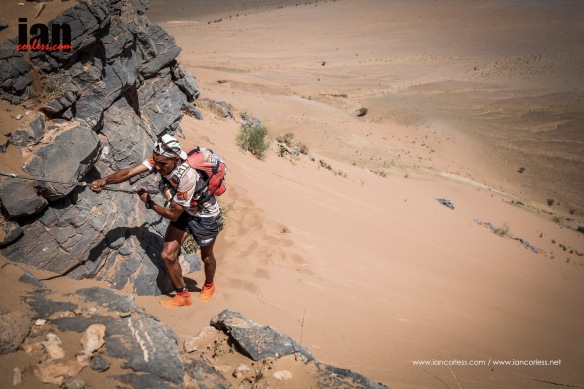
©iancorless.com_MDS2015Day3-2986

Rachid El Morabity has won the race three times, is defending champion, has local knowledge and is the man to beat, need I say more?
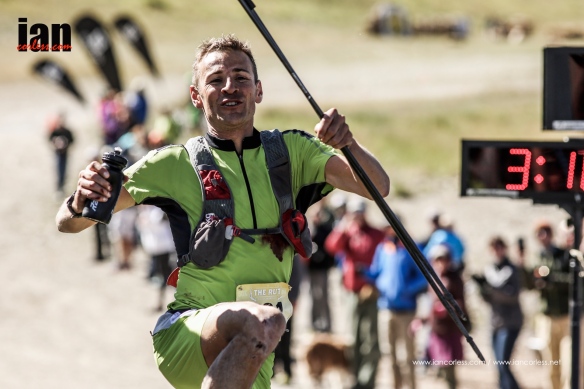
©iancorless.com_Rut2015-2194

Franco Colle is a surprise entry as he loves the mountains. He had an incredible 2015 racing on the Skyrunner World Series and by contrast he has won the epic and demanding, Tor des Geants. He has strength, technical ability and is used to carrying a pack in the mountains, this is his first MDS but don’t rule him out!
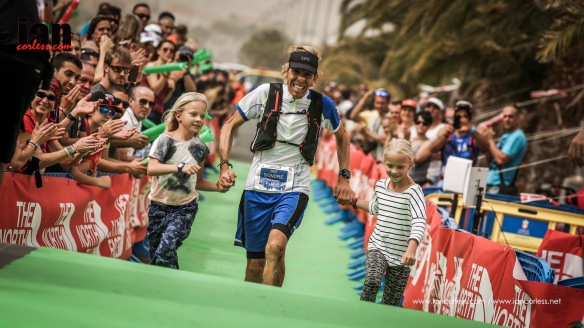
©iancorless.com_Transgrancanaria15-6958

Sondre Amdahl has been a revelation in recent years with a sting of world -class performances at UTMB, Western States, Transgrancanaria, UTMF and so on. He recently pulled out of the 2016 edition of Transgrancanaria and has then devoted himself to preparing for the Sahara. A fierce competitor, he will try his hardest day-after-day.

PRE RACE INTERVIEW WITH SONDRE HERE

“I’m not afraid of it, but I do have a great deal of respect for the race. I’m trying to prepare myself as best as I can, especially for the heat, sand and lack of food. I live in Norway, and it’s cold there right now, so I’ll spend some time in Spain and Morocco before the race.”
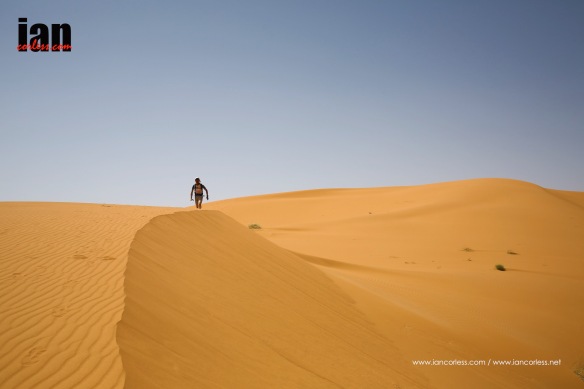
©iancorless.com_MDS2015Day6-0651

Erik Clavery is the great French hope. He has said numerous times that MDS is a dream race and he has set his sights high.

“This weekend I set off to the dunes in western France once again with my 6.5 kg bag on my back. The hardest part will no doubt be getting used to the heat. It’s not easy to reproduce those conditions over here in the winter. So I work on my home trainer wearing a thermal jacket!”
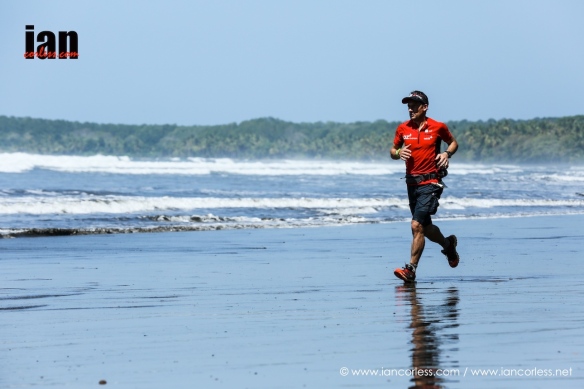
©iancorless.com_TCC2016-1787

Carlos Sa has come close but never quite managed to smoke the MDS cigar. He placed 4th in 2012 and 7th in 2013. This year, Carlos has really set his sights on MDS and his recent run in Costa Rica at The Coastal Challenge was great training. We all know he can run in the heat as his 2013 victory at Badwater 135 confirms. I hope he makes the podium!
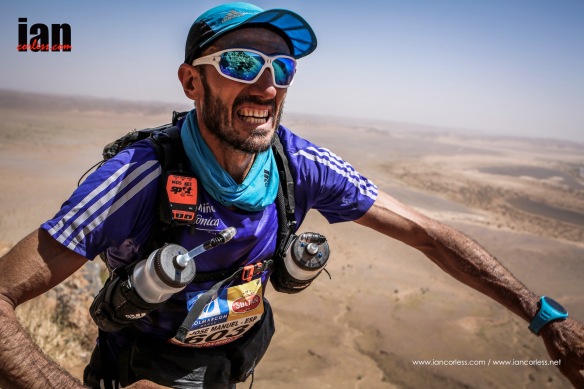
©iancorless.com_MDS2015Day3-3254

Chema Martinez is a 2:08 marathon runner, he placed 6th at MDS last year and recently had a great run in Costa Rica at The Coastal Challenge. He’s a fun loving guy who loves to race and race fast. He made mistakes in 2015 and will look to put them right in 2016 – watch this space!
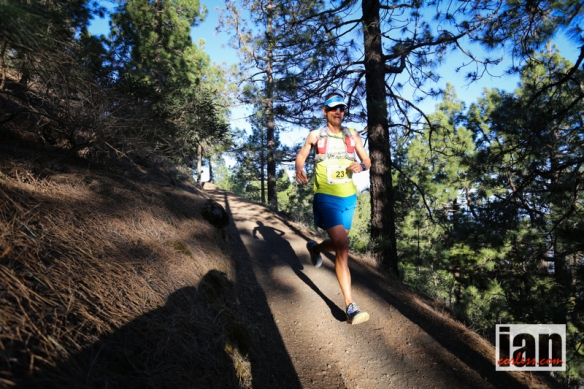
©iancorless.com.IMG_7592Transvulcania14

Jason Schlarb is one of the USA’s top runners who has excelled at races such as UTMB. Just recently he skied (with 3 others) the Hardrock 100 course over 4-days. A world first and a huge achievement. Without doubt, MDS will be a huge learning curve for Jason but it’s a challenge he is embracing. He sees the race as one big adventure!
©iancorless.com_MDS2015Day6-1084

The Moroccans

  • Aziz El Akad has been in the top 5 six times, so a repeat performance is highly likely.
  • Abdelkader El Mouaziz was 2nd last year and a super fast runner. He will be looking to oust Rachid for the top slot and he has the race to do it!
  • Samir Akhdar has never won MDS but has placed in the top 8 seven times.

Men to watch:

Jean-Sebastien Braun, Marco Olmo, Greg Dunning, Glenn McDougall, Alejandro Lopez Reyes, Ahmed Tahiri, Mohamed Faraj, Marco Pajusco, Juan Manuel Cortes and more.

©iancorless.com_MDS2015Day5-9765

Crazy Statistics of the MDS

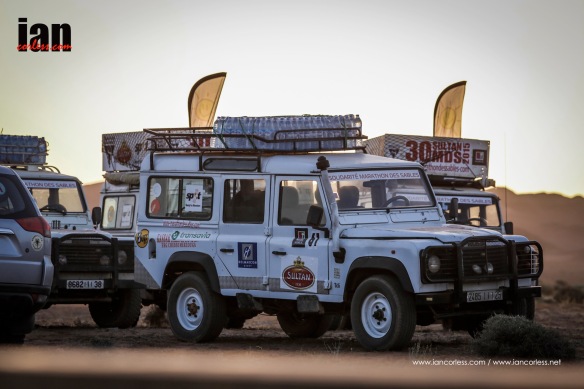
“The logistics are a big headache and we organize every last detail in advance! We’re a village of 2,000 people that has to be set up and dismantled every days and needs to be self-sufficient in energy, food, water and fuel. As one of my friends says, ‘Let’s expect the worst because the best will never surprise us!’ We also benefit from the infallible support of the Royal Moroccan Army, which makes available about 25 6WD military trucks to transport all of our equipment.” – Patrick Bauer
©iancorless.com_MDS2015Day3-6232

▪    150 volunteers to supervise the race,

▪    450 general support staff,

▪    120,000 liters of bottled mineral water,

▪    300 Berber and Saharan tents,

▪    120 all-terrain vehicles and trucks,

▪    2 Squirrel helicopters and 1 Cessna plane,

▪    8 Transavia ‘MDS special’ commercial planes,

▪    30 buses,

▪    4 dromedaries,

▪    1 incinerator lorry for burning waste,

▪    5 quad bikes to monitor race environment and safety,

▪    72 medical staff,

▪    2.3kms of Elastoplast,

▪    12,200 compresses,

▪    6,000 painkillers,

▪    150 liters of disinfectant,

▪    1 editing bus,

▪    5 cameras,

▪    1 satellite image station,

▪    10 satellite telephones,

▪    30 computers, fax and internet,

▪    18,000 competitors since 1986

▪    30% returning competitors, 70% international, 30% French,
17% women, 45% veterans,
30% in teams,
10% walkers,
90% alternate walking and running,

▪    14 km/hr.: average maximum speed, 3 km/hr.: average minimum speed,

▪    15 years of age for the youngest competitor and the oldest, 83!
©iancorless.com_MDS2015Day3-5132

30 Years of the MDS

1986 – Michel GALLIEZ (FRANCE) – Christiane PLUMERE (FRANCE)

1987 – Bernard GAUDIN (FRANCE) – Marie-Ange MALCUIT (FRANCE)

1988 – Bernard GAUDIN (FRANCE) – Marie-Ange MALCUIT (FRANCE)

1989 – Hassan SEBTAOUI (FRANCE) – Marie-Claude BATTISTELLI (FRANCE)

1990 – Hassan SEBTAOUI (FRANCE) – Claire GARNIER (FRANCE)

1991 – Hassan SEBTAOUI (FRANCE) – Monique FRUSSOTE (FRANCE)

1992 – Mohamed BENSALAH (MOROCCO) – Monique FRUSSOTE (FRANCE)

1993 – Mohamed BENSALAH (MOROCCO) – Irina PETROVNA (RUSSIA)

1994 – André DERKSEN (RUSSIA) – Valentina LIAKHOVA (RUSSIA)

1995 – André DERKSEN (RUSSIA) – Béatrice REYMANN (FRANCE)

1996 – André DERKSEN (RUSSIA) – Anke MOLKENTHIN (GERMANY)

1997 – Lahcen AHANSAL (MOROCCO) – Rosanna PELLIZZARI (ITALY)

1998 – Mohamad AHANSAL (MOROCCO) – Rosanna PELLIZZARI (ITALY)

1999 – Lahcen AHANSAL (MOROCCO) – Lisa SMITH (USA)

2000 – Lahcen AHANSAL (MOROCCO) – Pascale MARTIN (FRANCE)

2001 – Lahcen AHANSAL (MOROCCO) – Franca FIACCONI (ITALY)

2002 – Lahcen AHANSAL (MOROCCO) – Simone KAYSER (LUXEMBOURG)

2003 – Lahcen AHANSAL (MOROCCO) – Magali JUVENAL (FRANCE)

2004 – Lahcen AHANSAL (MOROCCO) – Simone KAYSER (LUXEMBOURG)

2005 – Lahcen AHANSAL (MOROCCO) – Simone KAYSER (LUX)

2006 – Lahcen AHANSAL (MOROCCO) – Géraldine COURDESSE (FRANCE)

2007 – Lahcen AHANSAL (MOROCCO) – Laurence KLEIN (FRANCE)

2008 – Mohamad AHANSAL (MOROCCO) – Touda DIDI (MOROCCO)

2009 – Mohamad AHANSAL (MOROCCO) – Touda DIDI (MOROCCO)

2010 – Mohamad AHANSAL (MOROCCO) – Monica AGUILERA (SPAIN)

2011 – Rachid EL MORABITY (MOROCCO) – Laurence KLEIN (FRANCE)

2012 – Salameh AL AQRA (JORDAN) – Laurence KLEIN (FRANCE)

2013 – Mohamad AHANSAL (MOROCCO) – Meghan HICKS (USA)

2014 – Rachid ELMORABITY (MOROCCO) – Nikki KIMBALL (USA)

2015 – Rachid ELMORABITY (MOROCCO) – Elisabet Barnes (SWE)
©iancorless.com_MDS2015Day3-5136

A brief history of the MDS

1984: At 28 years of age, Patrick Bauer decided to make for the Sahara to try to traverse a 350km expanse of uninhabited desert, on foot, alone, where he wouldn’t come into contact with a single village, oasis or watering place. Totally self-sufficient, with a rucksack weighing 35kg and containing water and food, he set off on a journey that was to last 12 days. It was the starting point of what was to become the MARATHON DES SABLES.

1986: The creation of the first MDS in the Moroccan Sahara. The 23 pioneers who took the start never imagined that their footprints would mark the start of a legendary event, which has today become a must among the major adventure sport meets. The creation of a non-mechanical competition in the Moroccan sands offers adventure runners a wealth of new prospects.

1987: Creation of the MDS logo: the face of a runner covered by a keffiyeh, the eyes protected by a pair of sunglasses and the pipette from the runner’s water container clenched between the teeth.

1989: 170 competitors take the start of the race.

1991: The gulf drama puts the MDS at a disadvantage and the financial partners withdraw. Fortunately, some runners answer the call. For these competitors, the true victory lies in meeting athletes from different backgrounds and their communion in the desert around the same goal. Sport proves once again that it can bring people together and create bonds.

1992: One and the same regulation for everyone. This year sees the establishing of unexpected draconian tests, to ensure that each participant properly transports all his or her gear from one end of the course to the other. A 30-point charter is drawn up.

First participation by the Moroccan Lahcen Ahansal

1994: Arrival of the Doc Trotters at the event.

1995: 10th anniversary. Since the start, over 1,500 men and women have left their footprint and their passion in the desert. Installation of water-pump for the inhabitants of the village of Ighef n’rifi (South of Er-Rachidia) – an idea by competitor Gilles Flamant and backed by Rolland Barthes and Patrick Bauer. Its success is to be repeated again and again

1996: First participation by Mohamed, a younger sibling of Ahansal. The two Moroccan brothers set off together and rank 4th and 5th respectively.

1997: This year heralds the start of the Ahansal saga. Morocco is honored with Lahcen’s first victory. He beats his two pursuers by nearly 30 minutes, despite them being international long-distance running champions.

1999: A mobile hospital on the MDS comes into being. There are around thirty practitioners on the ground, with doctors and nurses joining the caravan. A dedicated helicopter and ten all-terrain vehicles track the competitors each day. On- board these vehicles there are doctors of course, as well as high-tech equipment. The village boasts a genuine field hospital.

2000: Internet puts in an appearance in the large MDS village. The organization decides to broadcast the texts and photos of the race live, day after day. The competitors can communicate with their nearest and dearest and receive messages of encouragement.

2001: For the first time the long leg, traditionally called “The 70”, exceeds the 80km barrier to reach 82km. The threshold of 240km is also surpassed since the 16th MARATHON DES SABLES spans 243km. Another first relates to the fact that there are no Moroccans on the podium this year.

2002: This edition is punctuated by a sandstorm, involving headwinds, which lasts the entire week. The doctors invent a machine for ‘low pressure cleansing’ to rinse out the runners’ eyes. Despite the difficult conditions, there are few retirements to report as the wind considerably reduces the temperature.

2005: The Luxembourg runner Simone Kayser is the first woman to win 3 MARATHON DES SABLES. For this 20th edition, the total number of runners exceeds 700 for the first time, with no fewer than 777 runners taking the start.

2006: A drying wind and very high humidity levels cause damage to the runners’ bodies. Despite additional allocations of water, a whole series of retirements ensues. There are a total of 146 retirements ultimately, which equates to double that of the previous record… Race management decides to shorten the long leg by over 10km given how tired the runners seem.

2008: The Solidarité MDS association is created. The aim: to develop projects to assist children and disadvantaged populations in the domains of health, education and sustainable development in Morocco. 

2009: MDS is disrupted by flooding and the 1st and 6th stages are not able to take place. To avoid the flood zones, the organization is obliged to improvise new legs on a day-to-day basis. In this way, the edition goes down in legend for its 3rd leg, which is the longest ever contested: 92km of sand, loose stones and rocks… The leg even sees the retirement of Lahcen Ahansal… At the prize giving the 2 winners admit to having competed in their hardest MDS. However, it was also the shortest: 202km.

2010: For its 25th edition, the number of participations reaches a record high of 1,013 participants. It is to be the longest MARATHON DES SABLES. It spans 250 kilometers with a course considered by former entrants to be the most difficult ever organized.

2012: A dramatic turn of events on the longest leg as the then leader in the overall standing, Rachid El Morabity (MAR) injures himself one kilometer from the finish. Medical examinations reveal a serious muscular lesion in the quadriceps. After over five years on the 2nd or 3rd step of the podium, Jordanian Salameh Al Aqra secures the title.

2013: 1,027 competitors on the start line make this a new participation record. New feature: a final “Charity” stage sponsored by UNICEF and traversing the Merzouga dunes round off the race. Sports wise, Mohamad Ahansal and Megan Hicks are the champions of the 231.5km event. On a human level, all of the finishers pull off their crazy bet.

2014: 2011 winner, Moroccan Rachid El Morabity (MAR) wins the overall ranking and takes Mohamad Ahansal’s crown. In the women’s category, another American stamps her mark, Nikki Kimball. The French revelation is one Michaël Gras, 22 years of age, 8th overall and top Frenchman. A major athletics star, Moroccan Hicham El Guerrouj lines up to take the start of Saturday’s Unicef Charity leg.
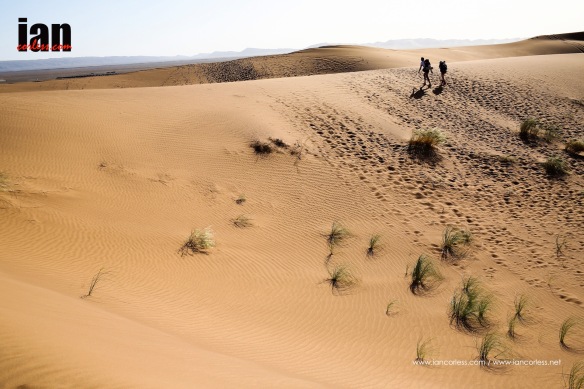
©iancorless.com_MDS2015Day3-4845

Follow the 2016 Marathon des Sables in images and words on iancorless.com

VIEW THE 2015 RACE IN IMAGES HERE

Instagram

Instagram HERE

Twitter_logo

Twitter HERE

Facebook Logo

Facebook HERE
Marathon des Sables Hints ‘n’ Tips on RUNULTRA from JoMeek, Danny Kendall and Nikki Kimball

MDS Hints_n_Tips


Running the Marathon des Sables or any other multi-day race? Read some of the Hints ‘n’ Tips from Nikki Kimball, winner of the 2014 MDS, Jo Meek, 2nd at the 2013 MDS and winner, course record holder for The Coastal Challenge and Danny Kendall, highest male British finisher, MDS 2014.

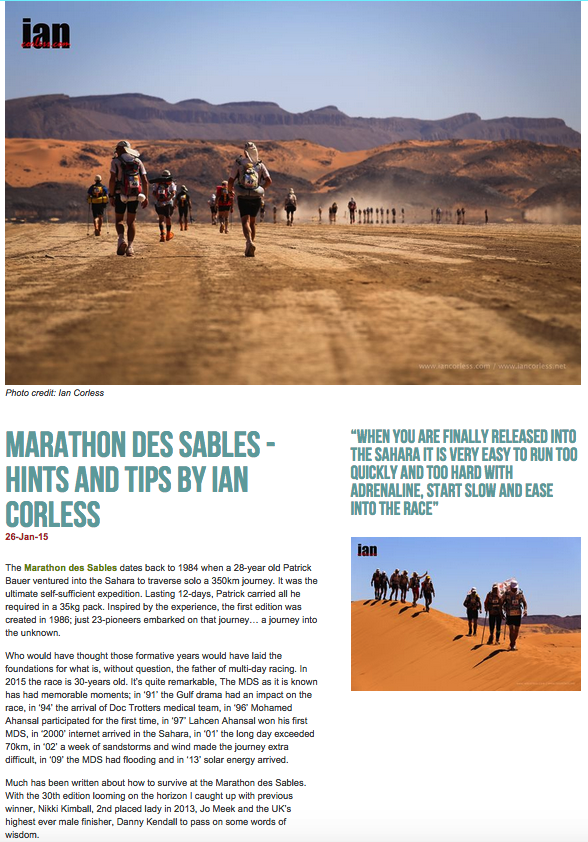
The Marathon des Sables dates back to 1984 when a 28-year old Patrick Bauer ventured into the Sahara to traverse solo a 350km journey. It was the ultimate self-sufficient expedition. Lasting 12-days, Patrick carried all he required in a 35kg pack. Inspired by the experience, the first edition was created in 1986; just 23-pioneers embarked on that journey… a journey into the unknown.

Who would have thought those formative years would have laid the foundations for what is, without question, the father of multi-day racing. In 2015 the race is 30-years old. It’s quite remarkable, The MDS as it is known has had memorable moments; in ‘91’ the Gulf drama had an impact on the race, in ‘94’ the arrival of Doc Trotters medical team, in ‘96’ Mohamed Ahansal participated for the first time, in ‘97’ Lahcen Ahansal won his first MDS, in ‘2000’ internet arrived in the Sahara, in ‘01’ the long day exceeded 70km, in ‘02’ a week of sandstorms and wind made the journey extra difficult, in ‘09’ the MDS had flooding and in ‘13’ solar energy arrived.

Much has been written about how to survive at the Marathon des Sables. With the 30th edition looming on the horizon I caught up with previous winner, Nikki Kimball, 2nd placed lady in 2013, Jo Meek and the UK’s highest ever male finisher, Danny Kendall to pass on some words of wisdom.

READ THE FULL ARTICLE ON RUNULTRA HERE
run-ultra-logo

Nikki Kimball – ‘Hints ‘n’ Tips’ Marathon des Sables #MDS2015

©iancorless.comIMG_2710

Nikki Kimball is one of the most highly respected ultra runners in the world, Her running CV is beyond comprehension. It all started in 2000 with a win at Escarpment Trail Run 30k at the age of 29.

In 2004, Nikki had a break through moment with victory at the iconic Western States. Nikki also won again in 2006 and in 2007 she did the ultra double winning Western States and UTMB in the same year.

An ever present in the world of ultra running, Nikki has often been referenced as a true pioneer of the sport. In 2014 Nikki ran the Marathon des Sables for the first time and won! The Marathon des Sables is 30+-years old this year so I wondered, what knowledge could Nikki pass on before the next edition.

Join our Multi-Day Training Camp in Lanzarote, January each year. Booking and details available HERE

©iancorless.comIMG_0691

It’s been a while Nikki, when did we last speak?

No, we spent a week together in Morocco.
Exactly… April, not that long ago I guess. A great place to start: was that your first multi day race?
I have done Jungle Marathon in Brazil, very similar to MDS but a lot less comfortable due to humidity. I did that in 2009. You need to carry all your gear just like MDS and I have done Transrockies too which is like summer camp.

I knew you had done Transrockies but not the Jungle Marathon.

 Oh yeah, Transrockies is a vacation.

 What enticed you to Morocco and MDS, great way to start a year?

Yes, I guess. I thought it would be great training for Western States. That was my initial goal. The UTWT helped me get me to Morocco so I must thank them. I had wanted to do MDS for some time but the financial side was an issue. I got the opportunity and wow; it was just awesome. It was so much more than what I expected. I was overwhelmed by the race. It is so professional, so impressive it is quite mind blowing. It was an incredible week of running.

So many have a perception of what MDS is. From a UK perspective it is an expensive race… USA also. The entry fee is high; I guess travel from the UK is okay but less so from the USA. It costs thousands of pounds and dollars. I am often asked: why does it cost so much? But having experienced it, it is the biggest circus I have ever seen.

Oh yeah. It’s amazing. The logistics are amazing. They have full medical teams and so on… There is a good reason why race entry is so much. It is beyond impressive. It is an unbelievable undertaking.

©iancorless.comIMG_3347

From your perspective, the ‘Batchens’ (Lisa-Smith and Jay) are heavily involved as USA agents. Lisa-Smith has won the race. Did you speak with them pre race?

Oh for sure. I stayed with them and asked every question possible.

So you came well prepared?

Yes I think so. I also spoke and spent time with 2013 ladies winner, Meghan Hicks, so, between Lisa and Meghan I was well looked after. They understood the race and they could pass that on. You know, the feel of the race. Races have a feel and MDS definitely has a unique feel.

 Great that you should get advice from the other Americans who have won the race?

Oh yeah, we all live relatively close together so it was great.

 Talk me through the 2014 race. Give me some highlights!

Wow, the first couple of days were fun. I didn’t push it hard and I enjoyed the atmosphere. I was kind of having some depression problems prior to MDS. I have major depression anyway and I was kind of not doing too well going into the race. I remember on the first day… I was climbing a dune and I could see nothing but sunshine and happy people. My mood lifted. It was just amazing. The depression broke and it was really instrumental to setting the stage for the race. Day two and three was easy and then I guess it was the long day that I made my move. I had planned beforehand that I would try to win the race that day.

 Yes I remember pre race when we chatted that you said you would make a push that day. You expected Laurence Klein to be faster on the short days but the long day would play into your skill set and 100-mile experience.

I have never had a race go so well. It went perfect. Exactly to plan; easy couple of days and then ramp it up. I’m really happy with how it all went.

Did you get nervous early on? You know, thinking that you were giving time away to Laurence or did you have complete confidence?

I had confidence that I was racing the best way for me and that my strategy would give me my best performance. I had no idea how Laurence would race. I couldn’t control her pace, so I just ran my own race. I didn’t know I would beat Laurence but equally I wasn’t convinced I would loose to her either. After day two one of the French reporters asked me, “At this point do you think that you could possibly beat Laurence?” Big mistake… I was polite but I thought, ‘I will show ya!’

Well it’s a French race and Meghan won in 2013 so I guess they were hoping they would have a French lady back on the podium.

I guess so.

You upset the apple cart. Once the long day was done, did you just consolidate?

Absolutely! I have just completed sixteen years of ultra running. That is a long time. Once I took that lead on the long day, I knew I had no need to push. I could just defend and race smart. I don’t even know how many ultras I have done… but I know I don’t need to destroy myself.

©iancorless.comIMG_7314

Great tactic. No extra points or extra prestige for winning by more hours. A great lesson for us all here!

I knew I had races coming up so I wanted to be sensible.

It’s a new year and MDS is not far away…  Runners are now suddenly panicking. The race is just months away. So may questions. What rucksack, what shoes, what sleeping bag, what food, tell us about bivouac and so on. What tips do you have for everyone that worked for you?

I had a very light sleeping bag and that was all I needed. I was warm in that but I do believe 2014 was a warm year. It didn’t really get cold at night, so, you may need to be careful on that. If you are racing and want to be competitive then weight is everything. You must go as light as possible. I didn’t have a sleeping pad, no luxuries, and no creature comforts. But if you want to ‘complete’ it makes sense to have a few comforts but don’t go crazy, remember you have to carry it!

How about food, what strategy did you use. You need a minimum calorie allowance.

Yes, I carried the minimum.

How did you break those calories down? It’s always a big debate; fat v carbs, dried food, bars, liquid, gels and so on. What did you do?

I took advice from Lisa and Meghan and a woman called Susan Hunt who had done loads of research on MDS. I went with what I thought would work for me. That is what you have to do. For me, I did one freeze-dried meal at night, which provided good calories. I rolled out all my food before I went to Morocco and mad it as small as possible and then put it in new bags. I just added water and then put them back in the sun to warm it so I didn’t need a stove. I also took a great deal of calories in peanut oil. It’s oil that lasts (it doesn’t go rancid) and it has loads of calories.

How did you carry that peanut oil?

I decanted it to small plastic bottles. I had over 1000 calories of peanut oil and I added it to my food. It was easy calories. If I go to MDS again I would take more. It worked really well.

So you had 1000+ calories to last the week?

Yes, I wasn’t eating 1000 calories of oil a day but I would definitely take much more for another trip or race like this. It’s great; just add to food and it really works.


©iancorless.comIMG_1704

What did you do for breakfast?

I had dehydrated potatoes but it didn’t really work for me. I don’t eat a high carb diet anyway so it was a struggle. They tasted great for a couple of days and then I couldn’t stand it. I was throwing my breakfast away, crazy.

Yes, so many struggle with what they thought was safe food and then they can’t eat it. I remember Meghan saying she had a favourite bar that she loved. It was a bar she could eat anytime, so she took them to MDS. After day one (I think) she couldn’t face them! It is funny how your palette changes so quickly when under stress.

Exactly. I’m not sure how you find out what works though? I think variety is good. You need to play safe to a certain extent.

©iancorless.comIMG_4051

What would be a breakfast choice now?

I would still take potato but only for a couple of days and then I would take some other freeze-dried option.

On the trail each day, how did you get calories?

I ate dried mango. I loved them and I never got sick of it. They were really great. I also had little packets of ‘Vespa’ for amino acid. That helped too. I knew I would burn my own fat for calories. You can’t race on 2000 calories alone so you will burn fat. I didn’t need to eat all that much really.

Great point! You have already mentioned you don’t eat much carb so am I correct to assume that you have a low carb and low sugar diet. You look to be fat adapted.

Not always but yes, for the last few years I have raced this way. I let myself go a little in the off-season but when I am racing I need to be 100% on my nutrition game. It’s all about balance, running is important but not all consuming.

I guess you prepared for MDS when the New Year started, what was training like. Did you do anything specific so that you knew you would be performant in Morocco?

When I signed up for MDS, I got invited to India to do a run. That wasn’t planned so I had to fit that in. This race was in February. It was a 100km in the heat in a salt desert on the Pakistan border; that was perfect! It was a great jump-start. I had no heat training at all really from that point onwards but I did run in the snow and that worked great. Running in the snow is very similar to the sand and dunes.

Yes, sand and snow very similar feel when running.

Yes, I have been running in the snow this winter and it has reminded me of MDS. Obviously running in the cold isn’t ideal but snow-running technique was brilliant. I have however always run well in the heat. My Western States performances confirm this.

What about back-to-back runs, speed sessions and running with a pack?

I didn’t run with a pack at all… I had one of those WAA packs and they are incredible. It fit me like a glove. I recommend people train with a pack but I do ski mountaineering and I always use a pack so I don’t need to adapt. I am 100% used to it.

I mentioned speed work and back-to-back runs. I guess you have been running so long that running a multi day is second nature?

Yes. I did no back-to-backs or speed. I have been doing this running thing for years.

©iancorless.comIMG_9176

You have an incredible running history. You’ve won Western States and UTMB and so many other incredible races, so where does MDS fit. Is it one of the best?

Oh yes. It’s up there. It was a surprise for me. I didn’t expect it to be as fun and as challenging as it was. As I mentioned, I was a little depressed pre race and so therefore I was a little down. But the race kicked me out of that and I had a ball. I’d love to go back some day. It was a wonderful learning curve too. I met so many amazing people. It holds a special place in my heart.

I agree, MDS is quite special; I feel fortunate to witness the race from the outside looking in. Documenting each participant’s journey through images and words. Final question; how difficult do you rate MDS?

It’s no easy race if you are pushing at the front. But it’s as easy or as hard as you want it to be. The cut offs are generous and that provides so many with an opportunity, which is great. But if you are looking to be at the front, you have to be fit, dedicated and focused. It’s not the hardest race I have done but it is also not the easiest.

*****

Nikki will race The Coastal Challenge in Costa Rica (HERE) in February and will hopefully peak for the 2015 Western States.

Nikki has a new film about to be released called FINDING TRACTION that documents her journey on the Long Trail (see Here)

If you require any photography, words or articles re Marathon des Sables please email using the contact form below.

Go back

Your message has been sent

Warning
Warning
Warning
Warning

Warning.